Categories
Coastal Range Hiking Oregon Trip report

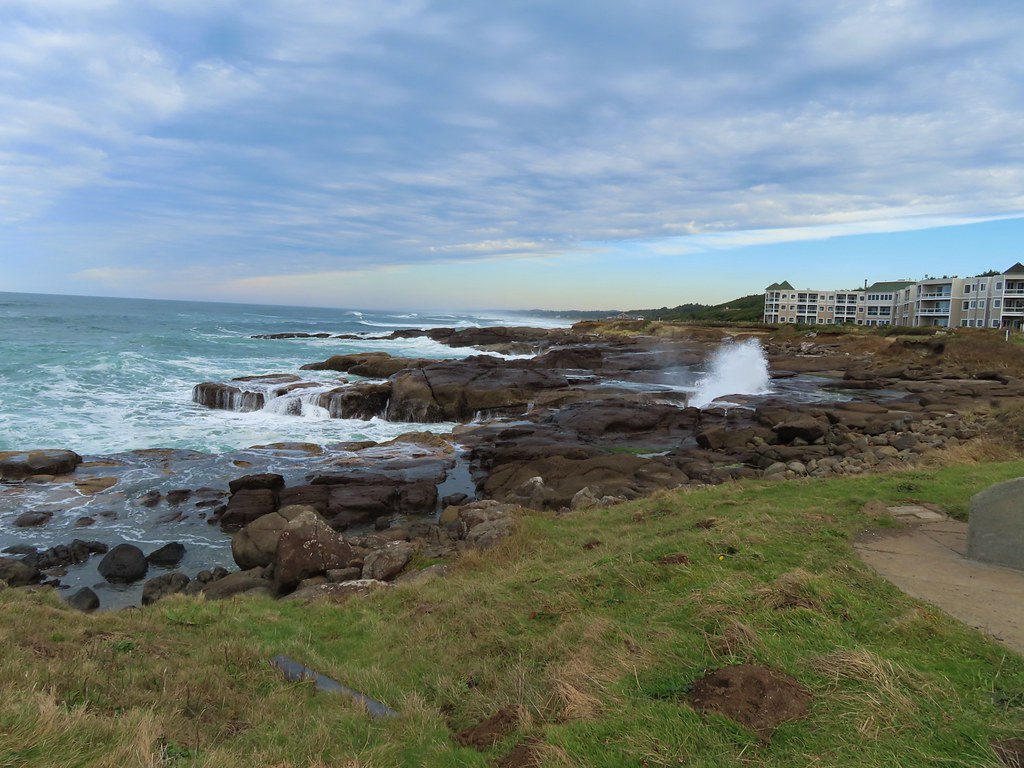
North Fork Nehalem River – 02/20/2021

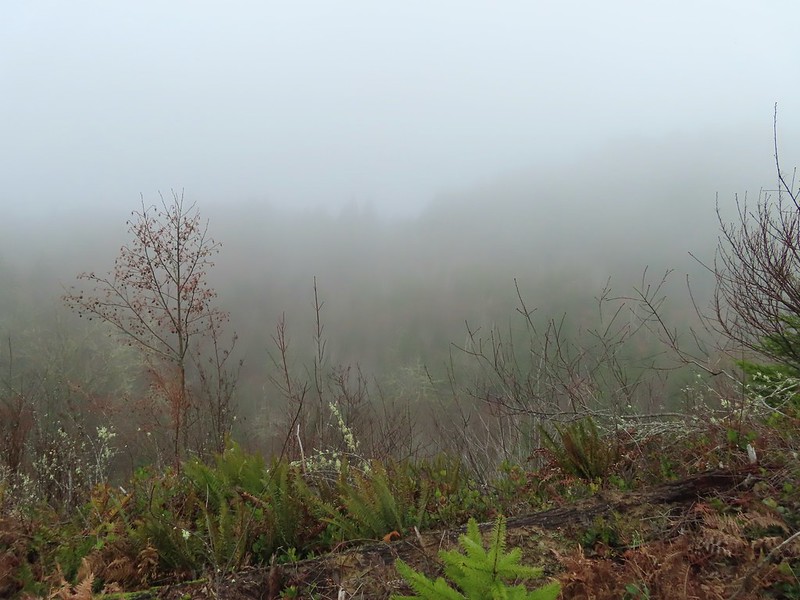
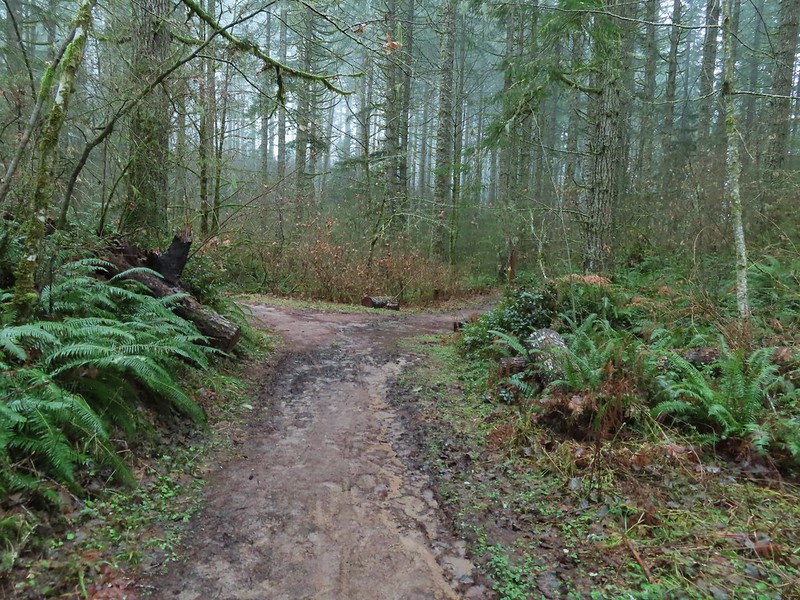
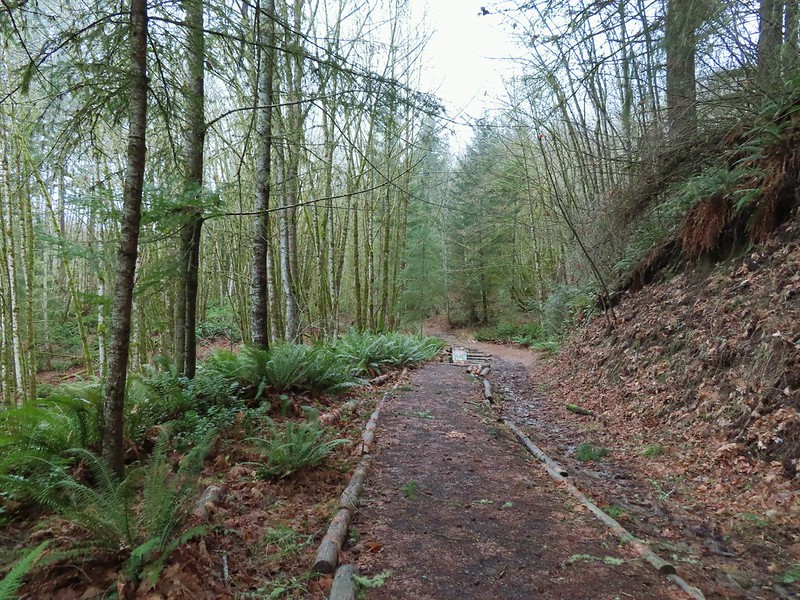
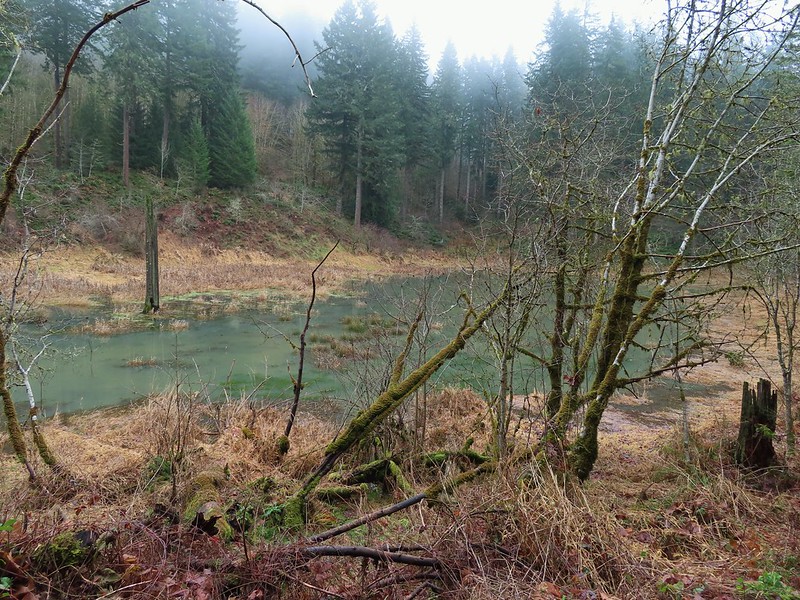
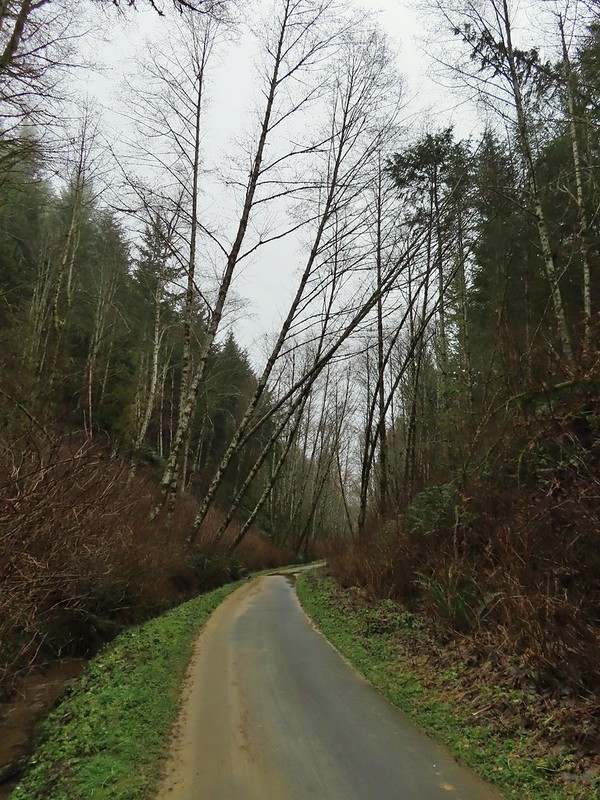
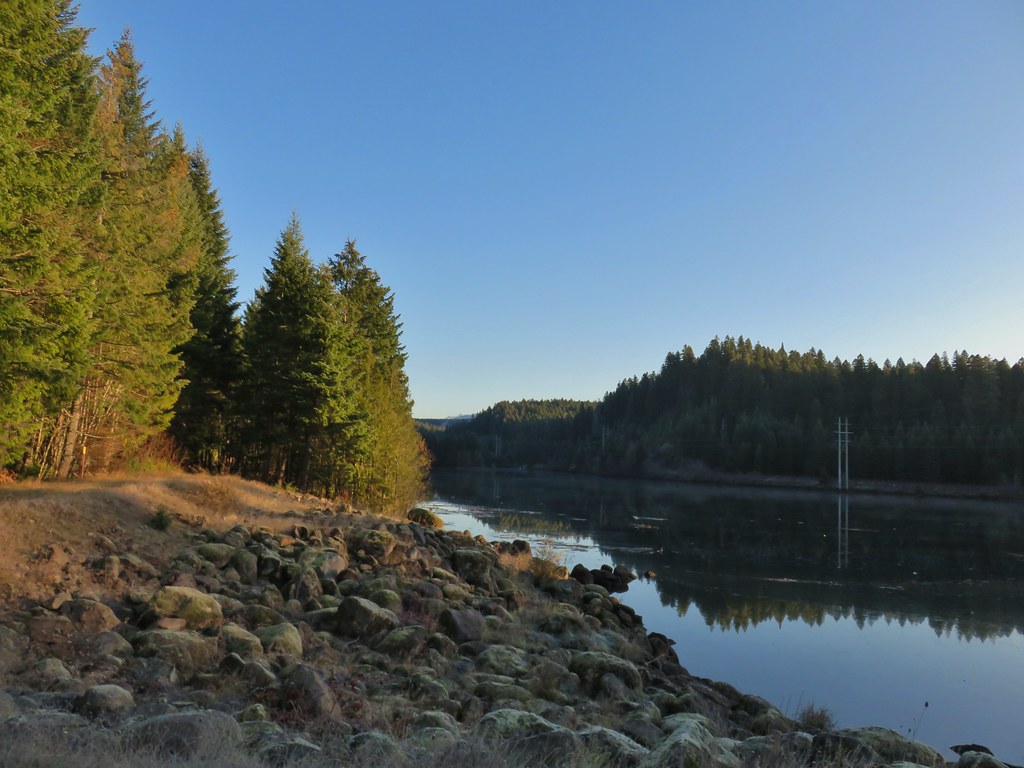
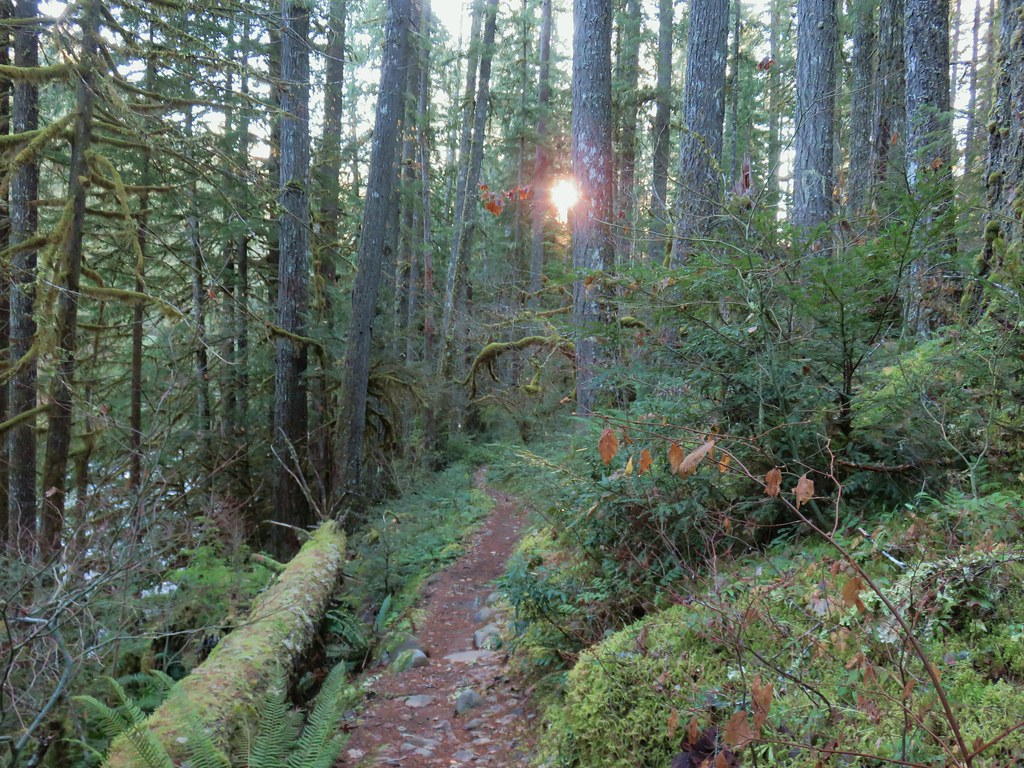
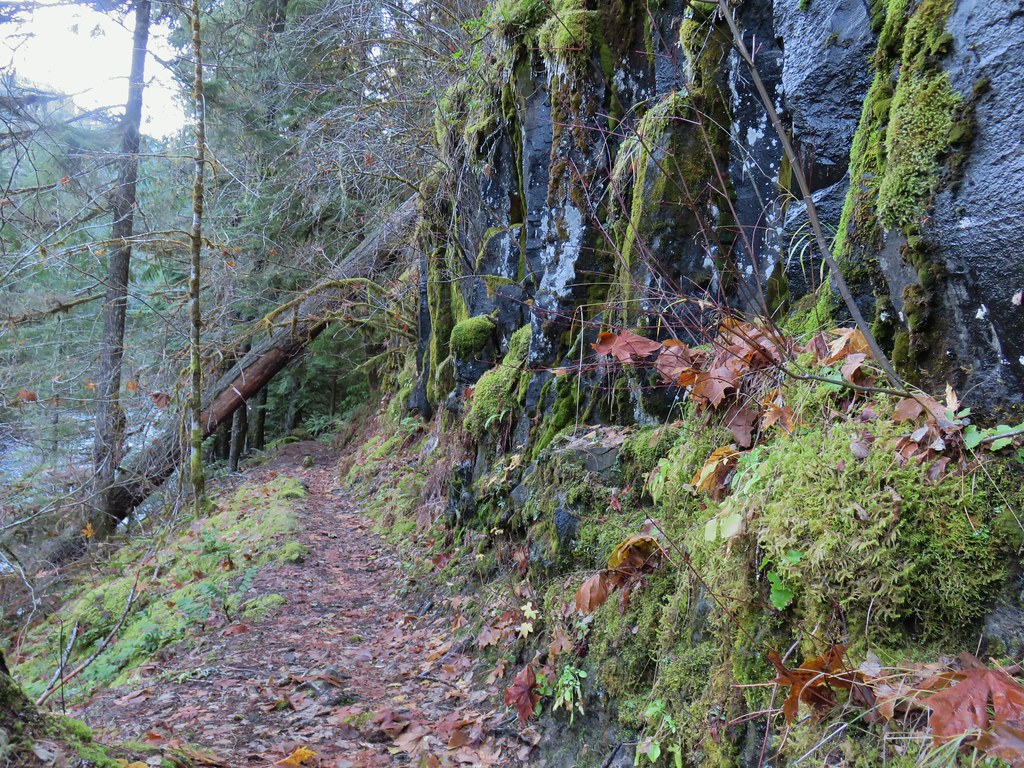
Like much of the U.S. we’ve had some ugly weather so far in February so when we saw the potential for a “not too wet” window of time we decided to head out for this month’s hike. On our schedule for February was the North Fork Nehalem River in the Coastal Range. This hike came from the Oregon Hikers Field Guide, my favorite online source for ideas. This particular hike utilizes roads instead of trails which was actually a good thing after an unusually destructive ice and snow storm had come through just a week before our hike. We hopped that the combination of the roads and some clearcuts along those roads would mean we wouldn’t have to deal with much if any debris from the storm. As we drove west on Highway 26 from Portland we were amazed at how much damage there was to trees in the Coastal Range. Between the damage we saw and a couple of heavy rain showers we were wondering what we might be getting ourselves into as we turned south onto Highway 53. The rain let up as we wound our way down past more damaged trees to the Nehalem Fish Hatchery. We had planned to stop at the hatchery first for a quick stop to see Umbrella Falls but signs at the hatchery indicated it was closed to visitors due to COVID-19 (the ODFW website for the hatchery didn’t mention the closure). With access to the 1/8 mile path to the falls blocked we had to skip Umbrella Falls for now and we drove the short distance north on Highway 53 to Cole Mountain Road (just north of the bridge over the North Fork Nehalem River) where we turned west (right) and kept right at a fork to reach the North Fork Nehalem Trailhead.
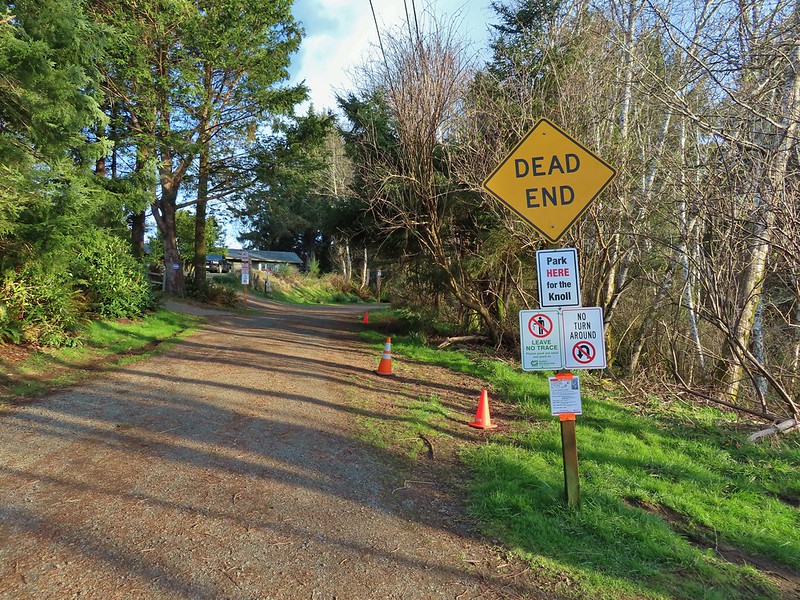
Trailhead on North Fork Road

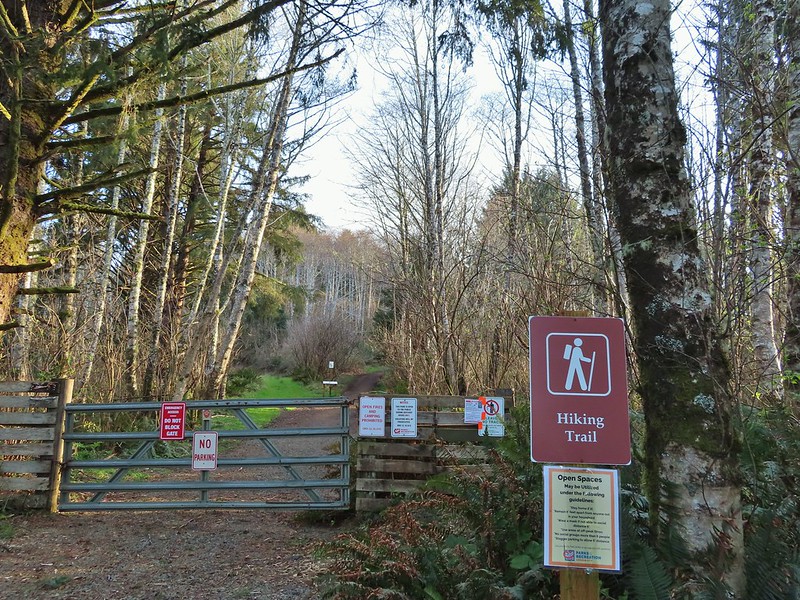
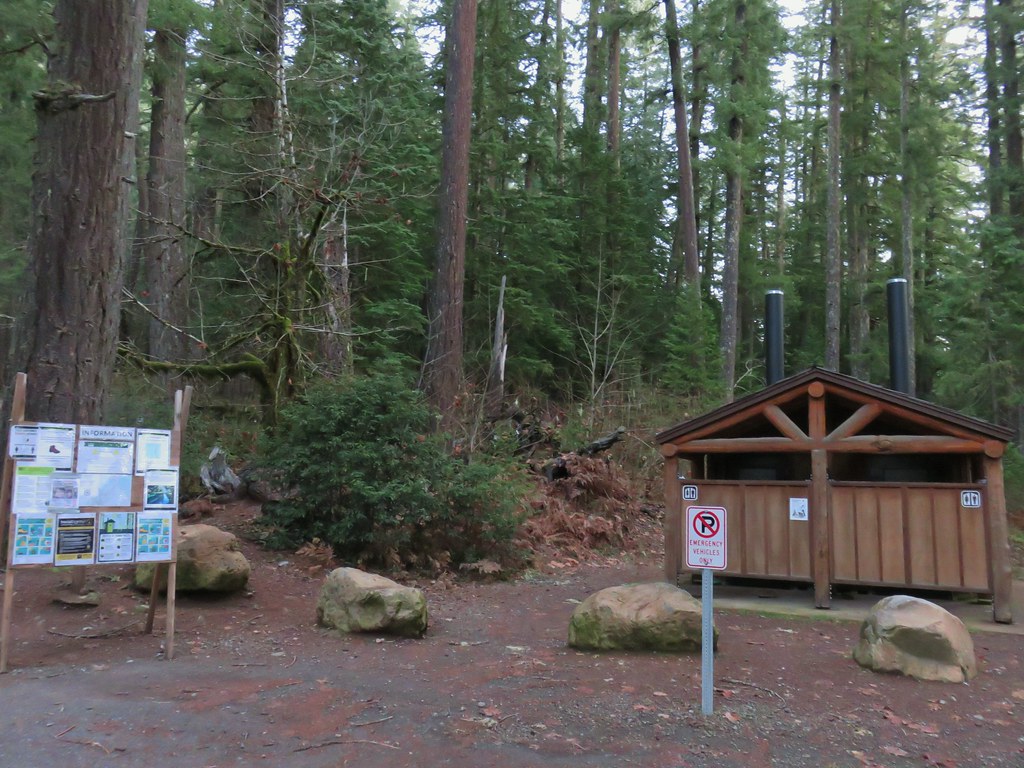
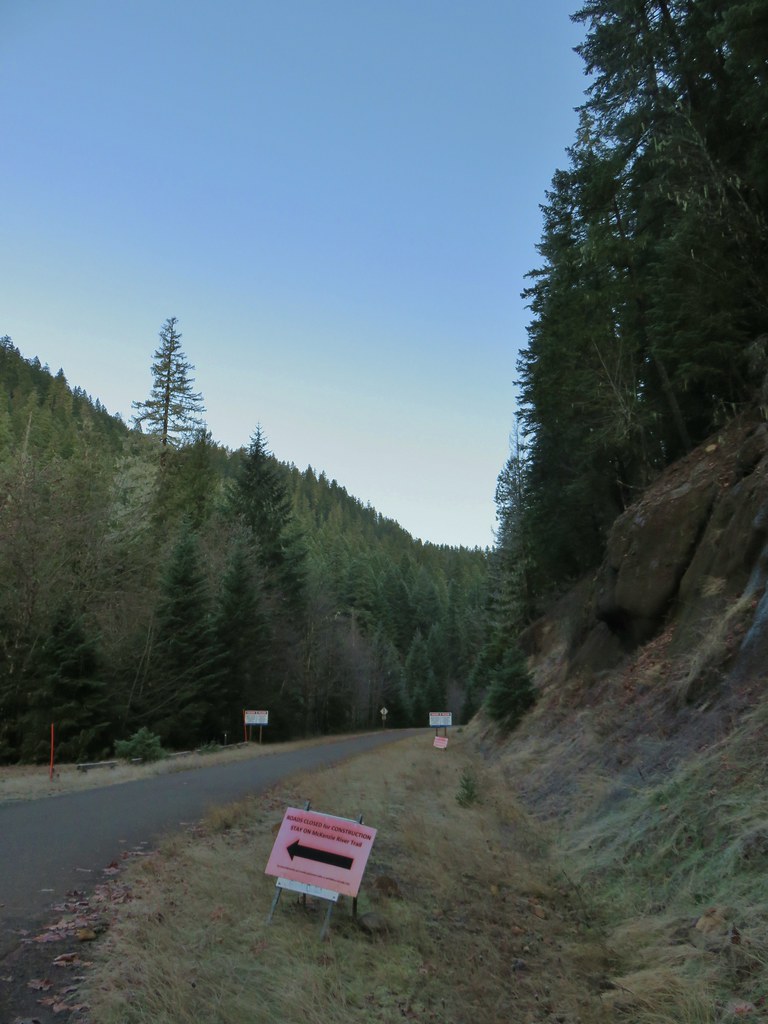
We parked at a pullout before a gate marking the start of private land owned by McCracken Woodlands LLC and set off on foot.
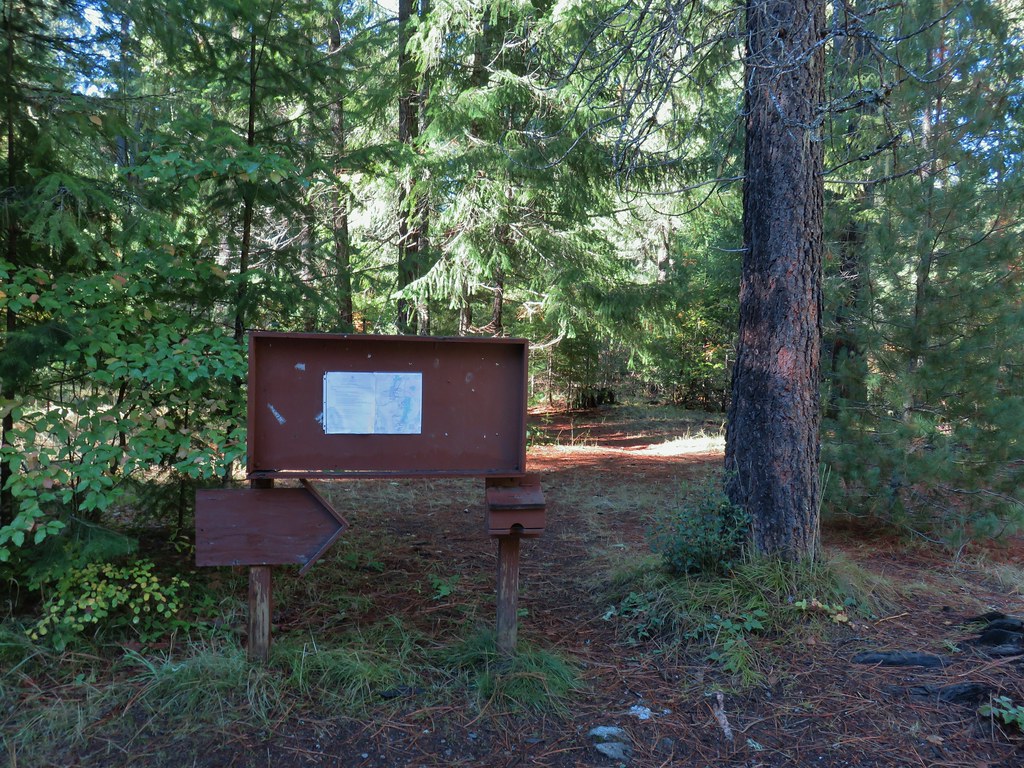
Informational sign from McMracken Woodlands LLC

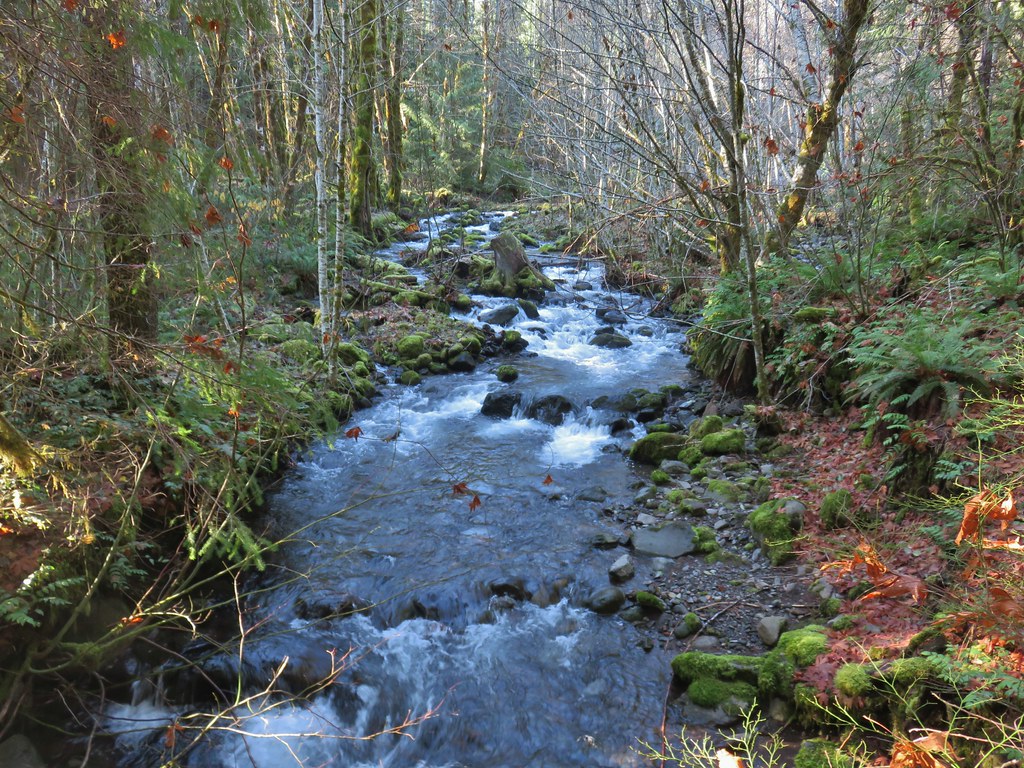
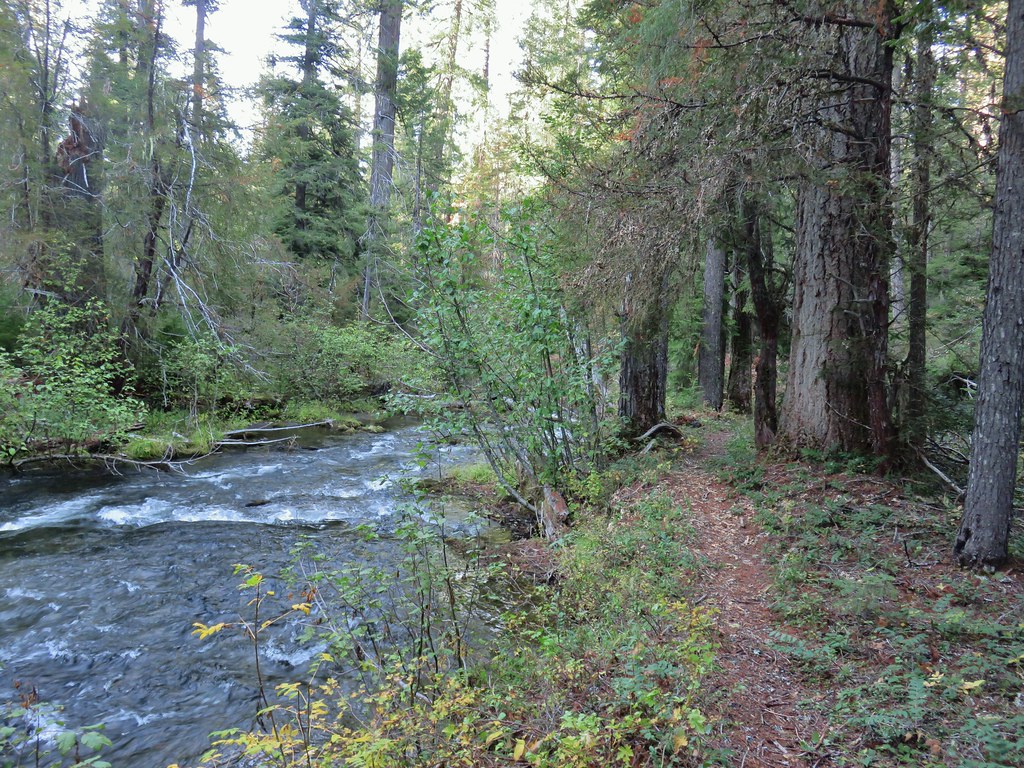
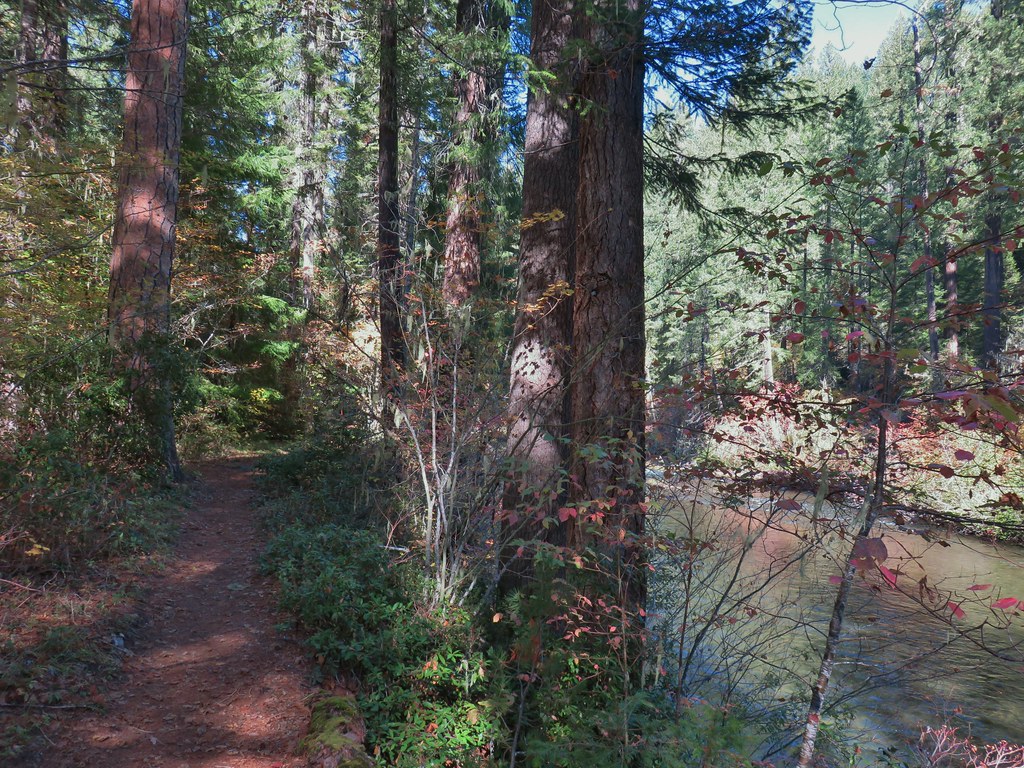
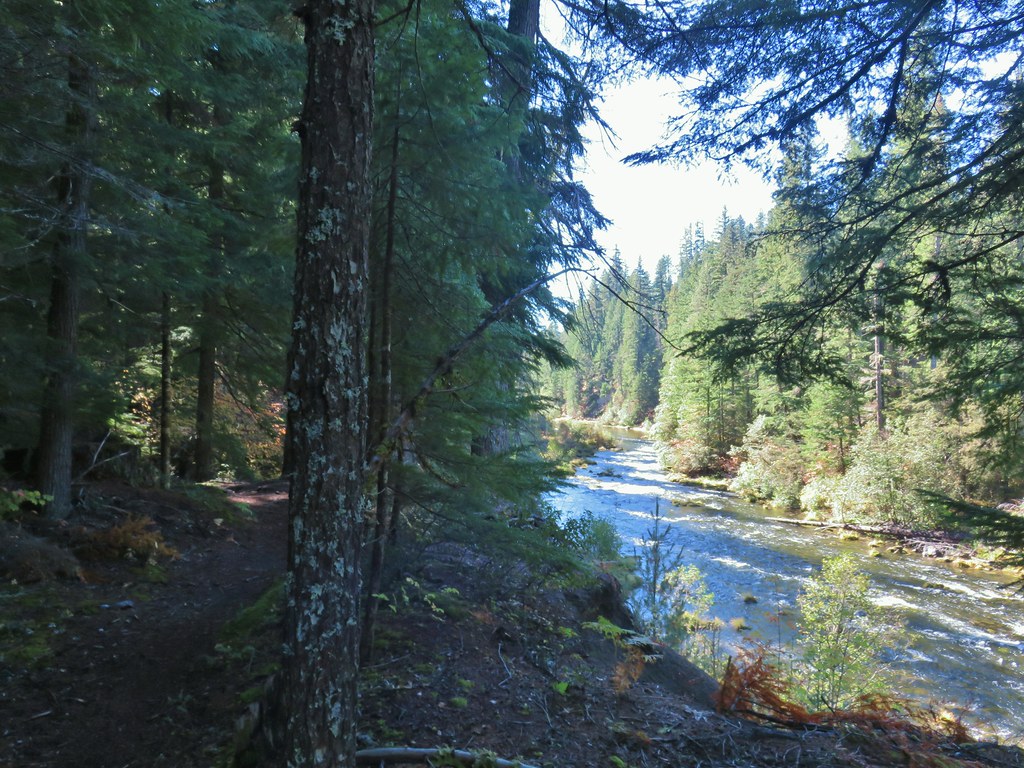
After crossing over a small stream we started getting views of the North Fork Nehalem River on our right.
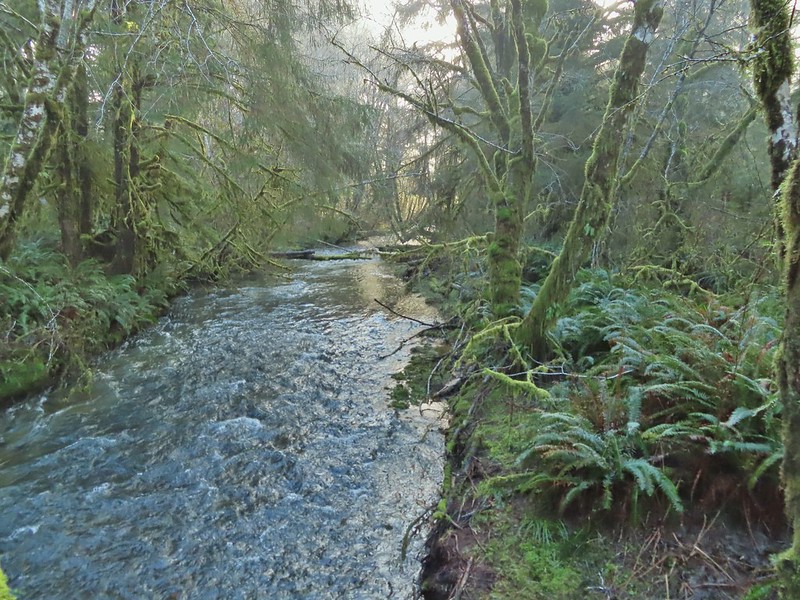
Stream along North Fork Road

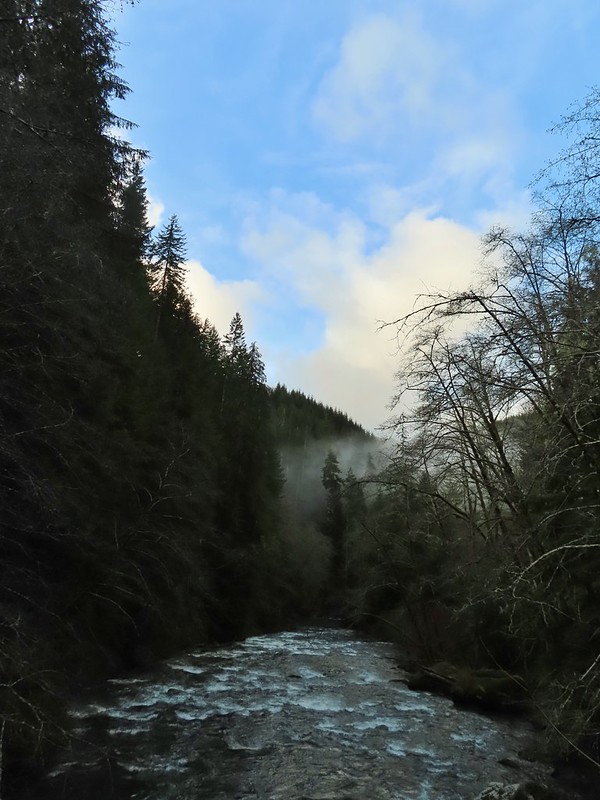
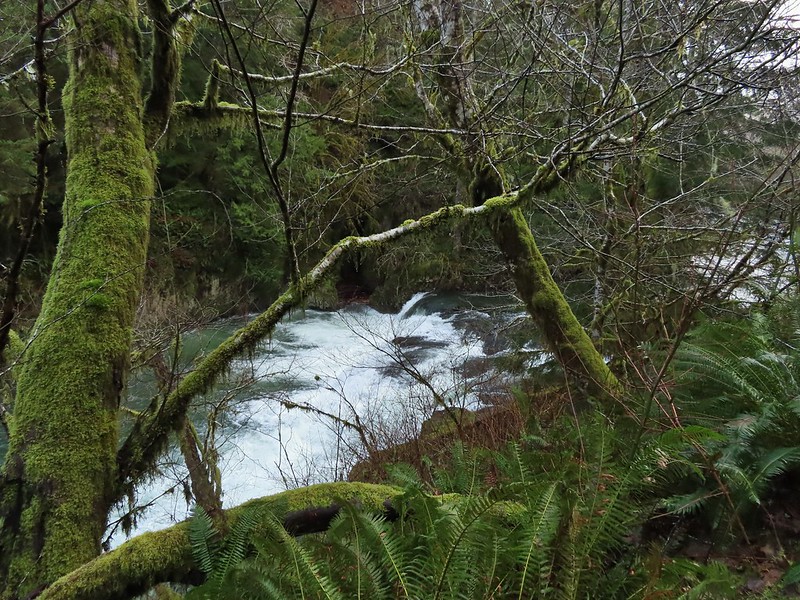
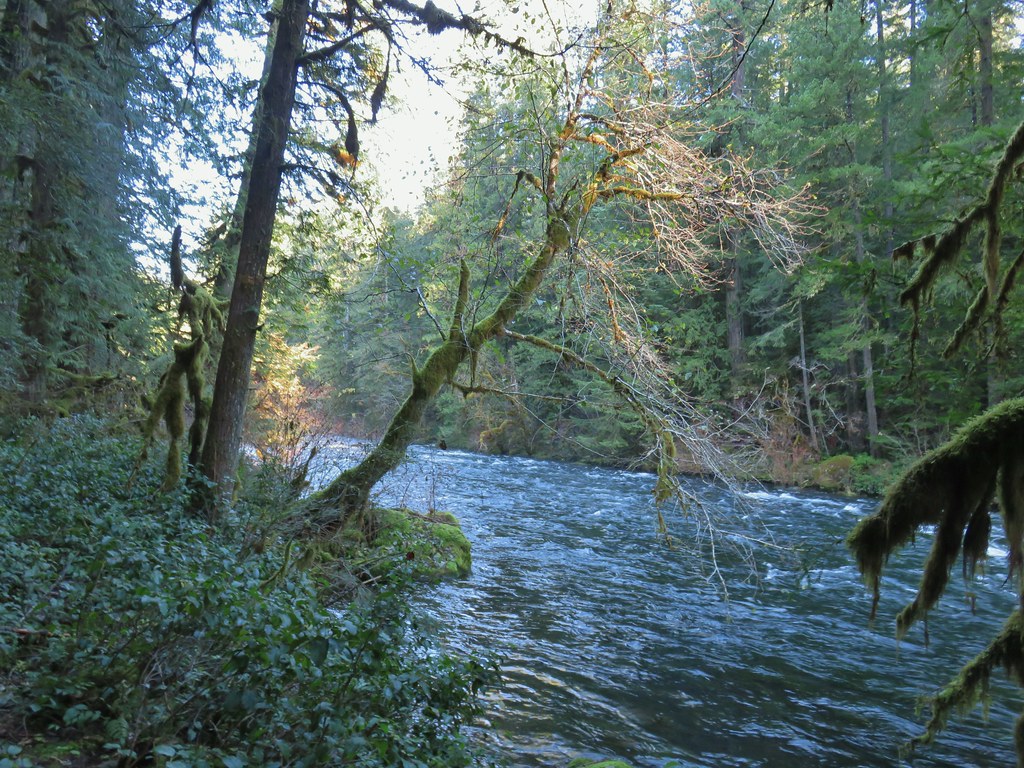
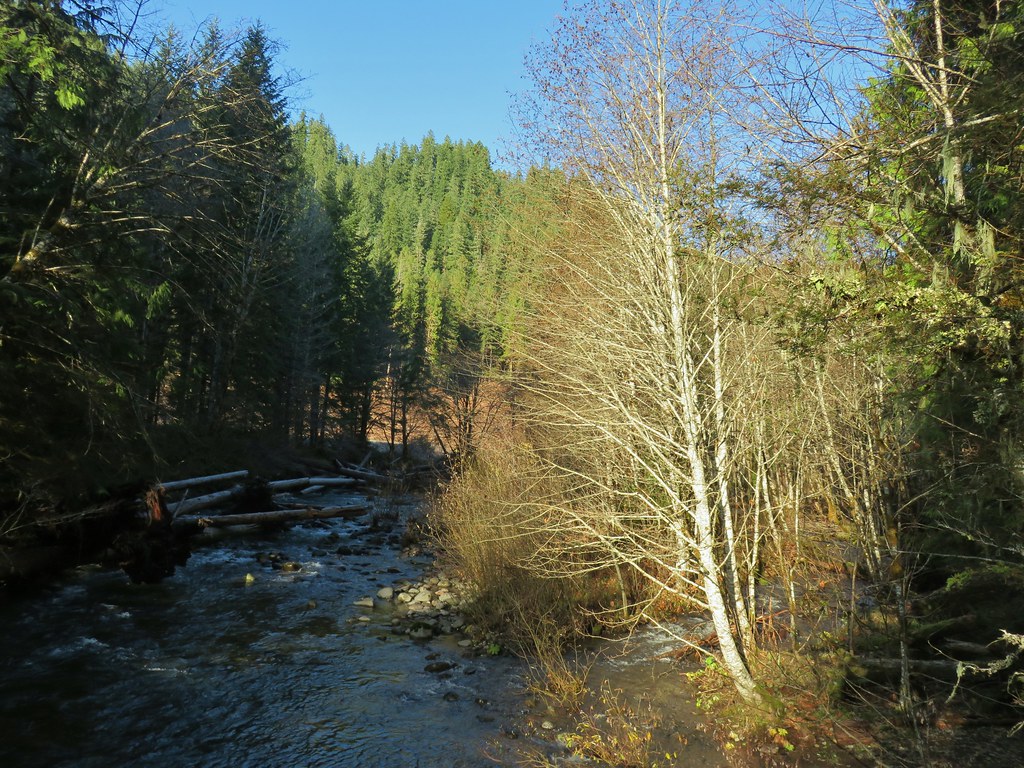
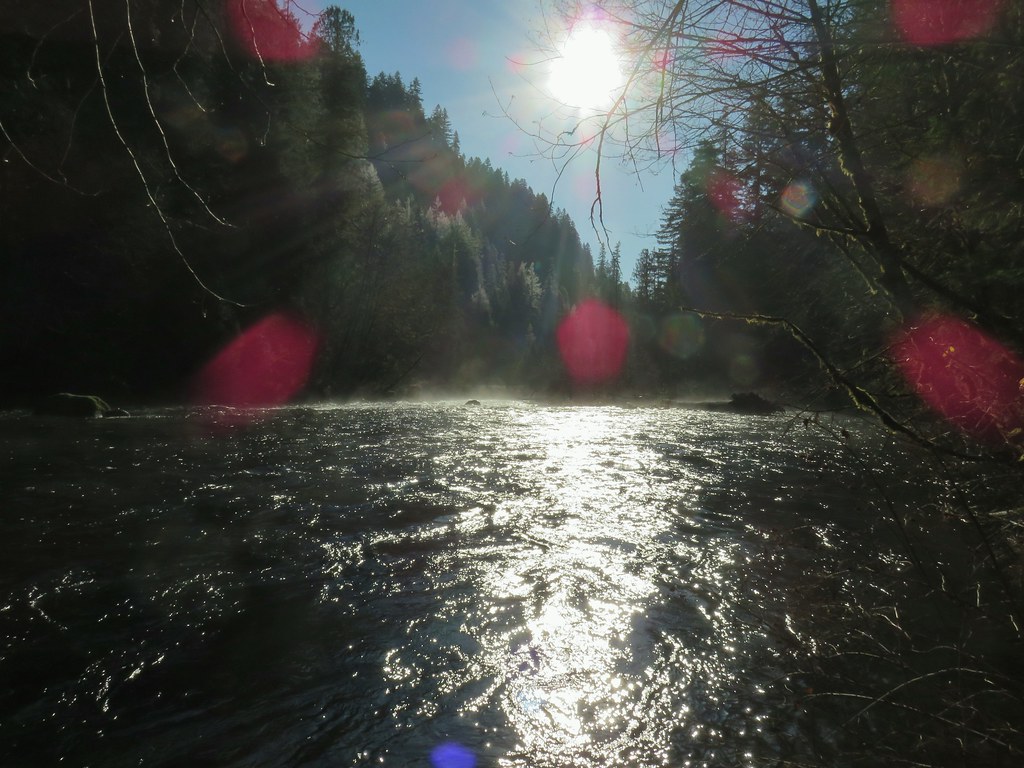
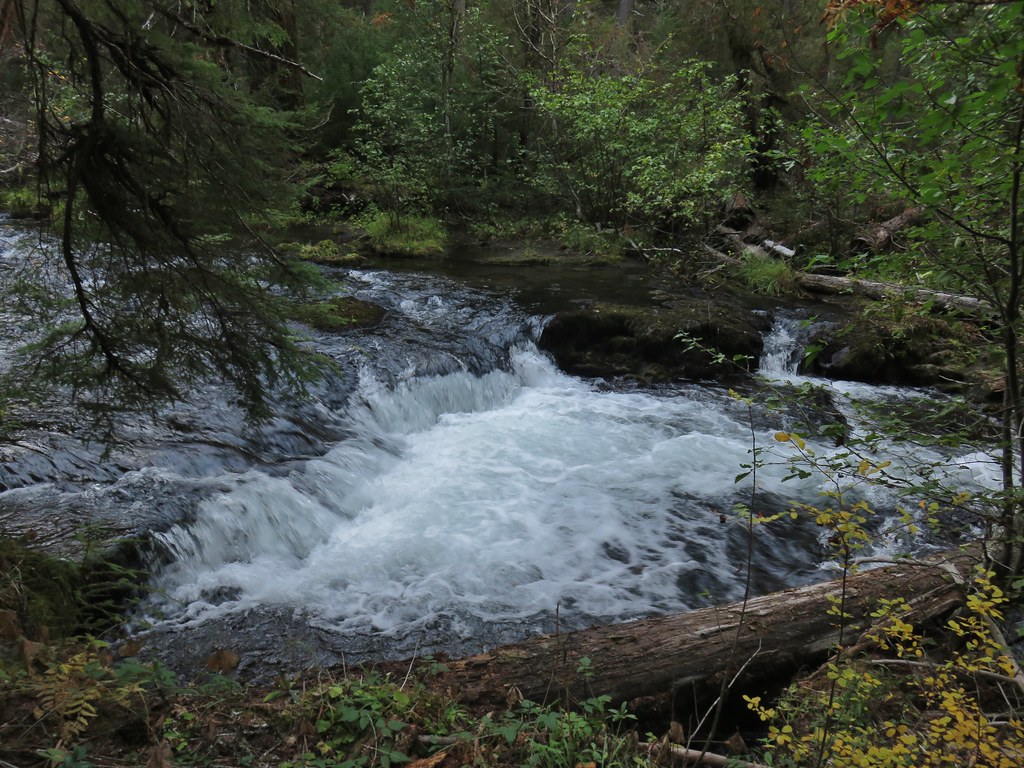
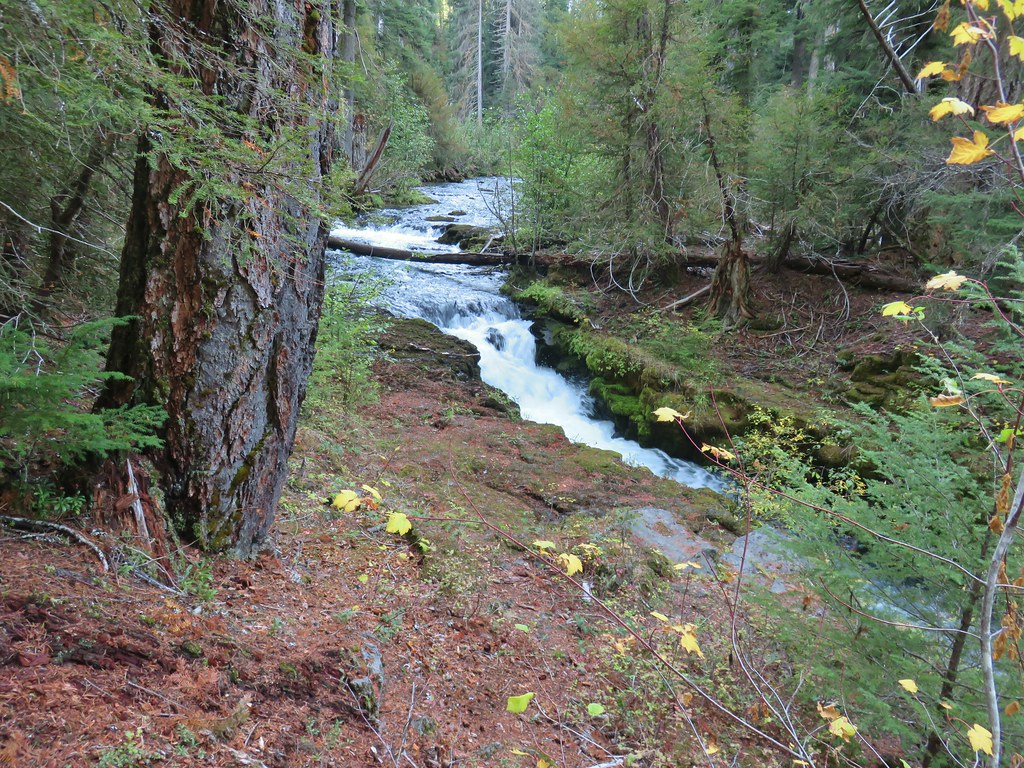
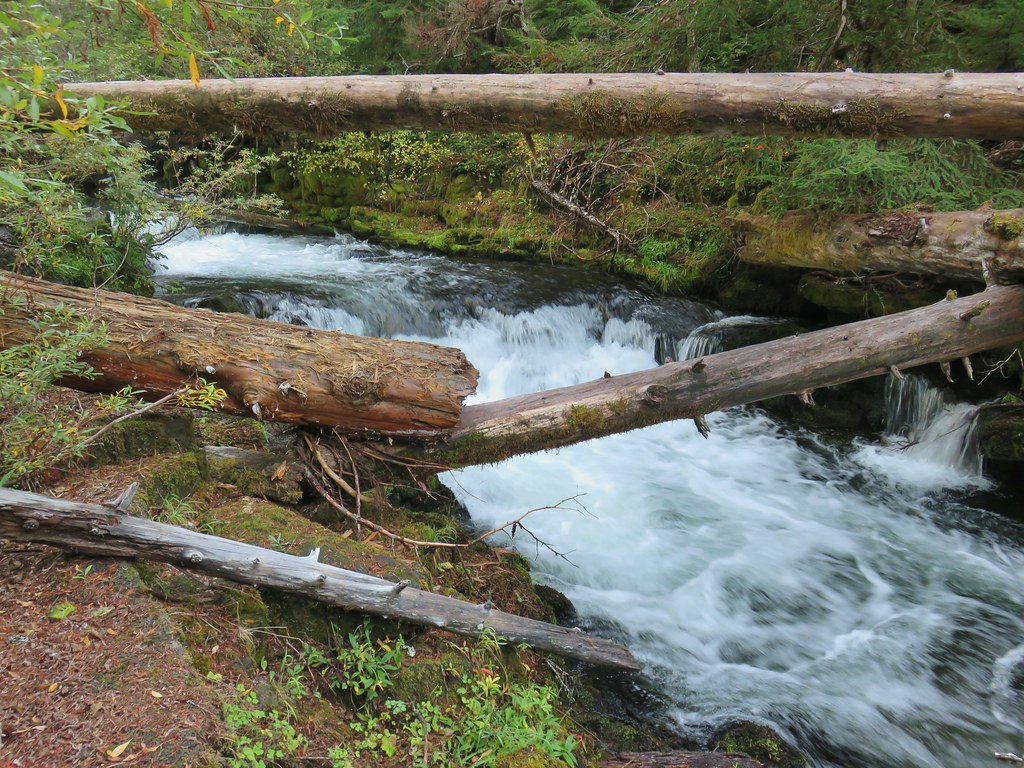
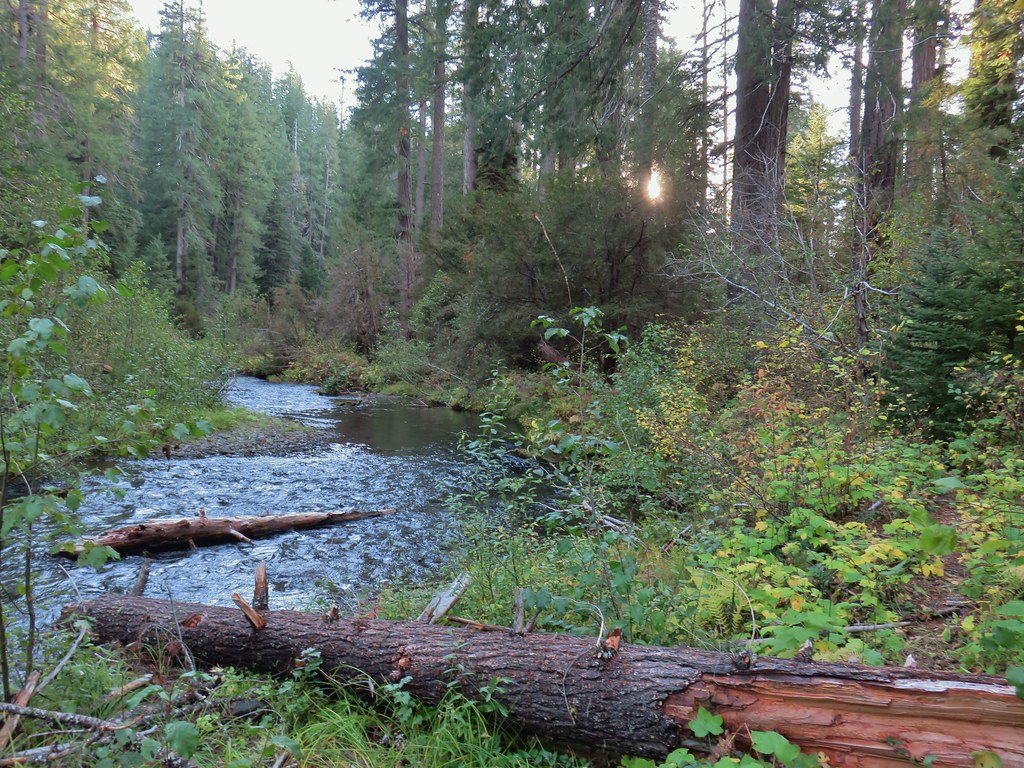
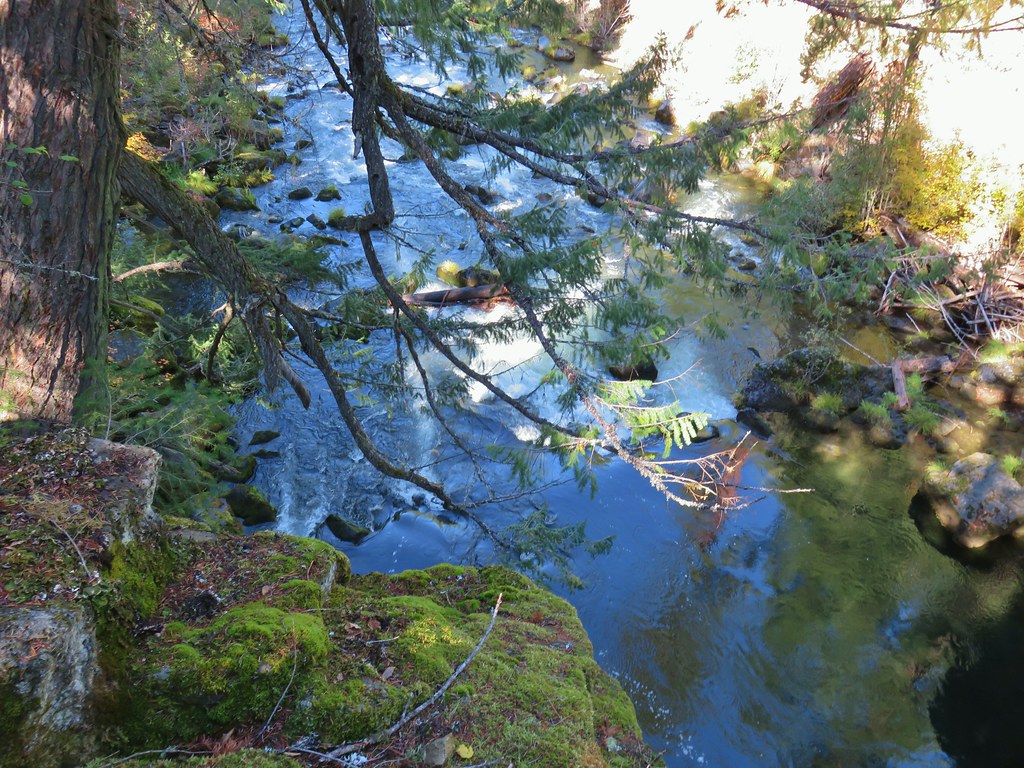
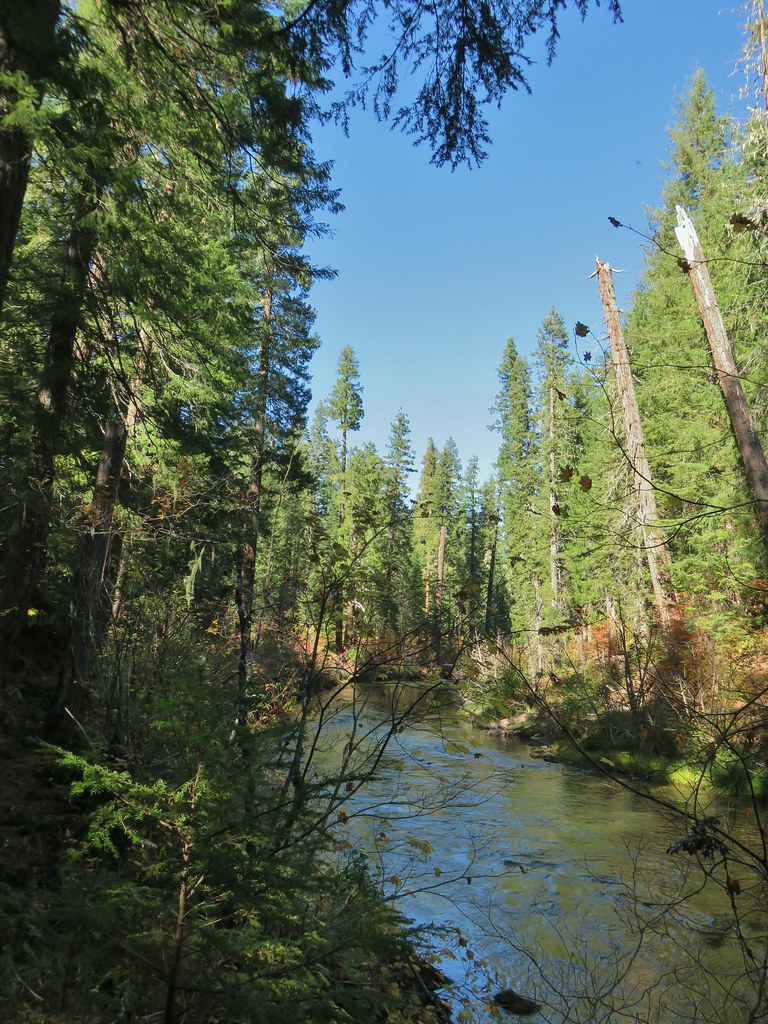
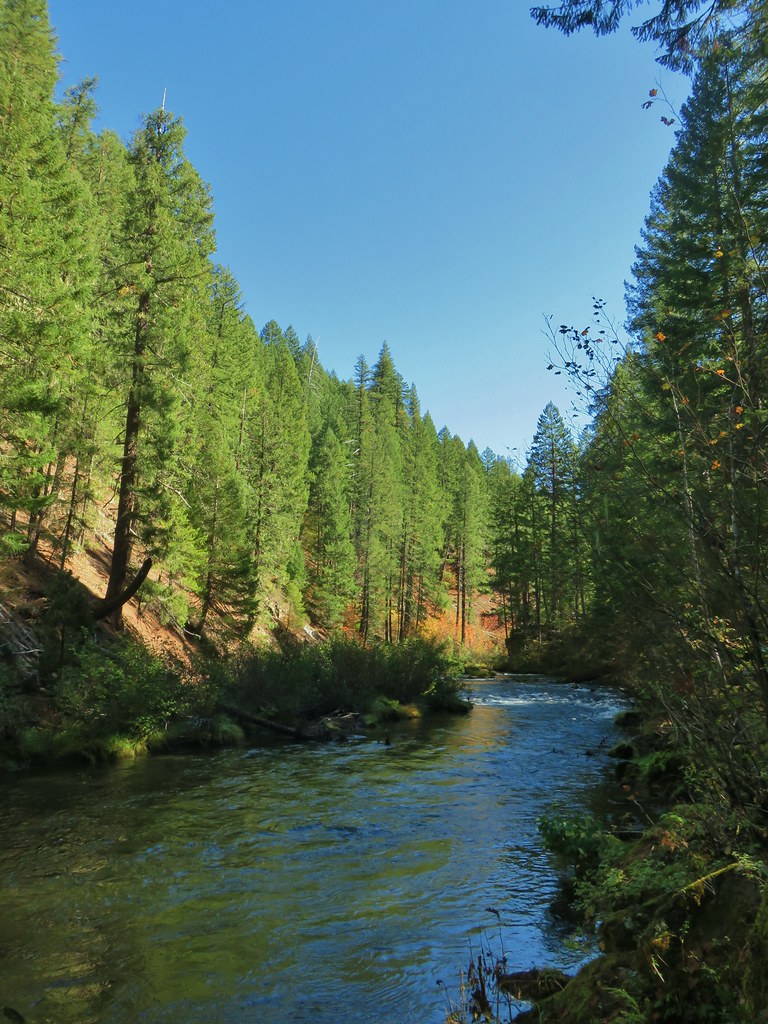
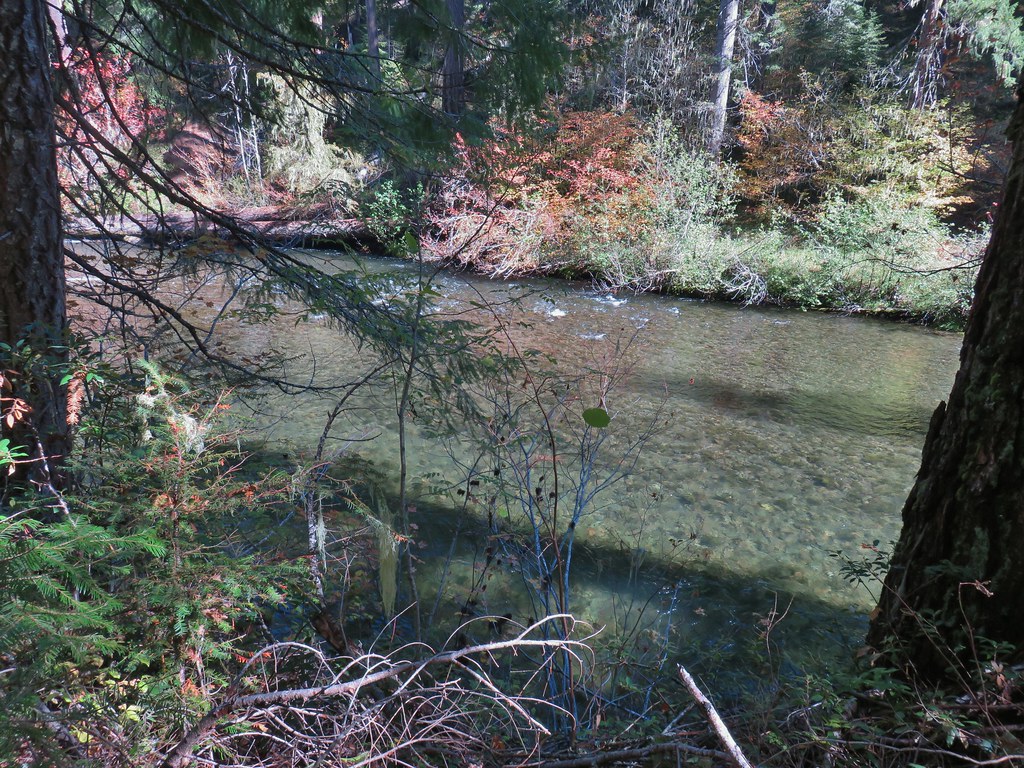
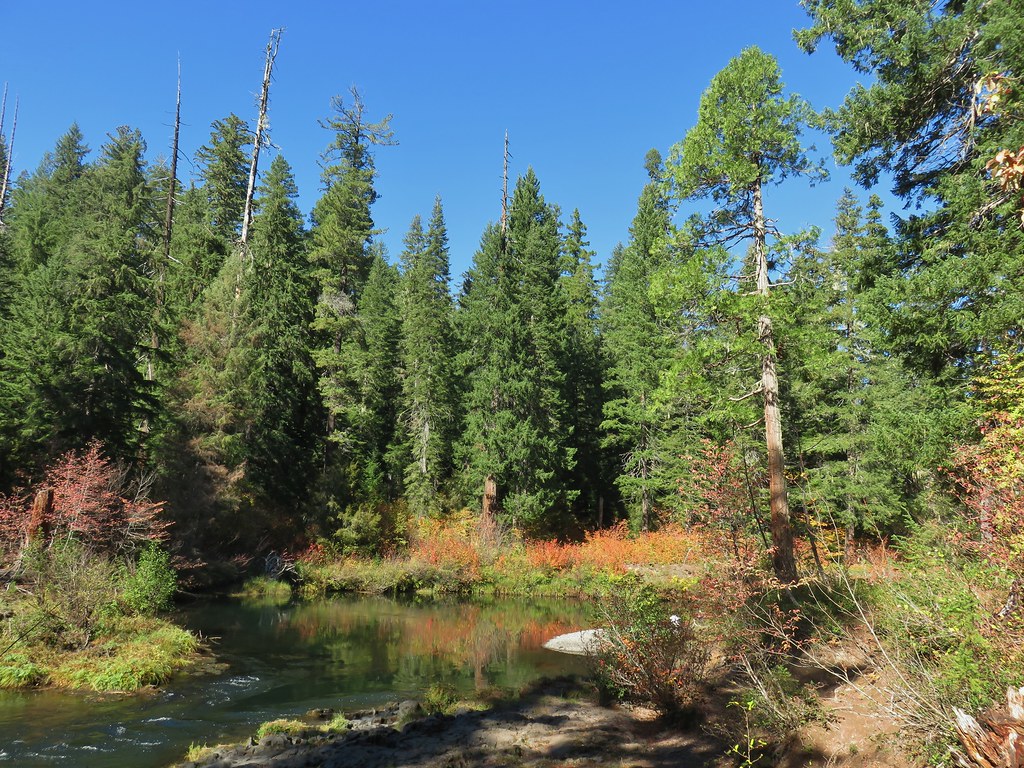
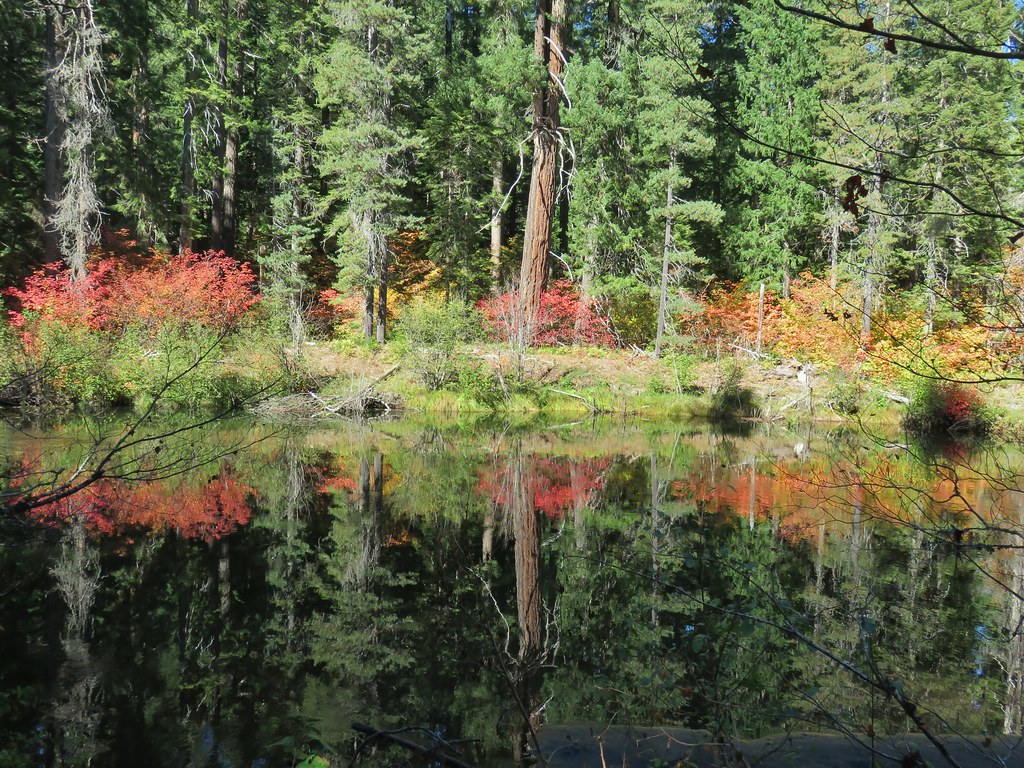
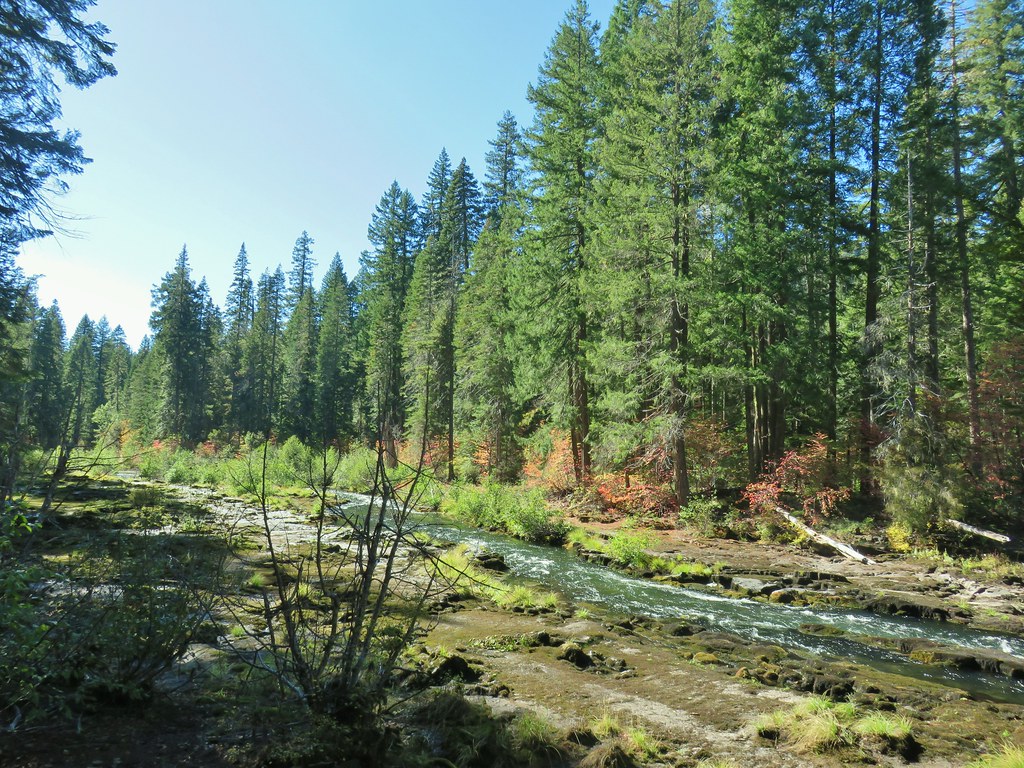
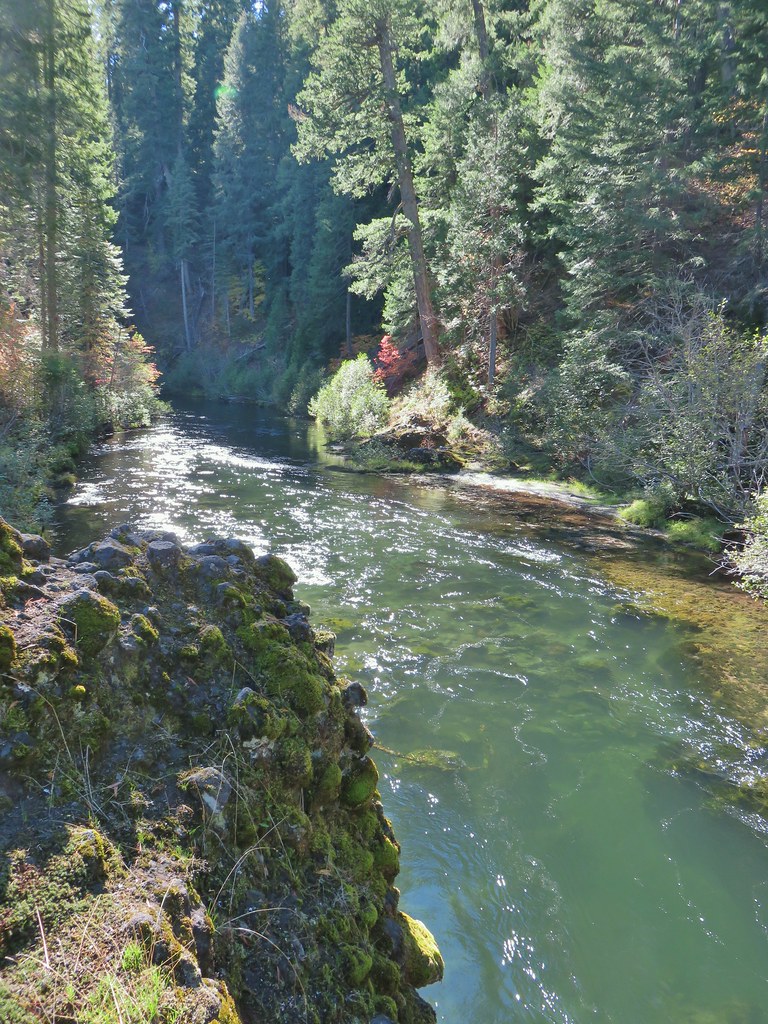
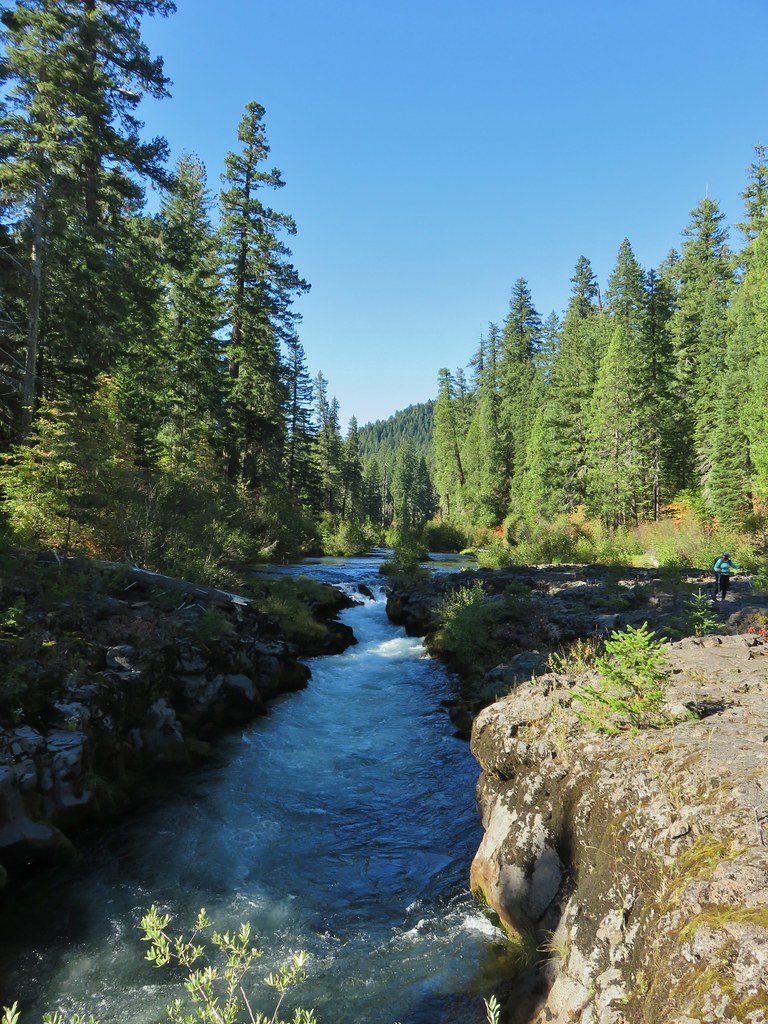
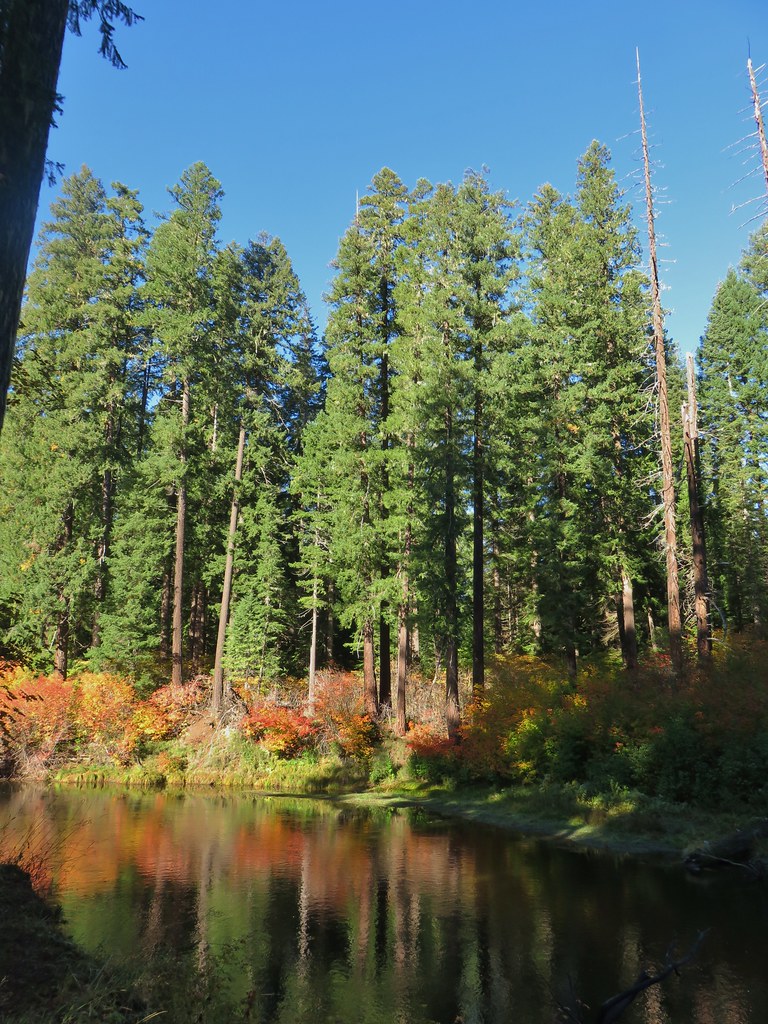
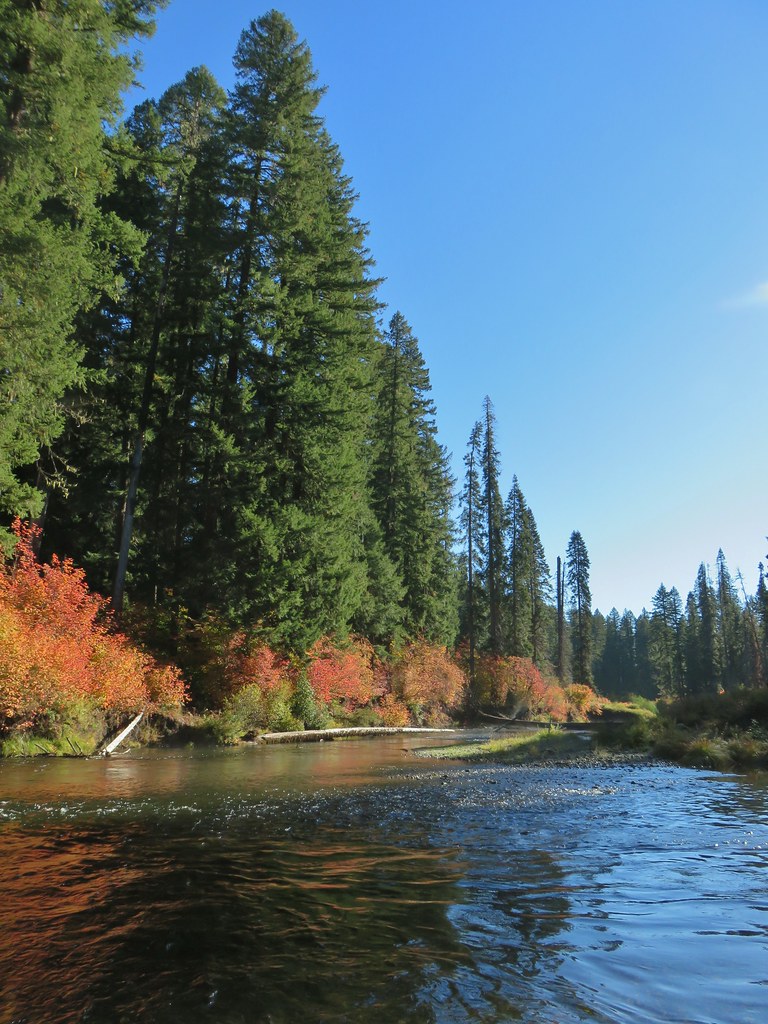
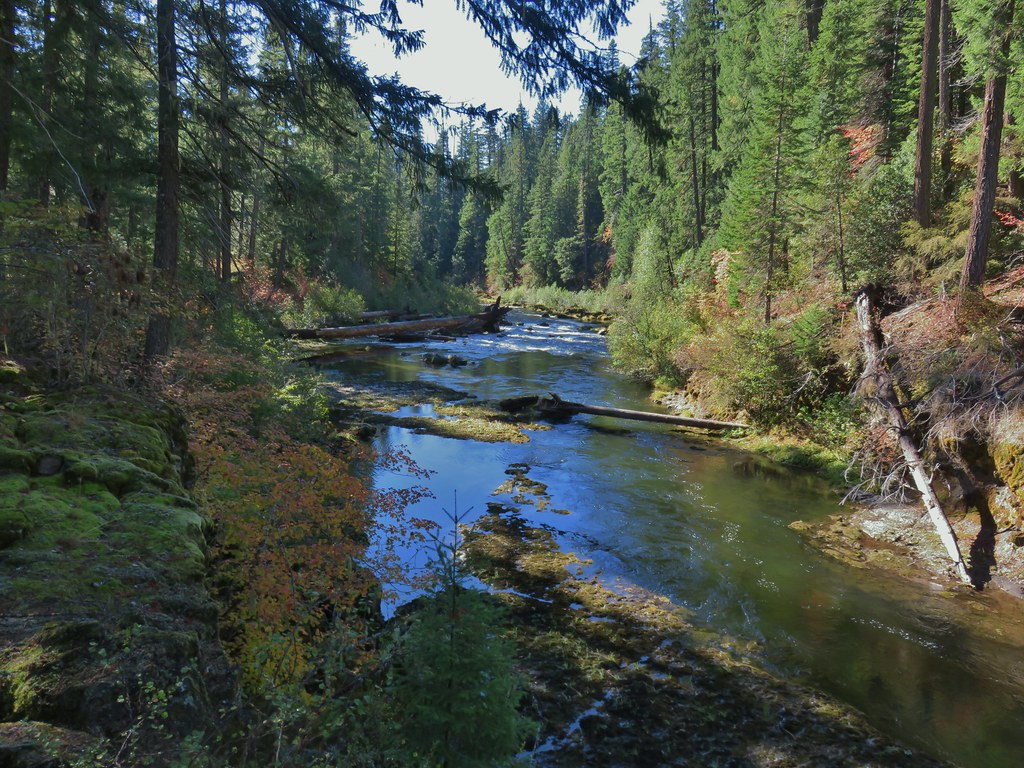
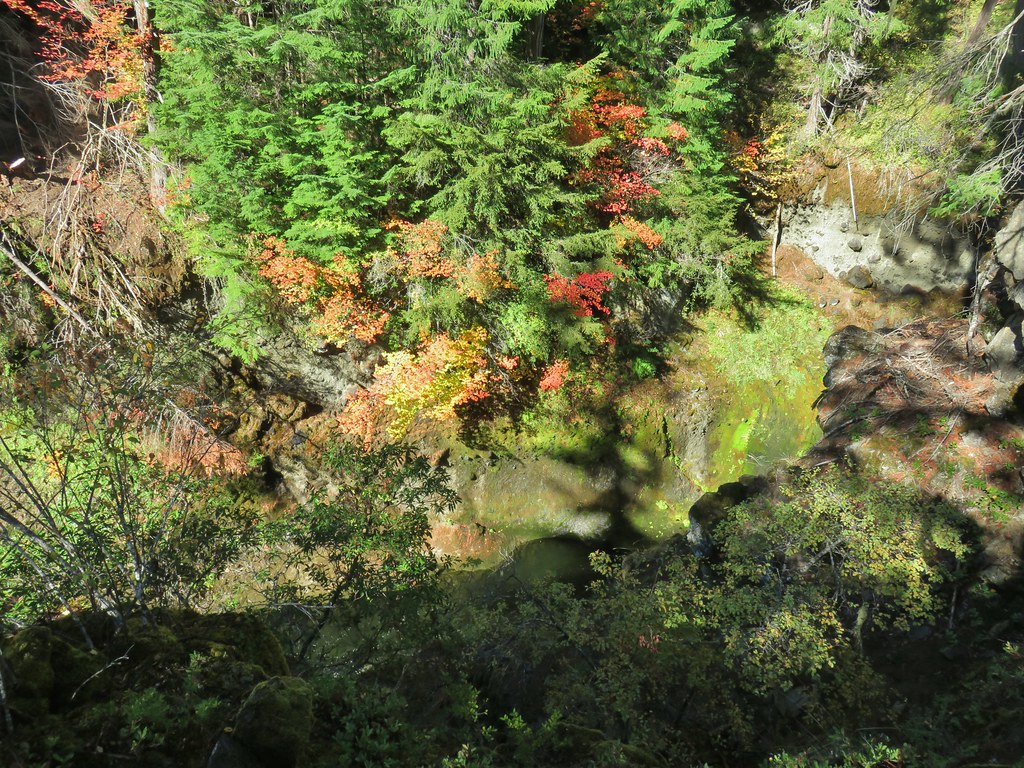
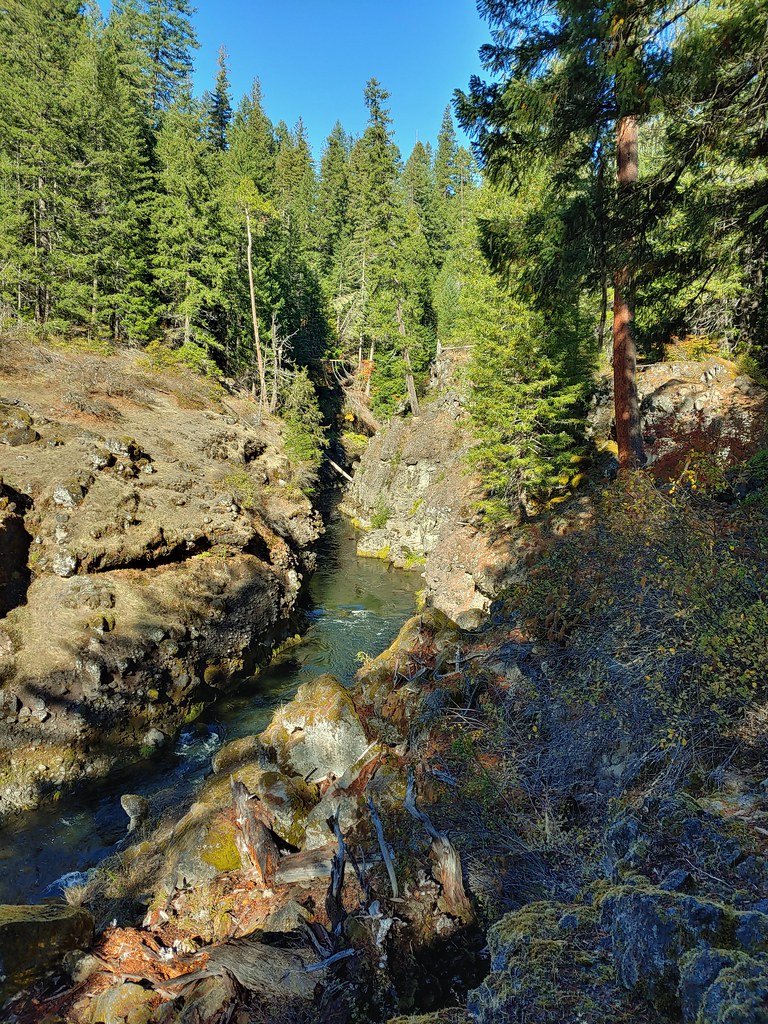
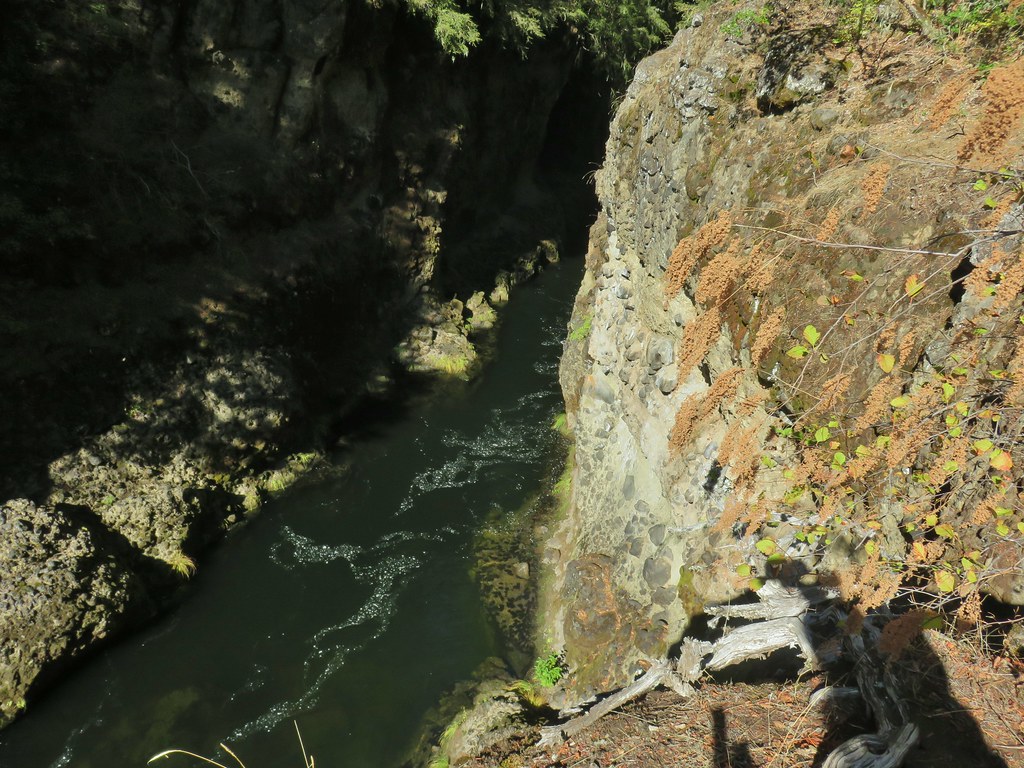
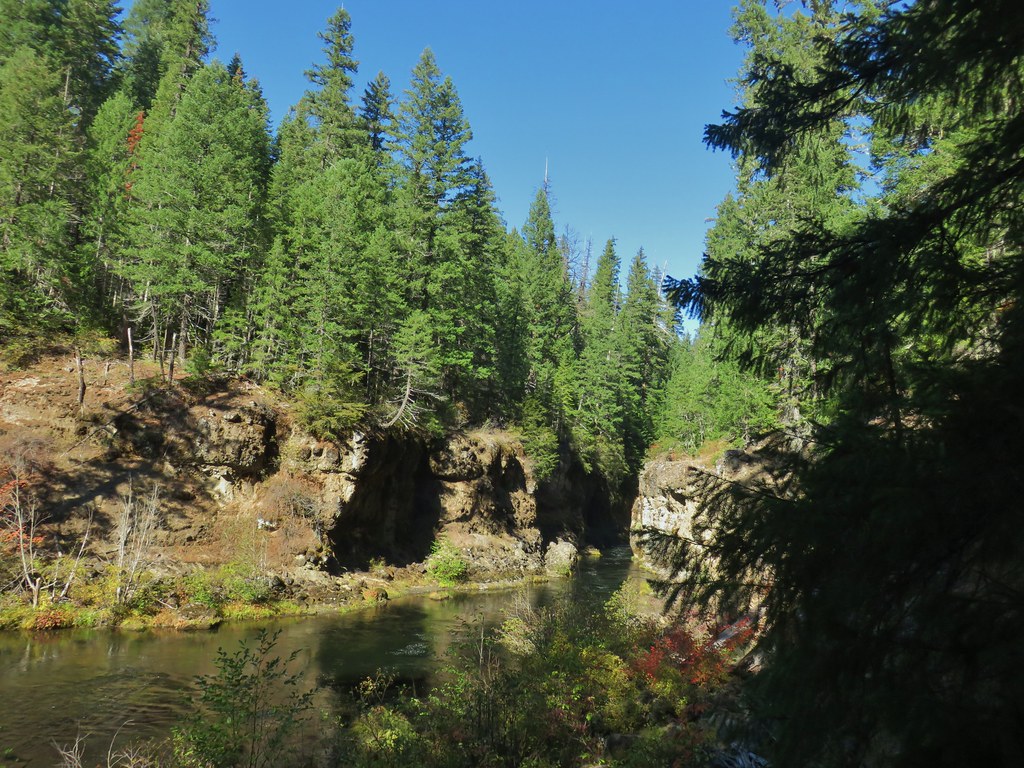
North Fork Nehalem River

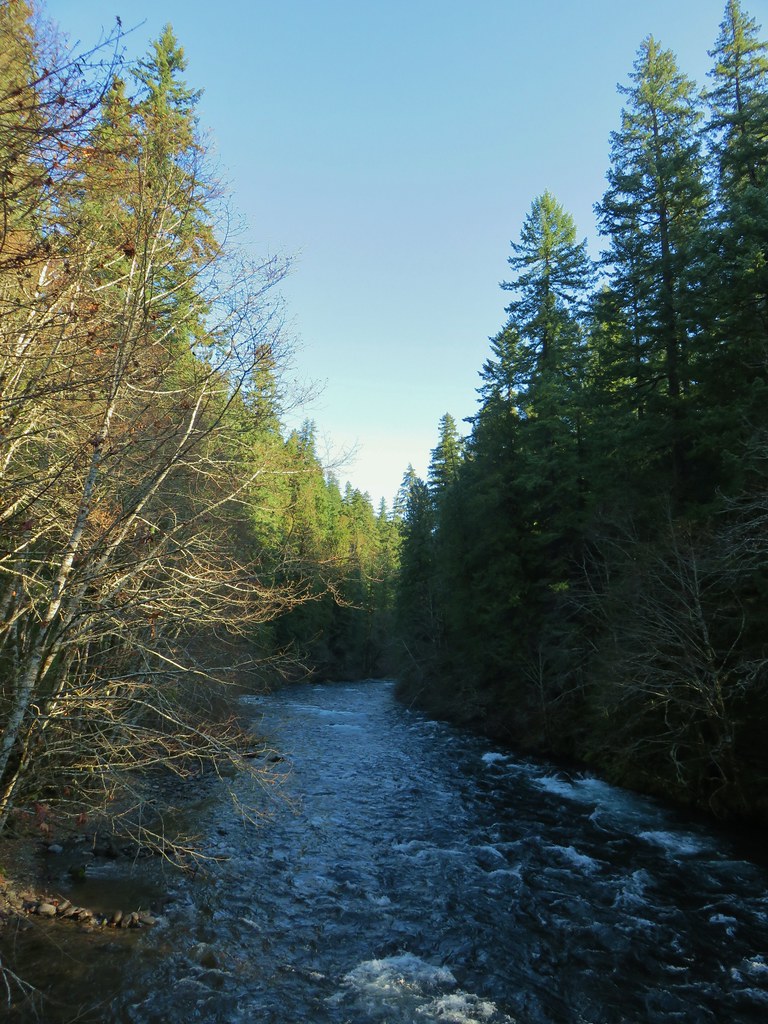
North Fork Nehalem River

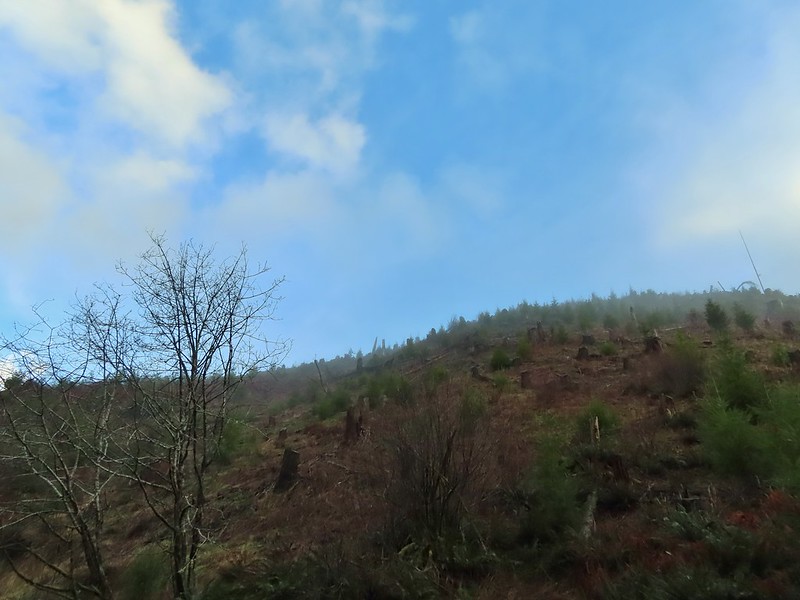
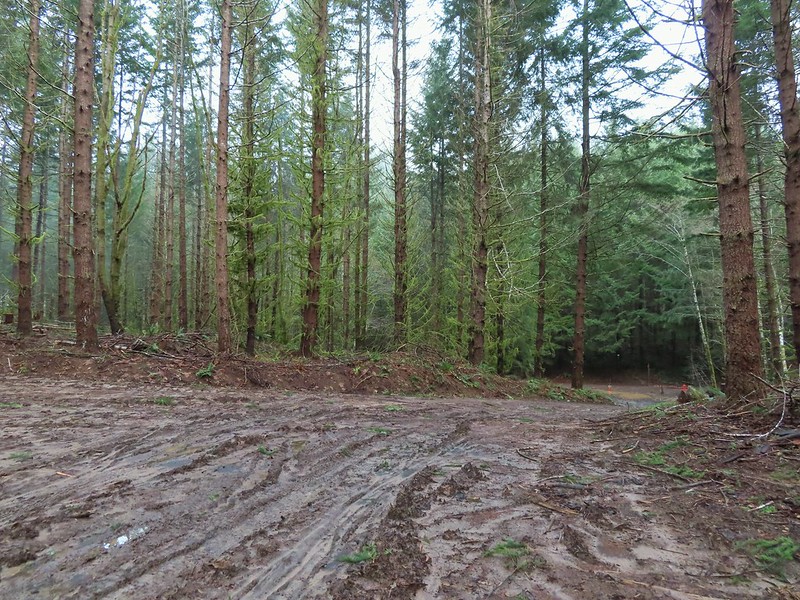
We were soon passing one of several clearcuts.
Clearcut above North Fork Road

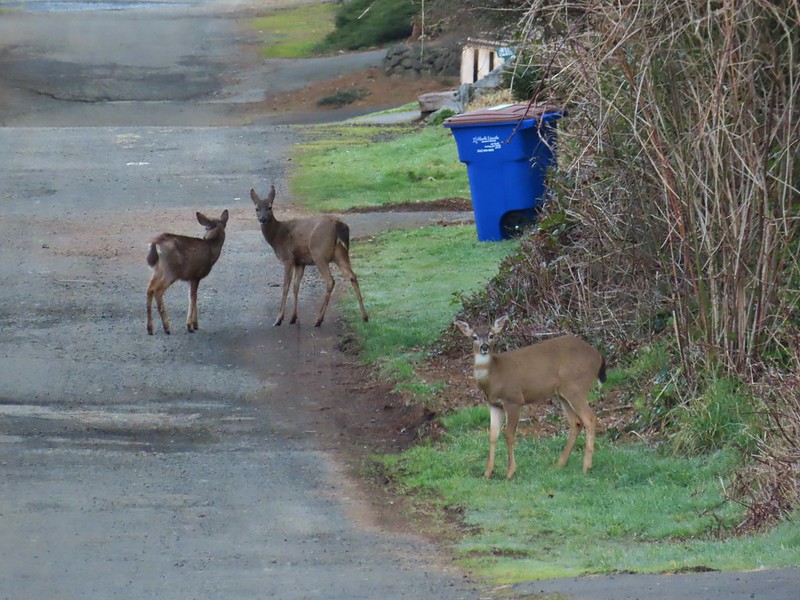
While we are always on the lookout for wildlife we rarely spot anything when we’re specifically looking for something. Today was no exception and after scanning the hillside and coming up empty we started walking again. I turned around to see what the view was like behind us and caught movement 2/3rds of the way up the hill. It was a pair of deer that were well aware of us and making their way in the other direction.
Deer in the clearcut

Deer moving away from us through the clearcut

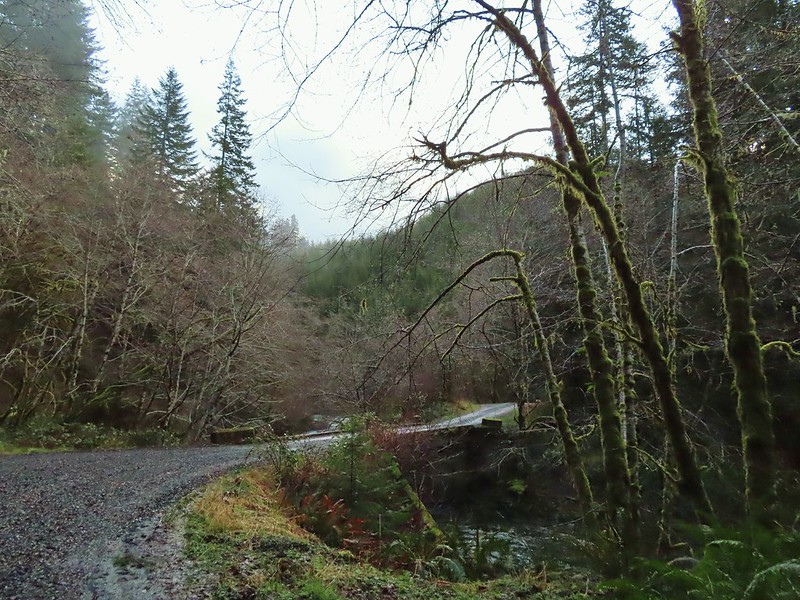
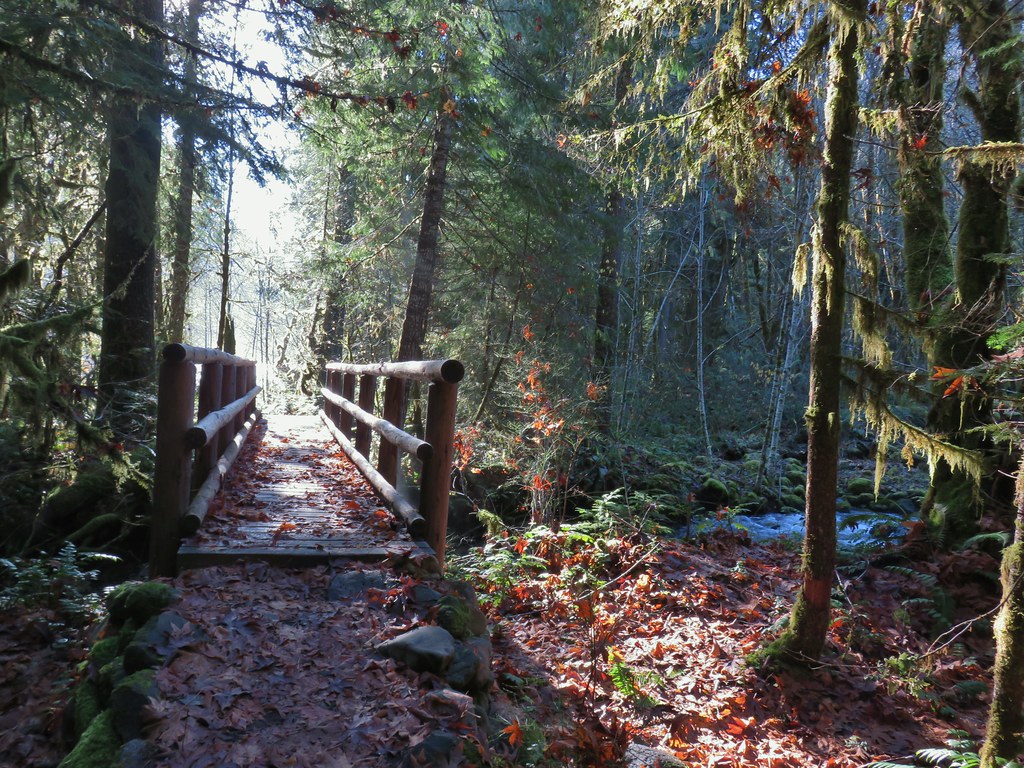
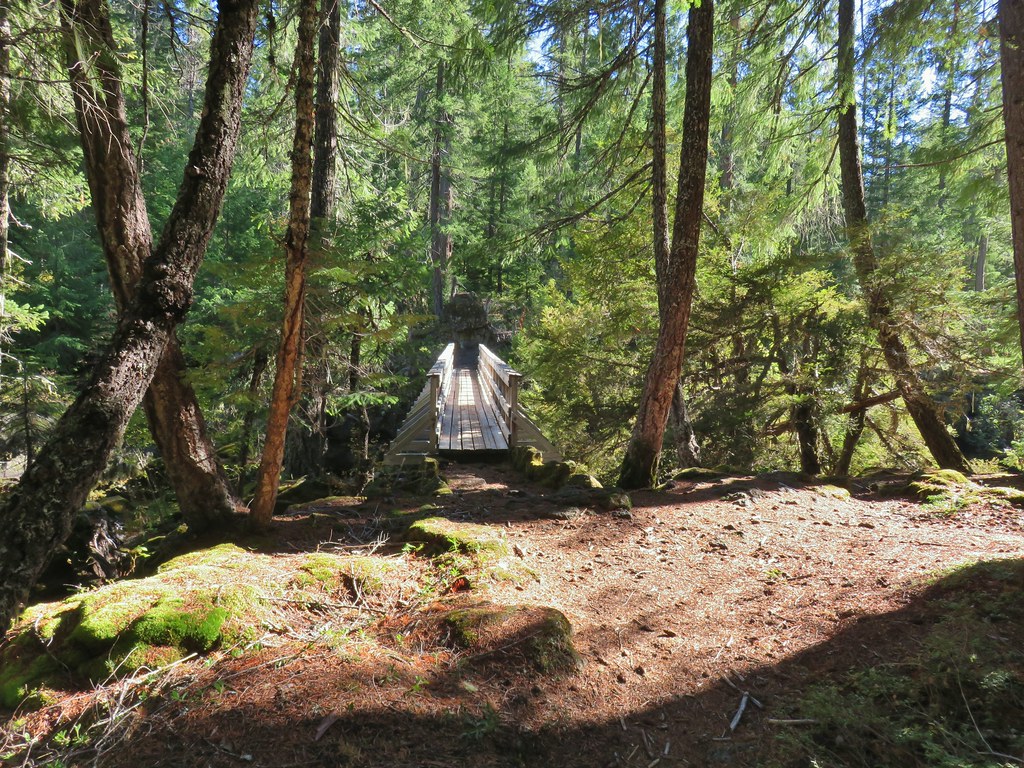
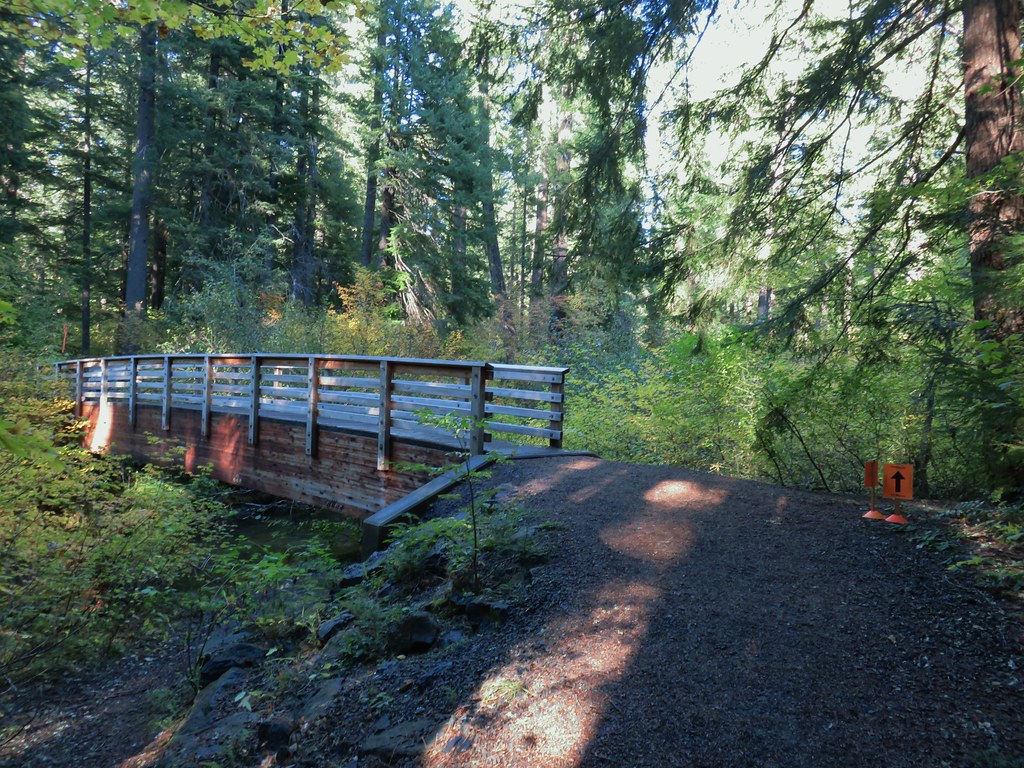
A mile into the hike we crossed the river on a bridge.
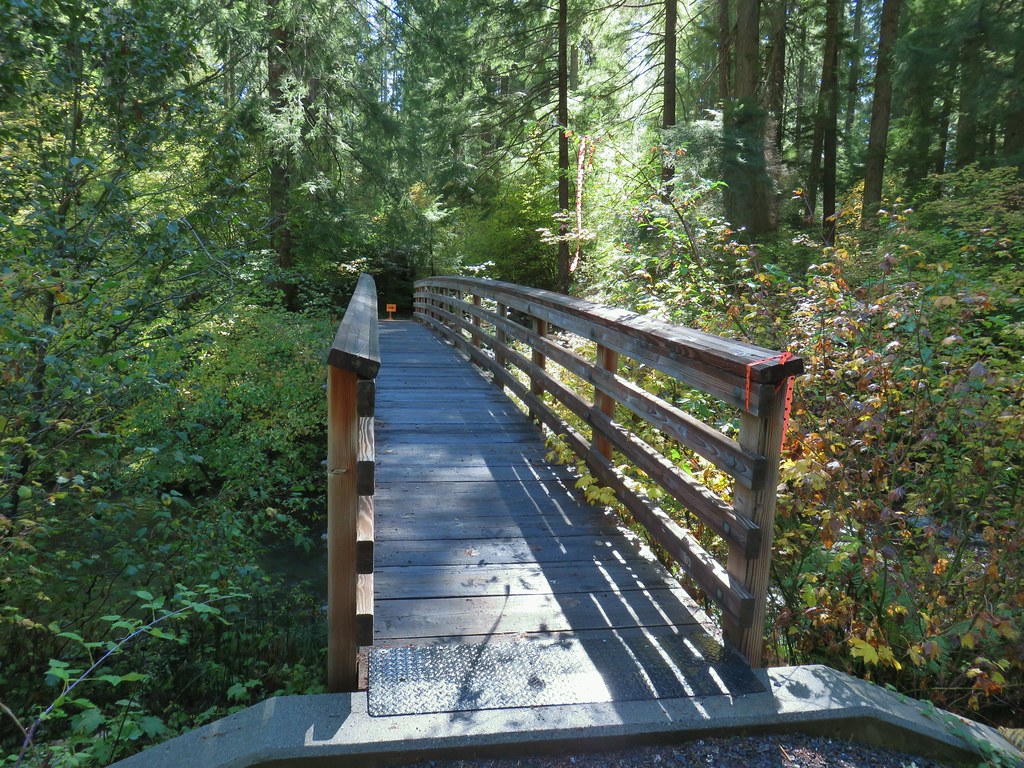
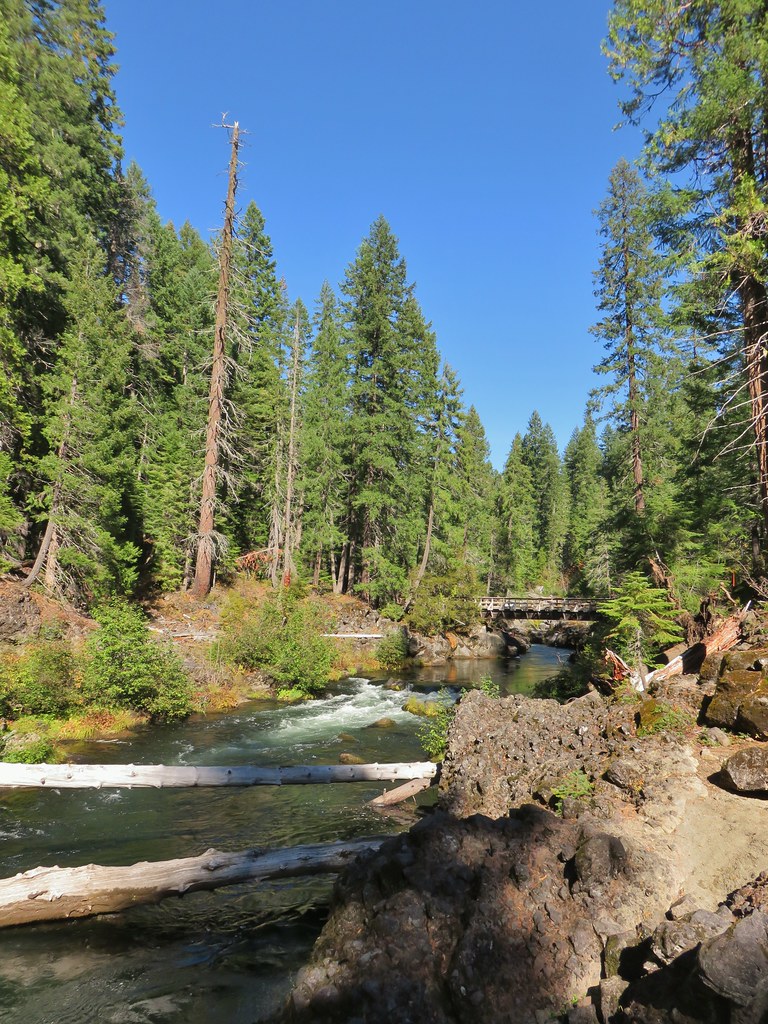
North Fork Road crossing the North Fork Nehalem River

North Fork Nehalem River

North Fork Nehalem River

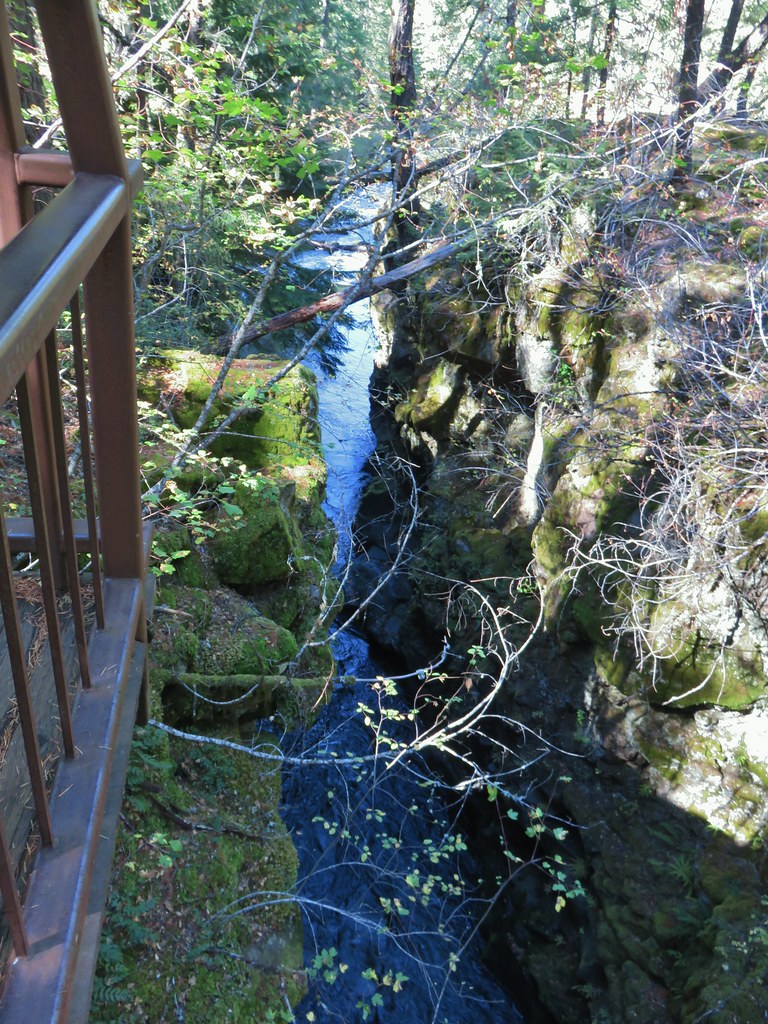
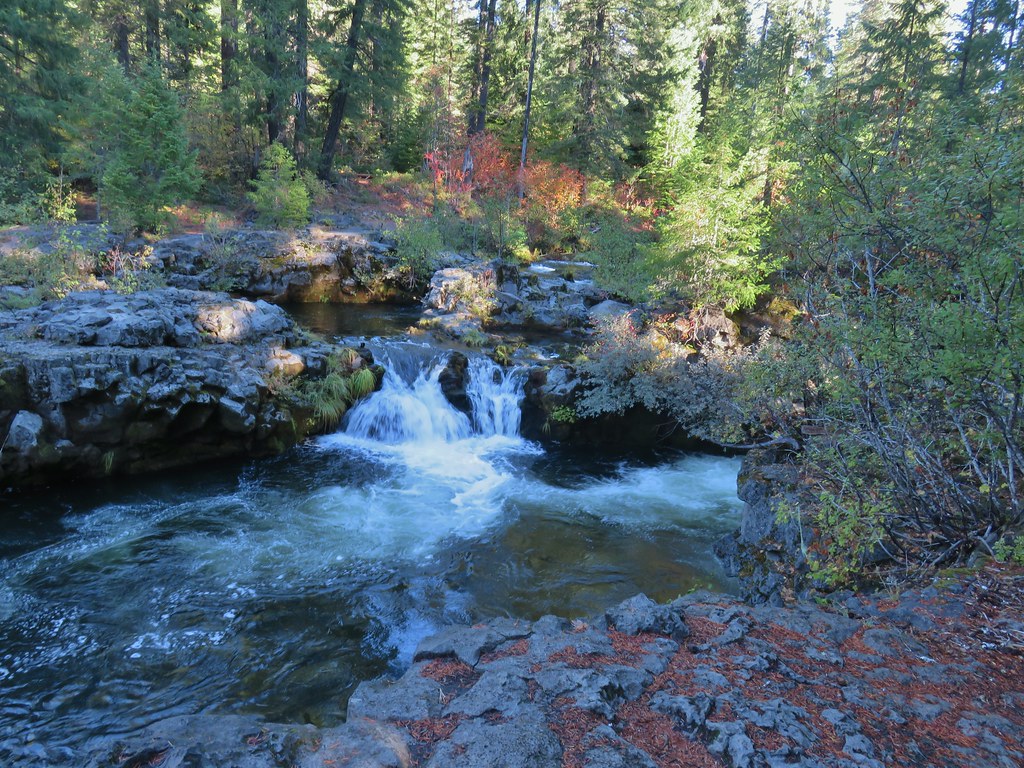
Just under a half a mile from the bridge we came to North Fork Falls where some steps led down to a fish ladder.
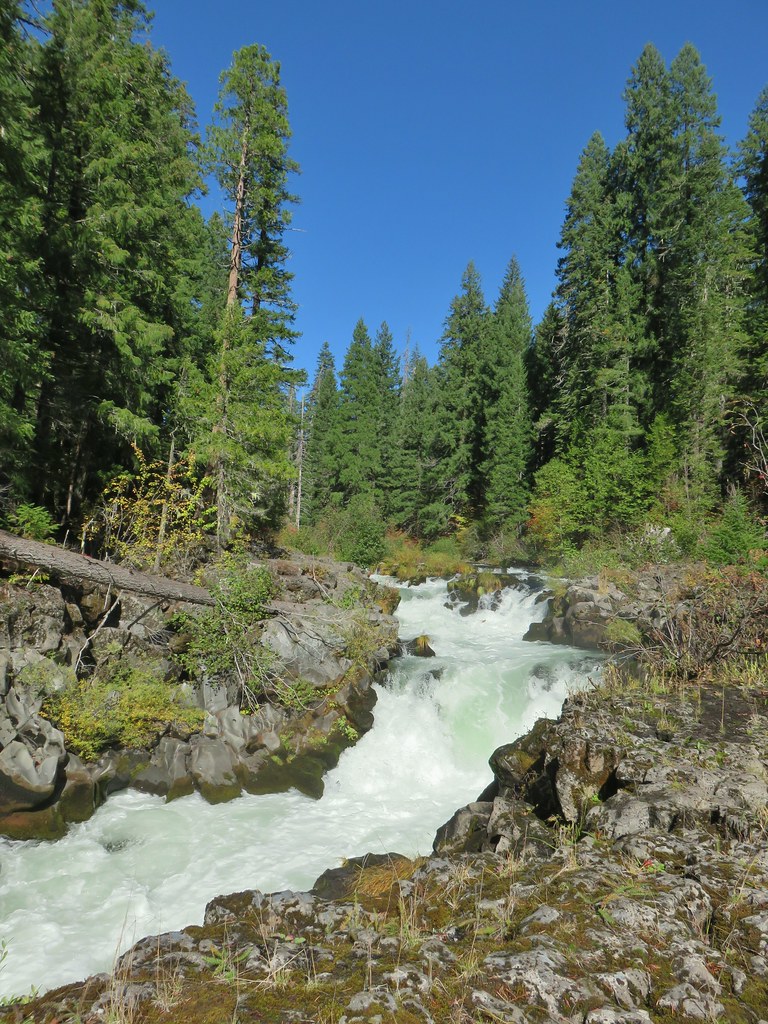
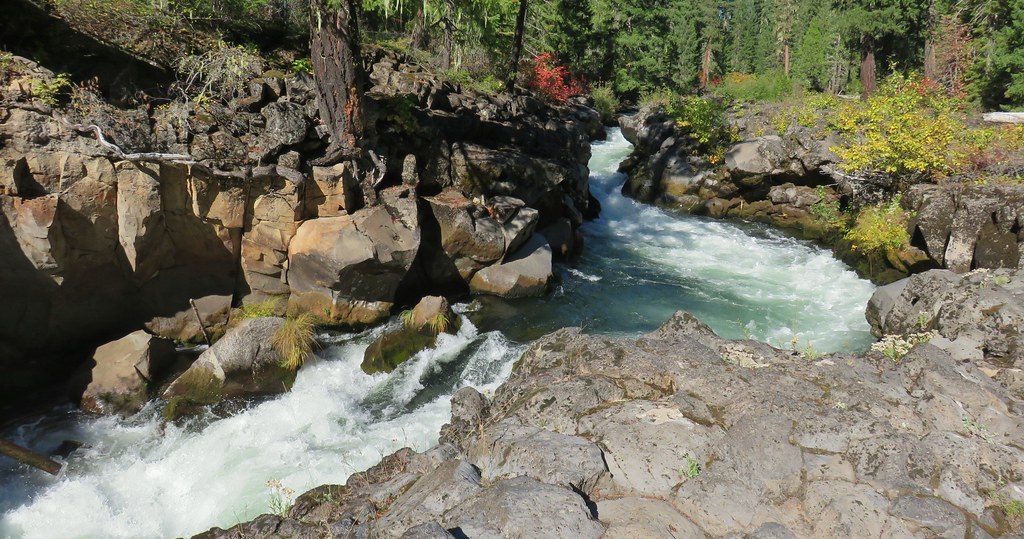
North Fork Falls

North Fork Falls

Fish ladder at North Fork Falls

North Fork Nehalem River

After checking out the falls and fish ladder we continued on North Fork Road passing twin seasonal waterfalls, a quarry, and a pond before crossing over Gods Valley Creek near the two and three quarter mile mark of the hike.
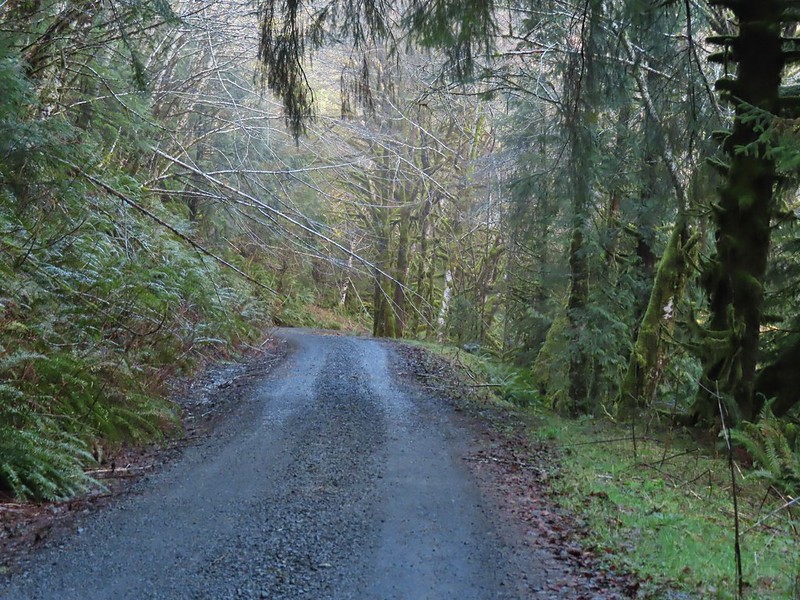
North Fork Road

Twin seasonal waterfalls along North Fork Road

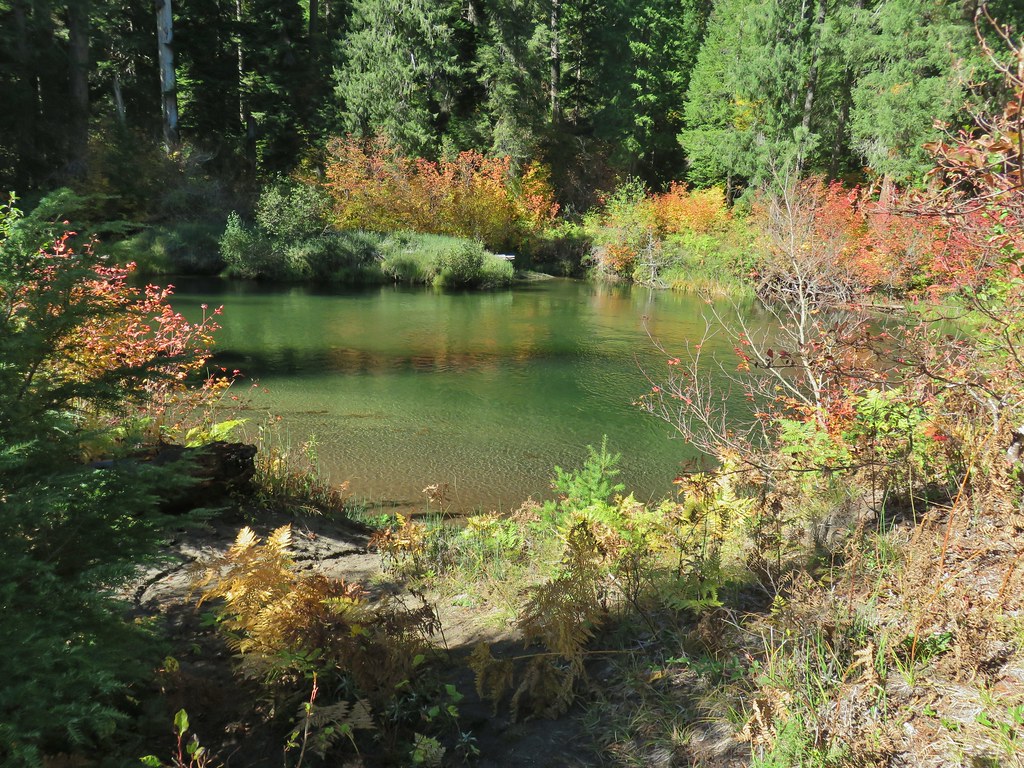
Pond along North Fork Road

Gods Valley CreekGods Valley Creek

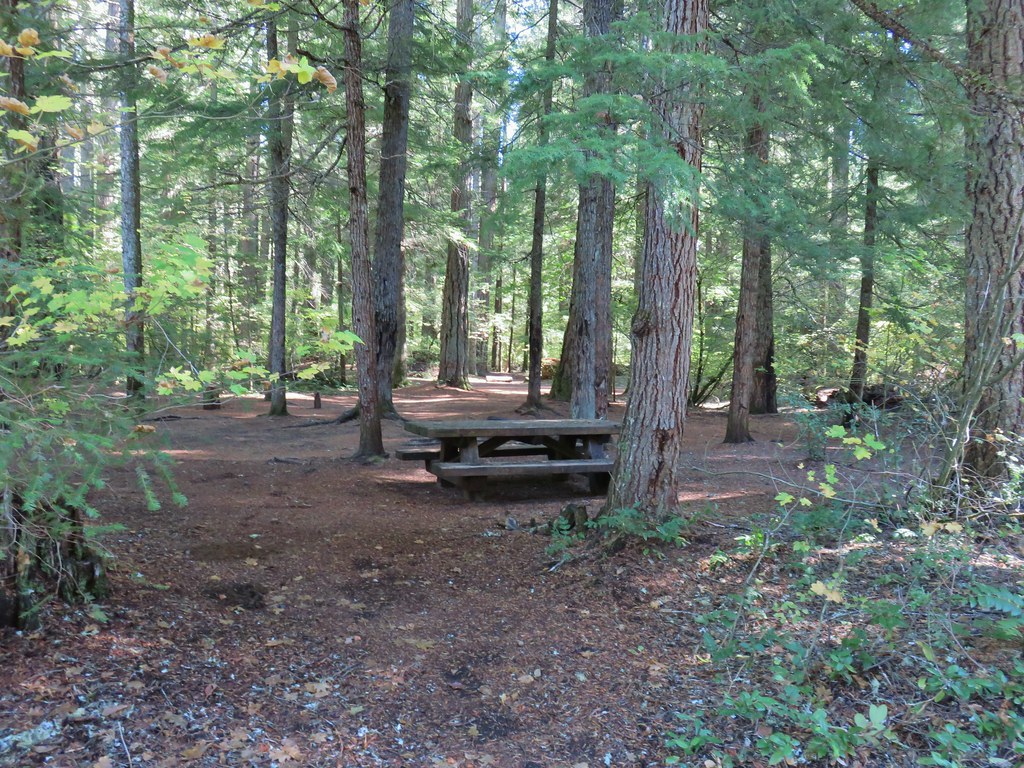
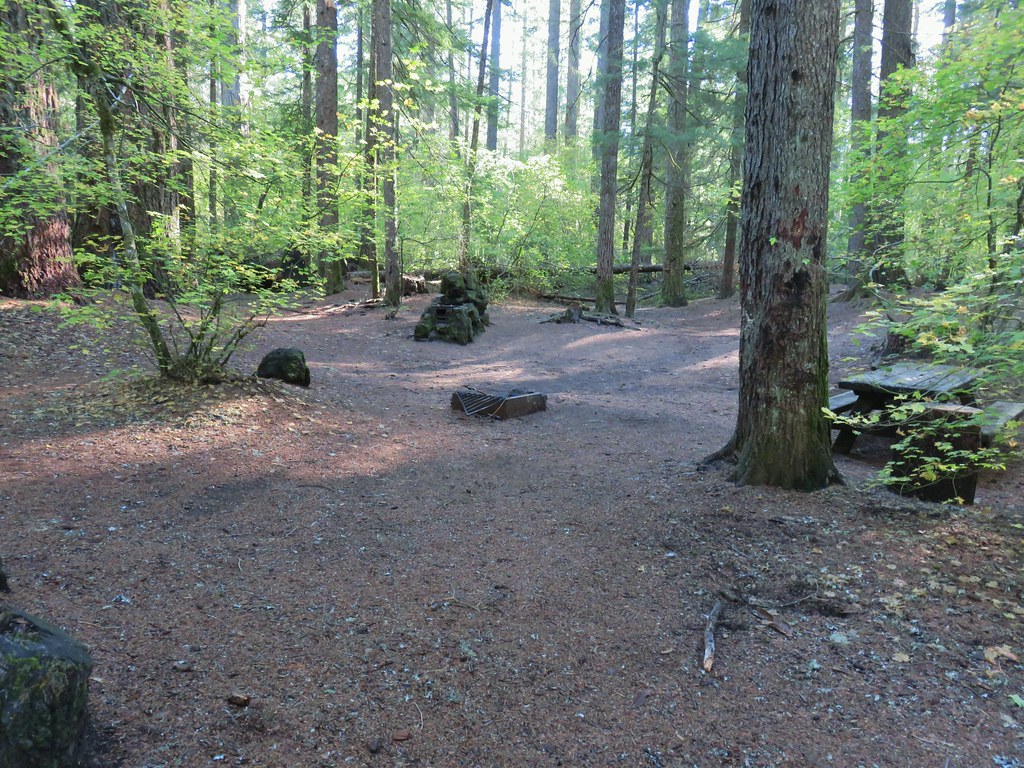
Just beyond Gods Valley Creek we spotted some old moss covered picnic tables. We’d be interested in the history here as there was also at least one former campsite with an old fire ring in the area as well. Our guess is that before the logging this was some sort of recreation area but we haven’t been able to find any information online about it.
Old picnic tables

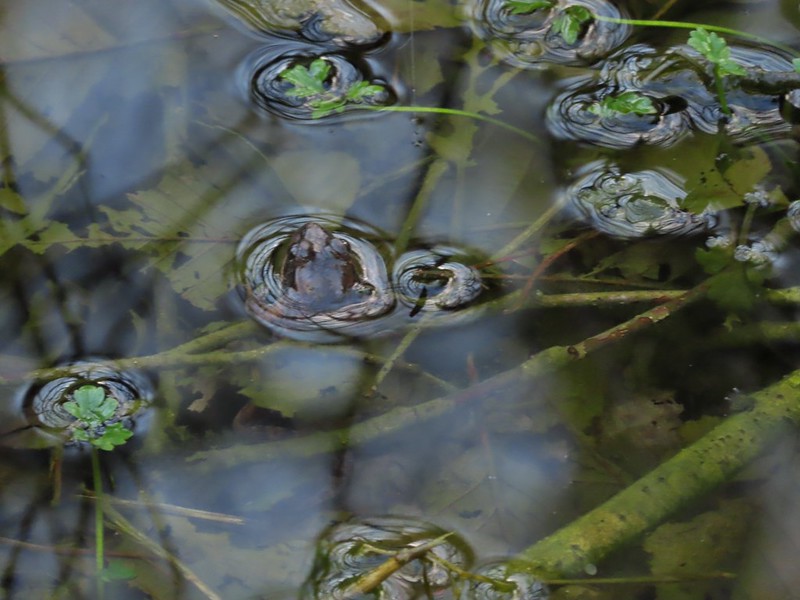
FrogFrog near the old picnic tables.

After crossing the creek the road left the North Fork Nehalem as the river bent northward sticking to a straight line to another crossing of the River just before the 3.5 mile mark.
North Fork Road

North Fork Road crossing the North Fork Nehalem River

North Fork Nehalem River

A gate at the far end of this bridge marked the boundary of the private land and the start of the Clatsop State Forest. We followed North Fork Road through the forest another two miles to Fall Creek (just on the far side of another large quarry).
Skunk cabbageNot much in the way of flowers yet but there was a bit of skunk cabbage in bloom.
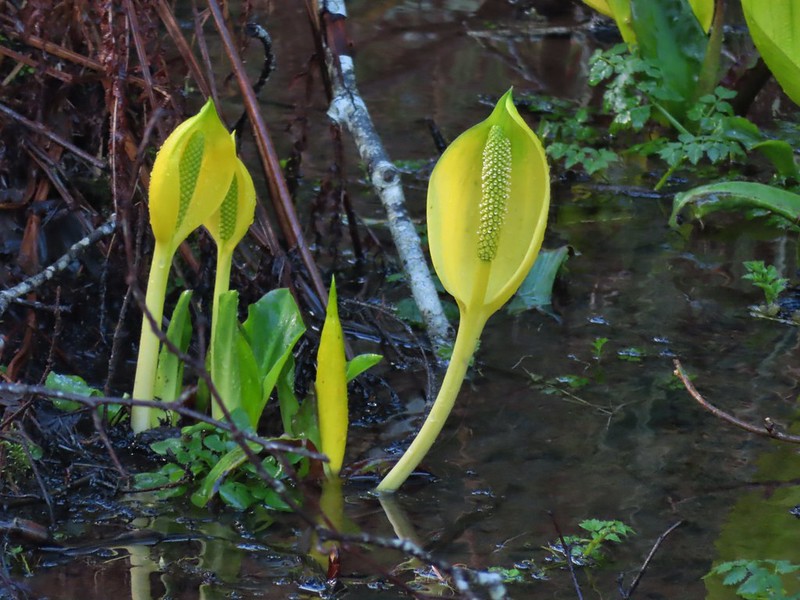
Skunk cabbage

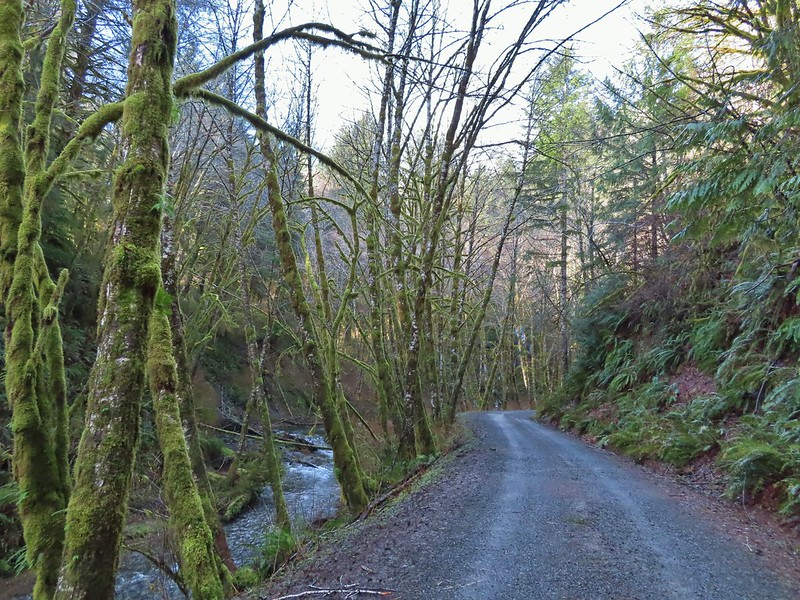
North Fork RoadSome low hanging trees, presumably from the storm. The roads had been cleared but occasional damage along the side of the road was evident.
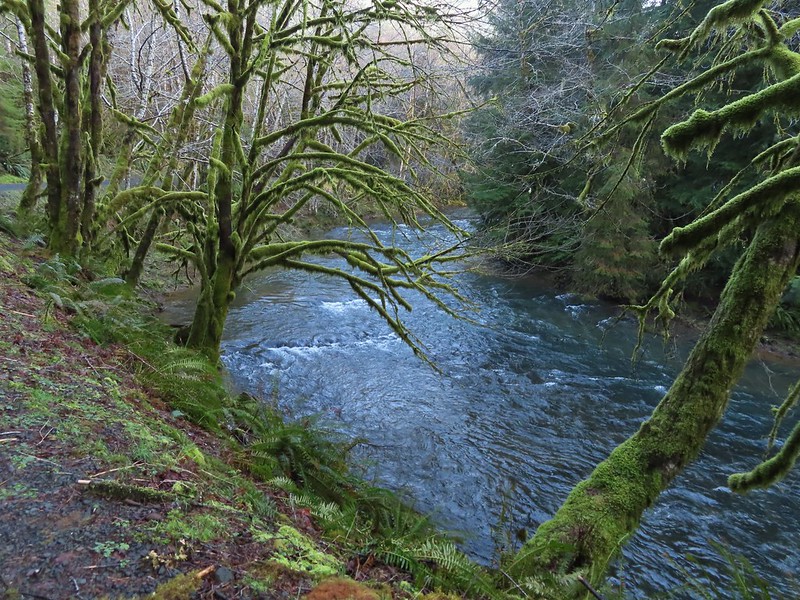
North Fork Nehalem River

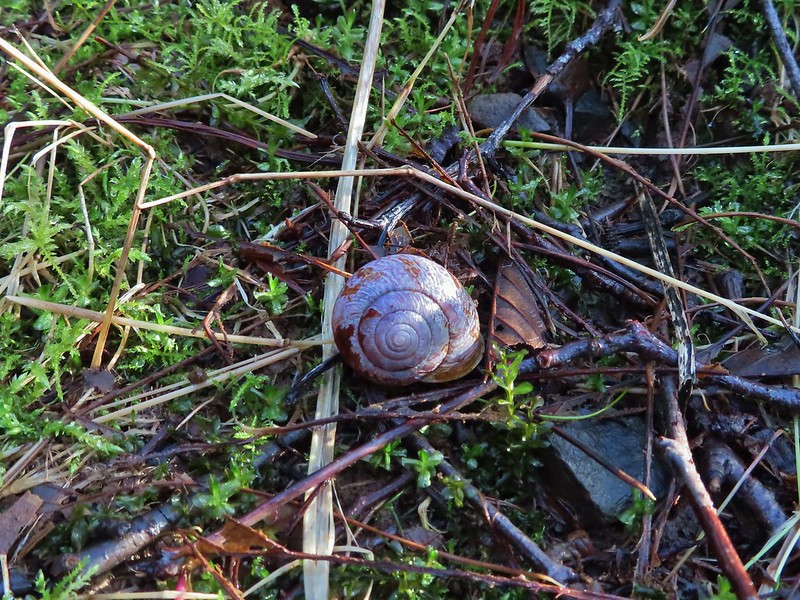
Snail shell

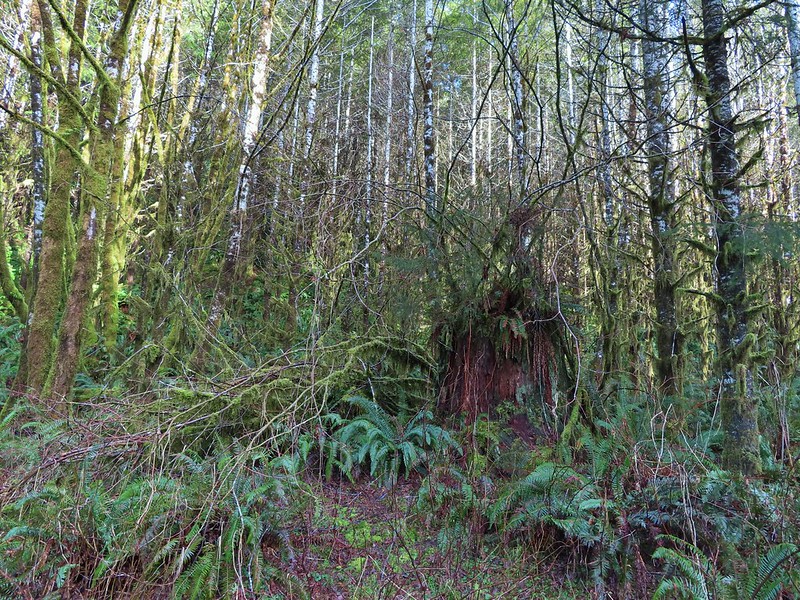
Old stump amid younger treesThere were no recent clearcuts in the Clatsop State Forest section but there was evidence of past logging.

Fall CreekFall Creek

After crossing Fall Creek the road (which is shown on maps as Hill Road here) turned away from the river and followed Fall Creek. We took a short detour to the right toward the river where a gated suspension bridge led to another fish ladder.
North Fork Nehalem River

Path to a closed suspension bridge over the North Fork Nehalem RiverNot sure why I neglected to get a picture of the bridge from the locked gate but this is the only one I took of the bridge.

Upper North Fork FallsThe hike description in the Oregon Hikers Field Guide mentions walking along the bank to get a view of Upper North Fork Falls from the rocks below but that wasn’t going to be an option with the river level today.
After checking out the bridge we returned to the the road and continued uphill along Fall Creek to visit three more waterfalls.
Hill Road along Fall Creek

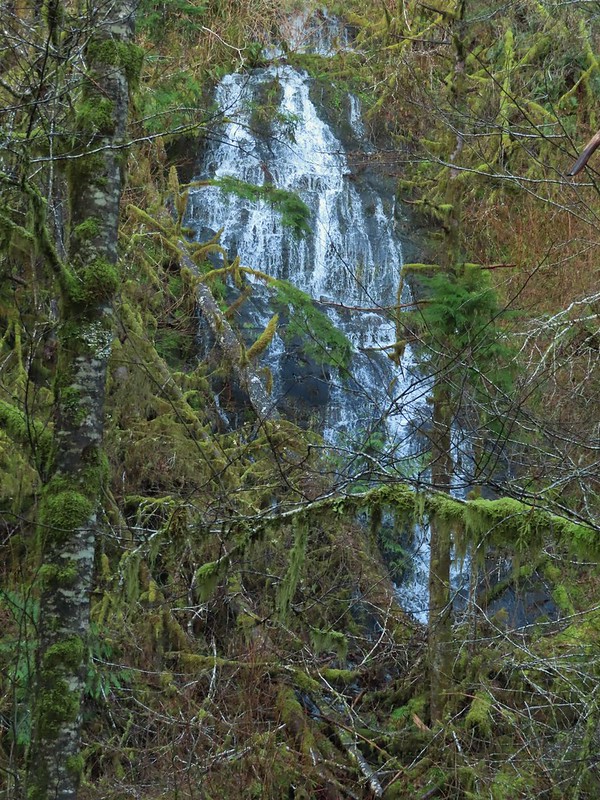
We came to the first fall after .3 miles, a side stream flowing into Fall Creek. The lack of leaves made it a little easier to see the falls than it would be later in the year.
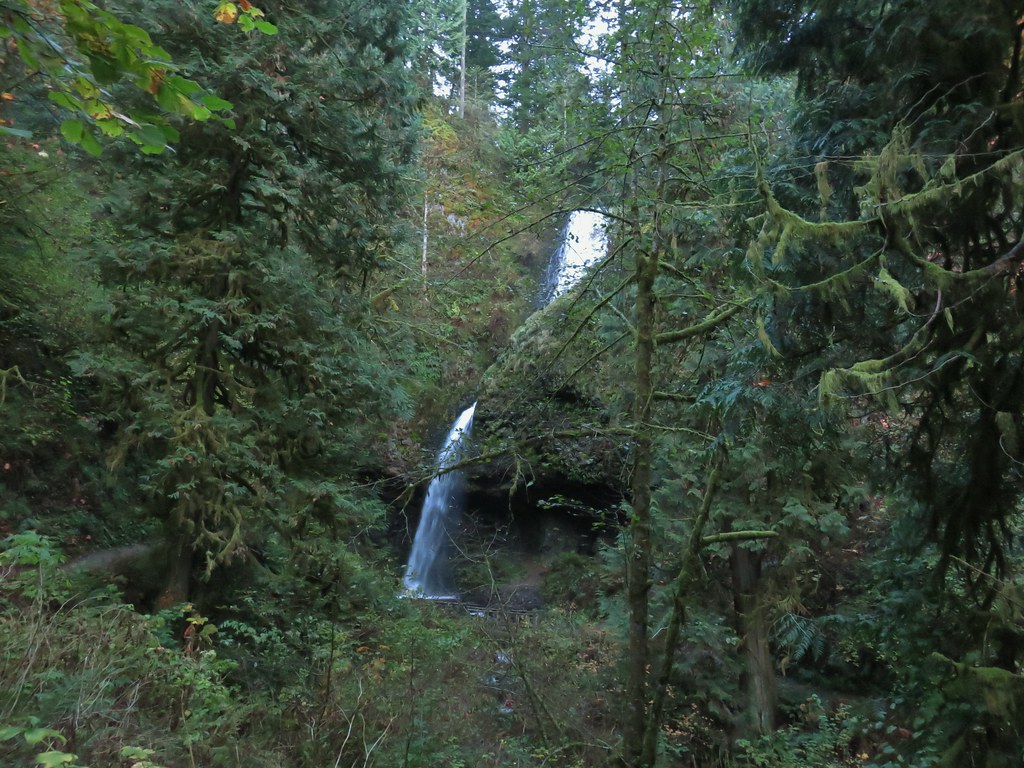
Waterfall spilling into Fall Creek

I was able to make my way down to Fall Creek below the falls for a closer look. (I did however get slapped in the face a couple of times by the vegetation.)
Waterfall spilling into Fall Creek

Another quarter mile brought us to the final two falls. A stepped fall on Fall Creek and another side stream flowing into Fall Creek.
Falls on Fall Creek

Waterfalls on Fall Creek

Waterfall spilling into Fall Creek

Waterfall spilling into Fall Creek

We were pleasantly surprised at how nice these last three waterfalls were, especially the two on the side streams. We were also thankful that we hadn’t had any real precipitation to deal with. We headed back the way we’d come looking for anything we’d missed on our fist pass.
Thick moss on a treeWe both thought that this thick moss looked like some sort of hairstyle.
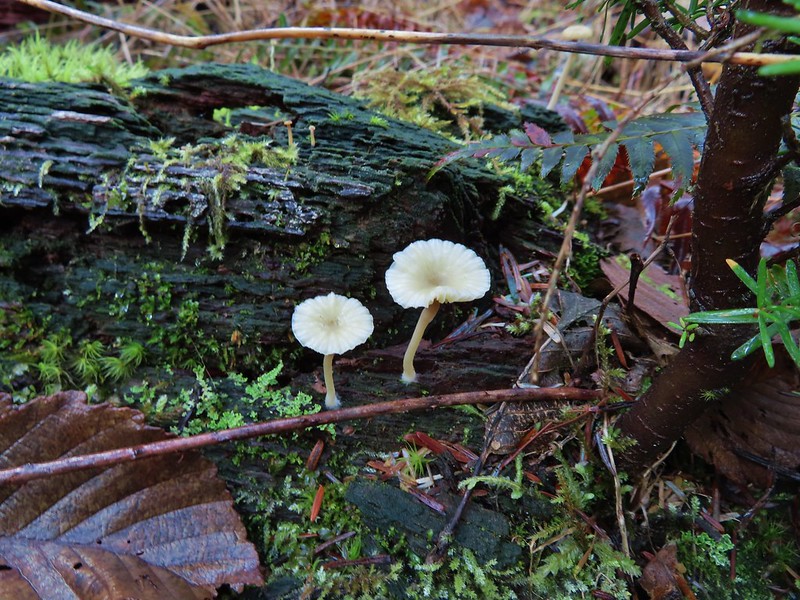
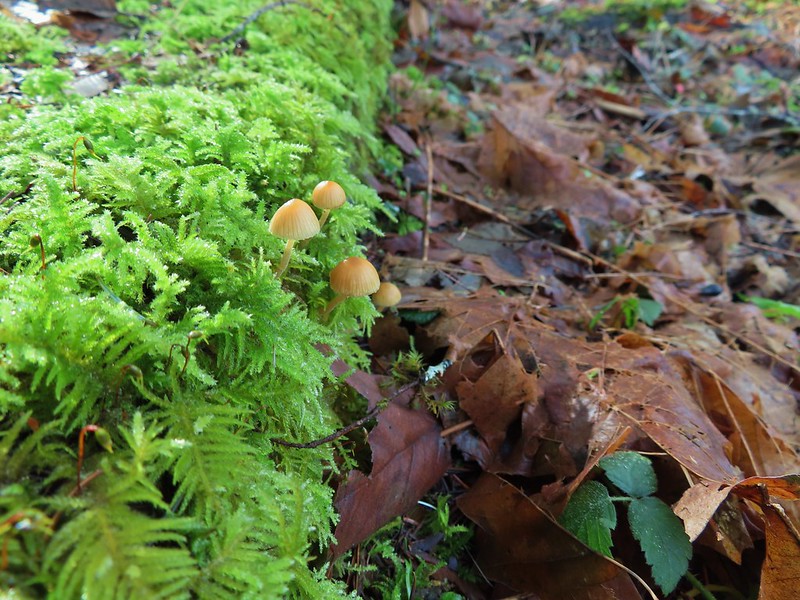
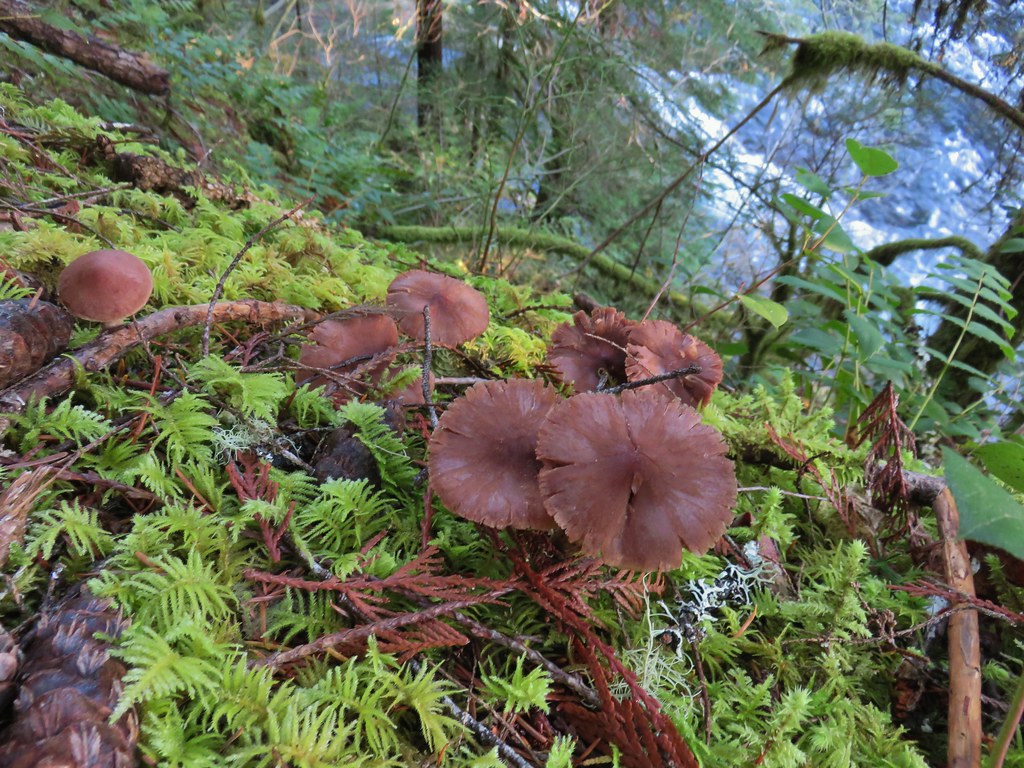
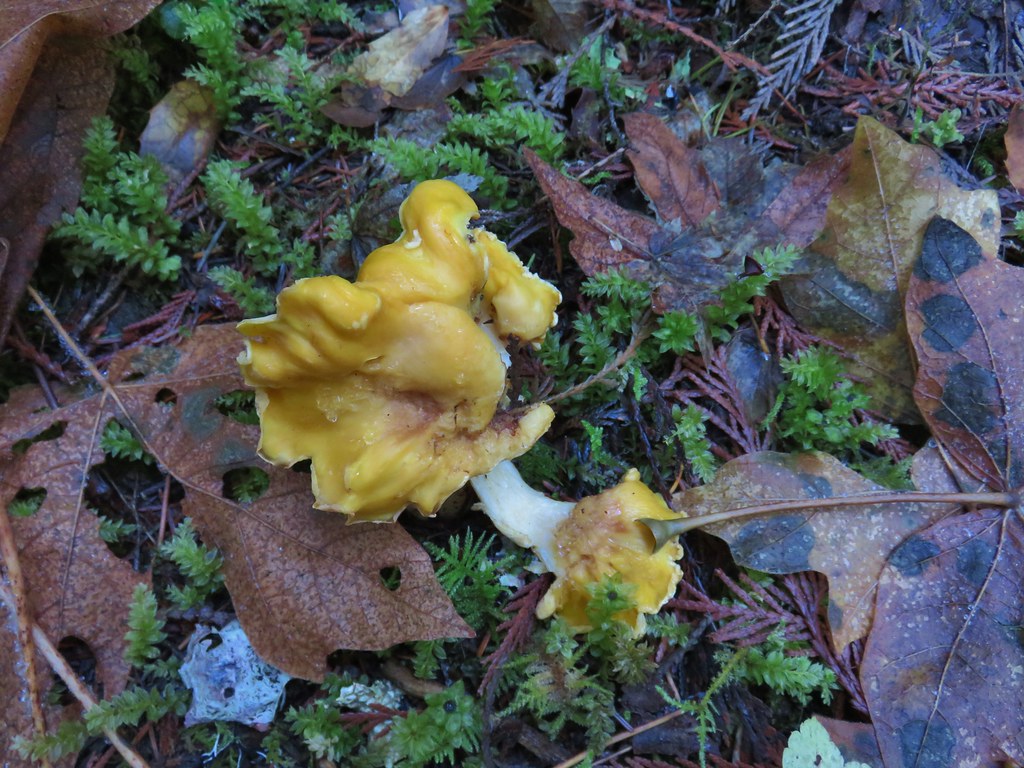
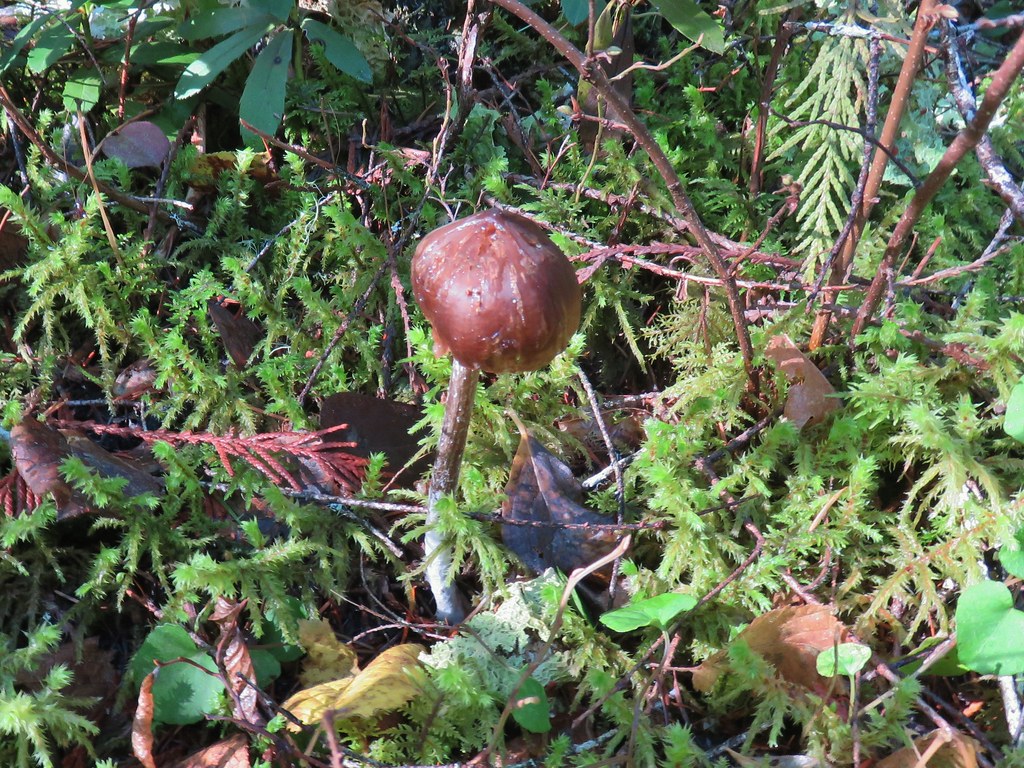
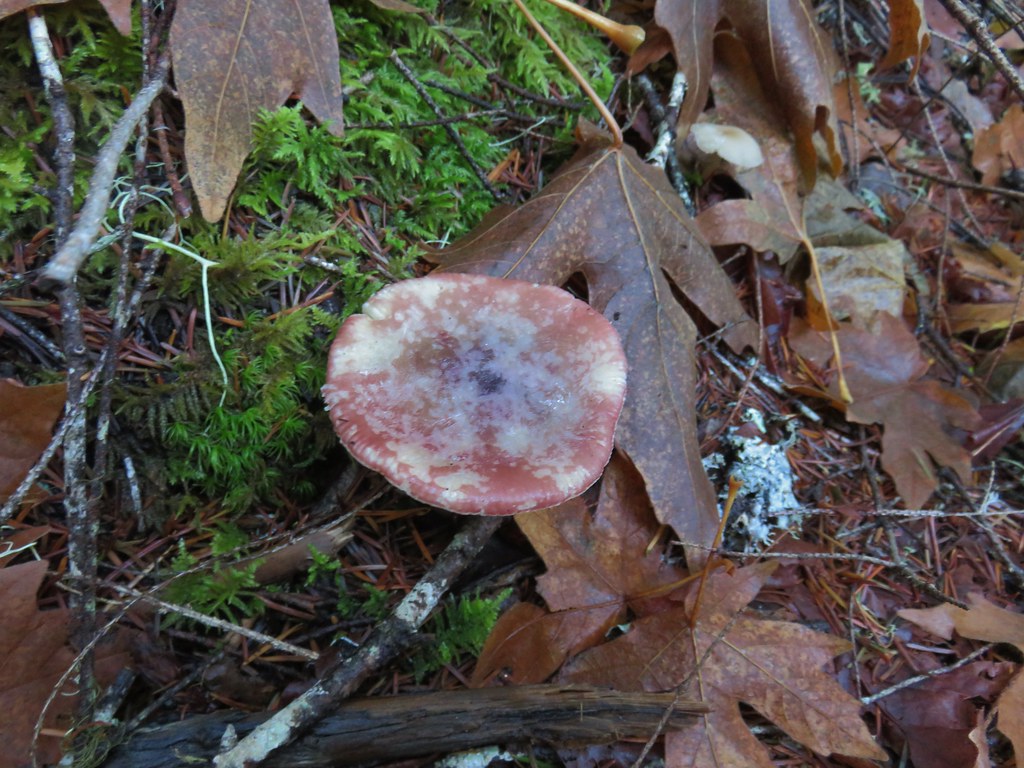
Mushrooms

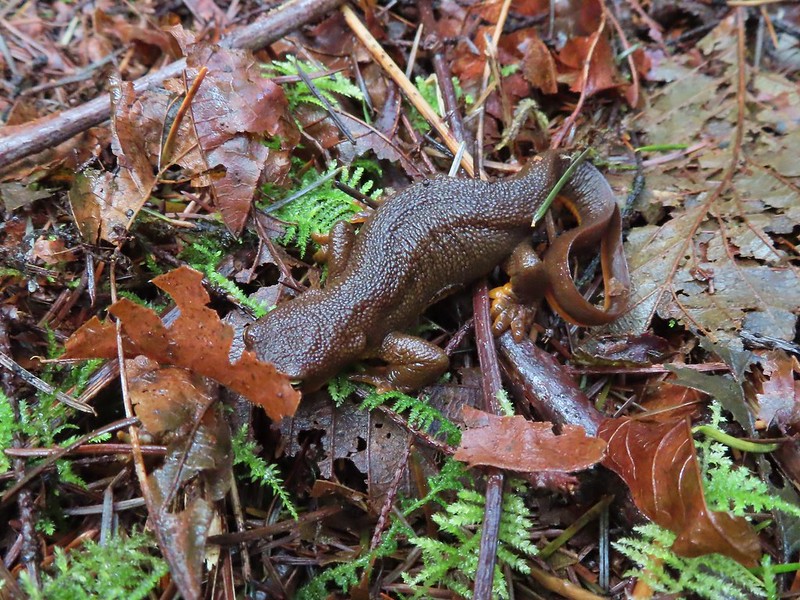
Rough skinned newtRough-skinned newt

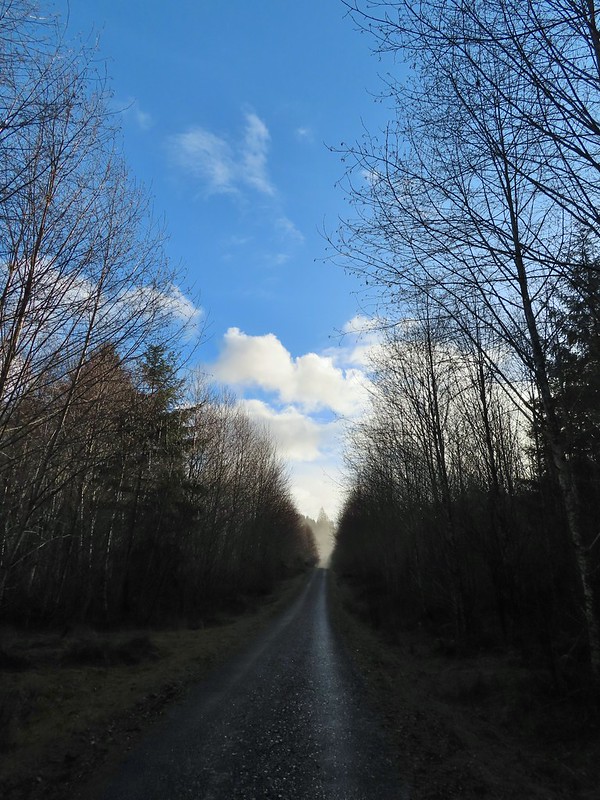
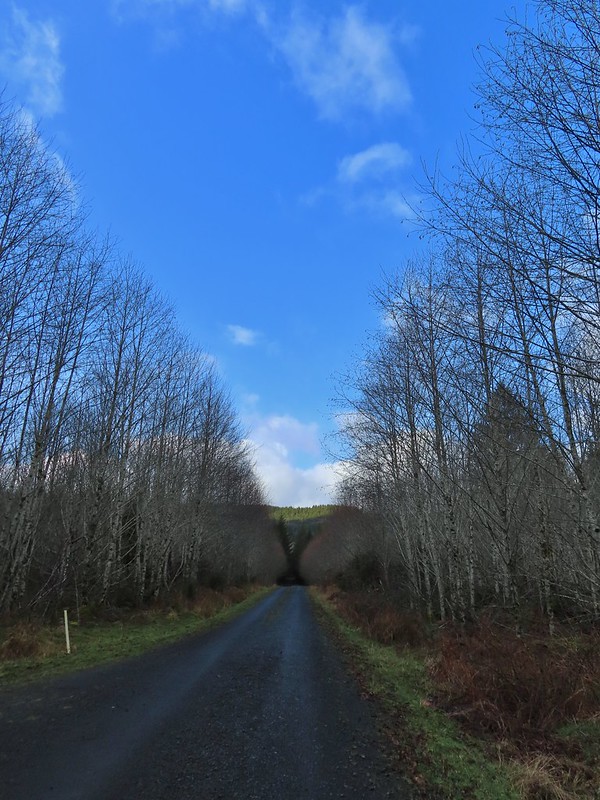
A brief mist passed over but that was it and we enjoyed some bright blue sky as we finished up our outing.
North Fork Road

The hike came in at a little under twelve and a half miles with just over 500′ of elevation gain. We passed three anglers on the road on the way back and saw two more (their fishing line anyway) down on river. This was a great winter hike and a thoroughly enjoyable outing despite being entirely on roads. It just goes to show that it’s the not the surface but the surroundings that make a good hike. Happy Trails!

Flickr: North Fork Nehalem River

Categories
Coastal Range Hiking Oregon

Banks-Vernonia State Trail – Buxton Trestle to Tophill Trailhead – 01/16/2021

We kicked off our 2021 hiking year by revisiting the Banks-Vernonia State Trail. We had run the entire trail in April 2014 as part of an ill fated marathon and I had hiked a short section between the Buxton Trestle and Manning Trailhead in April 2016 while Heather ran a half-marathon (post). We had used the marathon as our “hike” to check off hike #23 in Sullivan’s “100 Hikes/Travel Guide Oregon Coast & Coast Range”4th edition, but the Banks-Vernonia Trail was only part of a longer lollipop loop through L.L. Stub Stewart State Park that he describes. With this visit we planned on doing the rest of his described hike as well as continuing on to the Tophill Trailhead where we plan to someday start another section hike of the trail.

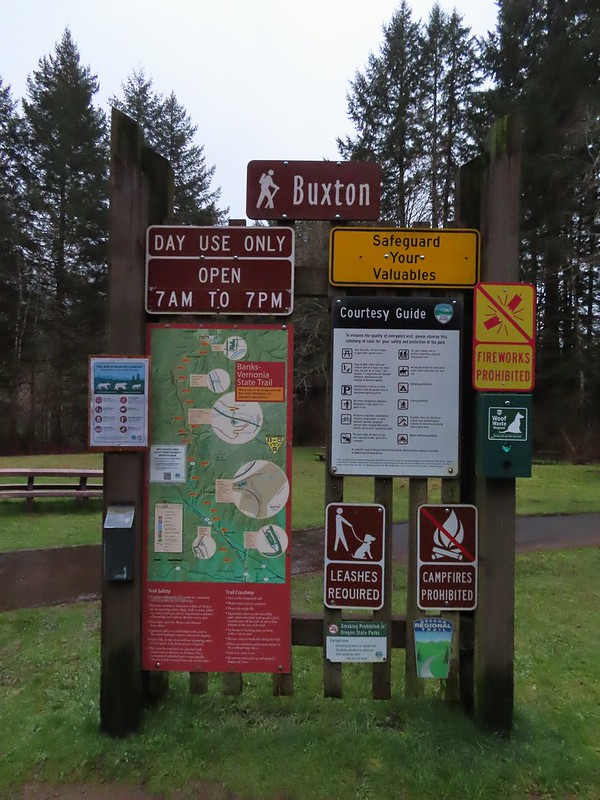
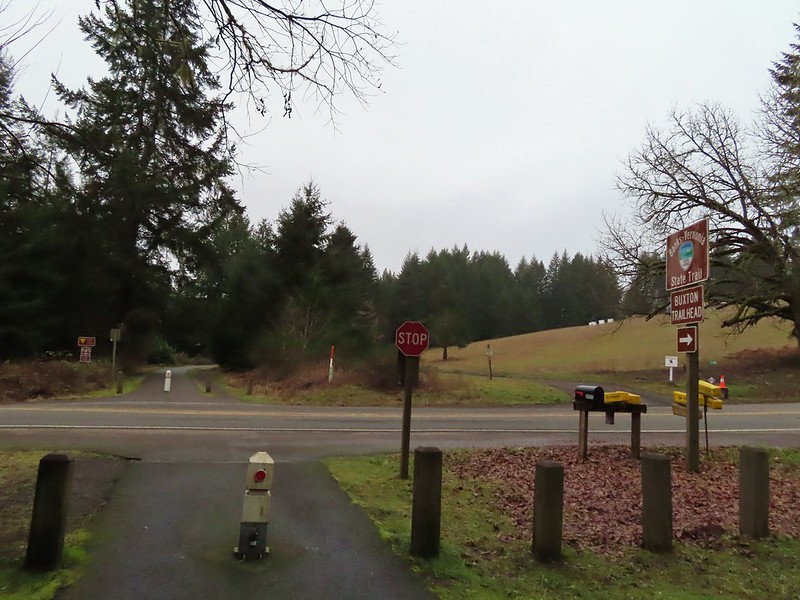
We began our hike at the Buxton Trailhead where I had started my 2016 hike as well.
IMG_0261

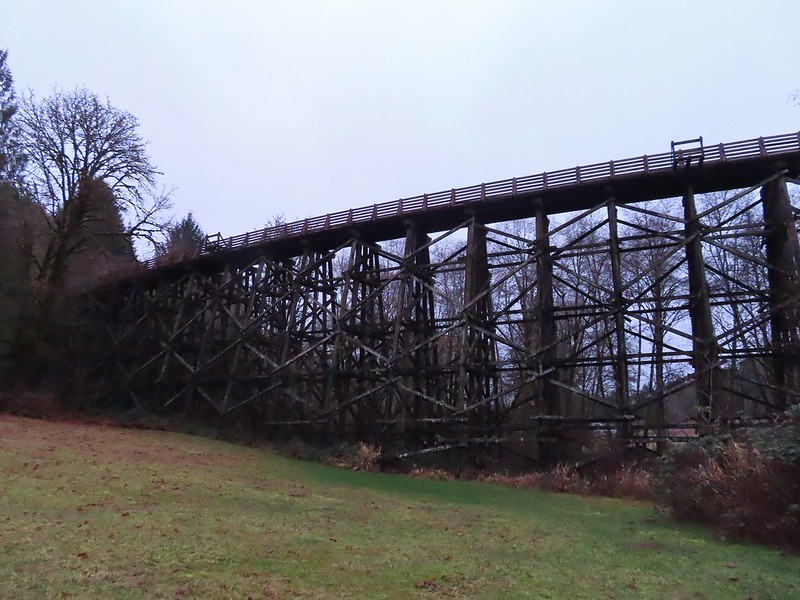
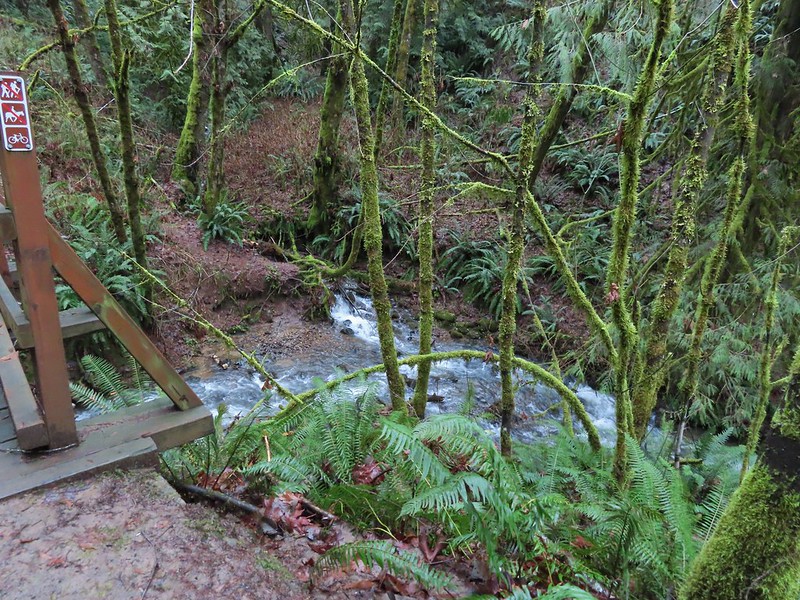
From the far end of the parking lot we took a path down to Mendenhall Creek below the Buxton Trestle.
IMG_0264

IMG_0268

IMG_0269

The path then took us up to the Banks-Vernonia State Trail where we turned right and crossed the trestle.
IMG_0273

IMG_0275

IMG_0277

We followed the paved former railroad north approximately 3/4 of a mile into L.L. Stub Stewart State Park.
IMG_0281Leaving the Buxton Trailhead area.

IMG_0292

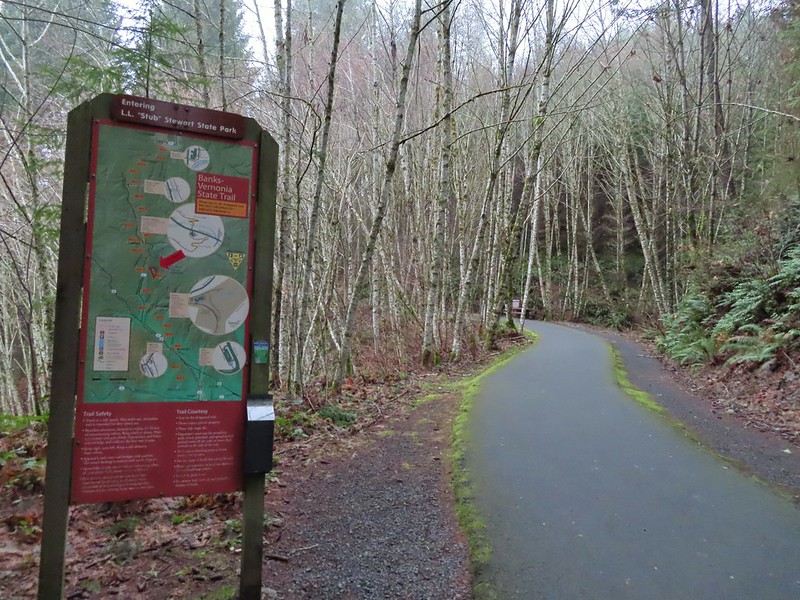
IMG_0296Entering Stub Stewart State Park.

We continued through the park for another mile and a half passing two marked trails to the right before arriving at a third just north of Williams Creek
IMG_0303

IMG_0308This trail was just north of Logging Creek and appeared to just loop back to the Banks-Vernonia Trail a bit further north.
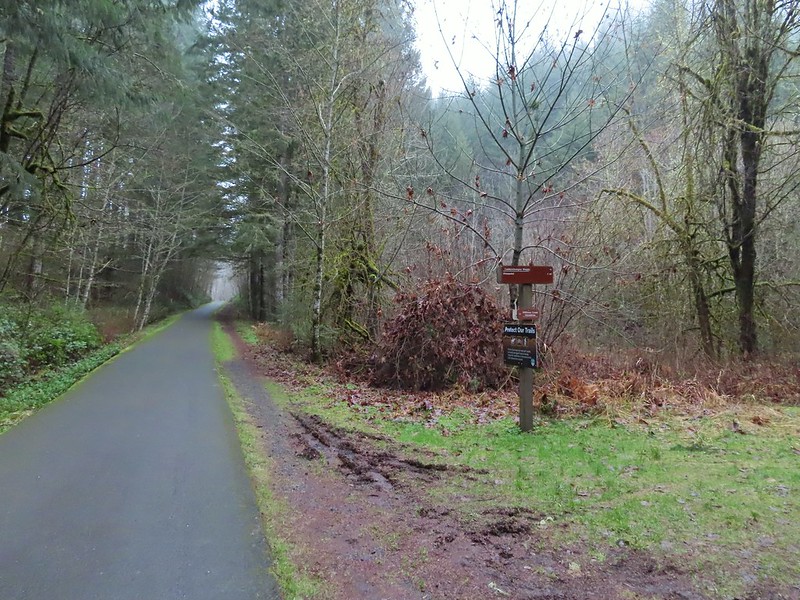
IMG_0309The Caddywhomper Way(s) Trail was signed better. We skipped the viewpoint given the amount of fog/clouds and not wanting to add another 2 miles to the days total. The Oregonhikers field guide also mentions that there isn’t much of a view left due to the presence of trees.

IMG_0315

IMG_0318Trail junction just north of Williams Creek

This was our first wrong turn of 2021 although it may have been correct back in 2016 when our guidebook was released. The map in the book showed a single trail splitting off to the right just beyond the creek so we turned down what turned out to be the Shoofly Trail.
IMG_0320

After .2 miles we arrived at a signboard with a map (it would have been more helpful up at the junction).
IMG_0323

It was here that we realized that it was the wrong trail and that the Hares Canyon Trail was just a tenth of a mile further north.
IMG_0324

Since we were already down there we checked out Williams Creek stopping before the bridge which was clearly marked “no hikers”.
IMG_0325

IMG_0326

IMG_0327

I say that it may have been the correct trail at one point because Sullivan’s description says that “after 100 feet a spur down to the right dead ends at the creek bank” and there was a closed fork up to the left that may have at one time been part of the Hares Canyon Trail. It wasn’t now though so back up we went to the Banks-Vernonia Trail where we continued north the the signed Hares Canyon Trail.
IMG_0330

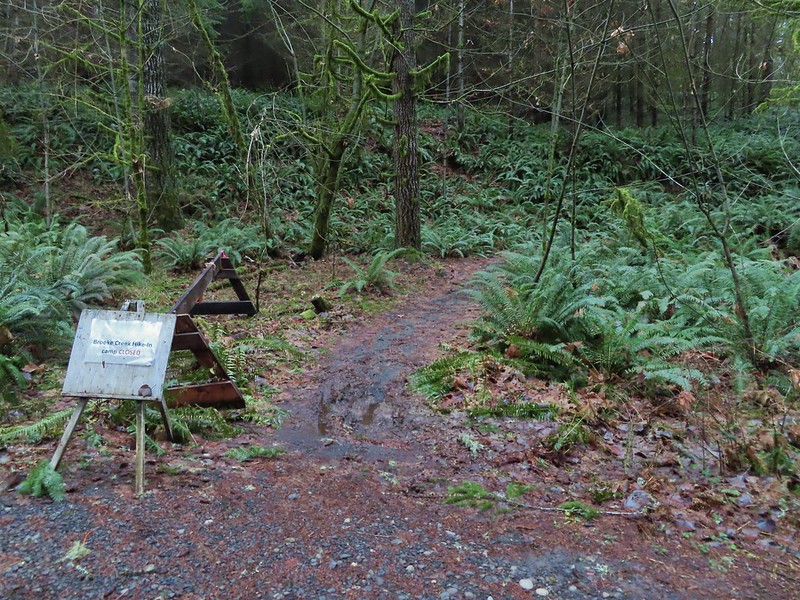
A barricade next to the trail had signs for active logging that was occurring Monday – Friday closing the trail on those days.
IMG_0332

We headed up this trail through the forest where we ran into a pair of rough skinned newts.
IMG_0333

IMG_0336

IMG_0341

IMG_0343

We passed a signed junction with the Brookecreek Trail and then arrived at a new logging road three quarters of a mile from the Banks-Vernonia Trail.
IMG_0350

IMG_0351

IMG_0353

There were no indications of where the Hares Canyon Trail went so we used the map to decide that it must be somewhere to our right and we followed the logging road a short distance before spotting an obvious trail splitting off of it.
IMG_0354

The trail passed through a thinned forest before popping out on another logging road.
IMG_0356

IMG_0357

We stayed right on the road at junctions and dropped to another barricade at the Widowmaker Way Trail.
IMG_0358

IMG_0365

IMG_0361Sign for the Widowmaker Way and Harse Canyon Trails.
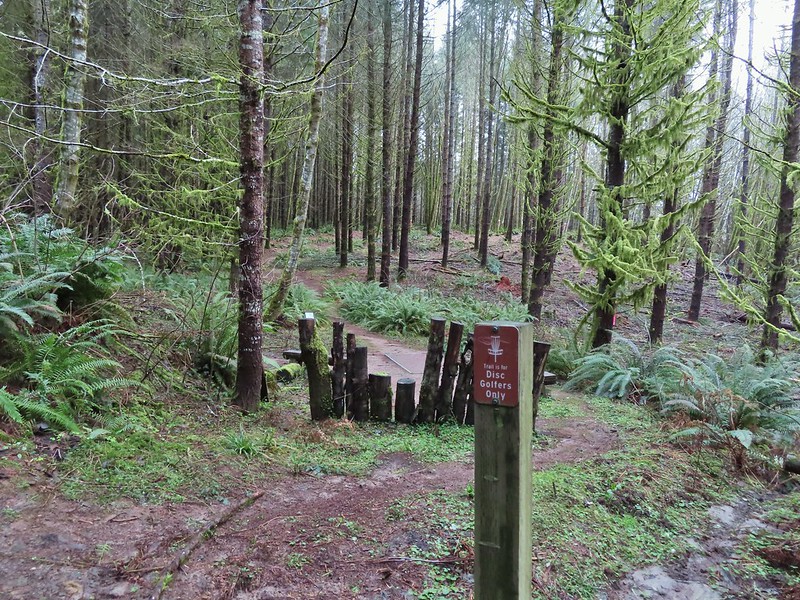
Passing through the logging operation was a bit depressing to be honest. We’ve been on several trails in the last year that have passed through active or recently logged areas and combined with the trails that we’ve lost to wildfires in the last few years and other trails that are being lost to lack of funding for maintenance it’s a bit of a bummer. Ironically this is all at a time when more people then ever are heading out to the trails overloading the most popular and causing issues with litter and human waste. Enough of the doom and gloom though and back to the hike.

The Hares Canyon Trail followed a roadbed of indeterminate age through a disc golf course arriving at a signboard in a mile marking the northern end of the Mountain Bike Area at North Caddywhomper Way.
IMG_0367

IMG_0369

IMG_0370

IMG_0378No flowers yet but plenty of mushrooms and fungi.

IMG_0381

IMG_0383The trails were well signed so it was easy to stay on the Hares Canyon Trail.

IMG_0387

IMG_0388Comming up on North Caddywhomper Way

We turned left here following pointers for the Hares Canyon Trail until it crossed a service road (3/4 of a mile from the signboard).
IMG_0389

IMG_0391

IMG_0396

IMG_0397

At a junction on the far side of the service road we veered left following the Unfit Settlement View Trail and pointers for the Skycar View and Boomscooter Trail.
IMG_0399

IMG_0401

IMG_0402Wet webs in the trees.

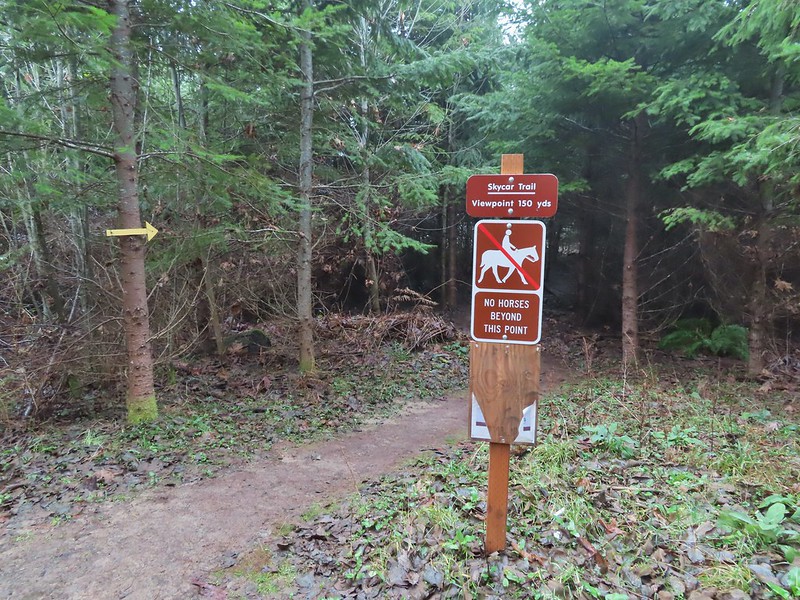
We took a detour to the Skycar View despite the fog since it was only 150 yards away.
IMG_0404

IMG_0407

IMG_0409

We returned to the Unfit Settlement View Trail and followed it downhill to a junction with the Boomscooter Trail where we turned right.
IMG_0412

IMG_0414

The Boomscooter Trail descended past Boomscooter Pond and ended in three quarters of a mile at the Banks-Vernonia State Trail.
IMG_0417

IMG_0415Chatty squirrel

IMG_0424

IMG_0432

Sullivan’s description would have had us turn left here and return to the Buxton Trailhead but we turned right instead in order to visit the Tophill Trailhead. There were two reasons for this, one was that if we did do more sections of the trail in the future we didn’t want to have a non-hiked gap in between our section hikes, don’t know why but we prefer them to connect. The second reason was that the Tophill Trailhead had been the halfway point of the 2014 marathon which was also the point at which the train went off the tracks. The section of trail just beyond that trailhead was the only significant uphill of the whole route and we had thought walking it would keep it from doing too much damage, but we hadn’t planned on it being 20 plus degrees warmer that day than it had been during any of our training runs. None of us recovered after the hill and the remainder of the race included a lot of walking and cramping. We were both interested in revisiting that hill and seeing if it really was a bad as it had seemed that day.

It was about 2 miles to the Tophill Trailhead where we walked to Highway 26 then turned around and headed up the hill.
IMG_0435Passing over Highway 47 on the way to the Tophill Trailhead.

IMG_0437Orange jelly fungus on a tree.

IMG_0441Heading up from the hill from the less steep south side.
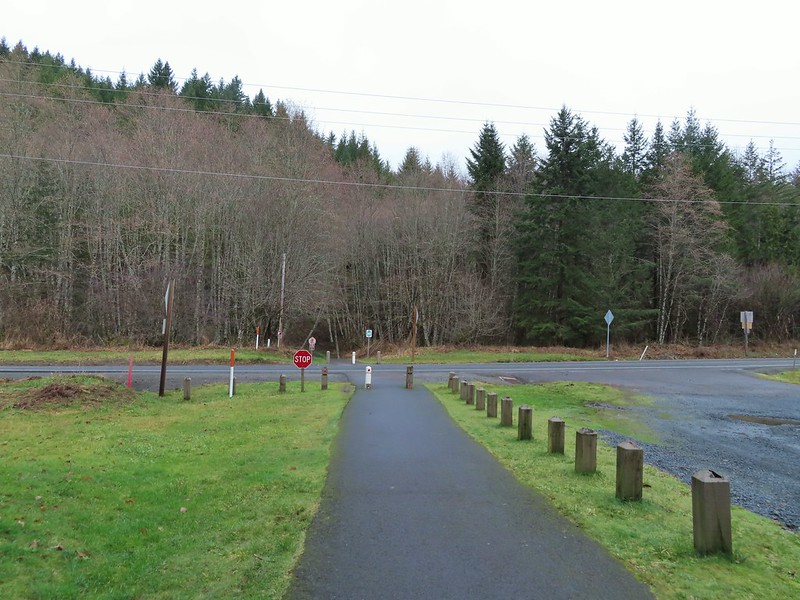
IMG_0445Highway 47 at the Tophill Trailhead.

The climb back up the couple of switchbacks was underwhelming. It made us work but it also reinforced that it wasn’t the hill that had done us in that day, it had been the heat. We followed the Banks-Vernonia Trail back to the Buxton Trailhead passing back through L.L. Stub Stewart State Park along the way. The trail was fairly busy by the afternoon with joggers, hikers, bikers, and a couple of equestrians enjoying the dry day (with a bonus sighting of blue skies).
IMG_0451Chestnut-backed chickadee

IMG_0460Pond along the trail.

IMG_0456

IMG_0464Entrance road to Stub Stewart.

IMG_0465

IMG_0466

IMG_0471

IMG_0476Back at the Buxton Trailhead

IMG_0478Bench at the Buxton Trailhead

We had expected the hike to be around 13 miles but our GPS (and time) put it at 15.5 miles. Although not the most exciting or dramatic hike there was a nice variety of sights and the trails (except for the area being logged) were in great to good shape. Happy Trails!

Flickr: Banks-Vernonia State Trail – Buxton to Tophill TH

Categories
Central Coast Hiking Oregon Oregon Coast Trip report

Yachats – 12/05/2020

We ended our 2020 hiking year by hiking a section of the Oregon Coast Trail from Yachats to Waldport (and back). Our final outing of the year also marked the 500th day with a hike since an ill prepared jaunt at Silver Falls State Park in 2006 gave us the hiking bug (post). I was extra excited for this outing having just received a replacement for our camera and looking forward to trying it out.

We started our hike at Smelt Sands State Recreation Site where the 804 Trail doubles as the Oregon Coast Trail route.
IMG_0007

IMG_0010

We headed north on the trail which passed between the rocky shore of the Pacific Ocean and several hotels.
IMG_0037

IMG_0042Looking back south as the sunrise paints the clouds.

IMG_0058A house on the cliffs.

After three quarters of a mile, and crossing the private driveway of the house pictured above, the trail descends to a 6.3 mile stretch of beach between Yachats and the mouth of the Alsea River at Waldport.
IMG_0061

It was a beautiful morning, chilly but not too cold. A slight chance of rain was in the forecast after 10am but that bank of clouds looked far off on the horizon as we struck off on the sand.
IMG_0062

IMG_0066Seagulls outnumbered people in the early part of the day.

We arrived at Starr Creek shortly after descending to the beach.
IMG_0070

One of the trickiest parts of beach hiking can be trying to judge the depth of the various creek crossings using satellite maps. This section of beach contained several named creeks so we had come prepared for barefoot fording if necessary. Starr Creek was narrow enough though that we were able to hop across with the assistance of our hiking poles.

Continuing north we passed some banded cliffs where the ocean had created a small arch.
IMG_0079

Beyond these cliffs the beach widened and we strolled along the hard packed sand looking for wildlife (both alive and not so much).
IMG_0076

IMG_0081

IMG_0084Vinge Creek, about a mile down the beach, was crossable on small rocks.
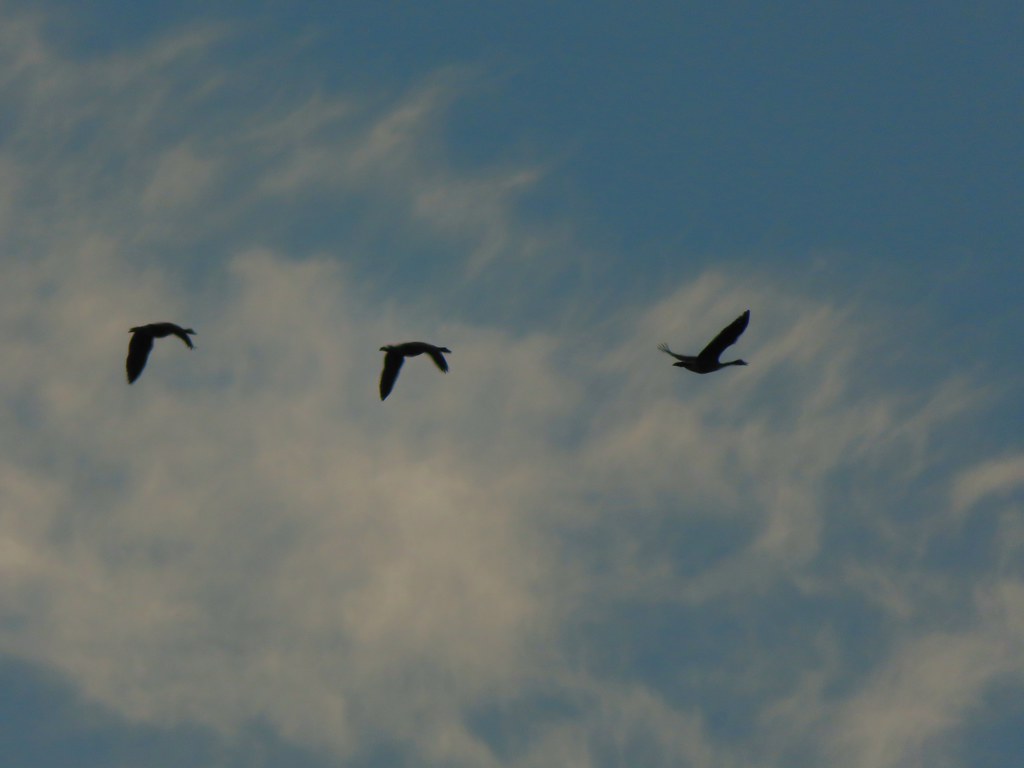
IMG_0086Geese flying overhead, we couldn’t make out what kind.

IMG_0087At first we thought there were two weather vanes on the houses, a whale on the right and a heron on the left.

IMG_0088It turned out to be a real great blue heron (but the whale was a vane).
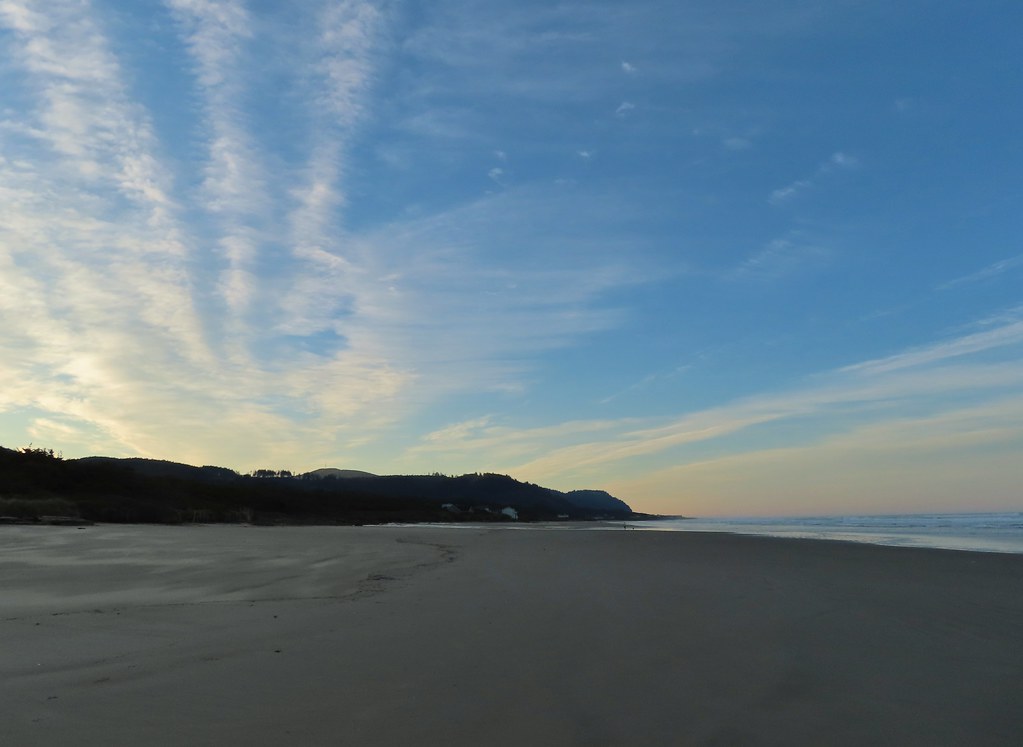
IMG_0102Looking south toward Cape Perpetua (post)

IMG_0103View north.

IMG_0109Sunlight on the wave tops.

IMG_0110Sunlight bursting through the trees.

IMG_0111

At Reynolds Creek (approximately 3 miles down the beach) we finally had to remove our shoes and socks for an ankle deep ford.
IMG_0119

IMG_0123Wavy sand.

One of the most interesting sights came about 4.75 miles up the beach when we passed the “Big Stump“. The remains of an ancient redwood. The origins of the tree are unknown, it may have been part of an ancient redwood forest that was once present here or a transplant brought by the Pacific.
IMG_0124

IMG_0125

A mile beyond Big Stump brought us to a short section of grassy dunes at Governor Patterson Memorial State Recreation Site.
IMG_0136

IMG_0139Cape Perpetua from the dunes.

Not far beyond Governor Patterson we spotted the Alsea Bay Bridge spanning the Alsea River.
IMG_0142

IMG_0144Testing the 40 zoom feature on the Canon SX740HS.
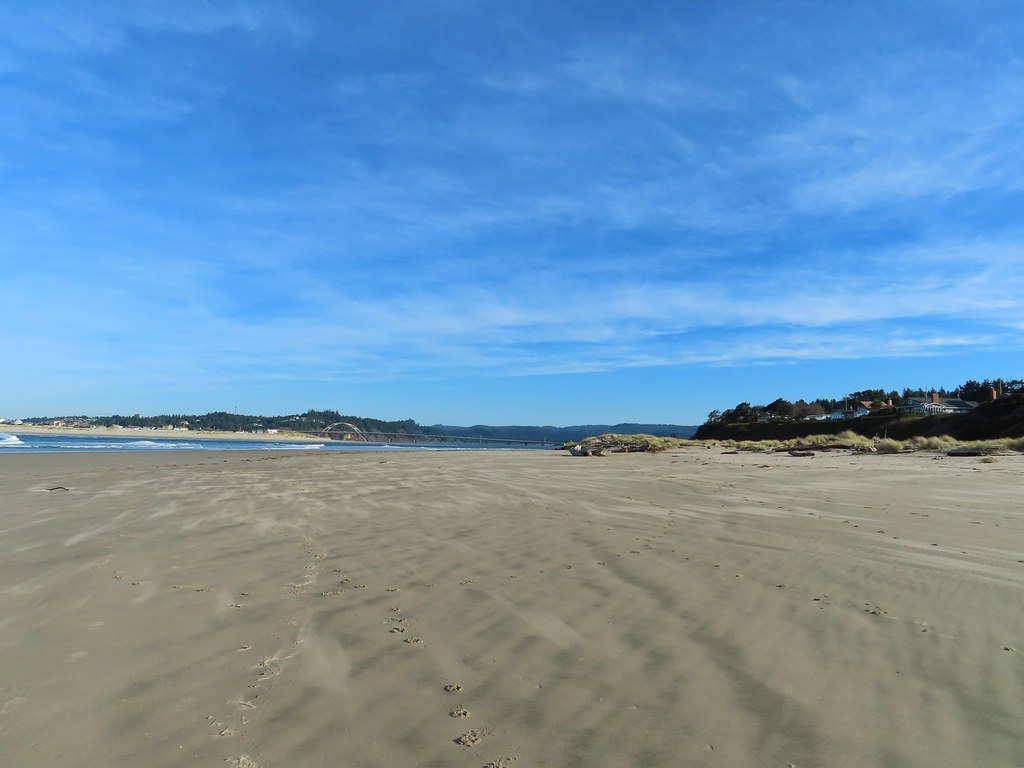
We made our way to a driftwood log near the mouth of the Alsea and took a seat.
IMG_0147Heading for the log.

IMG_0150

IMG_0146View from the log.

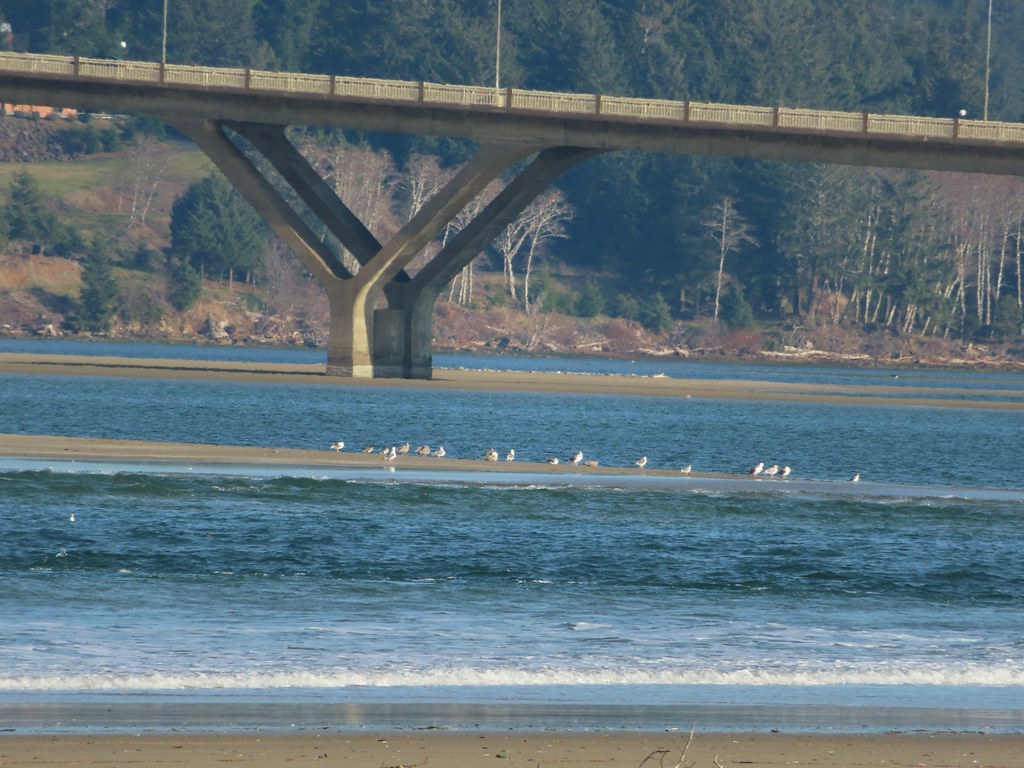
IMG_0153More testing of the zoom function. Seagulls on the near sandbar and seals on the one on the other side of the bridge.

It was a little after 10:15am when we started back. The bank of clouds offshore came creeping in as we made our way back to Yachats but rain never materialized. We spent much of our return trip watching seals and a few birds bob along in the surf. We also decided not to worry about letting our shoes get wet so we just went straight through the creeks on the way back and may have let the ocean get us once or twice too for good measure.
IMG_0157Looking at the dark cloud bank over the Pacific.

IMG_0166Seal

IMG_0170A little more cloud cover to the south over Cape Perpetua.

IMG_0177Seagull shaking it off.

IMG_0181More cloud action.

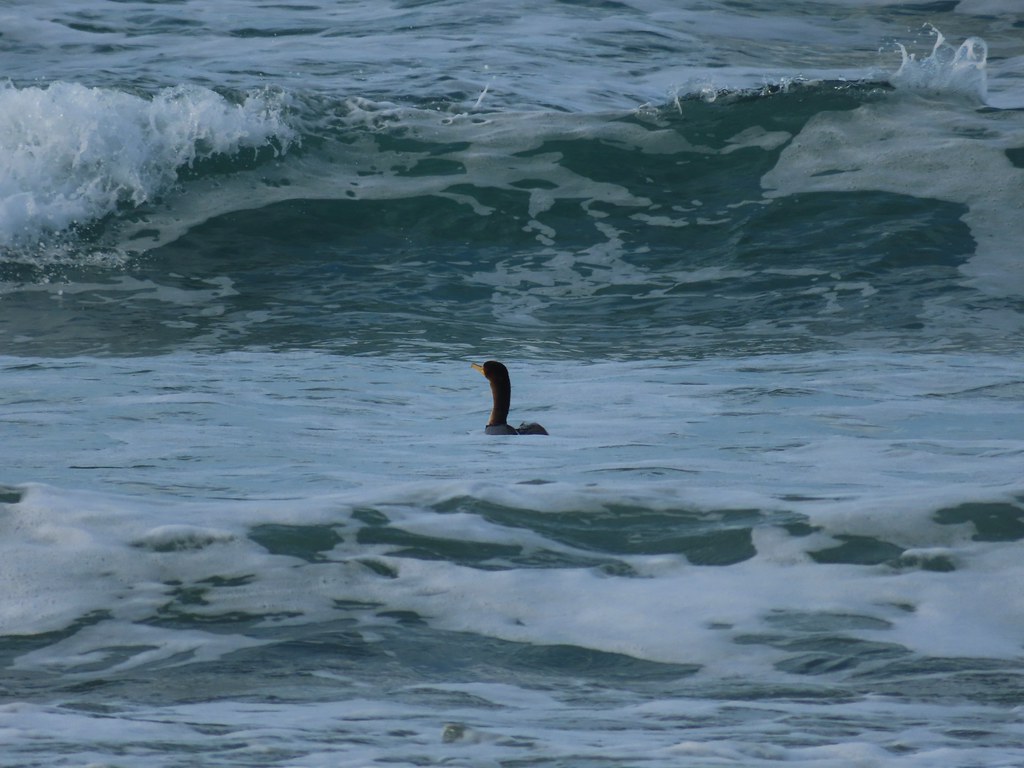
IMG_0189Cormorant

IMG_0191Reynolds Creek after fording.

IMG_0200Finally starting to feel like it could start raining soon.

IMG_0202The advancing line of clouds.

IMG_0205Another look at the arch.

IMG_0216A kingfisher near the stairs up from the beach.
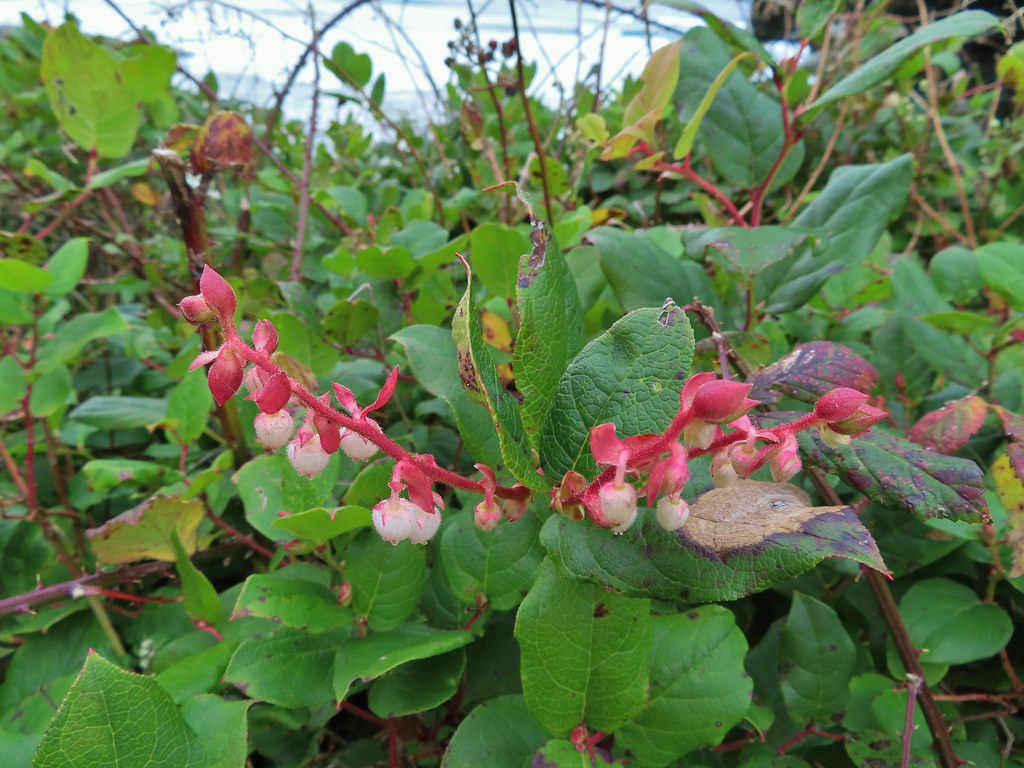
IMG_0220December blossoms on salal along the 804 Trail.
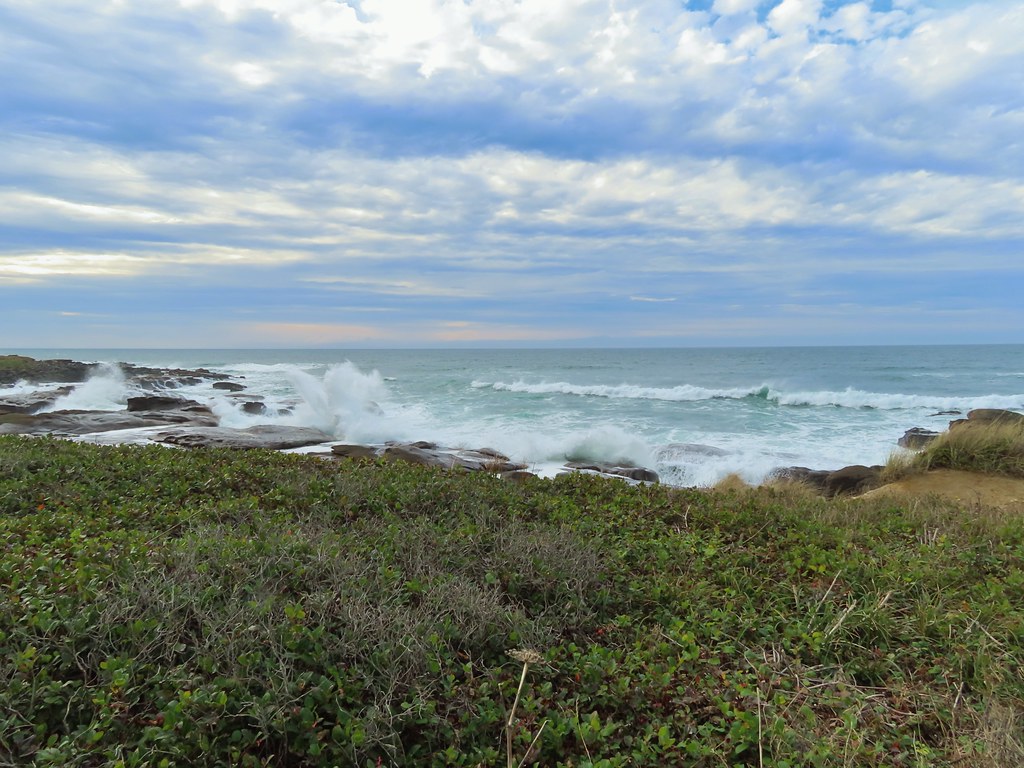
The tide was further in as we passed the rocky shoreline on the 804 Trail creating some dramatic wave crashes.
IMG_0238

IMG_0239

IMG_0243

IMG_0251

If not for our bladders we could have sat on one of the many benches along the 804 and watched the waves crashing into the rocks for hours but the restrooms at Smelt Sands beckoned. The weather had held up nicely and the hike was an entertaining one with just enough wildlife and sights not to be a tedious beach walk. It also helped that the sand was packed well and we never felt like we were having to work hard walking over it. Happy Trails!

Flickr: Yachats

Categories
Hiking McKenzie River Old Cascades Oregon Trip report

McKenzie River Trail (Blue Pool TH south to NF-610) – 11/21/2020

**Note a portion of the trail north of Deer Creek burned in the 2021 Knoll Fire.**

A combination of a day off, a favorable forecast and a need to drive to Bend to pick up some Christmas items provided the perfect excuse to check out a section of the McKenzie River National Recreation Trail. This would be our third hike on this 26.4 mile long trail, all on different sections (Tamolitch Pool and Clear Lake).

We started our hike at the popular Tamolitch Blue Pool Trailhead where we had also started our hike to the Blue Pool.
IMG_8443

This time though we headed south (left) on the McKenzie River Trail away from the Blue Pool and the crowds that would surely be arriving later in the day (we were the 2nd car at the TH on this morning).
IMG_8447

The Sun wasn’t quite up yet, and it was still under 30 degrees, as we set off on the trail.
IMG_8448

The trail climbed a forested hillside and crossed a forest road above Trail Bridge Reservoir (2 miles from the TH).
IMG_8454

IMG_8455Forest road crossing.

The trail then descended to Forest Road 730 and a crossing of Smith River which feeds into the reservoir.
IMG_8469

IMG_8470

IMG_8472

IMG_8476

IMG_8480

Another brief climb followed before dropping down to the Trail Bridge Dam.
IMG_8482

IMG_8484

IMG_8487

IMG_8492

IMG_8493

IMG_8495The top of Three Fingered Jack is visible in the distance.

We continued on the trail which now began to follow the McKenzie River more closely.
IMG_8498

IMG_8499Fall means mushrooms.

IMG_8503

IMG_8505

IMG_8508

There were a couple of opportunities to get down to the river bank which we took advantage of and just over a mile and a half from the dam we stopped to admire Olallie Creek joining the river.
IMG_8519

IMG_8531

IMG_8533Anderson Creek joining the McKenzie.

IMG_8535

IMG_8537

IMG_8541Olallie Creek across from the trail.

A half mile beyond Olallie Creek the river split leaving a large forested island briefly in its center.
IMG_8546

Beyond the island the trail passed some rocky cliffs where icicles dripped before dropping to a crossing of Deer Creek at the 5.5 mile mark of our hike.
IMG_8553

IMG_8555

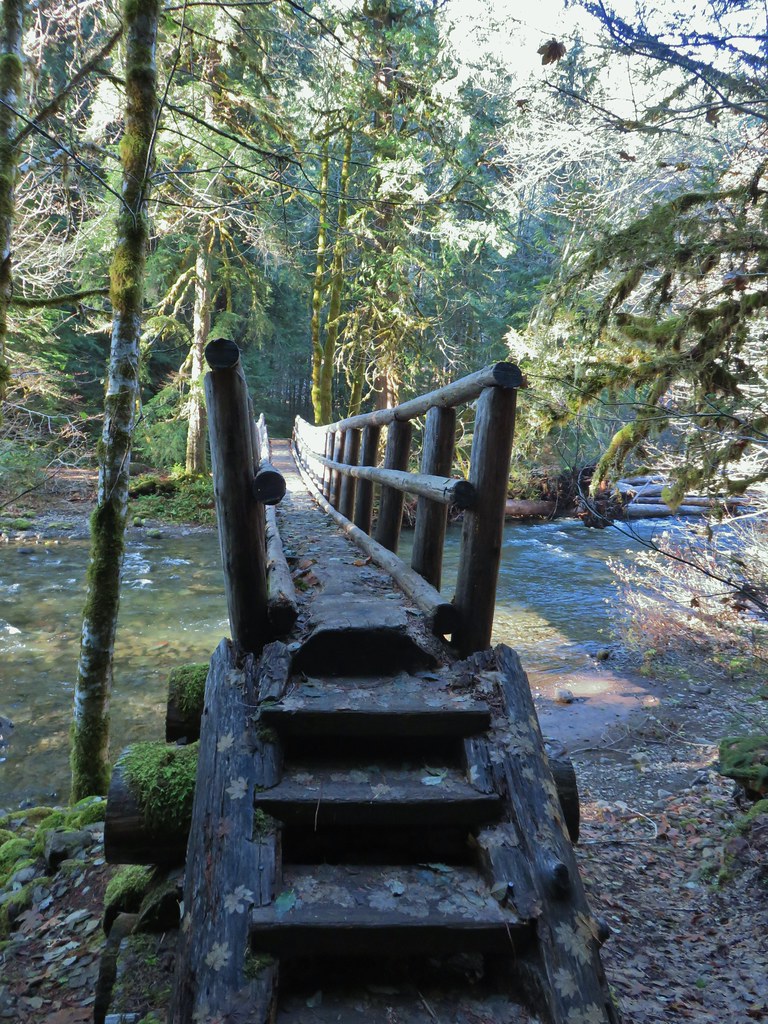
IMG_8572Turning up Deer Creek to reach the footbridge.
IMG_8574

IMG_8577

IMG_8578

Shortly after crossing the creek the trail arrived at Deer Creek Road (NF 782) where there is parking for the trail and Deer Creek (aka Bigelow) Hot Springs. We knew the hot springs were somewhere along our route but we didn’t know for sure where until we got home after the hike. There was no sign for the small hot spring that sits along the river bank but we did see an obvious trail heading south down to the river here. Not knowing that the hot springs were down there we visited the bridge over the McKenzie and then continued on the McKenzie River Trail.
IMG_8586Up river from Deer Creek Road.

IMG_8588Deer Creek Hot Springs would be somewhere along the right hand side of the river.
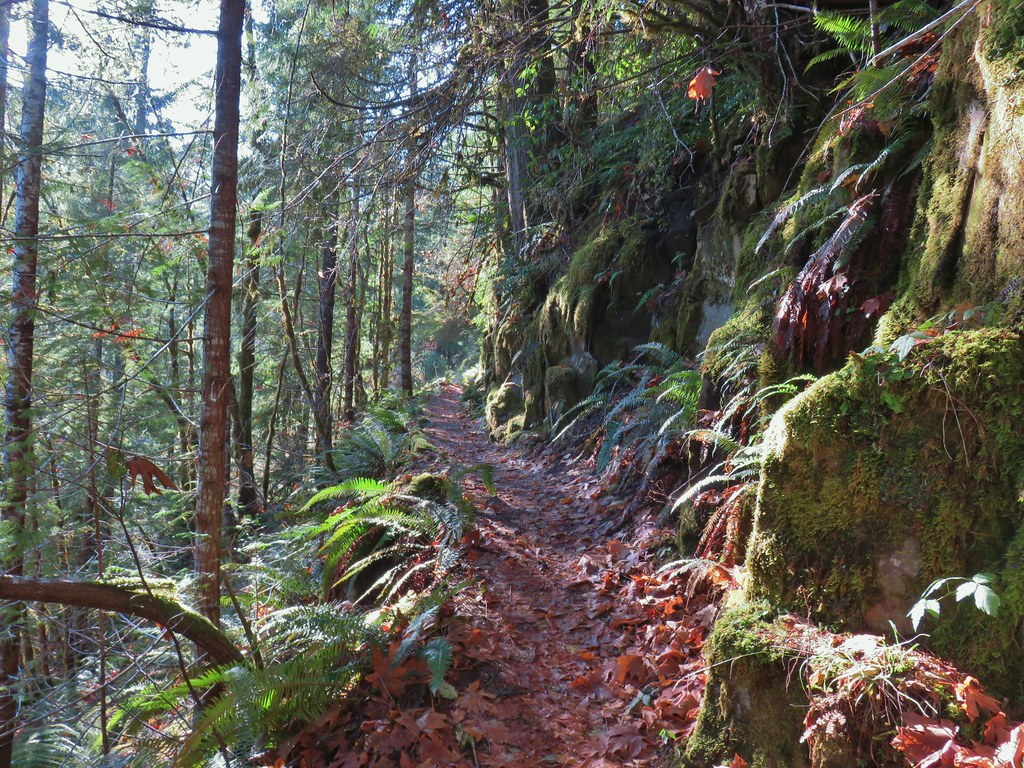
The trail briefly climbed above the river before switchbacking down and arriving at Frissel Creek just over a mile from Deer Creek Road.
IMG_8591

IMG_8592We had to go around this bridge due to frost and it being at an angle.

IMG_8595

IMG_8603

IMG_8606Footbridge over Frissel Creek.

IMG_8609

We had planned to turn around between 10 and 10:30 at either the hot springs or Forest Road 610 which the trail briefly follows. Since we didn’t realize we’d passed the hot springs we wound up making FR 610 the turnaround which was approximately three quarters of a mile beyond Frissel Creek. We arrived at the road just after 10:30.
IMG_8610Sun over the McKenzie River

IMG_8616FR 610

We turned around at the road and headed back keeping our eyes open for any sign of the hot springs and any other things we missed on the first pass. We still didn’t realize that the hot springs were where they were but we did spot a lot more mushrooms and the tops of the Middle and North Sister on the way back.
IMG_8618

IMG_8621

IMG_8624We missed this sign for slough creek the first time by.
IMG_8626

IMG_8628

IMG_8633Missed this survey marker too.

IMG_8631We also completely missed this sign at Deer Creek.

IMG_8638Still cold

IMG_8642

IMG_8644

IMG_8650

IMG_8654

IMG_8670

IMG_8672

IMG_8673

IMG_8683

IMG_8679Without the use of the zoom on the camera they are hard to make out but the tops of the North and Middle Sister are visible over the hills.
The Garmin showed 14.6 miles for this out and back (Google maps had indicated it would be 13.4 miles) and there was between 800 and 1000′ of cumulative elevation gain. What climbs there were weren’t ever steep and didn’t last long. We encountered a half dozen other trail users but when we arrived back at the trailhead it was full and cars were stretched all they way down the road with people heading for the Blue Pool. It has become one of “those” hikes and is getting loved to death. After changing we drove to Bend for a quick visit with Heather’s parents and then headed back over the pass to Salem. Happy Trails!

Flickr: McKenzie River Trail

Categories
Columbia River Gorge South Hiking Oregon Trip report

Latourell Falls and Larch Mountain – 10/31/2020

We wrapped up our “official” 2020 hiking season on Halloween with a pair of hikes in the Columbia River Gorge. Latourell Falls and Larch Mountain were two of the remaining eight featured hikes we had yet to do from Sullivan’s “100 Hikes/Travel Guide Northwest Oregon & Southwest Washington”. We started our morning at Guy Talbot State Park for the short loop hike to Lower and Upper Latourell Falls. We arrived before 7:30am in an attempt to avoid the crowds that would likely be arriving later in the day which worked out as the only other car that was there when we arrived soon left. The downside was that the Sun was still working it’s way up leaving the conditions less than perfect for photos.
IMG_8096

IMG_8101

The loop starts at the trailhead with a paved path to the right leading down to the splash pool below Lower Latourell Falls and the left hand fork leading uphill .8 miles to Upper Latourell Falls. With the lack of light we chose to head for the upper falls first to let the Sun get a little higher before visiting the lower falls. Just over a quarter mile up the trail we arrived at a viewpoint overlooking Lower Latourell Falls.
IMG_8105

There were a few more views of the falls as the trail continued to climb beyond the viewpoint.
20201031_073247_HDR

IMG_8112

IMG_8124

There was also a view across the Columbia River of Silver Star Mountain (post).
IMG_8130

Above the lower falls the trail followed Henderson Creek up a narrow canyon to the upper falls.
IMG_8135

IMG_8139

IMG_8146

IMG_8148

IMG_8152

This 120′ waterfall consists of an upper slide before the water turns sharply right through a chute before a final plunge into the splash pool.
20201031_075834_HDR

We crossed the creek on a footbridge below the splash pool then explored behind the falls under the basalt.
IMG_8166

IMG_8169

IMG_8172

IMG_8175

Beyond the falls the trail headed downhill on the opposite side of the creek.
IMG_8183

IMG_8186

IMG_8188

IMG_8192

After a half mile a short spur trail led downhill to a viewpoint above Lower Latourell Falls (the falls were not visible from here).
IMG_8203

IMG_8204

IMG_8206Silver Star Mountain in the background with the cliffs of Cape Horn (post) along the Columbia River.

After checking out the viewpoint we continued on the loop passing another viewpoint across the Columbia a short distance later.
IMG_8215Looking east down the Columbia River.

IMG_8218Looking NW across the Columbia.

IMG_8220Silver Star Mountain again.

The trail crossed Historic Highway 30 before dropping into the picnic area of the park then led under a bridge to the base of Lower Latourell Falls.
IMG_8229

IMG_8231

IMG_8232

IMG_8234

IMG_8237

IMG_8239

IMG_8247

At 249′ Lower Latourell Falls is the 3rd tallest fall in the Columbia River Gorge. It was at the base of the falls that we finally crossed paths with other people. There was a pair of hikers and then a wedding party arrived for pictures.
IMG_8251

IMG_8252

We left the falls to the photographers and climbed back up to the trailhead. This loop is approximately 2.5 miles (a little more if you do any exploring) with 600′ of elevation gain.

We then drove west on Highway 30 toward Corbett, OR turning onto Larch Mountain Road which we followed for 11.6 miles to a sharp right hand corner. At the corner is a small pullout at a gated road which is where we were planning on starting our hike. There were already a couple of cars parked here so we continued 100 yards up the road to a small pullout on the right.
IMG_8271Looking down toward the corner from the small pullout on the right.
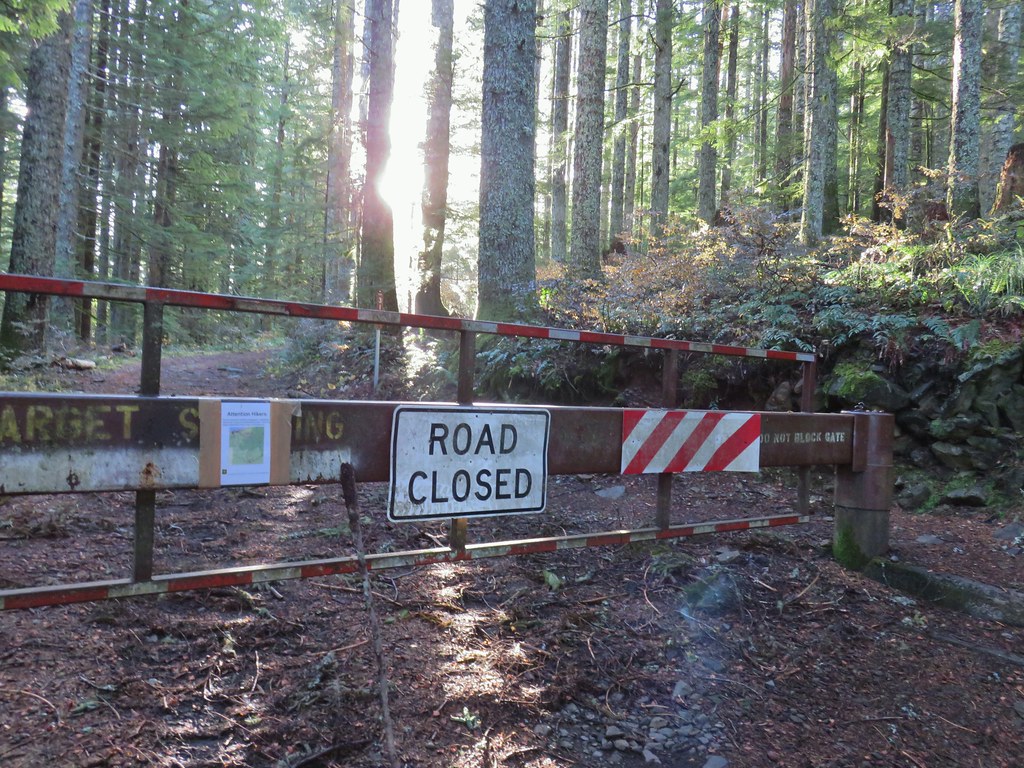
The official trailhead is located at the end of Larch Mountain Road and requires a NW Forest Pass. The upper trailhead also provides for a much shorter hike to the viewpoint atop Sherrard Point.

We walked along the shoulder of Larch Mountain road to the gate, checking the posted Forest Service notice regarding closures to make sure our planned route was indeed open.
IMG_8272

All the trails along our route were indeed open so we started up the old roadbed following it for a little over a quarter mile to the Larch Mountain Trail.
IMG_8275

IMG_8281

The 6.8 mile Larch Mountain Trail runs between Multnomah Falls (post) and Larch Mountain. The trails around Multnomah Falls are currently closed or limited by reservation only due to COVID-19. A right turn uphill on the Larch Mountain Trail would have brought us to the upper trailhead in 1.5 miles while turning downhill to the left would also get us to Larch Mountain in approximately 5 miles. We turned left for two reasons, first Sullivan’s description has you go that way and second we wanted to give the Sun more time to get overhead in hopes of having a better view of Mt. Hood.

The Larch Mountain Trail dropped over 300′ in the next .4 miles before arriving at a junction with the Multnomah Creek Way Trail.
IMG_8286

IMG_8288

IMG_8291Multnomah Creek Way Trail.

We followed this trail downhill for .2 miles to a footbridge over Multnomah Creek.
IMG_8295

After crossing the creek the trail turned uphill following the creek up into the Multnomah Basin.
IMG_8299

IMG_8302

IMG_8311Larch Mountain from Multnomah Basin
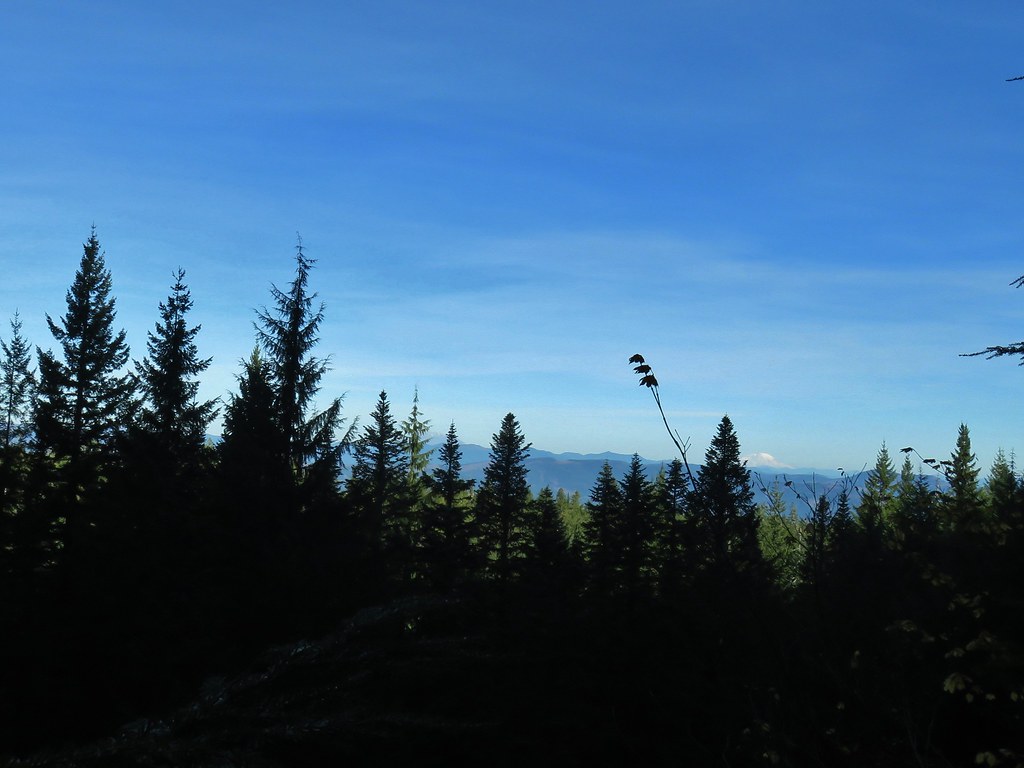
IMG_8315

IMG_8318

The trail climbed out of the basin and eventually joined an old roadbed as it wrapped around a ridge end.
IMG_8336

IMG_8343

IMG_8349

IMG_8348Mt. St. Helens (behind some tress) and Mt. Rainier.
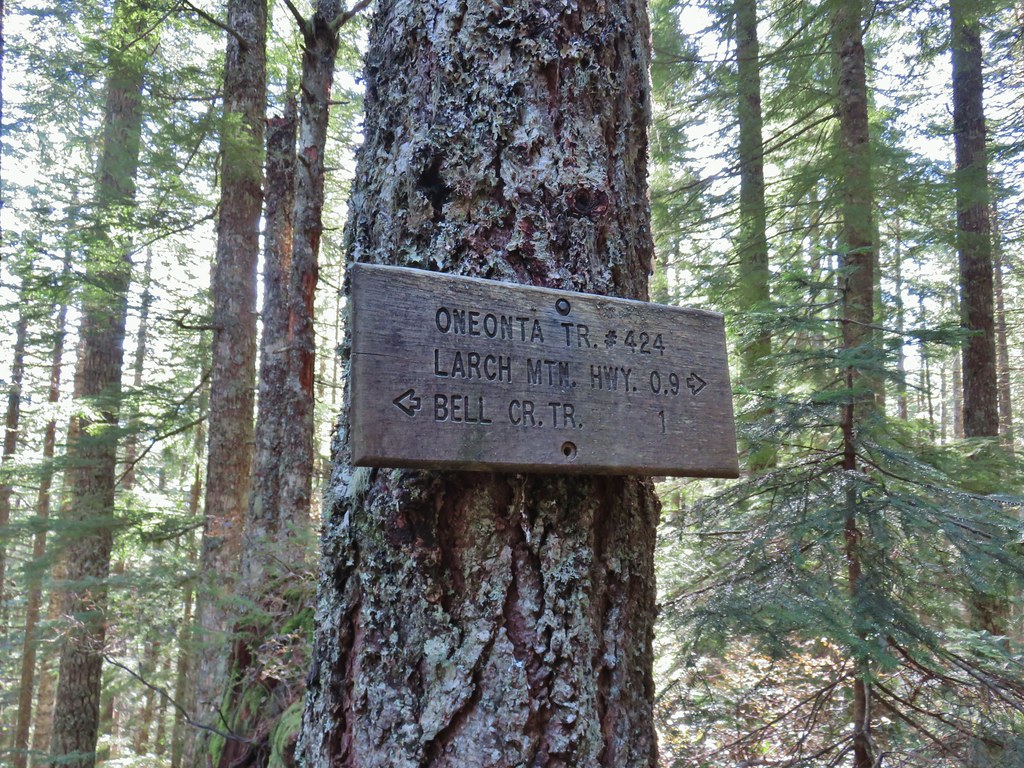
A little over 2.75 miles from the footbridge we arrived at a junction with the Oneonta Trail where we turned uphill to the right.
IMG_8350

IMG_8352

The Oneonta Trail followed the ridge uphill to Larch Mountain Road in .9 miles. Aside from a couple and their dog at the footbridge we hadn’t seen any other hikers until this stretch when we started to occasionally pass other hikers.
IMG_8354

IMG_8361Signboard near Larch Mountain Road.

IMG_8364Larch Mountain Road from the end of the Oneonta Trail

We turned right and followed the road uphill a half mile to the upper trailhead.
IMG_8368

IMG_8370

From the parking lot we followed a paved path .2 miles to Sherrard Point.
IMG_8374

IMG_8378Just a few of the steps up to Sherrard Point.
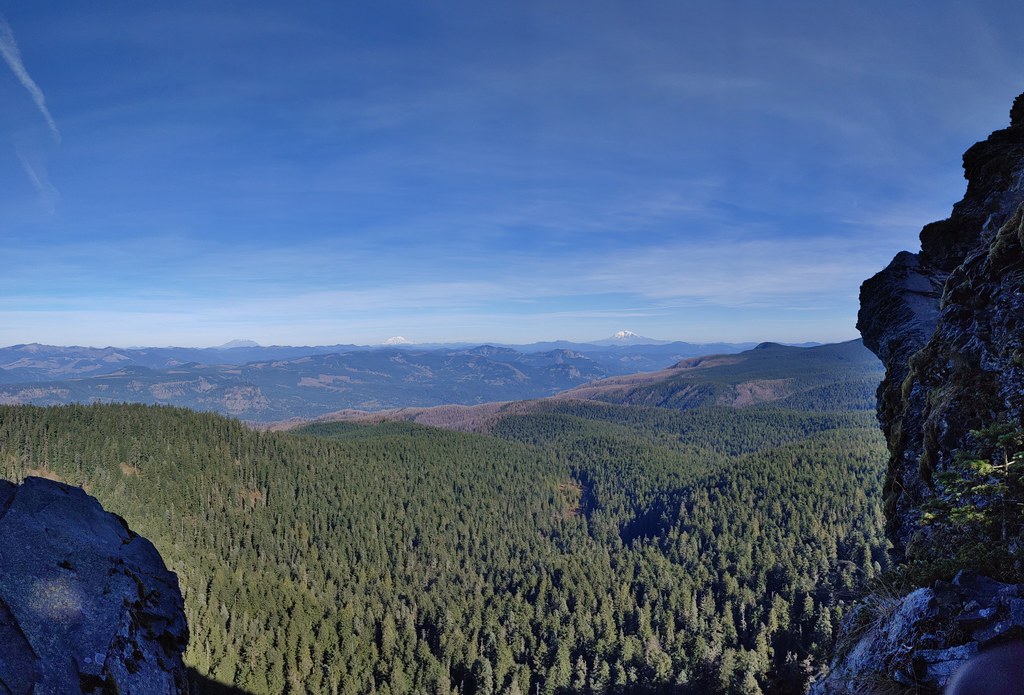
IMG_8380

It had turned out to be a beautiful day and we had clear views of 5 Cascade volcanoes; Mt. St. Helens, Mt. Rainier, Mt. Adams, Mt. Hood and Mt. Jefferson.
20201031_114918Mt. St. Helens, Mt. Rainier, and Mt. Adams.
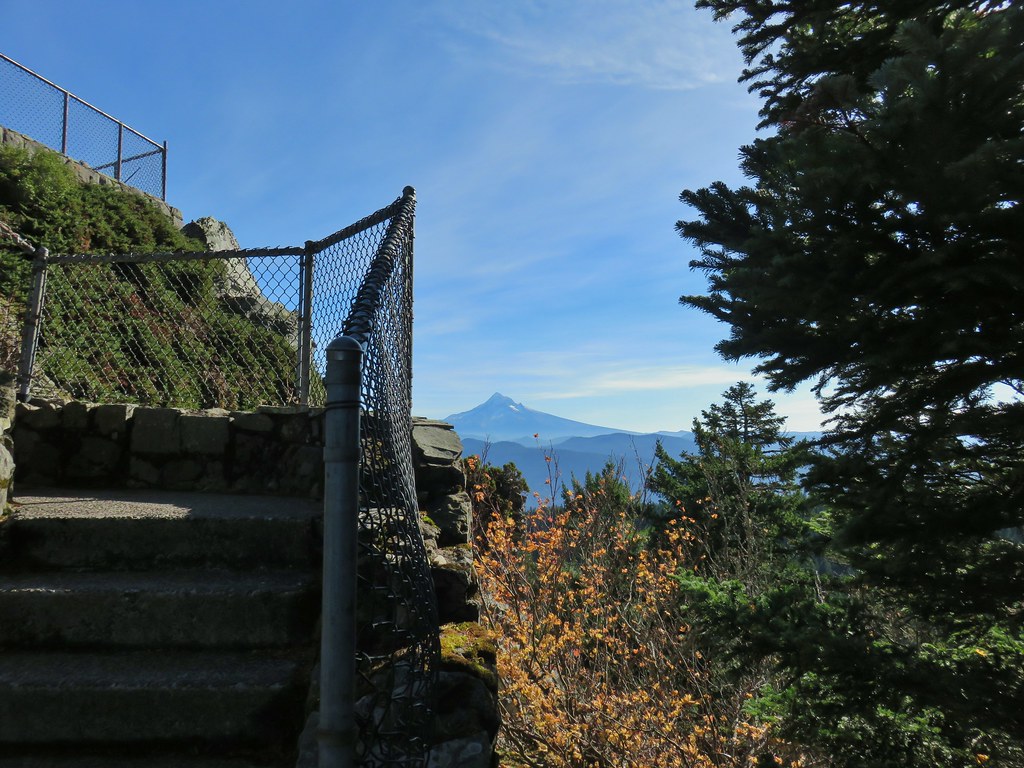
IMG_8391Mt. Hood

The Sun was just a bit of an issue when looking at Mt. Jefferson.
IMG_8422Mt. Hood with Mt. Jefferson to the right.

20201031_115249Mt. Jefferson

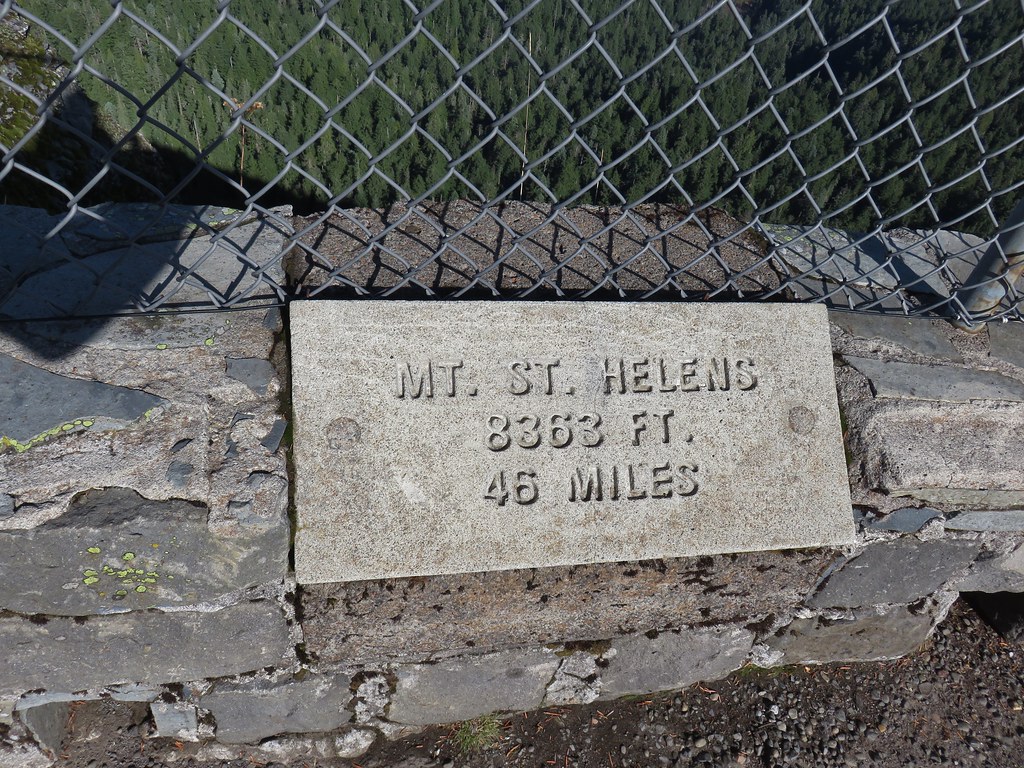
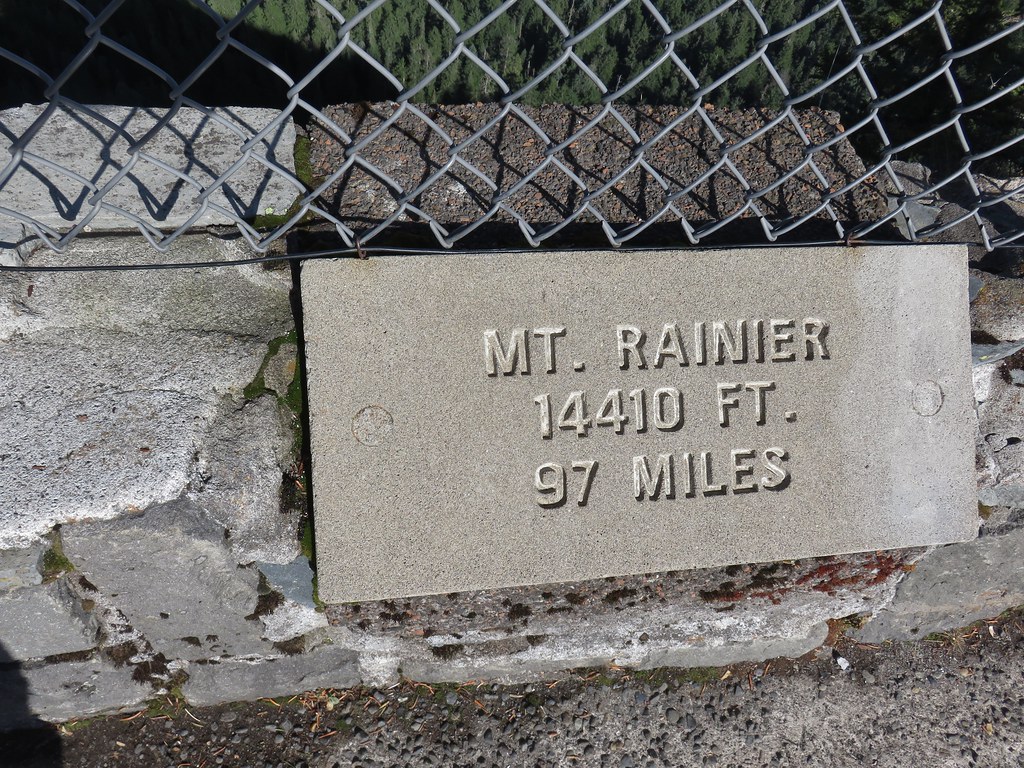
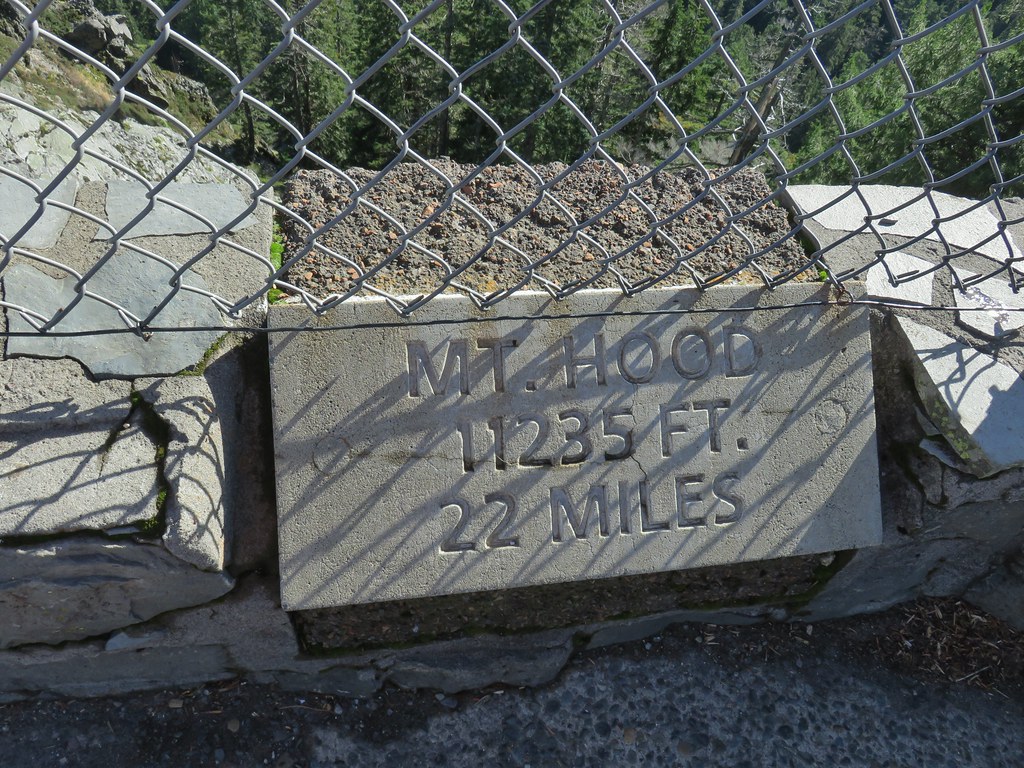
One neat feature at Sherrard Point are the plaques identifying the mountains, their elevations, and their distance from the viewpoint.
IMG_8403

IMG_8406

IMG_8408

IMG_8409

IMG_8415

IMG_8411View east from Sherrard Point.

After enjoying the view we headed down and took an unsigned right hand fork uphill to the picnic area.
IMG_8428

IMG_8429

From there we stayed right at forks heading downhill until we reached the Larch Mountain Trail at another unsigned junction near some old picnic tables.
IMG_8434

IMG_8436

We followed the Larch Mountain Trail downhill back to the junction with road bed where we had started our loop then followed the road bed back to Larch Mountain Road and our car.
IMG_8438

IMG_8442

We were expecting this hike to be about 6.5 miles with 1300′ of elevation gain but both of our GPS units had us a little over 7.5 miles. Regardless it was an excellent hike with a nice variety of scenery and some great views. We were pleasantly surprised that it hadn’t been too crowded at Sherrard Point allowing for plenty of space between people. It was a great way to end what has been the strangest hiking season that we’ve had yet. Happy Trails!

Flickr: Latourell Falls and Larch Mountain

Categories
Hiking Oregon Portland Trip report Willamette Valley

Forest Park Loop (Leif Erikson, Wild Cherry, Wildwood and Nature Trails) – 10/24/2020

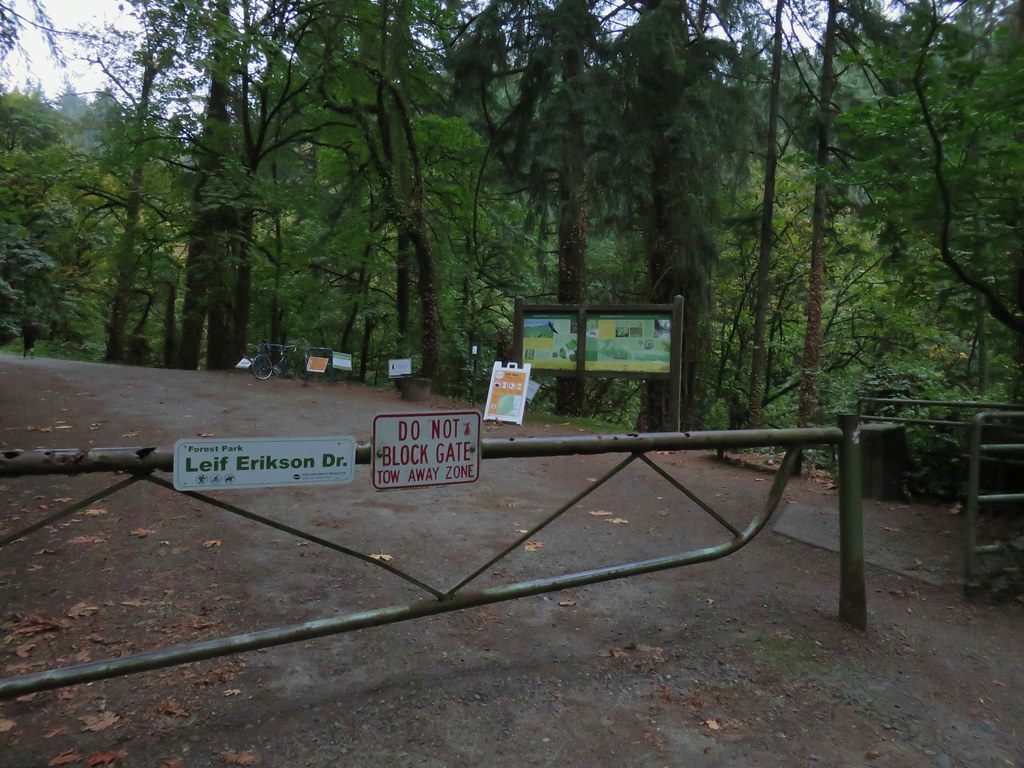
With Heather’s foot still a little sore from her fall at Abbott Butte we wanted to find a hike that wasn’t too strenuous for her to test it out on. An 8.8 mile loop in Portland’s Forest Park fit the bill, especially since there would be several shorter loop options available in case her foot didn’t respond well. The loop we had chosen is the longer of two options given by Sullivan for the Balch Creek hike in his “100 Hikes/Travel Guide Northwest Oregon & Southwest Washington” guidebook (hike #4 in the 4th & 5th editions). The shorter loop option involves Balch Creek itself while the longer 8.8 mile loop never comes near the creek. For this hike we parked at the end of NW Thurman St. at the gated Leif Erikson Drive.
IMG_7967

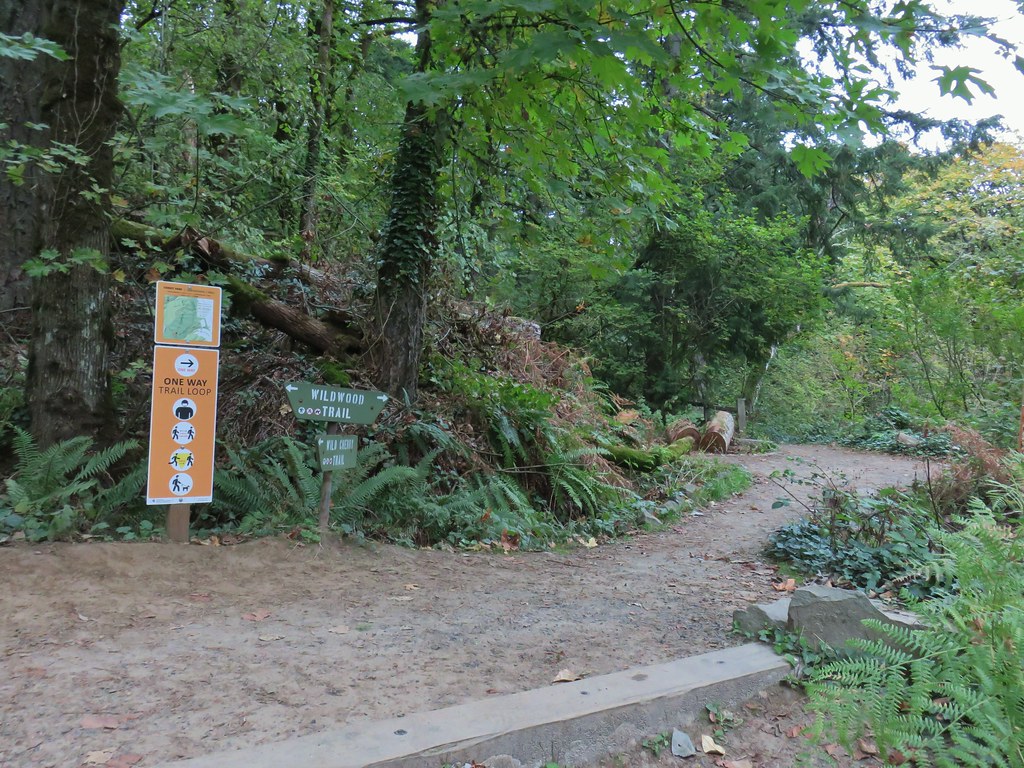
In August 2020 Portland Parks and Recreation began a pilot program of one-way loops in an attempt to reduced visitor interaction and possibly help reduce the spread of COVID-19. Parts of our loop were included in one of the one-way pilots.
IMG_7971.

We followed the paved Leif Erikson Drive for .3 miles to the Wild Cherry Trail (near a set of outhouses).
IMG_7973

IMG_7977

We turned up the dirt Wild Cherry Trail (following the one-way signs) and quickly encountered people coming down the wrong way (so much for the signs). The Wild Cherry Trail gained about 400′ as it climbed to a junction with the Wildwood Trail in .6 miles.
IMG_7983

IMG_7986Switchback along the Wild Cherry Trail.

We turned right onto the Wildwood Trail at the junction and remained on it when the Wild Cherry Trail continued uphill to the left a few yards later.
IMG_7989

IMG_7992

This was our fourth hike involving the 30.2 mile Wildwood Trail having hiked portions of it on our Washington Park (post), Maple Trail (post), and Northern Forest Park (post) outings.
IMG_7993

After .6 miles on the Wildwood Trail we arrived at a 4-way junction with the Dogwood Trail, part of the 2.75 mile one-way loop.
IMG_8001

Heather’s foot was doing well so we continued on the Wildwood Trail. In another .6 miles we arrived at parking area along NW 53rd.
IMG_8004

IMG_8006

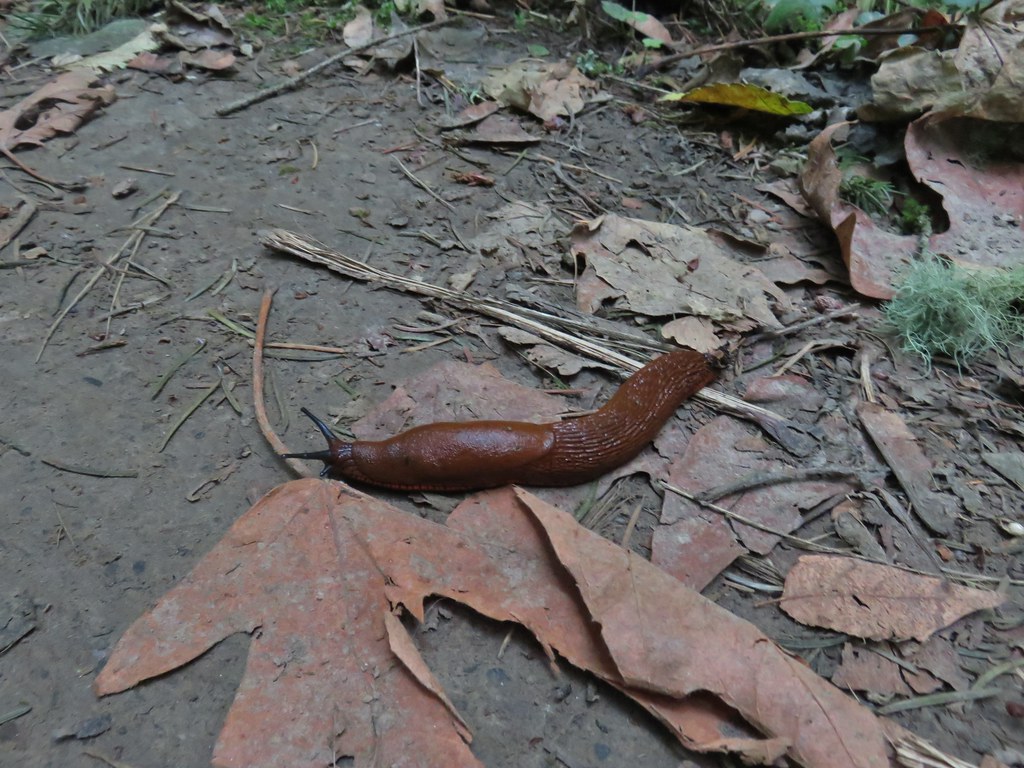
IMG_8011This was the first slug we recall seeing of this color.
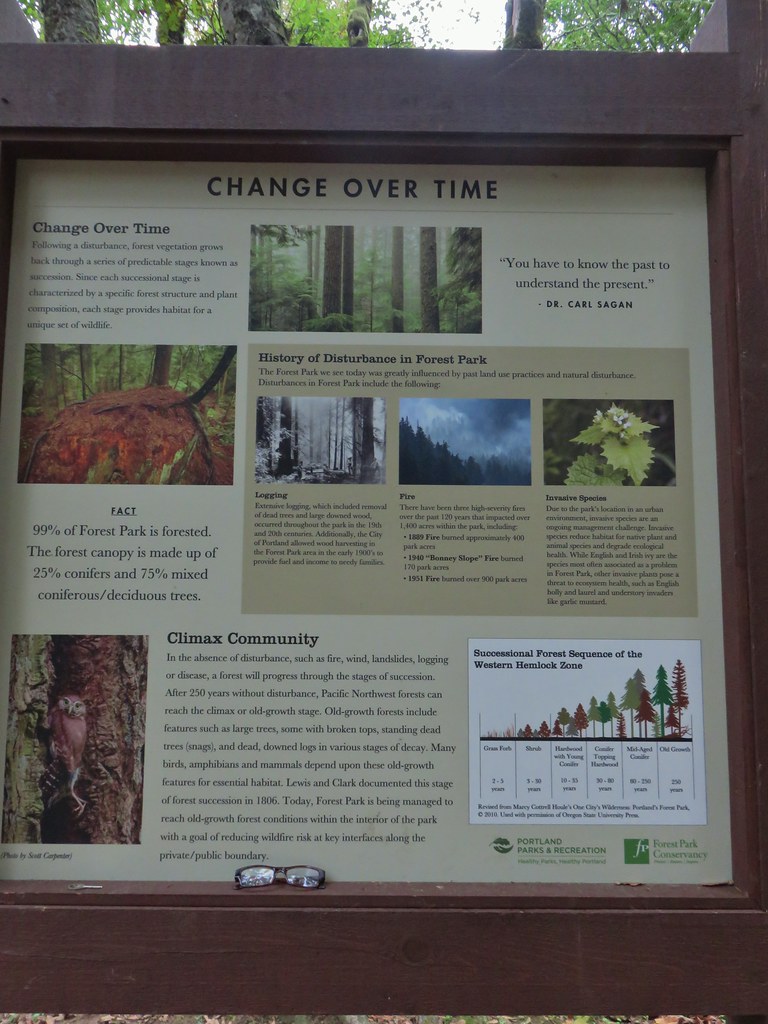
IMG_8014Interpretive sign at the NW 53rd parking area.
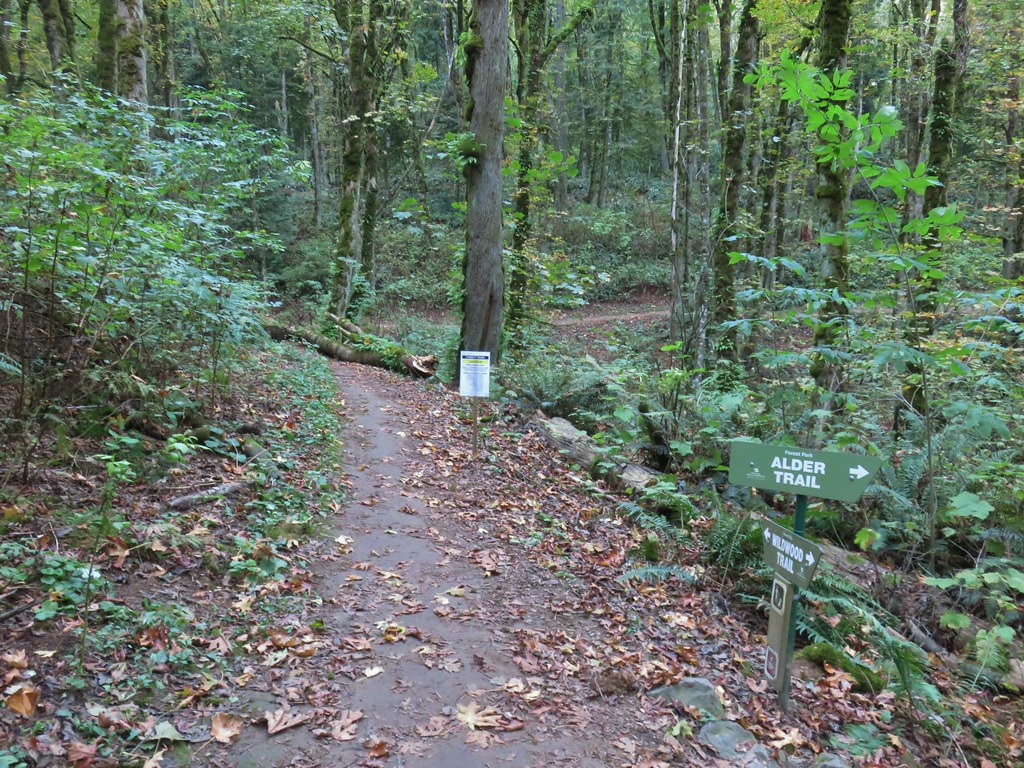
In another .3 miles we ignored the Alder Trail on the right (another option to shorten the loop) continuing on the Wildwood Trail.
IMG_8020

IMG_8018

IMG_8016

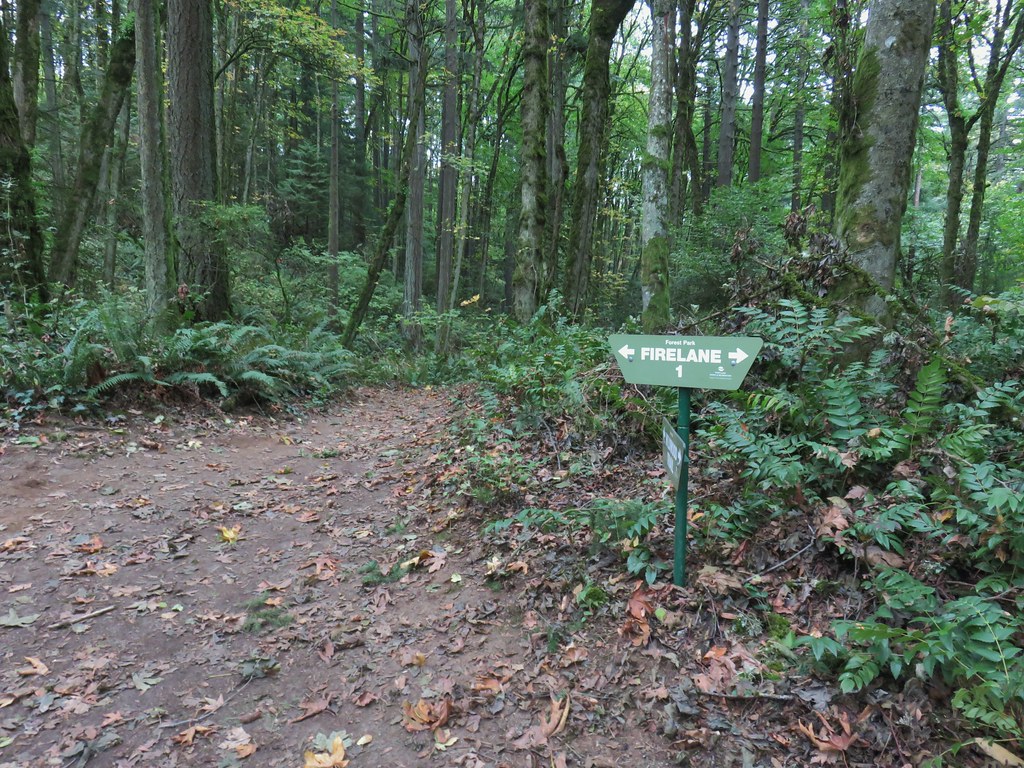
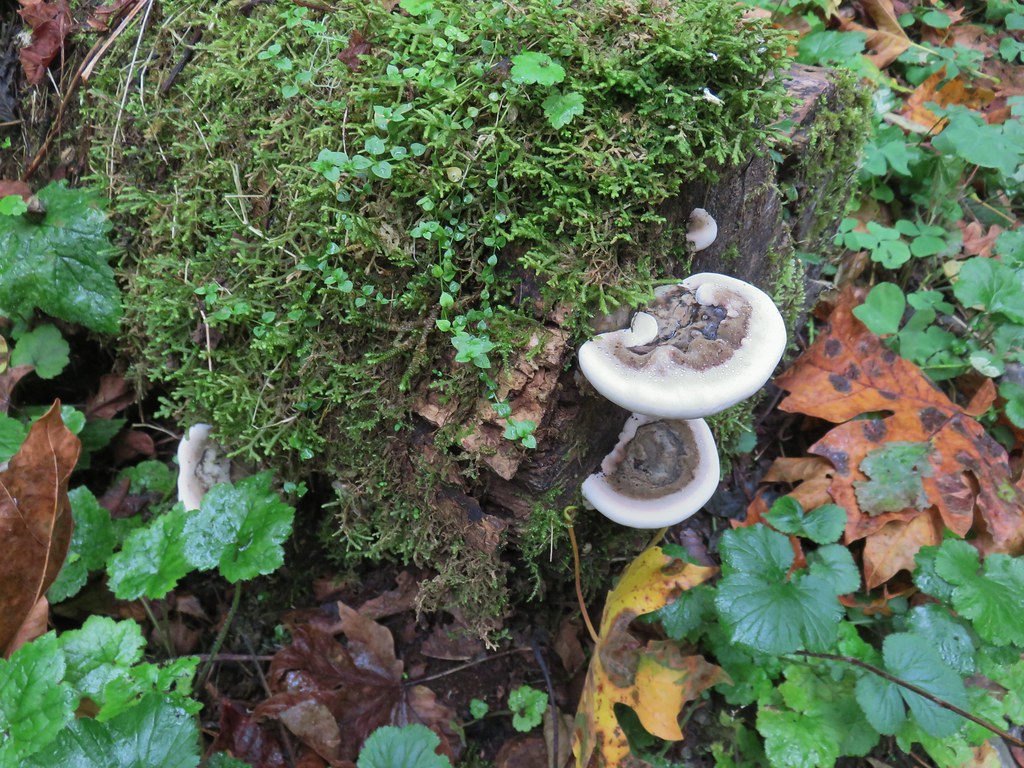
The next loop option came almost 2 miles from the Alder Trail when the Wildwood Trail crossed Firelane 1. There were some nice clumps of mushrooms along this stretch. There was also a damaged bridge near the middle of this section which there were several warnings posted for.
IMG_8024

IMG_8030

IMG_8032

IMG_8035

IMG_8037The bridge damage was not an issue.

IMG_8038Another bunch of musrhooms.

IMG_8046

Approximately a half mile before reaching Firelane 1 we passed the Morak Trail on the left (a 100 yard connector to Firelane 1 that is not shown on all maps).
IMG_8047

IMG_8050Firelane 1 junction.

With Heather still going strong we stuck to the Wildwood Trail arriving at the Nature Trail in another half mile.
IMG_8054

IMG_8055

We turned right and when the trail split a tenth of a mile later we stayed left (the right hand fork would have taken us to Firelane 1).
IMG_8056The fork, left was downhill right up.

The Nature Trail followed Rockingchair Creek downhill to Leif Erikson Drive in just over a quarter mile where we turned right back toward our car.
IMG_8056

IMG_8067

IMG_8064

IMG_8068

IMG_8073

IMG_8075

It had been busy when we had started our hike with the parking already nearly full but things had picked up even more since then. Even with it being busy there were moments where no one else was present along the 3.5 miles back to NW Thurman Street.
IMG_8076

IMG_8078Firelane 1

IMG_8081Somewhere along Leif Erikson there was supposed to be a view of Mt. St. Helens, Mt. Adams and Mt. Hood along the way but the clouds never burned off like the forecast had called for.

IMG_8083

IMG_8091The Alder Trail at Leif Erikson Dr.

IMG_8093An orange one-way marker along Leif Erikson Drive between the Dogwood and Wild Cherry Trail junctions.
For the most part people appeared to be doing a pretty good job of covering their faces and maintaining social distancing (at least better than following the one-way trail designations). It was another enjoyable hike in Forest Park and an encouraging outing for Heather’s foot. At some point we plan on returning to see Balch Creek and explore more of the park. Happy Trails!

Flickr: Forest Park 10/24/2020

Categories
Hiking Old Cascades Oregon Rogue-Umpqua Divide Trip report

Abbott Butte and Union Creek Falls – 10/17/2020

The third day of our long weekend in Union Creek was supposed to be a single hike to Abbott Butte and Elephant Pond in the Rogue-Umpqua Divide Wilderness. The day started as planned as we drove from Union Creek to the Abbott Butte Trailhead.
IMG_7633Union Peak and Mt. McLoughlin on our drive to the trailhead.

IMG_7635The peaks of Crater Lake National Park

IMG_7639Abbott Butte Trailhead

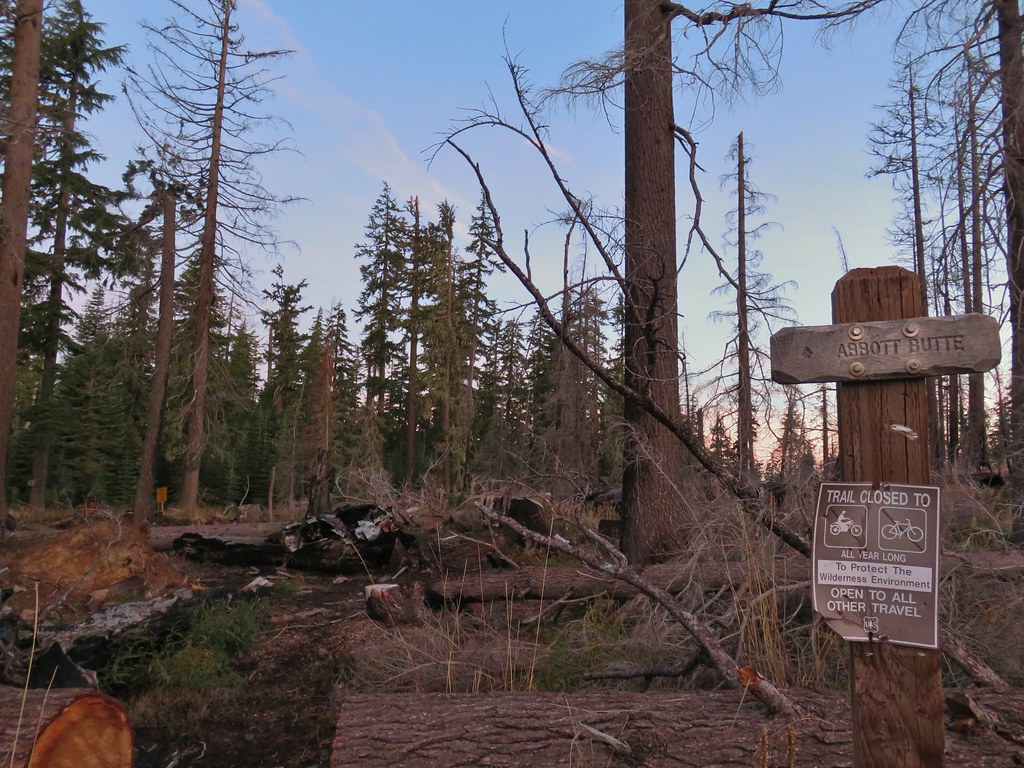
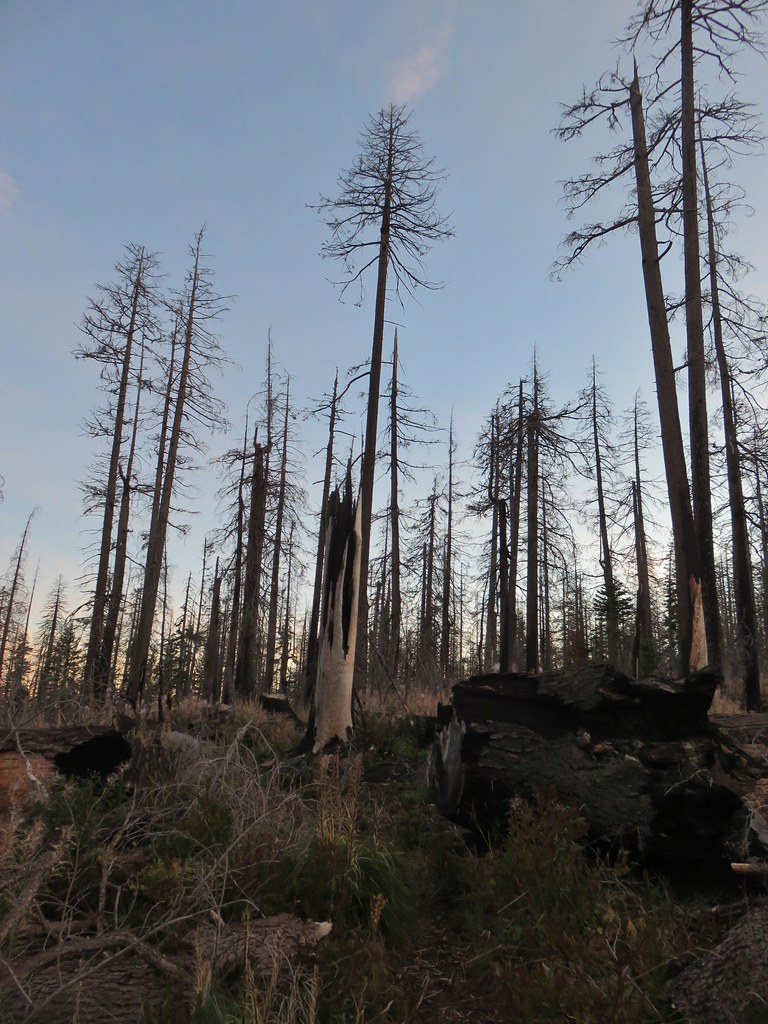
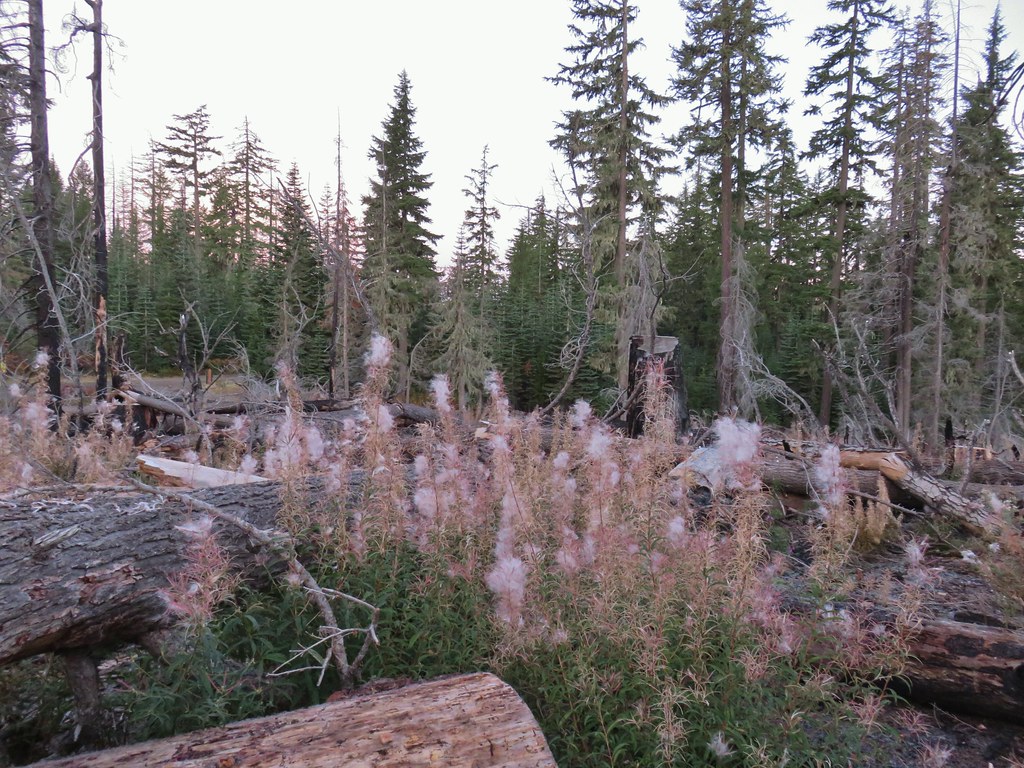
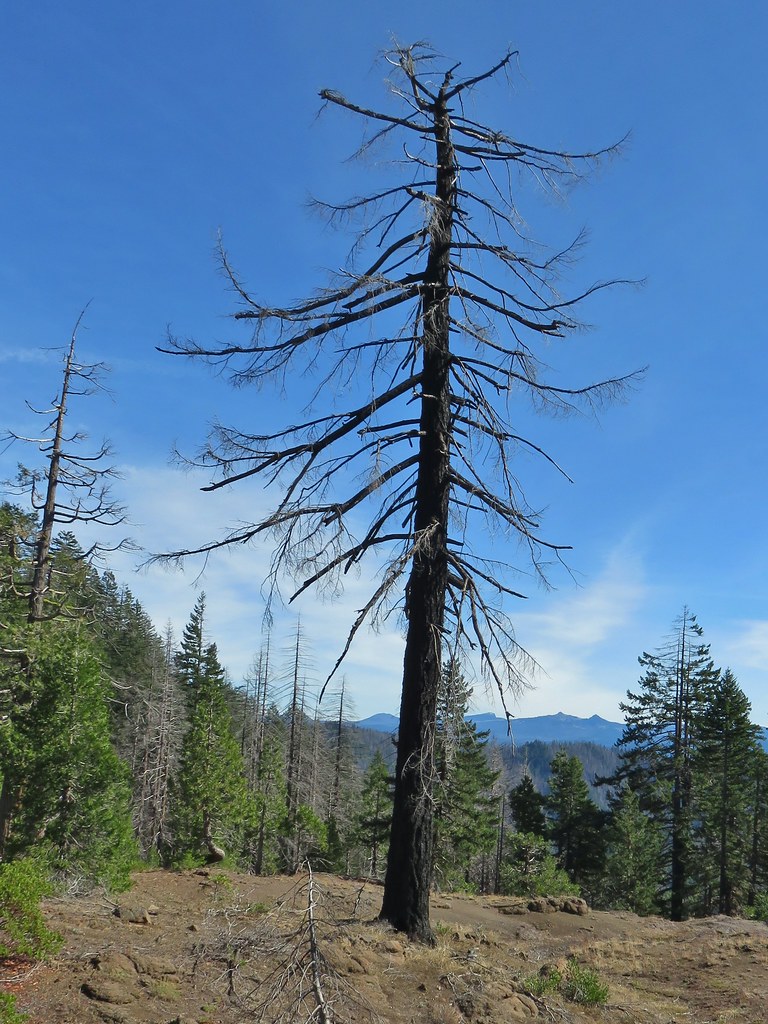
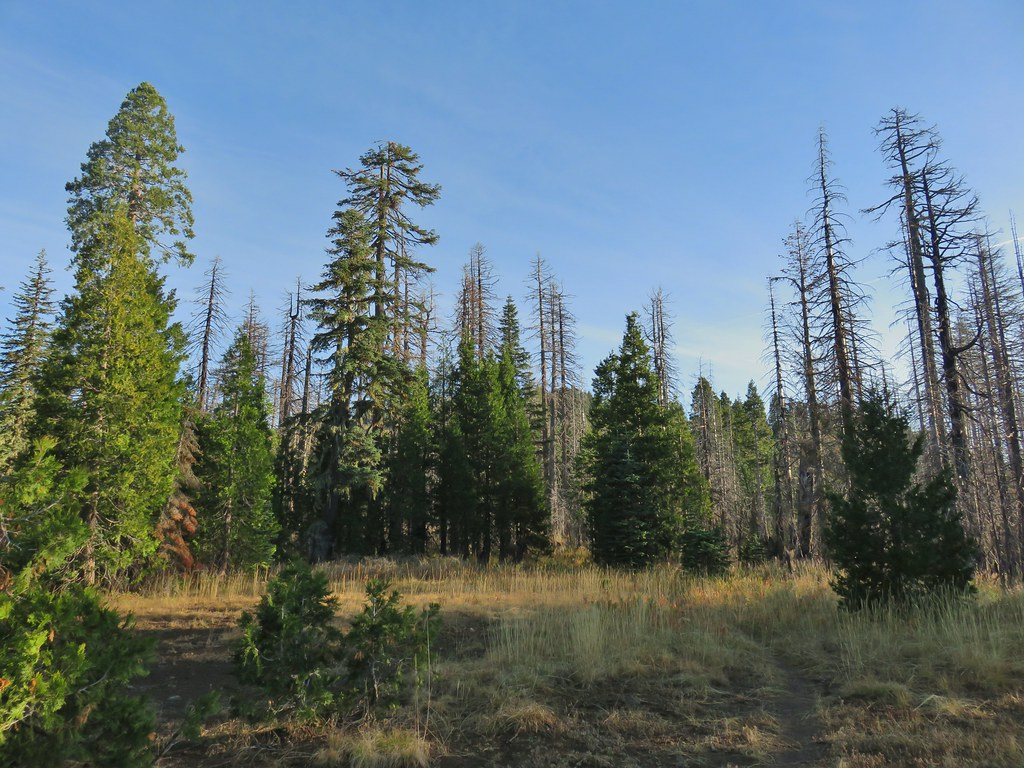
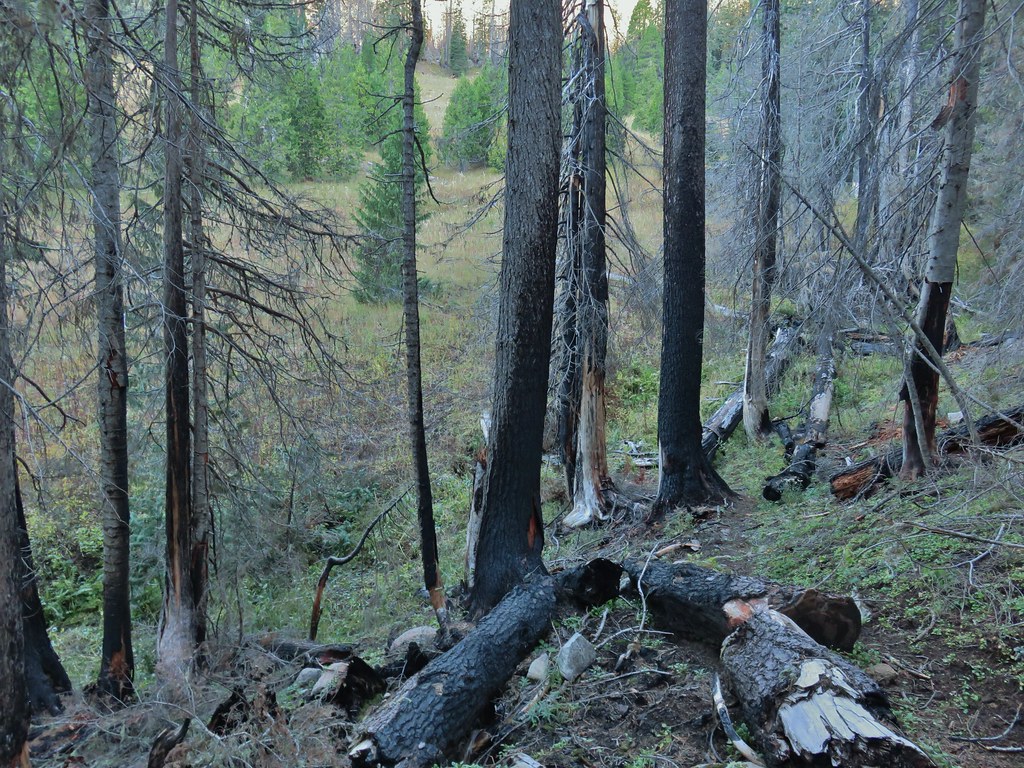
The Rogue-Umpqua Divide Trail begins here at Huckleberry Gap near the southern end of the wilderness. Much of the area burned in a 2017 fire and there was a profuse amount of fireweed present which had gone to seed and left the ground looking as though it had received a dusting of snow.
IMG_7644

IMG_7647

IMG_7648

Just after taking the preceding photo which Heather had stepped to the side of the trail for, we resumed the hike and I immediately heard a ruckus behind me. I turned around to see Heather laying on the trail next to a log. She had gotten tangled some branches and fallen. While nothing was broken she twisted her foot awkwardly. After taking inventory she decided to continue on.

The trail spent the first mile and a half loosing approximately 300′ as it wound around Quartz Mountain before arriving at Windy Gap.
IMG_7650

IMG_7655

IMG_7662Huckleberry bushes

IMG_7663A section of green trees along the trail.

IMG_7670Quartz Mountain

IMG_7675Passing below Quartz Mountain

IMG_7673Abbott Butte from the trail.

Along the way my camera decided to malfunction giving me a lens error when trying to use the zoom function. I eventually had to give up on using the zoom and am now looking for a replacement :(.

At Windy Gap the trail entered the Rogue-Umpqua Divide Wilderness.
IMG_7682

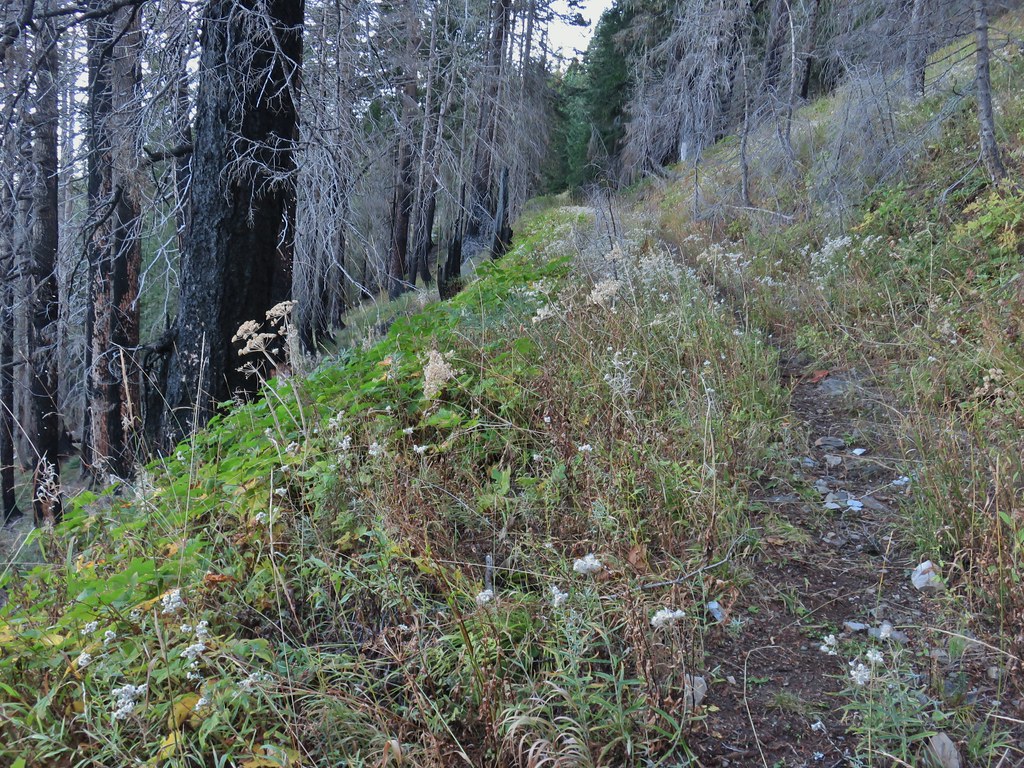
Prior to the fire the trail paralleled an old road bed on the hillside above it but that tread has been mostly lost so we stuck to the road bed.
IMG_7684On the roadbed

IMG_7685Pearly everlasting

The road arrived at Sandy Gap .4 miles from Windy Gap.
IMG_7686

The peaks of Crater Lake were visible from this gap.
IMG_7849

We continued on the road bed form this gap as well. Between the gaps we had at least been able to see where the trail had been on the hillside above but at Sandy Gap the tread had all but vanished.
IMG_7692

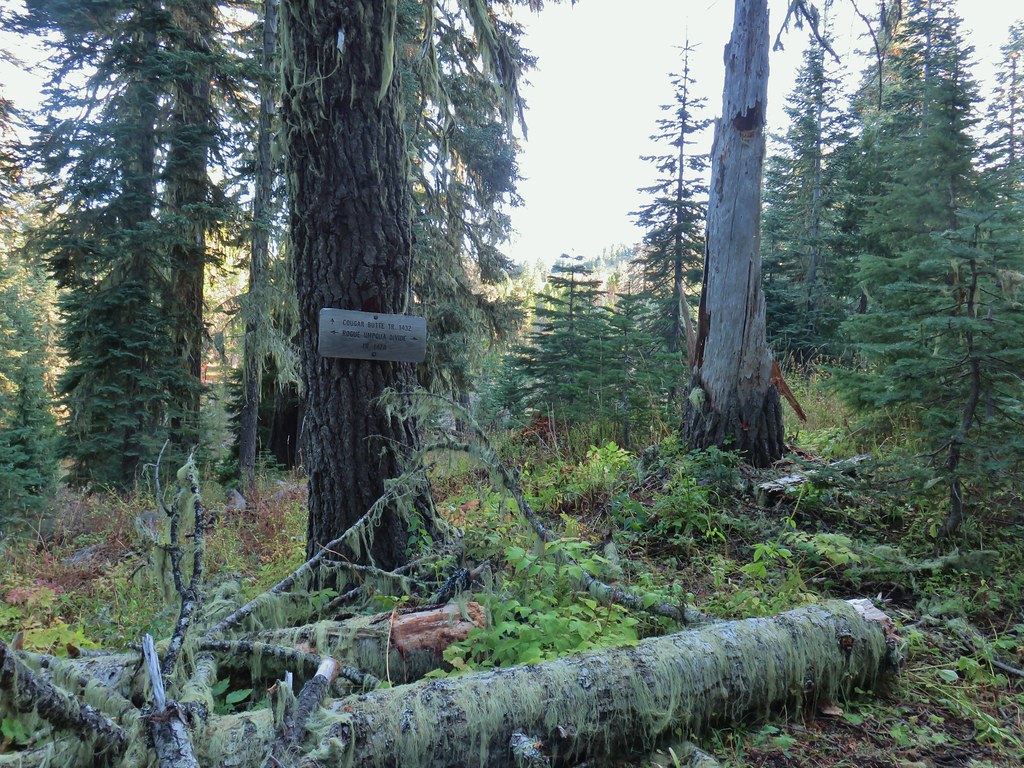
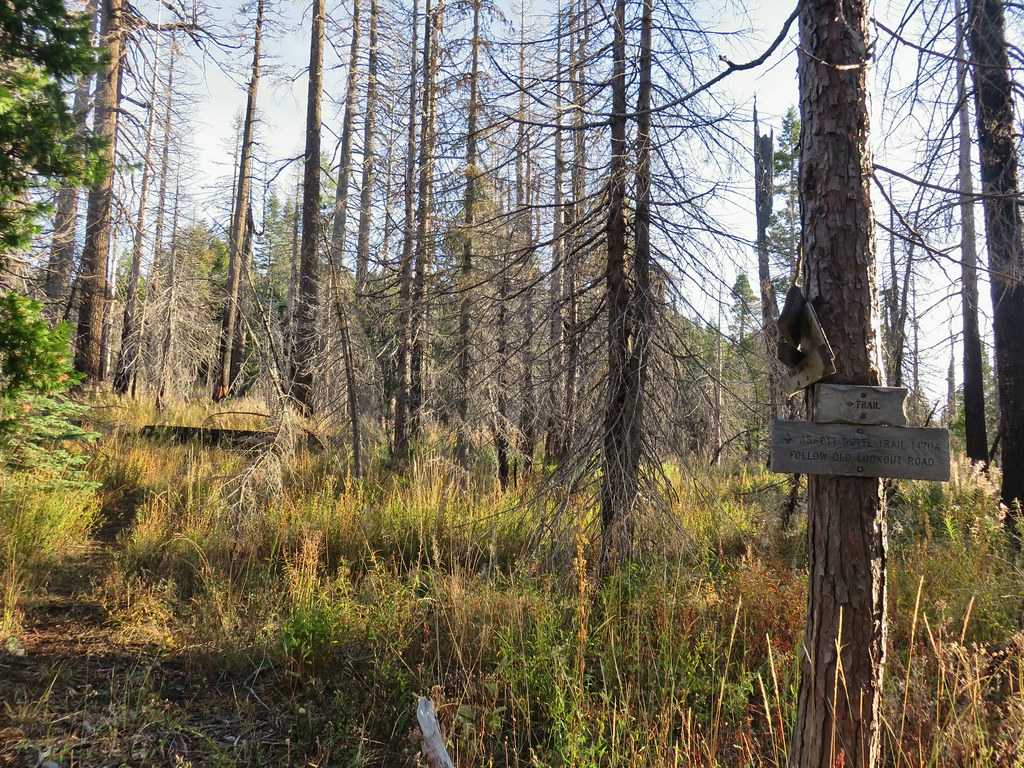
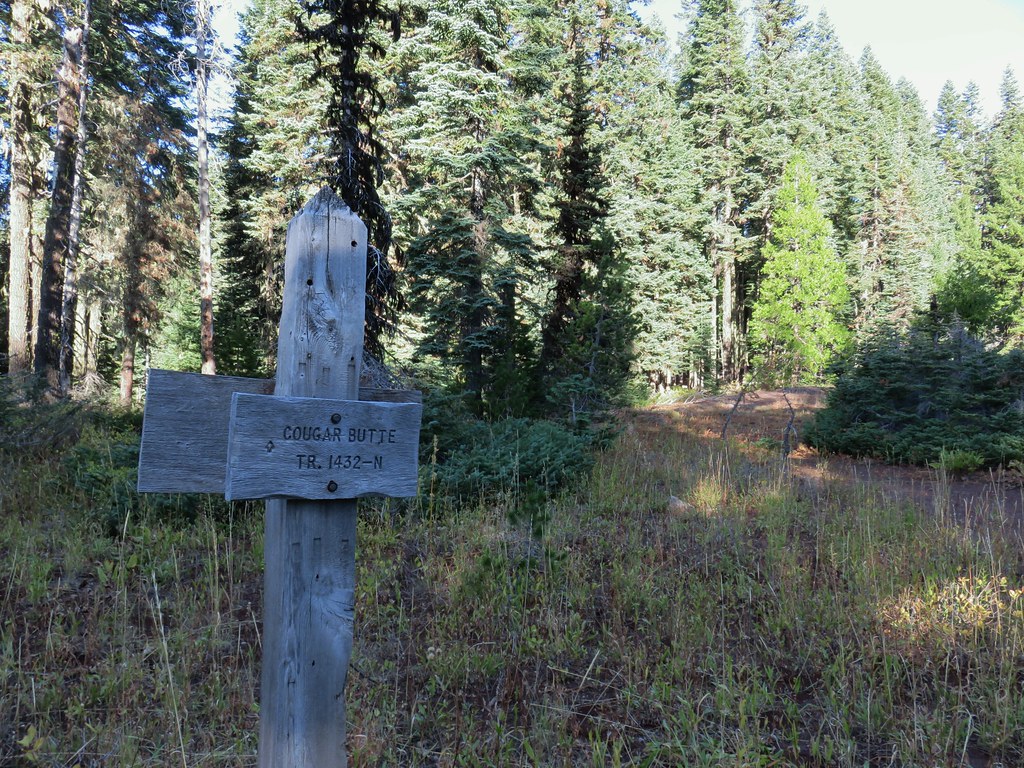
Approximately .7 miles from Sandy Gap we passed a trail sign for the Cougar Butte Trail. The sign was the only evidence that the trail had ever existed from what we could see.
IMG_7696

Another tenth of a mile brought us to what in theory was a 4-way junction below Abbott Butte.
IMG_7699

IMG_7701

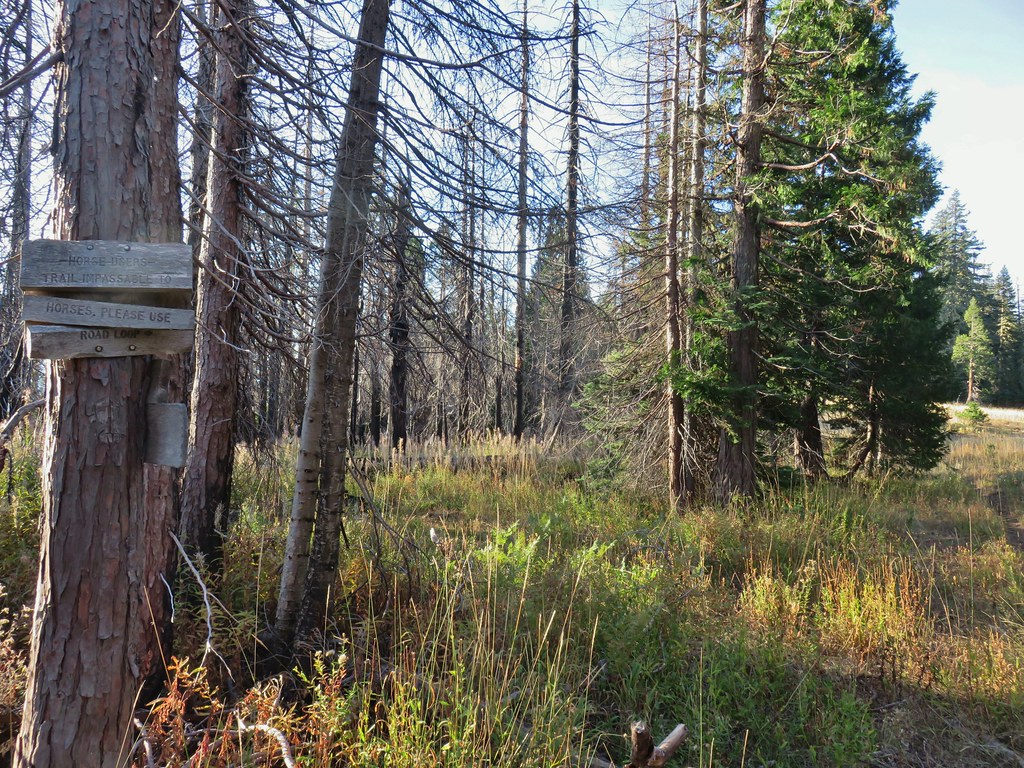
IMG_7702Sign indicating the non-existent trail is not suitable for horses.

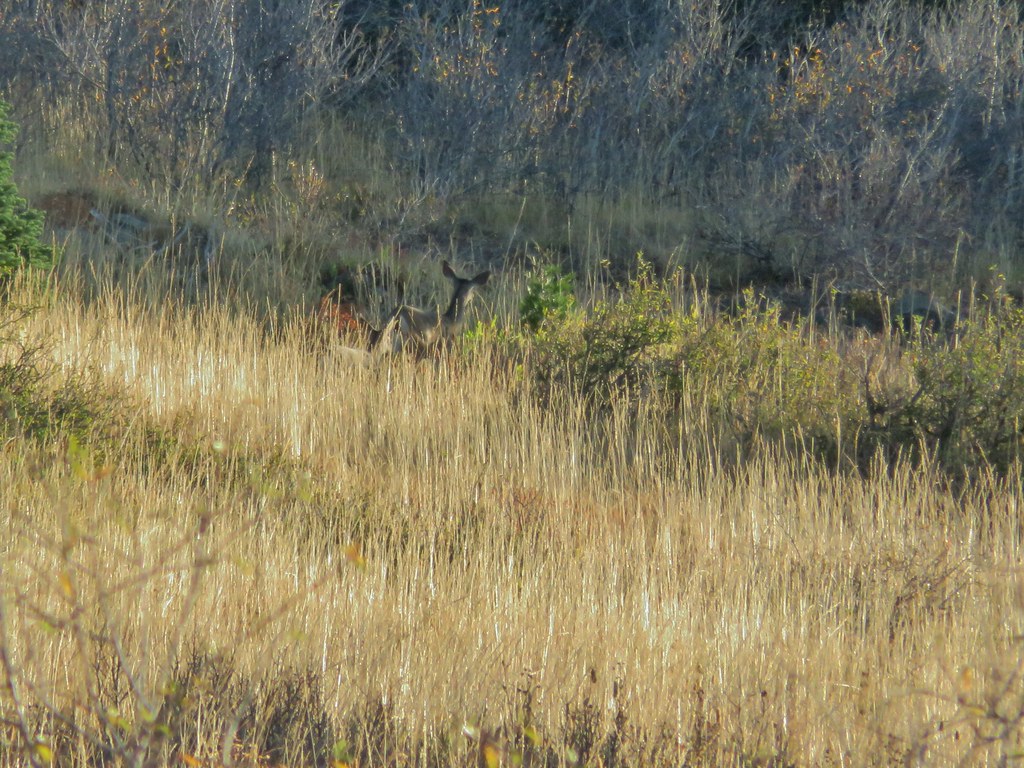
We followed the old road up an open hillside switchbacking three times to the summit of Abbott Butte after a mile. Along the way we spotted a pair of deer near the tree line.
IMG_7706

IMG_7707

IMG_7709

IMG_7712

There were also some spectacular views.
IMG_7727_stitchMt. McLoughlin and Mt. Shasta and a whole lot of other peaks that I should know.
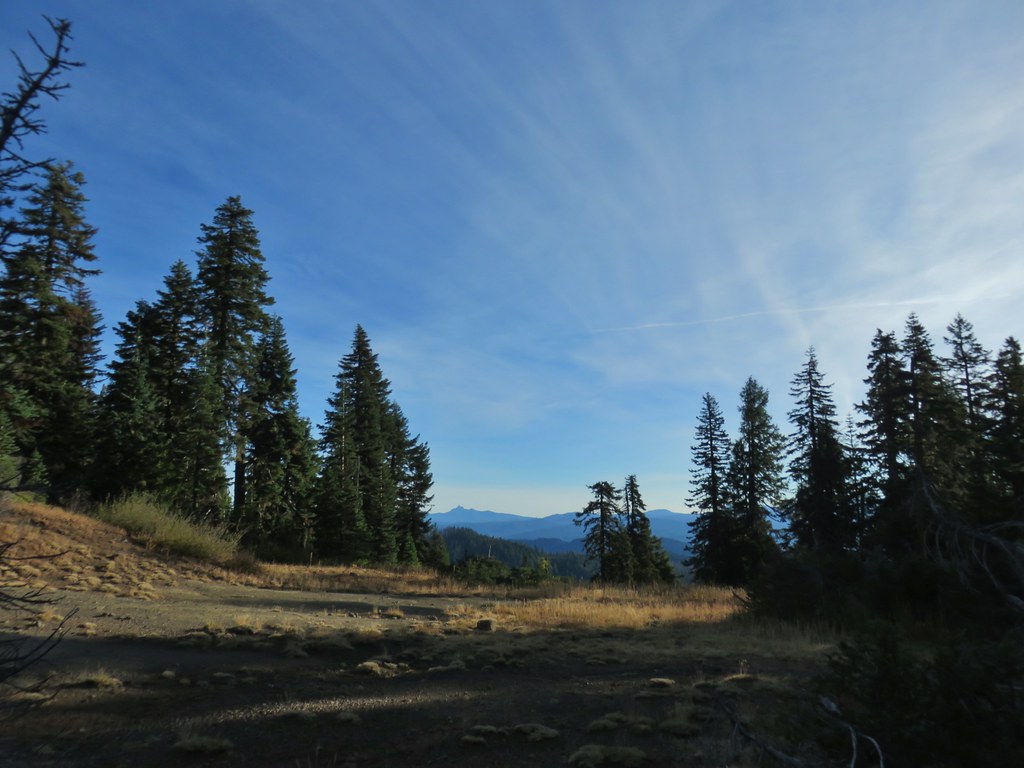
IMG_7724Mt. Thielsen

IMG_7732Nearing the summit.

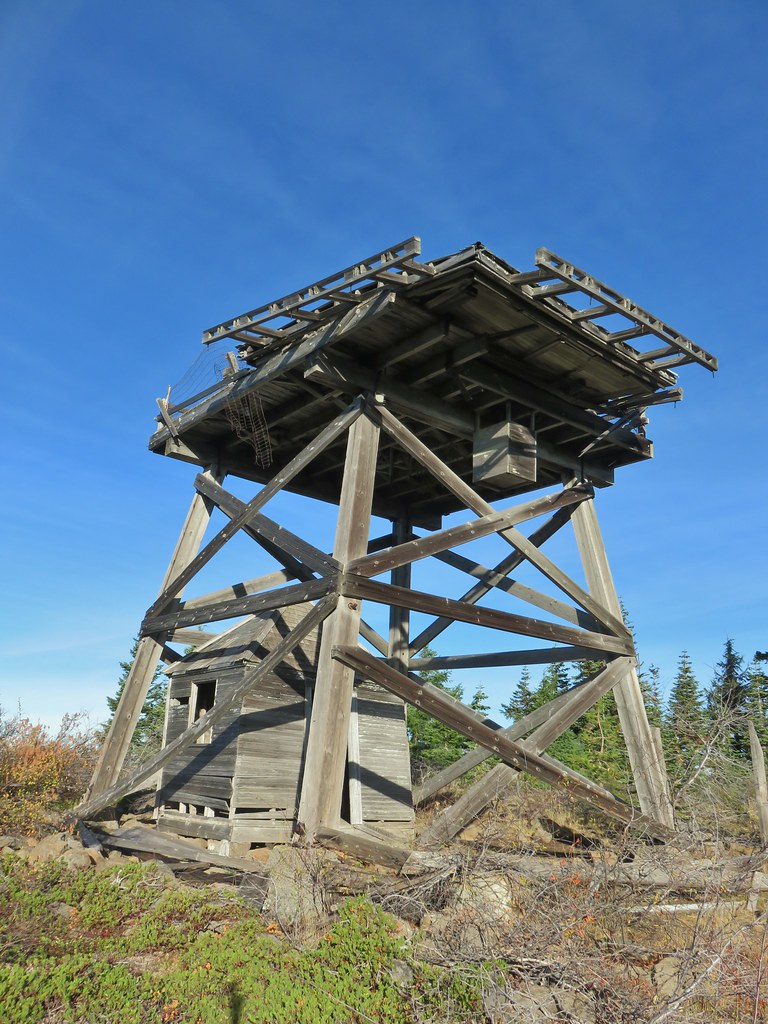
The Abbott Butte Lookout has seen better days. While the stand is still upright the lookout was not and the old sleeping quarters beneath looked near collapse as well.
IMG_7734The old lookout on Abbott Butte

IMG_7735

IMG_7736

Regardless whoever the idiot was that used wood from the lookout for their precious campfire should be ashamed.

IMG_7739The old outhouse?

There view south was limited by trees but there was a good view to the east.
IMG_7745Mt. Thielsen and the peaks of Crater Lake.
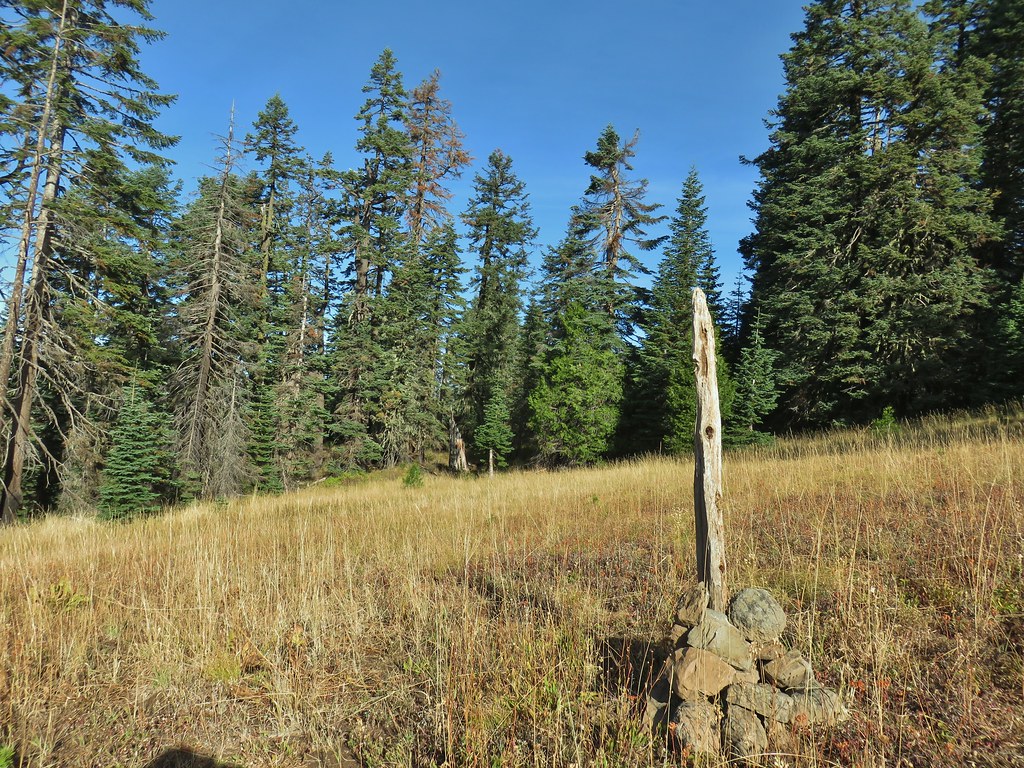
After a nice break at the summit we headed back down the road. After .7 miles at the 3rd (lowest) switchback we turned right toward a post.
IMG_7758

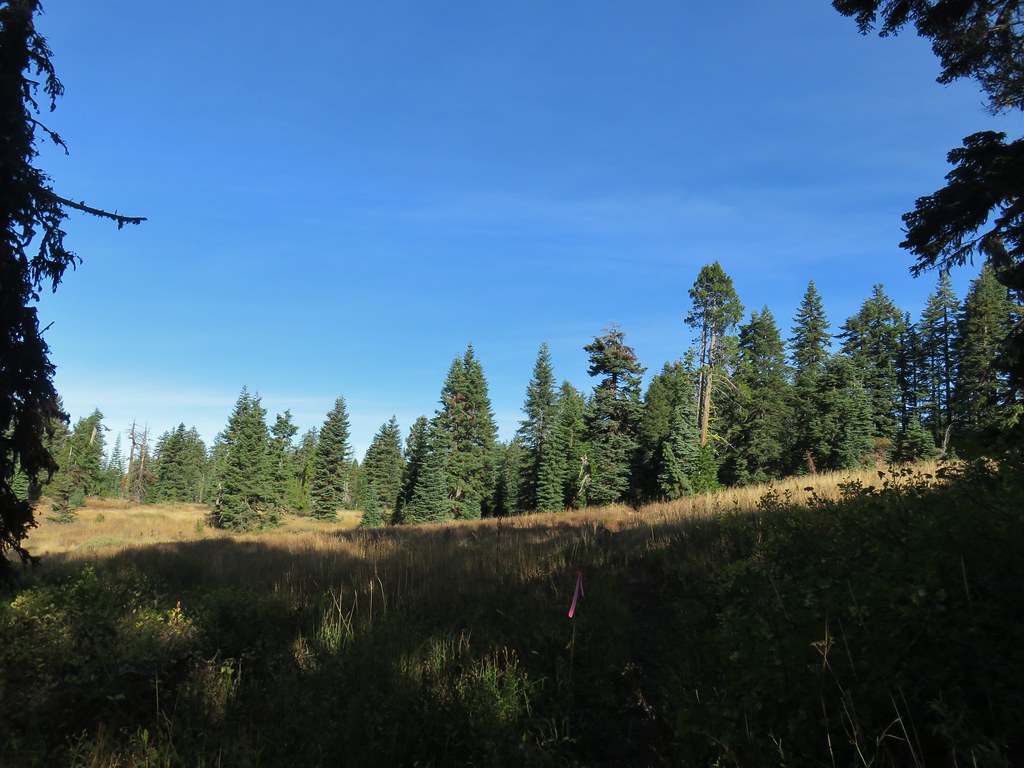
This was the route to the continuation of the Rogue-Umpqua Divide Trail. Our plan was to follow it another 1.3 miles to Elephant Pond. In typical Rogue-Umpqua Divide Fashion the trail alternated between good tread and non-existent as it passed through meadows, green forest and burned forest.
IMG_7760Flagging marking the route.

IMG_7763A cairn along the tread ahead.

We passed another sign for the Cougar Butte Trail .4 miles from the switchback and at least this time there was a visible trail.
IMG_7765

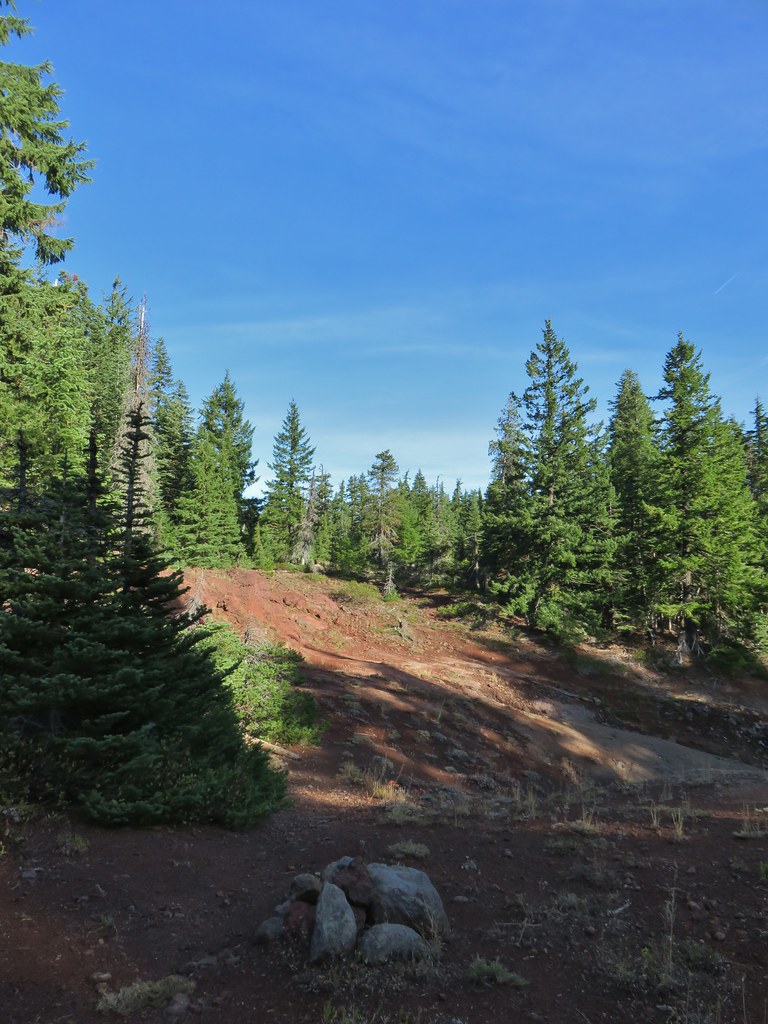
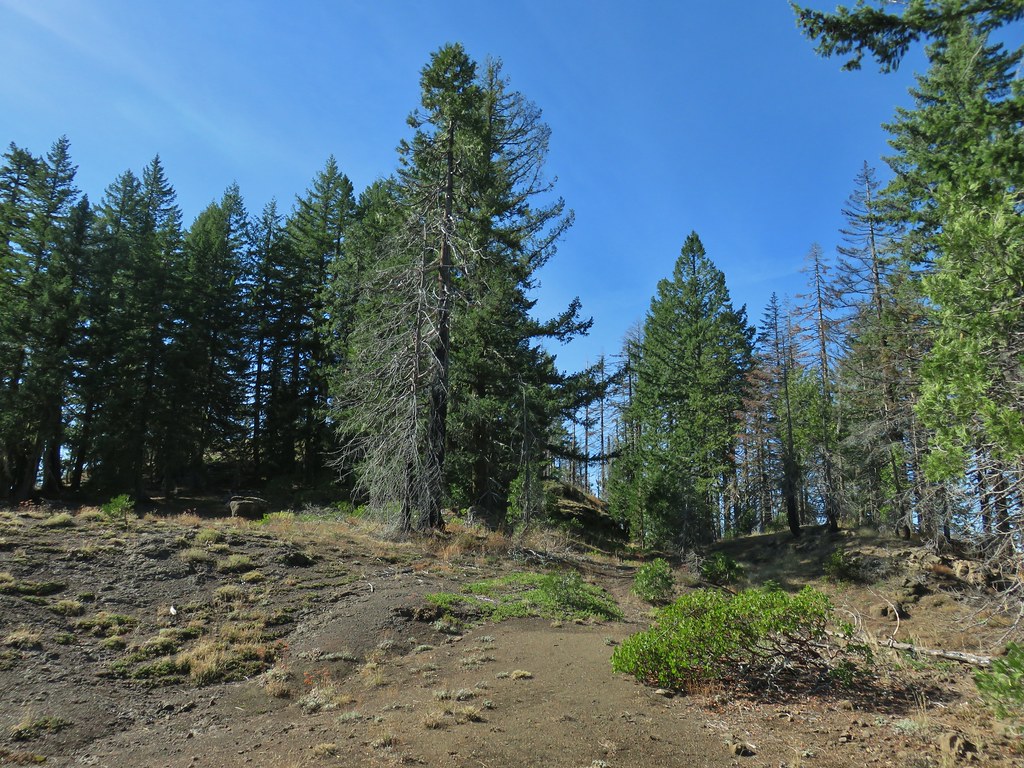
Just beyond this junction the Rogue-Umpqua Divide Trail crossed a cinder field, turned east and headed steeply downhill.
IMG_7767

IMG_7771

IMG_7774

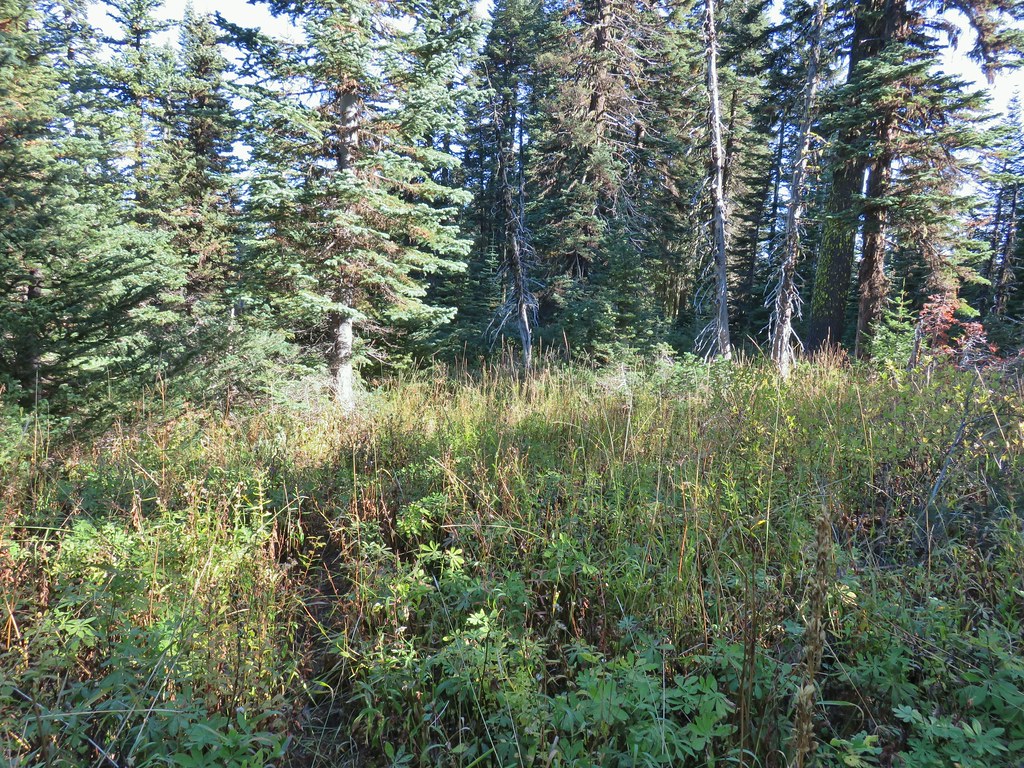
The trail eventually leveled out a bit passing through a series of overgrown meadows. For the first time since early in our first hike in this wilderness we nearly saw other people. We heard someone calling for Tyler but we never saw that person or Tyler.
IMG_7777

IMG_7782

IMG_7783This meadow is where we heard the voice.
IMG_7784

IMG_7789Another late flower

Before we reached Elephants Pond we spotted the rock formation known as Elephants Head.
IMG_7798

IMG_7804Fireweed that hadn’t gone to seed.

IMG_7817

IMG_7810

IMG_7823An owl’s clover

IMG_7820It’s hard to tell from the photo but this mushroom was big.
We declared victory at the pond as the trail was growing increasingly faint and entering another section of snags plus Heather’s foot was feeling a bit sore.

We returned the way we’d come only this time when we had reached Sandy Gap I decided to follow the old trail alignment above the road bed.
IMG_7850

IMG_7852

IMG_7855

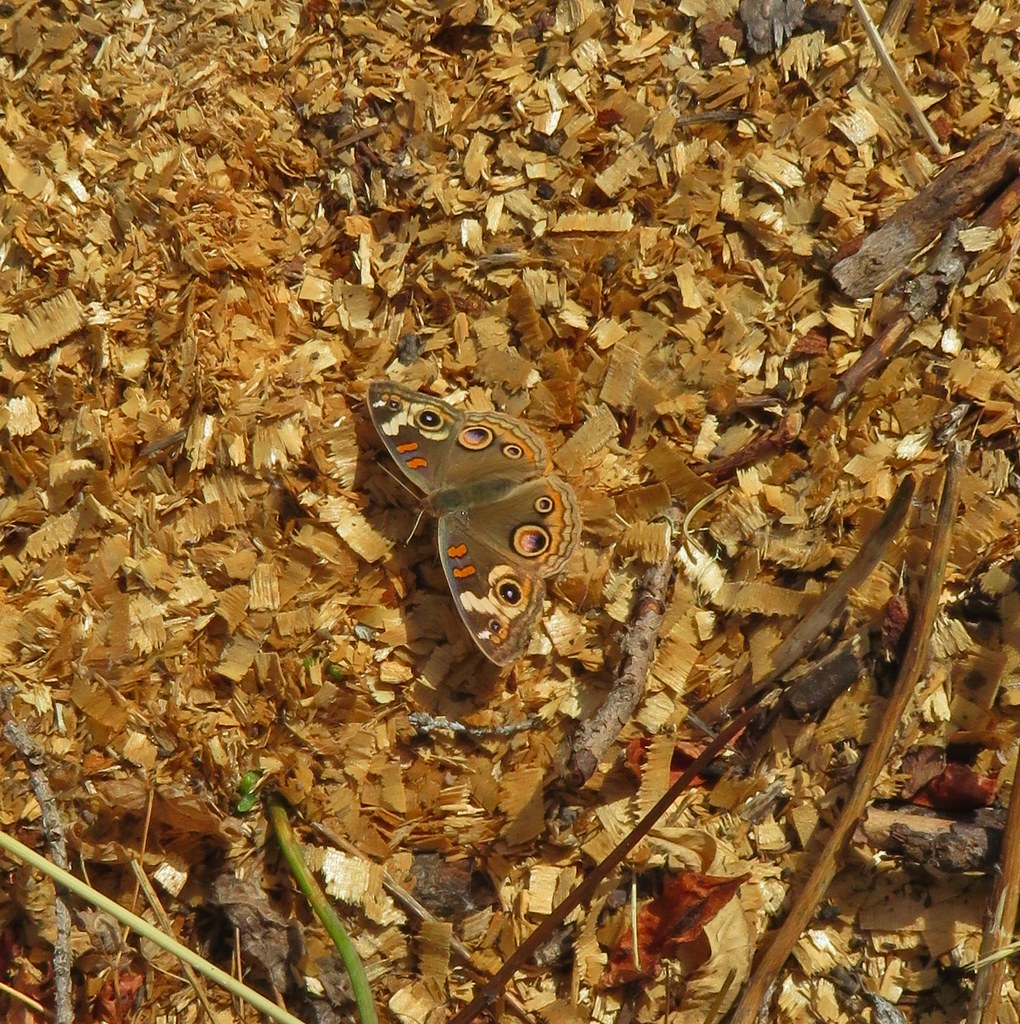
I rejoined Heather on the road near the wilderness boundary and we continued back to the car. Just before reaching it, near where she had fallen earlier we spotted a very pretty butterfly.
IMG_7879

This was another enjoyable hike in the Rogue-Umpqua Divide Wilderness, even with the faint tread and our other mishaps. At 10.3 miles it was a good days worth of hiking and we drove back to Union Creek for another round of dinner and pie from Beckie’s Cafe.

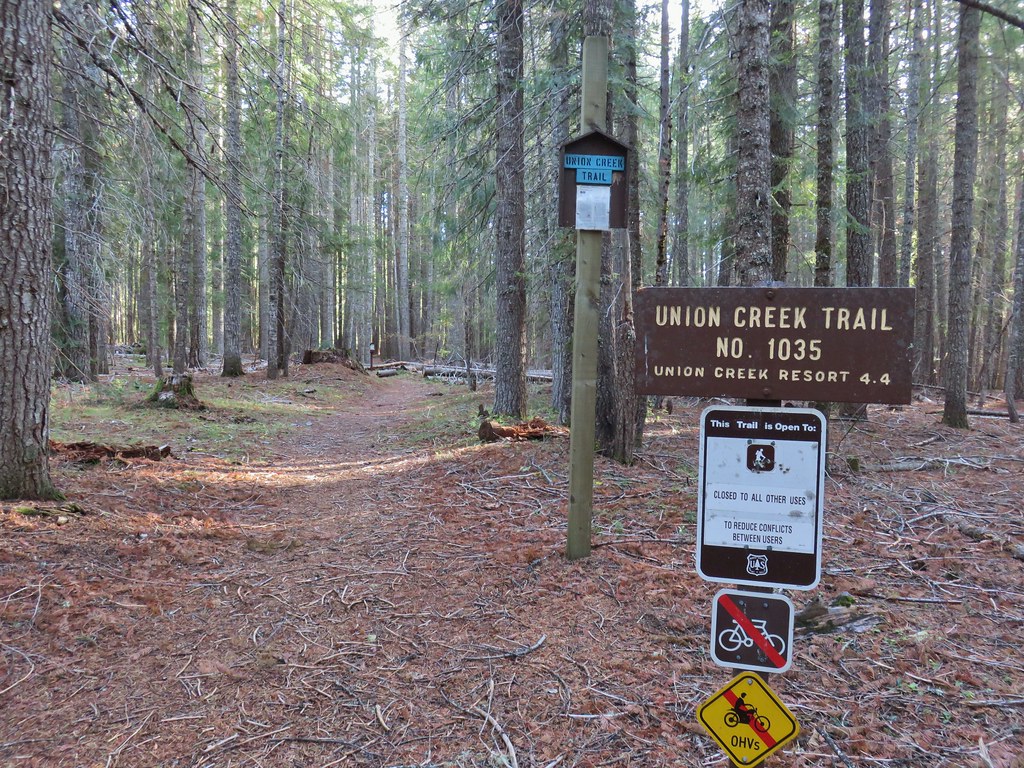
During the return hike and drive we had been discussing possible scenarios for the next days hike given Heather’s tender foot. Our planned hike was an 8.2 mile out and back from the Union Creek Resort along Union Creek to Union Creek Falls. We came up with a few different options making use of the upper trailhead which was only a seven minute drive away. Unfortunately by the time we’d driven back to Union Creek and finished our late lunch/early dinner her foot had swollen and stiffened signaling an end to her hikes this weekend.

While we were waiting for our food I had been checking up on the condition of the Union Creek Trail which as of 2018 was overgrown with quite a bit of blowdown in between the resort and falls. Trip reports as recent as August 2020 confirmed this. The temperature in the morning was going to be just under 40 degrees and an overgrown trail meant wet foliage which wasn’t exactly an enticing combination so a new plan was formed. It was just after 4pm when we finished dinner so with Heather’s blessing I took my leave and drove to the upper trailhead.
IMG_7882

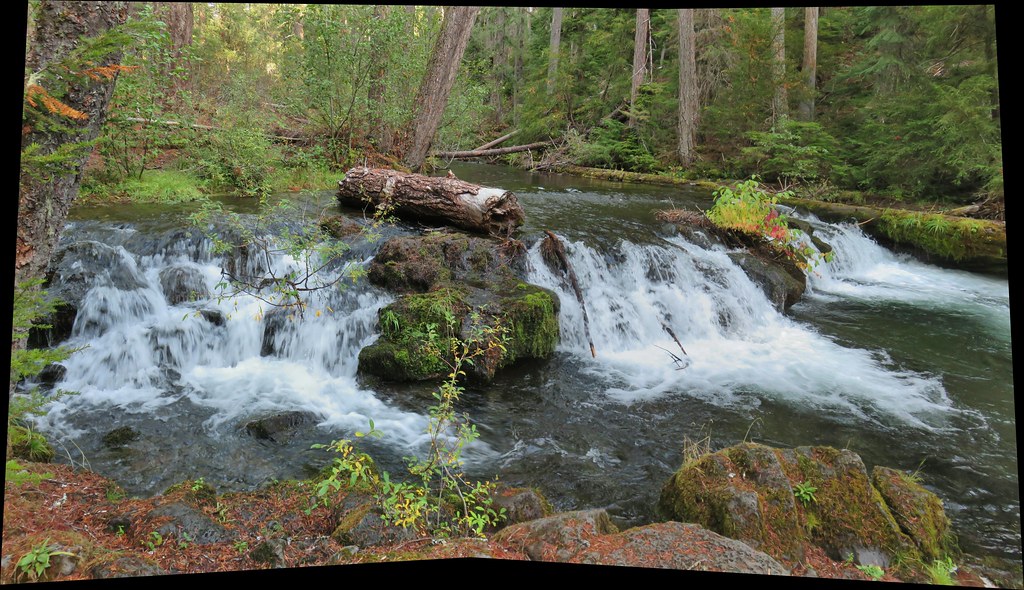
It was a little after 4:30pm when I set off and I gave myself a turn around time of 1 hour (or sooner if the trail conditions warranted). The trail began by descending 100′ in the first quarter a mile to the creek near Union Creek Falls, a small but scenic cascade.
IMG_7884

IMG_7888

IMG_7892_stitch

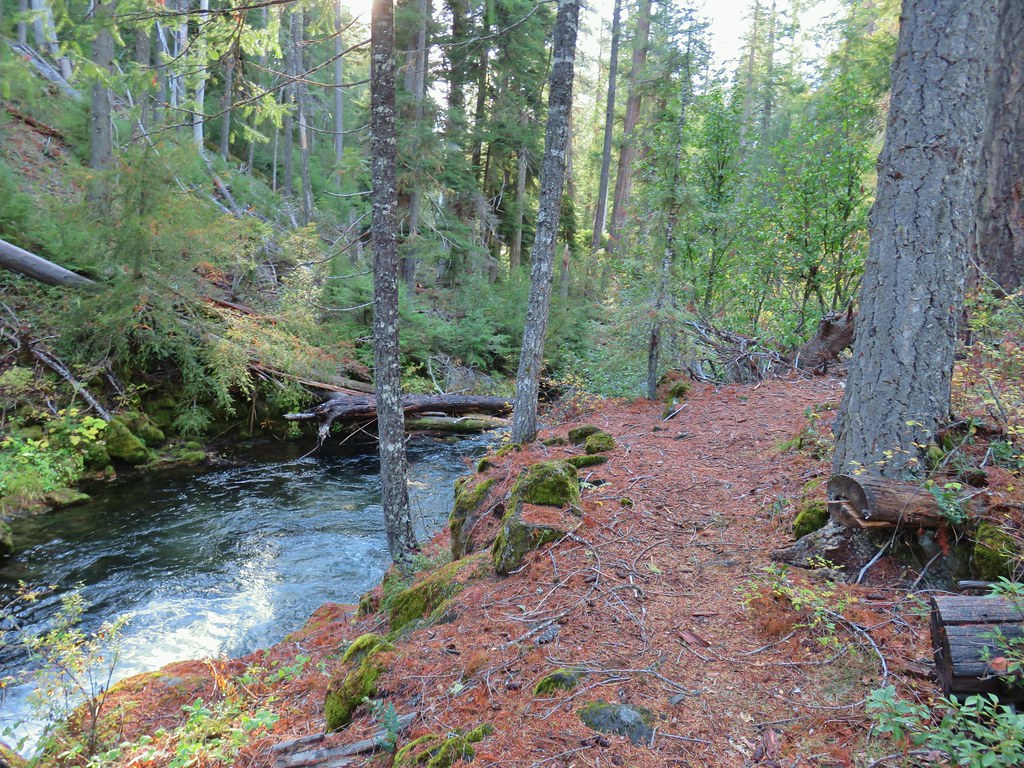
From the falls the trail continued downstream and was in relatively good shape with just a couple of small trees to step over. The creek was lively at first so I made frequent stops to check out several small cascades and chutes.
IMG_7895

IMG_7900

IMG_7902

IMG_7909

IMG_7910

IMG_7911

IMG_7913

IMG_7918

IMG_7924_stitch

Approximately 1.7 miles from the trailhead the trail conditions really started to deteriorate. I had been encountering a little more blowdown and now I was facing nearly chest high ferns.
IMG_7942

IMG_7945

It was passable but I had to watch out for hidden obstacles so my pace slowed as had the creeks.
IMG_7943

IMG_7948

IMG_7949

IMG_7951

I continued another quarter mile or so before calling it good, 45 minutes into my self-imposed 1 hour turn around time. The wilder show from the creek was over as it continues to calm the closer it gets to the resort. I double timed it back to the car stopping less frequently (an ouzel caught my attention at one point).
IMG_7953The broken zoom function didn’t let me get a good shot but the ouzel is on a rock in the middle of the creek.
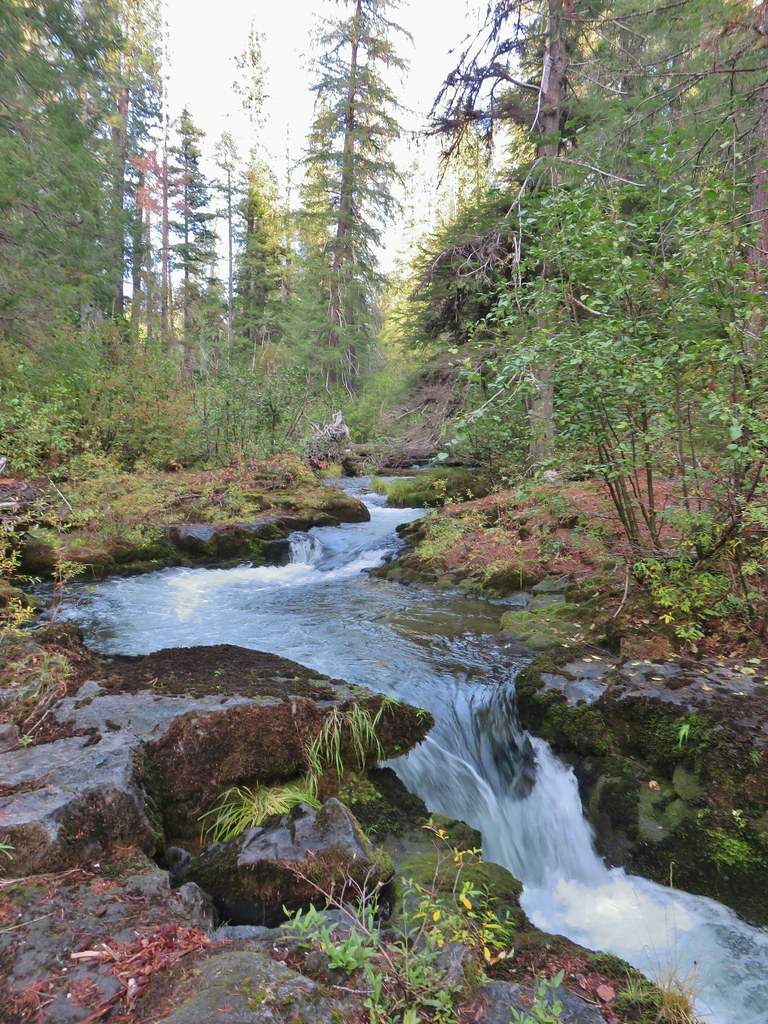
I managed to get 3.9 miles in so almost half of the trail and I got to see a number of nice little cascades along the way. I was however a little damp from the vegetation so I was really glad I hadn’t tried to do the hike first thing in the morning.
IMG_7963

I drove back to the resort and found heather sitting by the creek reading. Before turning in for the evening we picked up a cinnamon roll for us and two pieces of pie from Beckie’s to take to my parents the next day. Heather is currently on the mend and will hopefully be back out there hiking and running shortly. Until next time, Happy Trails!

Flickr: Abbott Butte and Union Creek Falls

Categories
Hiking Old Cascades Oregon Rogue-Umpqua Divide Trip report

Hershberger Mountain, Rabbit Ears, and Natural Bridge – 10/16/2020

We had a full itinerary scheduled for the second day of our Union Creek trip with three stops planned. We had originally planned on stopping first at the Rabbit Ears which are about 10 miles from Union Creek along Forest Road 6515. From Union Creek we drove north on Highway 62 to Highway 230 where we continued north on that highway for .9 miles before turning left and crossing the Rogue River on Forest Road 6510 (Hershberger Road). After 1.6 miles we forked right onto Forest Road 6520 and in another half mile turned left onto Forest Road 6515 (shown on Google Maps as Road 299). DO NOT rely on Google maps to get you to either Rabbit Ears or Hershberger Mountain. Not only is the road number incorrect but after approximately 4.5 miles it is misidentified on Google maps which shows the road making a hairpin turn to the left and shows no other existing roads. In reality this is a 4-way junction with FR 6515 continuing as a slight left. A total of 5.6 miles after turning onto this road we came to an actual hairpin curve to the left around a small meadow. To the right was a small parking area for the Rabbit Ears, but it was still a bit dark out to start hiking so we decided to change our plans and head up to Hershberger Mountain first. To reach Hershberger Mountain we needed to continue another mile on FR 6515 and turn right onto FR 580 for what Sullivan described as 1.8 steep, rough miles. We originally missed the part about the right turn after a mile and wound up passing FR 580 which was also marked as an OHV trail. After going more than 1.8 miles the wrong way we turned on our GPS unit to confirm our location then reread the book and found our error. We turned around and drove back missing FR 580 again thinking it was strictly an OHV trail and not an actual road but this time we quickly caught our mistake, turned around again and were finally back on track. A 2017 wildfire burned much of this area and along most of FR 580 which was in pretty bad shape with a number of large waterbars, some deep enough that the front bumper our our Subaru Outback scrapped the ground ever so slightly so passenger cars probably shouldn’t try it. When the 1.8 miles was up we came to a parking area on the left side of the road with some trails signs and a truck.
IMG_7144Sunrise from the parking area.

Two trails left the parking area, the Rogue-Umpqua Divide Trail and the Acker Divide Trail.
IMG_7143

We would be taking the Acker Divide Trail but first we wanted to visit the lookout on Hershberger Mountain so we continued up FR 580 toward the lookout.
IMG_7145

We could have driven the .8 miles up to a parking area just below the lookout but 1.8 miles of FR 580 had been enough. This stretch may actually have been in a little better shape but then again we were only walking on it and not trying to drive.
IMG_7151

IMG_7155

The lookout tower is available on a first come first serve basis and with the truck at the parking area below we weren’t sure if someone was using it so we didn’t go in but we did explore the area around it.
IMG_7156

IMG_7157

IMG_7158

IMG_7171

The views were great which was a nice change to our Labor Day trip to Rattlesnake Mountain where smoke ruled the views. (post)

IMG_7160Mt. Bailey, Howlock Mountain, and Mt. Thielsen
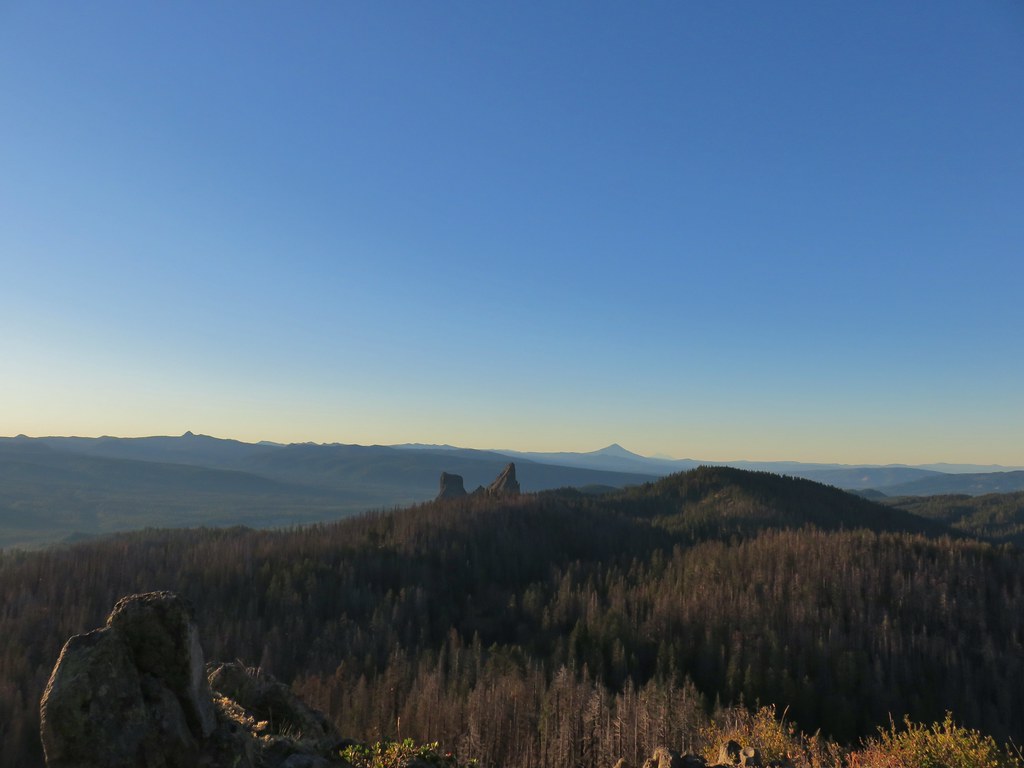
IMG_7162Arant Point, Union Peak, Goose Egg, Klamath Point, Lee Peak, Devils Peak, Pelican Butte, Lucifer Peak, Venus, Rabbit Ears, Mt. McLoughlin, and Mt. Shasta (among others).

IMG_7166Mt. McLoughlin and Mt. Shasta

IMG_7163Rabbit Ears

IMG_7169Sun over Crater Lake National Park

While up near the lookout I noticed a sign along the rocky ridge to Hershberger Mountain’s summit.
IMG_7178

IMG_7177

I headed for the sign and then continued onto the summit on a user path.
IMG_7189

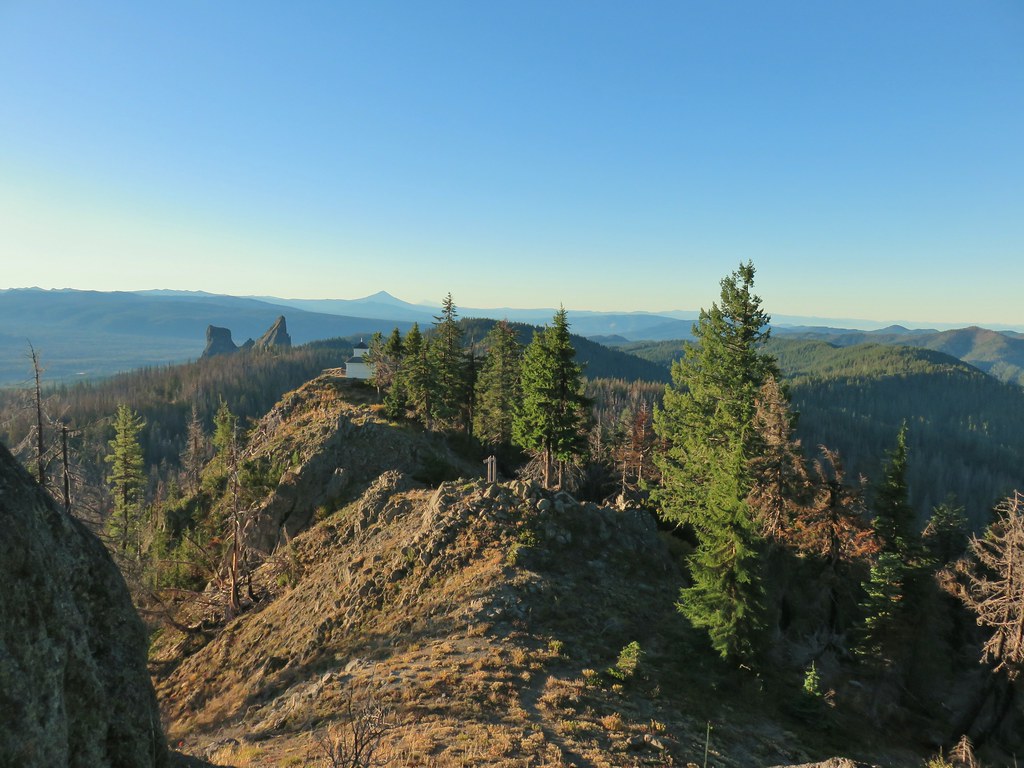
From the summit I could make out Rattlesnake Mountain (post) behind some burned snags.
IMG_7191
Weaver Mountain just to the left of the snags with Rattlesnake Mountain behind to the right and Fish Mountain the furthest right.

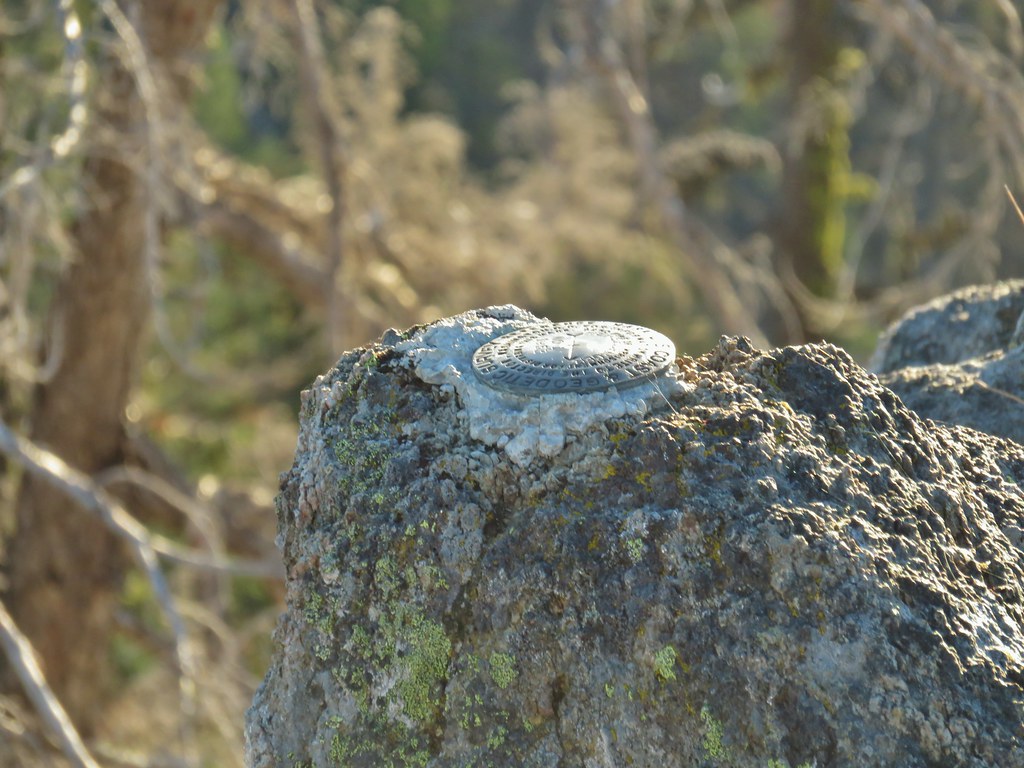
IMG_7195Survey marker at the summit.

IMG_7197The sign, lookout, Rabbit Ears, Mt. McLoughlin, and Mt. Shasta coming back from the summit.
As I was coming back the unbelievable happened. For the second day in a row a varied thrush held still long enough for me to get decent picture.
IMG_7202

I rejoined Heather near the lookout and we hiked back down to our car and after taking a few more sips of the coffee we’d left in it we started down the Acker Divide Trail.
IMG_7205Acker Divide Trail leaving FR 580.

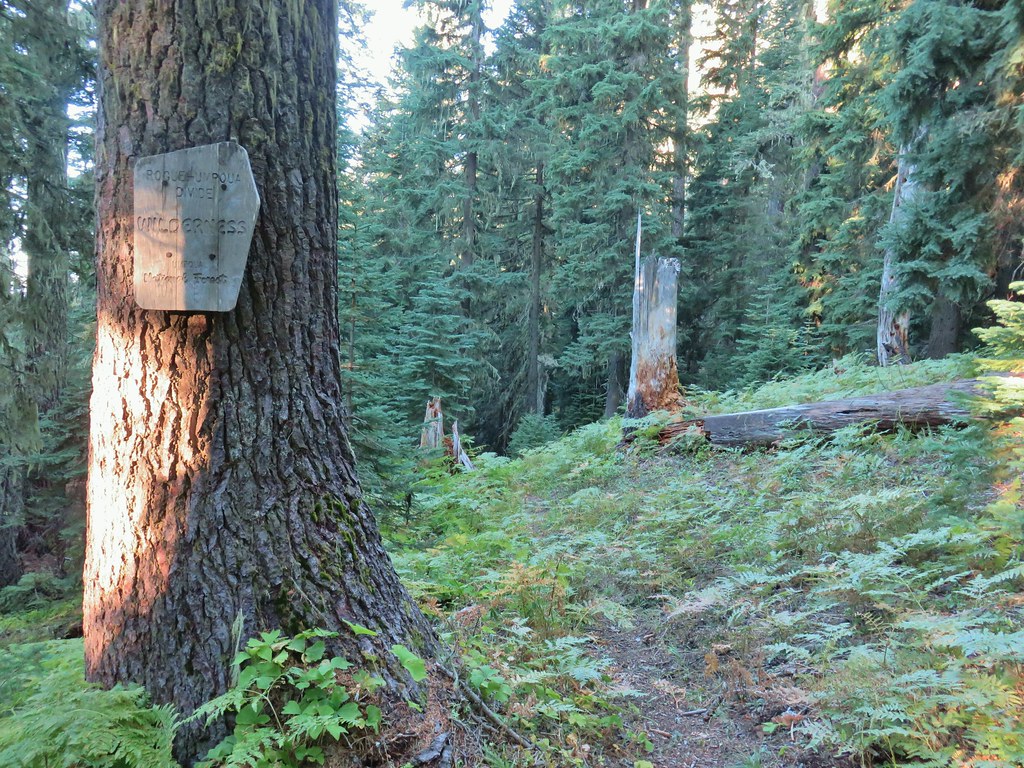
The trail quickly entered the Rogue-Umpqua Divide Wilderness.
IMG_7207

The trail dropped quickly losing nearly 300′ in the first .4 miles where the trail crossed a small stream at the edge of a meadow.
IMG_7212

IMG_7213

The meadow was what we have come to picture when we think of this particular wilderness. Faint tread with a few cairns led us through the meadow and into a section of green trees.
IMG_7215

IMG_7217

IMG_7216Another cairn to the right of the tree ahead.
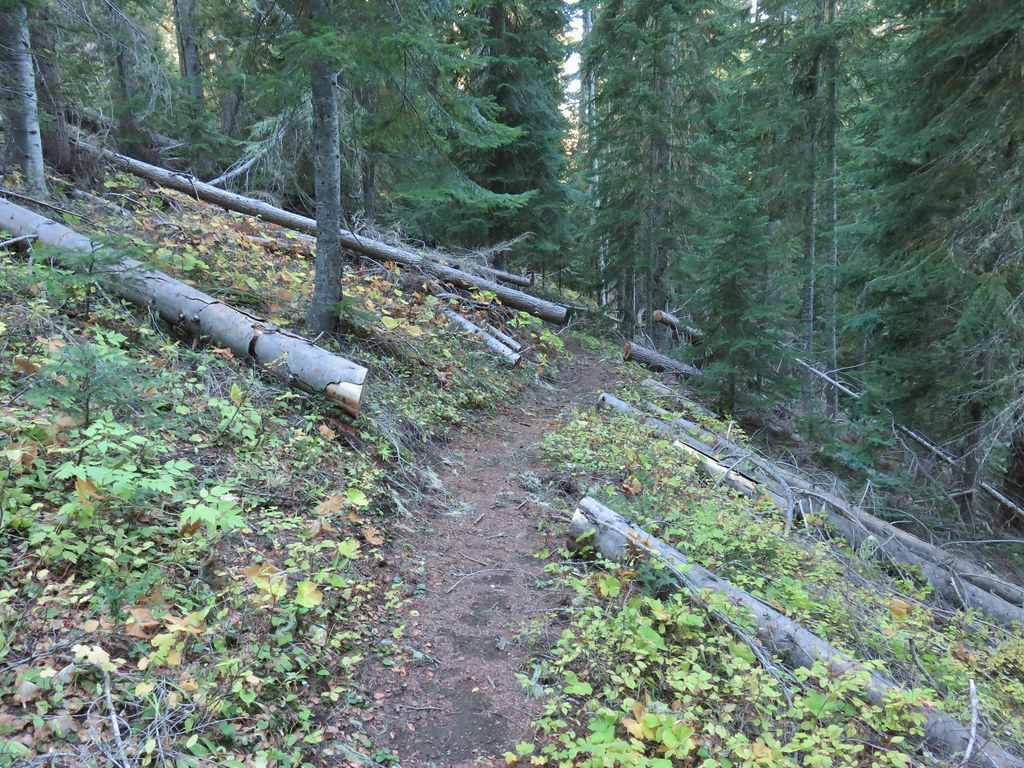
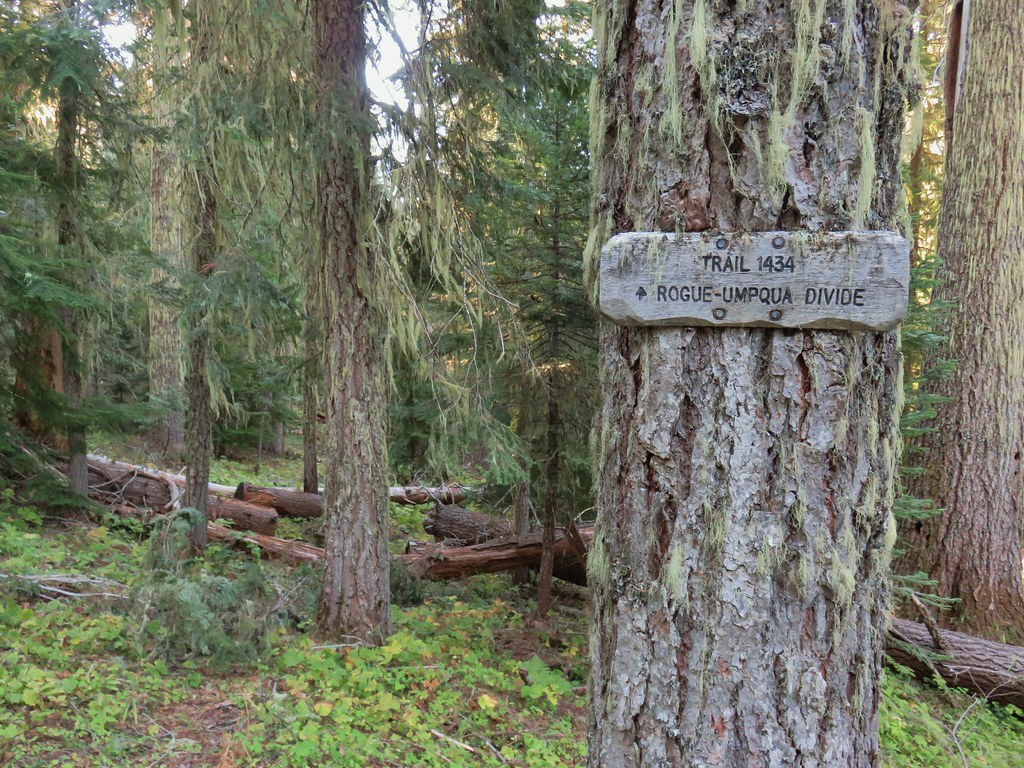
Beyond the meadow the trail leveled out a bit and just over a mile and a half from the trailhead we passed a sign for the Rogue-Umpqua Divide Trail.
IMG_7225

IMG_7229

I believe that the 2 mile section beyond this sign may be abandoned. On the map it leads to the edge of the wilderness near the junction of FR 6515 & FR 580 but according to the Forest Service and a sign we saw at a horse camp along FR 580 the Rogue-Umpqua Divide Trail follows FR 580 between that horse camp and the trailhead we were parked at. In any event we stuck to the Acker Divide Trail arriving at a meadow below Toad Lake in another .4 miles.
IMG_7231

IMG_7234A lonely flower along the Acker Divide Trail

IMG_7236Mushroom near the meadow.

IMG_7245Toad Meadow

Another .4 miles brought us within view of the Cripple Creek Shelter at the edge of the fire scar.
IMG_7250

We made our way to the shelter where we took a nice break and enjoyed the surroundings.
IMG_7252

IMG_7253

IMG_7254

IMG_7258Tis the time of year for Mushroom to replace flowers.
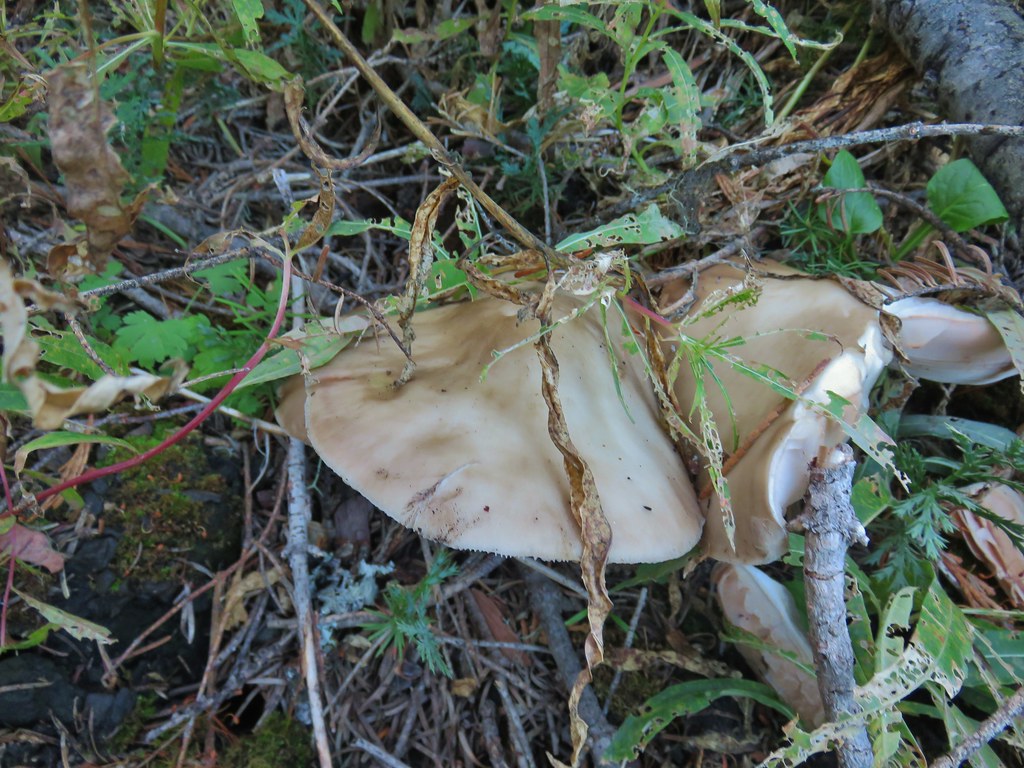
We returned the way we’d come keeping our eyes out for mushrooms and any lingering flowers that might yet be blooming.
IMG_7263

IMG_7265

IMG_7267

IMG_7271Candyflower

Our hike here came in at 6.8 miles and approximately 1200′ of elevation gain. After successfully navigating FR 580 again we stopped at the Rabbit Ears pullout and followed a path into the trees.
IMG_7274Pullout along FR 6515

IMG_7275Trail to Rabbit Ears

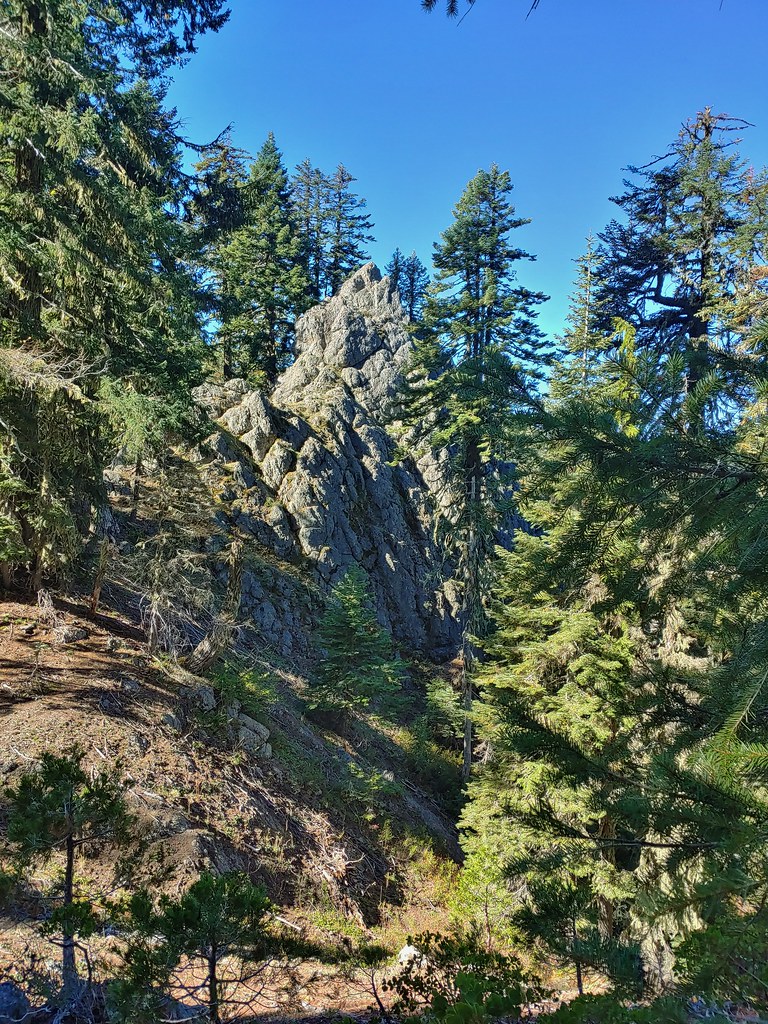
In a tenth of a mile the patch split and we chose to go right which brought us to the base of the rock formation.
IMG_7284The split

IMG_7286

IMG_7289

IMG_7292

The trail then turned uphill on some loose rock which made us happy that we’d chosen to go this direction because we felt going up it would be easier than coming down.
IMG_7294

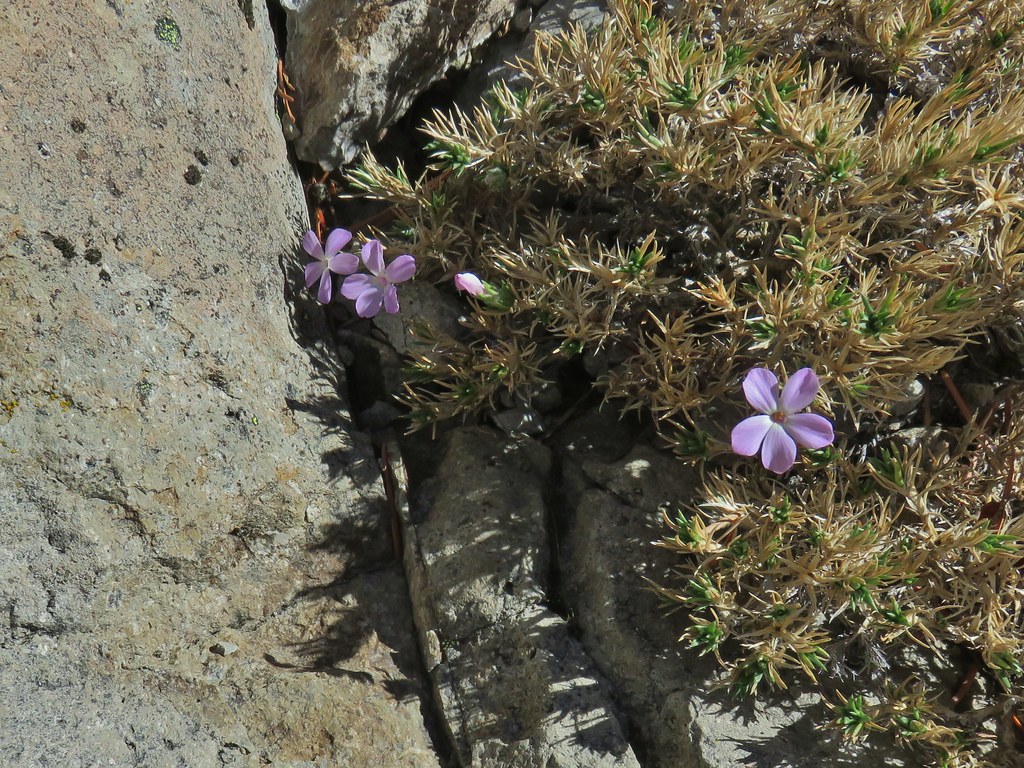
IMG_7295We were surprised to find these phlox blossoms still looking good.
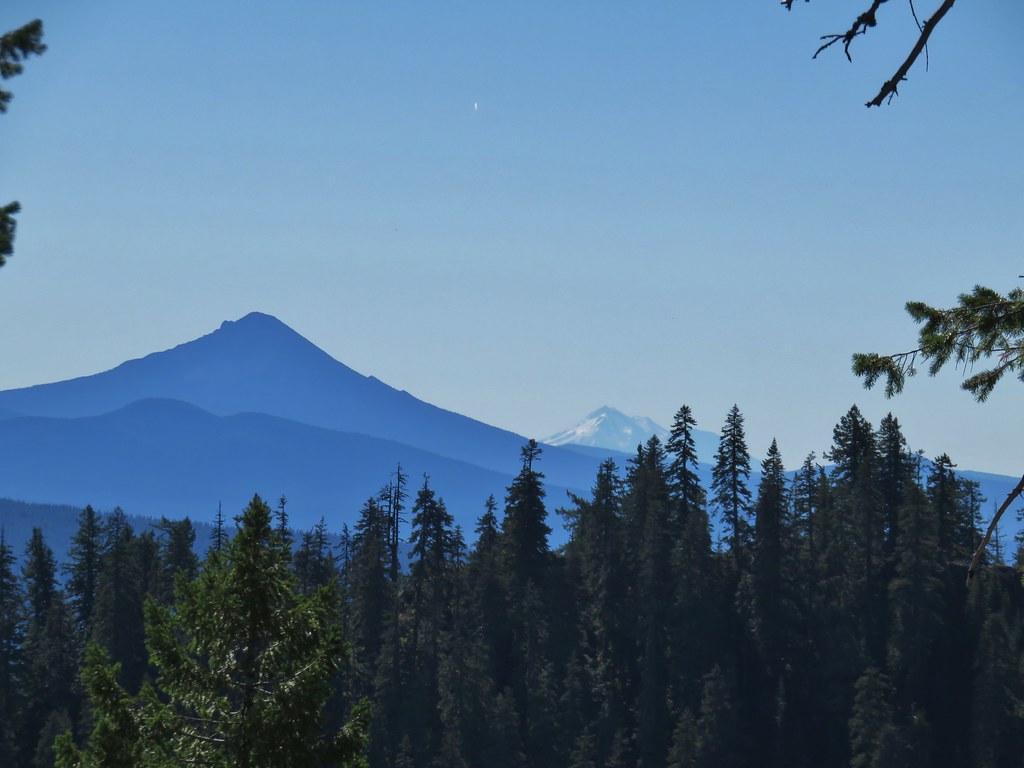
From the high point we had a pretty good view of Mt. McLoughlin and Mt. Shasta to the south.
IMG_7307

IMG_7308

Continuing on the trail brought us a view of Fish Mountain to the north before the trail dropped back down into the trees to complete the loop.
IMG_7313

20201016_114550_HDRSmaller rock formation along the trail.
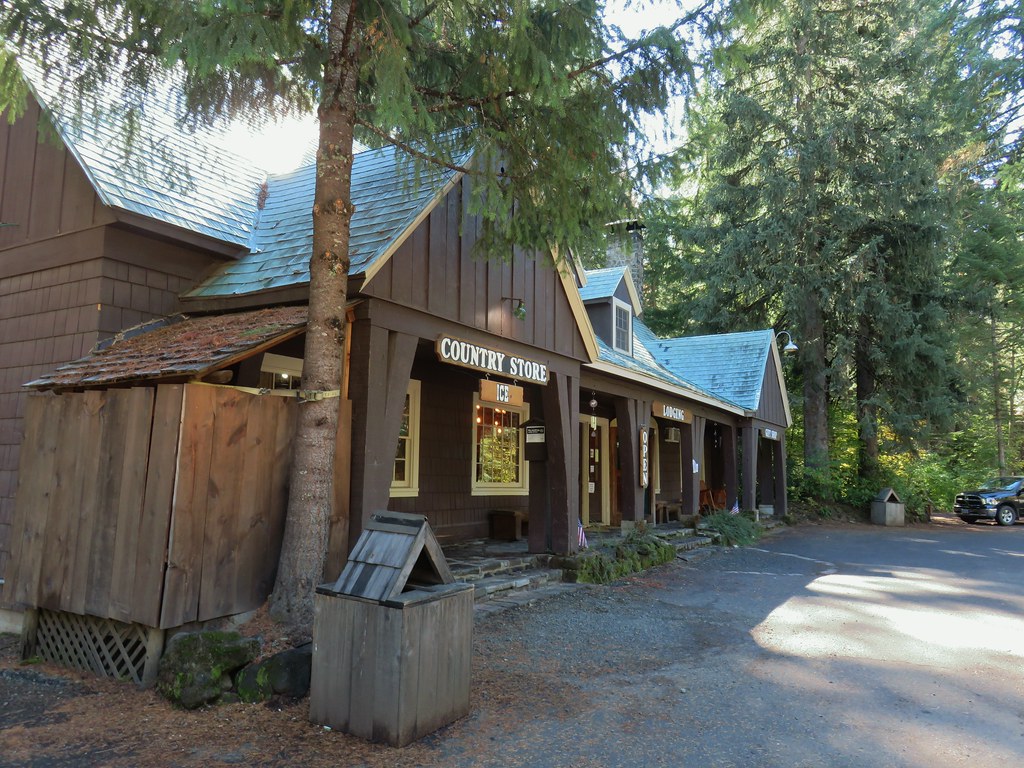
The half mile loop was really nice. Getting to see the Rabbit Ears up close was interesting and the added bonus of mountain views and surprise phlox was icing on the cake. We then drove back to Union Creek and parked at the lodge where we were staying since our next hike started just across the highway.
IMG_7329Beckie’s Cafe across Highway 62.

IMG_7332The lodge, store, and gift shop at Union Creek Resort.

We crossed the highway to the seasonally closed ice cream shop and followed a path on its right side to the Rogue Gorge Viewpoint parking area.
IMG_7331The Ice Cream shop and to it’s right the sign for the trail to the Rogue Gorge Viewpoint.
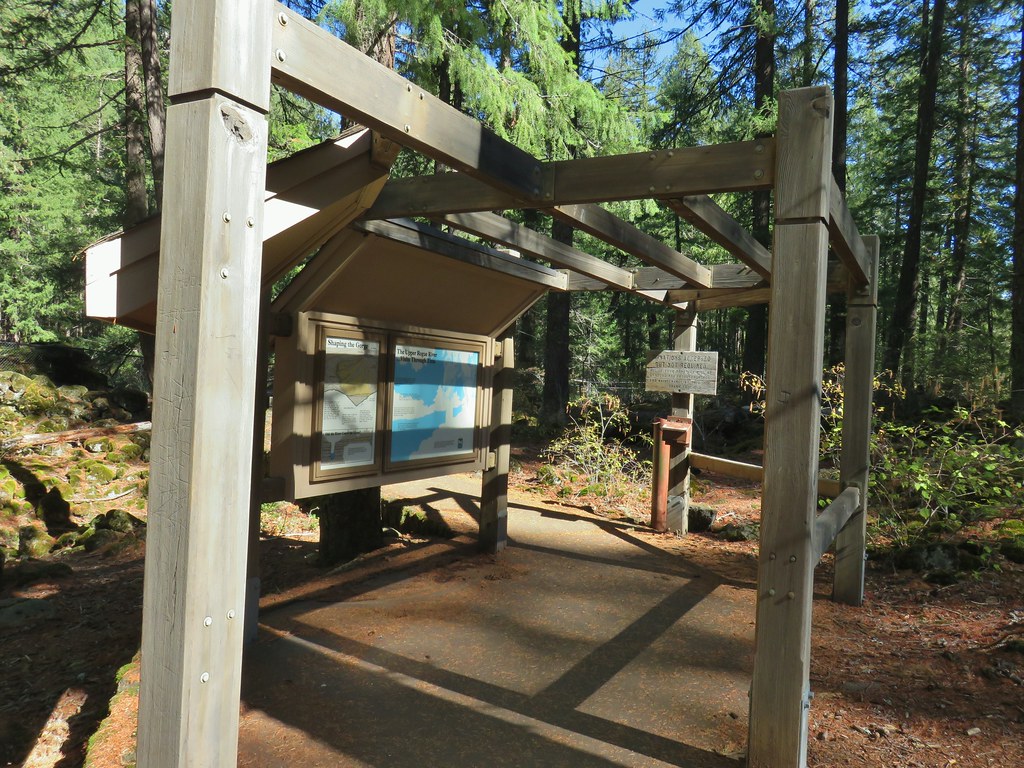
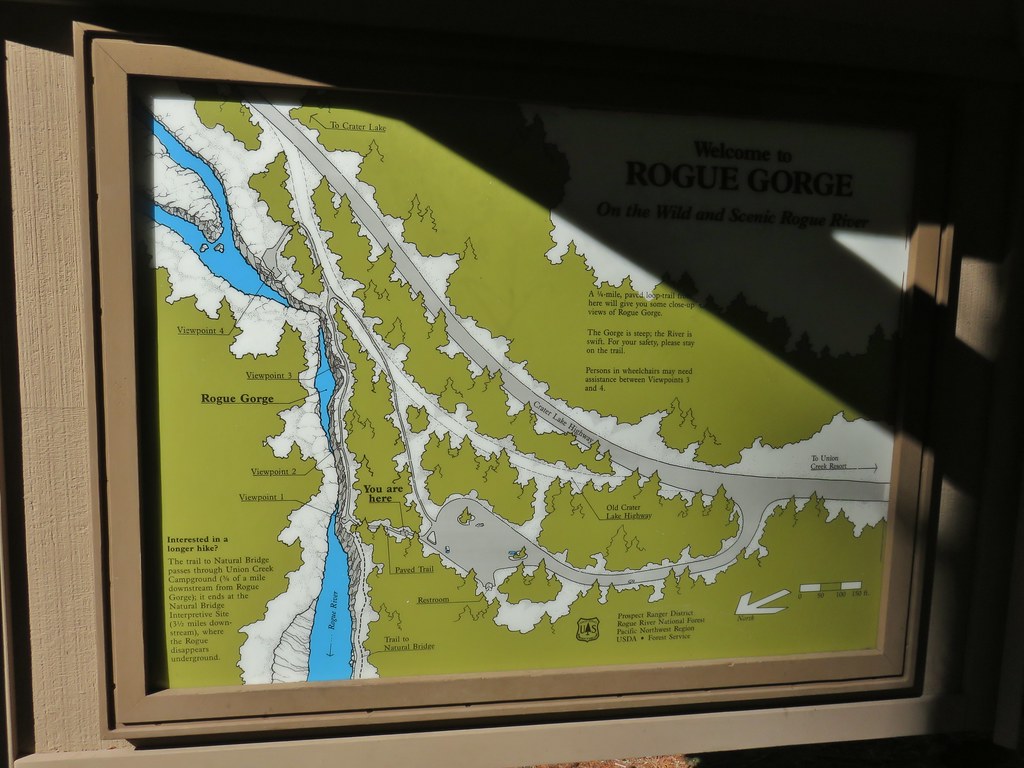
IMG_7337Interpretive signs at the parking area.

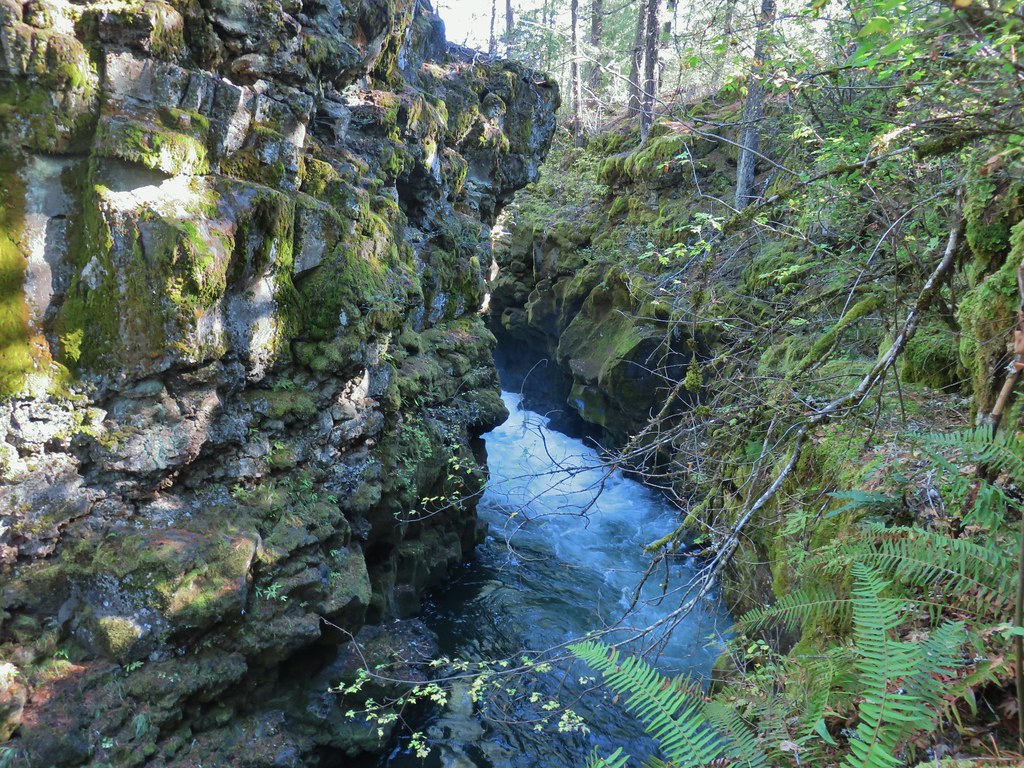
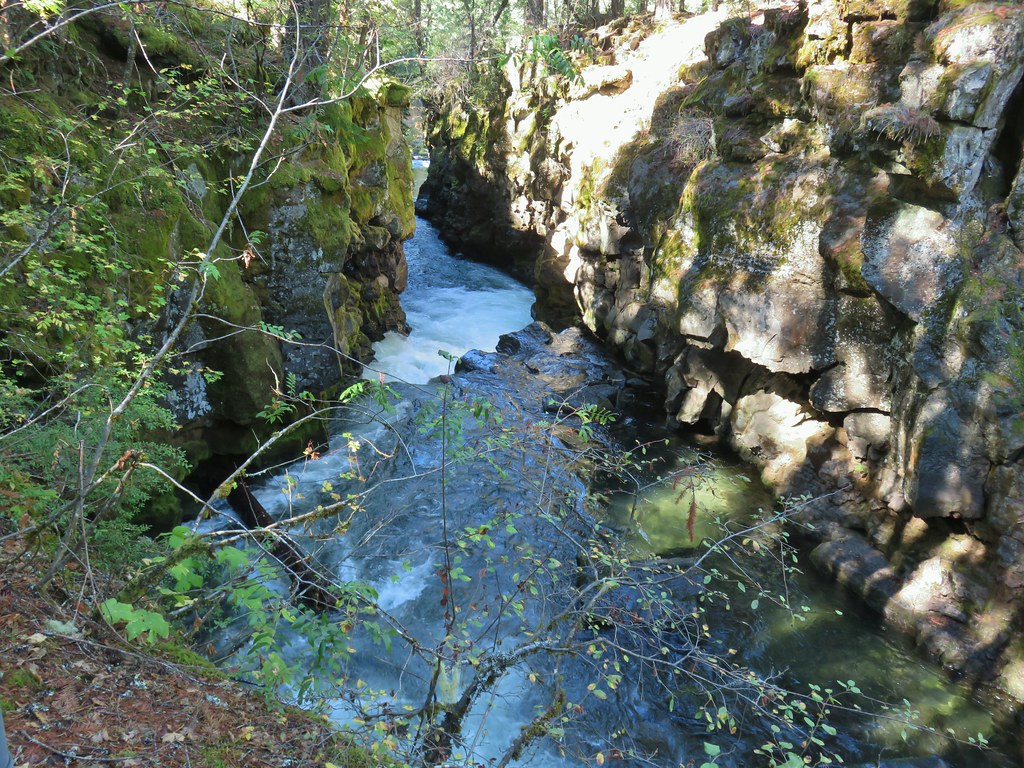
A .2 mile paved loop offers a short but spectacular option for a quick tourist stop with several viewpoints of the Rogue Gorge. We did the loop counter-clockwise heading first to viewpoint 4.
IMG_7339

IMG_7344Viewpoint 4

IMG_7352Rogue River at viewpoint 4.

IMG_7358Viewpoint 3

IMG_7359View upriver from viewpoint 3.

IMG_7361Downriver from viewpoint 3.

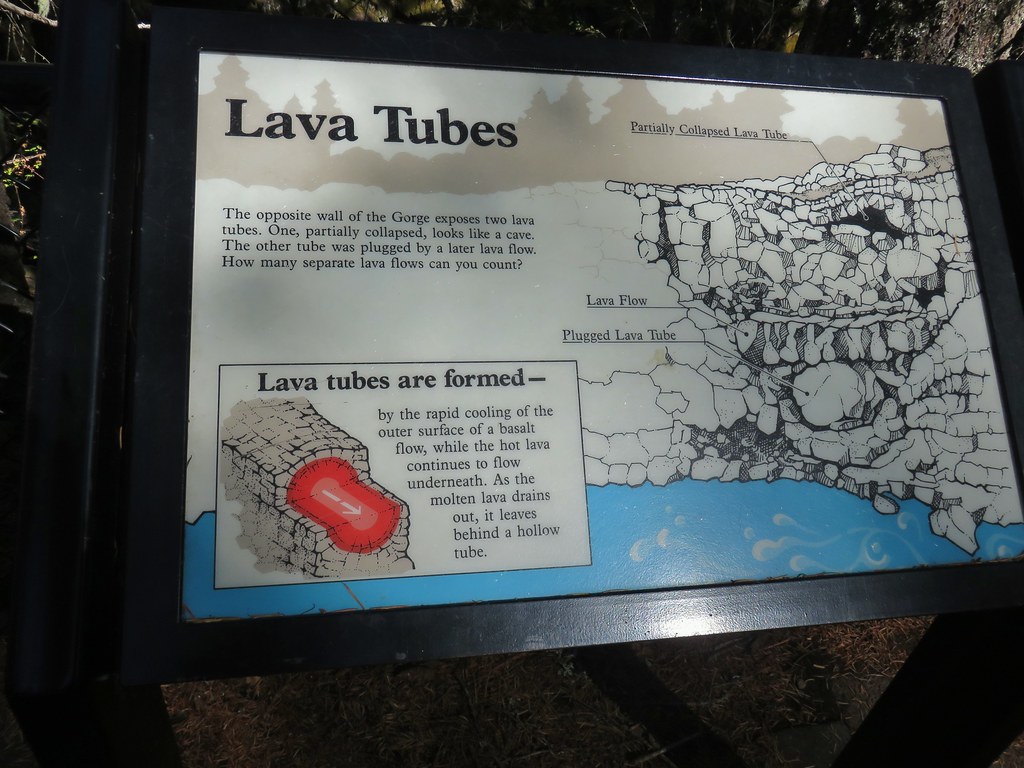
IMG_7369Interpretative sign at the viewpoint.

IMG_7370The lava tubes.

IMG_7373Viewpoint 2

IMG_7380Viewpoint 1 above the end of the Rogue Gorge.
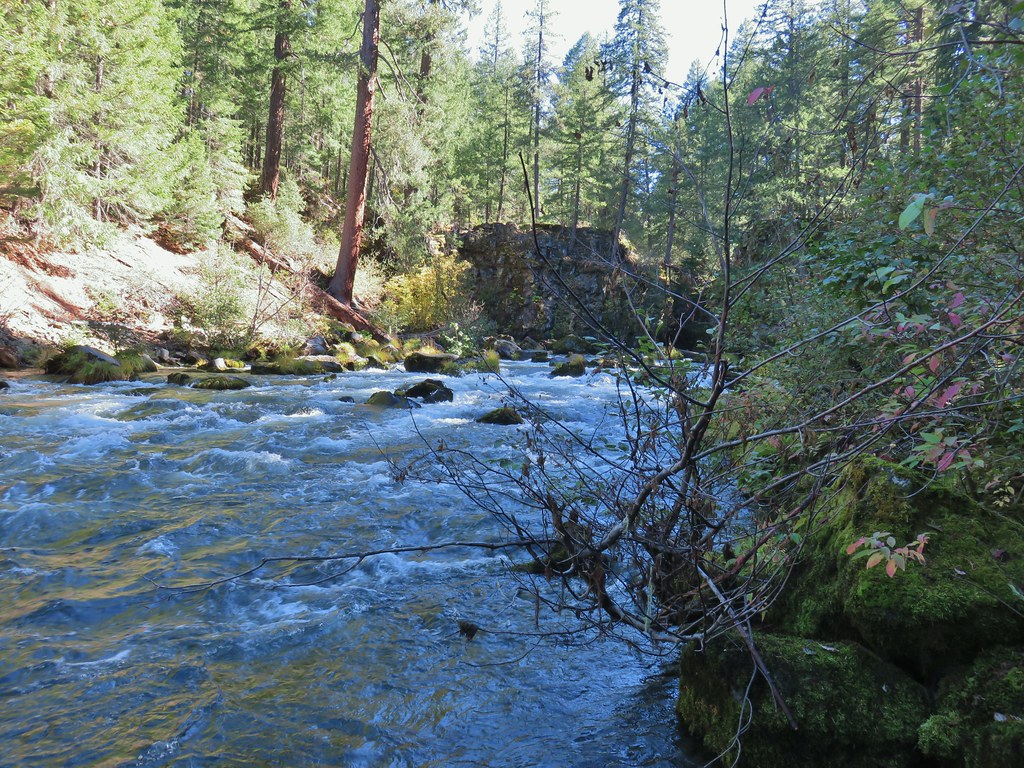
From viewpoint 1 the paved path crossed a footbridge before arriving at the interpretative sign boards at the parking area. The Rogue Gorge Trail, which we took, continued as a dirt trail descending to the riverbank and continuing downstream.
IMG_7382

IMG_7386

For the next 1.2 miles the Rogue Gorge Trail followed the river closely as it passed a number of cabins and a portion of the Union Creek Campground. This section of the Rogue River flowed quietly past a wonderful display of Fall colors.
IMG_7397

IMG_7398

IMG_7401

IMG_7403

IMG_7404

IMG_7410

IMG_7413

IMG_7422

IMG_7424

IMG_7425Union Creek Campground

At the end of the 1.2 mile stretch we arrived at Union Creek (the actual creek) and crossed it on a footbridge.
IMG_7428The orange sign and flagging was for a 50k being run the following day.
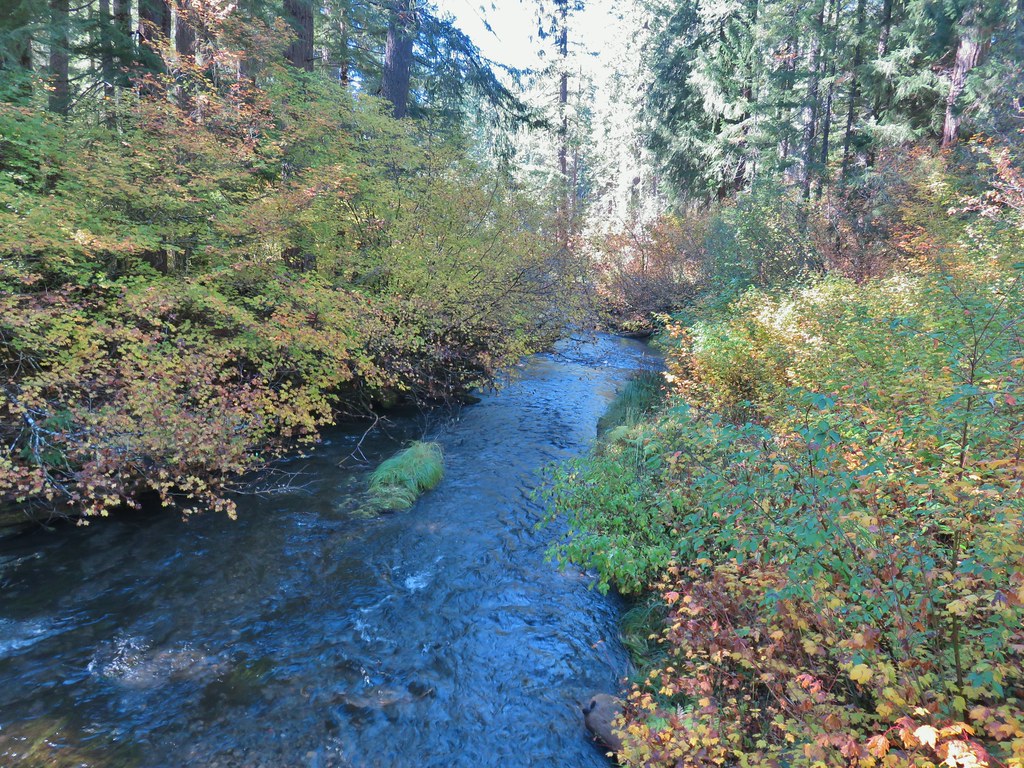
IMG_7429Union Creek

Beyond the footbridge was a 1.7 mile stretch of trail passing more of the campground and some other cabins before arriving at a footbridge spanning the Rogue River.
IMG_7431

IMG_7435

IMG_7443

IMG_7455

As we neared the bridge the river became wilder as it passed over and through more lava flows.
IMG_7463

IMG_7464

IMG_7472A Clark’s nutcracker

IMG_7484

IMG_7488The footbridge to the upper left.

IMG_7494

The footbridge offered an opportunity for a 2.2 mile loop using the Upper Rogue River Trail and passing Natural Bridge. For now we stuck to the Rogue Gorge Trail and continued past the footbridge.
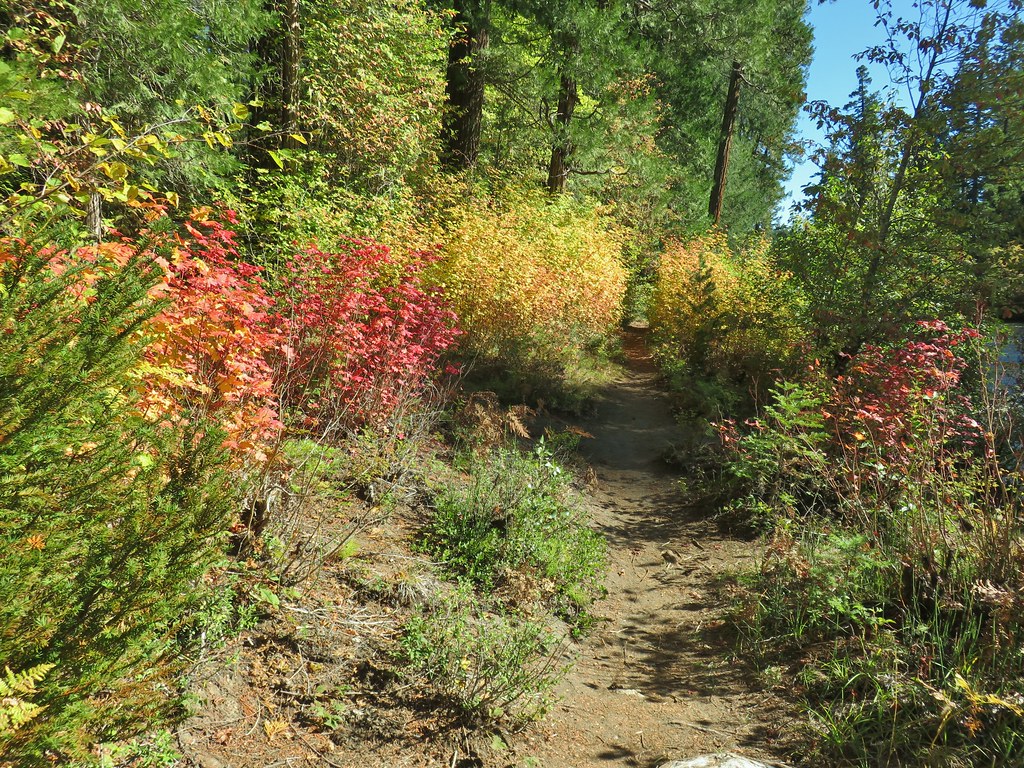
IMG_7496Rogue River on the other side of the footbridge.
IMG_7502

About a mile from the footbridge we came to a sign at what looked like a fork in the trail.
IMG_7503

We took the right hand fork sticking to the river bank where a gentleman was walking his dog. The trail petered out on some rocks along the river.
IMG_7504

It was easy enough to walk over the rocks though so we continued on not realizing that we were very close to Natural Bridge which in the past had been the way across the river but has been closed and replaced by another footbridge.
IMG_7510

IMG_7516

We turned inland on an old road bed still not realizing we were off course until it petered out and we discovered we were on the wrong side of a fence.
IMG_7517

IMG_7515

When we saw the fence we realized that we should have forked left at that sign so we made our way to the correct side of the fence and quickly picked up a paved path coming from the Natural Bridge Day Use Area.
IMG_7518

The paved path brought us to the Upper Rogue River Trail which we took to the footbridge across the river.
IMG_7519

IMG_7520

IMG_7525

The Rogue Gorge had been spectacular but Natural Bridge added the element of oddity to the mix as the river disappeared under the lava rock only to reappear a short distance later.
IMG_7532

IMG_7534

IMG_7541

IMG_7544

IMG_7546

IMG_7558

IMG_7565The inlet

Beyond Natural Bridge the Upper Rogue River Trail decided to gain some elevation as it climbed steeply gaining 300′ before dropping back down to the other footbridge. The climb did provide a brief glimpse of Llao Rock along the rim of Crater Lake.
IMG_7576

We turned off the Upper Rogue River Trail to cross the footbridge and return to the Rogue Gorge Trail.
IMG_7591

IMG_7593

We turned left on the Rogue Gorge Trail and followed it back to Union Creek. Instead of crossing the creek this time we turned right onto the Union Creek Trail.
IMG_7607

The Union Creek Trail followed the creek closely for .7 miles through the Union Creek Campground. The trail actually passed through some campsites but this section of the campground was closed for the season so all of the sites were empty.
IMG_7615

IMG_7614

IMG_7620

The trail crossed Union Creek on a footbridge near the campground entrance.
IMG_7624

On the far side of the bridge was a parking area near the Union Creek Amphitheatre where they were setting up for the 50k.
IMG_7626

IMG_7627

Just up the road from the parking area here a short path led to another parking are near Beckie’s Cafe where we simply walked up to the take out window and ordered dinner and a piece of pie.
IMG_7628

IMG_7631

IMG_7632

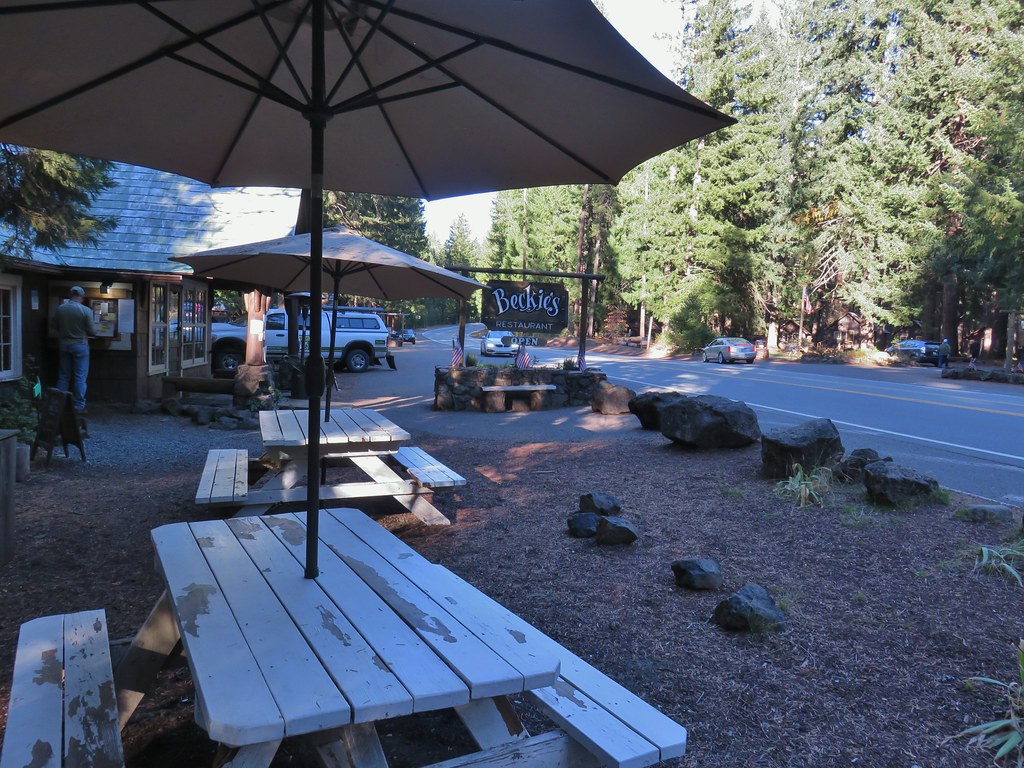
The pie was as good as I had hoped it would be having read about it from Boots on the Trail. After dinner we walked across the highway and into our room at the Union Creek Resort Lodge. It had been another day of nice hikes in this area. We were growing more and more impressed with the Rogue-Umpqua Divide Wilderness (despite the lack of trail maintenance). There was something about that wilderness that just felt peaceful. We went to bed looking forward to another visit to it the following day. Happy Trails!

Flickr: Hershberger Mountain and Natural Bridge

Categories
Hiking Old Cascades Oregon Rogue-Umpqua Divide Trip report

National Creek Falls and Takelma Gorge – 10/15/2020

As the strangest hiking season we’ve experienced winds down we took our final long distance (over 3 hours away) trip of the year for a long weekend of hiking around Union Creek, OR. Recent rains had knocked down the wildfires for the most part but those rains had given way to a sunny forecast which made for promising hiking conditions. We kicked off our hikes with a stop at the National Creek Falls Trailhead.
IMG_6873

Located just west of Crater Lake National Park National Creek Falls is spring fed from water absorbed by the Park’s pumice plain. A short .4 mile trail descends from the trailhead to the creek just below the falls.
IMG_6881There was just a little bit of blowdown to navigate on the way down.
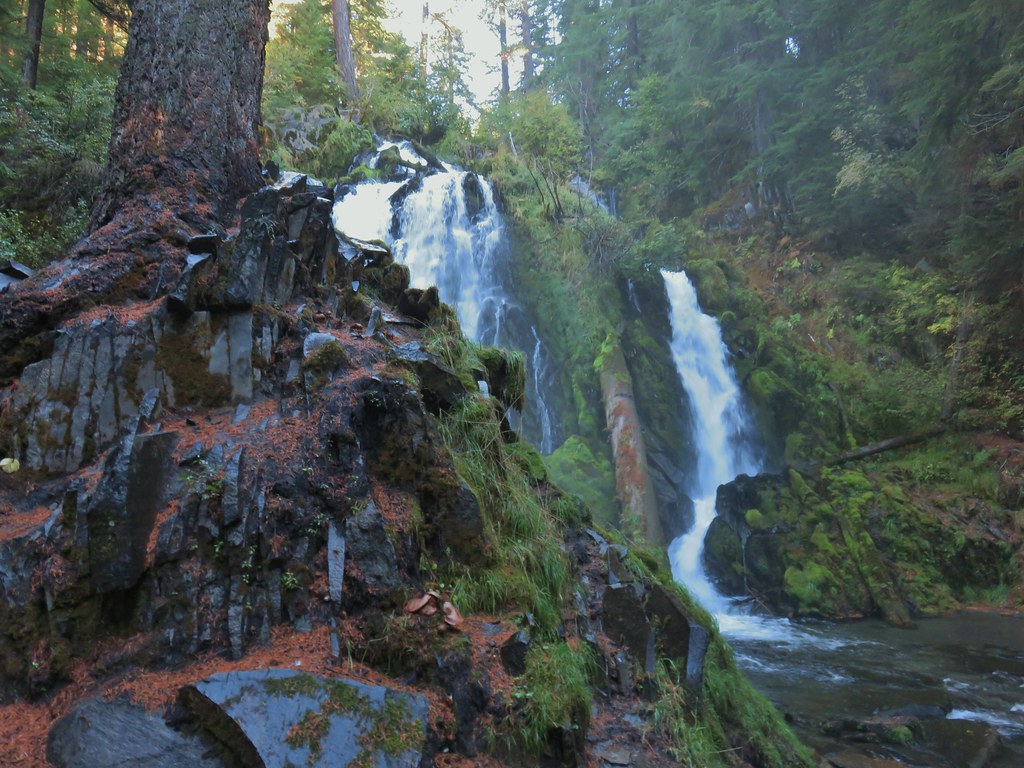
IMG_6884National Creek Falls

On a warmer day we would have loved to stay for a bit and possibly wade across the creek to get a full view of these impressive falls but it was in the mid 30’s this morning and with the moisture generated by the falls we quickly became uncomfortably cold. We settled for the view we could get from the creek side and retreated back up to our car and turned the heat on full blast.
20201015_090114

When enough feeling had returned to my hands to grip the steering wheel we returned to Highway 230 following it south to its end at Highway 62 then continued south on that highway past Union Creek to Woodruff Meadows Road (between mileposts 51 and 52). We turned right onto this paved road for one and three quarters of a mile to a small pullout just past the Woodruff Bridge Day Use Area and a bridge over the Rogue River (parking is also available in the day use area).
IMG_6895Signboard at the pullout.

We were here to do Sullivan’s Takelma Gorge hike (#32 in the 4th edition “100 Hikes/Travel Guide Southern Oregon & Northern California”). In his book he suggests a quick detour to a small fall beneath the bridge so we crossed the road and made our way down to the river bank to view the cascade.
IMG_6897

IMG_6898

IMG_6901

We then recrossed Woodruff Meadows Road and headed south along the river on the Upper Rogue River Trail.
IMG_6909

The mile and a half to Takelma Gorge had many river views with lots of fall colors lining the banks. There was also a varied thrush sighting that actually resulted in a few decent pictures (these birds are my nemesis when it comes to getting photos).
IMG_6914

IMG_6916

IMG_6926

IMG_6941

IMG_6945

IMG_6947

IMG_6952

As we neared the gorge the river began to be squeezed through channels created by lava flows.
IMG_6958

IMG_6962Rogue River emerging from a channel.
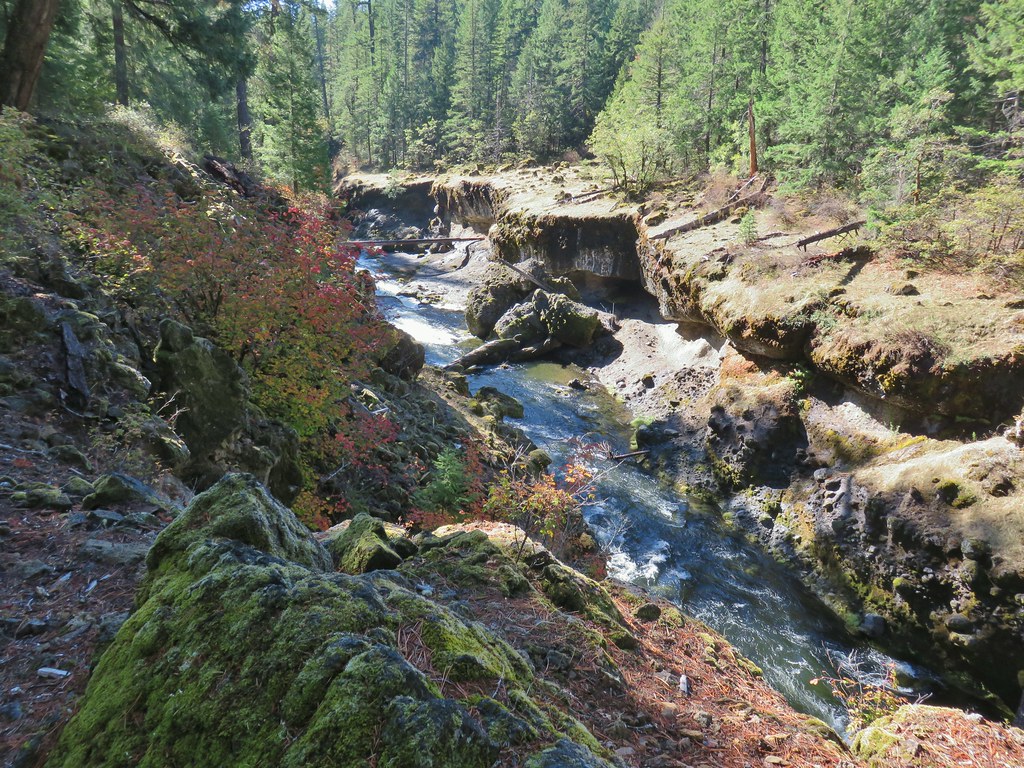
Takelma Gorge is also the result of a lava flow where the Rogue turns a sharp corner and blasts down the gorge.
IMG_6971

IMG_6978

20201015_104837

The trail follows along the rim of the gorge passing a couple of viewpoints over the next .9 miles.
IMG_6999

IMG_7003

20201015_110653_HDR

20201015_111815_HDR

IMG_7026

IMG_7029Rogue River emerging from Takelma Gorge.
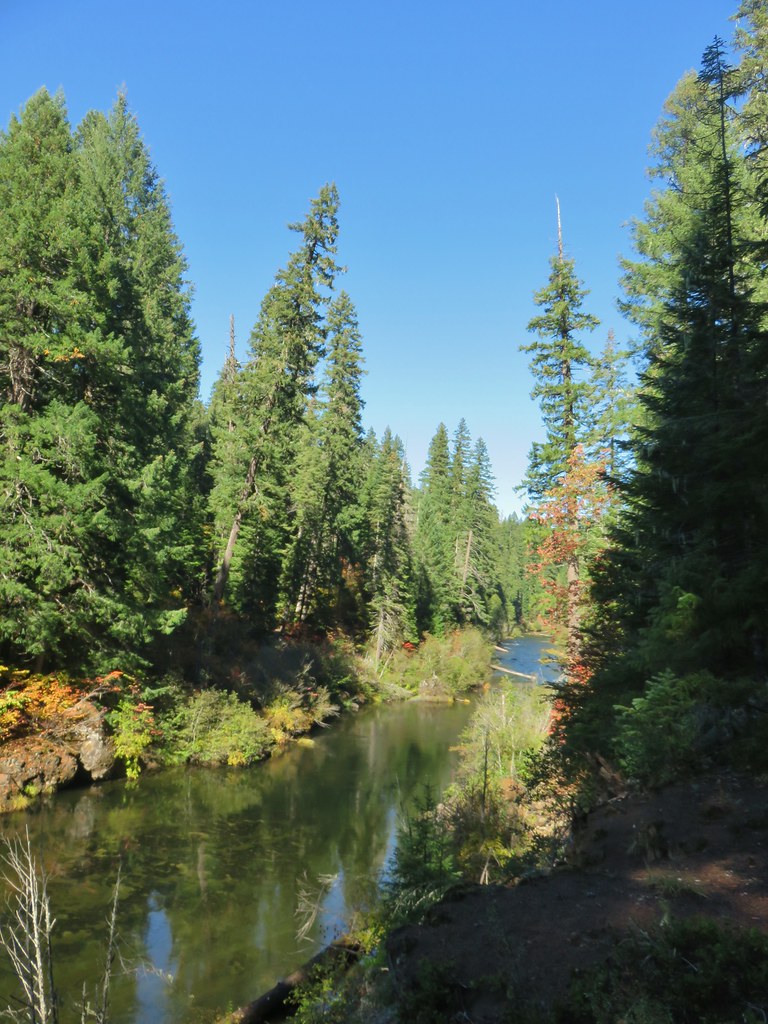
Either end of the gorge could have been turn around points but the Upper Rogue River Trail continues and so did we. From the southern end of Takelma Gorge it was just over two miles to the River Bridge Campground which we planned on making our turn around point. The nearly level trail remained close enough to the river to provide plenty of views.
IMG_7035

IMG_7040

IMG_7042

IMG_7046

Just under a mile from the gorge we passed the Rogue Baptist Camp.
IMG_7048

IMG_7053Ouzel

IMG_7062

IMG_7064River Bridge

We turned around at the campground and headed back.
IMG_7065

It was a beautiful day and somehow the colors and the gorge were even more impressive on the return hike.
IMG_7070

IMG_7073

20201015_123000_HDR

IMG_7082

IMG_7086

IMG_7105

IMG_7113

IMG_7119

IMG_7128

IMG_7130

IMG_7133

IMG_7138

When we got back to Woodruff Bridge we noticed some flagging and signage along the trail that had not been there earlier. Apparently there was a 50k race scheduled for Saturday (10/17). The race was an out and back starting and ending in Union Creek. The fact that the race would be happening Saturday helped us decide that Friday we would be doing the Natural Bridge hike since that would have us on trail following part of the race course.

We drove to Union Creek where we checked into the Union Creek Resort then after getting settled we walked across Highway 62 to get dinner from Beckie’s Cafe. After a thoroughly enjoyable dinner we decided to check out the area behind the cafe which was actually part of our next day’s hike. We managed to get ourselves turned around in the Union Creek Campground and our little after dinner stroll turned into a nearly mile out and back along Union Creek. It had been a nice start to the long weekend and we were looking forward to what the next day had to bring. Happy Trails!

Flickr: National Creek Falls and Takelma Gorge

Categories
Bend/Redmond Central Oregon Hiking Oregon Trip report

Wildcat Canyon (Maston Trail System) – 10/11/2020

A wet weather system arrived with the weekend dropping some much need rain over the wildfires in Oregon and depositing a decent amount of new snow on the Cascades. This was great news and one of the few times that we were more than happy that our original plan was forced to change due to weather. We were going to be in Bend to celebrate the 75th birthday of Heather’s Dad which provided us an opportunity to hike in the rain shadow of the Cascades before heading home Sunday morning. It was a nice celebration and a rare event for all our calendars to align and be together.

Having finished all 100 featured hikes (post) in William L. Sullivan’s “100 Hikes/Travel Guide Central Oregon Cascades” (4th edition) we turned to his 5th edition of the book and decided to check out Wildcat Canyon (Hike #36). Wildcat Canyon is part of the Bureau of Land Management’s Maston Trail System, a 4,000 acre mixed use network of trails for hikers, bikers, and equestrians. It also happens to be located in my old stomping grounds near Tumalo, OR. The Maston Trailhead (see previous link) is less than 10 driving miles from the my parent’s old house between Bend and Redmond and just over 5 miles from my former elementary school. Way back then the Maston Trail System didn’t exist but I had spent time exploring the Deschutes River Canyon near that area, closer to Eagle Crest Resort, so I was excited to check the trail system out.

We were the second car at the Maston Trailhead that morning.
Sunrise at the Maston Trailhead

Maston TrailheadCline Buttes from the Maston Trailhead.

It was a crisp morning with a bit of frost on the ground, the kind of morning that reminded me of a high school job I had moving irrigation pipes at a nearby farm. We set off through the equestrian parking area and passed through an open fence by a trail map.
Equestrain trail at the Maston Trailhead

Maston Trailhead map

This was the Settlement Trail (an equestrian/hiker only trail), named for the settlers who had cleared the land and began constructing farms in the early 1900’s in preparation of the arrival of irrigation water. The water never came and by the 1930’s the farms had been abandoned.
Interpretive sign at the Maston TrailheadInterpretive sign at the Maston Trailhead telling the story of the settlers.

Old foundations along the Settlement TrailStone foundation of one of the abandoned buildings along the Settlement Trail.

We followed the Settlement Trail by staying right at junctions for the first 1.5 miles.
Settlement Trail

Settlement TrailTypical sign at a junction. Not all of the junctions had signs and not all of the signs identified which trail/junction it was so having a copy of the trail system map is a really good idea.

There were a lot of different birds about but most wouldn’t stay still long enough for a picture and those that did perched at the top of junipers distant enough to make identifying them even with a 30x zoom a bit difficult.
Songbird atop a juniperThis one may be a sparrow of some sort, it was signing quite a bit.

Bird atop a juniperPossibly another sparrow or a finch or something else.

Bluebird atop a treeMaybe a bluebird?

We took a wrong turn at a junction just over a half mile from the trailhead. We had been expecting to see the Wildcat Canyon Trailhead to our right which our guidebook indicated we should go down to, so when we spotted a signboard along a road less then a tenth of a mile to our right we headed for it. When we got to the little pullout at the road we double checked the map and realized that we had turned right too early so we turned around and returned to the junction. We turned right again and continued on the Settlement Trail another quarter of a mile to the actual Wildcat Canyon Trailhead.
Wildcat Canyon Parking from the Settlement TrailWildcat Canyon Trailhead off to the right.

We spotted the only non-bird wildlife of the day near this trailhead when a rabbit raced out of the sagebrush and paused briefly on the other side of a juniper.
Out of focus rabbit behind the juniperI managed to snap one photo and of course the camera focused on said juniper instead of the rabbit beyond.

We stayed straight at the trailhead on the Settlement Trail which was now almost directly next to the Rockbar Trail (a mountain bike trail). The Settlement Trail quickly arrived on the basalt cliffs above the Deschutes River Canyon.
Deschutes River and Wildcat CanyonWildcat Canyon on the right joining the Deschutes River Canyon

Deschutes RiverThe Deschutes River near where the canyons meet.

Deschutes RiverGrizzly Mountain in the distance beyond the Deschutes River.

The trail turned north along the canyon rim which we followed for half a mile, switching to the Rockbar Trail when the equestrian trail crossed over it.
Deschutes RiverAnother of several viewpoints along the rim.

Deschutes RiverSome Fall color along the Deschutes River.

Rock doveRock dove

Deschutes River CanyonA viewpoint along the Rockbar Trail.

Deschutes River

Deschutes RiverLooking south up the river canyon.

Deschutes RiverA calm pool along the Deschutes.

Stellar's jayI could see this one, a Stellar’s jay.

Shortly after the Rockbar Trail turned away from the canyon it crossed a private road.
Rockbar TrailComing up to the road.

We followed Sullivan’s instructions and jogged left 100′ picking up the equestrian trail again.
An equestrian continuing on the far side of Necomb Road

We turned uphill on the equestrian trail to a junction with the Headgate Trail, another mountain bike trail, in just 100 yards.
Headgate Trail

We turned left following this single track through the juniper and sagebrush for approximately 2 miles ignoring side trails along the way.
Headgate Trail

Headgate TrailThis was Junction 2 (one of the junctions with an identifying sign). We stayed right on the Headgate Trail here.

At a slightly higher elevation than the Settlement Trail the Headgate Trail would have provided a fairly nice view of the Cascades but on this day they were mostly shrouded in clouds although we could see fresh snow on Tam McArthur Rim (post) and on the lowest portion of the South and North Sisters.
View from the Headgate TrailTam McArthur Rim is left center with South Sister in the center and North Sister to the right center.

We turned down what we believe on the map to be the Maston Tie Trail (it was unmarked) and followed it for a quarter of mile back to the beginning of the Settlement Trail at the Maston Trailhead.
Maston Tie TrailHeather and Dominique on the Maston Trail.

Maston Tie Trail comging back to the Maston TrailheadComing up on the Settlement Trail.

This wound up being a nice loop, just under 5 miles, with minimal elevation gain (200′ or so). The network of trails provides options for both shorter and longer loops too with multiple starting points available. We hope to come back again in the Spring some year to check out more of the area and see what it looks like during a different season. Until then this was a great introduction to the area. Happy Trails!

Flickr: Wildcat Canyon