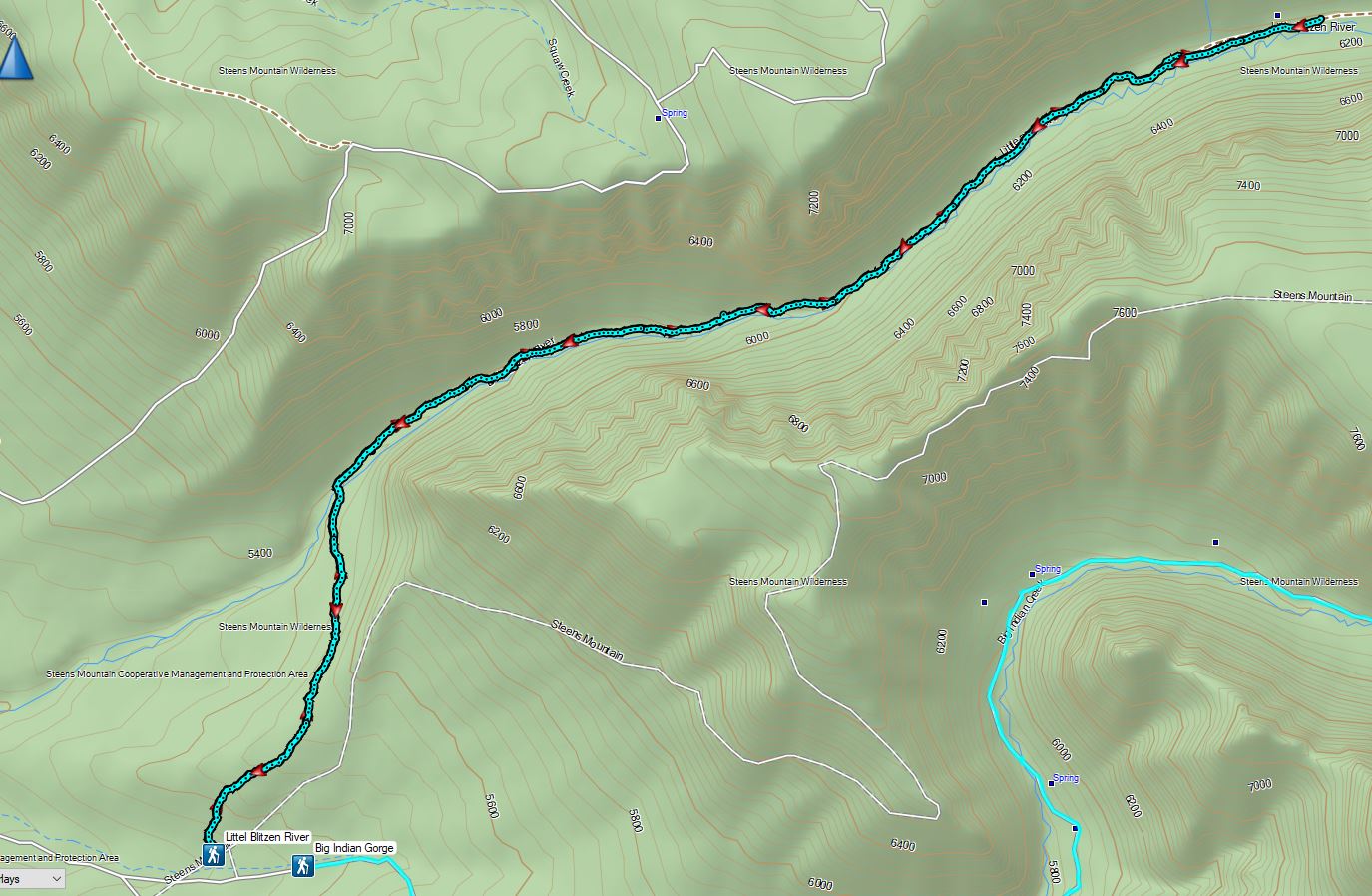
After three nights at the Steens Mountain Resort it was time to move on. Our plan for Thursday was to make two stops for hikes along the Little Blitzen River then continue driving south to Fields Station where we’d spend the night before hiking the Pueblo Mountains on Friday then making the long drive back to Salem. We started our morning at the Little Blitzen Trailhead located along the Steens Mountain Loop Road at South Steens Campground.
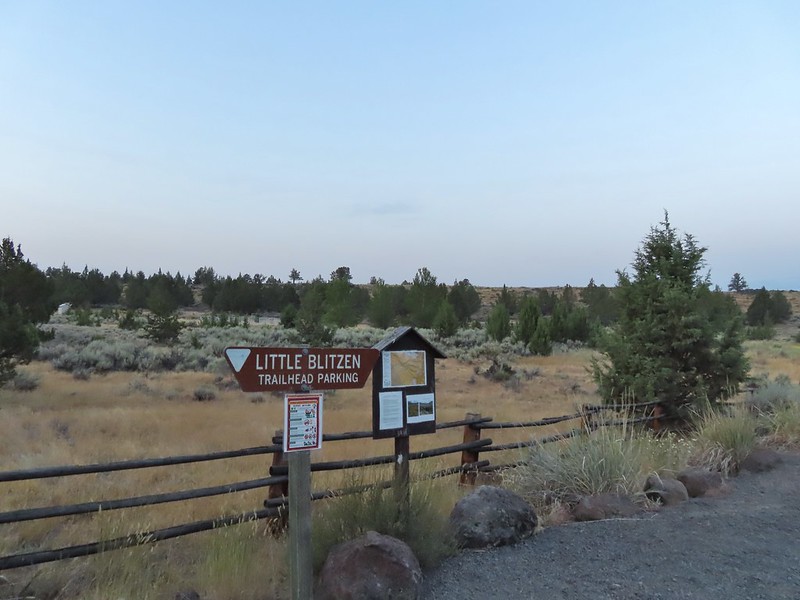
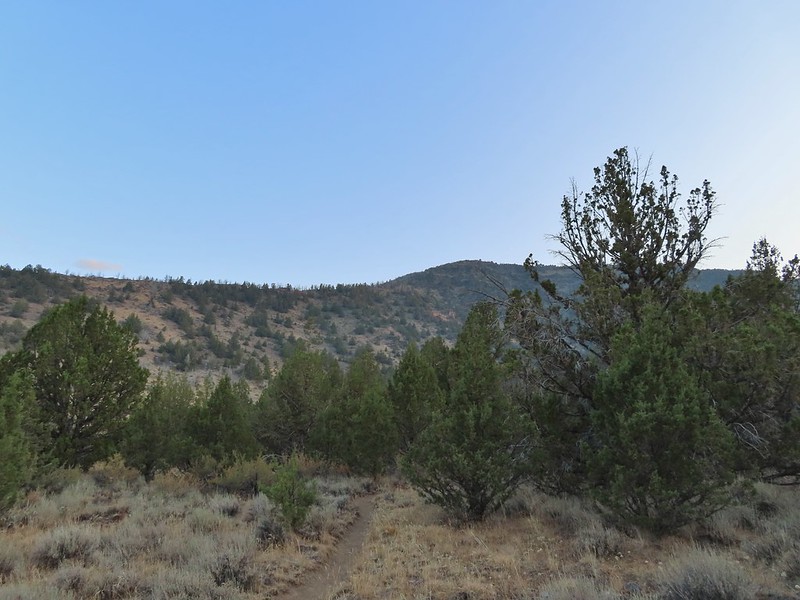
The trail begins on the far side of the road and similar to the Big Indian Gorge Trail begins in a landscape of juniper and sagebrush.


It was a much clearer morning than it had been when we hiked Big Indian Gorge on Tuesday.
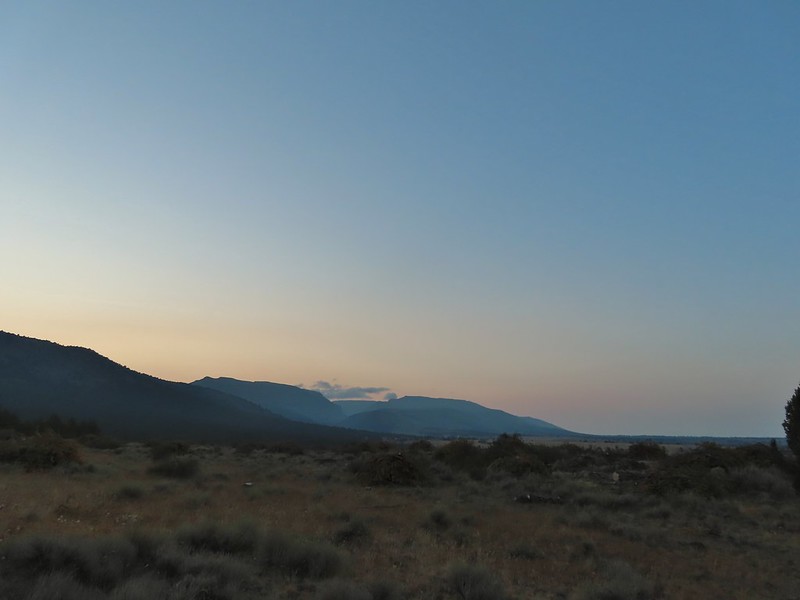 Big and Little Indian Gorges from the Little Blitzen Trail.
 Heading for the Little Blitzen Gorge.
 So many dried out wild onions.
The trail descended to the lone ford of the Little Blitzen River at the 1.4 mile mark which we crossed easily on rocks.

On the far side of the river was a sign for several trails. The Nye and Wet Blanket Trail led up out of the gorge further up the Little Blitzen Trail while the Fred Riddle Trail was barely visible along the grassy hillside leading off toward Cold Springs Road and the Riddle Ranch.

We followed the Little Blitzen Trail through a grassy meadow and into a much narrower gorge than Big Indian Gorge.

It was nice to not have any haze limiting our view of the rocky walls.
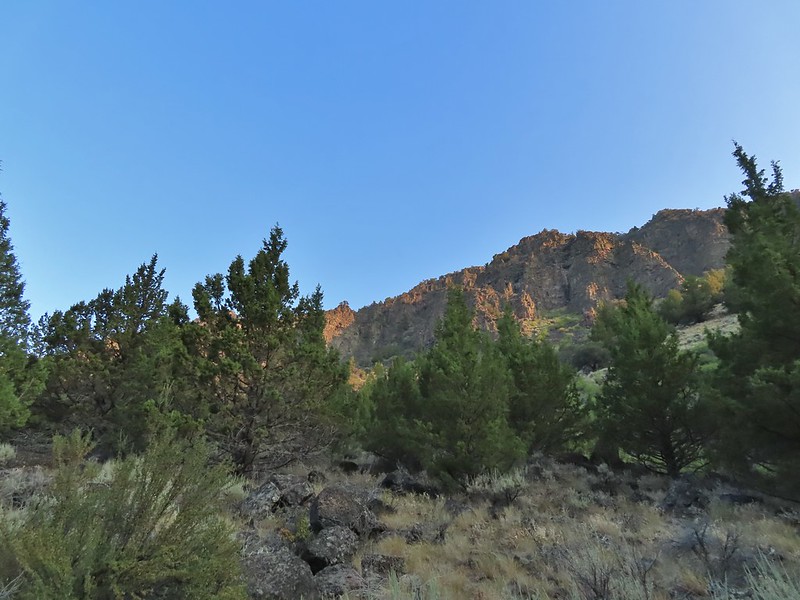

Speaking of rocks there were quite a few larger boulders along this trail.
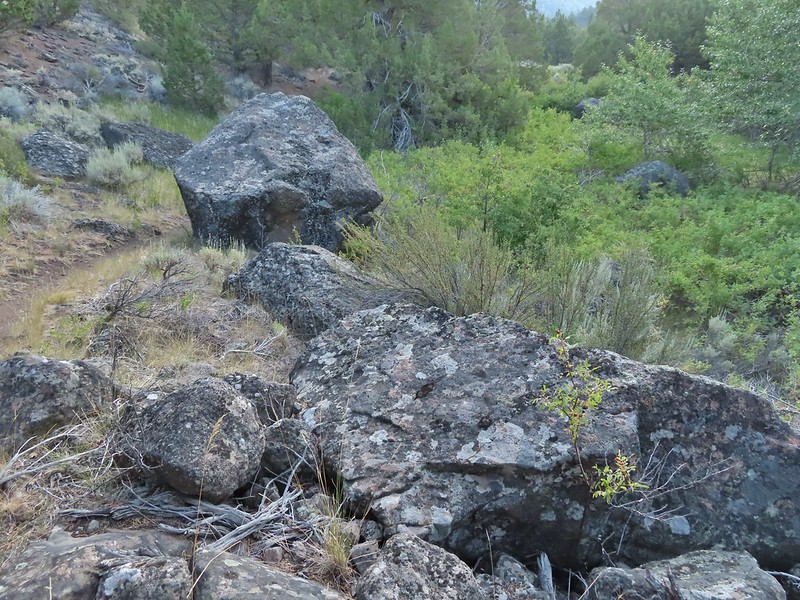

There were also boulders present in the river which created some nice cascades.


Our plan had been to turn around at 4-mile camp, approximately 4.5 miles from the trailhead or 3 miles beyond the ford. We took our time admiring the scenery along the way.


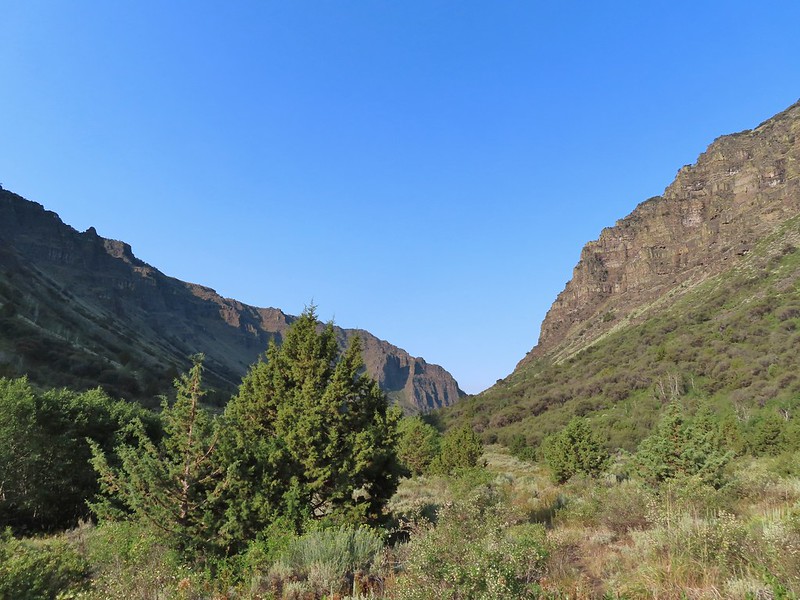 Looking back the way we’d come.
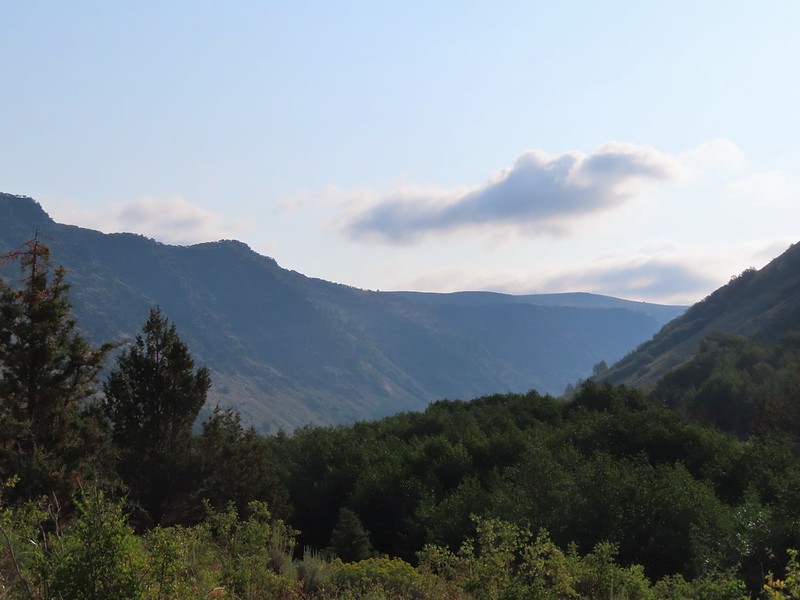 The view ahead.
 A stand of quacking aspen.
 Something to avoid.
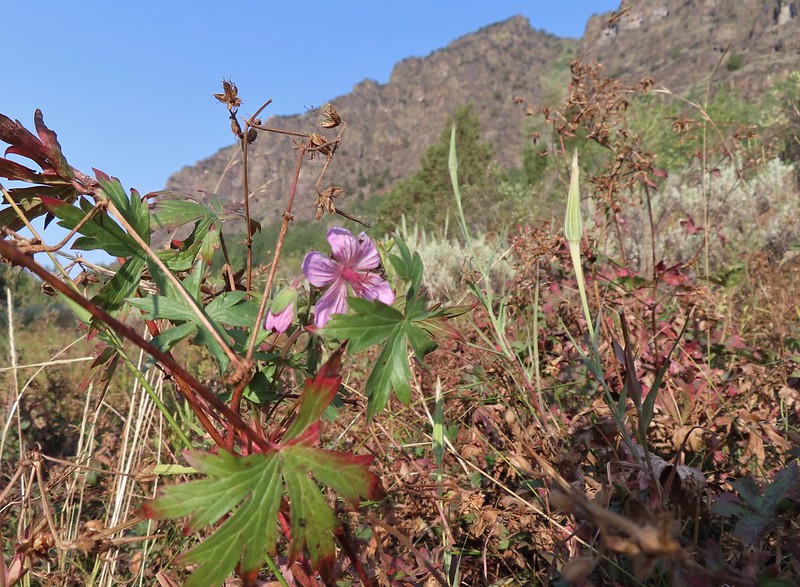 A geranium blossom.
 Passing through some willows.
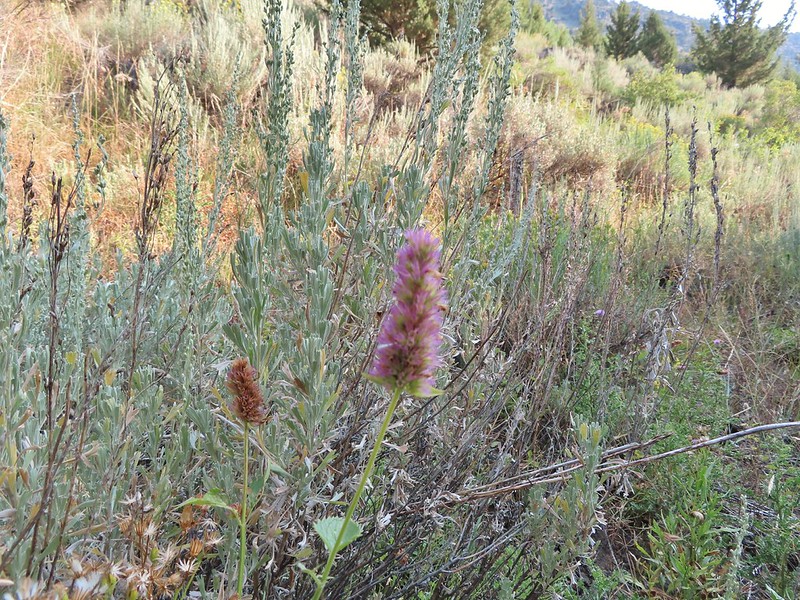 Hyssop
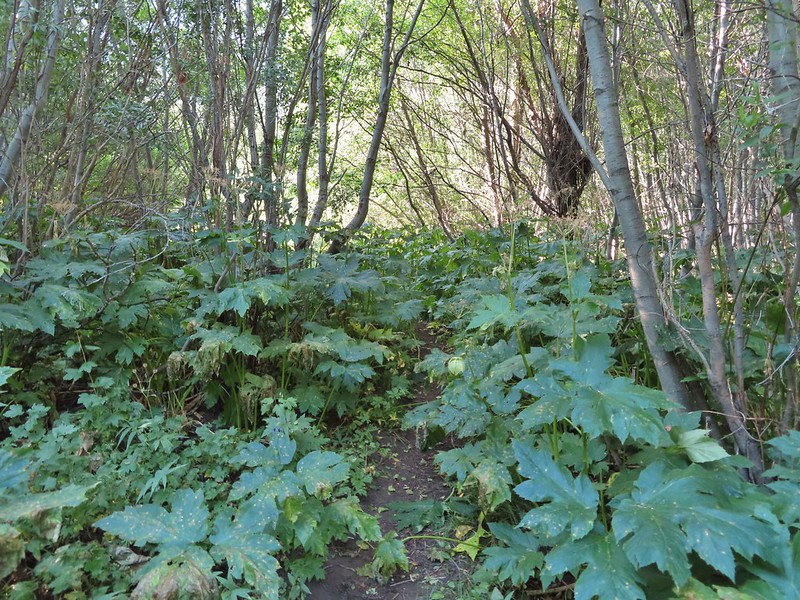 Vegetation along a spring fed creek.
 Monkshood

We hadn’t paid enough attention to Sullivan’s hike description so we didn’t realize when we passed the remains of an old corral that was Four Mile Camp.
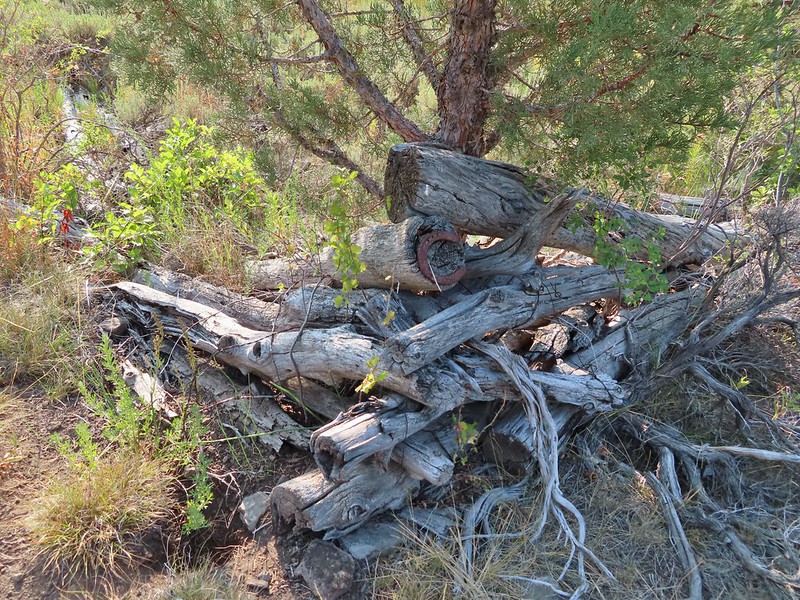
In our defense there were no obvious camp sites in this area, just a grassy area inside the corral remains. We had passed an obvious campsite about a mile earlier, too soon to be Four Mile Camp. We continued a half mile beyond the corral remains before deciding we had missed the camp and then we read the hike description again where Sullivan mentioned the corral.
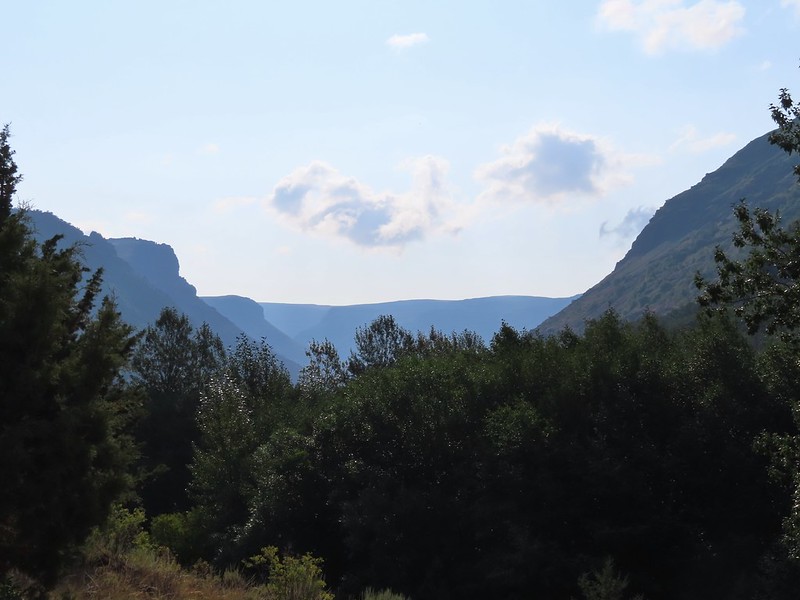 The view ahead where we turned around.
 A robin
 Heading back

 The Little Blitzen River near Four Mile Camp
 More of the old corral.
 Gentians under a willow.
 Paintbrush
 Another little cascade along the river.
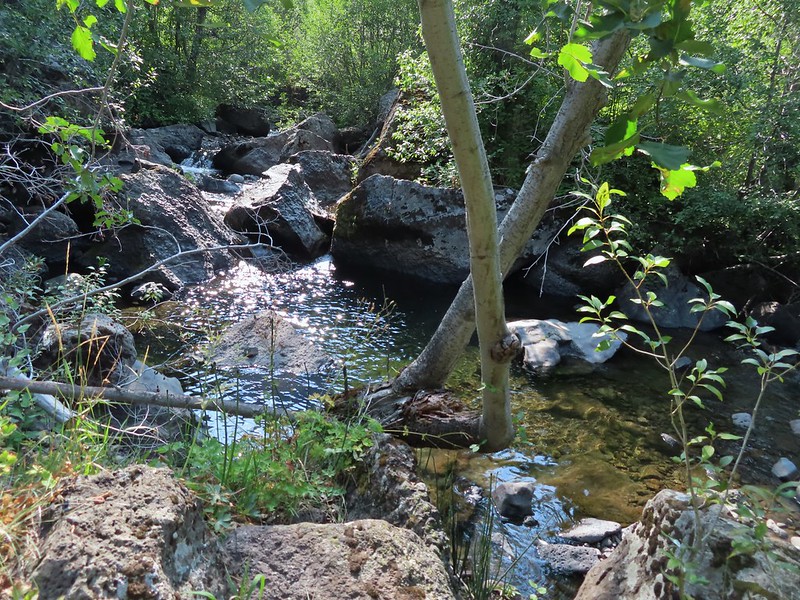 A nice pool.
 There were a number of tiny grey birds in here, at least two in this photo.
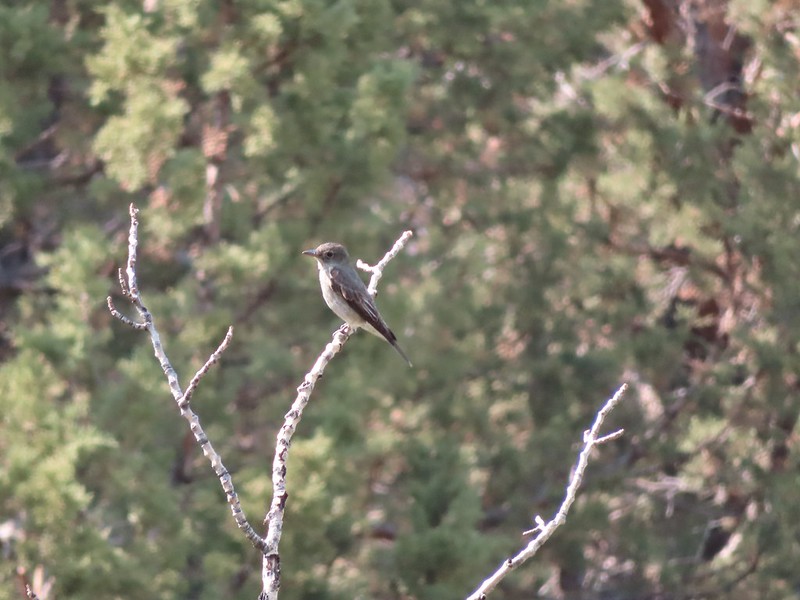 A bigger bird, but not by a lot.

 A wood nymph
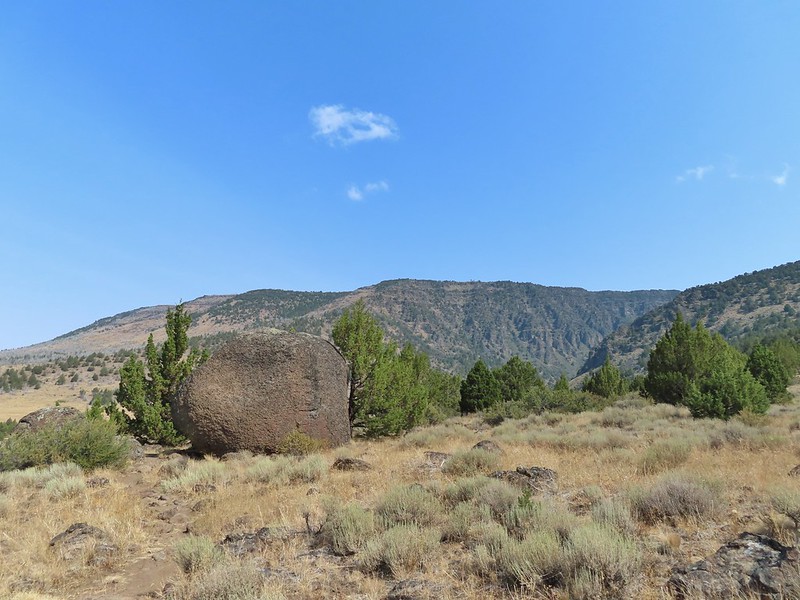 This was a huge boulder along the trail. At least two small junipers were growing out of it.
Having overshot Four Mile Camp our hike came in just under 10 miles round trip with about 900′ of elevation gain.
From the trailhead we drove back along Steens Mountain Loop Road a quarter mile and turned right on a narrow gravel road (signed from the other direction for the Riddle Brothers Ranch). We did this hike second because a gate 1.3 miles up the road doesn’t open until 9am.

From the gate Ben Riddle’s restored cabin and his original stone house were visible on the hillside across the Little Blitzen River.
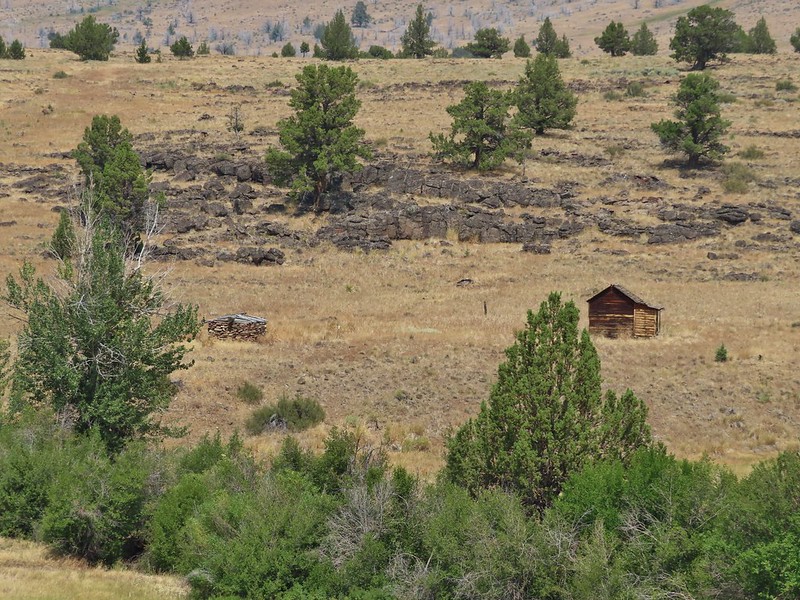
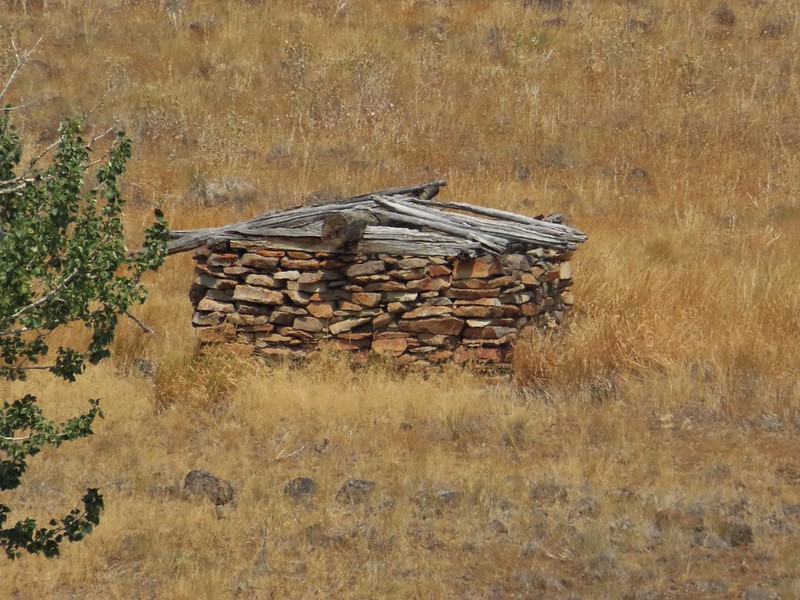 The stone house is too low to even stand up in but it was enough to stake a claim to the land.
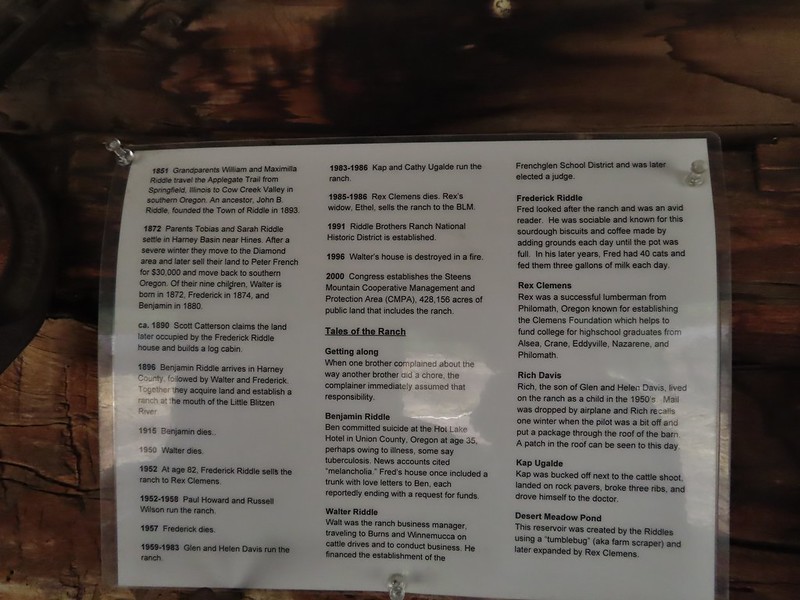
The road continues 1.3 more miles beyond the gate to the Riddle Brothers Ranch. Now a National Historic District the ranch was established in the early 1900s by brother Walter, Fredrick and Ben Riddle. We were met by the volunteer caretaker who gave us a tour and history of the ranch before we set off on the 1.5 mile Levi Brinkley Trail which follows the Little Blitzen River from the parking lot to its confluence with the Donner und Blitzen River (post).
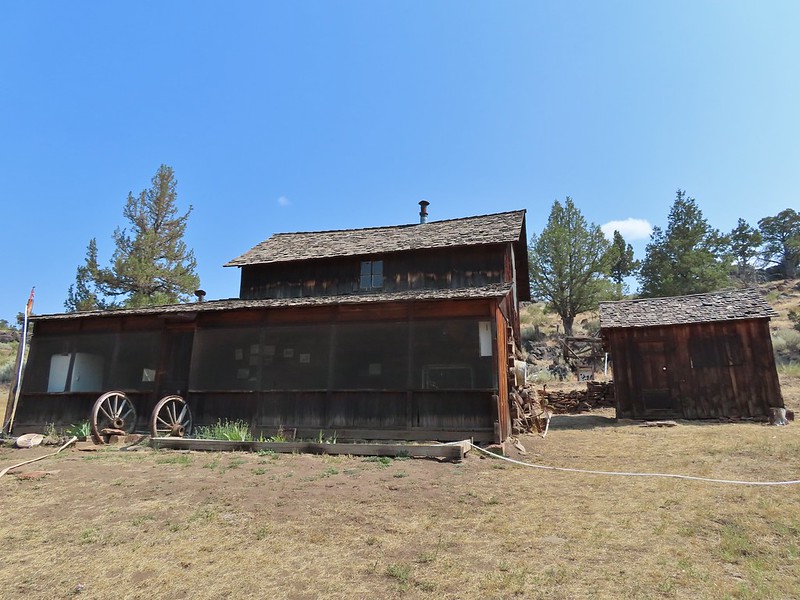


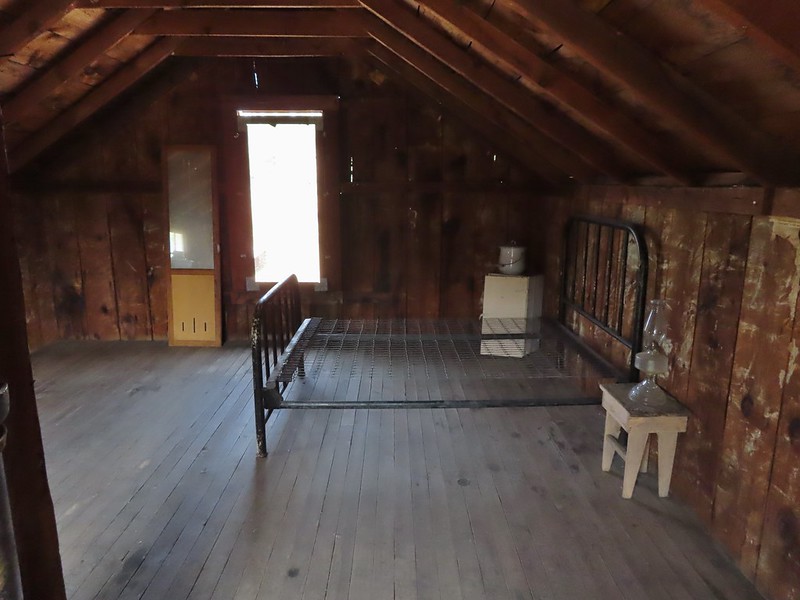 Upstairs

<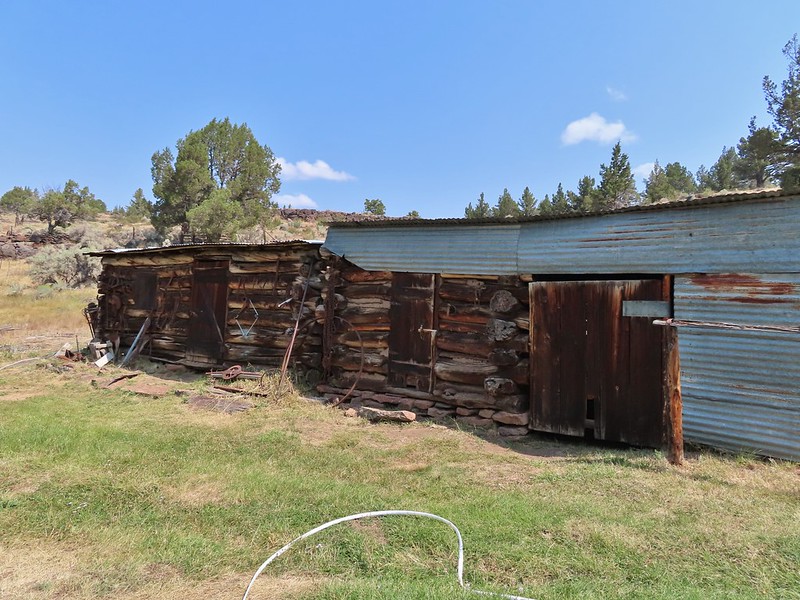
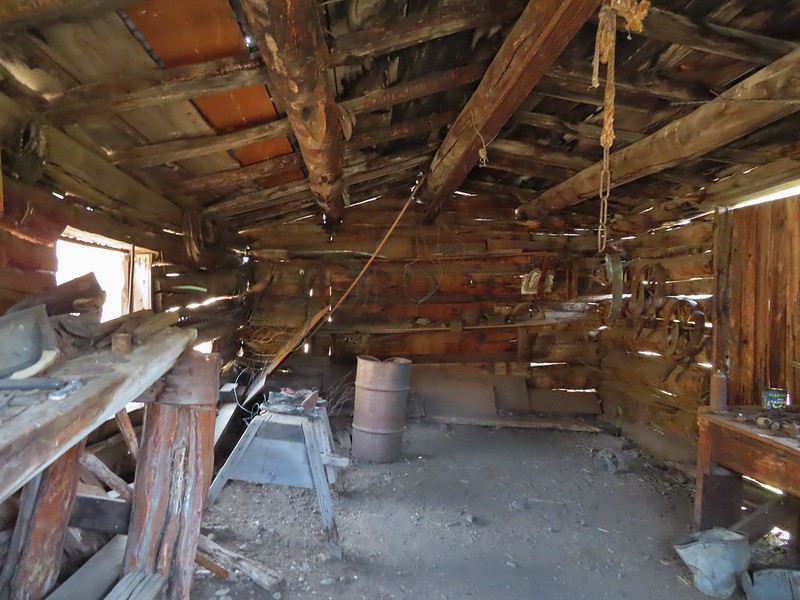
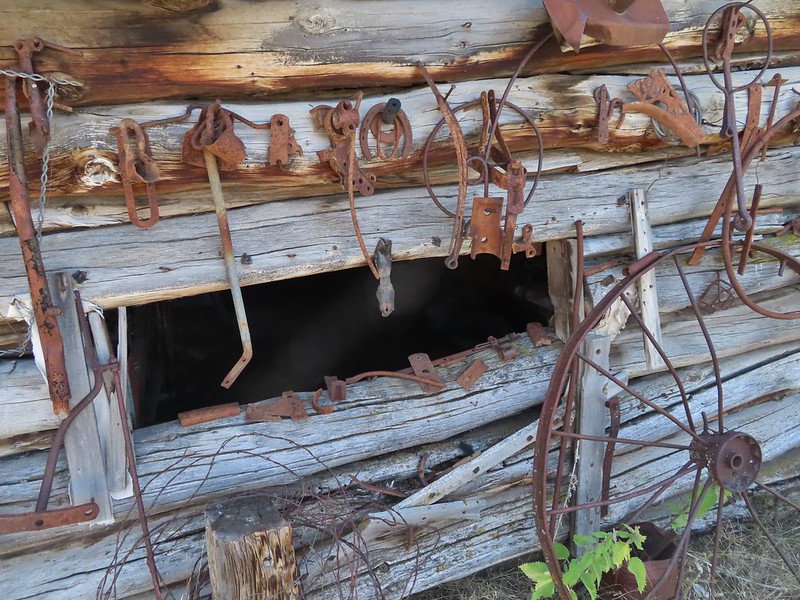
 The barn

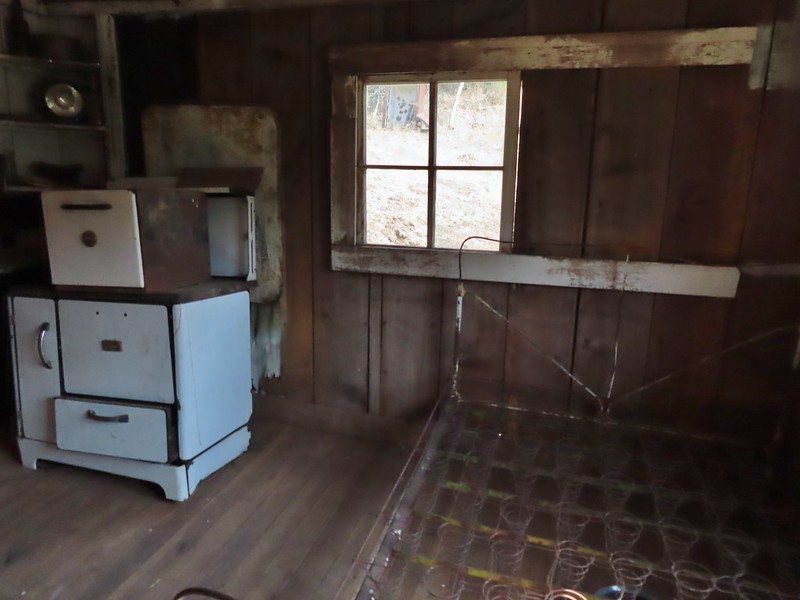 Inside the Bunkhouse
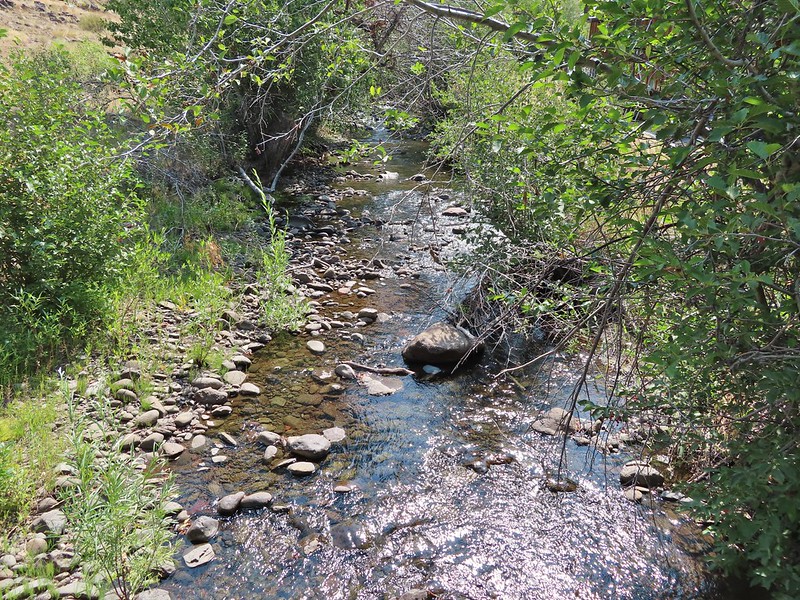
After touring the ranch we walked back across the Little Blitzen River to the other side of the parking lot where the Levi Brinkley Trail began.
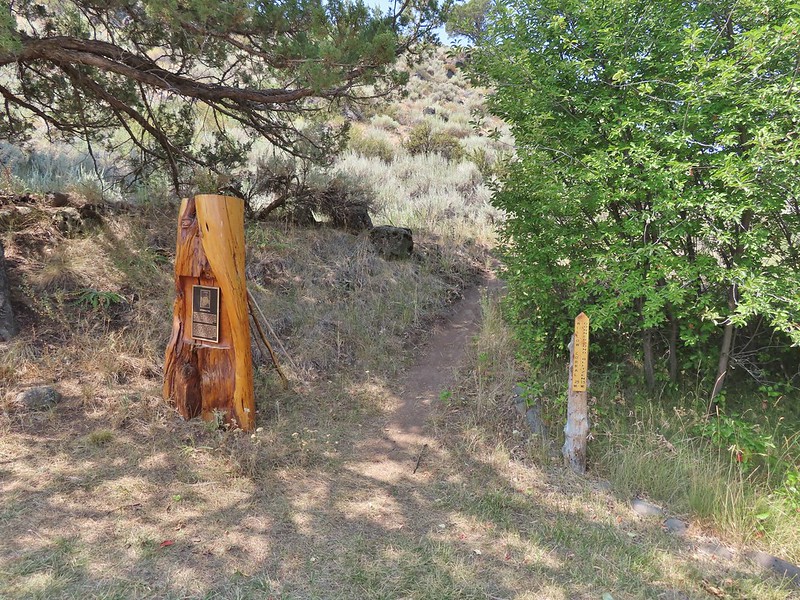 Levi was one of 9 Prinveille Hotshot firefighters who perished on Storm King Mountain in Colorado fighting the South Canyon Fire. This hit home for me having gone to school with one of the 9, Bonnie Holtby.
The trail set off along the river passing an old willow corral after a quarter mile.
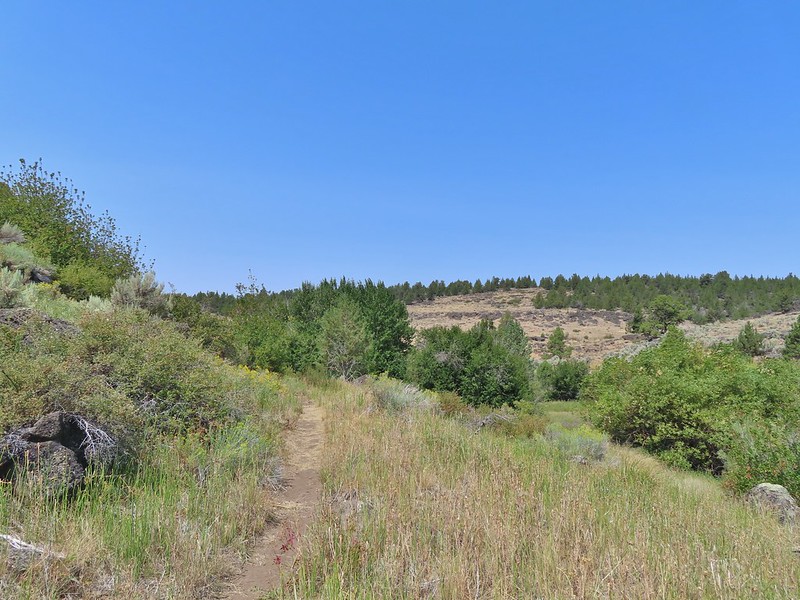
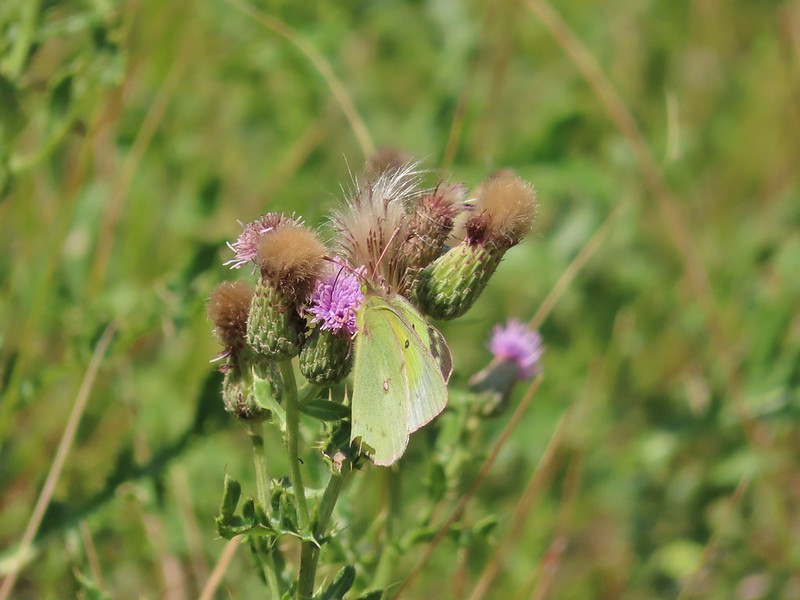
 Thistle in a field once used for hay production by the Riddles.
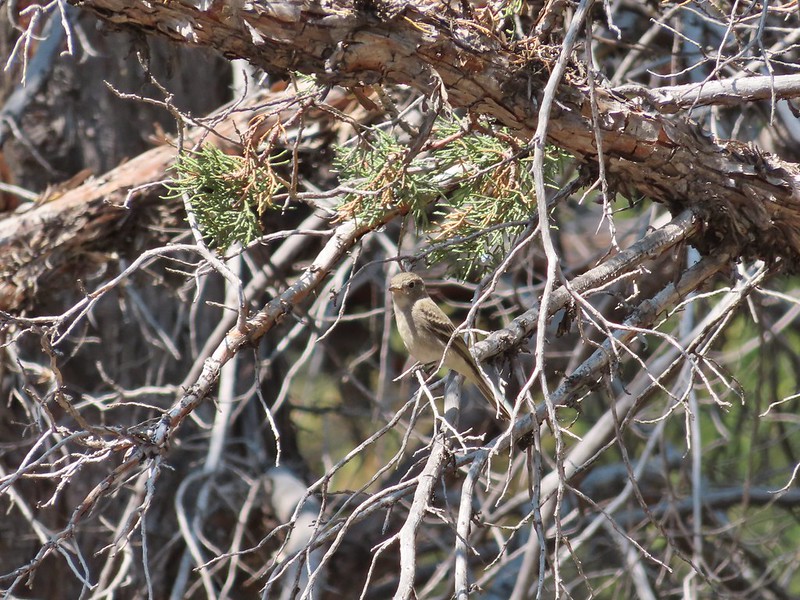
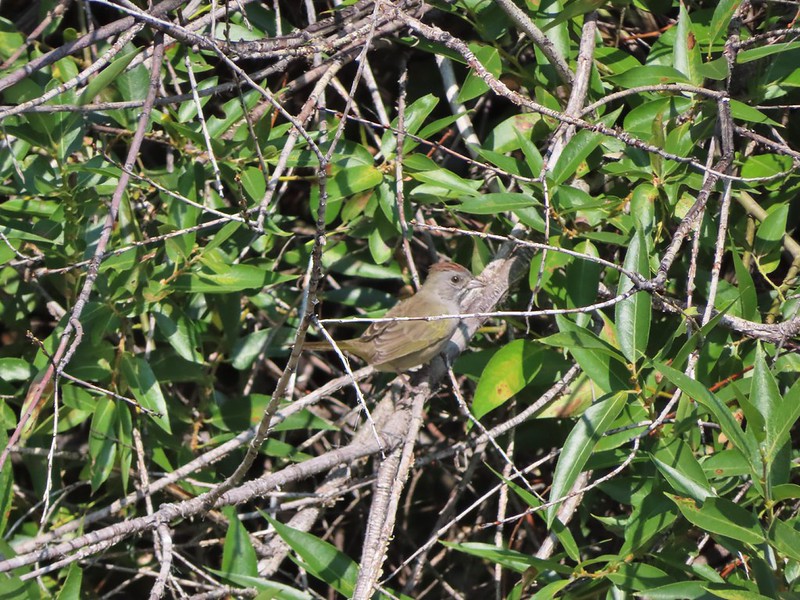 Could be a green-tailed towhee


Beyond the corral the trail made a series of ups and downs passing through several flat areas the Riddles once irrigated for hay.
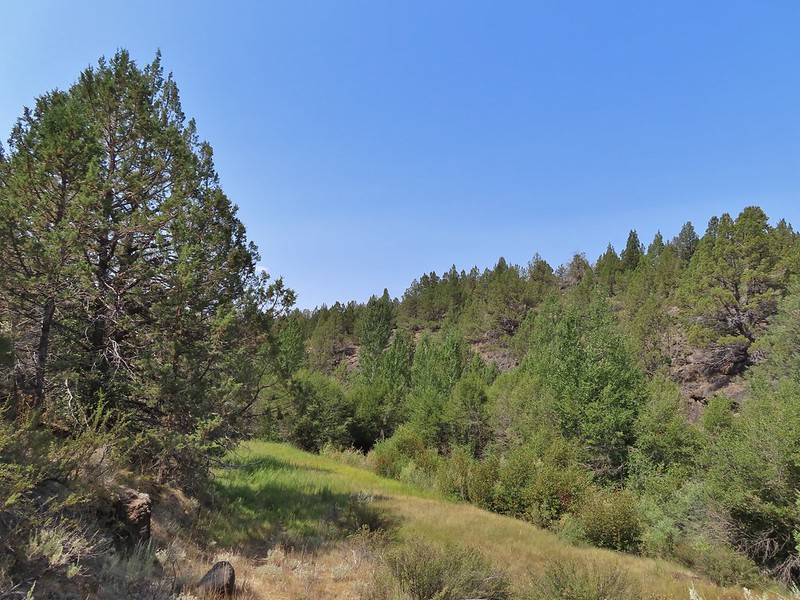
 Lots of butterflies in the grassy areas.
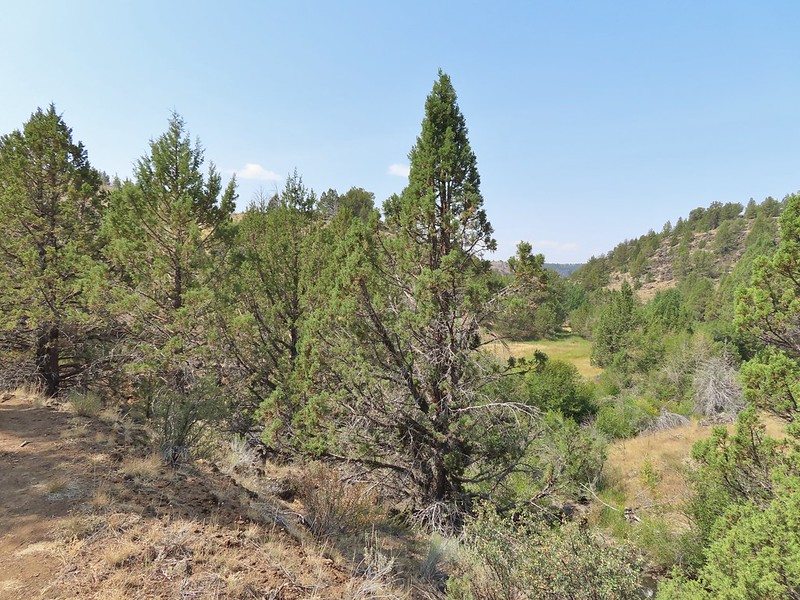



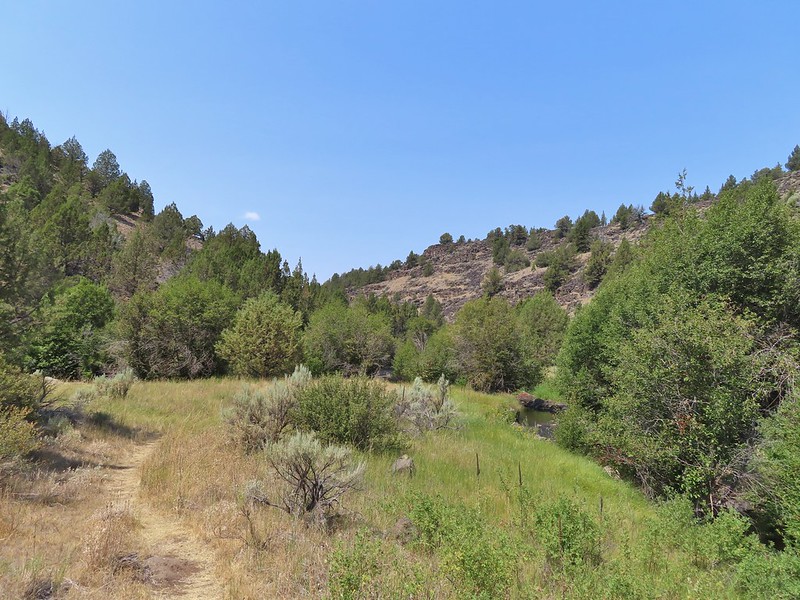 Nearing the confluence.
 The confluence of the Donner und Blitzen River (left) and Little Blitzen River (right).
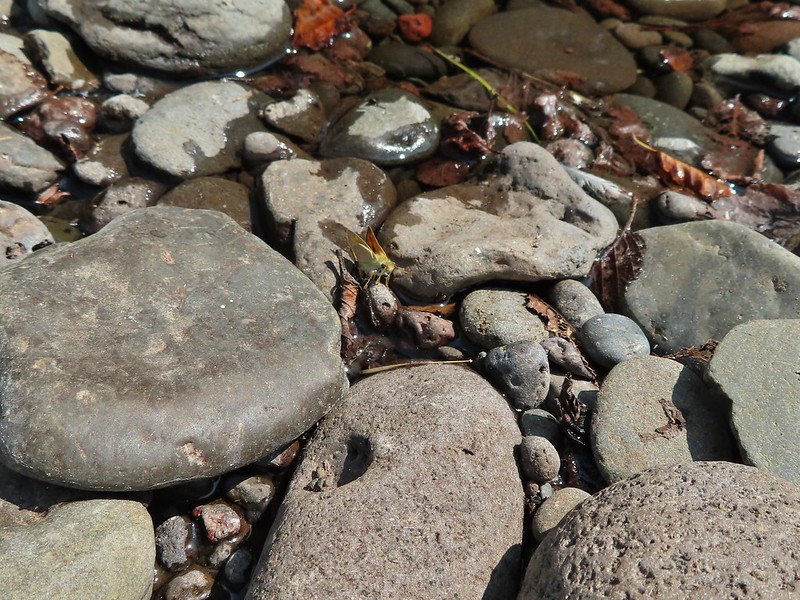 A skipper at the confluence.
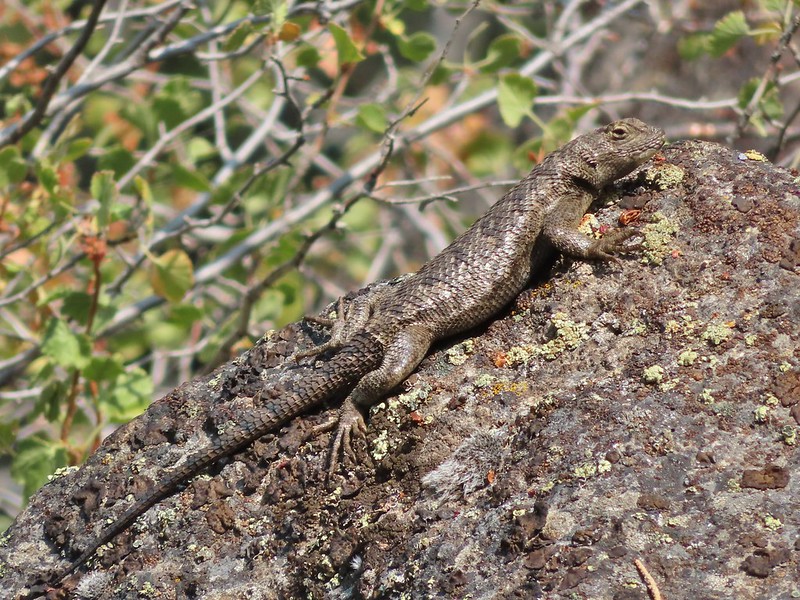
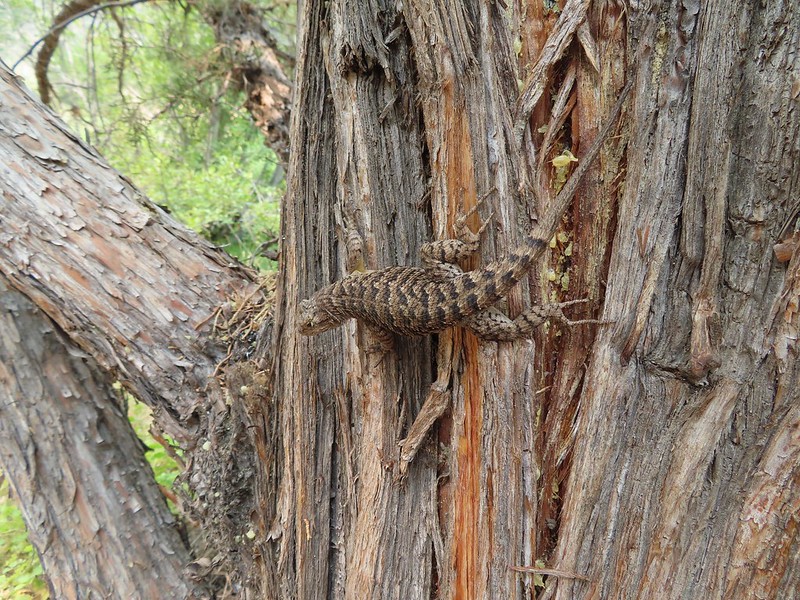
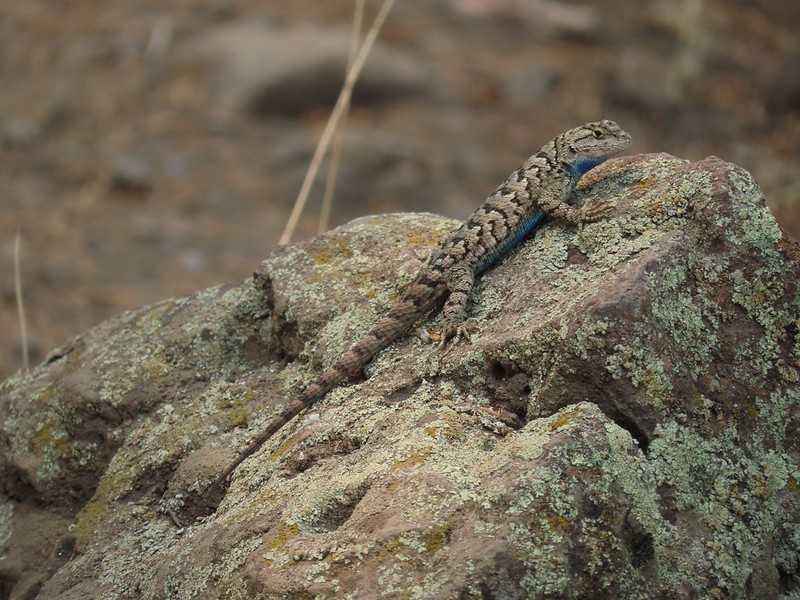
We returned the way we’d come, keeping an eye out for snakes but the only reptile we spotted was a western fence lizard.
 A ringlet
 The mouth of Big Indian Gorge from the Levi Brinkley Trail.
After completing the three mile hike here we drove back to Highway 205 and headed south (left) to Fields where we checked into our accommodations for the night at Fields Station then ordered bacon cheeseburgers and milkshakes from the cafe. Heather got a chocolate, marshmallow, butterscotch combination and I froze at the wide variety of flavors and just got a butterscotch (it was good though).
 Old wagon at Fields Station.
In the morning we’d be heading just a little further south into the Pueblo Mountains and then home. Happy Trails!
Flickr: Little Blitzen River


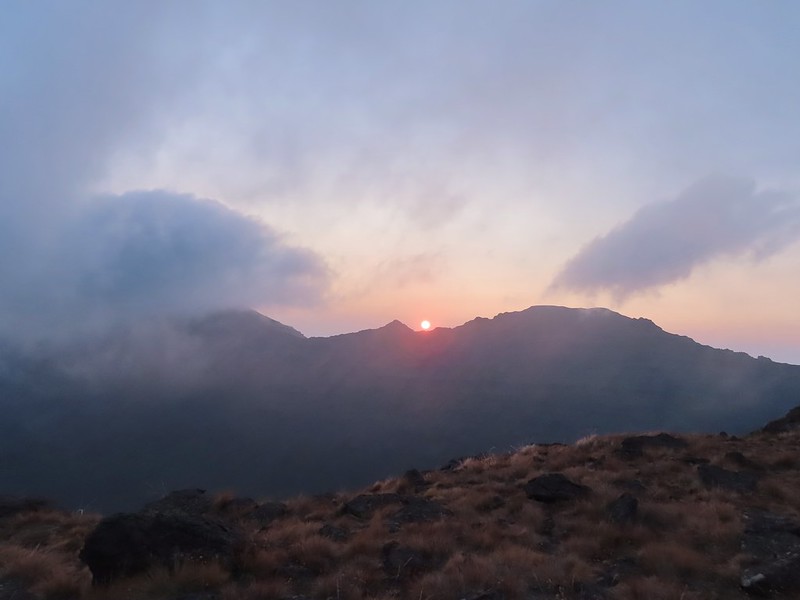 Still some smoke to the east as shown by the red Sun.
 Here come the clouds.

 Between the Sun and haze it was hard to see much of the ragged eastern side of Steens Mountain or the Alvord Desert (
 Frozen thistle
 The Alvord Desert through the haze.
 A look back at the parking area.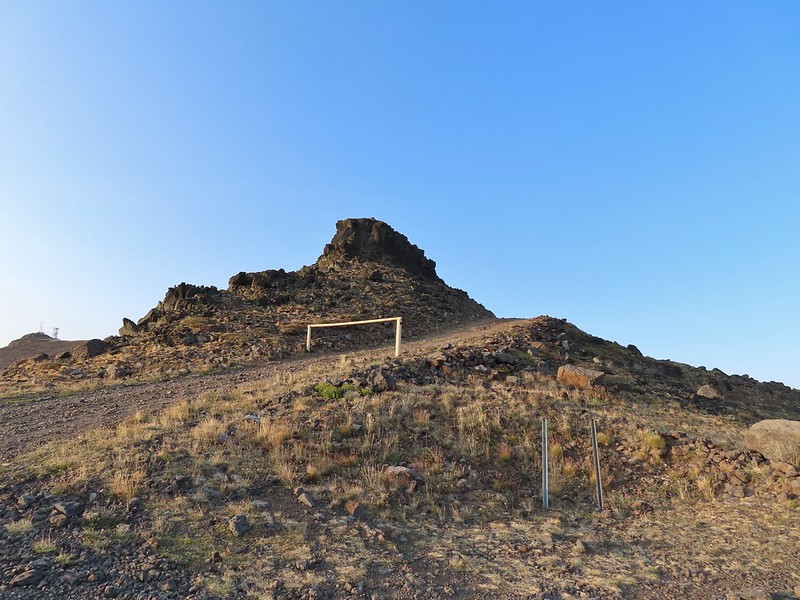
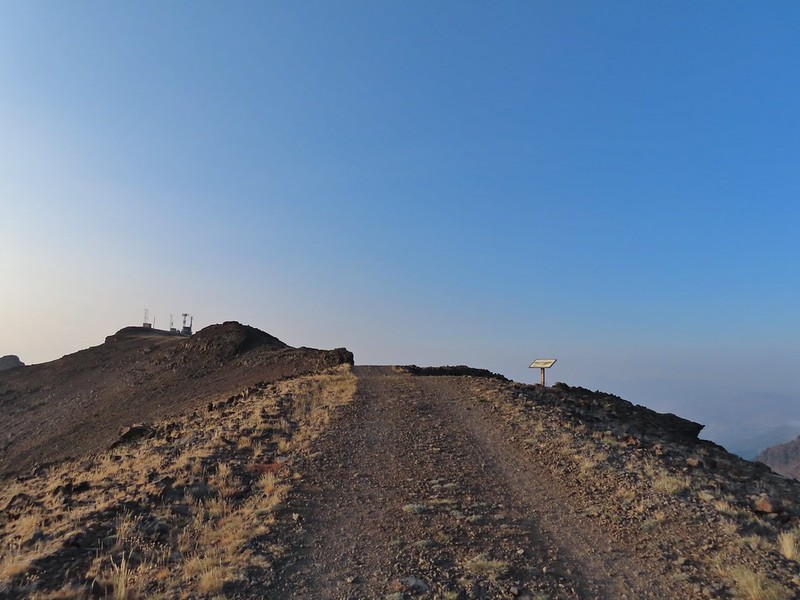
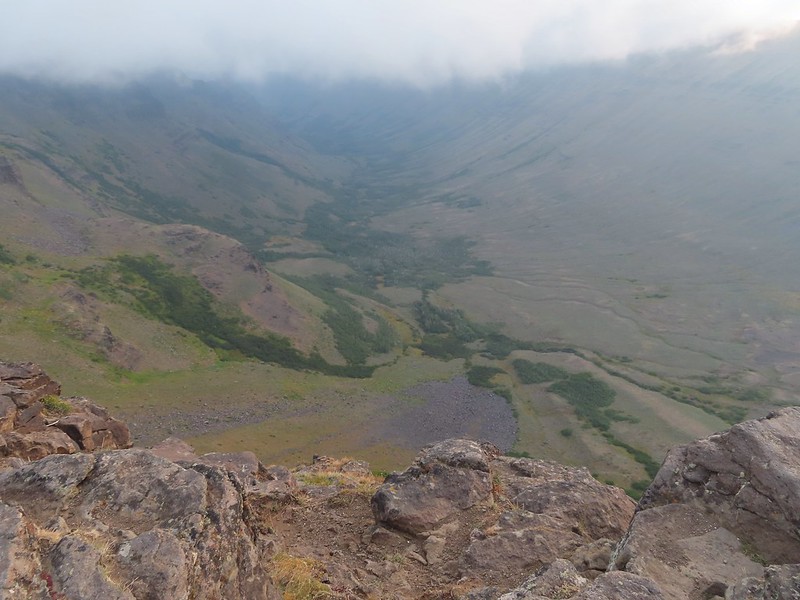
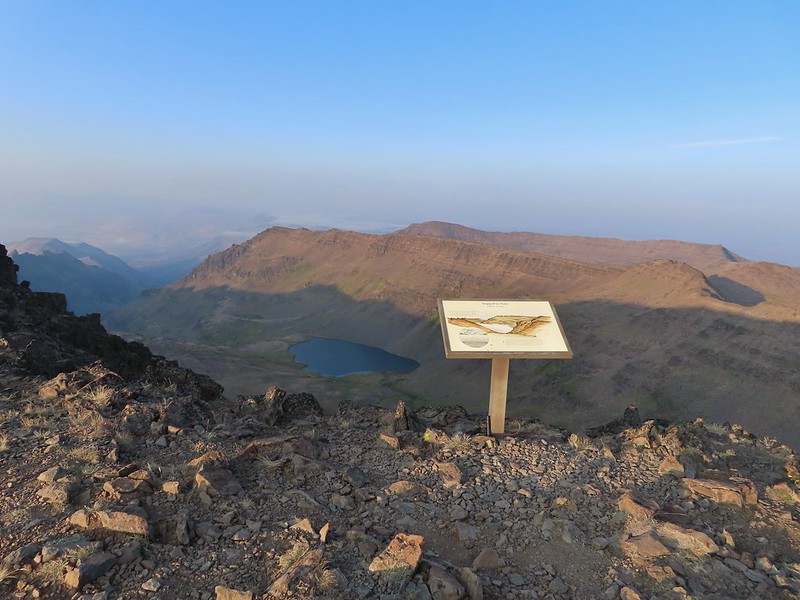 Wildhorse Lake below the summit.
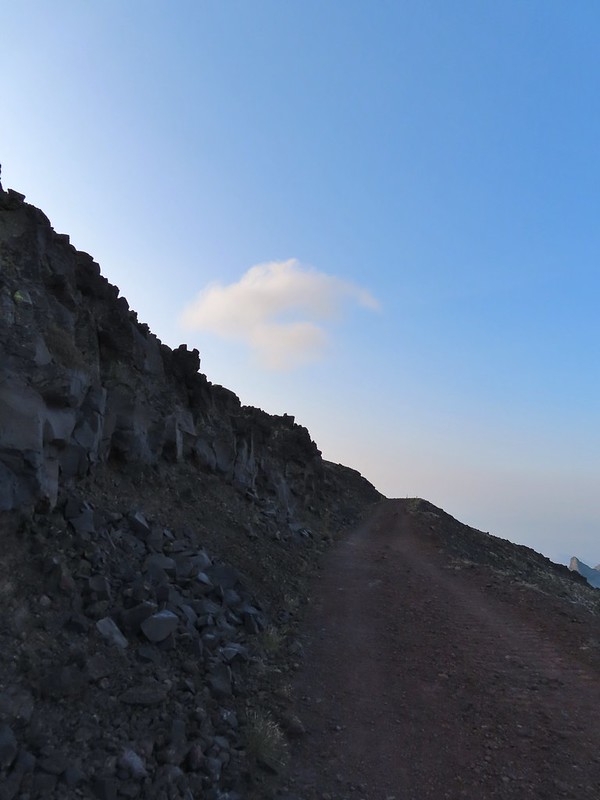 The rocks here provided a little protection from the freezing wind.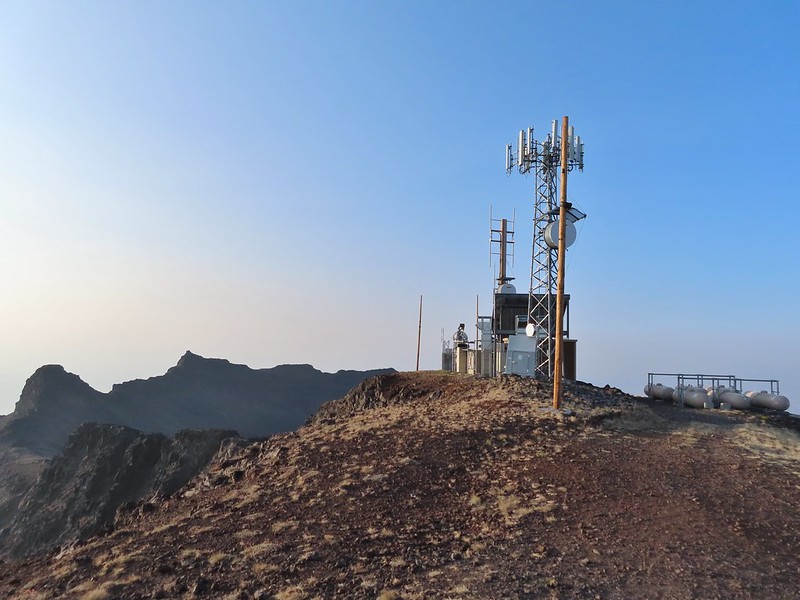
 Big Indian Gorge (
 Heather getting a closer look at Wildhorse Lake.
 Not much snow left up here.
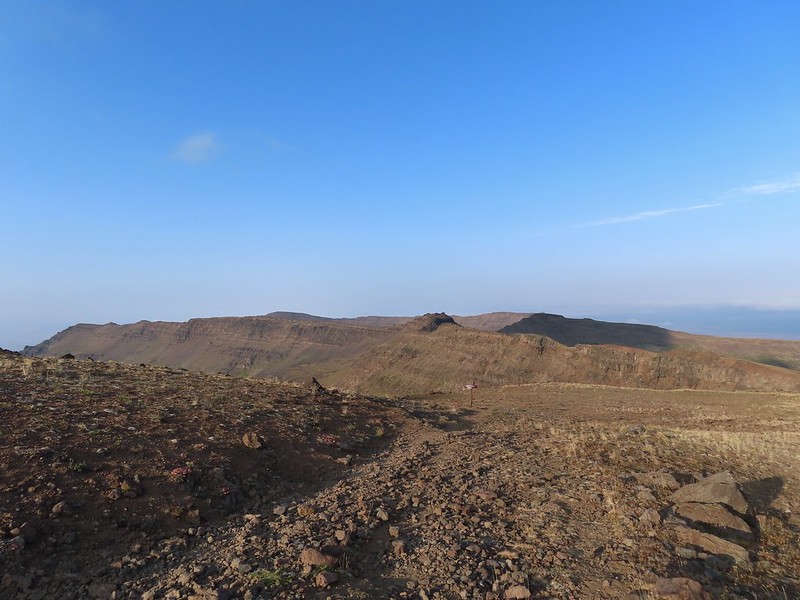

 Typical tread near the top.
 Buckwheat
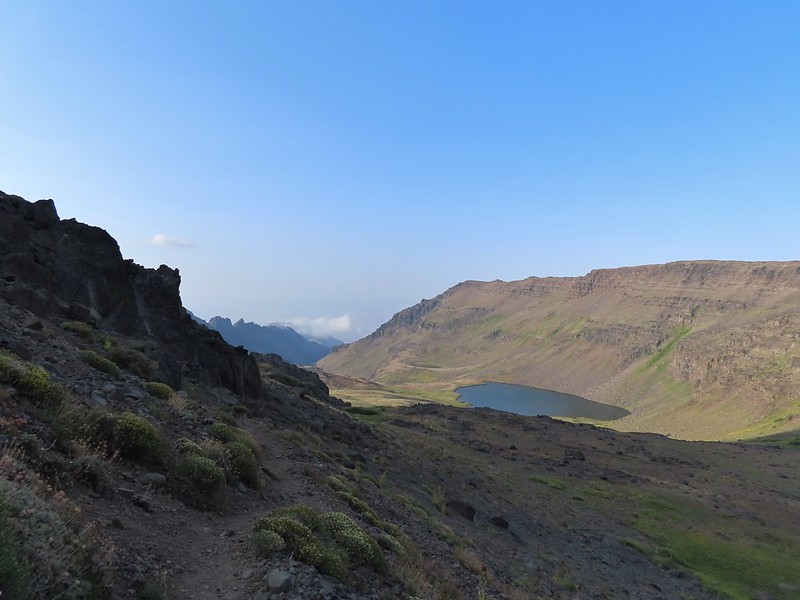 The bench.
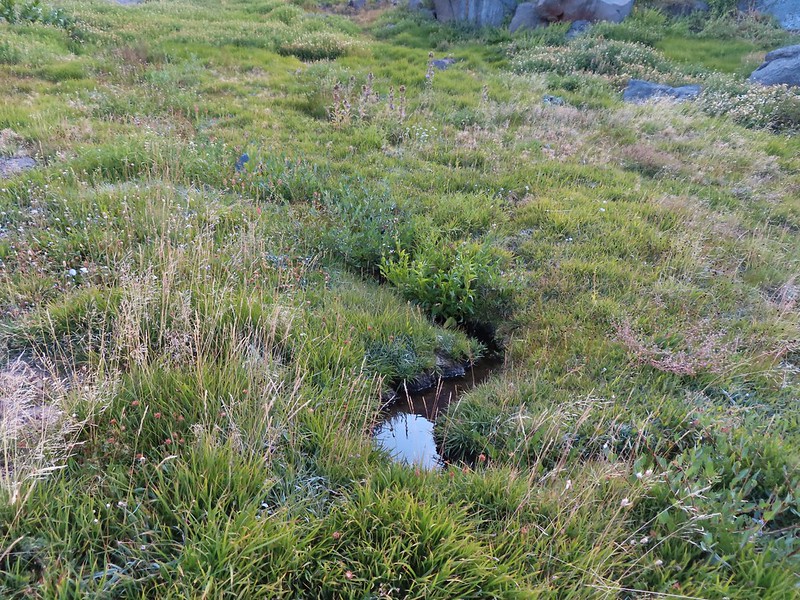 The small stream.
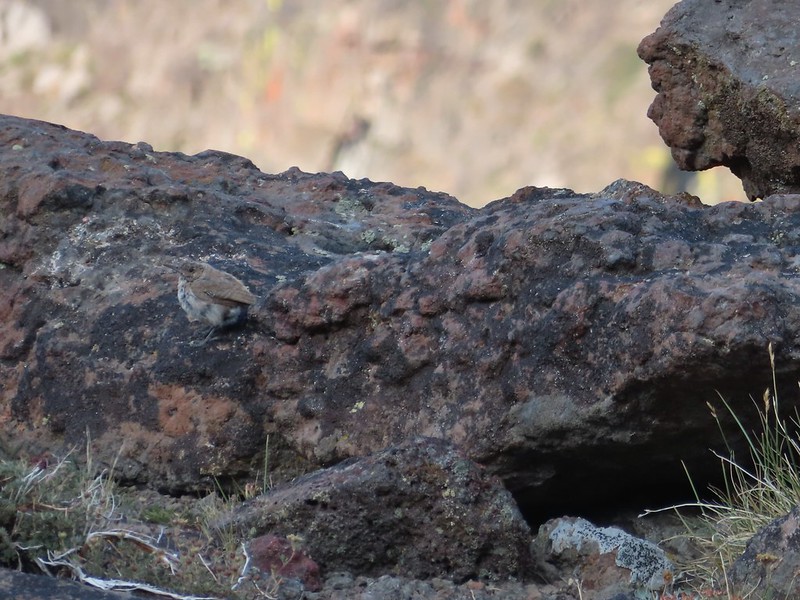 A wren.
 Wildhorse Lake from near the end of the bench.
 We were a little disappointed to see just how late we were for most all of the wildflowers. I don’t know how much the drought this year affected the timing or if it blooms that much earlier in SE Oregon but the remains of what looked to have been an excellent display were all we were left with.
 A few stone steps began the steep descent along the stream.
 A few of these little yellow flowers were still in bloom.
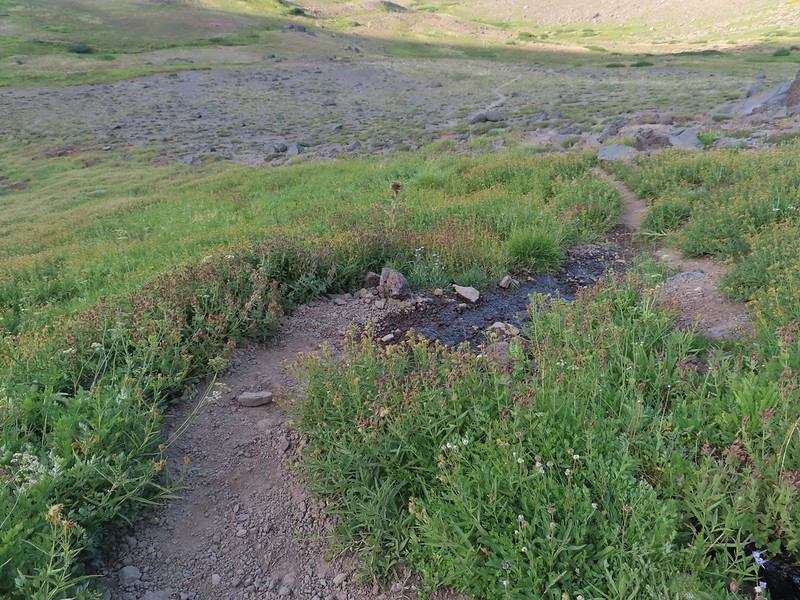 This was a mass of pink monkeyflower a few weeks ago.
 A look up at the summit.
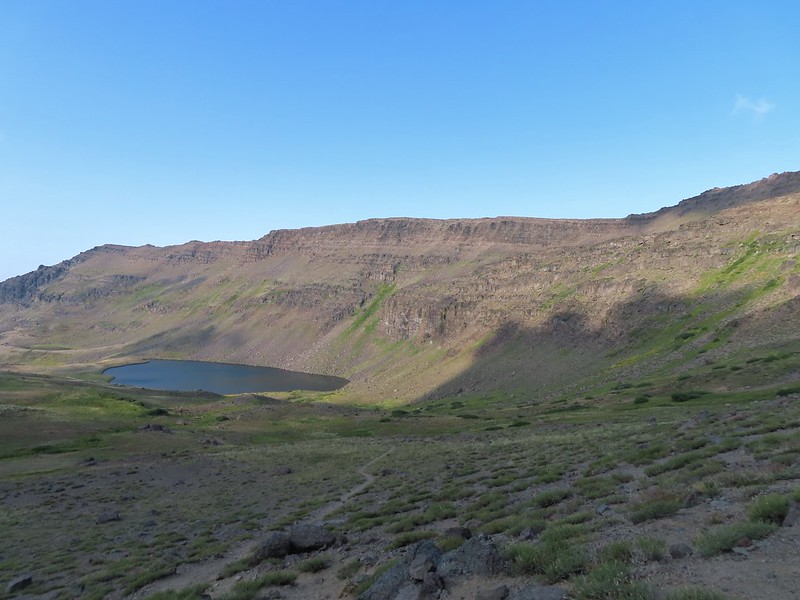 The trail descending less steeply to the lake.
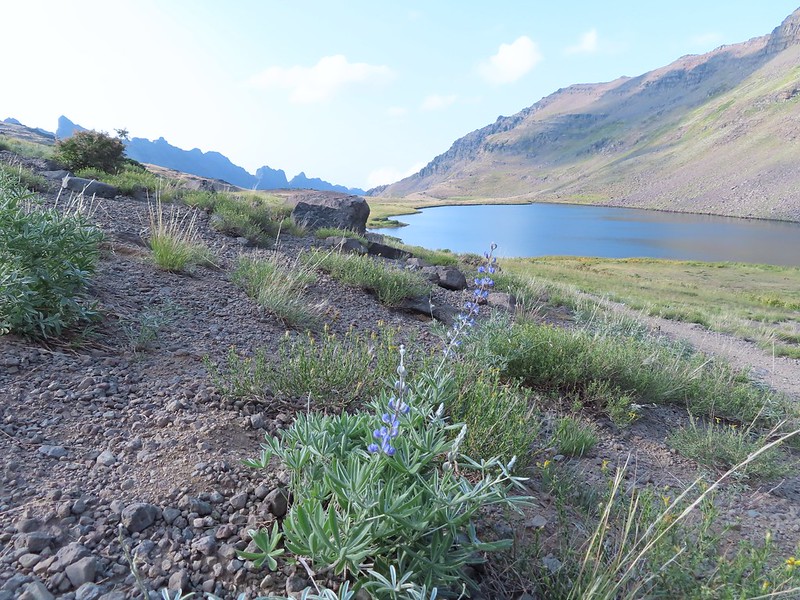 A lone lupine blooming near the lake.
 A pair of paintbrush and the remainder of some aster or fleabane.
 A ground squirrel near the lake.

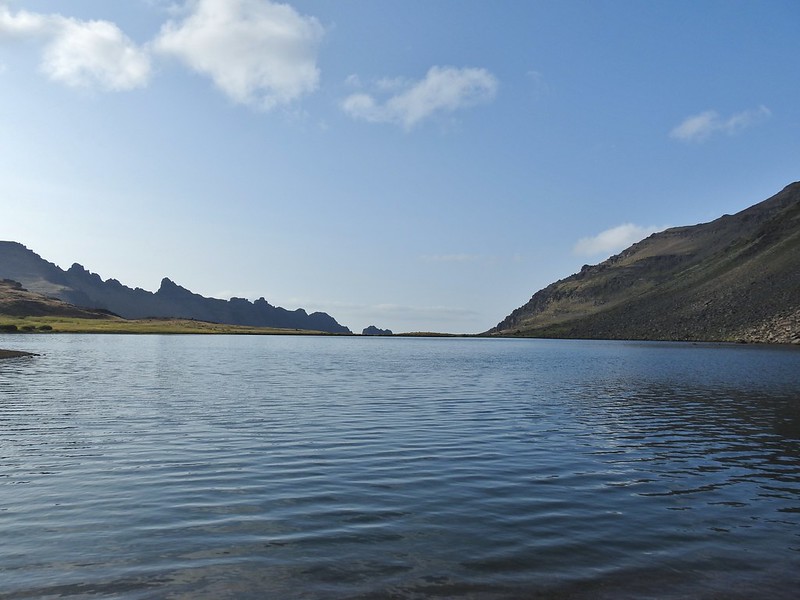
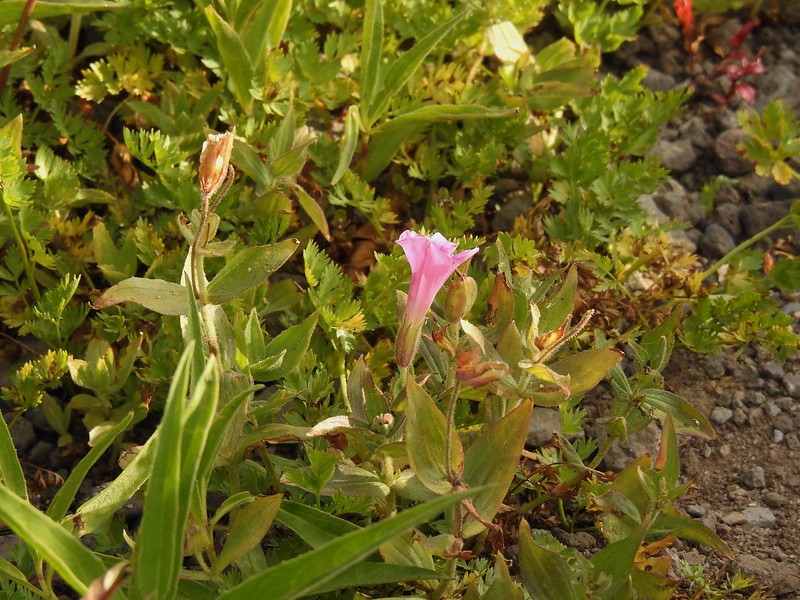 The only pink monkeyflower blossom we spotted.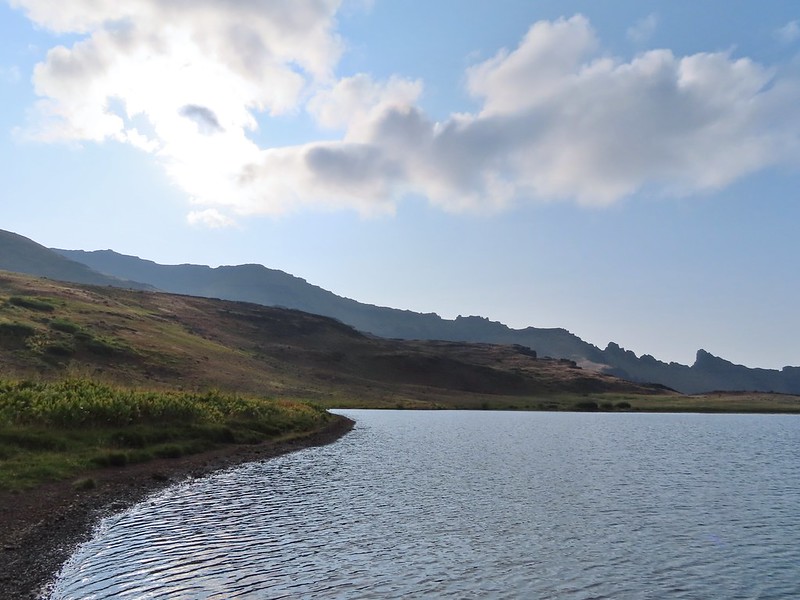
 Ranger buttons
 Mountain coyote mint
 Cascade grass-of-parnassus

 Gentians
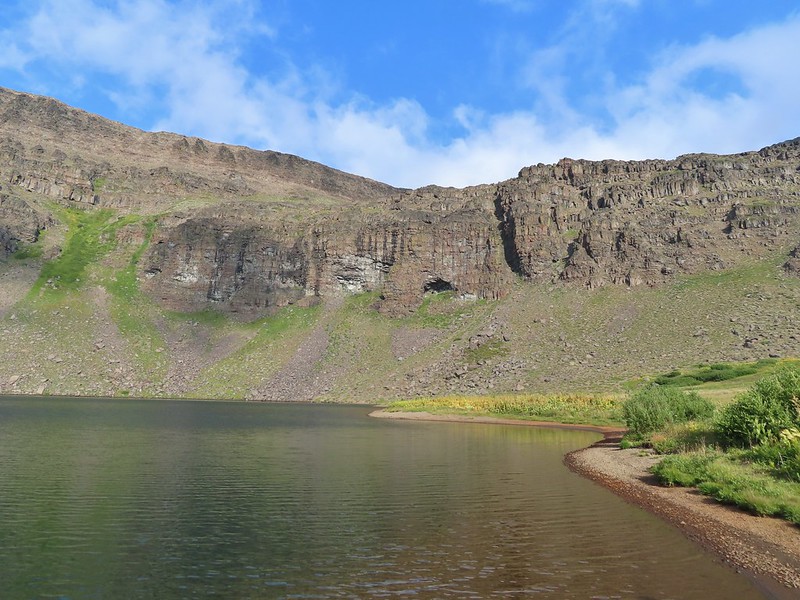
 Wildhorse Creek
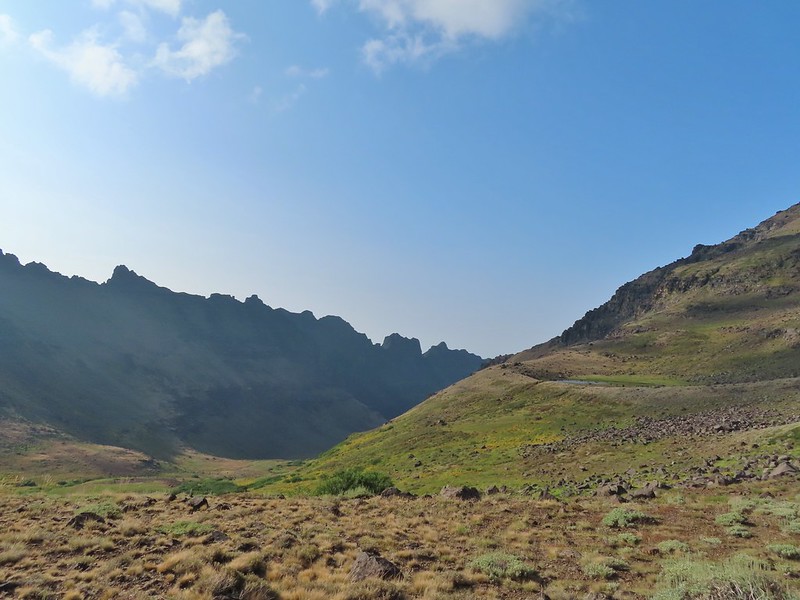 Looking down along Wildhorse Creek.
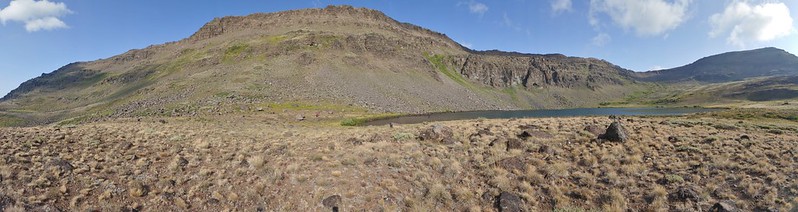 Wildhorse Lake and Steens Summit.


 Rockfringe willowherb
 Raptors soaring above Steens Mountain.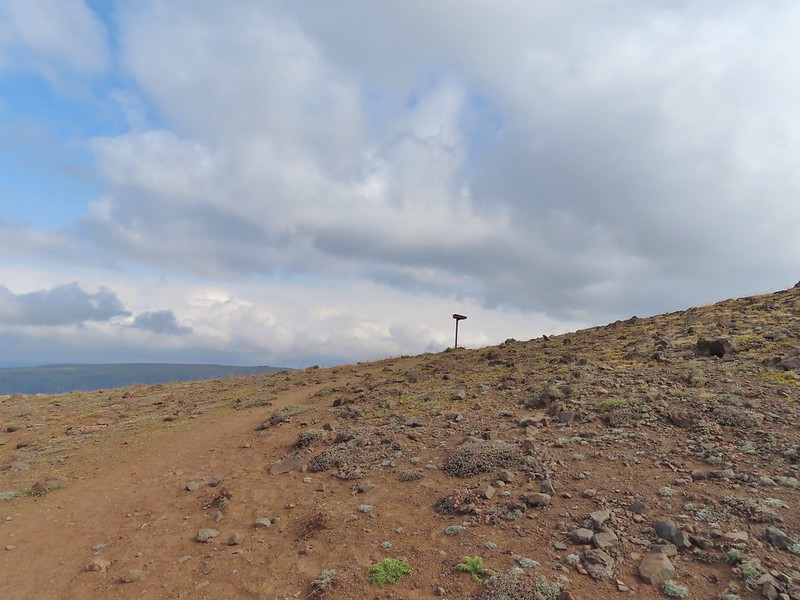

 Big Indian Gorge
 The summit from the unofficial trail.
 The trail on the ridge.
 Looking ahead at the ridge the rocky outcrop looked a bit intimidating.
 The view out over Big Indian Gorge.
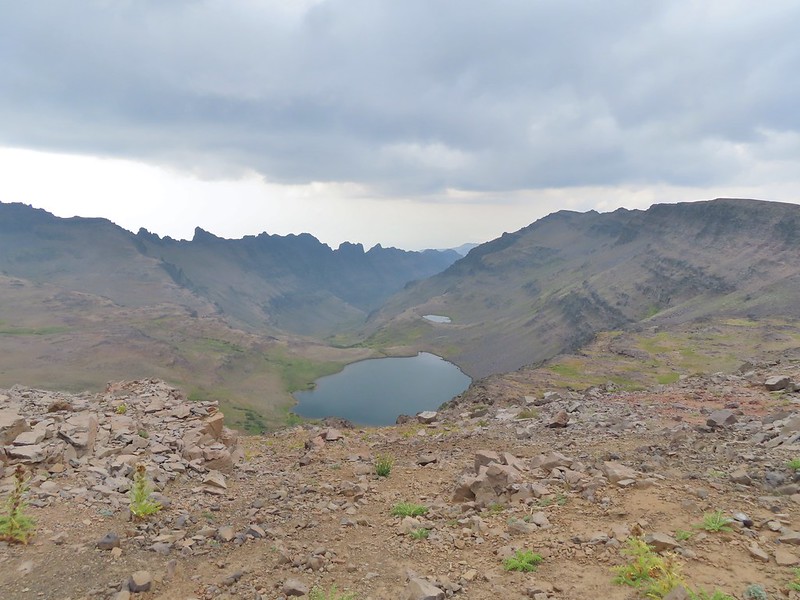 Wildhorse Lake
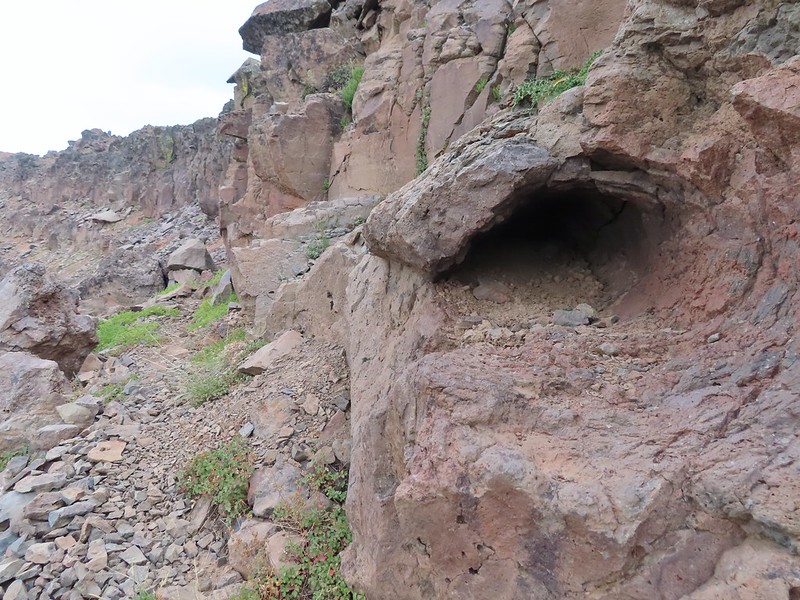
 I turned back here, I’m not that adventurous.
 Darker clouds over the summit from the trailhead.
 A little better view of the Alvord Desert.
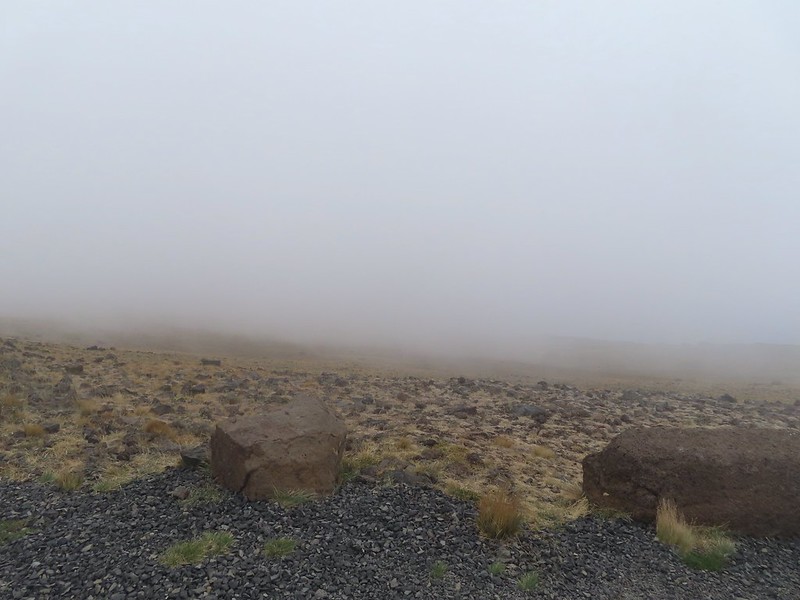 The view as we prepared to drive off.
 We did stop along the way to take a couple of photos.
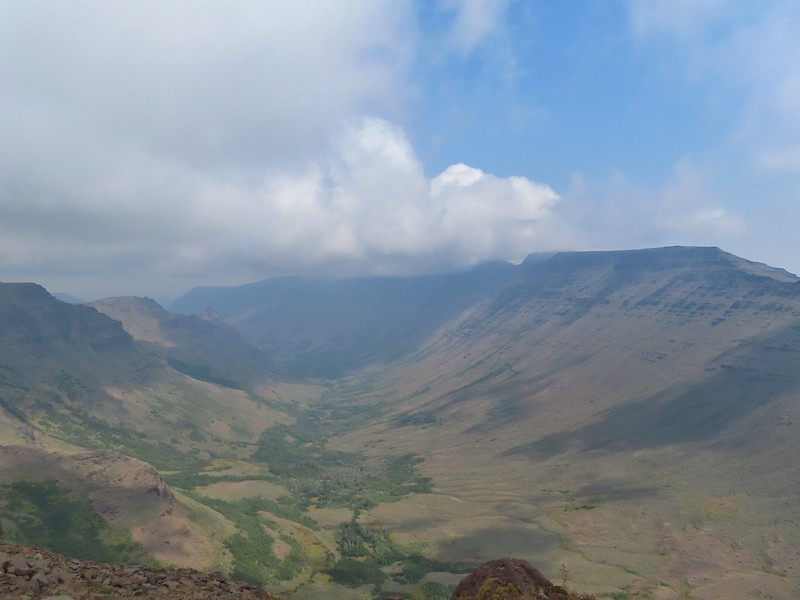
 Our planned hike for the next day was up this gorge.


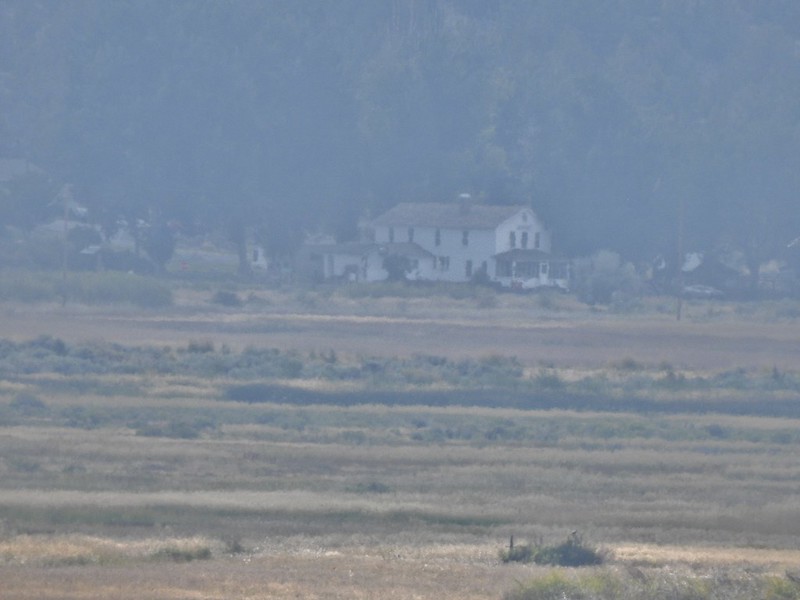 The historic

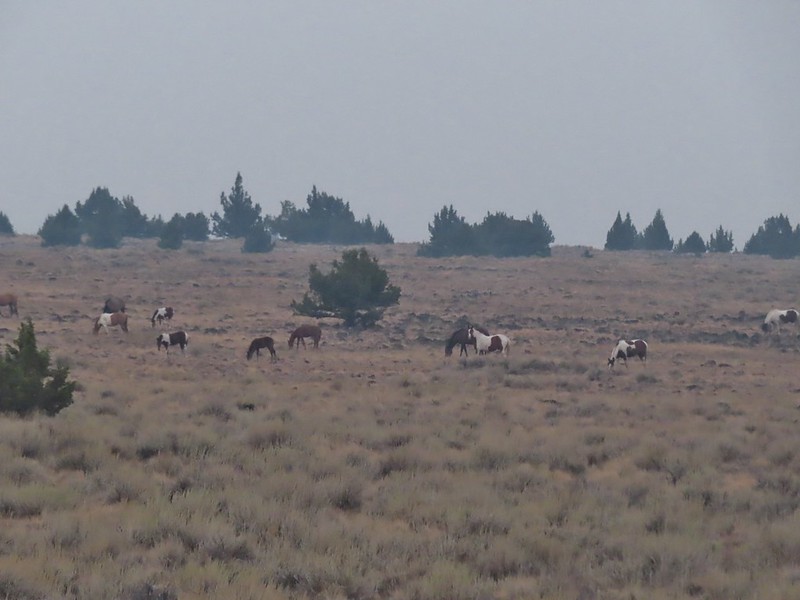
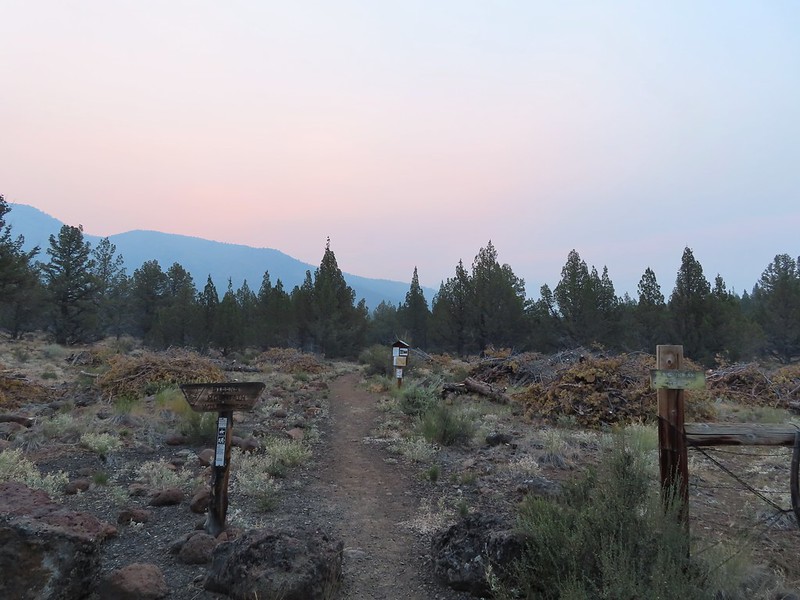
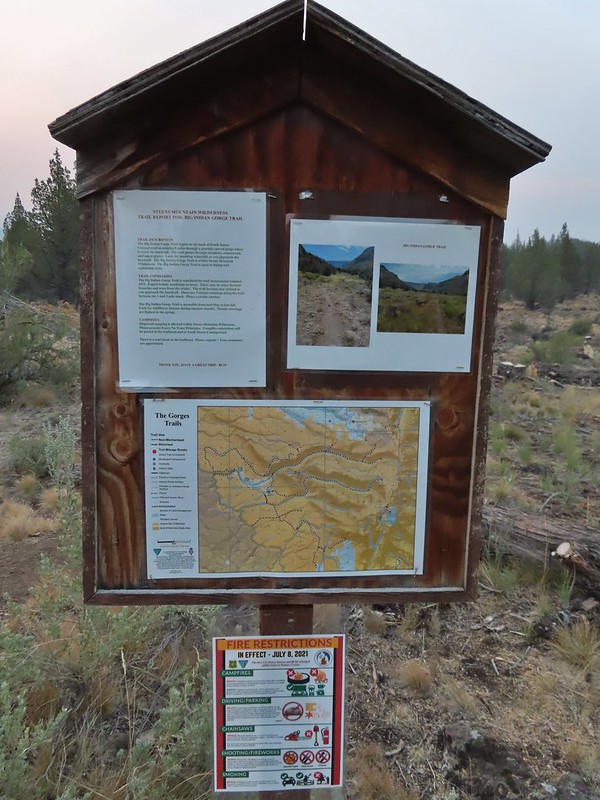
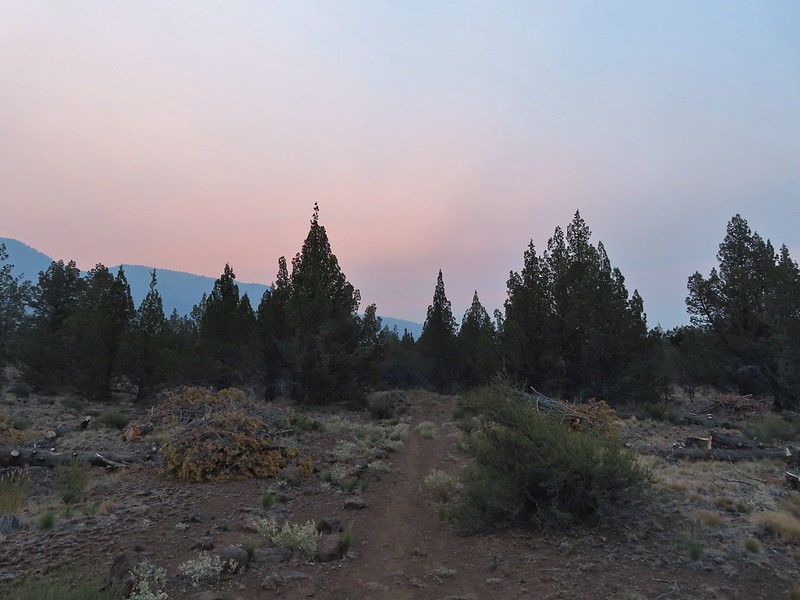
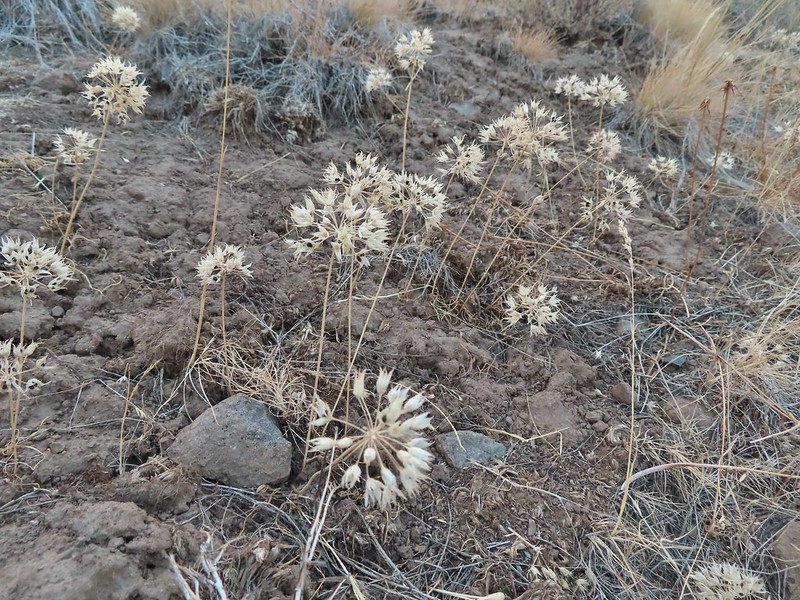 There were tons of wild onions along the way.
 Deer on one of the hillsides.
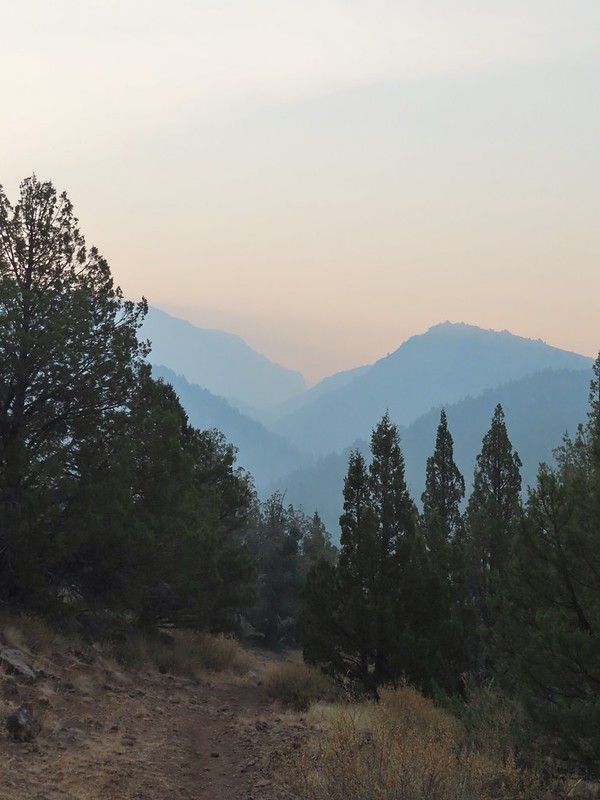 Beginning to drop down to Big Indian Creek.
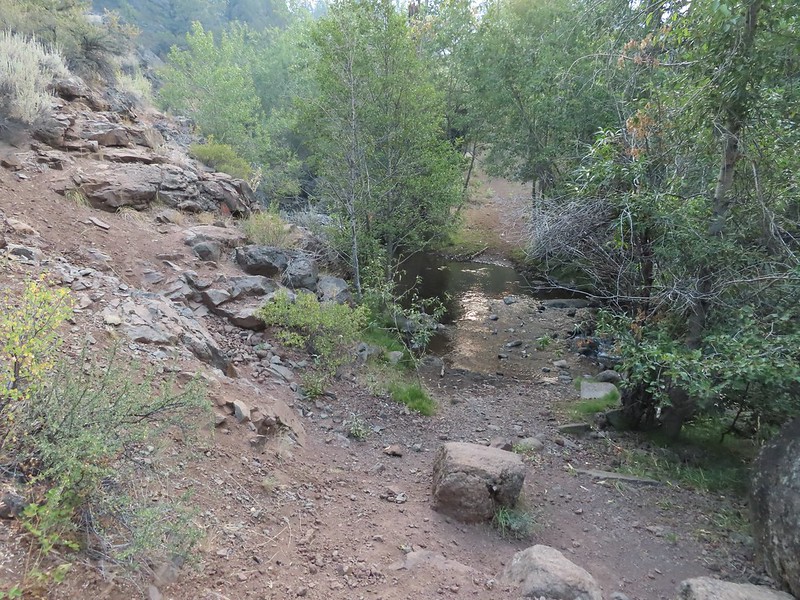
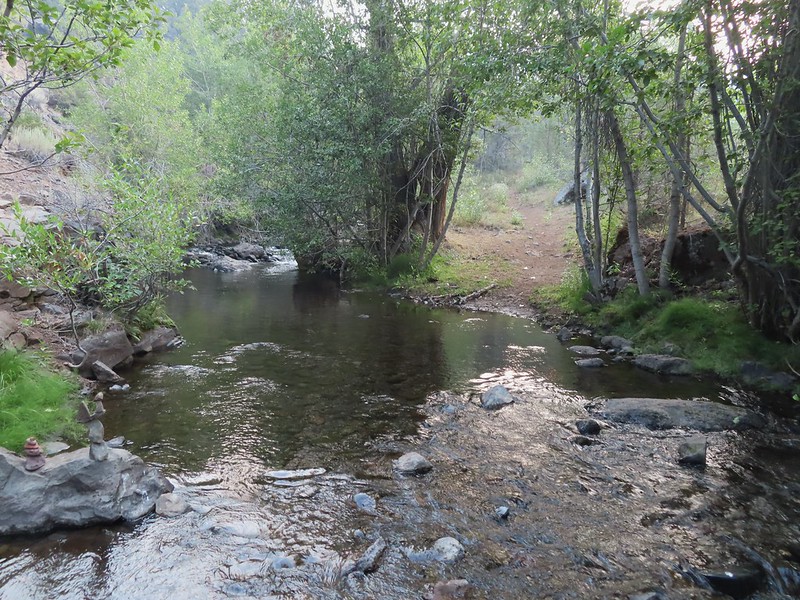

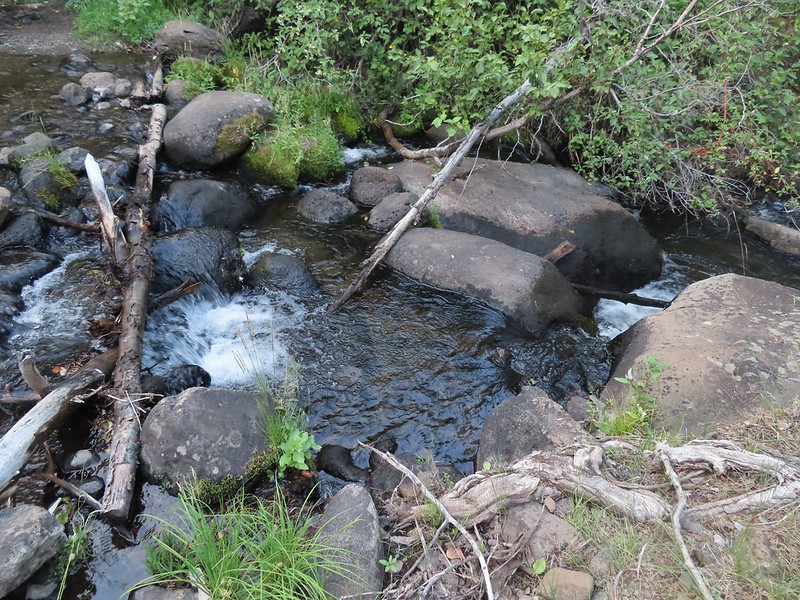


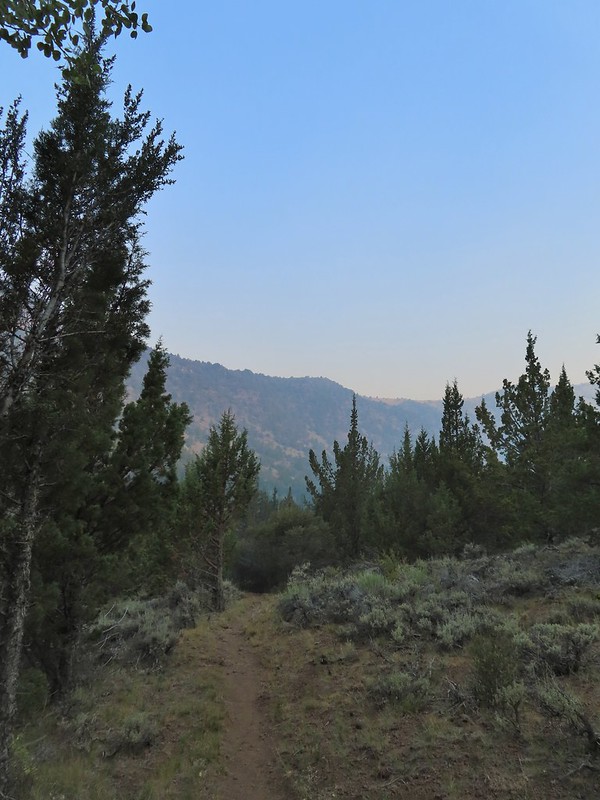
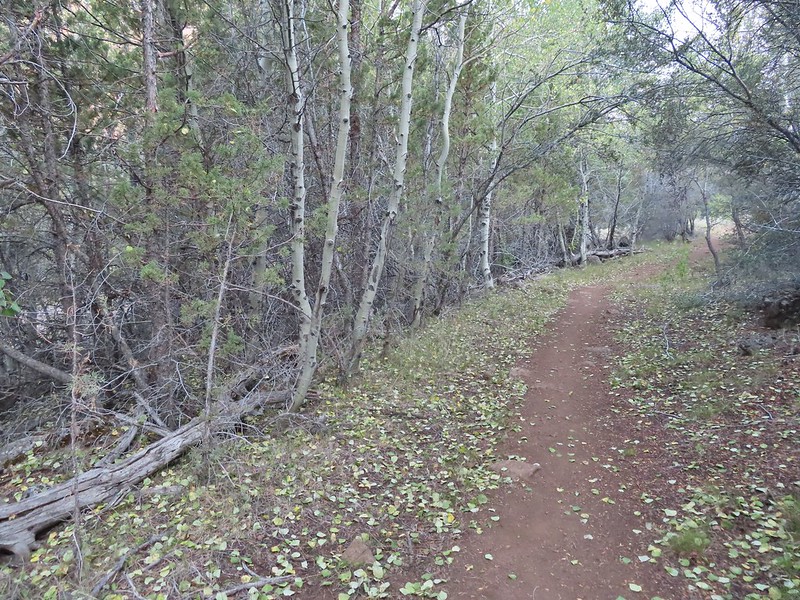 Quacking aspen along the trail.

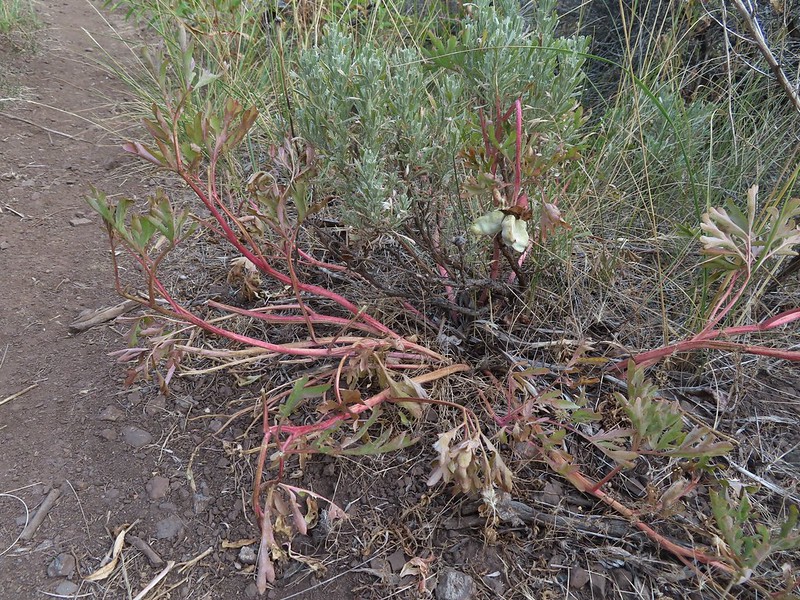 One of the many Brown’s peonies along the trail.
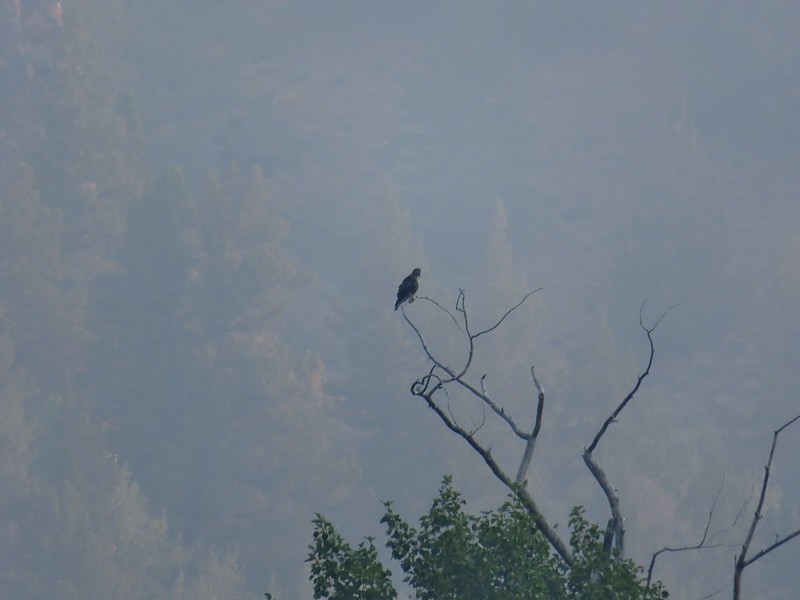 Hawk atop a cottonwood
 This counts a lupine in bloom!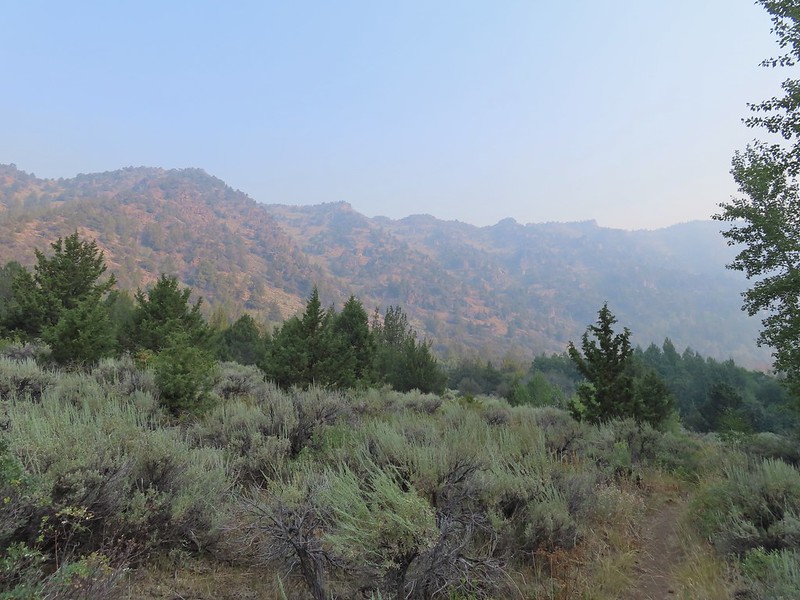
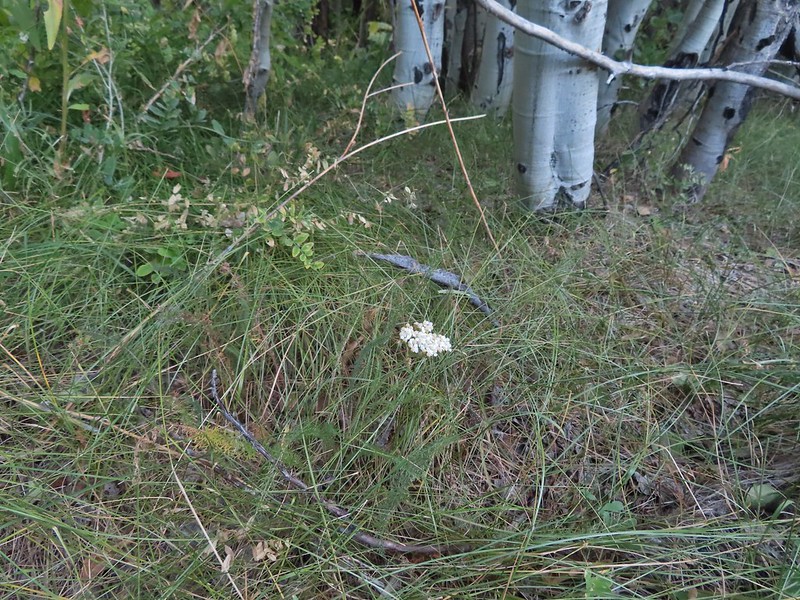 A lone yarrow
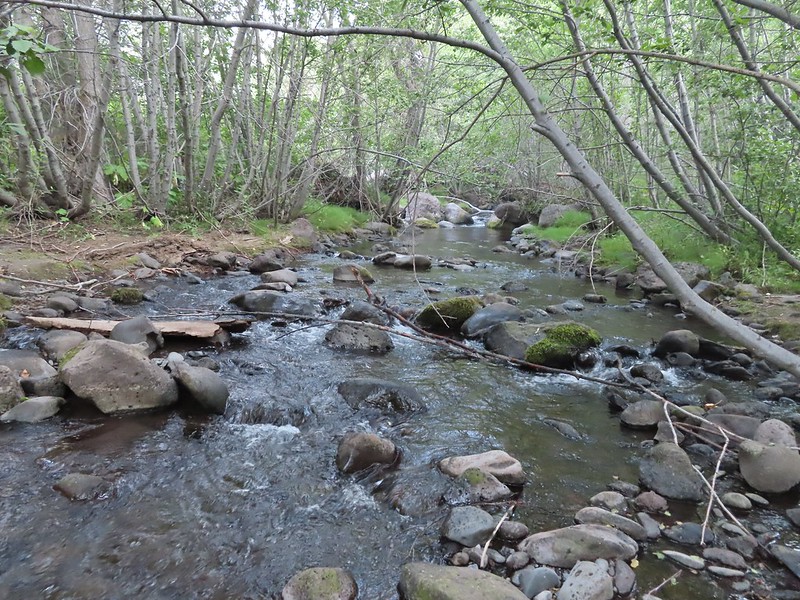
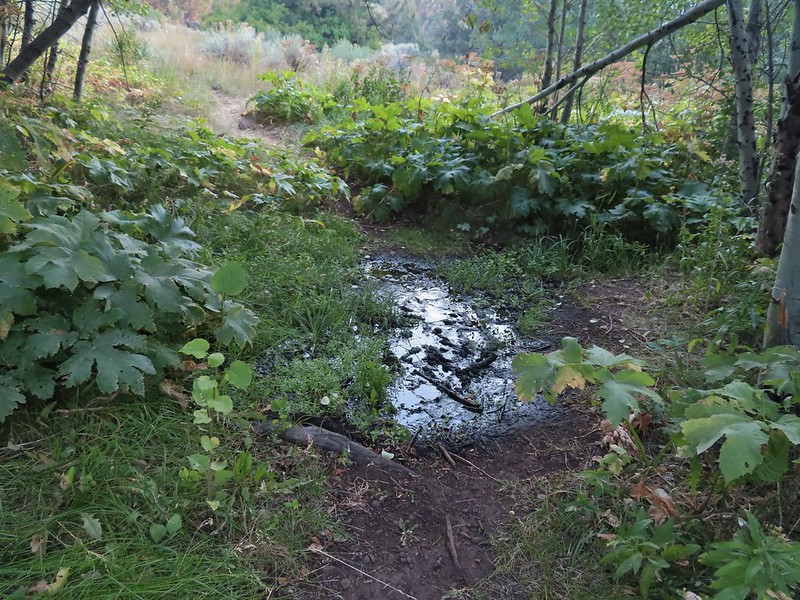 One of a couple of spring fed streams along the trail.
 Aspens and junipers
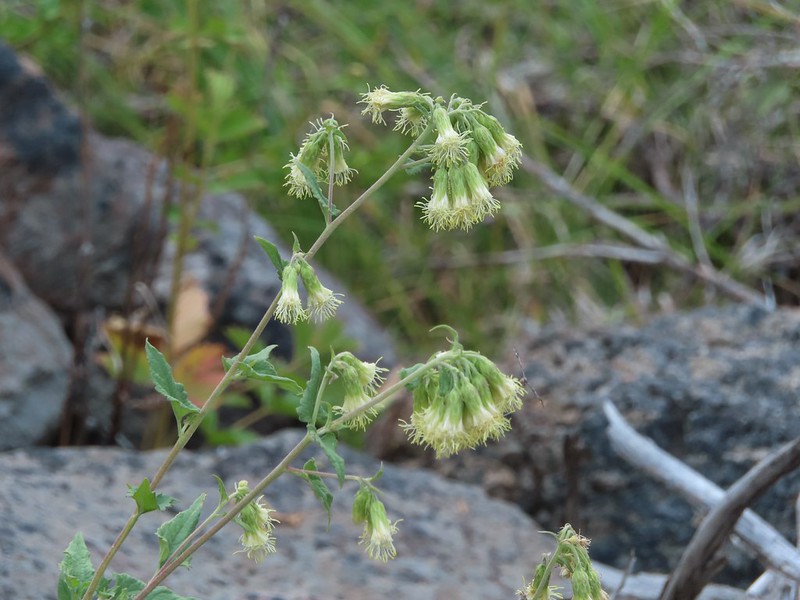 Tassel-flowered Brickellbush
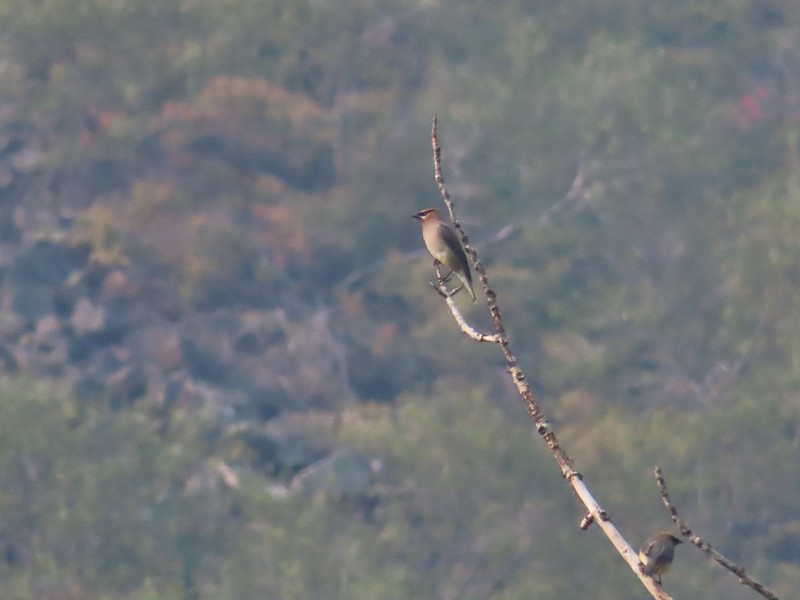 Waxwings
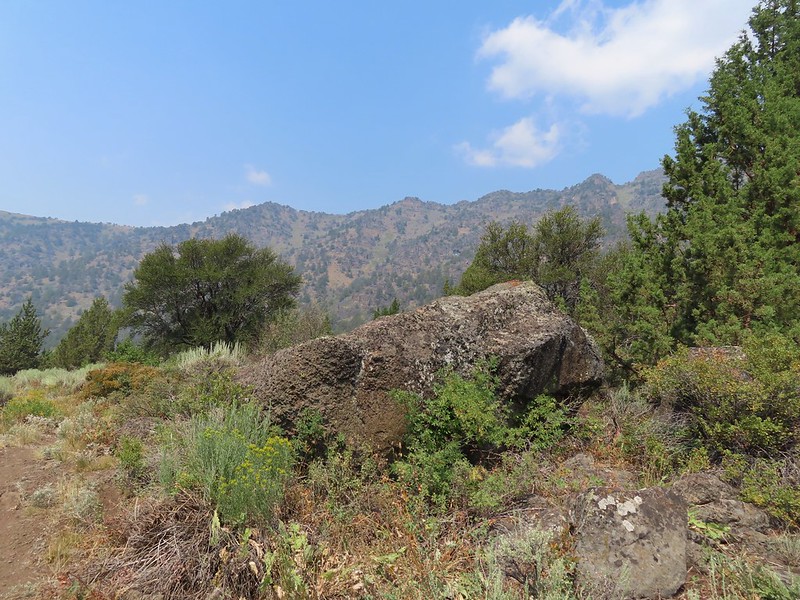 The large boulder later in the day on our way out.
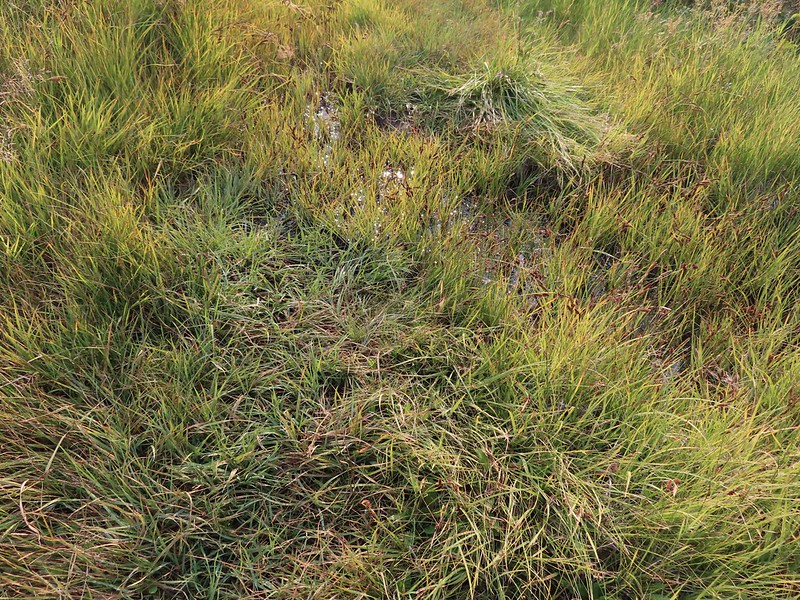 One of the other spring fed crossings.
 There were lots of crickets/grasshoppers bouncing about.
 We could see some of the closer cliffs through the haze.
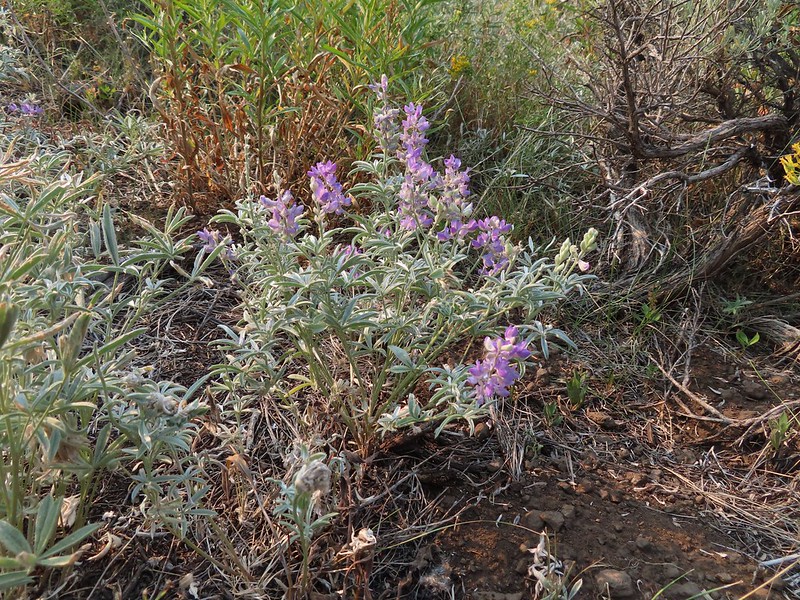 We started to see a few more lupine in bloom the further in we hiked.
 What the smoke looked like ahead.
 Lots of butterflies too.
 Salsify
 Paintbrush
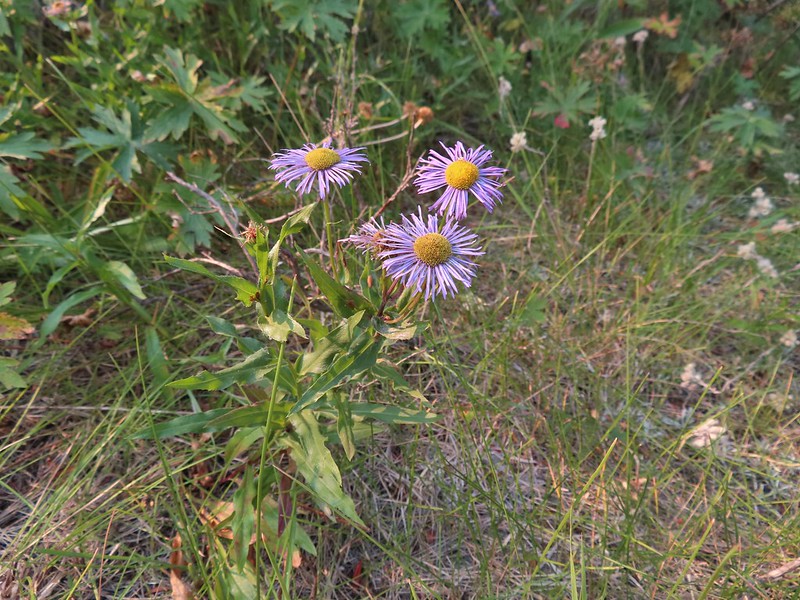 Aster or fleabane
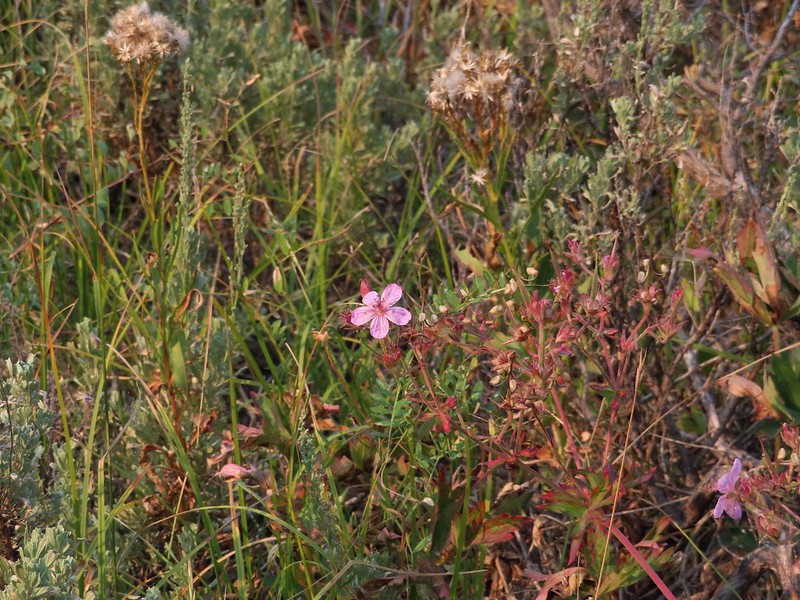 Geranium
 We couldn’t see very far up the gorge because of the smoke.
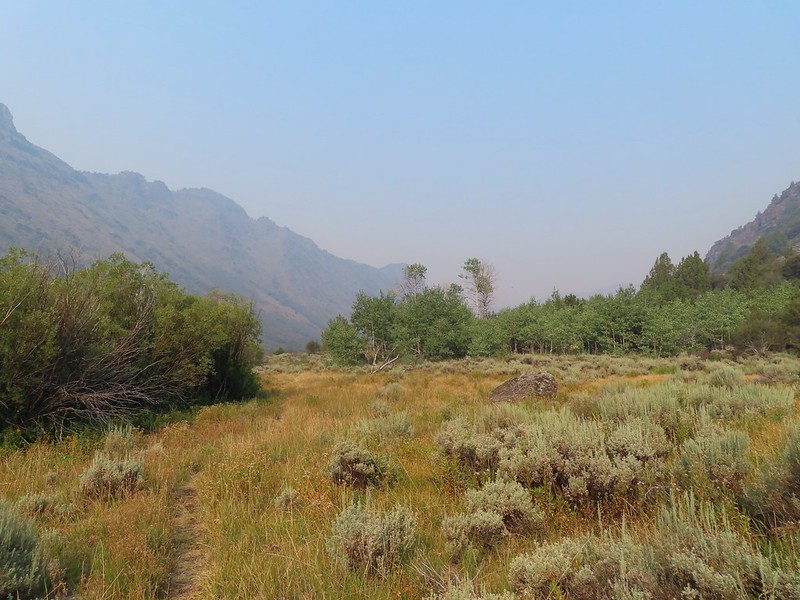 The view was better behind us.
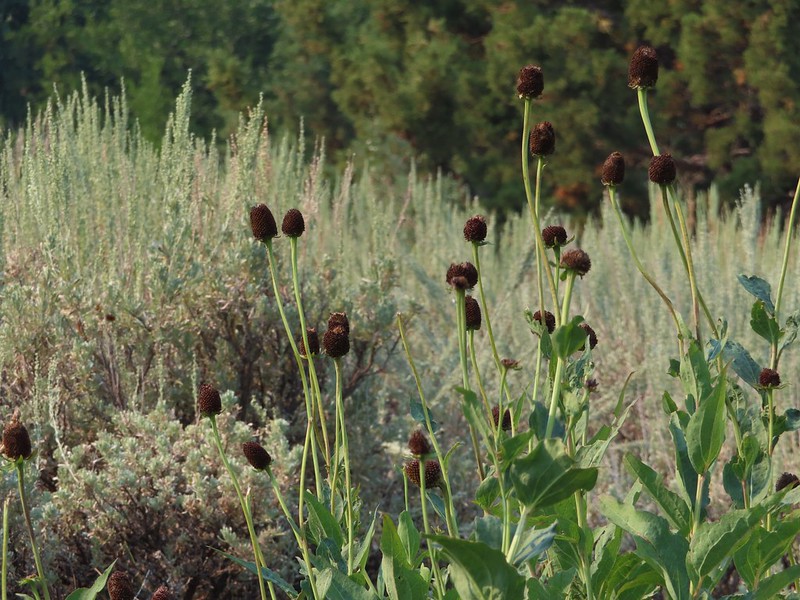 Coneflower
 Hummingbird visiting paintbrush
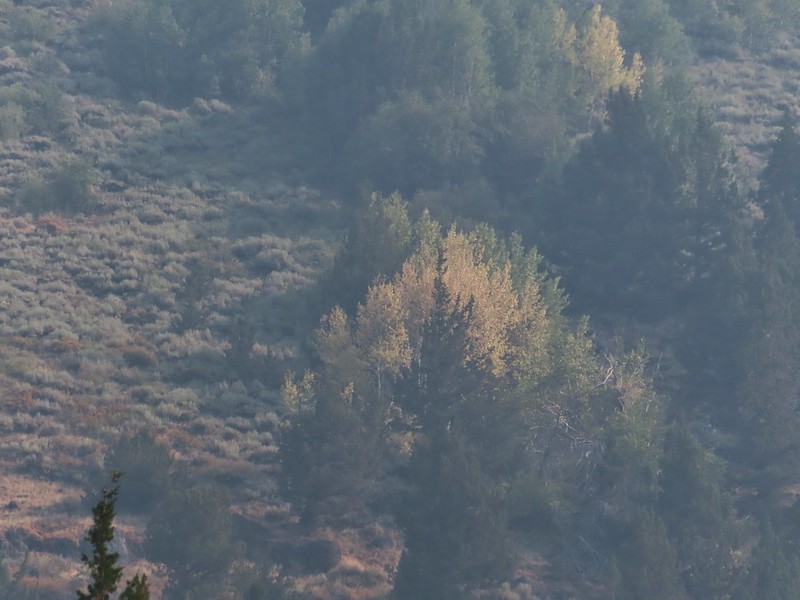 A few aspen already turning golden.
 Cottonwood Camp down to the right.
 Looking up Big Indian Gorge from the trail near Cottonwood Camp.
 Genitian
 Raptor
 Cottonwood Camp
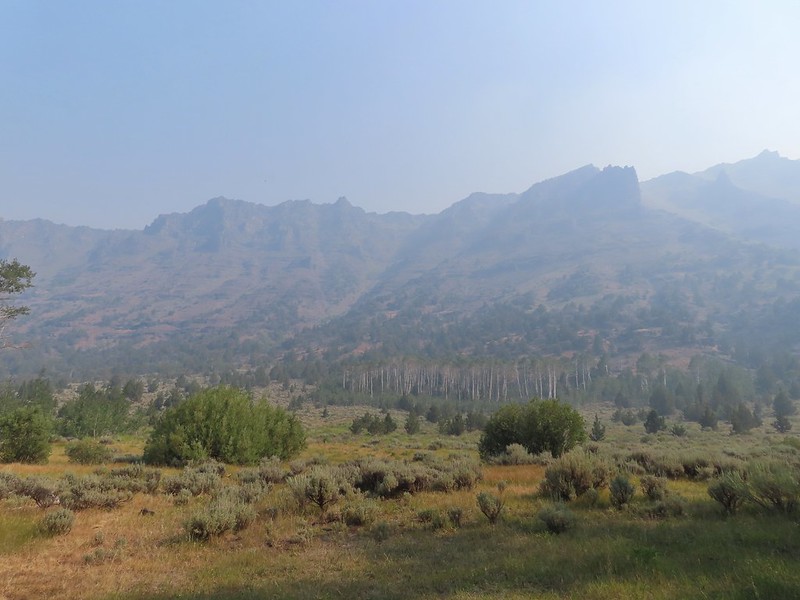 View across the gorge when we arrived at the camp.
 Big Indian Creek
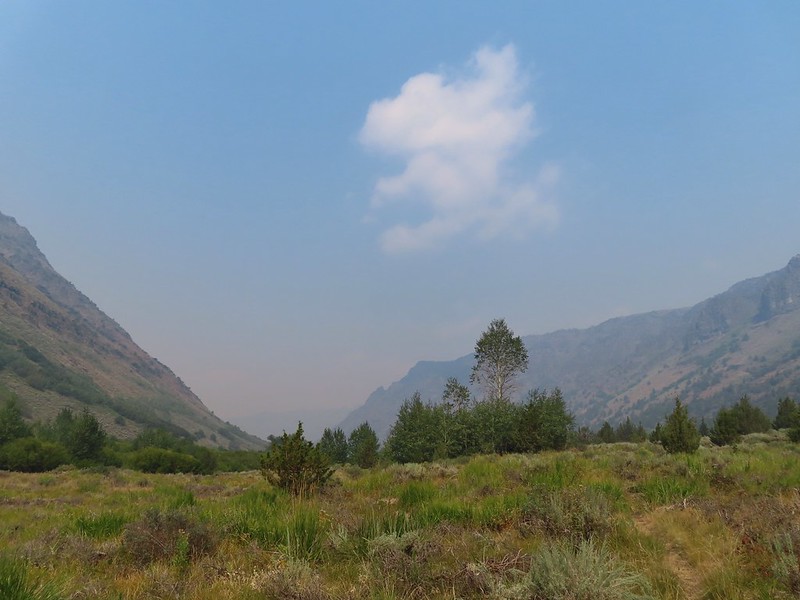
 A few white clouds started to appear along with the breeze.
 The near wall above Big Indian Creek and Cottonwood Camp.
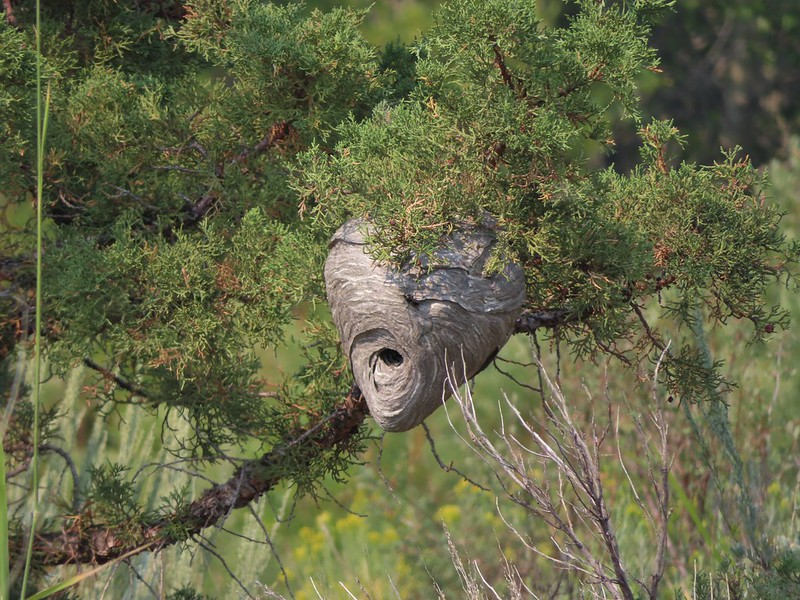 We missed this nest on the first pass. It was about 30 yards off the trail.
 We also missed this Nuttall’s linanthus blooming along the trial.
 Improving views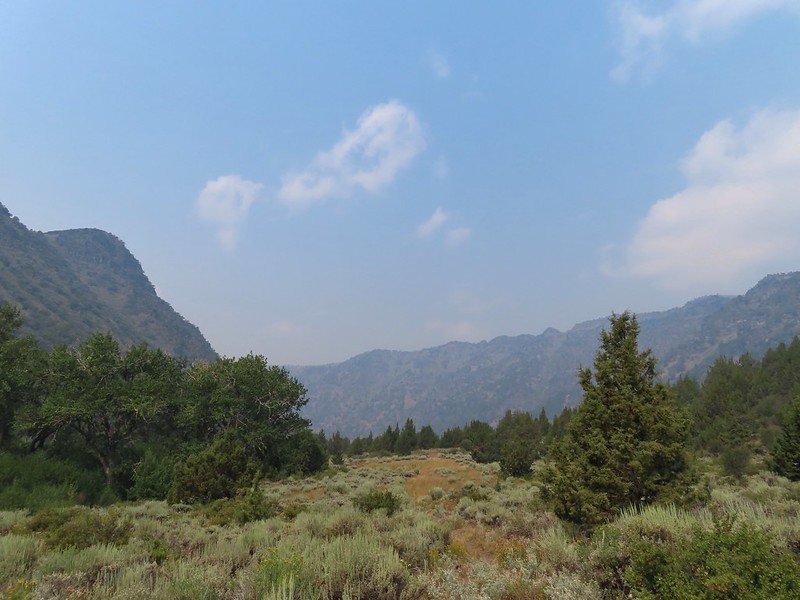
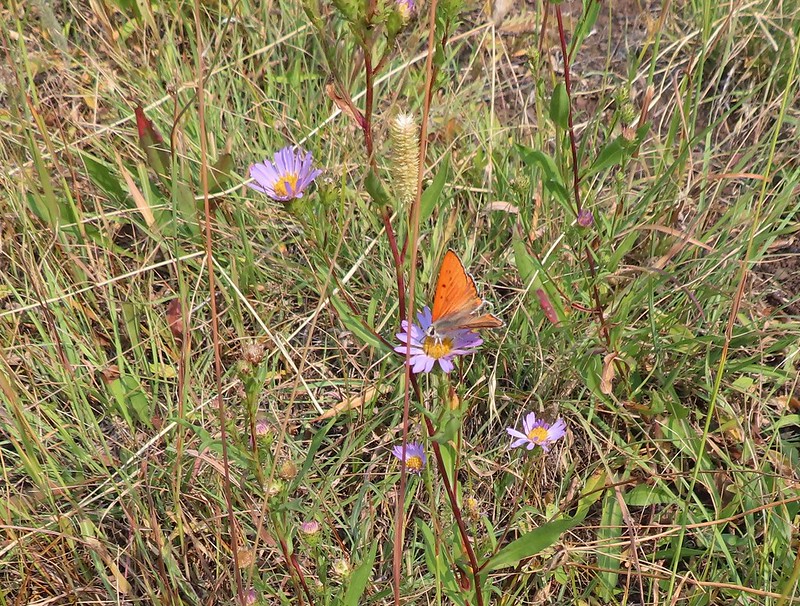 This was a very pretty butterfly that for some reason the camera just didn’t want to focus on.
 Clearer skies above.
 Skipper
 Clouds building up over Steens Mountain
 Lorquin’s admiral
 Ground squirrel
 Some type of wood nymph.
 Back to the first ford, which I again managed to cross dry footed giving me a perfect record for the day which is unheard of.
  A comma of some sort.
 A vast improvement over the morning.
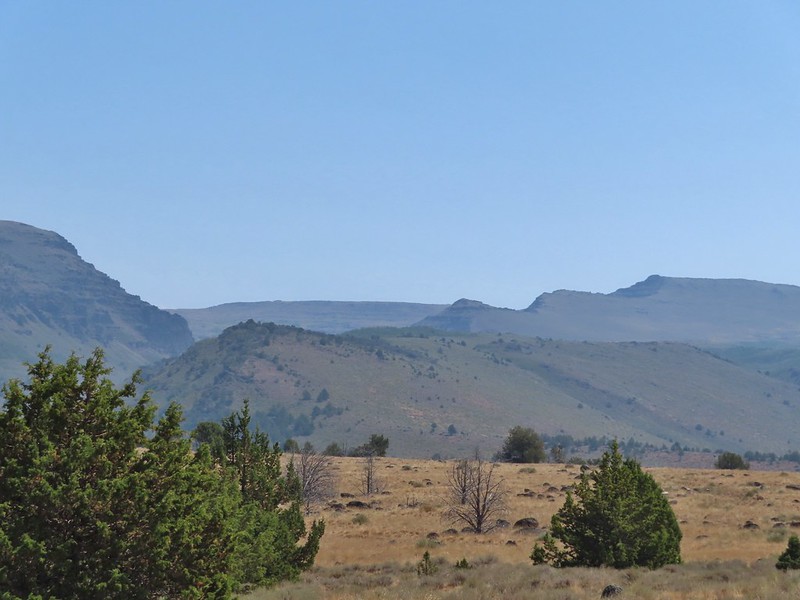 Looking back toward the gorge from the old road bed.
 What a difference a few hours can make.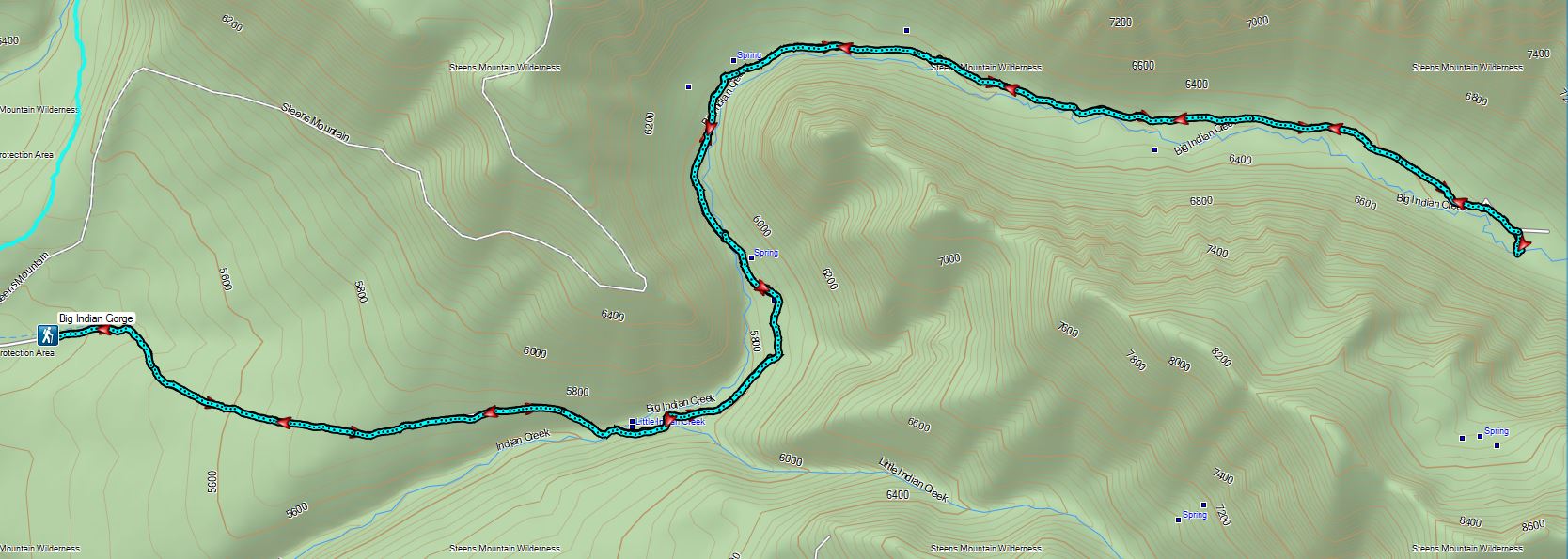
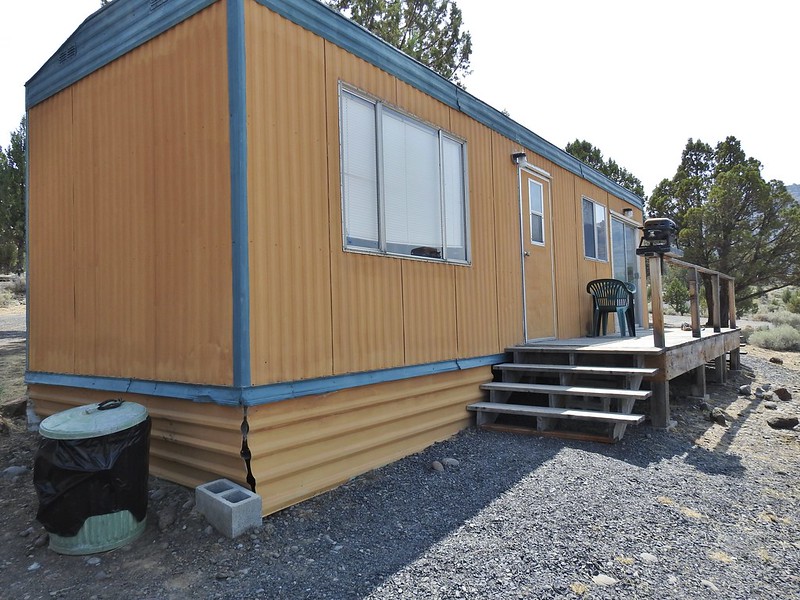 Our accommodations.
 Trailhead sign at the south end of the rest stop. Brochures were located in the small box under the sign.
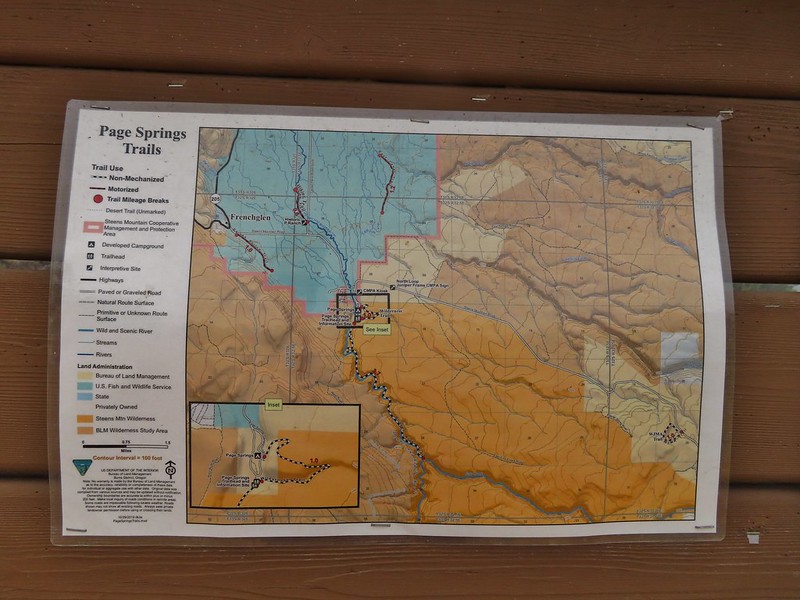
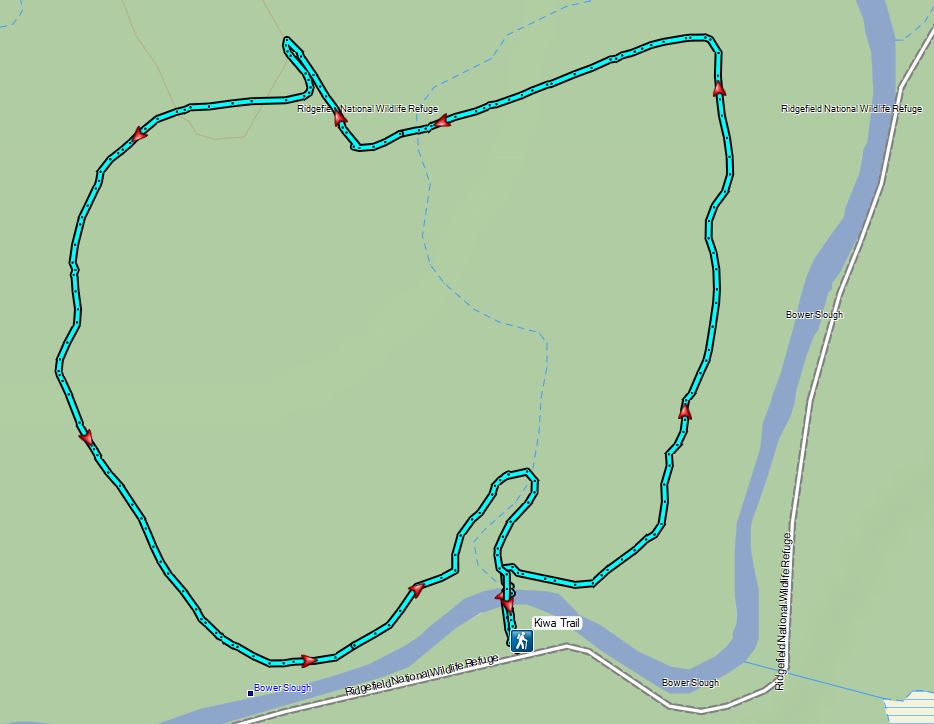
 Map on the trailhead sign.
 Red Sun through the smoke.

 The Harney Valley to the east.
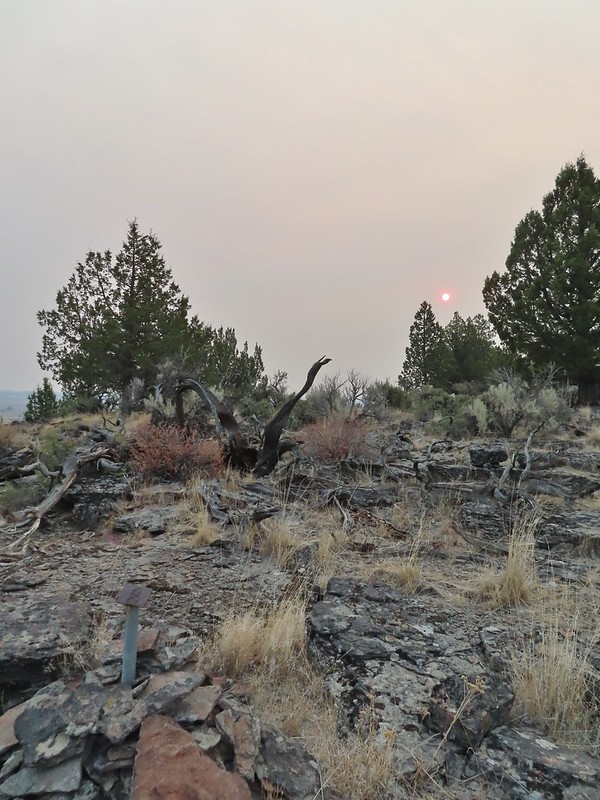 This stop was for a juniper that was blown apart by a lightning strike.
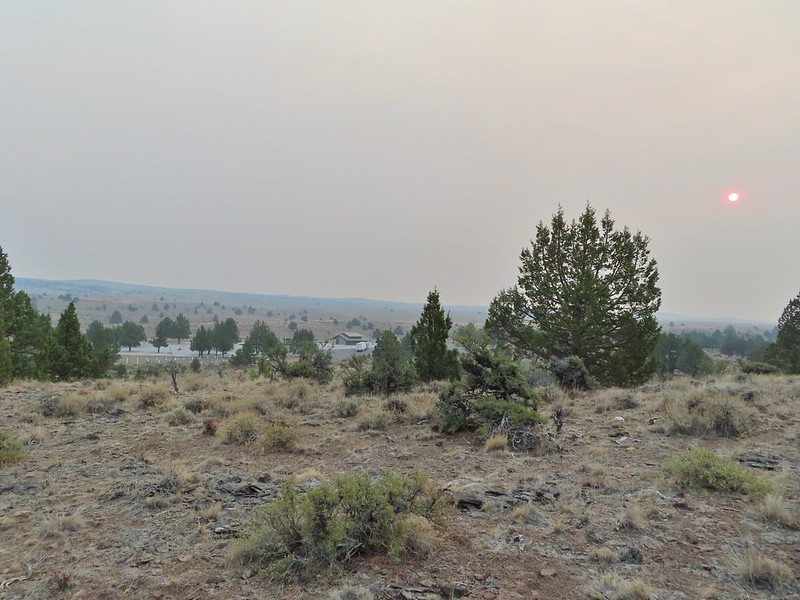 The rest area from the loop.
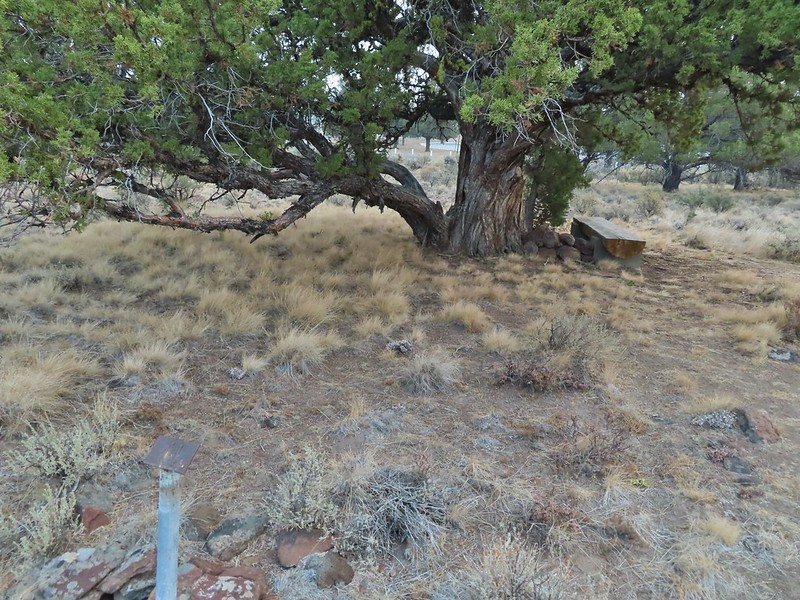 The last stop was to discuss the relationship between the junipers and the Idaho fescue that grows underneath.
 Deer in the nearly dry Marshall Pond
 Yellow headed blackbird
 California quail
 Owl
Owl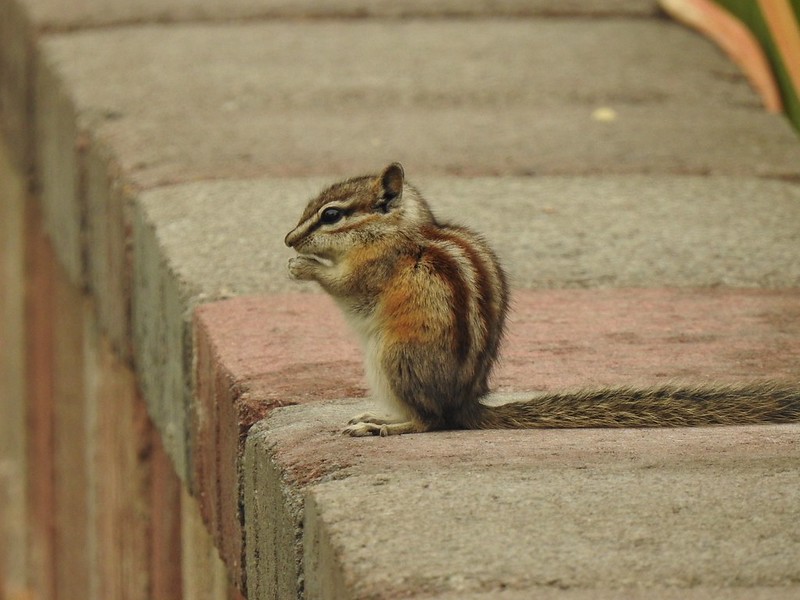 Chipmunk
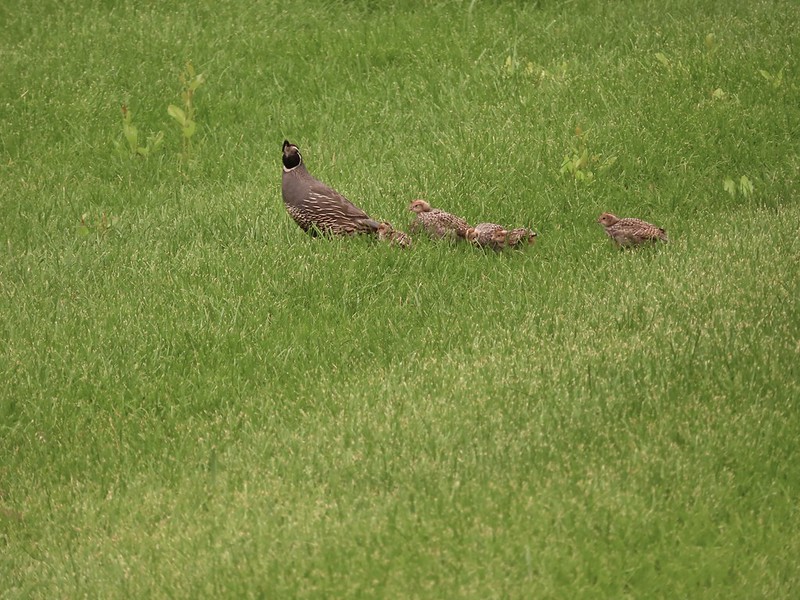 More quail
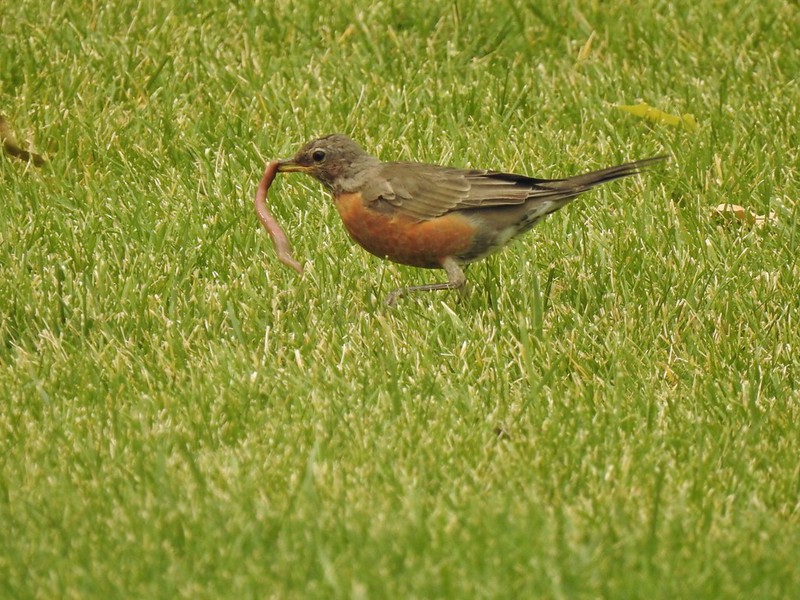 The early bird
 Hummingbird
 Little bird on a feeder
 Shrike
 Hawk and a magpie
 Osprey
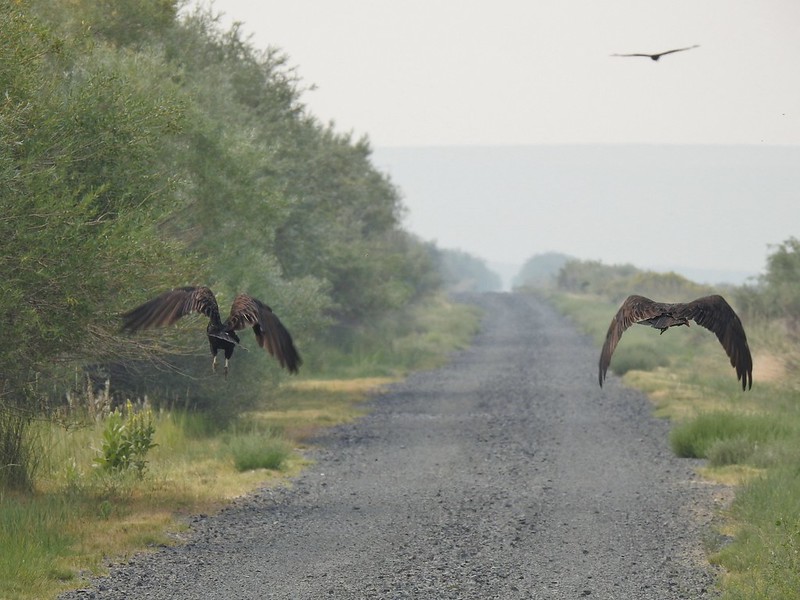 Turkey vultures
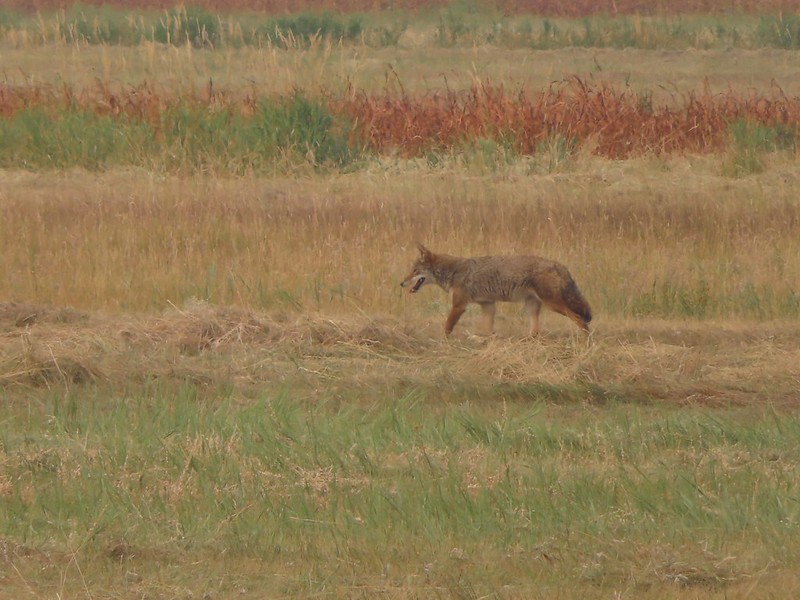 Coyote
 Mourning doves
 Egrets and ducks at Benson Pond
 Old cabin at Benson Pond
 Another owl
 Another turkey vulture
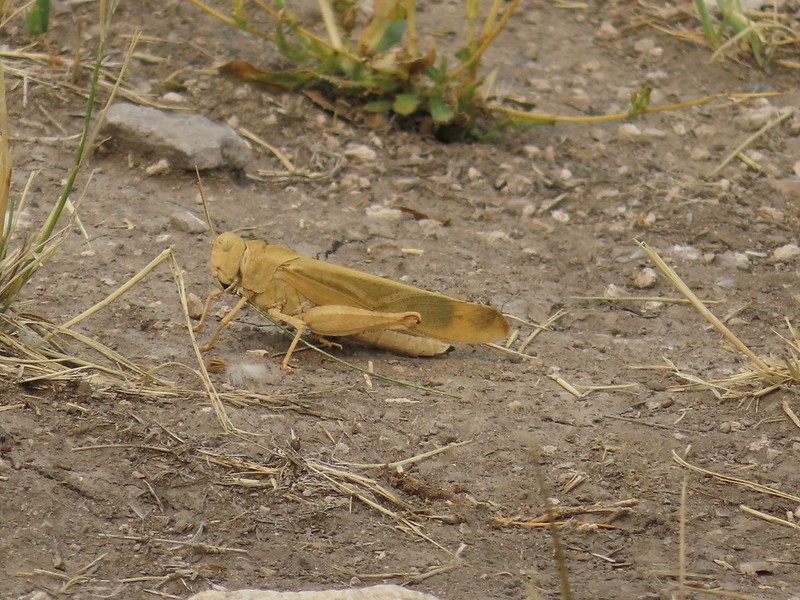 Grasshopper
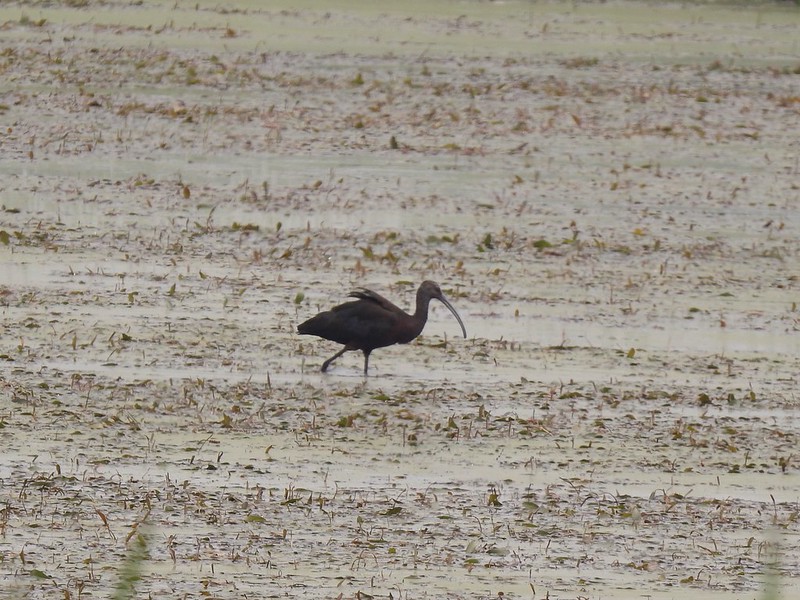 White faced ibis
 Great blue heron amid the ducks.
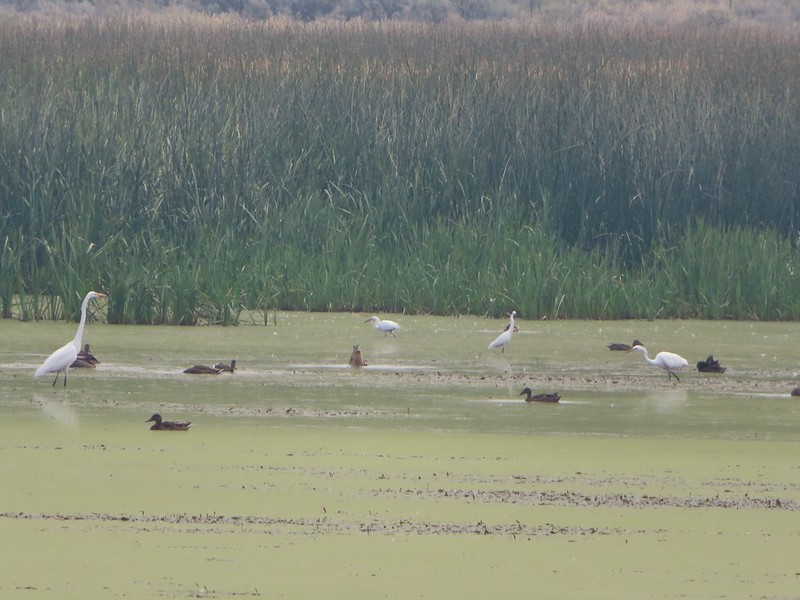 A couple types of egrets it appears.
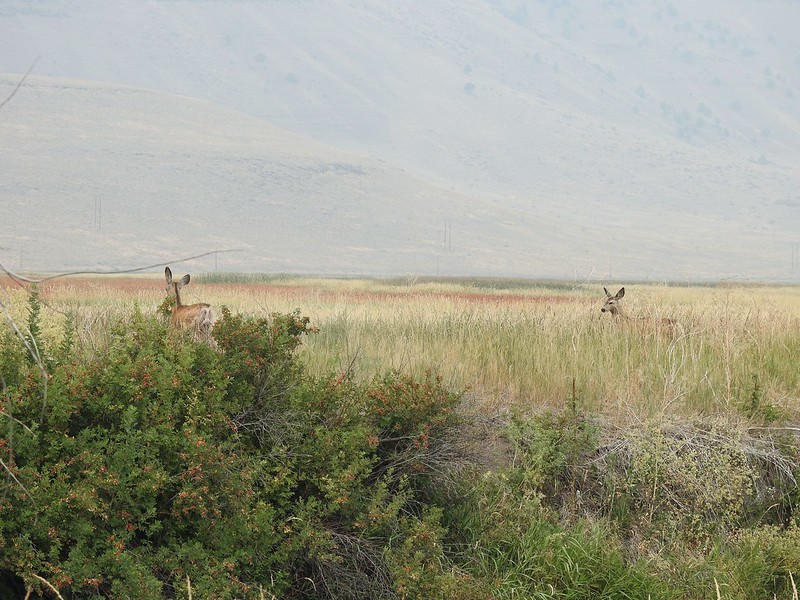 Deer that were in the Blitzen River
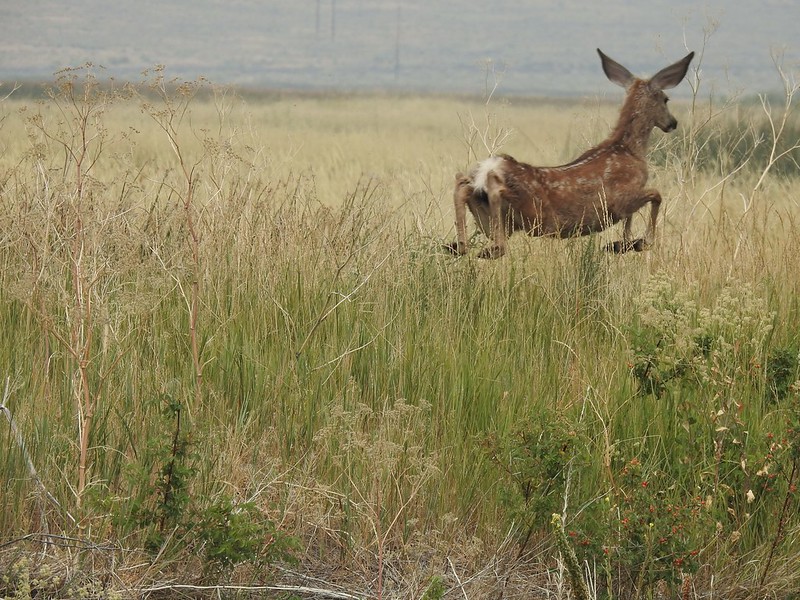 Bounding fawn
 Ducks and coots at Knox Pond


 Bee and a butterfly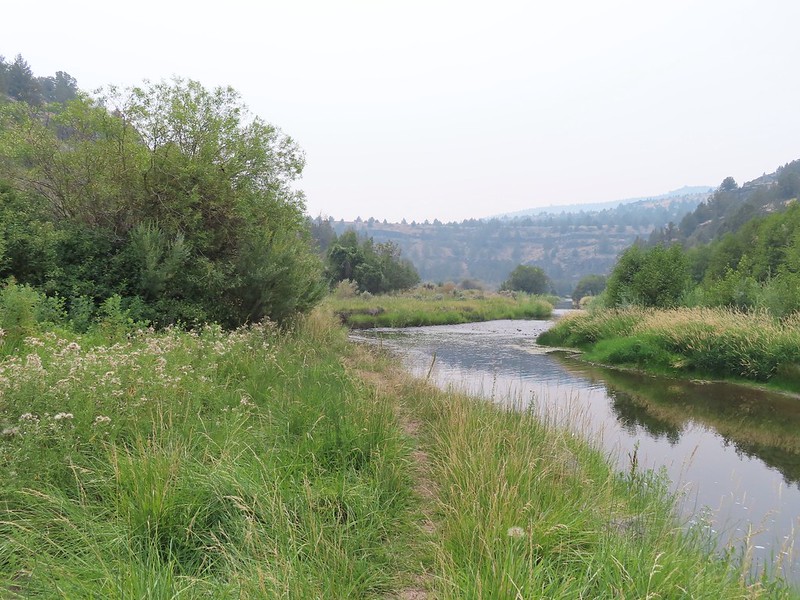
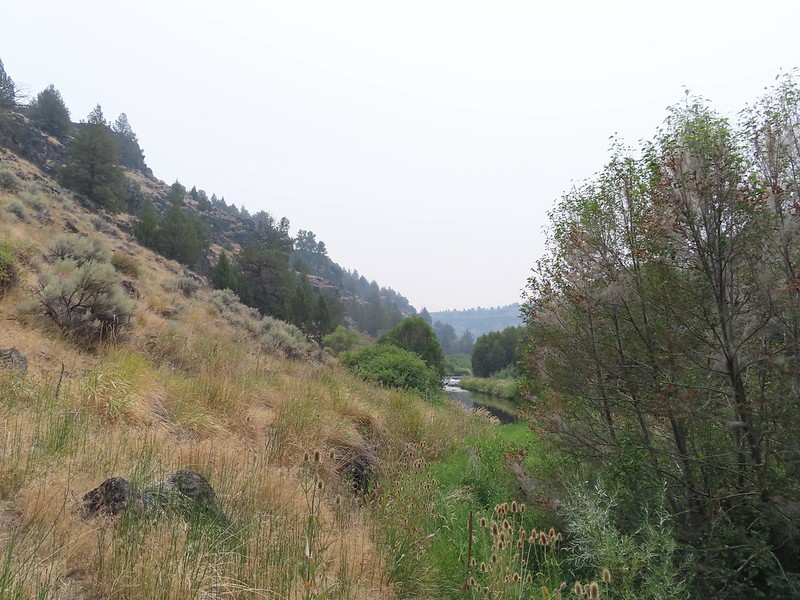 A brushy section.
 A bee and a skipper
 Praying mantis
 The “other” trail on the hillside at the 0.7 mile mark.
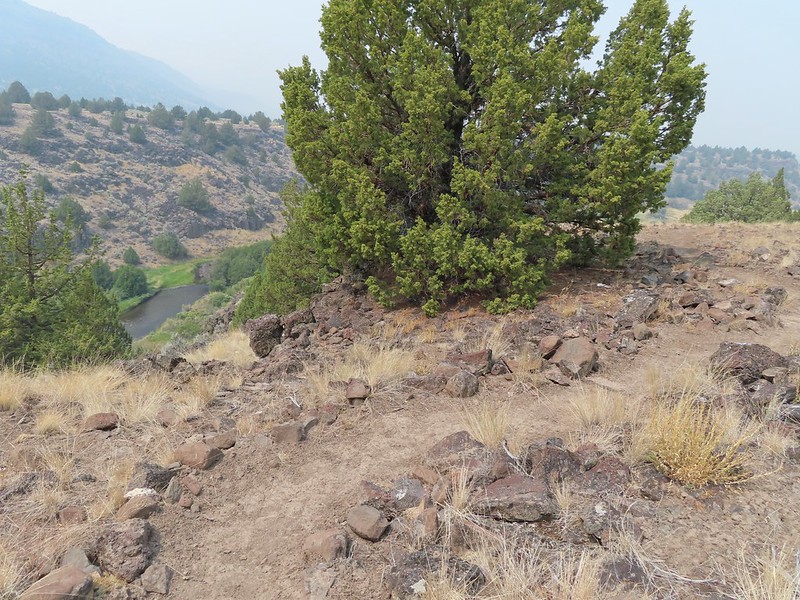
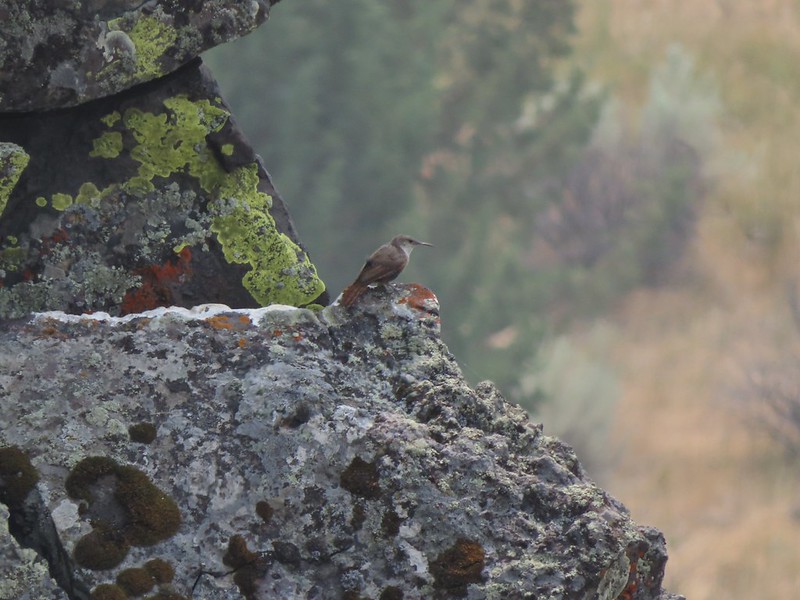 A wren?
 Fence crossing
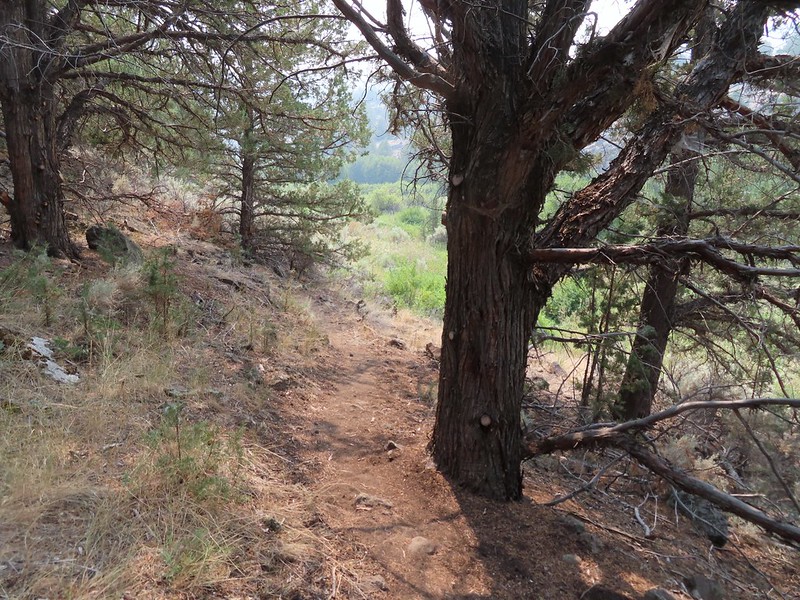 Rejoining the Donner und Blitzen Trail at the 0.4 mile mark.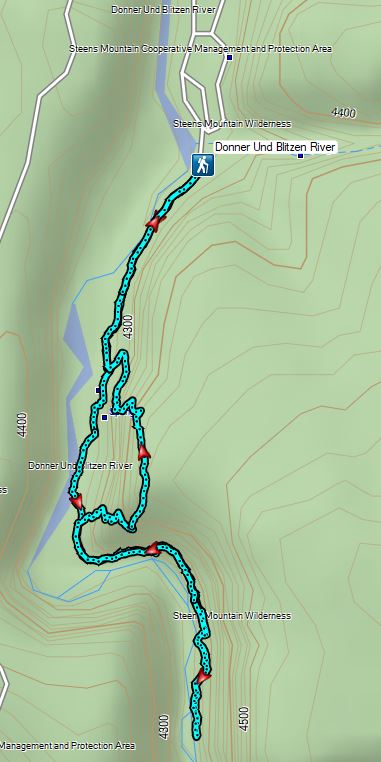


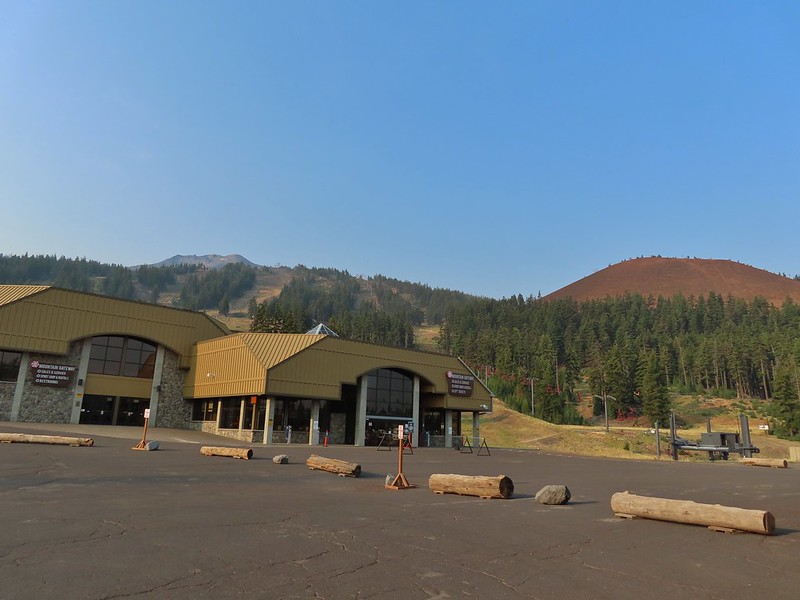
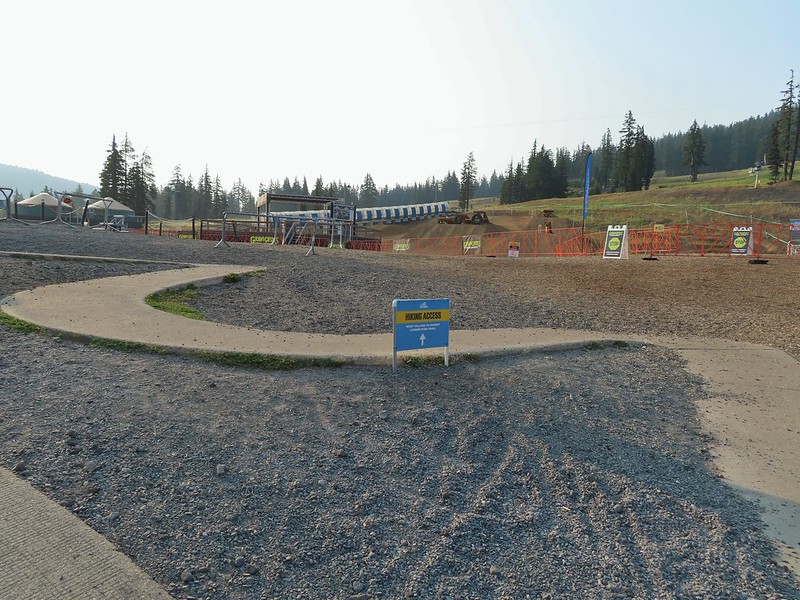

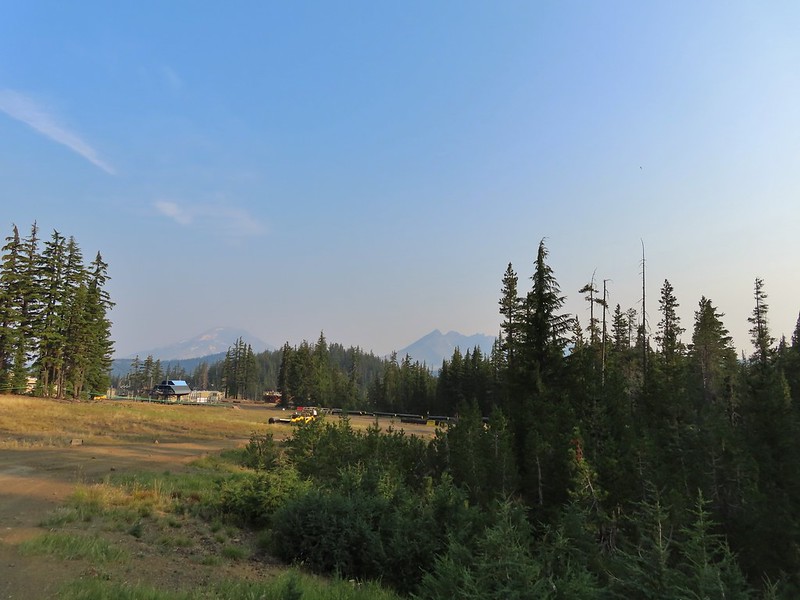 A hazy look at the South Sister and Broken Top.

 Passing under the Skyliner Express
 The ski runs gave us a good look at the top of the mountain.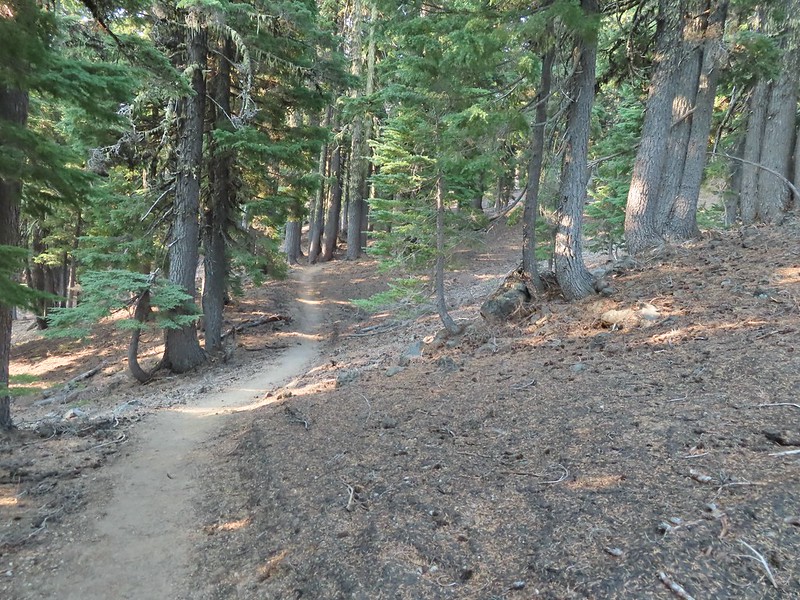

 Turning uphill
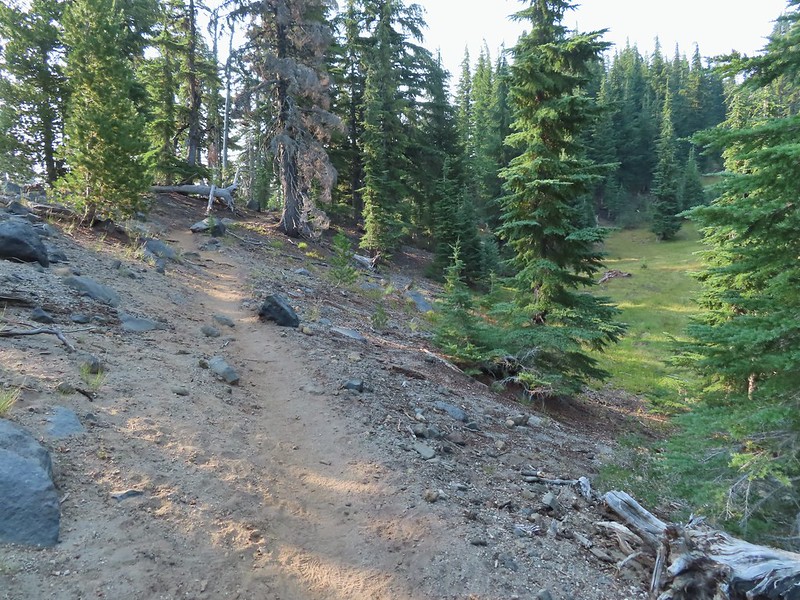 Spotted a grouse hen and her chicks in this little meadow.
 Two of the chicks.
 Passing under the Sunrise lift.
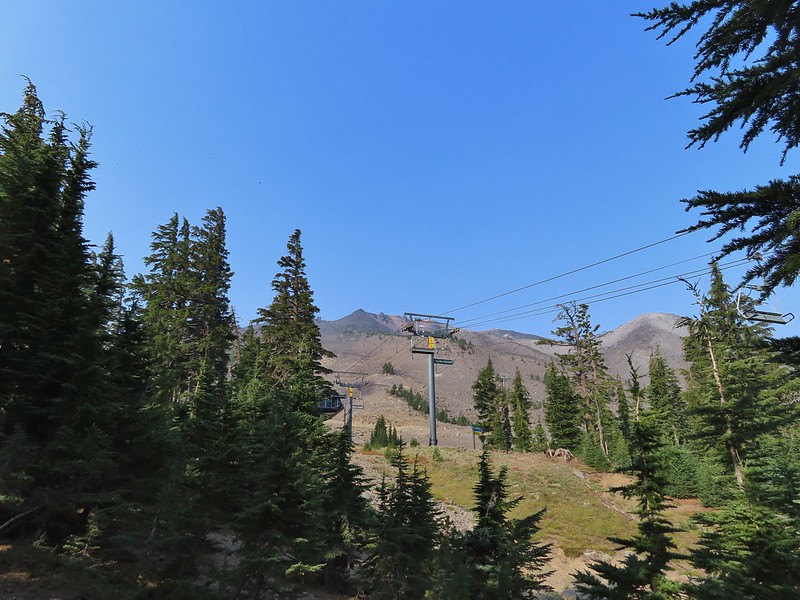 Nearing the top of the Sunrise lift.
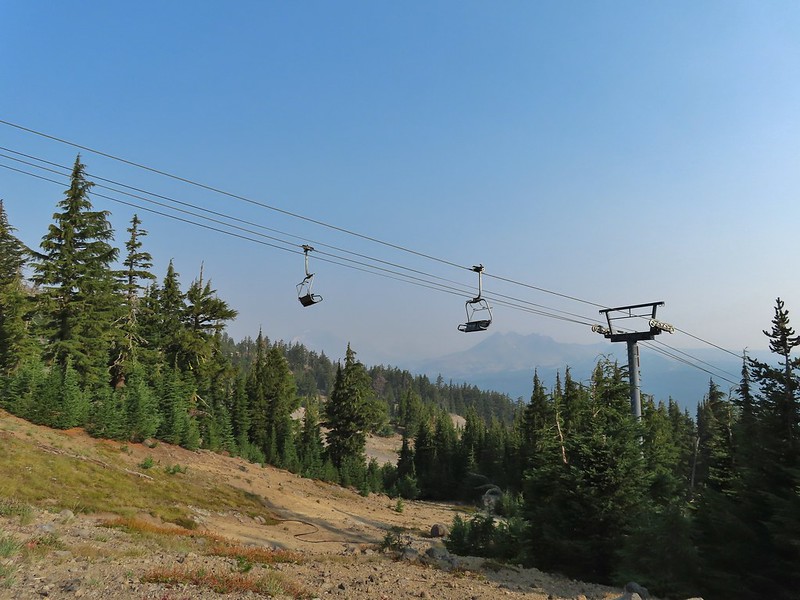 Another hazy look at the nearby mountains.
 South and Middle Sister through the haze.
 The top of Sunrise and the bottom of the Summit lifts.
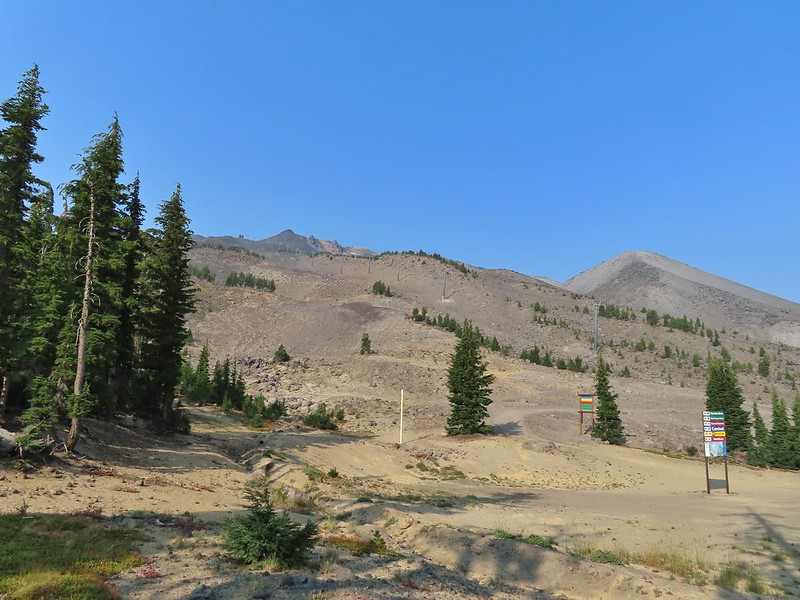 Looking up from the top of Sunrise.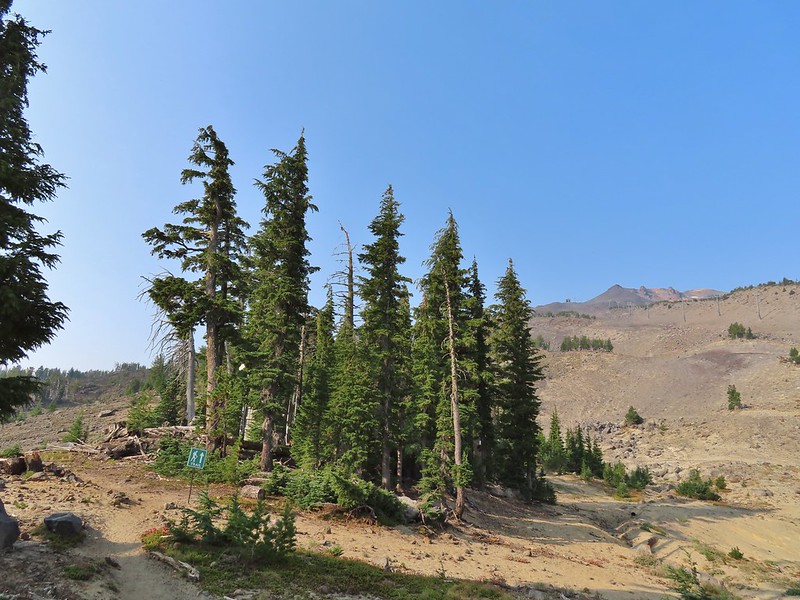


 A few saxifrage blossoms still left.
 Alpine buckwheat and paintbrush
 The first patch of snow we passed.
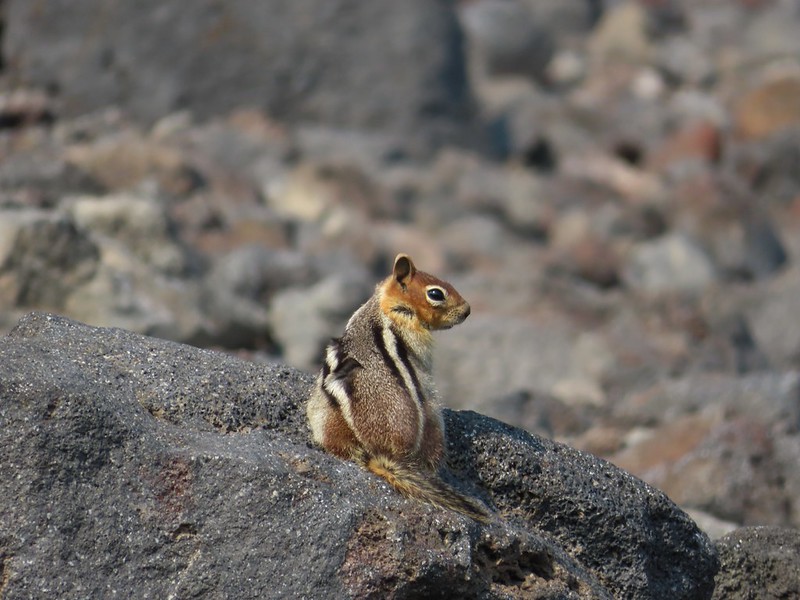 Golden mantled ground squirrel
 Tumalo Mountain (
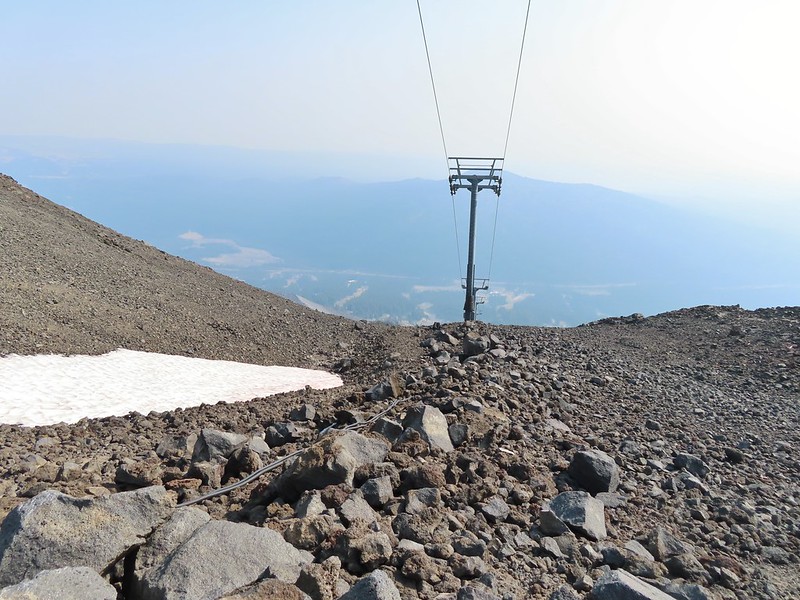 Looking down from beneath the Summit Express.
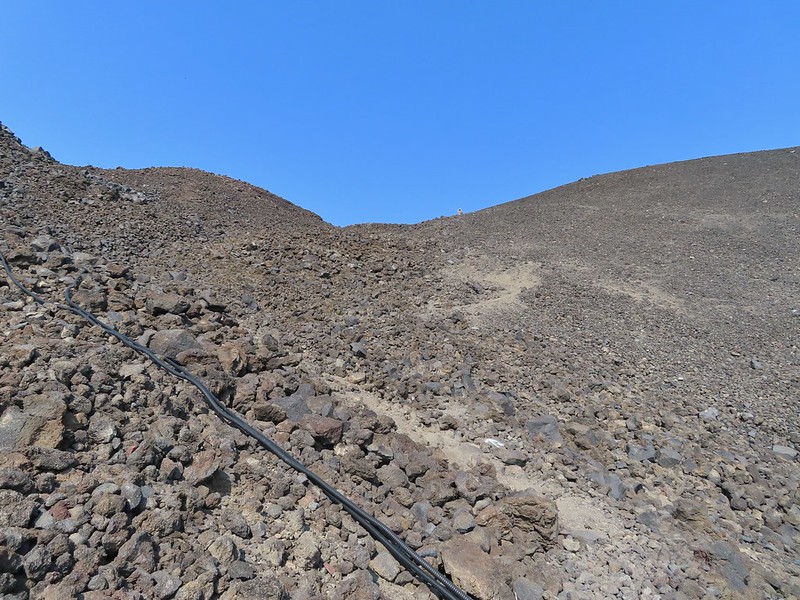 We could really feel the elevation affecting our breathing and by this point we were both sucking wind.
 Dwarf alpinegold
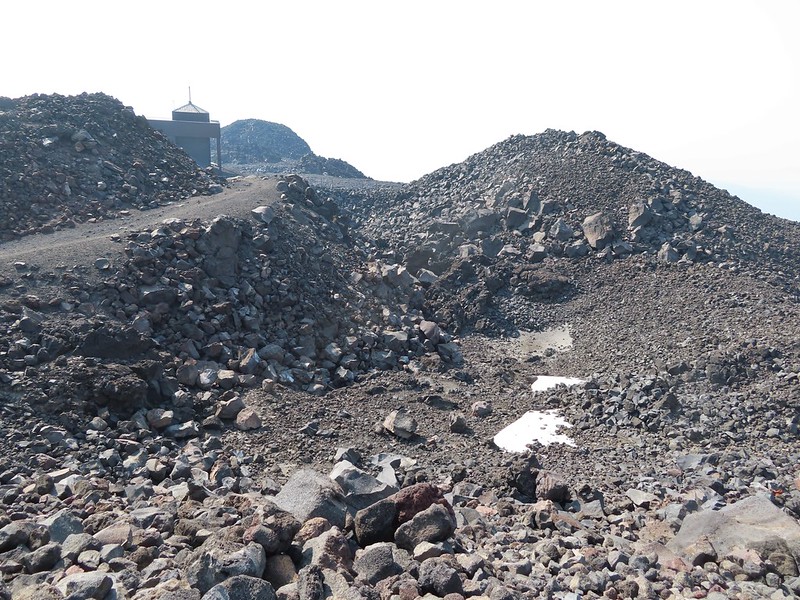 Looking back at the Summit Express.
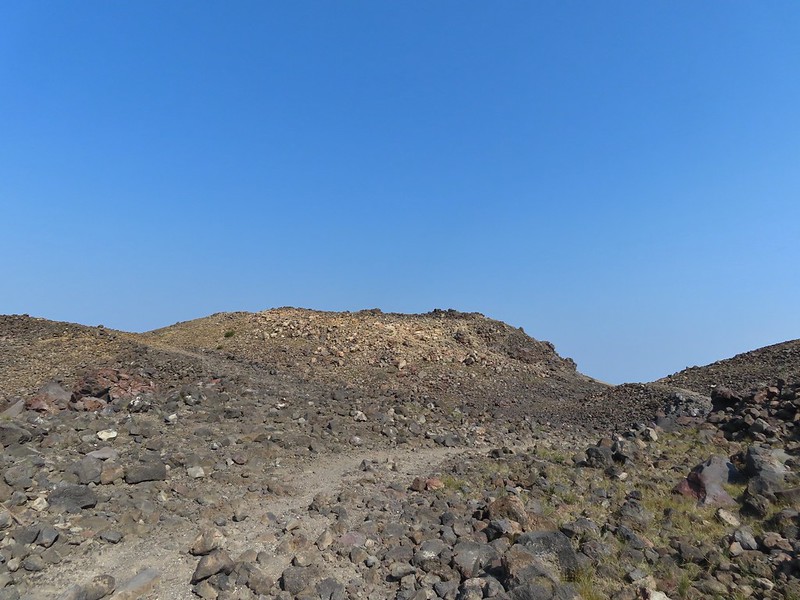 Heading for the high point.
 A mountain bluebird near the summit.
 South Sister and Broken Top with Sparks Lake (

 It’s our rule not to feed the wildlife but it was obvious that many don’t adhere to that LNT principle. I had to put my pack back on to avoid having a hole chewed through my pocket.
 View of the summit.
 Broken Top, the Pine Marten Lodge halfway up the mountain, the West Village Lodge and parking area below and Tumalo Mountain across the Cascade Lakes Highway.

 A little better view of Broken Top and Tumalo Mountain on the way down.
 Clark’s nutcracker

 Left leads up to the Pine Marten Lodge atop the Pine Marten Express, right to the West Village Lodge.
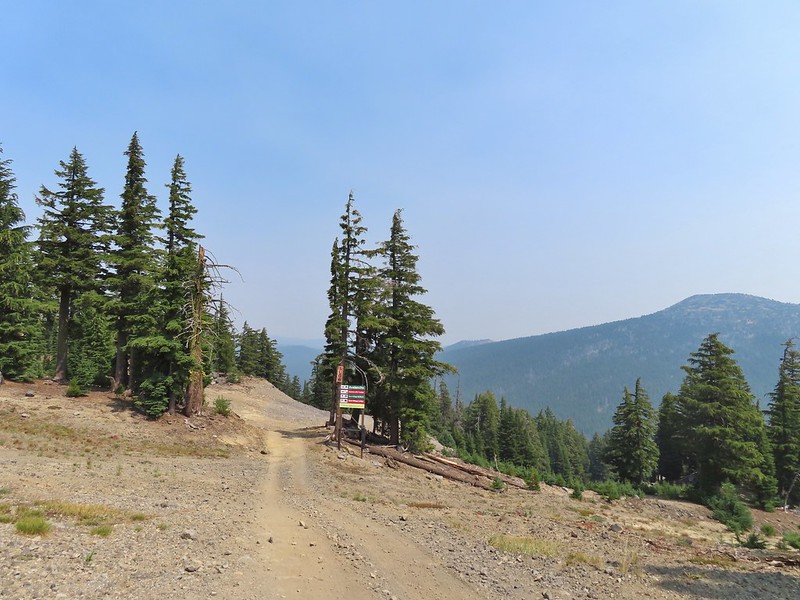 A decent look at Tumalo Mountain
 Warning sign for a bike crossing.
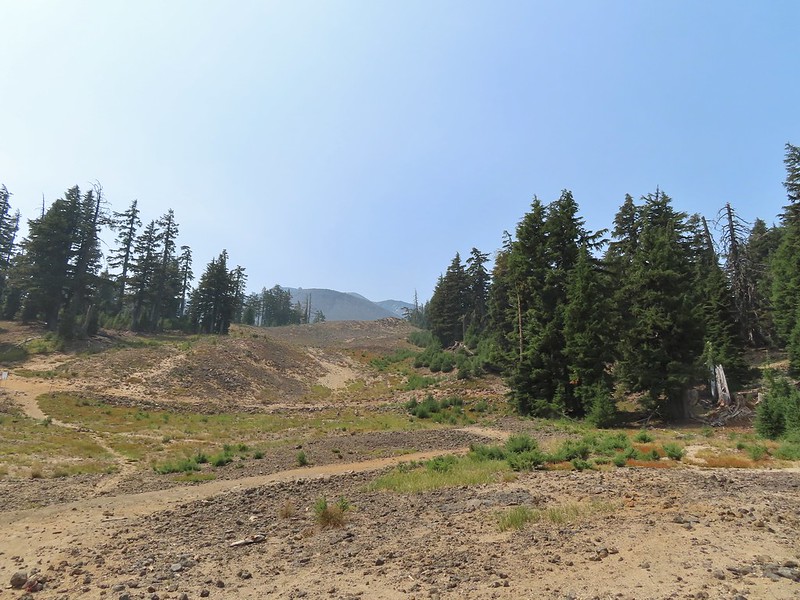 A look at some of the mountain bike trails and some haze moving in overhead.
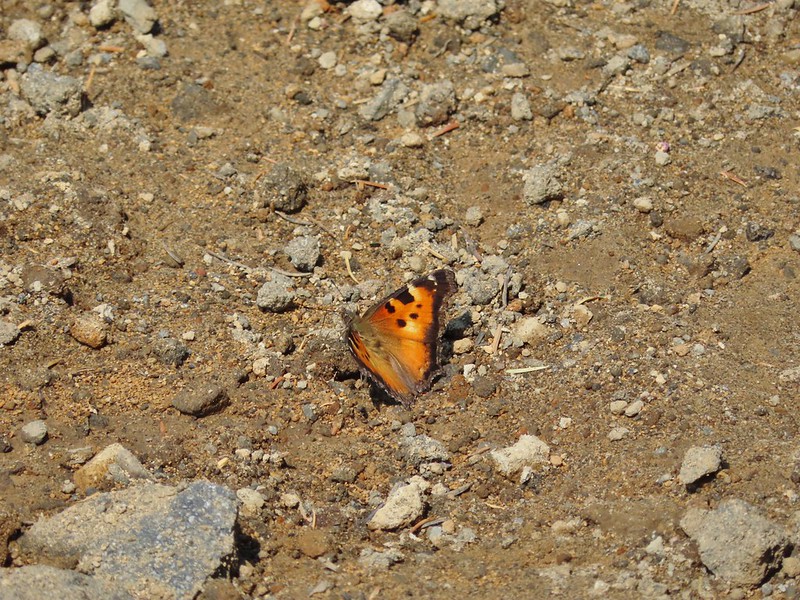 A tortoiseshell butterfly on the road.

 At least we could see the mountains a little better from here.

 The start of the “trail” at the end of the road.
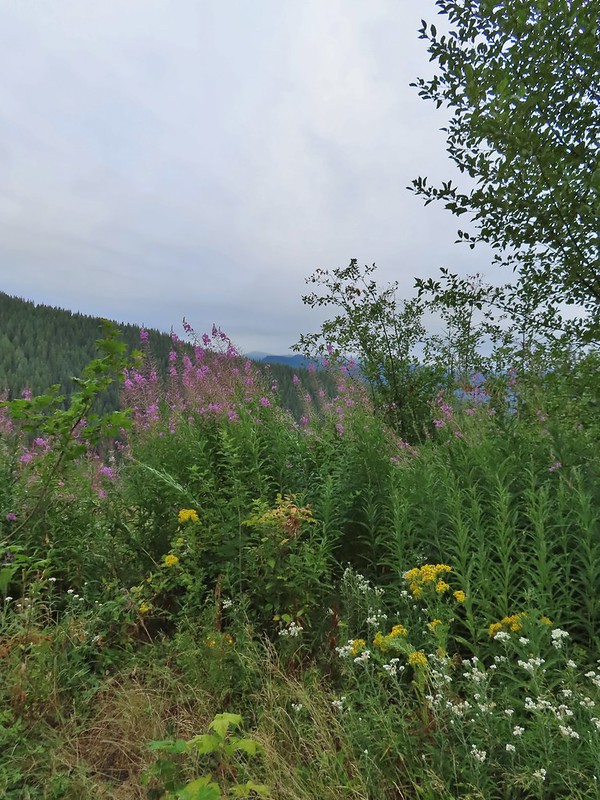 Wildflowers at the trailhead.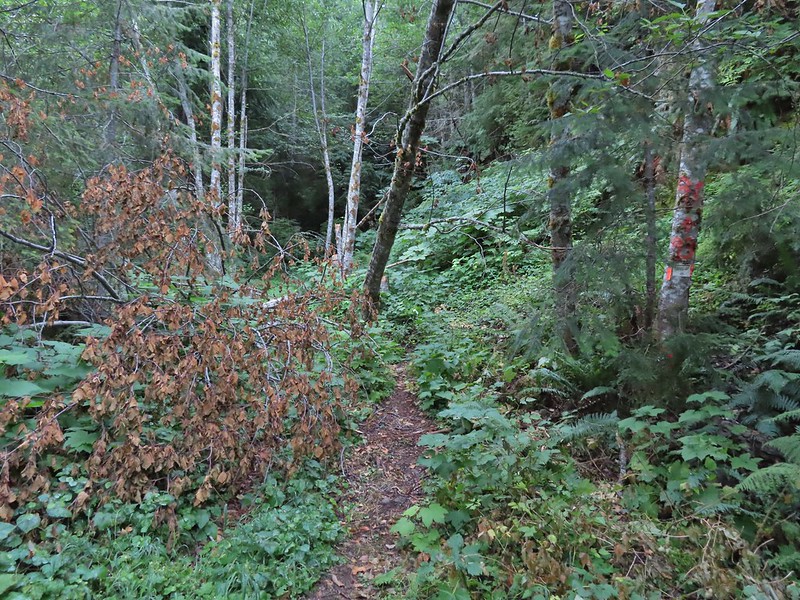


 Orange dot on a tree.
 Another orange dot.
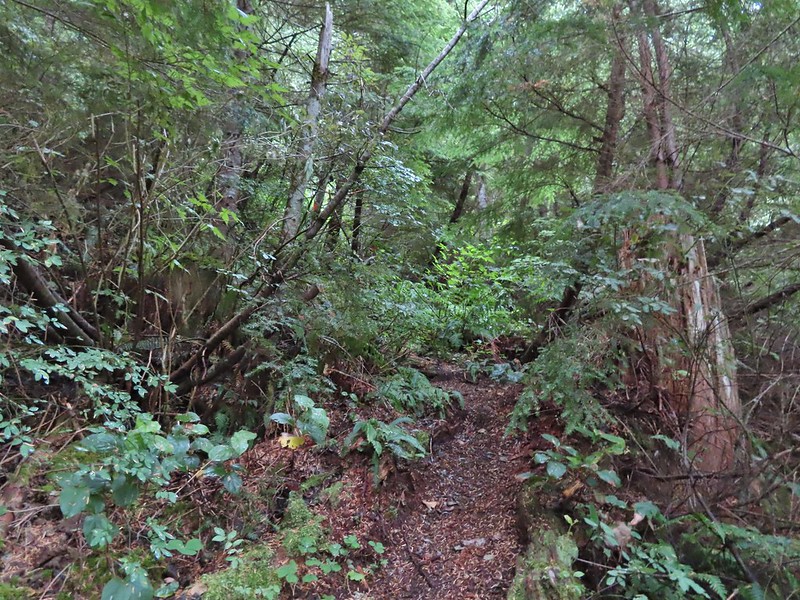
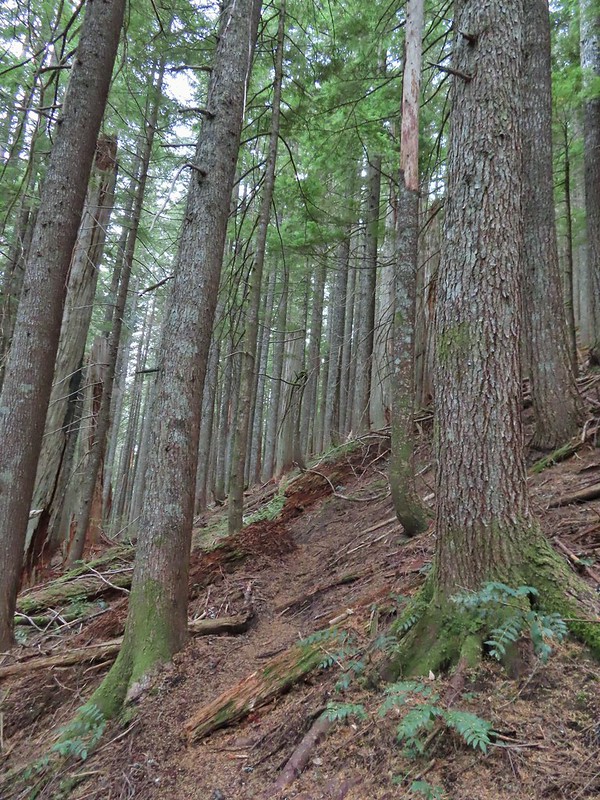 Occasionally there were short steep climbs but nothing as steep as the first part.
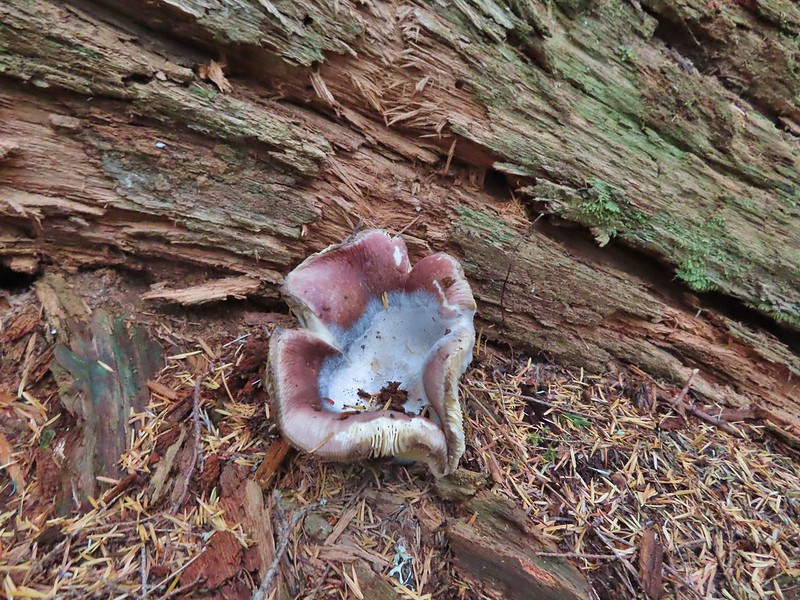 Mushroom
 Pink flagging on the right related to the timber sale.
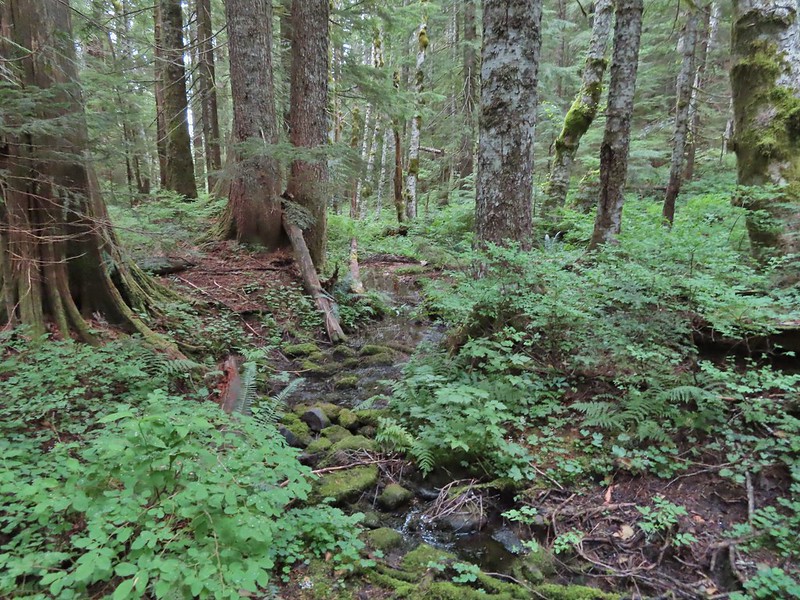 Water in a creek bed.
 Mushroom amid bunchberry leaves.
 Red huckleberries
 Timber sale boundary sign on the right with a flag.
 More huckleberries.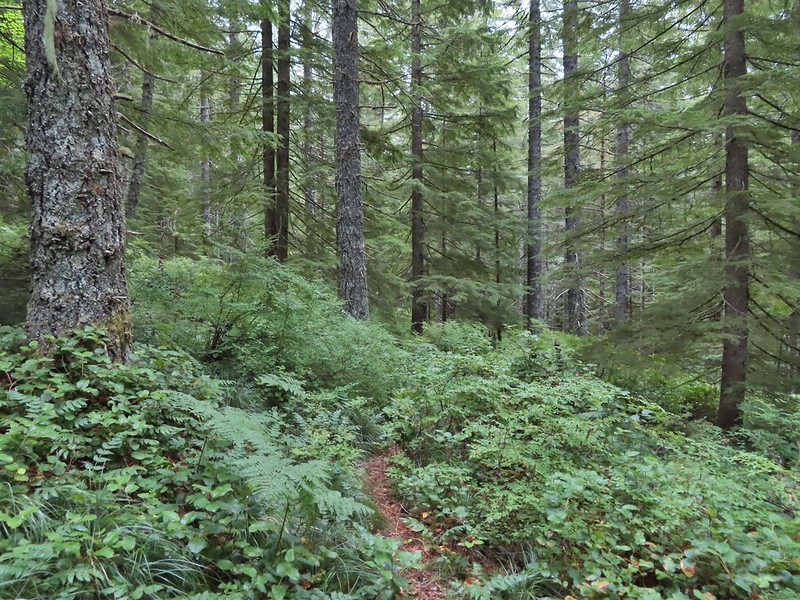


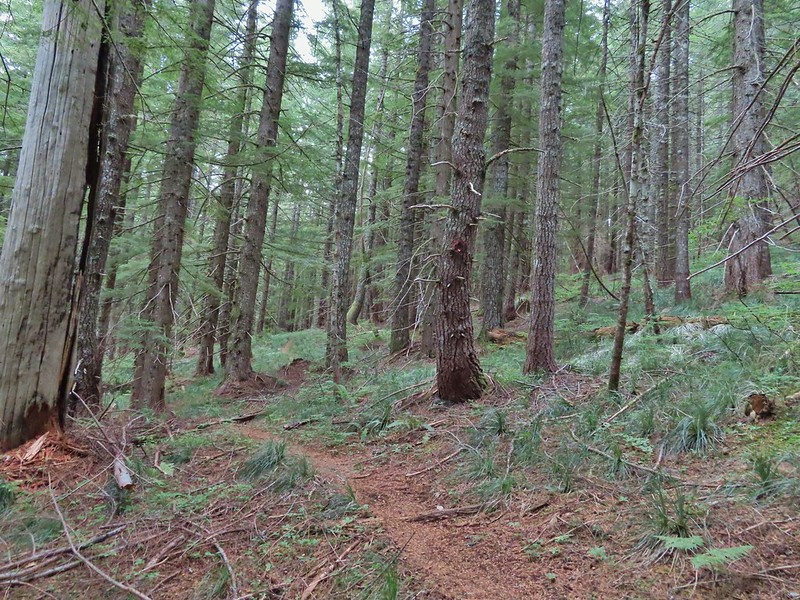

 Bluebell of Scotland
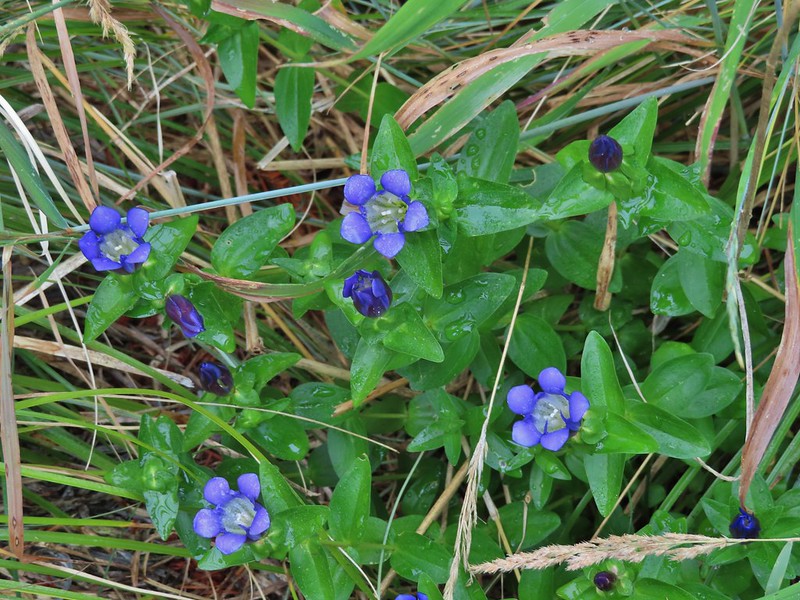 Gentian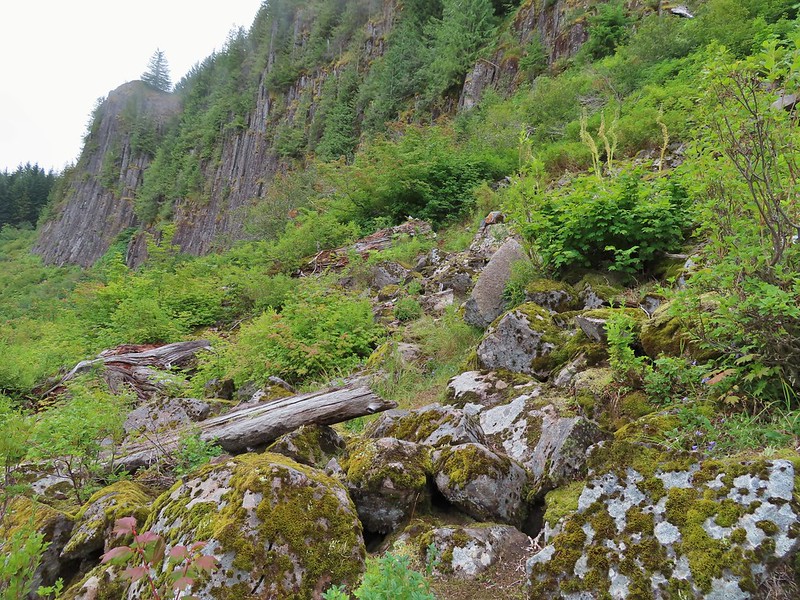
 Pearly everlasting
 The view north, not much to see.
 Mount Mitchell from the path.
 Paintbrush
 Gentian
 Penstemon
 aster
aster Oregon sunshine
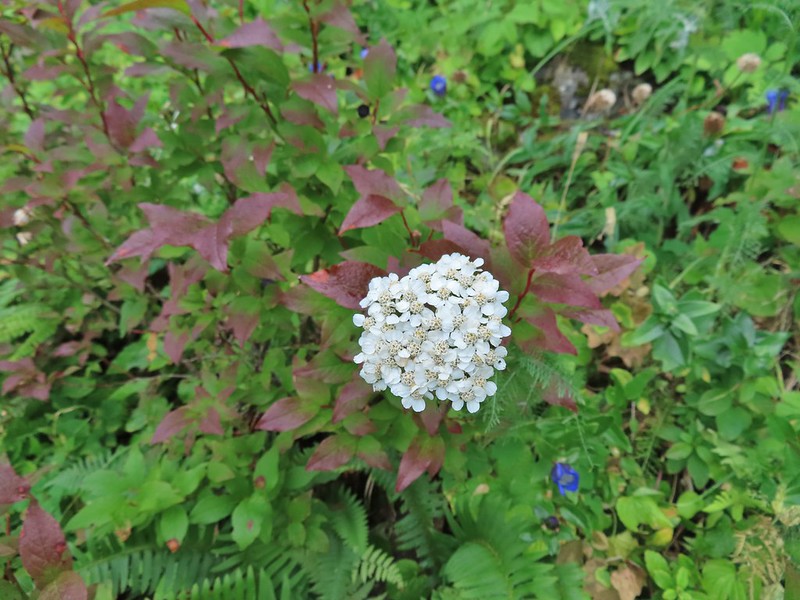 Yarrow
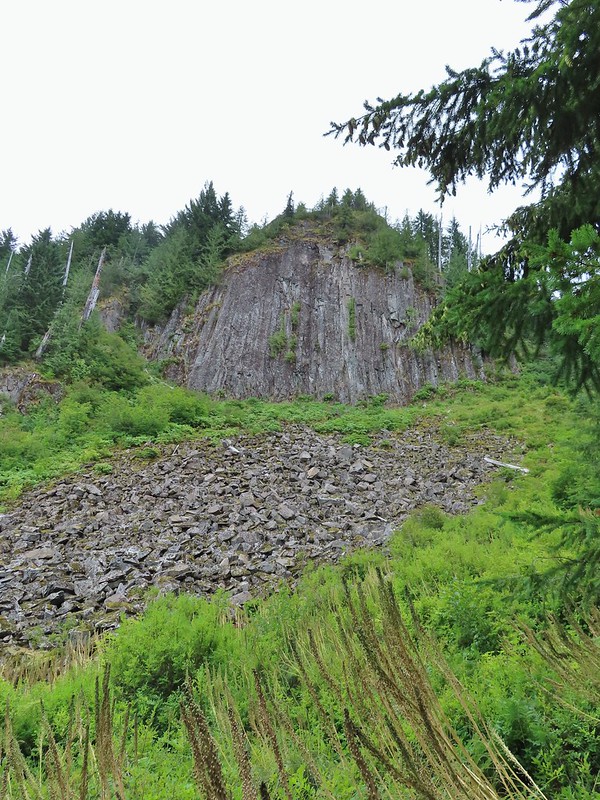
 The trail nearing the end of the basalt cliffs.
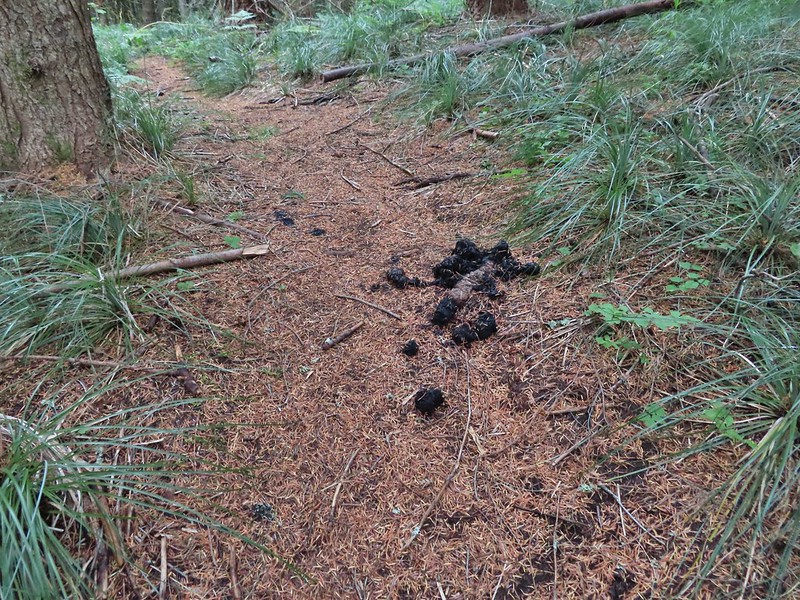
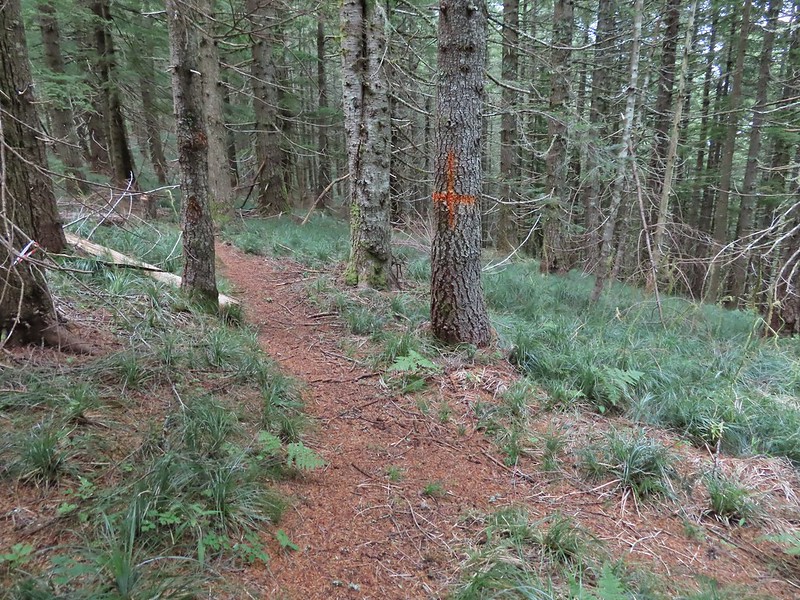
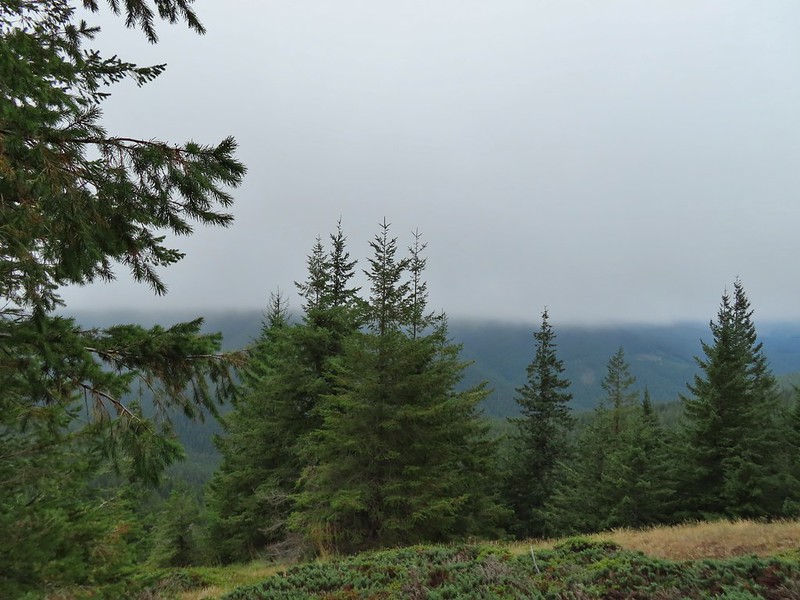 The view south across North Siouxon Creek was the same as it had been to the north.

 It was apparently a good beargrass year along the trail.

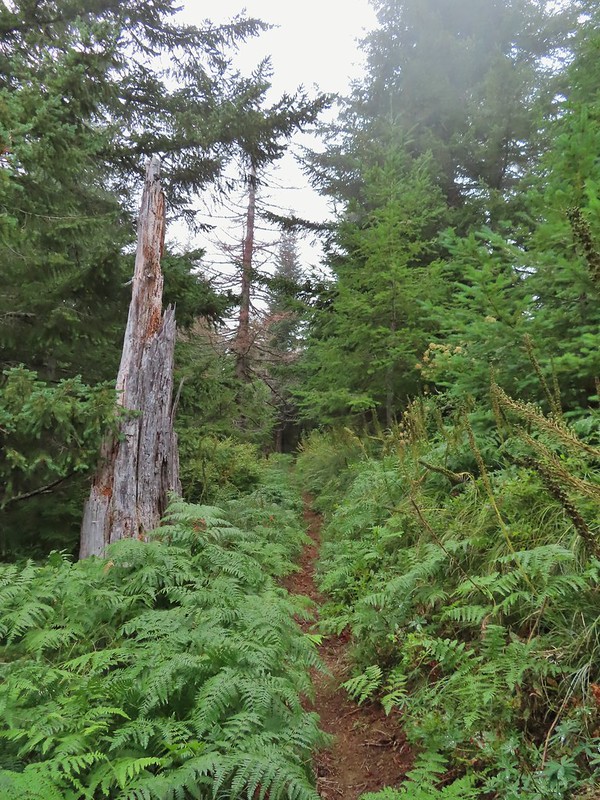

 Fireweed amid the beargrass.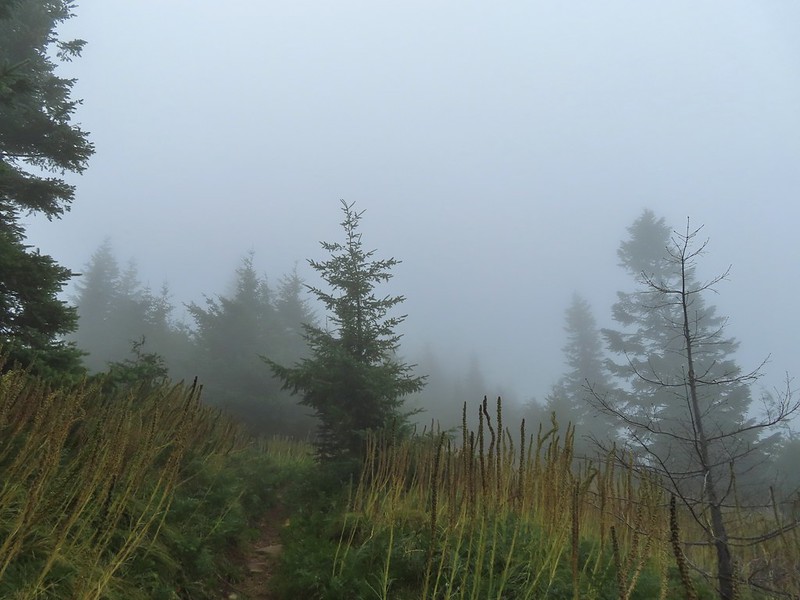


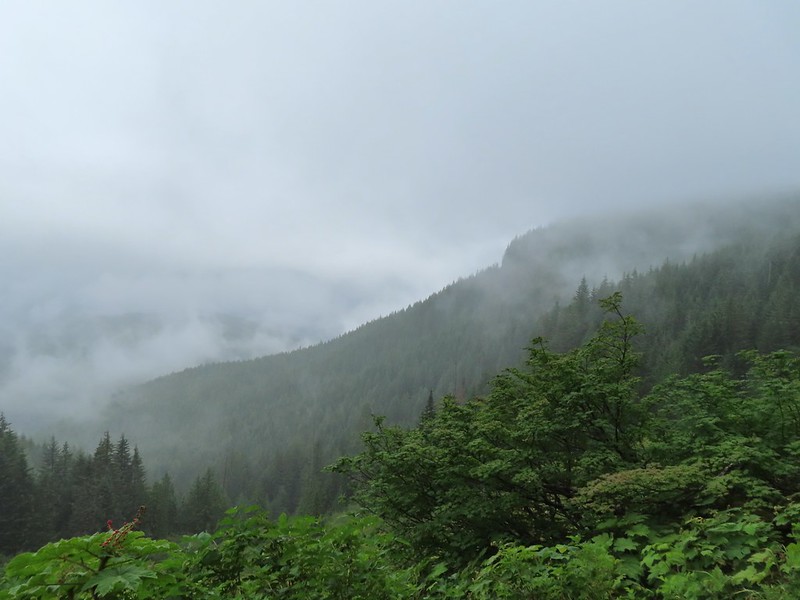
 Mt. St. Helens is out there somewhere.
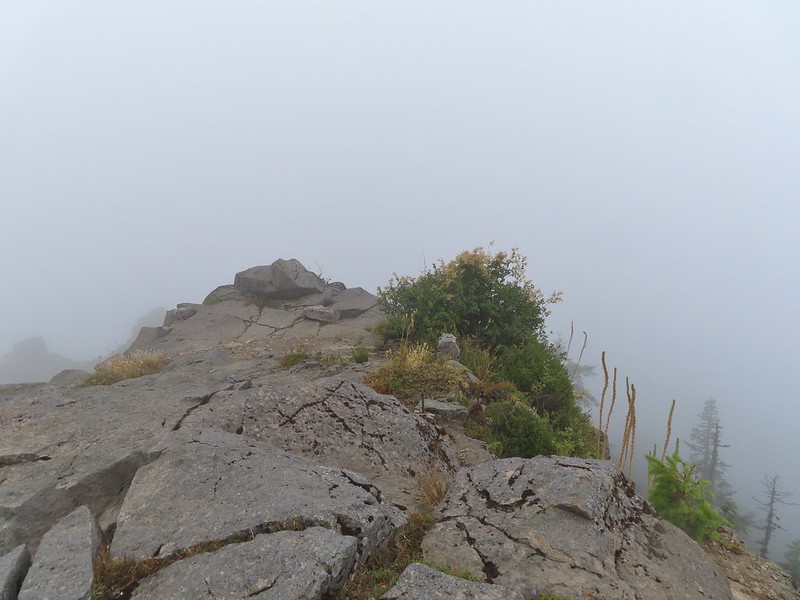 Looking east over the site of the former lookout.
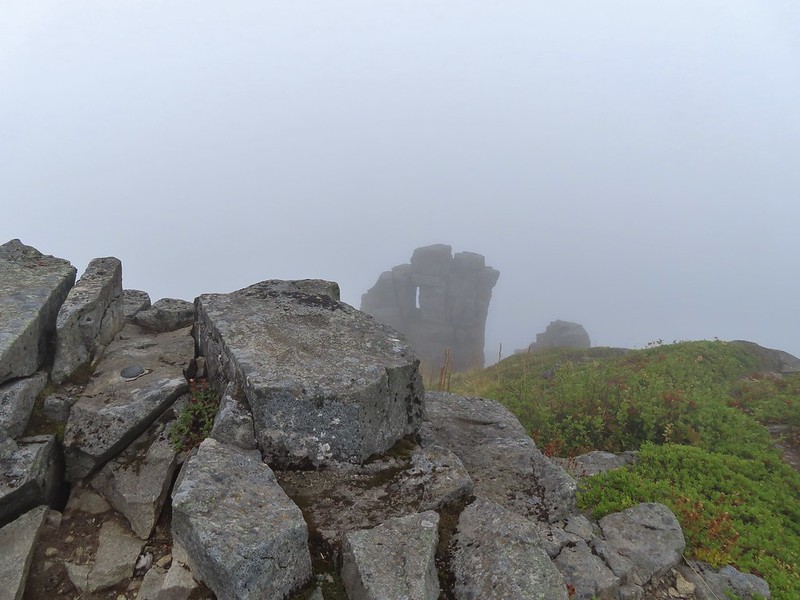 The survey marker and one of several neat rock formation near the summit.
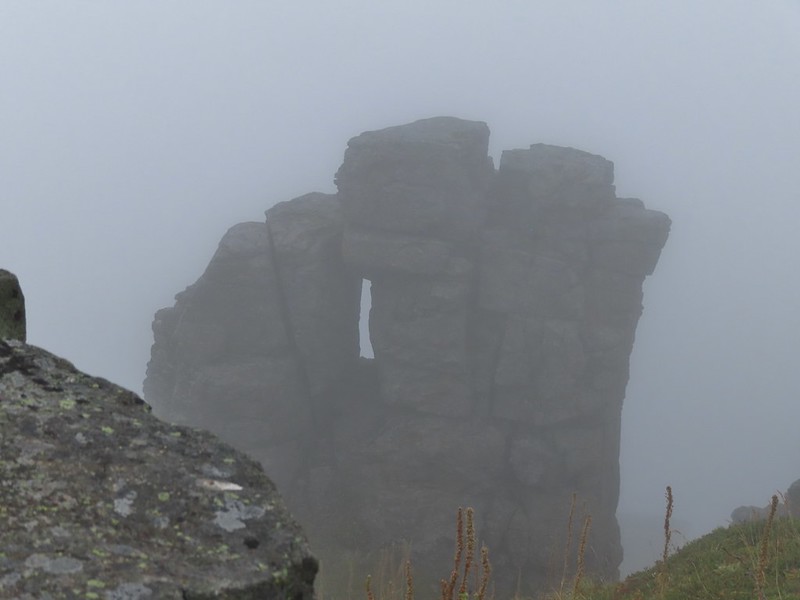 Closer look at the formation.

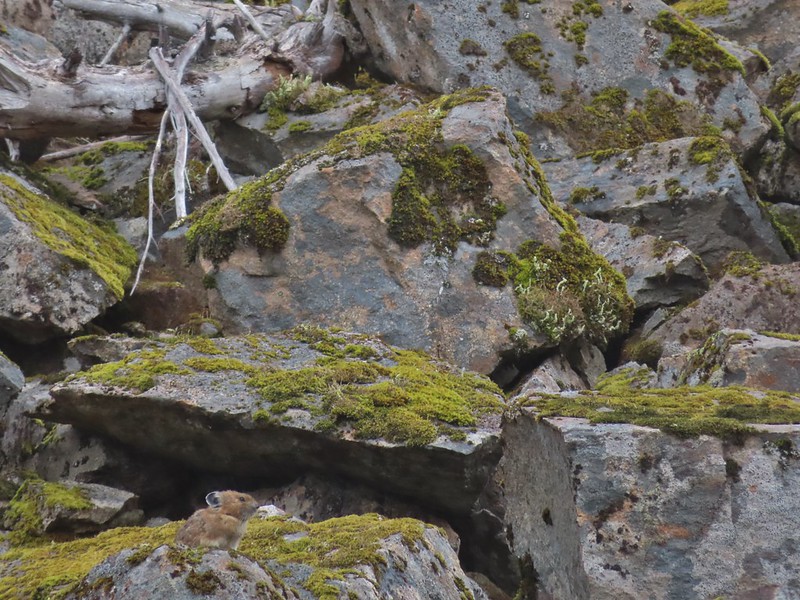
 A second picture after seeing it move again.
 The pika popped back out below the larger rock that it had run behind.
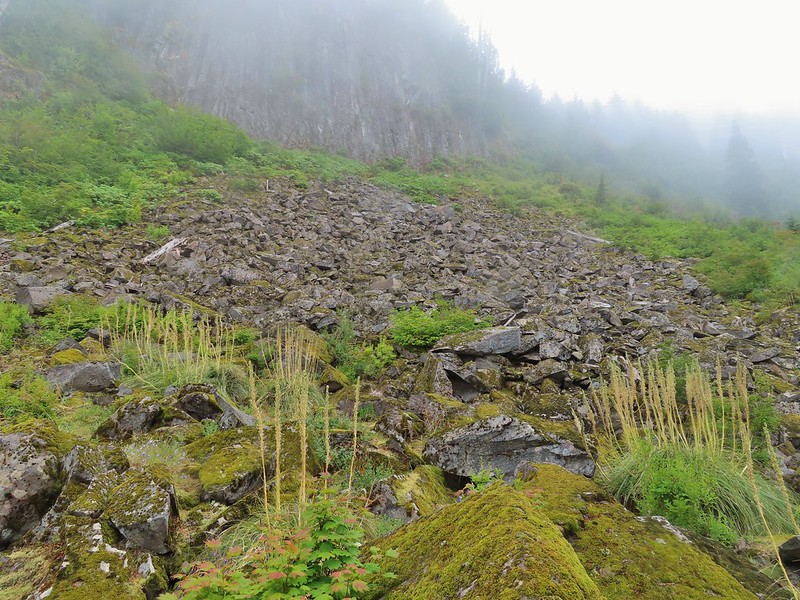 A non zoomed in photo, the pika is still in the same spot as in the two photos immediately above.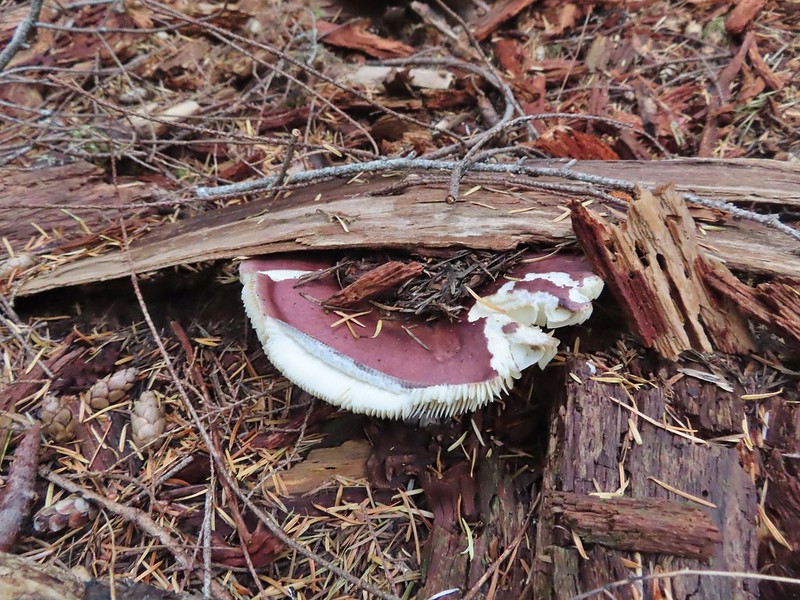
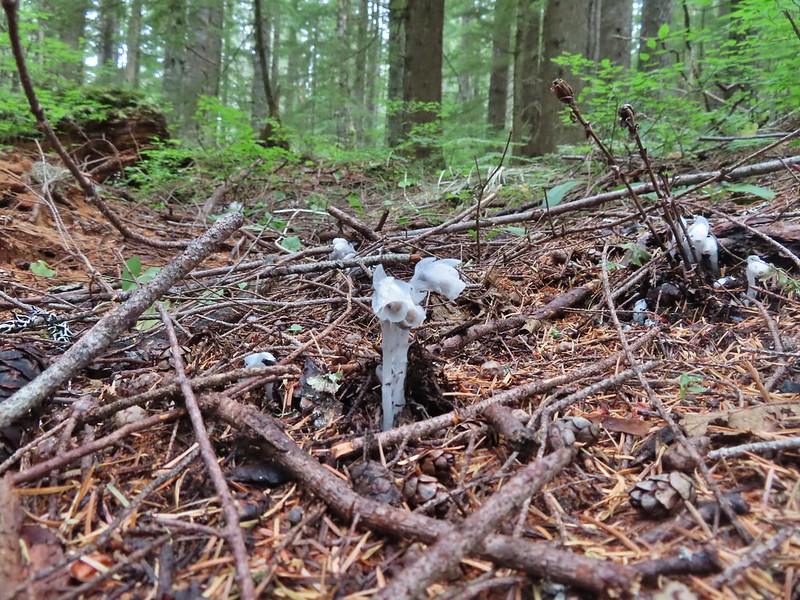 Spotting this patch of ghost pipe emerging from the forest floor was another highlight on the return hike. The hike is reportedly 7.3 miles with a little over 2000′ of elevation gain but Heather’s GPS put us at 7.8 miles and mine registered 8.3 miles. (If you’ve read other posts you know that Heather’s unit used to almost always show the higher mileage but lately mine has been.) Whatever the actual mileage it was a good hike through a very nice forest which sadly, barring a last minute successful change, may not be possible in the future.
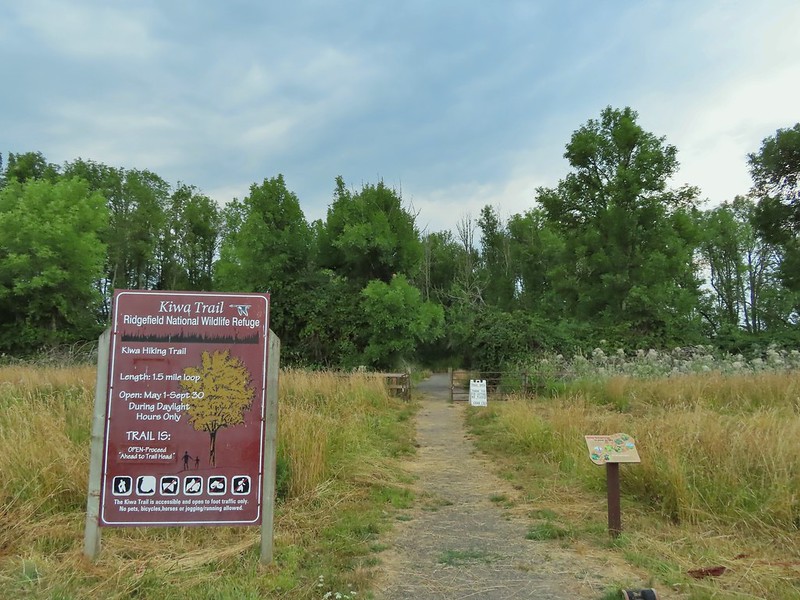
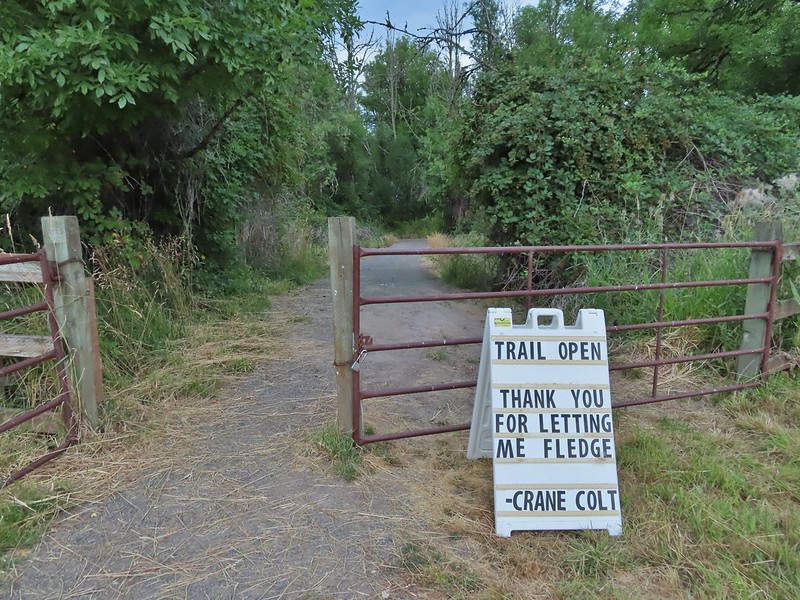
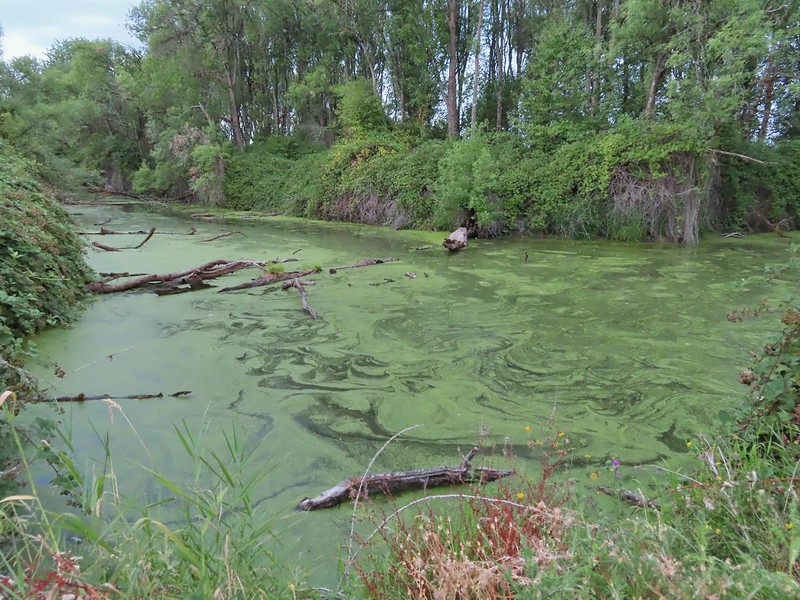 Bower Slough
 Ducks in the slough.
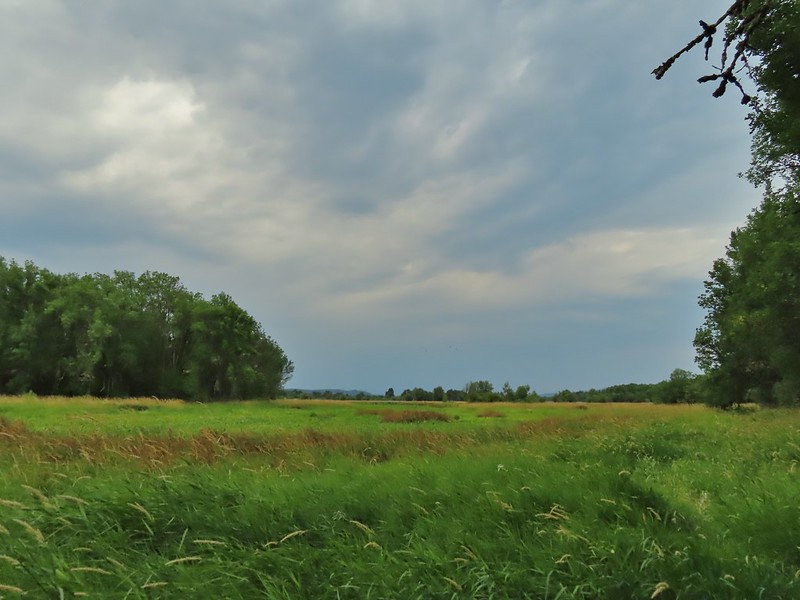 South East Lake which was mostly dried up at this point in the year.
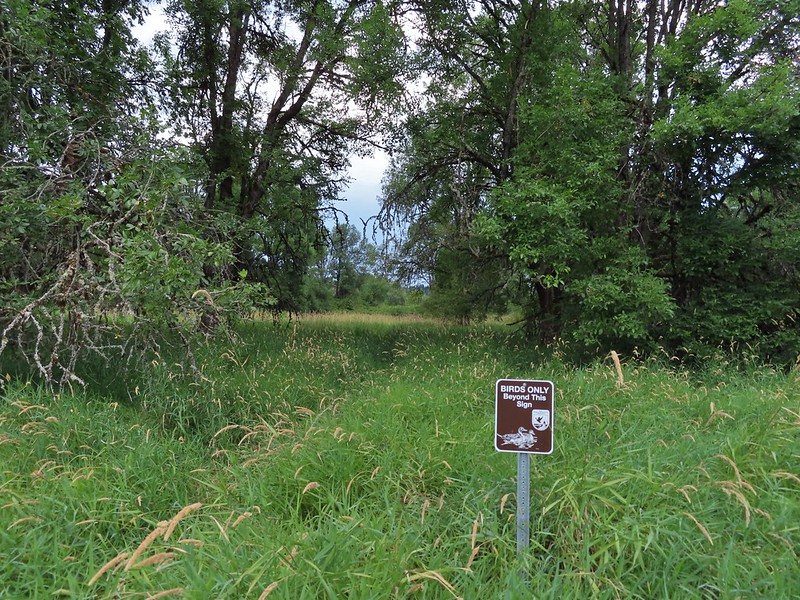 Apparently deer can’t read based on the trail leading past the sign.
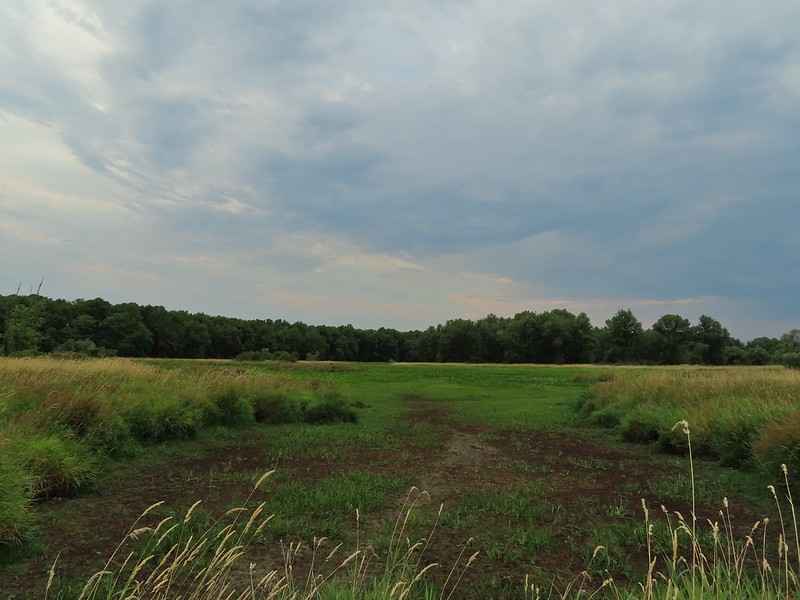 The bed of South East Lake
 Some moisture passing through this morning.
 Dove
Dove Walking along a cleaner looking portion of the slough.
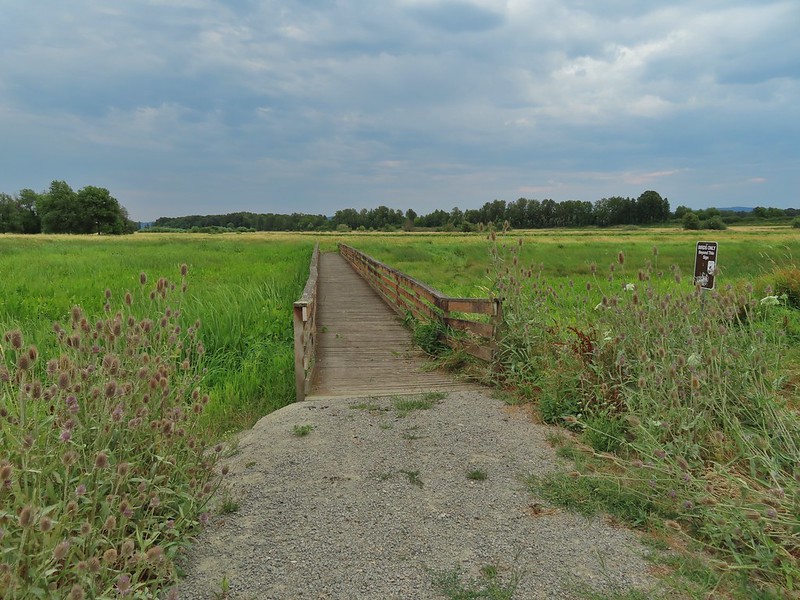 Bridge/boardwalk between Middle Lake (left) and West Lake (right).
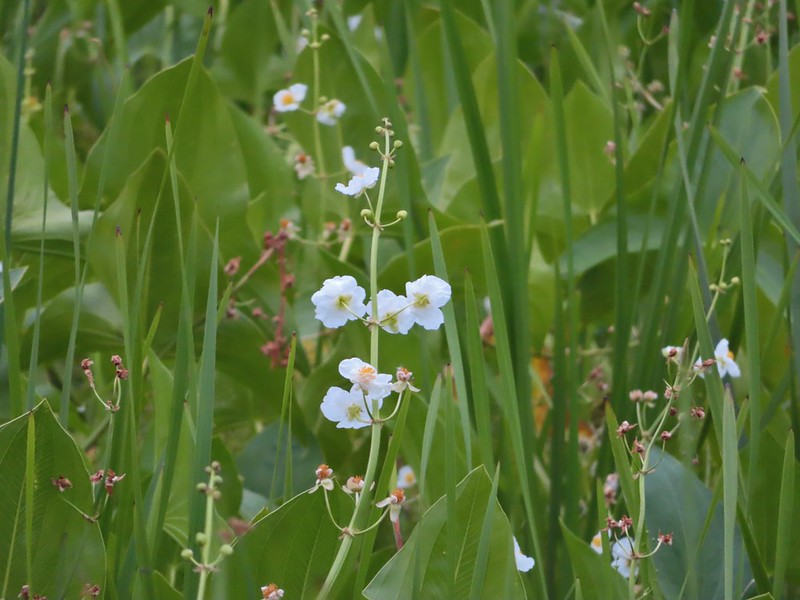 Wapato blossoms
 Lots of ripening blackberries.
 Second crossing of Bower Slough near the end of the loop.


 Great blue heron
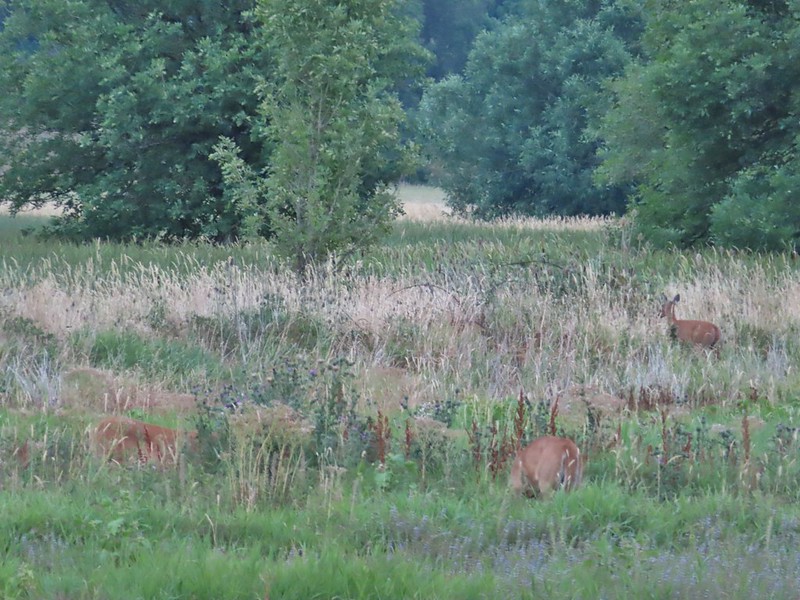
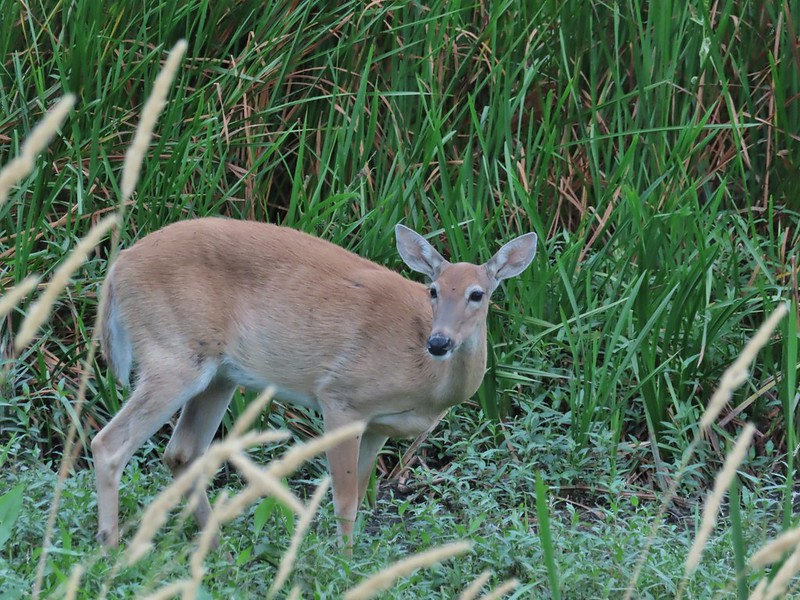 Doe
Doe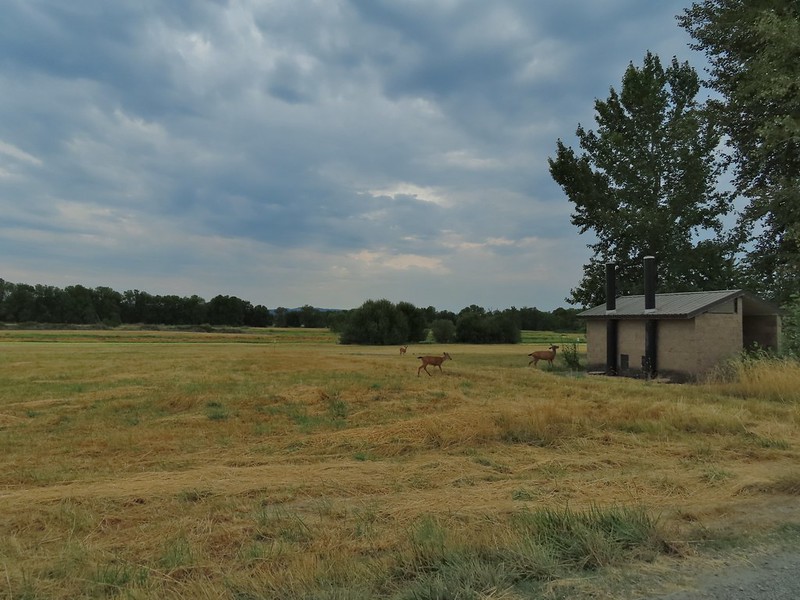 Deer near the restrooms/fee booth.

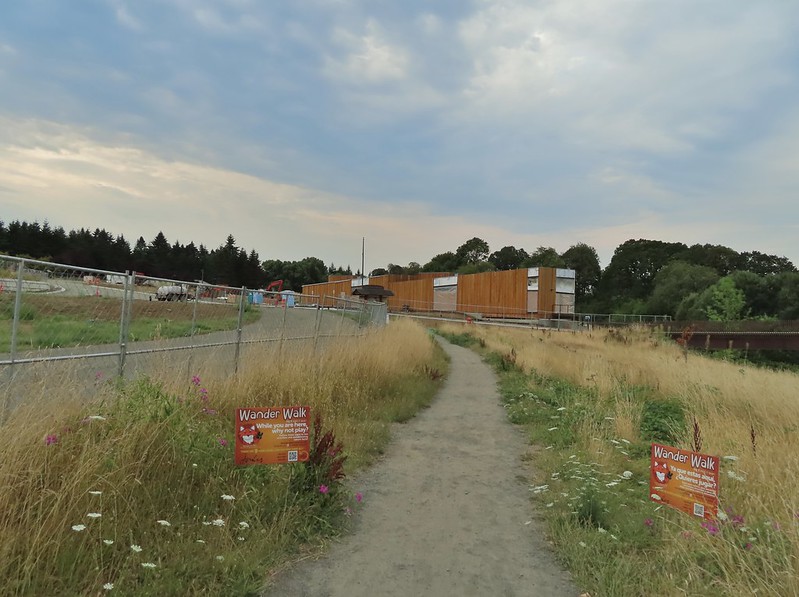
 <
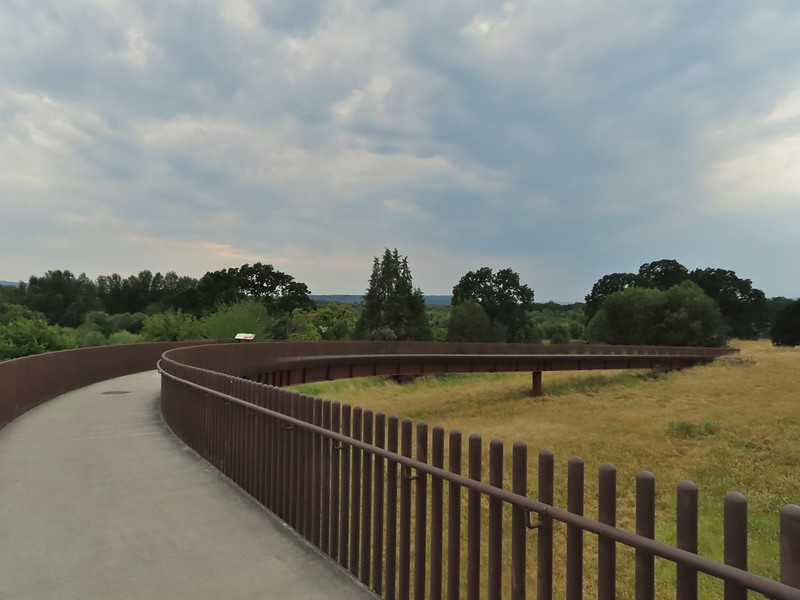
<
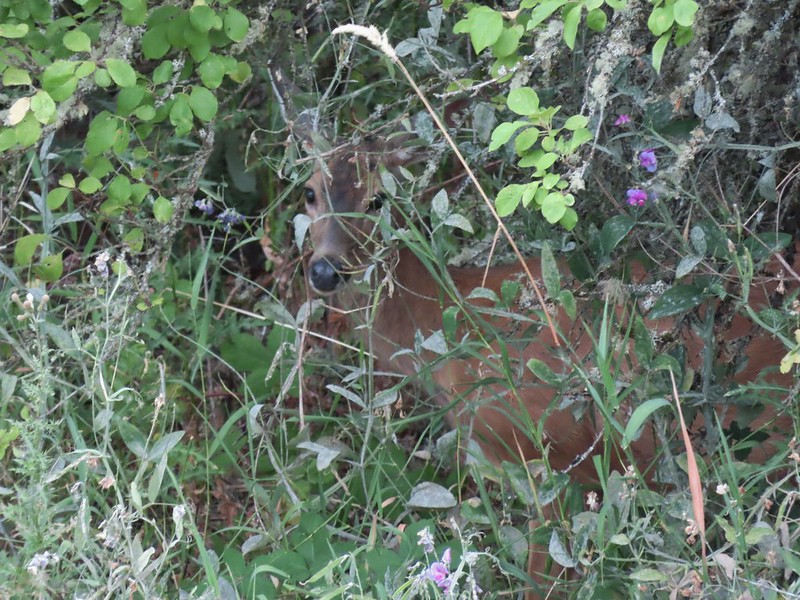 Doe in the brush near the tracks.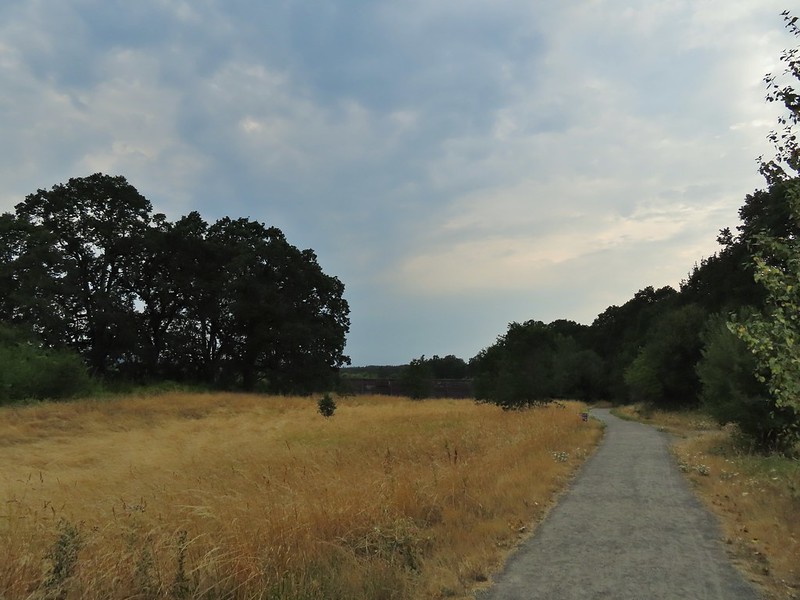


 Carty Lake Trail and Duck Lake
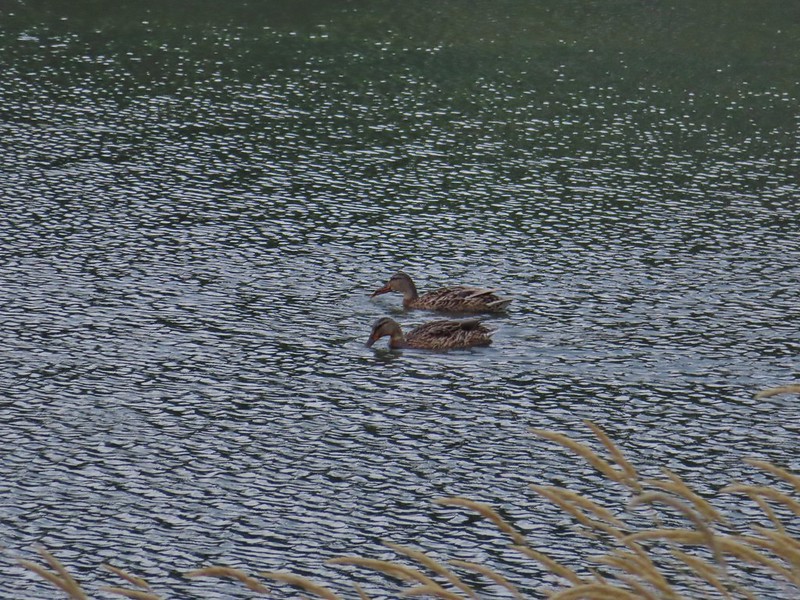 Ducks on Duck Lake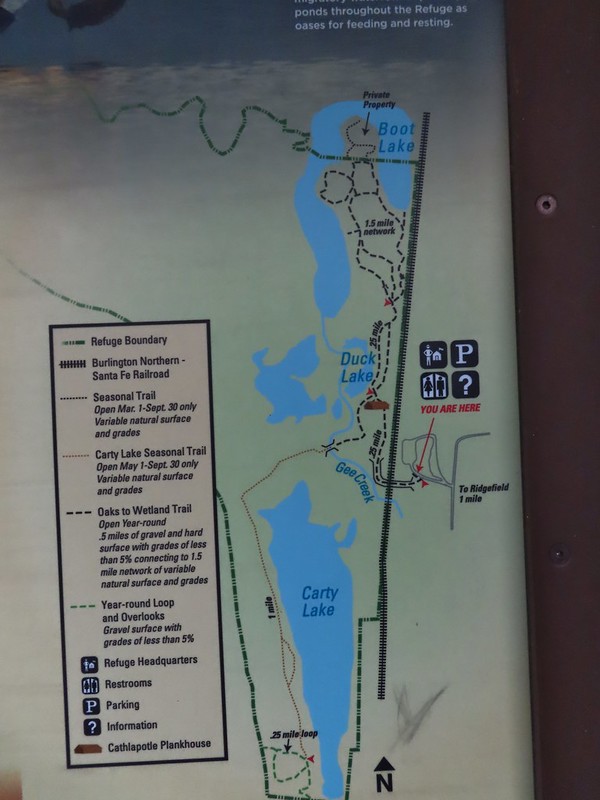
 Paved and dirt options allow for a mini-loop near the start, later the trails are all dirt.

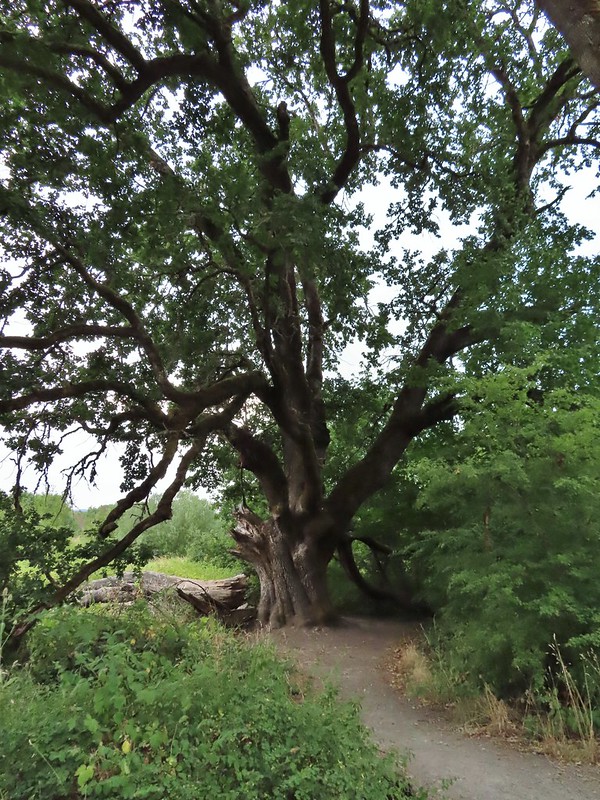 Big oak
 One-way pointers for a second loop.
 The trails can reportedly be quite muddy during the wet season but the current drought meant a hard packed surface.
 Bright red poison oak climbing some of the tree trunks.
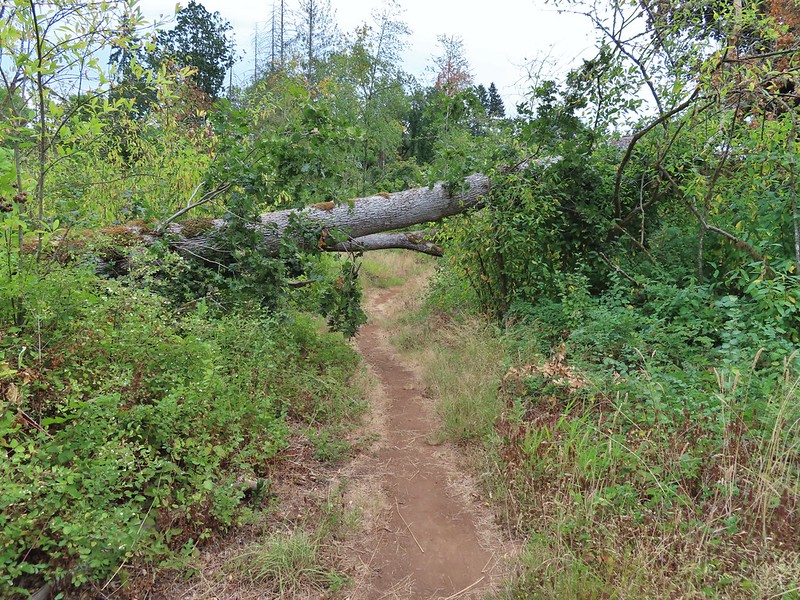 A bit of a low bridge.
 Spotted towhees
 Onward toward Carty Lake.
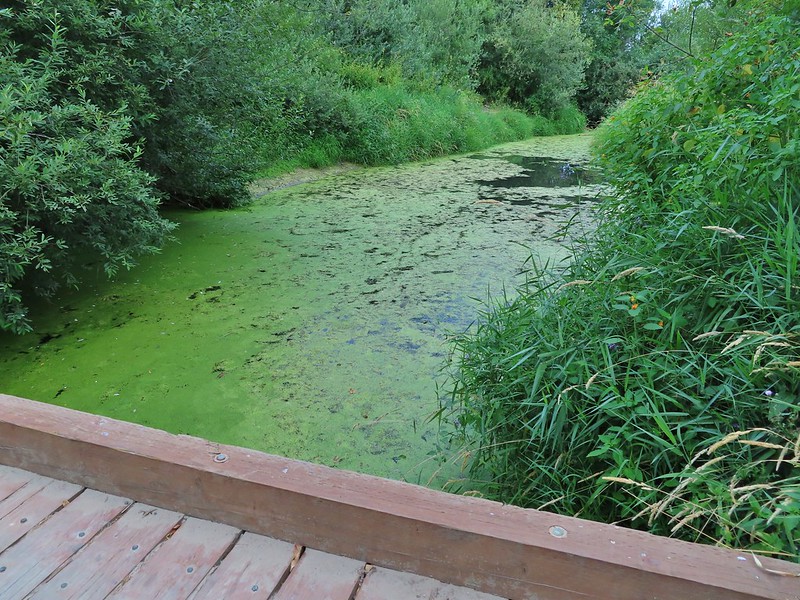 Gee Creek
 Orange jewelweed along Gee Creek.
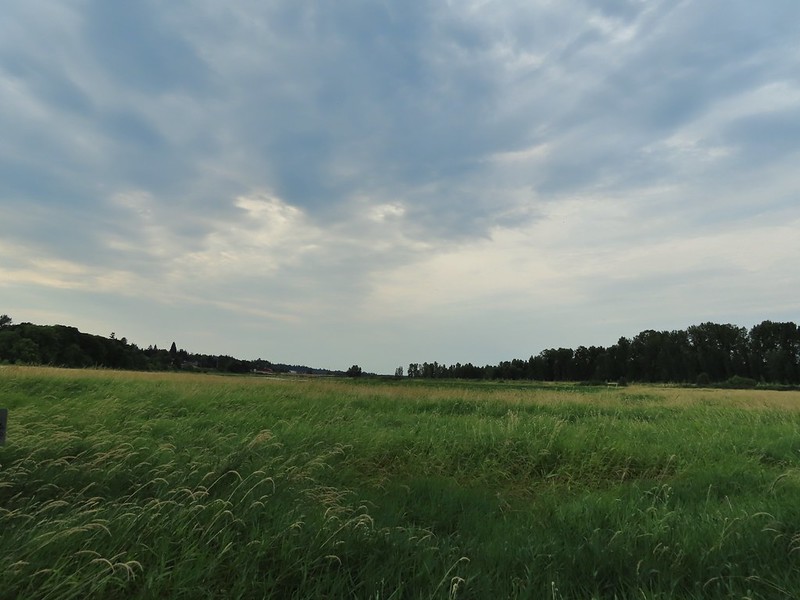 Carty Lake also lacking much water.
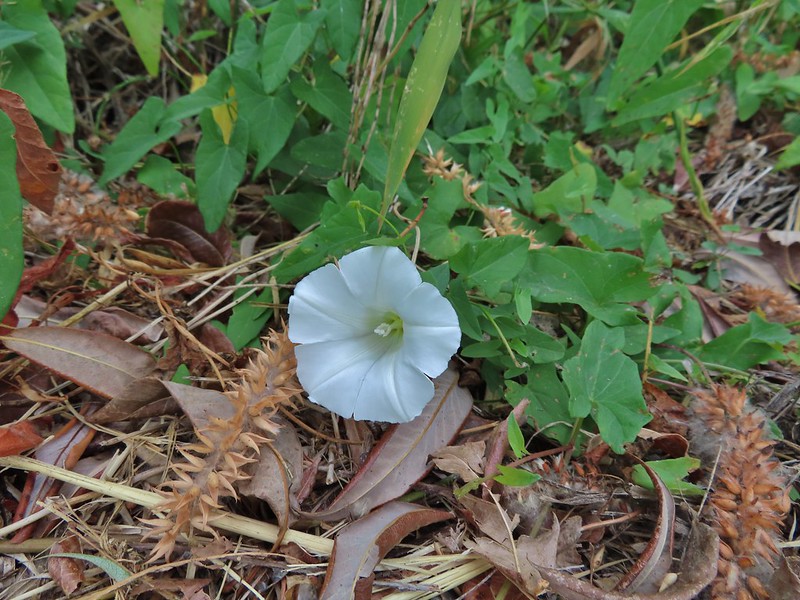 Bindweed
 A primrose
 Wapato at Carty Lake
 The trail turning south toward the Port of Ridgefield.


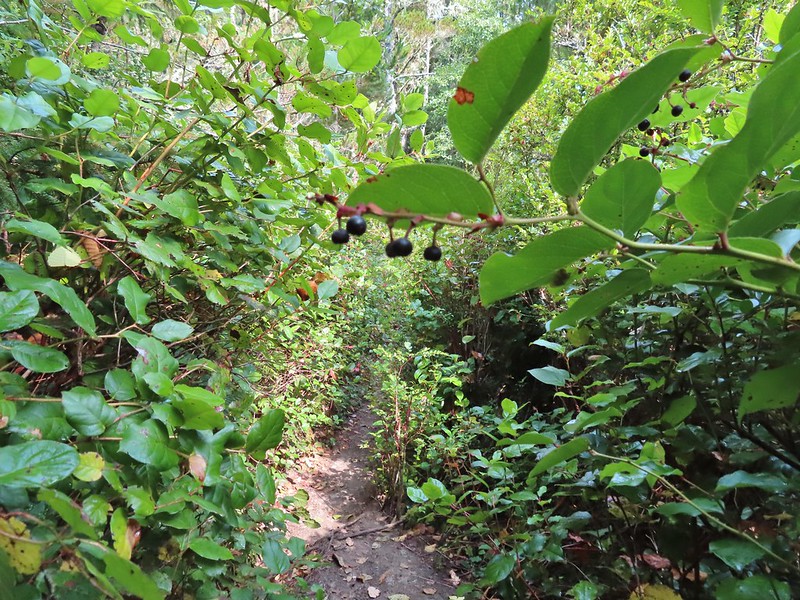 Lots of salal along the trail.

 Map near the platform.
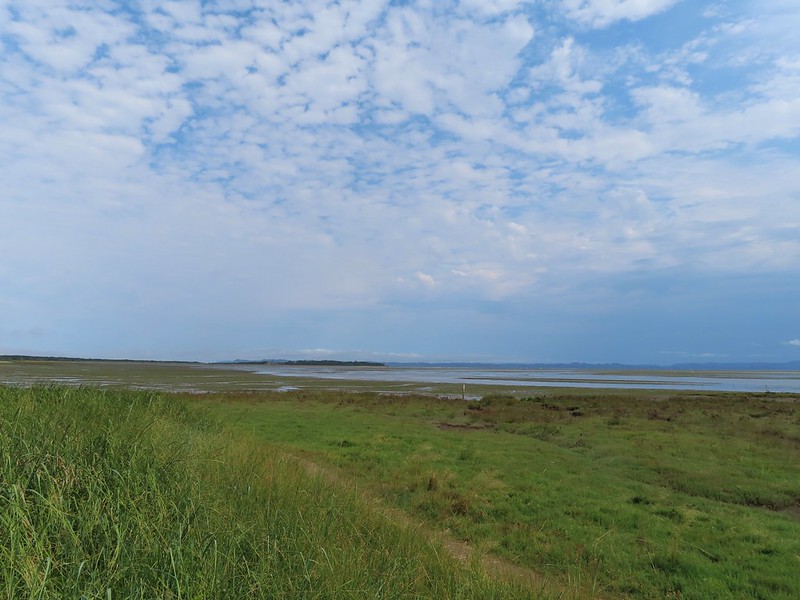
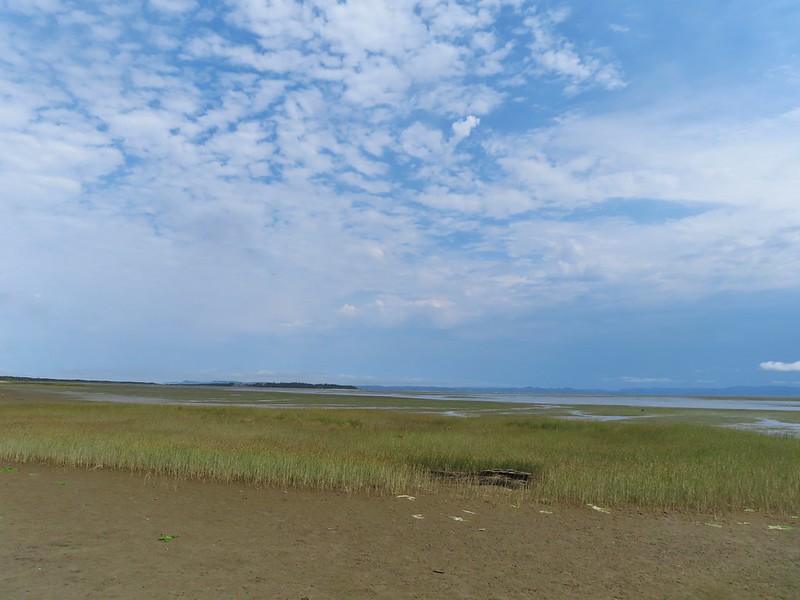 High tide had been between 7 and 8am so the water was retreating from the Bay.
 Looking south.
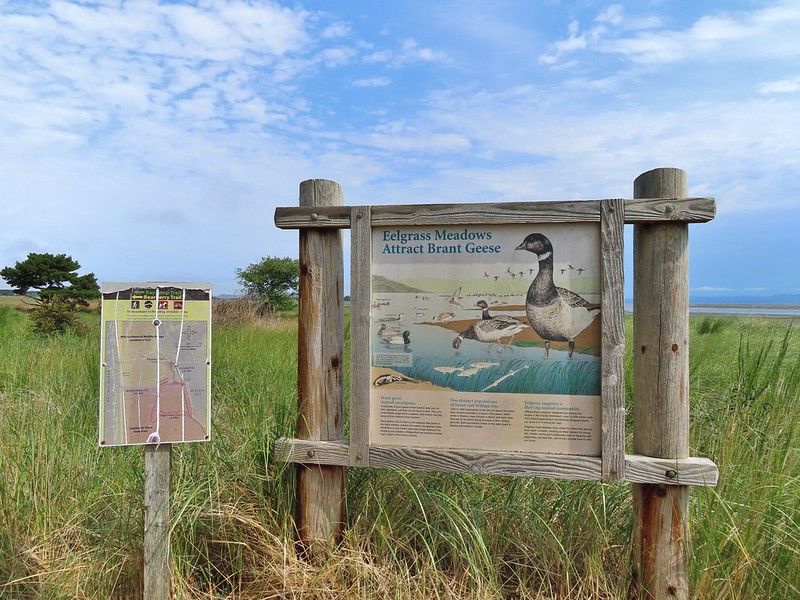


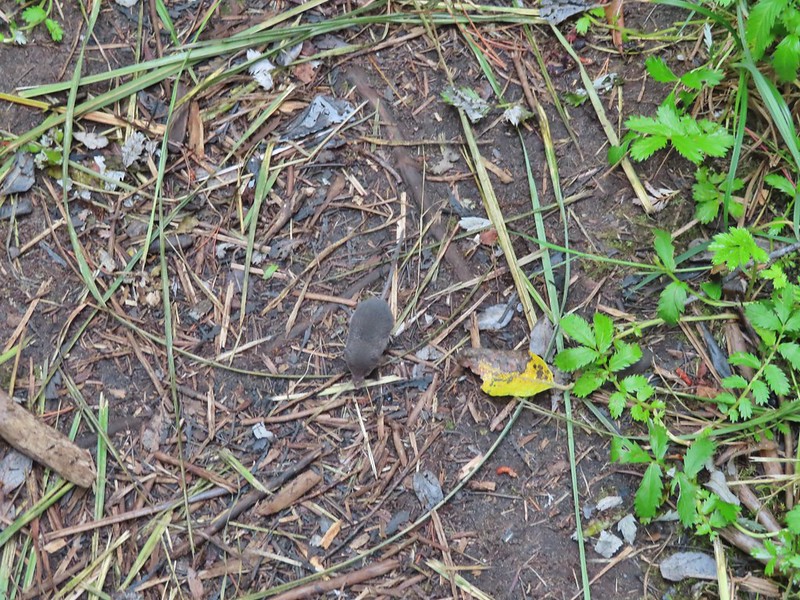
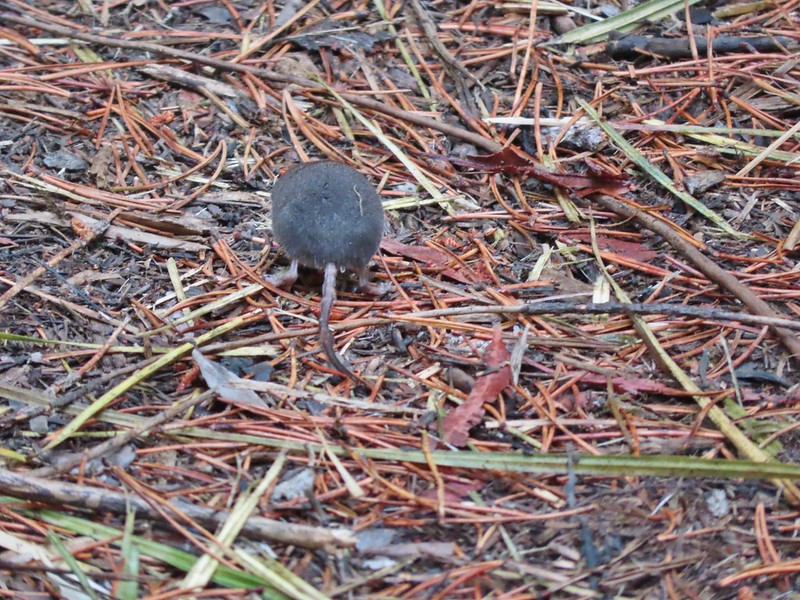


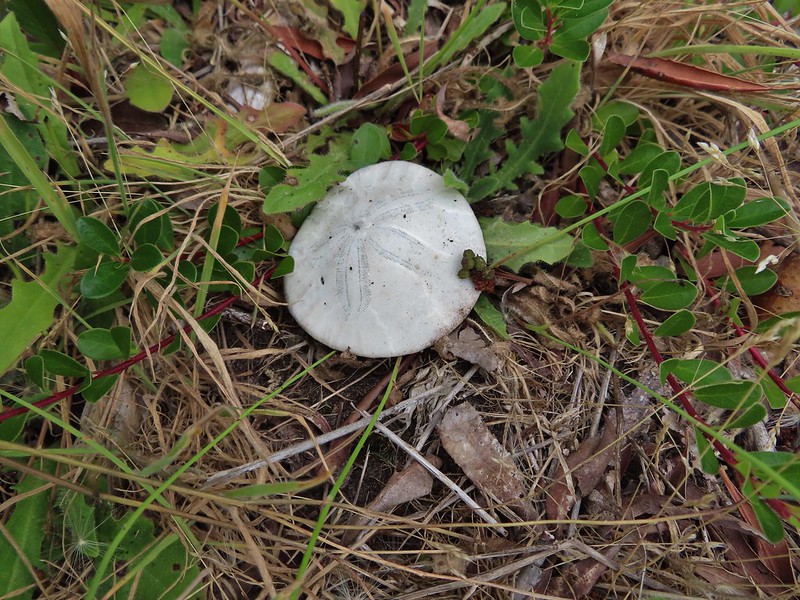
 Looking back along the trail.
 Cresting the dune.
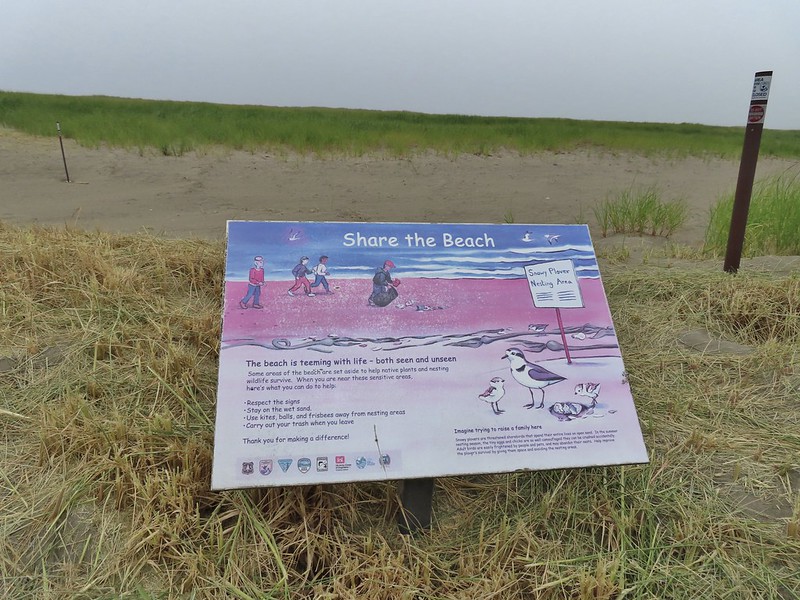 Snowy plover sign, a common sight along the beaches in Oregon too.
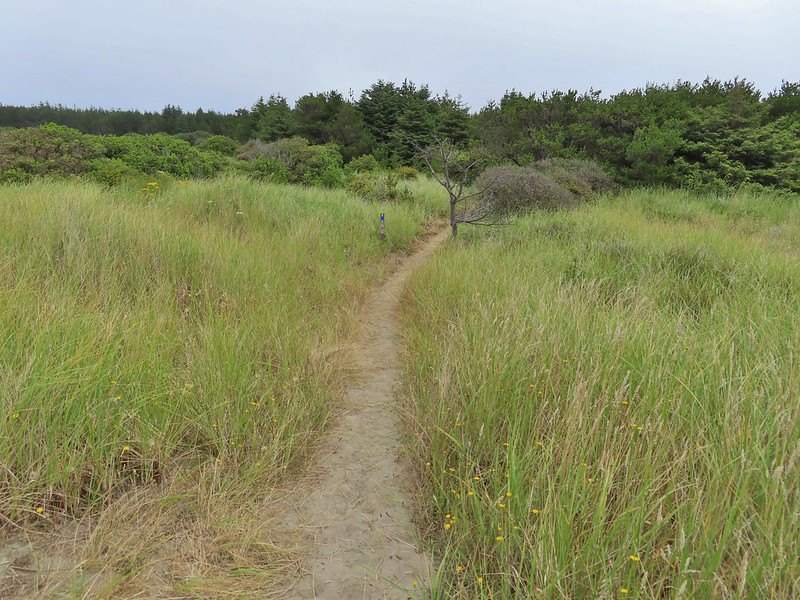
 Bayberry Trail passing through the snowy plover closure area.
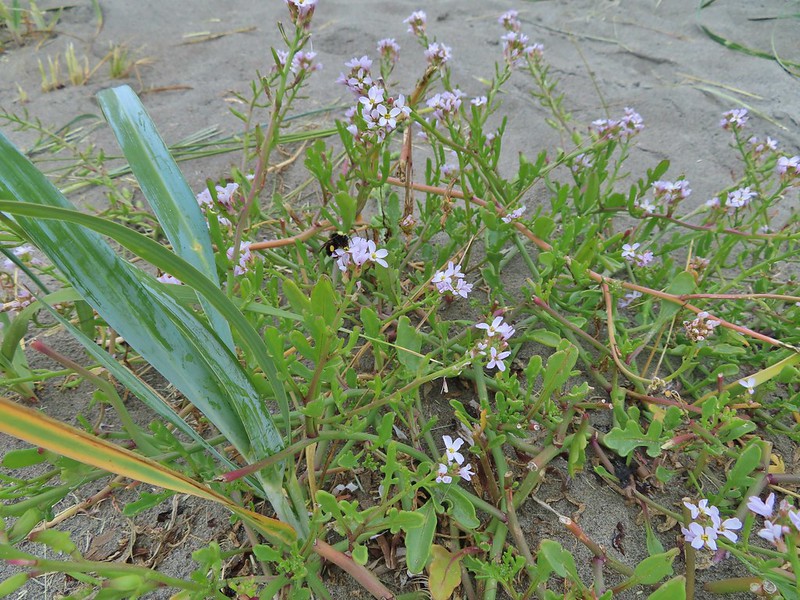 Bumblee on American skyrocket.


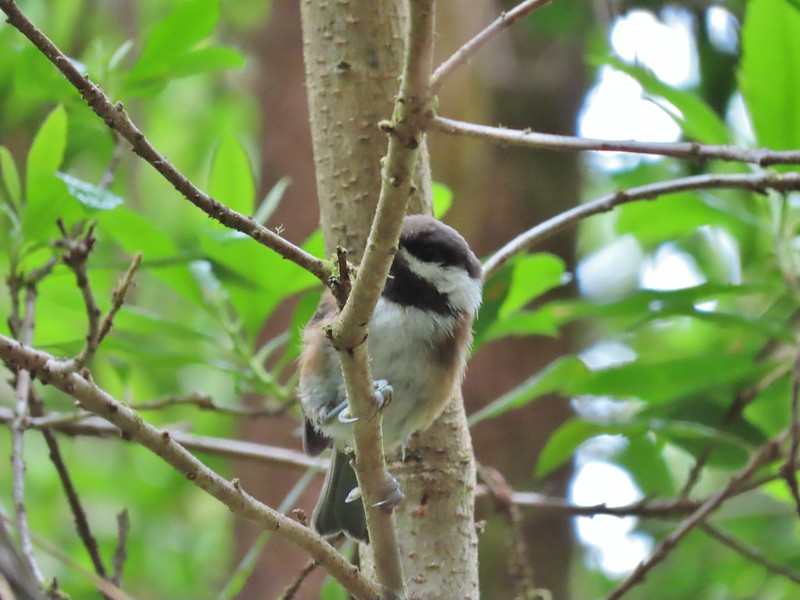 Chestnut backed chickadee
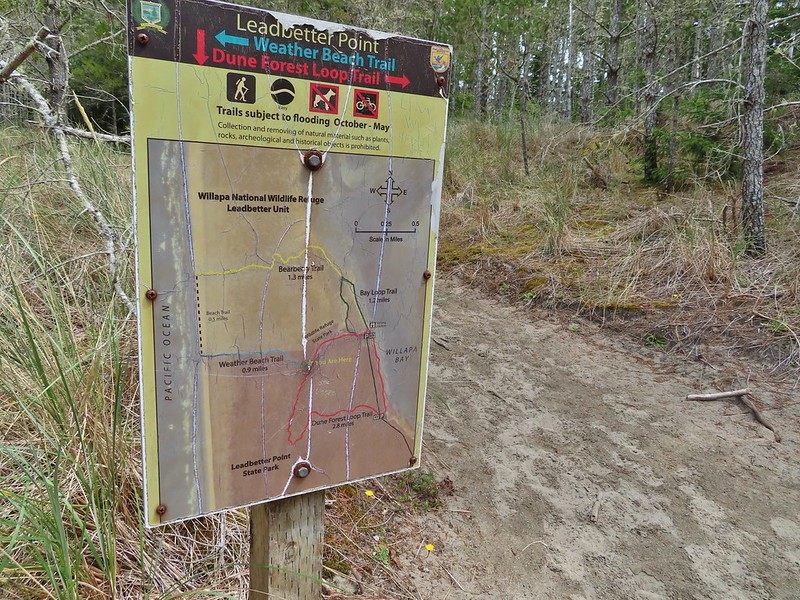
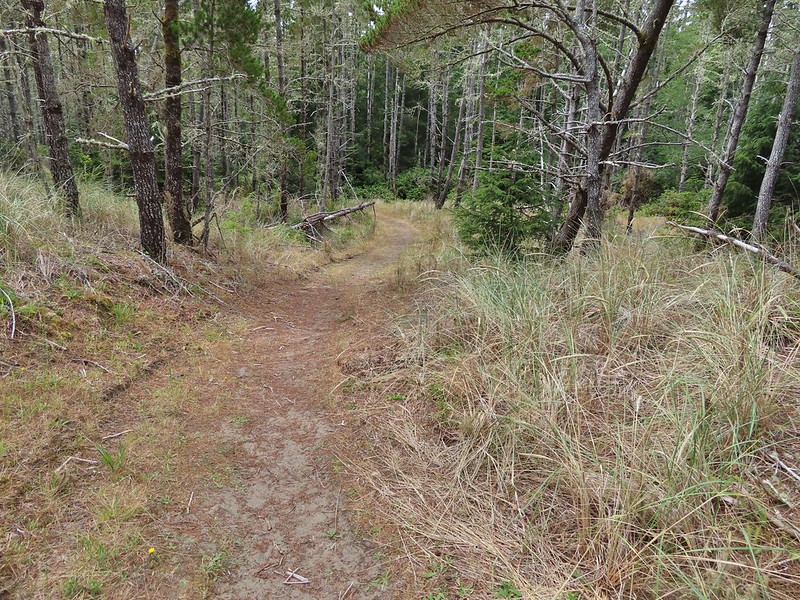

 Someone had written “umpassable (sic) swamp” below the word loop on this sign. This is when we began to guess why Sullivan had you turn left at the Weather Beach Trail junction.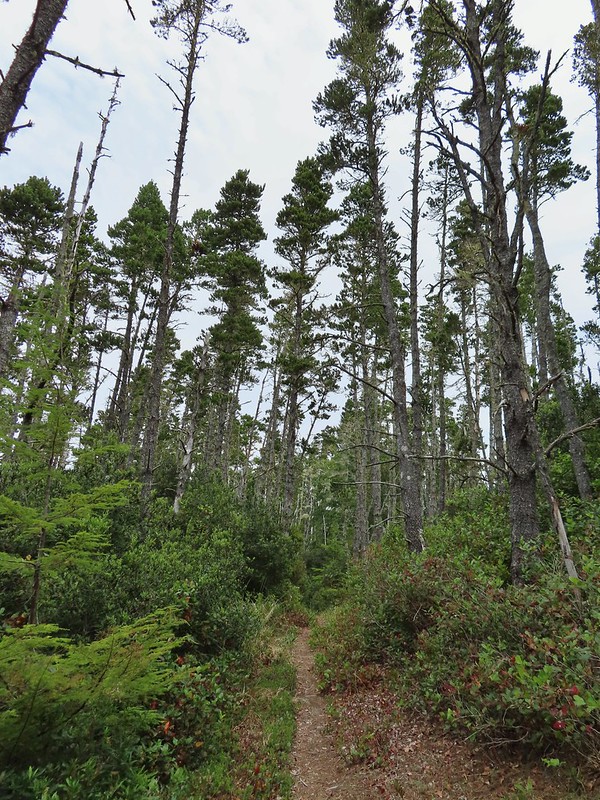
 Slug and a mushroom. We both thought of Alice in Wonderland.

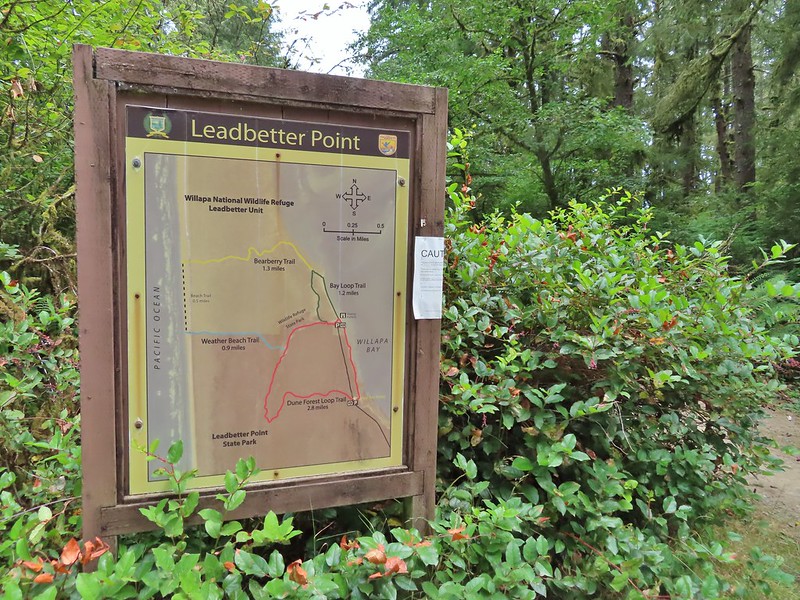 Signboard at the southern trailhead.


 Looking back over one of the trees.
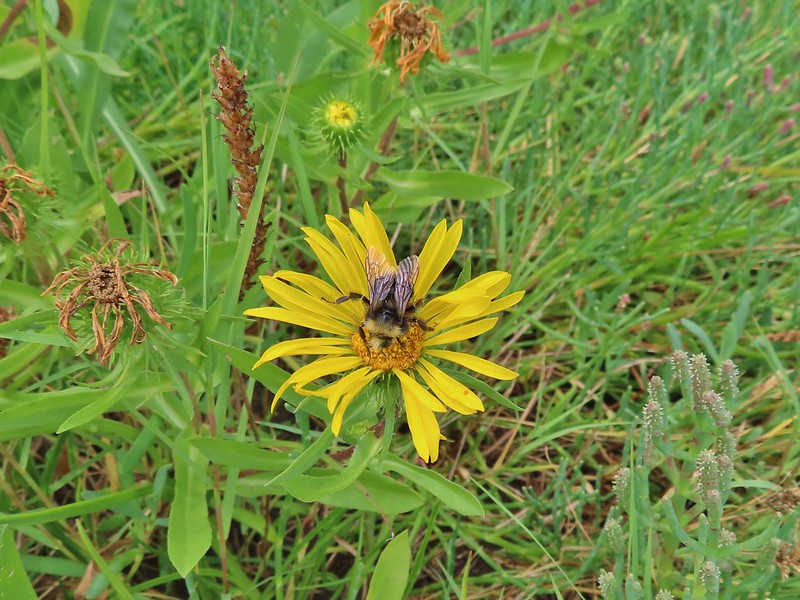 Bumble bee on gumweed.
 A pair of great blue herons in Willapa Bay.
 The eagle has landed.
 Crow attack
 Looking for a quite place to eat.
 We didn’t see what happened to the kill, if the eagle got to eat it or not.
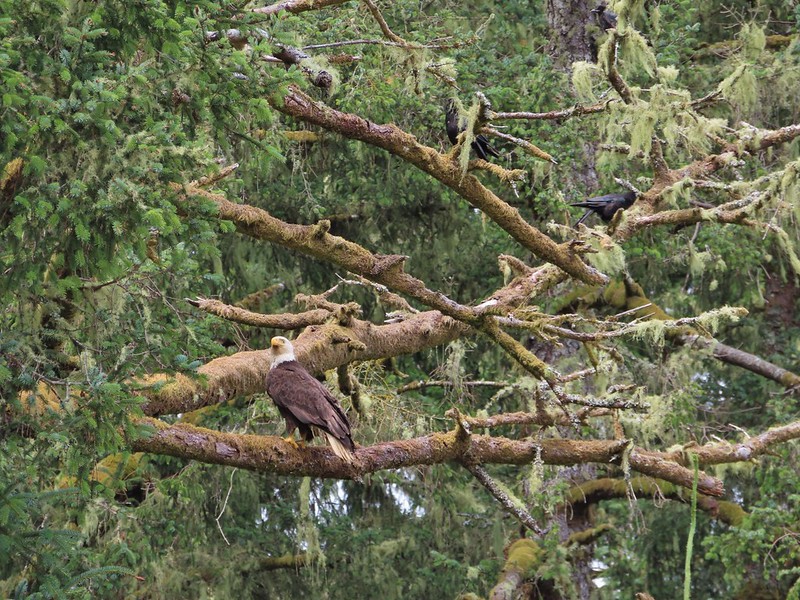 The crows weren’t leaving the eagle alone.
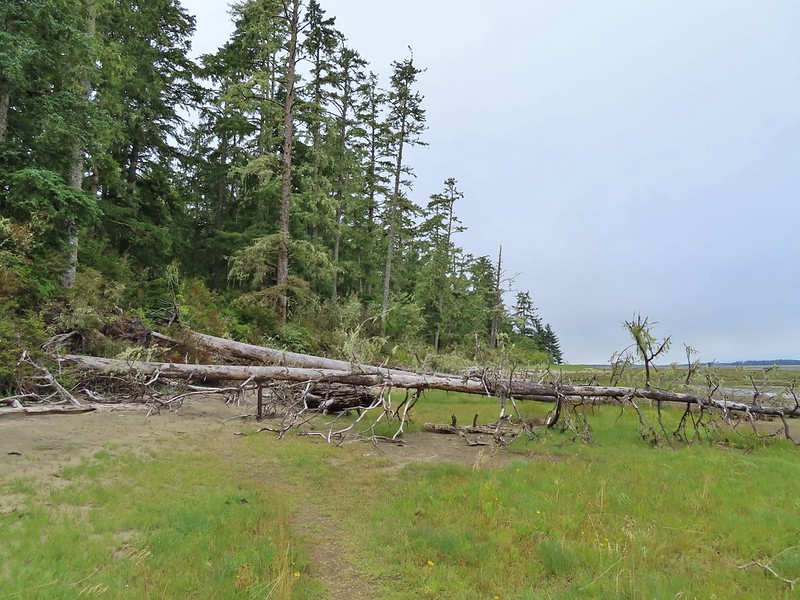 Last of the trees to navigate.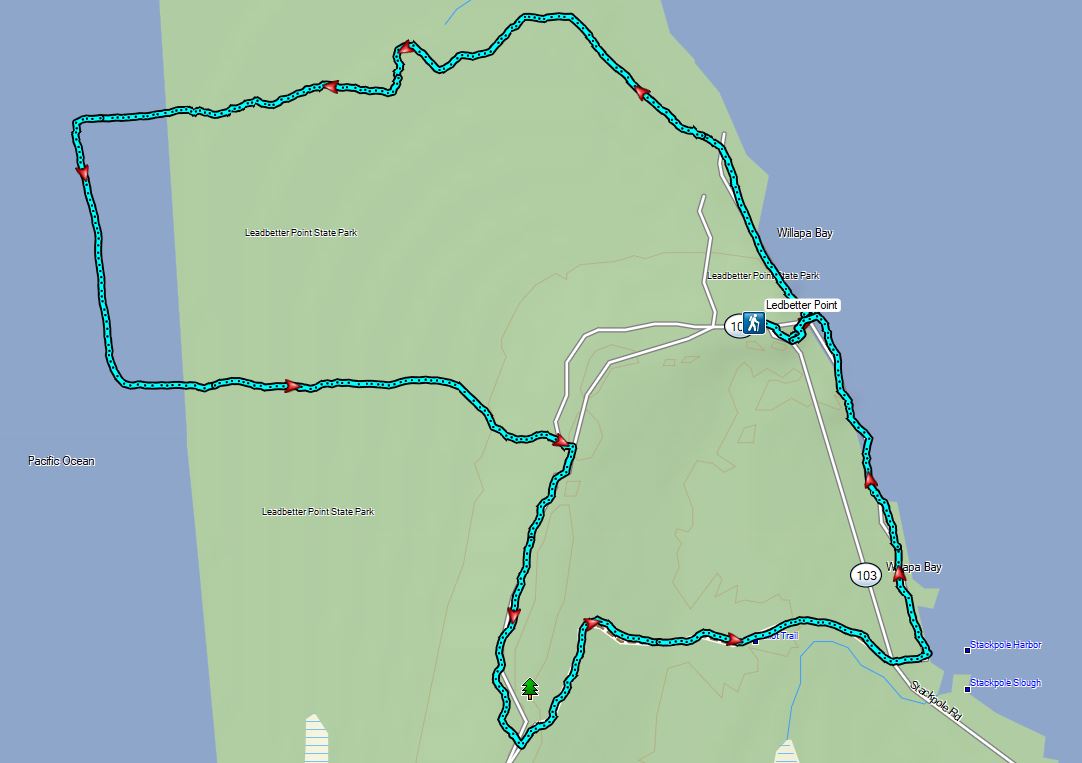


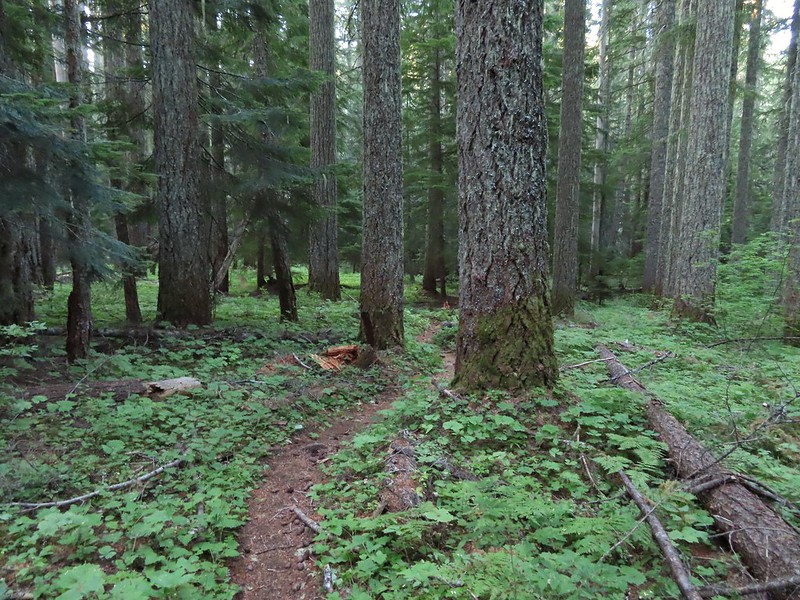
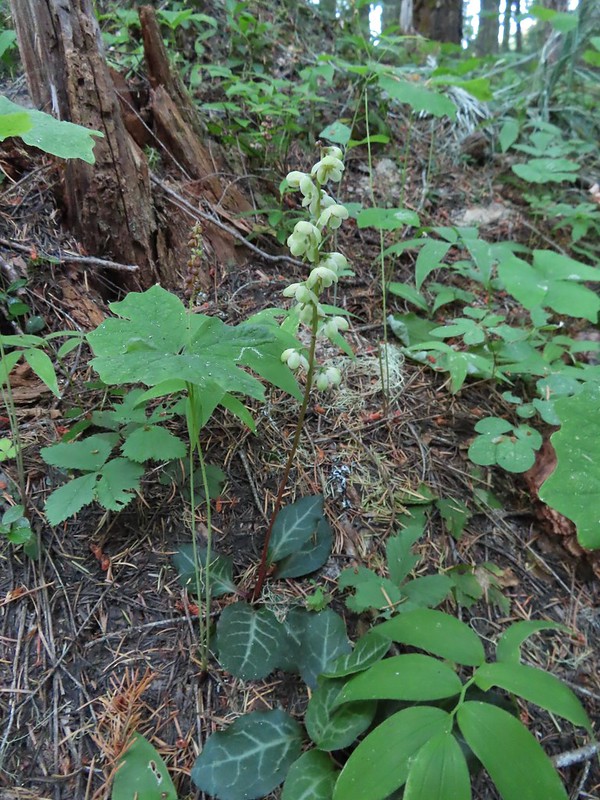


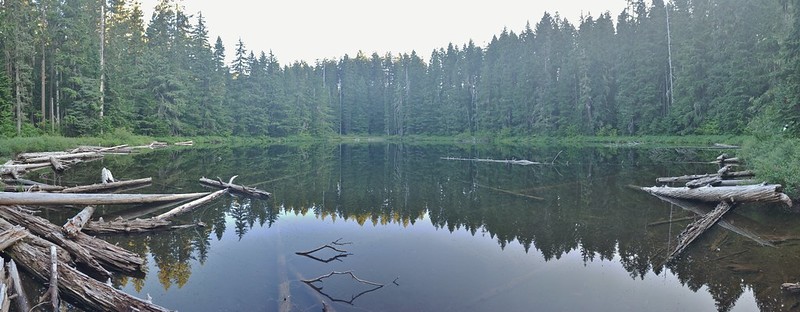
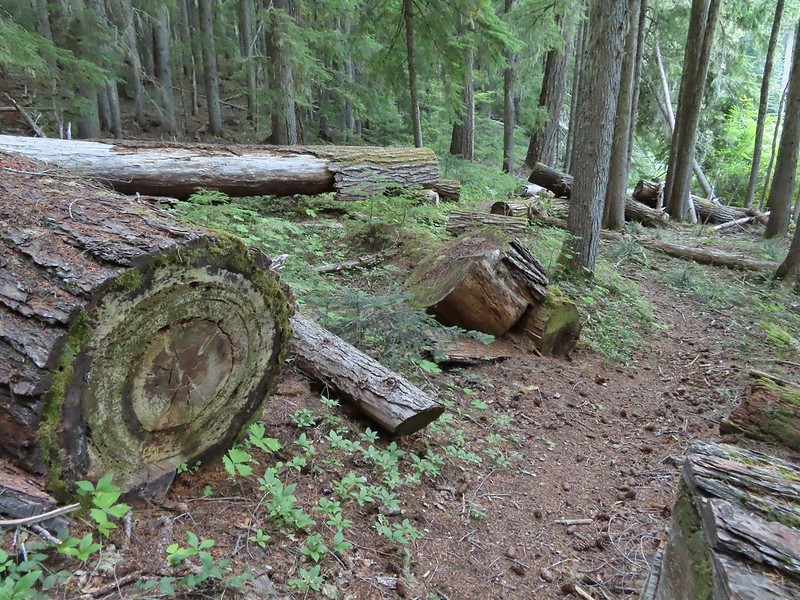
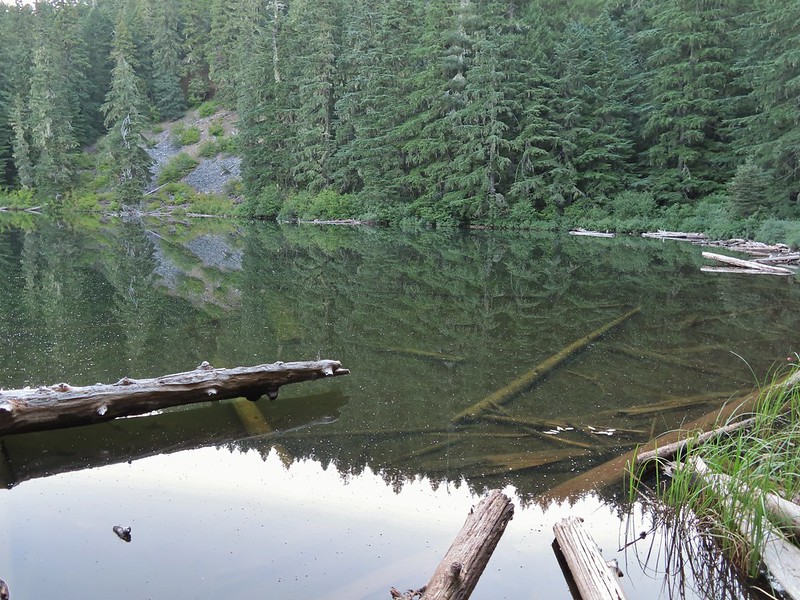
 Unnamed lakelet/pond between Pika and Fir Lakes.
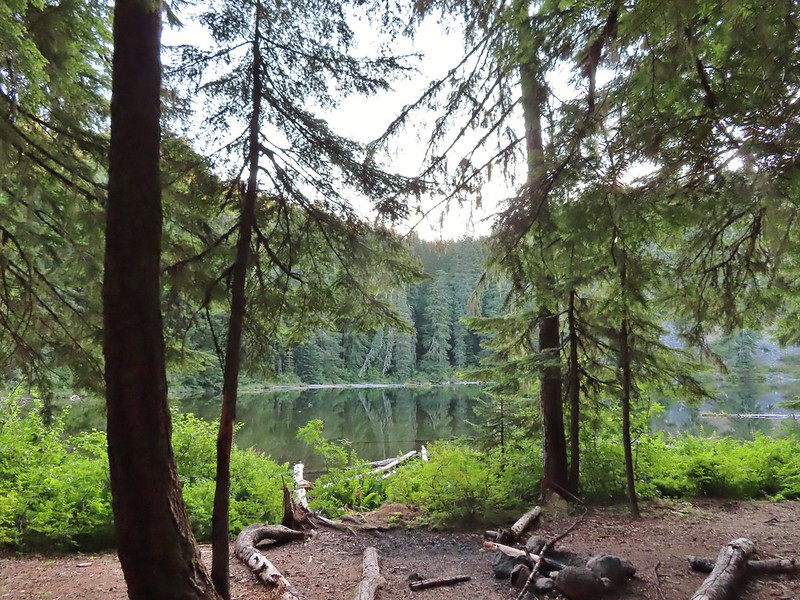 Fir Lake
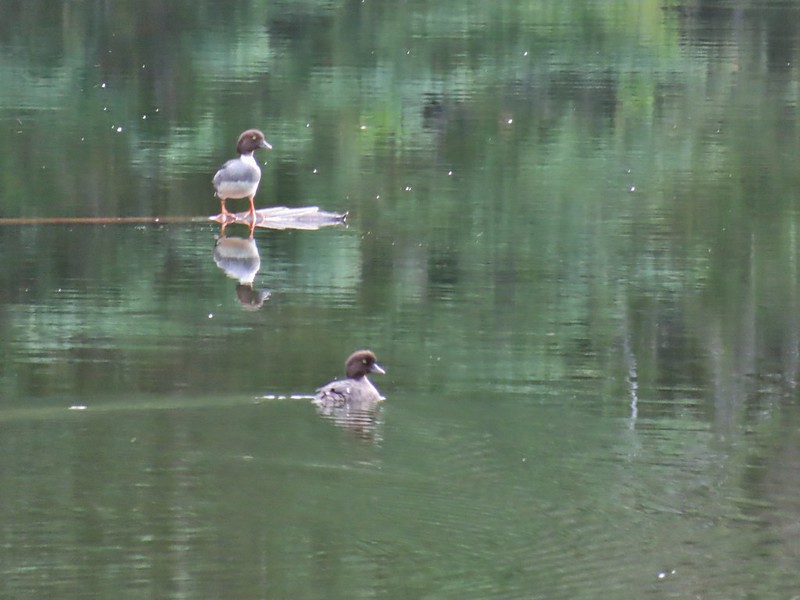 Goldeneyes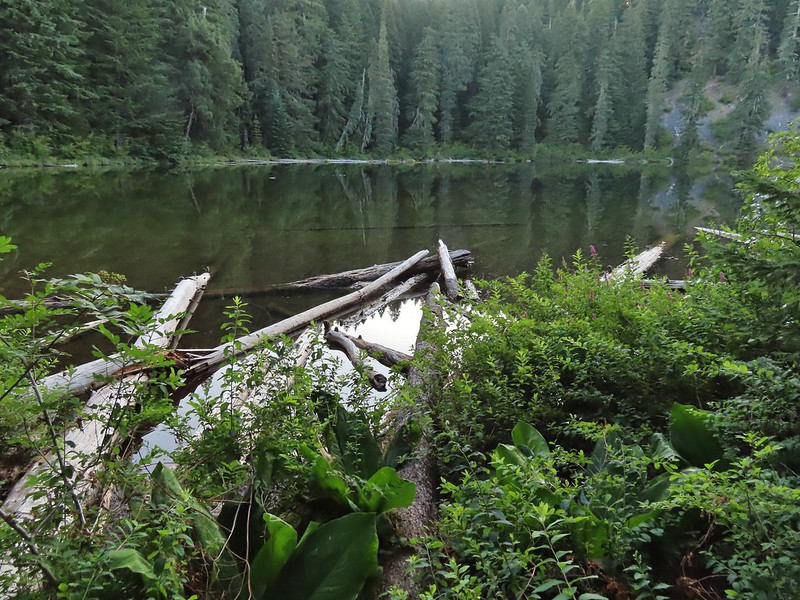



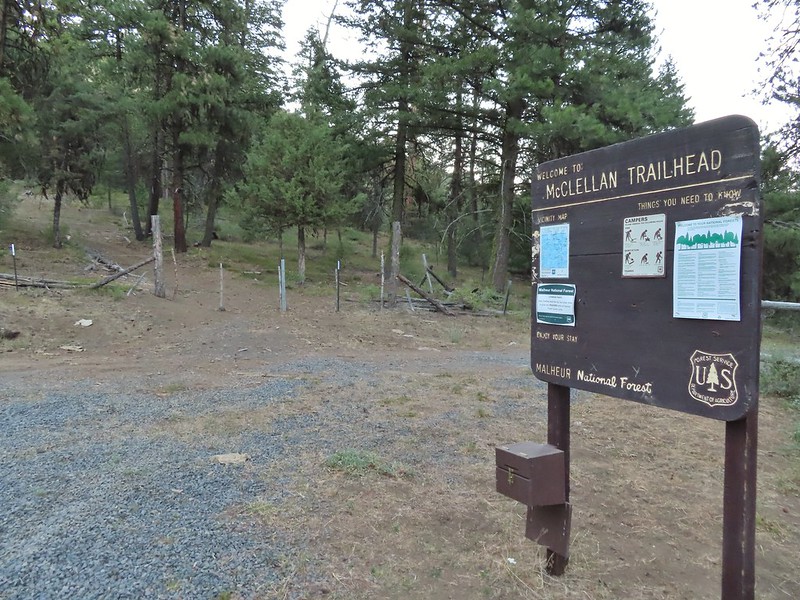


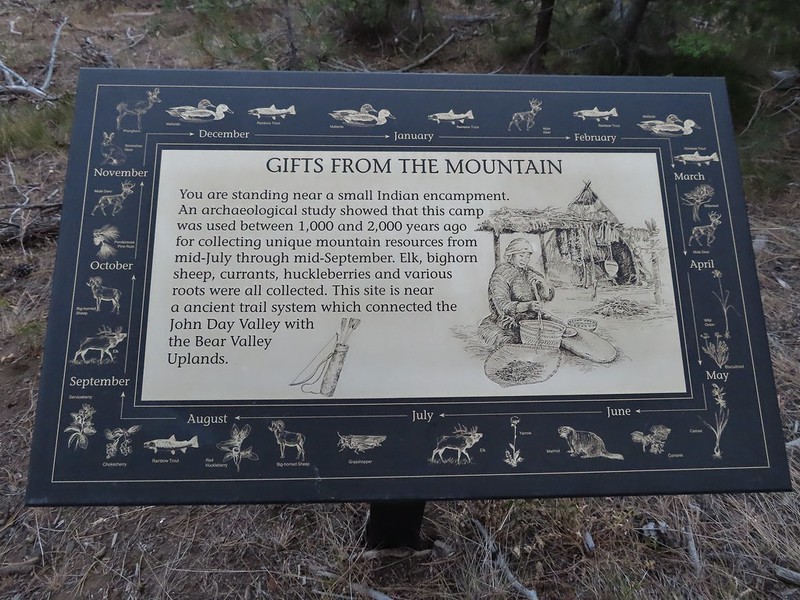 A lone interpretive sign near the beginning of the trail.
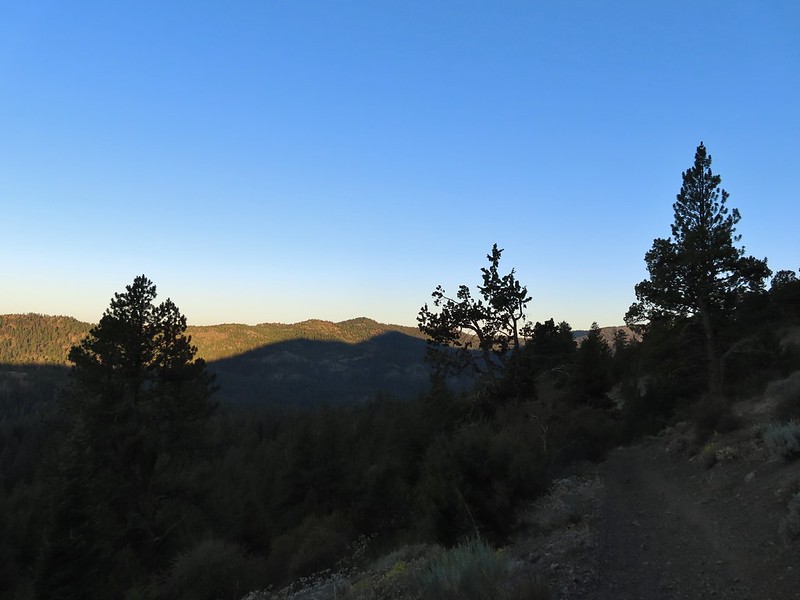
 The saddle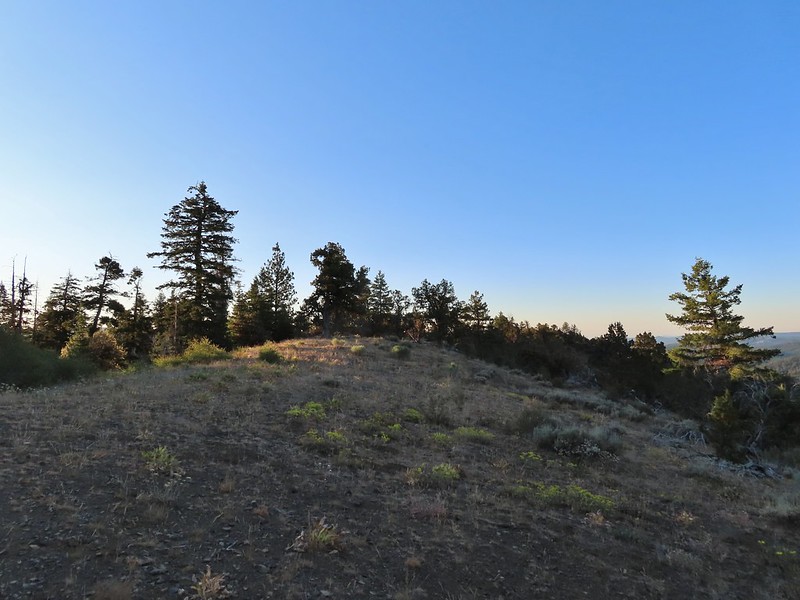
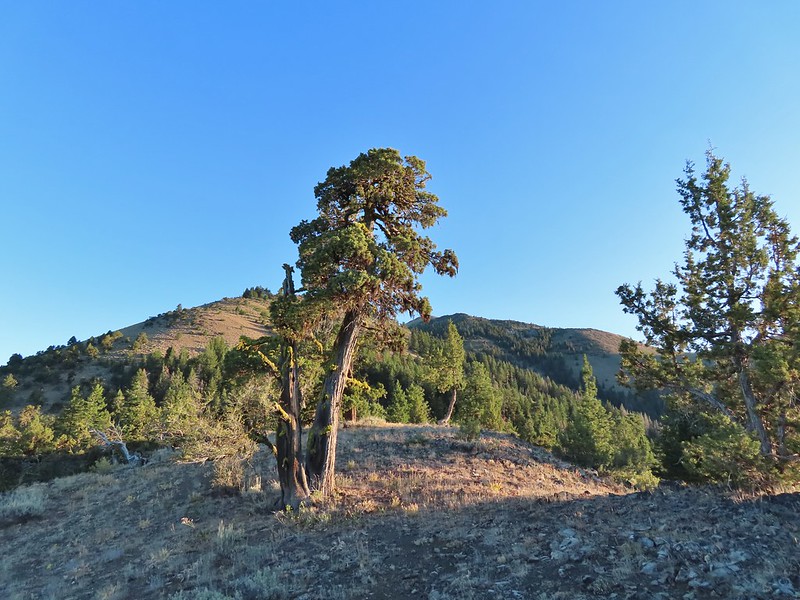 Fields Peak from the saddle.
 Heather arriving at the saddle.
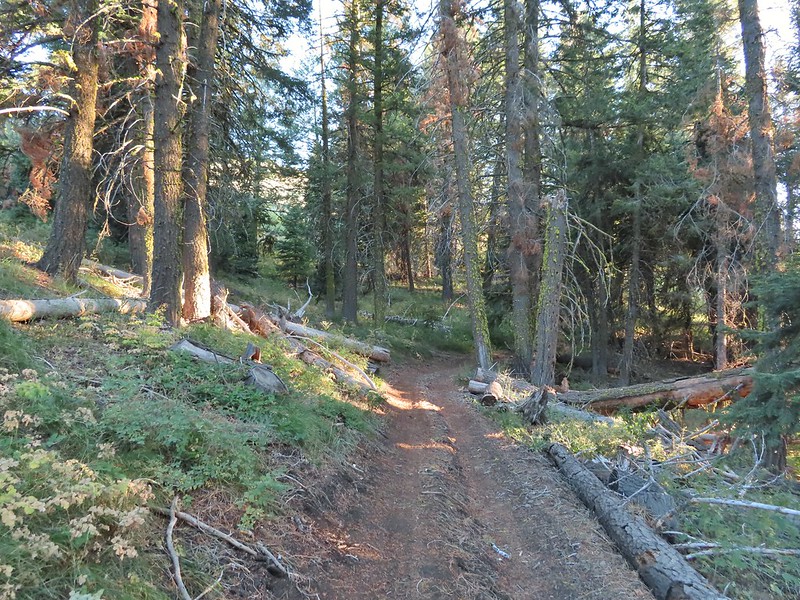 A rare level section.
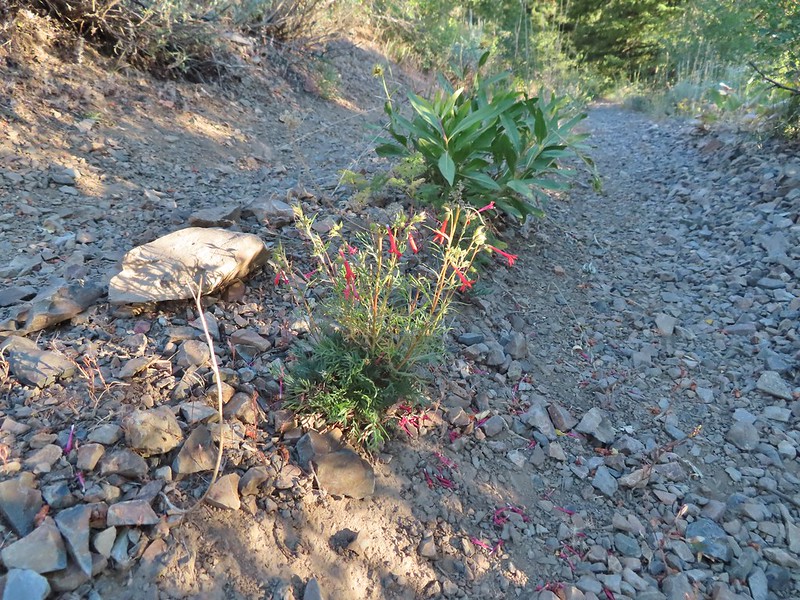 Scarlet gilia in the middle of the OHV track.
 Nearing the trail junction.
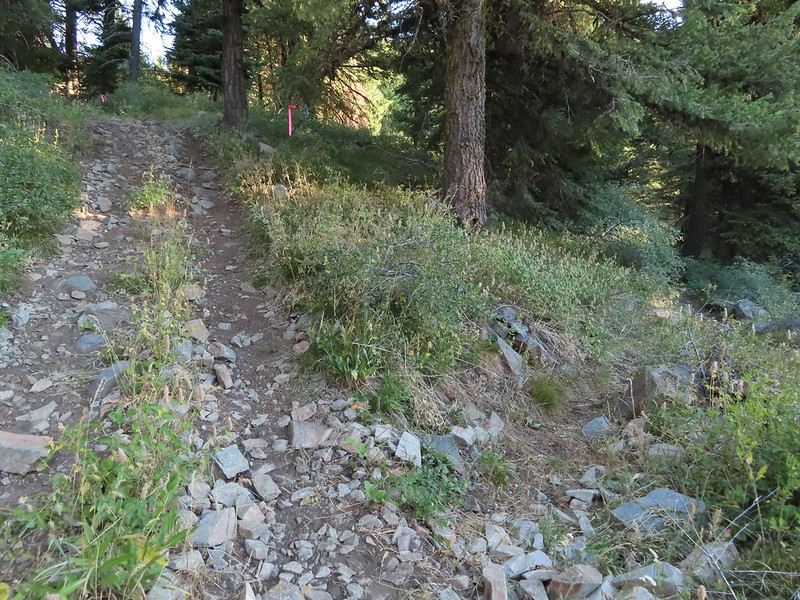 The McClellan Mountain Trail to the right.
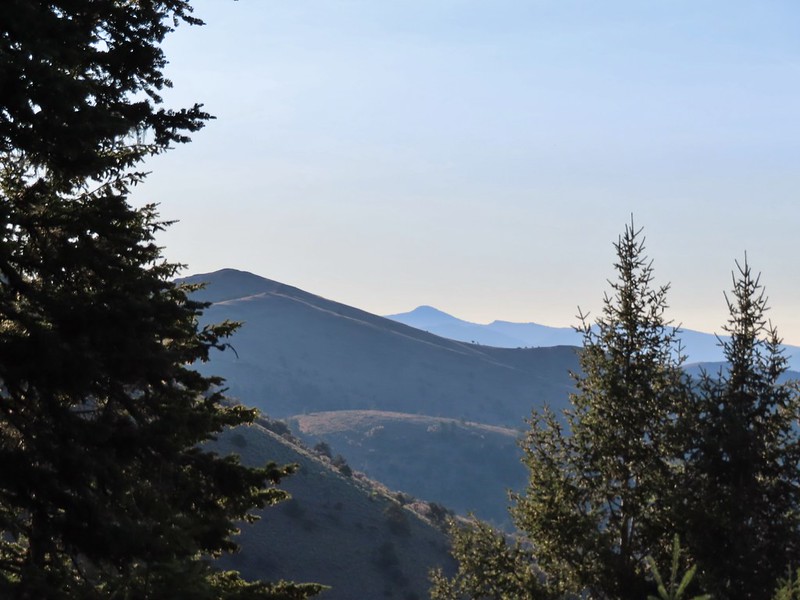 A peak east to McClellan Mountain and the more distant Strawberry Mountain (
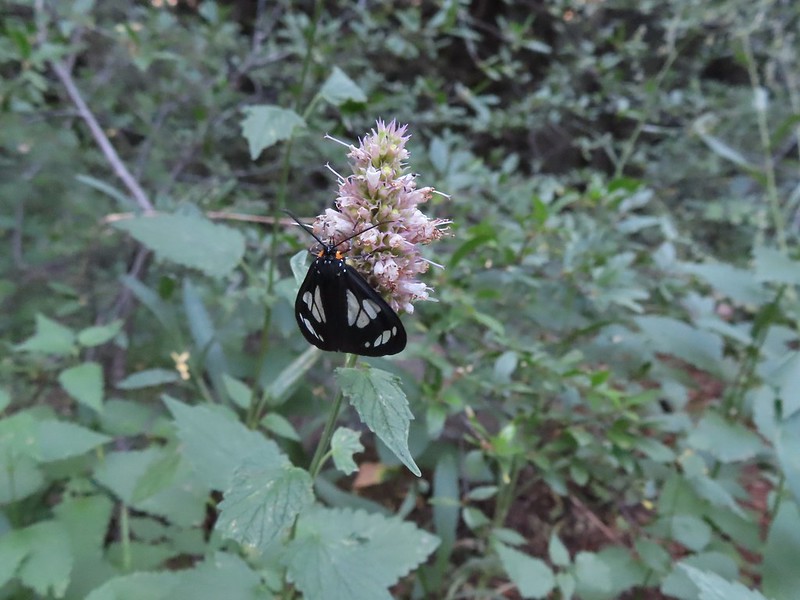 We saw a number of these moths sleeping on the hyssop.
 Hyssop and sunflowers
 Paintbrush
 Looking up Fields Peak.
 Mountain coyote mint
 Shadow of Fields Peak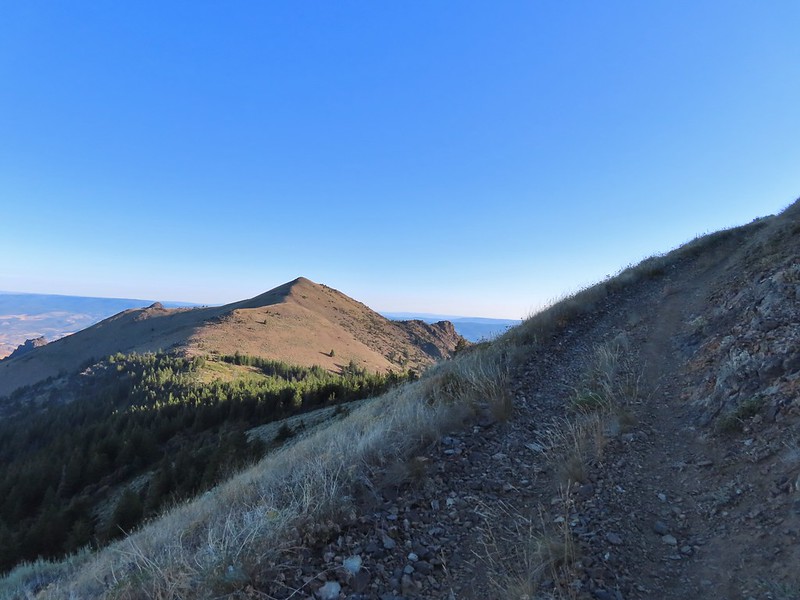
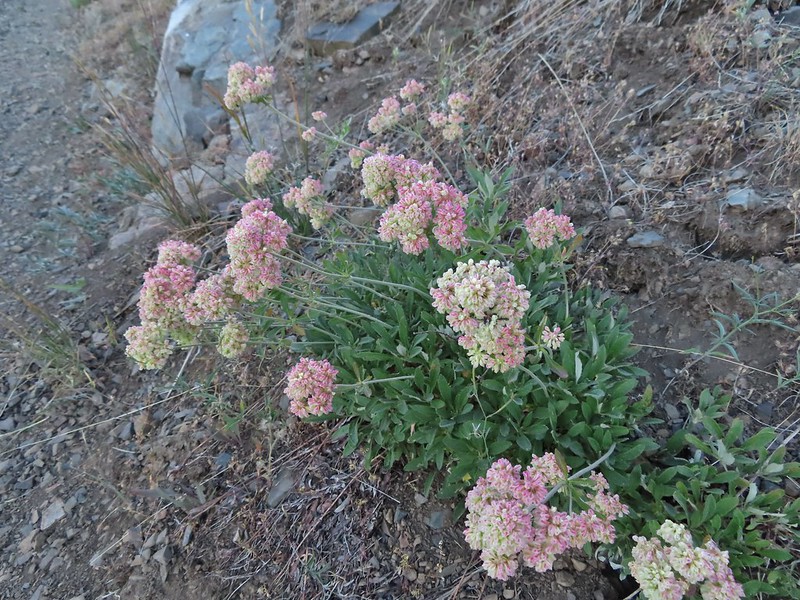 Buckwheat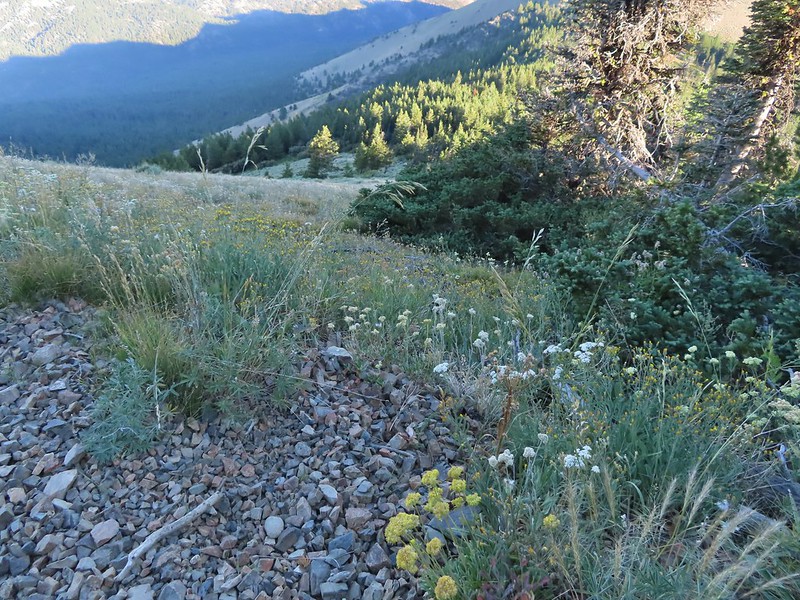
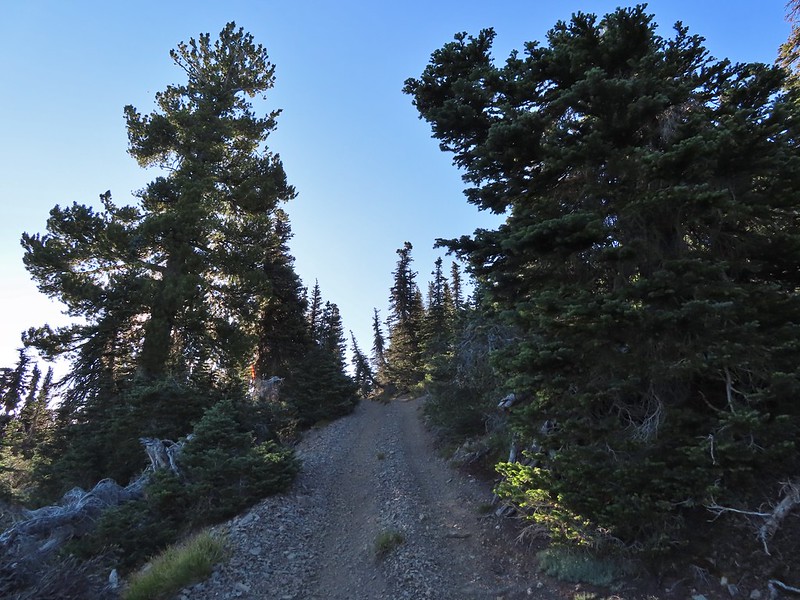 A few trees near the top.
 Final steep pitch to the summit.
 View west, Aldrich Mountain is the high point to the near right.
 View north
 McClellan Mountain and the Strawberry Mountain Range to the east.
 Logan Valley to the SE.
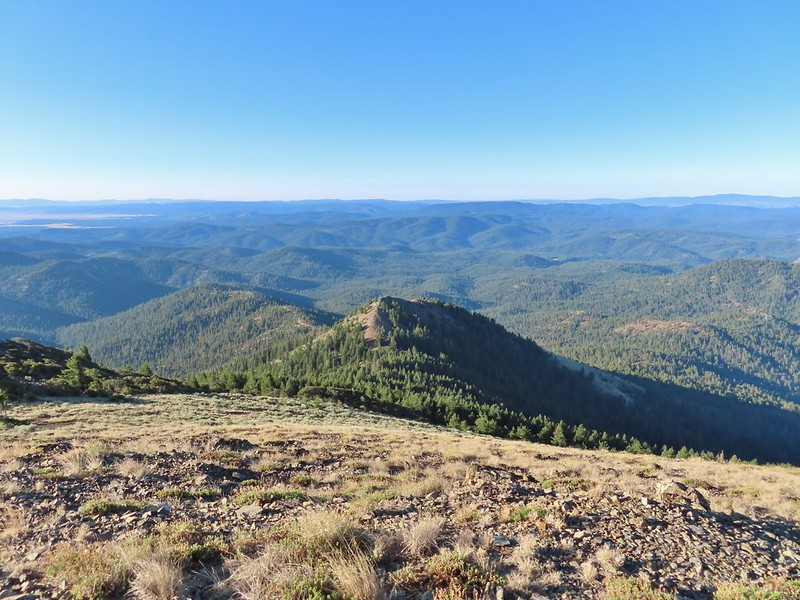 The view south.

 More moths
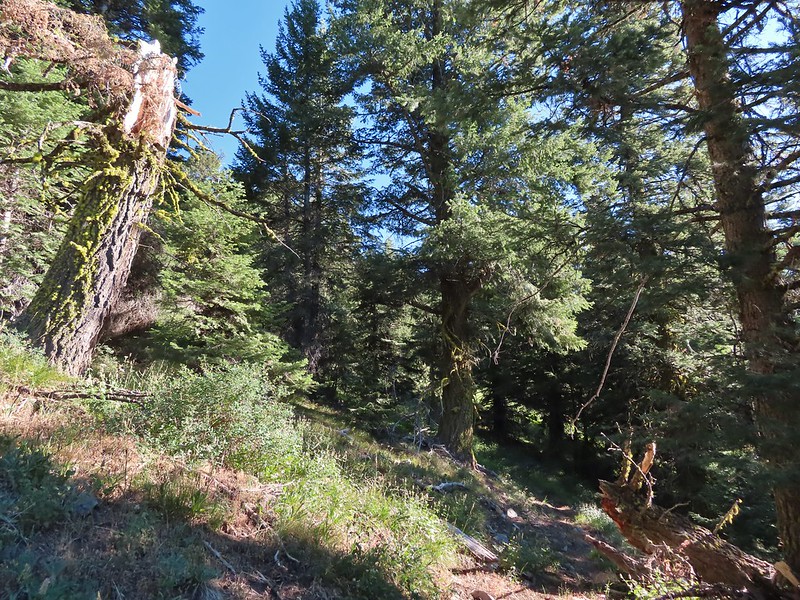
 Hillside above the trail.
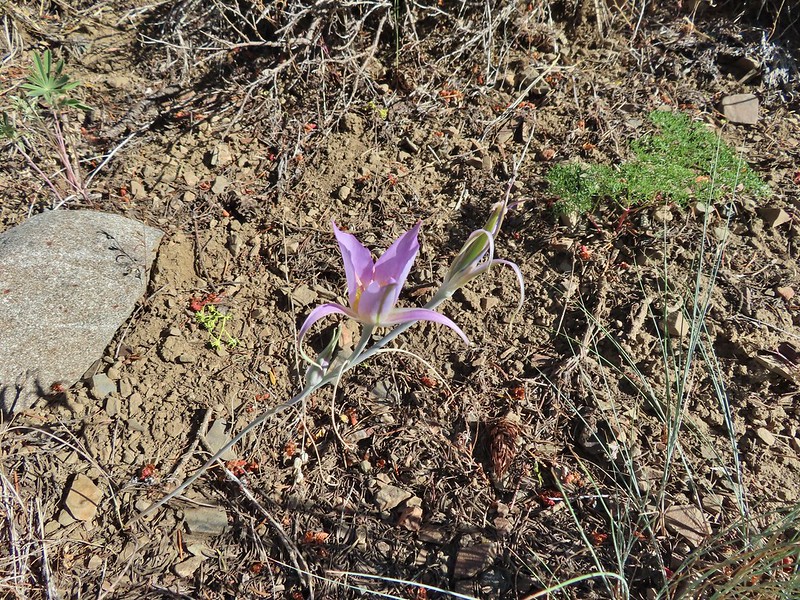 Sagebrush mariposa lily
 Approaching the saddle where we would cross the the north side of the hill ahead.
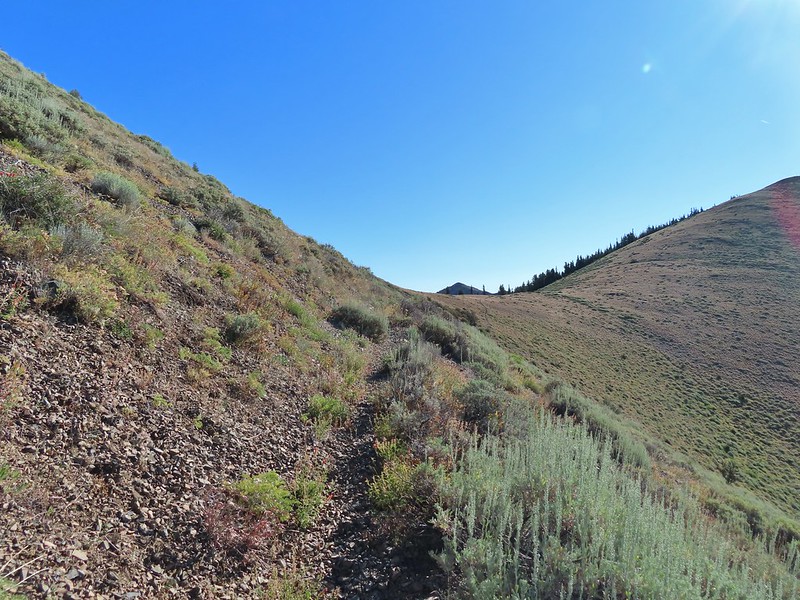 The first saddle with Moon Mountain behind.
 Looking back along the trail.
 Looking back from the saddle.
 The north side had a few more trees.
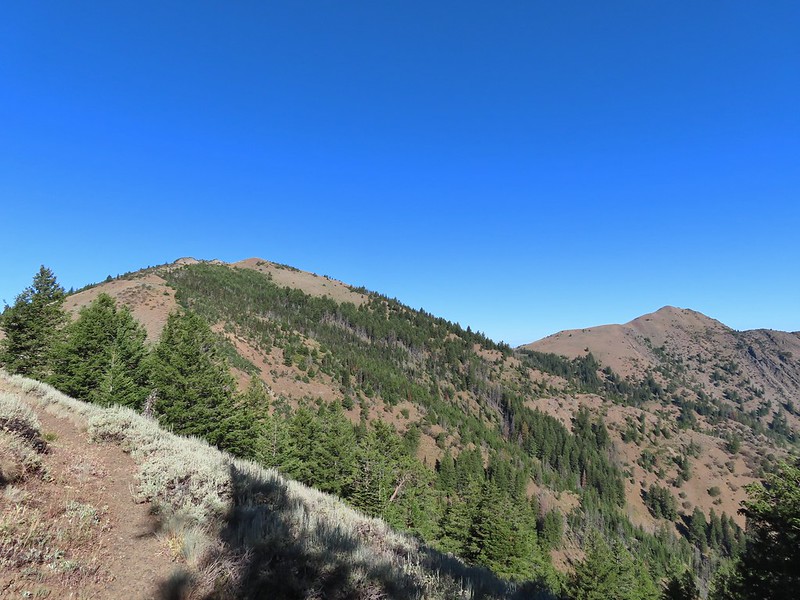 Looking back toward Fields Peak
 We passed through a rocky section near the second saddle.
 McClellan Mountain from the second saddle.
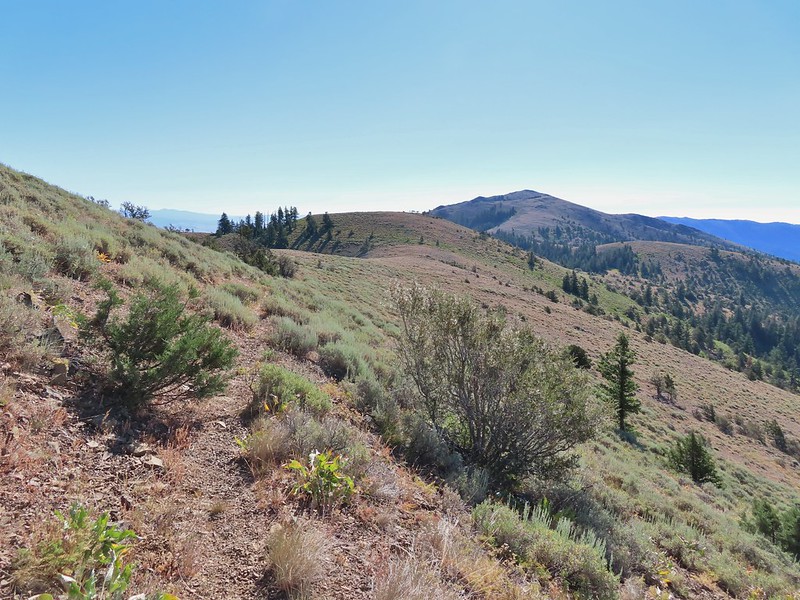 Approaching the third saddle.
 Moon Mountain
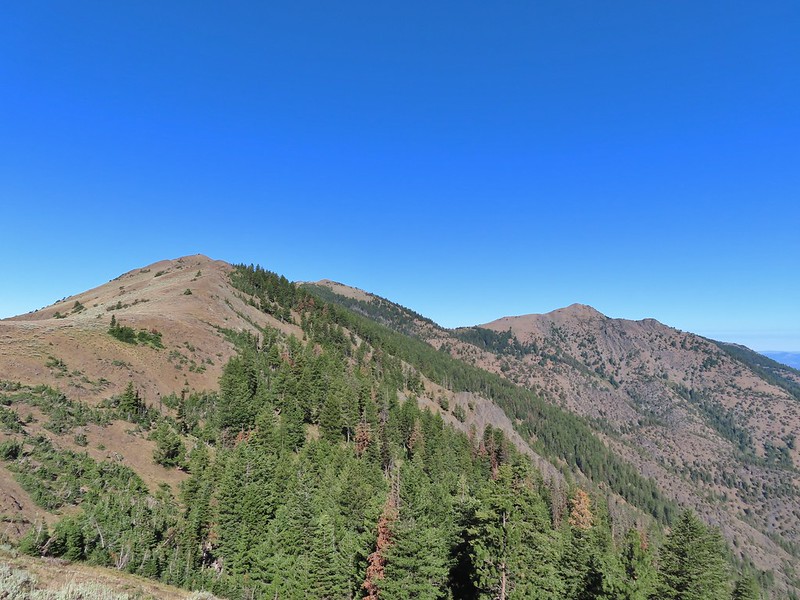 Fields Peak (center).
 McClellan Mountain as we approached the fourth saddle.
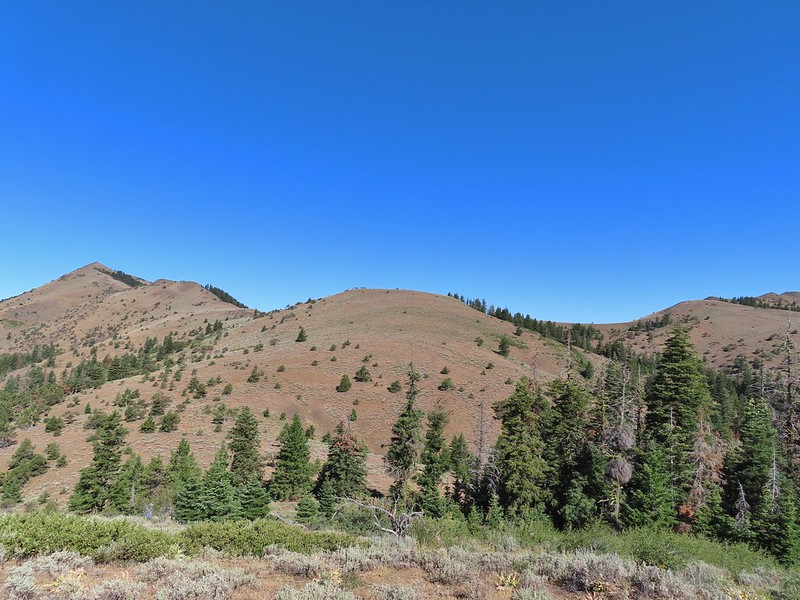 Looking back you can sort of make out the trail angling down the near hillside.
 Looking up McClellan Mountain.
 In the middle of the center hill to the left of the tree in the foreground is the line of what turned out to be 5 bull elk.
 Blurry due to the elk moving and the deep zoom.
 Four of the bulls stopped to look back at us.
 The fifth and largest bull on top of the ridge waiting for the rest.
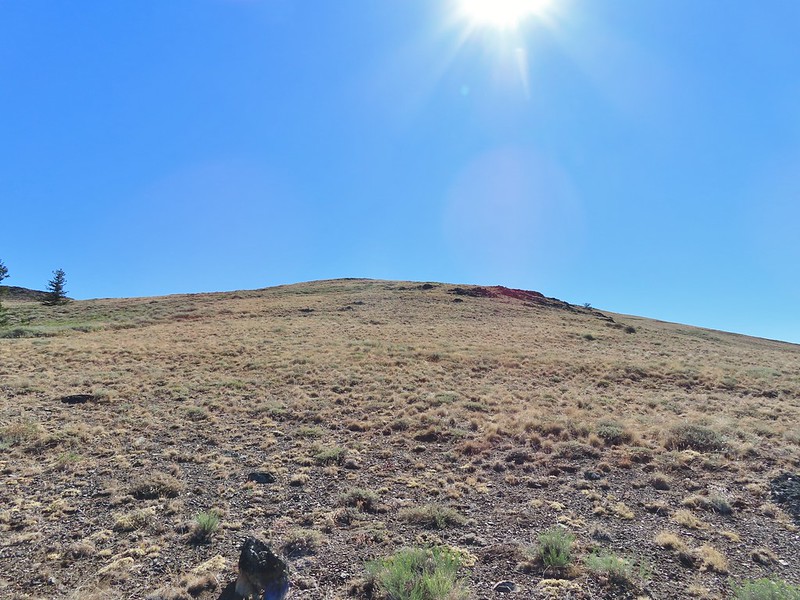
 An old fence line on the hill.
 Fields Peak on the left, an unnamed peak in the center and Moon Mountain on the right.
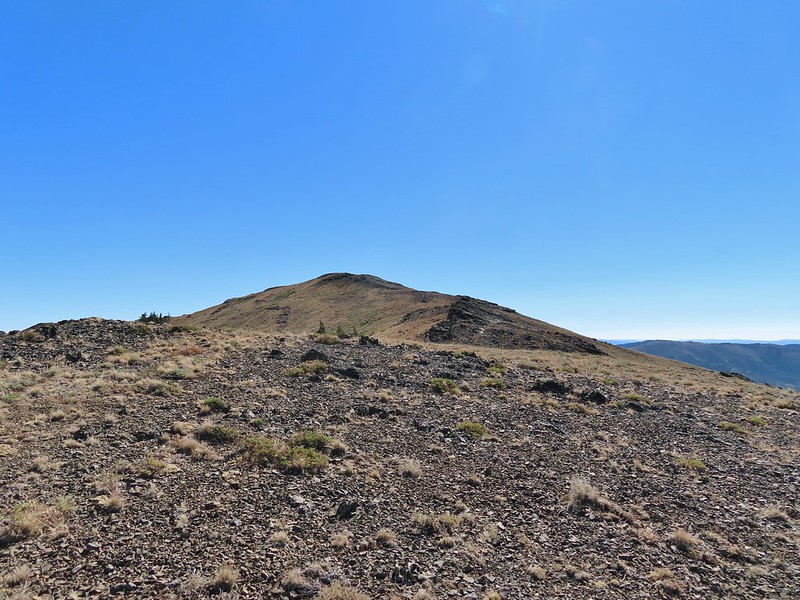 False summit (there’s always at least one). After some debate we went to the left of the rock outcrop which worked out well.
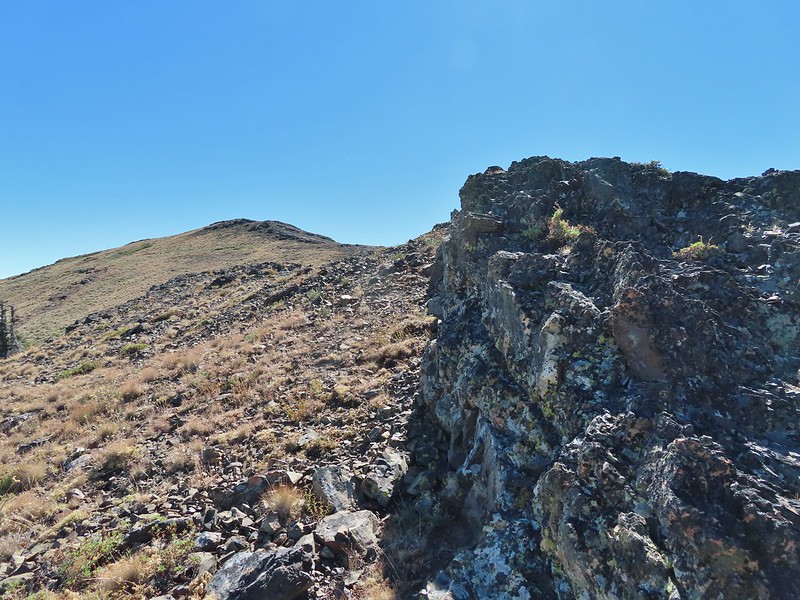 Passing the rock outcrop.
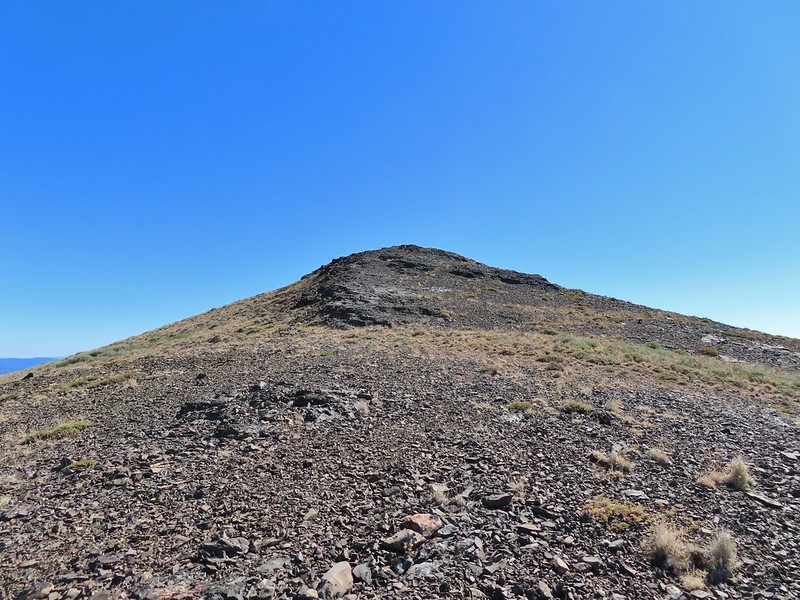 Almost there.
 The Greenhorn Mountains, Elkhorns, Dixie Butte and the Strawberry Mountains from left to right in the distance.
 Looking back at Fields Peak
 The John Day River Valley.
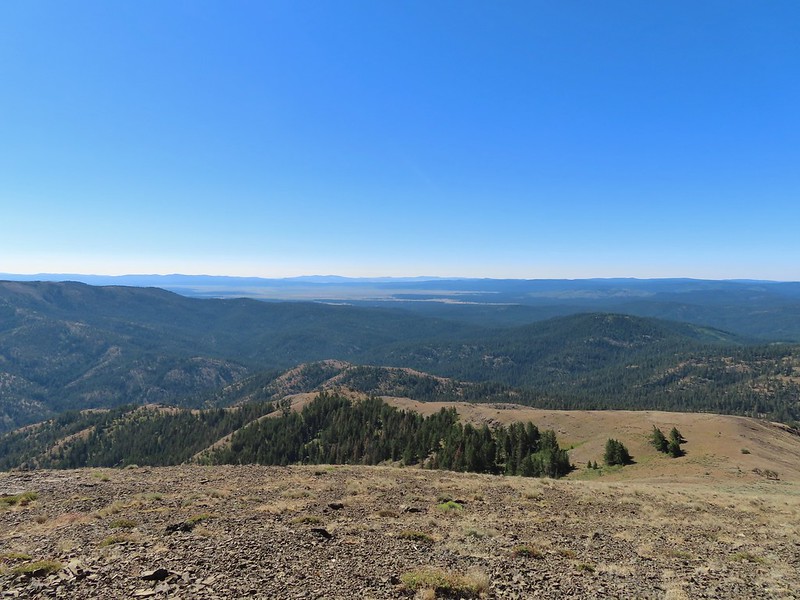 Logan Valley
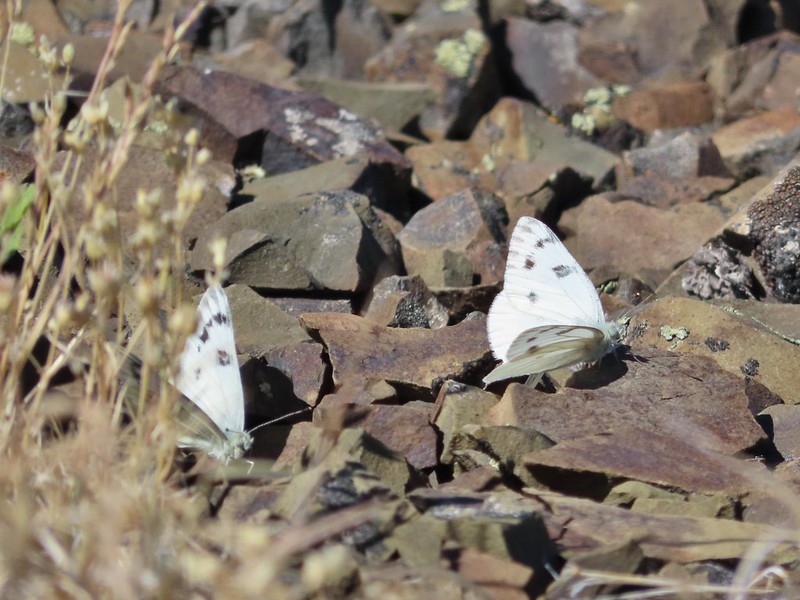 Company at the summit.
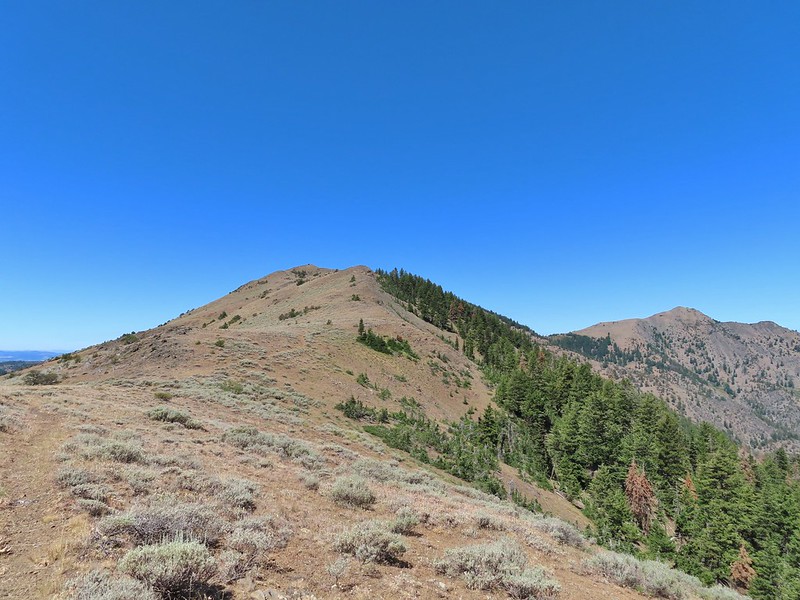 Passing back through Phlox Saddle.
 A better look at the rocky section of trail.
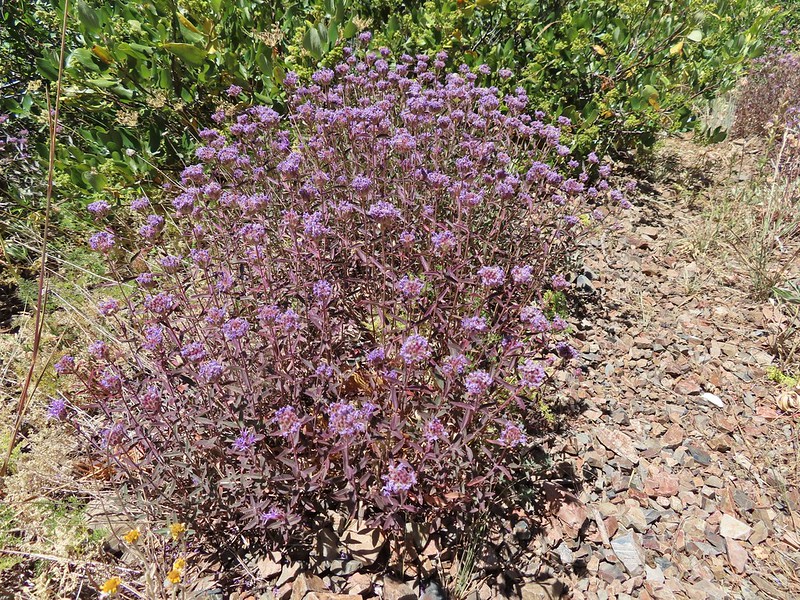 Mountain coyote mint, one of only a couple with this coloration on the stems.
 Butterfly and a beetle.
 Sagebrush mariposa lily
 Ruffed grouse
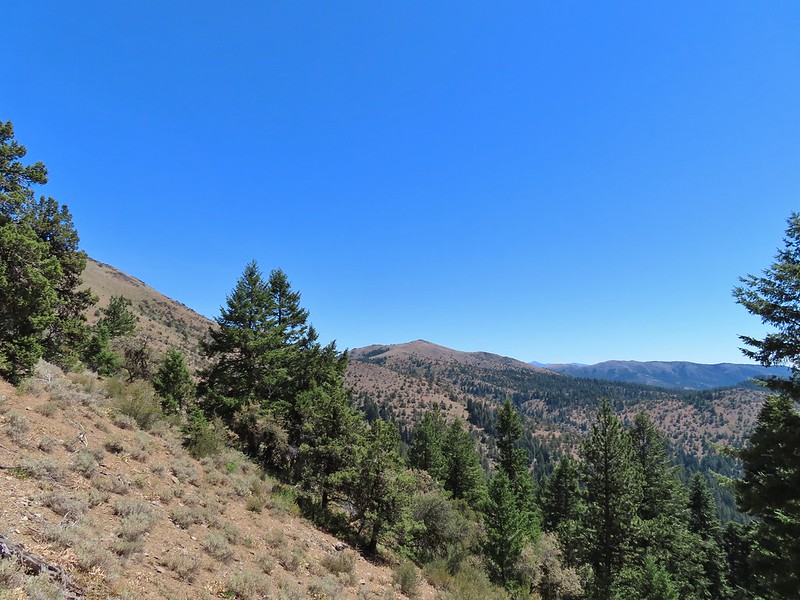 A final look at McClellan Mountain.
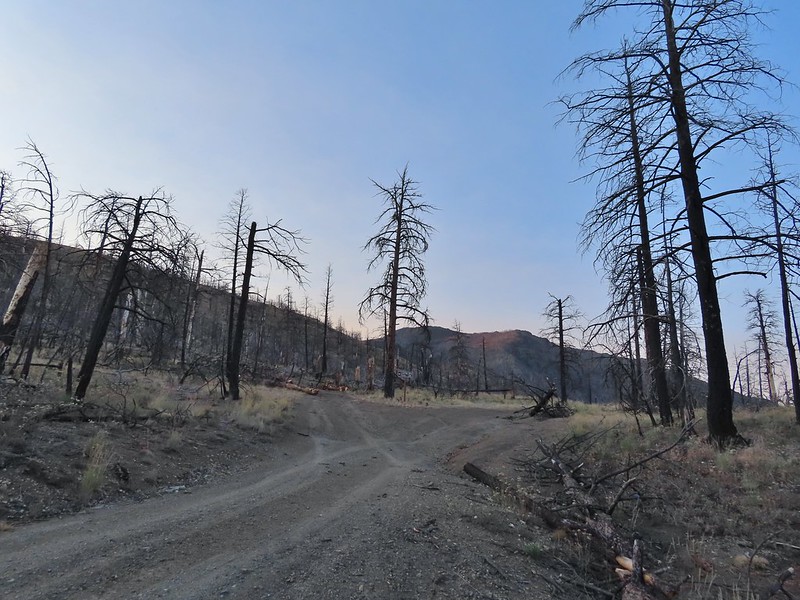 I had started up to the left at the saddle but it was steep with gullies and some debris so we carefully turned around and parked below.
 Little Canyon Mountain from the saddle. A wildfire burned the area in 2015 and the trail up to Dog Creek.
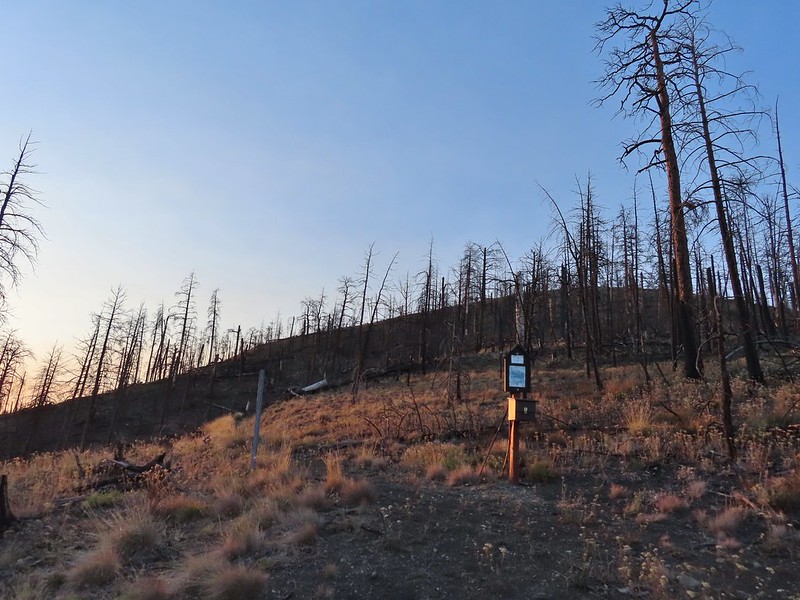 The actual trailhead.
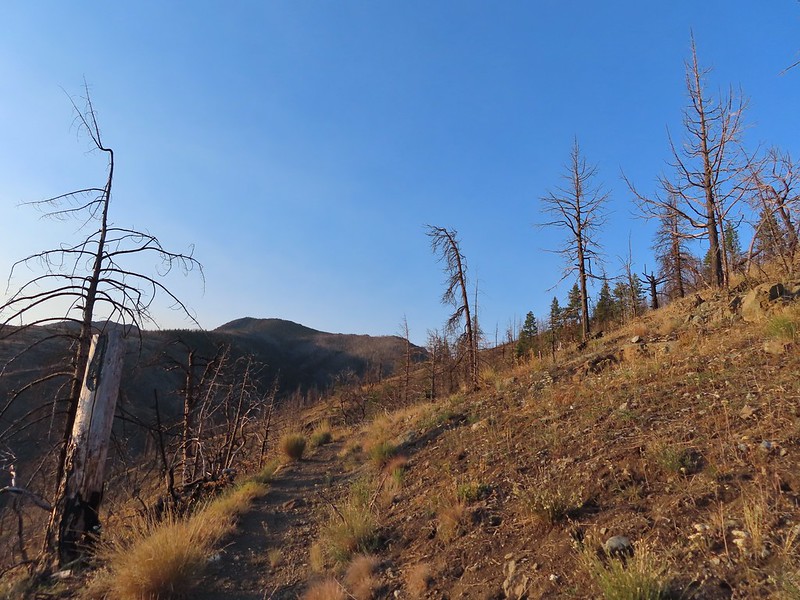
 Little Pine Creek flowed down this valley below Canyon Mountain.
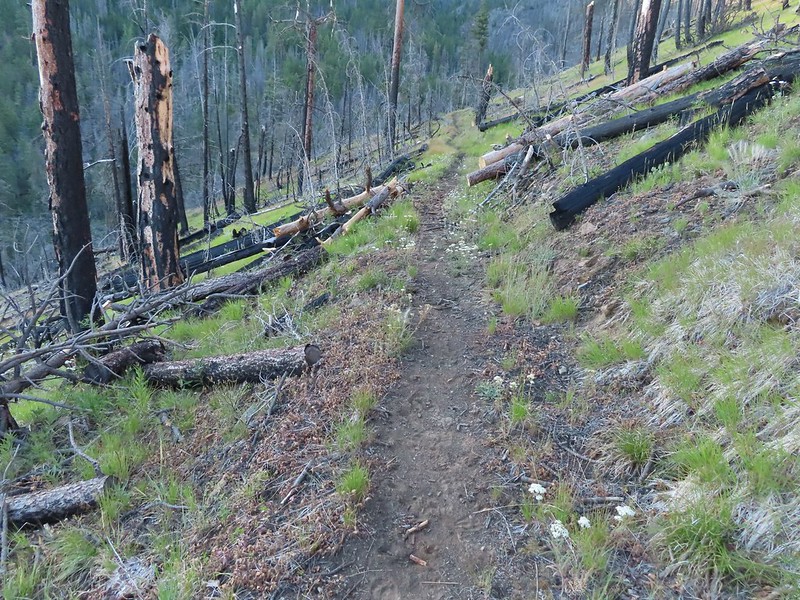 Yarrow along the trail.
 Fireweed
 Paintbrush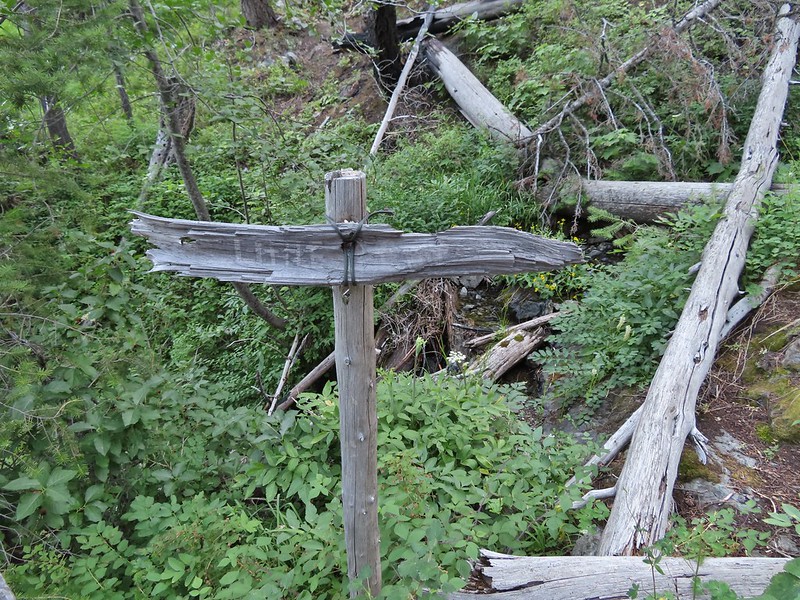
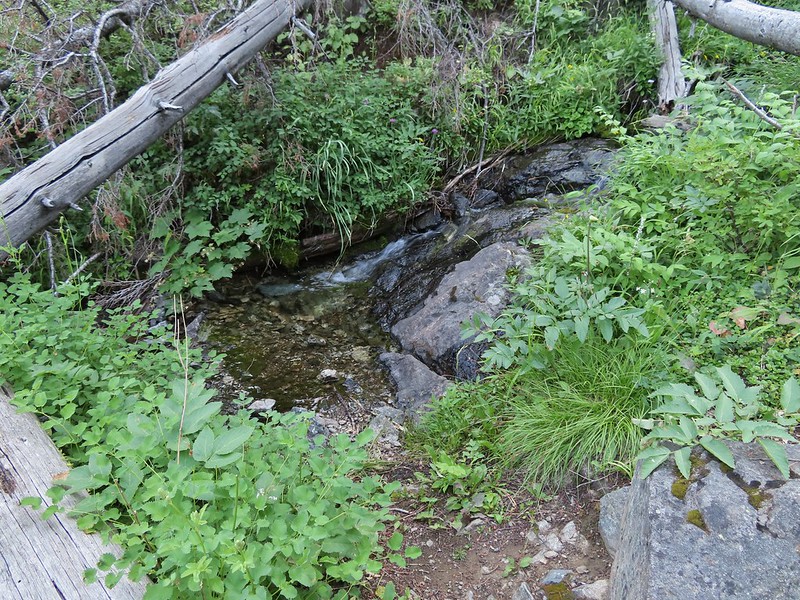
 Paintbrush and pearly everlasting
 Raspberries
 We don’t recall seeing a penstemon with leaves like this before.
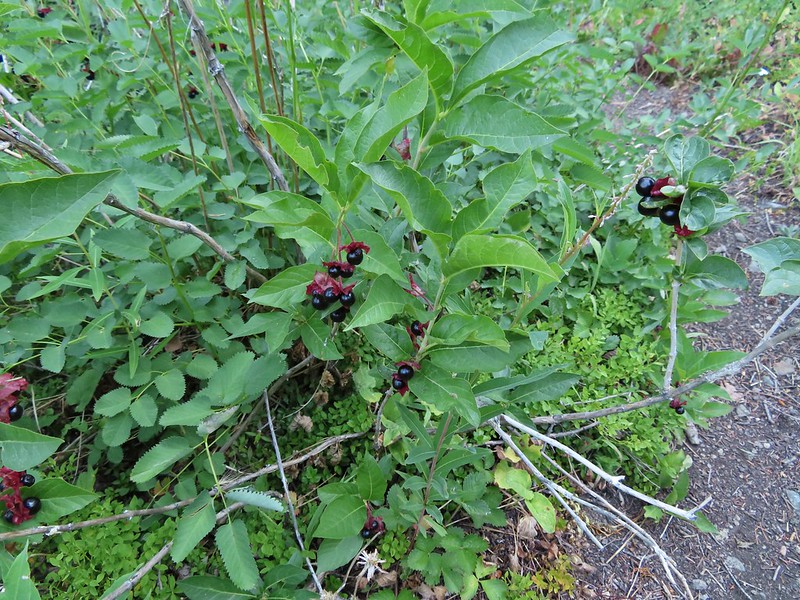 Twinberry (we did NOT sample)
 Sitka burnett (white)
 Little Pine Creek at the crossing.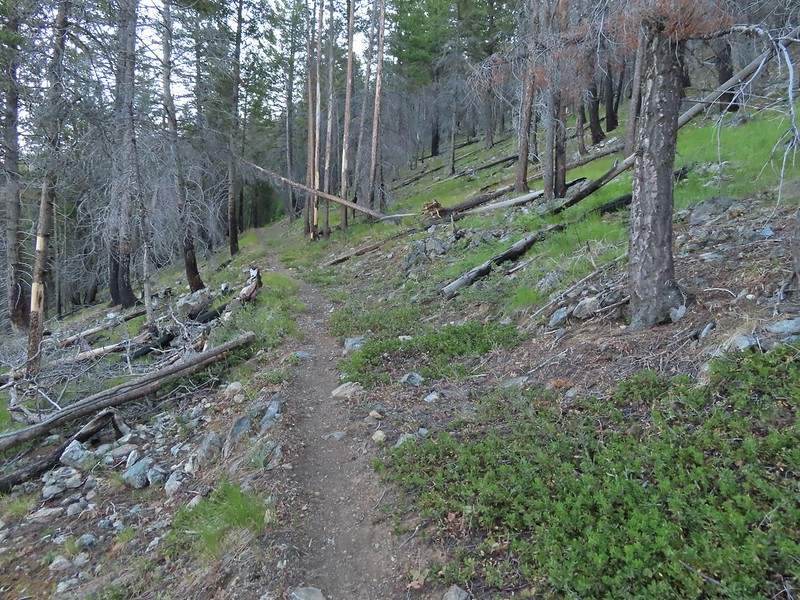
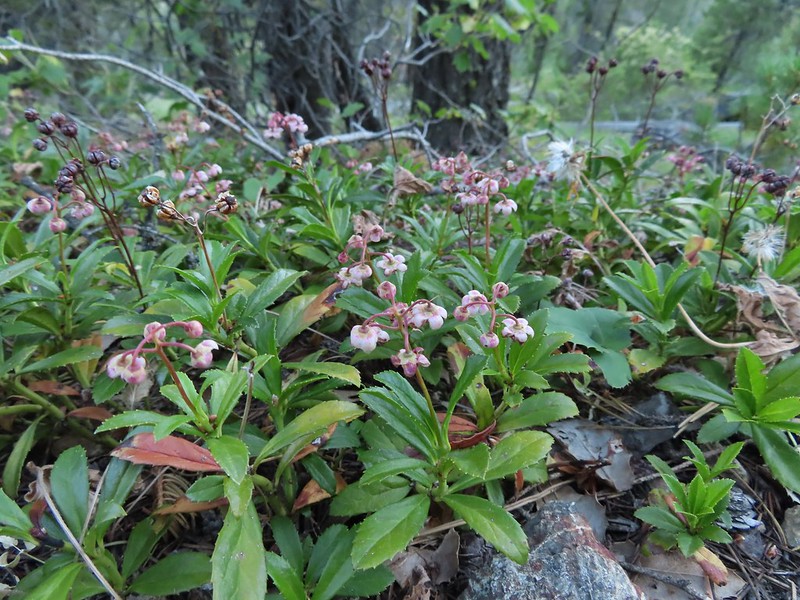 Prince’s pine
 Mountain death camas
 Fringed grass of parnassus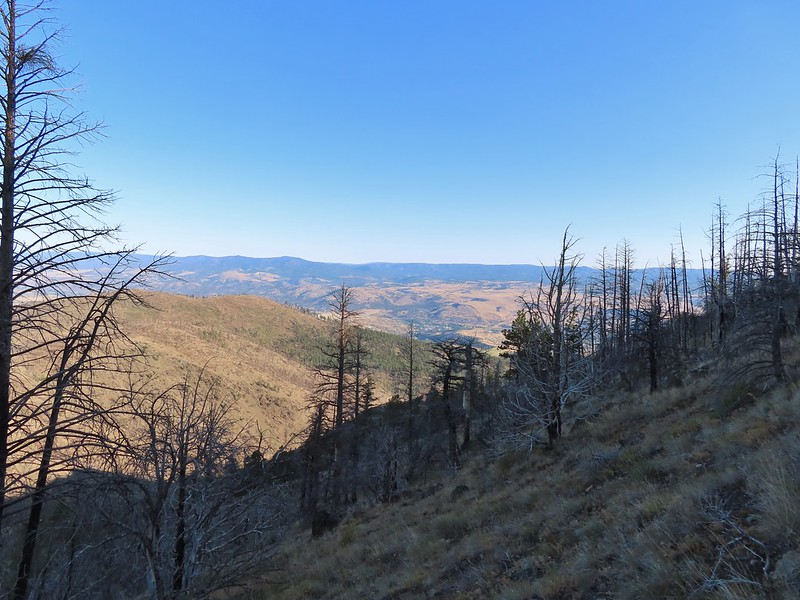
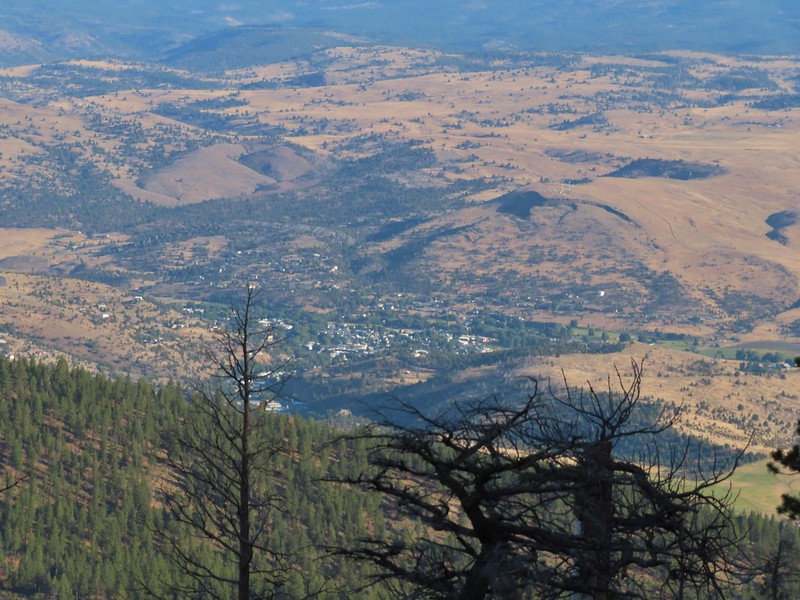 John Day below.
 Little Canyon Mountain behind the ridge we’d come around earlier.
 The Aldrich Mountains to the west, our destination for the next day’s hike.
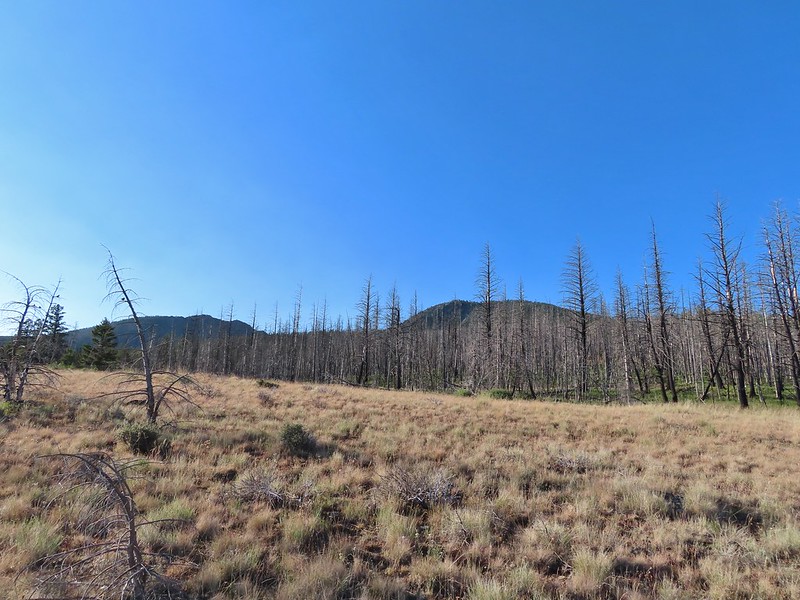 Canyon Mountain
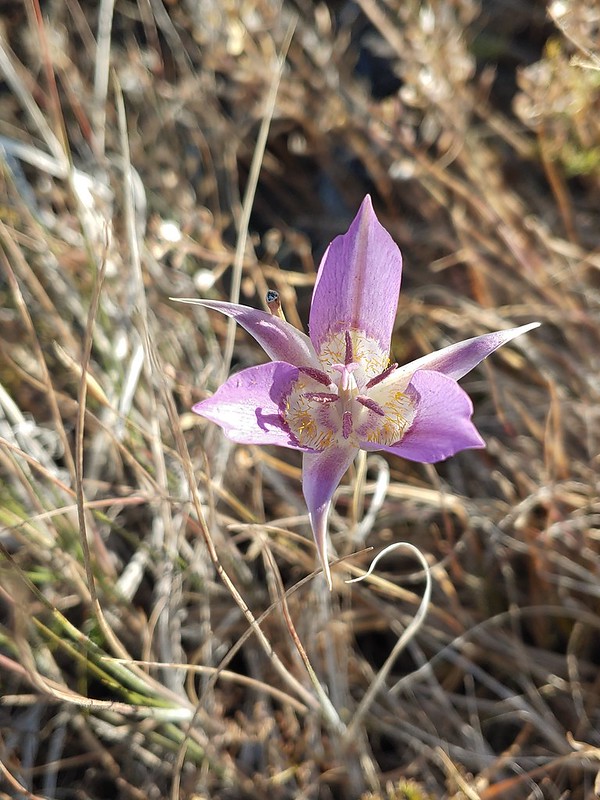 One of the sagebrush mariposa lilies.
 Dixie Butte and the Greenhorn Mountains to the NE
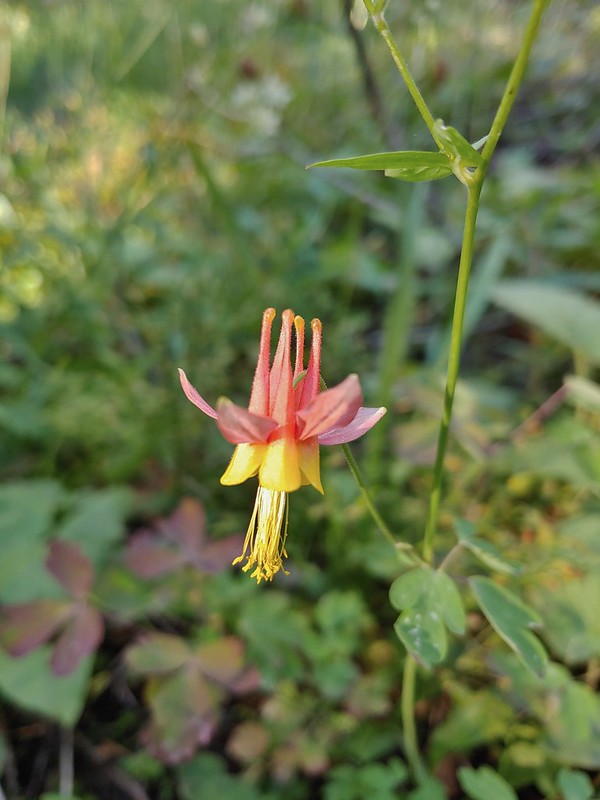 Columbine
 Swamp onion
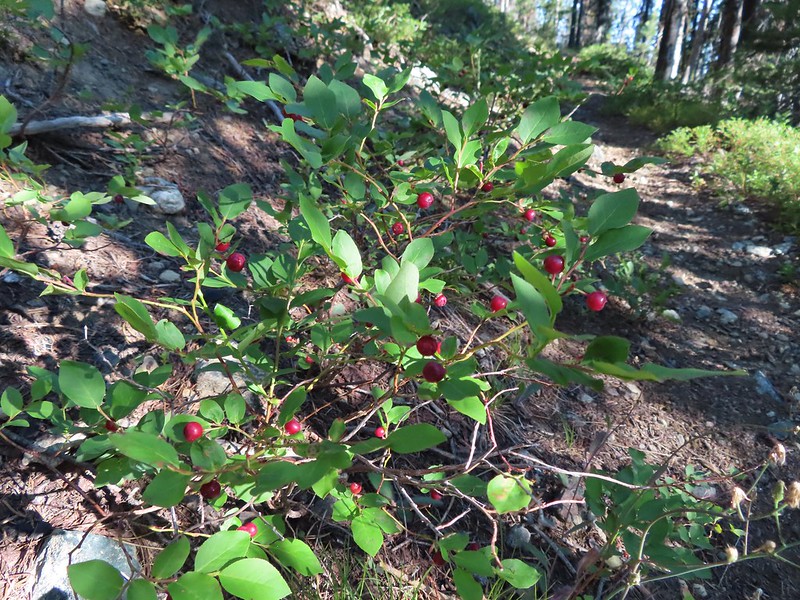
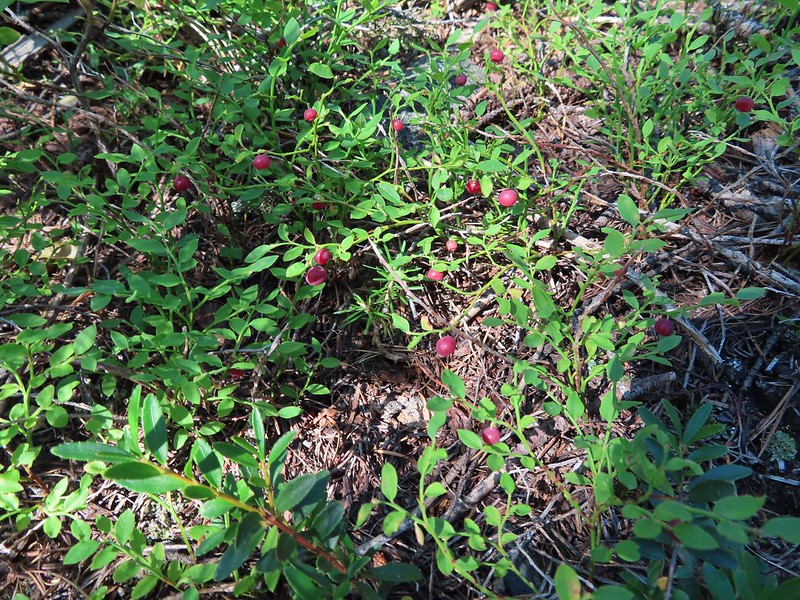
 Flowers at Dog Creek
 Twinflower
 There was a lot of elk sign along this section of the trail.
 A lot of sign.
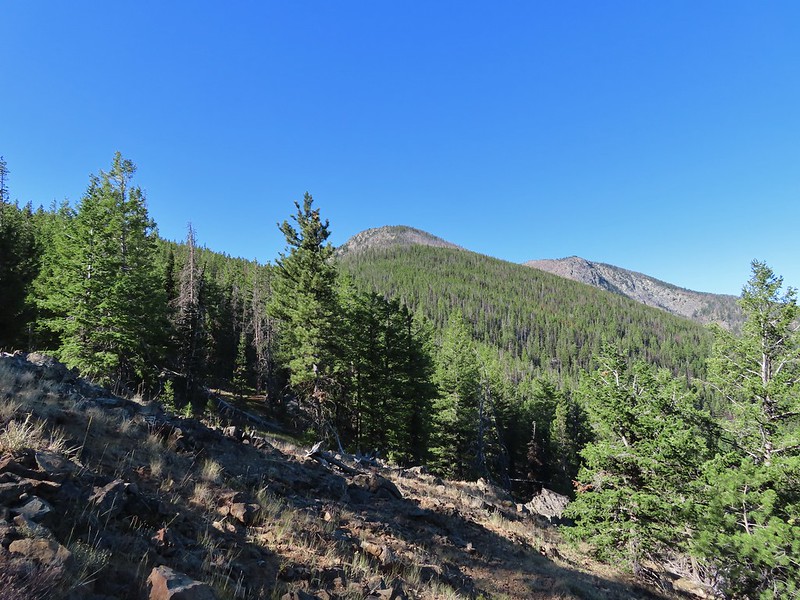 Looking back toward Canyon Mountain.
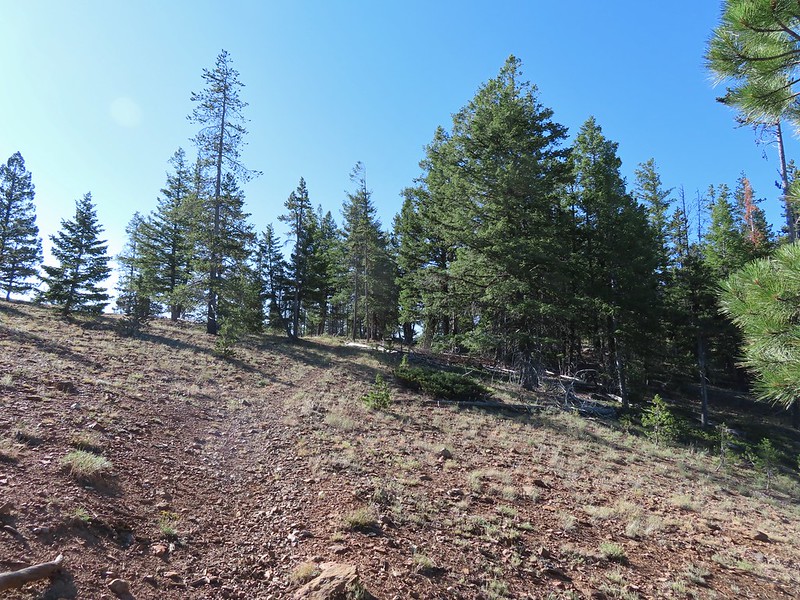 The trail crossed over the ridge in a saddle with quite a bit of mountain coyote mint.
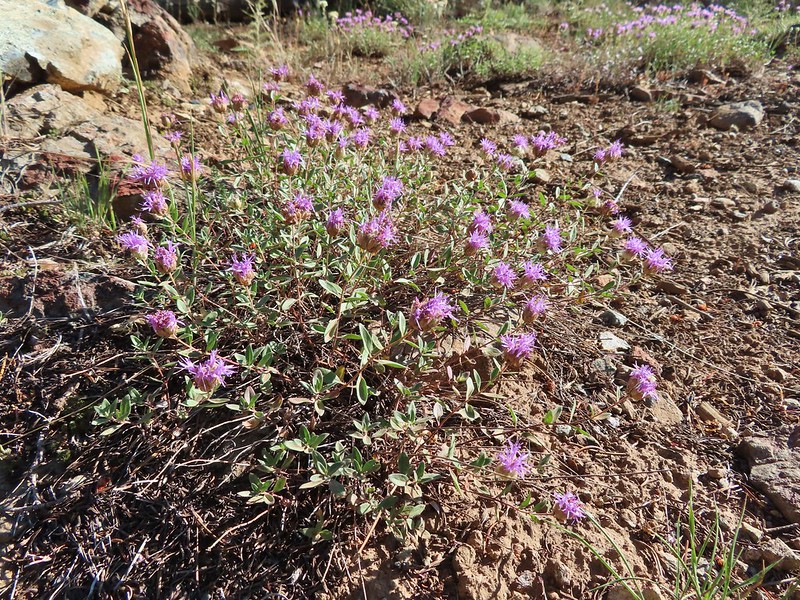 Mountain coyote mint
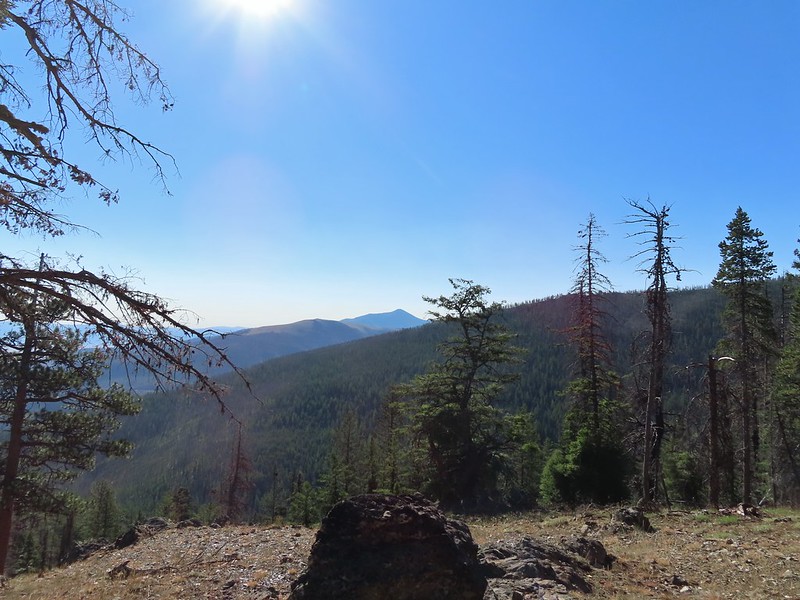 Strawberry Mountain (
 Heading toward Dean Creek now.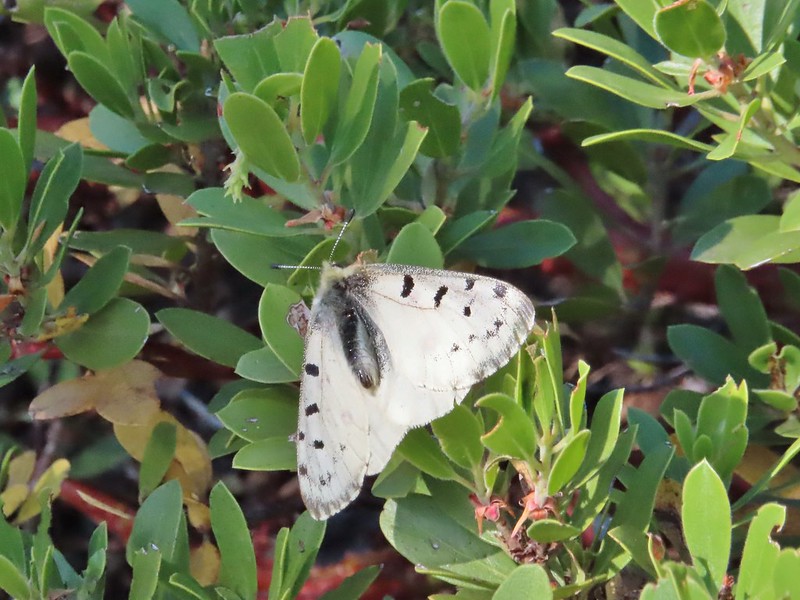
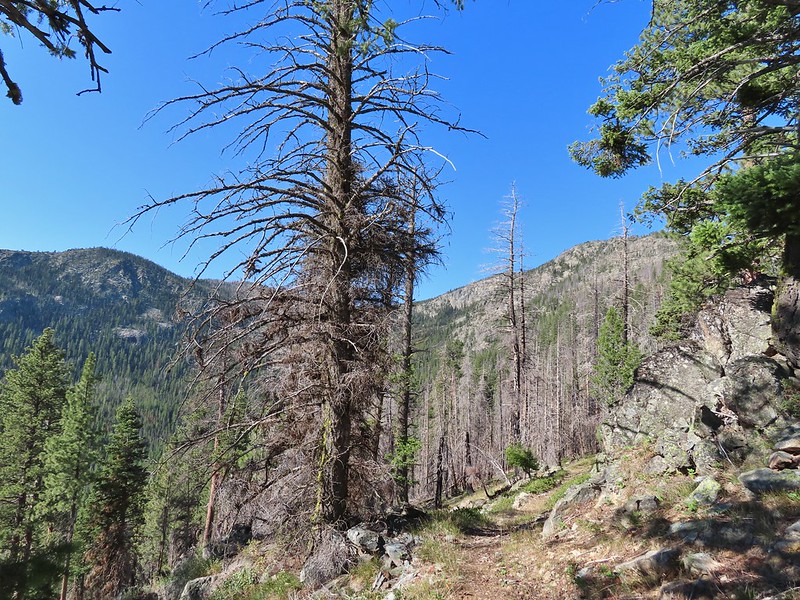 Green Mountain on the left and Canyon Mountain on the right.
 A smaller raptor, it wouldn’t look at us so I’m not sure what type it was.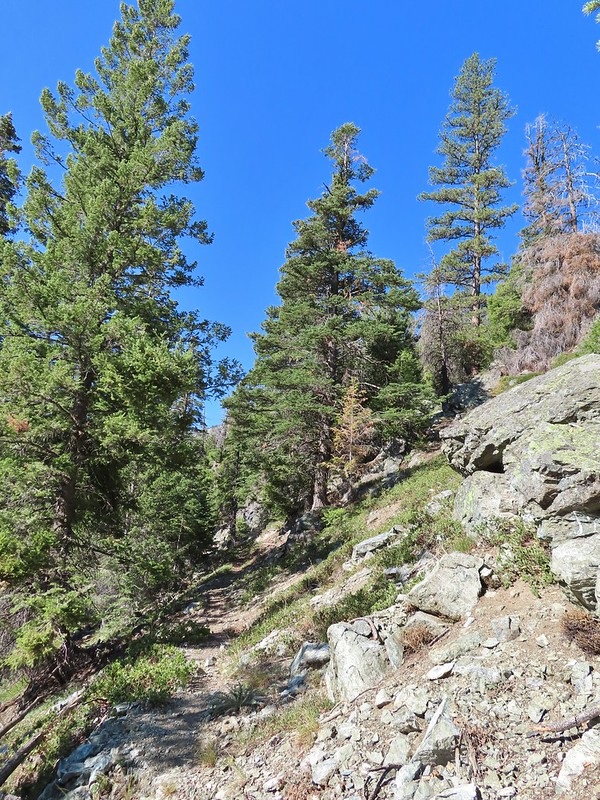
 Butterflies on western snakeroot. Side note we didn’t see a single snake or lizard all week which was really surprising to us.
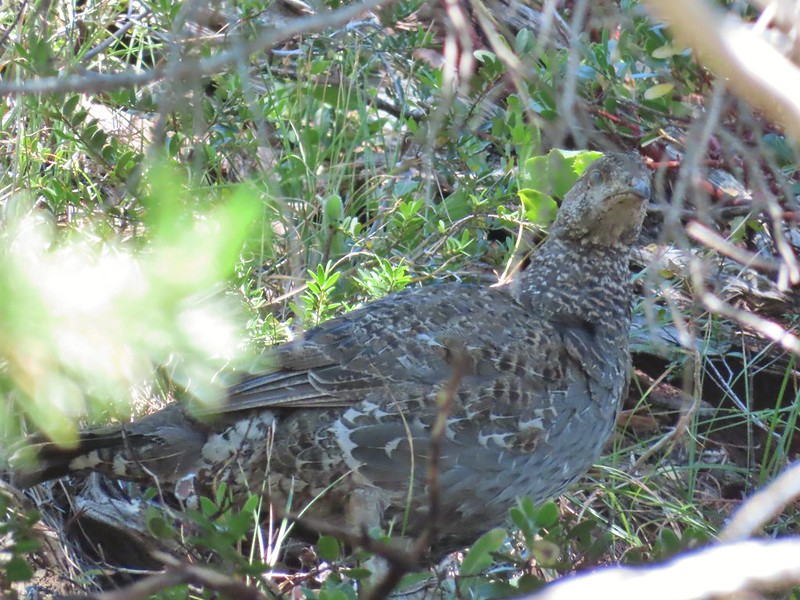 We did however see quite a few grouse.
 The trail got a little brushy nearing Dean Creek.
 There wasn’t much water in Dean Creek but there was enough for a small cascade.
 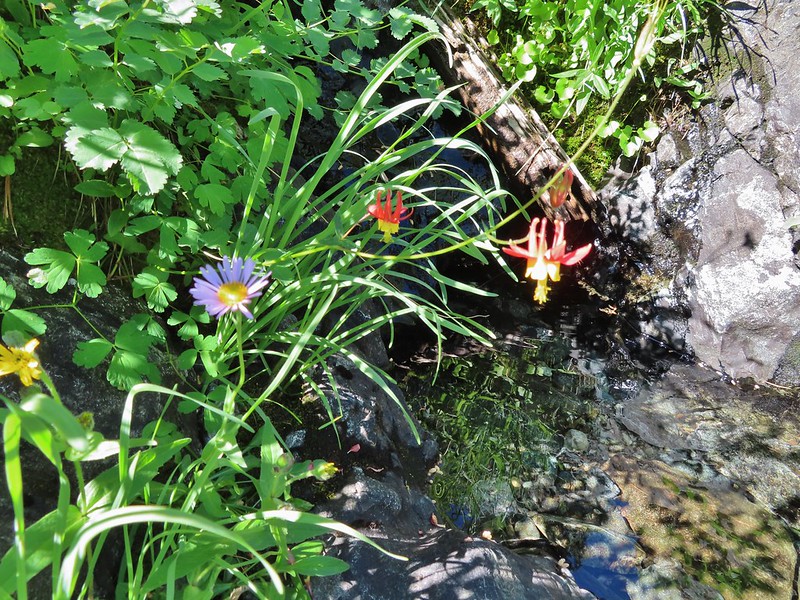 Wildflowers next to a small pool.
 Dean Creek
 Butterfly near the pool.
 Canyon Mountain
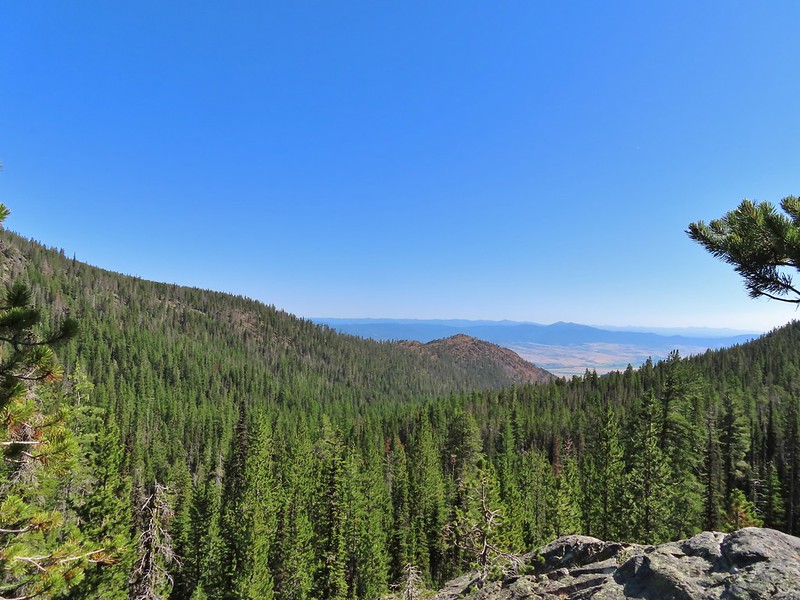 Dixie Butte with the Greenhorns on the left and the Elkhorns (
 Cones
Cones Lousewort
 Pearly everlasting, yellow flowers, and fireweed.
 An eagle?
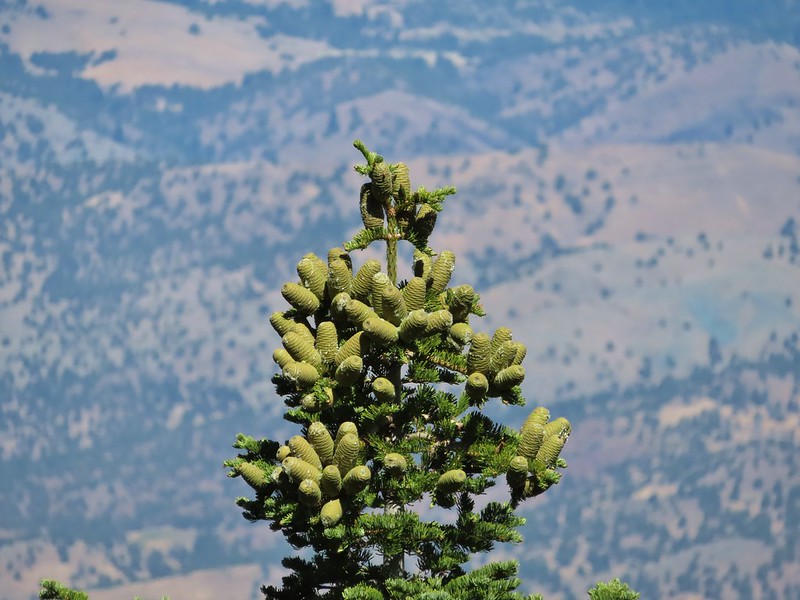 More cones
 Dragon fly
 A sulphur butterfly
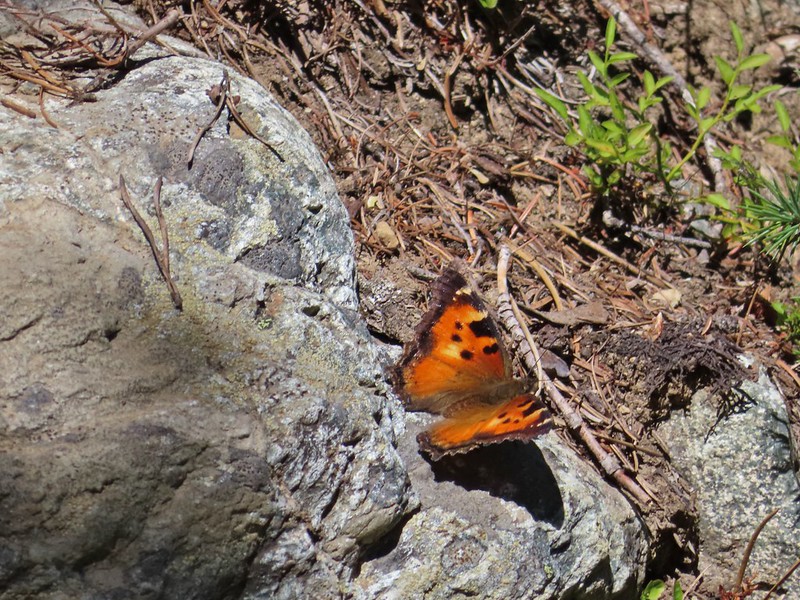 California tortoiseshell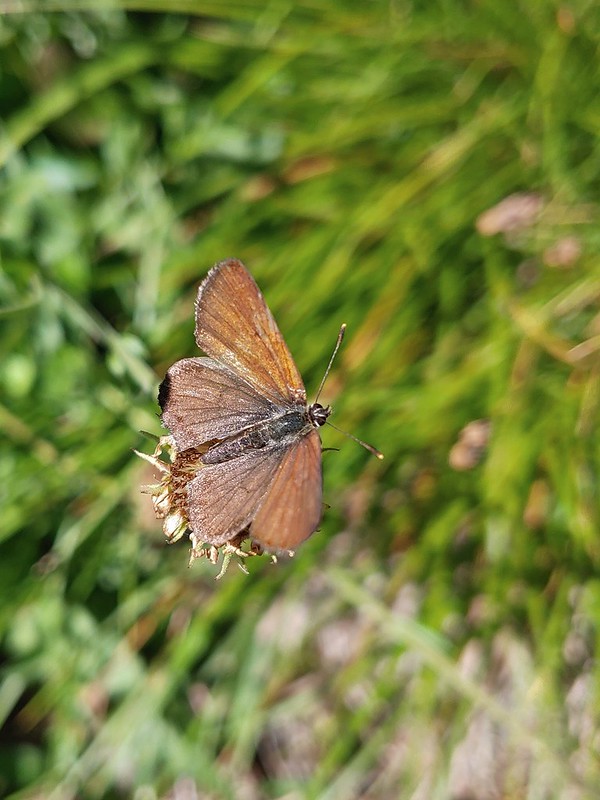
 Grouse
 Maiden fly
 Skipper
 Woodpecker
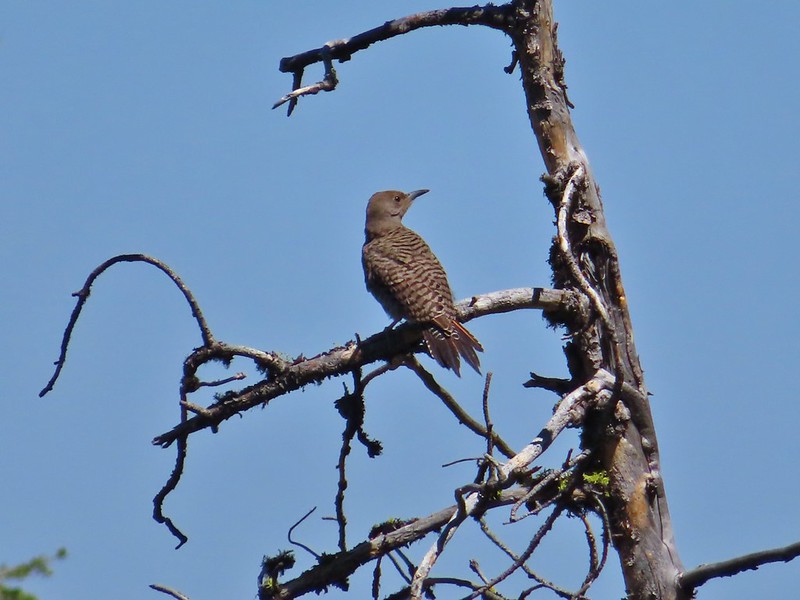 Northern flicker
 Mountain bluebird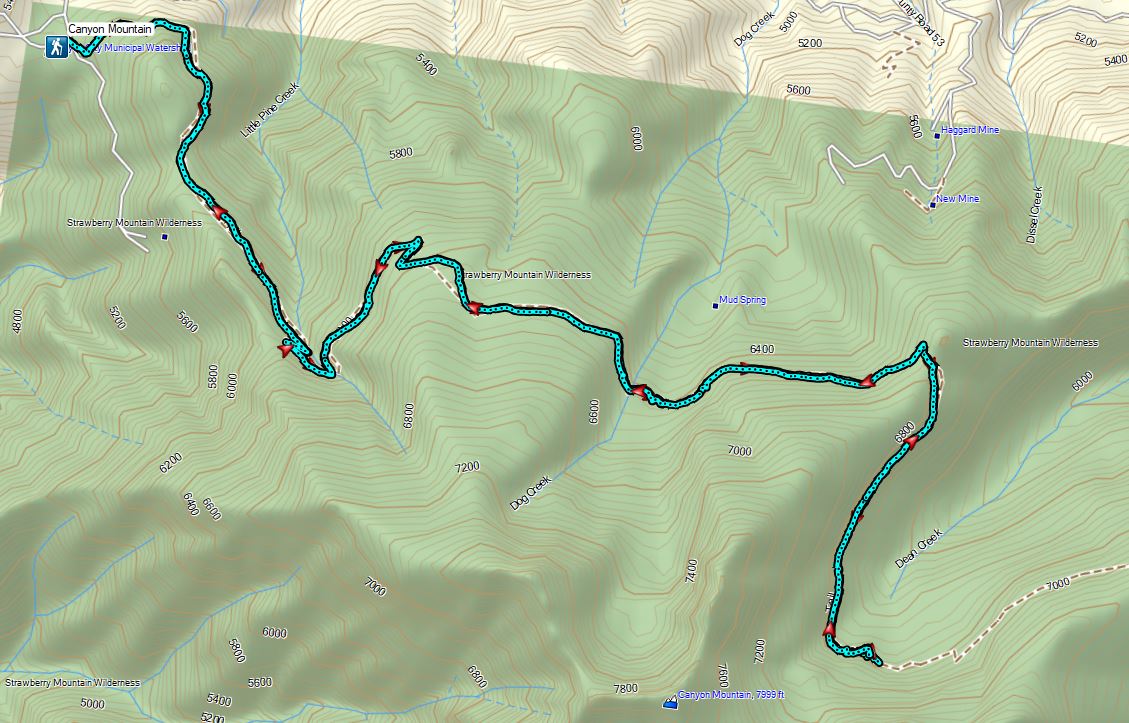
 wanderingyuncks


