Our time in John Day had come to an end and it was time to start our journey back to Salem. We were planning on visiting Heather’s parents in Bend for the night but of course we had a hike planned on the way. The hike to Fields Peak and McClellan Mountain in the Aldrich Mountains was another hike that was previously featured in William L. Sullivan’s “100 Hikes/Travel Guide Easter Oregon” but had been moved to the back of the book in his most recent 3rd edition. We began the hike at the McClellan Mountain Trailhead after a rough final 1.2 miles of driving (high clearance vehicles recommended). The bright spot of the drive was spotting a bobcat in the road.
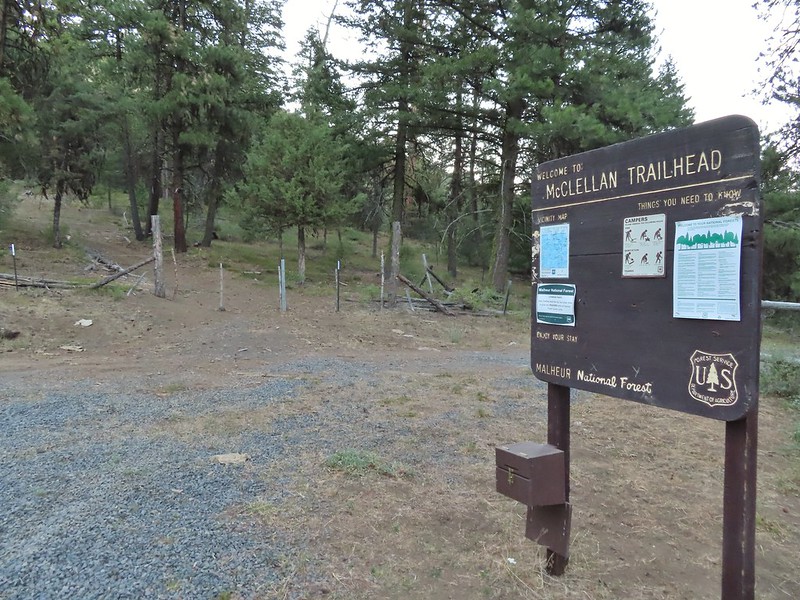
While the route to Fields Peak is open to OHVs the McClellan Mountain Trail, which splits off to the east after 1.5 miles is not.

The trail/OHV track begins through a barbed wire fence and heads steeply uphill, at times, 0.7 miles to a saddle.

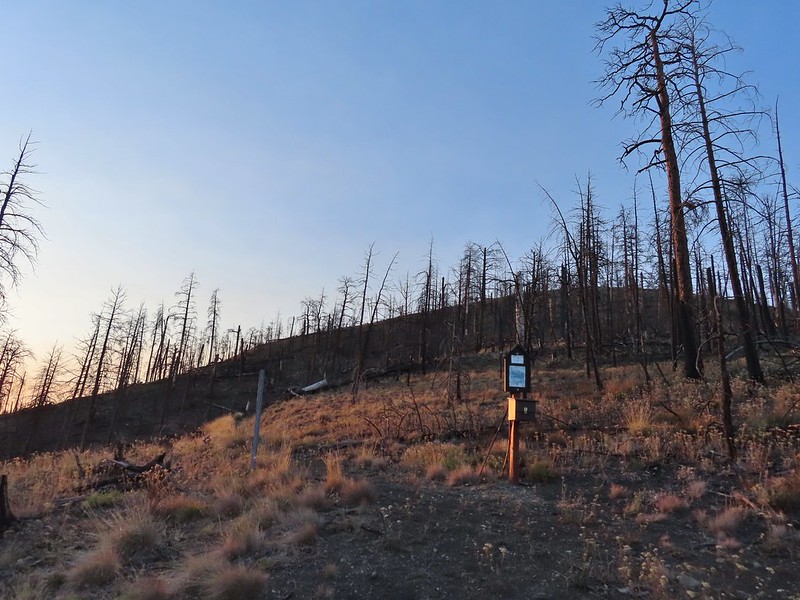
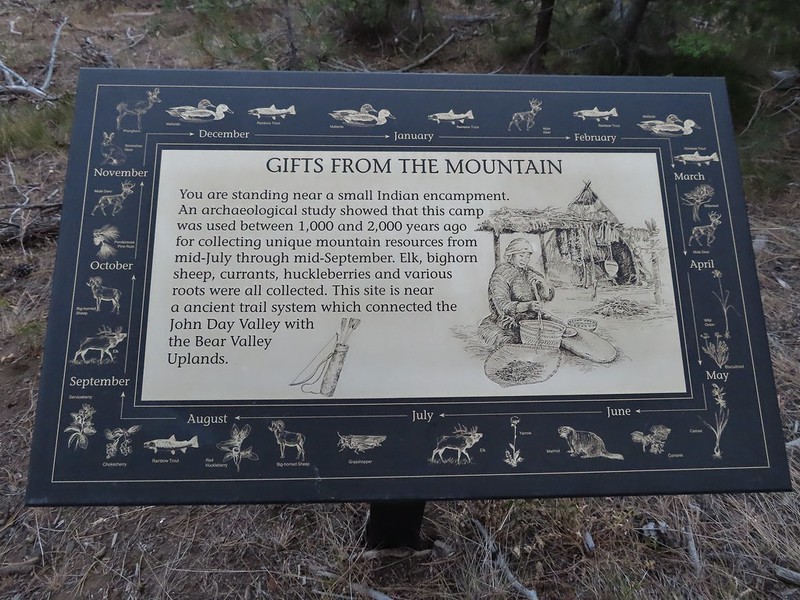 A lone interpretive sign near the beginning of the trail.

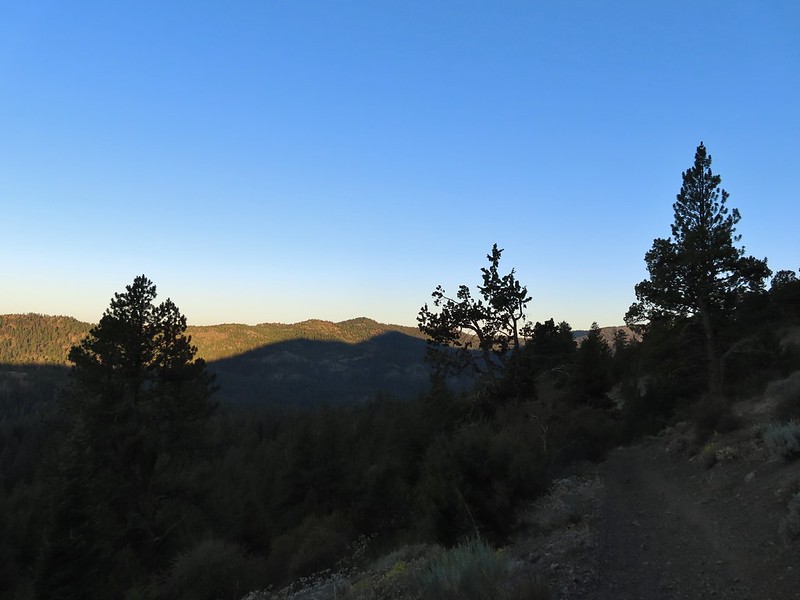
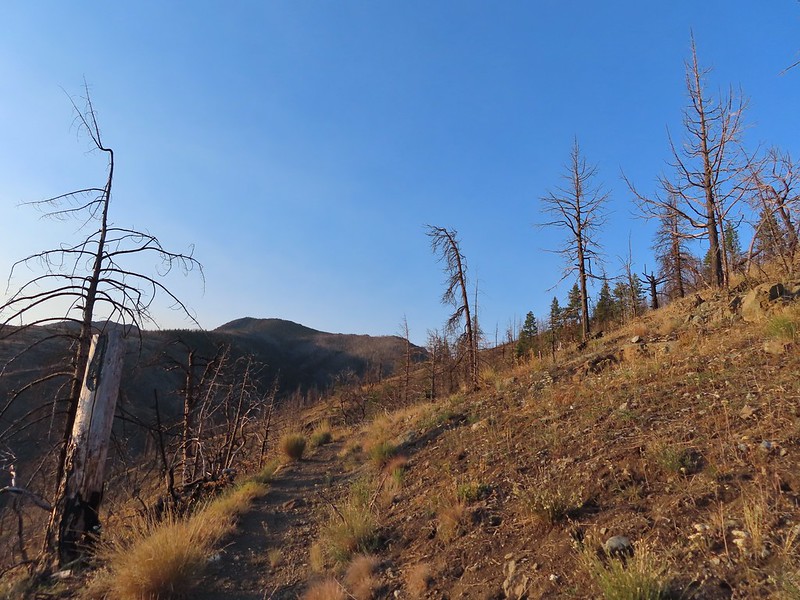
 The saddle
Sullivan mentioned that bitterroot bloomed on the ridge to the right but it was too late in the year to see any of them but I wandered out along the ridge a short distance anyway having reached the saddle ahead of Heather.
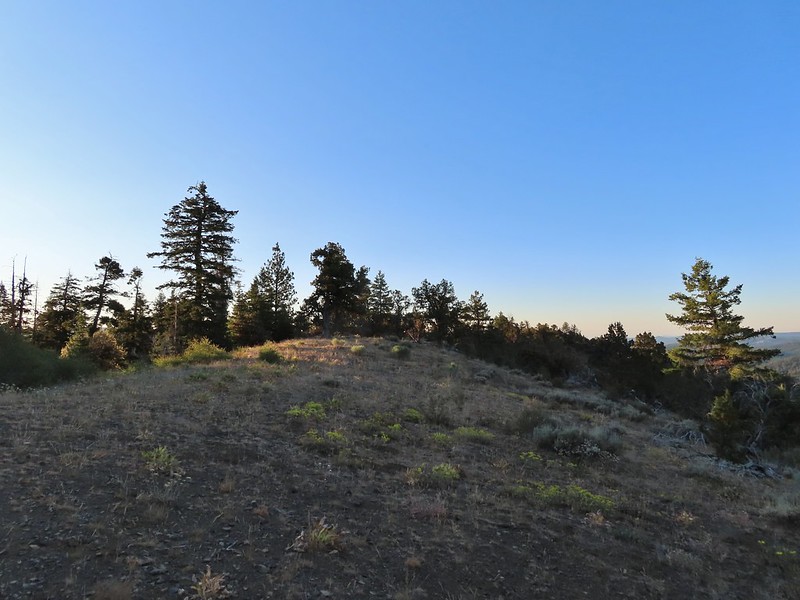
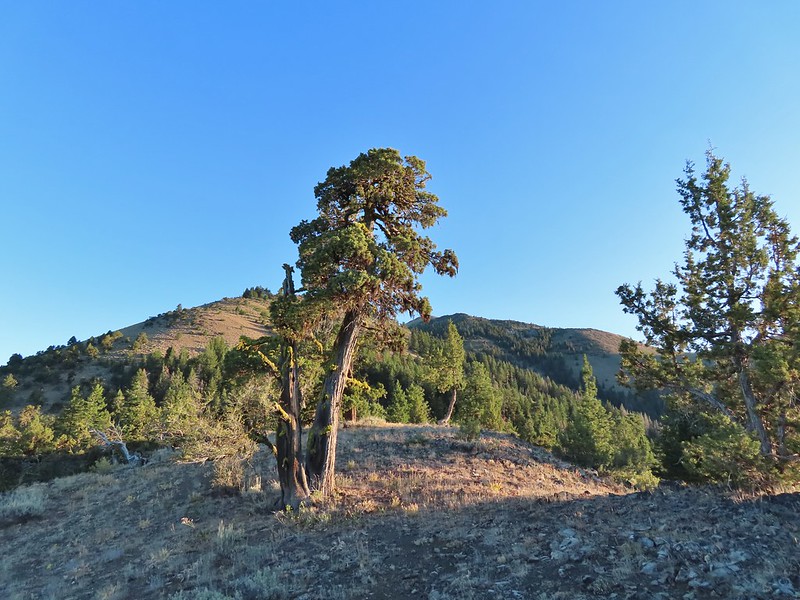 Fields Peak from the saddle.
 Heather arriving at the saddle.
We had gained a little over 700′ in the first section and now the trail would gain nearly another 600′ in the 0.8 miles to the trail junction.
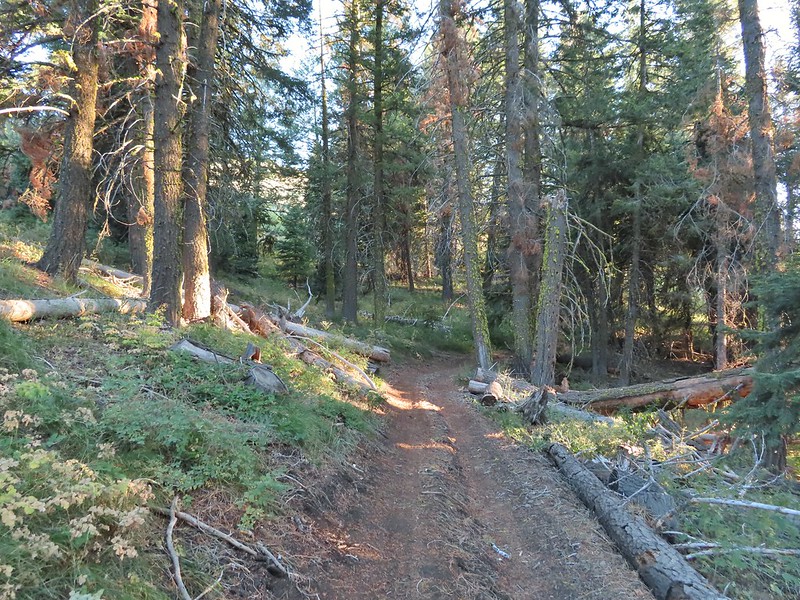 A rare level section.

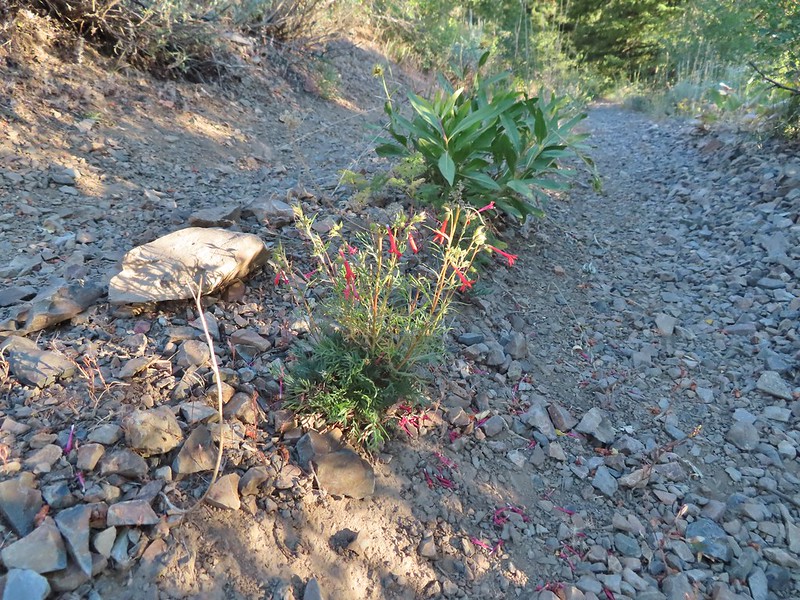 Scarlet gilia in the middle of the OHV track.
 Nearing the trail junction.
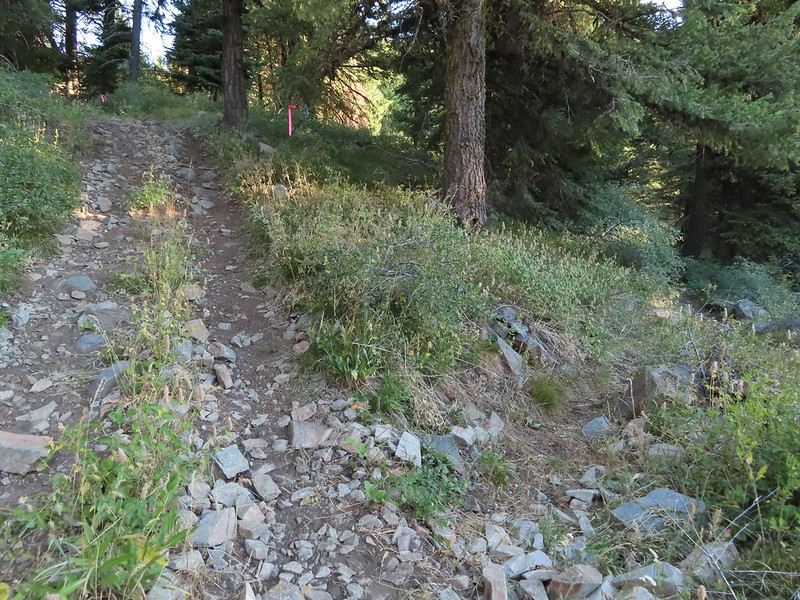 The McClellan Mountain Trail to the right.
We ignored the McClellan Mountain Trail for now and climbed another 0.8 miles gaining 700 plus more feet to the 7362′ summit of Fields Peak. The meadows along the track were way past bloom but it was evident that earlier in the year there would have been quite the wildflower display.
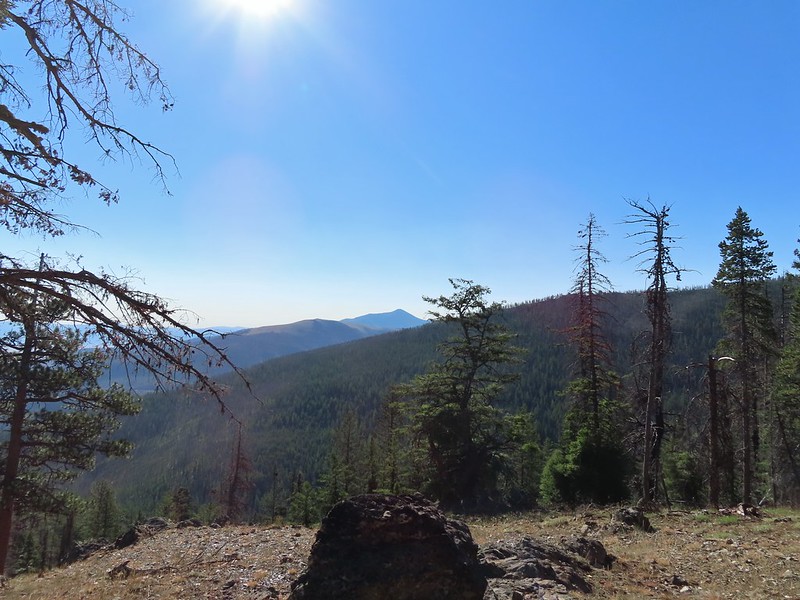
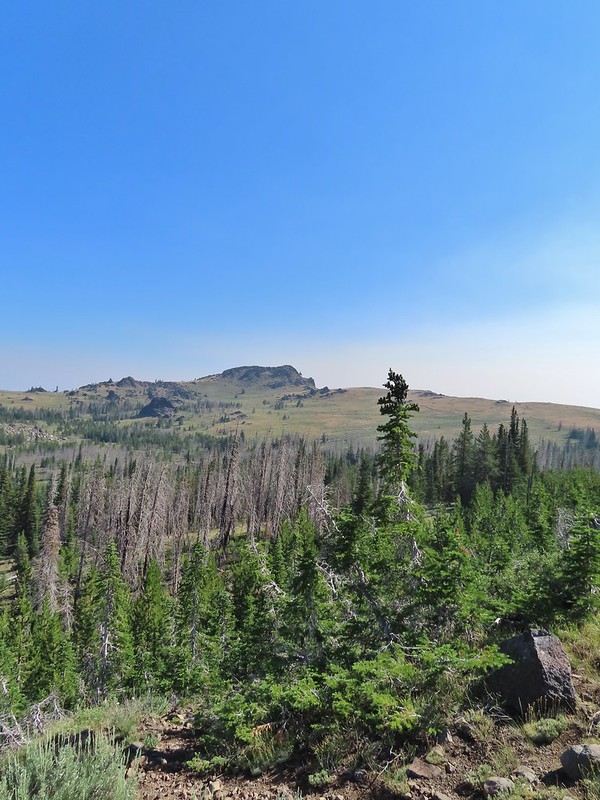
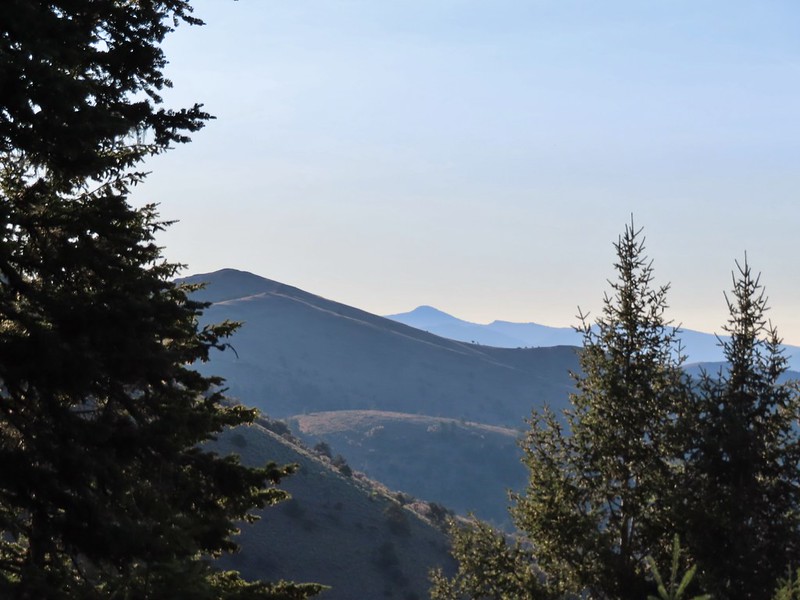 A peak east to McClellan Mountain and the more distant Strawberry Mountain (post).

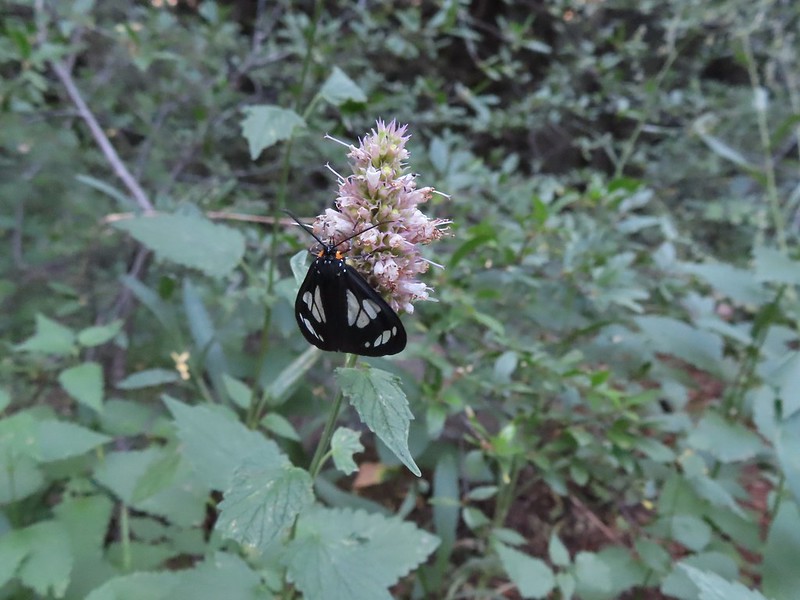 We saw a number of these moths sleeping on the hyssop.
 Hyssop and sunflowers
 Paintbrush
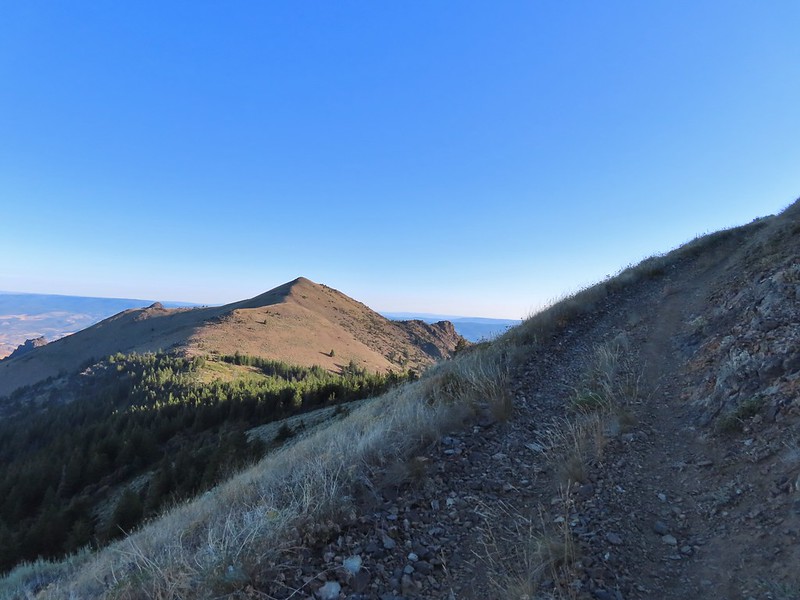
 Looking up Fields Peak.
 Mountain coyote mint
 Shadow of Fields Peak
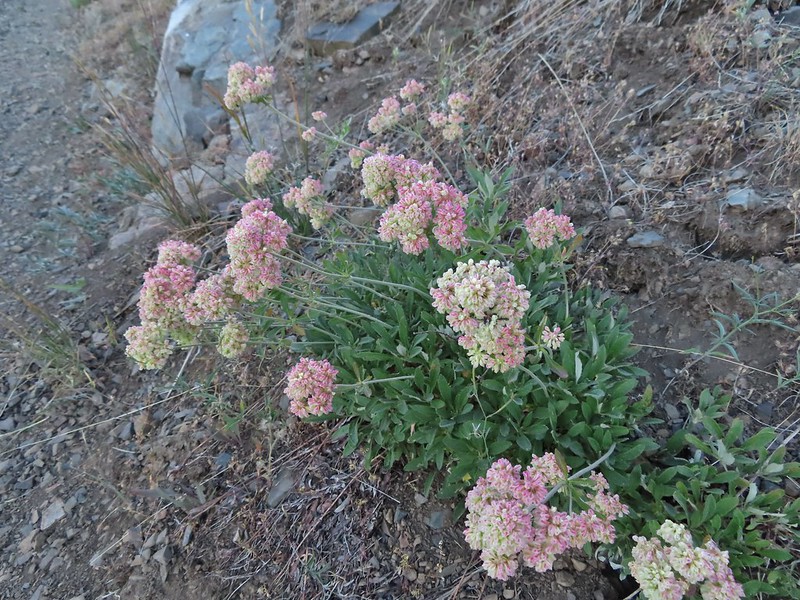 Buckwheat
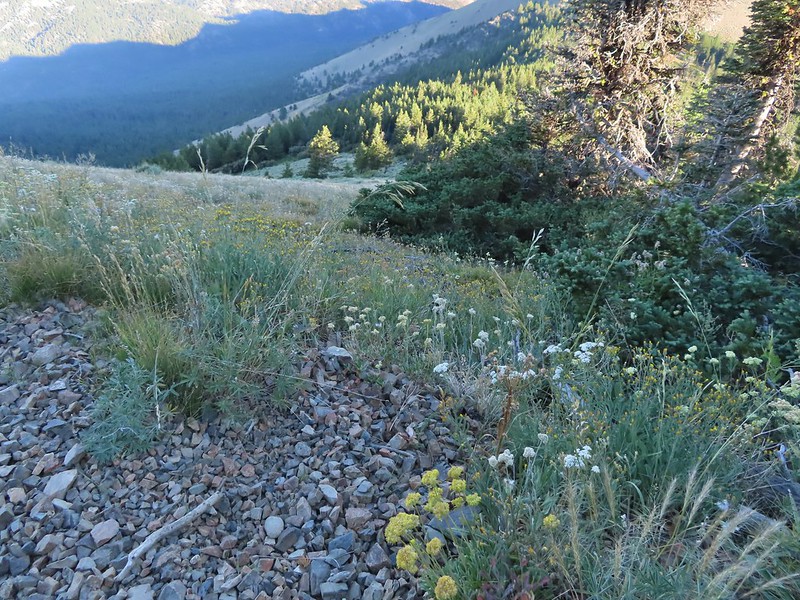
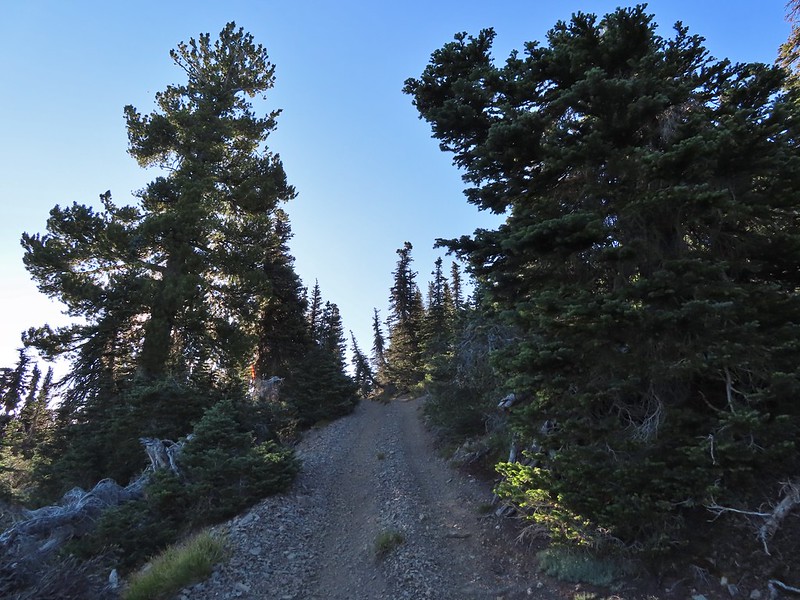 A few trees near the top.
 Final steep pitch to the summit.
 View west, Aldrich Mountain is the high point to the near right.
It was another nice morning with relatively clear skies given the fires that were (and still are) raging in Oregon.
 View north
 McClellan Mountain and the Strawberry Mountain Range to the east.
 Logan Valley to the SE.
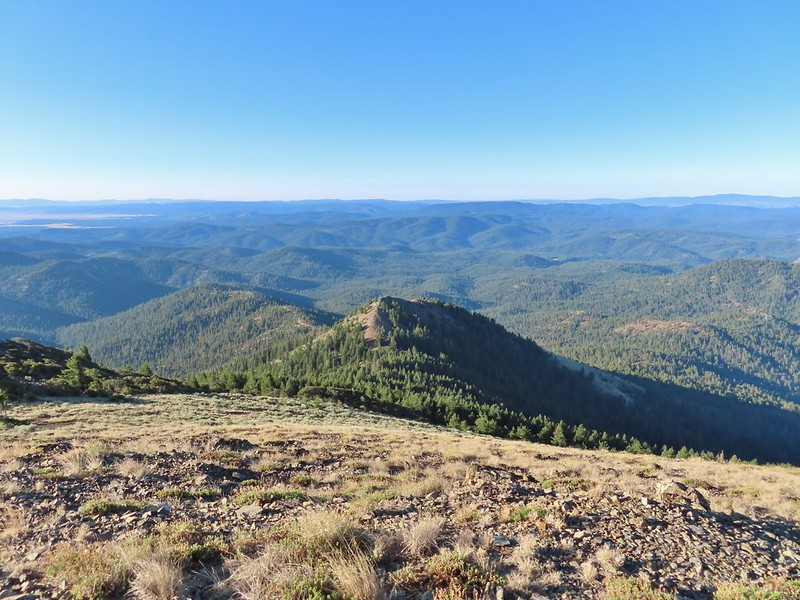 The view south.
We had a nice break and then headed back down. On the way several grouse startled us when they flew out of the trees as a group of raucous Clark’s nutcracker watched from the tree tops.


 More moths
When we reached the junction with the McClellan Mountain Trail we turned left.
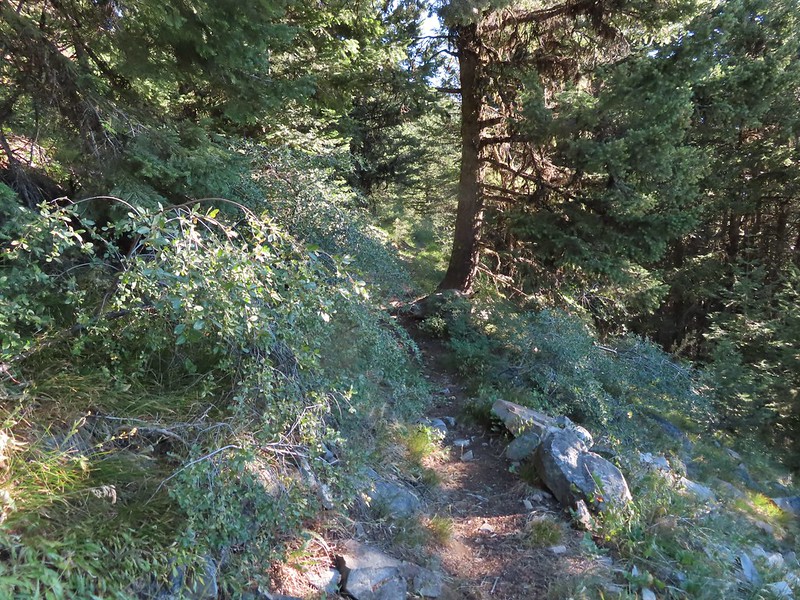
Aside from being a little crowded with brush the trail was in relatively good condition with just a couple of downed trees that were easily navigated.
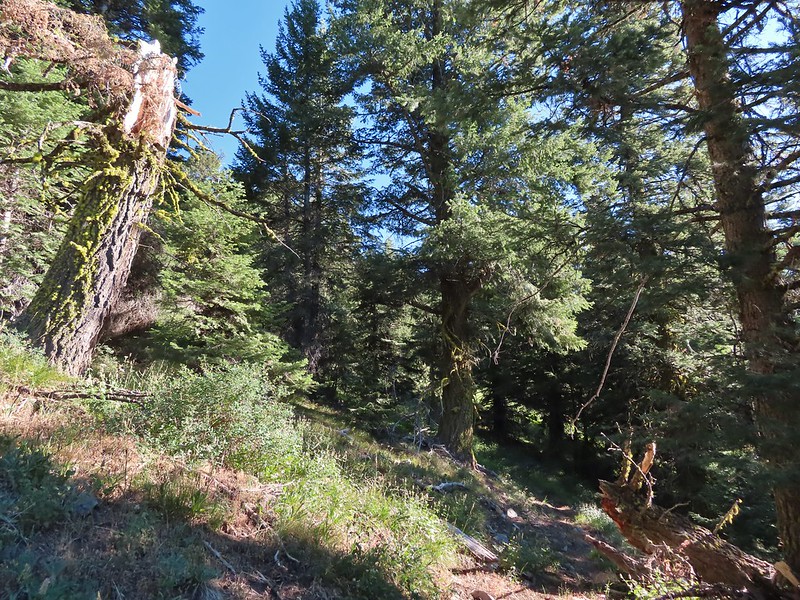
Over the next 2.2 miles the trail slowly lost elevation as it alternated between south and north facing hillsides via four saddles, the first of which we arrived at after 0.5 miles.
 Hillside above the trail.
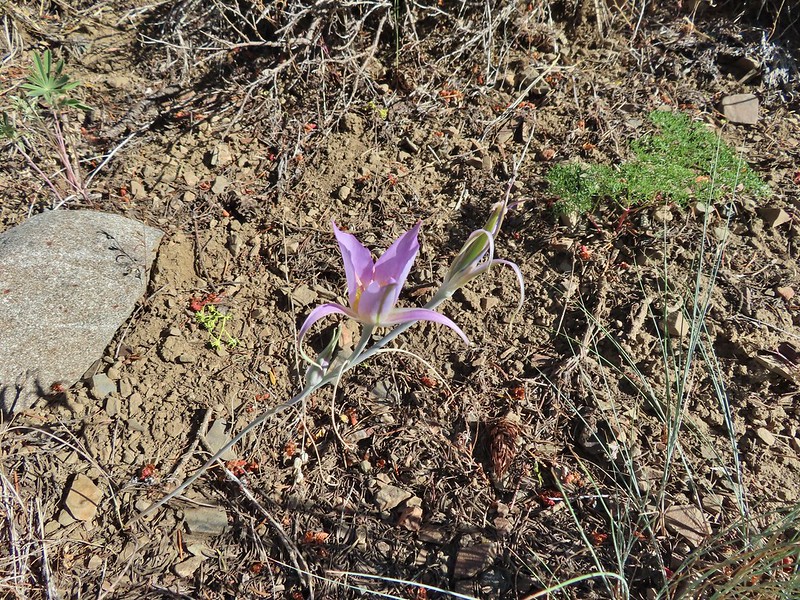 Sagebrush mariposa lily
 Approaching the saddle where we would cross the the north side of the hill ahead.
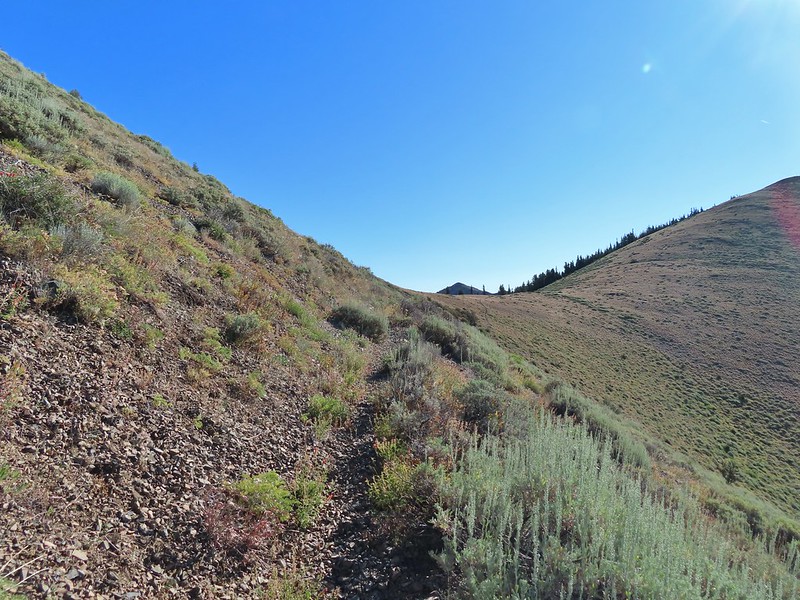 The first saddle with Moon Mountain behind.
 Looking back along the trail.
 Looking back from the saddle.
 The north side had a few more trees.
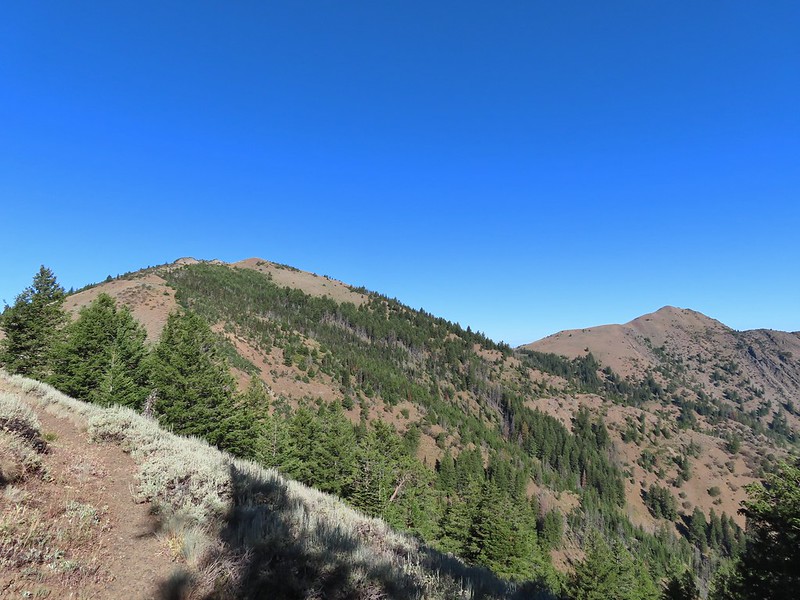 Looking back toward Fields Peak
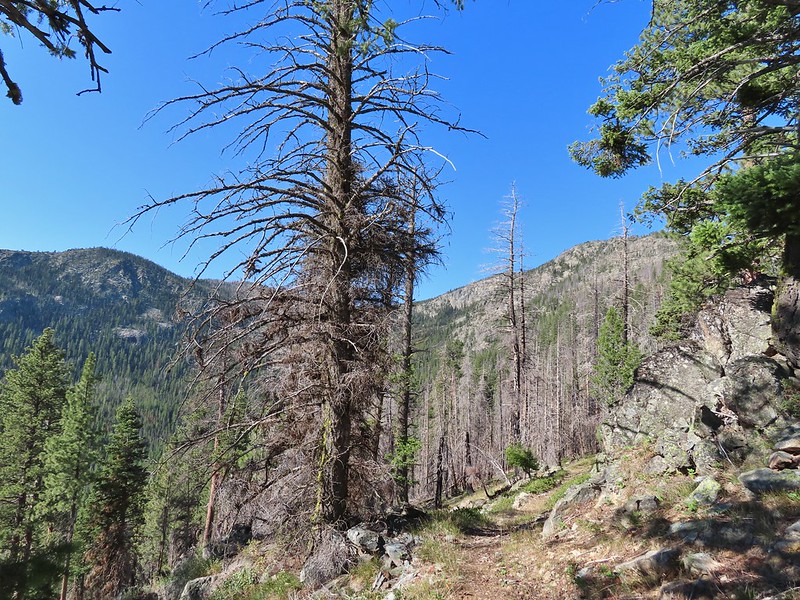
 We passed through a rocky section near the second saddle.
In another half mile we found ourselves passing through the second saddle and back on the south side of the ridge.
 McClellan Mountain from the second saddle.
Yet another half mile of trail brought us to the third saddle. Sullivan calls this phlox saddle and there was indeed a lot of phlox present it but had been a long time since it bloomed and all of the plants were now brown and dried.
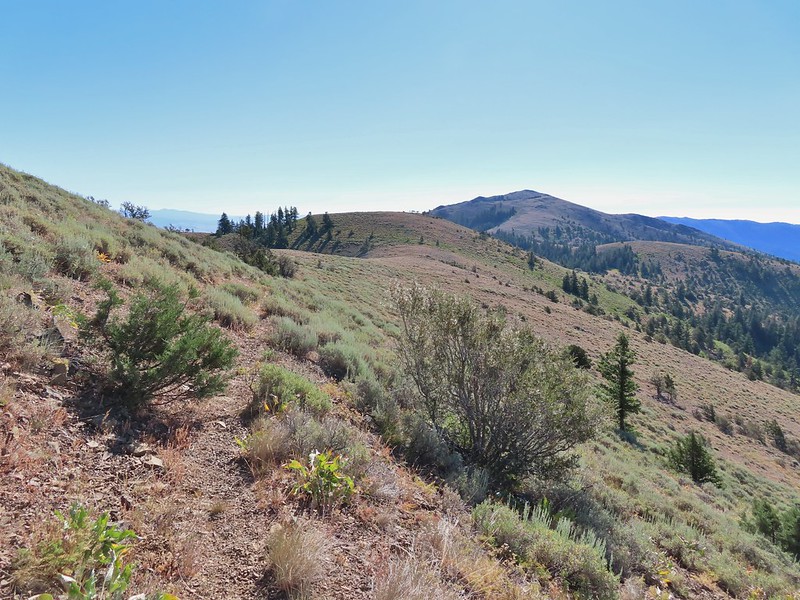 Approaching the third saddle.
The trail was again on the north facing side as it passed over a ridge leading out to Moon Mountain.
 Moon Mountain
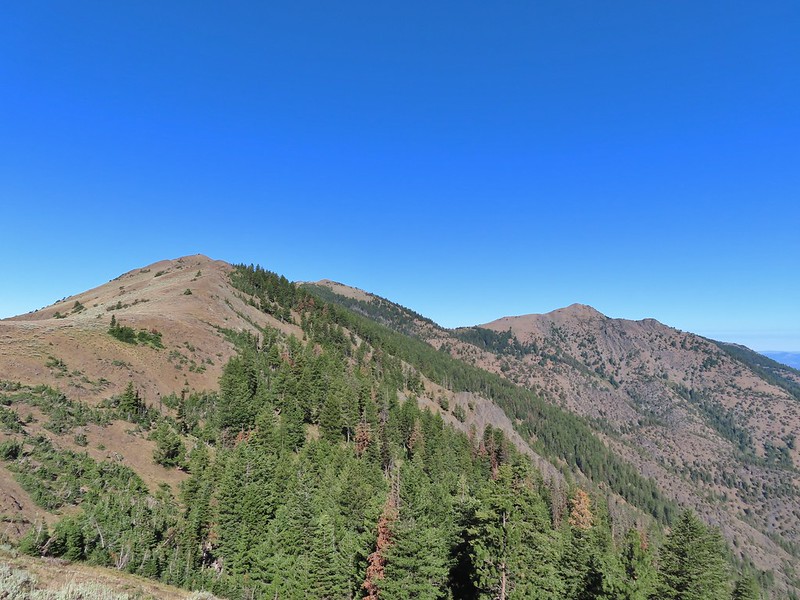 Fields Peak (center).
 McClellan Mountain as we approached the fourth saddle.
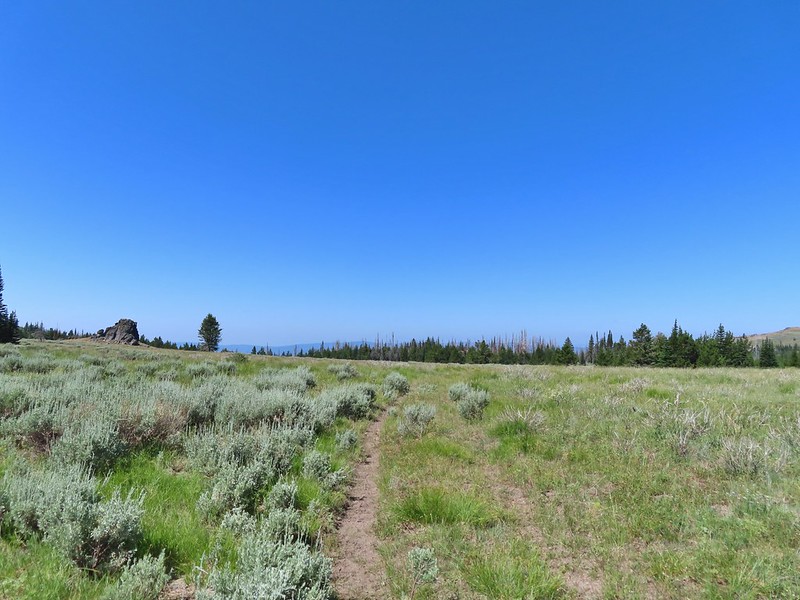
As the trail descended to the fourth saddle it disappeared in the sagebrush meadow.

The good news was this fourth saddle was where the off trail route to the top of McClellan Mountain started so we simply made our way through the sagebrush to the gentlest looking slope and started up the mountain. Sullivan showed it being 1.2 miles and just under 700′ up to the 7043′ summit.
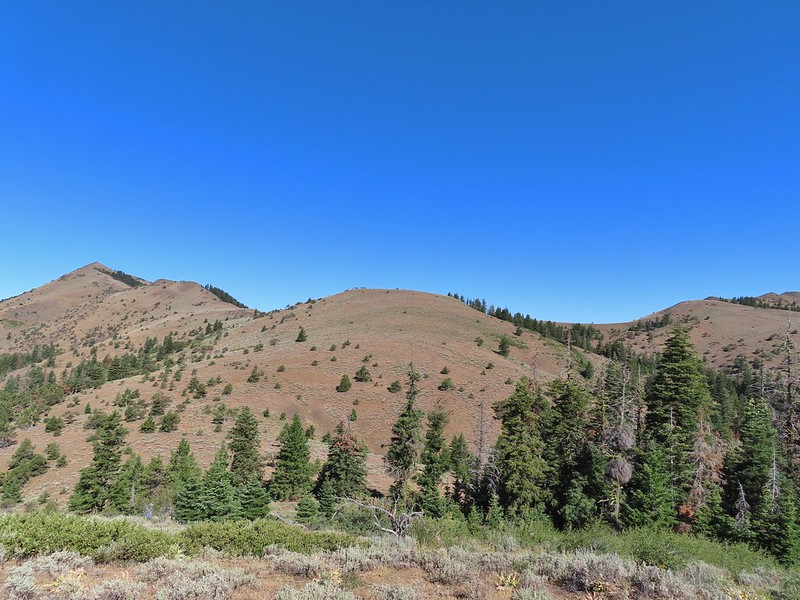 Looking back you can sort of make out the trail angling down the near hillside.
 Looking up McClellan Mountain.
Earlier in the hike I had mentioned to Heather that the only real disappointment of the trip had been the lack of large wildlife (aside from the dozens of deer and lone bobcat we spotted on our drives). As we crested the first hill on our way up McClellan Mountain though we spotted a line of ungulates crossing the hillside far above us. They were far enough away that I couldn’t tell for sure if they were elk or deer but once again the zoom on our camera helped solve the mystery.
 In the middle of the center hill to the left of the tree in the foreground is the line of what turned out to be 5 bull elk.
 Blurry due to the elk moving and the deep zoom.
 Four of the bulls stopped to look back at us.
 The fifth and largest bull on top of the ridge waiting for the rest.
After watching the elk disappear over the hillside we continued on. As far as off trail hikes go this was nice and straight forward, not ever too steep, and the vegetation wasn’t too tall or thick.

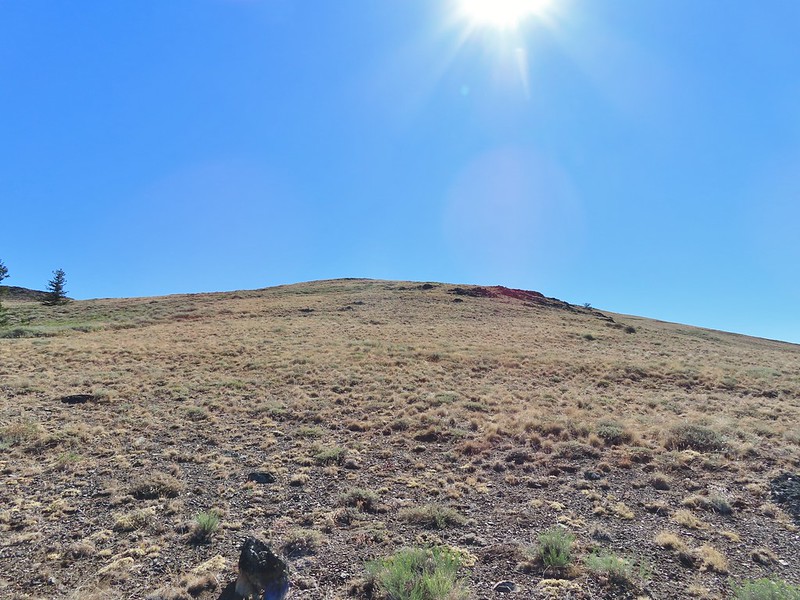
 An old fence line on the hill.
 Fields Peak on the left, an unnamed peak in the center and Moon Mountain on the right.
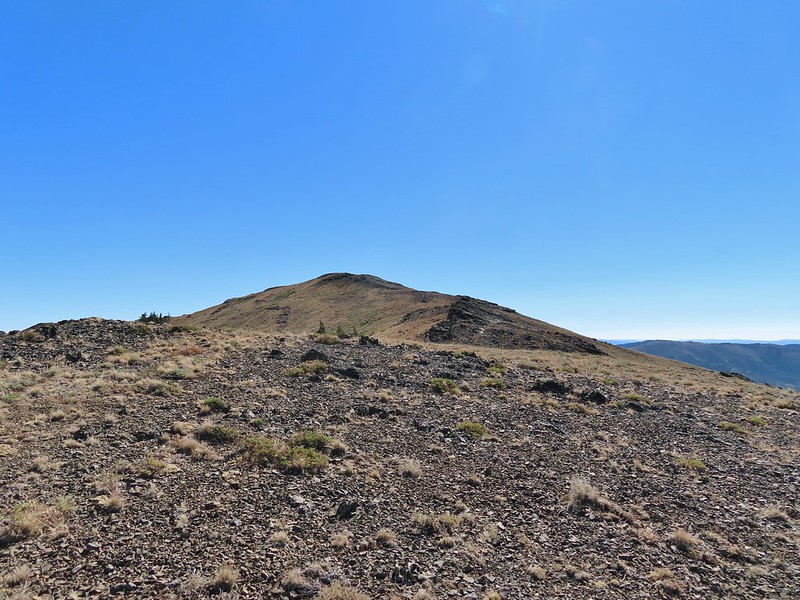 False summit (there’s always at least one). After some debate we went to the left of the rock outcrop which worked out well.
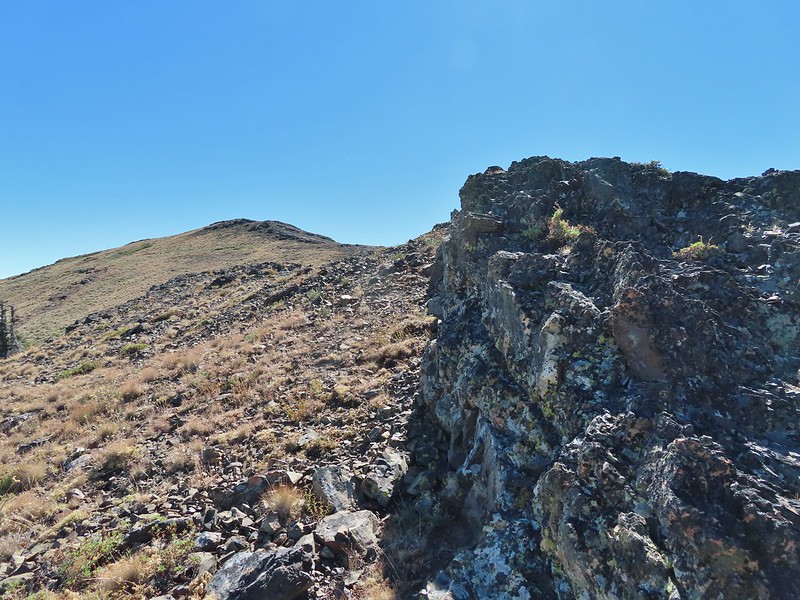 Passing the rock outcrop.
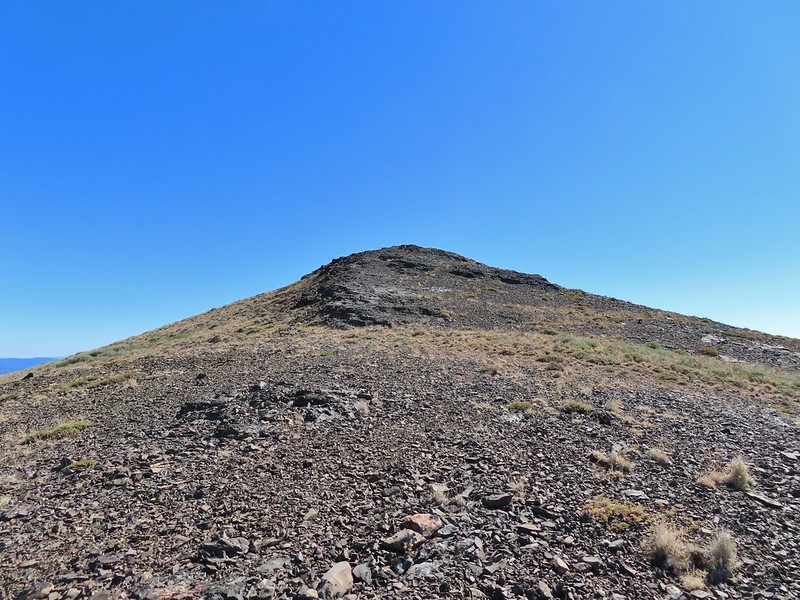 Almost there.
 The Greenhorn Mountains, Elkhorns, Dixie Butte and the Strawberry Mountains from left to right in the distance.
 Looking back at Fields Peak
 The John Day River Valley.
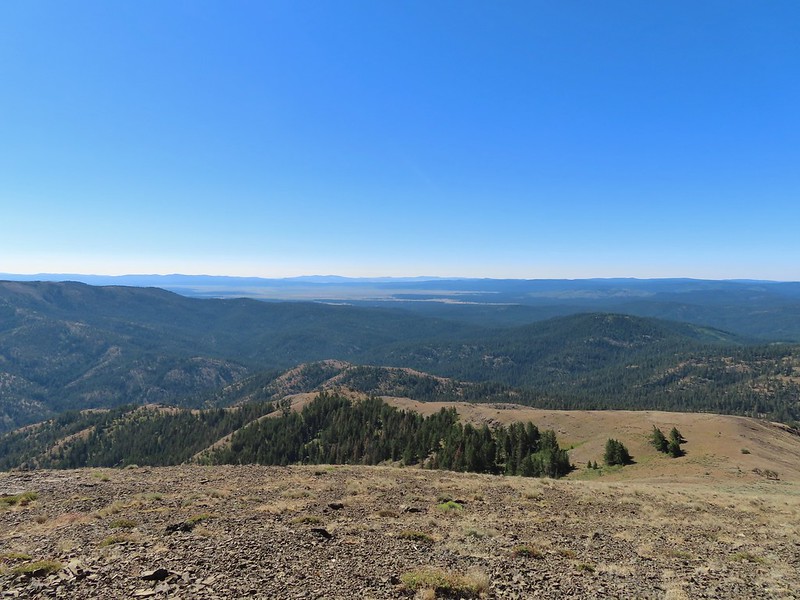 Logan Valley
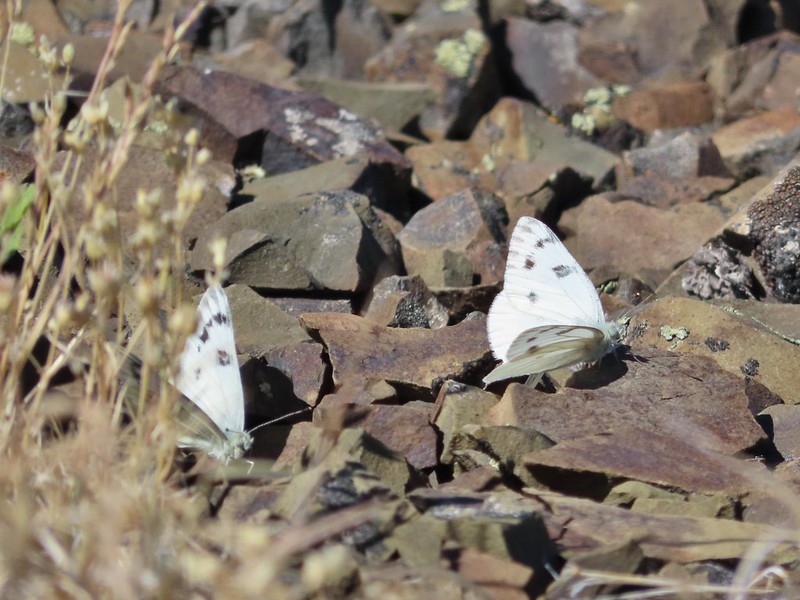 Company at the summit.
We took another nice break at the summit before heading back the way we’d come. On the return trip we had an encounter with what we believe was our first ruffed grouse.
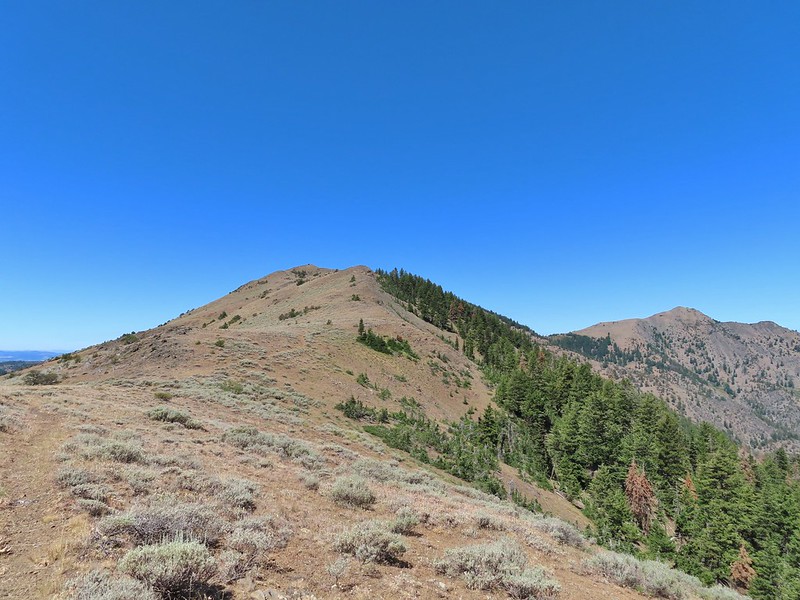 Passing back through Phlox Saddle.
 A better look at the rocky section of trail.
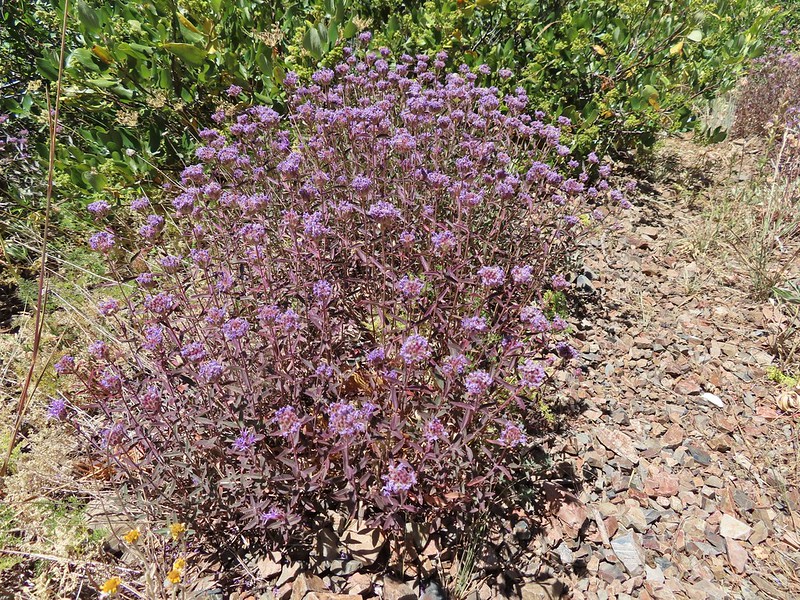 Mountain coyote mint, one of only a couple with this coloration on the stems.
 Butterfly and a beetle.
 Sagebrush mariposa lily
 Ruffed grouse
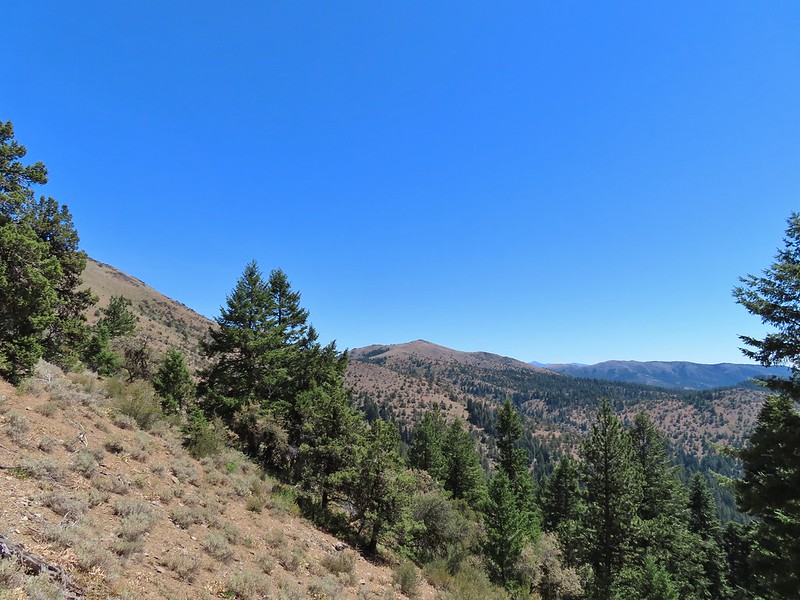 A final look at McClellan Mountain.
For the second day in a row our hike came in at 12.3 miles, this time with approximately 3200′ of elevation gain.

In our five days of hiking in the area we passed a single hiker (with dogs), something that is unheard of even on weekdays on the western side of the State. We were a little concerned about ticks but we only saw two, Heather had one on her hand the first night on the Rock Creek Trail and she had a second on her tights at the end of the Canyon Mountain hike but neither had bitten her. It had been an enjoyable trip but it was time to head home. We drove to Bend and had a nice visit with Heather’s parents before leaving early the next morning for one final short hike. Happy Trails!
Flickr: Fields Peak
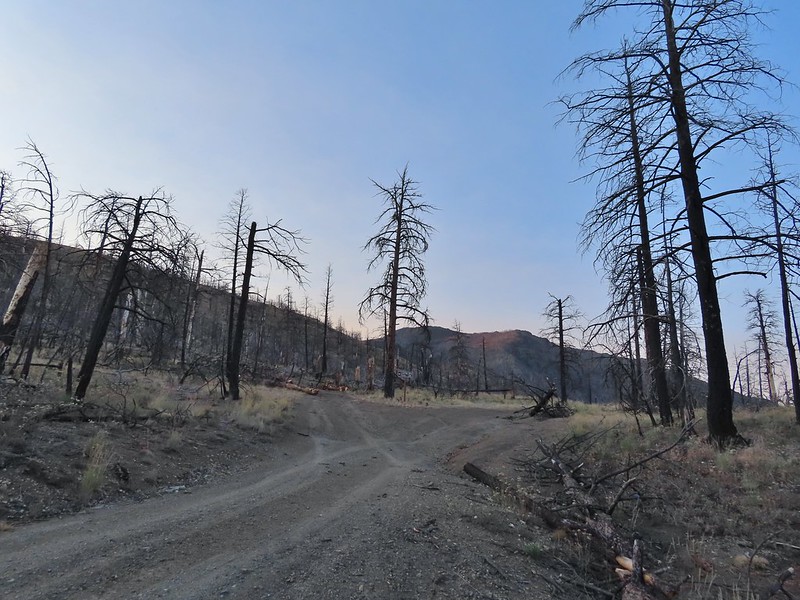 I had started up to the left at the saddle but it was steep with gullies and some debris so we carefully turned around and parked below.
 Little Canyon Mountain from the saddle. A wildfire burned the area in 2015 and the trail up to Dog Creek.
 The actual trailhead.
 Little Pine Creek flowed down this valley below Canyon Mountain.
 Yarrow along the trail.
 Fireweed
 Paintbrush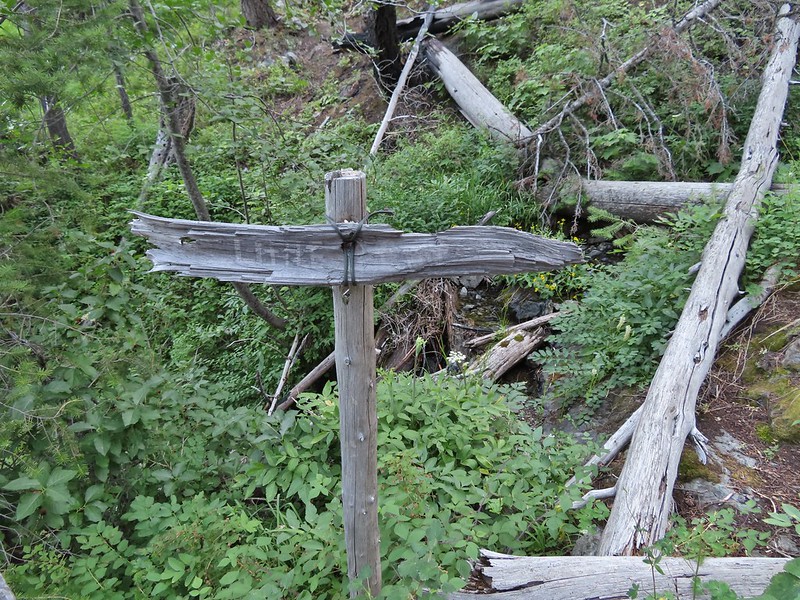
 Paintbrush and pearly everlasting
 Raspberries
 We don’t recall seeing a penstemon with leaves like this before.
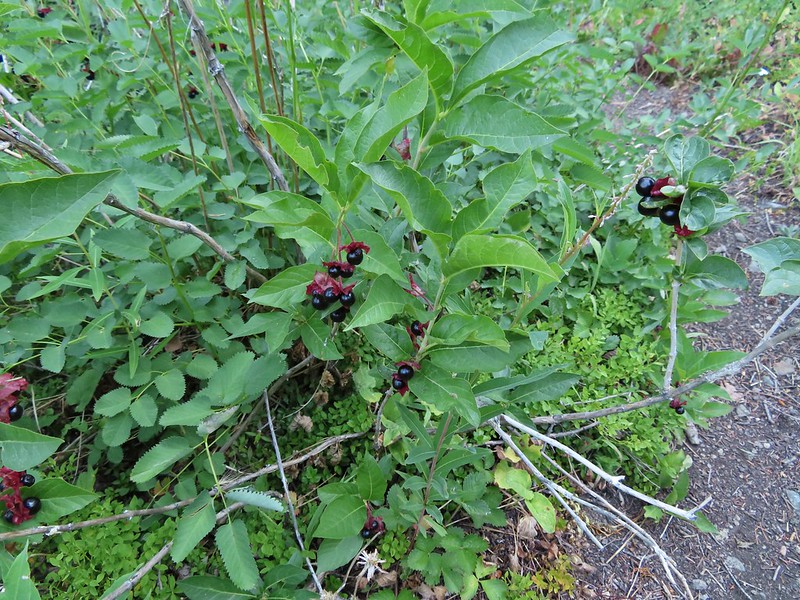 Twinberry (we did NOT sample)
 Sitka burnett (white)
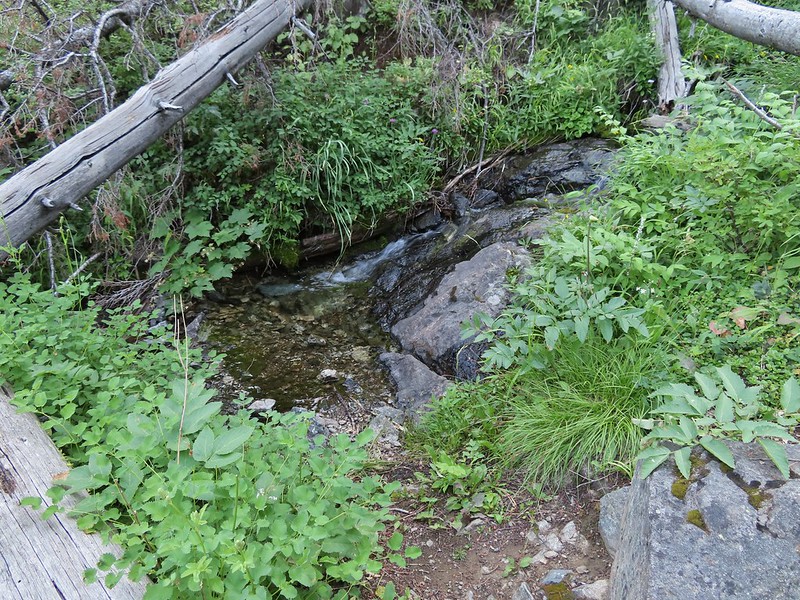
 Little Pine Creek at the crossing.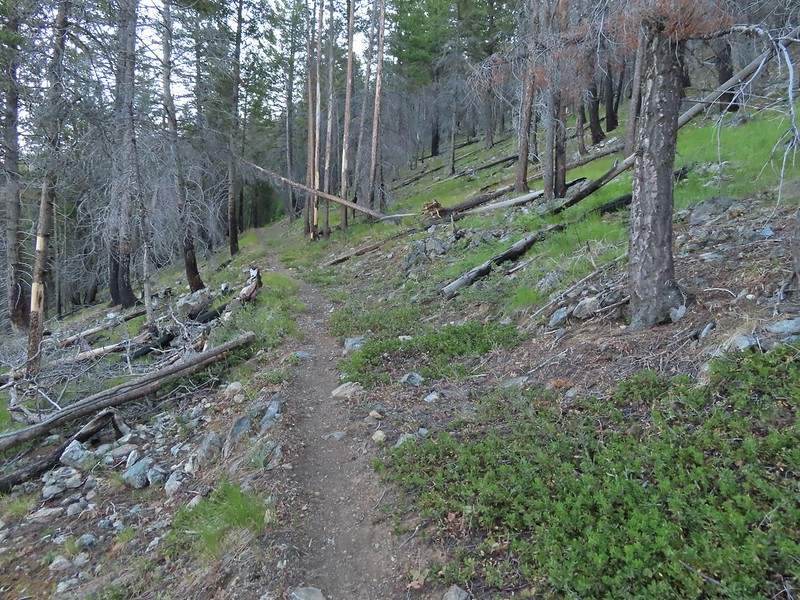
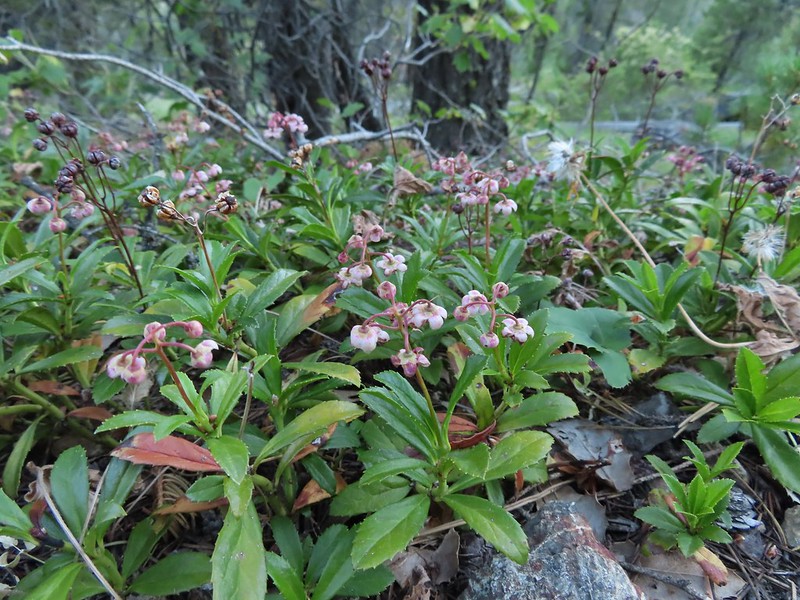 Prince’s pine
 Mountain death camas
 Fringed grass of parnassus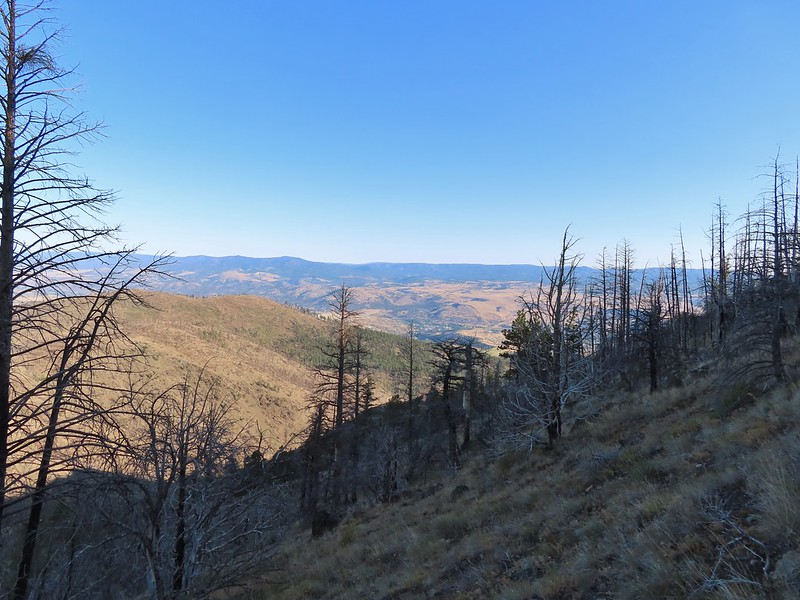
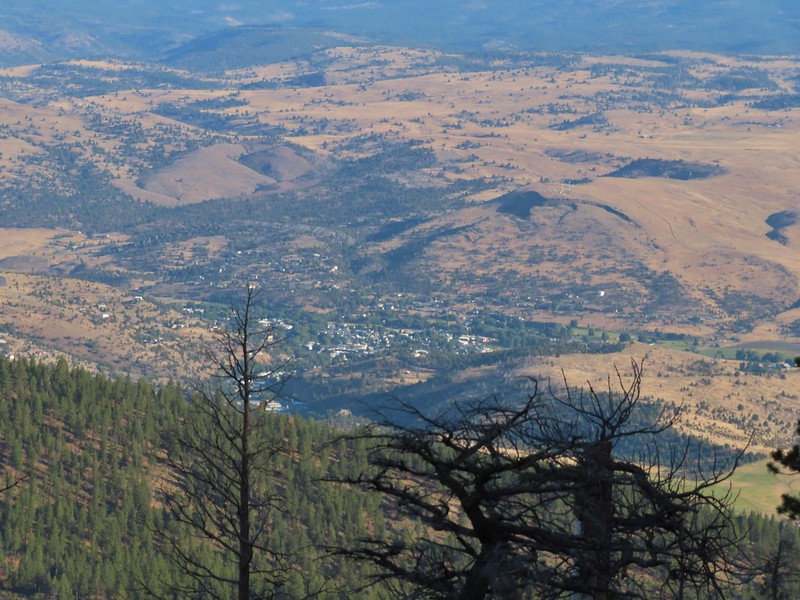 John Day below.
 Little Canyon Mountain behind the ridge we’d come around earlier.
 The Aldrich Mountains to the west, our destination for the next day’s hike.
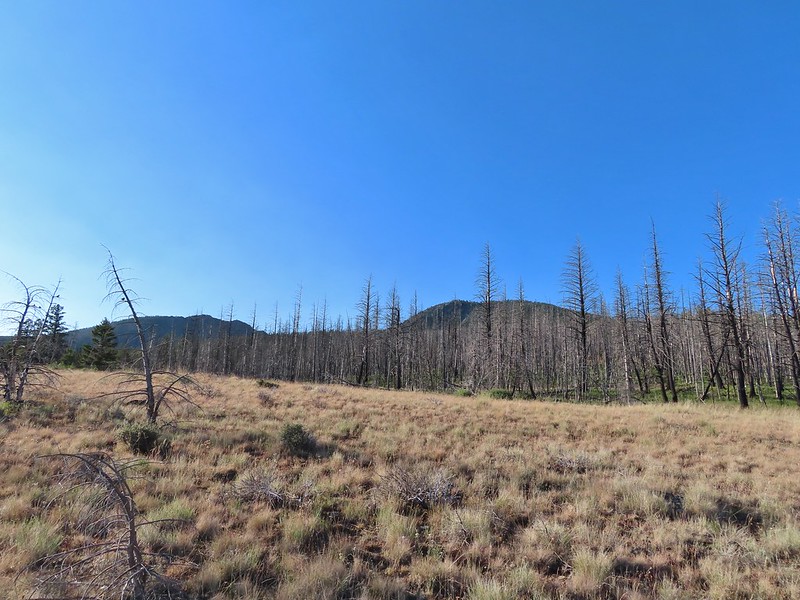 Canyon Mountain
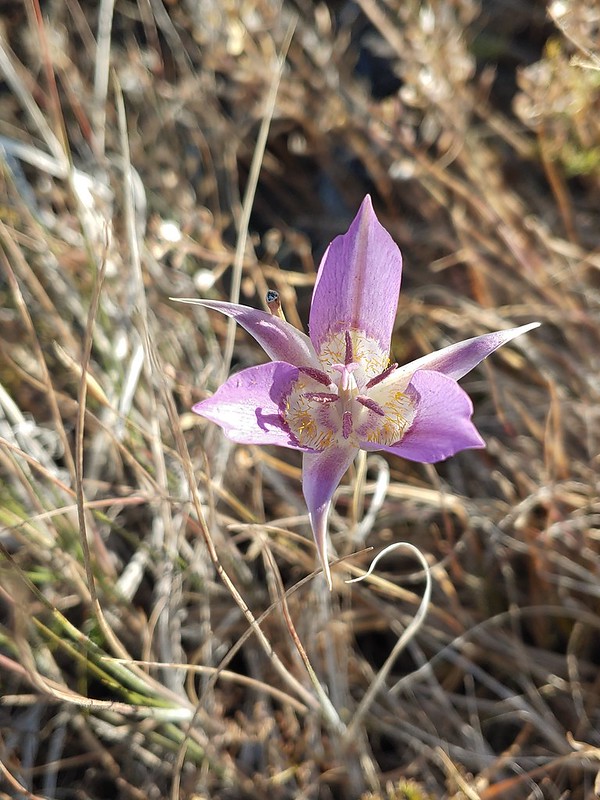 One of the sagebrush mariposa lilies.
 Dixie Butte and the Greenhorn Mountains to the NE
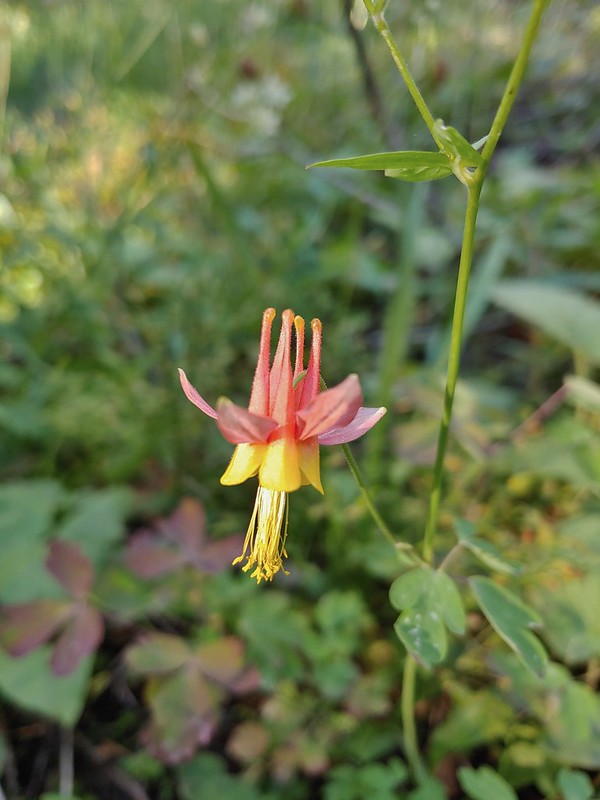 Columbine
 Swamp onion
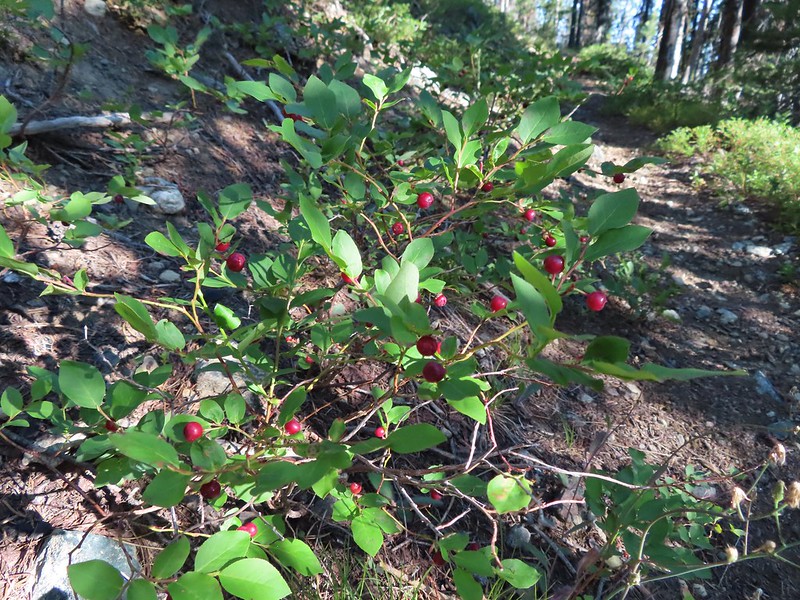
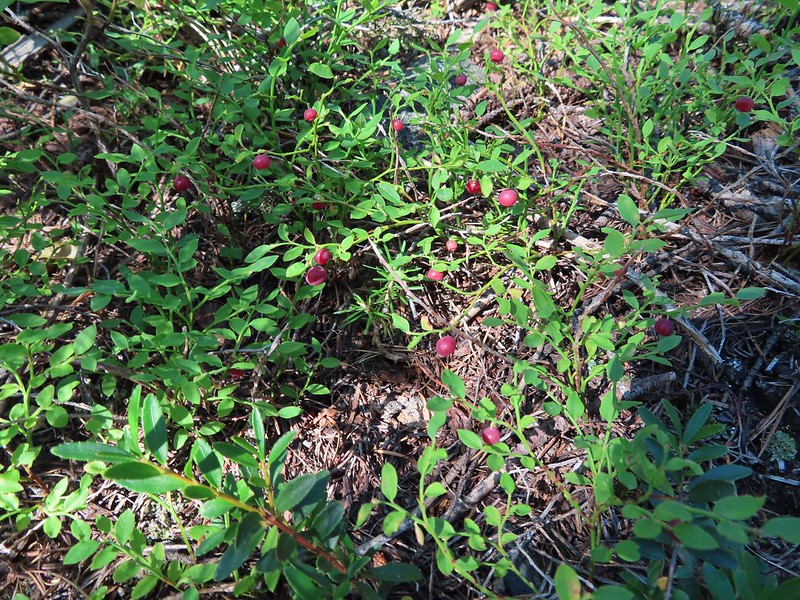
 Flowers at Dog Creek
 Twinflower
 There was a lot of elk sign along this section of the trail.
 A lot of sign.
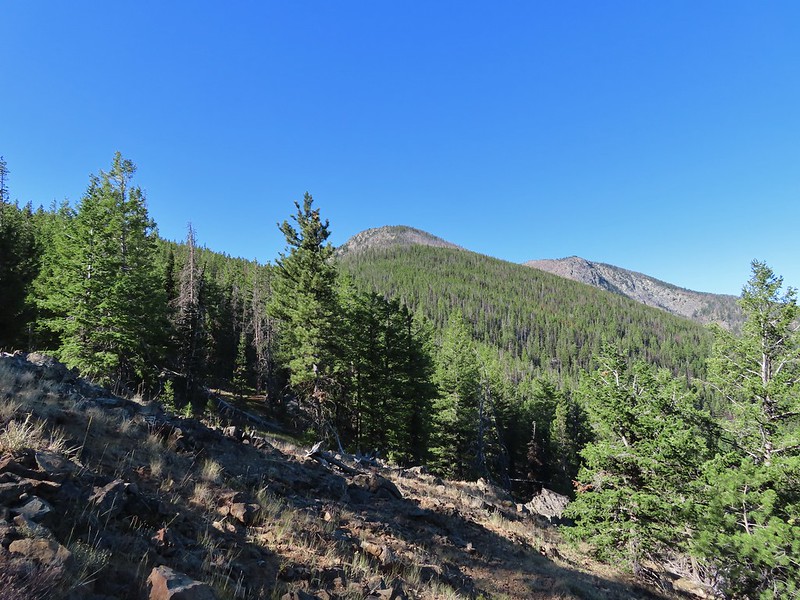 Looking back toward Canyon Mountain.
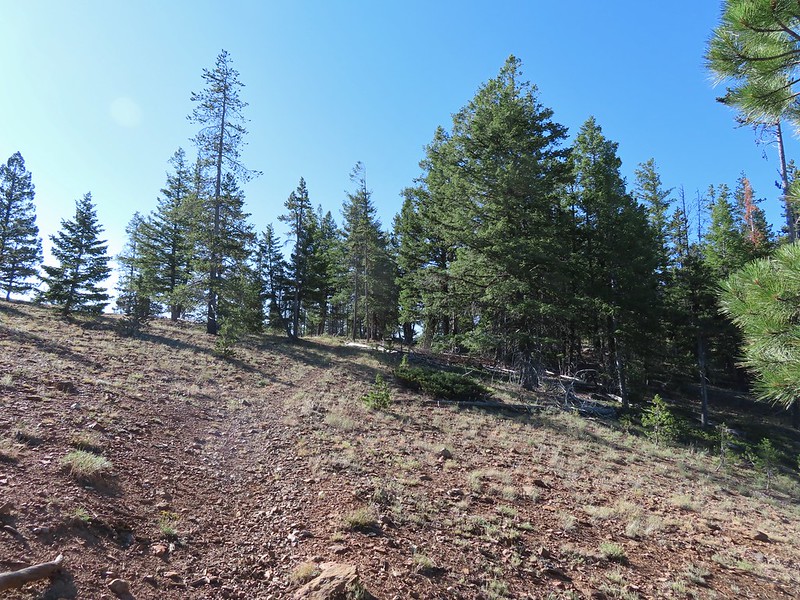 The trail crossed over the ridge in a saddle with quite a bit of mountain coyote mint.
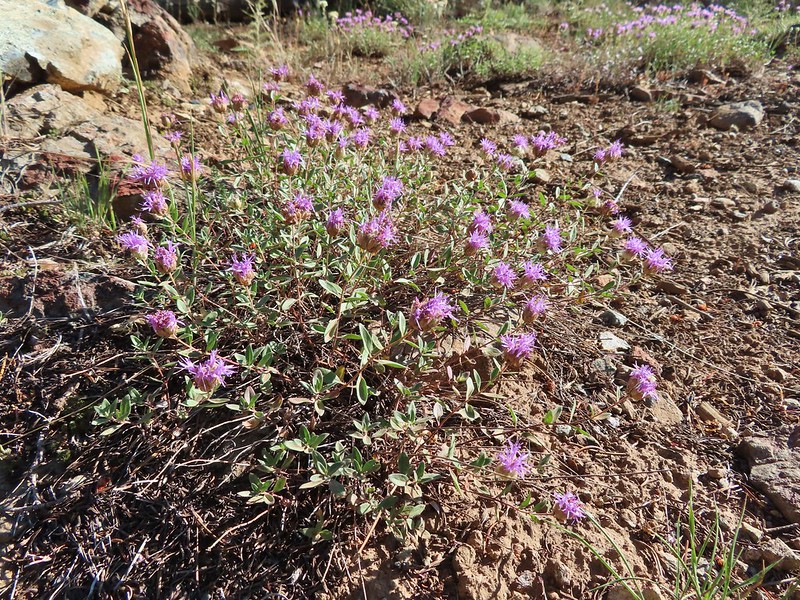 Mountain coyote mint
 Strawberry Mountain (
 Heading toward Dean Creek now.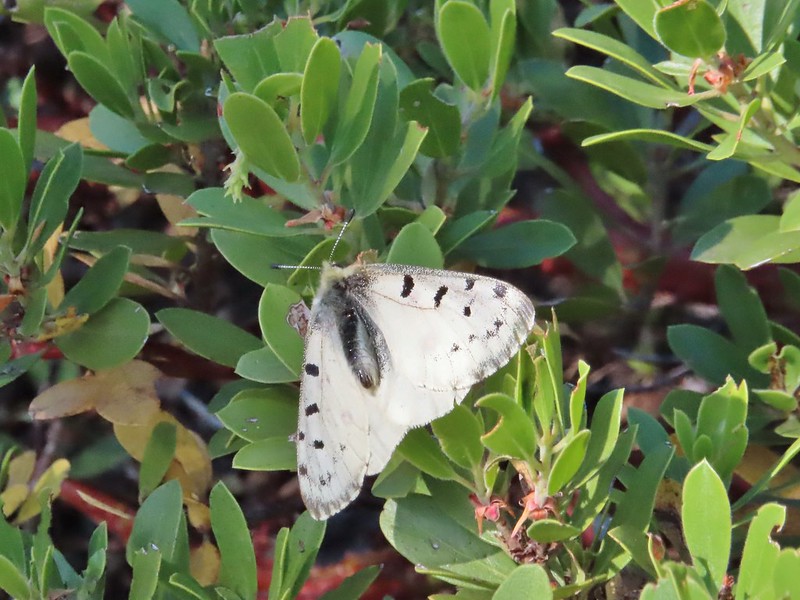
 Green Mountain on the left and Canyon Mountain on the right.
 A smaller raptor, it wouldn’t look at us so I’m not sure what type it was.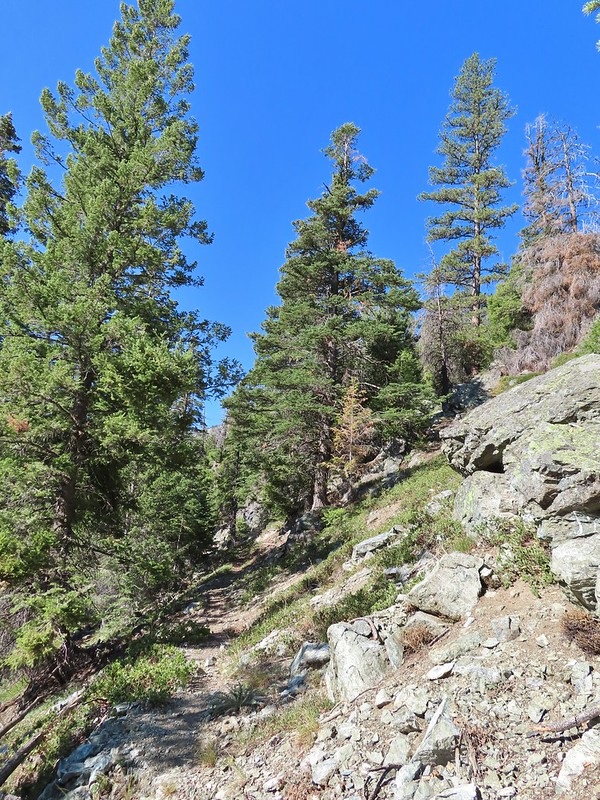
 Butterflies on western snakeroot. Side note we didn’t see a single snake or lizard all week which was really surprising to us.
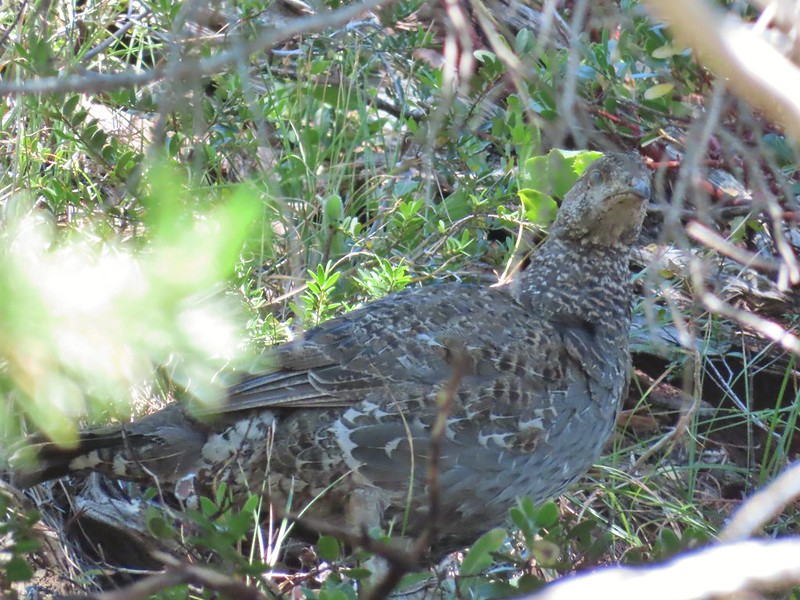 We did however see quite a few grouse.
 The trail got a little brushy nearing Dean Creek.
 There wasn’t much water in Dean Creek but there was enough for a small cascade.
 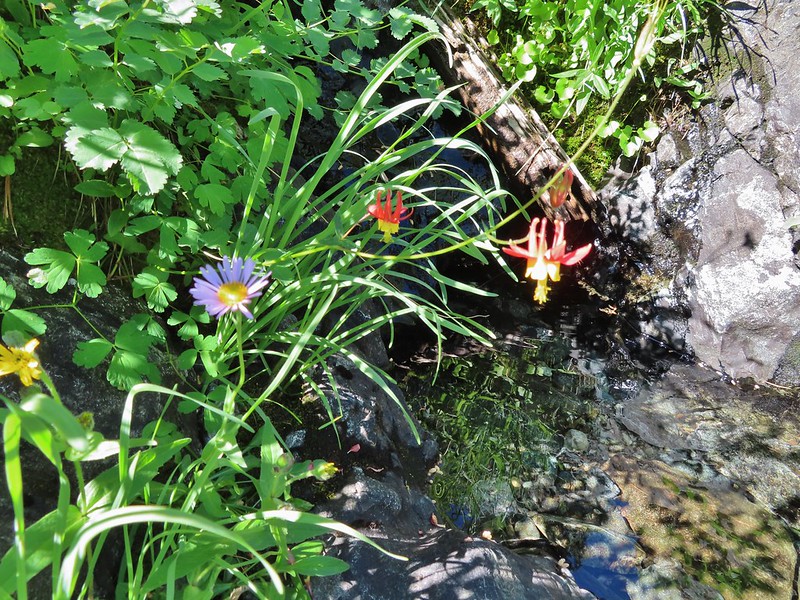 Wildflowers next to a small pool.
 Dean Creek
 Butterfly near the pool.
 Canyon Mountain
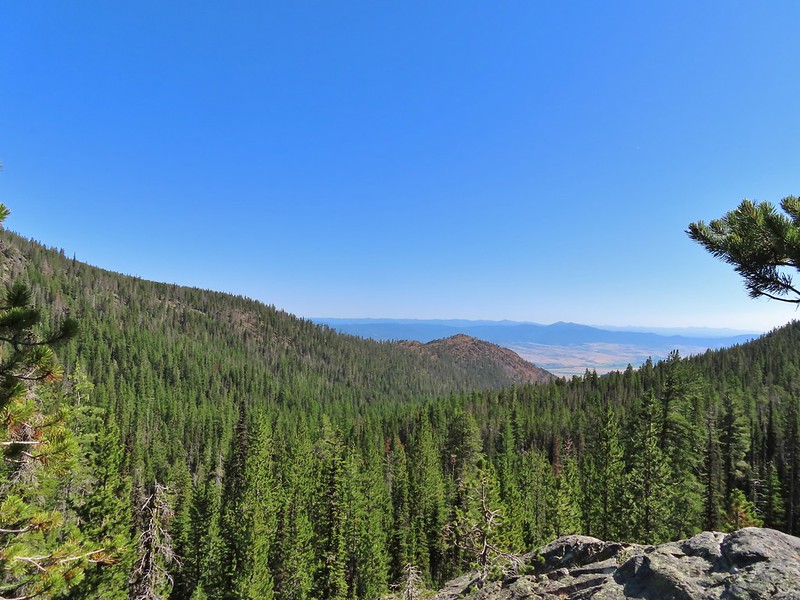 Dixie Butte with the Greenhorns on the left and the Elkhorns (
 Cones
Cones Lousewort
 Pearly everlasting, yellow flowers, and fireweed.
 An eagle?
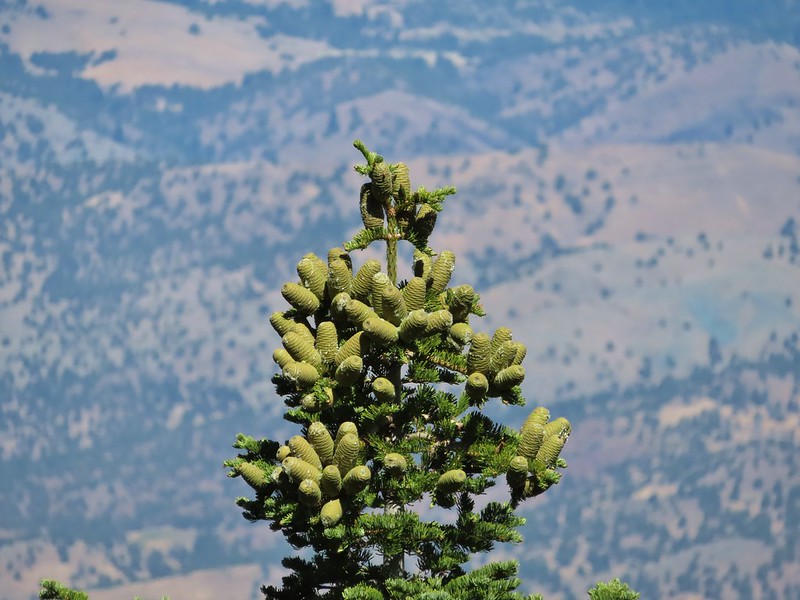 More cones
 Dragon fly
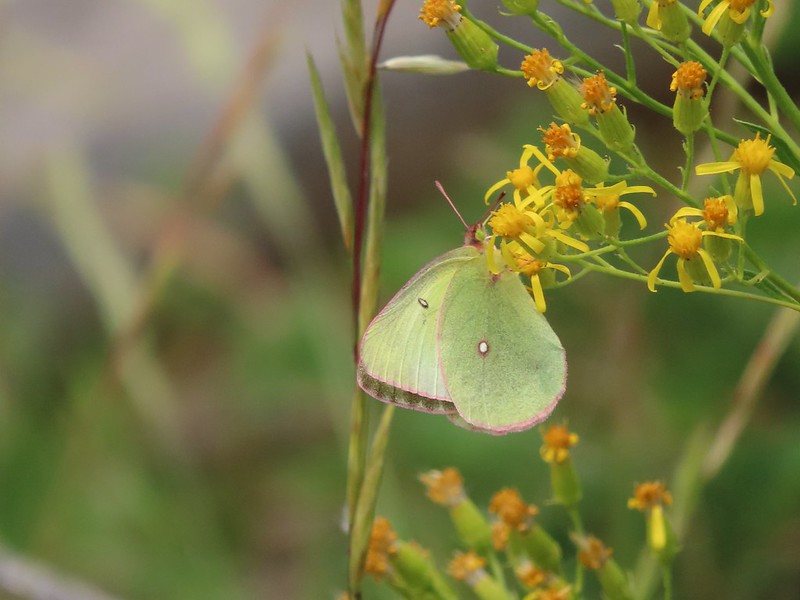
 A sulphur butterfly
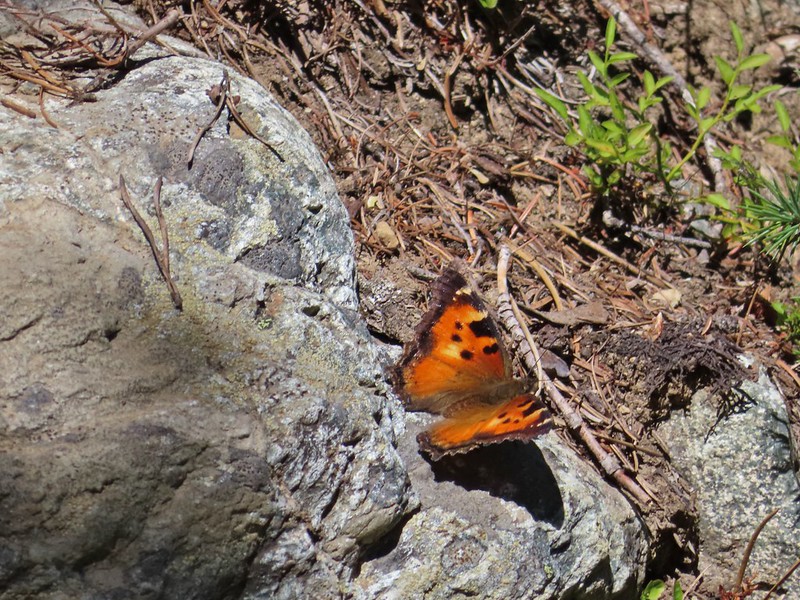 California tortoiseshell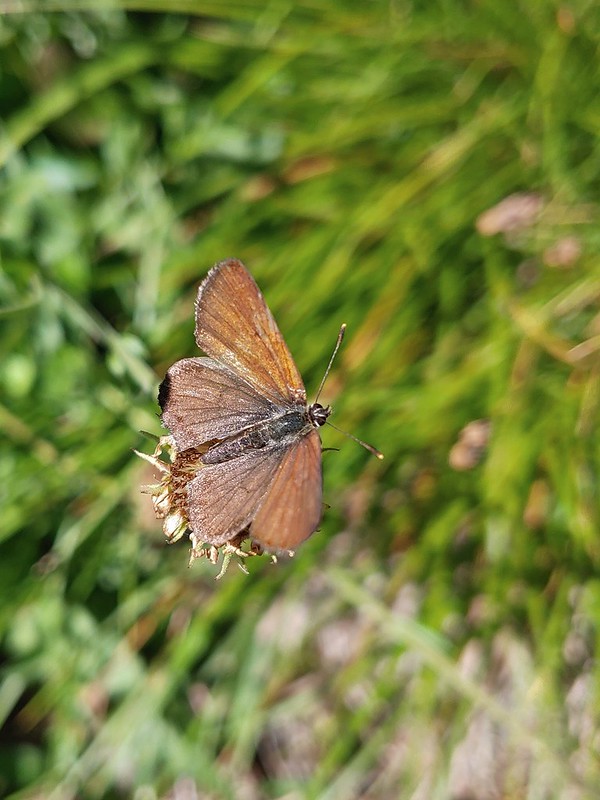
 Grouse
 Maiden fly
 Skipper
 Woodpecker
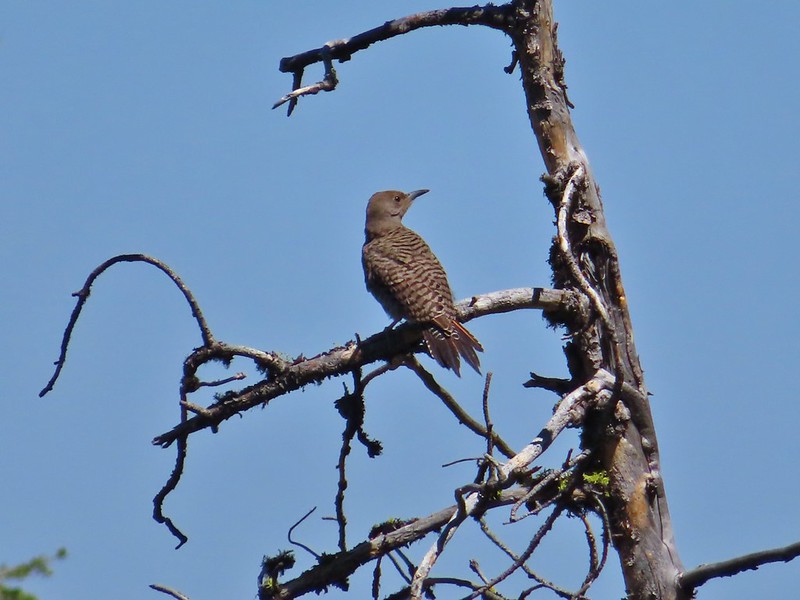 Northern flicker
 Mountain bluebird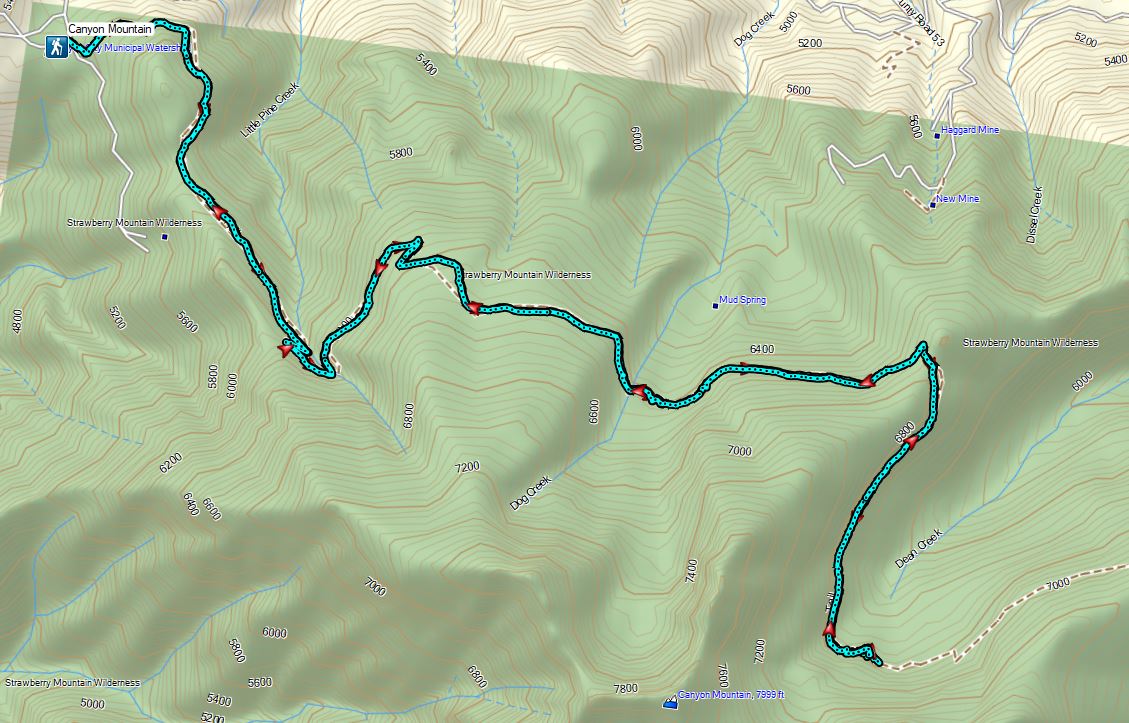
 The trailhead is at this hairpin curve below Table Rock. The road continues another 0.8 miles to the staffed Table Rock Lookout but reportedly worsens which is hard to imagine is possible.
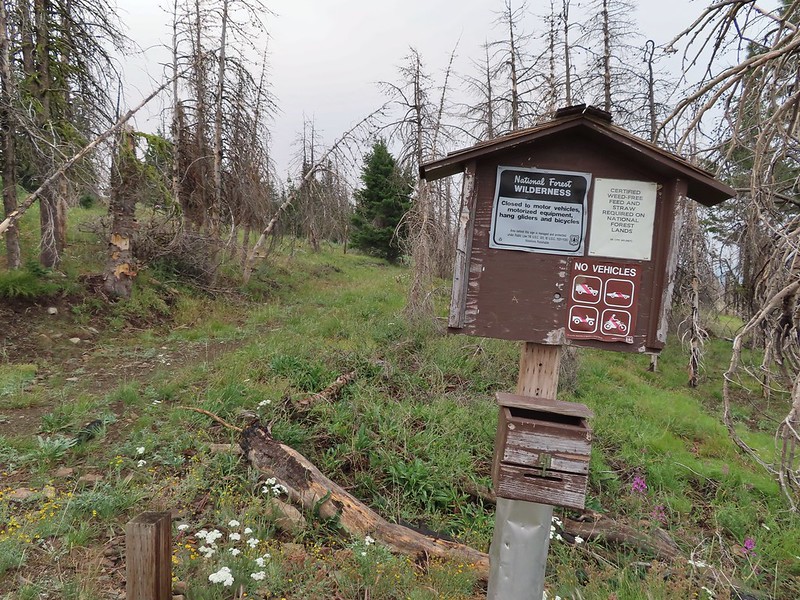
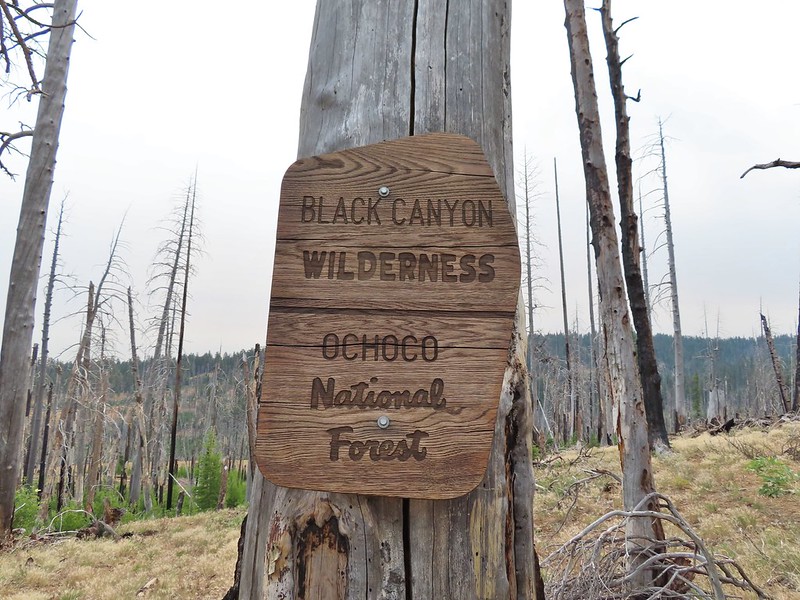
 First time seeing a wilderness sign quite like this.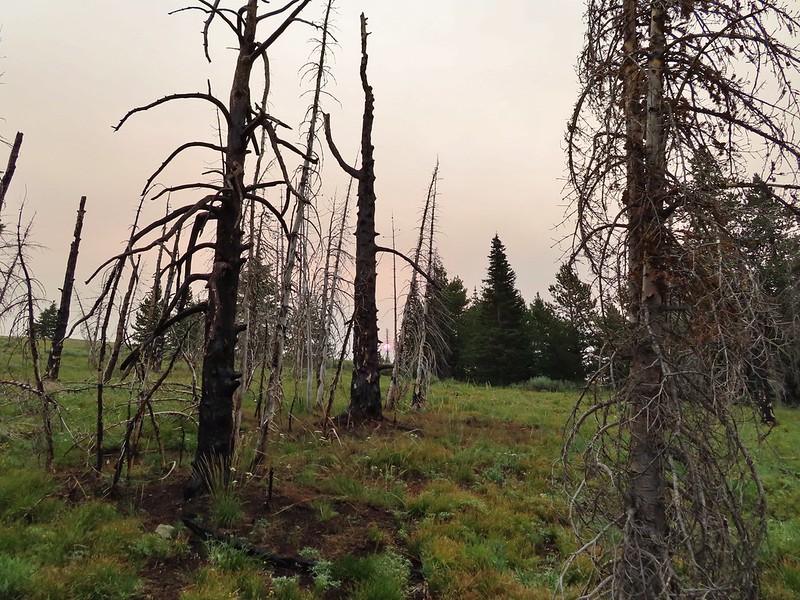
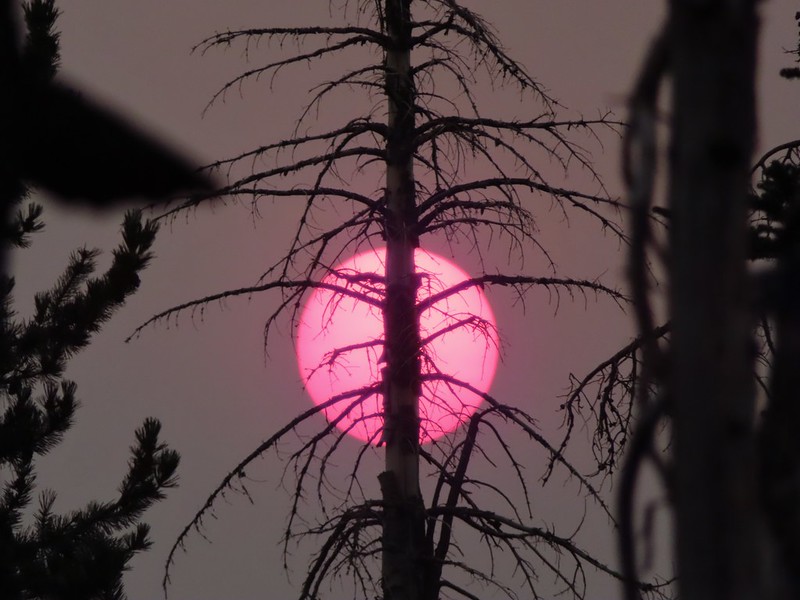 A red Sun behind the smoke, presumably mostly from the 400,000 plus acre Bootleg Fire east of Klamath Falls in south central Oregon.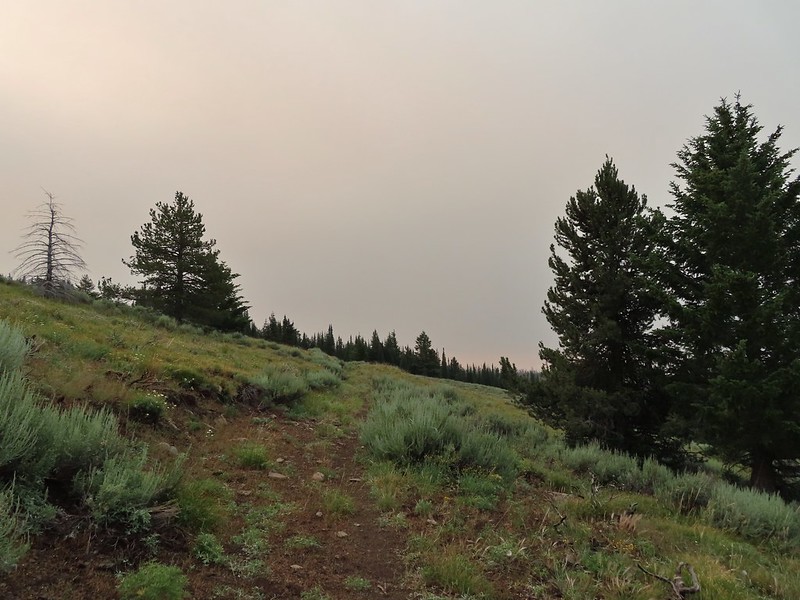
 Clark’s nutcracker
 Monument Rock in the distance.
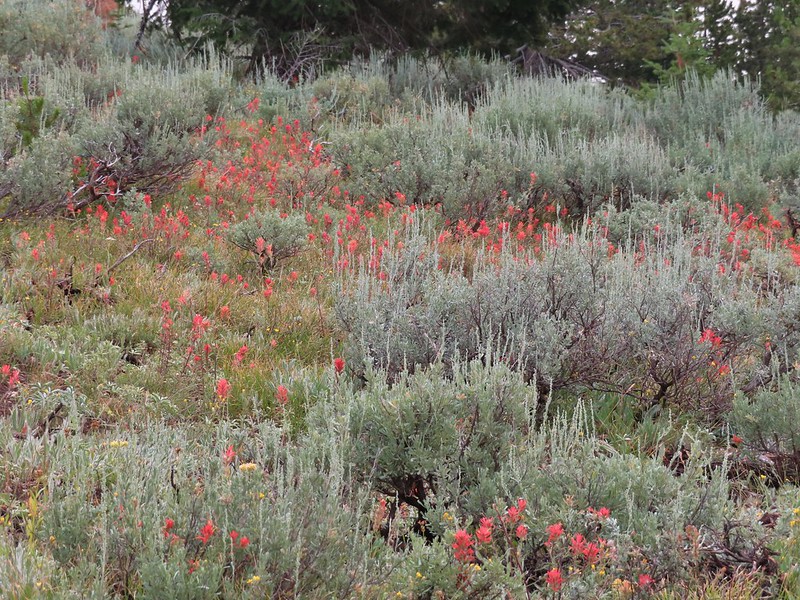 Paintbrush in the sagebrush.
 Ground squirrel
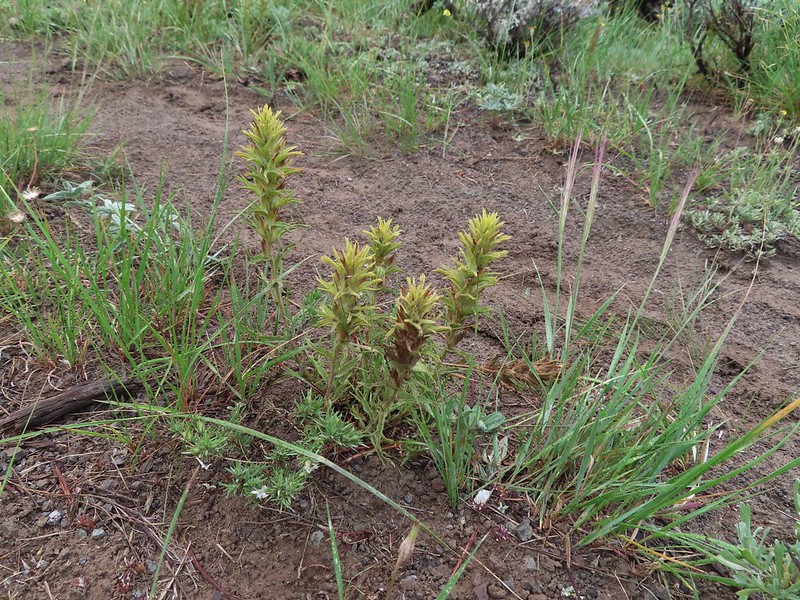 There was a fair amount of this green paintbrush too.
 We believe this post (not the 1.7 mile post) marked a side trail to Rock Spring but we didn’t see any tread in the area to know for sure.
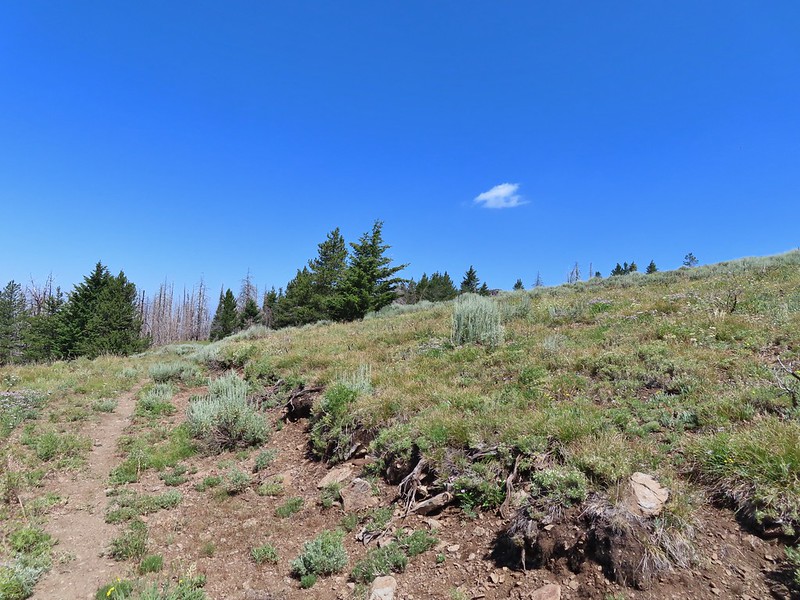
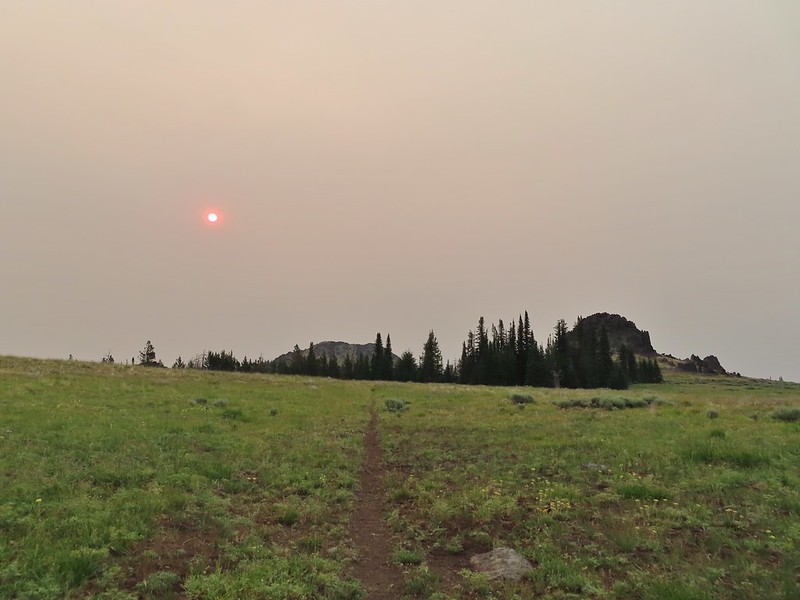 Bullrun Rock dead ahead.
 Table Rock in the distance.
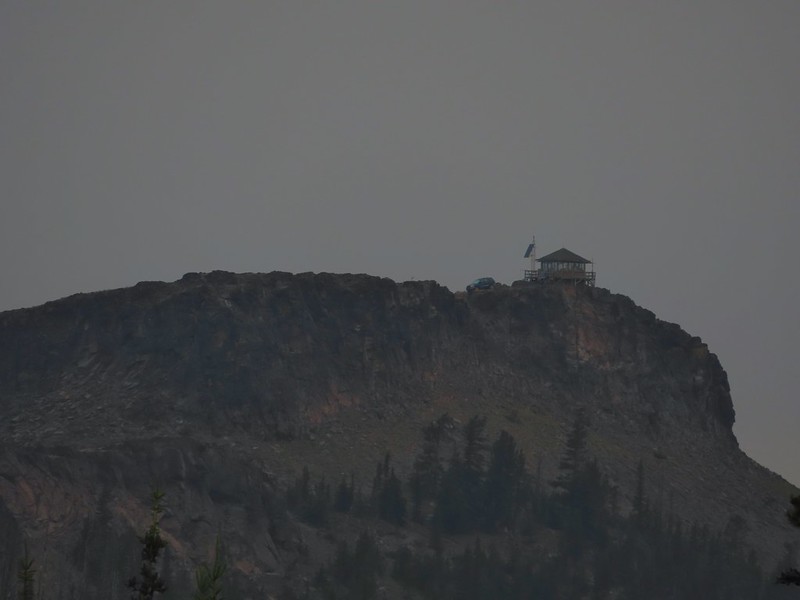 The Table Rock Lookout.
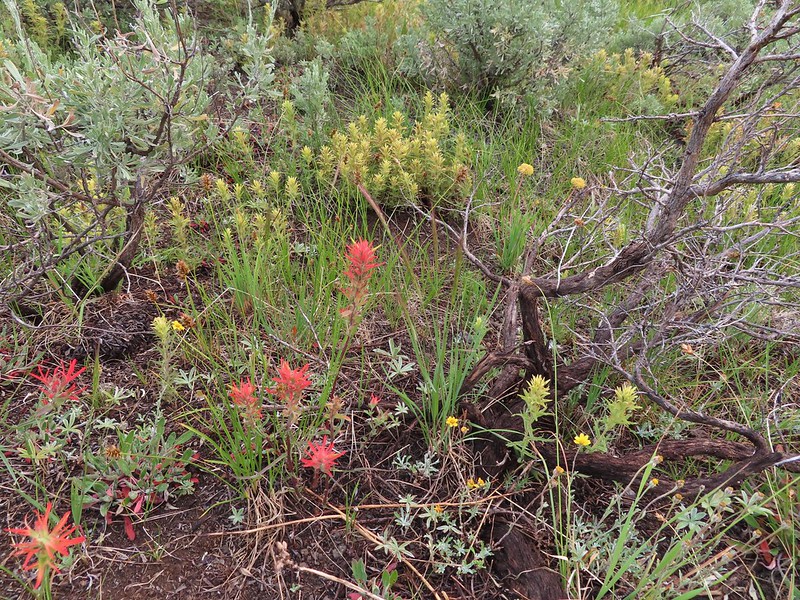 Two kinds of paint.
 Bullrun Rock below the Sun.
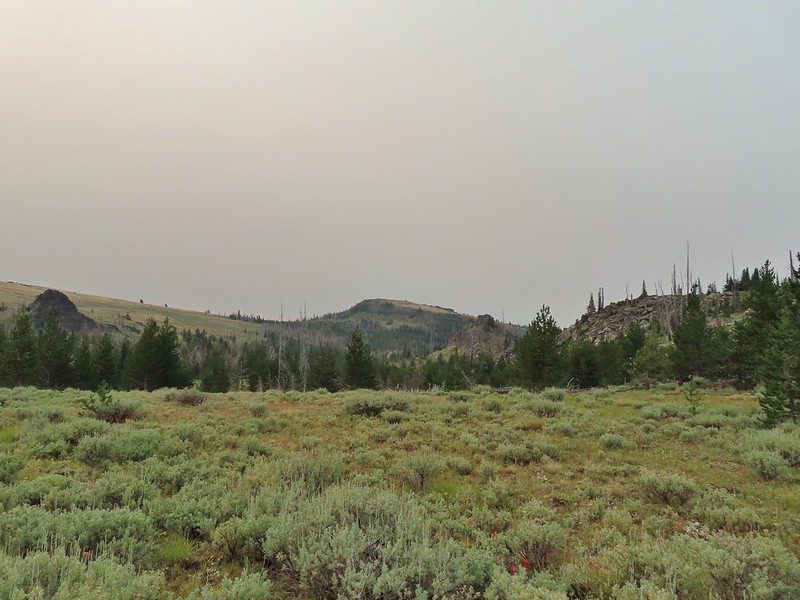 Monument Rock again.
 Old man’s whiskers
 A checkermallow
 We passed this sign for the Amelia Trail along the way but again didn’t see any trace of tread for it.
 Grazing cattle near the post.
 The post with Monument Rock in the background.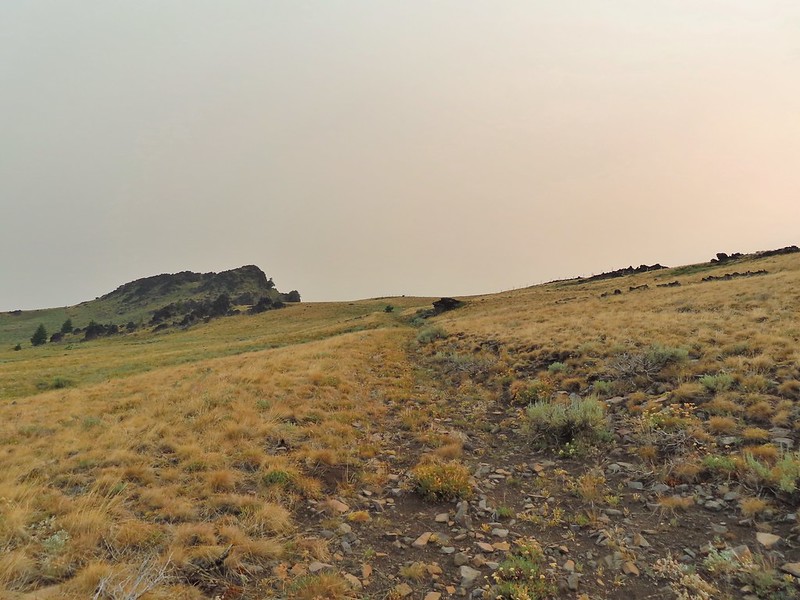

 I believe that is Ironside Mountain.
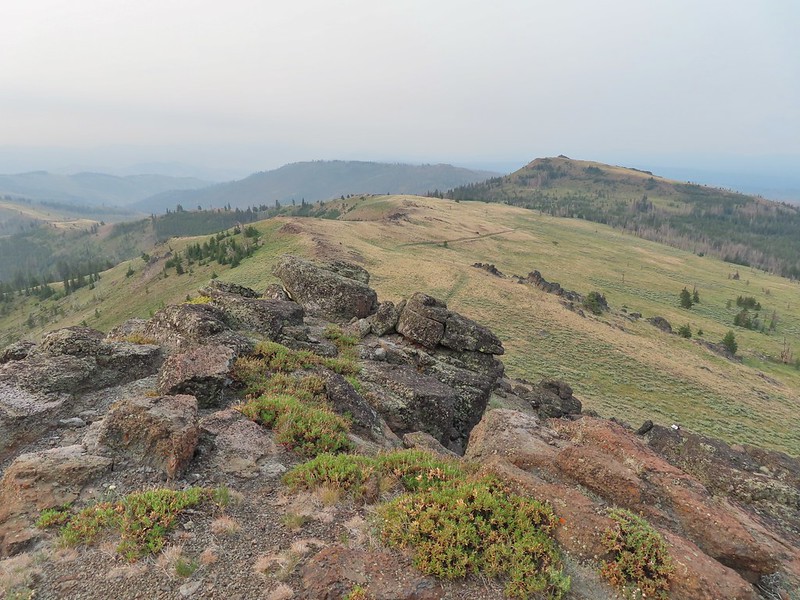 The jeep track and Monument Rock.
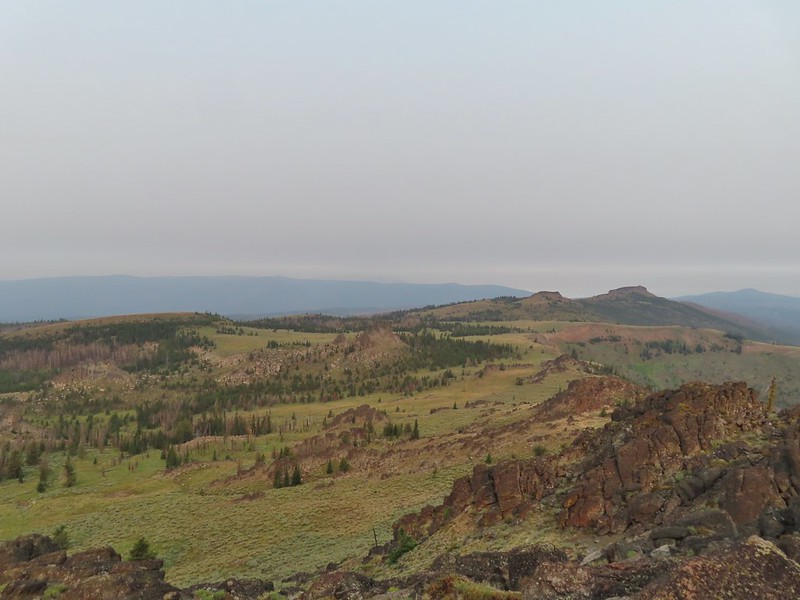 Table Rock
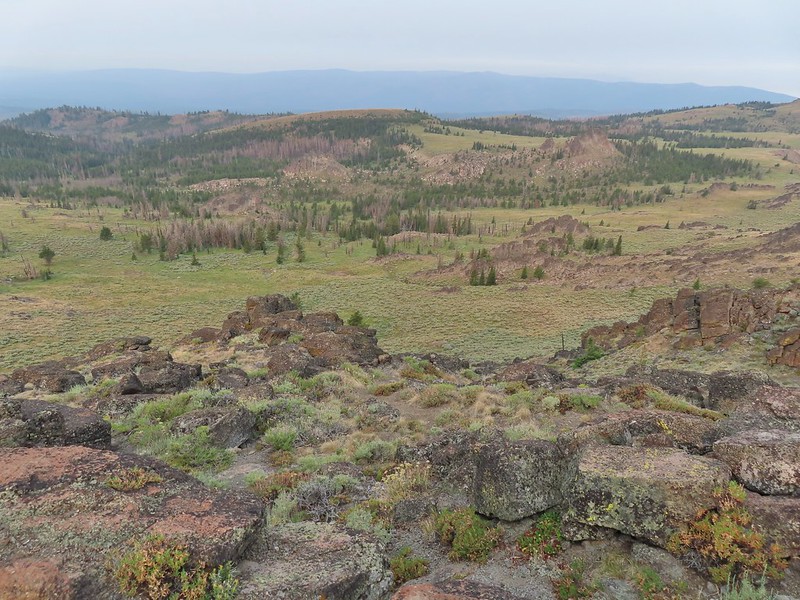 Looking down into the Monument Rock Wilderness
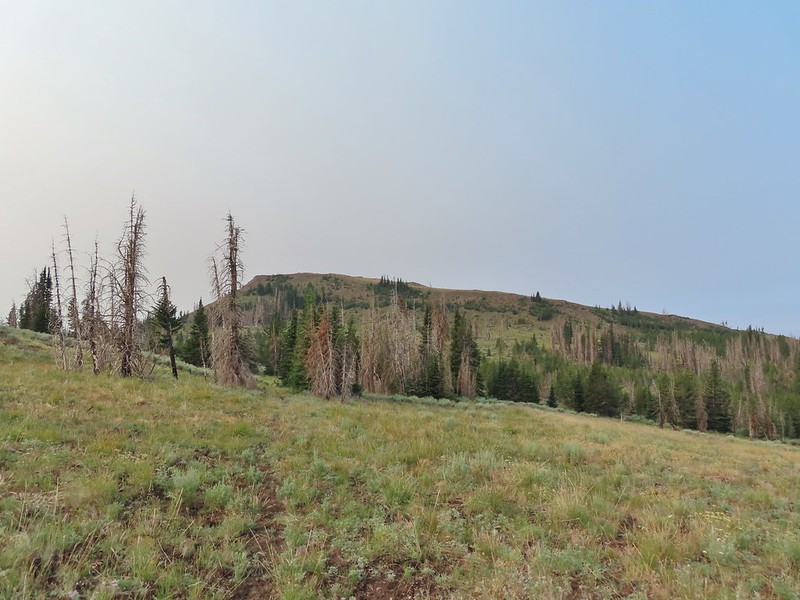
 Woodpecker
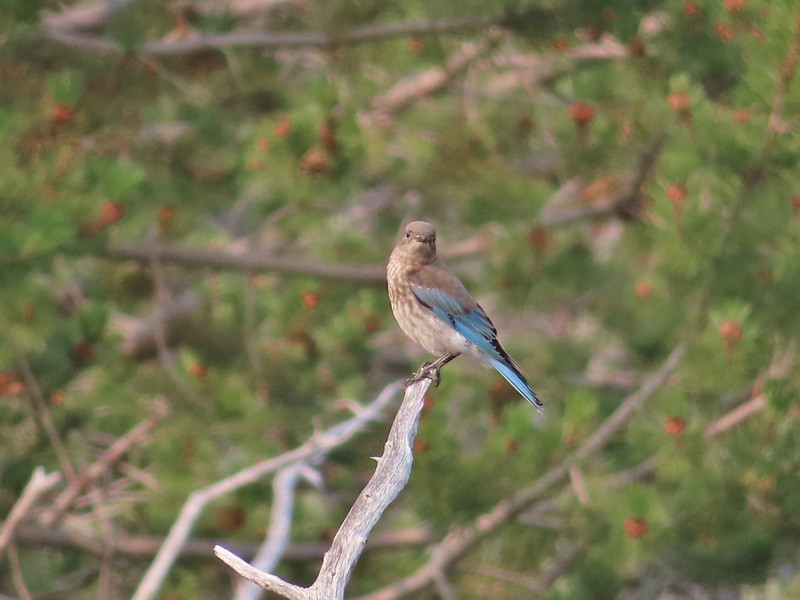 Mountain bluebird
 Looking back toward Bullrun Rock.
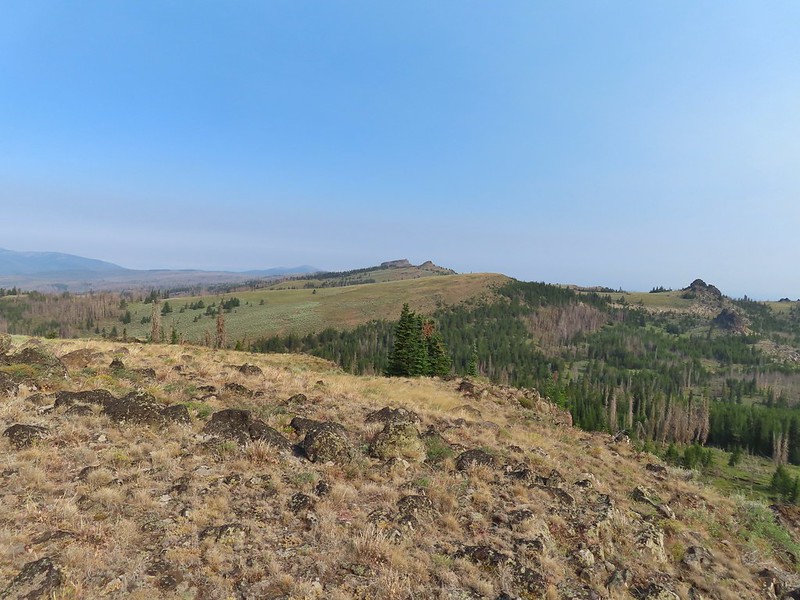 Table Rock from where we gained the ridge.
 Heading up.
 Me making my way up to the cairn.
 Bullrun Rock from the cairn.
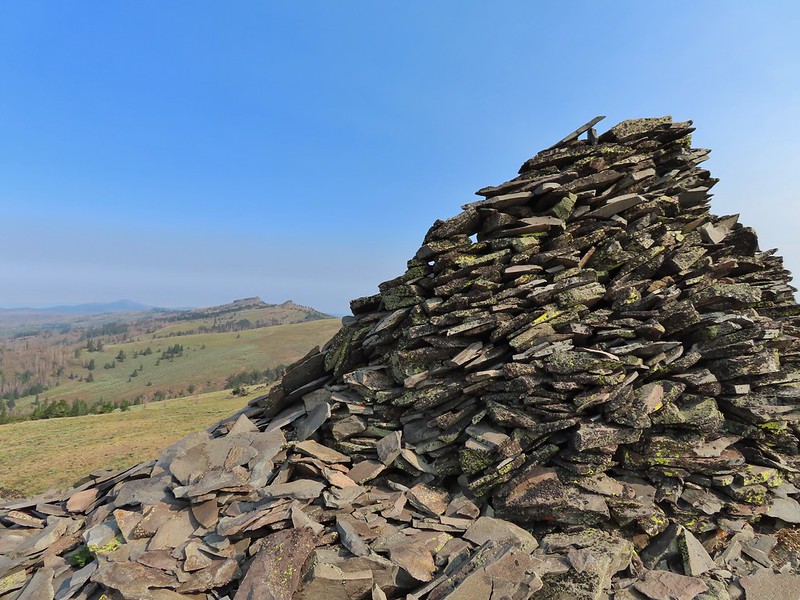 Table Rock from the cairn.
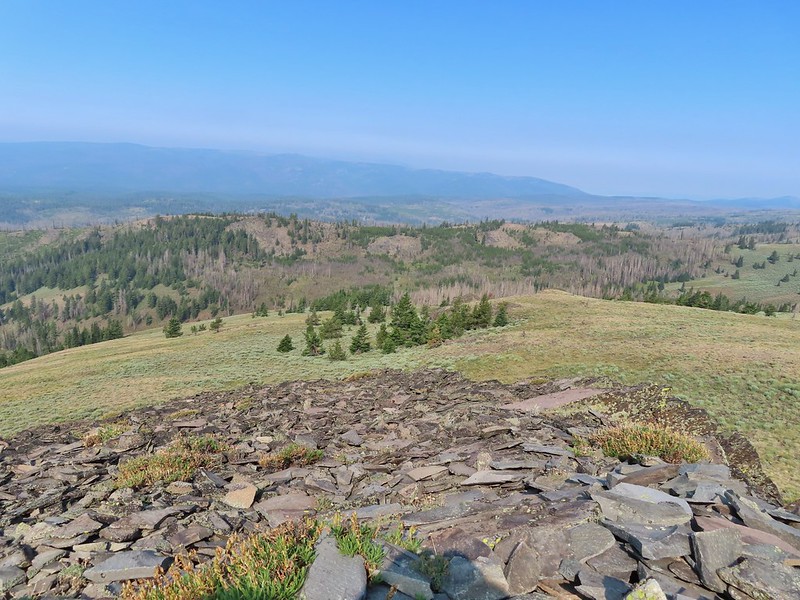 The Monument Rock Wilderness.
 The cairn on Monument Rock from below.
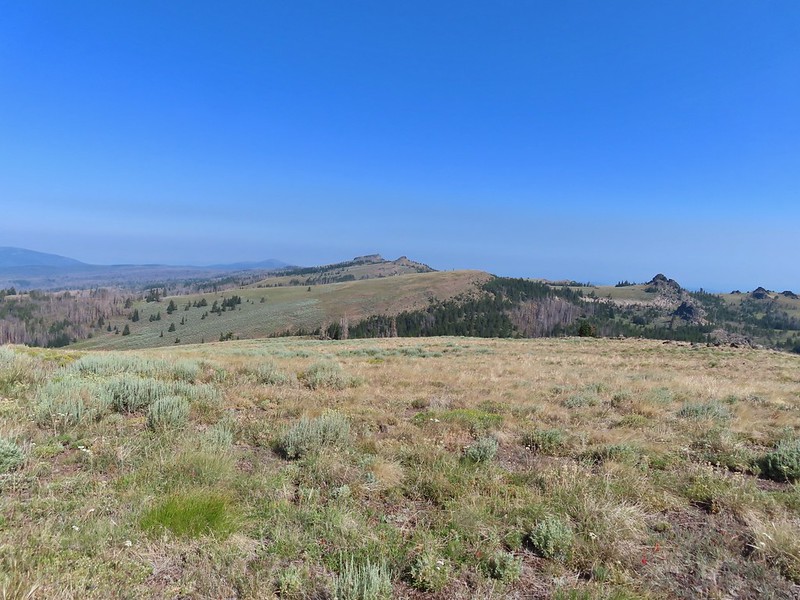 Heading downhill.
 Heather spotted this sheep moth.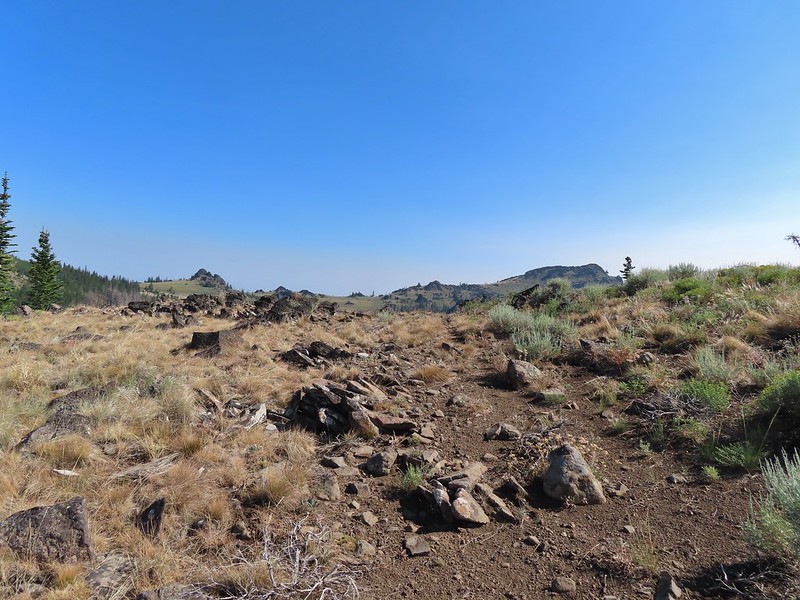
 The path leading downhill.
 Table Rock in the distance with Bullrun Rock on the right.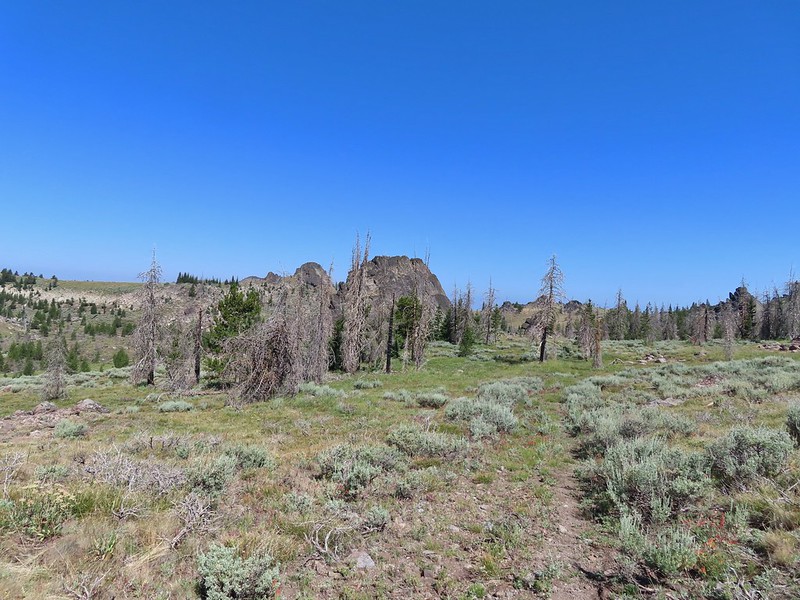



 Robin
Robin Quite a bit of a difference from the morning.



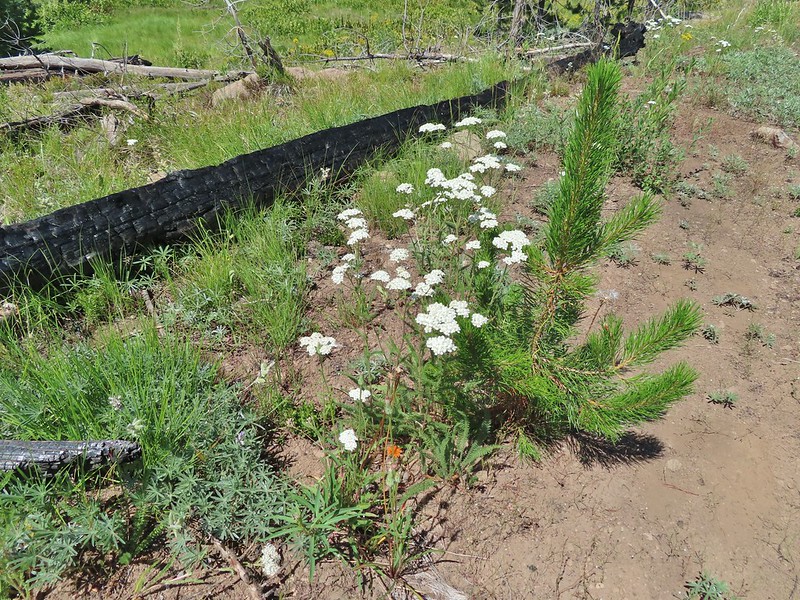 Yarrow and an orange agoseris.
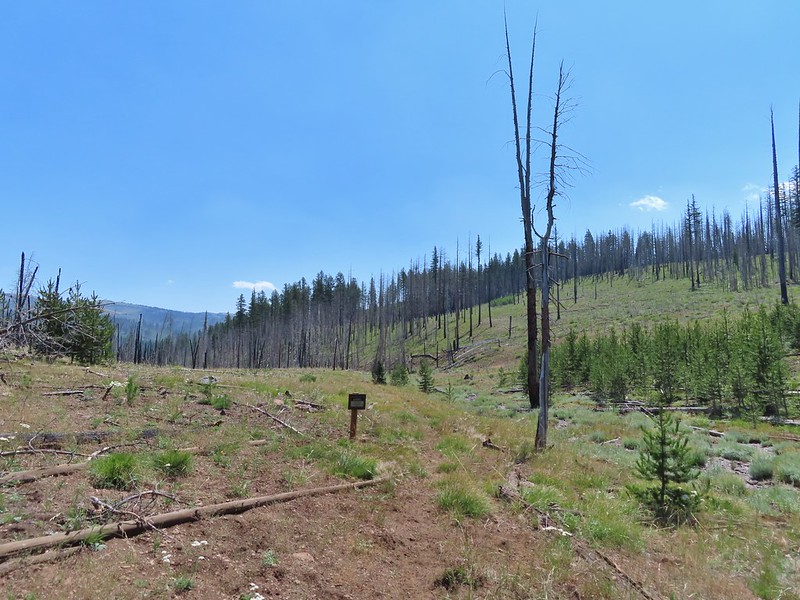 Wilderness sign marking the boundary of the Monument Rock Wilderness.
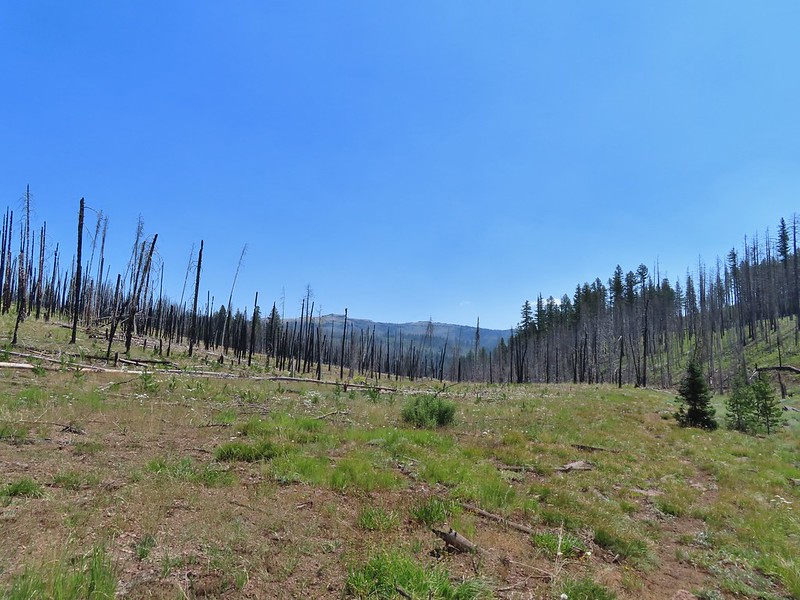 Table Rock from the trail.
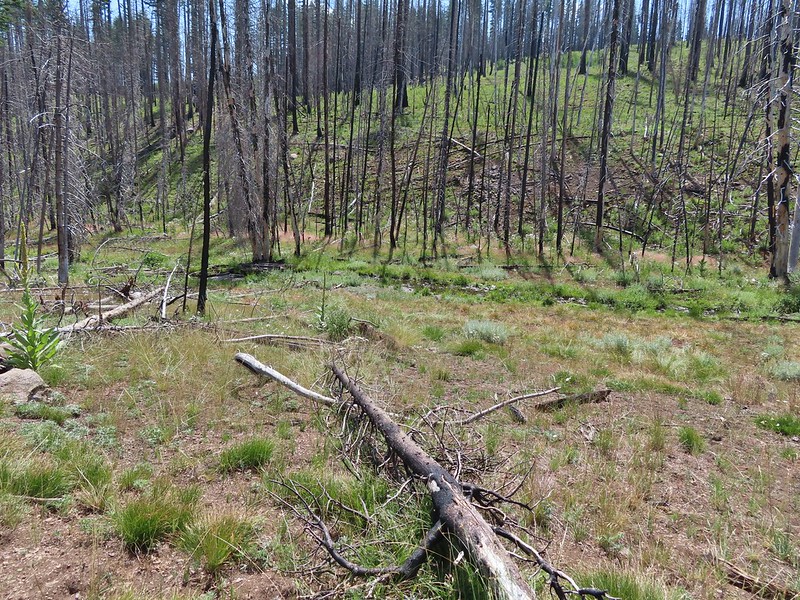 Elk Flat Creek.
 An orange flag to the right ahead.
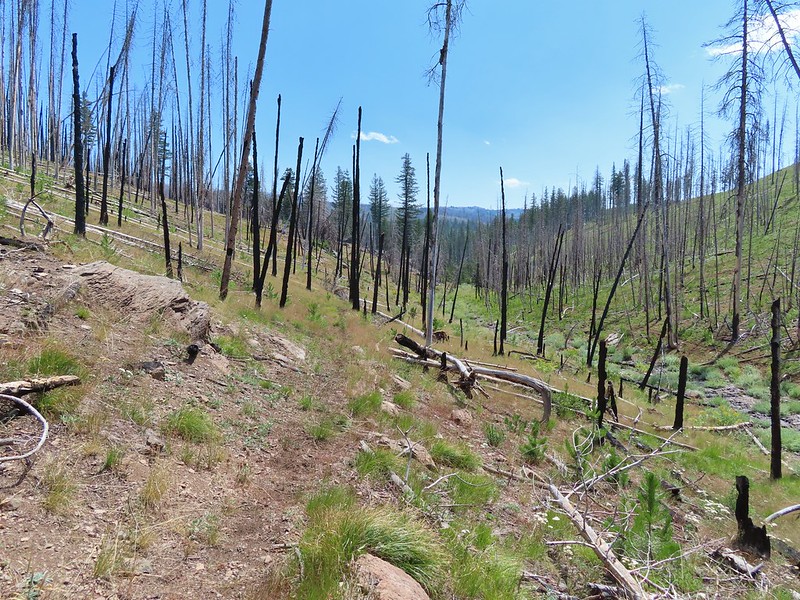 The trail following Elk Flat Creek.
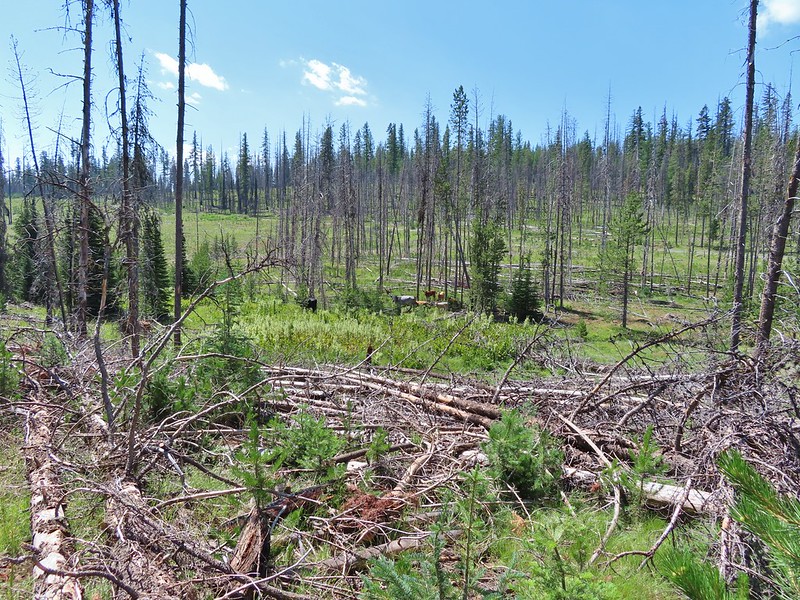
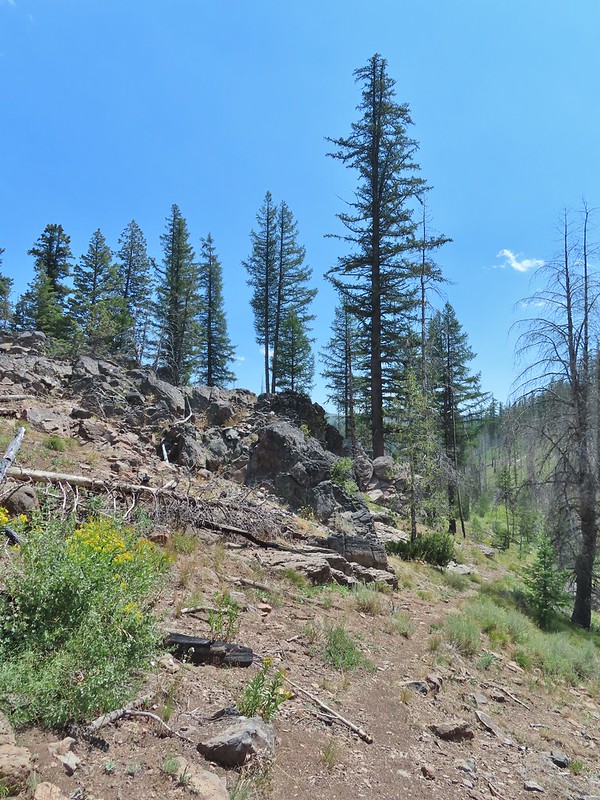 A few areas of green trees remained.


 Unnamed stream shortly before reaching the Little Malheur River.
 Monkshood along the stream.
 It appeared that quite a few trees survived along the Little Malheur.
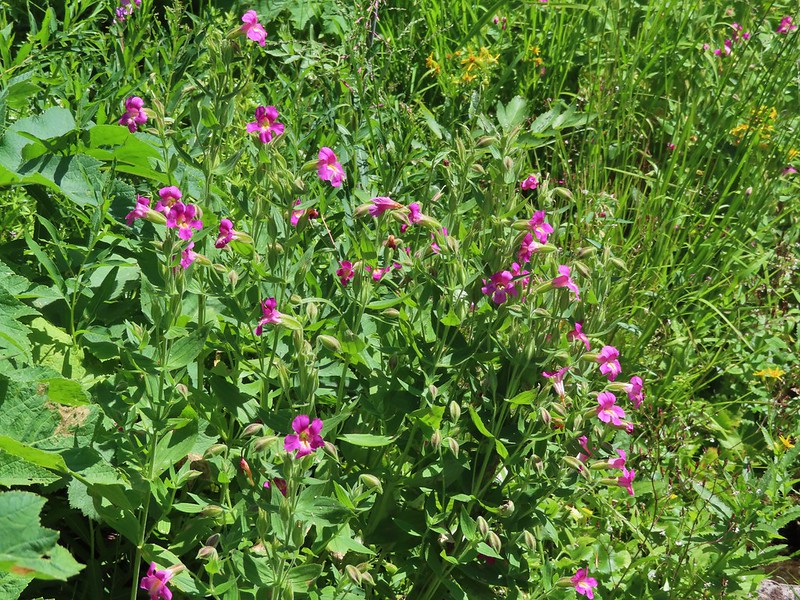
 The trail crossing the Little Malheur River. We were especially excited to see a lot of nice pink monkeyflower along the banks.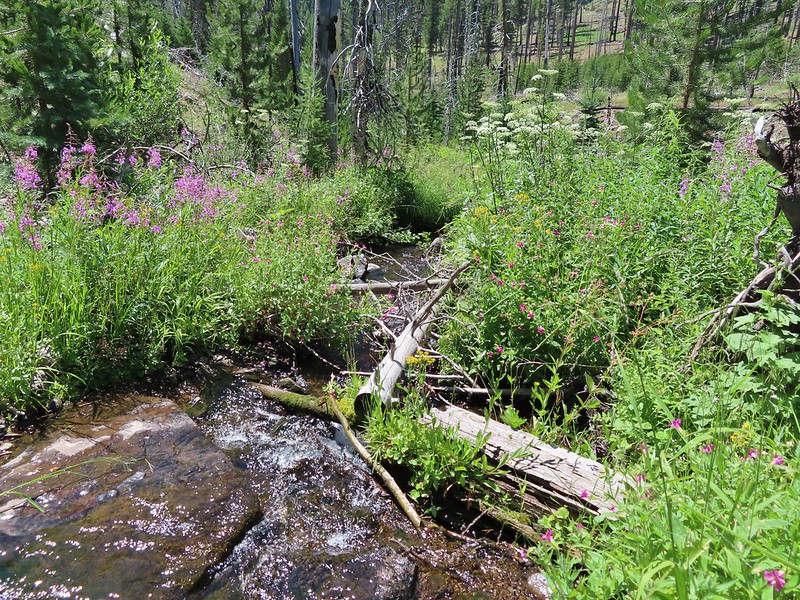



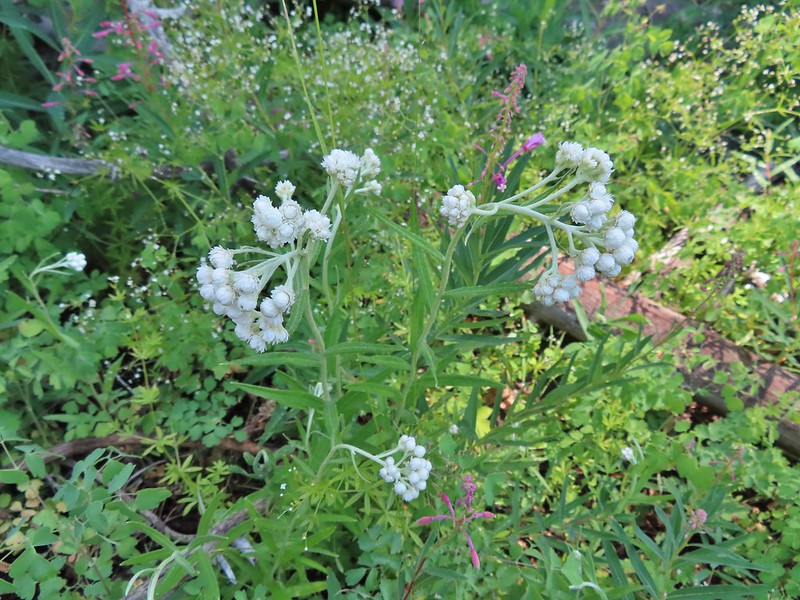 Pearly everlasting
 Ground squirrel
 Either a big ground squirrel or a small marmot.
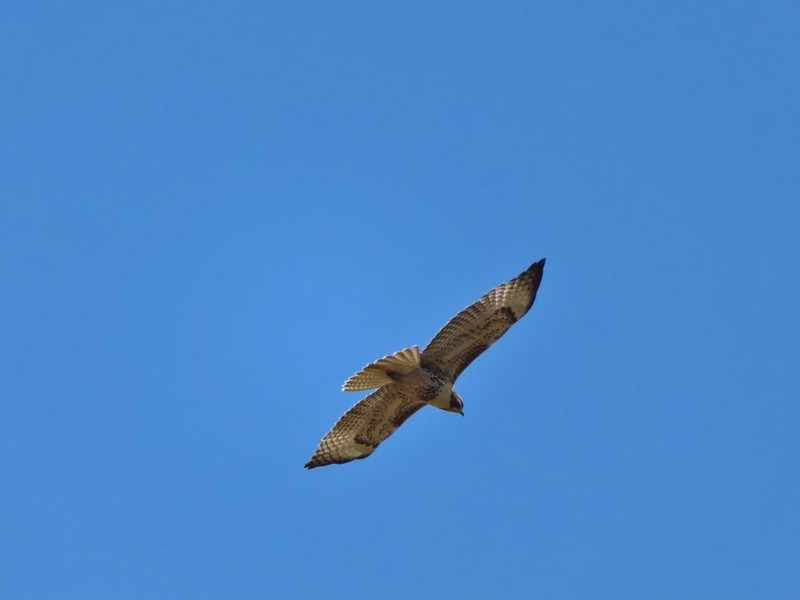
 Another hawk.
 Fluffy clouds forming over the Monument Rock Wilderness.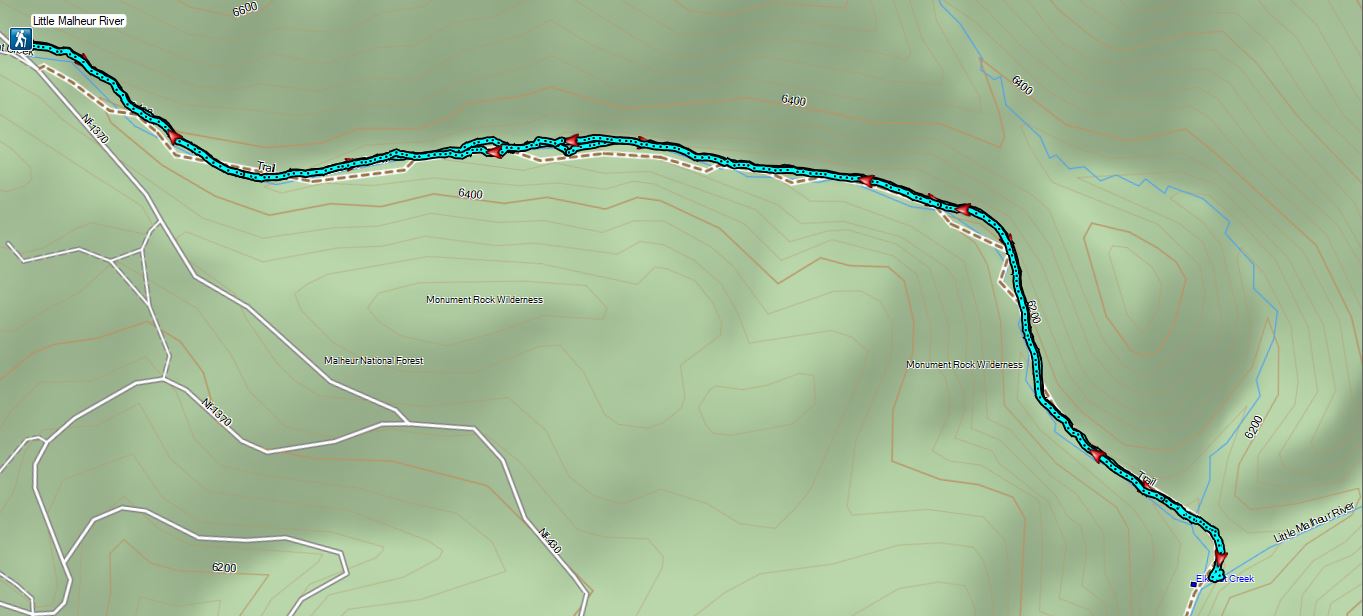
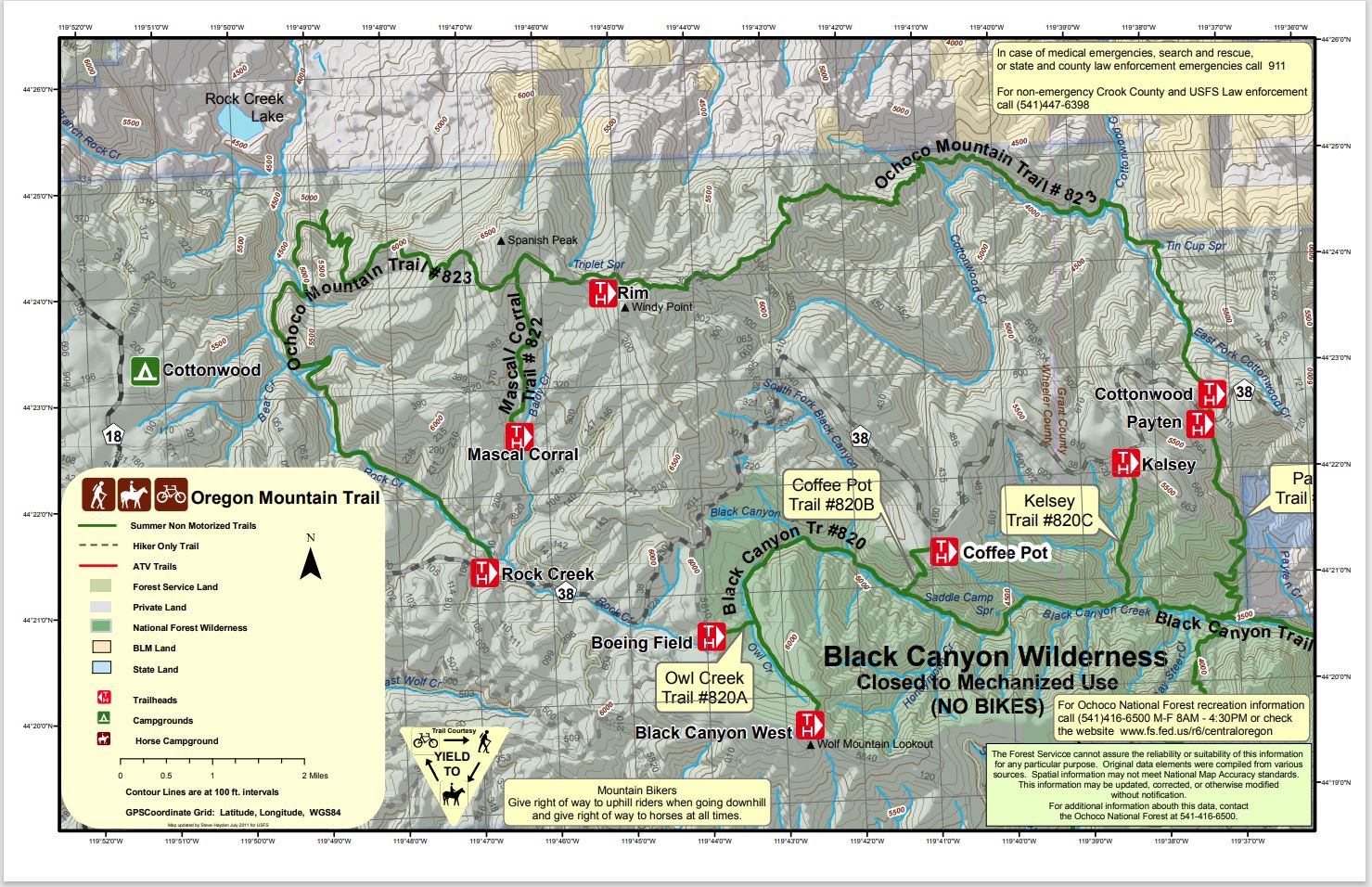
 Continuing along the Waterman Ditch.
 If this trail sign was marking a junction it wasn’t clear where the other trail was.
 Campsite at the saddle.
 The Rim Trail sign on a tree trunk.

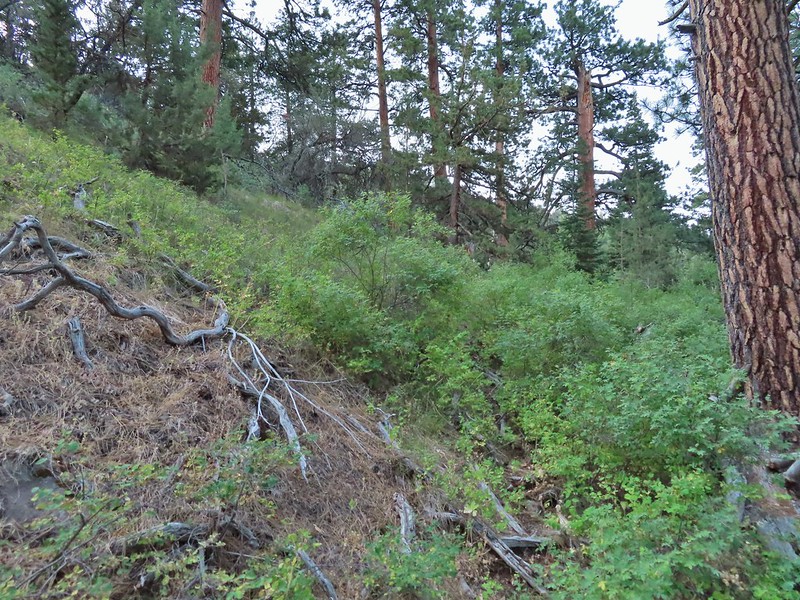
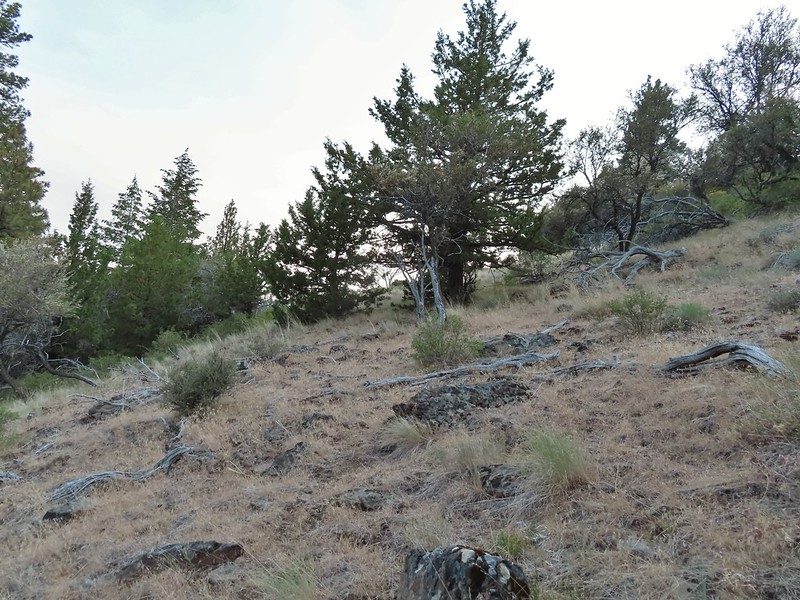

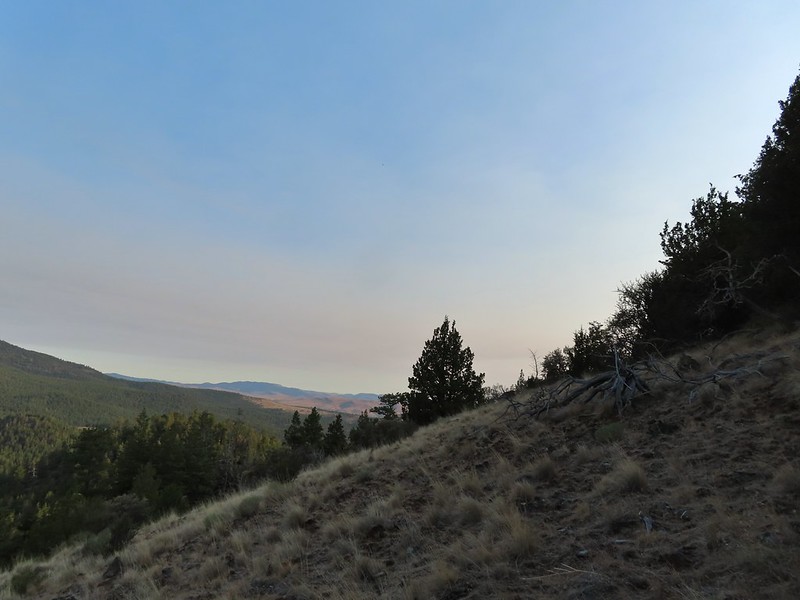

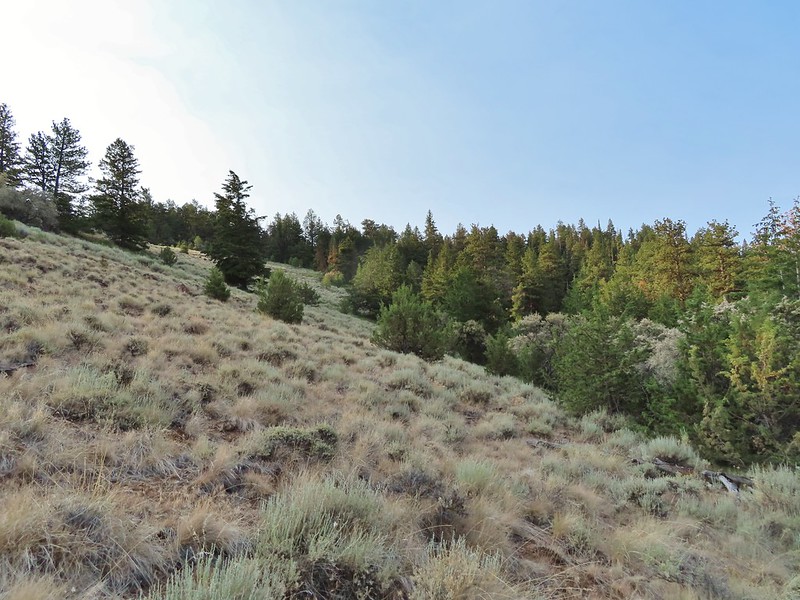

 Rock Creek Lake
 Gaining the ridge.

 View from the rim.
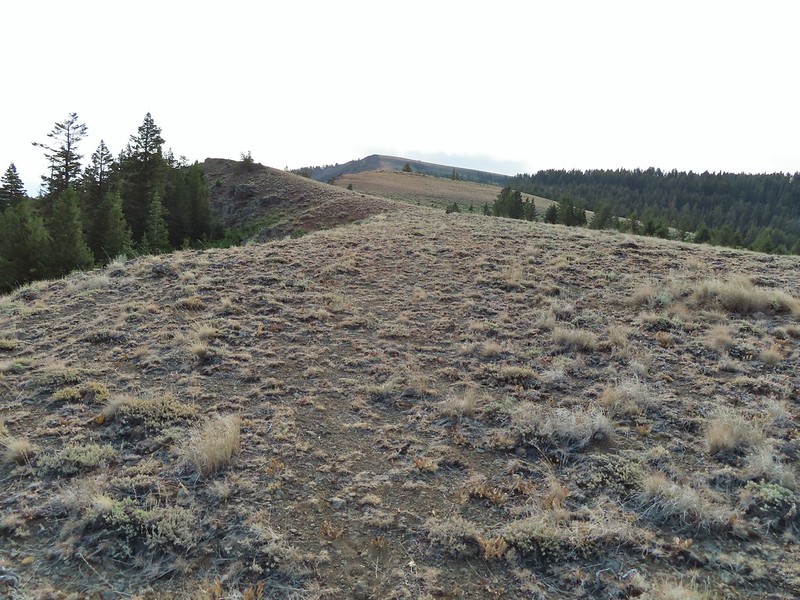 Spanish Peak
 A local
 Astter
 Some sort of delphinium I think.
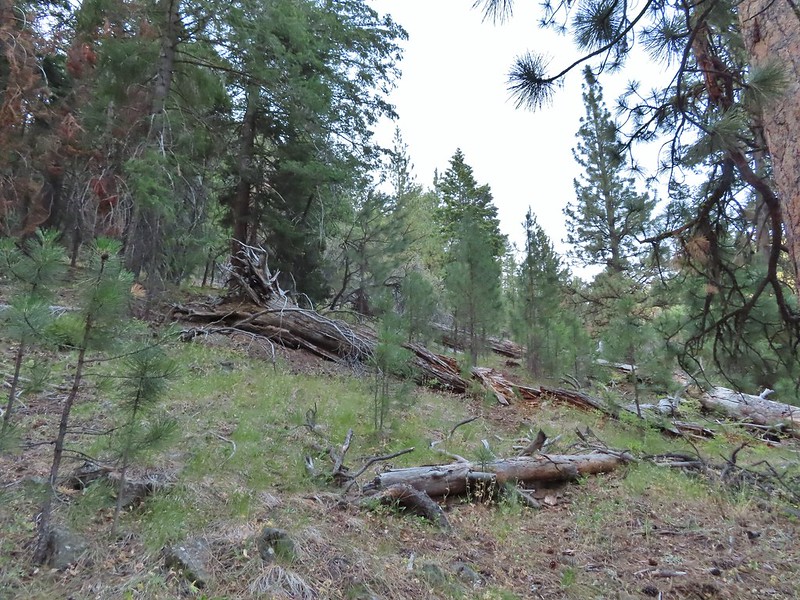
 Downed trees across the trail ahead.
 Interestingly camouflaged beetle on the upper onion.
 Lupine
 A checkermallow
 Some more downed trees that we had to go around.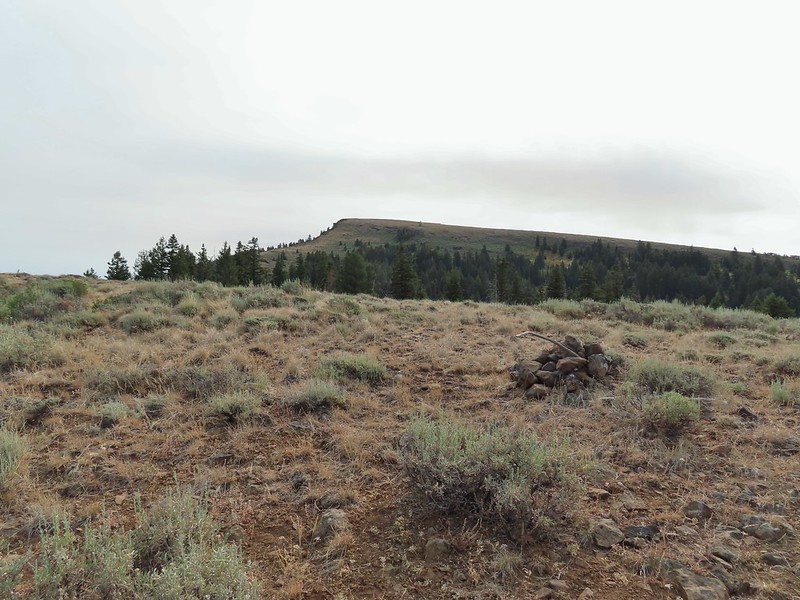


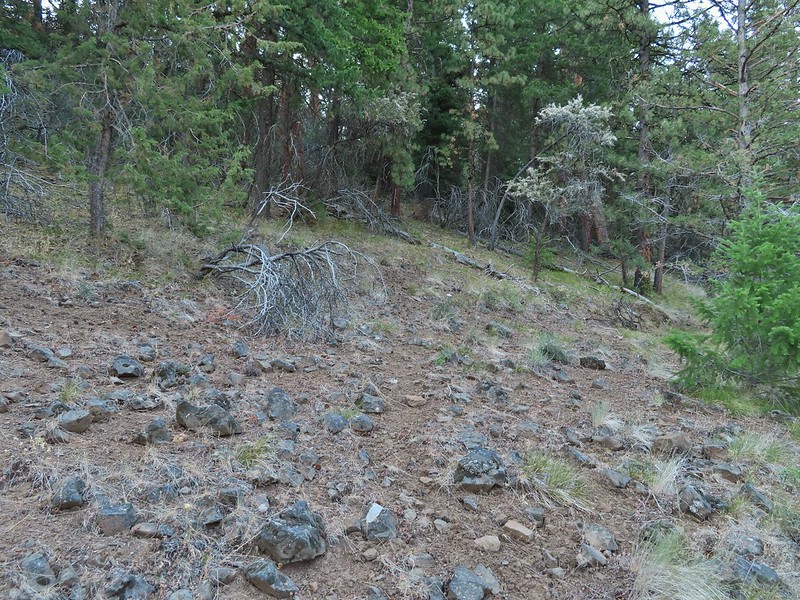
 We left the trail here, note the small cairn on the left.
 Heading uphill.
 Scarlet gilia
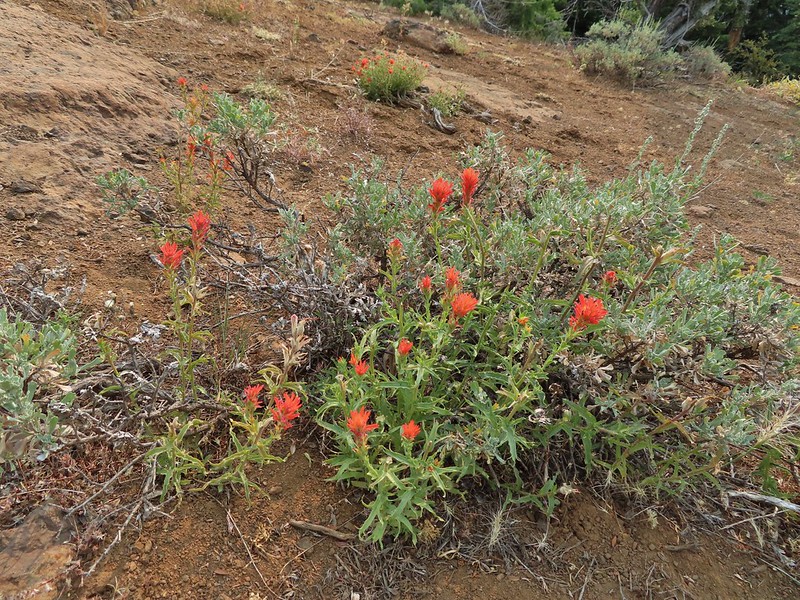 Paintbrush
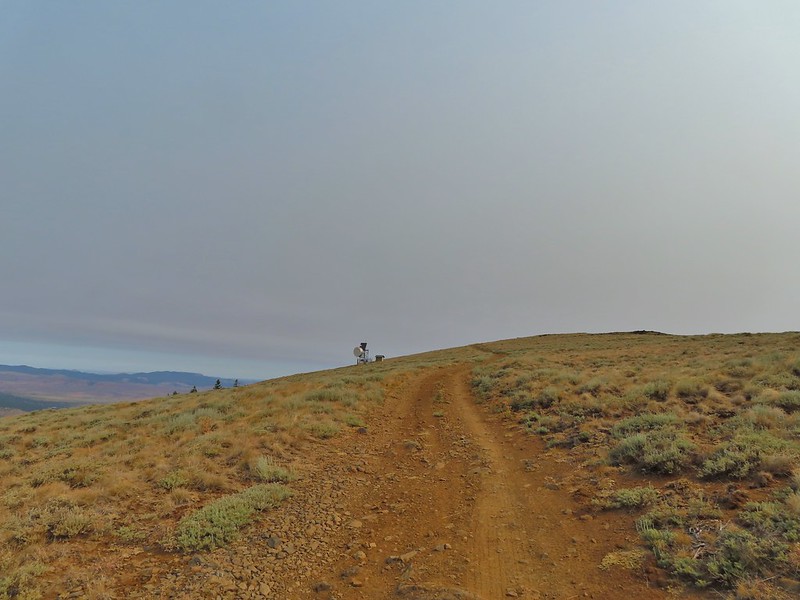
 The site of the former lookout.
 Looking out toward the John Day River valley.
 SE to Windy Point.
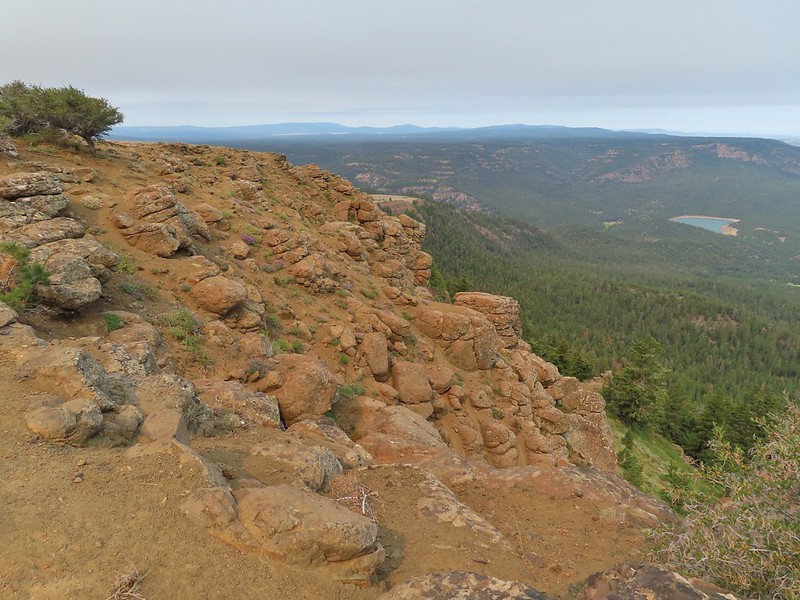 West to Rock Creek Lake and on the horizon the flat topped Lookout Mountain (
 NE to the John Day River Valley.
 Lookout and Round Mountain and the rim that we had hiked up below Spanish Peak.
 The Pisgah Lookout on the far side of the Bridge Creek Wilderness (
 A hazy Mount Hood to the NW.
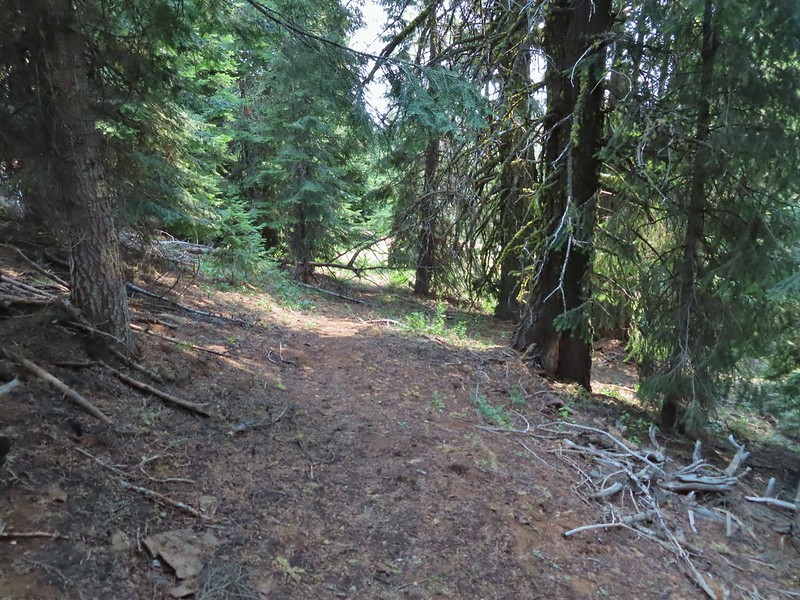

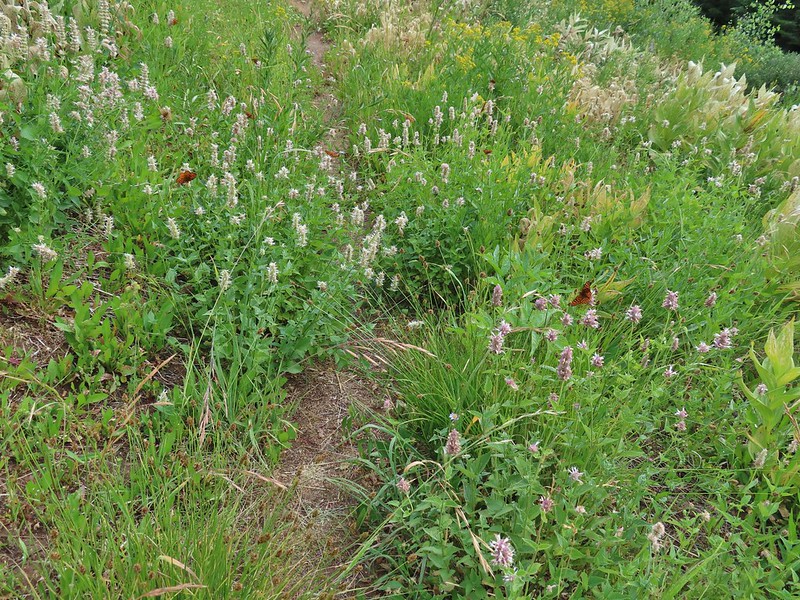
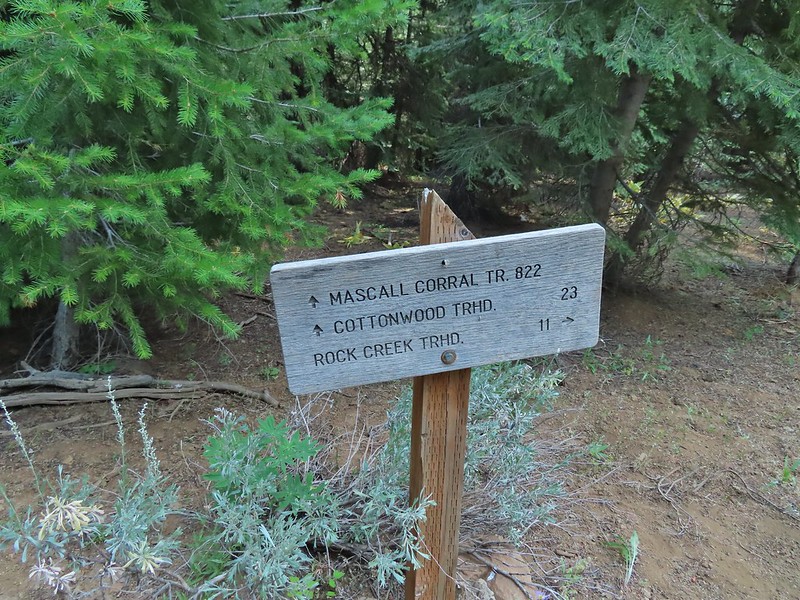

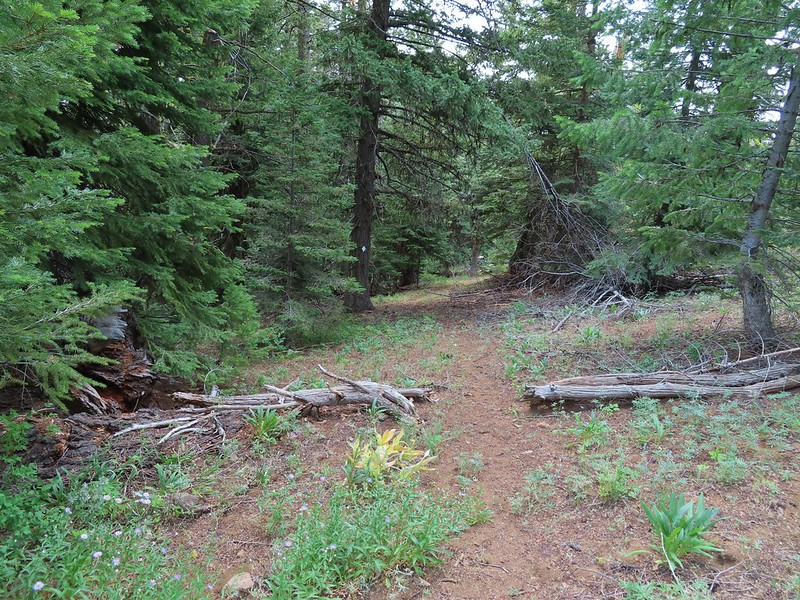
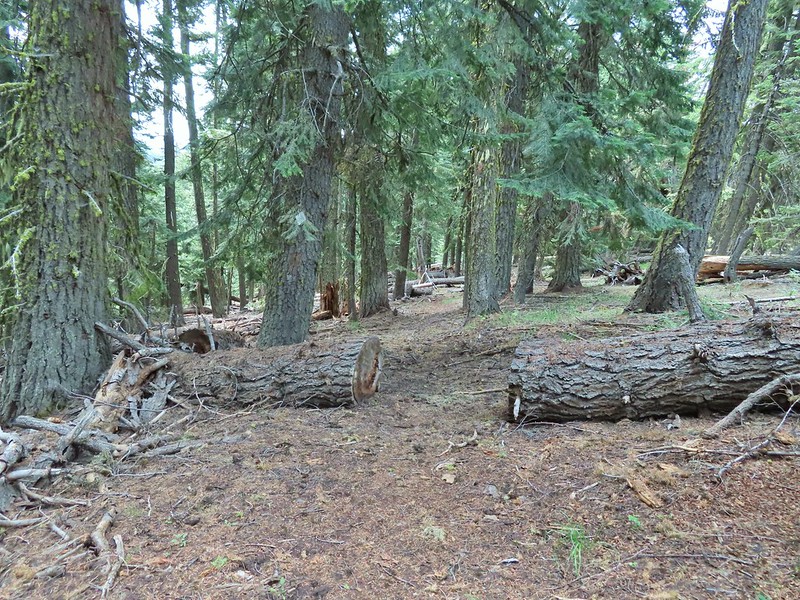
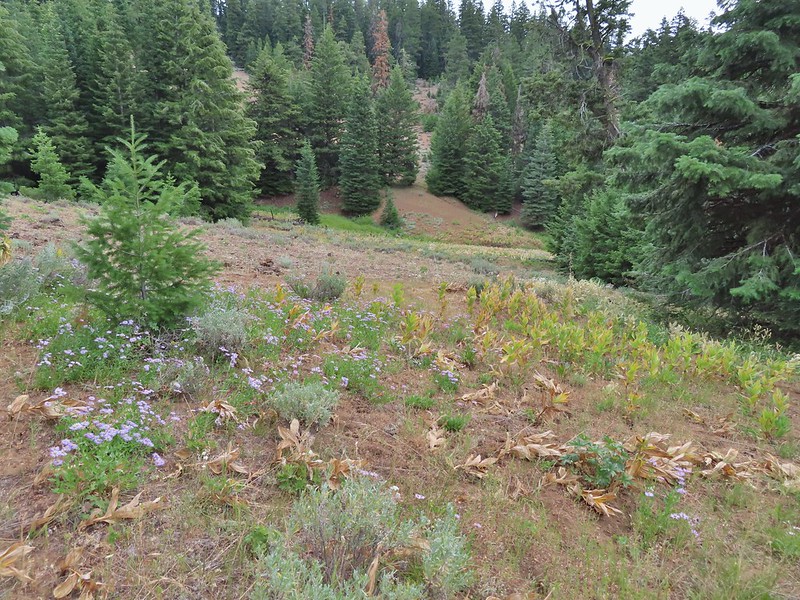 Baldy Creek was on our left.
 Red-tailed hawk
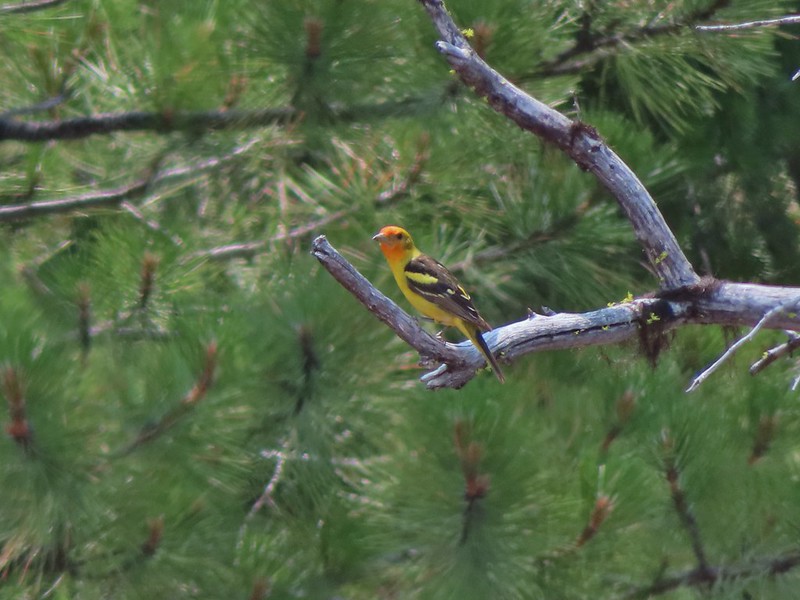 Western tanager
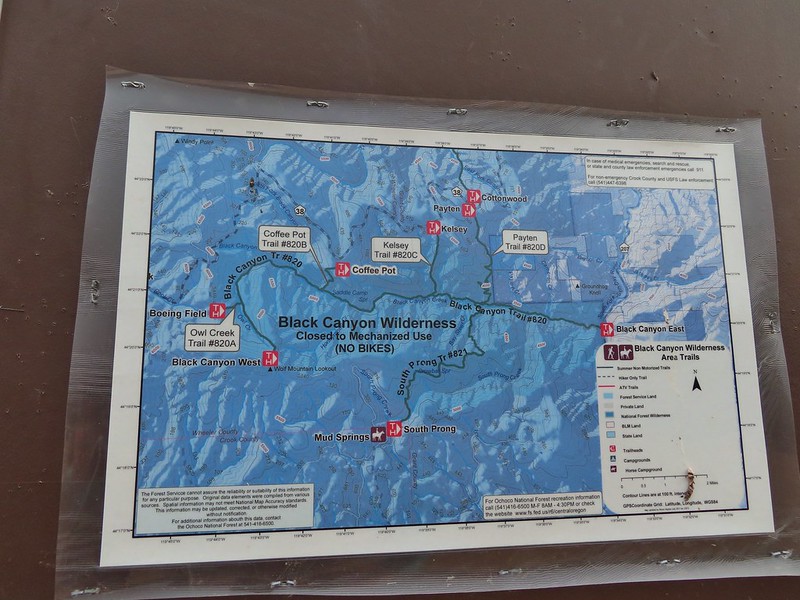
 Arriving at the trailhead.
 Signage at the trailhead.
 Baldy Creek below FR 3820.
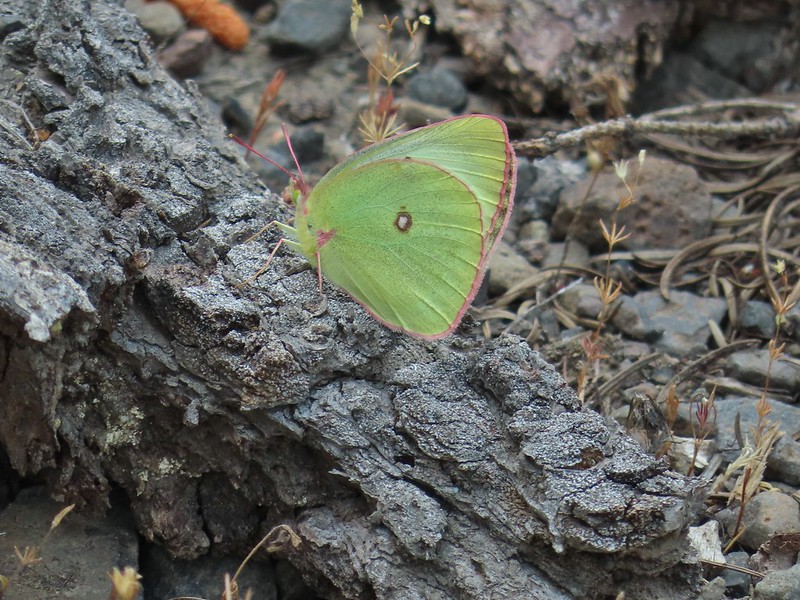 A sulphur butterfly of some sort.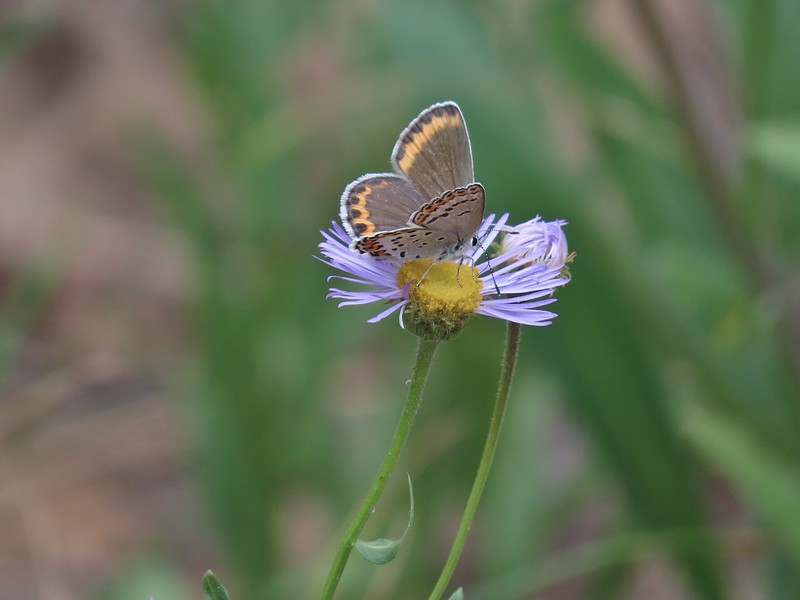
 A watermellon or June bug as we called them growing up.
 FR 3820 meeting Arvid Nelson Road.
 Spanish Peak from Arvid Nelson Road.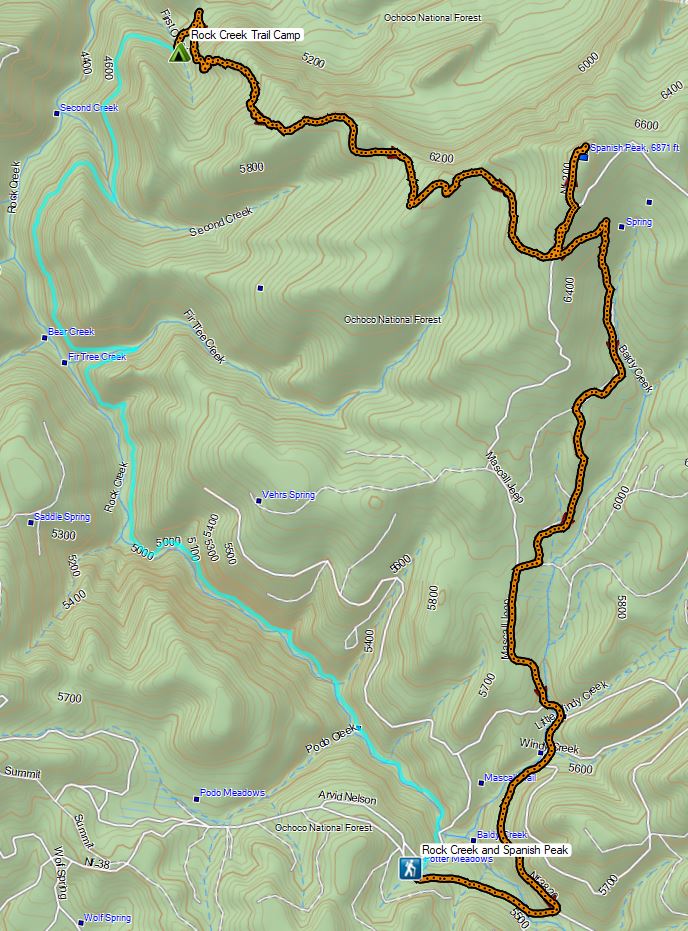


 Aster, paintbrush, and fireweed.
 Fireweed, aster, and pearly everlasting.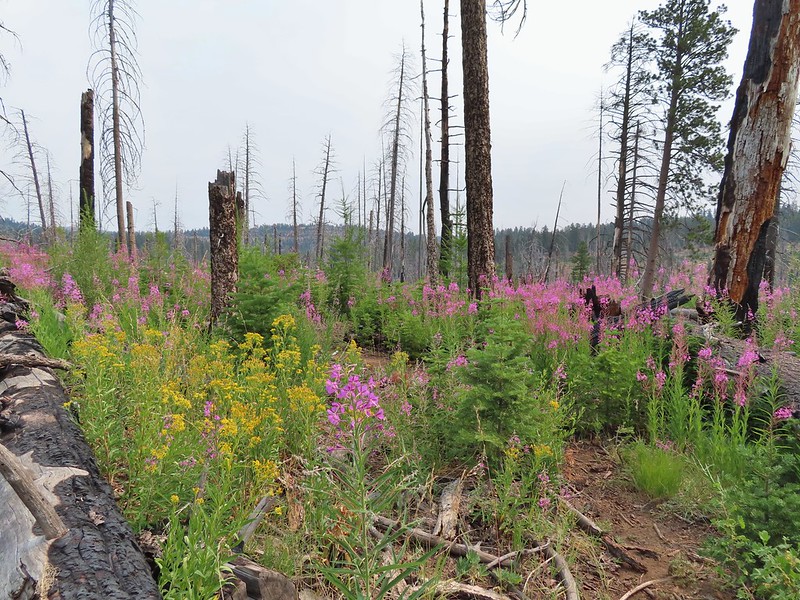
 Clouds and smoke mixing in the sky made it hard to tell if any thunderstorms might be developing.
 We never heard any thunder but we did briefly get sprinkled on.
 Ground squirrel.
 Columbine
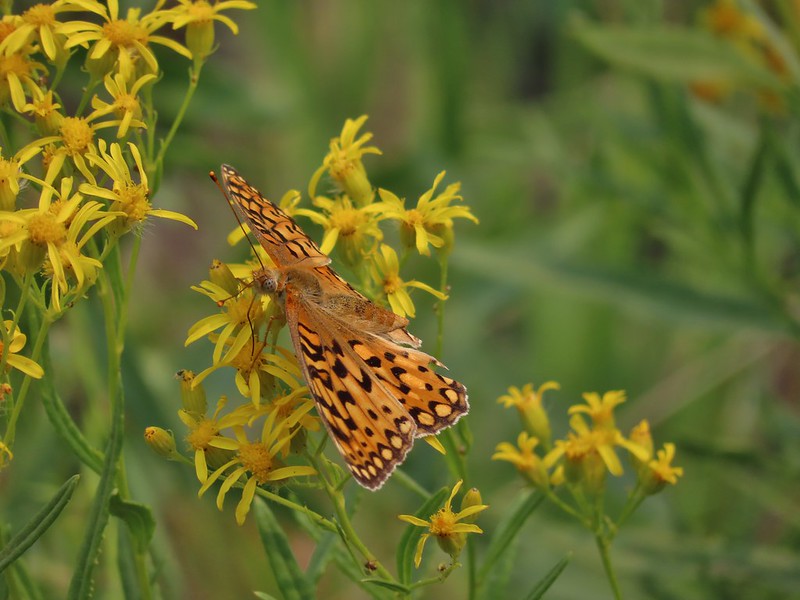 Fritillary butterfly
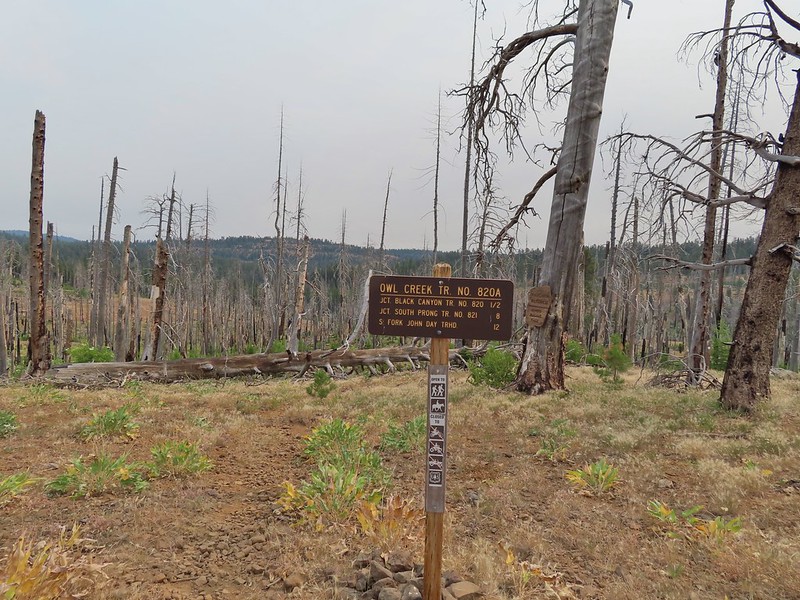
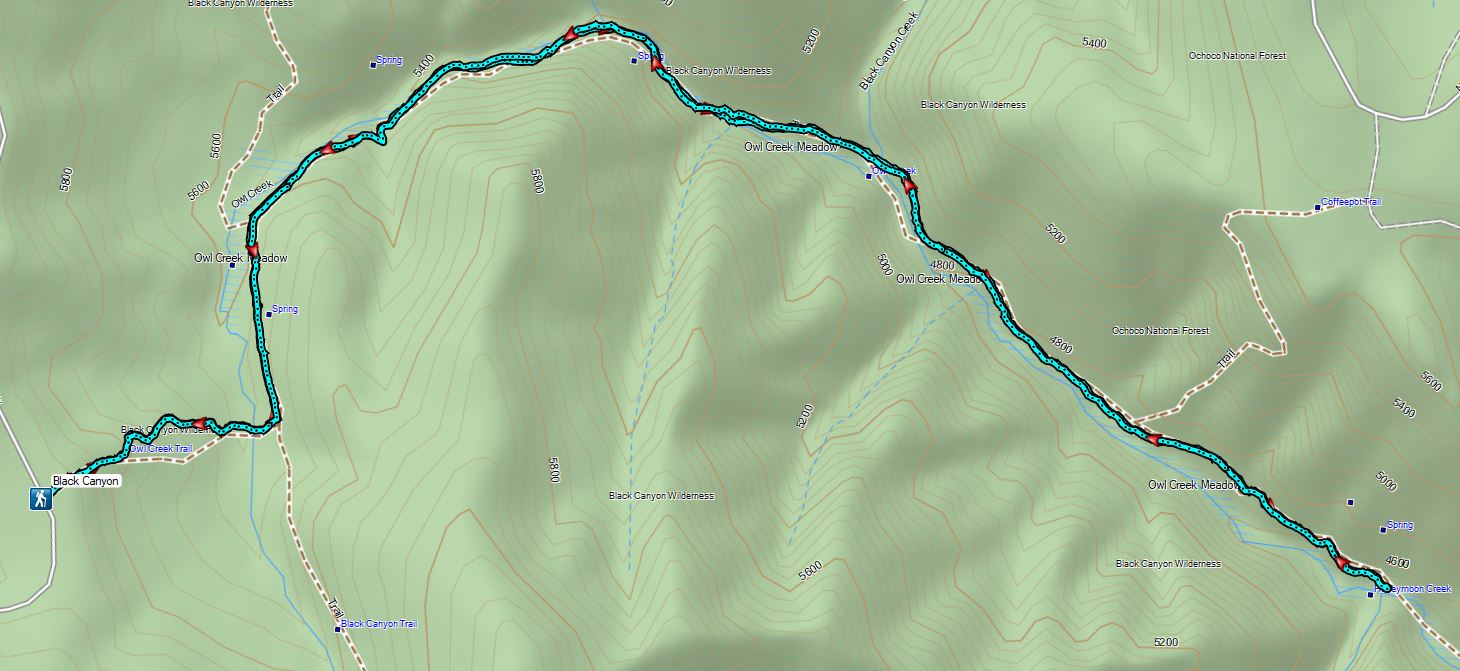
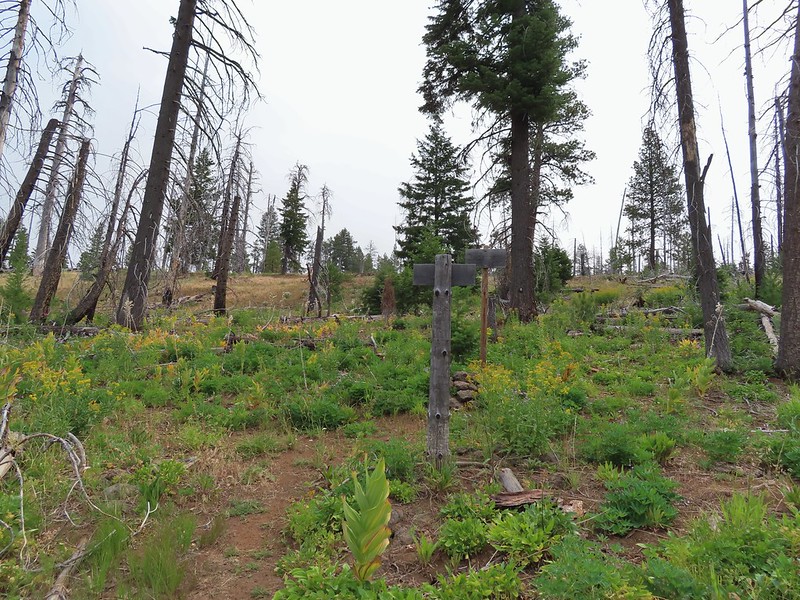 Black Canyon Trail junction.


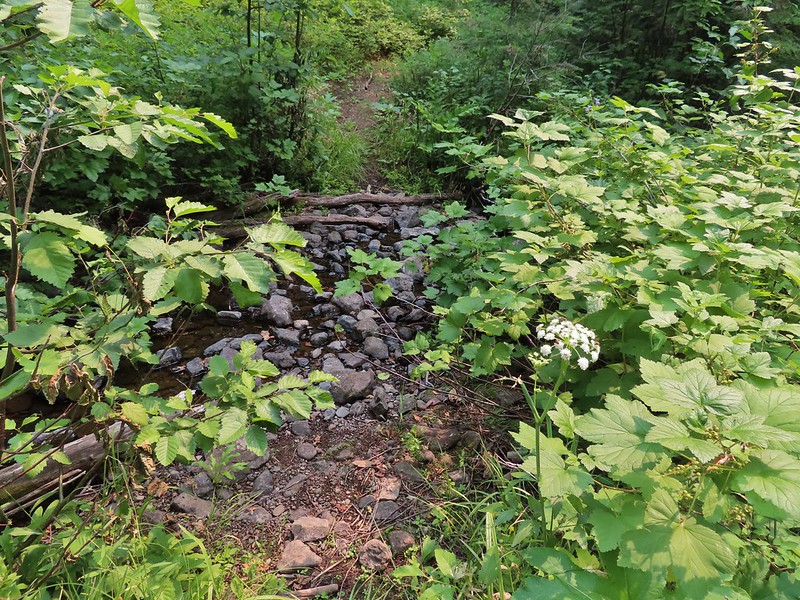 Owl Creek crossing approximately 1.5 miles from the junction.


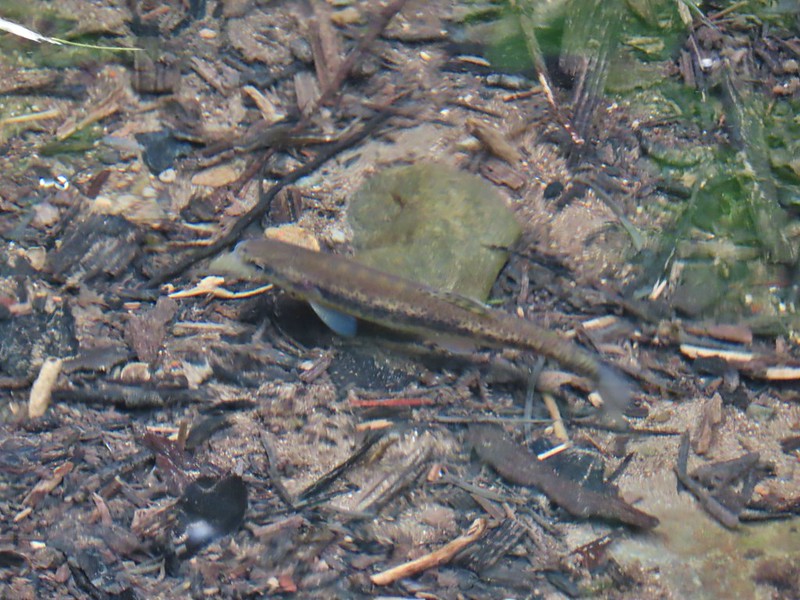 Fish in Black Canyon Creek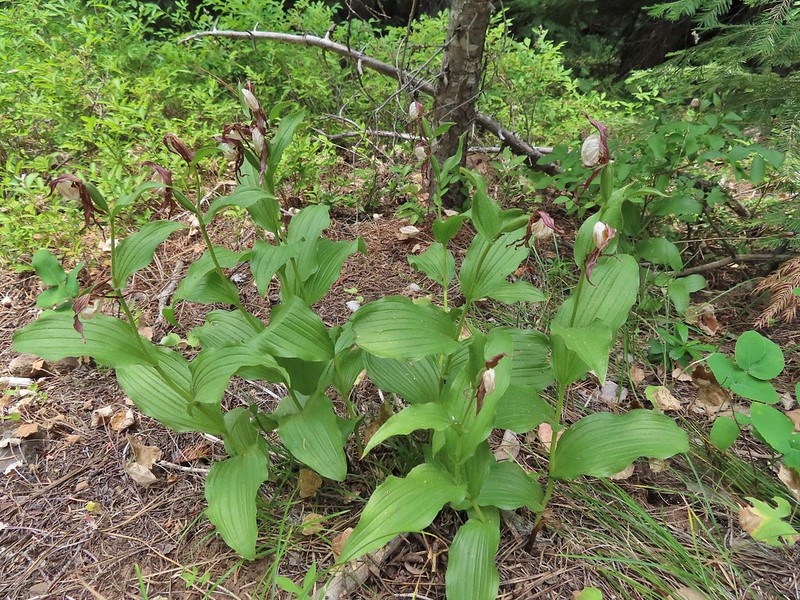


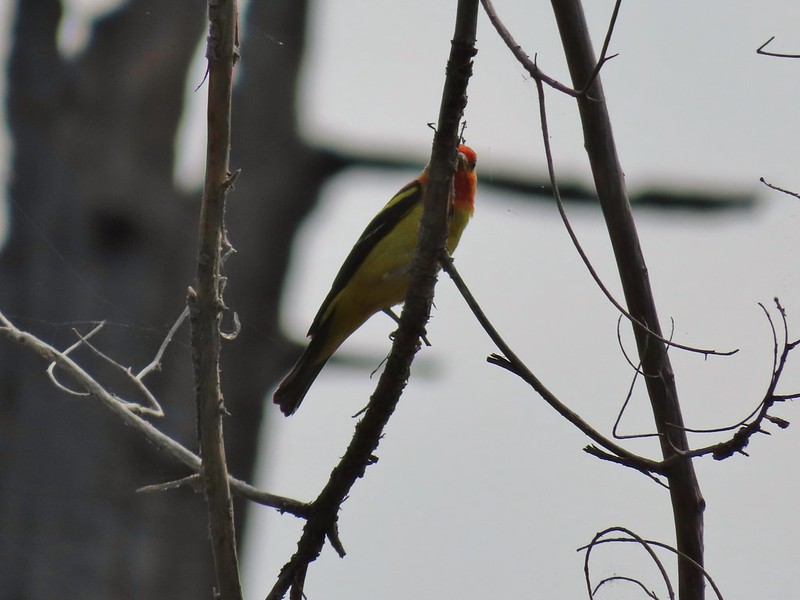 Western Tanager
 California tortioseshell
 Western Jacob’s ladder
 Black Canyon Creek



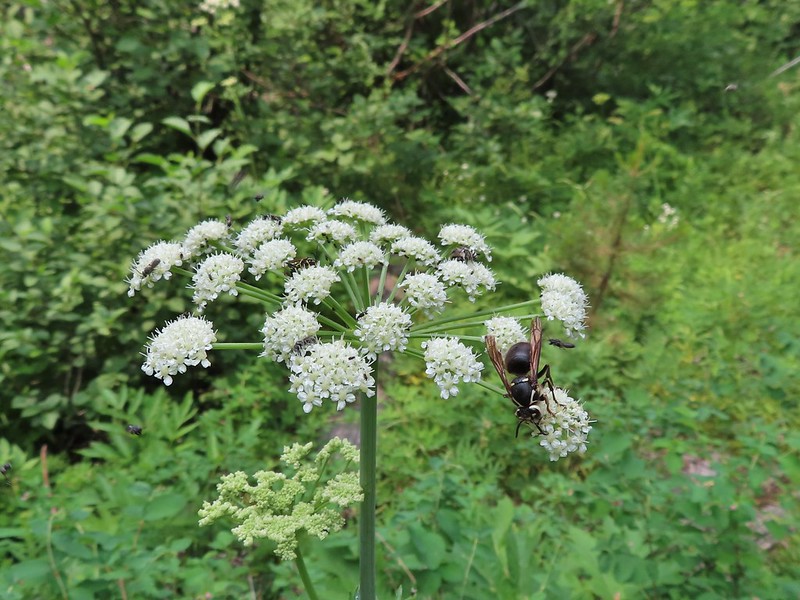 The number of insects on the blossoms and their size differences were fascinating.
 Snacks

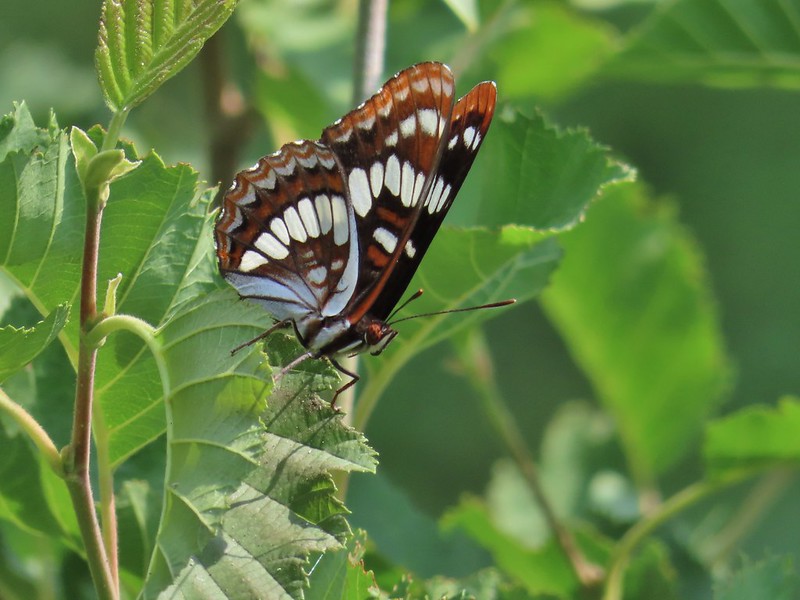 Lorquin’s adrmiral

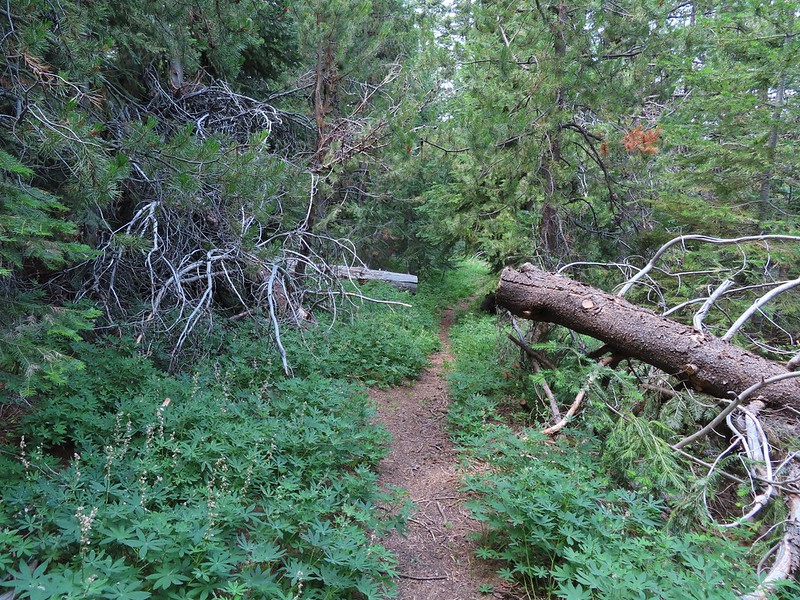
 A little light on the tread in this section.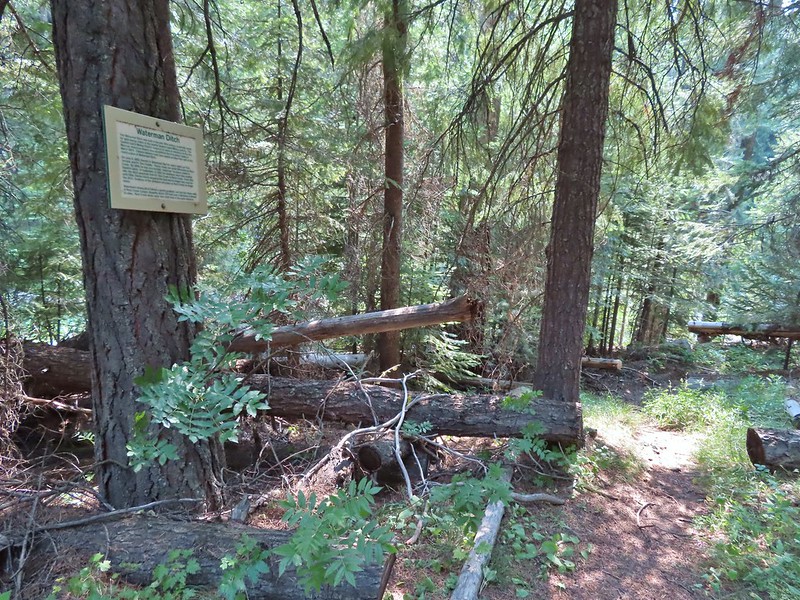

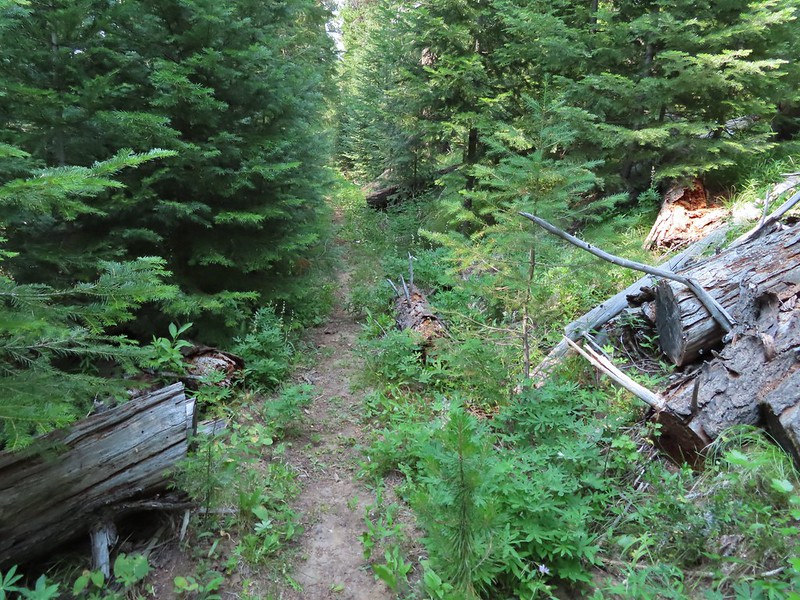


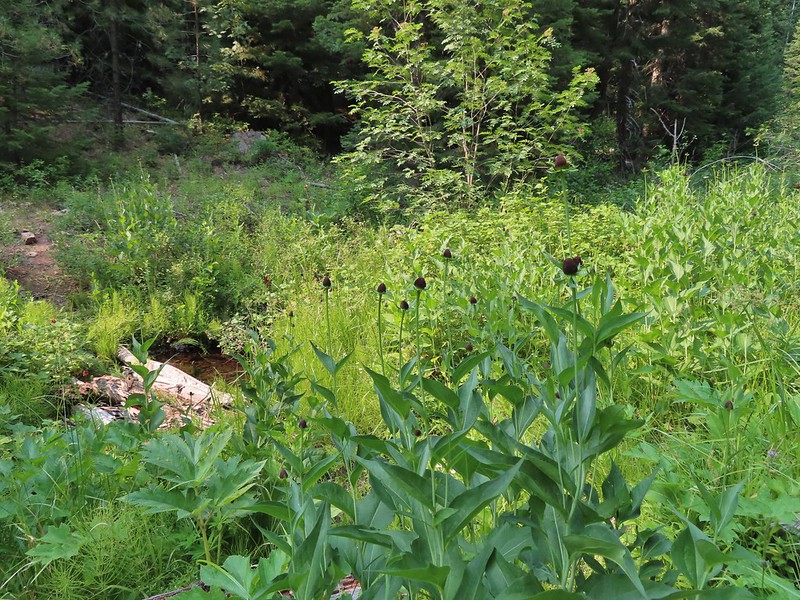 Fir Tree Creek
 Butterflies on coneflower
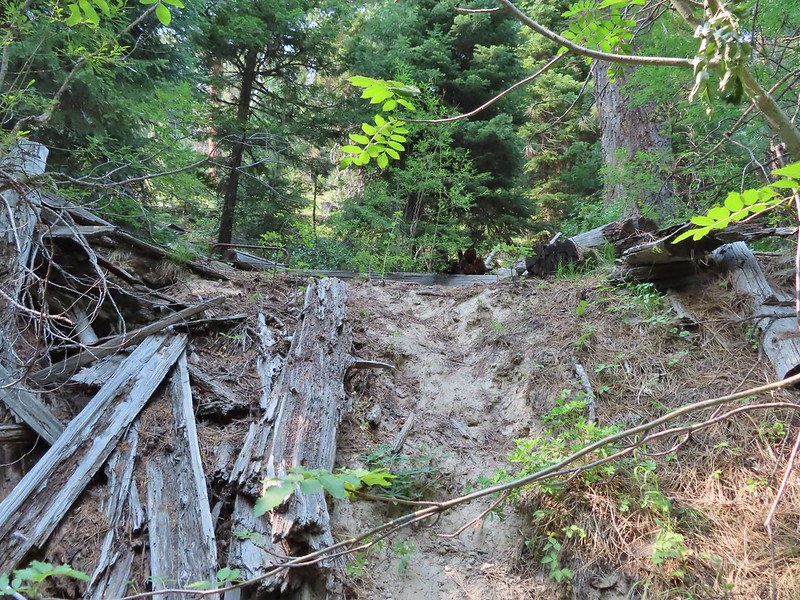 The cabin ruins.
 Coming around a ridge end toward Second Creek.
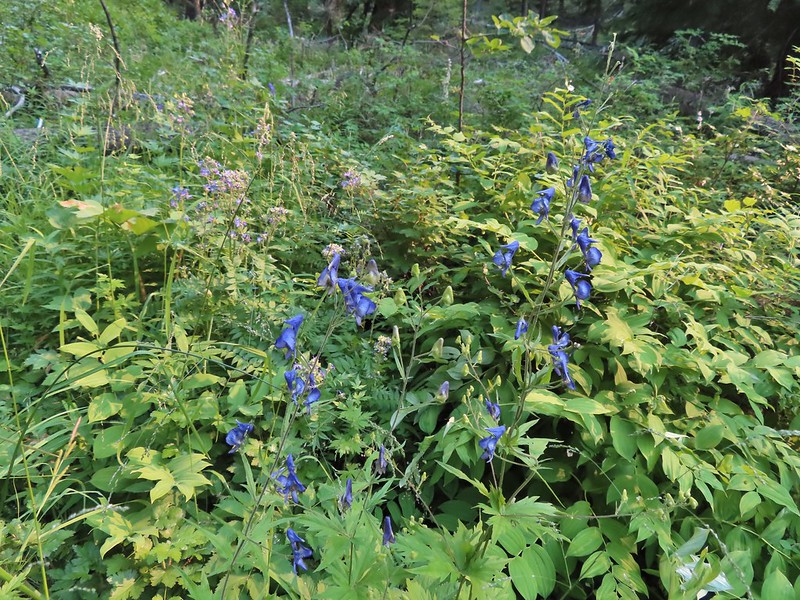 Monkshood at Second Creek
 This little guy oversaw our water pumping.
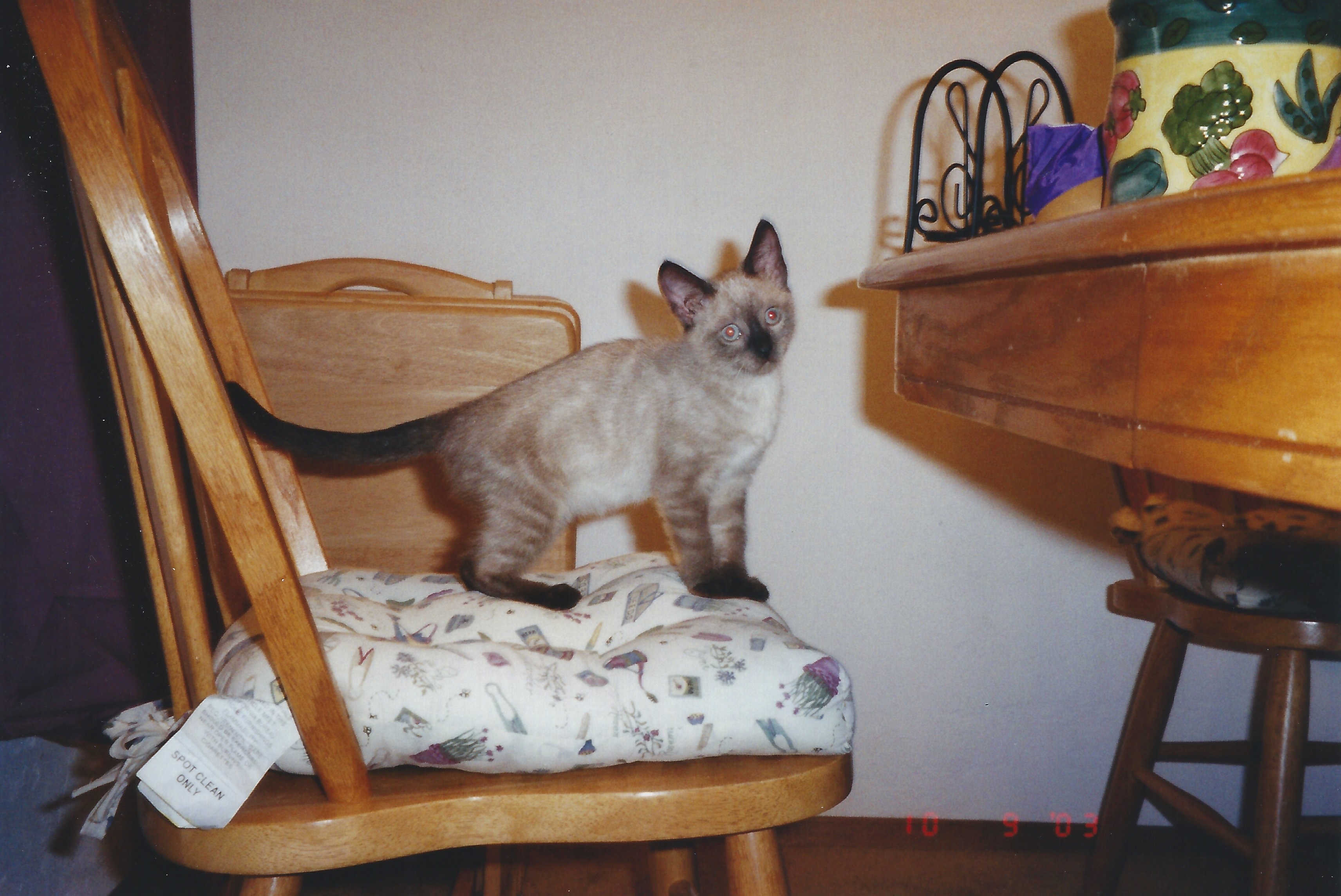


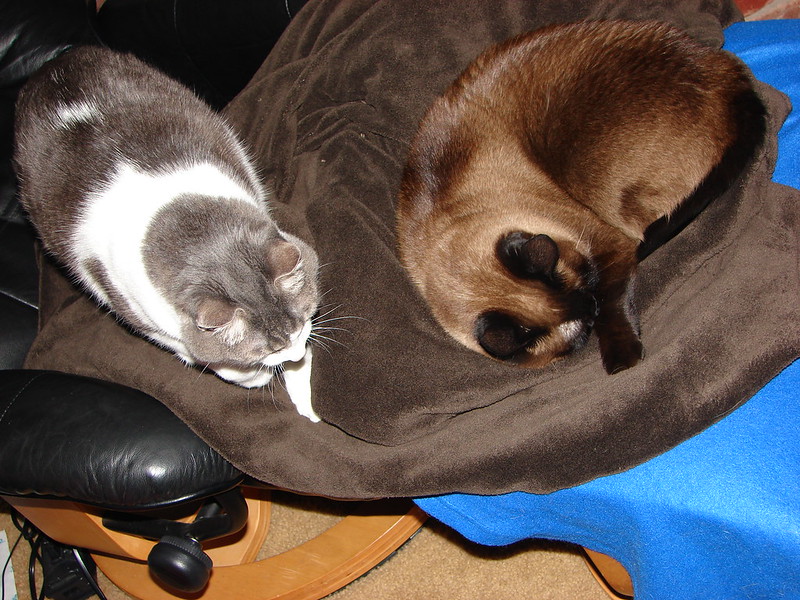


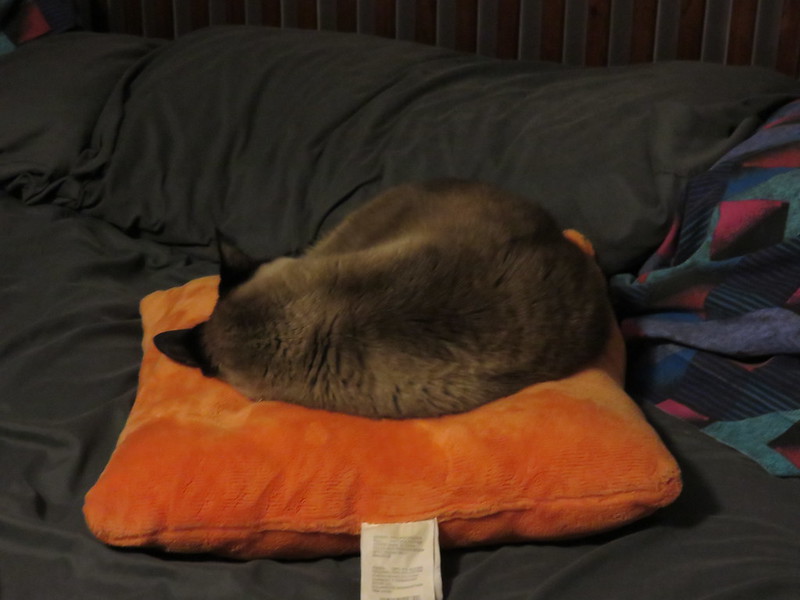 She loved sleeping on pillows.
 And in the occasional bag/box.


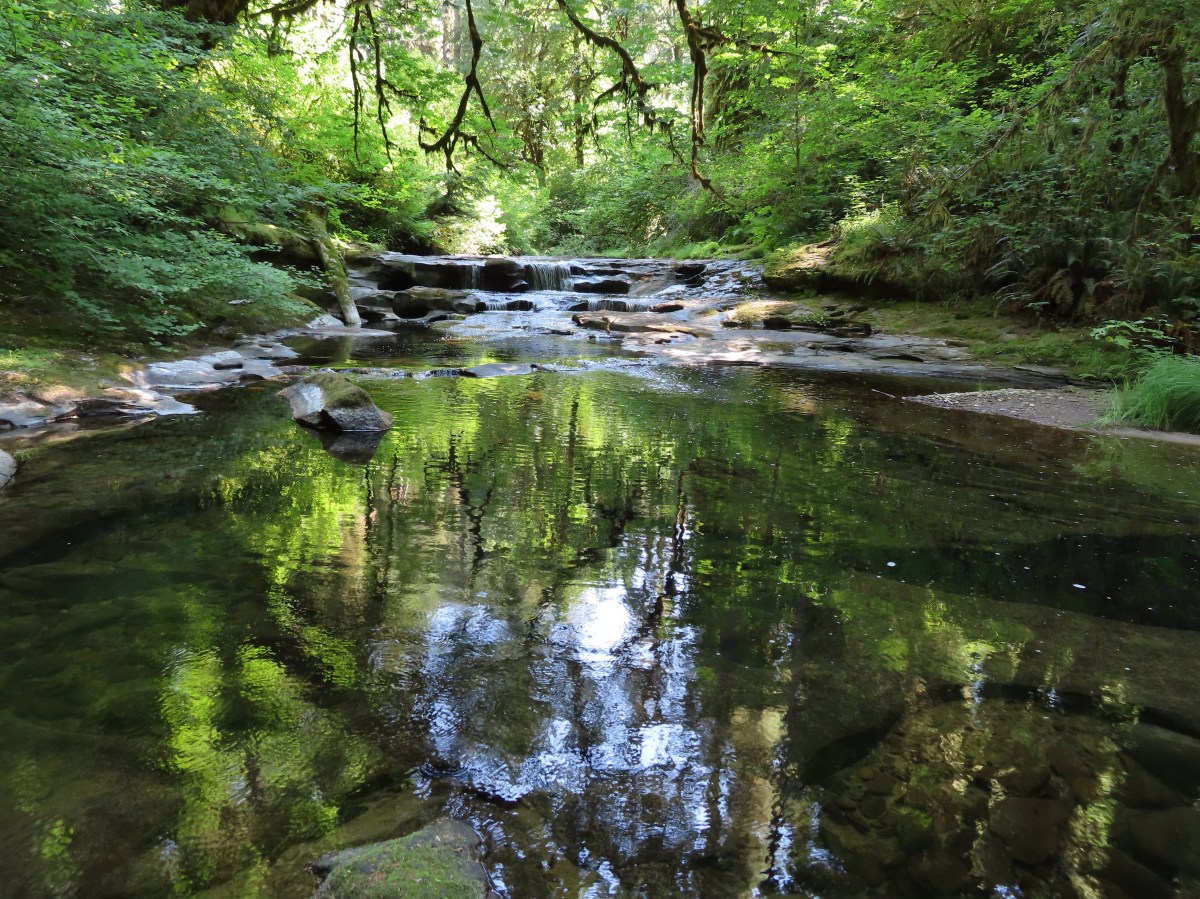
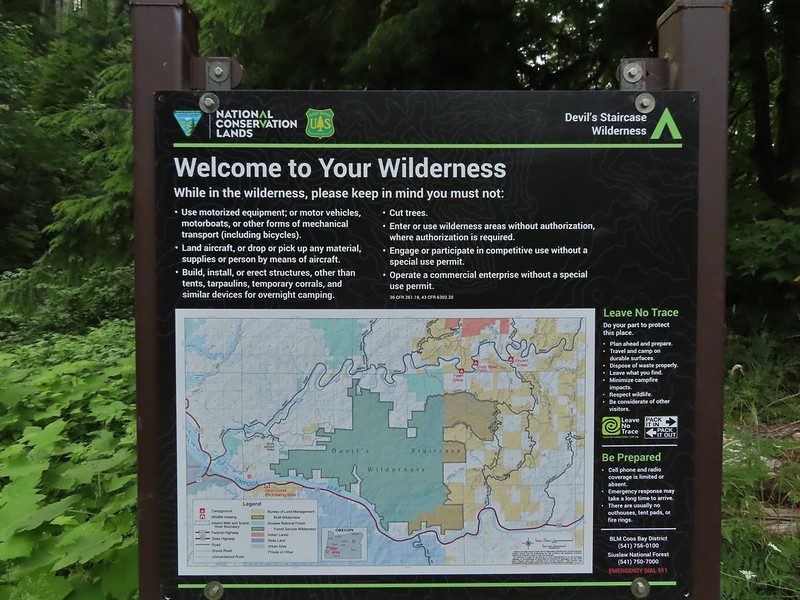

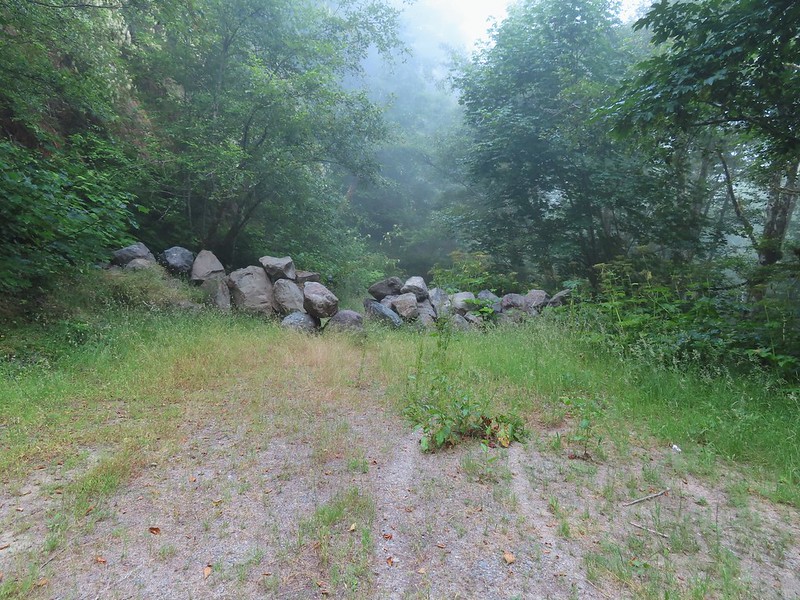 Wilderness boundary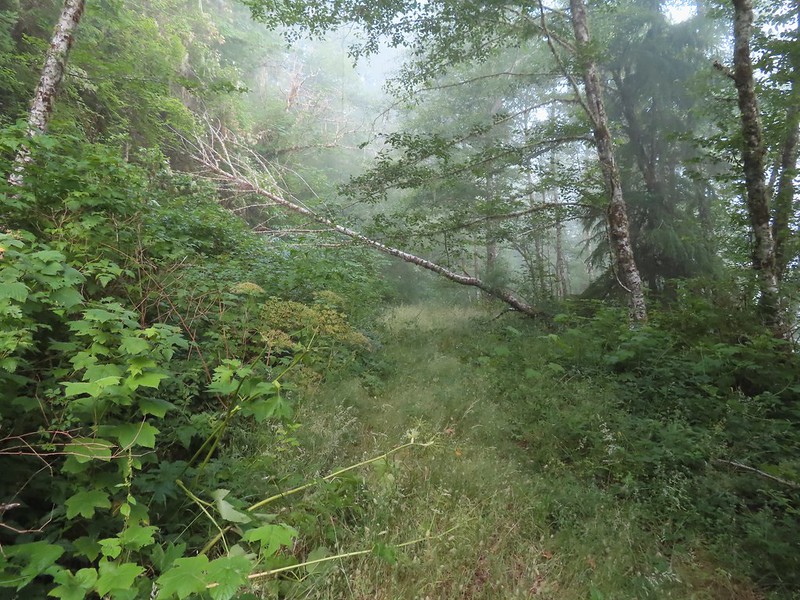
 Varied thrush
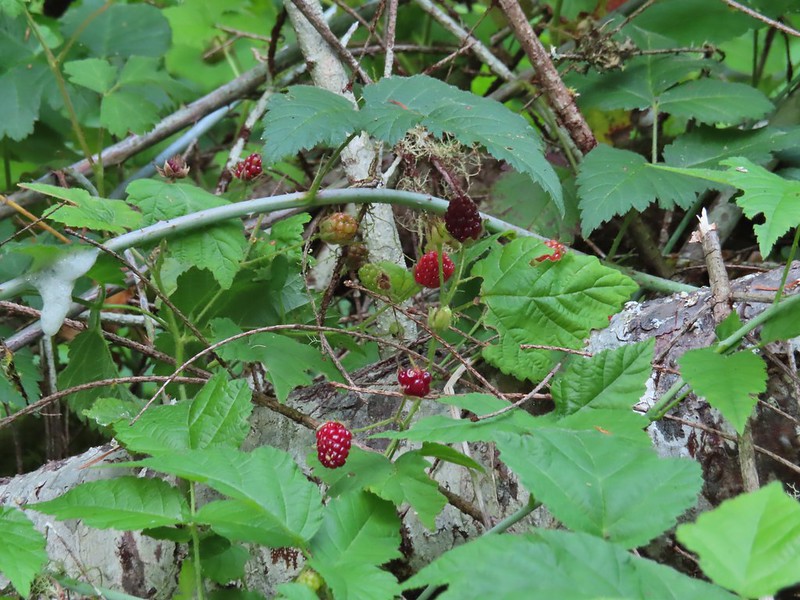 Blackberries, we found a couple of ripe ones later as well as ripe salmonberries, thimbleberries, and red huckleberries.
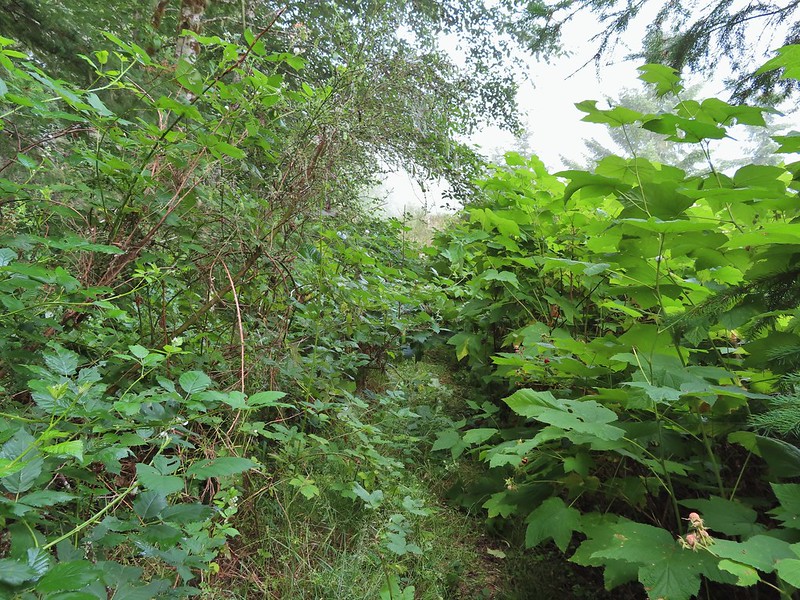 There was a lot of Himalayan blackberry to get through which caused many a scratch.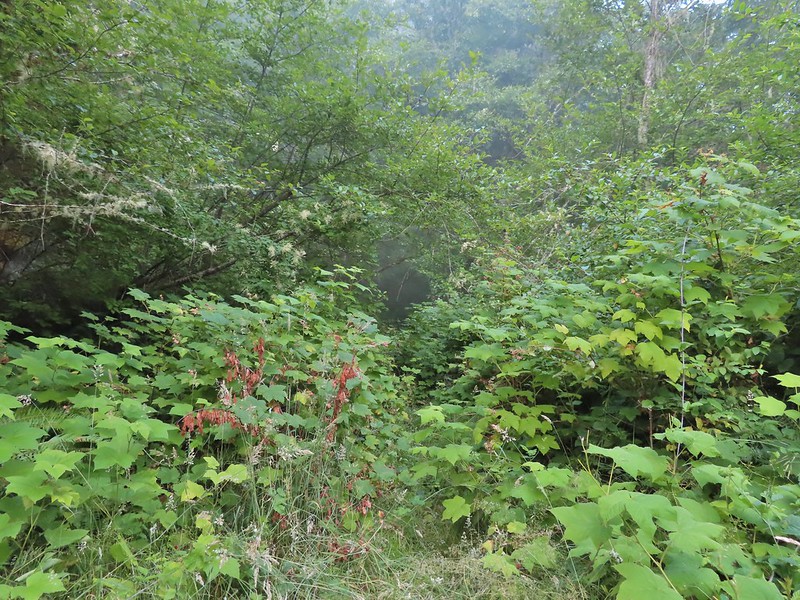

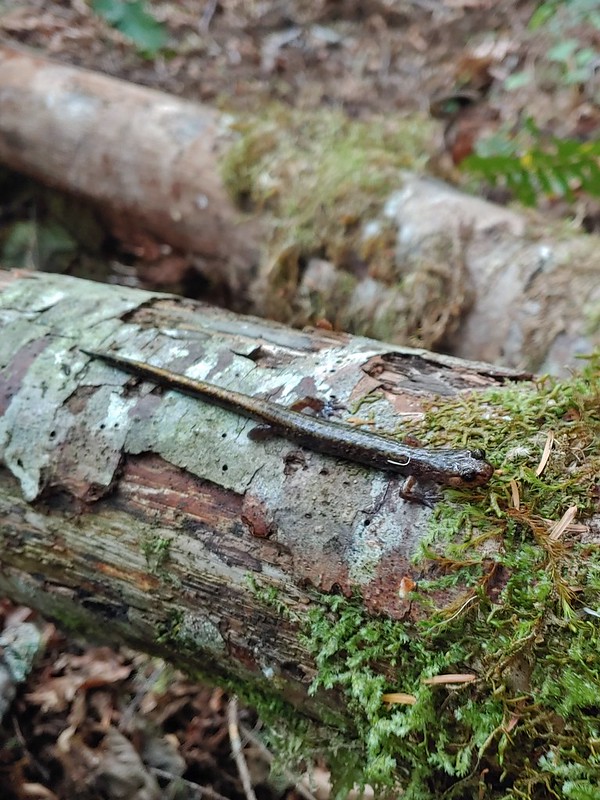 Salamander, possibly a Dunn’s.
 Snail on a fern.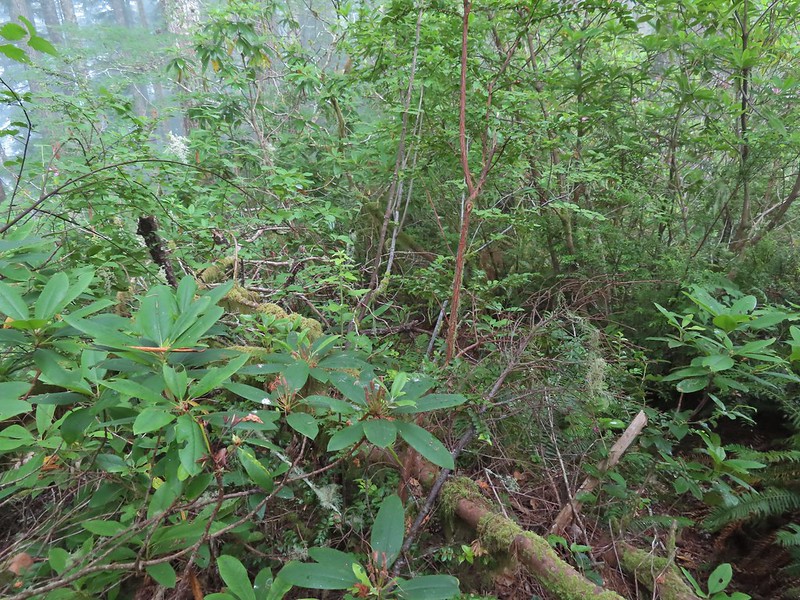
 A few rhododendron were still blooming.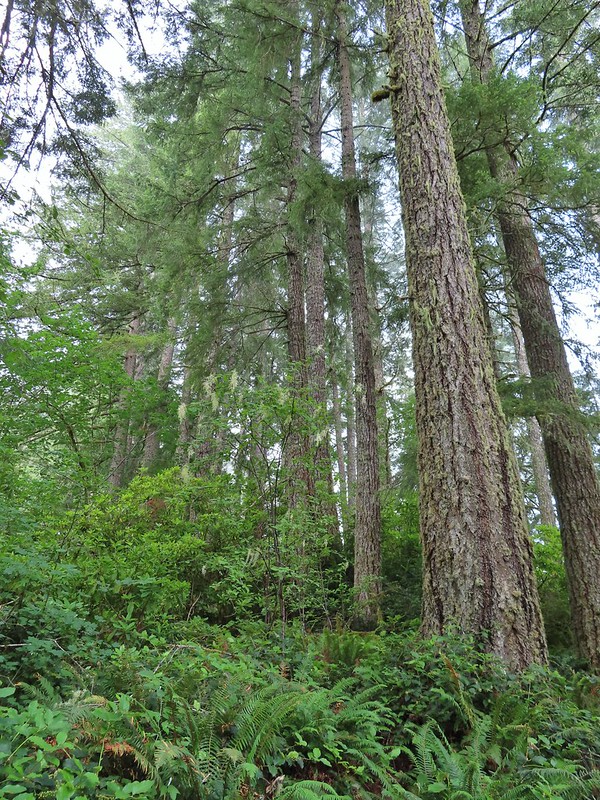
 Huckleberries
 This was the only open spot the whole day. There were some thistle and yarrow blooming here along with a bit of poison oak.
 Bees sleeping on thistle.
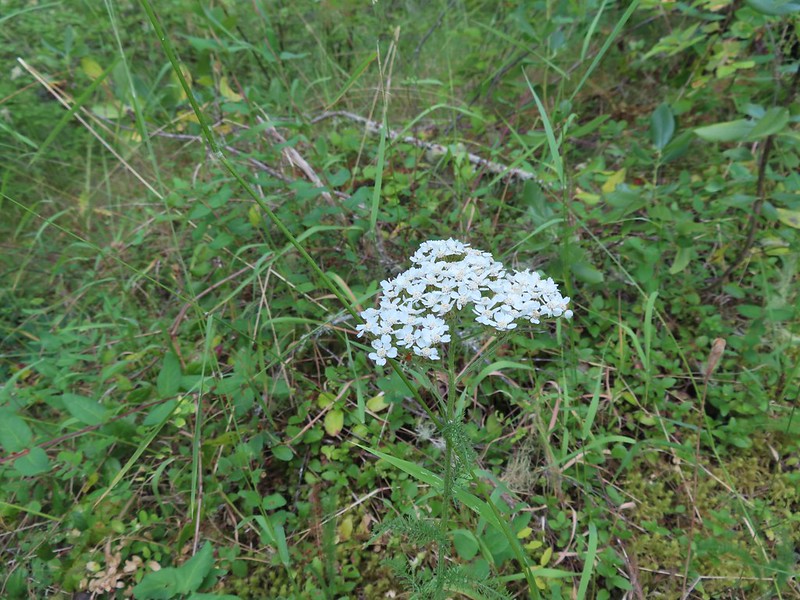 Yarrow

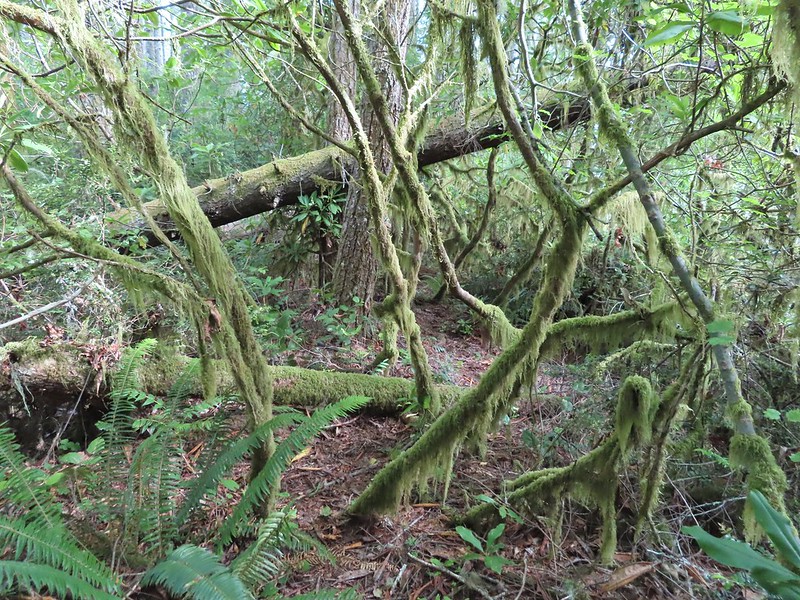 The rhododendron was often so tall we could walk through them.

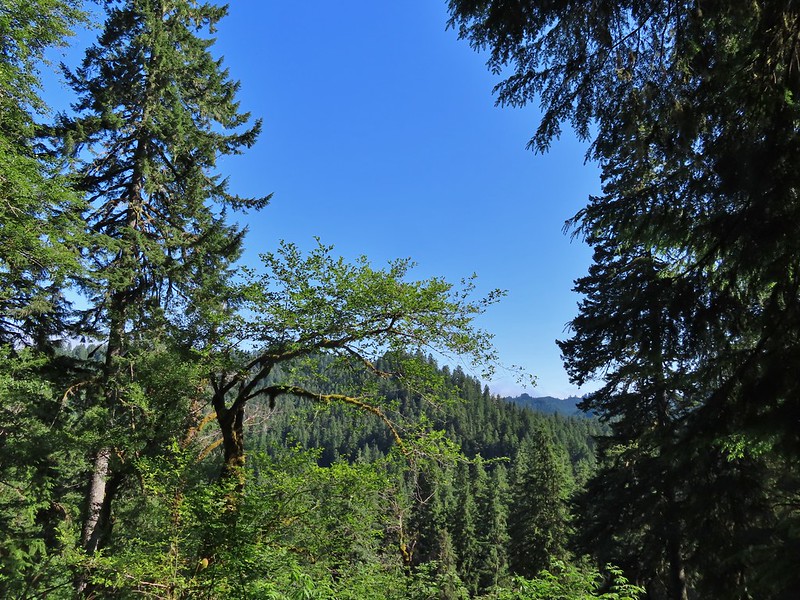 The morning fog burned off by 9:30am.
 Wild cucumber (coastal manroot)
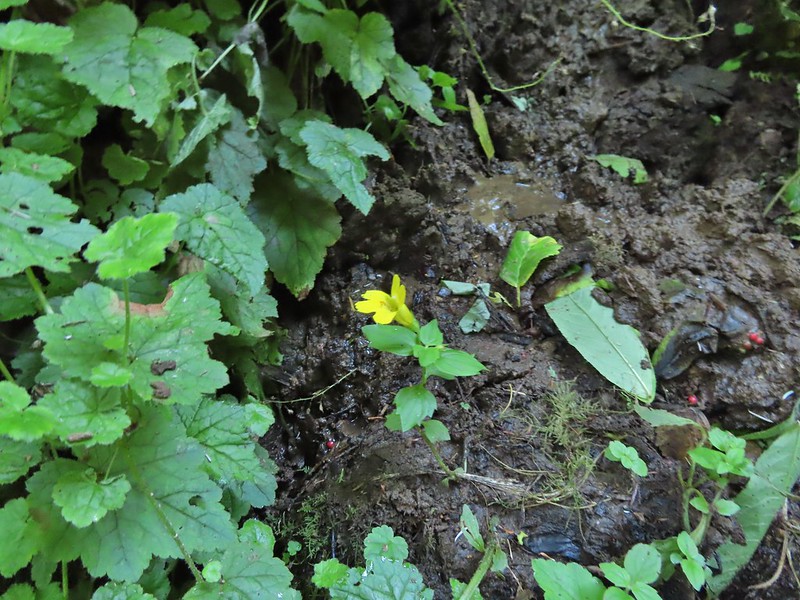 Monkeyflower
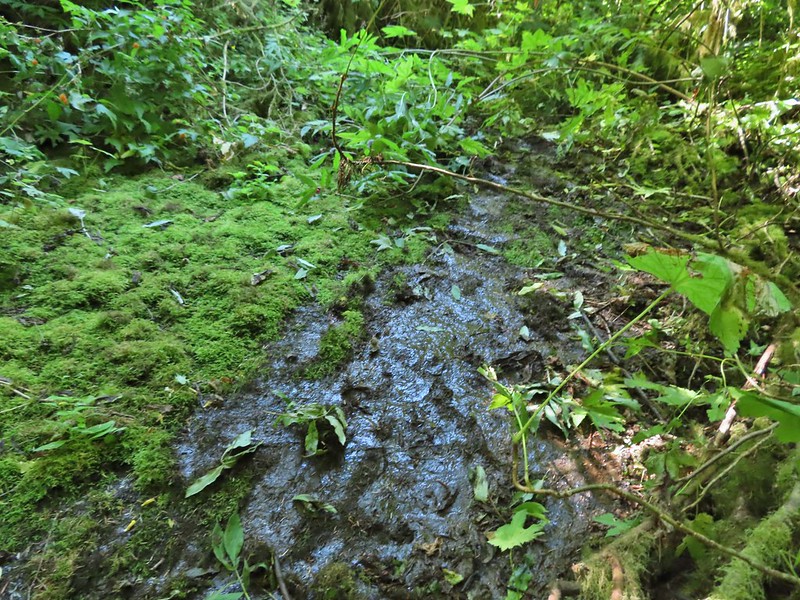 Although this picture doesn’t really convey it this section of exposed wet rock was at a fairly steep angle and was quite the challenging both coming and going.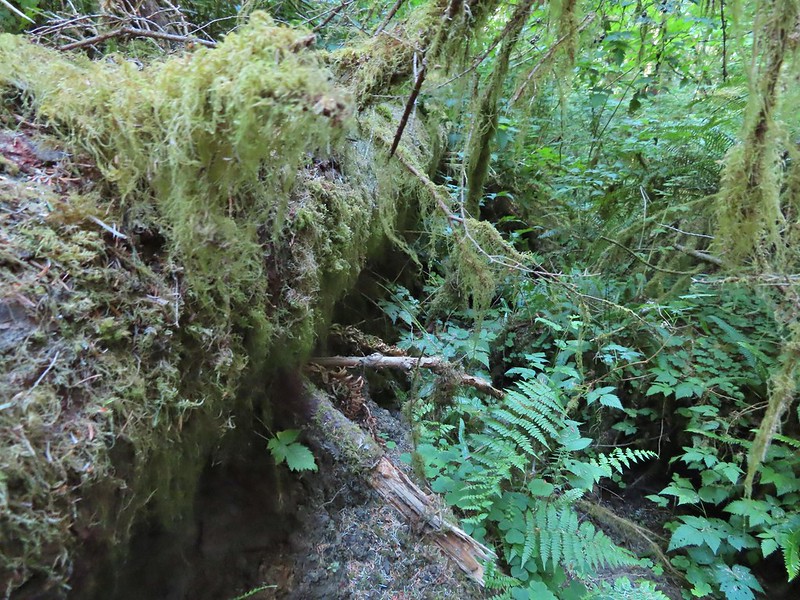

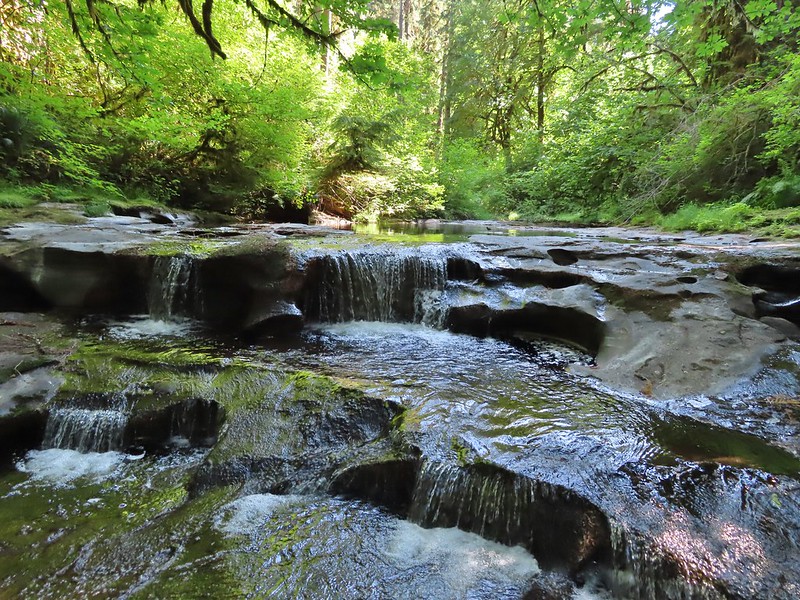
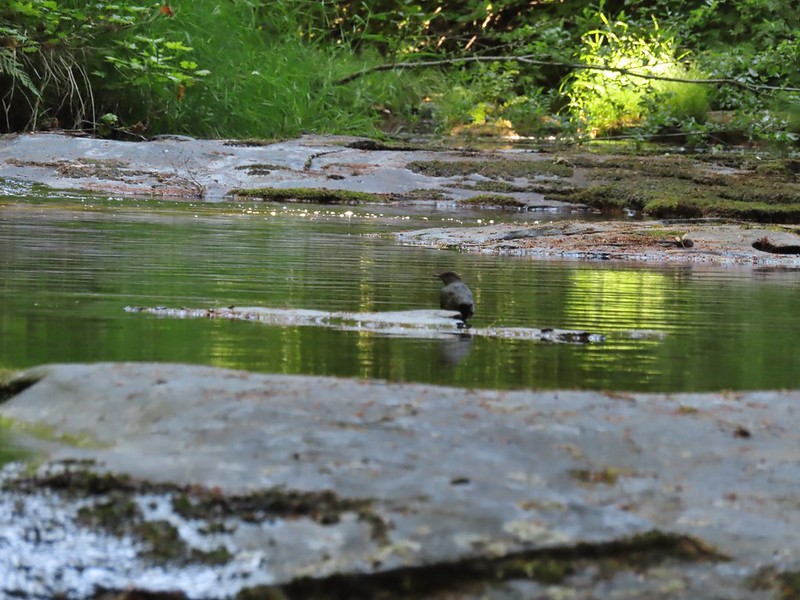 An ouzel
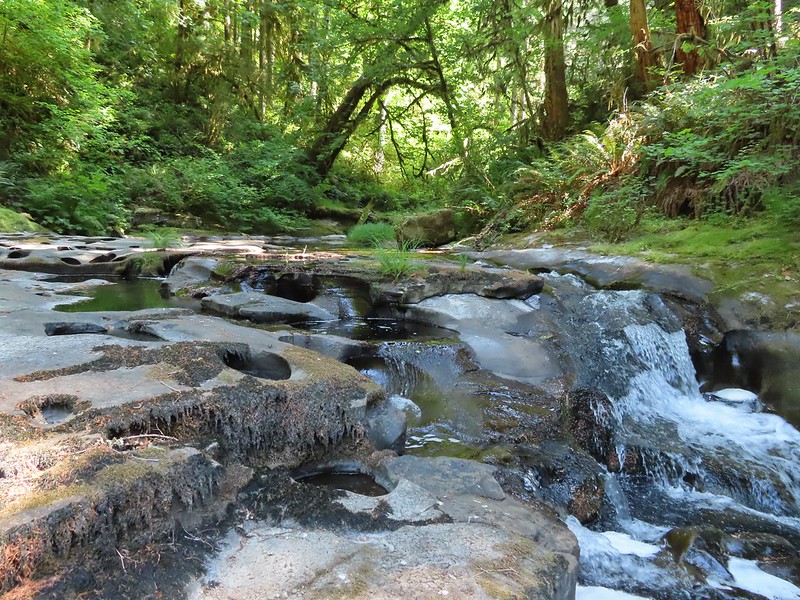
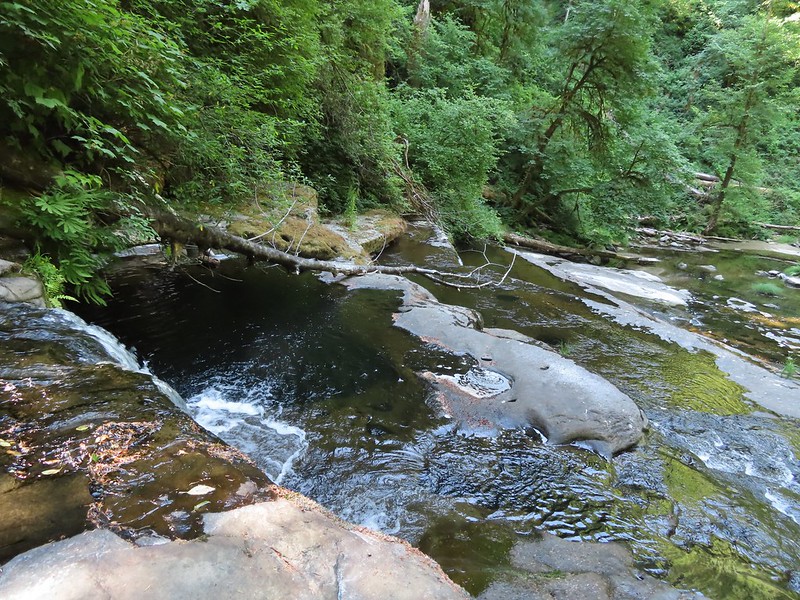 This was the ledge that we decided to not drop down off of.
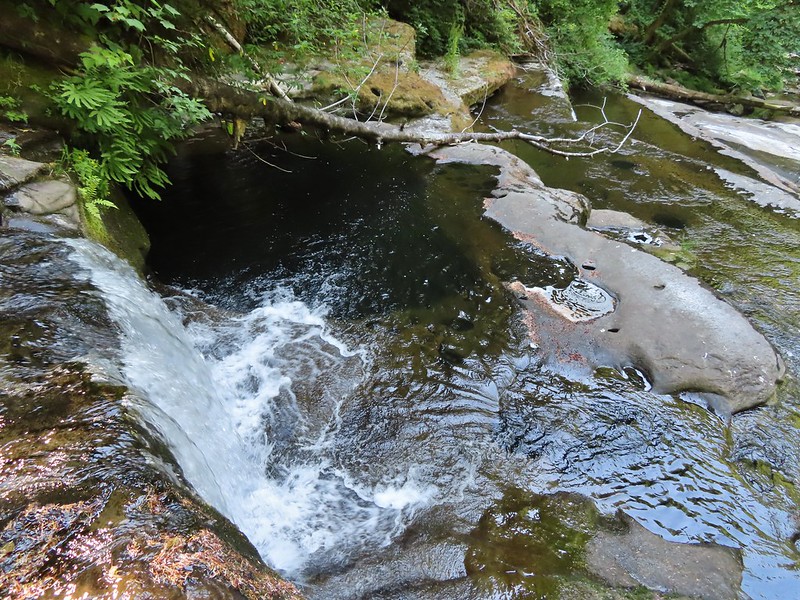 That pool is said to be approximately 20′ deep!
 We checked the little pools for rough skinned newts and this one had four and a crawdad.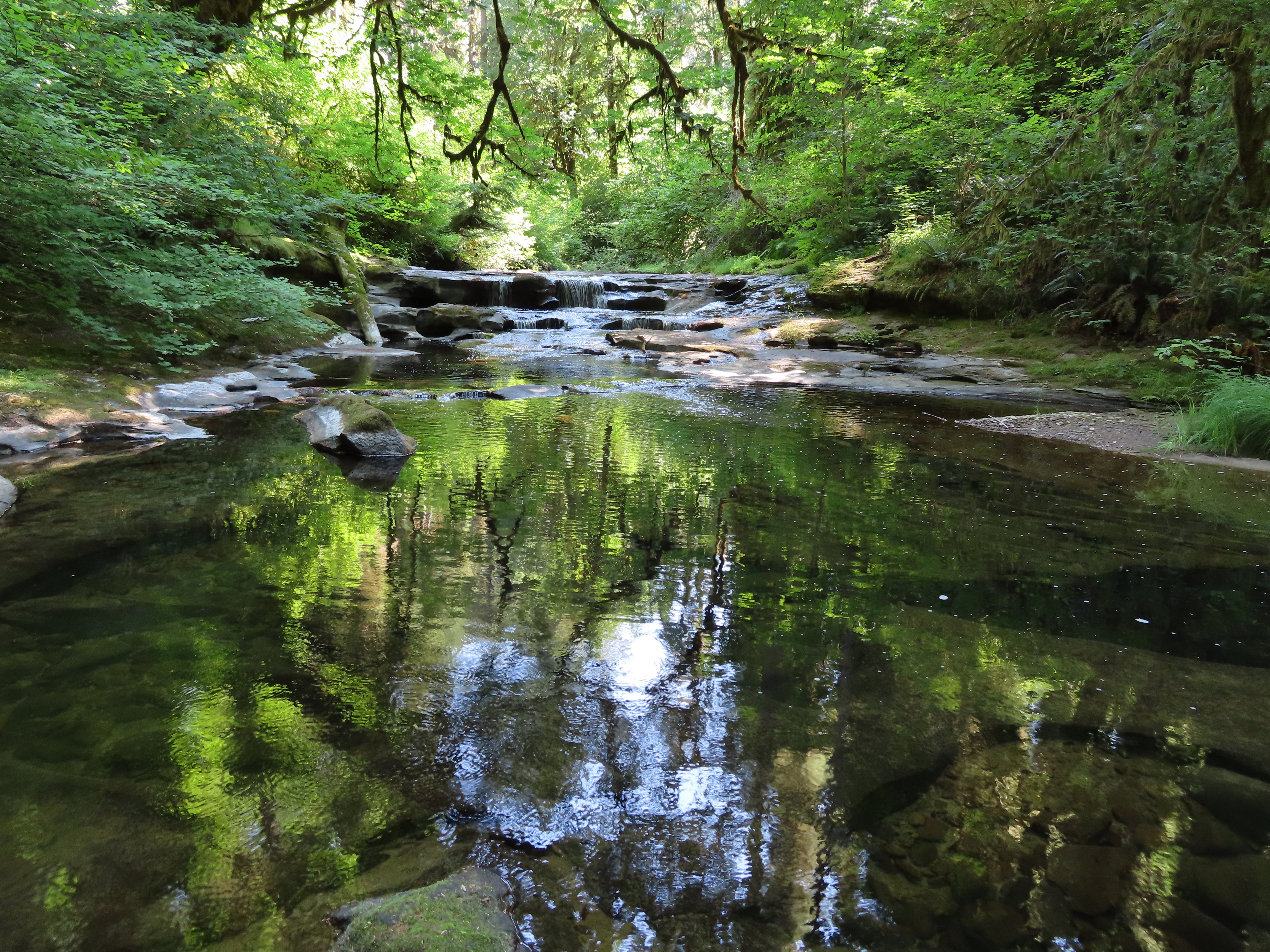


 A chickadee came to check on me as I was catching my breath under a rhododendron.
 Thimbleberries
 Salmonberries
 Swallowtail on a blackberry blossom.


 One of two phantom orchids we saw along the trail.
 Newish looking wilderness sign.
 Maples overhanging the trail.
 Madrone trunks
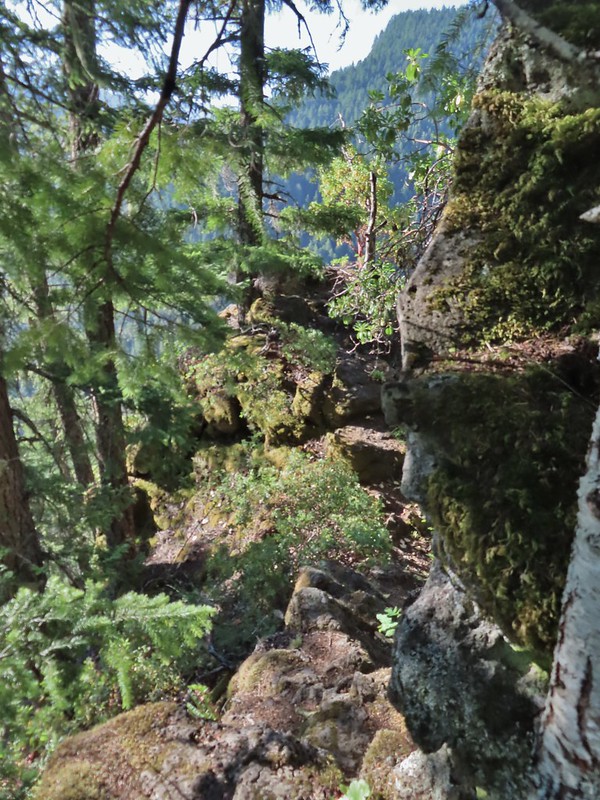 It’s a pretty narrow scramble so probably not for kids or those uncomfortable with heights.
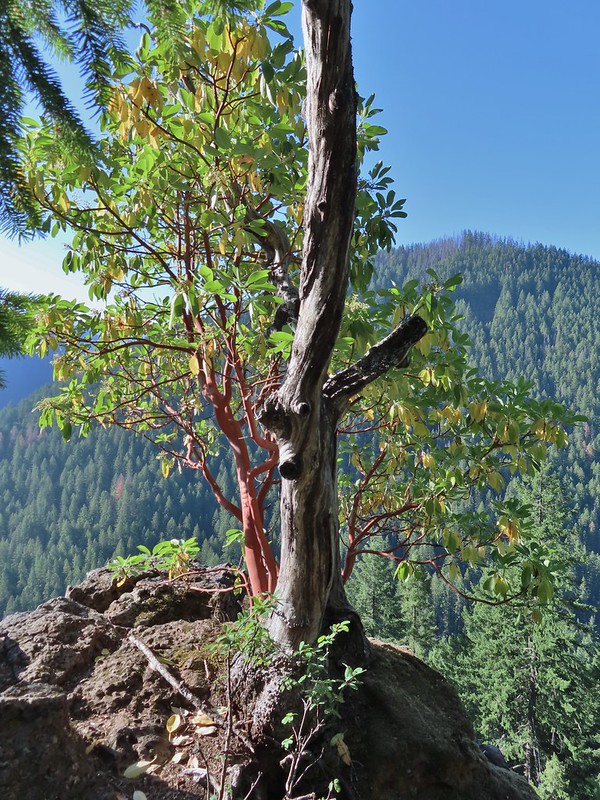 A lone madrone at the end of the fin.
 Looking toward the falls. (The North Sister is back there too but not visible due to the lighting.)
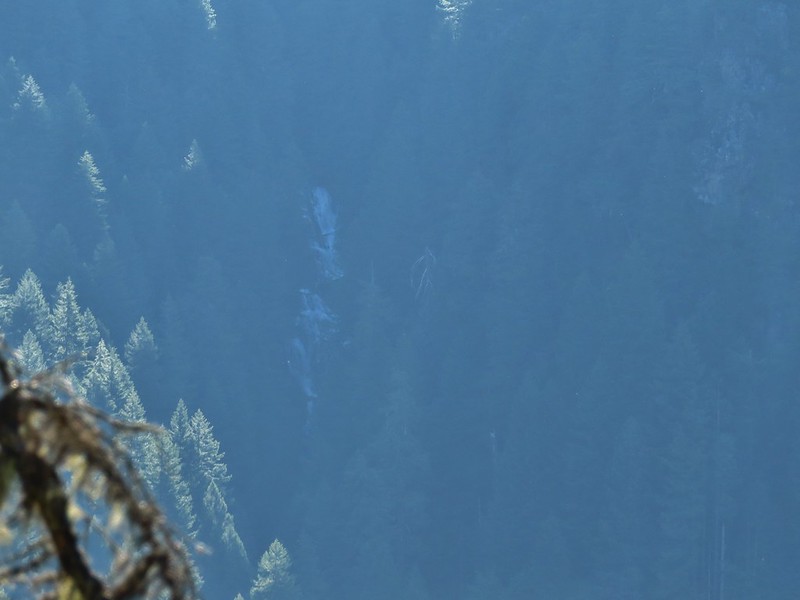 Rainbow Falls on Rainbow Creek
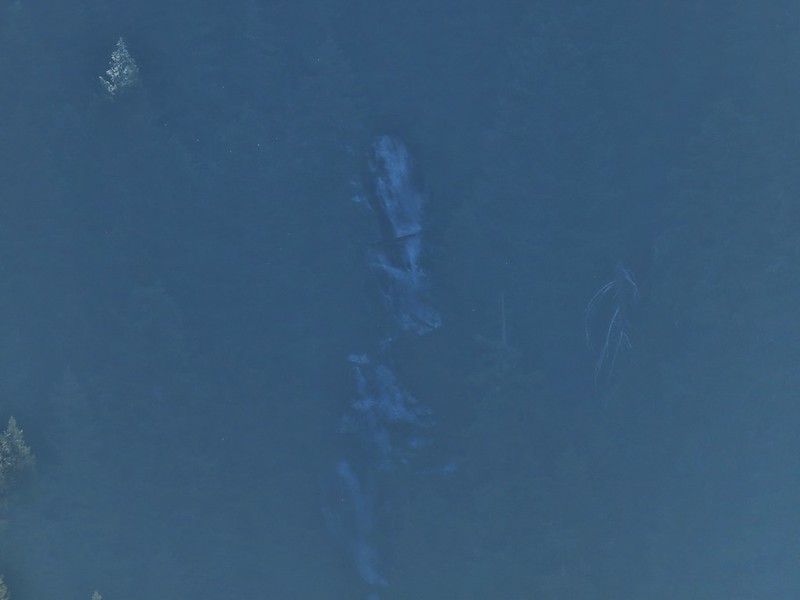 The best I could do with the lighting.
 Looking up Separation Creek.
 Looking back up along the rocks.

 Pink pyrola
 Crossing of Gold Creek which was nearly dry but it hosted a fair number of mosquitos.
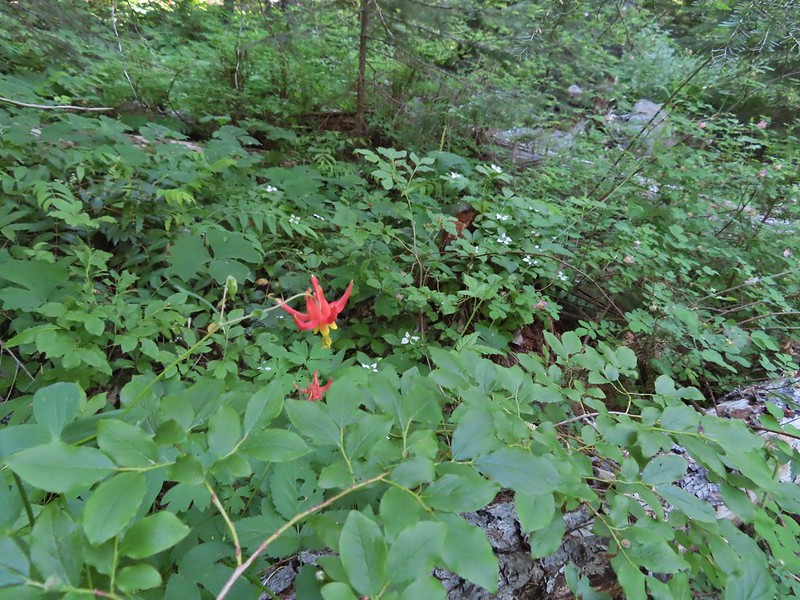 Columbine, bunchberry, and wild roses.
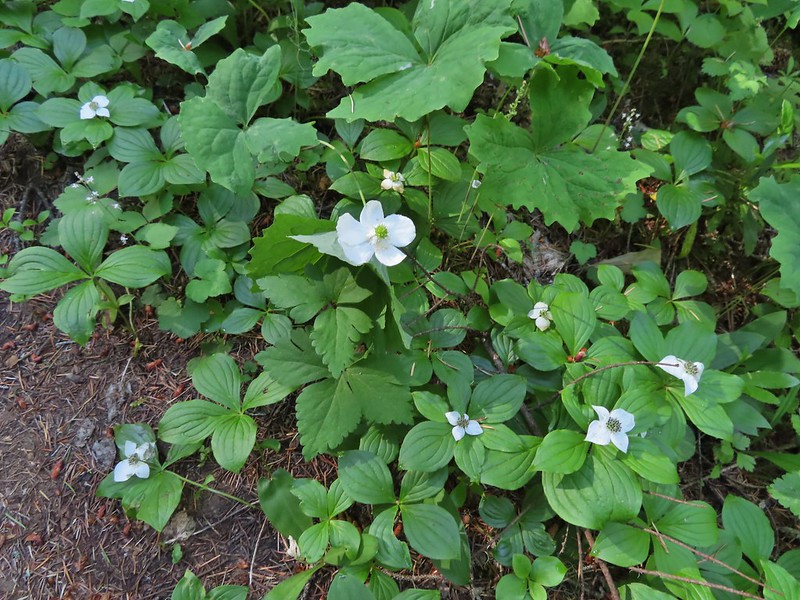 An anemone with some bunchberries
 Entering the Three Sisters Wilderness
 Queen’s cup
 Beargrass
 Candy sticks
 Rhododendron
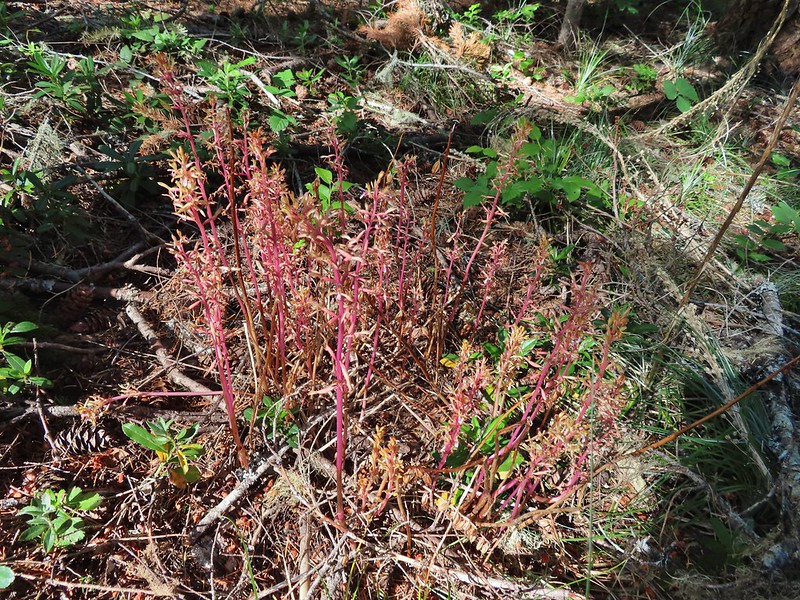 Pacific coralroot
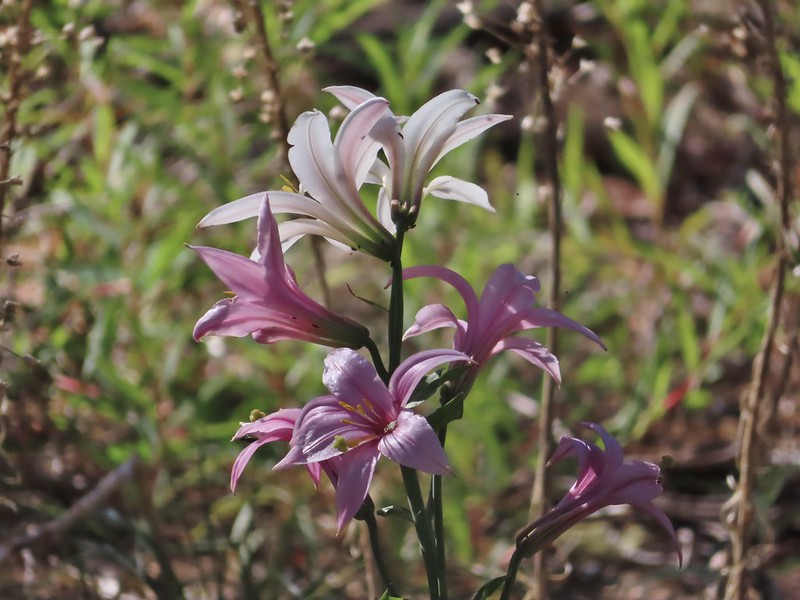 Washington lily
 Lupine
 Squirrel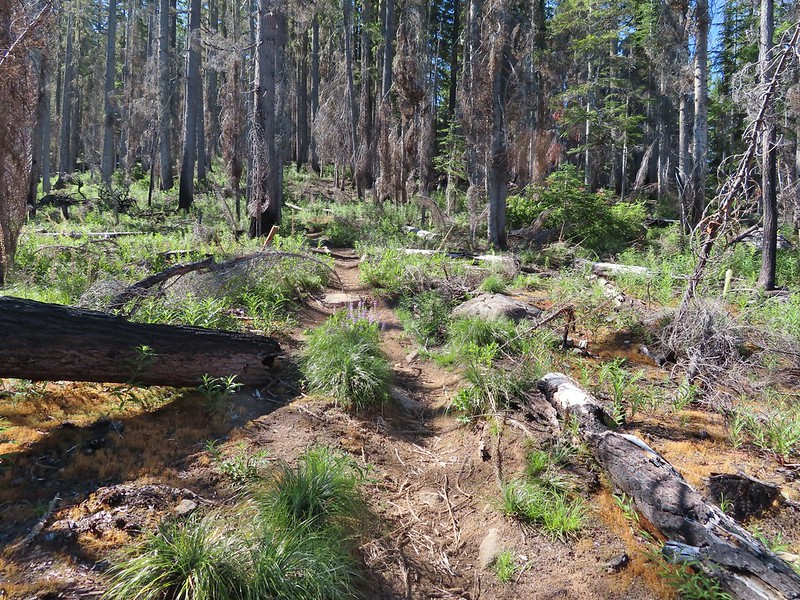
 Tiger lily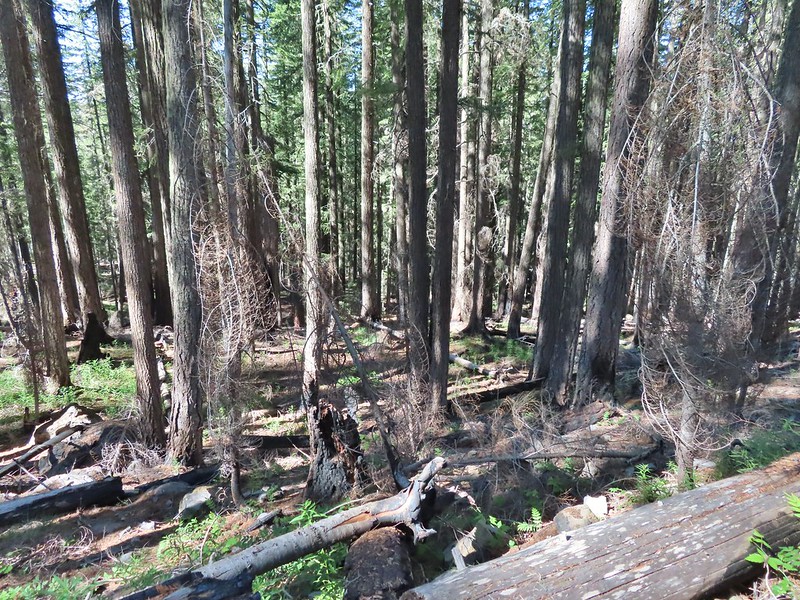
 Twinflower
 Leaving the green trees behind.
 Washington lilies
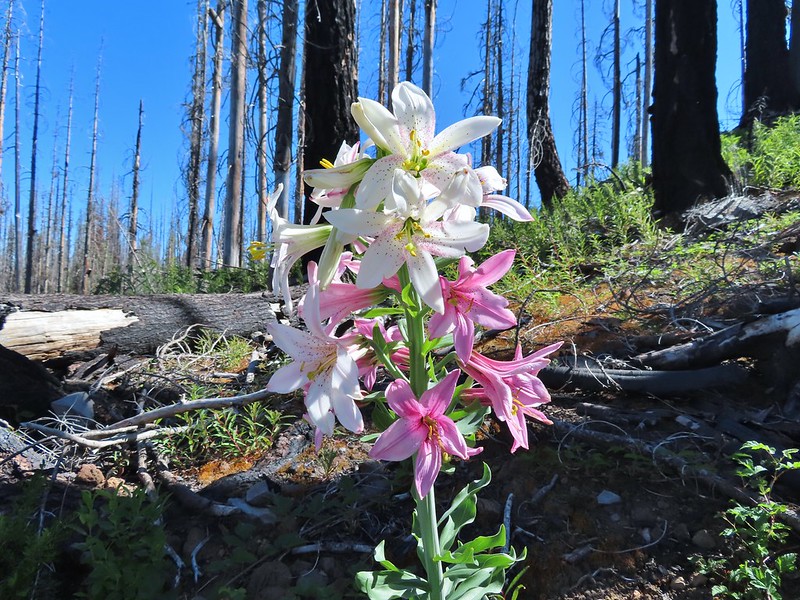 They smell as good as they look too!
 This one was a monster.
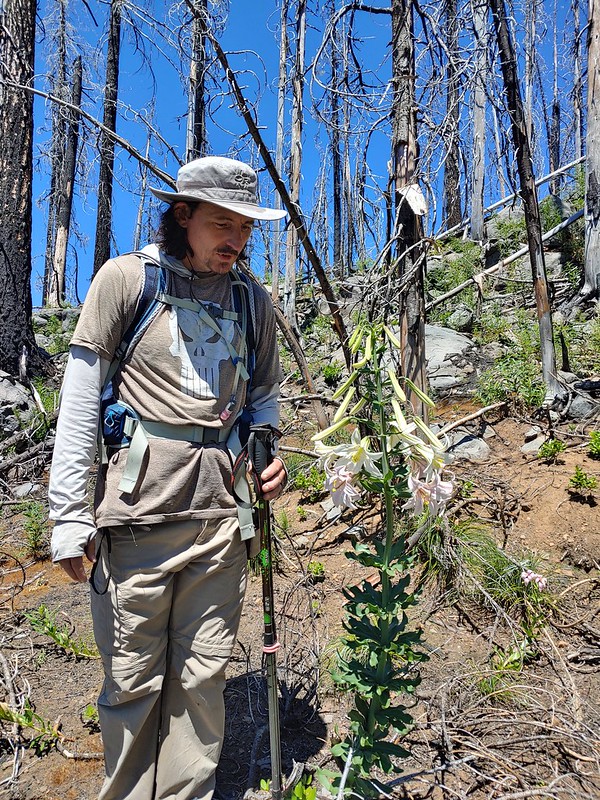 Chest high
 Crab spider on the lower left petal.
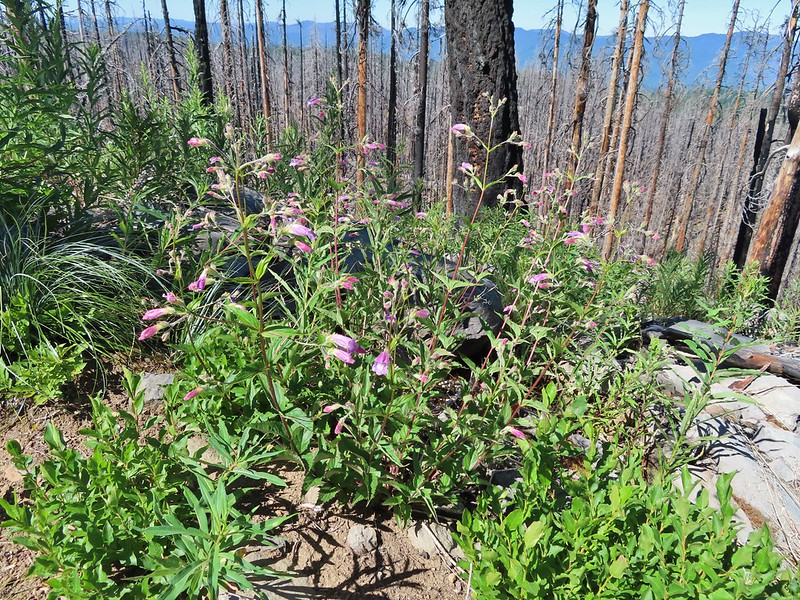 Penstemon
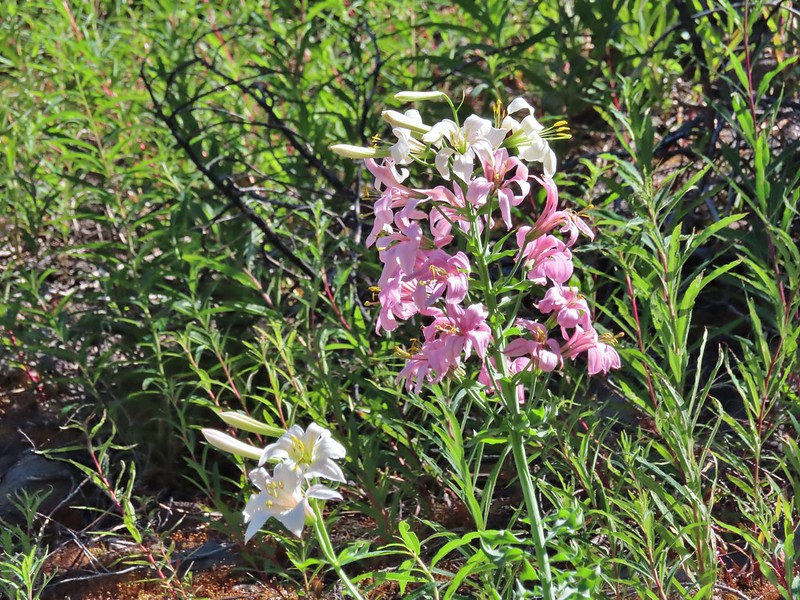 Earlier in the week I had been reading that the blossoms turn pink after being pollinated.
 Clodius parnassian
 Pretty moth
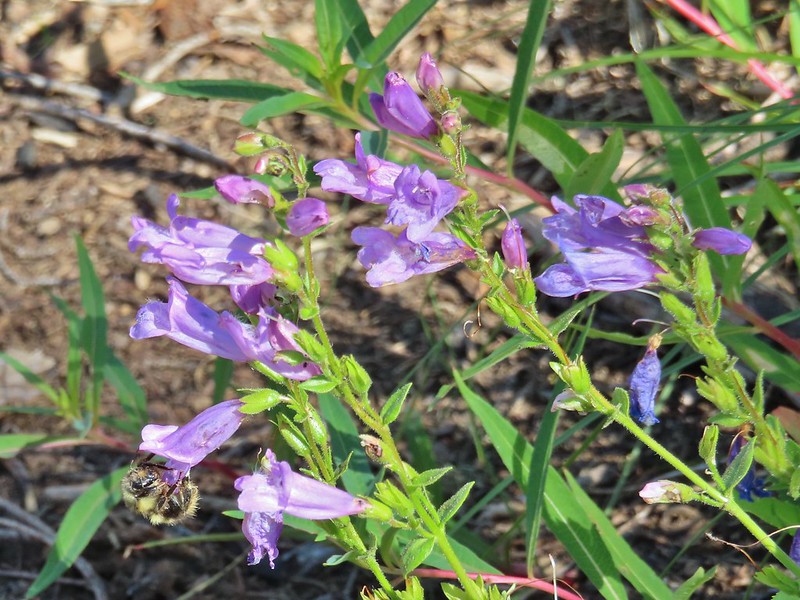 Penstemon
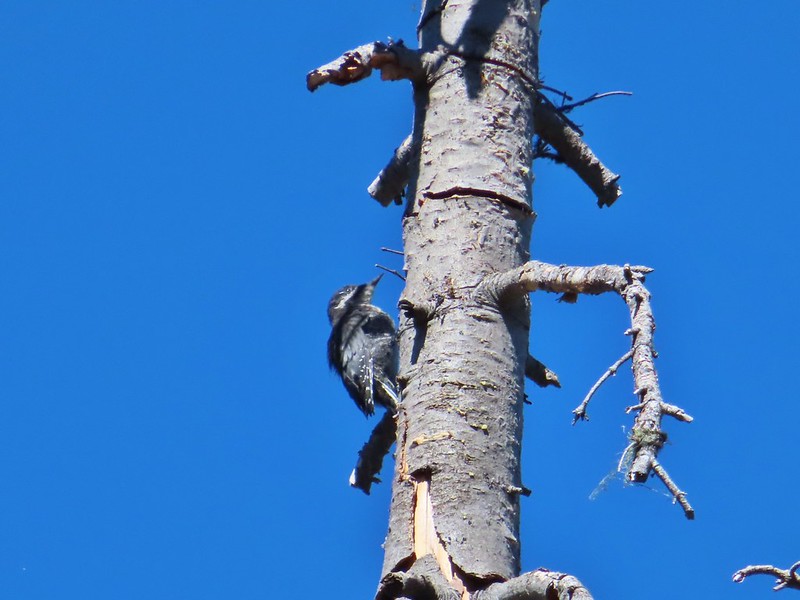 Woodpecker
 Pond along the trail.
 Water lilies
 Looking toward Proxy Point
 The Husband, South Sister, and the shoulder of Substitute Point.
 Frog along the trail.
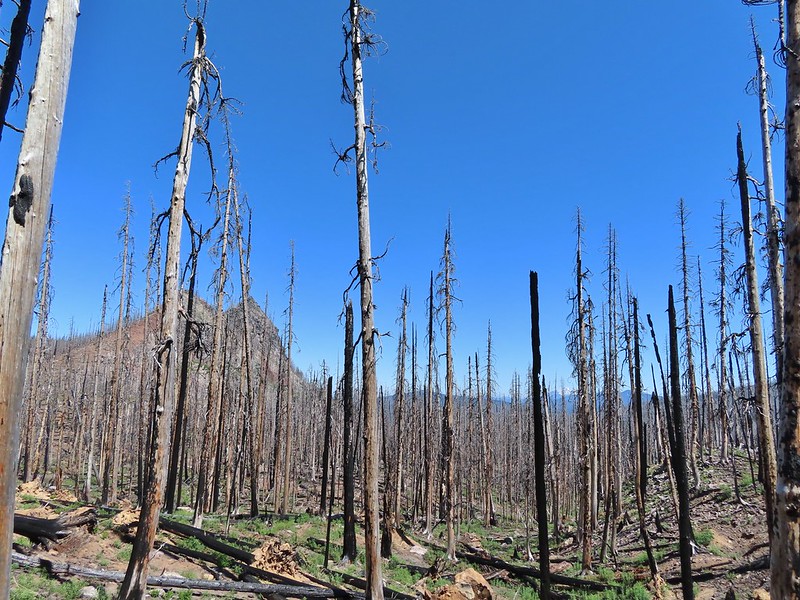 Proxy Point, Scott Mountain (
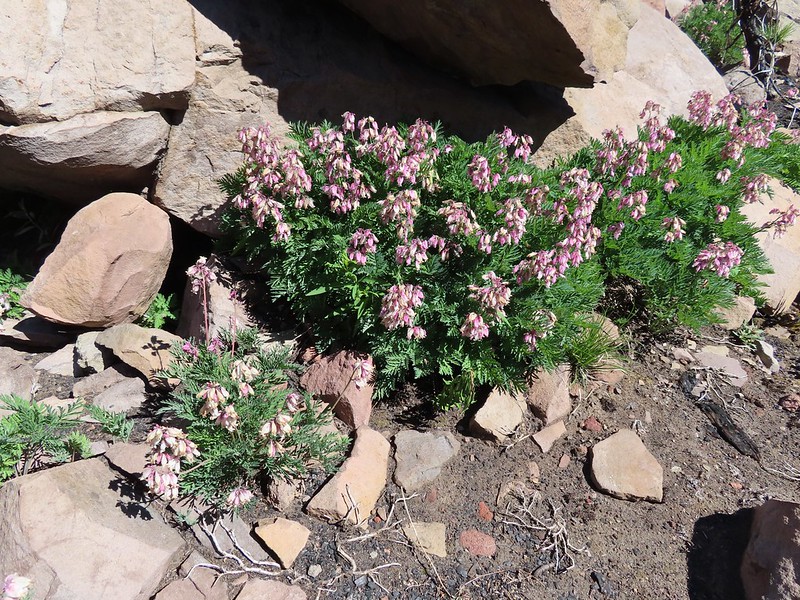 Bleeding heart
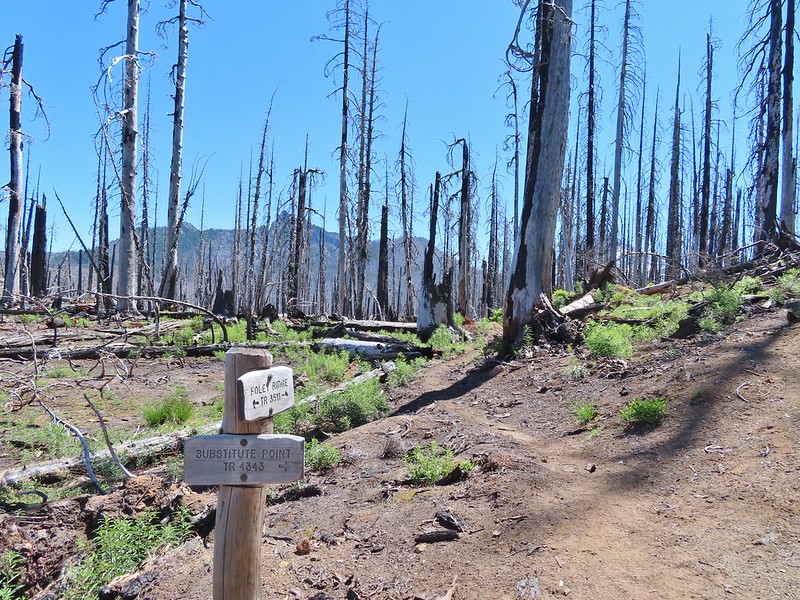 The Husband from the junction.
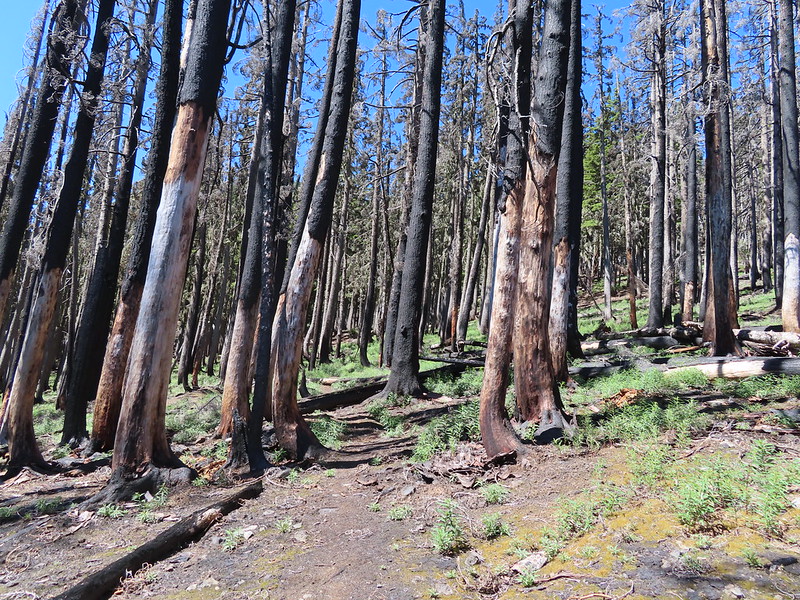
 This was sort of a mean trick, the trail entered these green trees then almost immediately switched back into the burn.
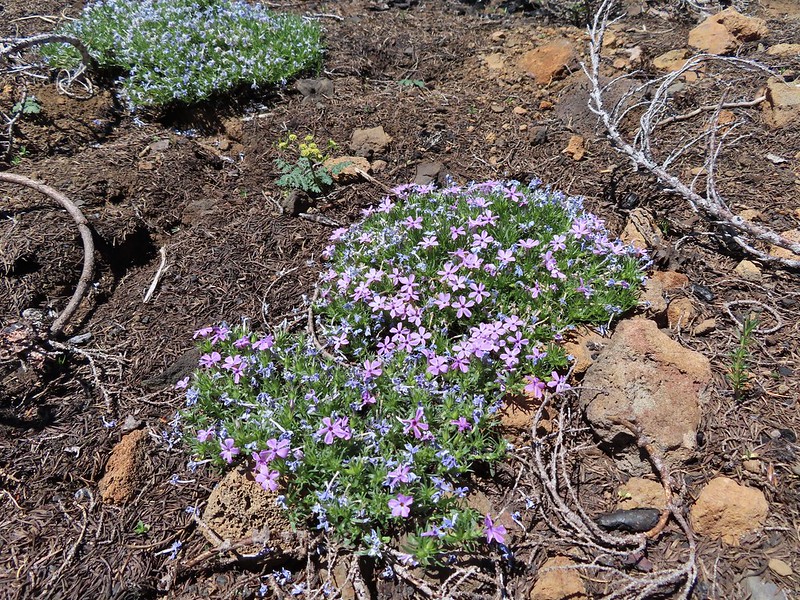 Phlox
Phlox
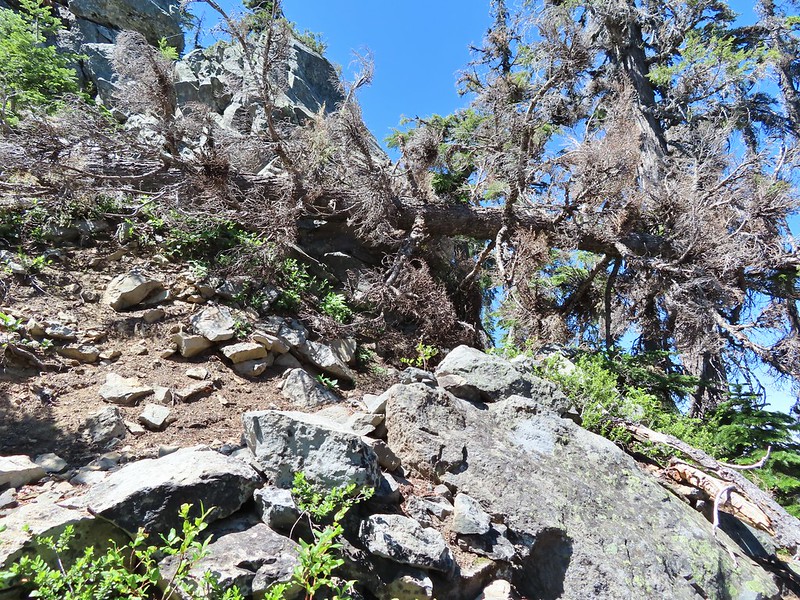
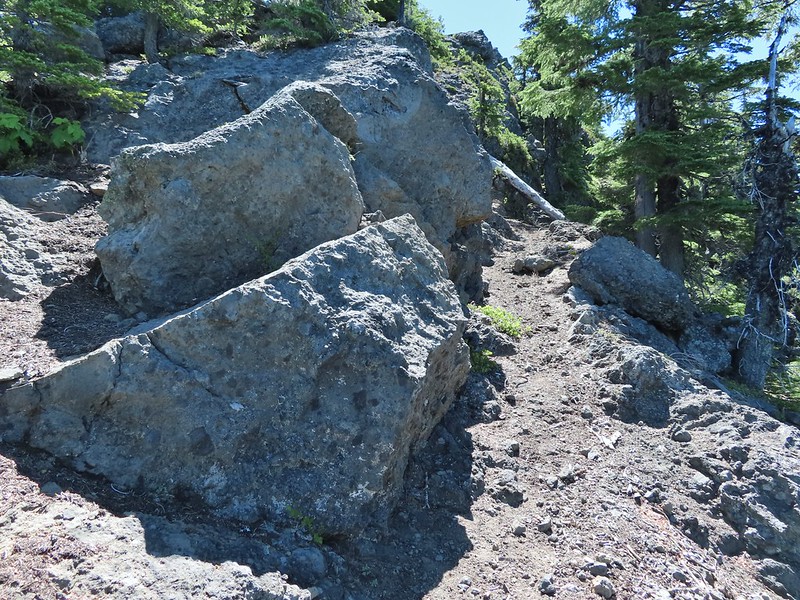
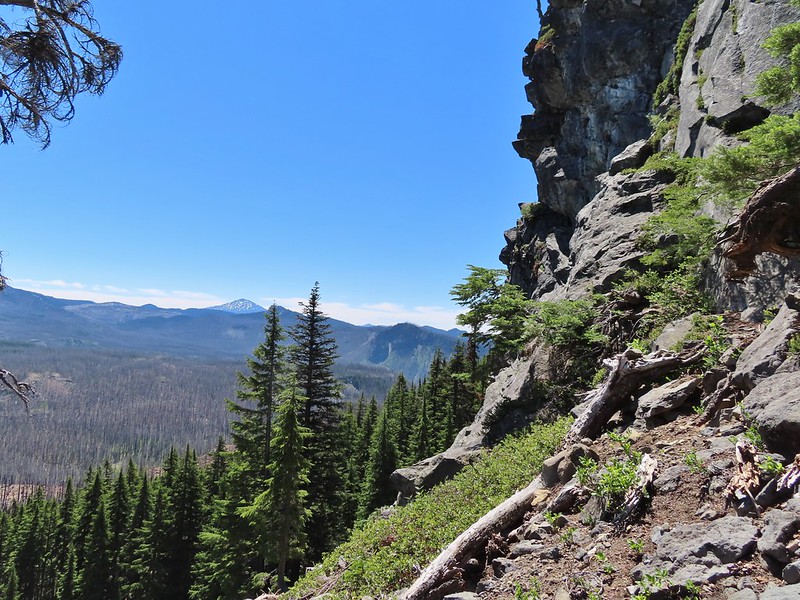 Mt. Bachelor from the trail.
 Proxy Point
 Some unburned forest and a view of Diamond Peak.
 Diamond Peak (
 The Little Brother and North & Middle Sister behind The Husband with South Sister to the right.
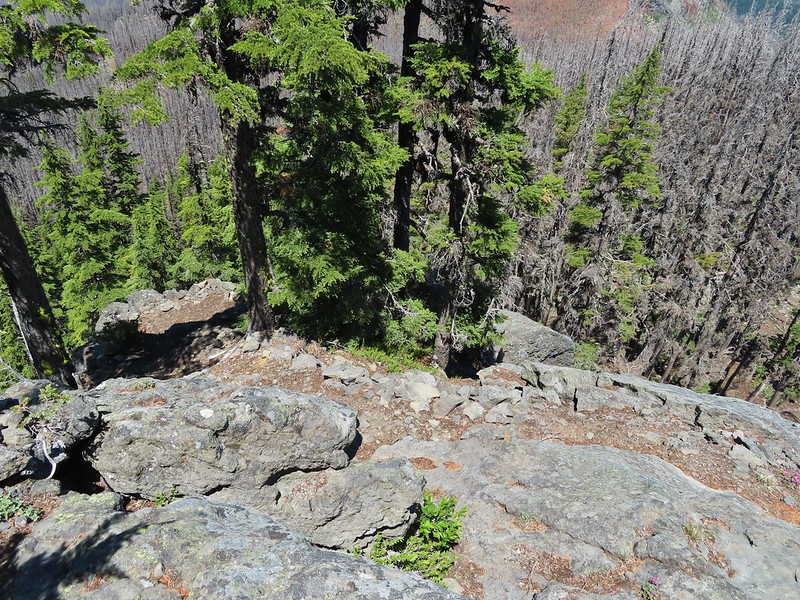 The trail leading up.
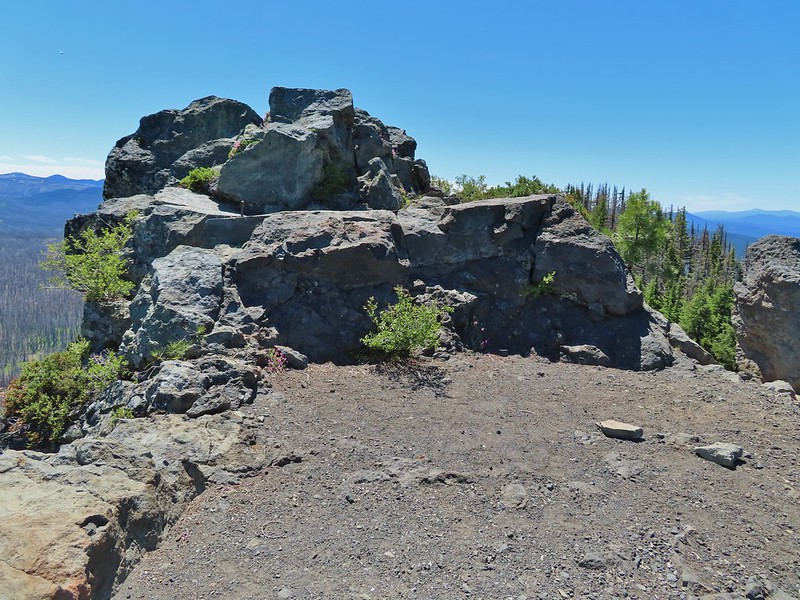 The summit of Substitute Point
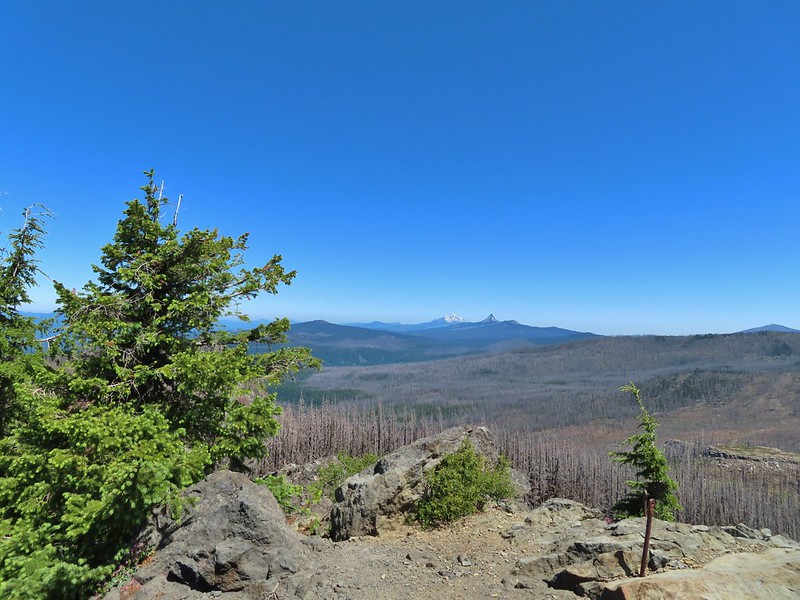 Scott Mountain, Three Fingered Jack, Mt. Jefferson, Mt. Washington, and Belknap Crater (
 Proxy Point and Scott Mountain.
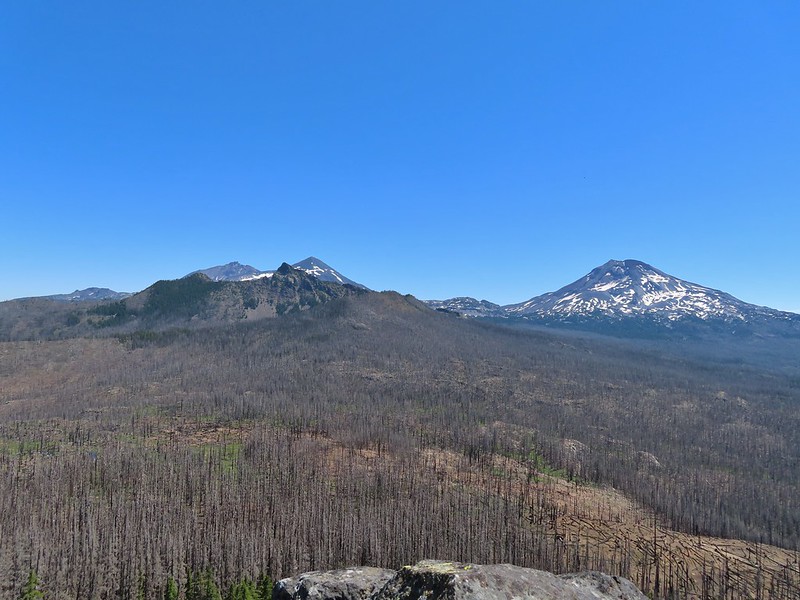 The Three Sisters, Little Brother and The Husband
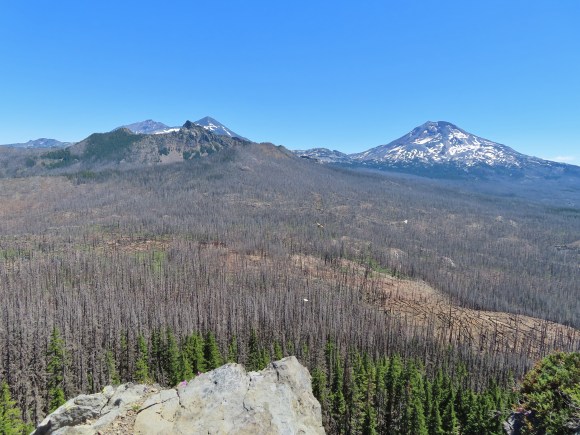
 Mt. Bachelor, The Wife, and Sphinx Butte.
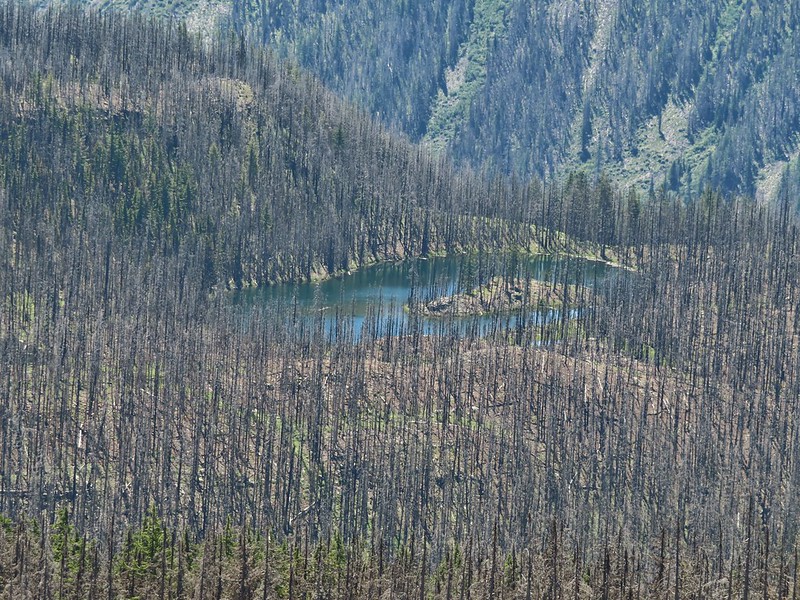 Kidney Lake
 Mt. Bachelor and The Wife
 North and Middle Sister behind The Husband
 Three Fingered Jack, Mt. Jefferson and Mt. Washington
 A swallowtail and two whites (maybe clodius parnassians) in flight.
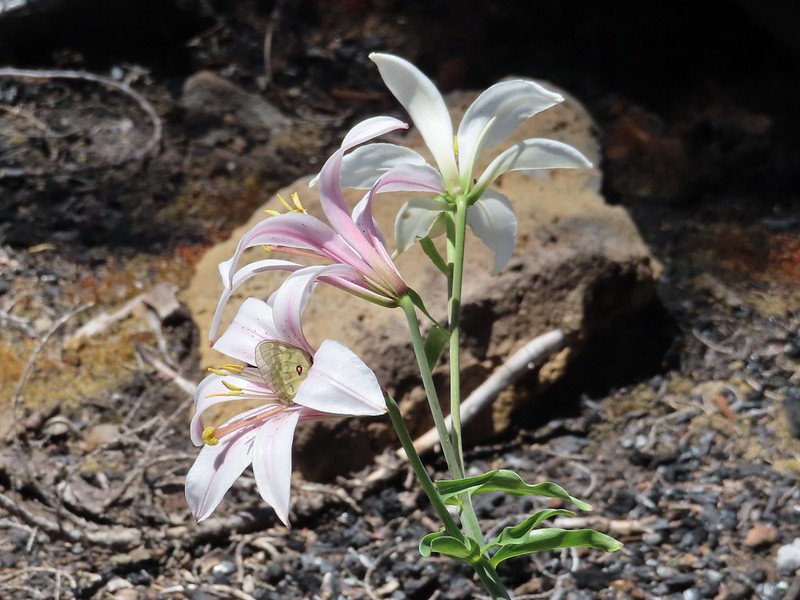 Clodius parnassian in a blossom.
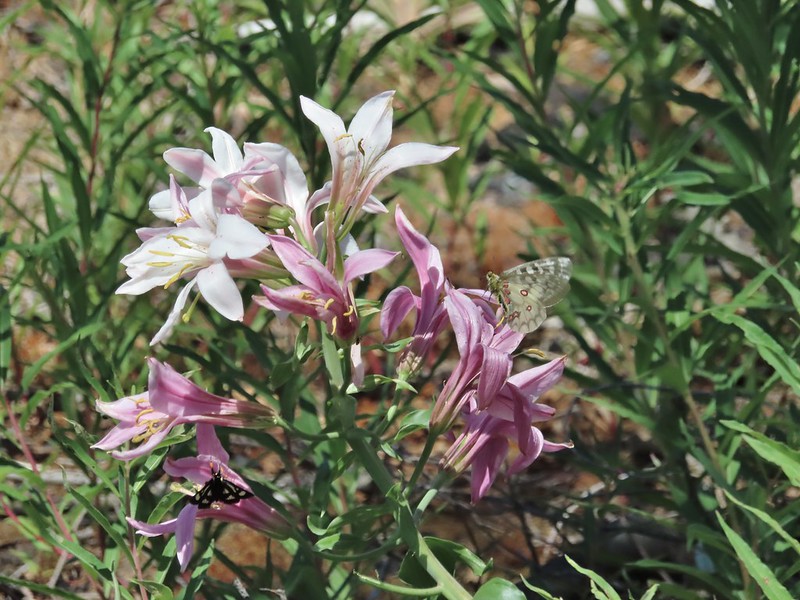 Moth and a parnassian.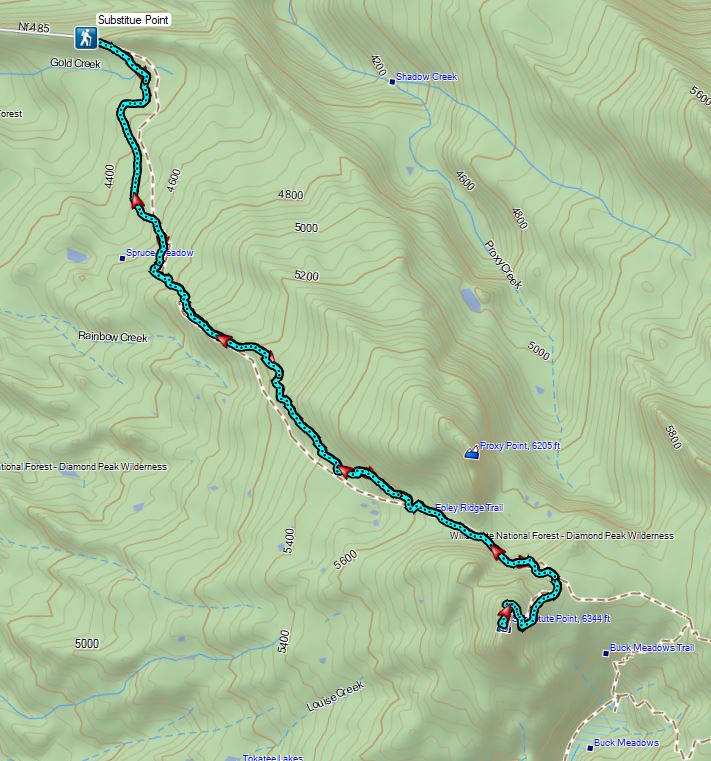


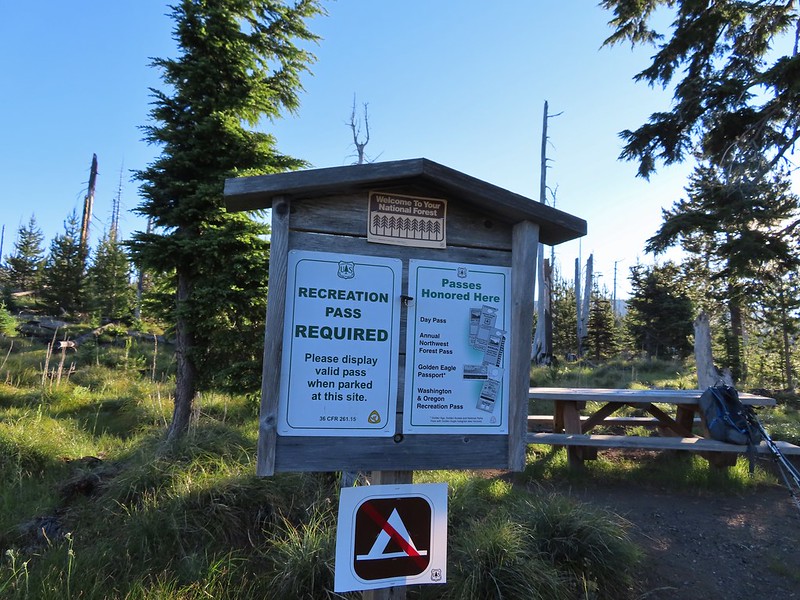
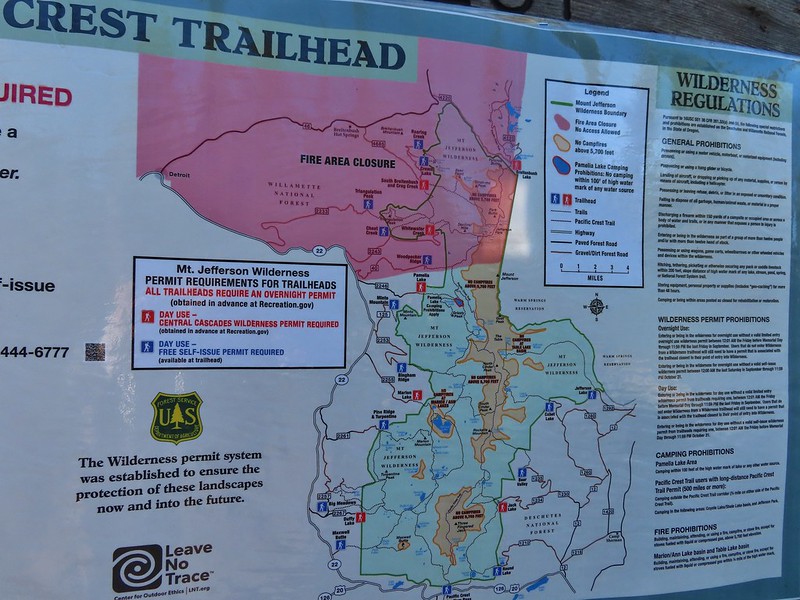
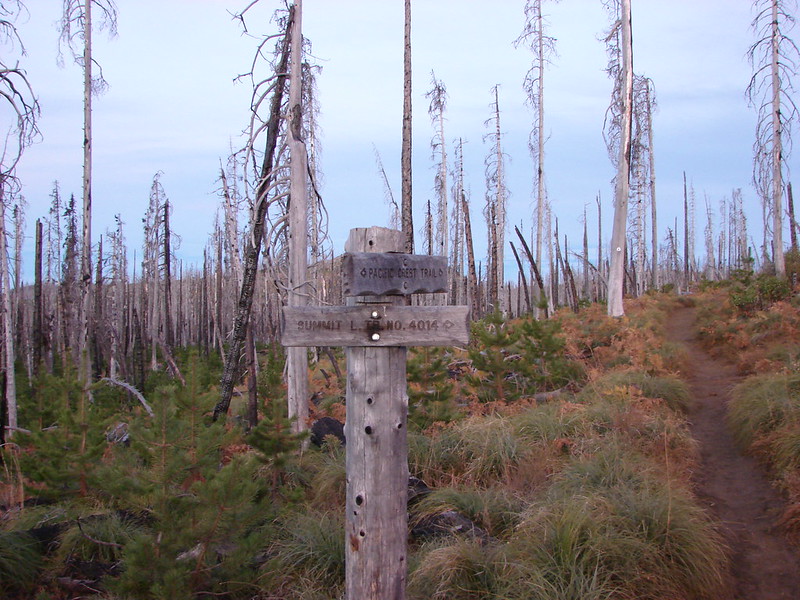 Trail sign at the junction on 10/13/2012.
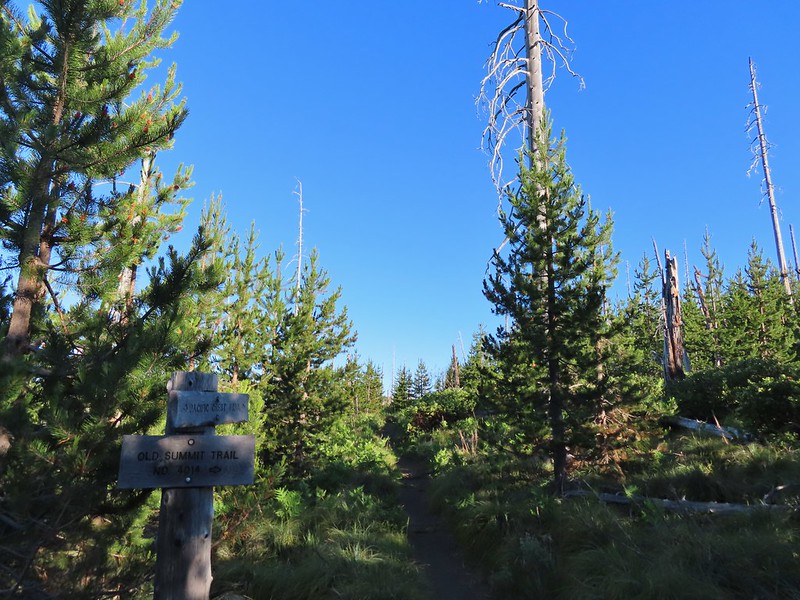 Trail sign at the junction on 07/03/2021.
 Entering the Mt. Jefferson Wilderness in 2012 (0.3 miles from the TH).
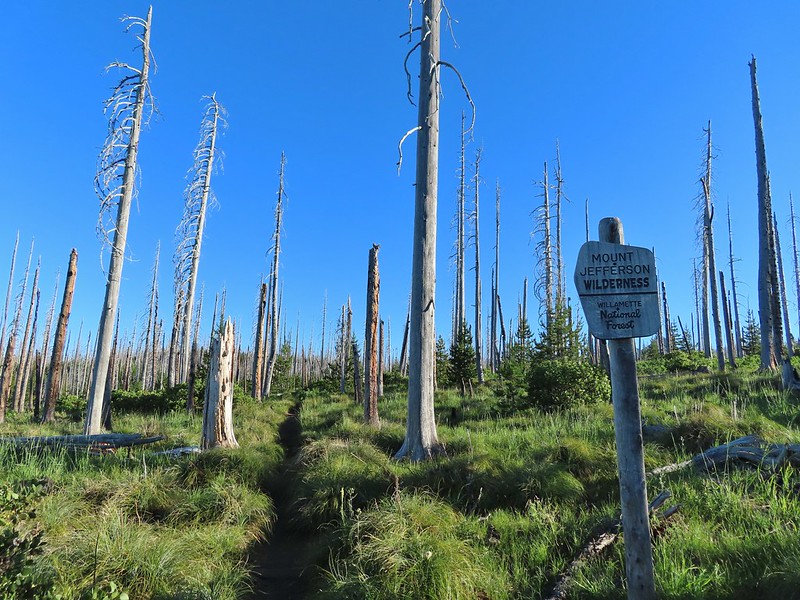 Entering the wilderness in 2021.
 Cache Mountain, Black Crater (post), Tam McArthur Rim & Broken Top (post), North & Middle Sister, Mt. Washington, and Hayrick Butte (flat top on the right).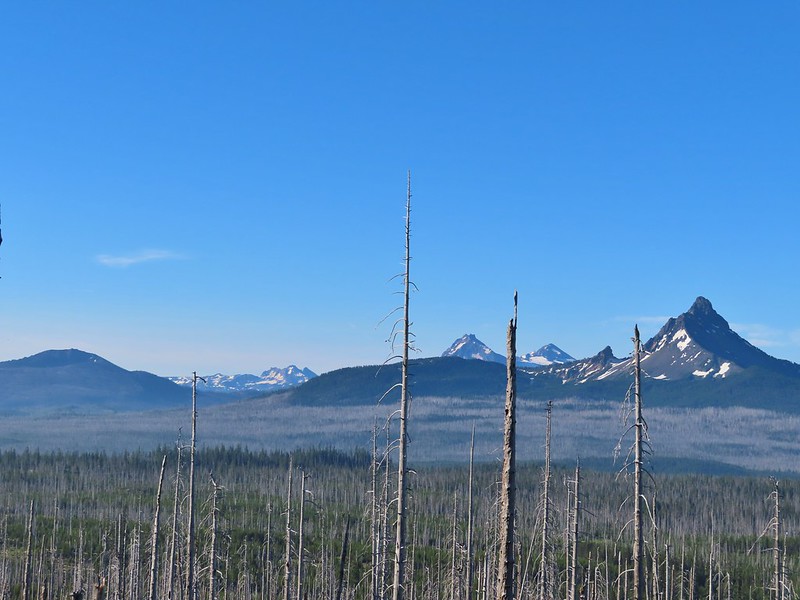

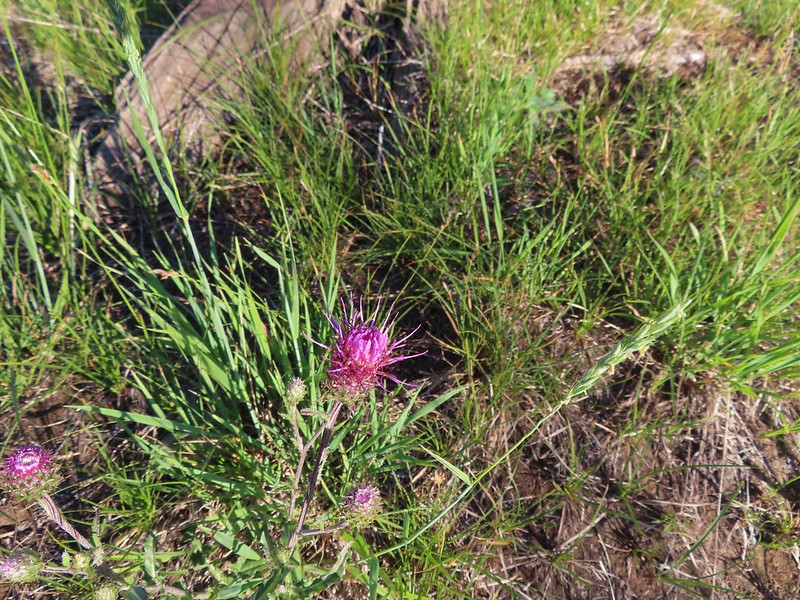 A thistle
 Penstemon
 Bleeding heart
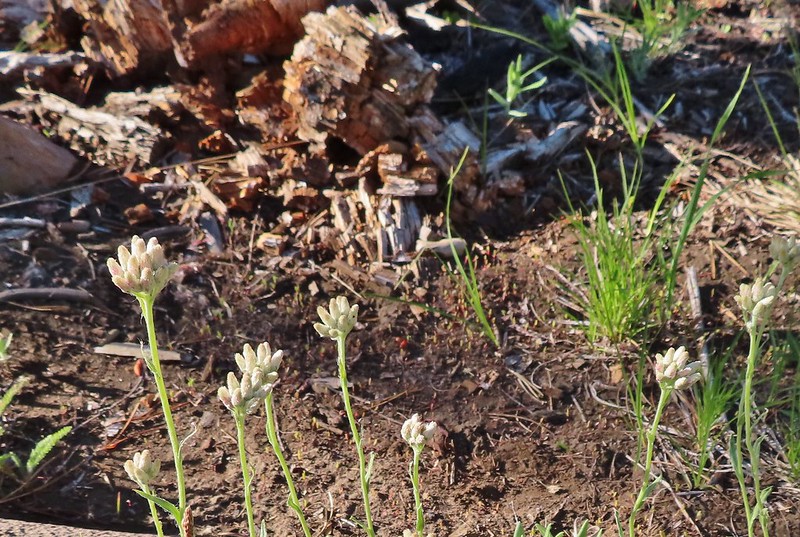 Pussytoes
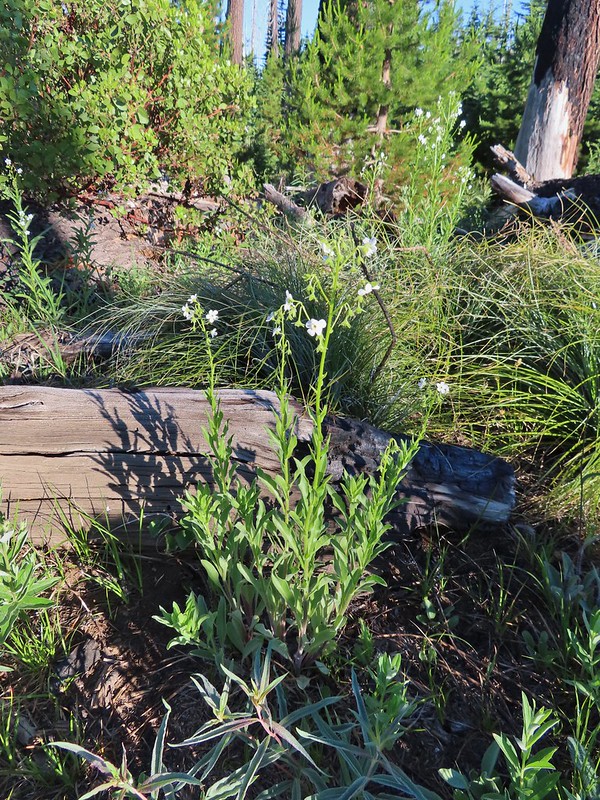 California stickseed
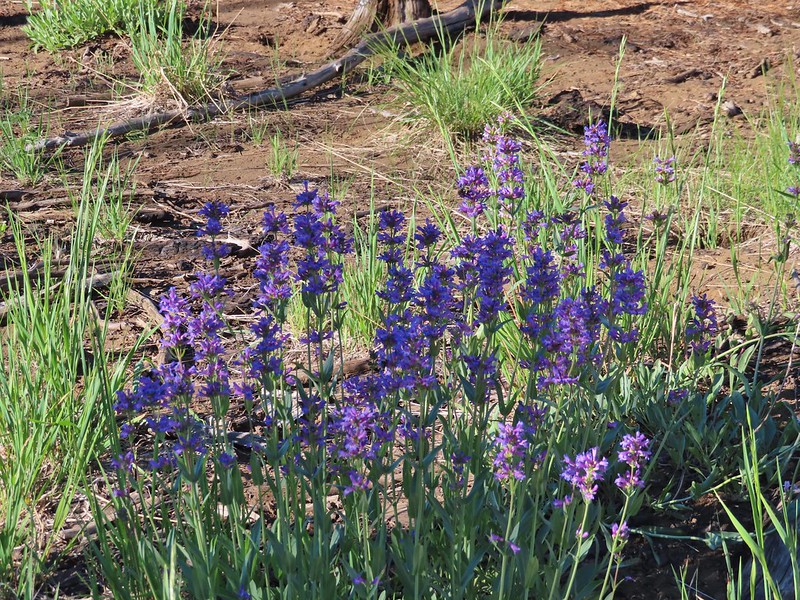 Another penstemon
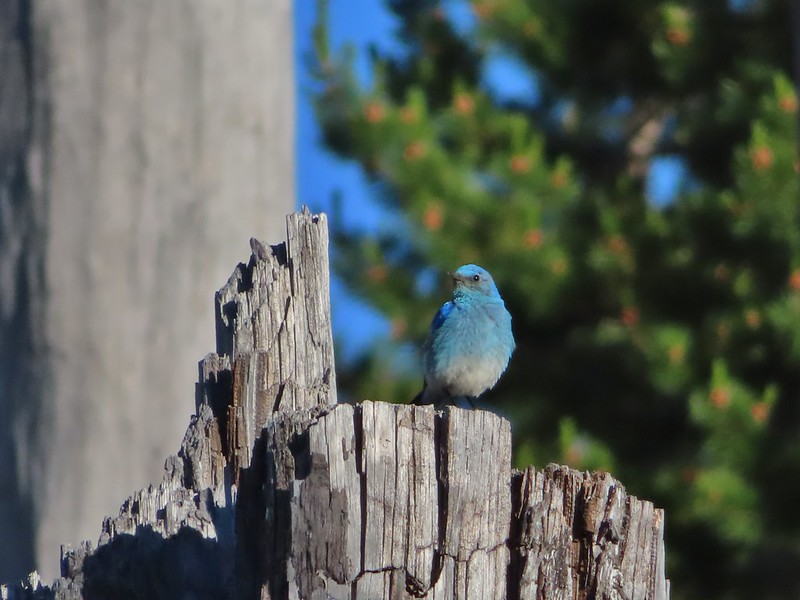 Mountain bluebird by the lake.

 There was a good amount of scarlet gilia blooming along this section of trail.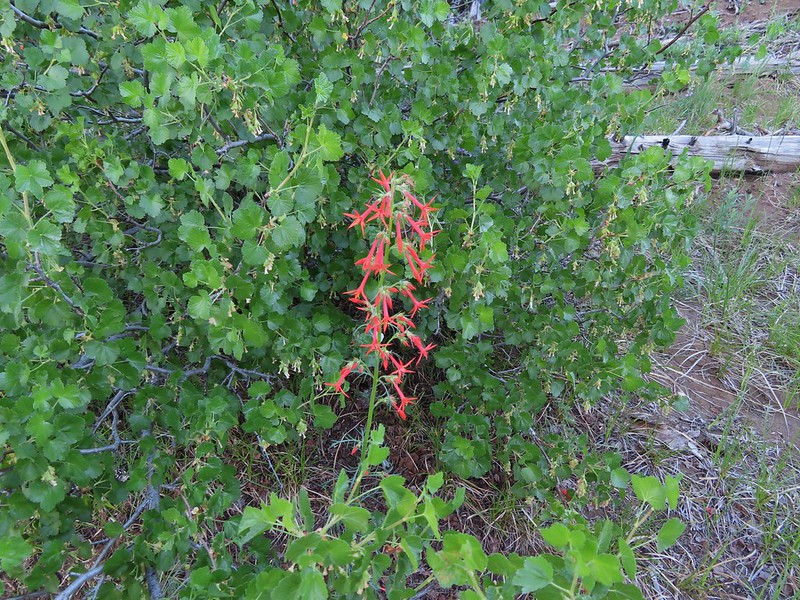
 Three Fingered Jack
 One of the ponds.
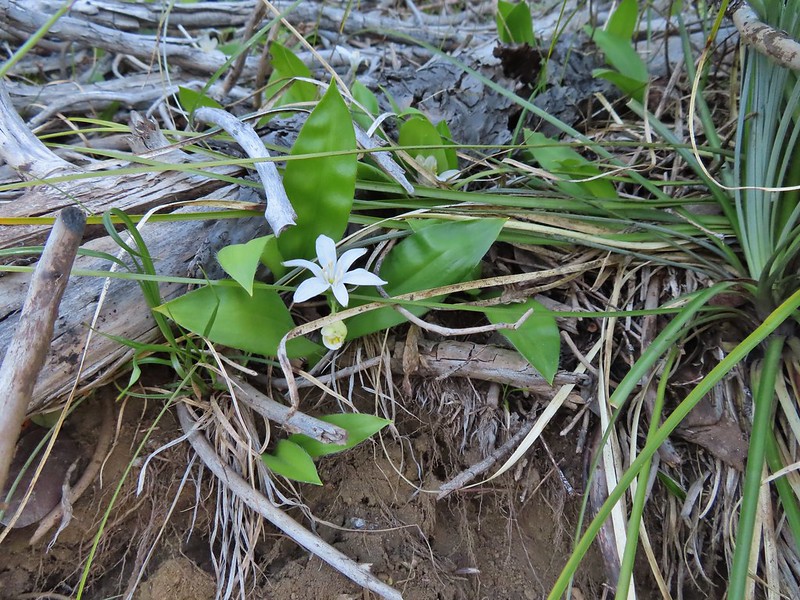 Queen’s cup
 Another pond with Maxwell Butte (
 Unnamed lake along the trail with Maxwell Butte behind.
 Lupine
 Dark-eyed junco
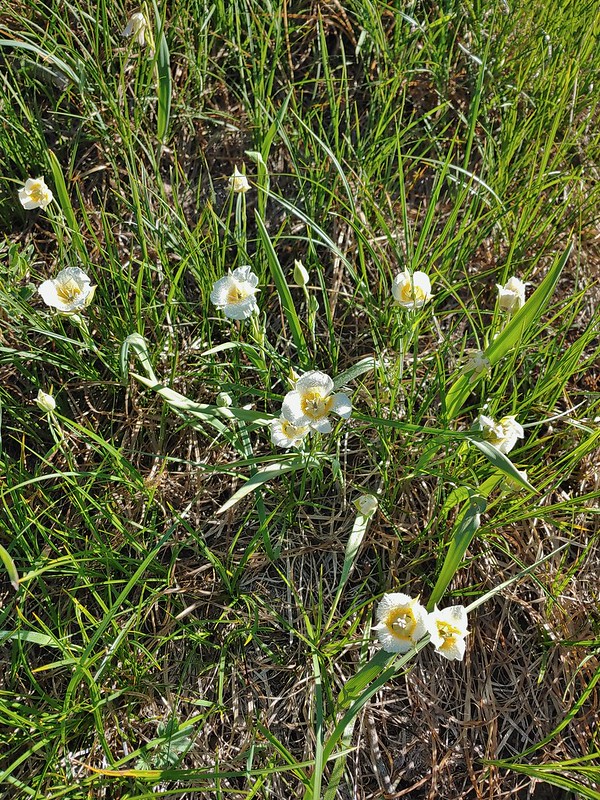 Sub-alpine mariposa lilies
 Woodpecker
 The view south.

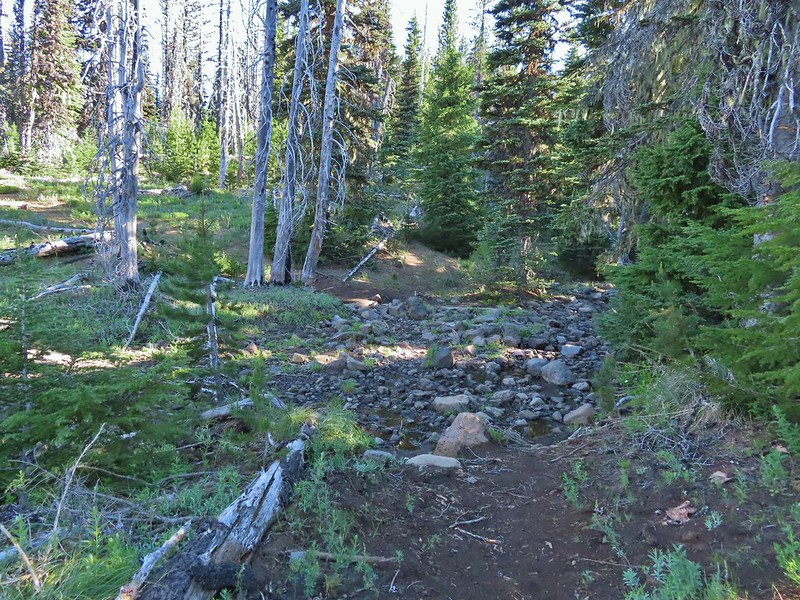
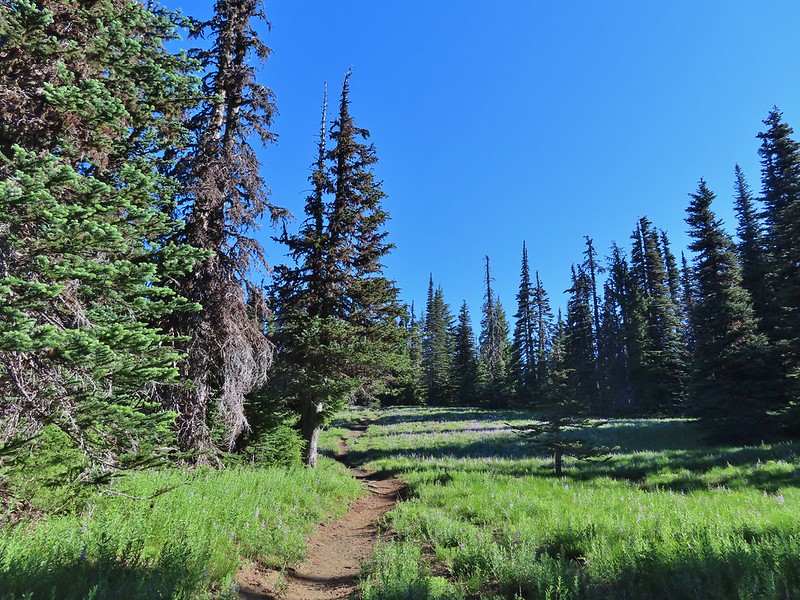


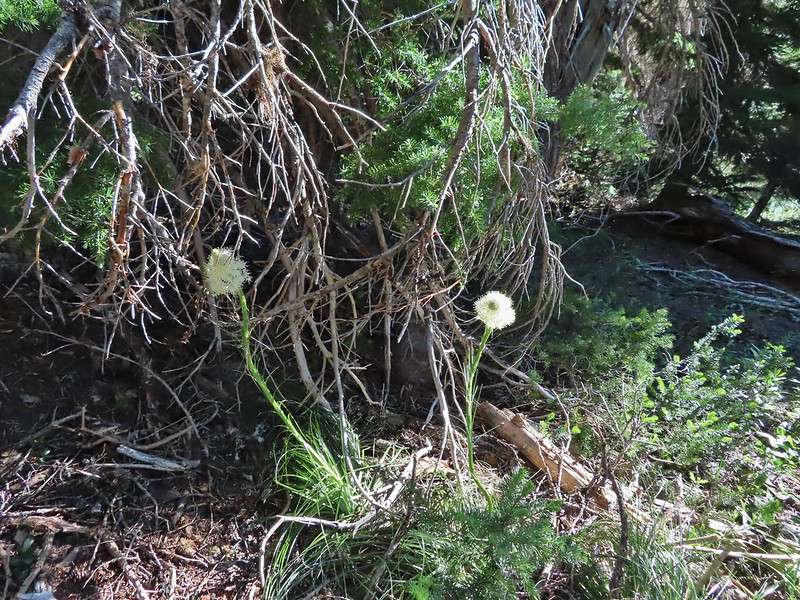 Beargrass
 Recent snow melt is another recipe for mosquitos.
 Another creek crossing.
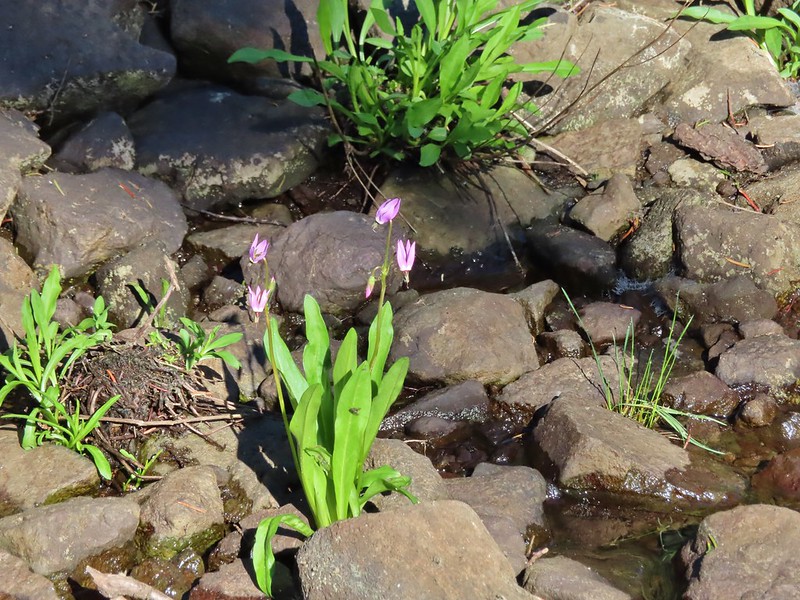 Shooting star
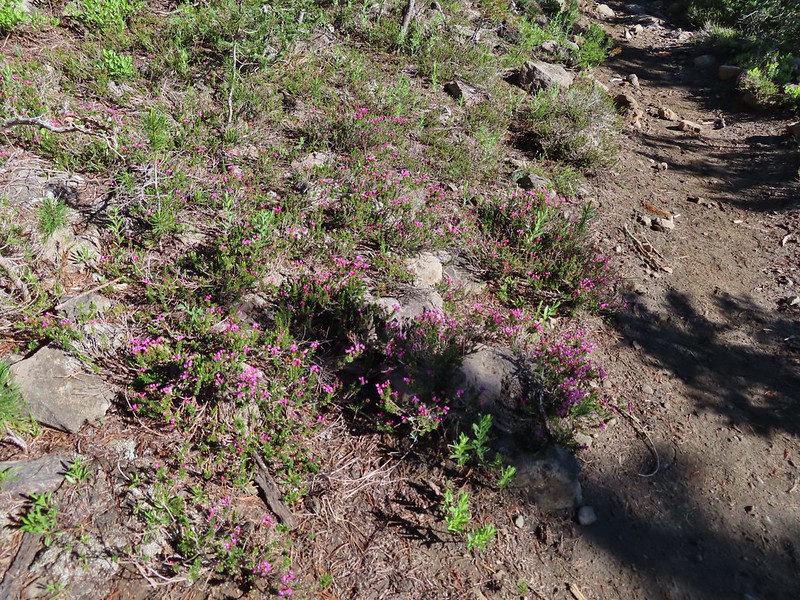 Mountain heather. Typically if we see this blooming we expect there to be mosquitos.
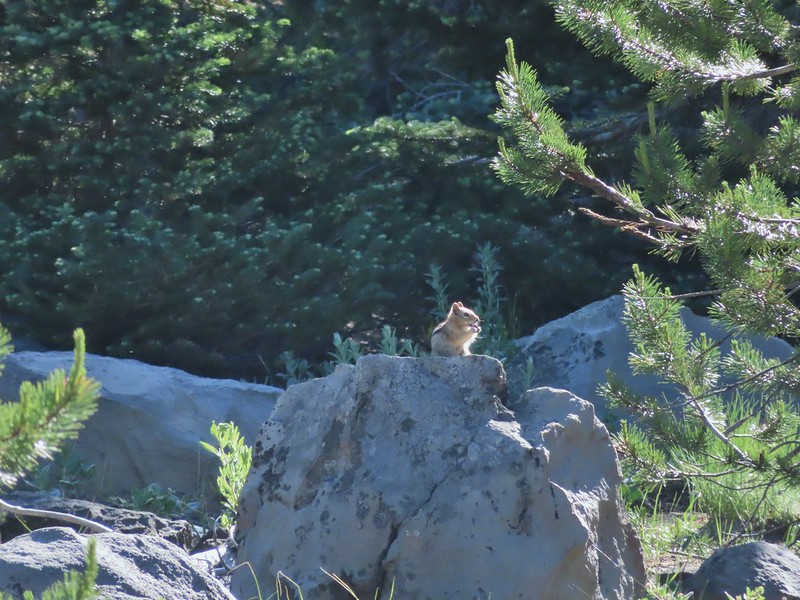
 A sulphur
 Alpine false dandelion
 One of several snow patches at the tree line.
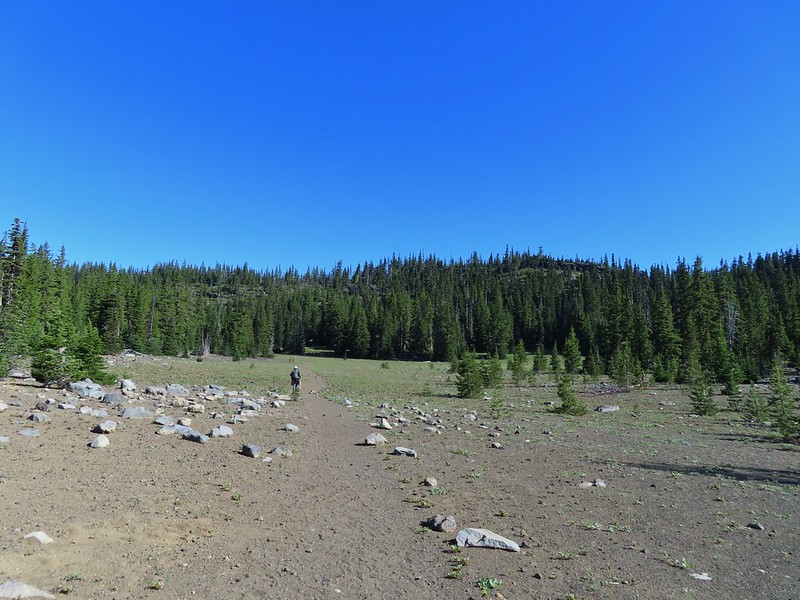 Nearing the end of the opening.
 More snow in the trees.
 A checkerspot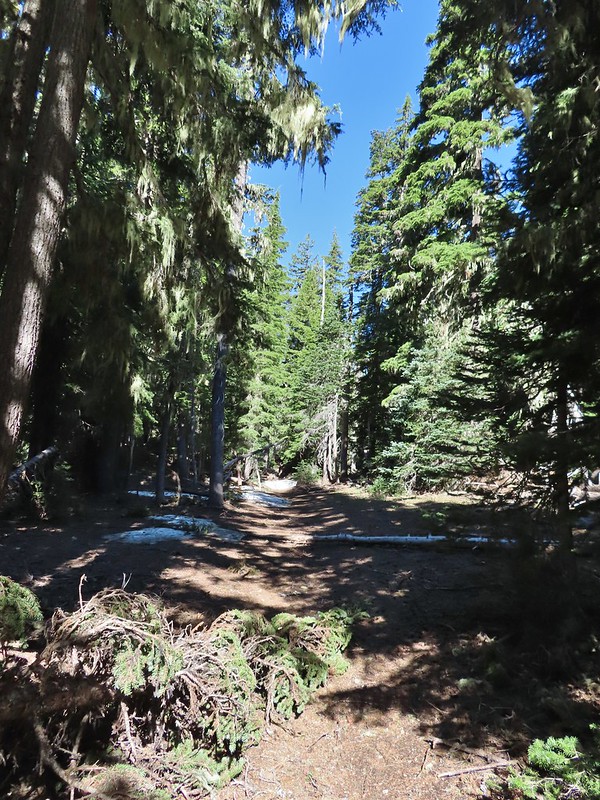
 Trees & melting snow = more mosquitos.
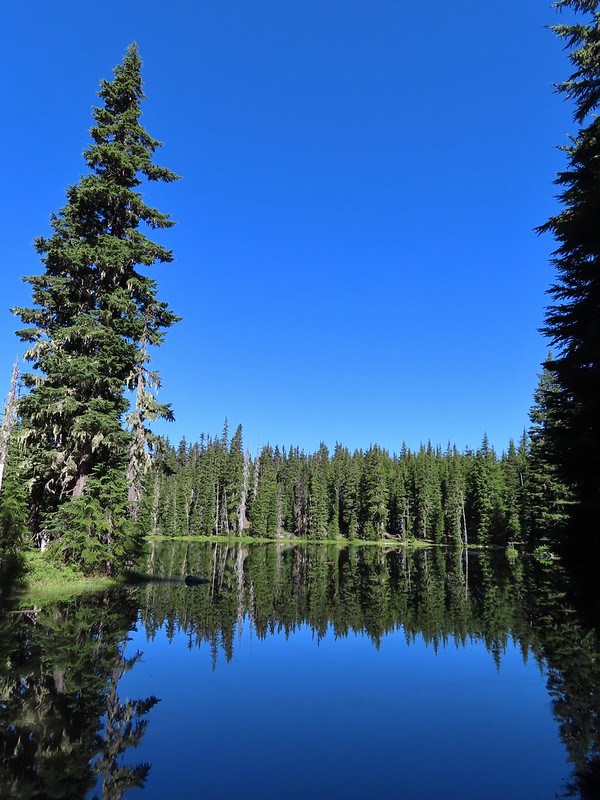 Not Santiam Lake but a very pretty unnamed lake just to the left of the trail approximately 0.4 miles from Santiam Lake.
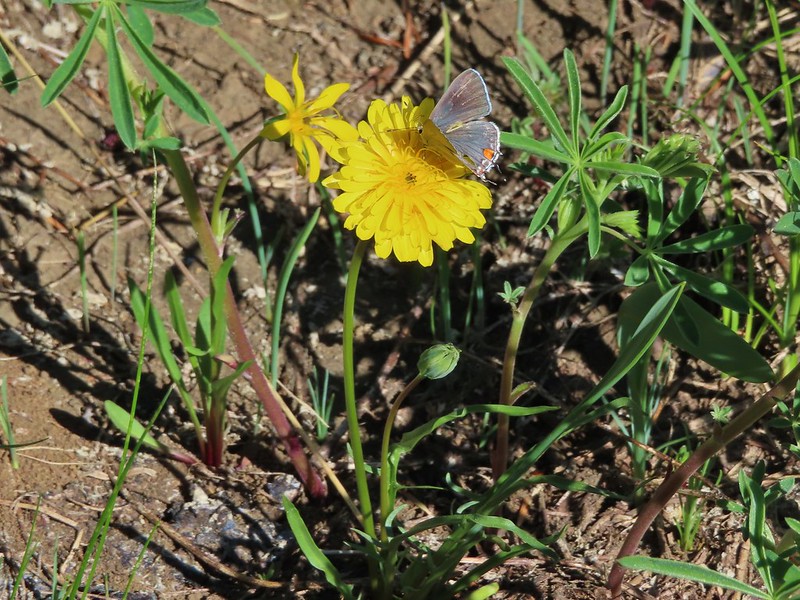 Not sure what type this is but the orange on the wing was pretty.
 Mt. Jefferson behind Red Butte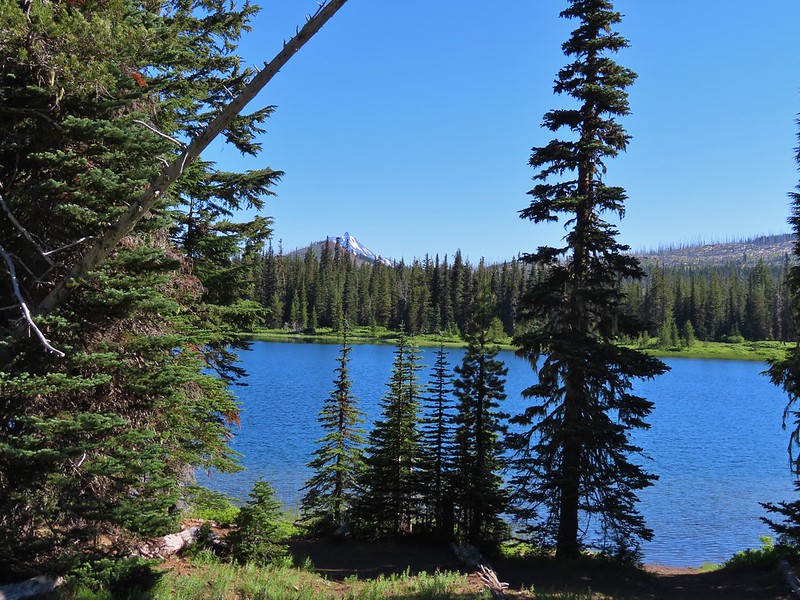
 Duffy Butte on the left.
 Three Fingered Jack
 Paintbrush, shooting stars, and buttercups.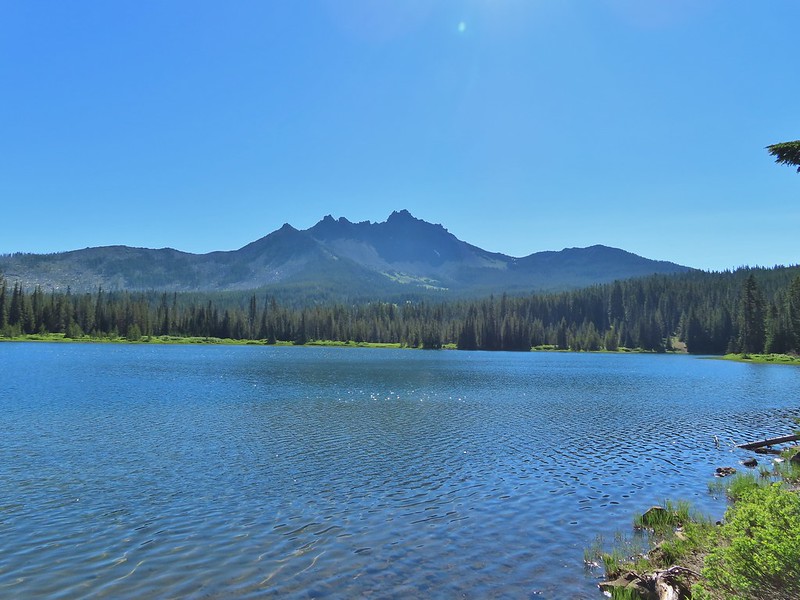
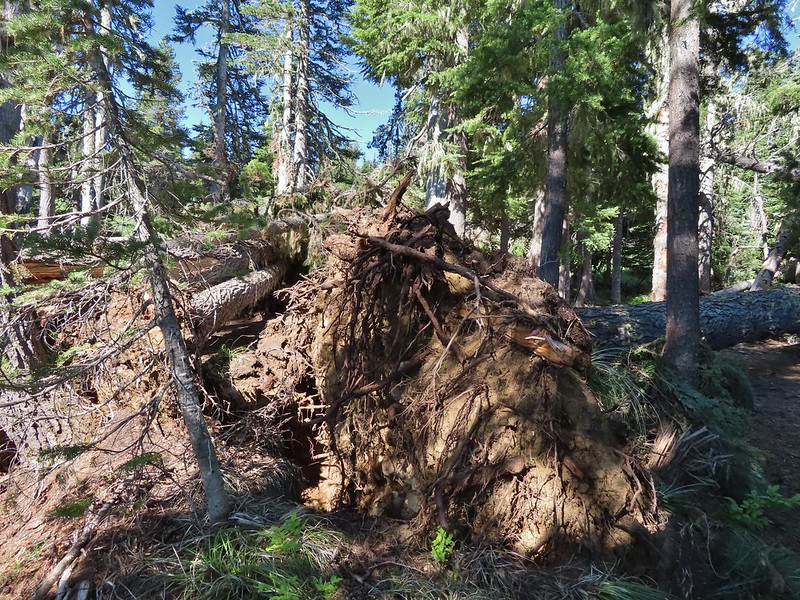 Just one of several large uprooted trees along the shore.
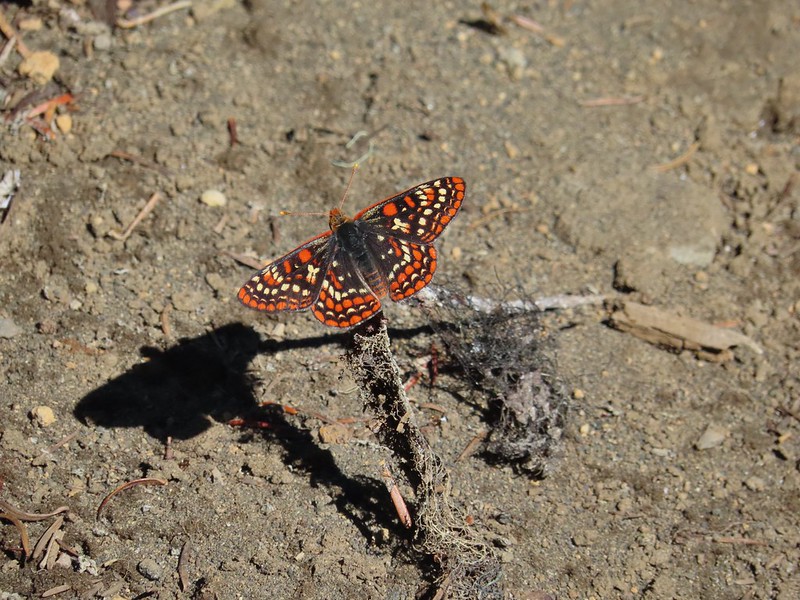

 The “topographic feature” ahead on the right where we planned on turning for Lower Berley Lake.
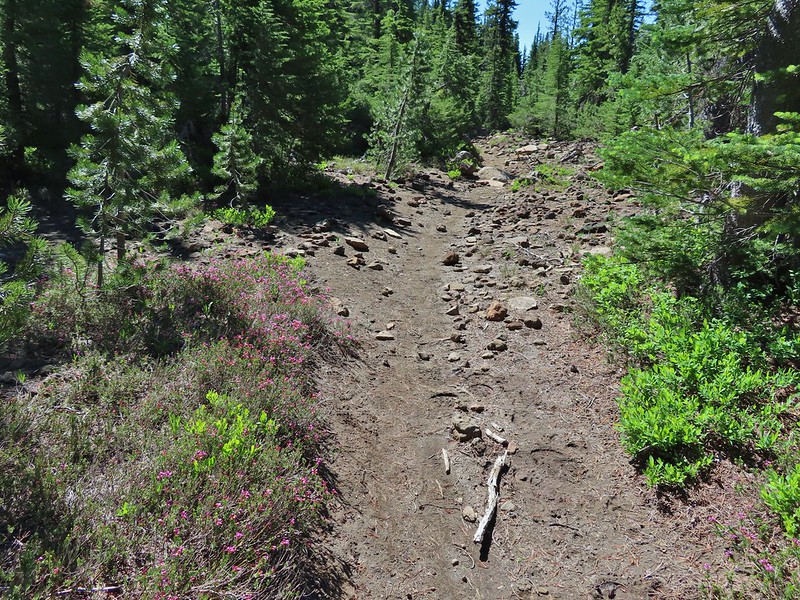 Mountain heather along the trail, it was warm and sunny enough that the mosquitos weren’t as bad this time by.
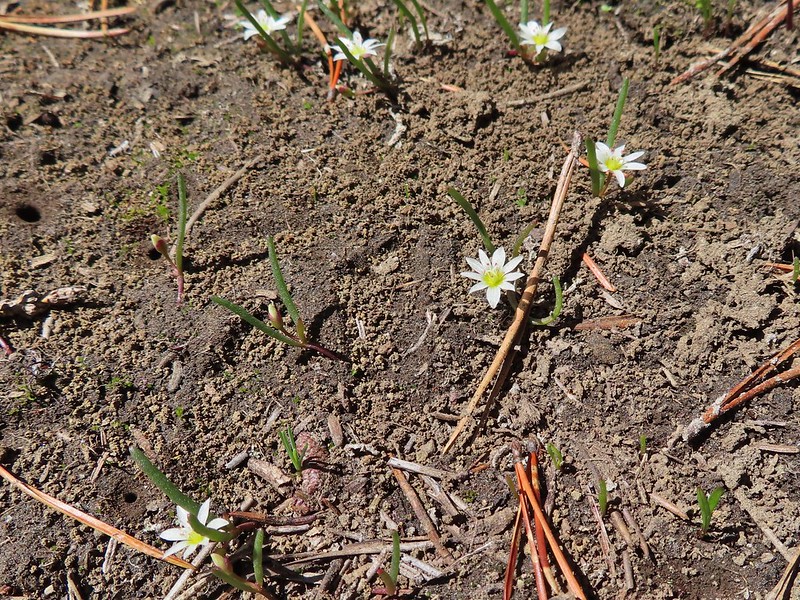 Threeleaf lewisia
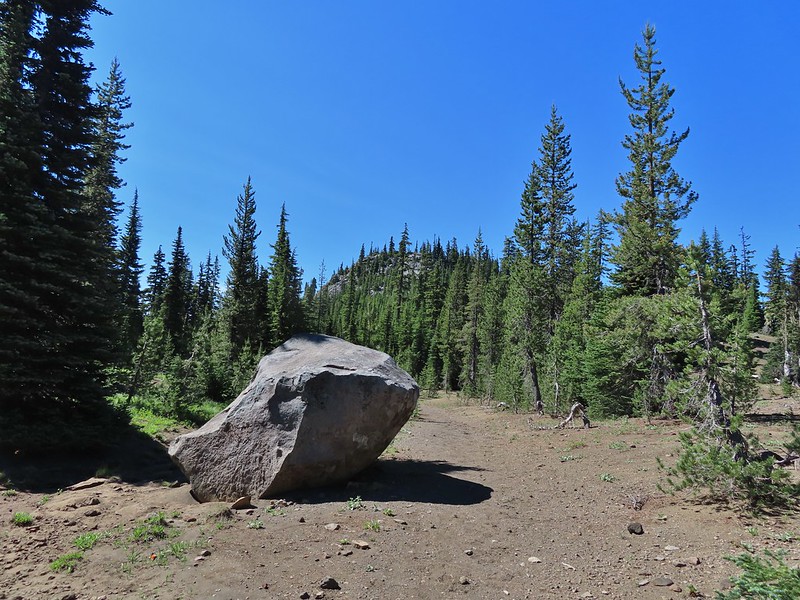 Getting closer to the hill where we planned on turning.
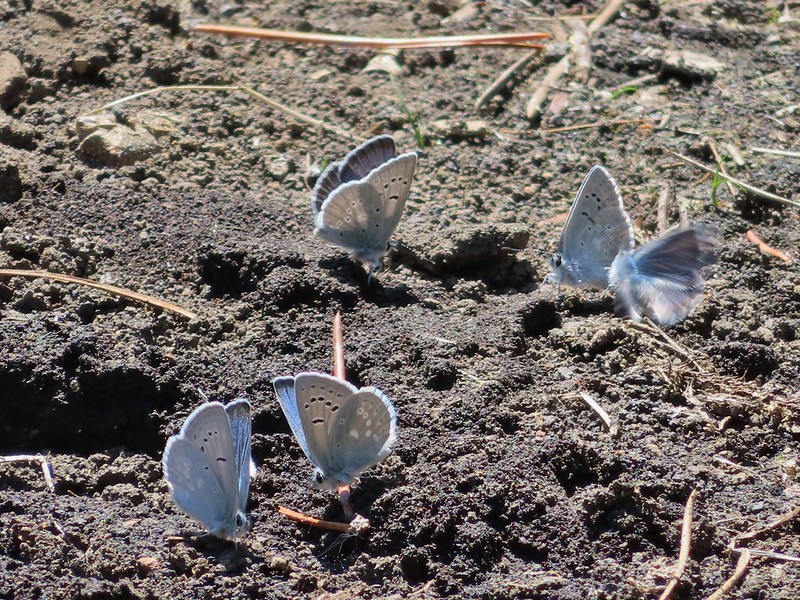
 California tortoiseshell butterflies in the bed of Lost Lake Creek.


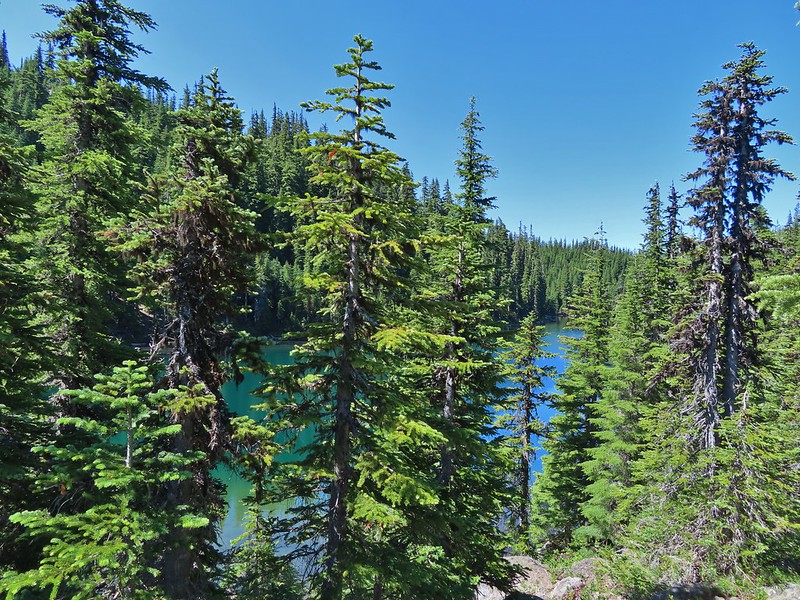
 Three Fingered Jack from the rocks.
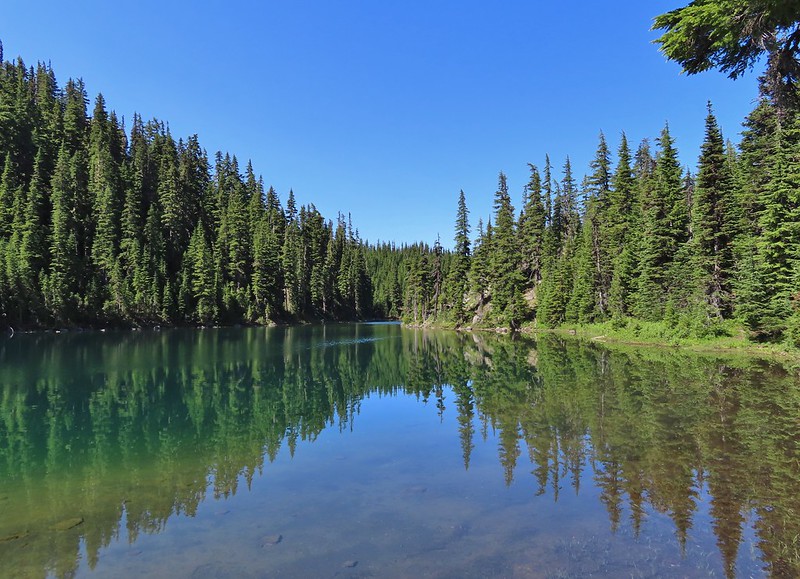
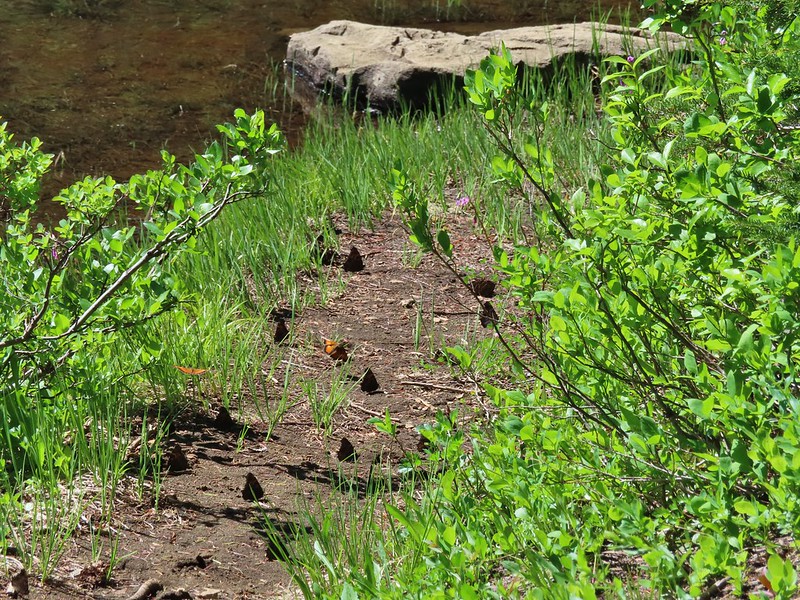 More tortoiseshells
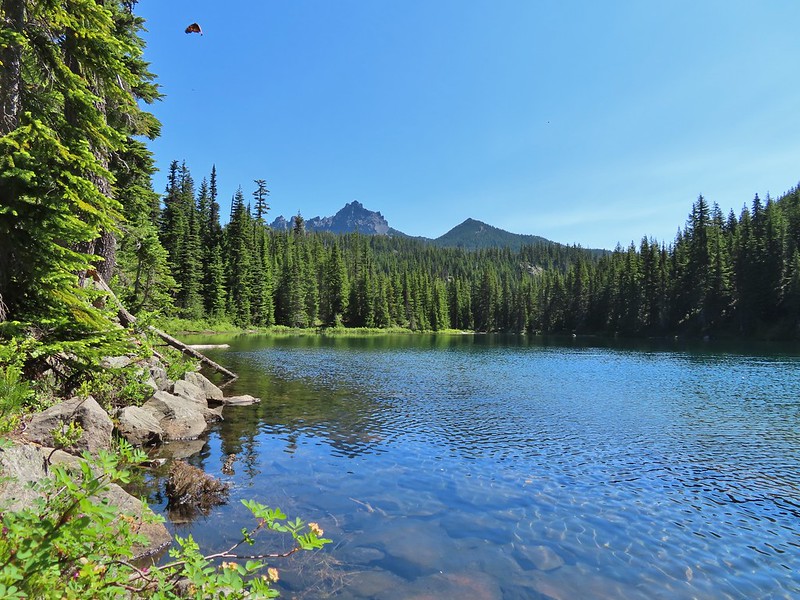 A butterfly photo bomb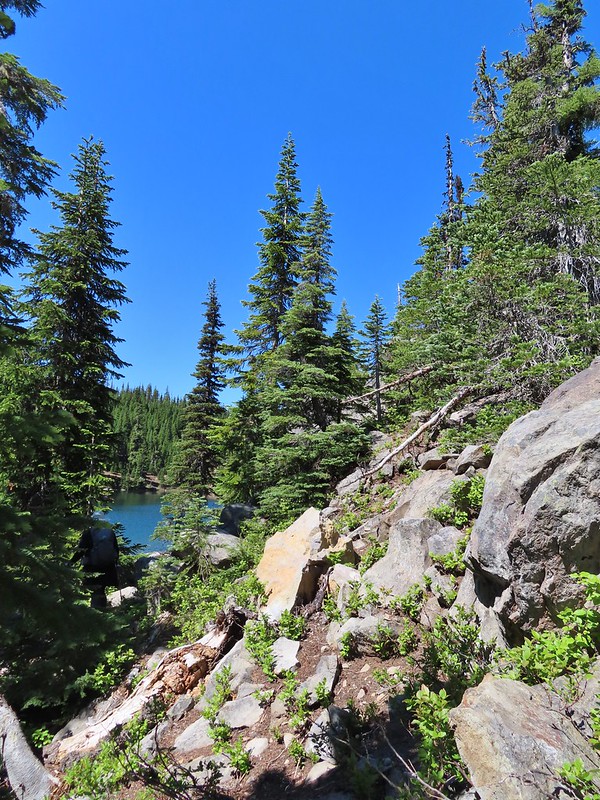


 The bed was popular with the butterflies.
 Cross country to Upper Berley Lake, the doe was in this meadow and headed in the direction of the patch of snow at the far end.
 Upper Berley Lake
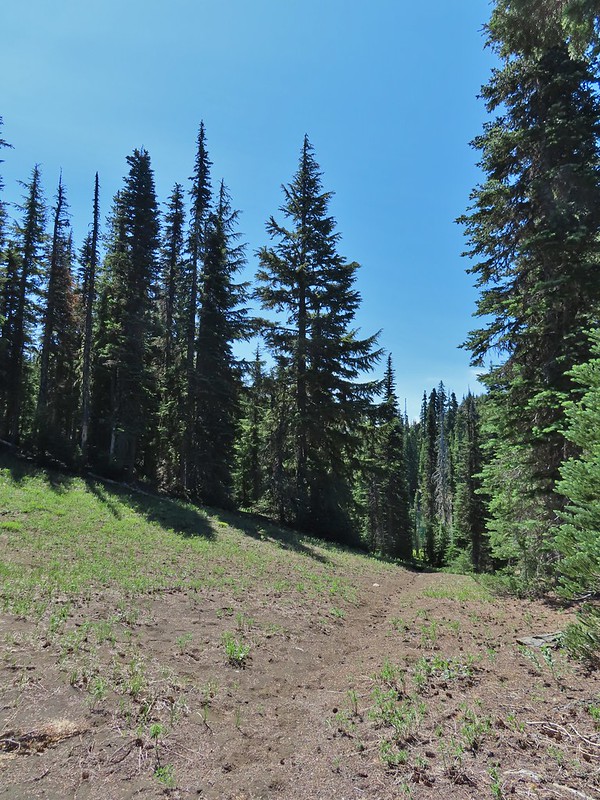 We wound up finding the same “user trail” and followed it down to the lower lake.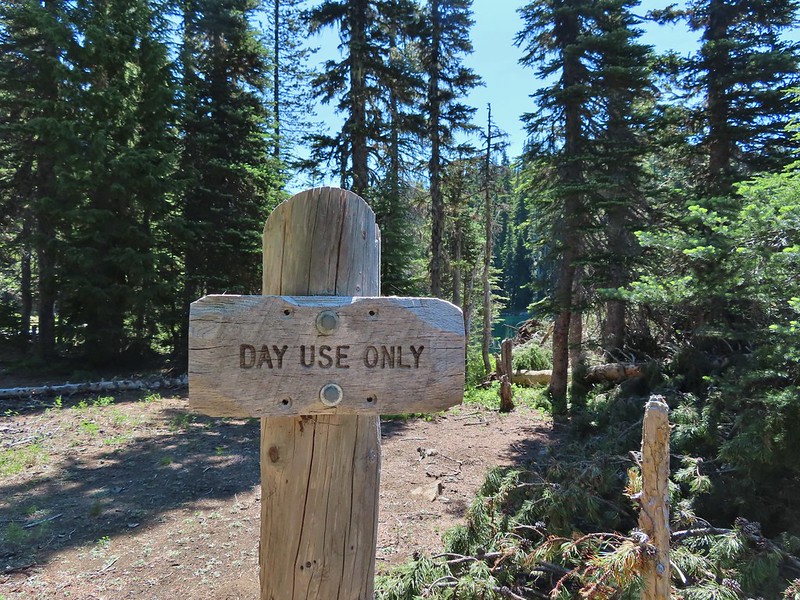
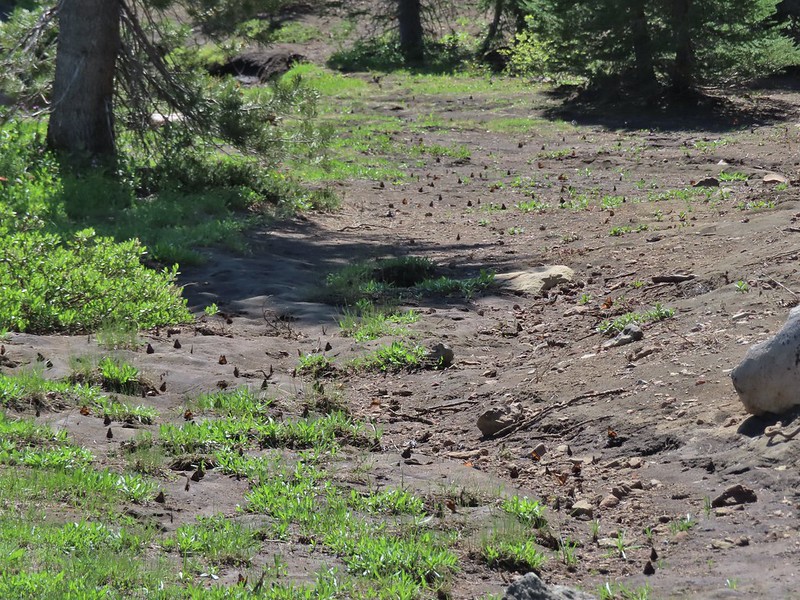 California tortoiseshell butterflies along Lower Berley Lake.
 Three Fingered Jack and about a half dozen butterflies.
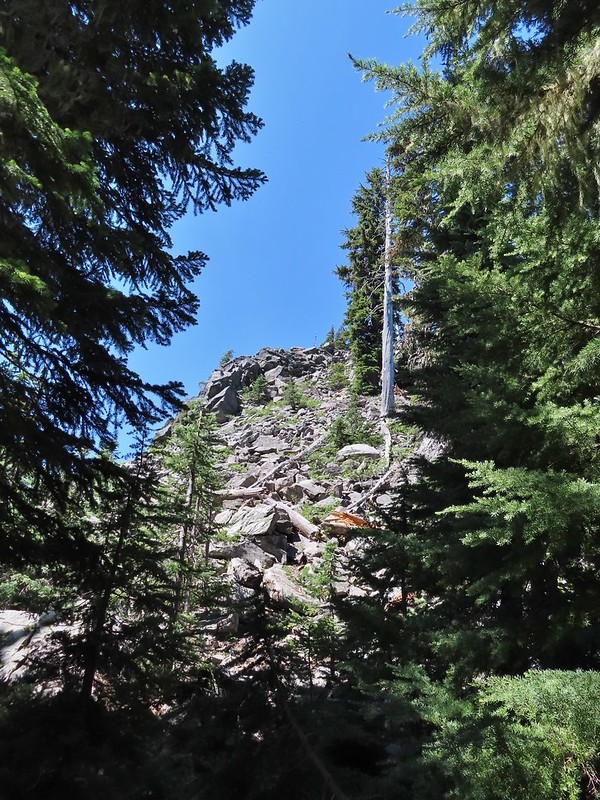 The hillside on the right was rocky.
 The trail dropping down from the saddle with Mt. Washington and the North Sister ahead.

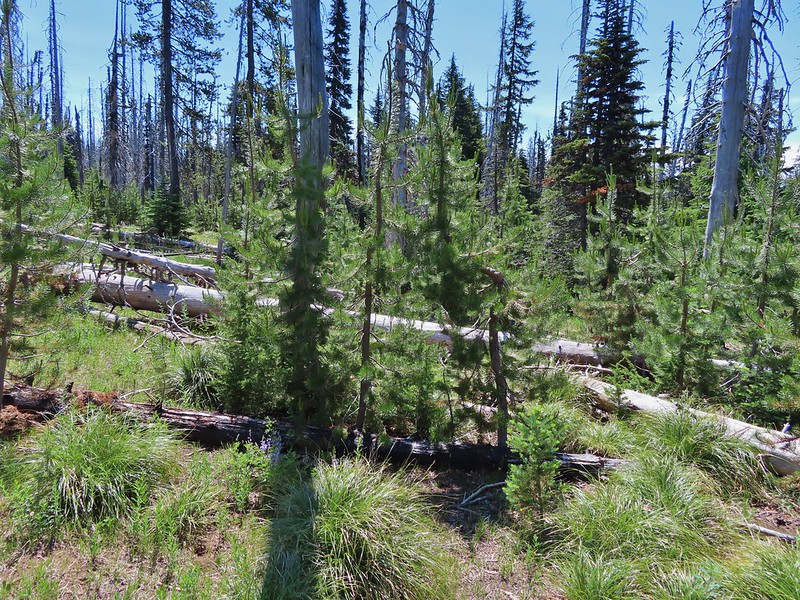
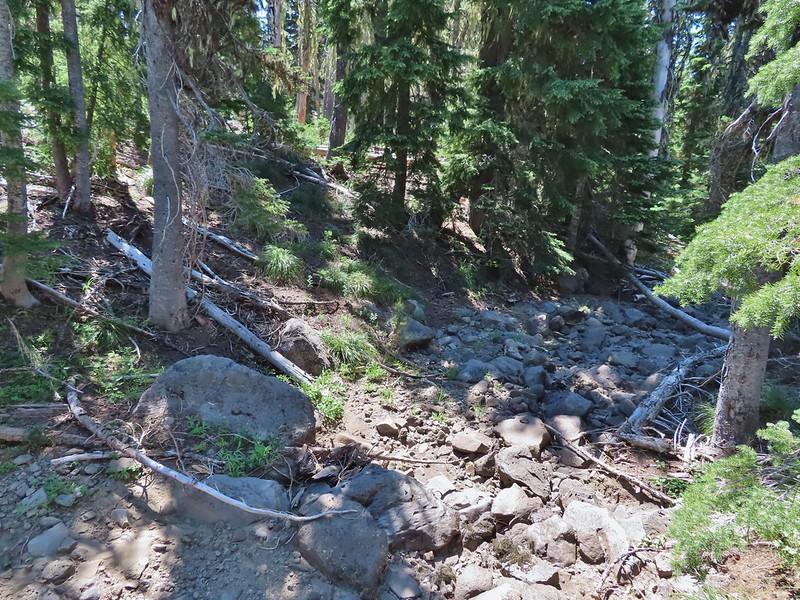
 Found it!


 Yellow beetle on lupine.
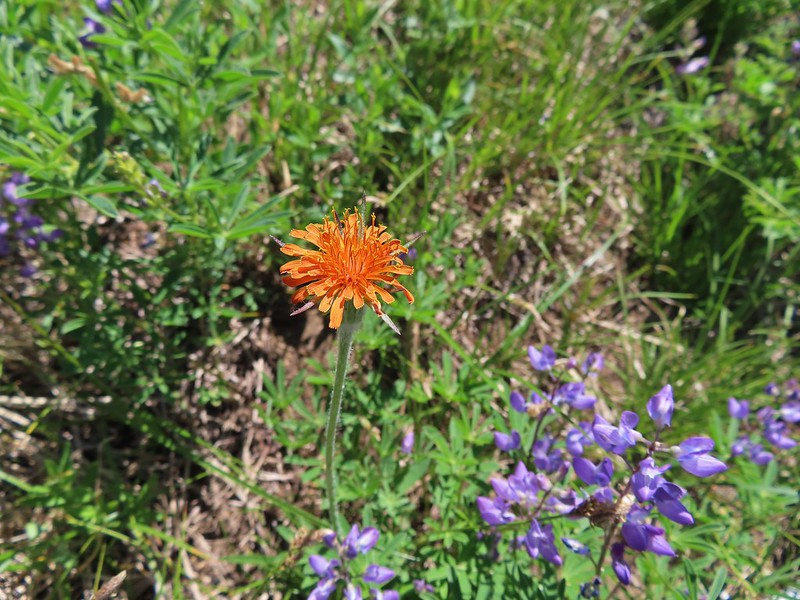 Orange agoseris
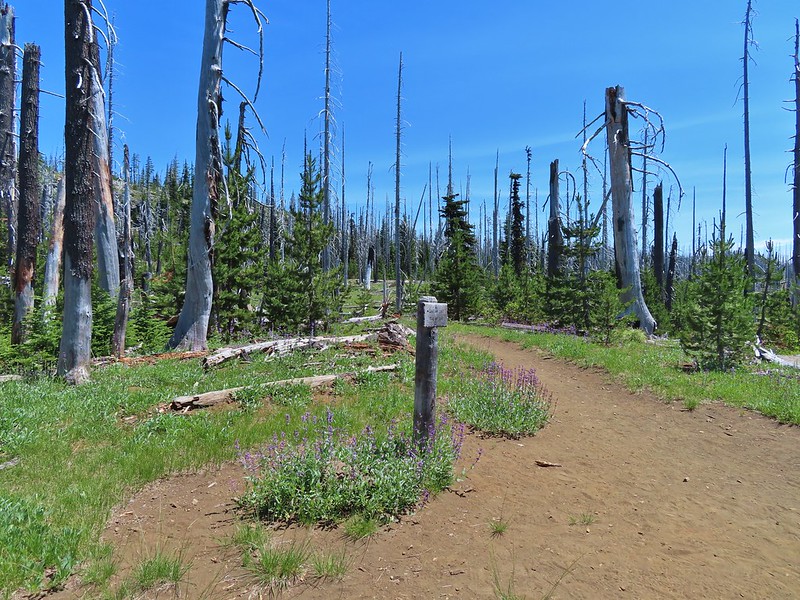 Back at the PCT.
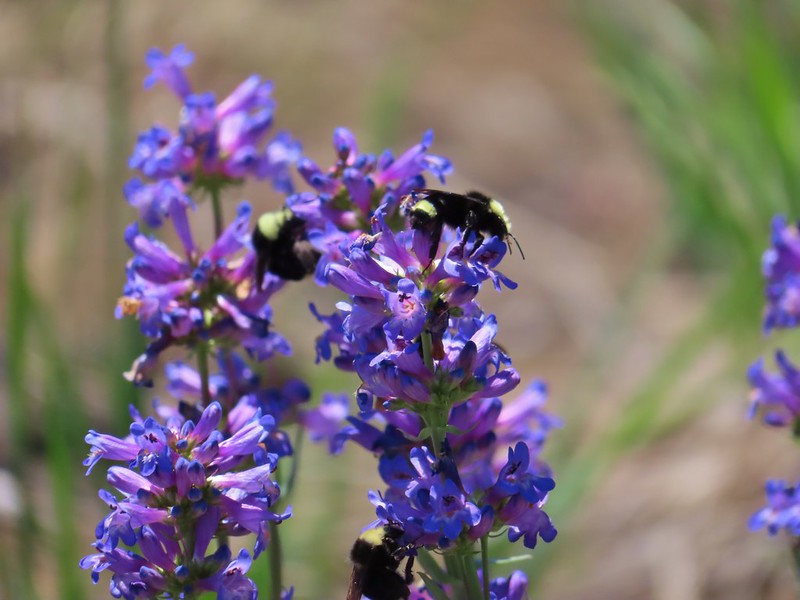 Bumble bees on penstemon.
 Cicada in the grass.
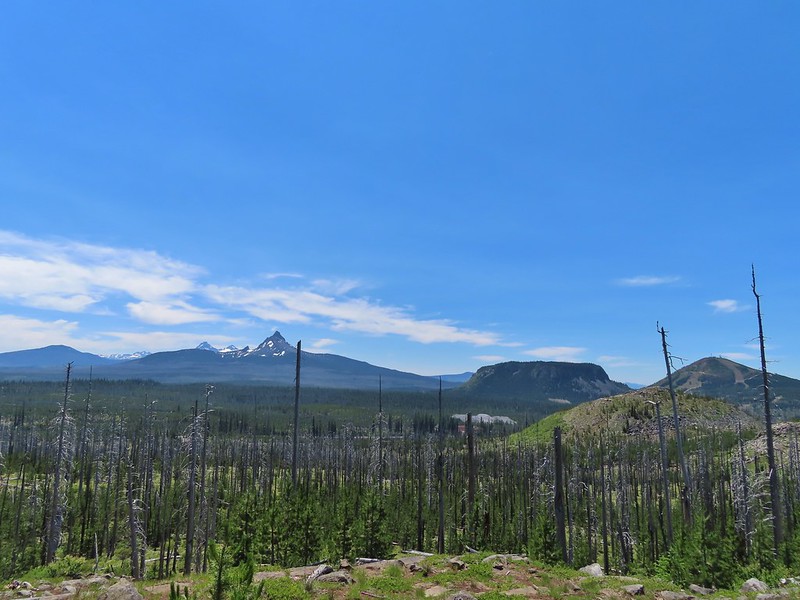 Black Crater, Broken Top, North & Middle Sister, Mt. Washington, Hayrick Butte, and Hoodoo Butte from the viewpoint.

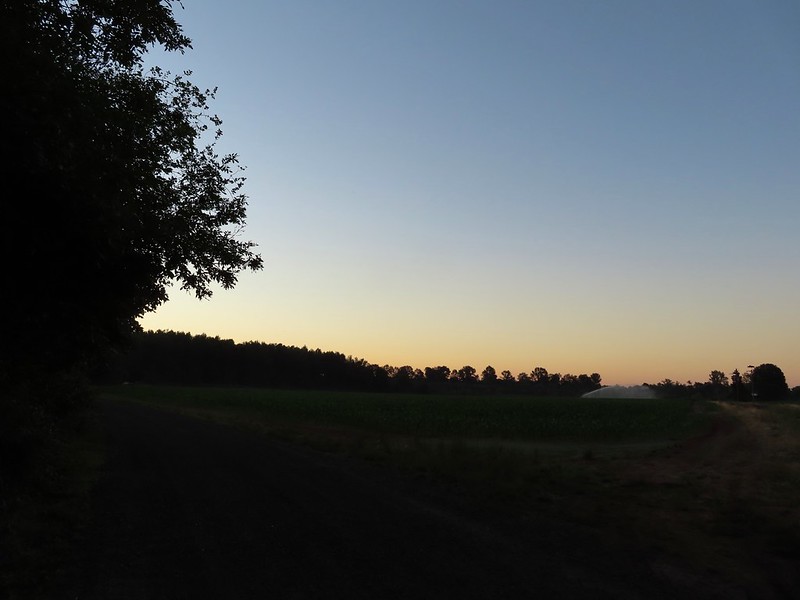 Private farm along the entrance road from the pullout we parked at.
 Osprey nest above the corn field.
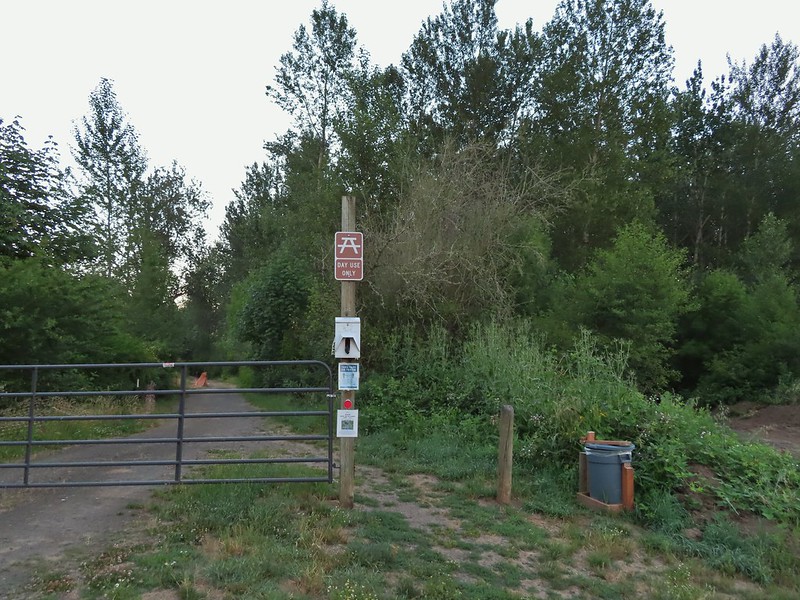 Gated road at the trailhead. There was a second gravel road to the right that was blocked with a log. The gravel road appeared to be fairly new and possibly a reroute of the gated road.

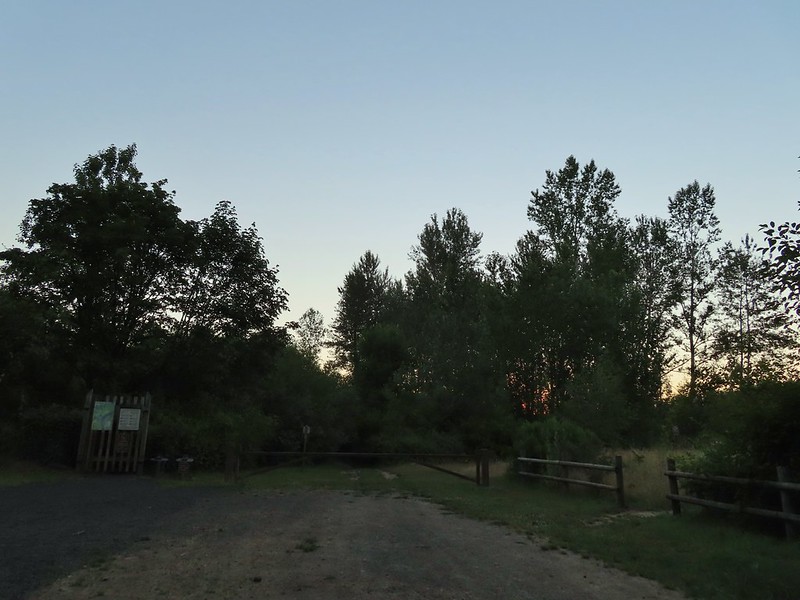 Old trailhead?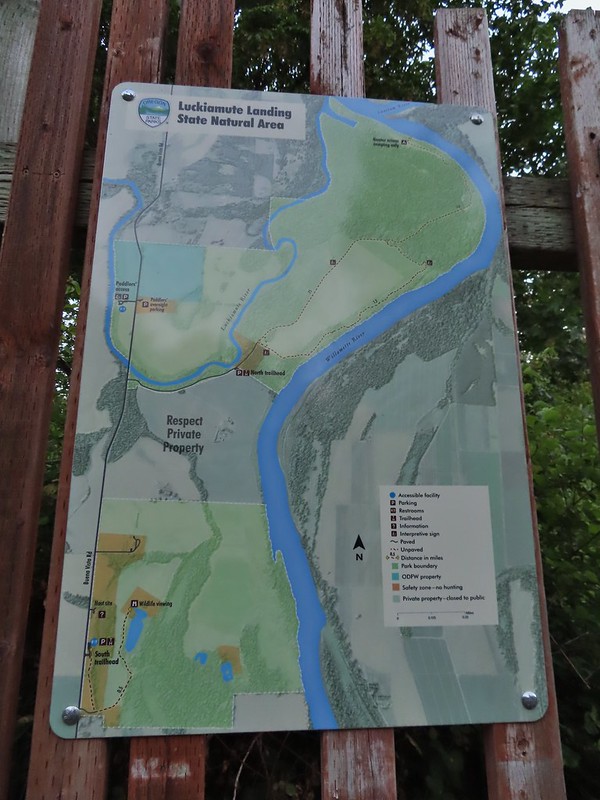

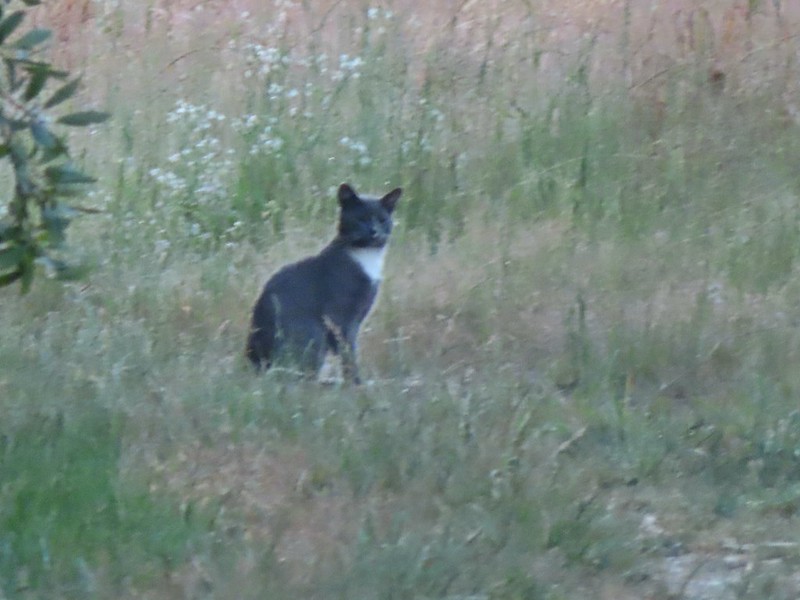 Extreme zoom on the kitty.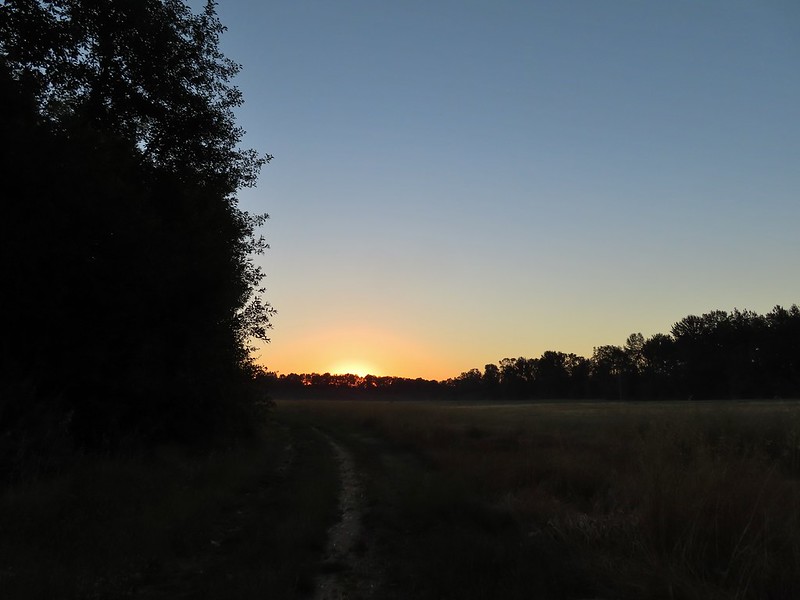


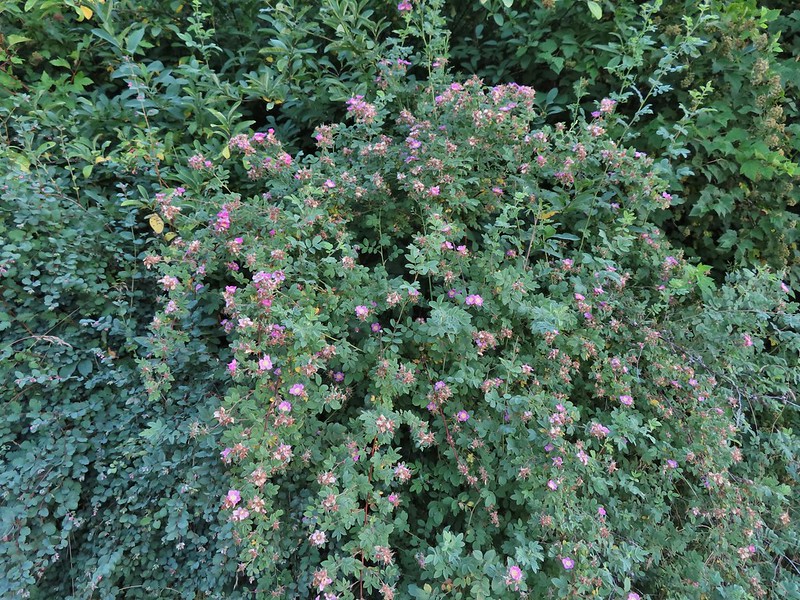 Wild rose
 Vetch
Vetch Oregon grape
 Thimbleberry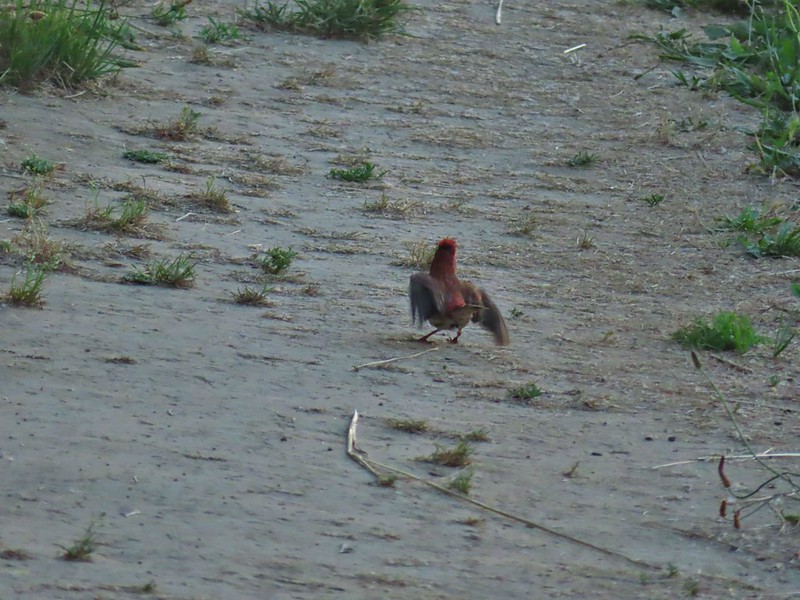


 We both initially thought that this was the start of an out and back to campsites along the Willamette River and that the loop continued around the field to the right. In fact there was a blue awning set up at the edge of the field in that direction and at least 3 vehicles (not sure why they were there or how they got through the gate). This was not the case and fortunately for us we were planning on doing the out and back which meant we didn’t make the mistake of turning here. The continuation of the loop was actually 0.2 miles further along the road in the forest.
 The correct right turn for the loop.
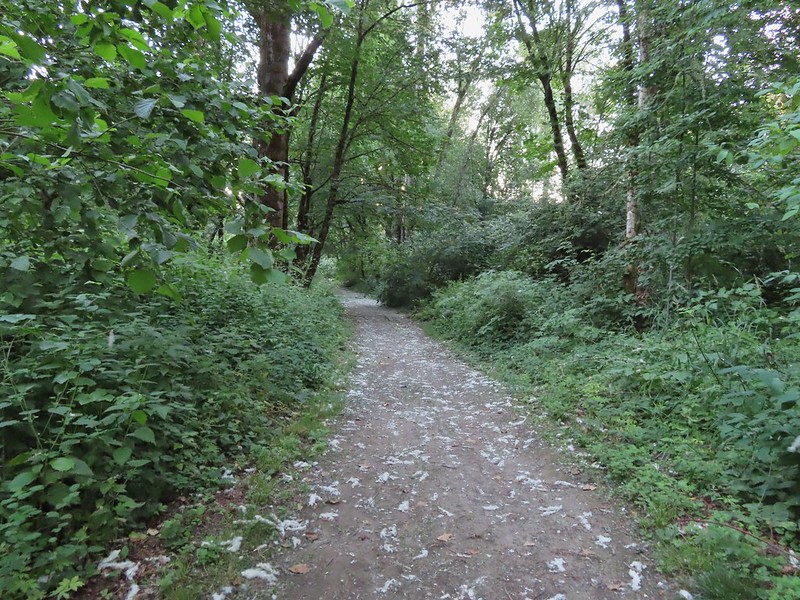 Cottonwood on the road.
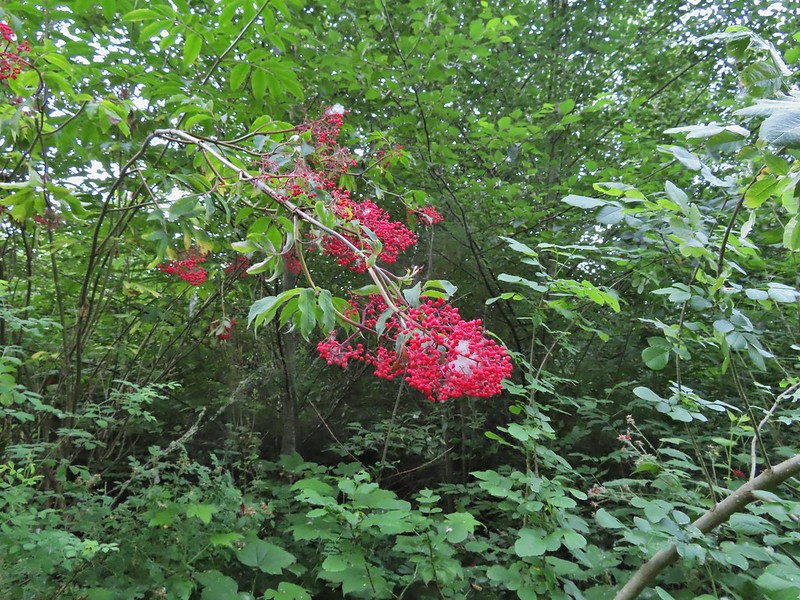 Red elderberry, a favorite of the birds.
 This wren was taking a dirt bath, perhaps an attempt to stay cool?
 A lot of invasive daisies in an opening.
 Native elegant brodiaea
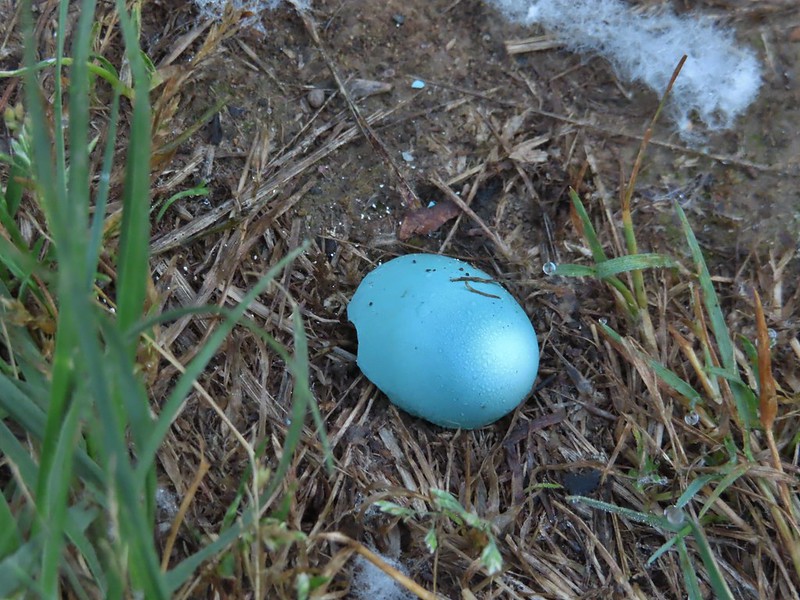 Egg shell
 More ripe berries.
 Poppies
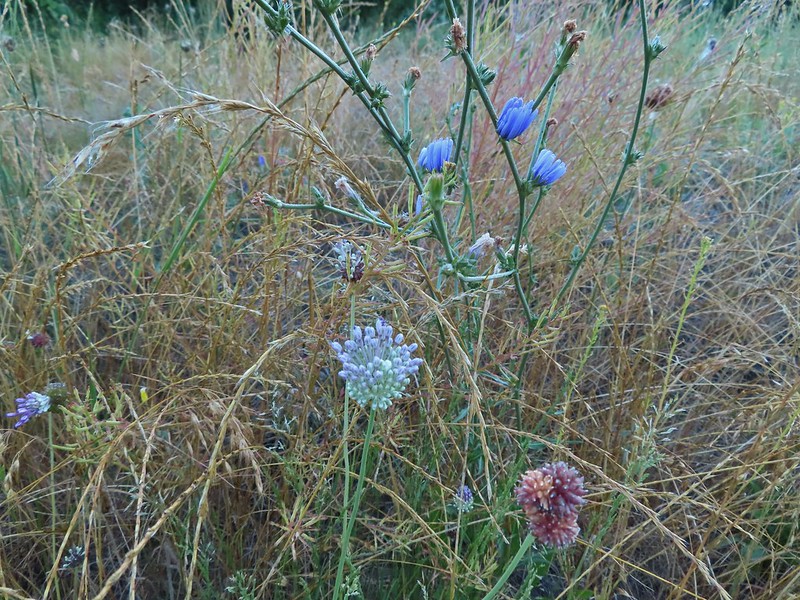 Mostly non-natives – chicory and clovers.
 More non-natives – Moth mullein and cultivated radish
 Slug
Slug Douglas spirea (native)
 The mouth of the Luckiamute on the left was hidden by trees.



 Willamette River at the landing.
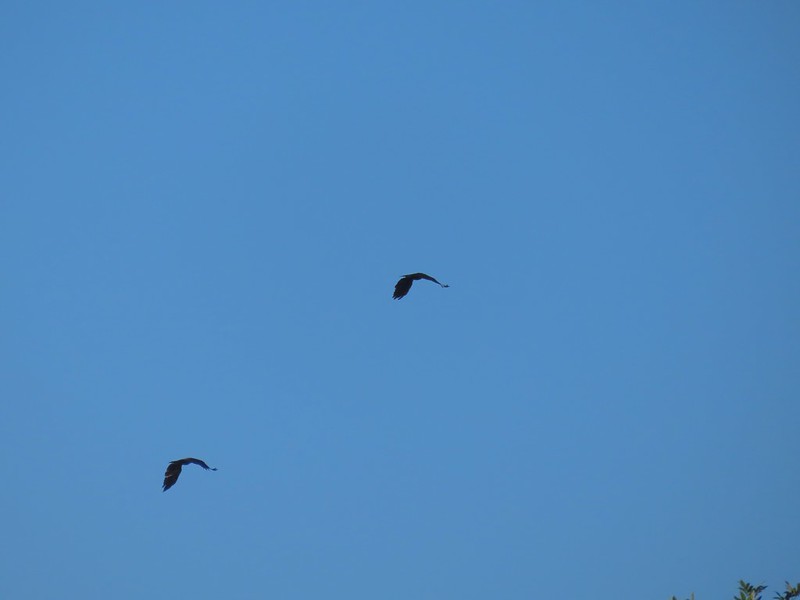 Not sure what type of birds these were.
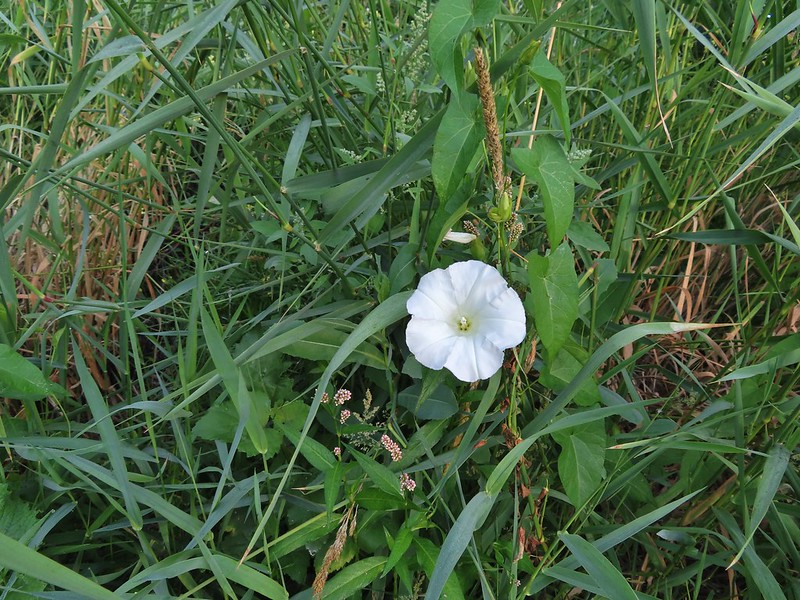 Bindweed at the landing.
 Bunny and a bird (not pictured is the chipmunk that raced across the road here).
 Slug also “racing” across the road. Speed is relative.
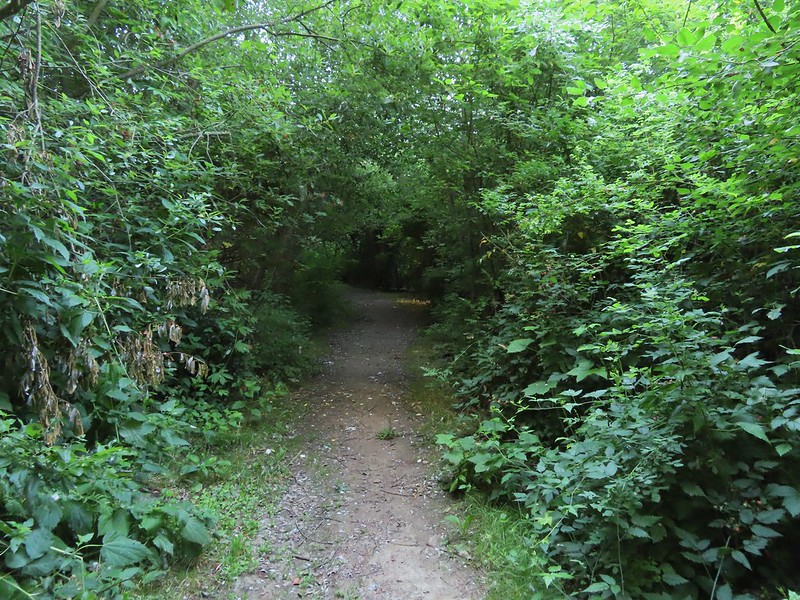 Back on the loop.


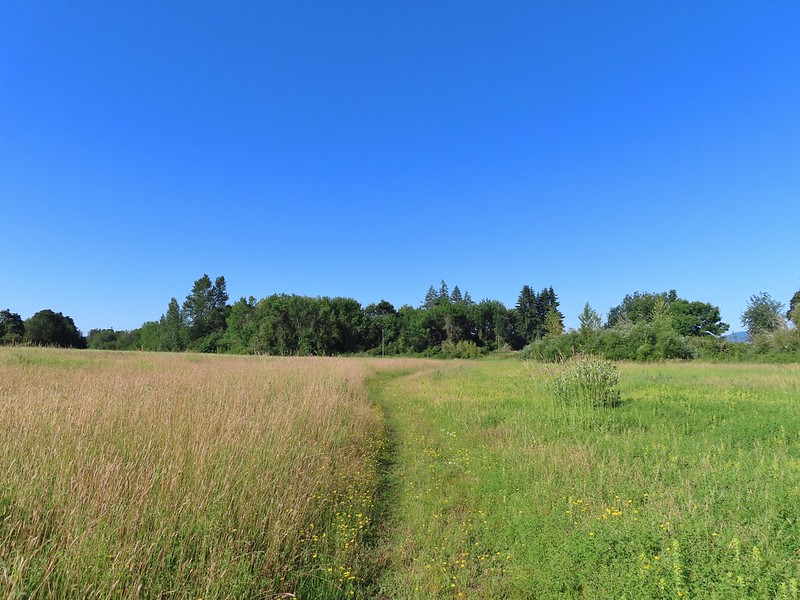
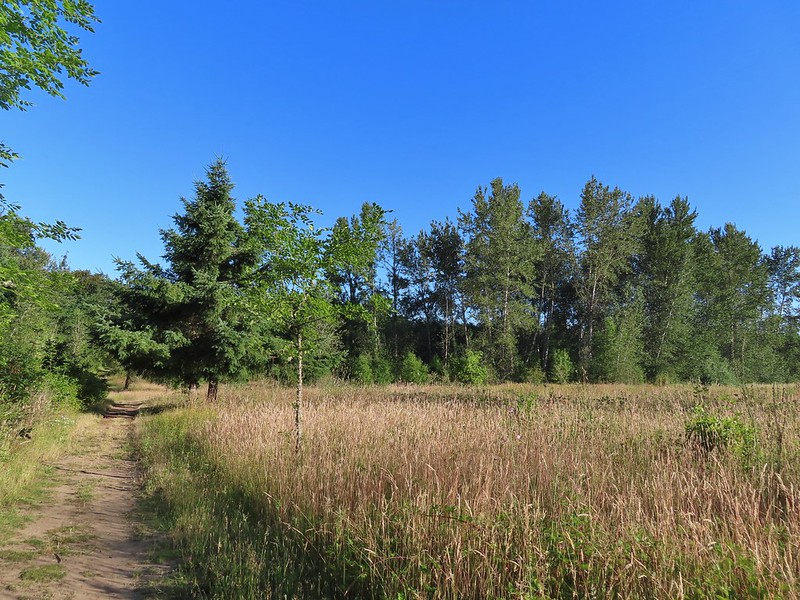 Near the end of the loop the trail passed back along the field.
 White crowned sparrow
 Possibly nelson’s checkermallow.
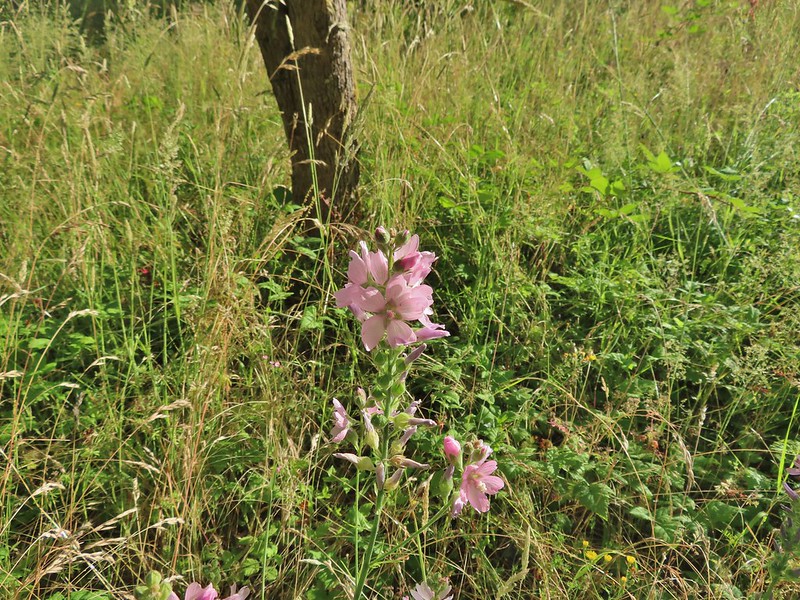 Meadow checkermallow
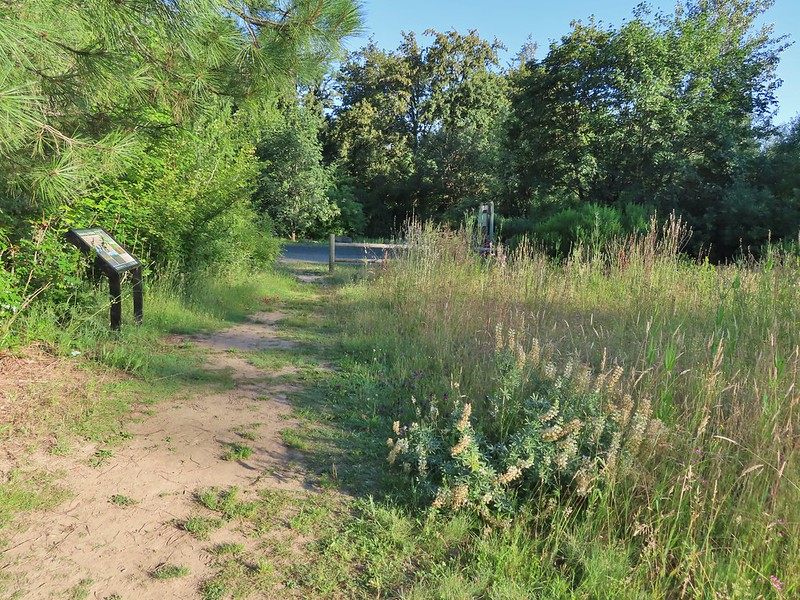 Completing the loop.
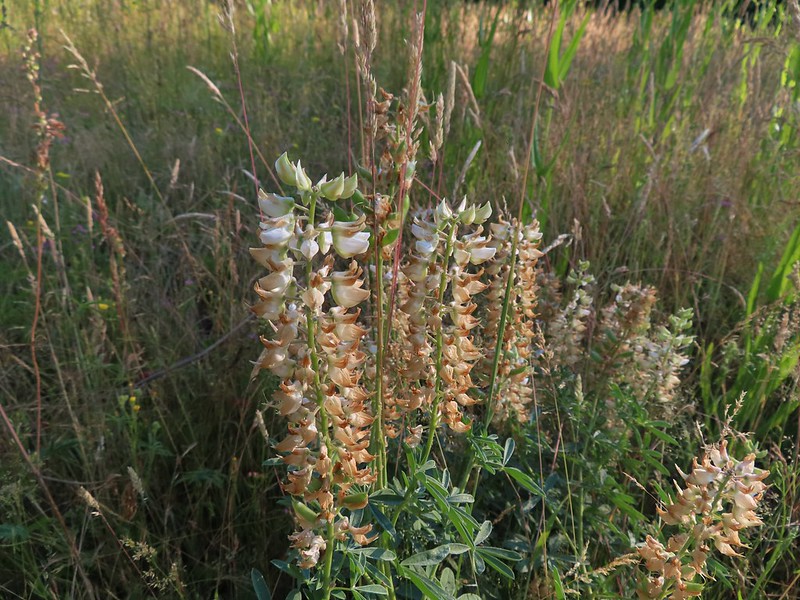 Lupine that is just about finished.
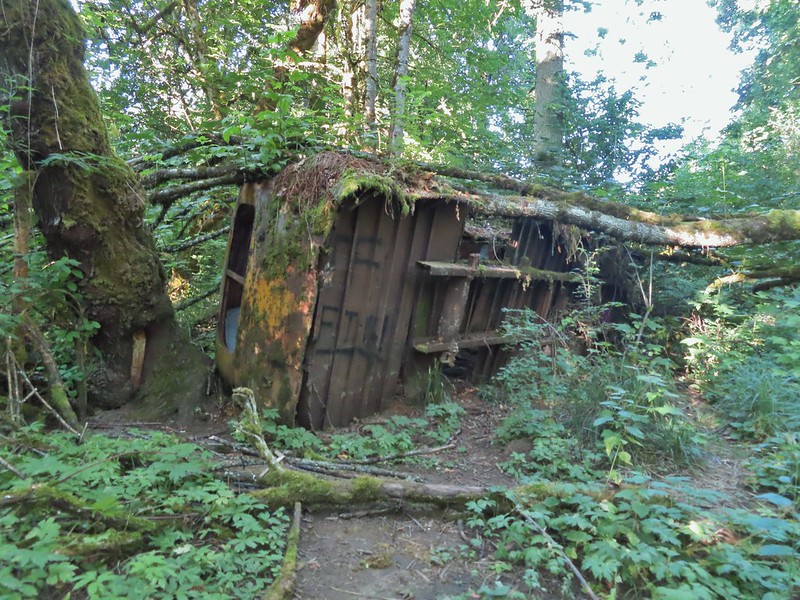 Old bus
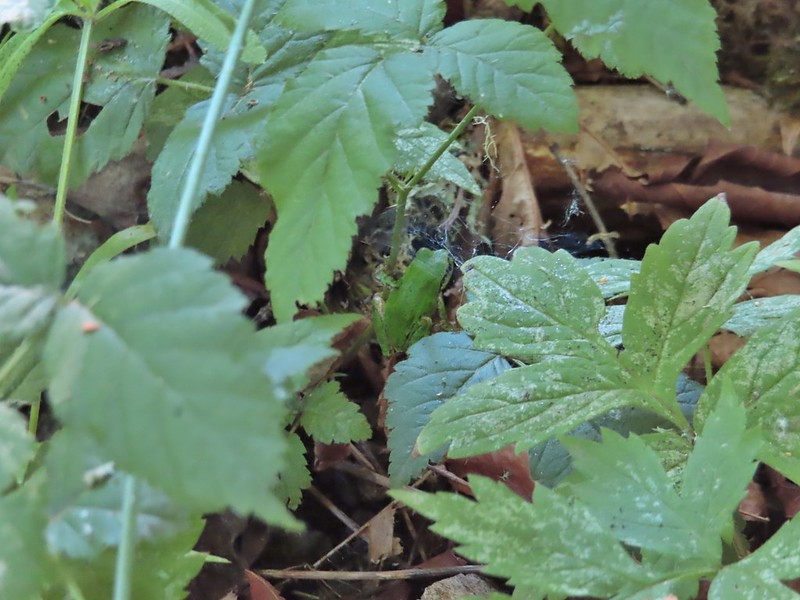 Tree frog
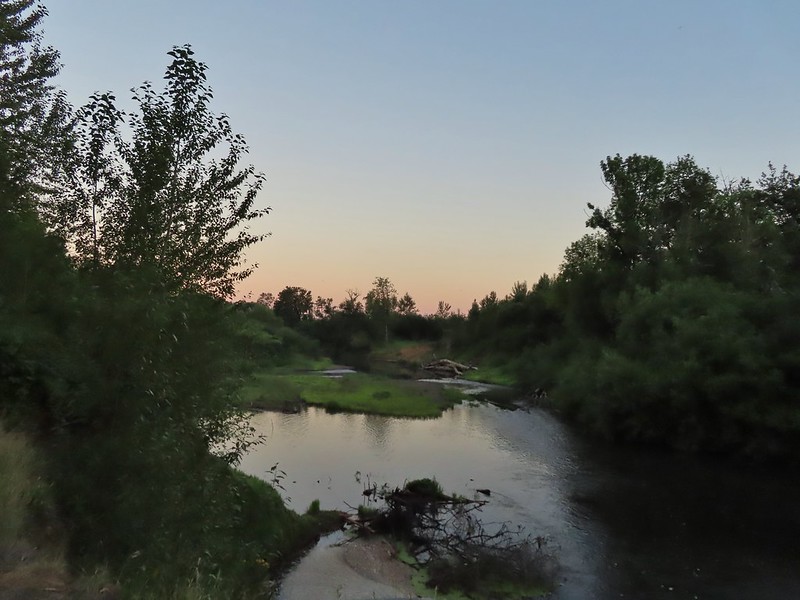
 Luckiamute River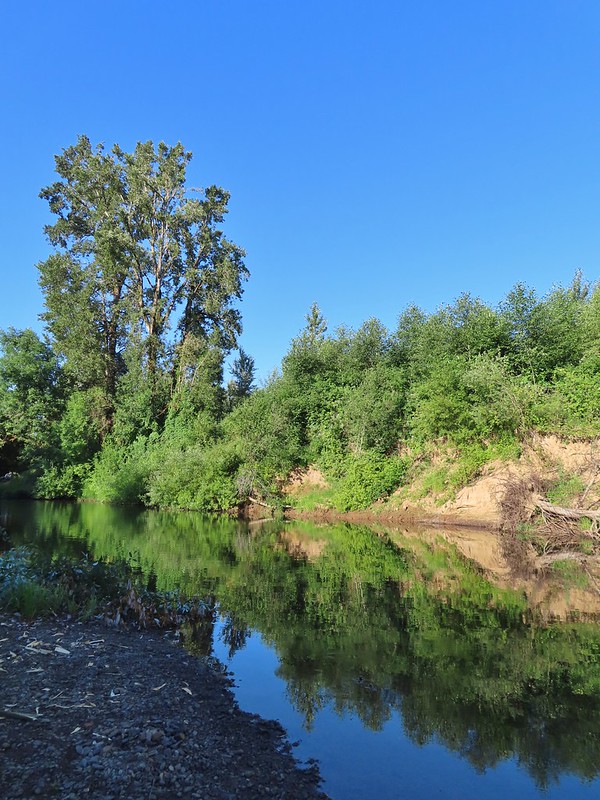
 Waiting for food.

 Old farm equipment with poison oak in the background.
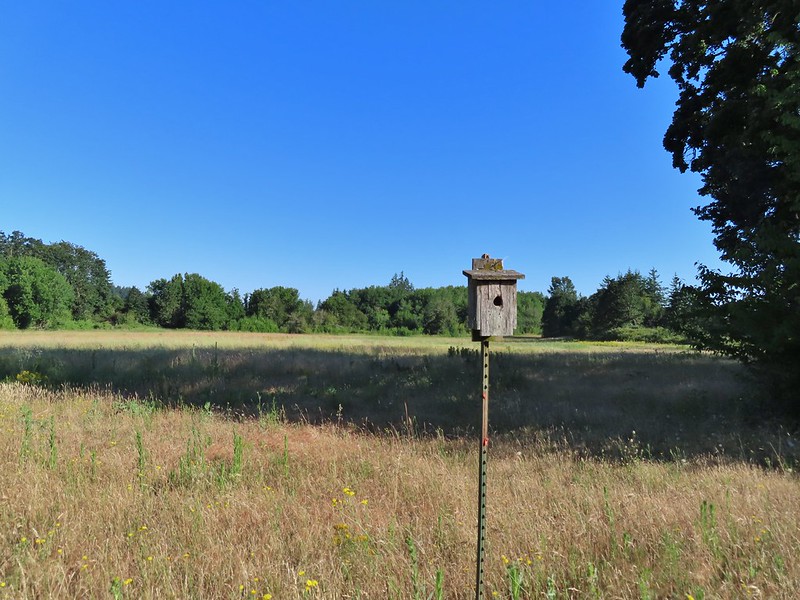 One of several birdhouses along the road.
 North end of the pond.

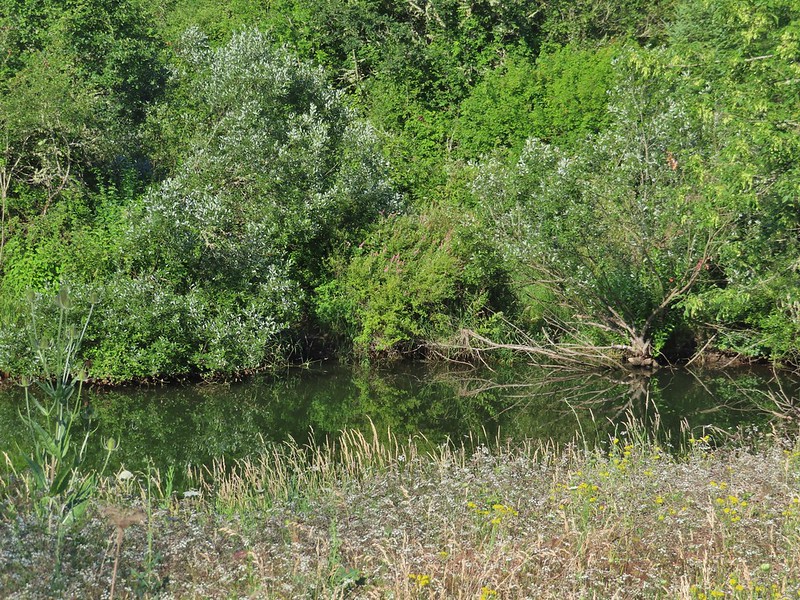 We are both pretty sure a turtle swam off from this area when we came into view.
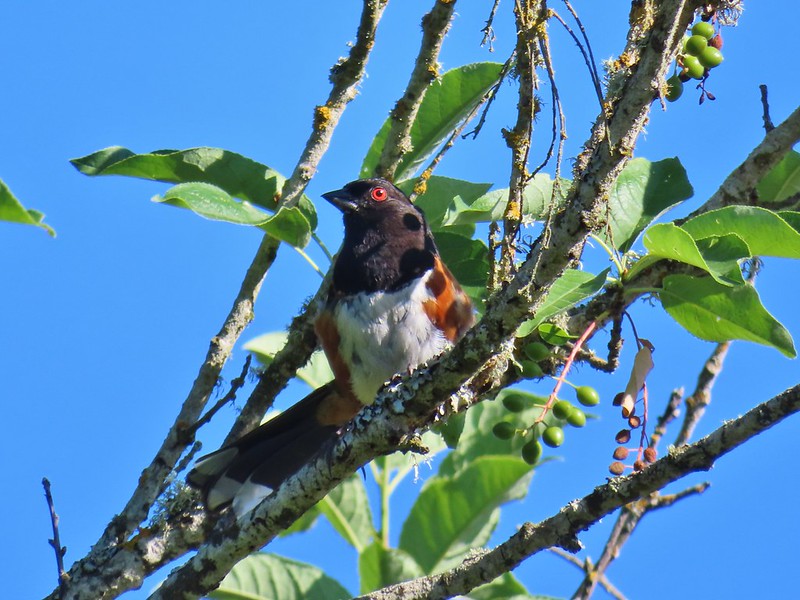 Spotted towhee
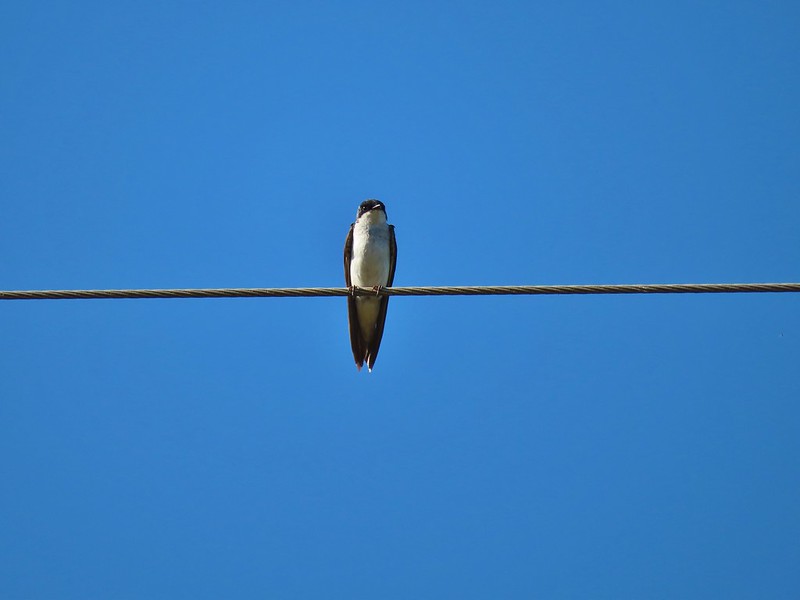 Swallow
 European centaury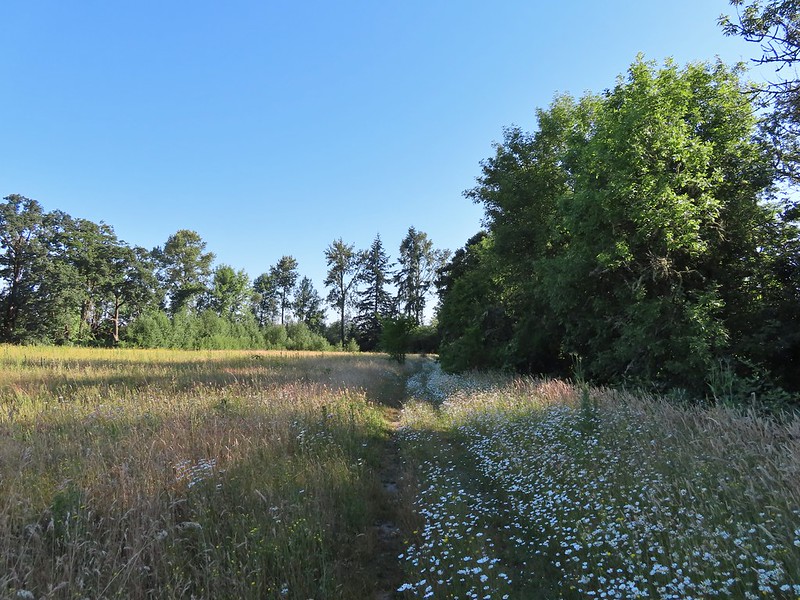

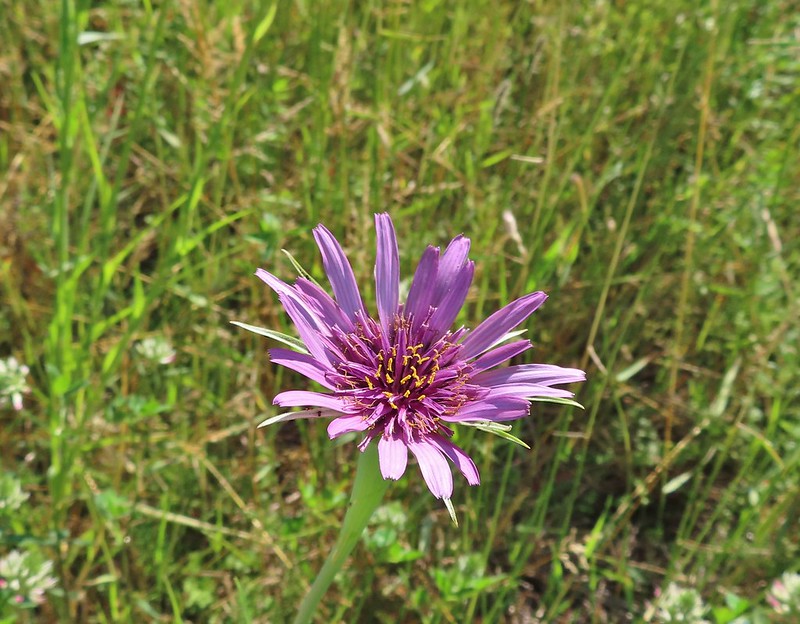 Oyster plant
 Creeping jenny
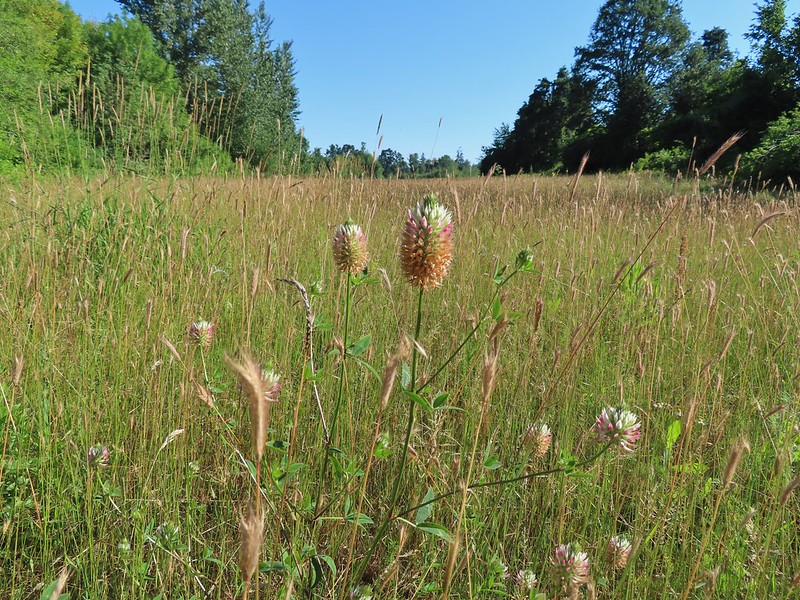 Arrowleaf clover
 Scrub jay
 Corn Chamomile
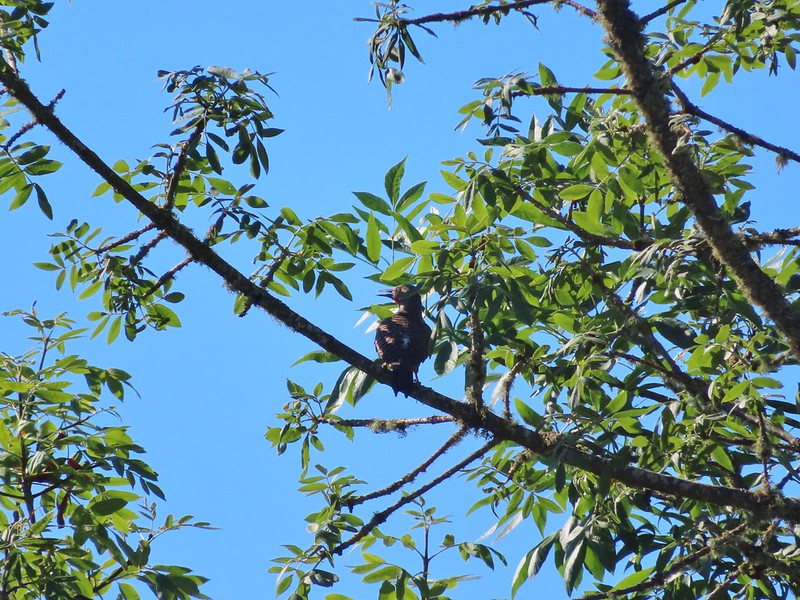 Northern flicker
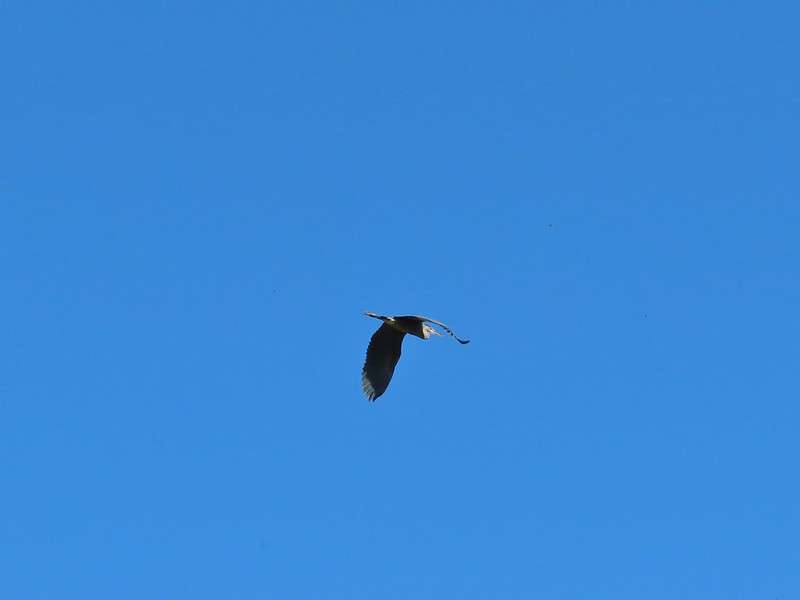 Great blue heron
 American kestral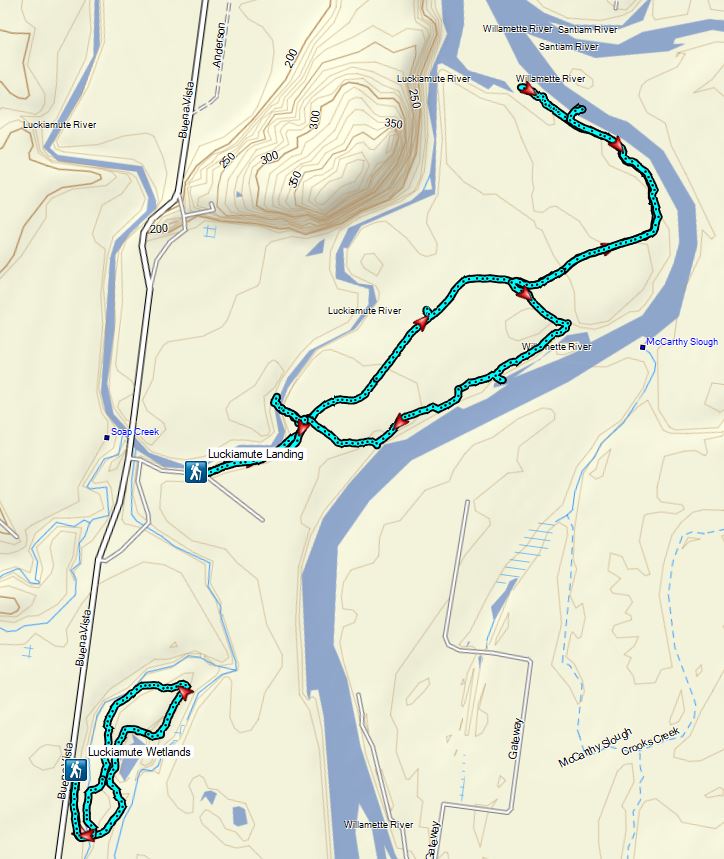
 wanderingyuncks


