By spending the night in Etna, CA we were only 30 to 45 minutes from the trailheads for the four remaining hikes we had planned for the week. As mentioned in the previous post we chose to do East Boulder Lake first due to it being the closest to the recently started Callahan Fire and thus the most likely to be affected if that fire were to escape containment. From Etna we drove south on Highway 3 to Callahan then made our way to the East Boulder Trailhead.
The road to the trailhead passes through forest burned in the 2021 Haypress Fire but the trailhead and trails for our hike escaped damage.
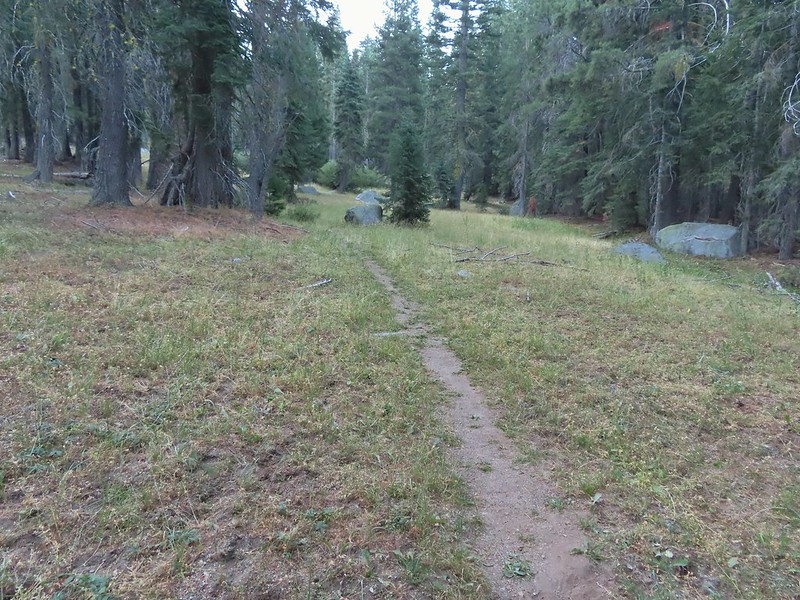
Sullivan describes three options for his featured hike; a 4 mile out-and-back to East Boulder Lake, a 6.4 mile out-and-back to a pass beyond the lake, and a 9.8 mile lollipop loop past Middle Boulder Lake at the edge of the fire scar which was the option we were planning on. The East Boulder Trail climbed gradually at first through the forest and a couple of small meadows before steepening and climbing past a small waterfall on East Boulder Creek. Entering the Trinity Alps Wilderness.
First view of the small waterfall.
Bigelow’s sneezeweed
Marsh grass-of-Parnassus
Not sure what these little guys are.
Checker-mallow
Western snakeroot
Passing the waterfall.
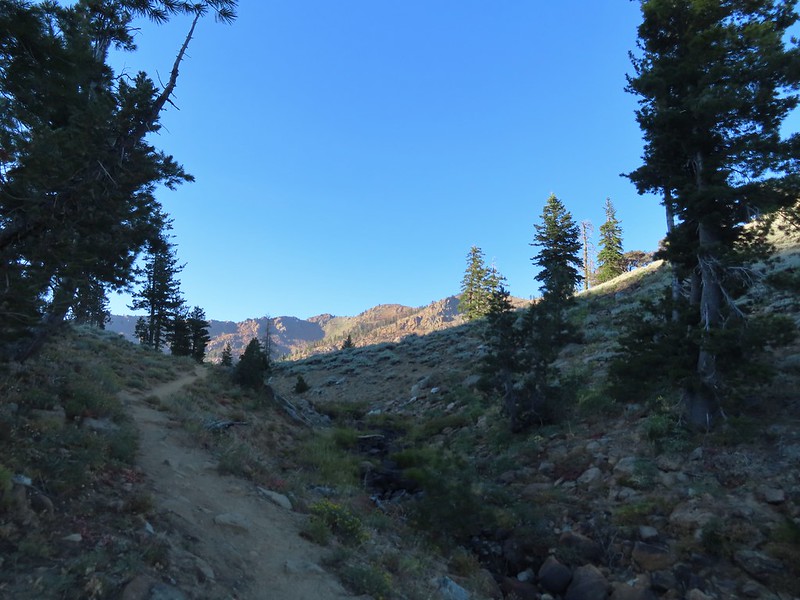
Above the falls the trail leveled out some and made a final short climb to East Boulder Lake, just over 1.8 miles from the trailhead. Peaks in the Russian Wilderness to the NE.
Dam near East Boulder Lake.
The trail crosses the dam here but there were better views this time of the morning in the other direction so we detoured to the left admiring the reflections in the lake.
We took a nice break along the lake shore listening to cow bells coming from the trees on the far shore. There were cows out there somewhere but we couldn’t see them.
After the break we crossed the dam and continued around the lake. View from the dam. We had to watch out for frogs here.
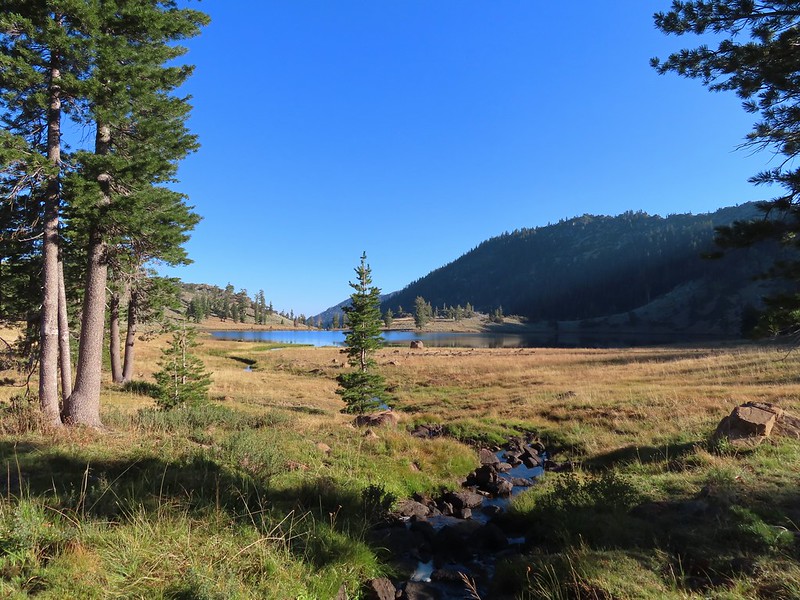
We lost the trail briefly in a meadow on the southern end of the lake but picked it up again after crossing the inlet creek.
We should have stuck closer to the lake.
Buckwheat
Back on the trail where the cows were just leaving.
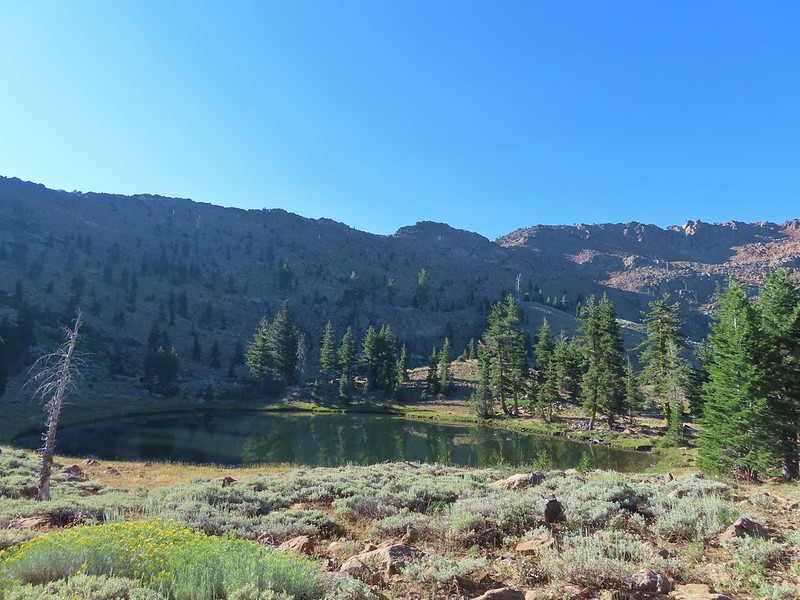
The trail then passed two smaller unnamed lakes and Upper Boulder Lake where there were several cows and some ducks.
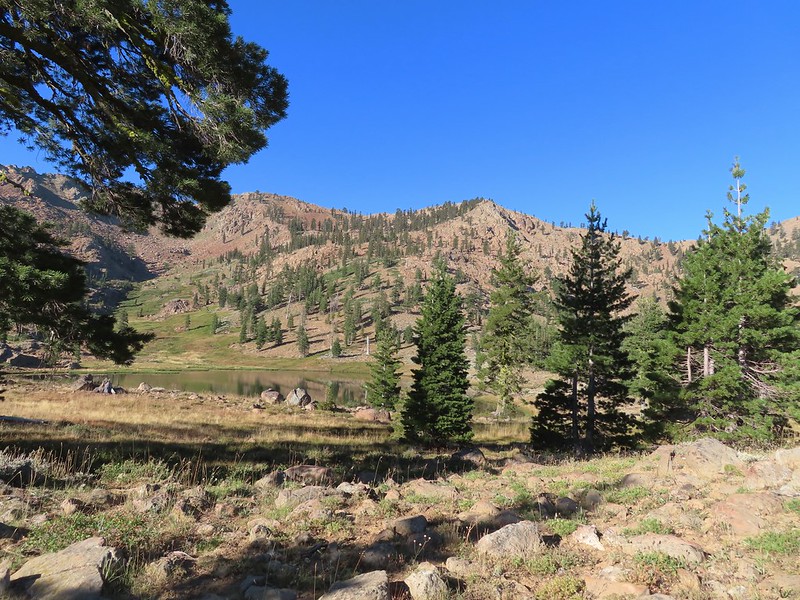
We detoured to the right to get a view of Upper Boulder Lake then returned to the trail and began to climb out of the basin to the pass. Upper Boulder Lake
Upper Boulder Lake in the background.
One of the cows on the far side of the lake to the left.
Toothed owl’s clover
Ducks on Upper Boulder Lake.
The climb was fairly steep at times.
All four lakes in view.
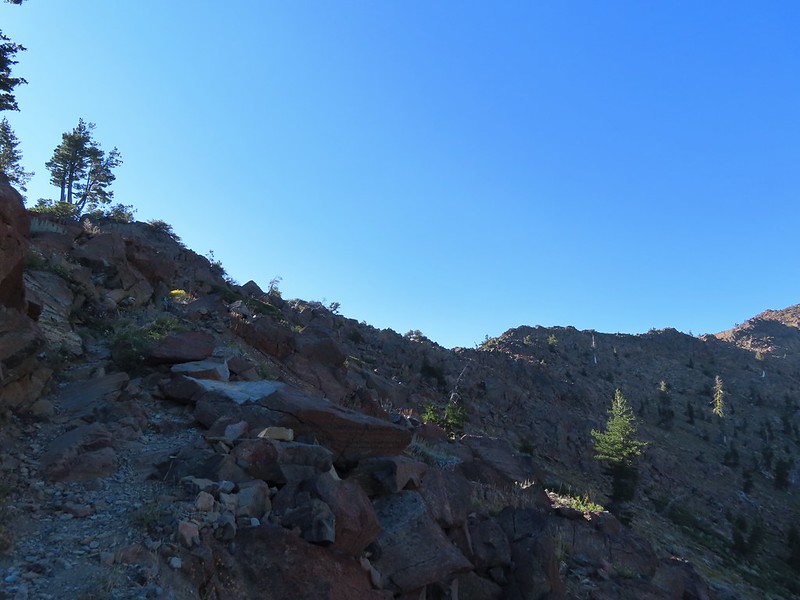
Almost to the pass.
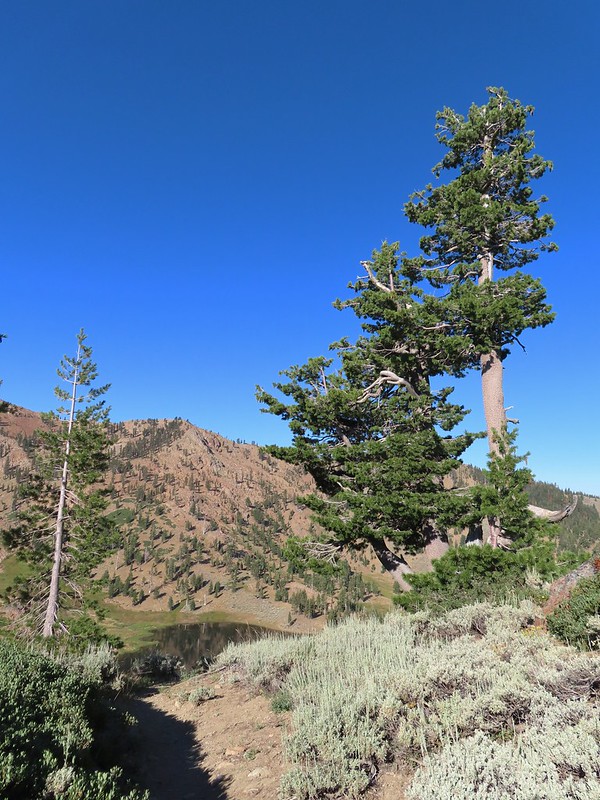
At the pass.
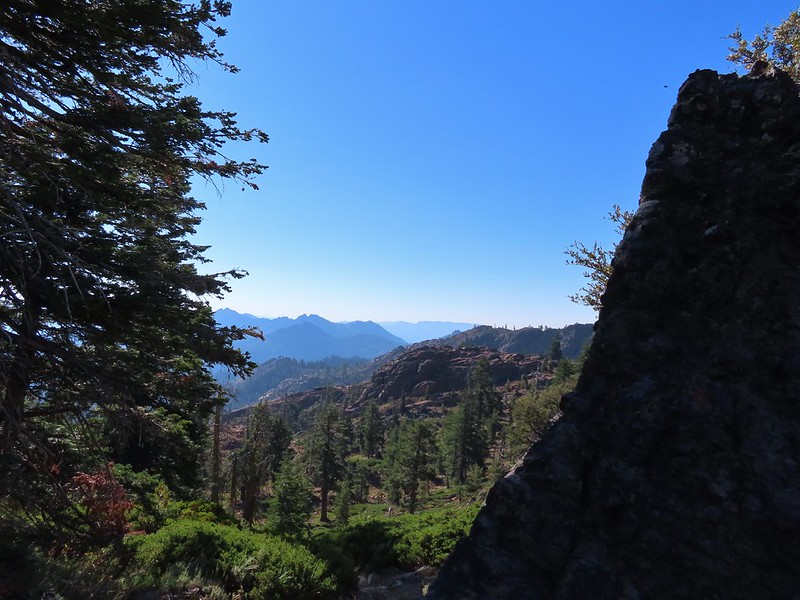
Looking south further into the Trinity Alps Wilderness.
Beyond the pass the trail descended 150 yards to the Pacific Crest Trail where we turned right.
We turned right onto that trail following it for 2 miles to another pass. The scenery along this section was great, particularly the colorful rocks.
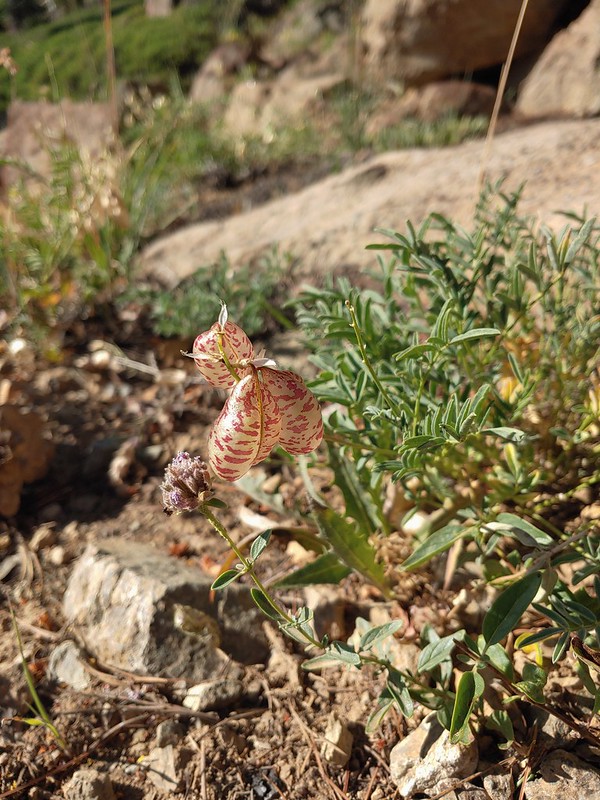
Balloon-pod milk vetch
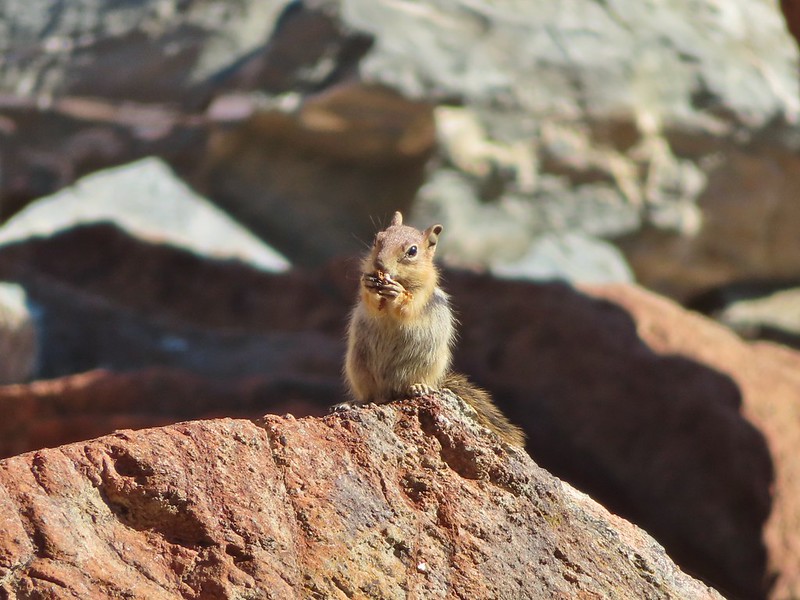
Golden-mantled ground squirrel taking in the views.
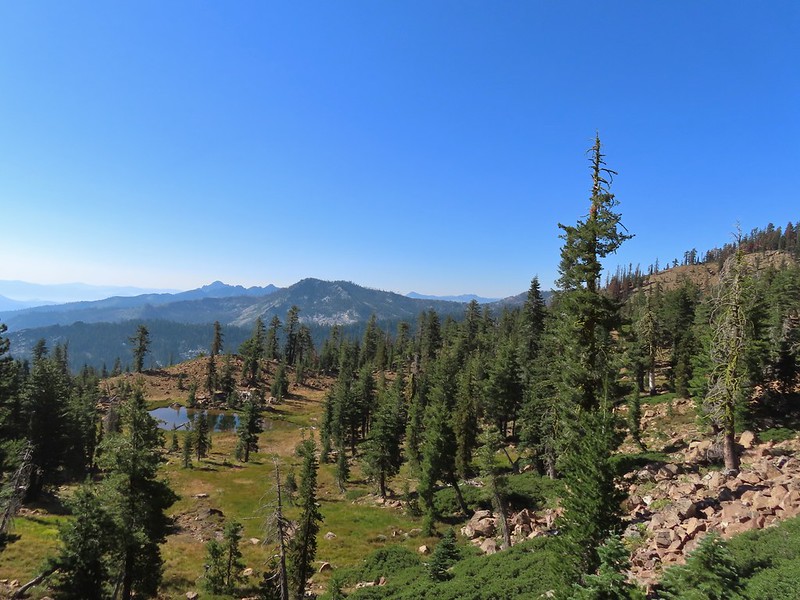
Mt. Shasta over Mt. Eddy through the haze. I believe the lake below to the right is Big Marshy Lake.
Fireweed in the rocks.
Paintbrush
A bit of water from a spring along the PCT.
The water was coming from somewhere up there.
Looking back along the PCT.
Snack time.
Caesar and Thompson Peak
This northern flicker looks like its head is on backwards.
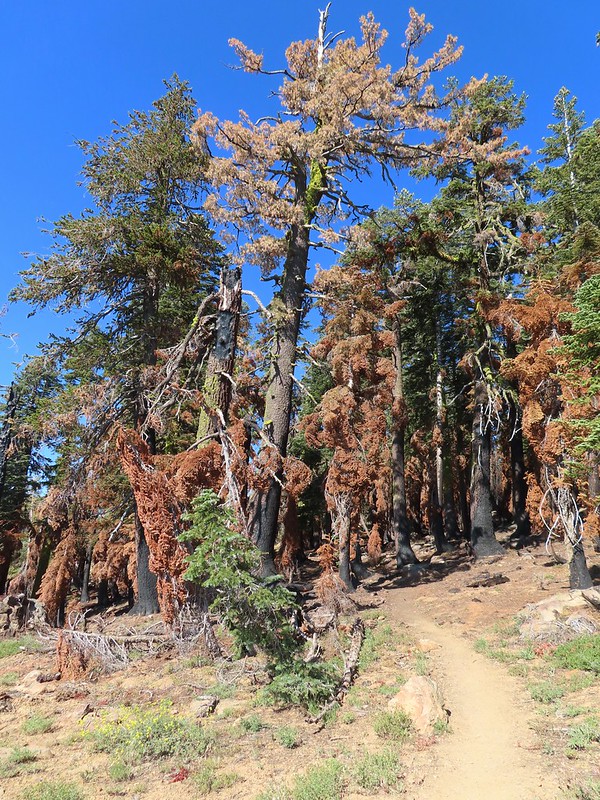
A little bit of burned forest near the pass.
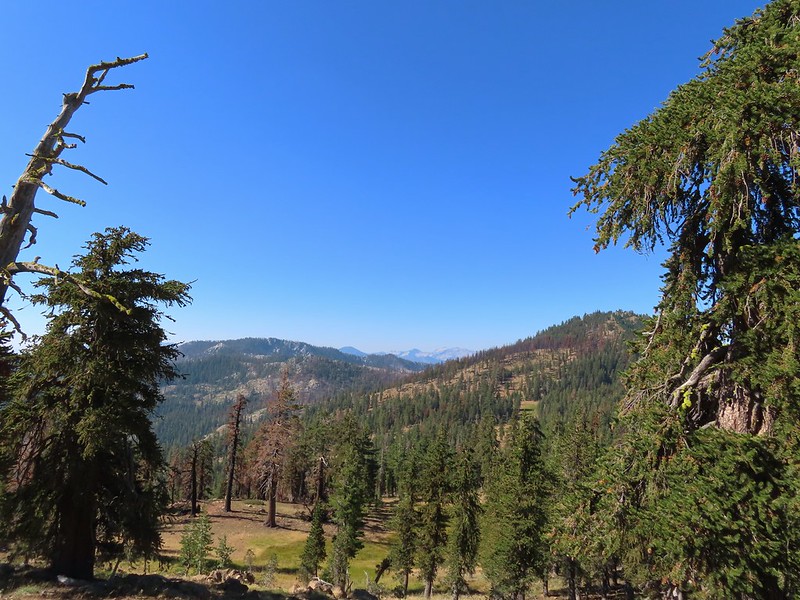
More peaks in the heart of the Trinity Alps.
Caribou Mountain (post) on the right with Sawtooth Mountain over its shoulder.
The pass above Middle Boulder Lake.
Middle Boulder Lake is just visible beyond two smaller unnamed lakes.
There was no sign at the pass but a small cairn marked a trail to the right that led down past the lakes. Middle Boulder Lake Trail at the pass.
The Middle Boulder Lake Trail traversing down the hillside.
A sulphur butterfly.
The trail stayed above the two unnamed lakes.
The trail grew faint as it passed through a series of meadows where little frogs were abundant. The trees on the far hillside were burned in the 2021 fire.
Approximately 0.6 miles from the pass we came to a cairn near a downed tree. A trail sign had been attached to the end of the tree marking the Boulder Tie Trail. The cairn to the right of the downed tree.
It took us a minute to identify the actual start of this trail which was in a wet meadow. There were a few small cairns that helped guide the way and we soon found ourselves on clear tread again. This may be Autumn dwarf gentian
One of the more obvious cairns.
Butterfly on a seed head.
The tread getting clearer.
Middle Boulder Lake
Back on good tread.
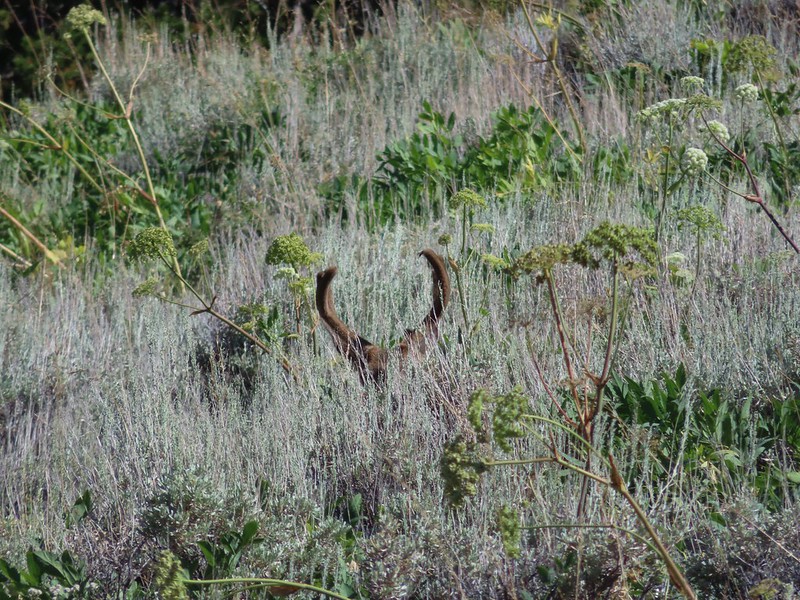
As we were traversing a sagebrush hillside Heather started repeating something behind me. She was saying “buck” but that isn’t what I heard and thought something bad had happened to her.
The vegetation was tall enough that he was hard to pick out but when he raised up we got some decent views.
Orange agoseris
After a mile and a half on this trail we climbed to a saddle overlooking East Boulder Lake. Passing through a bit of forest before climbing to the saddle.
From the saddle we spotted a hiker making his way along the lake. He spotted us as we were descending and waited for us to come down. We lost the trail again as we descended and simply hiked cross country through the sagebrush to the East Boulder Trail. The waiting hiker asked us about the loop and how hard it was to follow. He was a local that had been to the lake and the pass above several times but had never attempted the loop. After getting some information from us and taking photos of our paper map he was considering giving the loop a go. We went our separate ways, recrossed the dam, and returned to the trailhead. Approaching the dam.
Fish in East Boulder Creek.
Descending near the waterfall.
An aster or fleabane.
Butterfly
Woodpecker
While Sullivan listed the hike as 9.8 miles our GPS only registered 9.6 miles with a total elevation gain just under 2000′.
We returned to Etna, showered, and then headed to Paystreak Brewing for dinner. We turned in fairly early in anticipation of our longest hike of the week the next day when we would be taking the PCT north from Carter Meadows Summit and heading into the Russian Wilderness. Happy Trails!
We had planned a five day backpacking trip in the Wallowas but then a red flag warning for the possibility of abundant lightning the first day followed by more chances of thunderstorms over then next two derailed those plans. That trip would have checked three more featured hikes from the remaining twenty one hikes on our to-do list from the Eastern Oregon area. With all twenty one of the those hikes being located in the NE corner of Oregon (15 in the Wallowas and 6 along Hells Canyon) there were no alternate plans we could look to in that area to continue making progress toward or 500 featured hikes goal (post) so we turned to the Southern Oregon & Northern California book instead. For that area we still had thirty one featured hikes left including five hikes in Northern California, one at Mt. Shasta and four near Carter Meadows Summit west of Callahan, CA. A clear forecast and no wildfire closures provided a green light so we booked a last minute room at the Etna Motel in Etna, CA and once again headed south this year.
When we reached Yreka, CA instead of taking Highway 3 to Etna we stayed on Interstate 5 and continued south to Mt. Shasta and made our way to the Upper Panther Meadows Trailhead. We had tried to do the hike here in late July 2017 but a late snow melt that year had kept the gate to this trailhead closed so we had hiked from Bunny Flat instead (post).
Lupine at the trailhead.
A line of smoke over the Castle Crags (post) and Mt. Eddy (post).
Castle Crags
From this trailhead we followed the Everitt Memorial Highway uphill a quarter mile to the South Gate Meadows Trailhead. Green Butte and Mt. Shasta
Here we hopped onto a rock lined trail and climbed a half mile to a pass where we entered the Mt. Shasta Wilderness.
Common buckeye
Red Butte from the pass.
Mount Eddy from the pass.
Heather standing at the wilderness boundary.
From the pass the trail descended 0.6 miles to a signed trail junction at The Gate below Red Butte. A dry spring along the trail. Ideally we would have been doing this hike (and trip) in late July for more wildflowers but sometimes the circumstances dictate when and where we wind up.
Approaching The Gate.
Shastarama Point and Thumb Rock
Gray Butte
The trail junction near The Gate. The trail to the right would be our return route to make a loop through Panther Meadows, but for now we went left following the pointer for South Gate Meadows.
We followed the trail downhill through boulders from Red Butte then into a forest that provided the first real shade of the hike.
A paintbrush and aster.
Penstemon
Some haze to the south but we could make out Lassen Peak which is one we rarely ever get to see.
Lassen Peak
Just under three quarters of a mile from The Gate we arrived at South Gate Meadows.
Primrose monkeyflower
From the meadows use trails head both up and downhill along South Gate Creek (aka Squaw Valley Creek). Sullivan showed a “monkeyflower spring” a half mile uphill and a “circular meadow” four tenths of a mile downhill. Not knowing when we might be back we decided to do both starting with the downhill first. The use trail crossing the creek.
In sight of the circular meadow.
Marsh grass-of-Parnassus
Paintbrush
After a quick visit we headed back up to South Gate Meadows.
Back at the meadows.
We then took a use trail up along the eastern side of the creek which brought us to the spring.
A pair of common buckeyes.
Primrose monkeyflowers and paintbrush
Not the “monkeyflower” spring but a smaller one along the way up.
The “monkeyflower” spring.
A couple of monkeyflowers and a buckeye.
I climbed a bit above the spring to check out the view.
Heather arriving at the spring.
We took a break here and one at the little spring we’d passed on the way up and then headed back toward The Gate. A Clark’s nutcracker also taking a break.
Two types of monkeyflower and bog St. John’s wort,
One last pass through South Gate Meadows.
Red Butte
Shasta knotweed
Back at The Gate.
From The Gate we followed the pointer for Panther Meadows. This trail brought us through a barren landscape before climbing over some glaciated rock and entering a forest. Mt. Shasta from the trail.
Red Butte
Glaciated rock.
Mt. Shasta and Sargents Ridge.
Into the forest.
The trail left the wilderness along the way.
Just over three quarters of a mile from The Gate we arrived at a junction with the Gray Butte Trail. We had considered taking this 0.9 mile detour but it was already 2:20pm and it was also fairly warm so we decided to skip it this time around. The junction with Gray Butte behind the trees.
From the junction the trail gradually descended a half mile to Panther Meadows.
Another Clark’s nutcracker. They are boisterous birds and other than first thing in the morning we get a kick out of listening to them.
Stream flowing through the meadows.
Gray Butte from Panther Meadows.
At a junction on the west side of the meadow near Panther Meadows Campground we followed a pointer for Upper Panther Meadow.
We followed this trail just over a third of a mile uphill to another junction where we turned right and followed a path across the creek.
We kept right for 0.2 miles to reach Panther Spring.
After visiting the spring we backtracked a tenth of a mile and turned right for a third of a mile back to the Panther Meadows Trailhead to complete the loop.
Picnic tables at the trailhead.
With the two side trips at South Gate Meadows and some other wandering the hike came to 7.4 miles with approximately 1900′ of elevation gain.
From the trailhead we drove to Etna and checked into our motel then made a quick run to Ray’s Food Place for some food for the week. It was a nice start to the vacation made even better when we saw that the Callahan Fire which had started on 20th just 6 miles east of Callahan had been fully contained at less than 10 acres. That one had the potential to do a lot of damage (and put a nix on the rest of our hikes). Our plan for the next day was to hike to East Boulder Lake as that was the closest to where the Callahan Fire was and therefore most likely to be closed if that fire were to spread but thankfully it sounded like that wasn’t going to happen. Happy Trails!
While we completed our goal of hiking portions of all 100 featured hikes in William L. Sullivan’s 4th edition of “100 Hikes/Travel Guide Central Cascades” in 2020 (post) there remain a few “loose ends” that we’d like to take care of. We have established some guidelines for considering a featured hike “done” allowing us some wiggle room. For instance we might start at a different trailhead than Sullivan’s description but still visit the main attraction(s) he describes. It might also mean starting at the trailhead described but due to closures might cut the hike short. The two most common dilemmas we faced though were featured hikes with a short and long option and featured hikes that included multiple stops/destinations. Regarding the short vs long options we’ve tended to opt for the longer option assuming the distance is reasonable, under 16 miles (maybe not reasonable to all), but when the longer options are close to or more than 20 miles we’ve settled for the shorter.
For the featured hikes where there are multiple stops/destinations we allow the hike to be checked off once we have completed either the longest option, and/or visited the hike’s namesake. A perfect example is Featured Hike 23 in the Central Cascades book (4th edition). The hike is titled “Pamelia Lake & Hunts Cove” with three options given, all beginning at the Pamelia Lake Trailhead. The shortest is a 4.4 mile out-and-back to Pamelia Lake while the longest is a 12.4 out-and-back to Hunts Cove. Sandwiched in between is a 10 mile out-and-back hike up Grizzly Peak. We had been to Hunts Cove once (post) and Pamelia Lake twice (once on the way to Hunts Cove and the other on an attempt to reach Goat Peak (post)) so going by our self-imposed rules we checked the hike off, but we had yet to visit Grizzly Peak. To put a ribbon on the featured hike we obtained a pair of Central Cascade Wilderness Permits (required at this trailhead) and once again set off for Pamelia Lake.
This was at least the third posted notice so there is no claiming you weren’t aware that a permit is needed.
The roughly two mile hike to Pamelia Lake never disappoints.
Pamelia Creek
Fireweed along the creek.
We turned right onto the Grizzly Peak Trail at its junction a short distance from the lake.
The trail crossed the dry outlet creek and then began the nearly 2000′ climb to Grizzly Peak. Pamelia Creek only flows underground here much of the year.
Heading up.
The trail climbs for two and three quarters of a mile to a former lookout site through a nice forest with limited view for the first two miles. A glimpse of Mt. Jefferson.
That might be Woodpecker Hill, it was hard to tell exactly which ridge we could see with nothing else visible to help orient.
This looked like it might be a nice little waterfall with enough water.
That’s not enough water.
Heather below one of several switchbacks.
Just over two miles from the junction the Grizzly Peak Trail we came to a viewpoint on a ridge. Here the trail made a sharp right and followed the ridge SE. There were multiple views along this ridge, the one issue we had though was it was still fairly early and the angle of the Sun was catching all the haze in the air. Turning up the ridge.
The haze was probably a combination of morning cloud/fog and smoke from the Cedar Creek Fire near Waldo Lake.
Pinedrops
We were too late for most of the flowers but there were a few pearly everlasting going.
There’s that pesky Sun again.
After following the ridge for 0.4 miles the trail veered to the right leaving it and traversing up a forested hillside with views north towards the Bull of The Woods Wilderness where we got our first good look at the fire scars from the 2020 Labor Day fires.
A quarter mile after leaving the ridge the trail came to another ridge and made a hard right following this ridge up to the summit. This section provided views south to Three Fingered Jack, the Three Sisters, and Broken Top.
Broken Top to the far left blending into the haze and Three Fingered Jack to the right with the Three Sisters in between.
Just below the summit.
Pamelia Lake below Mt. Jefferson.
We spent a little over half an hour at the summit checking out different views and watching several butterflies and some large black flying insects.
Hunts Creek flowing into Pamelia Lake.
Had to hunt for a view of Three Fingered Jack.
A hard to make out Mt. Hood beyond the far ridge which consists of Bear Point to the left (post) and Dinah-mo Peak to the right.
Mt. Hood
Beardtongue
A fritillary butterfly.
A skipper
We returned the way we’d come opting not to visit the lake on this trip since we have permits to return next month for a second attempt at Goat Peak. Goat Peak is to the right of Mt. Jefferson.
Mt. Jefferson and Pamelia Lake from one of the viewpoints along the ridge.
Cascade toad
One more of Pamelia Creek.
One other hiker had arrived at the summit a bit before we headed down and that was the only other person we saw until we were headed back down. We encountered one couple coming up the Grizzly Peak Trail and a number more on the Pamelia Lake Trail. It was a little surprising because the trailhead parking lot had looked nearly full when we had arrived that morning. The hike was nice and the well graded trail kept the 2700′ of elevation gain from ever feeling steep. It also allowed us to be home before 2pm which gave us time to unpack and clean up before heading of to a friends house for their annual margarita (and dinner) party. Happy Trails!
For our day trips we try and keep our driving time time to trailheads under 3 hours (preferably two and a half or less). The one exception to that is Mount Adams which sits right around that 3 hour mark from Salem. Due to the distance we don’t get there as much as we’d like but we’d put it on this years schedule. We’ve been turning more to Matt Reeder’s guidebooks and hike #16 his “Off the Beaten Trail (2nd edition) was the hike that we’d originally planned on. While doing some research on the Riley Camp Trail I learned of a use trail not far from the that trail’s junction with the Pacific Crest Trail that led to Crystal Lake so we decided to extend his suggested hike a bit.
A very favorable forecast, sunny skies with a high in the low 50s, provided a green light for our plans and we made the long drive to the Riley Camp Trailhead. The Riley Camp Trail (Trail 64) on the opposite side of FR 23.
A short distance up the trail we stopped to fill out a day use permit (free) and review the wilderness map on the signboard.
Trail 64 led gradually uphill through a nice forest.
A little over one and a quarter mile from the trailhead we came to a signed junction with the Riley South Trail (Trail 64A).
We stayed left on the Riley Camp Trail which almost immediately entered the Mount Adams Wilderness.
We weren’t aware that the Forest Service was employing wilderness greeters.
May I see your self-issued permit?
We had started to notice a fair number of mosquitos near the junction and were forced to turn to the Deet. We’d been pretty luck so far this year at avoiding the little blood suckers but not on this day. While they weren’t anywhere near as bad as we’ve had them before they were persistent between the Riley South junction and the end of the Riley Camp Trail at the PCT. With the bugs after us we kept a decent pace as the trail continued it’s gradual climb through the forest. The trail was in pretty good shape with just a few downed trees to step over/under.
First look at Mt. Adams through the trees.
Near the 2.7 mile mark the trail briefly entered a 2015 fire scar.
Luna Lake
Aster
We left the fire scar behind as the trail turned north passing by a series of ponds/lakes (mosquito breeding grounds).
More Mt. Adams.
Paintbrush and lupine
Beyond the mosquito birthing centers the trail began to curve back to the east and entered Riley Creek Meadows.
Sub-alpine mariposa lily
Riley Creek along the trail.
Just over 4.5 miles from the trailhead we crossed Riley Creek. Riley Creek at the crossing.
Beyond the crossing the trail made a final 0.3 mile climb to the PCT. A trail sign up ahead at the junction.
We turned right on the PCT which brought us back to Riley Creek after 0.2 miles. PCT marker on the tree.
Riley Creek below the PCT crossing.
We detoured briefly upstream to revisit our dinner spot during an overnight trip in 2017 (post).
White mountain heather
A nice paintbrush
After the short detour we continued south on the PCT to Burnt Rock (just under half a mile from Riley Creek). Mt. Adams behind us as we headed south.
Sheep Lake
Mt. Rainier behind a line of clouds.
Burnt Rock behind the snags left over from the 2012 Cascade Creek Fire.
Alpine false dandelion
Grouse
Near Burnt Rock we looked for a user trail heading toward the mountain and took a left onto it once we spotted it.
It was another half mile to Crystal Lake. The use trail was fairly easy to follow. It did steepen just before the lake.
Hummingbird visiting paint.
Mountain heather
On the final pitch.
Mt. Rainier and Goat Rocks
Phlox
Almost there.
Not Crystal Lake, just a pretty little tarn nearby.
Fortunately mosquitos weren’t an issue up here so we were able to relax and spend a good deal of time exploring around the lake and a little beyond. Mt. Rainier
Just a bit of snow left around 6300′.
The little tarn we’d passed.
While not big Crystal Lake was deep.
View down from the rocky ridge on the south side of the lake.
The rocky ridge along the south side of the lake.
We continued a tenth of a mile beyond the lake for a dramatic view of Mt. Adams.
We could hear a waterfall below on Riley Creek.
Zoomed in on the waterfall below.
Crystal Lake from above.
Mt. Rainier with Goat Rocks to the right.
Mt. Rainier
Some of Goat Rocks.
Golden-mantled grounds squirrel
After a good break we headed back down past the lake and back to the PCT.
Getting ready to drop down.
Clark’s nutcrackers
Butterfly on mountain heather.
Saxifrage
Violet
Alpine speedwell
A checkerspot
A crescent
Mountain bluebird
Northern flicker
I’m guessing a warbler of some sort. We saw quite a few of these little yellow birds but had a hard time actually getting a photo.
We turned right on the PCT and followed it back to the Riley Camp Trail and then followed that trail back to our car. Mt. Adams from the PCT.
Adams Glacier
Riley Creek at the PCT crossing.
Wildflowers along the PCT.
Bee on valerian
Butterfly on valerian
Another butterfly on valerian
Looking back at Mt. Adams from the Riley Camp Trail.
Passing through Riley Creek Meadows.
Gentian
We only saw a couple of beargrass blooms.
Pollinators on fleabane.
False hellebore
Luna Lake and Mt. Adams from the trail.
The mosquitos remained a nuisance as we made our way back to the car so we kept a brisk pace. When we arrived back at the car there was a family preparing to set off for an overnight stay. They had an extra half of a pizza due to getting a free pie after the pizzeria initially made the wrong one. They offered us the extra since they couldn’t take it with them and we gladly accepted. Lunch was solved and dinner wound up also being solved when my parents took us and our Son (who was visiting for our Nephew Tyler’s 4th birthday party) out to Gilgamesh Brewing’s The Woods. It was a great ending to the day.
Our hike to Crystal Lake came in at 12.6 miles with approximately 2900′ in cumulative elevation gain. While I typically don’t share tracks for off trail hikes this one is listed on several prominent hiking websites so am including it below. If you do visit please be respectful, tread lightly, and Leave No Trace. Happy Trails!
**Note the 2017 Jones Fire burned a portion of this hike.**
For the second set of hikes during our weekend near Glide, OR we had a pair of short waterfall hikes planned which we hoped would be less eventful than our hikes had been the day before. We started our morning by heading east on Highway 138 to the recently reopened (following the 2020 Archie Creek Fire) Fall Creek Falls Trailhead. This is one of three stops that make up Sullivan’s featured hike #2, Fall Creek Falls edition 4.2 “100 Hikes/Travel Guide Southern Oregon & Northern California”. We had visited Susan Creek Falls in June this year before this trail reopened (post). The third hike to Fern Falls is still inaccessible due to still being under a closure order from the fire.
From the small parking area the trail immediately crosses the creek on a footbridge.
The trail passed between some interesting rock formation in the first third of a mile.
Scarlet monkeyflower
The terrain opened up a bit as we neared the waterfall.
The trail first passes near the splash pool of the lower tier before switchbacking uphill to a viewpoint of the upper tier.
Heading for the viewpoint.
The upper tier from the viewpoint.
Our 6am start allowed us to have the trail and falls to ourselves which was nice because it is a popular trail. (There was a couple sleeping on the pavement in the parking lot surrounded by empty Mike’s Hard Lemonade bottles. To their credit they did pack everything into their car when they left.)
After returning to the car we drove to the Wolf Creek Falls Trailhead along Little River Road. The 1.2 mile trail here is part of featured hike #3 – Little River Waterfalls in Sullivan’s book and is overseen by the BLM and begins with a crossing of the Little River on an arched footbridge.
The forest along the trail combined with Wolf Creek made this our favorite scenery of the weekend. It was a perfect mix of forest, creek, and rock formations.
Wolf Creek Falls solidified this as our favorite hike of the weekend. The trail first passes above a lower fall then leads to a viewpoint above that cascade and of the larger 70′ fall at trails end. First good view of the lower fall from the trail. The upper fall was visible but somewhat blocked by trees.
We really liked how the water curved and narrowed as it cascaded down.
The pool appeared to be extremely deep.
After a nice break admiring the upper fall we headed back and I detoured downhill on a use trail to get a closer look at the lower falls.
Even though it was still early (we were at the falls a little after 8am) we were surprised no one had been on the trail. There hadn’t been any cars at the trailhead either time we’d driven by the day before either which we found a bit odd considering how nice the trail and waterfall were. We did finally encounter a couple of other hikers as we made our way back to the car. This had been a perfect hike to end our trip on. The two hikes combined for just 4.5 miles and 630′ of elevation gain, which was about all my feet could take, and we were able to make it home before noon giving us plenty of time to unpack and get ready for the work week ahead. Happy Trails!
We’ve unfortunately entered fire season which means we are keeping a close eye on current and new fires as well as any associated closures. At the time of writing the Cedar Creek Fire has closed the Waldo Lake Wilderness, part of the Three Sisters Wilderness as well as some of the surrounding forest and other fires have closed part of the Diamond Peak Wilderness. We had reservations at the Ideyld Lodge for August 6th and luckily our planned hikes for the weekend were not impacted by any of the current wildfires so we left Salem a little before 5am and headed south on I-5.
Like our earlier trips south this year we were continuing to work on checking off featured hikes from William L. Sullivan’s “100 Hikes/Travel Guide Southern Oregon & Northern California” guidebook (post). This time we planned on completing hike #3 – Little River Waterfalls (edition 4.2) as well as another waterfall from hike #2 – Fall Creek Falls. Due to those hikes combining for just 8 miles of hiking we had also planned to add Hemlock Lake (hike #103) onto Saturday’s outing. Sullivan’s Little River Waterfalls hike includes three stops to visit four waterfalls: Wolf Creek, Grotto, Yasko, and Hemlock Falls. The last two both starting from the Lake in the Woods Campground. The Hemlock Creek Trail also begins at this campground and climbs up to the Yellow Jacket Loop Trail which is the trail that Sullivan has you take for his Hemlock Lake hike. We planned on parking at the campground and taking all three of the trails and then time permitting stopping at Grotto Falls on our way to the lodge.
We arrived at the campground and couldn’t tell exactly where the day use area was (we missed the small sign) and wound up driving around the lake through the campground. Instead of trying to figure out where the day use area was (It was immediately to the right as you start counter-clockwise around the loop.) we exited the campground and turned right (east) on FR 27 for a tenth of a mile to FR 421 where we turned right for another tenth of a mile to a pull out where the Hemlock Creek Trail crossed the road. Hemlock Creek Trail heading uphill toward Hemlock Lake.
Trail sign for the Hemlock Creek Trail heading down to Lake in the Woods from FR 421.
We opted to do the two short trails to the waterfalls first hoping for less crowds (spoiler alert we saw no one) and hiked a tenth of a mile down to the campground round where we turned right. Hemlock Creek Trail at Lake in the Woods Campground.
Lake in the Woods (a 4 acre man made lake).
We exited the campground and crossed FR 27 to a hiker symbol marking the start of the Yasko Falls Trail.
The trail led gradually down hill for three quarters of a mile to Yasko Falls.
Ghost plant
We had heard this particular waterfall was one that was best viewed when the water flow wasn’t too strong which is one reason that we’d chosen August for a waterfall trip. The other reason was mosquitos are reportedly bad here and fierce at Hemlock Lake earlier in the year, in particular July. The 50′ waterfall did not disappoint and we spent some time admiring the cascade before returning to the campground.
A rare photo of me for scale.
At the campground we turned right following the path we’d driven earlier and now spotting the day use sign. We mistook this for another campsite having not noticed the small sign on the tree.
A tenth of a mile from the day use area we left the road and turned onto the Hemlock Falls Trail.
This half mile trail descended 300′ to Hemlock Falls.
We again returned to the campground and completed the loop around Lake in the Woods then took the Hemlock Creek Trail back up to FR 421 and continued on uphill. We both noticed that the sign said Hemlock Lake was 4 miles away. Sullivan’s map showed that it was 3 miles from Lake in the Woods to the Yellow Jacket Loop which raised the question was the hike going to be 2 miles longer than we’d expected or did the 4 miles include some of the Yellow Jacket Loop? Based on the mileage in Sullivan’s book I had come up with 16.6 miles so an extra two miles would be pushing us close to 19 (we always find reasons to wander).
Sleepy bee
Same mileage on the sign on the other side of FR 421. The fact that Road 2759 showed 2 miles when Sullivan had 1.5 on his map was a pretty good indicator that we were in for more than 16.6 miles.
The Hemlock Creek Trail climbed at a reasonable grade through a nice forest and passed several waterfalls. While the falls were partly visible from the trail, use trails led steeply downhill to better views. Gluttons for punishment that we are we took advantage of these trails to visit the falls.
Tributary Falls (unofficial name) was just below a footbridge approximately a half mile from FR 421.
Middle Hemlock Falls was just two tenths of a mile further along.
Small cascade below Middle Hemlock Falls.
Leopard lily
Another drop with no way to get a view of the fall from above.
Typical use trail.
A small slide that was fully visible from the trail.
Clover Falls was a quarter mile above Middle Hemlock Falls.
Clover Falls
More leopard lilies
Moth hanging out around the falls.
Use trail to Clover Falls.
Heather coming up from the falls through a huckleberry bush that I may have been using for snacks.
All of these falls were before the trail reached Road 2759. Beyond Clover Falls the hillside steepened and the trail veered away from the creek as it climbed via a series of switchbacks to the road crossing. Skunk cabbage leaves in a wet area.
Curious stellar’s jay.
FR 2759.
The trail leveled out quite a bit on the other side of the road crossing Hemlock Creek a couple of times on footbridges. Again with the 2 miles.
A much more reserved Hemlock Creek.
More snacks
Frog
We started to encounter some open meadows as we neared the junction with the Yellow Jacket Loop Trail.
Coneflower and paintbrush
Fleabane
The wildflowers were already on the way out but on the positive side we didn’t have much trouble at all with mosquitos.
At the junction, which was only marked by a post we turned right. Hemlock Lake was to the left but Sullivan’s hike description called for doing the loop counter-clockwise. He typically has a reason for the direction he suggests so we’ve learned to stick with his recommendations.
The trail passed through a couple of meadows where pollinators were busy visiting the remaining flowers.
Busy bee
A lone columbine
Dragonfly
Mountain owl’s clover
Damselfly
Bee on rainiera
Butterfly on hyssop
Oregon checkermallow
Coneflower
Fleabane and paintbrush
Brief forested section.
Hedgenettle
Northern phlox
Flat Rock beyond a meadow.
Large boykina
From the junction it was a mile to the Flat Rock Trail where a three quarter mile detour led up to a viewpoint atop Flat Rock. Heather had been feeling a little “off” since a little before reaching the Yellow Jacket Loop so as we were climbing up from the meadows she decided to skip the out-and-back and instead would continue on the loop and I could catch up to her after visiting the viewpoint. I went on ahead and turned right at the signed junction.
After dropping a bit to a saddle the Flat Rock Trail leveled off which meant that the 500 plus foot climb that was needed to reach the top was all going to be packed into the last quarter mile or so. There was an opening at the saddle where Diamond Peak (post) was visible through a bit of haze.
The all too familiar Summer “smoke” filter on the mountains.
The trail was a bit overgrown in places.
Starting to climb.
The climb was indeed fairly steep and it was probably a good thing Heather decided to skip it, although that decision had other repercussions. While the view from Flat Rock was pretty nice it wasn’t as nice as the view above nearby Twin Lakes had been when we visited in June (post). Heading out to the viewpoint.
Hemlock Lake from Flat Rock with Mt. Bailey (post) and the spire of Mt. Thielsen (post) in the distance.
Quartz Mountain in the foreground with Hillman Peak and The Watchman (Crater Lake Rim) in the distance.
Diamond Peak in the distance to the right and the smoke plume from the Cedar Creek Fire center-right.
Smoke from the Cedar Creek Fire 😦
I returned to the Yellow Jacket Loop Trail and turned right and started to play catch-up with Heather. Beyond the Flat Rock Trail the loop passed through more meadows and some forest that had been impacted by the 2021 Smith Fire.
Parnassian on hyssop
Grand collomia
Swallowtail on hyssop.
Just over three quarters of a mile from the Flat Rock Trail I came to a sign for the Cavitt Mountain Tie Trail which didn’t show up on the GPS map or on Sullivan’s map.
Heather had placed an arrow using sticks to show that she had turned left here sticking to the Yellow Jacket Loop and I followed. A tenth of a mile later the trail came to a viewpoint at an old roadbed. Mt. Bailey and Quartz Mountain.
Quartz Mountain
If Sullivan’s map hadn’t indicated that the trail followed a roadbed for a short distance I might not have known that this had once been a road.
Union Peak. To the left is Highrock Mountain and to the right of Highrock Mountain are the Rabbit Ears (post), a rock outcrop sticking up over a ridge.
The end of the old road section.
The only blooming lupine I saw all day.
I still hadn’t caught up with Heather when I came to a lone post which caused me to stop and ponder our decision to split up. I had realized we’d made the mistake of not setting a meet point where she would stop and wait for me, or I her if I somehow wound up in front of her. At this unsigned post the trail appeared to go straight but the maps showed the trail veering to the left. I looked for an arrow or even footprints to indicate which way Heather had gone. She also carries a GPS and had Sullivan’s map and hike description so I thought there was a good chance she went the right way, but it was a confusing enough junction that going straight wasn’t out of the question. The actual trail to the left was very overgrown here and hard to pick out at first glance.
The map showed FR 625 in the direction of the right hand fork and it also showed the trail nearly touching that road two time further along the ridge it was on so I decided that even if she had taken a wrong turn here she would hop back onto the trail at one of those other two points so I went left and kept my eyes out for her.
The first convergence with FR 625.
Signpost at the second meeting.
The further I went the more concerned I became because I knew she hadn’t been feeling great when we split up and I had been moving at a crisp pace and had expected to catch up to her by now. I talked myself into think she might have started feeling better and with the trail being more level and starting to go downhill she may have been moving faster than I’d expected and I wasn’t sure quite how long my detour up to Flat Rock had taken. I continued on passing a sign for the Snowbird Shelter Trail and coming to Dead Cow Lake where I optimistically thought she might be waiting. There were a lot of different types of signs along the loop.
Dead Cow Lake turned out to be a bust, not only was Heather not there but the lake was more of a slime filled pool. At least from what could be seen from the trail, there wasn’t any visible way to the lake itself.
Monkshood
It was a little under a mile from Dead Cow Lake to the next trail junction where I thought I might find her. This end of the loop was steeper than the other which made doing the loop counter-clockwise the better option. I was moving rather quickly now and not stopping for much but I did pause for these sugar sticks.
When I didn’t find Heather at the next junction another possible scenario popped into my head. The right fork led 0.8 mile to a picnic area near the Hemlock Lake boat ramp and I suddenly wondered if Heather thought I had planned to loop around Hemlock Lake that way.
That hadn’t been the plan but now I couldn’t remember if we had really discussed that part. The left fork led back to the Hemlock Creek Trail in 0.7 miles and had been my intended route. I decided to go that way hoping that Heather hadn’t gone to the picnic area and was waiting there for me (if only we had agreed on a meet point). The trail never got very close to the lake.
I passed the day use parking area looking for any sign of Heather but didn’t see her and then didn’t find her at the junction with the Hemlock Creek Trail. Signboard at the Hemlock Lake Day Use Area.
Loop complete, no Heather.
Again not having set a meeting spot meant that I didn’t know for sure if she was somehow still ahead of me or if she was at the picnic area or if I had somehow passed her without knowing it. I decided my only choice was to double time it down the Hemlock Creek Trail and if she wasn’t at the car I would leave a note and drive up to Hemlock Lake to search the picnic area and campground for her. I half jogged half double timed it down to FR 2759 and was pretty sure she wasn’t in front of me as I crossed that road. My suspicion was confirmed when I ran into a trail crew near Clover Falls and asked if they’d seen a woman go by. (These were the only other people I’d seen on trail all day.) That cinched it so I jogged the majority of the way down to the car. I wrote two notes letting her know that I was driving up to look for her and to stay there if she happened to come down behind me as I would come back if I didn’t find her at Hemlock Lake. I stuck the notes on a tree limb near the trail sign and under a rock in the fire pit near where we’d parked and drove up to the boat ramp. No one there had seen her so I drove through the campground to the day use parking area. As I stepped out of the car I spotted her coming up from the trailhead signboard where she had just left a note for me.
It turned out that she had indeed gone right at the unmarked post and gotten on FR 625. She realized her mistake pretty quickly and turned around but we’d timed it just right and I had passed her during that time. Fortunately she took several breaks thinking that there was a chance I might still be behind her so she was just getting ready to head down the Hemlock Creek Trail when I pulled up, prayers answered. The whole debacle was a good reminder of how important it is to make clear plans before splitting up.
Despite the anxious ending it had been a nice hike but it was too long, especially if you’re jogging a good portion of the final 3.5 miles. My hike wound up being 18.2 miles with over 3700′ of elevation gain. Heather’s was a bit shorter having skipped Flat Rock and the return trip on the Hemlock Creek Trail.
Deryl’s track
So how do you follow something like that up? With another hike of course. It was just after 4pm and since Grotto Falls was on the way and only about half a mile round trip we detoured to that trailhead. We were mostly motivated by the thought of not making the drive the next day so we could get home a little earlier.
There were two other cars at this trailhead and we set off behind a family with a couple of youngsters. The trailhead is right after crossing Emile Creek.
The setting for Grotto Falls was impressive. There wasn’t a lot of water flowing in the creek this time of year but there was enough and we were treated to a pair of small rainbows which added to the beauty.
The trail lead behind the falls giving us a chance to cool off in the water.
Cave behind the falls.
This was a perfect short hike to end the day on allowing us to relax a bit. We returned to the car and drove to the Idleyld Lodge and checked in. Then Heather ran across the street Idleyld Trading Post where she picked up some tasty post hike burritos. The historic lodge narrowly escaped the 2020 Archie Creek Fire and recently changed owners. It was obvious that the new owners had been putting a lot of work into the lodge and the room was quite comfy. What wasn’t were all the blisters on my feet, apparently jogging downhill at the end of an 18 mile hike isn’t something that they appreciated. In any event the day had ended on a high note. Happy Trails!
The Central Cascade Wilderness Permit system has been in place for 2 years now and for the second year in a row we gambled early and secured permits in April for a weekend backpacking trip. For the second year in a row weather prompted us to leave the purchased permits unused. Last September it was an early snow storm and this year it was a heat wave accompanied by the threat of thunderstorms. We had planned on hiking around Three Fingered Jack but after checking the forecast the morning of our departure we went to Plan B. The combination of nearly 90 degree temperatures (with an overnight low pushing 70) on trails that are 95% exposed due to passing through the 2008 B & B fire scar and the possibility of thunderstorms throughout the entire weekend just didn’t sound appealing.
We had gotten up at 4am and most of our packing already done but we needed somewhere to go. It needed to be nearby so we could get onto the trail early and short enough that we wouldn’t be out as the day warmed up. As I was trying to come up with ideas Alsea Falls came to mind. We had hiked to the falls in December 2011 (post) and had wanted to see them again when there was less water as the volume in December had been too much to see. With 3.5 miles round trip to visit both Alsea and Green Peak Falls this fit the criteria nicely and it would give us time to make a quick stop at E.E. Wilson Wildlife Area if we felt like it on the way back home.
We were the first car at the Alsea Falls Day-Use/Picnic Area and after paying the $5 fee (In 2012 we avoided this fee by parking along Miller Road which lengthened the hike.) we set off following pointers for Alsea Falls.
We stayed left here following the pointer. We later crossed the bridge on the way to Green Peak Falls.
A quarter mile from the trailhead we came to the top of Alsea Falls. The trail continued downhill providing a few different vantage points of the falls.
Heather in front of the falls.
December 2012
After checking out the falls from several spots we headed back up to the bridge and crossed the river. Looking down river from the bridge.
On the far side of the bridge we turned left following the pointer for McBee Park and Green Peak Falls.
We followed trail pointers to stay on the correct path which brought us to a road near McBee Park (Privately owned by Hull-Oaks Lumber Company).
Fireweed
We turned off the main gravel road at another sign for Green Peak Falls. Here a spur road led through a large campsite to a trail.
Green Peak Falls
Green Peak falls in December 2012.
It was interesting to see how differently the lower water levels affected the visuals of the two falls. For Alsea Falls less water allowed us to see more of the bedrock and gave the falls a little more definition and character. Green Peak on the other hand just had less water, it was still a nice waterfall but it wasn’t the thundering cascade that we’d experienced in 2012.
On the way back we crossed the river at McBee Park and explored one of the empty sites there.
Covered picnic table.
The table is one solid plank.
Instead of back tracking through the park to the trail and returning the way we’d come we decided to road walk back to the Alsea Falls Picnic Area. Sign for McBee Park along South Fork Road.
Trail down to the picnic area along South Fork Road.
This wound up being a 3.3 mile hike which was just what we were looking for. It had been warm when we started at 6:15am and it was already noticeably warmer when we got back to the car at 8am. It was still early enough though that we did decide to stop on our way home and finally check out the E. E. Wilson Wildlife Area.
The area, located just north of Corvallis, is one of several Oregon Department of Fish and Wildlife managed areas that requires a $10/day parking perming ($30 for an annual permit). Hiking options are limited here with just a 1.5 mile Interpretive Trail to a fishing pond and a 1.7 mile out-and-back to Coffin Butte. The $10 price tag for such sort hikes had kept us away but we had come into possession of an annual permit (They come with certain hunting and/or fishing licenses.) which eliminated that obstacle.
We parked at the Camp Adair Trailhead and promptly forgot to put the permit on the dashboard. Instead we got out, threw our packs on (we looked crazy for a 1.5 interpretive loop but we wanted the water that was in them), and started checking out the pheasants being raised in nearby cages.
Silver pheasant
After looking at the birds we walked through the Camp Adair Memorial Garden. Camp Adair was established approximately 6 months after Pearl Harbor and housed up to 40,000 personnel at a time comprising four infantry divisions.
Red-breasted sapsucker
Parking for the fishing pond is located on the opposite side of the memorial and at that parking lot we turned left on a road passing through a gate to a signboard.
We followed this road 0.2 miles to a “T” where we turned left.
Less than 100 yards later we came to a sign for the Fishing Pond on our right at another road junction.
We made it about a tenth of a mile up this road before I thought to ask Heather if she had put the permit on the dashboard since I’d completely forgotten about it. She had forgotten too so I left my pack with her at a bench and jogged back to the car, put the permit in the window, and (mostly) jogged back to her. We then continued on to the Fishing Pond. Bunnies in the grass near one of the benches.
Coffin Butte on the other side of Highway 99.
Turkey vulture
Wetlands on the other side of the pond.
Great blue heron
After walking a little way up along the western side of the pond we backtracked and started around the southern end where we picked up the continuation of the Interpretive Loop. The loop trail to the right.
Skipper
The loop passed through some wetlands before entering a series of fields and finally arriving back at the road.
Tadpole
We stayed left at any junction like this.
Dragon fly
Bindweed
Arriving back at the road.
We took a left on the road and retraced our steps to the memorial and then back to our car. Between our wandering and my return trip to the car to put the permit out I managed to turn this into a 2.8 mile outing but it should have been closer to 1.5. We still managed to be done just after 10am which was a good thing because it was already pushing 80 degrees. These two short hikes turned out to be a great option given the circumstances. Unfortunately as I write this several fires are burning in Northern California and the Oregon Cascades with more red flag warnings for lighting through Monday. Hopefully things won’t get too bad and we pray for the firefighters as they do their best to keep things in check. Happy Trails!
The late snow melt in in SW Washington had prompted us to push a planned hike to Silver Star Mountain at the end of June to next year but when we found ourselves in need of a substitute for another hike we took the opportunity to pull it back into this year. This would be our fourth visit to Silver Star Mountain having previously taken Ed’s Trail in 2013 (post), the Bluff Mountain Trail in 2015 (post), and the Grouse Vista Trail in 2019 (post). Those hikes had taken place on July 1st, June 27th, and June 24th respectively so this was a later visit for us, but we knew that the late snow melt had delayed the wildflower display so we still expected to get to experience that.
Our inspiration for this visit came from Matt Reeder’s “Off the Beaten Trail” (2nd edition) which was printed in 2019. Reeder calls the hike to Silver Star Mountain via the Starway Trail as “by far the most difficult….”. He also mentions that the last two miles of driving on FR 41 to reach the trailhead are “potholed and rocky” while the Forest Service states “Trailhead is best accessed by high clearance vehicles due to rough road conditions.” The Washington Trail Association also mentions that “…most of the roads accessing the trailhead have been severely degraded…” This last description was probably the most accurate description of what we encountered for the final 3 miles on FR 41. The road didn’t have pot holes, it had craters. Our Outback scrapped the ground twice emerging from said craters and I can’t imagine how a low clearance vehicle could make it given the current condition of the road. In fact there was a sign at the Sunset Falls Campground with slash going through a low clearance vehicle. We parked at a pullout near a gate at the FR 41/FR 4107 junction. Reeder mentions that you can drive 4107 approximately a half mile to the start of the actual Starway Trail at Copper Creek but if the gate gets closed your stuck. Looking at the gate we weren’t sure if it even still closed but we were more than done with driving at that point.
We headed down this one lane road approximately a half mile to a small parking area near a bridge over Copper Creek.
It was an overcast morning which was a welcome sight for this hike. Reeder had recommended not attempting this hike on warmer days due to the steepness of the climbs. The forecast for Silver Star was for a high in the low 60’s with partly sunny skies. We hopped that by the time we reached Silver Star we’d be greeted by those partly sunny skies, but the low 60’s temperatures were what we were really after. Beyond Copper Creek the trail followed an old road bed as it gradually climbed for a little over a quarter of a mile to a fork. Overgrown roadbed that is now the Starway Trail.
The fork with the Starway Trail to the right.
The trail began to steepen here but didn’t really pick up steam until reaching a couple of switchbacks 0.4 miles from the fork.
Scouler’s bluebells
Beardstongue
Paintbrush
Taken from the first switchback this gives a little reference for how steep the trail was.
The switchbacks only lasted a tenth of a mile and then the trail shot almost directly uphill. The grade varied between steep and really steep for three quarters of a mile where it finally leveled out for a bit on a bench along the ridge we had been following. Pictures never do justice to just how steep trails are.
Almost to the bench.
Level trail!
A section of trail on the bench passed through a carpet of foam flower. We’d never seen so much of that flower in one area.
Inside out flower
For about a half mile the trail avoided any overly steep climbing and then it once again headed uphill in earnest. The trail starting to steepen again.
Every website I checked agreed with Reeder that the Starway Trail didn’t see a lot of use. They all mention the steepness of the trail and that the trail was faint and could be difficult to follow. After having hiked the trail we can confirm the steepness but it appears that someone or some agency has put a good deal of work into improving the trail. We had no trouble following the tread and there were a couple of places where a series of short switchbacks appear to have replaced sections that went straight uphill. The first set of what appeared to be fairly recently built switchbacks.
At the top of the switchbacks the trail emerged in a small meadow where it once again leveled out. Approaching the little meadow.
A little bit of blue overhead through the fog.
Tiger lily
Paintbrush
Wood rose
Thimbleberry
I had gotten to this level section first and looked for a place to sit down and wait for Heather but the meadow was too wet so I found a log in the trees at the far end and had a seat. Into the trees to look for a log.
For a little over a half mile the trail climbed gradually alternating between forest and small meadows before arriving at its high point just below the wildflower covered Point 3977. Along the way we emerged from the clouds and got our first glimpses of Silver Star Mountain and Mt. St. Helens.
Silver Star Mountain
Bunchberry
Our first view of Mt. St. Helens
Zoomed in on Mt. St. Helens.
Arriving below Point 3977.
Point 3977
Pollinator on catchfly
The pink vetch was very bright.
Silver Star Mountain from the trail below Point 3977.
Rose
Wildflowers on Point 3977.
Bluebells of Scotland
Sub alpine mariposa lily
Checkerspot on Oregon sunshine
Lots of purple larkspur amid the other flowers.
A few columbine were hiding in the mix.
Violet
We surprised a fellow hiker as he rounded Point 3977 from the other side. He said he hadn’t expected to run into anyone on the Starway Trail. He’d started at the Ed’s Trail Trailhead and was doing a big loop using the Starway Trail and then road walking FR 41 & 4109 back to his car. He climbed up Point 3977 and we continued on planning to do that same thing on our way back. On the far side (south) of the point the Starway Trail suddenly dropped heading steeply downhill through a meadow. Starting down.
Looking back up.
For nearly the next three quarters of a mile the trail alternated between steep descents and more gradual downhills losing a little more than 500′ in the process. Then the trail shot back uphill gaining over 300′ in the next 0.3 miles before arriving at a junction with the Bluff Mountain Trail. Stars on the trees marked the Starway Trail at times.
Pinesap emerging from the ground.
A cairn at the end of this brief level section marked the start of another steep descent. By this time we’d lost enough elevation to be back in the clouds.
Part of the elevation loss was to drop below some interesting rock outcrops.
Fully back in the fog.
Time to climb again.
Big root balls.
Trail sign near the Bluff Mountain Trail junction.
Final pitch to the Bluff Mountain Trail.
On the Bluff Mountain Trail at the junction.
We turned right on the Bluff Mountain Trail which steadily climbed for nearly three quarters of a mile to a fork.
Lots of nice wildflowers along the Bluff Mountain Trail.
Another checkerspot
Paintbrush
Penstemon
We just couldn’t quite shake the fog.
First sighting of Mt. Rainier.
Mt. St. Helens to the left with Mt. Rainier to the right.
Coiled lousewort
Lupine
Getting closer to Silver Star.
Crab spider on fleabane
Spirea along the trail.
Bistort and mountain goldenbanner
First Mt. Adams sighting.
A crescent on bistort.
Penstemon
Wallflower with beetle.
Passing below Silver Star Mountain.
Mt. Hood
Rock arch below Silver Star’s summit.
At the fork we turned uphill to the left leaving the Bluff Mountain Trail.
This short connector trail climbed 0.1 miles to an old roadbed.
Fading avalanche lily.
The old roadbed.
We turned left and followed the roadbed 0.2 miles to a saddle. The summit to the left with Mt. Adams in the distance.
Mt. Hood to the right at the saddle.
We headed for the summit to start and met a couple with a cute puppy named Hazel, the same name as our cat that we’d lost a year ago nearly to the day (post). The puppy even shared similar colored fur to our Hazel’s.
The view from the summit was a good one on this day. The clouds were low enough that we could see all five of the Cascade volcanoes: St. Helens, Rainier, Adams, Hood and Jefferson. Mt. St. Helens, Mt. Rainier, and Mt. Adams.
Goat Rocks (between Mt. Rainier and Mt. Adams)
Mt. Hood and Mt. Jefferson
Mt. Jefferson. If you enlarge and look closely you can also make out Three Fingered Jack and the North Sister to the far right.
Swallowtail
Sturgeon Rock
Wildflowers at the summit.
Bug at the summit.
After a nice break at the summit we dropped back down to the saddle then climbed to the southern high point just to say we did. Point 3977 is the the island surrounded by clouds.
There was a lot of butterfly action here.
After tagging the southern point we headed back the way we’d come. The only beargrass bloom we saw all day.
As we were passing below Silver Star we kept our eyes out for our favorite trail animals, pikas. We’d heard a few from the summit and we were rewarded with spotting one of the little rock rabbits in a talus slope. The talus slope.
Pikas are not easy to spot.
On alert.
As always we kept our eyes out for other things we’d missed on the first pass. Orange agoseris
Ladybug
Making the steep climb back up to Point 3977.
We did wind up making the short climb to the top of Point 3977 even though the clouds had risen enough to effectively block most of the views. Looking toward Mt. St. Helens and Mt. Rainier.
Looking toward Silver Star.
The views weren’t great but the wildflowers were. Possibly a Native American vision quest pit.
Bluebells of Scotland with at least three visible insects.
Some bright paintbrush.
Larkspur
A brief appearance by Silver Star’s summit.
After a short break on Point 3977 we began the relentless descent to Copper Creek. The long steep descent was not a friend to the knees but we managed to make it down in one piece. Just before reaching the bridge we passed just the second hiker on the Starway Trail for the day.
Sorry knees.
Mock orange
A little blue sky in the afternoon.
We walked back up FR 4107 to our car and began the tedious drive back down FR 41 and made our way safely home. Salmonberries along FR 4107. I may have eaten a few as well as some red huckleberries along the lower portion of the Starway Trail.
Both of those berry types are too sour for Heather who prefers thimbleberries but alas those were only beginning to show signs of ripening.
Looking back at the hillside the Starway Trail climbs from FR 4107.
In my research I’ve seen several different distances listed for this hike. In Reeder’s book he lists the hike to Silver Star as 10.2 miles. Our GPS units recorded 11 miles though. Some of that may be due to going to both ends of Silver Star and some additional distance may be due to the newer switchbacks (assuming they really are new). Regardless of the actual distance I think everyone agrees that the total elevation gain is right around 4200′.
I’m not sure we could have asked for a better day to do this hike on. We got some big views and lots of wildflowers while the temperature remained mild thanks to the low clouds and we saw our first pika of the year. I don’t know that either one of us would ever want to try that drive again but the hike itself was worth the effort. Happy Trails!
Our first night in the small town of Wallowa had been great. Our room at the Mingo Motel was extremely comfortable and we’d gotten ice cream sundaes from the Little Bear Drive-In. We were also conveniently located less than 10 miles from the Bear Creek Trailhead which was our destination for Thursday’s planned hike. This meant we could get an even earlier start in order to avoid as much heat as possible. A quick check of the forecast the night before had shown that it was again going to be in the 90’s in Wallowa and it also showed that there was another slight chance for thunderstorms Friday morning when we were hoping to do our final hike of the trip at the Wallowa Homeland. As we set off from the Bear Creek Trailhead a little after 5:30am we left open the option of doing that last hike when we got back to Wallowa if we felt up to it. The Bear Creek Trail at the trailhead.
This was a fairly straight forward hike following the Bear Creek Trail 4.6 miles to a junction with the Goat Creek Trail then continuing another three quarters of a mile to the Bear Creek Guard Station. The relatively level trail crosses Bear Creek a quarter mile from the trailhead.
Footbridge over Bear Creek.
Milk-vetch
Mountain lady-slippers
Bug on a thimbleberry leaf.
There were a couple of ups and downs where the trail got above Bear Creek.
Baker Gulch
Cliffs on the opposite side of Bear Creek.
Trail sign marking the junction with the Goat Creek Trail. By this time we had crossed into the Eagle Cap Wilderness but there hadn’t been any signs
indicating that.
Prairie smoke a.k.a. old mans whiskers
A fleabane
The Bear Creek Trail crossing Goat Creek.
Footbridge over Goat Creek.
Goat Creek
The unmarked but obvious spur trail to the (locked) Bear Creek Guard Station on the right.
We took a brief break at the Guard Station and headed back. On the way back we spotted a new to us (at least we think) flower. Moneses uniflora – one-flowered moneses
We also spotted several bugs and insects. Hairstreak
Crab spider
Moth
Swallowtail on a bog orchid
Lorquin’s admiral
A fritillary butterfly with some sort of spider on the underside of a leaf below to the right.
The 10.8 mile hike here only gained 900′ of elevation, by far the least amount of any of our hikes during the trip. The lack of elevation gain combined with the cool morning temperatures allowed us to move at a quicker pace completing the hike under 5 hours and 15 minutes.
On our way back we had decided that we would indeed do the Wallowa Homeland hike today too instead of risking having to skip it if thunderstorms did develop in the morning. As convenient as our motel had been for the Bear Creek hike it was even more so for the Wallowa Homeland which started just a couple of blocks from the Mingo Motel at the Nez Perce Visitor Center. First time we’ve started a hike from a motel room.
Passing the Visitor Center on 2nd Street.
From the Visitor Center we turned north on Storie Street and followed it nearly 3 blocks to a dirt path that crossed rail road tracks then crossed the Wallowa River on a bridge with interpretive signs.
The trail here is on land purchased in 1997 & 2000 but that is also the former site of the Nez Perce’s Winter camp. In one of the more shameful events in U.S. History the Army ordered the Wallowa Band of Nez Perce to leave their home and relocate. This led to a 6 month saga that saw the Nez Perce attempt to flee to safety in Canada with the Army in pursuit for over 1100 miles. Ultimately they were capture or dispersed and their homeland lost. We were visiting a week before the 30th annual Tamkaliks Celebration.
Dance arbor
After crossing the bridge we turned left on a gravel road heading toward the basalt cliffs of Tick Hill (an unsettling name but we did not actually see any ticks during this hike).
We followed the road as it bent to the right below the cliffs for half a mile where a trail pointer sent us climbing uphill via a series of switchbacks.
Marmot
Approaching the pointer uphill.
While it was still before noon it was heating up fast and the exposed hillside allowed the Sun to beat down on us. We distracted ourselves by looking at the different wildflowers that were still blooming amid the tall grasses. Scarlet gilia
Dustymaidens
Skullcap
Heading up Tick Hill
Yarrow
Lupine
Mock orange and wild rose
Dragon fly
Moth mullien
Blanket flower
Checker-mallow and vetch
The Wallowas from the trail.
Sagebrush mariposa lily
After a steep half mile climb the trail leveled out a bit. We turned left at a post and descended slightly to a viewpoint next to a scraggly juniper tree.
A buckwheat
The Wallowa River and dance arbor from the viewpoint.
The Wallowa Mountians
We returned to the trail which continued to be level for 400 more feet before heading uphill again for a third of a mile to a junction with a spur trail to a gazebo. Heading back to the post from the viewpoint.
About a quarter mile from the post we crossed this road leading to some radio towers.
Elkhorn clarkia
The gazebo ahead.
Shade!
Plaque near the gazebo.
View from the gazebo.
From left to right: Point Joseph, Hurricane Point, Ruby Peak, and Sawtooth Peak.
We cooled off in the shade of the gazebo before continuing on.
From the gazebo the trail descended slowly recrossing the road after 0.2 miles and passing by the radio towers. At the junction with the spur trail to the gazebo. We came up from the left and continued on to the right.
Recrossing the road.
Western meadowlark
Heading toward the radio tower.
A fleabane
There were several plaques along this stretch.
Various wildflowers
Cinquefoil
Lots of blanket flower.
Sticky geranium
A little over three quarters of a mile from the gazebo the trail turned steeply downhill descending via another series of switchbacks.
Grand collomia
Scarlet gilia
The last line is great advice.
At the bottom of the switchbacks we turned left on a road bed following the Wallowa River.
Swallowtail
Dragon fly
Bachelor buttons
Swallowtail on hyssop.
Wallowa River
Goldenrod
We followed this road half a mile to the gravel road we’d been on earlier.
We retraced our steps back to the Mingo Motel completing a 4.5 mile lollipop hike with 600′ of elevation gain.
It was now a little after 2pm so after cleaning up and cooling down we headed back to the Little Bear Drive In for burgers, tots, and milkshakes. It was a good ending to what was overall an excellent trip (abdominal pain aside). With all our planned hikes completed we got a really early start on our drive back to Salem on Friday and made it home before Noon giving us plenty of time to unpack and relax. Happy Trails!
No Summer trip to Eastern Oregon is complete without at least one thunder storm and ours came early Wednesday morning. When we awoke at 4am in La Grande one was passing overhead nearby. I pulled up the weather forecast for the hike we had planned that day and much like the forecast had been for Mt. Ireland on Saturday there was a slight chance of a thunder storm. We packed up and headed for the Rock Springs Trailhead which was between La Grande where we had been staying and Wallowa where we had reservations for the next two nights. We were following the storm as it passed over the Wallowas but it stayed ahead of us and things looked pretty good when we parked along the shoulder of FR 62 where the Rock Springs Trail headed downhill toward the confluence of the Minam and Little Minam Rivers. We parked about 200′ north of the actual trailhead per a suggestion by Sullivan in his guidebook.
The Rock Springs Trail at FR 62.
The trail loses approximately 2500′ in the first 3.5 miles, sometimes steeply, passing viewpoints at the 0.7 and 2.0 mile marks. There were views along other stretches of trail though as the trail alternated between open wildflower filled hillsides and forest. It was the least maintained trail that we were on all week with quite a bit of grass and brush encroaching on the trail. It was also the only trail on which we encountered multiple ticks, about a half dozen, during the trip. (The only other tick we saw all week was one on my pants at Mt. Ireland on the first day (post). The trail passed a large rock field just below FR 62 and then entered the Eagle Cap Wilderness.
Lupine
Coralroot
The edge of the storm clouds.
Scarlet gilia along the trail.
Oregon sunshine and tapertip onion
Nettle-leaf giant hyssop
View from the trail before the first “viewpoint”.
Oregon checker-mallow
Assorted wildflowers
Blue sky following the storm clouds.
Scabland penstemon
Penstemon near the first “viewpoint”.
Yarrow
Douglas dustymaiden
Looking back from the viewpoint.
Buckwheat
The Point Prominence Lookout atop the high point to the left.
Ballhead sandwort
Heather coming down from the viewpoint.
Blowdown over the trail.
Nookta rose
Wood rose
View to the SE deeper into the Wallowas.
Mountain parnassian?
Back in the trees.
Some pale columbine. At first we thought it might be yellow columbine but it definitely had a red tint.
Thimbleberry crowding the trail. The storm had left a lot of water on the vegetation which in turn wound up on our legs and shoes.
Heading down into the valley.
Elkhorn clarkia
Approaching the second viewpoint.
Backbone Ridge which separates the Minam and Little Minam Rivers. We had crossed over that ridge further south on Tuesday when we took the Horse Ranch Trail from Moss Springs to the Minam River (post).
Grand collomia
Prairie smoke
Mock orange along the trail.
Twin flower and foam flower
Sign marking the junction of the Rock Springs and Little Minam Trails.
Possibly a wasp of some sort near the junction.
We turned left at the junction and descended another tenth of a mile where we spotted the first of several structures that used to be part of a lodge. The first cabin ruin.
Almost looks okay from this angle.
Not so good from this angle.
The lodge was at the edge of this meadow.
The lodge
The fireplace seems to have held up well.
This cabin didn’t hold up.
Beyond the lodge several faint trails led off into the meadow.
The map in Sullivan’s book appeared to show the main trail turning left after passing the lodge with a spur continuing straight to the Little Minam River and a drinking hole for horses.
We had intended on taking the left hand fork but we wound up at the watering hole instead. Wildflowers near the watering hole.
The Little Minam River. We couldn’t quite see the confluence of the two rivers from here despite being very close.
We headed north using our GPS units in an attempt to locate the actual trail which should take us to a dangerous ford three quarters of a mile from the old lodge. After a bit of searching we picked up the faint trail.
The dangerous ford.
According to Sullivan, horses are able to cross later in the Summer but hikers should follow the Little Minam Trail south to the Horse Ranch Trail and cross the Minam on the footbridge that we had crossed on near Red’s Horse Ranch.
We sat on the rocks along the Minam for a bit before heading back.
On the way back it was a little easier to follow the faint trail which led us to some campsites above the old lodge. Here we tried looking for horse hoof prints to stick to the trail.
Butterfly on yarrow.
We think this was the trail.
The campsites where we picked up the Rock Springs Trail again.
We made the 2500′ climb back up, watching for things we missed (and ticks) as we went. Lorquin’s admiral
Looking across the gully we could see the trail cut climbing up the far hillside.
Pincushion plant
Resting moth
A plane taking off from Minam Lodge.
A popular thistle.
A skipper of some sort.
We both missed this yellow columbine on the way down.
View from the upper viewpoint on the way back up.
A final view from the Rock Springs Trail.
The cloud cover that moved in turned out to be a blessing as it kept the temperature reasonable as we made the long climb back up.
Our hike here came in just a tad over 9 miles to go with the 2500′ of elevation gain.
The ticks had been a bit of a distraction but the views had been good and there were a lot of wildflowers along the way. At the end of the day it was our least favorite hike of the trip but there was still plenty to enjoy. From the trailhead we drove to Wallow and checked into the Mingo Motel which turned out to be a surprisingly nice room. Happy Trails!


 Entering the Trinity Alps Wilderness.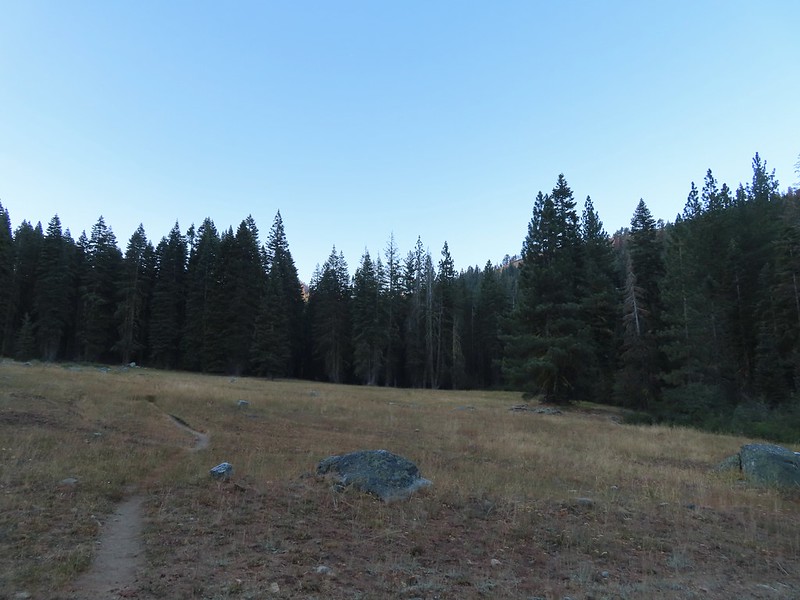

 First view of the small waterfall.
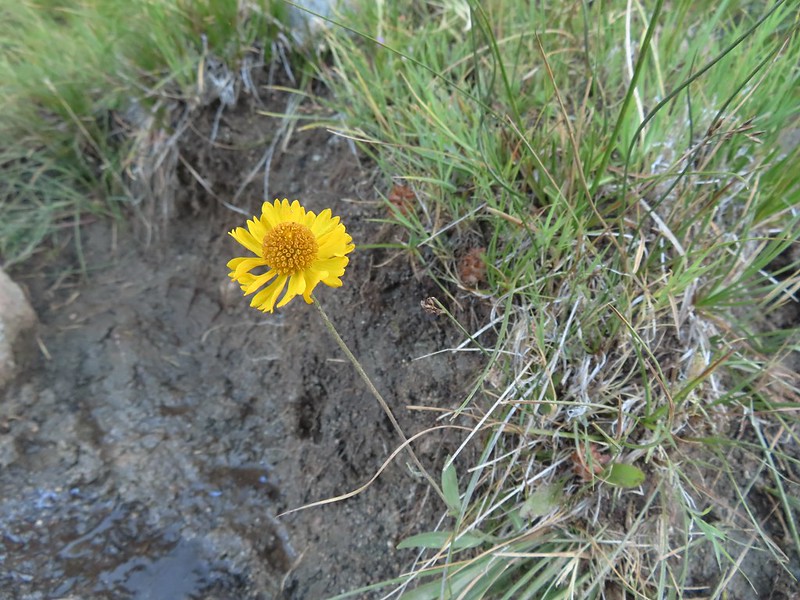 Bigelow’s sneezeweed
 Marsh grass-of-Parnassus
 Not sure what these little guys are.
 Checker-mallow
 Western snakeroot
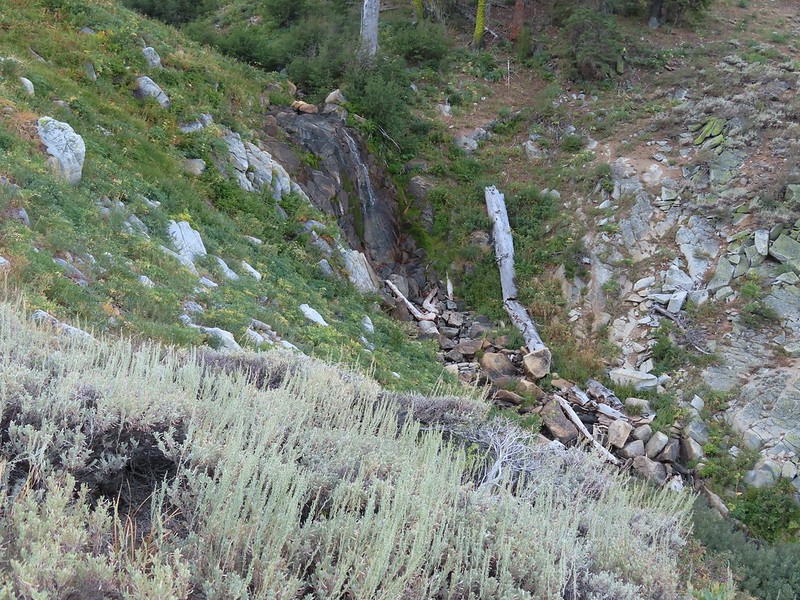 Passing the waterfall.
 Peaks in the Russian Wilderness to the NE.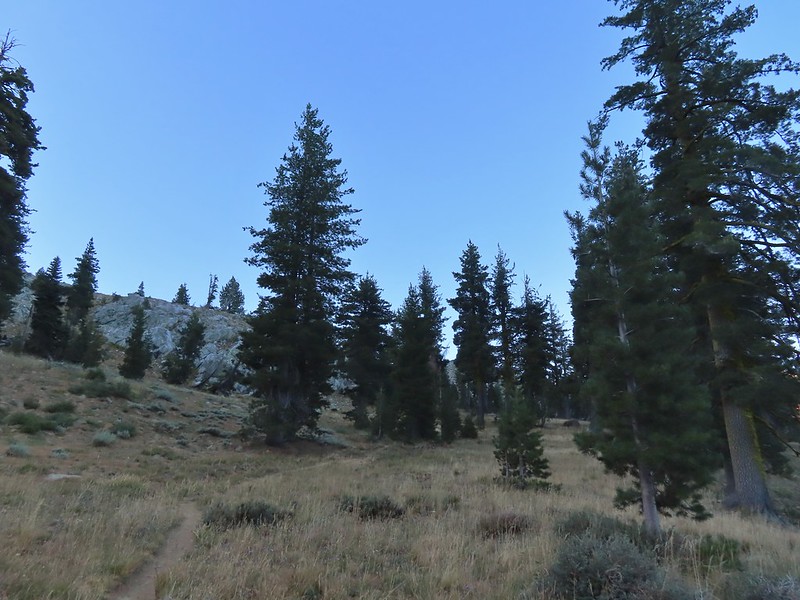
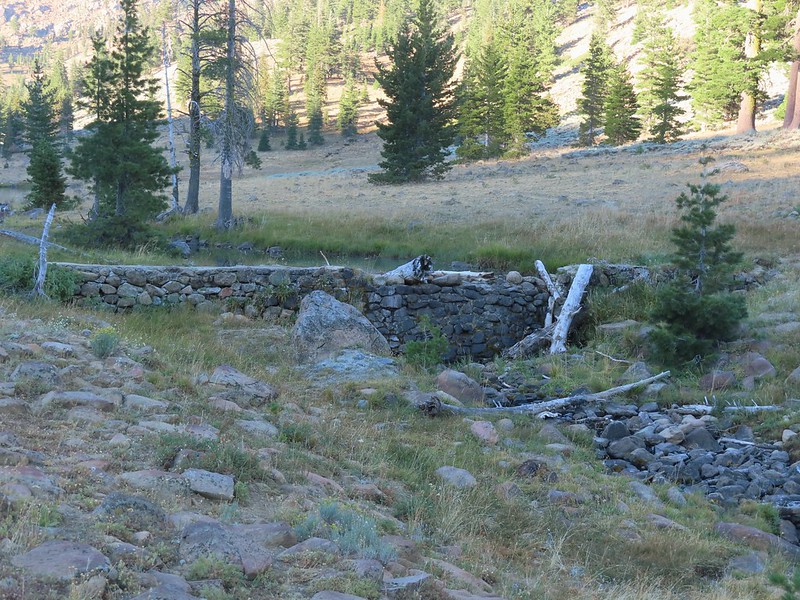 Dam near East Boulder Lake.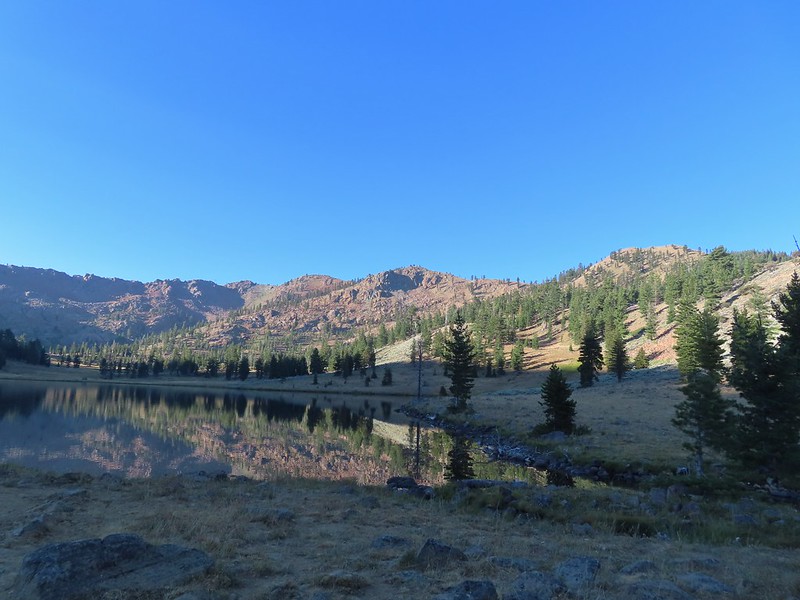


 There were cows out there somewhere but we couldn’t see them.
 View from the dam. We had to watch out for frogs here.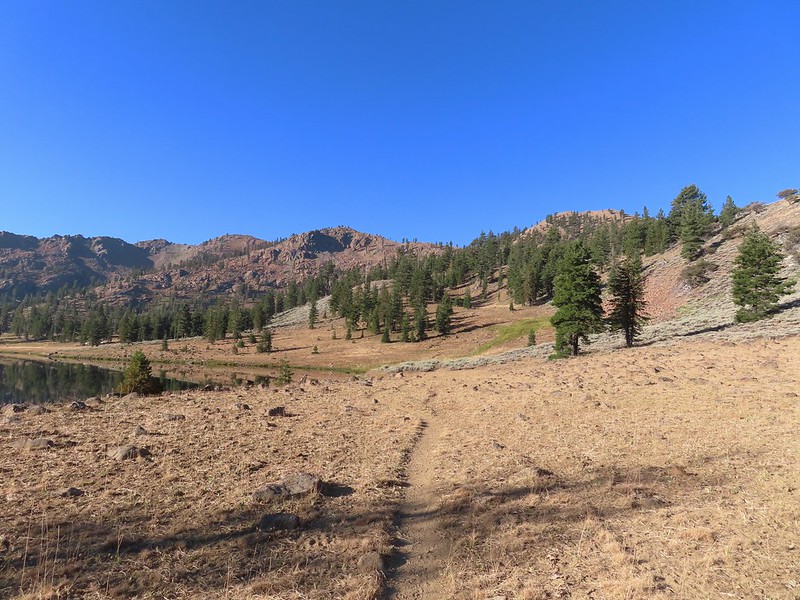

 We should have stuck closer to the lake.
 Buckwheat
 Back on the trail where the cows were just leaving.
 Upper Boulder Lake
 Upper Boulder Lake in the background.
 One of the cows on the far side of the lake to the left.
 Toothed owl’s clover
 Ducks on Upper Boulder Lake.
 The climb was fairly steep at times.
 All four lakes in view.
 Almost to the pass.
 At the pass.
 Looking south further into the Trinity Alps Wilderness.


 Balloon-pod milk vetch
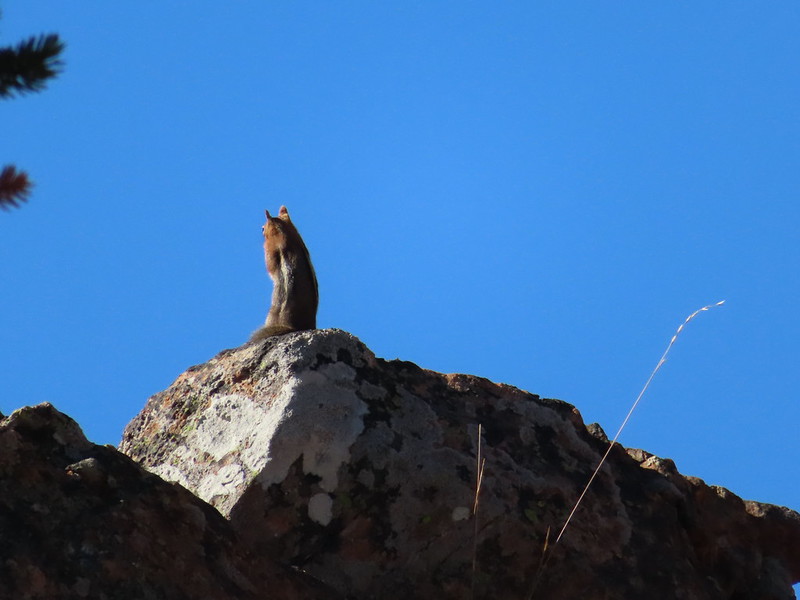 Golden-mantled ground squirrel taking in the views.
 Mt. Shasta over Mt. Eddy through the haze. I believe the lake below to the right is Big Marshy Lake.
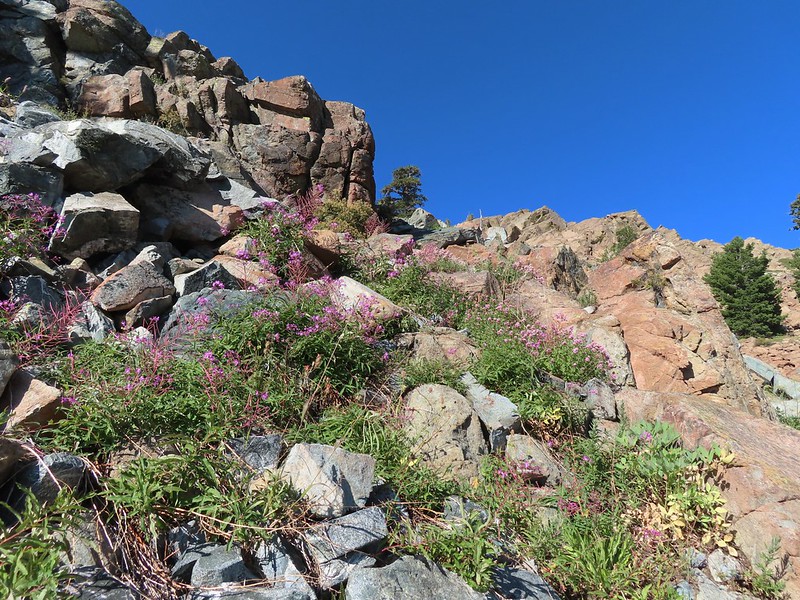 Fireweed in the rocks.
 Paintbrush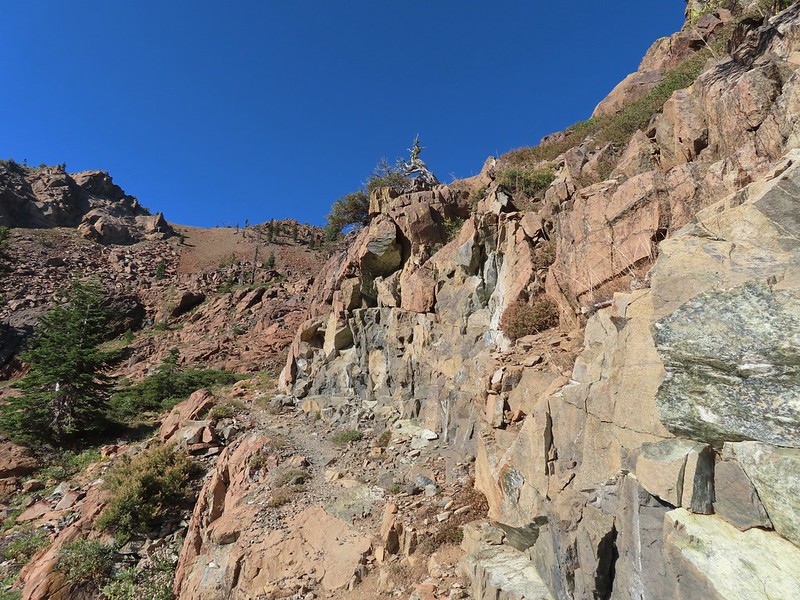
 A bit of water from a spring along the PCT.
 The water was coming from somewhere up there.
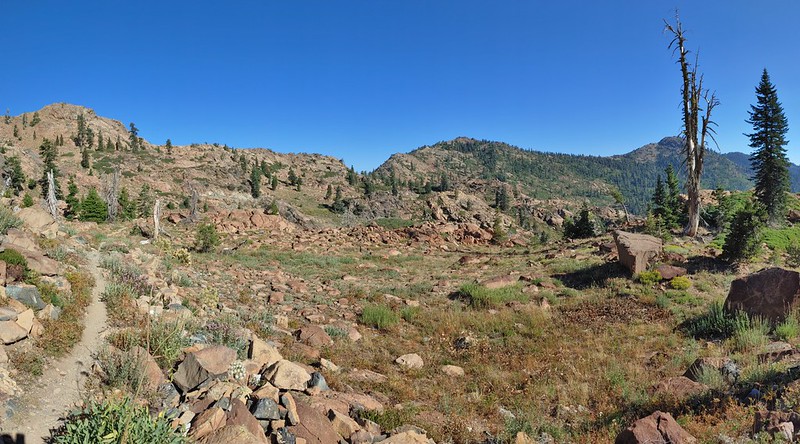 Looking back along the PCT.
 Snack time.
 Caesar and Thompson Peak
 This northern flicker looks like its head is on backwards.
 A little bit of burned forest near the pass.
 More peaks in the heart of the Trinity Alps.
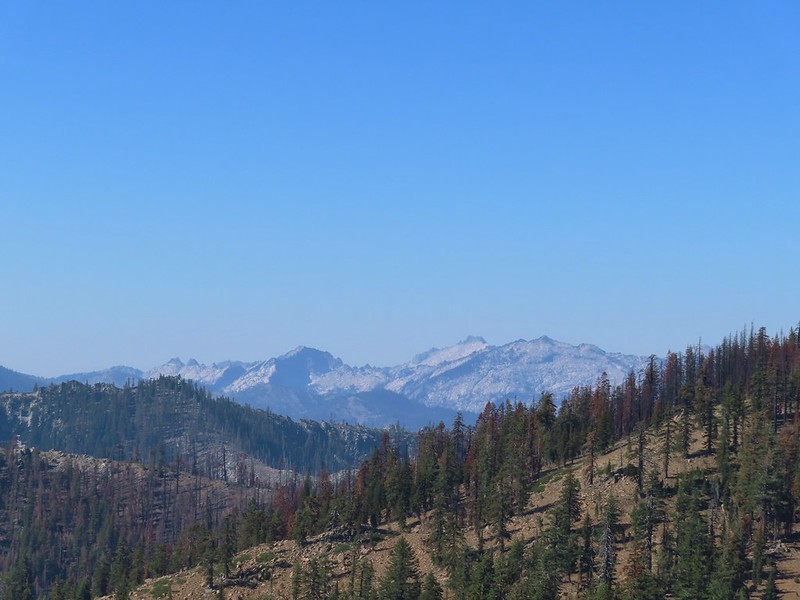 Caribou Mountain (post) on the right with Sawtooth Mountain over its shoulder.
 The pass above Middle Boulder Lake.
 Middle Boulder Lake is just visible beyond two smaller unnamed lakes.
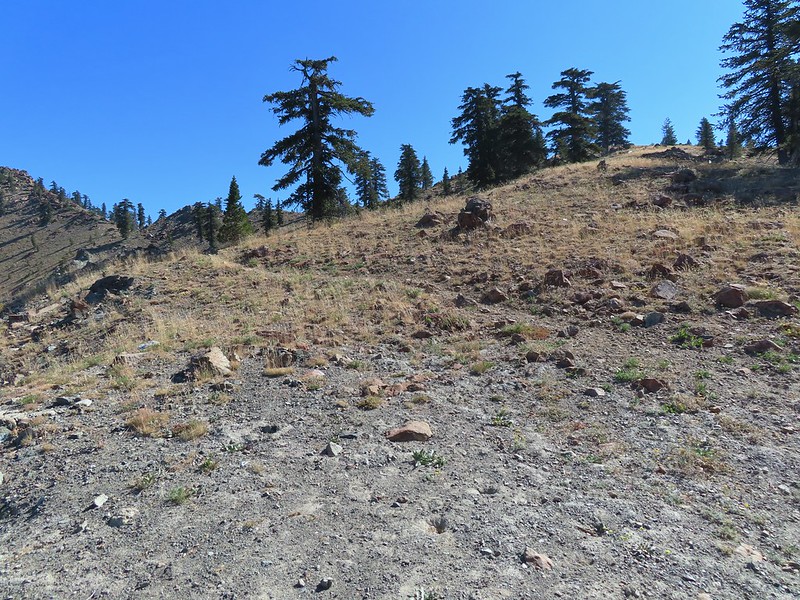 Middle Boulder Lake Trail at the pass.
 The Middle Boulder Lake Trail traversing down the hillside.
 A sulphur butterfly.
 The trail stayed above the two unnamed lakes.
 The trees on the far hillside were burned in the 2021 fire.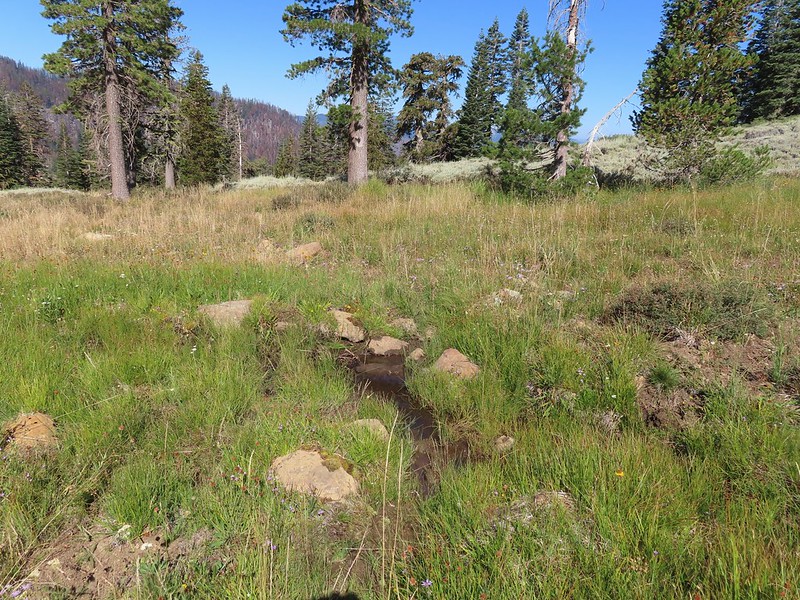


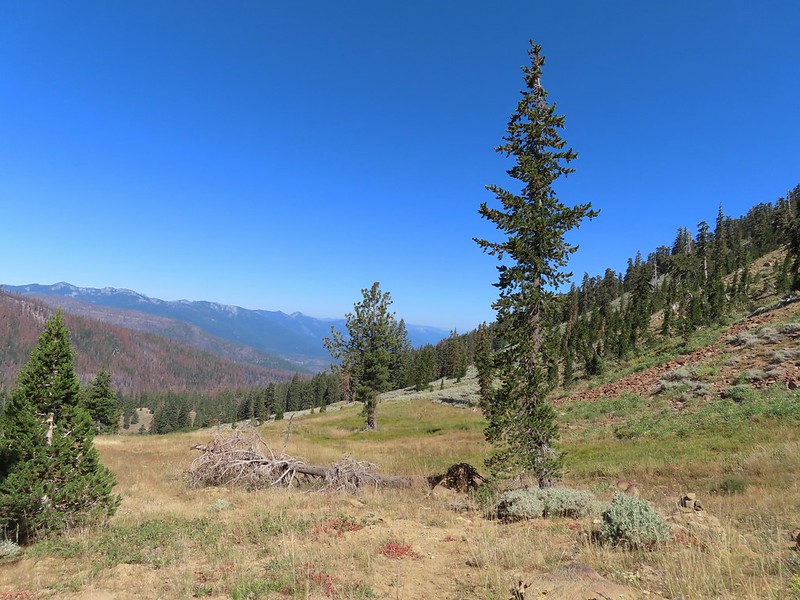 The cairn to the right of the downed tree.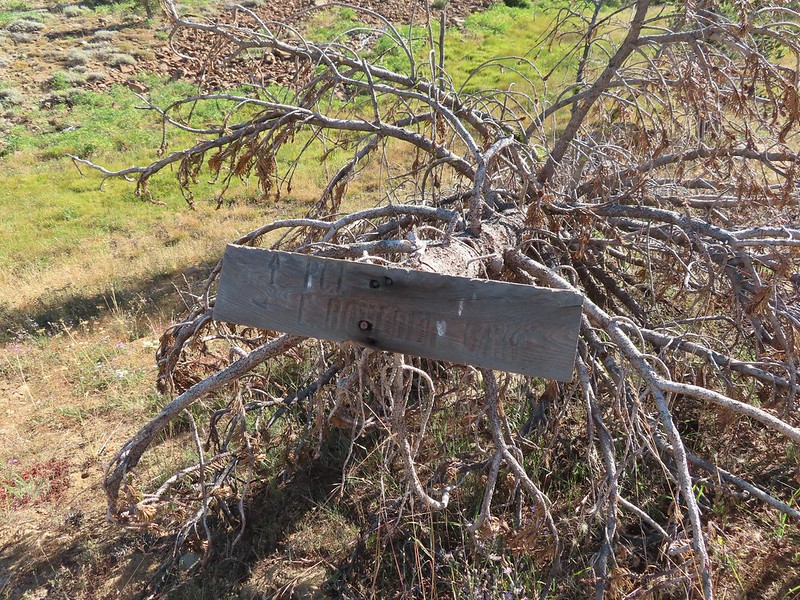
 This may be Autumn dwarf gentian
 One of the more obvious cairns.
 Butterfly on a seed head.
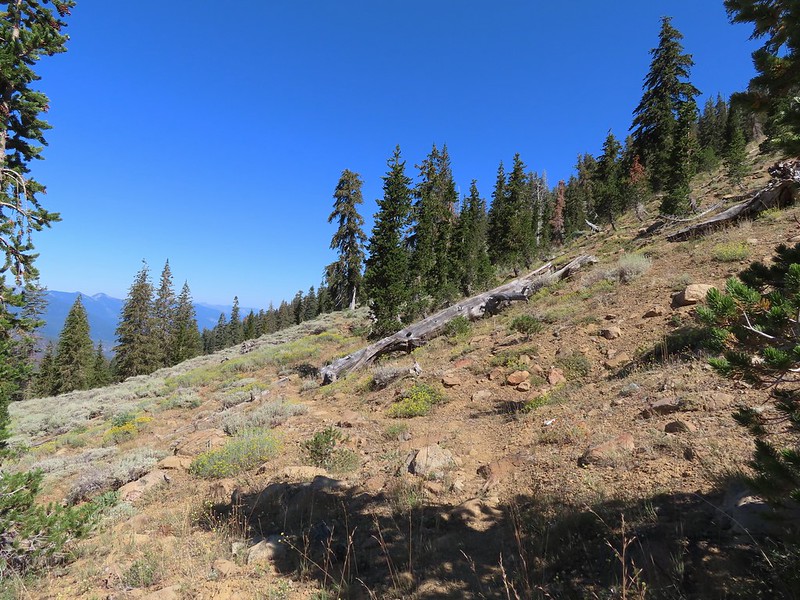 The tread getting clearer.
 Middle Boulder Lake
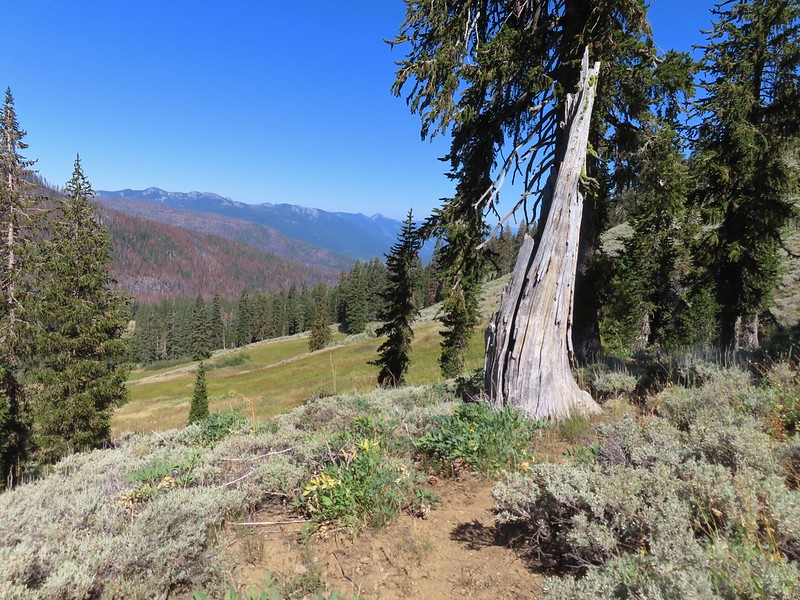 Back on good tread.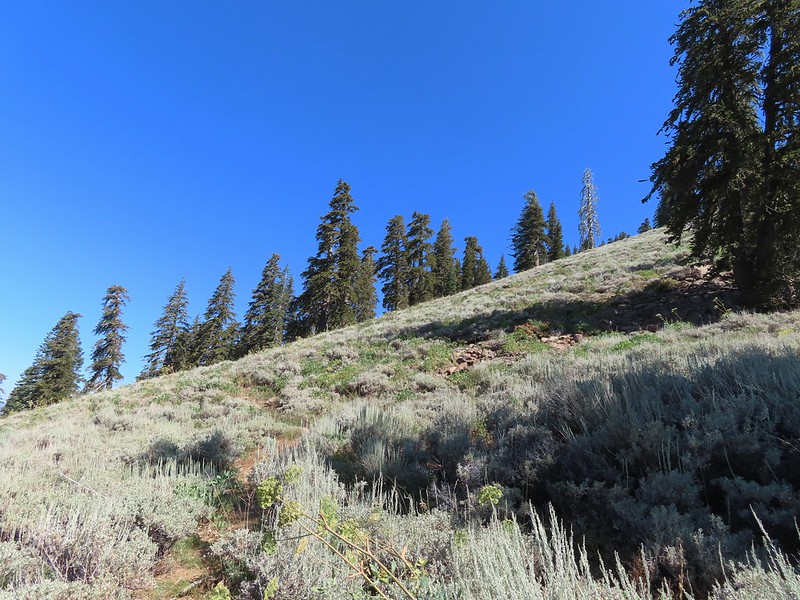


 Orange agoseris
 Passing through a bit of forest before climbing to the saddle.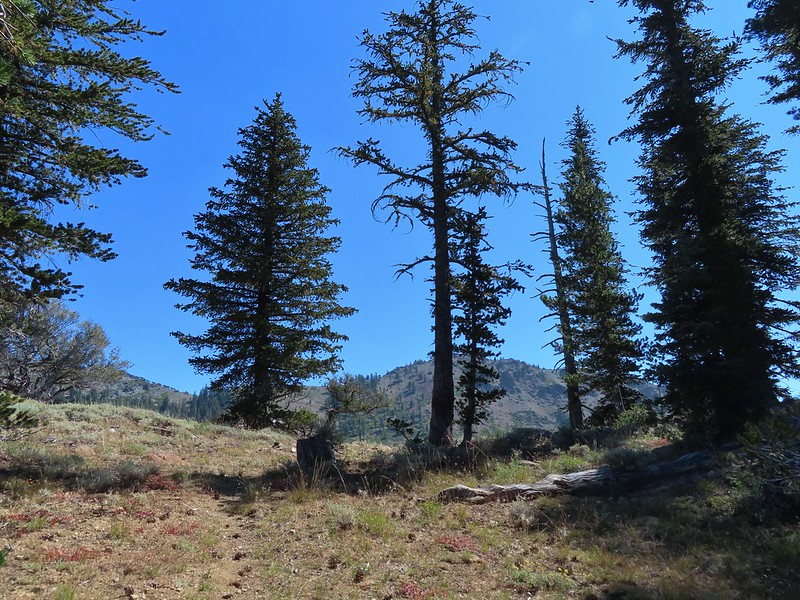

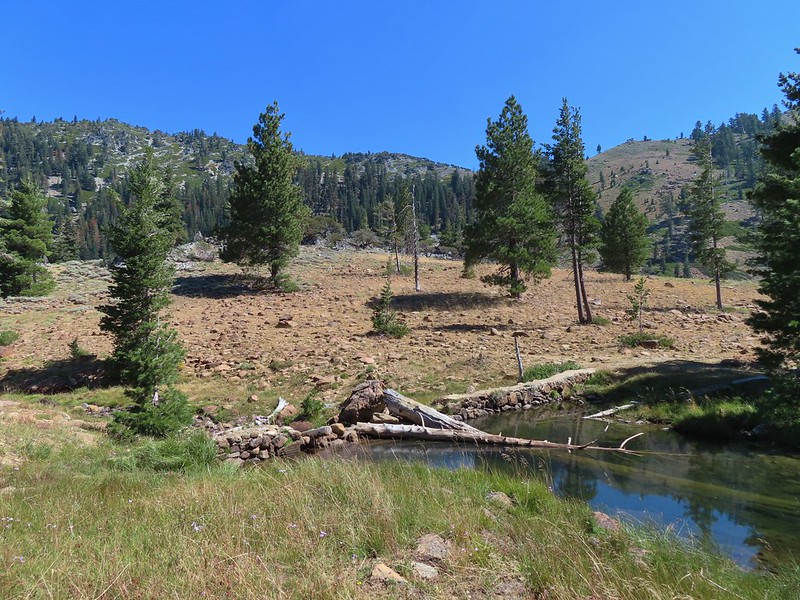 Approaching the dam.
 Fish in East Boulder Creek.
 Descending near the waterfall.
 An aster or fleabane.
 Butterfly
 Woodpecker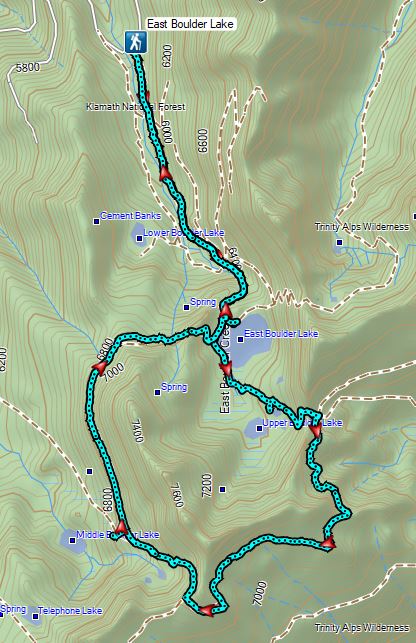
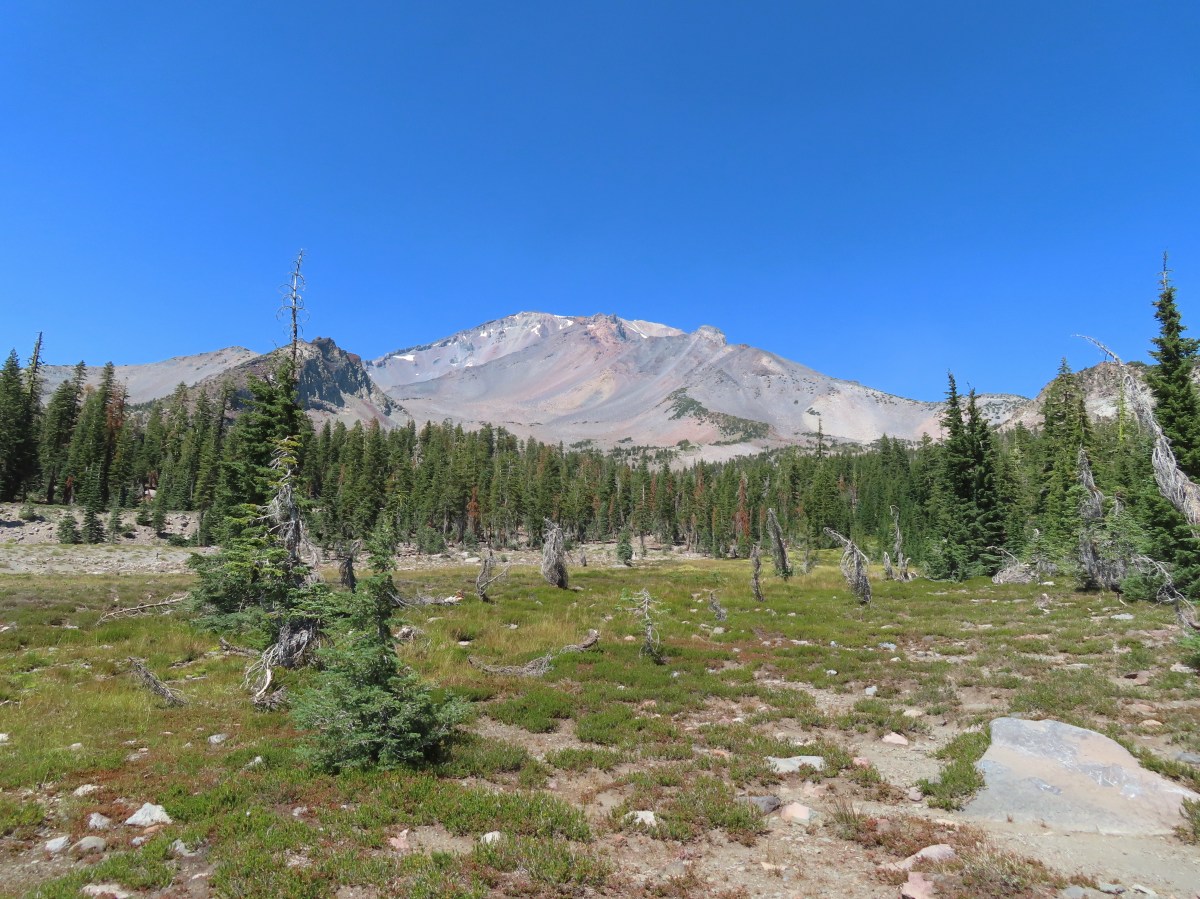

 Lupine at the trailhead.
 A line of smoke over the Castle Crags (
 Castle Crags
 Green Butte and Mt. Shasta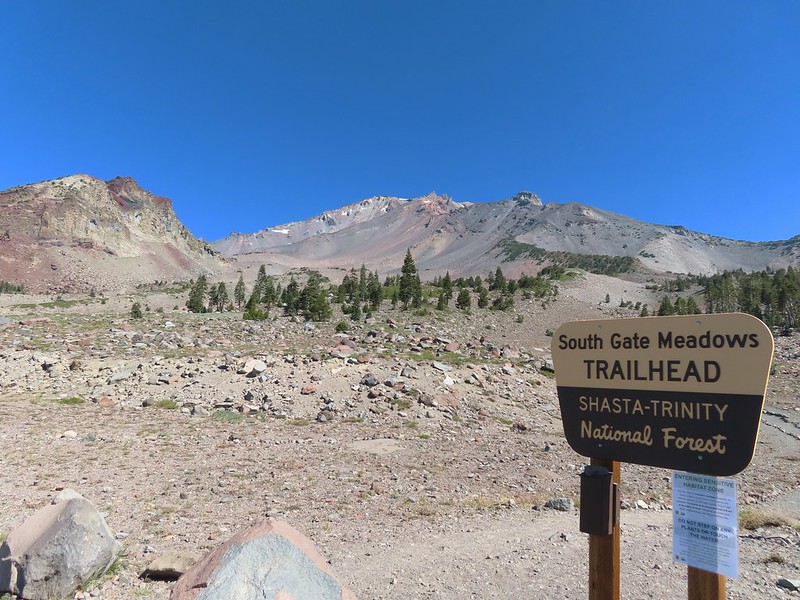
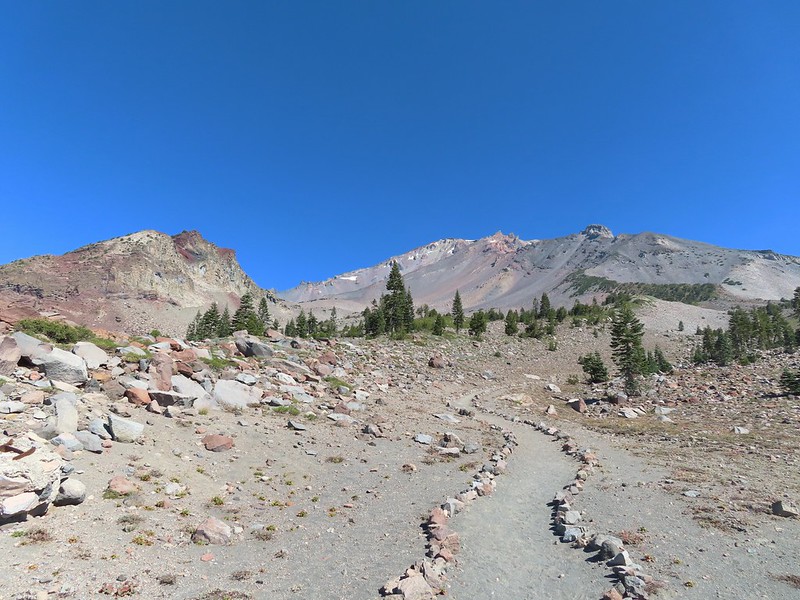
 Common buckeye

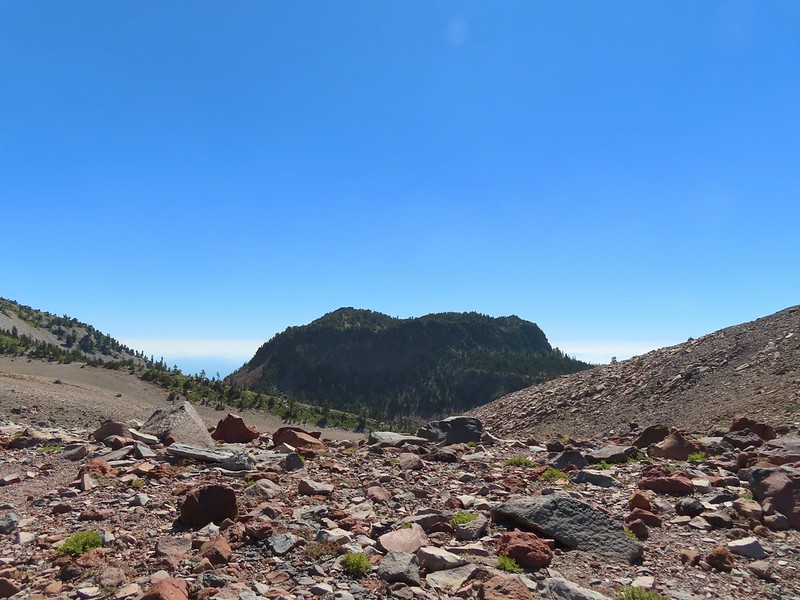 Red Butte from the pass.
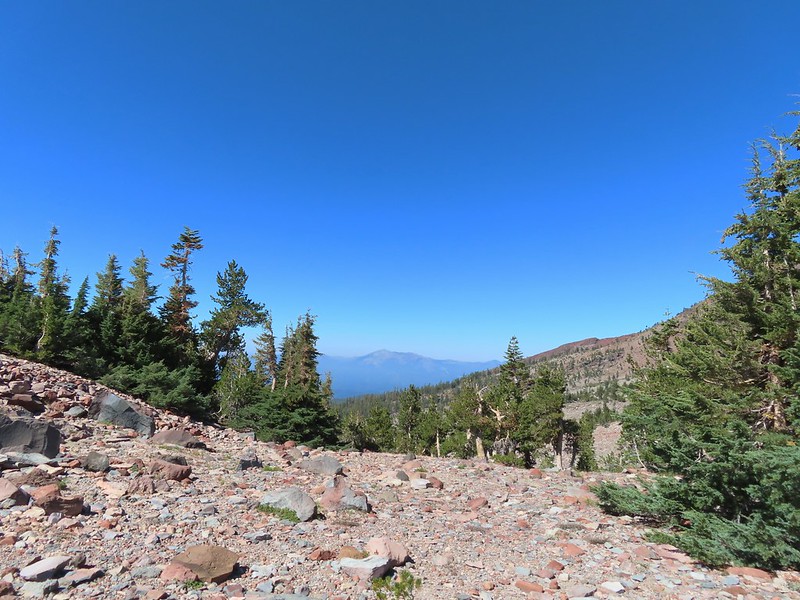 Mount Eddy from the pass.
 Heather standing at the wilderness boundary.
 A dry spring along the trail. Ideally we would have been doing this hike (and trip) in late July for more wildflowers but sometimes the circumstances dictate when and where we wind up.
 Approaching The Gate.
 Shastarama Point and Thumb Rock
 Gray Butte
 The trail junction near The Gate. The trail to the right would be our return route to make a loop through Panther Meadows, but for now we went left following the pointer for South Gate Meadows.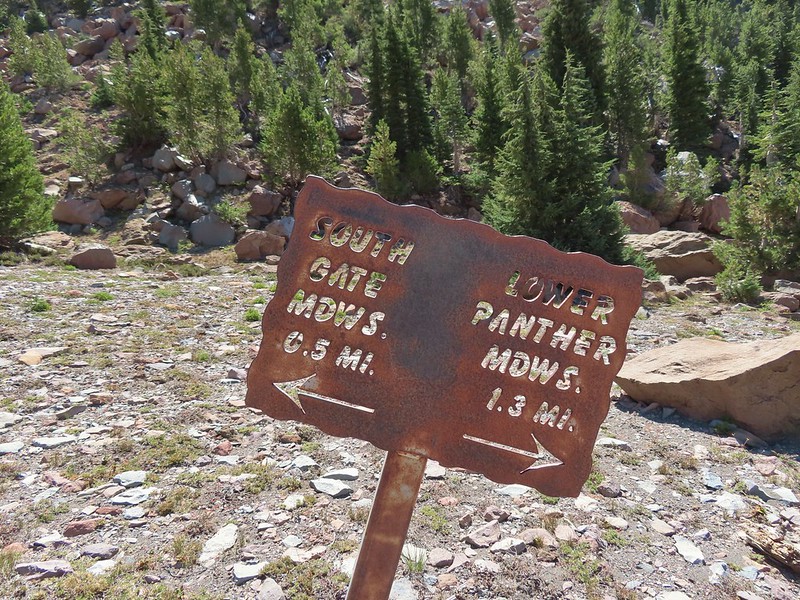


 A paintbrush and aster.
 Penstemon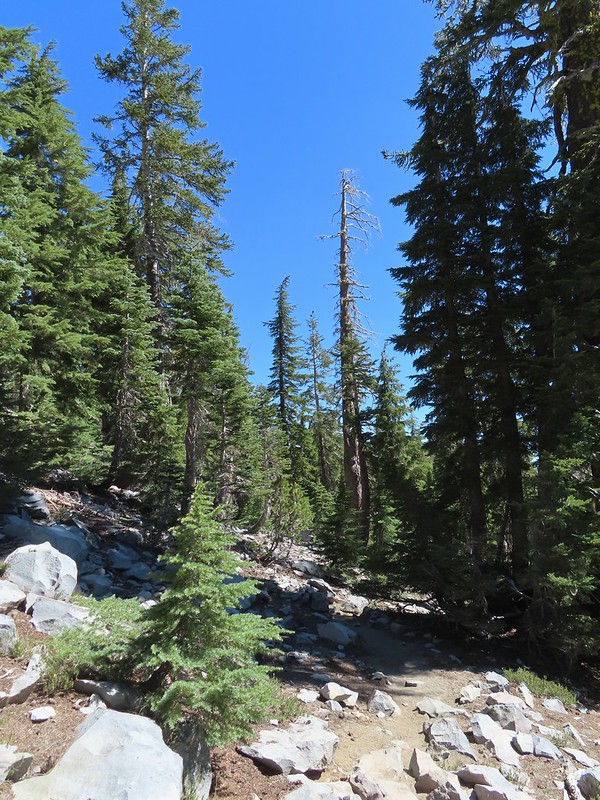
 Some haze to the south but we could make out Lassen Peak which is one we rarely ever get to see.
 Lassen Peak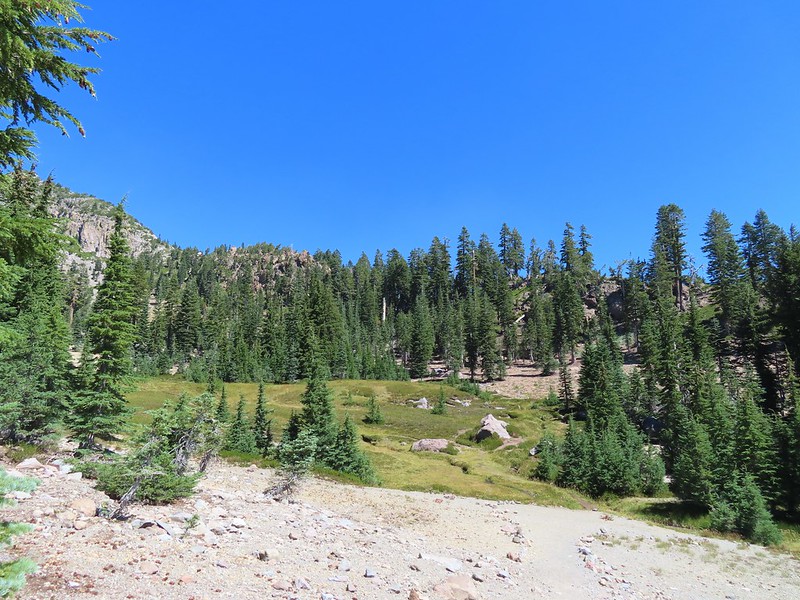

 Primrose monkeyflower
 The use trail crossing the creek.
 In sight of the circular meadow.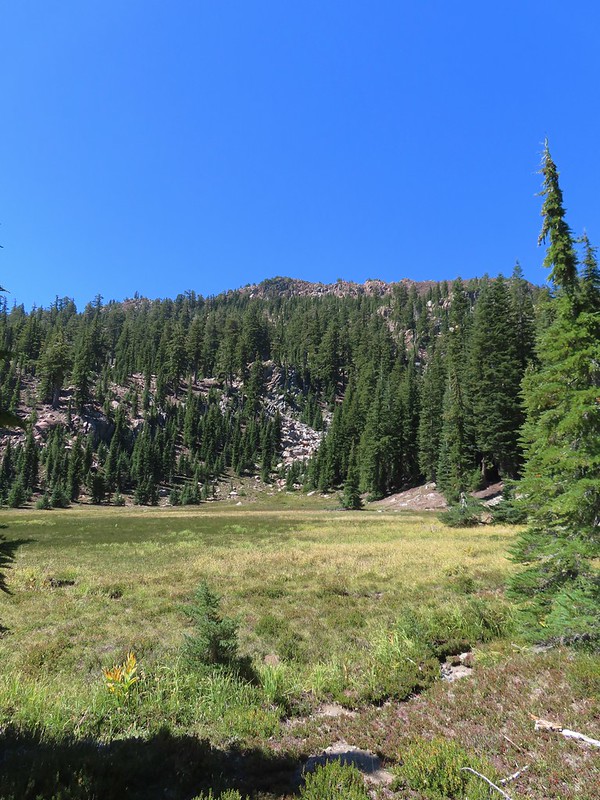
 Marsh grass-of-Parnassus
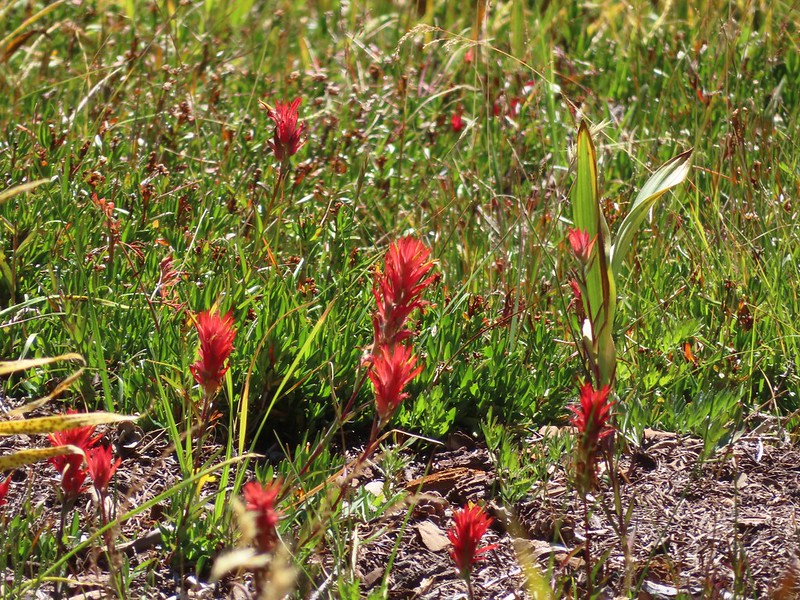 Paintbrush
 Back at the meadows.
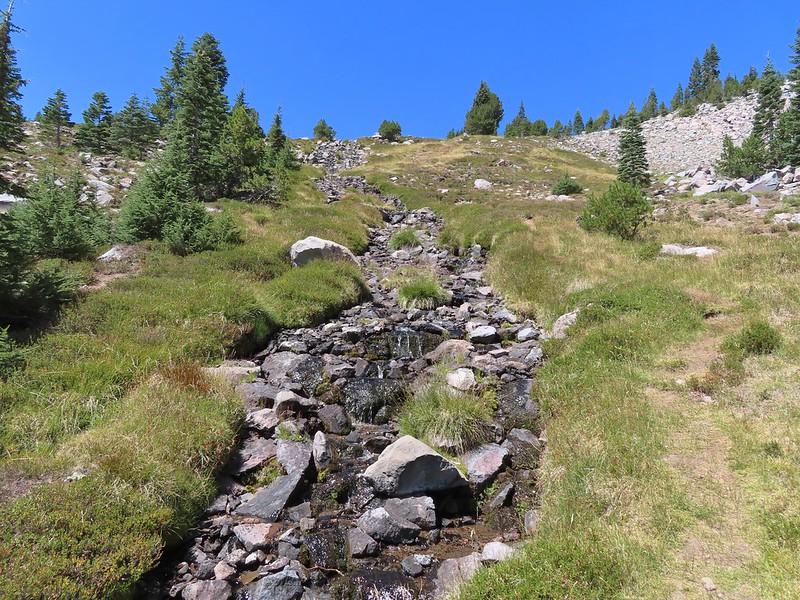
 A pair of common buckeyes.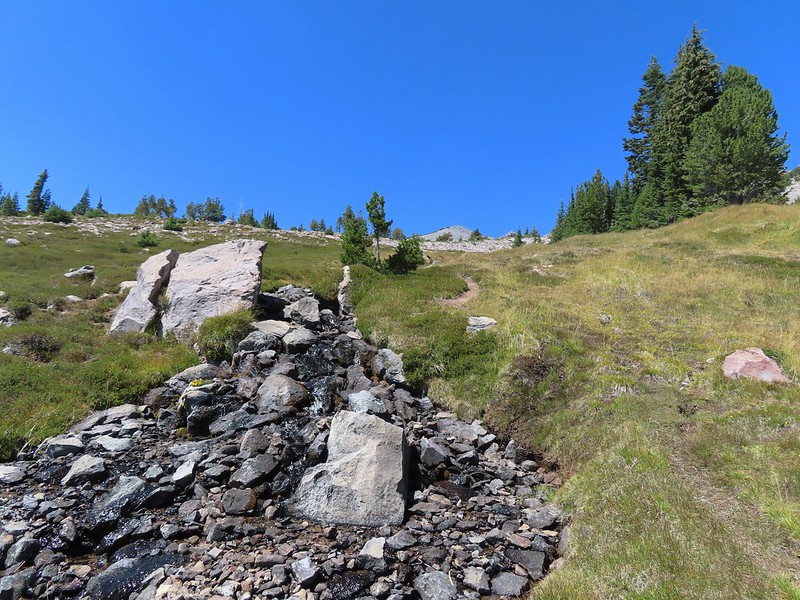
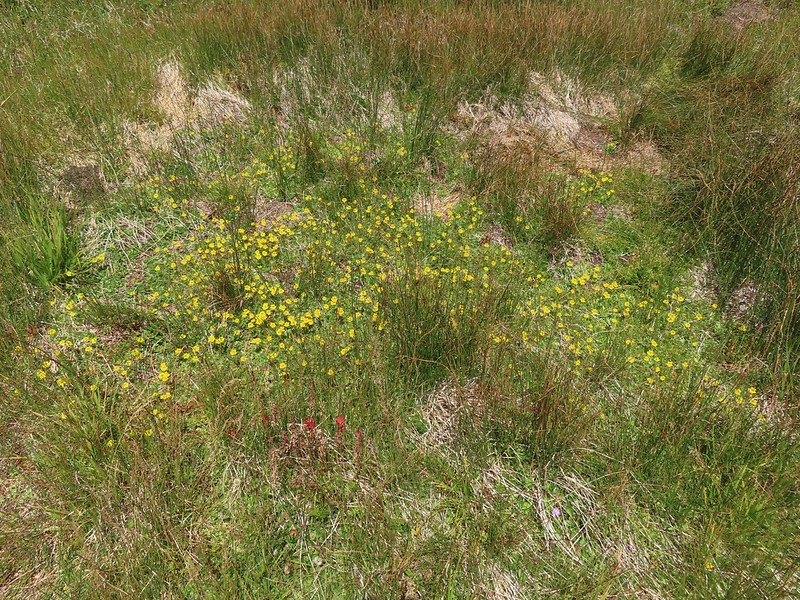 Primrose monkeyflowers and paintbrush
 Not the “monkeyflower” spring but a smaller one along the way up.
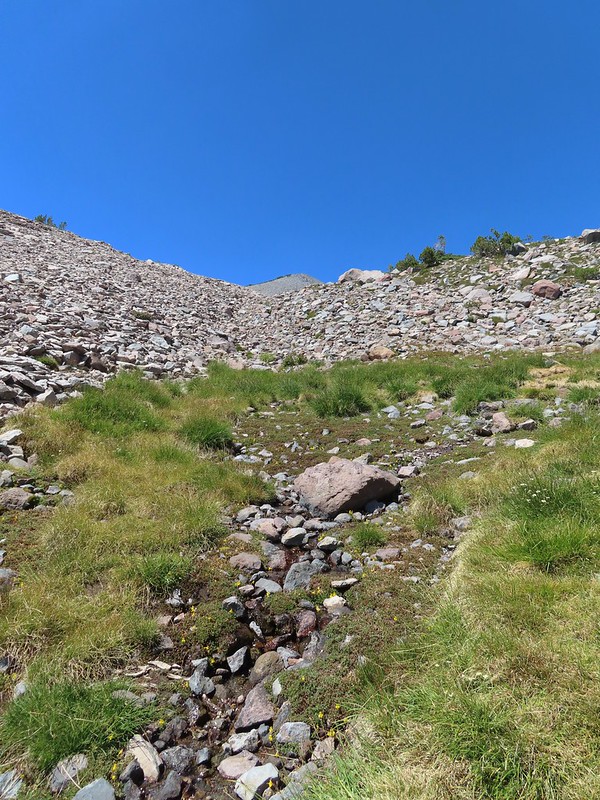 The “monkeyflower” spring.
 A couple of monkeyflowers and a buckeye.
 I climbed a bit above the spring to check out the view.
 Heather arriving at the spring.
 A Clark’s nutcracker also taking a break.
 Two types of monkeyflower and bog St. John’s wort,
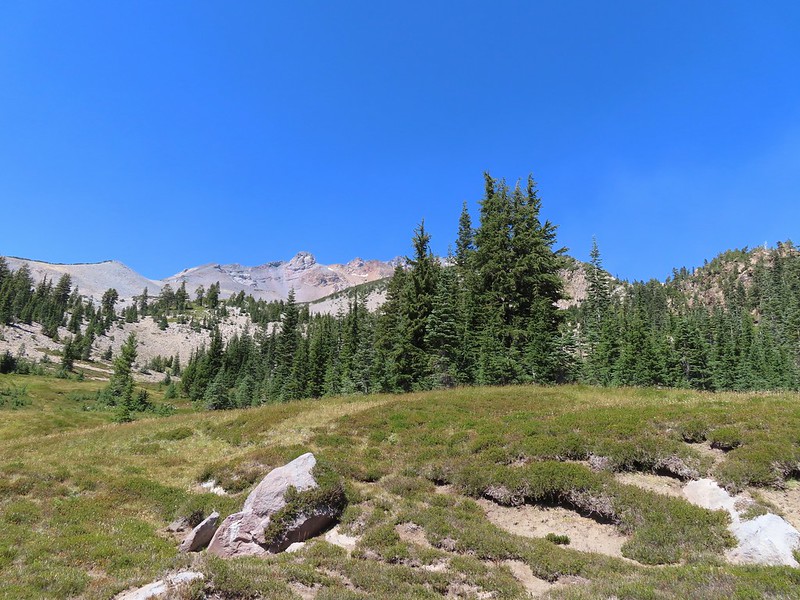 One last pass through South Gate Meadows.
 Red Butte
 Shasta knotweed
 Back at The Gate.
 Mt. Shasta from the trail.
 Red Butte
 Glaciated rock.
 Mt. Shasta and Sargents Ridge.
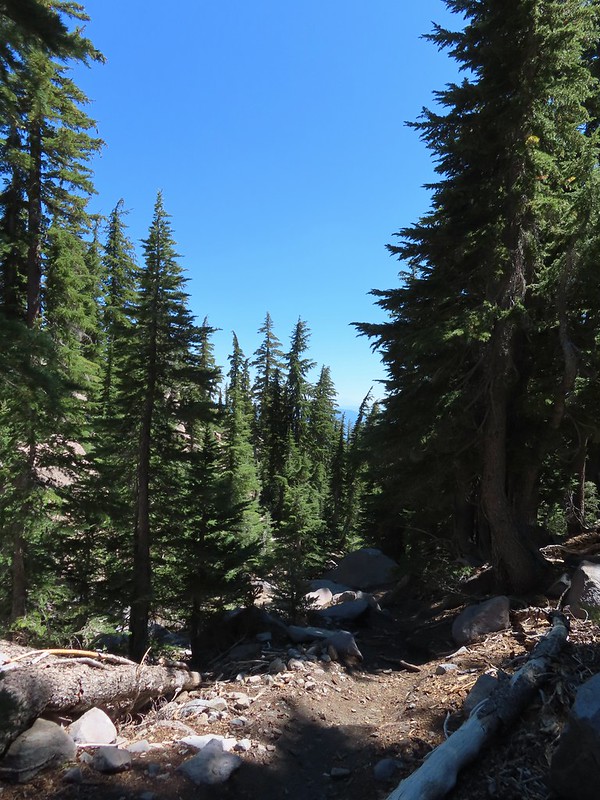 Into the forest.
 The trail left the wilderness along the way.
 The junction with Gray Butte behind the trees.
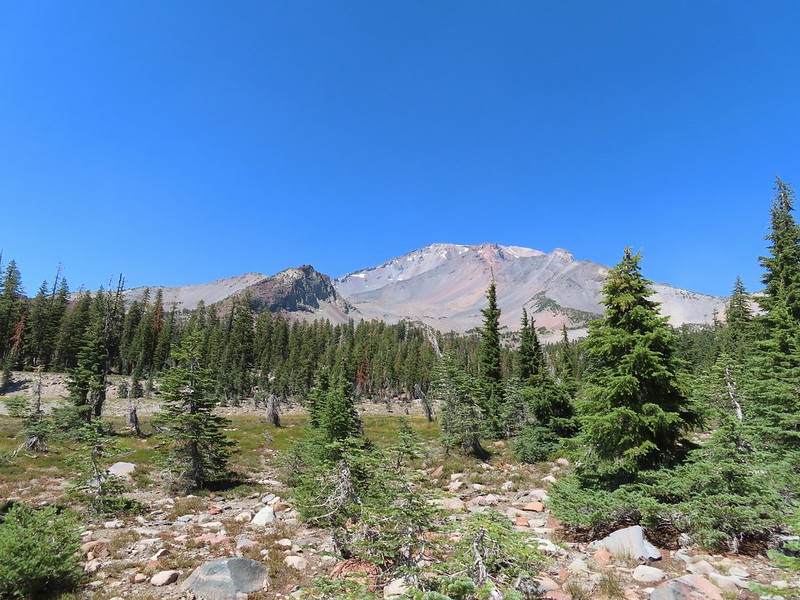
 Another Clark’s nutcracker. They are boisterous birds and other than first thing in the morning we get a kick out of listening to them.
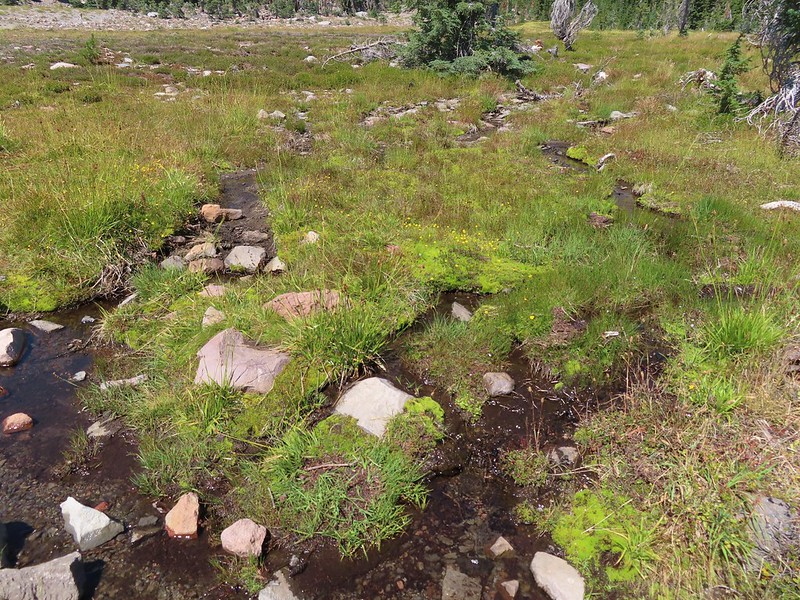 Stream flowing through the meadows.
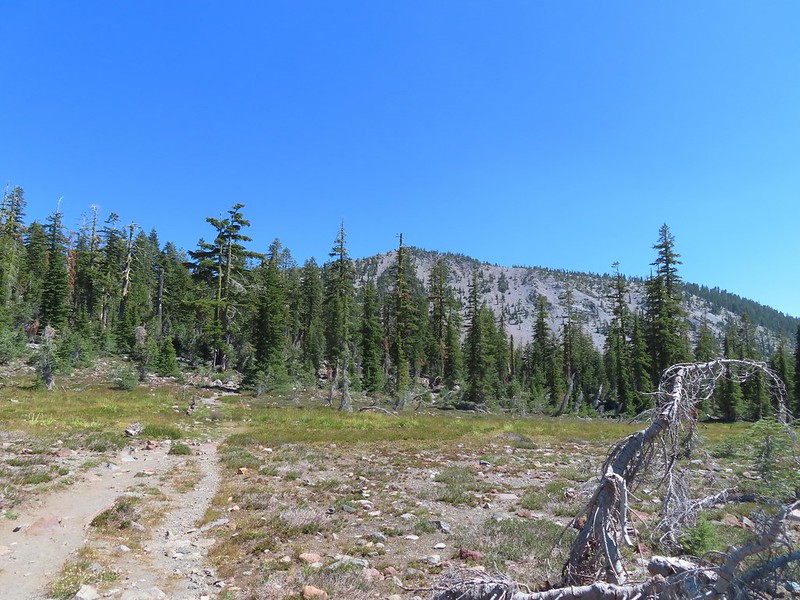 Gray Butte from Panther Meadows.
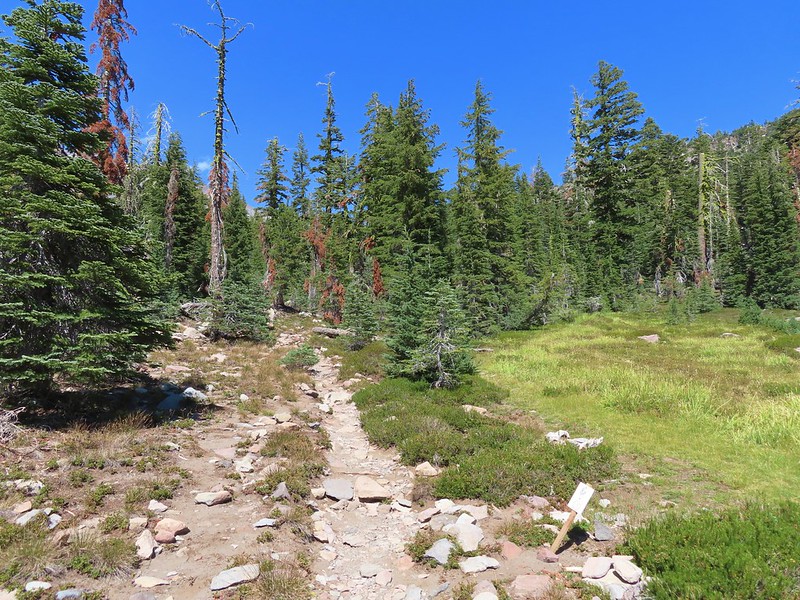
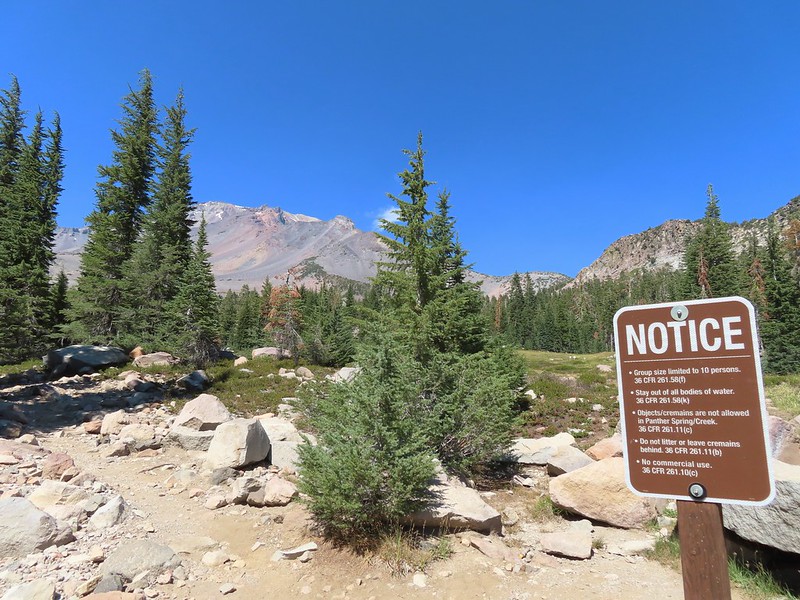


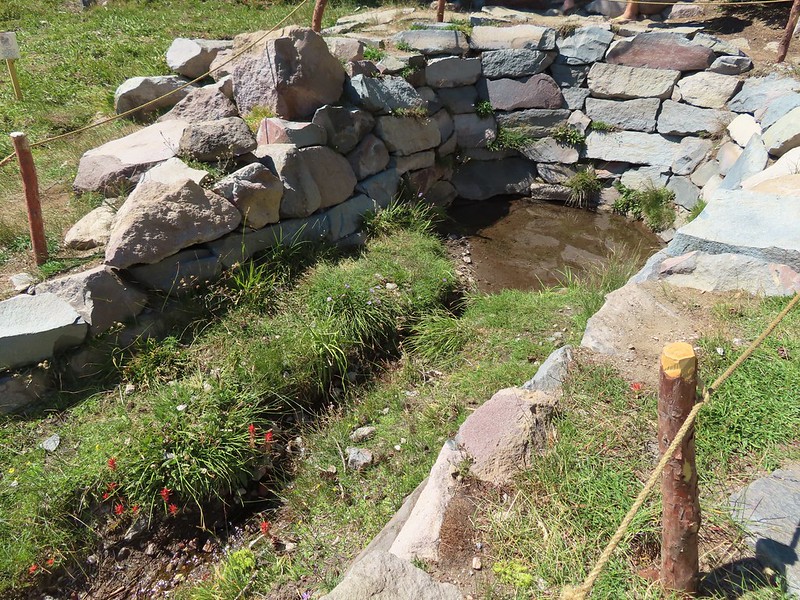


 Picnic tables at the trailhead.


 This was at least the third posted notice so there is no claiming you weren’t aware that a permit is needed.
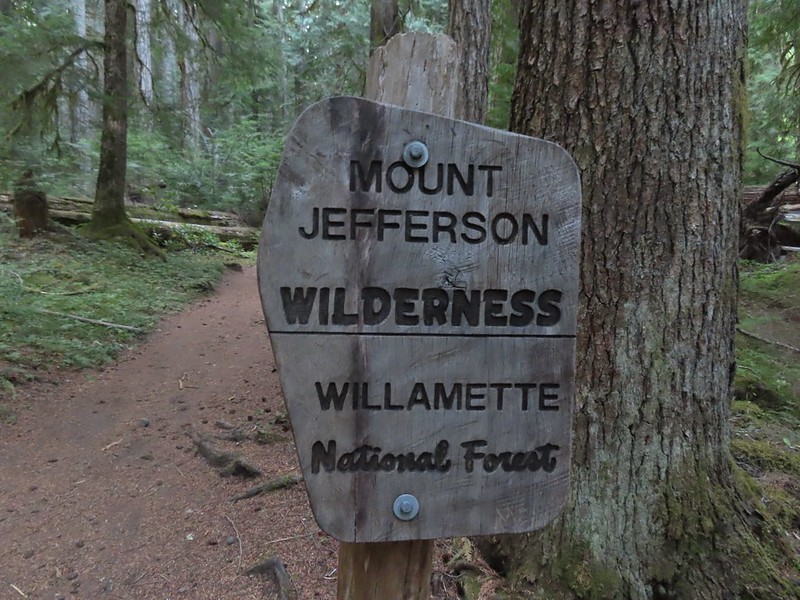
 Pamelia Creek
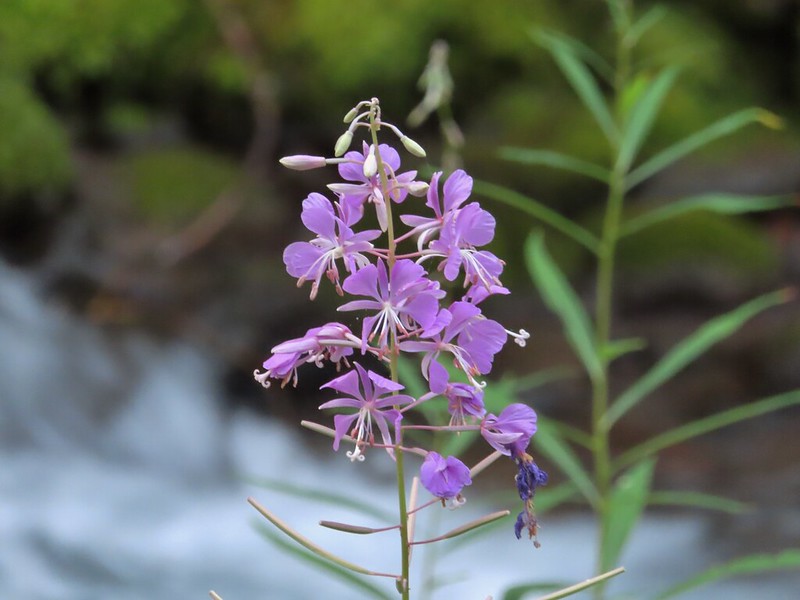 Fireweed along the creek.

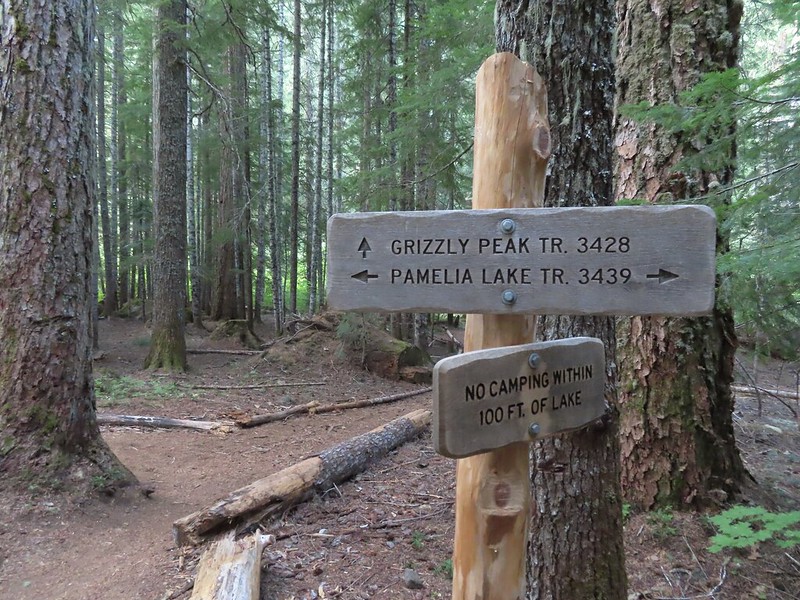
 Pamelia Creek only flows underground here much of the year.
 Heading up.
 A glimpse of Mt. Jefferson.
 That might be Woodpecker Hill, it was hard to tell exactly which ridge we could see with nothing else visible to help orient.
 This looked like it might be a nice little waterfall with enough water.
 That’s not enough water.
 Heather below one of several switchbacks.
 Turning up the ridge.
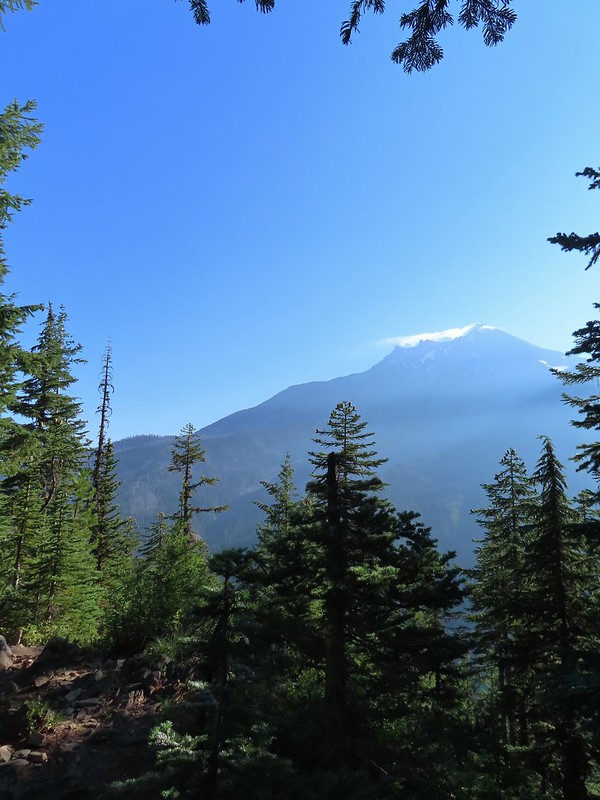 The haze was probably a combination of morning cloud/fog and smoke from the Cedar Creek Fire near Waldo Lake.
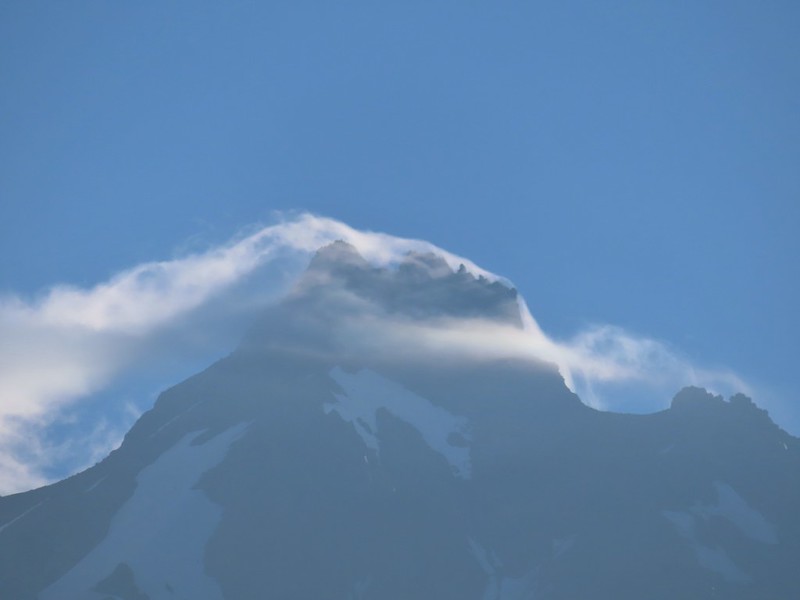
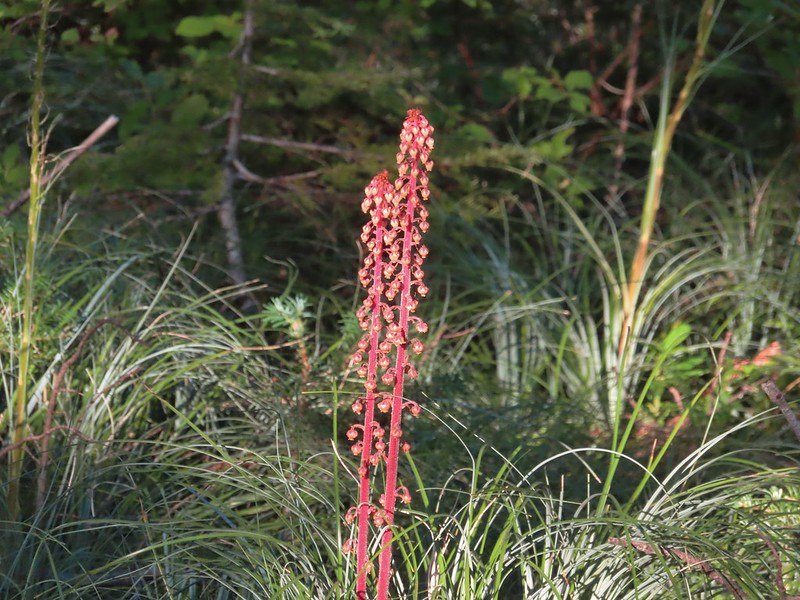 Pinedrops
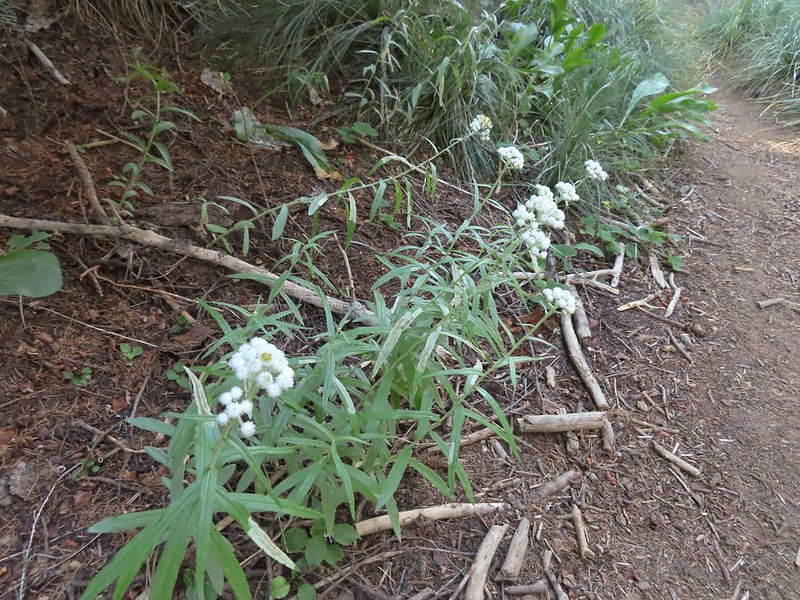 We were too late for most of the flowers but there were a few pearly everlasting going.
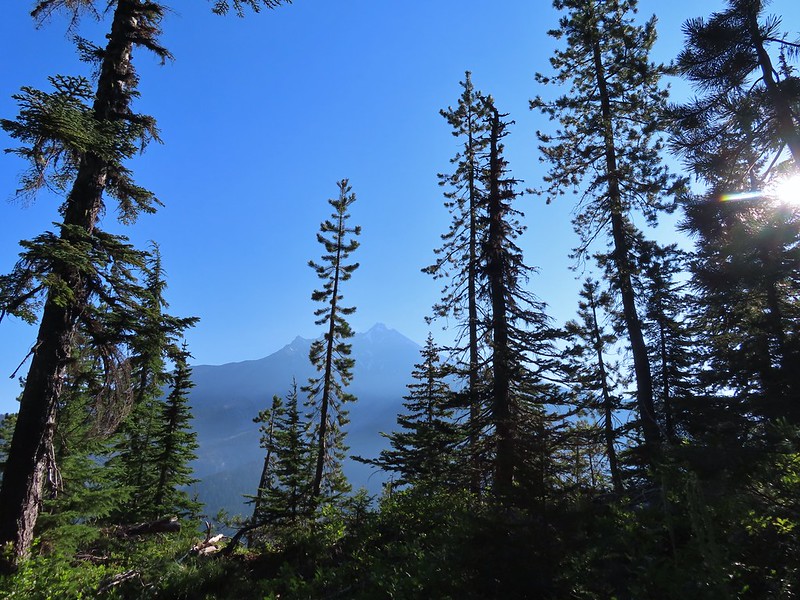 There’s that pesky Sun again.
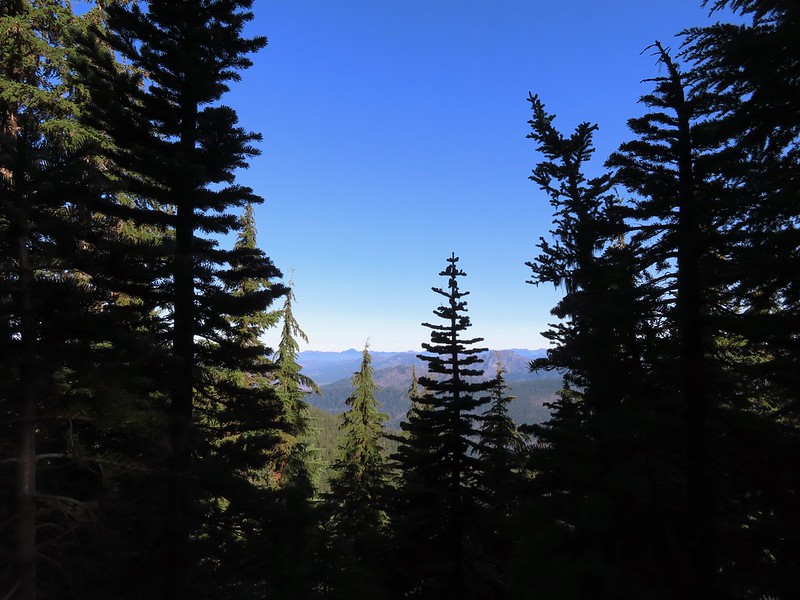
 Aster
Aster Lousewort
 Lots of burnt forest out there.
 Triangulation Peak and Boca Cave (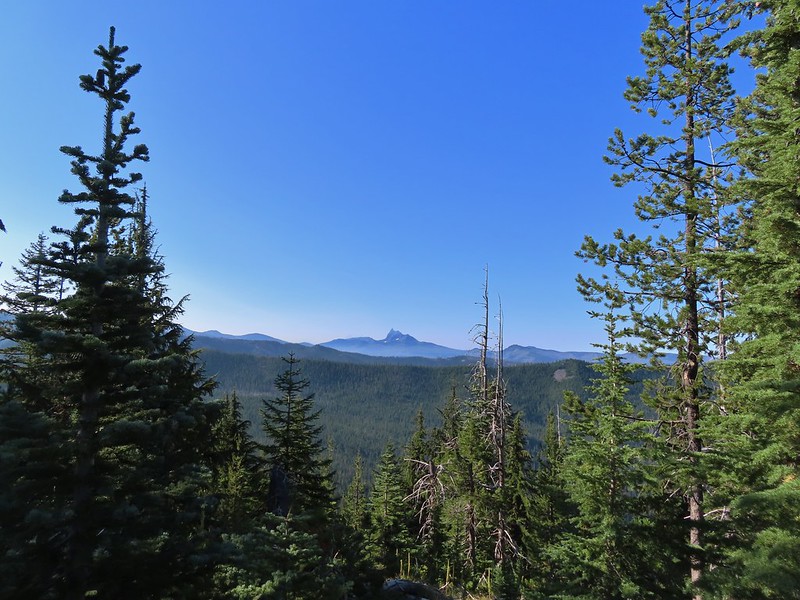
 Broken Top to the far left blending into the haze and Three Fingered Jack to the right with the Three Sisters in between.
 Just below the summit.
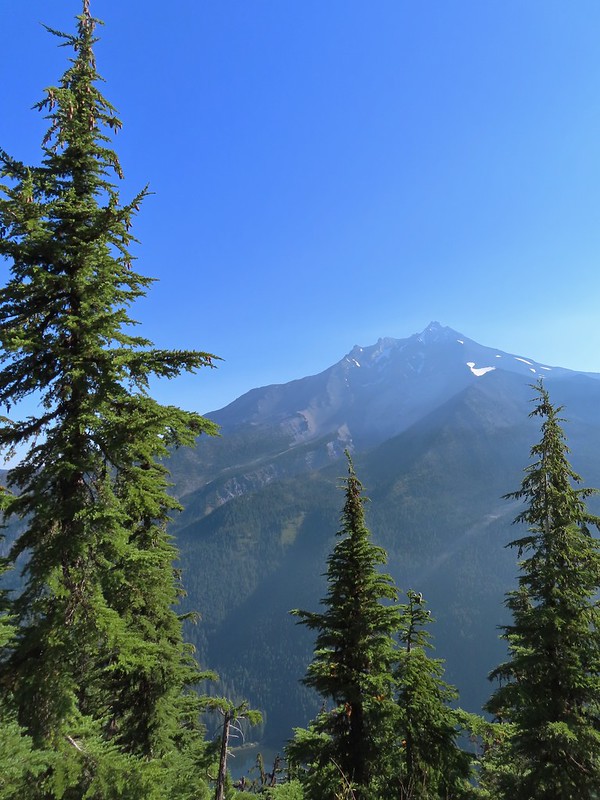 Pamelia Lake below Mt. Jefferson.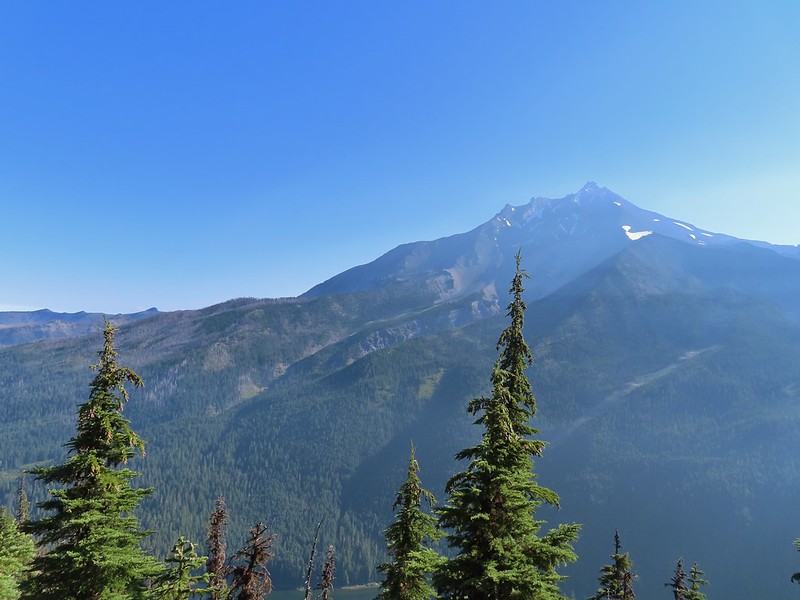
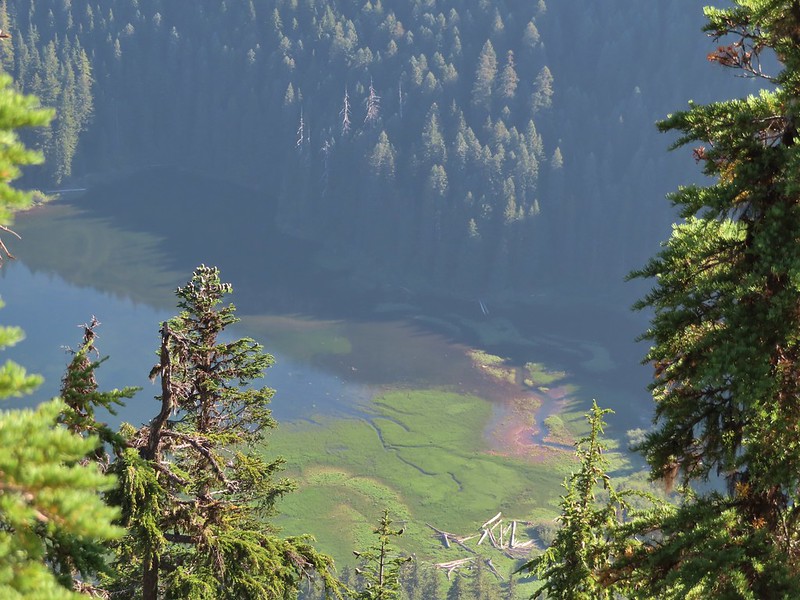 Hunts Creek flowing into Pamelia Lake.
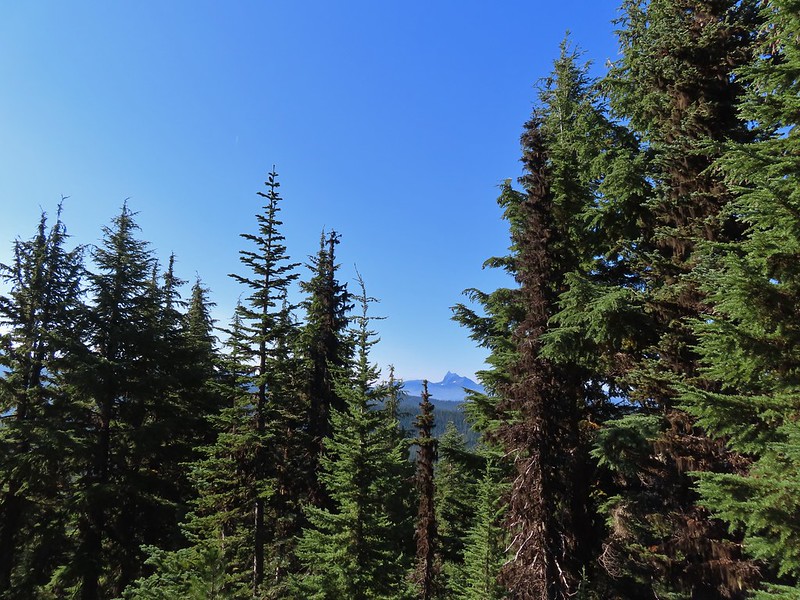 Had to hunt for a view of Three Fingered Jack.
 A hard to make out Mt. Hood beyond the far ridge which consists of Bear Point to the left (
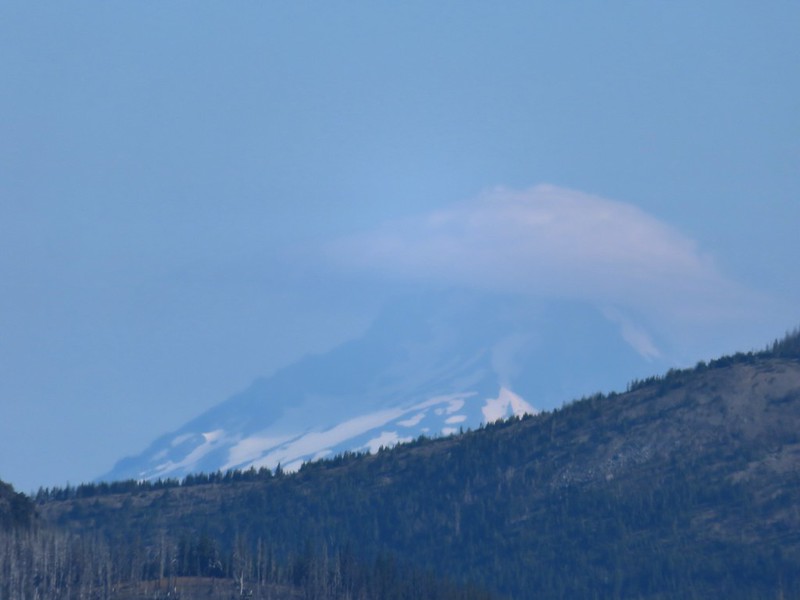 Mt. Hood
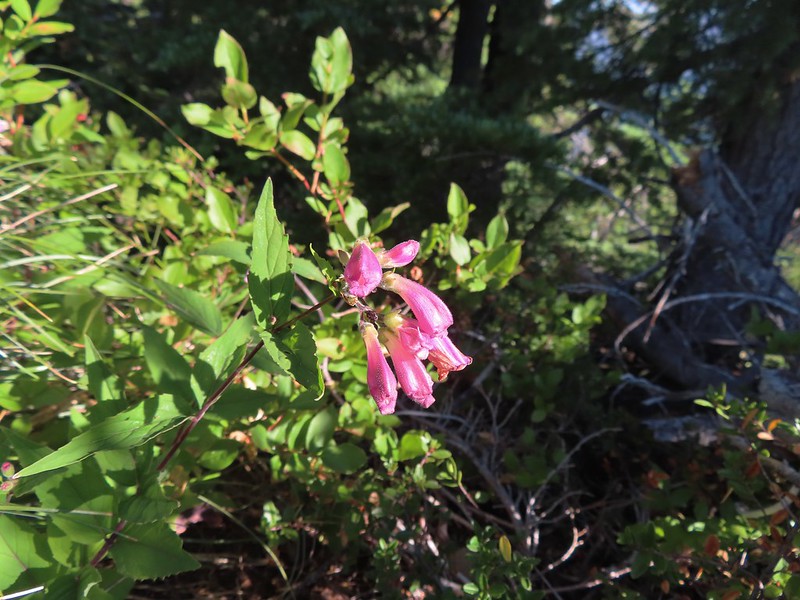 Beardtongue
 A fritillary butterfly.
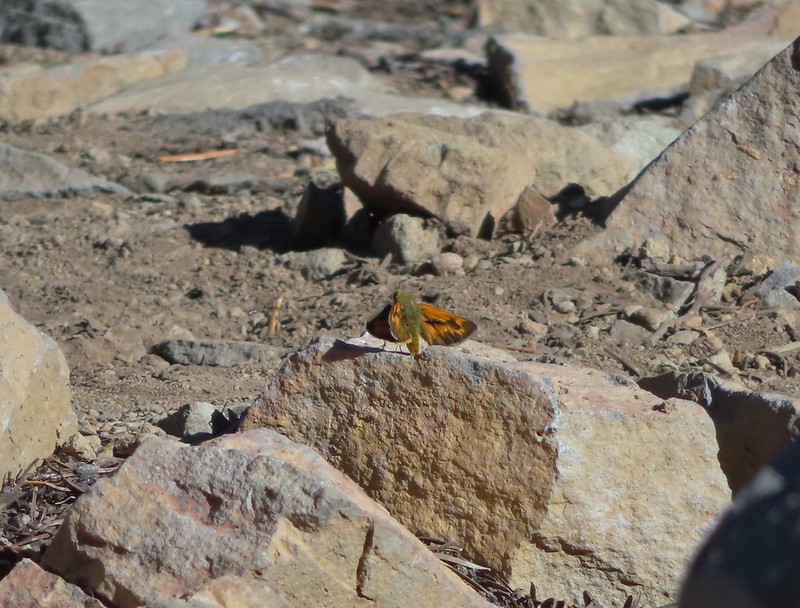 A skipper
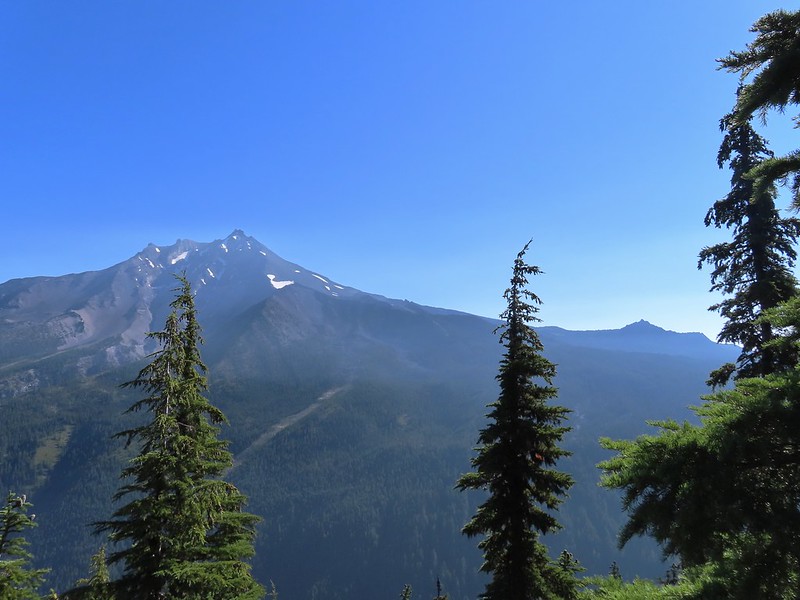 Goat Peak is to the right of Mt. Jefferson.
 Mt. Jefferson and Pamelia Lake from one of the viewpoints along the ridge.
 Cascade toad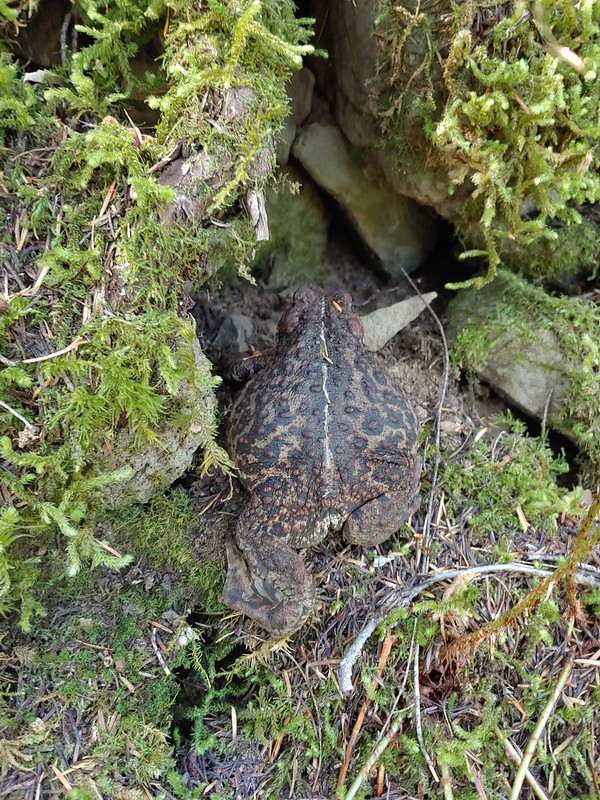

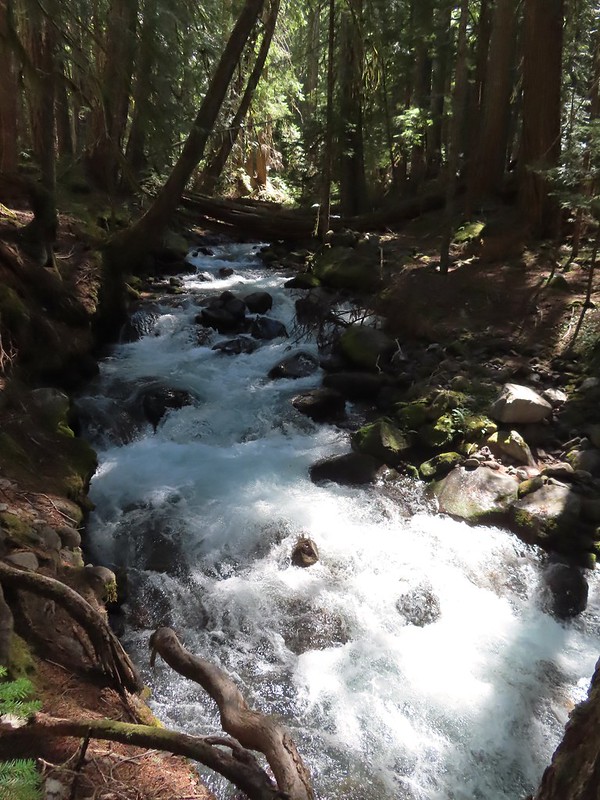 One more of Pamelia Creek.

 The Riley Camp Trail (Trail 64) on the opposite side of FR 23.

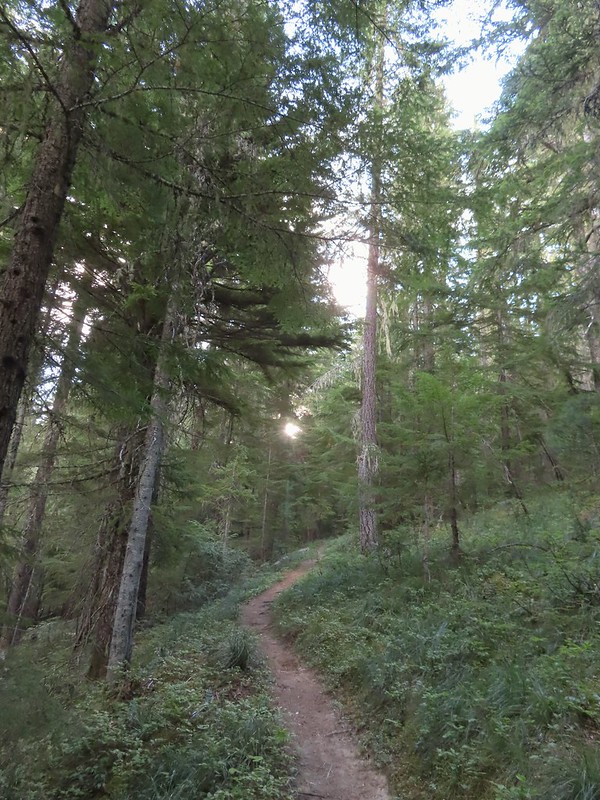


 We weren’t aware that the Forest Service was employing wilderness greeters.
 May I see your self-issued permit?
 The trail was in pretty good shape with just a few downed trees to step over/under.
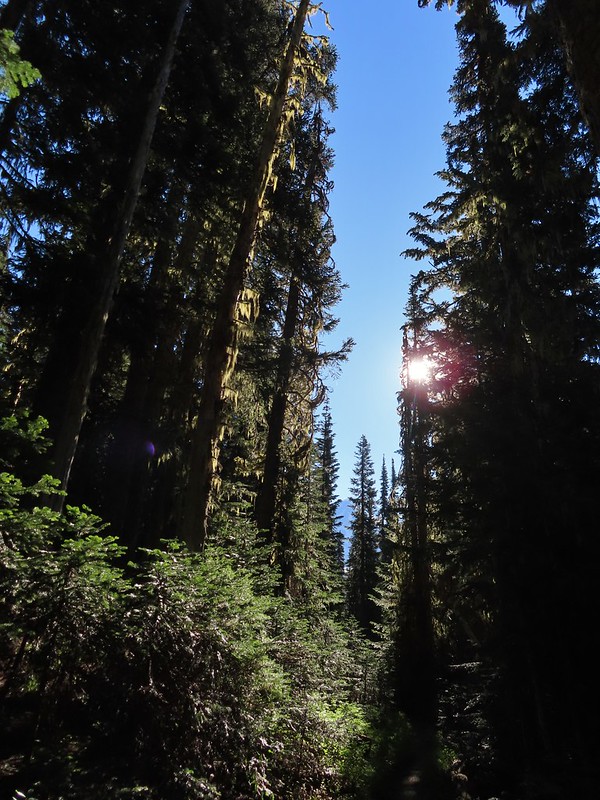 First look at Mt. Adams through the trees.


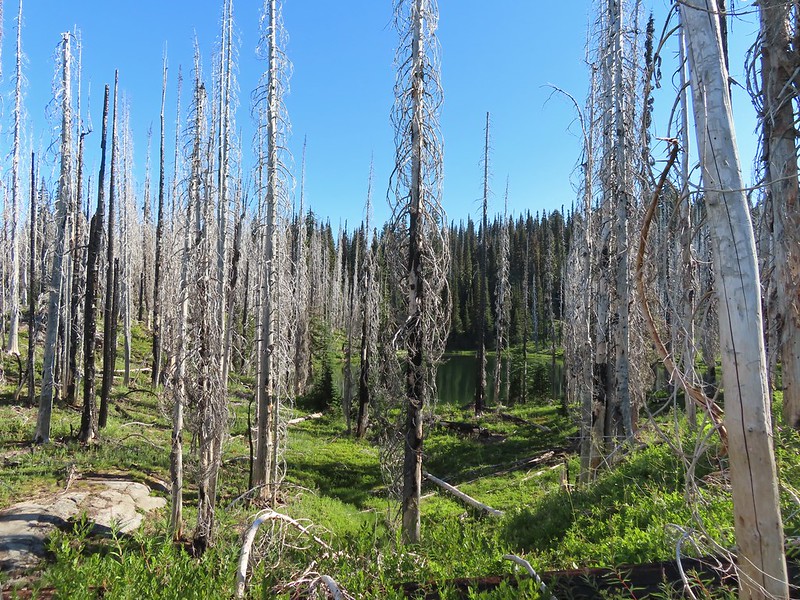 Luna Lake
 Aster
Aster

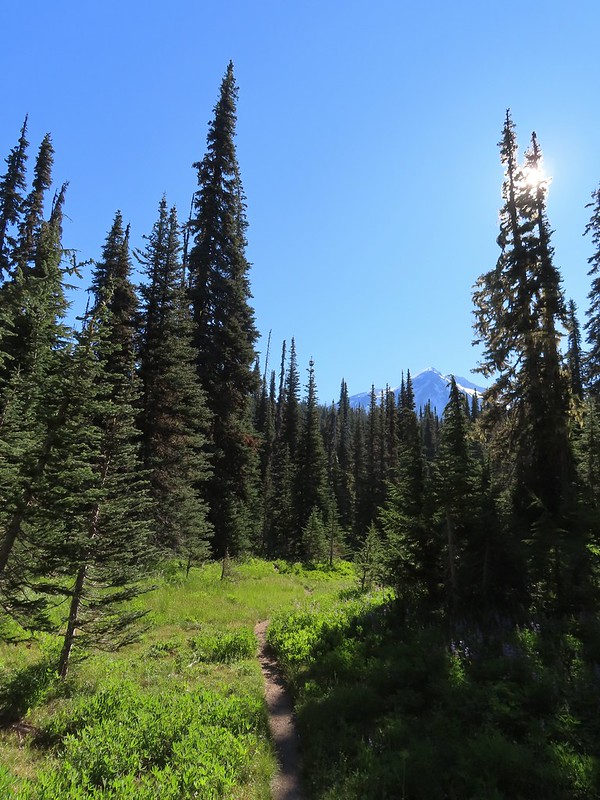 More Mt. Adams.
 Paintbrush and lupine

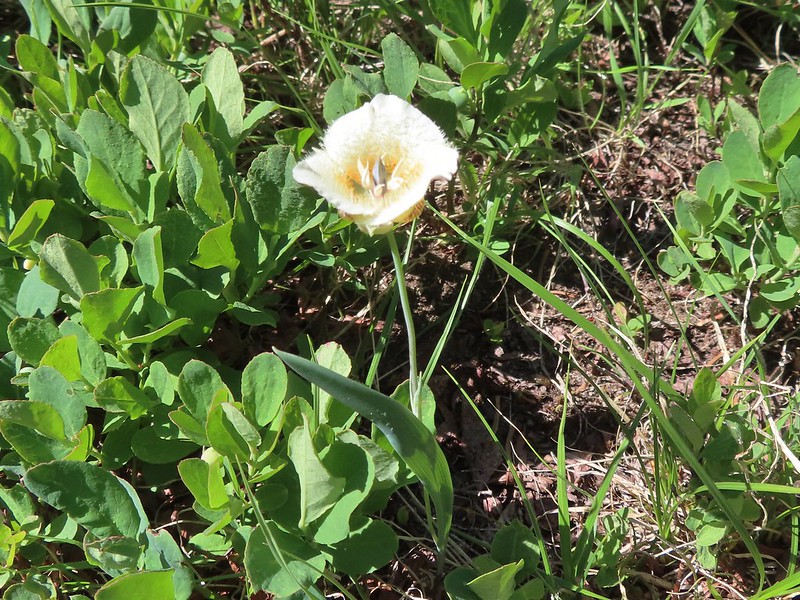 Sub-alpine mariposa lily
 Riley Creek along the trail.
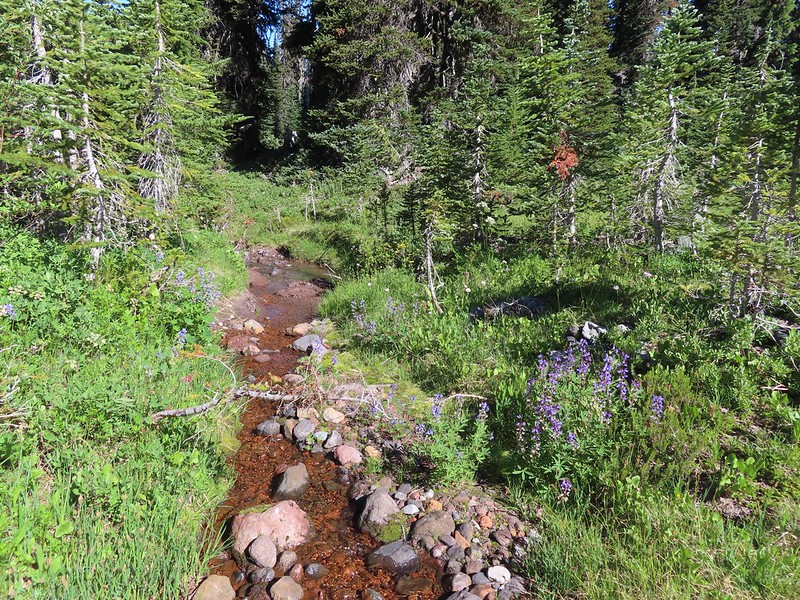 Riley Creek at the crossing.
 A trail sign up ahead at the junction.
 PCT marker on the tree.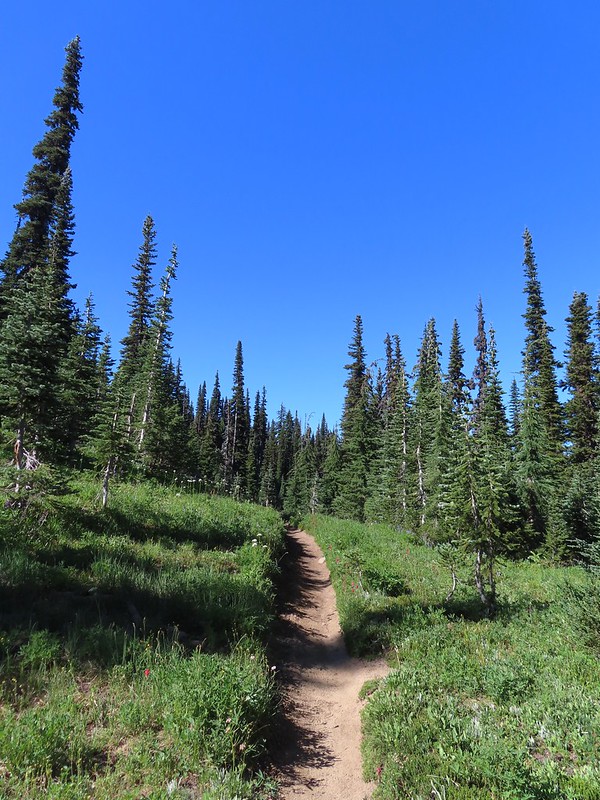
 Riley Creek below the PCT crossing.
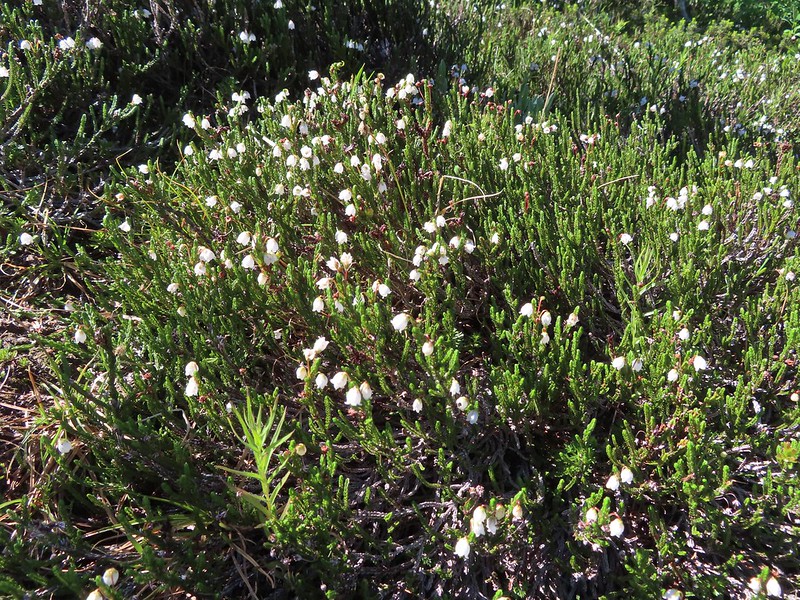 White mountain heather
 A nice paintbrush
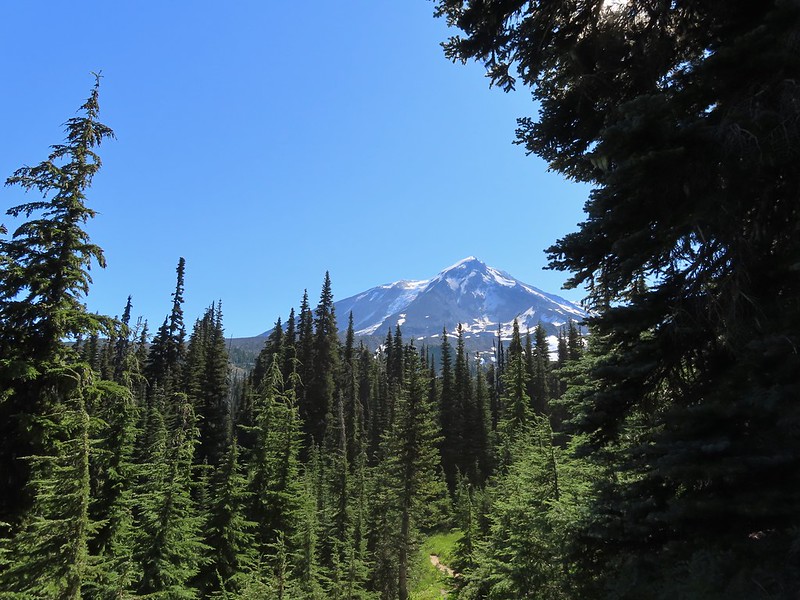 Mt. Adams behind us as we headed south.
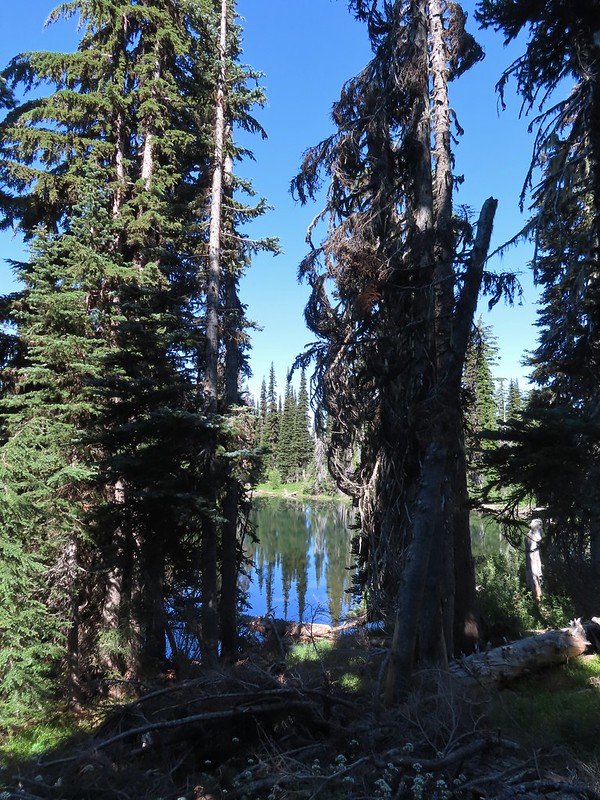 Sheep Lake
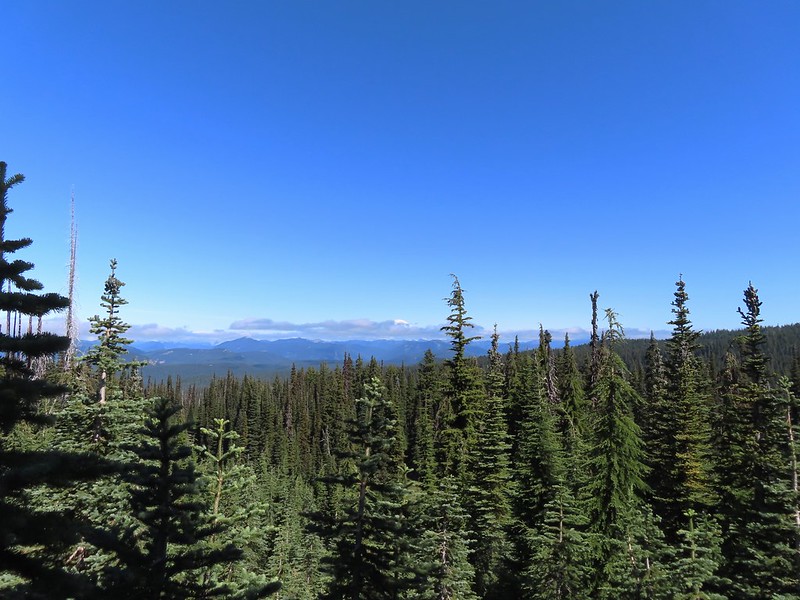 Mt. Rainier behind a line of clouds.
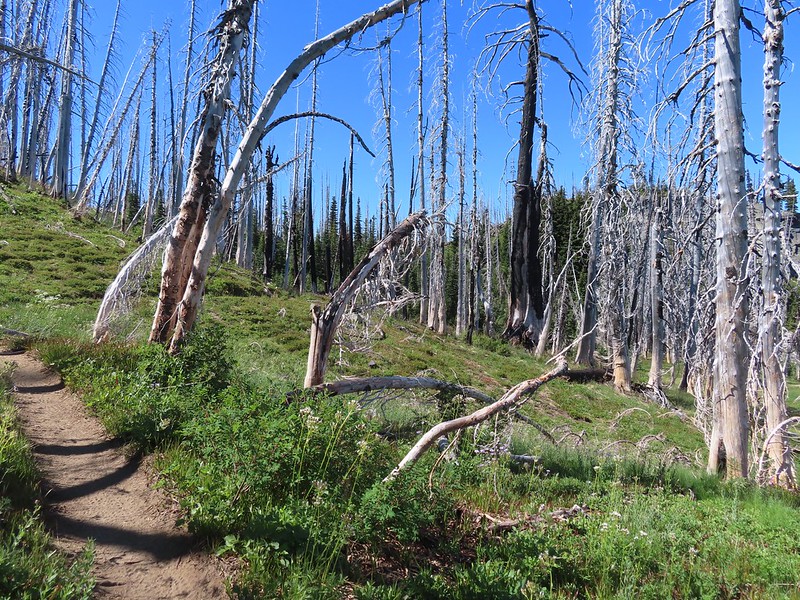 Burnt Rock behind the snags left over from the 2012 Cascade Creek Fire.
 Alpine false dandelion
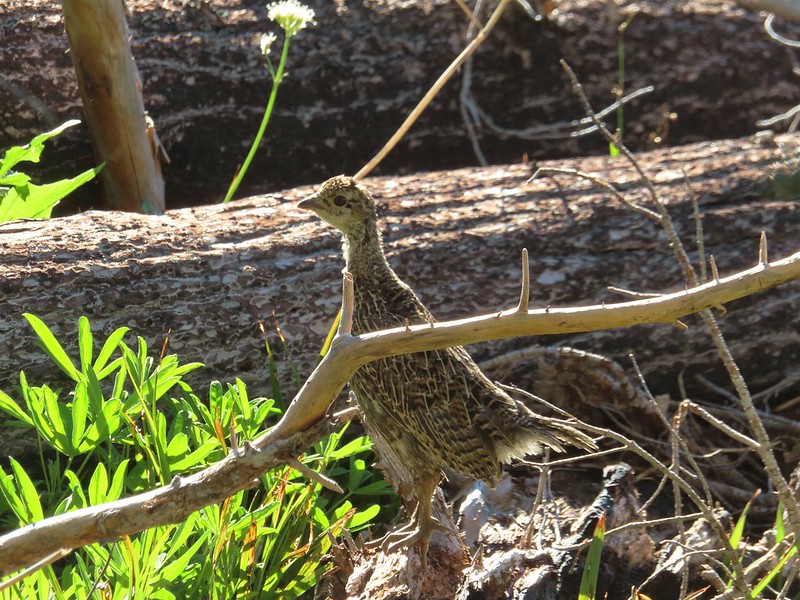 Grouse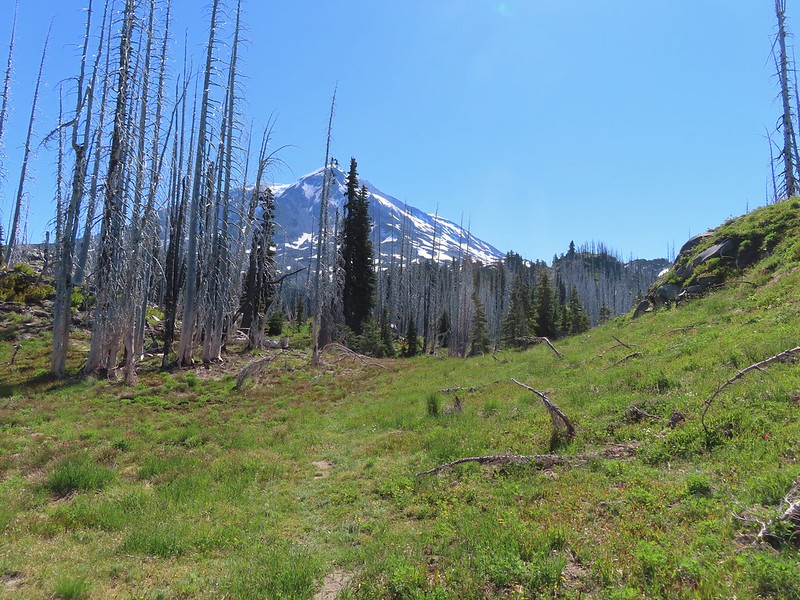

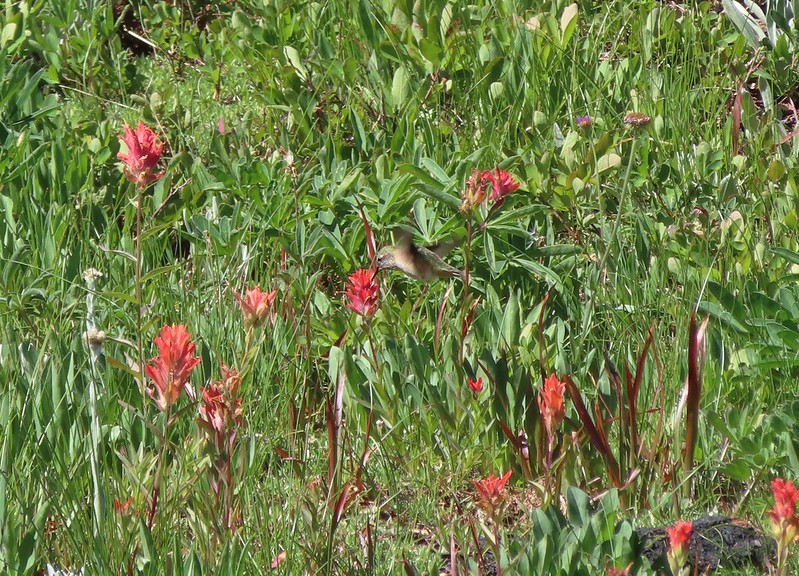 Hummingbird visiting paint.
 Mountain heather

 On the final pitch.
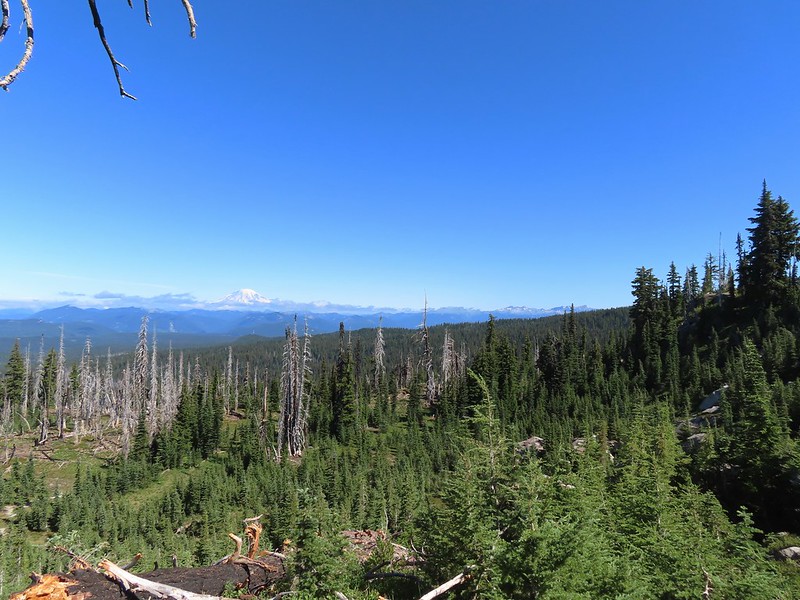 Mt. Rainier and Goat Rocks
 Phlox
Phlox Almost there.
 Not Crystal Lake, just a pretty little tarn nearby.
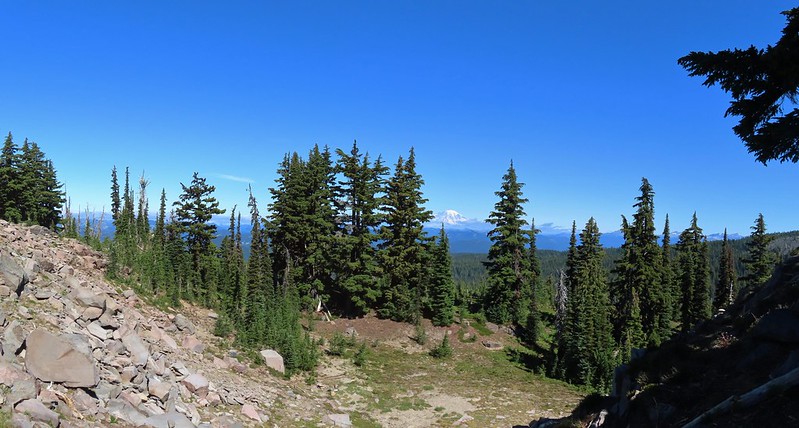 Mt. Rainier
 Just a bit of snow left around 6300′.
 The little tarn we’d passed.
 While not big Crystal Lake was deep.
 View down from the rocky ridge on the south side of the lake.
 The rocky ridge along the south side of the lake.
 We continued a tenth of a mile beyond the lake for a dramatic view of Mt. Adams.
 We could hear a waterfall below on Riley Creek.
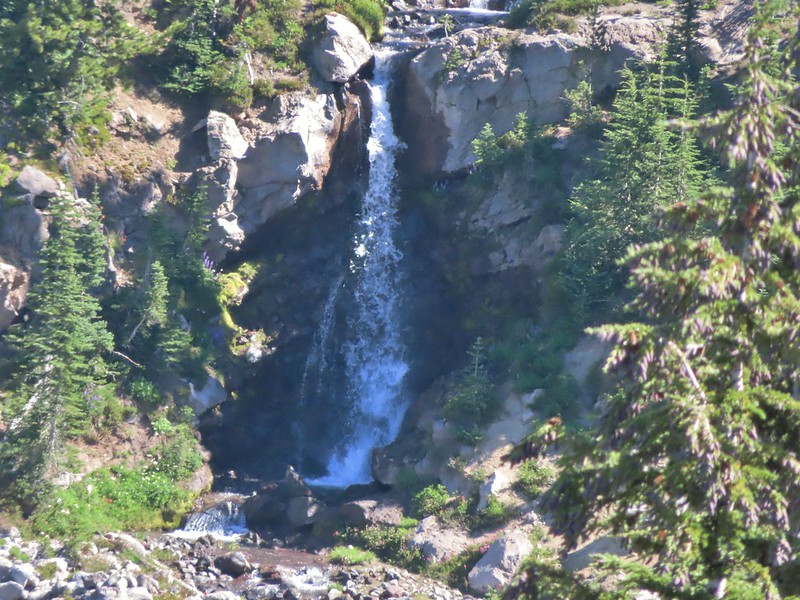 Zoomed in on the waterfall below.
 Crystal Lake from above.
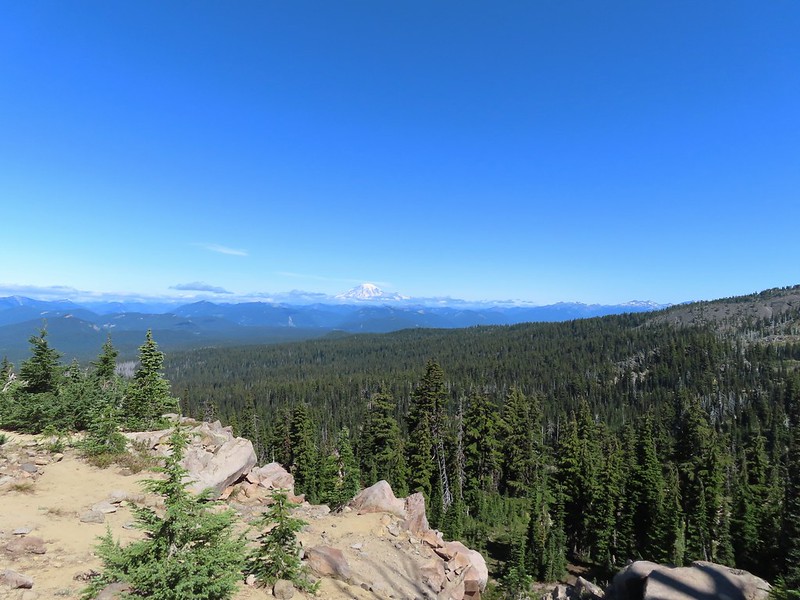 Mt. Rainier with Goat Rocks to the right.
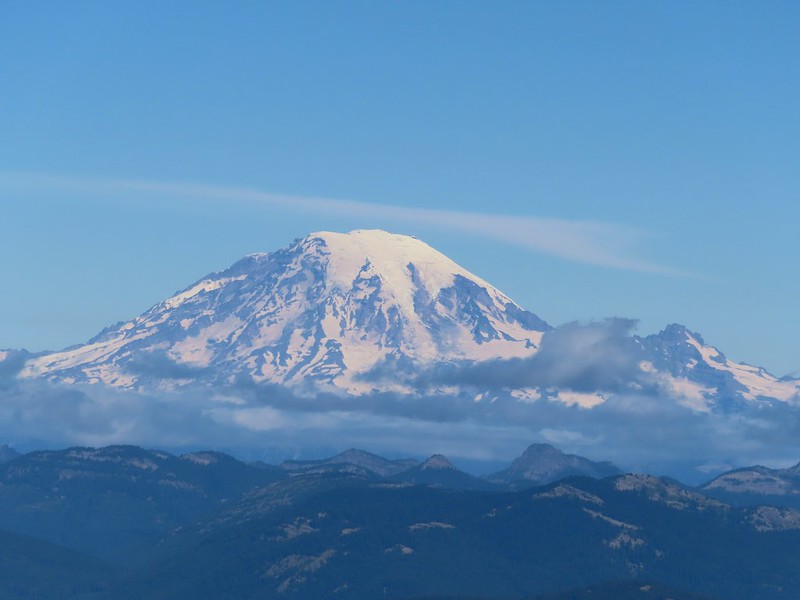 Mt. Rainier
 Some of Goat Rocks.
 Golden-mantled grounds squirrel
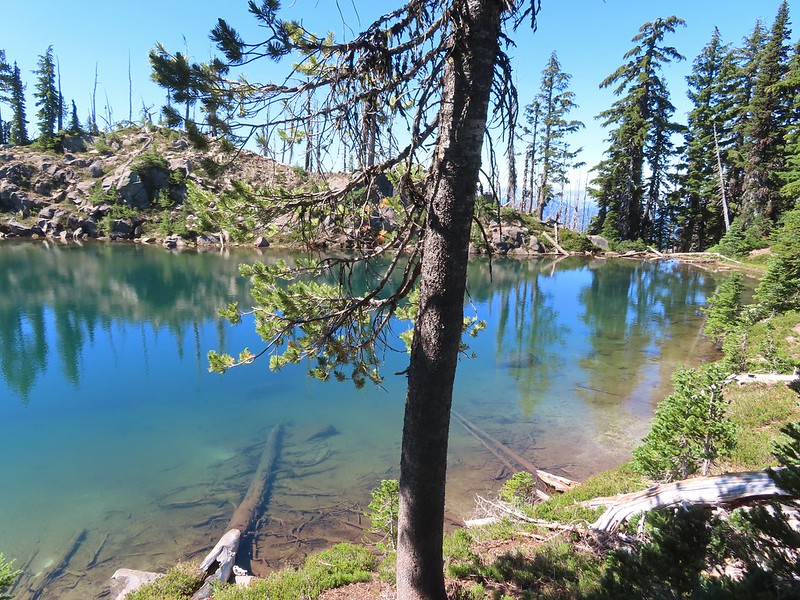


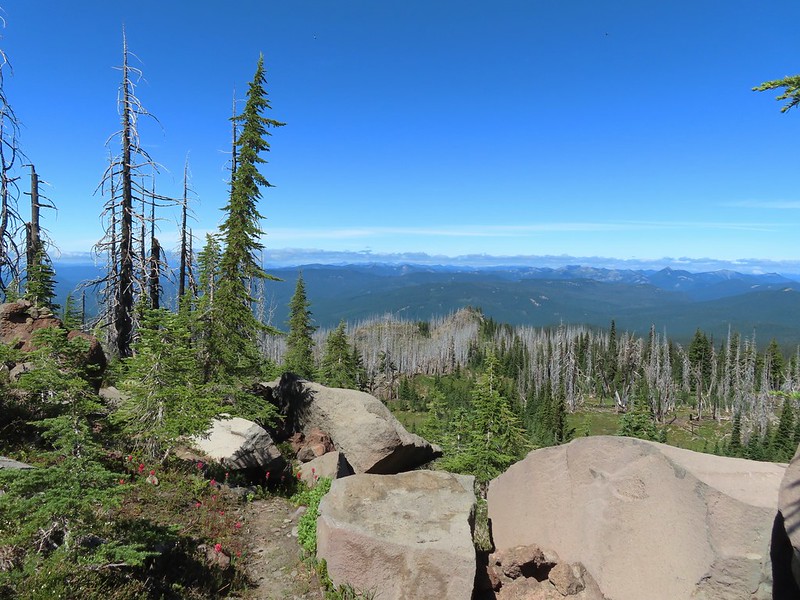 Getting ready to drop down.
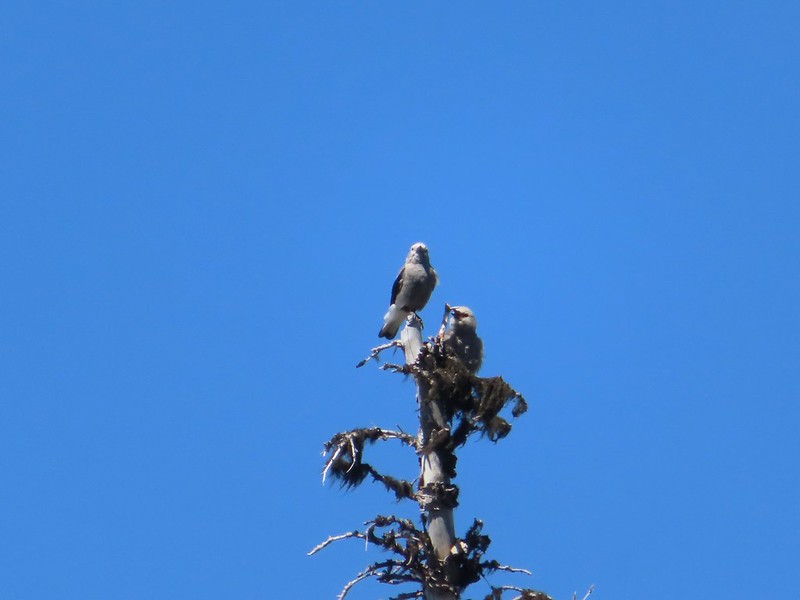 Clark’s nutcrackers
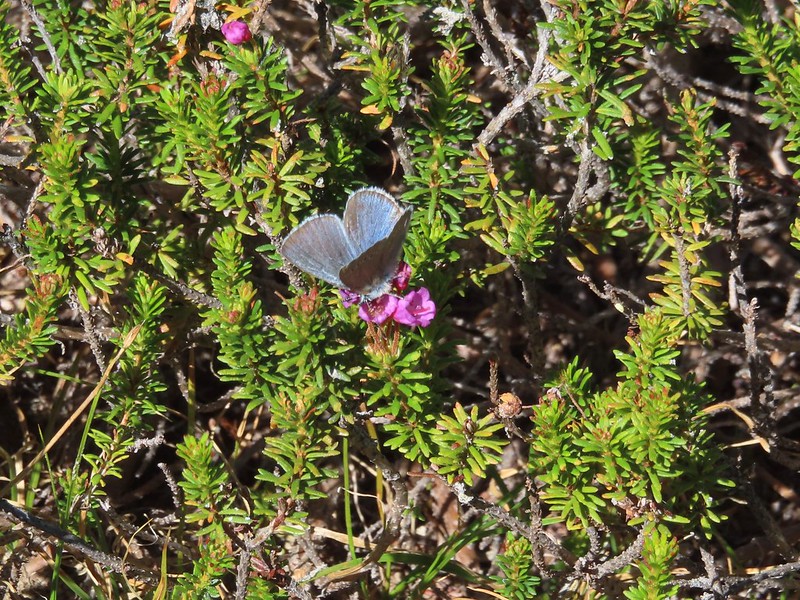 Butterfly on mountain heather.
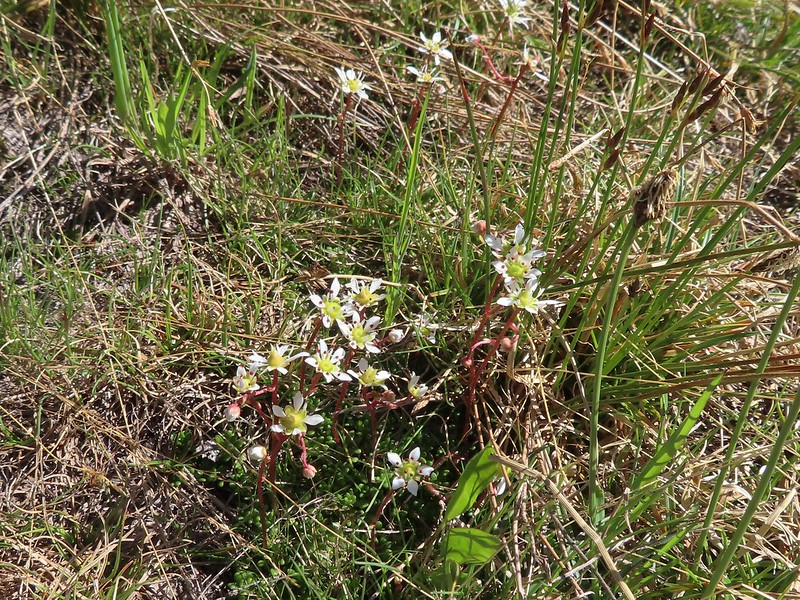 Saxifrage
 Violet
 Alpine speedwell
 A checkerspot
 A crescent
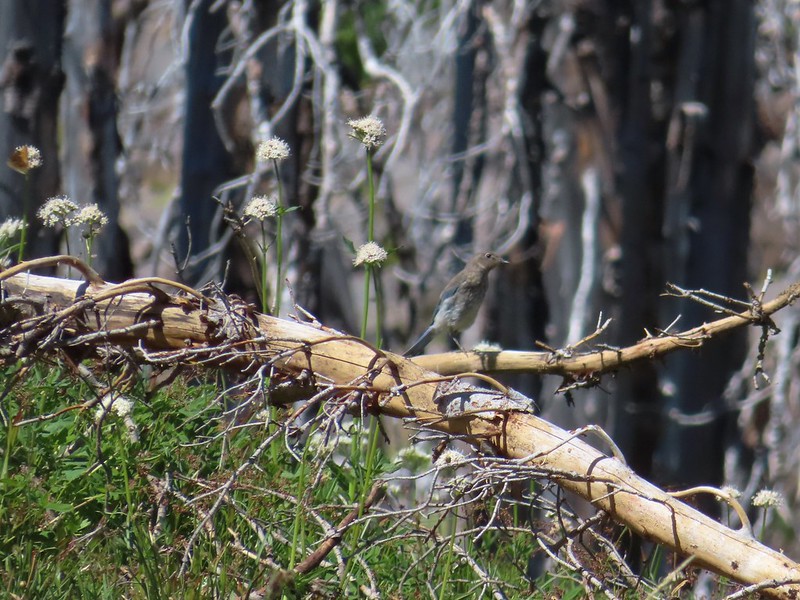 Mountain bluebird
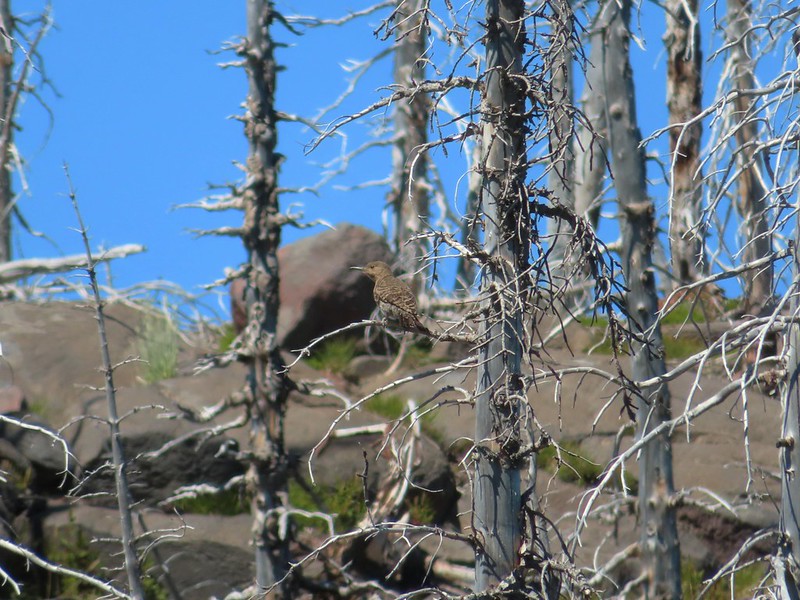 Northern flicker
 I’m guessing a warbler of some sort. We saw quite a few of these little yellow birds but had a hard time actually getting a photo.
 Mt. Adams from the PCT.
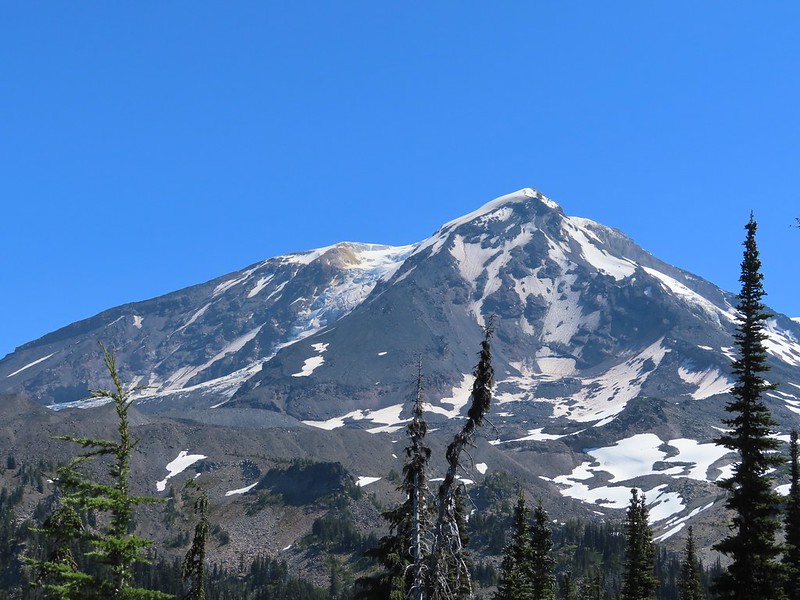
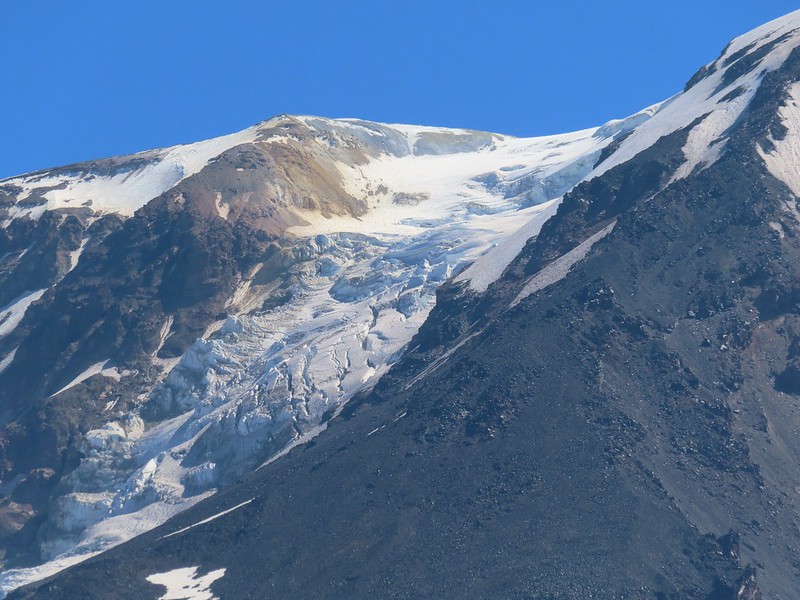 Adams Glacier
 Riley Creek at the PCT crossing.
 Wildflowers along the PCT.
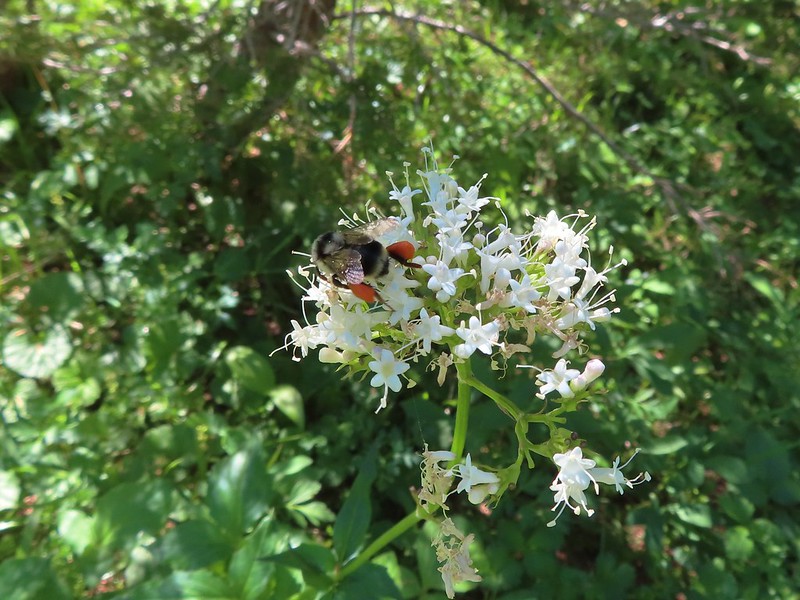 Bee on valerian
 Butterfly on valerian
 Another butterfly on valerian
 Looking back at Mt. Adams from the Riley Camp Trail.
 Passing through Riley Creek Meadows.
 Gentian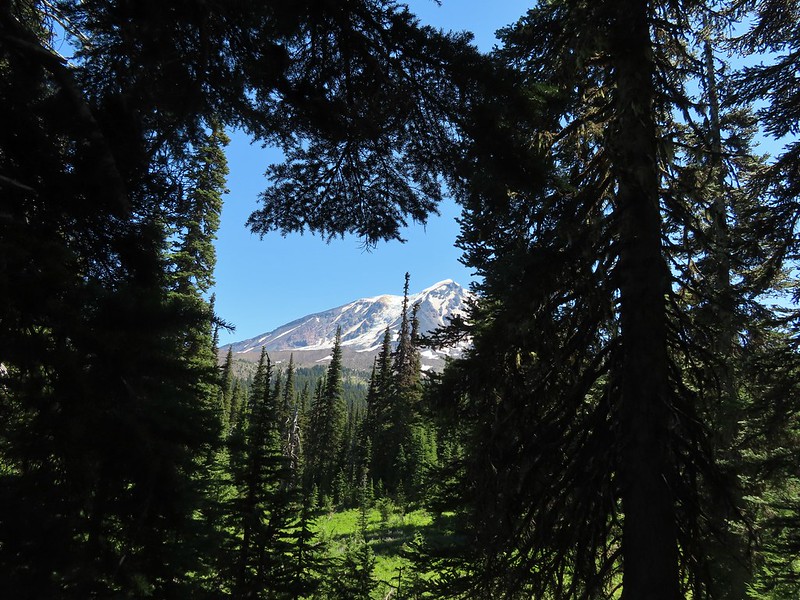
 We only saw a couple of beargrass blooms.
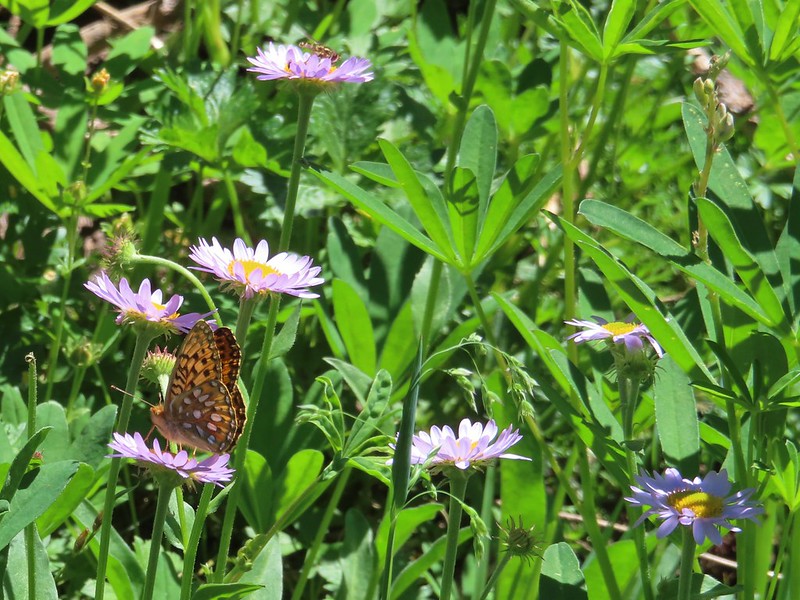 Pollinators on fleabane.
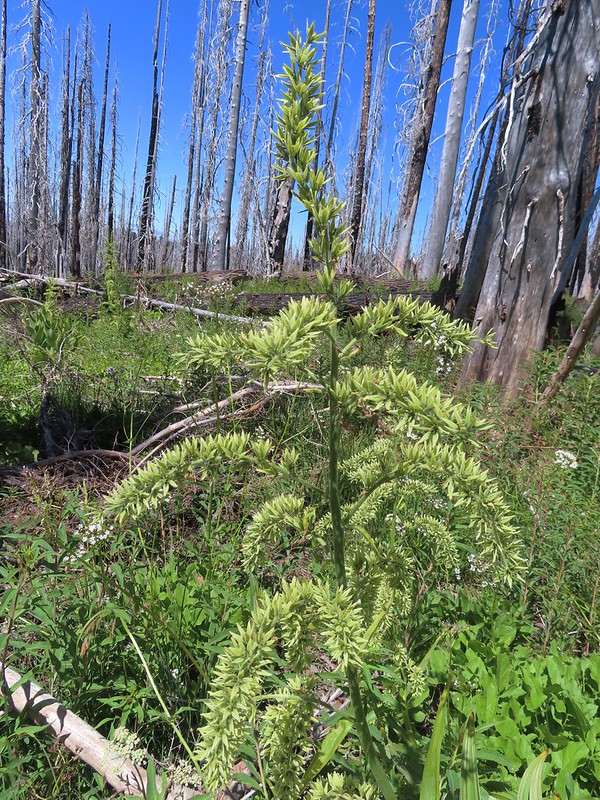 False hellebore
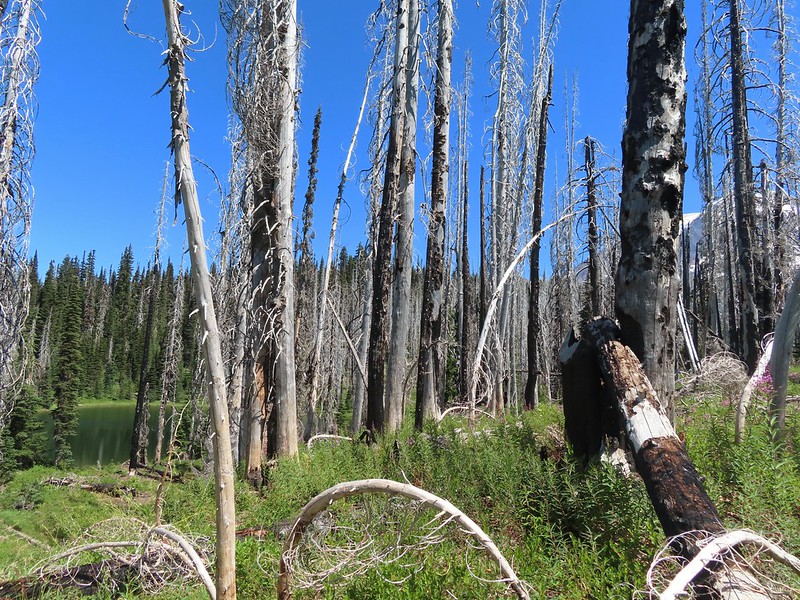 Luna Lake and Mt. Adams from the trail.


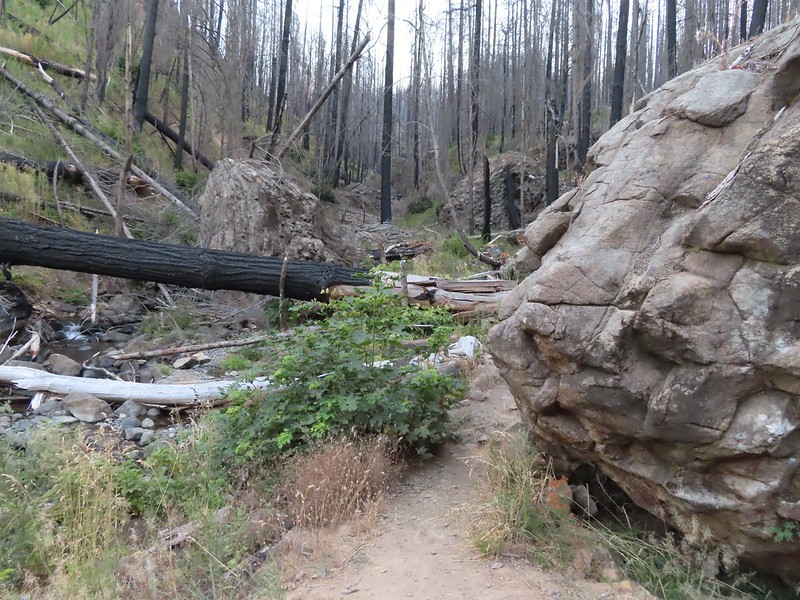
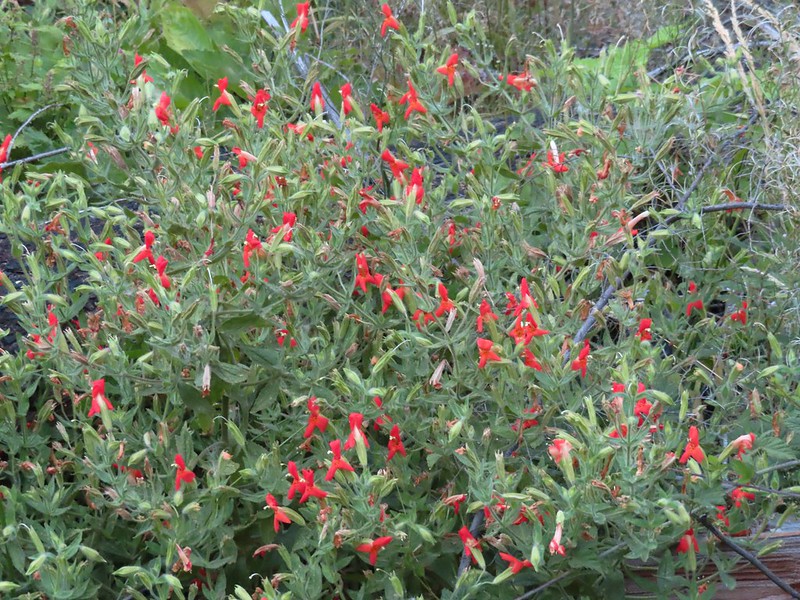 Scarlet monkeyflower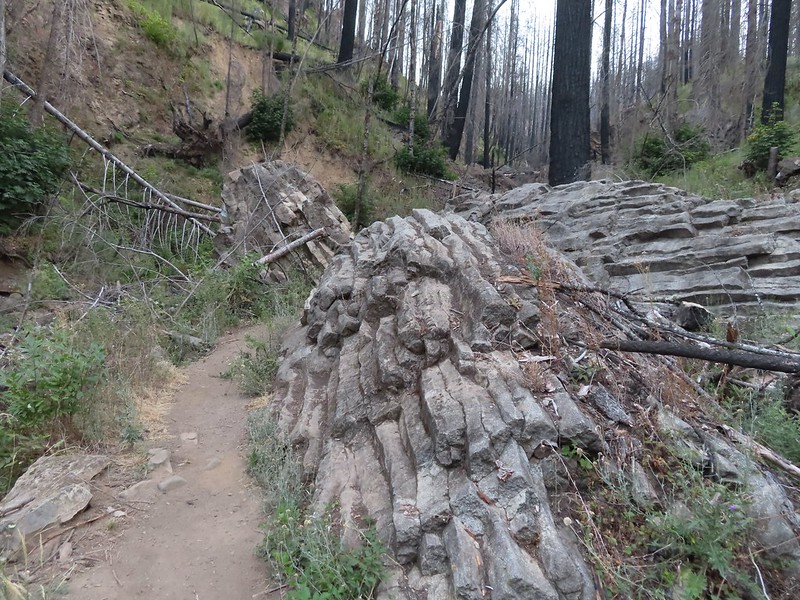

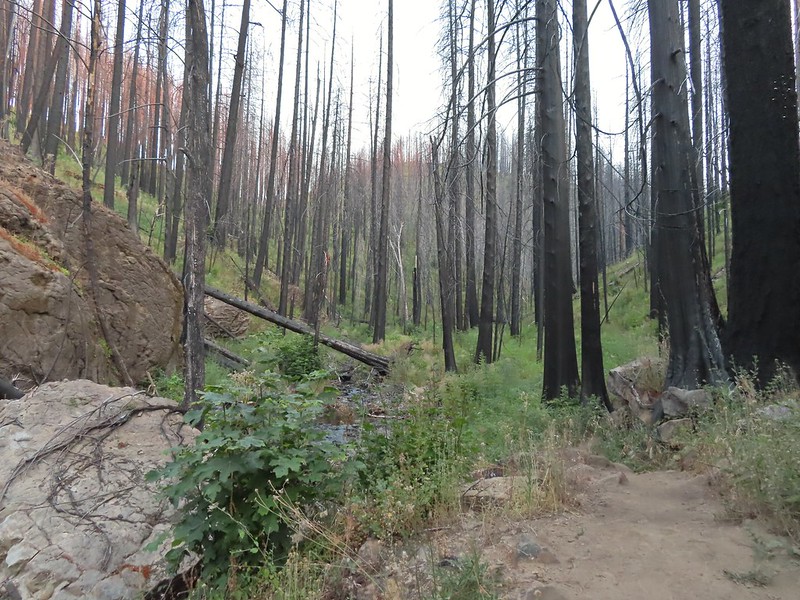

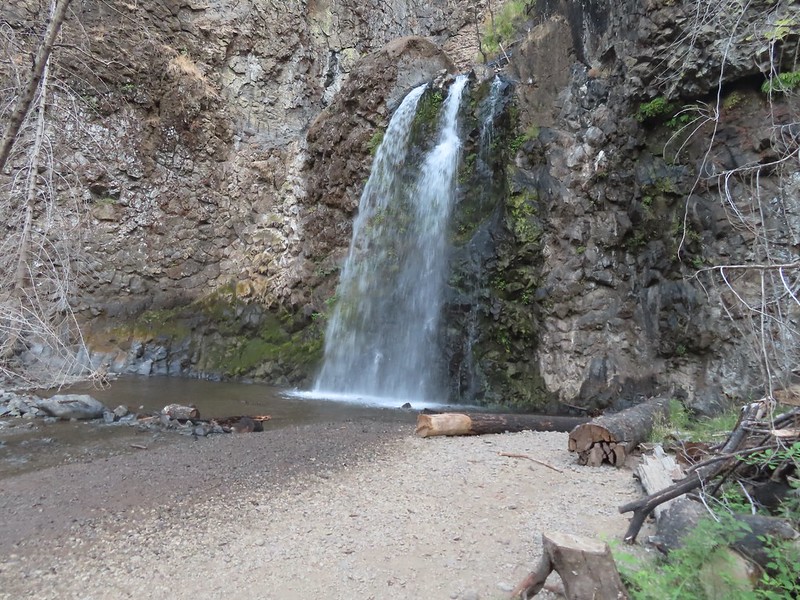

 Heading for the viewpoint.
 The upper tier from the viewpoint.
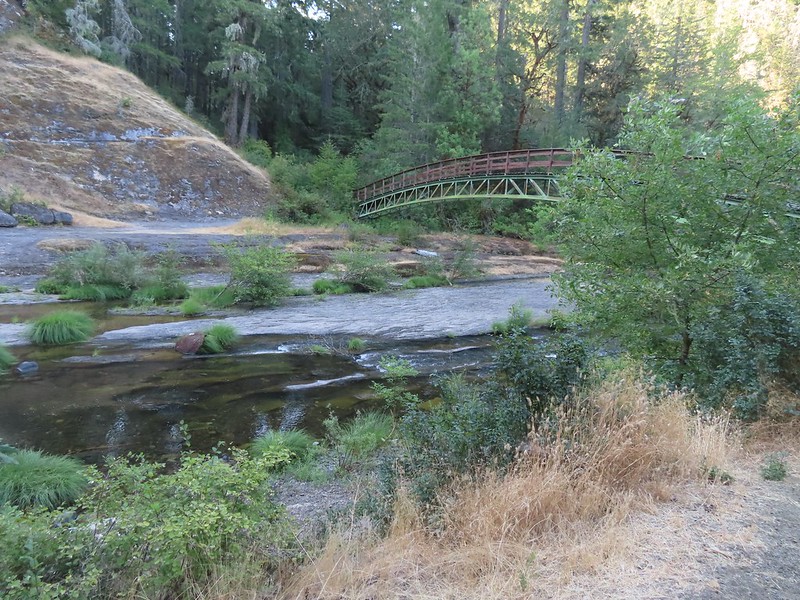
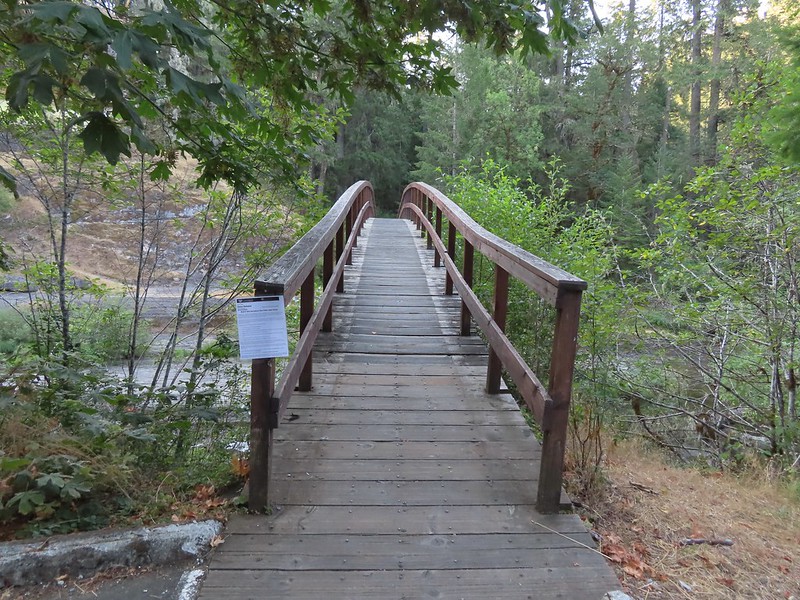


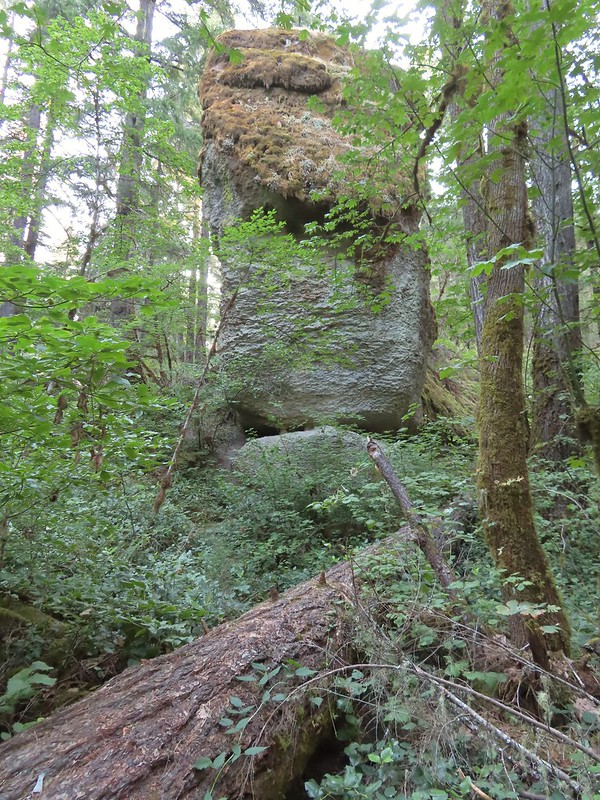

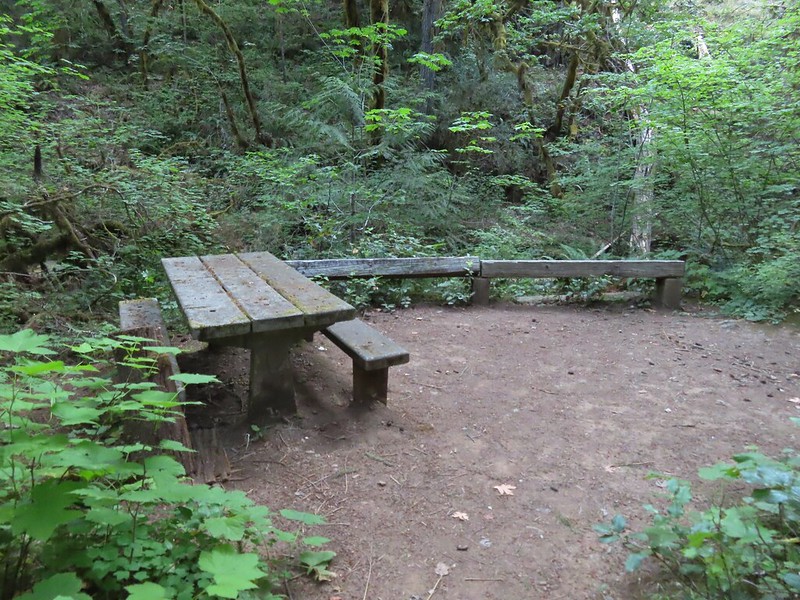

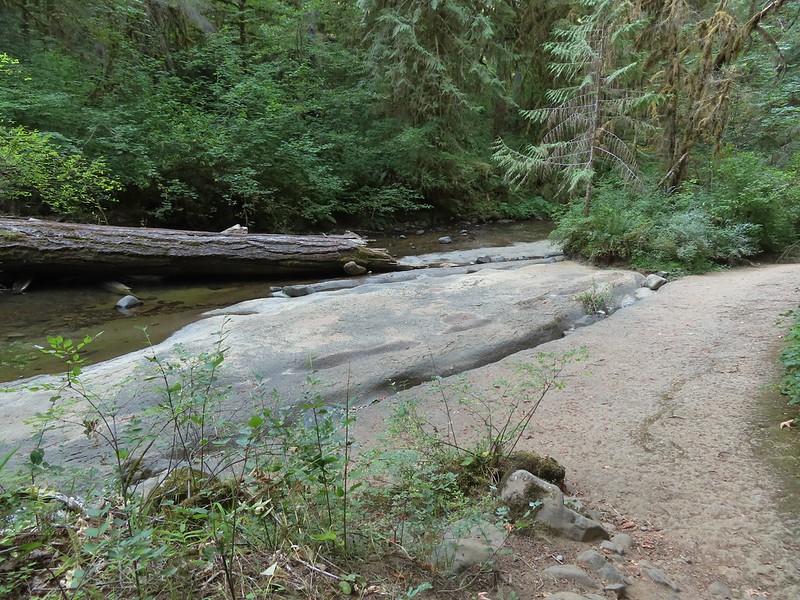


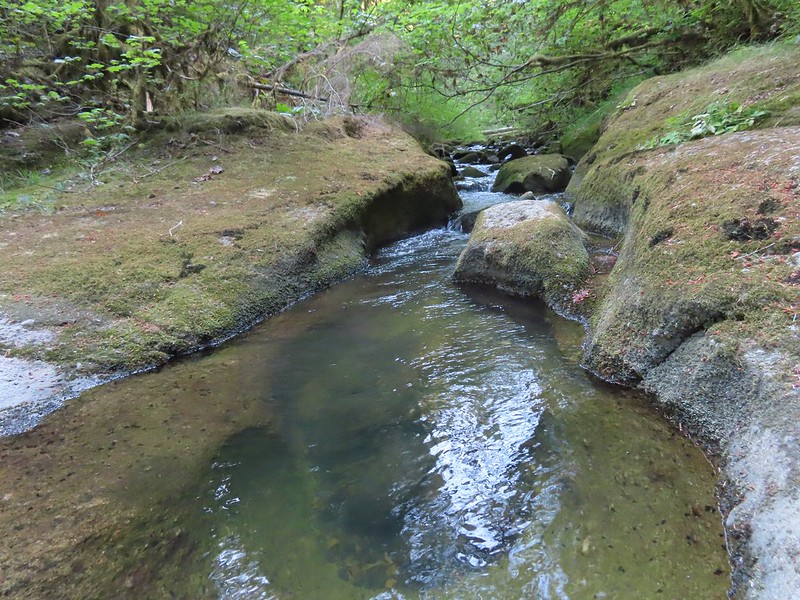
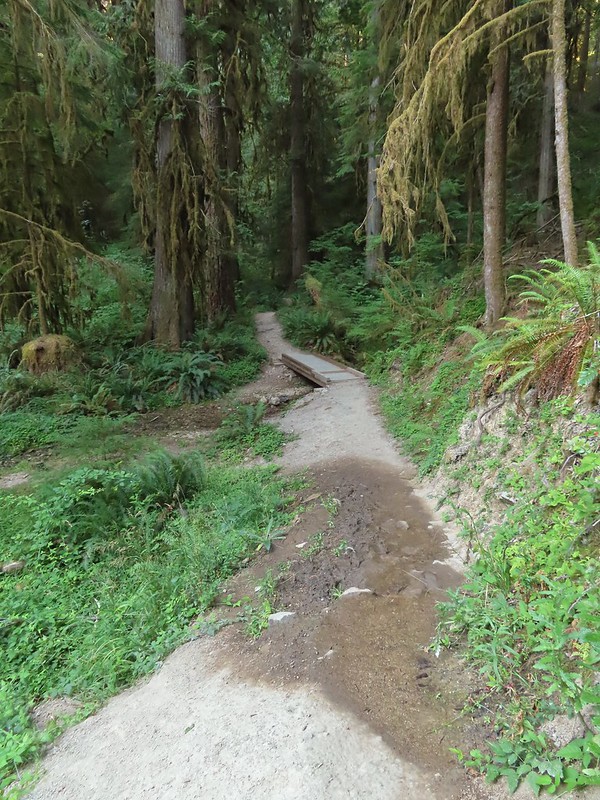
 First good view of the lower fall from the trail. The upper fall was visible but somewhat blocked by trees.

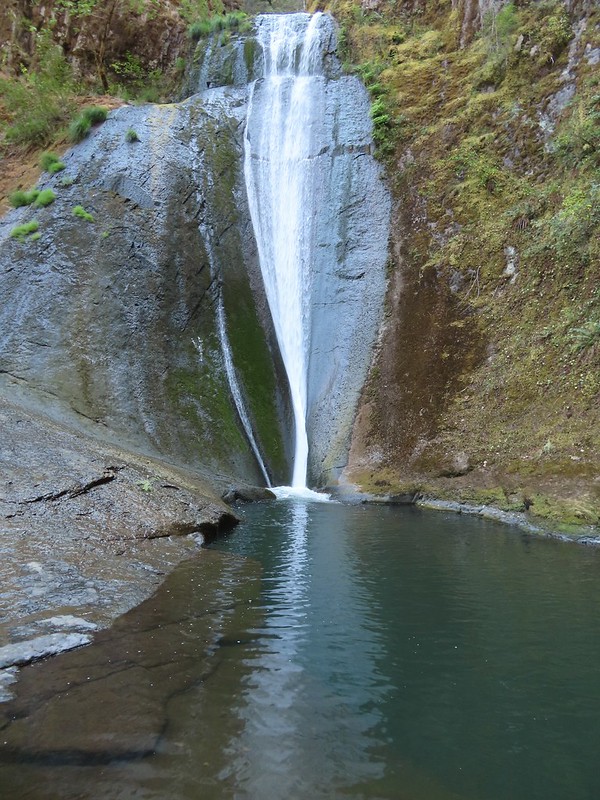 We really liked how the water curved and narrowed as it cascaded down.
 The pool appeared to be extremely deep.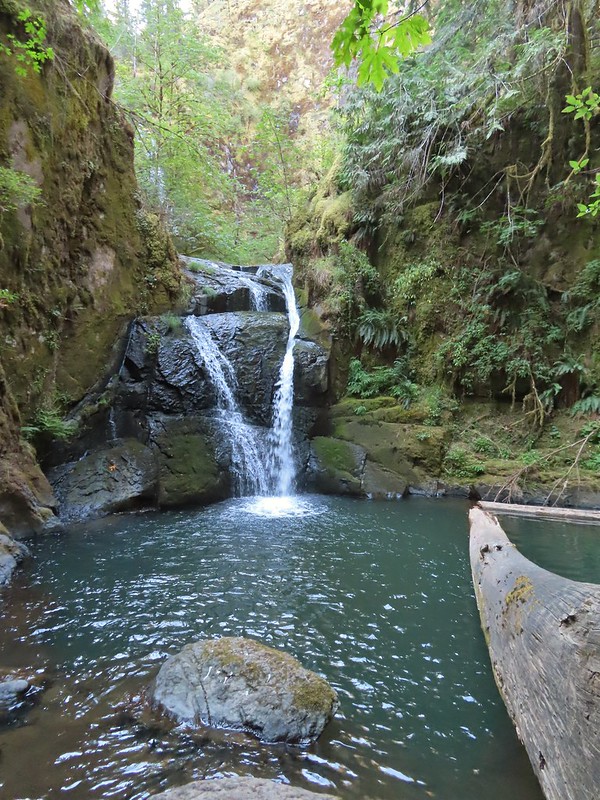
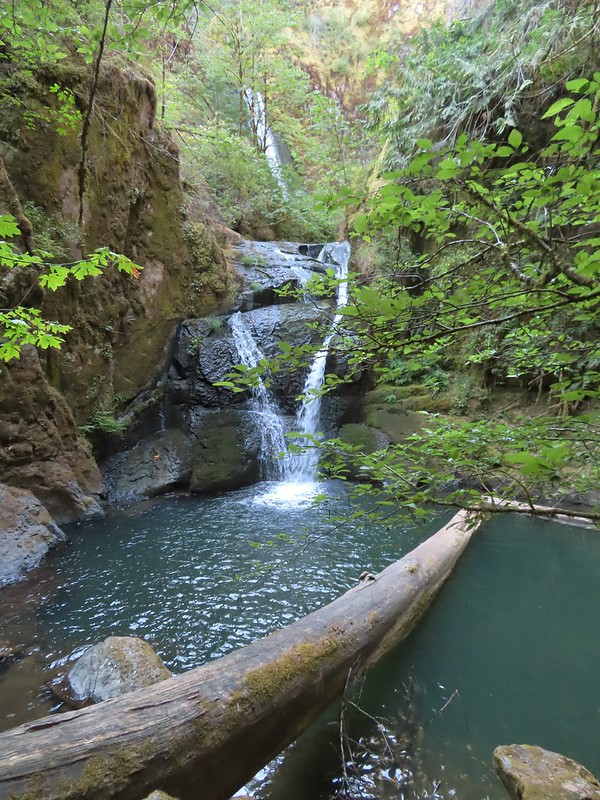

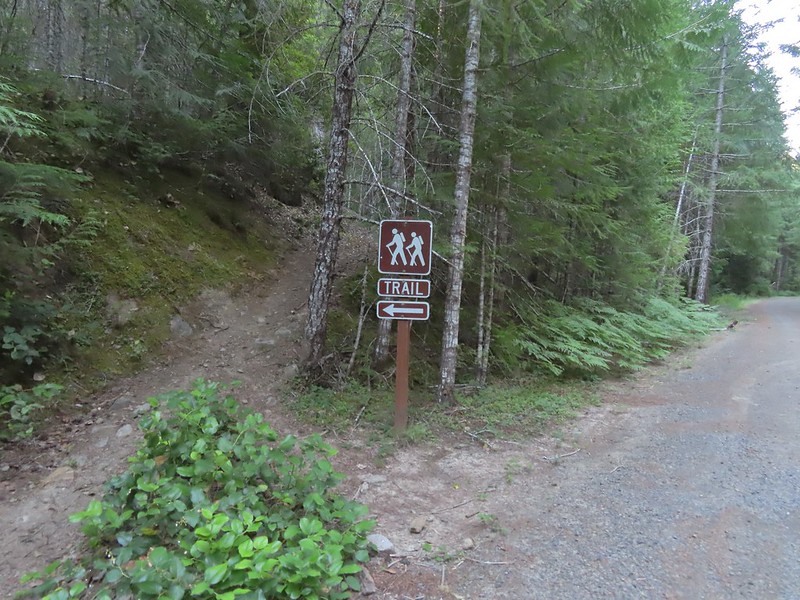 Hemlock Creek Trail heading uphill toward Hemlock Lake.
 Trail sign for the Hemlock Creek Trail heading down to Lake in the Woods from FR 421.
 Hemlock Creek Trail at Lake in the Woods Campground.
 Lake in the Woods (a 4 acre man made lake).


 Ghost plant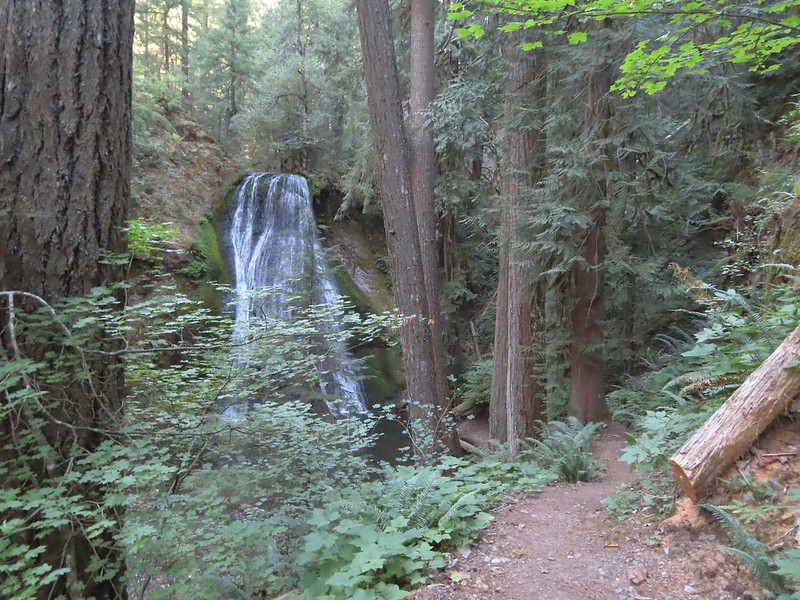
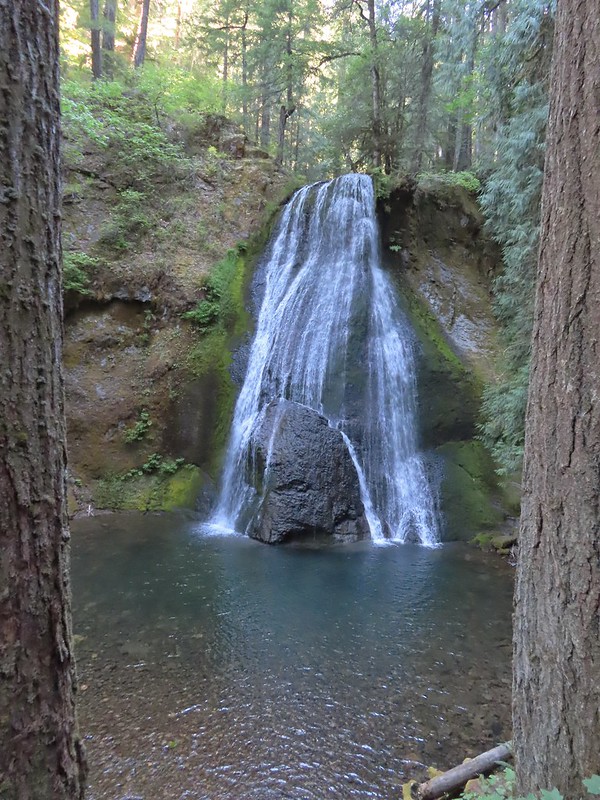
 A rare photo of me for scale.
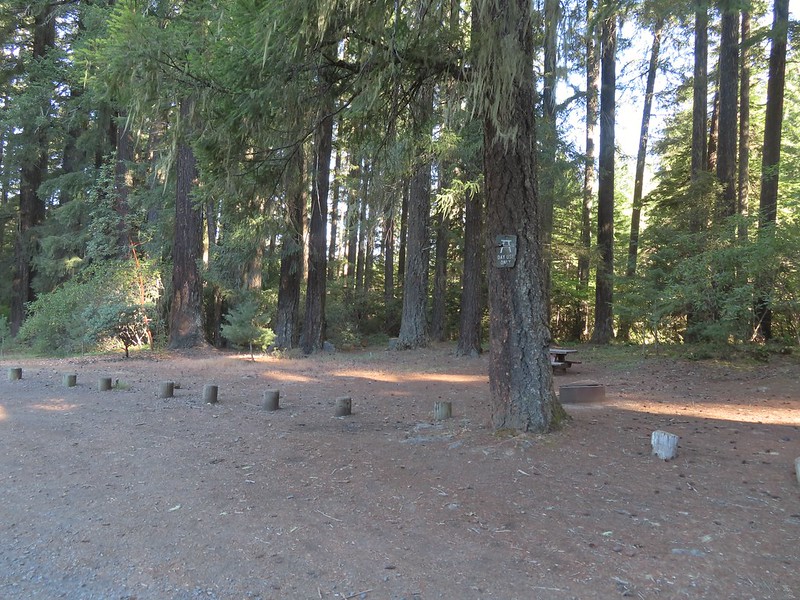 We mistook this for another campsite having not noticed the small sign on the tree.
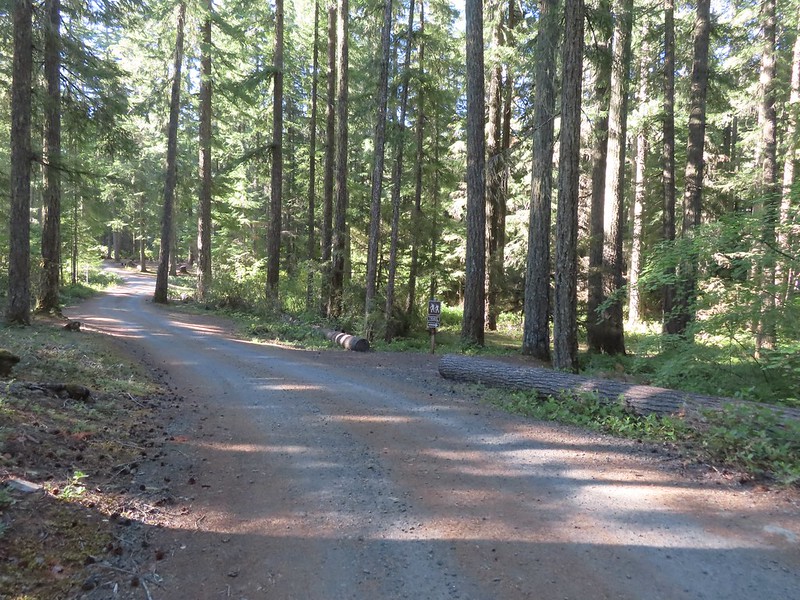


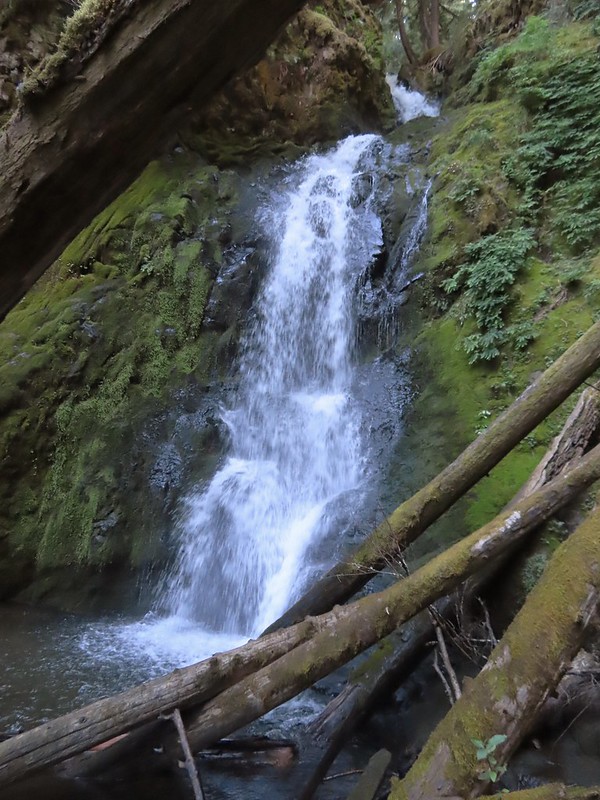
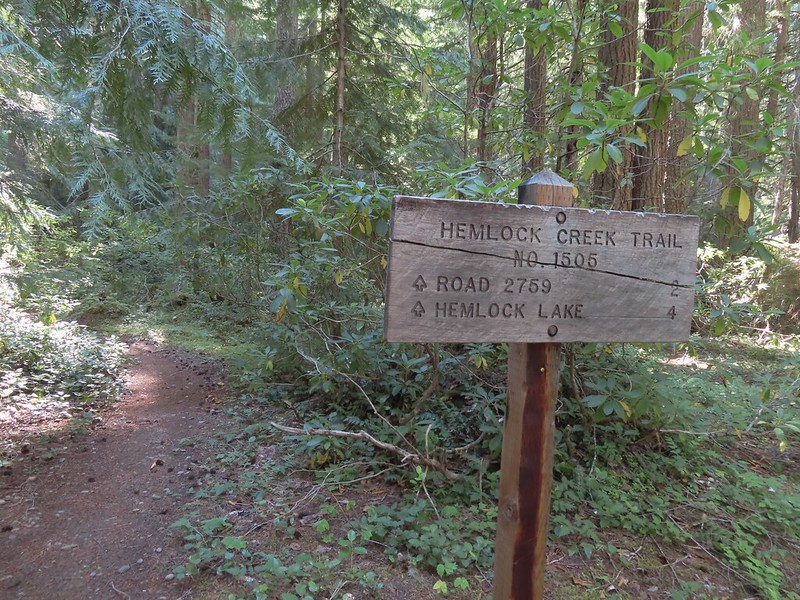 We both noticed that the sign said Hemlock Lake was 4 miles away. Sullivan’s map showed that it was 3 miles from Lake in the Woods to the Yellow Jacket Loop which raised the question was the hike going to be 2 miles longer than we’d expected or did the 4 miles include some of the Yellow Jacket Loop? Based on the mileage in Sullivan’s book I had come up with 16.6 miles so an extra two miles would be pushing us close to 19 (we always find reasons to wander).
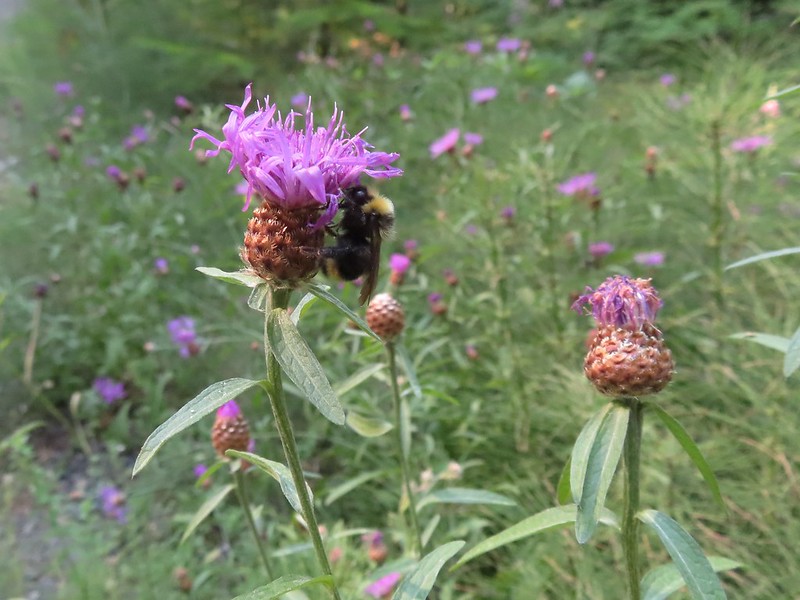 Sleepy bee
 Same mileage on the sign on the other side of FR 421. The fact that Road 2759 showed 2 miles when Sullivan had 1.5 on his map was a pretty good indicator that we were in for more than 16.6 miles.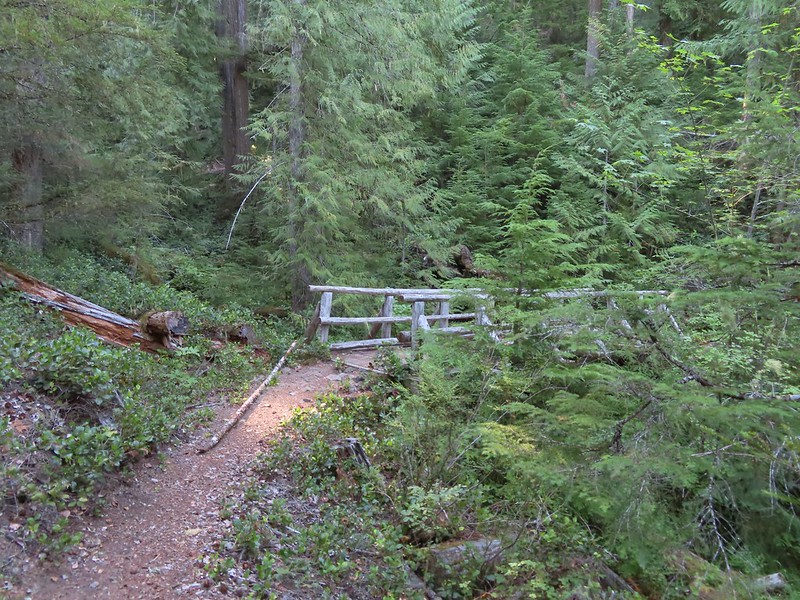
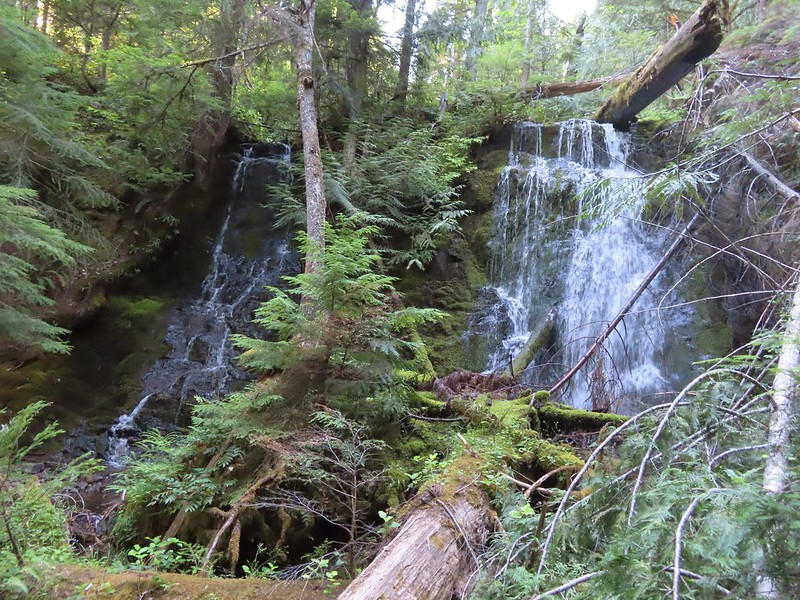 Tributary Falls (unofficial name) was just below a footbridge approximately a half mile from FR 421.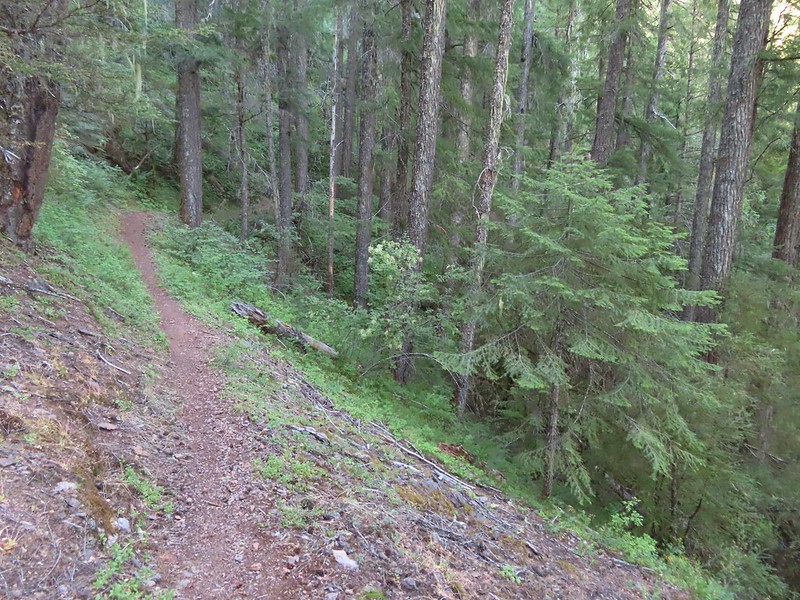
 Middle Hemlock Falls was just two tenths of a mile further along.
 Small cascade below Middle Hemlock Falls.
 Leopard lily
 Another drop with no way to get a view of the fall from above.
 Typical use trail.
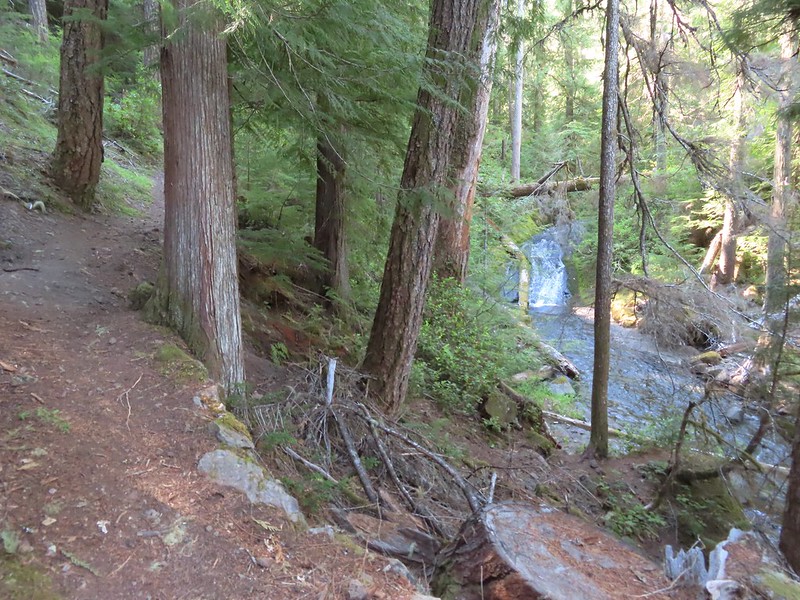 A small slide that was fully visible from the trail.
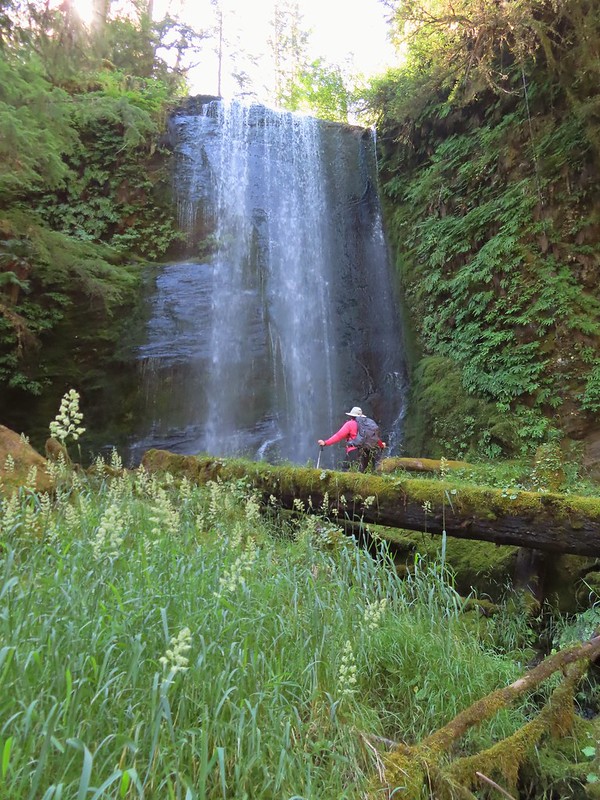 Clover Falls was a quarter mile above Middle Hemlock Falls.
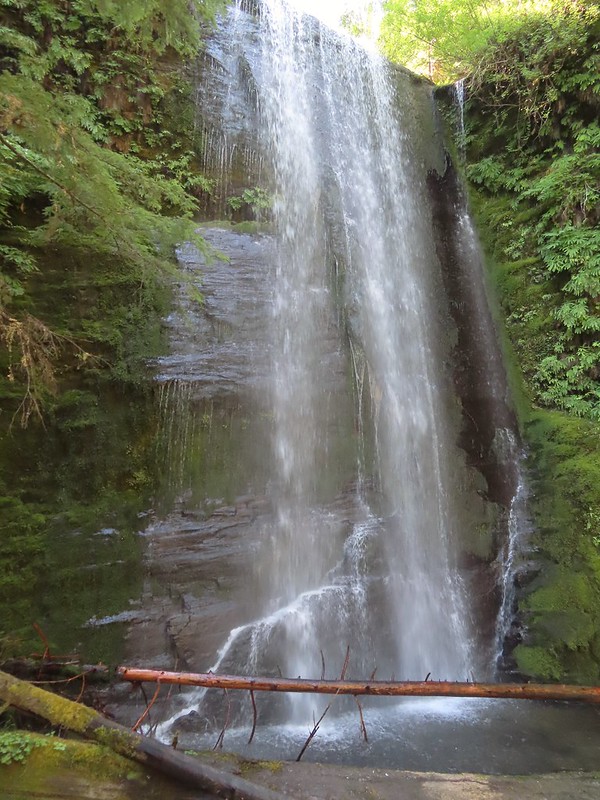 Clover Falls
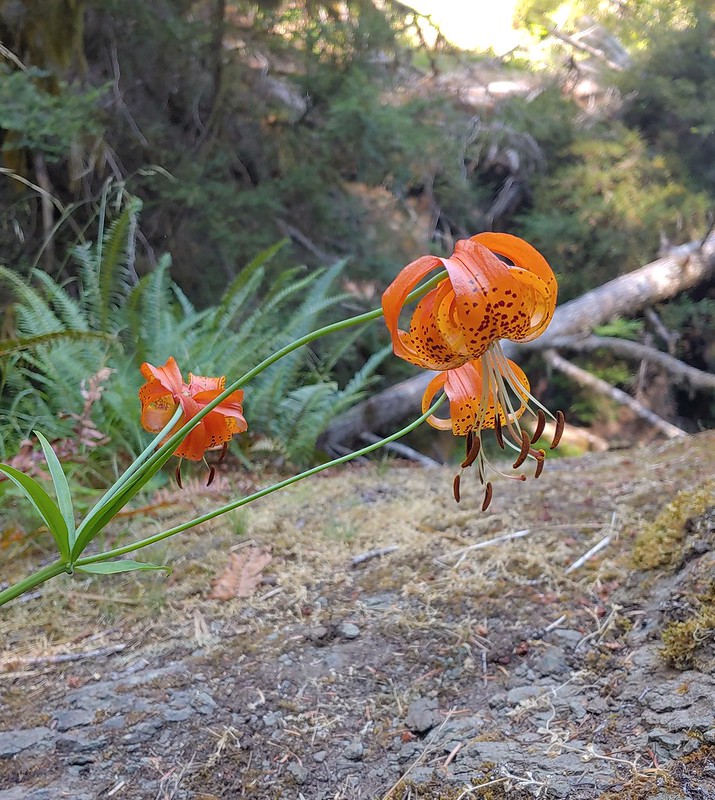 More leopard lilies
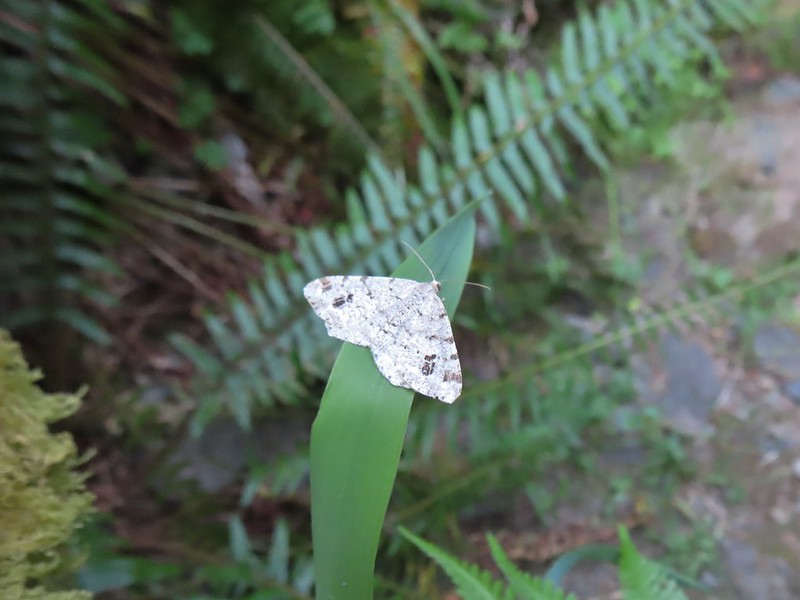 Moth hanging out around the falls.
 Use trail to Clover Falls.
 Heather coming up from the falls through a huckleberry bush that I may have been using for snacks.
 Skunk cabbage leaves in a wet area.
 Curious stellar’s jay.
 FR 2759.
 Again with the 2 miles.
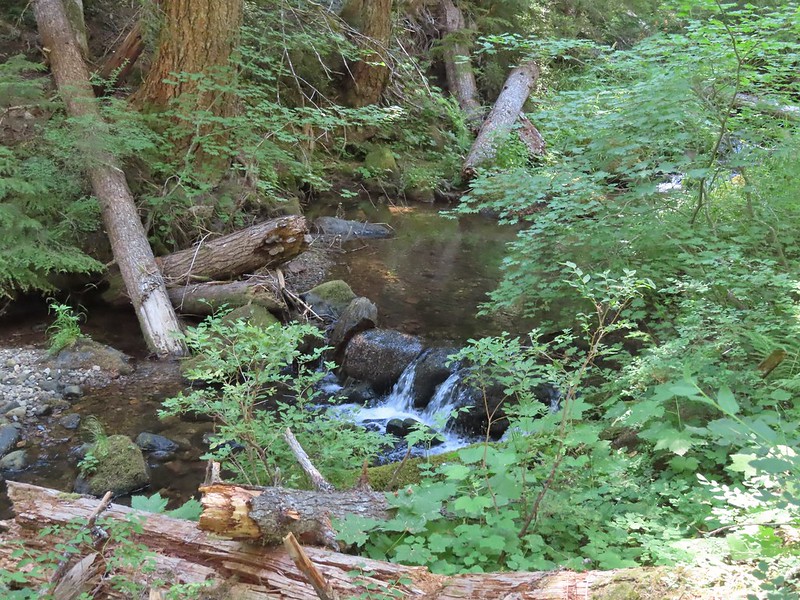 A much more reserved Hemlock Creek.
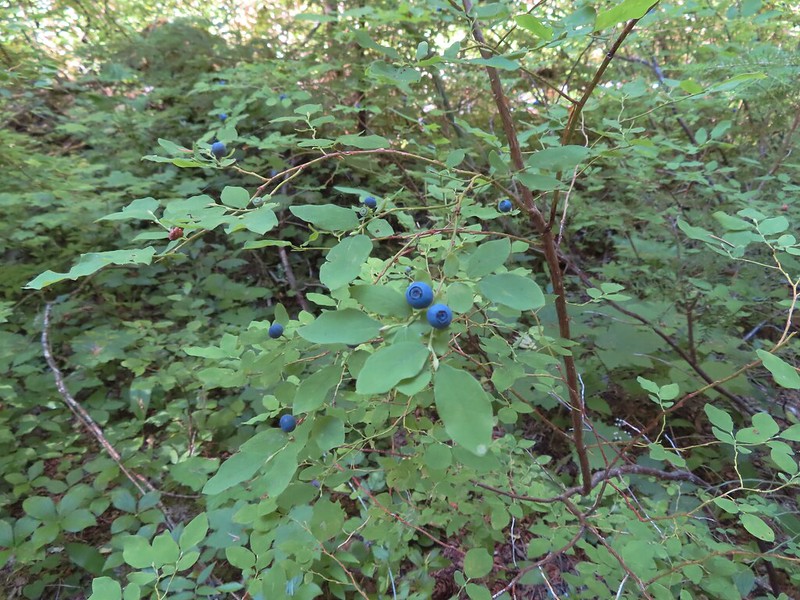 More snacks
 Frog
Frog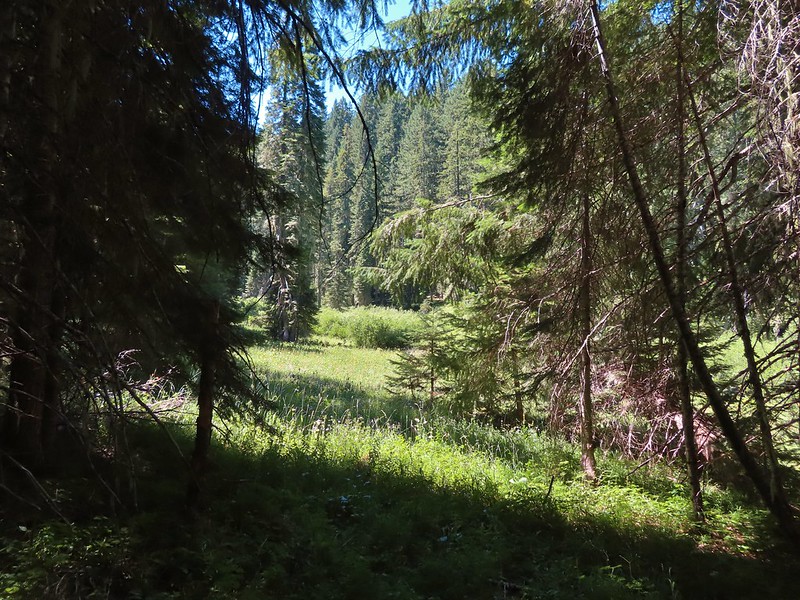
 Coneflower and paintbrush
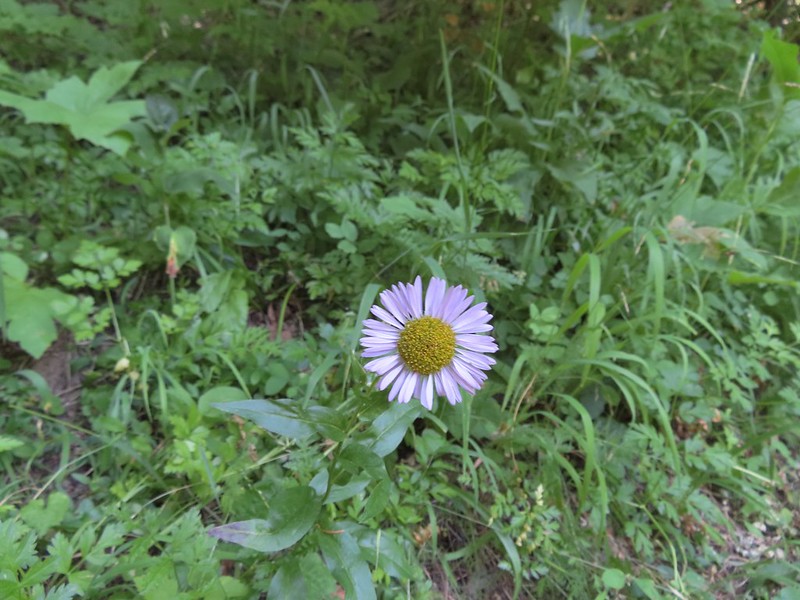 Fleabane
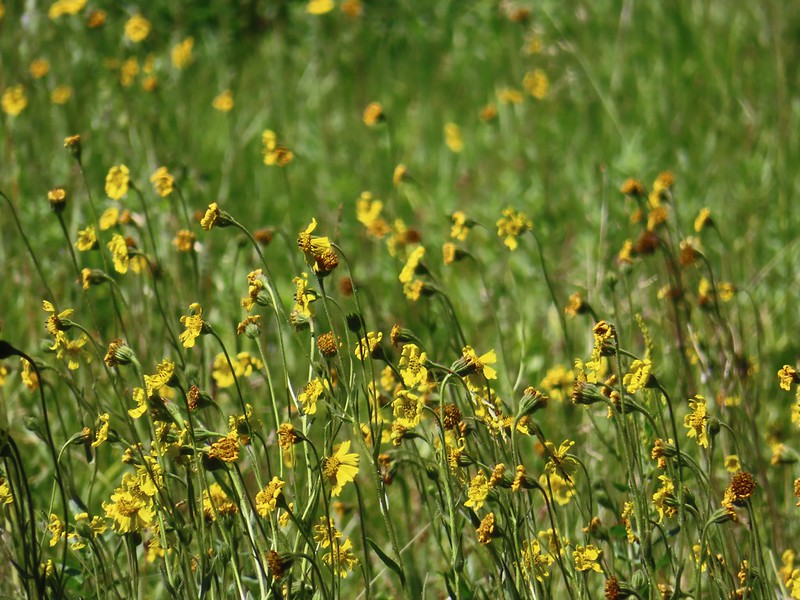 The wildflowers were already on the way out but on the positive side we didn’t have much trouble at all with mosquitos.
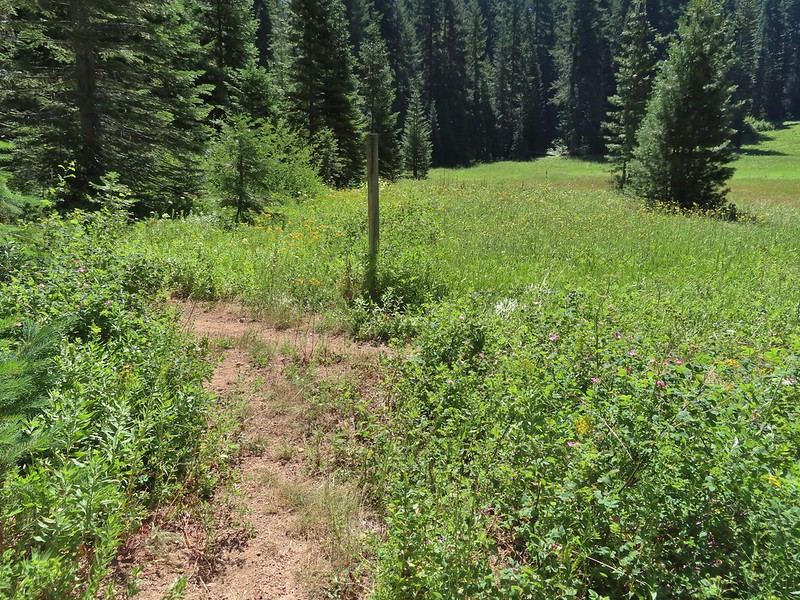 Hemlock Lake was to the left but Sullivan’s hike description called for doing the loop counter-clockwise. He typically has a reason for the direction he suggests so we’ve learned to stick with his recommendations.
 Busy bee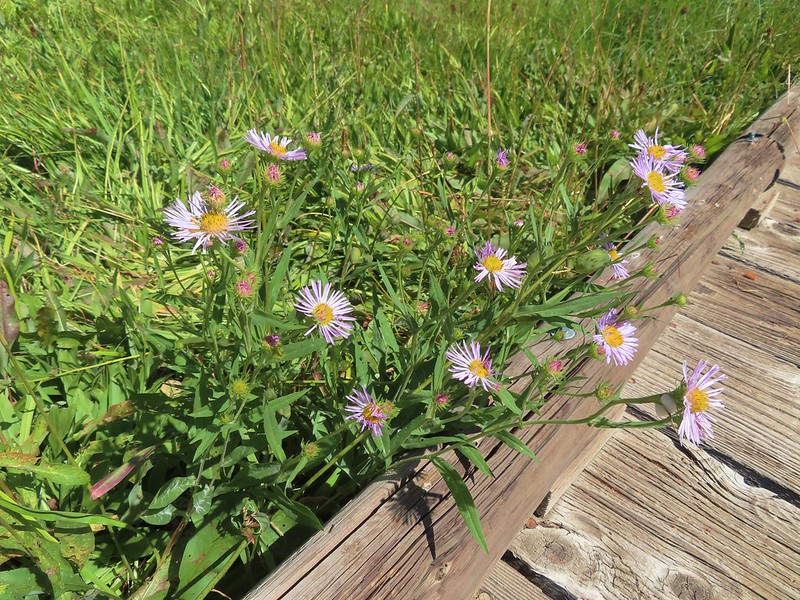
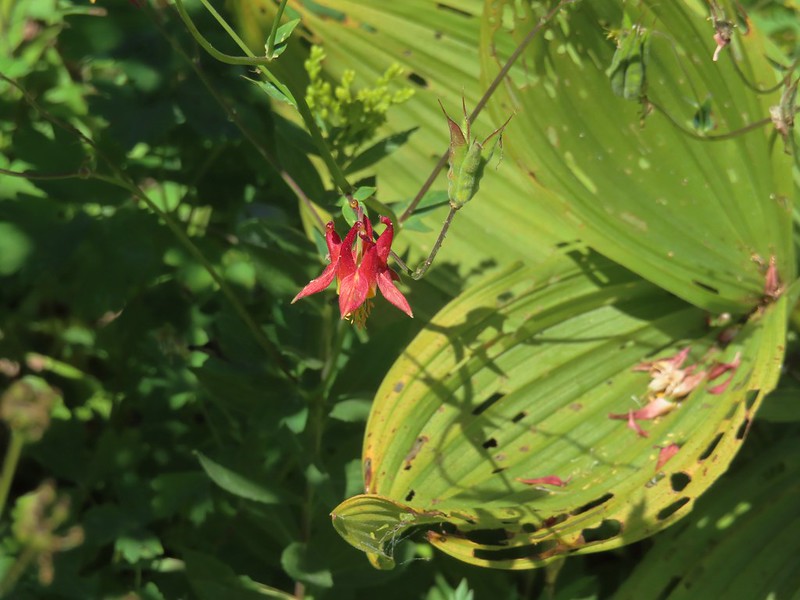 A lone columbine
 Dragonfly
 Mountain owl’s clover
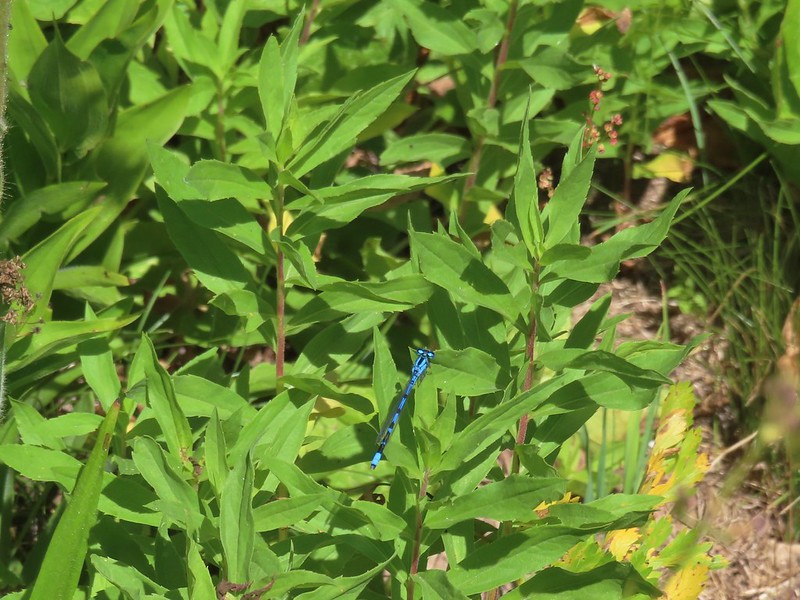 Damselfly
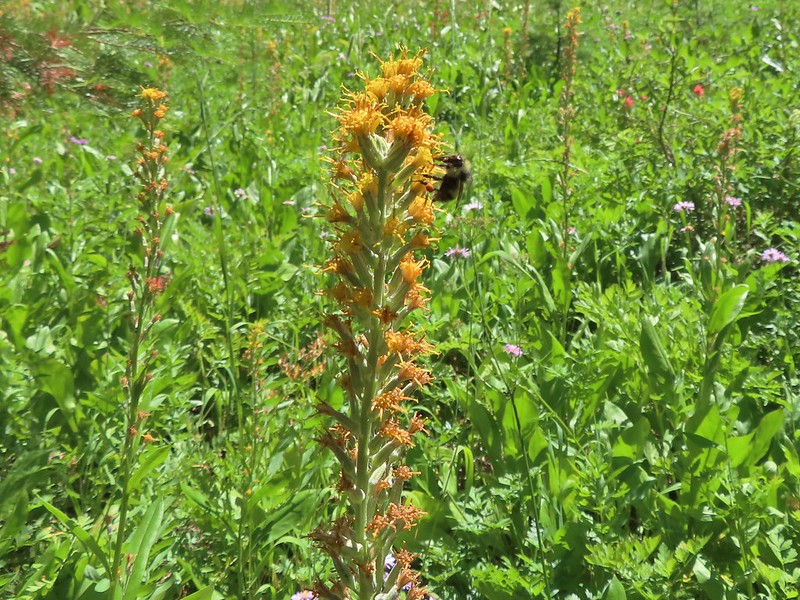 Bee on rainiera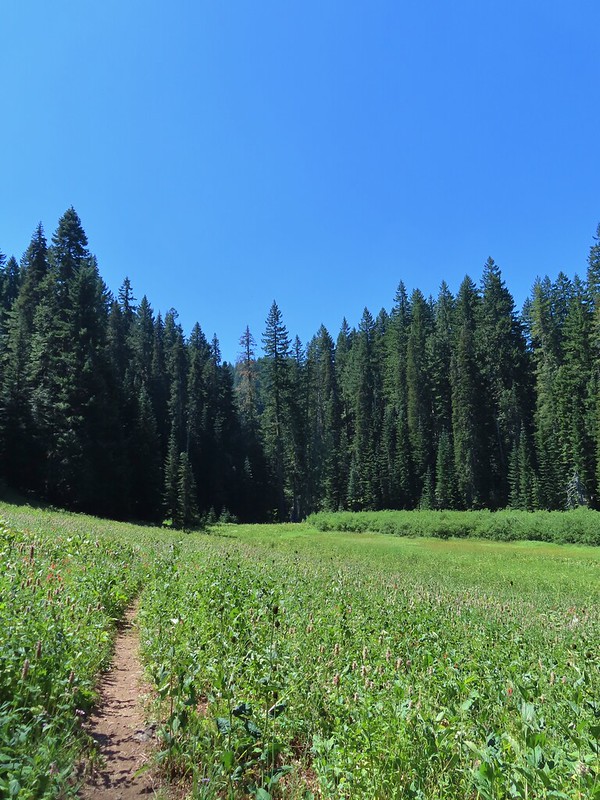
 Butterfly on hyssop
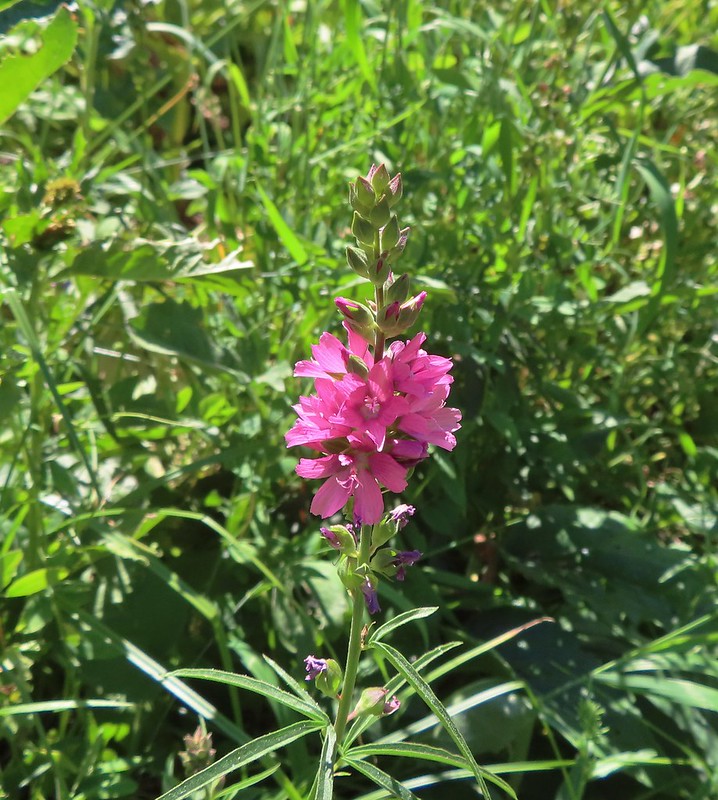 Oregon checkermallow
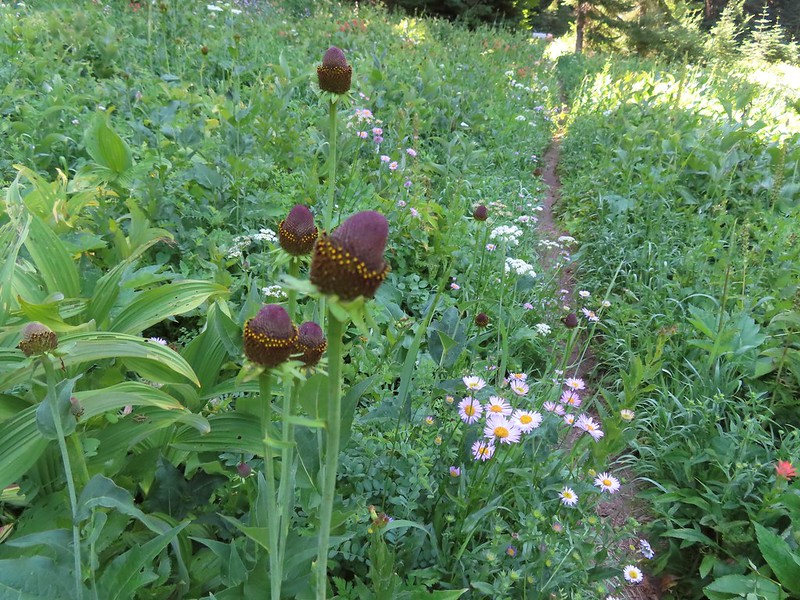 Coneflower
 Fleabane and paintbrush
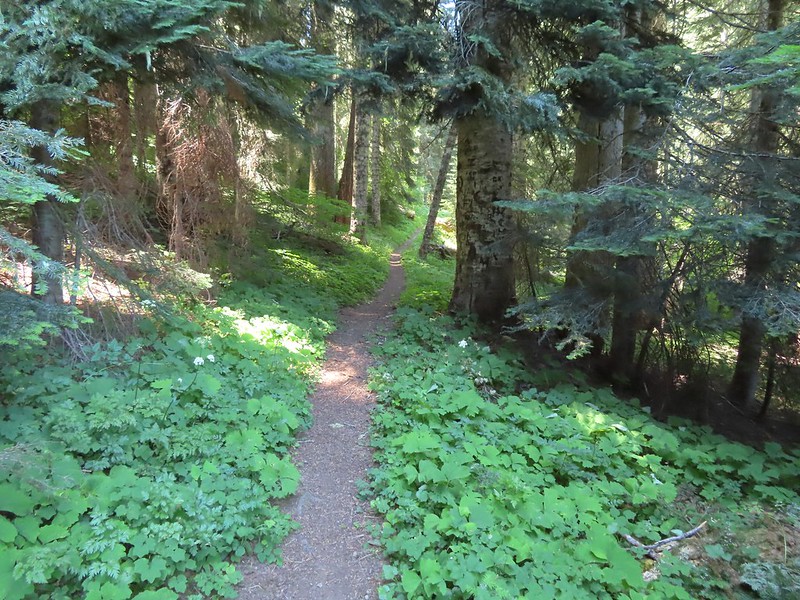 Brief forested section.
 Hedgenettle
 Northern phlox
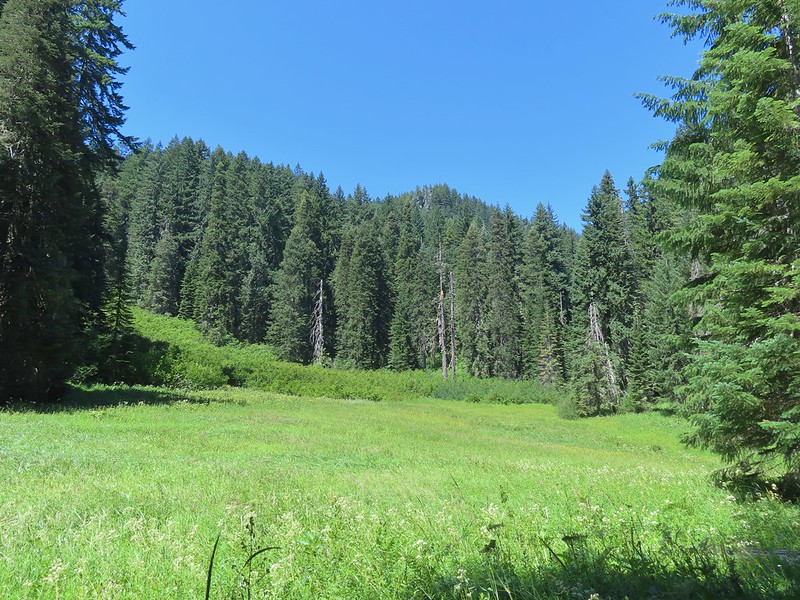 Flat Rock beyond a meadow.
 Large boykina
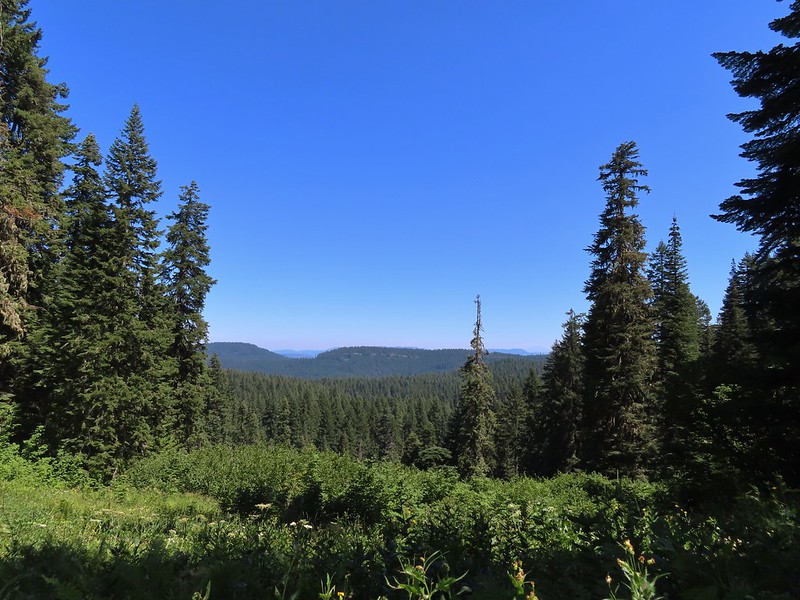 There was an opening at the saddle where Diamond Peak (
 The all too familiar Summer “smoke” filter on the mountains.
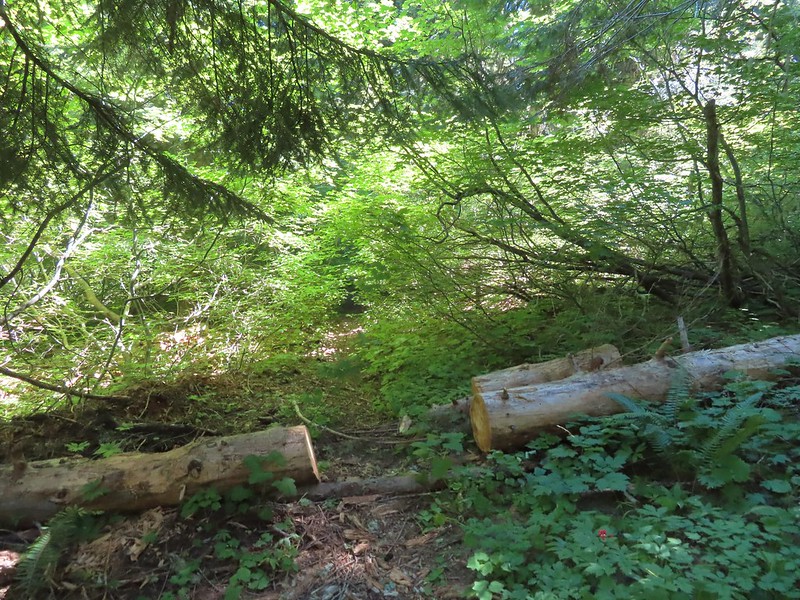 The trail was a bit overgrown in places.
 Starting to climb.
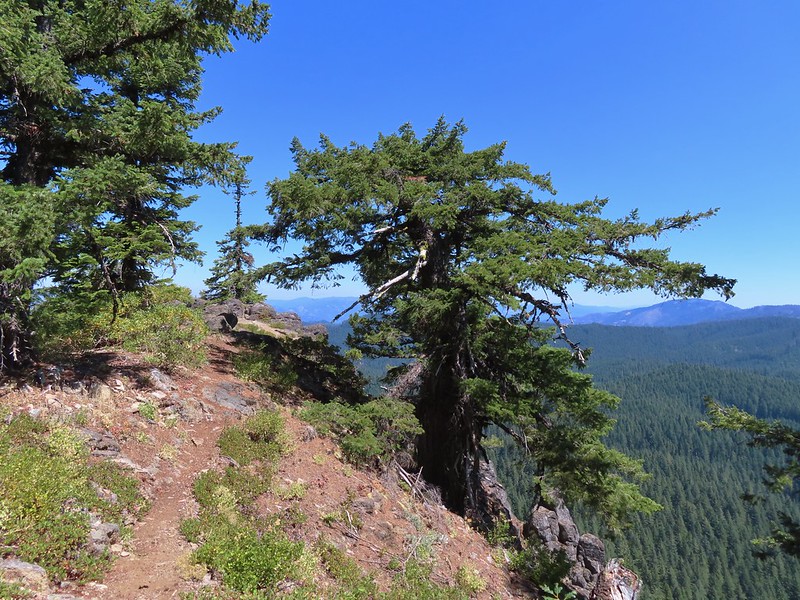 Heading out to the viewpoint.
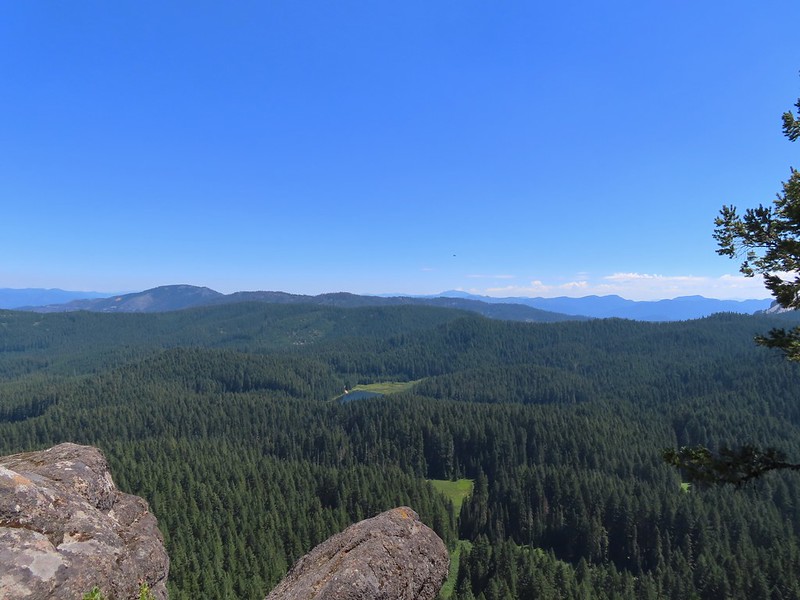 Hemlock Lake from Flat Rock with Mt. Bailey (
 Quartz Mountain in the foreground with Hillman Peak and The Watchman (Crater Lake Rim) in the distance.
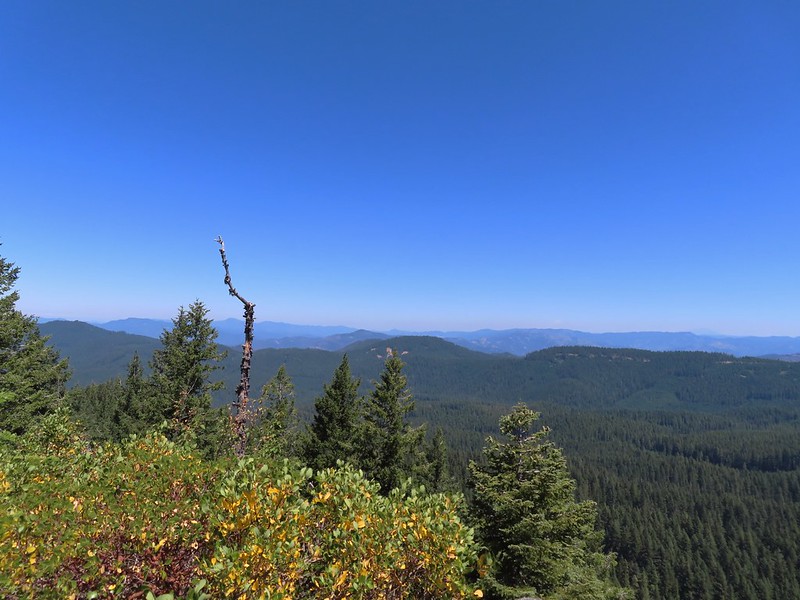 Diamond Peak in the distance to the right and the smoke plume from the Cedar Creek Fire center-right.
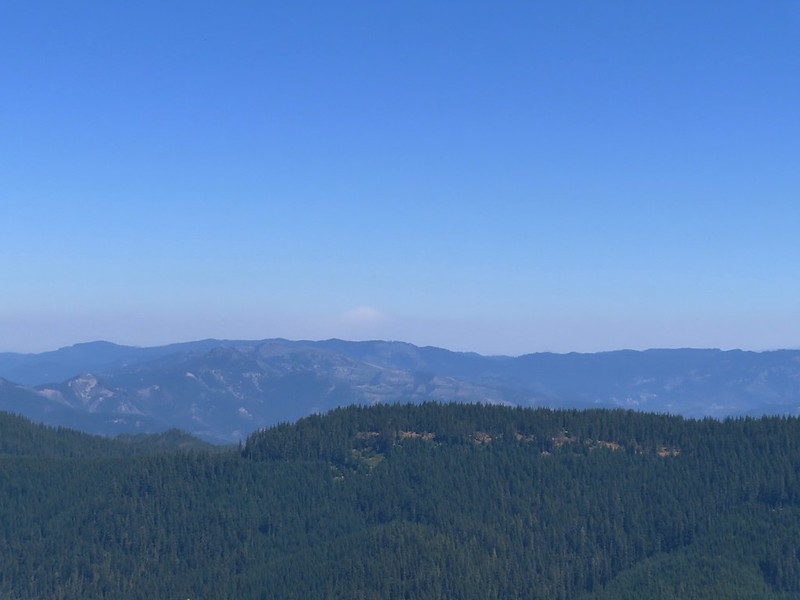 Smoke from the Cedar Creek Fire 😦
 Parnassian on hyssop
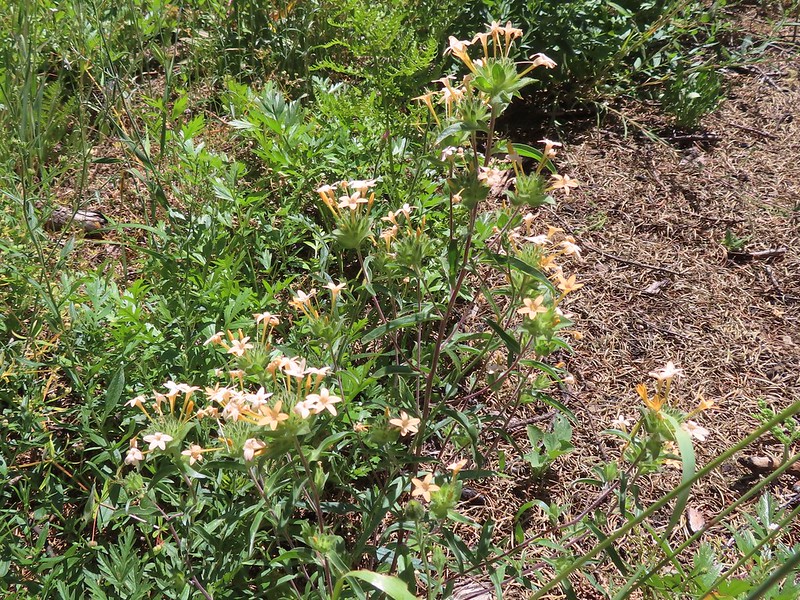 Grand collomia
 Swallowtail on hyssop.

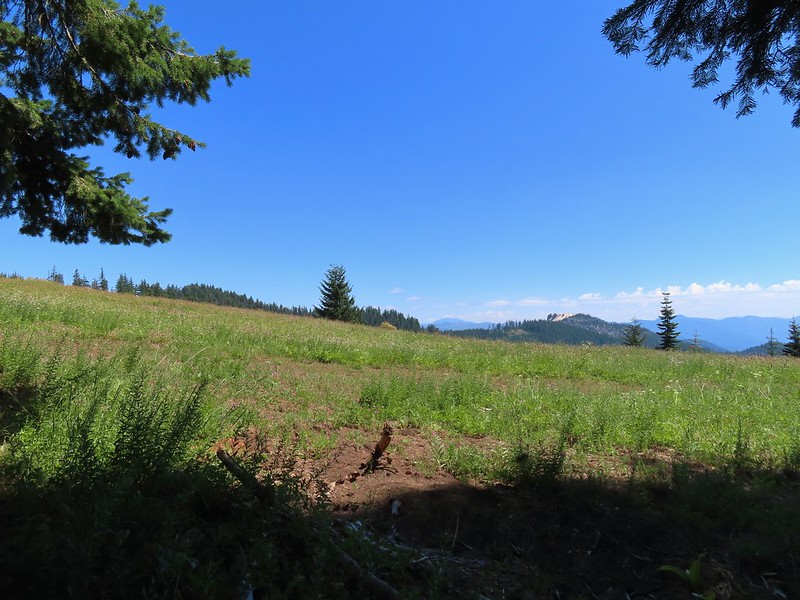 Mt. Bailey and Quartz Mountain.
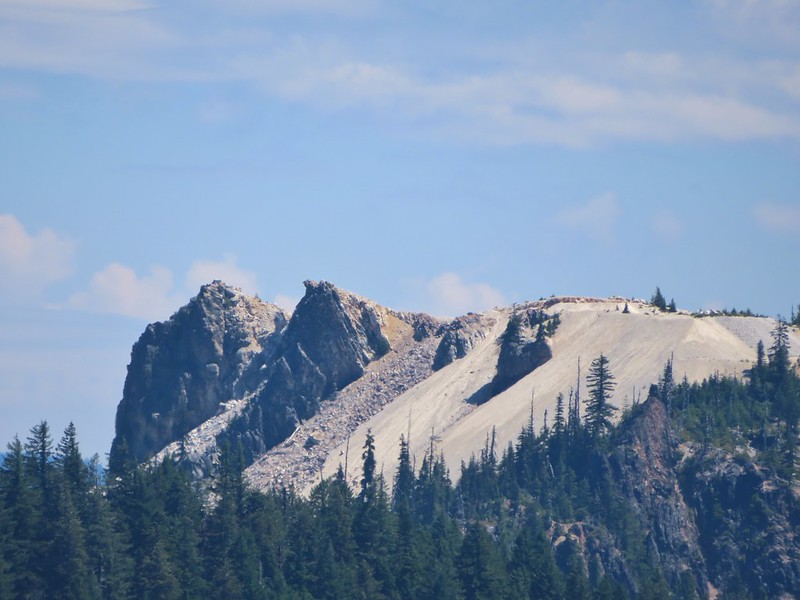 Quartz Mountain
 Union Peak. To the left is Highrock Mountain and to the right of Highrock Mountain are the Rabbit Ears (
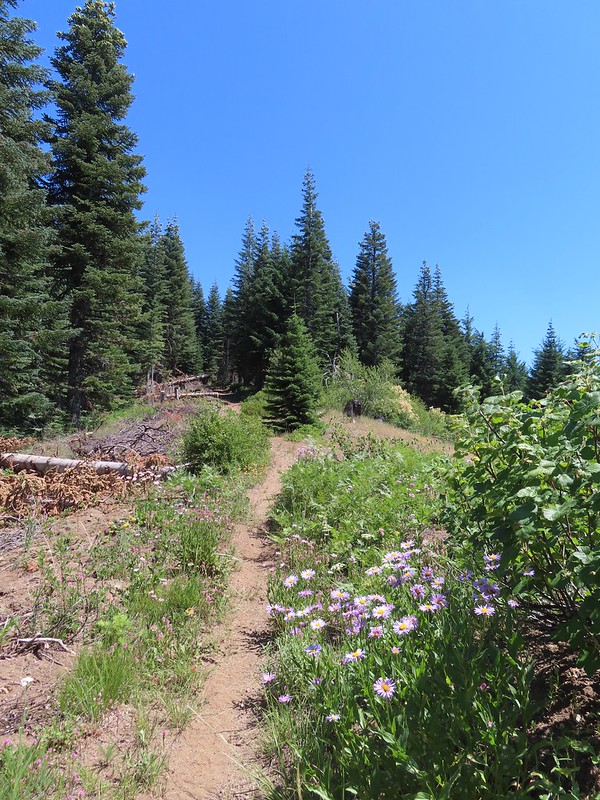
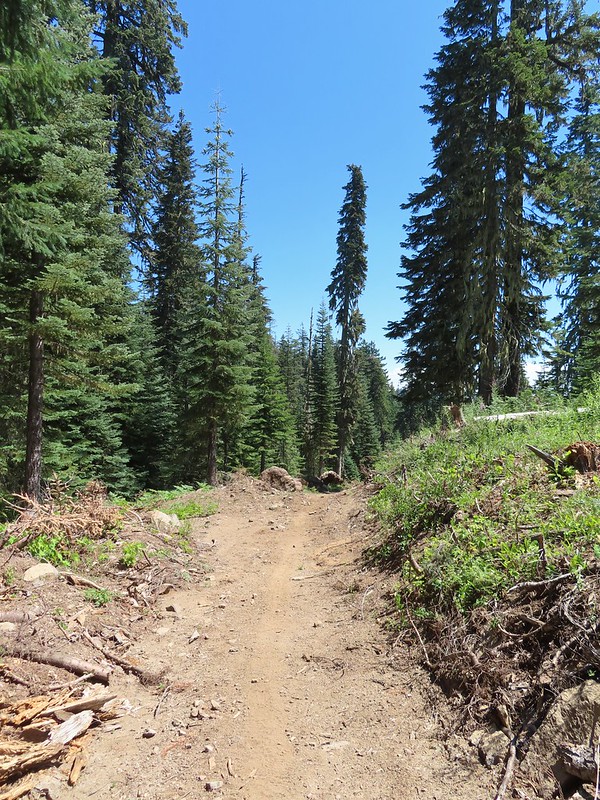 The end of the old road section.
 The only blooming lupine I saw all day.
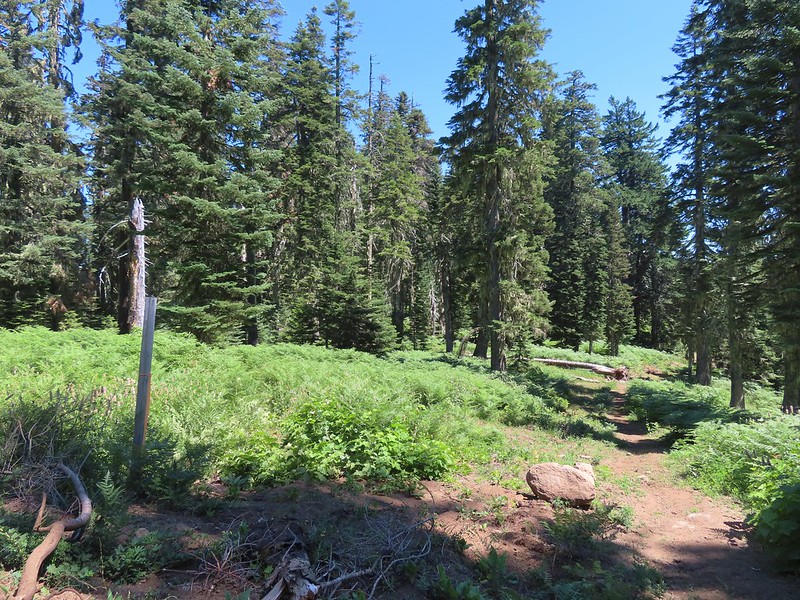 The actual trail to the left was very overgrown here and hard to pick out at first glance.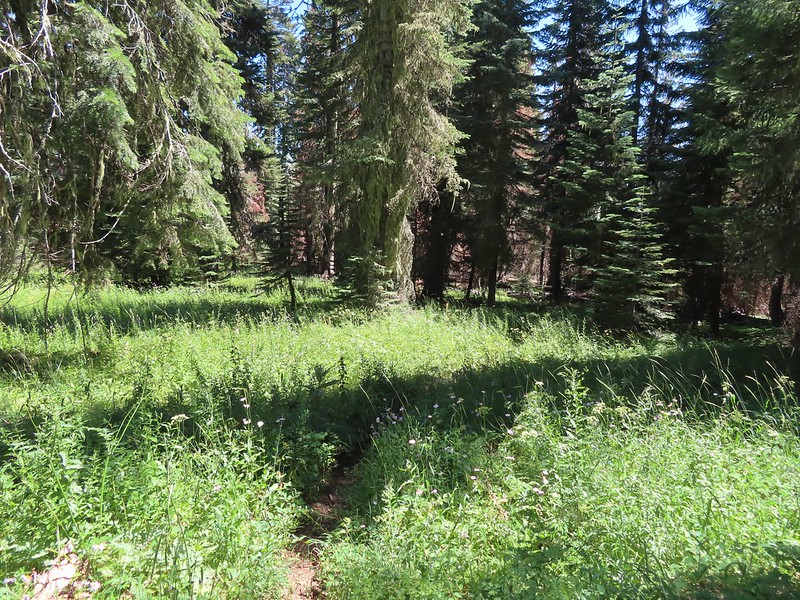
 The first convergence with FR 625.
 Signpost at the second meeting.
 There were a lot of different types of signs along the loop.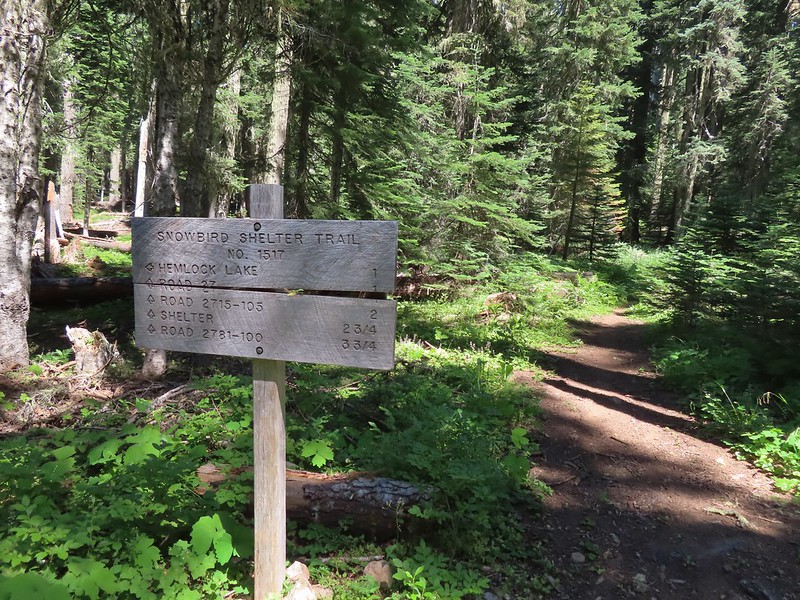


 Monkshood
 I was moving rather quickly now and not stopping for much but I did pause for these sugar sticks.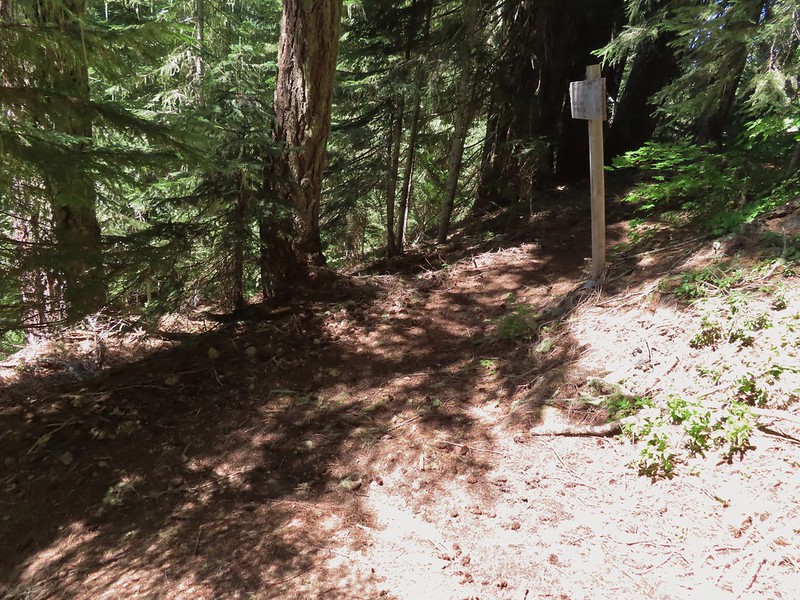
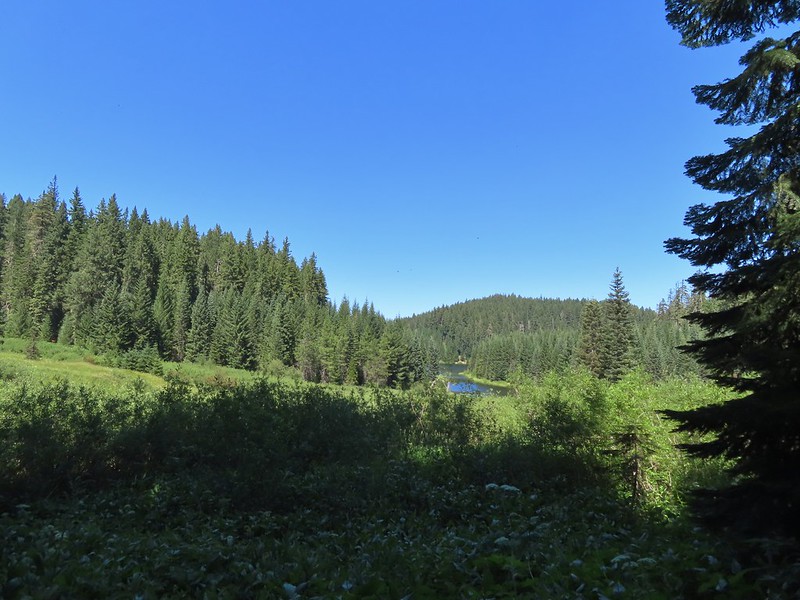 The trail never got very close to the lake.
 Signboard at the Hemlock Lake Day Use Area.
 Loop complete, no Heather.
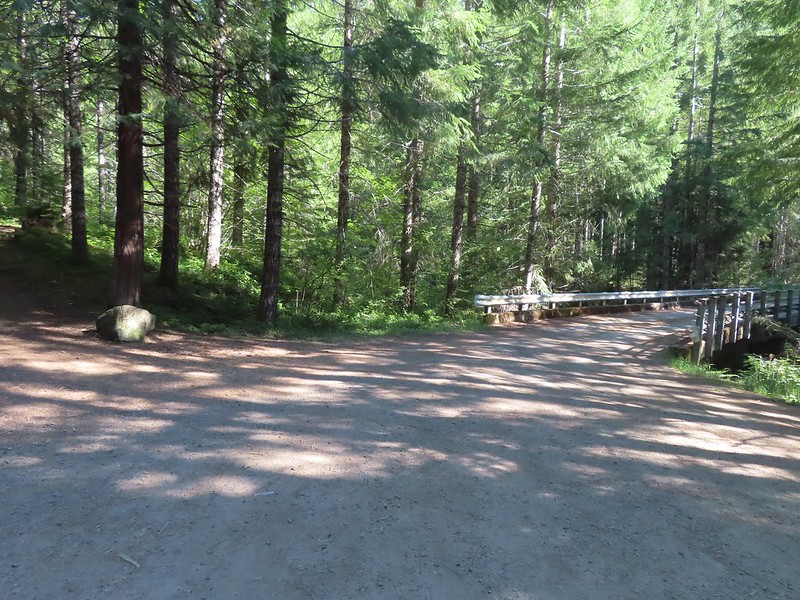 The trailhead is right after crossing Emile Creek.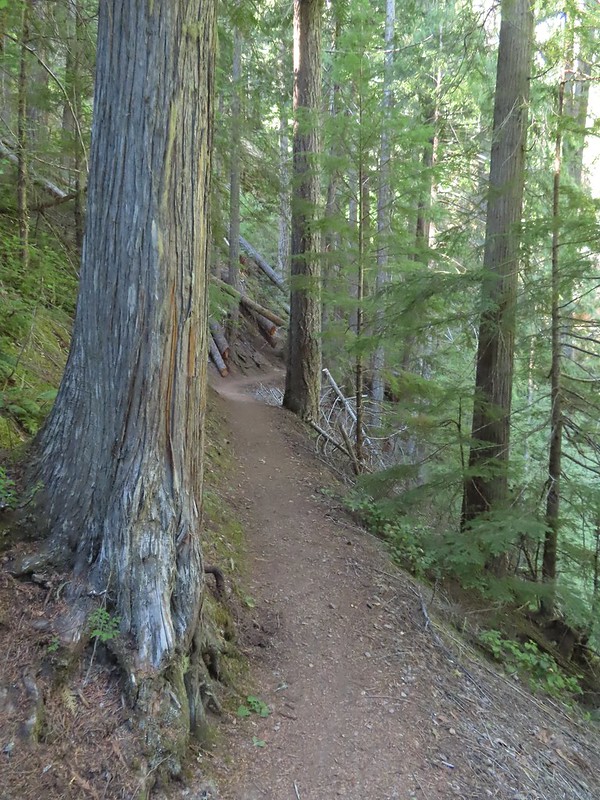
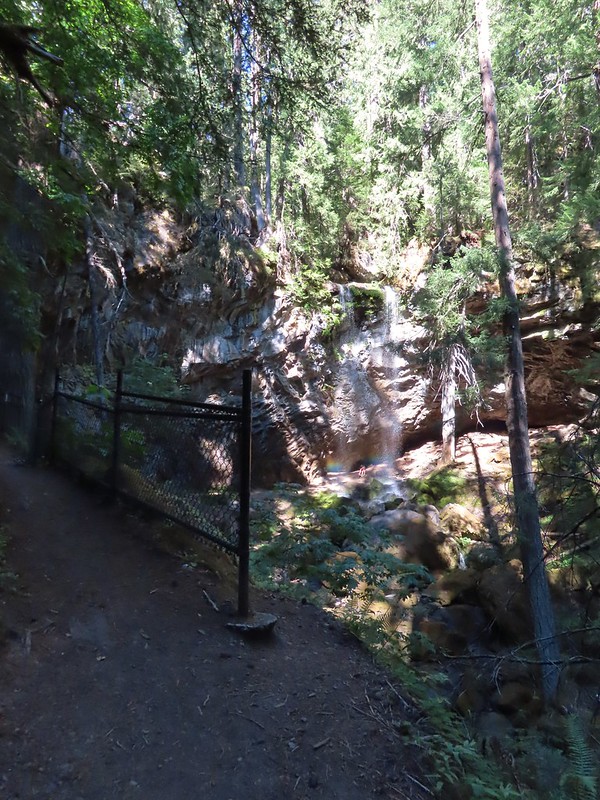
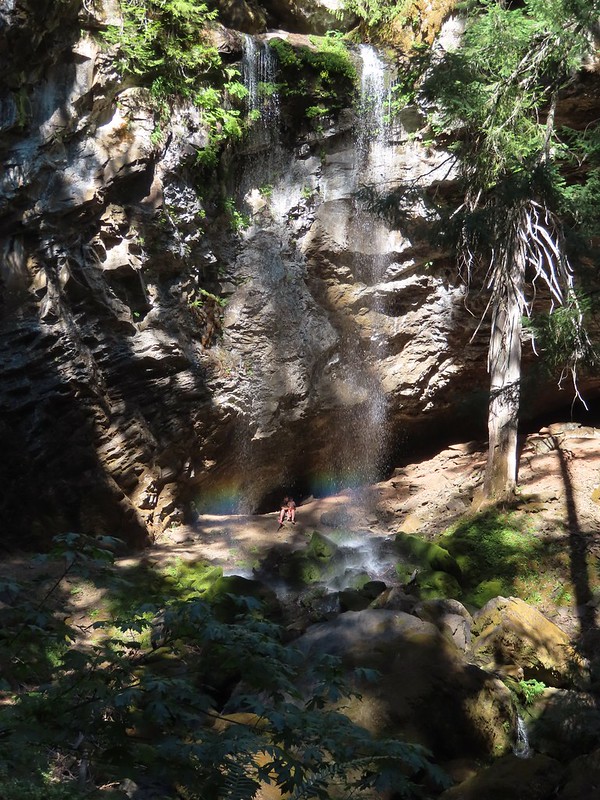
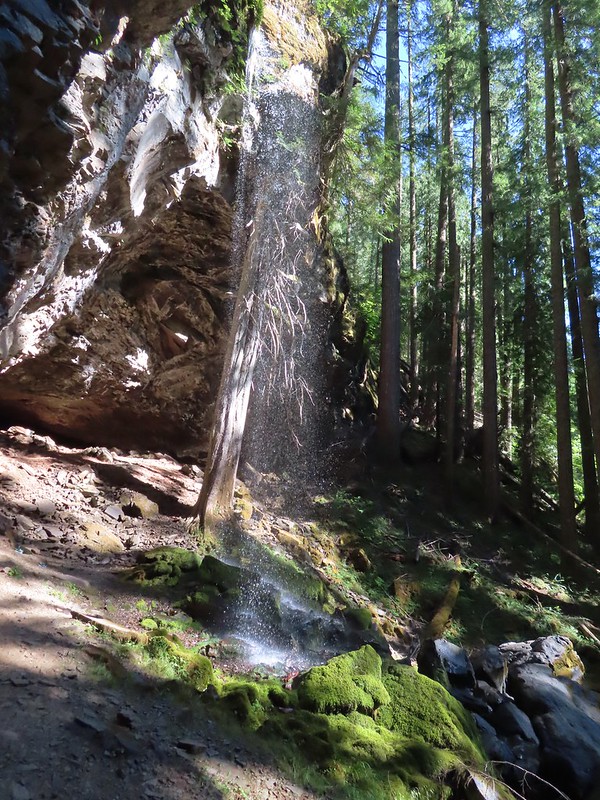
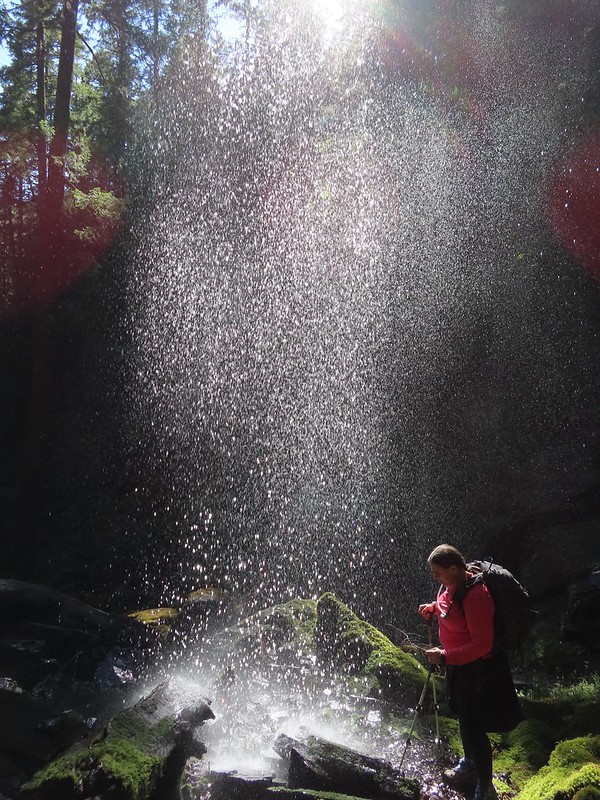


 Cave behind the falls.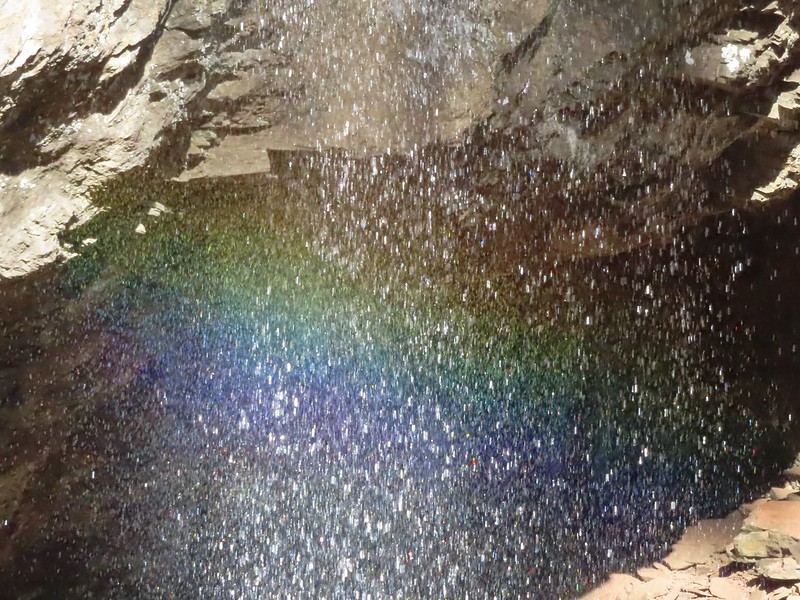

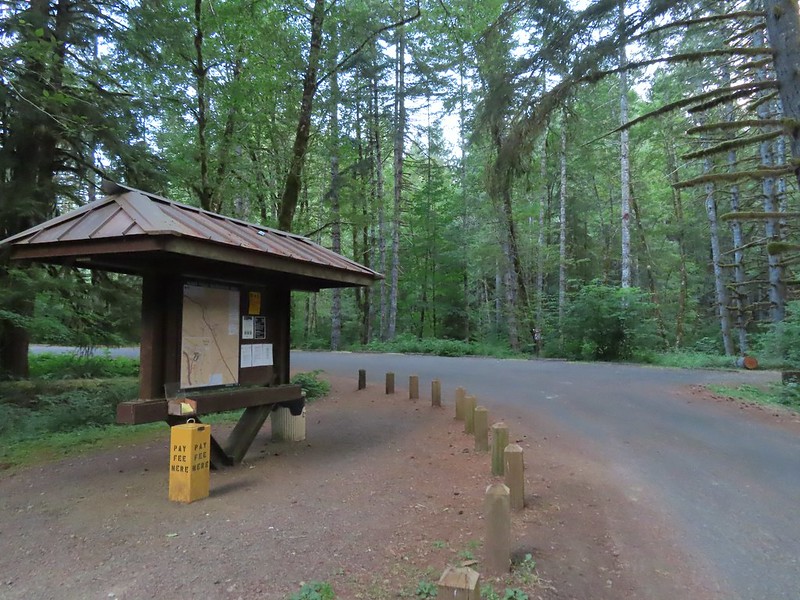


 We stayed left here following the pointer. We later crossed the bridge on the way to Green Peak Falls.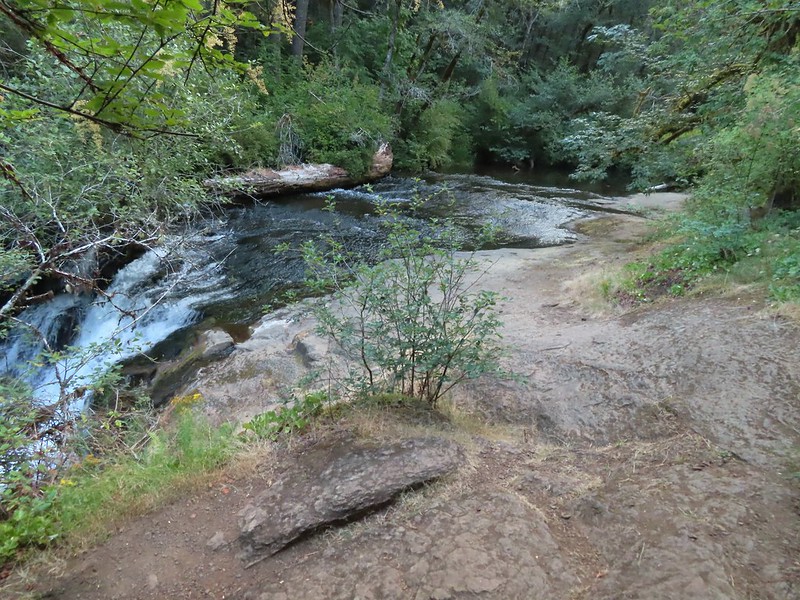

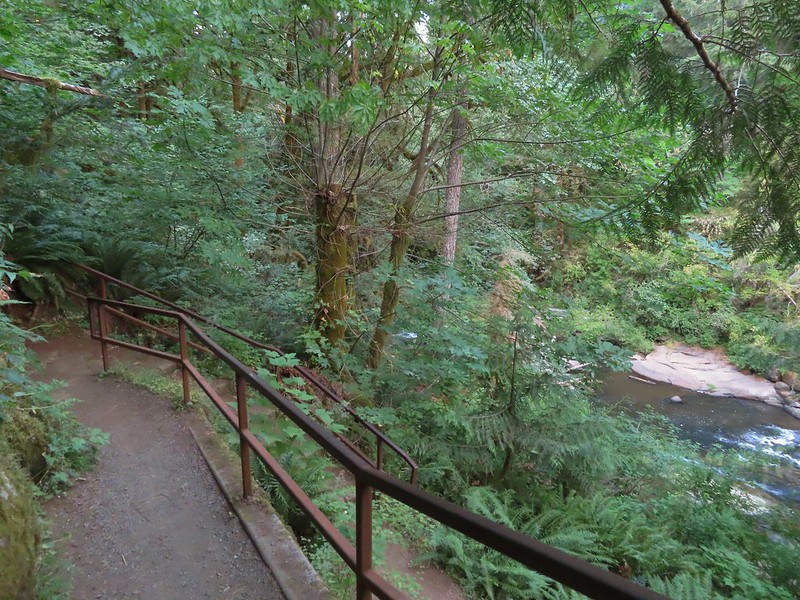

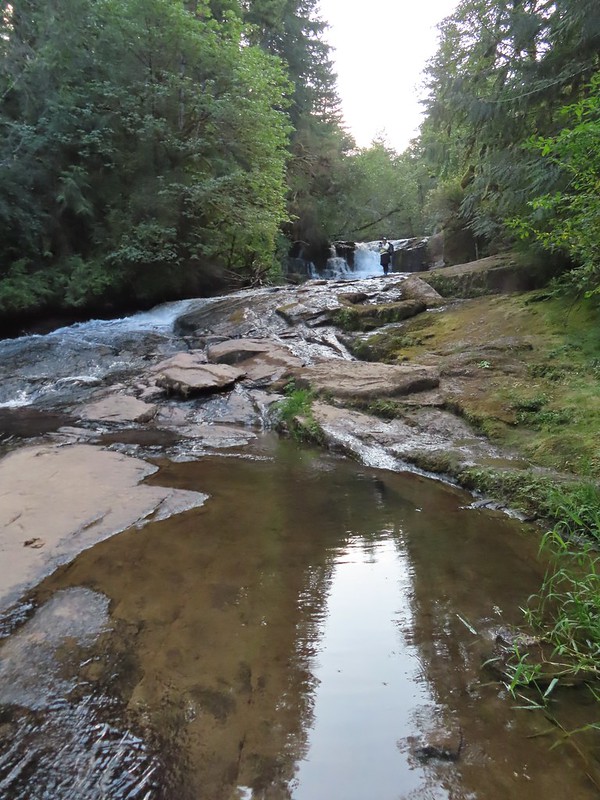 Heather in front of the falls.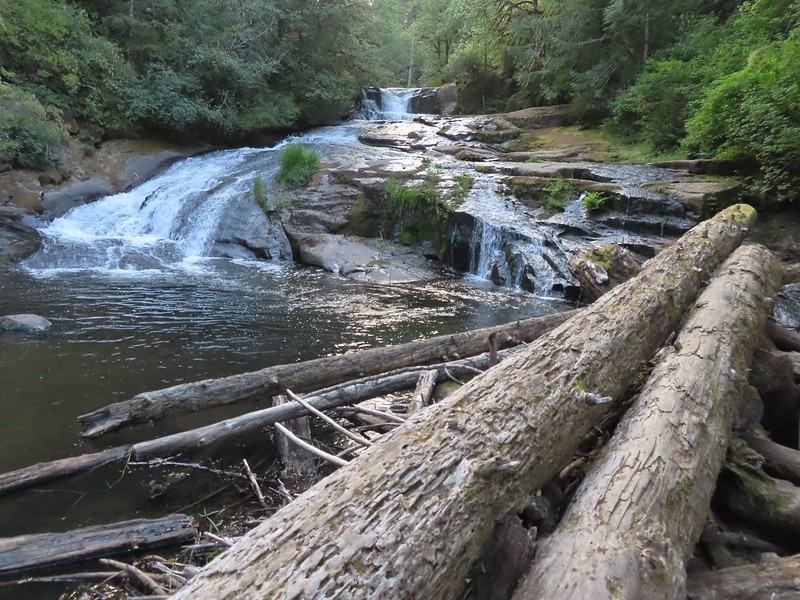
 December 2012
 Looking down river from the bridge.

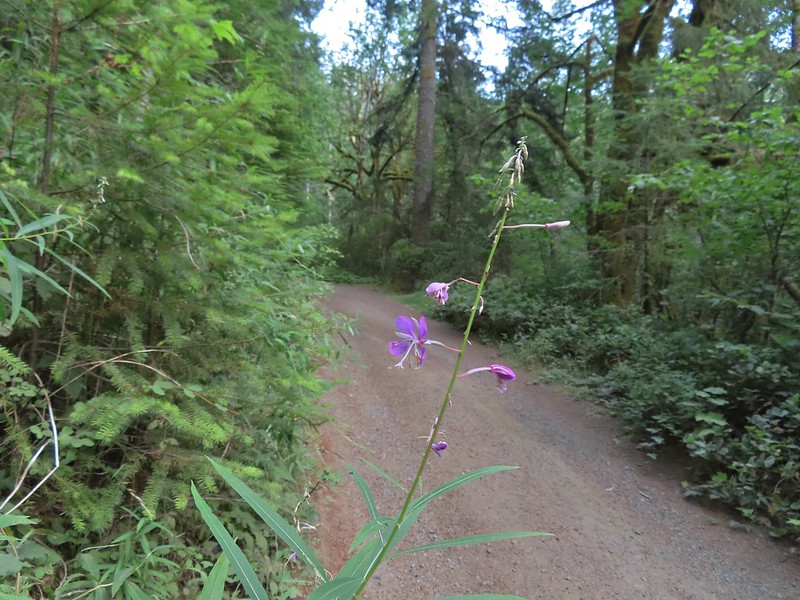 Fireweed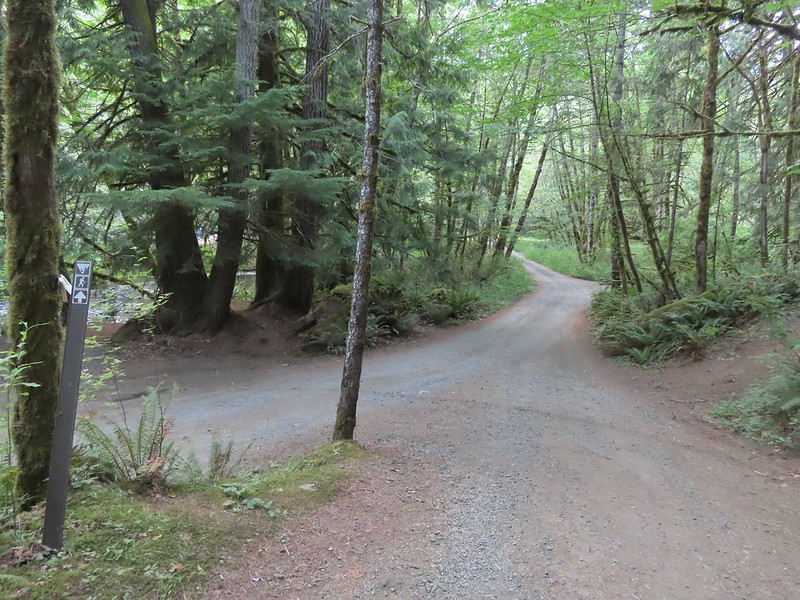

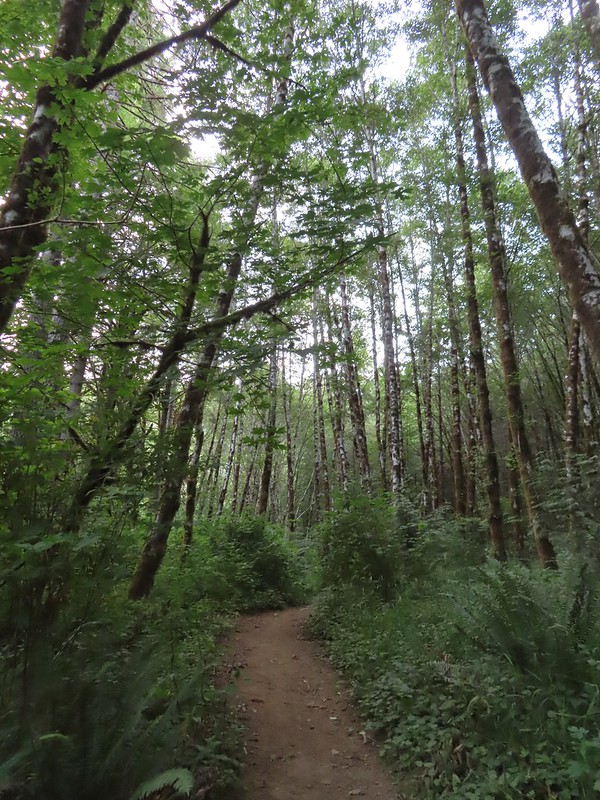


 Green Peak Falls
 Green Peak falls in December 2012.
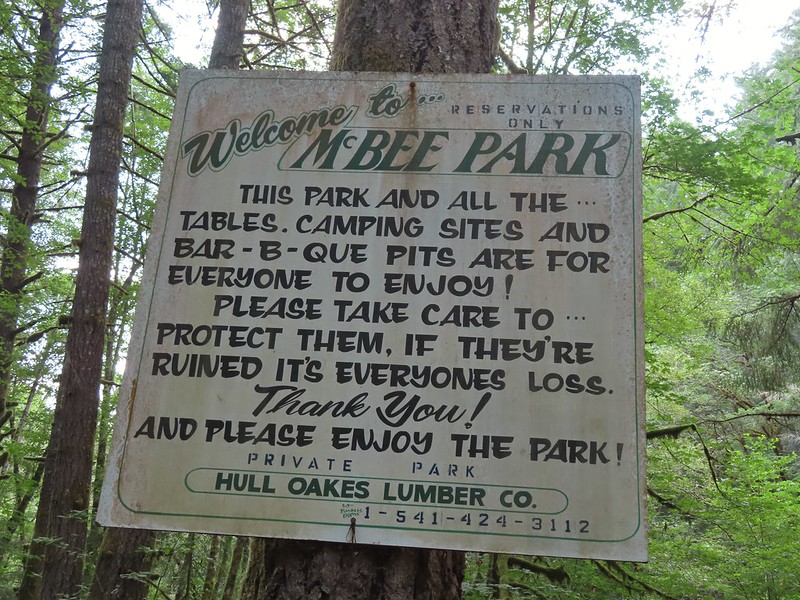
 Covered picnic table.
 The table is one solid plank.
 Sign for McBee Park along South Fork Road.
 Trail down to the picnic area along South Fork Road.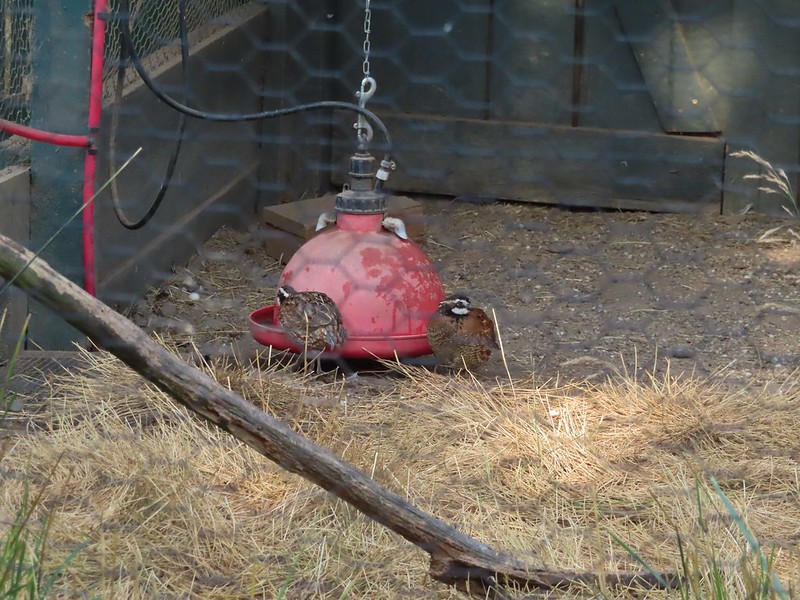
 Silver pheasant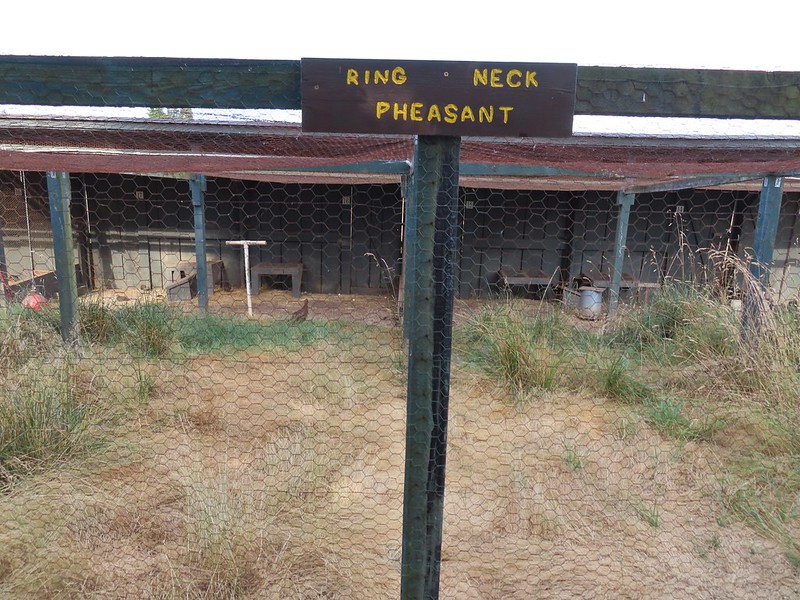


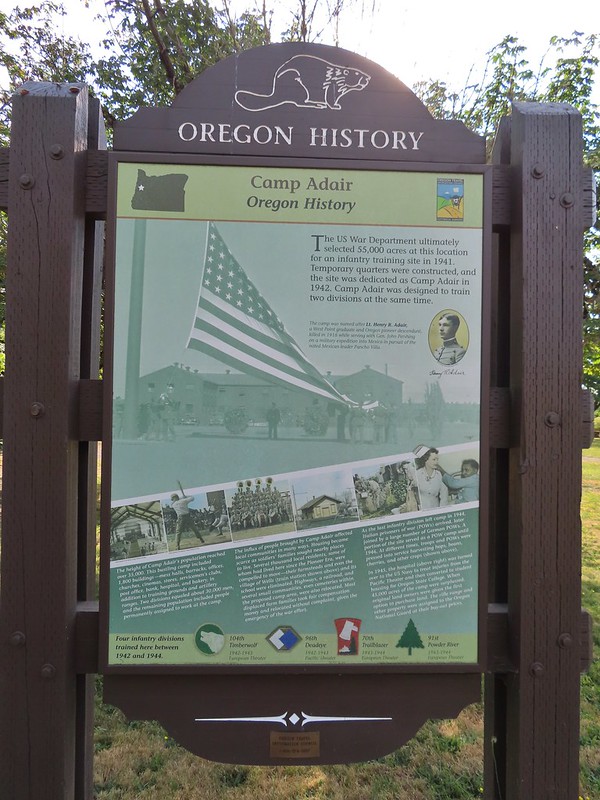
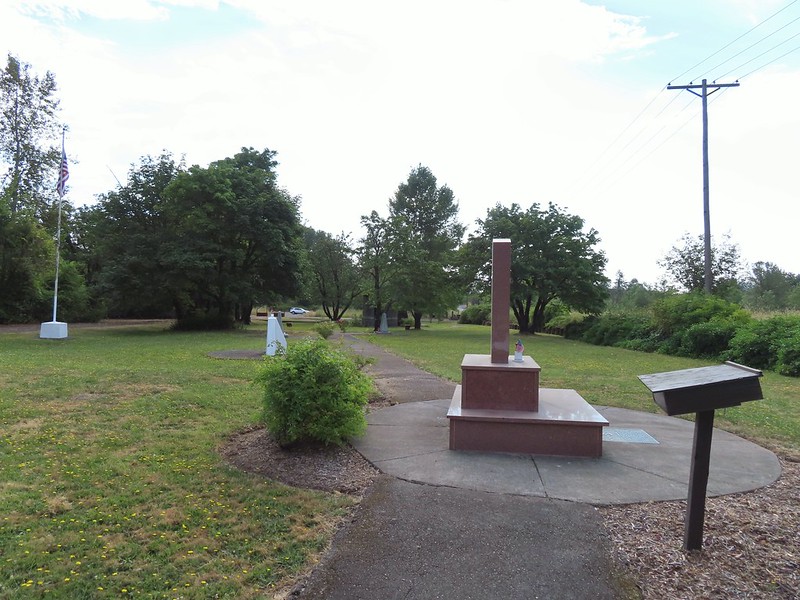
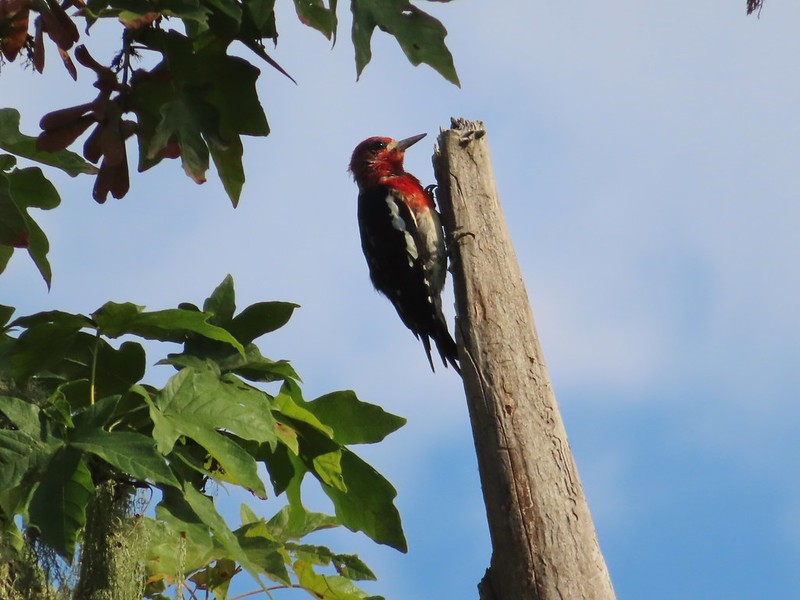 Red-breasted sapsucker


 Bunnies in the grass near one of the benches.
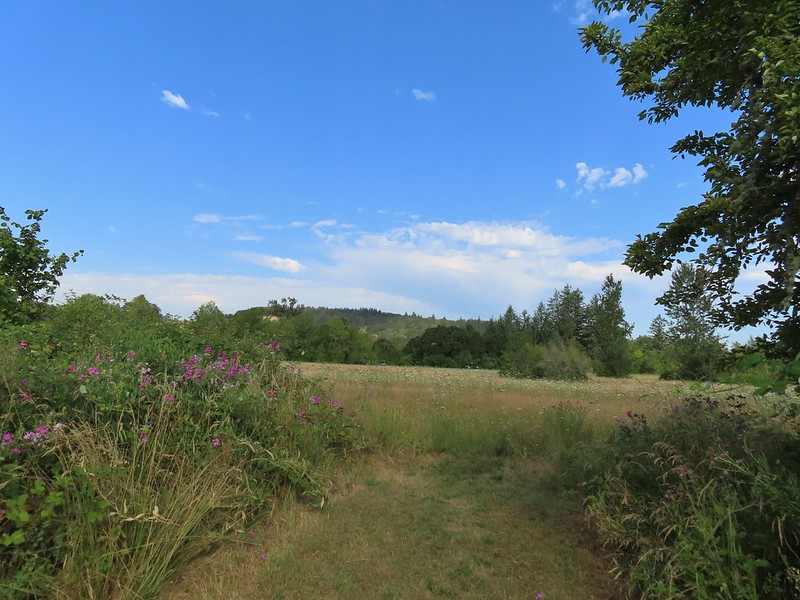 Coffin Butte on the other side of Highway 99.
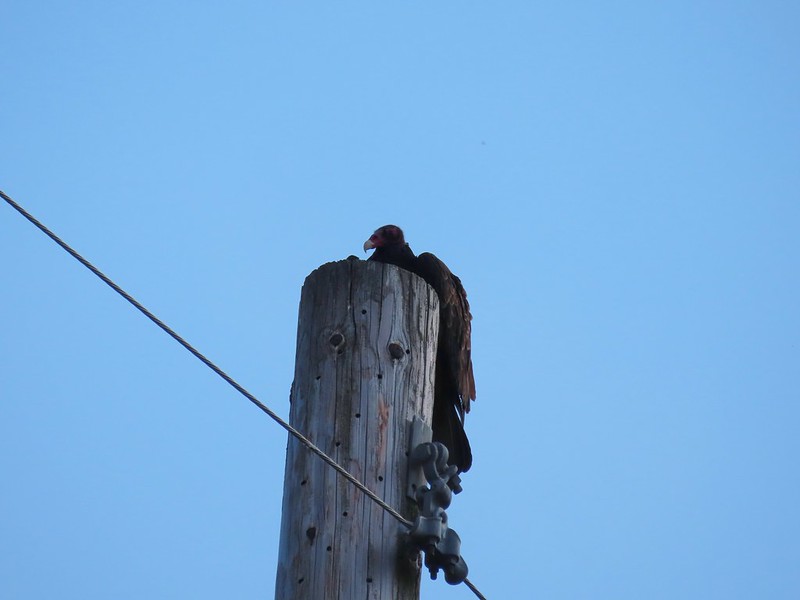 Turkey vulture


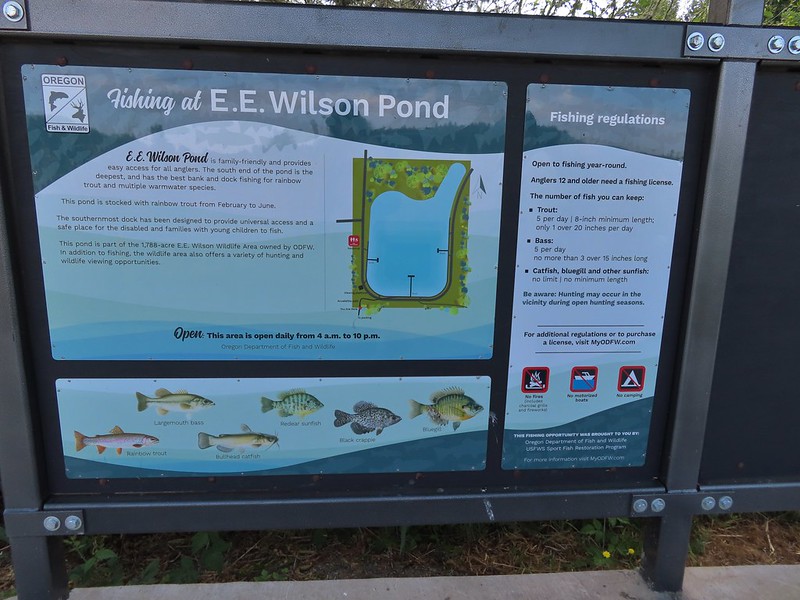
 Wetlands on the other side of the pond.
 Great blue heron
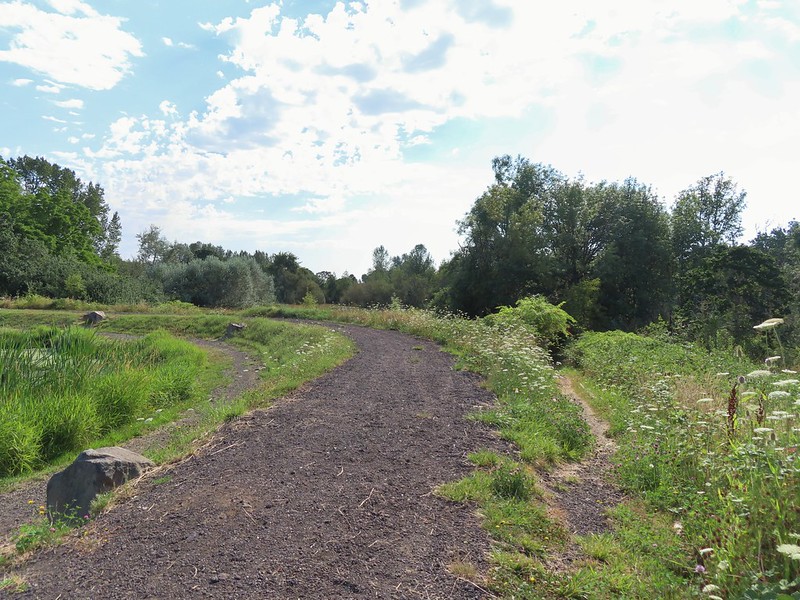 The loop trail to the right.
 Skipper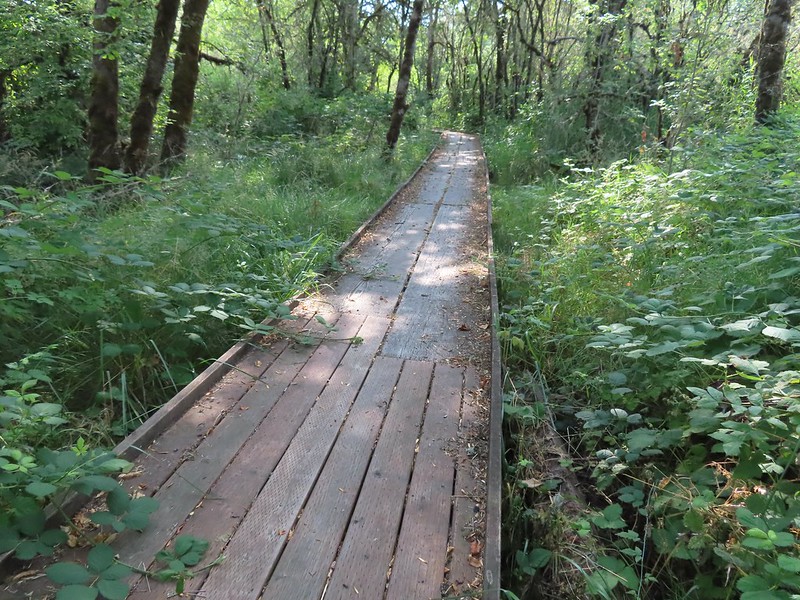
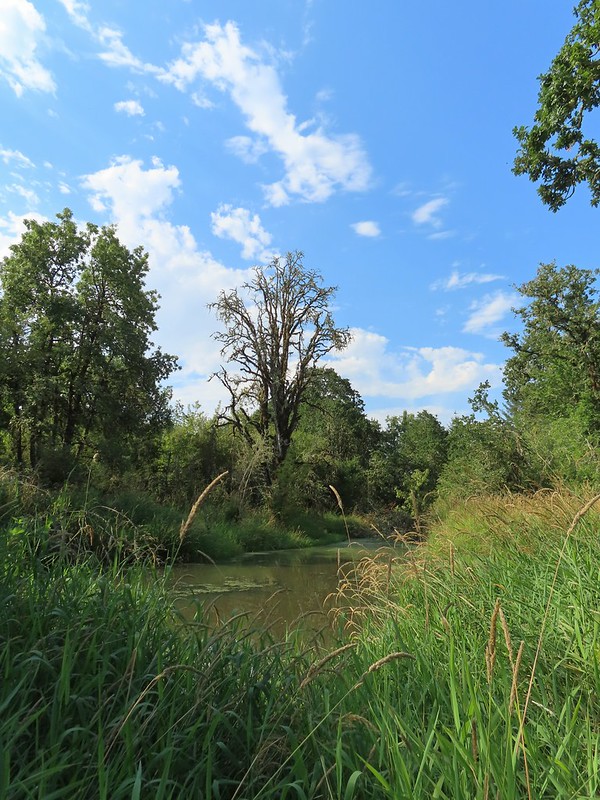
 Tadpole
 We stayed left at any junction like this.
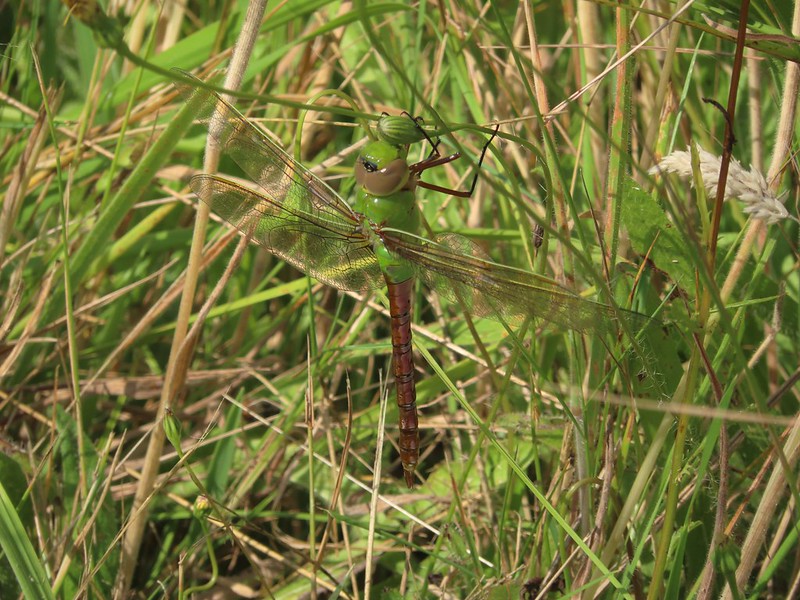 Dragon fly
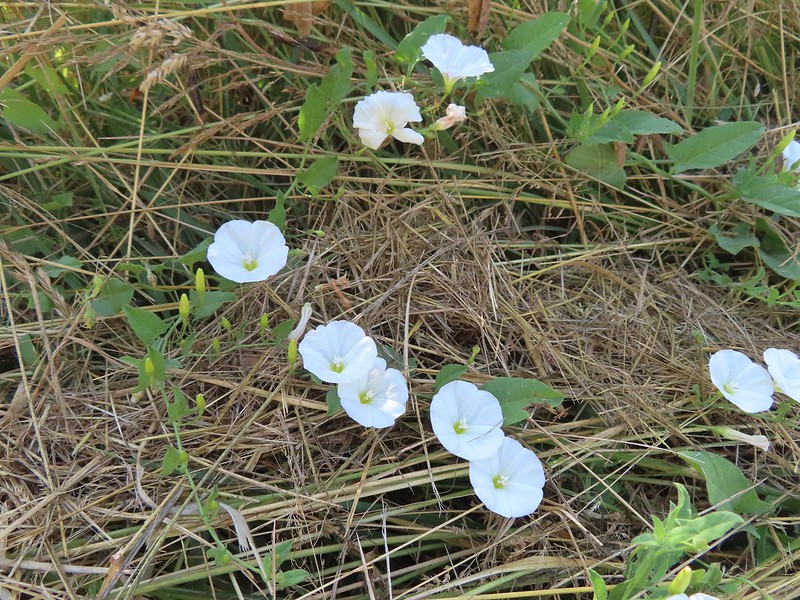 Bindweed
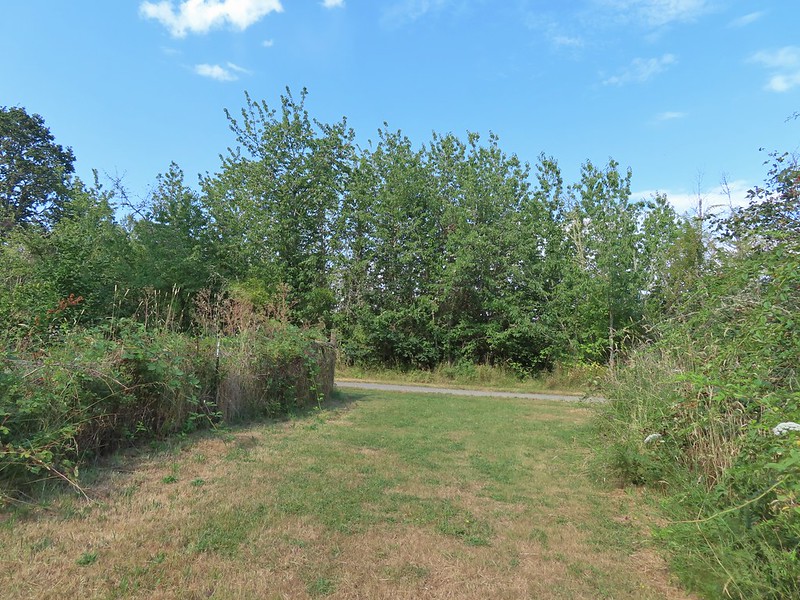 Arriving back at the road.


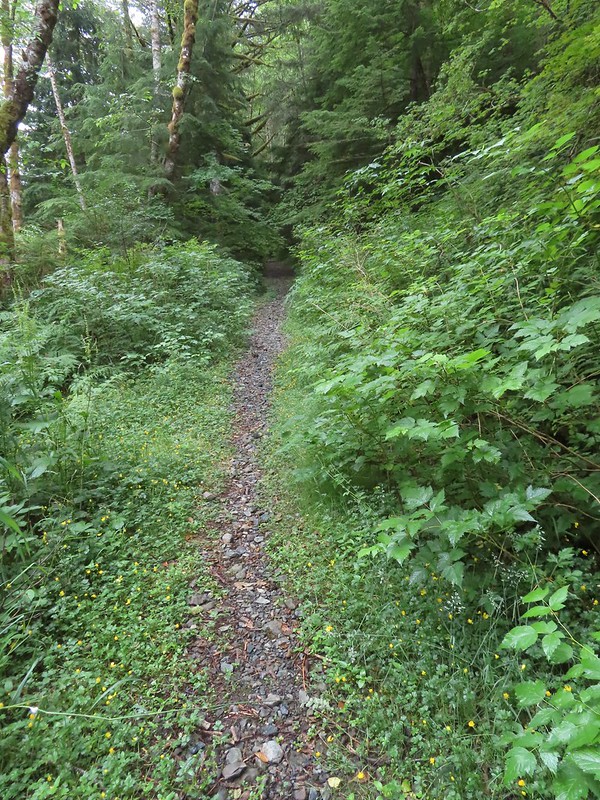 Overgrown roadbed that is now the Starway Trail.
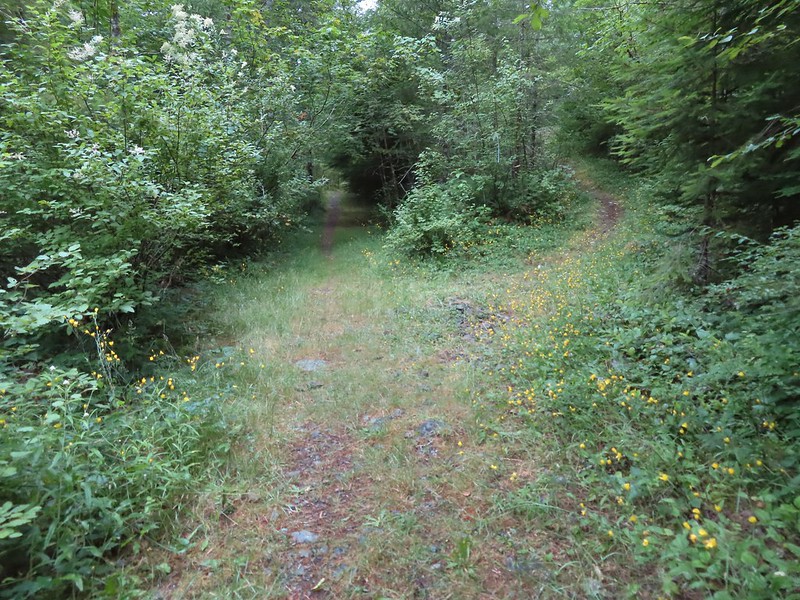 The fork with the Starway Trail to the right.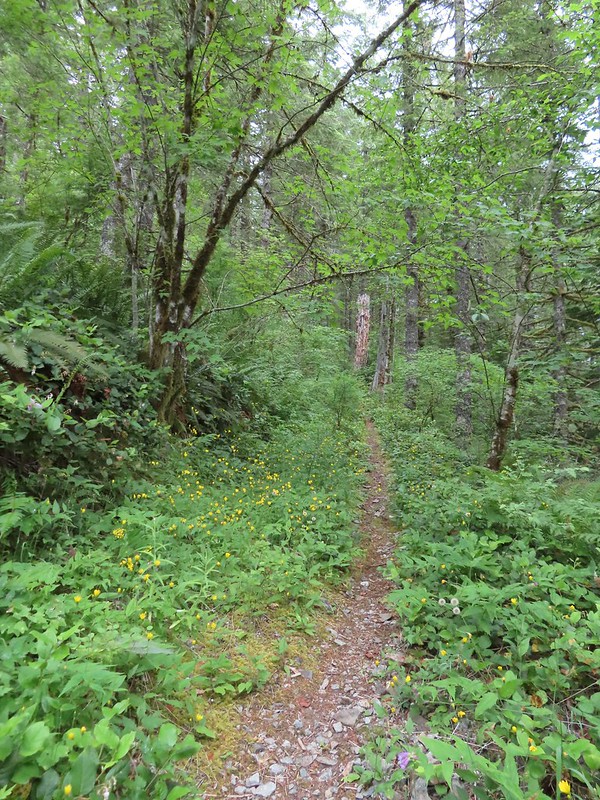
 Scouler’s bluebells
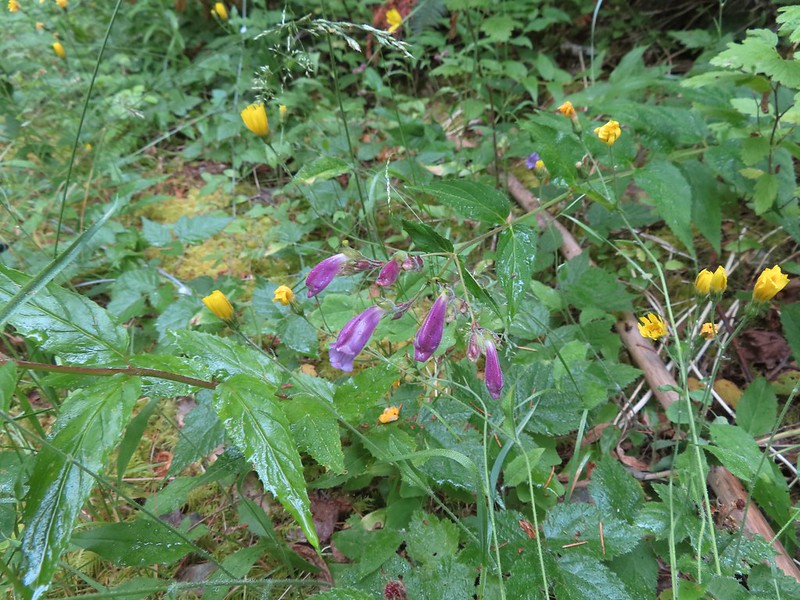 Beardstongue
 Paintbrush
 Taken from the first switchback this gives a little reference for how steep the trail was.
 Pictures never do justice to just how steep trails are.
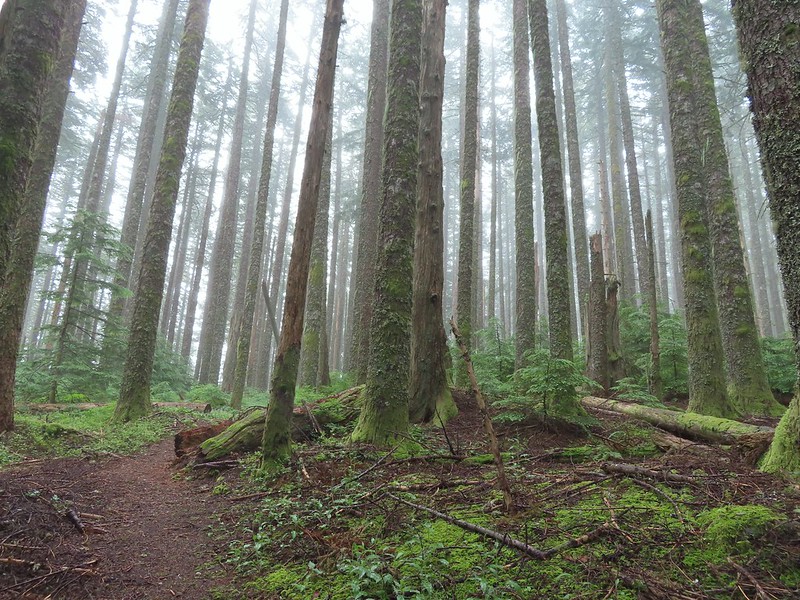 Almost to the bench.
 Level trail!
 Inside out flower
 The trail starting to steepen again.
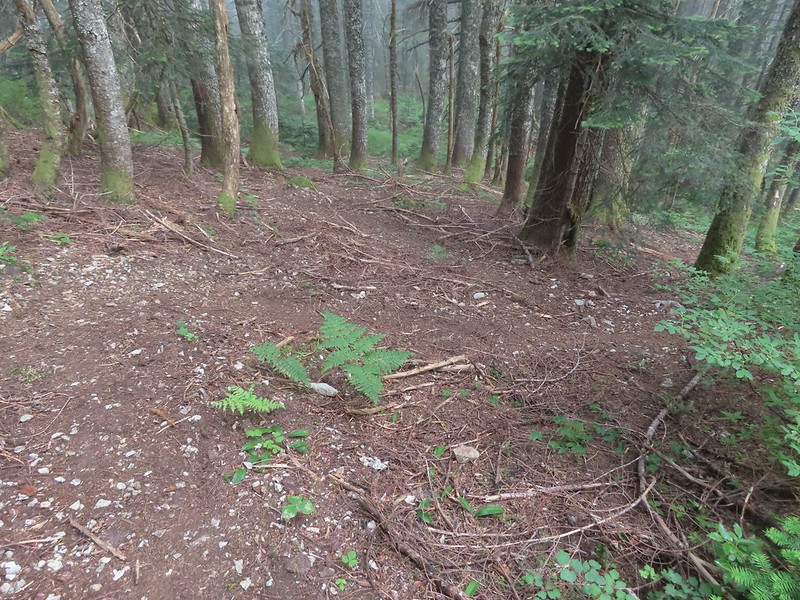 The first set of what appeared to be fairly recently built switchbacks.
 Approaching the little meadow.
 A little bit of blue overhead through the fog.
 Tiger lily
 Paintbrush
 Wood rose
 Thimbleberry
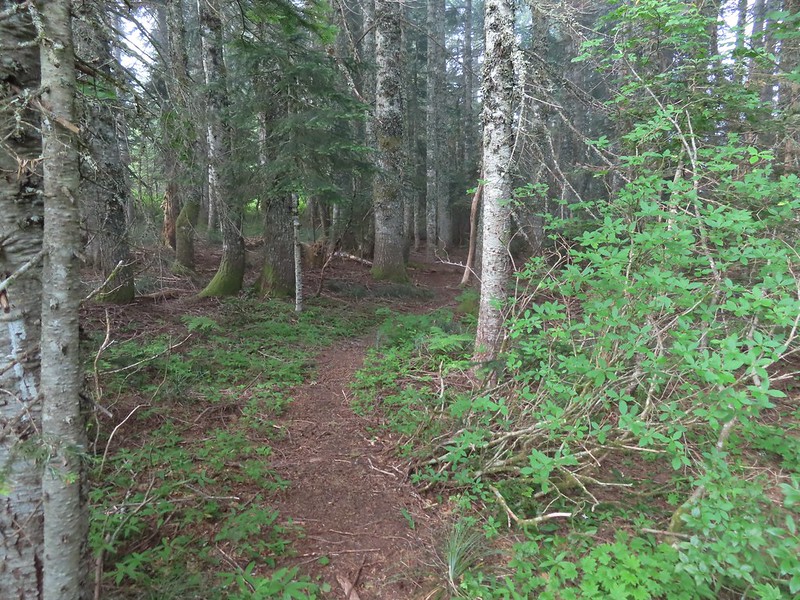 Into the trees to look for a log.
 Silver Star Mountain
 Bunchberry
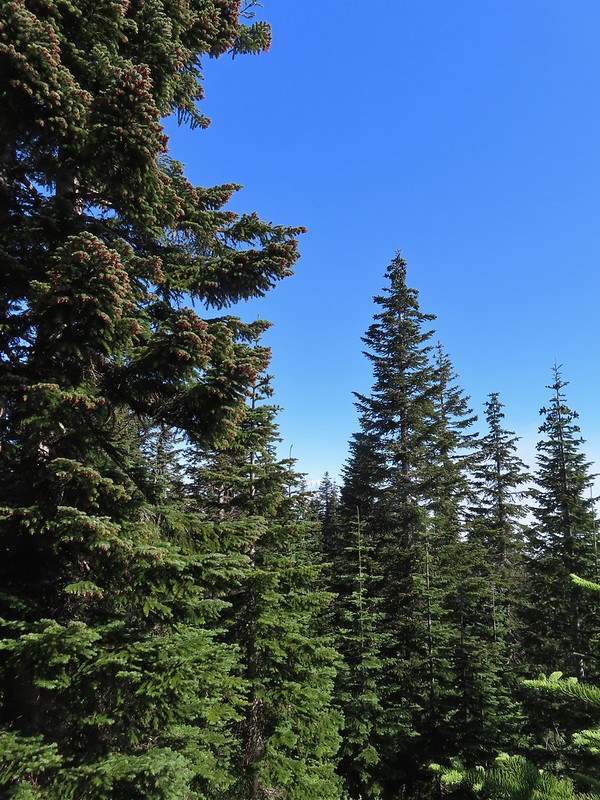 Our first view of Mt. St. Helens
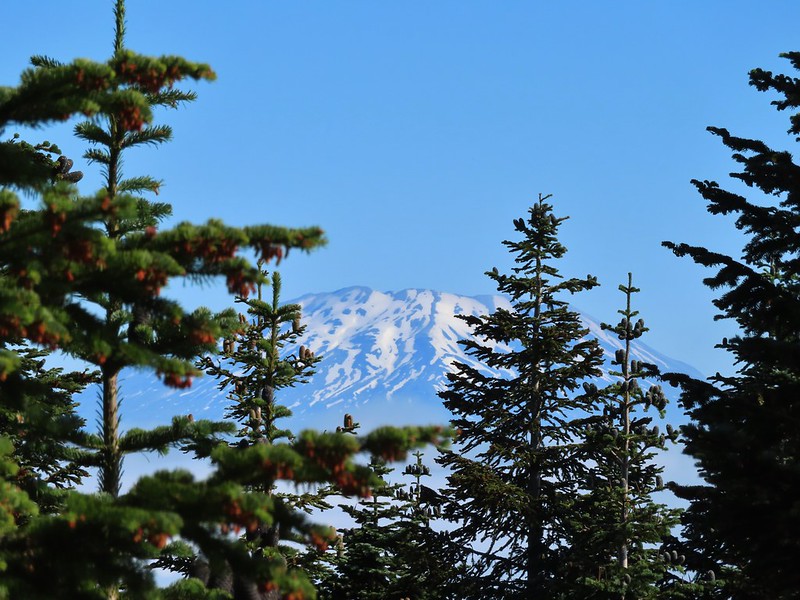 Zoomed in on Mt. St. Helens.
 Arriving below Point 3977.
 Point 3977
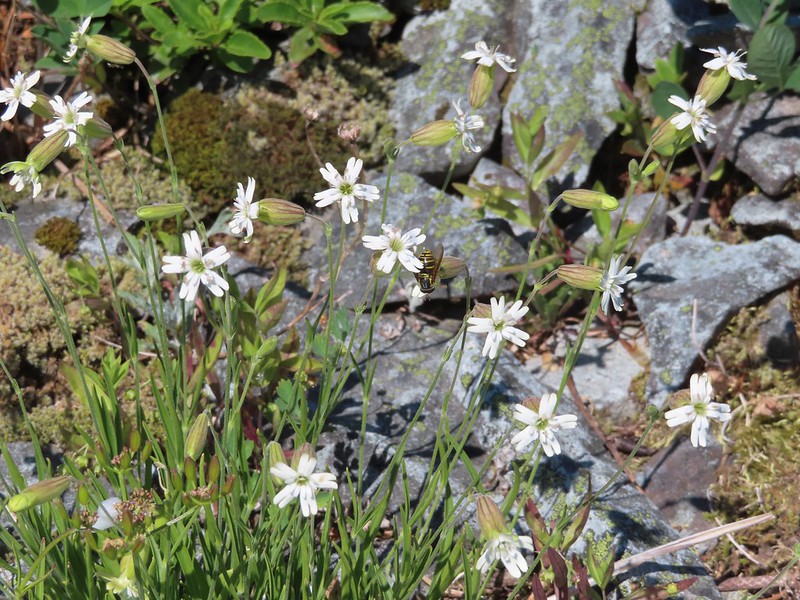 Pollinator on catchfly
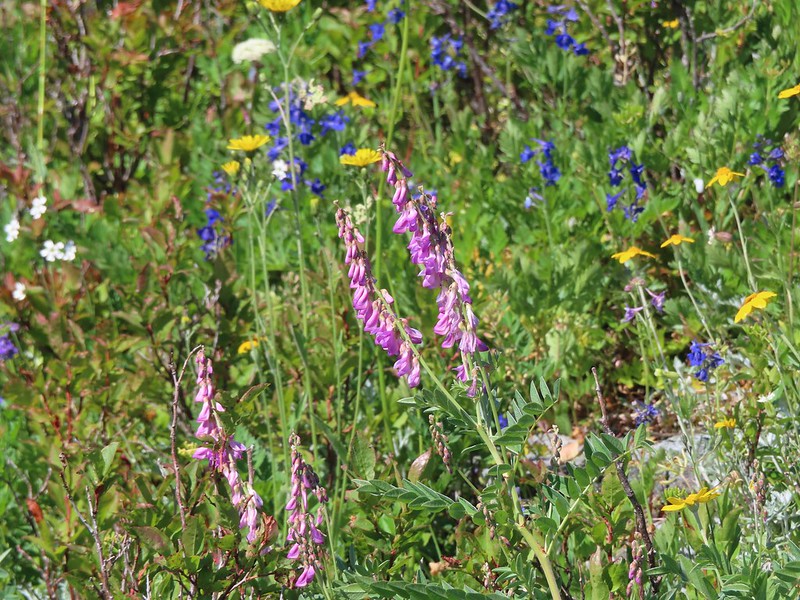 The pink vetch was very bright.
 Silver Star Mountain from the trail below Point 3977.
 Rose
Rose Wildflowers on Point 3977.
 Bluebells of Scotland
 Sub alpine mariposa lily
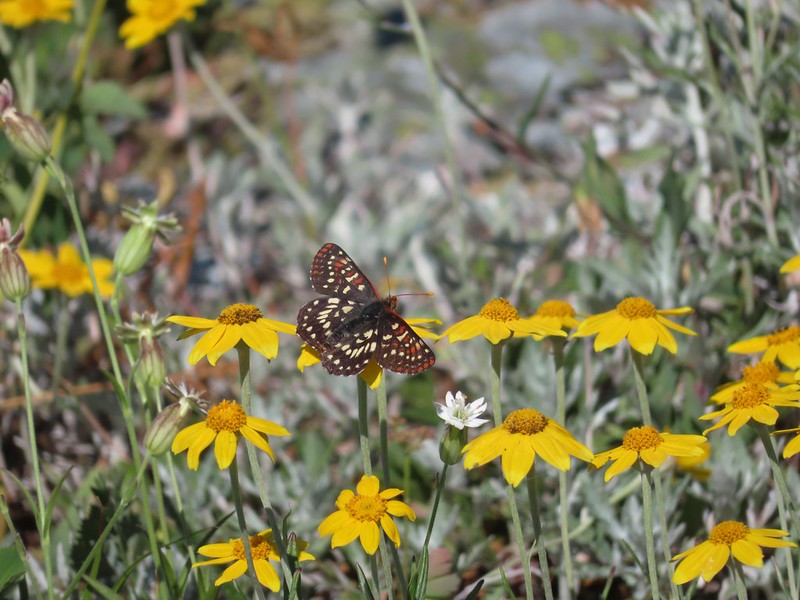 Checkerspot on Oregon sunshine
 Lots of purple larkspur amid the other flowers.
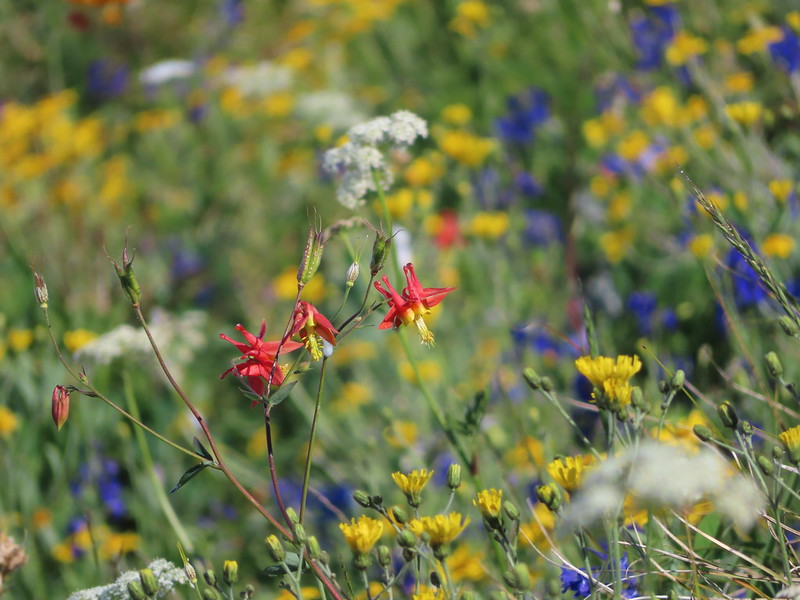 A few columbine were hiding in the mix.
 Violet
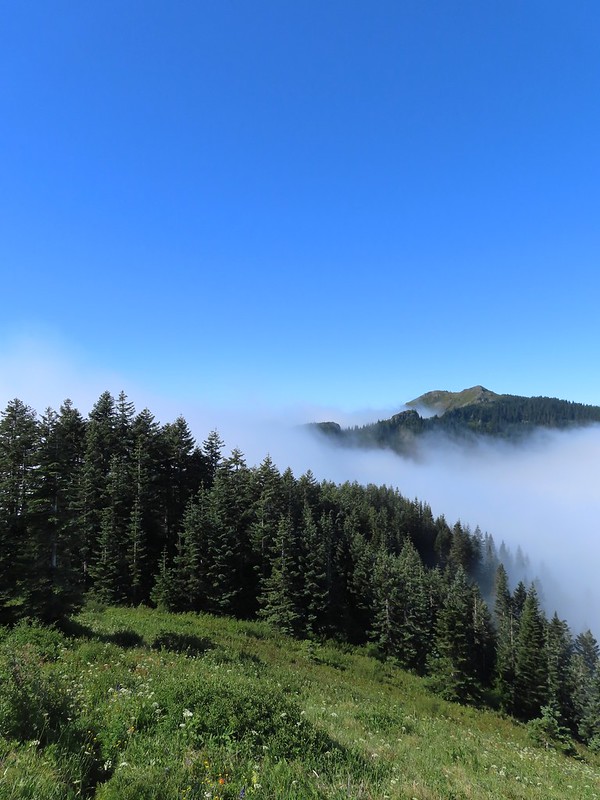 Starting down.
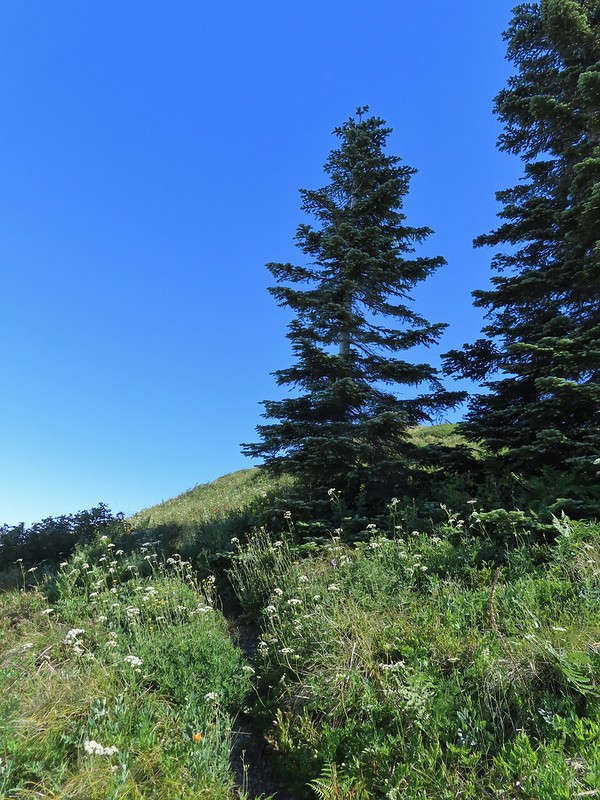 Looking back up.
 Stars on the trees marked the Starway Trail at times.
 Pinesap emerging from the ground.
 A cairn at the end of this brief level section marked the start of another steep descent. By this time we’d lost enough elevation to be back in the clouds.
 Part of the elevation loss was to drop below some interesting rock outcrops.
 Fully back in the fog.
 Time to climb again.
 Big root balls.
 Trail sign near the Bluff Mountain Trail junction.
 Final pitch to the Bluff Mountain Trail.
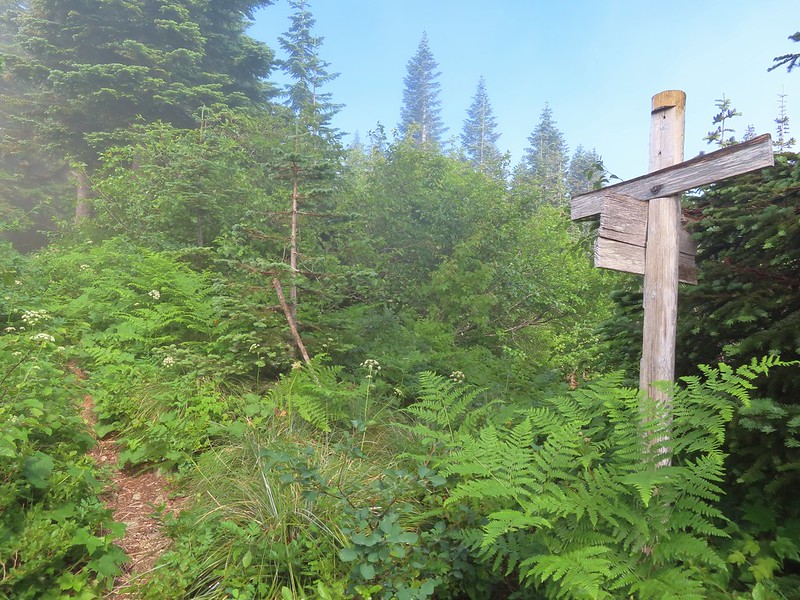 On the Bluff Mountain Trail at the junction.

 Lots of nice wildflowers along the Bluff Mountain Trail.
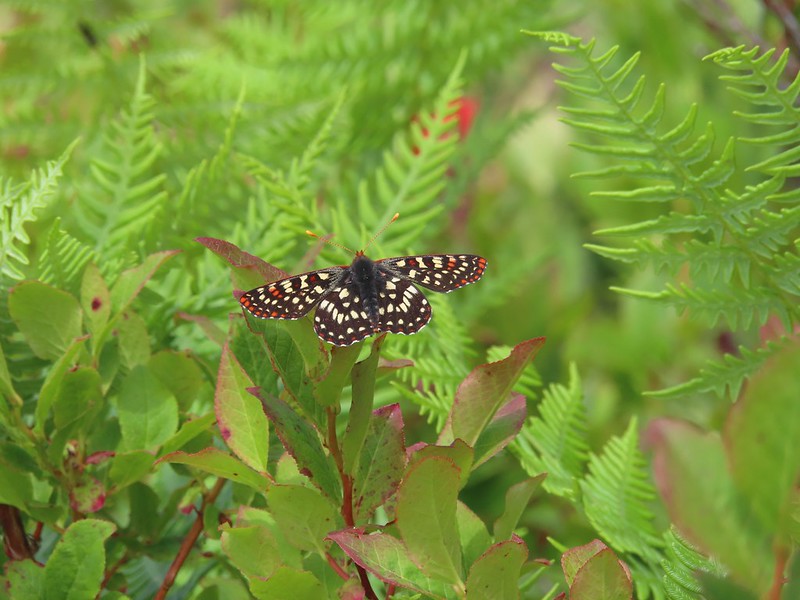 Another checkerspot
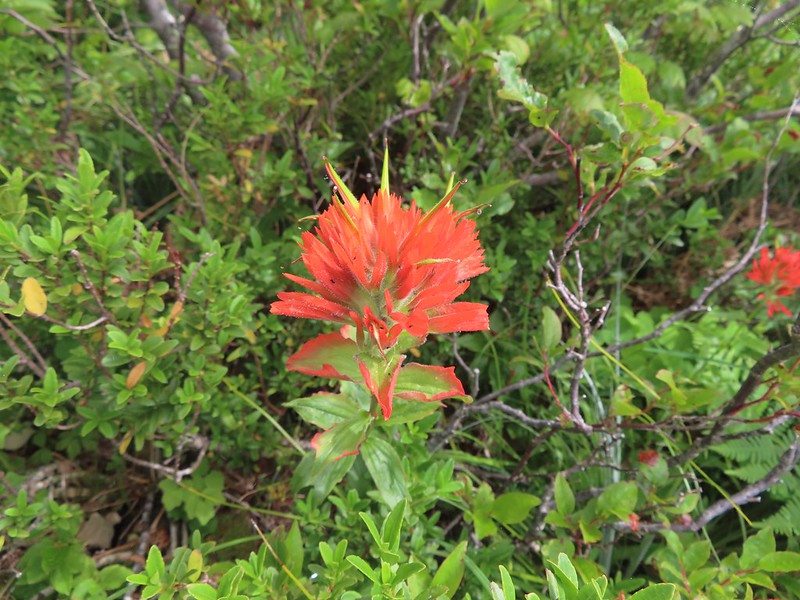 Paintbrush
 Penstemon
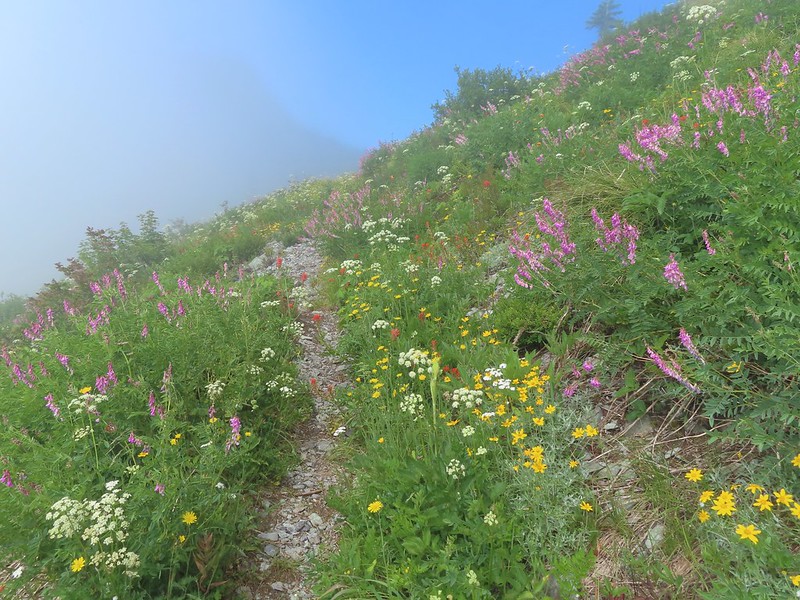 We just couldn’t quite shake the fog.
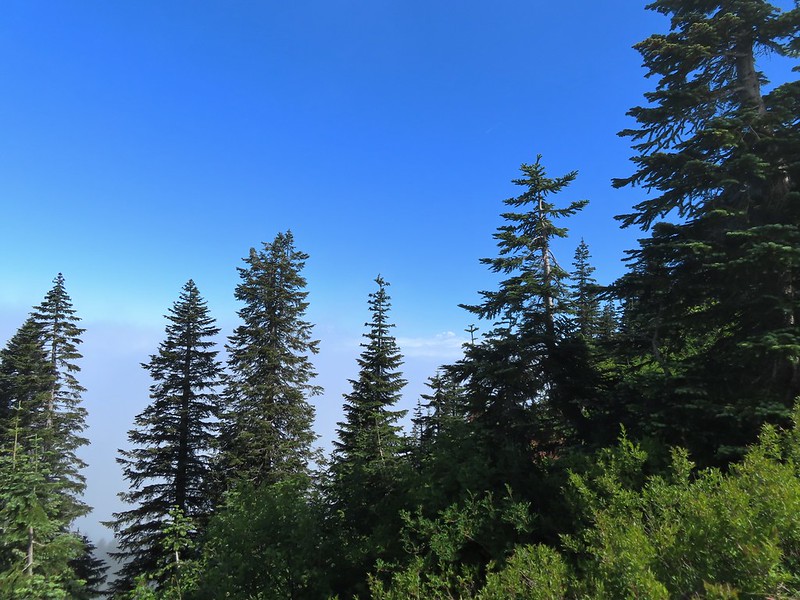 First sighting of Mt. Rainier.
 Mt. St. Helens to the left with Mt. Rainier to the right.
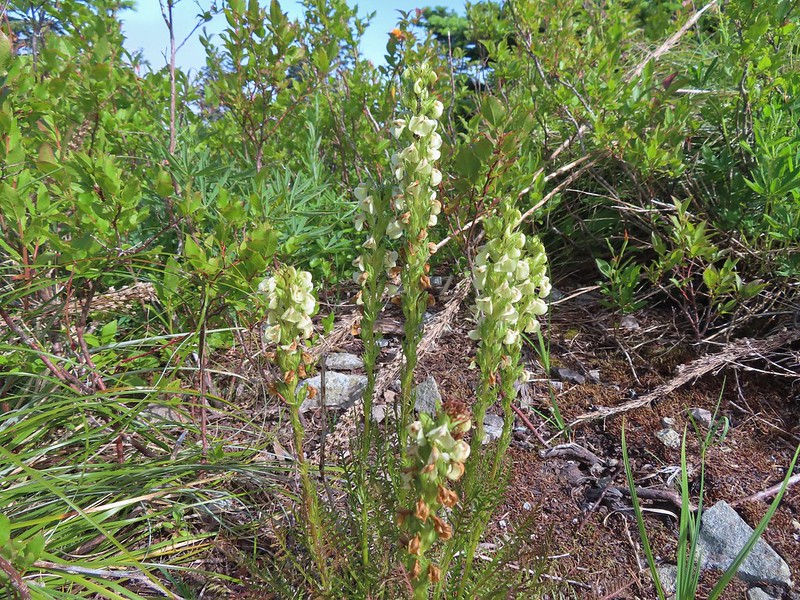 Coiled lousewort
 Lupine
 Getting closer to Silver Star.
 Crab spider on fleabane
 Spirea along the trail.
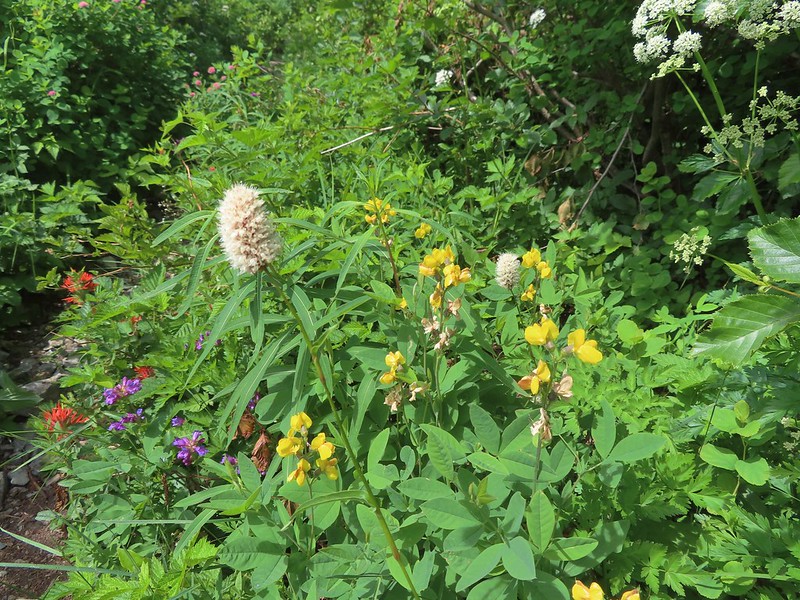 Bistort and mountain goldenbanner
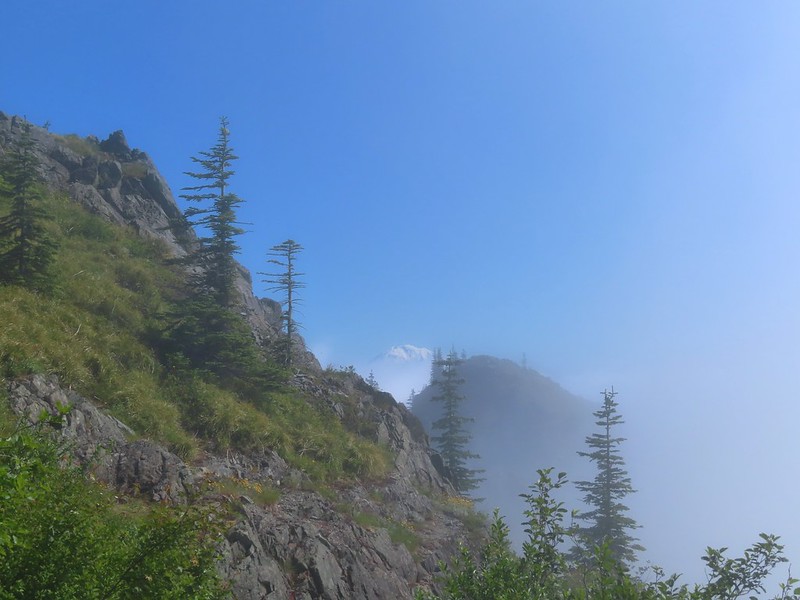 First Mt. Adams sighting.
 A crescent on bistort.
 Penstemon
 Wallflower with beetle.
 Passing below Silver Star Mountain.
 Mt. Hood
 Rock arch below Silver Star’s summit.
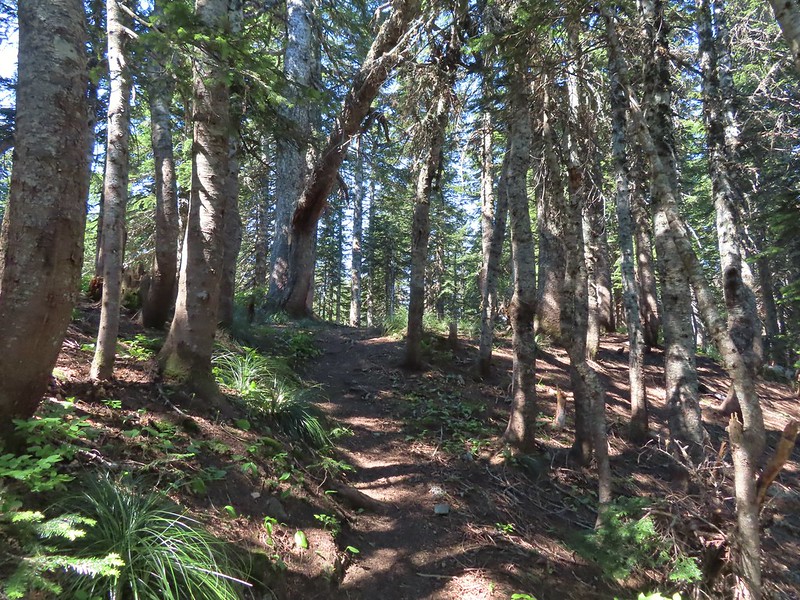
 Fading avalanche lily.
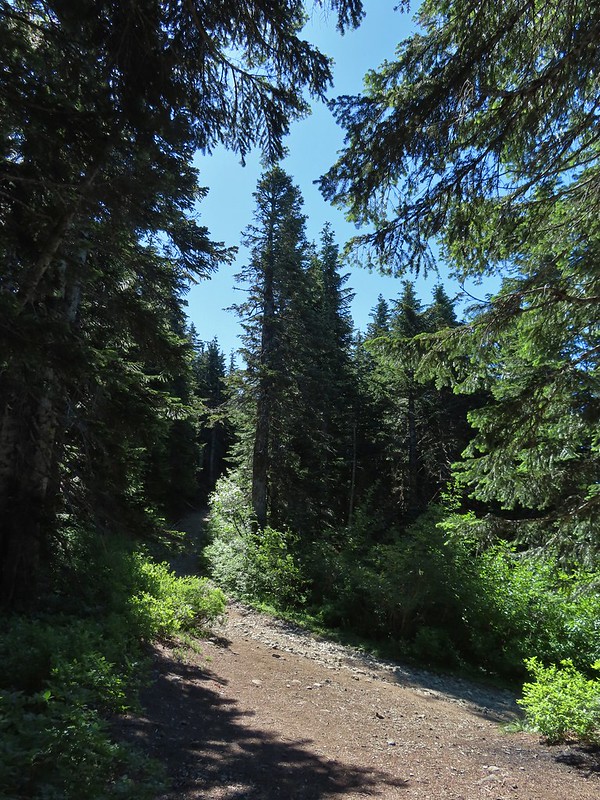 The old roadbed.
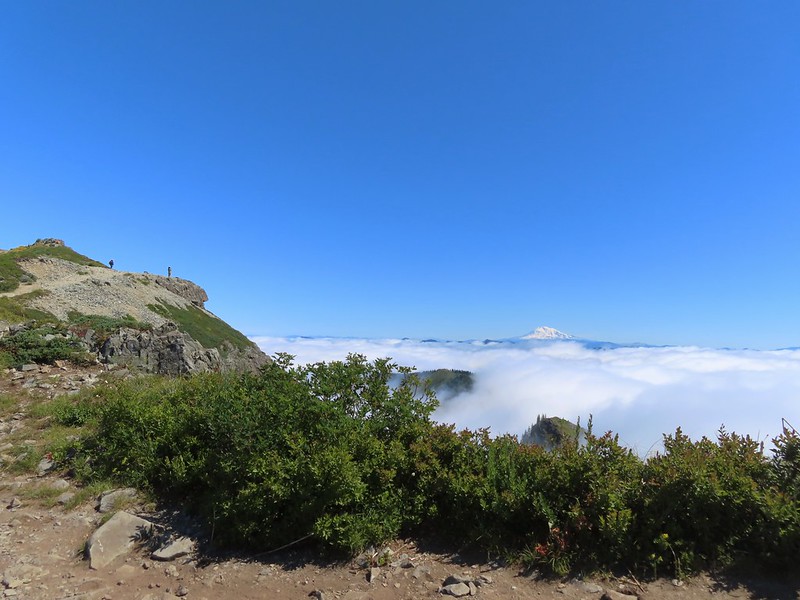 The summit to the left with Mt. Adams in the distance.
 Mt. Hood to the right at the saddle.
 Mt. St. Helens, Mt. Rainier, and Mt. Adams.
 Goat Rocks (between Mt. Rainier and Mt. Adams)
 Mt. Hood and Mt. Jefferson
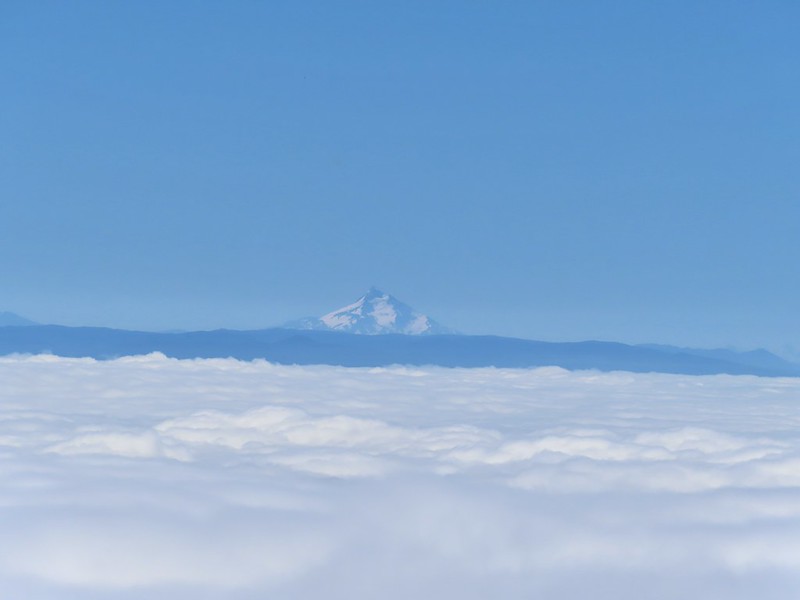 Mt. Jefferson. If you enlarge and look closely you can also make out Three Fingered Jack and the North Sister to the far right.
 Swallowtail
 Sturgeon Rock
 Wildflowers at the summit.
 Bug at the summit.
 Point 3977 is the the island surrounded by clouds.
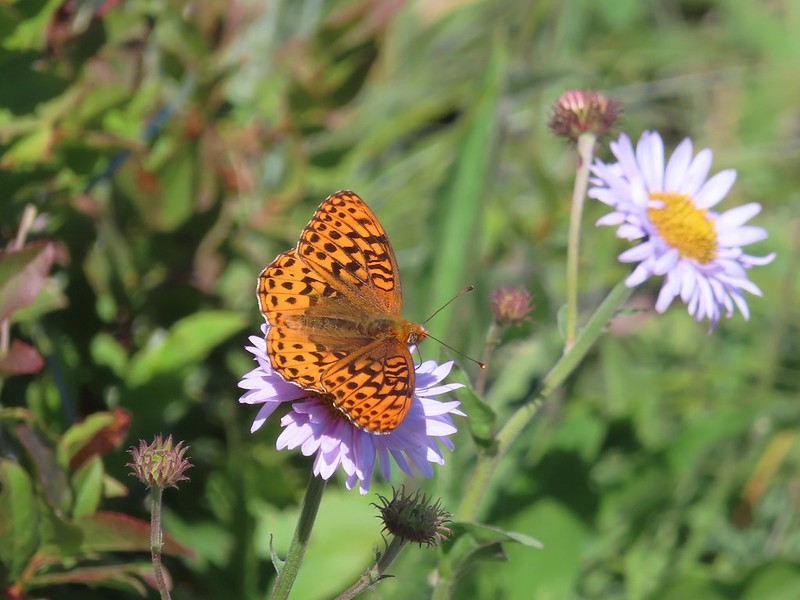
 The only beargrass bloom we saw all day.
 The talus slope.
 Pikas are not easy to spot.
 On alert.
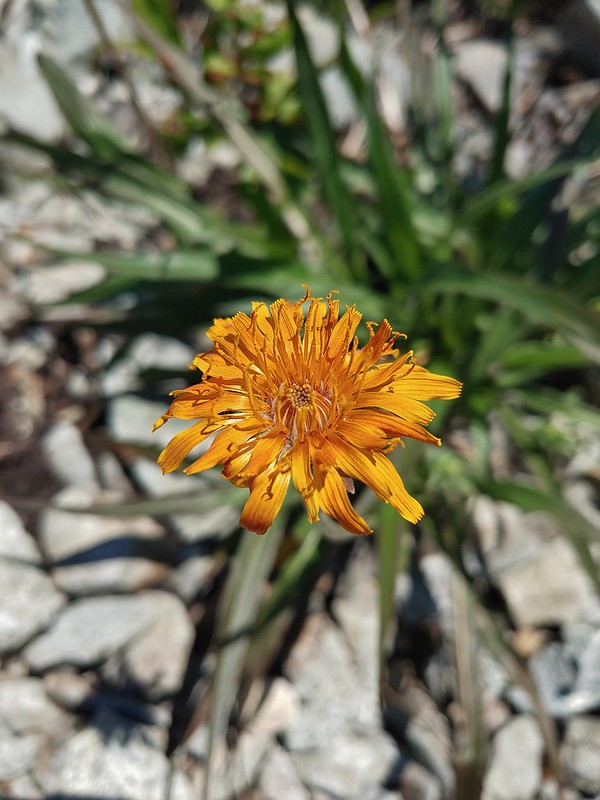 Orange agoseris
 Ladybug
 Making the steep climb back up to Point 3977.
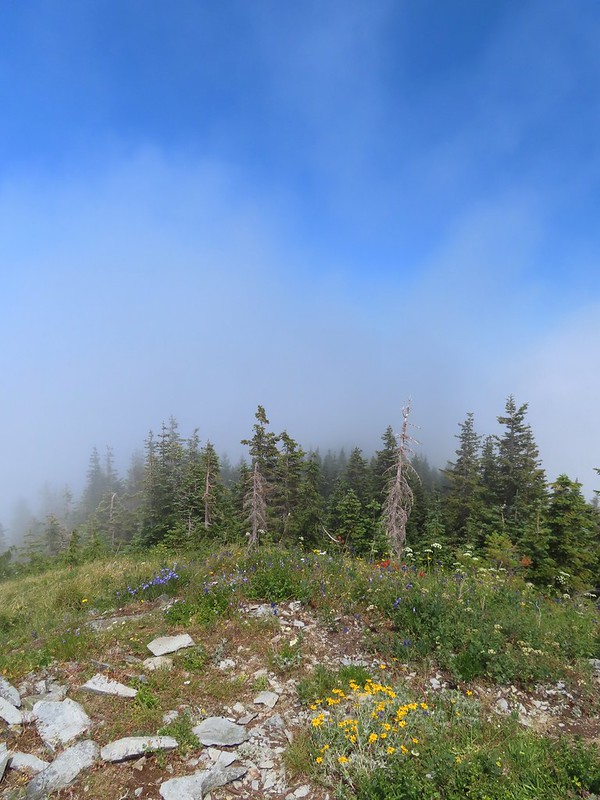 Looking toward Mt. St. Helens and Mt. Rainier.
 Looking toward Silver Star.
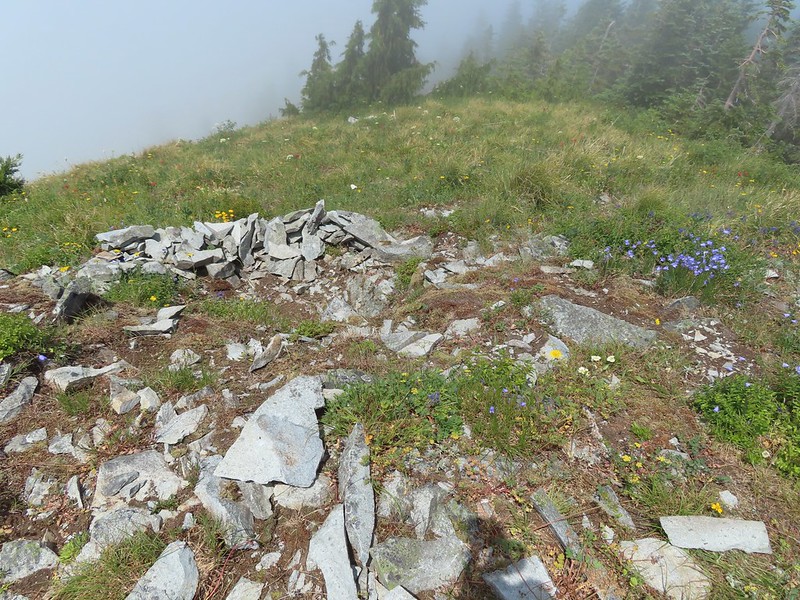 Possibly a Native American vision quest pit.
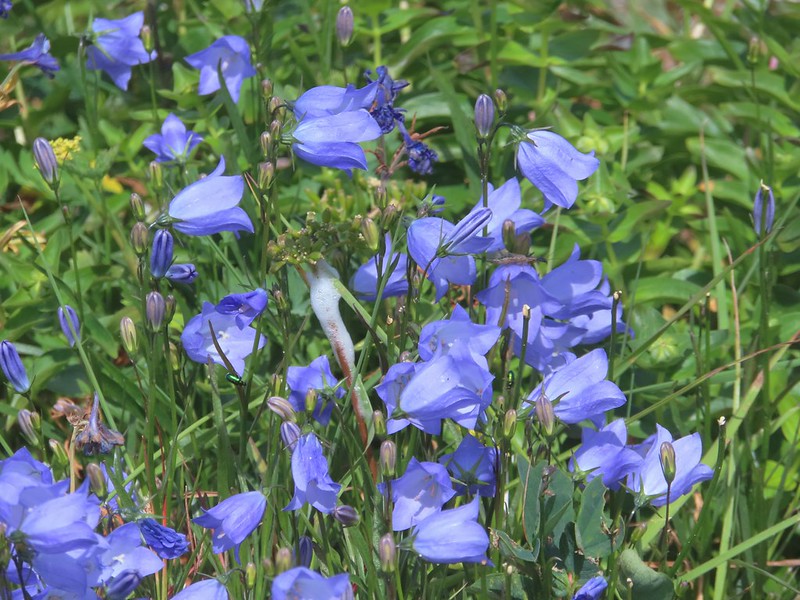 Bluebells of Scotland with at least three visible insects.
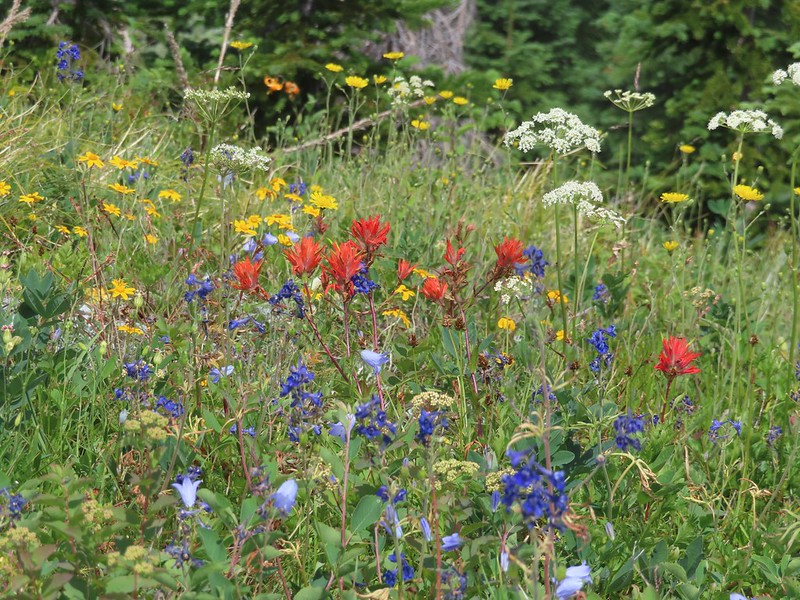 Some bright paintbrush.
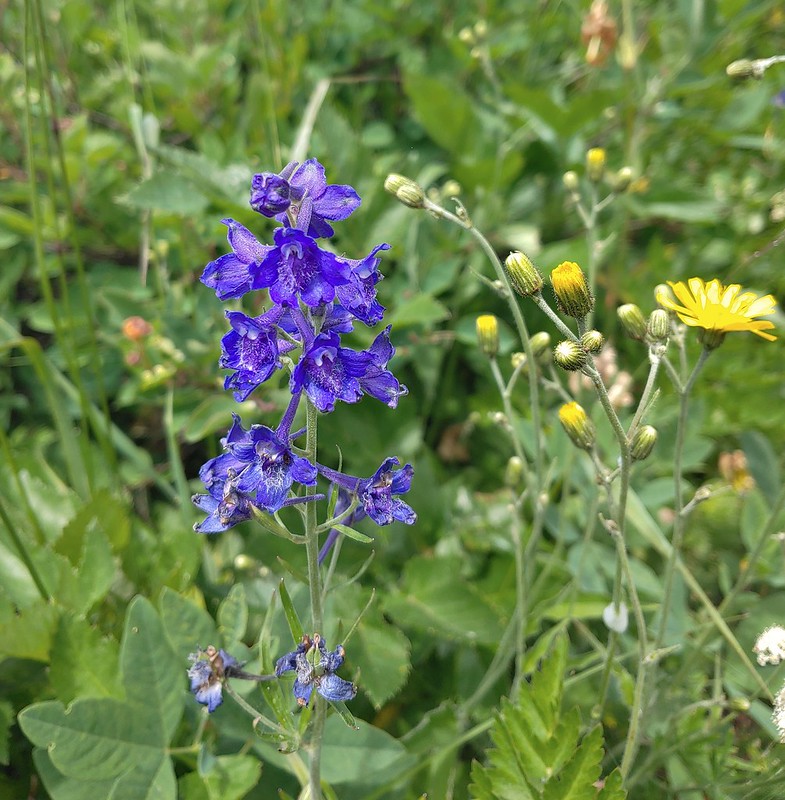 Larkspur
 A brief appearance by Silver Star’s summit.
 Sorry knees.
 Mock orange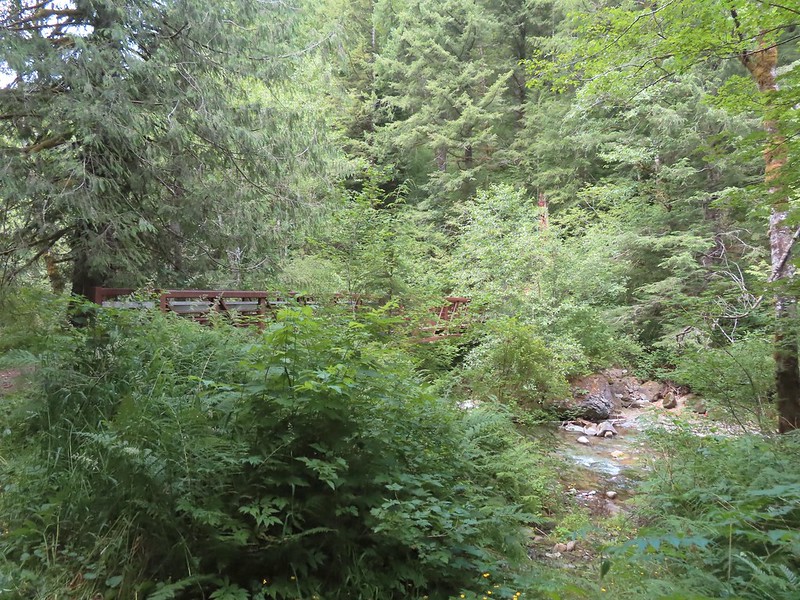
 A little blue sky in the afternoon.
 Salmonberries along FR 4107. I may have eaten a few as well as some red huckleberries along the lower portion of the Starway Trail.
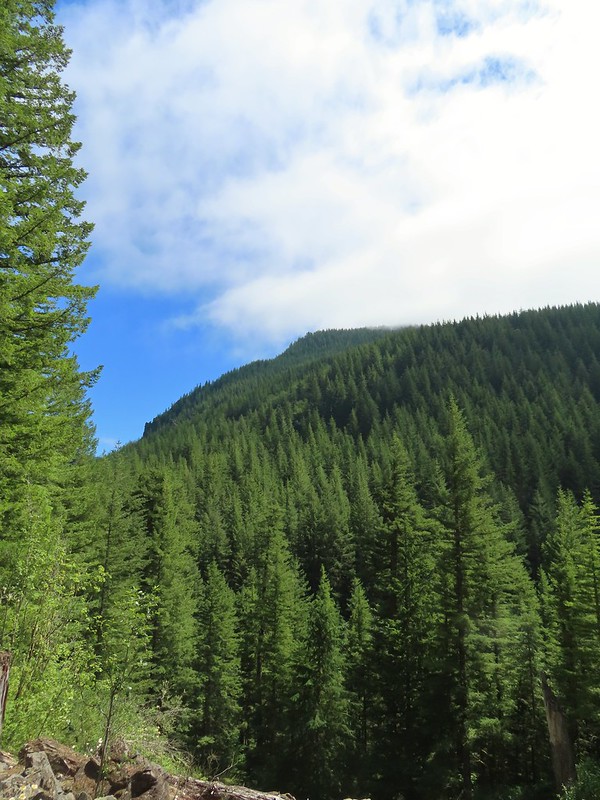 Looking back at the hillside the Starway Trail climbs from FR 4107.

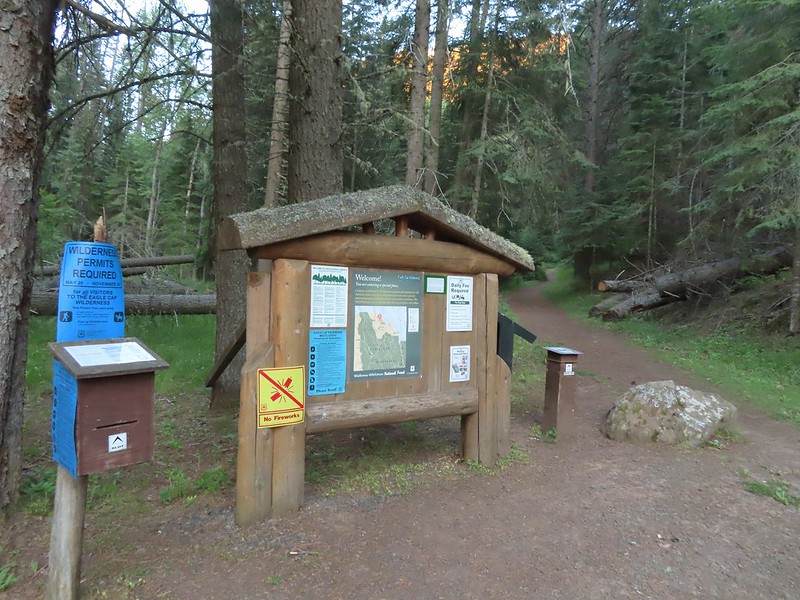 The Bear Creek Trail at the trailhead.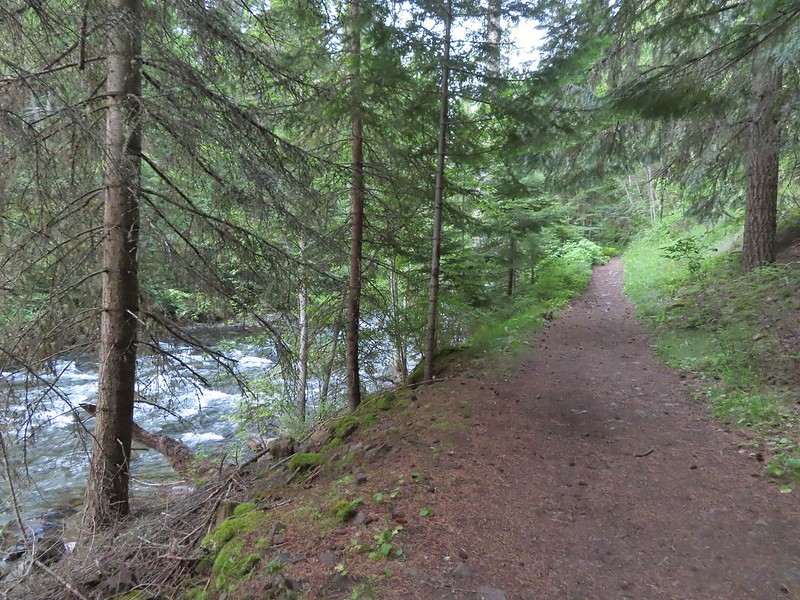
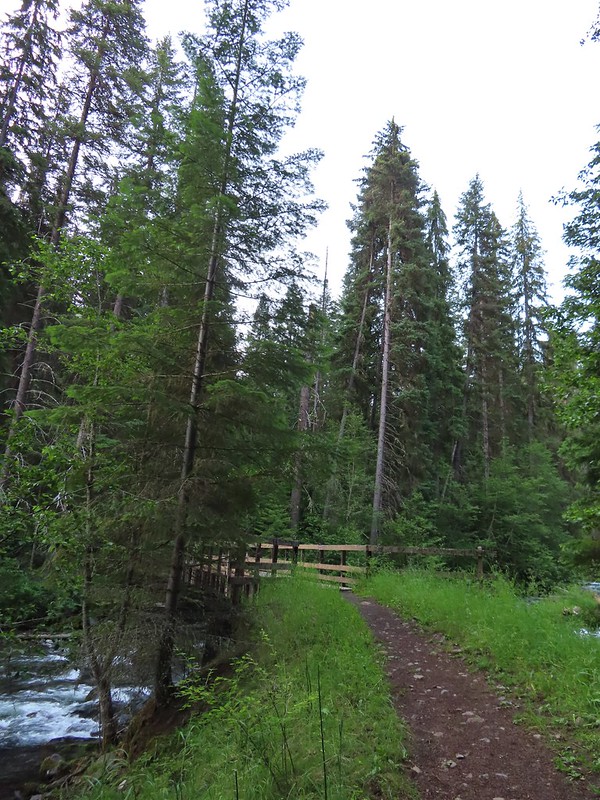
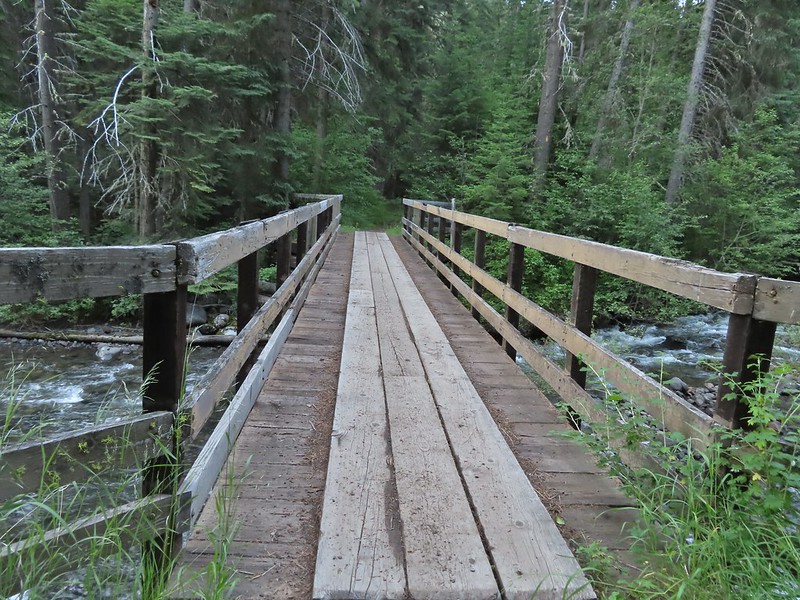 Footbridge over Bear Creek.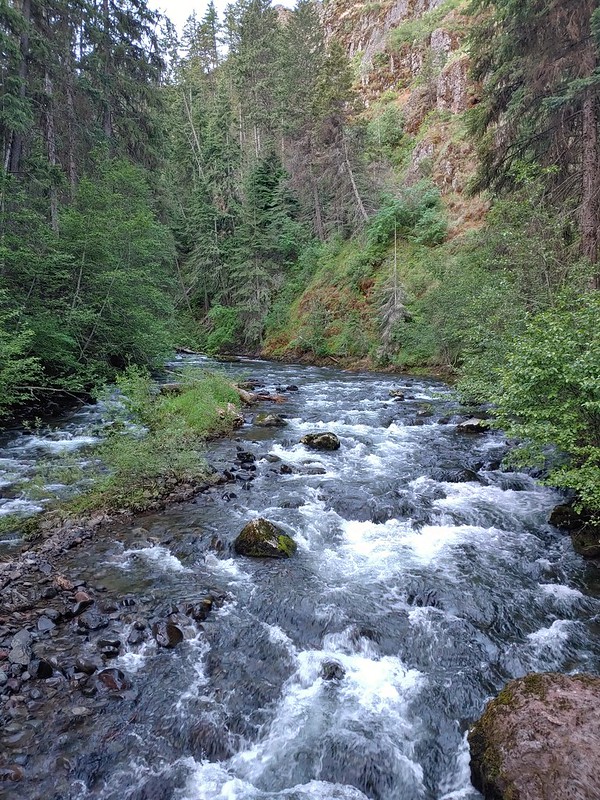
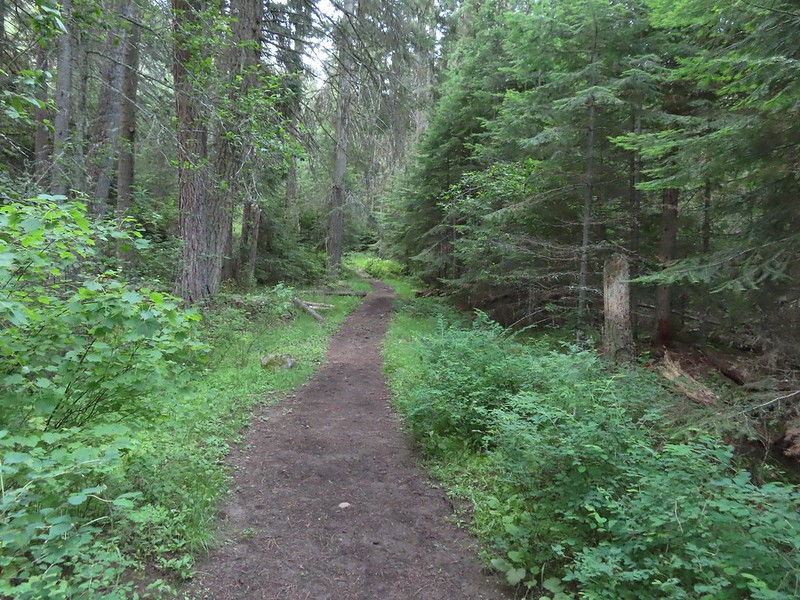

 Milk-vetch
 Mountain lady-slippers
 Bug on a thimbleberry leaf.
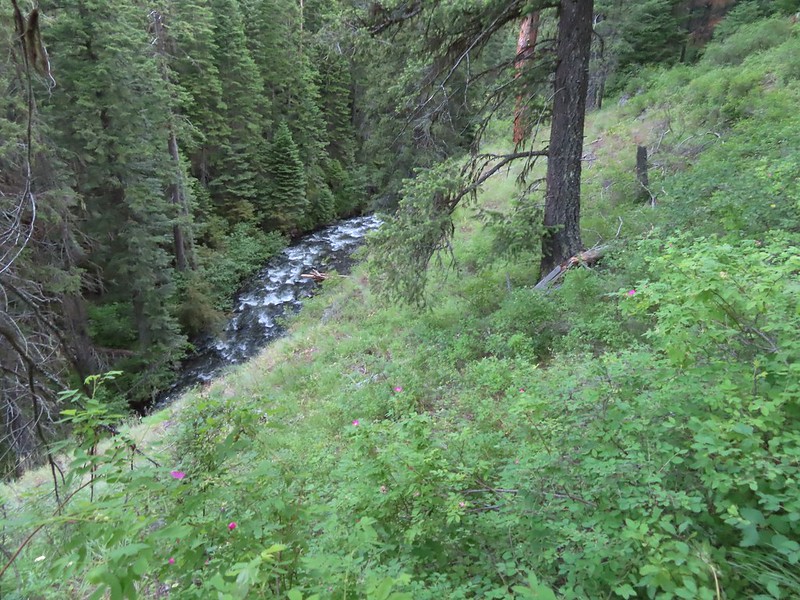 There were a couple of ups and downs where the trail got above Bear Creek.
 Baker Gulch
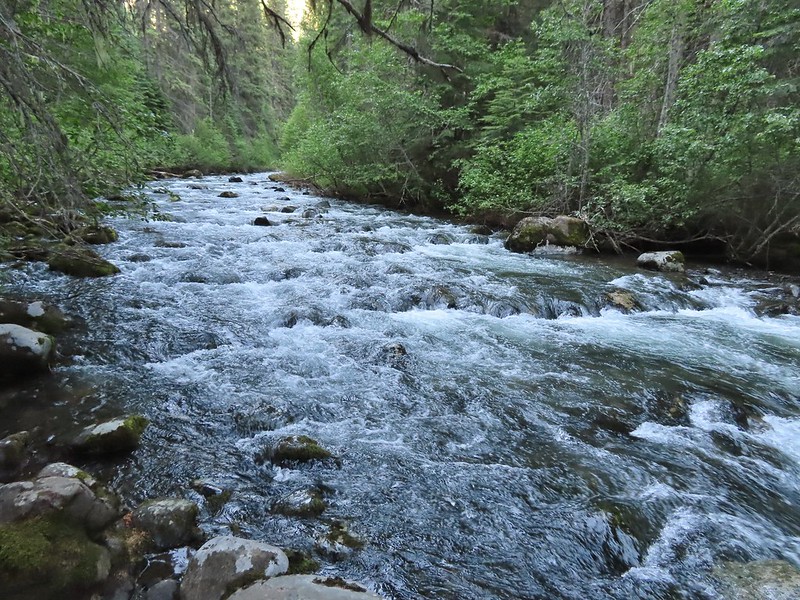
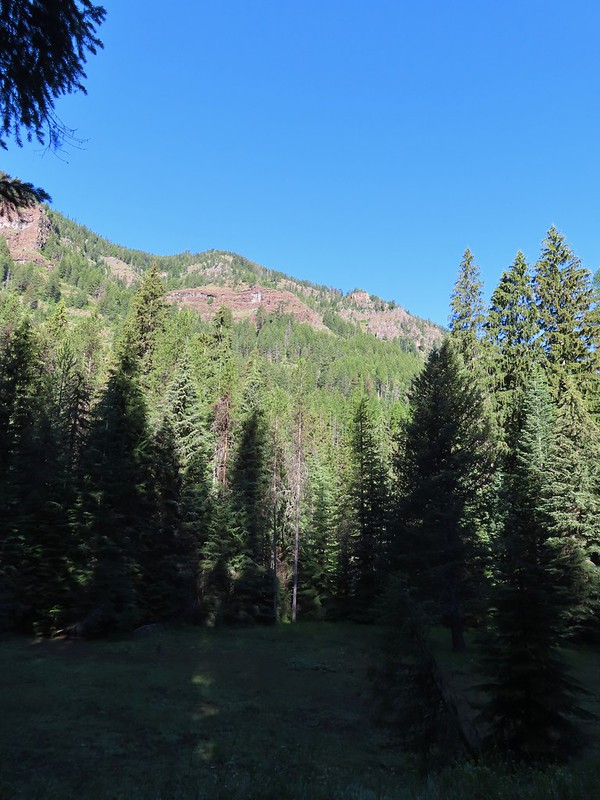 Cliffs on the opposite side of Bear Creek.
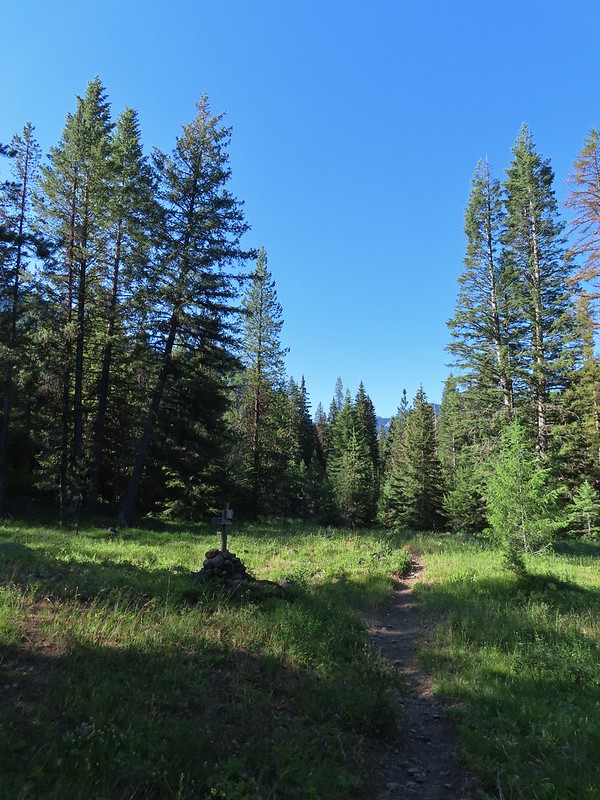 Trail sign marking the junction with the Goat Creek Trail. By this time we had crossed into the
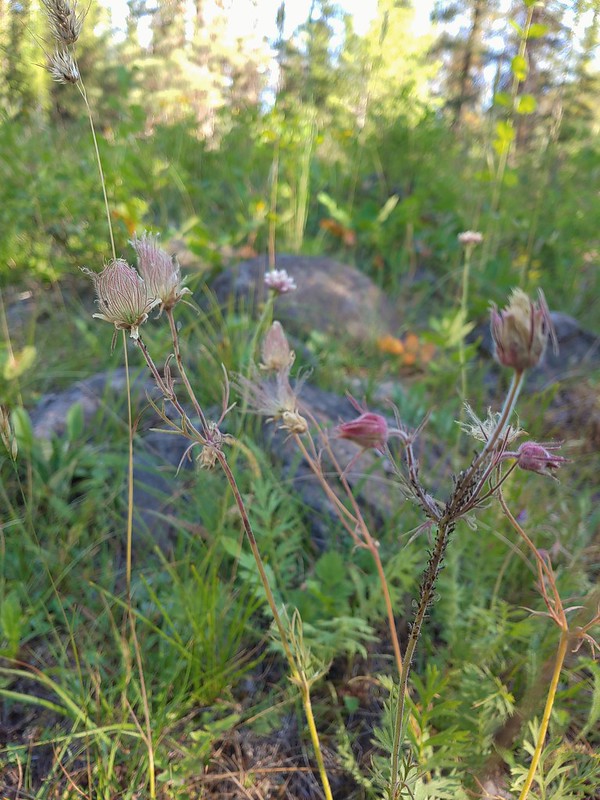 Prairie smoke a.k.a. old mans whiskers
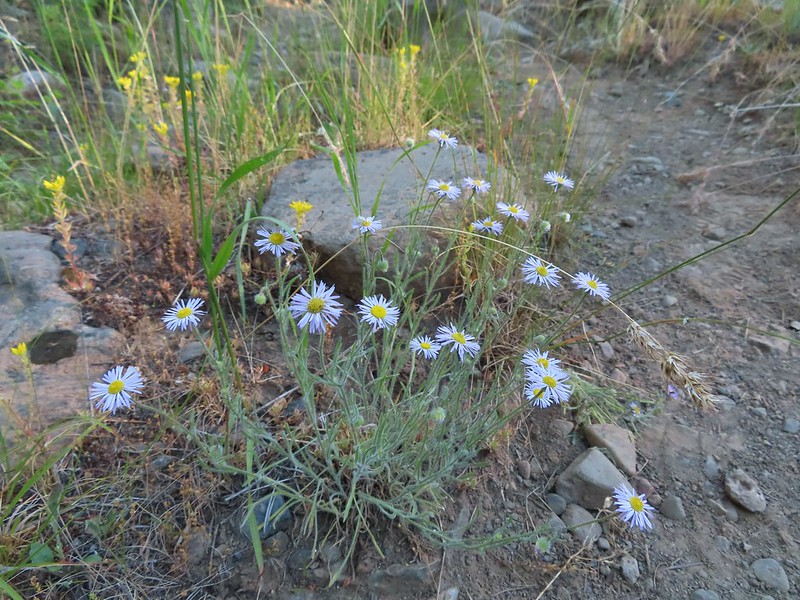 A fleabane
 The Bear Creek Trail crossing Goat Creek.
 Footbridge over Goat Creek.
 Goat Creek
 The unmarked but obvious spur trail to the (locked) Bear Creek Guard Station on the right.

 Moneses uniflora – one-flowered moneses
 Hairstreak
 Crab spider
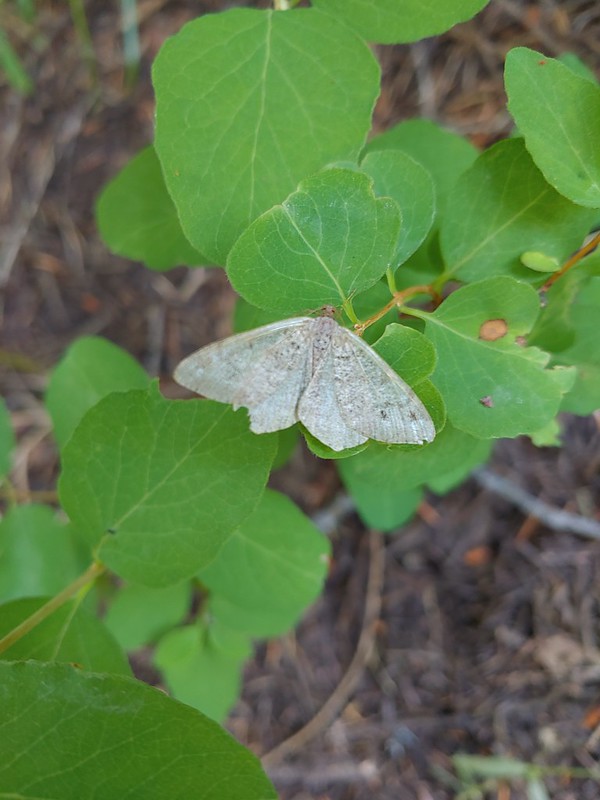 Moth
Moth Swallowtail on a bog orchid
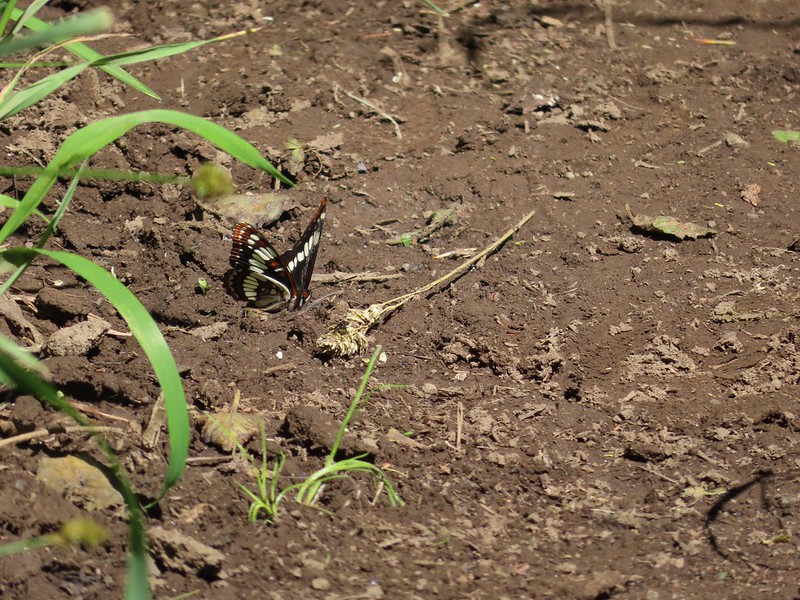 Lorquin’s admiral
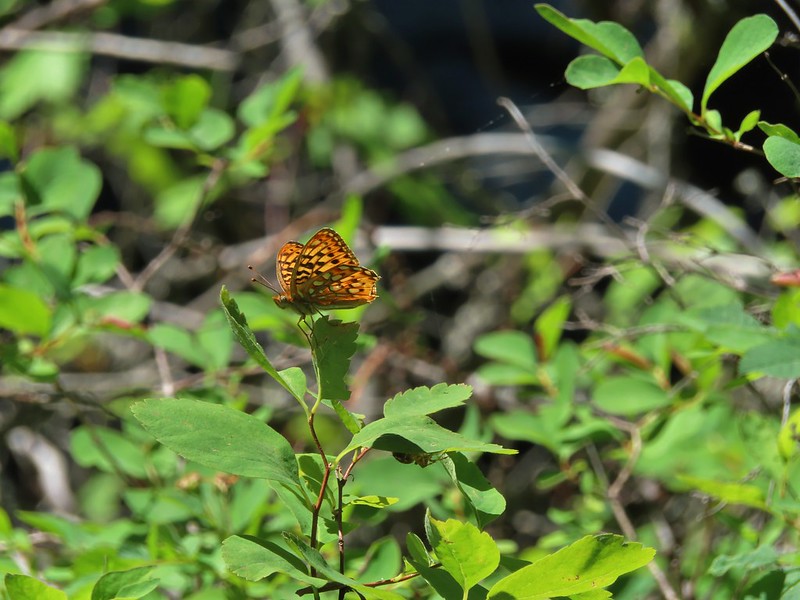 A fritillary butterfly with some sort of spider on the underside of a leaf below to the right.
 First time we’ve started a hike from a motel room.
 Passing the Visitor Center on 2nd Street.
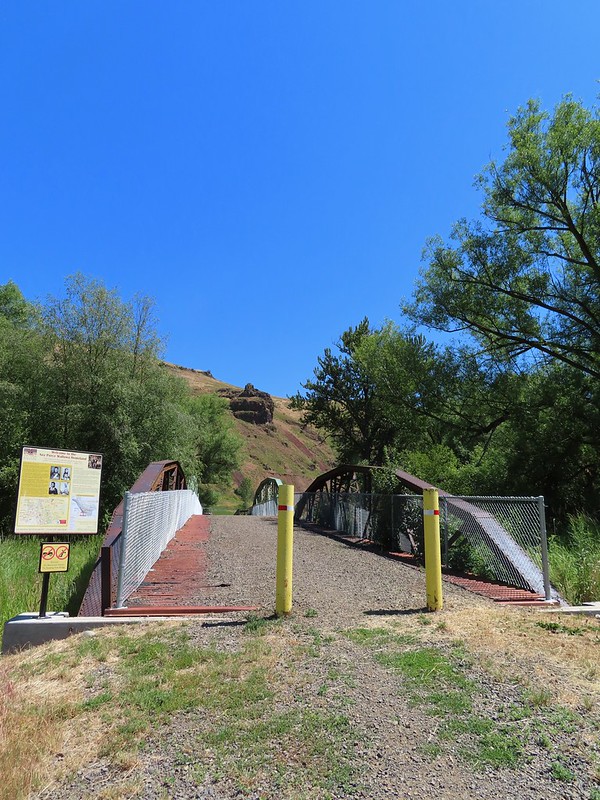


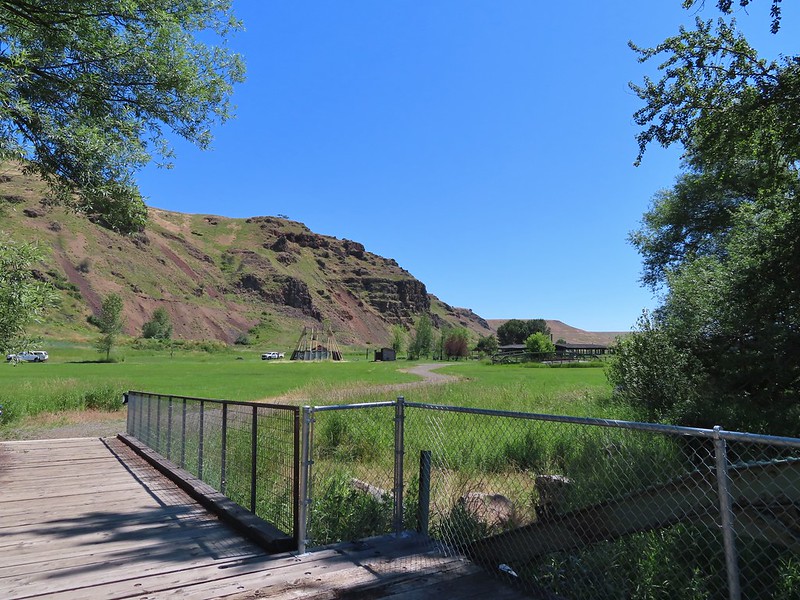
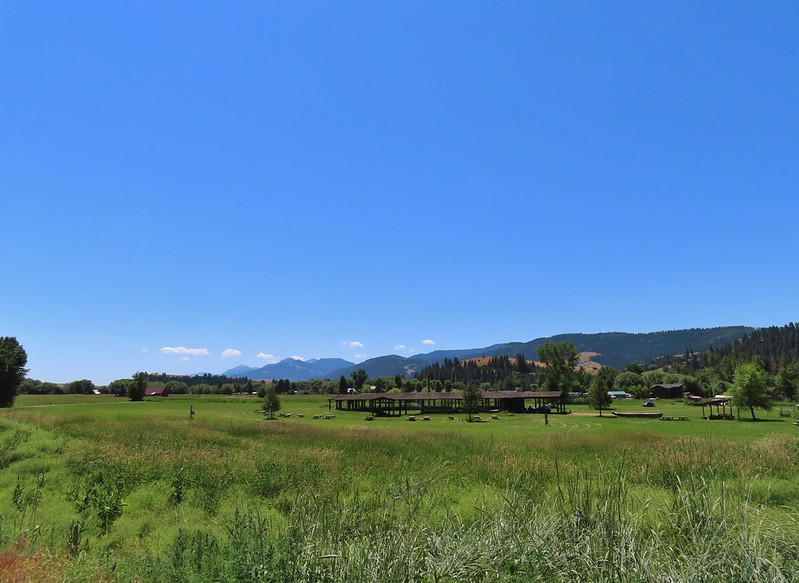 Dance arbor
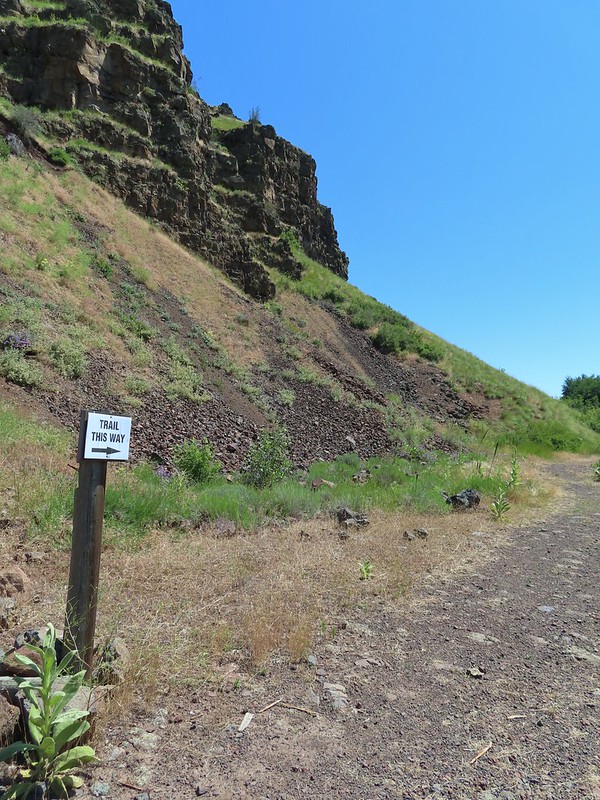
 Marmot
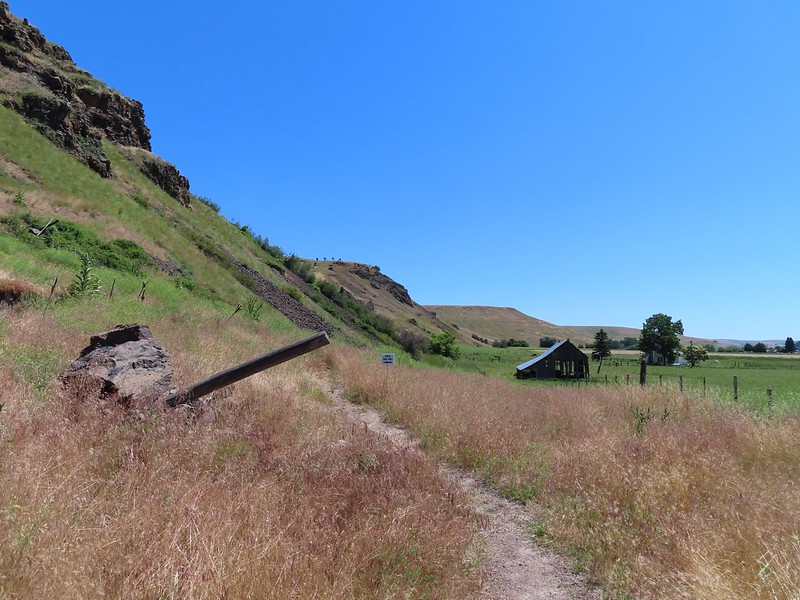 Approaching the pointer uphill.
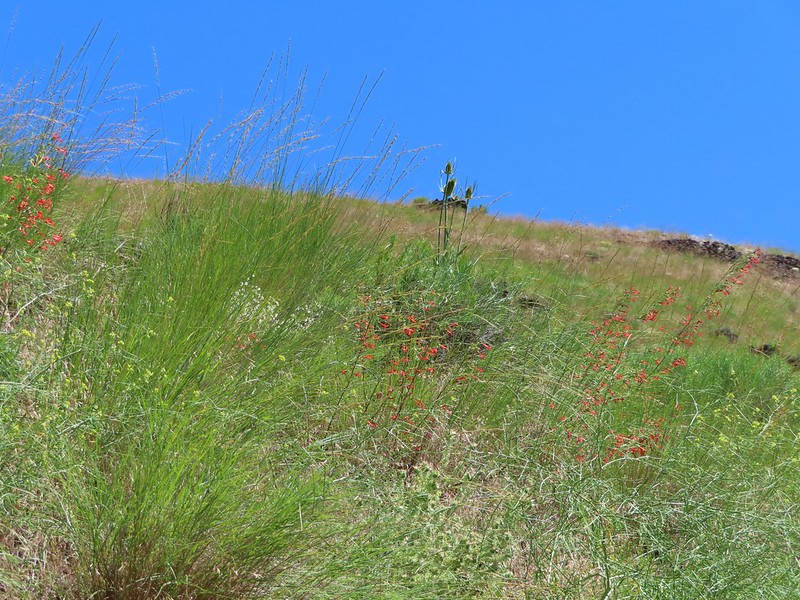 Scarlet gilia
 Dustymaidens
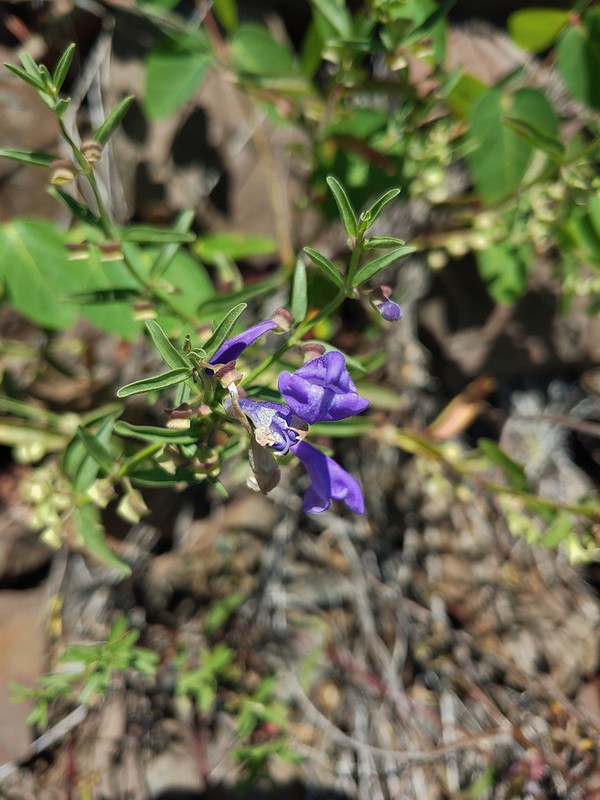 Skullcap
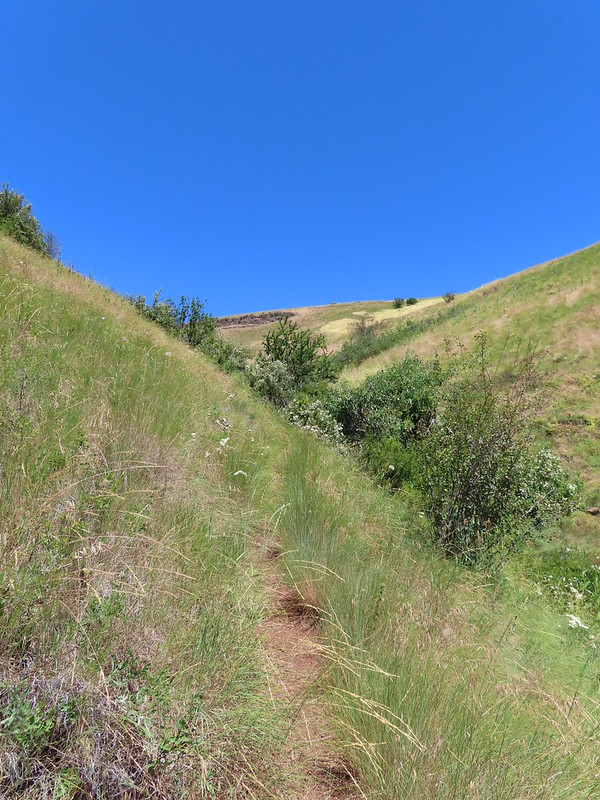 Heading up Tick Hill
 Yarrow
 Lupine
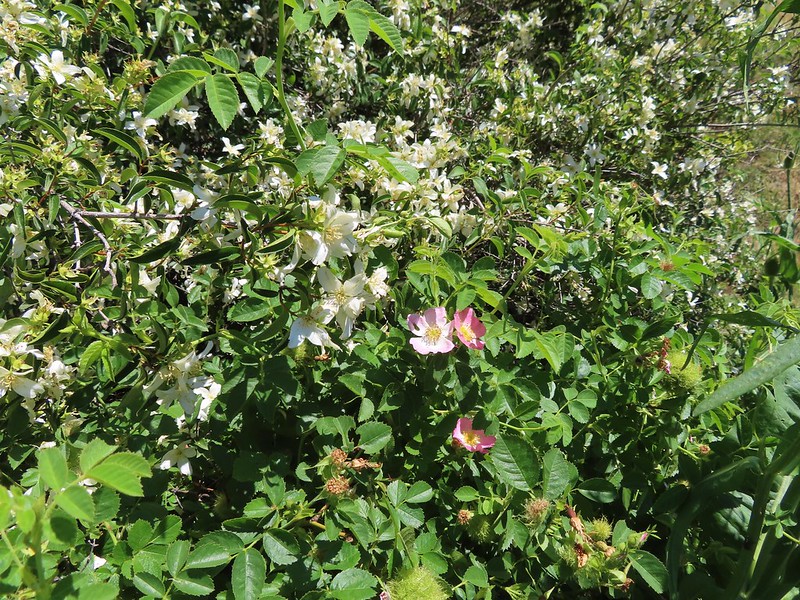 Mock orange and wild rose
 Dragon fly
 Moth mullien
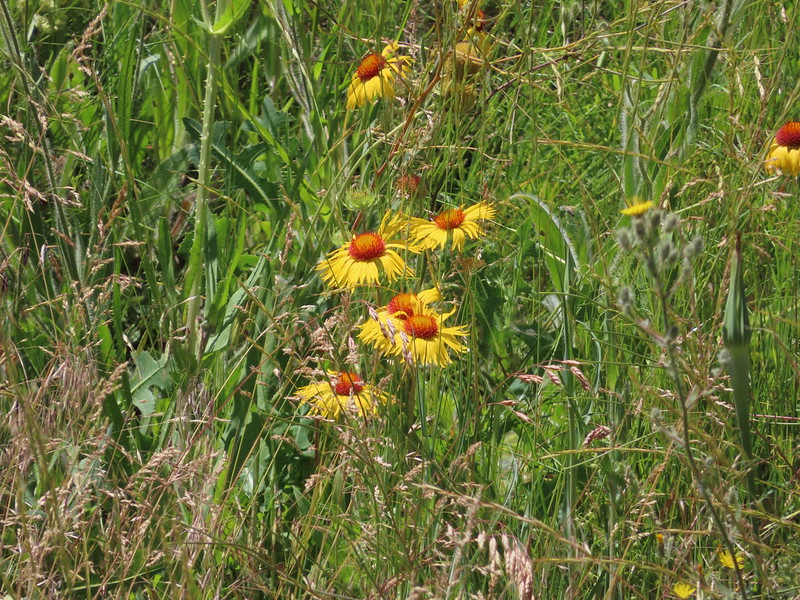 Blanket flower
 Checker-mallow and vetch
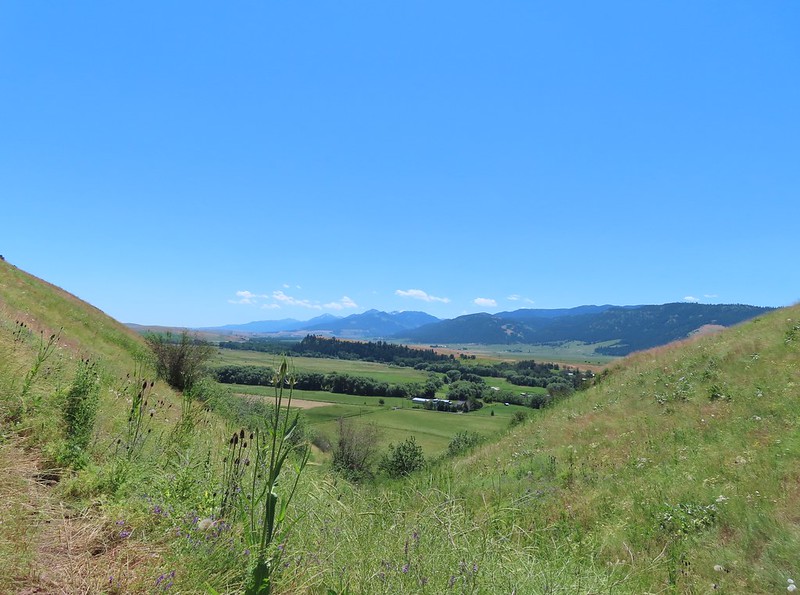 The Wallowas from the trail.
 Sagebrush mariposa lily
 A buckwheat
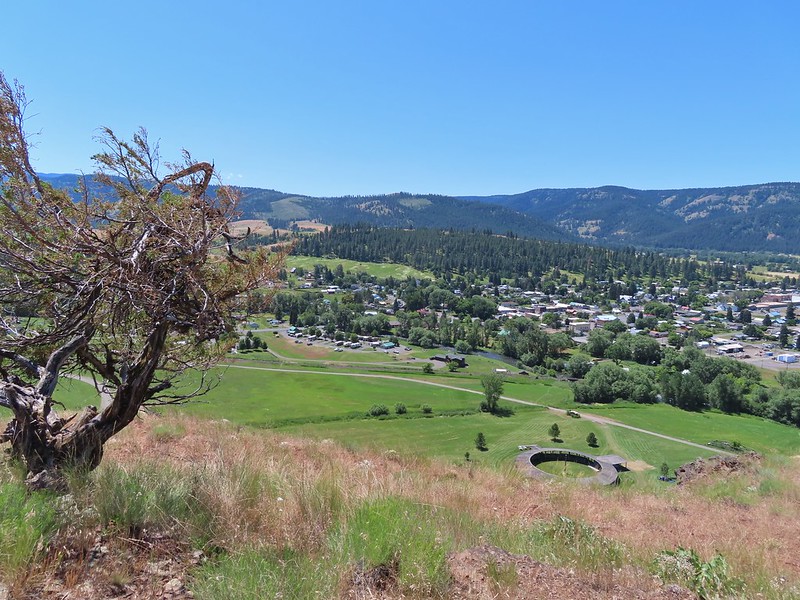 The Wallowa River and dance arbor from the viewpoint.
 The Wallowa Mountians
 Heading back to the post from the viewpoint.
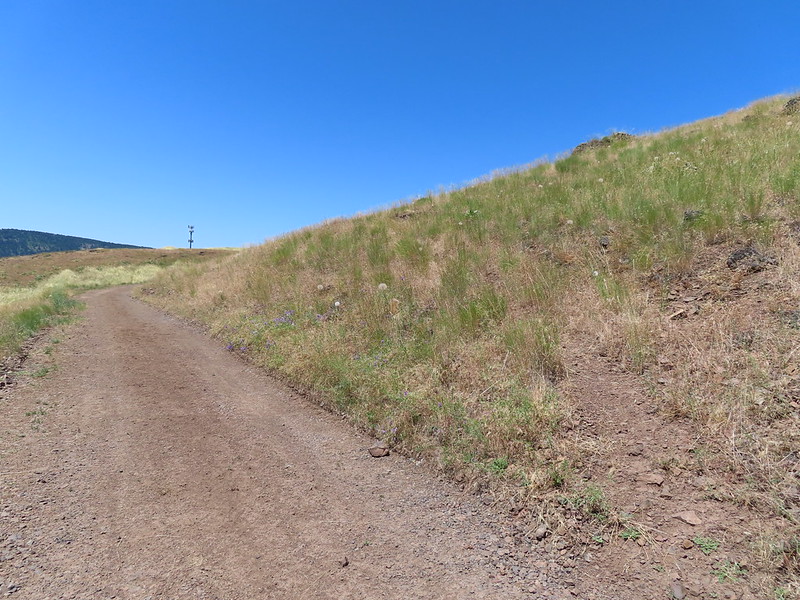 About a quarter mile from the post we crossed this road leading to some radio towers.
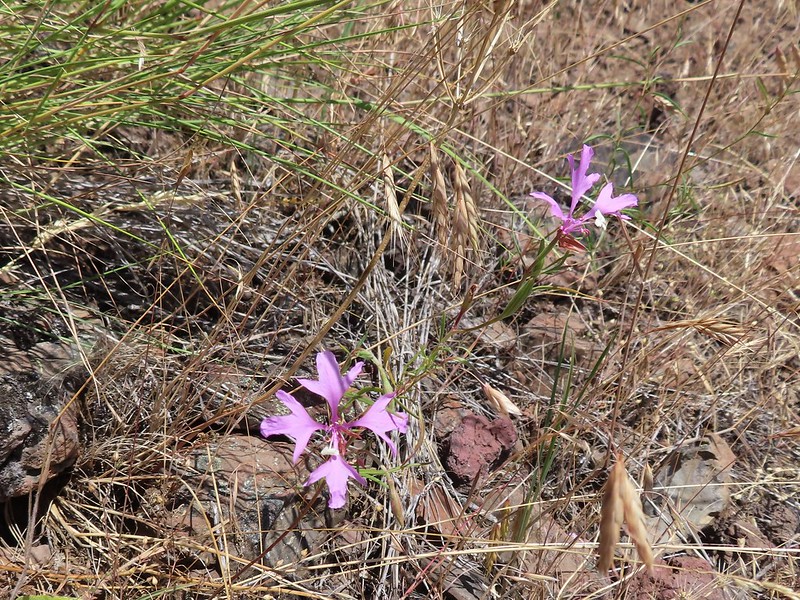 Elkhorn clarkia
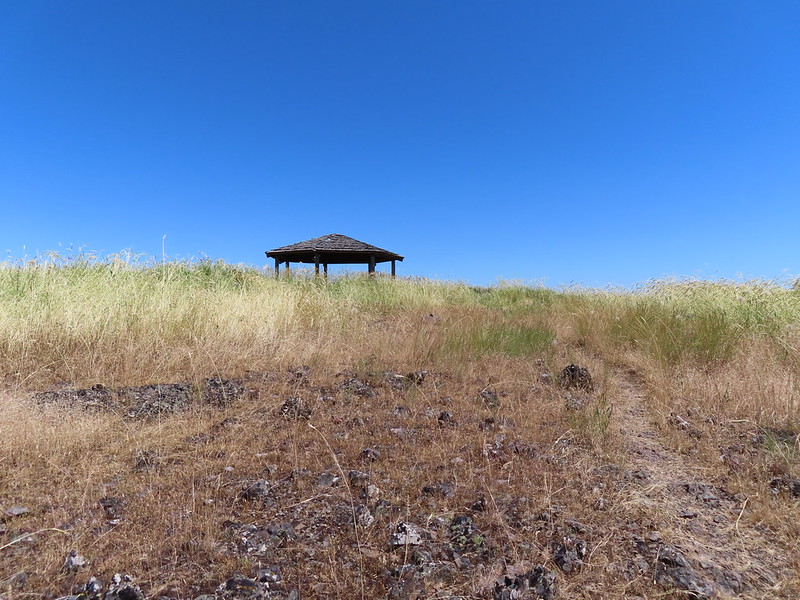 The gazebo ahead.
 Shade!
 Plaque near the gazebo.
 View from the gazebo.
 From left to right: Point Joseph, Hurricane Point, Ruby Peak, and Sawtooth Peak.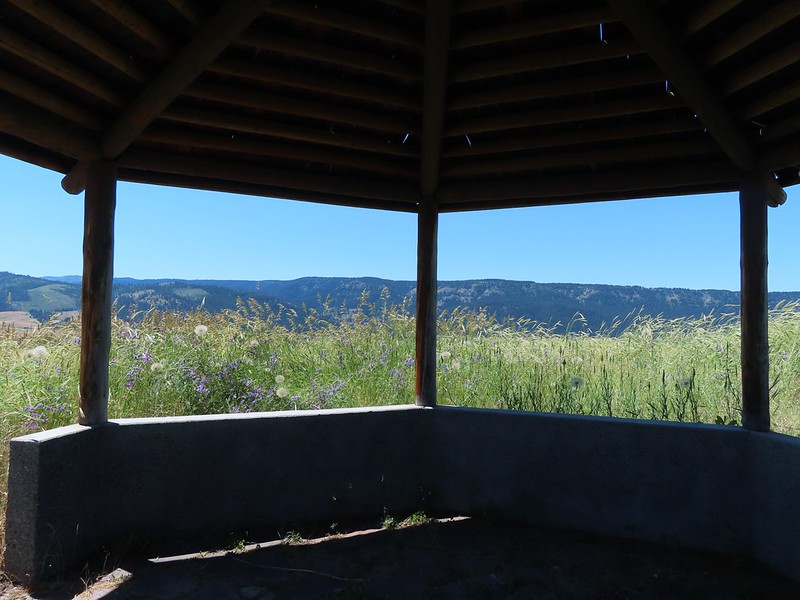
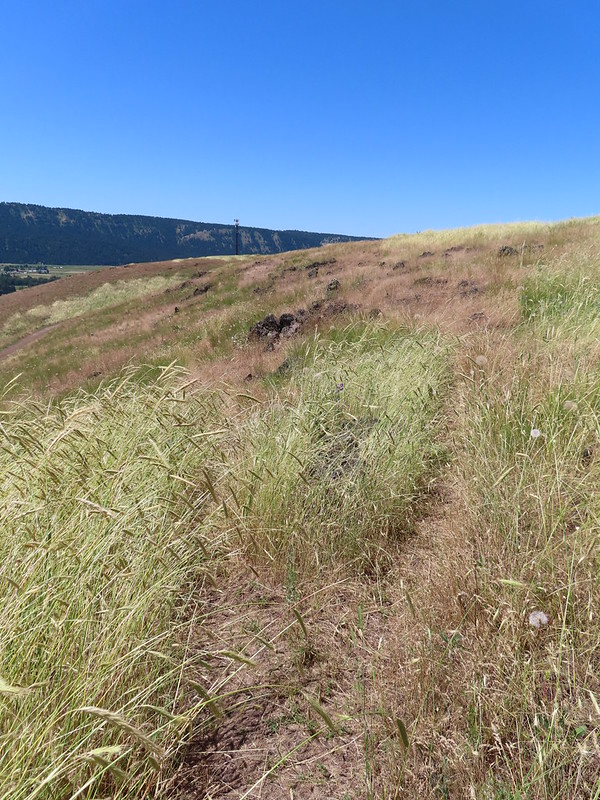 At the junction with the spur trail to the gazebo. We came up from the left and continued on to the right.
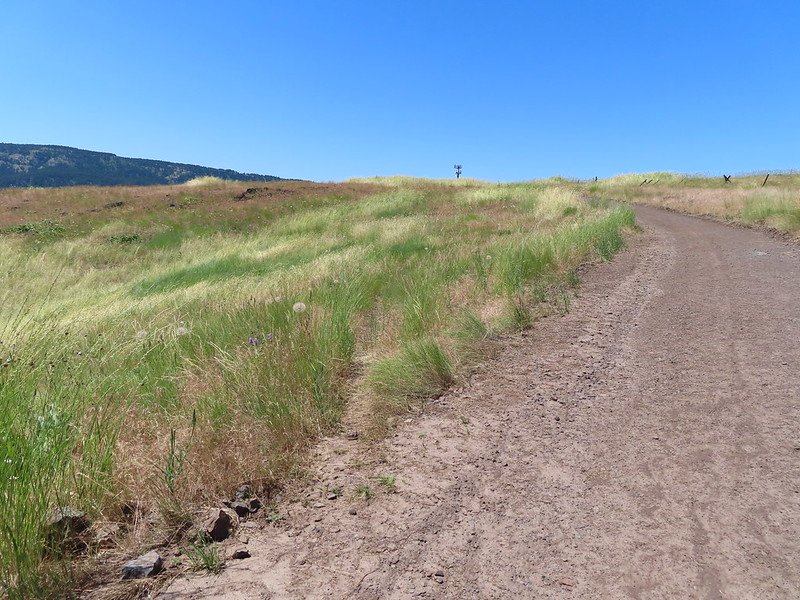 Recrossing the road.
 Western meadowlark
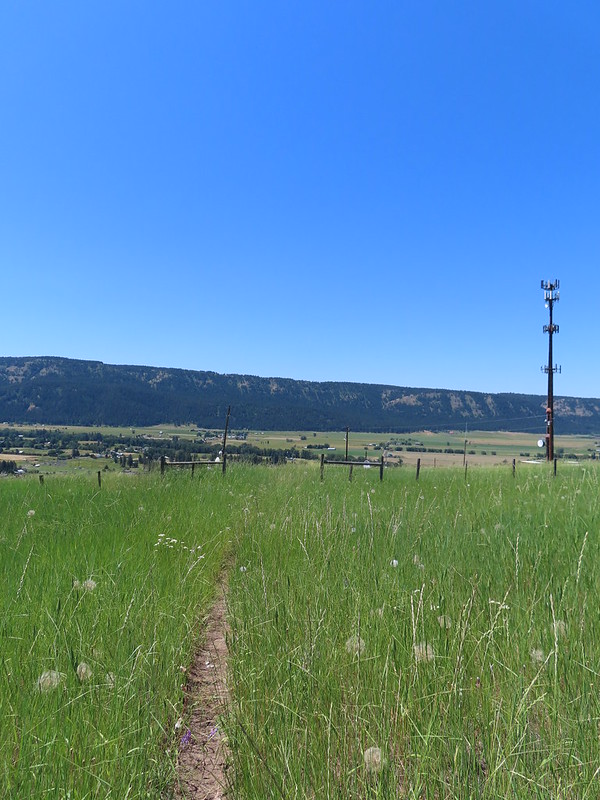 Heading toward the radio tower.
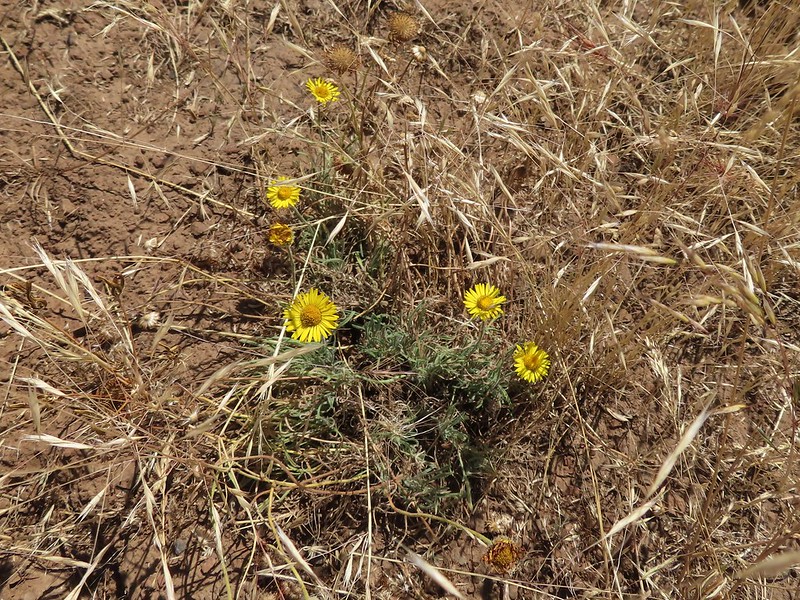 A fleabane
 There were several plaques along this stretch.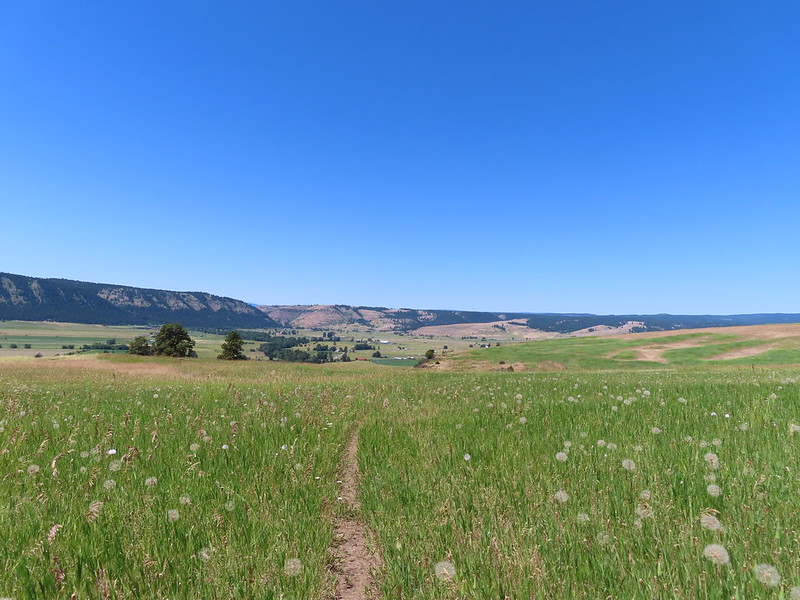
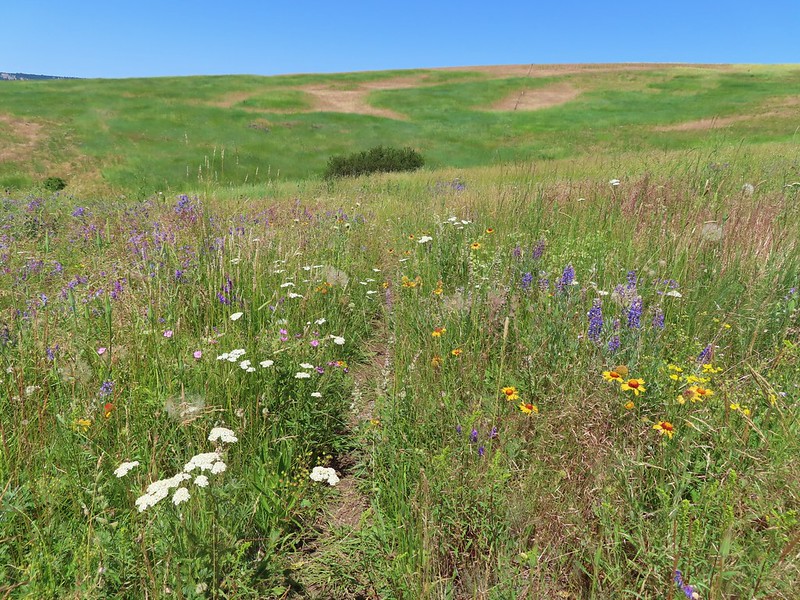 Various wildflowers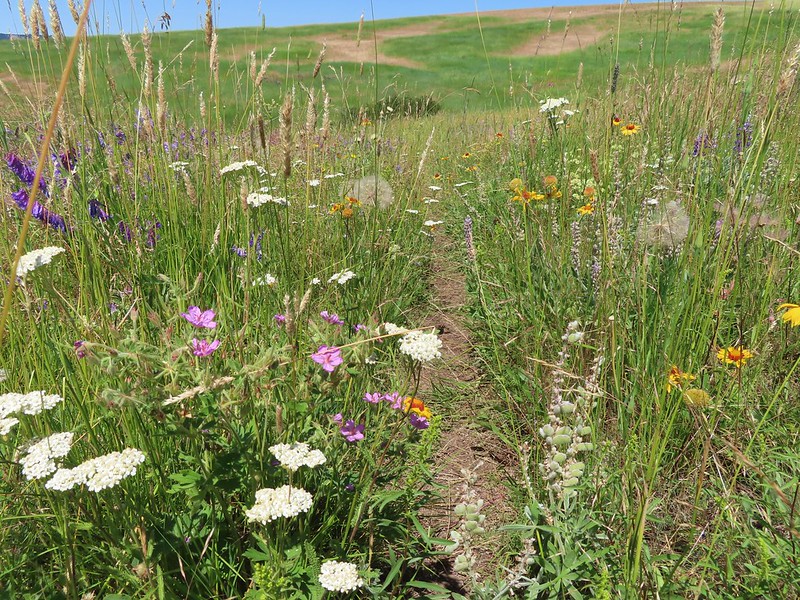
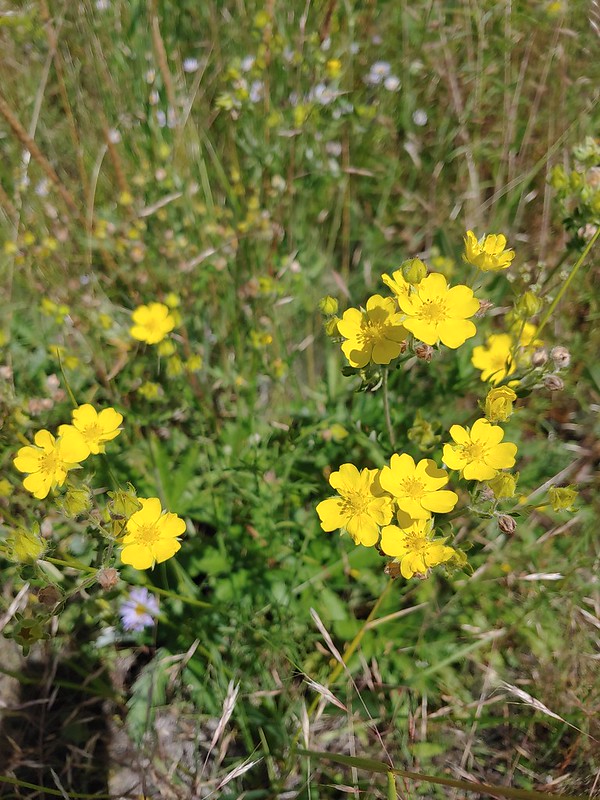 Cinquefoil
 Lots of blanket flower.
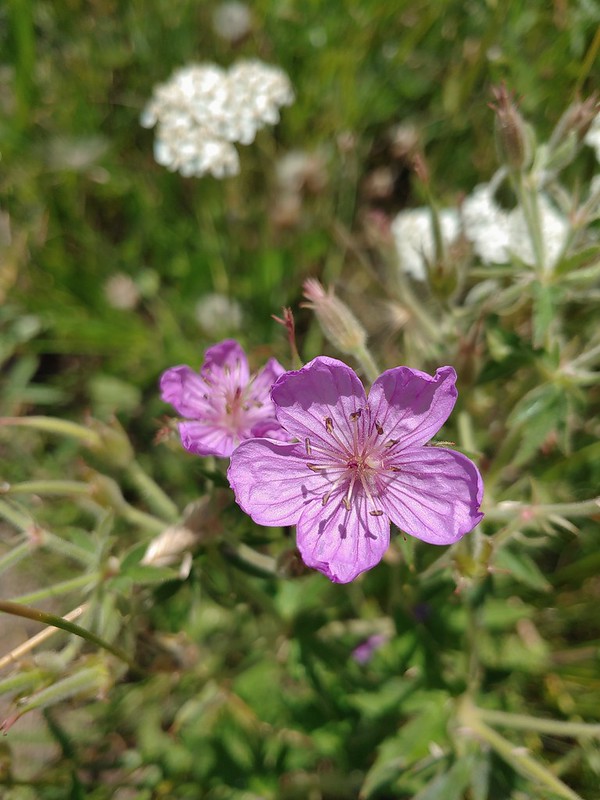 Sticky geranium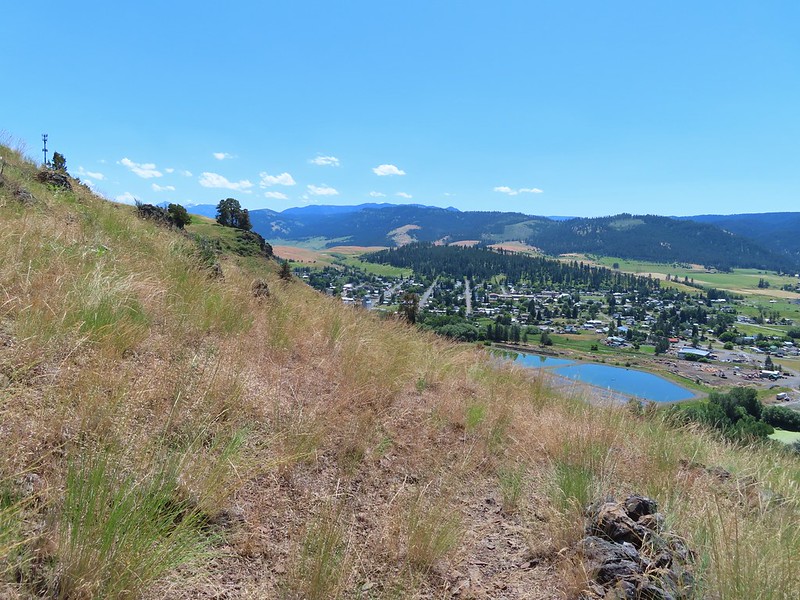
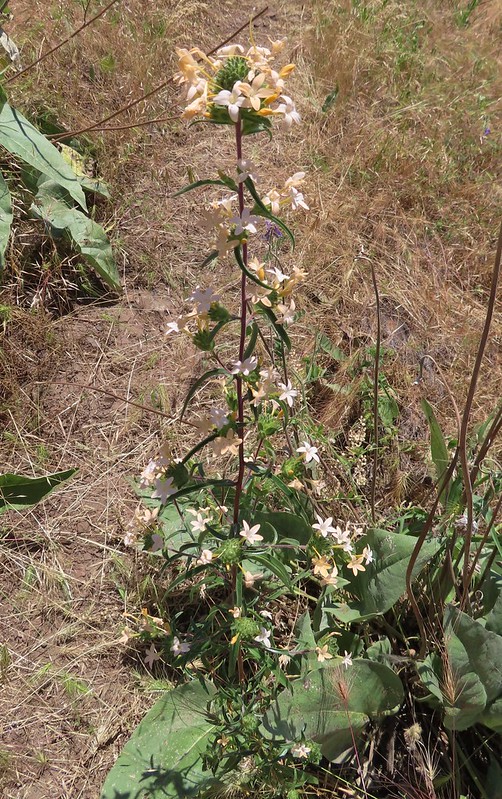 Grand collomia
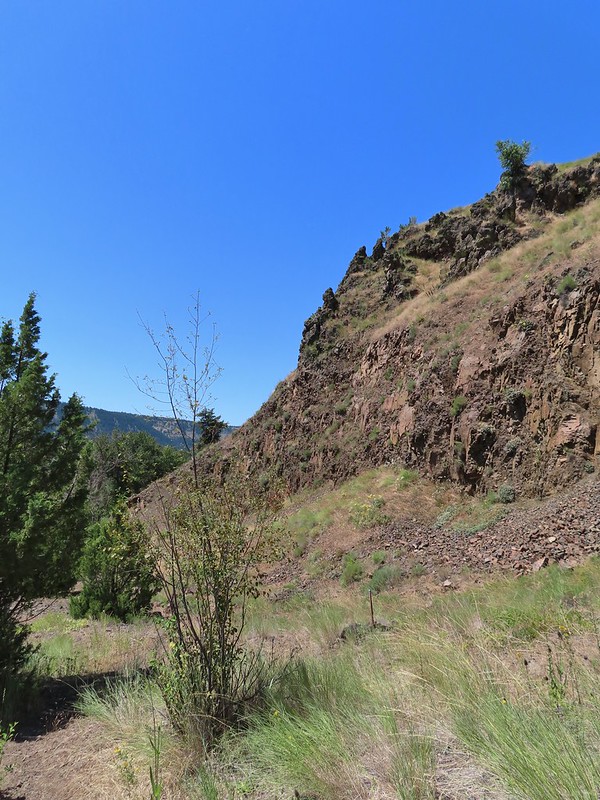
 Scarlet gilia
 The last line is great advice.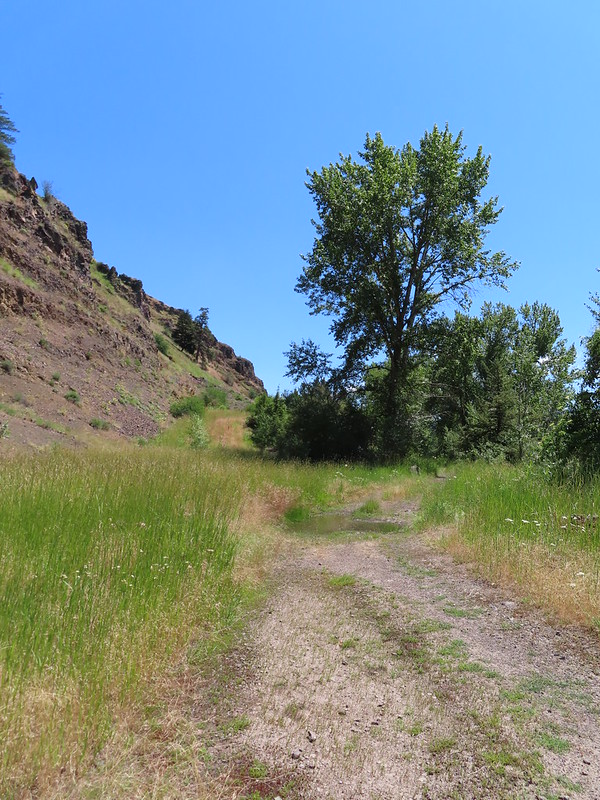
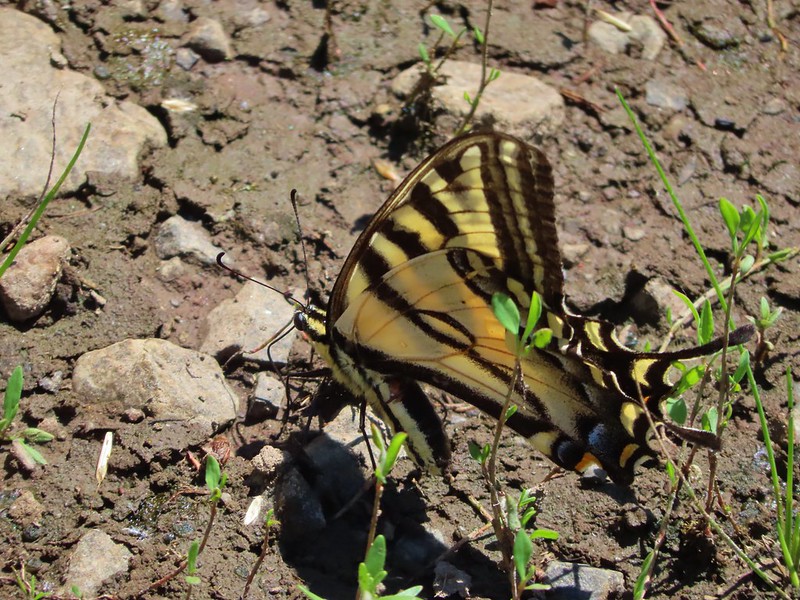 Swallowtail
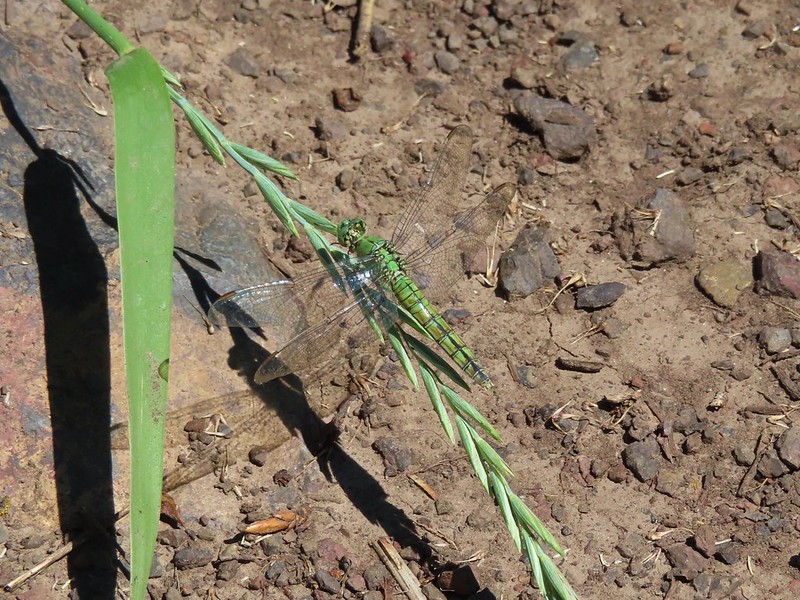 Dragon fly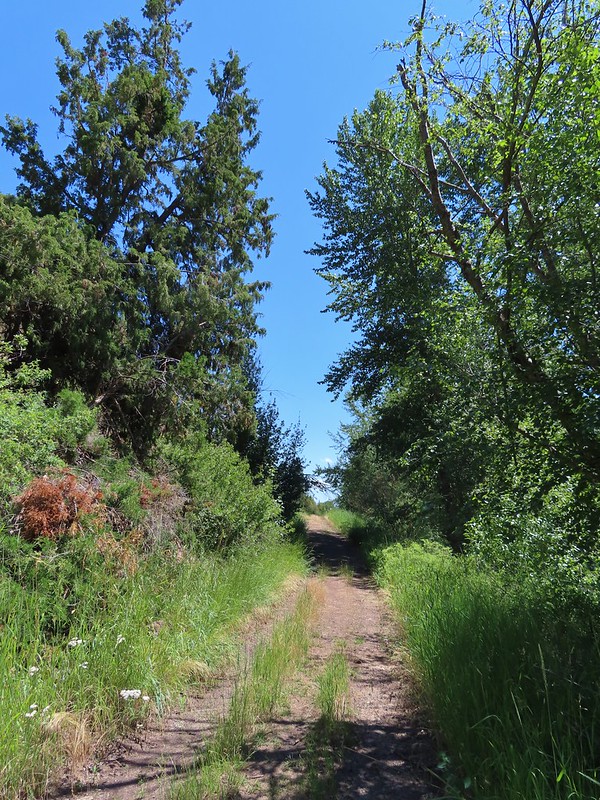
 Bachelor buttons
 Swallowtail on hyssop.
 Wallowa River
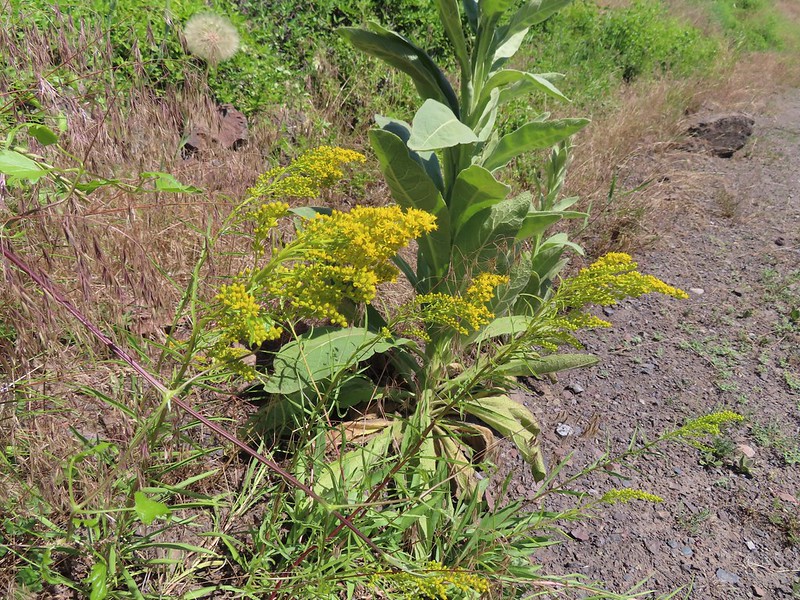 Goldenrod


 We parked about 200′ north of the actual trailhead per a suggestion by Sullivan in his guidebook.
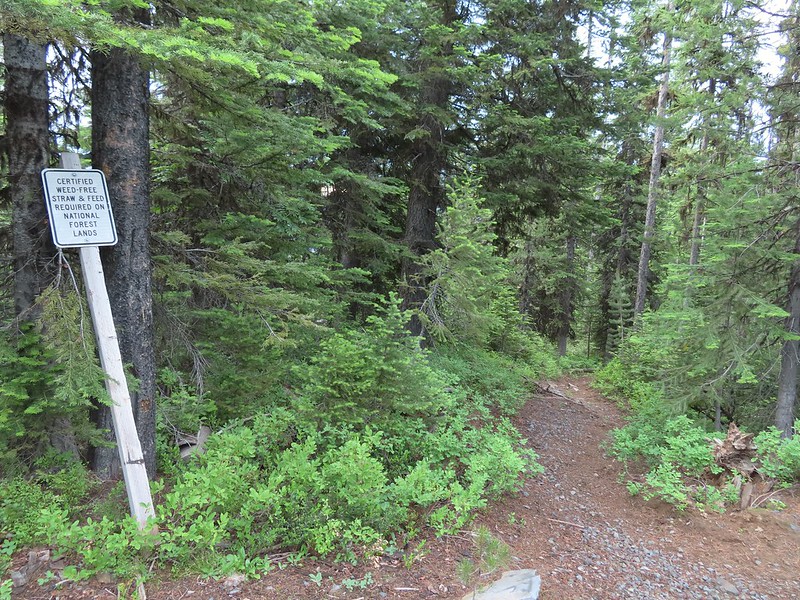 The Rock Springs Trail at FR 62.
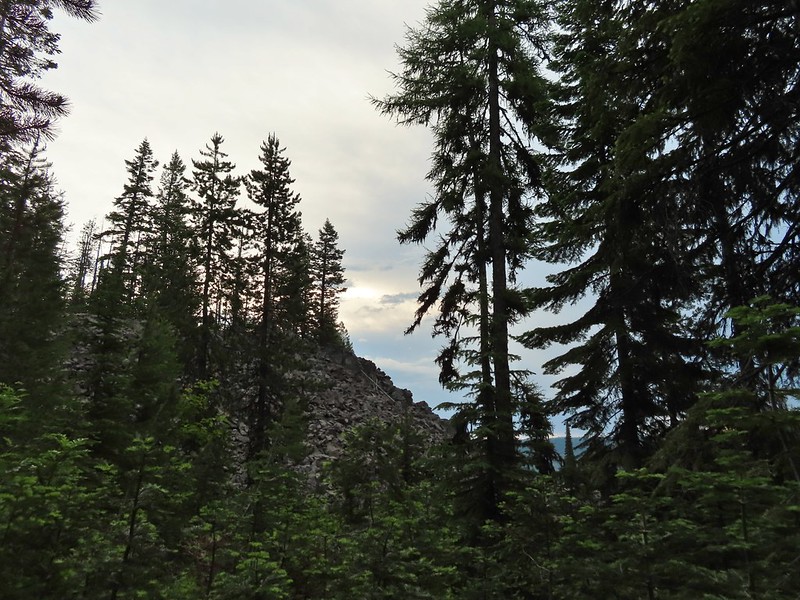 The trail passed a large rock field just below FR 62 and then entered the
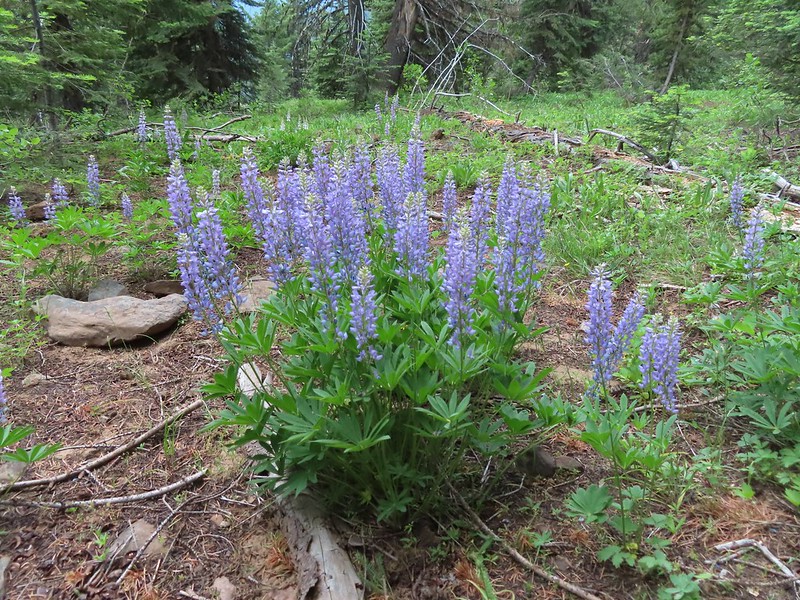 Lupine
 Coralroot

 The edge of the storm clouds.
 Scarlet gilia along the trail.
 Oregon sunshine and tapertip onion
 Nettle-leaf giant hyssop
 View from the trail before the first “viewpoint”.
 Oregon checker-mallow
 Assorted wildflowers
 Blue sky following the storm clouds.
 Scabland penstemon
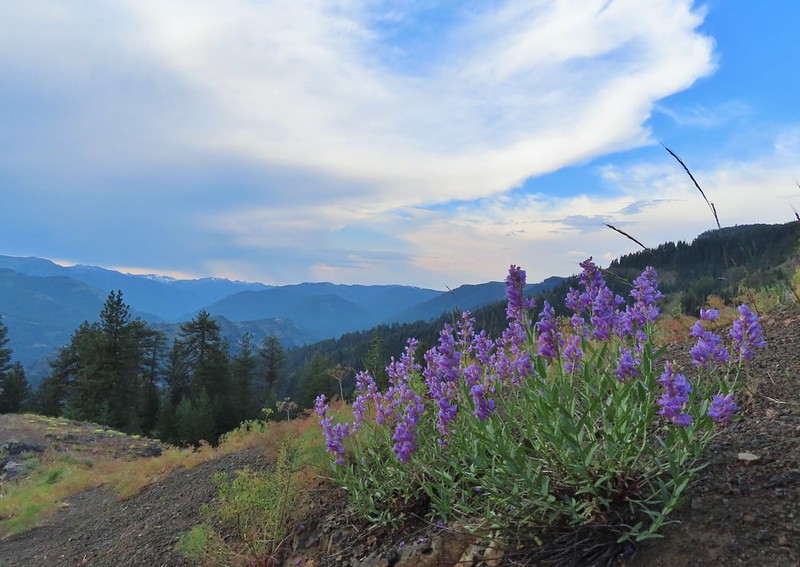 Penstemon near the first “viewpoint”.
 Yarrow
 Douglas dustymaiden
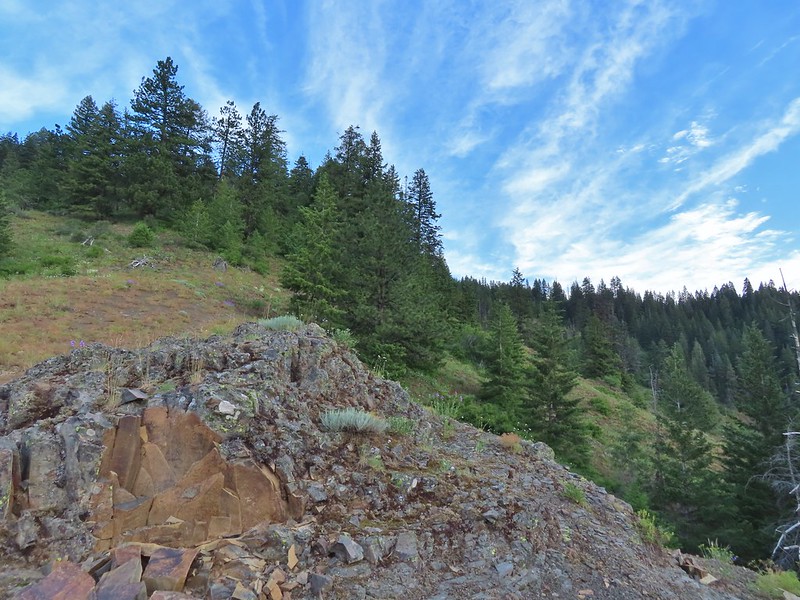 Looking back from the viewpoint.
 Buckwheat
 The Point Prominence Lookout atop the high point to the left.
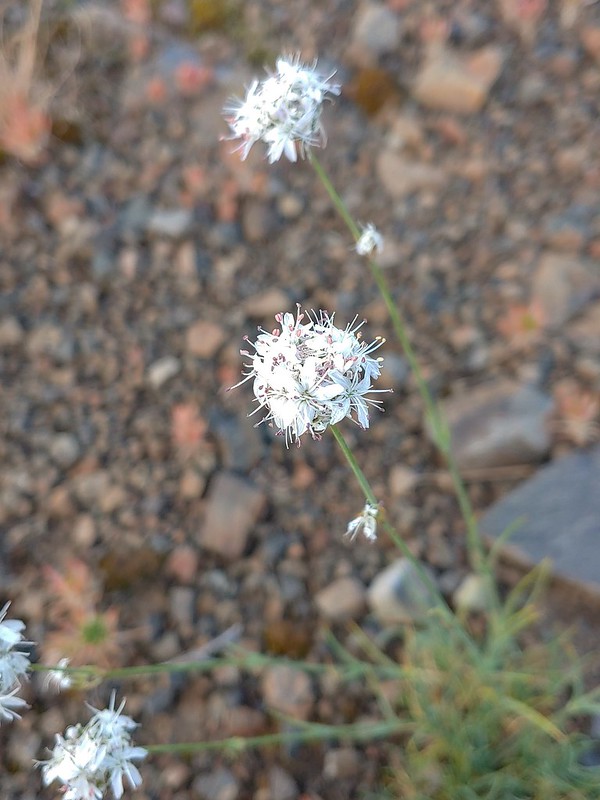 Ballhead sandwort
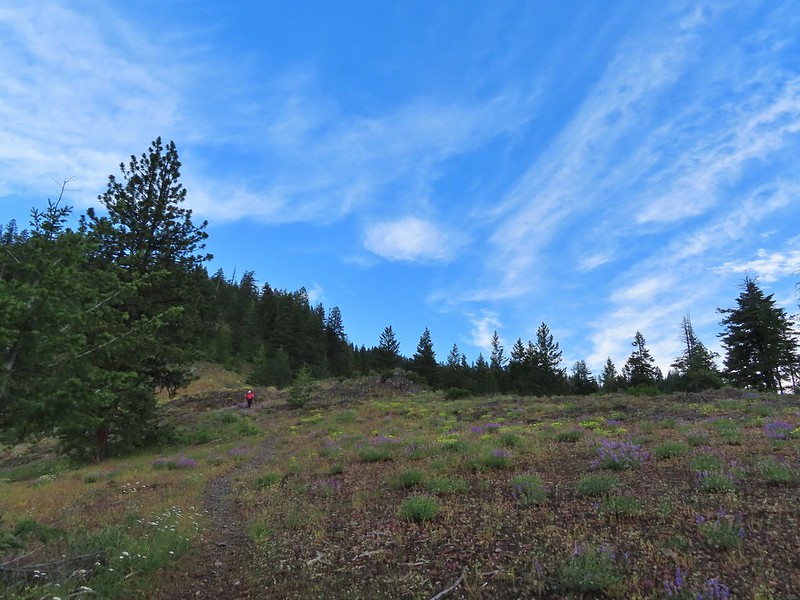 Heather coming down from the viewpoint.
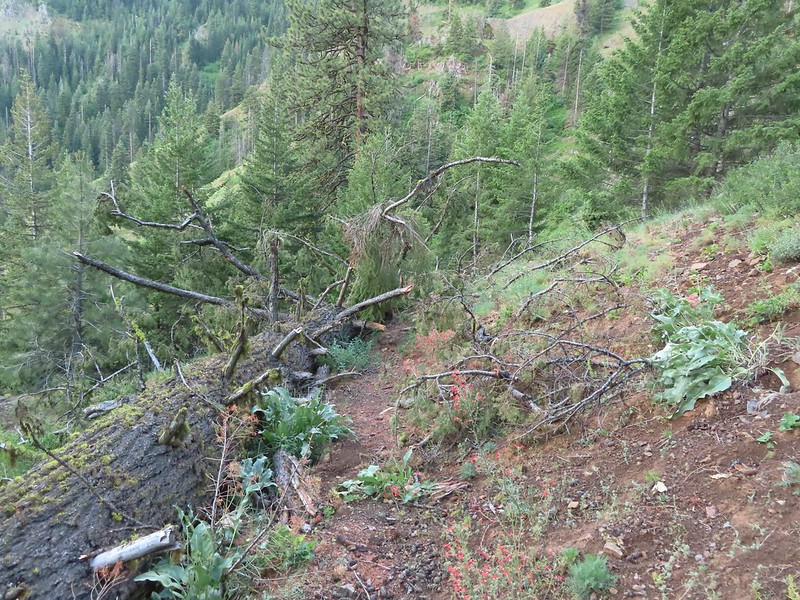 Blowdown over the trail.
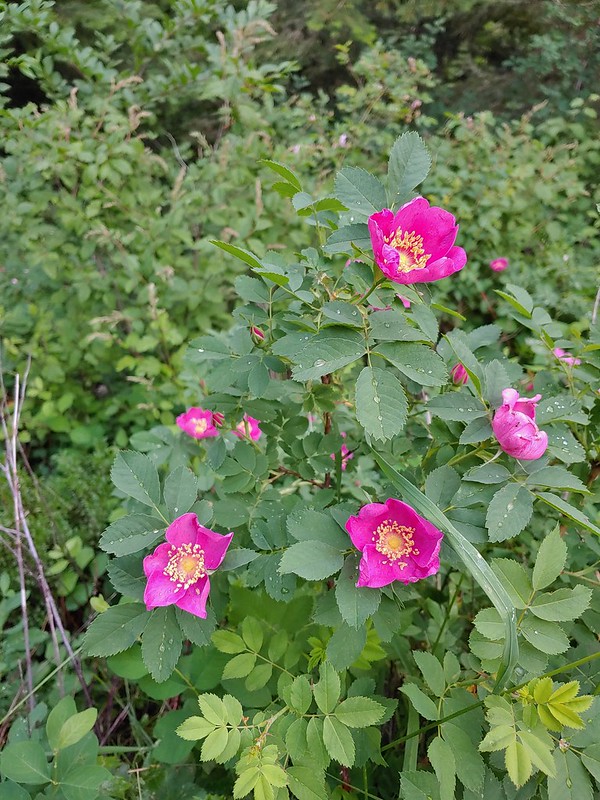 Nookta rose
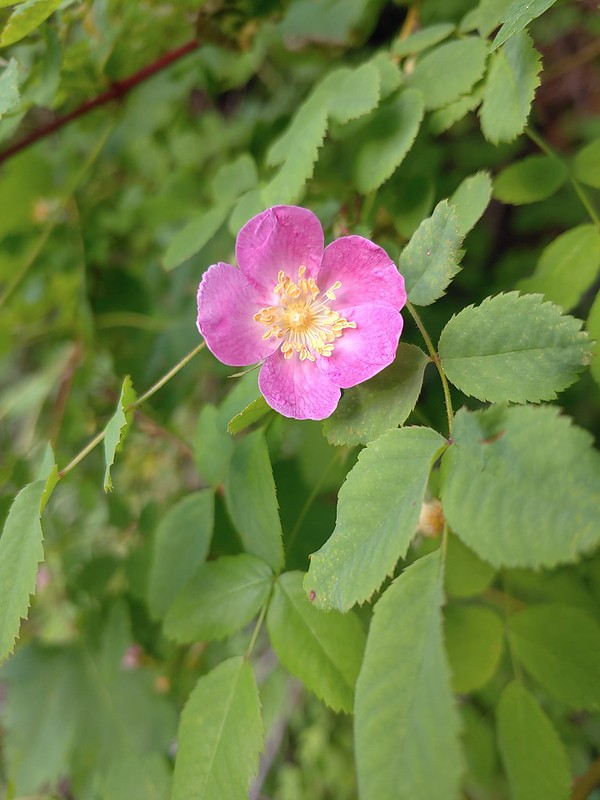 Wood rose
 View to the SE deeper into the Wallowas.
 Mountain parnassian?
 Back in the trees.
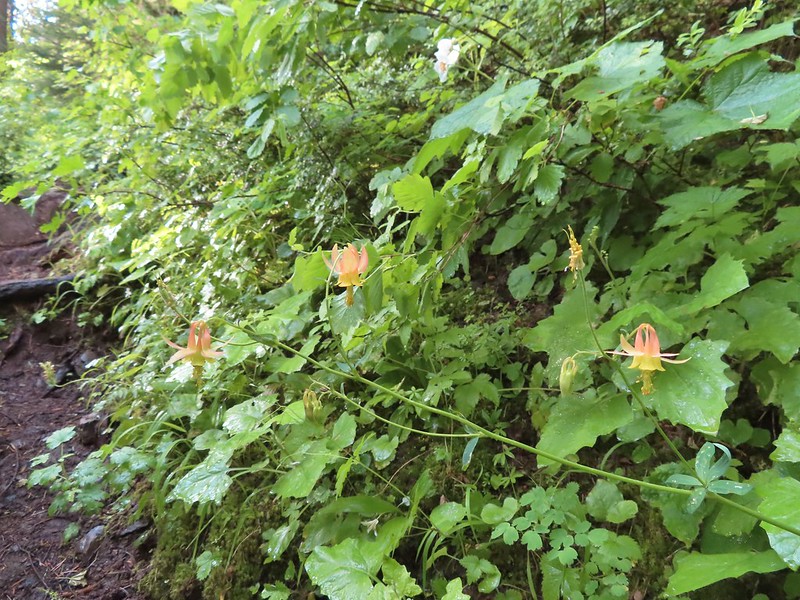 Some pale columbine. At first we thought it might be yellow columbine but it definitely had a red tint.
 Thimbleberry crowding the trail. The storm had left a lot of water on the vegetation which in turn wound up on our legs and shoes.
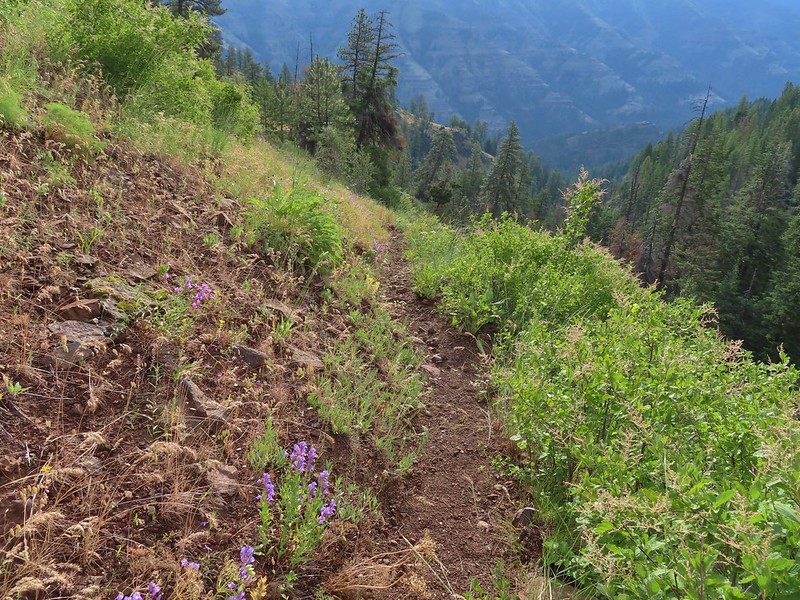 Heading down into the valley.
 Elkhorn clarkia
 Approaching the second viewpoint.
 Backbone Ridge which separates the Minam and Little Minam Rivers. We had crossed over that ridge further south on Tuesday when we took the Horse Ranch Trail from Moss Springs to the Minam River (post).
 Grand collomia
 Prairie smoke
 Mock orange along the trail.
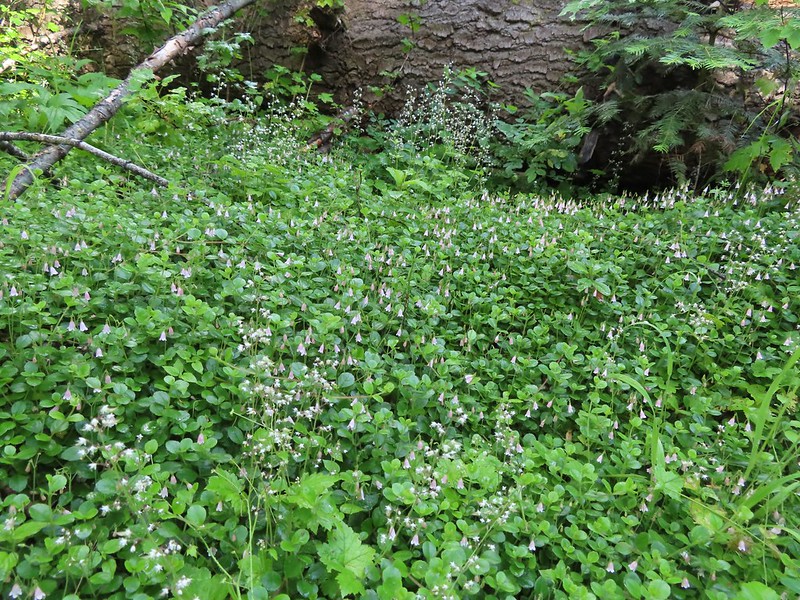 Twin flower and foam flower
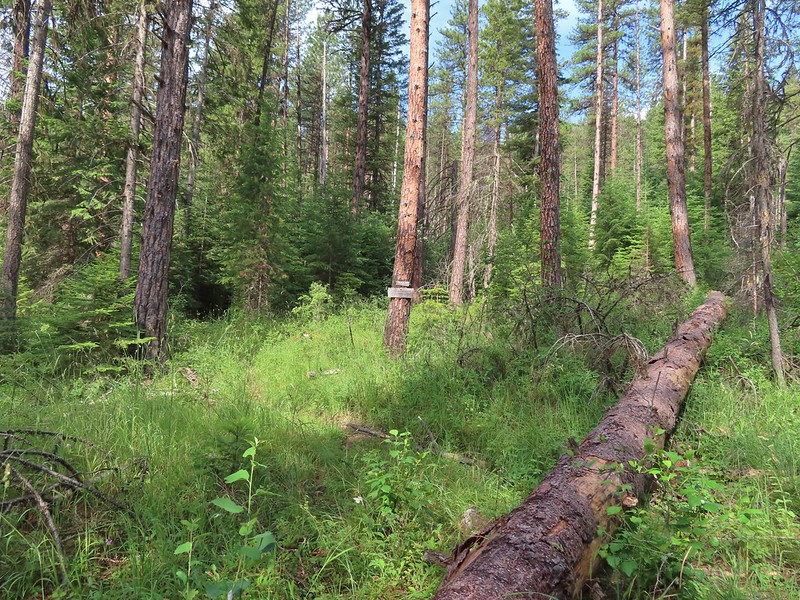 Sign marking the junction of the Rock Springs and Little Minam Trails.
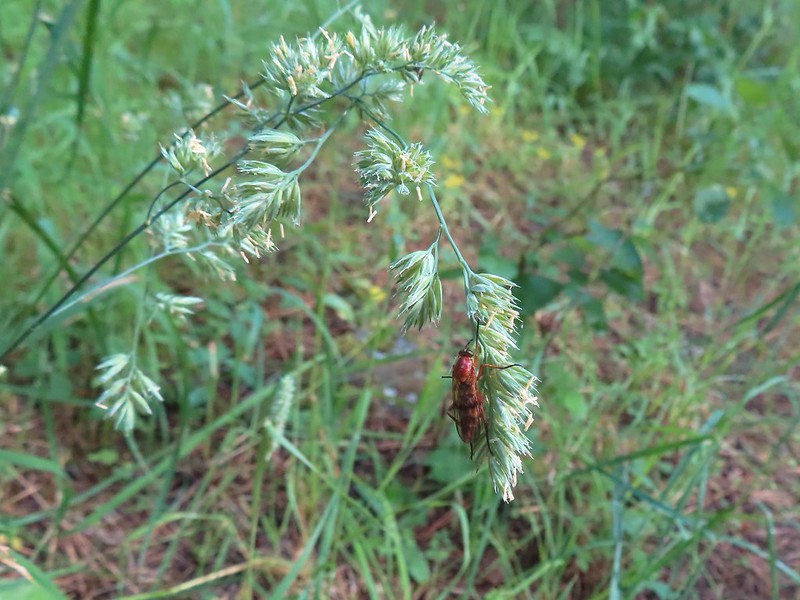 Possibly a wasp of some sort near the junction.
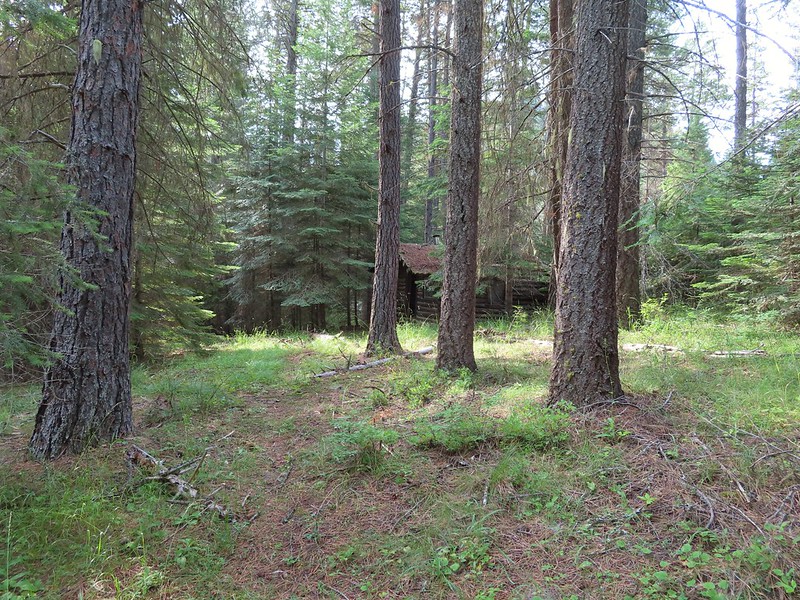 The first cabin ruin.
 Almost looks okay from this angle.
 Not so good from this angle.
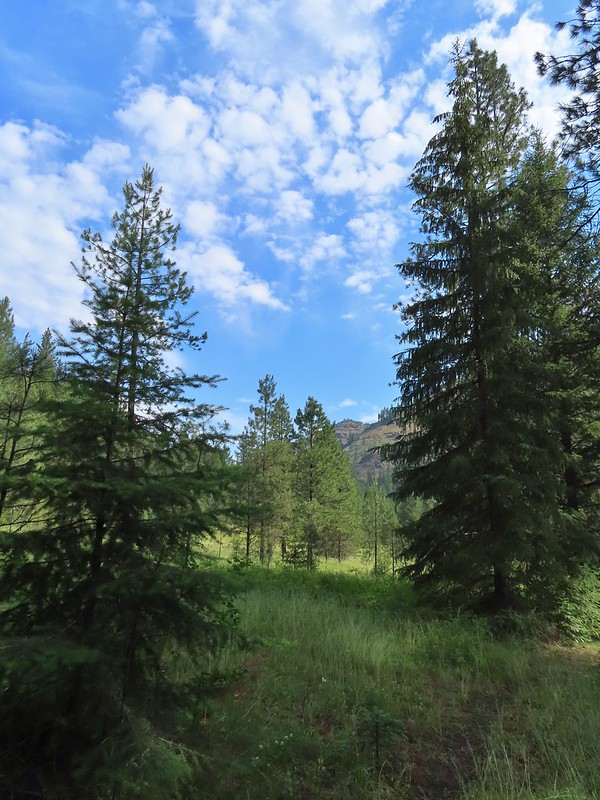 The lodge was at the edge of this meadow.
 The lodge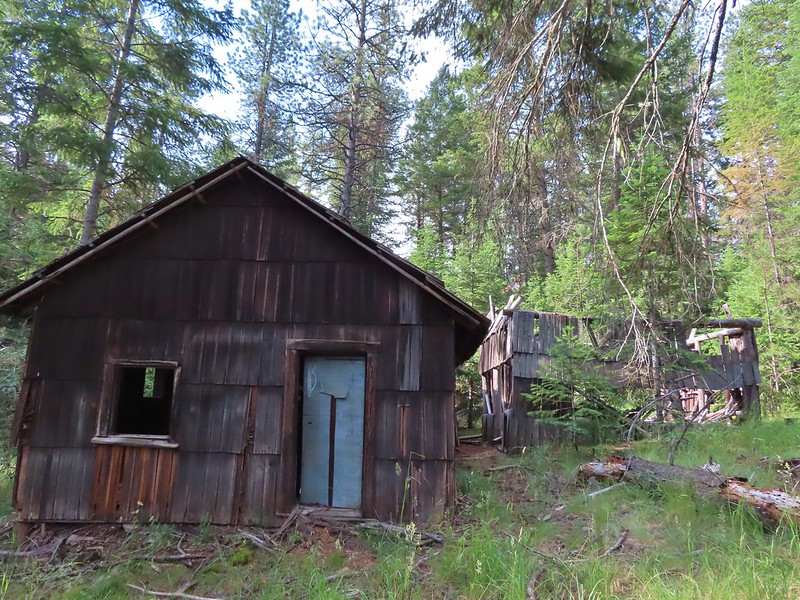
 The fireplace seems to have held up well.
 This cabin didn’t hold up.

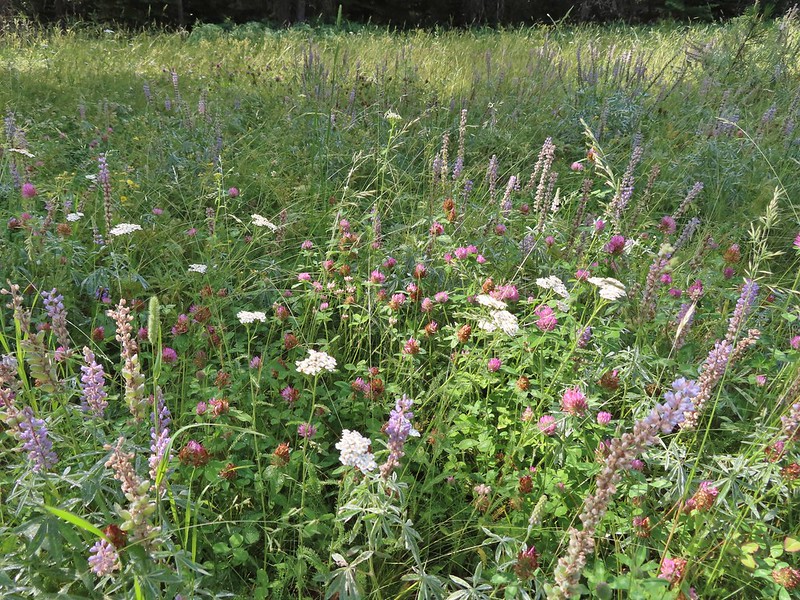 Wildflowers near the watering hole.
 The Little Minam River. We couldn’t quite see the confluence of the two rivers from here despite being very close.


 The dangerous ford.
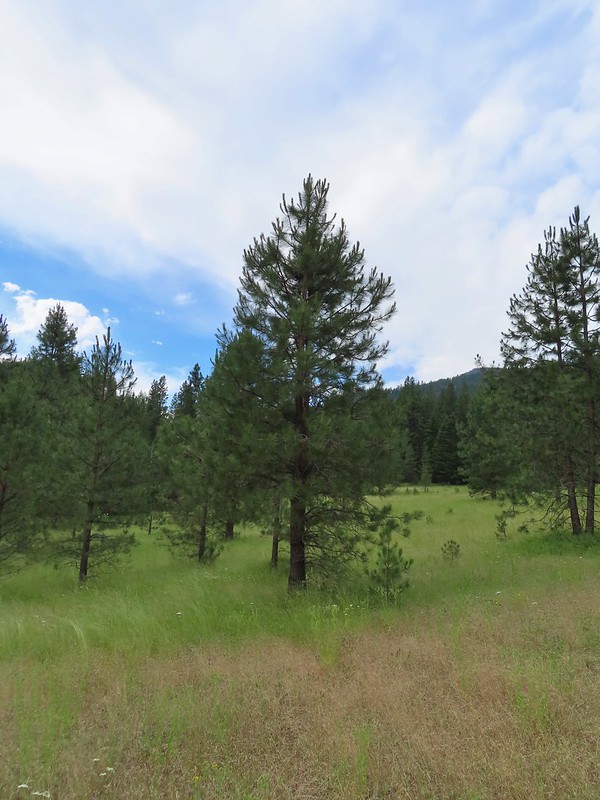 Here we tried looking for horse hoof prints to stick to the trail.
 Butterfly on yarrow.
 We think this was the trail.
 The campsites where we picked up the Rock Springs Trail again.
 Lorquin’s admiral
 Looking across the gully we could see the trail cut climbing up the far hillside.
 Pincushion plant
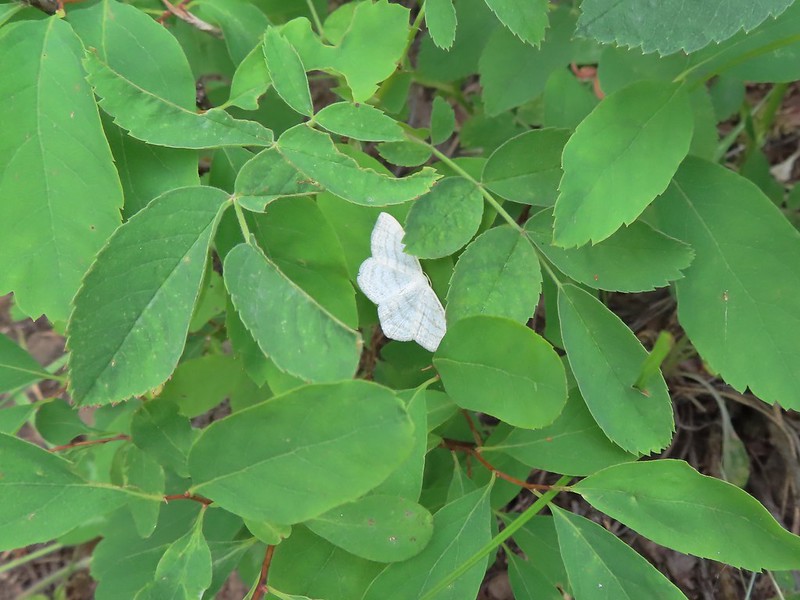 Resting moth
 A plane taking off from Minam Lodge.
 A popular thistle.
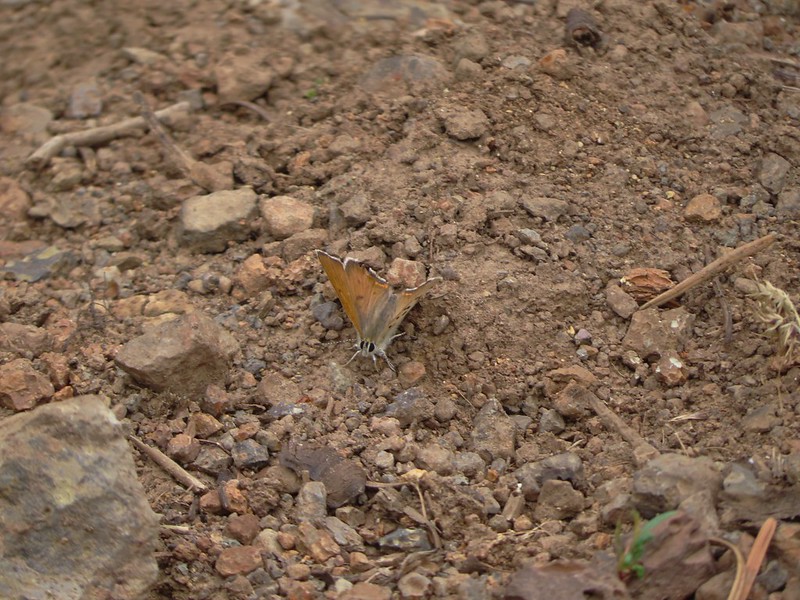 A skipper of some sort.
 We both missed this yellow columbine on the way down.
 View from the upper viewpoint on the way back up.
 A final view from the Rock Springs Trail.
 The cloud cover that moved in turned out to be a blessing as it kept the temperature reasonable as we made the long climb back up.
 wanderingyuncks