Categories
Badger Creek Area Hiking Oregon Trip report

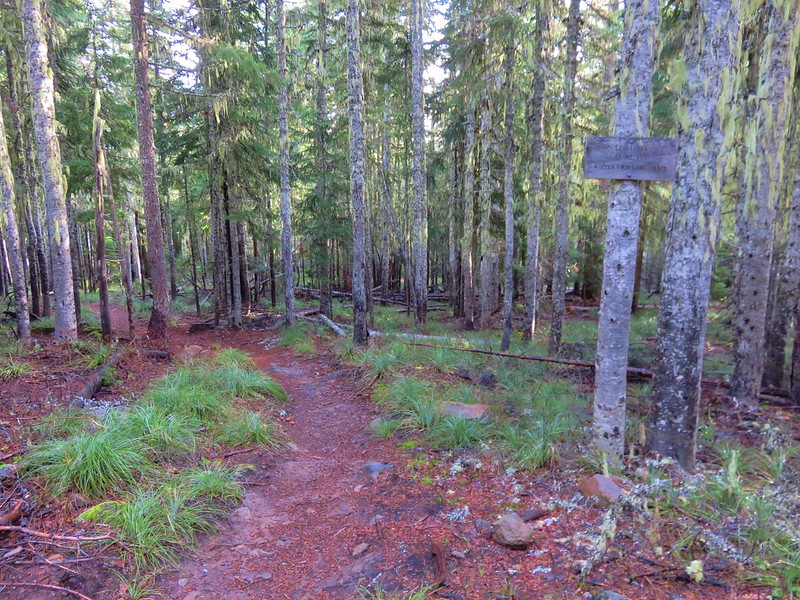
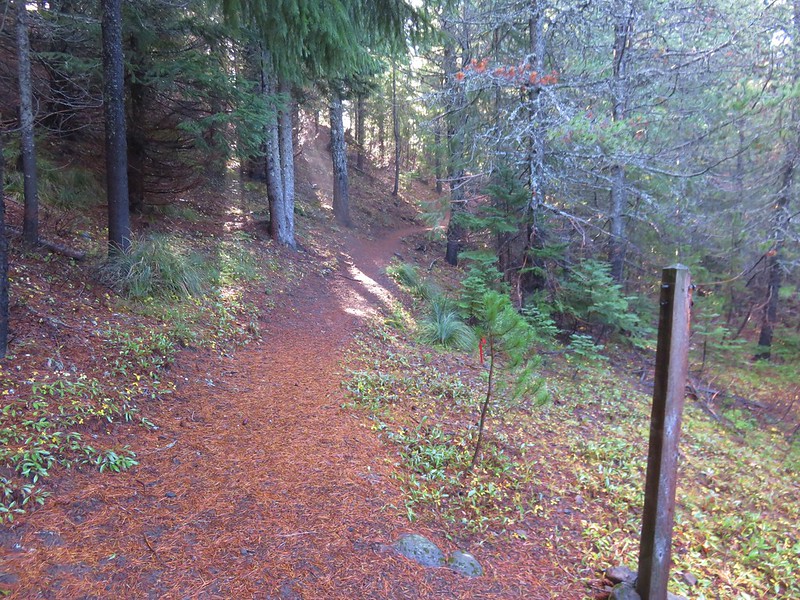
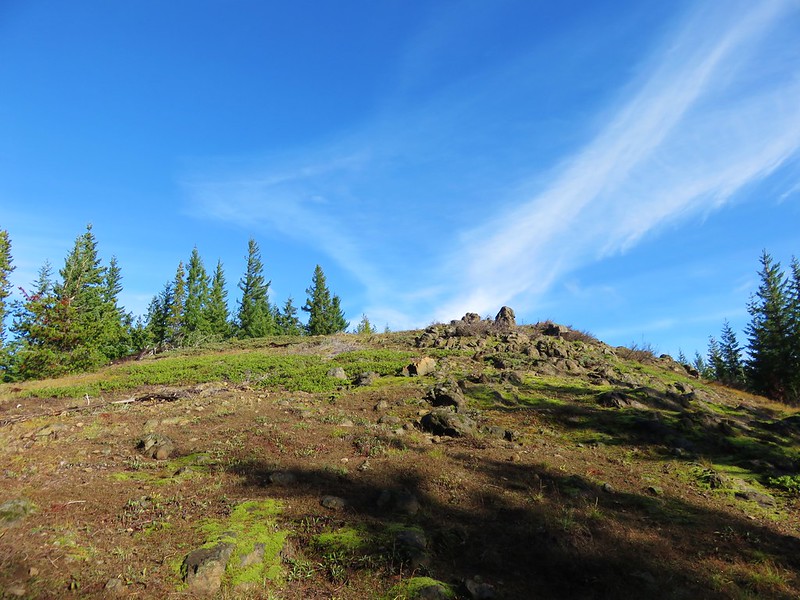
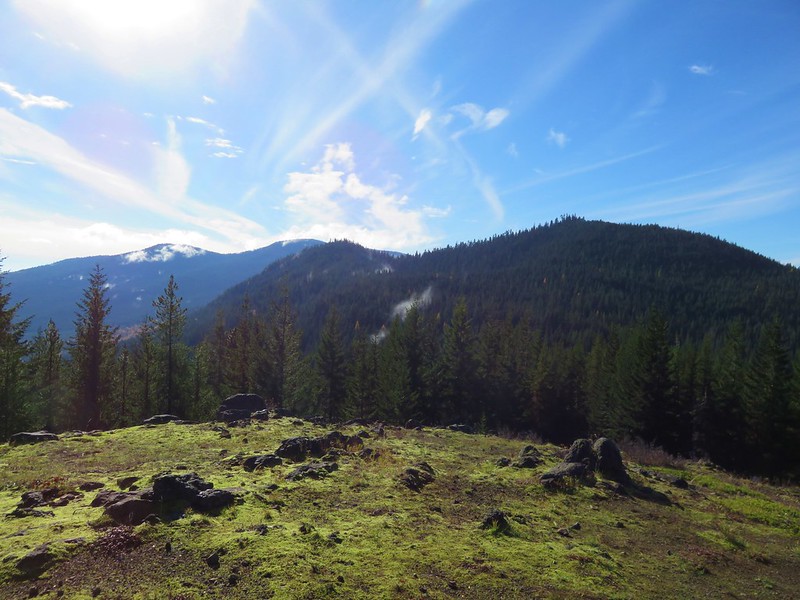
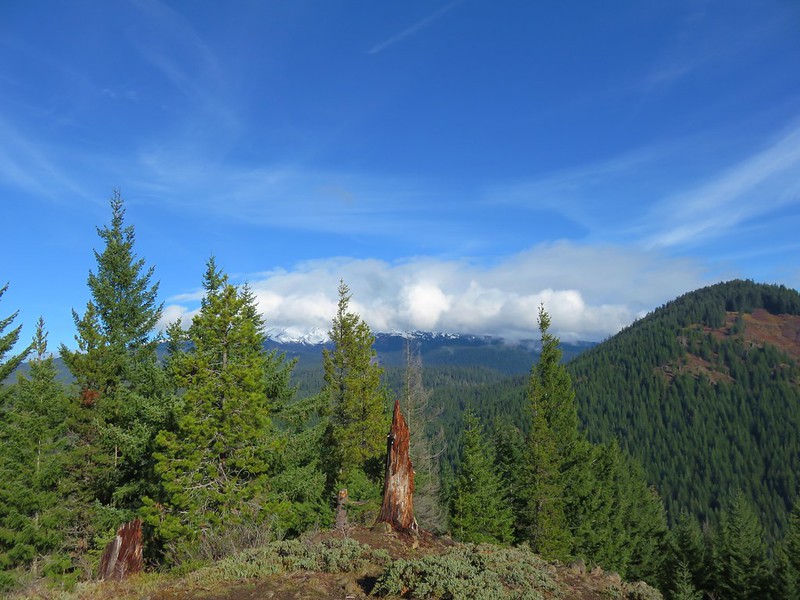
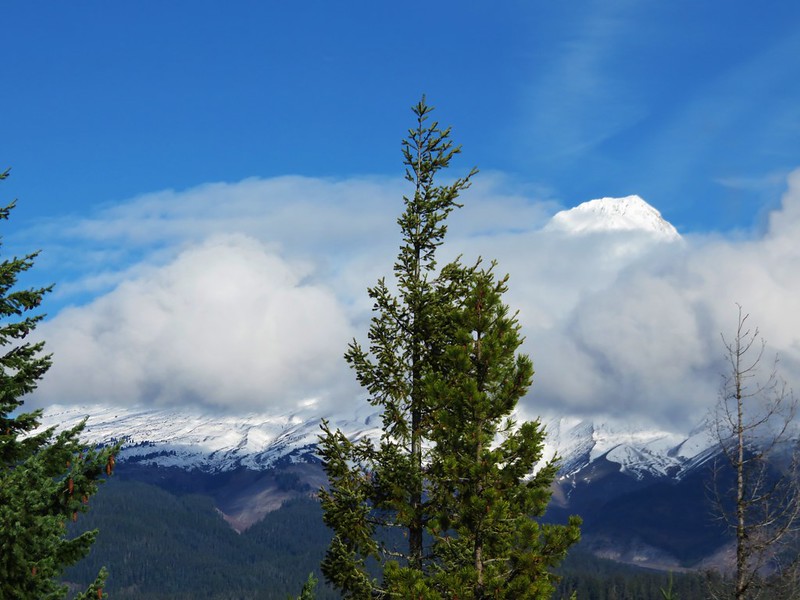
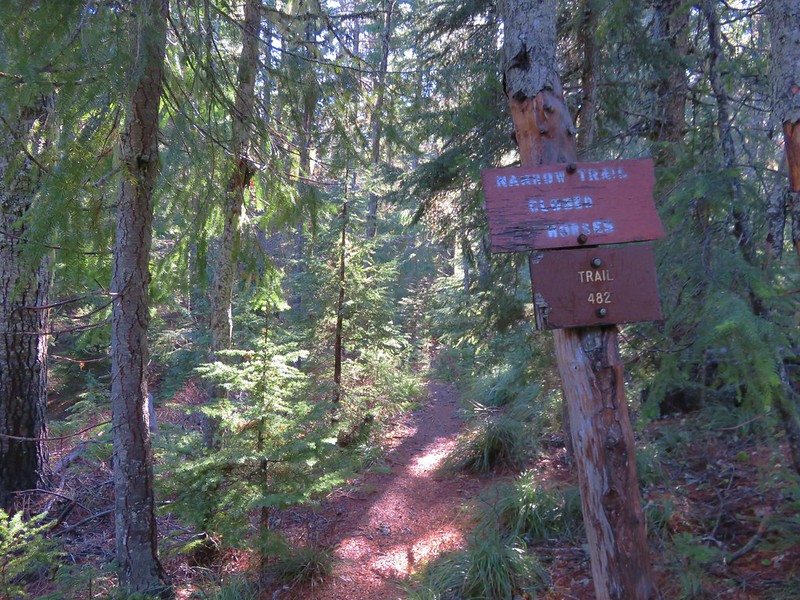
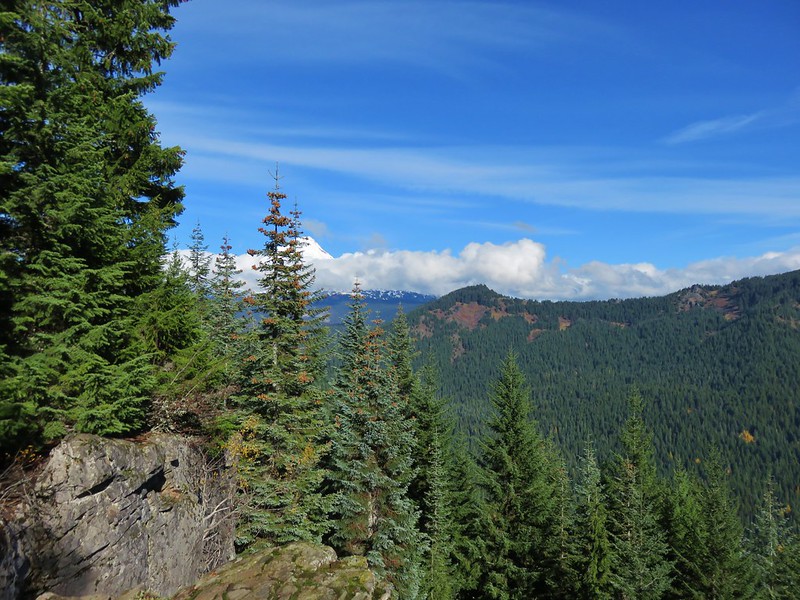
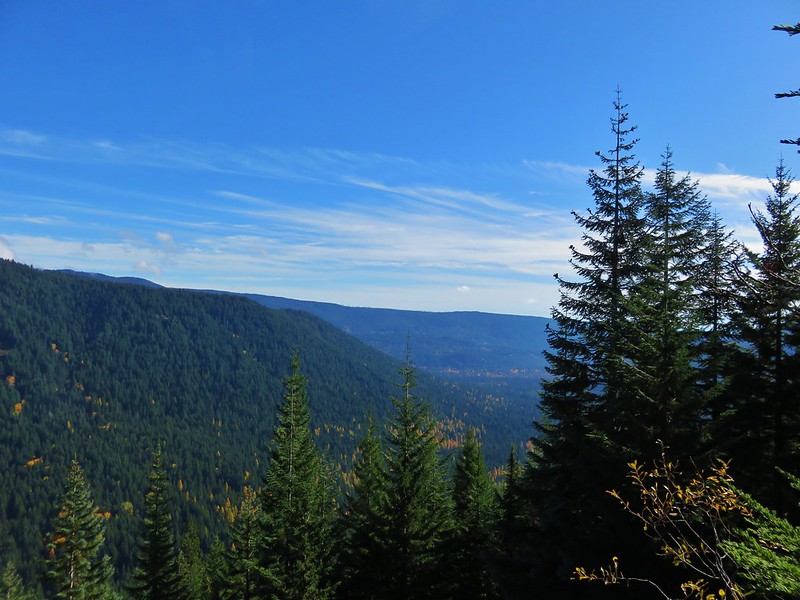
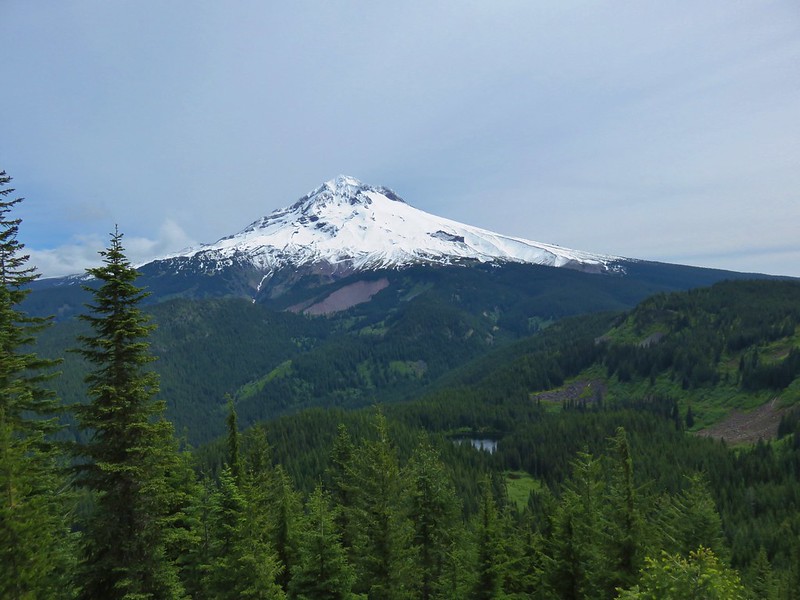
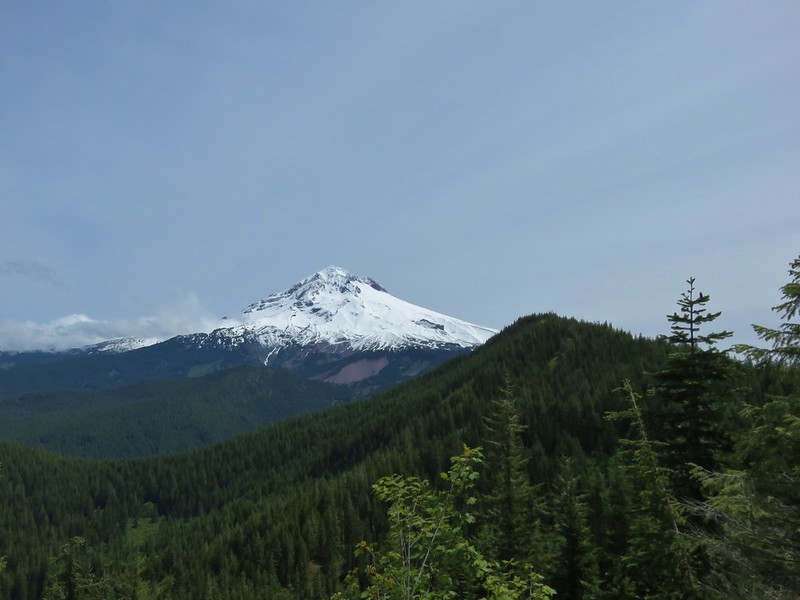
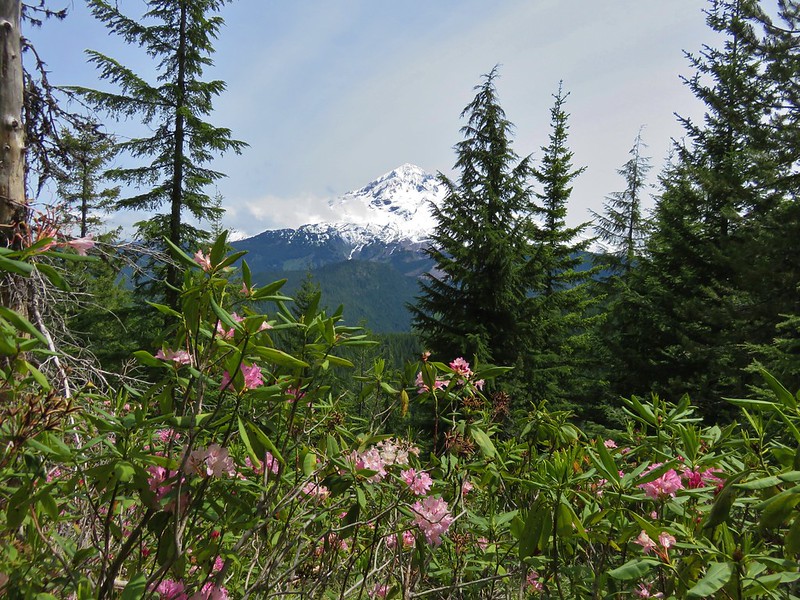
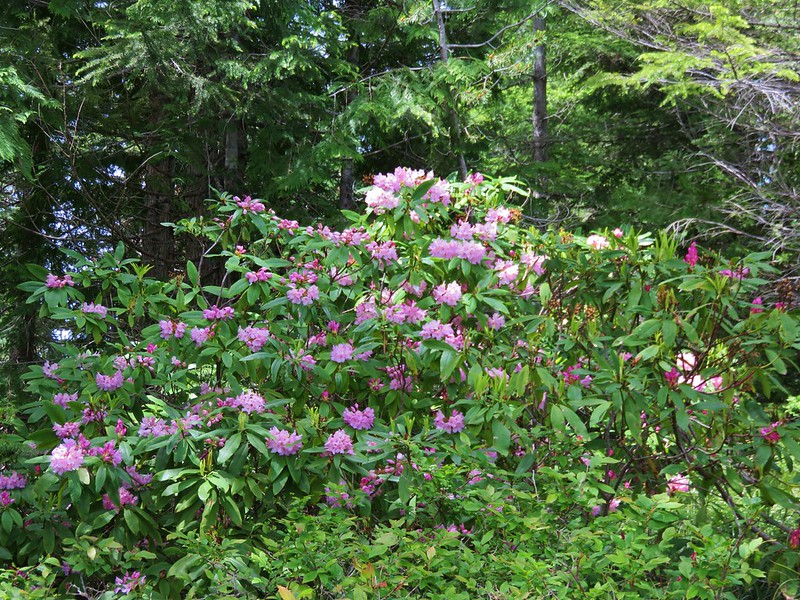
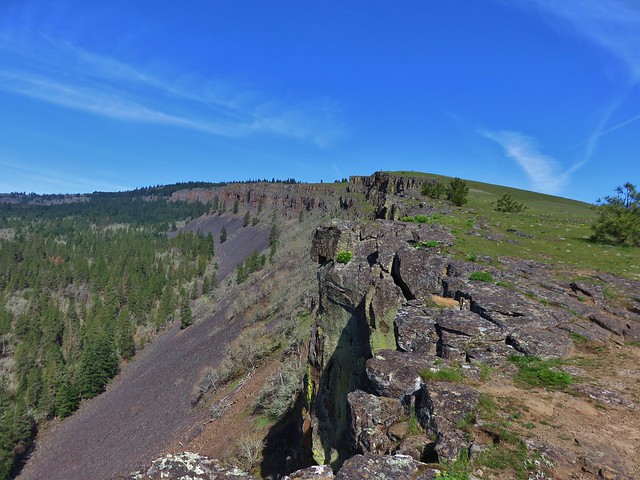
Bald Butte

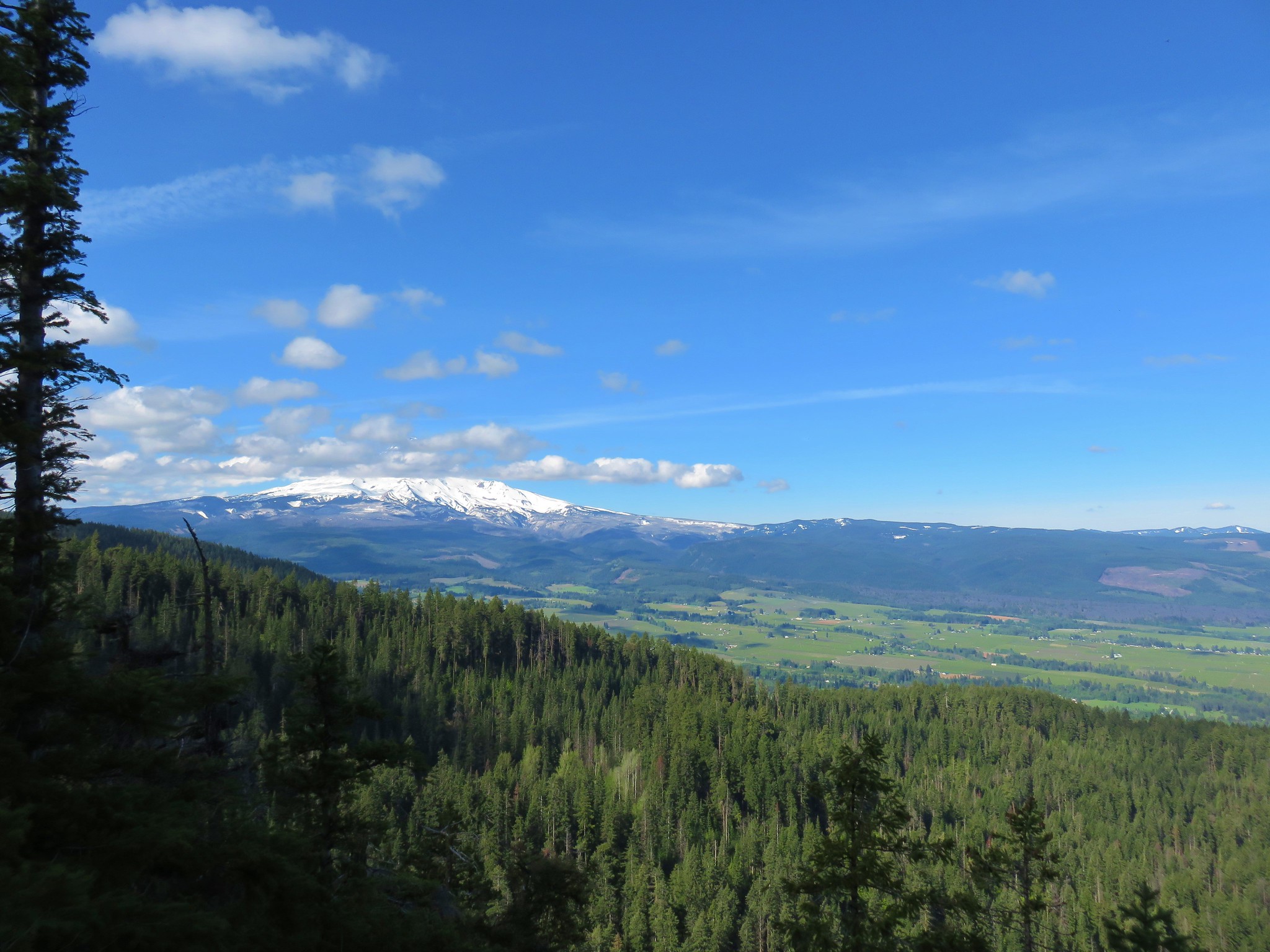
I’ve already done a lot of shuffling on our hiking schedule this year due to the high amount of snow that fell over the winter/early spring that doesn’t seem to be in any hurry to melt off. We are currently in the midst of some 90+ degree days so that should help but for our latest outing the original plan to visit Lost Lake had been scrapped over a month ago and we were off to the replacement hike – Bald Butte.

Interestingly this hike was less than 15 miles (as the crow flies) from Lost Lake with the high point on Bald Butte coming in at 3770′ while the lake sits a little under 3200′. Location, location, location. In any event the snow coverage maps showed plenty of snow around the lake and none on the butte the day before our visit.

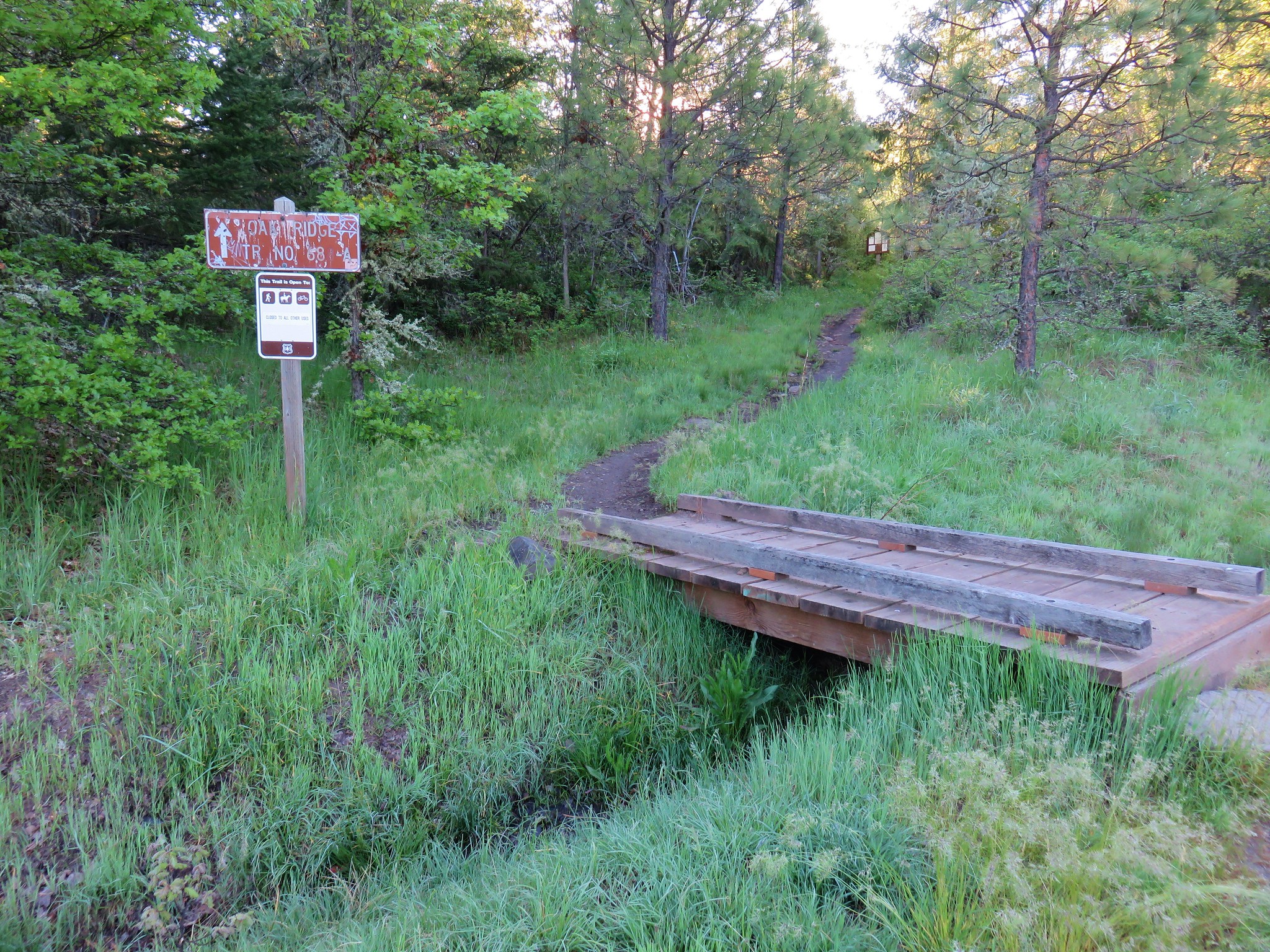
We began our hike at the Oak Ridge Trailhead. To reach the trailhead turn west on Smullen Road off of Highway 35 approximately 14.4 miles south of Hood River, OR. At a sharp right turn take a left off of Smullen Road onto a short dirt road to the parking area. The trail starts on the far side a small footbridge.
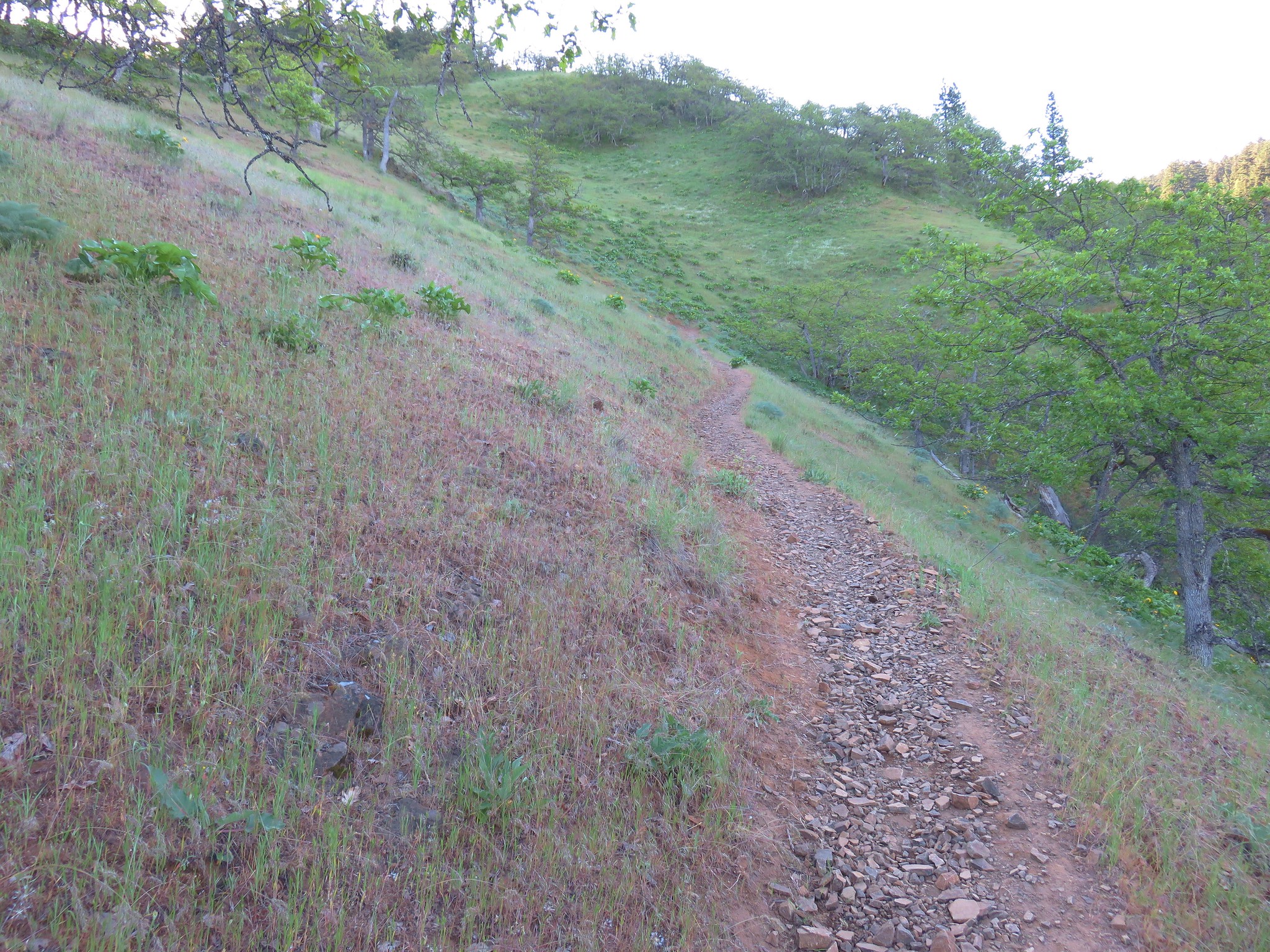
Oak Ridge Trail

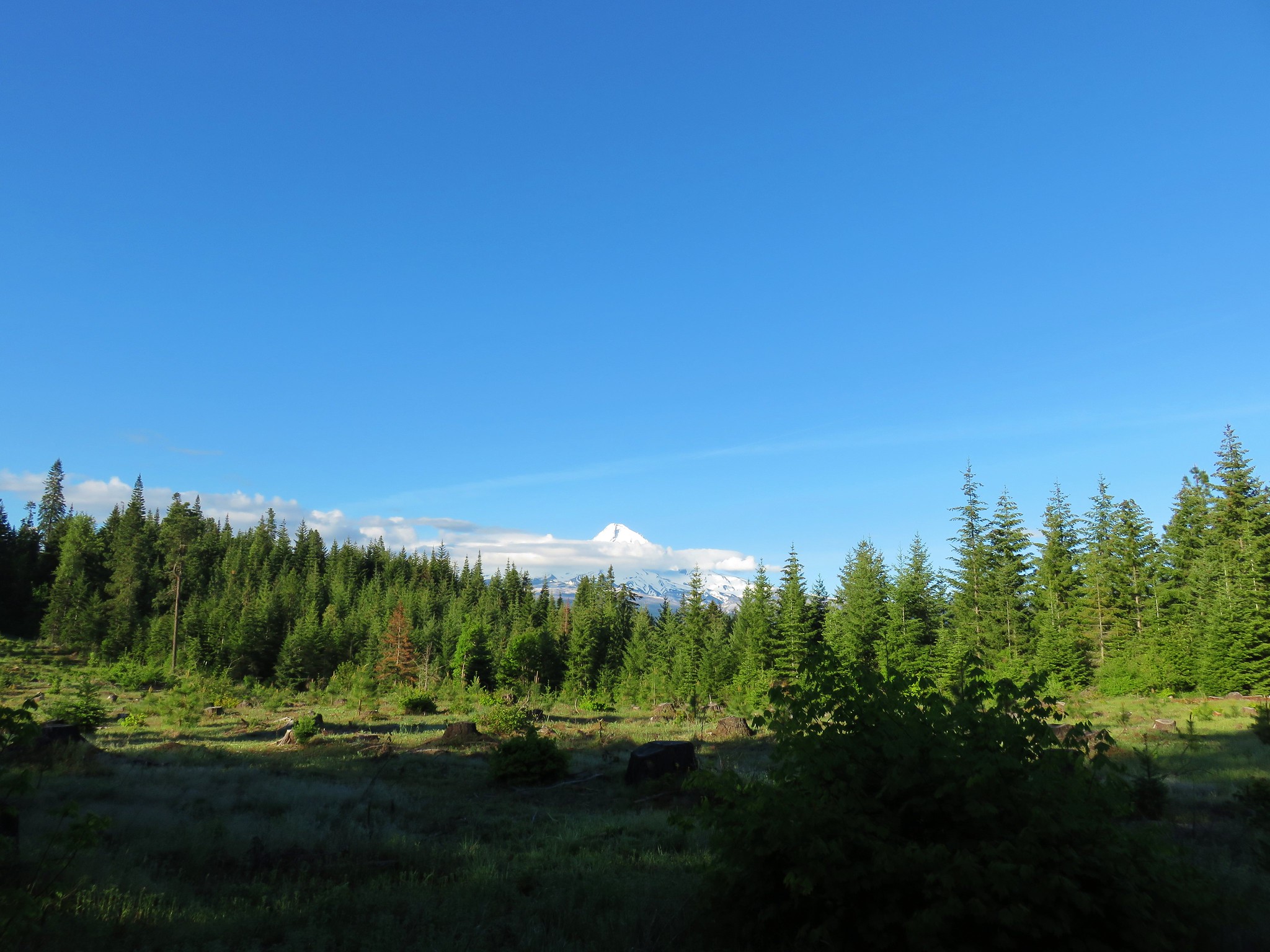
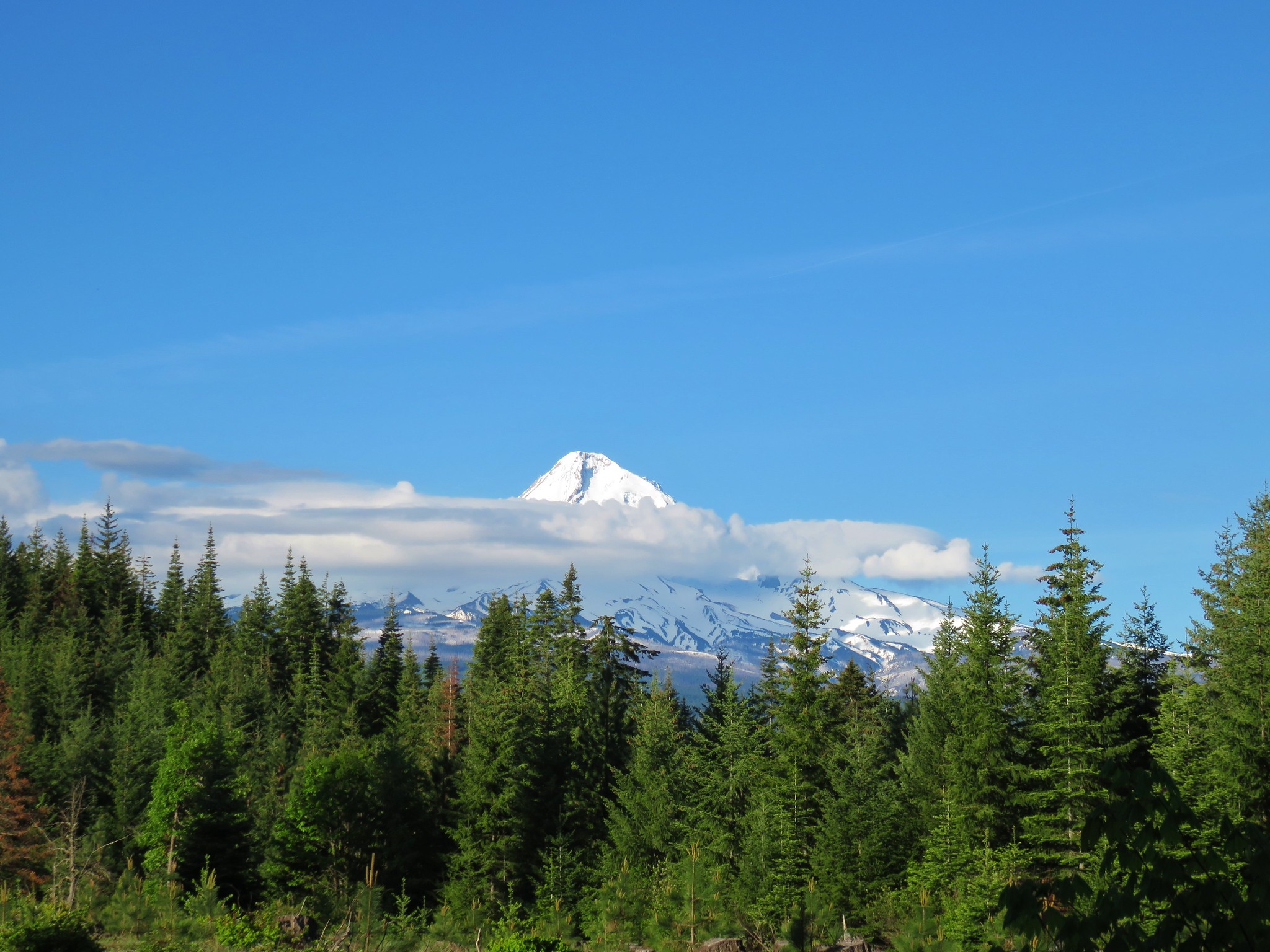
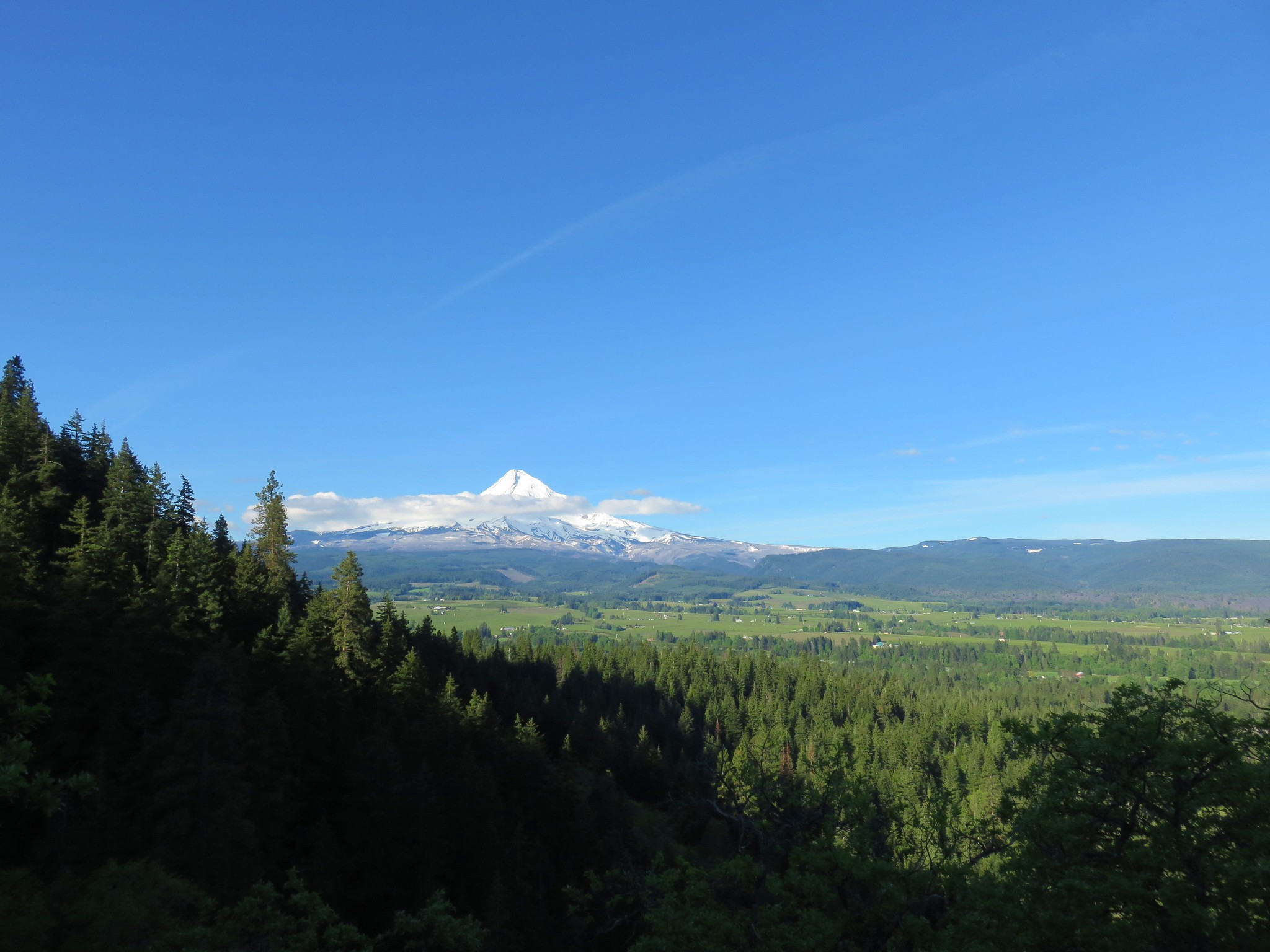
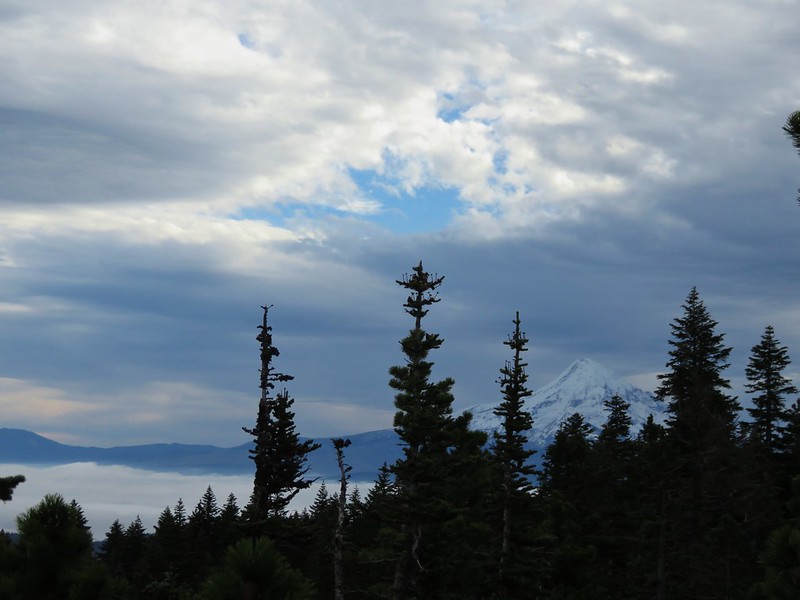
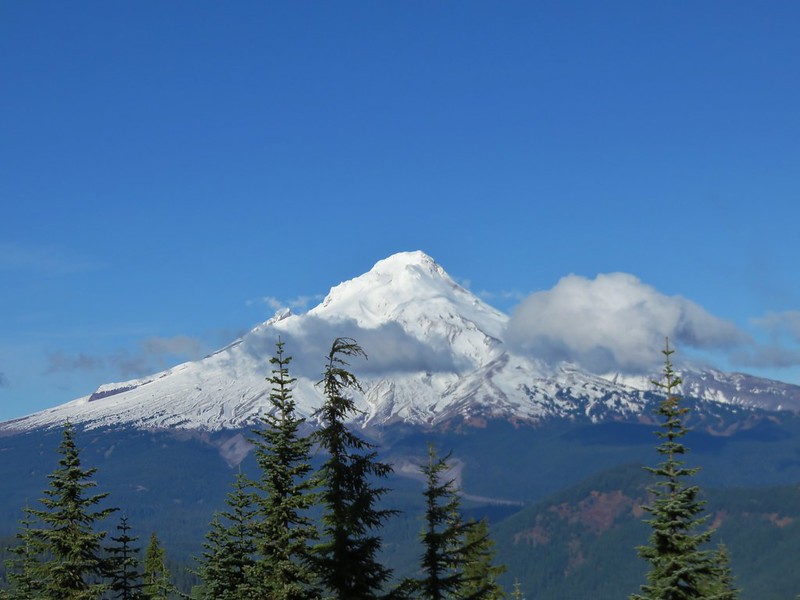
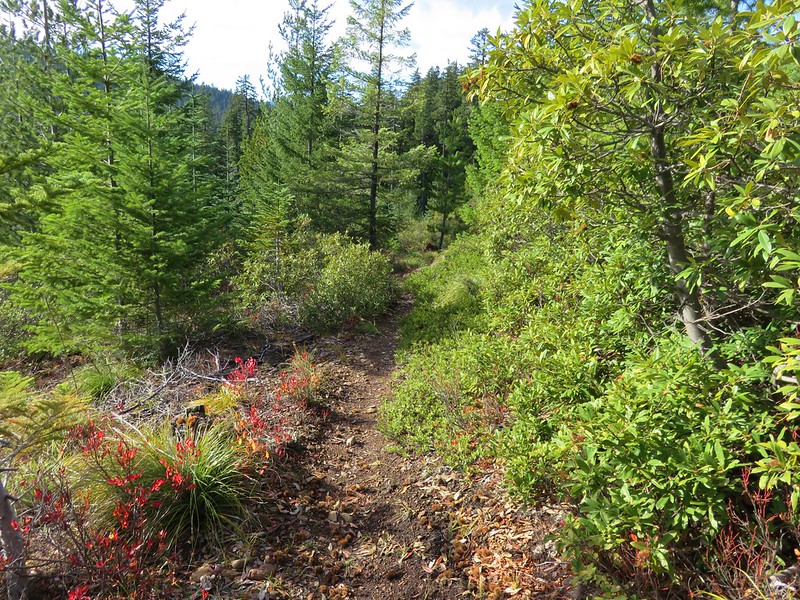
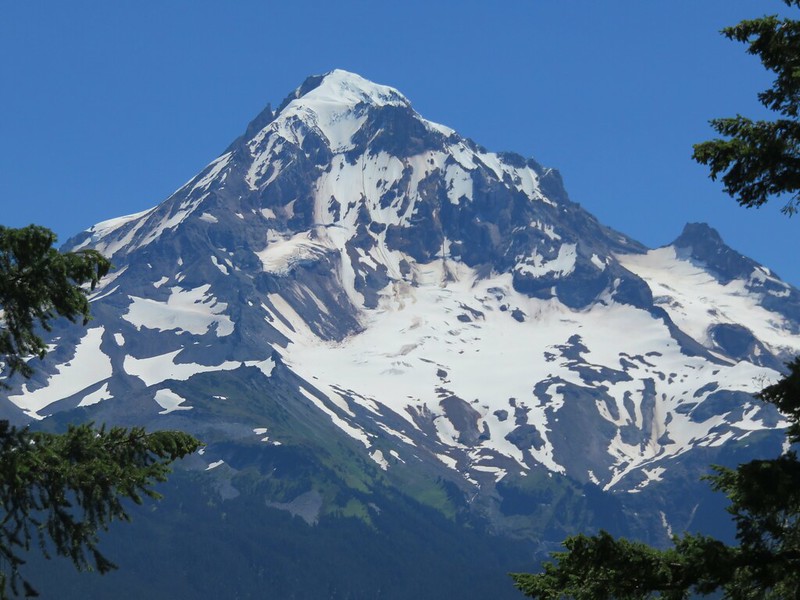
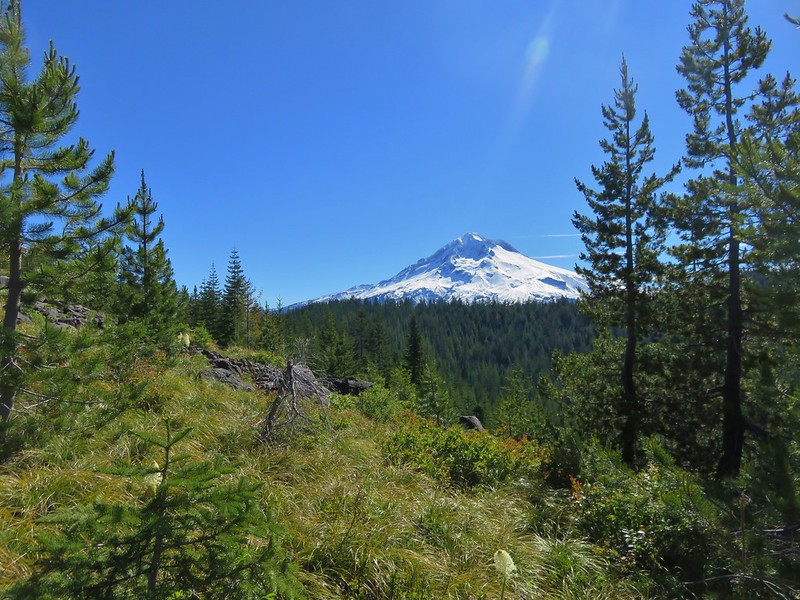
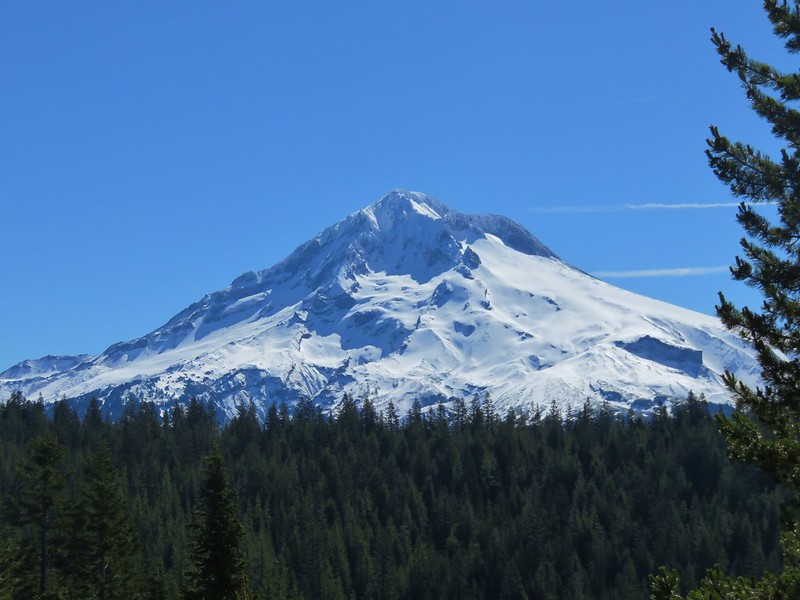
The Oakridge Trail is 2.4 miles long and gains almost 2000′ as it climbs from the trailhead to the Surveyor’s Ridge Trail which runs north/south for 16.4 miles. The trail was fairly level at first passing through an old clearcut with a view of Mt. Hood.
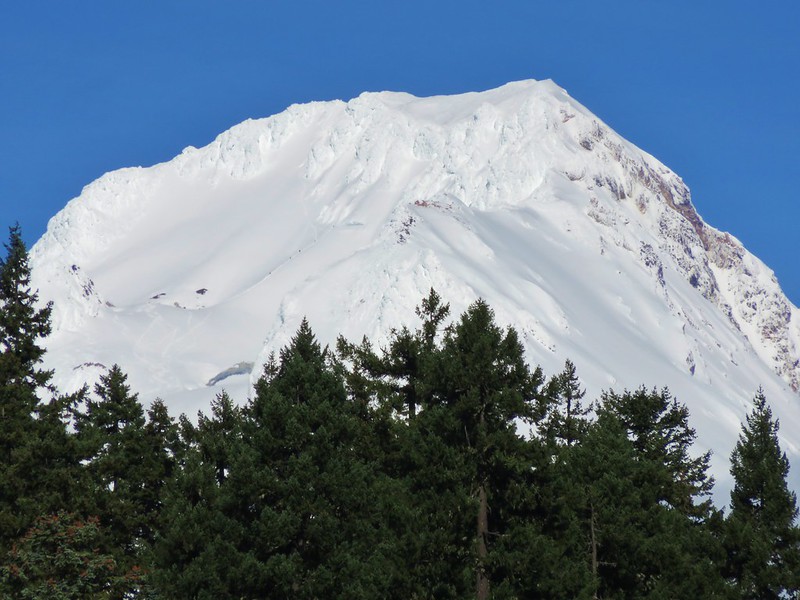
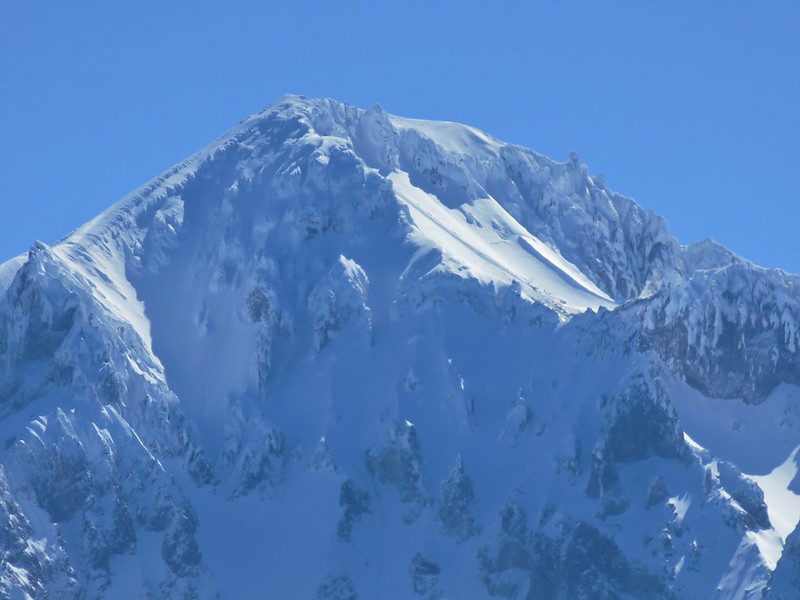
Mt. Hood

Mt. Hood

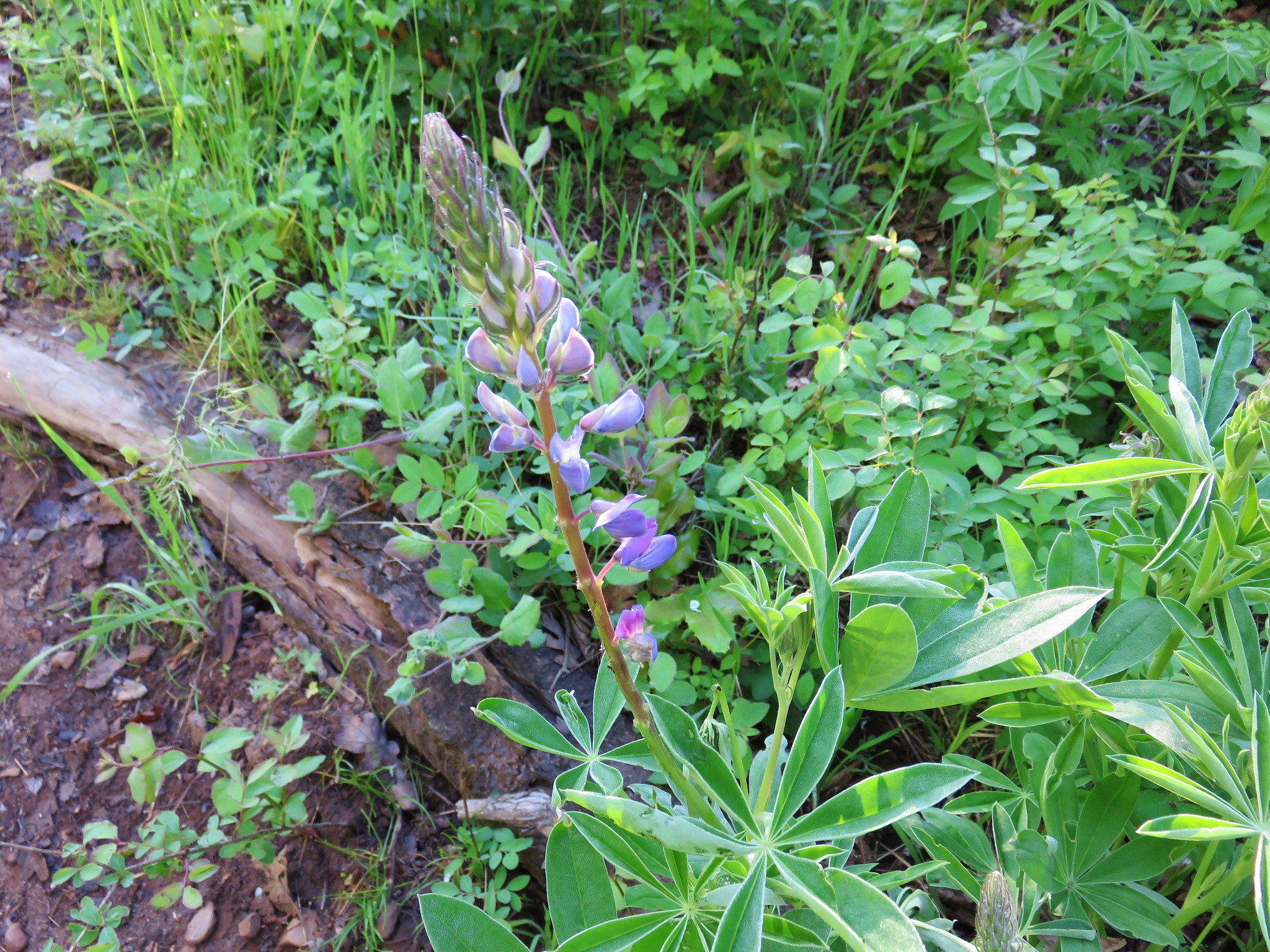
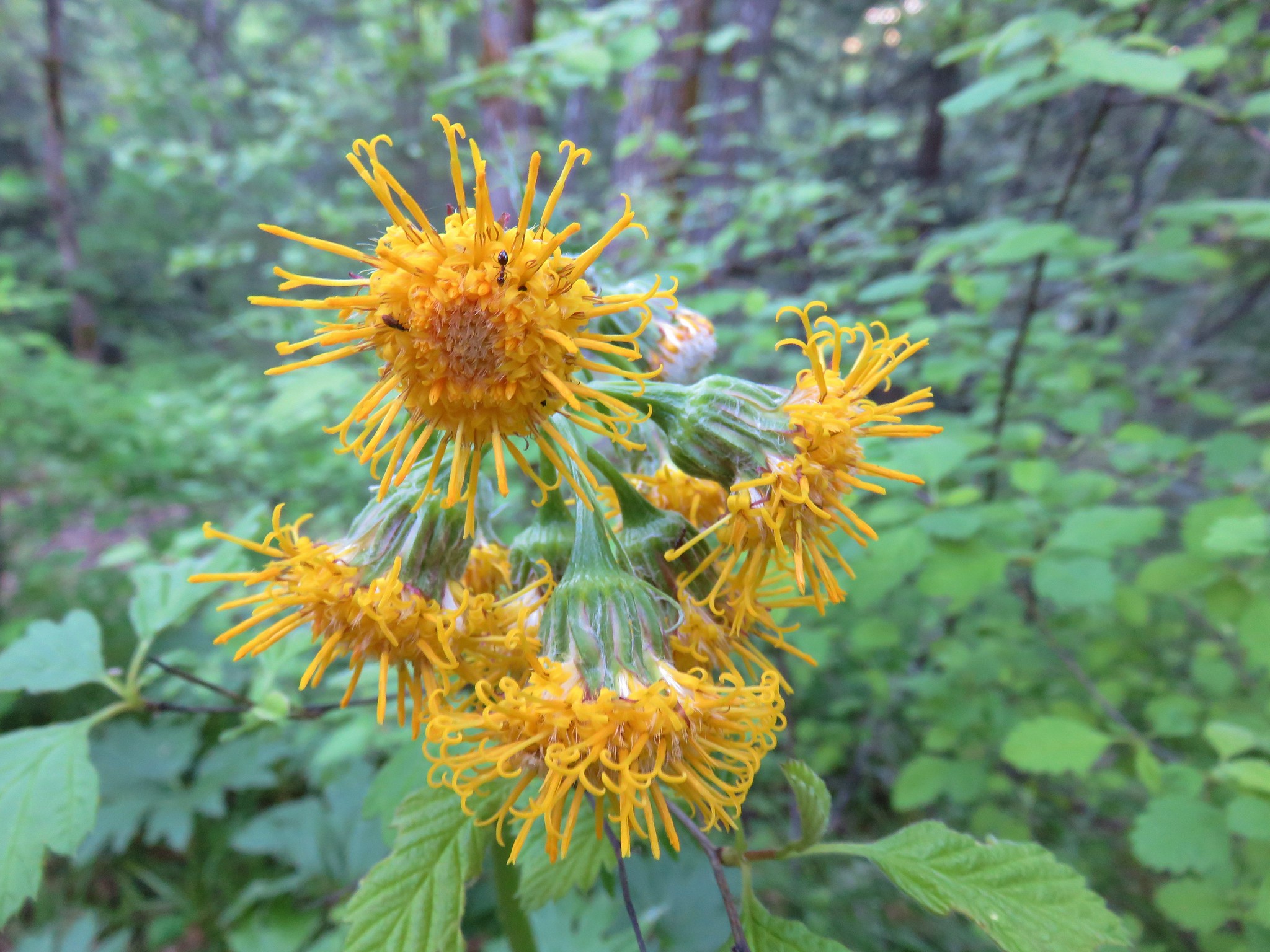
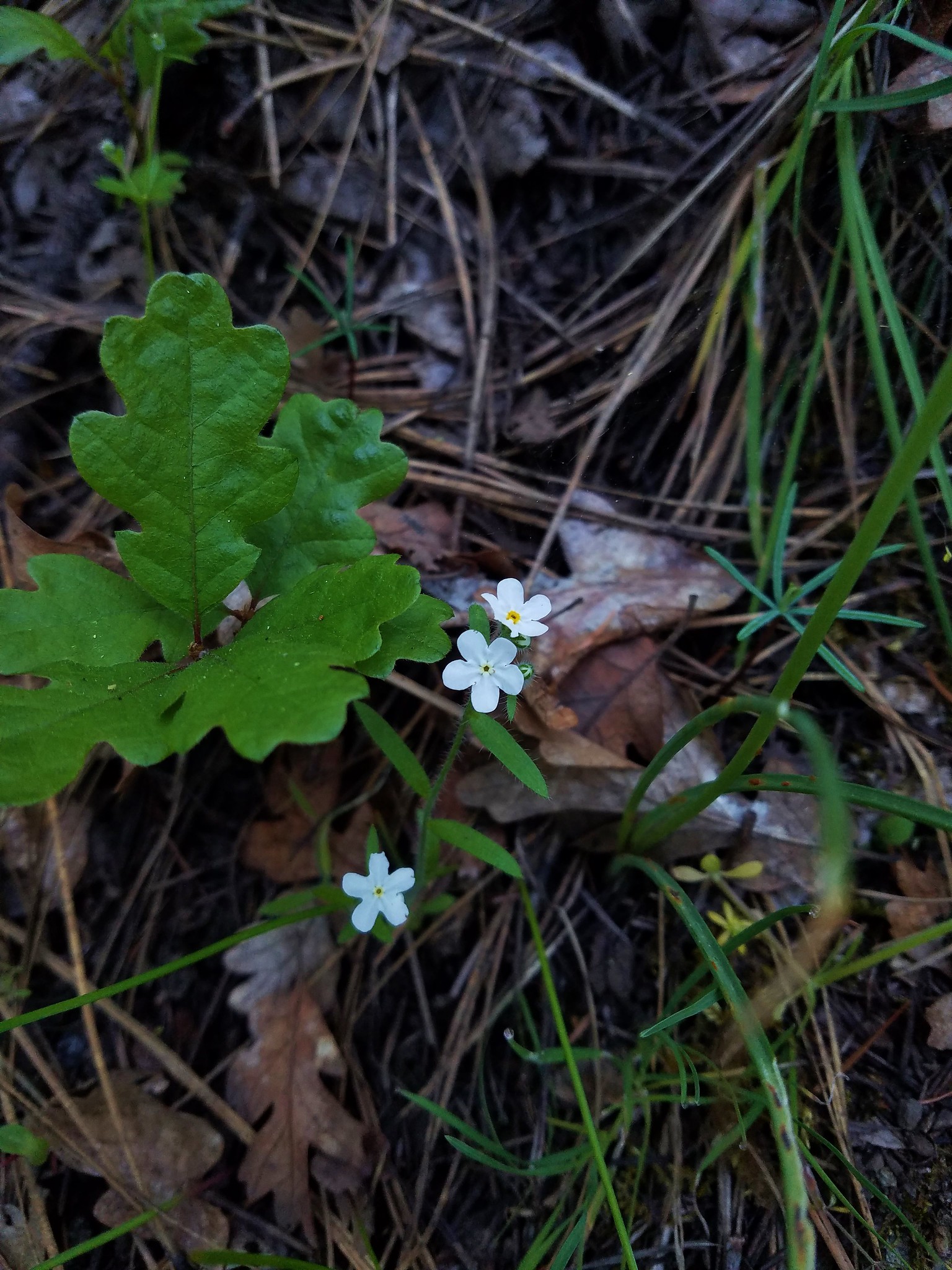
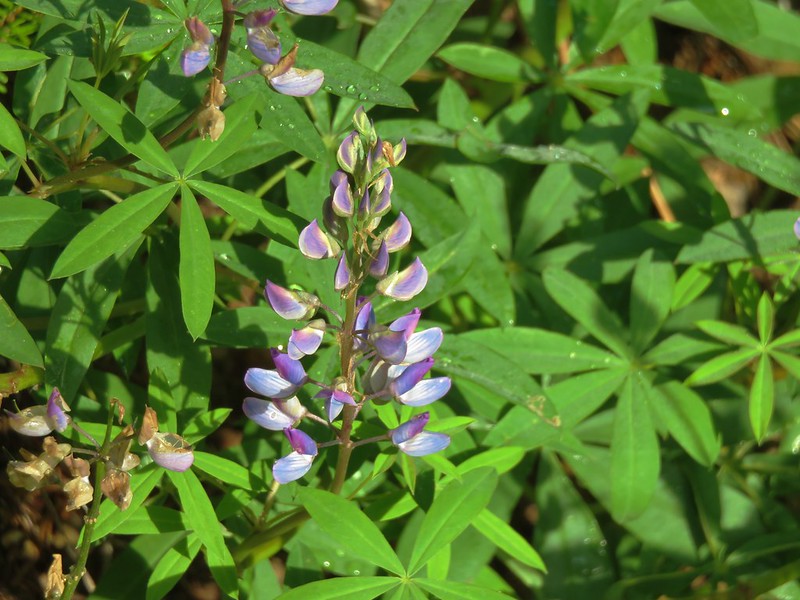
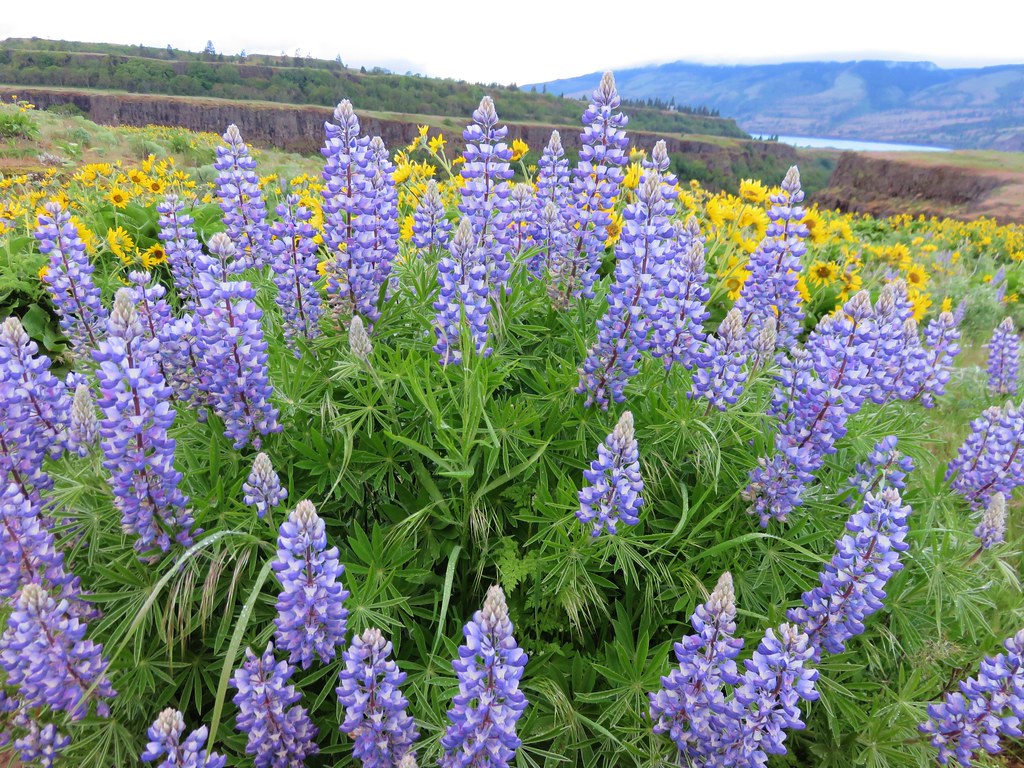
Flowers blooming along this stretch included lupine, arnica and some nice hound’s tongue.
Lupine

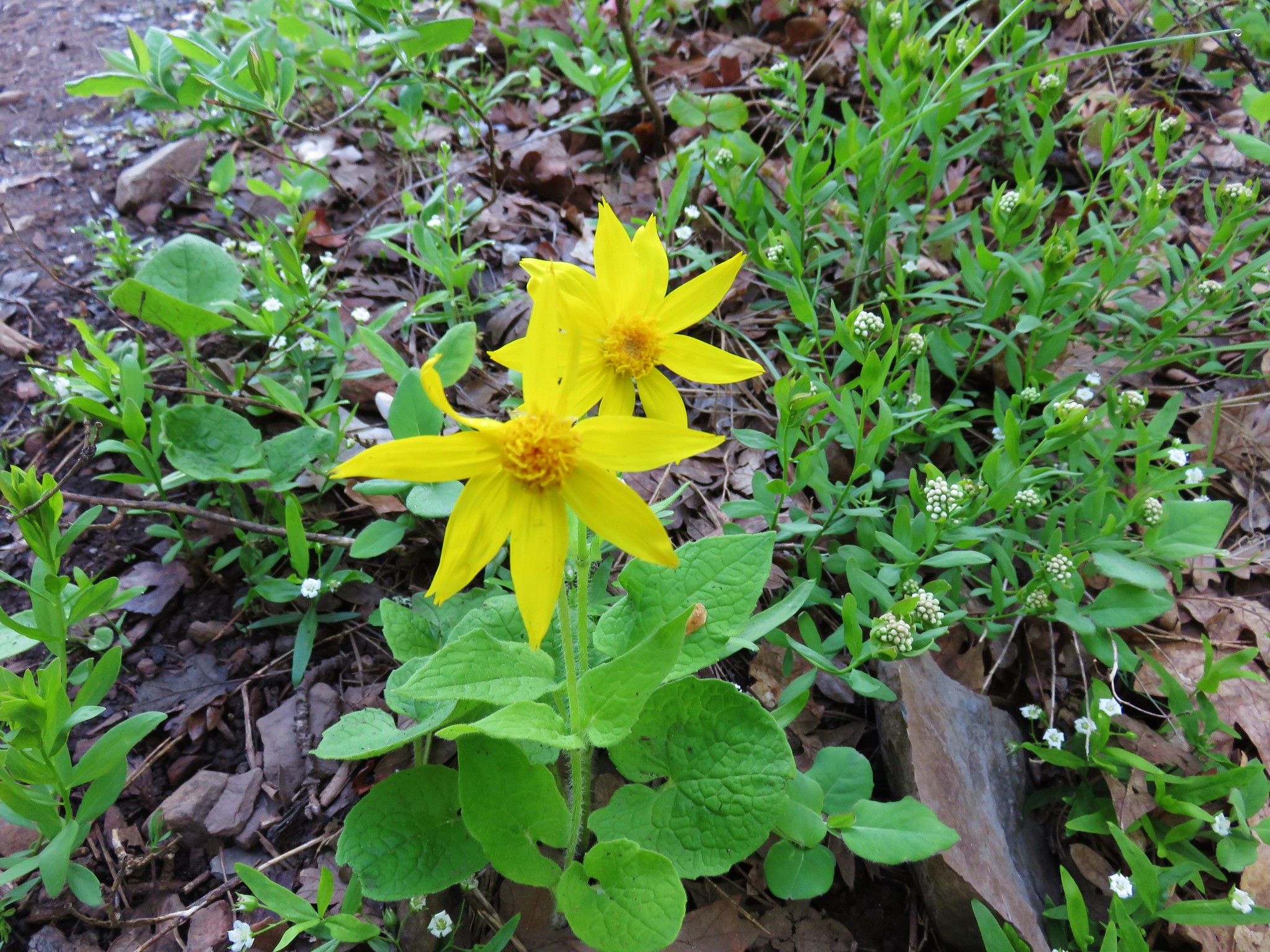
Arnica

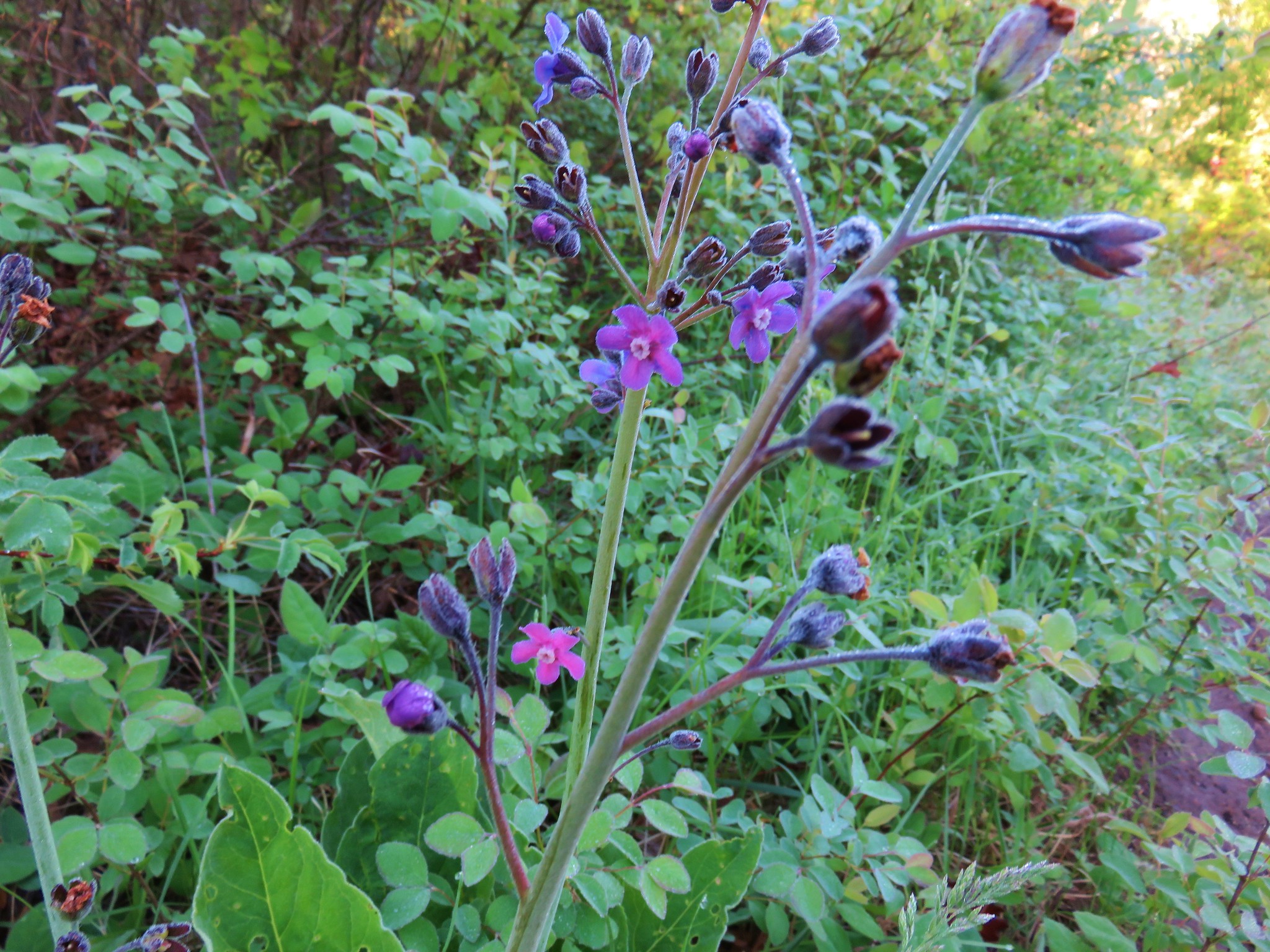
Hound's tongue

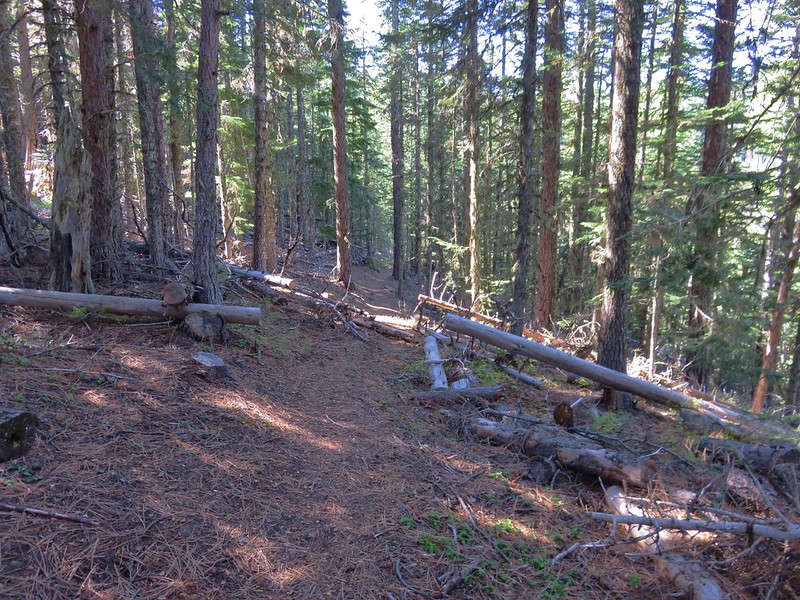
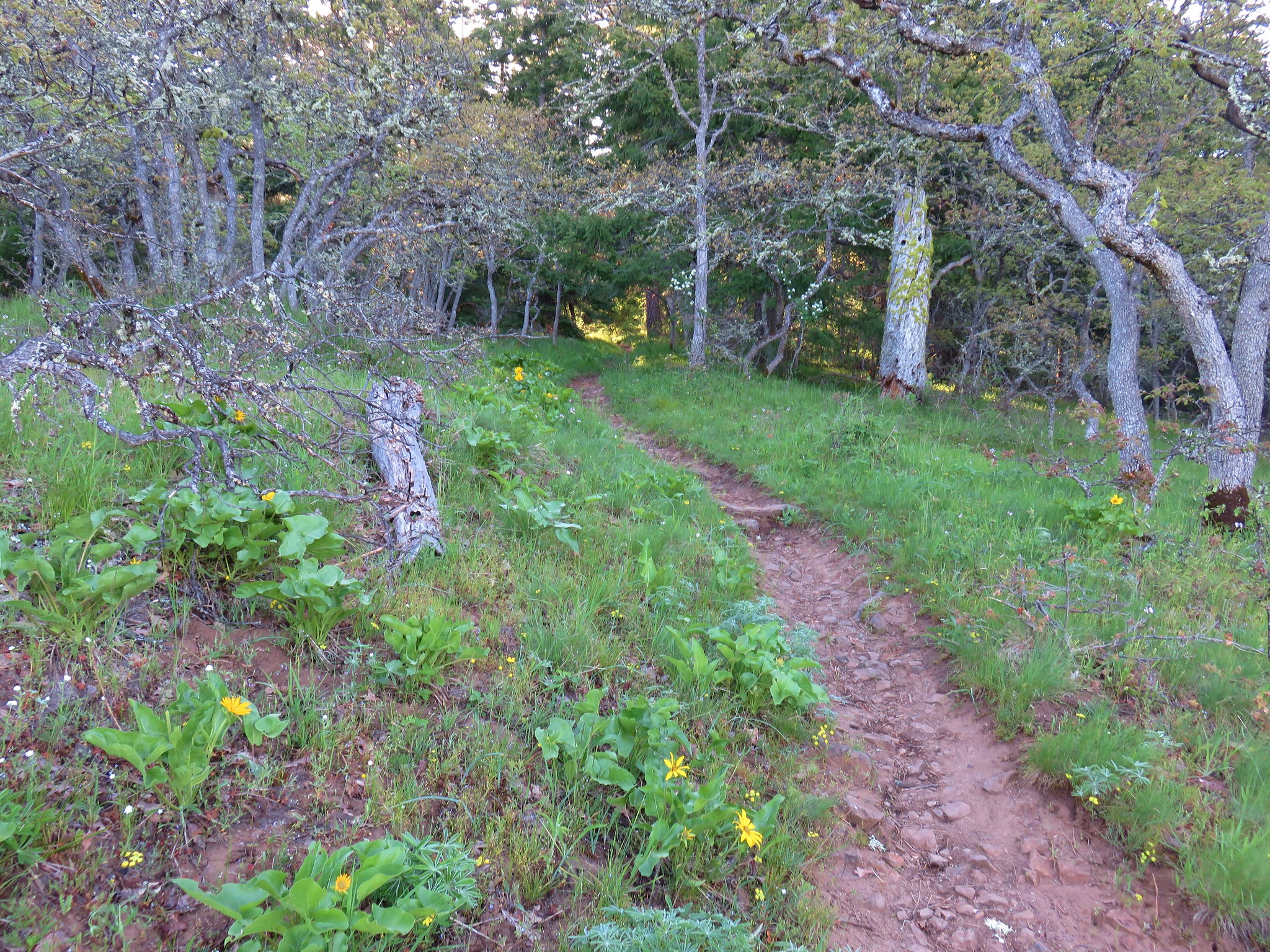
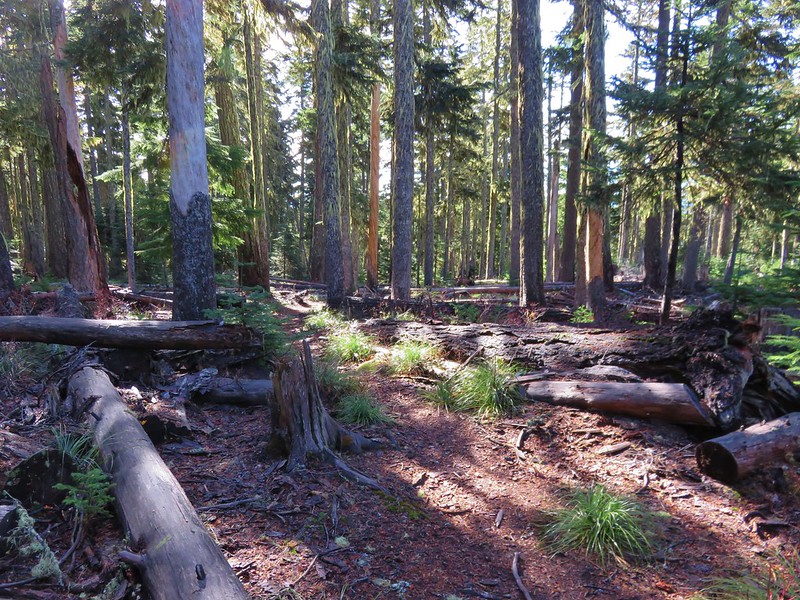
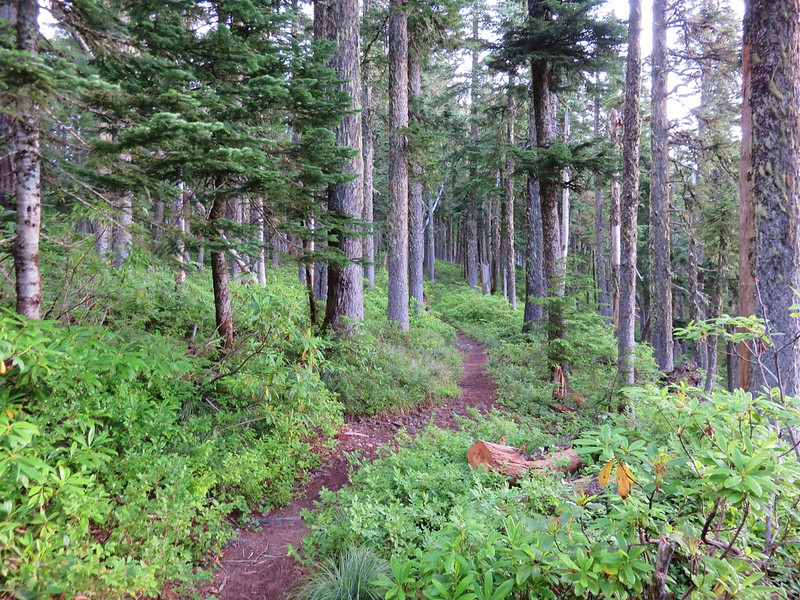
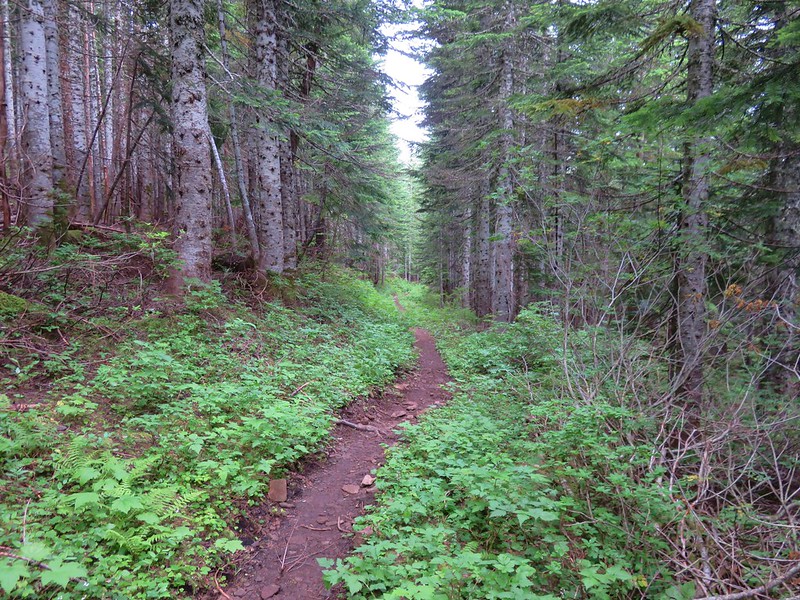
We began to climb after the clearcut as the trail entered the trees.
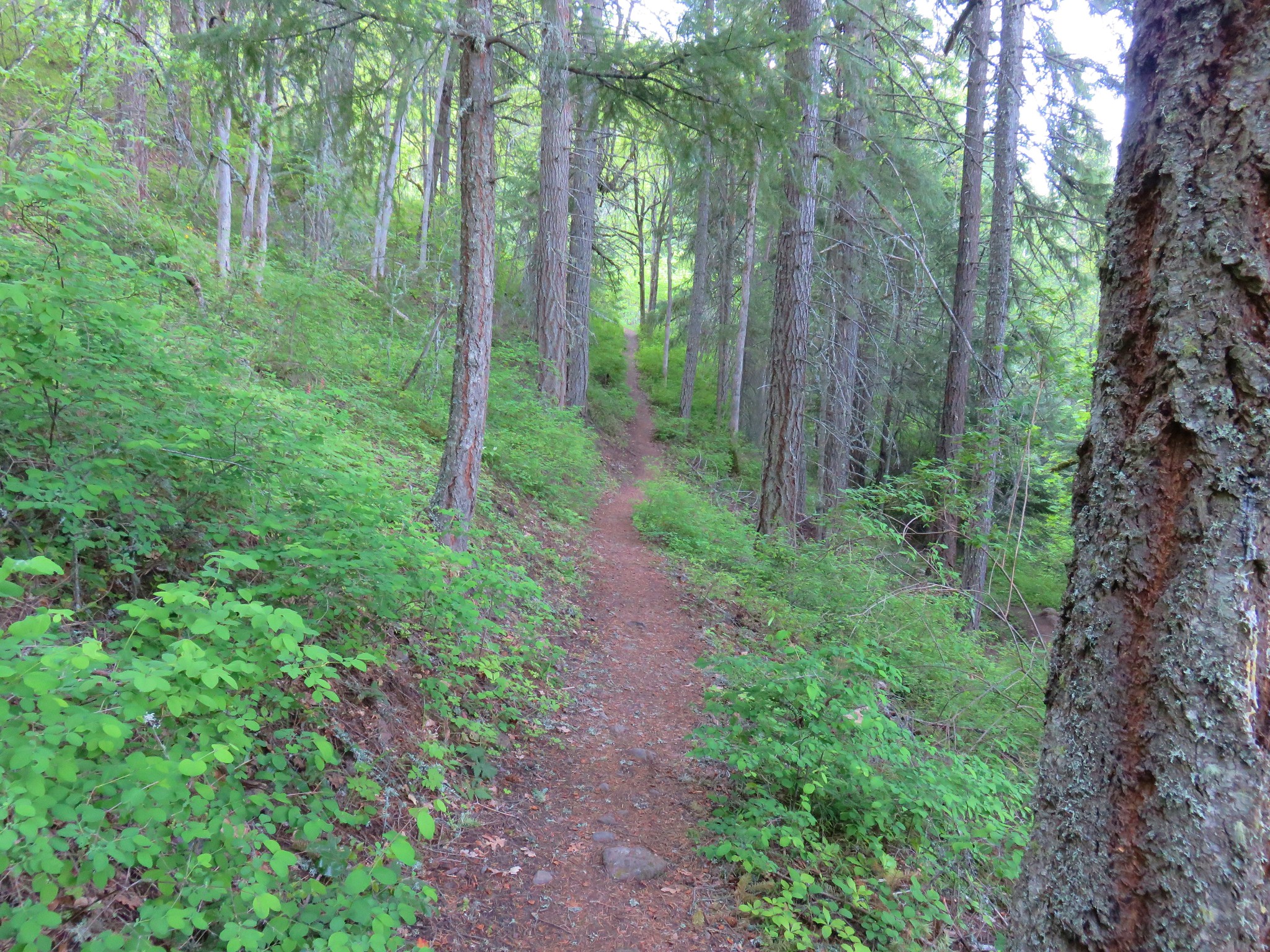
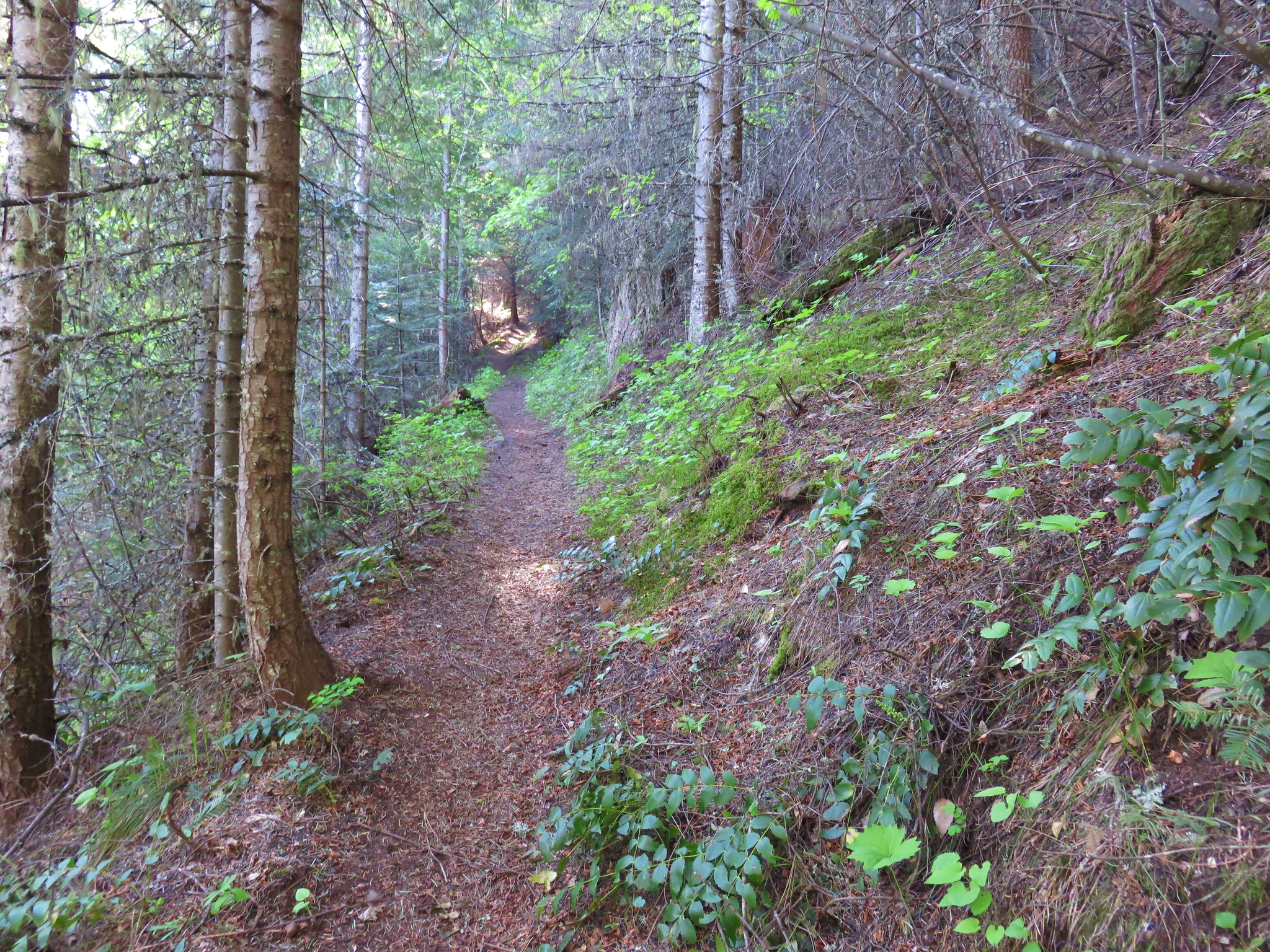
Oak Ridge Trail

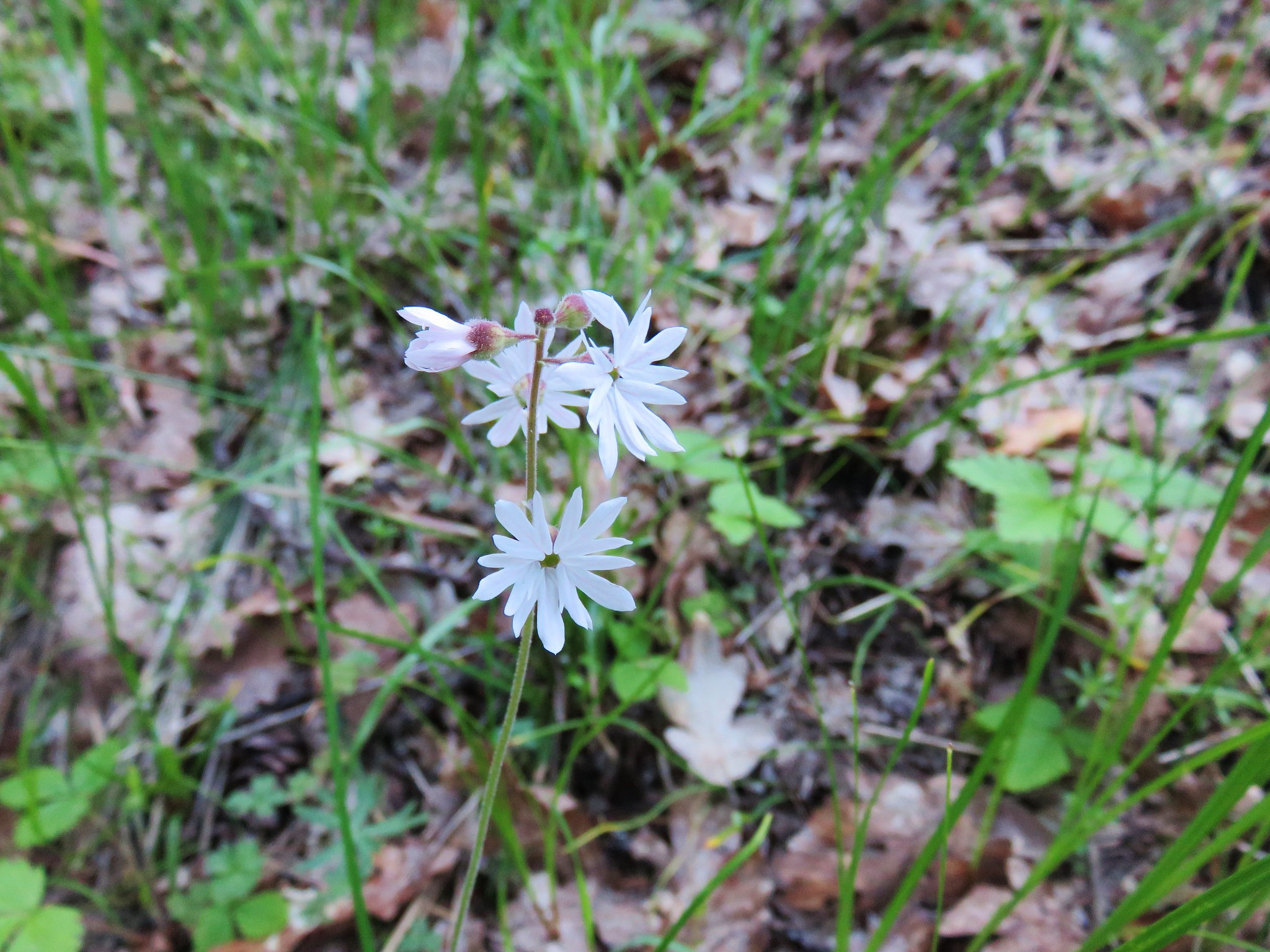
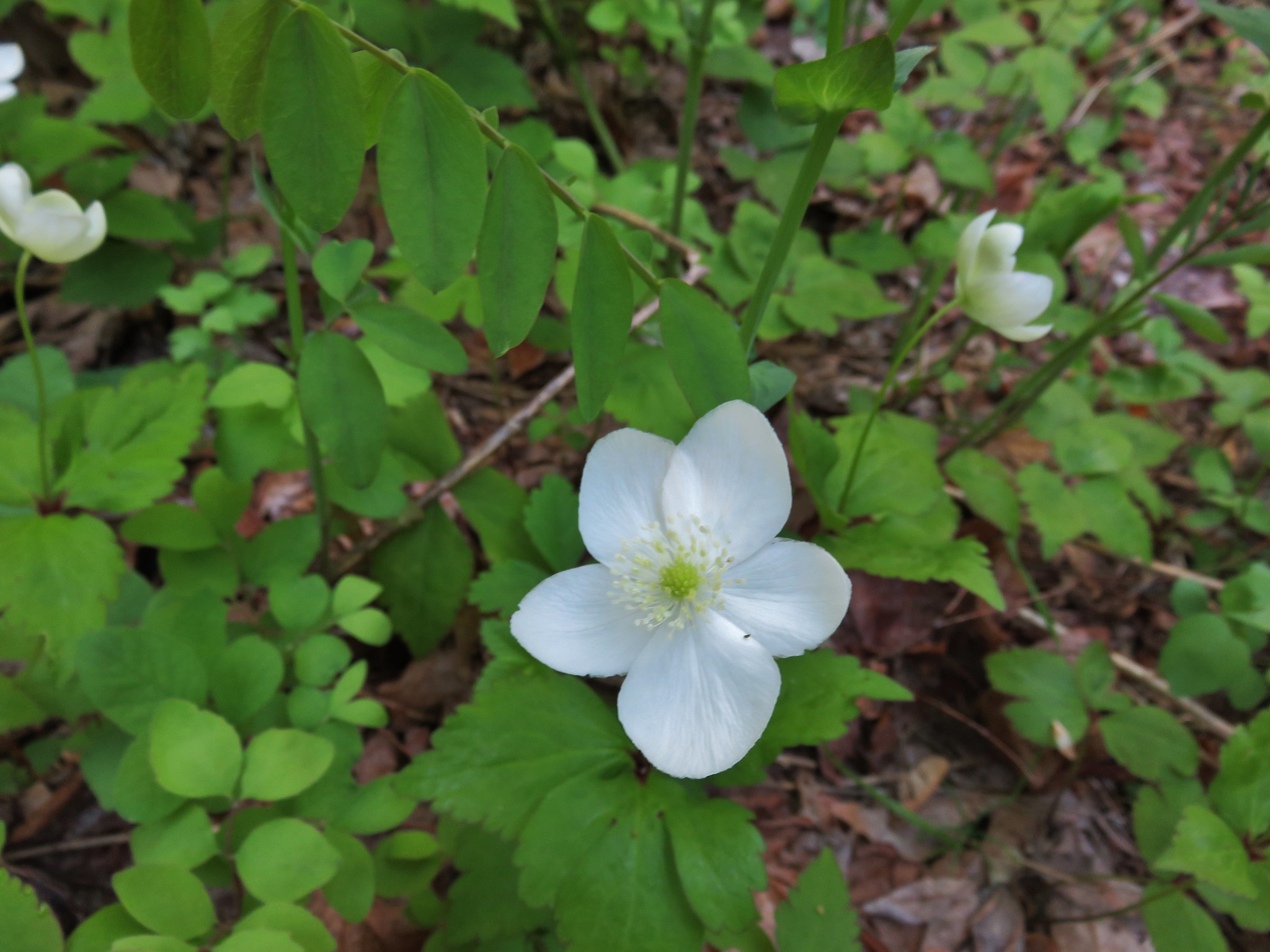
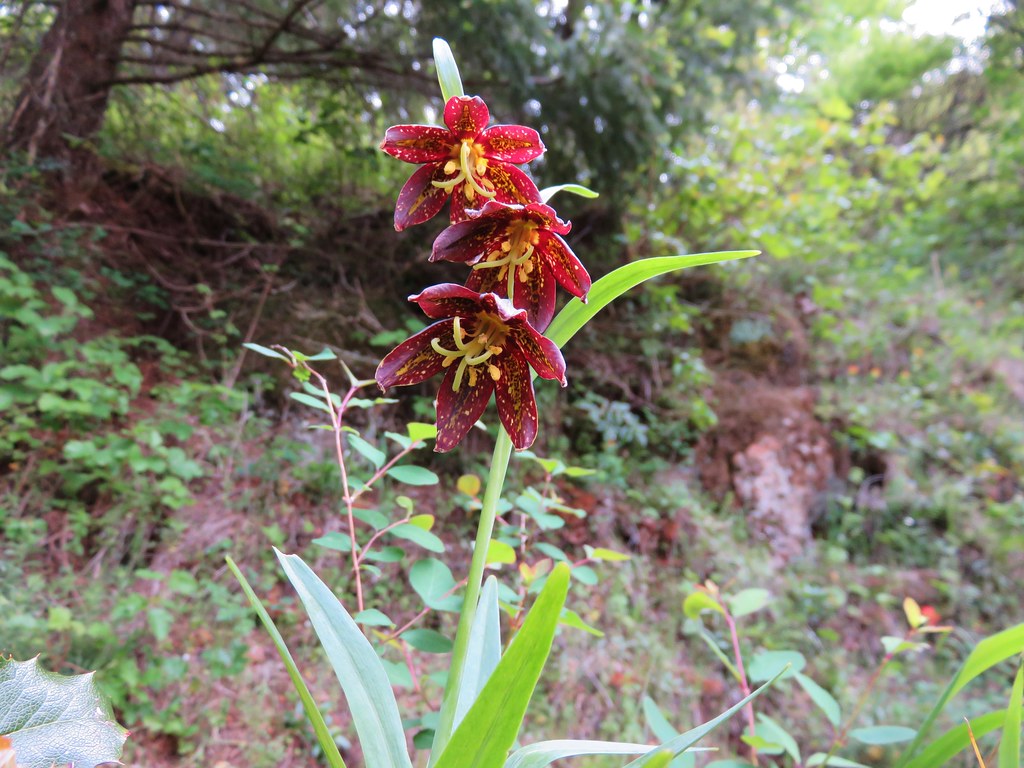
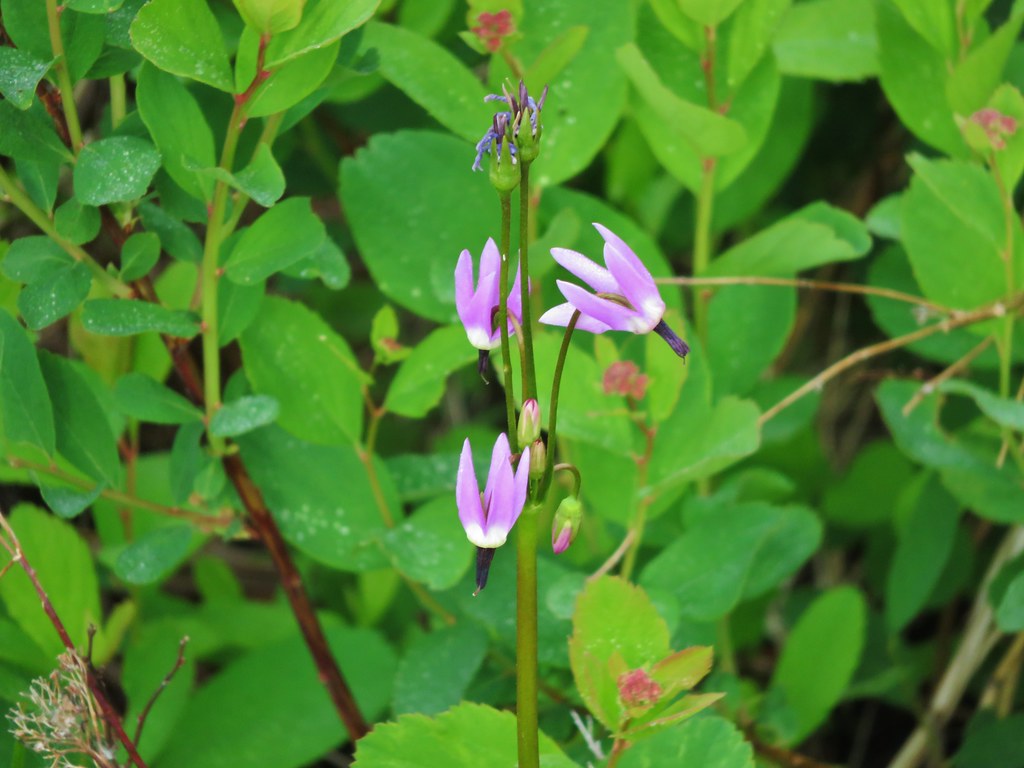
Additional flowers were blooming here including a few chocolate lilies, woodland stars, silvercrown, and various white flowers.
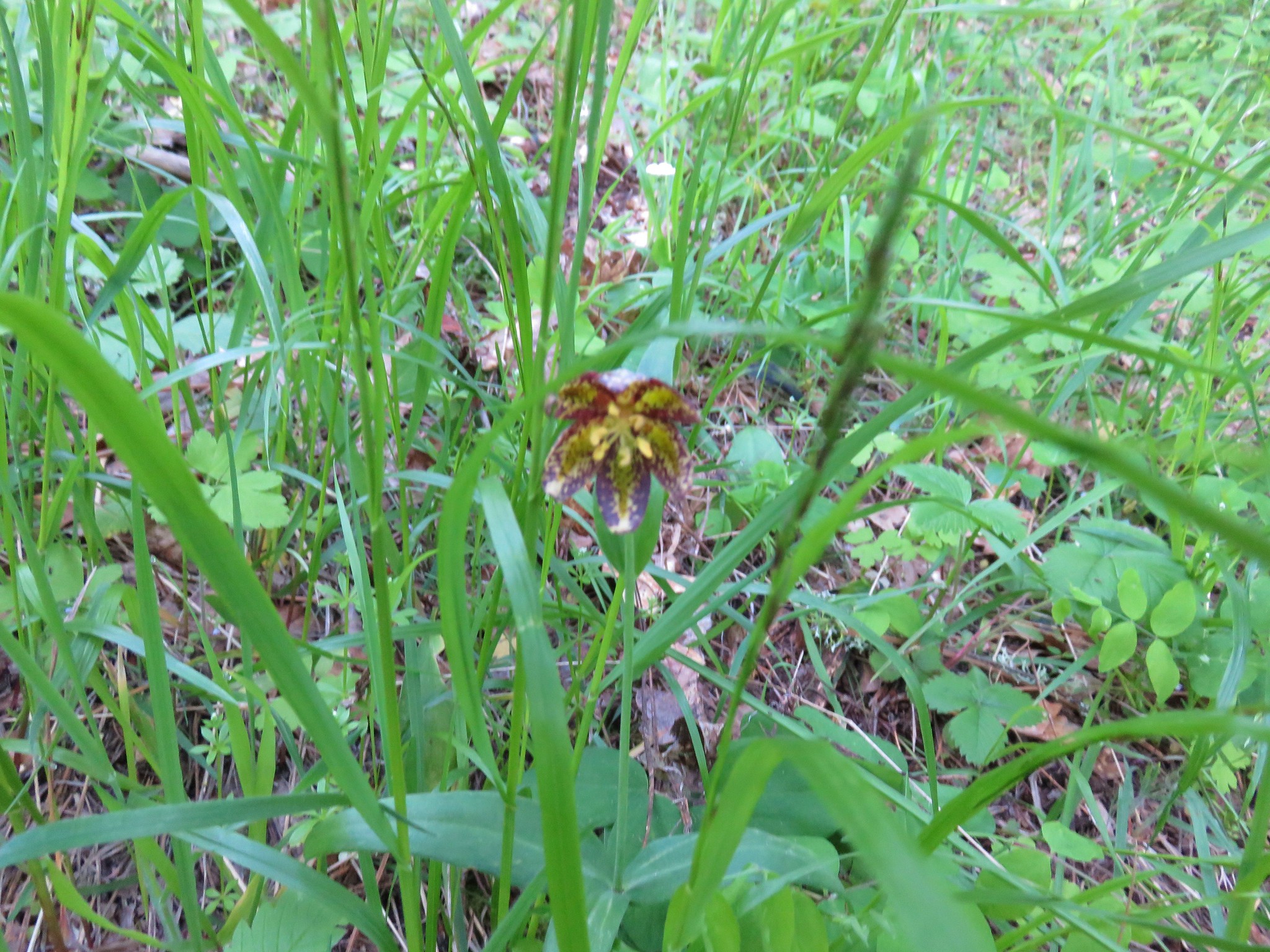
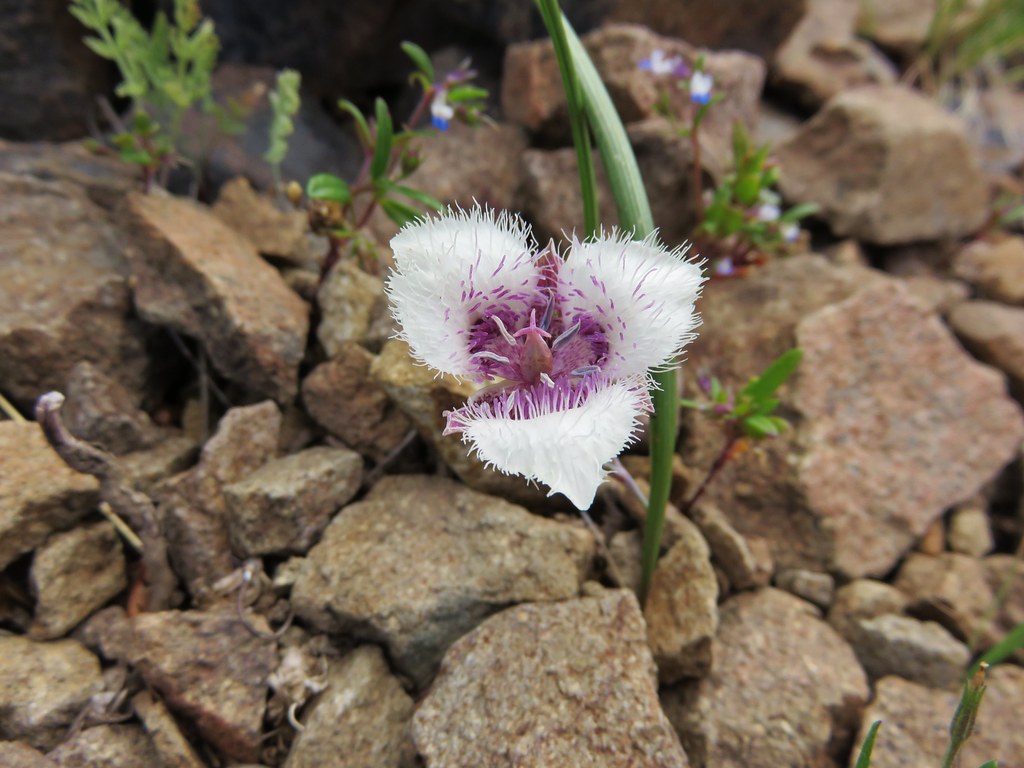
Chocolate lily

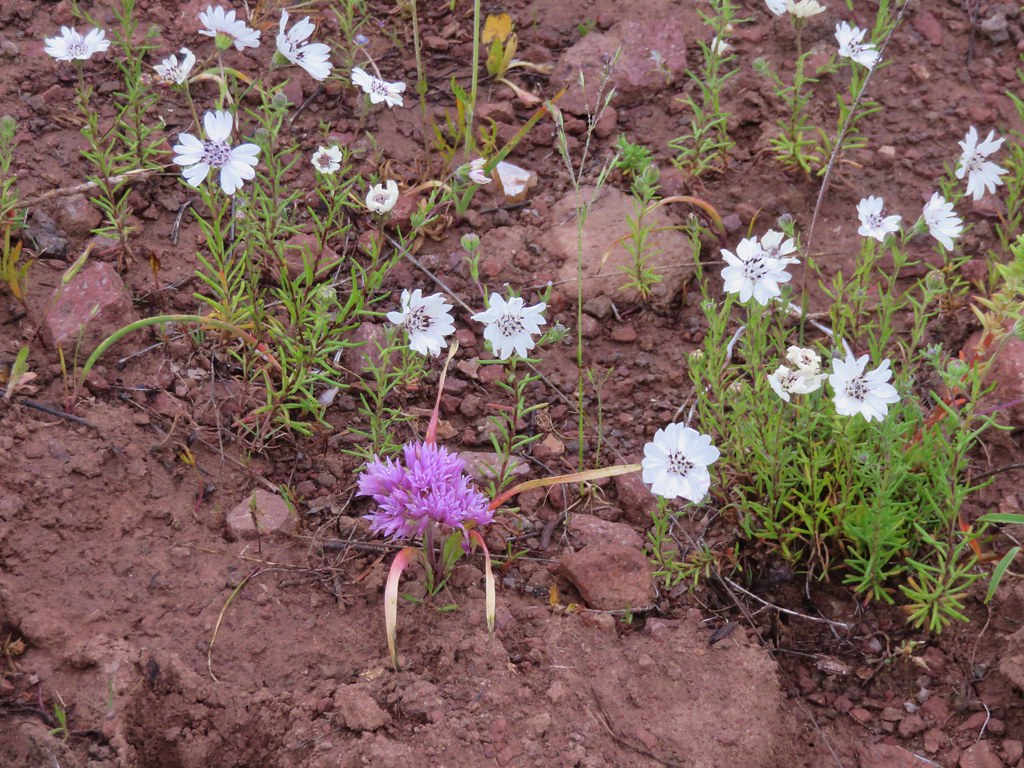
Prairie stars

Silvercrown

Wildflower along the Oak Ridge Trail

Wildflower along the Oak Ridge Trail

Anemone

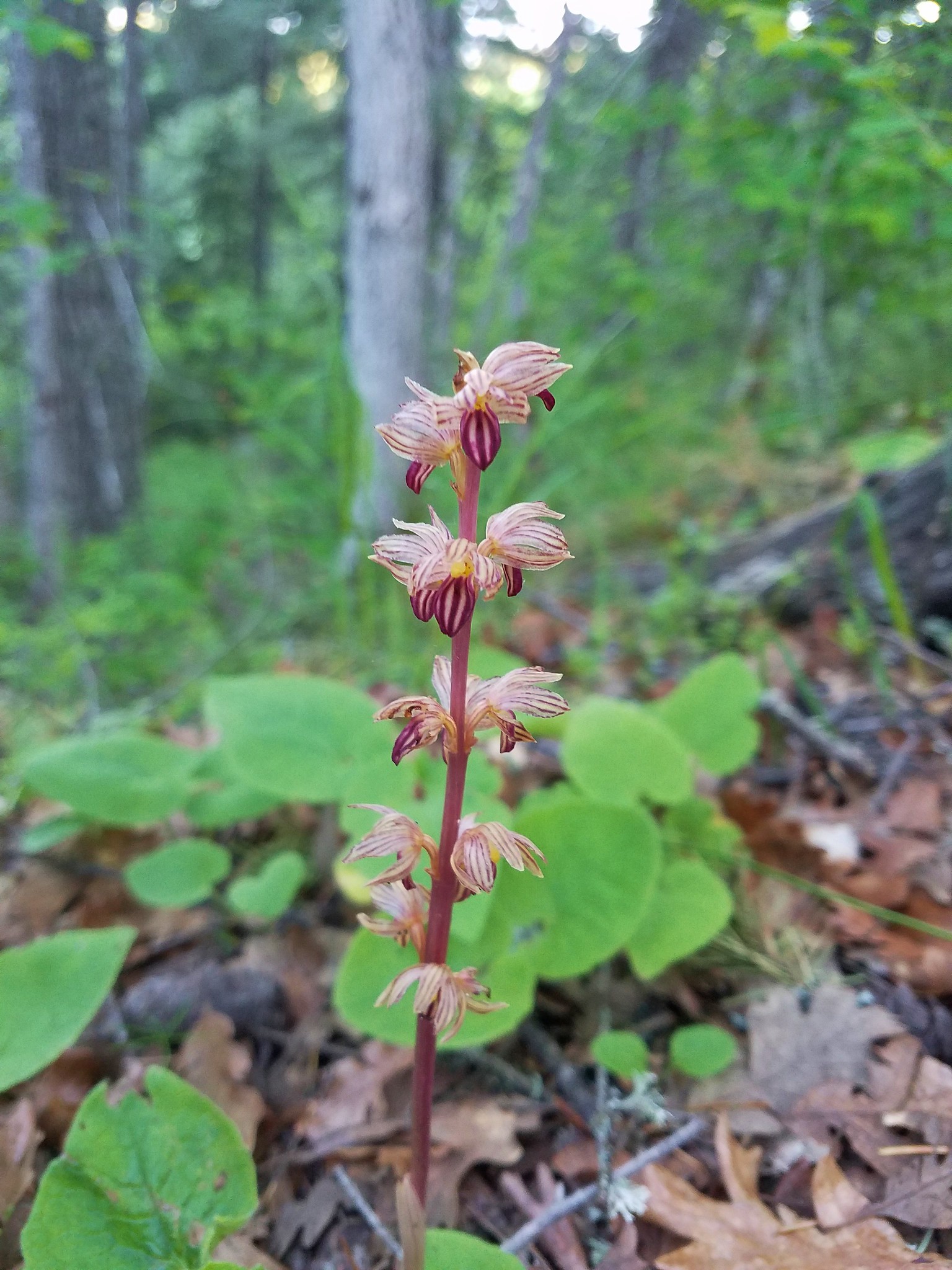
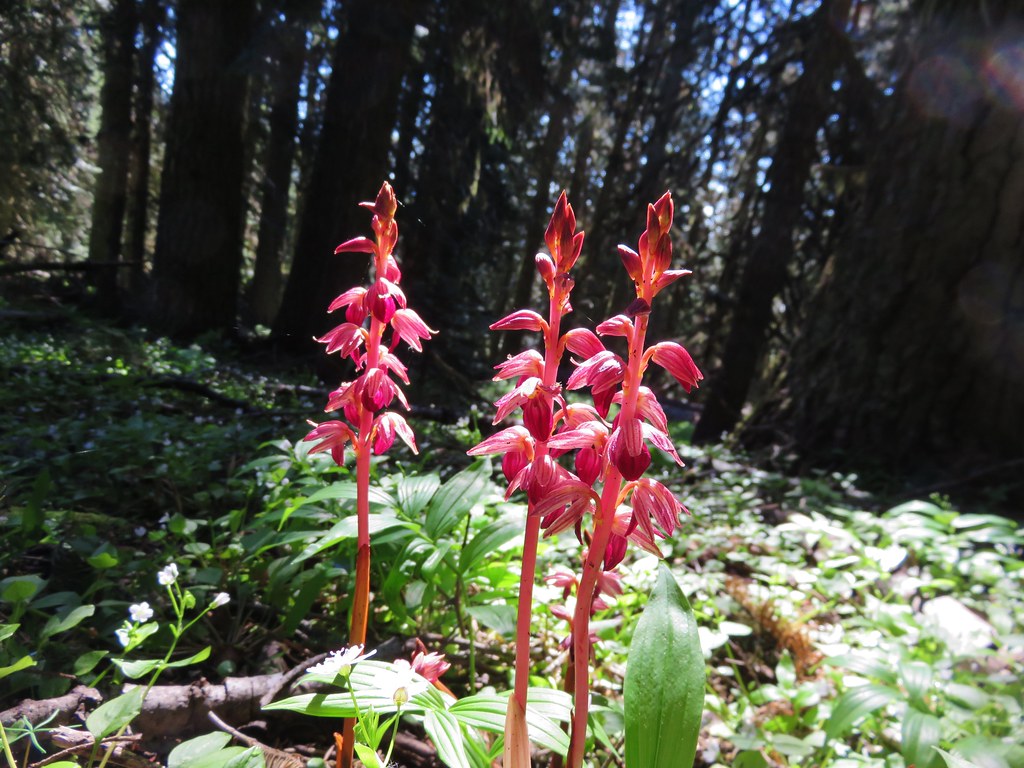
Heather spotted a nice striped coralroot.
Coralroot

Switchbacks made the climb less strenuous than it could have been and soon we entered oak grasslands with even more flowers.
Wildflower along the Oak Ridge Trail

Wildflower along the Oak Ridge Trail

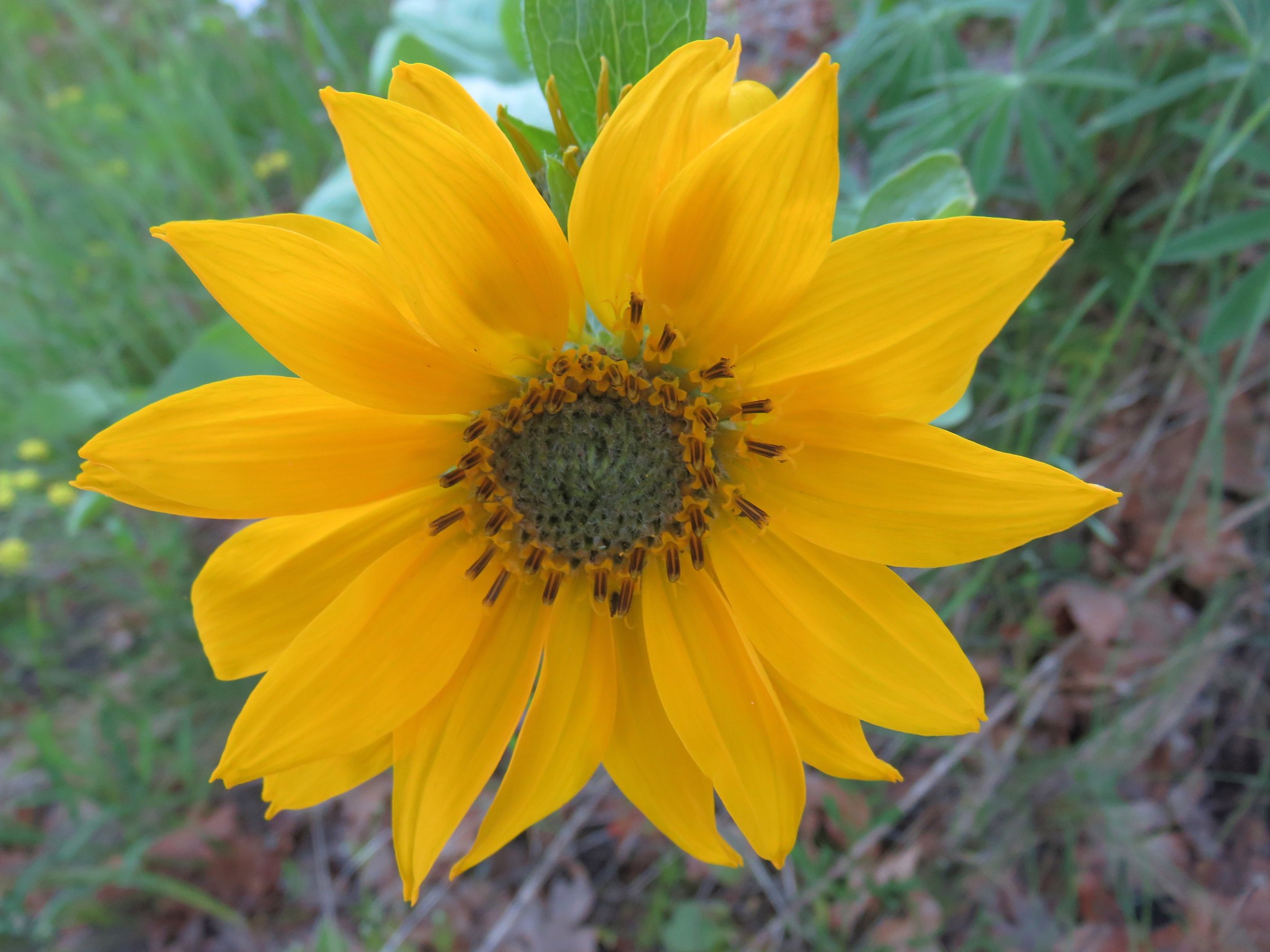
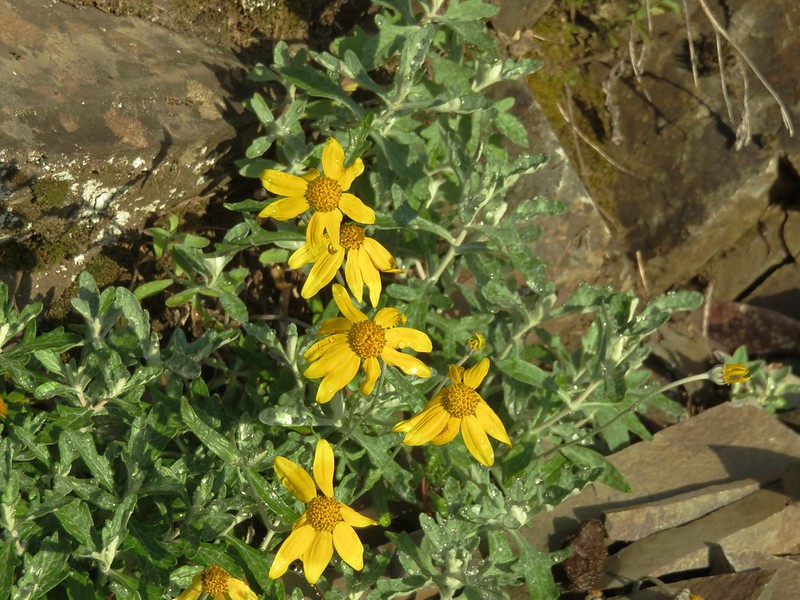
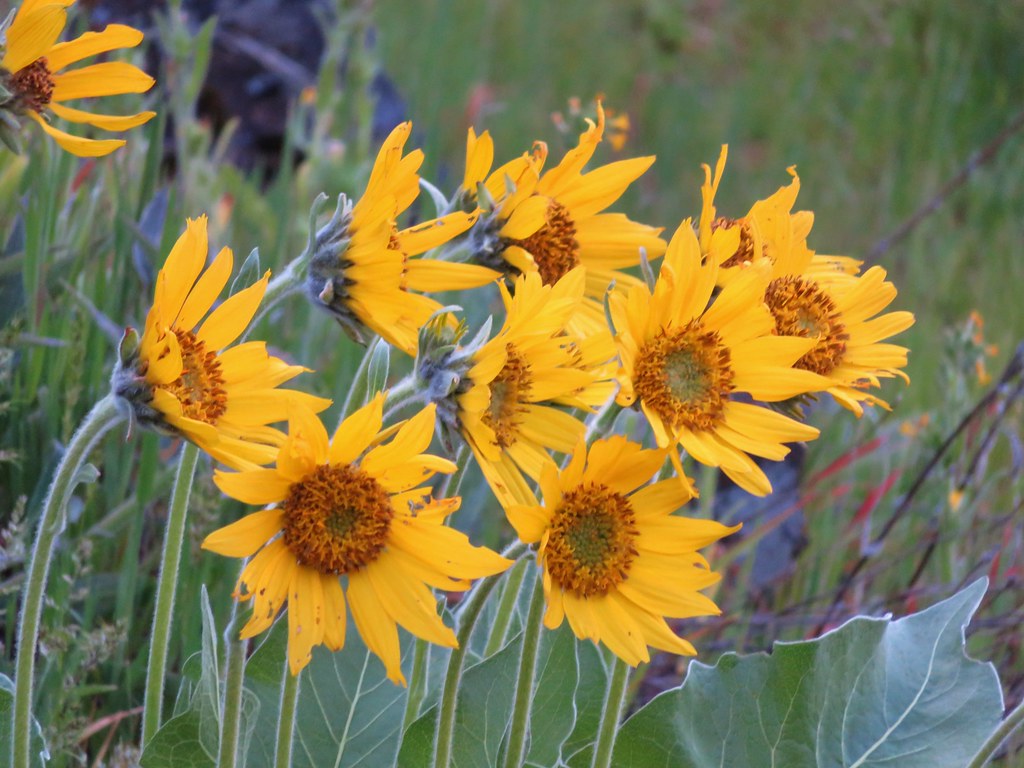
Balsamroot

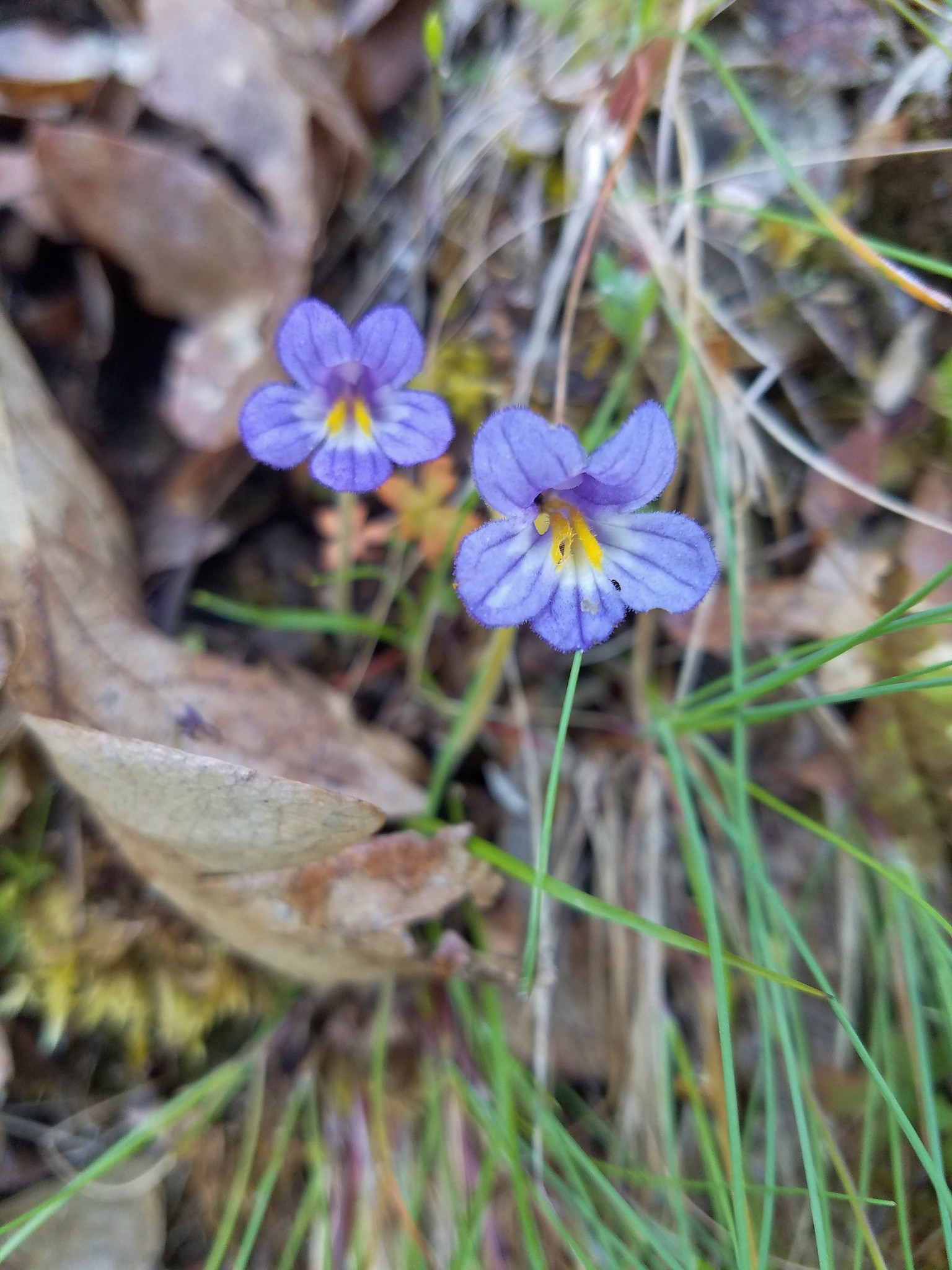
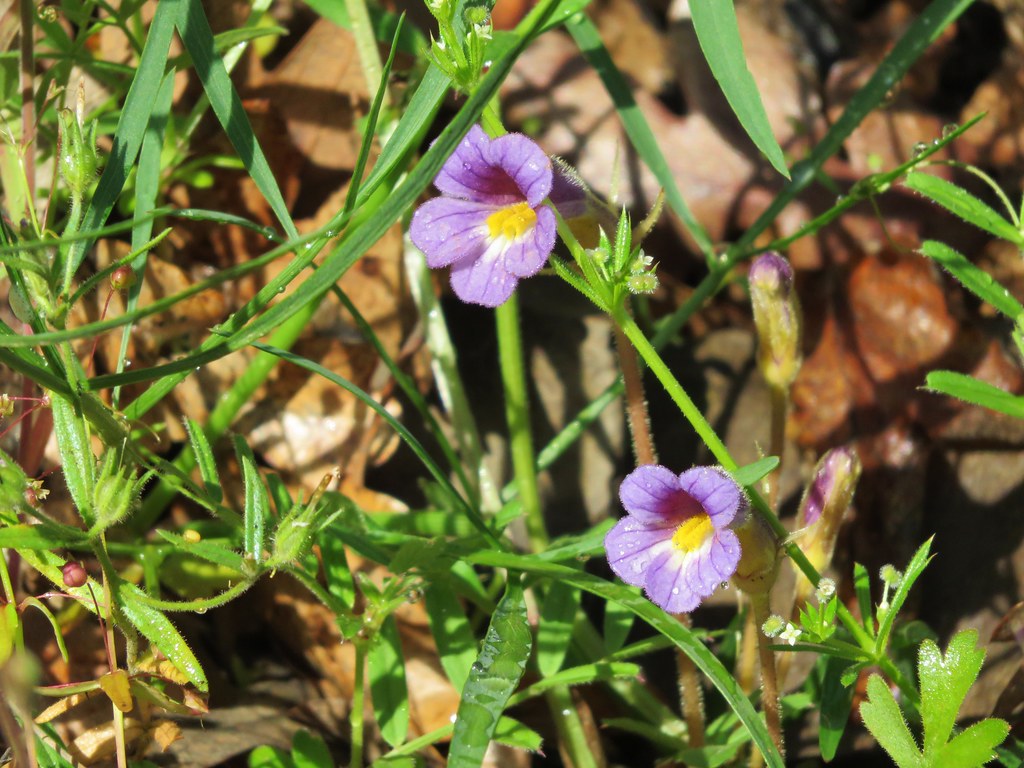
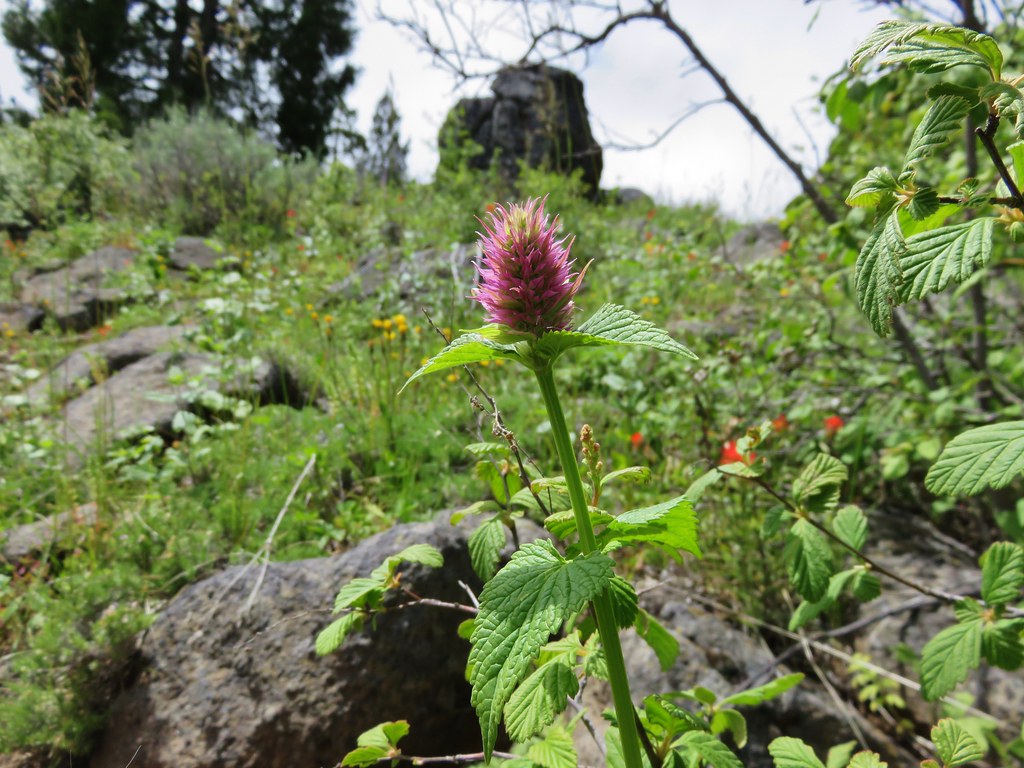
Naked broomrape

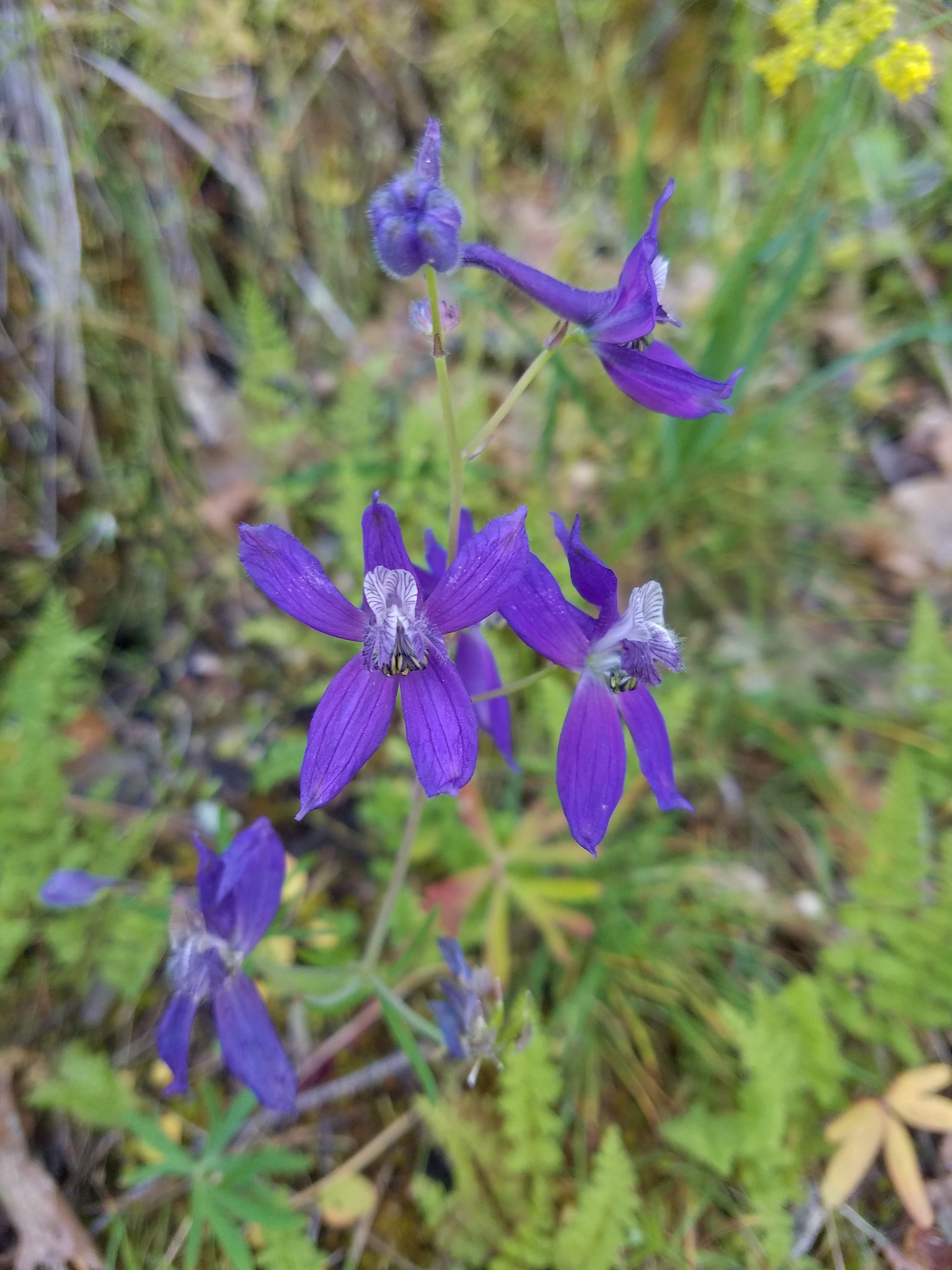
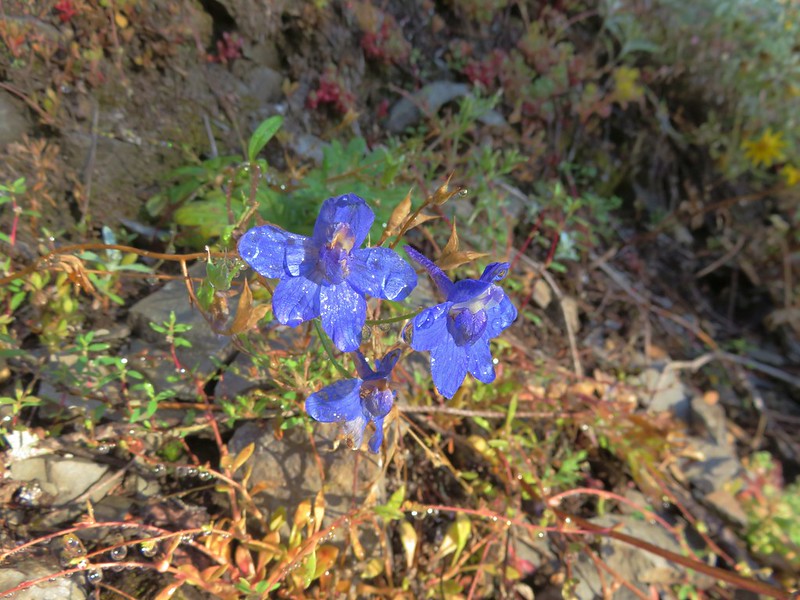
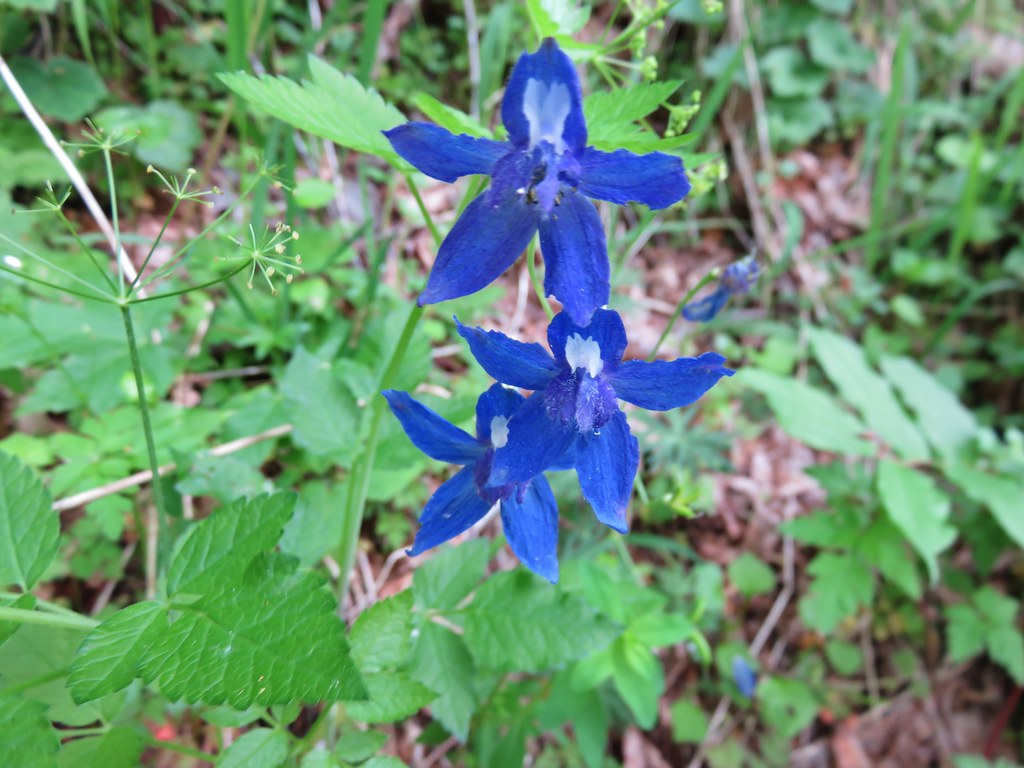
Larkspur

One of the benefits of gaining elevation on a hike is that doing so typically creates more variety in the flowers seen which was certainly the case here.

The trail continued to switchback up through increasingly open grasslands allowing for some nice views.
Oak Ridge Trail

Balc Butte from the Oak Ridge Trail
Bald Butte from the Oak Ridge Trail

Mt. Hood
Mt. Hood

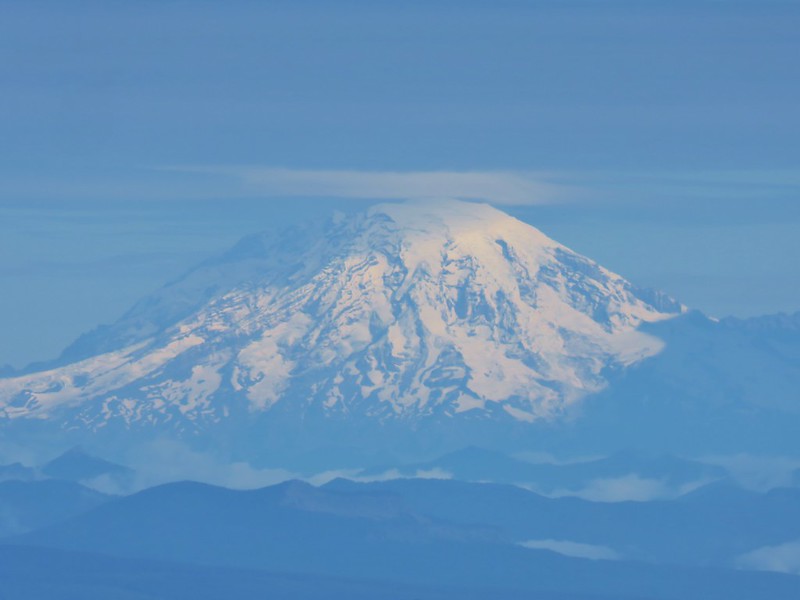
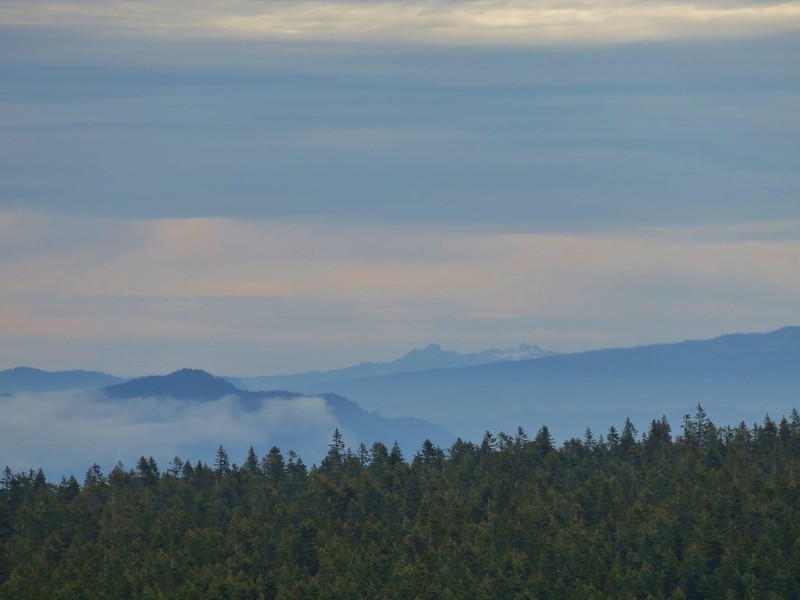
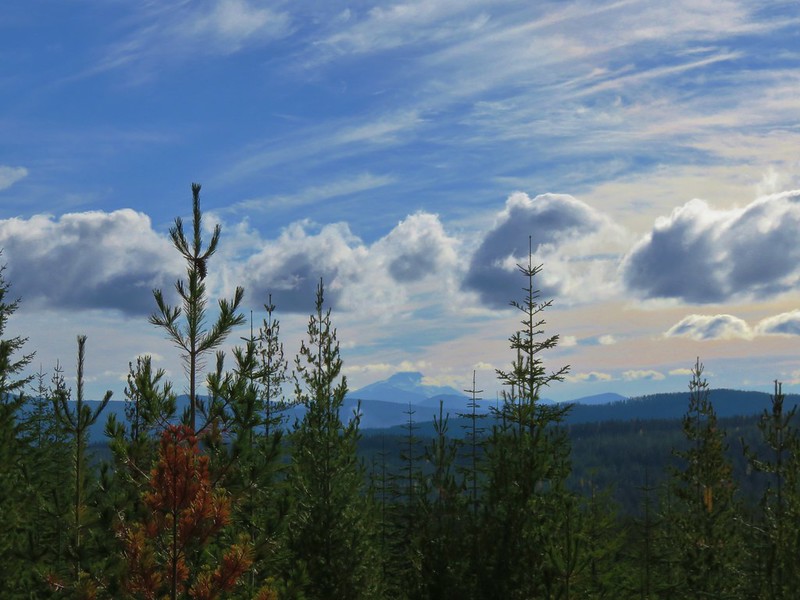
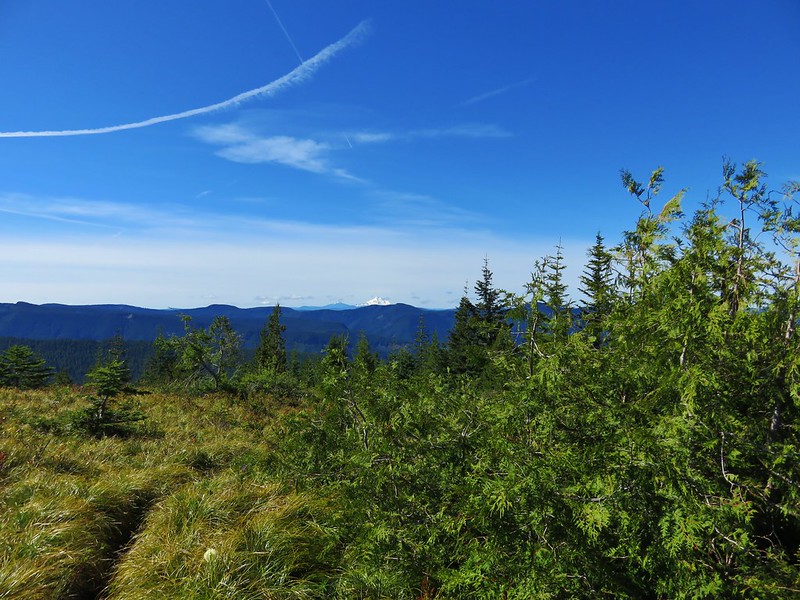
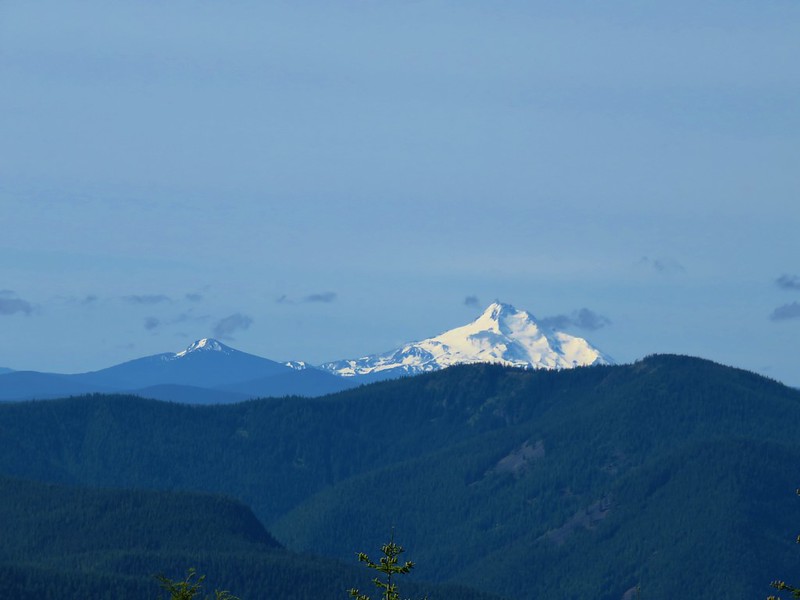
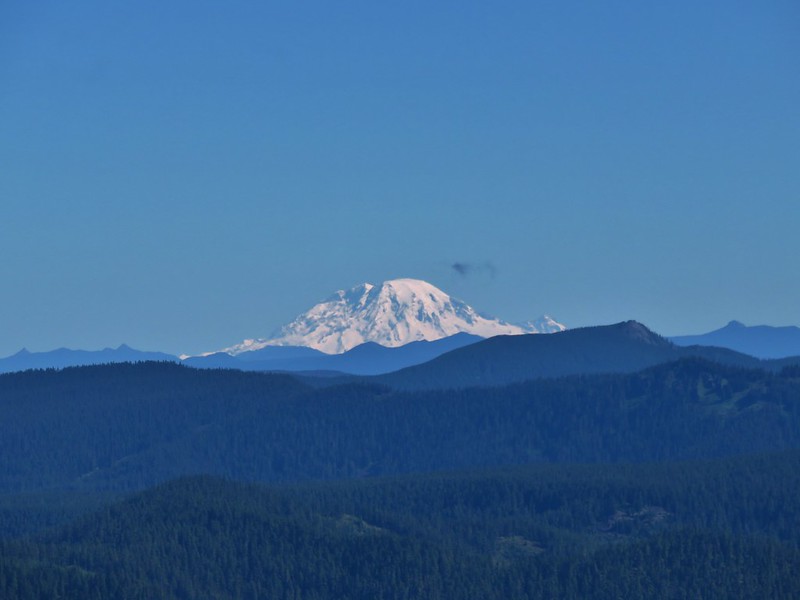
Mt. Rainier in the distance
Mt. Rainier in the distance.

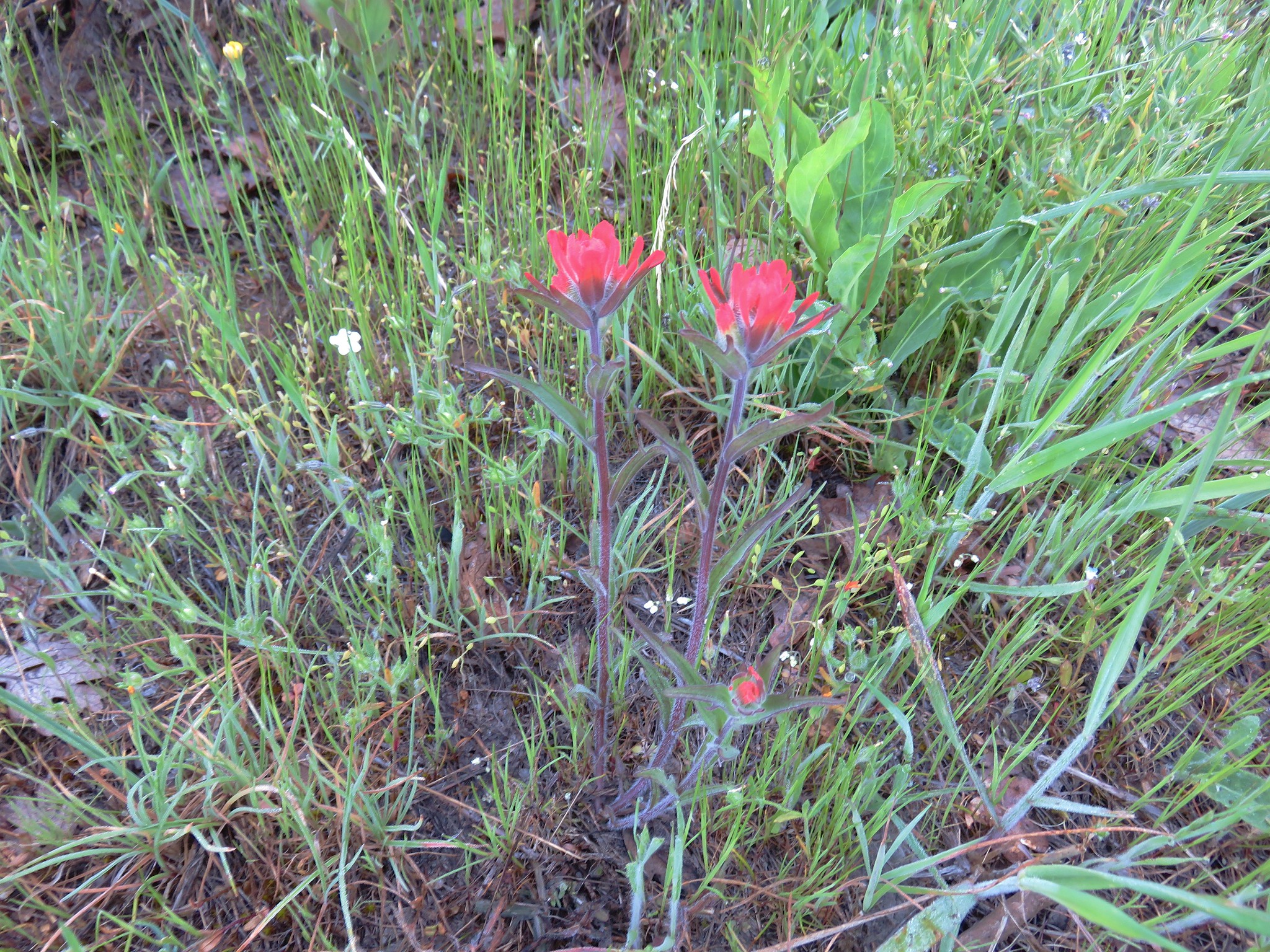
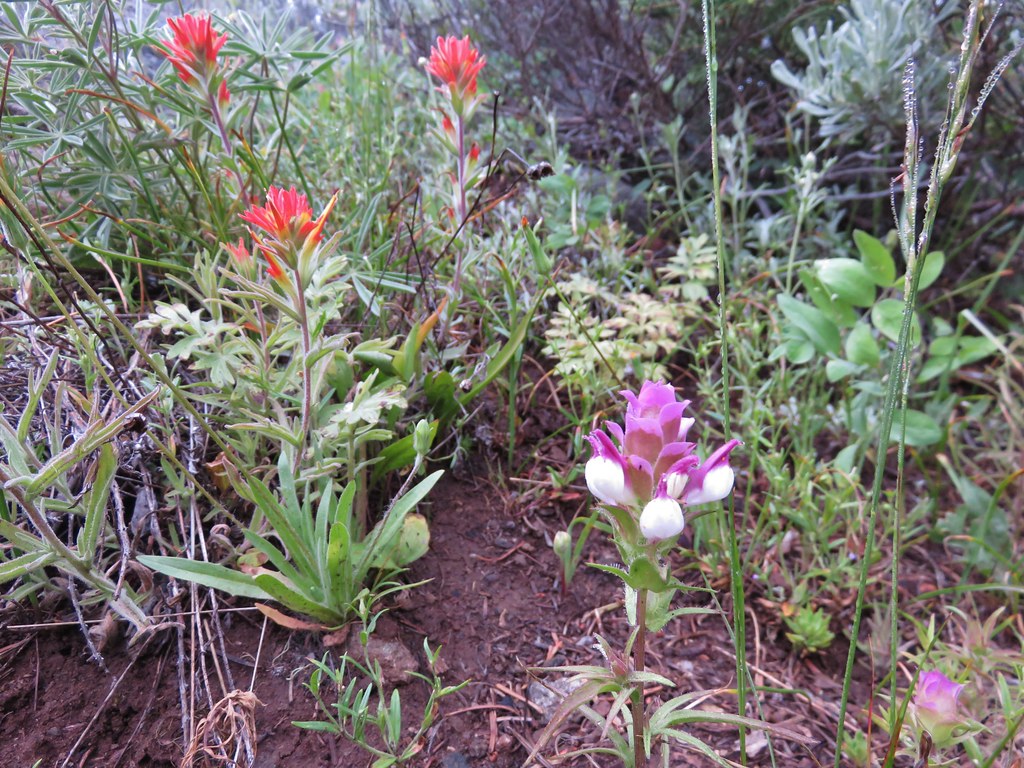
Just before reentering the forest we ran into a small patch of paintbrush.
Wildflower along the Oak Ridge Trail

Paintbrush

Paintbrush

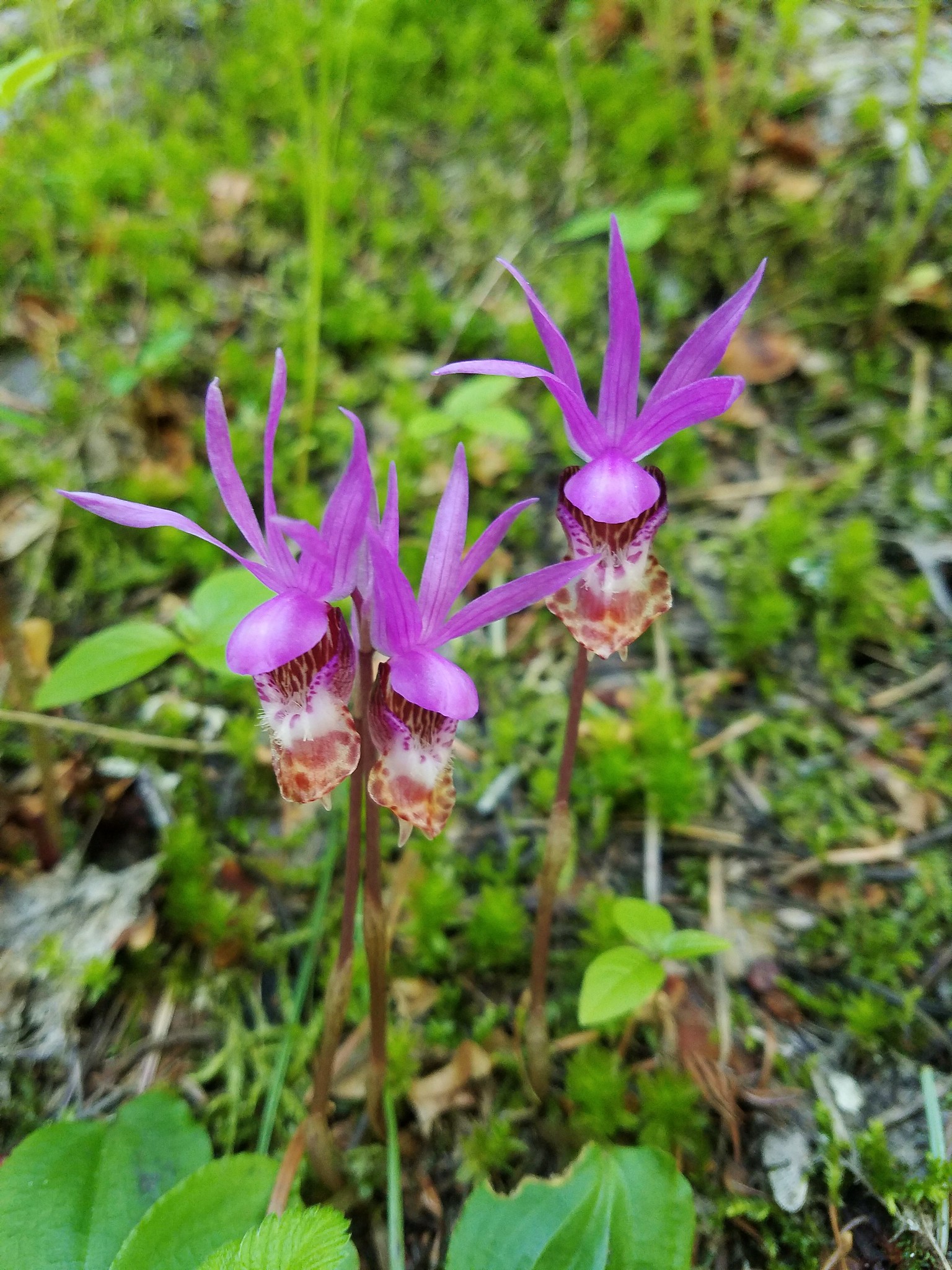
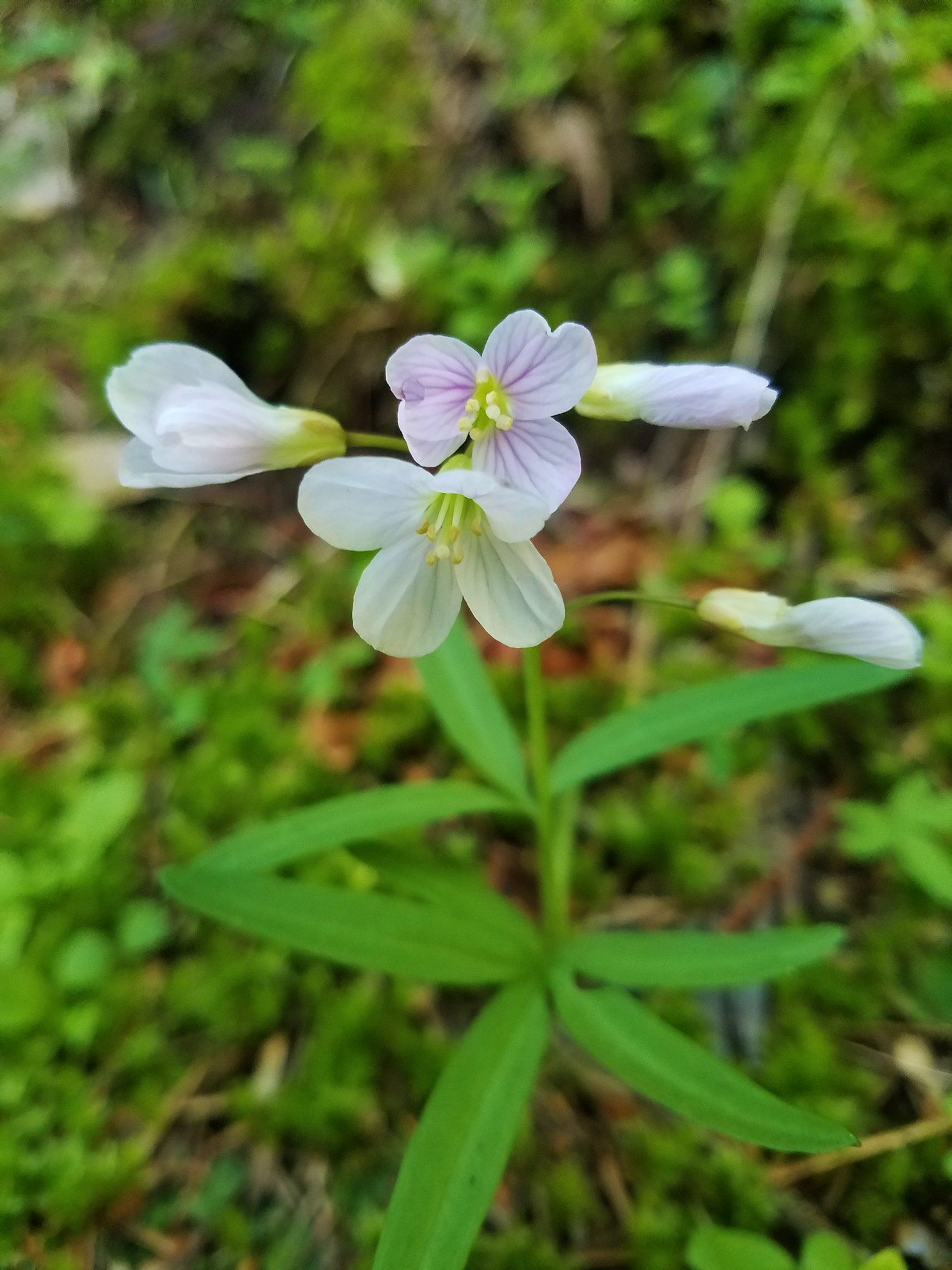
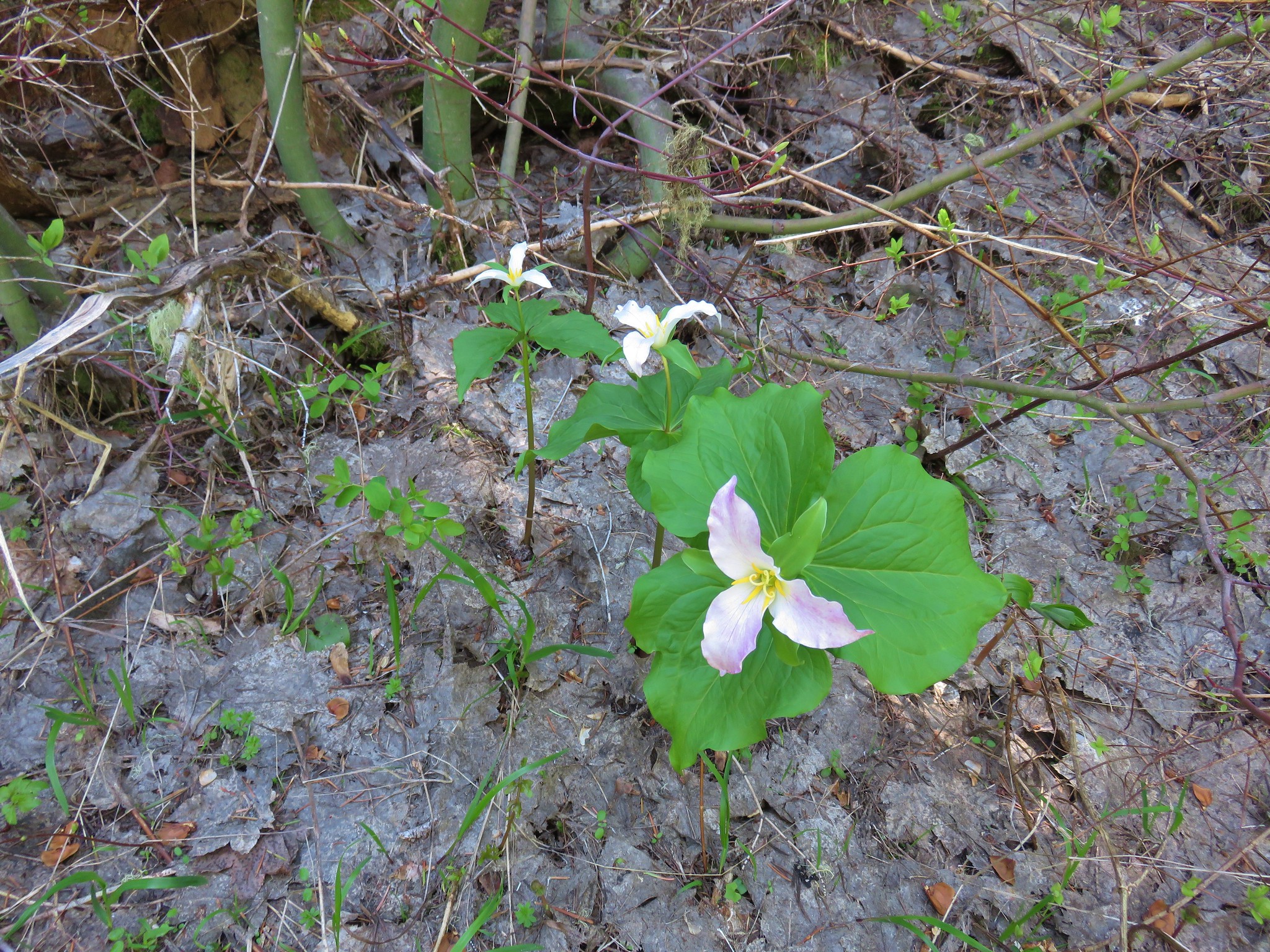
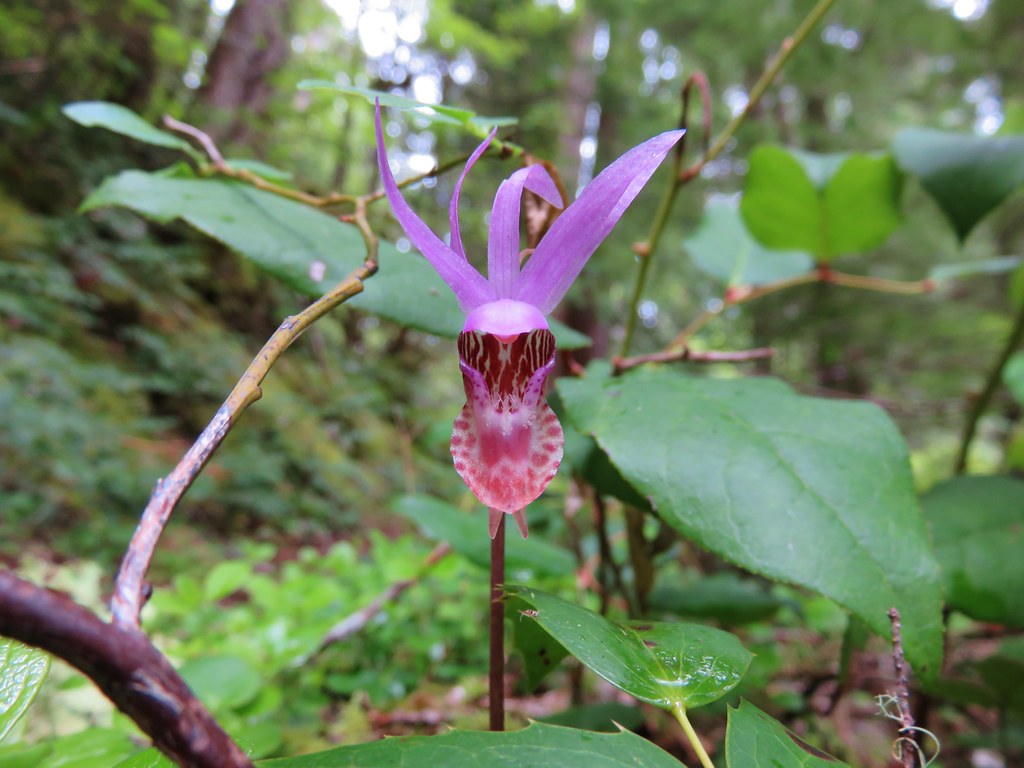
At this elevation the flowers in the forest included fairy slippers, toothwort, and trillium.
Oak Ridge Trail

Fairy slippers

Toothwort

Trillium

The trail leveled out somewhat once it was back in the forest and we soon arrived at the junction with the Surveyor’s Ridge Trail.
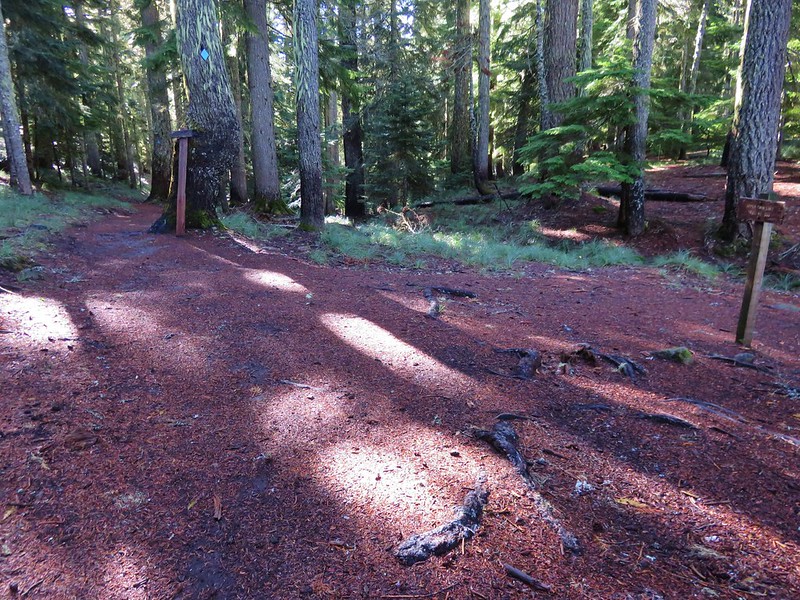
Oak Ridge Trail and Surveryor's Ridge Trail junction

We turned left following a pointer for Bald Butte which was 2 miles away.
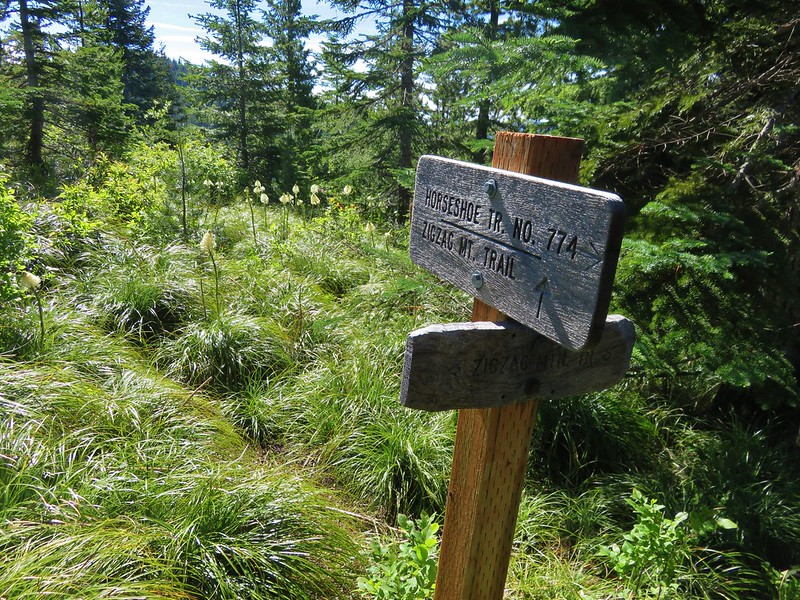
Surveyor's Ridge Trail sign

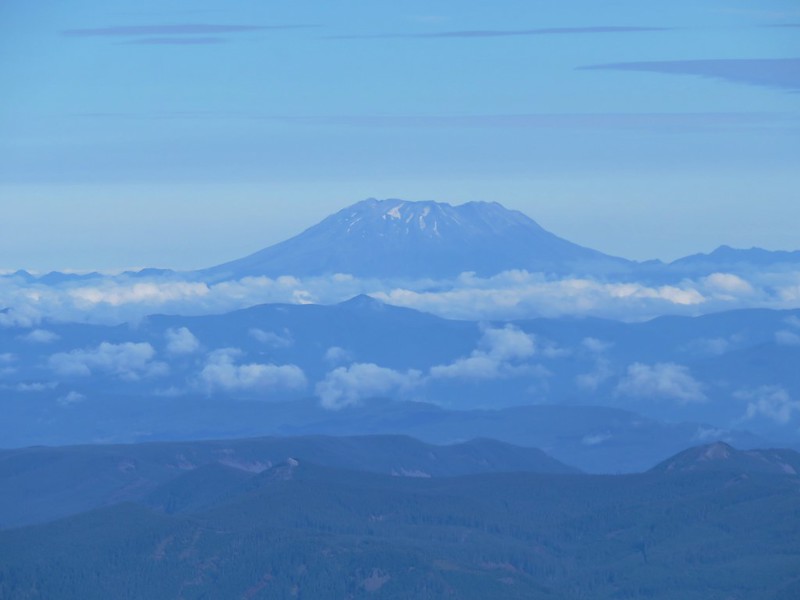
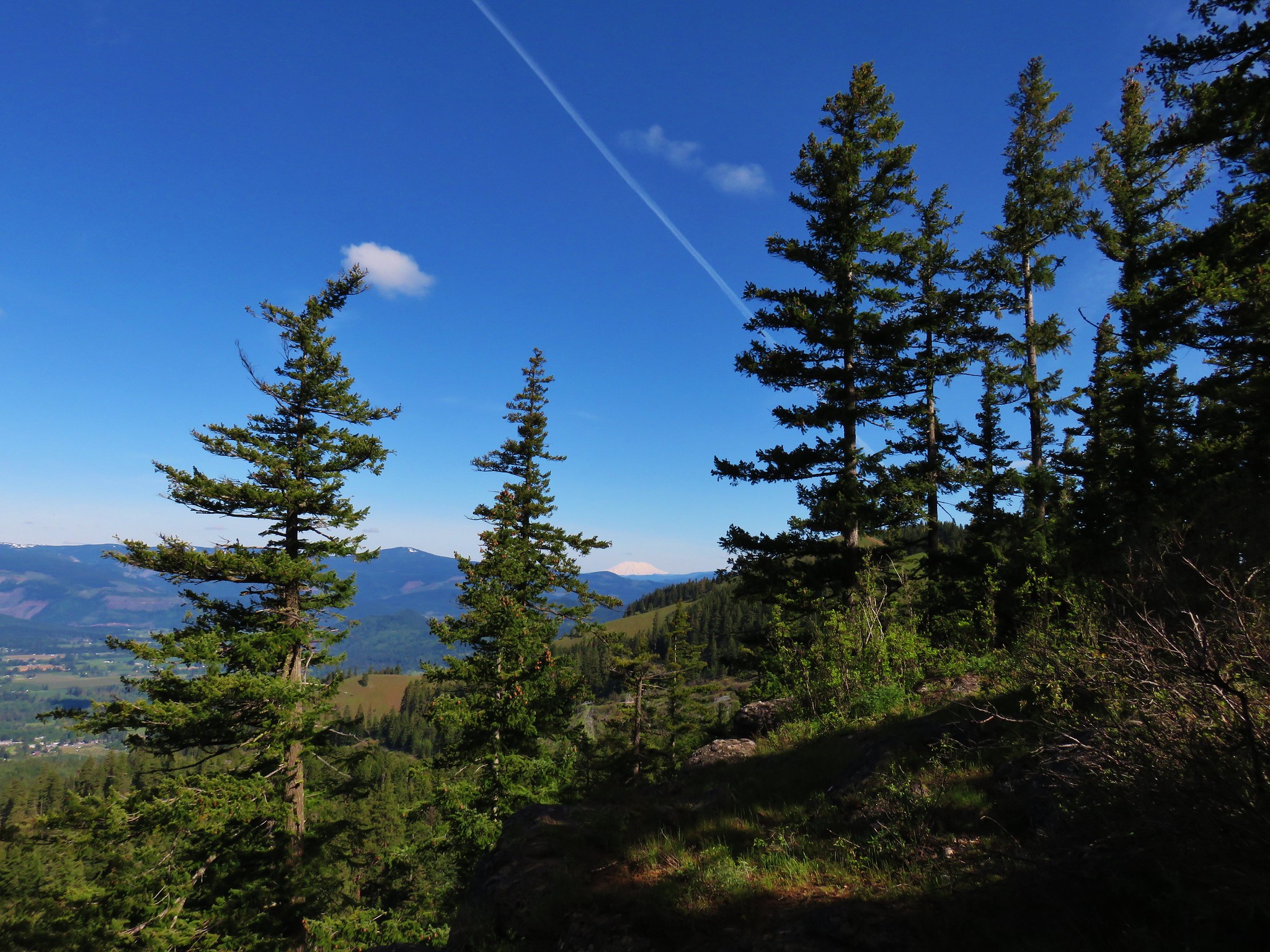
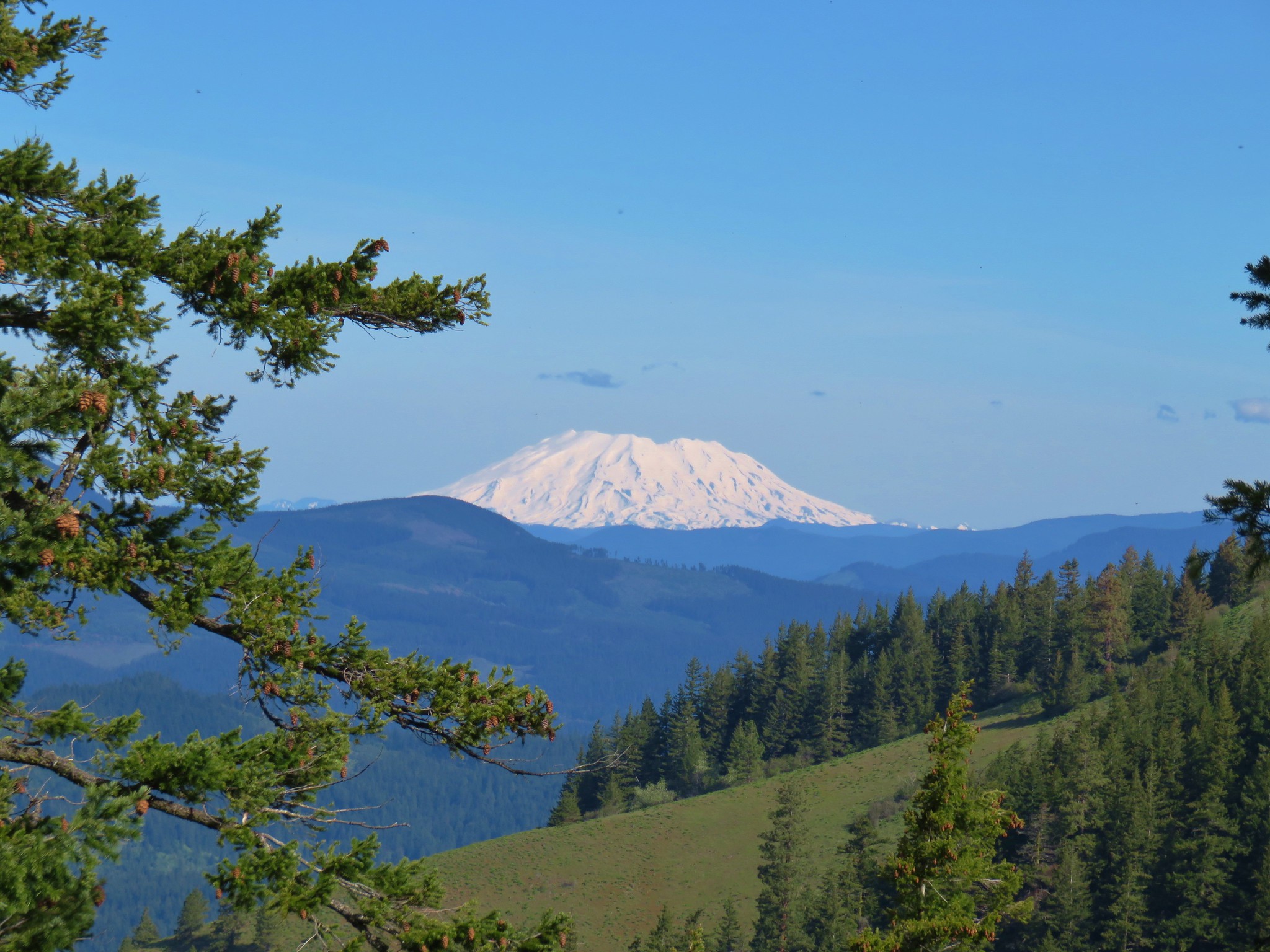
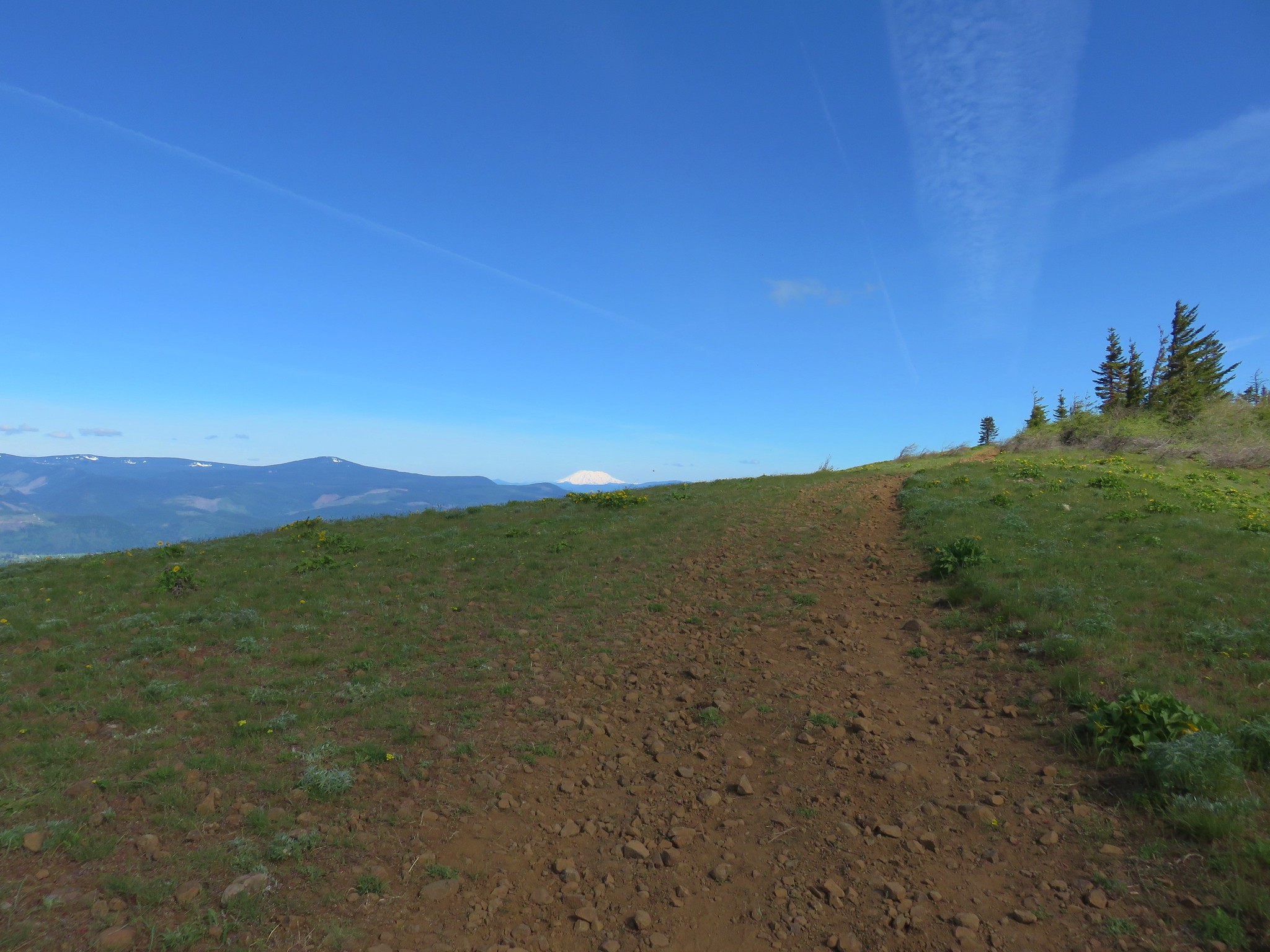
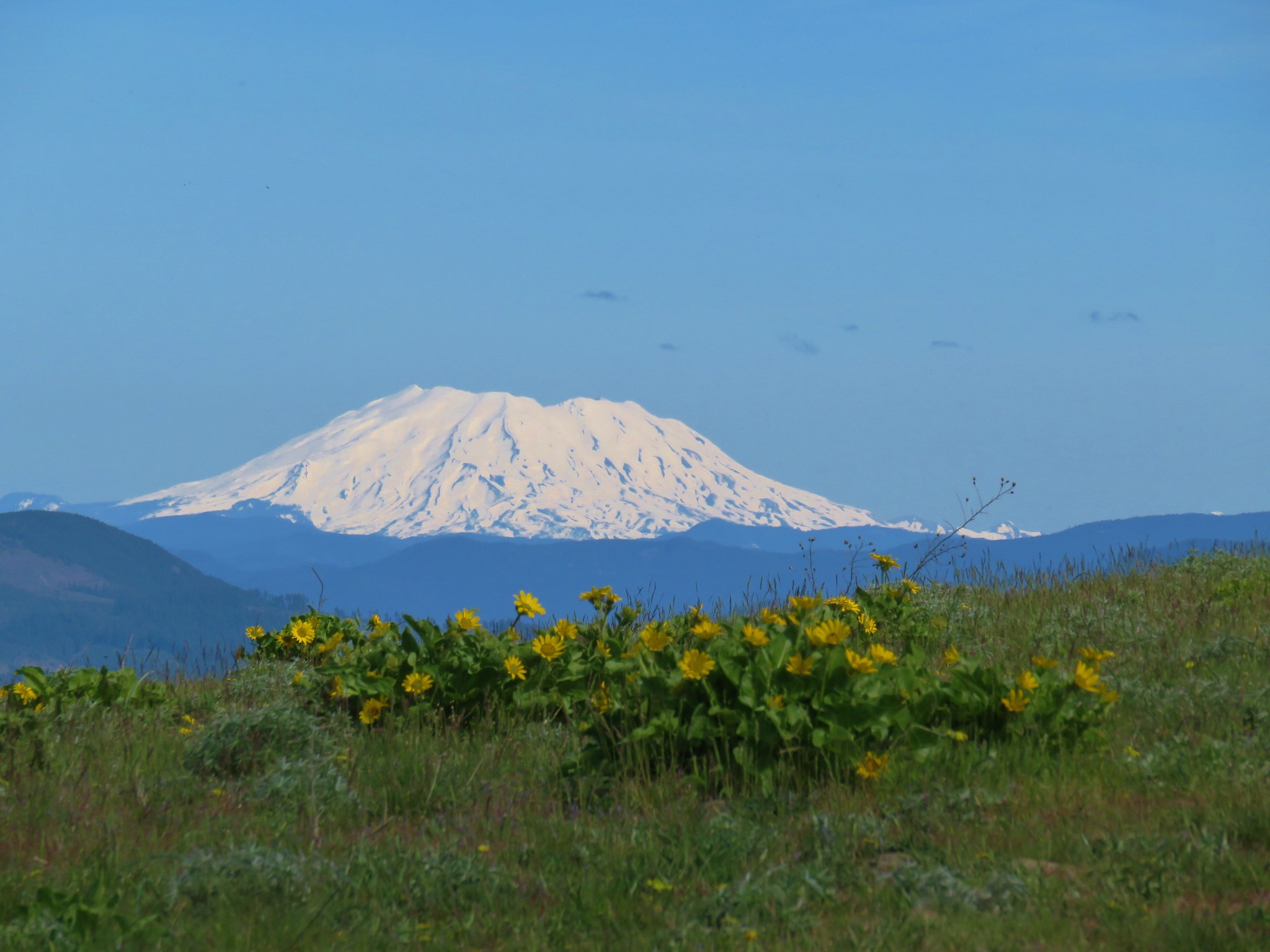
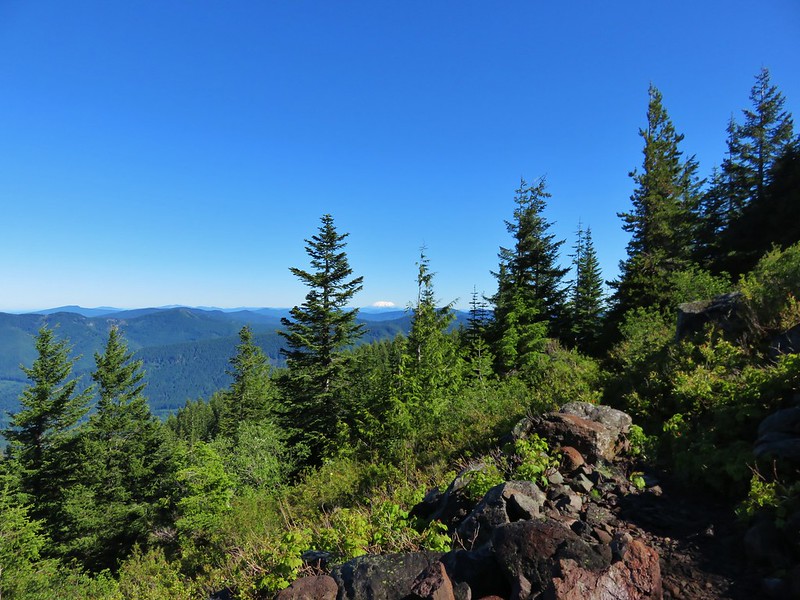
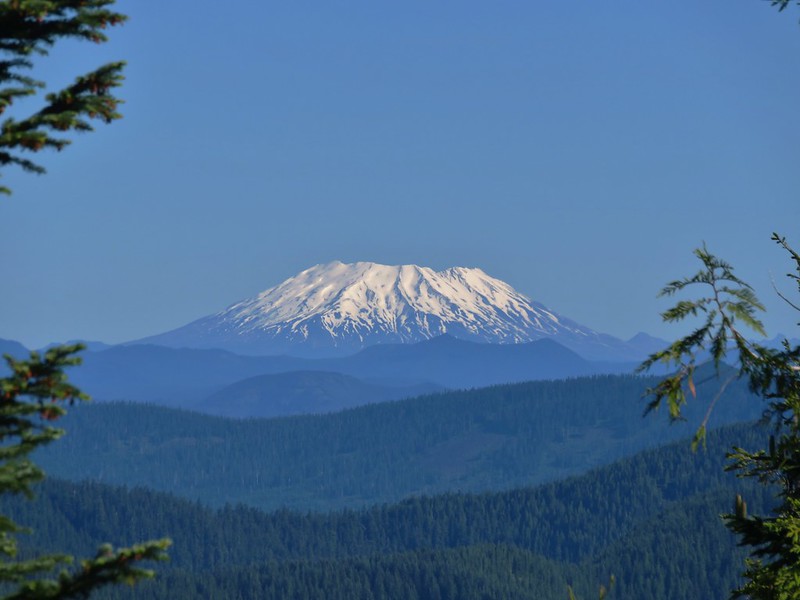
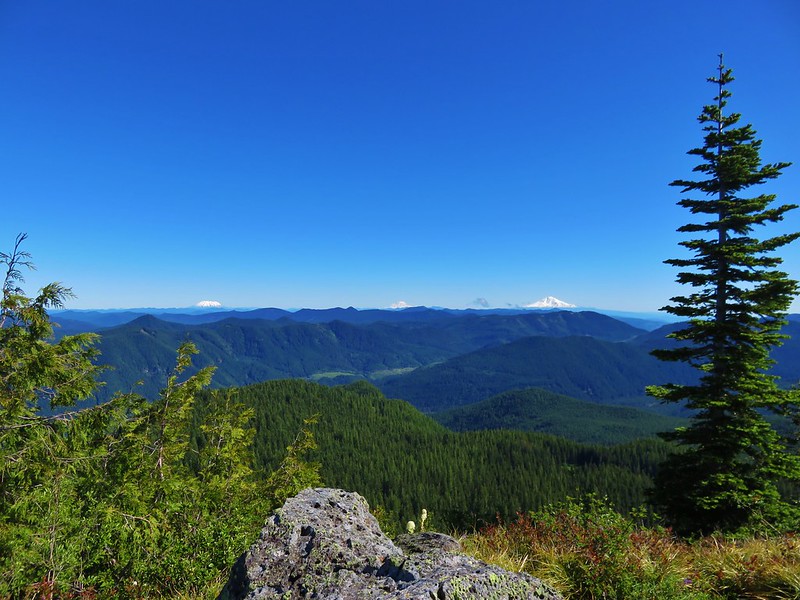
After passing a “Leaving National Forest” sign the ridge became rocky and more open which once again provided views of Mt. Hood and now Mt. St. Helens joined the skyline.
Surveryor's Ridge Trail

Mt. Hood

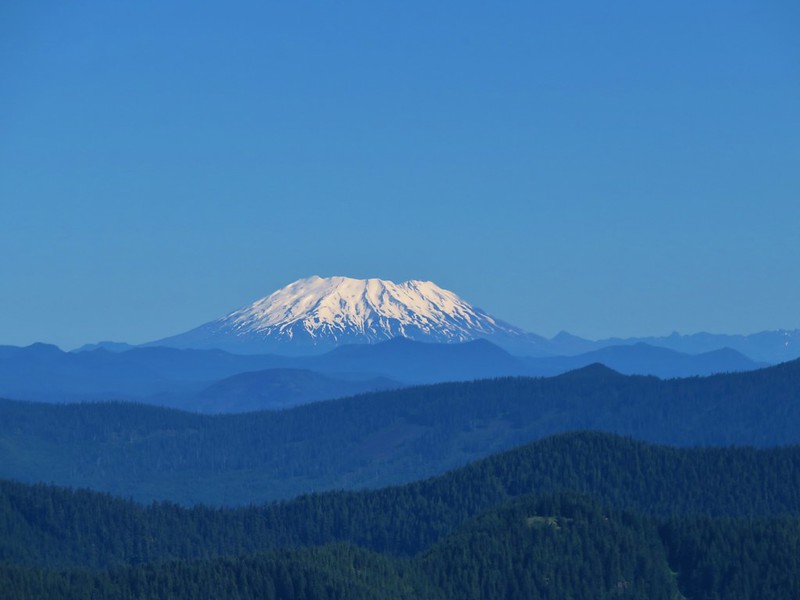
Mt. St. Helens

Mt. St. Helens

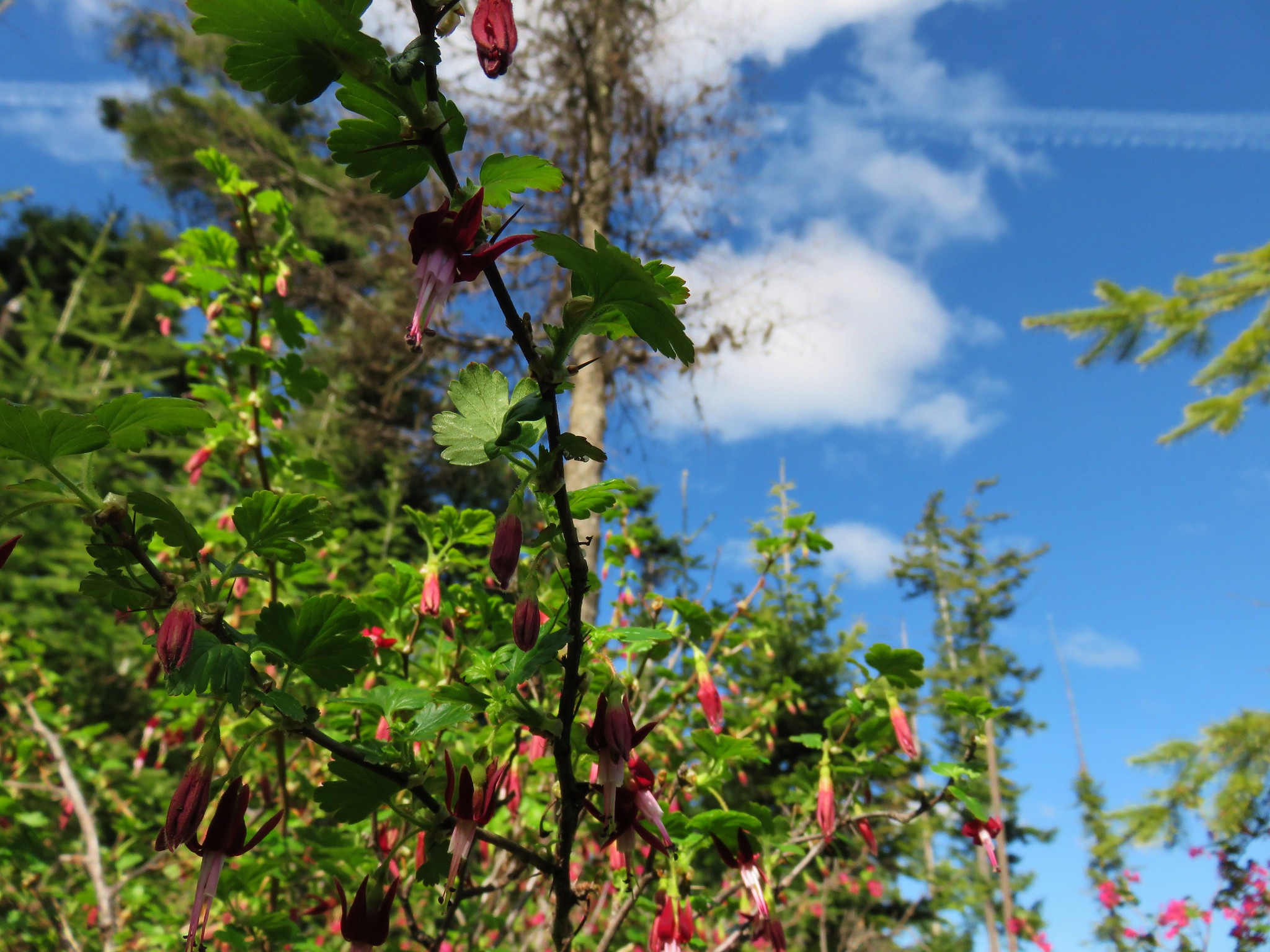
Red flowering currant was profuse along this stretch and we also spotted a gooseberry bush.
Surveyor's Ridge Trail

Red flowering currant

Gooseberry

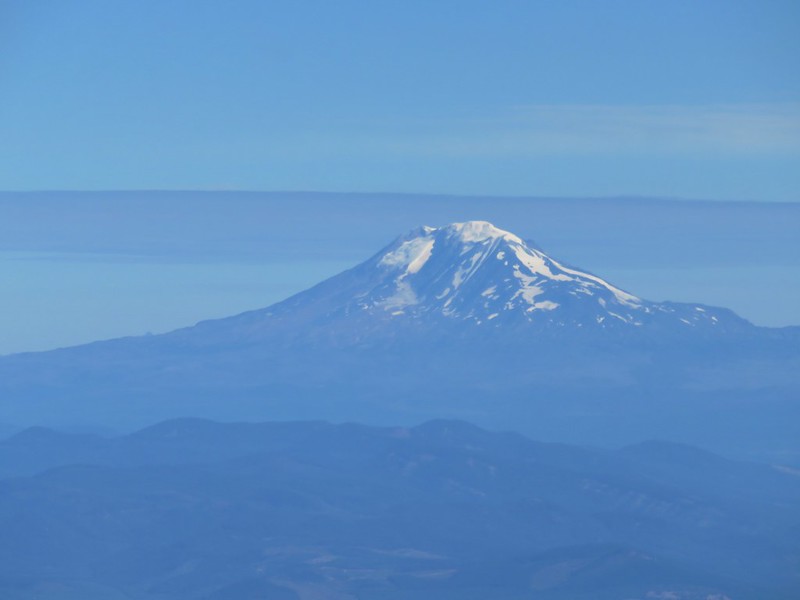
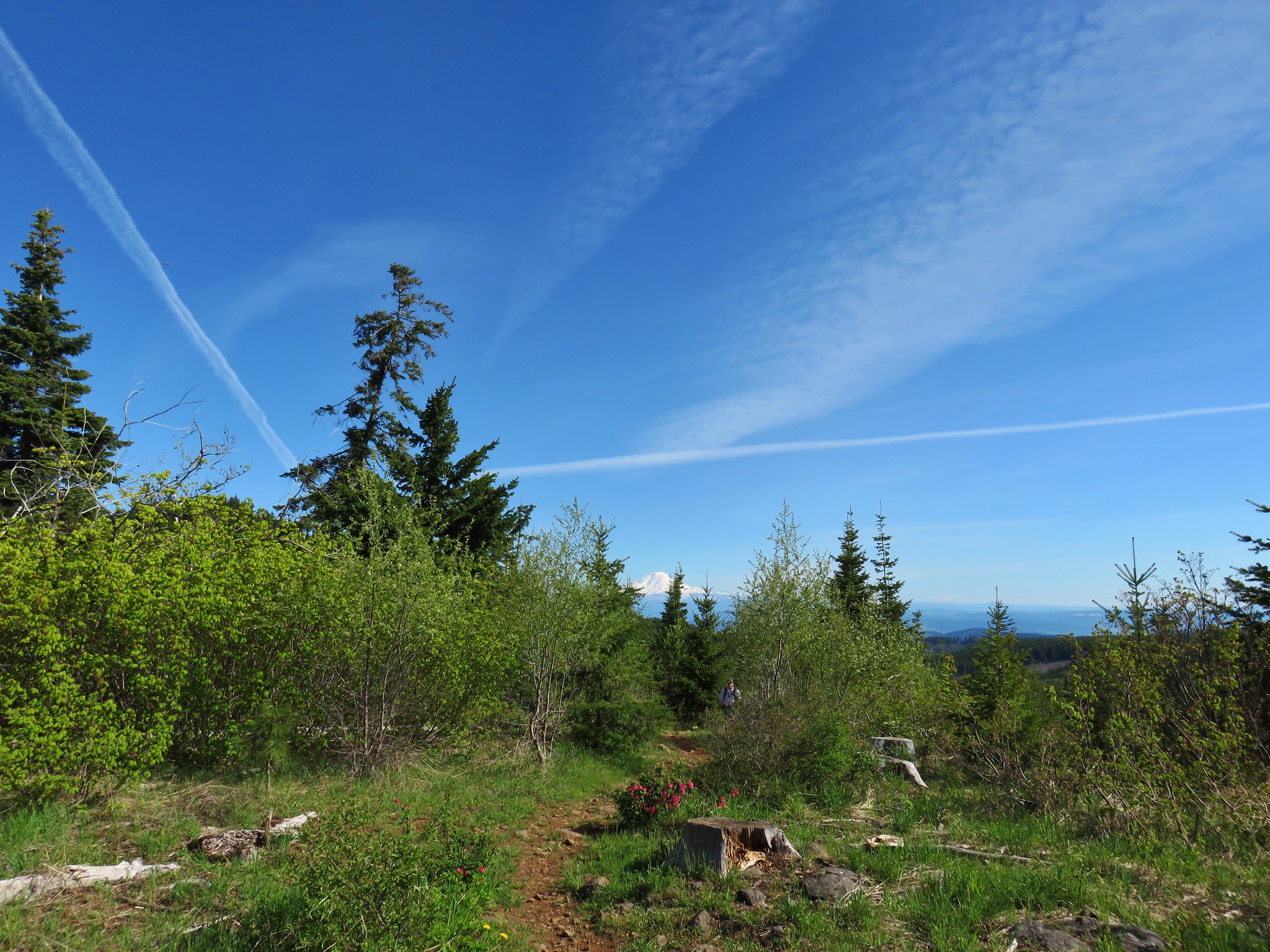
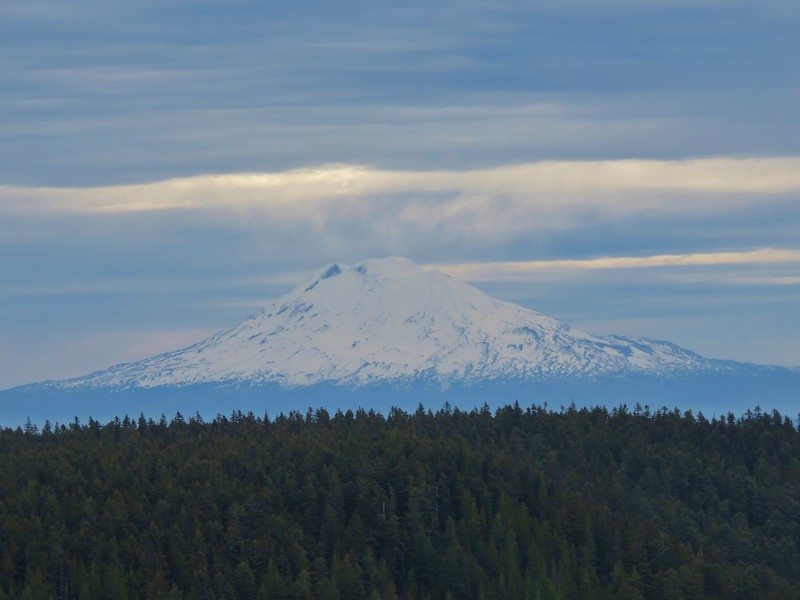
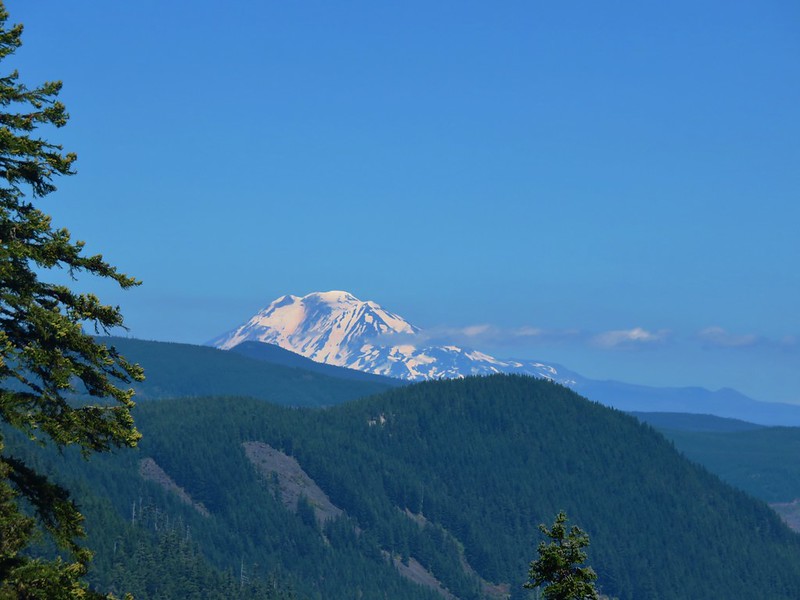
Mt. Adams also made a brief appearance.
Mt. Adams

The trail dropped slightly to a saddle where power lines and another possible trailhead sat beneath a hill.
Powerlines along the Surveryor's Ridge Trail

The trail so far had been off-limits to motorized vehicles but the final section is popular with dirt bike and ATV riders. We followed a steep dirt track under the power lines and up the hill.
Heading toward Bald Butte

There were quite a few flowers in bloom with more to come in the following weeks.
Biscuitroot

Daggerpod

Various small wildflowers

Near the crest of the hill we found one glacier lily still blooming.
Heading toward Bald Butte

Glacier Lily

After dipping into another saddle we faced the final somewhat steep climb to the summit of Bald Butte.
Bald Butte

Bald Butte

There was a nice display of wildflowers blooming along the way.
Wildflowers on Bald Butte

Balsamroot

Paintbrush

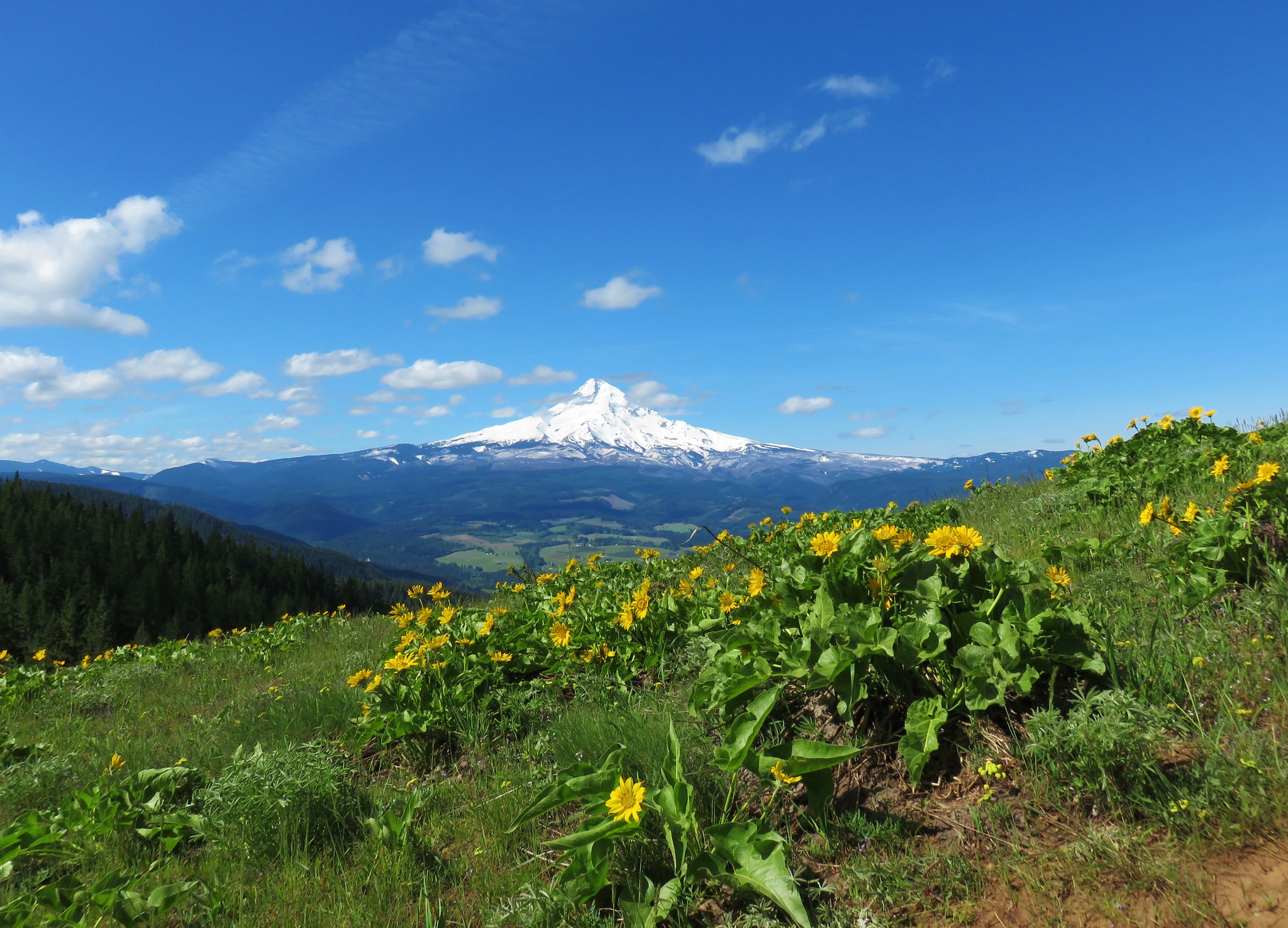
There had been a pesky line of clouds in front of Mt. Hood all morning and although it was still present it did seem to be slowly improving.
Mt. Hood and balsamroot

As we neared the summit Mt. St. Helens came into view followed by Mt. Rainier and most of Mt. Adams.
Mt. St. Helens

Mt. St. Helens

Mt. St. Helens, Mt. Rainier, and Mt. Adams

Mt. Rainier and Mt. Adams

We had run into one dirt bike rider as we were coming up Bald Butte, he was headed slowly back down with a flat front tire. A second rider arrived as we were exploring the far end of the butte hoping for a clearer view of Mt. Adams (there wasn’t one). We were a little put off when the rider took his bike out into the wildflowers instead of leaving it in the dirt next to the road and more so when he started it back up while he was still out in the meadow. It was totally unnecessary and that’s all I have to say about that.

Mt. Hood was indeed becoming increasingly visible as we began our hike back to the trailhead.
Mt. Hood

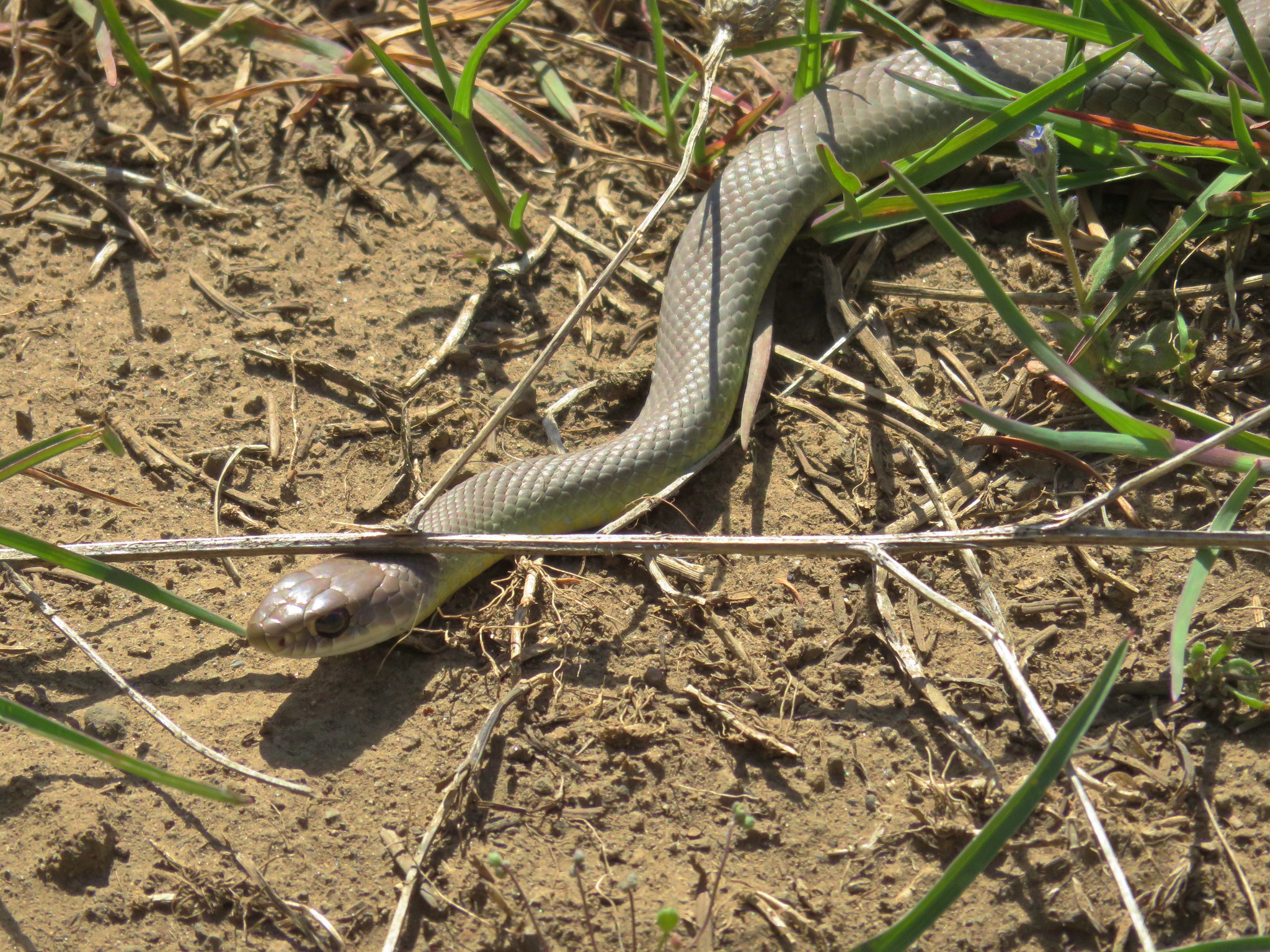
As we were nearing the power line saddle we spotted a snake along the trail.
Snake

The snake wasn’t the only one out now that the day had gotten later. We had seen two other hikers that morning but passed a good deal more on our descent.

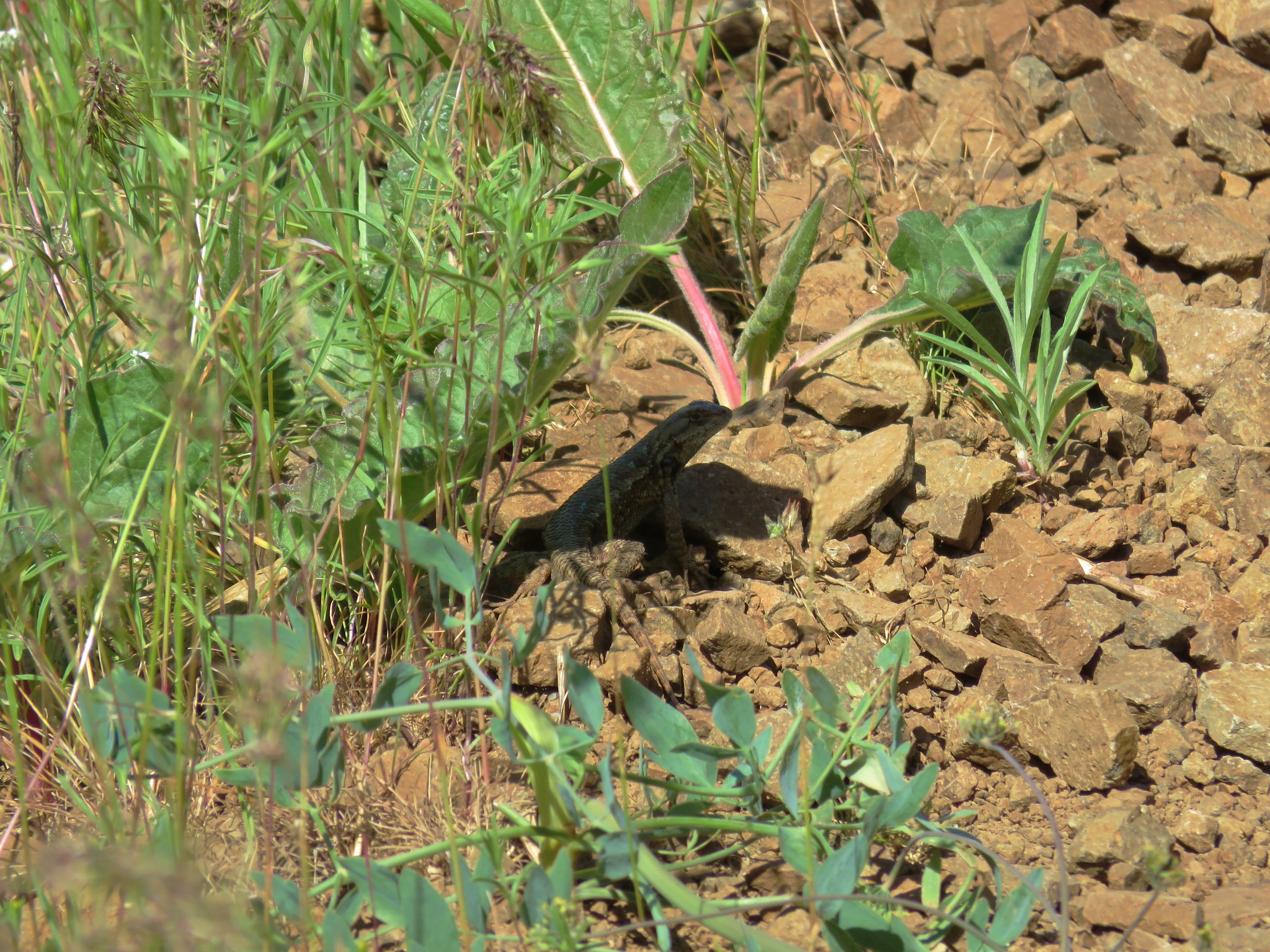
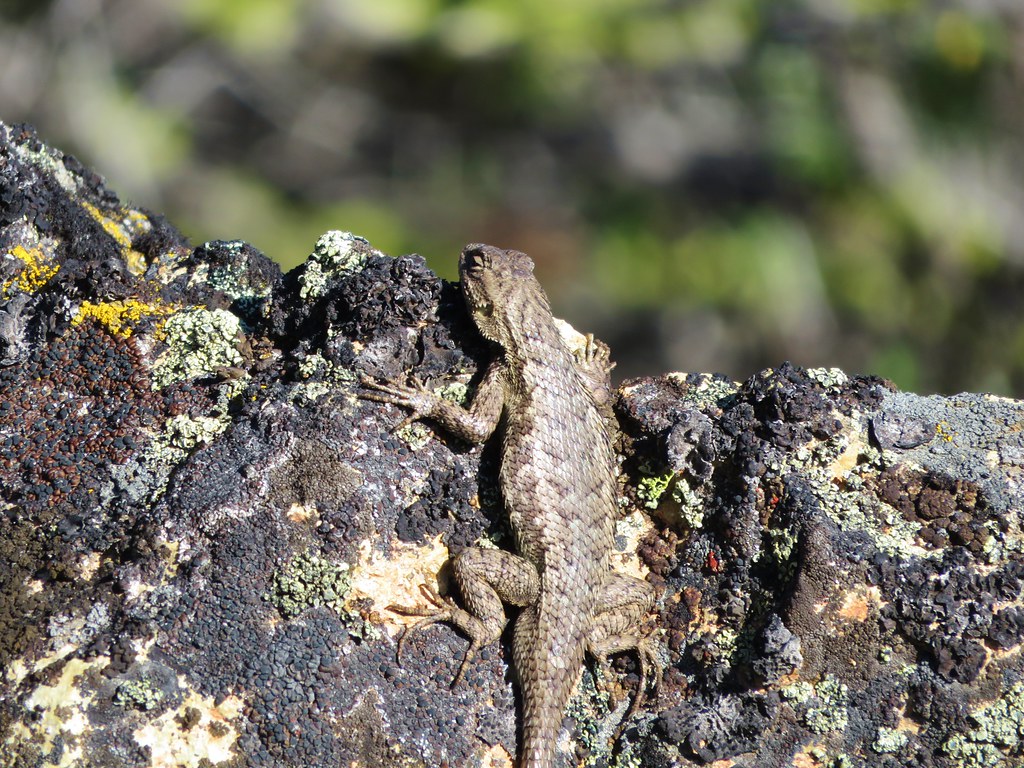
Back in the grassland a number of lizards scurried about.
Oak Ridge Trail

Lizard

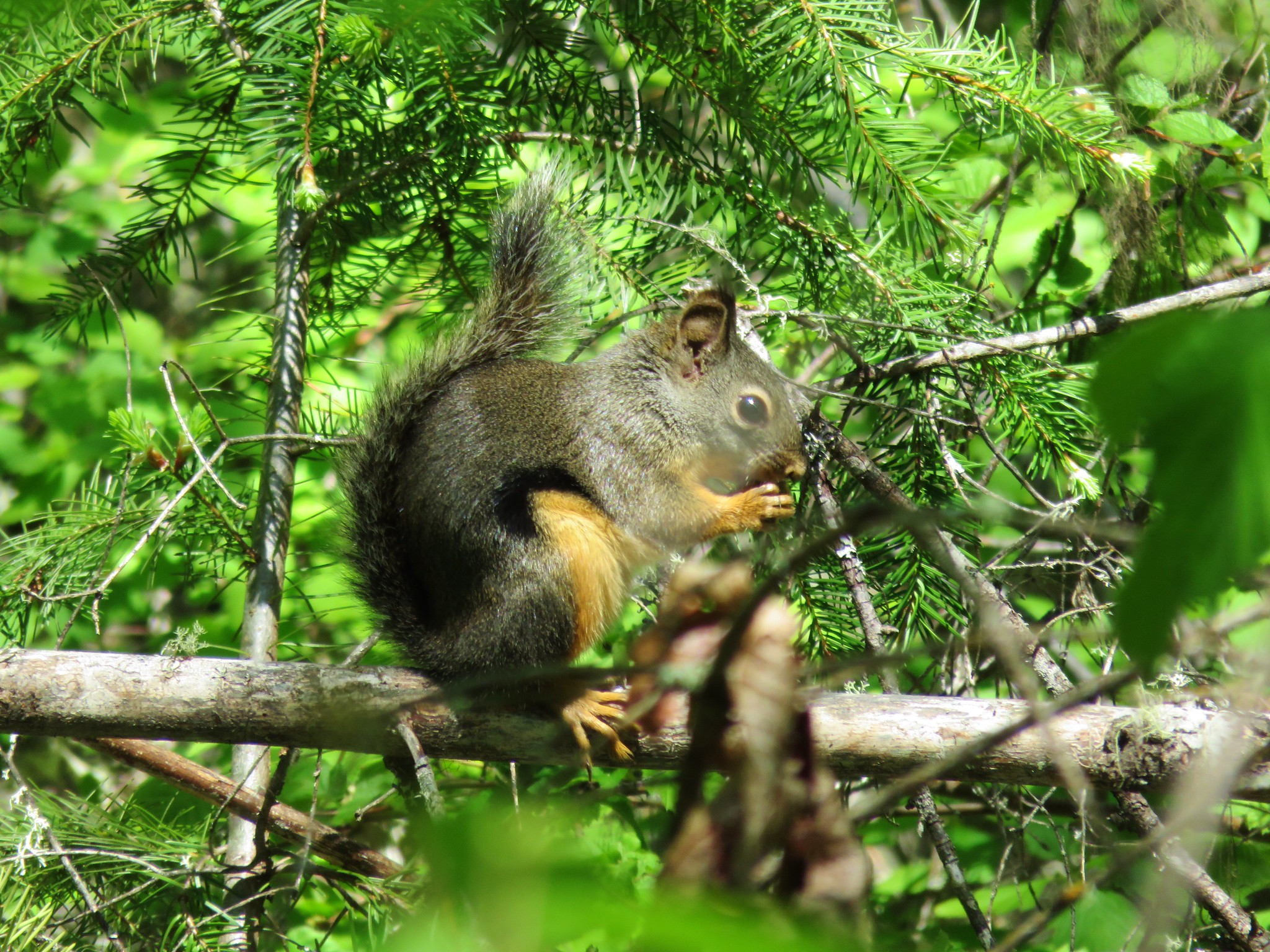
It was nice to once again have a camera able to zoom in on the wildlife which came in handy one last time near the trailhead.
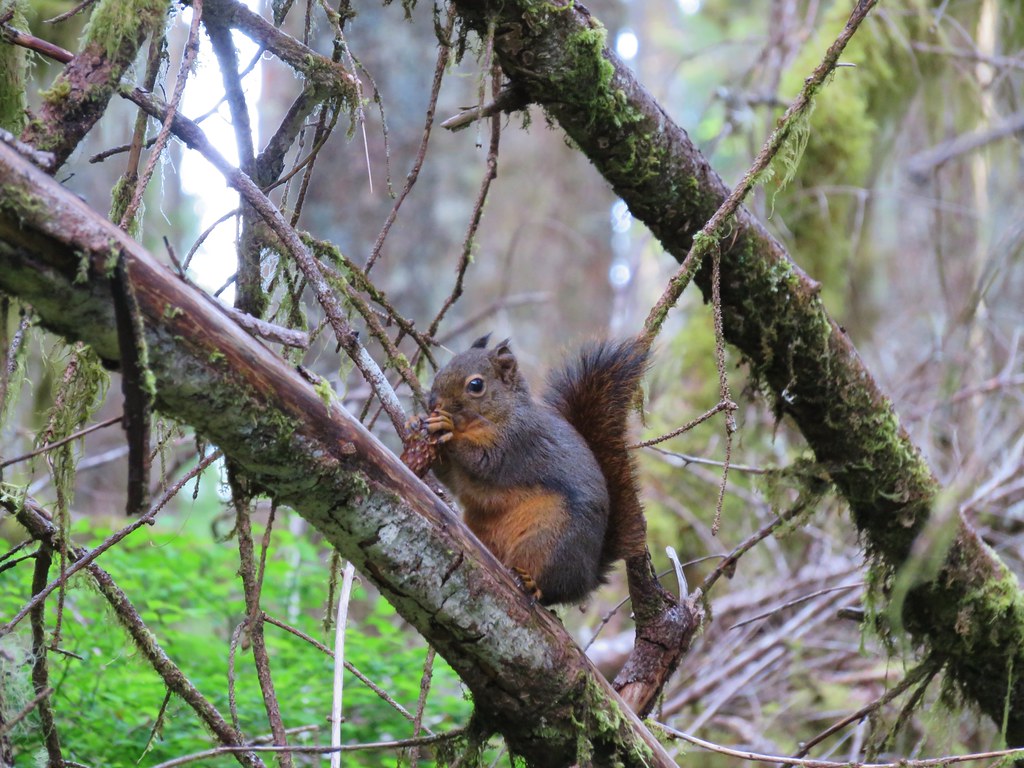
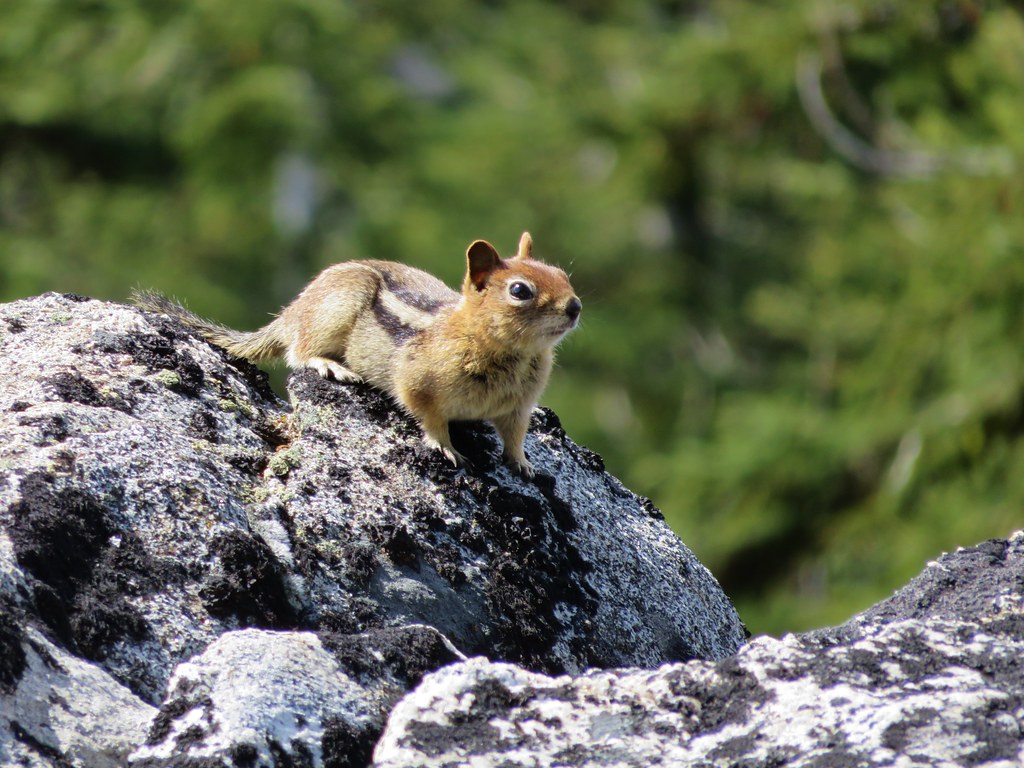
Douglas Squirrel

It was a little over 80 degrees back at the car and for the first time in a long while there was hope that summer was indeed coming. Happy Trails!

Flickr: Bald Butte

Categories
Year-end wrap up

The Hikes of 2016 – A Look Back

It’s hard to believe that it’s already time to recap our 2016 hiking year, and what a great year for hiking it turned out to be! I spent our off-season (Nov-Apr) putting together a 7 year plan (yes I have an issue) to help us achieve two of the goals we’ve set for ourselves. One is to hike each of the featured hikes in each of William L. Sullivan’s five “100 Hikes/Travel Guide” books and the second is to visit each of Oregon’s 45 designated wilderness areas. (There are 47 but the Oregon Islands and Three Arch Rocks Wilderness Areas are off-limits.) In previous years I had only put together a schedule for the upcoming year, but by looking further ahead I was able to make sure we weren’t going to miss any hikes and they were scheduled at what should be good times to visit. We also now had a handy list of options, laid out by the best times to visit, to pick from if we needed to change plans for any reason. The schedule remains a work in process but as it stands today we will finish visiting all the wilderness areas with Grassy Knob in 2022 and 460 of the 500 featured hikes in Sullivan’s books by the end of 2023. The remaining 40 hikes are too far away for day trips so they are incorporated into vacations that will need to happen further down the road.

The first draft of our 2016 hikes was completed on 12/18/15 and consisted of 57 days worth of hikes totaling 624.4 miles. History had shown that those numbers (and the hikes themselves) would change as the year played out, but it was a solid starting point. That again proved to be the case as 10 of the original hikes were swapped out for others and 4 additional hikes were added, and the total mileage rose by over 150 miles to end at 792.8. We visited 8 wilderness areas for the first time knocking 7 more off the Oregon list. They were the Oregon Badlands, Kalmiopsis, Menagerie, Eagle Cap, Mountain Lakes, Sky Lakes, and Lower White River Wildernesses in Oregon and the Marble Mountain Wilderness in California. In addition to the new areas we hiked in the Mt. Hood, Mt. Jefferson, Three Sisters, Mt. Washington, and Mark O. Hatfield Wildernesses as well as the the John Day Fossil Beds National Monument and the Mt. St. Helens Volcanic National Monument.

Our travels took us on hikes further to the west (Cape Sebastian State Park), east (West Fork Wallowa Trail – Eagle Cap Wilderness), and south (Cliff Lake – Marble Mountain Wilderness) than ever before. Our trips to the Marble Mountain and Eagle Cap Wilderness areas were our first 5 day/4 night backpacking trips which proved to be just about the limit on how long we can stay out given our current gear.

The weather was exceptional for nearly all of our hikes. Early winter storms left a more normal snow pack which helped make 2016 a pretty good wildflower year and we only ran into two weather related issues. The first was a slight chance of rain for our vacation week in May during which we’d planned on visiting the desert in SE Oregon. Any precipitation in that area would have made it impossible to reach our planned trailheads so we put that vacation off and headed to the Southern Oregon Coast instead which wound up being a great plan B. The second was a July hike on Scar Ridge in the Old Cascades which was swapped for Fifteenmile Creek on the east side of the Mt. Hood National Forest due to probable thunderstorms.

Although the weather conditions were almost always great the same couldn’t be said for the condition of a few of the trails. During our May vacation we encountered a host of ticks along the Illinois River Trail. Later in the year it was blowdown that proved to be the biggest obstacle. In the Sky Lakes Wilderness a section of the Badger Lake Trail to the Pacific Crest Trail was a mess.
Blowdown over the Badger Lake Trail

This was also the case along much of the Bowerman Lake Trail in the Mt. Jefferson Wilderness.
Bowerman Lake Trail

As well as the Hand Lake Trail in the Mt. Washington Wilderness.
More blowdown over the Hand Lake Trail

The one consistent regardless of the location, weather, or trail conditions was the beauty and diversity that makes the Pacific Northwest so special. From west to east starting with the Oregon Coast:
Tillamook Head to the South of the Fort-To-Sea Trail
Tillamook Head from the Fort-to-Sea Trail

Lone Ranch Beach from Cape Ferrelo

View from the Oregon Coast Trail near Secret Beach
View from the Oregon Coast Trail in Samuel H. Boardman State Park

Past the Klamath Mountains in Southern Oregon and Northern California:
Little Vulcan and Vulcan Lake below Vulcan Peak

Kalmiopsis Wilderness

Black Marble Mountain
Marble Mountain Wilderness

and the Coast Range to the north:
Old Growth Ridge Trail
Old Growth Ridge Trail in the Siuslaw National Forest

Sweet Creek Falls
Sweet Creek Falls

across the Willamette Valley:Trail in Minto-Brown Island Park
Minto-Brown Island Park

Bald Hill
Bald Hill

into the Old Cascade Mountains:
Coffin Mountain
Coffin Mountain from Bachelor Mountain

Rooster Rock
Rooster Rock in the Menagerie Wilderness

over the Cascade Mountains:
Mt. McLoughlin
Mt. McLoughlin

Diamond Peak from the Pacific Crest Trail
Diamond Peak

The Three Sisters from a meaow along the Rebel Rock Trail
The Three Sisters

Mt. Washington
Mt. Washington

Three Fingered Jack beyond the Eight Lakes Basin
Three Fingered Jack

Mt. Jefferson from Jefferson Park
Mt. Jefferson

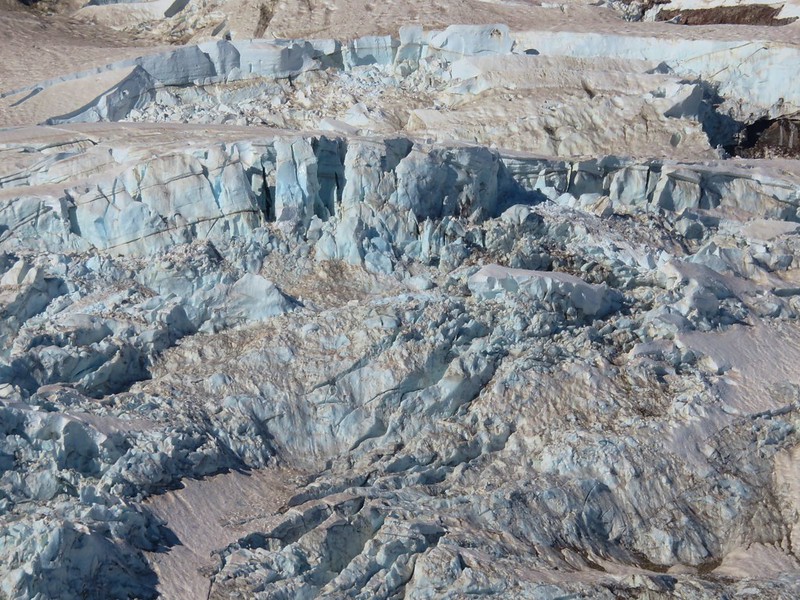
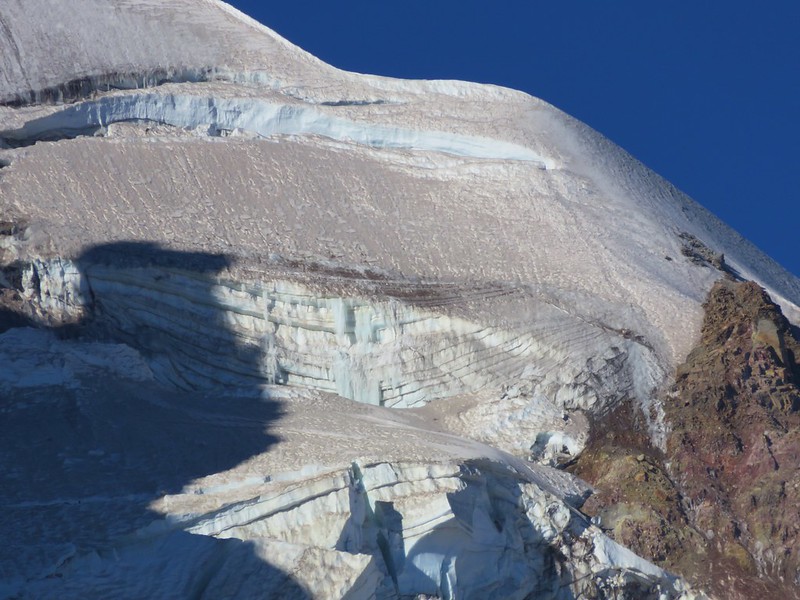
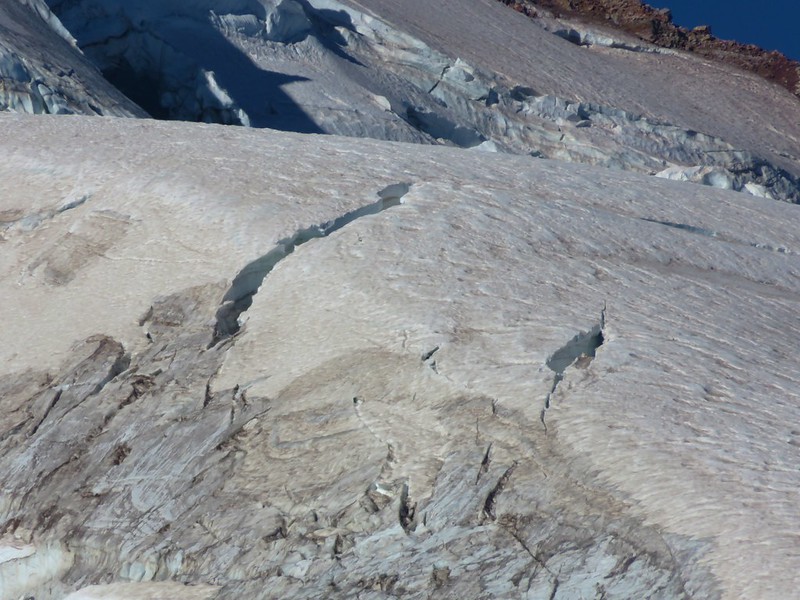
Mt. Hood and the Eliot Glacier
Mt. Hood

Coldwater Peak and Snow Lake
Coldwater Peak and Snow Lake – Mt. Margaret Backcountry, Mt. St. Helens Volcanic National Monument

into the High Desert of Central Oregon:
Badlands Rock
Badlands Rock – Oregon Badlands Wilderness

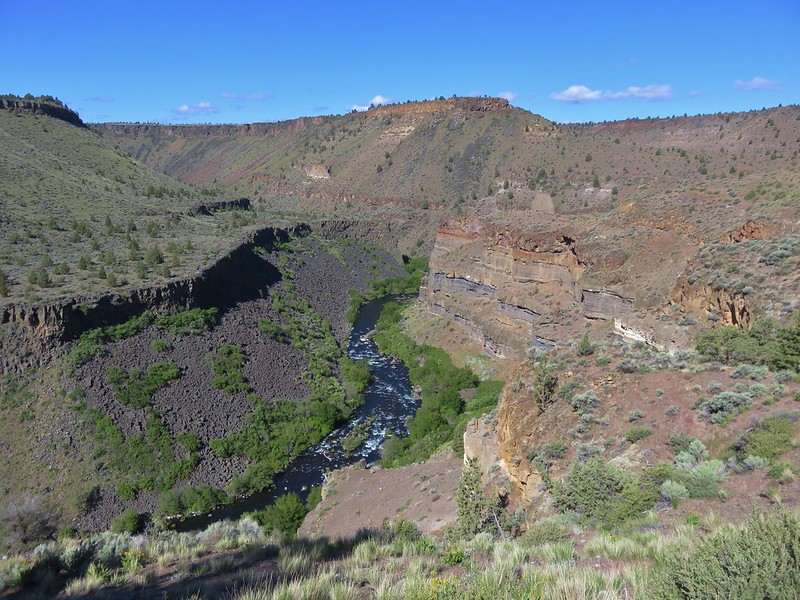
Deschutes River
Deschutes River

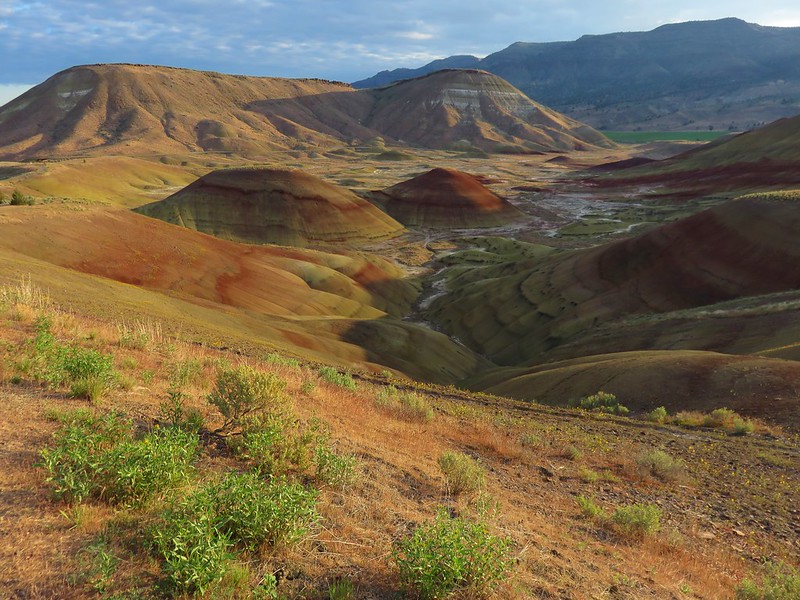
Painted HIlls
Painted Hills – John Day Fossil Beds National Monument

NE to the Wallowa Mountains:
Ice Lake
Ice Lake and the Matterhorn

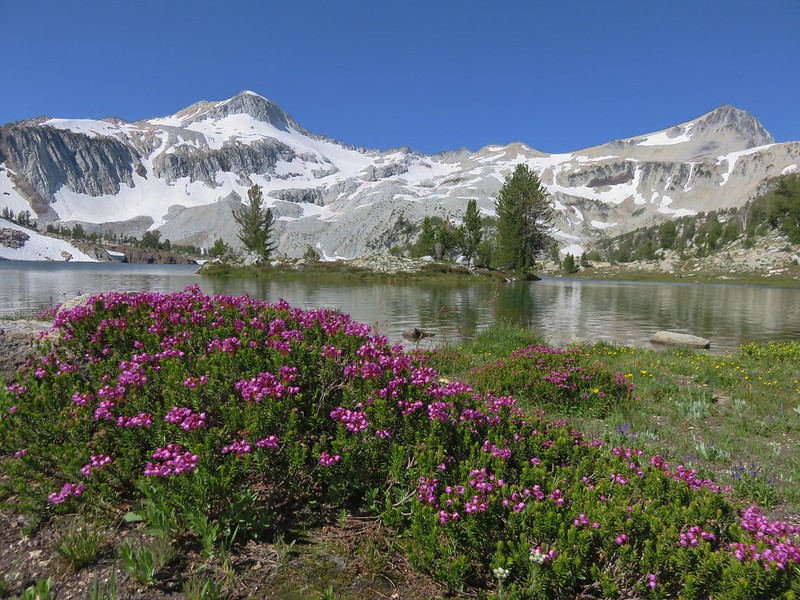
Glacier Lake
Glacier Peak and Eagle Cap from Glacier Lake

Eagle Cap Wilderness

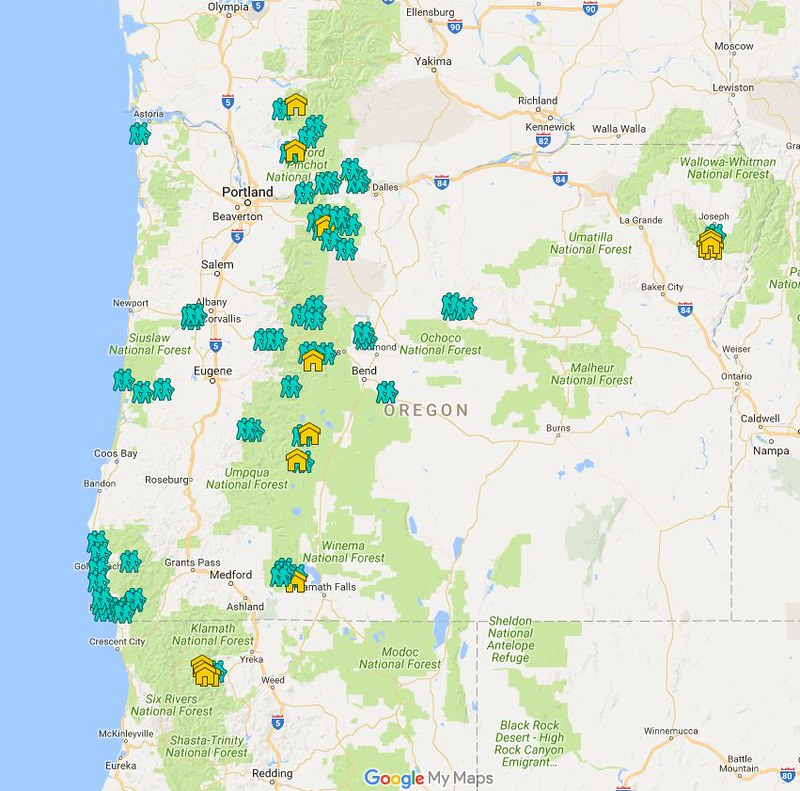
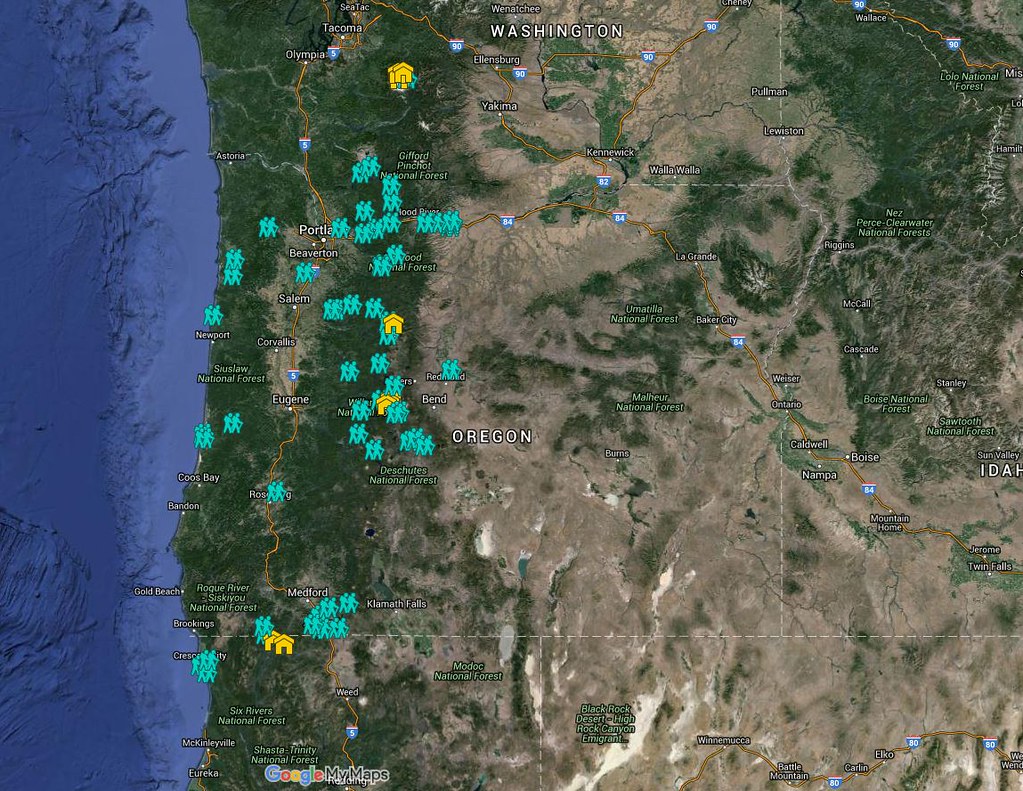
Here is a look at the locations of our hikes. The hiker symbols are the trailheads and the yellow house icon denotes the approximate location of our campsites.
2016 Hikes
An interactive version can been accessed here and includes all of our previous hikes.

In addition to the spectacular views the areas provided a wonderful variety of wildlife and vegetation.

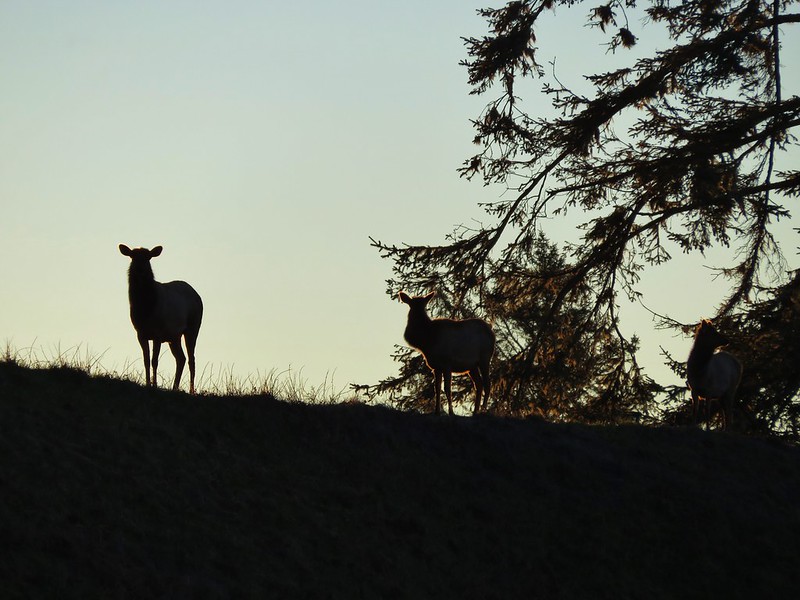
Elk
Elk

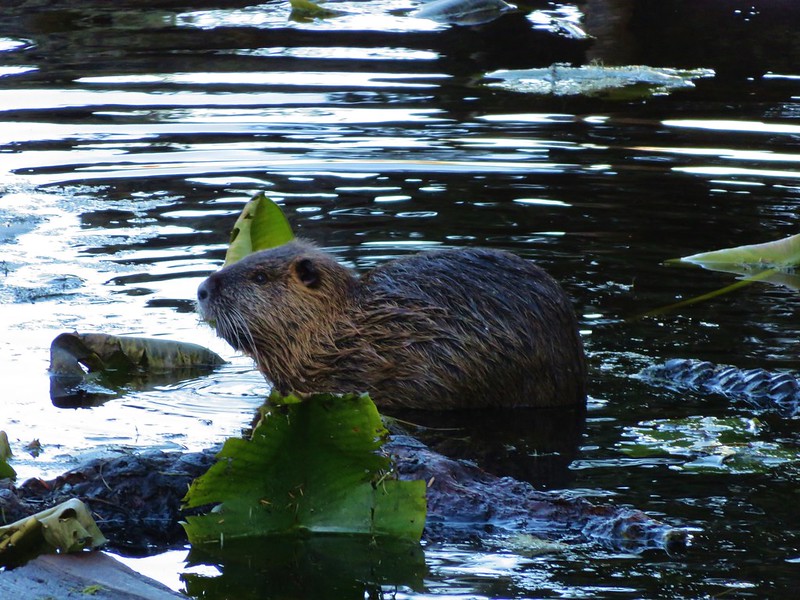
Nutria
Nutria

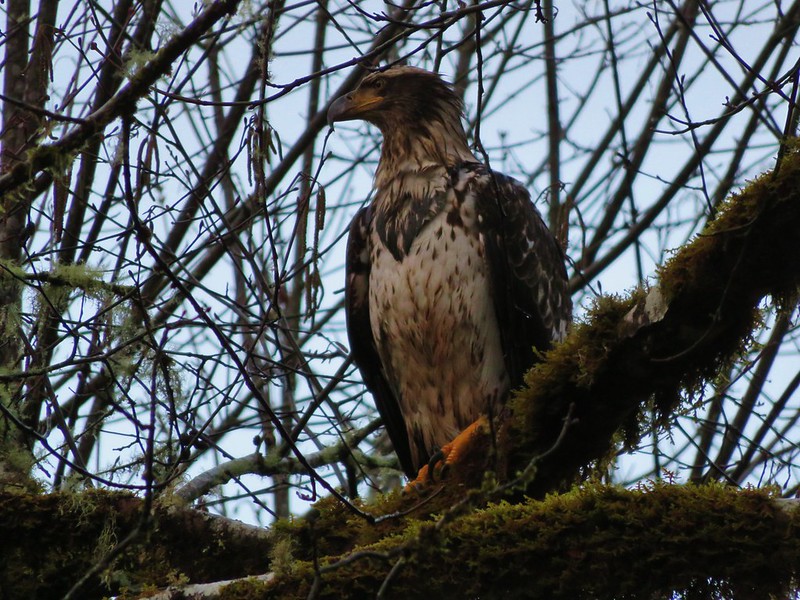
Bald eagle
Bald Eagle

Chukars
Chukar

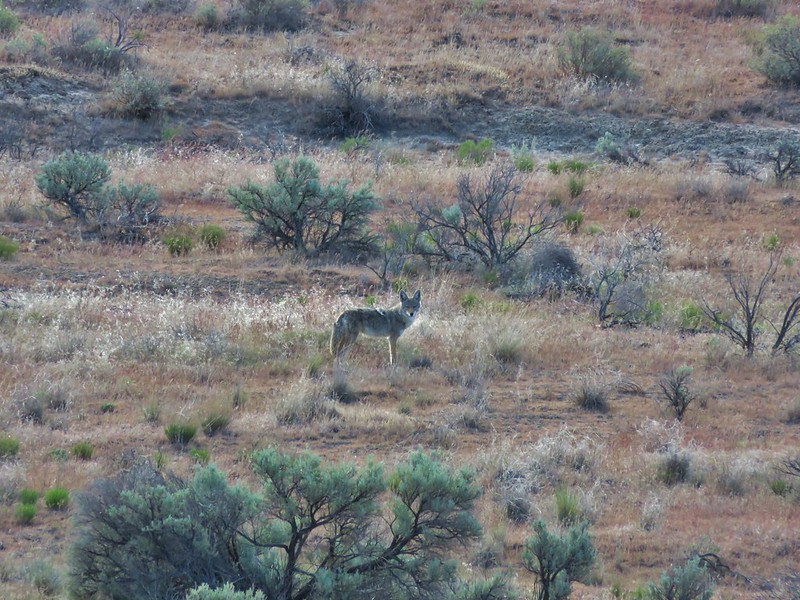
Coyote
Coyote

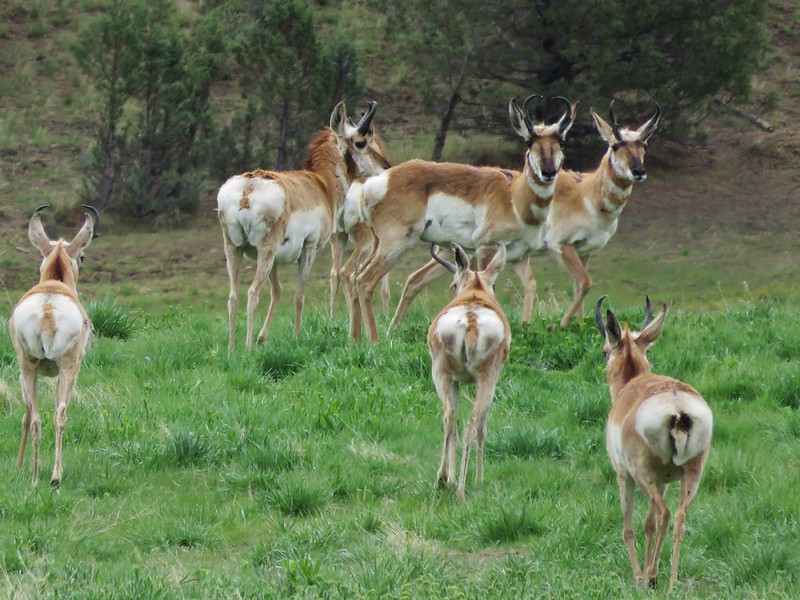
Pronghorn
Pronghorn

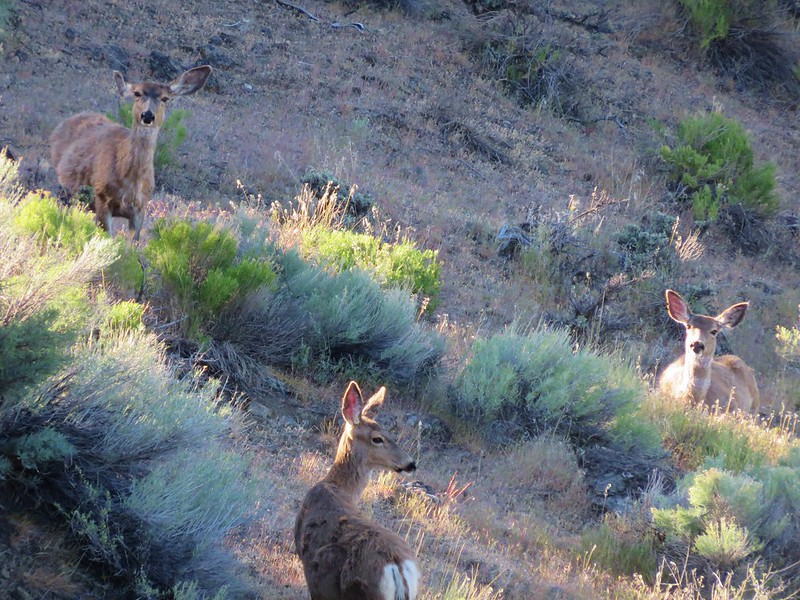
Deer
Deer

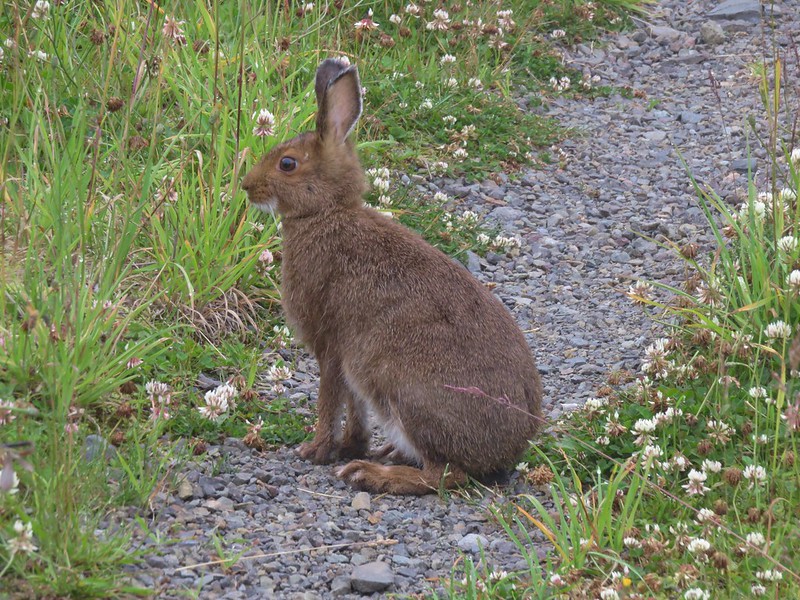
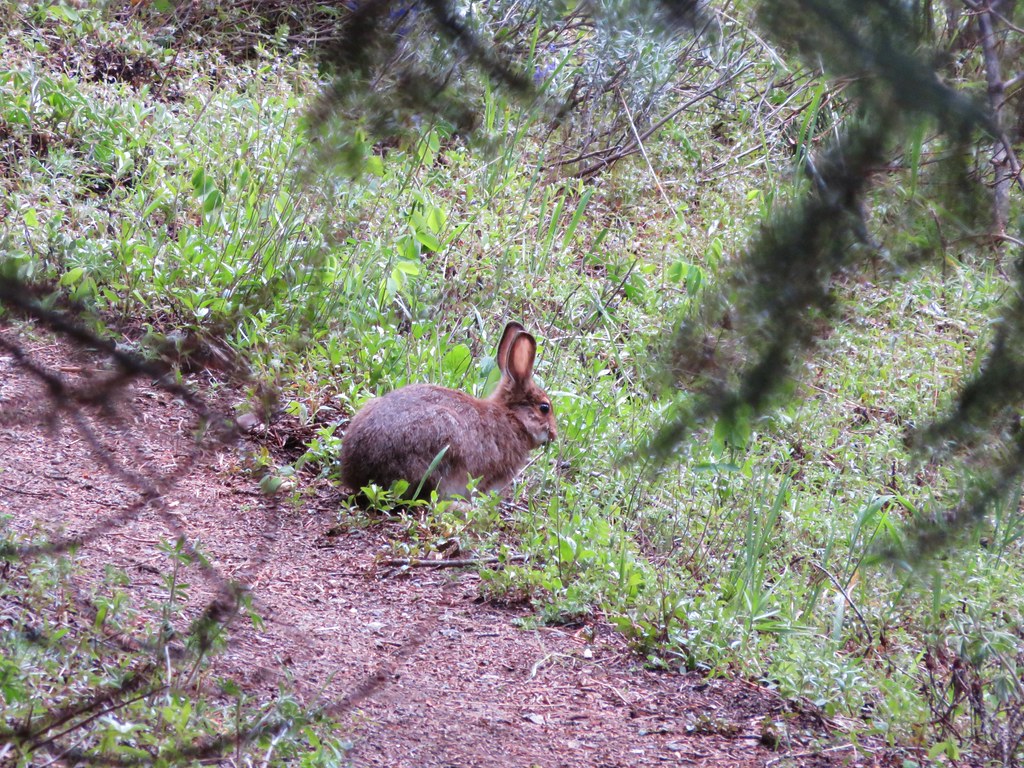
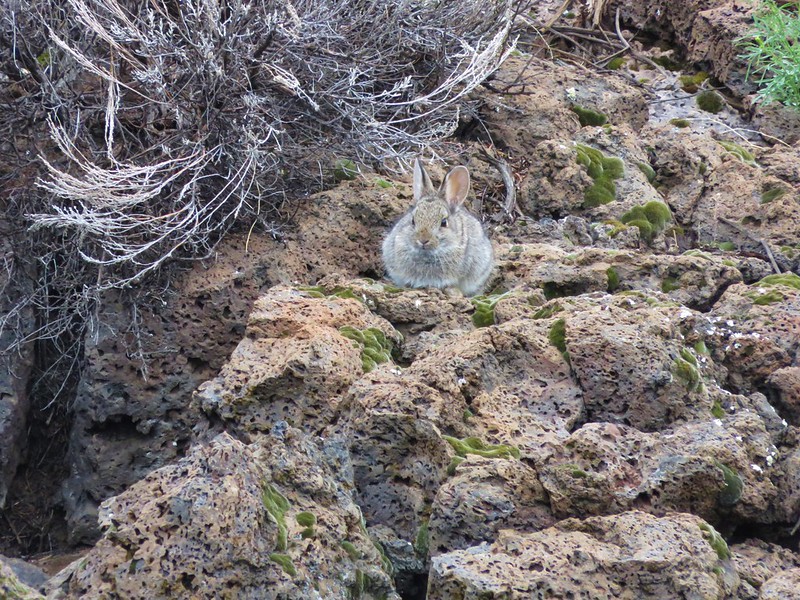
Rabbits
Rabbit

Snowshoe hare

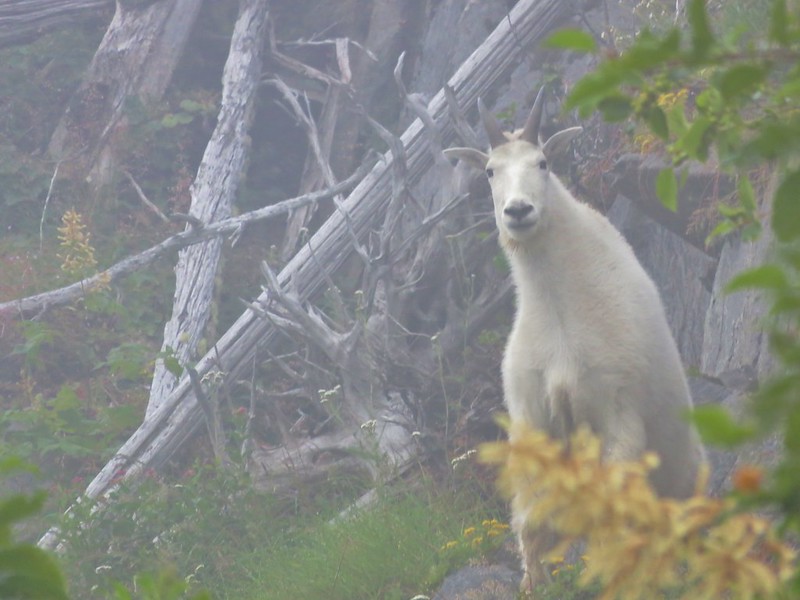
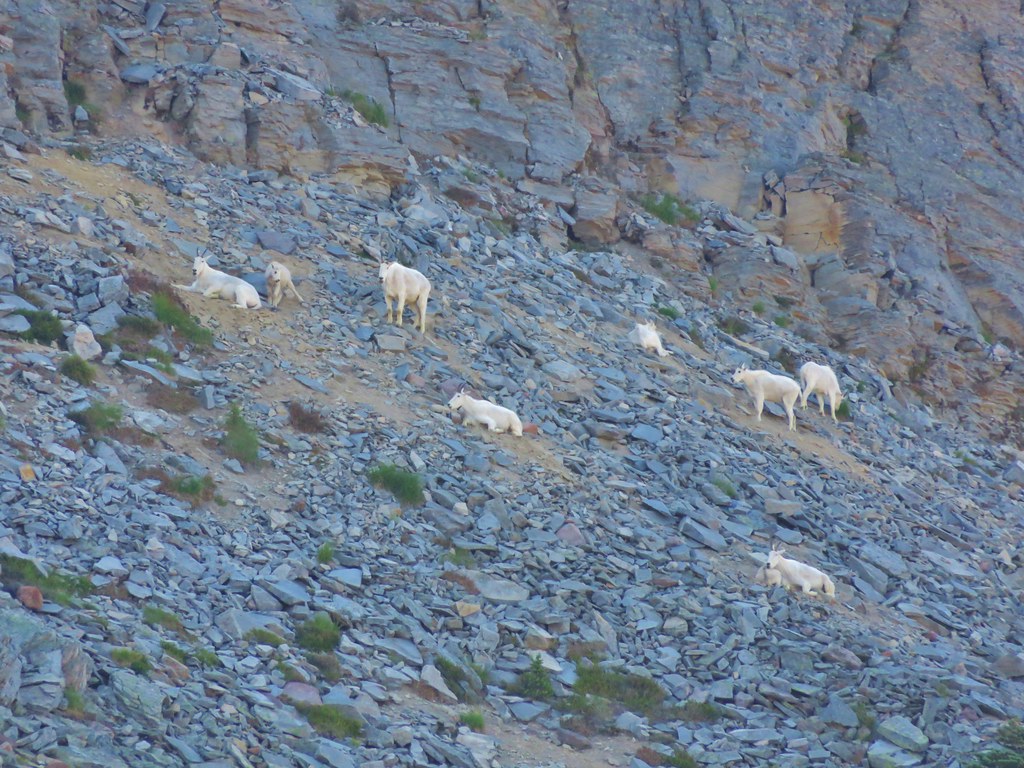
Mountain Goats
Mountain goat along the Lakes Trail

Mountain goat along the Boundary Trail

Bear
Black bear in a wildflower meadow

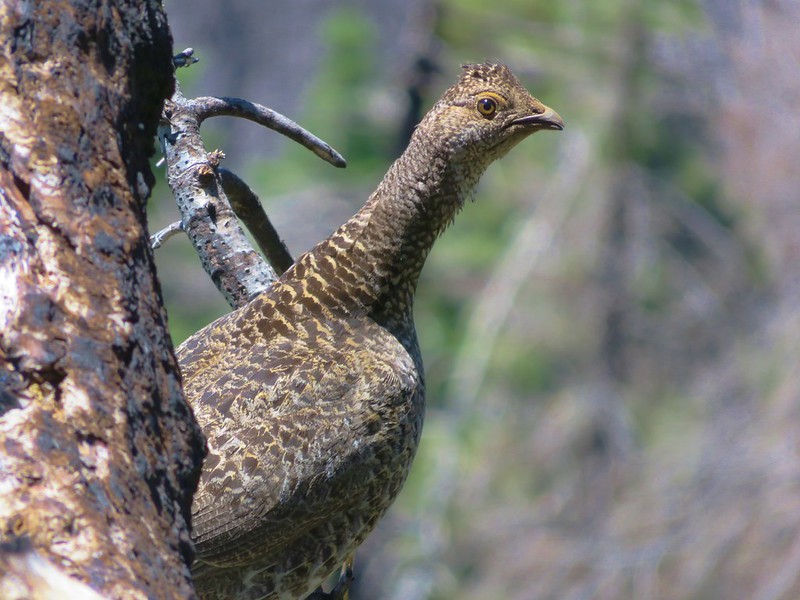
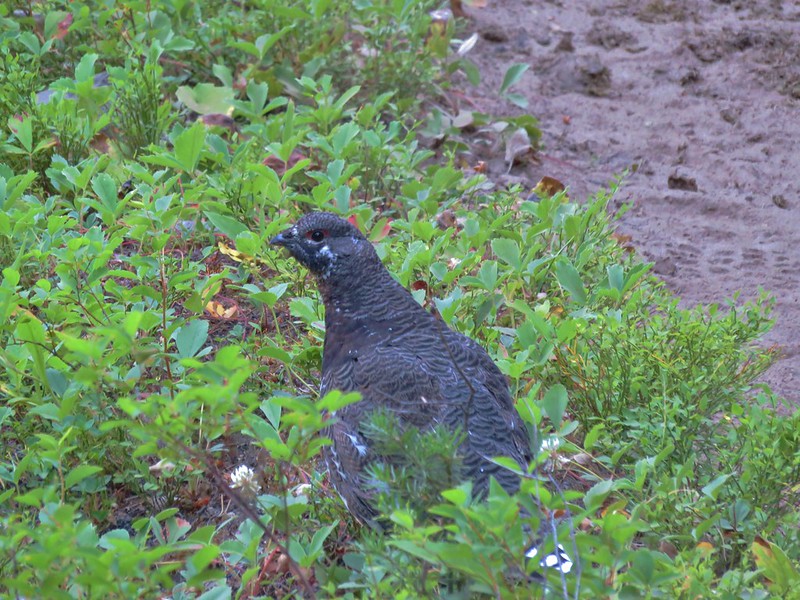
Grouse
Sooty grouse

Sooty Grouse

Grouse

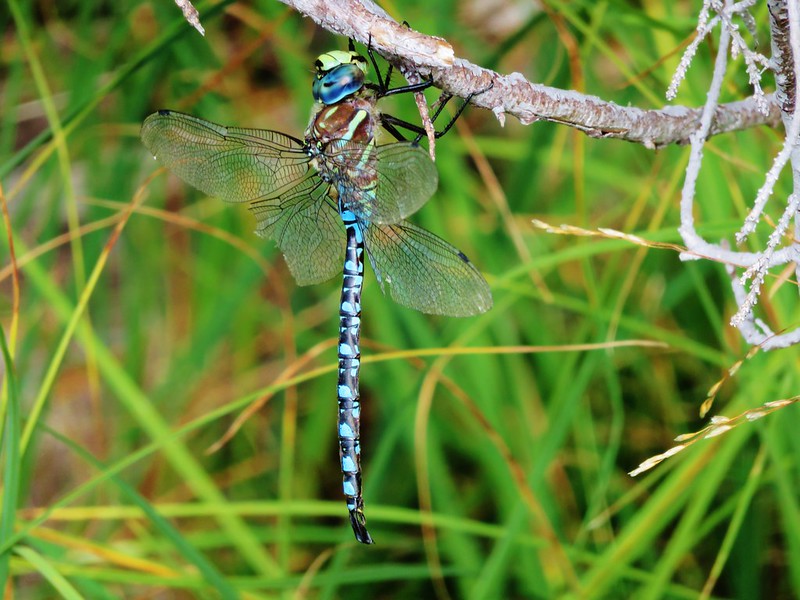
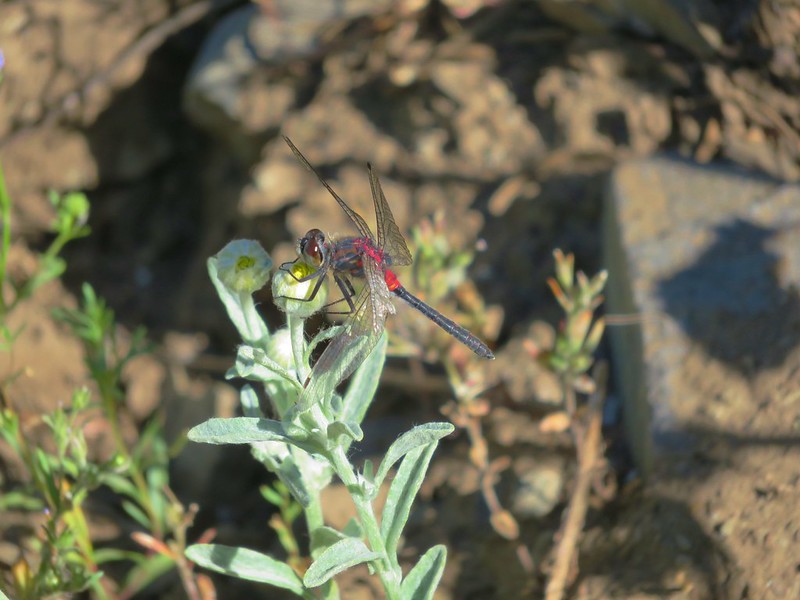
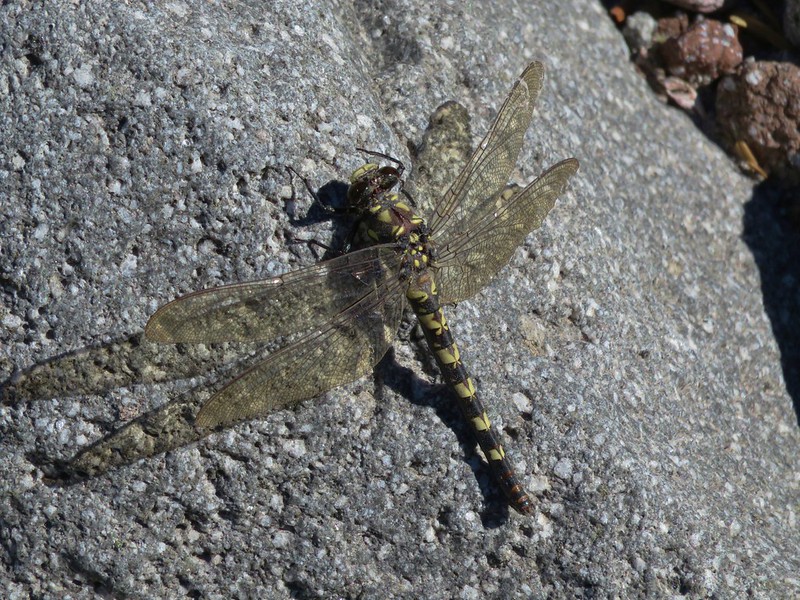
Dragonflies
Dragonfly

Dragon Fly

Dragon fly

We encountered a number of flowers for the first time this year.
Sea fig
Sea fig

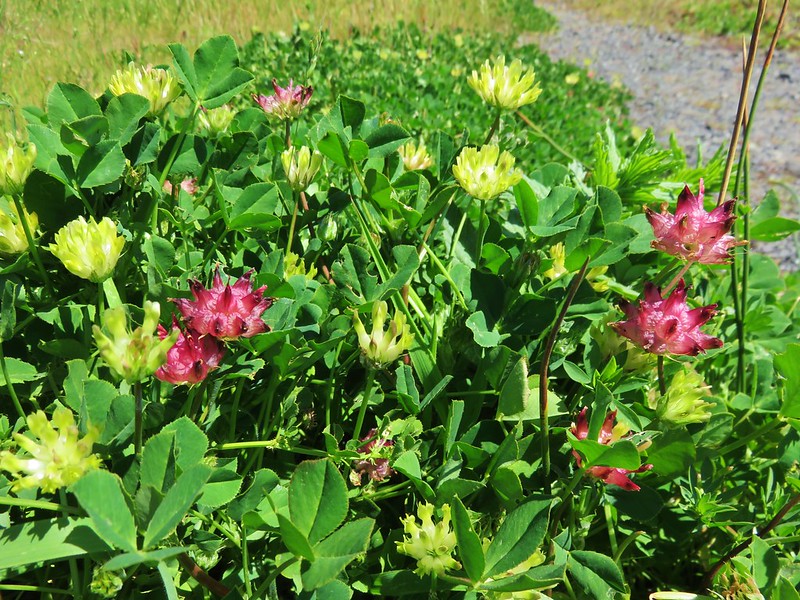
Cows clover
Cows clover

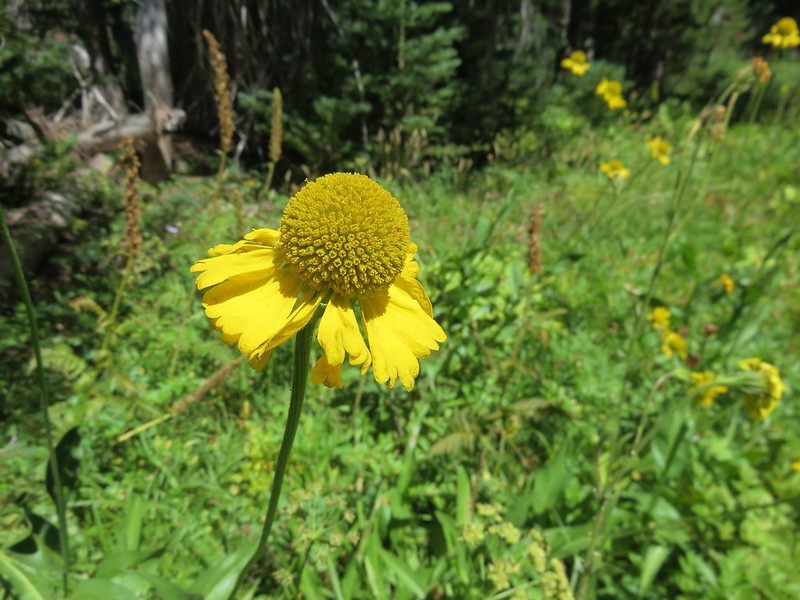
Bigelow's sneezeweed
Bigelow’s Sneezeweed

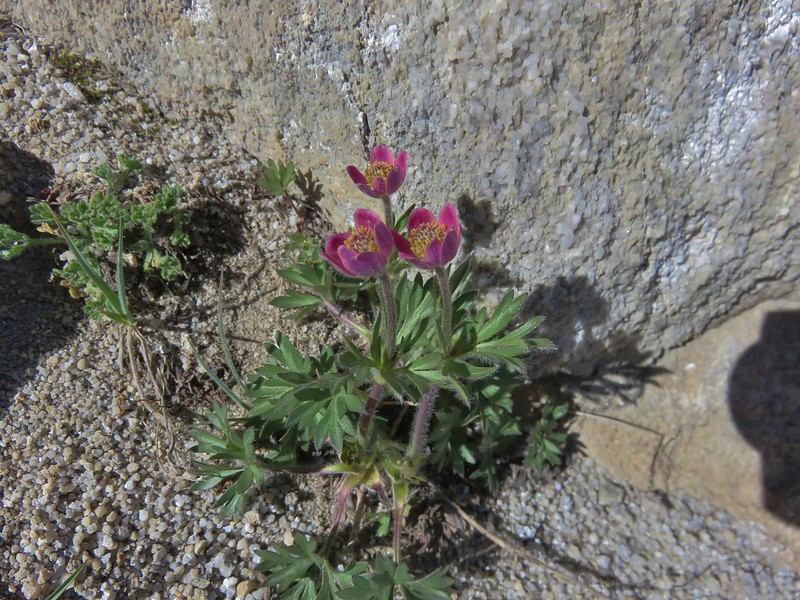
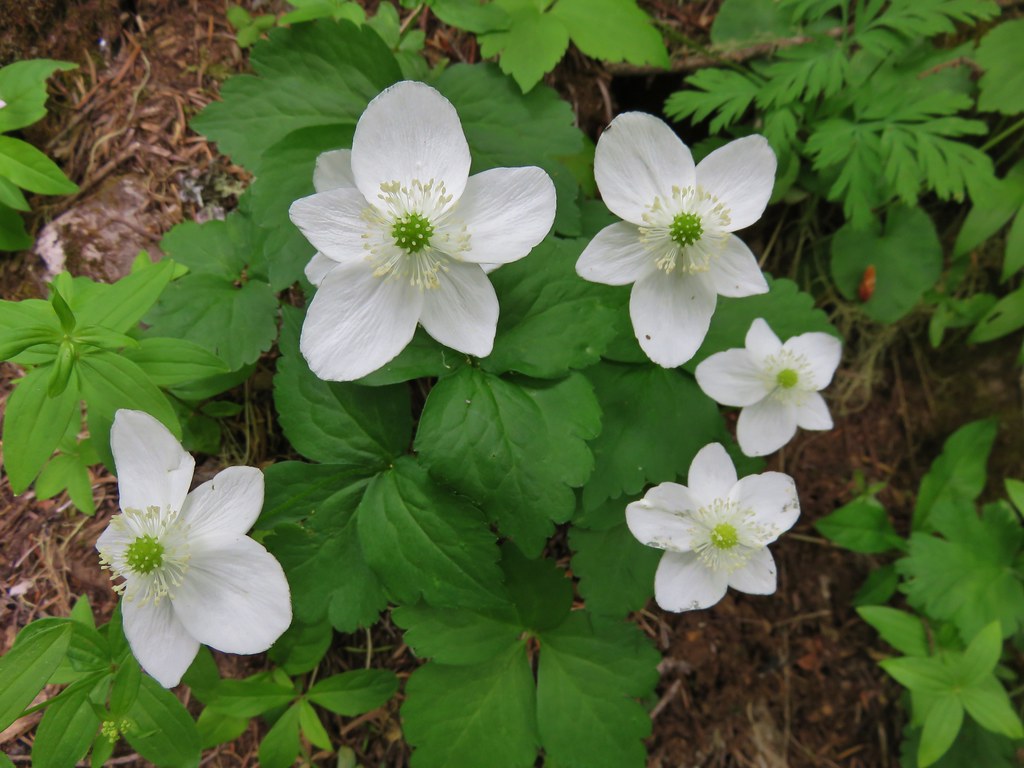
Cut-leaf anemone
Cut-leaf anemone

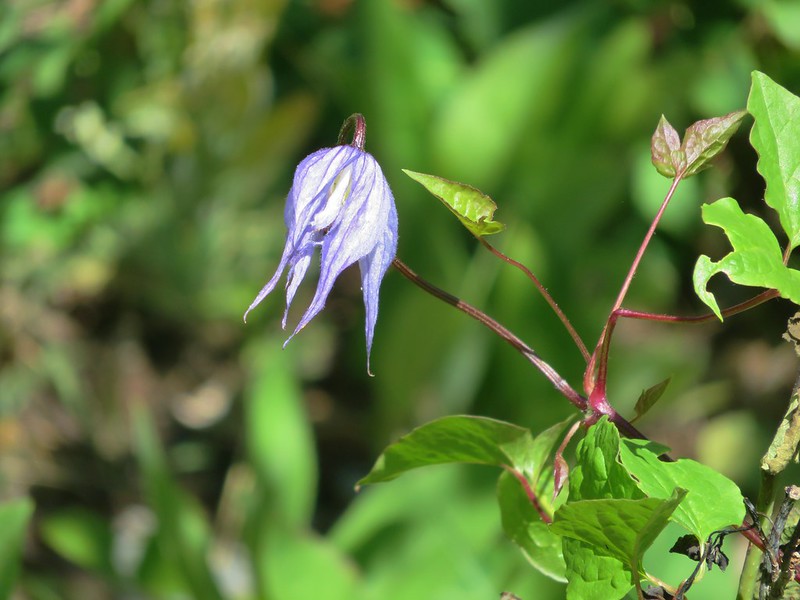
Western blue clematis

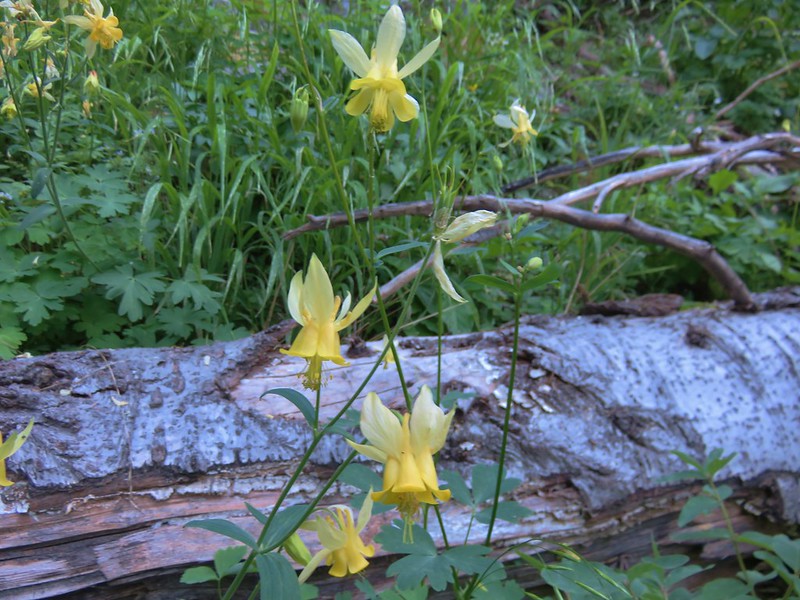
Yellow Columbine
Yellow Columbine

Pretty Face
Pretty Face

Farewell-to-Spring
Farewell-to-Spring

Mountain coyote mint

Yellow coralroot
Yellow coralroot

Sea fig
Sea fig

California Lady Slippers

California Yerba Santa

Grass widows
Grass widows

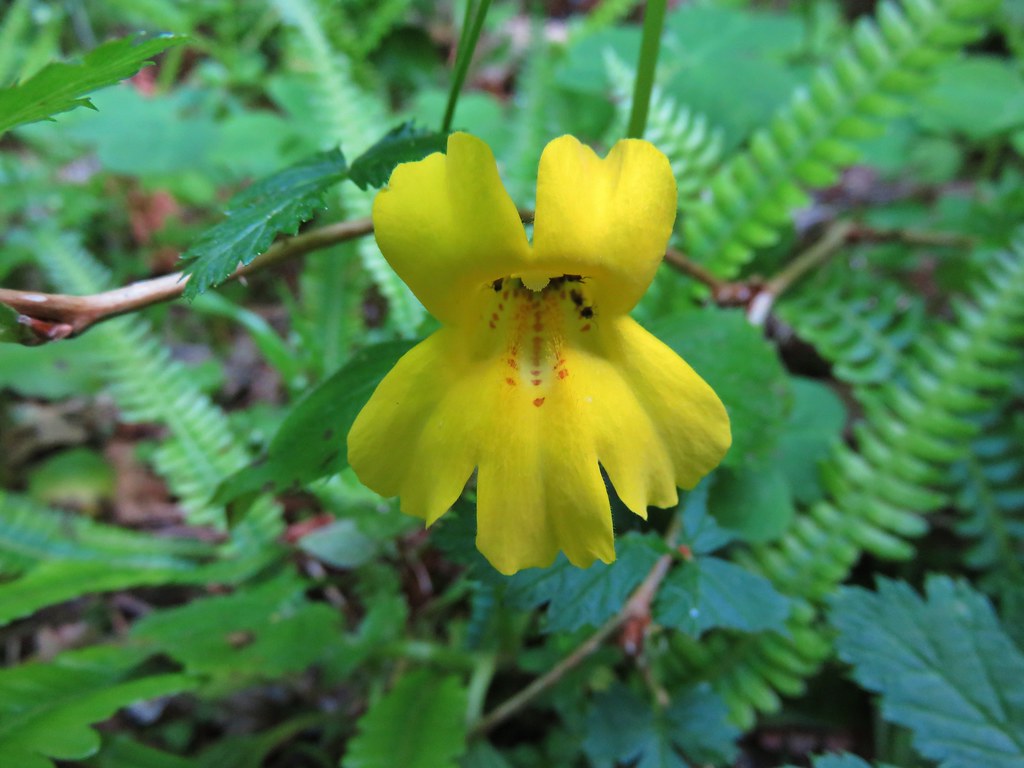
sticky monkey-flower

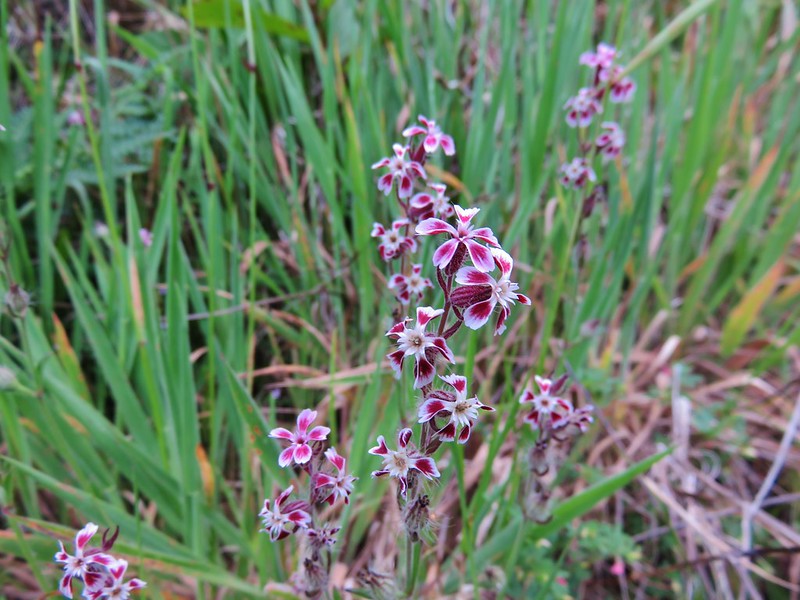
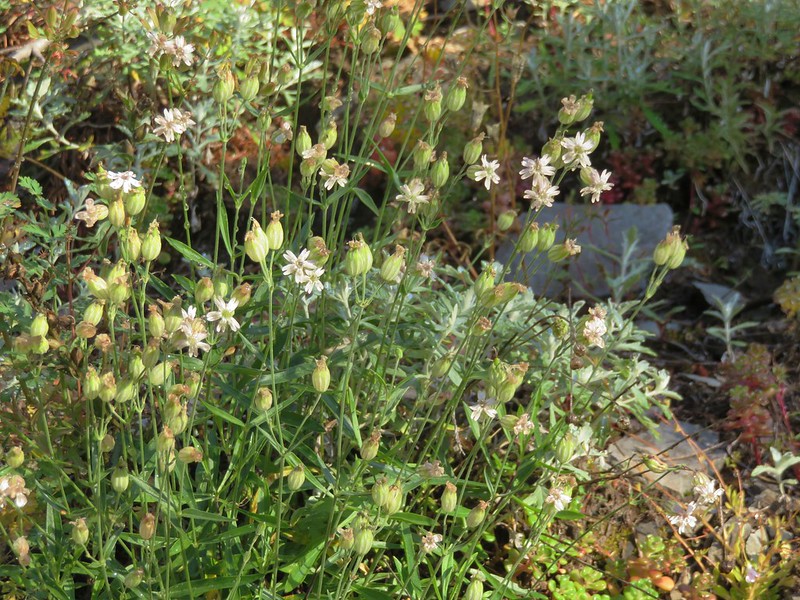
Catchfly
Some sort of catchfly

Sea thrift
Sea thrift

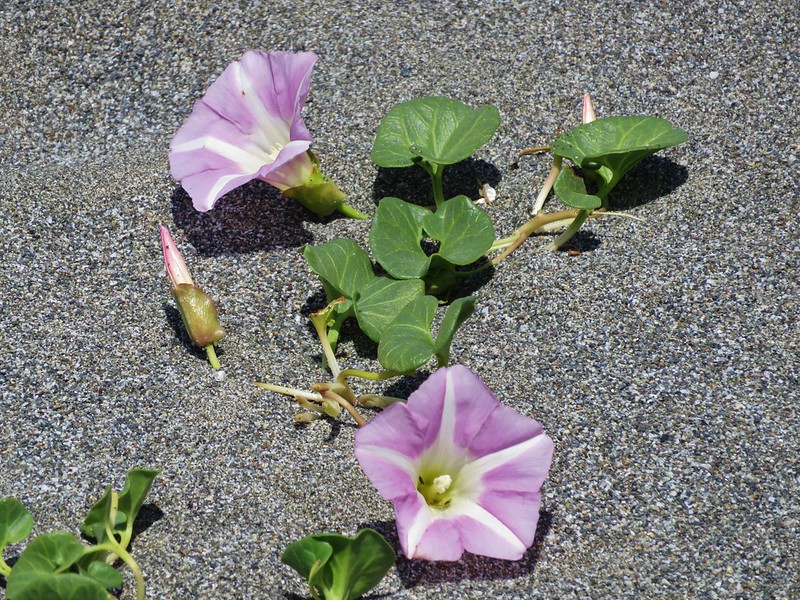
beach morning-glory
beach morning-glory

Yellow sand-verbena
Yellow sand-verbena

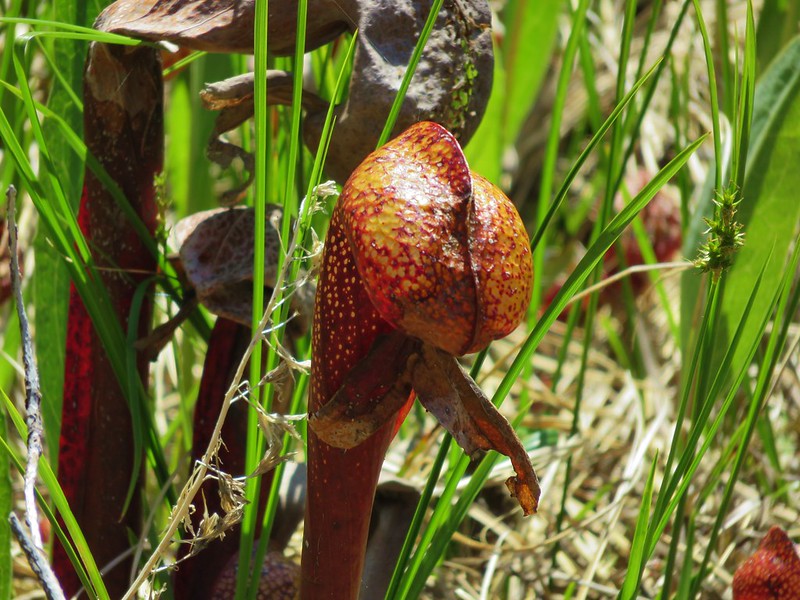
California pitcher plant (Darlingtonia californica)

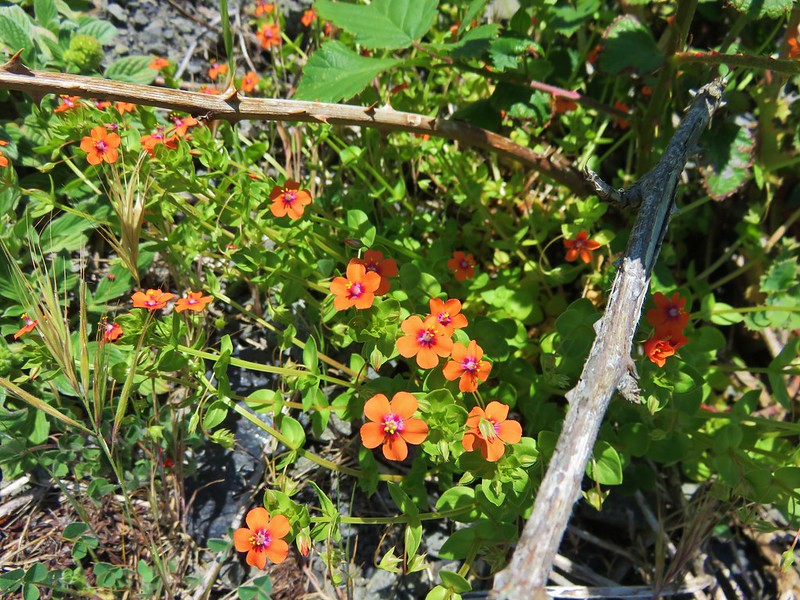
Scarlet pimpernel
Scarlet pimpernel

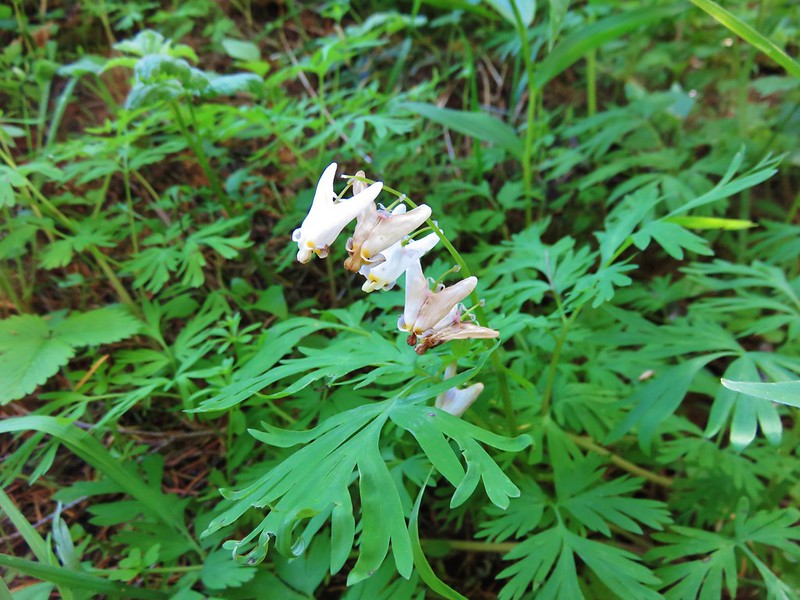
Dutchman's breech
Dutchman’s breech

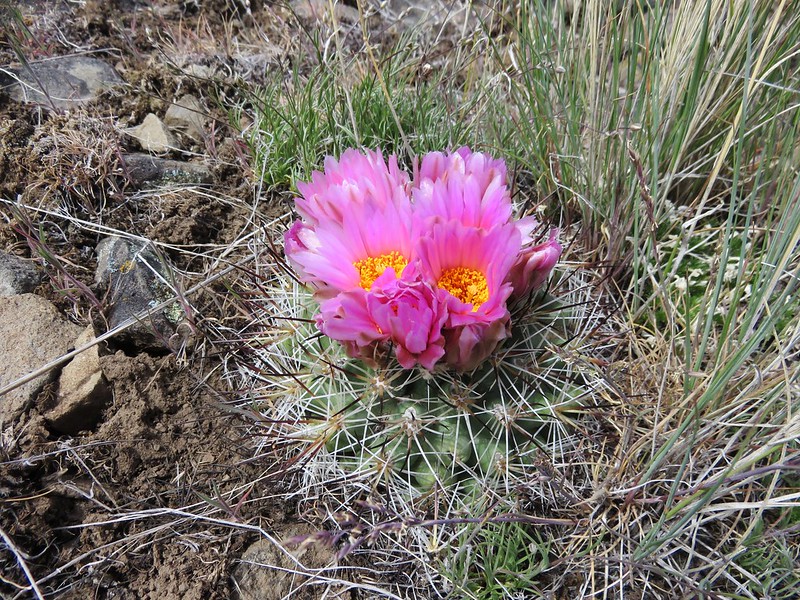
Hedgehog cactus
Hedgehog cactus

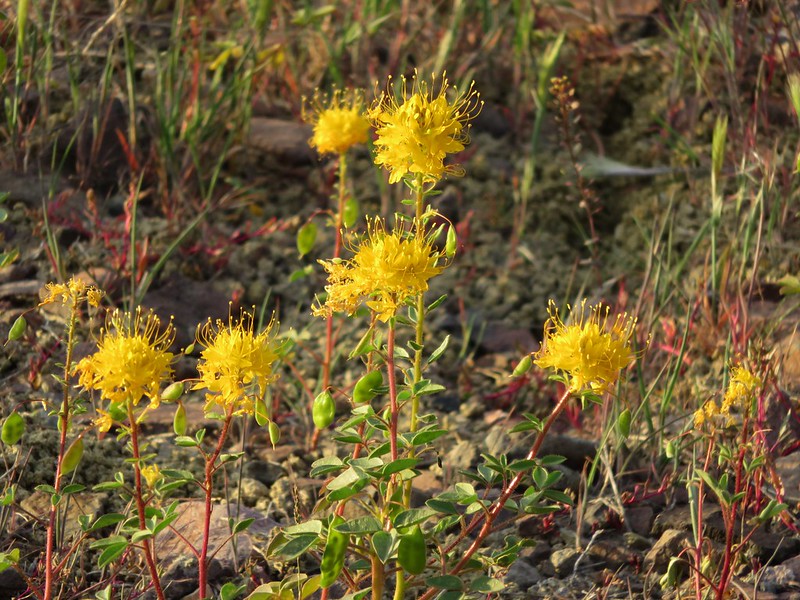
Golden Bee Plant
Golden Bee Plant

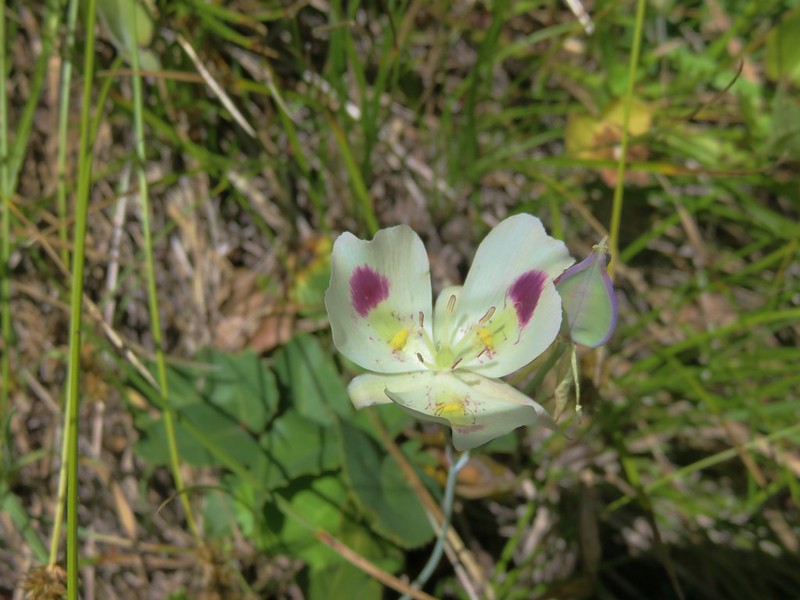
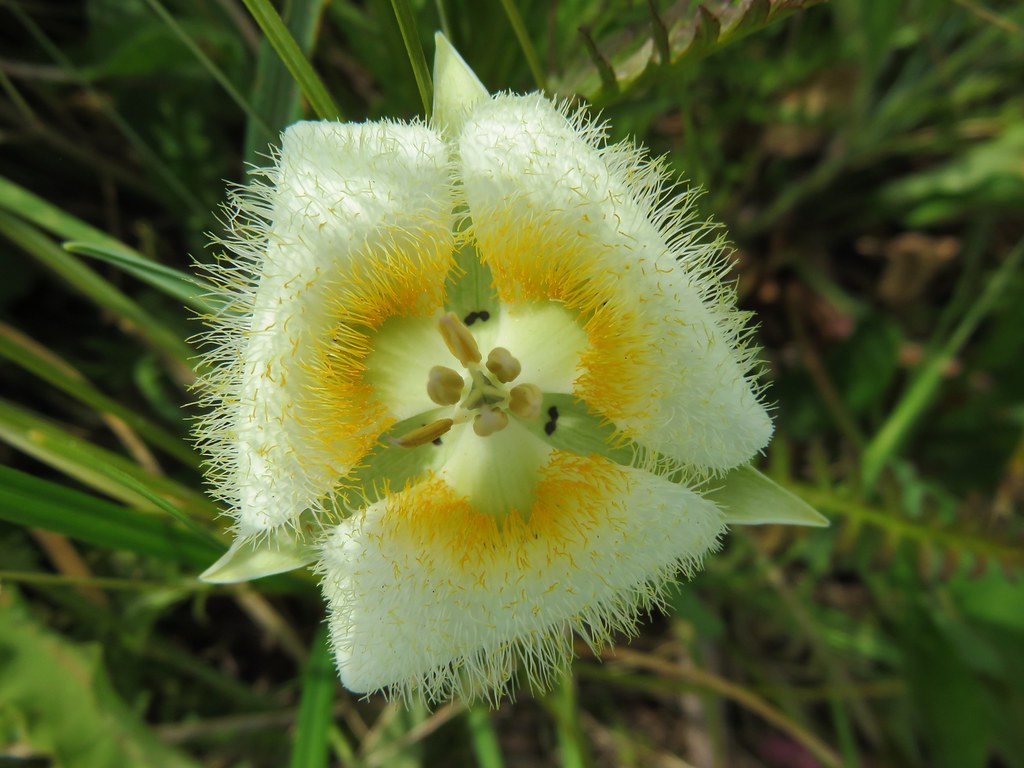
White mariposa lily
White mariposa lily

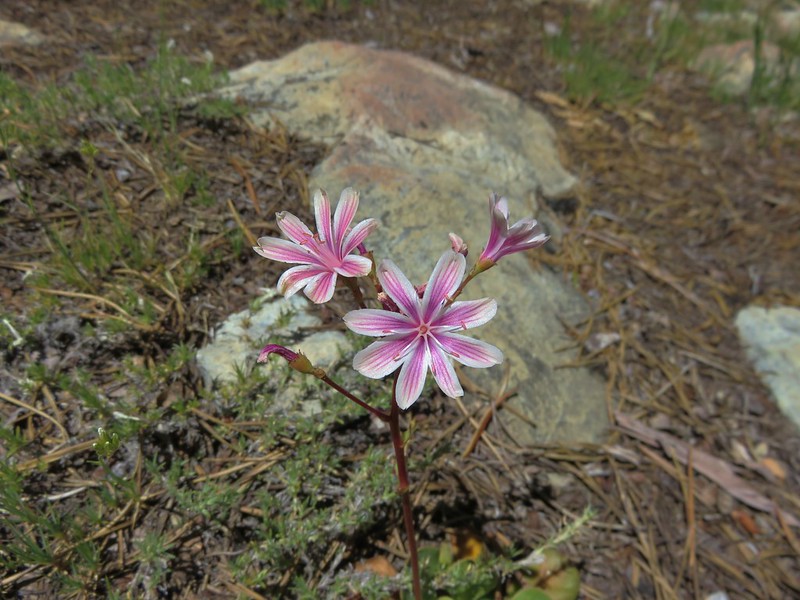
Siskiyou lewisia
Siskiyou lewisia

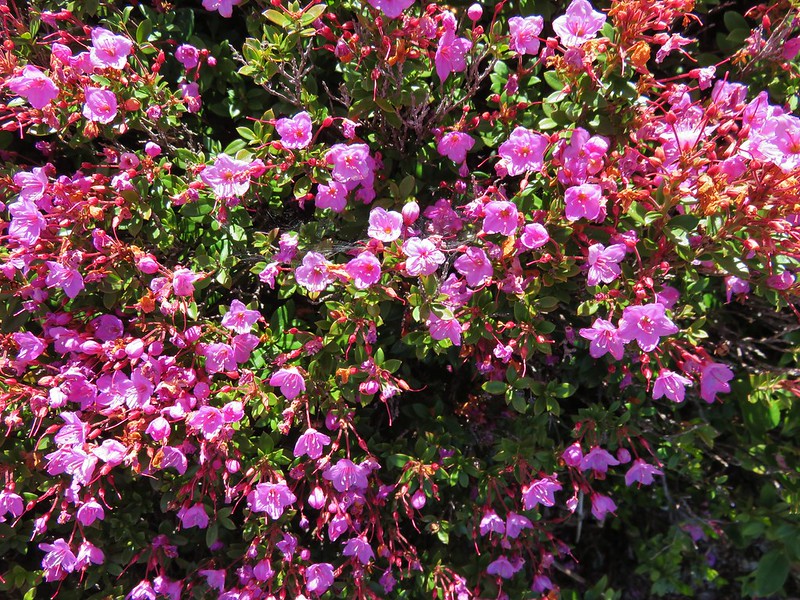
kalmiopsis leachiana

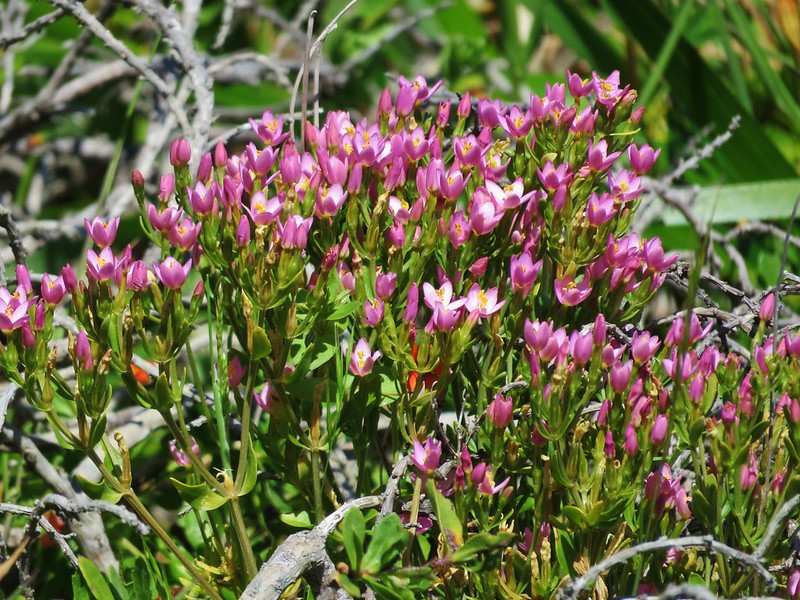
Muhlenberg's centaury
Muhlenberg’s centaury

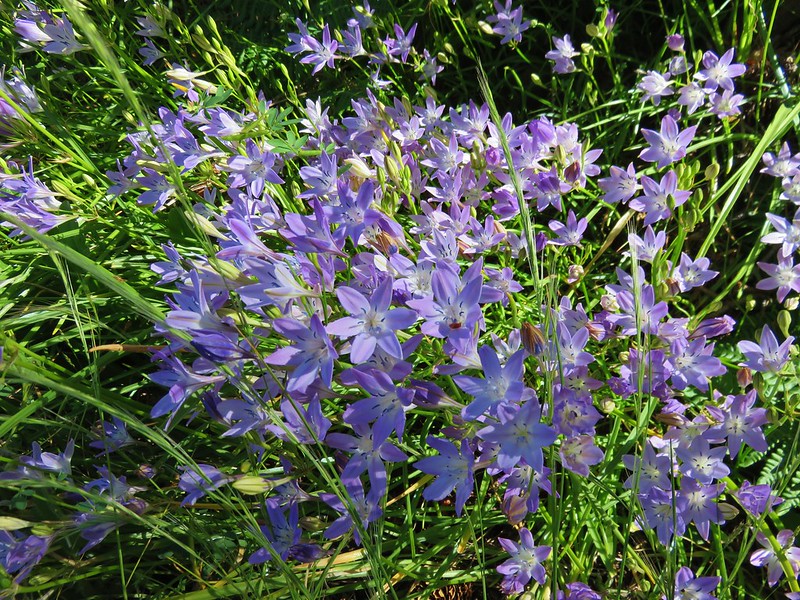
Bridges' brodiaea
Bridge’s brodiaea

There were just too many sights to fit into a year end wrap up so to see a sample from each of our hikes this album contains a few photos from each hike which attempt to show the beauty of each trail. There are a lot of photos (793 – One for each mile hiked) but then again there is a lot of beauty in God’s creation.

Happy Trails in 2017 and beyond!

Categories
Columbia River Gorge South Hiking Oregon Trip report

Wyeth Trail To North, Rainy, and Black Lakes

**Note the 2017 Eagle Creek and 2024 Whiskey Creek fires burned portions of this hike.**

This past Veterans Day we celebrated our 21st wedding anniversary with a hike. Heather had spent the first part of the week in Las Vegas attending a convention for her work so we were looking to spend some quality time together and what better way than out on the trail away from distractions.

Our hike on the schedule for this month was to be a lollipop loop starting at Wyeth Campground in the Columbia Gorge and passing North, Rainy, and Black Lakes before returning via Green Point Ridge. I had originally estimated this hike to be a little over 16 miles with around 4000′ of elevation gain. Both of these figures turned out to be low. The total elevation gain was closer to 5000′ and the GPS read 21.5 miles when all was said and done.

The Wyeth Trail begins at Wyeth Campground which was gated closed for the season so we parked near the gate on the side of the Wyeth Road (Exit 51 off of I-84) and walked through the empty campground.
Sunrise from Wyeth Campground

Wyeth Campground

The campground is the eastern terminus for the Gorge Trail #400 which we followed briefly to a signed junction near a footbridge over Gorton Creek.
Footbridge over Gorton Creek

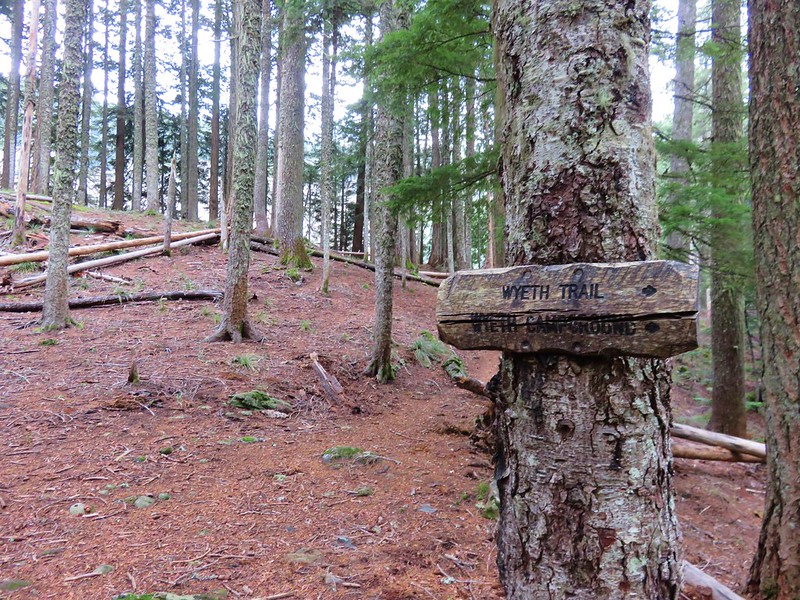
Wyeth Trail junction with the Gorge Trail

We turned left following the pointer for the Wyeth Trail passing under a set of power lines before the bridge-less crossing of Harphan Creek.
Creek crossing

Not long after crossing Harphan Creek the Wyeth Trail began its climb. The trail gained approximately 3500 over the next 4.8 miles. This mostly forested section used numerous switchbacks to keep from ever being too steep.
Wyeth Trail

Wyeth Trail

Wyeth Trail

Wyeth Trail

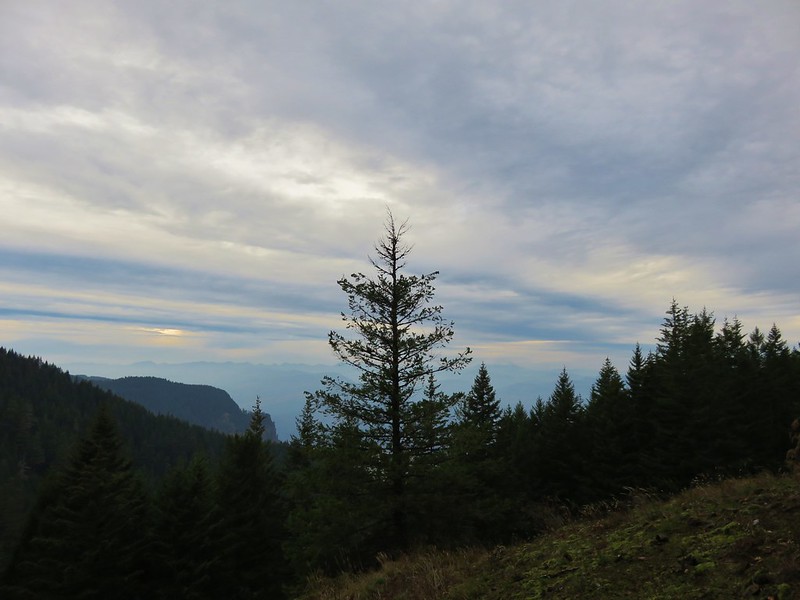
There were a couple of open areas which offered small views across the Columbia River toward Mt. St. Helens. Although the mountain was free of clouds the gray skies above and behind it provided a good camouflage from the camera.
Columbia River from the Wyeth Trail

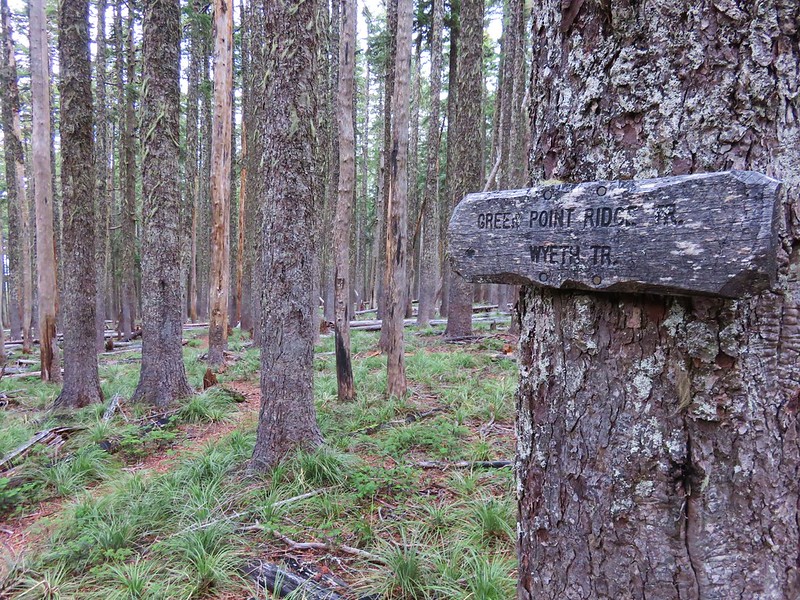
The trail leveled off at a saddle where it began following the ridge south to the Green Point Ridge Trail junction.
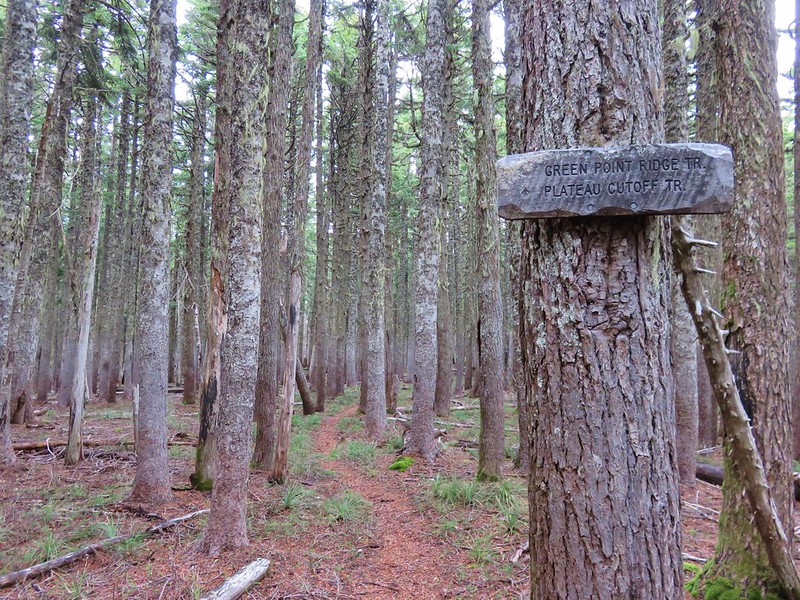
Wyeth Trail juntion with the Green Point Ridge Trail

Green Point Ridge Trail

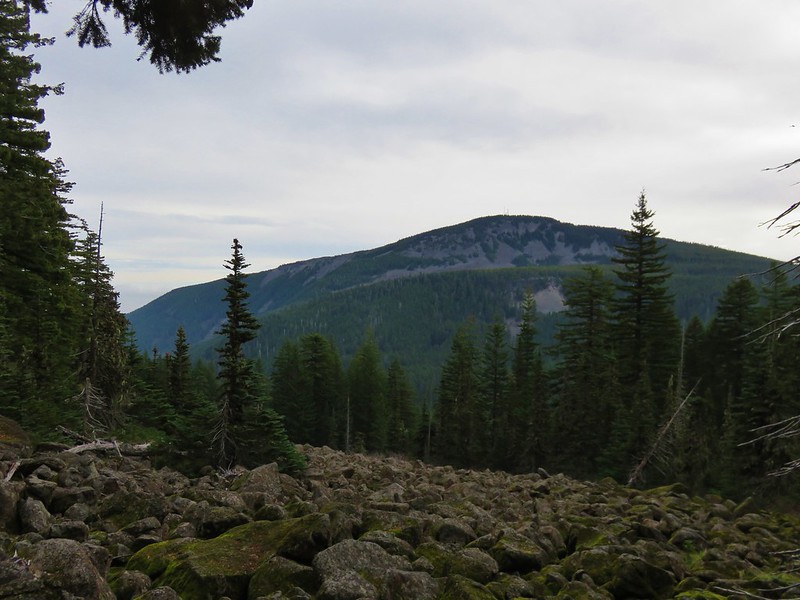
The Green Point Ridge Trail was our return route so we stayed left and continued 1.4 miles to North Lake. Along the way there was a nice view of Mt. Defiance from a rock field.
Mt. Defiance from the Wyeth Trail

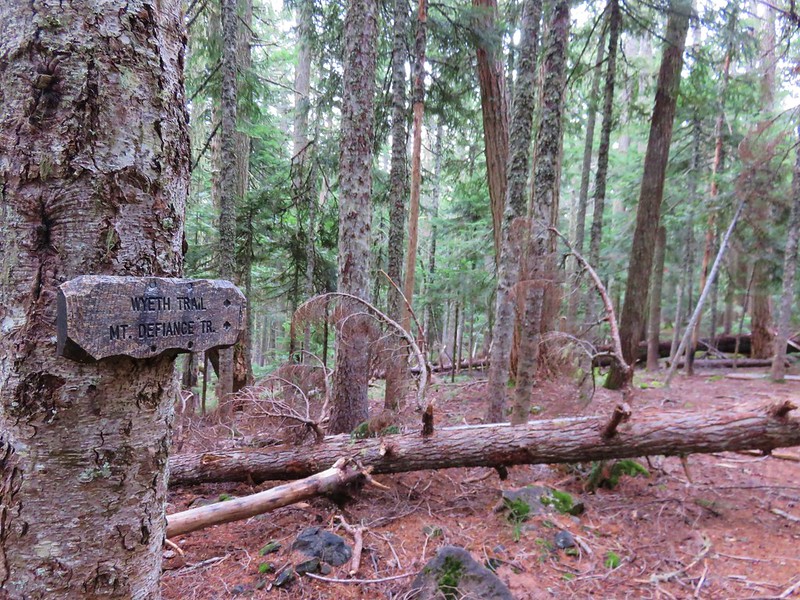
To see North Lake we followed an unsigned trail to the right at a junction where signs pointed back to the Wyeth Campground and ahead to the Mt. Defiance Trail.
Wyeth Trail

Wyeth Trail sign for the Mt. Defiance Trail

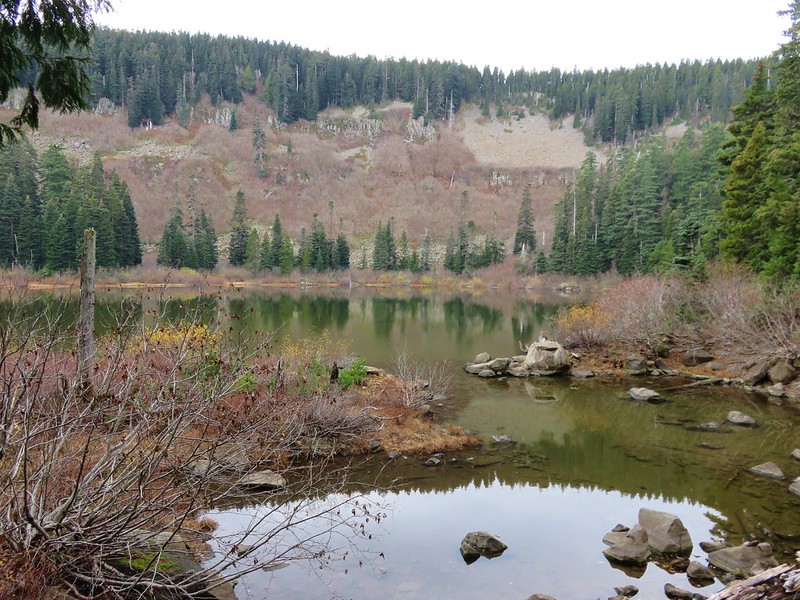
North Lake
North Lake

After sitting for a bit on some rocks along North Lake we continued along it’s shore back to the the Wyeth Trail at a junction with the North Lake Trail.
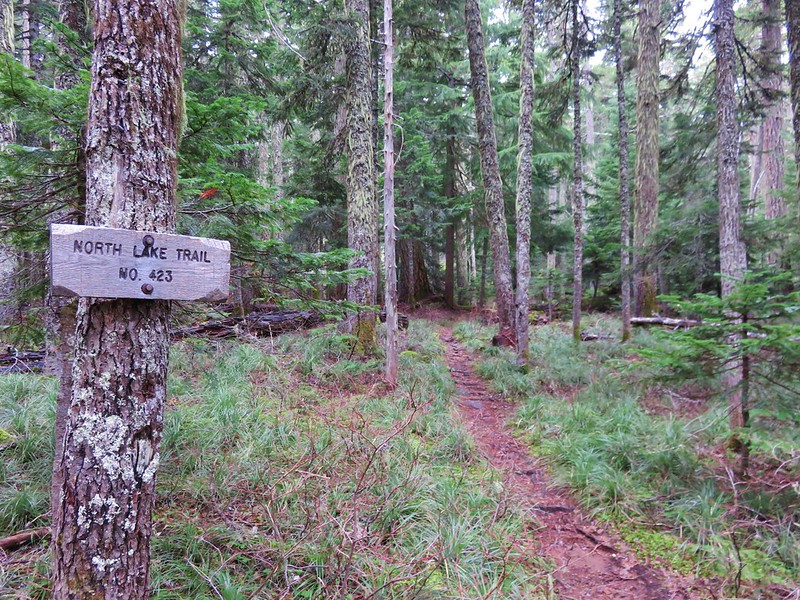
North Lake Trail

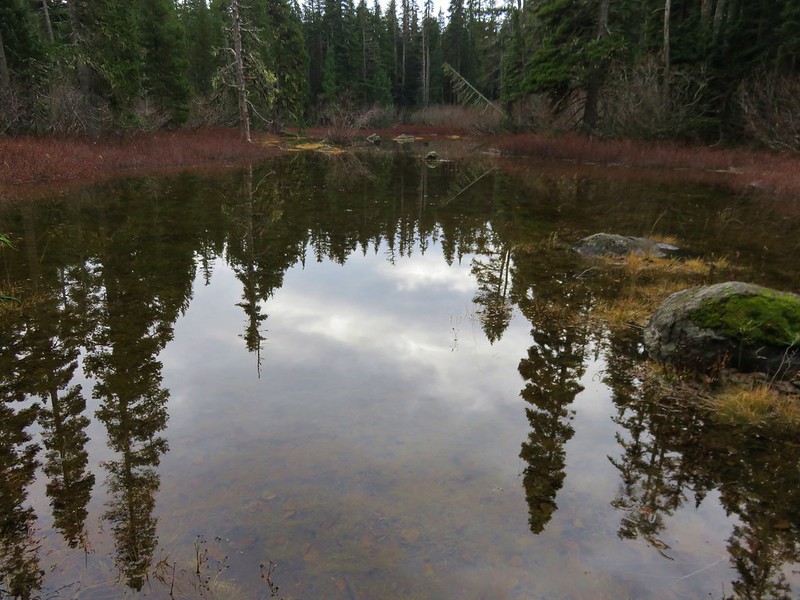
We took the North Lake Trail following it for a mile past a small pond to another trail junction.
Pond along the North Lake Trail

North Lake Trail junction with the Rainy Lake Trail

We headed to the left onto the Rainy Lake Trail.
Rainy Lake Trail

A quick .4 miles brought us to Rainy Lake with a view of Green Point Mountain on the far side.
Rainy Lake

Green Point Mountain from Rainy Lake

Green Point Mountain

A tenth of a mile beyond the lake the trail left the Mark O. Hatfield Wilderness and ended at the Rainy Lake Campground, which can be driven to. Directions

Mark O. Hatfiled Wilderness boundary near the Rainy Lake Campground

We walked through the campground passing the unique outhouse to the Rainy-Wahtum Trail.
Outhouse at the Rainy Lake Campground

Rainy Lake Trail

The Rainy-Wahtum Trail would lead us up to a junction with the Gorton Creek Trail where we would begin our return to the Wyeth Campground but before we did that we had wanted to visit nearby Black Lake. Both the North Lake Trail map available on the Mt. Hood Forest Service website and Google showed a trail descending to Black Lake from the Rainy-Wahtum Trail. We were keeping our eyes out for this trail and just when we began to think we had missed it we spotted a path near a small cairn.
We thought this was marking the trail to Black Lake

We turned left onto this faint path passing the remnants of an old sign that could no longer be read. All traces of the path soon disappeared and we looked around for old blazes or any other sign of the correct route. With nothing to be seen we pulled out the Forest Service map and compared it the map shown on the Garmin. The GPS didn’t show the trail but we could compare the topography of the two maps to get a good idea of where the trail should be. We bushwacked downhill using the topographic maps in an attempt to pick up some sort of trail but weren’t having any luck so we finally decided to follow a decommissioned logging road down to its junction with Dead Point Road which went by Black Lake after passing the Rainy Lake Campground.
Road to Black Lake

We found a few flowers along the road before arriving at the Black Lake Campground.
Thistle

Black Lake Campground

Black Lake

Black Lake

We took a break at one of the picnic tables which we shared with a caterpillar.
Caterpillar

We followed the road back to the Rainy Lake Campground and set off once again on the Rainy-Wahtum Trail. We watched again for any signs of a different trail to Black Lake both before and after the one we’d turned down but never saw anything.

The Rainy-Wahtum Trail followed what was once Wahtum Road up to a 4-way trail junction.
Rainy-Wahtum Trail

The junction is the meeting point of the Rainy-Wahtum, Gorton Creek, and Herman Creek Cutoff Trails.
Rainy-Wahtum Trail junction with the Gorton Creek, and Herman Creek Cutoff Trails

Gorton Creek Trail

WWII signal Hut

Our route was to follow the Gorton Creek Trail but first we took a very short detour on the Herman Creek Cutoff Trail to check out a WWII signal hut which seemed fitting on Veterans Day.
WWII signal Hut

We started down the Gorton Creek Trail reentering the Mark O. Hatfield Wilderness and gradually climbing Green Point Ridge.
Wilderness sign along the Gorton Creek Trail

As we approached Green Point Mountain, which is really just the highest point on the ridge, the first view to open up was of Rainy Lake and Mt. Defiance beyond.
Mt. Defiance and Rainy Lake

Rainy Lake

The Oregon Hikers Field Guide entry for  Green Point Mountain mentions views of Mt. Defiance, Rainy Lake, and Mt. Adams but we quickly found that there were more views than that. Before we were able to see Mt. Adams to the north a glance behind us to the south revealed Mt. Hood rising above the tress.
Mt. Hood

A viewpoint near the summit offered the Mt. Adams, Mt. Defiance, and Rainy Lake view.
Mt. Adams, Mt. Defiance and Rainy Lake

Mt. Adams
Mt. Adams

The view of Mt. Hood was especially nice with a layer of clouds in the valley below it and an opening of blue sky in the clouds above.
Mt. Hood from Green Point Mountain

When we reached the summit we were a bit surprised to see Mt. Rainier join the view to the north and Mt. Jefferson to the south.
Mt. Rainier from Green Point Mountain

Mt. Jefferson and Olallie Butte
Olallie Butte and Mt. Jefferson from Green Point Mountain

Mt. Hood & Mt. Jefferson
Mt. Hood and Mt. Jefferson from Green Point Mountain

In addition the Goat Rocks were also visible between Mt. Rainier and Mt. Adams.
Goat Rocks from Green Point Mountain

After enjoying the surprisingly good view we began our descent. It was nearly 2pm and we’d been hiking for almost 7 hours already. I was beginning to suspect that the hike was going to be longer than what I had estimated. We tend to average right around 2mph so a 16 mile hike should take us 8 hours. We hadn’t taken any extended breaks and it didn’t feel like we’d been going particularly slowly on the climb up so extra distance was the only explanation for the time. We picked up the pace on the way down not wanting to have to rely on using lights to finish the hike in the dark.

A quarter mile from the summit we left the Gorton Creek Trail at a three-way junction. The Gorton Creek Trail headed downhill to the left and on the right the North Lake Trail came up from the lake. We stayed straight on the Green Point Ridge Trail.
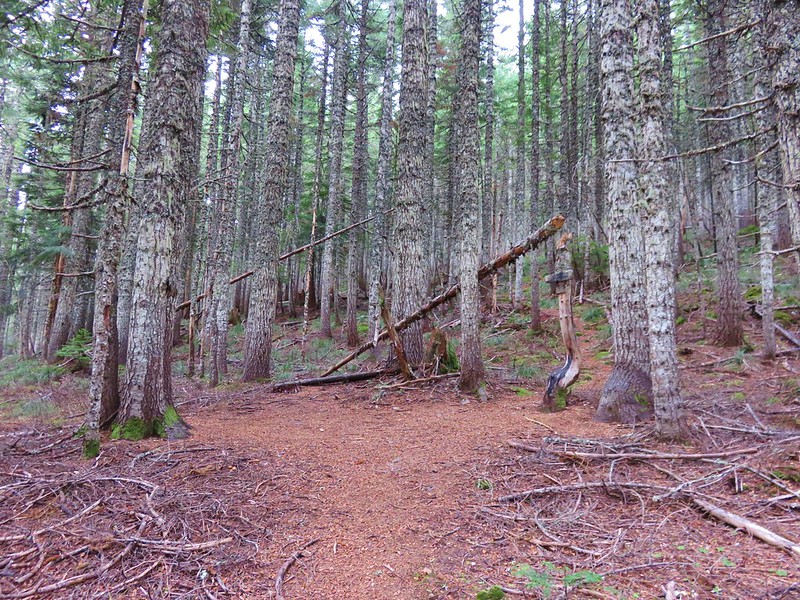
Green Point Ridge Trail

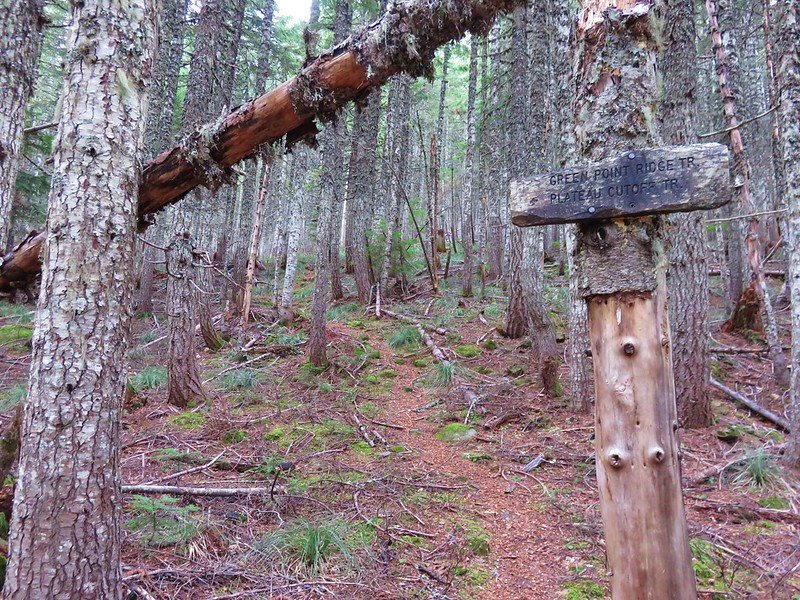
We followed the wooded ridge another 2.5 miles ignoring the Plateau Cutoff Trail to the left after 1.5 miles.
Green Point Ridge Trail

The steepest section of trail we’d been on all day was the final descent down to the Wyeth Trail.
Green Point Ridge Trail descending to the Wyeth Trail junction

Once we were back on the Wyeth Trail we retraced our steps down to the power lines. Mt. St. Helens was a little more visible on our way down in the afternoon light.
Mt. St. Helens in the distance

Mt. St. Helens from the Wyeth Trail

That morning we had noticed a trail coming up from the Wyeth Campground at the power lines which appeared to be a shorter route than what we had done so when we spotted it on the way down we followed it into the campground arriving back at our car ten minutes before 5pm.

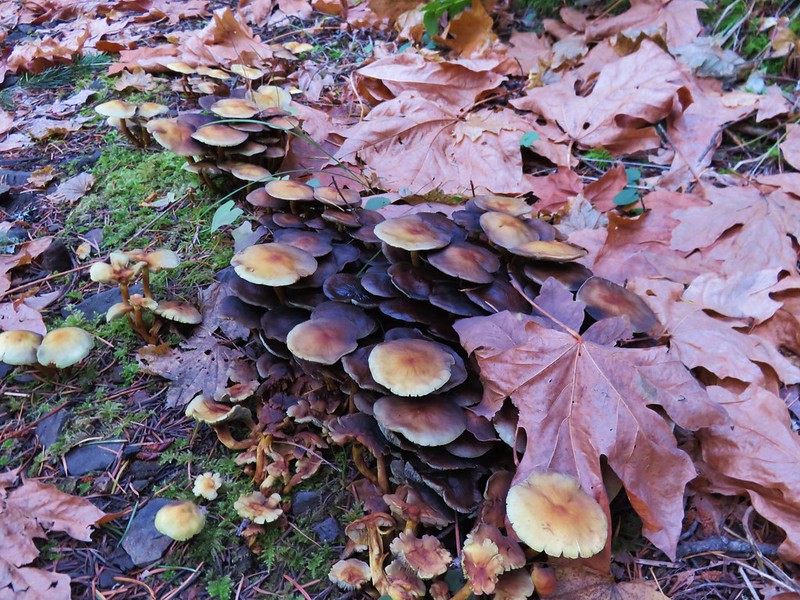
We had hiked from dawn to dusk (nearly 10 hours) without seeing anyone else on the trails. The views had been much better than expected and the lakes were all nice. One of the things that held our interest was the amazing variety of mushrooms along the way. The various colors, shapes, and sizes were impressive. Here is a small sample of that variety.
Mushrooms along the Wyeth Trail

Mushrooms

Mushroom

Mushrooms

Mushroom

Green mushrooms

Mushroom

Red mushroom

Another mushroom

Orange mushroom

Yellow mushrooms

Mushroom on a log

Mushroom groud near Black Lake

Mushrooms along the Wyeth Trail

Despite the hike turning out to be a lot longer than planned it was a great way to spend our anniversary. Happy Trails!

Categories
High Cascades Hiking Mt. Hood Area Oregon Trip report

Lower White River Wilderness and Twin Lakes Loop

We took advantage of a favorable weather forecast and ended our “hiking season” with a pair of hikes south of Mt. Hood in two separate wilderness areas. Our first hike was in the Lower White River Wilderness.

Designated a wilderness area in 2009, the 4 square mile Lower White River Wilderness has no official trails. The narrow wilderness SE of Mt. Hood covers a portion of the White River and it’s canyon on either side from Keeps Mill Forest Camp for approximately 7.5 miles. A use trail from the forest camp follows the river a short distance and this was our planned route into the wilderness.
Lower White River Wilderness Sign

Keeps Mill Forest Camp is located at the end of Road 2120 which is accessed from Highway 216. The narrow dirt road is poorly maintained along the final mile and a half making it suitable only for high clearance vehicles. Instead of driving all the way down to the camp we parked at a pullout near the Camas Trail which crosses Road 2120 on it’s way from Camas Prairie to Keeps Mill Forest Camp.
Camas Trail sign along Road 2010

We followed the Camas Trail down to the campground. It was still pretty dark and also fairly foggy when we arrived back on Road 2120 near the entrance of Keeps Mill Forest Camp.
Keep's Mill Forest Camp

The campground is located near the confluence of Clear Creek and the White River.
Clear Creek
Clear Creek

White River
White River

We found the use trail along the river and followed it for about half a mile where it appeared to become fairly brushy.

Lower White River Wilderness

White River

Lower White River Wilderness

The trail had been traveling between the river and a talus slope where the remains of an old flume could be seen amid the rocks.
Talus slope with the remains of an old flume

Old flume remains in the Lower White River Wilderness

We turned around here having accomplished our goal of hiking into the wilderness and seeing some of the flume remains and headed back to the campground and up the Camas Trail.
Camas Trail

Fog and a little blue sky over the talus slope along the Camas Trail

When we got back to where we’d parked Heather spotted a doe that quickly fled into the forest. The hike had been just under 2 miles with approximately 250′ of elevation gain climbing up the Camas Trail.

We hopped back into the car and headed toward Mt. Hood turning off Highway 26 at the Frog Lake Sno-Park for our next hike.
Frog Lake Sno-Park sign

Our planned hike here was a loop visiting Palmateer Point, the Twin Lakes, Frog Lake Butte, and Frog Lake. We began by heading north from the large parking lot on a short connector trail that brought us to the Pacific Crest Trail.
Pacific Crest Trail near the Frog Lake Sno-Park

We turned right on the PCT at a sign for Barlow Pass.
Trail sign for Barlow Pass

Pacific Crest Trail

After 1.4 miles we arrived a trail junction with the Twin Lakes Trail.
Pacific Crest Trail near the Mt. Hood Wilderness boundary

Turning right on the Twin Lakes Trail would have led past Lower then Upper Twin Lake before returning to the PCT 1.4 miles to the north after traveling a total of 3.1 miles. We had a longer loop planned so we stuck to the PCT and entered the Mt. Hood Wilderness.
Pacific Crest Trail entering the Mt. Hood Wilderness

There were no views along this section of the PCT but it was a pleasant forest walk and we kept busy spotting all the different mushrooms along the trail.
Mushroom

Mushrooms

Mushrooms

Mushrooms

Mushrooms

Mushroom along the Pacific Crest Trail

We passed the other end of the Twin Lakes Trail sticking to the PCT for another 3/4 miles to the Palmateer Trail.
Twin Lakes Trail

Palmeteer Trail

We turned onto the Palmateer Trail and followed it for nearly a mile passing a junction with the Devil’s Half Acre Trail along the way.
Palmateer Trail

Trail sign along the Palmateer Trail

We forked left at a post after .9 miles.
Spur trail to Palmateer Point

This .3 mile spur trail led up to Palmateer Point.
Heading to Palmateer Point

View along the spur trail to Palmateer Point

We were hoping for a close up view of Mt. Hood but found that a jumble of clouds were preventing that.
Mt. Hood behind clouds from Palamteer Point

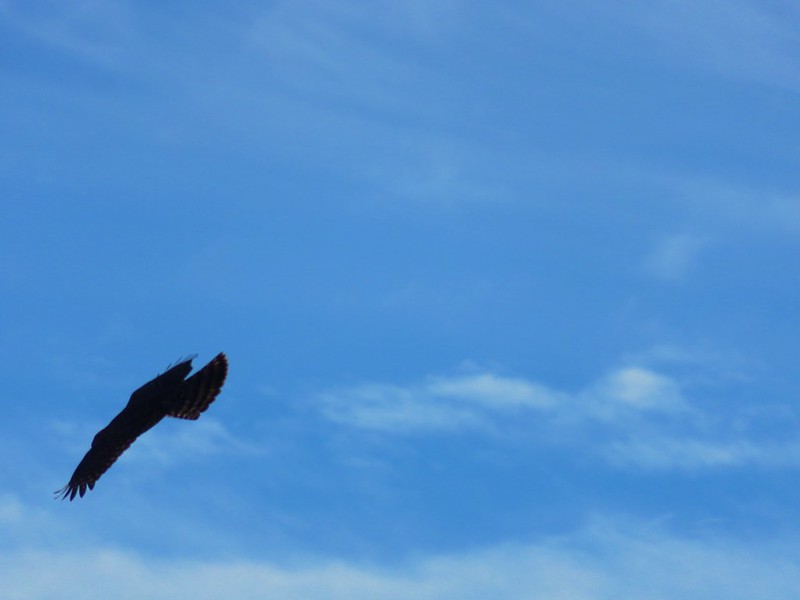
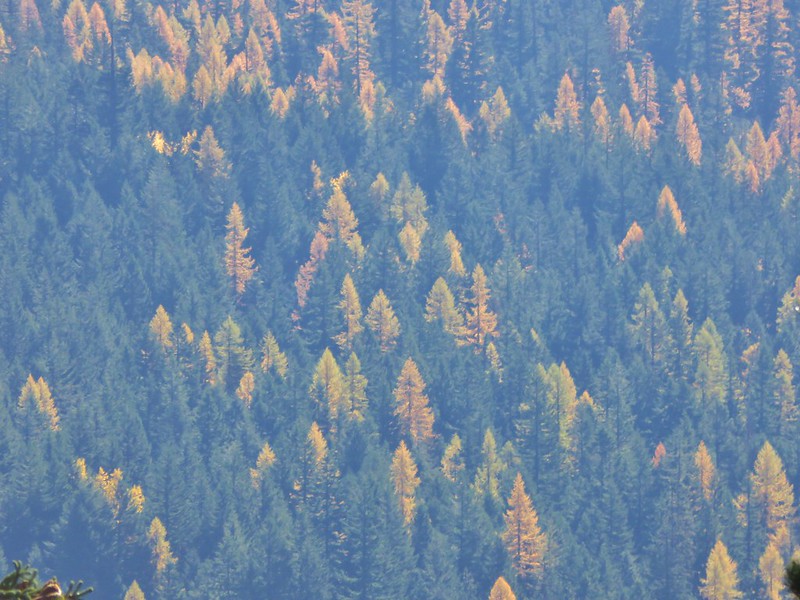
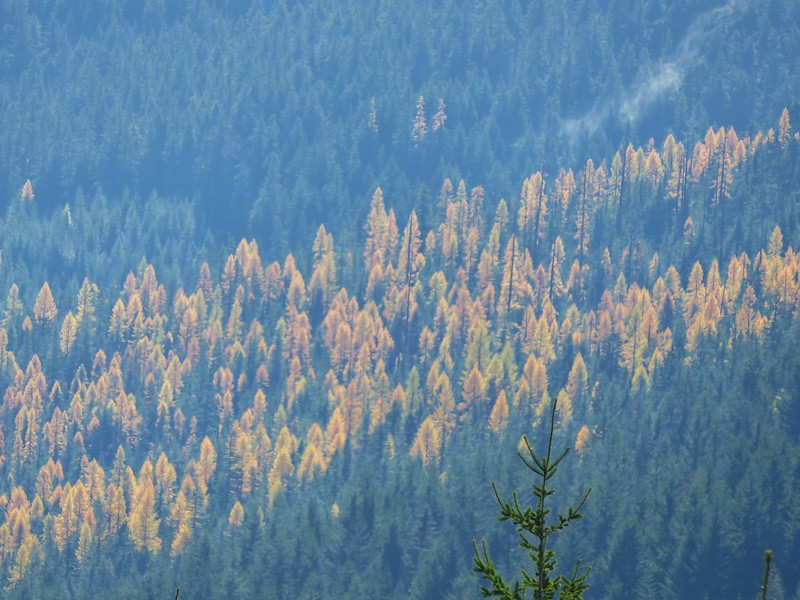
We took a break on the point watching a pair of hawks soaring nearby and admiring the golden larches in the valley below.
One of two hawks flying around Palmateer Point

Hawk on Palmateer Point

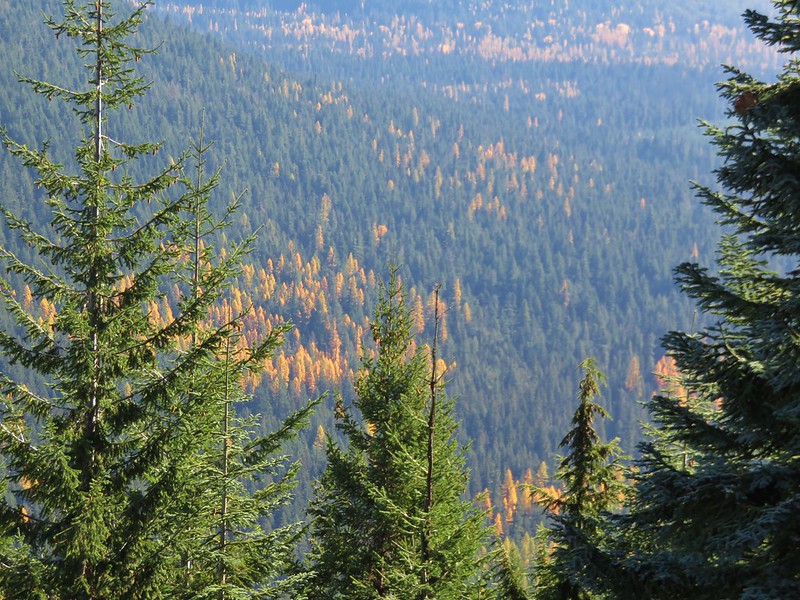
Larches

Larches

This was our first good look at the larches, the only deciduous conifers, sporting their fall colors.

After getting a brief glimpse of Mt. Hood’s summit we headed back down to continue our loop.
Mt. Hood hiding behind clouds from Palmateer Point

We passed in and out of small patches of fog for the next .6 miles to a junction with a .2 mile tie-trail that would have led to the Twin Lakes Trail.
Sunrays in the Mt. Hood Wilderness

Trail sign along the Palmateer Trail

This was the route equestrians would need to take, but we stuck to the Palmateer Trail heading for another viewpoint.
Palmateer Trail

Mt. Hood was still mostly hidden when we arrived at the small rocky viewpoint so it was once again the larches that were the highlight.
Mt. Hood from the Palmateer Trail

Larches in the valley below the Palmateer Trail

Larches

We followed the Palmateer Trail to it’s end at the Twin Lakes Trail along Upper Twin Lake.
Upper Twin Lake

Mt. Hood was starting to reveal more of itself as the day went on.
Mt. Hood from Upper Twin Lake

We followed trails counter-clockwise around the lake getting an even better view of the mountain’s snowy summit from the lake’s southern end.
Upper Twin Lake

Mt. Hood from Upper Twin Lake

Mt. Hood from Upper Twin Lake

When we arrived back at the Twin Lakes Trail we headed south down to Lower Twin Lake which was .7 miles away.
Trail junction near Upper Twin Lake

The lower lake is just off the Twin Lakes Trail and is accessed from the direction we were coming from by the Frog Lake Butte Trail.
Frog Lake Butte Trail sign near Lower Twin Lake

Lower Twin Lake

Again we did a counter-clockwise loop around the lake.
Lower Twin Lake

The quickest way back to the sno-park would have been to return to the Twin Lakes Trail and follow it back to the Pacific Crest Trail for a 9.1 mile loop (not counting the loops around the lakes). By being willing to do an extra 4 miles though we could visit one more viewpoint and another lake by taking the Frog Lake Butte Trail.
Frog Lake Butte Trail

This trail led 1.3 miles to a junction on a saddle with the Frog Lake Trail.
Frog Lake Butte Trail

At the junction we turned uphill toward Frog Lake Butte climbing steeply for .7 miles to the summit.
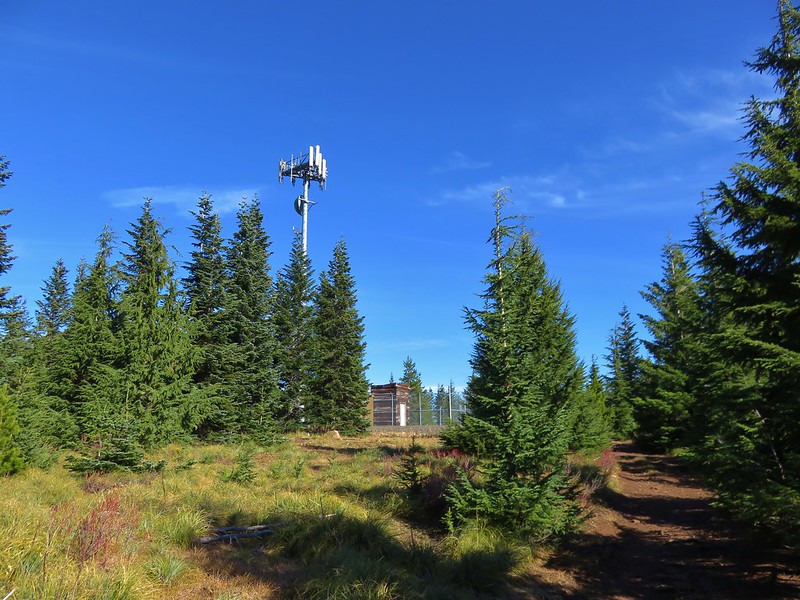
Cell tower on Frog Lake Butte

The final portion of the trail followed Frog Lake Butte Road past a communications tower to a viewpoint where Mt. Hood was now mostly visible.
Mt. Hood from Frog Lake Butte

Mt. Hood from Frog Lake Butte

We stayed at the viewpoint for awhile watching as the clouds slowly passed by.
Mt. Hood from Frog Lake Butte

When we were satisfied that we’d gotten about as good a view as we were going to get we headed back down to the Frog Lake Trail and continued downhill on it.
Frog Lake Butte Trail

This trail crossed Frog Lake Butte Road before entering what appeared to be an old clear cut where we had a nice view of Mt. Jefferson to the south.
Frog Lake Butte Trail

Mt. Jefferson from the Frog Lake Butte Trail

Mt. Jefferson from the Frog Lake Butte Trail

After 1.3 miles we arrived at the Frog Lake Campground where we detoured briefly to get a look at Frog Lake.
Frog Lake

Frog Lake

A .7 mile walk along Frog Lake Butte Road brought us back to the sno-park and our waiting car.
Frog Lake Butte Road

The loop came to 14.1 miles which was nicely broken up into shorter sections by the various sights and trail junctions. It was a very enjoyable hike on a great weather day and a perfect end to our 2016 hiking season. We’ll try and get out on a trail at least once a month until next year’s season starts. For now – Happy Trails!

Flickr: https://www.flickr.com/photos/9319235@N02/albums/72157672250482753

Categories
High Cascades Hiking Mt. Hood Area Oregon Trip report

Cooper Spur

We have had the hike up Cooper Spur on Mt. Hood in our plans for the last several years but for one reason or another it has wound up getting bumped from the schedule.  It was on our schedule again this year with an October date set.  Not wanting to miss out on this hike again we decided to take advantage of what appeared to be an excellent weather forecast and move it up.

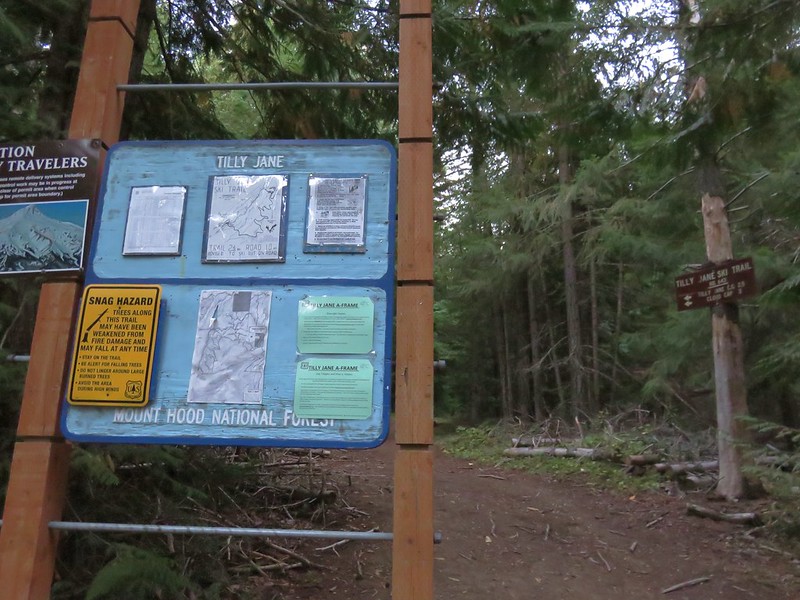
Our plan was to start out at the Tilly Jane Ski Trail along Forest Road 3512 and explore the Cloud Cap/Tilly Jane Historic District as well as hiking up Cooper Spur. This starting point adds nearly 2000′ of elevation gain and approximately 5.5 miles to the hike vs starting at either the Tilly Jane or Cloud Cap Saddle Campgrounds but we decided we’d rather spend time hiking up to those areas than driving an additional 30 minutes each way.

The trailhead is located just beyond the Cooper Spur Ski Area on Forest Road 3512. To reach it turn off of Highway 35 onto Cooper Spur Road then turn left onto Cloud Cap Road (Forest Road 3512) at the Cooper Spur Mountain Resort. The trailhead is 1.5 miles along this road with parking on the right.
IMG_6569

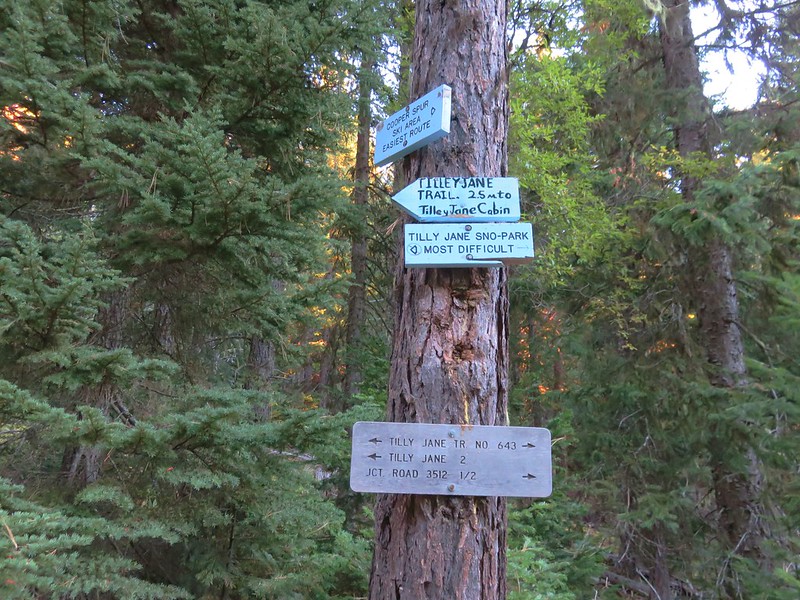
Informational signs at the trailhead told a little about the historic district.
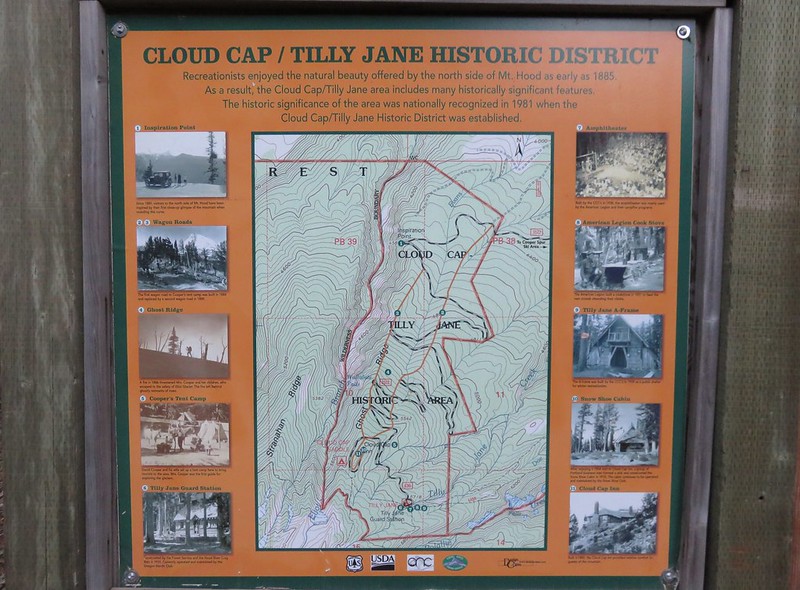
IMG_6567

IMG_6568

The trail headed uphill through the forest, reaching a junction after a half mile with the Polallie Ridge Trail which we would be taking as part of our return route.
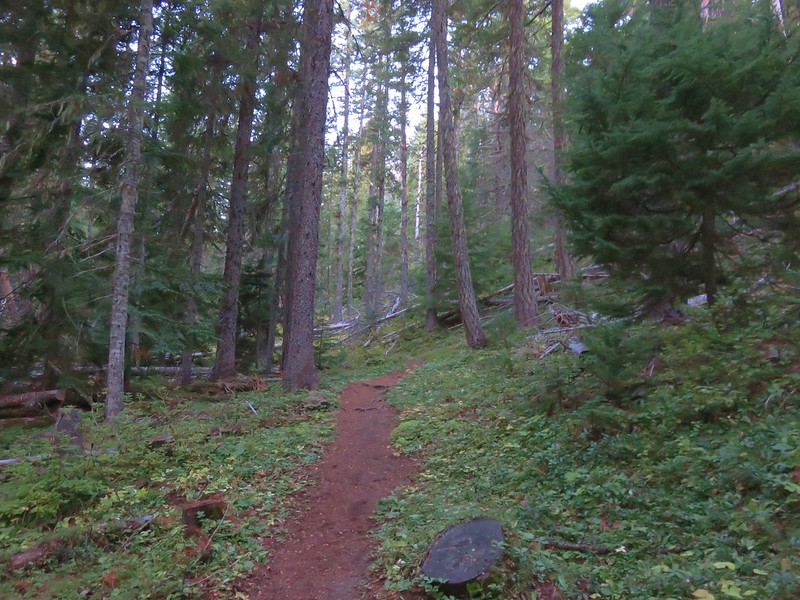
IMG_6572

IMG_6574

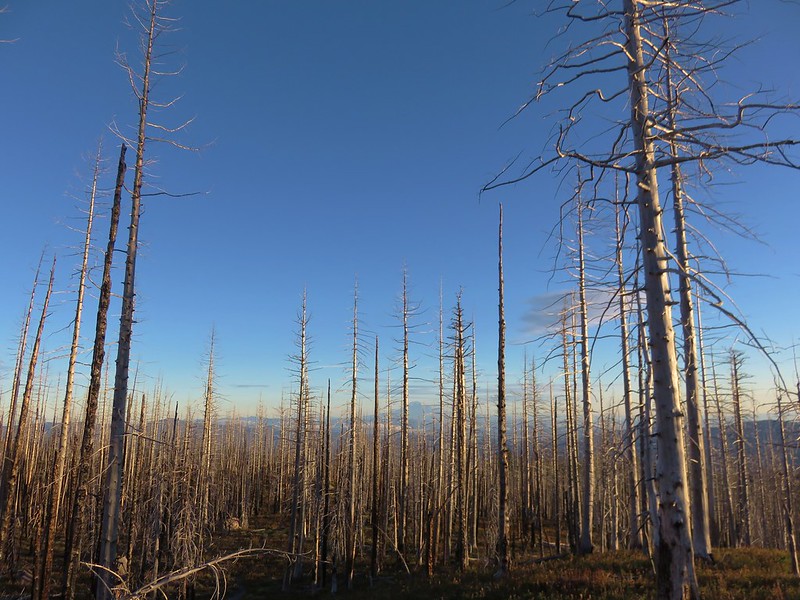
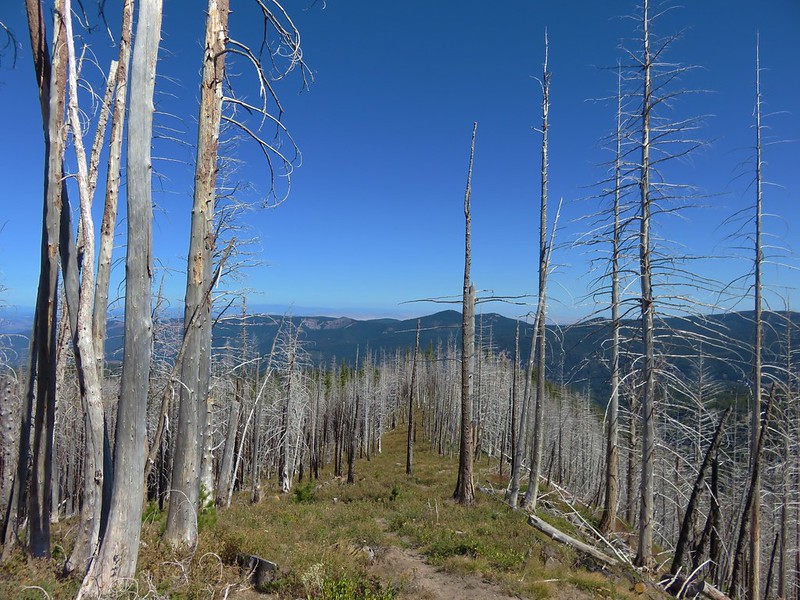
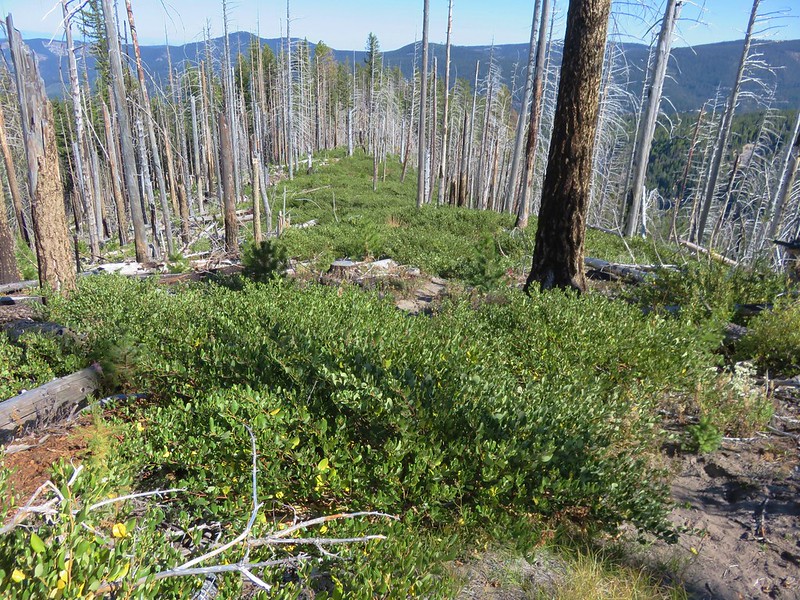
The trail climbed very steadily and soon entered forest burned in the 2011 Dollar Lake Fire.
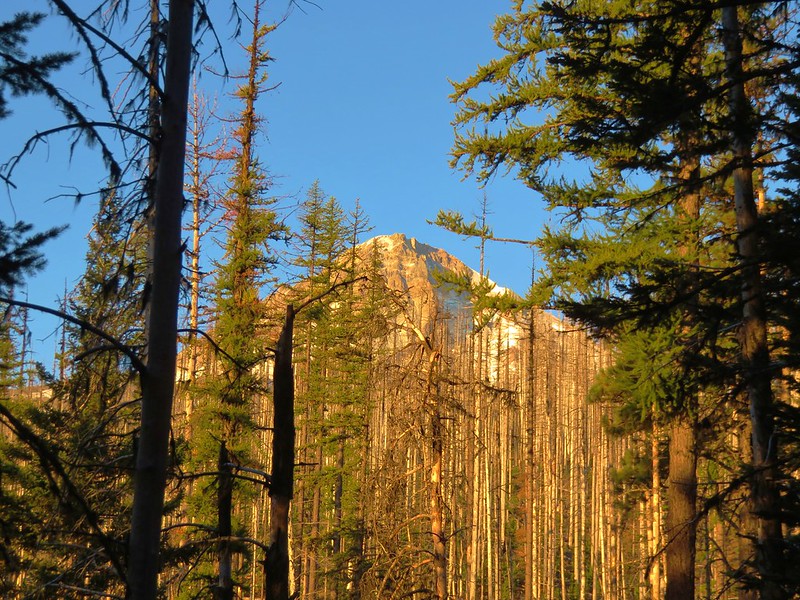
IMG_6579

The burnt trees allowed for some nice views of not only Mt. Hood but also Mt. Adams, Mt. Rainier, and Mt. St. Helens in Washington.
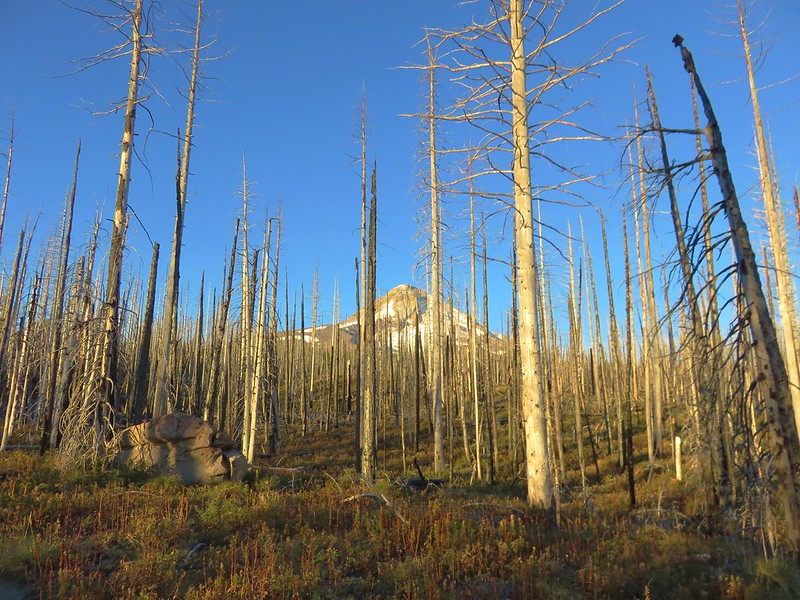
IMG_6587

IMG_6590

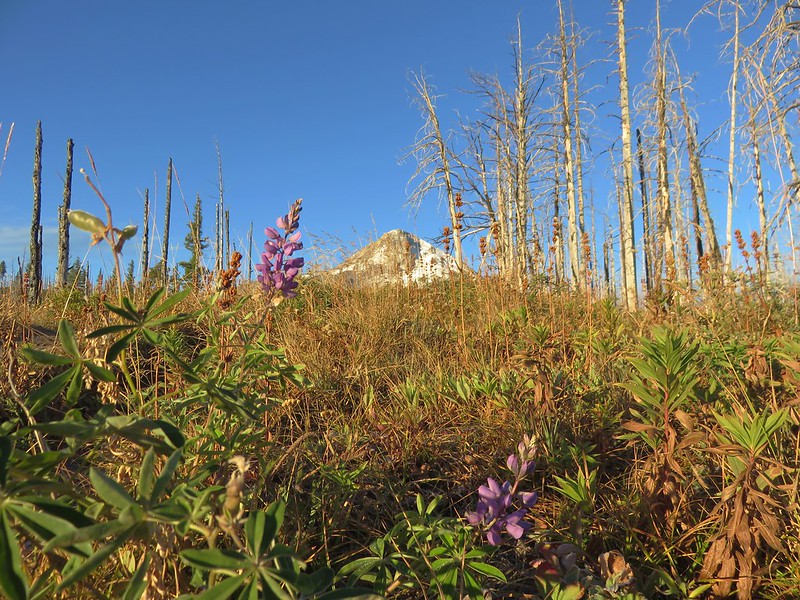
It was very apparent that earlier in the year there had been a nice display of wildflowers along the trail but most of them had long since passed although a few holdouts did remain.
IMG_6606

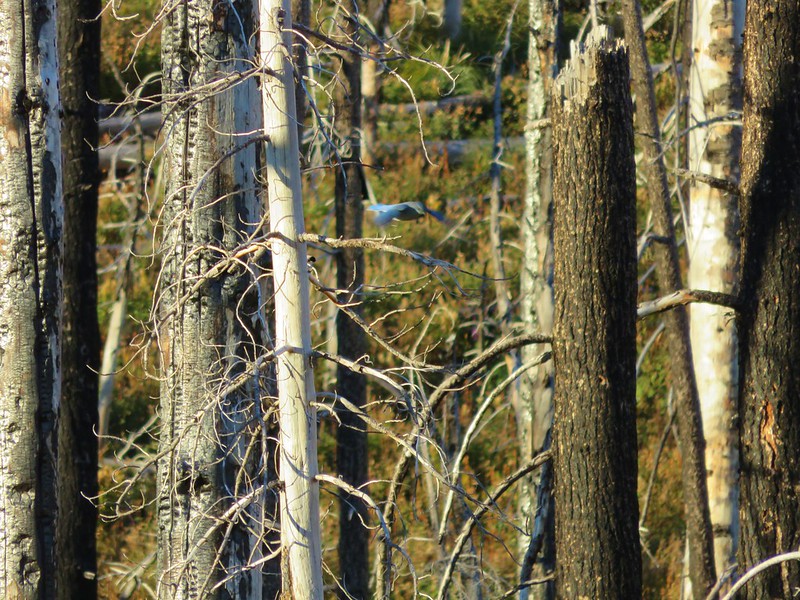
The dead trees seemed to host plenty of life in the form of a variety of birds flying from tree to tree.
IMG_6601

IMG_6619

IMG_6627

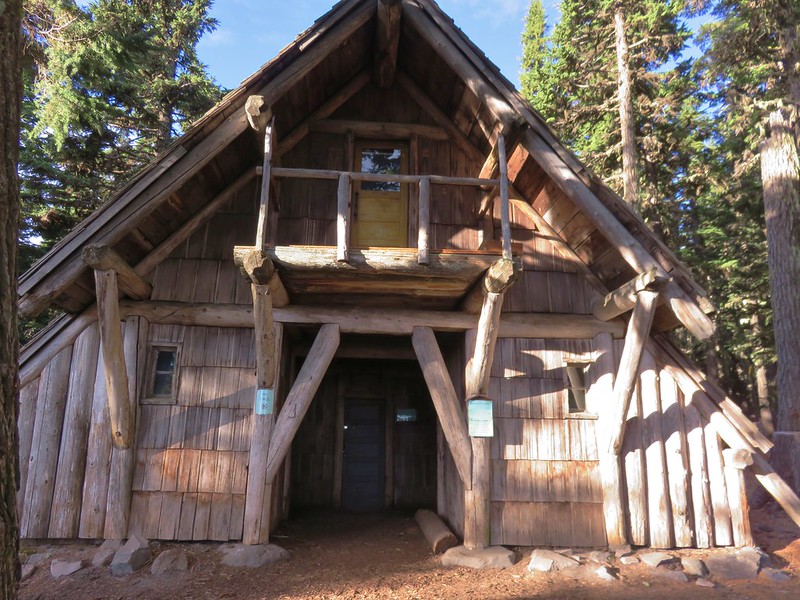
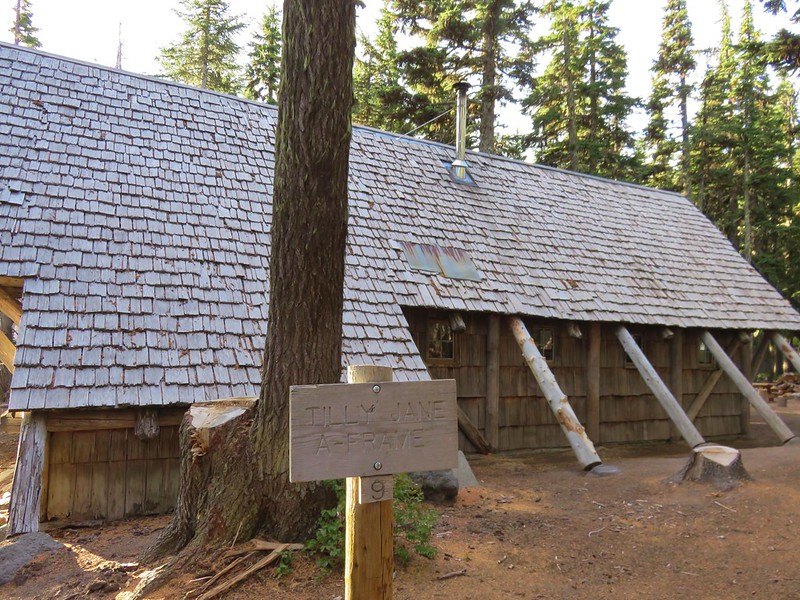
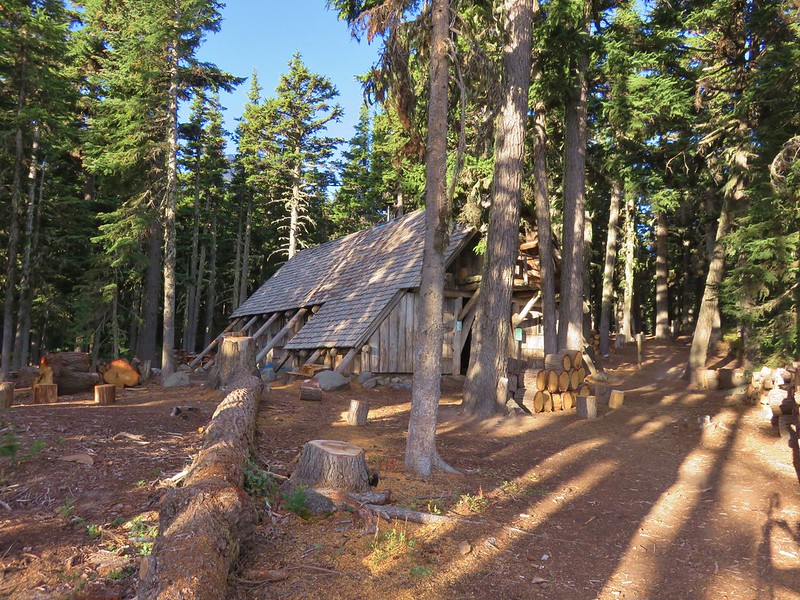
After nearly 3 miles of climbing we neared the Tilly Jane A Frame which was hidden in non-burnt trees.
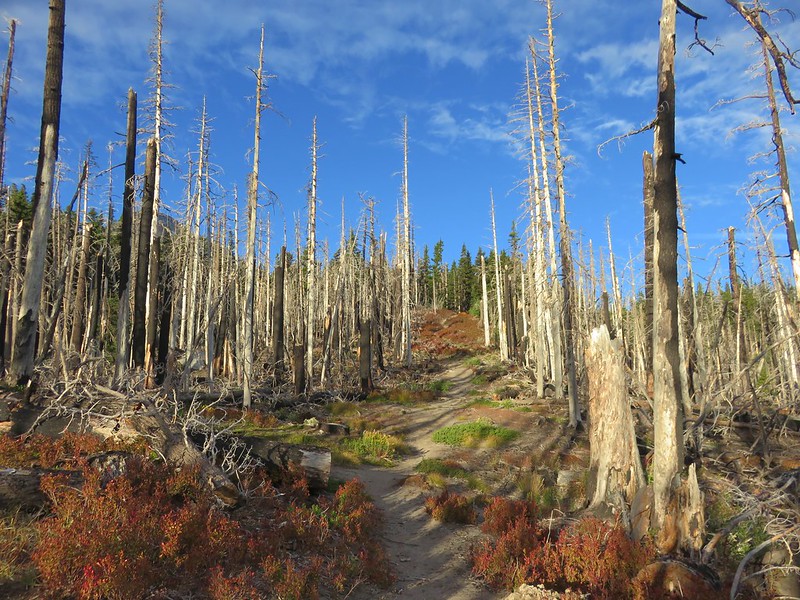
IMG_6628

Despite being threatened by the 2011 fire, firefighters had been able to save all the structures in the historic district.

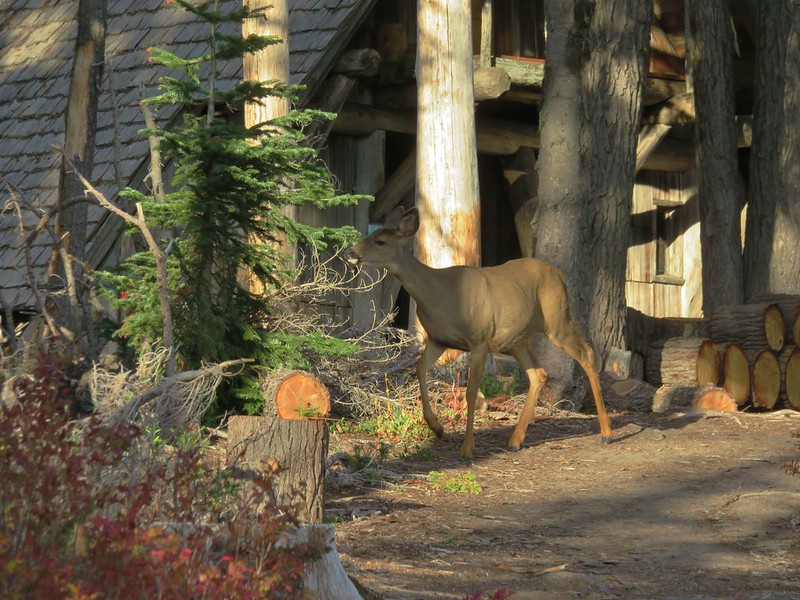
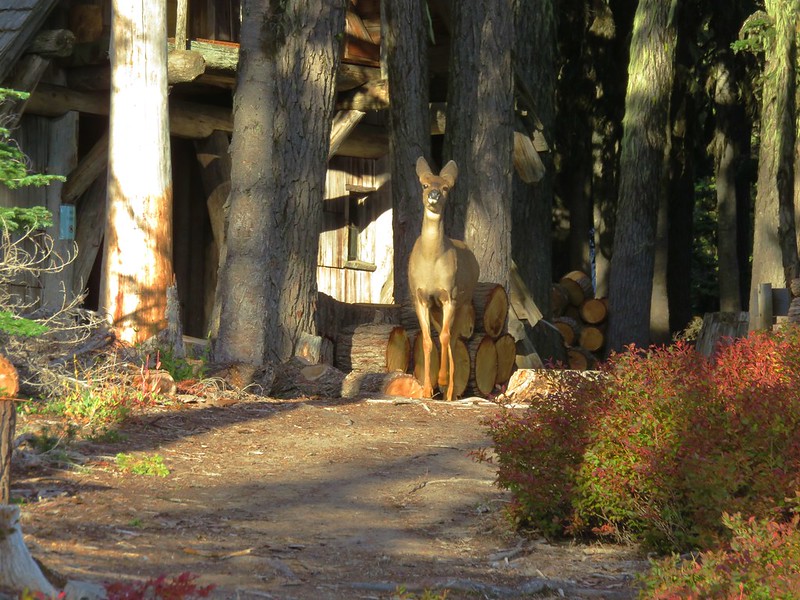
Heather and I were busy talking as we approached the A-Frame and I suddenly noticed there was a deer in the trail about 20 yards away. It walked into the trees as I was grabbing the camera, but then a second deer appeared.
IMG_6629

She sized us up for a moment then proceeded to take a few bites of the plants as she followed the other one into the trees.
IMG_6631

IMG_6633

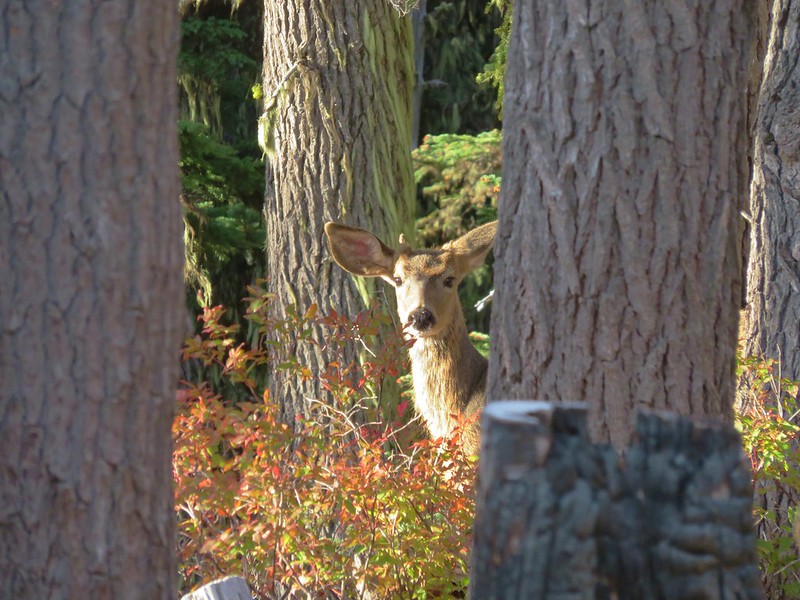
As we continued up the trail we spotted the first deer and saw that it was a young buck.
IMG_6634

After watching the deer for a moment we proceeded to the A-Frame to have a look.
IMG_6638

IMG_6639

IMG_6640

IMG_6642

The A-Frame was constructed by the Civilian Conservation Corps in 1939 and can sleep up to 20. It originally had a kitchen and dining hall on the ground floor with the sleeping area above in the loft.

West of the A-Frame is the Legion Cookhouse (built in 1924) which is not in the best of shape.
IMG_6644

IMG_6645

Just beyond the cookhouse a trail sign announced the Tilly Jane Trail.
IMG_6649

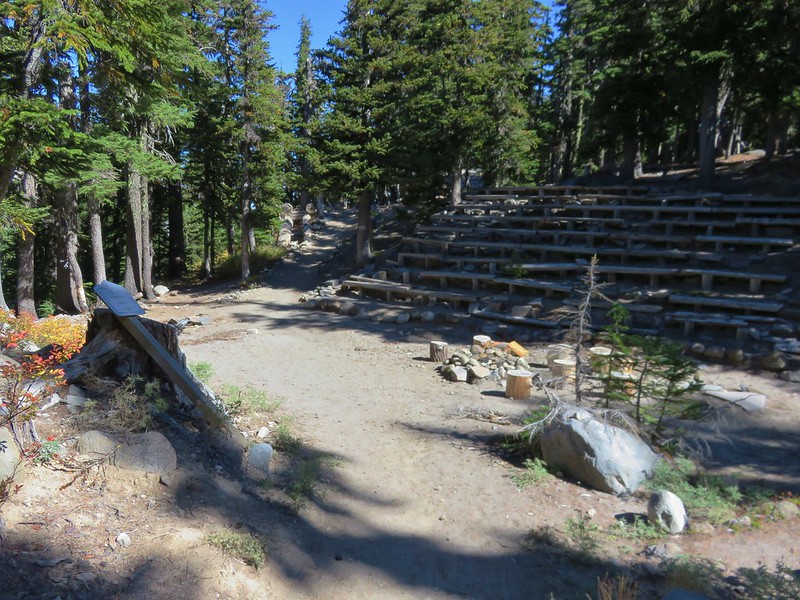
We turned left on the trail after taking a quick look at the American Legion Amphitheater which was also constructed in the 1920s.
IMG_6651

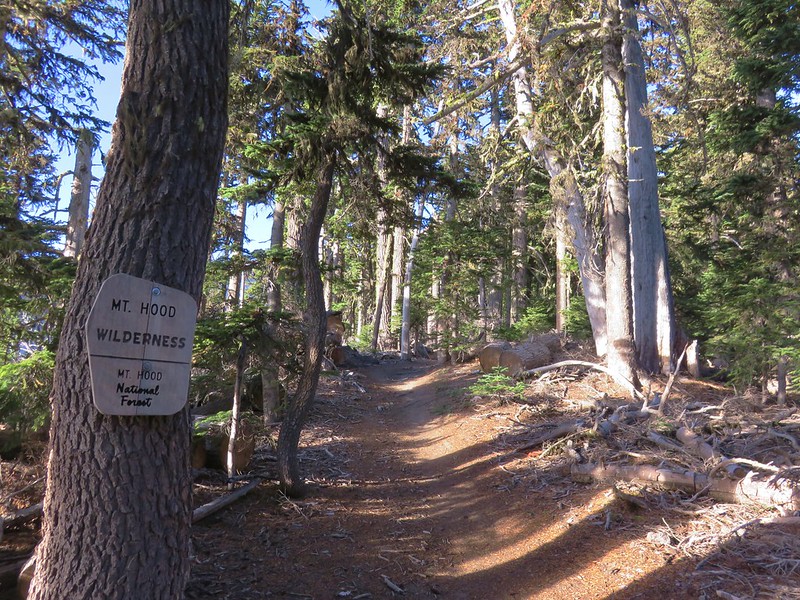
The Tilly Jane Trail enters the Mt. Hood Wilderness about a quarter mile from the cookhouse.
IMG_6654

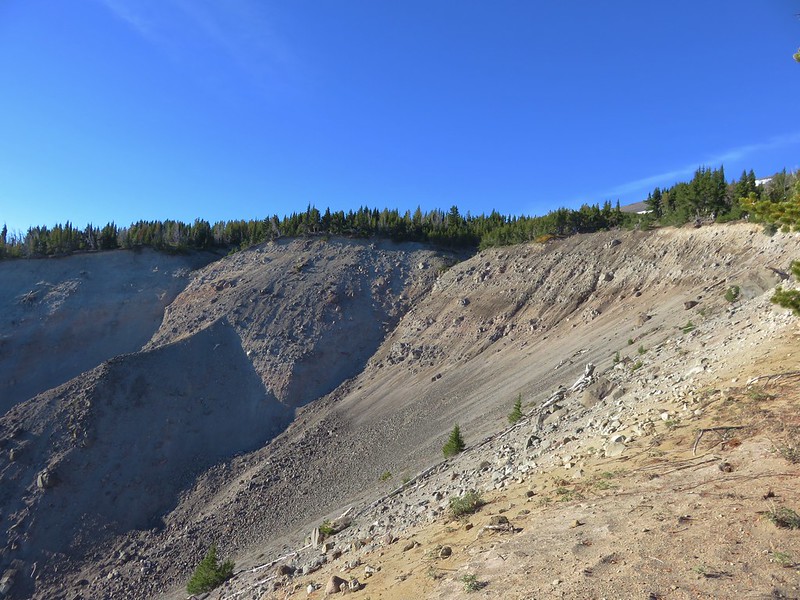
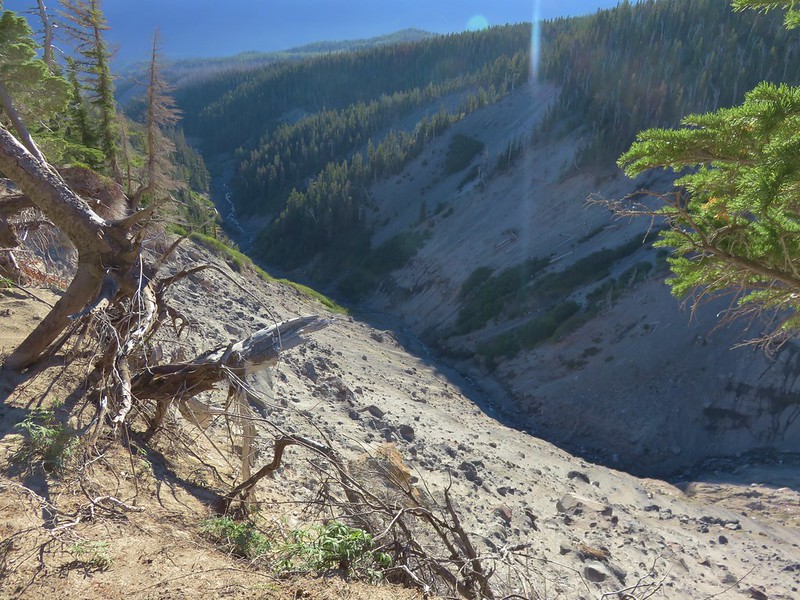
The trail then proceeds uphill along the Polallie Creek Canyon just over three quarters of a mile to the Timberline Trail. A 1980 flash flood sent an 80′ deep wall of water and debris down the canyon. Viewpoints along the way offered a look at the origin of the flood at the headwall of the canyon.
IMG_6656

IMG_6659

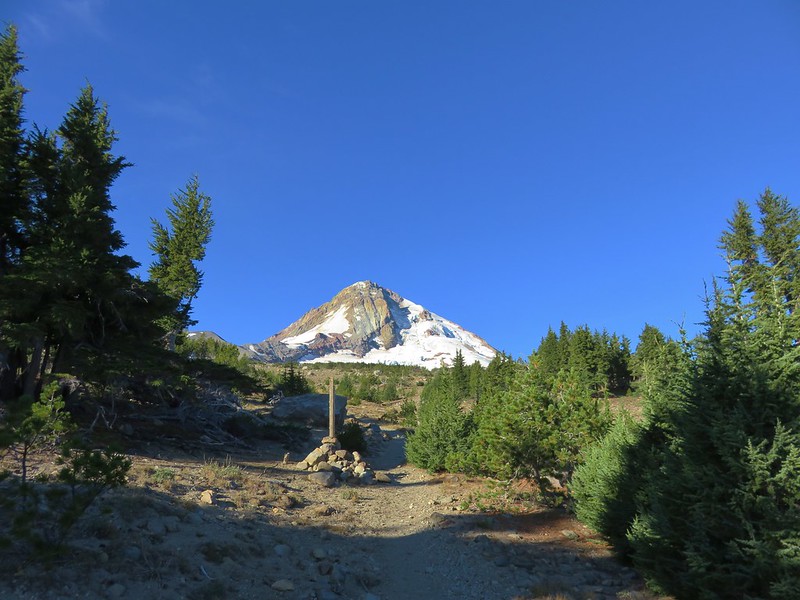
Beyond the viewpoint of the headwall the forest began thinning out providing nice views ahead of Mt. Hood.
IMG_6666

We also had a great view of Mt. Adams which is something we seem to rarely get.
IMG_6676

Just over a mile from the cookhouse and 4 miles from the trailhead on FR 3512 we arrived at the Timberline Trail.
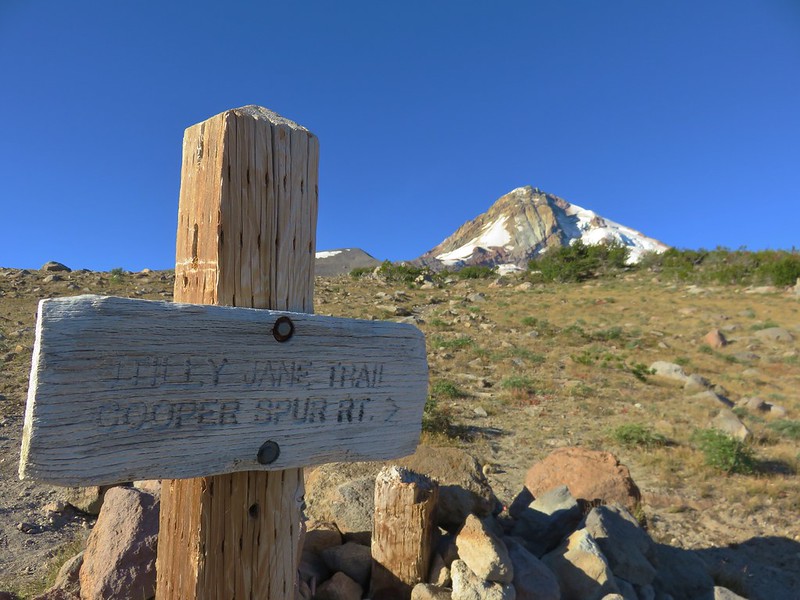
IMG_6681

We followed the pointer for Cooper Spur a tenth of a mile to the Cooper Spur Shelter.
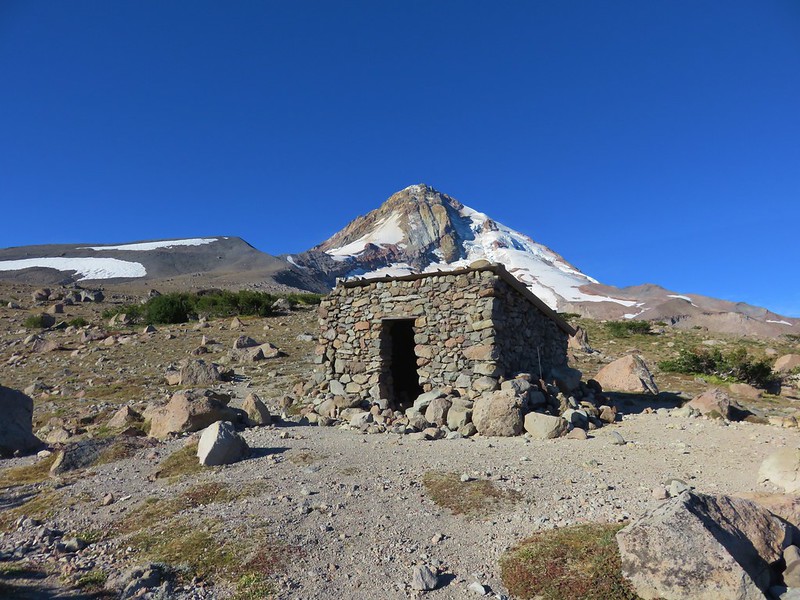
IMG_6688

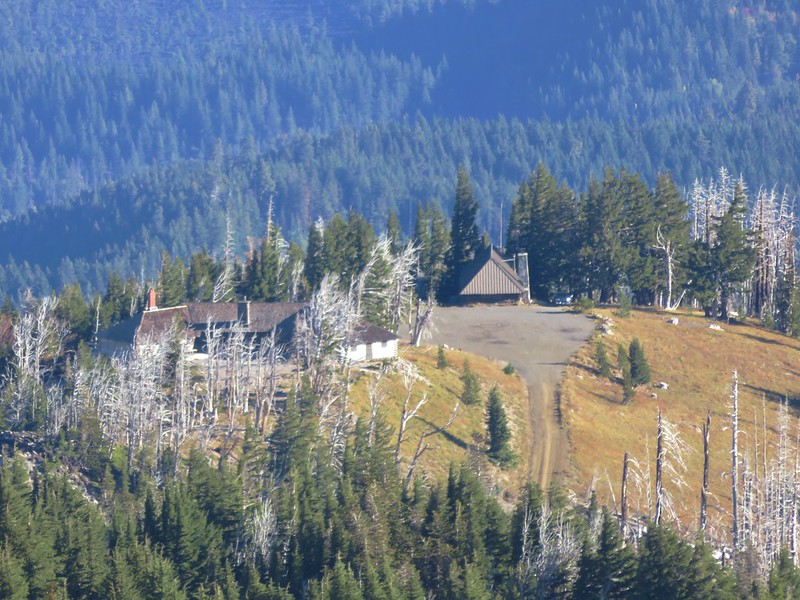
Cloud Cap Inn was visible from the shelter which we planned to visit on our way down.
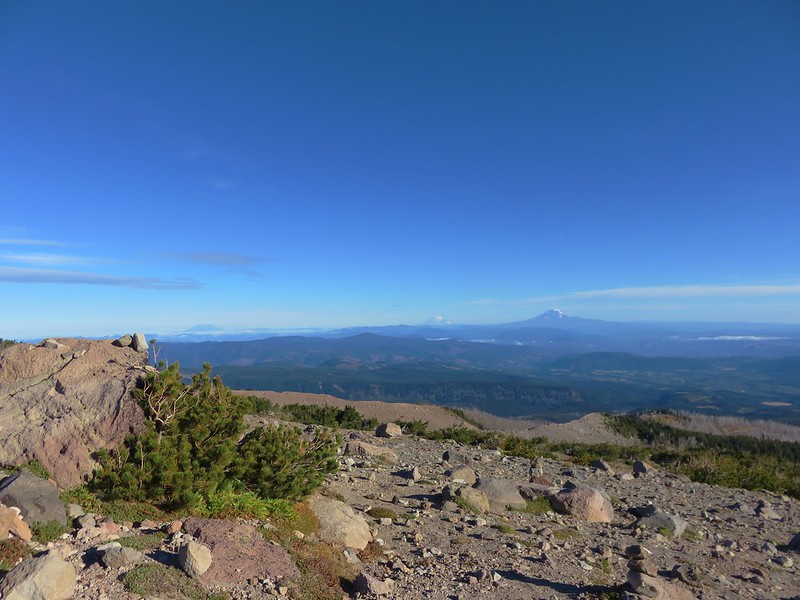
IMG_6690

IMG_6691

We continued up from the shelter following a clear trail.
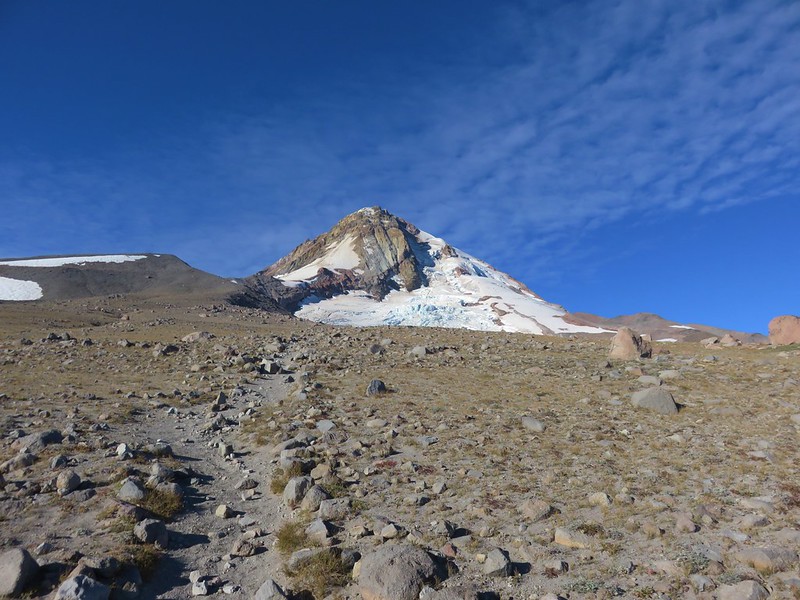
IMG_6701

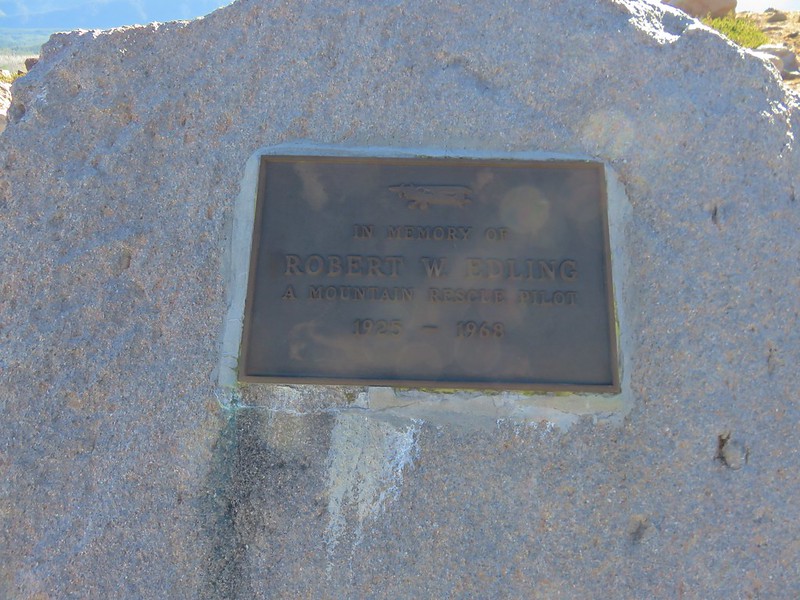
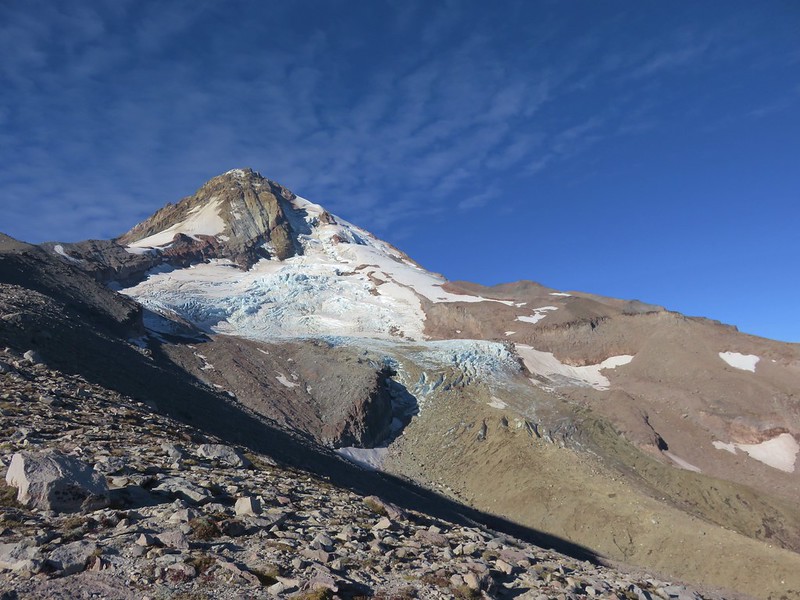
The official trail shown on maps switchbacks uphill but we wound up off the trail after visiting a viewpoint of the Eliot Glacier near a memorial plaque for Robert Edling, a mountain rescue pilot that died in a crop duster accident near The Dalles.
IMG_6703

IMG_6708

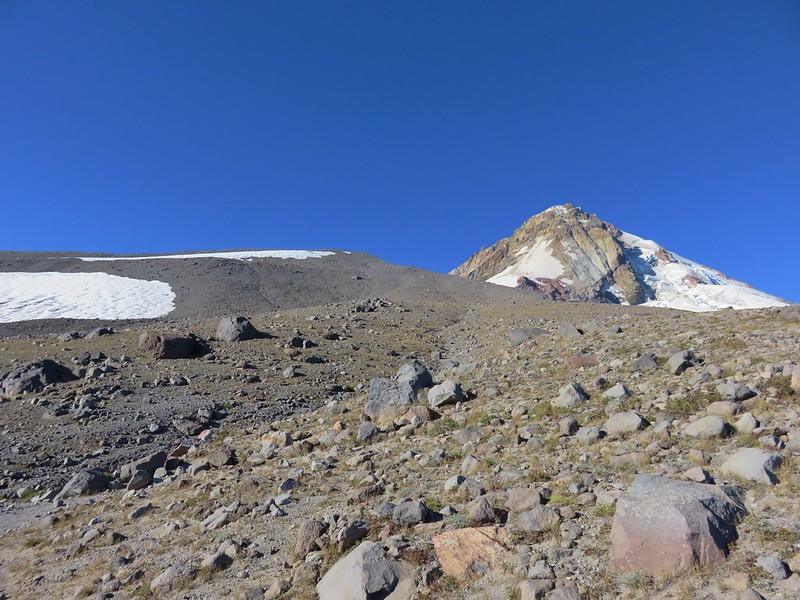
From the memorial plaque we headed straight up the ridge following a confusion of faint paths up through the rocks.
IMG_6713

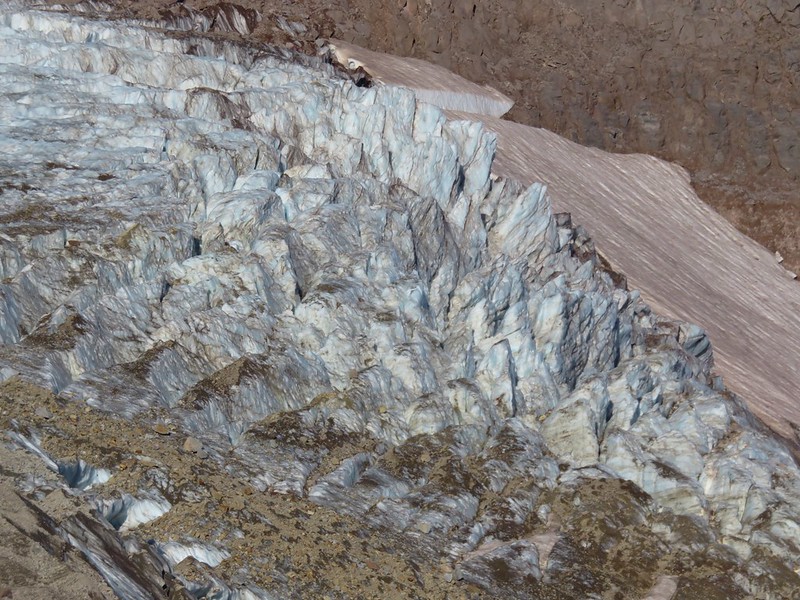
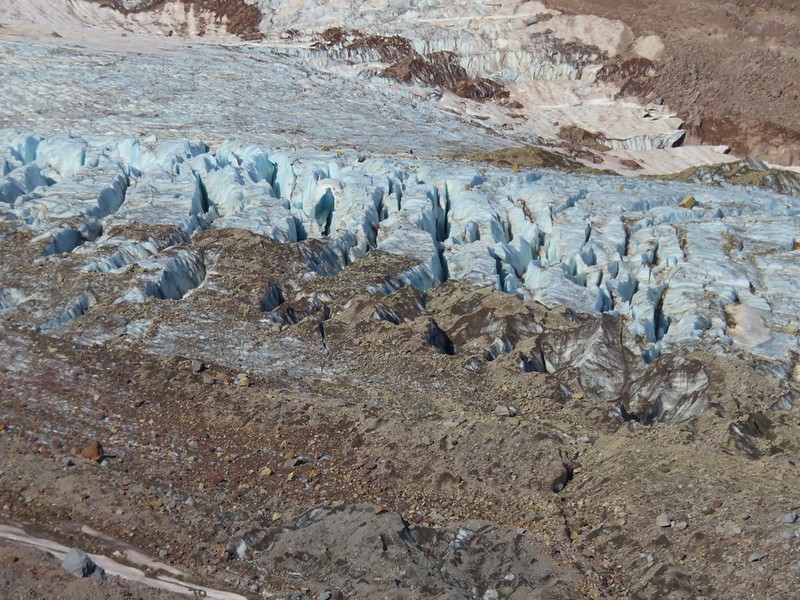
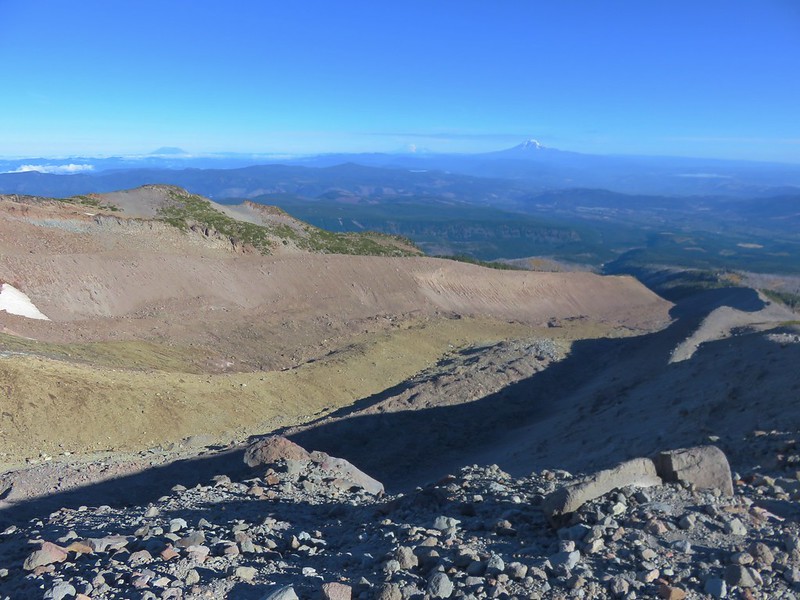
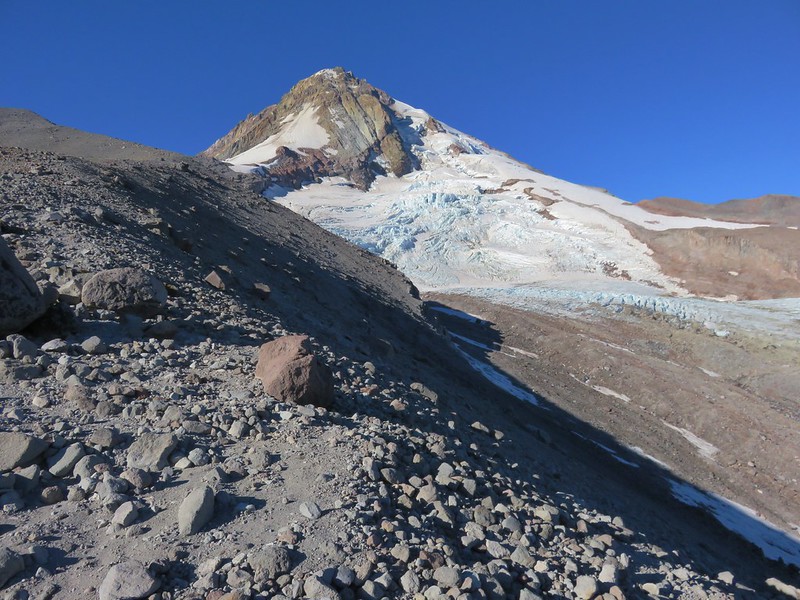
This was much steeper than the switchbacks would have been and when the official trail came close enough for us to see it we hopped back on. We left it again though when it headed straight for a snowfield. It was a cold morning (the expected high for the day in the area was 48) and we knew that the snow would be covered in ice so we wouldn’t be able to cross it. We returned to the edge of the ridge and headed straight up again. In addition to making the distance a little shorter, the main advantage to this route were the views. The views of the Eliot Glacier were really interesting.
IMG_6718

IMG_6719

IMG_6720

IMG_6721

IMG_6722

IMG_6723

IMG_6717

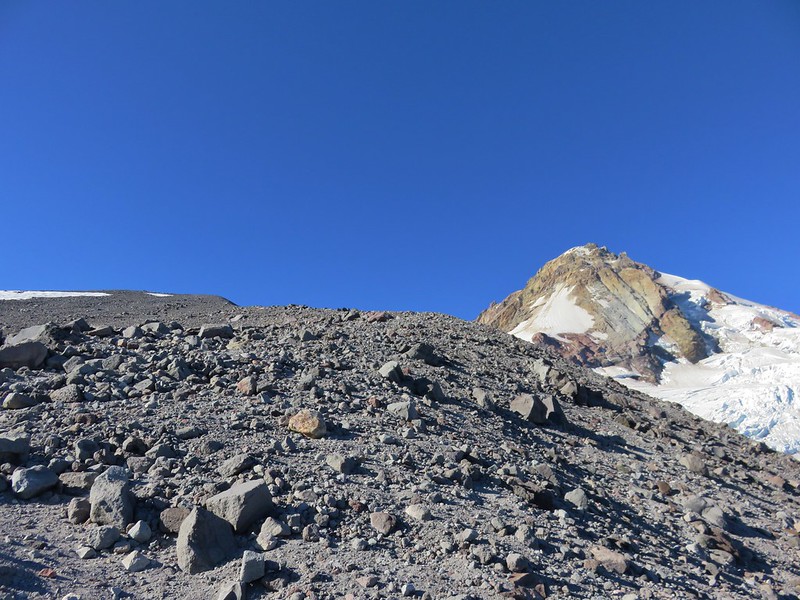
The route steepened quite a bit as it veered to the east to climb to the top of a moraine.
IMG_6725

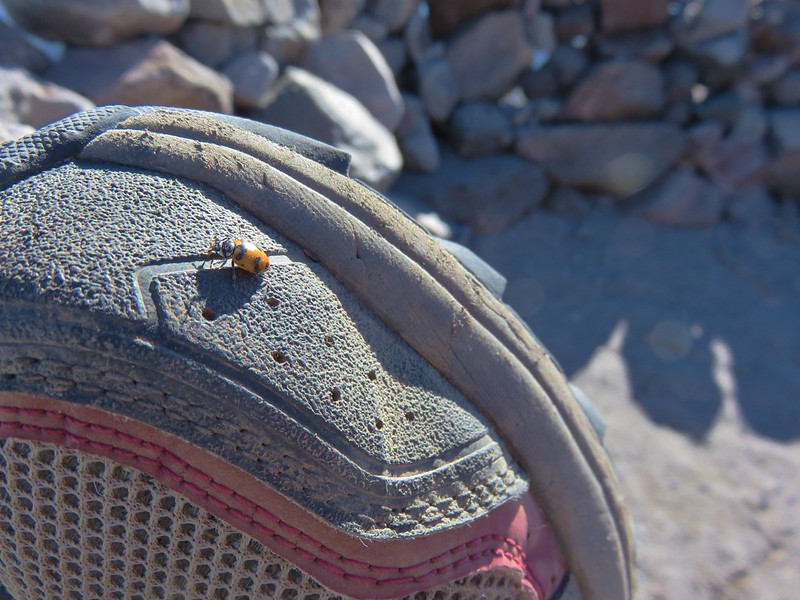
A stone windbreak at the top wasn’t housing any hikers but there were a few ladybugs taking shelter.
IMG_6736

IMG_6768

The official trail ends here where the views were spectacular. To the south Broken Top, The Three Sisters, and Mt. Jefferson were all visible.
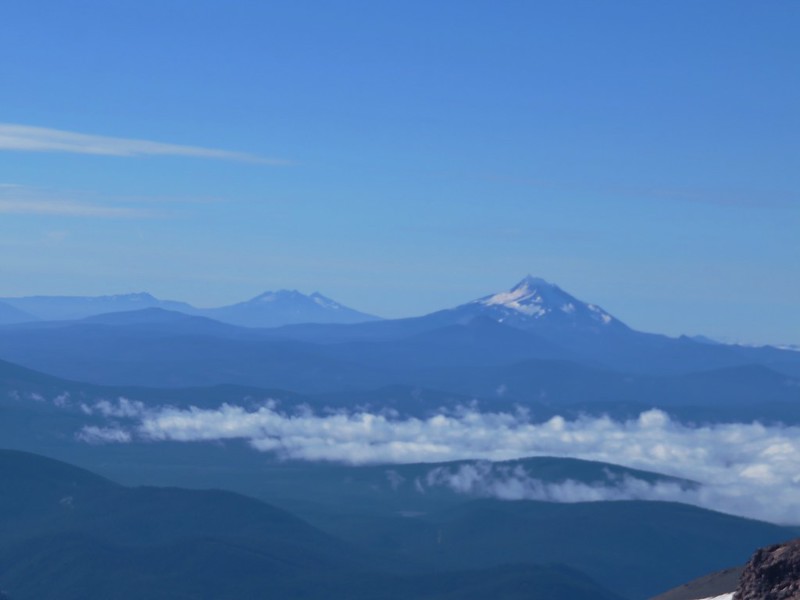
IMG_6738

To the north Mt. St. Helens, Mt. Rainier, and Mt. Adams were all virtually cloud free.
IMG_6740

IMG_6746

IMG_6741

IMG_6743

To the NE the Columbia River snaked from the dry brown landscape of eastern WA and OR into the forested cliffs of the Columbia Gorge.
IMG_6755

Further to the east the Newton Clark Glacier drained into the Newton Creek Canyon.
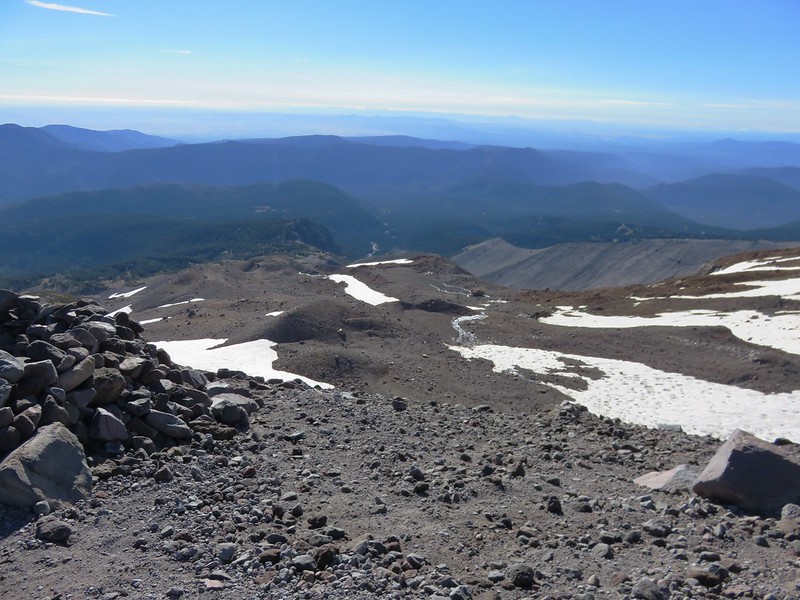
IMG_6756

Mt. Hood provided the most dramatic view though.
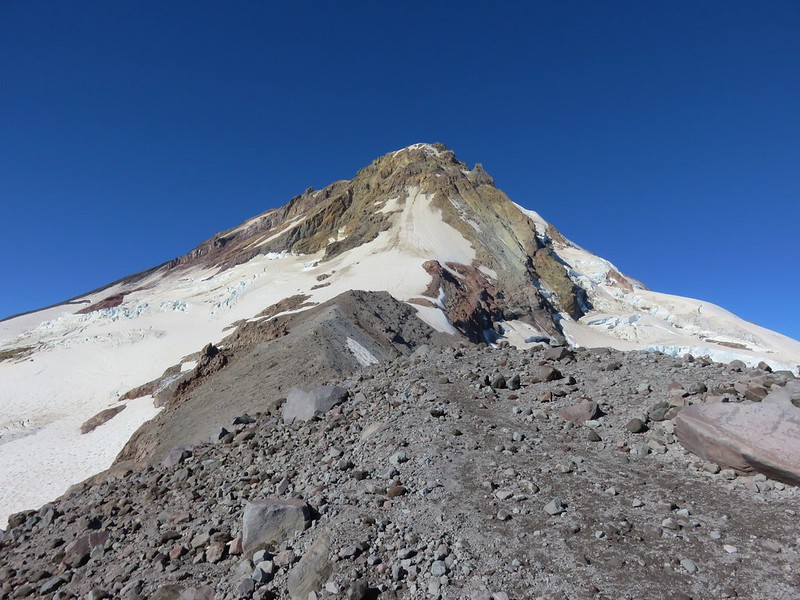
IMG_6750

One of the features on Mt. Hood that we had a good view of was Pulpit Rock.
IMG_6760

Another unique feature in the area is Hiroshima Rock. A boulder inscribed by a group of Japanese climbers in 1910.
IMG_6751

For more information on the Hiroshima Rock check out this post by WyEast Blog.

Even though the official trail ended at roughly 8500′ on top of the moraine, a climbers trail continued along the ridge past Tie-in Rock, a large boulder not far beyond the start of the ridge. The ridge was snow free so we continued on passing Tie-in Rock and continuing to an elevation just over 8900′ where the trail dropped slightly to a saddle between the Eliot and Newton Clark Glaciers.

Heather crossing the ridge. (Tie-in Rock is the large boulder in the distance just to the right of the trail.)
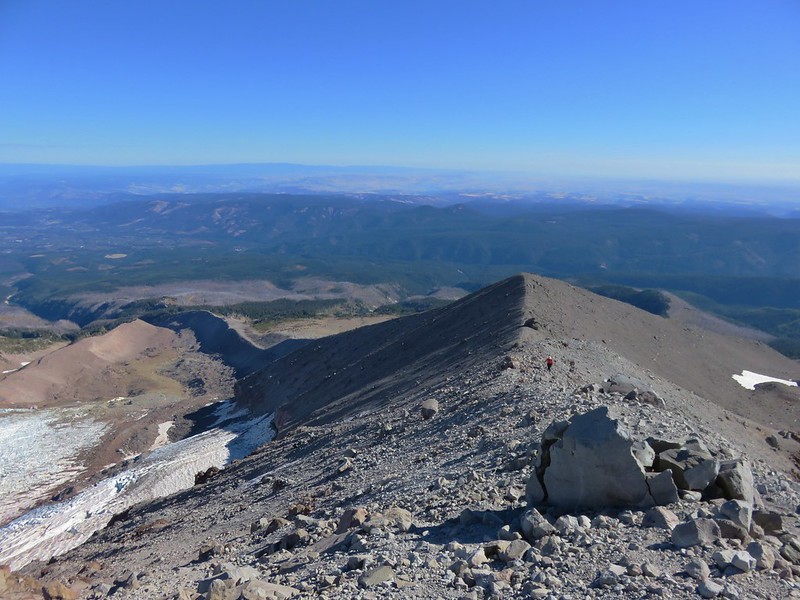
IMG_6770

The first section of the ridge was somewhat level before a final rocky climb to our turnaround point.
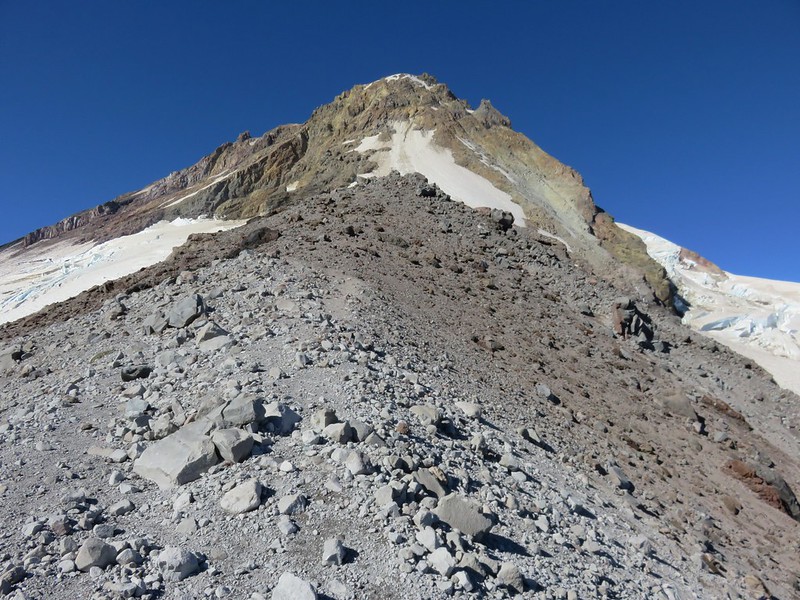
IMG_6773

We passed a final memorial plaque along the way remembering the victims of a 1981 climbing accident.
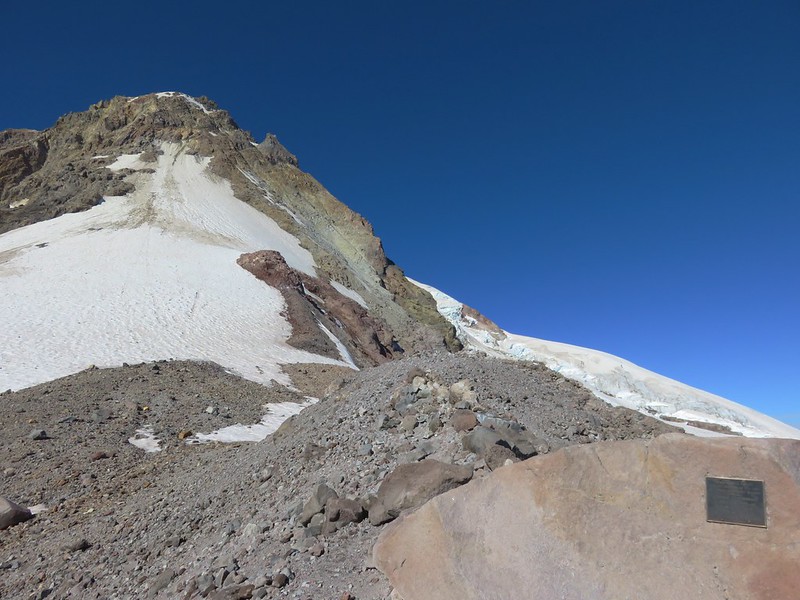
IMG_6774

IMG_6775

Other than a bow hunter, who had been at the trailhead when we arrived that morning, we hadn’t seen anyone other people and were alone on the ridge.
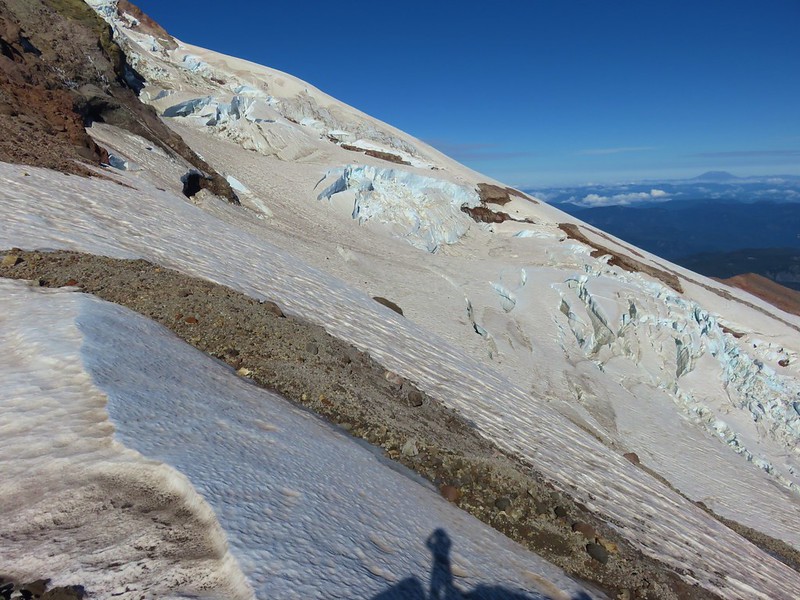
IMG_6785

From this highest point one final Cascade Peak came into view to the south – Diamond Peak.
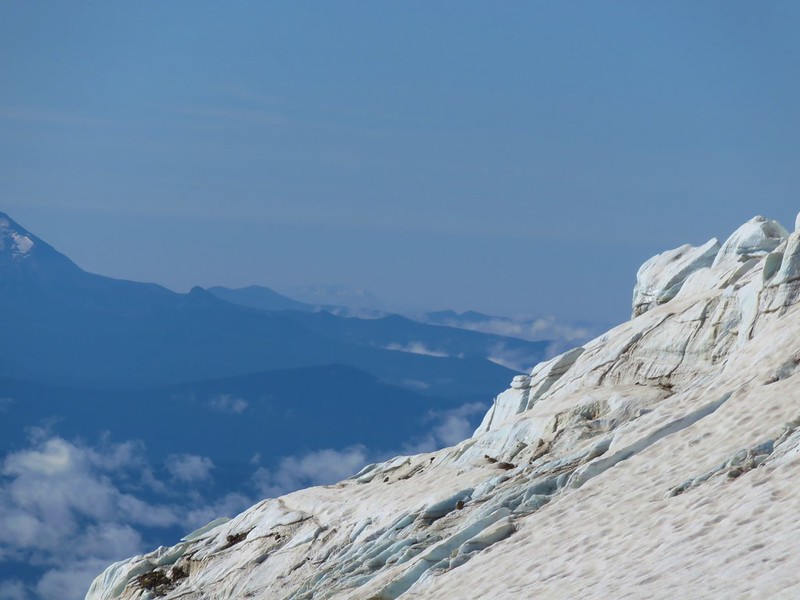
IMG_6804

After enjoying the views we headed back down the way we’d come. As we were descending some high clouds passed overhead changing the scenery a bit.
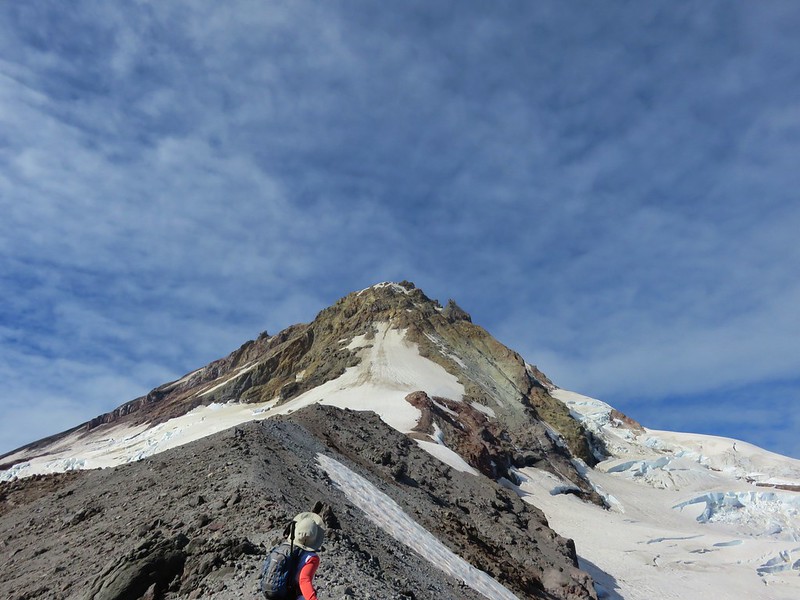
IMG_6817

We decided to follow the official trail on the way down from the moraine which turned out not to be the best decision. The snowfield was still impassible and it was a lot bigger than we had anticipated which caused us to have to swing out wide and make our way down along the snow in loose rocks and sand.
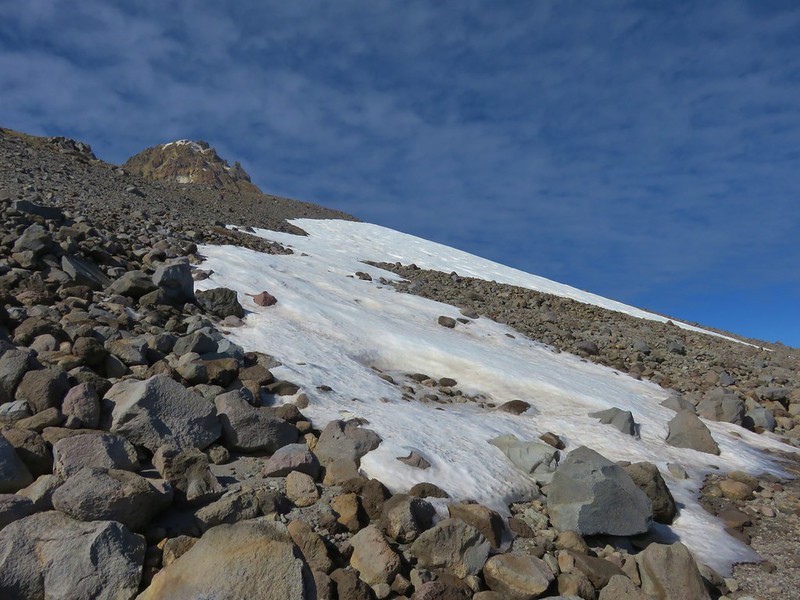
IMG_6821

After passing below the snowfield we contoured back toward the official trail eventually picking it up about a mile and a half from the Timberline Trail. We then followed it back down to the junction and turned left on the Timberline Trail and headed toward Cloud Cap.
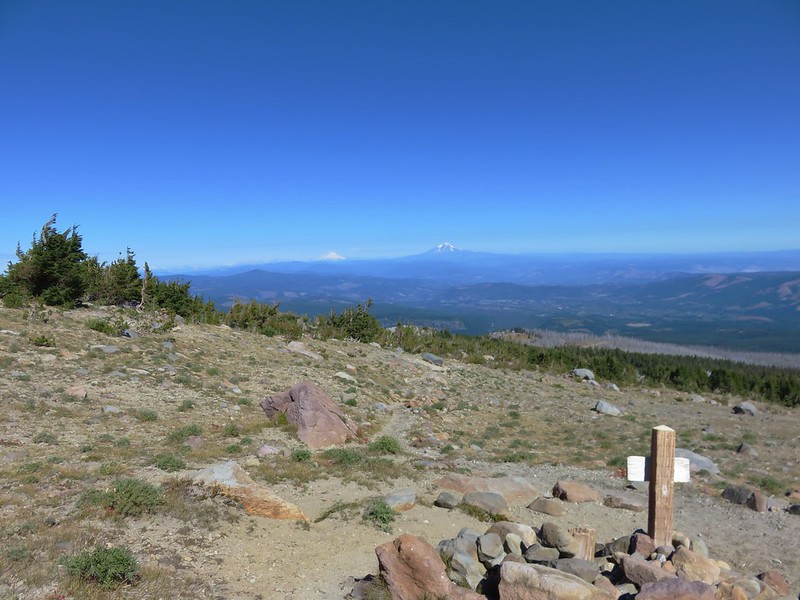
IMG_6824

IMG_6825

The trail descended to a crossing of the upper (and dry) portion of Tilly Jane Creek where it split. With no signs it was difficult to tell if we should turn downhill along the creek or climb to the ridge along the Eliot Moraine. We chose to go up where we found a nice path with great views along the ridge.
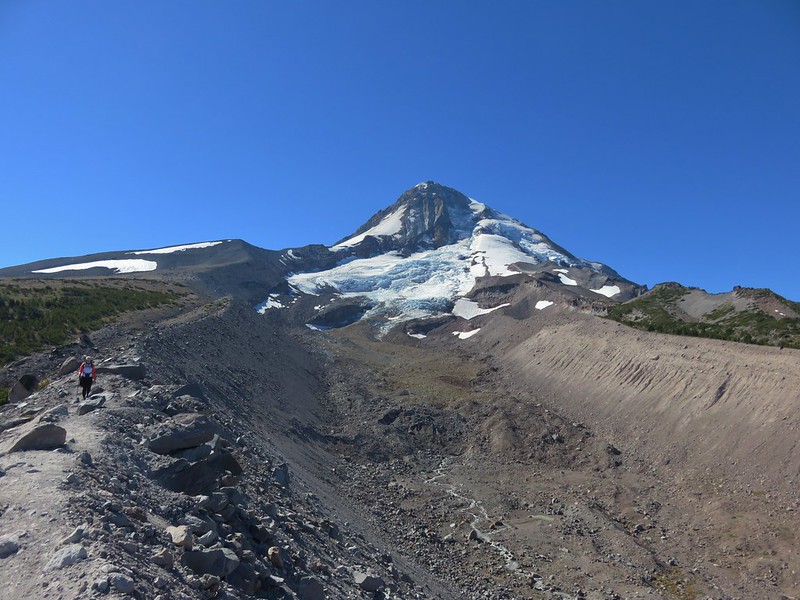
IMG_6832

IMG_6828

IMG_6830

Near the end of the moraine the trail dropped down to the right into the forest.
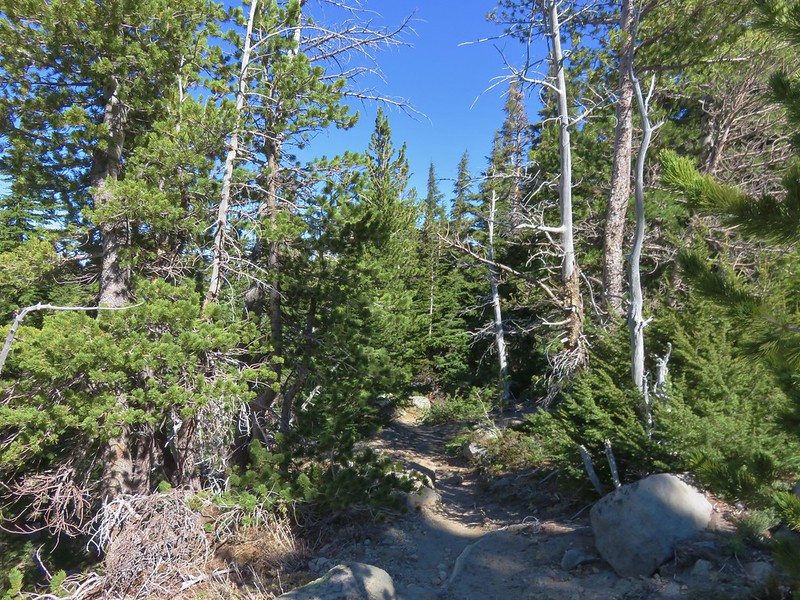
IMG_6835

After 1.2 miles we came to a sign for the Cloud Cap Trailhead.
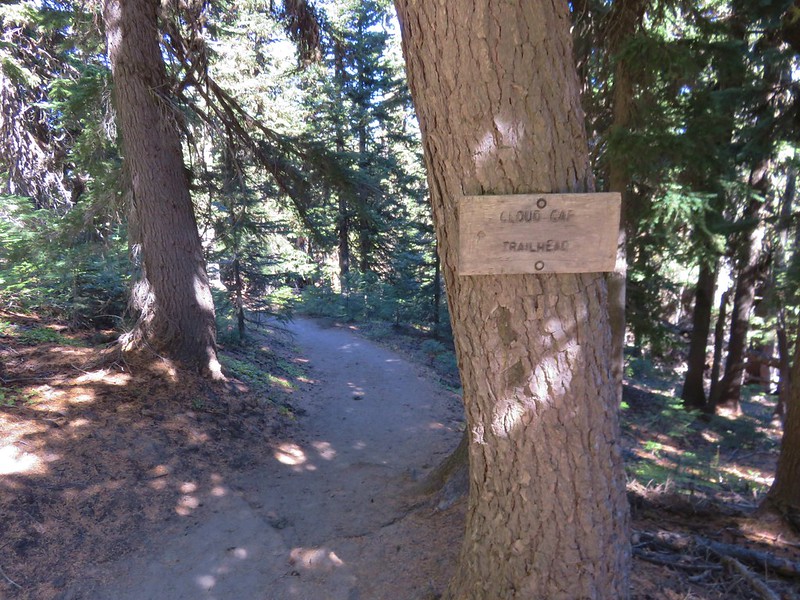
IMG_6836

We followed that trail for 100 yards to the Cloud Cap Saddle Campground where a road led up and around a hill to the Cloud Cap Inn.
IMG_6837

IMG_6838

Snowshoe Cabin
IMG_6839

Cloud Cap Inn
IMG_6846

IMG_6848

IMG_6849

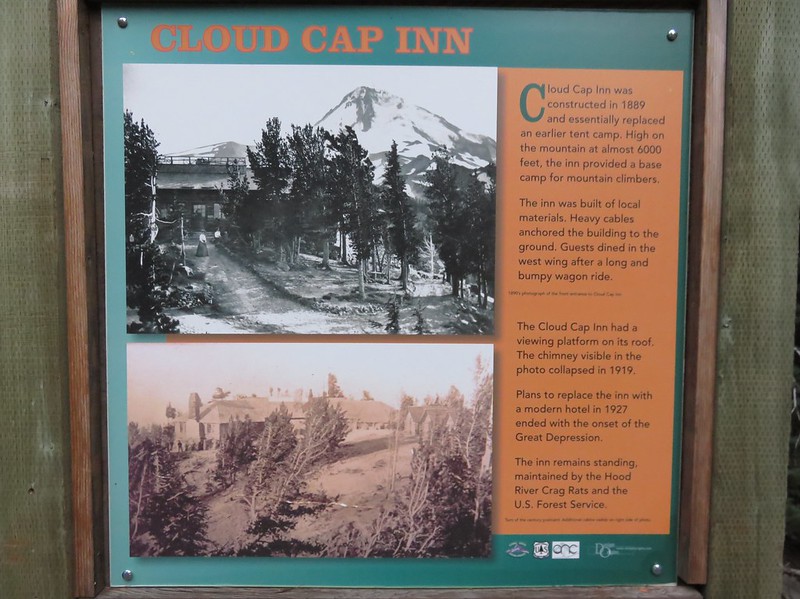
The inn was opened in 1889 and is currently maintained by the Hood River Crag Rats who use the inn as a base for snow surveys and mountain rescues. Click  here for more on the inn’s history.

After visiting Cloud Cap we passed back through the campground where we turned left on the Tilly Jane Trail.
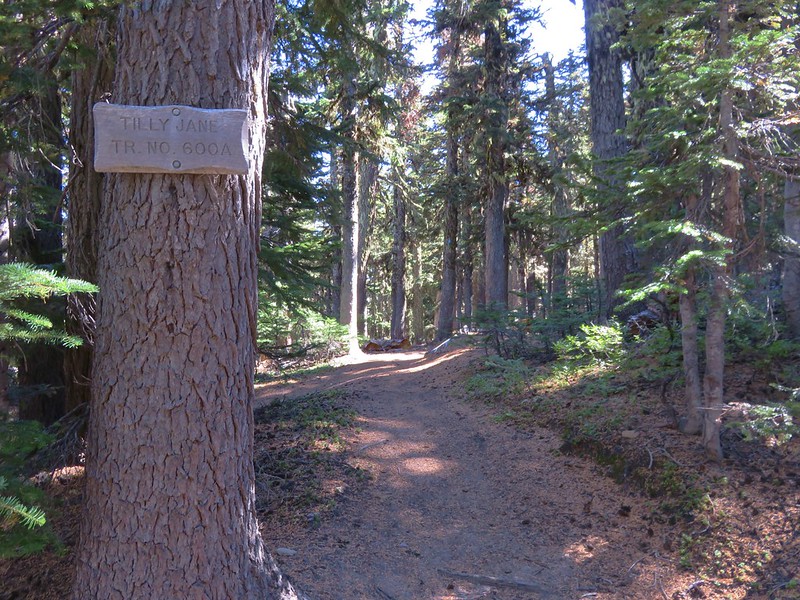
IMG_6852

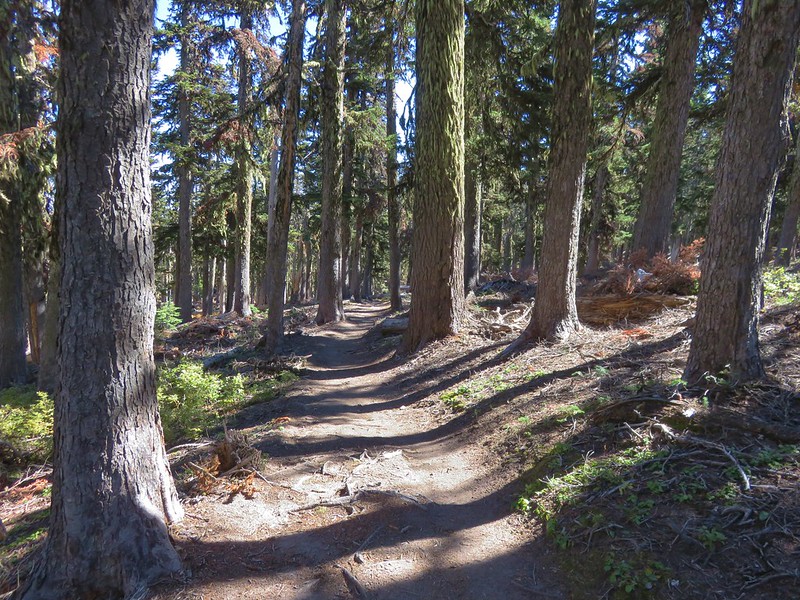
This section of the trail passed through a mix of burnt and unburnt forest and still had a few flowers along it.
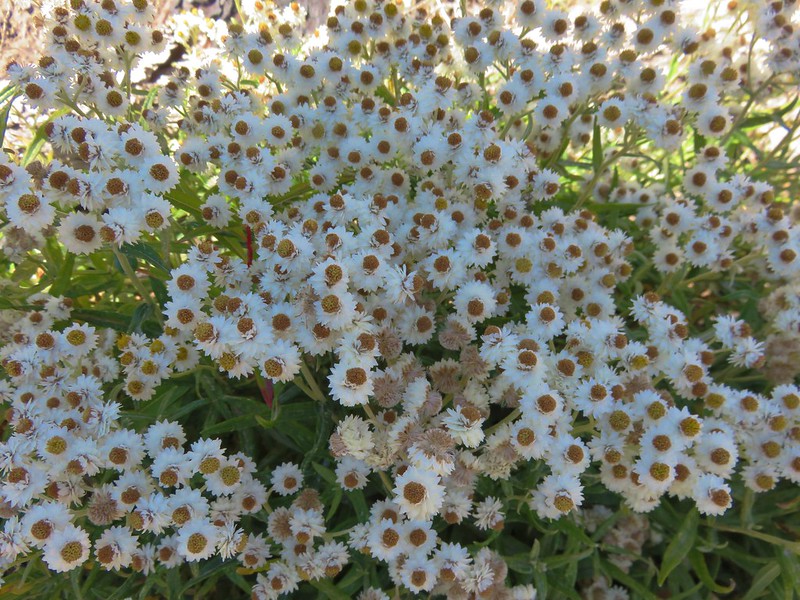
Aster
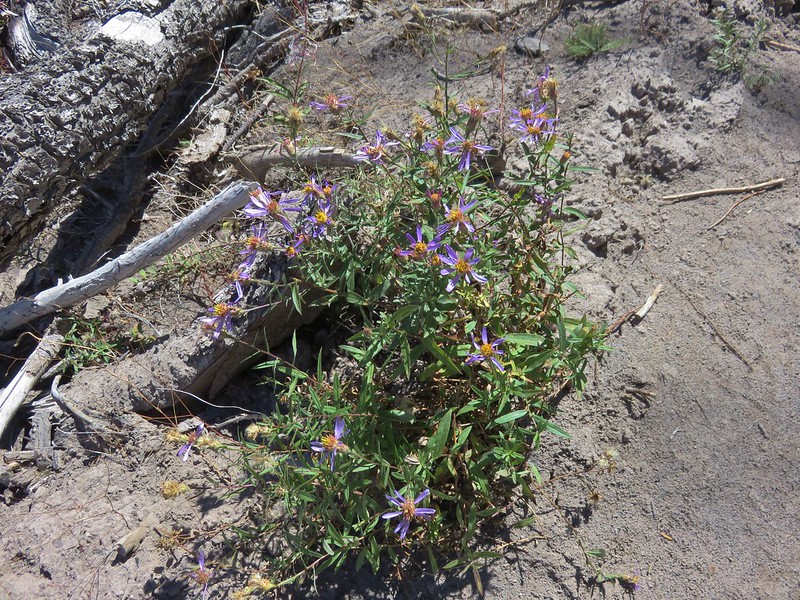
IMG_6854

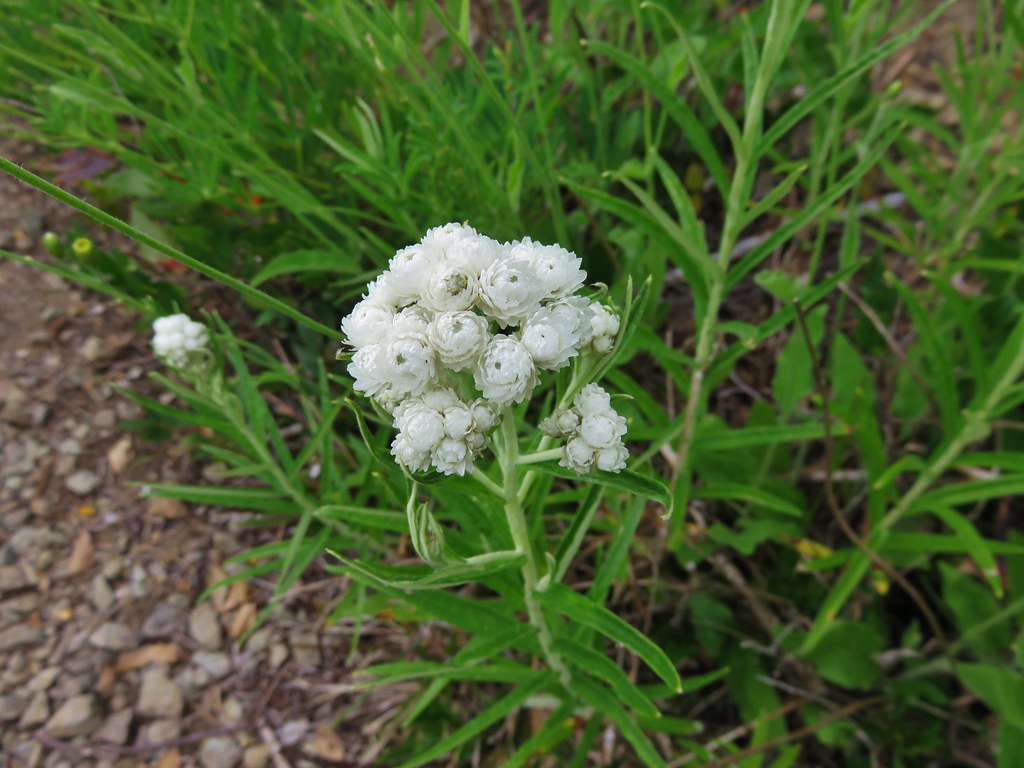
Pearly everlasting
IMG_6855

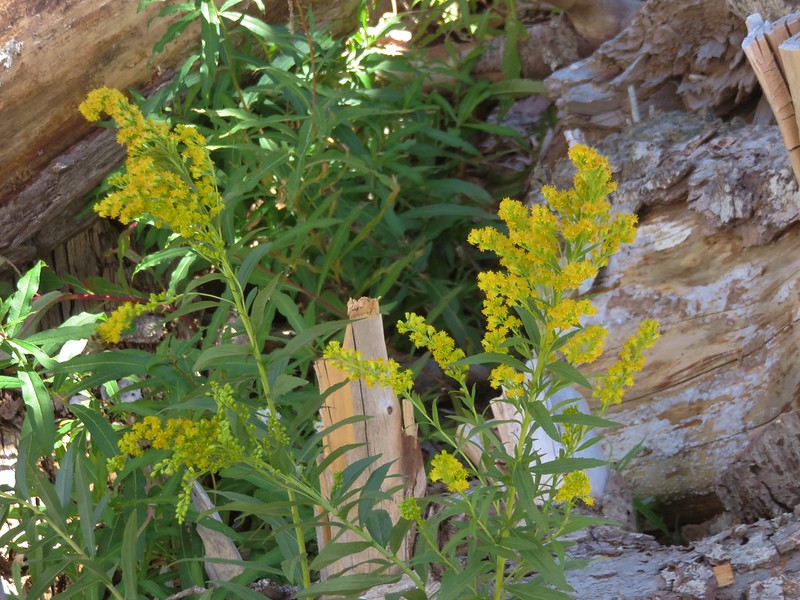
Goldenrod
IMG_6857

IMG_6859

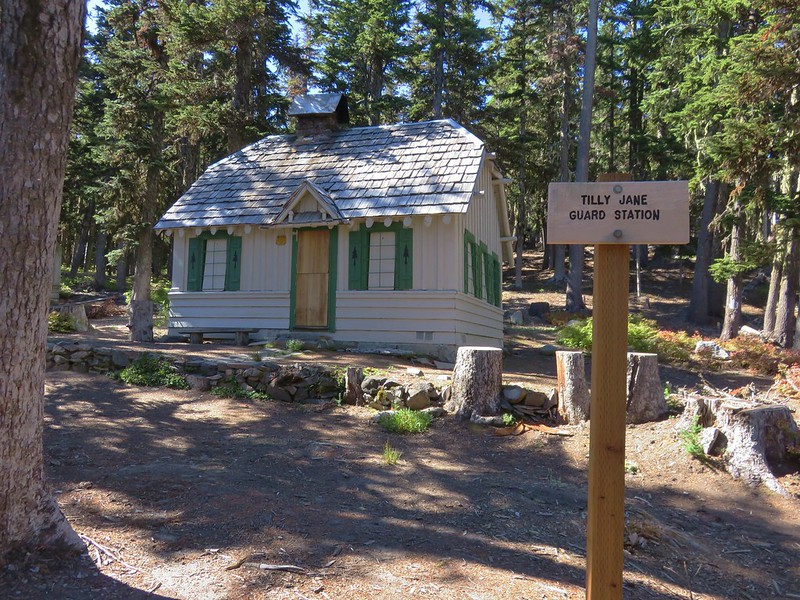
We followed signs to the Tilly Jane Campground and the 1924 Tilly Jane Guard Station.
IMG_6860

IMG_6863

IMG_6864

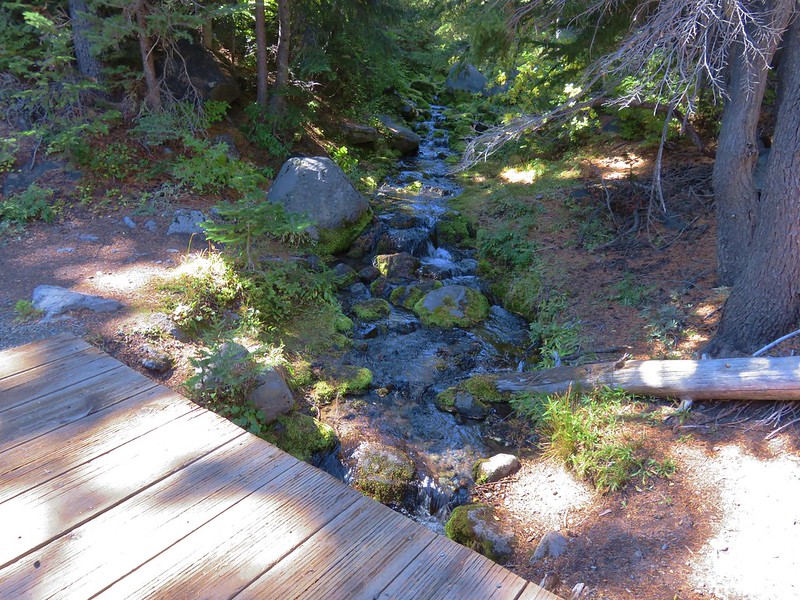
The trail crossed Tilly Jane Creek on a footbridge between the Guard Station and the amphitheater.
IMG_6866

IMG_6868

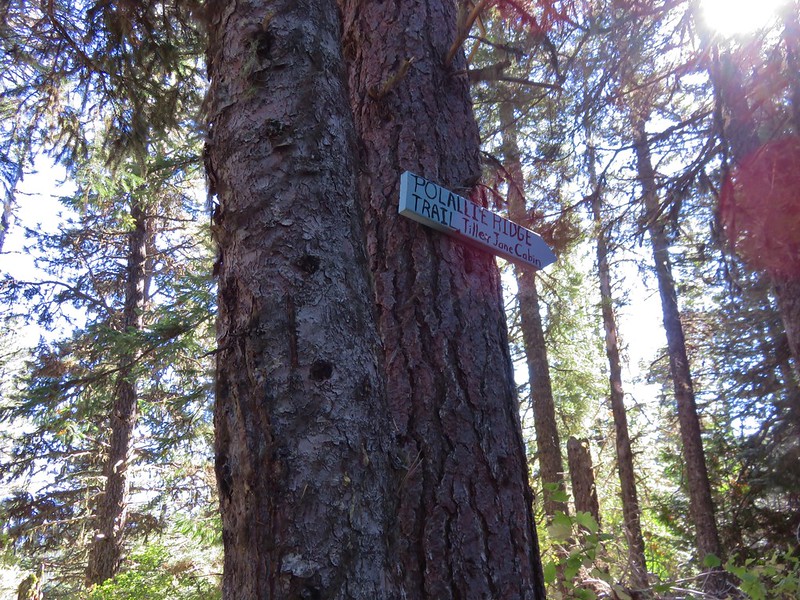
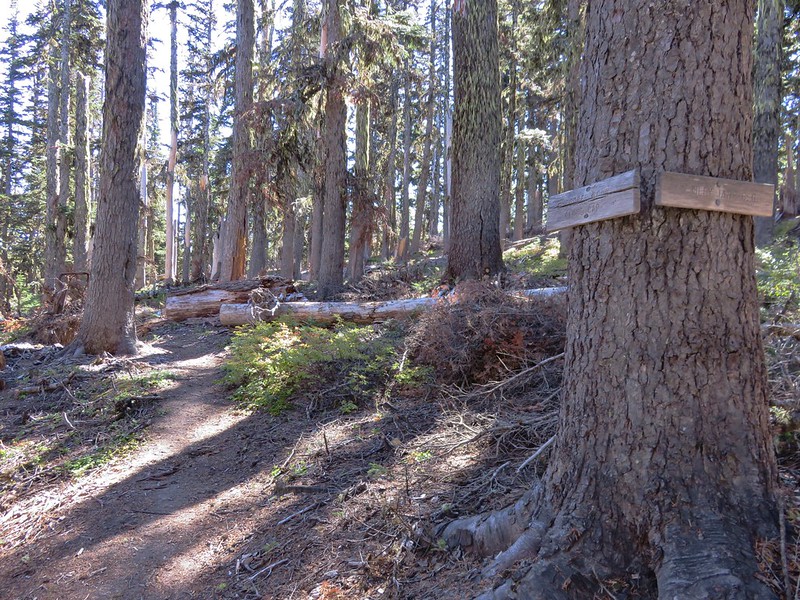
Instead of returning on the Tilly Jane Ski Trail which led past the A-Frame we turned back uphill on the Tilly Jane Trail for a couple hundred feet to a trail sign for the Polallie Ridge Trail.
IMG_6871

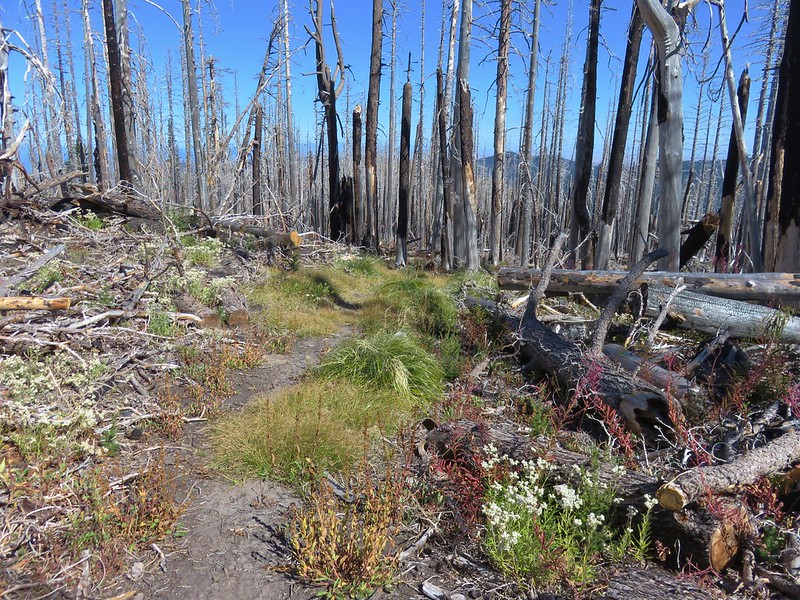
The Polallie Ridge Trail quickly entered the Dollar Fire burn area. The trail stuck closely to the top of the ridge as it headed straight downhill.
IMG_6876

IMG_6882

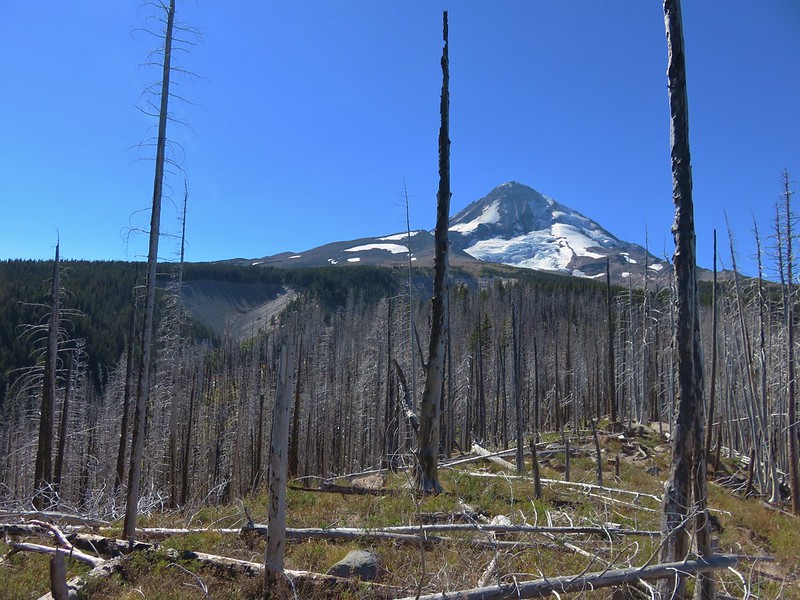
There was a nice view back to Mt. Hood as well as the headwall of the Polallie Creek Canyon.
IMG_6878

The trail was faint and appeared to get more use by deer than hikers. Manzanita and chinkapin covered sections of the trail but it was passable.
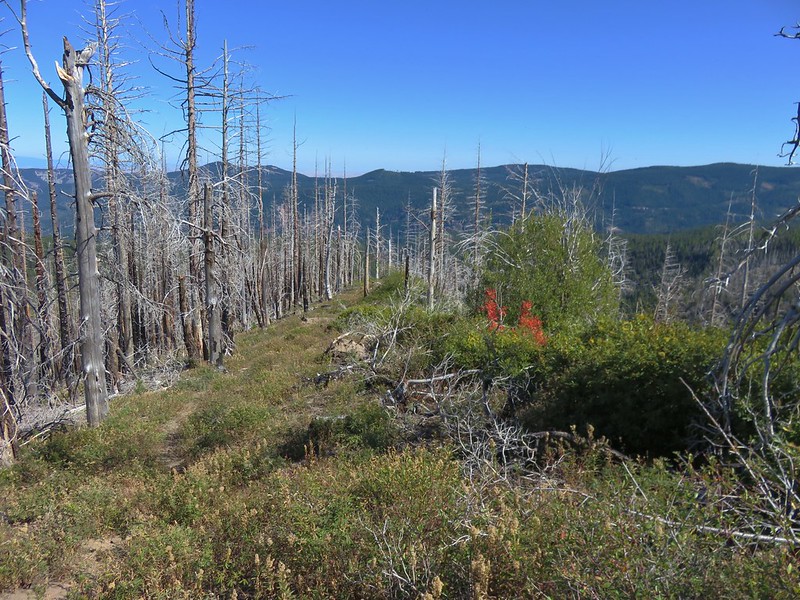
IMG_6883

IMG_6888

chinkapin
IMG_6885

The trail eventually reentered forest unaffected by the fire and just over 2 miles from the Tilly Jane Trail junction we turned left following a blue arrow for the Polallie Ridge Trail.
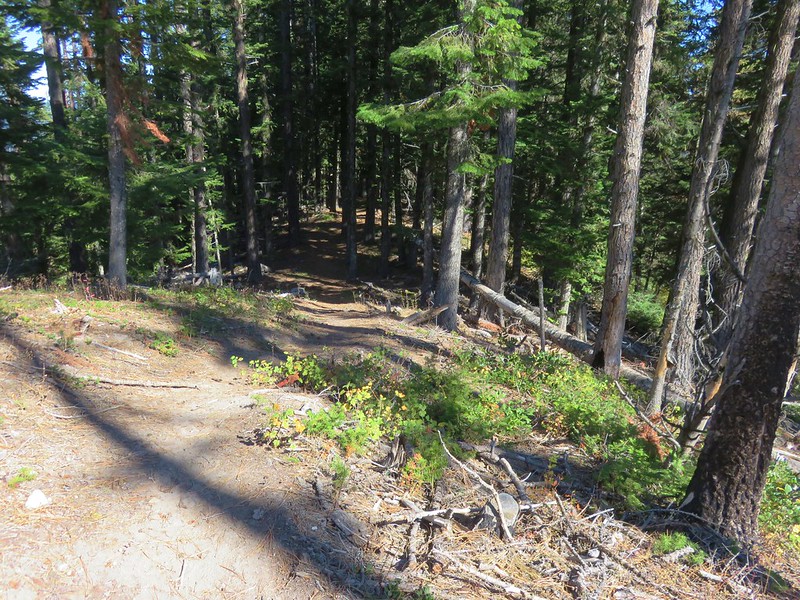
IMG_6889

IMG_6890

IMG_6891

Another quarter mile brought us back to the Tilly Jane Ski Trail just .5 miles from our car.
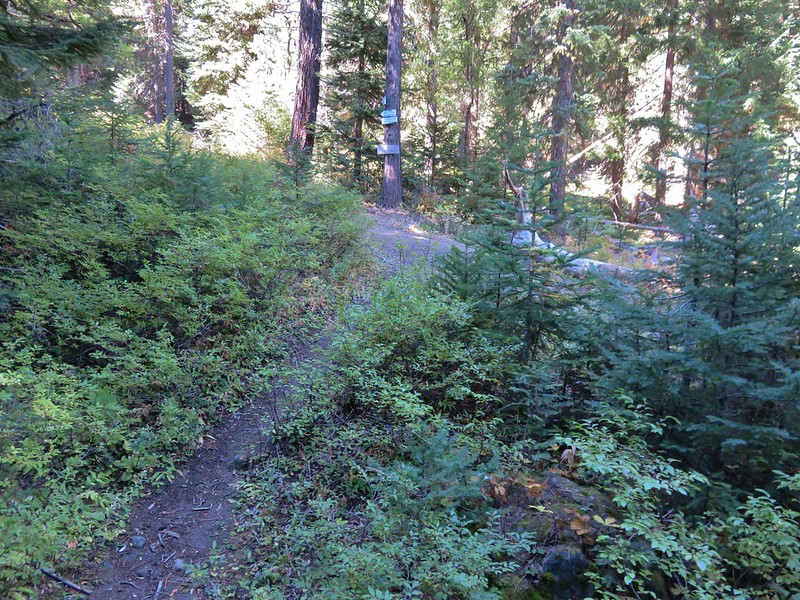
IMG_6892

IMG_6894

The total distance for the hike was 13.9 miles with a little over 5000′ of elevation gain. It had been a near perfect day for the hike with the cool temperatures and lack of troublesome clouds. Having had Cooper Spur all to ourselves was just a bonus. We had begun seeing other hikers when we began descending from the moraine at 8500′ and there were plenty of cars at Cloud Cap and the Tilly Jane Campground as well as the trailhead when we got back. It was another good reminder why we get ourselves up so early on hiking days.

Happy Trails!

Flickr: https://www.flickr.com/photos/9319235@N02/albums/72157674245738906
Categories
High Cascades Hiking Mt. Hood Area Oregon Trip report

Paradise Park via Hidden Lake Trail

Just like our previous hike (Jefferson Park via Woodpecker Ridge) our latest outing consisted of a new way to visit a familiar area. Our goal this time was Paradise Park on Mt. Hood which we had hiked to twice previously; first in August 2012 on a day hike from Timberline Lodge and again in July 2014 during an overnight trip that started from the Burnt Lake Trailhead.  This hike was originally going to be a 13.2 mile day hike consisting of  a loop using the Hidden Lake, Pacific Crest, and Paradise Park Trails.  The drawback to this plan was that the planned loop did not bring us to Paradise Park. We would need to add at least another mile to the hike to reach the park and even then we would only be seeing a small portion of the Paradise Park area.   Our solution was to turn it into an overnight backpacking trip which would allow us to set up camp and then explore to our hearts content (or until our feet said no more).

We decided to park at the Paradise Park Trailhead and walk .9 miles along Road 39 to the Hidden Lake Trailhead.
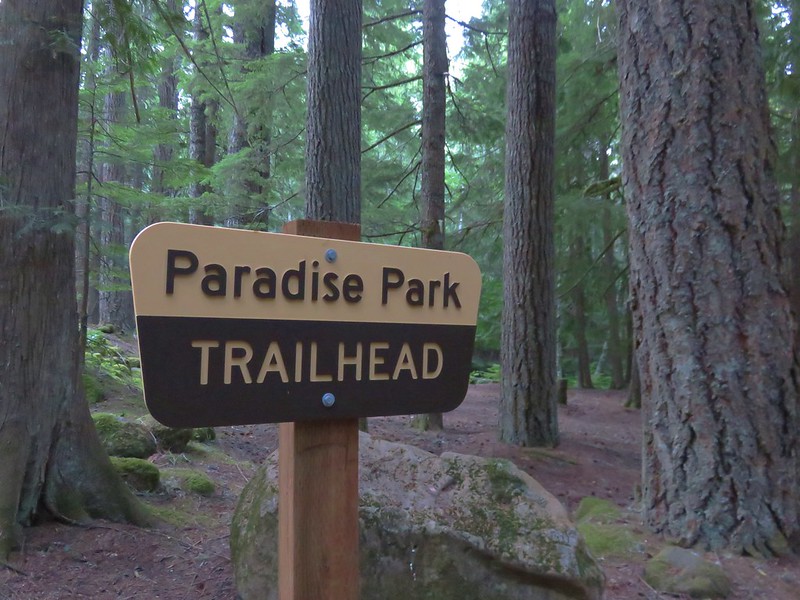
Paradise Park Trailhead

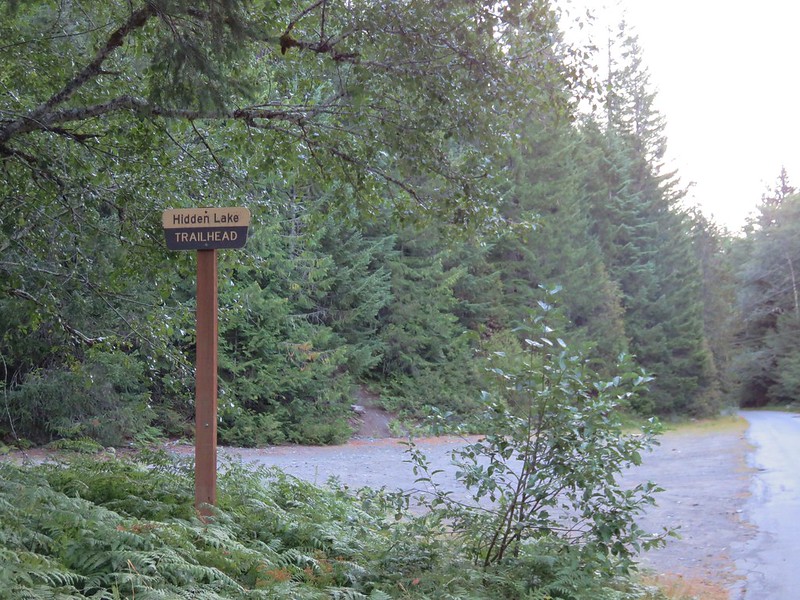
Hidden Lake Trailhead

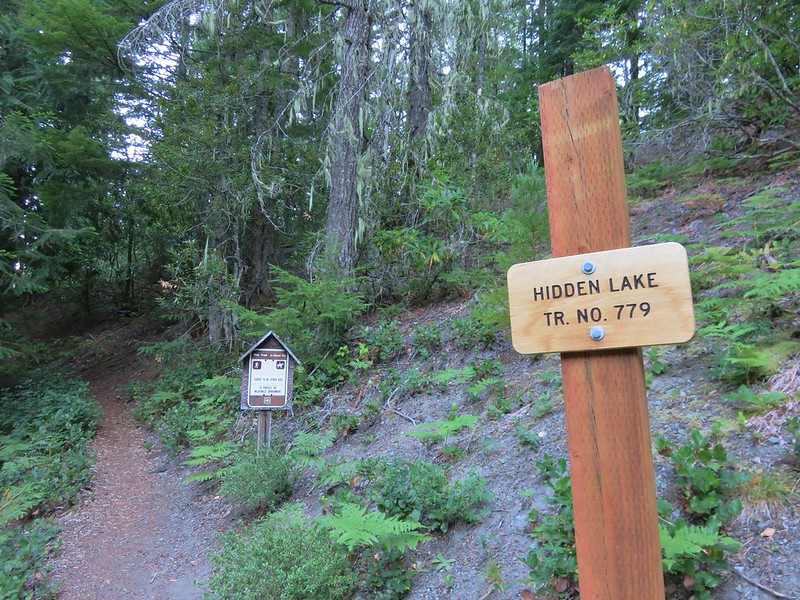
We turned up the Hidden Lake Trail, stopping to fill out a wilderness permit and read a nearby sign recalling the organization of the Mazamas.
Hidden Lake Trail

Interpretive sign near the Hidden Lake Trailhead

The Hidden Lake Trail climbed at a pretty good pitch at first, eventually becoming less steep as it gained the forested ridge and approached Hidden Lake.
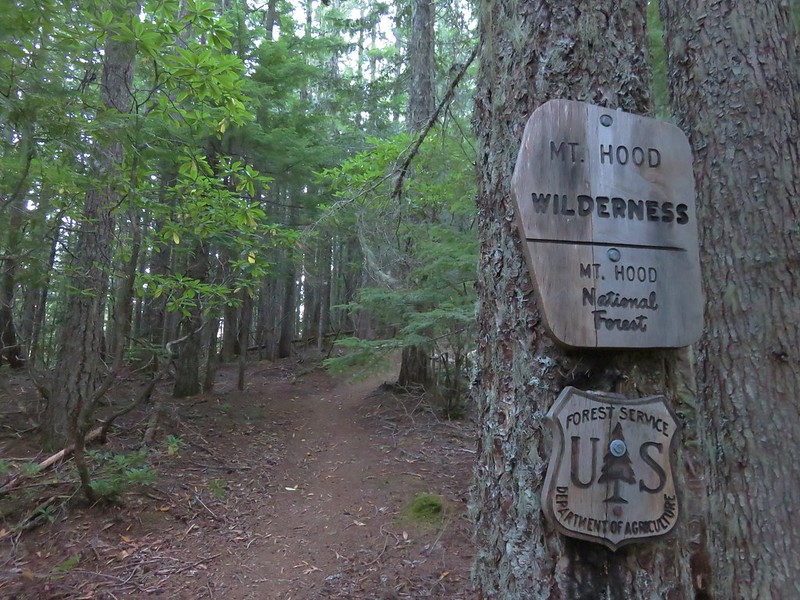
Entering the Mt. Hood Wilderness on the Hidden Lake Trail

Hidden Lake Trail

We reached the spur trail to Hidden Lake about 2 miles up the Hidden Lake Trail. The lake itself was not visible from the trail but the presence of a campsite just off the trail gave its presence away. We followed the spur trail past the campsite to the small forested lake.
Hidden Lake

Hidden Lake

Hidden Lake

The muddy lake shore seemed to be attracting a fair number of yellow jackets so we kept our distance and didn’t stay long. From the lake the trail climbed nearly another 2000′ in approximately 2.5 miles. The forested ridge provided no views of Mt. Hood but there was a nice supply of ripe huckleberries for us to munch on as we climbed. The trees did provide some protection from the Sun which was welcome because it was already a warm morning. Temperatures in the Willamette Valley were supposed to hit triple digits and the high at Paradise Park was forecast to be around 70 for the day. We were able to keep a decent pace though and at the Pacific Crest Trail we turned left toward Paradise Park.
Hidden Lake Trail junction with the Pacific Crest Trail

Mt. Hood finally came into view as we hiked along the PCT.
Mt. Hood from the Pacific Crest Trail

From the Hidden Lake Trail junction it was a mile and a half to the dramatic Zigzag Canyon overlook. From the overlook, Mt. Hood looms behind Mississippi Head as the Zigzag River roars below.
Mt. Hood and the Zigzag River Canyon

To the south Mt. Jefferson was visible although it was a little hazy.
Mt. Jefferson

The PCT drops approximately 500′ from the overlook down to the Zigzag River. We rock hopped across the water then decided to head upstream toward Zigzag Falls.
Zigzag Falls

On our 2012 hike we noticed the fall but didn’t actually make it all the way there. It had seemed too far away. Our definition of “too far” has apparently changed over time. This time Zigzag Falls appeared relatively close and it didn’t take us long to arrive at the waterfall.
Zigzag Falls

Zigzag Falls

We were surprised at the power of the waterfall as it crashed down into the splash pool. A nice cool mist was being generated and we took advantage by sitting nearby and taking a fairly long break. After cooling off we returned to the PCT and continued toward Paradise Park. The climb out of the northern side of the canyon was much shorter than the descent on the far side and shortly after climbing out we came to a junction with the Paradise Park Loop Trail.
Pacific Crest Trail junction with the southern end of the Paradise Park Loop Trail

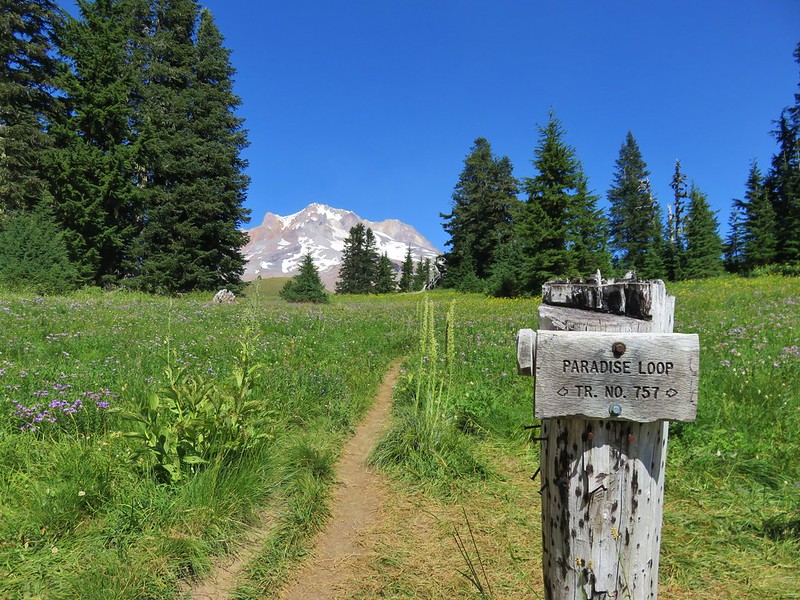
The 2.4 mile Paradise Park Loop Trail climbs up to the wildflower meadows of Paradise Park and eventually rejoins the PCT further to the north. Before we headed up to Paradise Park though, we wanted to find a campsite so we could leave our heavy backpacks behind. After passing the junction we began looking for a suitable spot. We were hoping to find something near the junction with the Paradise Park Trail which was just a half mile from the Paradise Park Loop Trail. There were a couple decent spots just before we reached the Paradise Park Trail but we preferred to be a little further off the busy Pacific Crest Trail so we decided to turn down the Paradise Park Trail and see if we could find something along this trail.
Paradise Park Trail junction with the Pacific Crest Trail

As we descended the .2 miles to a junction with the Burnt Lake Trail, we agreed to turn around if we were unable to find a decent campsite. We found what we were looking for near the trail junction and were able to set up our tent.
Campsite along the Paradise Park Trail

After getting camp situated we headed back up to the Pacific Crest Trail where we faced a choice. To reach Paradise Park we could go straight up the Paradise Park Trail, turn right and take the Paradise Park Loop counterclockwise, or turn left and do the loop clockwise. We had done the loop counterclockwise in 2012 and gone straight up the Paradise Park Trail in 2014 so of course we chose clockwise this time just to be different. When we reached Lost Creek we turned off the PCT and headed up a sandy hill to visit Lost Creek Falls.
Lost Creek Falls

Lost Creek Falls

Lost Creek Falls

Continuing on from Lost Creek Falls we passed the trickle of the ironically named Rushing Water Creek.
Rushing Water Creek

We reached the northern end of the Paradise Park Loop Trail 2 miles from the Paradise Park Trail and turned uphill.
Pacific Crest Trail junction with the northern end of the Paradise Park Loop Trail

The northern end of the trail passes through drier meadows that were filled with aster and big views of Mt. Hood. A wider variety of flowers were present where there was more moisture.
Mt. Hood from the Paradise Park Loop Trail

Mt. Hood from the Paradise Park Loop Trail

Mt. Hood and split rock from the Paradise Park Loop Trail

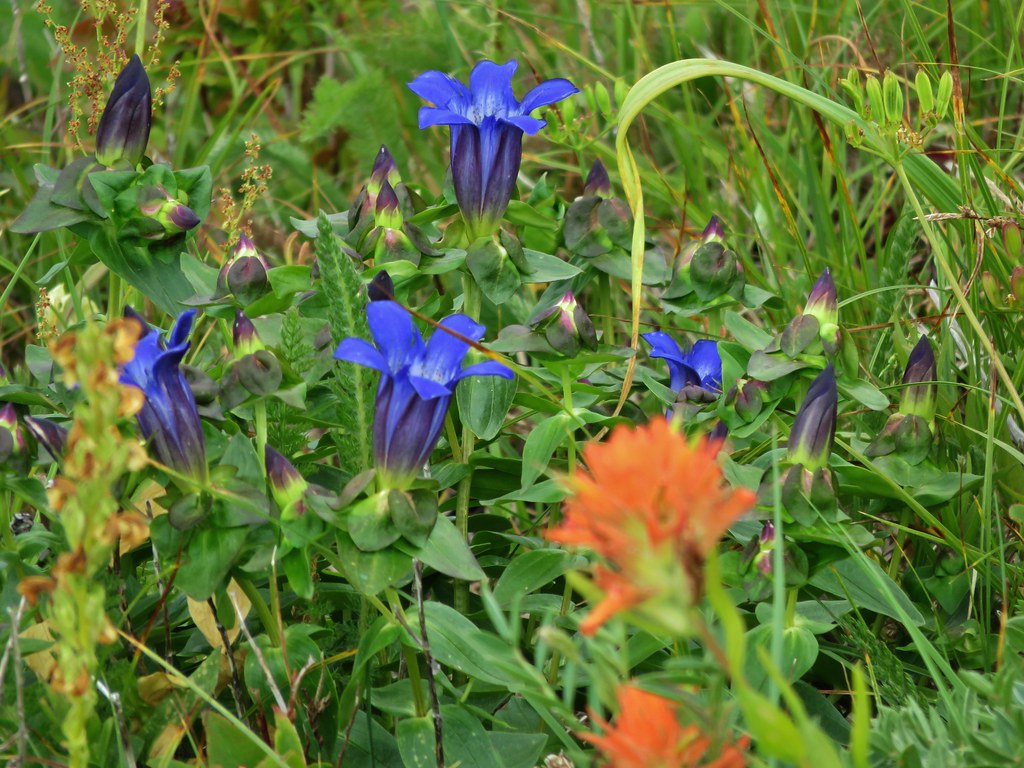
Gentians
Gentians

Cat’s ear lily
Cat's ear lily

Mt. Hood from the Paradise Park Loop Trail

Mt. Hood from the Paradise Park Loop Trail

We stopped to get water from the wildflower lined north fork of Lost Creek.
Mt. Hood from the Paradise Park Loop Trail

Wildflowers along a branch of Lost Creek

Wildflowers alogn a branch of Lost Creek

Mt. Hood was briefly hidden as we wrapped around a hillside covered in aster and fireweed that separates the branches of Lost Creek.
Fireweed and aster along the Paradise Park Loop Trail

Meadows of aster and lupine were visible below the trail.
Aster meadow

Lupine and groundsel

Beyond the hill we passed the site of the former Paradise Park Shelter before descending to the main branch of Lost Creek.
Site of the former Paradise Park shelter

Mt. Hood from the Paradise Park Loop Trail at Lost Creek

There were lots of flowers near the creek including an impressive patch of yellow and pink monkeyflower.
Wildflowers along Lost Creek

Mt. Hood from the Paradise Park Loop Trail

The meadows along the trail on the south side of Lost Creek were much greener with more wildflowers.
Lupine and groundsel

Mt. Hood from the Paradise Park Loop Trail

When we arrived at the junction with the Paradise Park Trail we remarked at the difference in the types of flowers present from our visit in 2012. That visit had been on August 27th and the meadow had been full of lupine and bistort.
Mt. Hood from Paradise Park

This time it was mostly aster that filled the meadow.
Mt. Hood from the Paradise Park Trail

One area we had not explored on either of our previous visit was further up the Paradise Park Trail so this time we turned toward the mountain and headed up through the wildflower meadows.
Mt. Hood from the Paradise Park Trail

It was interesting to see how the composition of the meadows changed along the way. We passed areas of purple aster, white bistort, and eventually dwarf lupine and yarrow.
Mt. Hood from the Paradise Park Trail

Mt. Hood from the Paradise Park Trail

Mt. Hood from the Paradise Park Trail

Mt. Hood from the Paradise Park Trail

We took a break on a large rock with a great view of Mt. Hood and Mississippi Head.
Mt. Hood from the Paradise Park Trail

Mississippi Head

There was a cool breeze coming off Mt. Hood which made the temperature perfect. After a snack we followed the trail over to a ridge overlooking the upper portions of the Zigzag Canyon where a couple of waterfalls were visible.
Trail heading over to an overlook of the Zigzag River Canyon

Mississippi Head and Mt. Hood

Seeps flowing down into the Zigzag River Canyon

Waterfall in the Zigzag River Canyon

We headed back down to the Paradise Park Loop Trail and then opted to finish the loop instead of heading straight back down the Paradise Park Trail to the PCT. Once we were back on the Pacific Crest Trail we decided that we would hike back to Lost Creek Falls in order to cook dinner and then refill our water supply for the night. We cooked dinner on the sandy hill then moved to a rock with a view of the falls to eat. As the Sun lowered there was almost a rainbow effect at the base of Lost Creek Falls.
Lost Creek Falls

Lost Creek Falls

After dinner we filtered some water then returned to our campsite along the Paradise Park Trail. Stopping along the way at a nice huckleberry patch for dessert.
Huckleberries along the Paradise Park Trail

Huckleberries along the Paradise Park Trail

It was just after 7pm when we arrived back at camp. There were a ton of little flies out and a fair number of mosquitoes that were much more interested in Heather than myself so we quickly headed into the tent for the night which was okay because we’d somehow managed to put in 19.7 miles for the day.
Campsite along the Paradise Park Trail

It was still dark when we woke the next morning as I went to check the time on my phone. We both expected it to be somewhere around 2 or 3am so we were relieved when it turned out to be 5:23 and not too early to get up. After packing up camp we braved the bugs and prepared breakfast – instant coffee and Backpacker’s Pantry bacon and cheddar mashed potatoes. After eating we began the 6 mile downhill hike toward the Paradise Park Trailhead. We made good time despite being distracted by the abundant ripe huckleberries. The trail was just as view-less as the Hidden Lake Trail had been the day before. Where it would have been possible to filter water on that trail the Paradise Park stream crossings were basically dry. The forest was nice though and this ridge was a bit wider than the one the Hidden Lake Trail, creating a little more of an open feeling.
Paradise Park Trail

Mt. Hood Wilderness

In the middle of the trail was a long section where the trail was about as straight as a trail can be and almost looked like it was following an old road bed. As the trail approached the edge of the ridge the forest thinned and there was a viewpoint looking toward Tom, Dick, and Harry Mountain to the south.
Tom Dick and Harry Mountain

While we were at the viewpoint a Turkey Vulture passed by several times close enough to hear the wind on its wings.
Turkey Vulture

Turkey Vulture

Turkey Vulture

The trial then veered away from the ridgeline for .7 miles and began a final set of switchbacks down to the Zigzag River, which it followed back to the Barlow Campground and the Paradise Park Trailhead.
Paradise Park Trail

Zigzag River Trail

Both the Hidden Lake and Paradise Park Trails are longer, steeper routes to Paradise Park than the more popular Pacific Crest Trail from Timberline Lodge hike but they do have things to offer. Solitude and dense forest replace mountain views making these good options for quieter hikes while still bringing you to the big views at Paradise Park. If you’ve already been to Paradise Park via Timberline Lodge either of these trails make a nice alternative, especially when the berries are ripe. Happy Trails!

Flickr: https://www.flickr.com/photos/9319235@N02/albums/72157671573939900

Categories
High Cascades Hiking Mt. Hood Area Oregon Trip report

Buck Peak

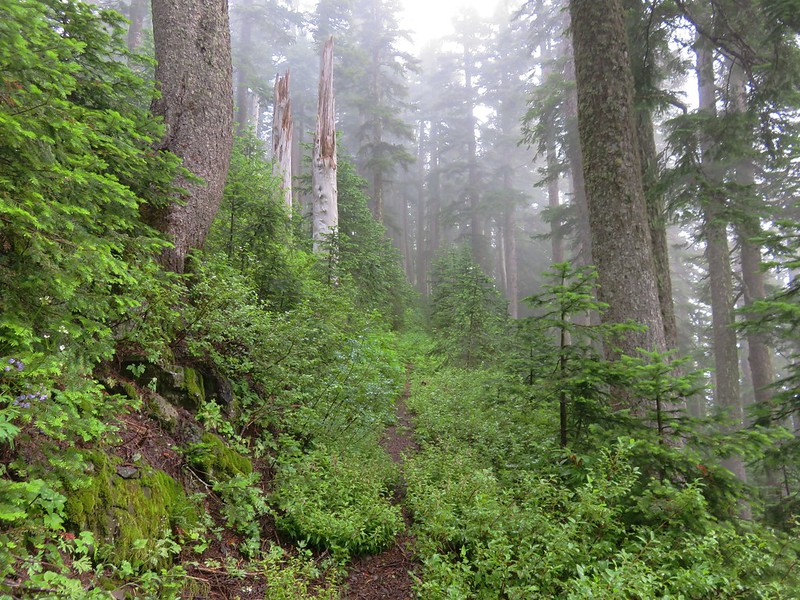
A week out from our somewhat cloudy visit to the Mount Margaret Backcountry we found ourselves heading back into the clouds on the Pacific Crest Trail. Our goal for the day was the viewpoint atop Buck Peak which is just off the PCT to the NW of Lost Lake in the Mt. Hood National Forest. We began our hike at the Pacific Crest Trailhead at Lolo Pass.
IMG_2482

We headed north on the PCT which quickly passed under some power lines where we met our first clouds.
IMG_2487

Looking back toward Mt. Hood from the power lines it looked like blue skies around the mountain.
IMG_2492

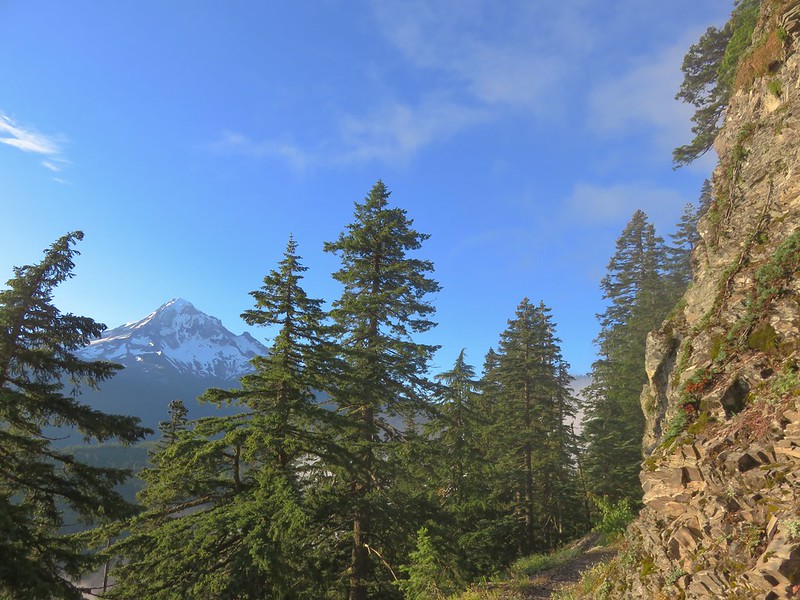
The PCT climbed gently up a ridge where we had a few views between the clouds that were passing over.
IMG_2498

IMG_2516

IMG_2533

IMG_2530

IMG_2538

A decent variety of flowers could be found along the more open portions of the trail.
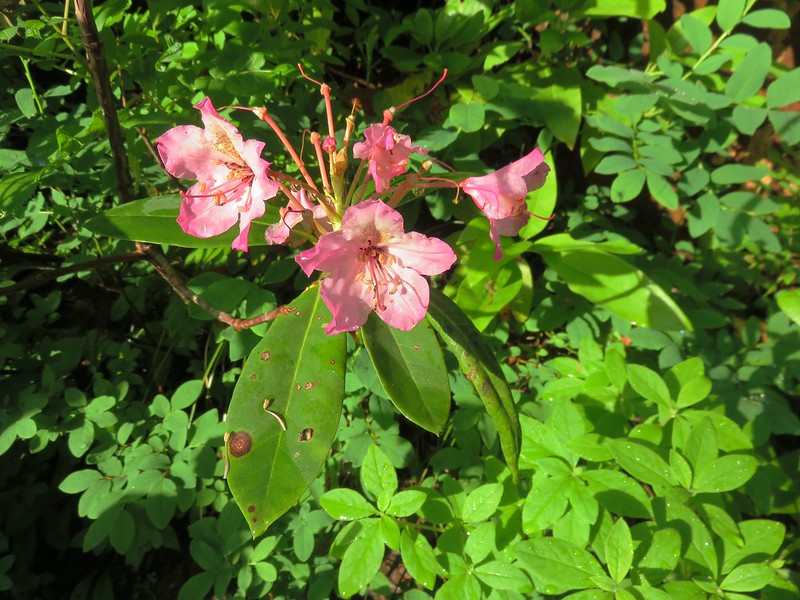
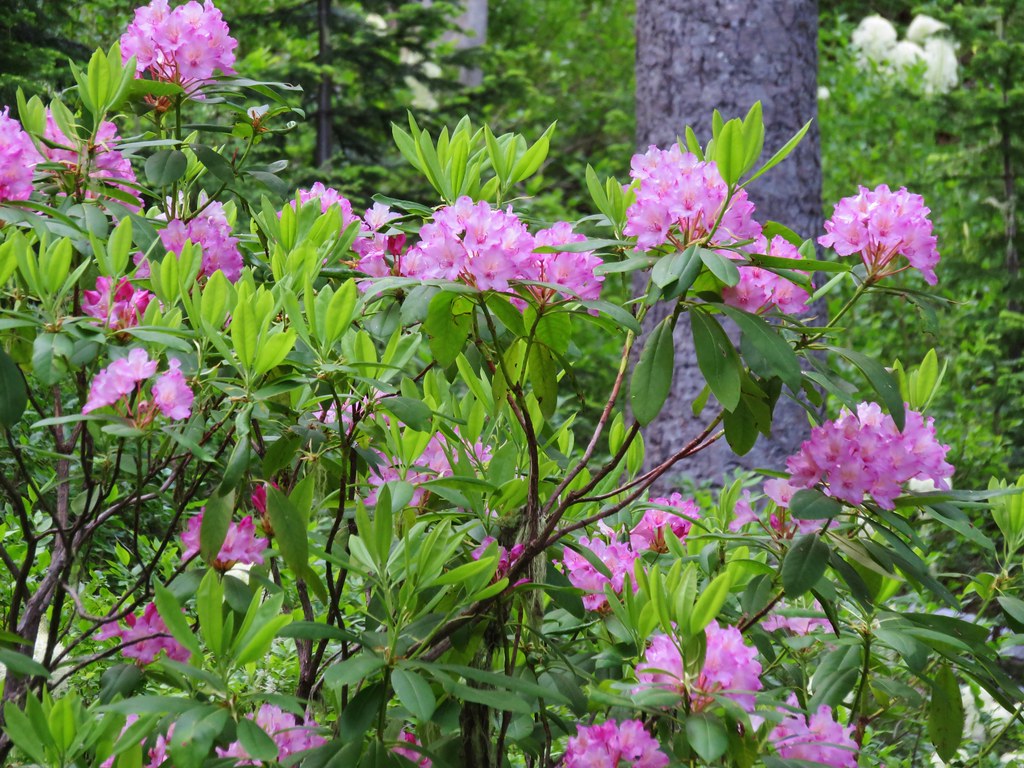
Rhododendron
IMG_2493

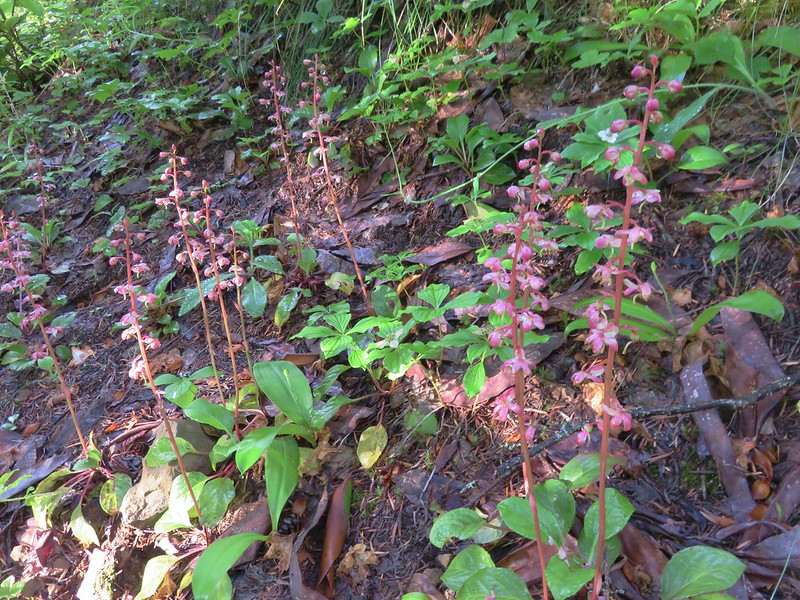
Pink pyrola
IMG_2496

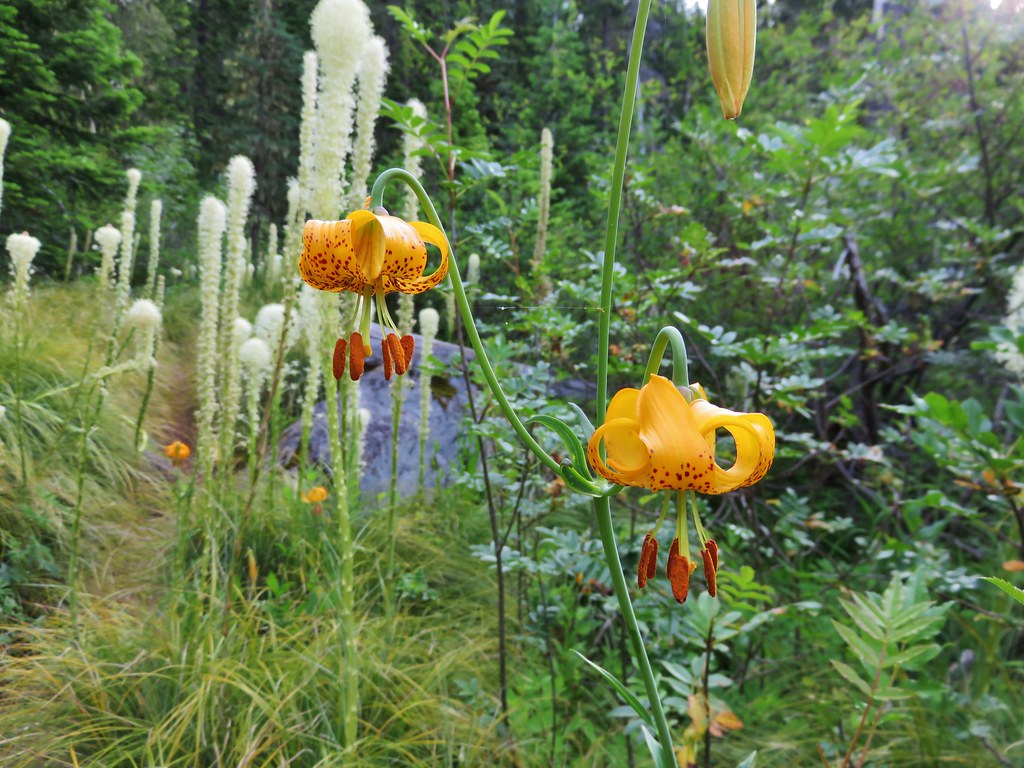
Tiger lilies
IMG_2506

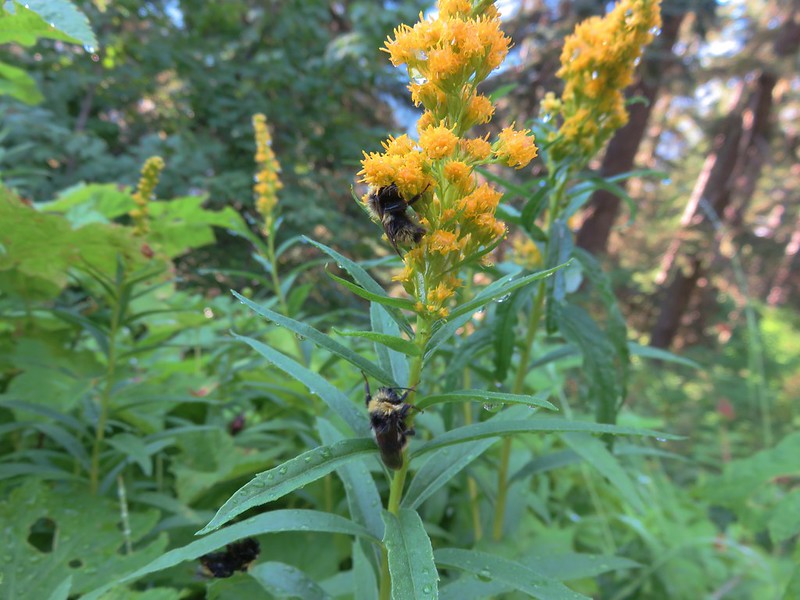
Bees on goldenrod
IMG_2512

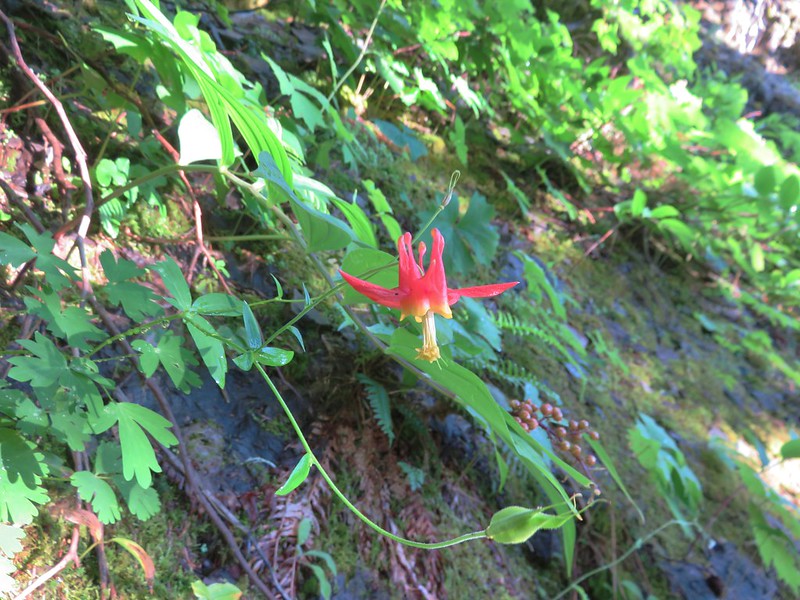
Columbine
IMG_2520

Larkspur
IMG_2523

Catchfly
IMG_2526
Oregon sunshine
IMG_2529

Lupine
IMG_2541

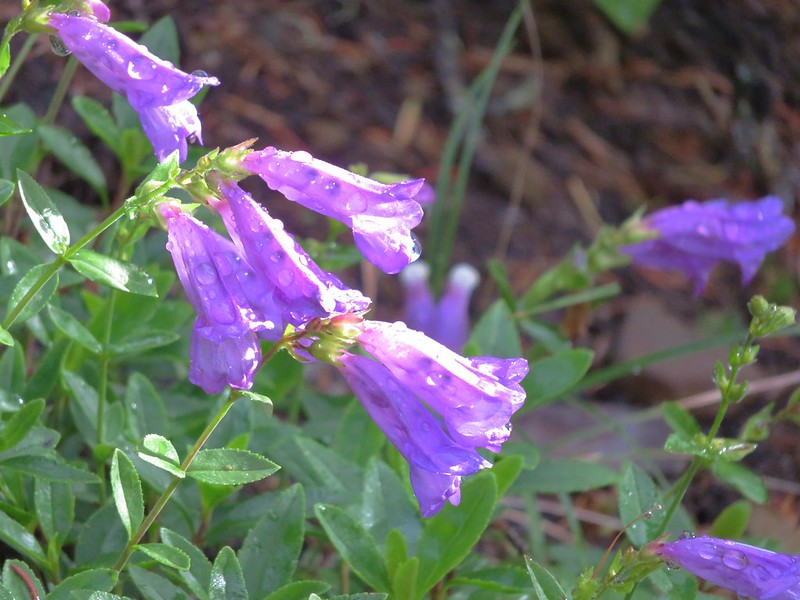
Penstemon
IMG_2544

The trail soon entered the trees where it remained for the majority of remainder of the hike to Buck Peak. The forest was full of huckleberries and some salmonberries.
IMG_2545

IMG_2548

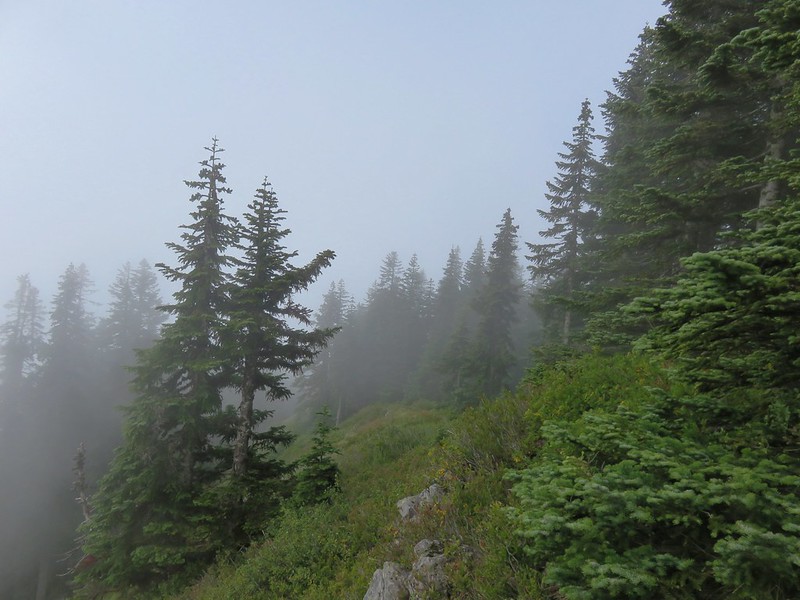
It was increasingly foggy as we gained elevation.
IMG_2552

Approximately 4.5 miles from Lolo Pass we arrived at a junction with the Huckleberry Mountain Trail which led down to Lost Lake.
IMG_2553

We continued on the PCT passing a spur trail to Salvation Spring and heading further into the clouds. There were a number of downed trees across the trail after the Huckleberry Mountain junction but nothing impassable. With the forest and the clouds, views were few but we did get a couple of glimpses of Lost Lake along the way. The majority of the time we were just looking at the different flowers along the way.
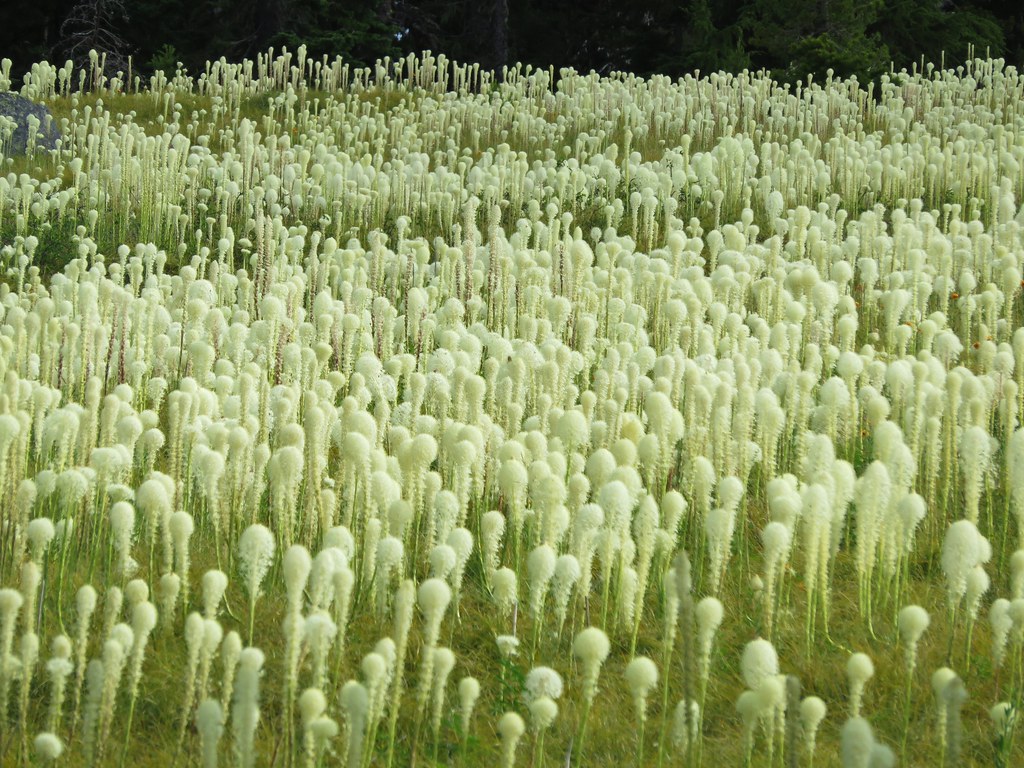
Beargrass
IMG_2553

Monkeyflower
IMG_2556

Parrot’s beak lousewort
IMG_2557

False hellbore
IMG_2561

IMG_2561

Coralroot
IMG_2568

IMG_2586

The trail to Buck Peak was unsigned but easy to spot as it split up and to the right from the PCT.
IMG_2590

The trail was a little brushy and the clouds had left the plants rather damp which in turned soaked us pretty quickly.
IMG_2591

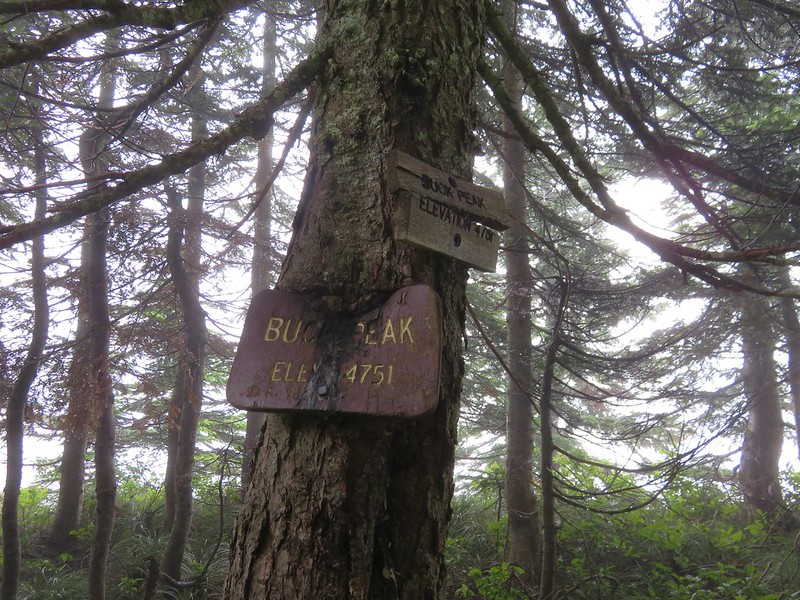
After a half-mile on the Buck Peak Trail we arrived at the signed summit.
IMG_2594

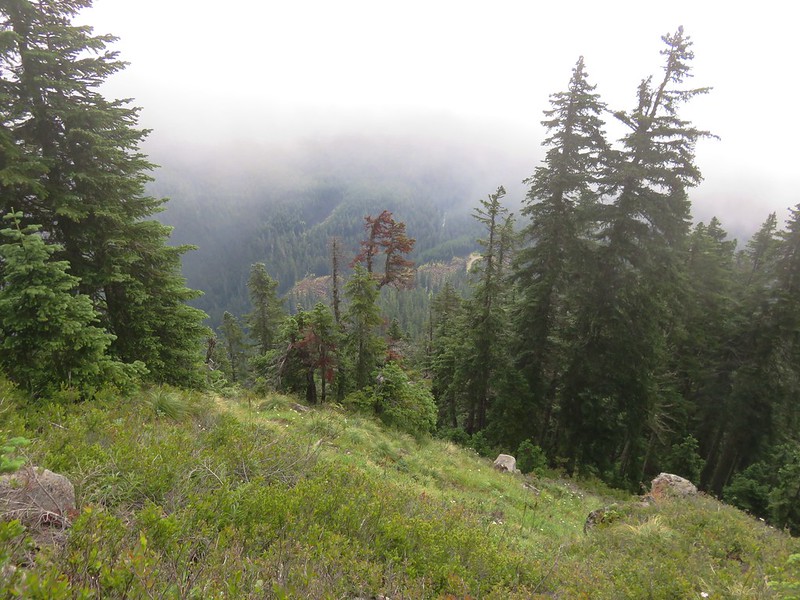
The panoramic viewpoint of several Cascade Mountains was on the fritz and we were lucky to get a couple of looks at Lost Lake below.
IMG_2599

IMG_2603

IMG_2605

We sat on the rocky viewpoint for awhile watching the clouds pass over hoping to wait them out but finally decided it could be hours before the view cleared and headed back down. Things had already cleared up some along the PCT and the views were starting to open up as we made our return trip.
Lost Lake Butte above Lost Lake
IMG_2619

IMG_2622

Buck Peak still in a cloud.
IMG_2624

Eventually the sky had cleared enough to provide some great views of Lost Lake, Mt. Hood, and even Mt. Adams in Washington.
IMG_2630

IMG_2641

IMG_2653

The butterflies had come out in the afternoon and as we passed the rockier section of trail they were busy pollinating the flowers.
IMG_2665

IMG_2676

Mt. Hood loomed large as we passed under the power lines and finished up our hike.
IMG_2674

The hike was over 15 miles round trip but really didn’t feel that long. The approximately 1500′ of elevation gain was gradual and spread out nicely. One item to note is that this section of the PCT and the Buck Peak Trail are in the Bull Run Watershed Management Area which is the primary source of drinking water for Portland and is closed to the public. Hikers are required to remain on the trails within the area’s boundary. Happy Trails!

Flickr: https://www.flickr.com/photos/9319235@N02/albums/72157671458188065

Categories
High Cascades Hiking Mt. Hood Area Oregon Trip report

Horseshoe Ridge and Cast Creek Trail Loop

On Father’s Day we headed toward Mt. Hood for a loop hike on some lesser used trails. We planned on using the Horseshoe Ridge and Cast Creek Trails as well as a portion of the Zigzag Mountain Trail for a loop in the Mt. Hood Wilderness. Along the way we’d also visit Cast Lake and depending on visibility detour to the summit of East Zigzag Mountain.

We began our hike by parking along Forest Road 1825-380 at the bridge over Lost Creek near the Riley Horse Camp. The Horseshoe Ridge Trail began on the SW side of the road.
IMG_8679

The trail paralleled Lost Creek for the first 3/4 mile but didn’t get very close to the water until the trail crossed the creek. I had checked the Mt. Hood Forest Service for trail conditions before we left so we knew the bridge was “unusable”.
IMG_8682

IMG_8685

We looked around a bit and noticed a downed tree a little downstream that we could use to cross but it was wet and slick and not wide enough to comfortably walk across in those conditions. We faced the choice of scooting across or fording the creek. Considering the temperature was only in the upper 30’s we decided we’d rather scoot than get soaked.
IMG_8686

Halfway across we discovered that we weren’t the only ones using the log and had to creatively maneuver past a snail and small slug.

Beyond Lost Creek the trail climbed through the forest for nearly 4 miles to the Zigzag Mountain Trail. The climb was never too steep and near the end the trail entered a meadow with wildflowers and views of Mt. St. Helens.
IMG_8698

Columbine and paintbrush
IMG_8733

Beargrass
IMG_8720

Lupine
IMG_8723

Paintbrush
IMG_8719

Lousewort before blooming
IMG_8726

IMG_8728

IMG_8730

IMG_8735

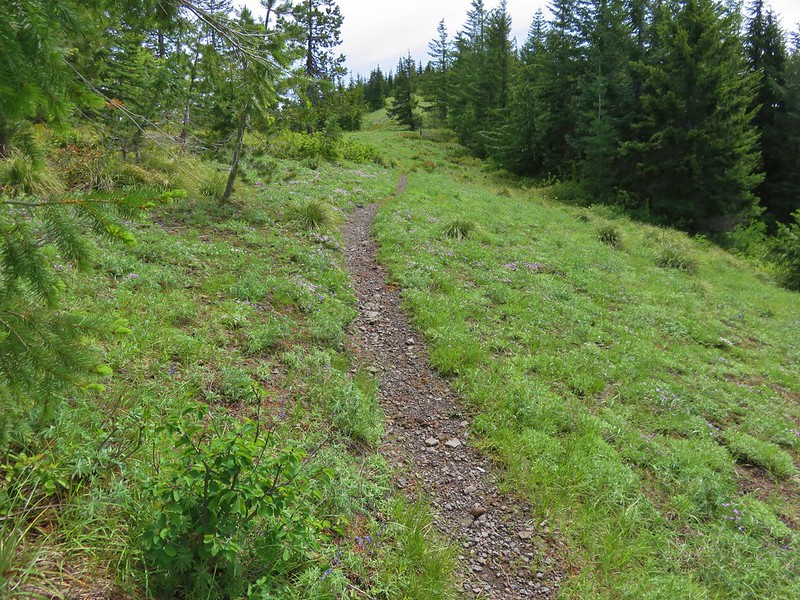
We turned left on the Zigzag Mountain Trail passing through more beargrass meadows and gaining views of Mt. Hood and Mt. Jefferson.
IMG_8736

IMG_8737

IMG_8739

IMG_8744

IMG_8746

We followed the trail up to a ridge top where a rocky viewpoint added three Washington volcanoes to the view.
IMG_8752

Mt. St. Helens
IMG_8756

Mt. Rainier
IMG_8755

Mt. Adams
IMG_8754

The trail then crossed over the ridge and began descending along the north side of Zigzag Mountain. We had been on this section of trail in 2012 during a July 9th loop starting from the Burnt Lake South Trailhead. During that hike this portion of trail was still partly covered in snow. This time around there were only a couple of small patches remaining in the brush along the trail.
IMG_8778

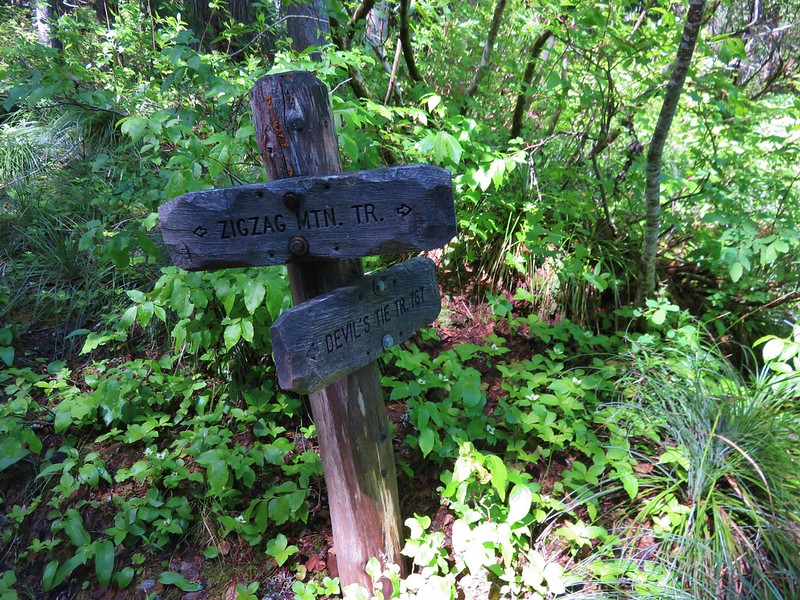
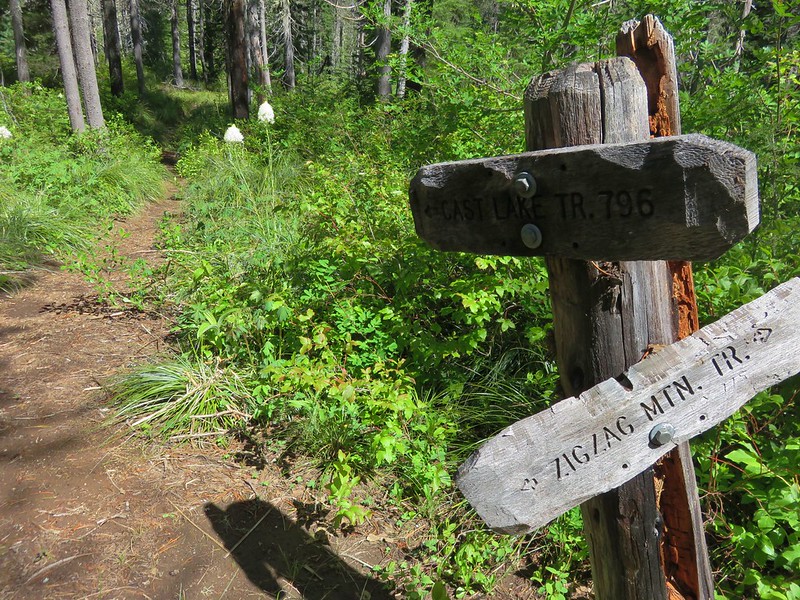
We passed above Cast Lake passing a junction with the Devil’s Tie Trail to the Cast Lake Trail.
IMG_8781

IMG_8784

IMG_8790

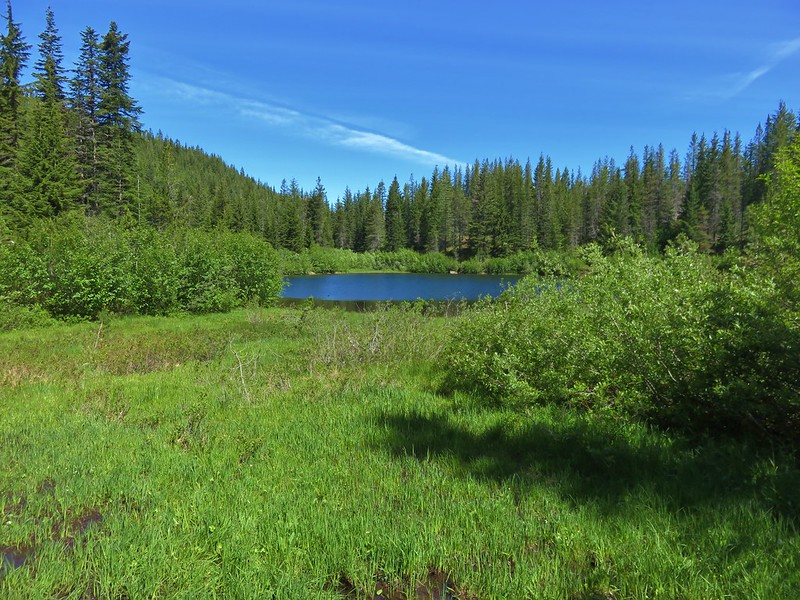
A half mile hike along this trail brought us to Cast Lake.
IMG_8794

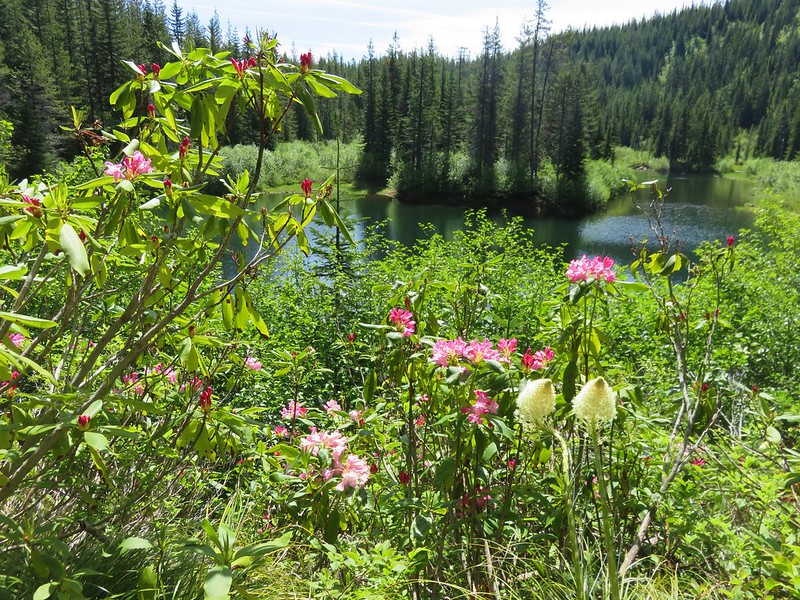
Snow melt and recent precipitation had left standing water on some of the trail and mud along portions of the shore on the SW side of the lake. We followed a path around the north side of the lake past several nice campsites. We turned around shortly after crossing Cast Creek flowing out of the lake. The one thing that the lake lacks is a good view of Mt. Hood, but rhododendron and beargrass were blooming along the shore making for a pretty scene.
IMG_8803

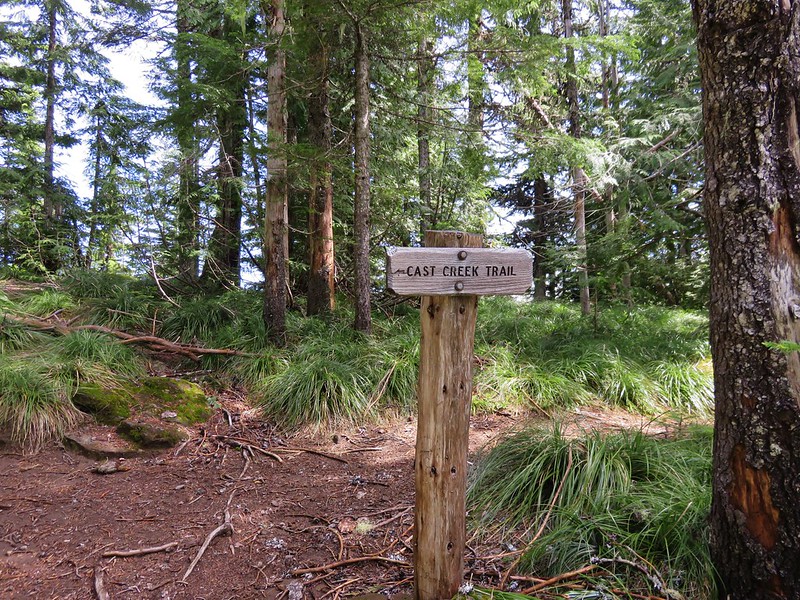
We left Cast Lake and continued our loop on the Zigzag Mountain Trail and quickly arrived at the Cast Creek Trail junction.
IMG_8806
We faced a choice here. We could turn left on the Cast Creek Trail and complete the loop or take another side trip by continuing on the Zigzag Mountain Trail to East Zigzag Mountain. With the weather being as nice as it was and knowing that there would be some flowers in the meadow below the summit we decided on one more side trip. After a short but decent climb we emerged from the trees in the meadow.
IMG_8809

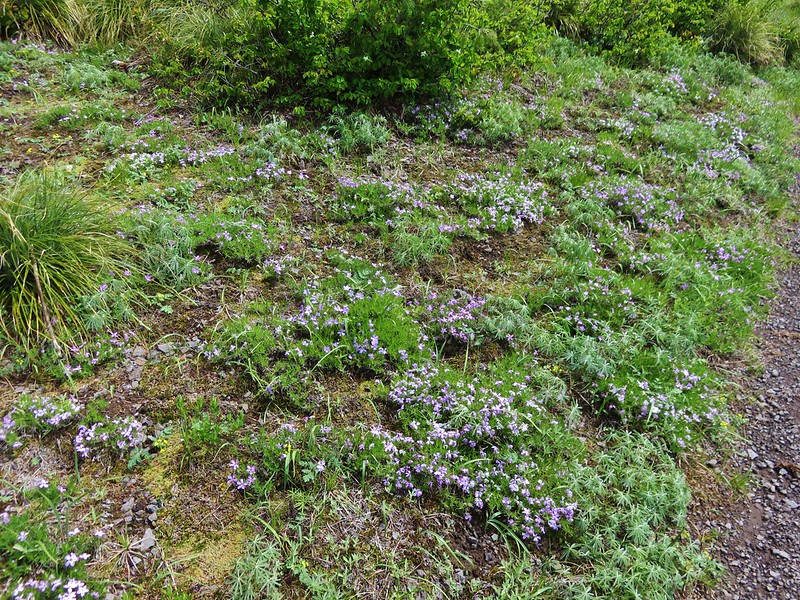
The lower portion of the meadow was full of Phlox and yet to bloom lupine.
IMG_8815

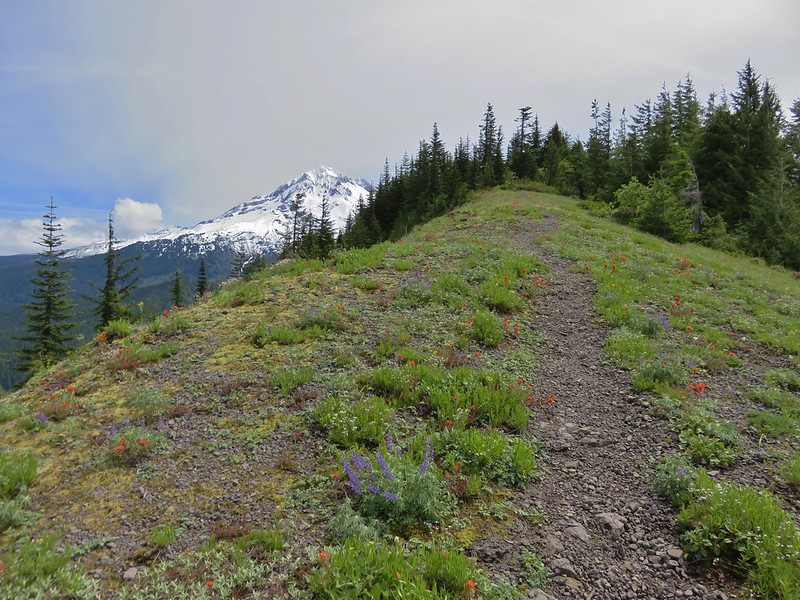
As we climbed higher Mt. Hood came into view and the variety of flowers increased.
IMG_8821

IMG_8827

IMG_8830

IMG_8833

IMG_8840

IMG_8836
Several other Cascade peaks were visible from the ridge.
Mt. St. Helens, Mt. Rainier, and Mt. Adams to the north.
IMG_8854

Mt. Jefferson and Three Fingered Jack to the south.
IMG_8857

I left Heather at the summit and headed down into the meadow on the opposite side of the summit. The flowers seemed to be a little behind so I turned around after getting a few pictures including the obligatory Burnt Lake shot.
IMG_8866

IMG_8868

Burnt Lake below Mt. Hood
IMG_8861

I returned to the summit and we headed back to the Cast Creek Trail. We had accidentally taken this trail in 2012 mistaking it for the Cast Lake Trail (we obviously didn’t read the sign well). The Cast Creek Trail begins with a little climb past some decent viewpoints before beginning its decent into the forest.
IMG_8879

Mt. Hood

The rhododendron bloom along the upper portion of the trail was one of the best we’ve witnessed.
IMG_8876

IMG_8882

IMG_8886

The forest along the Cast Creek Trail was quite different from what we had encountered coming up on the Horseshoe Ridge Trail. There was much less underbrush leaving the forest with a more open feeling.
IMG_8890

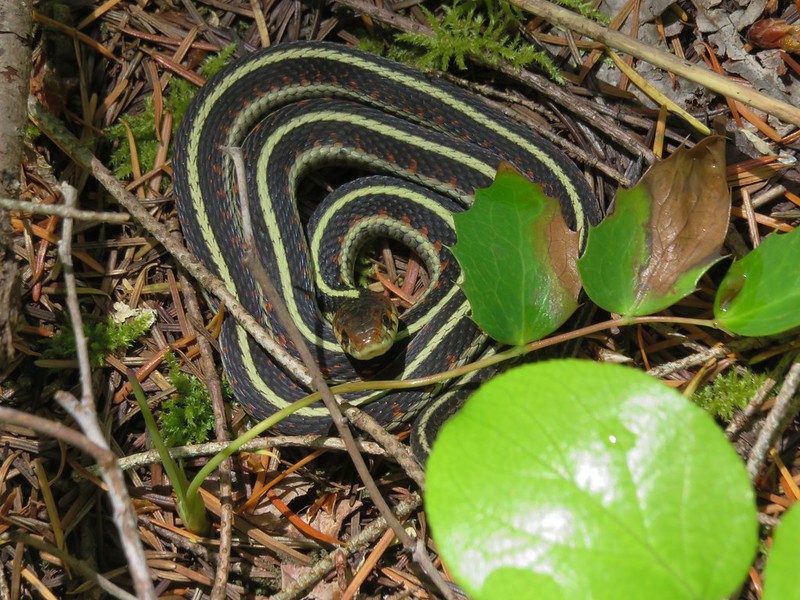
We kept expecting to see a deer or other larger animal below us through the trees but we never did. What we did see was a garter snake enjoying a patch of sunshine along the trail.
IMG_8894

IMG_8892

According the the Forest Service website neither the Cast Creek nor the Horseshoe Ridge Trail had been maintained since 2014 but they were both in pretty good shape. There were a few downed trees but nothing difficult to maneuver around. We did see one sign of more recent maintenance on the lower portion of the Cast Creek Trail which left us scratching our heads. A small tree had come down across the trail. The top end of the tree had been sawed off, but not the portion that was across the trail. There was a saw mark along the trunk where someone had started a second cut to remove the portion of tree hanging over the trail, but they hadn’t finished it for some reason.
IMG_8917

The Cast Creek Trail ended at a day use area at the far end of Riley Horse Camp.
IMG_8920

We had intended to park here, but failed to find it due to a lack of signage and having turned out of the horse camp before going all the way to the end.
We walked through the horse camp to the road then continued a tenth of a mile back to our car. Both of our GPS devices had the hike at a little over 16 miles which made it pretty long for a day hike, but spending the night at Cast Lake would make it a nice overnight trip. Happy Trails!

Flickr: https://www.flickr.com/photos/9319235@N02/albums/72157669434295252

Categories
Columbia Gorge North Hiking Trip report Washington

Catherine Creek, Coyote Wall, and the Weldon Wagon Trail

** Note the 2025 Burdoin Fire burned over much of the route described here. **

Similar to last months hike our March trip consisted of shorter hikes at three separate locations. We had been waiting for a day off with decent weather to head out toward the eastern end of the Columbia Gorge to see some early wildflowers and finally got one on the day before Spring.

We started our day at the Catherine Creek Trailhead located approximately 6 miles east of Bingen, WA along Old Highway 8. We managed to arrive at the trailhead just as the sunrise began to light up with color.
Sunrise from the Catherine Creek Trailhead

Sunrise from the Catherine Creek Trailhead

Sunrise from the Catherine Creek Trailhead

We took the paved Catherine Creek Trail on the south side of the old highway toward the Columbia River. We followed the 1 mile loop past wildflowers, vernal ponds, oak woodlands, Catherine Creek Falls, and views of Mt. Hood.
Mt. Hood catching some early sunlight

Grass widows
Grass Widows

Prairie Stars
Prairie stars

Shooting stars and saxifrage
Shooting stars

Lomatium
Lomatium

Lomatium

Mt. Hood across the Columbia River

Mt. Hood

Reflections along the Catherine Creek Trail

Catherine Creek Falls

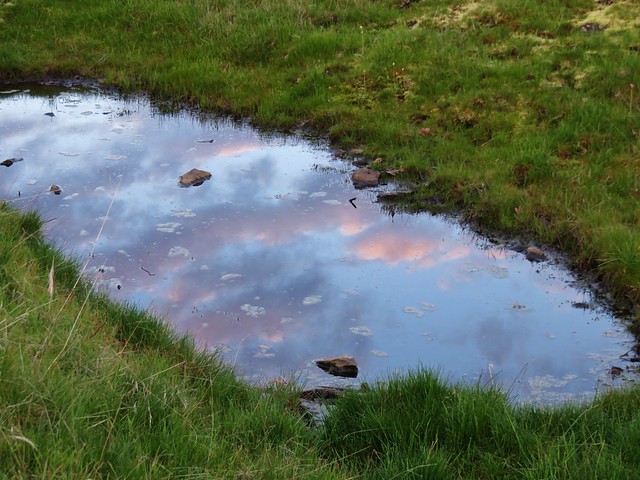
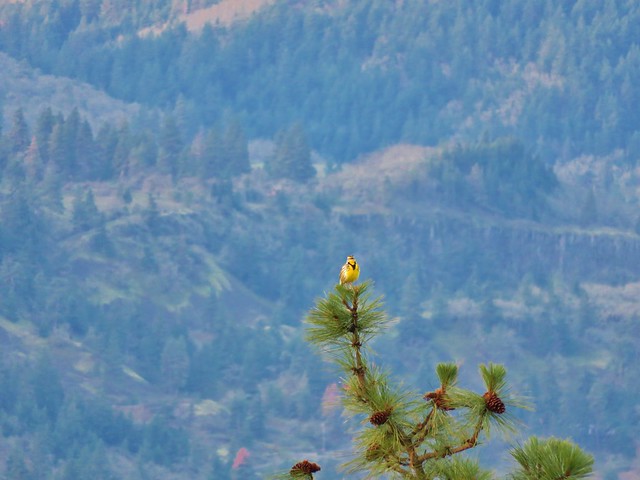
After completing the loop we crossed the road and head north on an old roadbed marked as “20”. At a fork we should have veered right on another road marked with a “21” sign but we initially missed that turn which turned out okay because we came upon a scenic vernal pond reflecting the clouds in the sky above and were serenaded by a western meadowlark.
Catherine Creek Trail

Clouds reflecting in pool of water along the Catherine Creek Trail

Western meadowlark

Once we had backtracked onto the correct road bed we followed it to a crossing of Catherine Creek then on to an old corral below the Catherine Creek Arch.
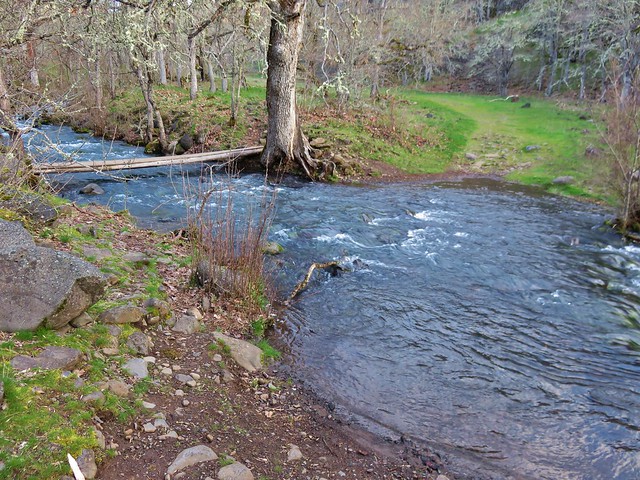
Catherine Creek

Catherine Creek Trail

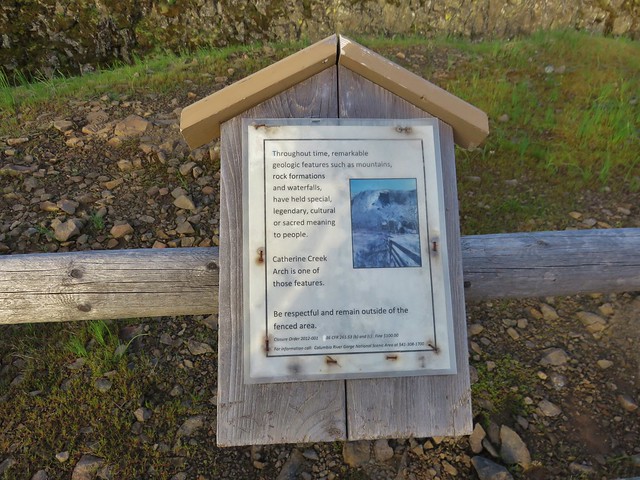
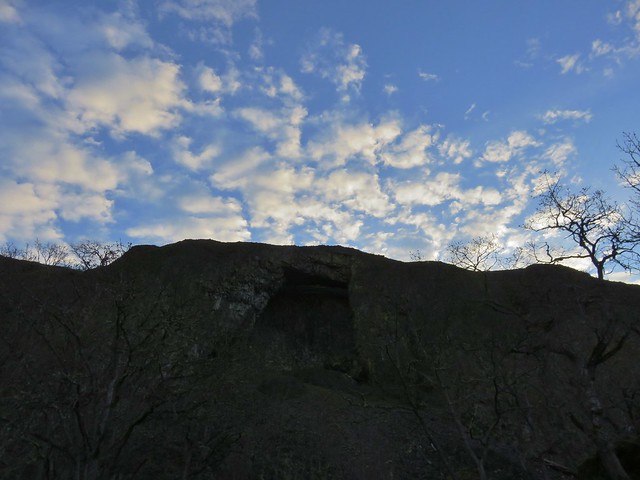
The Forest Service has closed off the area near the arch with fencing but the view from below near the corral is nice.
Sign near the Catherine Creek Arch

Catherine Creek Arch

We continued on the old road climbing gradually and after passing under a set of power lines we came to a trail junction. We took the signed trail to the right which led up a small hill to a ridge with a view of Mt. Hood.
Mt. Hood from the Catherine Creek Trail

This trail followed the ridge down toward the old highway passing the top of the Catherine Creek Arch along the way.
Mt. Hood and the Columbia River from the Catherine Creek Trail

We arrived at the old highway about a quarter mile east of the trailhead and simply walked along the shoulder back to the car. From there we headed back toward Bingen and our next stop at the Coyote Wall Trailhead just off Courtney Road (approx. 3 miles east of Bingen). Our early start allowed us to get to this second trailhead before 9am which was nice because this is a very popular destination.

From the parking area we followed a closed section of old highway 8 east passing a nice view up Coyote Wall. After passing some cliffs the scenery shifted to rocky green hillsides dotted with wildflowers.
Coyote Wall

Biscuitroot surround a small hole in the rocks

View from the old highway

Wildflowers on the rocks along the old highway

Our plan was to take the Labyrinth Trail up to the Rowland Creek Trail then head left from that junction to old road 20 following that left to a creek crossing and following it all the way to a junction with the Coyote Wall Trail. The Labyrinth Trail sets off from old highway 8 approx .75 miles from the trailhead, but before turning up that trail when we came to it we continued on a couple hundred yards to check out Lower Labyrinth Falls.
Lower Labyrinth Falls

Lower Labyrinth Falls

Mt. Hood from Lower Labyrinth Falls

After returning to the Labyrinth Trail we headed uphill climbing past wildflowers and rock outcrops to a view of Labyrinth Falls near a small cave.
Labyrinth Trail

Labyrinth Trail

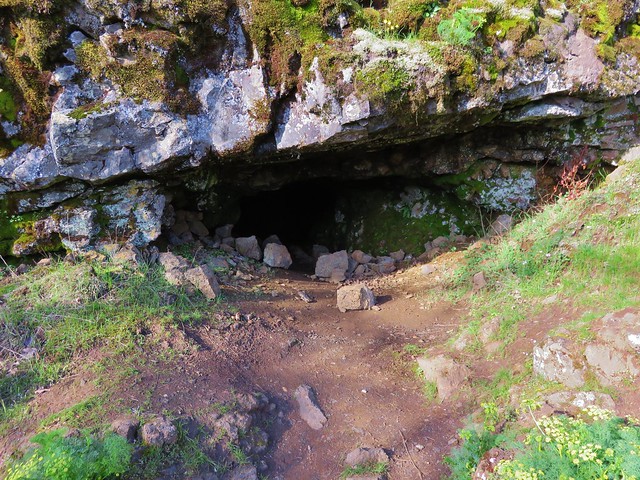
Cave along the Labyrinth Trail

Wildflowers along the Labyrinth Trail

Wildflowers along the Labyrinth Trail

Labyrinth Trail

Labyrinth Falls

From the falls the trail continued to climb through a mix of grasslands and oak woods gaining better views of Mt. Hood.
Labyrinth Trail

Labyrinth Trail

Mt. Hood from the Labyrinth Trail

Mt. Hood

We saw lots of wildflowers along the way and passed a trail crew from the Washington Trails Alliance.

Grass widows
Grass widows

Prairie stars
Prairie star

Lomatium
Biscuitroot

Larkspur
Larkspur and a grass widow

Yellow bell lilies
Yellow bell lilies and a grass widow

Toothwort
Toothwort

We arrived at the road 20 creek crossing as planned but things began to unravel a bit shortly afterward. Signage had been virtually non-existent and after climbing up from the creek crossing we arrived at large junction where the WTA trail crew had parked their vehicles. Several trails and old roads headed off in various directions here and were not shown on the map we were using. We first set off straight ahead on an old road bed but quickly saw a sign indicating it was private property, we turned back to the junction and began to head uphill on a clear trail. It didn’t seem like we should be going that direction though so we pulled out our guidebook and GPS before going any further. After some deliberation we returned once again to the junction and headed downhill on another old road which was the correct route. Here we passed an impressive meadow filled with yellow bell lilies and grass widows.
Labyrinth Trail

Grass widows and yellow bell lilies

Grass widows and yellow bell lilies

Grass widows and yellow bell lilies

We passed several more junctions that were not on our map and made one more wrong turn (it appears it would have led us to the top of Coyote Wall in the end) before finally making it down to the junction we had been looking for with the Coyote Wall Trail. At this point we were about halfway up the wall and made our way over to check out the view.
Coyote Wall

Mt. Defiance (with the snow)
Snow on Mt. Defiance

Mt. Hood
Mt. Hood across the Columbia River from Coyote Wall

From there we headed downhill staying as close to the wall as possible before the trail finally veered away as it neared the old highway.

We spotted a few additional flowers on this lower portion before popping back out on the old highway and making our way back to the busy trailhead.

Woolly-pod milk vetch
Woolly-pod Milk-vetch

Gold stars
Gold stars

Popcorn flower
Popcorn flower

Manroot
Manroot

The unfortunately named Broomrape
Broomrape

Fiddleneck
fiddleneck

Our final stop for the day was the Weldon Wagon Trail. For this hike we headed back through Bingen and continued west on Highway 14 to Alternate Highway 141 just before the White Salmon River. We followed this road north to Husum, WA where we turned right on Indian Creek Road. We followed signs for the Wagon Trail and parked at an unmarked pullout at the crest of Indian Cemetery Road. To reach the trail we needed to walk .2 miles up a logging road.
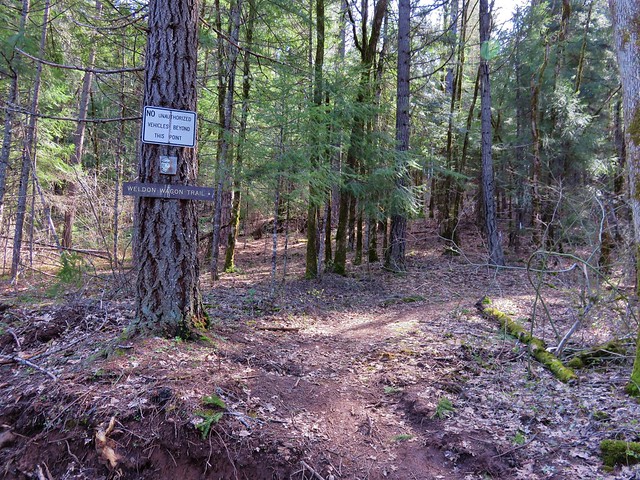
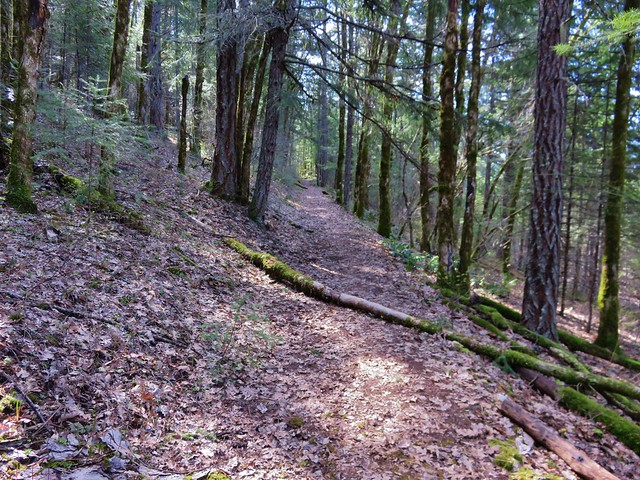
Weldon Wagon Trail

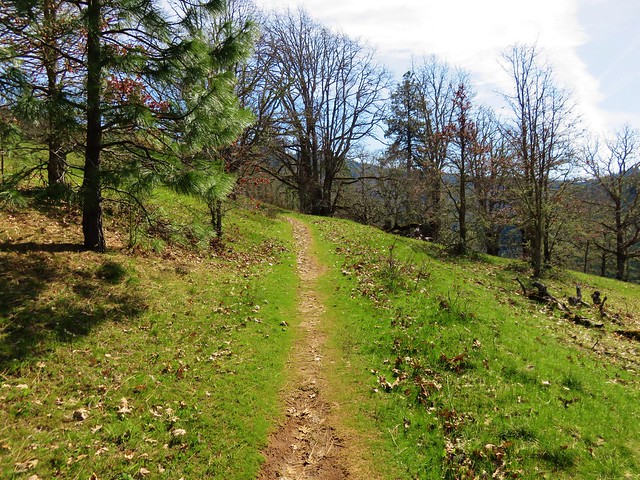
The Wagon Trail follows an old wagon road built in the early 1900’s to cart apples down to Husum. The trail began in a forest before entering more open grasslands.
Weldon Wagon Trail

Weldon Wagon Trail

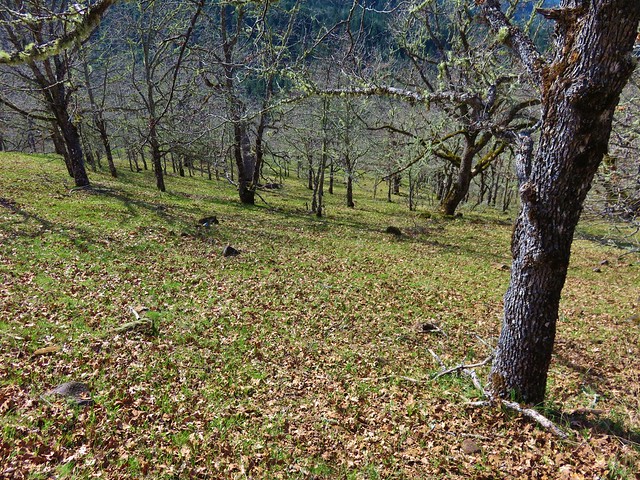
View from the Weldon Wagon Trail

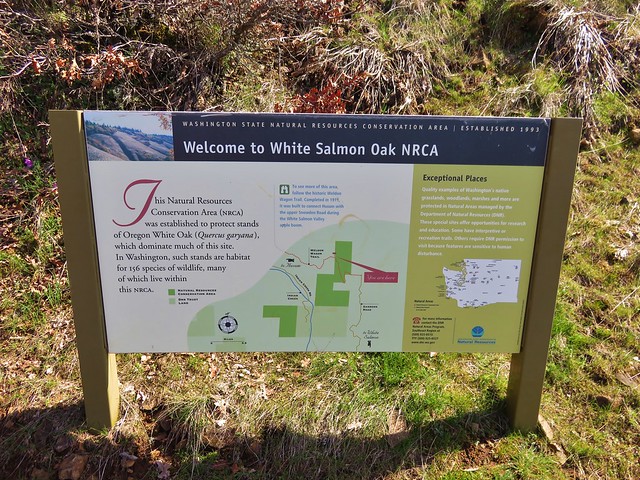
The trial offers a pretty good climb gaining over 1000′ in the first 1.8 miles where a conservation sign sits in the middle of a hillside with a view of Mt. Hood.
Interpretive sign along the Weldon Wagon Trail

Mt. Hood from the Weldon Wagon Trail

Weldon Wagon Trail

Although the trail continues another .7 miles to another road we turned around at the sign knowing we would be over 13 miles for the day by the time we arrived back at the car and that this was the best of the views from the trail.

On our way home we made one final stop, this time for food, at Mekong Bistro in Portland. We’re blaming this one on the good folks over at Trail Keepers of Oregon for having their Winter Meet-n-Deet there last year. 🙂 We enjoyed the food enough that night to have it now be our go to spot on the way back to Salem after hiking in the Gorge.  It didn’t disappoint and was a great end to a good day of hiking.

Although we did not have any issues ticks can be a problem on these hikes so be sure to keep your eyes out and check for any after your visit. Poison oak is also possible, as are rattlesnakes. Happy (and safe) Trails!

Flickr: https://www.flickr.com/photos/9319235@N02/albums/72157666169966955

Categories
Year-end wrap up

The Hikes of 2015 – A Look Back

Another year of wandering the trails of the Pacific Northwest has come to an end. Since 2010 we have been on over 200 hikes covering over 2200 miles and we continually find ourselves in awe of God’s creation.

We managed to hit the trails at least once every month ending with 56 hikes for myself and 55 for Heather. I was able to sneak an extra one in by meeting my parents at Columbia Hills State Park in April while Heather was still running. These were the most hikes we’d done in a single year which also led to our highest mileage totals – 660.4 for myself and 652.6 for Heather. The hikes ranged from 2.9 miles (Butte Creek & Abiqua Falls) to 19.1 miles (Green Lakes Loop). Below is a link to a Google map showing the various trailheads and campsites (denoted by picnic tables).
2015

https://www.google.com/maps/d/edit?mid=zIiZZDXeDJAs.kn3sBy2gxhI8&usp=sharing

In addition to my Columbia State park hike we met my parents for hikes at McNeil Point and Jefferson Park. We also met a couple of regular contributors to Oregonhikers.org out on the trails, miah66 on Silver Star Mountain and justpeachy in Jefferson Park. In December we attended the Trail Keepers of Oregon/Oregon Hikers annual Winter Meet-n-Deet in Portland where we were able to put a few more faces to the names we’ve gotten to know on the hiking forums.  It was a blast and we’re hoping to continue attending the event in future years.

As in previous years our primary focus was to visit new places and spend time on trails we had not previously hiked.  We continued to expand the area in which we’ve hiked by spending 4 days hiking the Northern Loop Trail in Mt. Rainier National Park and spending some time hiking in California around Crescent City and in the Red Buttes Wilderness.  Other areas which were brand new to us included the area around Ashland, OR, Indian Heaven Wilderness, and The Oregon caves National Monument.  In all 43 of our 56 days of hiking were spent on sections of trails we had never been on before. The remaining 13 days were spent on trails that we had visited in prior years, but we managed to do something different this time around on each trip allowing us to see something new every time out.

This year just reinforced what has become one of our favorite aspects of hiking, the variety.  In visiting so many new trails we were able to see flowers, trees, animals, and even mountains that we had not previously encountered on our hikes.  Even in the familiar areas there always seems to be something new to experience.  It’s not just the sights that provide the variety though, the smells, sounds, and even the feeling of the air and the forest can change multiple times on any given hike.

Although the camera cannot adequately capture the beauty of nature a look back at some of this year’s pictures will hopefully give some indication of the many different sights we were blessed with.

Views:
Oregon Dunes Overlook
View from Oregon Dunes day use area

Rowena Crest
Rowena Crest from the Tom McCall Point trail.

Mt. Hebo Trail
Sunlight penetrating the clouds in the Siuslaw National Forest

View from Boccard Point
Looking west from Boccard Point

French Pete Creek
French Pete Creek

Smith Rock State Park
Smith Rock State Park from the summit above Burma Road

Mt. Hood from the McNeil Point Trail
McNeil Point Trail

Middle & South Sister from Eileen Lake
Middle and South Sister from Eileen Lake

Middle & South Sister from Linton Meadows
Middle and South Sister from Linton Meadows

Pacific Ocean from Salishan Spit
Low tide heading toward Salishan Spit

Mt. Jefferson from Russell Lake

Sluiskin Mountain
Sluiskin Mountain in the morning

Mt. Rainier
Mt. Rainier

Olallie Lake Scenic Area
View from Double Peaks

Indian Heaven Wilderness
Lemi Rock

Mt. Washington Wilderness
Mt. Washington and Three Fingered Jack from Belknap Crater

Belknap Crater
Belknap Crater

South Sister from the Green Lakes
South Sister from the first Green Lake

South Sister from Denude Lake

Wind and Dog Mountain from Indian Point
Wind and Dog Mountains from Indian Point

Bull of the Woods Wilderness
Lake Lenore and Mt. Hood from Big Slide Mountain

Pacific Ocean near Damnation Creek
Sunsetting over the Pacific Ocean from the mouth of Damnation Creek

Redwoods in Jedediah Redwoods State Park
Redwoods along the Boy Scout Tree Trail

Red Buttes Wilderness
Red Buttes and Kangaroo Mountain

Kangaroo Mountain
Marble outcrop below Kangaroo Mountain

Paradise Lost, Oregon Caves National Monument
Looking up in the Paradise Lost room of the Oregon Cave

Waterfalls:

University Falls
University Falls

Lower Butte Creek Falls
Lower Butte Creek Falls Upper Butte Creek Falls Upper Butte Creek Falls

Abiqua Falls
Abiqua Falls Upper McCord Falls Upper McCord Falls

Wahclella Falls
Wahclella Falls Elowah Falls Elowah Falls

The Potholes
The Potholes Woodburn Falls Trillium at Woodburn Falls

Rodney Falls
IMG_1665 Upper Kentucky Falls IMG_1840

Lower Kentucky Falls
Lower Kentucky Falls North Fork Falls North Fork Falls

Munson Falls
Munson Falls

Unnamed waterfalls along Linton Creek Waterfalls along Linton Creek

Waterfall on Linton Creek

Waterfall on Linton Creek

Waterfall along Linton Creek

Duncan Falls Duncan Falls

Upper Portion of Linton Falls
Upper portion of Upper Linton Falls

Some of Upper Linton Falls

Indian Holes Falls
Indian Holes Falls Unnamed waterfall – Mt. Rainier National Park IMG_7614

Garda Falls
Garda Falls Another unnamed fall in Mt. Rainier National Park IMG_7972

Van Horn Falls
Van Horn Falls

Waterfalls along Fall Creek IMG_9592

Fall Creek

Fall Creek

IMG_9604

IMG_9612

Falls along Crater Creek

Falls along Crater Creek

Waterfall on Crater Creek

Corner Falls Corner Falls

Fall River Falls
Fall River Falls

Waterfalls along Paulina Creek Small waterfall on Paulina Creek

Falls on Paulina Creek

Small waterfall on Paulina Creek

Small waterfall on Paulina Creek

IMG_0567

Waterfall on Paulina Creek

McKay Falls

Waterfall on Paulina Creek

Waterfall on Paulina Creek

Waterfall on Paulina Creek below Ten-mile snopark bridge

Wildlife
Mallard at Lacamas Lake

Bullfrogs in pond near Lacamas Lake

Turtles at Lacamas Lake

Greater Yellowlegs

IMG_1287

IMG_0993

IMG_1059

IMG_1134

IMG_1821

IMG_1851

IMG_1987

Douglas Squirrel

IMG_2493

Frog

Northern Pacific Treefrog

Western Bluebird

Wood duck

IMG_2915

IMG_3057

Owl

Rabbit

IMG_3651

IMG_3868

Green-tailed Towhee

IMG_4179

Hummingbird

IMG_4223

IMG_4249//embedr.flickr.com/assets/client-code.js

Butterfly along the Crooked River

IMG_4727

Butterfly along the Blair Lake Trail

IMG_4898//embedr.flickr.com/assets/client-code.js

Butterfly along the Bluff Mountain Trail

Mountain Parnassian

IMG_5507

Deer visting a meadow behind our campsite

Small fish in a little stream near Linton Meadows

IMG_6760

Gray Jay//embedr.flickr.com/assets/client-code.js

IMG_6769

Grasshopper invasion

IMG_6939

Harbor Seals

Seagull

Pika

Black Bear

IMG_7342

IMG_7376

Mountain Goats on Burroughs Mountain

IMG_7760

Chipmunk enjoying a berry

Deer in the meadow below Yellowstone Cliffs

Lounging marmot

Varied Thrush//embedr.flickr.com/assets/client-code.js

IMG_1122

Rough Skinned Newt

Sea Lions

IMG_1544

Cormorant

IMG_1601

Anenomes

IMG_1691

Ouzel

IMG_0156

Great Blue Heron

IMG_0267

IMG_0397

IMG_0440

IMG_0551

Buck

Last butterfly of the year

Hawk

IMG_2588

Barred Owl

Americn Kestrel

Acorn Woodpecker

Wildflowers
IMG_0578

IMG_0591

IMG_0708

IMG_0797

IMG_1012

IMG_1014

IMG_1040

IMG_1062

IMG_1098

IMG_1172

Bachelor Button

IMG_1375

IMG_1382

IMG_1428

California Poppy

IMG_1682

IMG_1686

IMG_1699

IMG_1854

IMG_2011

IMG_2101

IMG_2107

IMG_2163

IMG_2263

IMG_2327

Columbine

Wild Iris

IMG_2484

036

051

070

Henderson's Stars

228

213

Elegant Brodiaea

Popcorn Flower

Common Madia

IMG_2972

IMG_2987

mariposa lily

IMG_3208

IMG_3322

Scarlet gilia

IMG_3431

IMG_3314

IMG_3557

IMG_3667

Monument Plant aka Elkweed

IMG_3688

IMG_3772

Striped Coralroot

IMG_4048

IMG_4074

IMG_4202

IMG_4219

IMG_4225

smoothstem blazing-star Mentzelia laevicaulis

IMG_4340

IMG_4407

IMG_4428

IMG_4458

Bog Orchid and Elephants Head

Tiger Lily

IMG_4523

Beargrass Meadow

IMG_4640

IMG_4728

Orange Agoseris

Elegant Brodiaea

IMG_4925

IMG_5096

Cat's ear lily

IMG_5230

IMG_5270

IMG_5327

Aster

IMG_5620

IMG_5654

IMG_5694

IMG_5797

IMG_5823

IMG_6333

IMG_6516

IMG_7809

IMG_7934

We are already looking forward to next year’s hikes. I freely admit that I already have a preliminary schedule laid out (I will not admit to how far out it extends though 😉 ).  As it currently stands we will be visiting 6 new wilderness areas, another national monument, and summiting three peaks over 9000′ tall.  If history is any guide the list of completed hikes at this time next year will look vastly different from this preliminary one, but then that’s just part of the adventure.  One thing is for sure though, we are sure to see some amazing sights along whatever trails we wander.  Happy Trails!