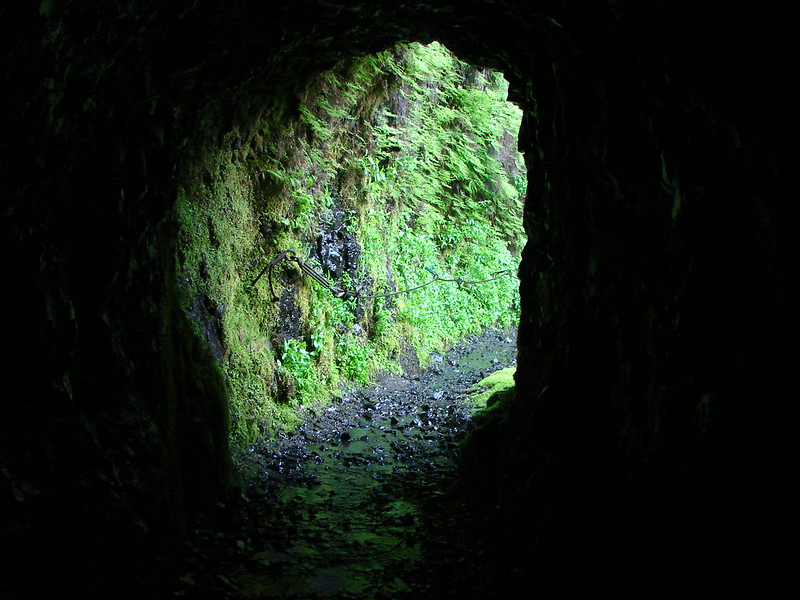
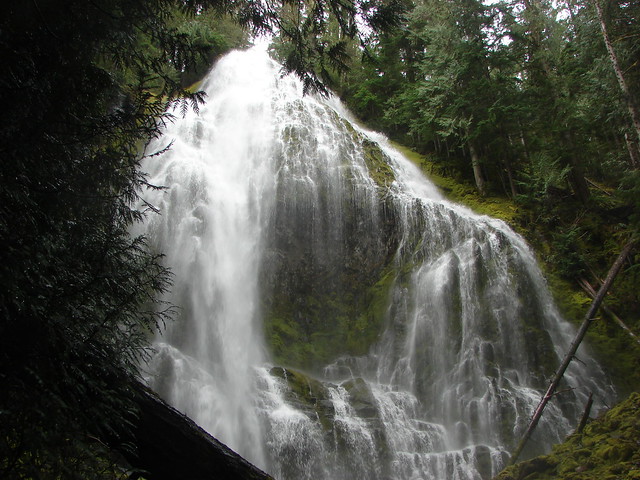
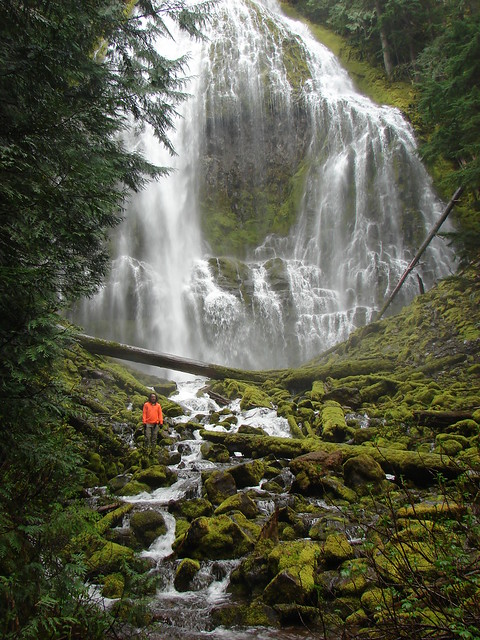
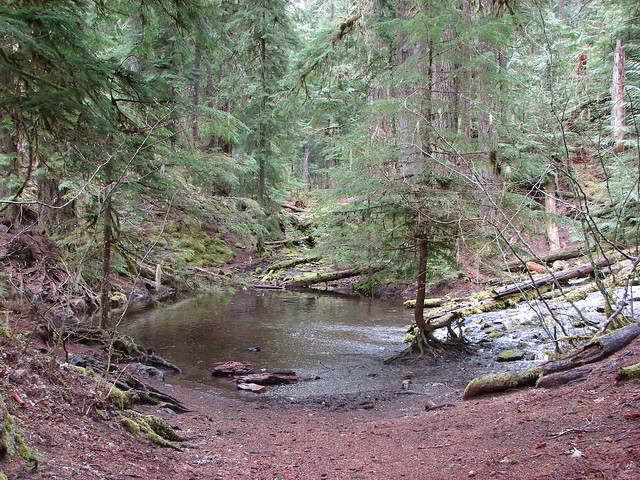
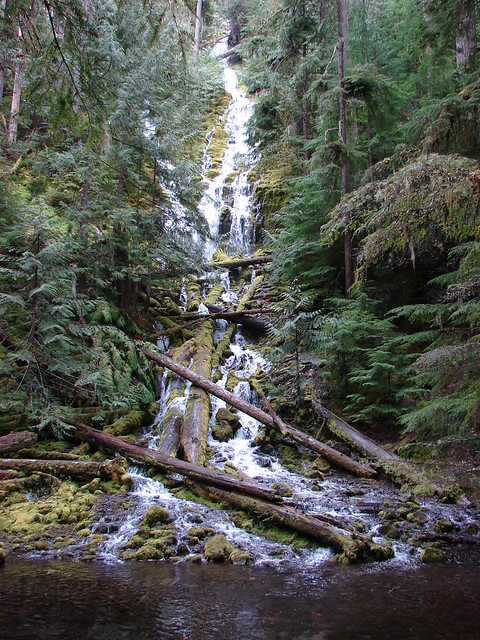
Categories
Cottage Grove Hiking Old Cascades Oregon Trip report

Brice Creek & Trestle Falls

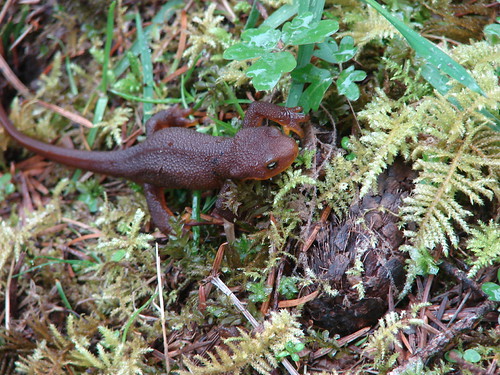
A few posts ago I mentioned that the trail was a classroom. It seems as though we always learn something out on a hike, and our recent trip to Brice Creek was no different. During the hike we learned that rough-skinned newts love to play hide-and-seek, and they stink at it. 😀 We’ll get to that later, but first a little about the trail.

Brice Creek is located to the east of Cottage Grove, OR and flows into the Row River which in turns empties into the Willamette. There are several trailheads located along the creek in the Umpqua National Forest making it possible to choose the length of your hike. We chose to start at the West Brice Trailhead and hike to the other end of trail at the Champion Creek Trailhead. From there we could visit a pair of waterfalls on Trestle Creek.

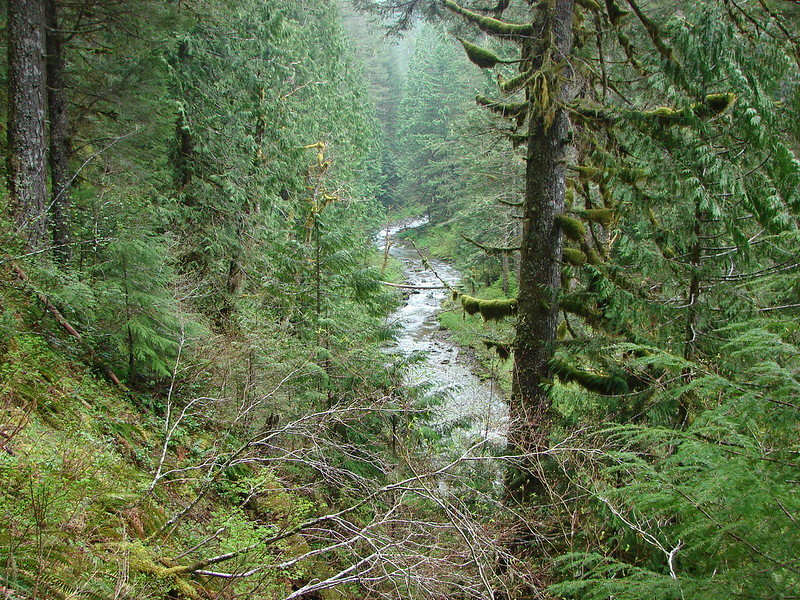
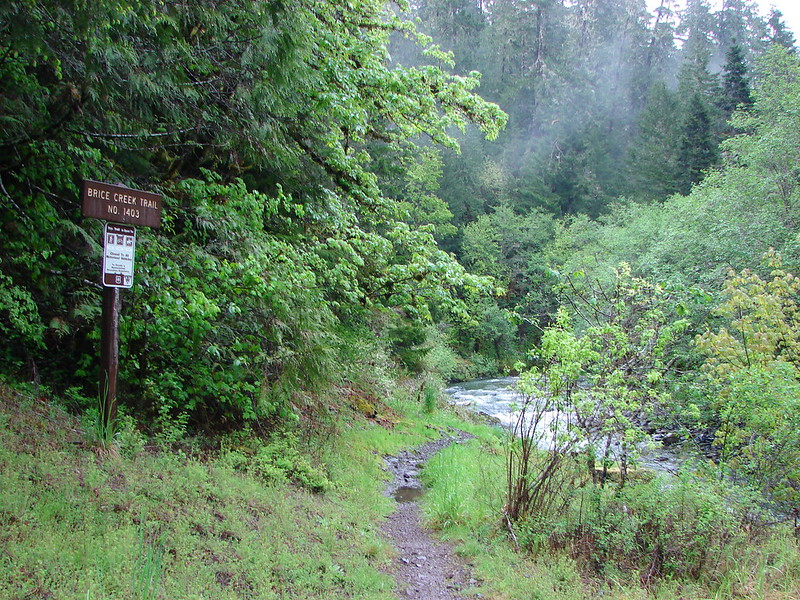
It was a little misty and cloudy as we set off on the trail.
DSC03803

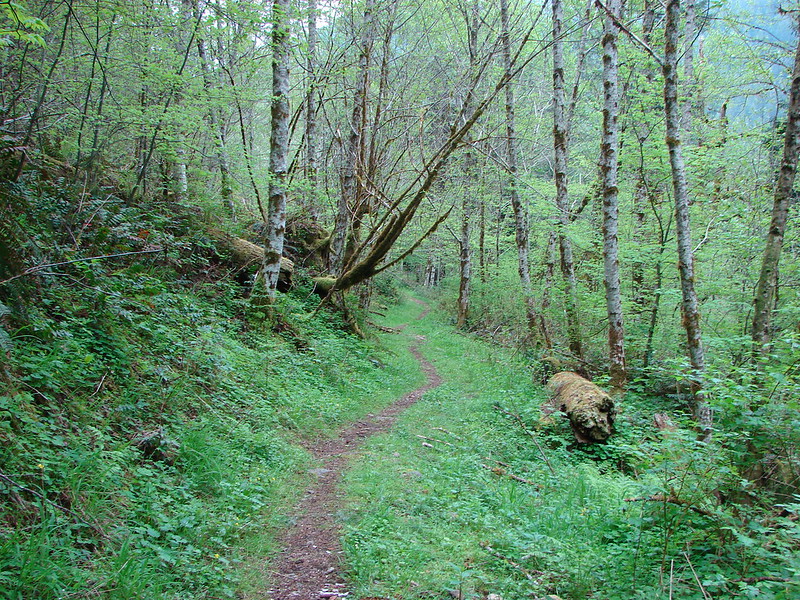
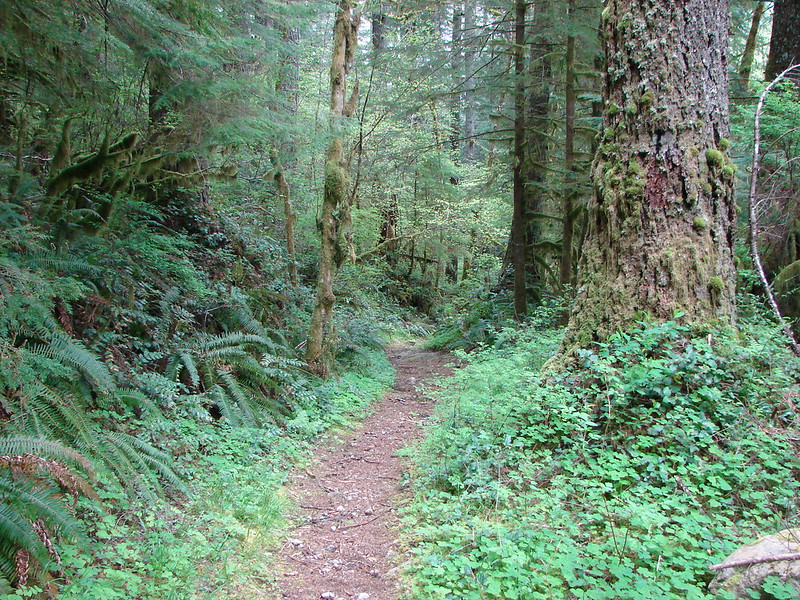
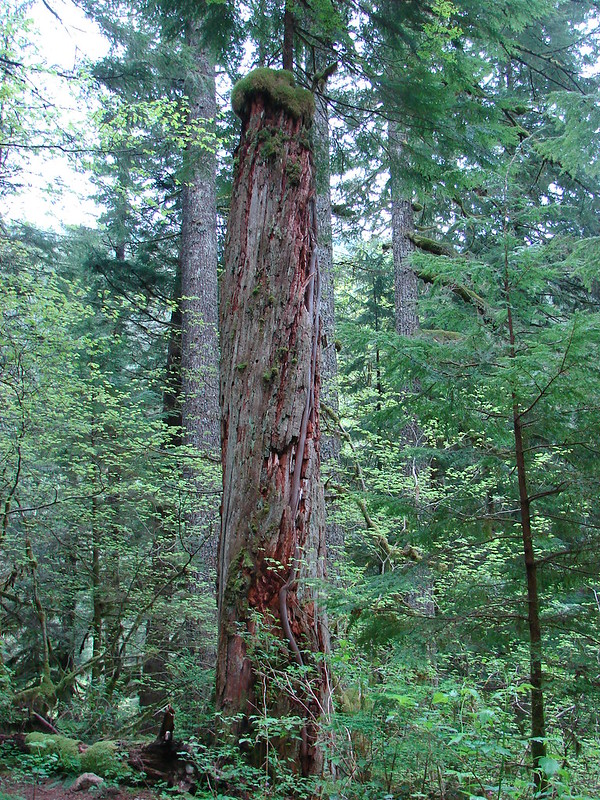
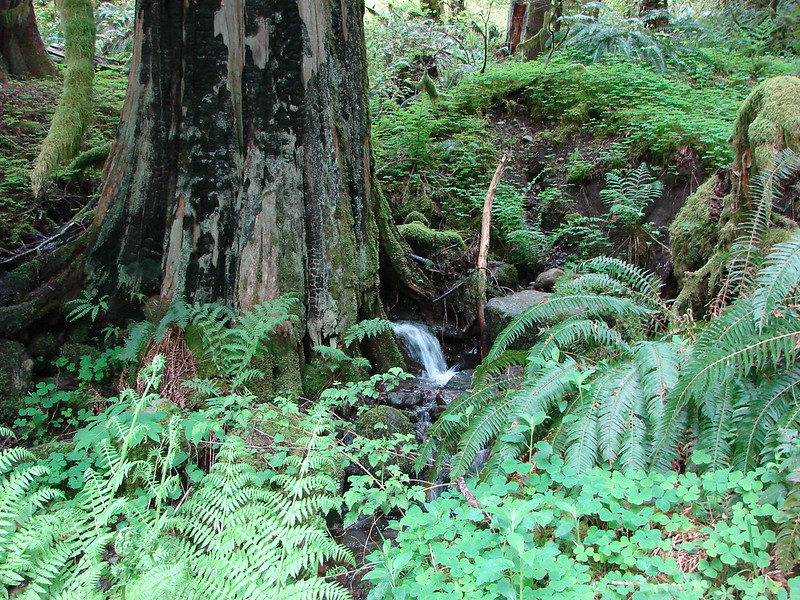
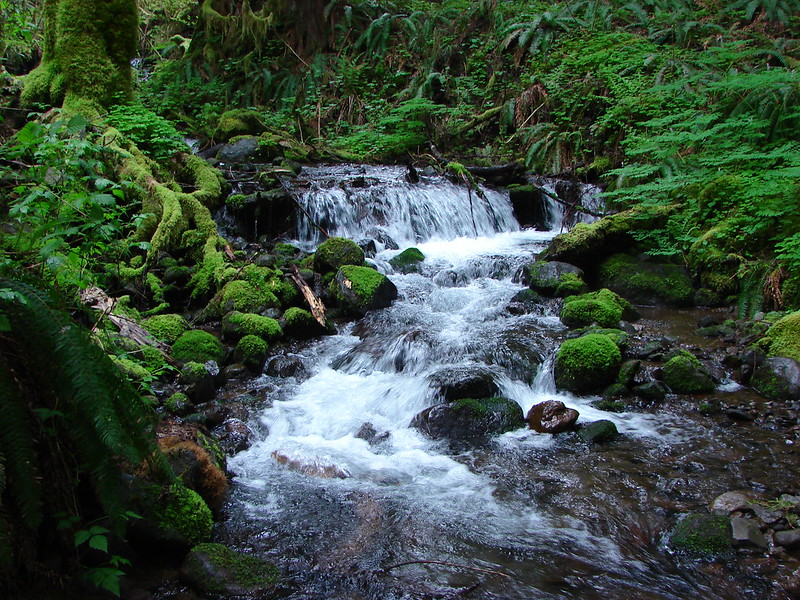
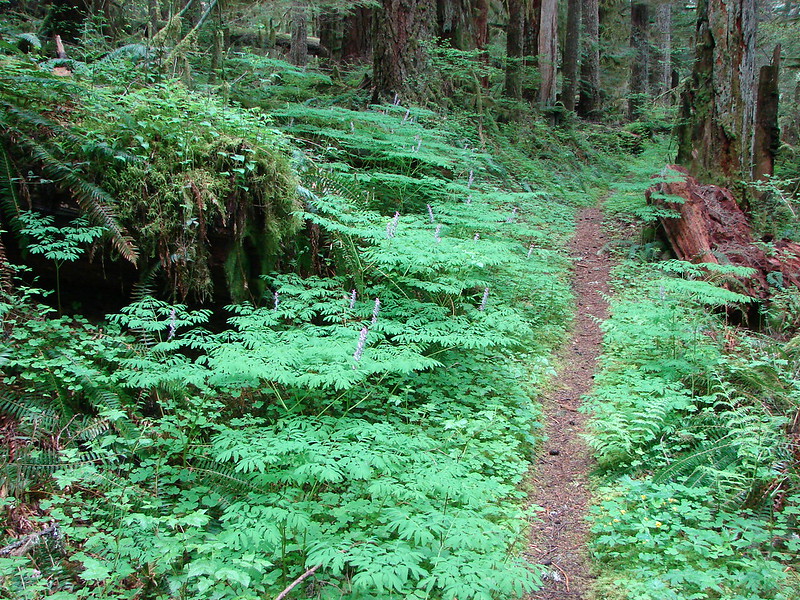
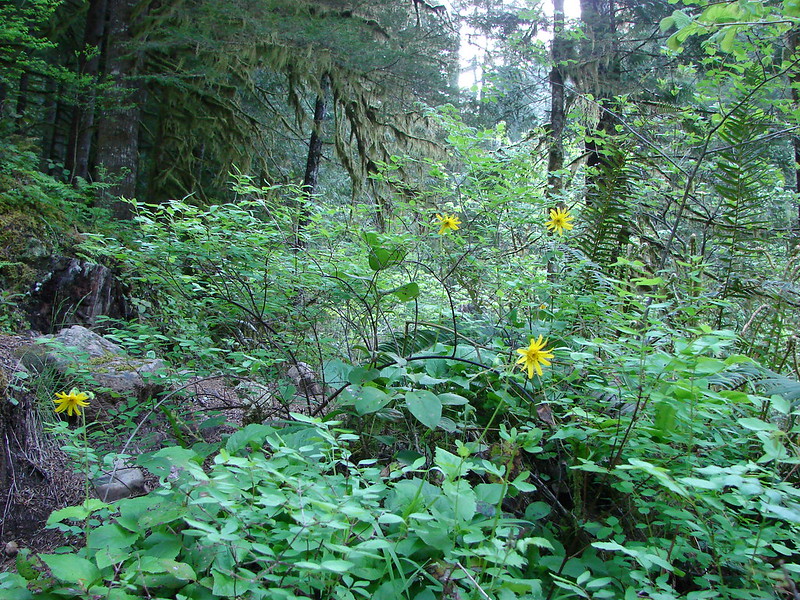
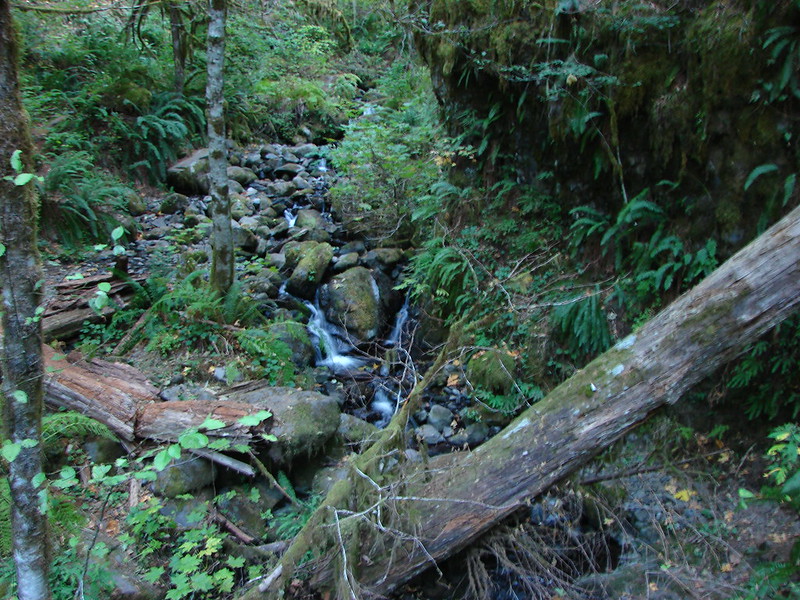
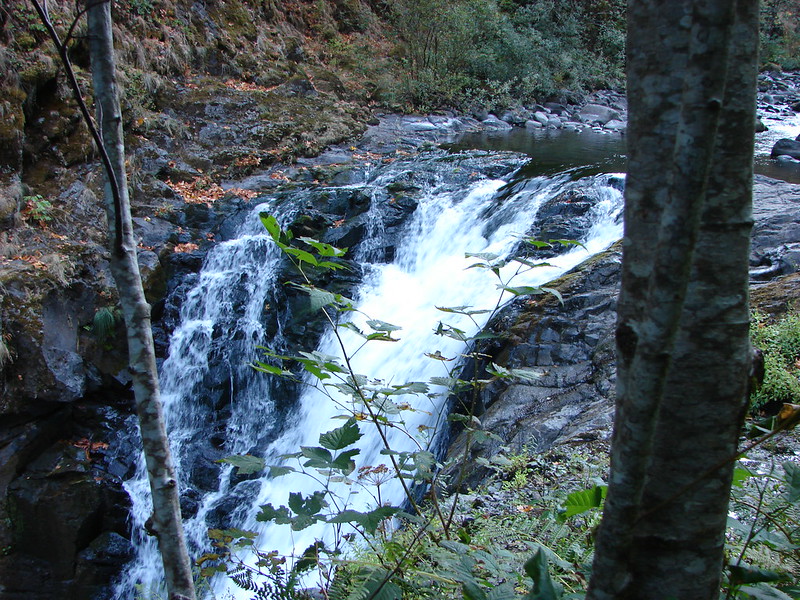
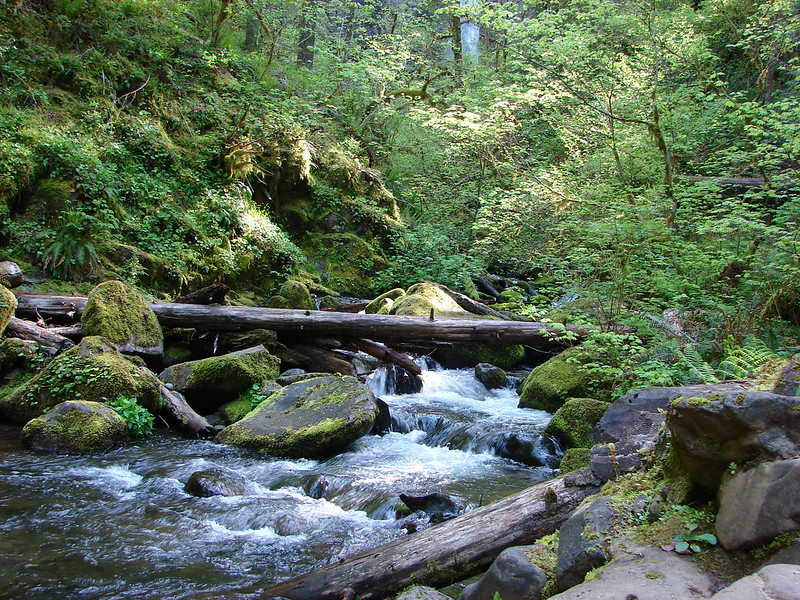
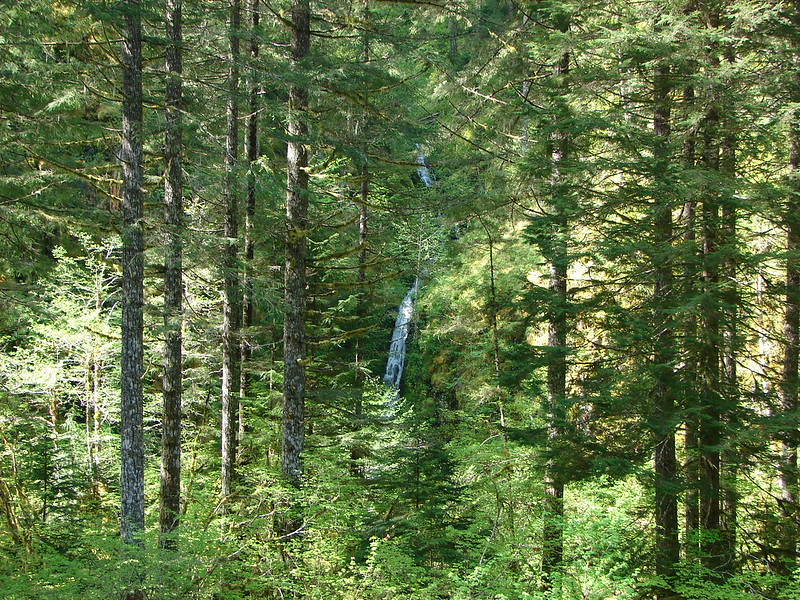
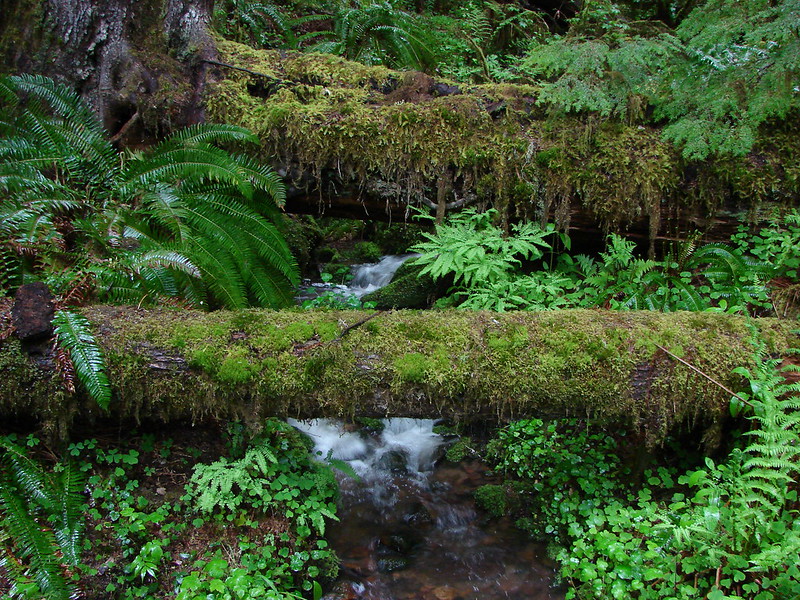
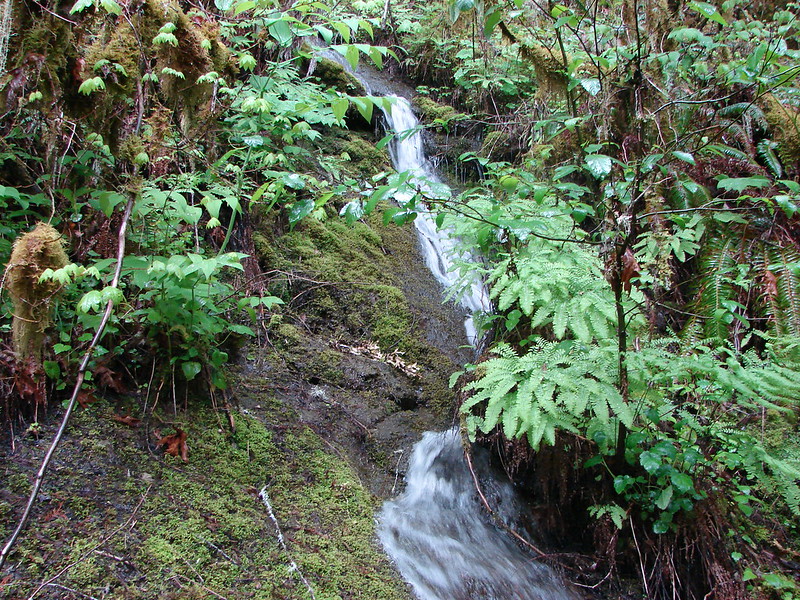
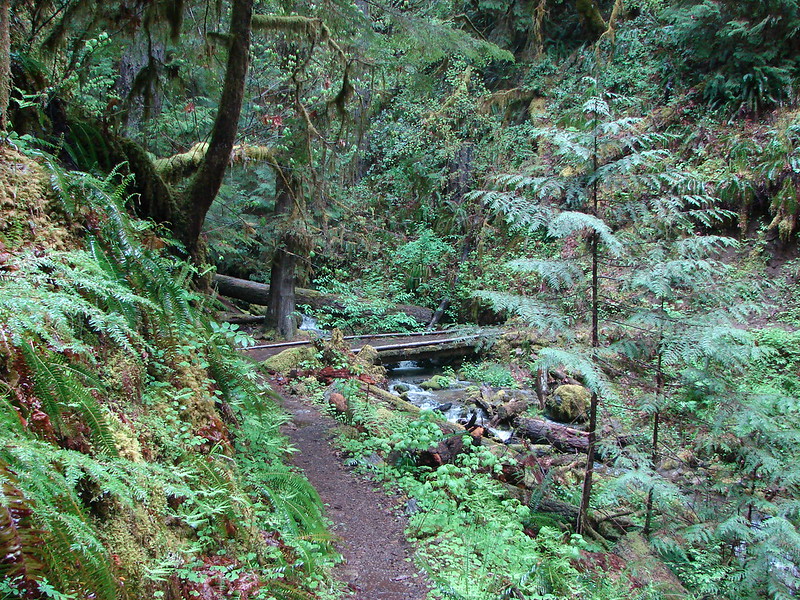
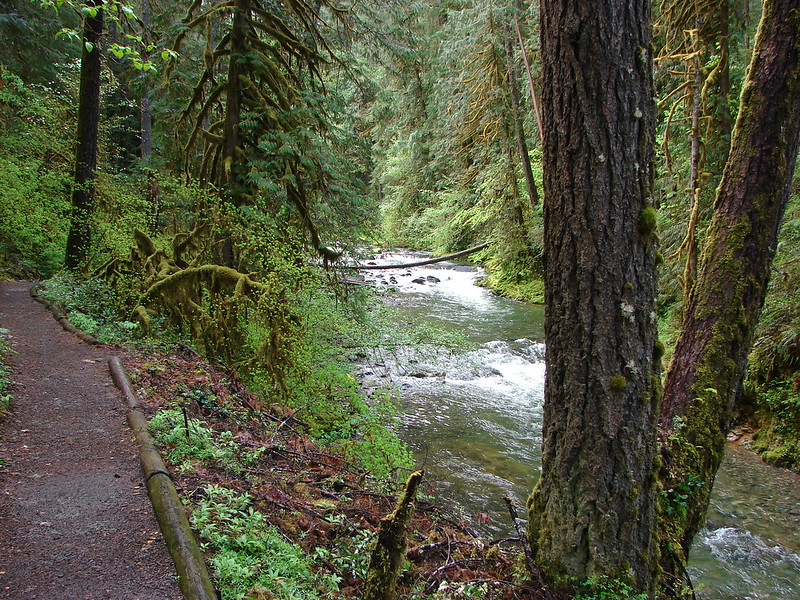
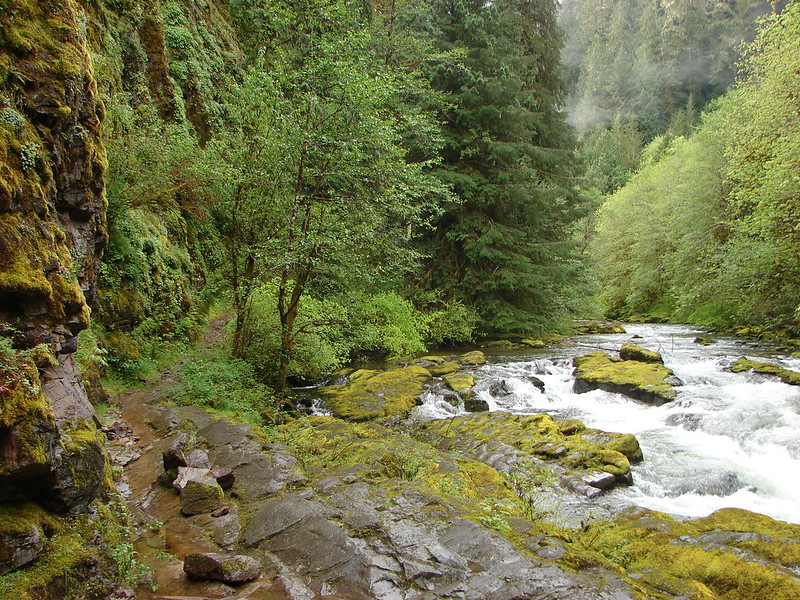
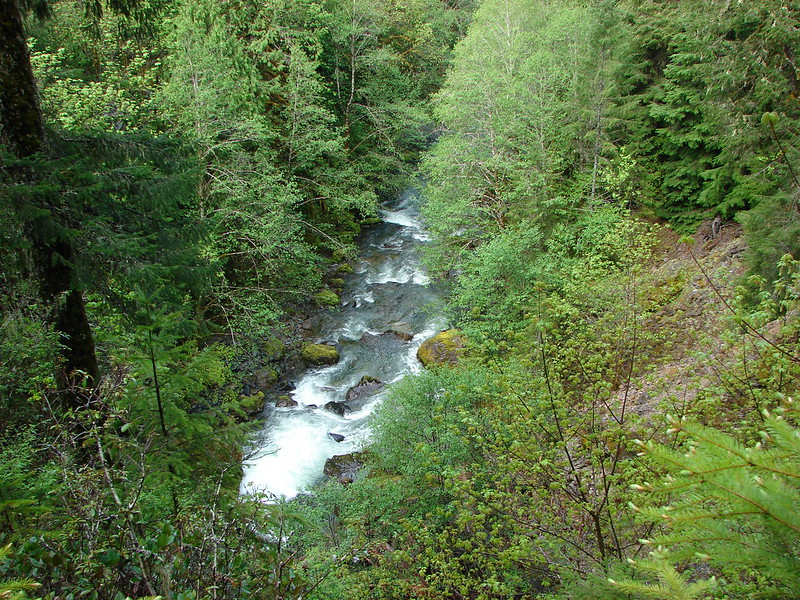
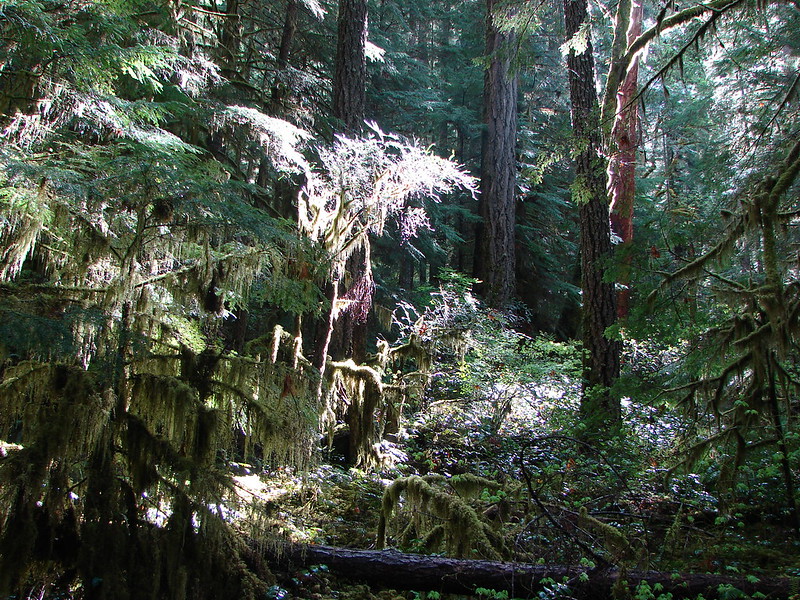
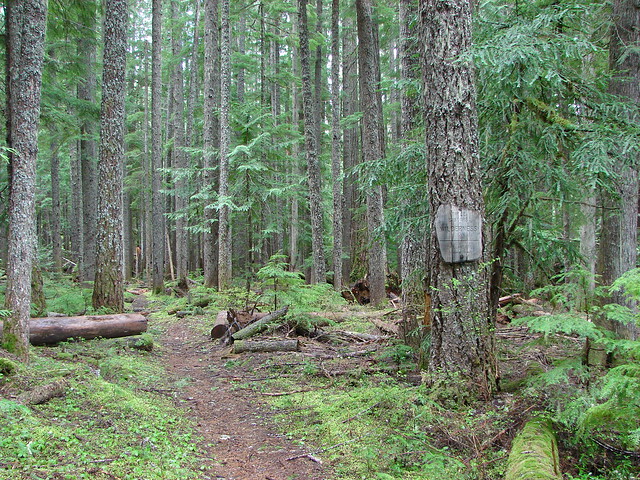
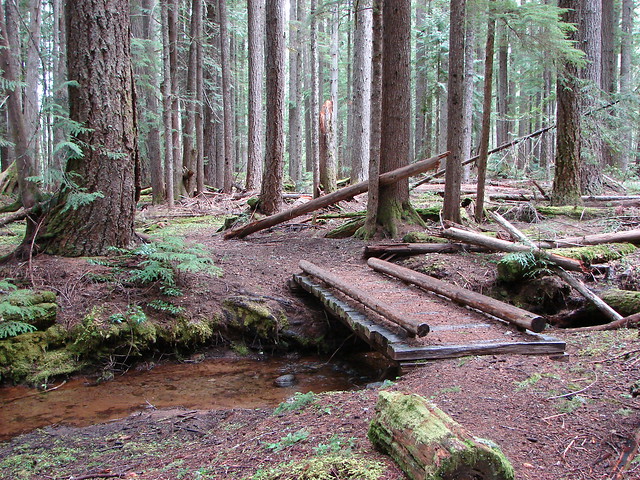
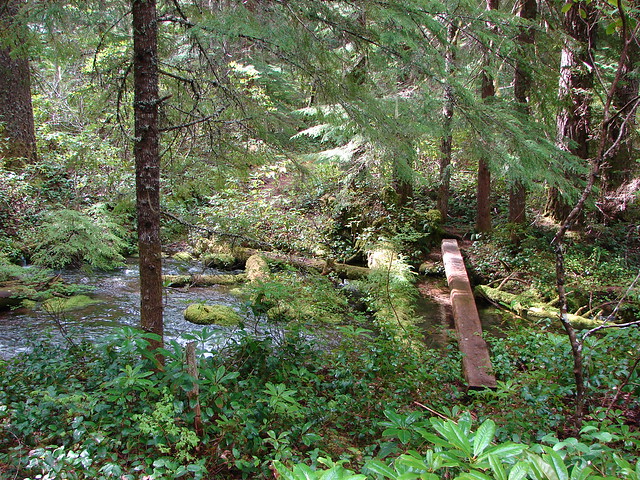
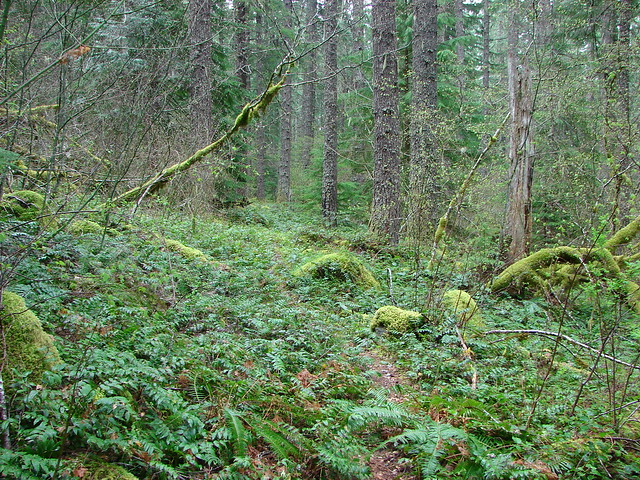
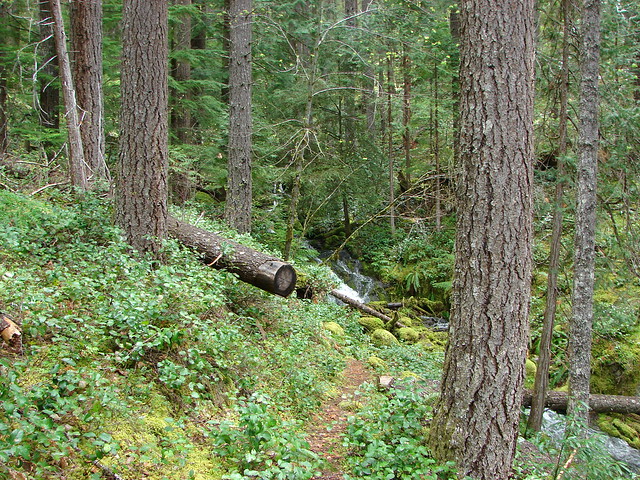
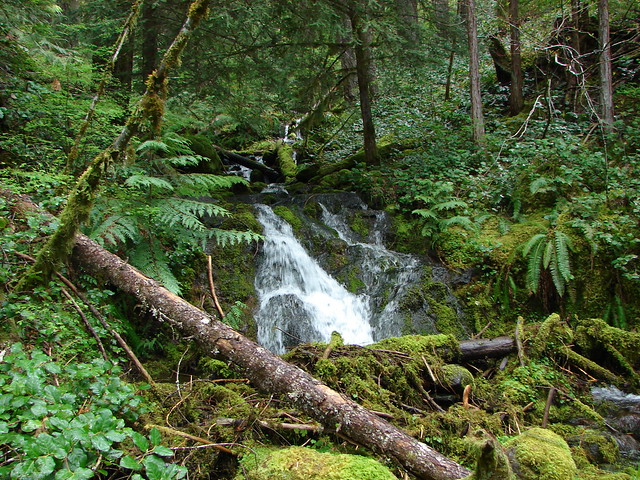
After a brief stint on an exposed hillside the trail entered an old growth forest with plenty of lush green moss on the ancient trees. We also crossed several small but scenic streams.
DSC03841
DSC03859
DSC03880

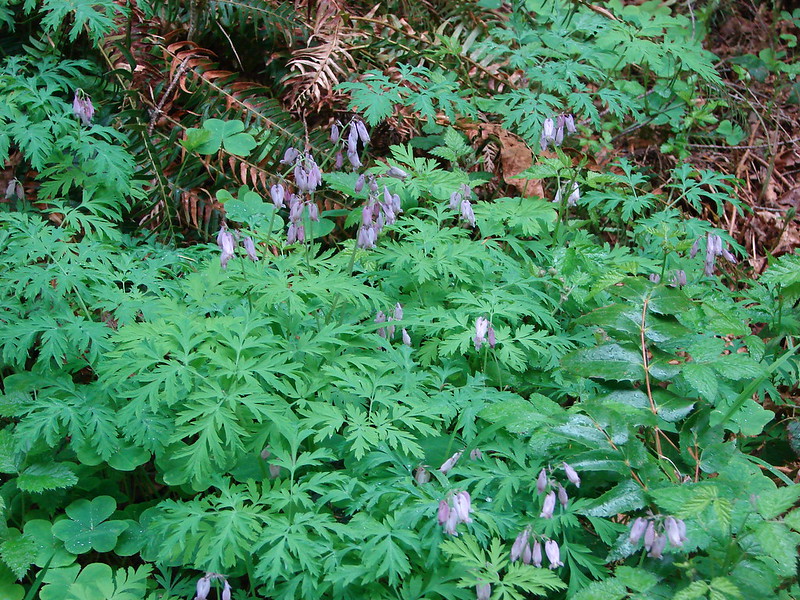
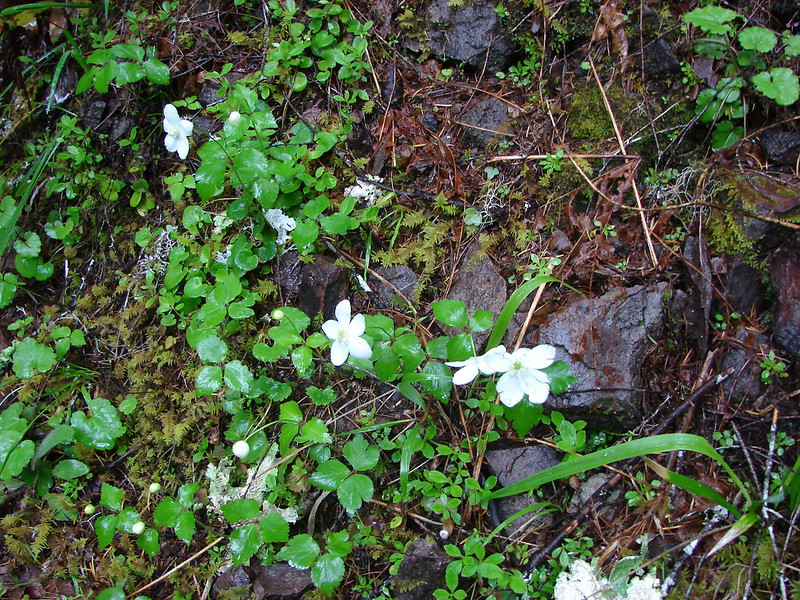
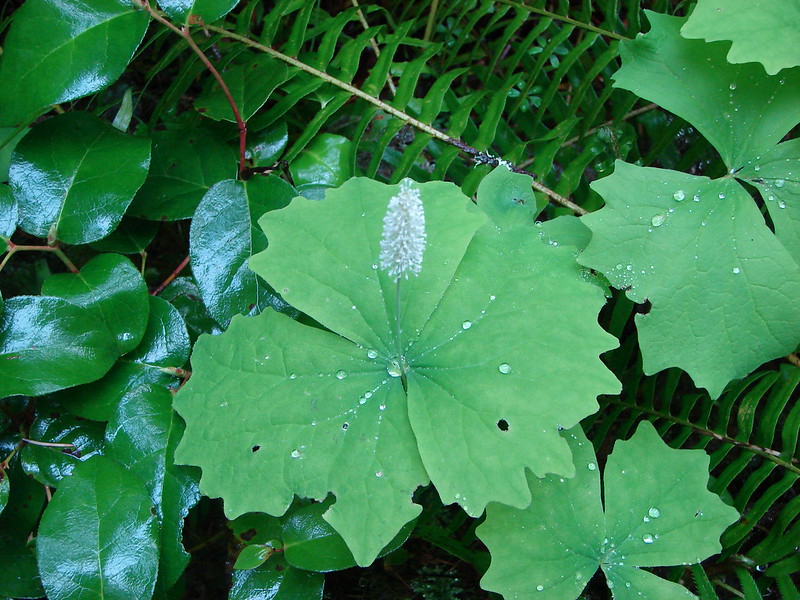
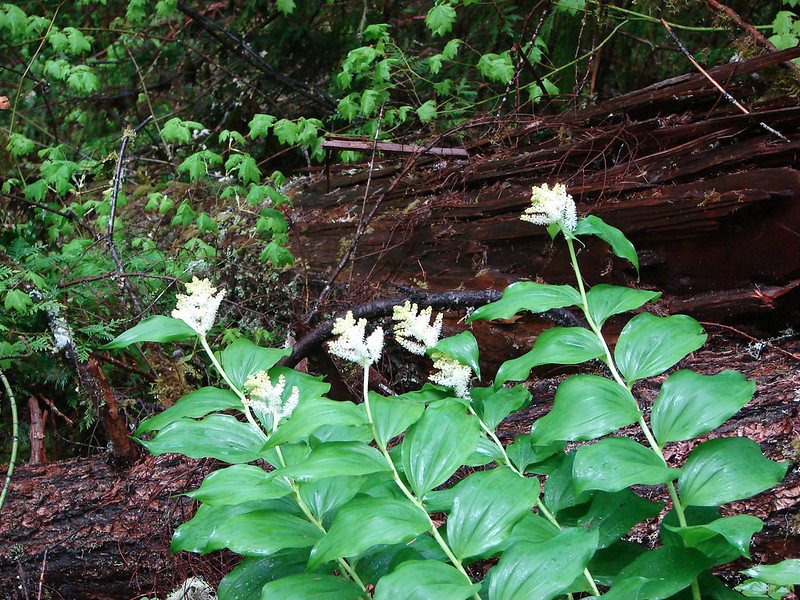
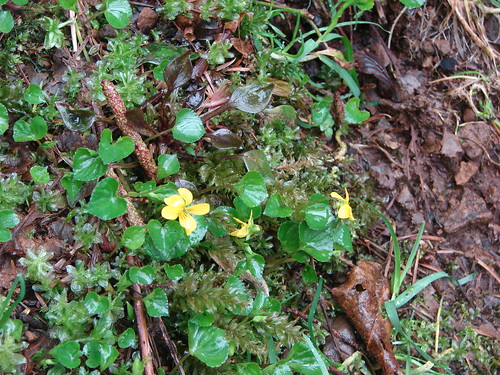
There were a few flowers blooming, mostly white varieties that are typical in older/denser forests.
Anemone
DSC03886
Vanilla Leaf
DSC03900
Solomonseal
DSC04022
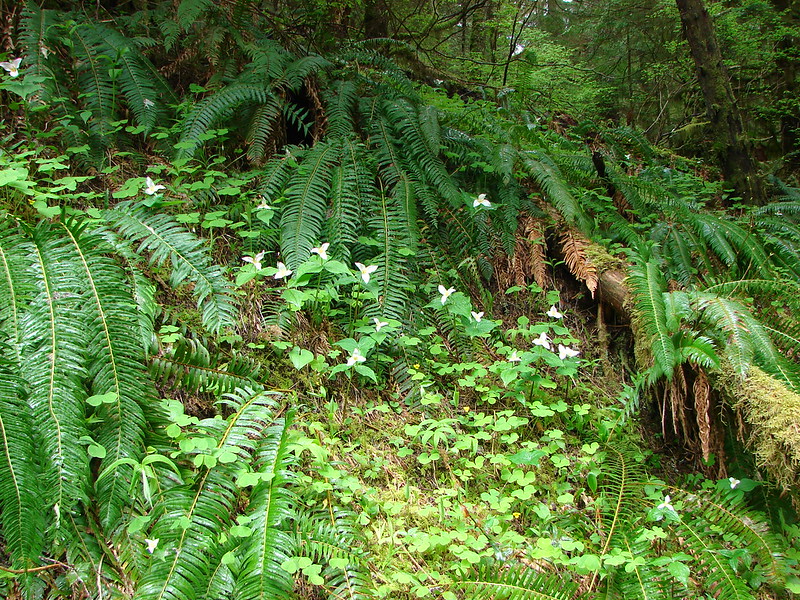
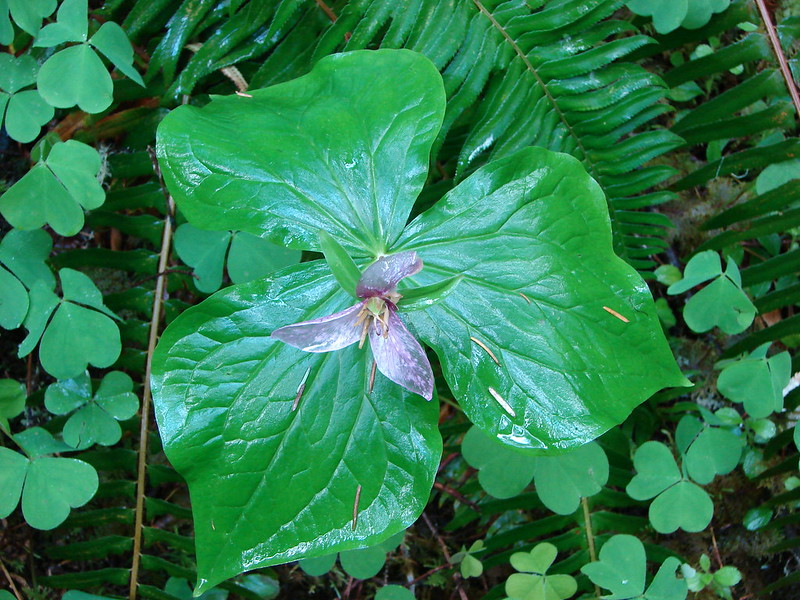
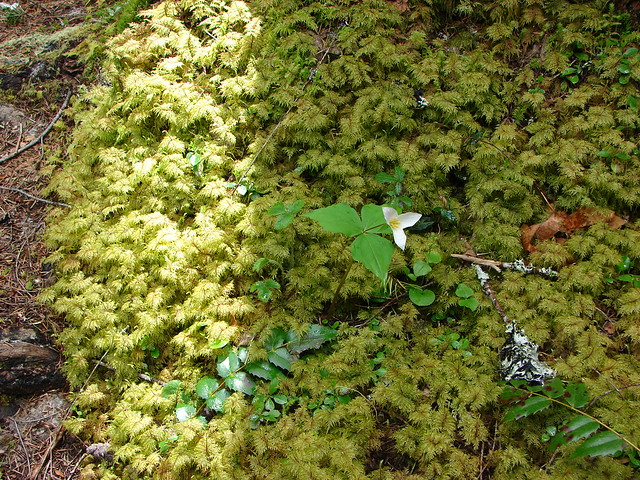
Most of the trillium was already finished but from the leaves and the few we did see it was clear they were very large in this area.
DSC04037

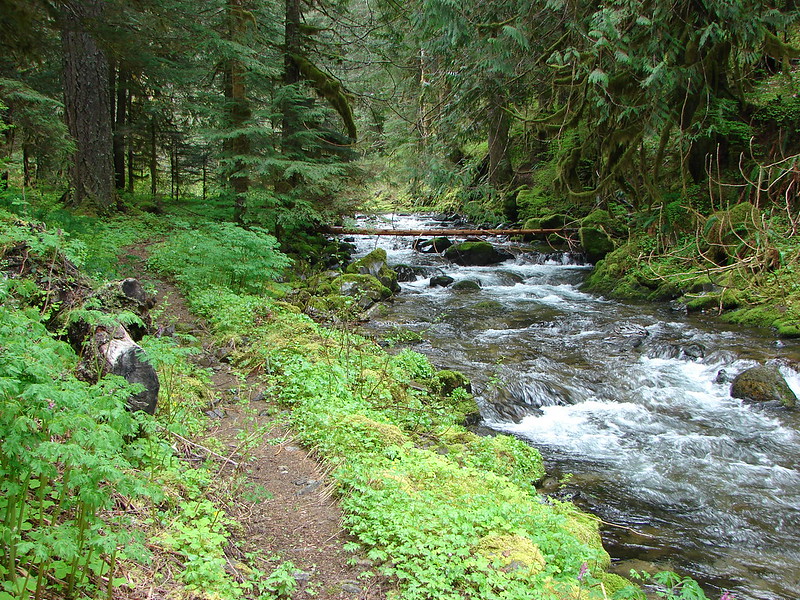
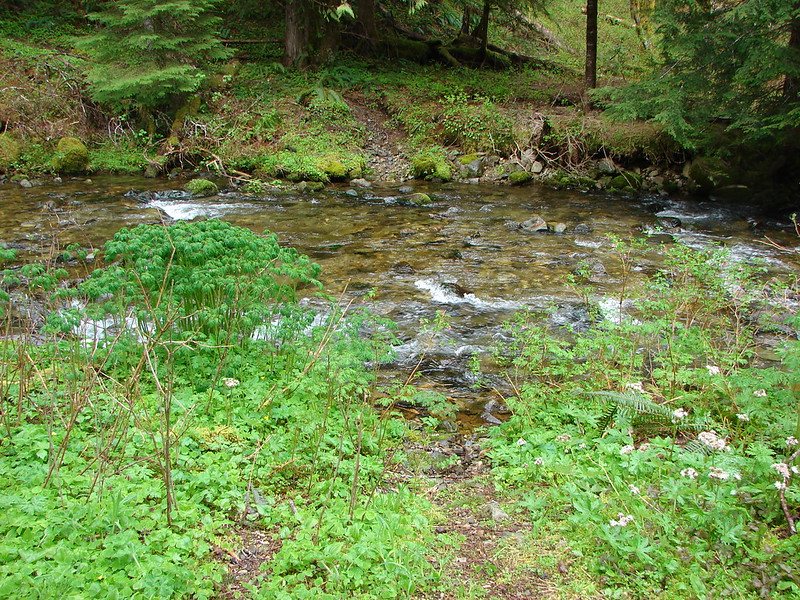
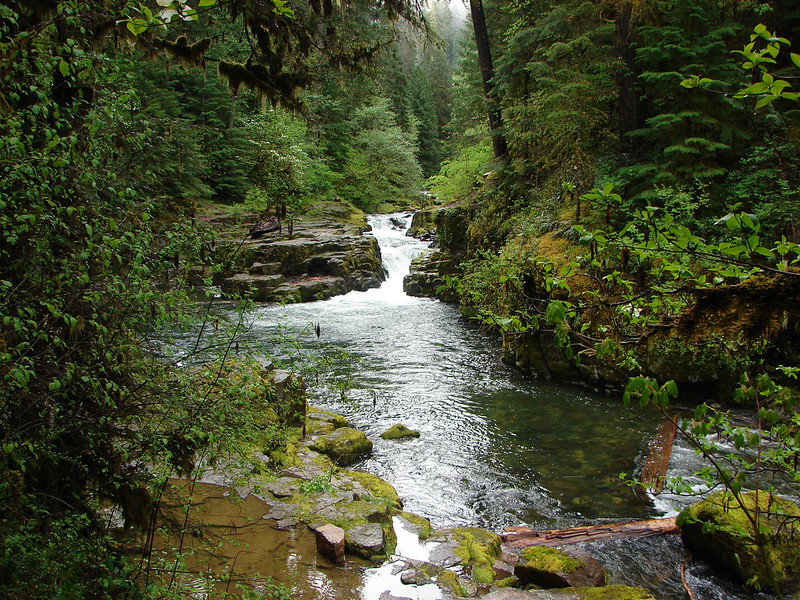
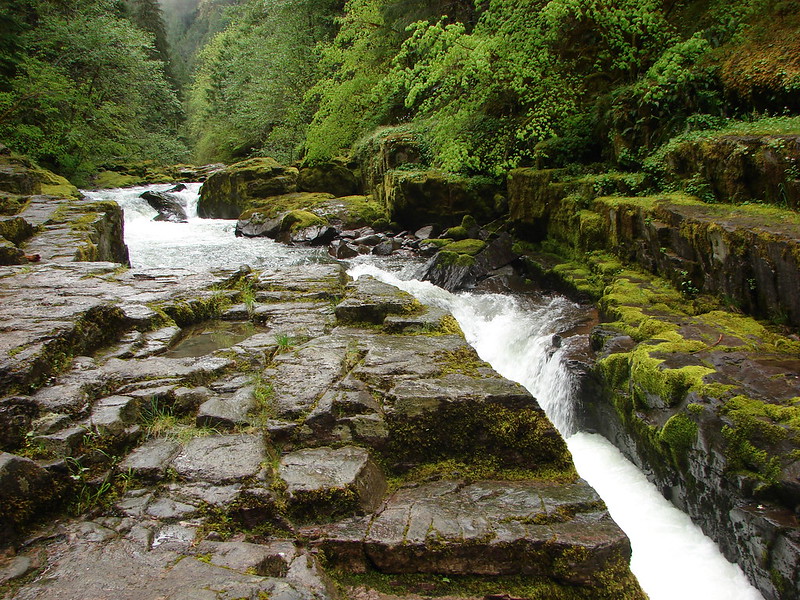
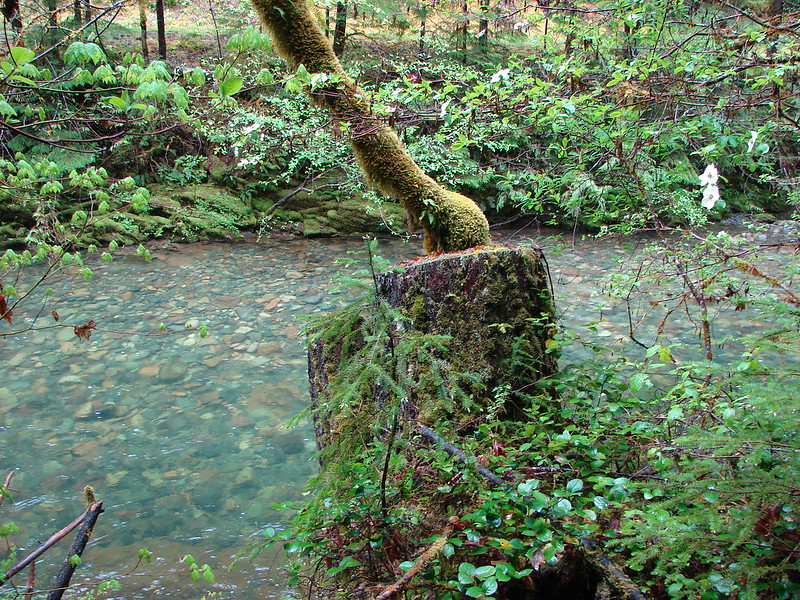
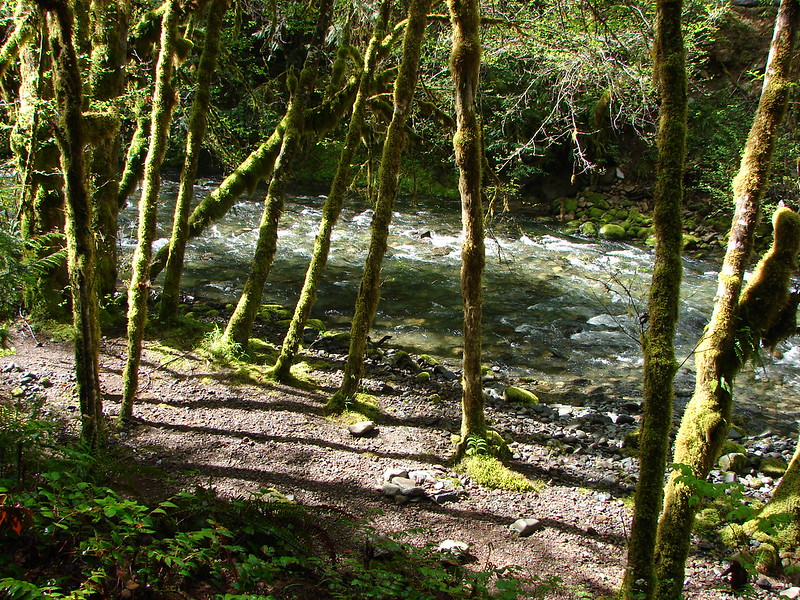
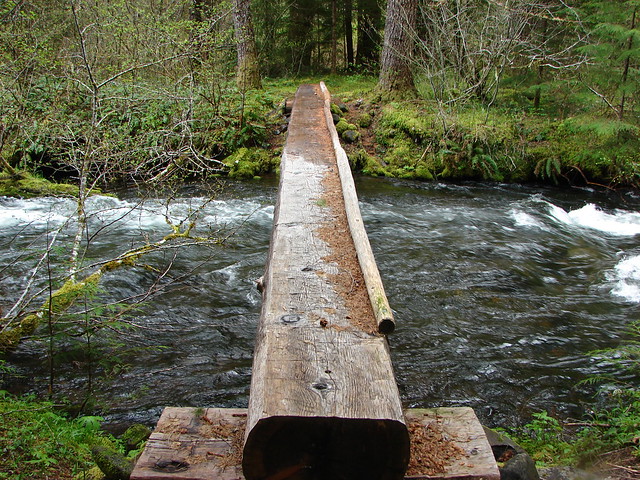
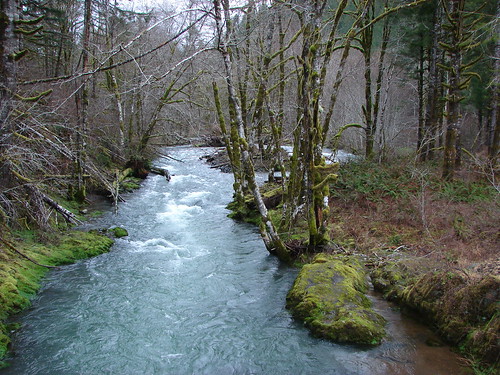
The trail had been up above Brice Creek until coming down to the bridge for the campground. From there the trail stayed closer to the creek for awhile providing a number of chances to get to the creek and get an up close view.
DSC03917
DSC03920
DSC03926
DSC03938

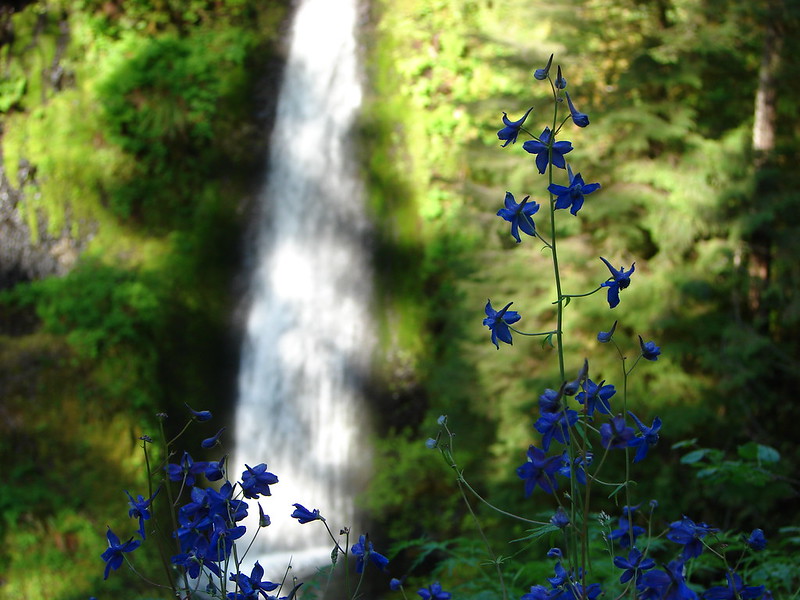
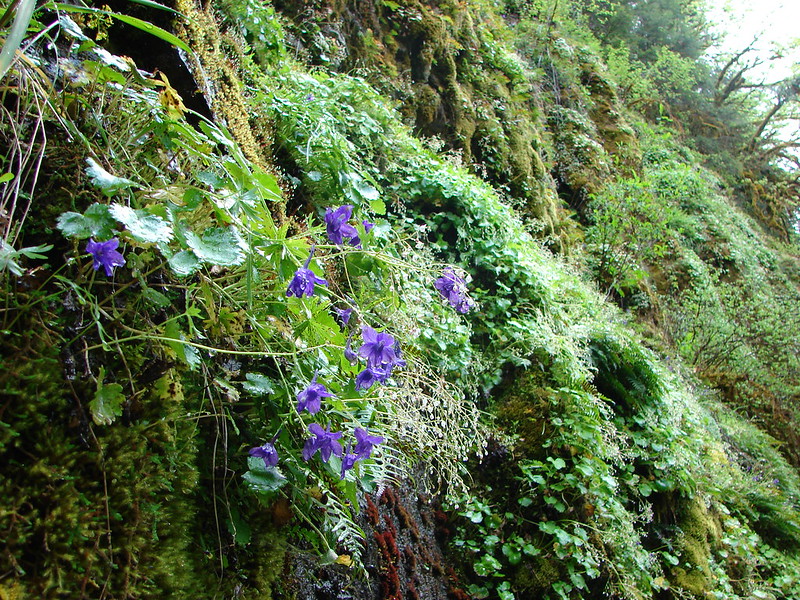
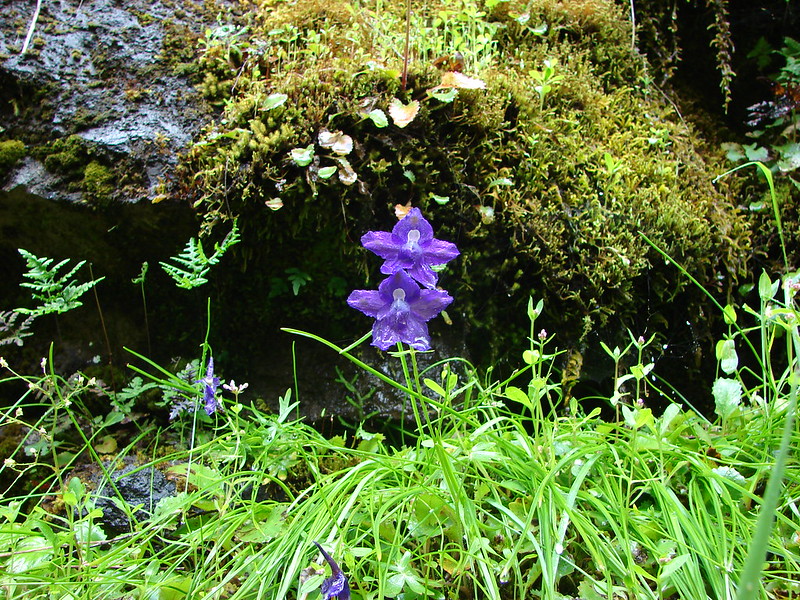
At one point the trail disappears along a bedrock section. The wet weather made for some slipper footing but the exposed rock was home to the most colorful flowers we would see all day.
DSC03951
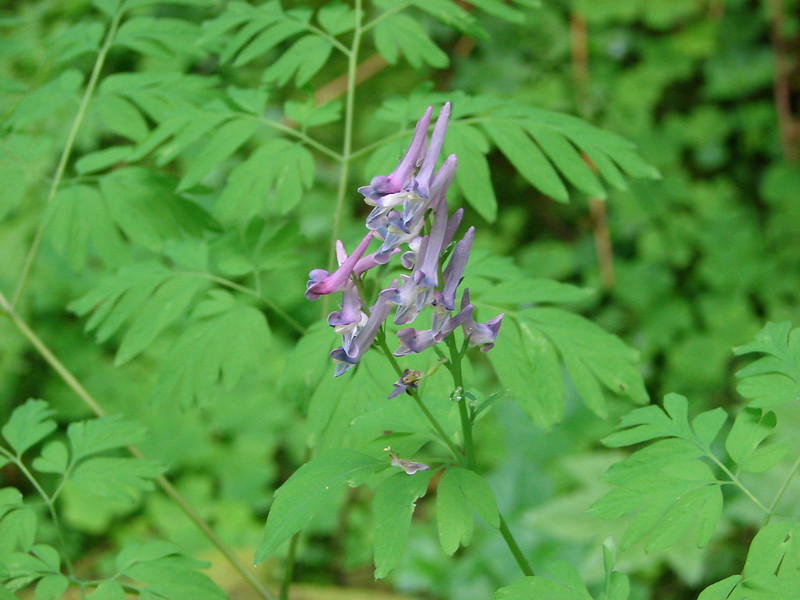
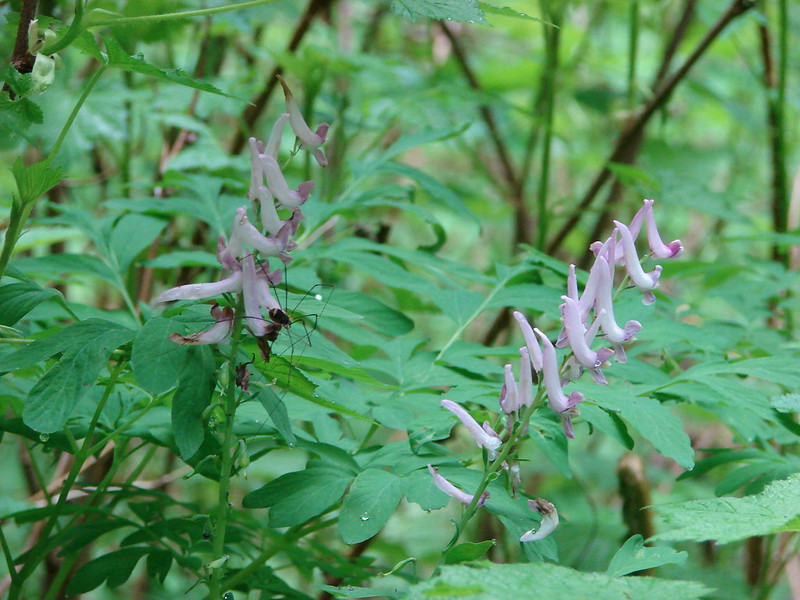
Larkspur
DSC03962
Larkspur

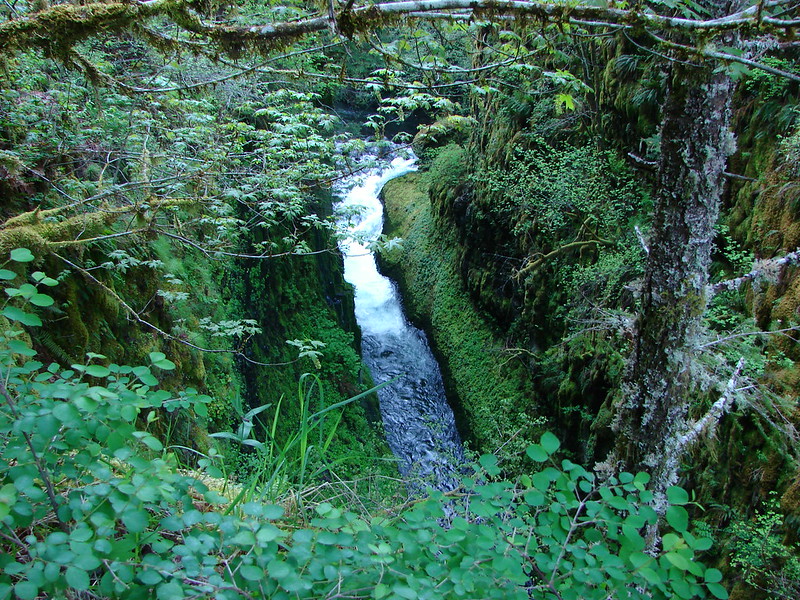
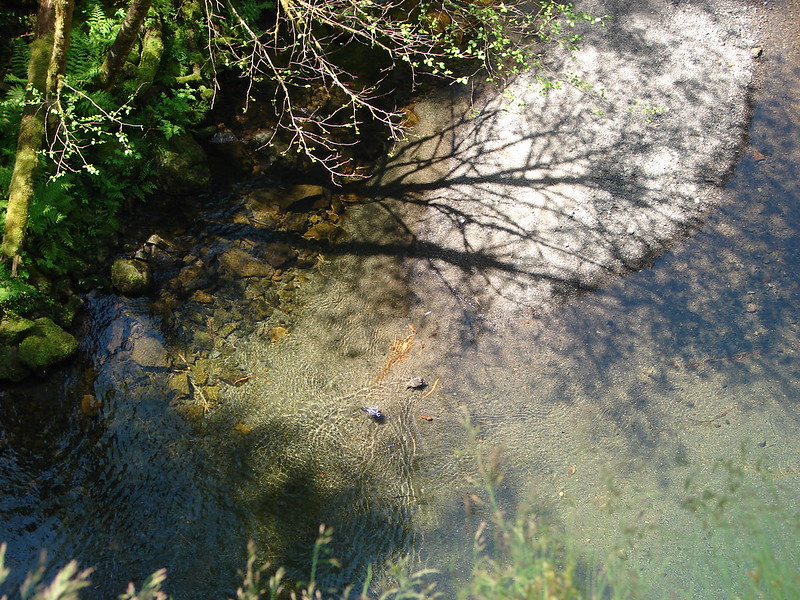
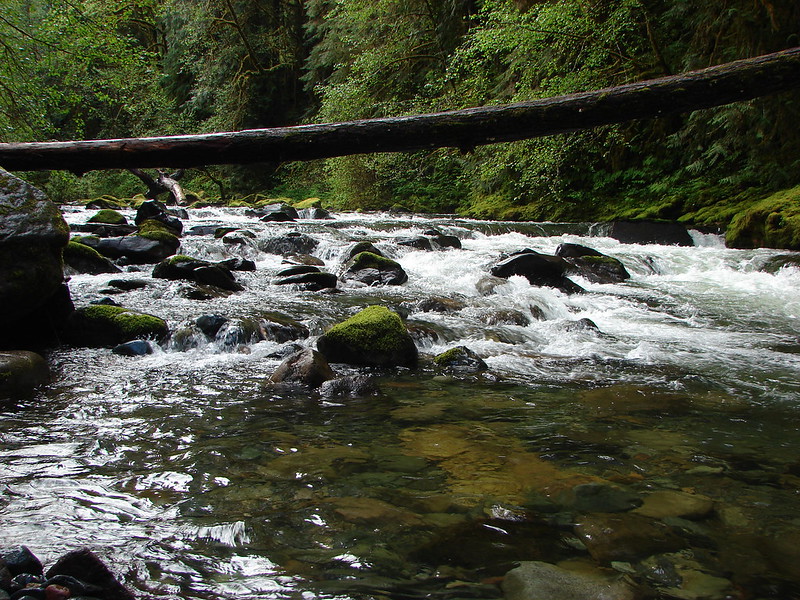
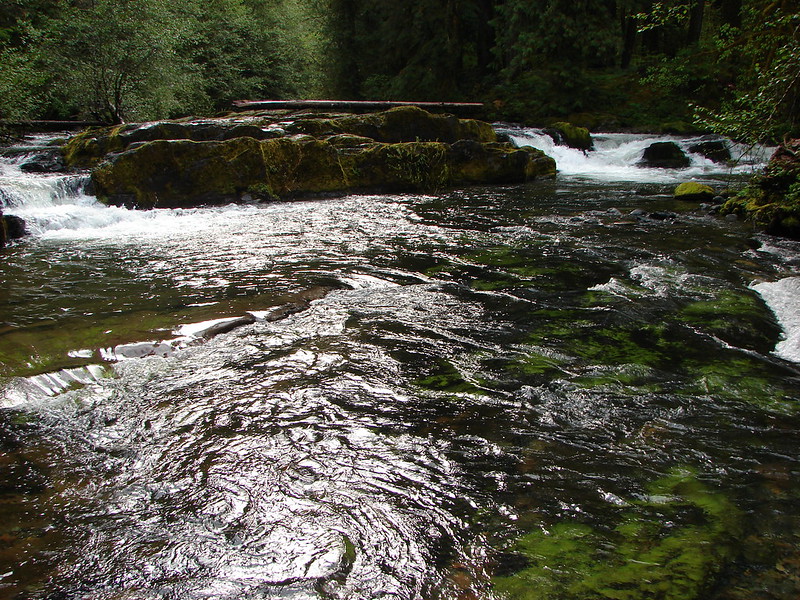
The creek had many moods in this section and the clear water made it easy to see what was underneath the surface.
DSC03977
DSC03985
DSC04006

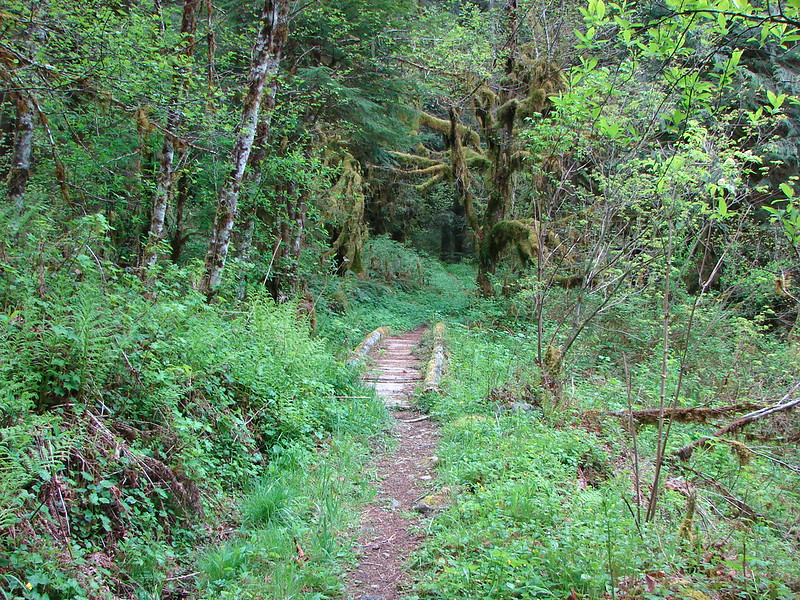
We then climbed up and away from the creek again before descending to another footbridge 2.6 mi from the last, this time to Lund Park.
DSC04017
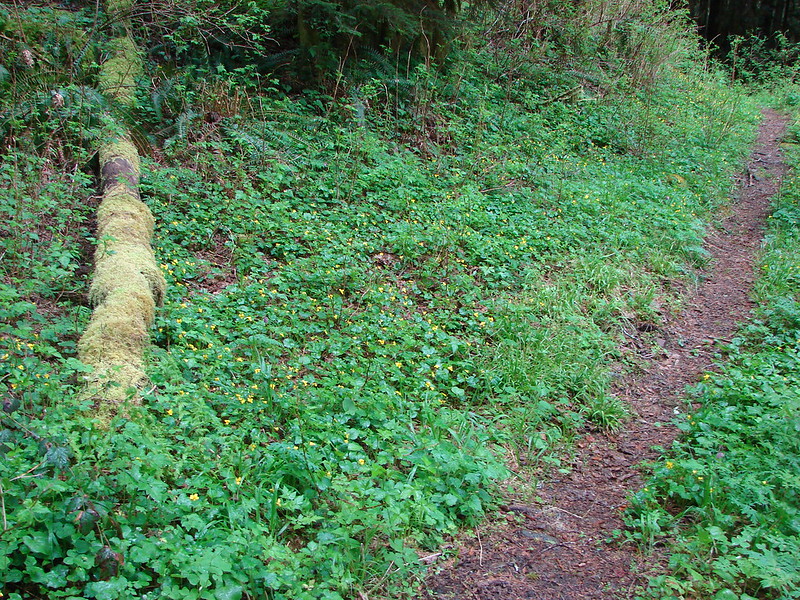
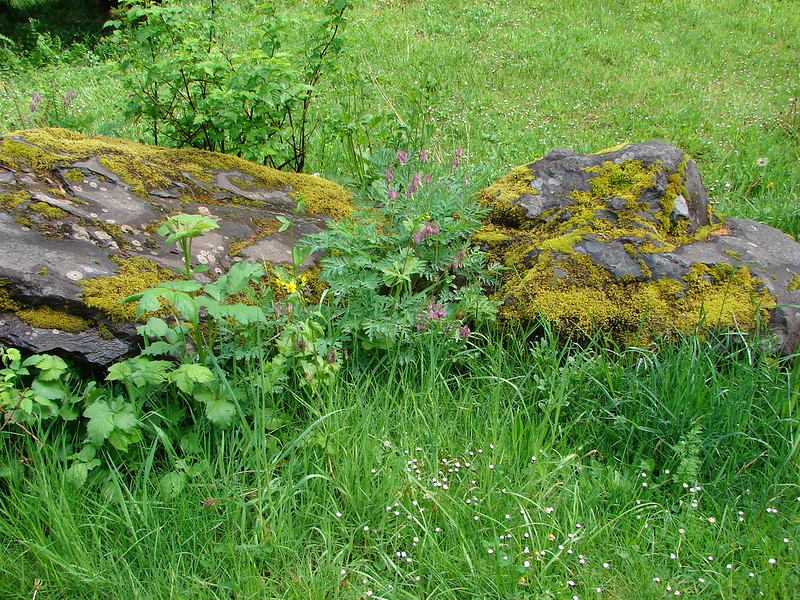
We’d read that there was a meadow at Lund Park and were hoping that it might have some good wildflowers. We were a little disappointed when we arrived to find a couple of yellow flowers, some bleeding heart, and a lot of white wild strawberry blooms was all there was.
DSC04046
DSC04045
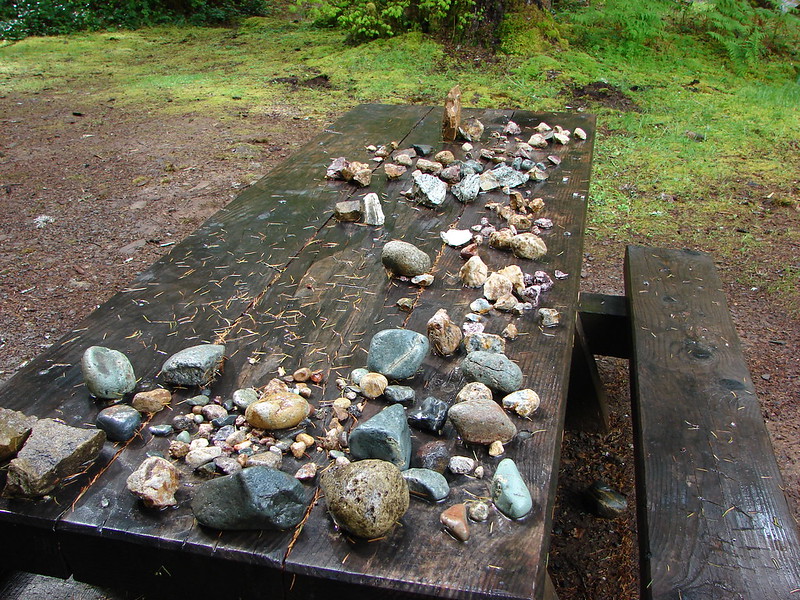
Someone had put together a somewhat substantive rock collection on one of the picnic tables though.
DSC04049

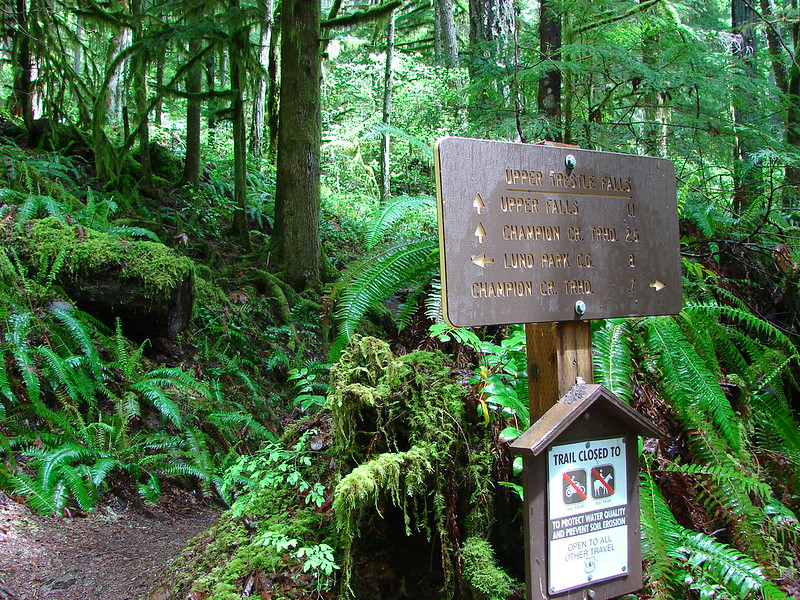
We started getting a few sun breaks after reaching Lund Park and in just another .5mi we reached a trail junction with Upper Trestle Falls trail. We would be returning down this trail after visiting the lower falls and taking the Upper Falls trail from the other end at the Champion Creek Trailhead. Before we get to that though this is where the hide-and-seek lesson comes in.
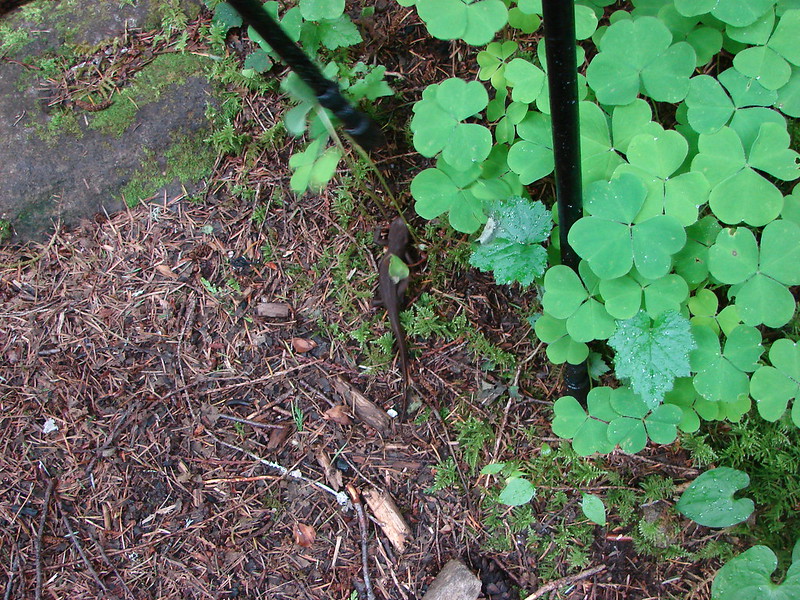
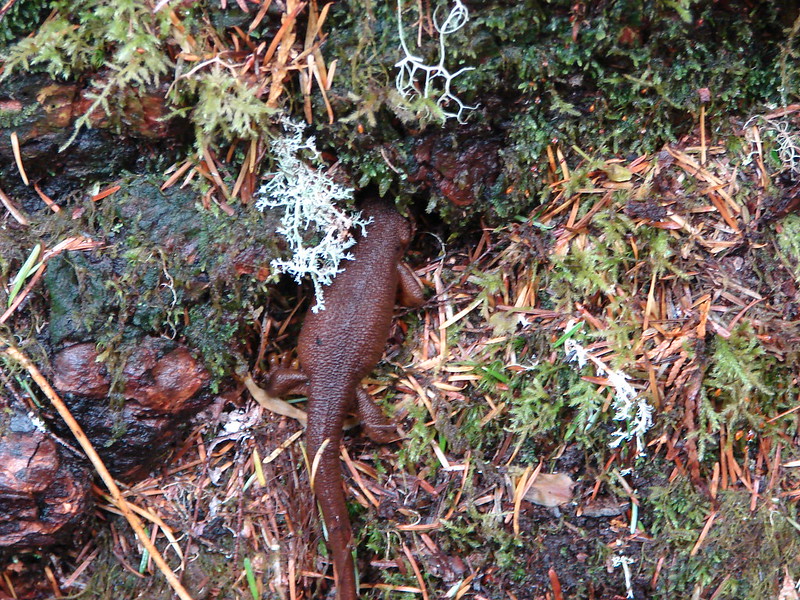
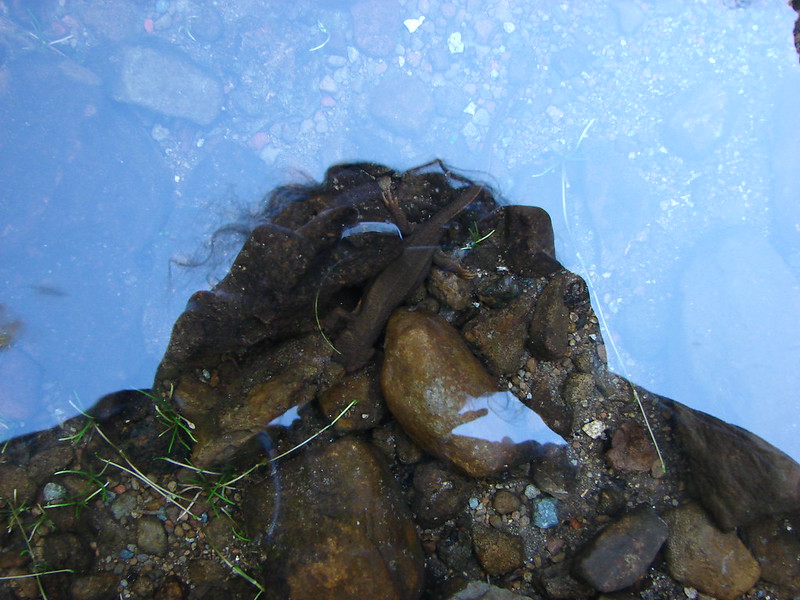
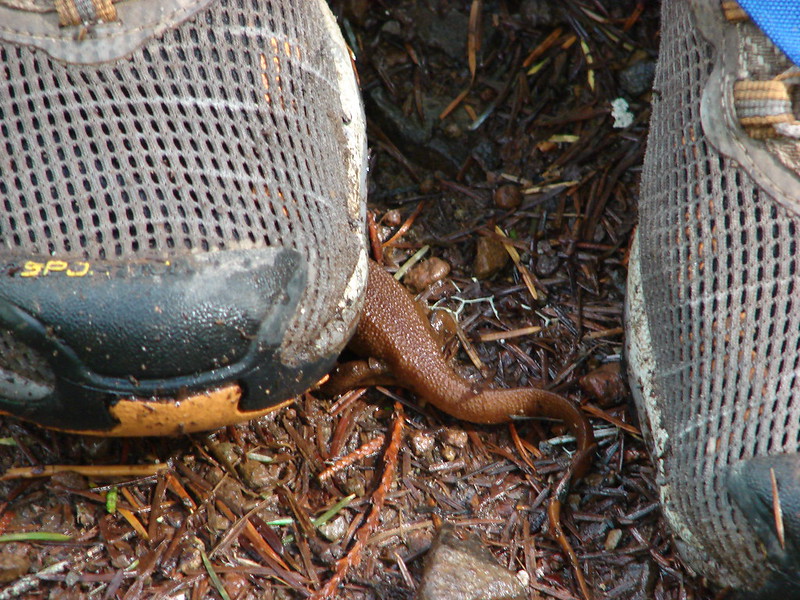
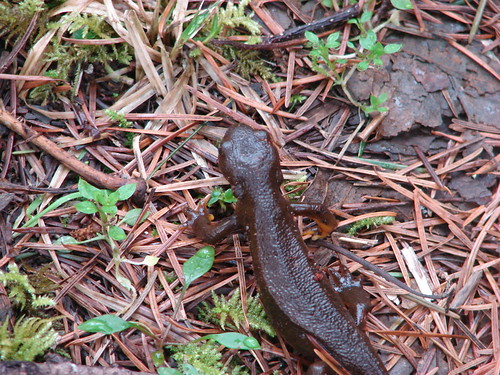
We had been seeing a lot of newts on the trail and noticed that when they were trying to get our of our way they tend to stick their head into or under something.
DSC04028
This wasn’t the first time we’d observed this behavior. From a 2011 hike:
Rough-skinned Newt
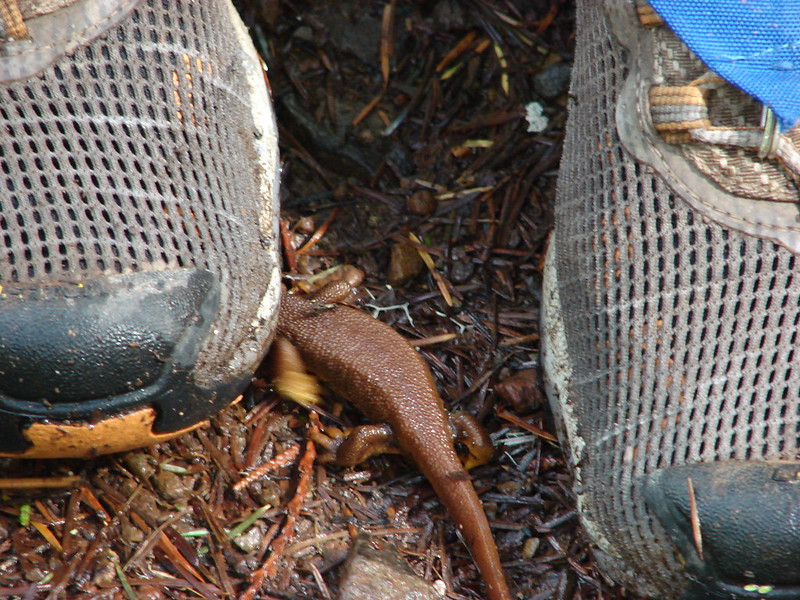
Just after leaving Lund Park I passed by one of them and turned to Heather to have her stop to make sure it didn’t get stepped on. When we stopped it headed for the first thing it could stick it’s head under – Heather’s shoe 😀
DSC04052
DSC04053
All I could think of is a toddler playing hide-and-seek. Apparently if they can’t see us we can’t see them. Heather was able to move and leave the newt unharmed and we’d discovered natures worst hide-and-seek players.

Back to the trail junctions and sun breaks.
DSC04055
DSC04058
DSC04172

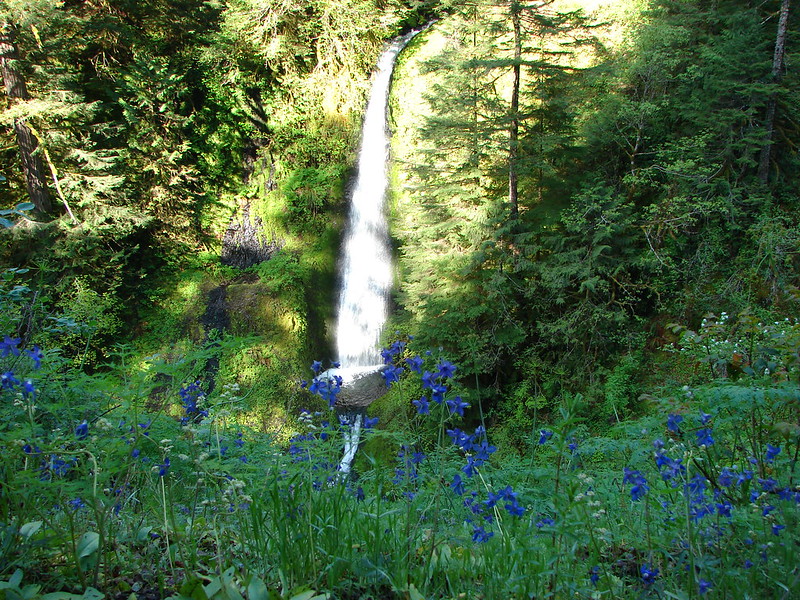
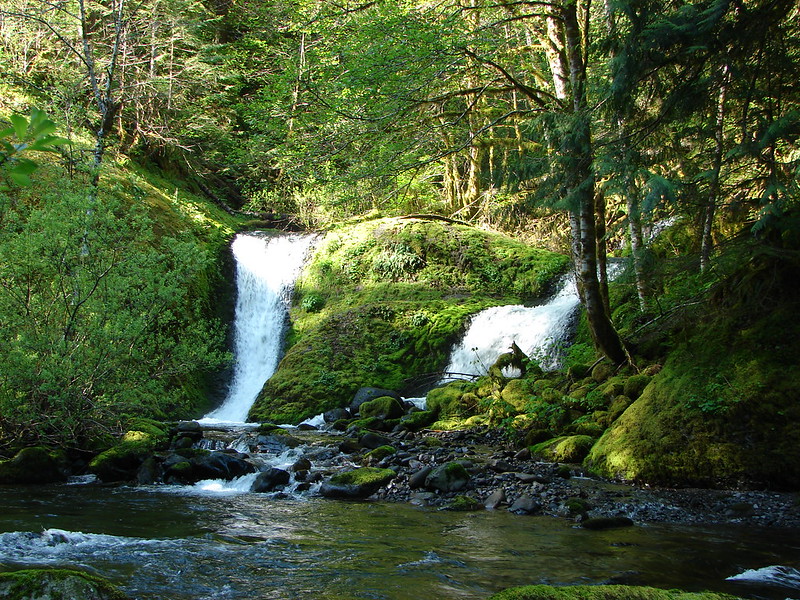
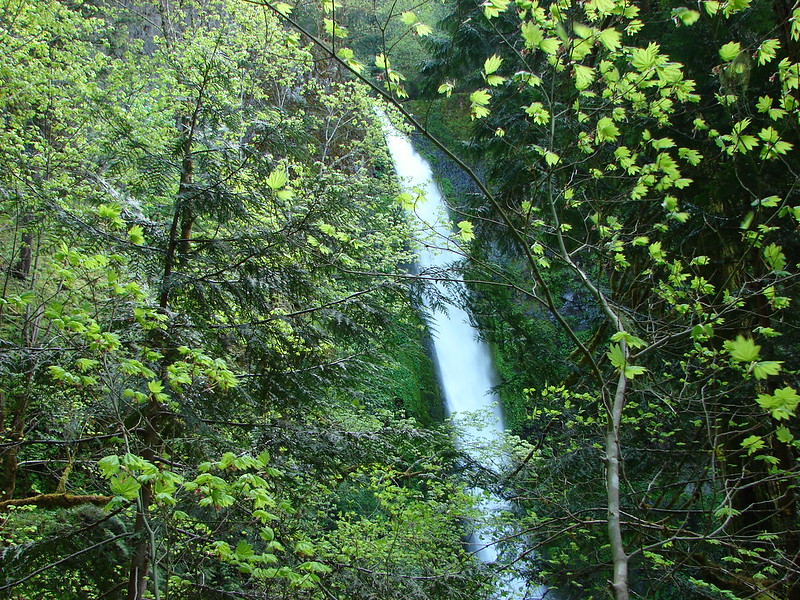
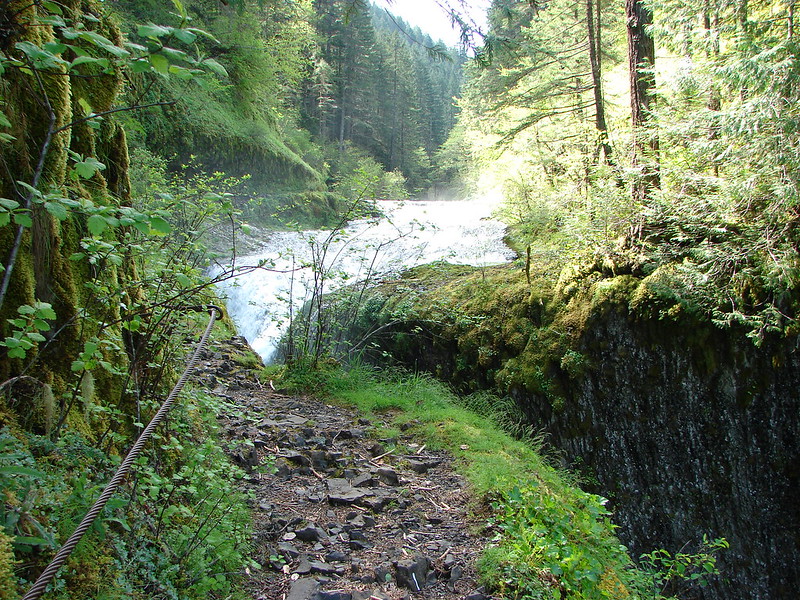
In another .5mi we had reached Trestle Creek Falls trail which would take us to the lower falls. After a brisk quarter mile climb we could see our destination.
DSC04080
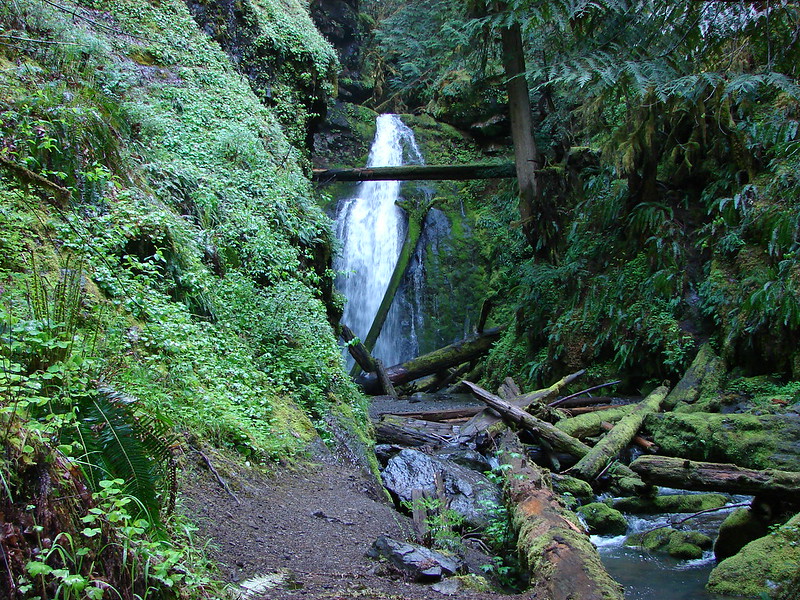
I got to the end of the trail where a pile of debris had collected and took another picture but the log was still interfering with the view.
DSC04081
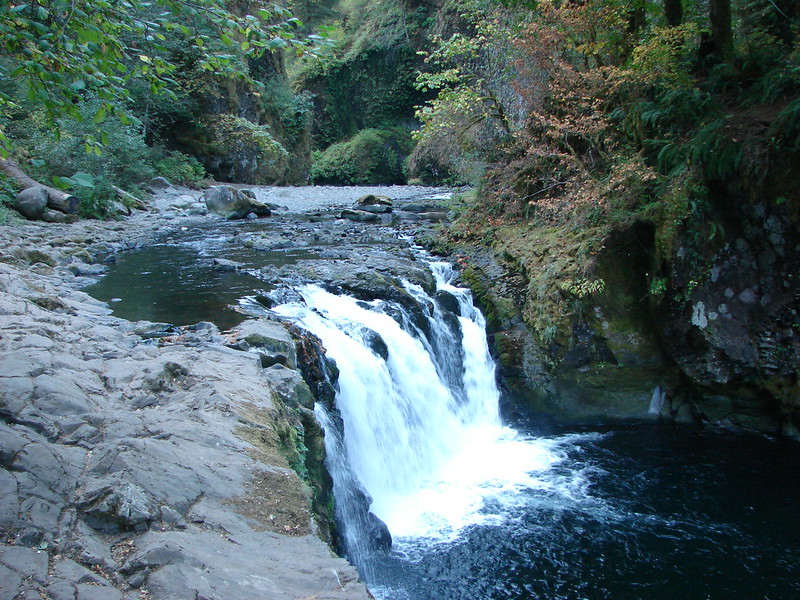
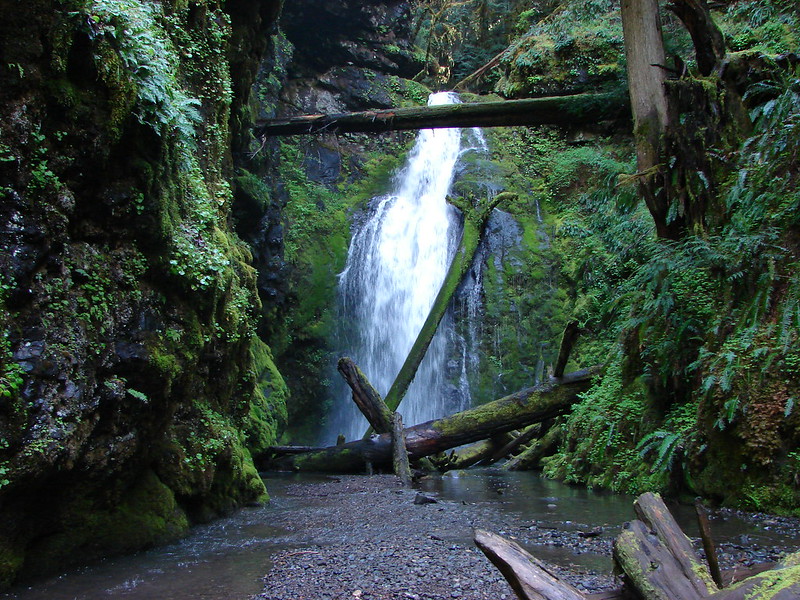
Some careful log walking got me to the gravel bar on the other side of the debris where I was able to get an unobstructed photo.
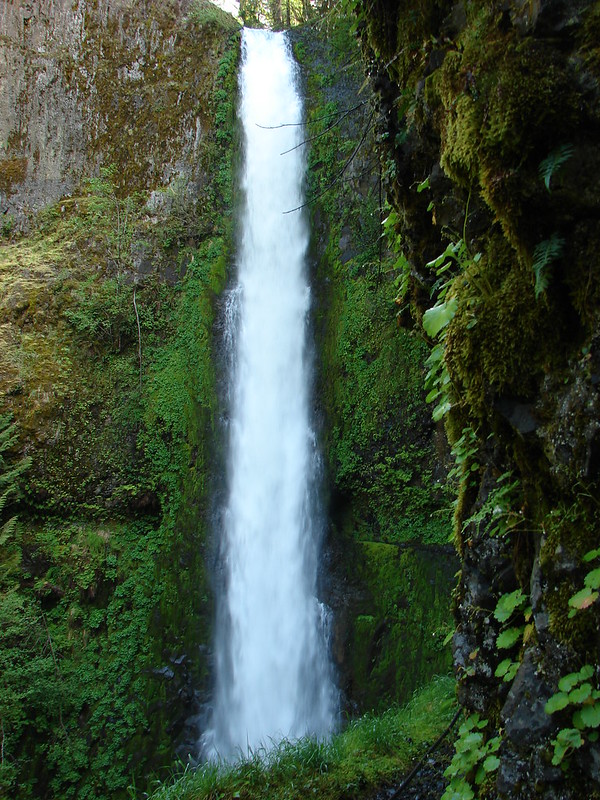
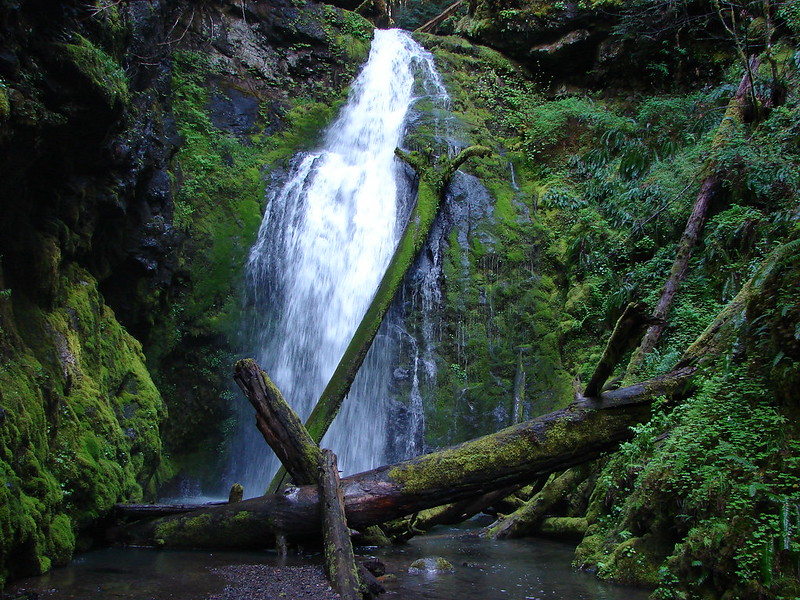
Lower Trestle Creek Falls
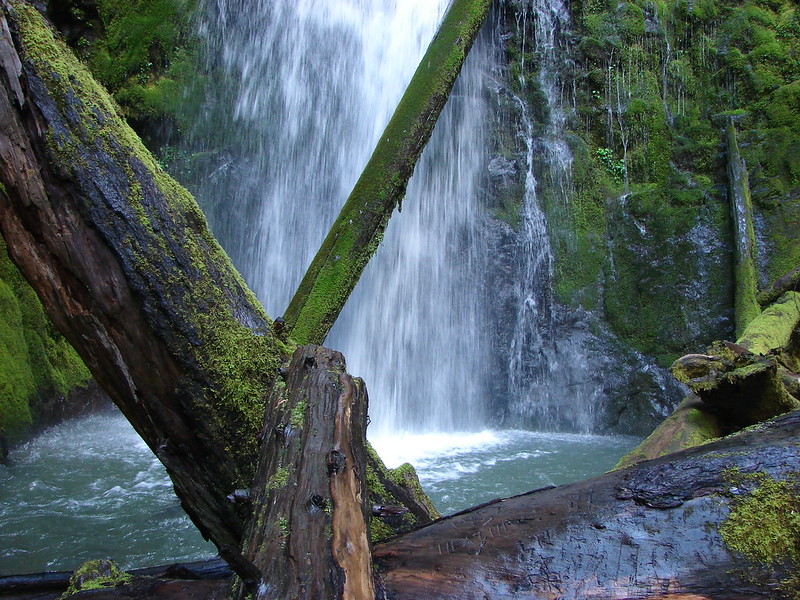
There was another little island of exposed rocks just before the next set of logs but a 15 to 20 foot gap lay between them and my rocks. I decided that wet socks were worth a look at the splash pool and dashed across the water to the other set of rocks. I was getting over this set of logs so I declared victory there and did the splash and dash back and carefully picked my back to the trail.
DSC04088

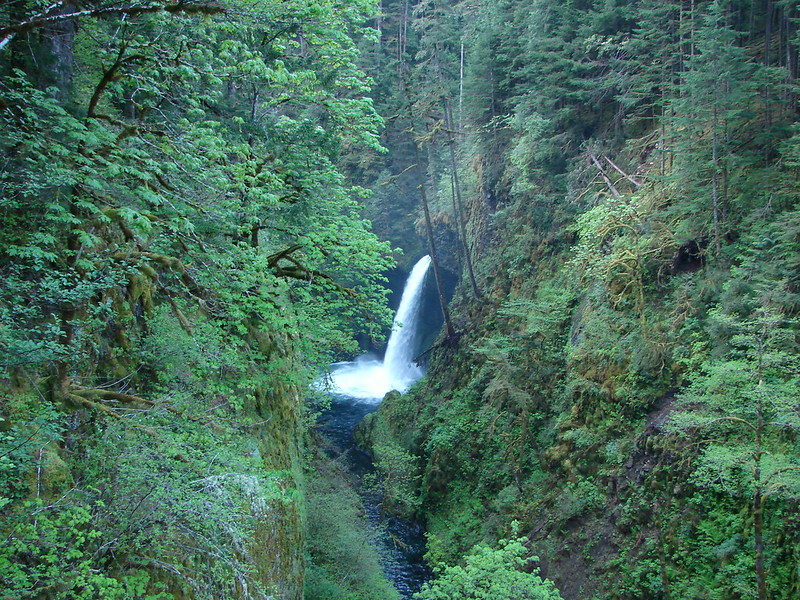
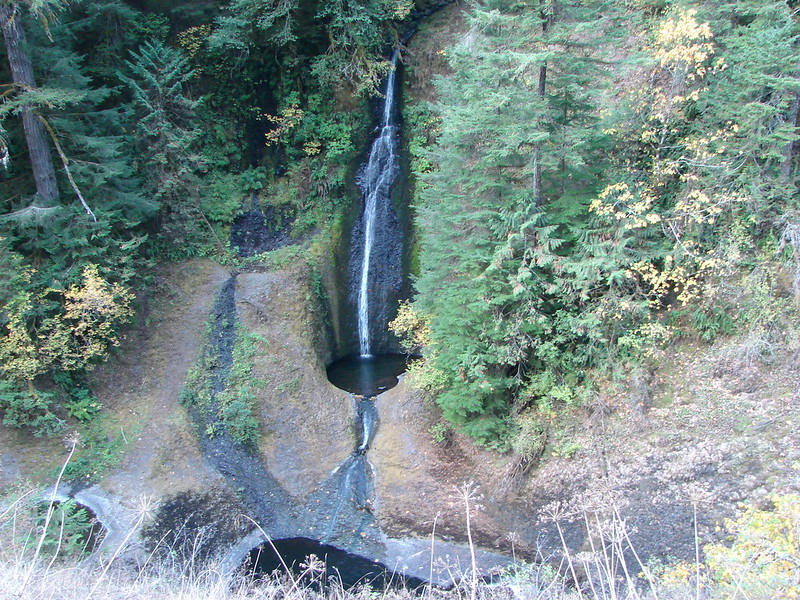
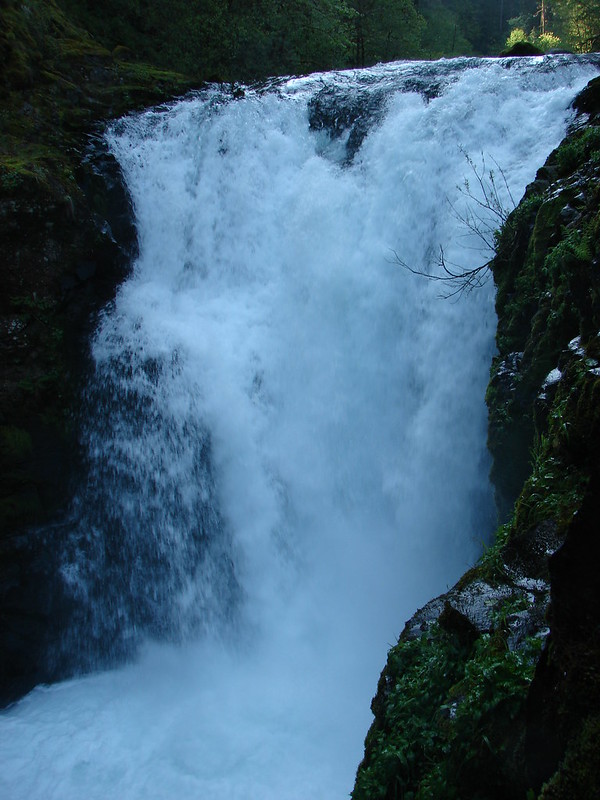
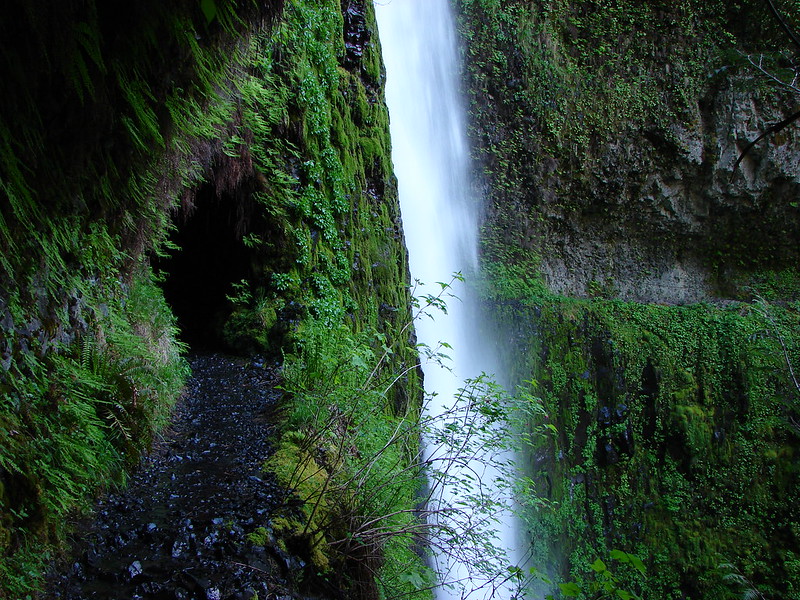
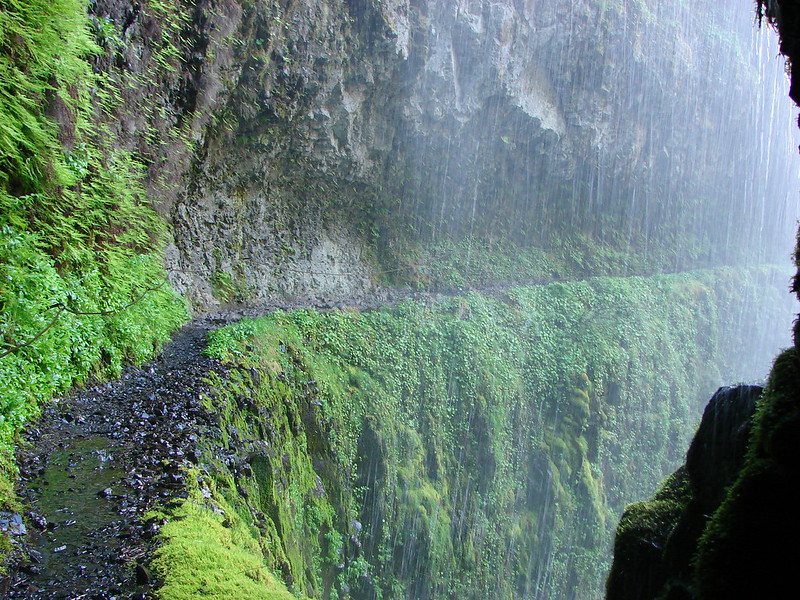
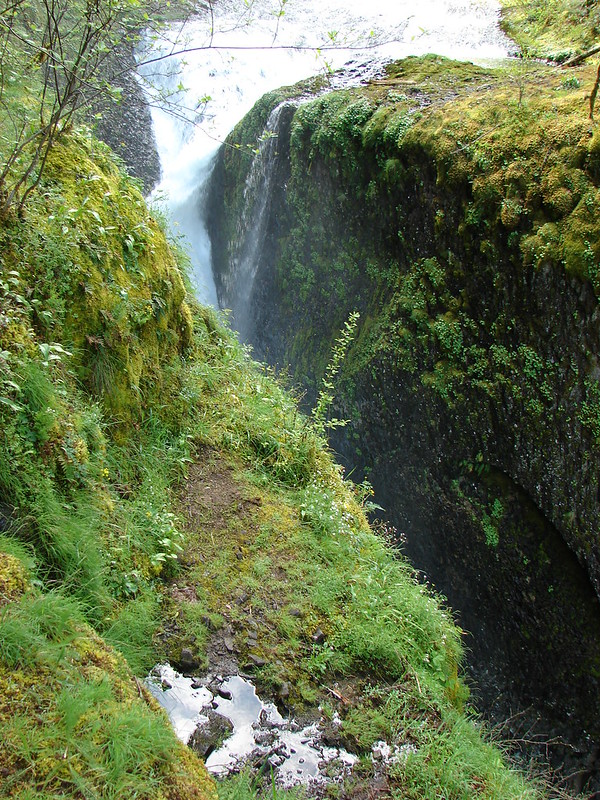
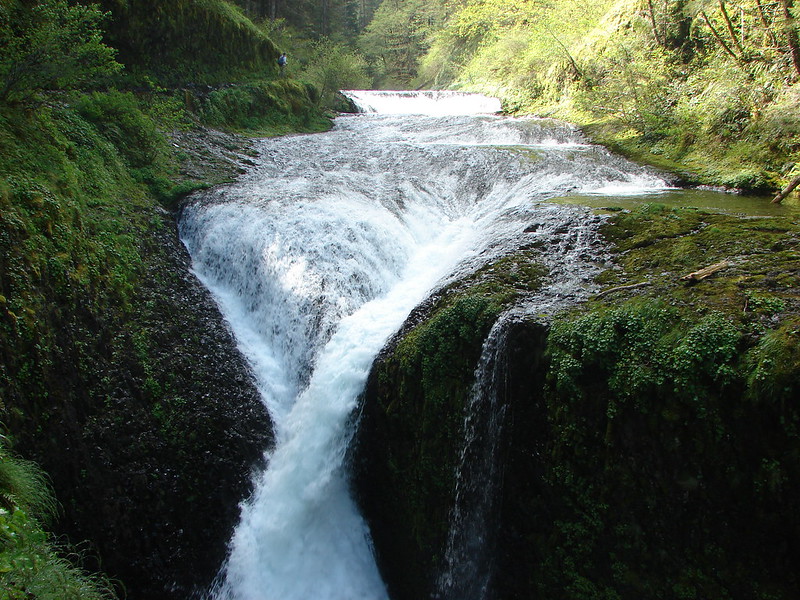
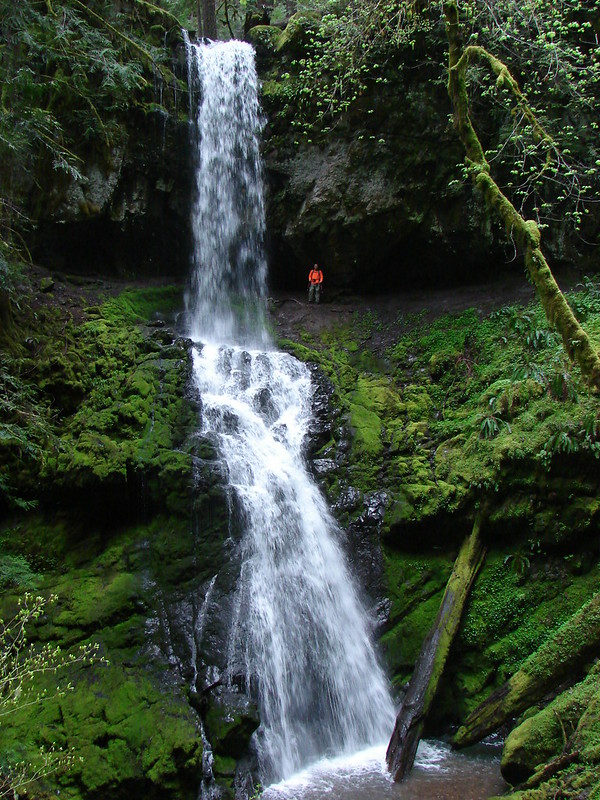
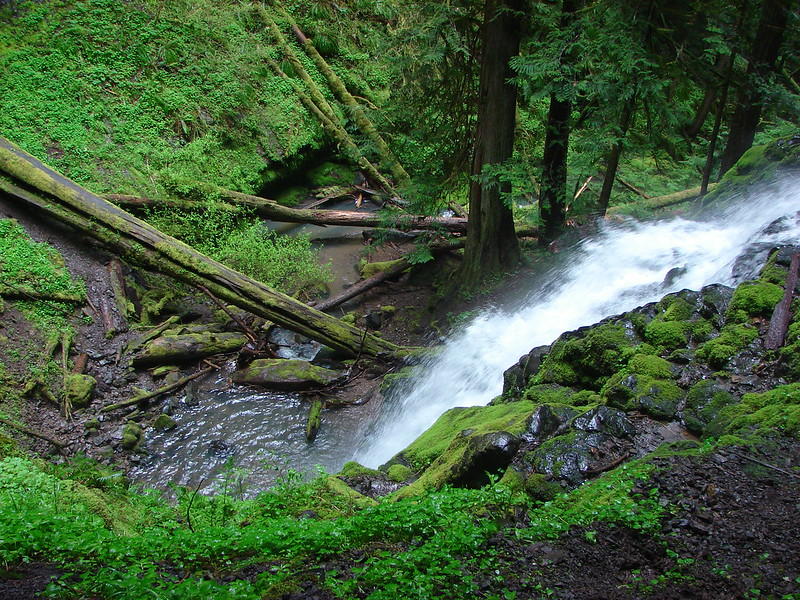
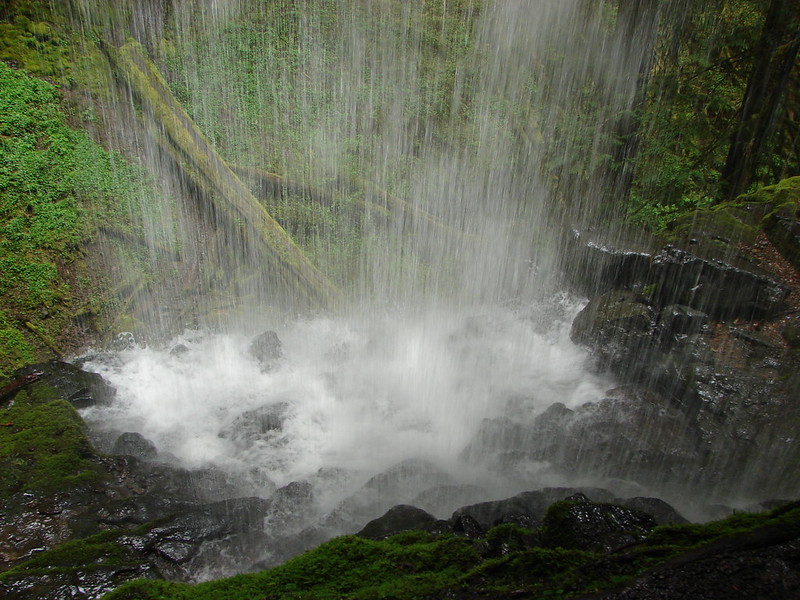
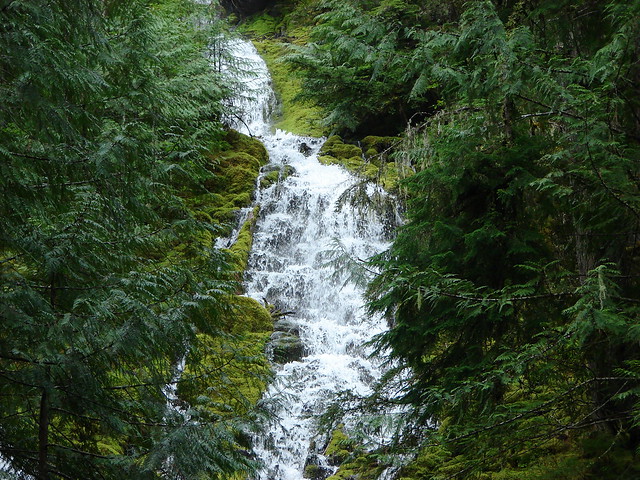
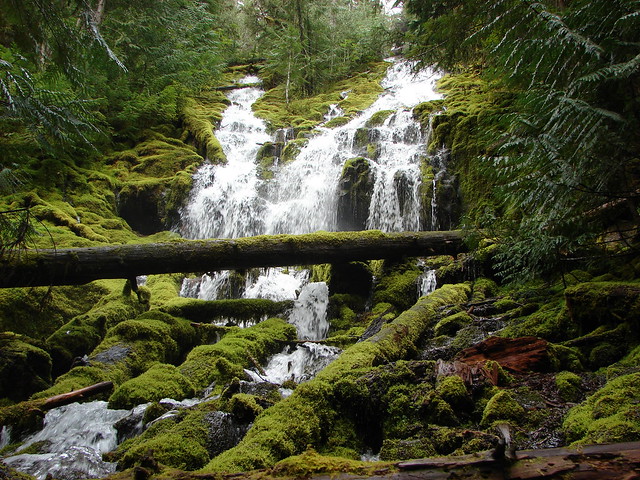
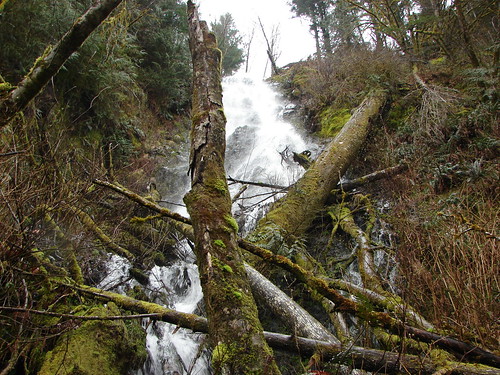
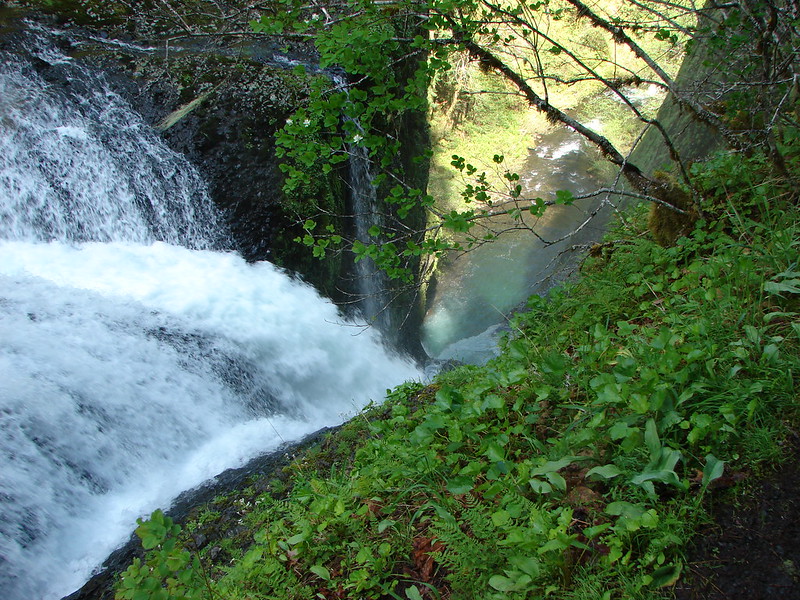
As we were preparing to leave the falls we met a group of hikers coming up the trail. They were lamenting the fact that they had not brought their trekking poles with them and asked about the loop to the upper falls. We had both expected to see them again on the loop but never did. Returning to the Brice Creek trail we crossed Trestle Creek on a nice footbridge and finished the last half mile to the Champion Creek TH. The Upper Falls Trail starts just a bit down the road from the trailhead and climbs stiffly 1.4 miles to the Upper Falls. We both thought it was a pretty challenging 900′ climb but the reward at the top was well worth it. The upper falls was located in a wide bowl and was split into two levels. The trail wound around the bowl and behind the falls allowing us to experience the full force of the falls up close.
DSC04126
DSC04147
Behind Upper Trestle Creek Falls

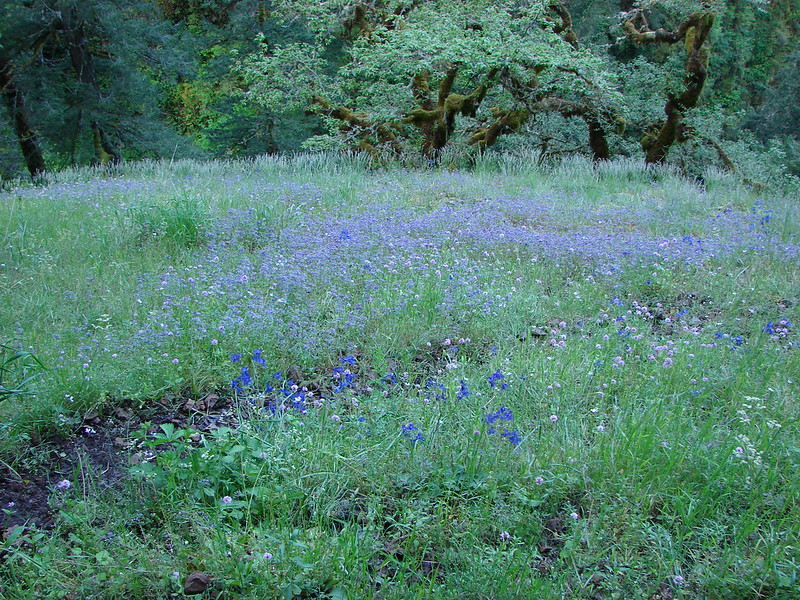
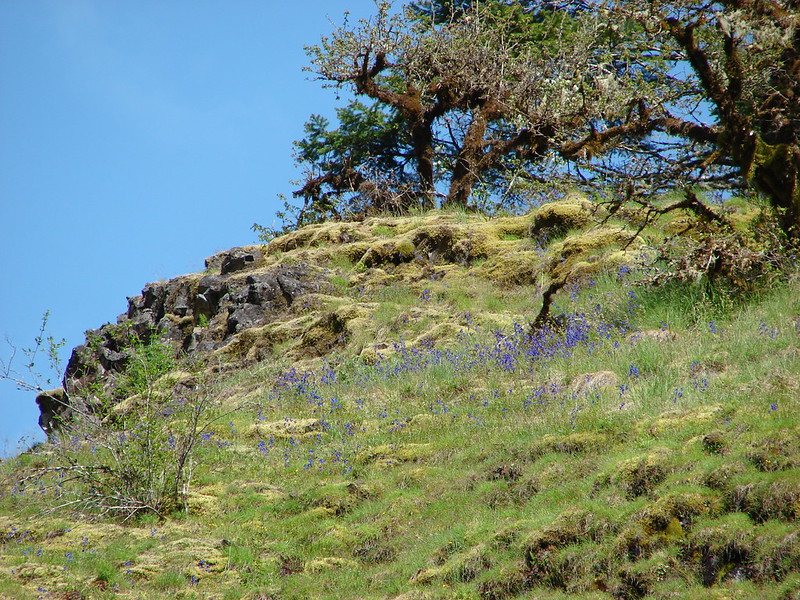
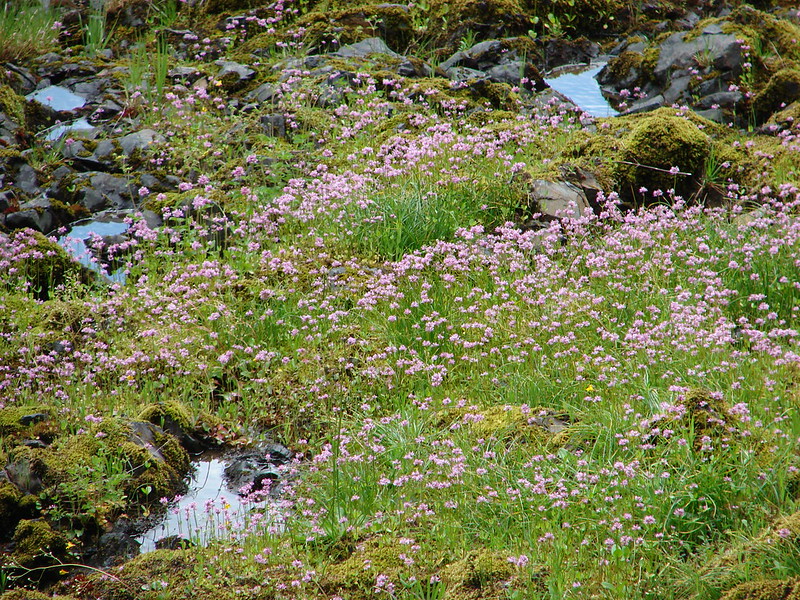
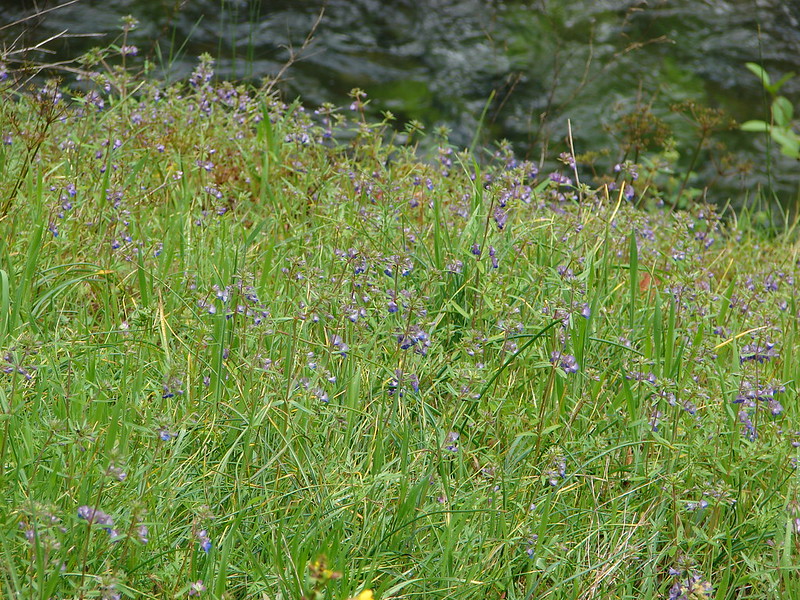
The Sun was out for our return trip which we made in pretty good time since I’d taken most of the pictures on the way by the first time. We had been discussing the lack of colorful flowers along the way, and when we got back to first exposed area we noticed that we had completely missed a field of plectritis. There was also a patch of what I believe to be giant blue eyed mary.
DSC04236
DSC04233
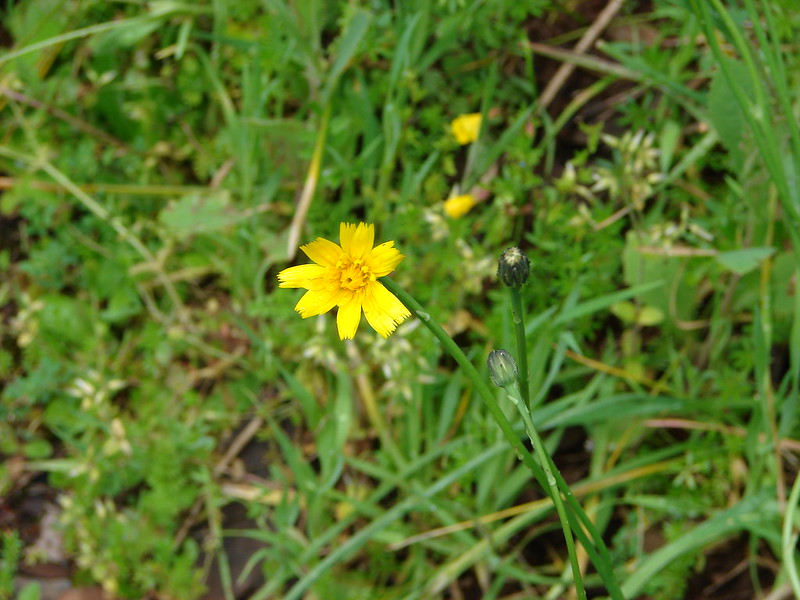
There was also a lone yellow flower.
DSC04237

It took us a lot longer than I had figured to complete the hike, but when we got home and looked at the GPS it had us going a couple of miles further than I had calculated. I’m not entirely sure what made up the difference, but it explained the extra time so we decided to just go with it since it made us feel better about getting back later than expected.

Happy Trails
flickr: https://www.flickr.com/photos/9319235@N02/sets/72157644537861295/
facebook: https://www.facebook.com/media/set/?set=a.10203927284889678.1073741873.1448521051&type=1

Categories
High Cascades Hiking Oregon Three Sisters Area Trip report

Proxy Falls & Separation Lake

They say timing is everything. I don’t know if I’d go that far, but it certainly can make a difference in hiking. The time of day, of week, and of year can greatly impact the experience on any given trail. That was certainly the case on our recent visit to the Three Sister Wilderness. The plan was to hike to Separation Lake and back, a 13.7 mile trek. While I was planning the hike though I got to thinking that the trailhead was awfully close to the Proxy Falls trailhead on the Old McKenzie Highway (Hwy 242). Proxy Falls was a hike that we had been wanting to do at some point, but at only 1.7 miles it didn’t warrant the 2:45 minute drive. It was only about 11 miles from our turnoff on Foley Ridge Road for the Separation Lake Trail though so we decided we’d do the loop there as a warm up for the longer hike.

Proxy Falls is a very popular hike. The trailhead is located along the highway, the distance is manageable for hikers of all ages and types, and most importantly the falls are quite impressive. During the summer months the parking spots fill quickly, but on this day we were by ourselves when we arrived at 8am. The old highway is closed during the winter months and doesn’t reopen until June, but just a couple of weeks ago the first snow gate had been opened on the west end allowing access to the trailhead. The Proxy Falls trail loops over a lava field and past the two falls before returning to the highway. The falls are the stars of the show, and being the only ones there we were able to explore and enjoy them all to ourselves.

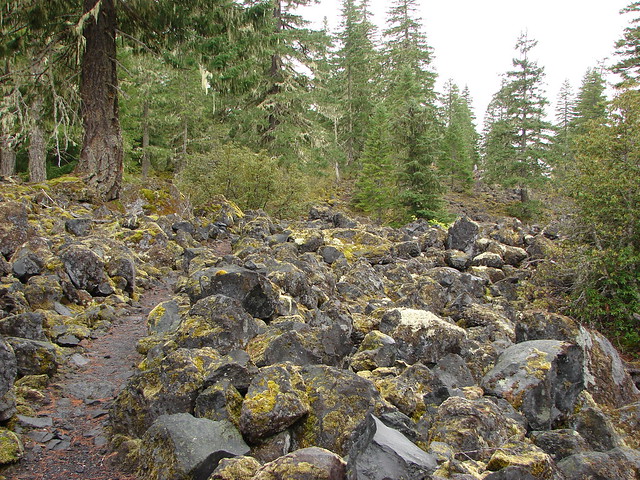
The lava flow
DSC03469

The first fall that you reach is Lower Proxy Falls
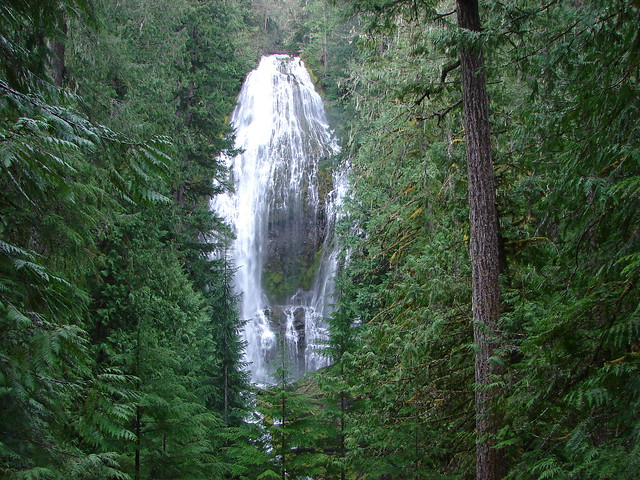
Proxy Falls
DSC03487
DSC03491

Next up is Upper Proxy Falls. The pool of water at the bottom of the falls flows underground reappearing a few miles away.

Pool beneath Upper Proxy Falls
DSC03515

Upper Proxy Falls
Upper Proxy Falls
DSC03525
Upper Proxy Falls

Our timing was great in this case. The falls were flowing very strongly due to the time of year and we had had a very popular trail all to ourselves :). We hopped back into the car and headed back toward the Separation Lake trail for part two of the days hikes.

Unlike the Proxy Falls trail the trail to Separation Lake is lightly used. We weren’t sure what we would find for conditions as it was unlikely the Forest Service had done any trail maintenance since last year. We were once again the only car at the trailhead which suited us just fine. The trail quickly entered the Three Sisters Wilderness as it headed down toward Separation Creek.
DSC03556

The trail crossed several creeks all of which were easy to manage either on bridges or by rock hopping.
Bridge over Louise Creek
DSC03561

Another creek crossing
DSC03579

One more
DSC03584

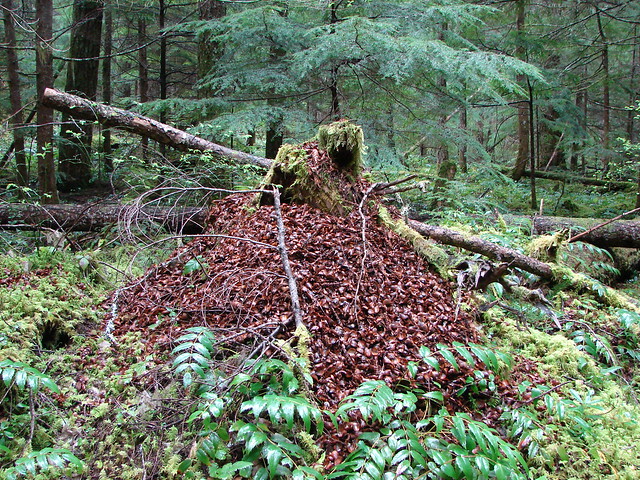
At one point we passed a tree stump littered with pieces of pine and fir cones. We’d never seen such a large pile and kept expecting to see the fattest chipmunk ever nearby.
DSC03591

The path was very brushy in places and our feet and lower legs were soaked as we passed through the damp leaves.
Separation Lake Trail

A number of early flowers were out and many of the bushes and trees were beginning to leaf out.

Vanilla Leaf
DSC03625

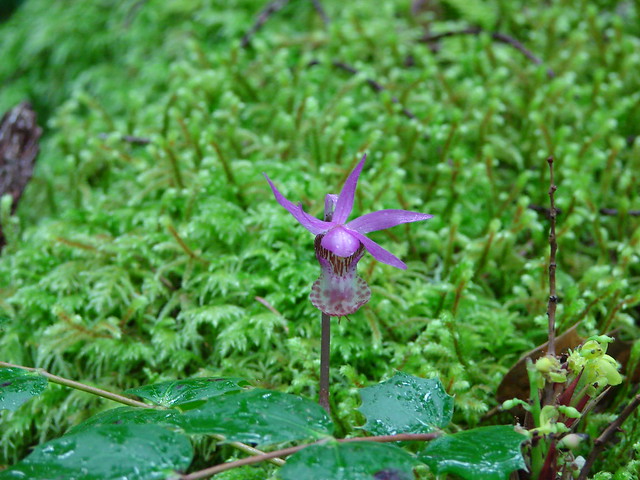
Fairyslipper
DSC03618

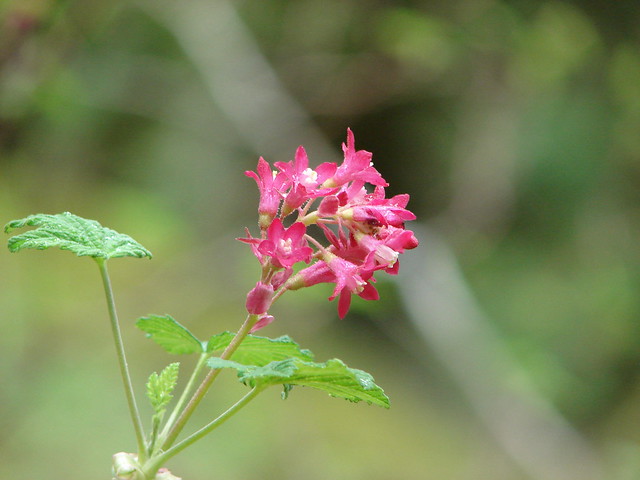
Red Currant
DSC03664

Trillium
DSC03707

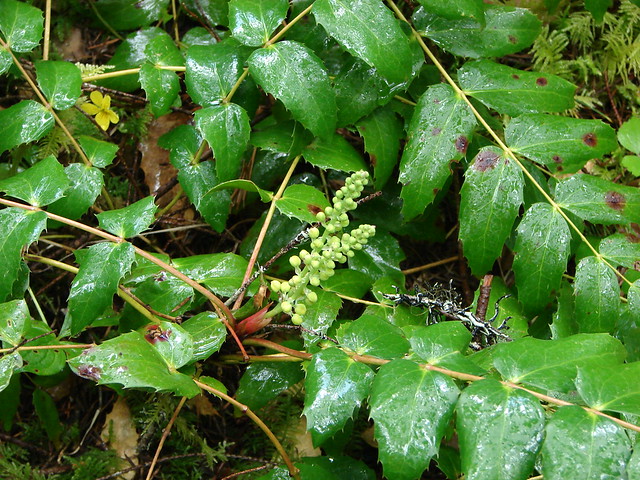
Oregon Grape
Oregon Grape

George Creek is the final small creek that the trail crosses before reaching the much larger Separation Creek. This was the most scenic of the smaller creeks at it had a small waterfall at the crossing.
George Creek
DSC03629

After 3.5 miles the trail finally gains a view of Separation Creek. It looked like a river compared to the other creeks we had crossed.
DSC03695
Separation Creek

After following along the creek for 2 miles the trail splits. The Separation Lake Trail crosses Separation Creek on a log bridge while the Separation Creek Trail continues on deeper into the Three Sisters Wilderness. That trail is apparently no longer maintained and closed due to excessive downed trees. We crossed over the creek and continued on toward the lake. Not long after crossing the creek we were greeted by the smell of skunk. It wasn’t actually a skunk but rather a marshy area filled with skunk cabbage.
Separation Creek crossing
DSC03721
Skunk Cabbage
Skunk Cabbage

A little over a mile after crossing the creek the trail reaches Separation Lake. It was a nice little lake with a couple of campsites. We were greeted by the usual birds and chipmunks (and a mosquito or two). We took a break here and had a snack at which point a couple of sets of ducks appeared on the far side of the lake followed by an Osprey who was scoping out the small fish that had been jumping in the lake.
DSC03753
The ducks
DSC03764
The osprey
DSC03770

After the food break we strapped our packs back on and made the return trip back to the car. On our way back we finally ran into the first and only other people we would see – a couple and their dog were headed in to camp. We were pretty tired when we reached the trailhead but it had been a great day of solitude in the wilderness. Happy Trails!

Photos on flickr:https://www.flickr.com/photos/9319235@N02/sets/72157644490517611/
Facebook:https://www.facebook.com/deryl.yunck/media_set?set=a.10203913310380324.1073741872.1448521051&type=3
Categories
Columbia Gorge North Hiking Trip report Washington

Klickitat Rail Trail – Swale Canyon from Harms Rd

Wildflowers, wildlife, and cows – oh my! Hiking season is officially underway for us. We kicked things off by making the 2 1/2hr drive to the Harms Rd. trail head for the Klickitat Rail Trial which is located about 20 miles NE of Lyle Washington. It was a long drive for a hike that was less than 8 miles, but the sights more than made up for the less than ideal ratio of driving to hiking hours. Wildflower, wildlife, and solitude were the themes for this hike.

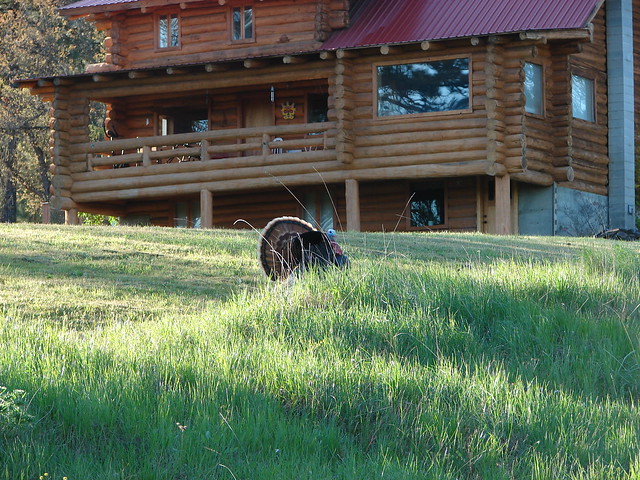
Prior to reaching the trail head we had our first run in with wildlife. As we wound our way up the Centerville hwy on the way to our destination we were delayed by some turkeys who had decided to cross the road.
DSC03155

When we arrived at the trail head we found some conflicting signs. There were plenty of trail head signs and information as well as the seasonal port-a-potty that is there when the trail is open from October through June. As we headed down from the parking area to the gate which blocks car access as well as keeping cattle contained we noticed a “No Trespassing” sign. You can see it on the gate in the picture.
DSC03156

It stated that the sheriff would ticket and/or arrest trespassers. The smaller gate was held shut by some very strong barbed wire while padlocks kept the larger gate from being opened. We stood there for a moment trying to figure out what all this meant. I had been on the Klickitat Rail Trail Conservancy’s website that morning and there was nothing about a closure. We decided that since there wasn’t anything on the actual trail head board and the port-a-potty was there the no trespassing sign was either to remind people to stay on the trail and off of the private land that borders it, or it was an attempt by one of the locals to deter people from the trail all together. Either way we hadn’t driven for two and a half hours to turn back now so we climbed over the gate and set off.

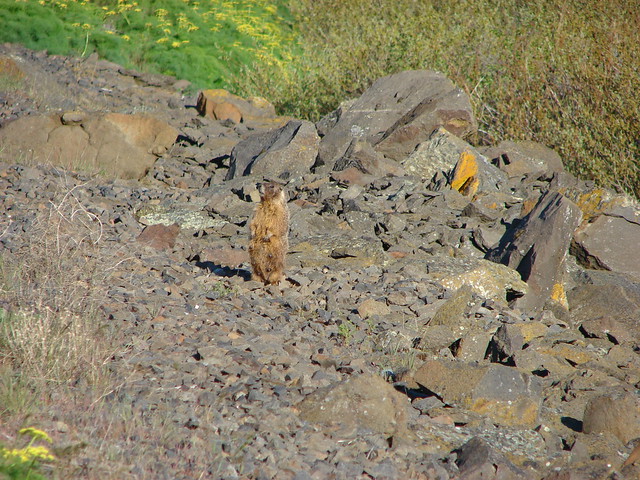
A stiff breeze made it feel quite a bit colder than the 46 degrees that the thermometer said and we were glad we’d worn layers. The layers were intended to help keep ticks at bay since they are common in the area. We had a lot of company along the first portion of trail with many birds and several marmots busy with their morning activities.
DSC03158
DSC03170
DSC03172

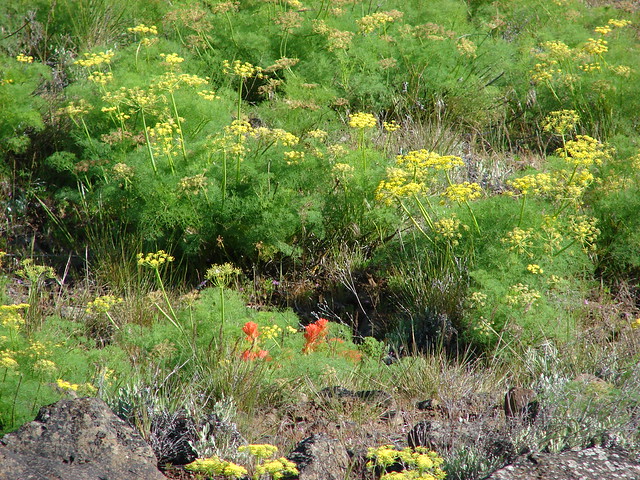
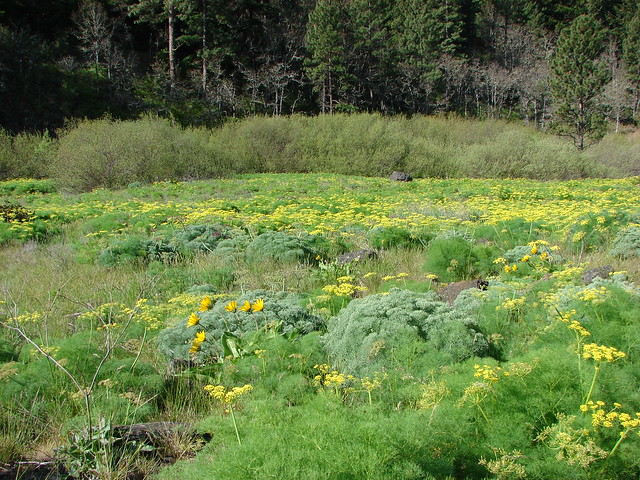
There were plenty of flowers along this first portion as well. The most prevalent being desert parsley.
DSC03168
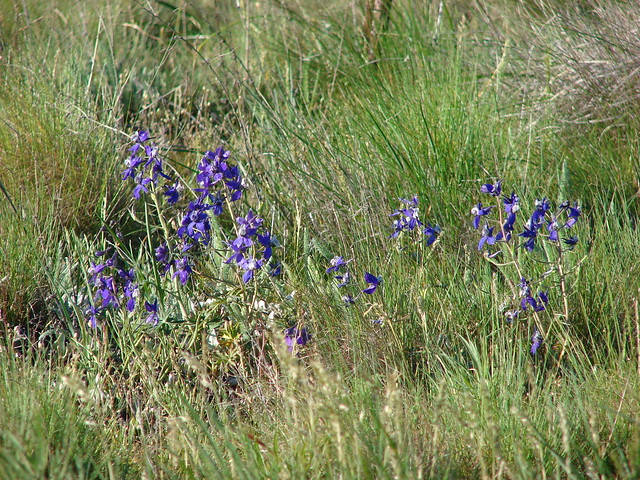
We also saw some larkspur:
DSC03183
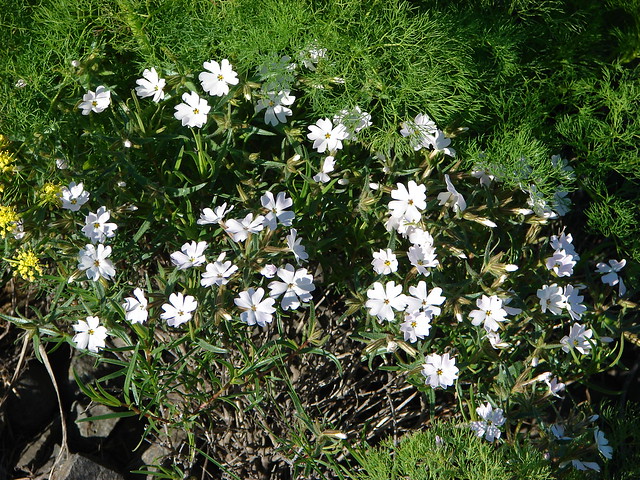
Phlox:
Phlox
Ballhead waterleaf:
Ballhead waterleaf
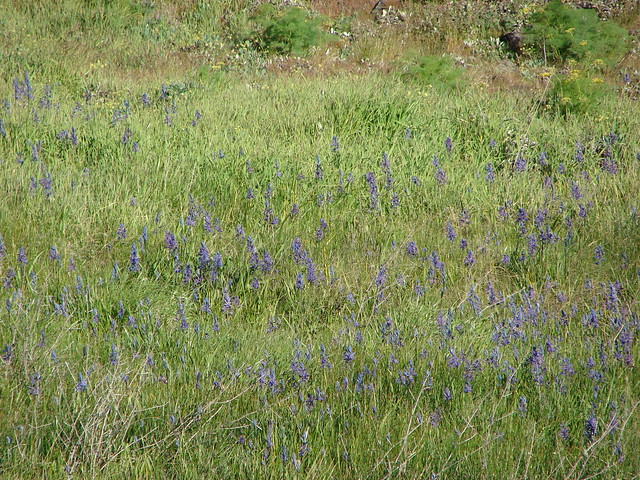
and camas:
DSC03196

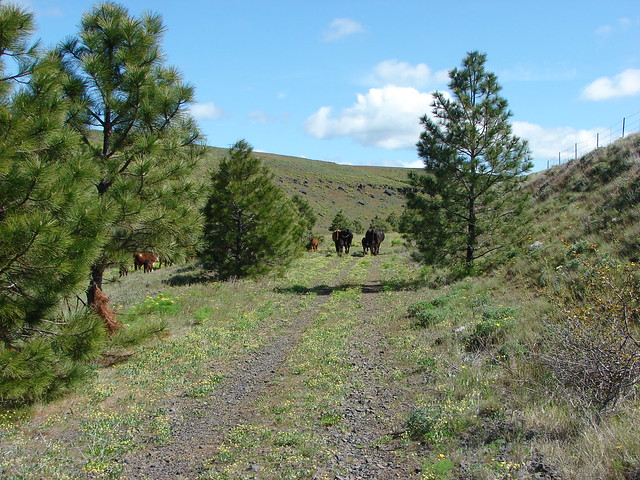
We came to a second gate which was easily opened via a chain and quickly discovered cows. Having been raised in Central Oregon and done some work on farms growing up I knew what was coming. Not the brightest of creatures they stared at us for a long time before beginning to slowly move down the trail in front of us. They could have easily just turned right off the trail into the brush and let us pass but no. Not cows, they just kept walking, pooping, and staring at us as we continued behind them. When the reached a third gate they were hemmed, stymied. Again instead of heading right along the fence which would have taken them out of our path they gathered in the corner of the fence with no where to go. I finally convinced the brains of the operation that she should walk down the bank to the right at which time the rest of them followed suit allowing us to pass through the gate and leave them behind.

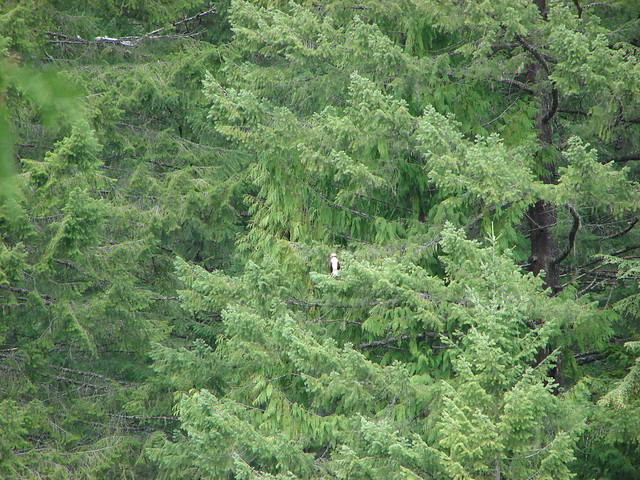
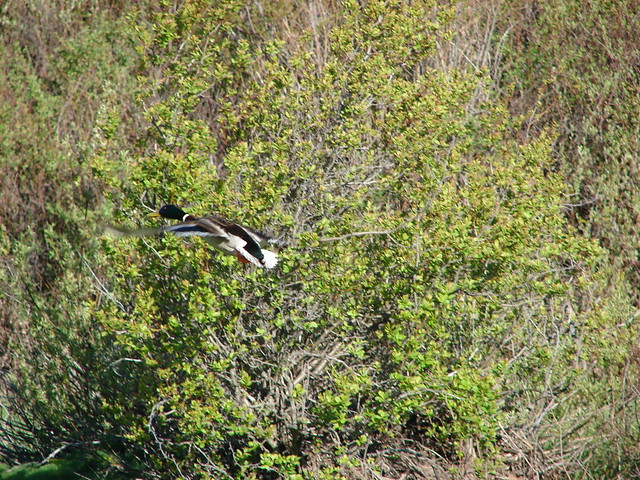
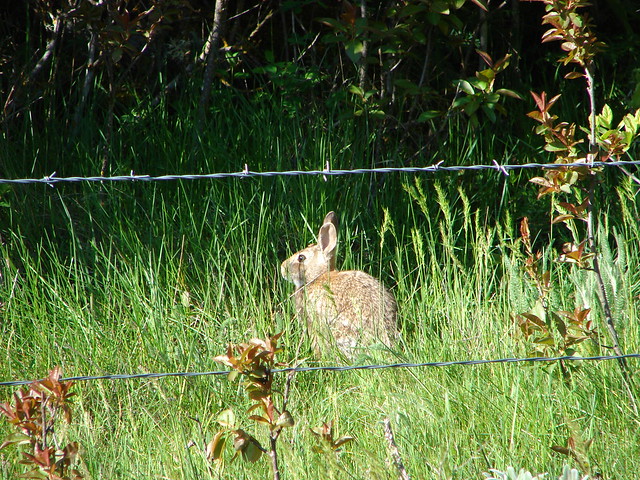
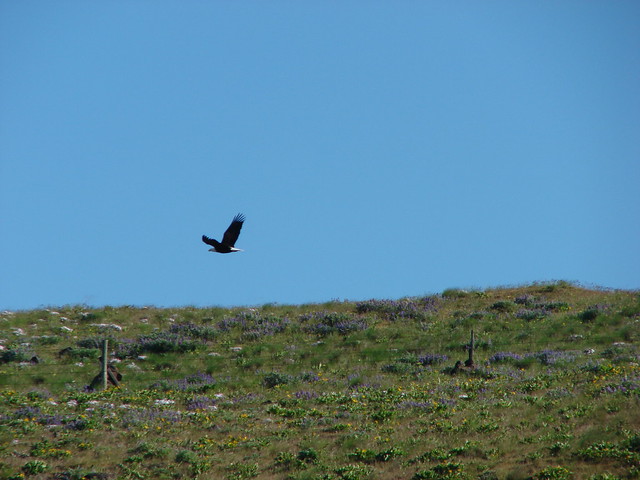
As we continued along the trail descending down into Swale Canyon the flowers and wildlife continued to change. We came across some mallard ducks, a rabbit, and a bald eagle.
DSC03201
DSC03208
Bald Eagle

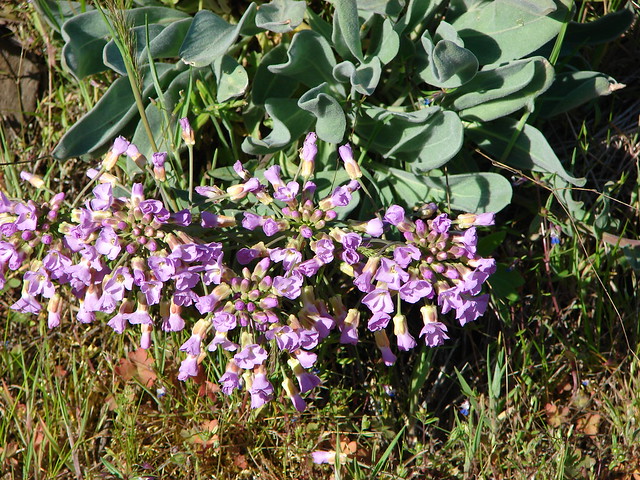
New flowers included daggerpod and yellow balsamroot.
Daggerpod
DSC03197

The marmots were keeping a close eye on us as we followed Swale Creek.
DSC03245

There has sprung up a tradition along this trail to make designs out of the old railroad scraps, and sometimes whatever else can be found. The most elaborate of the collections was placed on a rock shelf along the trail.
DSC03248

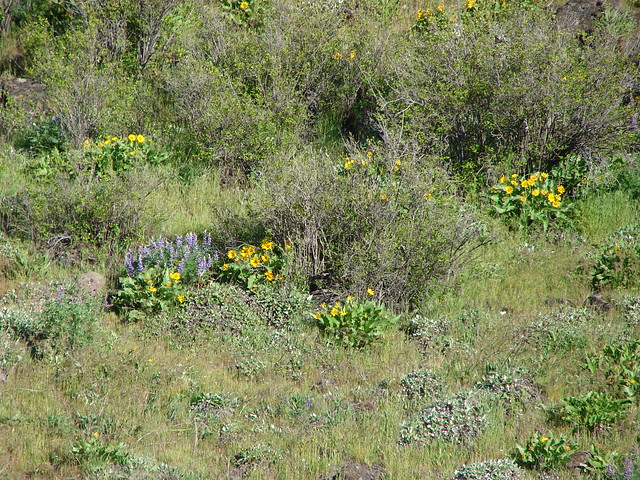
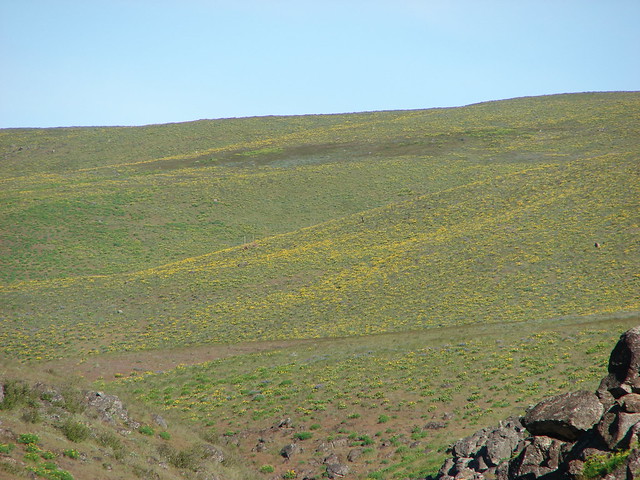
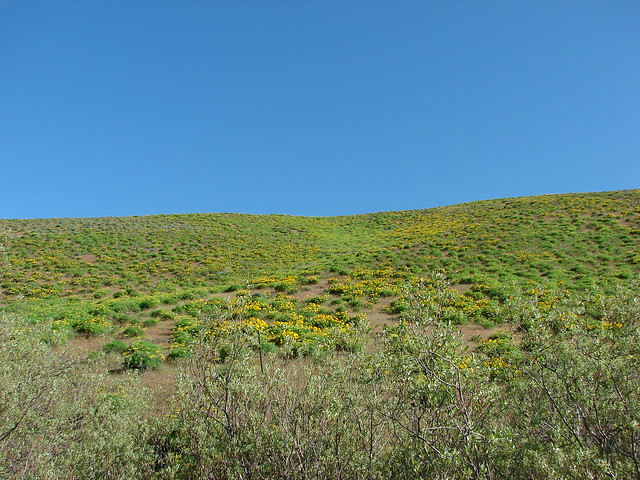
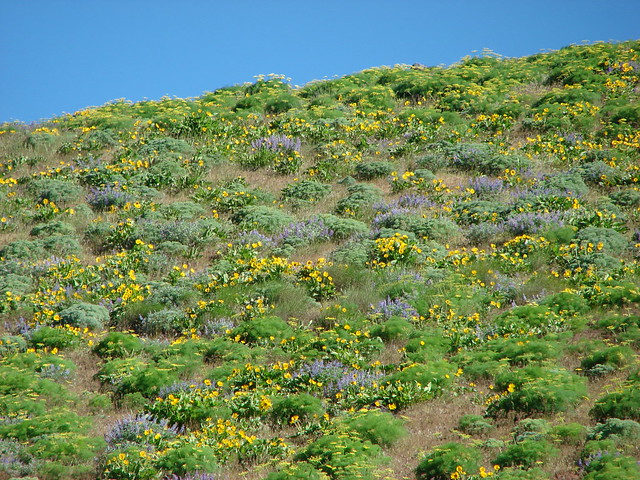
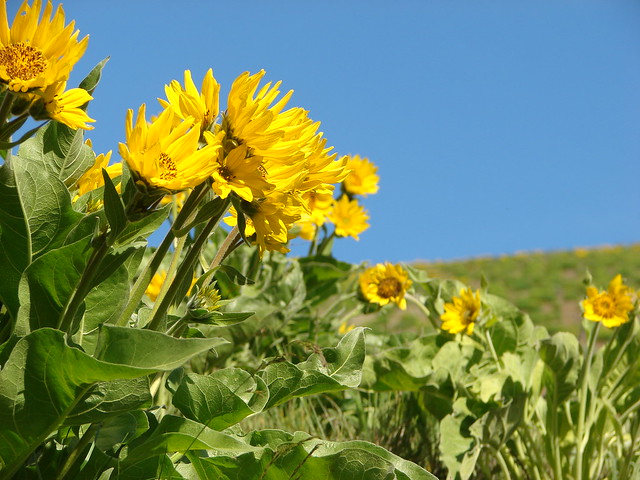
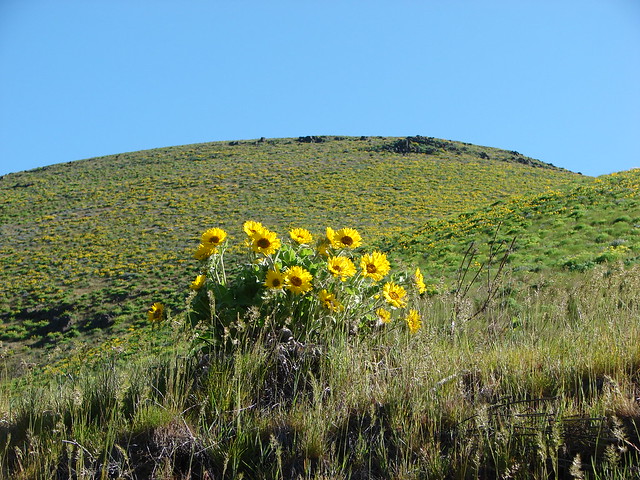
As we got further into the canyon, the hillsides began exploding with balsamroot in places.
DSC03250

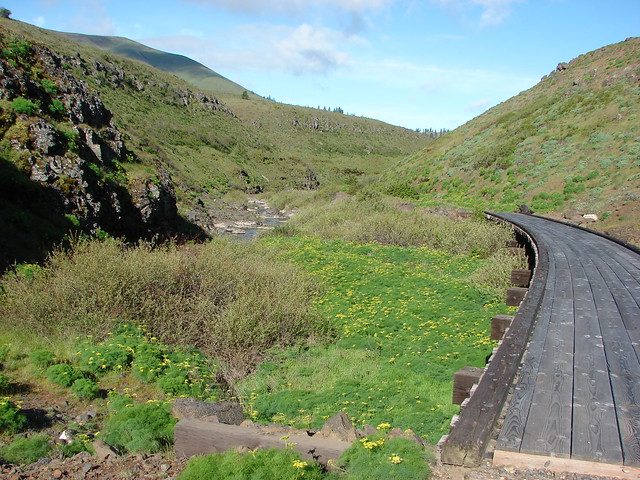
Being an old rail road line when the trial crosses the creek it is on old trestles made into bridges. The 3rd trestle was the most scenic as we approached. In the distance we could see the shadows of the clouds passing over Stacker Butte.
DSC03263

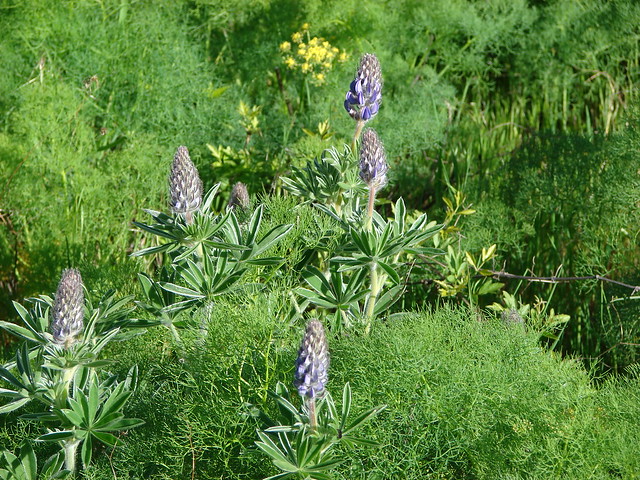
From the third trestle the balsamroot began to steal the flower show. Patches of lupine were in bloom but much of it had yet to come out.
Lupine just starting to bud out:
DSC03297
DSC03307
DSC03310

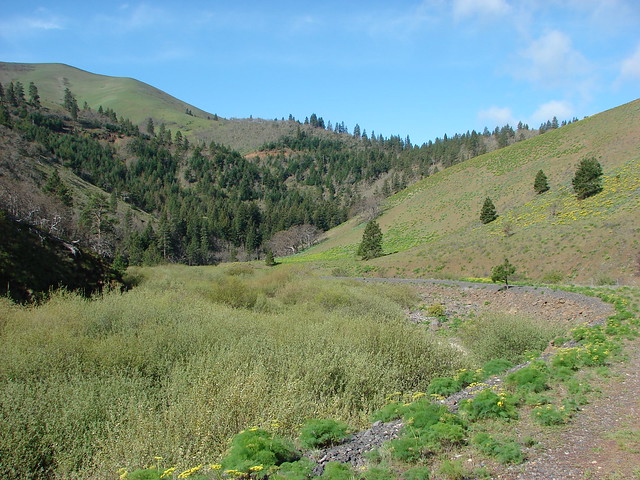
Winding through the canyon we began approaching a more forested area.
DSC03325
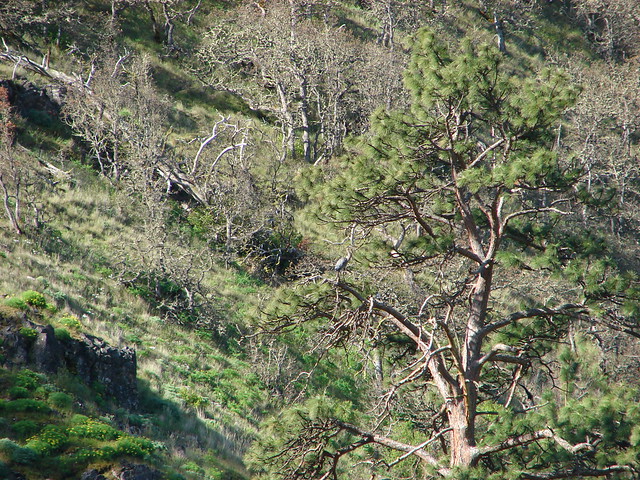
Here we added paint to the flowers and a Great Blue Heron to the wildlife:
DSC03326
DSC03331

The balsamroot still ruled the hillsides:
DSC03341
DSC03357

The creek was hidden from the trail at this point but a lovely meadow of desert parsley was home to many happy birds.
DSC03351

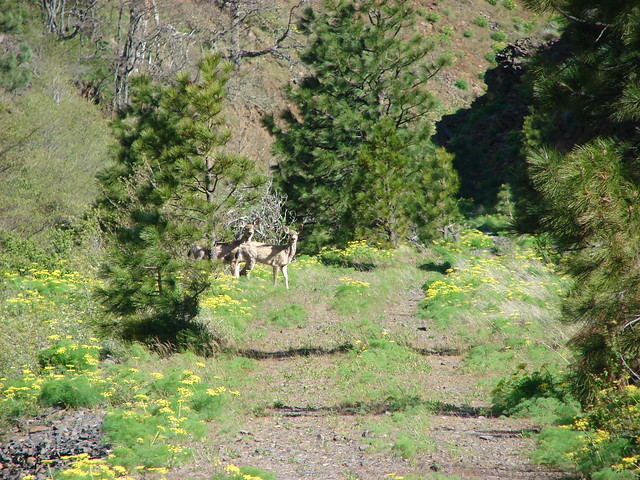
Just up from the parsley meadow a pair of deer came up from the creek and headed off down the trail. They were nice enough to pose for a couple of pictures before bounding away though.
DSC03365

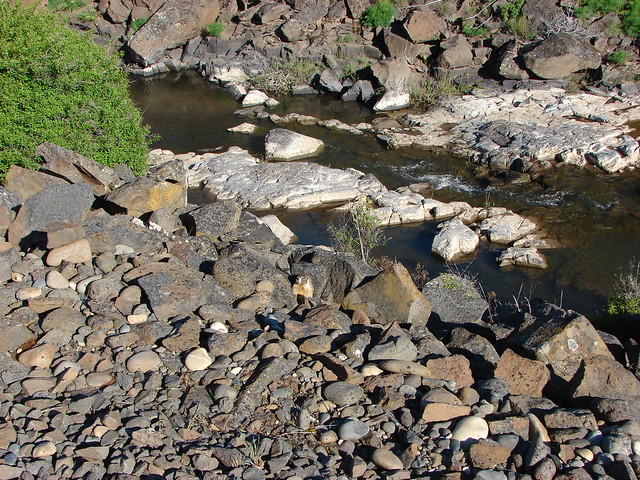
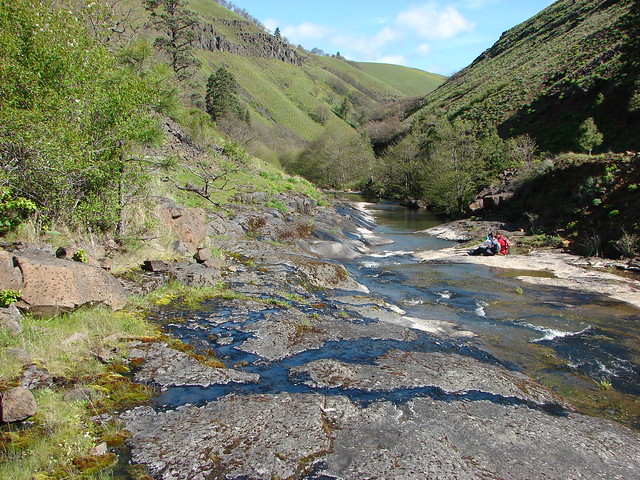
There was a small waterfall about 3.5 miles in that was mostly obscured by the trees then just a few tenths of a mile later we came to our planned turnaround point – a series of bedrock pools.
There was a small easy trail down to the creek where we paused for a snack since we were relatively safe from ticks on the rock.
DSC03391
DSC03406

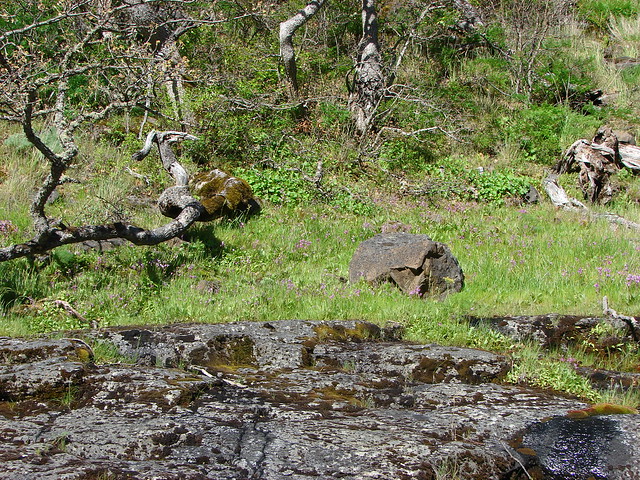
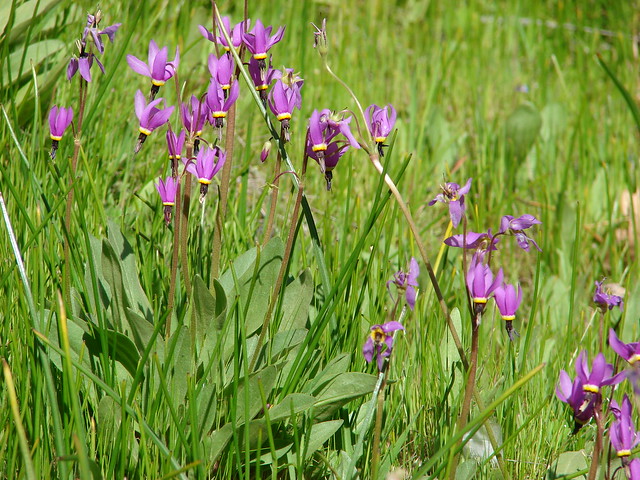
I was searching along the bank for one of the many frogs we were hearing when I noticed a flower filled ledge across the creek. Upon closer inspection I realized it was shooting stars. I decided to try and hop the creek and get some closer pictures since I couldn’t seem to get the full effect from the far bank.
DSC03398
DSC03402

It had warmed up for our return trip. We kept all our layers though. We had brushed three ticks from our pants, two on mine and one off Dominique. The marmots had retired for the day and we hadn’t seen anything new for most of the return hike when we came back to third gate and the cows. Different direction but same story.
DSC03436

Just after taking that picture I looked up the hill to our left and saw a coyote standing up top looking down at us. Before I could get a picture of it standing there it took off back over the hillside leaving me with a very blurry, distant photo of it’s ears. After convincing the cows to move away from the second gate we left them behind and started the final leg of our hike. I turned back after a few minutes to take a look behind us and there went the cows up the hillside away from the creek. They apparently had hung out for a couple of hours just to accompany us on our return trip. 😀

We didn’t see any other people on the trail. When we returned to the trail head around 11:30 there were a pair of hikers and a pair of bikers just getting ready to set off. I took a couple of final pictures from the trail head.
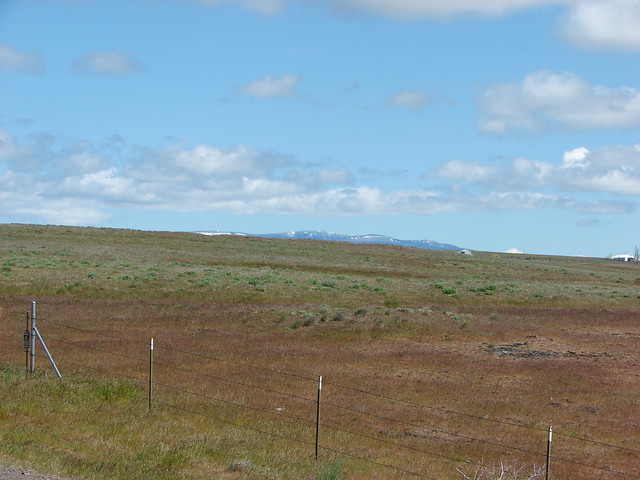
Indian Rock beyond the farmland:
DSC03455
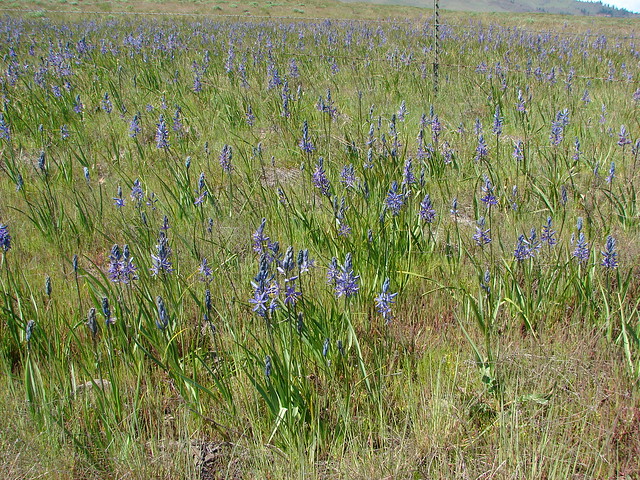
Camas field:
DSC03457

The total trip was 7.6 miles with just over 300′ of elevation gain. A nice easy start to get us into the swing of things. Until next time – Happy Trails

Photos on flickr: https://www.flickr.com/photos/9319235@N02/sets/72157644343719784/
facebook: https://www.facebook.com/deryl.yunck/media_set?set=a.10203854494069953.1073741871.1448521051&type=3
Categories
Hiking Oregon Salem/Albany Trip report Willamette Valley

Ankeny Wildlife Refuge

Greetings! I know we weren’t supposed to be hiking again until after our marathon this coming weekend, but we managed to sneak a quick one in. We took advantage of a scheduled cross-training day to head out to the Ankeny Wildlife Refuge just south of Salem. This is the first hike listed in William Sullivan’s 100 Hikes in the Central Cascades book and according to the description April is one of the peak migratory months for the various birds that can be spotted there. A flat 2 mile loop along the Rail Trail worked perfectly for our cross-training needs so it seemed like the ideal time to finally go check out the refuge.

We parked at the Rail Trail parking area and set off on a gravel path heading to the start of the loop.
Ankeny Wildlife Refuge

Trail in Ankeny Wildlife Refuge

After a couple of hundred yards we reached the start of the loops where we took a right onto the Rail Trails raised boardwalk.
Boardwalk Trail

The boardwalk is necessary as the trail passes through a wetlands that is either under water or too muddy for passage.
Pond in Ankeny Wildlife Refuge

There were many small birds present as we approached the bird blind located just over half a mile along the boardwalk. Most of them wouldn’t sit still long enough for a picture but a curious Bewick’s Wren paused long enough for a shot.
Wren

We didn’t stay long at the bird blind due to the fact that we were supposed to be cross-training but the blind overlooked a marshy pond where ducks and red-winged blackbirds moved about.
Bird blind in Ankeny Wildlife Refuge
Red-winged blackbird

Shortly after leaving the blind a pair of noisy geese expressed their displeasure with our presence.
Canada Geese

We discovered the reason for their annoyance was the nest they had built near the trail.
Goose nest

The boardwalk ends at an old dike road where the loop turns left and follows the dike back around to the parking area. Being as early as it was in the year (the dike is only open from April 1st – September 30th) the dike was covered in damp vegetation.
Ankeny Wildlife Refuge

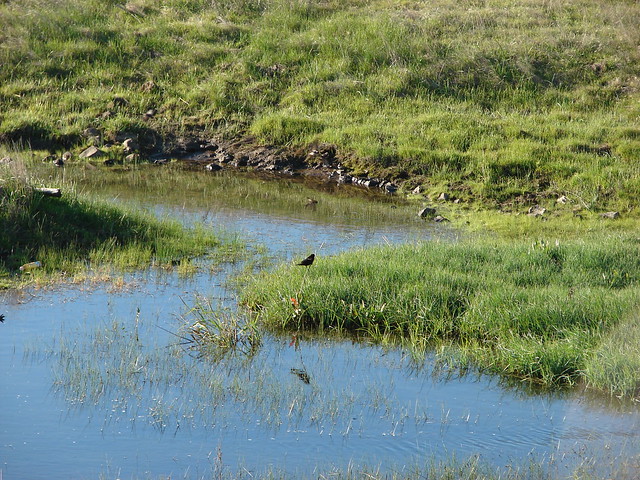
We encountered numerous red-winged blackbirds as we travelled along the dike and we also spotted a good variety of ducks in the many ponds.
Red-winged Blackbird
Ring-necked ducks (at least most of them were)
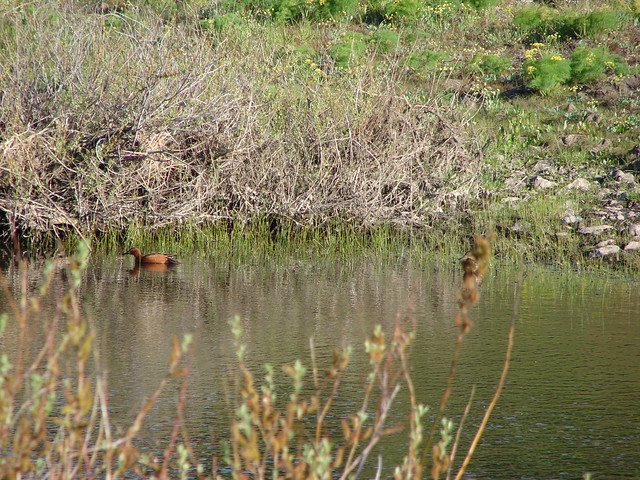
Cinnamon Teal
Mallard

Other than our feet getting a lot wetter than we had planned due to the wet grass along the dike it was a peaceful trail. We had a bit of trouble locating the correct place to turn back toward the parking area and had to pass through about 10 feet of saturated ground to get back but that just helped make it feel more like a hike :). Ankeny Wildlife Refuge would be a great place to go if you’re interested in bird watching. Someday we’ll have to go back and spend more time standing still and waiting for the birds to come to us. Until next time – Happy Trails!

flickr photos: https://www.flickr.com/photos/9319235@N02/sets/72157643529661063/
Facebook: https://www.facebook.com/media/set/?set=a.10203706476249600.1073741870.1448521051&type=3

Categories
Coastal Range Hiking Oregon Trip report

Wilson River

So far so good. We managed to get a hike in each month leading up to the marathon in April. Our recent visit to the Wilson River in the Tillamook State Forest was our final hike until after we’ve raced and recovered. We picked this hike because it provided a fairly level 8 miles which seemed like a reasonable outing at this point in our training. We chose Saturday morning for the trip based on a forecast showing no rain until that afternoon versus rain all day on Sunday. Yep, I fell for it again. The drunk monkeys that come up with the weather forecast weren’t even close as the 0% chance of precipitation was more like 95% as it rained or drizzled on us almost the whole time. Fortunately it didn’t rain hard since we hadn’t put our rain gear back into our packs.

The Wilson River trail extends over 26 miles, but for this trip we planned to hike out and back along a 4 mile section from the Jones Creek Day Use area to Bridge Creek Falls. It was great to get back on the trail and especially nice to see some signs of Spring. We set off from the parking area following the river west toward the Tillamook Forestry Center. Since the center opens at 10am the gate on the suspension bridge was still closed so we passed by and headed toward Wilson Falls after taking a quick peak back at Kings Mountain. Heather and I had done a loop hike in 2010 up neighboring Elk Mountain and down Kings Mountain. It remains to this day one of the toughest hikes we’ve tackled.

Kings Mountain
Kings Mt. from the Wilson River Trail

The forest was beginning to transition from Winter to Spring as buds were showing or already opening on many plants and several varieties of early flowers were blooming trailside.

Snow Queen
Snow Queen
Trillium
Trillium
Wood Violets
Violets
Slender Toothwort
Slender Toothwort

The river was running quickly due to heavy recent rain which had also swelled the creeks and runoff streams feeding into the river. Even if it hadn’t been raining there was no way our feet were going to stay dry. 🙂

Wilson River
Wilson River
Cedar Creek
Cedar Creek
Runoff flowing over the trail
Wilson River Trail
Trail crossing below Wilson Falls

We had two waterfalls to visit on this portion of the trail. The first was Wilson Falls which lay hidden right beside the trail until we were almost directly below it.

Nearing Wilson Falls
Wilson River Trail
Wilson Falls
Wilson Falls

The second falls was also our turnaround point. We had to leave the river and cross Highway 6 to find the short trail to Bridge Creek Falls. An impressive fall in a narrow canyon.

Sign for Bridge Creek Falls along Hwy 6
Bridge Creek Falls
Bridge Creek Falls
Bridge Creek Falls
Trying to give an idea of the size of the falls.
Bridge Creek Falls

We hadn’t had any company on the trail and had only seen a handful of fishermen on the way to Bridge Creek Falls, but things got more crowded on the trail on the return trip.
Slow traffic

Slug
Another slowpoke
Rough skinned newt
This one moved to the side to let us pass
Rough Skinned Newt
Finally we came to a standstill
Newt

We didn’t wind up going into the Forestry Center. The rain had picked up and we were wet and muddy when we arrived back so we decided to pass on this trip. We did cross the suspension bridge in an attempt to return to the car from the opposite side of the river but washouts had closed that portion so we backtracked across the bridge and returned the way we had come that morning. The hike worked out just the way we’d hoped. Good scenery, no crowds, and not too taxing physically. Truly a hike that says “Happy Trails”.

Flickr album: http://www.flickr.com/photos/9319235@N02/sets/72157642067822544/
Facebook album: https://www.facebook.com/media/set/?set=a.10203510030938590.1073741869.1448521051&type=1

Categories
Hiking Middle Santiam Old Cascades Oregon Trip report

McDowell Creek Falls

It seems like it has been forever since our last post. We’ve been busy training for our marathon and also dealing with some overdue Winter weather. We had originally planned on hiking along the Salmon River near Zig Zag, OR but wound up changing our minds and decided on a much shorter, closer hike. The state had gotten a lot of snow during the prior weekend and then snow level rose to around 7000′ causing much of that snow to melt. We’ve also had a good amount of rain in addition to the snow melt so many of the rivers and creeks swelled with all the additional water. We felt too fatigued from our training for a 12+ mile hike but we still wanted to get out and do something so we chose McDowell Creek Falls in hopes that the extra water would mean extra good falls.

McDowell Creek County Park is located about 15 miles from Lebanon, OR along McDowell Creek. An approximately 2 mile loop passes several falls crossing the creek a number of times on footbridges. We parked at the west end of the park and set off across the creek on a bridge just up stream from Lower McDowell Creek Falls.
DSC02761

Just .2 miles from the trailhead we came to the start of the loop and also the first view of Royal Terrace Falls which is actually not on McDowell Creek but a side stream that feeds into the creek. The falls were roaring with all the extra water and were really spectacular.
Royal Terrace Falls
Turning left on the loop we crossed the stream below the falls where a bench offers a great front row view of the falls.
Royal Terrace Falls

The storms that had brought the rain and snow had downed a lot of trees and limbs but this portion of trail had been cleared already. A fairly level .4 miles brought us to Crystal Falls above Crystal Pool. The water flow was so strong that Crystal Pool was not identifiable, but Crystal Falls was putting on a good show.
Crystal Falls

Beyond Crystal Falls .2 we came to a pretty impressive footbridge across the creek.
DSC02802
As we approached the bridge Majestic Falls came into view around a bend in the creek.
Majestic Falls
Majestic Falls

Stairs led up to the top of the falls where an observation deck is located. A downed tree had smashed the railing and was blocking the deck entrance but it appeared the deck itself was okay. The trail then came to the eastern parking lot and continued on the far side. Unlike the earlier section of trail this portion had not been cleared yet of the storm debris. We picked our way over, under, and around several messy sections before reaching the stream above Royal Terrace Falls. Another footbridge brought us across the stream and directly above the falls.
DSC02819

A series of stone steps led to the trail junction and the end of the loop, but first I decided to check out a narrow trail that looked to lead to the “terrace” of Royal Terrace Falls. Wary of the wet conditions I carefully made my way along the trail and to the base of the upper section of the falls.
Royal Terrace Falls (Upper portion)

After completing the loop we had one more fall to check out. We returned to the parking area and picked our way down stream through some more blow down and found a good view of Lower McDowell Creek Falls.
Lower McDowell Creek Falls
The tree hanging out in front of the falls looked to have fallen during the storm, but the green moss made for a nice contrast to the white water of the falls in the background.
We couldn’t have picked a better day to visit these falls. Not only were they flowing full force but we had mostly dry conditions and even saw the Sun once or twice.

This coming weekend we’ll be taking a route finding and navigation class put on by the local outdoors group The Chemeketans. We’re looking forward to getting more comfortable with our map & compass skills as we are hoping to do a little more off trail exploration this year. The best way to enjoy the trails is to stay safe on them and this should help keep us that way. Until next time – Happy Trails!

photos: Flickr http://www.flickr.com/photos/9319235@N02/sets/72157641077965535/
facebook https://www.facebook.com/media/set/?set=a.10203367105045532.1073741868.1448521051&type=1

Categories
Hiking Northern Coast Oregon Oregon Coast Trip report

Neahkahnie Mountain

Happy New Year! A favorable weather forecast encouraged us to kick off our 2014 hiking year a bit sooner than planned. Just as we had done last year we turned to the Oregon Coast to get things started. While most of the country was dealing with frigid temperatures we were off to Oswald West State Park where a Sun filled day and 50 degree temperatures awaited.

For Heather and I this was our second visit to the park. In June 2012 we hiked out and around Cape Falcon where wild flowers and dramatic views were plentiful. (Pictures from that hike can be seen here: http://www.flickr.com/photos/9319235@N02/sets/72157632953462404/ ) For this trip we were set to explore the southern end of the park and follow the Oregon Coast Trail (OCT) up to the summit of 1631′ Neahkahnie Mountain.
Neahkahnie Mountain from Cape Falcon in 2012
Smugglers Cove

We parked in the large beach access parking area on the east side of Highway 101 where the Short Sand Beach trail begins. This was the same trail we had started on for our previous visit, but after a couple of hundred yards we turned left onto the Old Growth trail. Two tenths of a mile on that trail brought us to a trail junction with restrooms where we forked left on the .1 mile Cedar Crossing trail. This path ended at Necarney Creek where it intersected the .3 mile Necarney Creek trail. (As you can tell there are a lot of short trails in the area.)

At the Necarney Creek trail we had an option. According to the park brochure/trail map if we turned left we would find the .4 mile Necarney Falls trail. I had read a trip report from 2012 that indicated there was some bushwhacking involved in reaching the waterfall but the trail was still shown on the online map so left we went. Soon the Necarney Creek trail bent away from the creek which was where we had expected to find the falls trail, but there were no trail signs and we quickly reached the end of the creek trail at a small parking area. After re checking the park map and verifying the location of the supposed trail we returned to the bend to see if we could find it. There was a faint unmarked path leading toward the creek into the underbrush at the bend which we decided must have been what was left of the trail. It was less than .5 miles to the falls so we decided to make an attempt at reaching them and headed into the brush.

The former trail was virtually gone save for a few short sections here and there. We kept as close to the creek as possible as we made our way under the highway and up the narrow canyon. There were several slides and plenty of downed trees to pick our way around. After crossing a small side stream the canyon narrowed even more and we were forced down to the creek bed. Luckily the water level was low enough that we were able to stay dry by rock hopping until we reached Necarney Falls. The reward was worth the efforts.
Necarney Falls

We retraced our steps (as best as we could) and returned to the maintained trails where we followed the Necarney Creek trail to a foot bridge which crossed the creek and led to the Elk Flats trail.
Suspension bridge over Necarney Creek
We took a quick trip down to Short Sand Beach before for a photo-op before setting off on the Elk Flats trail.
Smugglers Cove
We then followed the 1.3 mile Elk Flats trail through the park passing several nice ocean views before entering a meadow near the Devils Cauldron overlook.
Meadow along the Elk Flats Trail

After taking in the view from the overlook we climbed east through the meadow to yet another small parking area along Hwy 101. Across the highway was the North Neahkahnie Mountain trail. Both the Neahkahnie Mountain and Elk Flats trail are part of the OCT which extends 360 miles from the Washington border to California. Less than 100 miles of the OCT are actual trail though, with the majority of rest of the miles being on beaches and the remainder on the shoulder of Highway 101.

After crossing the highway we quickly began climbing, needing to gain 1200′ in 2 miles of trail. The first section of the trail led up through an open meadow via a series of switchbacks. We guessed the meadow would be full of flowers in Spring and early Summer, but for this hike we were content with the views which extended from Cape Falcon in the north to Cape Mears and Cape Lookout to the south.
Looking up the meadow:
Meadow along the North Neahkahnie Mountain Trail
Cape Falcon from the meadow:
Cape Falcon from the North Neahkahnie Mountain Trail

At the top of the meadow the trail entered an old growth forest where it remained until we were just below the rocky summit. The view from the summit was excellent and the clear skies and lack of a significant breeze made it a perfect spot for lunch.
Entering the forest:
North Neahkahnie Mountain Trail
Summit view:
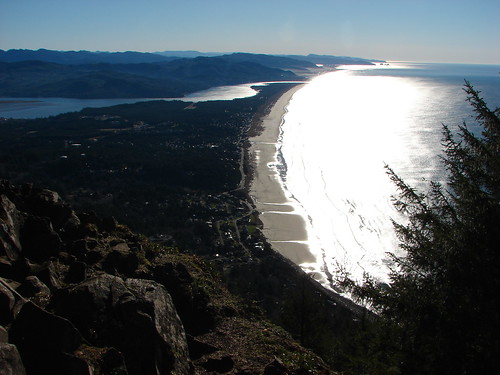
Nehalem Bay, The Pacific Ocean, Cape Mears, and Cape Lookout
Lunch:
Lunch on Neahkahnie Mountian

After lunch we returned they way we had come (minus the side trip to Necarney Falls 🙂 ). We decided to make one final stop though before leaving the coast. Dominique had not been with us in October when we hiked at Cape Kiwanda in Pacific City, so he had not had the experience of dining at the Pelican Pub. This was as close as our hiking schedule would bring us to Pacific City this year so we took a short detour and stopped in for an early dinner. The food was a good as we’d remembered and we were fortunate enough to be there as the Sun set over the Pacific which was a perfect way to end the first hike of the new year. Happy Trails!

<img src="DSC02702” alt=”” />

The rest of the photos on flickr: http://www.flickr.com/photos/9319235@N02/sets/72157639463787314/ or Facebook: https://www.facebook.com/media/set/?set=a.10203069673009917.1073741867.1448521051&type=1

Categories
Hiking Northern Coast Oregon Oregon Coast Trip report

Tillamook Head

We recently wrapped up our 2013 hikes. We started on the Oregon Coast at Cape Perpetua in February and ended 140 miles to the north at Tillamook Head. Undaunted by some recent snow and cold weather (lows in the teens) we were determined to complete our final scheduled hike. The forecast for Seaside was for clear skies and a balmy 36 degrees and highway 26 over the coast looked passable so we bundled up and set off. We were looking forward to the possibility of seeing some snow at the coast since it is a rarity here in Oregon.

We chose to begin our hike at Ecola State Park on the Cannon Beach side of Tillamook Head. This meant paying a $5 fee to park which we could have avoided by parking at the Seaside end, but better views and a less steep start to the hike were worth the expense. We were the lone car in the large picnic parking area at 8am and had the views all to ourselves.

View south from the Ecola Picnic Area

From the picnic area we headed north toward Indian Beach stopping occasionally to take in the views of Sea Lion Rock and the old lighthouse on Tillamook Rock.

Sea Lion Rock
Sea Lion Rock
Tillamook Rock
Tillamook Rock

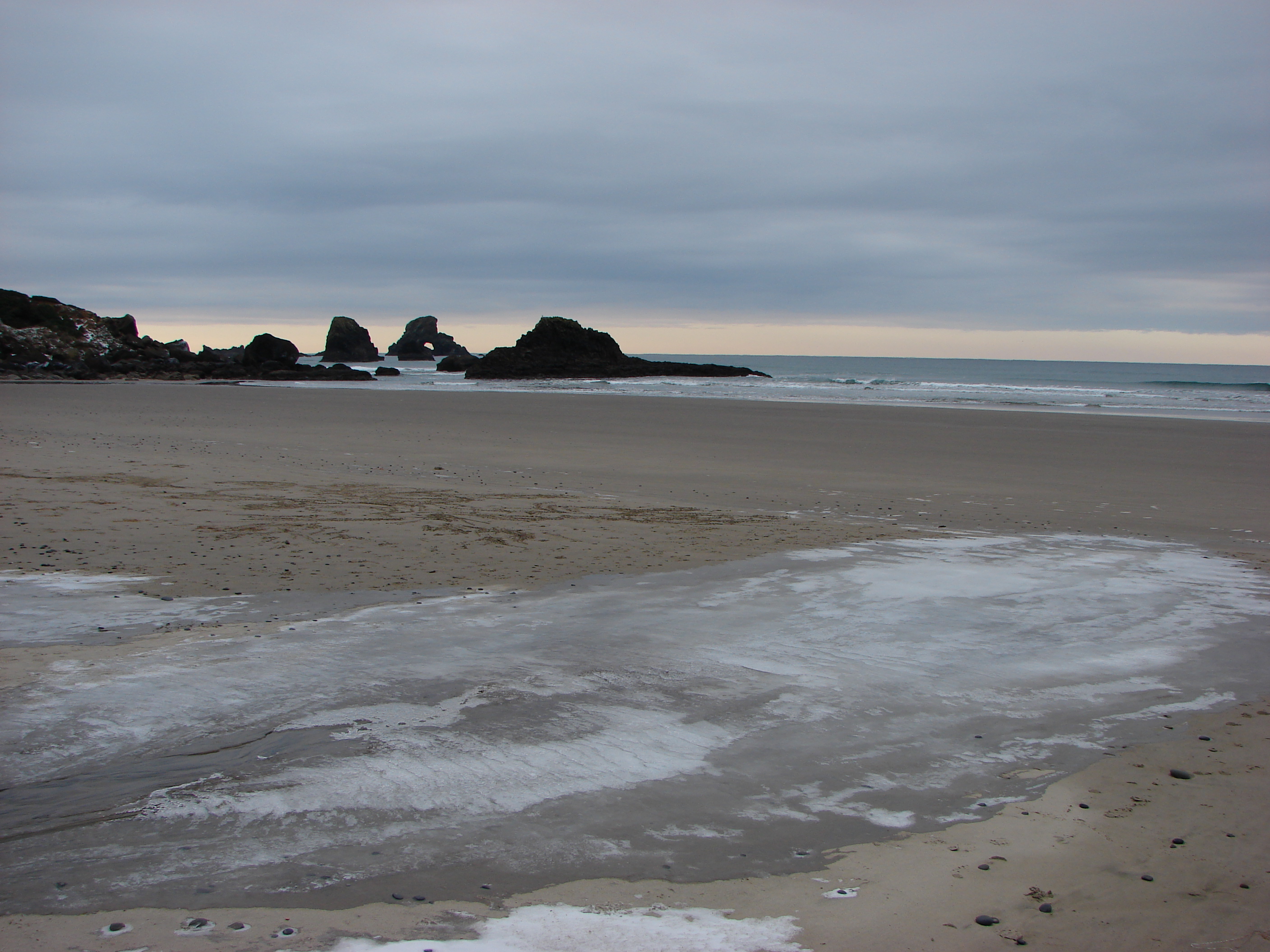
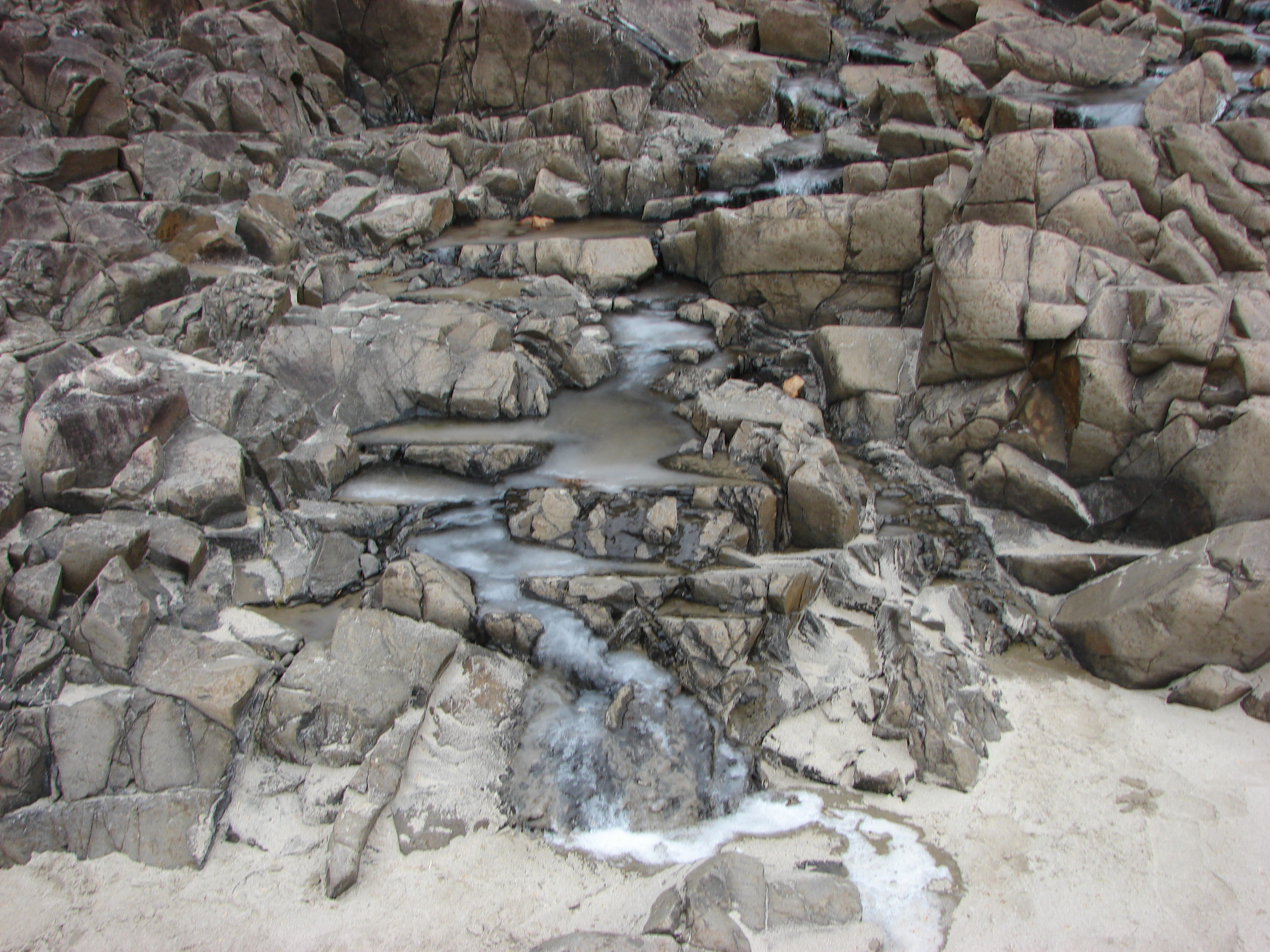
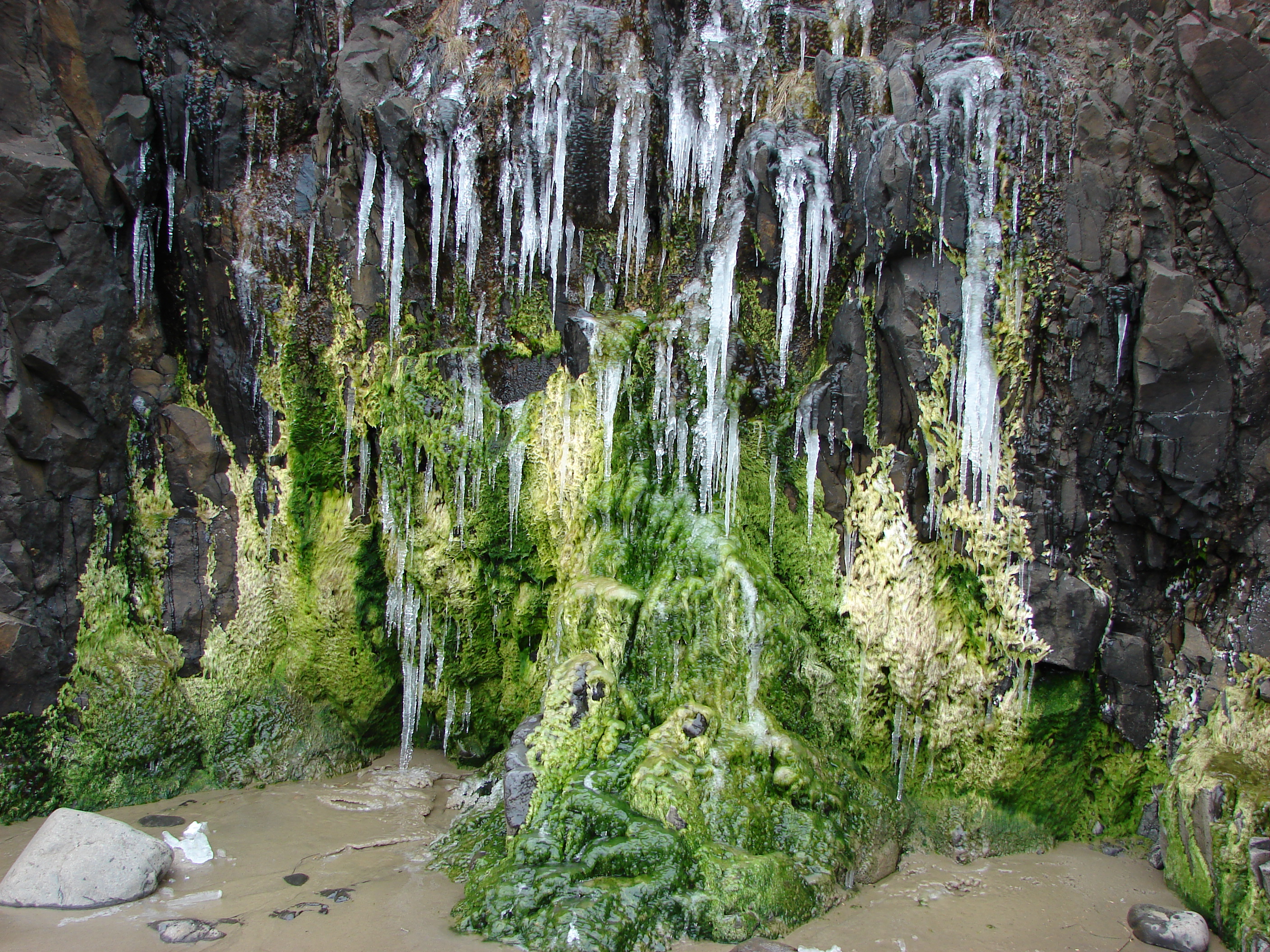
When we arrived at Indian Beach we found some very interesting ice formation in addition to the superb views.
044

053

066

068

In addition to the ice there were a couple of small tide pools to check out.
082

From Indian Beach we continued north taking the Clatsop Loop Trail, part of which William Clark traveled in 1806 with a party in search of a stranded whale. The forest here is still home to some of the same Sitka Spruce trees that he and his group passed by which was a neat thing to think about. The loop trail turns back at Hikers Camp where you can visit the nearby remains of a WWII radar installation.

Hikers Camp
Hikers Camp
WWII radar installation

We kept heading north from Hikers Camp heading toward the summit of Tillamook Head, a whopping 1130′ above sea level :). We passed over the summit and went just a bit further until the trail began to really descend toward Seaside. We decided we didn’t want to have to climb all the way back up so we called it good and head back to Hikers Camp to complete the loop trail. It had started to snow, more like small white pellets, and the clear skies promised by the weather.com had never materialized. We passed more ocean views and various types of vegetation as we headed back to Indian Beach.

114

135

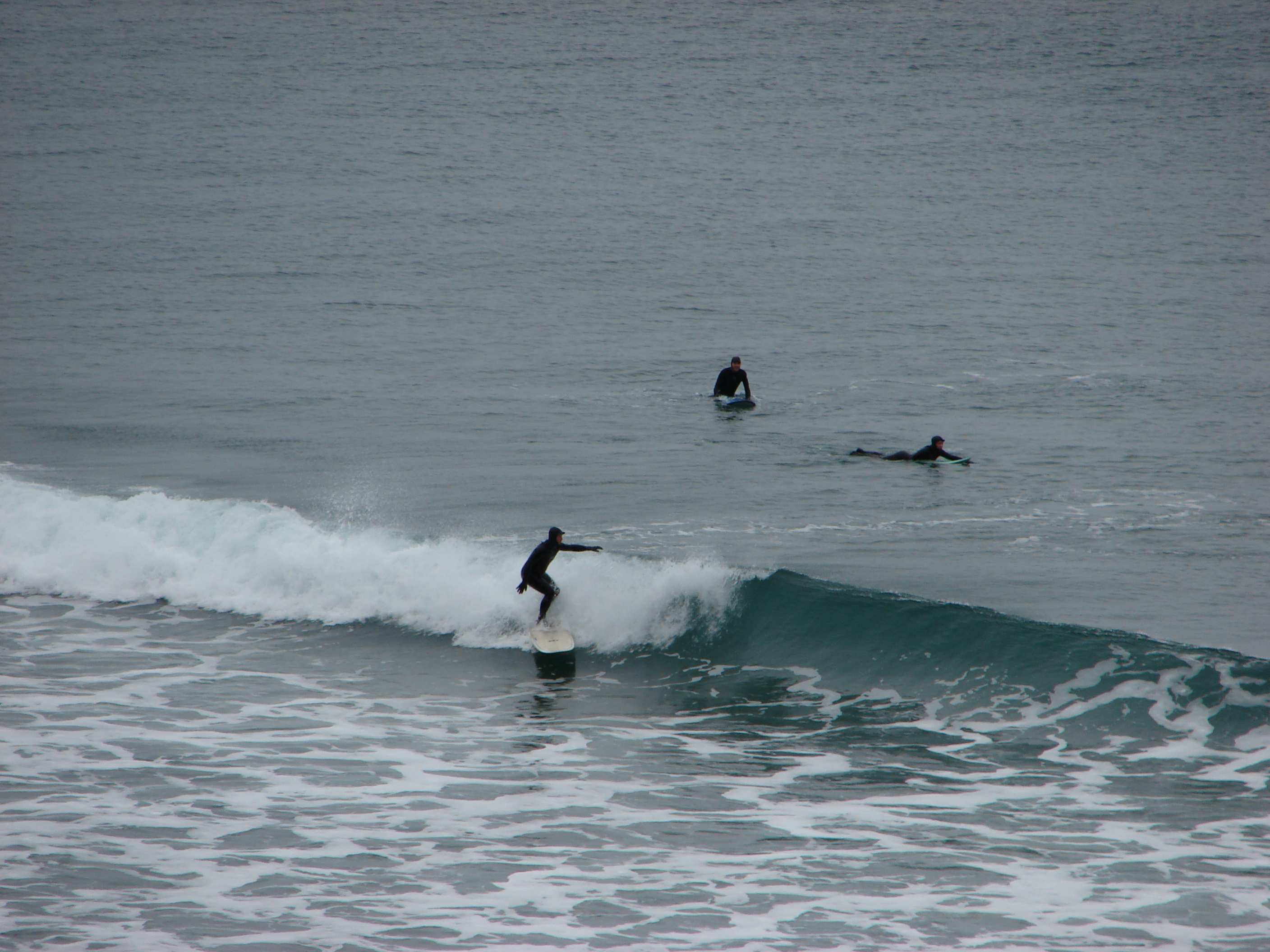
We had only seen one other group of people so far and that was a family that came down to Indian Beach briefly when we were there, but upon arriving back at the beach we discovered it had been populated by some brave surfers.

142

149

It wasn’t until we had left Indian Beach and were almost back to the picnic area though before we ran into any traffic on the trail.
171

She was moving too fast for the camera but it was fun to watch her come up the hillside and then dash off into the forest.

The number of cars in the parking lot had swollen to three (including ours) when we got back to the picnic area at about 3pm. Despite the completely incorrect weather forecast it had been a great hike and a perfect way to end for 2013. Happy Trails!

173

Photos on facebook: https://www.facebook.com/deryl.yunck/media_set?set=a.10202865376982644.1073741866.1448521051&type=3
Flickr: http://www.flickr.com/photos/9319235@N02/sets/72157638495394186/

Categories
Hiking Oakridge Area Old Cascades Oregon Trip report

Goodman Creek to Eagles Rest

500 miles! Heather and I reached that hiking milestone for 2013 this past weekend. We hadn’t started out with that accomplishment in mind but as the year progressed added hikes and added distances (What’s down that trail?) made it a reachable goal. It’s amazing to us to think that all that hiking isn’t even 1/5 of what it would take to complete the entire 2,650 miles of the Pacific Crest Trail. Even so it was a nice feeling to hit that mark before the year was over.

On to the hike that put us over the top. We headed back down to the Eugene area for another creek hike. We had hiked both Larison and Fall Creek in the same area back in March, and this time we had our sights set on Goodman Creek in the Willamette National Forest. This trail offered a chance to climb up Eagles Rest to a viewpoint overlooking the Lost Creek Valley. We woke up to some pretty heavy morning fog and weren’t sure what we would find at the trail head, but shortly after leaving Eugene on Highway 58 we rose above the fog to a nice bright morning. The Goodman Creek Trail actually starts on the Hardesty Mountain Trail near milepost 21 on Hwy 58.

The trail set off in an old growth forest full of moss and mushrooms and soon split with the left fork heading up to Hardesty Mt. and the right fork to Goodman Creek.

005

The trail slowly climbed at a distance from Goodman Creek for 2 miles where a small creek joined the main branch of Goodman Creek. Just before the confluence there was a side trail at the back of a campsite leading down to the small creek and a pair of scenic small falls.

022

034

After visiting the falls we crossed Goodman Creek on a log footbridge and continued another 2.2 miles to another trail head on Goodman Creek Rd.

Goodman Creek Crossing
Trail leading to a log crossing on a branch of Goodman Creek

From the road the trail then continued to climb through the forest to the Ash Swale Shelter. We saw several rough skinned newts in this section. The shelter was in good shape and offered a nice spot to sit and have a bite to eat.

Approaching the shelter
View from the Ash Swale Shelter

From the shelter it was another mile to the former lookout site atop Eagles Rest. The trail crossed paved Eagles Rest Road just .3mi from the shelter. The forest changed dramatically after crossing the road. Until then the forest had been damp and full of moss, ferns, and various mushrooms and fungus. On this side of the road the forest was much drier and the undergrowth more sparse. Sunlight began filtering through the trees and soon we reached a viewpoint overlooking the Lost Creek Valley.

108

109

We continued up the trail to the better viewpoint atop Eagles Rest. Here we could see Hardesty Mountain and Mount June to the east (A hike we had done at the beginning of June). To the west the valley still appeared to be fogged in. There were several burns taking place in what looked to be clear cut areas in the valley leaving a bit of a haze but it remained a decent view.

Hardesty Mountain and Mount June (from left to right)
Valley clouds
Valley clouds
Lost Creek Valley
Lost Creek Valley

We hadn’t seen any people all day and the forest had been full of peace and quiet up until the target shooting began down in the valley. With that we decided it was time to head back down the trail and make our back to the car. The forest had brightened as the Sun passed overhead making the forest colors even more striking.

139

140

The trail was in good condition and well used although we didn’t run into very many people until the final two miles. Given it’s low elevation (starting @ 1000′ and topping out @ 3024′) and easy trail head access this hike is an option much of the year making it a good choice for late fall or early spring.

Our other goal for the year was to do at least one hike a month (January was lost due to our passing the flu around) so we’re hoping to get out at least once more this year. Until then Happy Trails.

Facbook Photos: https://www.facebook.com/media/set/?set=a.10202612354697245.1073741864.1448521051&type=3
Flickr: http://www.flickr.com/photos/9319235@N02/sets/72157637535657125/

Categories
Bend/Redmond Central Oregon Hiking Oregon Trip report

Black Butte

For the final hike of our vacation we decided to say farewell to the mountains for the year. Black Butte provided us the opportunity to get one last good view of the Cascades and a nice bit of elevation gain to boot. We had been checking the weather forecast as often as possible to see if it would be worth the effort and when we went to bed the night before our hike the forecast was for clear sunny skies all day long. They were wrong. lol

My first inkling that something was amiss was when I was loading the car in the morning and there were no stars visible in the sky. As we began our drive to the trailhead occasional sprinkles of rain were falling, but we were committed now and figured that it was early and maybe the clear skies were just a little late.

We arrived at the lower Black Butte Trailhead under cloudy skies but at least there was no rain. The trail set off through pine trees and a carpet of orange ferns.
198
We caught several glimpses of Black Butte on the lower portion of the trail and at least it was cloud free (it had not been on the drive earlier).

Black Butte from the lower trail

The lower portion of the trail passed through a variety of forest types. The ever changing makeup of the trees and plants was very interesting.
208

Cedars
Cedars

213
215

There would have been some mountain views on a clearer day along this portion as well but on this day all we could make out was the snow line at the base of Mt. Washington and Three Fingered Jack. We were still hoping that the cloud cover would burn off by the time we reached the summit so we continued to climb to the upper trailhead.

From the upper trailhead we climbed out of the forest to the more exposed upper slopes of Black Butte. Here the view was virtually unobstructed by trees but the clouds were a different story. There was a thick layer of clouds above our heads but low enough to hide the taller Cascade Peaks. Below us were smaller patches of clouds passing by and sometimes over us.

Mt. Washington
Mt. Washington
Looking down past the clouds

As the trail wound up and around the butte we got our first good look at the lookout tower. We also noticed that the summit appeared to be a bit snowy or at least frosty.
242

We had been overly warm as we climbed so far and had taken most of our layers off but as we entered the “white” zone we were met with much colder air. As we worked our way around the north side of the butte a slight breeze brought even colder air to us and kept this side of the butte wintry white.
264

272

283

To the north we could see the edge of the upper cloud layer as sunlight reflected off the lower clouds.
271
To the NE we spotted the top of a snowy mountain against blue sky – Mt. Hood!

Mt. Hood
Mt. Hood

Further around we found ourselves staring at the base of Mt. Jefferson. The view was strangely reminiscent of the view we’d had on Double Peaks on the opposite side of the mountain just 3 days earlier with clouds covering the upper 2/3rds of the mountain and blue sky apparently above and behind the mountain.

Mt. Jefferson hidden again

At the summit the snow/ice created some interesting scenes.
286

287

288

We explored the area on top of the butte where the lookout tower is not the only structure. A 1924 cupola that was the former lookout and a log cabin where the lookout staff lives were also present.

1924 cupola
1924 cupola

302

Signs on the summit listed the mountain peaks that would be visible on a clear day from Broken Top to the south to Mt. Adams to the north. We were mostly left with our imaginations. 🙂 Looking out over the log cabin we could see a good portion of Three Fingered Jack and some of Mt. Jefferson.

Three Fingered Jack
Three Fingered Jack

We hung around for a little over half an hour hoping that the clouds would break up but the lower clouds just kept coming up from behind us and the upper clouds didn’t seem to be budging. Just as we started to leave though we noticed the upper layer was breaking up to the north and there seemed to be some breaking up near Mt. Jefferson. We turned around and headed back toward the cabin but the low clouds were rising up just in front of us so we again headed back down. I kept looking back though hoping for something when we finally got a little break and the summit of Mt. Jefferson made an appearance over a ribbon of clouds.

Mt. Jefferson
Mt. Jefferson

As the upper clouds retreated south we suddenly had blue sky above us and the frosty coating quickly melted from the trees and plants.
As we came around to the south side of the butte Mt. Washington was a bit more visible.

Mt. Washington
Mt. Washington


The upper layer of clouds retreating south

Just as quickly as the blue sky had appeared one of the larger low clouds enveloped the side of Black Butte and we were once again without a view.

When we got down past the upper trailhead we finally got back out of the cloud and could once again see out to where the mountains would be. Even though the upper layer of clouds had mostly retreated the lower clouds were quickly replacing it and many of them clung to the taller peaks. We did manage to get a good view of several small peaks and buttes though.

Belknap Crater and Little Belknap
Black Crater
Black Crater
Hayrick Butte & Hoodoo

We even got a brief glimpse of North Sisters summit.
363

This time on the lower trail we spotted a decent amount of wildlife including chipmunks, douglas squirrels, golden-mantled squirrels, and various birds. Some were more willing to have their pictures taken than others.
351

368

369

376

We were supposed to meet my parents at the trailhead at 2:00 so they could drop off Dominique (who had chosen not to accompany us on the hike). A series of mishaps led to a bit of an adventure but while we were waiting a group of deer came by the parking area.
384

We eventually met up with my parents and reclaimed Nique and headed home. With that the bulk of our 2013 hikes were behind us. We’ll hopefully get out a couple more times this year, but our activities have now shifted to running for the next several months. It’s the beginning of our race season and we are all starting to train for a 15 mile trail run in a couple of months. Happy Trails.

Facebook photos:https://www.facebook.com/deryl.yunck/media_set?set=a.10202390873000341.1073741863.1448521051&type=1
Flickr: http://www.flickr.com/photos/9319235@N02/sets/72157636523907403/