Categories
Badger Creek Area Hiking Oregon Trip report

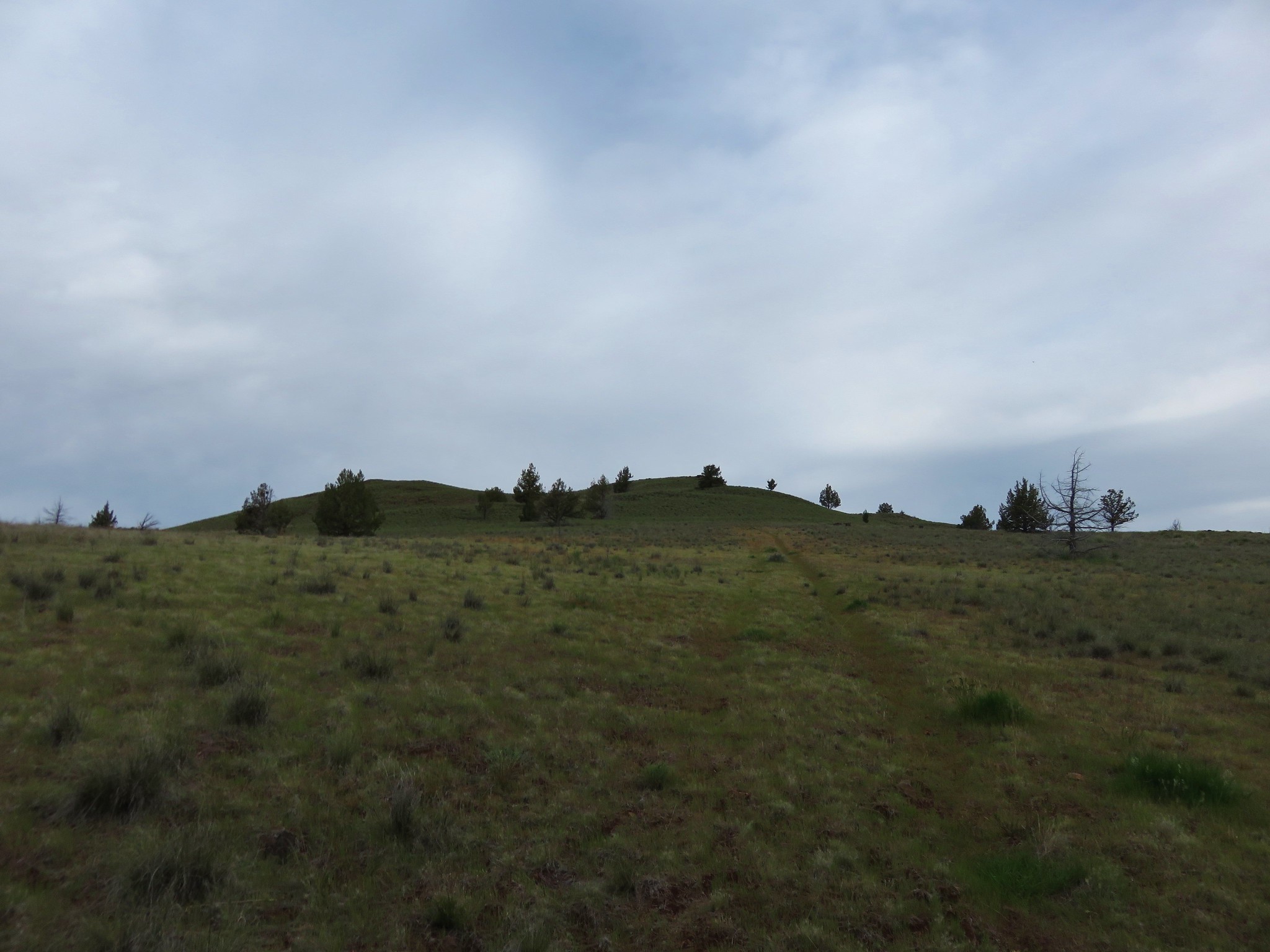
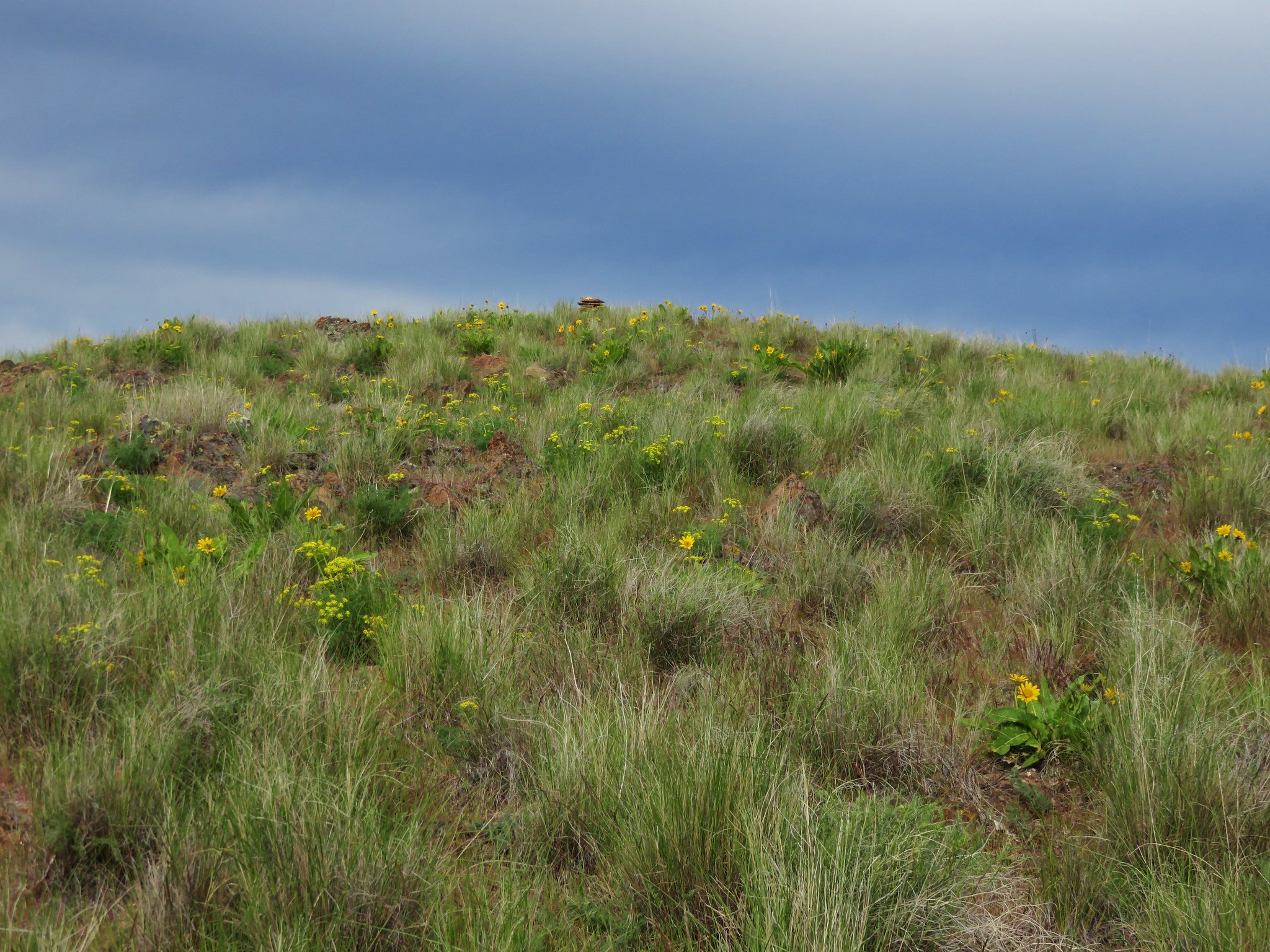
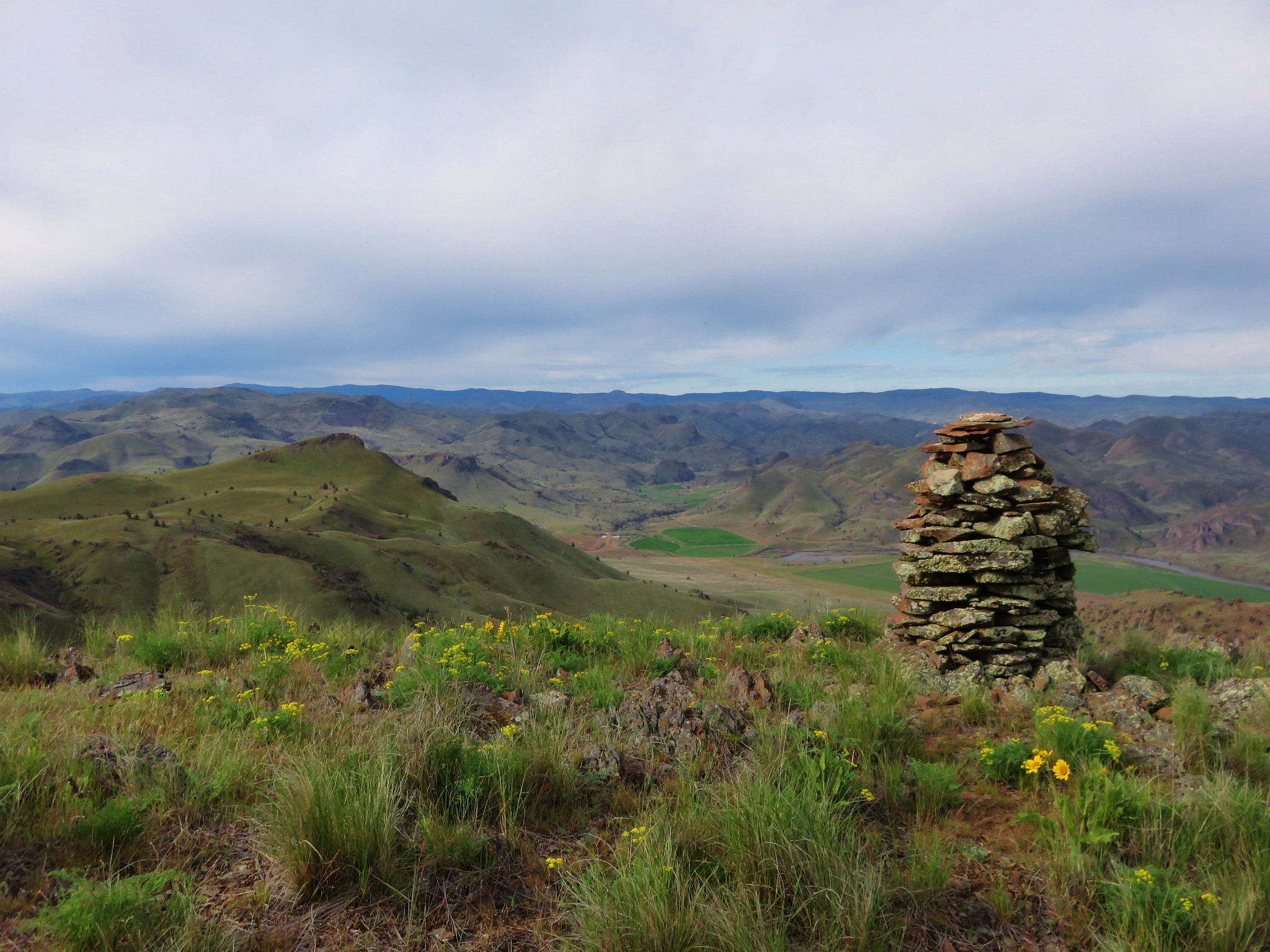
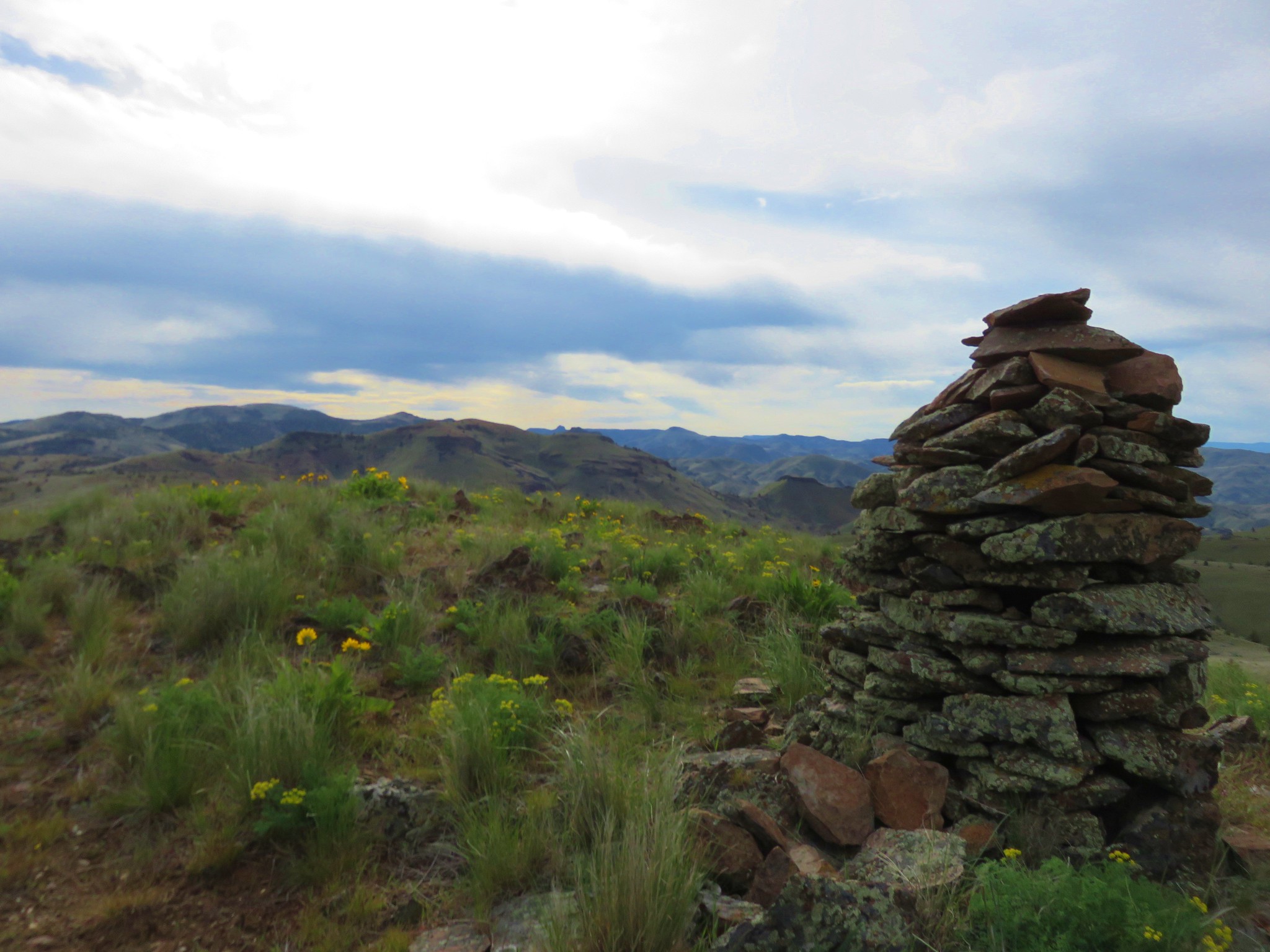
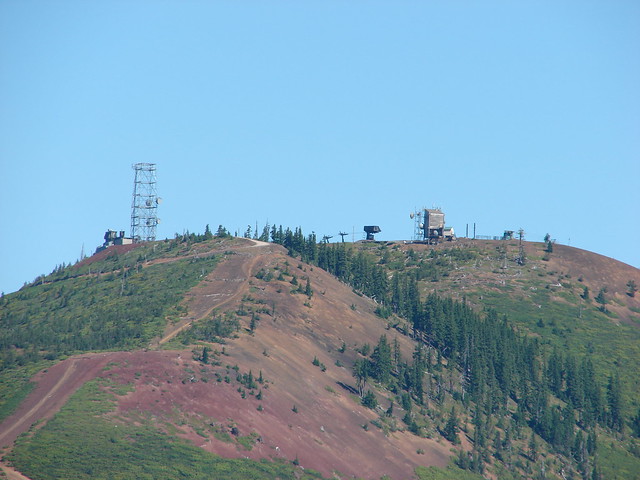
Bald Butte

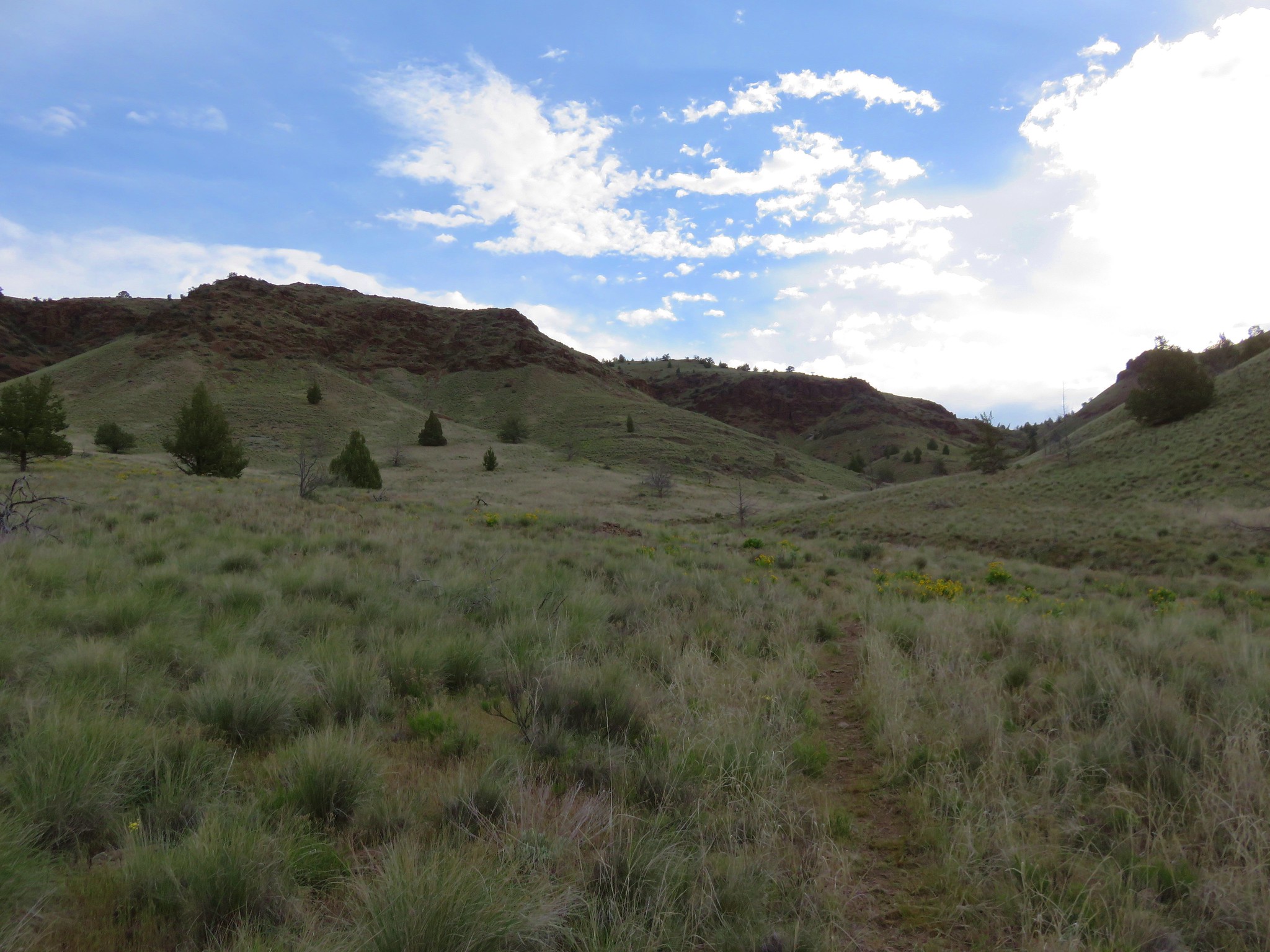
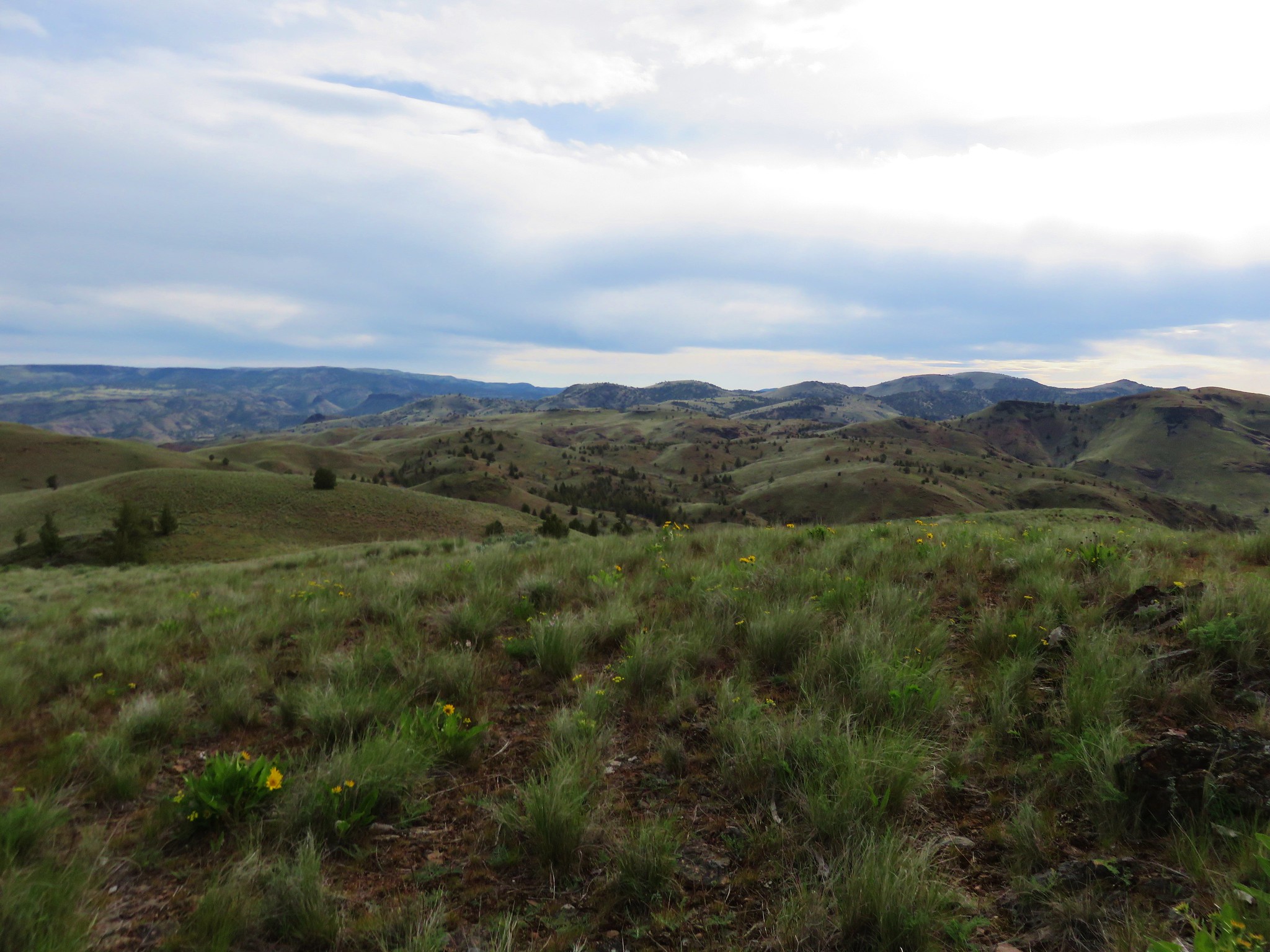
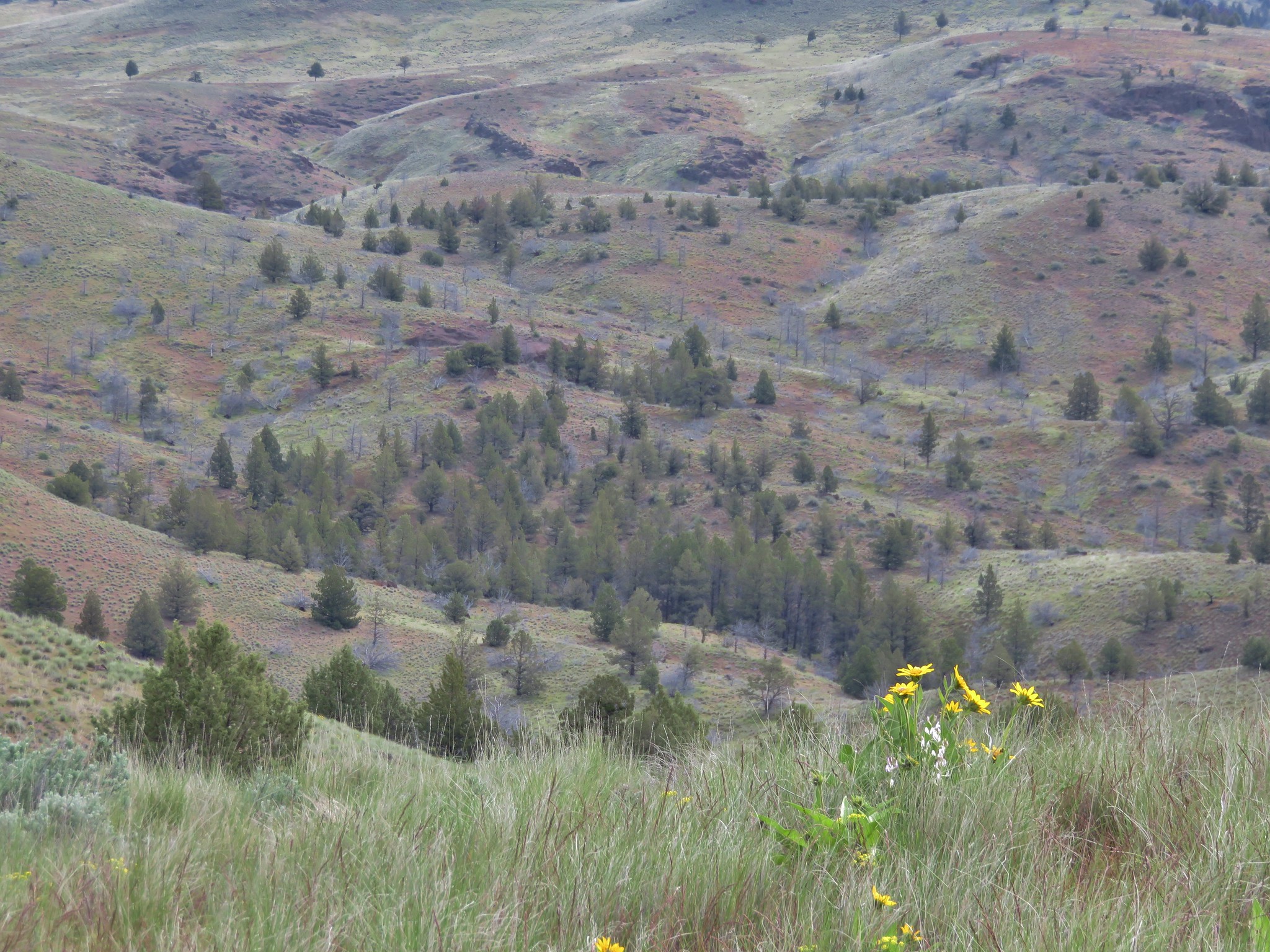
I’ve already done a lot of shuffling on our hiking schedule this year due to the high amount of snow that fell over the winter/early spring that doesn’t seem to be in any hurry to melt off. We are currently in the midst of some 90+ degree days so that should help but for our latest outing the original plan to visit Lost Lake had been scrapped over a month ago and we were off to the replacement hike – Bald Butte.

Interestingly this hike was less than 15 miles (as the crow flies) from Lost Lake with the high point on Bald Butte coming in at 3770′ while the lake sits a little under 3200′. Location, location, location. In any event the snow coverage maps showed plenty of snow around the lake and none on the butte the day before our visit.

We began our hike at the Oak Ridge Trailhead. To reach the trailhead turn west on Smullen Road off of Highway 35 approximately 14.4 miles south of Hood River, OR. At a sharp right turn take a left off of Smullen Road onto a short dirt road to the parking area. The trail starts on the far side a small footbridge.
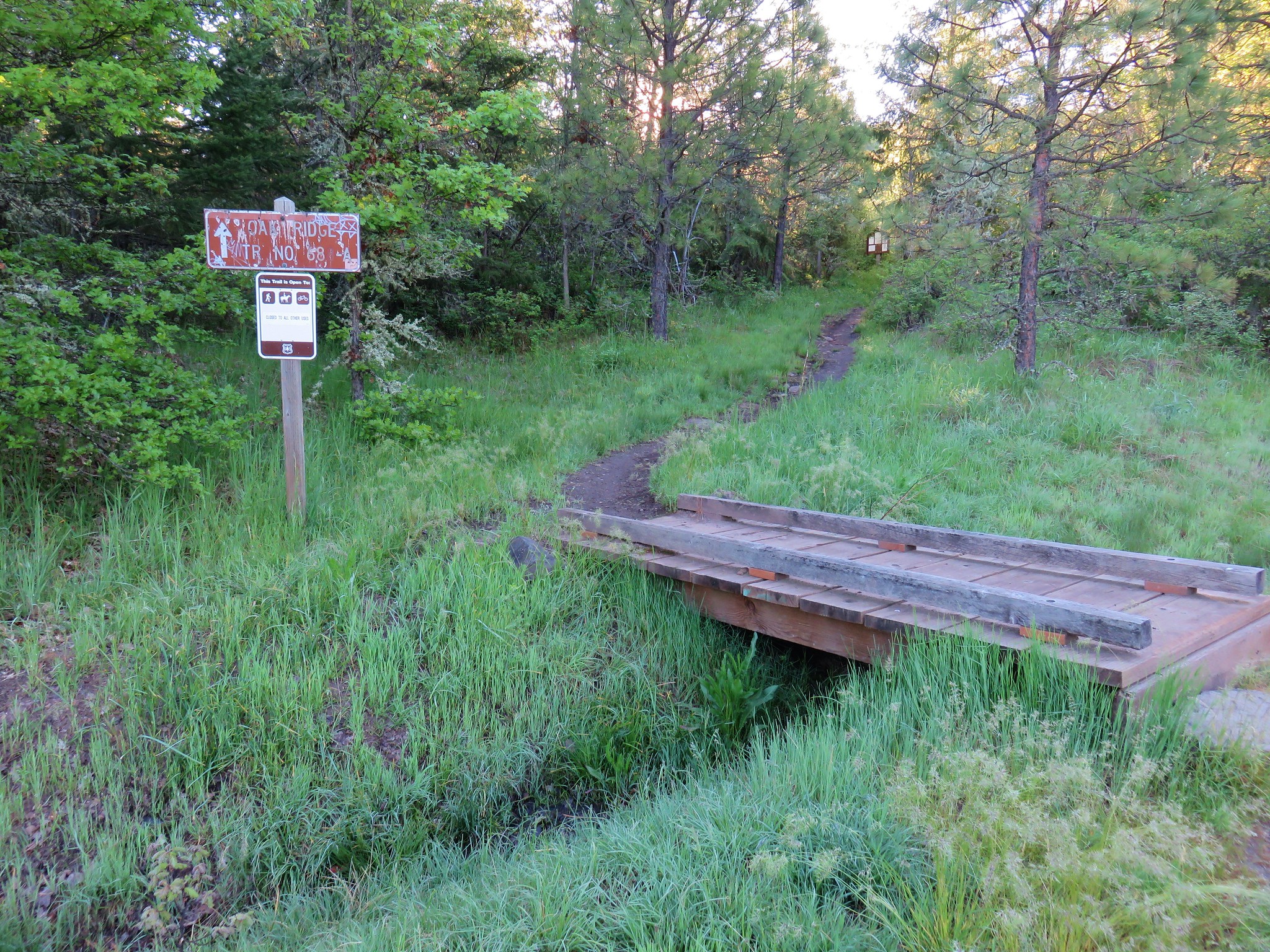
Oak Ridge Trail

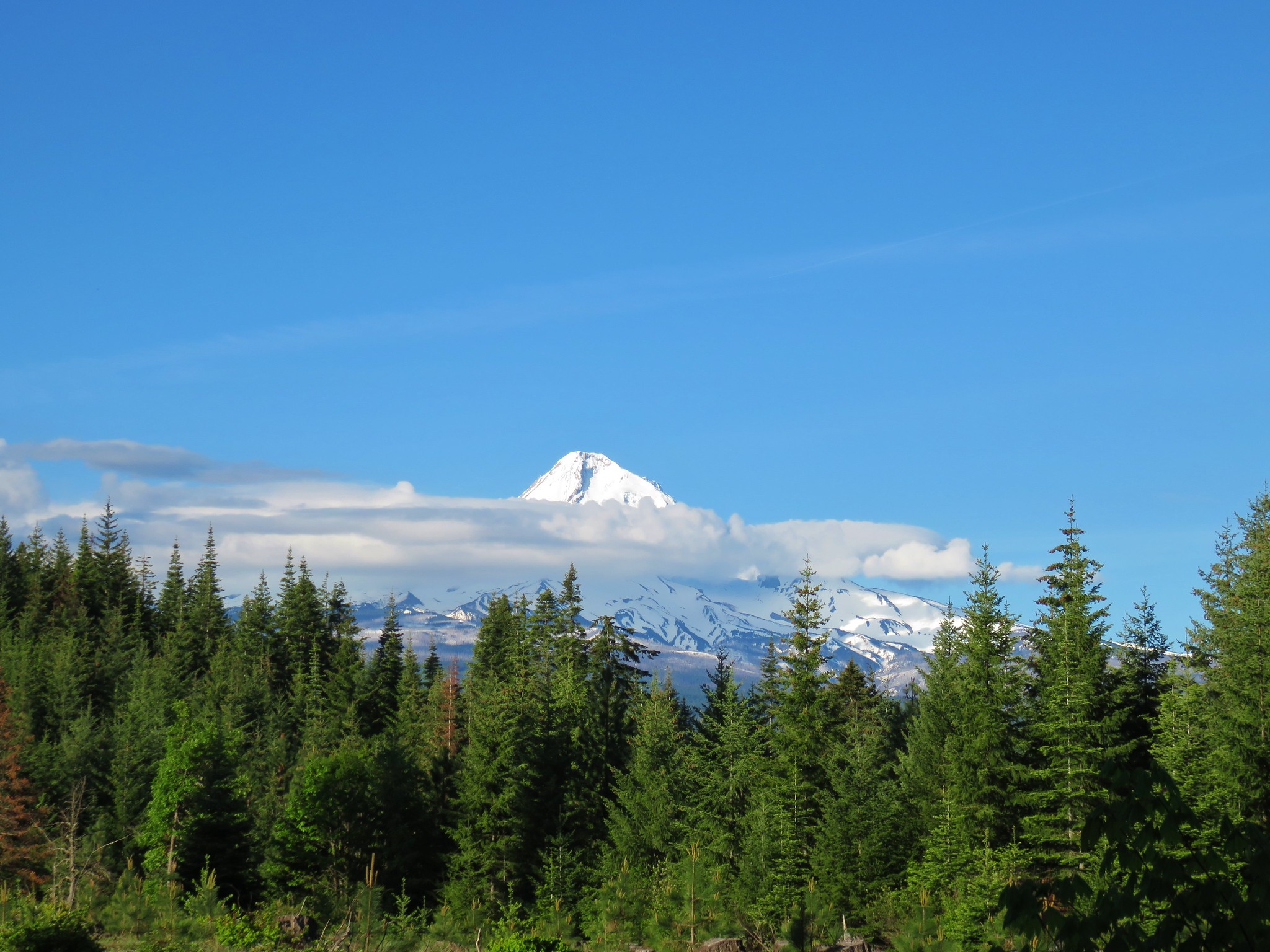
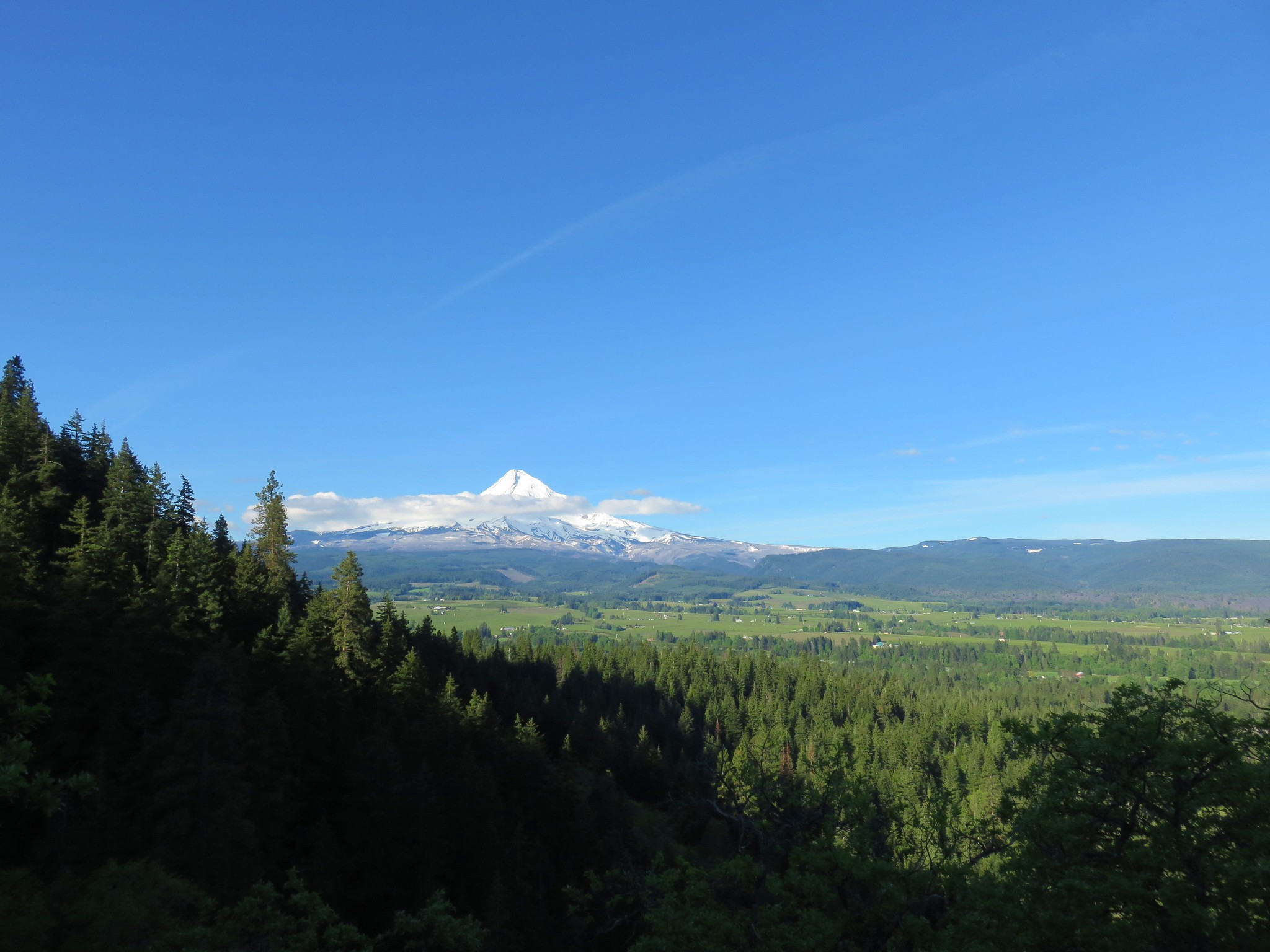
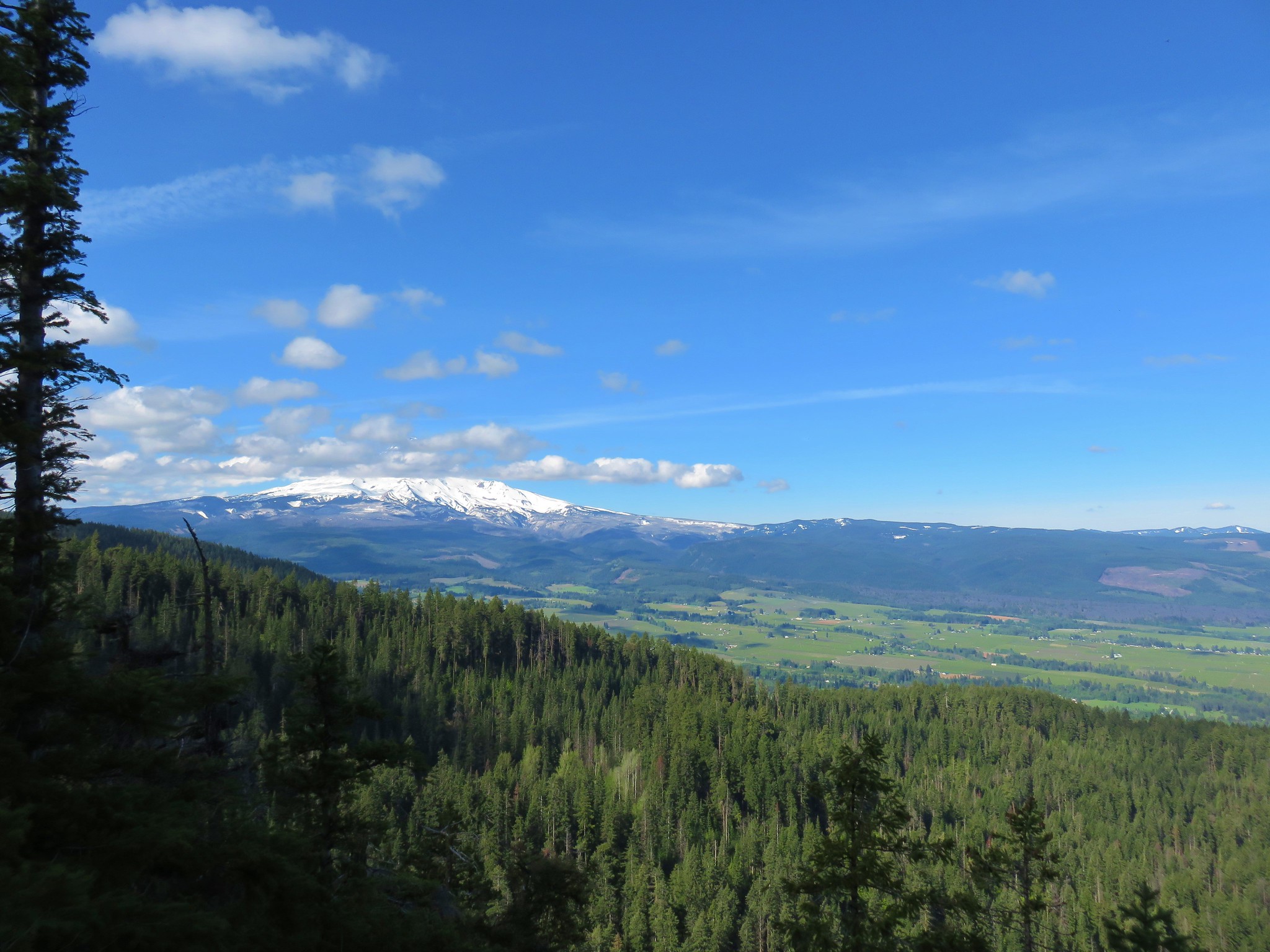
The Oakridge Trail is 2.4 miles long and gains almost 2000′ as it climbs from the trailhead to the Surveyor’s Ridge Trail which runs north/south for 16.4 miles. The trail was fairly level at first passing through an old clearcut with a view of Mt. Hood.
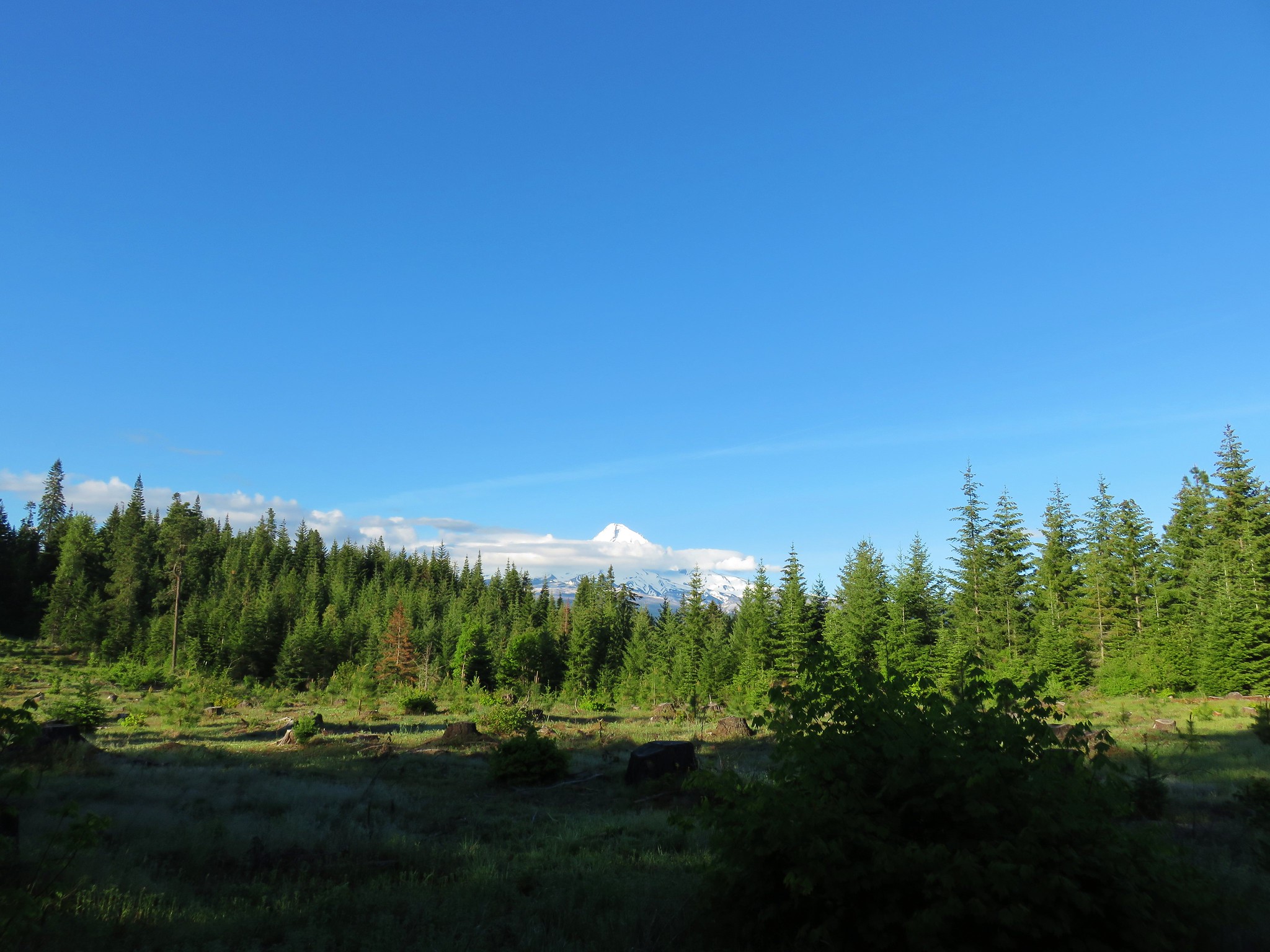
Mt. Hood

Mt. Hood

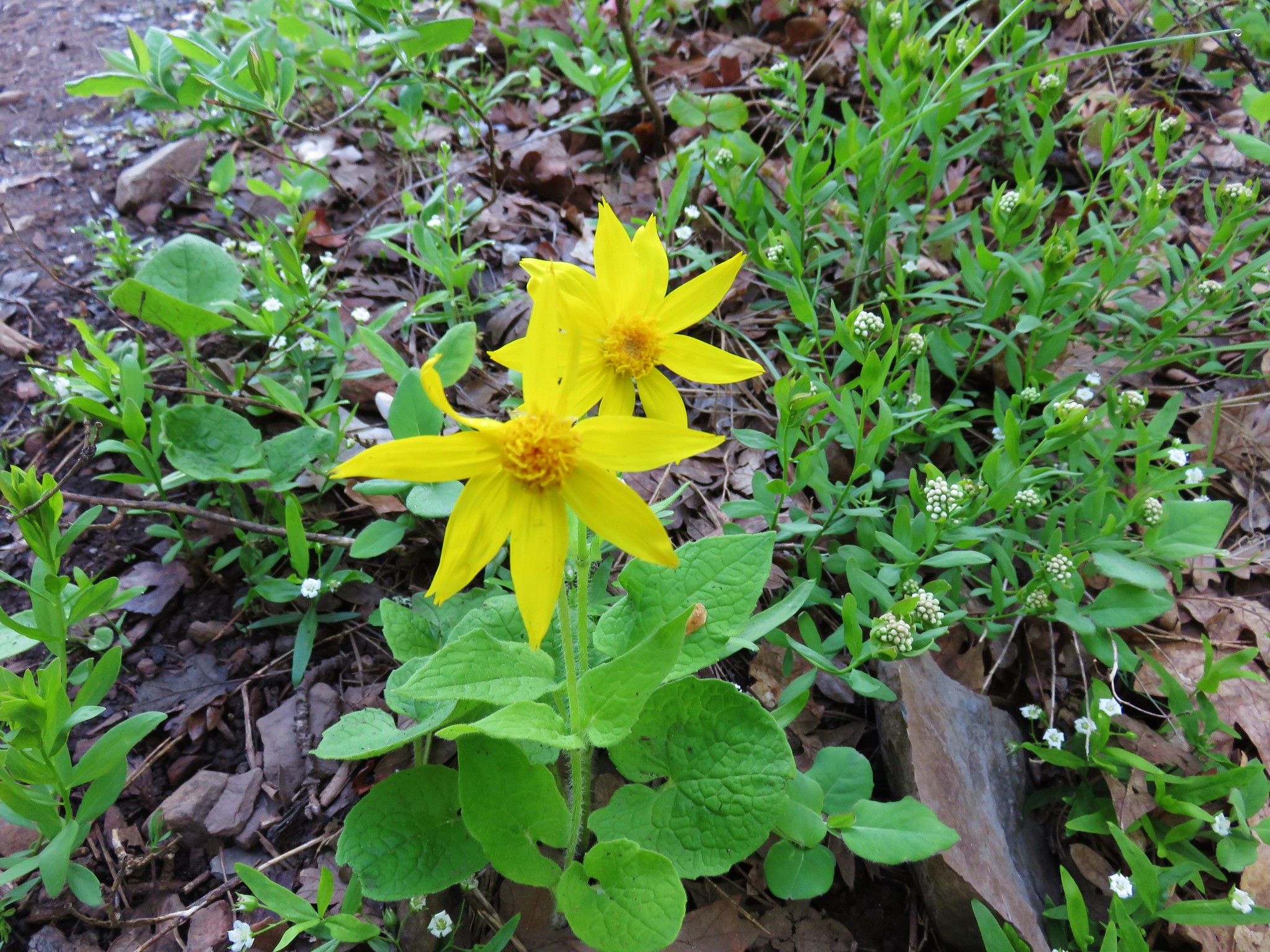
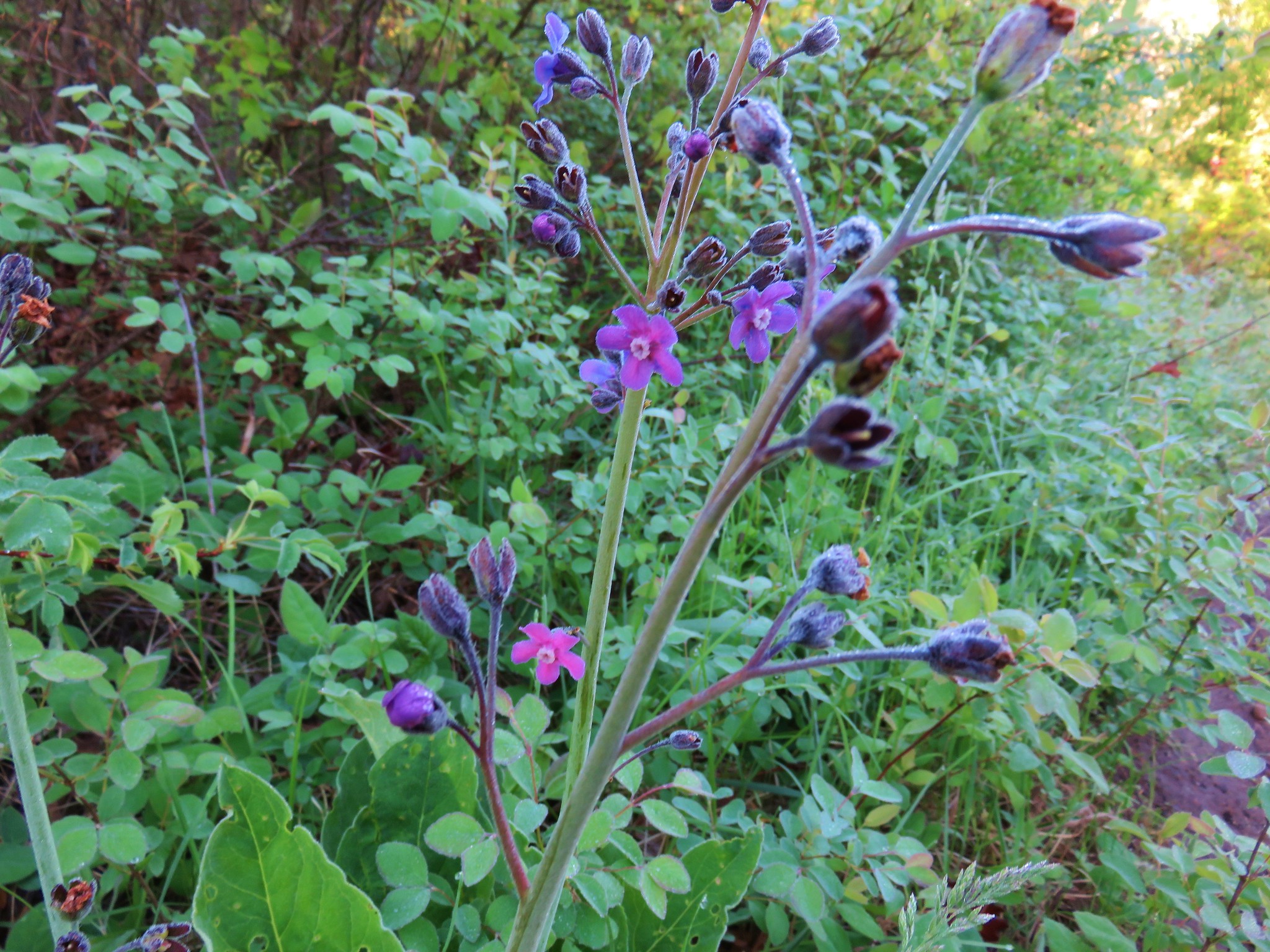
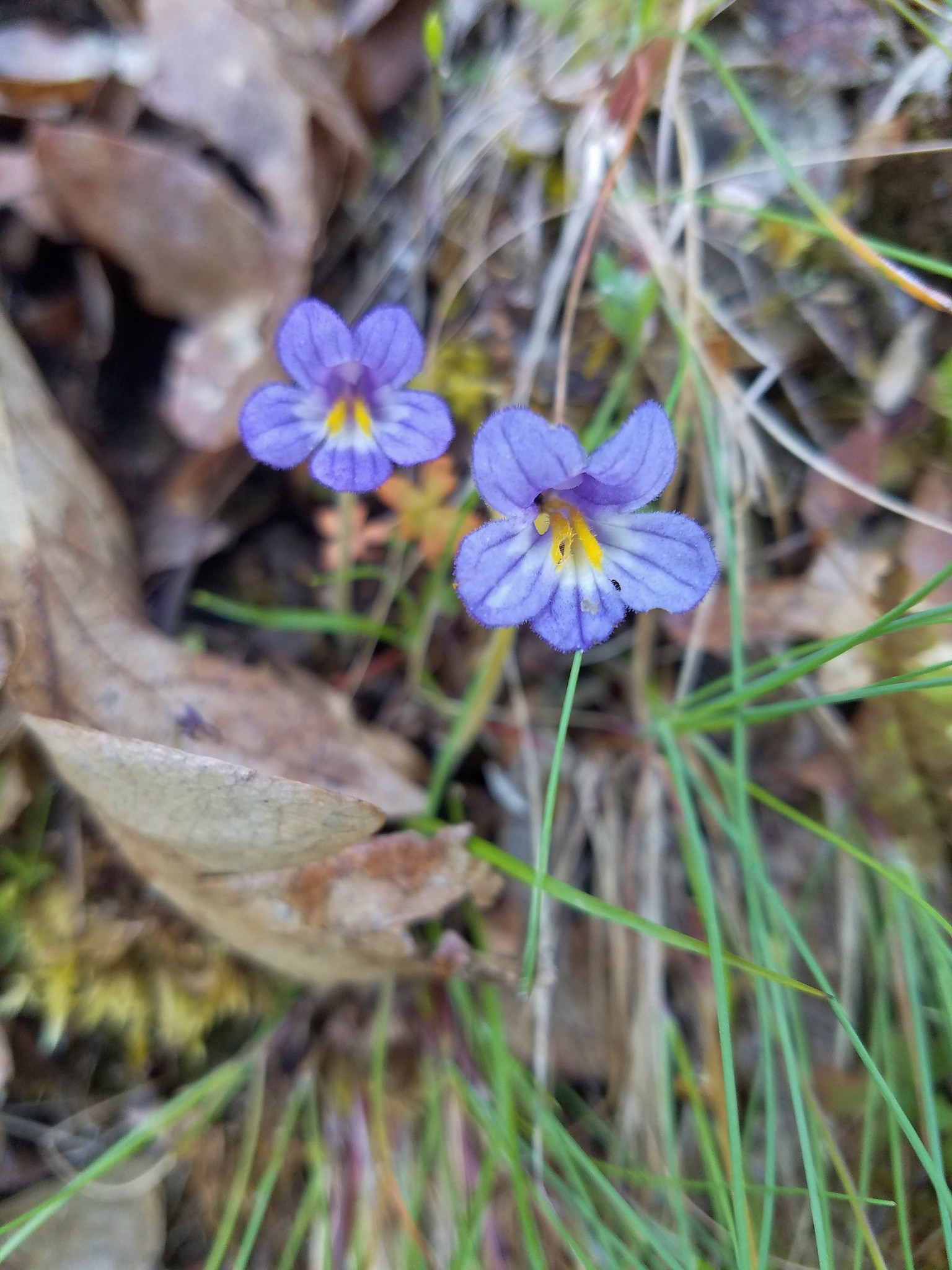
Flowers blooming along this stretch included lupine, arnica and some nice hound’s tongue.
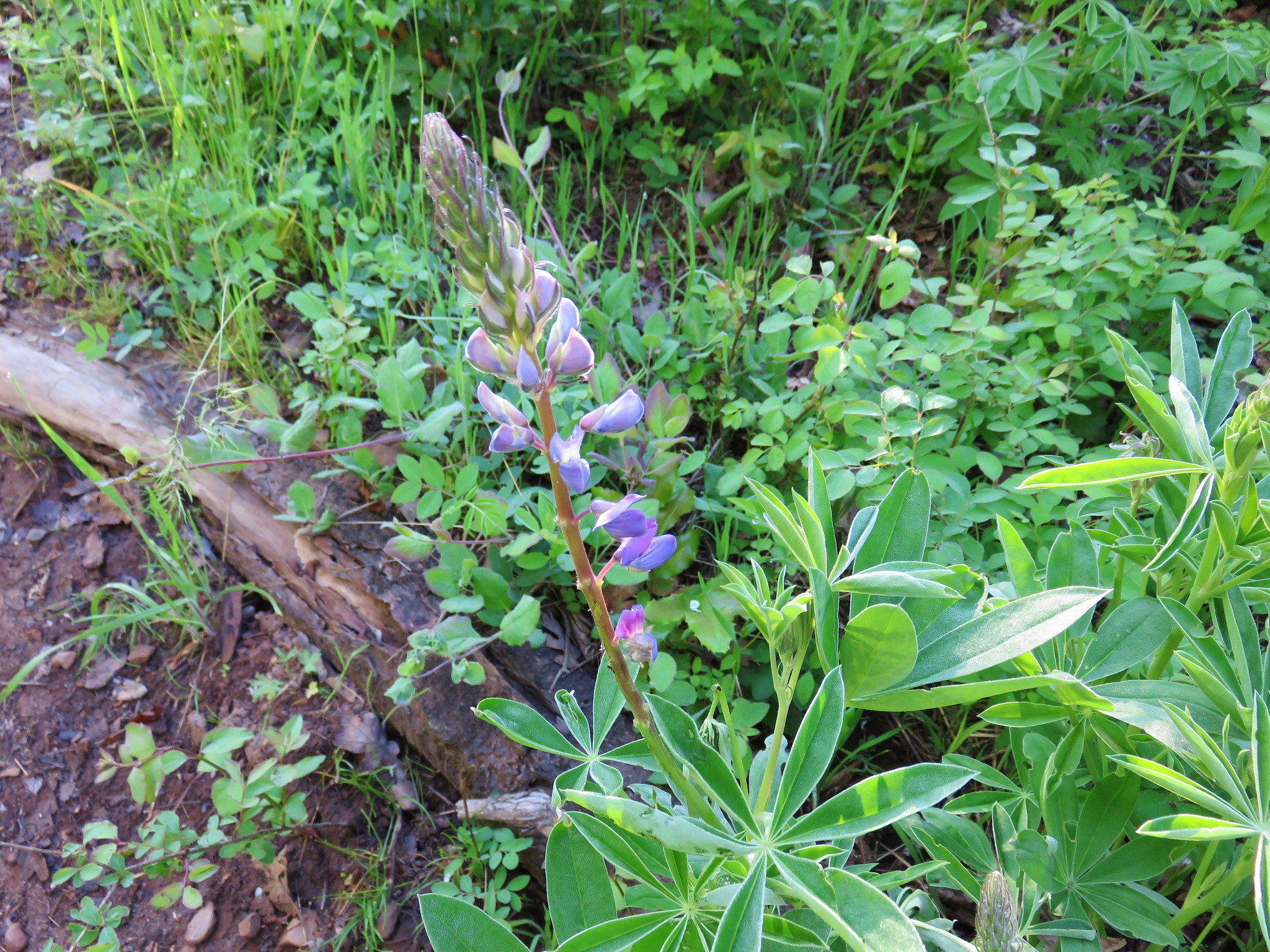
Lupine

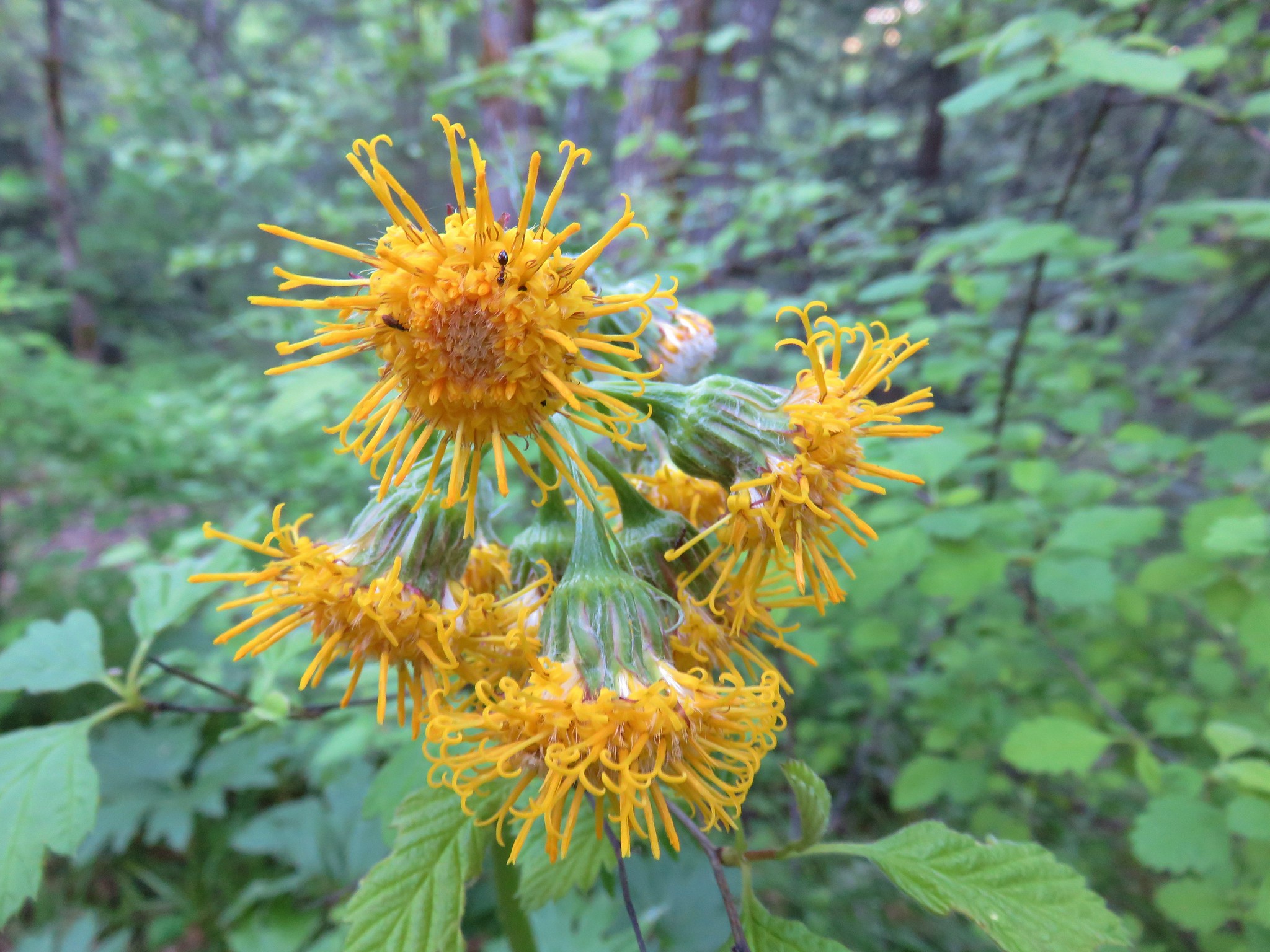
Arnica

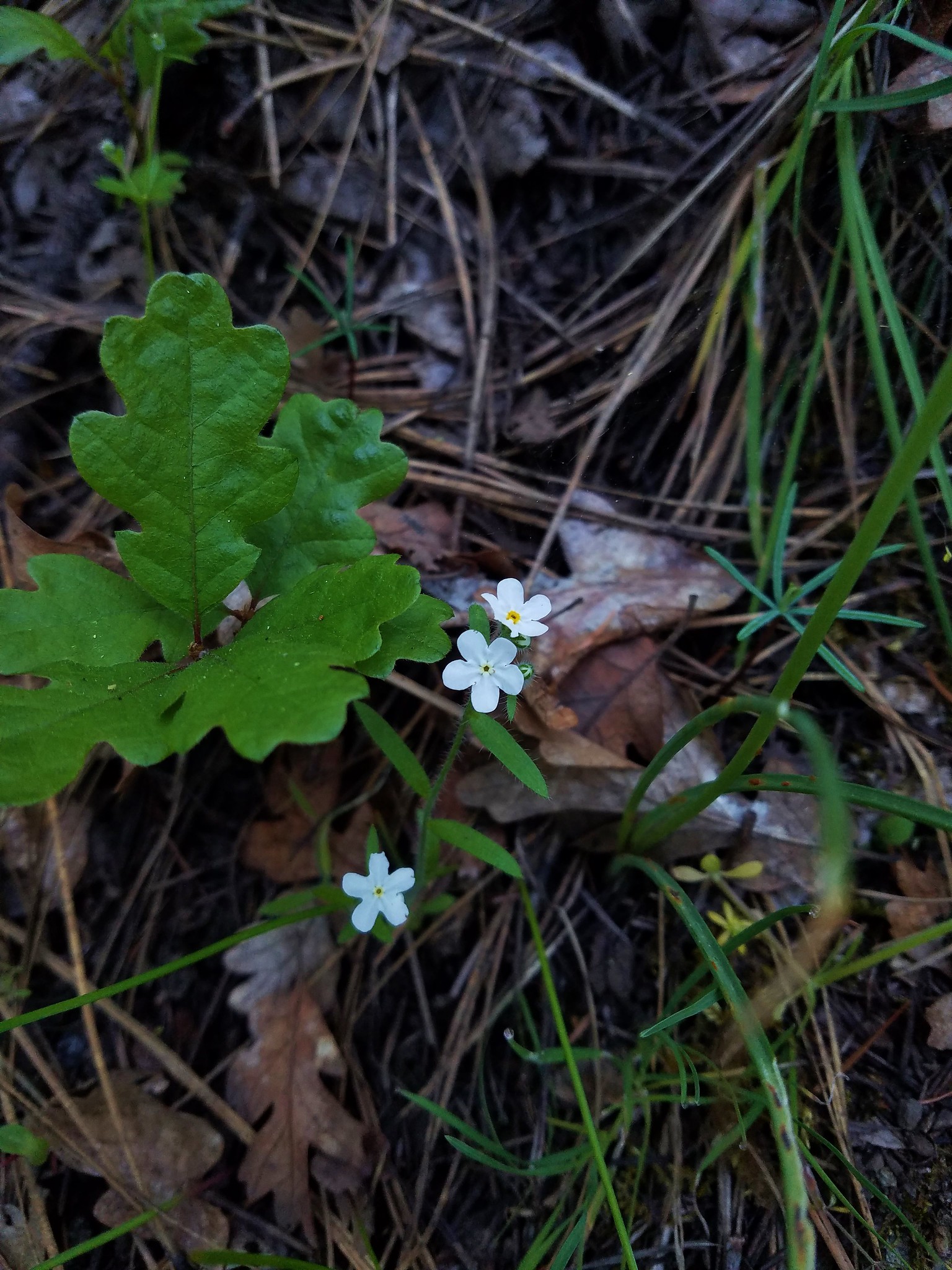
Hound's tongue

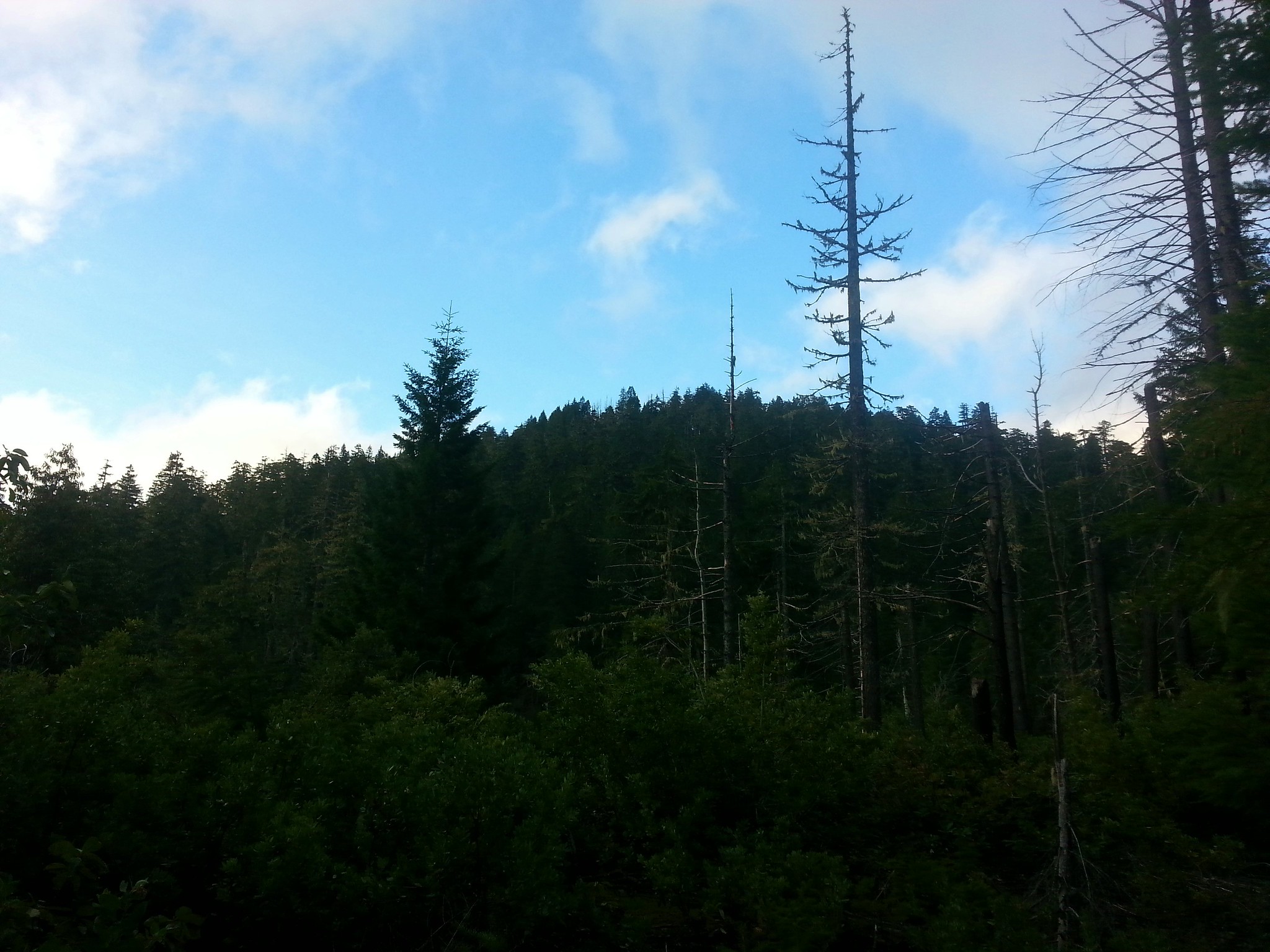
We began to climb after the clearcut as the trail entered the trees.
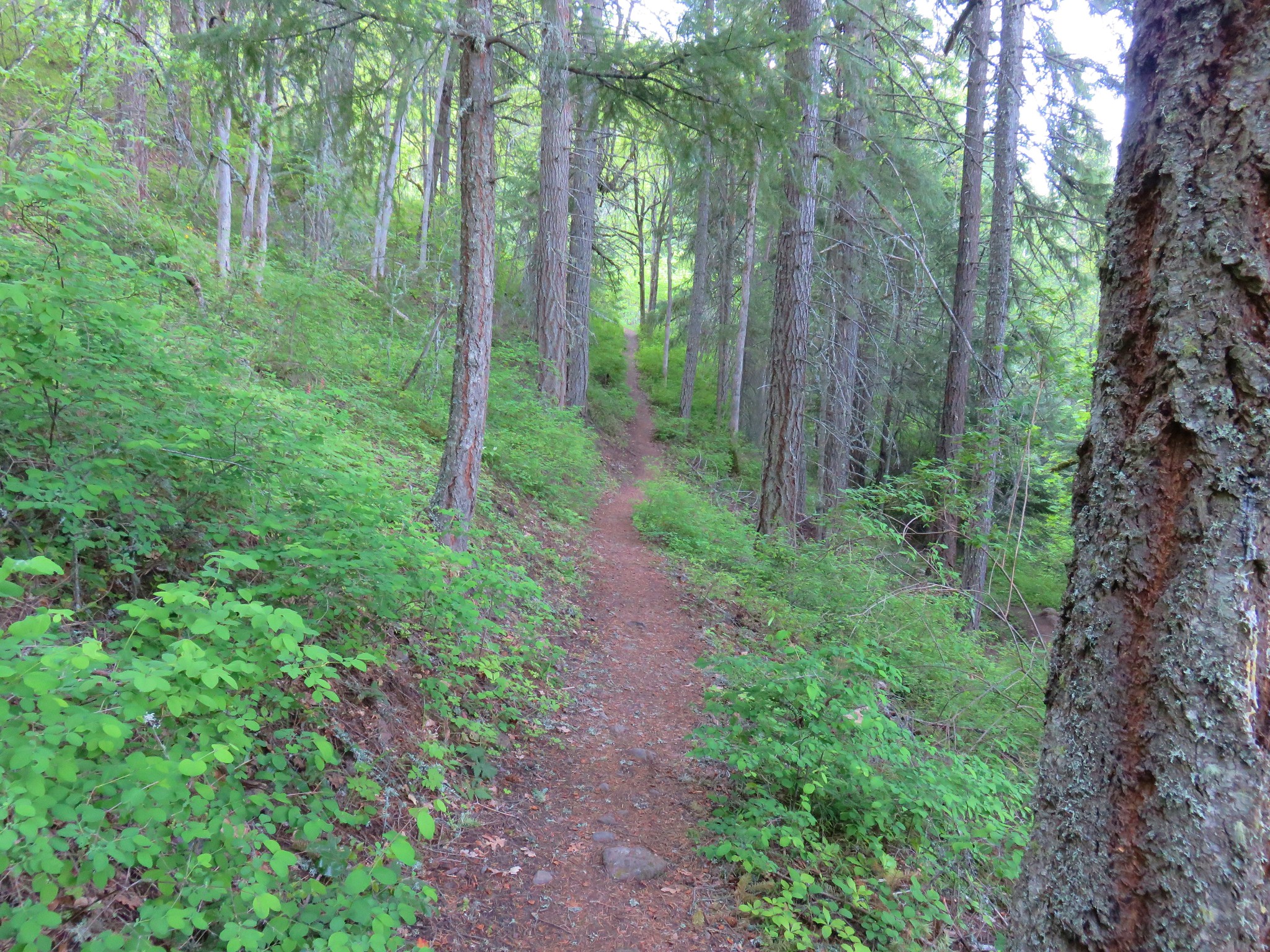
Oak Ridge Trail

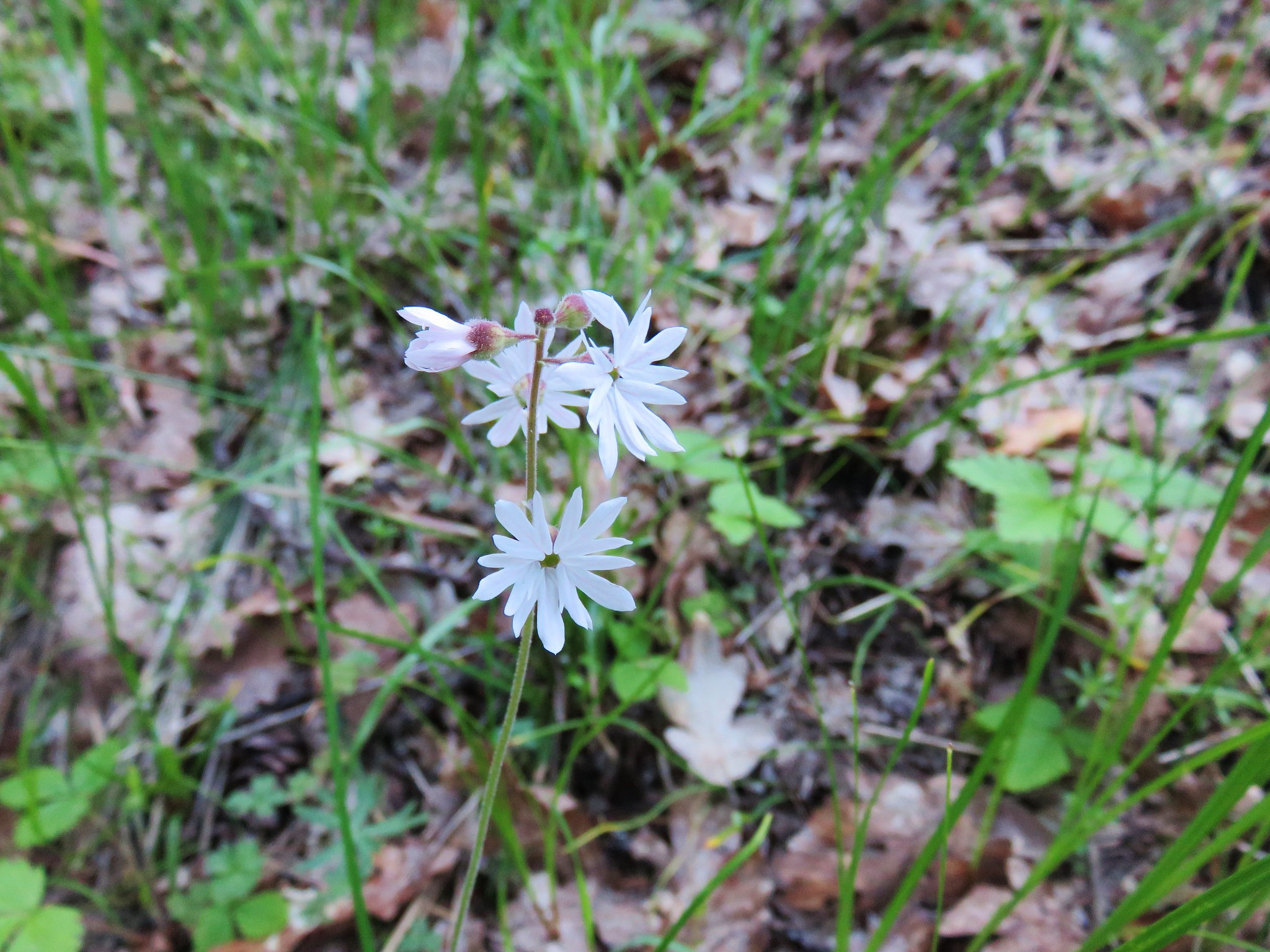
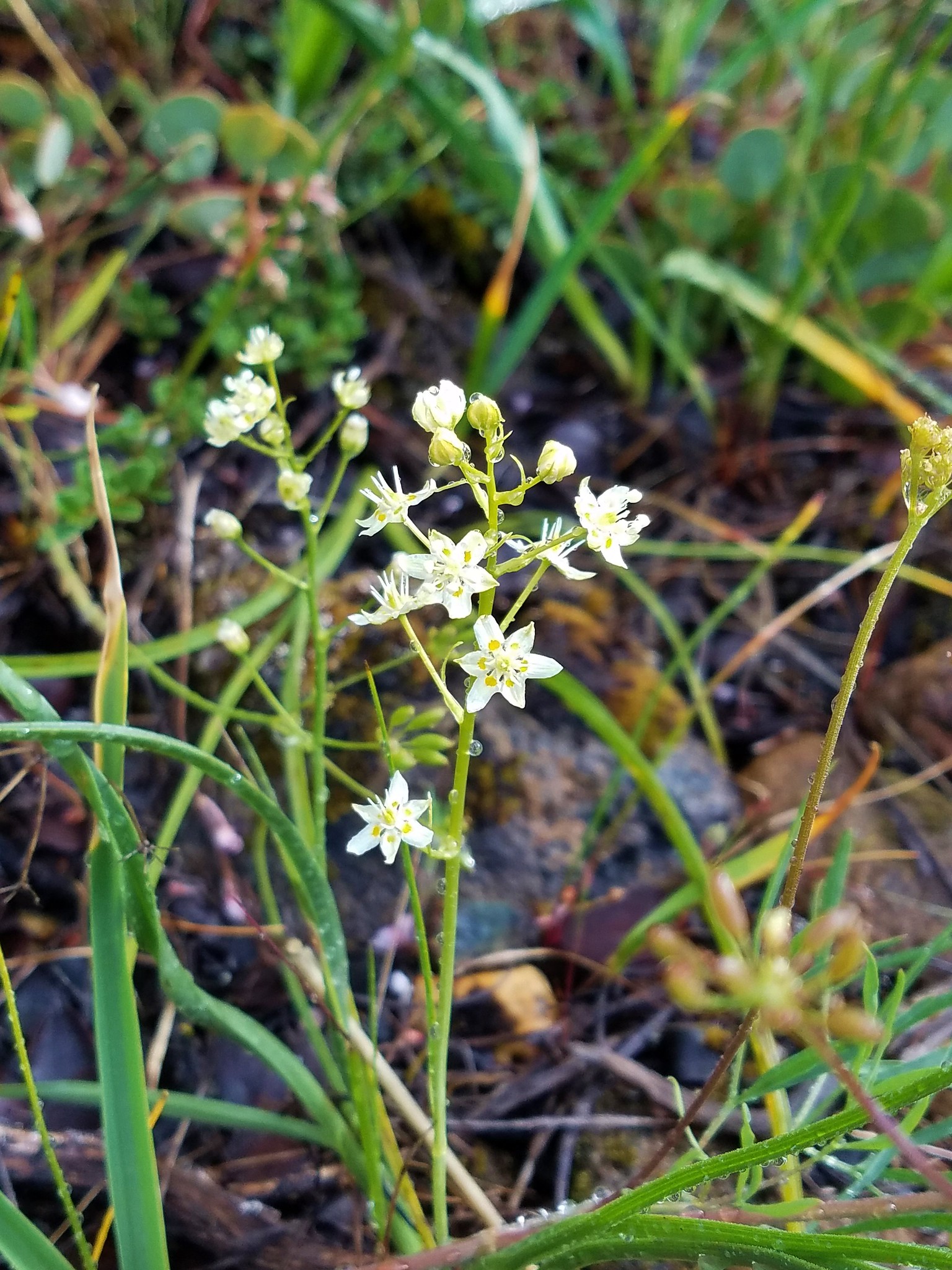
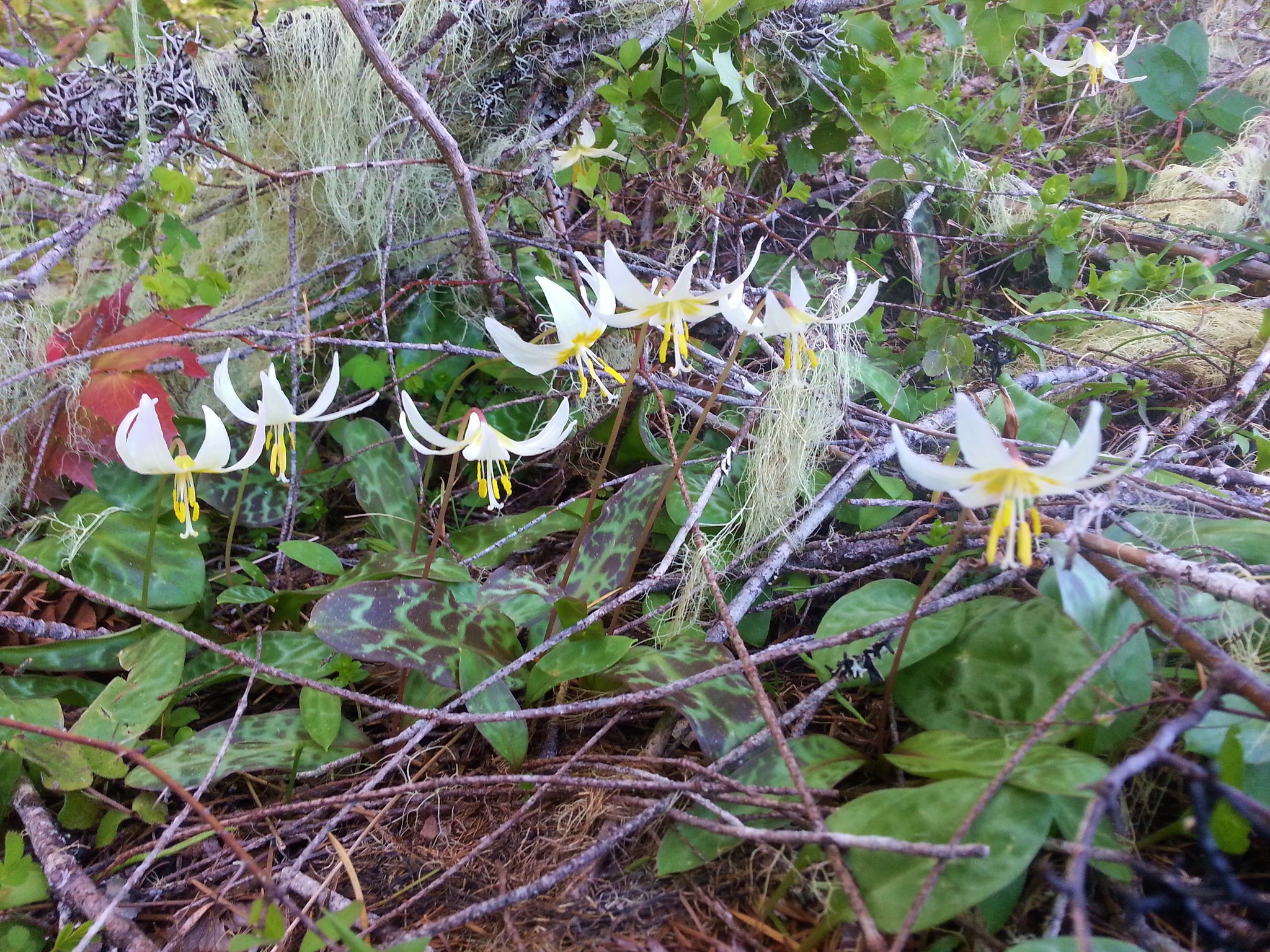
Additional flowers were blooming here including a few chocolate lilies, woodland stars, silvercrown, and various white flowers.
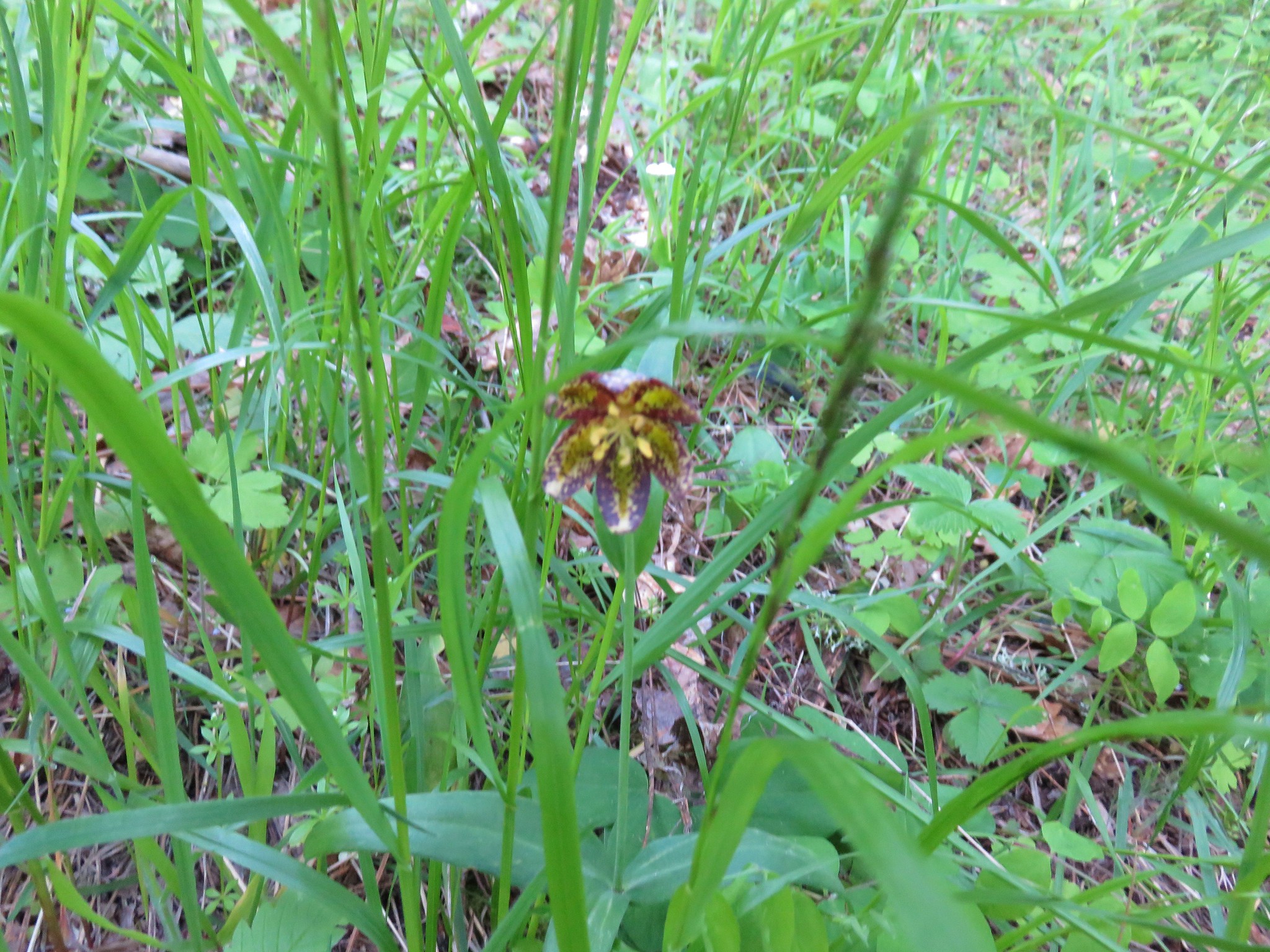
Chocolate lily

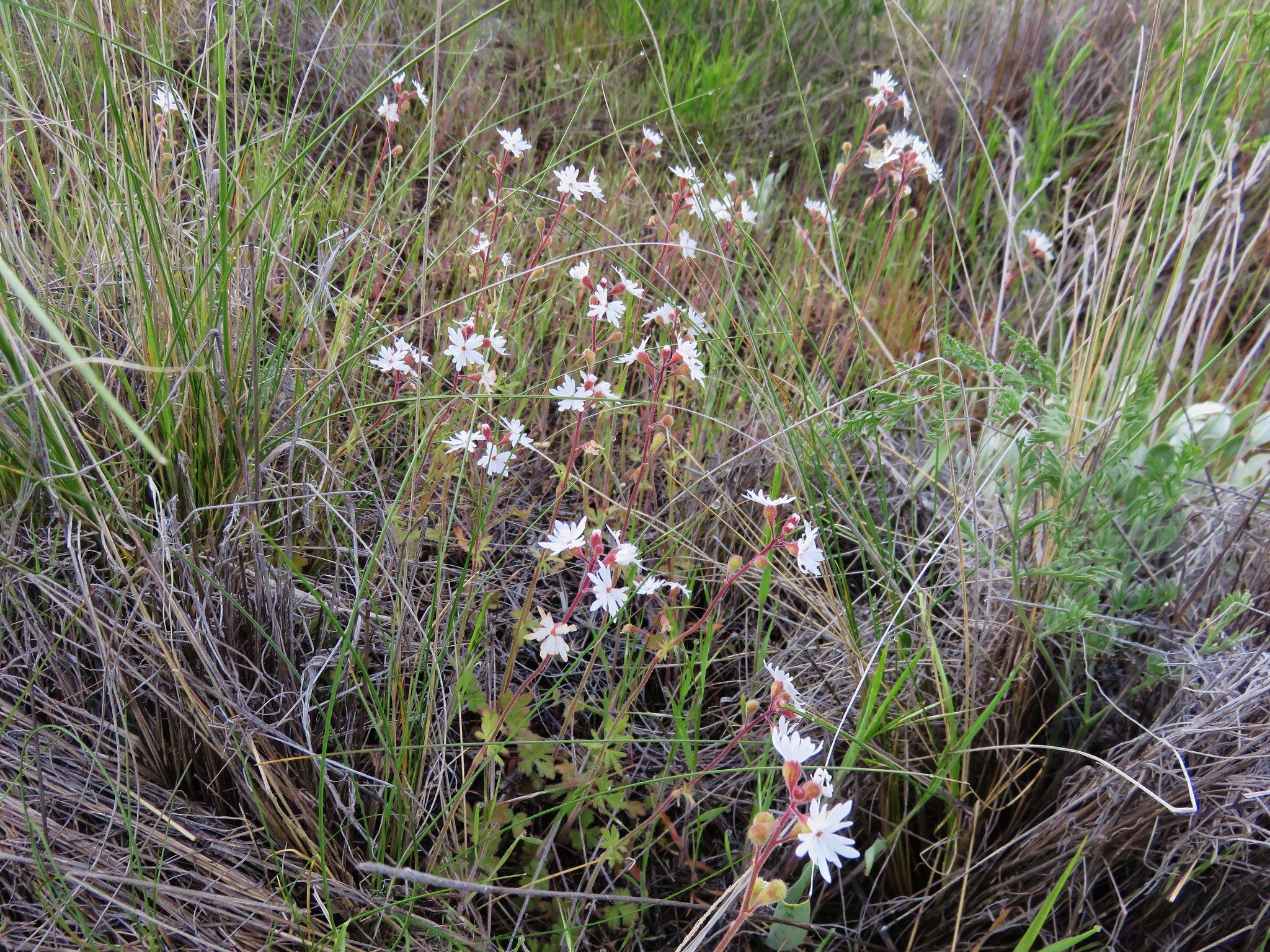
Prairie stars

Silvercrown

Wildflower along the Oak Ridge Trail

Wildflower along the Oak Ridge Trail

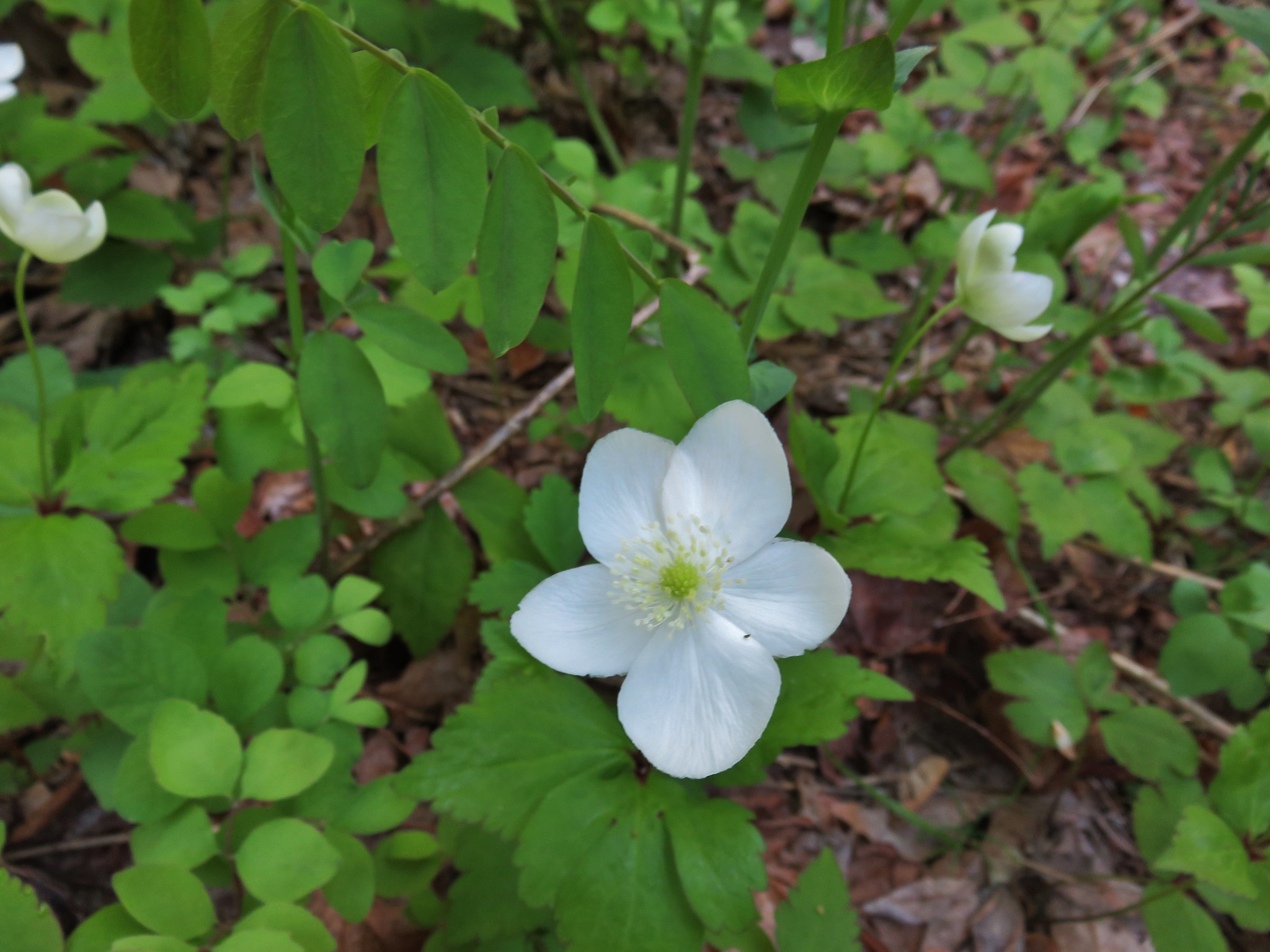
Anemone

Heather spotted a nice striped coralroot.
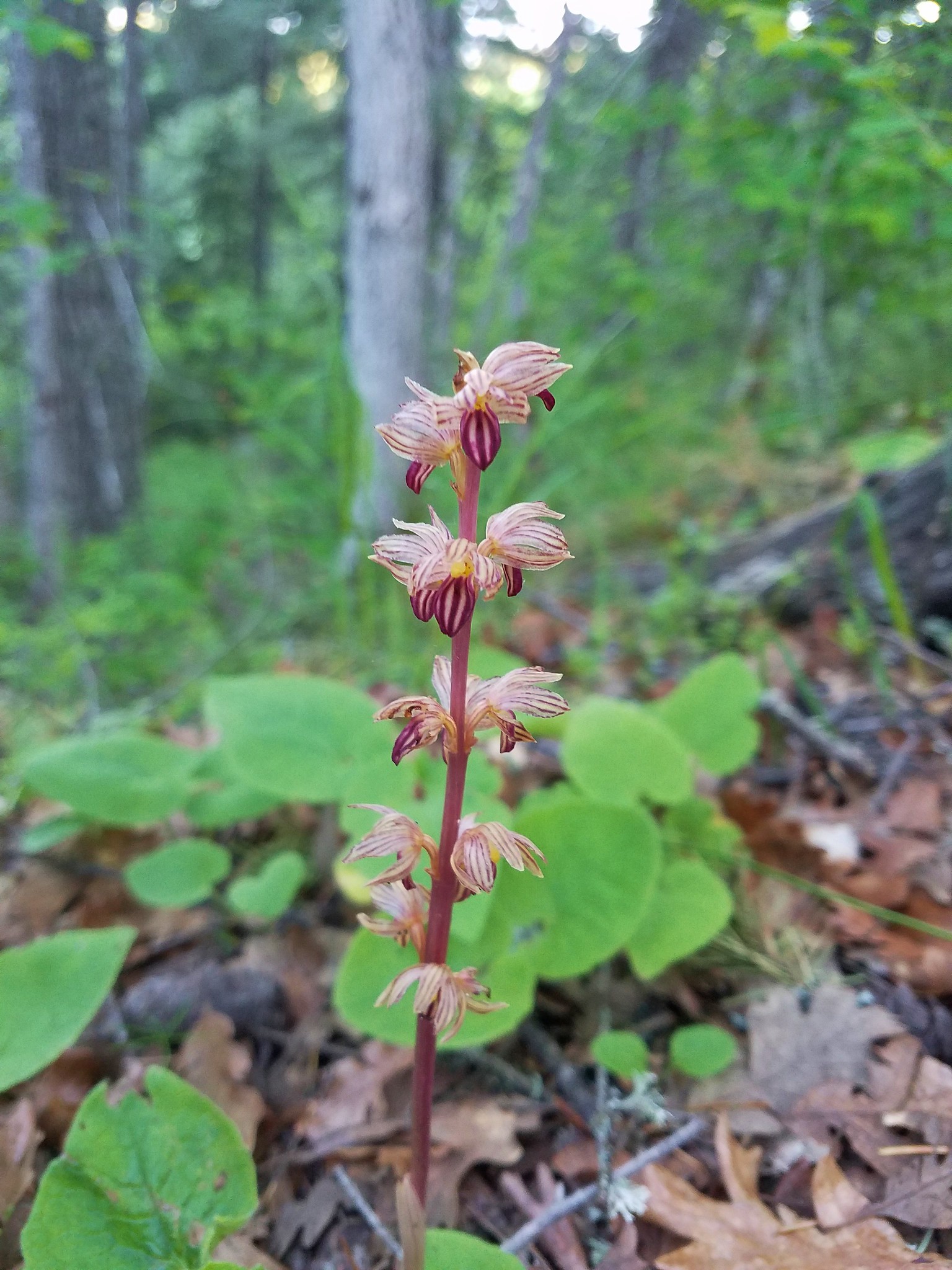
Coralroot

Switchbacks made the climb less strenuous than it could have been and soon we entered oak grasslands with even more flowers.
Wildflower along the Oak Ridge Trail

Wildflower along the Oak Ridge Trail

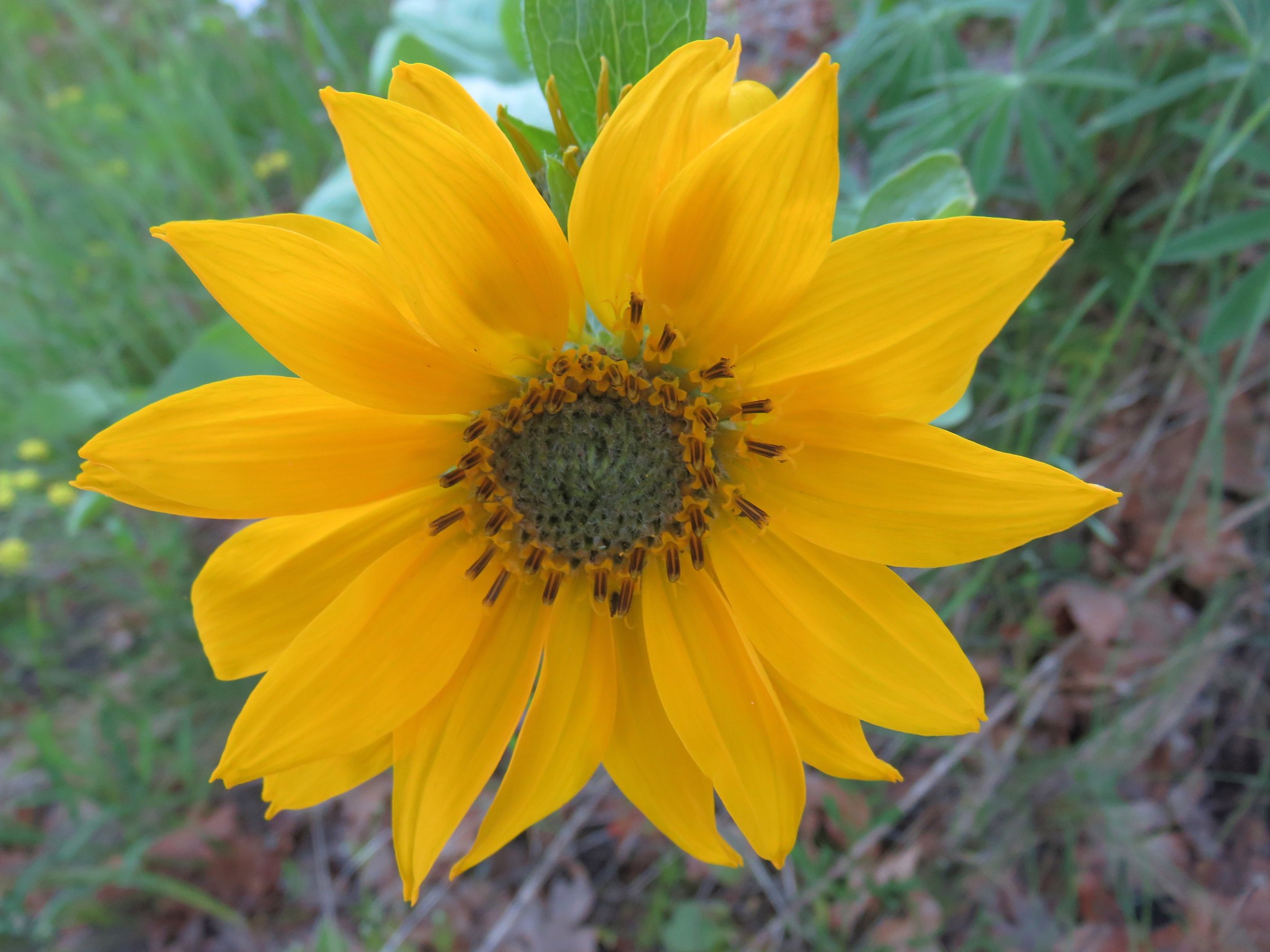
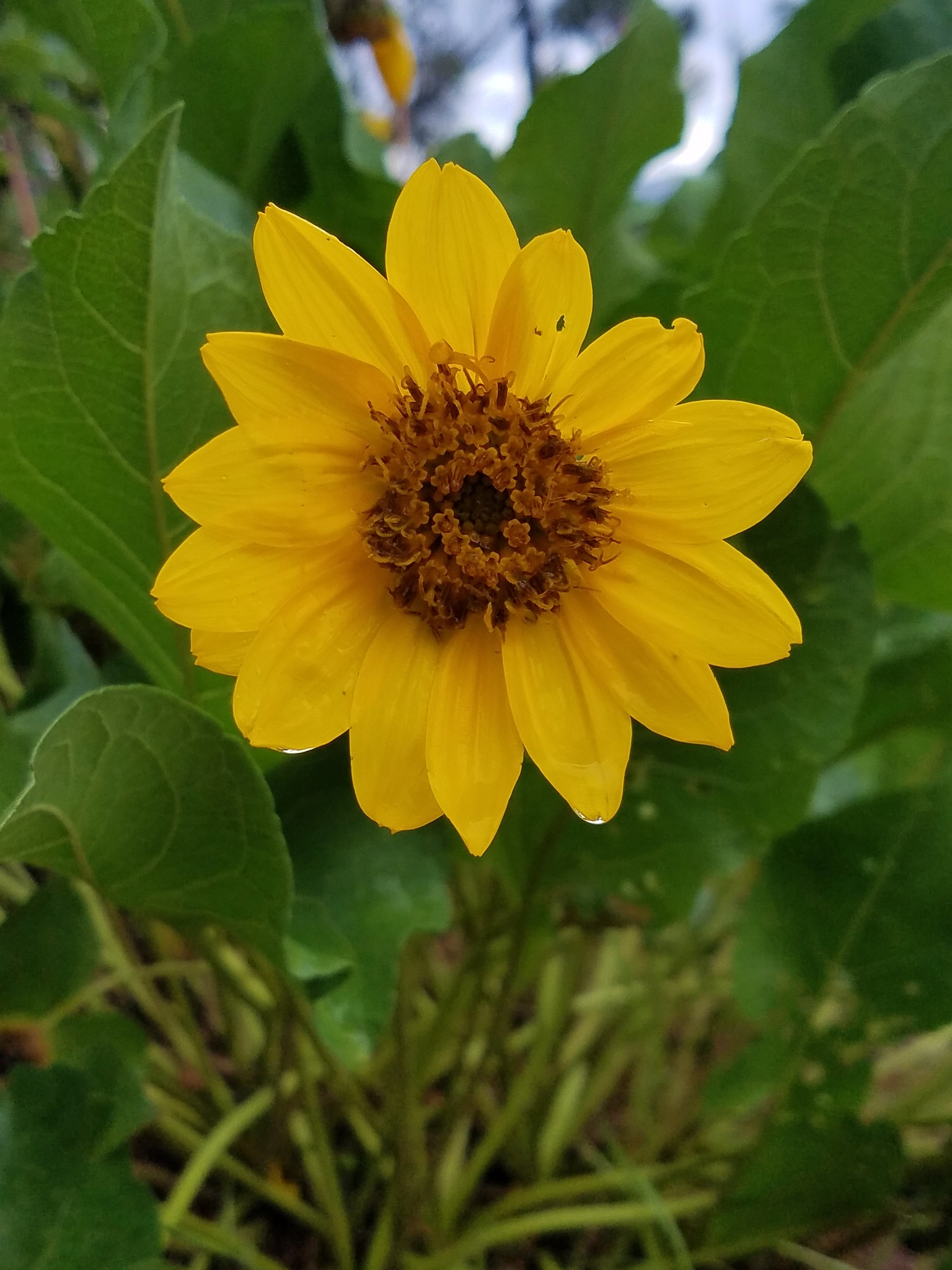
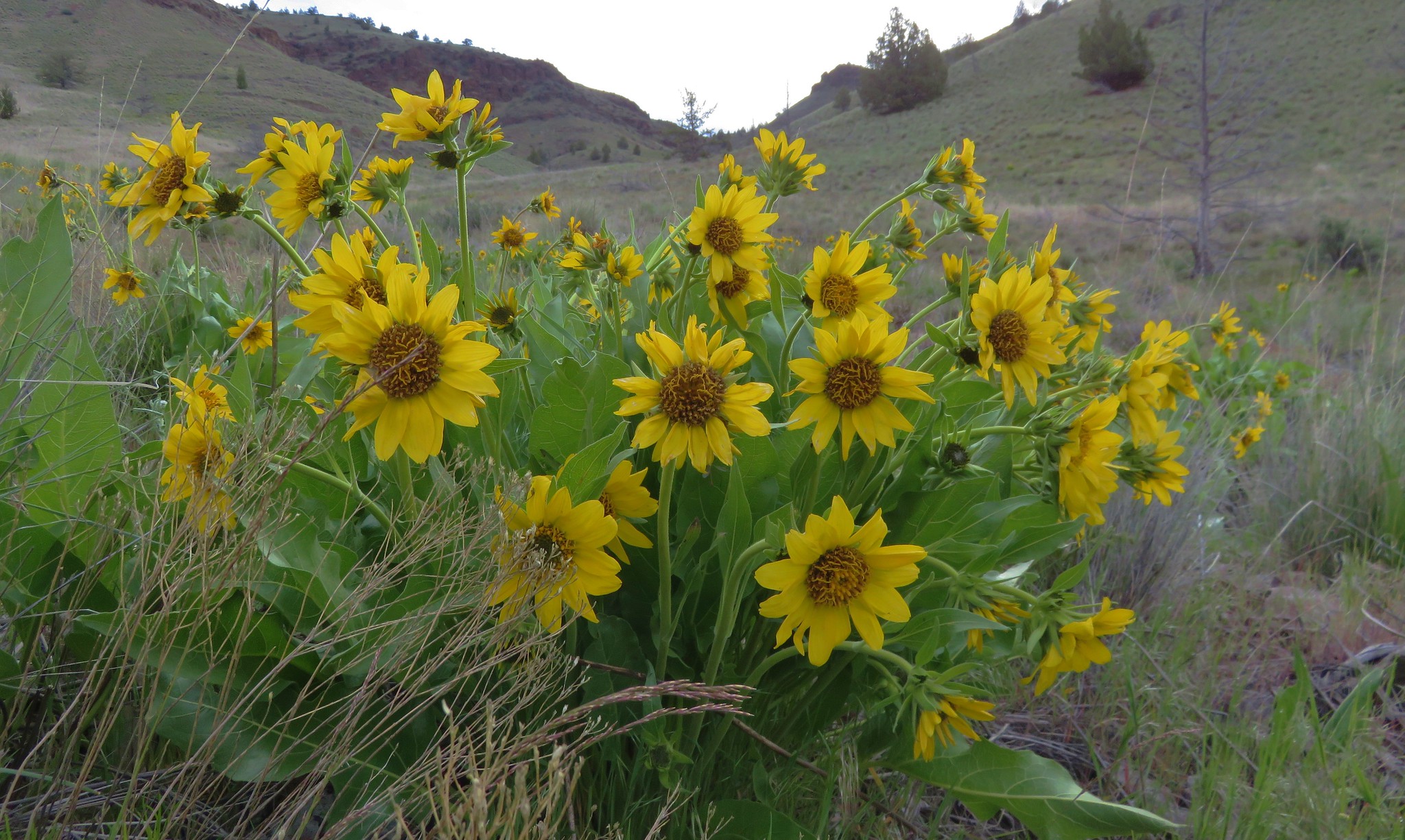
Balsamroot

Naked broomrape

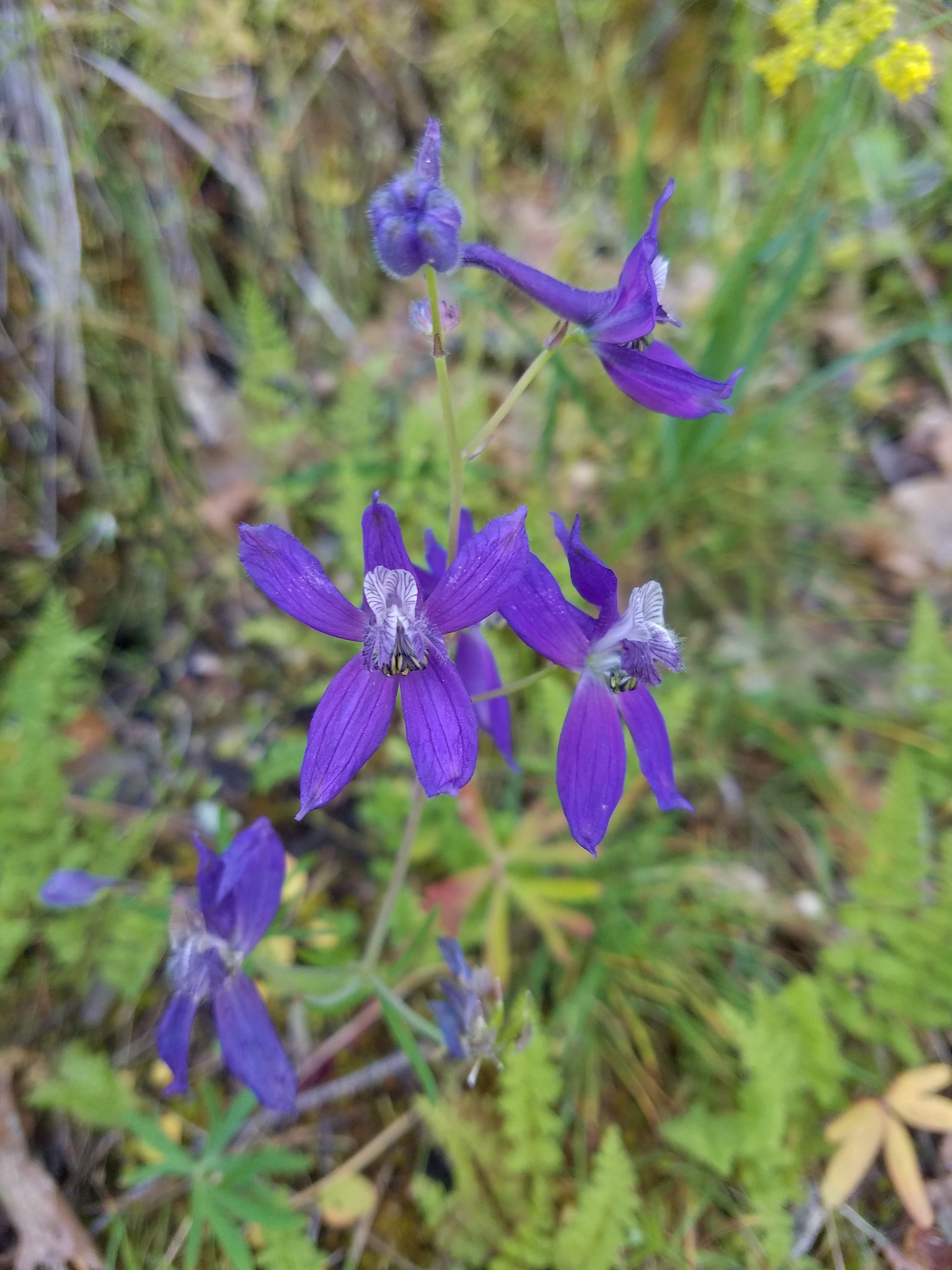
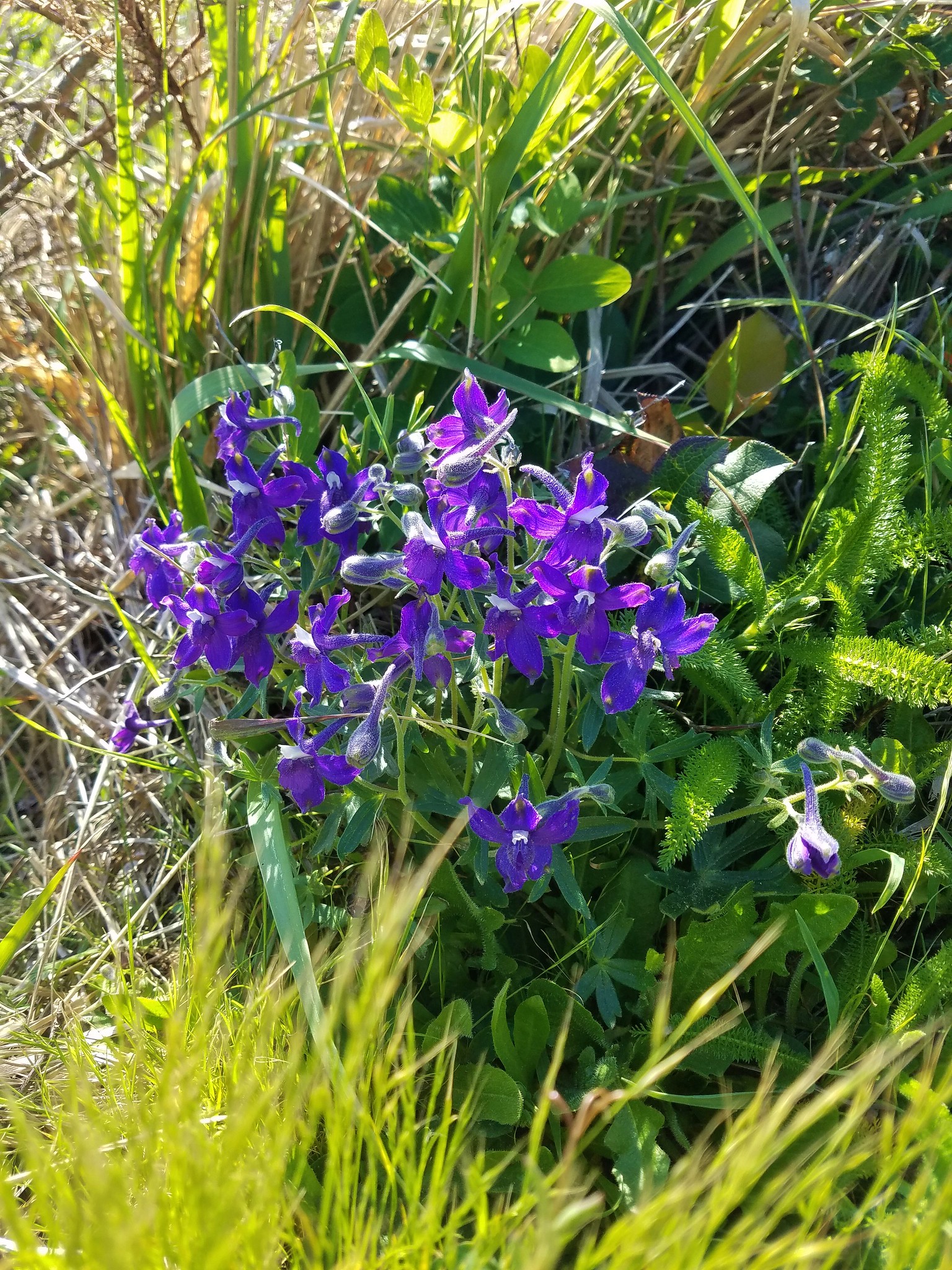
Larkspur

One of the benefits of gaining elevation on a hike is that doing so typically creates more variety in the flowers seen which was certainly the case here.

The trail continued to switchback up through increasingly open grasslands allowing for some nice views.
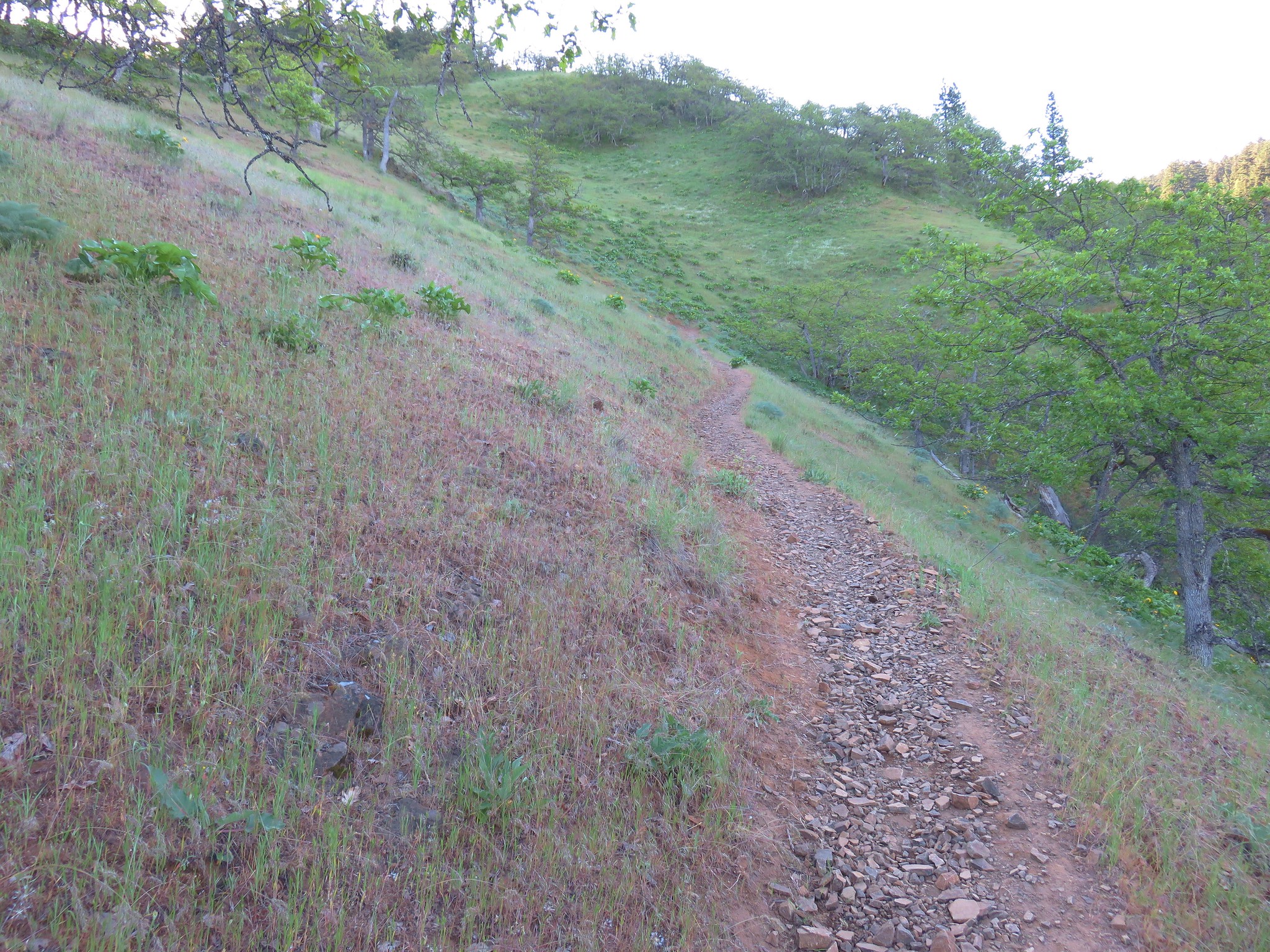
Oak Ridge Trail

Balc Butte from the Oak Ridge Trail
Bald Butte from the Oak Ridge Trail

Mt. Hood
Mt. Hood

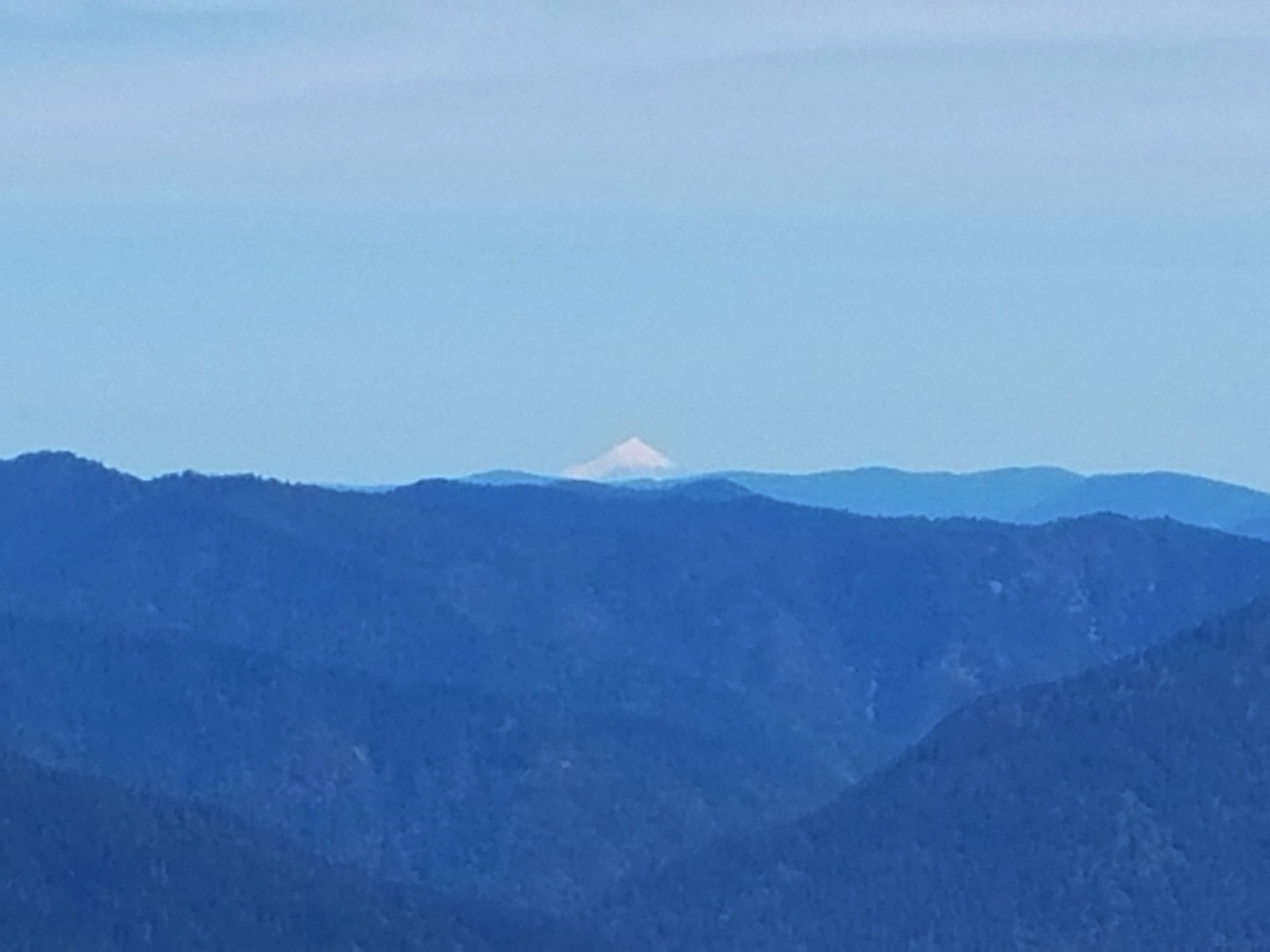
Mt. Rainier in the distance
Mt. Rainier in the distance.

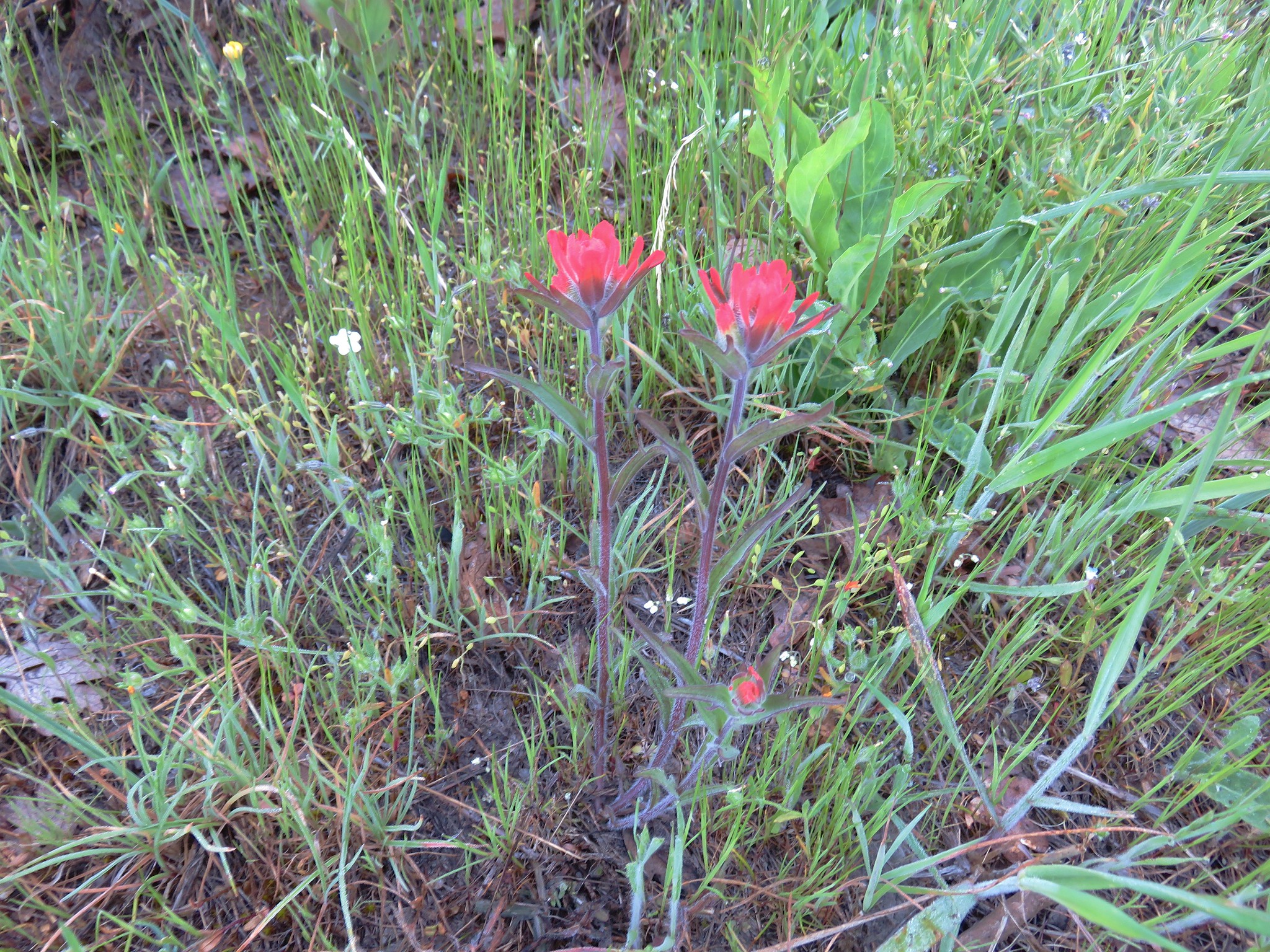
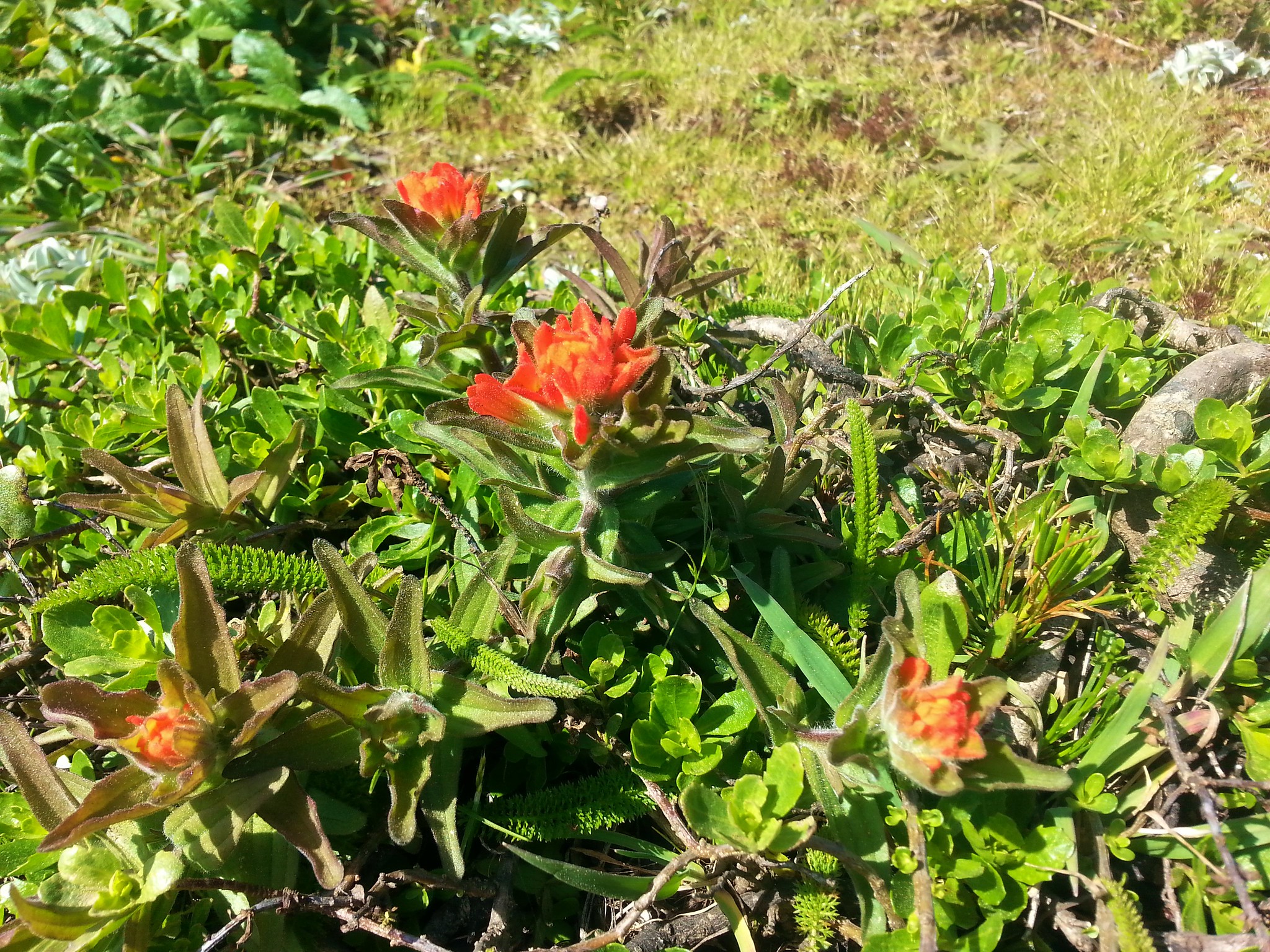
Just before reentering the forest we ran into a small patch of paintbrush.
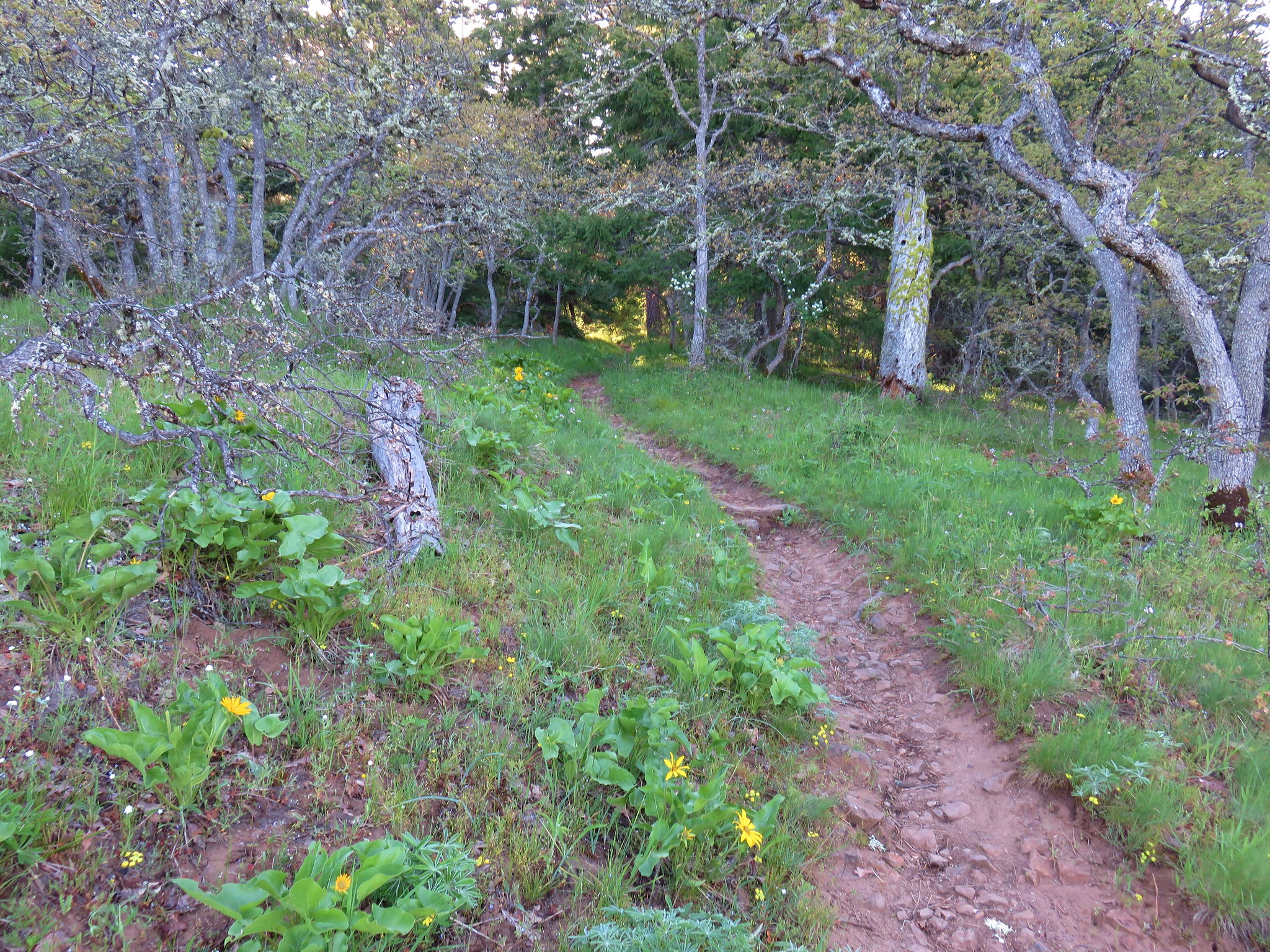
Wildflower along the Oak Ridge Trail

Paintbrush

Paintbrush

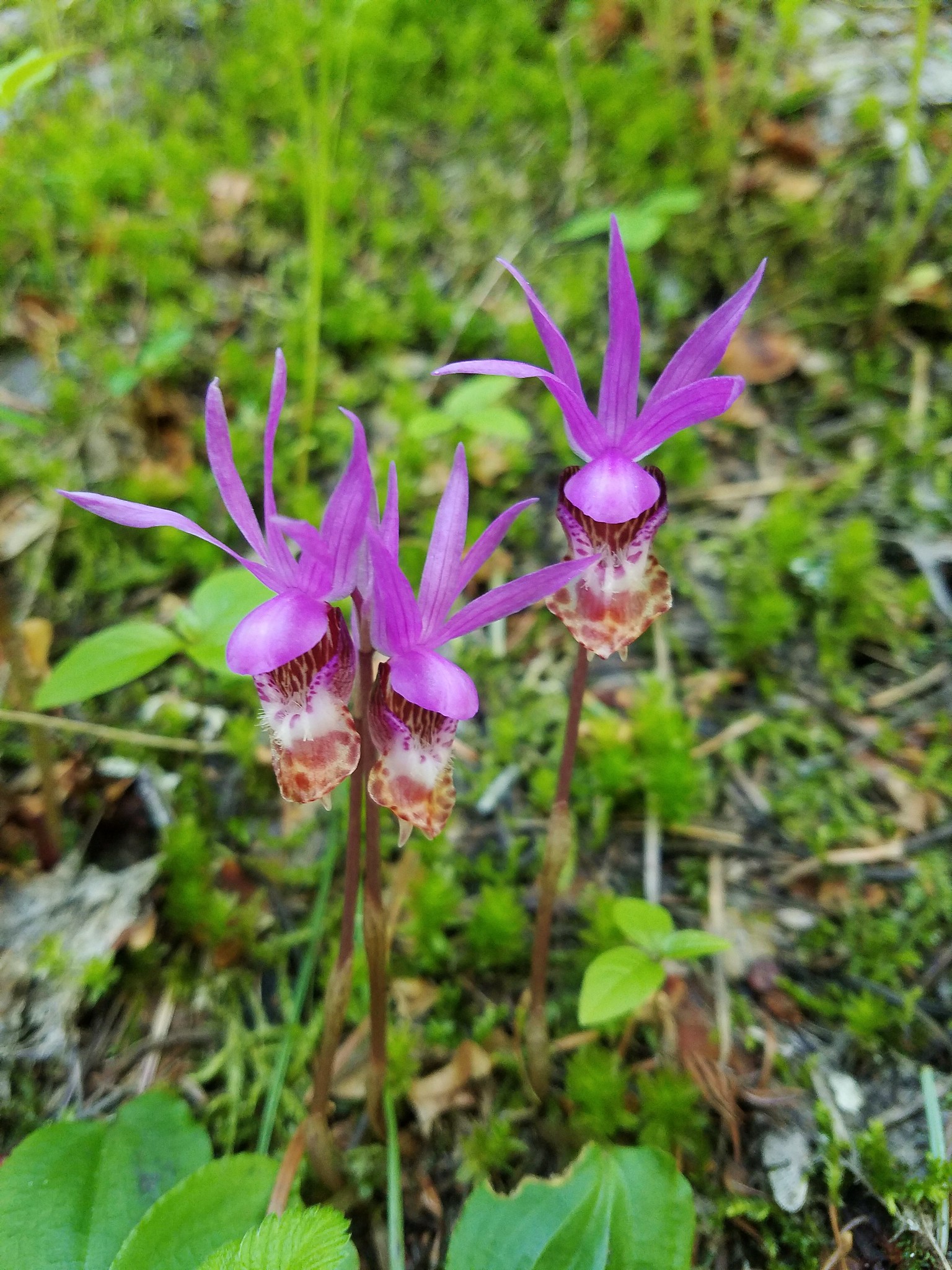
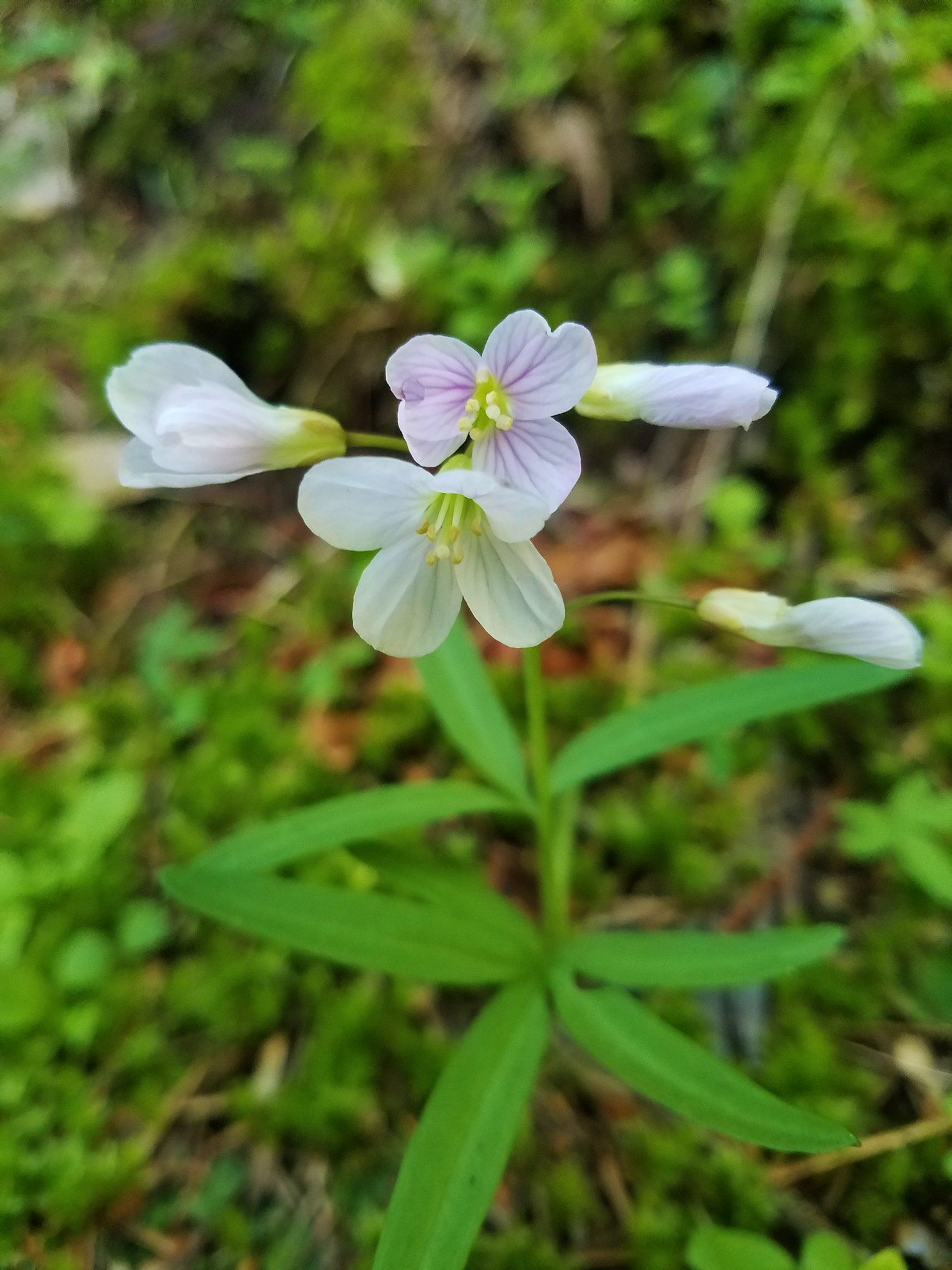
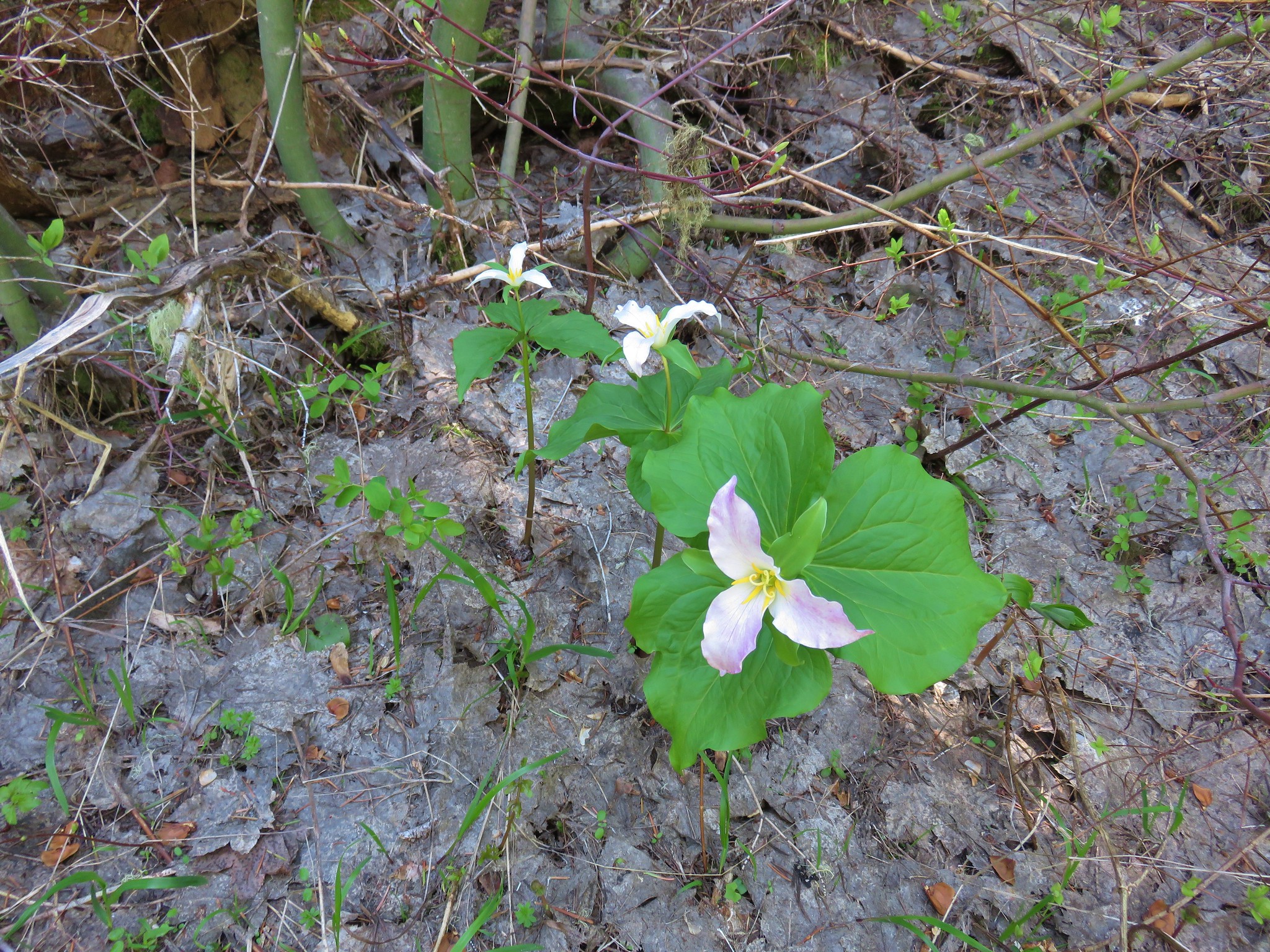
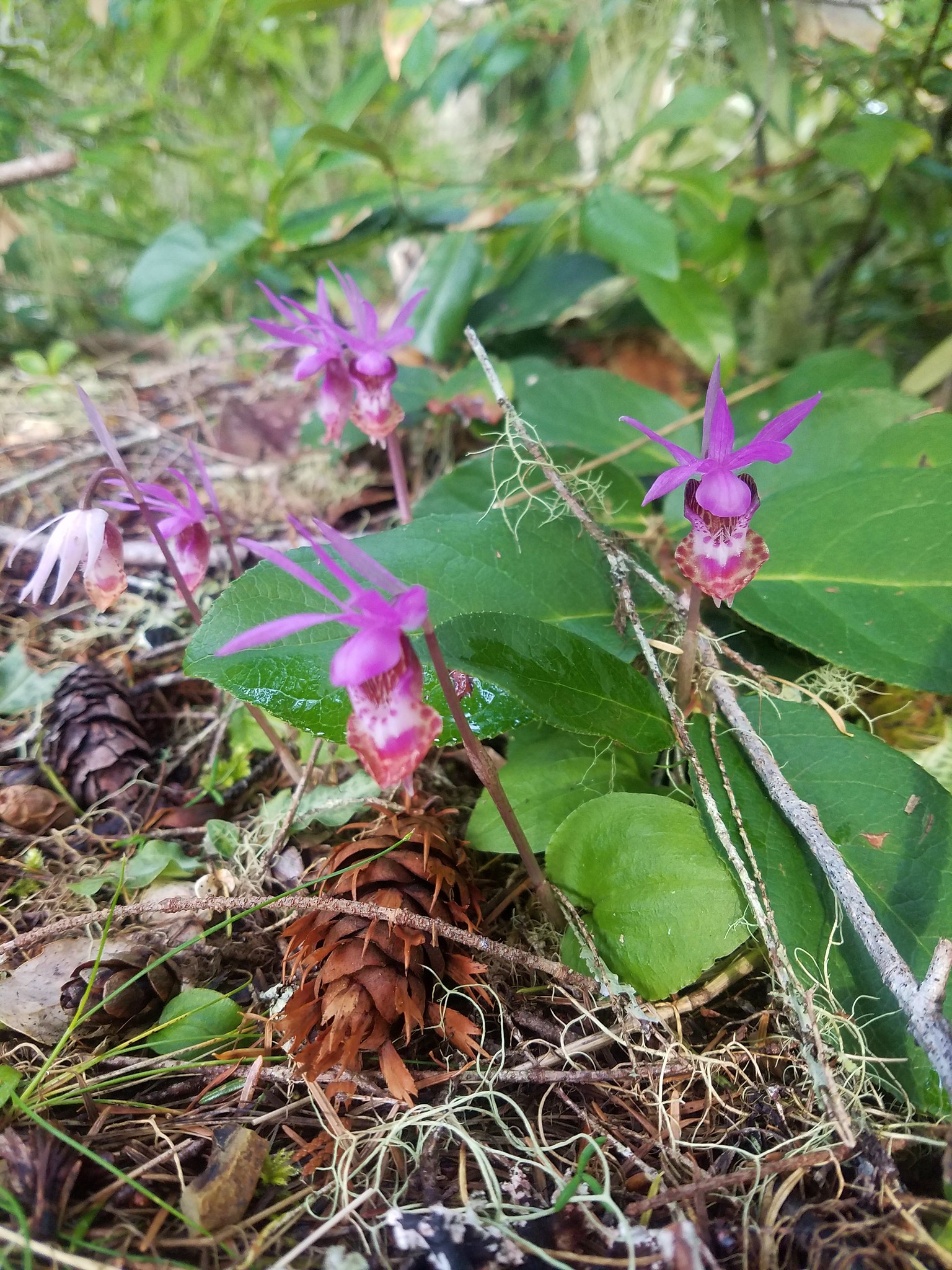
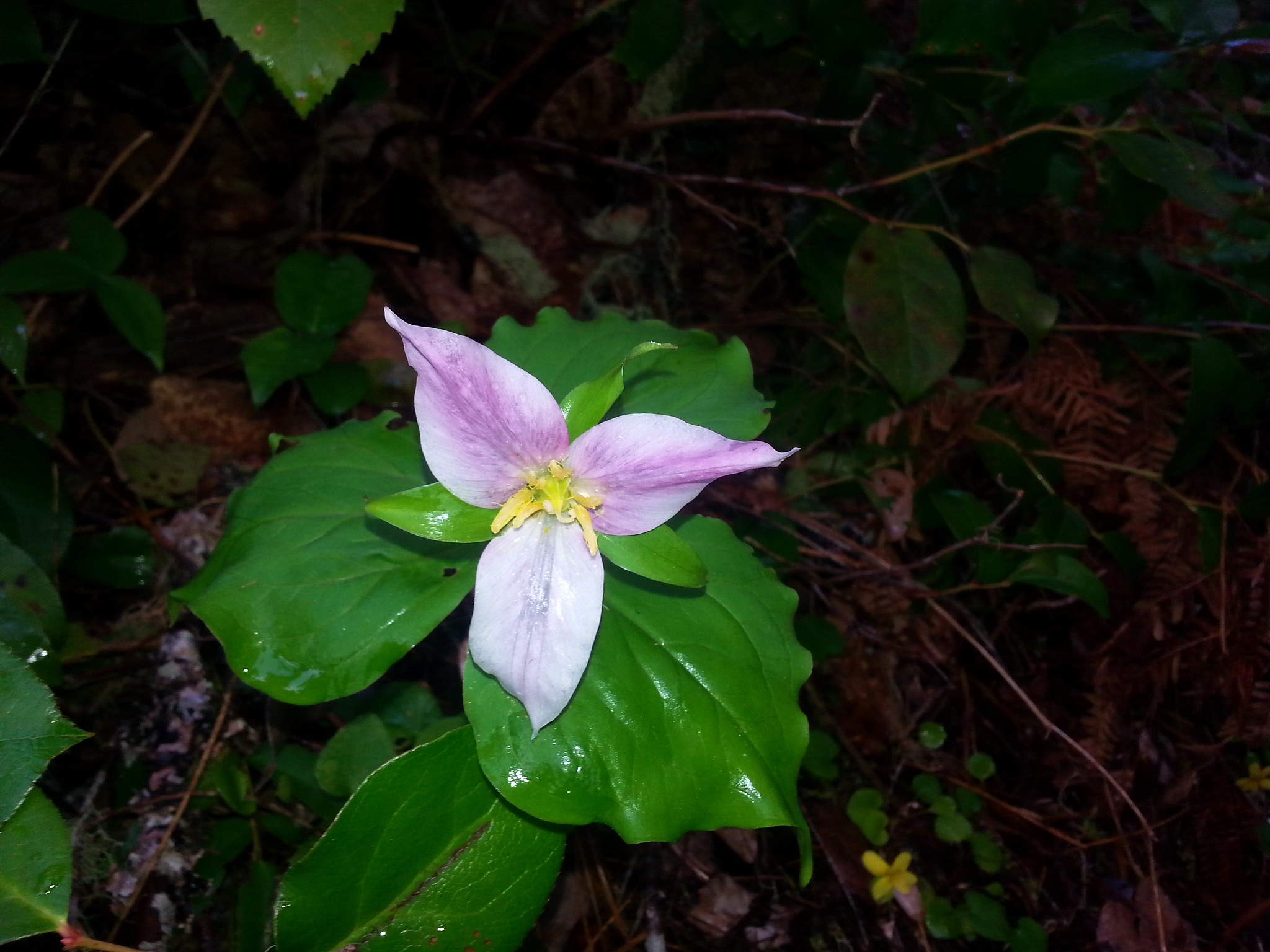
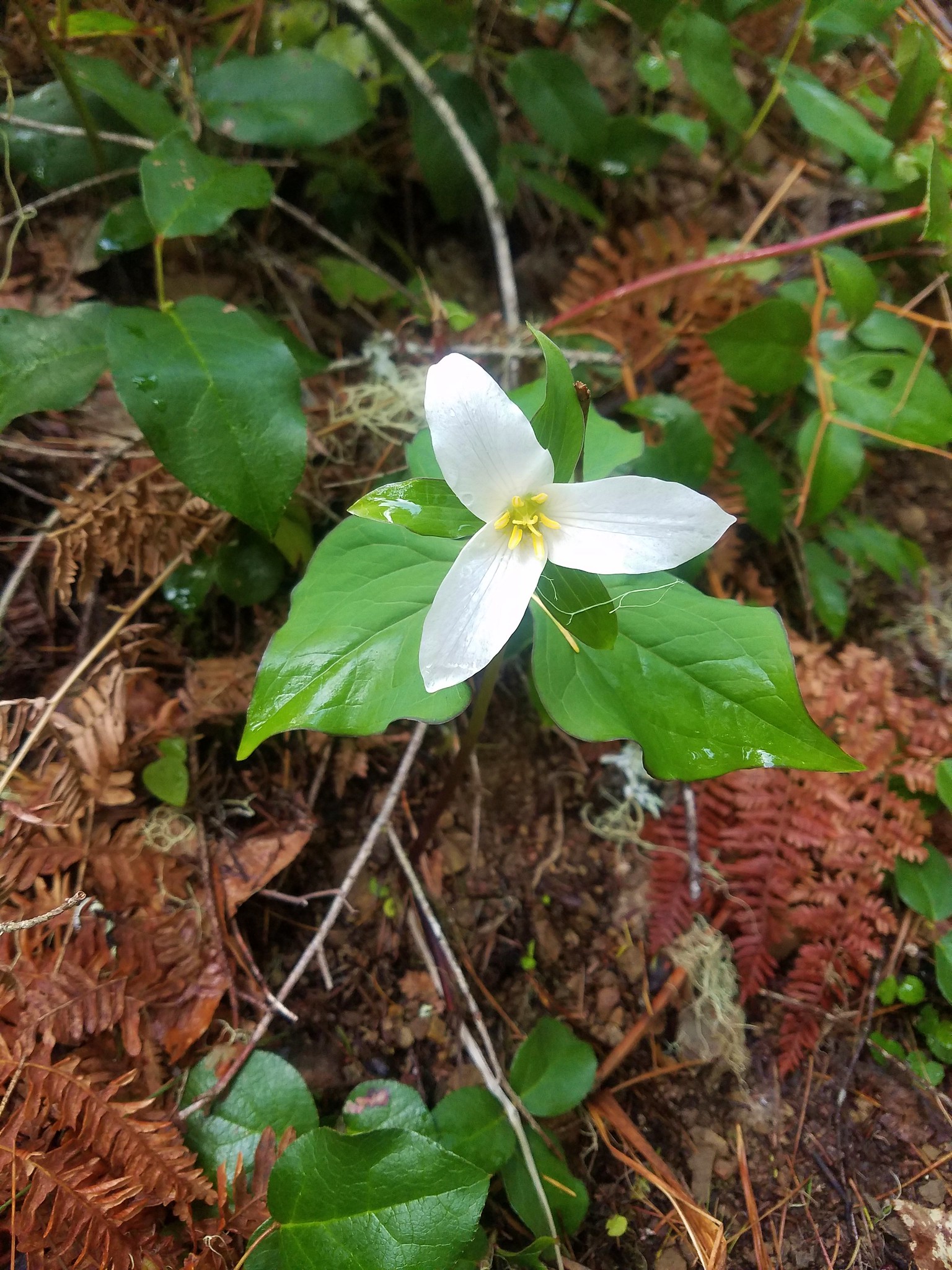
At this elevation the flowers in the forest included fairy slippers, toothwort, and trillium.
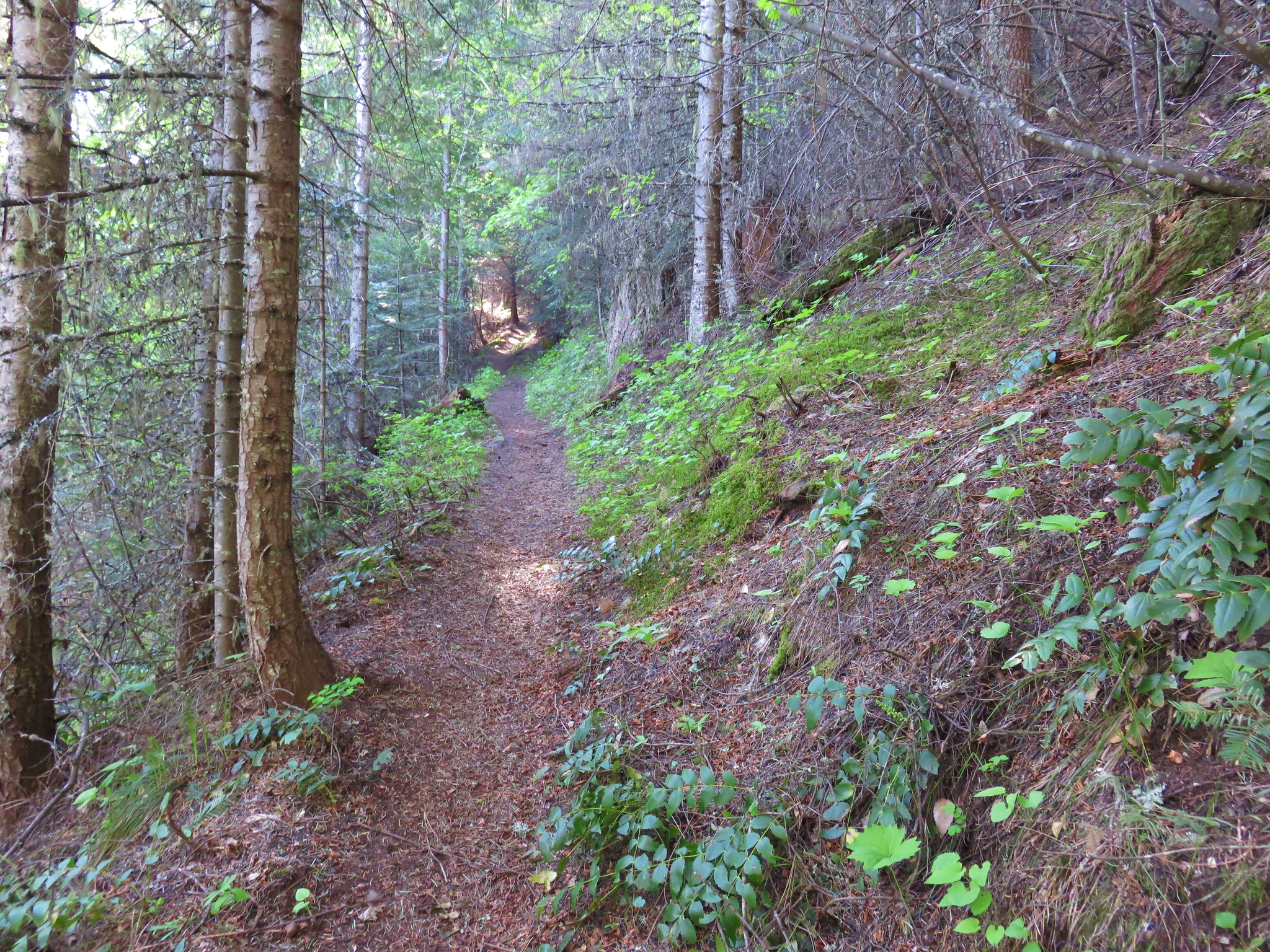
Oak Ridge Trail

Fairy slippers

Toothwort

Trillium

The trail leveled out somewhat once it was back in the forest and we soon arrived at the junction with the Surveyor’s Ridge Trail.
Oak Ridge Trail and Surveryor's Ridge Trail junction

We turned left following a pointer for Bald Butte which was 2 miles away.
Surveyor's Ridge Trail sign

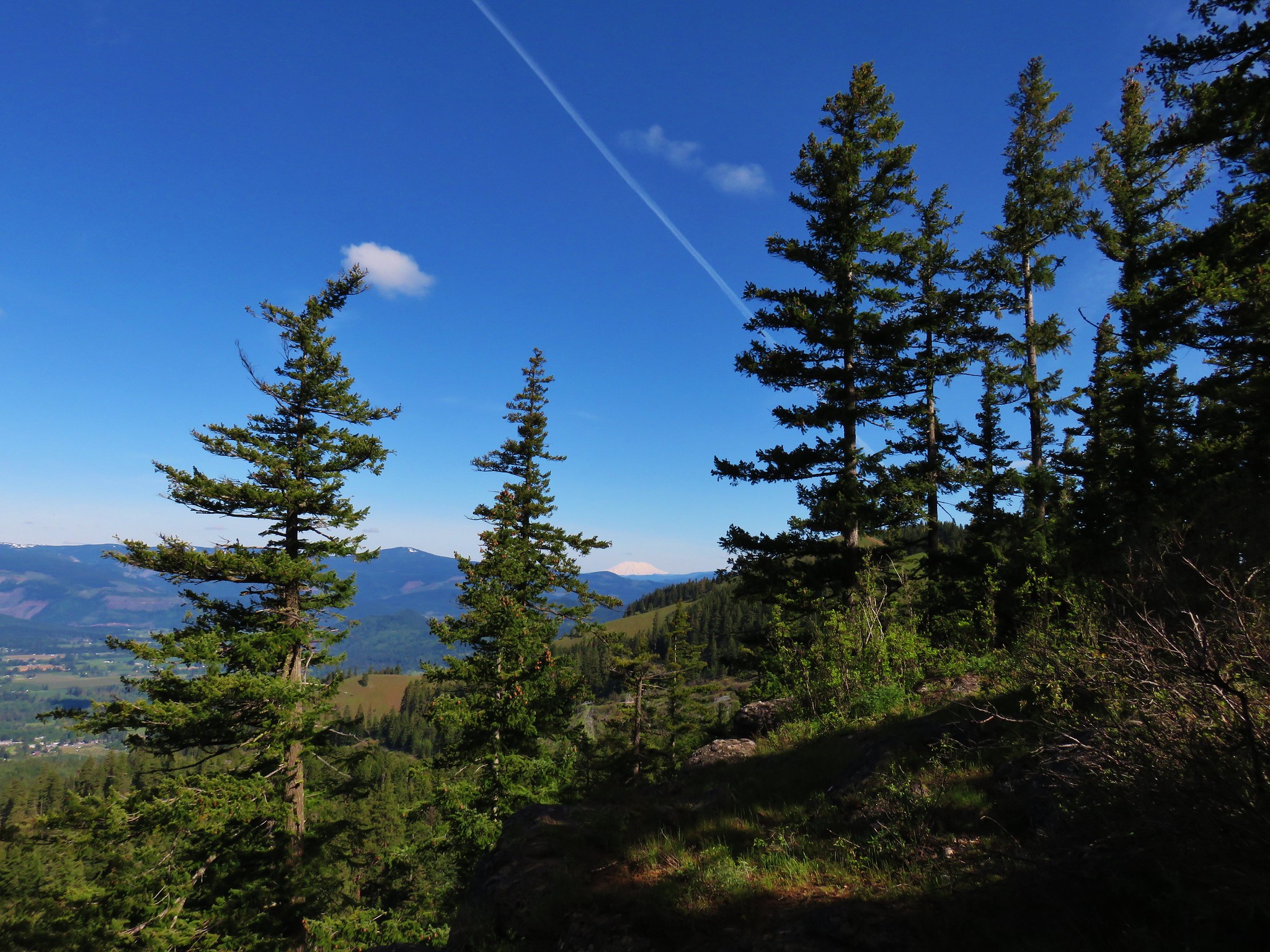
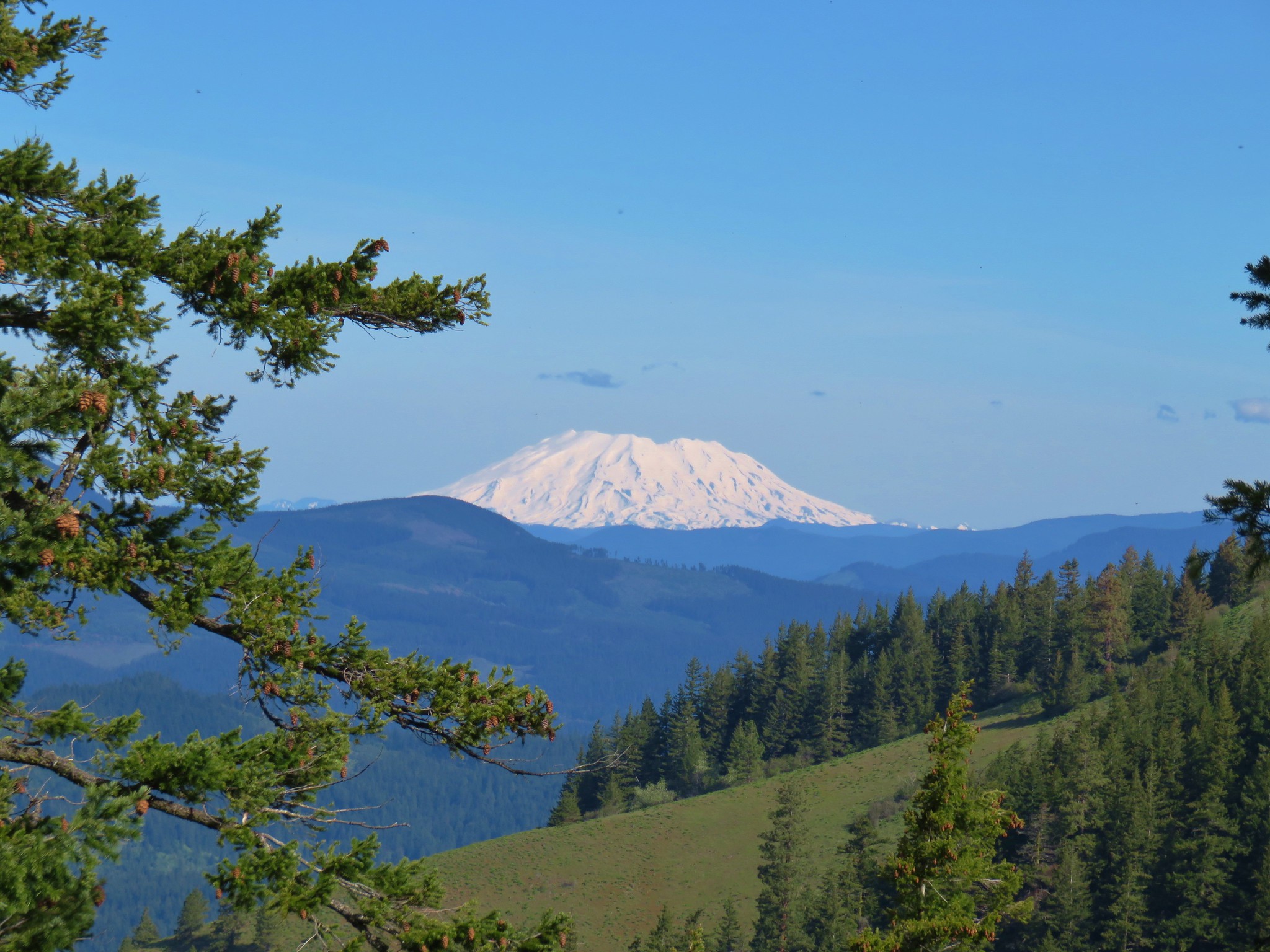
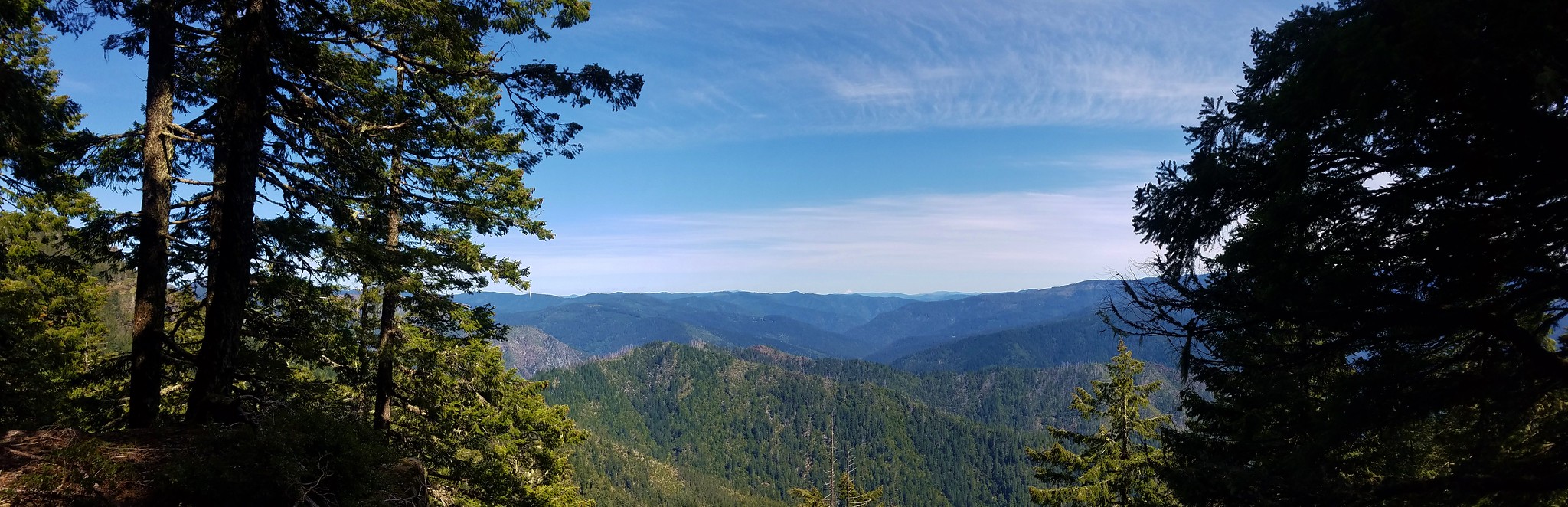
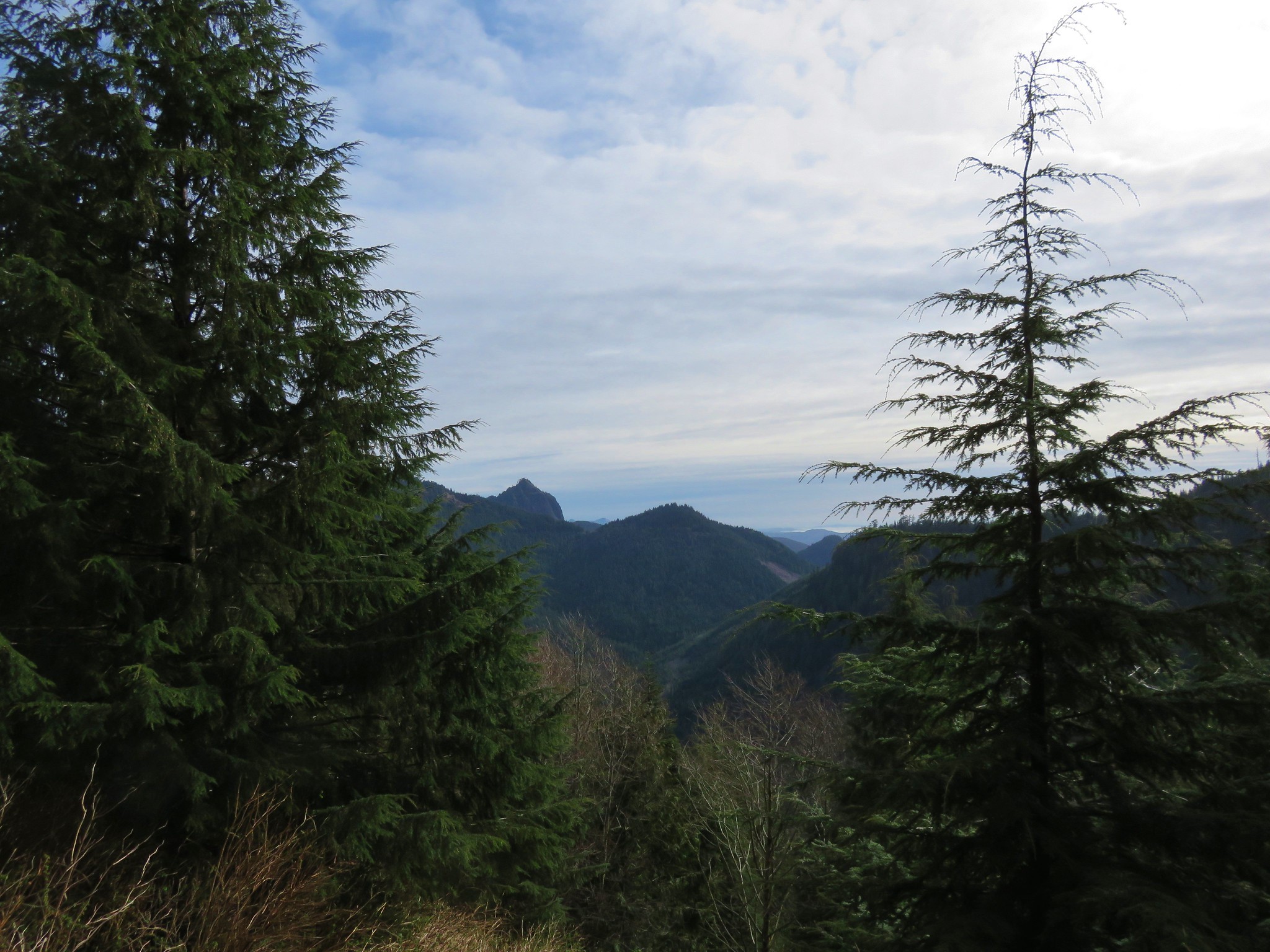
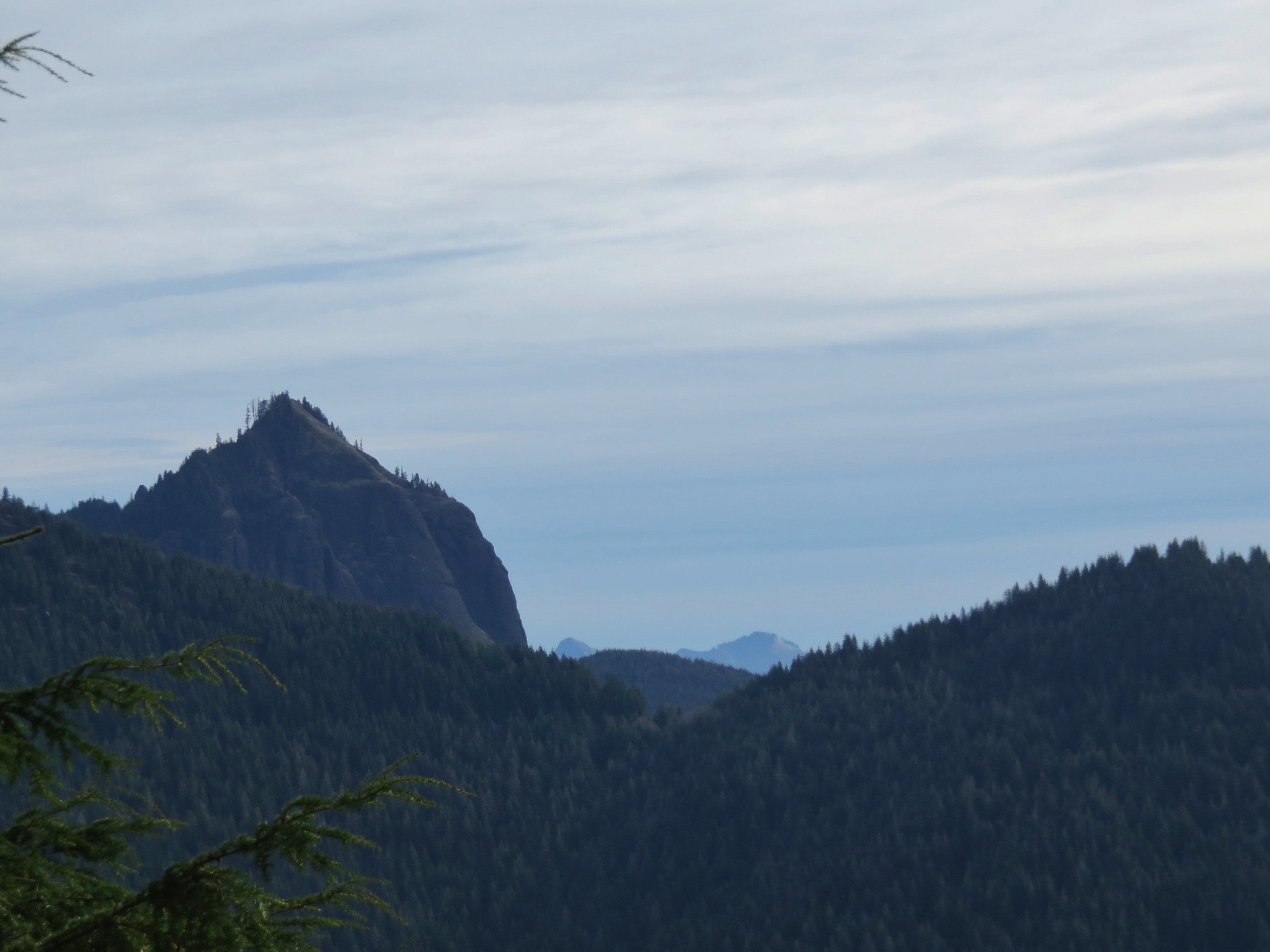
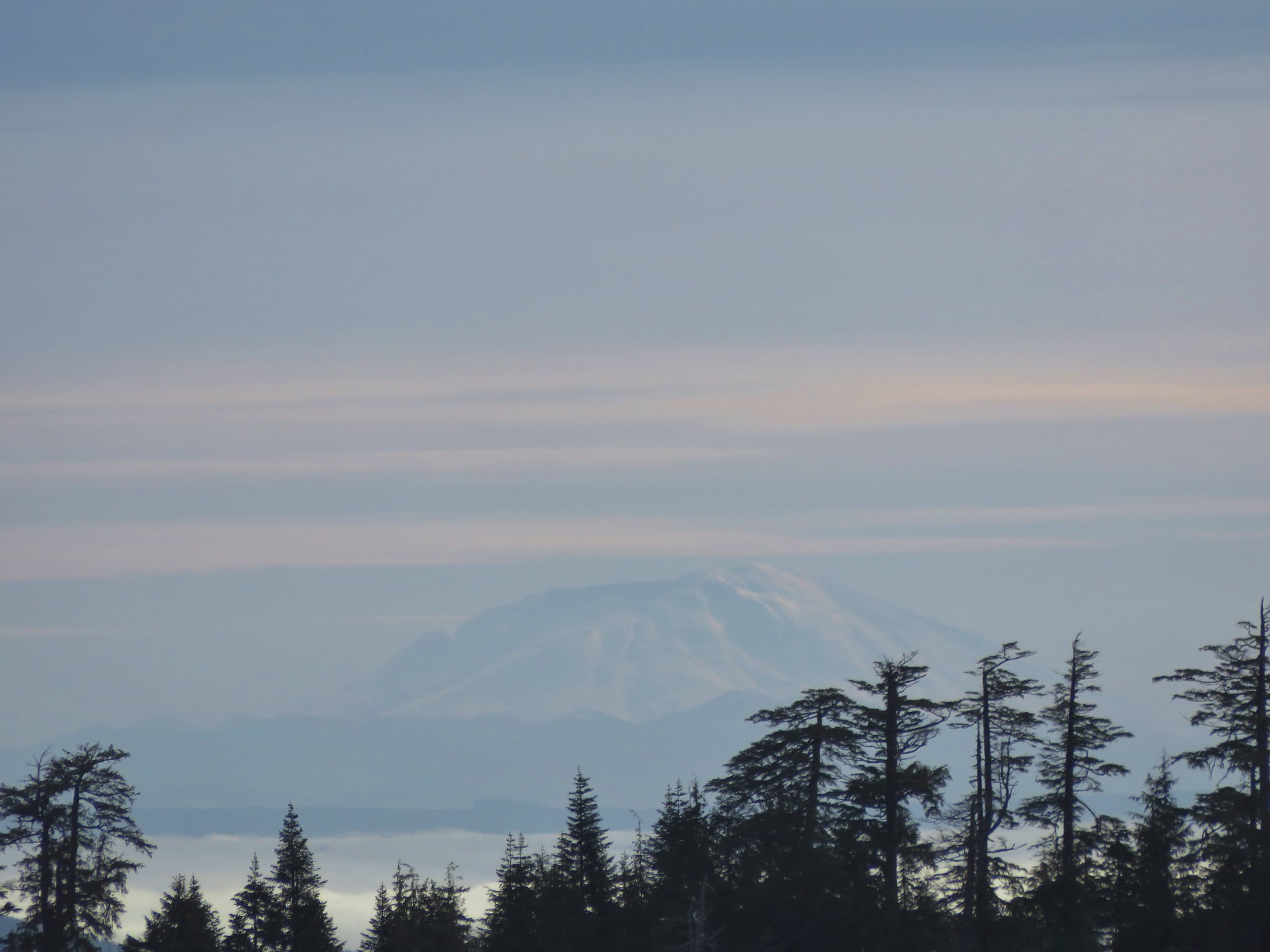
After passing a “Leaving National Forest” sign the ridge became rocky and more open which once again provided views of Mt. Hood and now Mt. St. Helens joined the skyline.
Surveryor's Ridge Trail

Mt. Hood

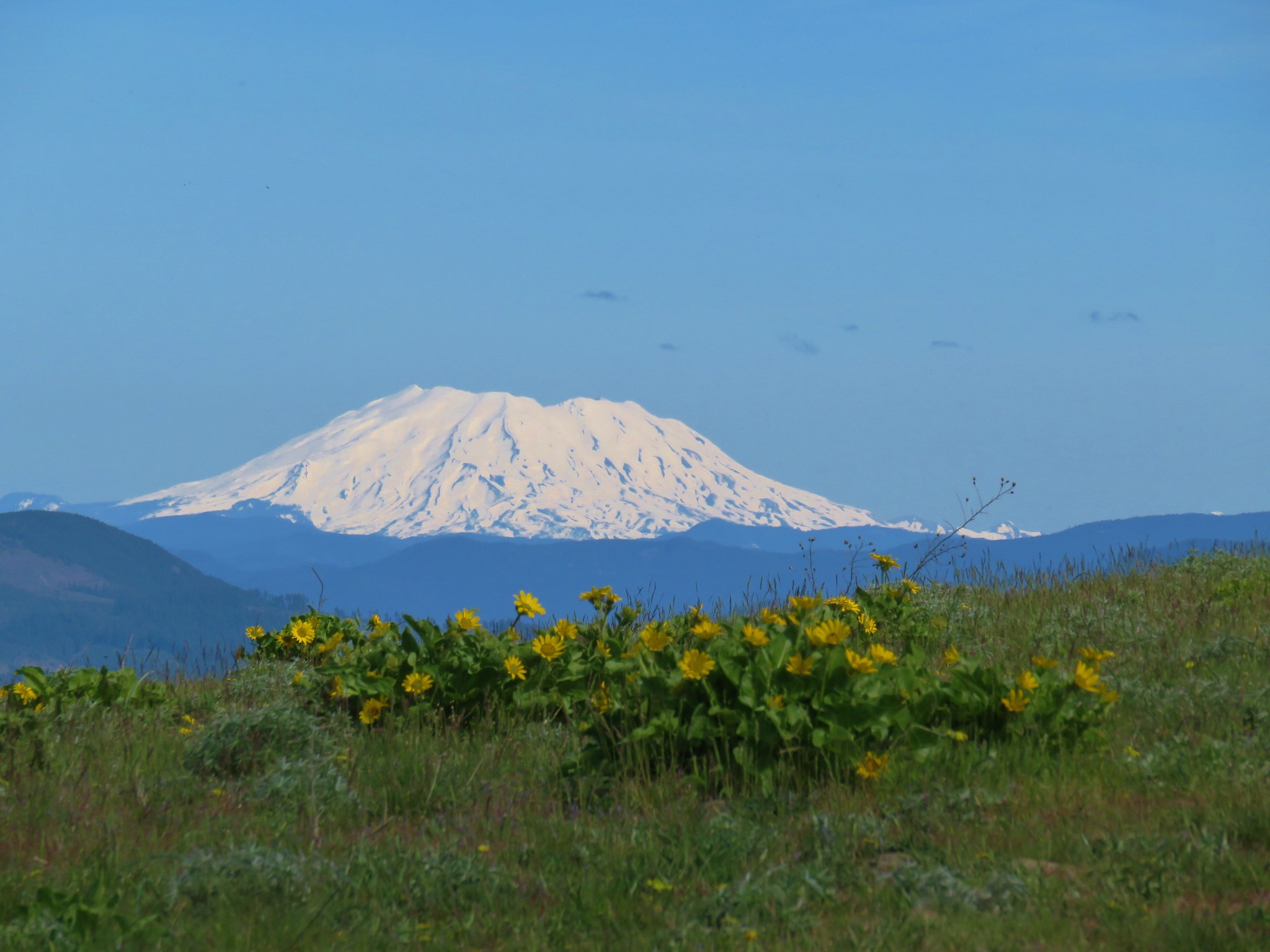
Mt. St. Helens

Mt. St. Helens

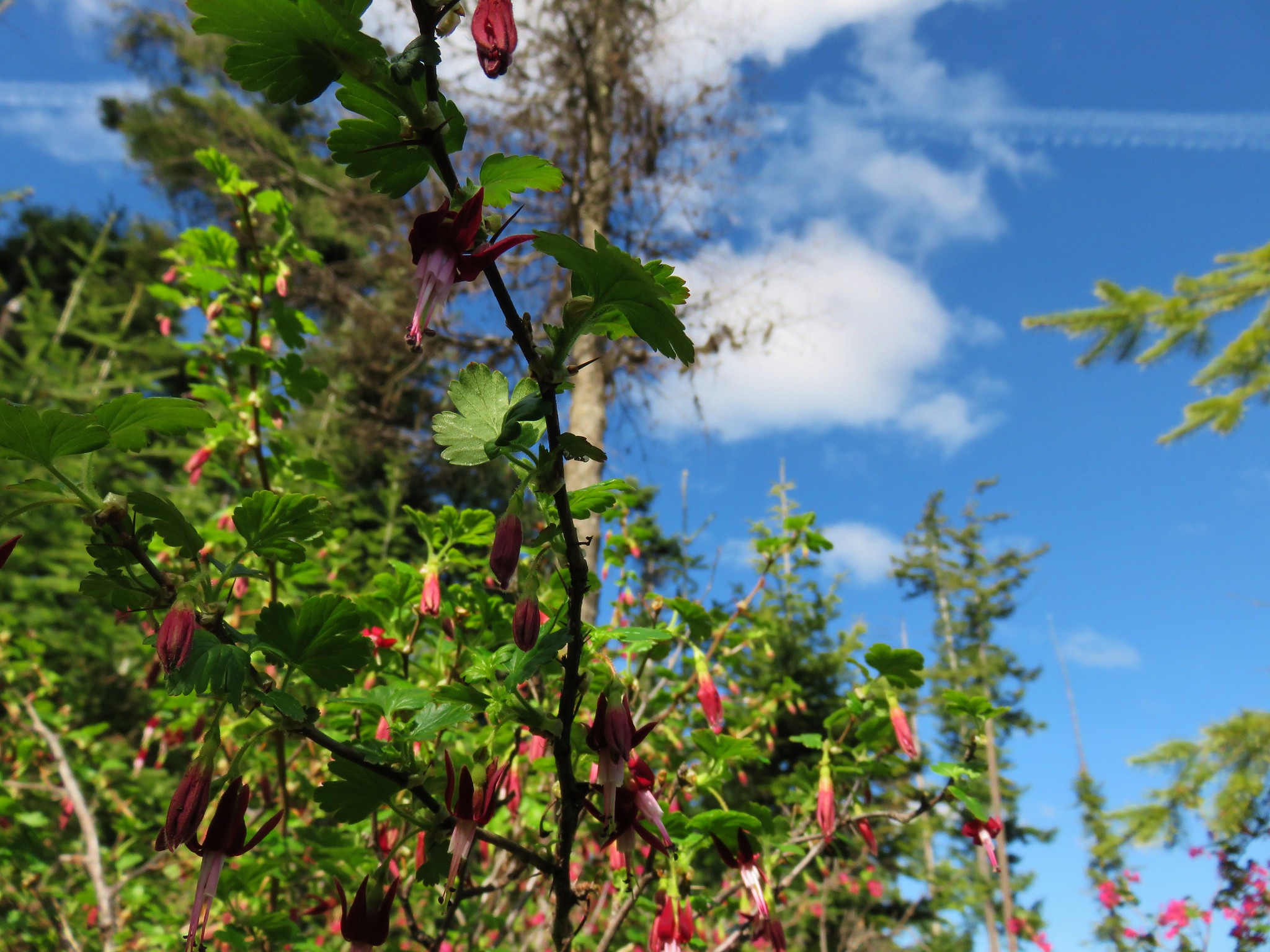
Red flowering currant was profuse along this stretch and we also spotted a gooseberry bush.
Surveyor's Ridge Trail

Red flowering currant

Gooseberry

Mt. Adams also made a brief appearance.
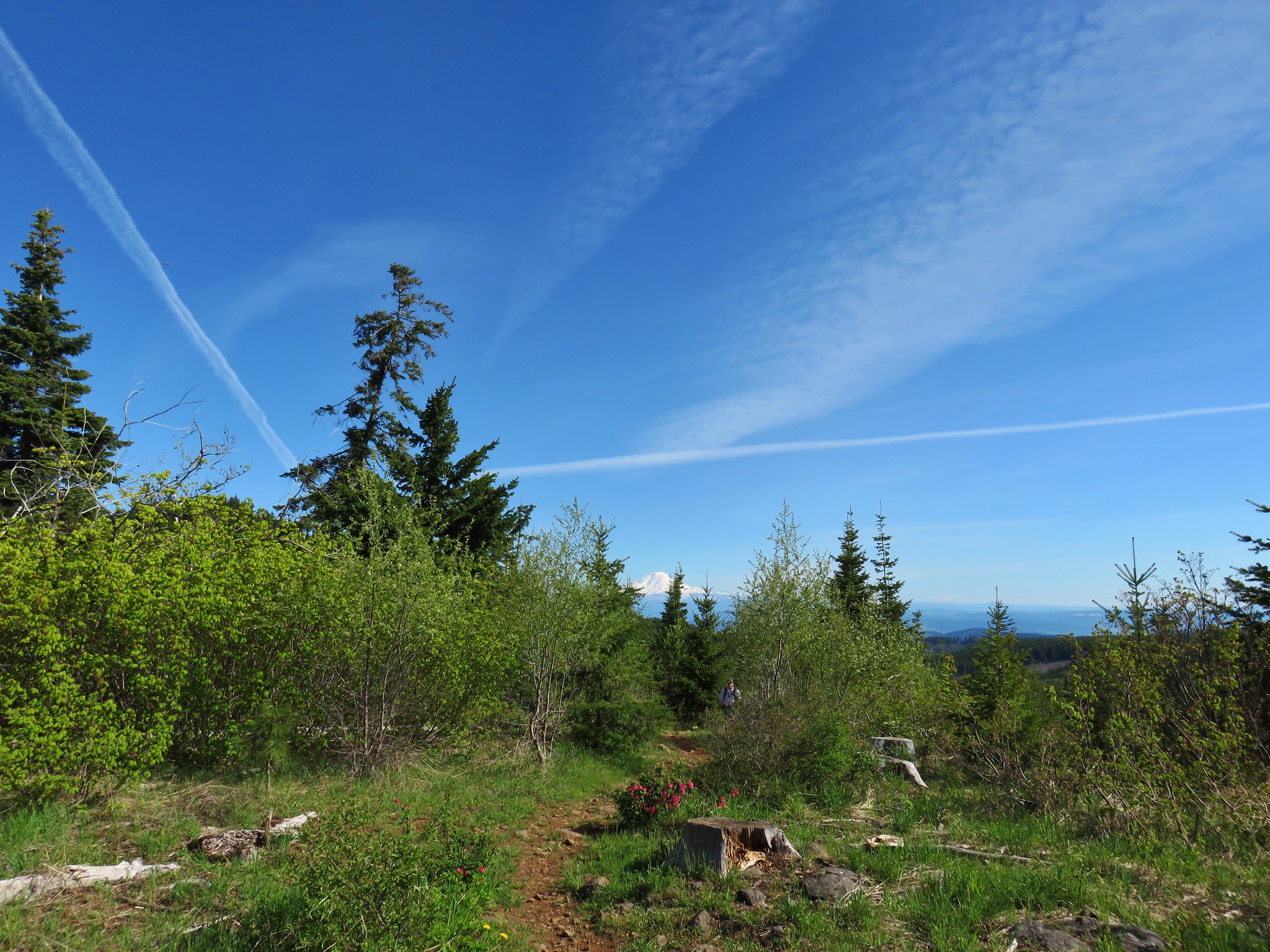
Mt. Adams

The trail dropped slightly to a saddle where power lines and another possible trailhead sat beneath a hill.
Powerlines along the Surveryor's Ridge Trail

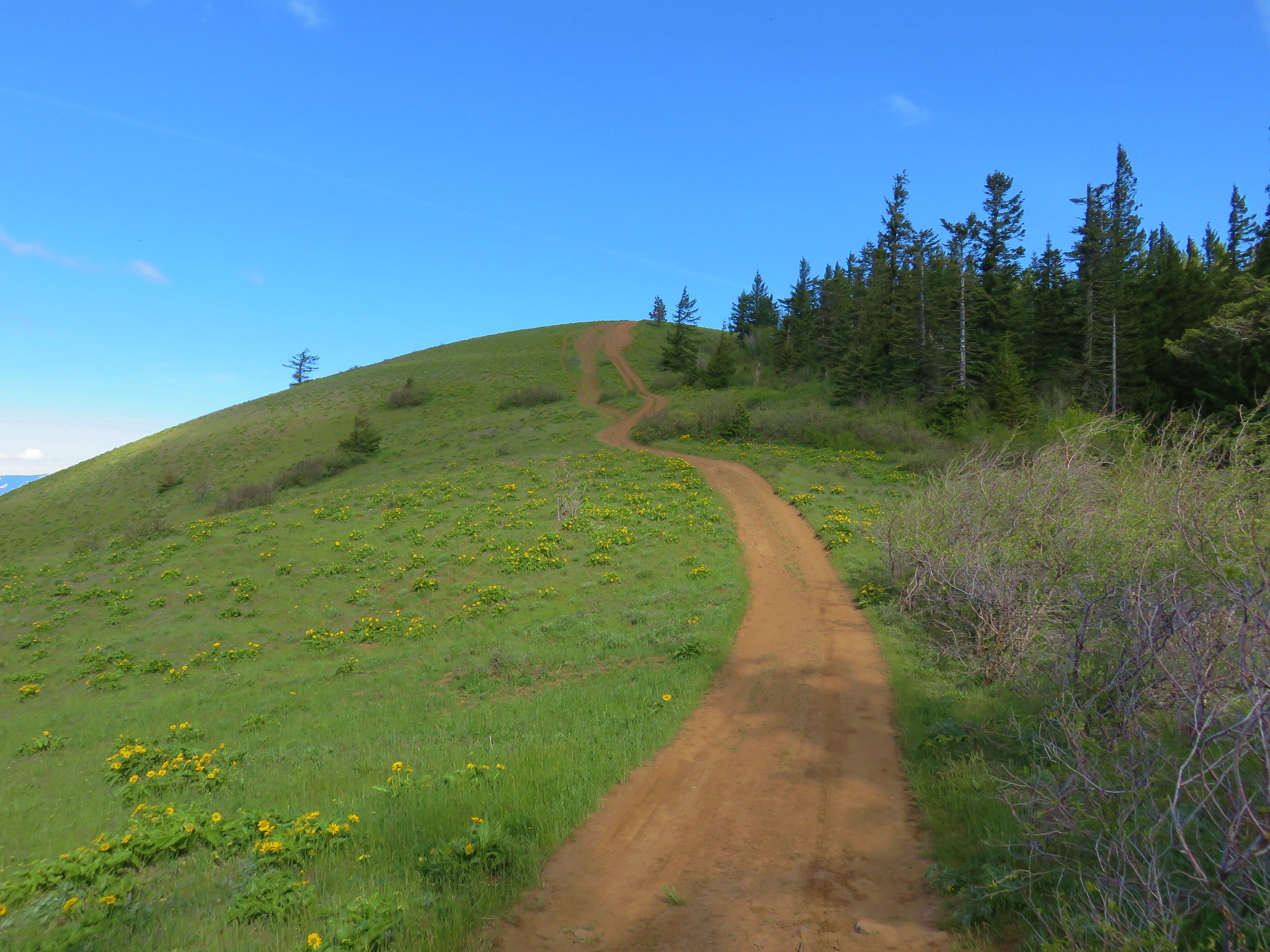
The trail so far had been off-limits to motorized vehicles but the final section is popular with dirt bike and ATV riders. We followed a steep dirt track under the power lines and up the hill.
Heading toward Bald Butte

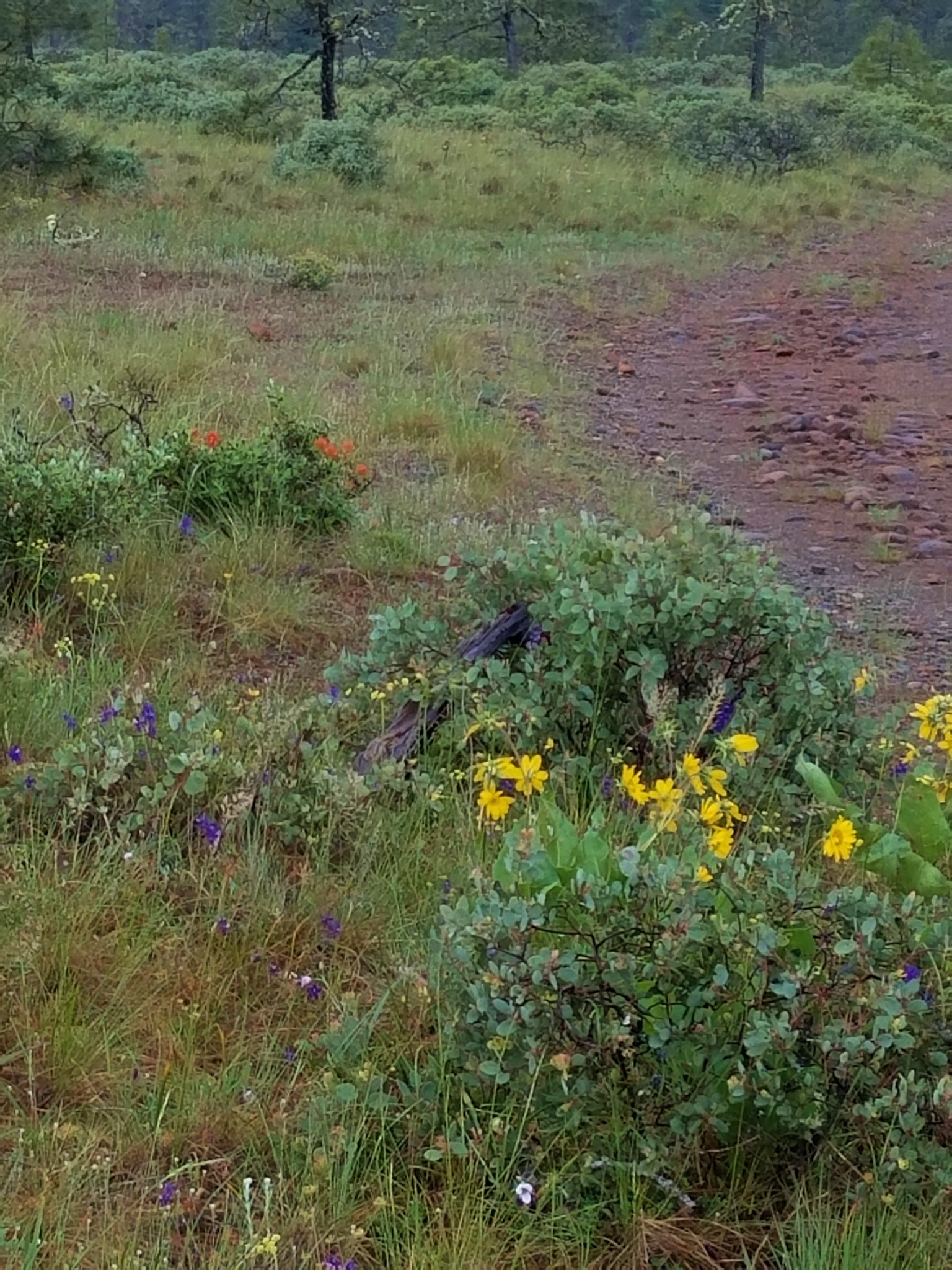
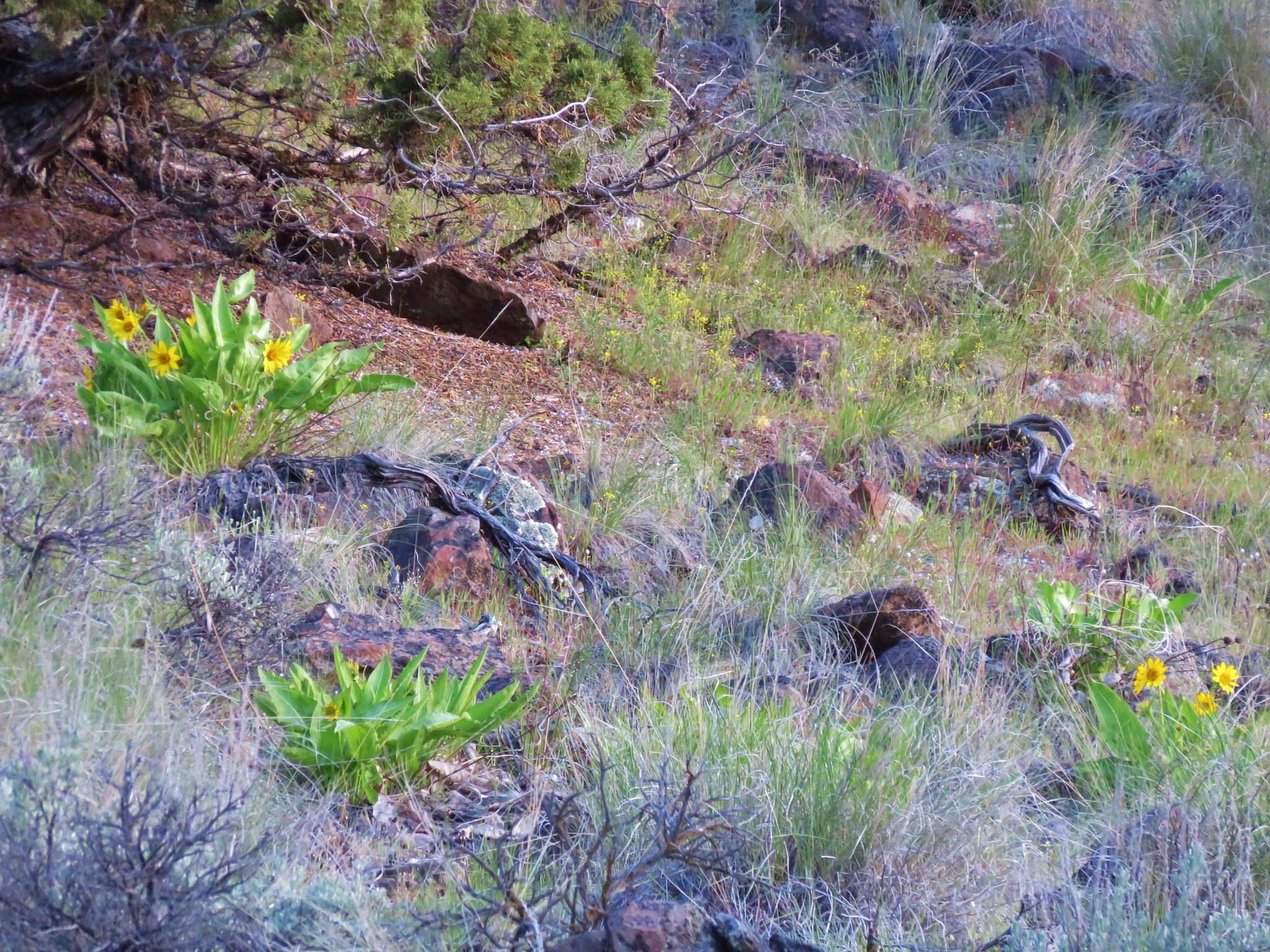
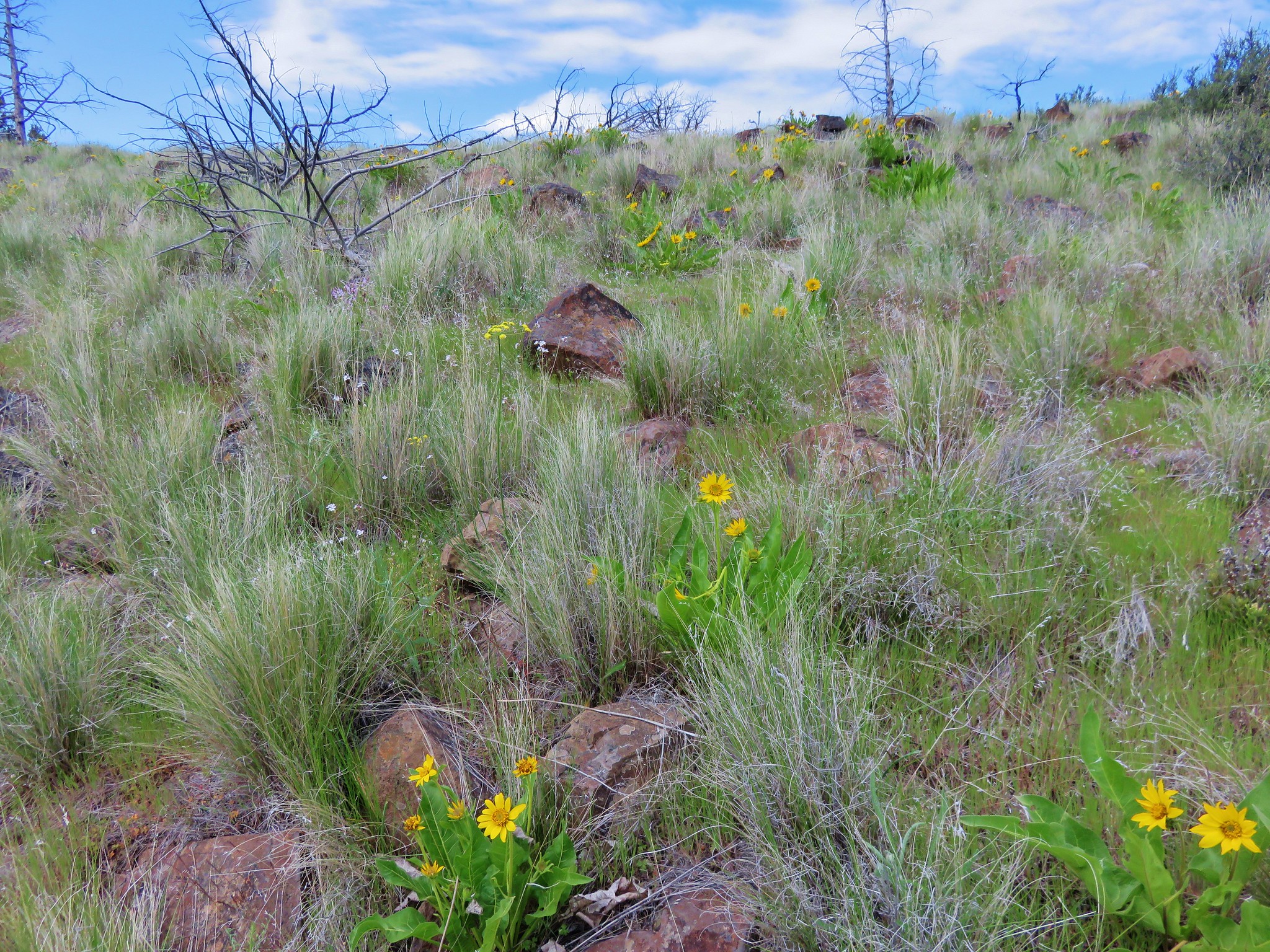
There were quite a few flowers in bloom with more to come in the following weeks.
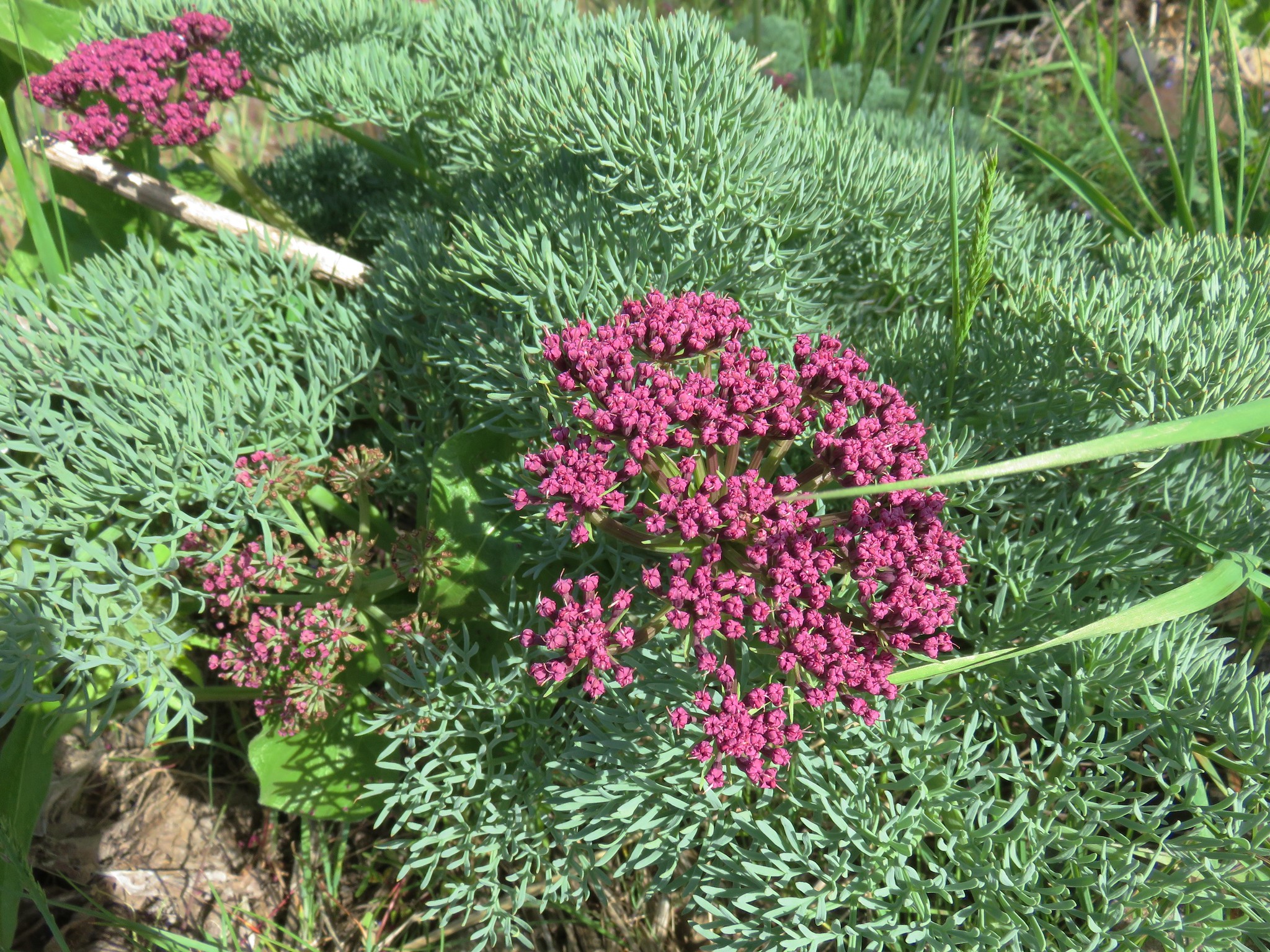
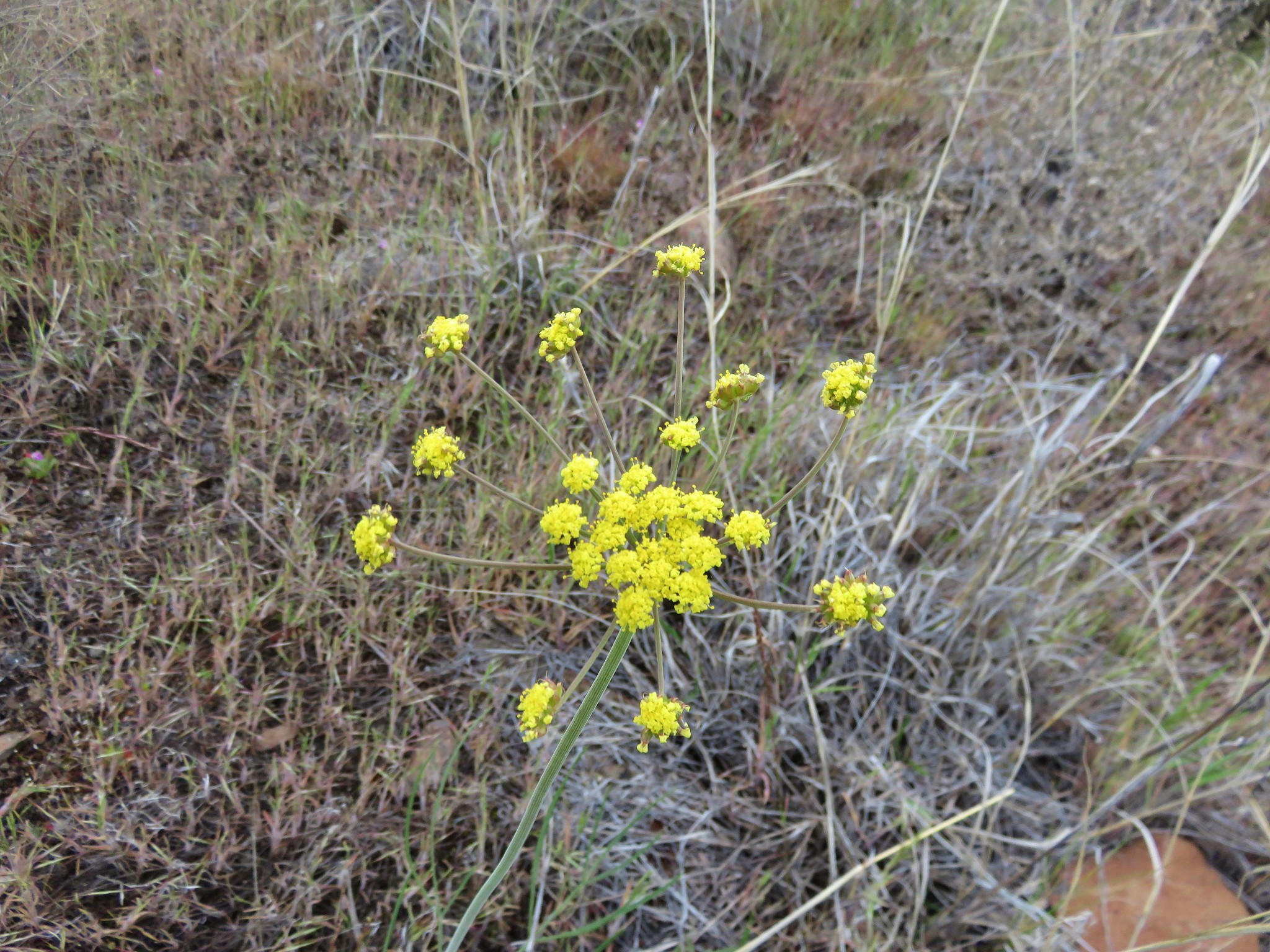
Biscuitroot

Daggerpod

Various small wildflowers

Near the crest of the hill we found one glacier lily still blooming.
Heading toward Bald Butte

Glacier Lily

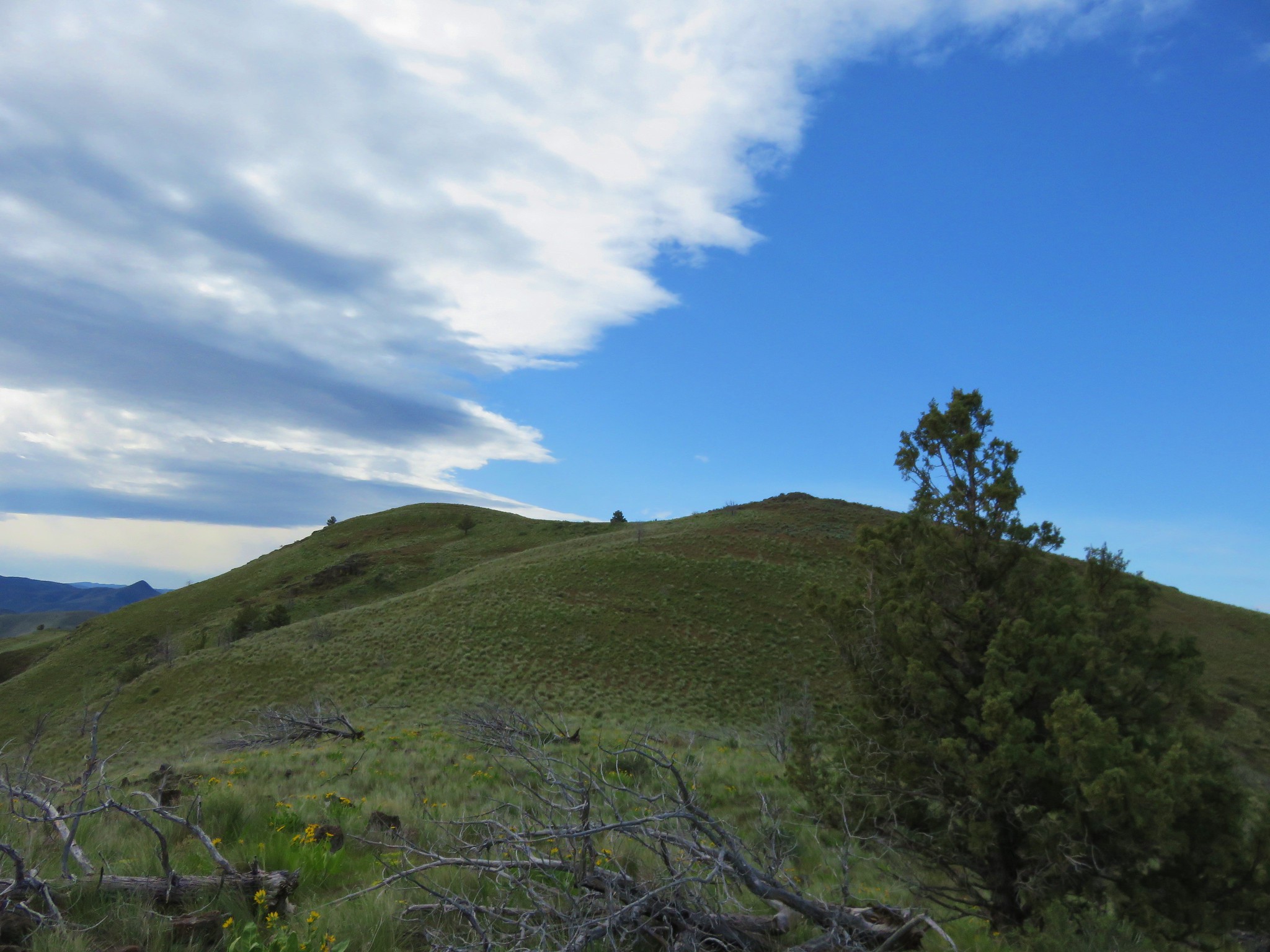
After dipping into another saddle we faced the final somewhat steep climb to the summit of Bald Butte.
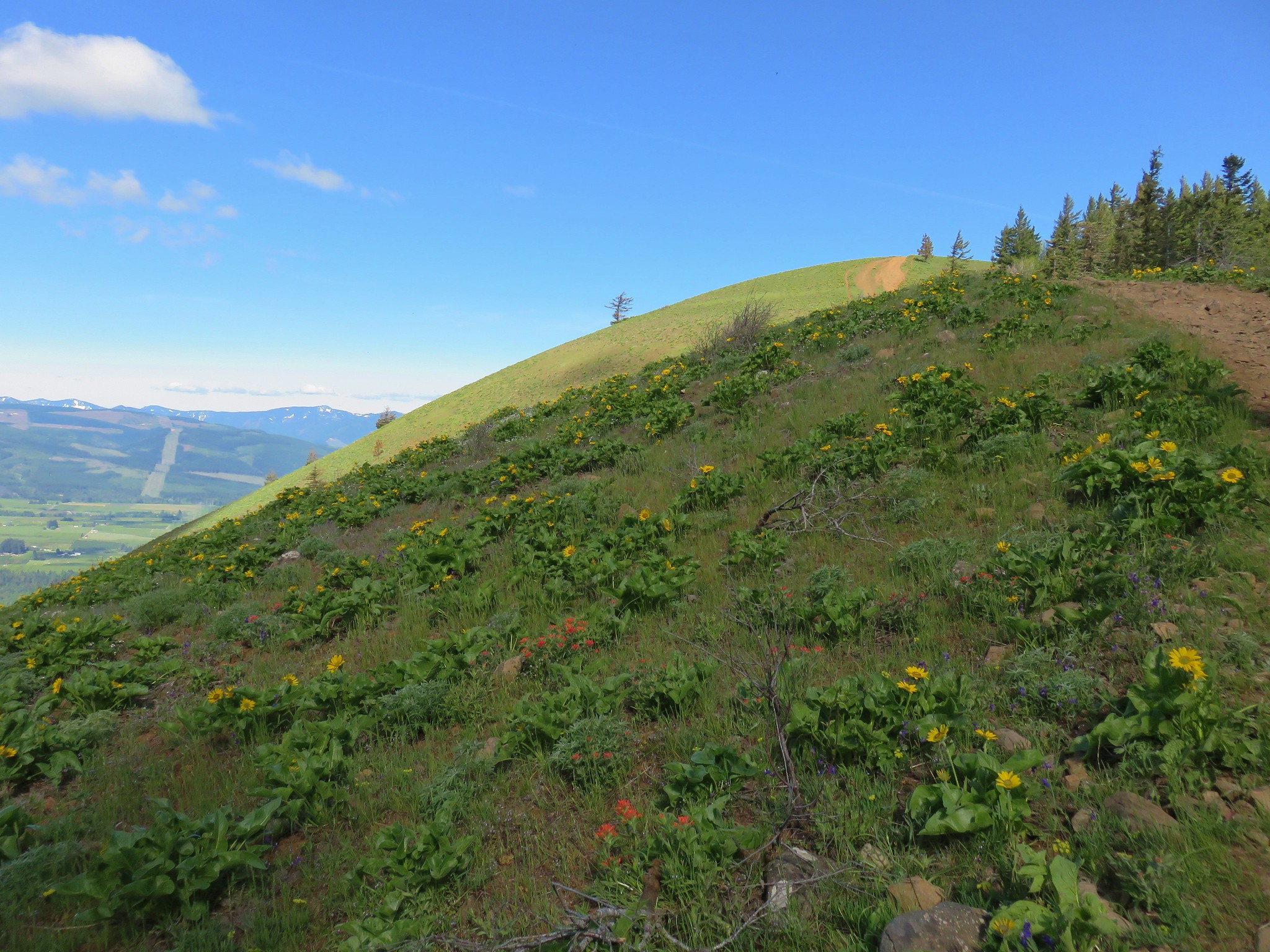
Bald Butte

Bald Butte

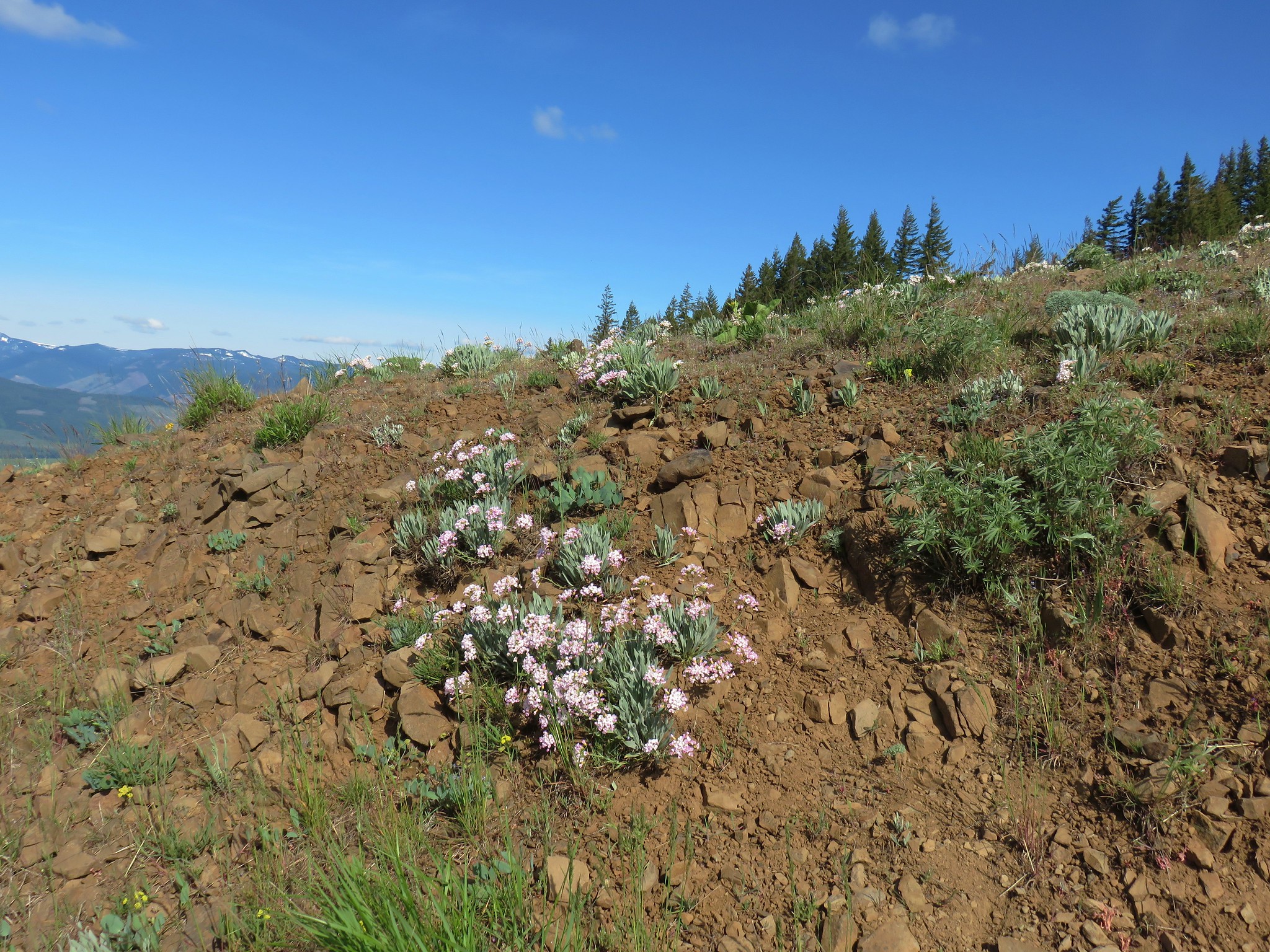
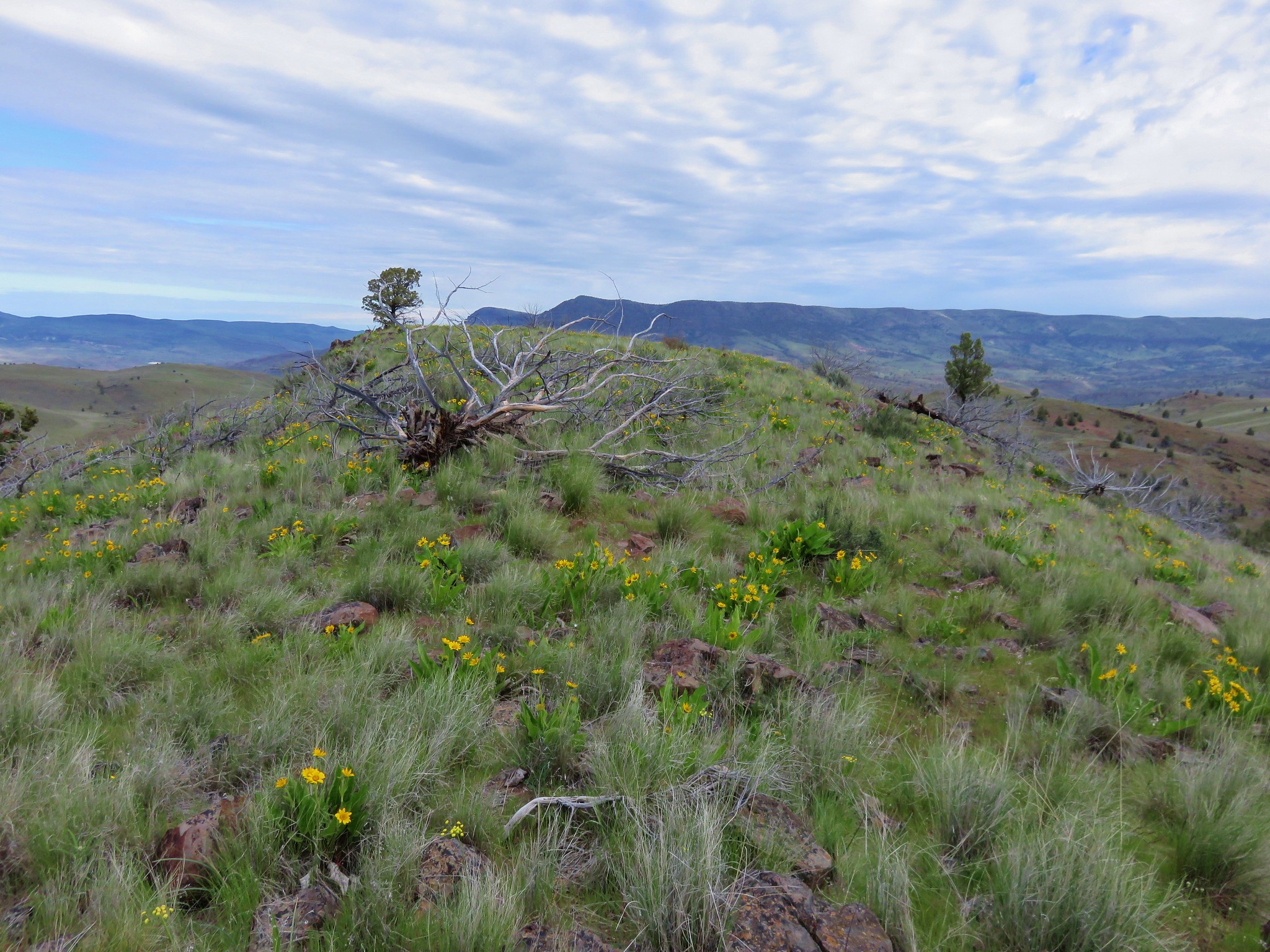
There was a nice display of wildflowers blooming along the way.
Wildflowers on Bald Butte

Balsamroot

Paintbrush

There had been a pesky line of clouds in front of Mt. Hood all morning and although it was still present it did seem to be slowly improving.
Mt. Hood and balsamroot

As we neared the summit Mt. St. Helens came into view followed by Mt. Rainier and most of Mt. Adams.
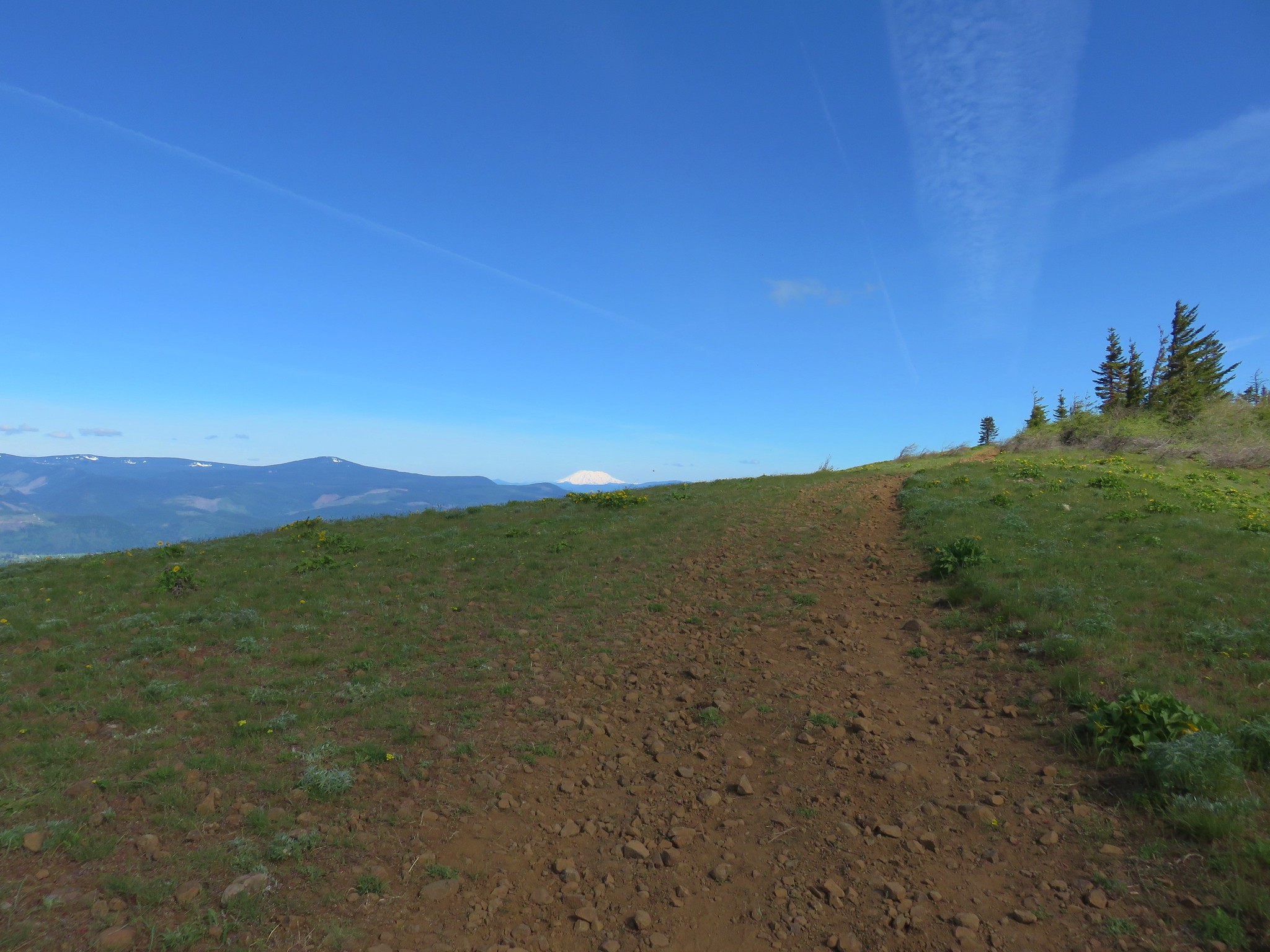
Mt. St. Helens

Mt. St. Helens

Mt. St. Helens, Mt. Rainier, and Mt. Adams

Mt. Rainier and Mt. Adams

We had run into one dirt bike rider as we were coming up Bald Butte, he was headed slowly back down with a flat front tire. A second rider arrived as we were exploring the far end of the butte hoping for a clearer view of Mt. Adams (there wasn’t one). We were a little put off when the rider took his bike out into the wildflowers instead of leaving it in the dirt next to the road and more so when he started it back up while he was still out in the meadow. It was totally unnecessary and that’s all I have to say about that.

Mt. Hood was indeed becoming increasingly visible as we began our hike back to the trailhead.
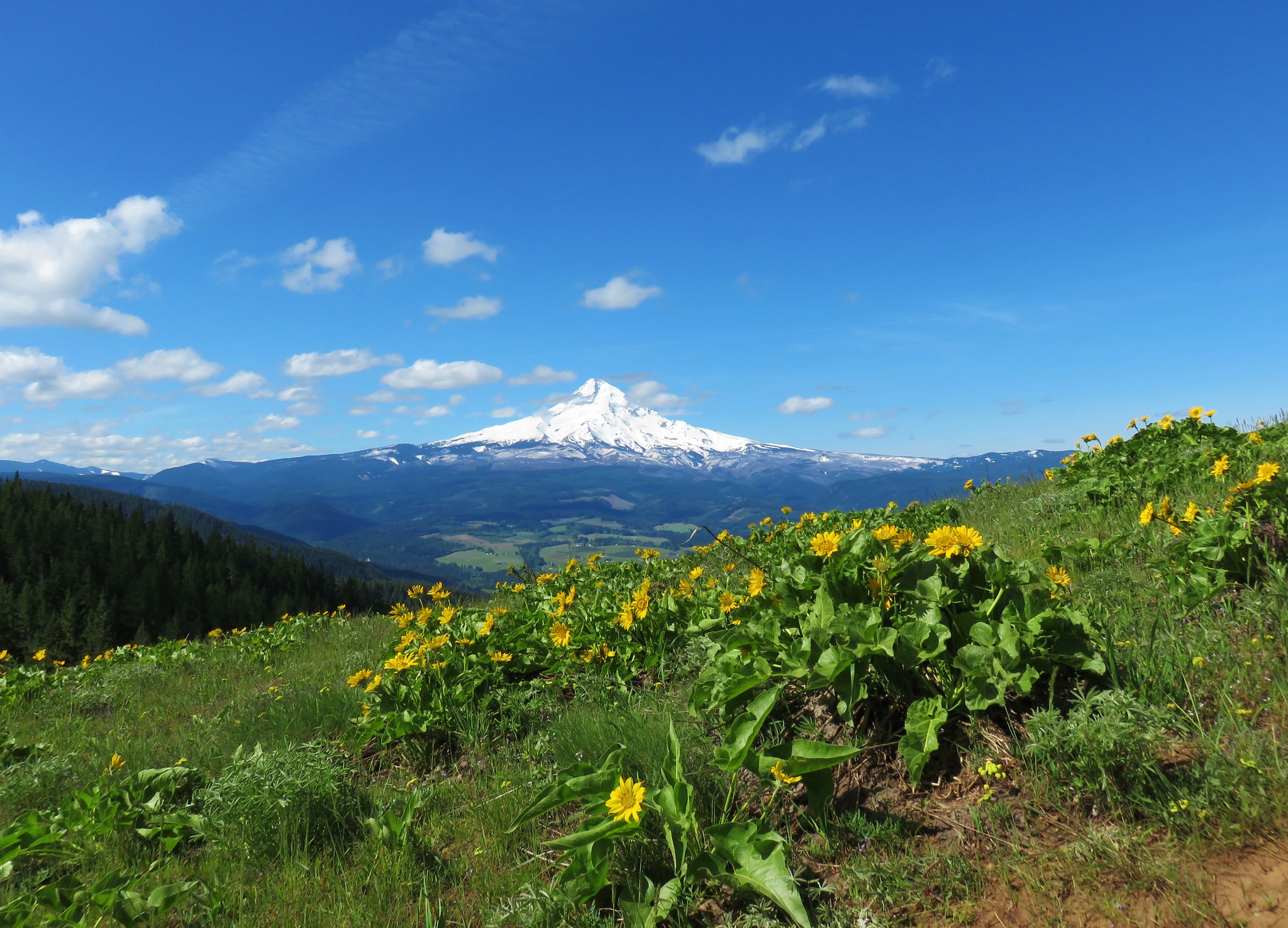
Mt. Hood

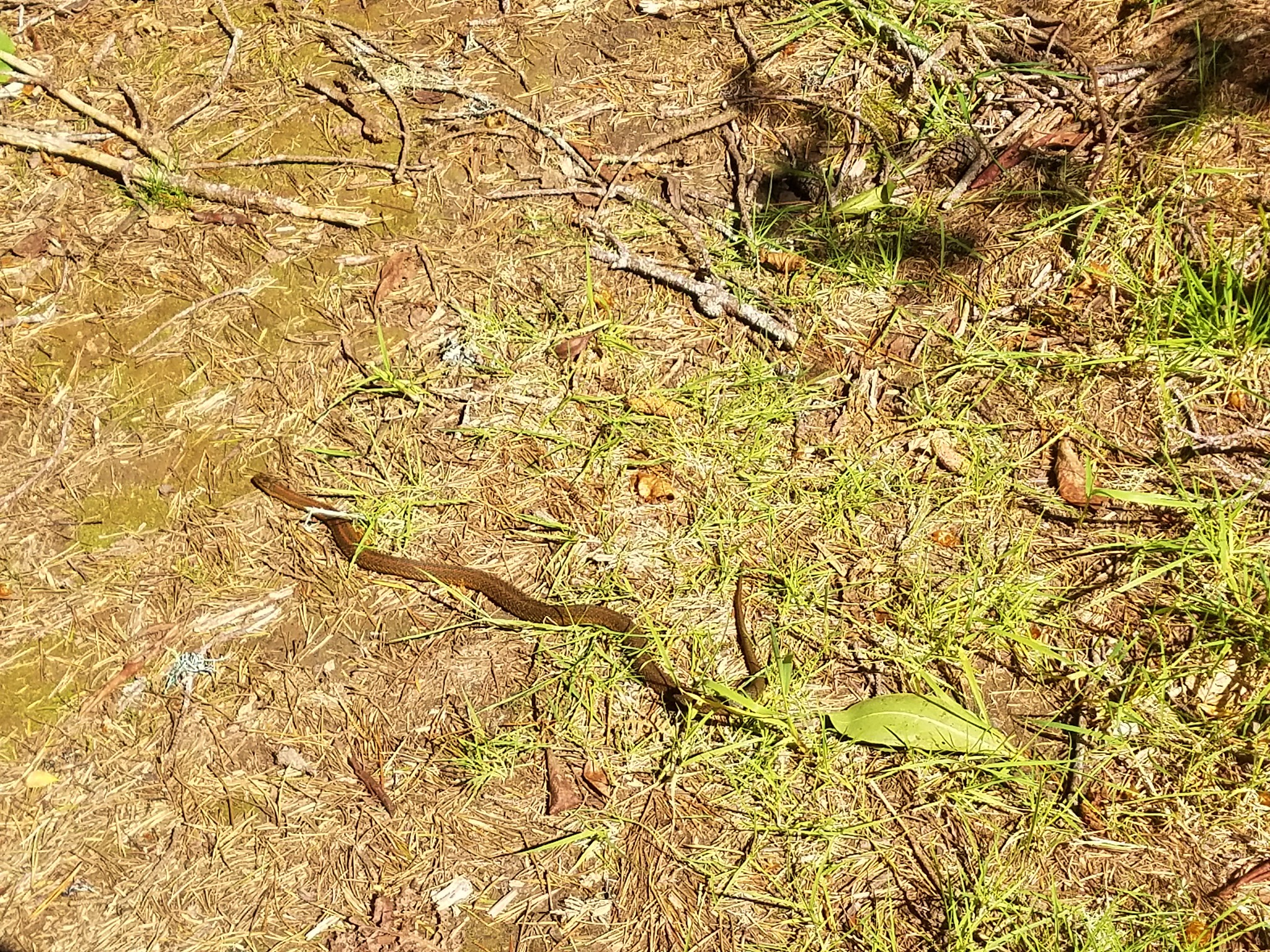
As we were nearing the power line saddle we spotted a snake along the trail.
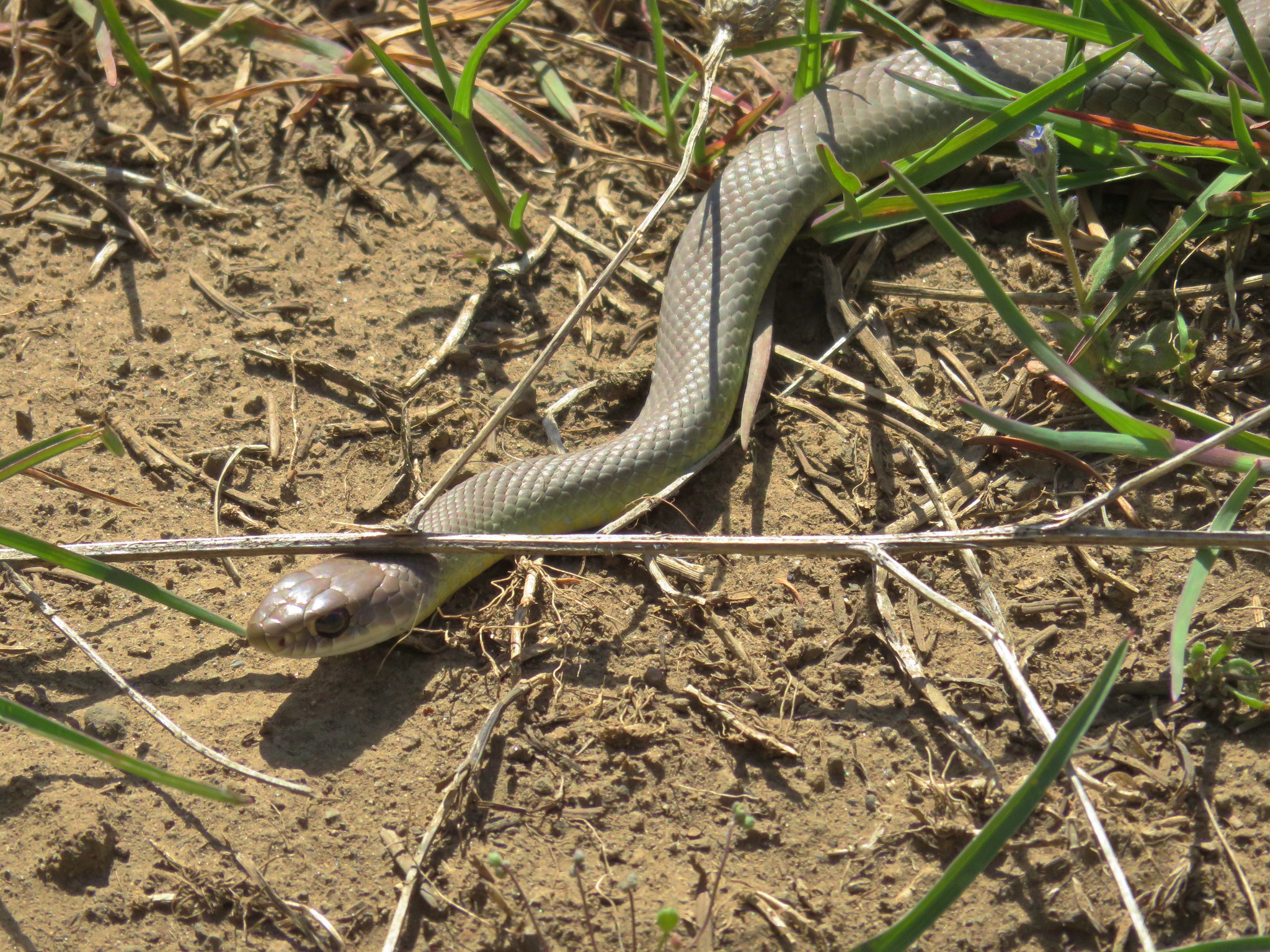
Snake

The snake wasn’t the only one out now that the day had gotten later. We had seen two other hikers that morning but passed a good deal more on our descent.

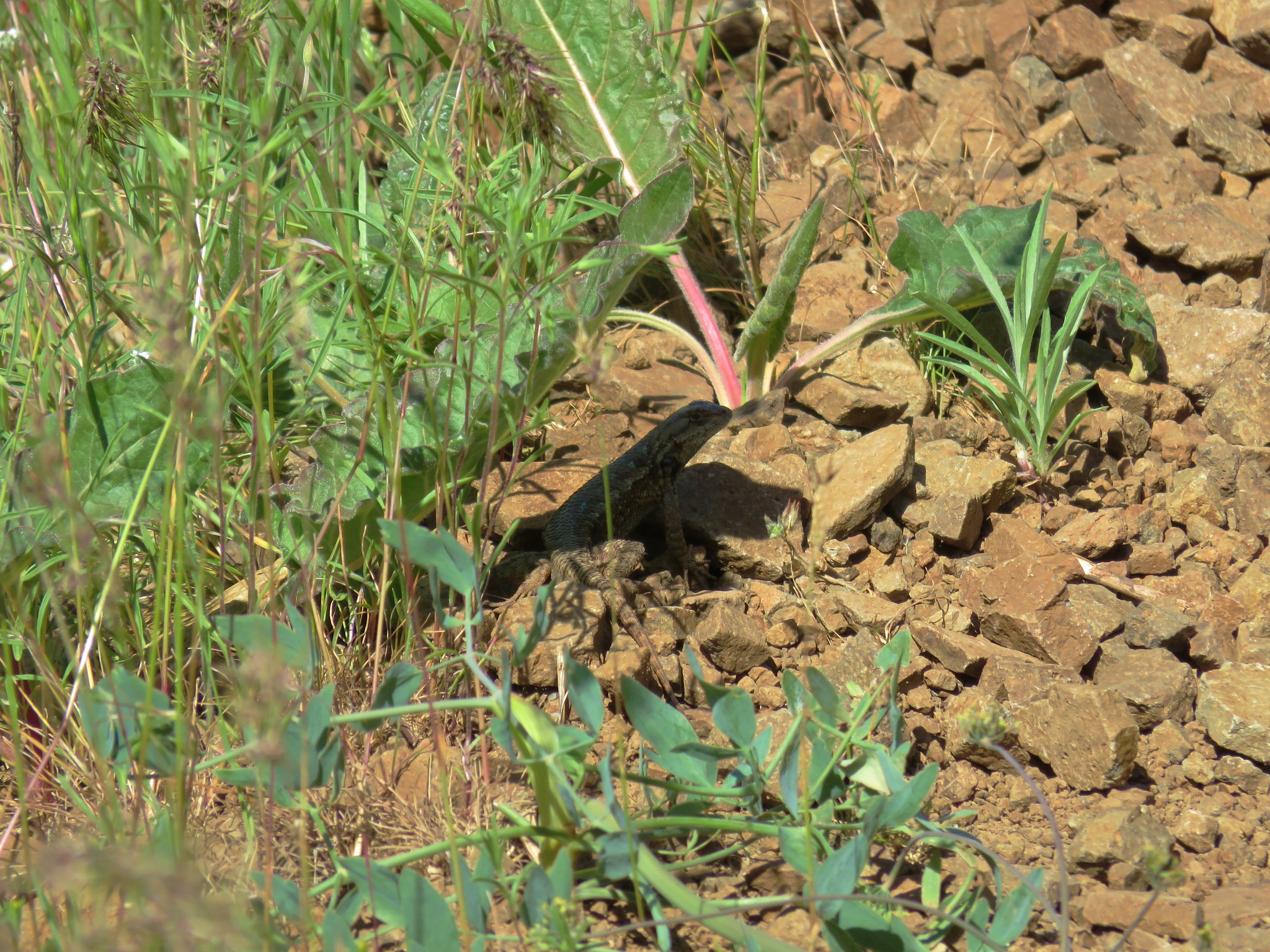
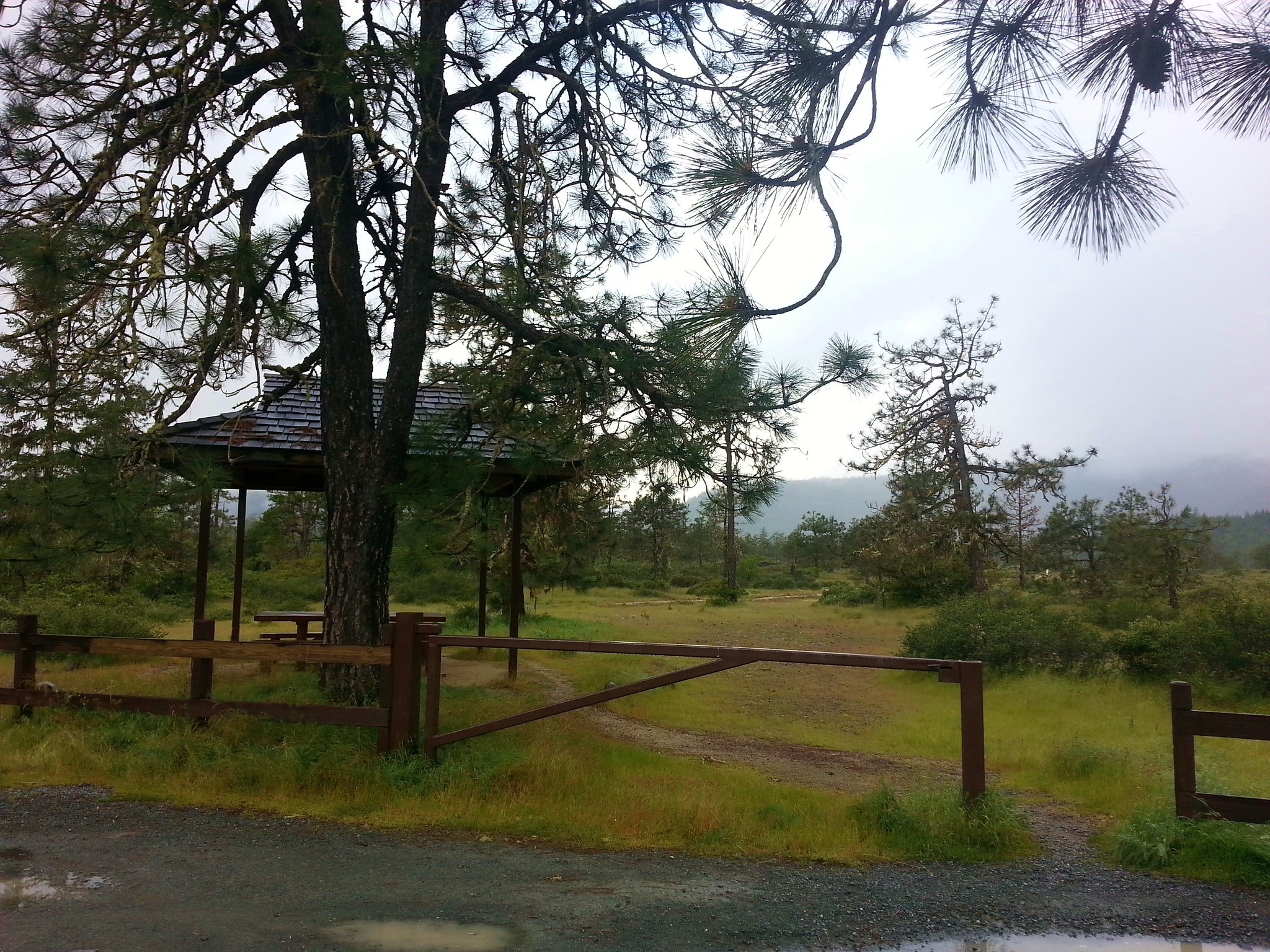
Back in the grassland a number of lizards scurried about.
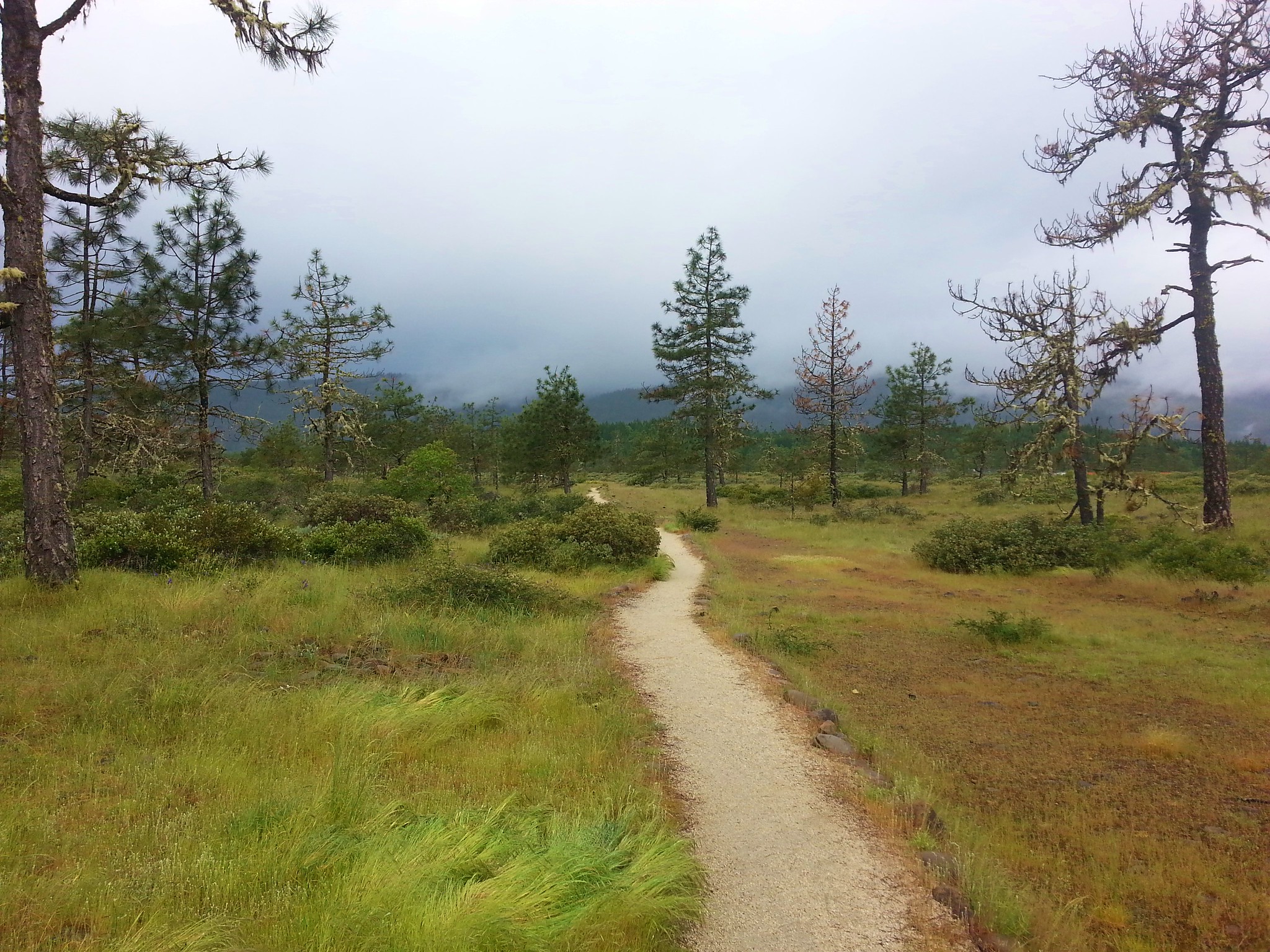
Oak Ridge Trail

Lizard

It was nice to once again have a camera able to zoom in on the wildlife which came in handy one last time near the trailhead.
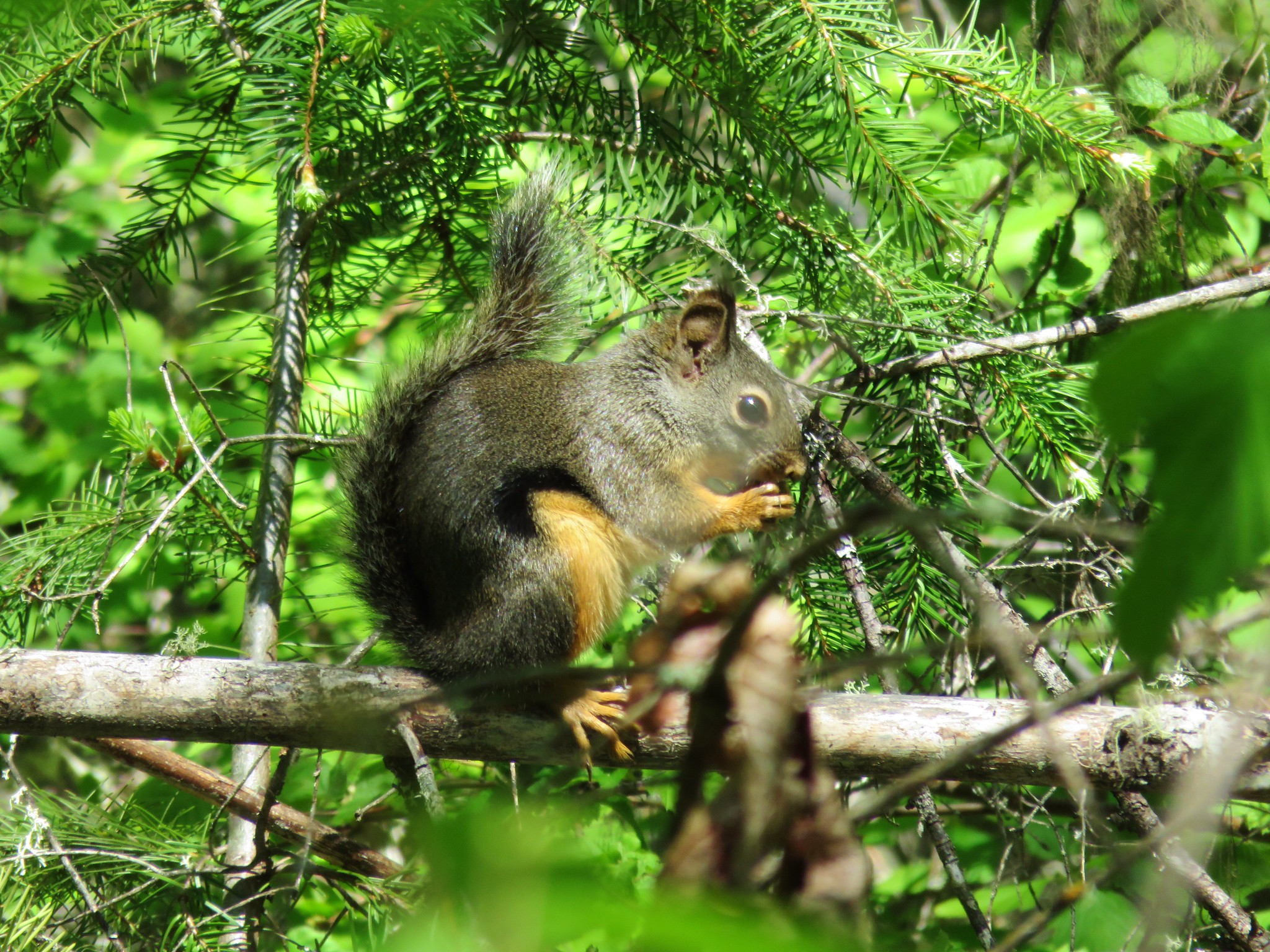
Douglas Squirrel

It was a little over 80 degrees back at the car and for the first time in a long while there was hope that summer was indeed coming. Happy Trails!

Flickr: Bald Butte
Categories
Hiking Klamath/Siskiyou Mountains Oregon Trip report

Rough and Ready Creek Botanical Wayside

As we were driving back to the motel from our Hidden Beach hike I had become progressively ill. By Thursday evening it had developed into a full on stomach bug. Heather spent the night taking care of me. We were glad we’d moved the Hidden Beach hike up a day because there was no way that would have been a good idea Friday.

We left the motel a little before 7am and began our drive home. I was still feeling pretty bad but at least I hadn’t vomited since the previous night. Our plans had called for us to stop on the way back at the Rough and Ready Botanical Wasyside just north of O’Brien, Oregon.

We’d been in the car a little over an hour when we reached the wayside and I was feeling well enough (stubborn enough) to want to give the hike a try. We parked at the pullout along Highway 199.
20170512_075419

A .3 mile gravel path led to a picnic table overlooking the creek.
20170512_081311

2017-05-12 08.21.59

2017-05-12 08.22.09

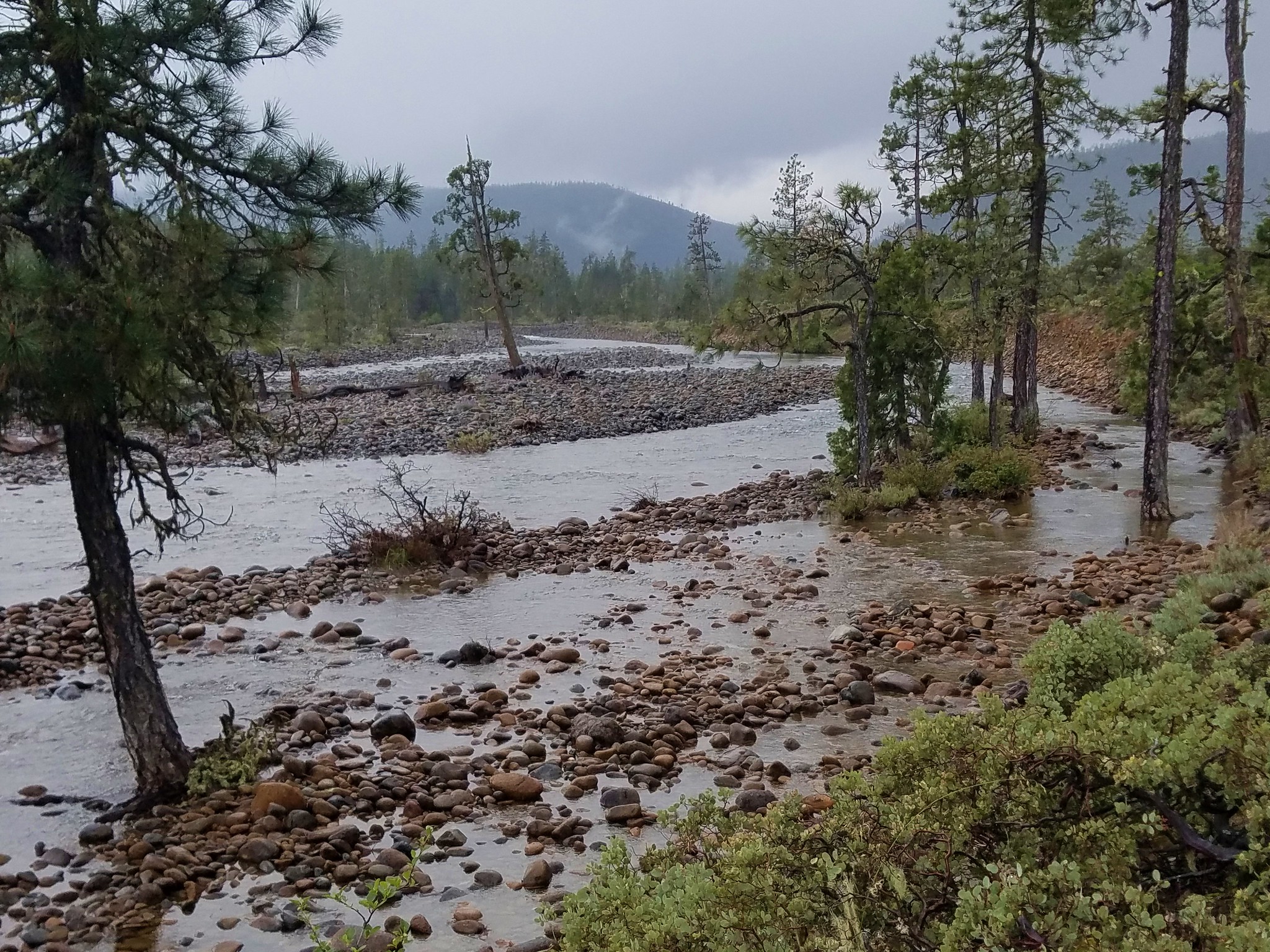
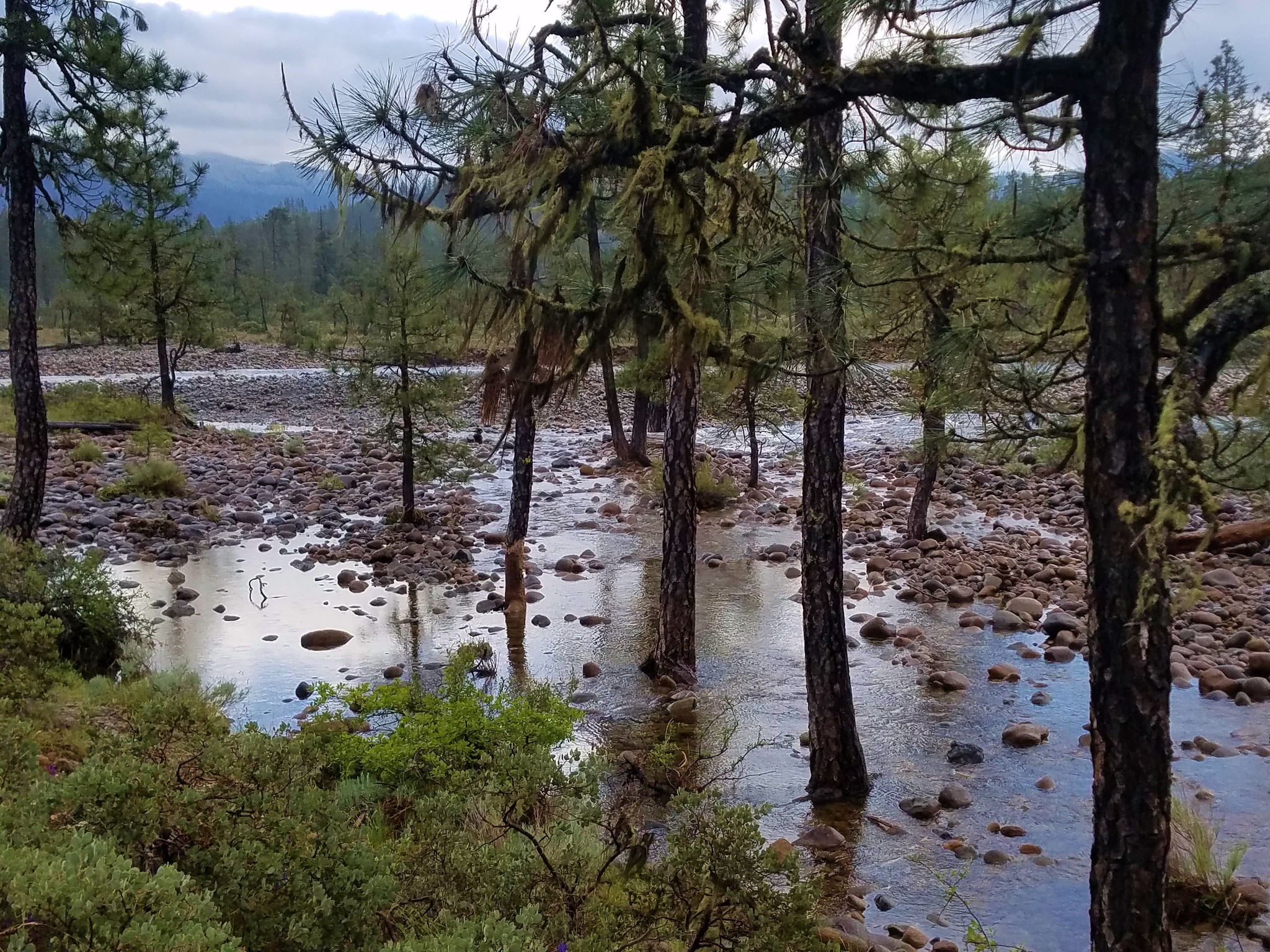
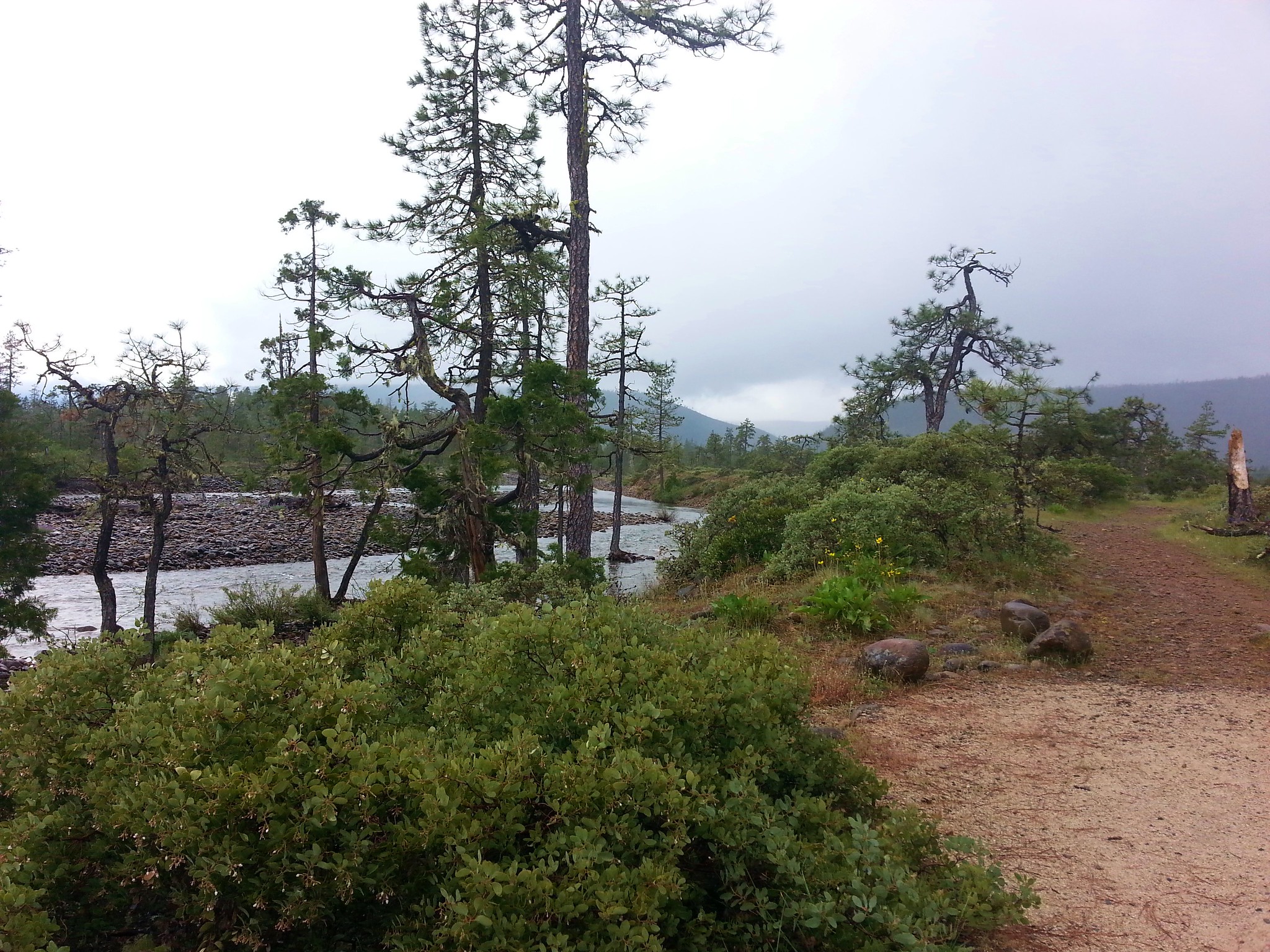
It was cold and wet, raining off and on, and there looked to be fresh snow in the foothills. Despit the conditions we continued on following an old roadbed from the picnic table just over a mile to Seats Dam which is used to divert water for irrigation before returning as we’d come.
20170512_082210

2017-05-12 08.46.30

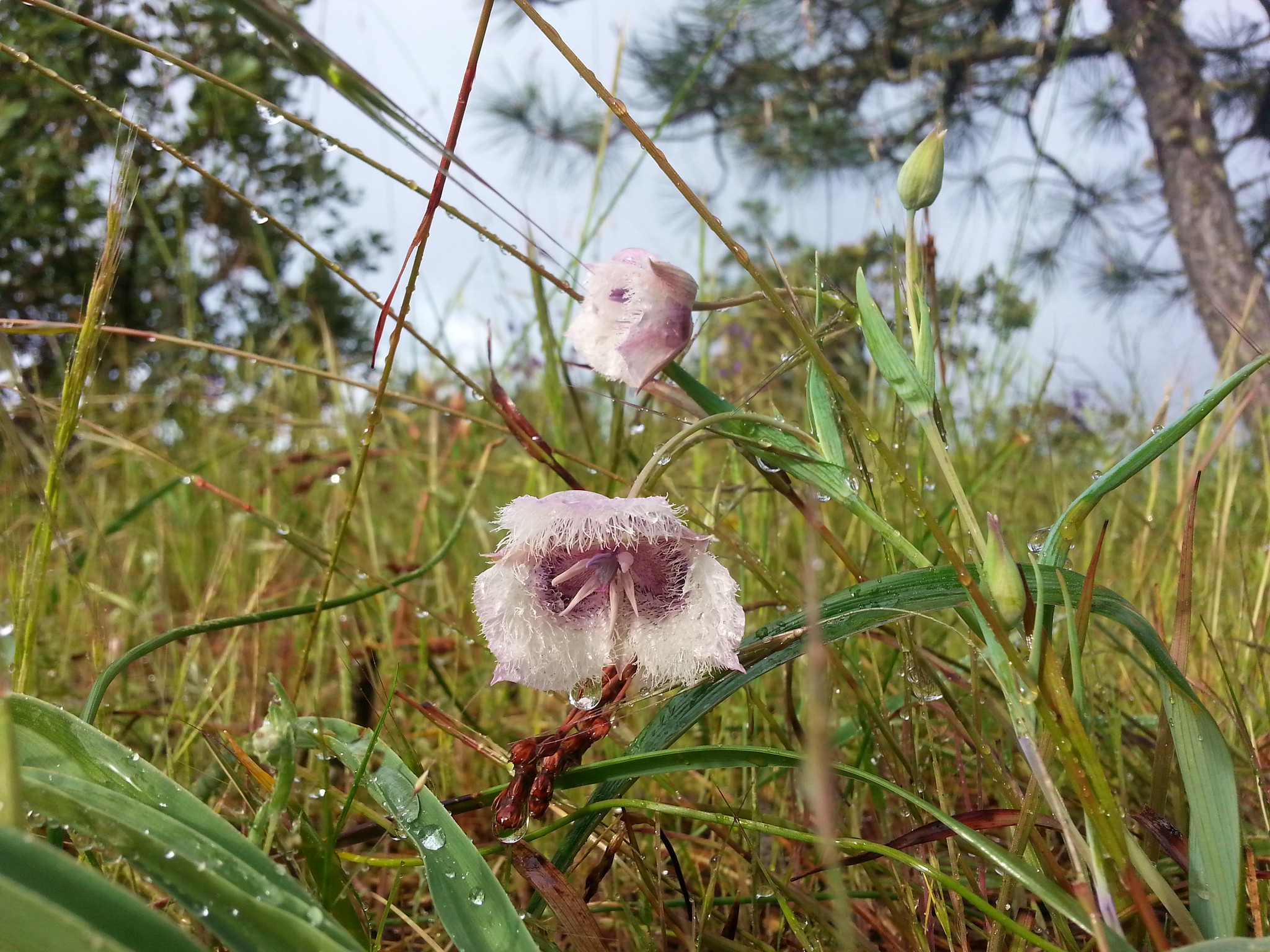
The area is known for its botanical diversity which was understandable given the number of different wildflowers we saw along the 2.8 mile hike. We likely missed many but here is a sample of the ones we did see.

20170512_081640

2017-05-12 08.20.05

2017-05-12 08.22.18

2017-05-12 08.22.54

2017-05-12 08.23.46

2017-05-12 08.24.03

2017-05-12 08.27.23

2017-05-12 08.30.34

2017-05-12 08.35.38

2017-05-12 08.36.31

2017-05-12 08.36.55

20170512_083658

2017-05-12 08.37.07

2017-05-12 08.38.39

20170512_084142

2017-05-12 08.42.47

2017-05-12 08.44.22

2017-05-12 08.45.18

2017-05-12 08.52.09

2017-05-12 08.53.42

20170512_091859

20170512_092022

It was a tough 2.8 mile hike but well worth the stop. Our vacation hikes were over. We were down a camera, I wasn’t sure what was going on with my left foot, and I was hoping we’d make it home before I had any more rounds with the stomach flu, but in spite of all of that we had had a good time overall and been on some interesting hikes. When we got home we ordered a new camera and began to recover for our next outing. Happy Trails!

Flickr: Rough and Ready Creek

Categories
California Hiking Klamath/Siskiyou Mountains Northern California Coast Oregon Trip report

Shrader Old Growth, Myrtle Tree, Lower Rogue River, and Yontocket

On the fourth day of our vacation we were changing our base of operations from Gold Beach, OR to Crescent City, CA. We planned on checking out of our motel in Gold Beach in the morning and doing three hikes along Jerry’s Flat Road before heading down to our next motel. So far the vacation had been going okay but each day had thrown some kinks our way and this day would do the same.

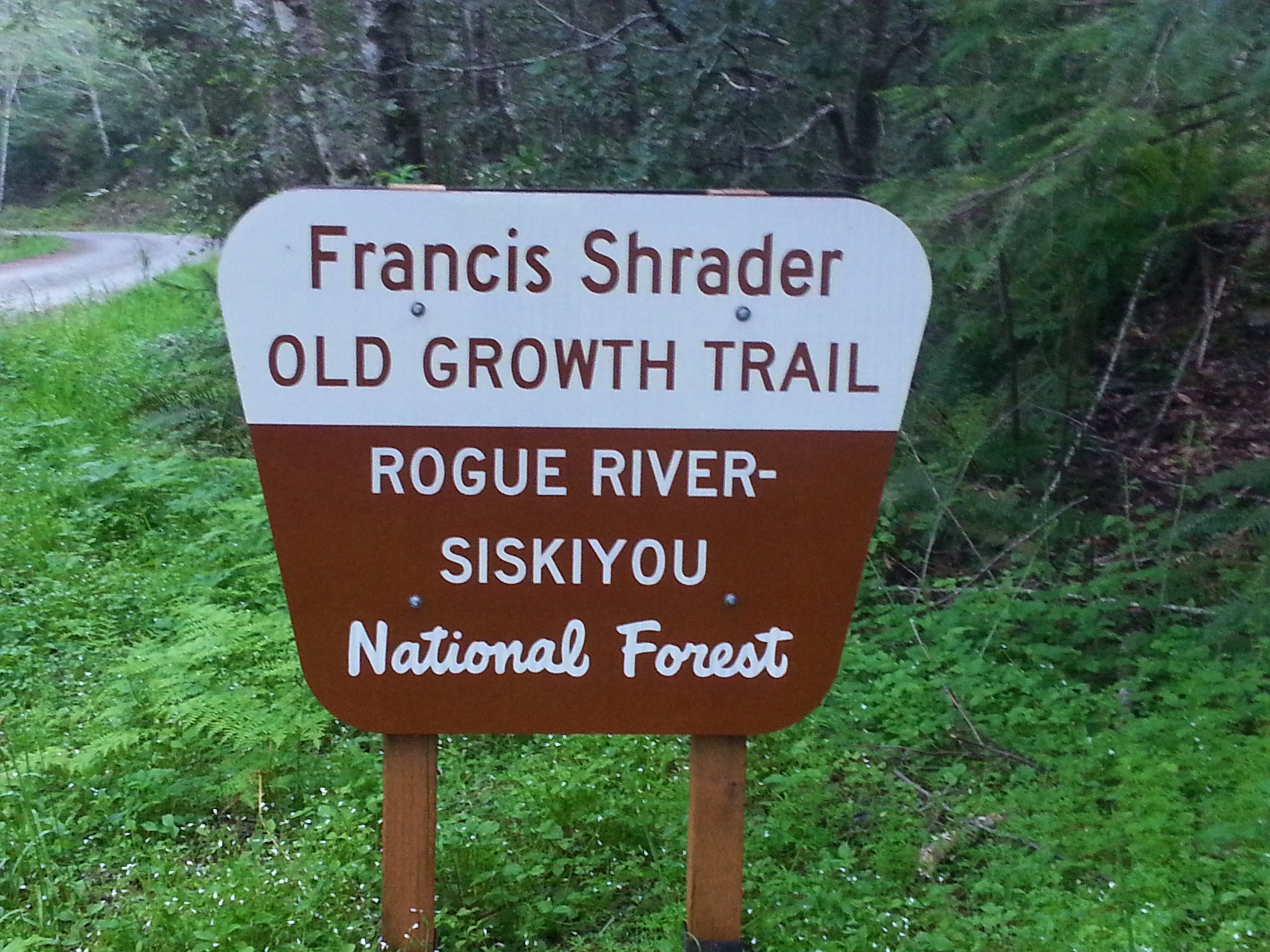
Our first stop was the Francis Shrader Old Growth Trail.
20170509_072027

The interpretive loop was just under a mile long. Brochures were available at the trailhead which we found to be very informative. It was probably the best interpretive trail we’d been on and would make a great hike for kids. Unfortunately our phones didn’t handle the low light conditions of the morning in the forest well so our photos were limited.
2017-05-09 07.31.57

20170509_072723

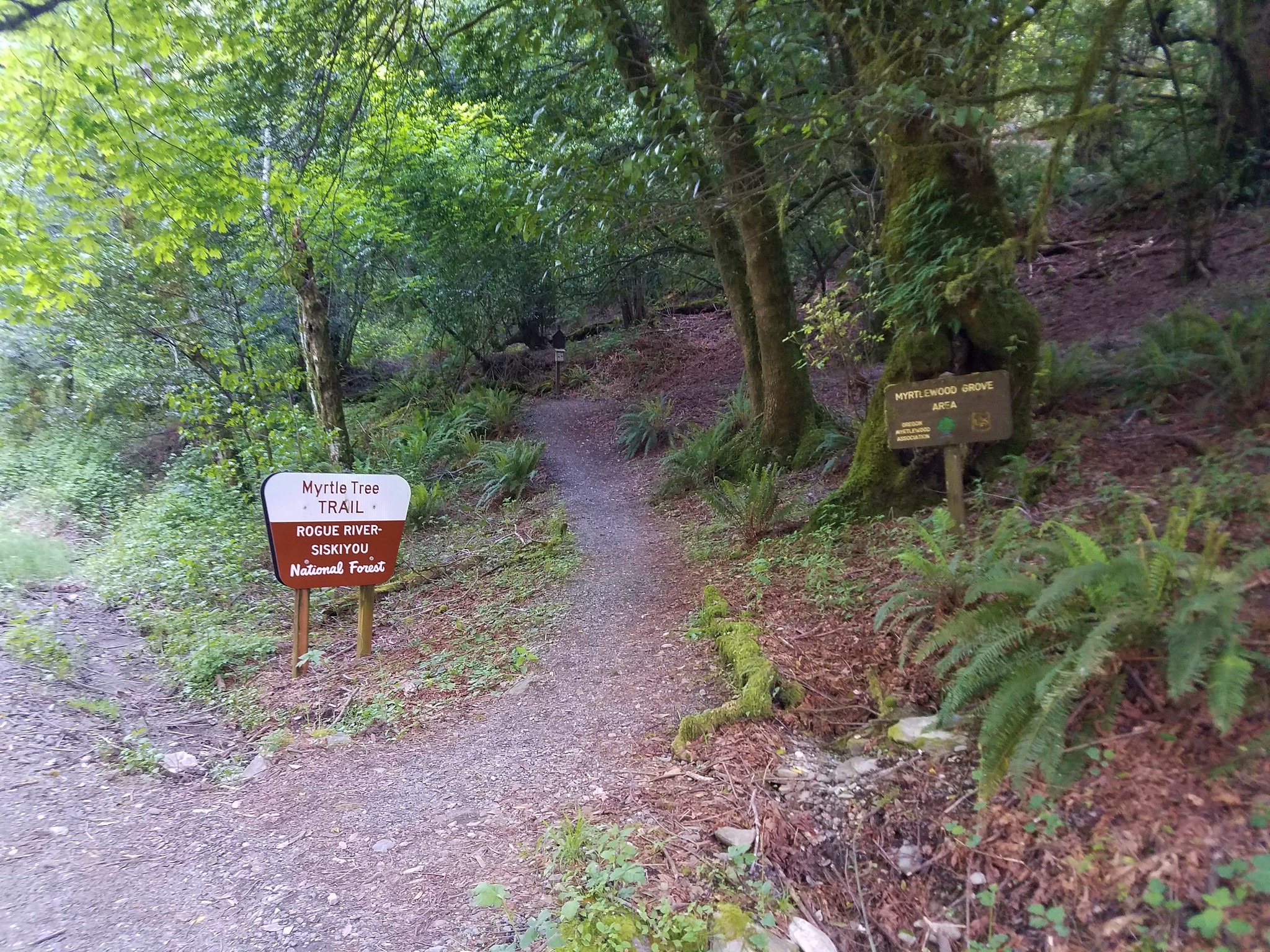
To reach this trail we’d turned off of Jerry’s Flat Road 9.7 miles from Gold Beach onto Road 3300-090 for two miles. Our next stop was just across the Rogue River at the Myrtle Tree Trailhead. To get there we drove 100 feet further along Jerry’s Flat Road and turned left on Road 3310 crossing the river and turning right onto an unmarked road for less than a quarter mile to the signed trailhead.
2017-05-09 08.10.51

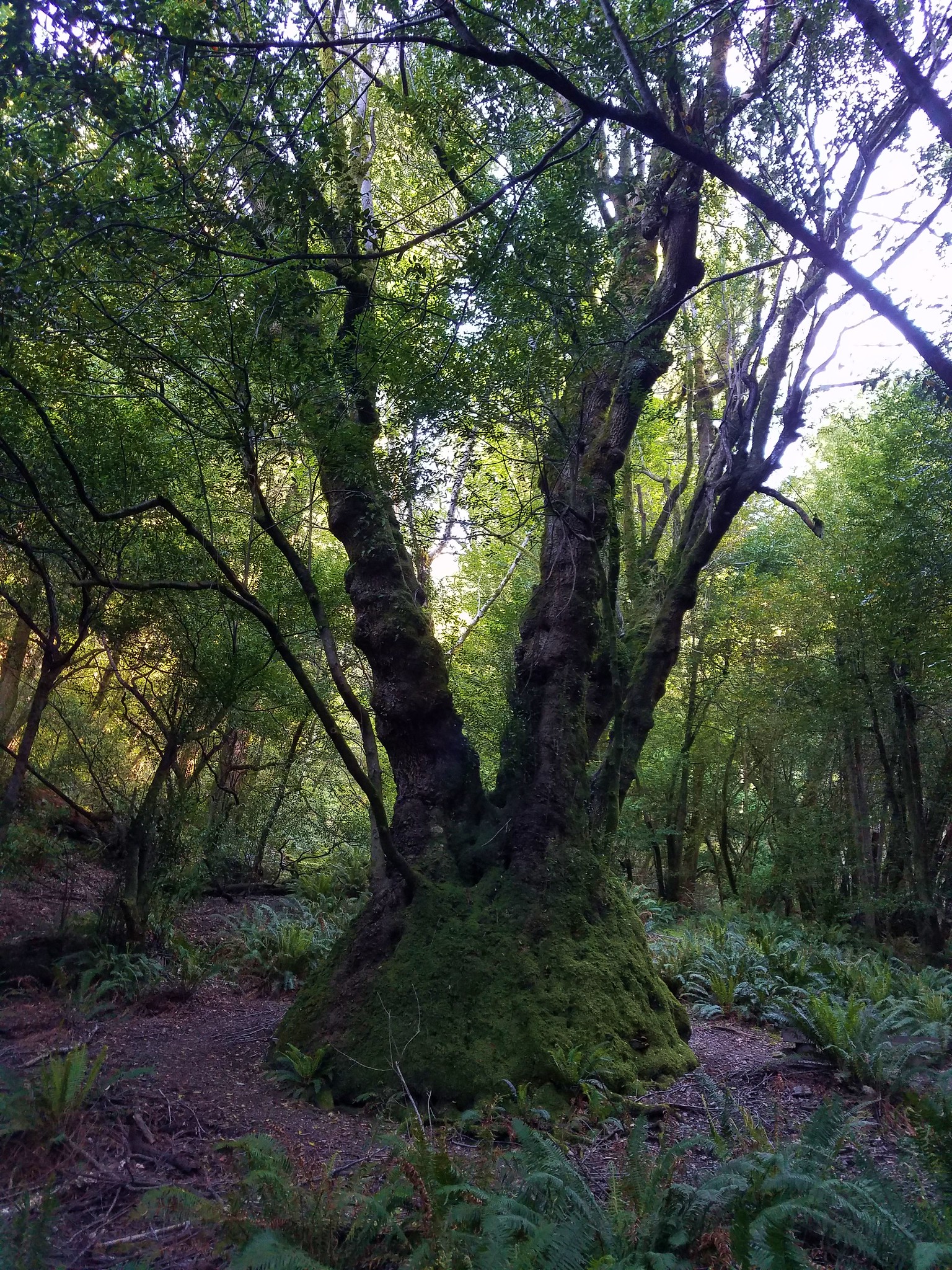
This trail was even shorter than the Old Growth Trail at just half a mile out and back. It climbed to Oregon’s largest known myrtle tree.
2017-05-09 08.22.03

2017-05-09 08.18.32

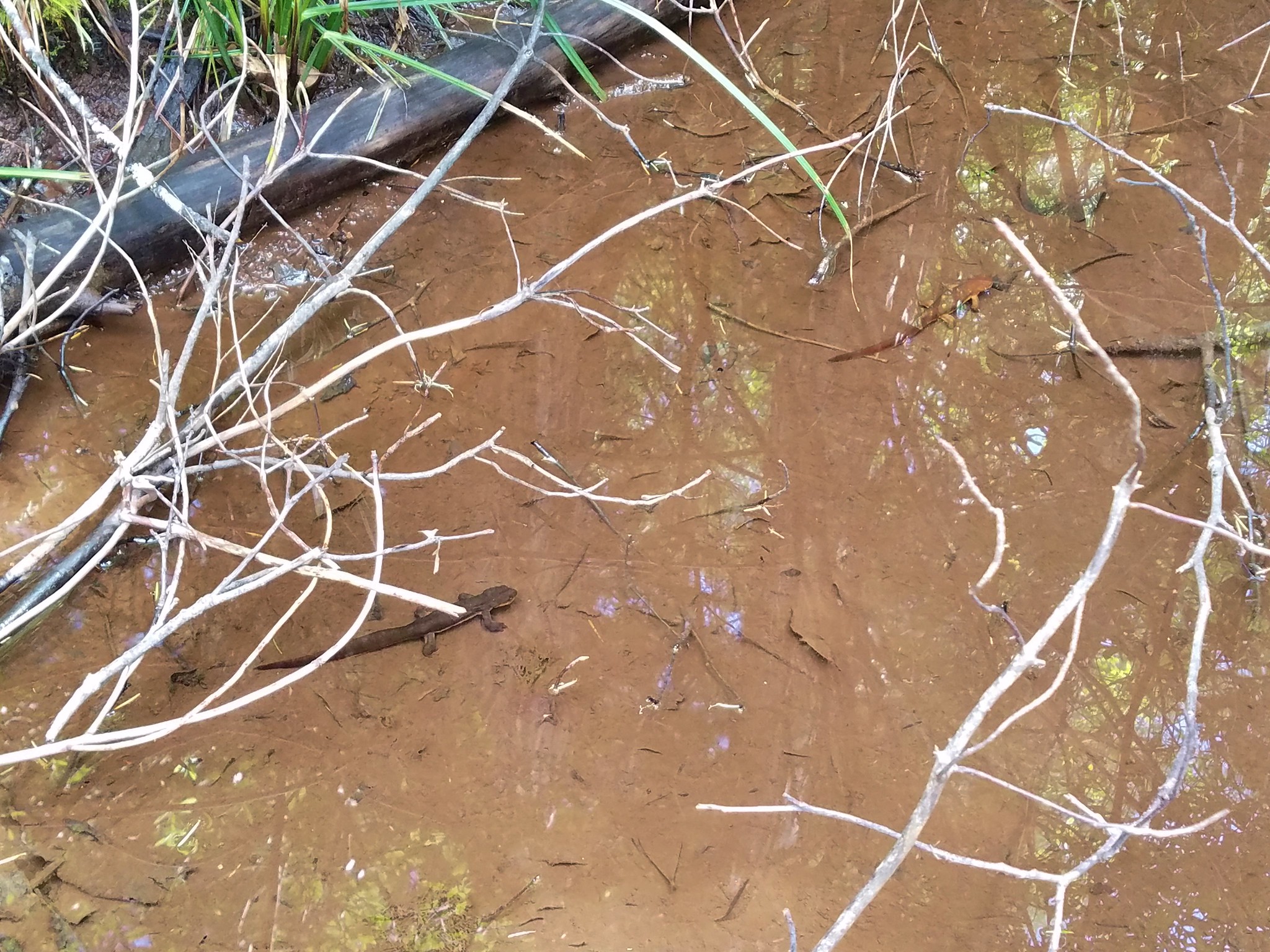
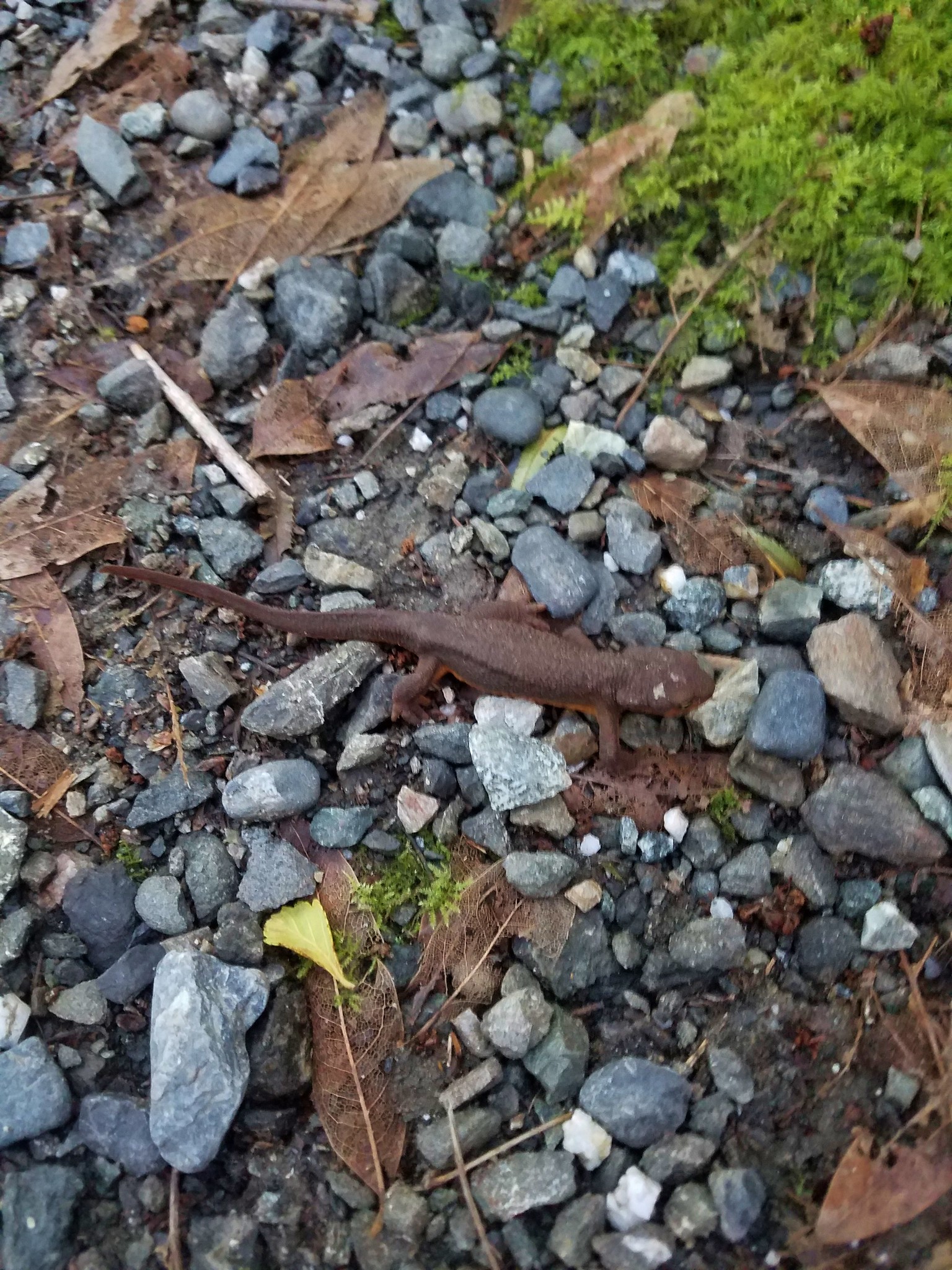
Rough skinned newts and snails were numerous on the trail so we had to watch our steps.
2017-05-09 08.14.13

2017-05-09 08.24.44

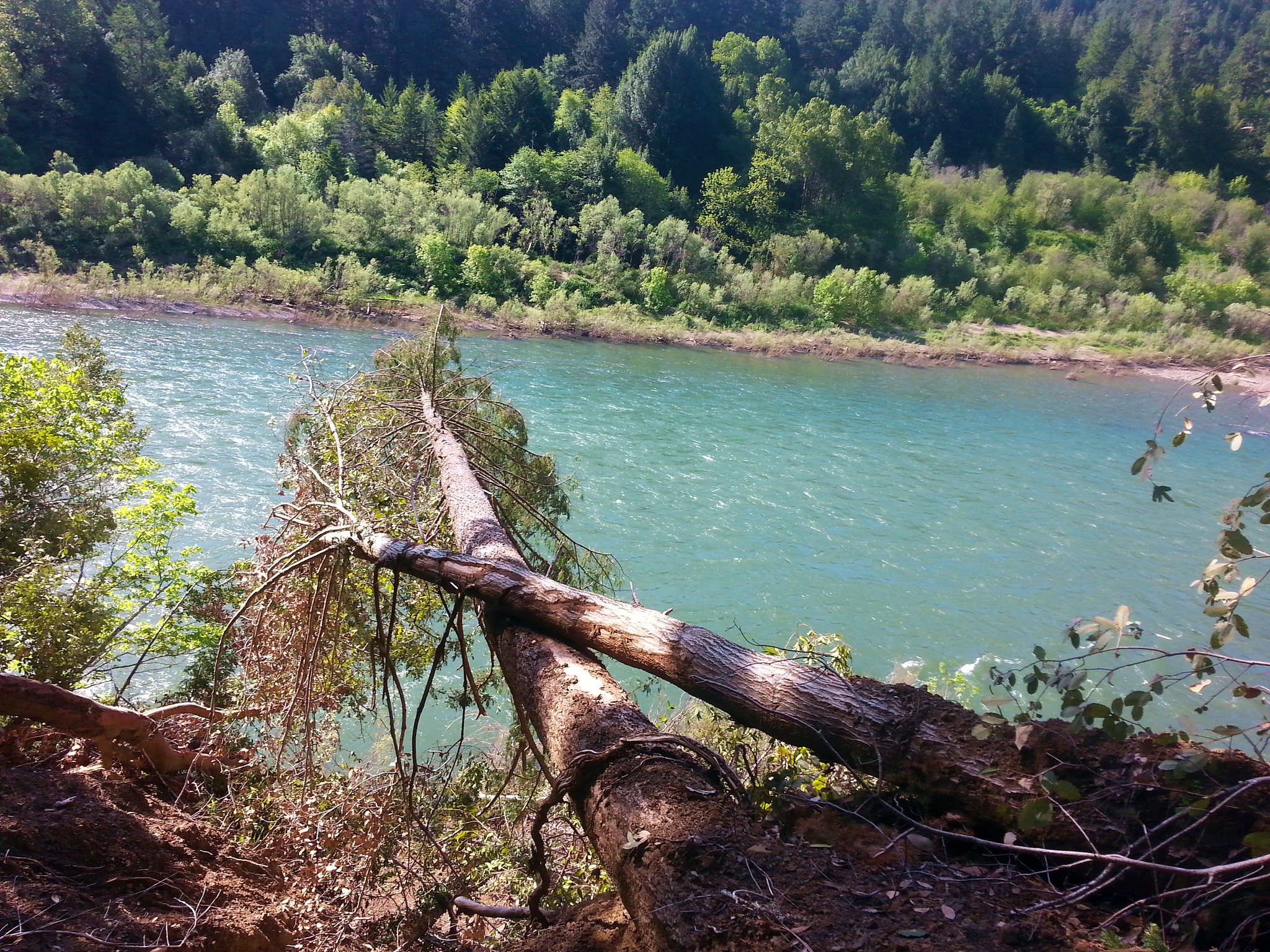
After visiting the tree we returned to Jerry’s Flat Road and followed it across the Rogue Rive to Road 375 where we turned left and followed it to Agness. We parked at the Agness Community Center/Library per the trail signs.
20170509_091653

We were a little nervous about our planned 6.2 mile hike here given it was almost the same time of year as our tick filled visit to the nearby Illinois River Trail the previous year.

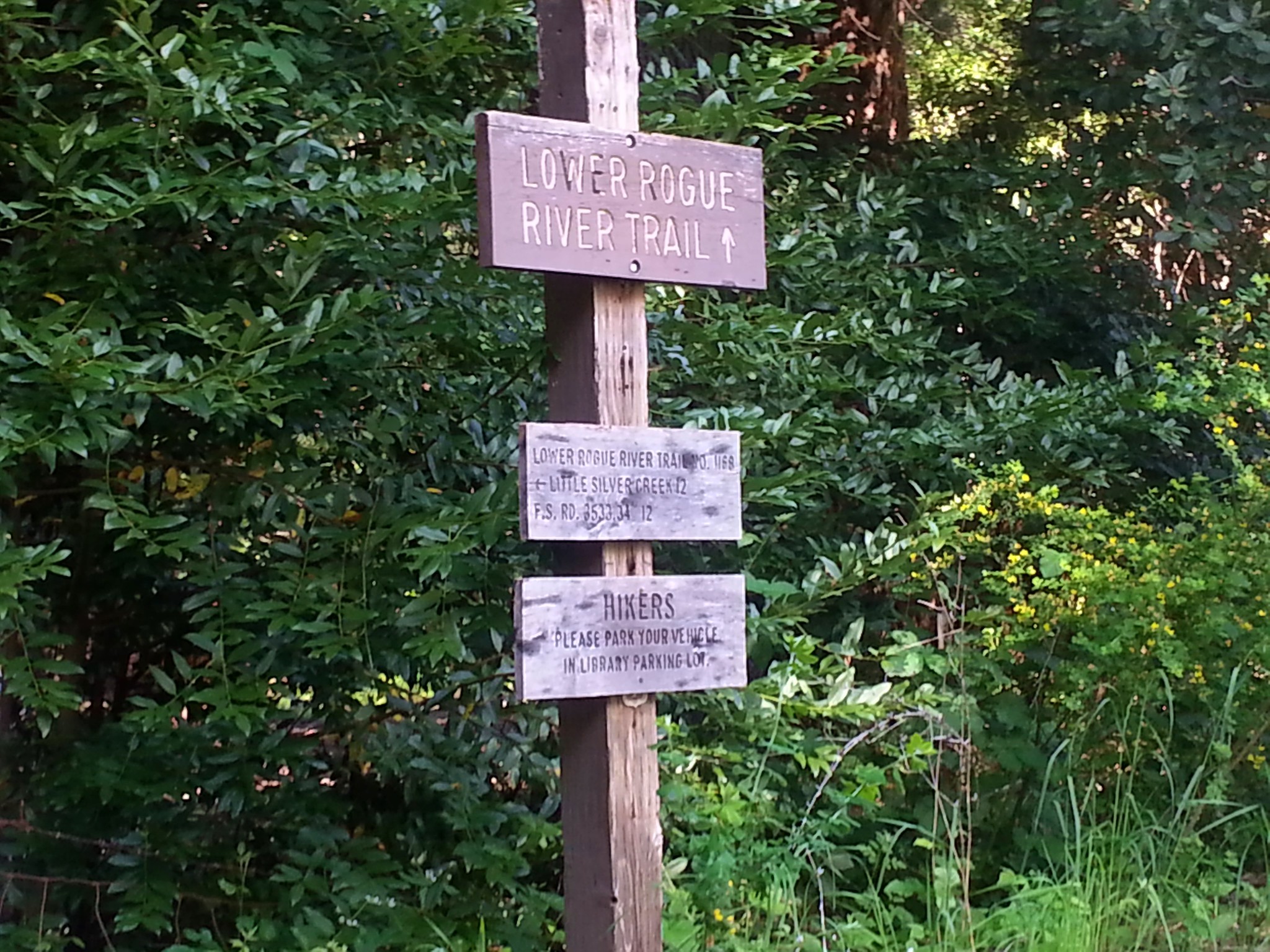
The first part of the trail follows roads and paths through private property so following the trail signs was important.
20170509_092551

20170509_093424

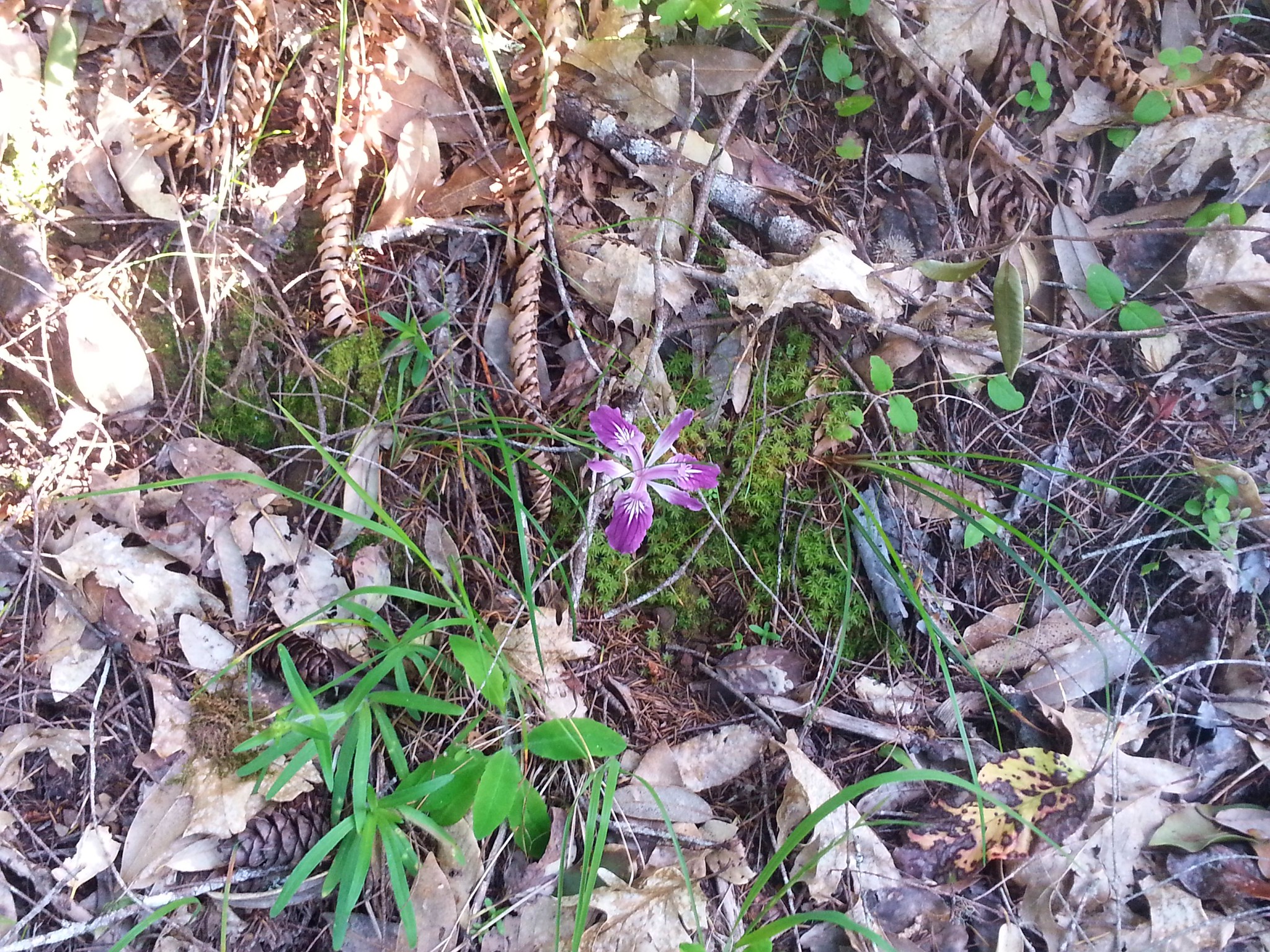
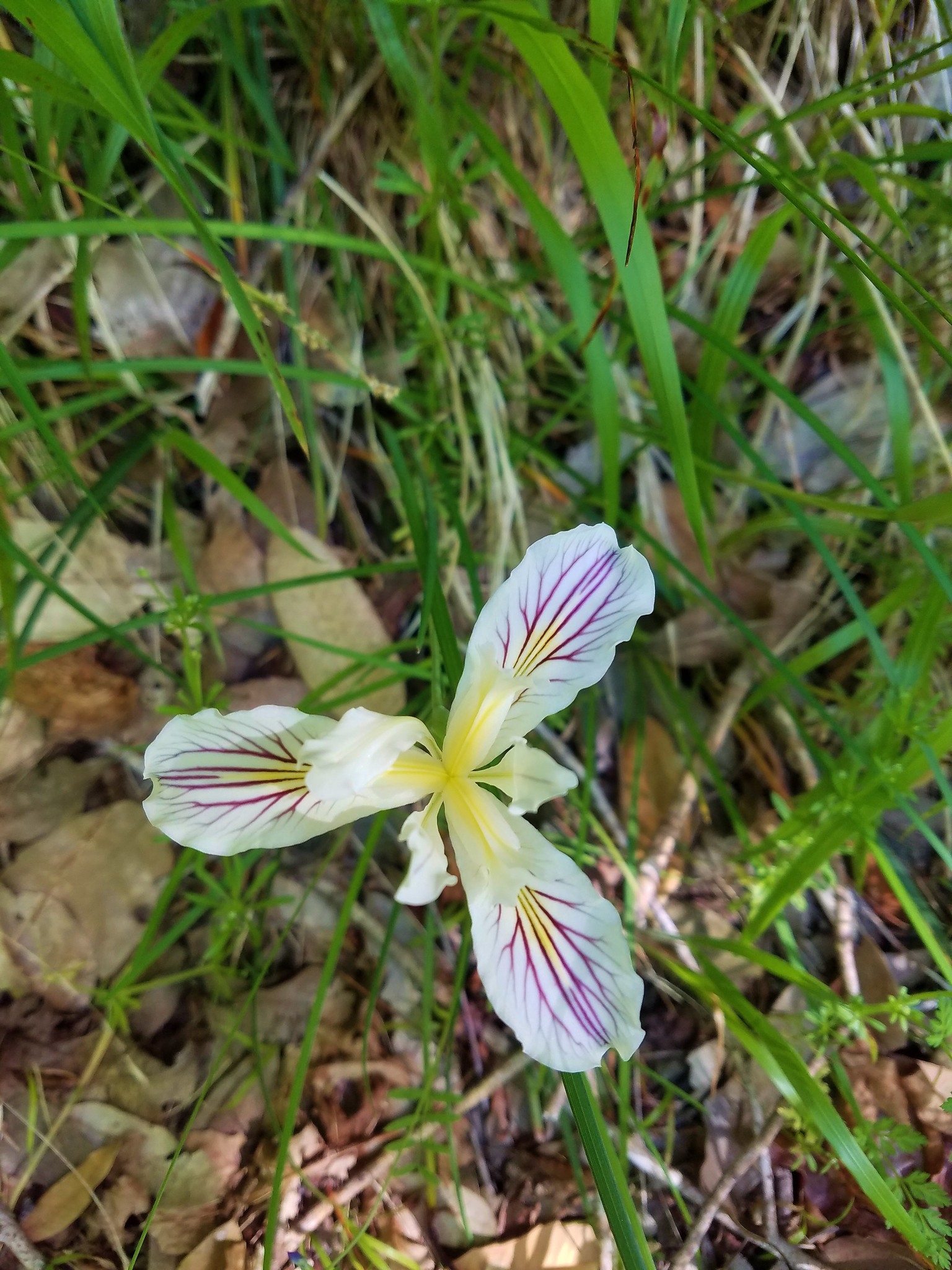
Candyflower and wild iris were in bloom along the trail.
20170509_094504

20170509_092849

2017-05-09 09.55.34

Poison oak was also a common sight.
2017-05-09 09.49.01

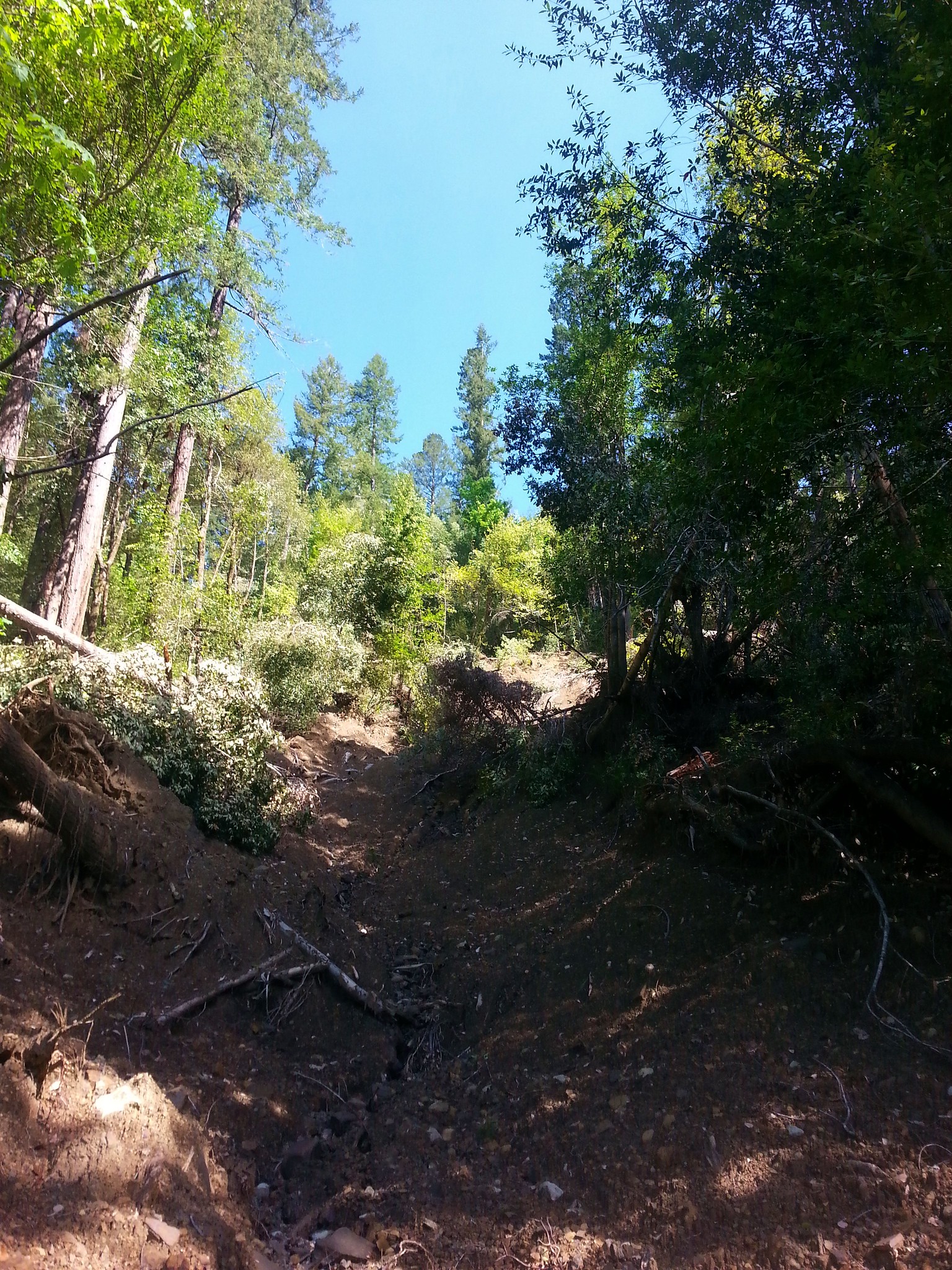
The trail had not been maintained yet this year and we encountered blowdown almost immediately after leaving the old roads. We were able to navigate the first few spots without having to deal with any of the poison oak but it meant being more in the brush and it wasn’t long before we’d each brushed off ticks.

After only a mile we came upon a large washout.
20170509_095342

20170509_095350

I crossed it to see if I could easily pick out the continuation of the trail. It wasn’t obvious and no marking was visible so we considered our options and decided neither of us were too keen on continuing. We were unsure of the trail conditions further on so we turned around, went back to the car, and did a thorough tick check.

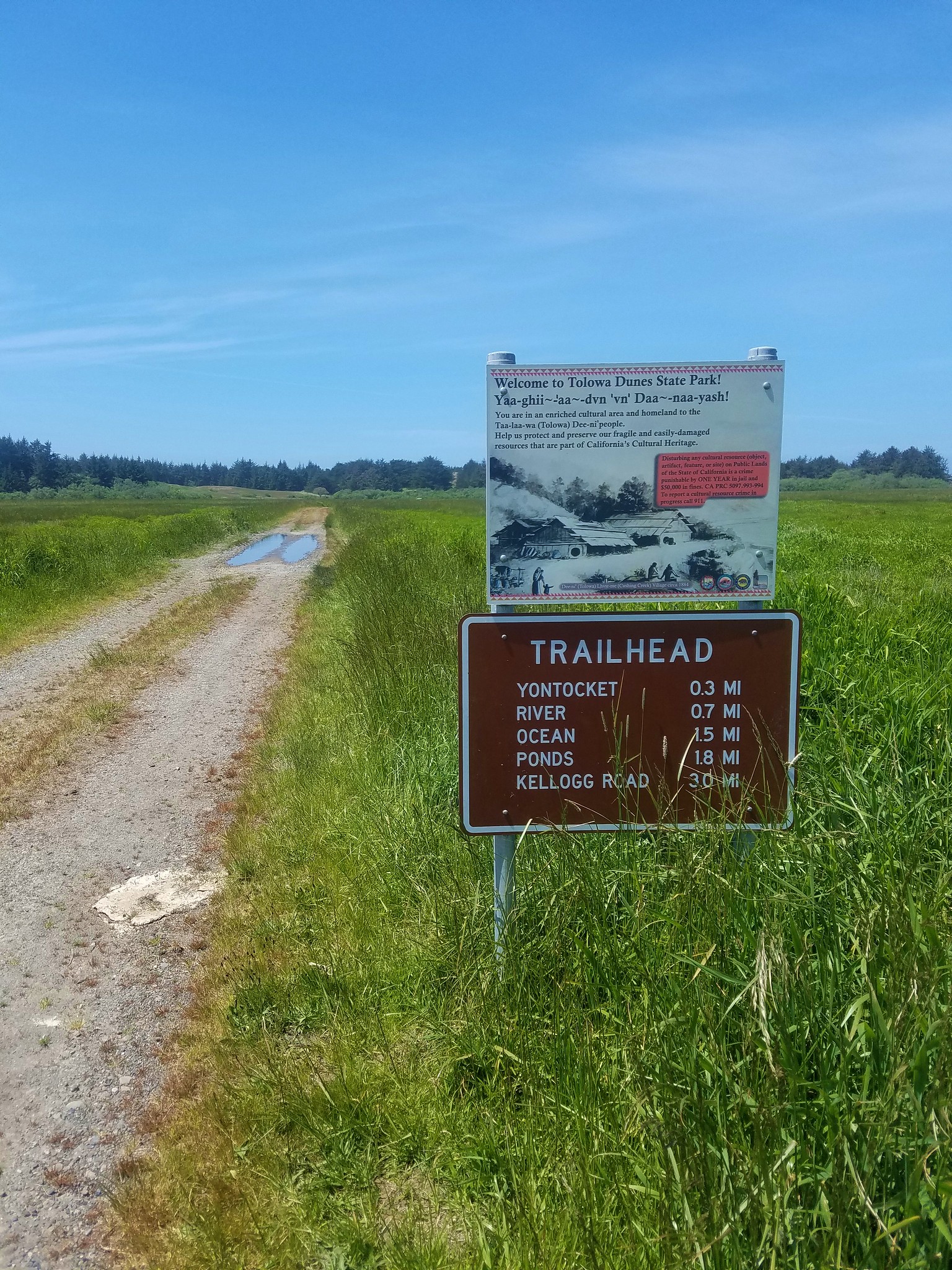
It was going to be too early to check in to our motel in Crescent City so we decided to pick out another hike from our guidebook that would be along our way. We chose to check out the the site of a former Native American village in Tolowa Dunes State Park.

We parked at a tricky trailhead to find along Pala Road. My best advice for finding it is to look at the park on Google Maps, find Pala Road near the NE end of the park and get driving directions. 🙂
2017-05-09 12.58.14

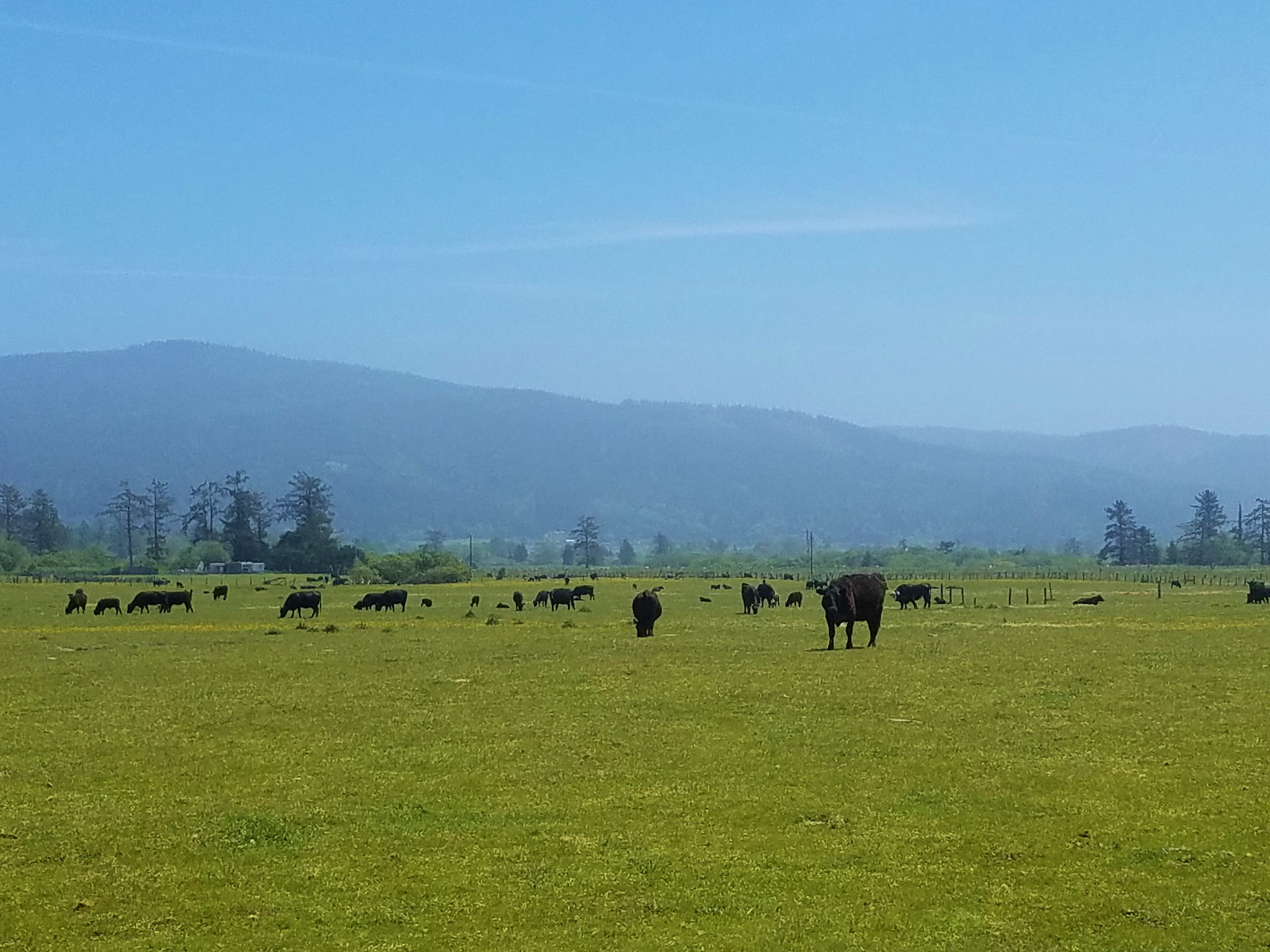
Pala Road passed through cow pastures which proved to be interesting on our drive out as we wound up in a heard of dairy cows on their way to be milked.
2017-05-09 12.54.30

As for the hike my left foot had gotten a little tender during the drive. I had been wearing an older pair of hiking shoes and they were really irritating a tendon or ligament on the outside of that foot. Every step shoved the shoe up against it and I was really having trouble walking.

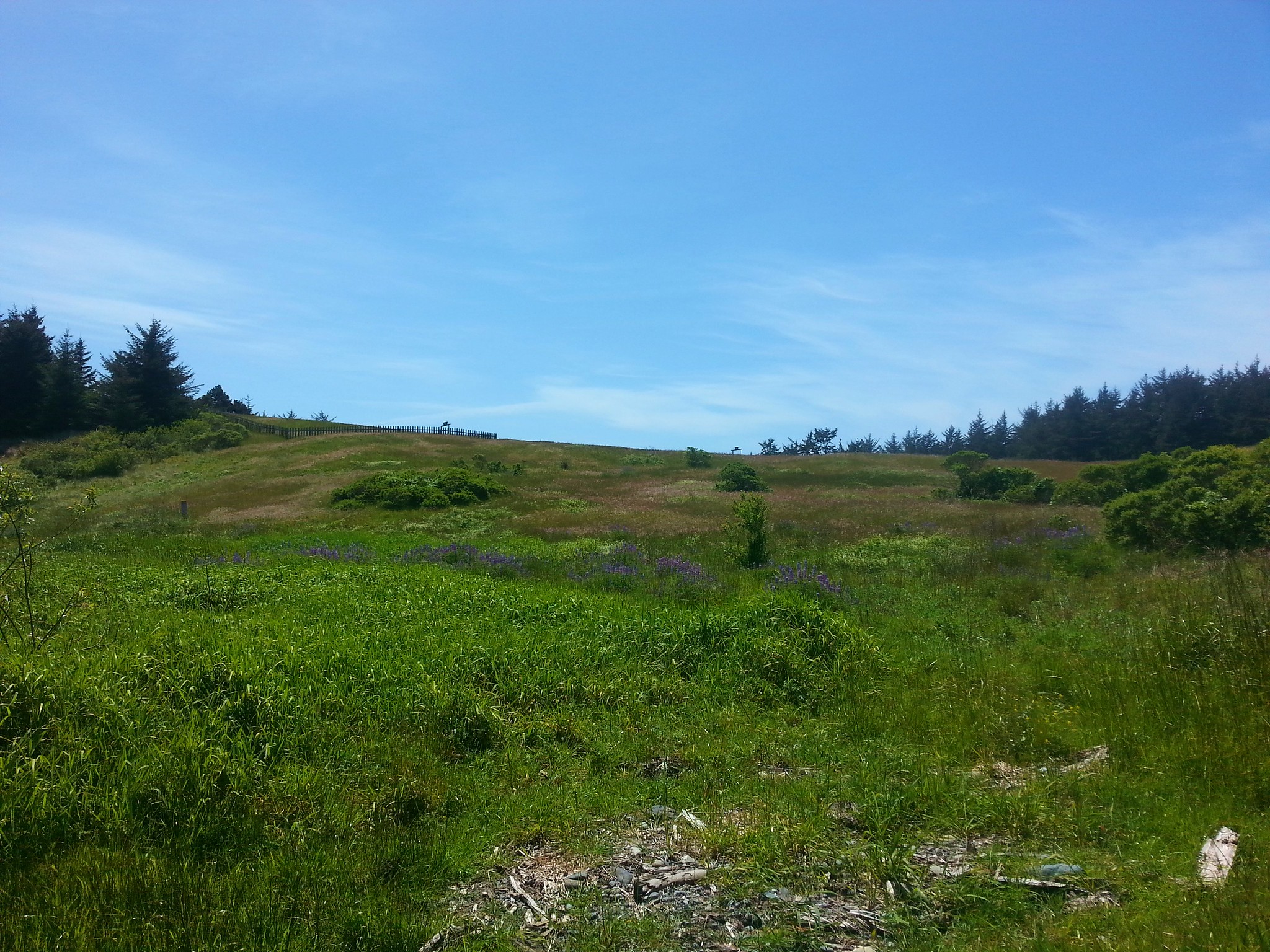
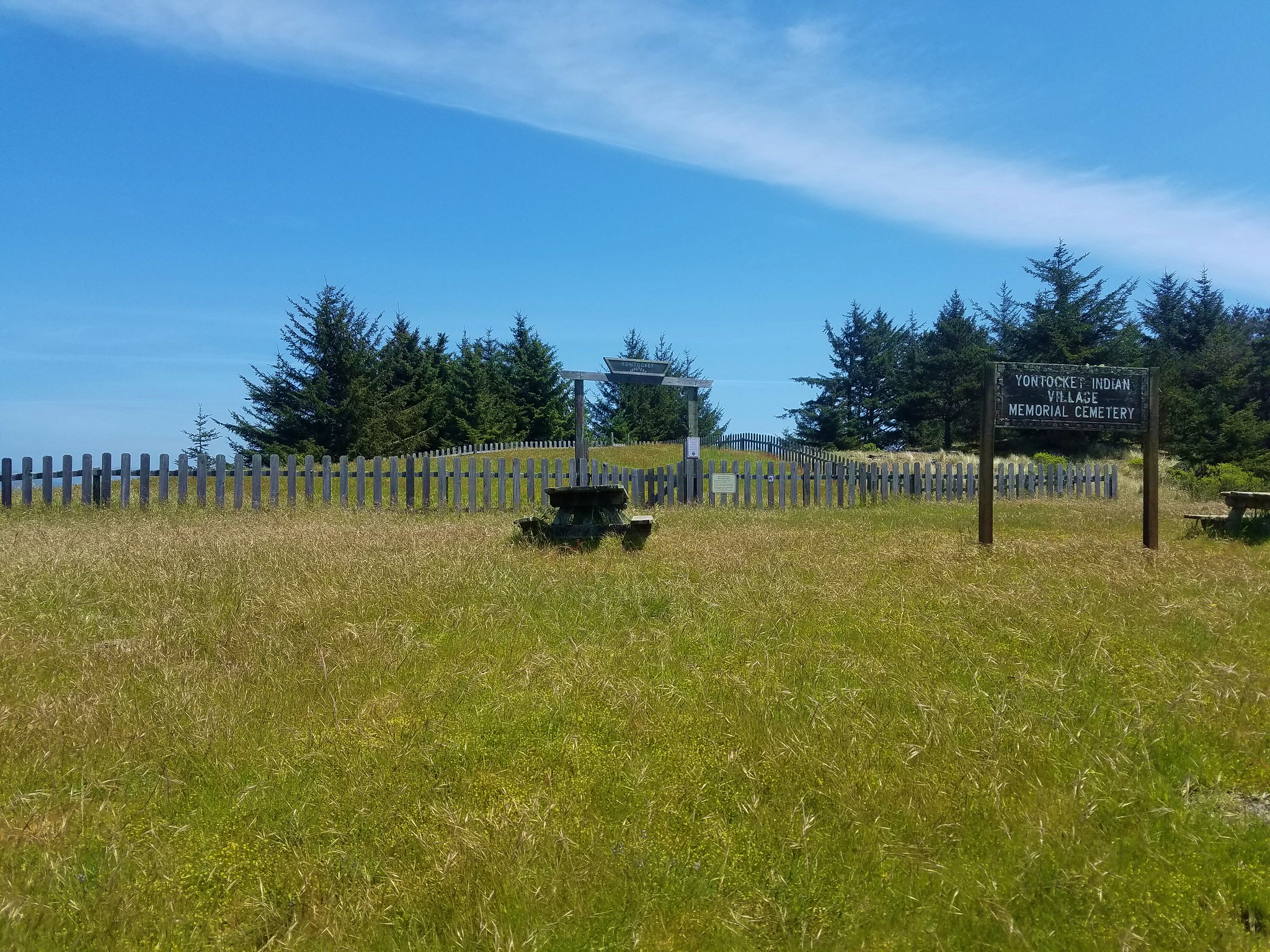
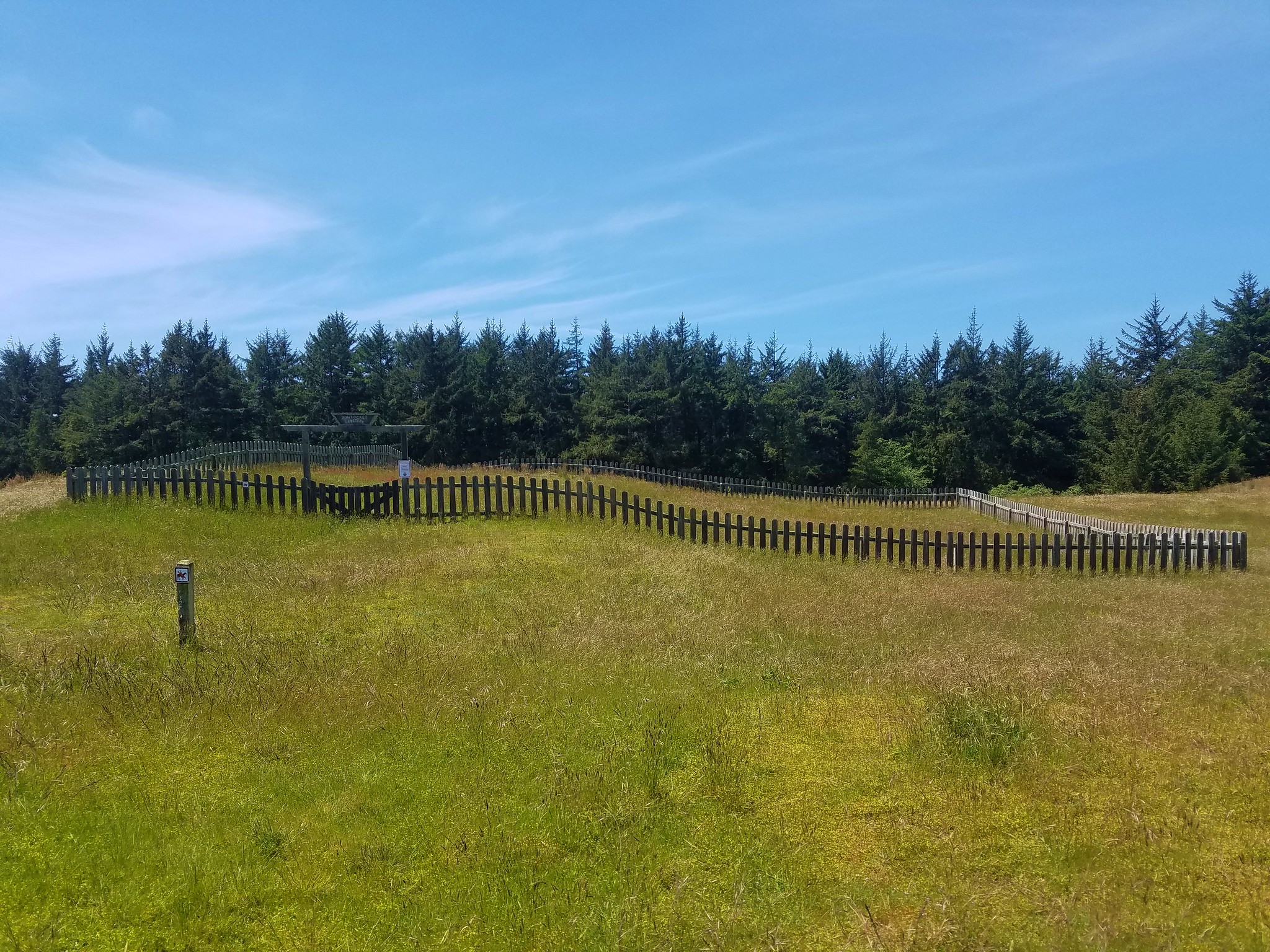
We were headed for the village site which was located atop a small hill.
20170509_130756

2017-05-09 13.11.25

2017-05-09 13.11.43

2017-05-09 13.12.24

We stopped at the picnic tables so I could put some bandages on my foot to try and cushion the contact before heading back downhill to a marked trail junction where we headed for the Smith River.
20170509_130929

The scenery in the area was great with several types of flowers blooming and many birds flying overhead including great white egrets and a bald eagle.
2017-05-09 13.22.50

2017-05-09 13.08.08

20170509_132746

The bandages weren’t helping so Heather came up with the idea of trading shoes. For the rest of the hike we each wore one of the others shoes which did provide some relief. We managed to make it to the Smith River which was less than a half mile from the village site.
20170509_133627

2017-05-09 13.36.50

It was late enough now that we’d be able to check in to our room so we called it a day and I limped back to the car. When we got settled I iced my foot and we wondered what the next day had in store. Happy Trails!

Flickr: Shrader Old Growth, Myrtle Tree, Lower Rogue, and Yontocket

Categories
Hiking Oregon Oregon Coast Southern Coast Trip report

Floras Lake, Cape Blanco, Grassy Knob, and Port Orford Heads

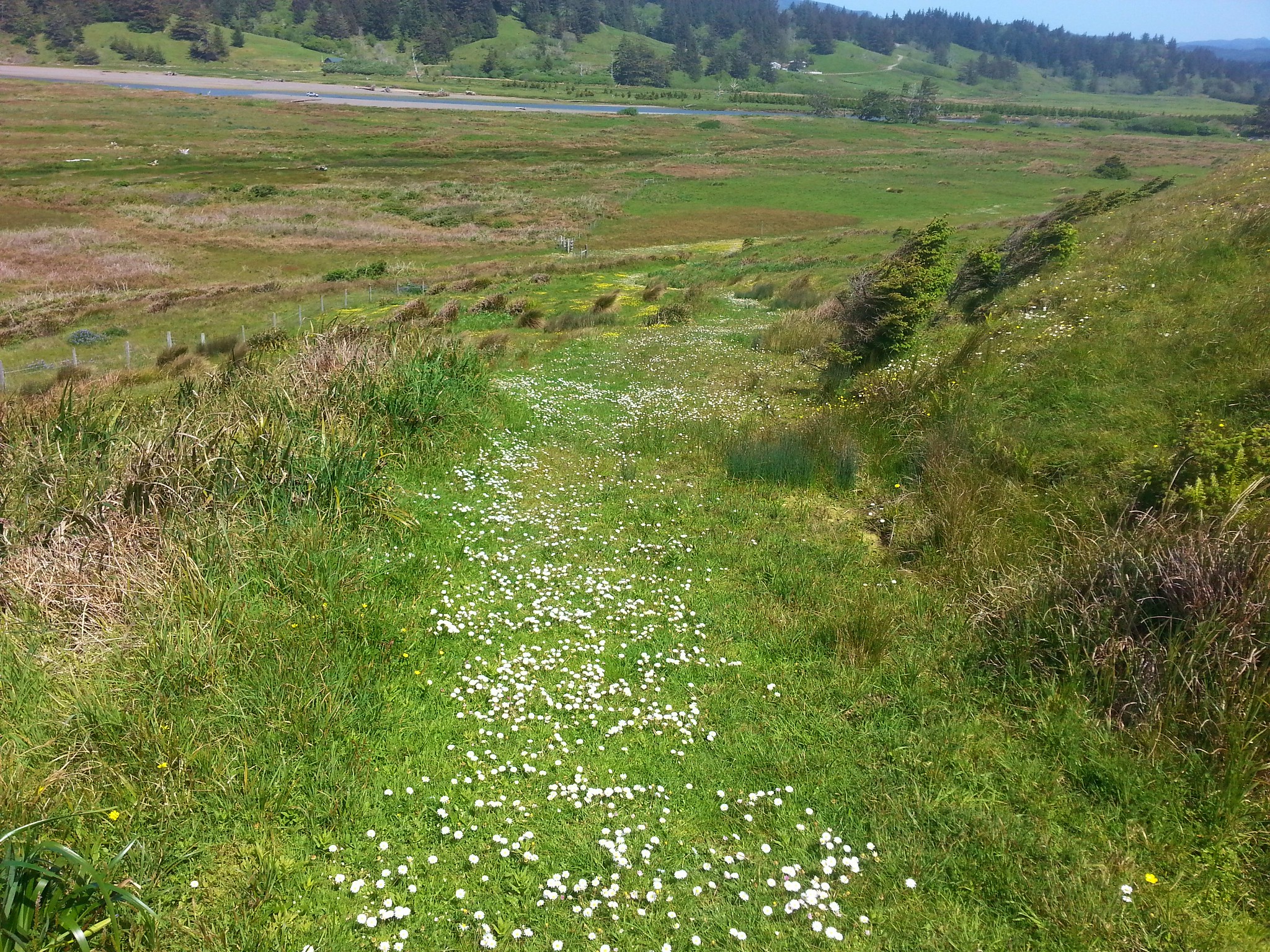
**Note a portion of the Grassy Knob hike burned in the 2023 Anvil Fire.**

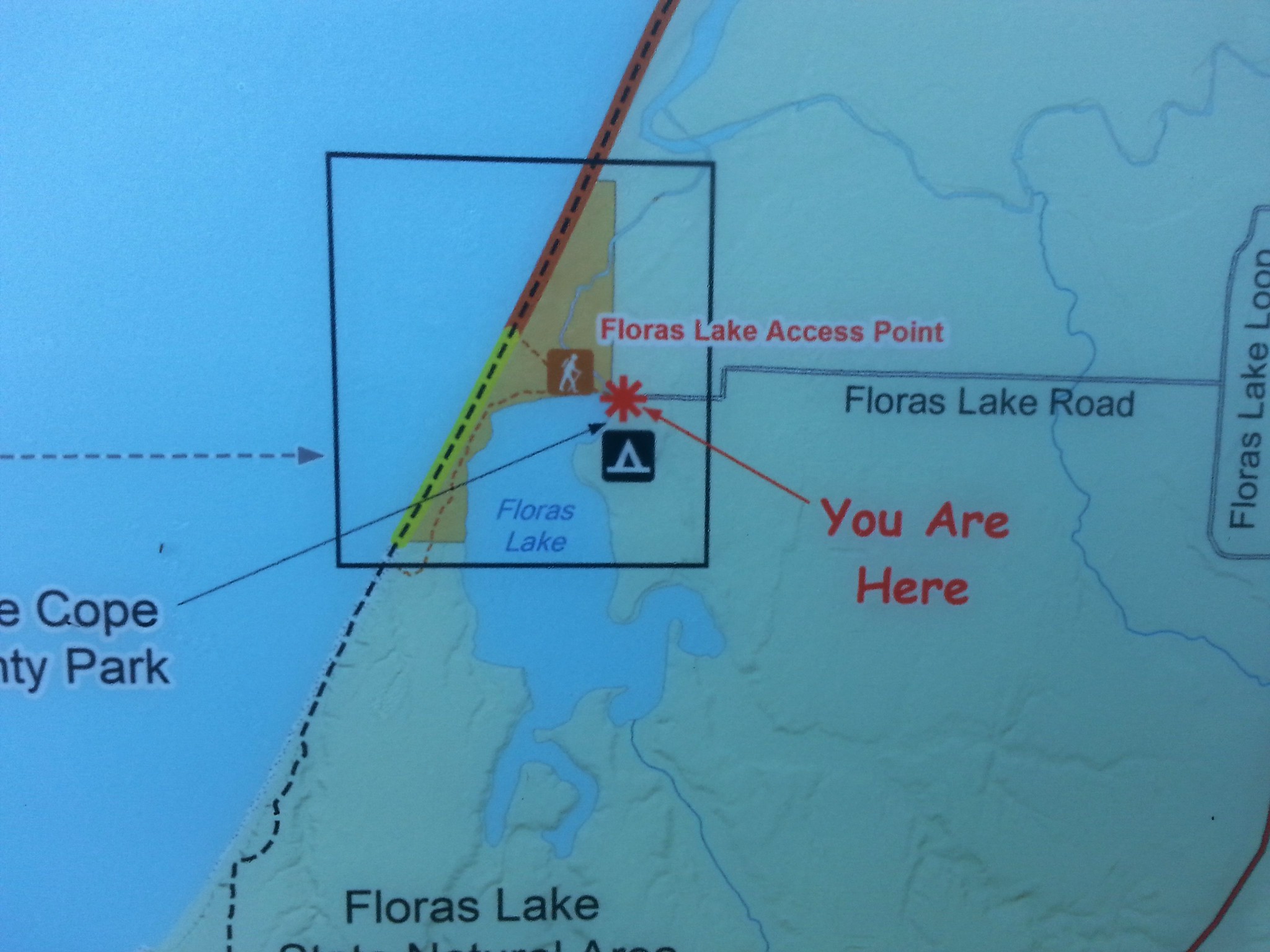
We spent the third day of our vacation hiking in the Port Orford area. We started the morning at Floras Lake.
20170508_074817

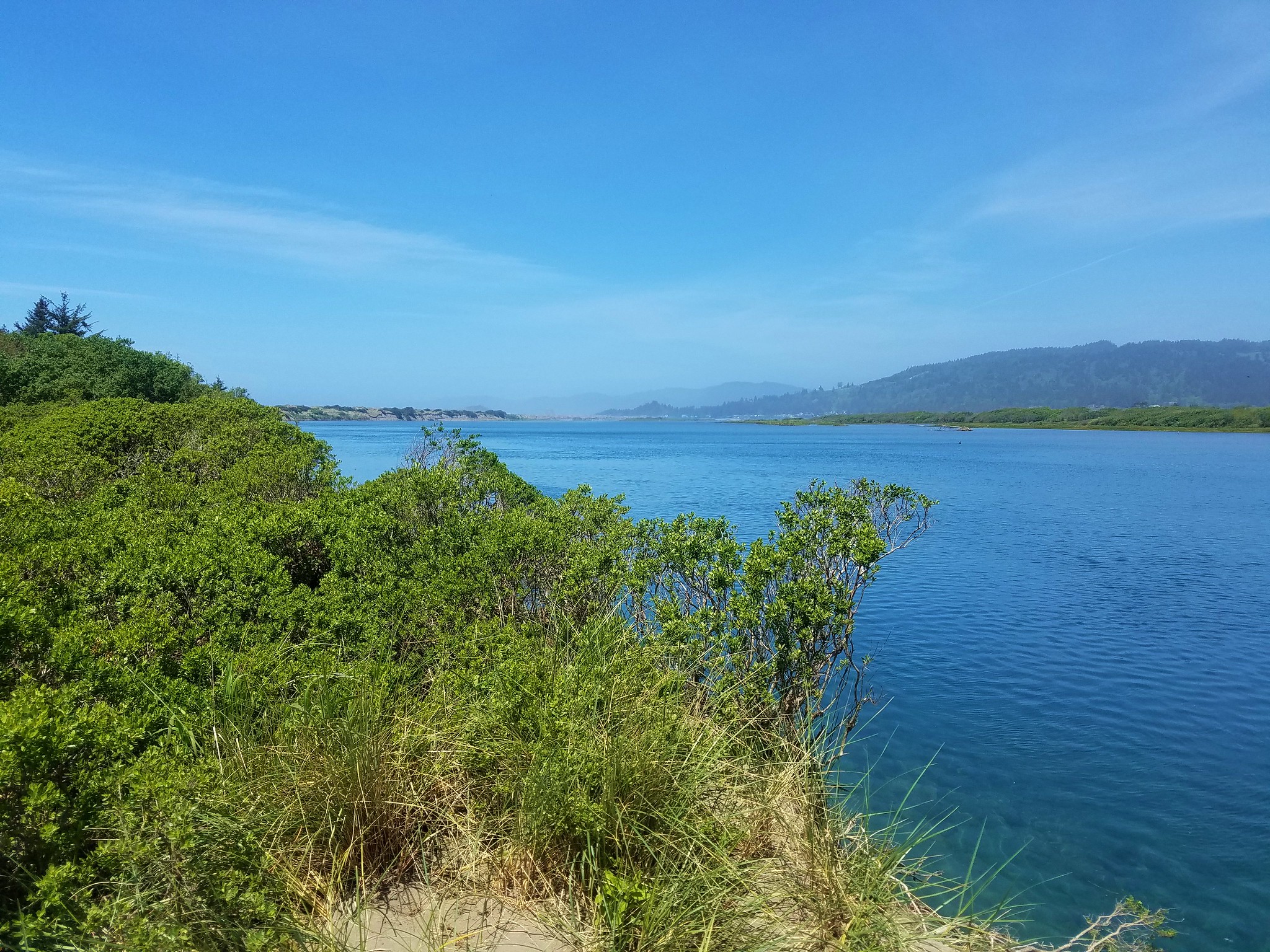
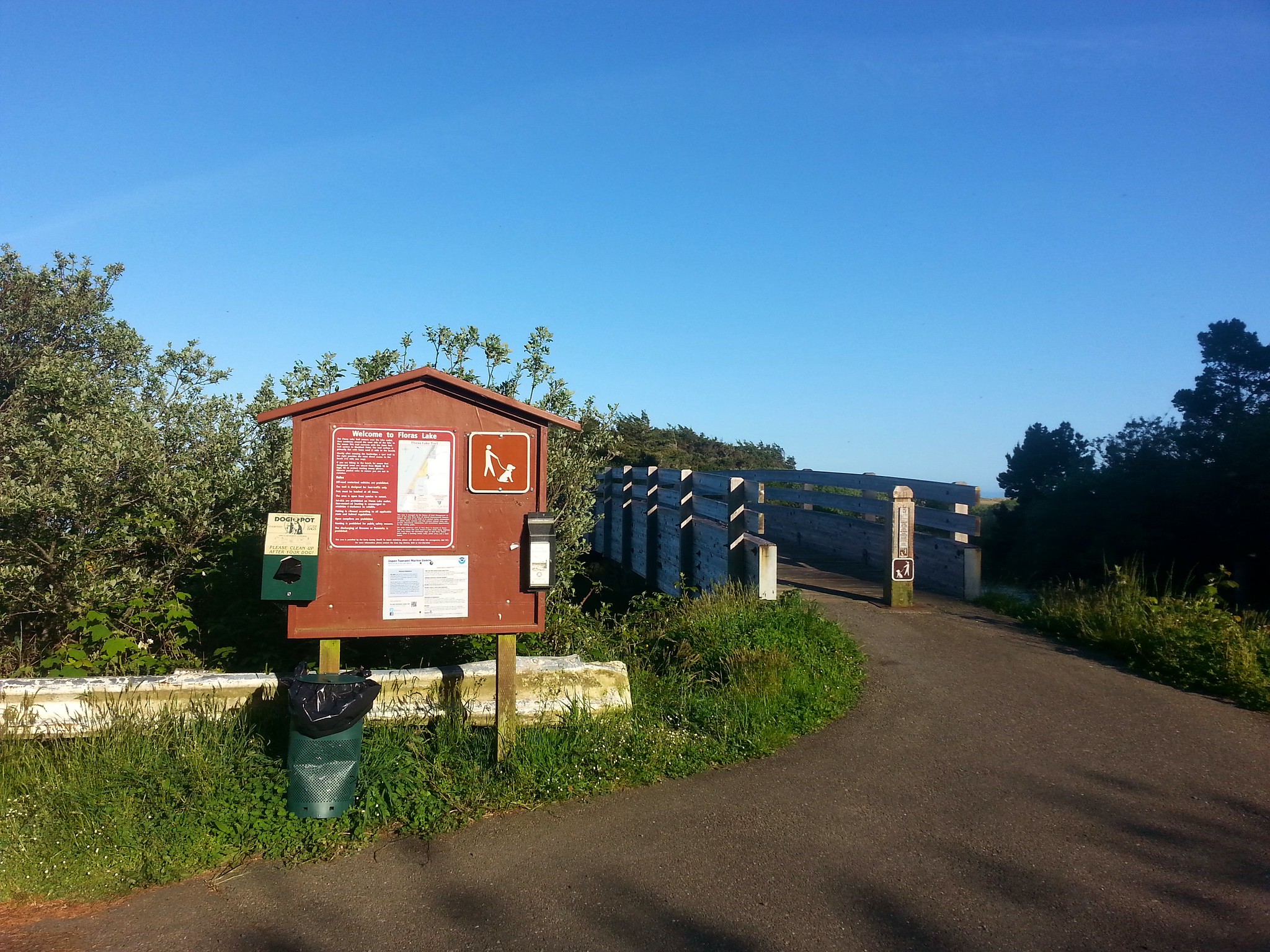
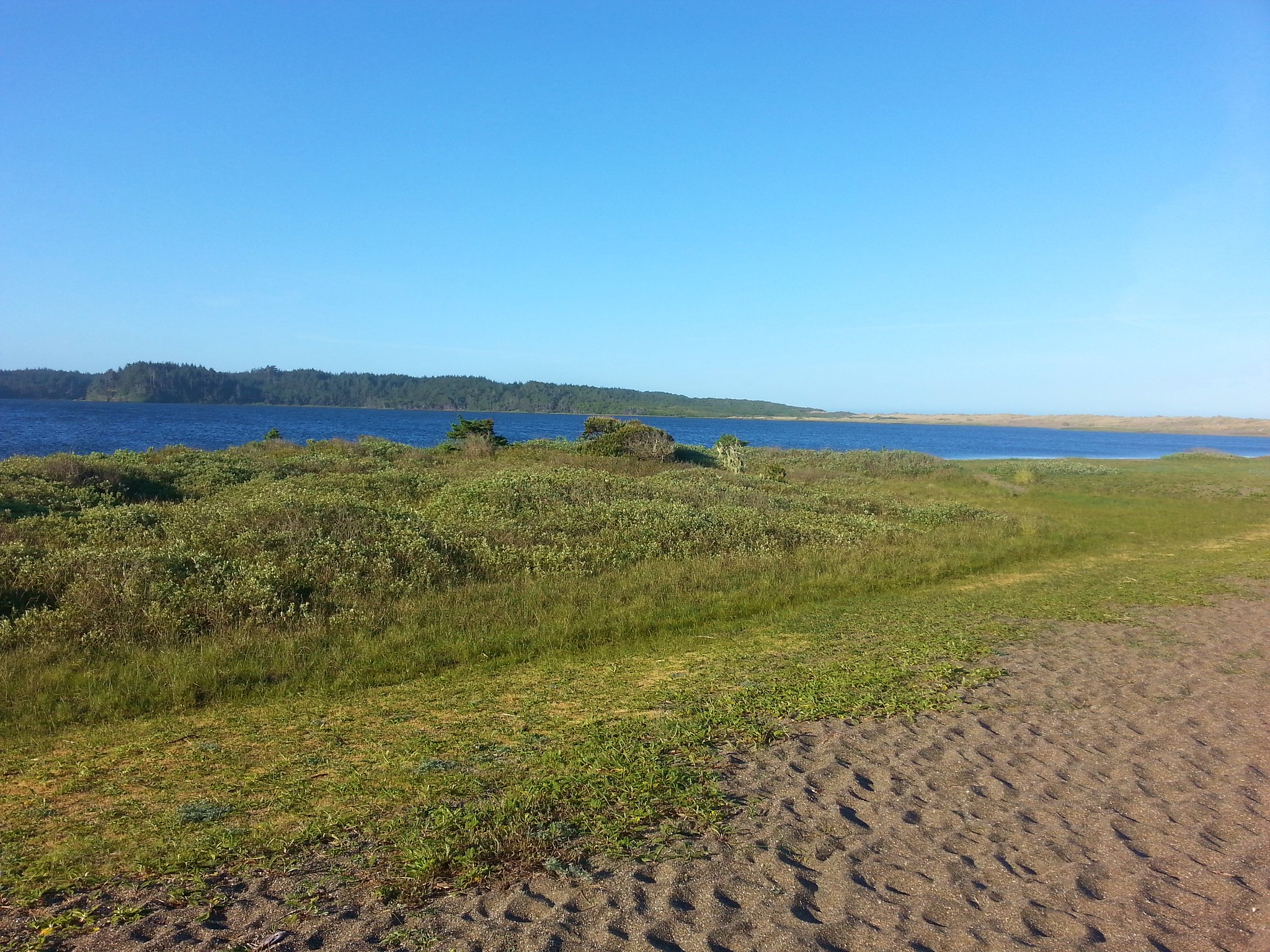
Our plan here was to complete a 9 mile loop while visiting Blacklock Point. We crossed the New River on a footbridge and followed a sandy (and difficult to walk on) path along the north shore of Floras Lake.
20170508_074839

20170508_080039

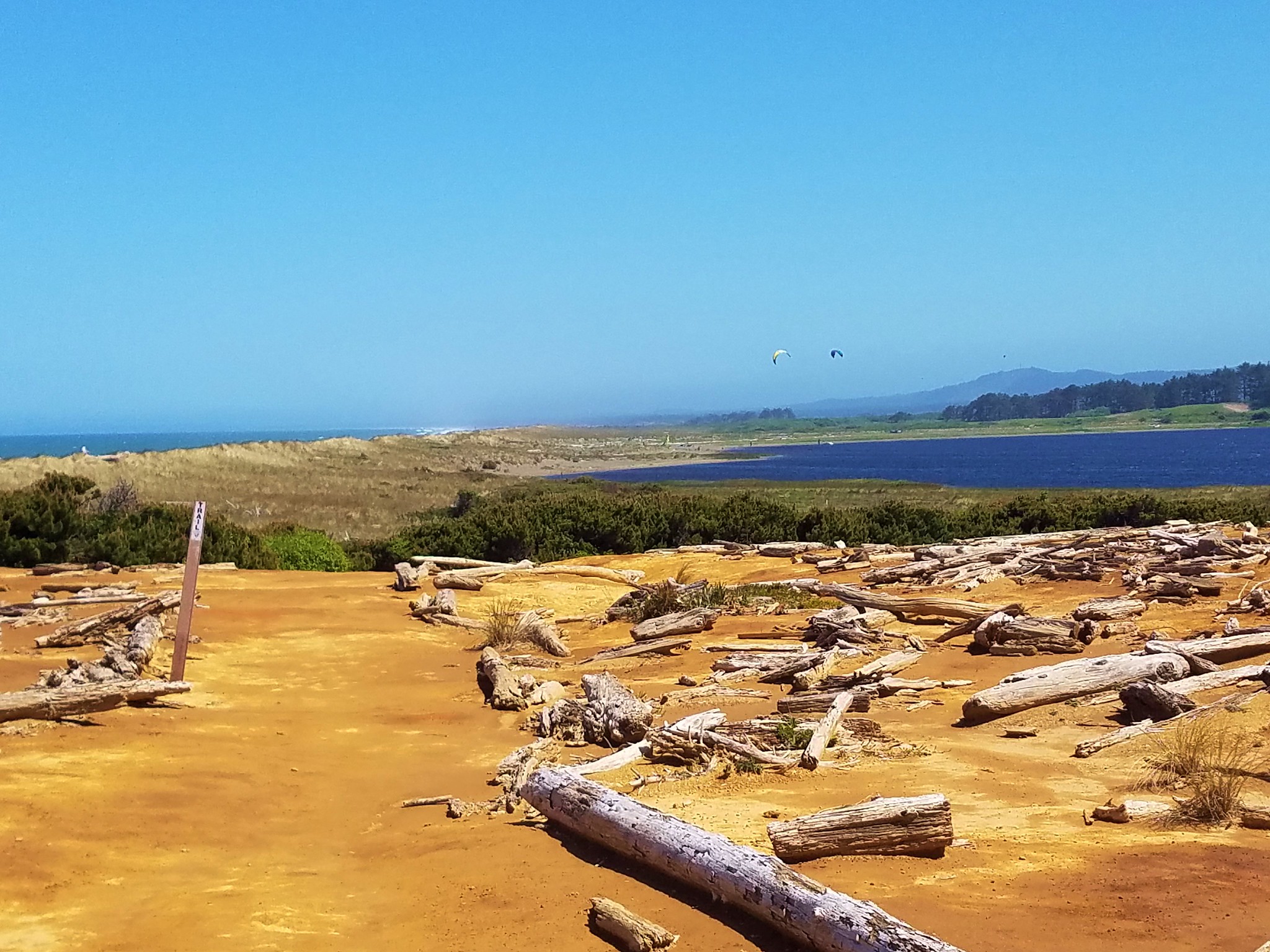
We made our way around the lake to a gap in the foredune, which we passed through, and onto the beach.
20170508_080622

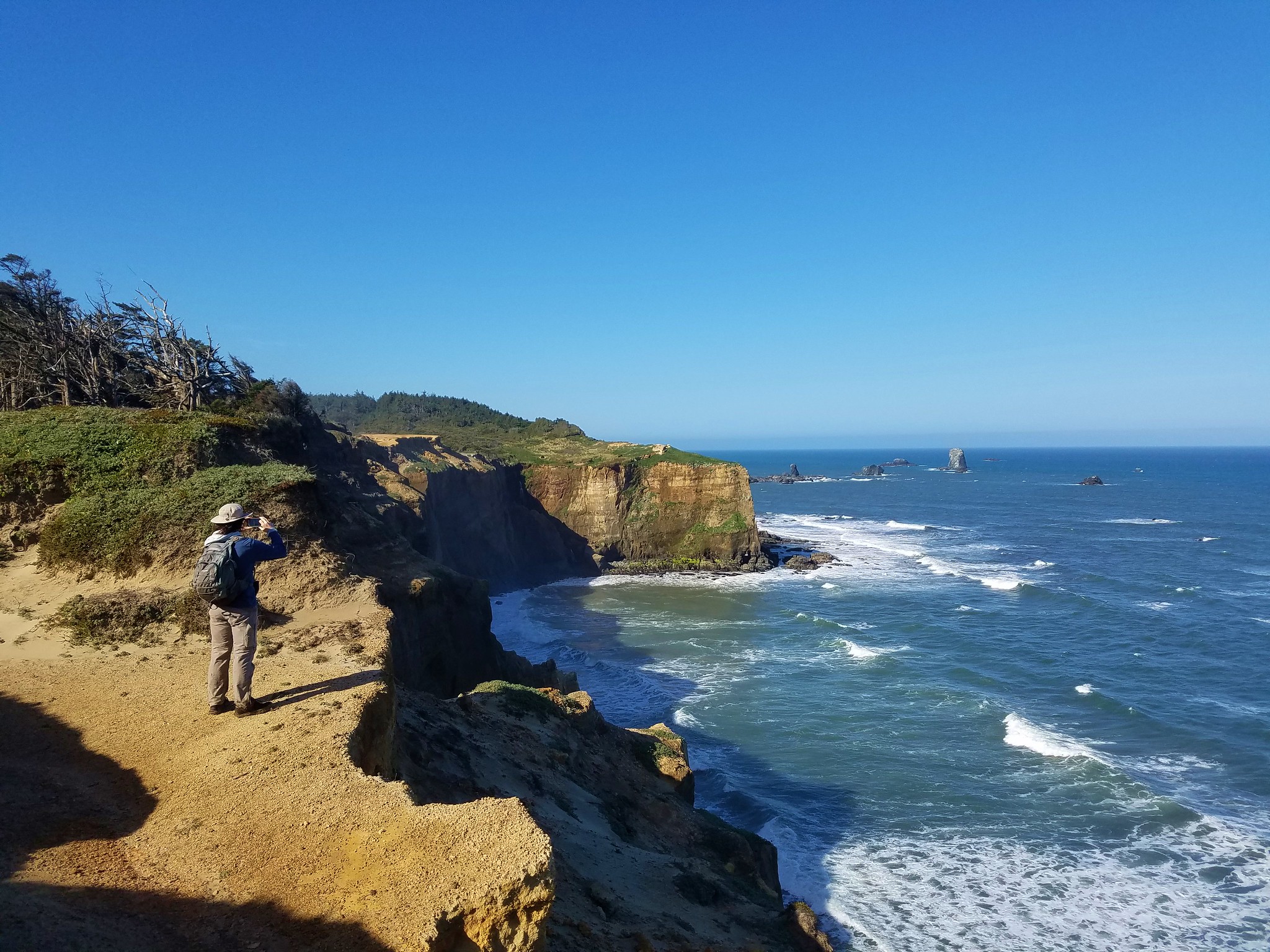
Our goal, Blaclock Point, jutted out into the Pacific to the south.
2017-05-08 08.06.55

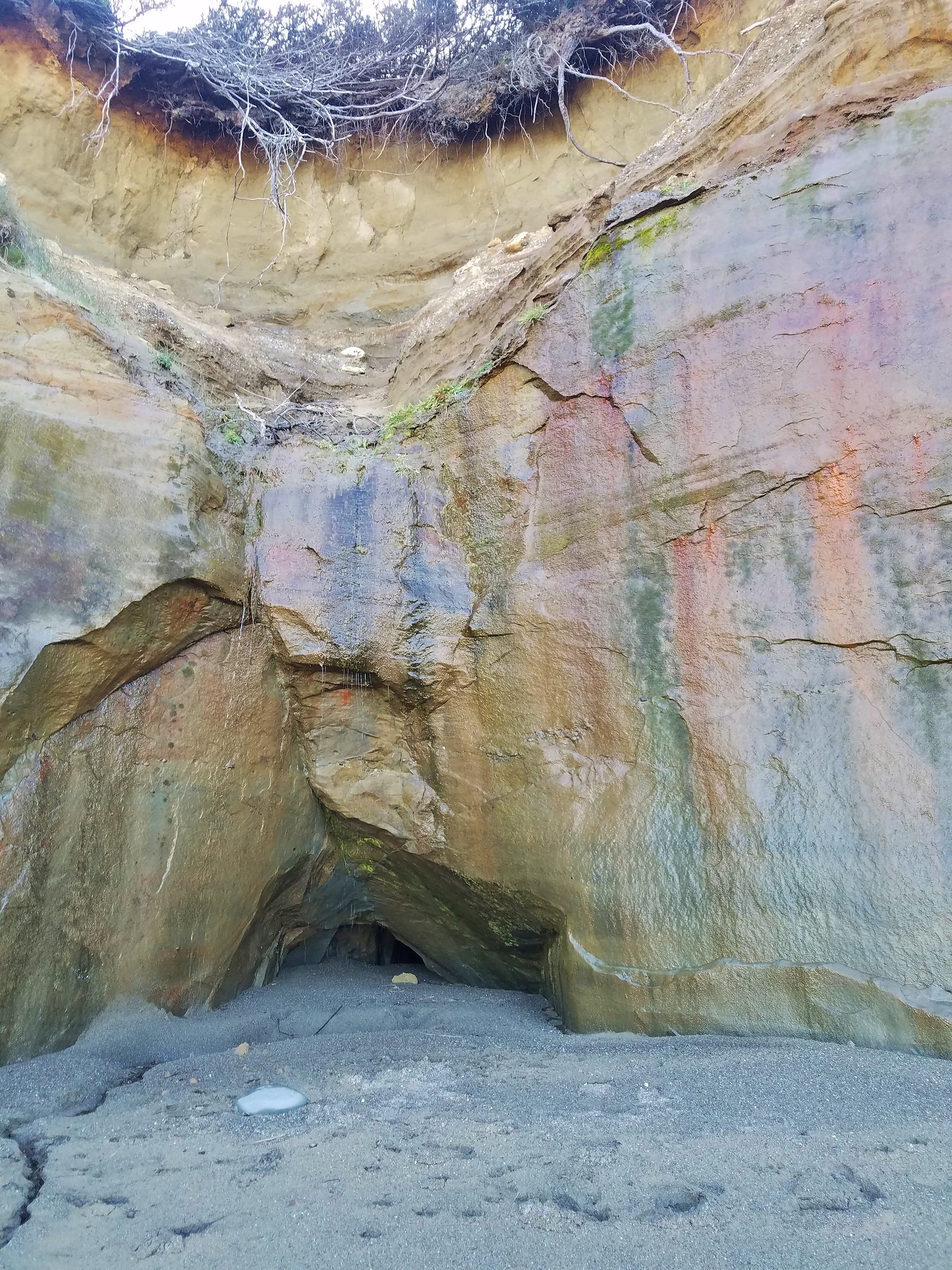
After about a quarter of a mile walking south along the beach we reached a series of interesting orange bluffs. High tide could make passage impossible but we were several hours from that and had no problem passing between them and the ocean for a mile. The bluffs were extremely interesting with various designs, alcoves, caves, and layers.
2017-05-08 08.19.54

2017-05-08 08.24.24

2017-05-08 08.24.15

20170508_082759

20170508_082915

2017-05-08 08.30.24

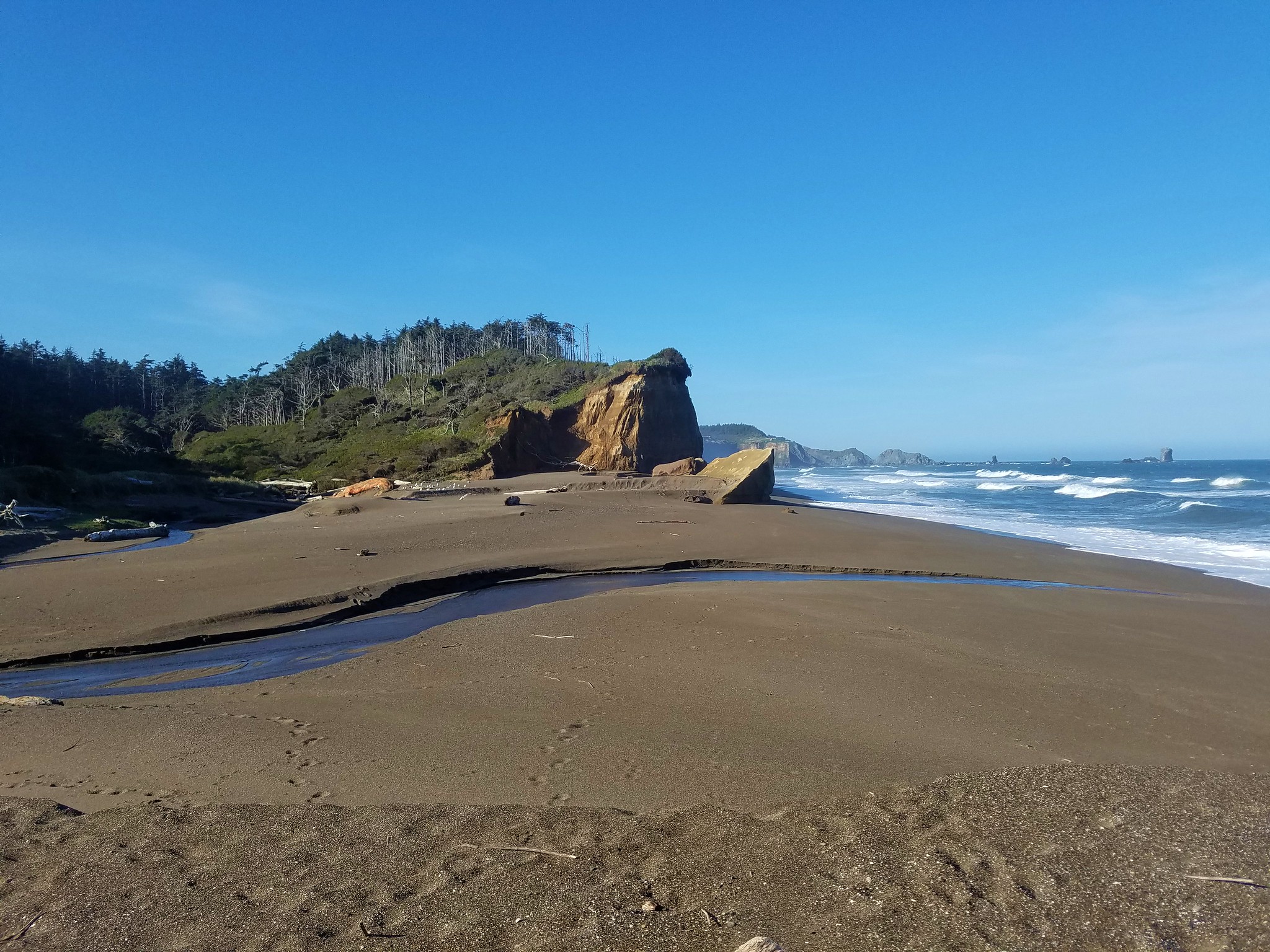
Beyond the bluffs we came to a creek which we needed to follow inland to pick up the Oregon Coast Trail (OCT).
2017-05-08 08.33.39

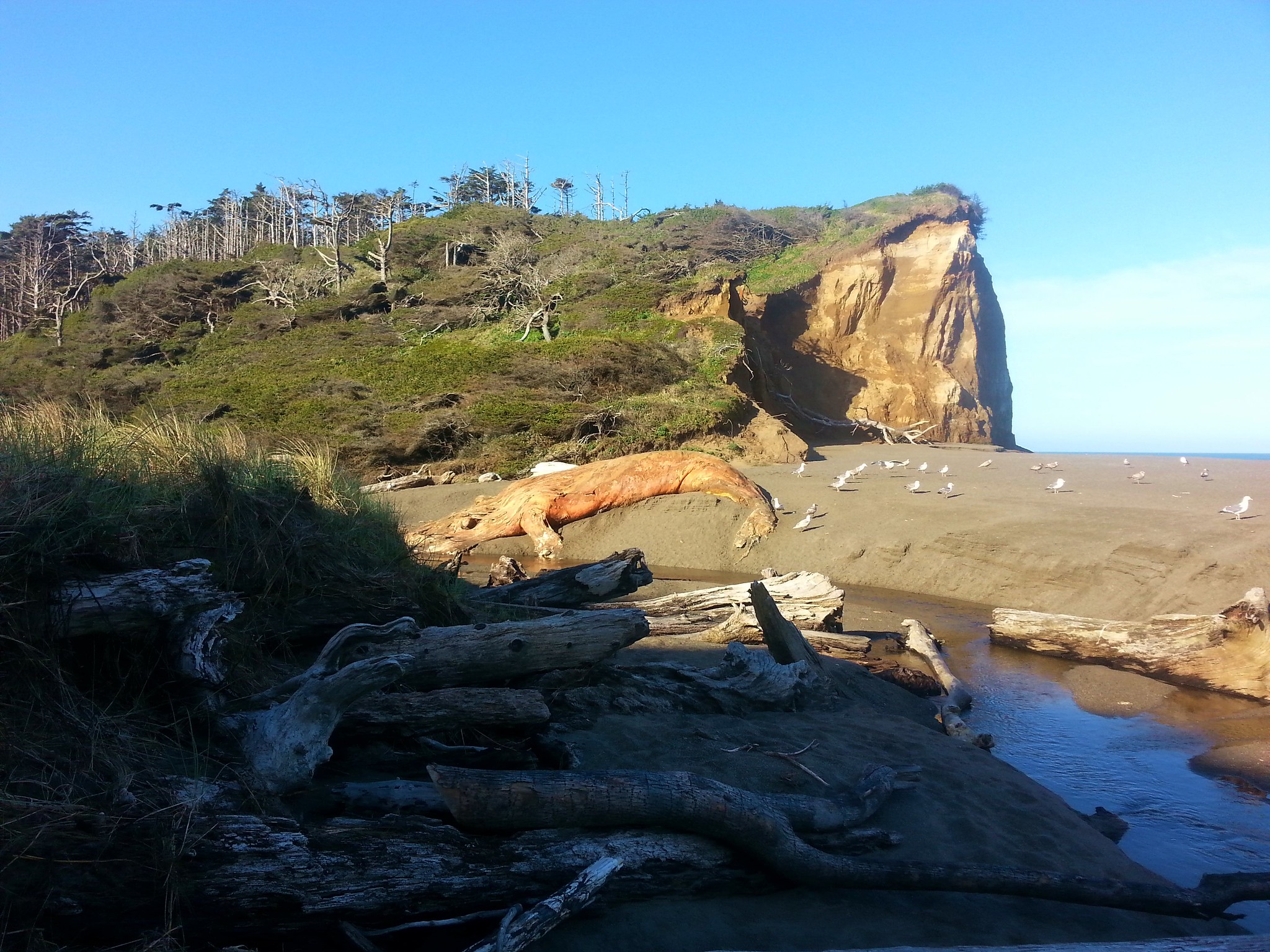
We noticed that there was a decomposing whale carcass on the far bank of the creek which was a bit disgusting but also very interesting.
20170508_083600

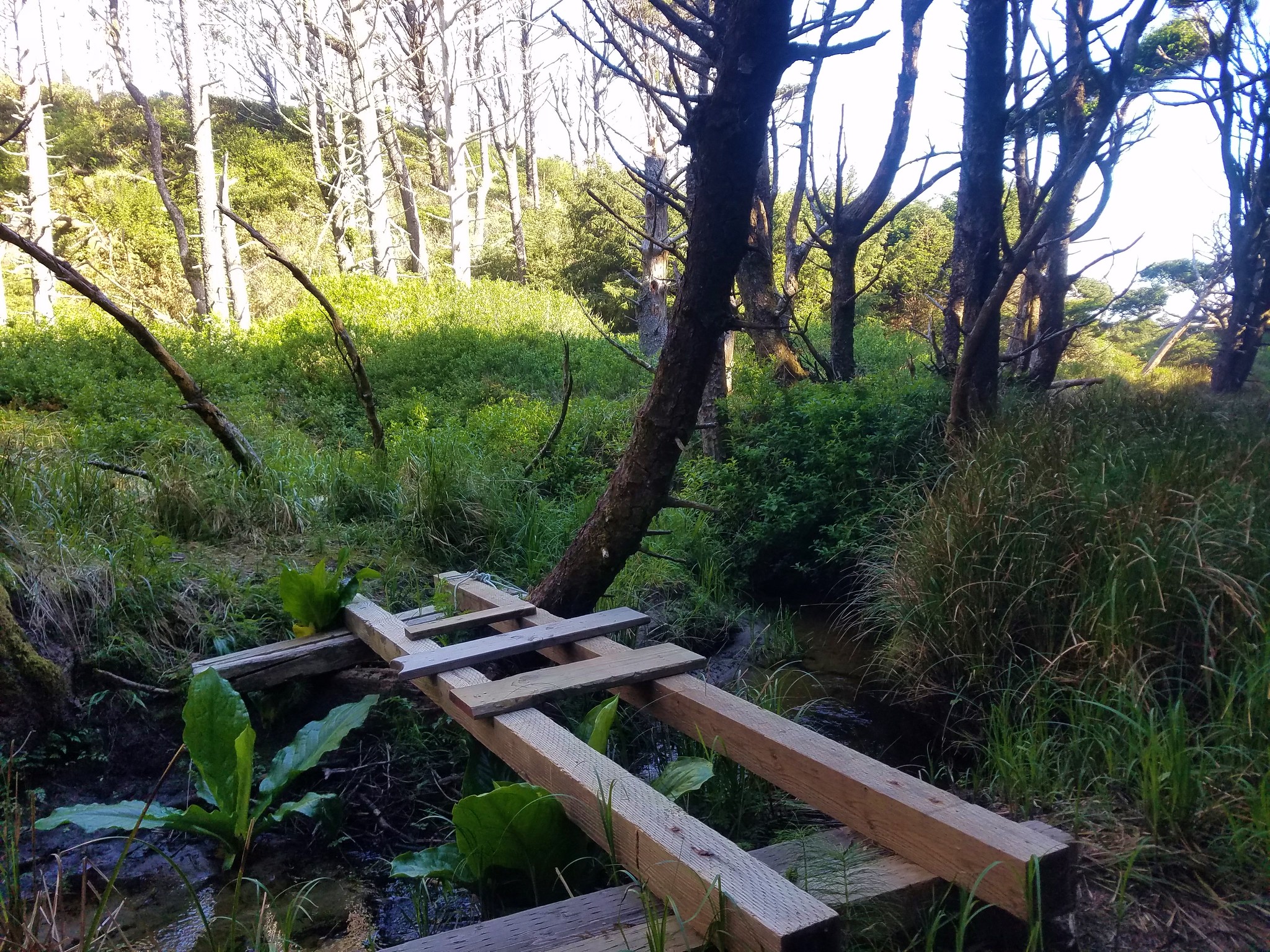
It was interesting that is, until we got downwind from it while attempting to bushwack along the creek to the OCT. The stench was putrid and we wanted to get away from it as quickly as possible but it took us a bit to figure out out to navigate the driftwood and swampy areas. It was only two tenths of a mile to the trail but it seemed a lot longer before we picked it up at a bridge? across the creek.
2017-05-08 08.50.48

After a bit more mud on the far side of the creek the trail climbed a small hill where things dried out.
20170508_085524

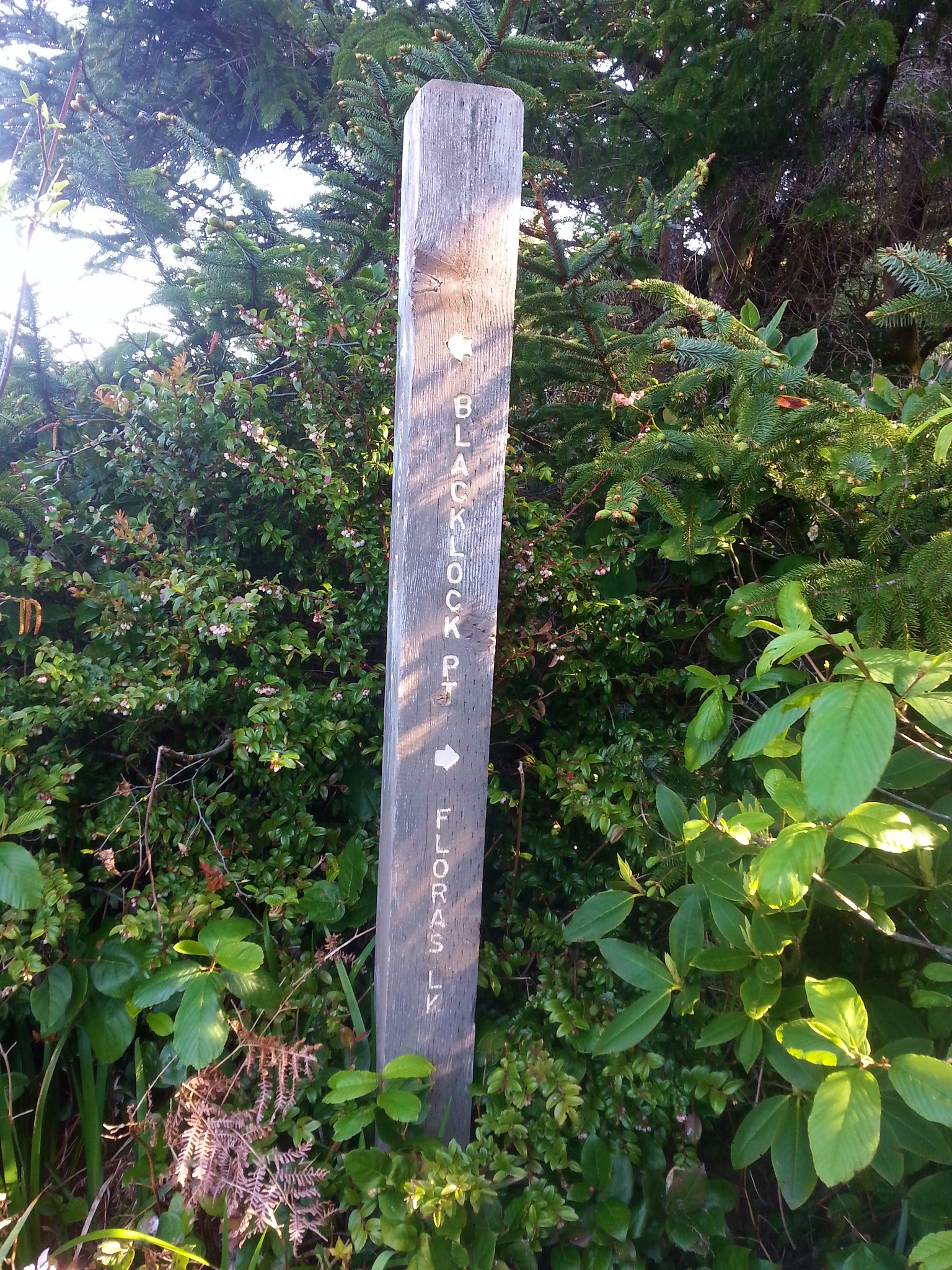
A little over three quarter miles from the creek crossing we came to a trail junction where we followed a pointer for Blacklock Point.
20170508_090846

This path passed a couple of nice viewpoints in the next mile before arriving at another junction.
2017-05-08 09.15.25

2017-05-08 09.40.54

Despite the steady winds several wildflowers had managed to make the viewpoints home.
2017-05-08 09.39.41

2017-05-08 09.35.06

20170508_093527

2017-05-08 09.39.12

At the junction we turned right heading out toward Blacklock Point itself.
20170508_100352

20170508_100424

20170508_100730

We followed the path across a windy catwalk to its end.
20170508_101120

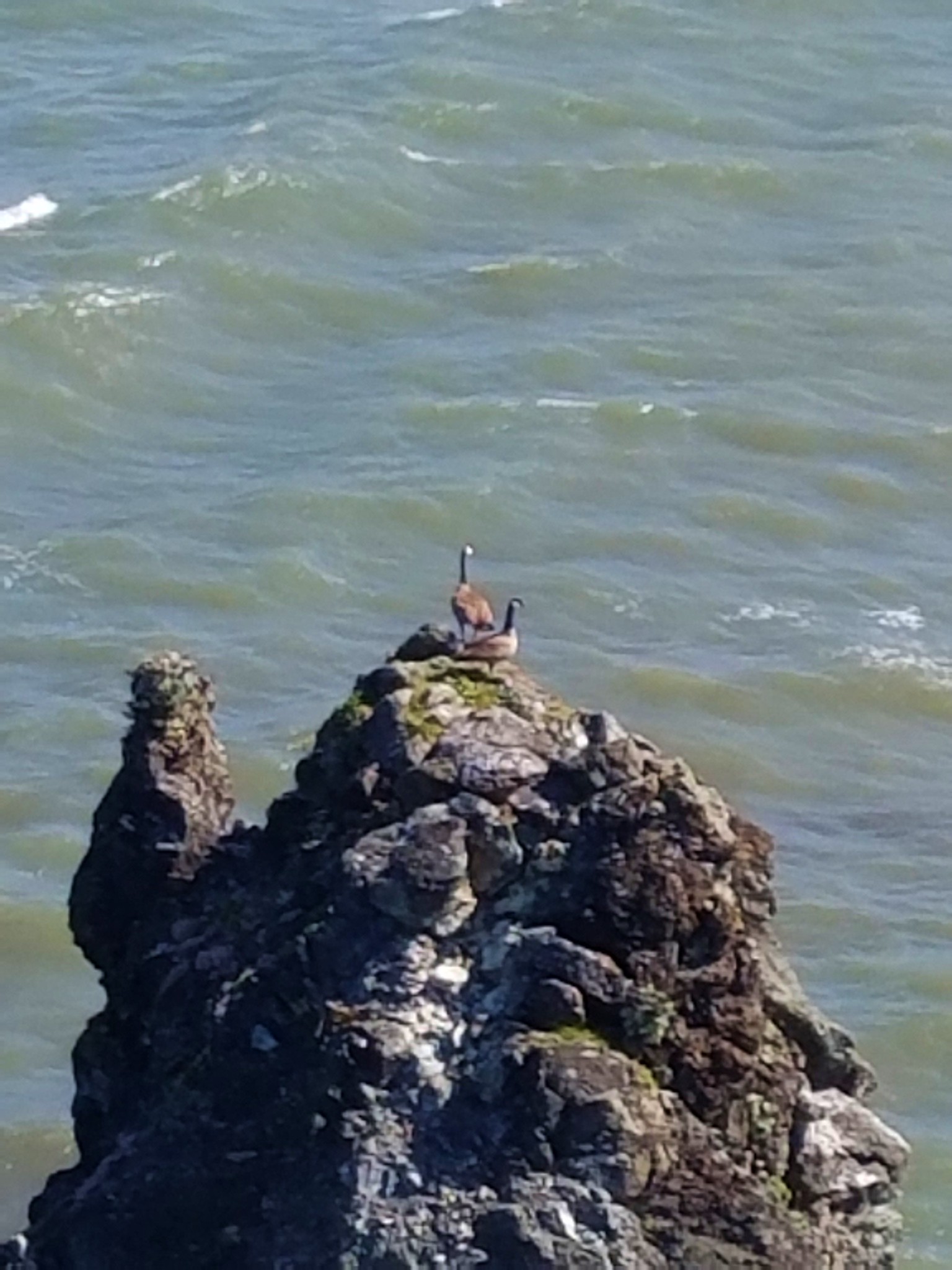
A pair of geese on a nearby rock were less than thrilled with our presence.
2017-05-08 10.14.41

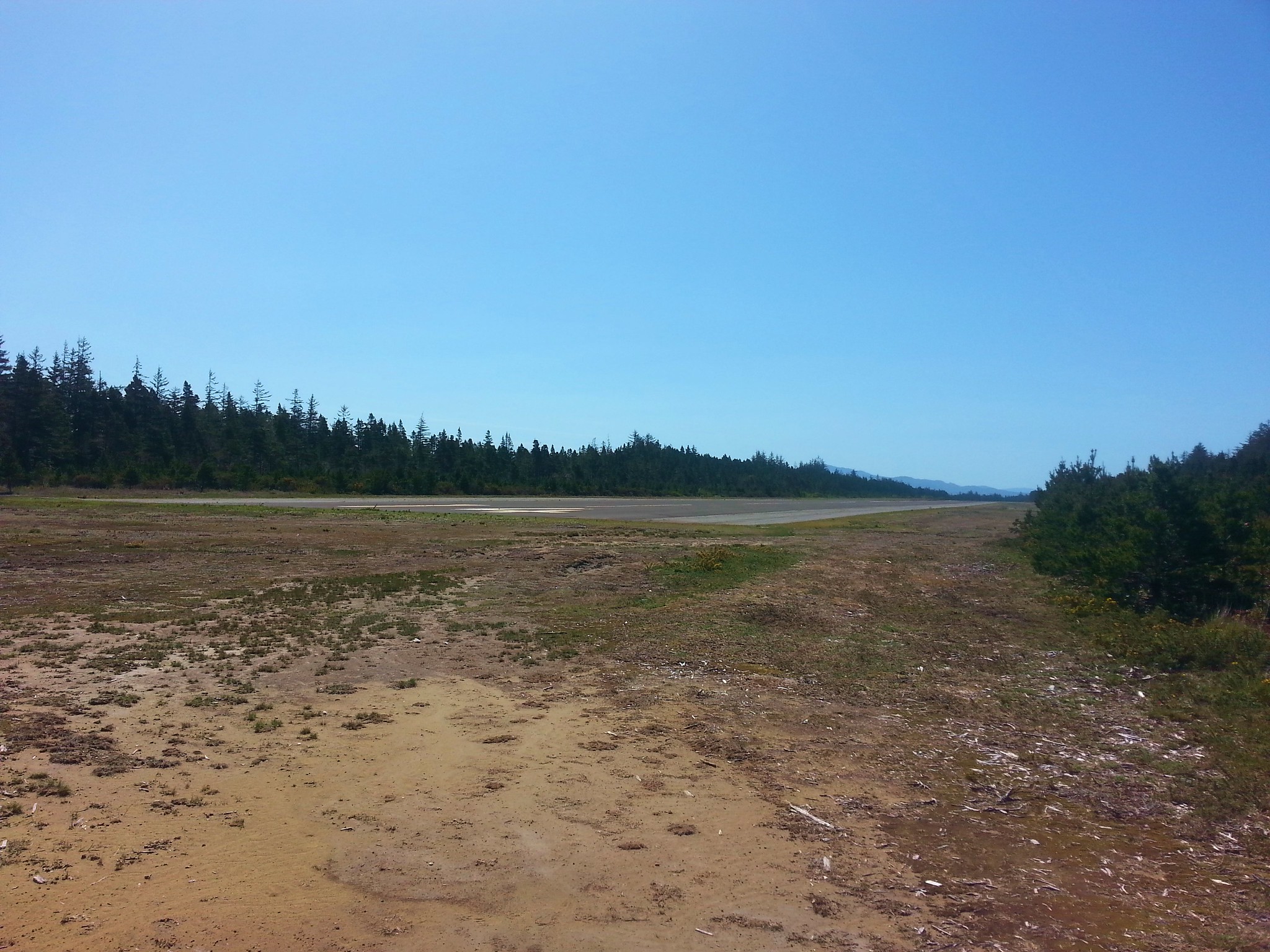
We’d come about a half mile from the junction and after returning we continued on our loop by following an old road another half mile to yet another junction. Turning left would have led 1.2 miles back to the junction we’d come to after climbing up from the creek crossing. This would mean passing back through the whale stench, so we turned right for a short distance staying left at a fork to the edge of the Cape Blanco Airport.
20170508_104835

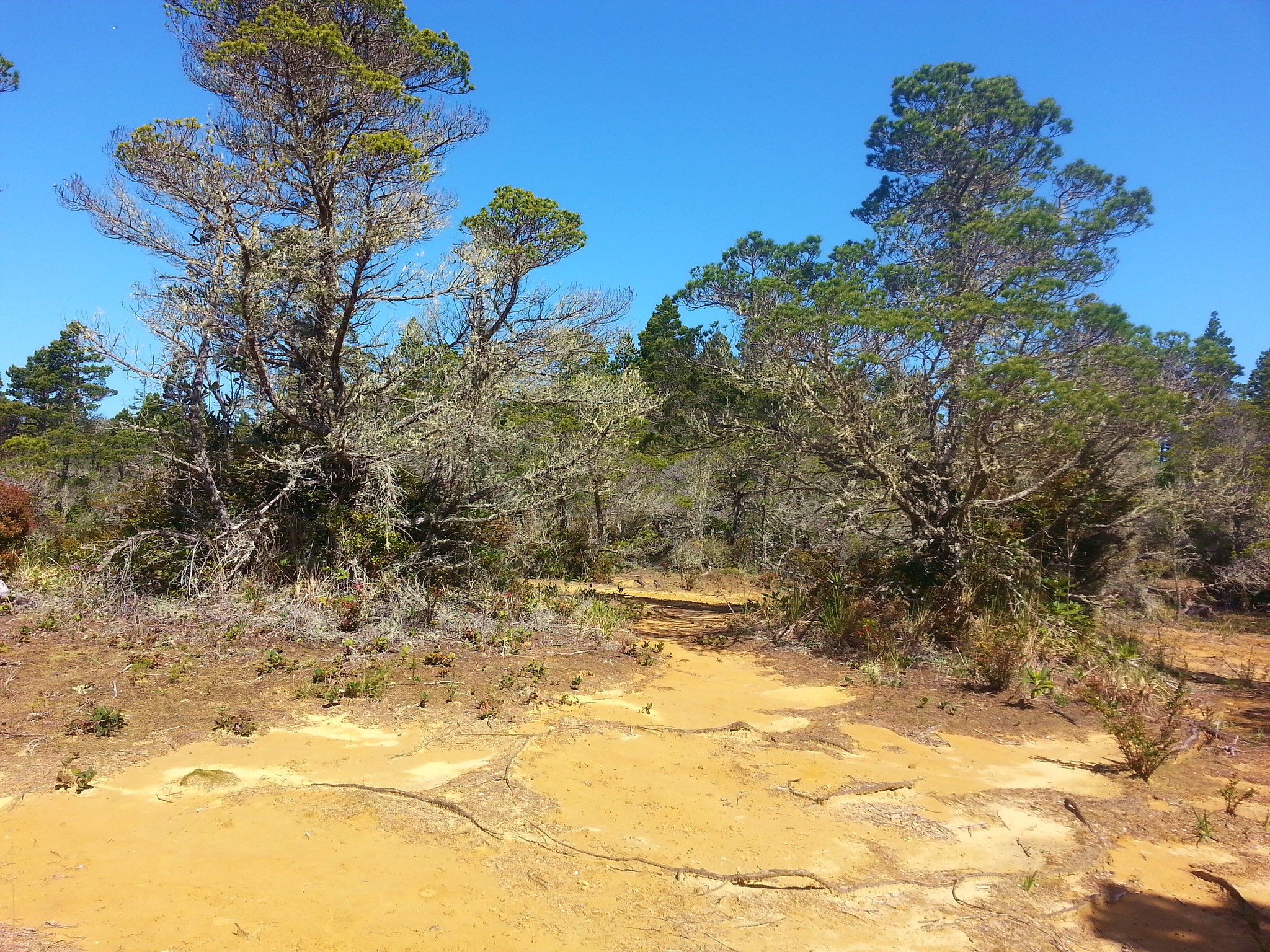
We followed the old road bed which brought us back to the SW end of Floras Lake in 3 miles.
20170508_105314

2017-05-08 11.48.01

We spotted several frogs and a snake along this section.
20170508_111445

2017-05-08 11.02.43

We simply followed the lake shore back to the bridge over New River to our car. We then drove south on Highway 101 to Cape Blanco State Park. For our hike here we began at the Sixes River boat ramp.
20170508_123141

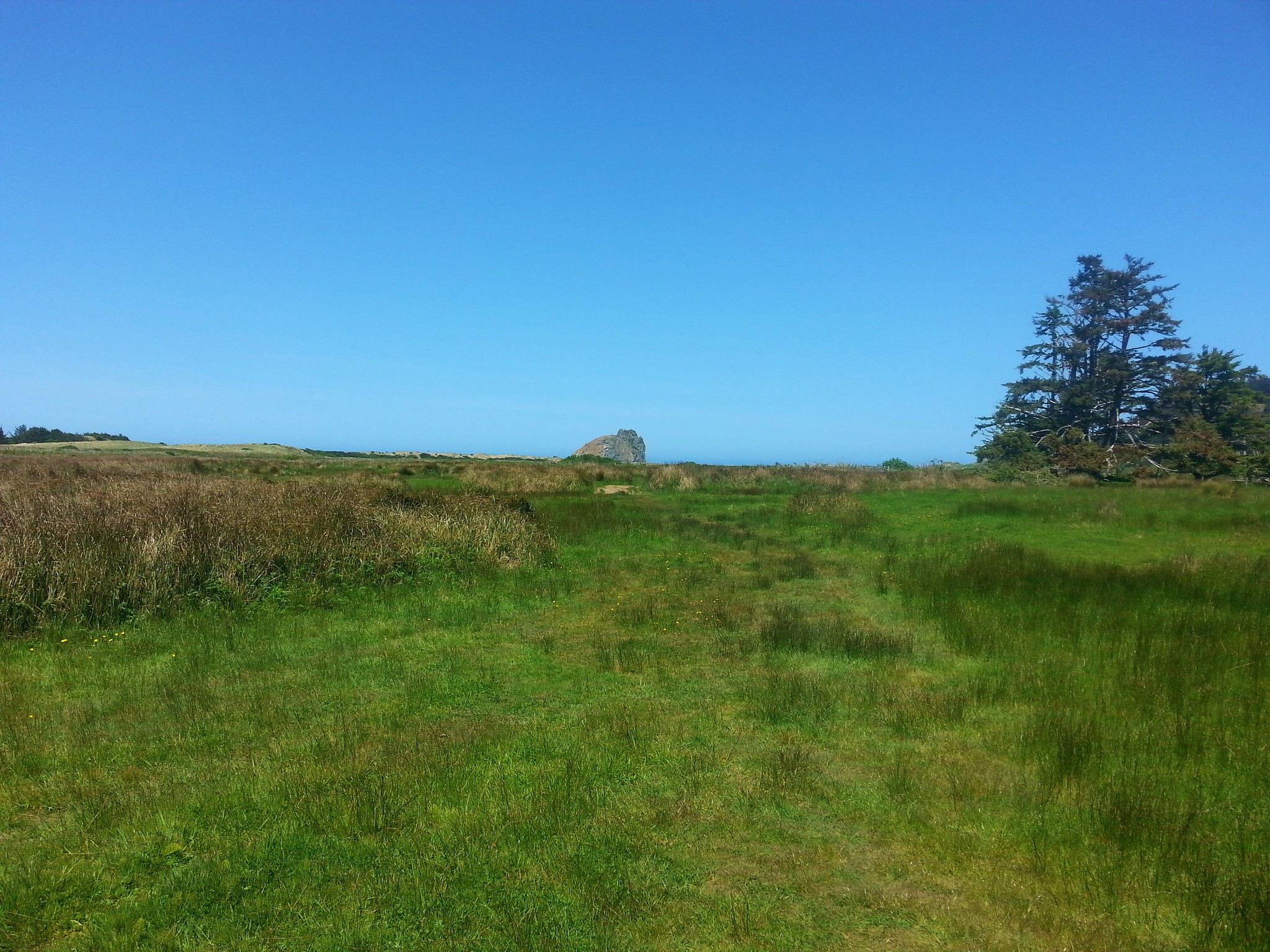
We passed through a gate and followed a faint path through pasture along the Sixes River.
20170508_123434

2017-05-08 12.42.35

20170508_123954

Purple lupine and red sorrel added color to the green pasture.
20170508_124414

A little after 3/4 of a mile we crossed over a short foredune onto the beach and turned south.
20170508_125534

We followed the beach nearly a mile and a half to an unmarked trail below the Cape Blanco Lighthouse.
20170508_132029

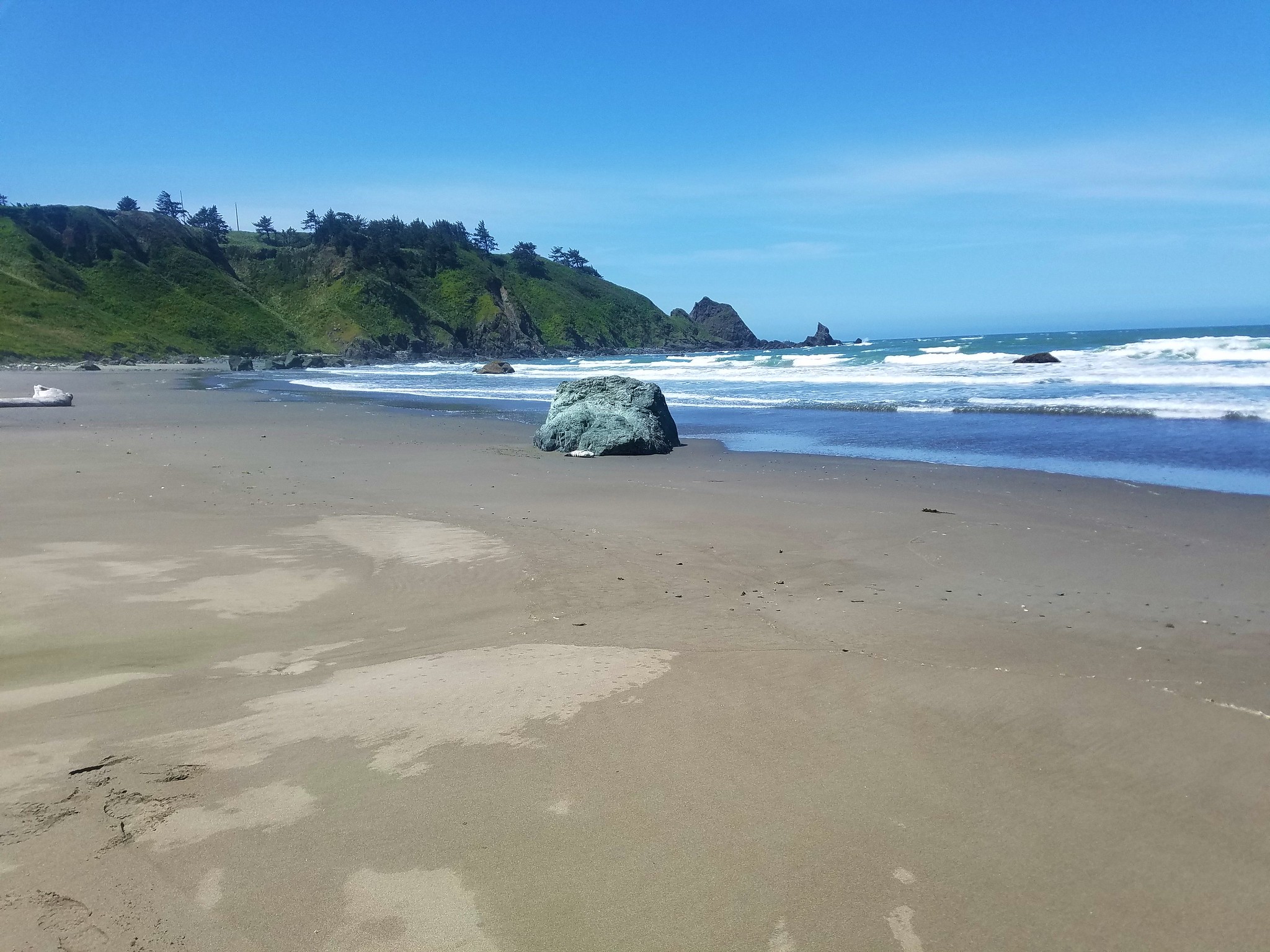
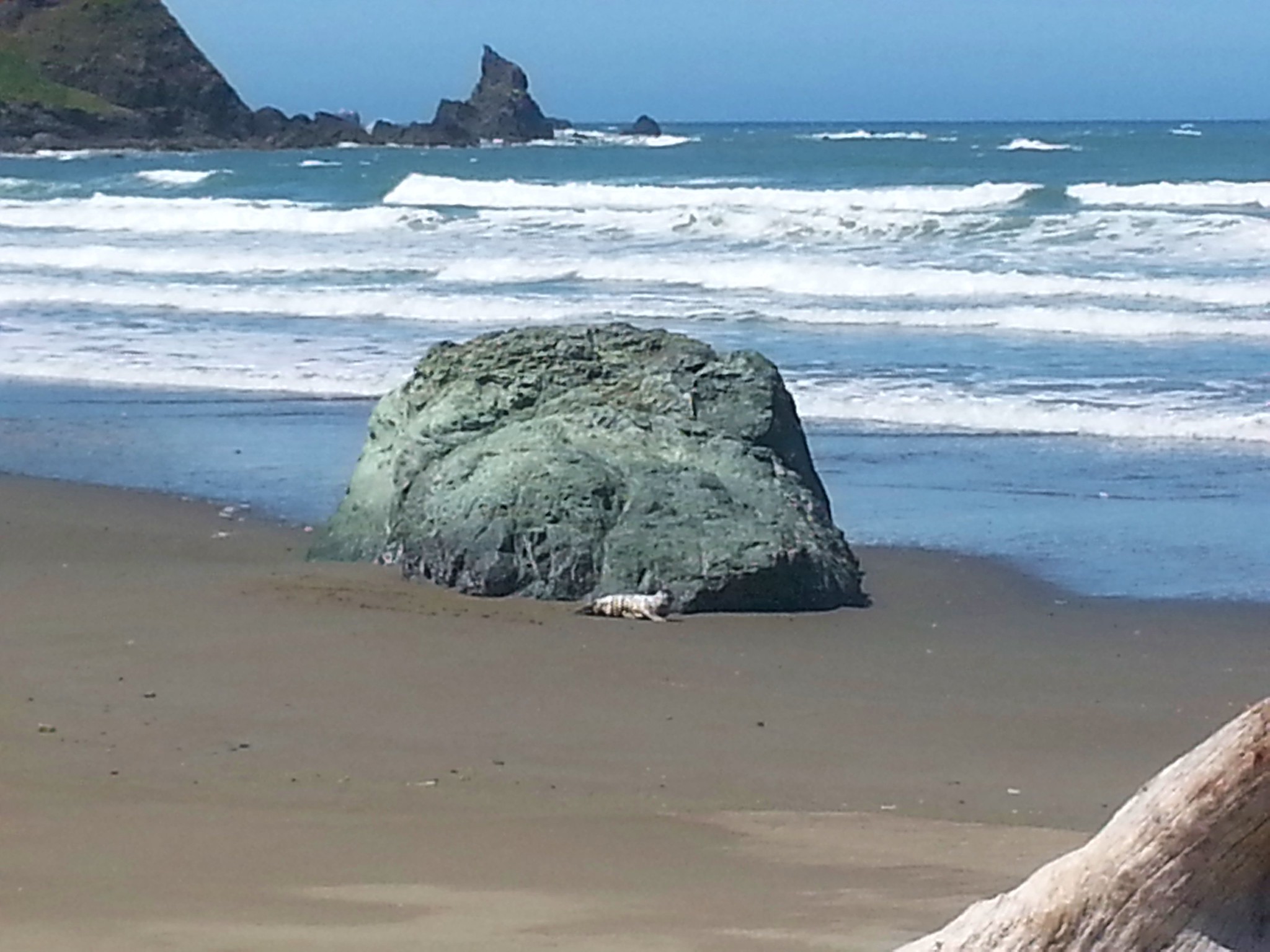
Near the end of the beach Heather noticed a seal pup near a rock.
2017-05-08 13.25.04

20170508_132518

Her first instinct was to try and “help” it because it seemed distressed but I was able to convince her that it was normal for the pups to be left on the beach at times while the mothers look for food and that getting to close could cause the mother not to return. We were downwind and kept as far away as possible. We spotted a second pup from the junction where we began climbing up toward the lighthouse road.
20170508_132845

2017-05-08 13.28.28

The .3 mile path up to the lighthouse road was lined with yellow flowers.
20170508_133221

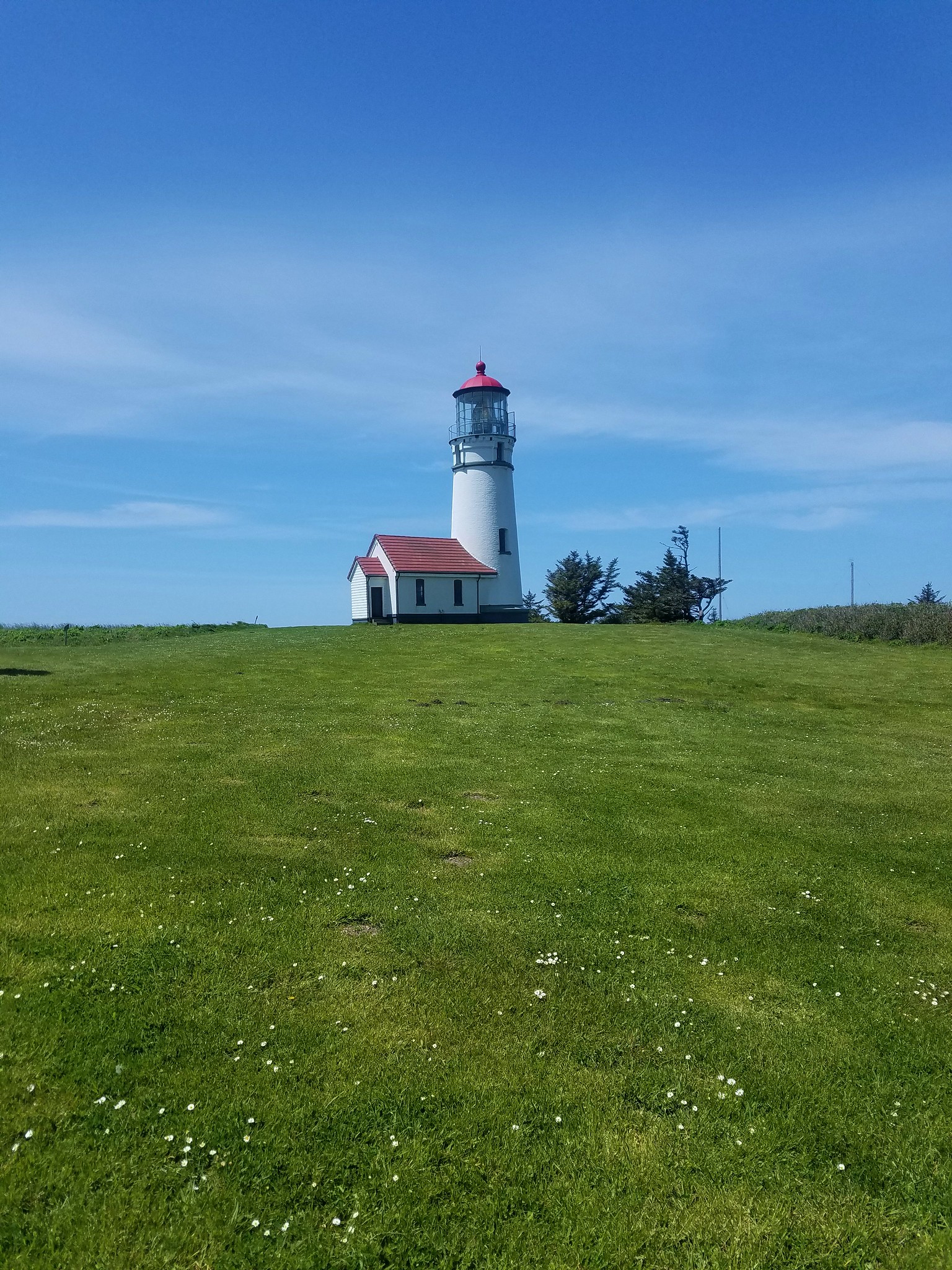
Four tenths of a mile of road walking brought us to the lighthouse.
2017-05-08 13.46.32

20170508_134800

After visiting the lighthouse we followed the road back past where we’d come up from the beach another .2 miles to an Oregon Coast Trail sign on the left.
20170508_140423

We followed the Oregon Coast Trail 1.3 miles, staying left at junctions, back to the pasture by the Sixes River boat ramp.
2017-05-08 14.05.45

20170508_141323

20170508_142333

20170508_143458

We crossed the pasture back to our car then headed for our next hike – Grassy Knob. To reach this trailhead we headed south toward Port Orford on Highway 101 turning left on Grassy knob Road 4 miles north of town. This 7.7 mile road began as a paved two lane road but about halfway along turned to a gravel logging road which was in pretty bad shape. It was bad enough that we actually parked a little under a half mile from the trialhead instead of attempting to go any further (as it turned out the final stretch wouldn’t have been that bad).

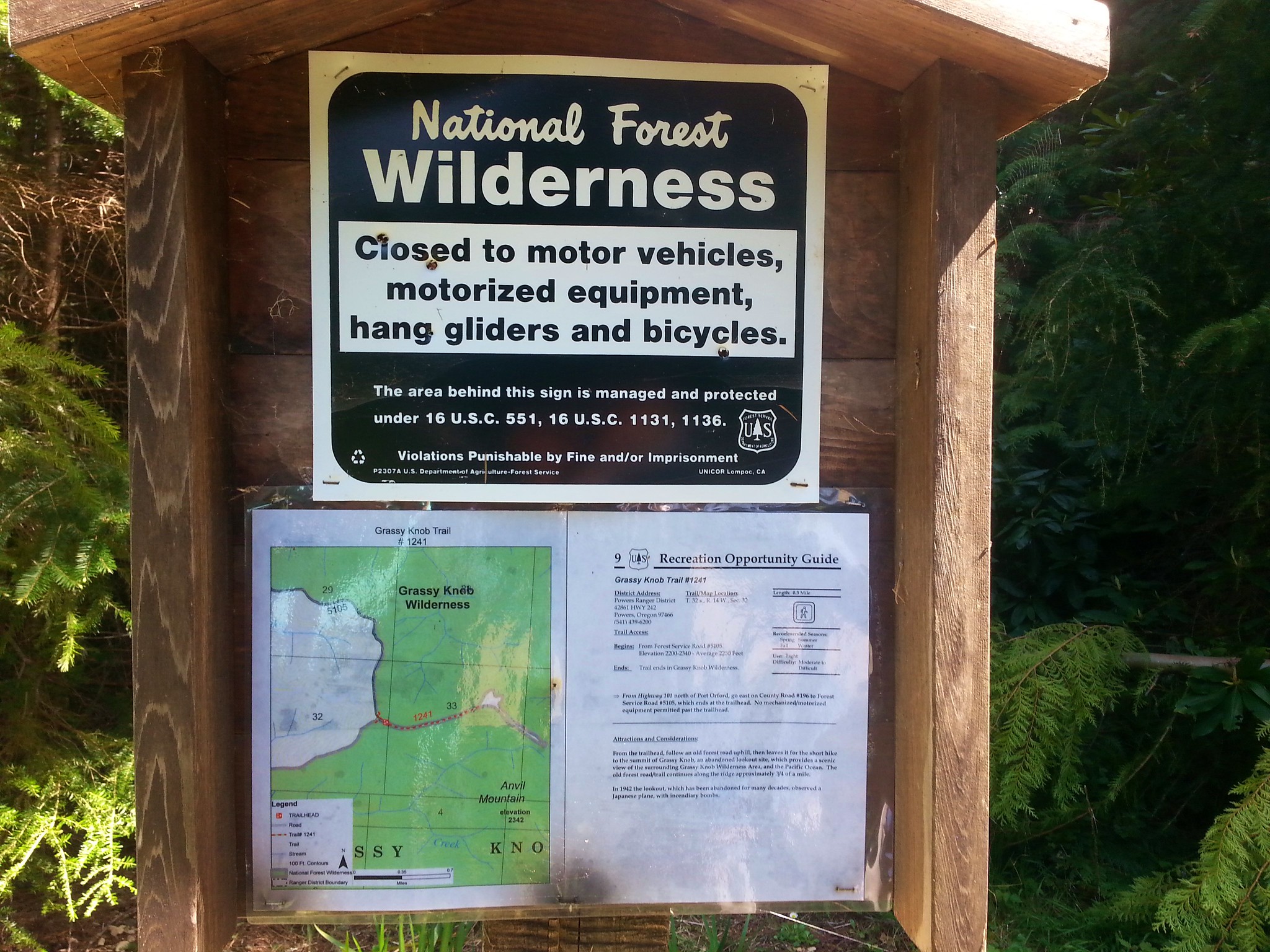
We hiked to the roads end and the start of the Grassy Knob Trail.
20170508_152956

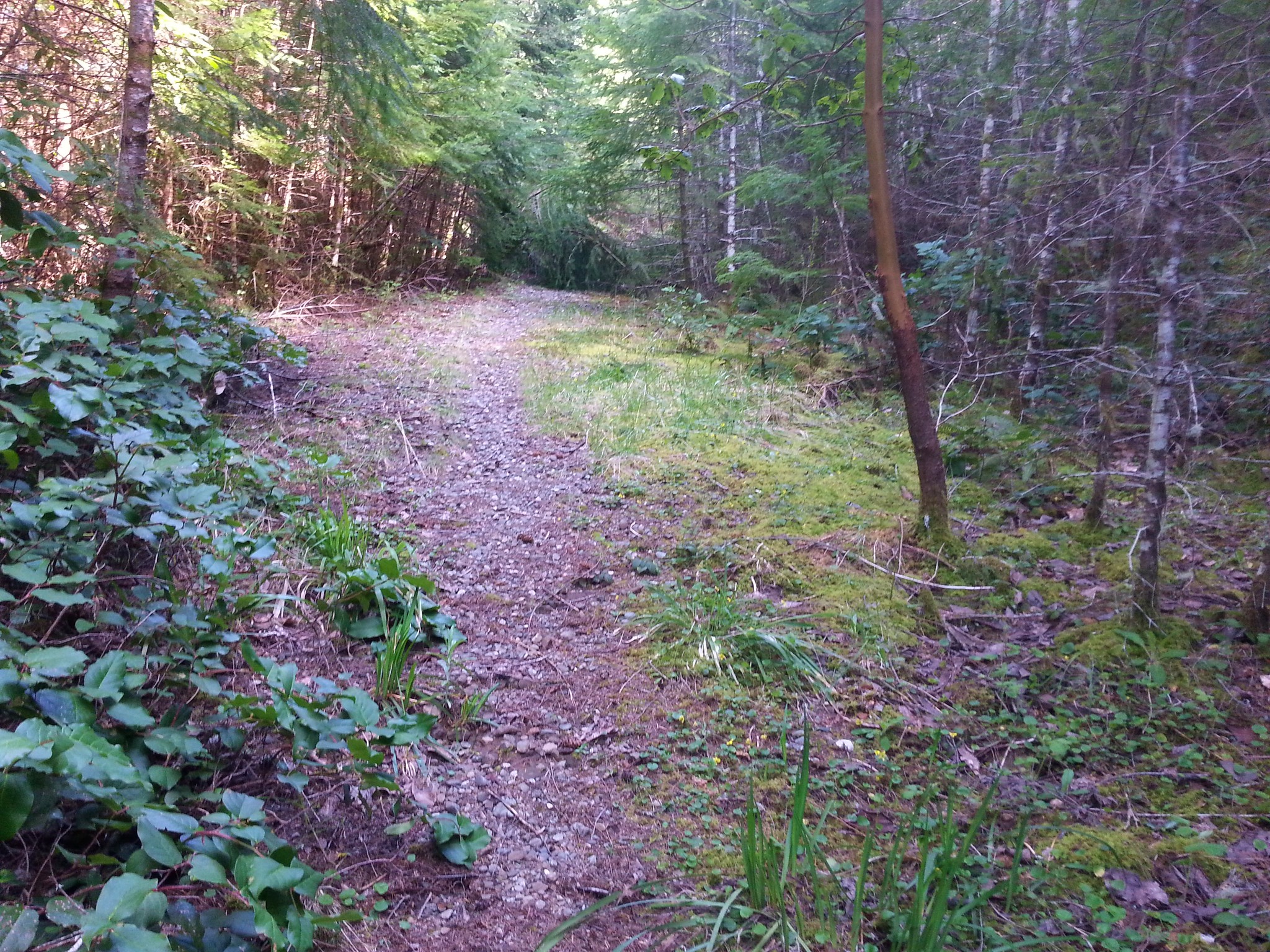
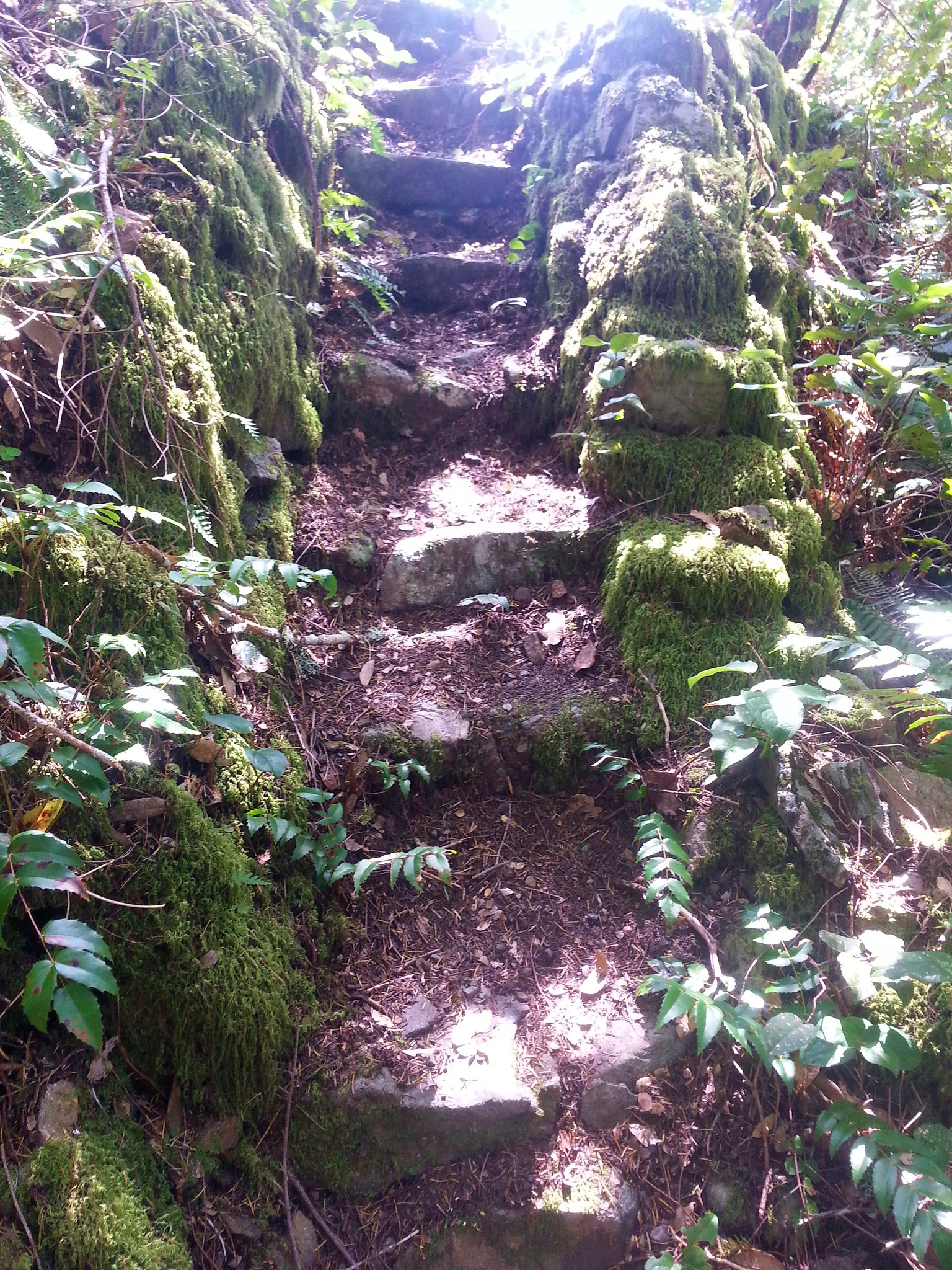
The trail followed the old road bed for nearly a half mile then forked uphill to the site of a former lookout tower.
20170508_153051

20170508_154048

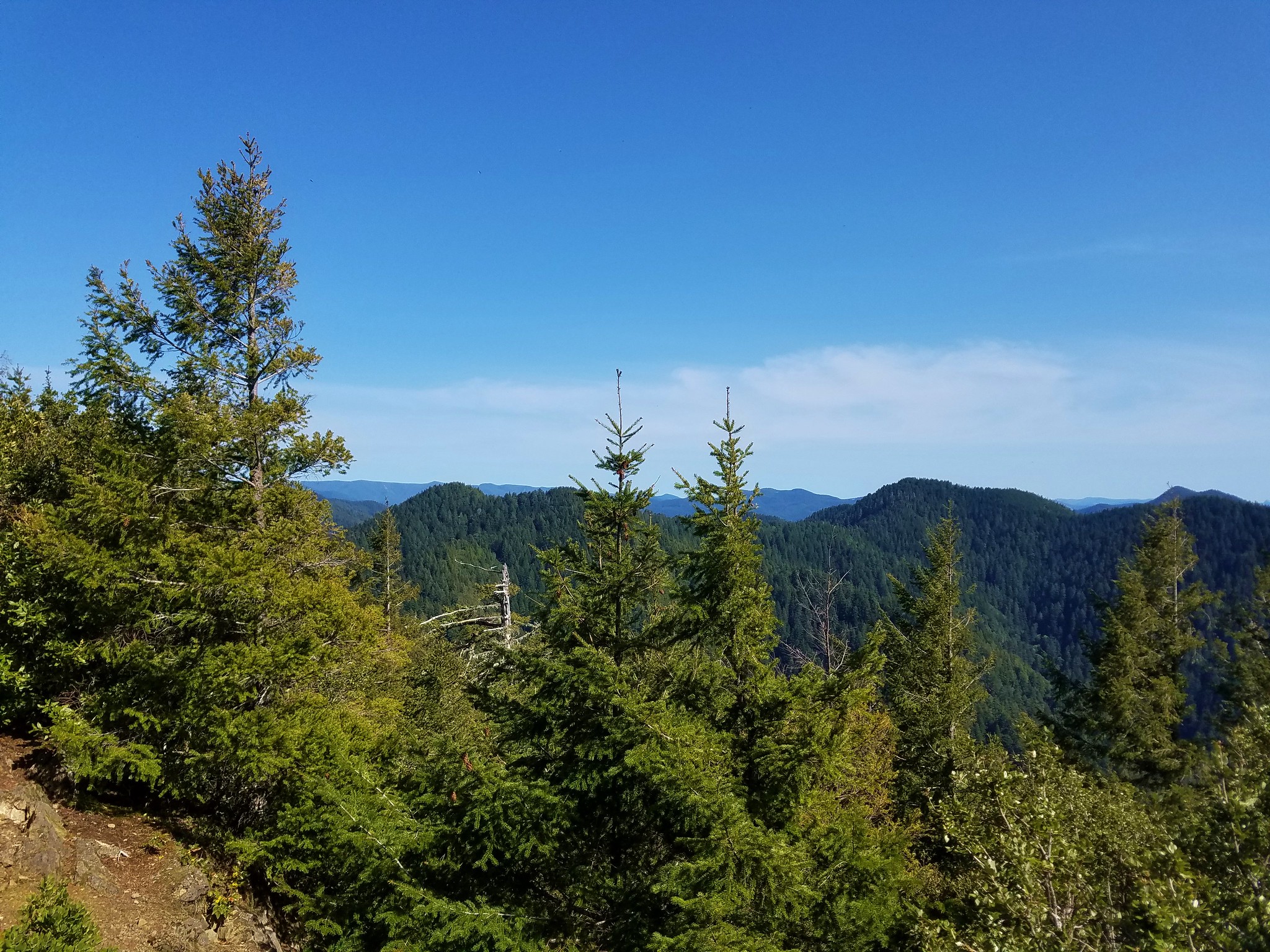
The view was fine but not spectacular with the Pacific Ocean visible through the trees. The main thing was we could check another wilderness area off our list.
2017-05-08 15.41.50

2017-05-08 15.42.37

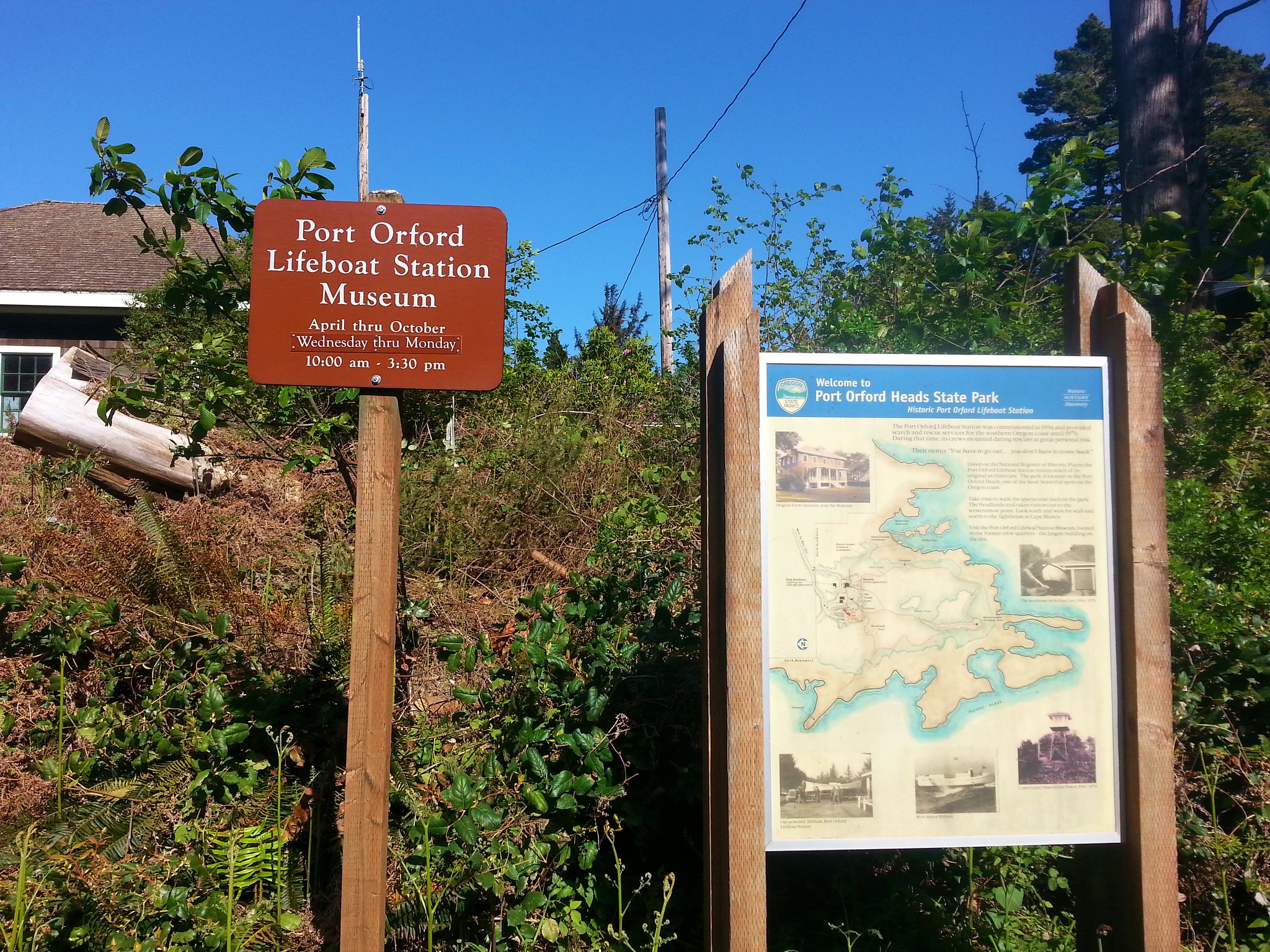
We drove back to Highway 101 and continued south into Port Orford turning at a sign for Port Orford Heads.
20170508_164227

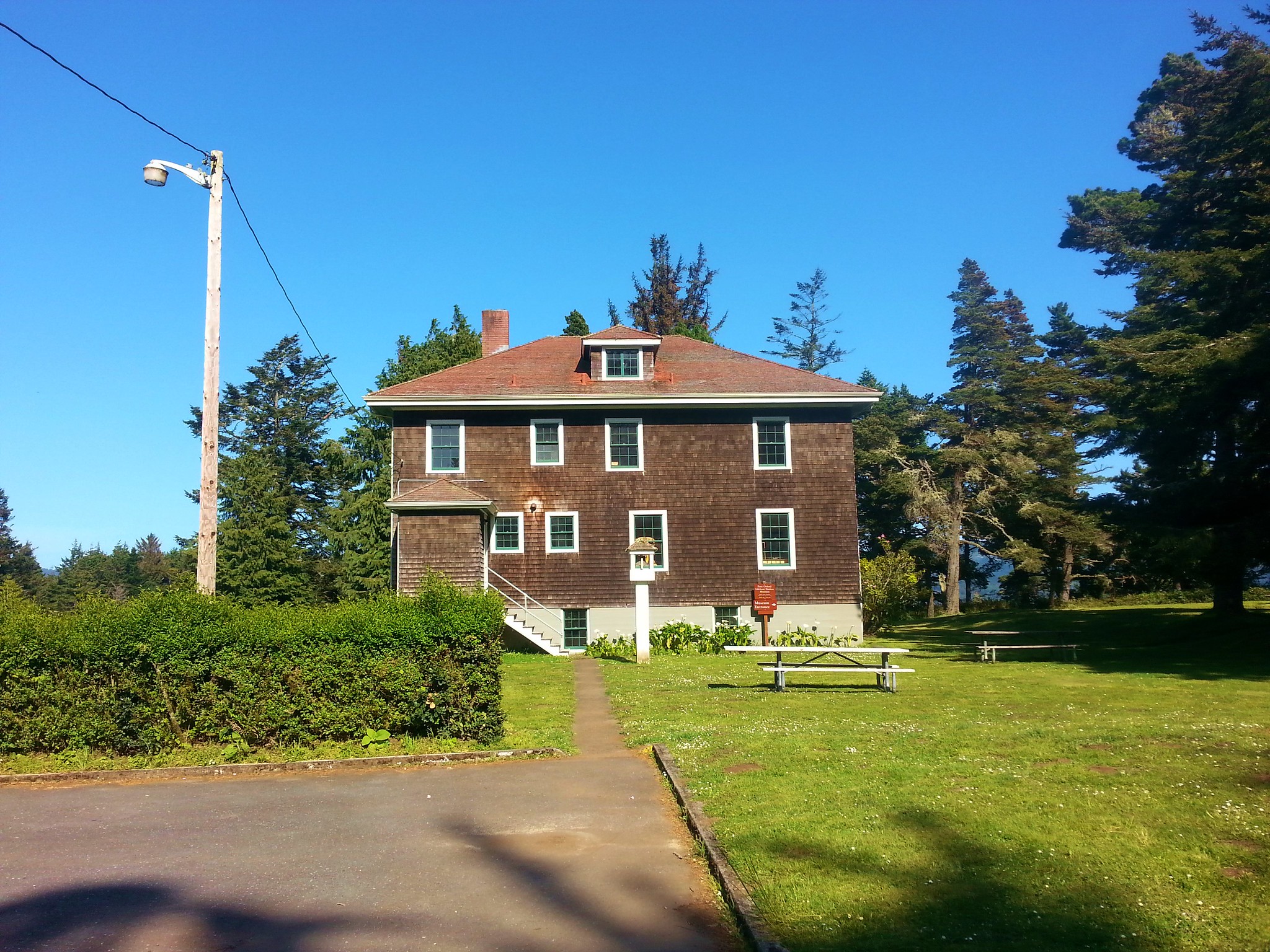
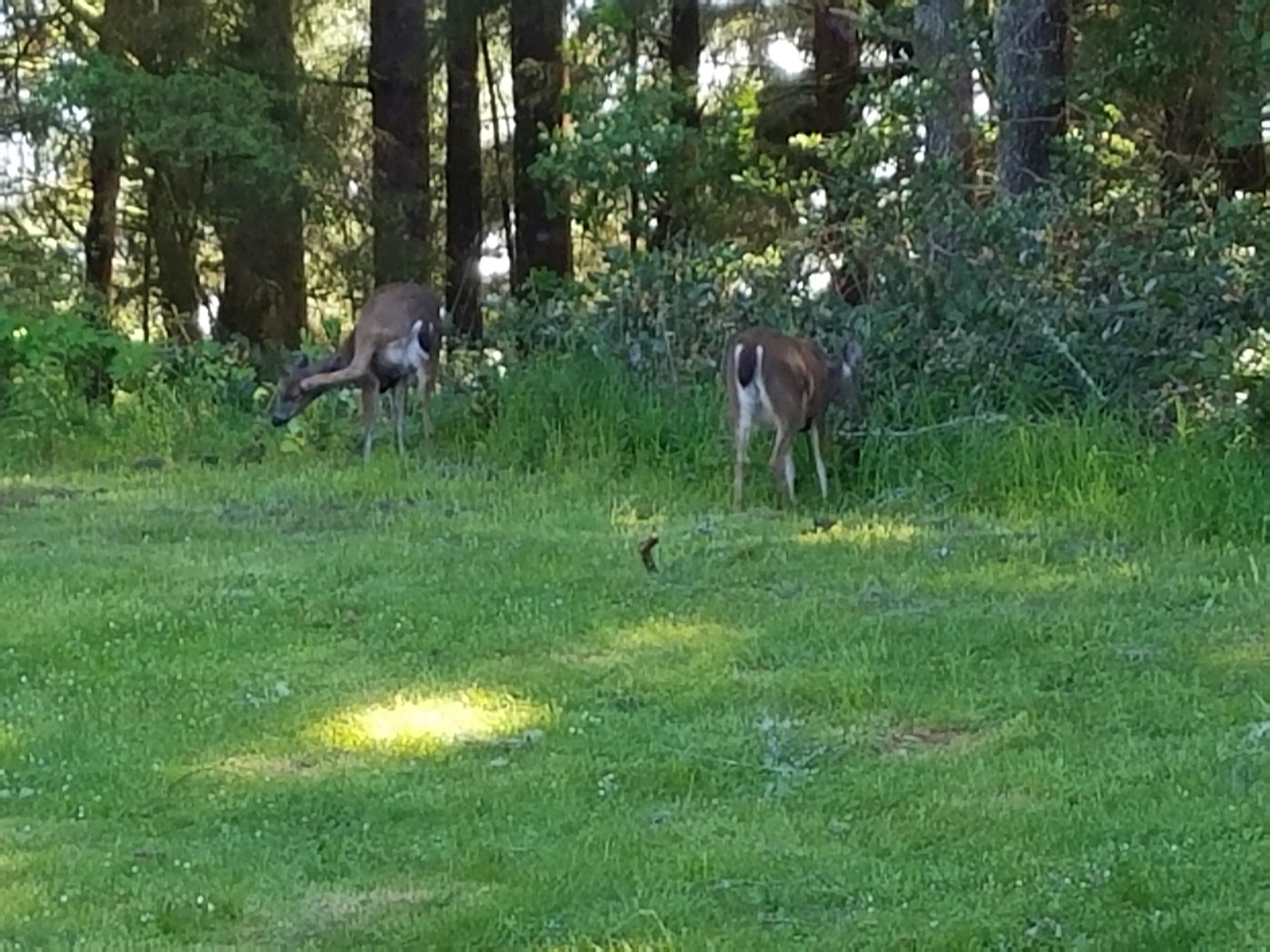
The Coast Guard Barracks museum was closed for the day but we were able to look at the lifeboat along with a pair of deer.
20170508_164411

20170508_164414

20170508_164351

2017-05-08 16.45.06

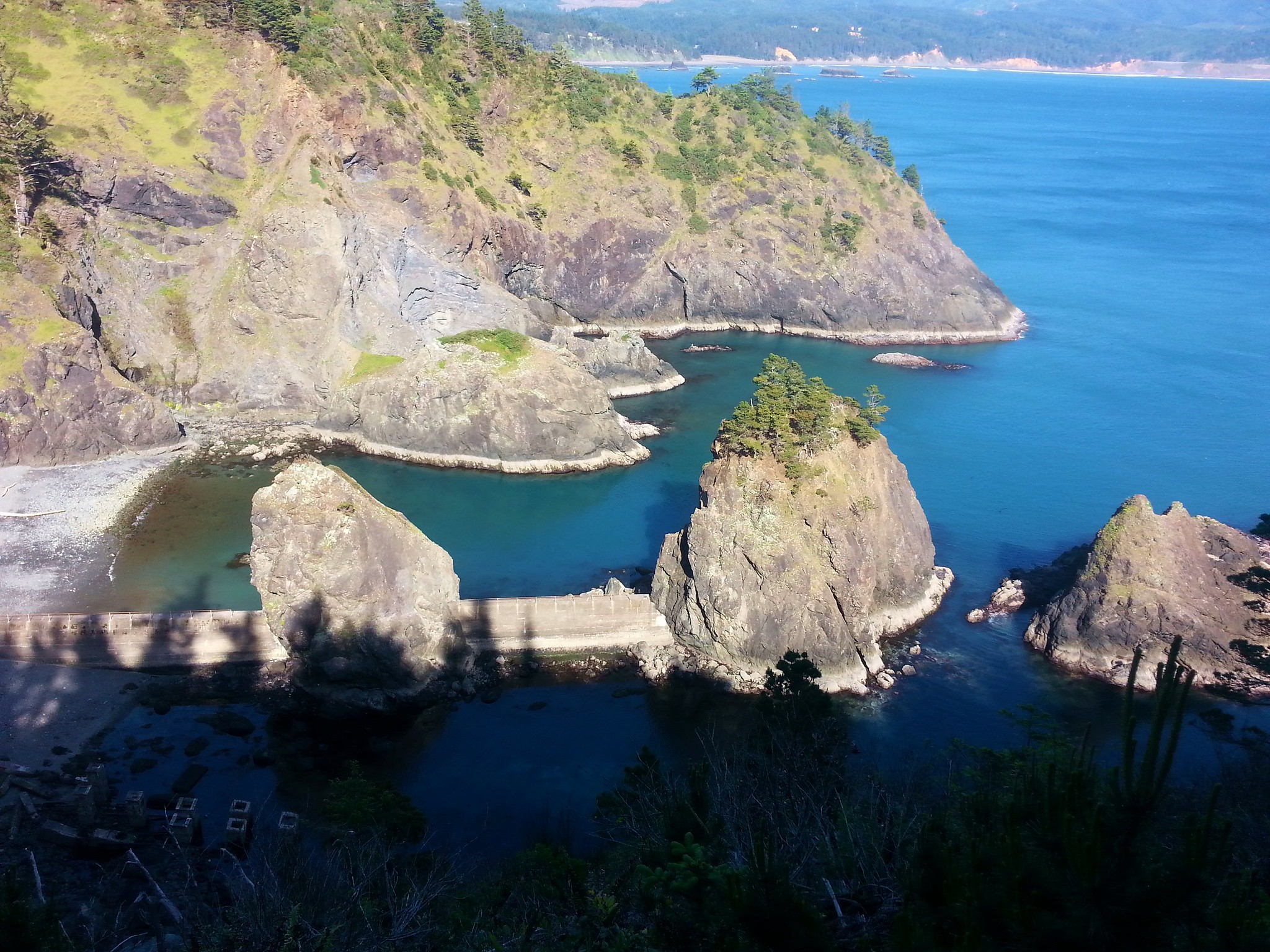
We took the Cove Trail behind the Museum to an overlook of the site of a former Coast Guard boathouse.
20170508_164724

20170508_165046

The view to the south included Humbug Mountain.
20170508_165445

We continued on the Cove Trail to its end at a junction with the Tower Trail at the site of a former WWII lookout tower.
2017-05-08 16.59.11

From the lookout site we followed the tower trail a short distance before forking left for .2 miles to the Headland Trail where we turned left for another .2 miles to the end of this trail.
20170508_171348

There were quite a few flowers on the protected north side of the headland.
2017-05-08 17.11.41

20170508_171157

2017-05-08 17.12.03

We completed our 1.3 mile loop by following the Headland Trail back to the museum parking lot. It had been an interesting day of hiking with a lot of variation between our four destinations. The whale smell had been bad and the road to Grassy Knob a little harrowing but all in all it had been a really good day. Happy Trails!

Flickr: Port Orford Area hikes

Categories
Hiking Klamath/Siskiyou Mountains Oregon Trip report

Hanging Rock -Panther Ridge Trail

The second day of vacation we left Gold Beach and headed toward Agness of Jerry’s Flat Road aka NF-33. Our plan for the day was to visit Hanging Rock in the Wild Rogue Wilderness and to revisit Elk Creek Falls to retake the pictures we’d lost when I threw the camera into the Coquille River the day before. When we drove past the Coquille River Falls Trailhead on our way out Road 3348 I gave one last goodbye to the camera.

We began our hike at the Buck Point Trailhead.

The trail climbed for a mile around Buck Point to a spring at the head of Buck Creek.
20170507_071121

Early spring flowers included fairy slippers, fawn lilies and trillium.
2017-05-07 07.15.07

20170507_162519

20170507_071942

2017-05-07 07.20.22

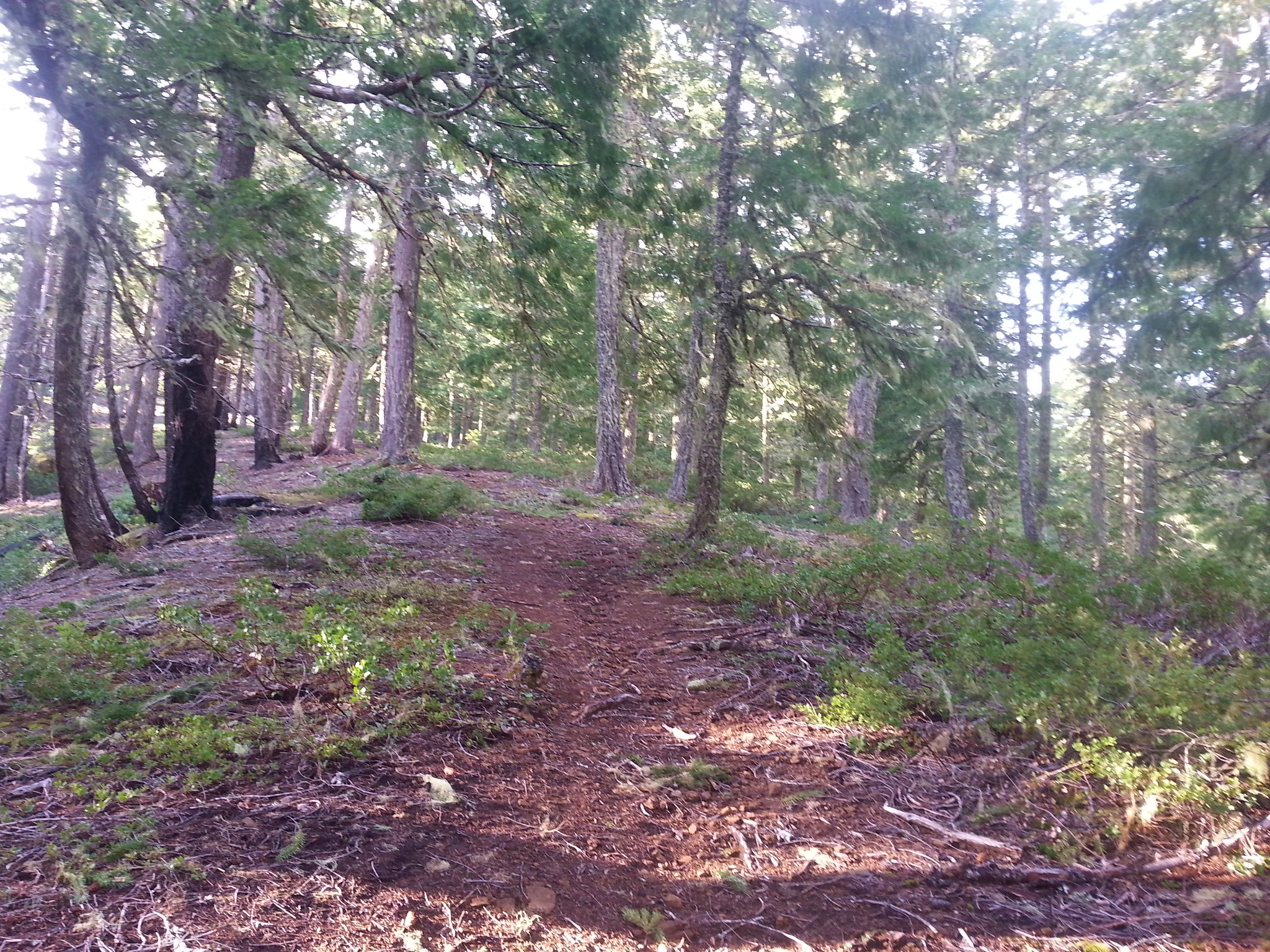
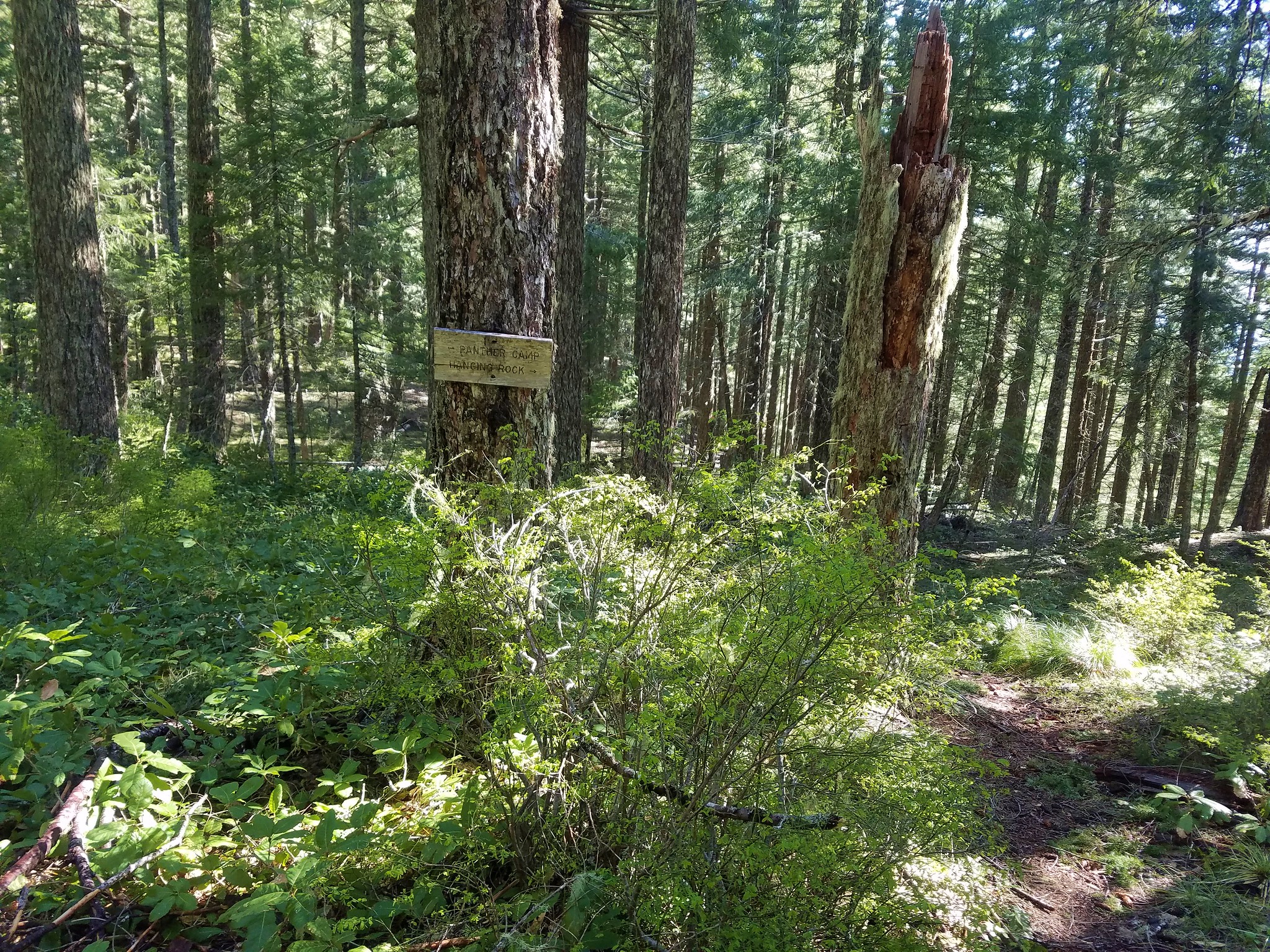
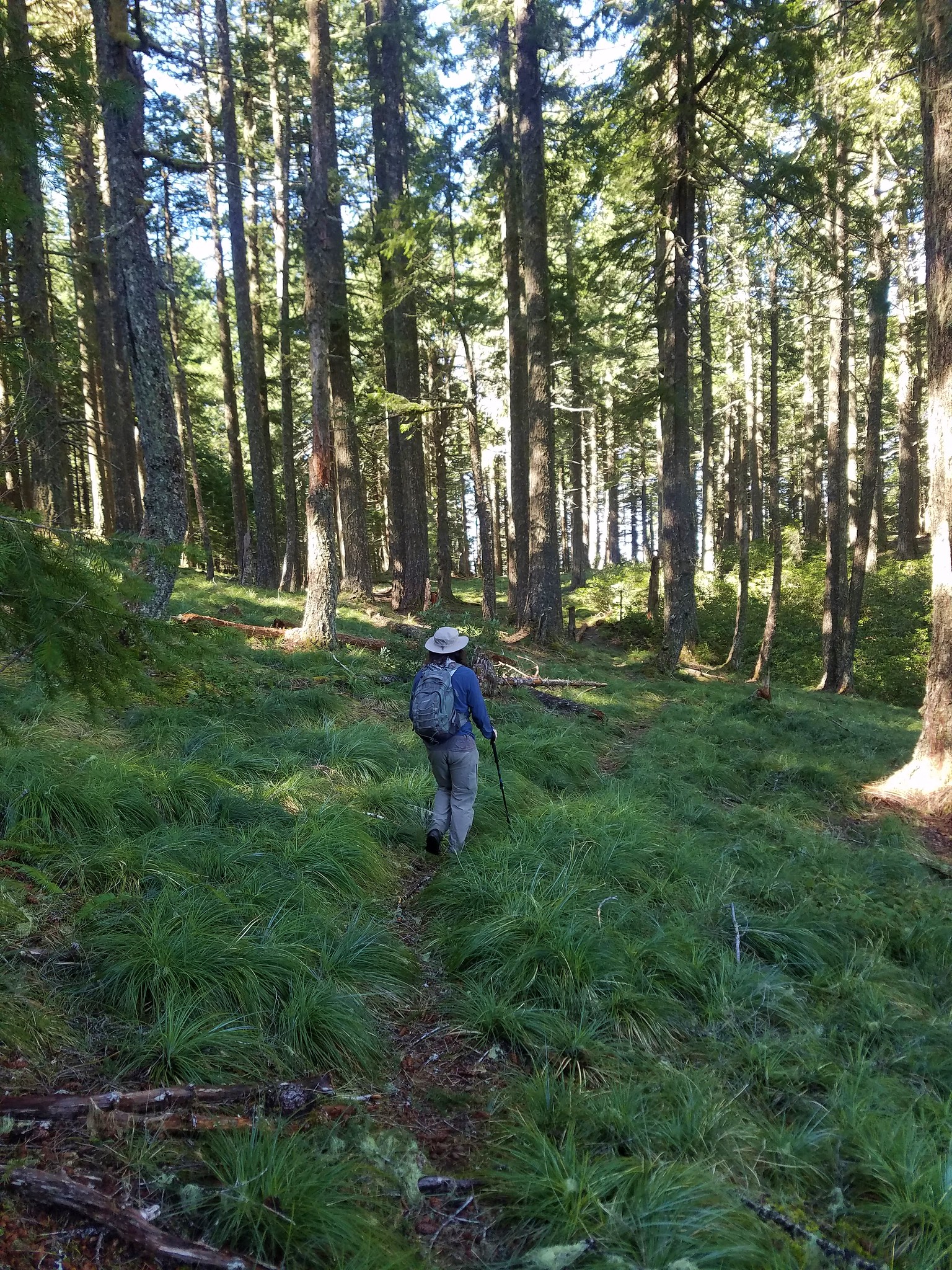
Just over half a mile from the spring the unsigned Hanging Rock Trail split off to the left. We were planning on continuing along the Panther Ridge Trail to make it a longer hike than the 4 mile round trip out to Hanging Rock and back so we decided to save the side trip until later when the sun would be more overhead and not interfering with the view east from the rock. The Panther Ridge Trail followed the rim of Panther Ridge up and down through a variety of scenery.
20170507_083227

20170507_080421

20170507_074955

Approximately 2.7 miles north of the Hanging Rock Trail we reached the signed cutoff for Panther Camp.
2017-05-07 09.30.08

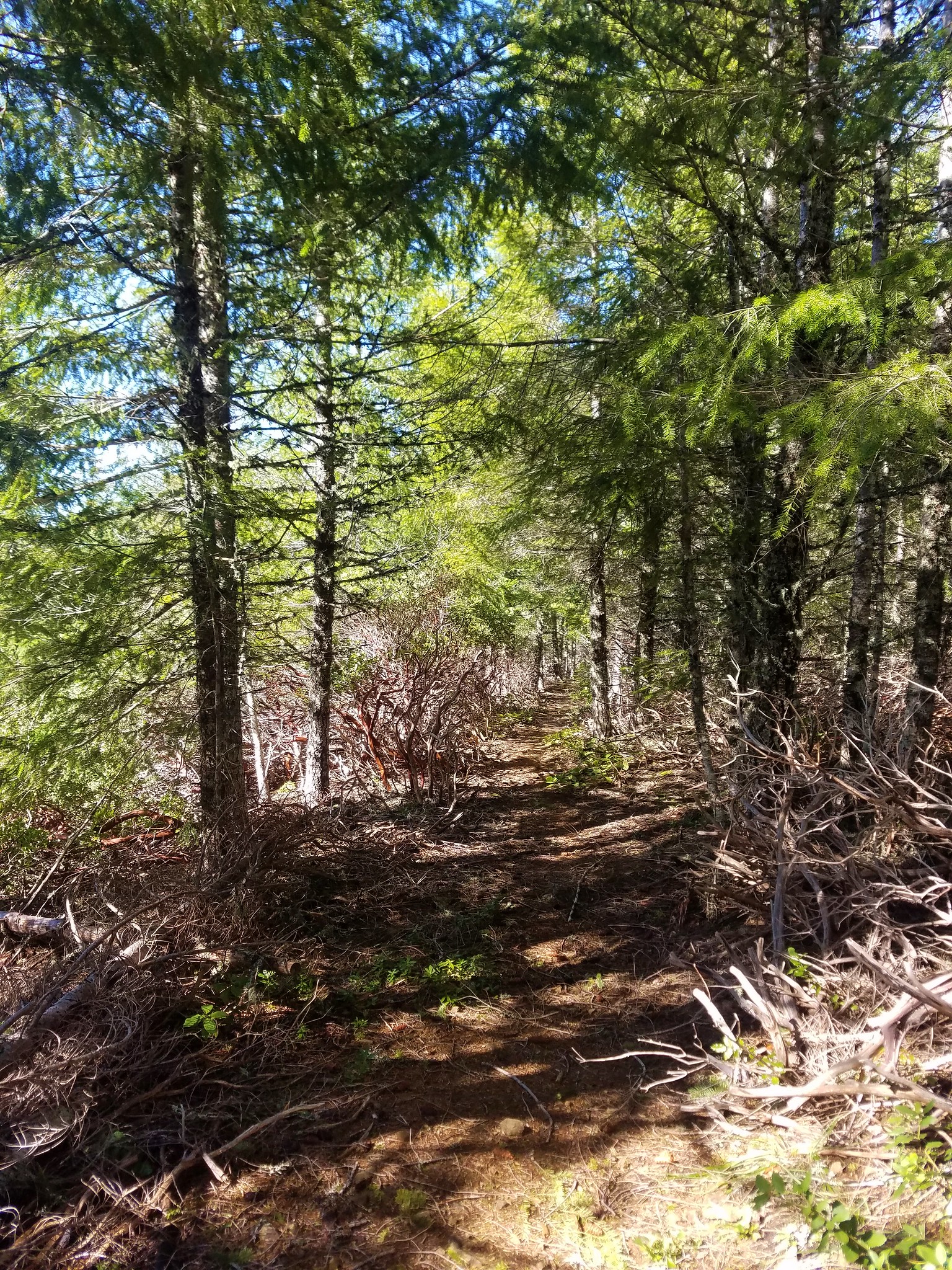
We continued on passing through a beargrass meadow and a dry section of trail lined with manzanita.
2017-05-07 09.52.42

2017-05-07 09.58.19

2017-05-07 10.02.25

2017-05-07 10.02.51

Two miles from Panther Camp we came to a junction with the Clay Hill Trail which led down into the Rogue River Valley.
2017-05-07 10.27.29

Our guidebook indicated that another .9 miles would bring us to the rentable Bald Knob Lookout so we kept going.

After about a mile we arrived at a grassy turnaround at the end of an abandoned road. There was no lookout to be seen but the trail continued north below a small hill along the ridge. We kept following the trail for another mile and a half where we came to another abandoned road bed. The Garmin showed this road heading up to the top of the hill we’d just skirted around so we followed it up to the top where there was no lookout and just a minimal view to the west.

20170507_113850

While we took a break I did some looking at the map on the Garmin and decided that the actual lookout was likely still to the north but we’d already gone further than we’d planned and were still confused by the description in the guidebook. We returned the way we’d come checking around the grassy turnaround to see if we’d somehow missed the lookout.

On the way back the views to the east had improved and now we were able to make out a snowy Mt. McLoughlin on the horizon.
2017-05-07 14.47.21

2017-05-07 14.45.51

We turned onto the .4 mile trail out to Hanging Rock which still had some lingering snow of its own.
2017-05-07 15.20.50

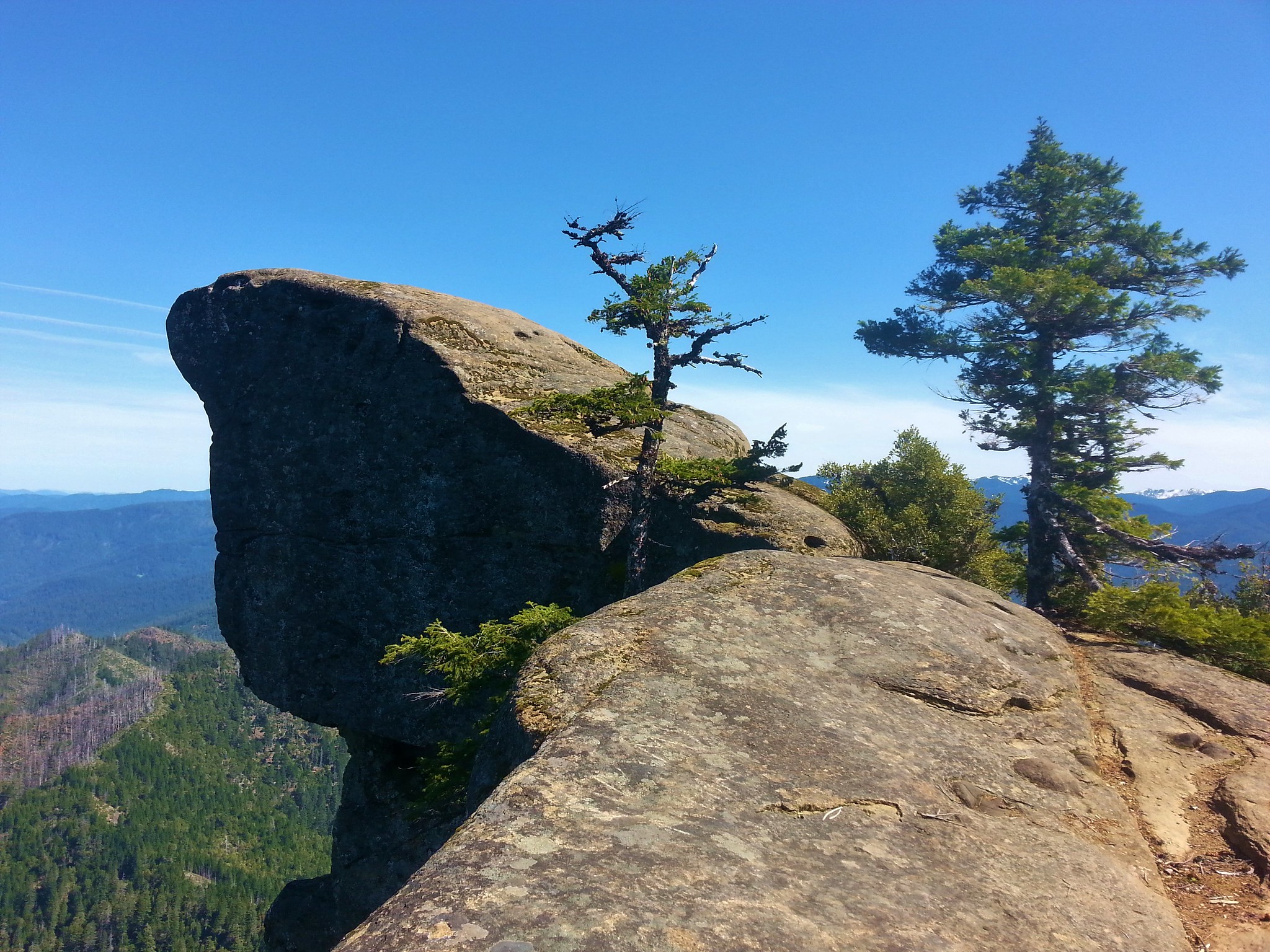
It was quite windy on the exposed rocks but the views were good with Hanging Rock towering over the Rogue River Valley.
2017-05-07 15.27.00

2017-05-07 15.28.24

20170507_152830

Having slipped on the wet rocks the day before I chose not to make my way out onto Hanging Rock itself although it is possible.
20170507_154215

After a nice long break we returned to our car stopping at Elk Creek Falls before returning to Gold Beach. We hadn’t seen much in the way of wildlife on the hike but on the drive back we spotted a couple of deer and a young black bear along Jerry’s Flat Road. A check of the Garmin back at the motel showed we’d gone 19.5 miles on the day, nearly 5 miles more than we’d planned. We were also able to determine that the Bald Knob Lookout had been another 1.5 miles north of the road we took up the hill where we turned around. It was a good example of what can happen when you don’t take the time to fully research your hikes. Happy Trails!

Flickr: Panther Ridge Trail

Categories
Hiking Klamath/Siskiyou Mountains Oregon Trip report

Elk Creek & Coquille River Falls and Azalea Lake

We just got back from a week of hiking near Gold Beach, Oregon and Crescent City, California. This was the second year in a row that we spent part of our May vacation in Gold Beach due to our original plan of visiting the SE Oregon desert being derailed by the chance of rain. Over 7 days we visited 17 trailheads (1 twice) and had plenty of adventures, some good, some not so much.

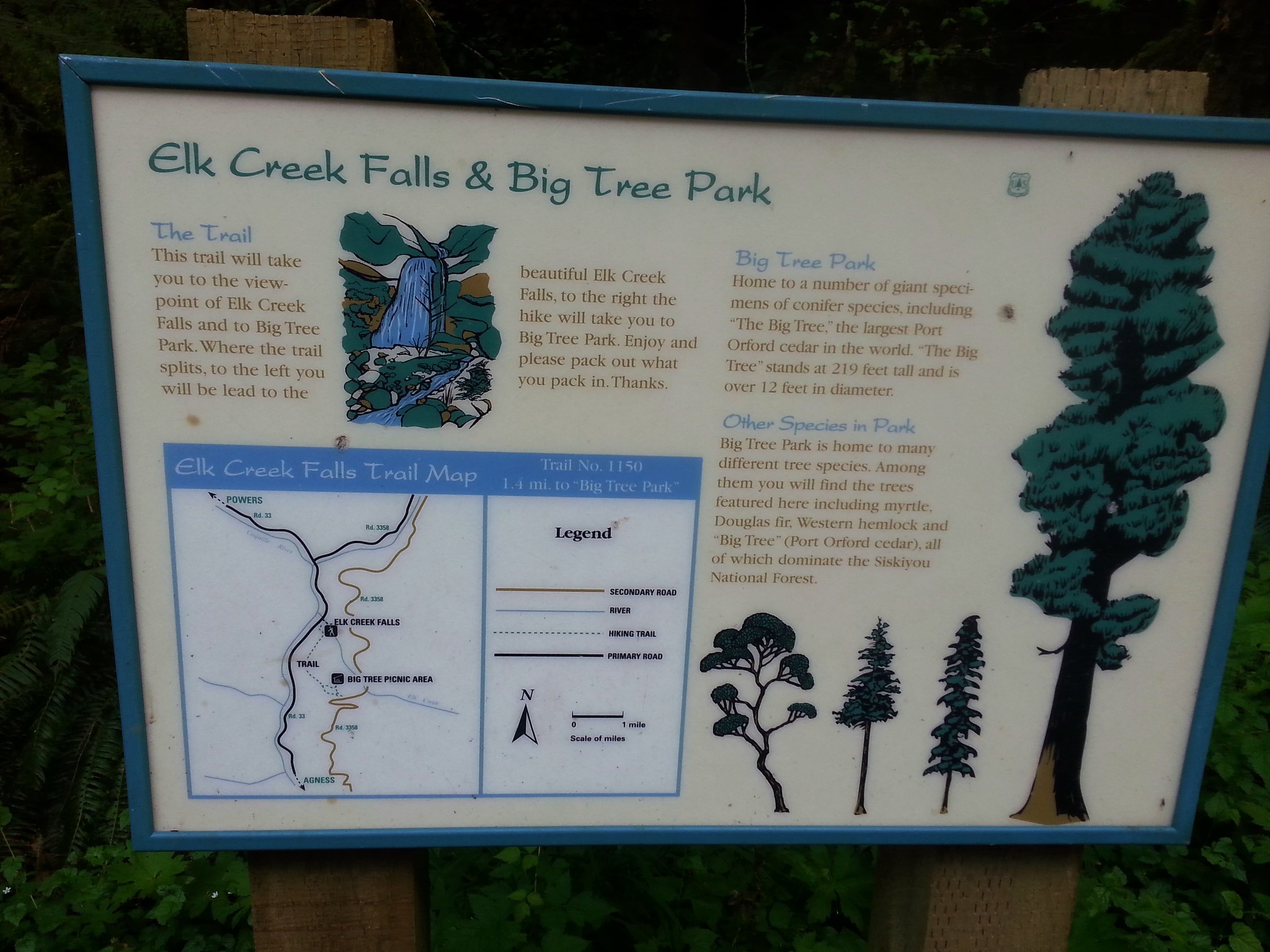
We headed down to Gold Beach on Saturday morning planning on stopping at four trailheads along the way. All four were located on or near NF-33 (Powers South Road) between Powers and Agness. Our first stop was the Elk Creek Falls & Big Tree Park trailhead located at a pullout along NF-33 between mileposts 57 & 58.
Elk Creek Falls Trailhead

The pullout was next to Elk Creek.
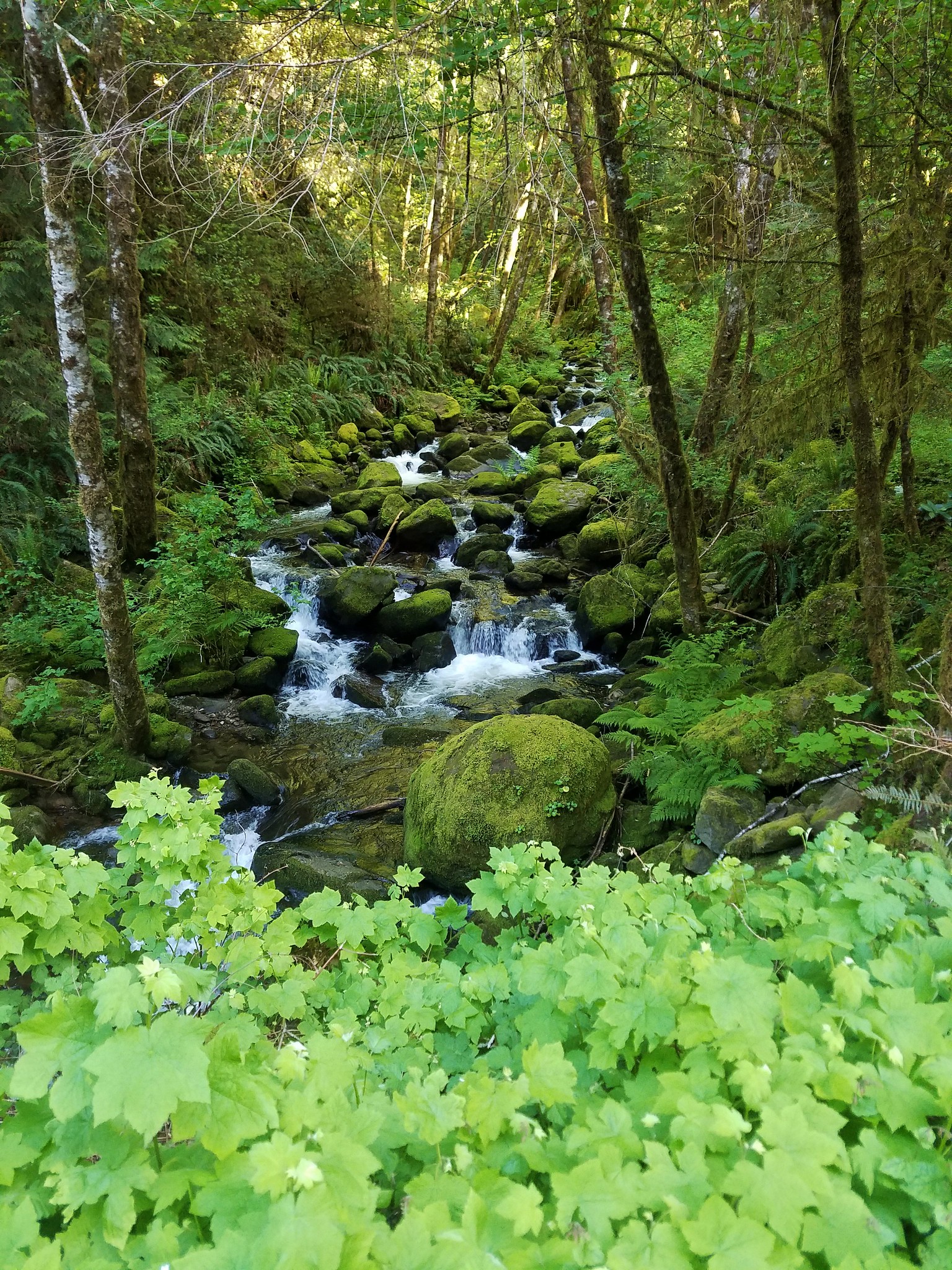
Elk Creek

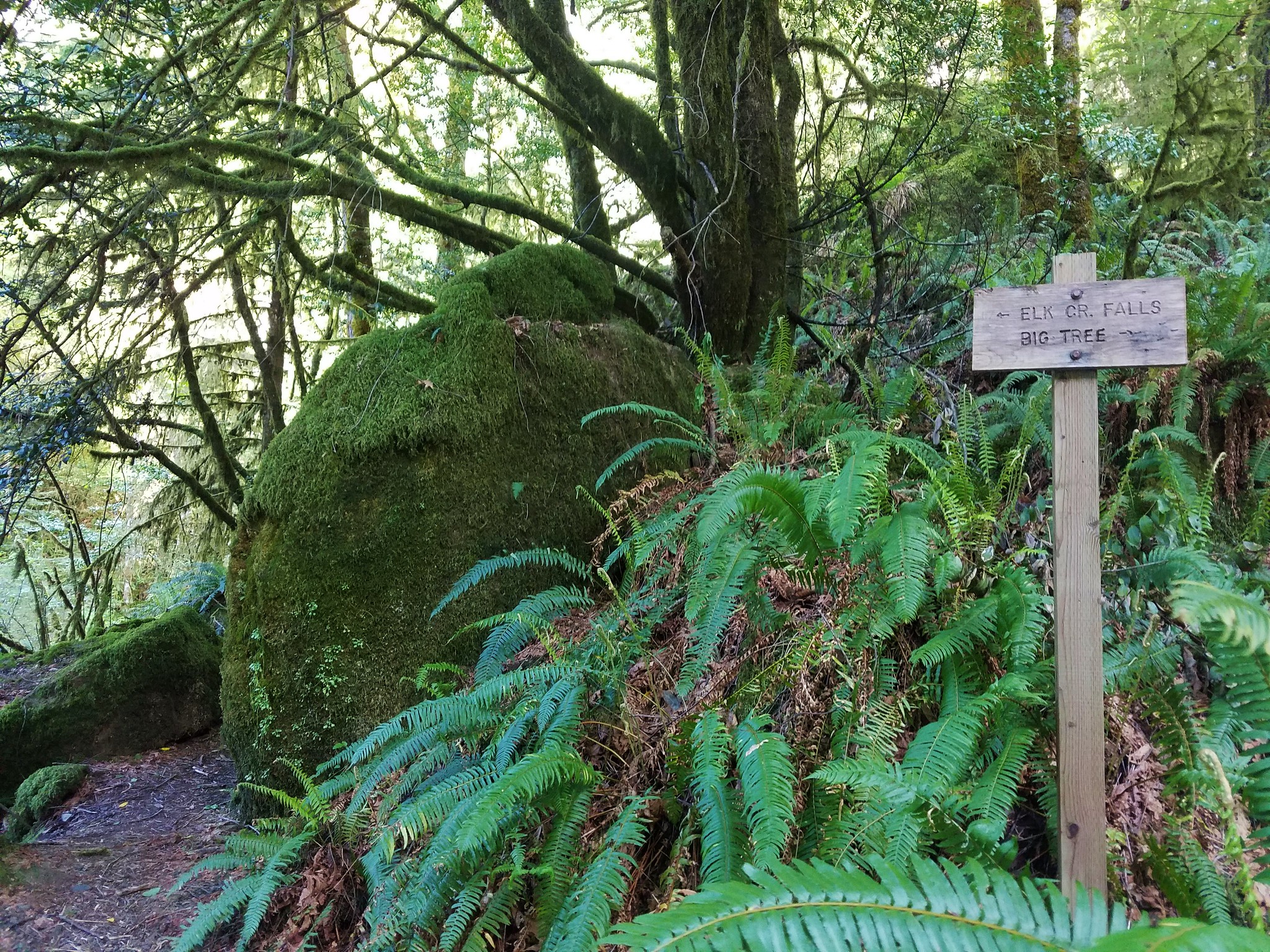
The trail quickly split with the left fork arriving at the impressive Elk Creek Falls in just a tenth of a mile.
Elk Creek Falls trailsign

Elk Creek Falls

After visiting the falls we returned to the fork and headed uphill on the Big Tree Trail. Due to a camera issue which will be explained a little later we have no pictures from the 1.2 mile trail to a huge Port Orford cedar tree measuring 239′ tall and 12′ thick. A few other large trees were near this behemoth including another Port Orford cedar and a Douglas Fir.

After admiring these huge trees we returned down the trail to our car and continued south on NF-33 another 4.9 miles to the China Hat Recreation area. We were planning on hiking the Barkow Mountain Trail into the Copper-Salmon Wilderness which would give us one more check mark on our Oregon Wilderness areas visited list. Unfortunately winter storm damage had closed Road 3353 just 3 miles into an 11 mile drive to the trailhead. We would have to save this wilderness for another trip as the only other possible trailhead needed to be accessed from the west near Port Orford.

We drove back to NF-33 and headed south another 5.2 miles and turned left onto Rd 3348. A mile and half on this steep windy one lane road brought us to the Coquille Falls Trailhead.
Coquille River Falls Trailhead

A half mile trail descends to a very scenic fall on the Coquille River.
Coquille River Falls

Coquille River Falls

Coquille River

The camera issue occurred while admiring the falls. As I was taking pictures I shifted my weight and slipped on the wet rocks. As I was falling into the mud the camera flew out of my hand (I hadn’t used the wrist strap) and I heard it hit the ground. I recovered just in time to watch it plummet over the side of the cliff and disappear into the river below.
Spot where my camera fell into the river.

It was an awful feeling, the first day of vacation and the camera was gone. We typically bring out old Sony Cybershot as a backup but hadn’t done so this time. At least I wasn’t hurt but we were left wondering what we were going to do for pictures during the trip. We thought about ordering another camera from Amazon and having it overnighted to the motel but it was the weekend so it would still be several days. There weren’t really any options in town camera shopping so we decided we’d just use our phones for better or worse and get a new camera after vacation.

The loss of the camera is the reason for not having any pictures from the Big Tree Trail. The photos of Elk Creek Falls were taken the next day since we were in the same area and it was such a short hike to the falls.

A bit deflated we returned to the car and headed for our final stop – the Azalea Lake Trailhead.

A quarter mile south of Road 3348 we turned right onto Road 3347 for a mile to the trailhead.
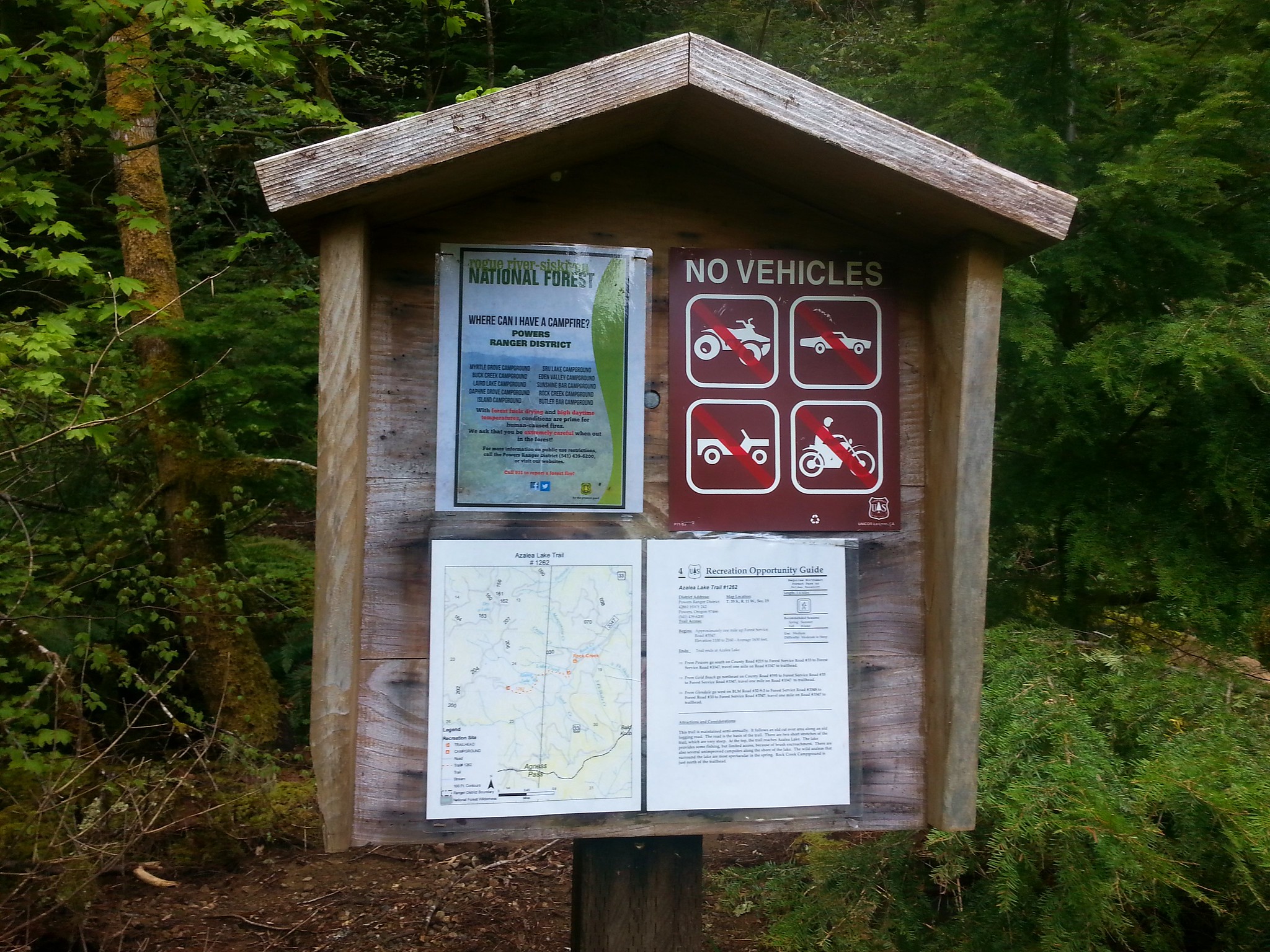
Azalea Lake Trailhead

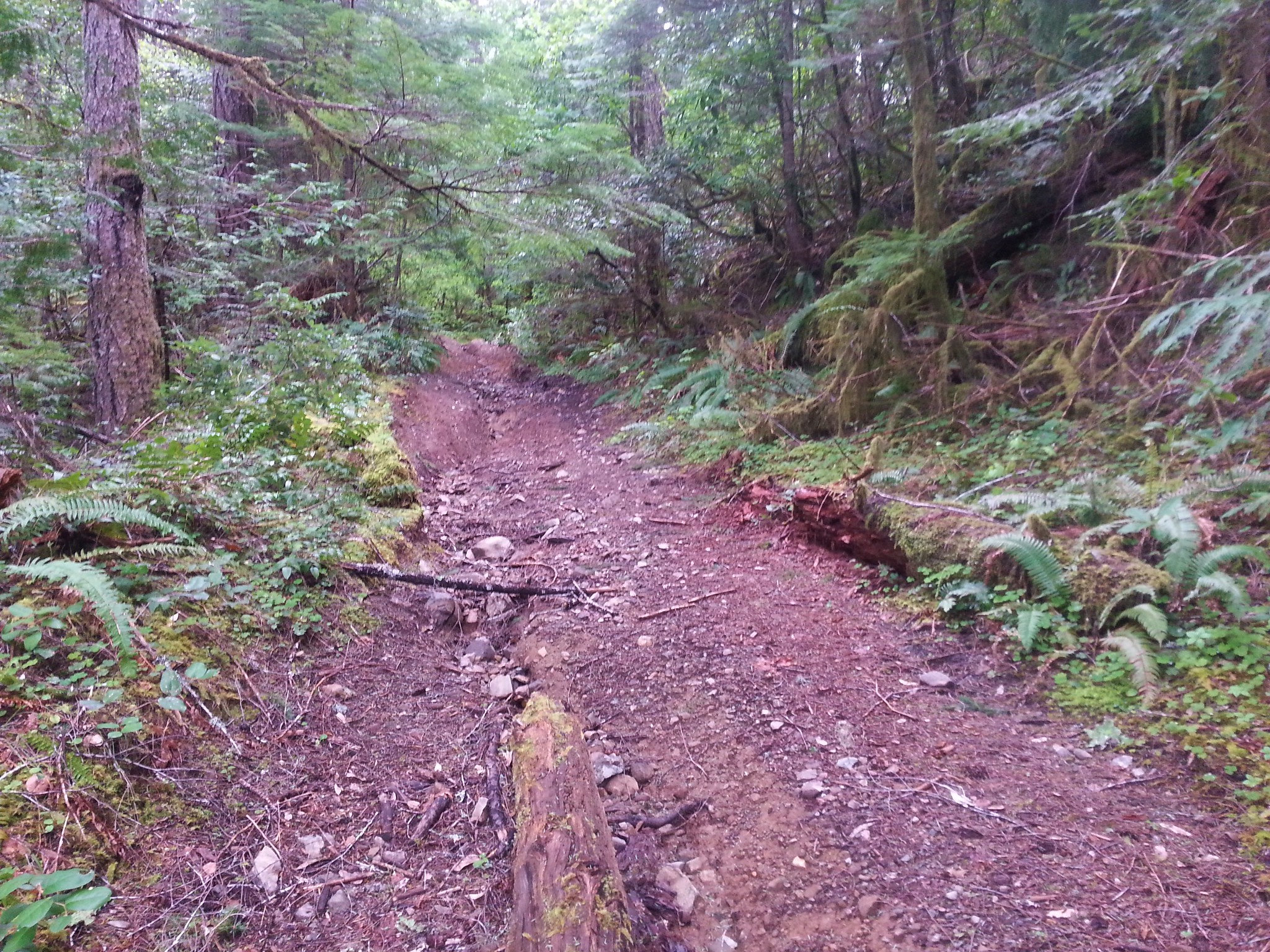
An old road led uphill to the start of a loop around the lake.
Azalea Lake Trail

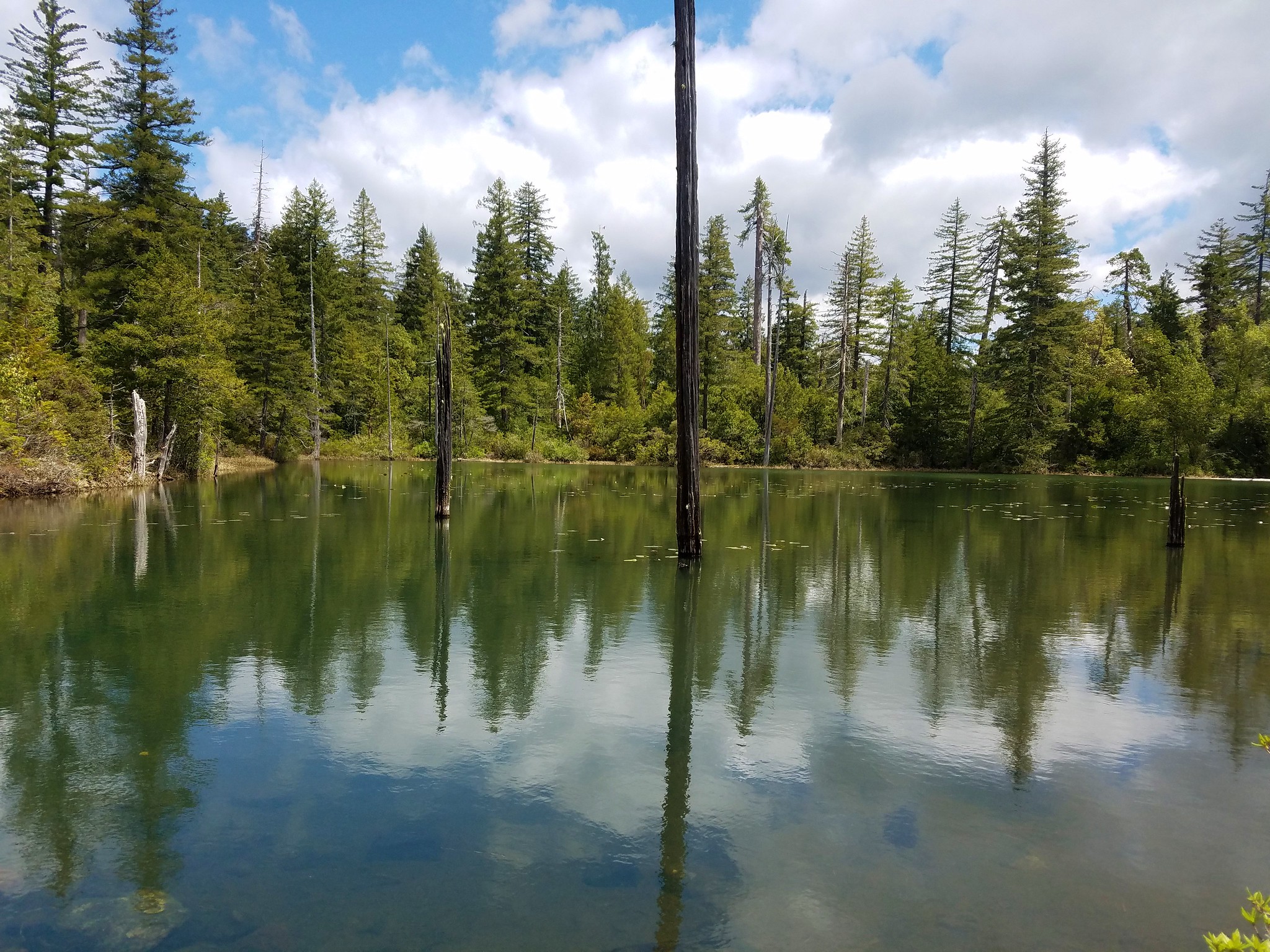
Azalea Lake

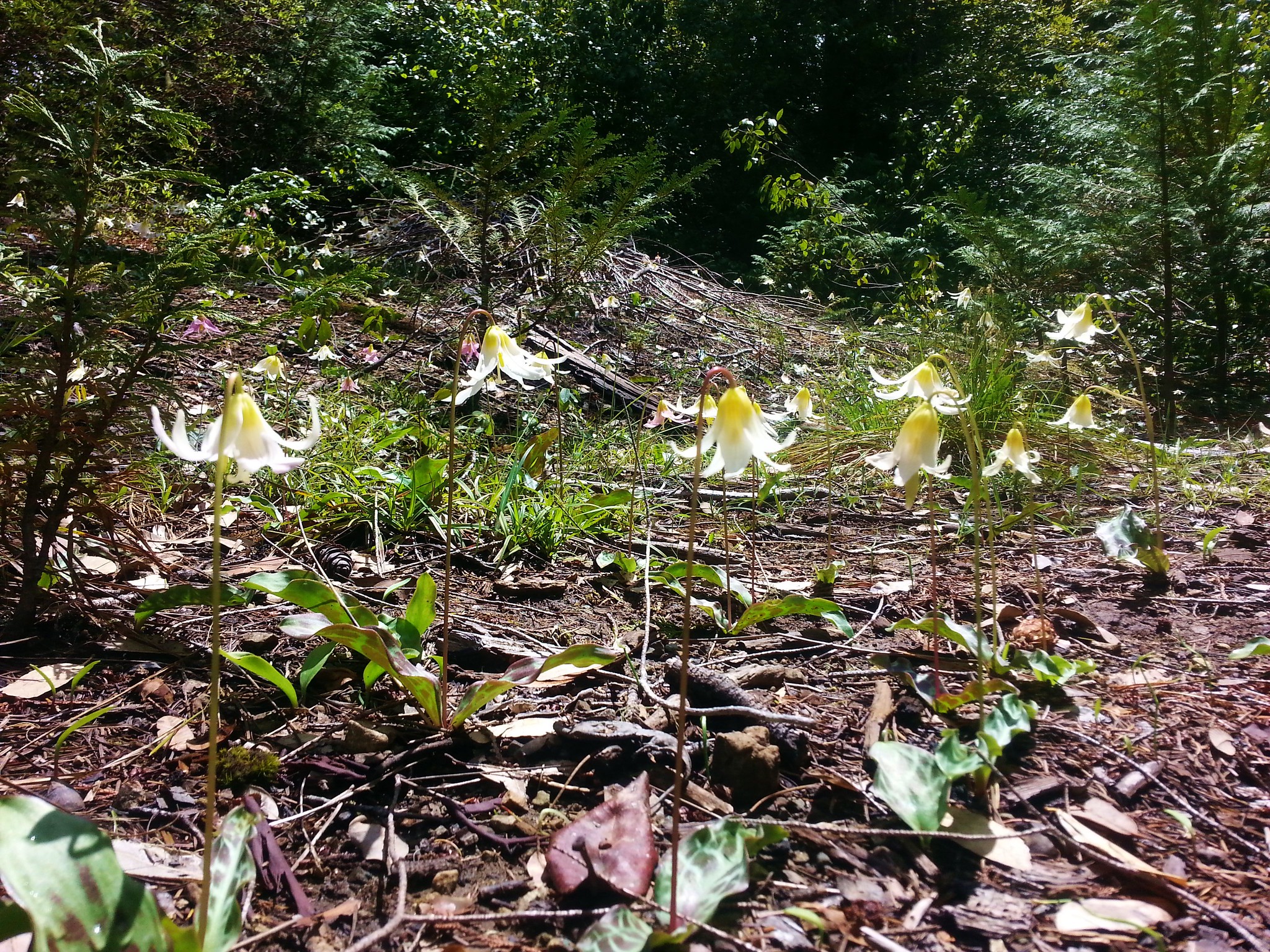
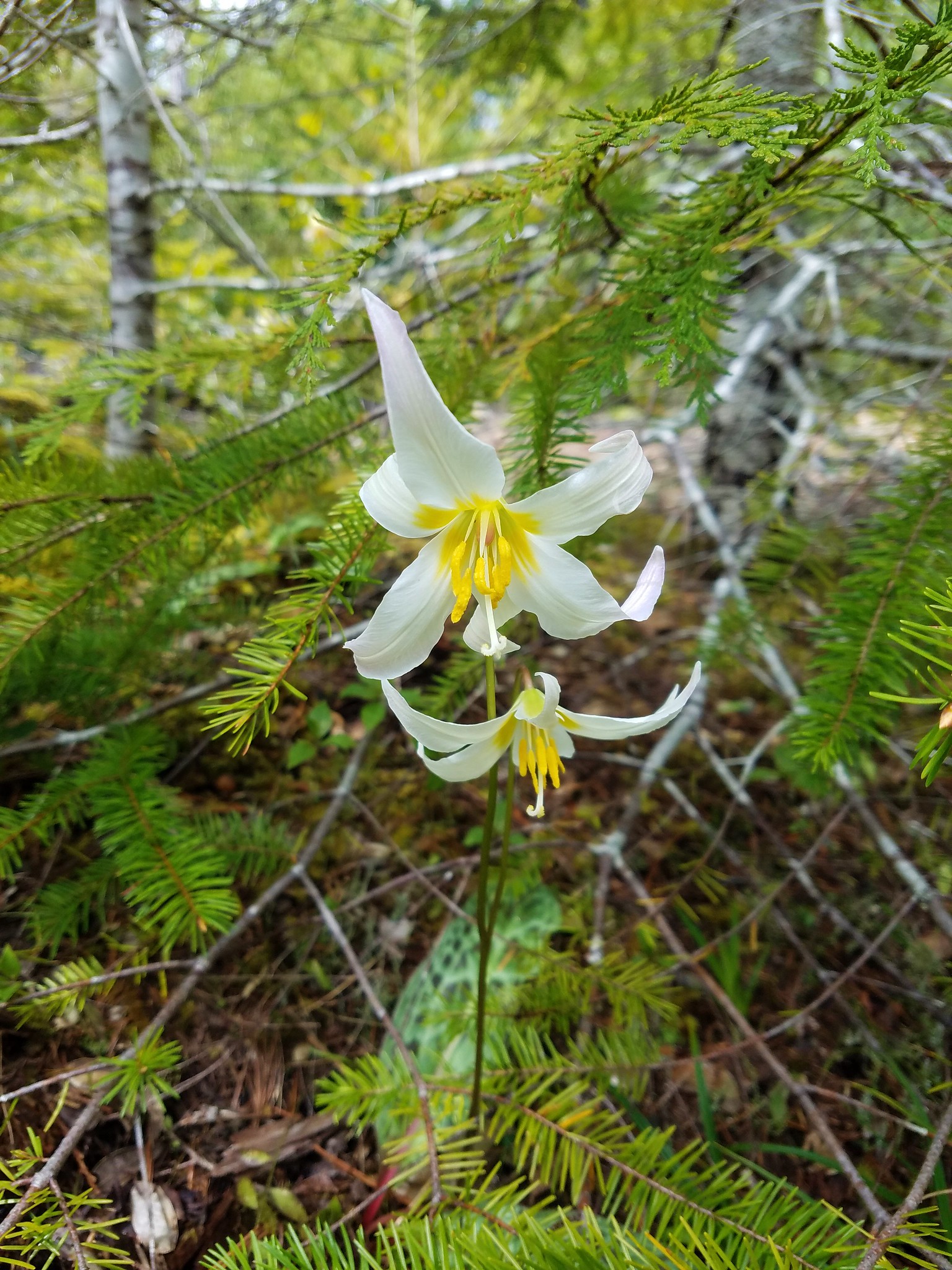
The lake is named for the Azaleas that bloom around it but we were too early for those by a week or two. We settled for a decent display of fawn lilies.
Fawn lilies

Fawn lilies

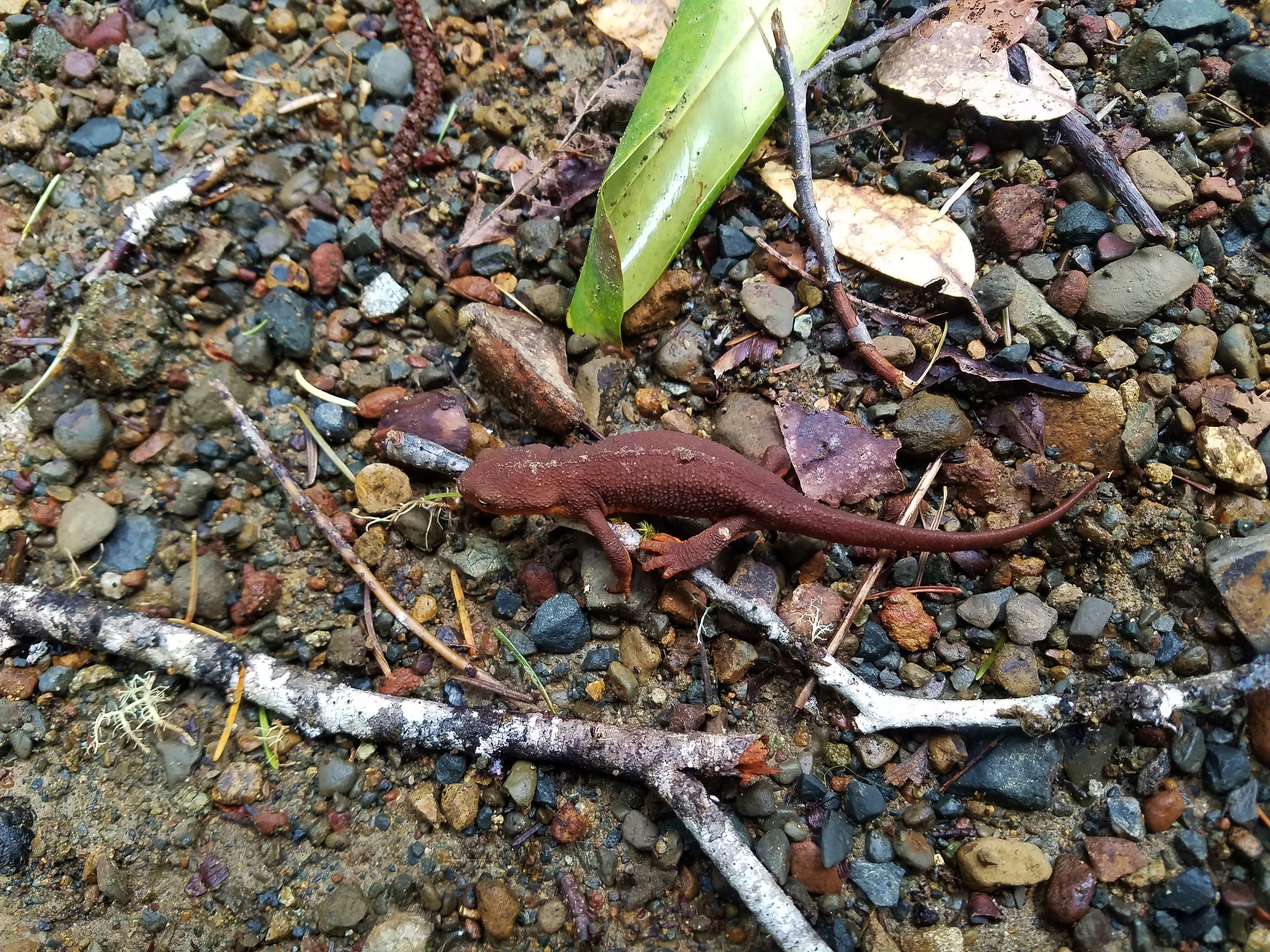
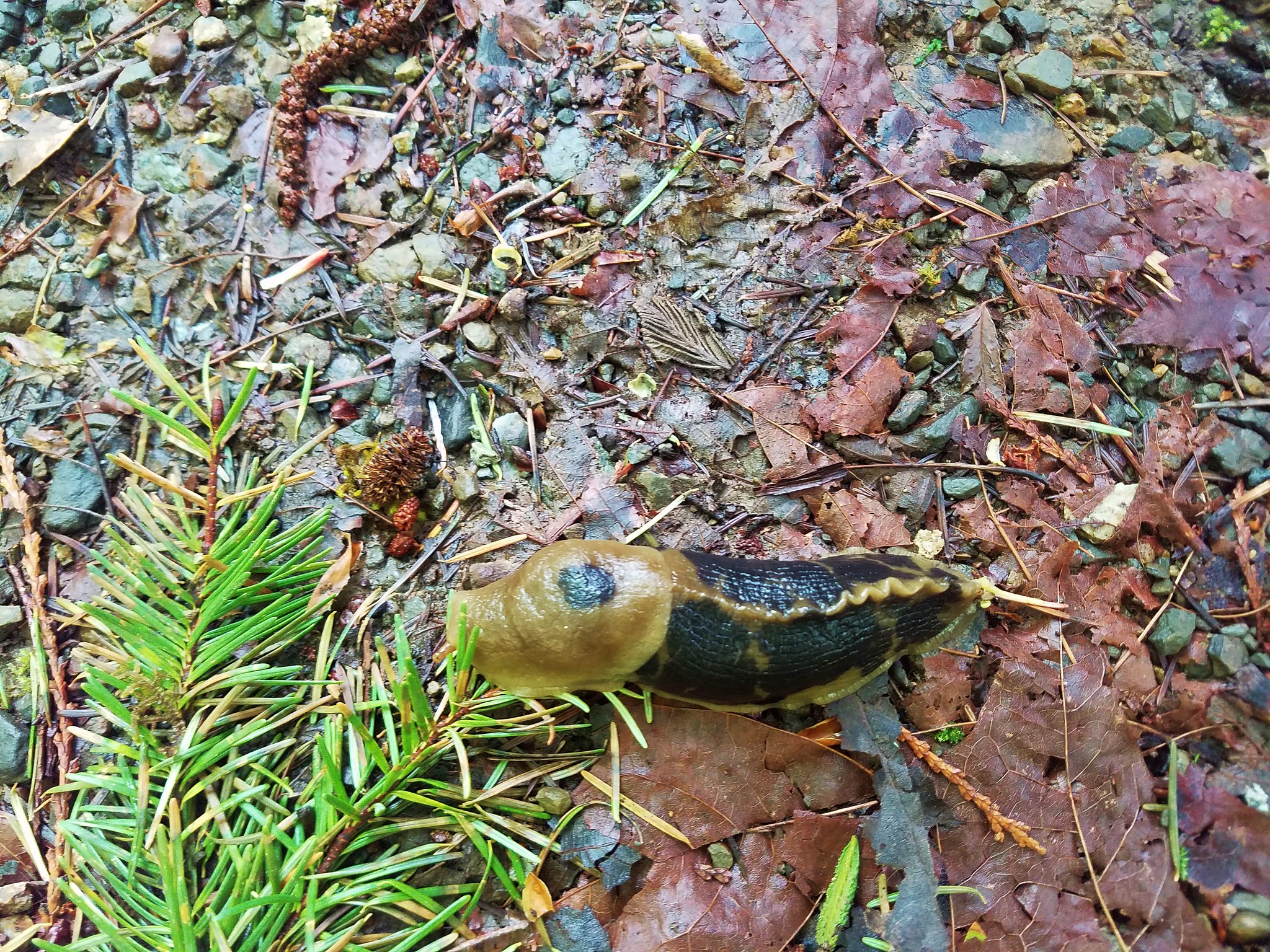
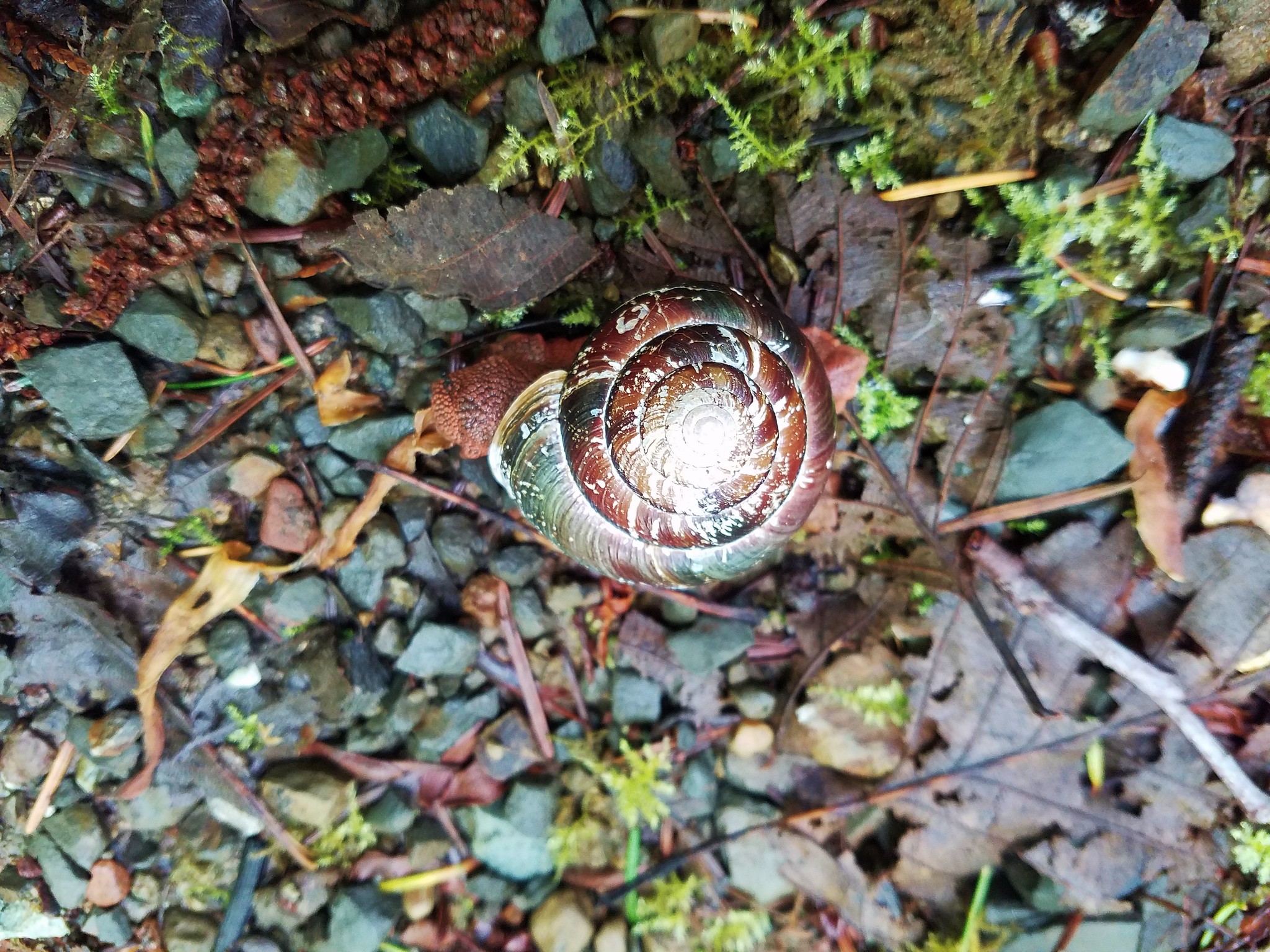
There was also a lot of wildlife, albeit small, along this 2 mile trail.
Rough skinned newt

Slug

Snail

Rough skinned newts

It was certainly an eventful start to our vacation. The waterfalls had been wonderful but the loss of the camera and not being able to visit the Copper-Salmon Wilderness were disappointments. It had been a bit of a mixed bag but we had 6 more days for things to improve. Happy Trails!

Flickr: Elk Creek & Coquille River Falls and Azalea Lake

Categories
Hiking Northern Coast Oregon Oregon Coast Trip report

Angora Peak and Cape Falcon

We are blessed to live in a State where one weekend we can hike amid sagebrush and wildflowers in the High Desert and the next weekend hike along the Pacific Ocean.

For our latest outing we headed to the Oregon Coast to check out one new destination and one familiar one. Our original plan was to break the day up into two hikes, first up Angora Peak from a gated logging road, then to Cape Falcon after driving back south on Highway 101 for 2 miles to the Short Sands Trail South Trailhead.  We had hiked to Cape Falcon from that same trailhead in 2012 which would mean we’d be duplicating that hike (which we try and avoid).

An alternative presented itself while researching the Angora Peak hike. The Oregon Coast Trail passes Cape Falcon and then crosses Cape Falcon Road to the north on it’s way to Arch Cape. Cape Falcon Road is just a tenth of a mile north of the gated logging road for the Angora Peak hike so by parking on the shoulder of Cape Falcon Road at the OCT we could hike up to Angora Peak and back then take the Oregon Coast Trail out to Cape Falcon and back. This would allow us to not have to drive to a second trailhead and we wouldn’t be duplicating our 2012 hike to Cape Falcon.

With the plan settled we dove north of Nehalem on Highway 101 for 8 miles and turned left onto Cape Falcon Road where we parked at a small pullout by a trail sign.
Oregon Coast Trail at Cape Falcon Road

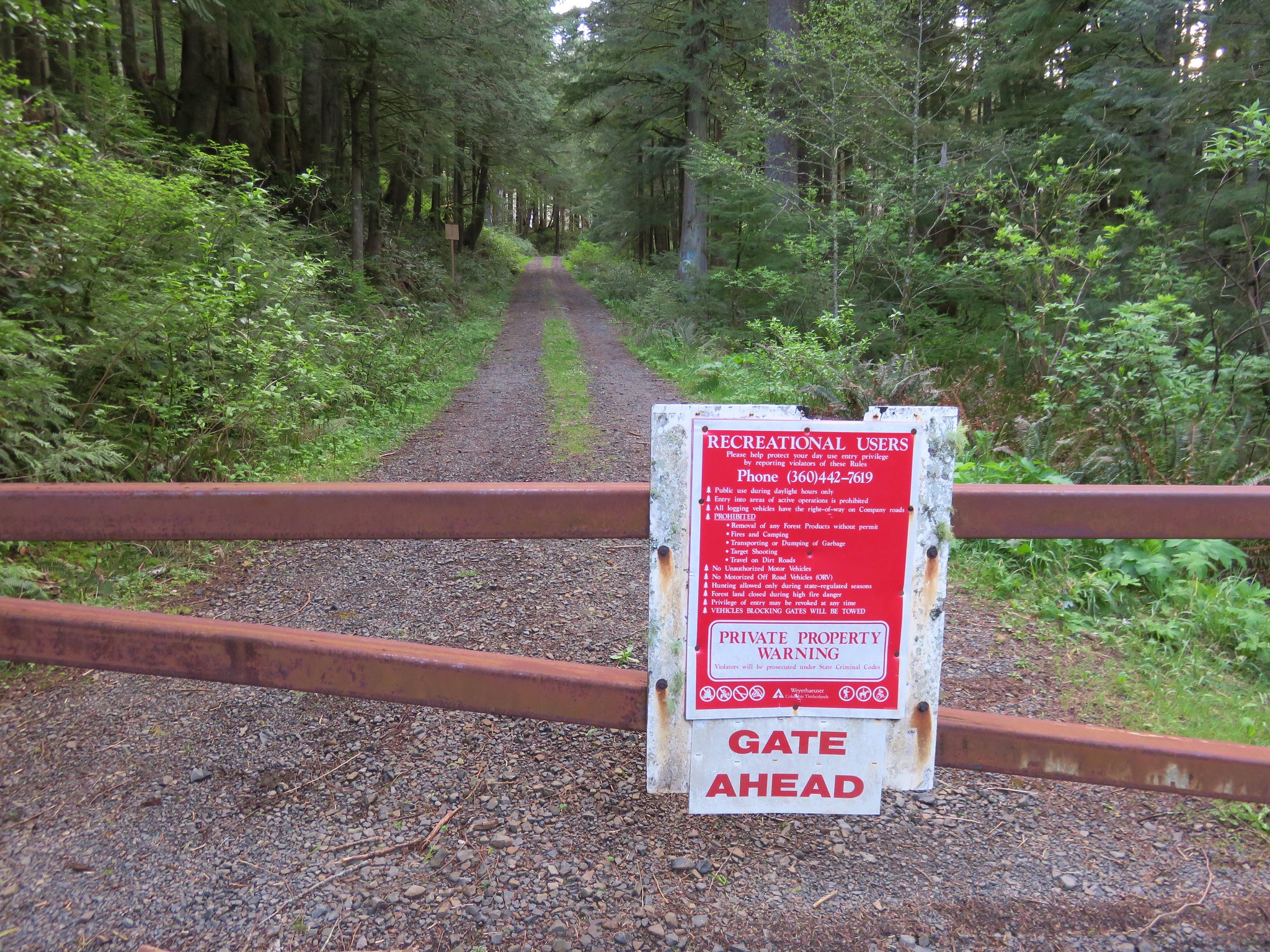
We walked back to the highway which was less than 100 yards away, crossed to the east shoulder, and followed it south for .1 miles to the gated road. The lumber company has a sign posted regarding rules for the area which should always be followed in order to ensure they are not forced to close access.
Logging road to Angora Peak

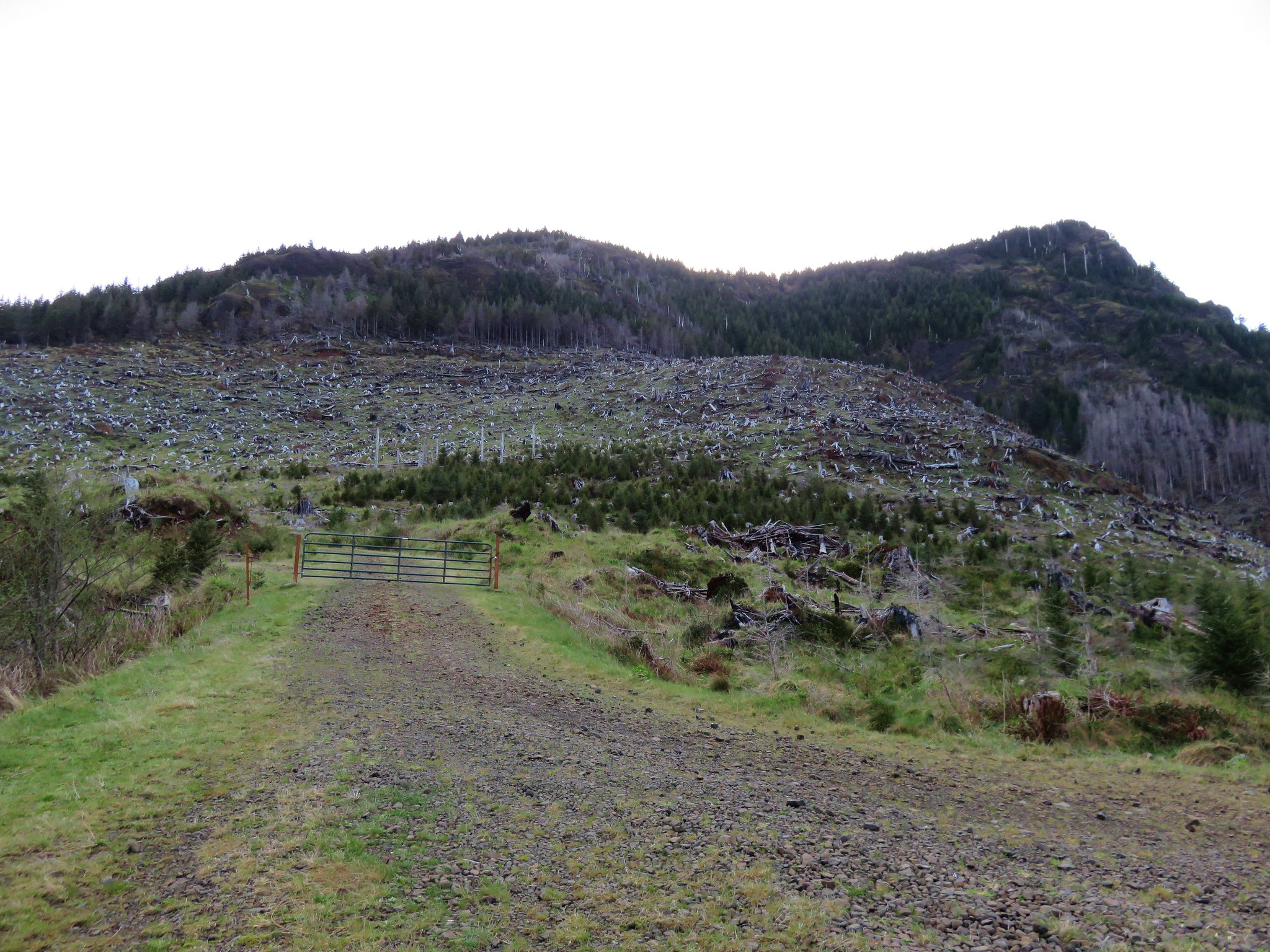
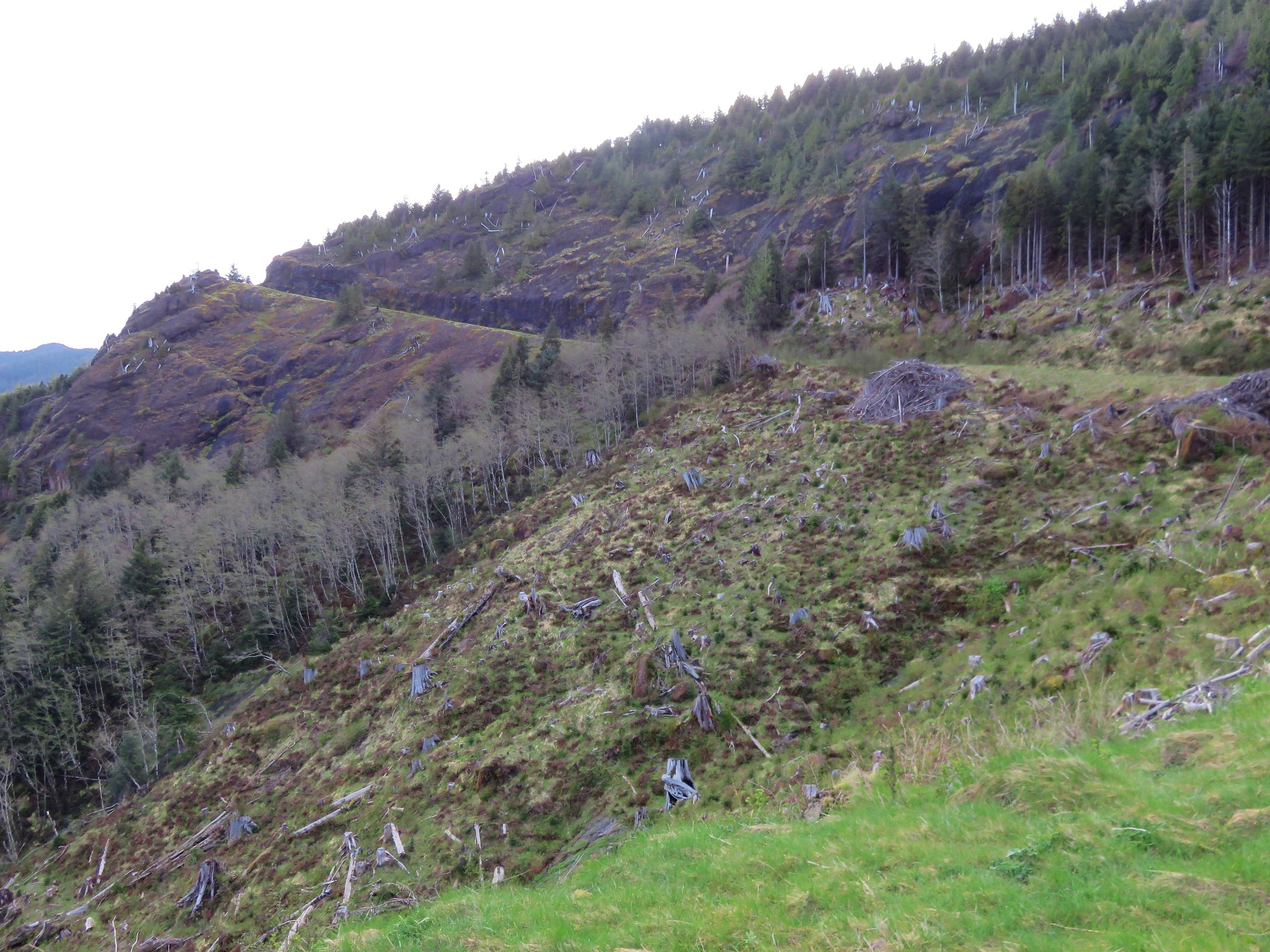
The road passes through a landscape of clear cuts with Angora Peak in the distance.
Logging road to Angora Peak

We stuck to what was obviously the main road and in about a mile passes a quarry.
Quarry on the way to Angora Peak

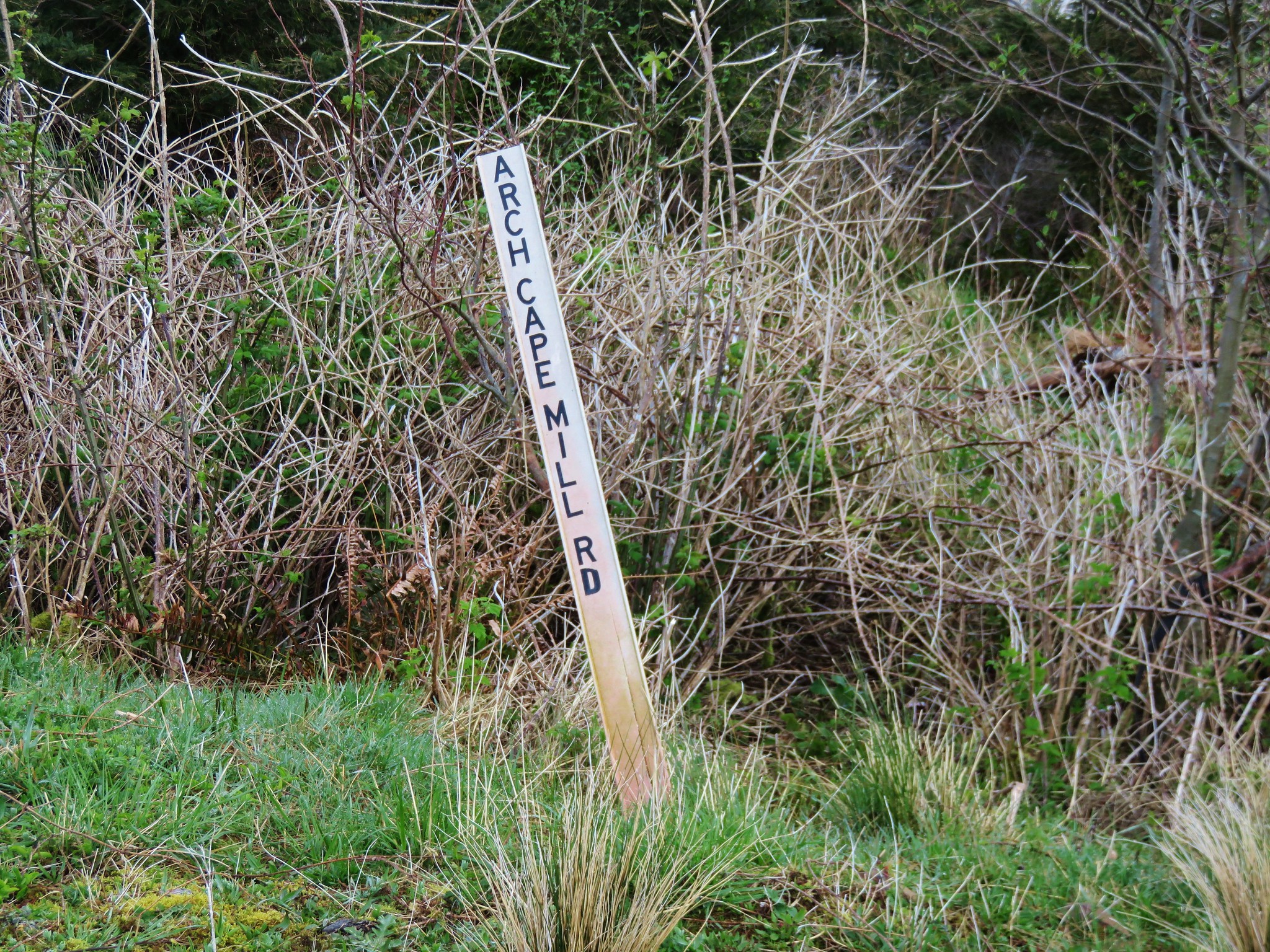
Beyond the quarry we forked left after passing a 1 mile marker (blue spray painted 1 on a concrete slab). This road ended in tenth of a mile at a T-shaped junction with Arch Cape Mill Road.
Sign at the junction with Arch Cape Mill Road

We turned right on Arch Cape Mill Road passing another gate.
Gate on Arch Cape Mill Road

As we climbed higher up the road views back to the Pacific Ocean improved.
Pacific Ocean from Arch Cape Mill Road

Looking north past the clearcuts to Tillamook Head Tillamook Head

Tillamook Rock and Tillamook HeadTillamook Rock and Tillamook Head

There weren’t a lot of flowers blooming yet but here a few were in bloom.
Wood violets Violets

TrilliumTrillium

PaintbrushPaintbrush

SalmonberrySalmonberry

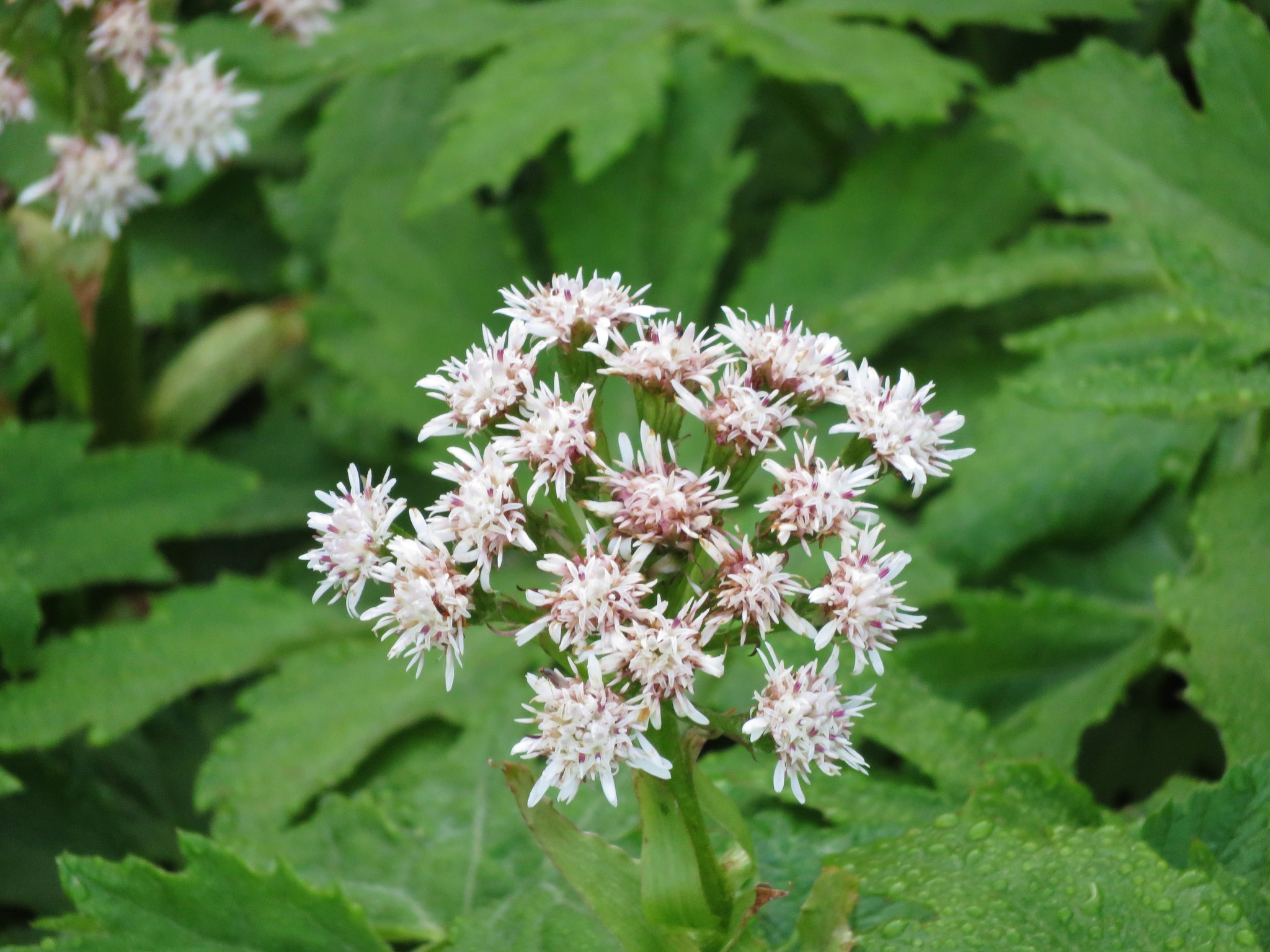
ColtsfootColtsfoot

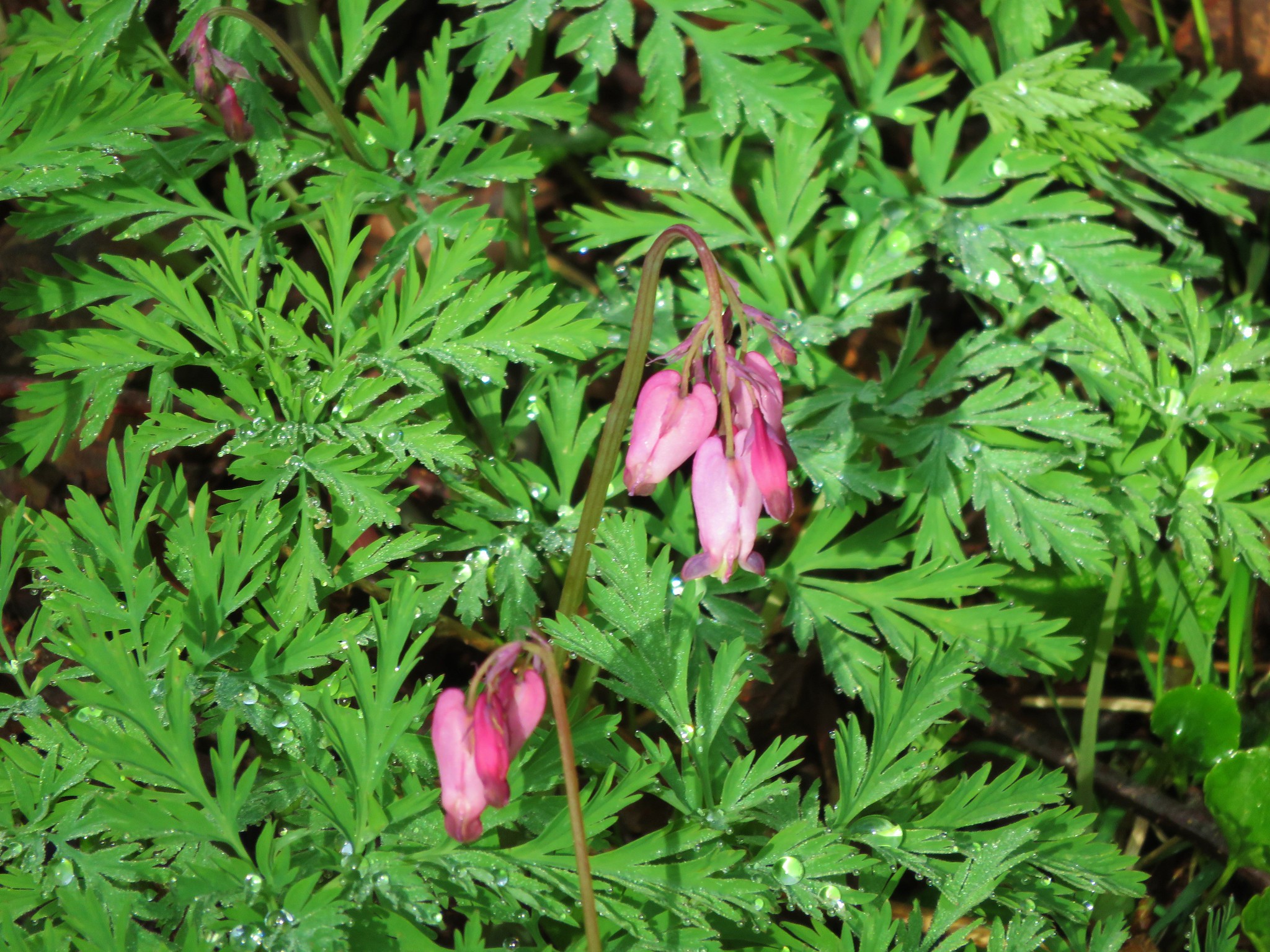
Bleeding heartBleeding heart

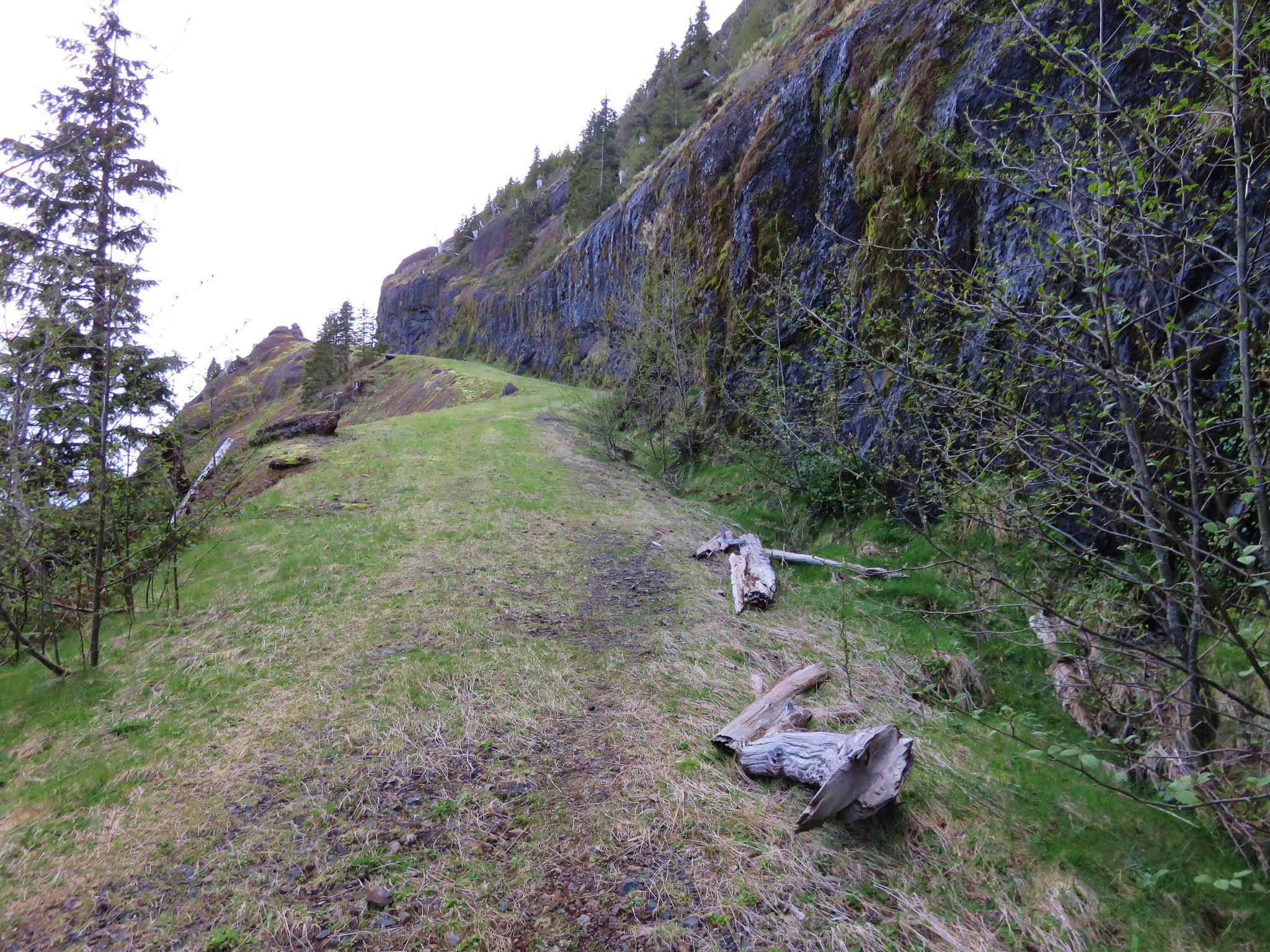
Arch Cape Mill Road wound up along a cliff face to a viewpoint in about 3/4 of a mile.
Arch Cape Mill Road

Arch Cape Mill Road

Viewpoint along Arch Cape Mill Road

We followed the road another half a mile before veering right onto a brushy trail at a small rock cairn.
User trail off of Arch Cape Mill Road

User Trail

After a couple of hundred yards we came to a grassy opening a where we headed uphill on another old road bed.
Heading to the stone shelter

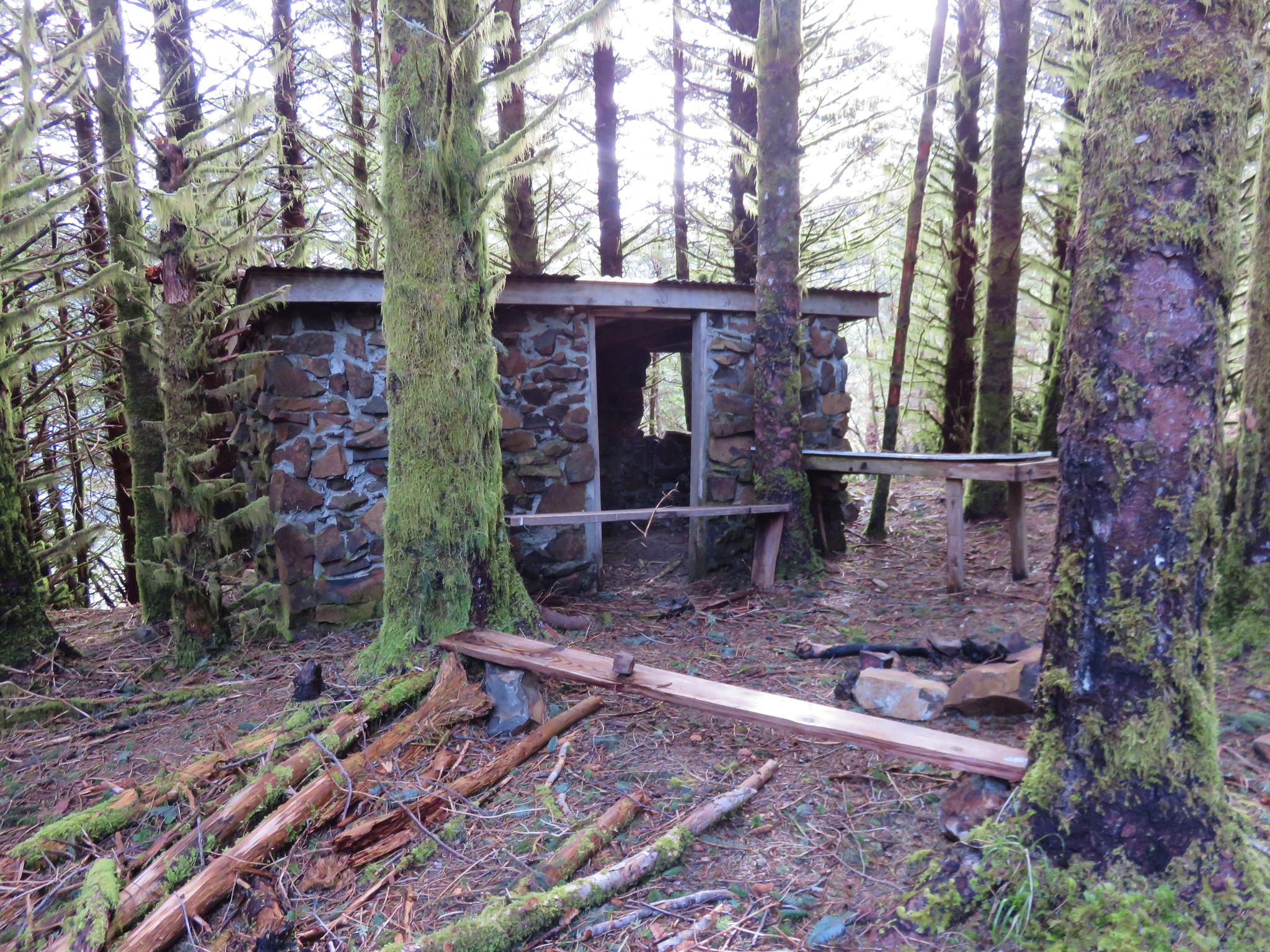
A short distance up the old road bed we came to an old stone shelter which showed signs of recent use including a fire pit. Just the kind of activity that could prompt the lumber company to close access.
Stone shelter

A short trail to the right from the shelter led to a viewpoint where we could see Neahkahnie Mountain and Cape Falcon in Oswald West State Park.
Neahkahnie Mountain and Cape Falcon

Up to this point we had been following Sullivan’s “100 Hikes/Travel Guide Oregon Coast & Coast Range” 4th edition which ended the hike at the viewpoint near the shelter. We decided to press on for Angora Peak following descriptions on Summitpost.org and in trip reports on Oregonhikers.org. We returned to Arch Cape Road and continued on. The road became very overgrown about 150 yards from the rock cairn so we followed another user trail for three tenths of a mile to a saddle where the conditions improved and views opened up.
Arch Cape Mill Road

To the south the green farmland along the Nehalem River stood out in stark contrast to the surrounding hills.
Nehalem to the south

Following the Nehalem River west it emptied into the Pacific beyond Neahkahnie Mountain.
Looking south

To the west was more ocean beyond the western end of Angora Peaks ridge.
West end of Angora Peak

To the east Arch Cape Mill Road could be seen passing between the rock pinnacles of Revenge of Angora and Angora Pinnacle.
Revenge of Angora and Little Angora rock pinnacles

We followed the road to a saddle between the two rock pinnacle where we turned sharply north onto another abandoned logging road. The road here was so overgrown it looked more like a trail now.
Arch Cape Mill Road

Gaps in the trees offered views north to Onion Peak (and Saddle Mountain beyond).
Onion Peak and Saddle Mountain

Onion Peak and Saddle Mountain

To the NE we could just make out Mt. St. Helens and Mt. Rainier. The lighting and the clouds did their best to camouflage them but with a little effort they were visible.
Mt. St. Helens and Mt. Rainier in the distance

Mt. St. HelensMt. St. Helens

Slides are common in the coast range which we were reminded of along this stretch. A section of road was all but gone leaving a faint use trail as the only option. It is still passable for now but caution is warranted and a fear of heights would likely end the hike at this point.
Arch Cape Mill Road (what's left of it)

From the northern end of the slide we could see evidence of slide below Angora Pinnacle which may have happened this last winter.
Little Angora and a slide below it

Slide below Little Angora

Beyond the washout, the road made another brief appearance before becoming overgrown with trees.
Arch Cape Mill Road

Arch Cape Mill Road

When the GPS showed we were NW of the summit near the end of the road we turned off the road and headed uphill cross-country through the forest.
Forest on Angora Peak

We gained a ridge line and began to work our way toward the summit. The summit itself is reportedly view less due to trees but just to the west of actual summit is a rock out crop which did have a view and made for a perfect spot to sit and have a snack.
Nehalem River from a viewpoint just below the Angora Peak summit

We could even make out our next destination, Cape Falcon, from the rocks.
Neahkahnie Mountain

Cape Falcon

We returned as we’d come, arriving back at the Oregon Coast Trail and heading toward Cape Falcon.
Oregon Coast Trail

The trail crossed several streams on 5 footbridges before beginning to climb up and over a ridge. Much of the trail was muddy and there were several trees down which required some interesting maneuvers to get past.
Oregon Coast Trail

Oregon Coast Trail

Tree that shattered over the Oregon Coast Trail

Other sections were dry and lined with green sourgrass.
Oregon Coast Trail

Oregon Coast Trail

Sour grass

After approximately 2.5 miles we came to a familiar viewpoint looking north to Tillamook Head.
Tillamook Head from the Oregon Coast Trail

This is where we had turned around in 2012 having followed the OCT north after visiting Cape Falcon. In another 3/4 of a mile we reached a better viewpoint where we could see Cape Falcon and a number of colorful sea caves in the rocks below.
Cape Falcon

Cape Falcon

Seagulls near the sea caves

We continued on to a washed out creek crossing. Heather smartly used a nearby log instead of following my slippy effort to use the trail.
Oregon Coast Trail

Another quarter mile brought us to the spur trail out to Cape Falcon. Up to that point we’d seen one gentleman on the way to Angora Peak with his dogs on the lower portion of the logging road and two girls on the Oregon Coast Trail as we went over the ridge. Cape Falcon was a different story. There were a number of hikers that had come from the south, a large group of which were attempting to navigate an extremely muddy section of the trail.

Beyond the mud pit the trail dried out nicely as it passed through a tall hedge of salal and fern.
Trail out Cape Falcon

As we made our way out this .2 mile trail the brush got lower eventually opening up views to the south of Neahkahnie Mountain.
Cape Falcon

Neahkahnie Mountain

The trail extended out the cape to viewpoints along its rocky end.
Cape Falcon

Seabirds occupied the furthest reaches.
Birds on Cape Falcon

Birds on Cape Falcon

After a short break we headed back. On our way back up the ridge we may have spotted a northern flying squirrel. Something crossed my line of vision through the air from the left to the right appearing to land on a tree near a dark opening. At first I couldn’t see anything but then something moved on the tree so I quickly zoomed in and took a picture. It immediately darted into the opening without my being able to make our what it was but I thought it might have been a woodpecker. I was surprised when I uploaded the picture later to see a squirrel.
Possibly a norther flying squirrel

The picture quality makes an id nearly impossible and it may be that this squirrel came out of the opening in response to whatever I had seen but at this point there is still a possibility that it was a flying squirrel.

The rest of the hike back was uneventful as we passed back through the forest to Cape Falcon Road. We ended the day with 17 miles showing on the GPS, 8.9 during the Angora Peak portion and 8.1 to Cape Falcon and back. As we were changing out of our muddy clothes at the car a light rain started. We’d somehow timed it perfectly. Happy Trails!

Flickr:Angora Peak & Cape Falcon

Categories
Bend/Redmond Central Oregon Hiking Oregon Trip report

Otter Bench Trail System

We are going to take a break from our Throwback Thursday posts now that we are hiking regularly again. Have no fear though Throwback Thursday hikes will return in the Fall.

The day after our visit to the Clarno area we headed to Crooked River Ranch and the BLM managed Otter Bench Trail System.

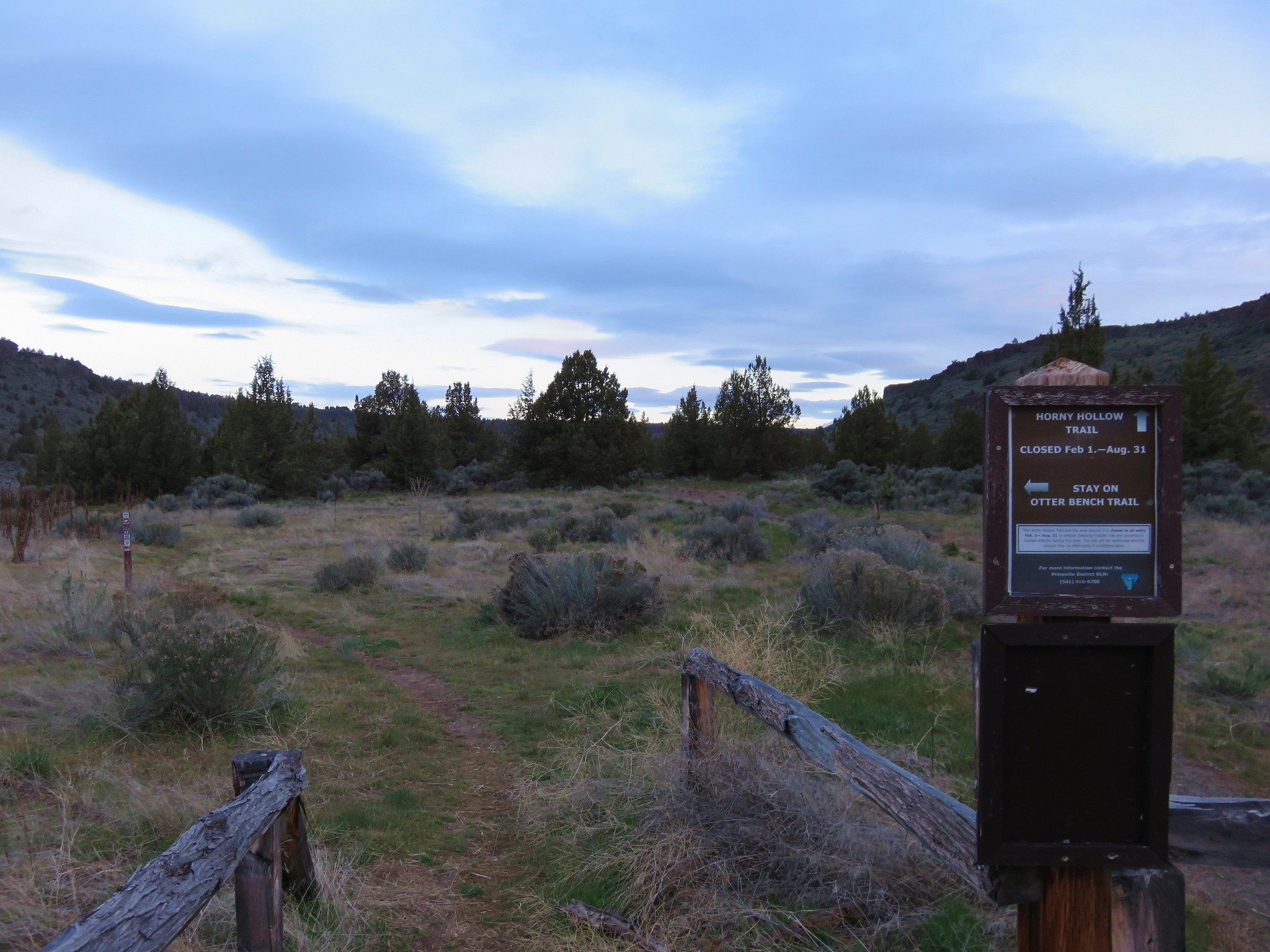
Otter Bench Trailhead

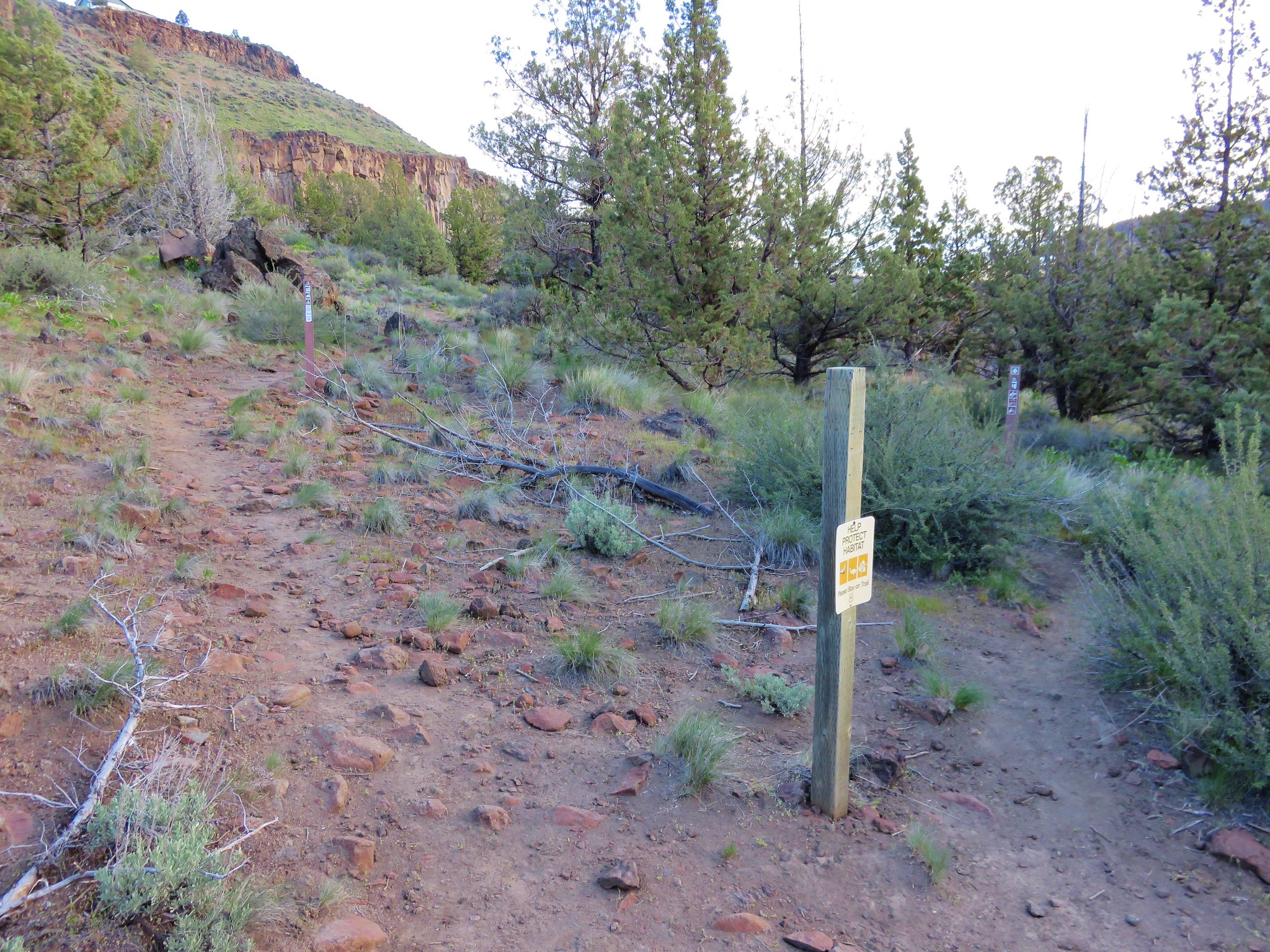
Three trails begin at the trailhead at the end of Horny Hollow Dr. The .9 mile Lone Pine Trail, the 1.5 mile Horny Hollow Trail, and the 1.7 mile Otter Bench Trail.

Otter Bench Trail

The Otter Bench and Horny Hollow Trail form a loop but from February 1 – August 31 the Horny Hollow Trail is closed. The Lone Pine Trail heads in the opposite direction eventually dropping down to the river. Our plan was to take the Otter Bench Trail a junction at it’s end where we would take the short Pink Trail down to the river then the Opal Loop Trail further out along the bench.

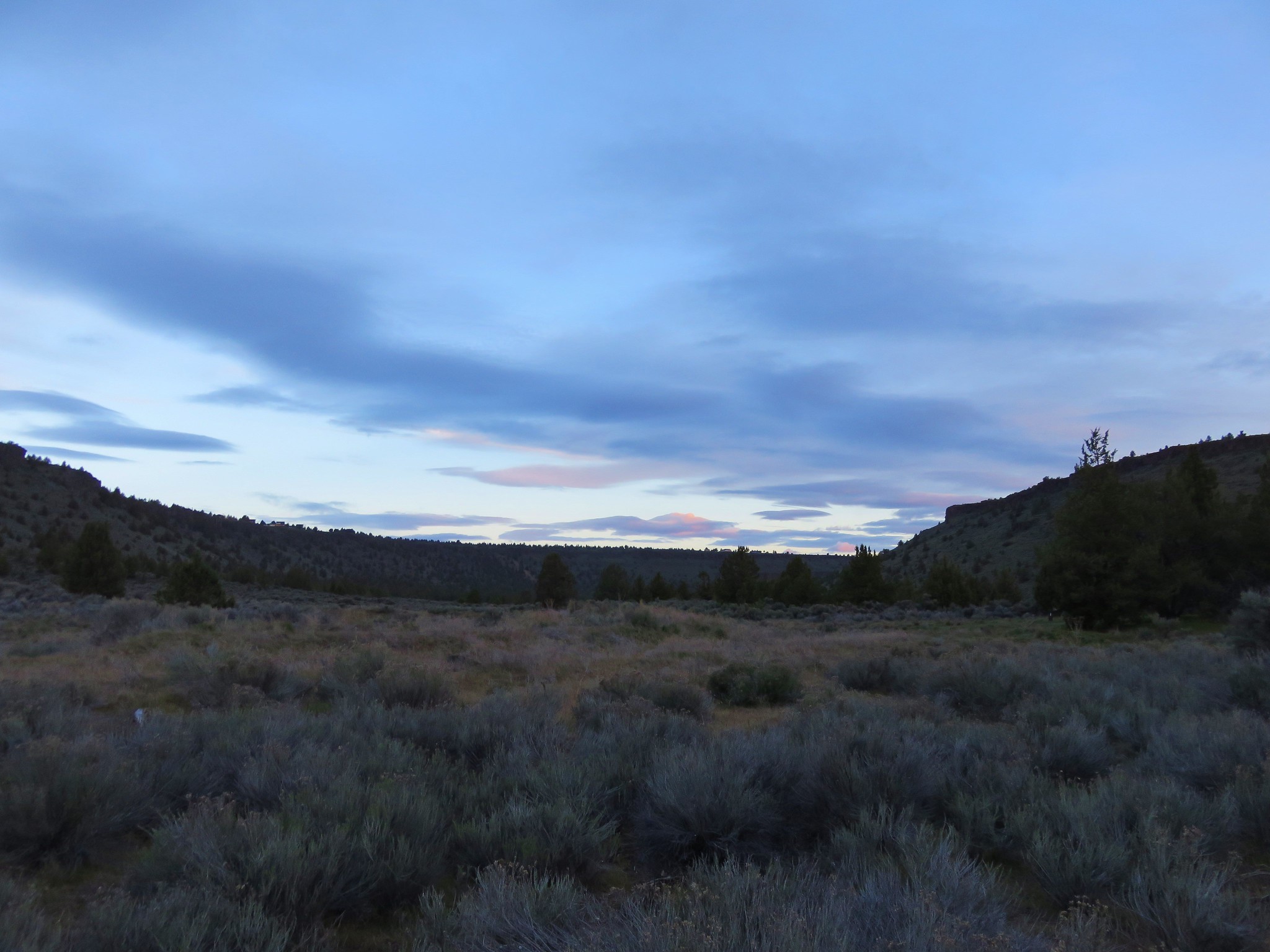
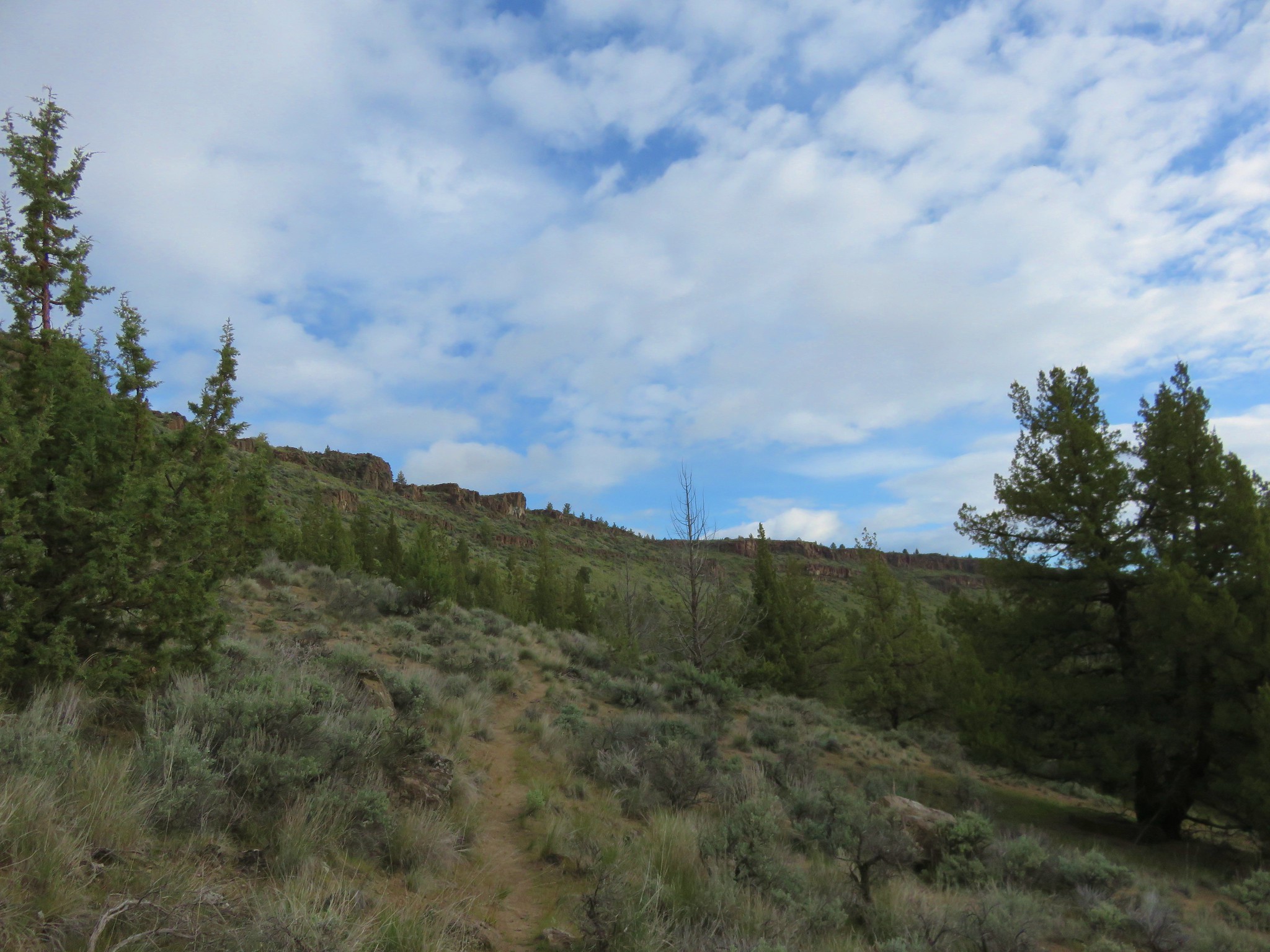
As we set off through the sagebrush and junipers the sun was rising over the rim of the gorge.

Otter Bench

Sunrise over the Crooked River Gorge

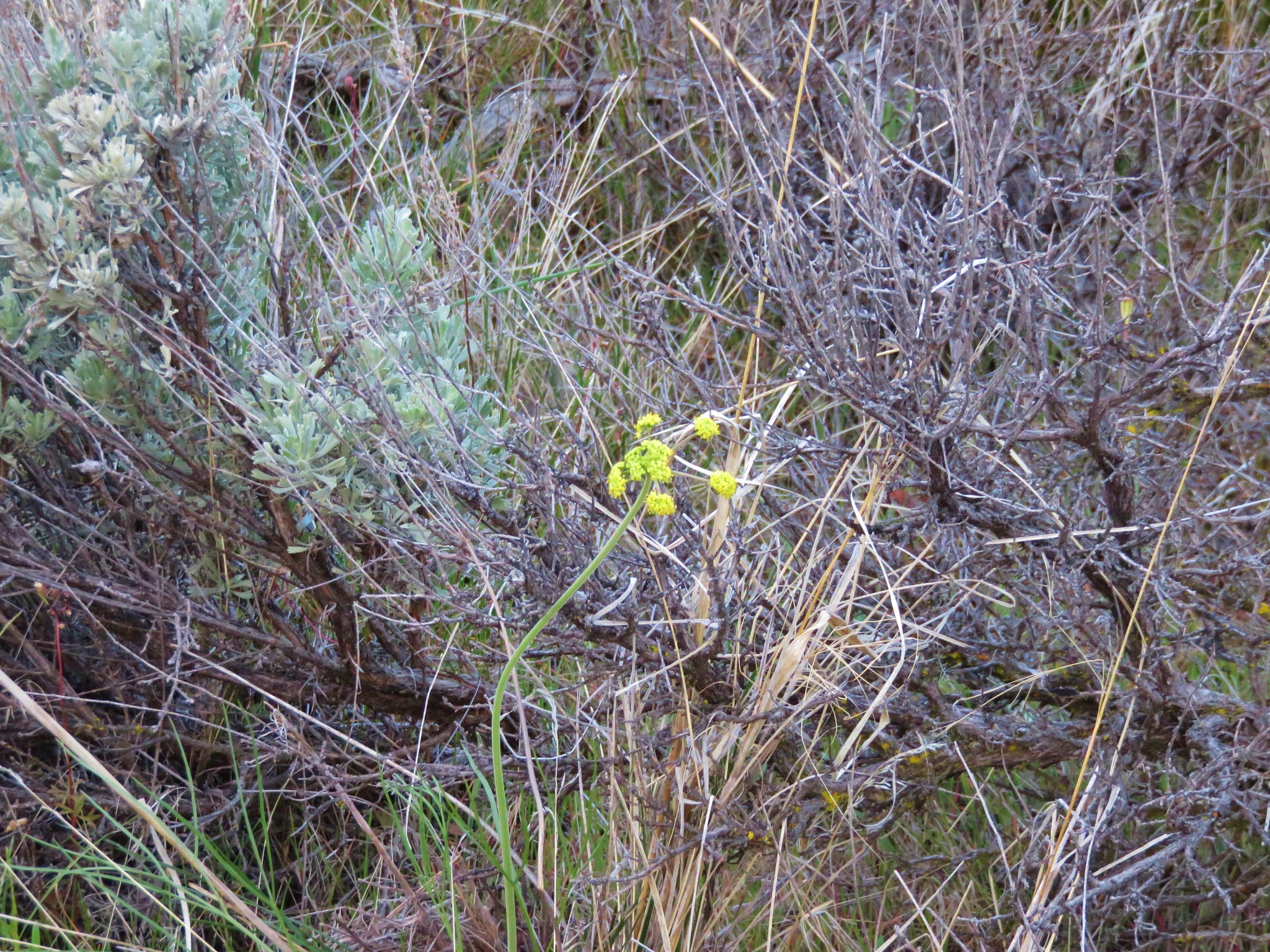
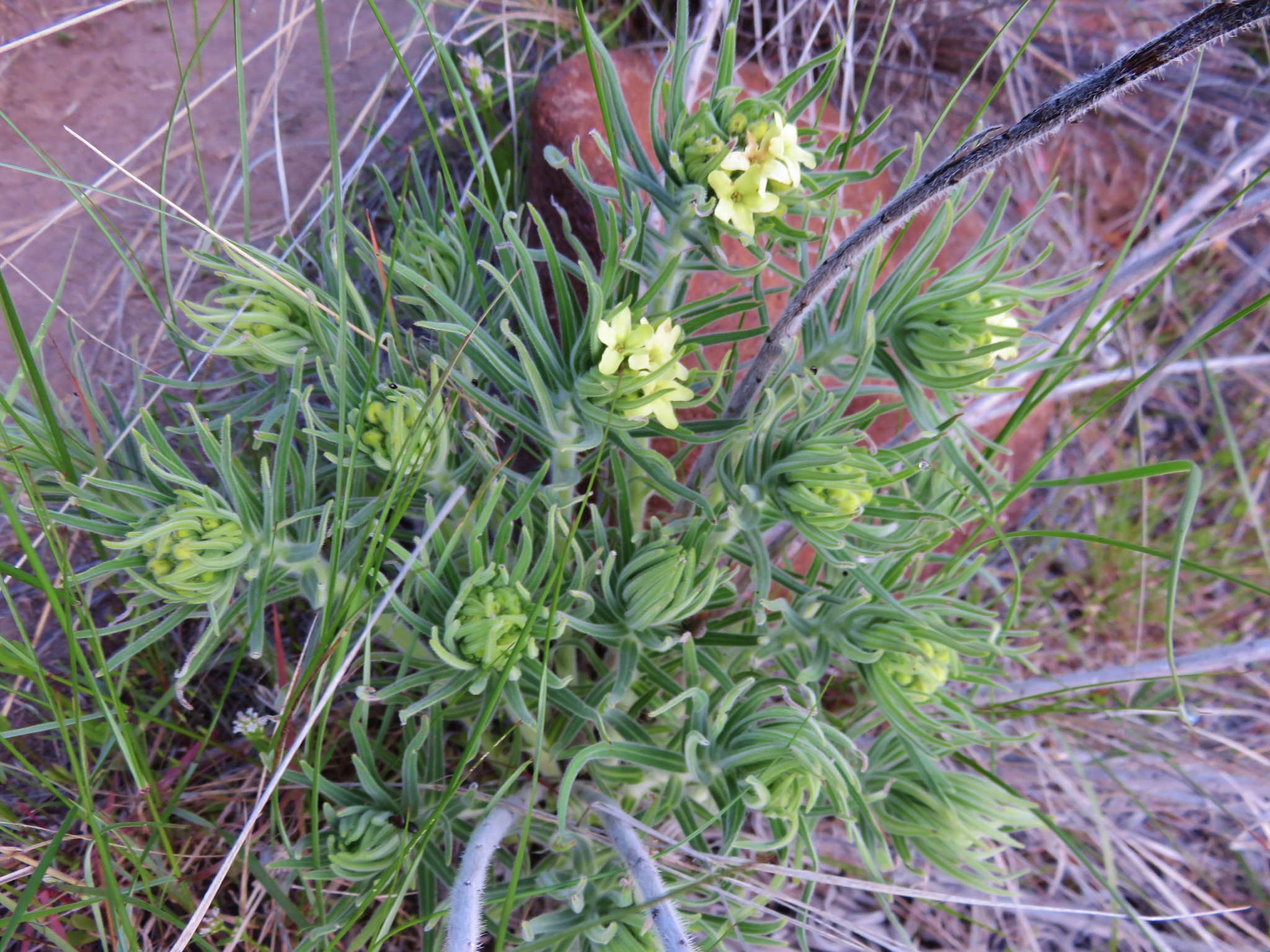
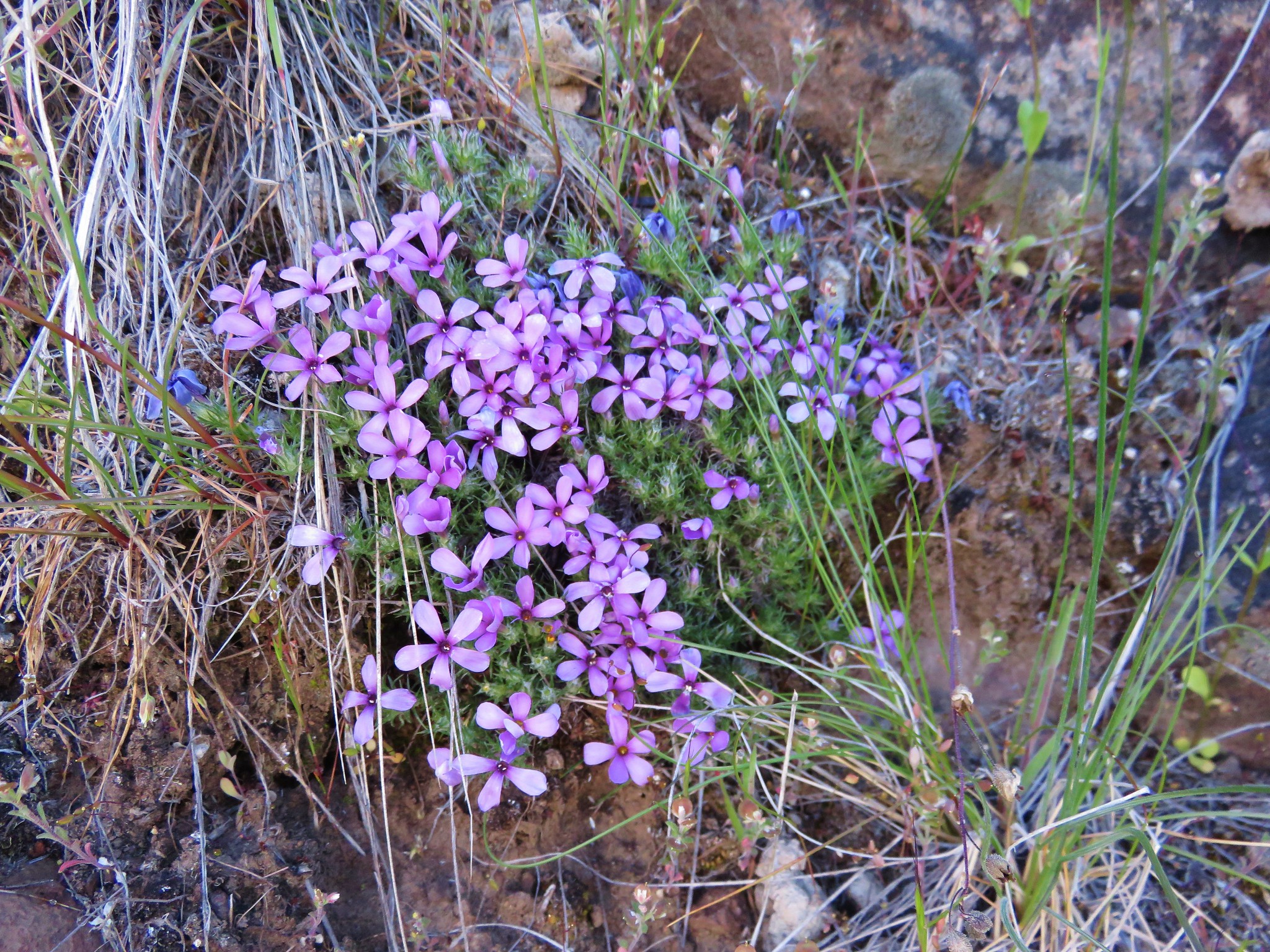
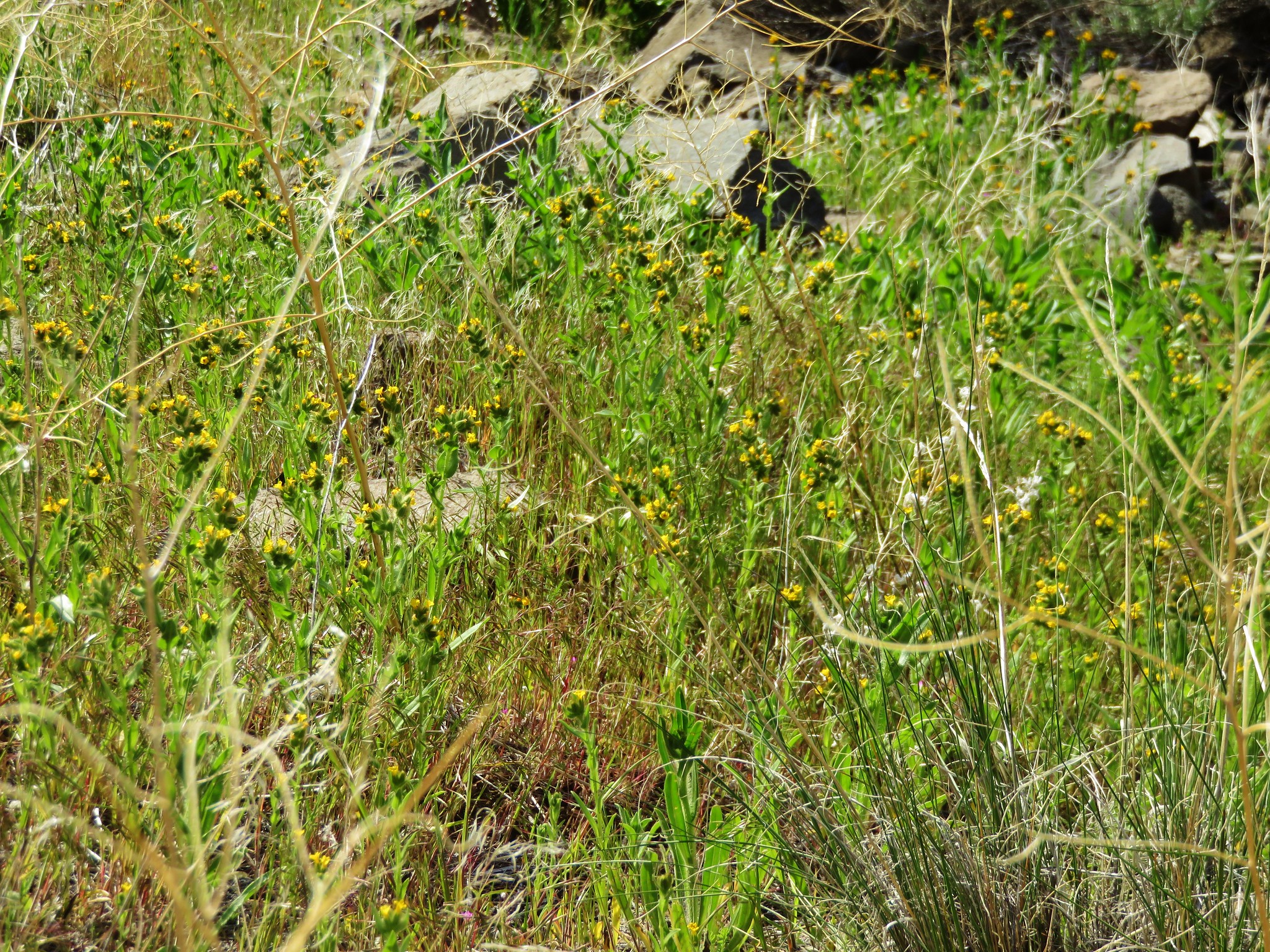
There weren’t many flowers along the first portion of the trail, but as we continued on more and more flowers started popping up amid the sagebrush.

BiscuitrootBiscuitroot

LarkspurLarkspur

western stoneseedWestern stoneseed

BalsamrootBalsamroot

PhloxPhlox

At the end of the Otter Bench Trail we came to the 4 way intersection with the Horny Hollow, Pink, and Opal Loop Trails.

Junction along the Otter Bench Trail system

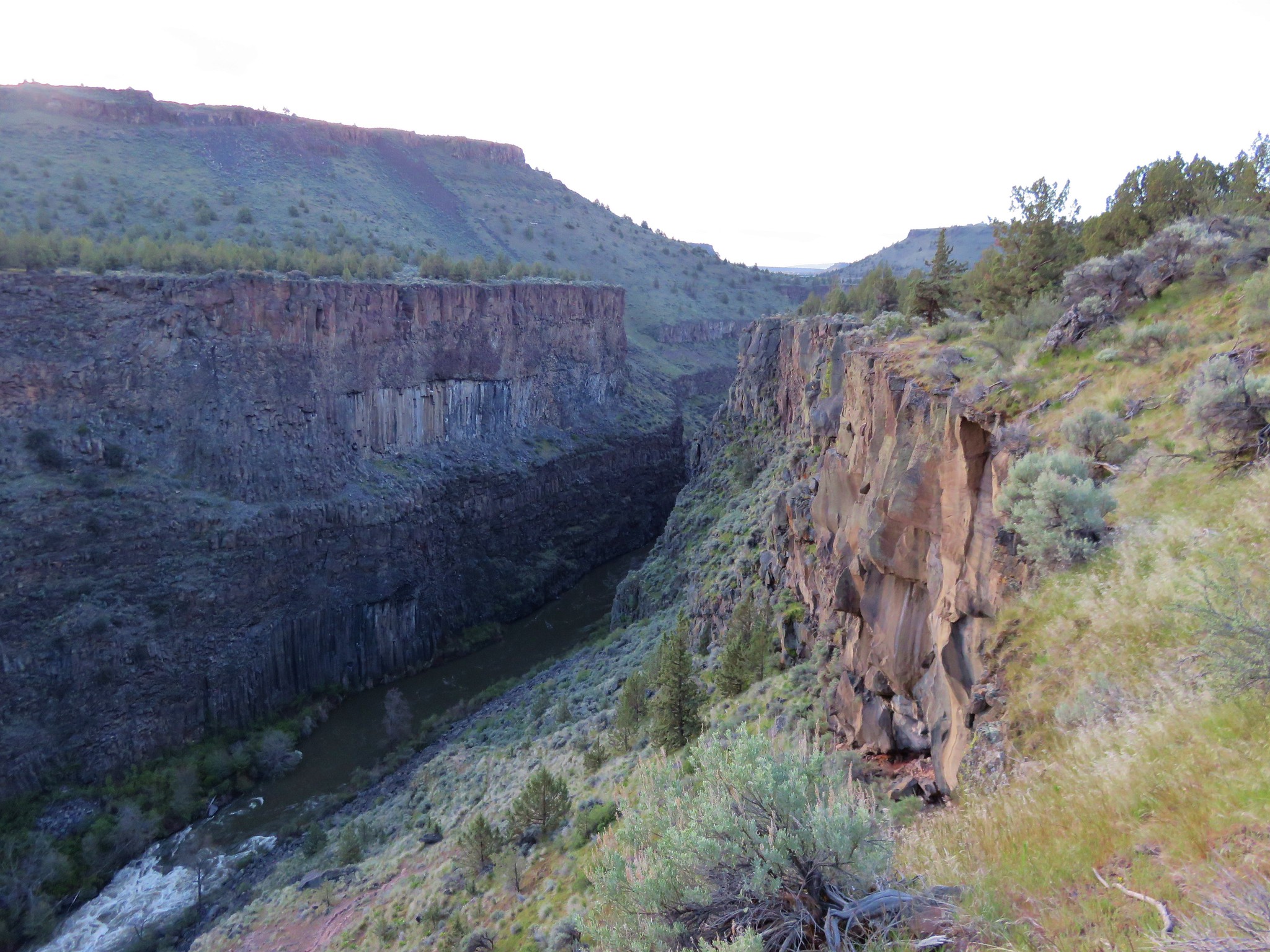
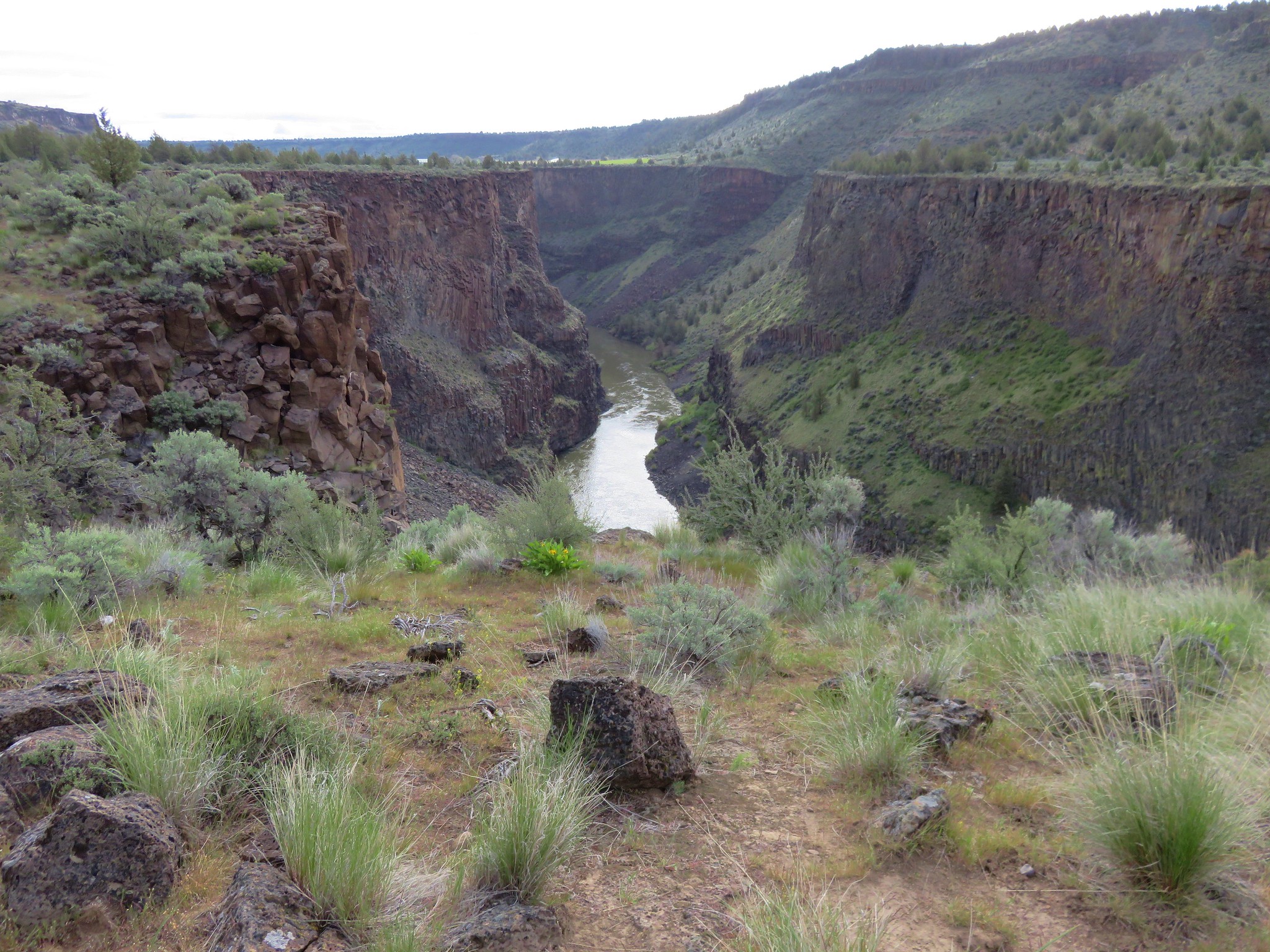
We turned onto the Pink Trail which offered dramatic views on its way down into the Crooked River Gorge.

Crooked River Gorge from the Pink Trail

Crooked River Gorge

Balsamroot along the Pink Trail

Crooked River Gorge

Crooked River Gorge

A short section of trail passed through some pinkish rock, possibly the inspiration for the trails name.

Pink Trail

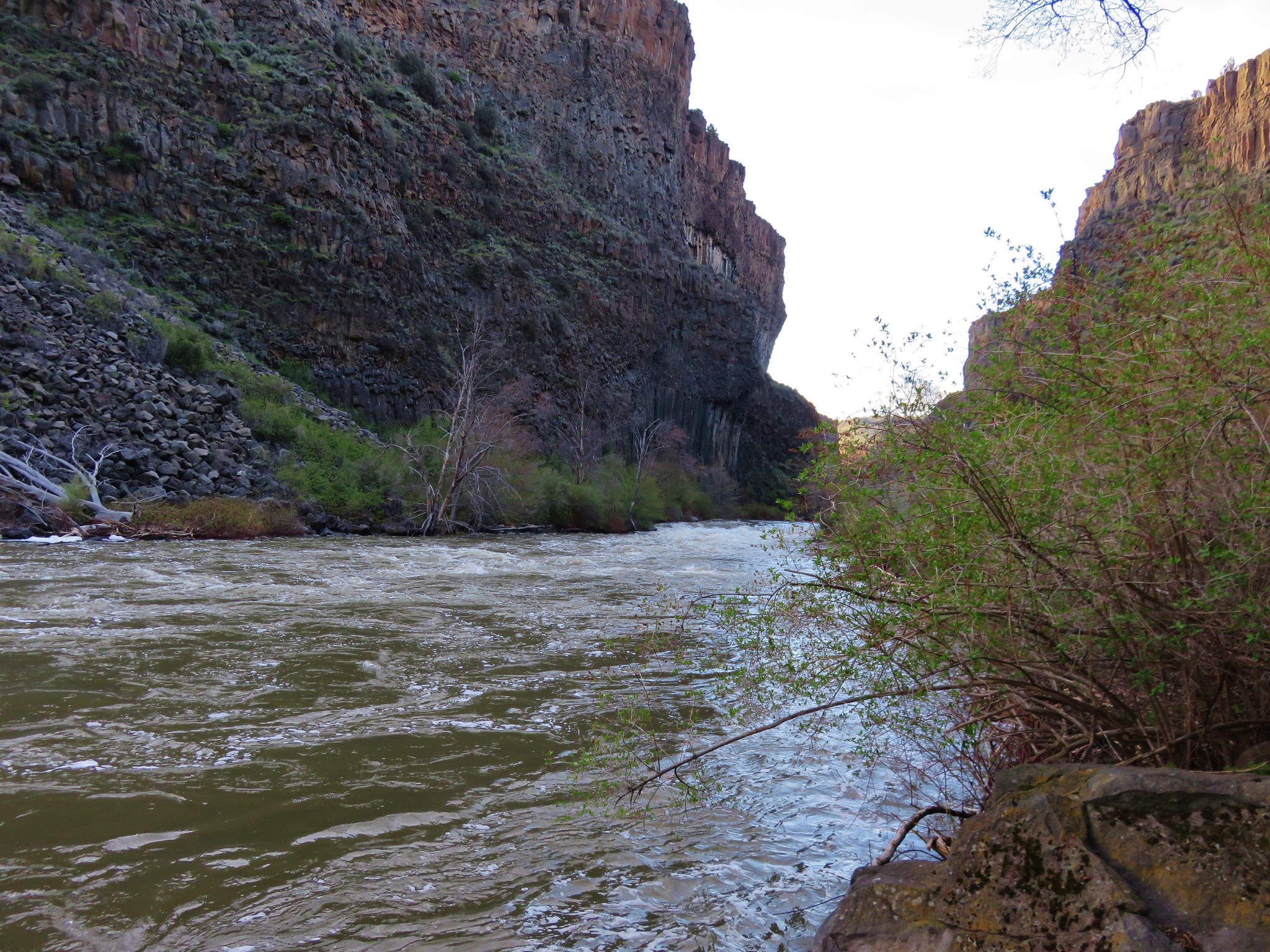
The trail ended on the bank of the Crooked River which was swollen with spring runoff.

Crooked River

Crooked River

We climbed back up to the junction and turned right onto the Opal Loop Trail. For the first .5 mile this trail passed through a narrow section of the bench before arriving at the start of the trails namesake loop.

Opal Canyon Loop

Paintbrush along the Opal Loop Trail

Wildflowers were plentiful below the columnar basalt cliffs along the trail.

Wildflowers below columnar basalt

Prairie stars

Prairie stars

Fiddleneck

Fiddleneck

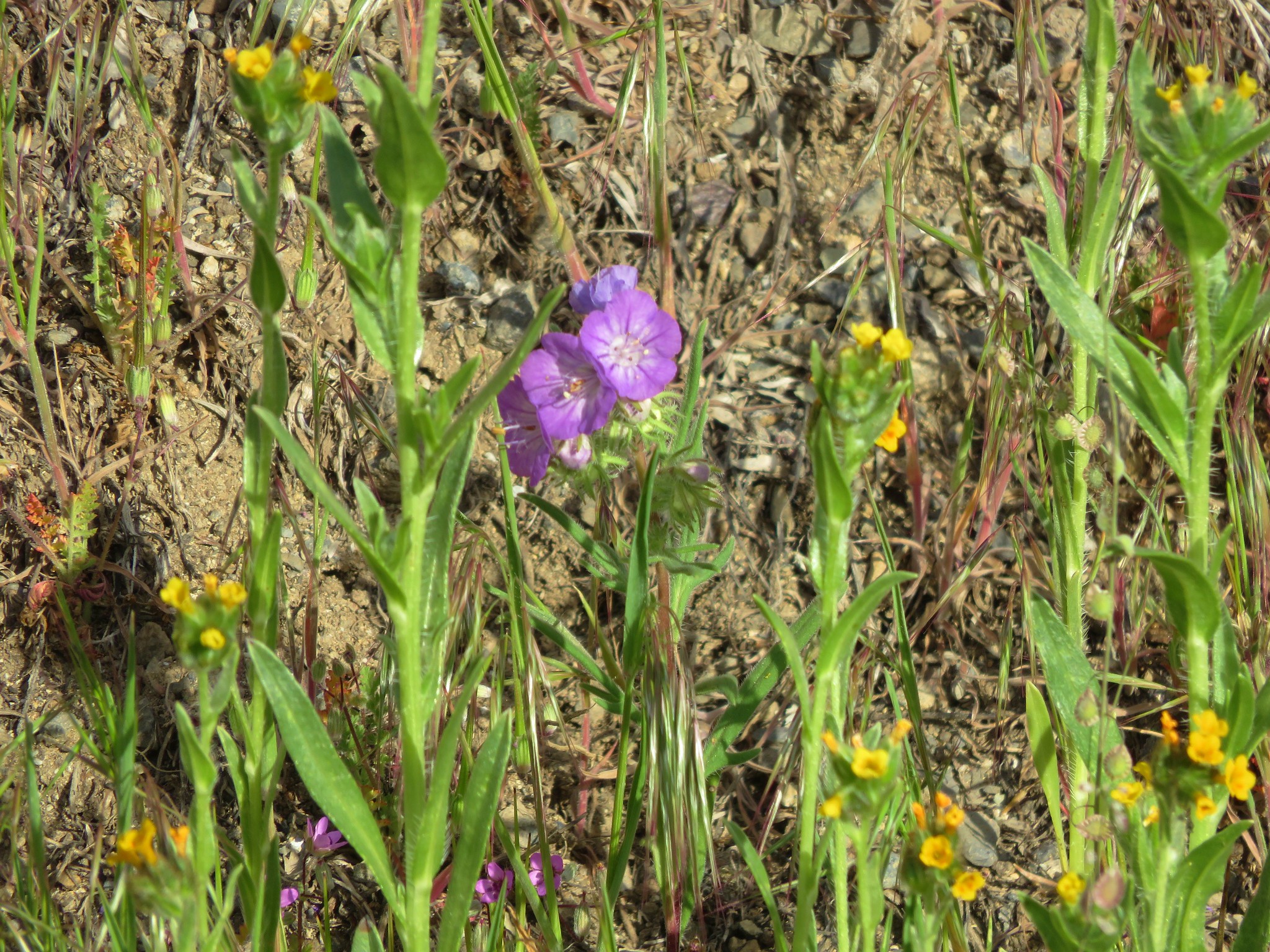
Threadleaf phacelia

Threadleaf phacelia

The bench had widened again where the Opal Loop began.

Opal Loop Trail

We went counter-clockwise arriving at a viewpoint above the gorge at the far end of the loop.

Crooked River Gorge

Crooked River Gorge

Beyond the viewpoint the trail veered away from the river for the remainder of the loop.

Opal Loop Trail

We headed back to the Otter Bench Trail and followed it back to the trailhead. We were planning on meeting our son and my parents at Bogeys Burgers in Redmond for lunch a little after 11am but it was only 9:50 as we arrived back at the car. Realizing we were a good hour early we decided to check out the Lone Pine Trail.

We set off on a use path heading directly for the gorge from the parking area intending to pick up the Lone Pine Trail when we intersected it.

Crooked River Gorge

We misjudged the distance though and passed over the actual trail without noticing it. The path we were on was very clear though and it brought us to a rim above the river. Not realizing we had already passed the Lone Pine Trail we were still looking for it when we noticed a path to our left heading down toward the river. We headed down this path thinking it might be the trail. It was pretty steep as it headed down toward a rock pillar.

Rock pillar

The path continued to the left of the rock pillar. Here there were steps in the rocks and old wooden stairs. This made us think that we might be on the right trail after all.

Steps leading away from the Crooked River

On the far side of the river were some caves and cool rock formations.

Cave across the Crooked River

Crooked River Gorge

Near the river the trail became faint. A barely visible path to the right led through the grass between the river and canyon wall.

Crooked River Gorge

The trail eventually ran out in thick brush.

Crooked River Gorge

We hadn’t seen any pine trees and were now back to thinking this wasn’t the Lone Pine Trail after all. It had taken us almost 30 minutes to get to the thicket though so we had killed enough time and headed back the way we’d come. This time as we followed the same use path back to the parking lot we spotted the Lone Pine Trail. We figured that just left us an excuse to come back again someday, for now it was time for some food. Happy Trails!

Flickr: Otter Bench

Categories
Central Oregon Hiking John Day Oregon Trip report

Clarno Unit – John Day Fossil Beds and Spring Basin Wilderness

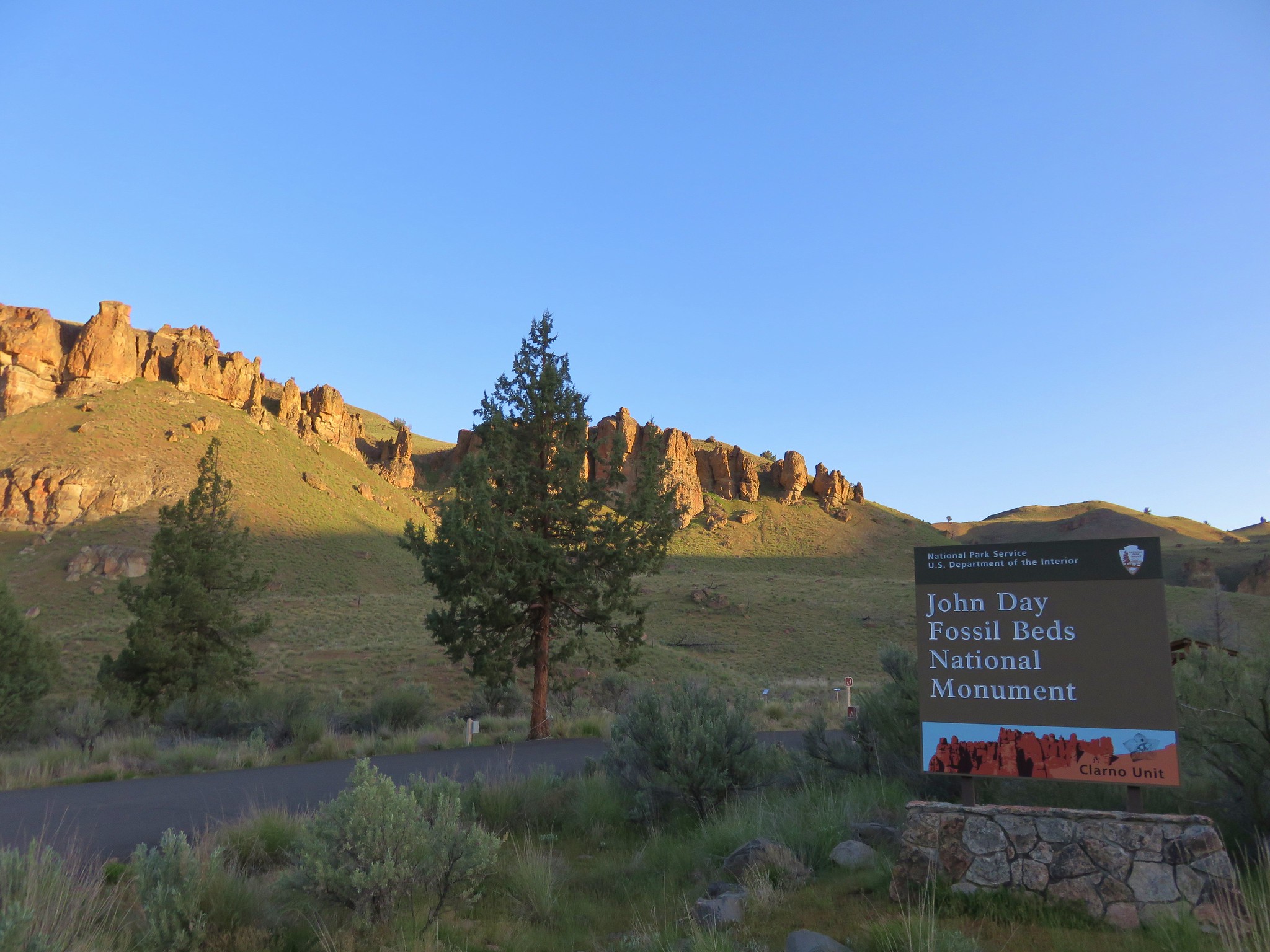
We officially kicked off our 2017 hiking season on 4/22 with a pair of hikes near Clarno, OR. The first was a 1.4 mile at the Clarno Unit of the John Day Fossil Beds National Monument. We parked at the day use picnic area 3.4 miles east of the John Day River bridge at Clarno.

Clarno Unit Trailhead

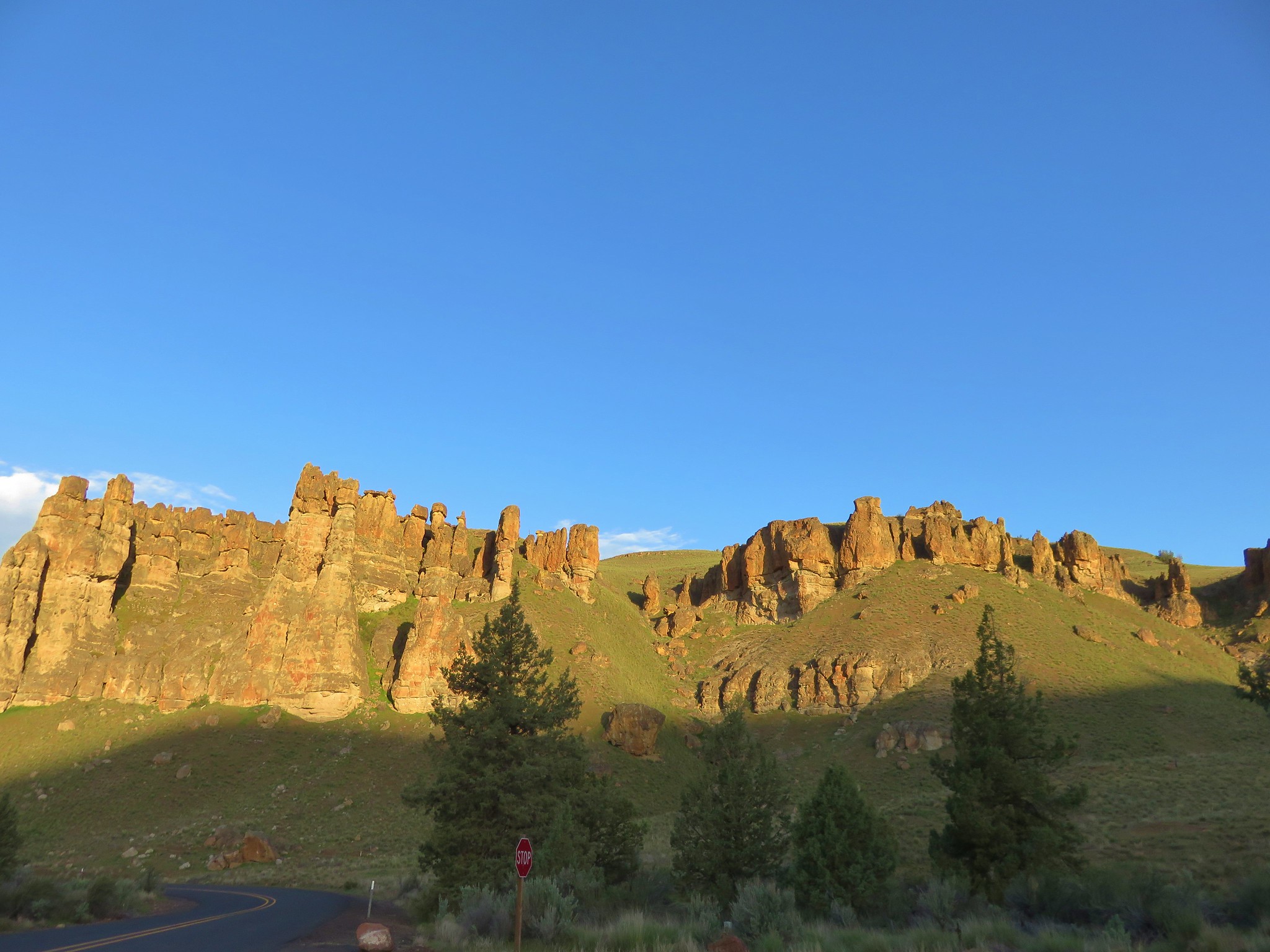
From the parking area we took the .3 mile Geologic Time Trail west toward the dramatic rock formations called The Palisades.

Clarno Unit - John Day Fossil Beds

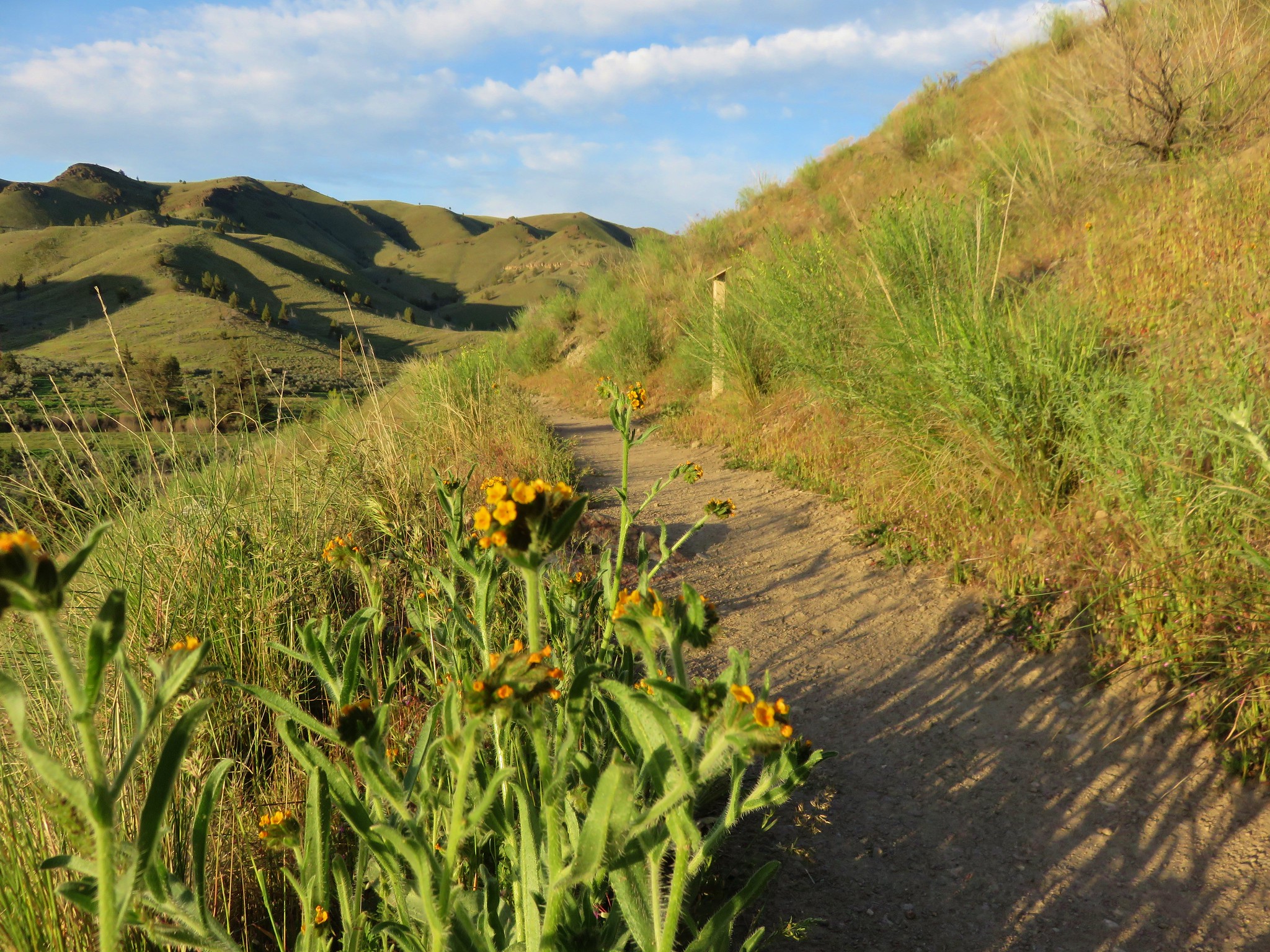
The trail was lined with golden fiddleneck blossoms and passed several interpretive signs describing the history of the area that created the amazing features.

Fiddleneck along the trail at Clarno Unit - John Day Fossil Beds

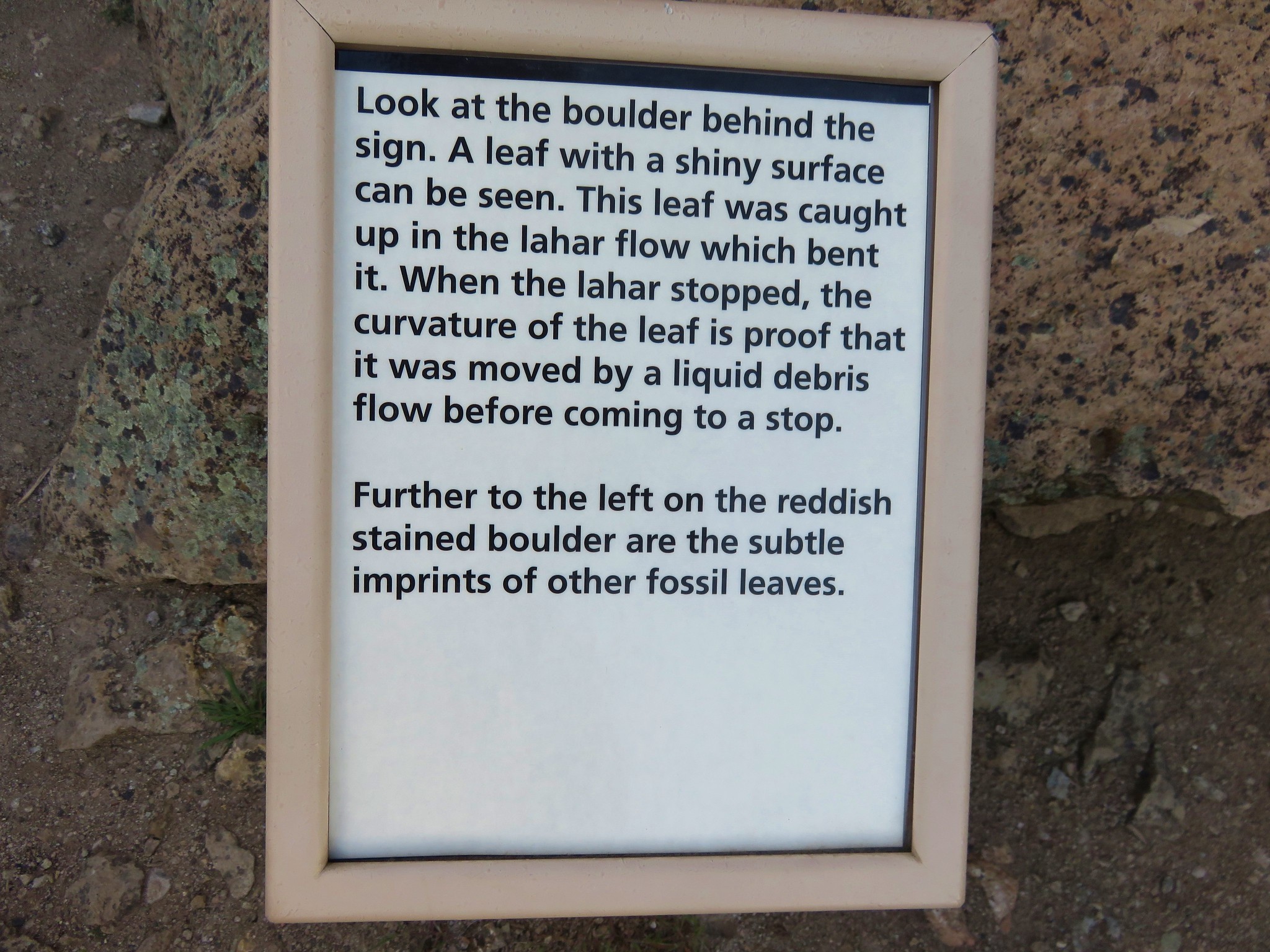
The Geologic Time Trail ended at a junction with the .2 mile Trail of Fossils loop. Here we turned uphill to the right passing more interpretive signs. These helped identify fossils in the nearby rocks.

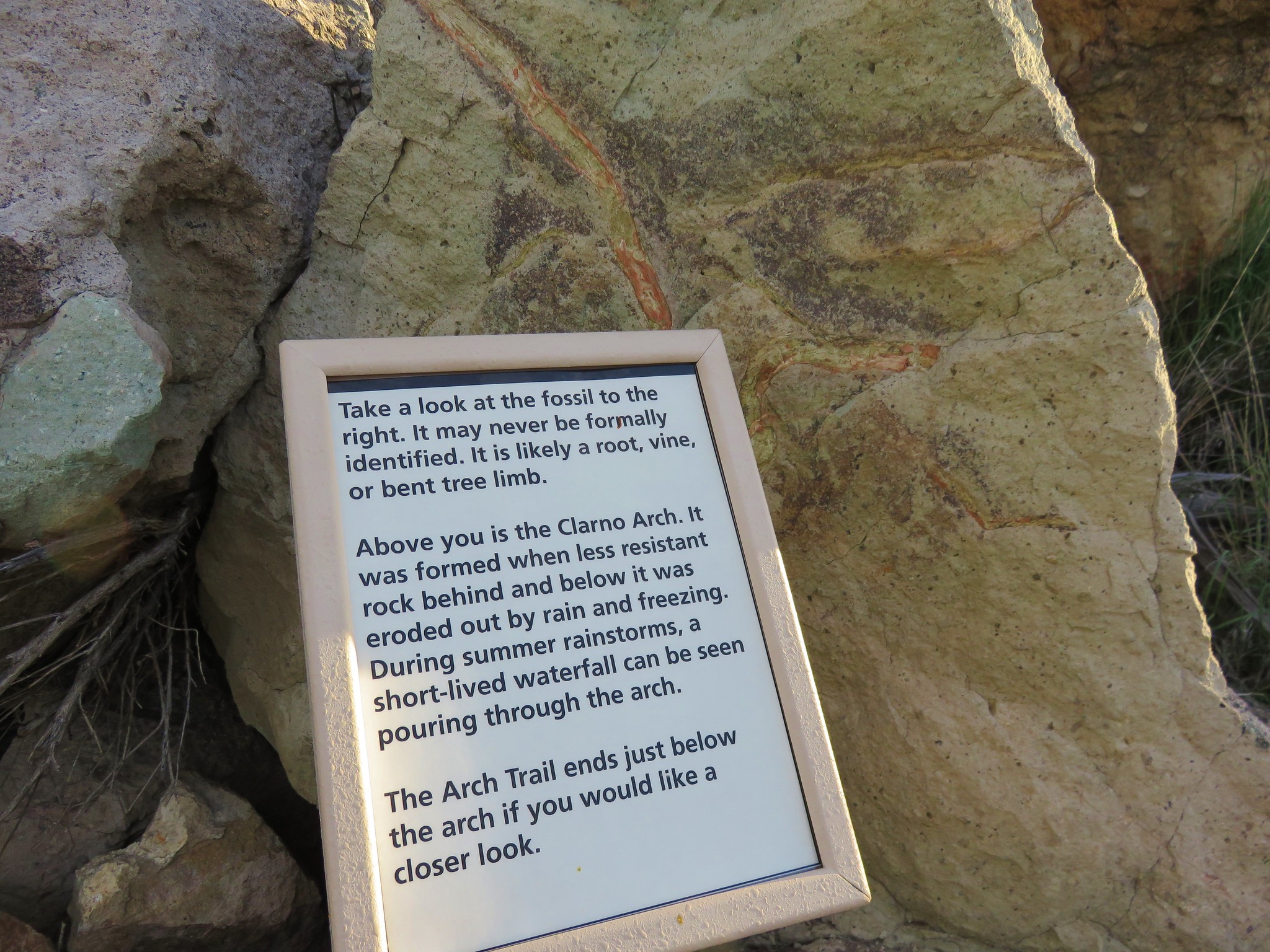
Interpretive sign Clarno Unit - John Day Fossil Beds

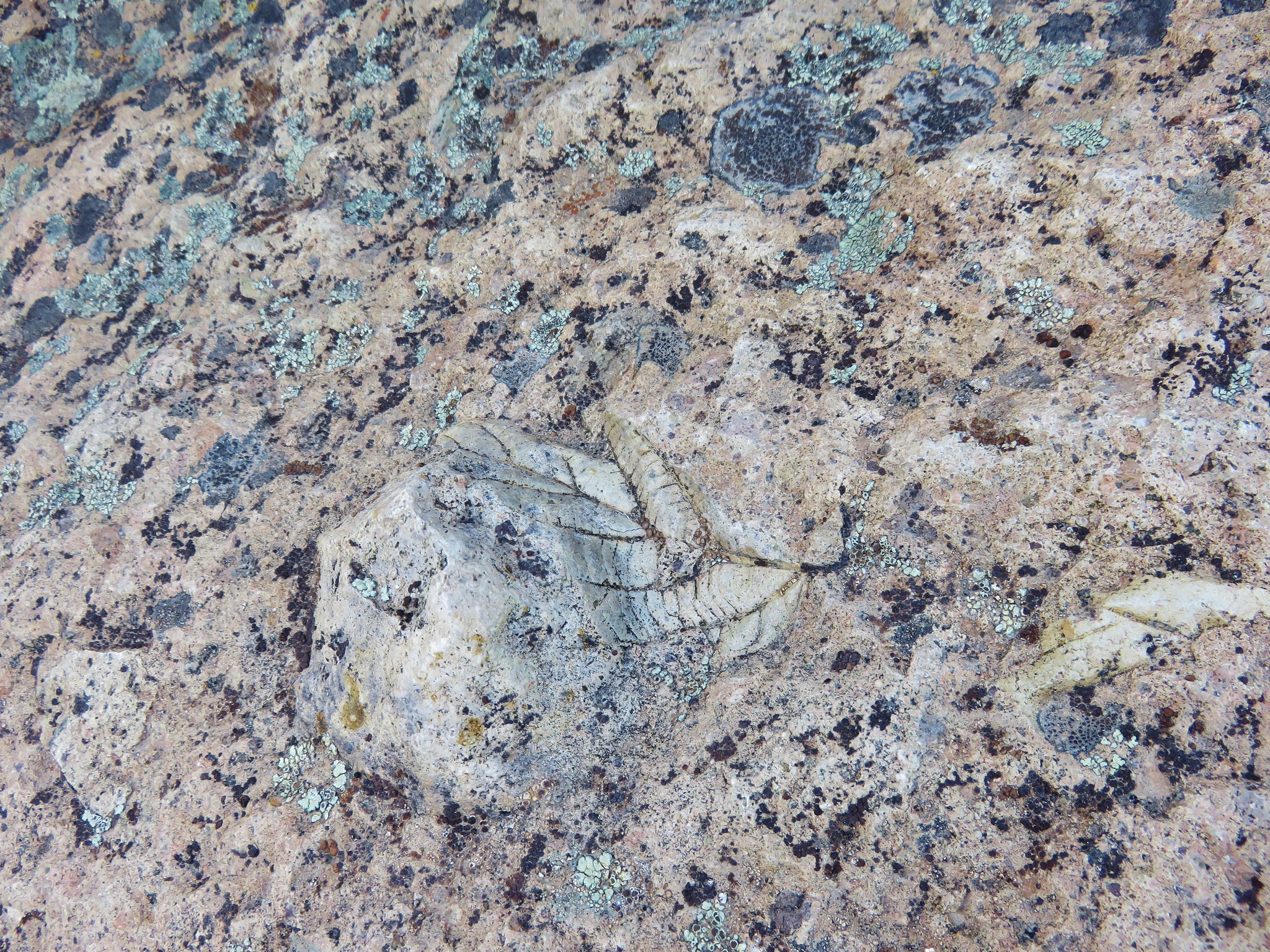
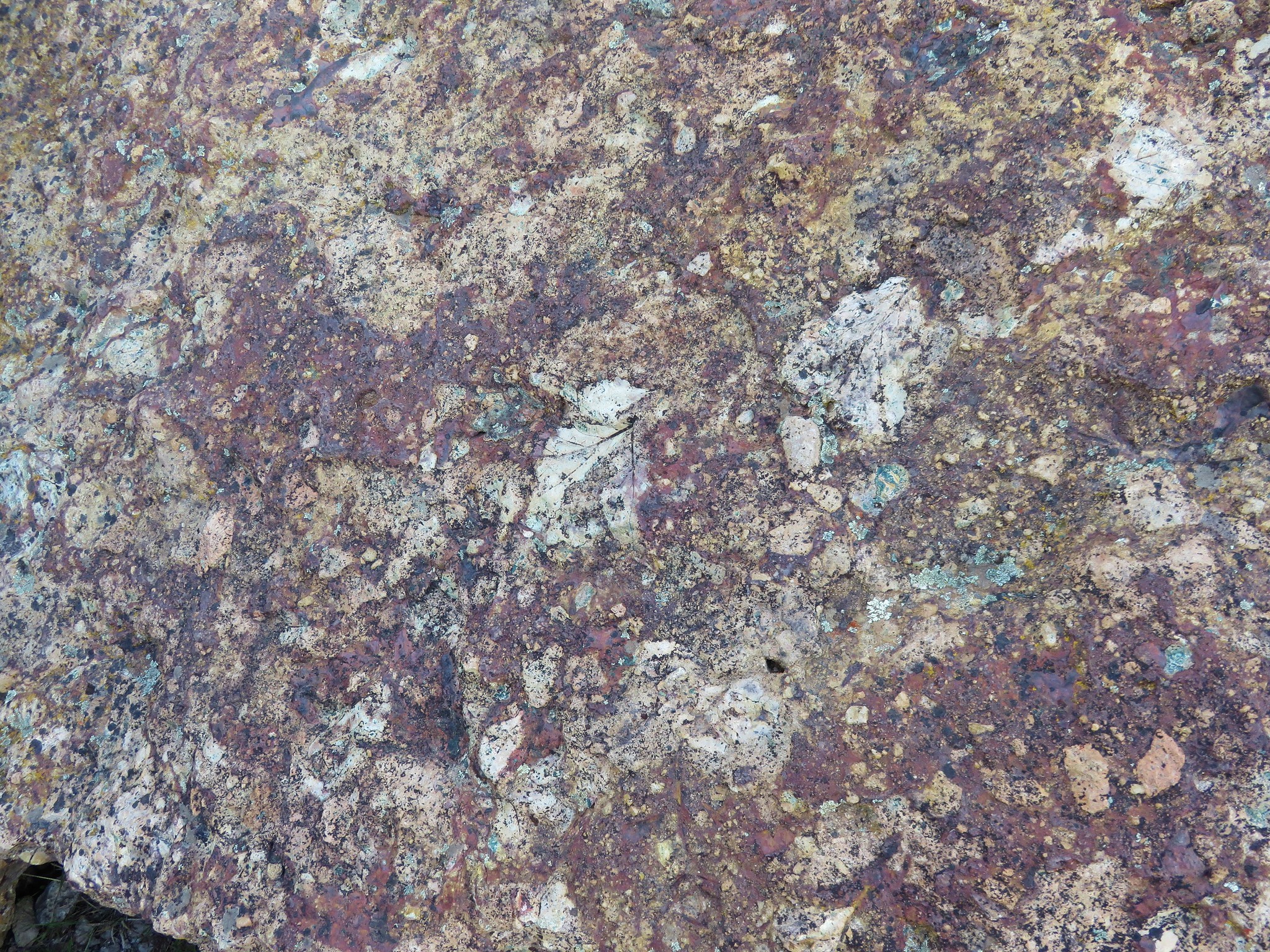
Leaf fossil at Clarno Unit - John Day Fossil Beds

Leaf fossils Clarno Unit - John Day Fossil Beds

Interpretive sign Clarno Unit - John Day Fossil Beds

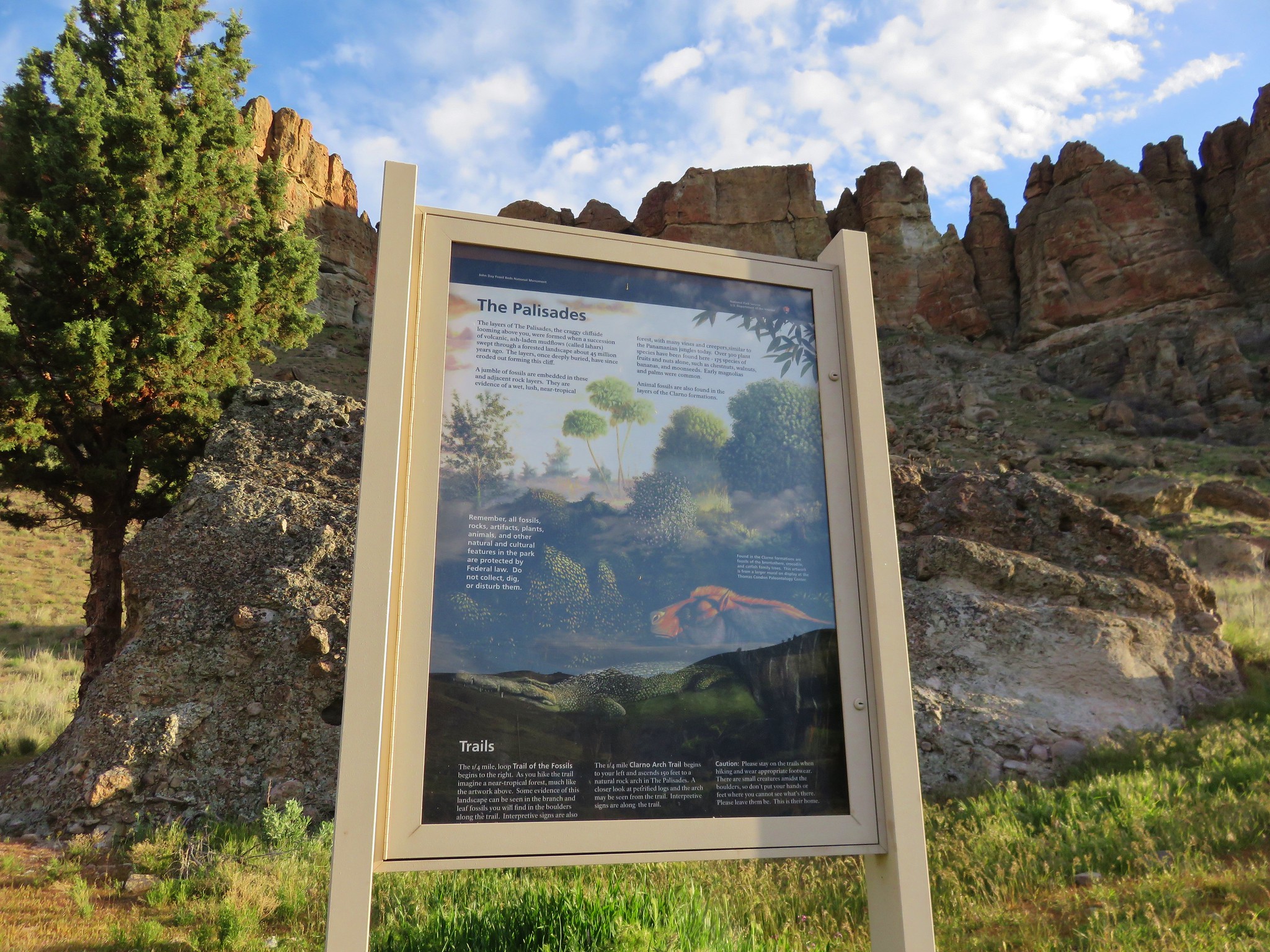
The loop descended to a second possible trailhead where another trail, the .2 mile Arch Trail, split to the right (west) near a large signboard.

The Palisades Clarno Unit - John Day Fossil Beds

Clarno Unit - John Day Fossil Beds

This short trail led uphill to the base of a rock arch along The Palisades.

Rock Arch Clarno Unit - John Day Fossil Beds

The views along the trail were amazing both across the highway and up close to the rocks.

Clarno Unit - John Day Fossil Beds

Looking south toward the Spring Basin Wilderness

Rock pillar Clarno Unit - John Day Fossil Beds

Rock wall along the Palisades - Clarno Unit - John Day Fossil Beds

Just before the rock arch was a sign describing a pair of fossilized logs 40 feet above the trail. For some reason neither of us could see them despite spending a few minutes searching. After visiting the rock arch, we paused again to look for the logs. This time they were easily spotted up in the wall of rocks above the sign.

Looking up at the rock arch

Petrified tree trunks in the rock walls of the Clarno Unit - John Day Fossil Beds

We returned to the Trail of Fossils loop and completed it then took the Geologic Time Trail back to the picnic area where another car was just pulling in. These were really interesting hikes and a great warm-up for our next stop, the nearby Spring Basin Wilderness.

Designated a wilderness in 2009 the 6,404 acre Spring Basin Wilderness has no official trails but similar to nearby Sutton Mountain old jeep tracks and open terrain make exploring the area fairly easy.  The wilderness is located south of Highway 218 across from the Clarno Unit.

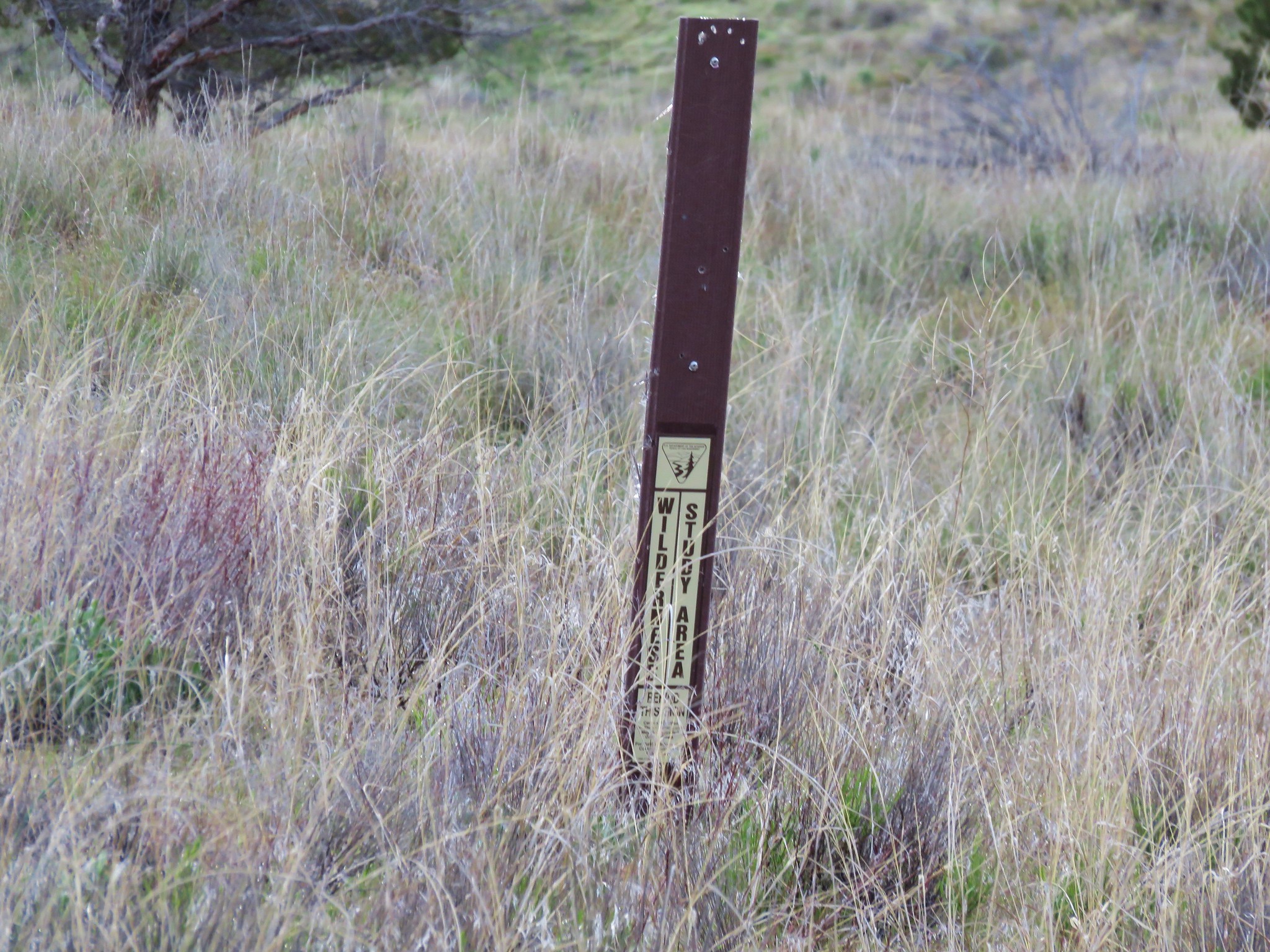
For our visit we were planning on following the route described in the Third Edition of William L. Sullivan’s “100 Hikes/Travel Guide Eastern Oregon” (Hike #18). From the Clarno Unit we drove back toward Clarno 1.9 miles and turned left onto gravel Clarno Rd. After 3.2 miles we parked on the left at a pullout near a lone juniper tree. An outdated wilderness sign declaring a wilderness study area indicated that we were at the correct spot.

Wilderness signpost at the Spring Basin Wilderness

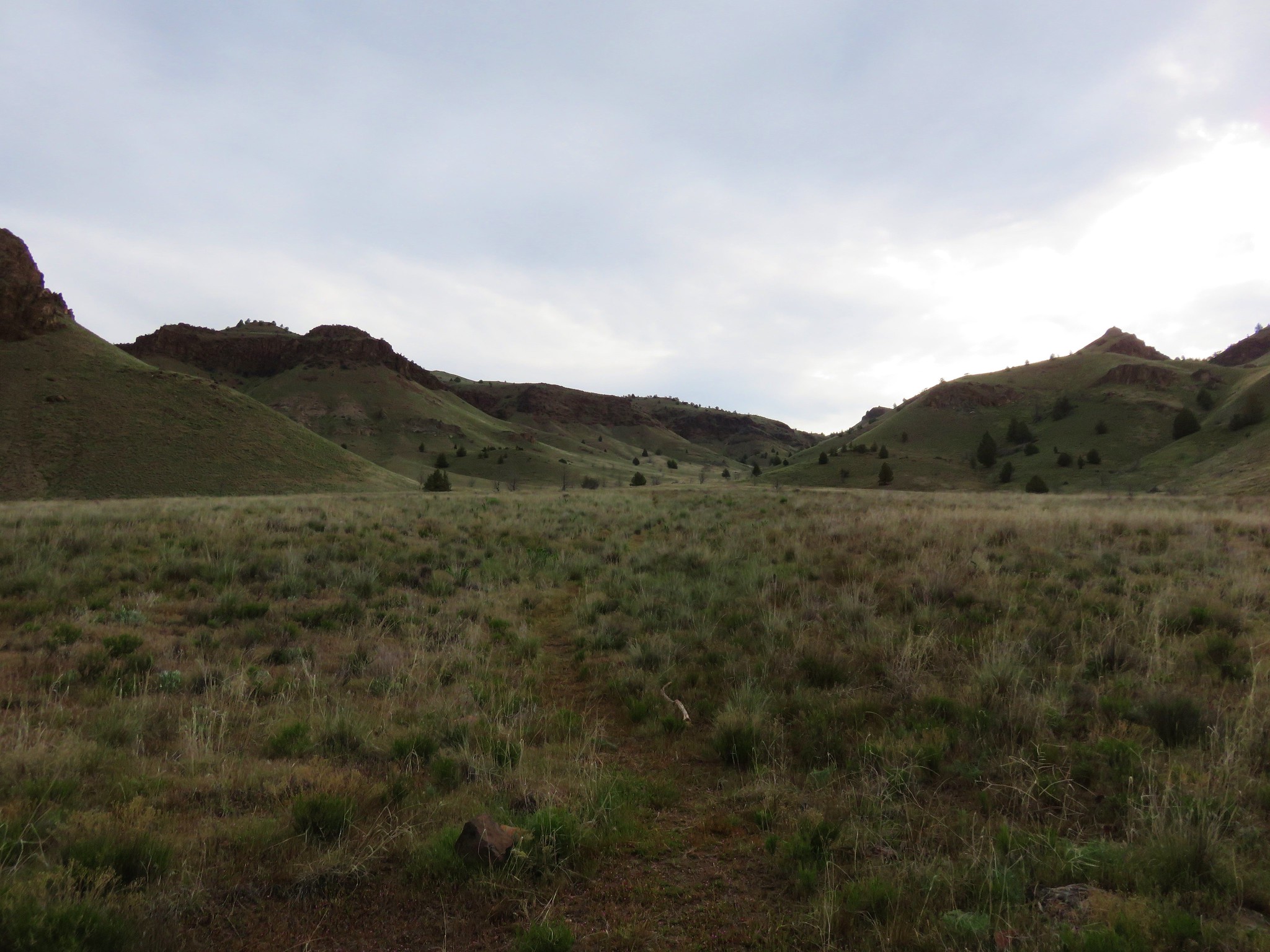
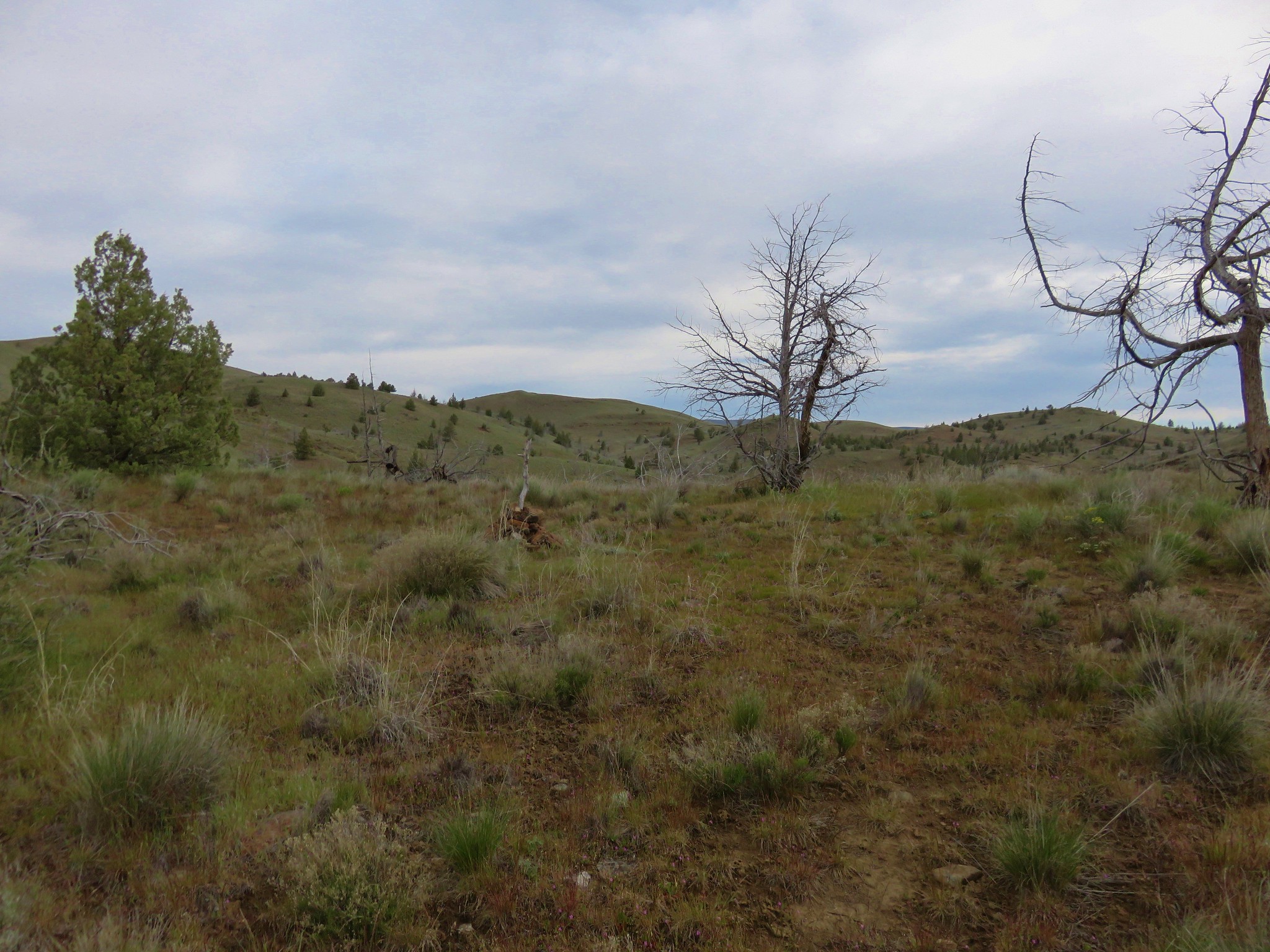
A faint but clear path led into the wilderness toward a draw on the horizon.

Spring Basin Wilderness

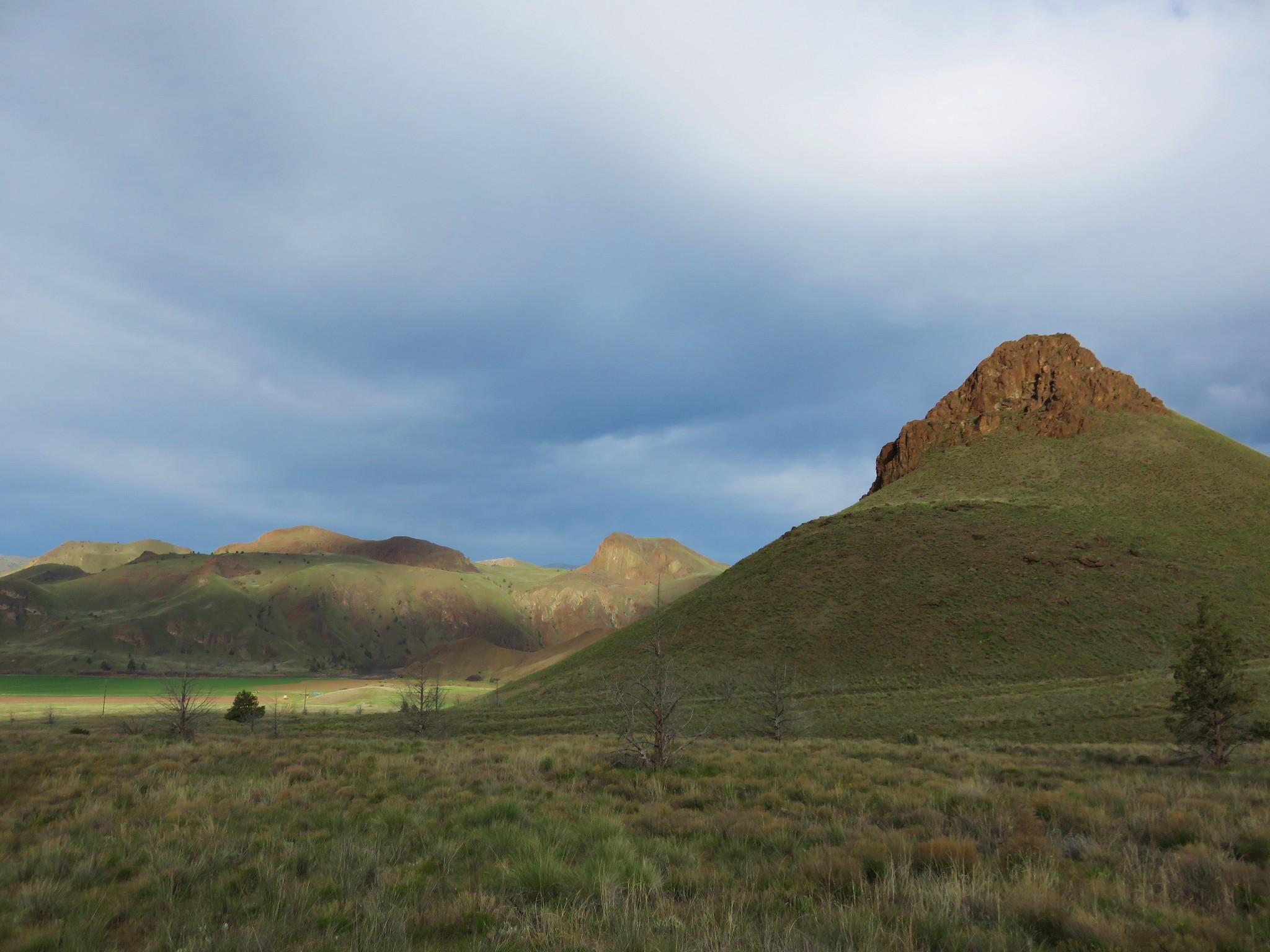
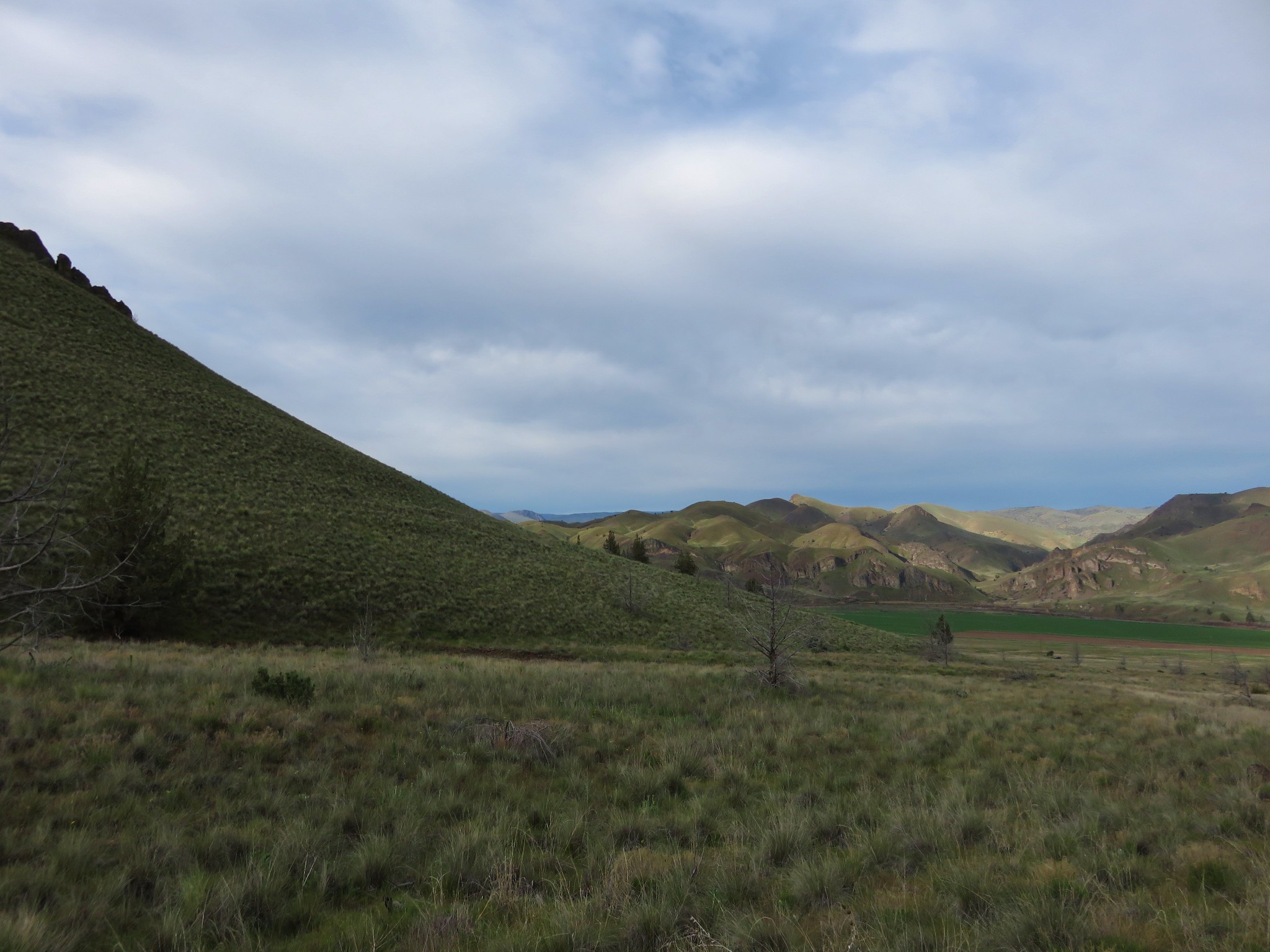
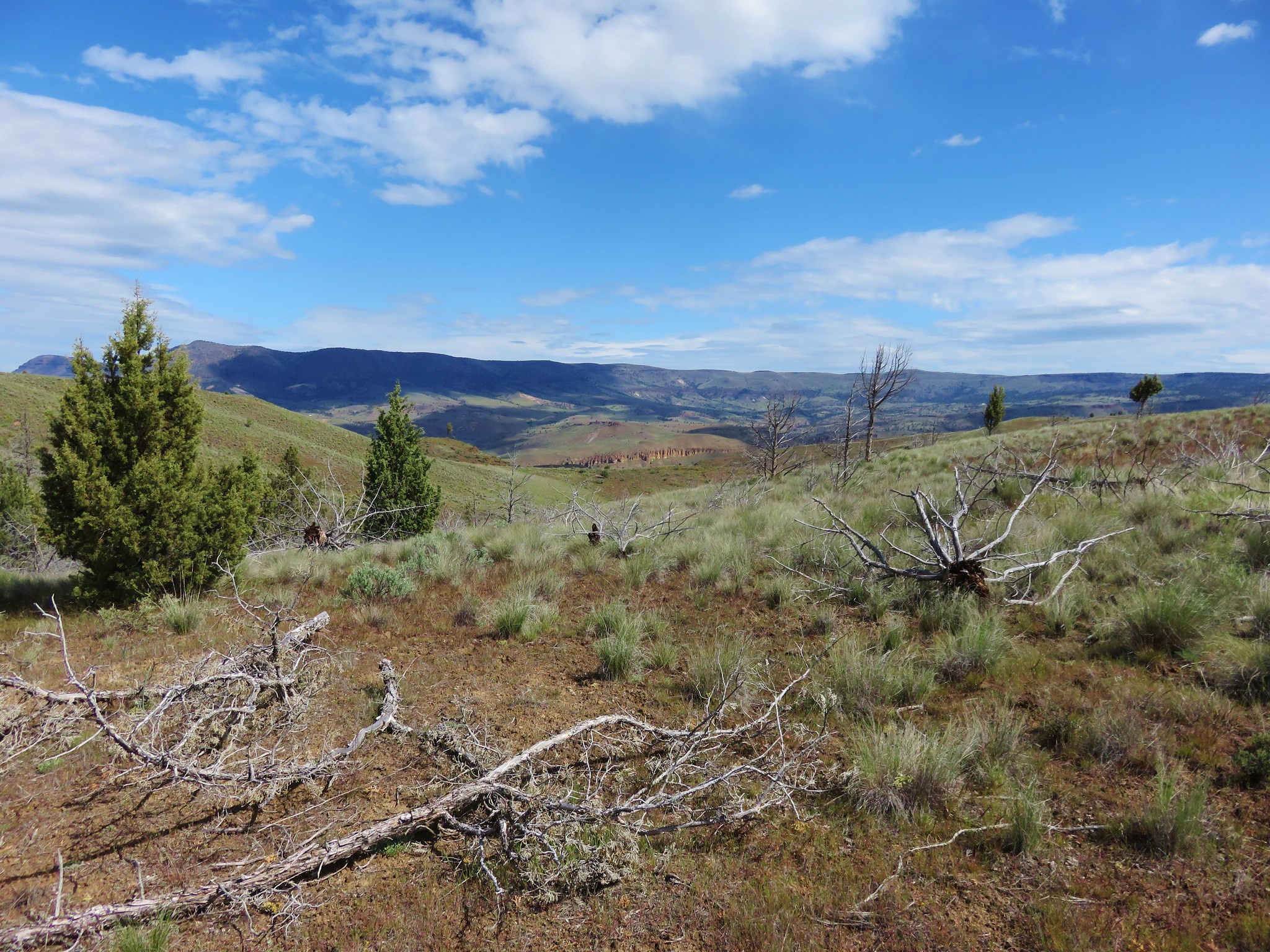
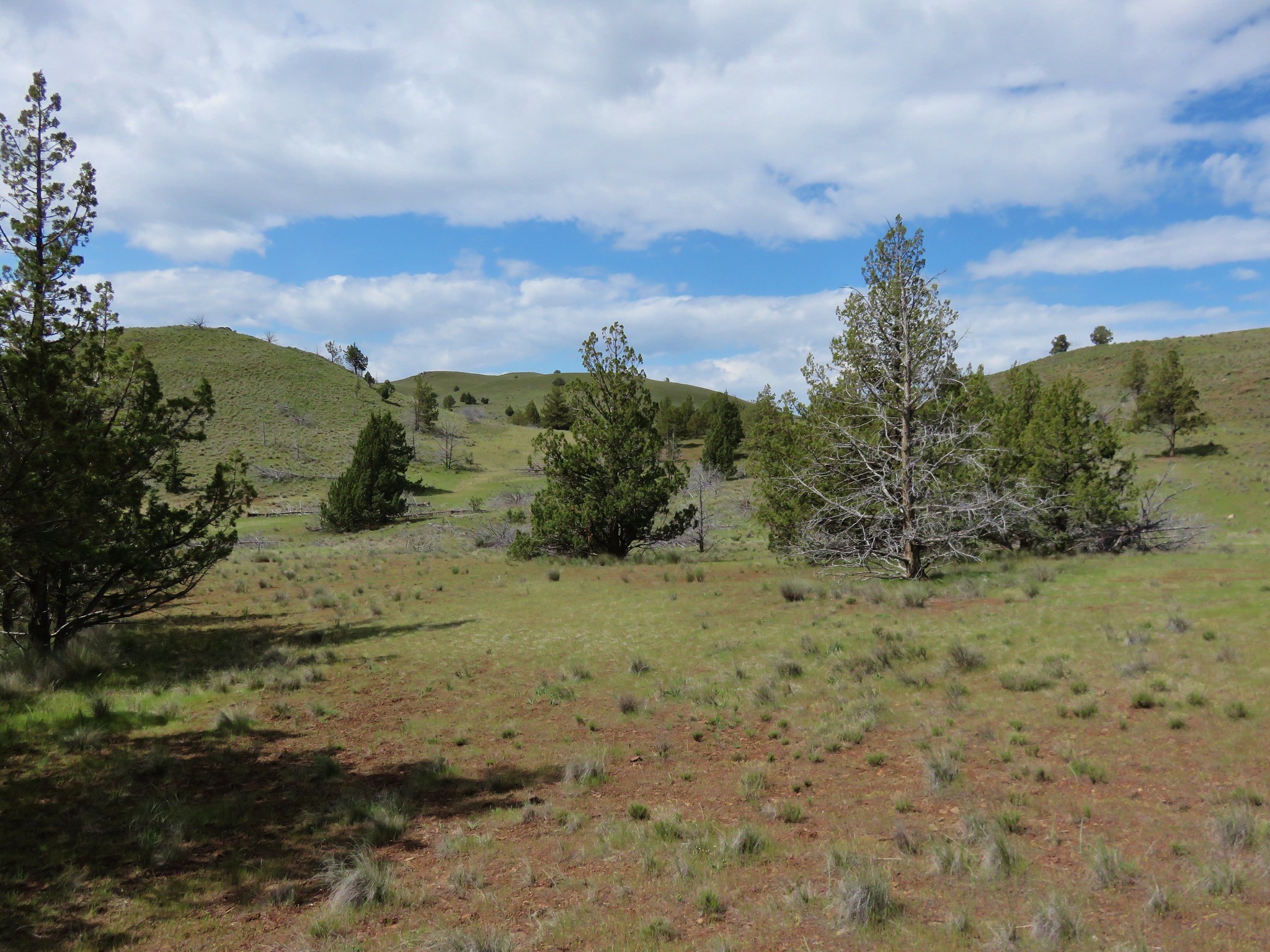
The views were dramatic from the start with jagged rock formation and green rolling hills.

Sun and shadows as seen from the Spring Basin Wilderness

View from the Spring Basin Wilderness

Spring Basin Wilderness

The path led us up into the draw passing a number of different types of wildflowers.

Biscuitroot

Biscuitroot

Balsamroot

Balsamroot

Prairie stars

Prairie stars

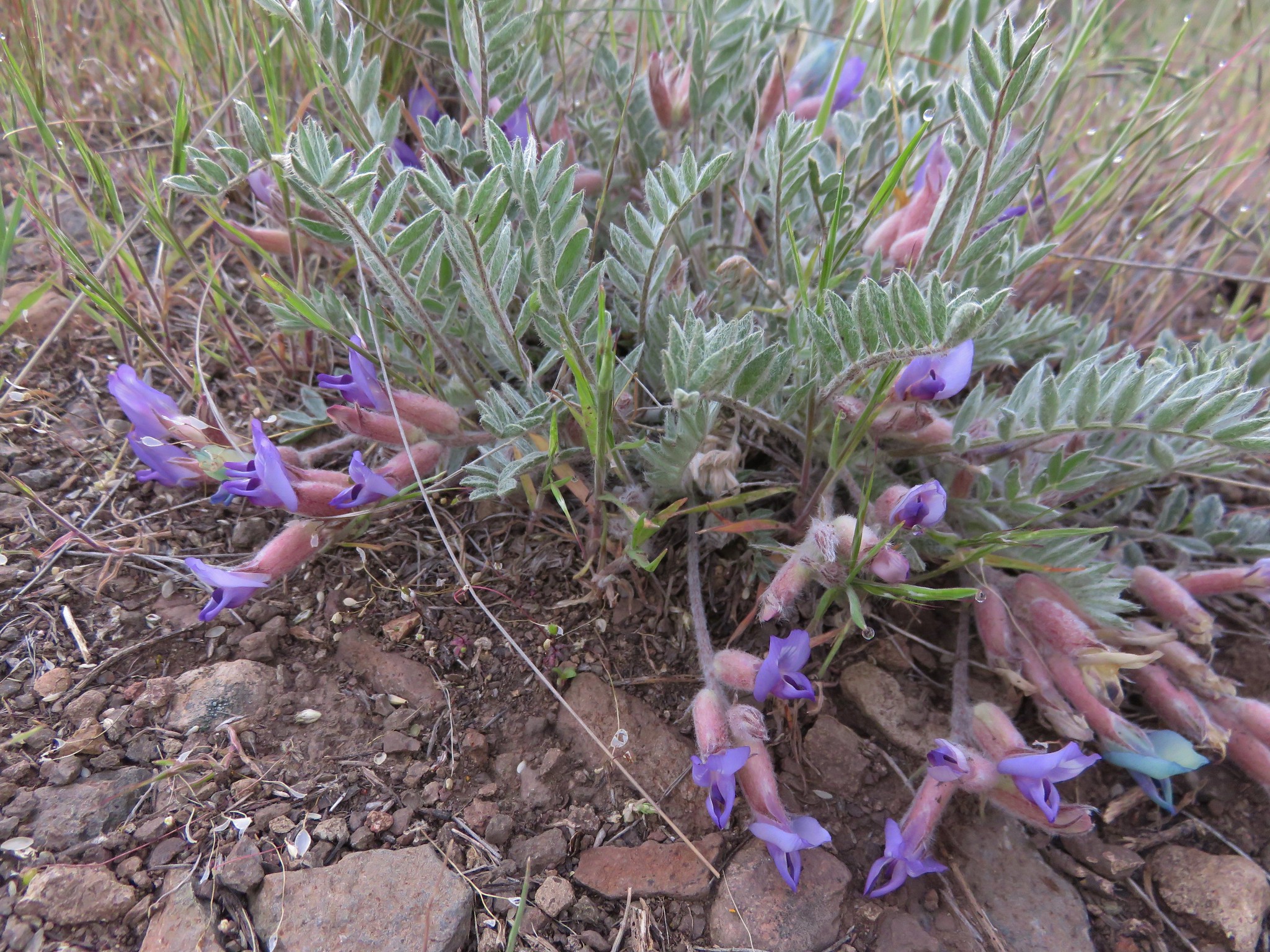
Balloon pod milkvetch

Balloon pod milkvetch

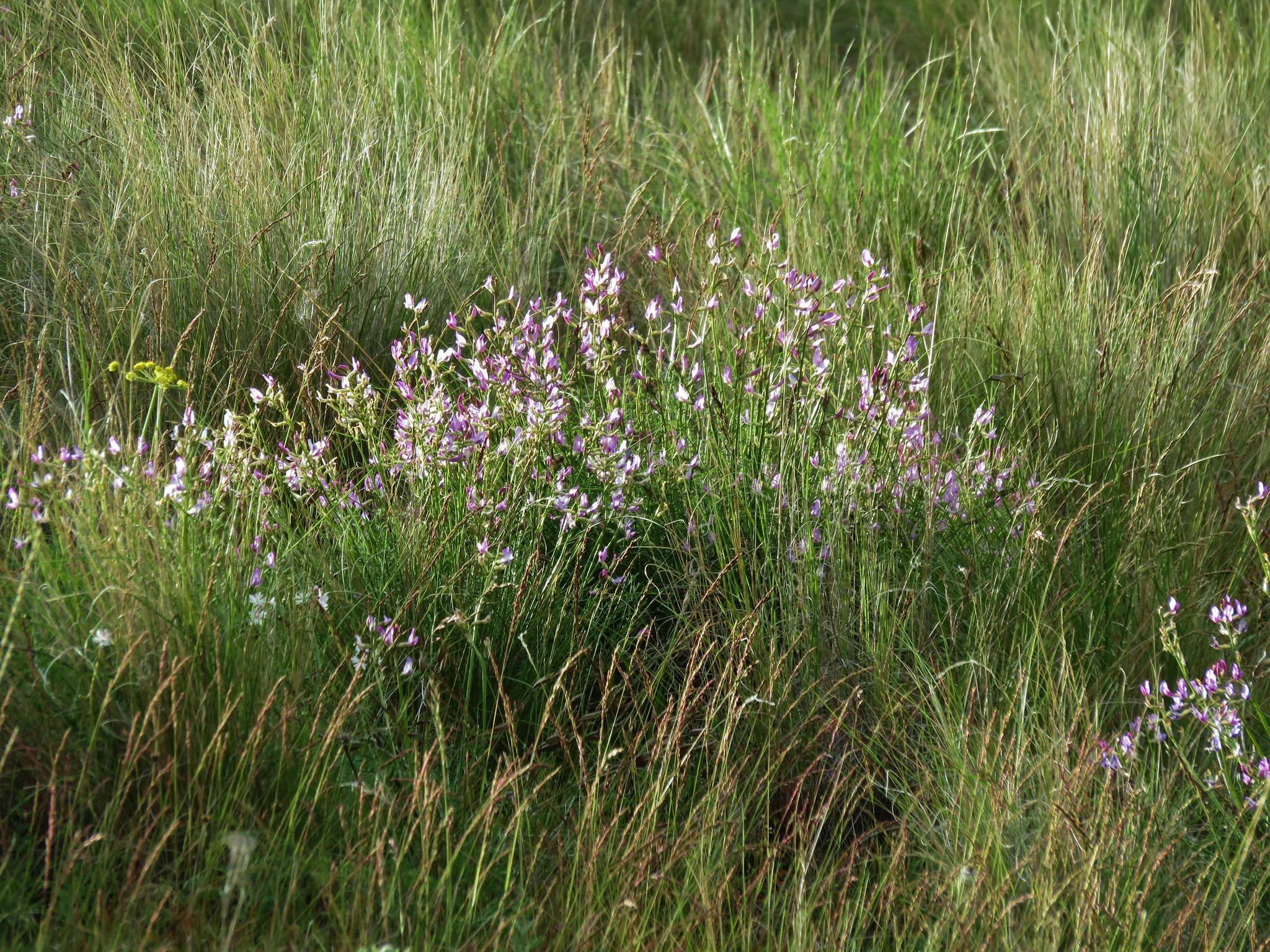
milkvetch

Another type of milkvetch

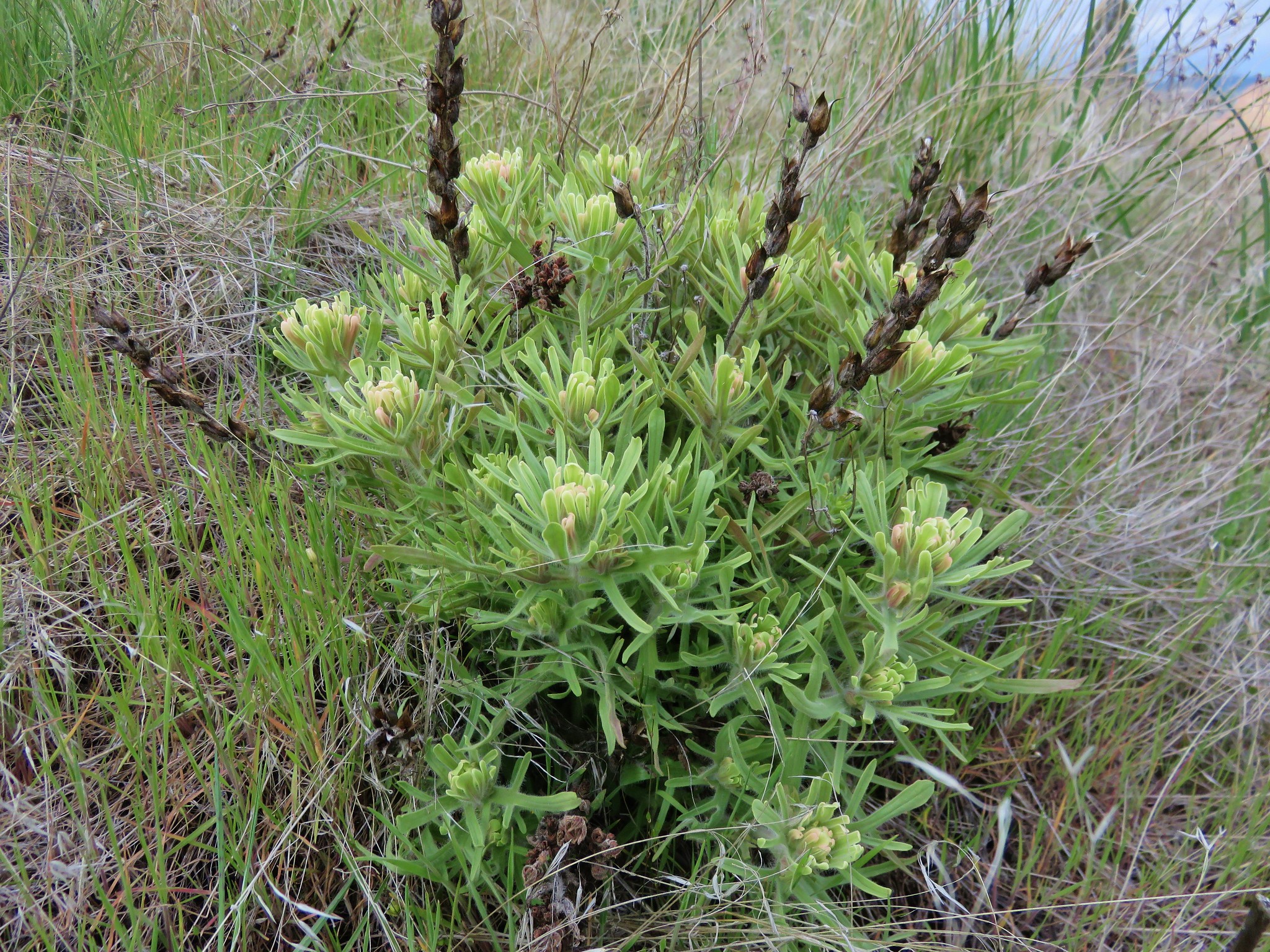
paintbrush

Paintbrush

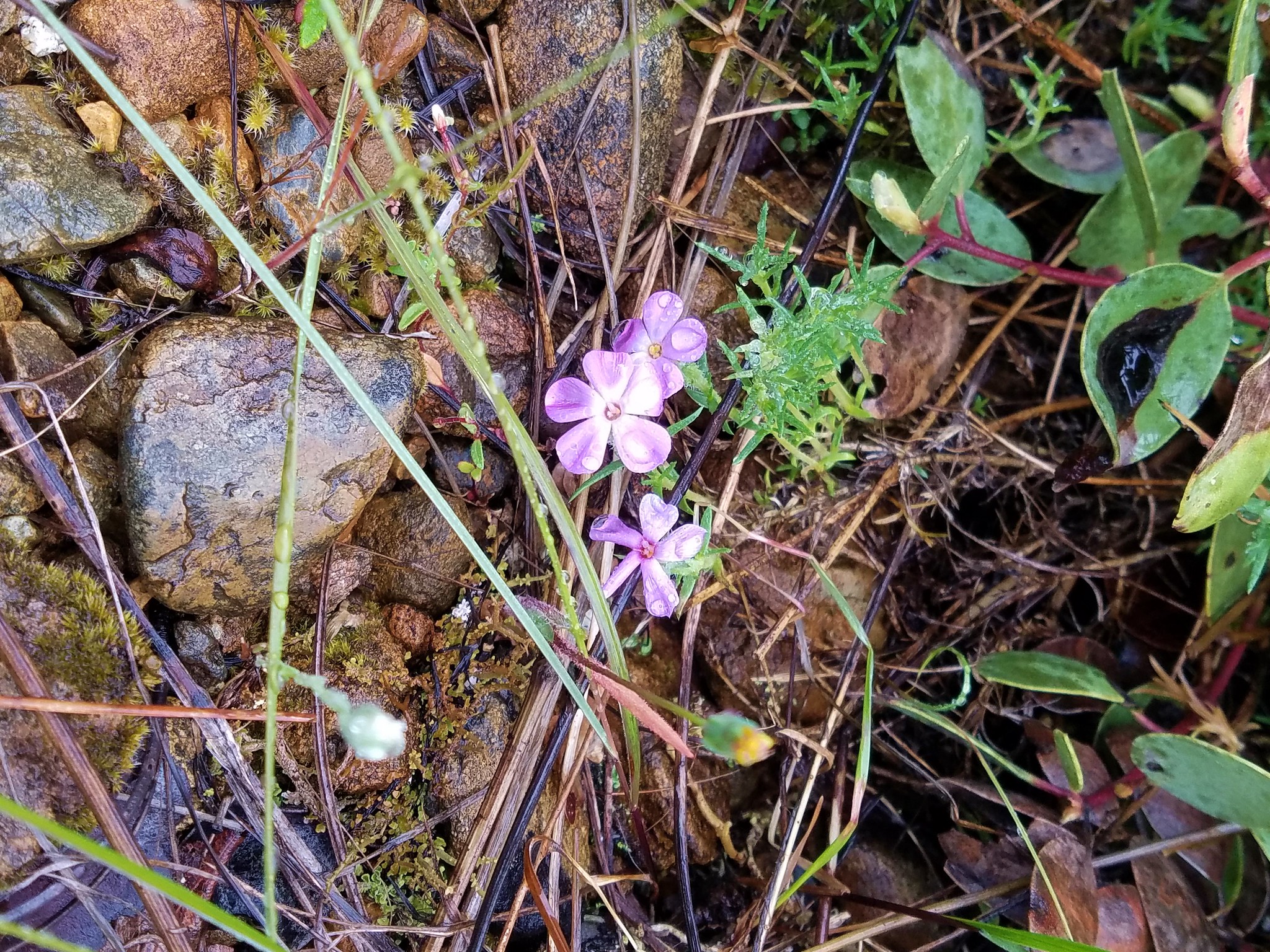
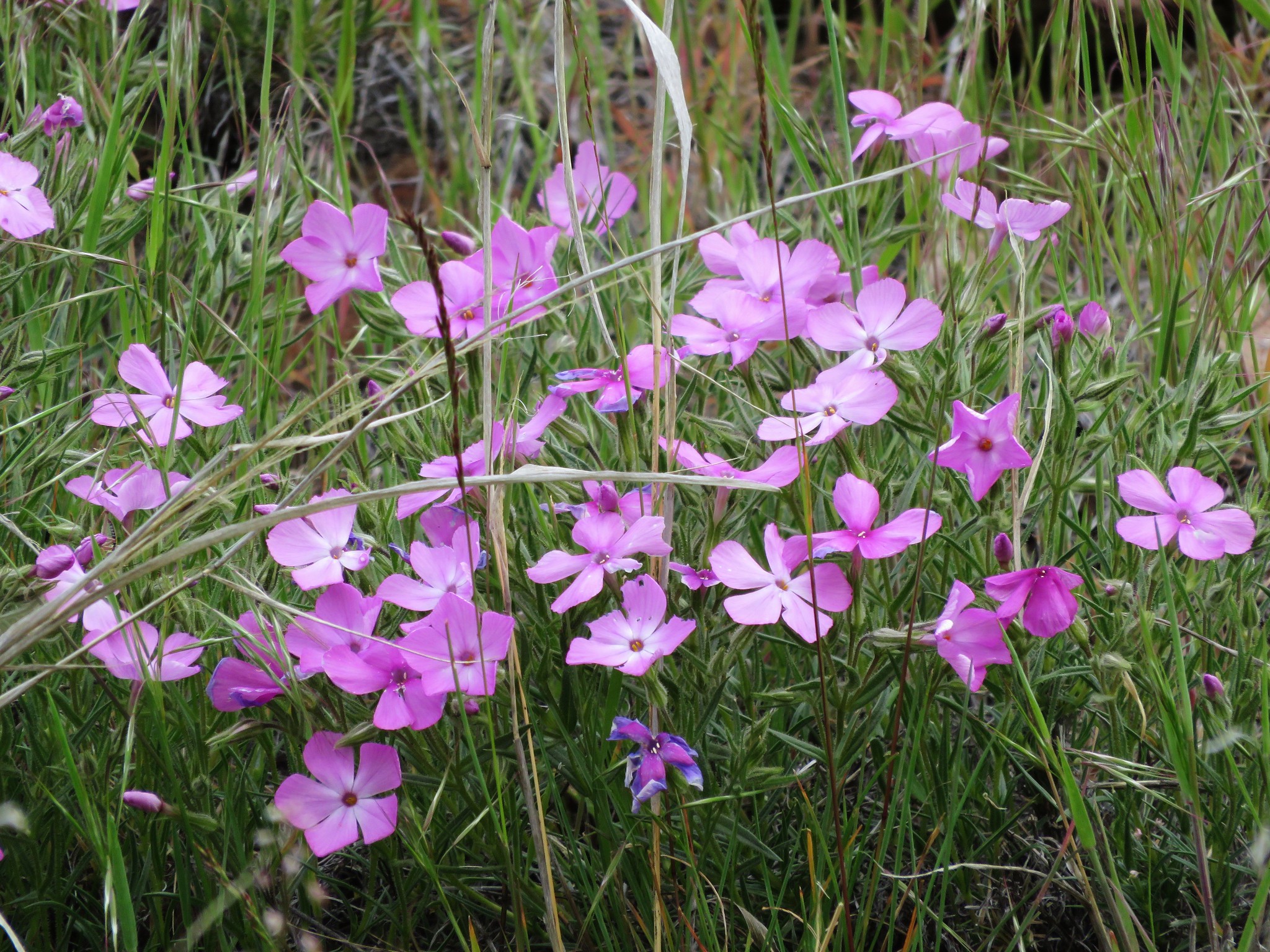
Phlox

Phlox

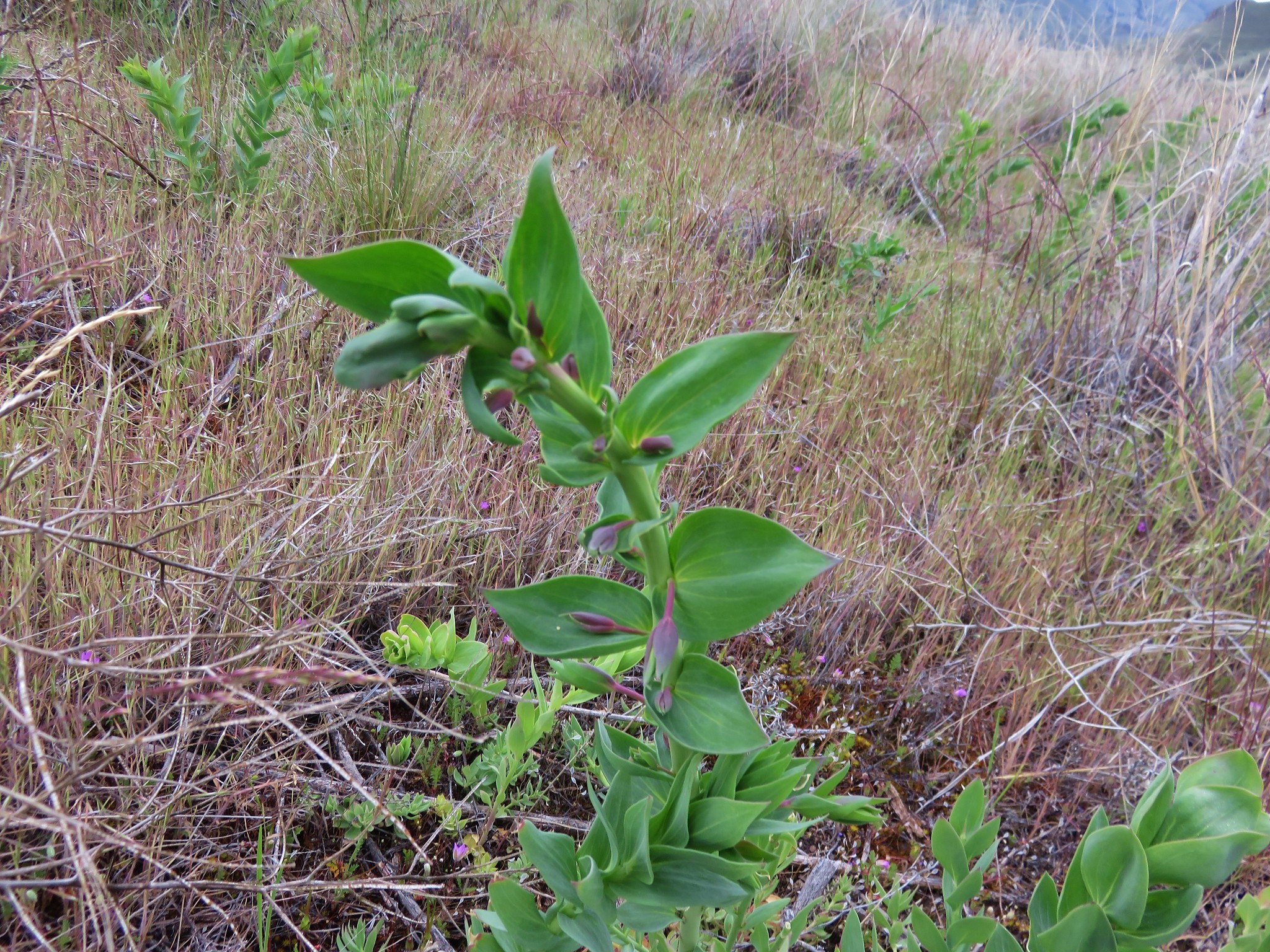
There was one flower that had not yet started to bloom that we had never seen before and we still aren’t sure what it was.

Wildflower getting ready to bloom in the Spring Basin Wilderness

After 1.3 miles the path reached a ridge top junction with an old jeep track marked by a rock cairn.

Spring Basin Wilderness

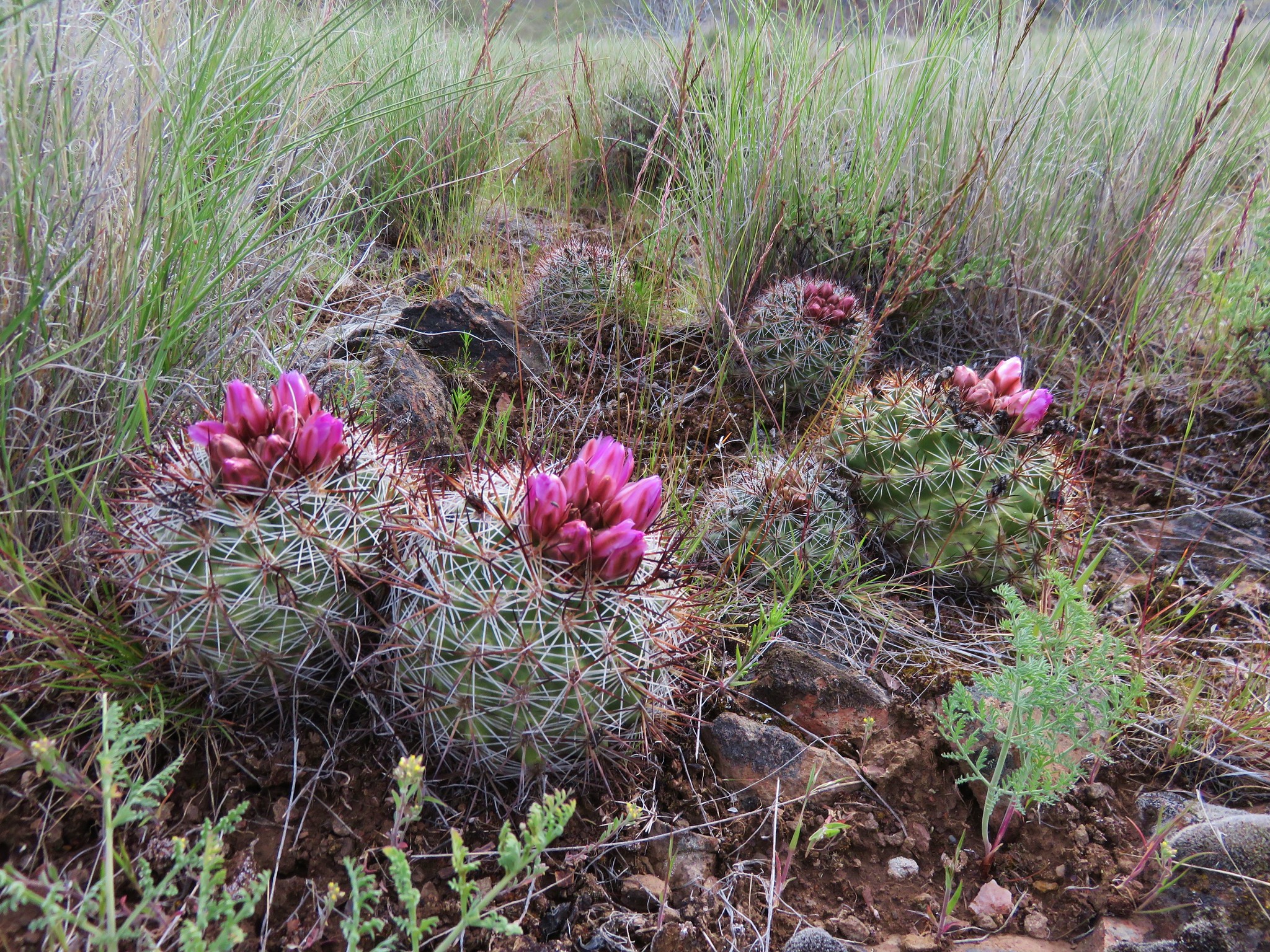
Near the junction we spotted the first of many hedgehog cactus.

Hedgehog cactus

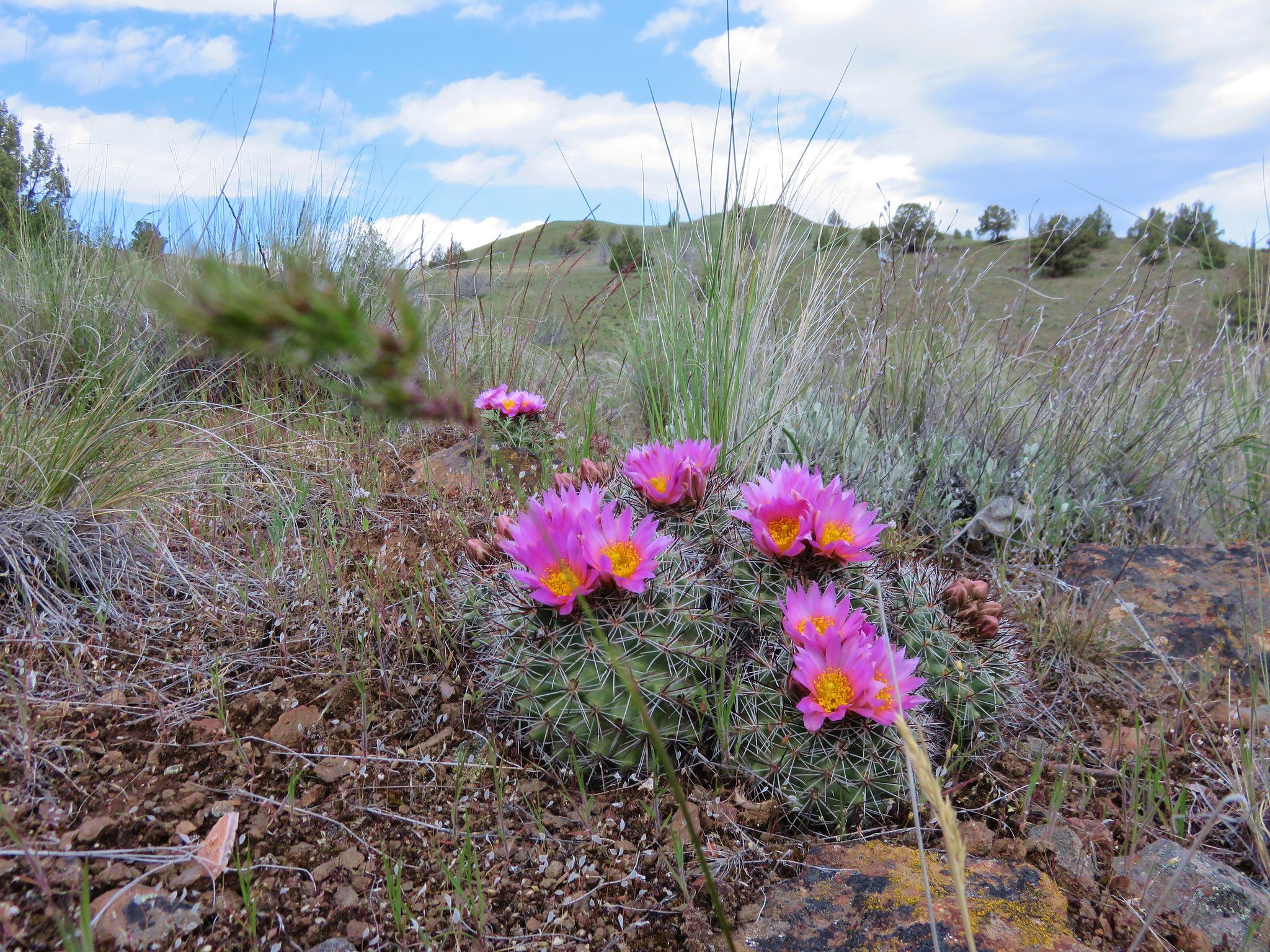
None of the blossoms were open and we mistakenly thought we were a week or so too early to see them in full bloom. As we would discover later the blossoms would open to the Sun later in the day.

Hedgehog cactus

We turned left onto the jeep track and headed toward a knoll on the horizon.

Spring Basin Wilderness

We followed the track around the side of the knoll then turned uphill and went cross country to the summit marked by another cairn.

Spring Basin Wilderness

John Day River from the Spring Basin Wilderness

Our goal, Horse Mountain, was slightly southeast of the knoll.

Spring Basin Wilderness

To reach the summit of that mountain without having to lose and regain too much elevation Sullivan’s route called for a .9 mile cross country route due east through a juniper grove then up a draw to find the jeep track once again on the ridge line.

Spring Basin Wilderness

We surveyed the landscape and picked out the juniper grove before heading back down the knoll to the jeep track.

Juniper grove in the Spring Basin Wilderness

We followed the jeep track north a short distance to a low point then descended into a draw and headed for the grove. The initial descent was a little steeper than it had appeared from the knoll but it was not a problem and we made it to the junipers without any difficulty.

Juniper grove

Juniper grove in the Spring Basin Wilderness

From the grove we climbed up the draw we’d seen to the jeep track and turned right toward Horse Mountain.

Spring Basin Wilderness

On the ridge we found more hedgehog cactus amid other many other wildflowers.

Wildflowers in the Spring Basin Wilderness

Hedgehog cactus

We stuck to the jeep track for approximately 3/4 of a mile then veered off toward Horse Mountain when the track turned left amid more junipers.

Horse Mountain in the Spring Basin Wilderness

Our initial plan was to sidehill up to a saddle along Horse Mountain but we found it was actually easier to head directly uphill so we wound up gaining the ridge near it’s western end which was dotted with balsamroot.

Balsamroot

Balsamroot in the Spring Basin Wilderness

We then followed the ridge up to the summit of Horse Mountain.

Horse Mountain

Along the way we passed a lone daggerpod in bloom,some lupine plants that were just beginning to show buds, and more hedgehog cactus.

Horse Mountain

Lupine

Biscuitroot and hedghog cactus in the Spring Basin Wilderness

A small rock cairn marked the summit of Horse Mountain.

Horse Mountain summit in the Spring Basin Wilderness

The 360 degree view was spectacular. We sat on some rocks and examined the scenery.

View from the summit of Horse Mountain

View from the summit of Horse Mountain

View from the summit of Horse Mountain

Spring Basin Wilderness

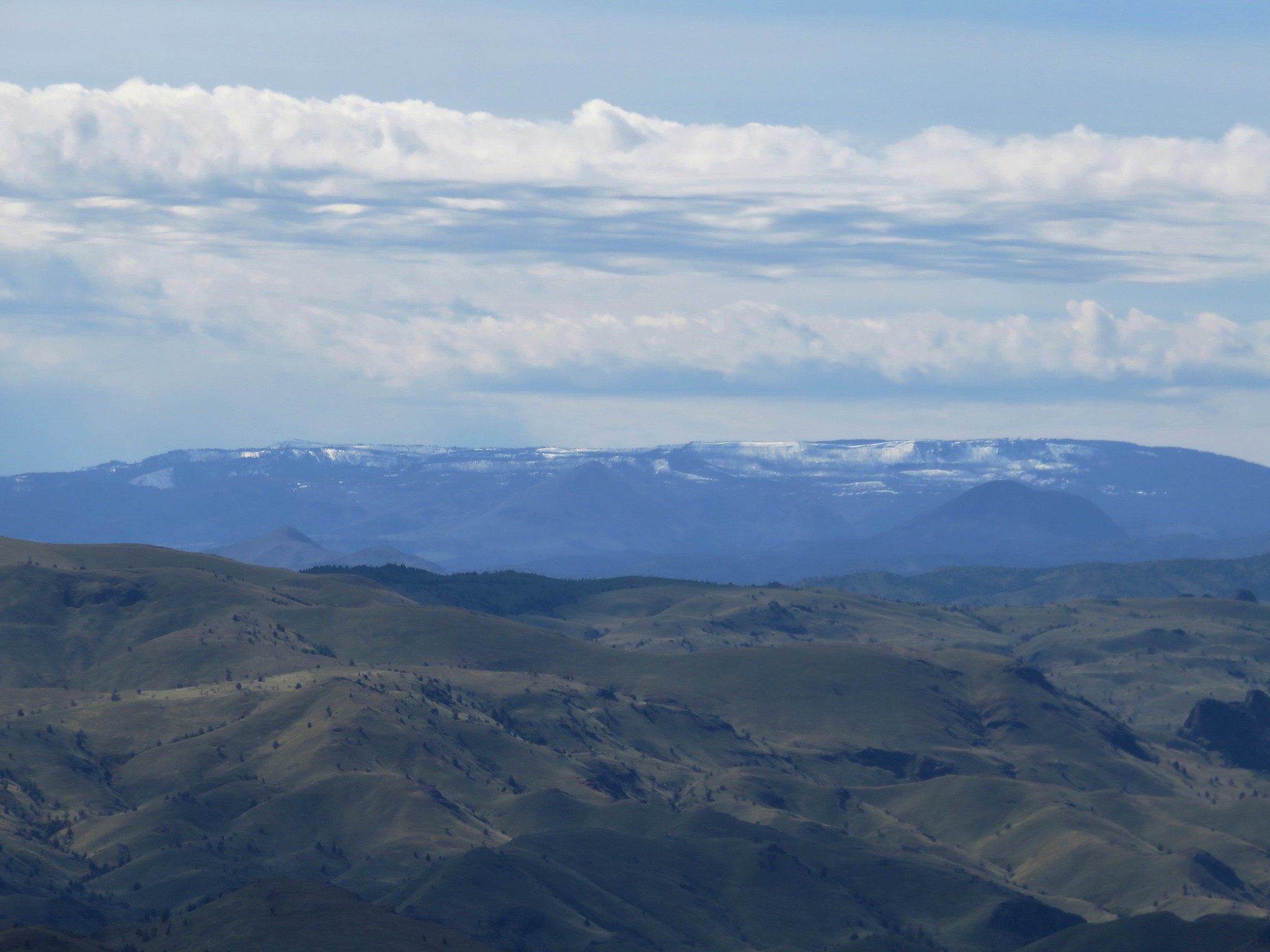
To the far south the snowy Ochoco Mountains lined the horizon.

Lookout Mountain from Horse Mountain

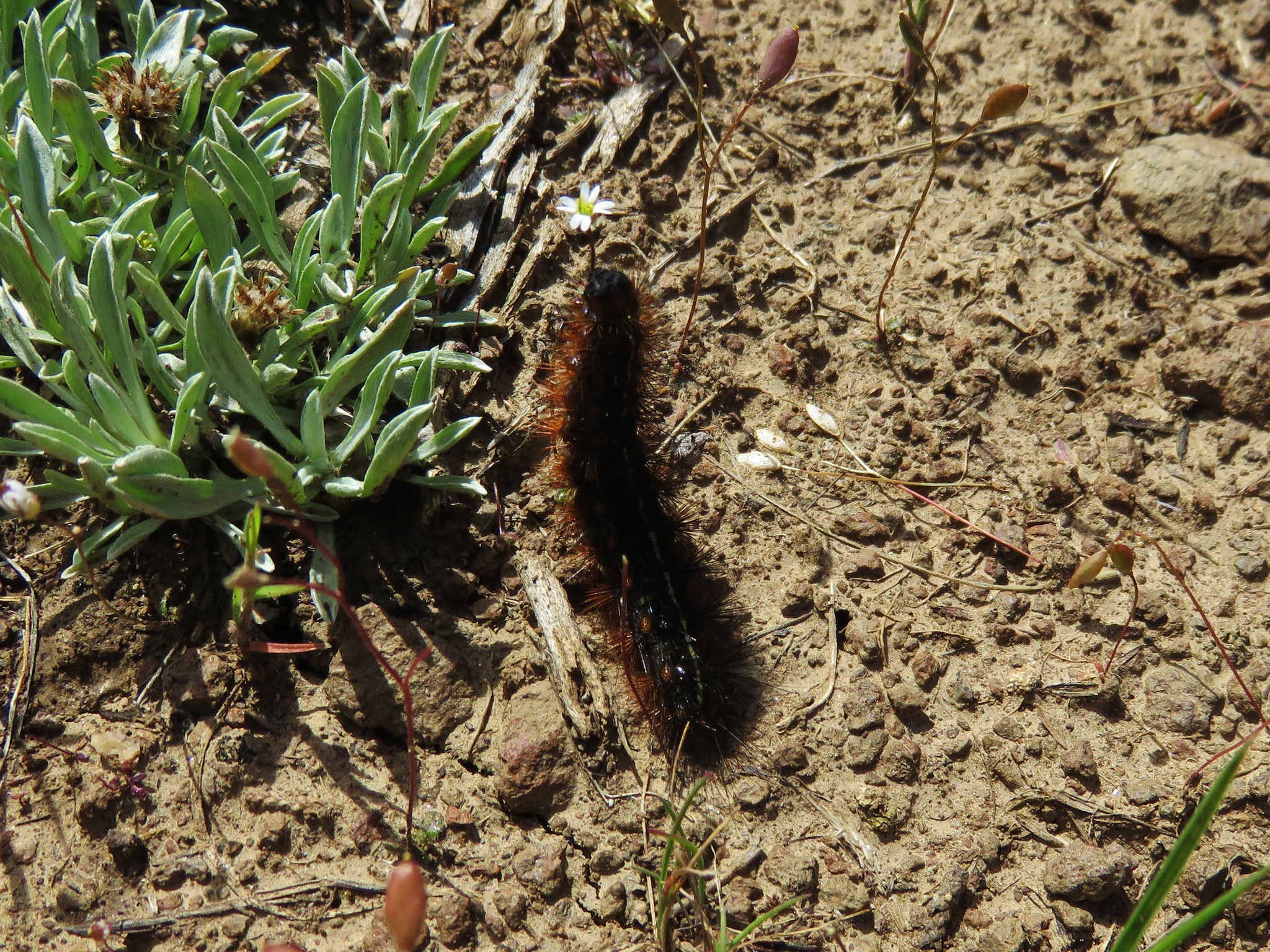
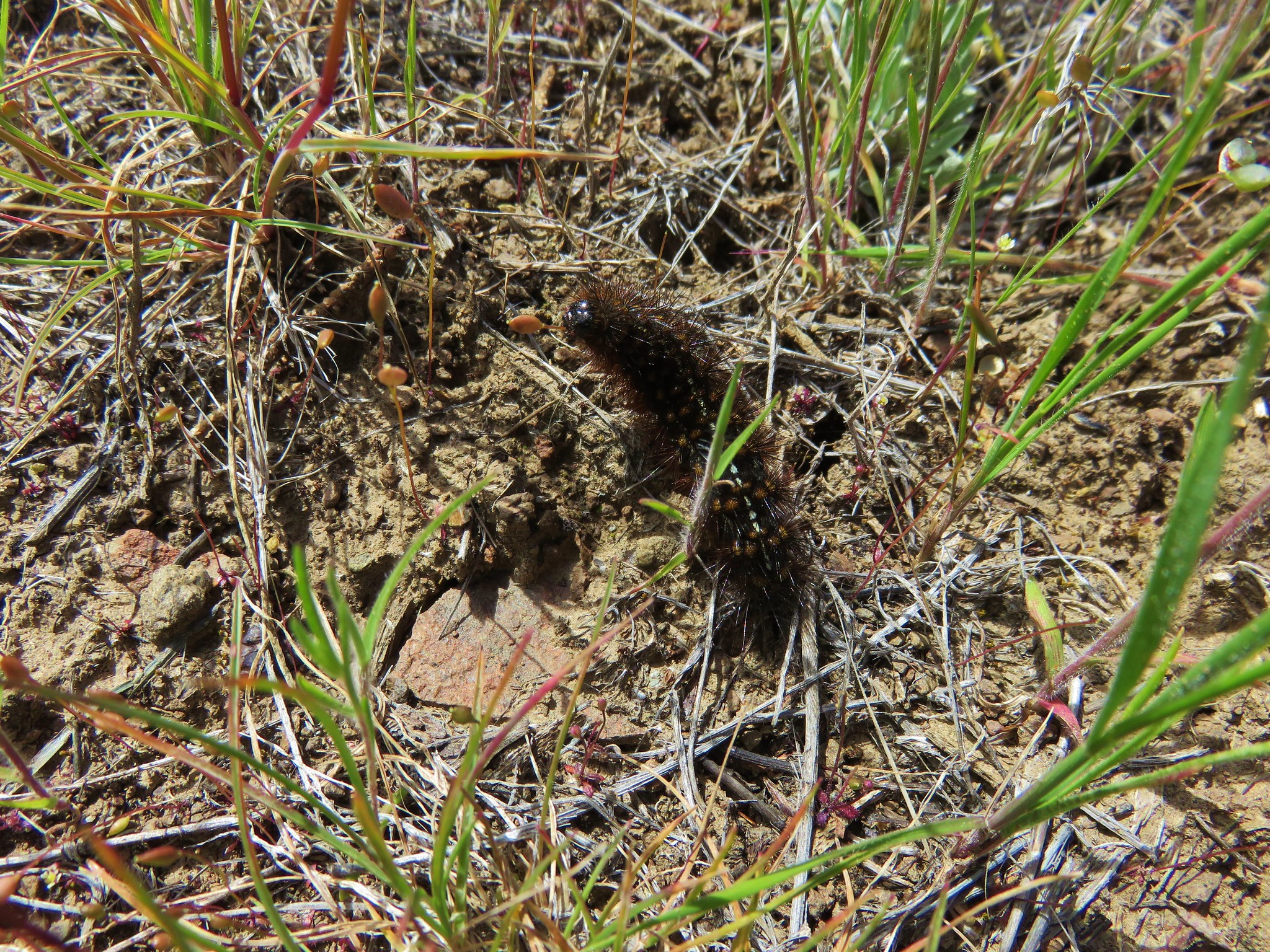
It was amazingly peaceful on the summit. The only sounds were bird songs and the low hum of insects buzzing about. If the rocks had been a little softer we could have stayed for hours. As it was we eventually headed back down to the jeep track which we thought about following all the way back to the knoll. We had seen quite a few caterpillars on the ground all morning but now there seemed to be more and they were moving about.

Caterpillar

caterpiller

From the ridge The Palisades of the Clarno Unit were visible to the north.

The Clarno Unit of the John Day Fossil Beds from the Spring Basin Wilderness

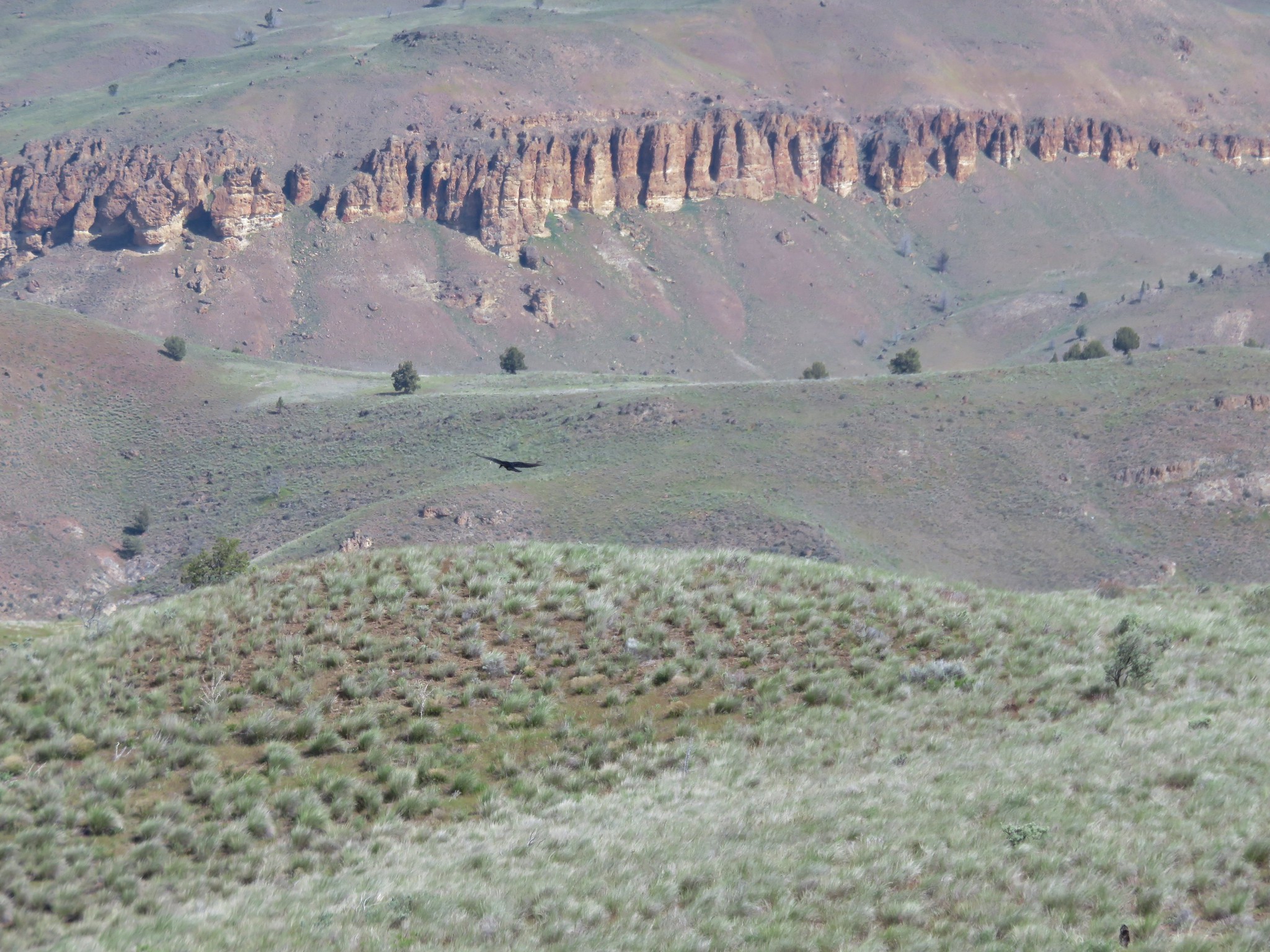
Raven with the Palisades of the Clarno Unit in the distance

After looking more closely at the map we decided that the jeep track swung out a little more than we were willing to do so we instead took a slightly different off trail route to the knoll.

Spring Basin Wilderness

We wound up climbing up the same draw we’d descended earlier in the day and regained the jeep track below the knoll. We then returned to the rock cairn and descended the gully back to our car ending our hike at 7.4 miles. We had been on the alert for rattlesnakes all day but had not seen nor heard any. That changed on our drive back to the highway. We spotted at least 4 rattlers sunning themselves on Clarno Road. Happy Trails!

Flickr: Clarno Unit and Spring Basin Wilderness

Categories
High Cascades Hiking Mt. Washington Area Oregon Throwback Thursday Trip report

Throwback Thursday – Patjens Lakes

On 8/2/2012, a day after our mosquito filled visit to Miller & Maidu Lakes, we were heading home. I had injured my right knee running down the trail to Miller Lake in an attempt to thwart the mosquitoes and it was feeling a little off, but I wanted to give a hike a try on the way over Santiam Pass.

We decided to try Patjens Lakes due to it being relatively short, right around 6 miles, with only 400′ of cumulative elevation gain. The trailhead is located on the NW side of Big Lake off of Forest Road 2690 which is also the entrance road to the Hoodoo Ski Area.
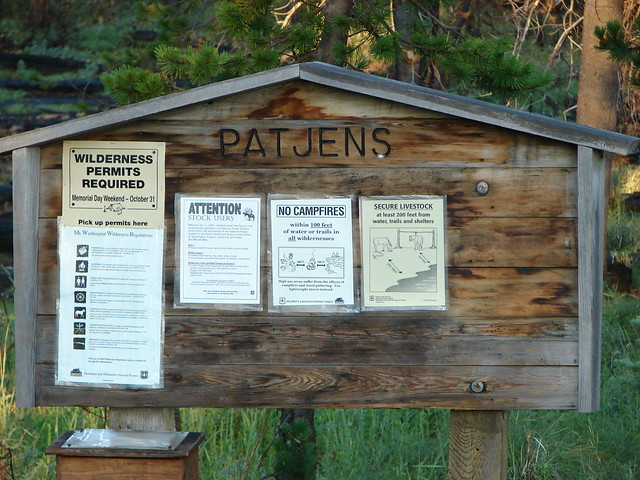
Patjens Lake Trailhead

We stayed right at a fork near the trailhead planning on doing a counter-clockwise loop. A 2011 wildfire had burnt much of the forest along the loop but signs of life were already returning.
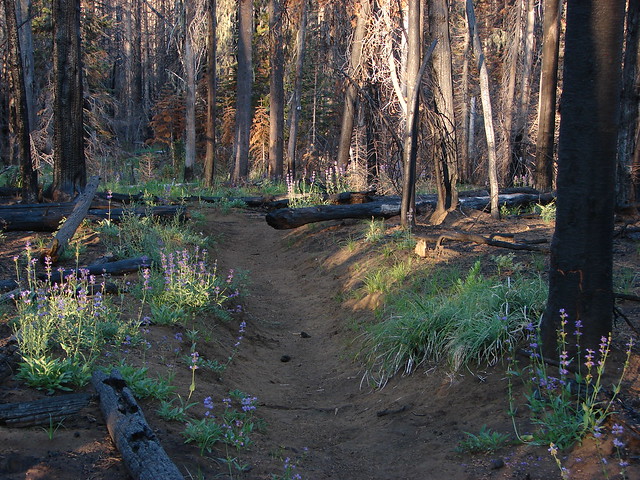
Patjens Lake Trail

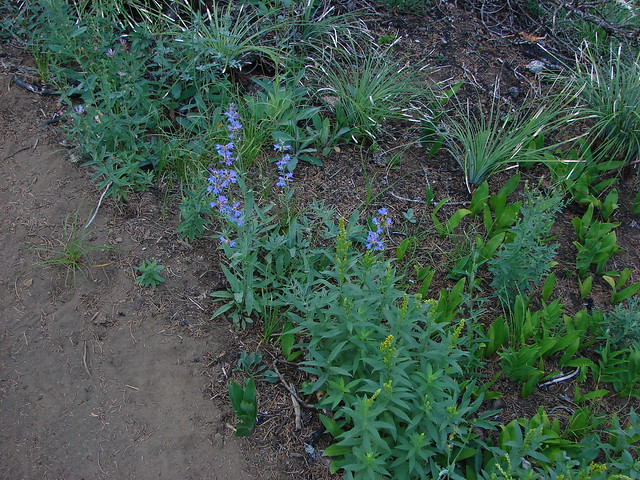
Goldenrod, penstemon and aster

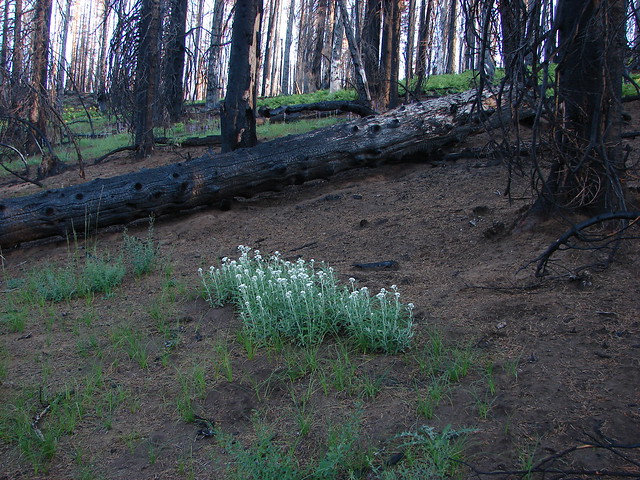
Pearly everlasting

Patjens Lake Trail

Mt. Washington and Big Lake were visible along the first portion of the trail.
Mt. Washington

The trail looped around a small butte passing a series of meadows and view to the NW of the Sand Mountain Lookout.
Meadow along the Patjens Lake Trail

Lupine

Sand Mountain Lookout

Shortly after passing a horse trail joining on the right the we entered the Mt. Washington Wilderness and began the only real significant climb of the hike.
Wt. Washington Wilderness sign

The trail climbed to a saddle between the butte and a small hill. At the saddle the Three Sisters were visible to the south.
Forest along the Patjens Lake Trail
Small hill from the saddle.

Patjens Lake Trail

The Three Sisters

As the trail descended from the saddle it entered forest that had been spared by the fire.
Patjens Lake Trail

We passed through a series of meadows full of ferns and scarlet gilia.
Patjens Lake Trail

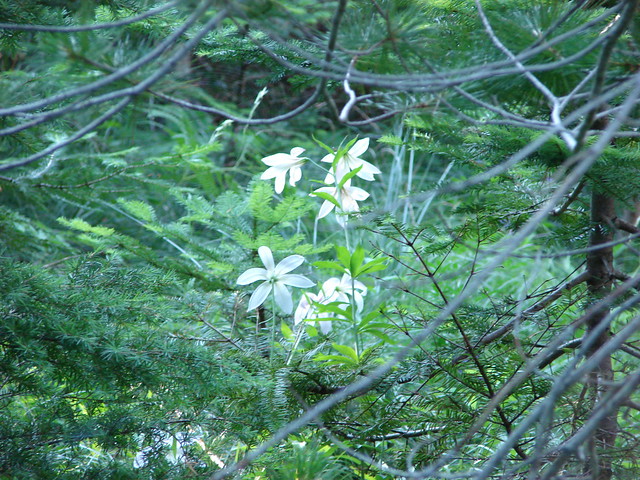
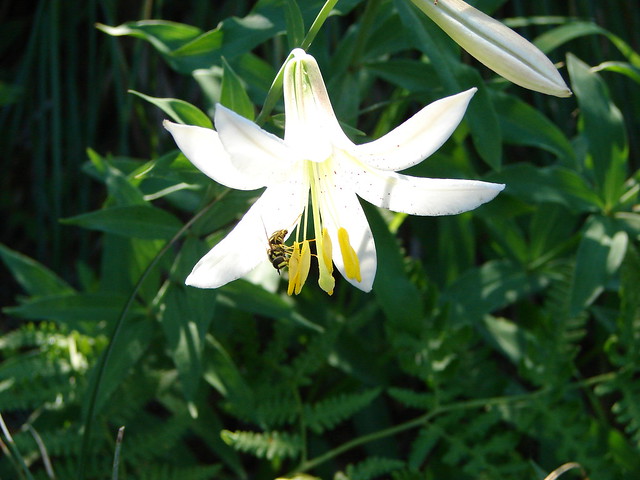
Tall cascade lilies rose above the ferns.
Cascade Lilies

Cascade lilies

Cascade Lily

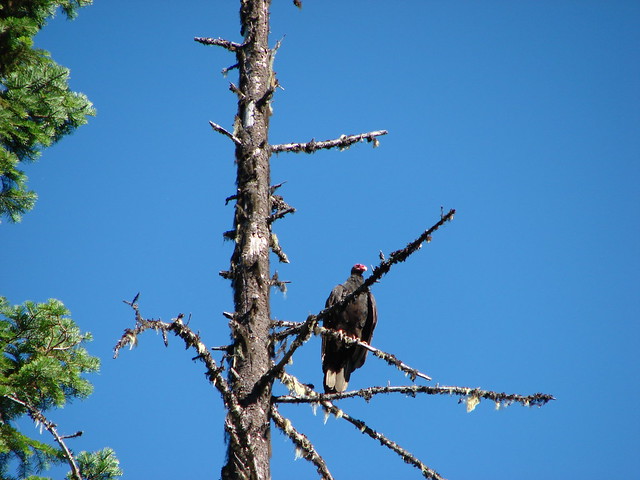
As we were passing through one of these meadows we encountered a foul reek. There was obviously some sort of rotting carcass out in the brush but we couldn’t see anything. We were a little concerned that it might have been a mountain lion kill or that a bear might be feeding on it so when we heard a ruckus off to our right we were on high alert. The noise turned out to be a pair of turkey vultures who had apparently located the dead animal.
Turkey Vulture

Turkey vulture

We left well enough alone and continued on our way paying extra attention for any large predators that might have been attracted by the smell. Around a mile from the saddle we came to a small body of water on the right side of the trail.
Patjens Lake #1

The first Patjens Lake was approximately .7 miles from the pond on our left.
A Patjens Lake

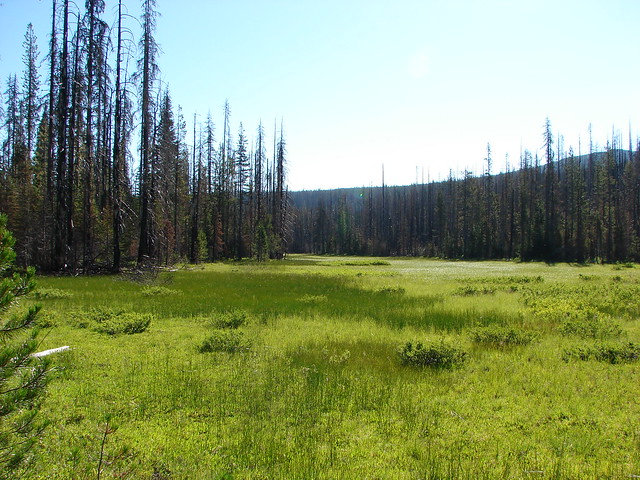
The trail then passed a large meadow reentering the burn area before reaching the second Patjens Lake.
Meadow along the Patjens Lake Trail

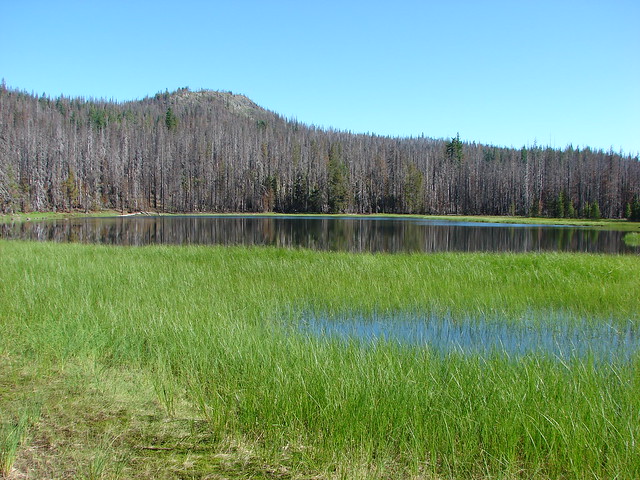
Patjens Lake #2

The third lake was just beyond the second and it looked like they were probably connected for a brief times during high water. We left the trail and began to loop around the third lake in a clockwise direction.
A Patjens Lake

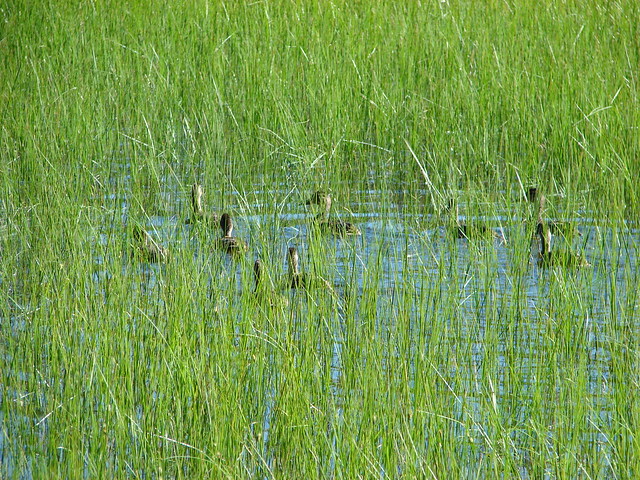
A number of ducks could be seen in the reeds.
Ducks on a Patjens Lake

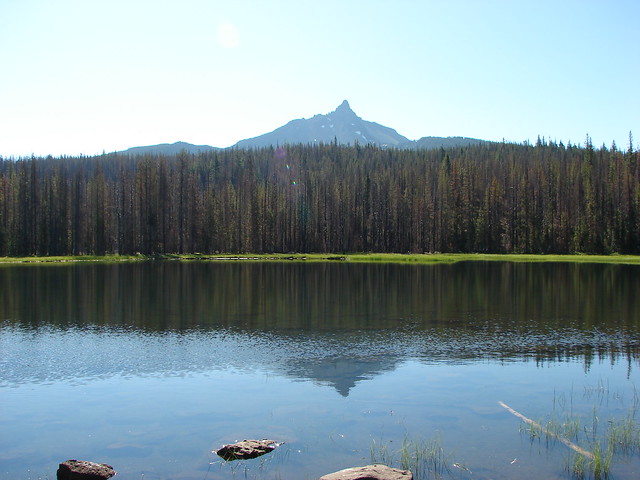
From the north end of the lake there was a nice view of Mt. Washington rising over the forest to the south.
Mt. Washington from a Patjens Lake

We took a break here watching the ducks and admiring the mountain then continued around the lake back to the trail. A mile and a half from the last lake we came to a junction near Big Lake where we turned left following the lake shore back toward the trailhead. Flat Hayrick Butte and round Hoodoo Butte rose above the blue waters of Big Lake.
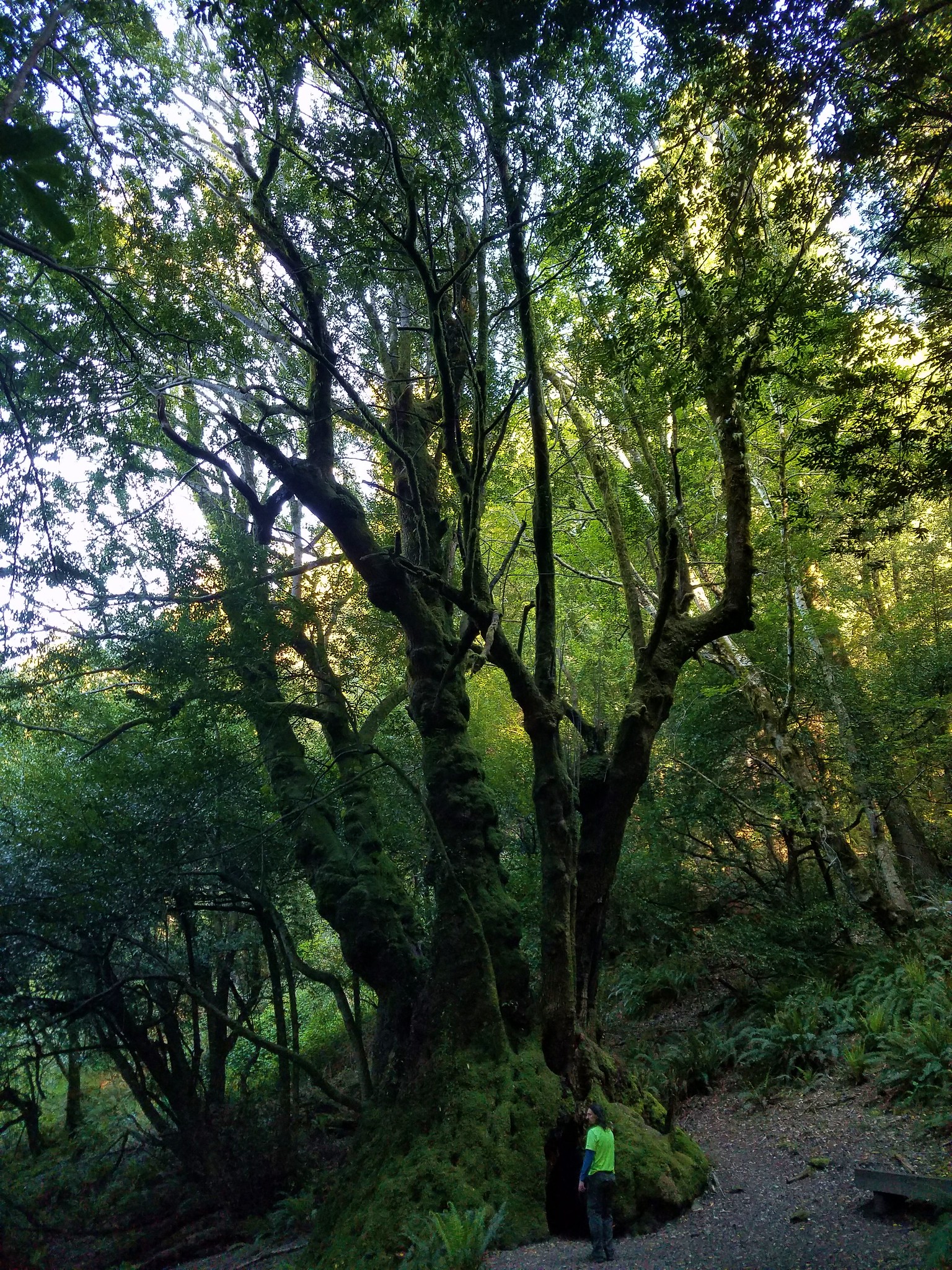
Hoodoo and Hayrick Buttes from Big Lake

Hoodoo Butte
Hoodoo Ski Area

Looking back over our shoulders provided big views of Mt. Washington.
Mt. Washington and Big Lake

A mile from the junction at Big Lake we were back at the trailhead. Despite a little discomfort going downhill my knee had held up which was encouraging. The hike had been a good choice for it and it had been a really nice hike even with the burned forest. Happy Trails!
Flickr: Patjens Lakes