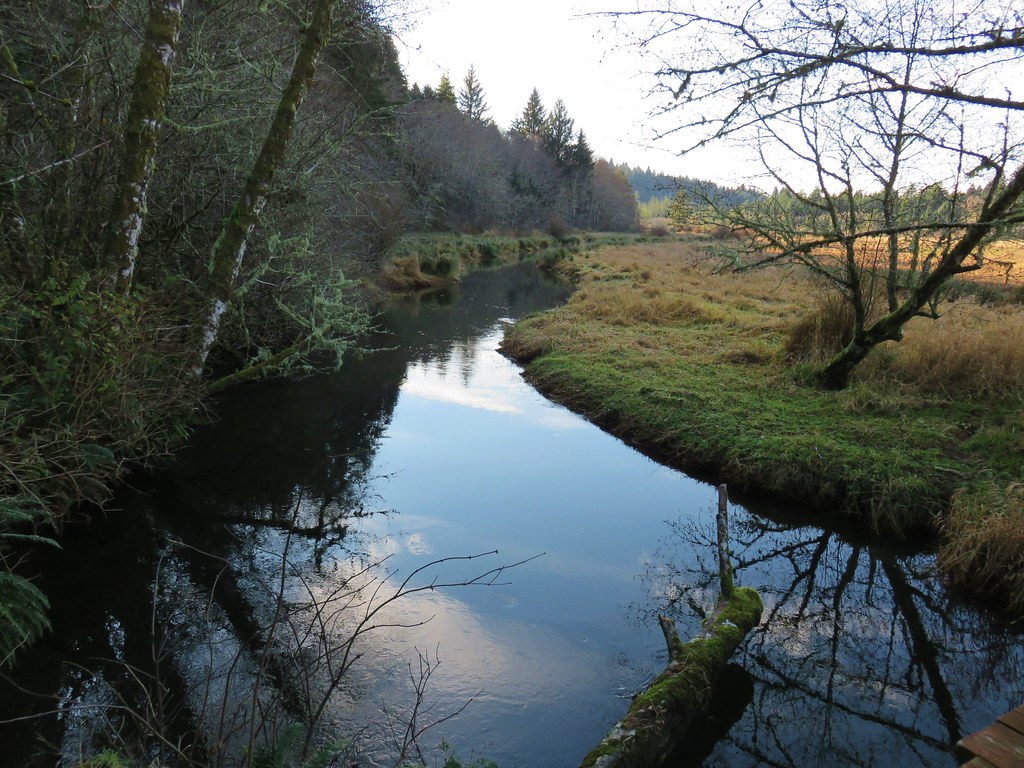
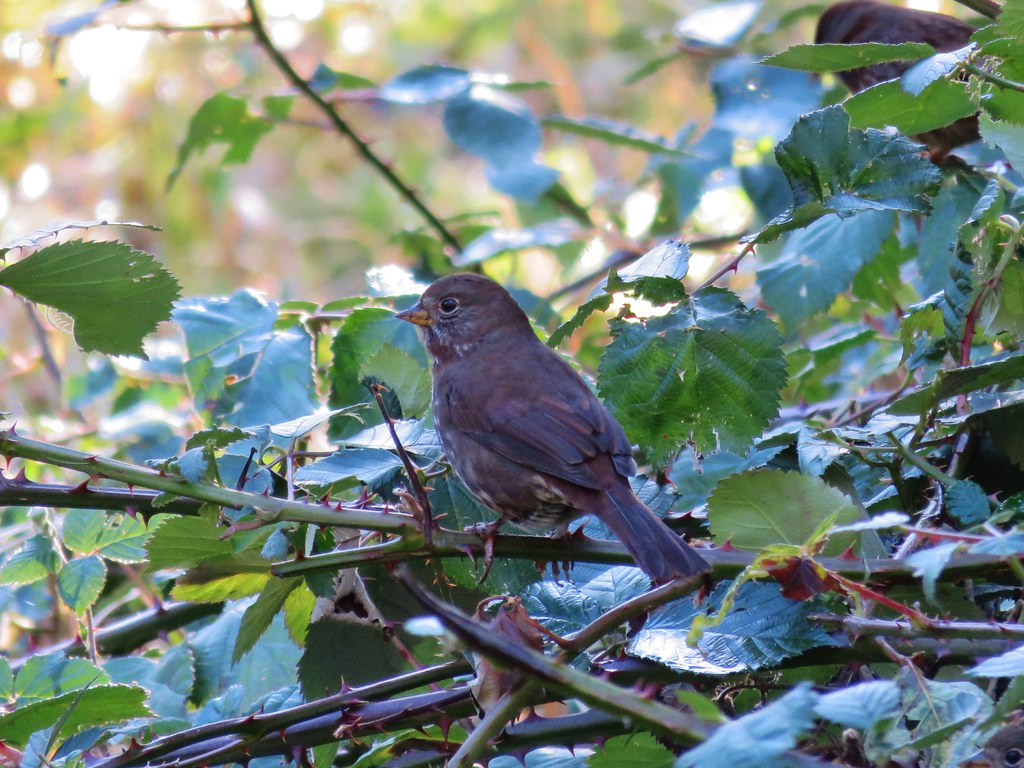
Categories
Central Coast Hiking Oregon Oregon Coast Throwback Thursday Trip report

Throwback Thursday – Drift Creek Wilderness and Cape Perpetua

This week’s Throwback Thursday hike is another we completed fairly earl on in our hiking days. On September 15th 2010 we set off on our 18th hike into the Drift Creek Wilderness NW of Yachats, OR.

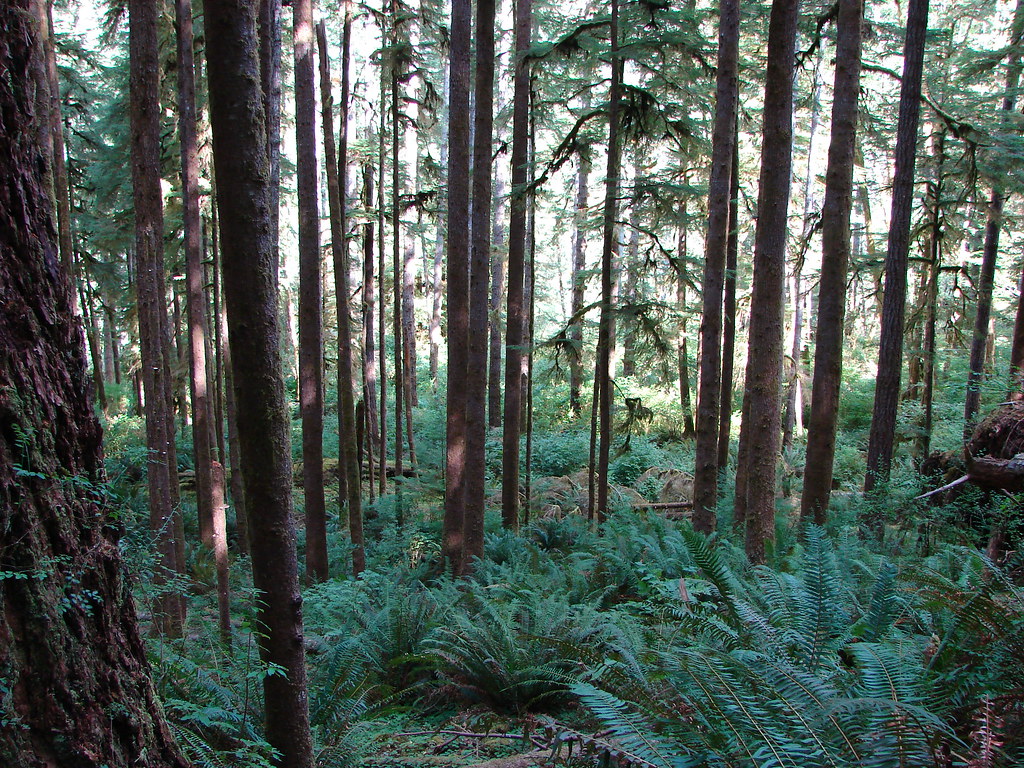
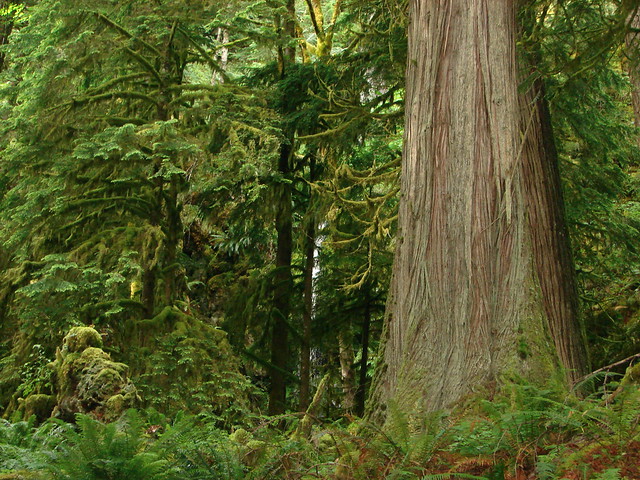
The wilderness is home to impressive stands of old growth trees but in all honesty we had not yet come to fully appreciate what that meant. Like too many hikers we were focused on big views, massive waterfalls, vast wildflower meadows, or glistening lakes.

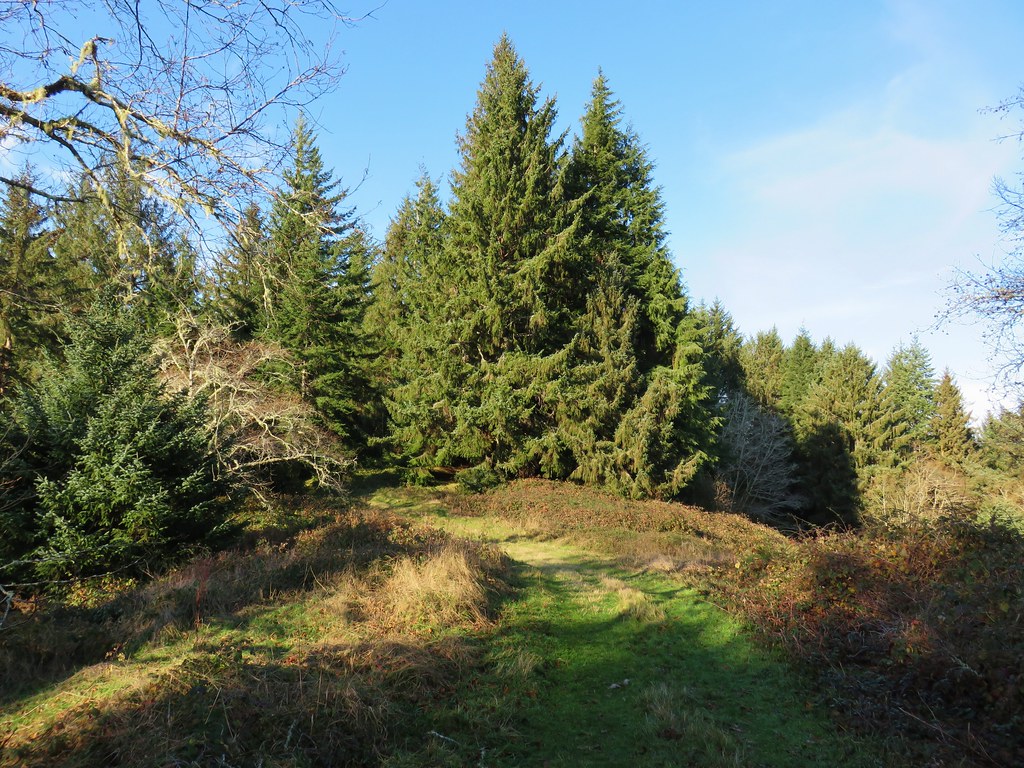
Our hike began at the Horse Creek North Trailhead where we followed the trail for .6 miles along an old roadbed to the boundary of the Drift Creek Wilderness.
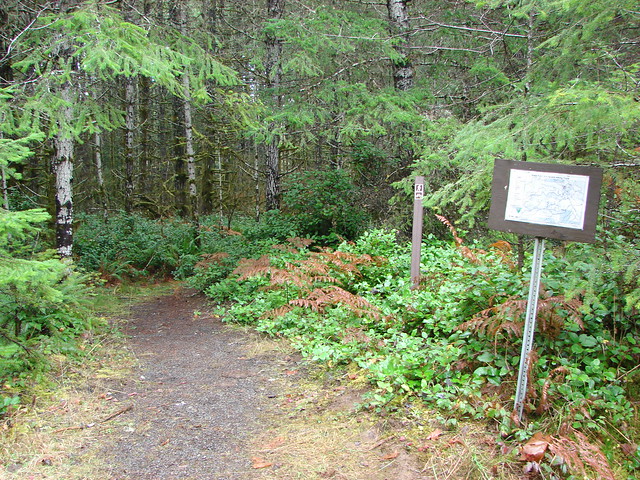
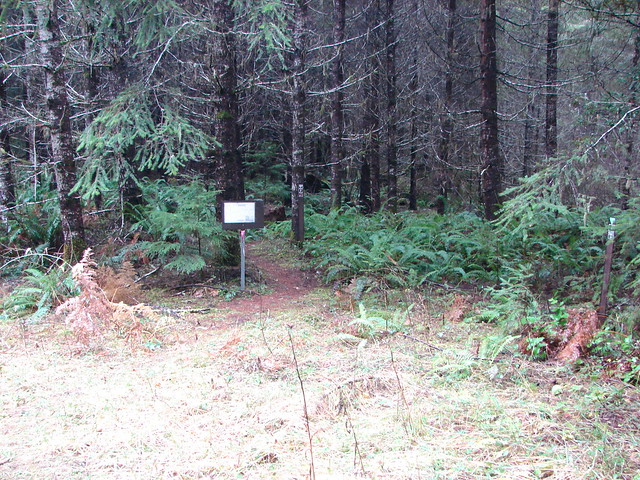
Drift Creek Trailhead

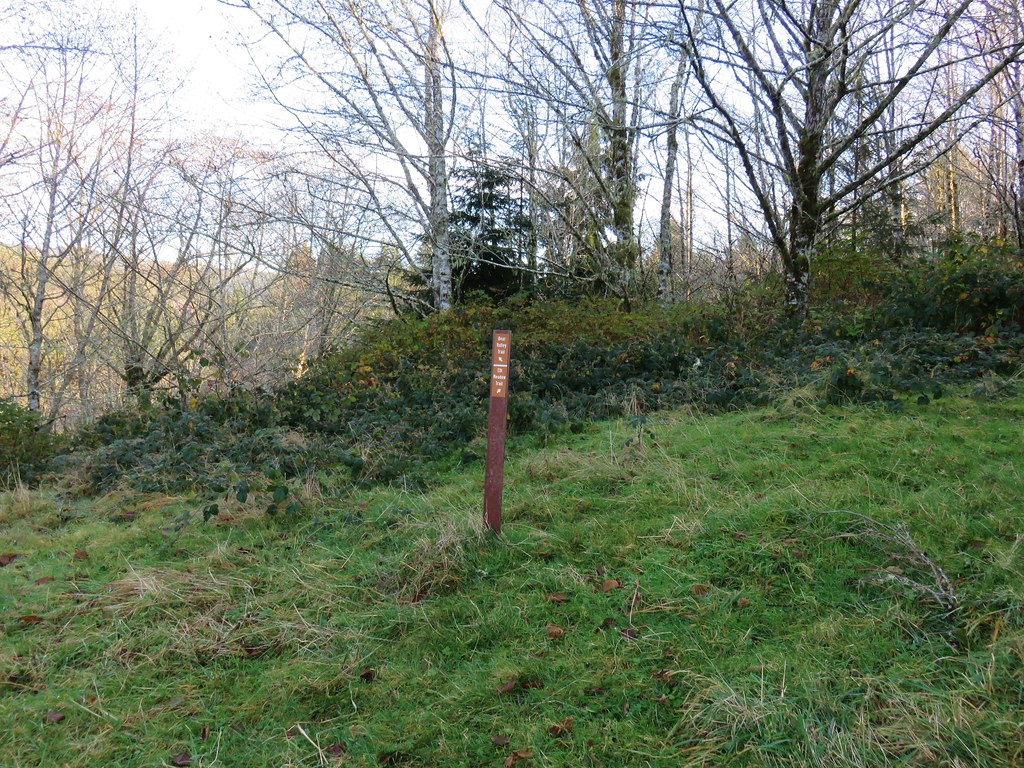
Drift Creek Wilderness sign

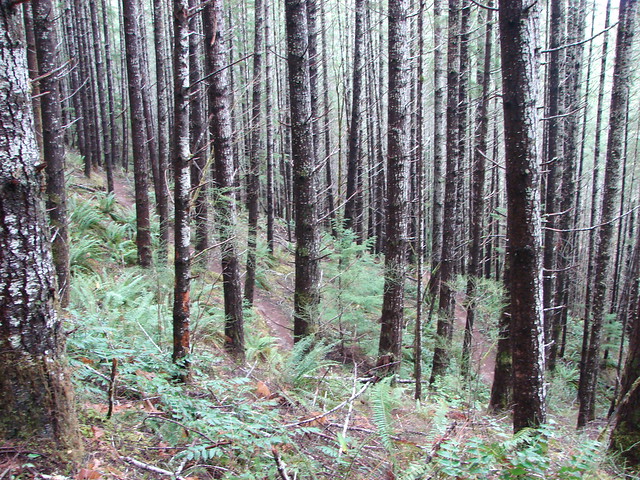
From the wilderness boundary the trail gradually descended for 3.2 miles to a campsite near Drift Creek.
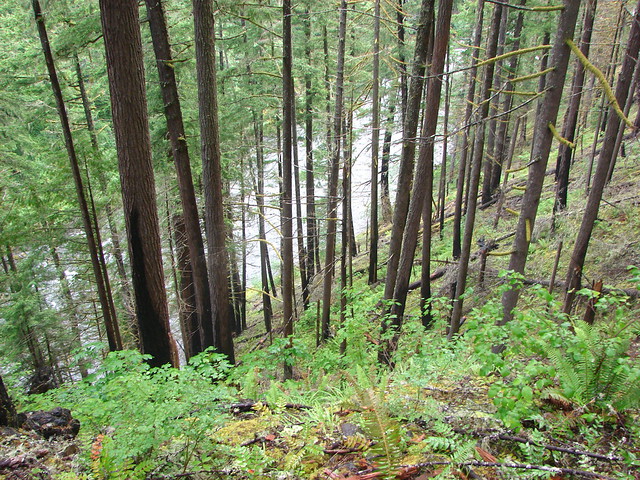
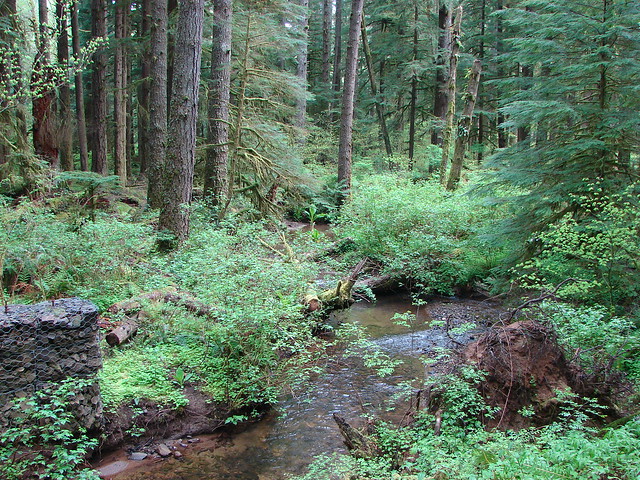
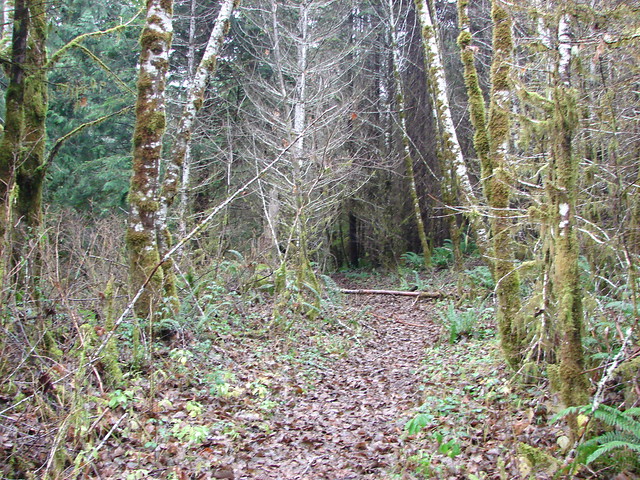
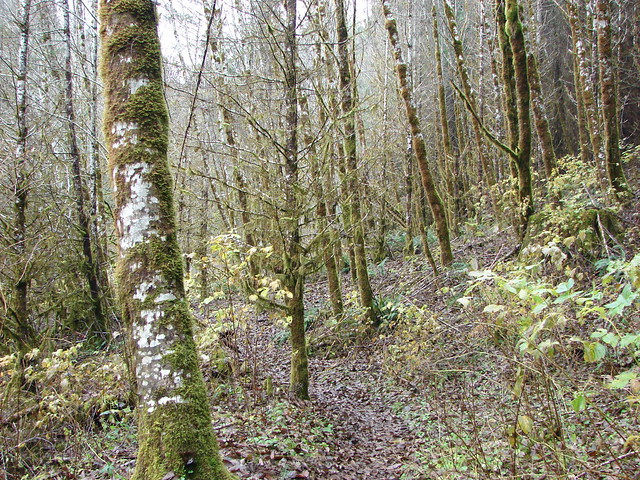
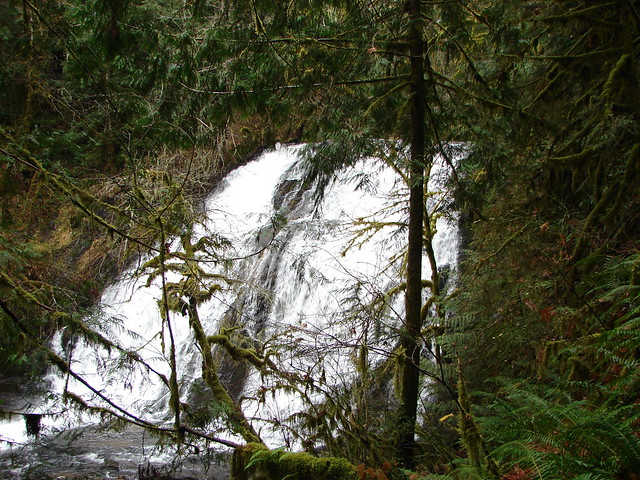
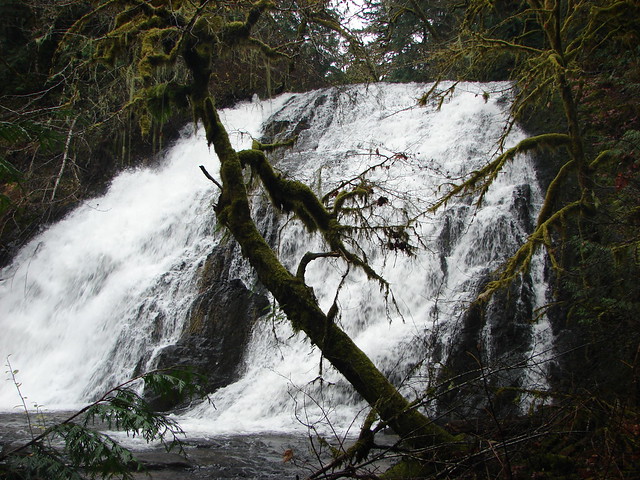
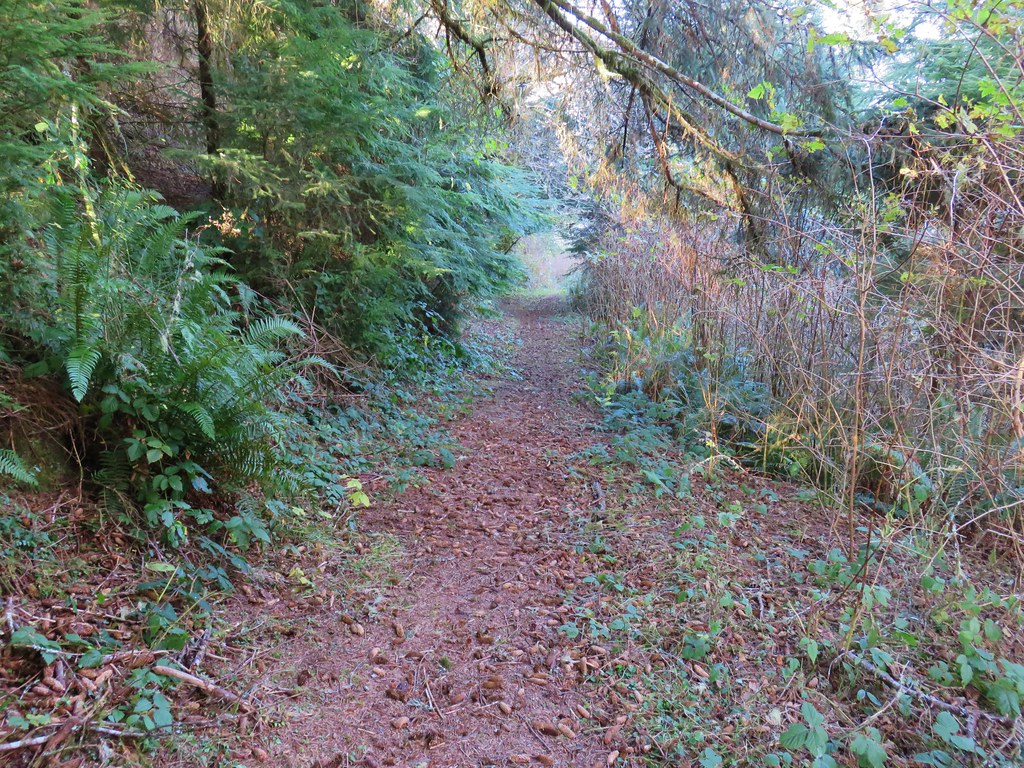
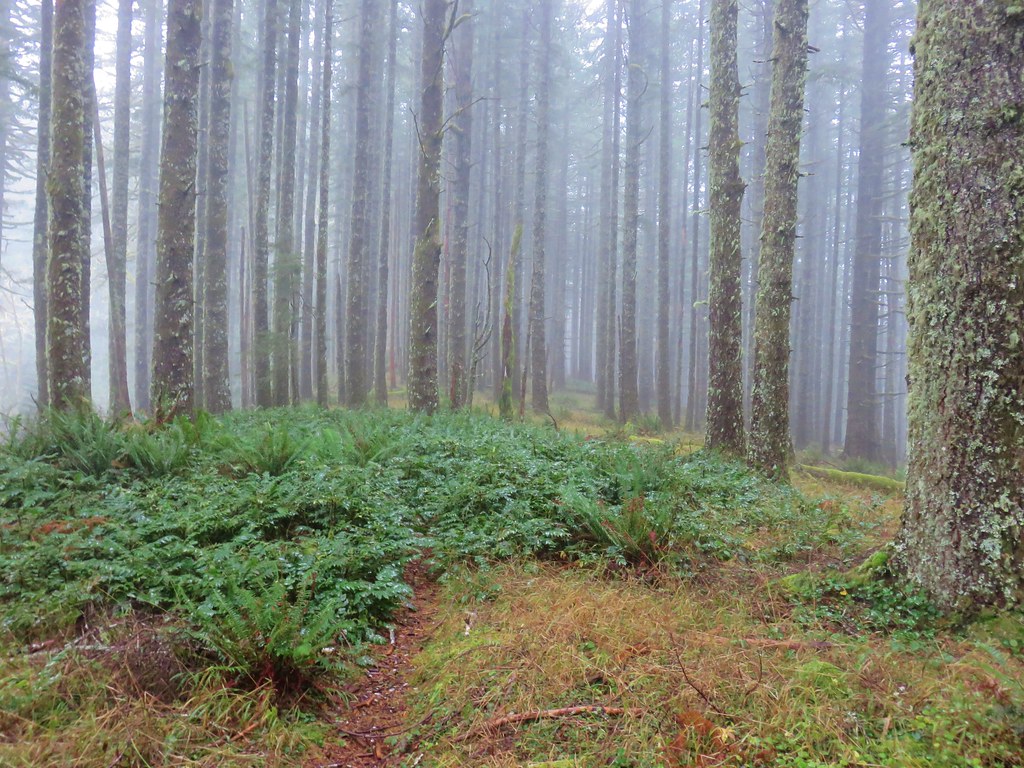
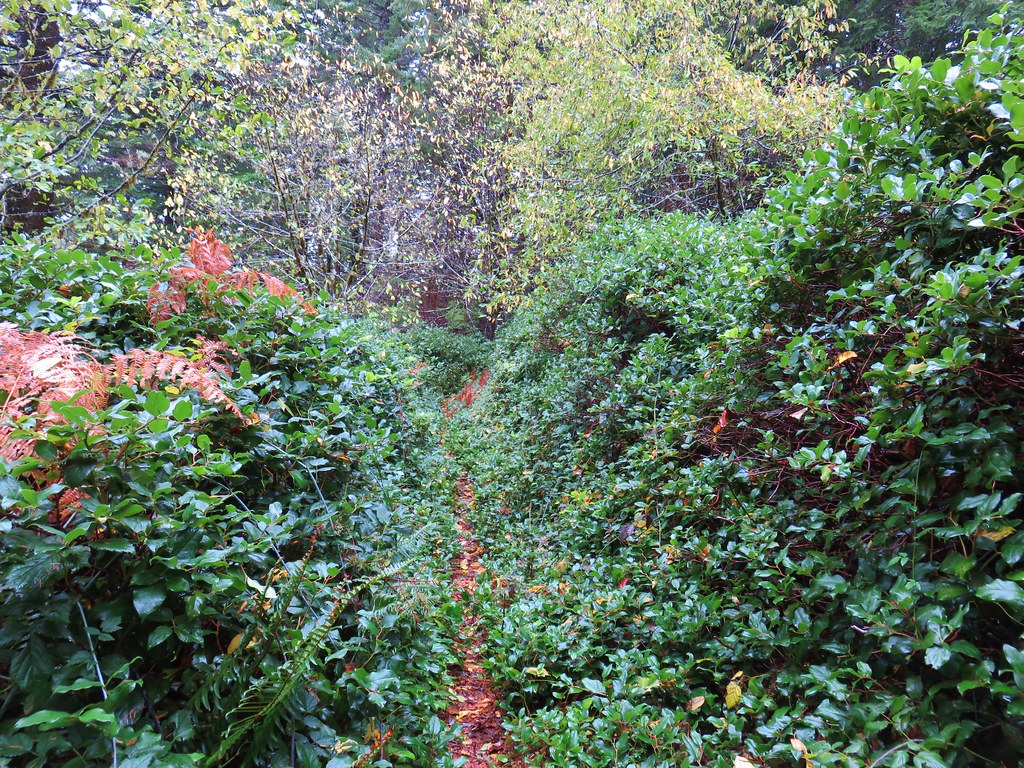
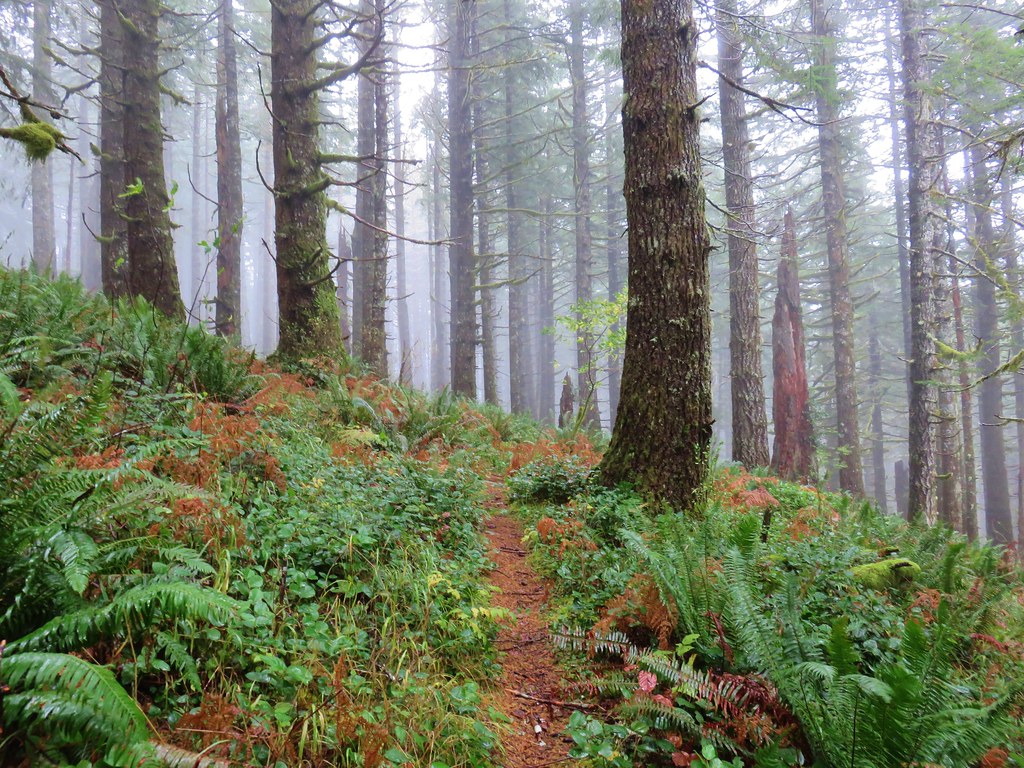
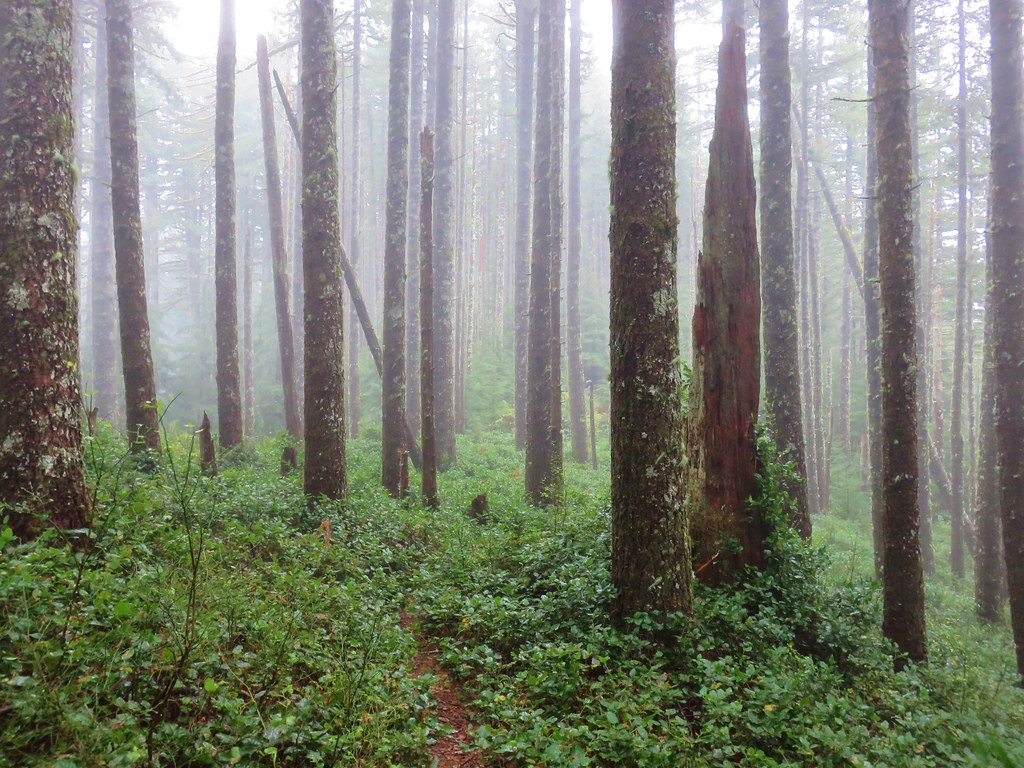
Drift Creek Wilderness

Drift Creek Wilderness

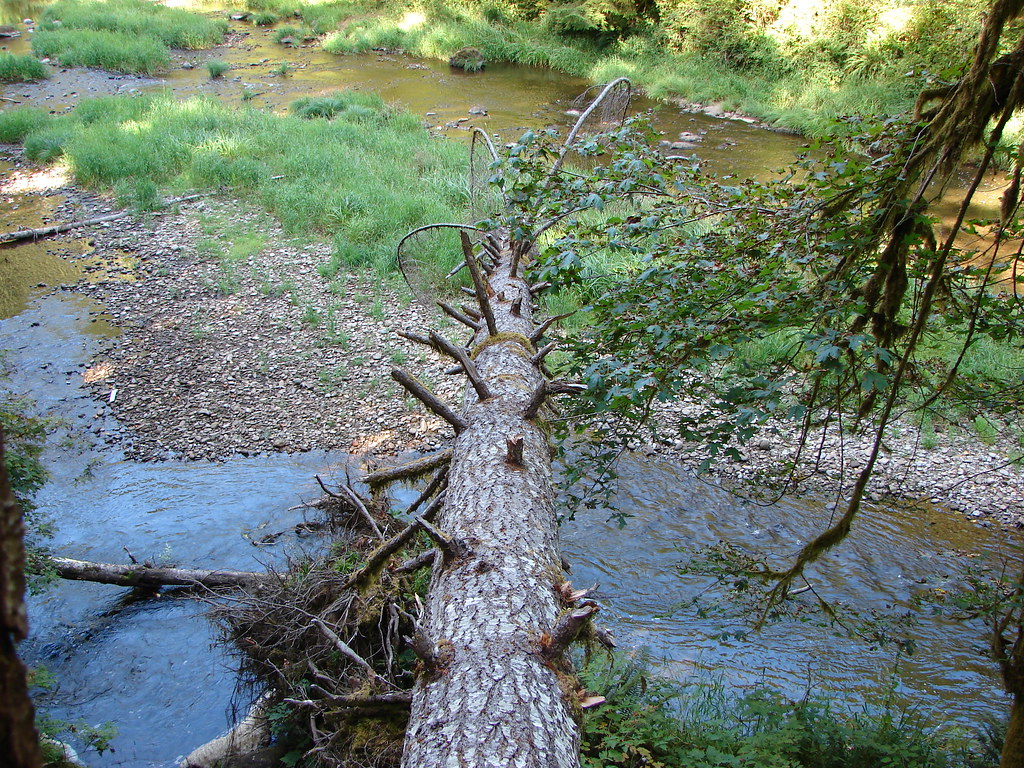
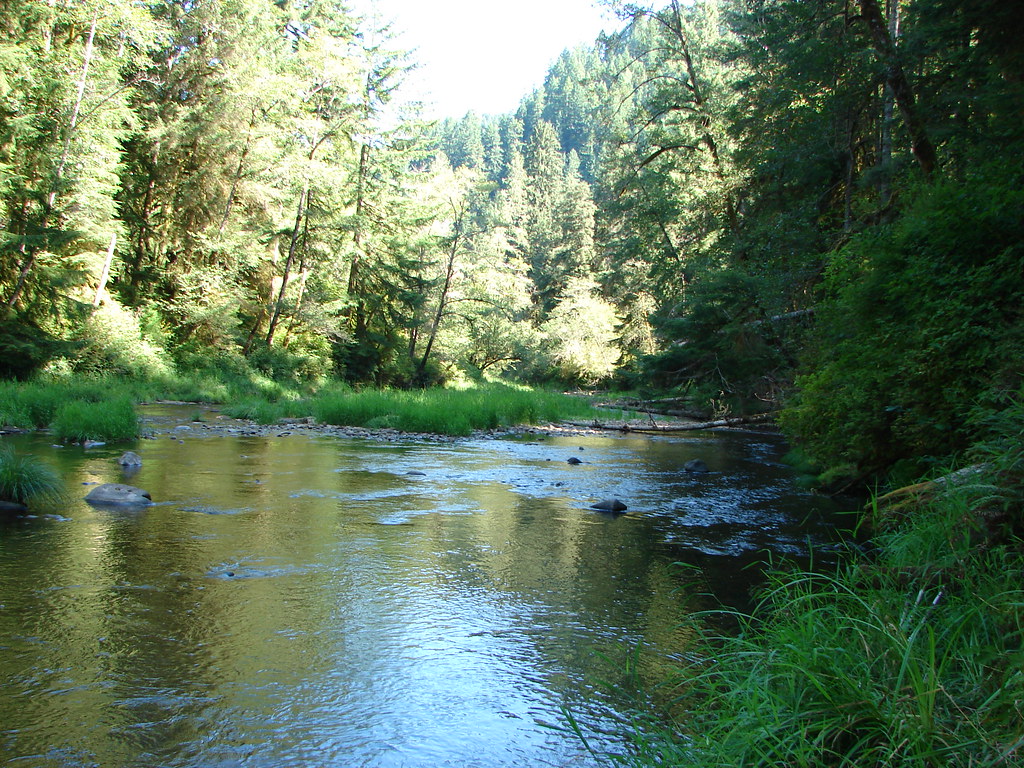
Interestingly there was no easy path down to the creek which one could ford to the Harris Ranch Trail to the north. We have plans to hike this trail in the future.
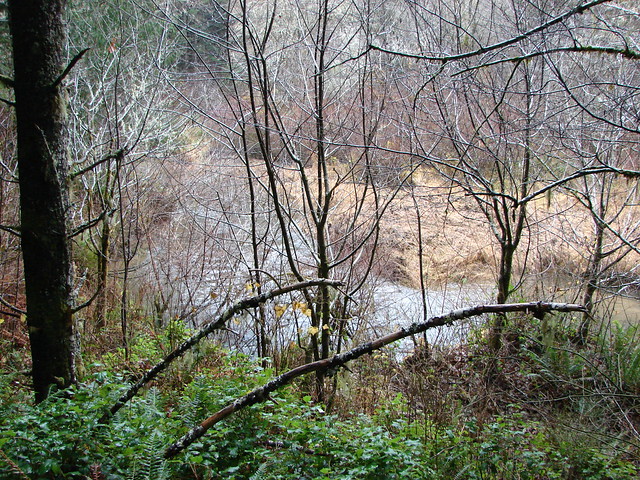
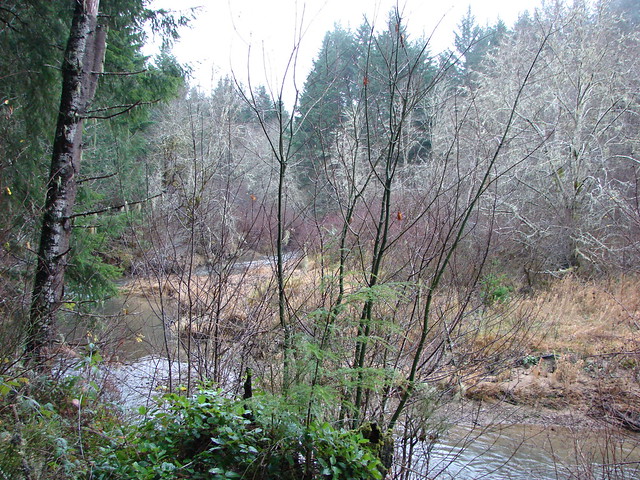
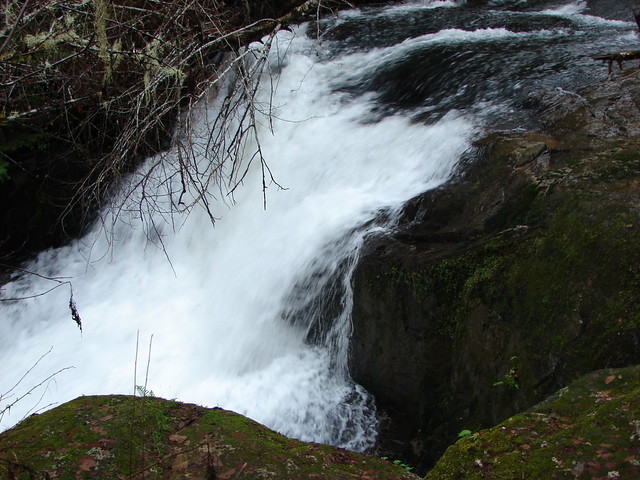
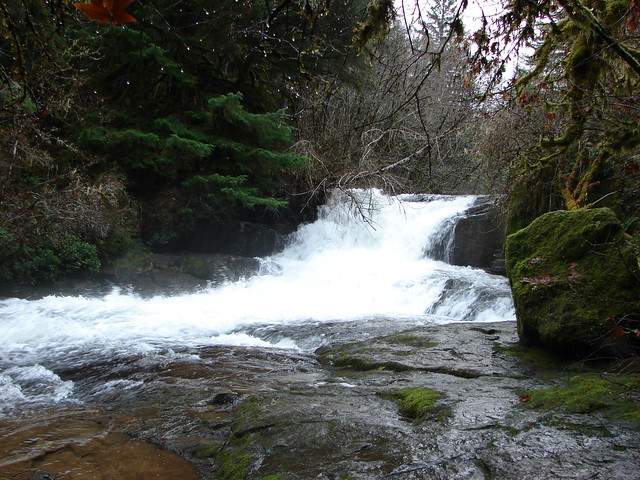
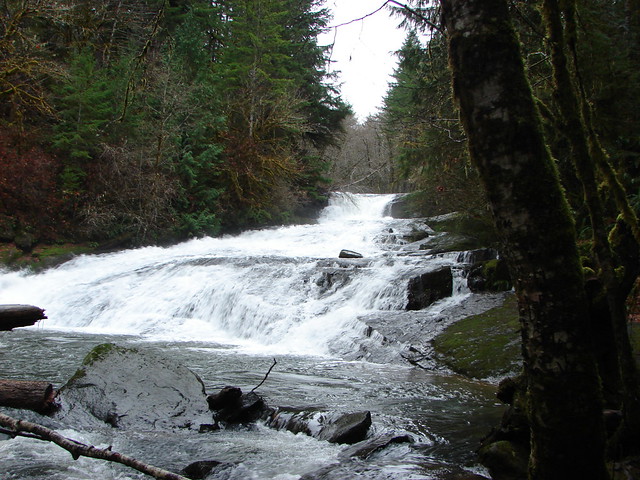
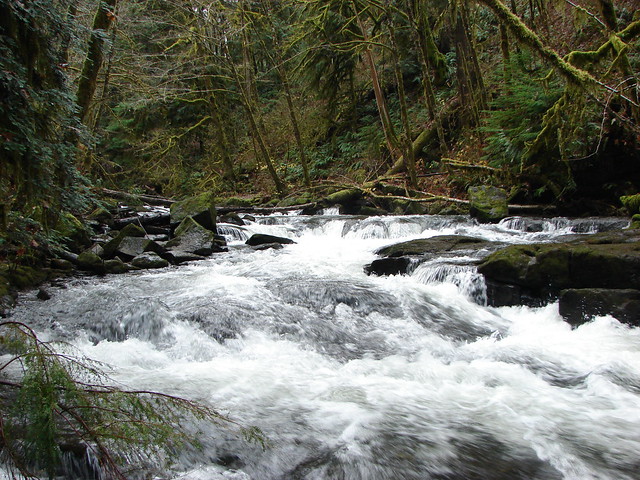
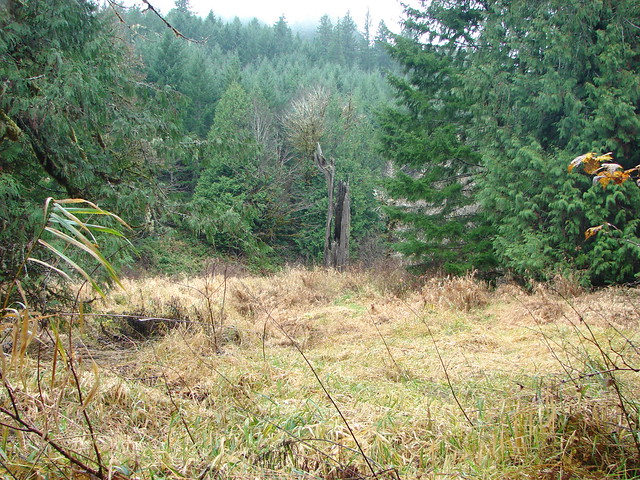
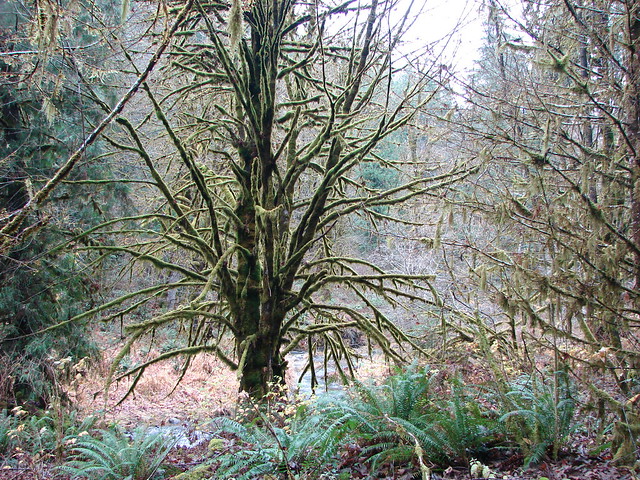
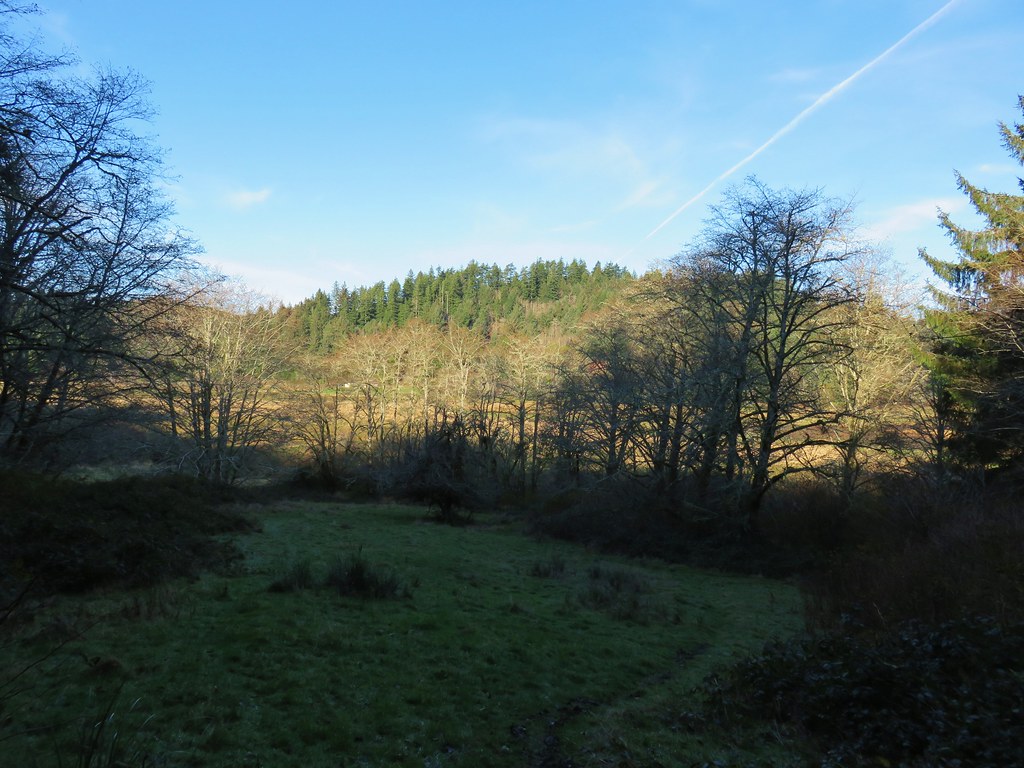
Drift Creek

Drift Creek

We returned the way we’d come, climbing back up to the trailhead wondering what the point of that was. Looking back on the hike now we realize we weren’t really paying attention to the forest along the way. If we were to repeat this hike now I think we would come away with a whole different view.

Given that the hike was only 7.6 miles we had the time and energy to make a second stop somewhere. We were hoping for something with a little more “bang” to it so we pulled out our guidebook and began looking for another short hike nearby.

We landed on the Cape Perpetua Scenic Area. Located three miles south of Yachats the area offered several trails to choose from and we picked the Captain Cook Trail.
Infromation for the Captain Cook Trail

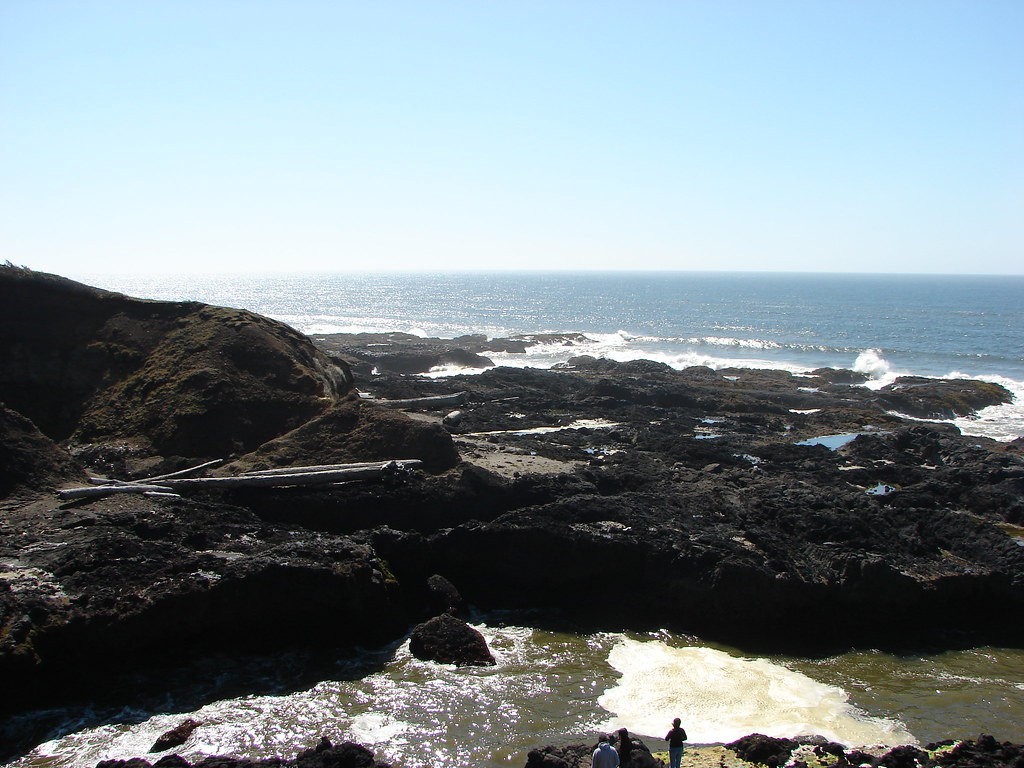
The Captain Cook Trail leads to a viewpoint of one of the Oregon’s Coasts more famous attraction – Thor’s Well. Unfortunately our visit occurred at time when the tide was out and the well quite.
Looking toward Thor's Well

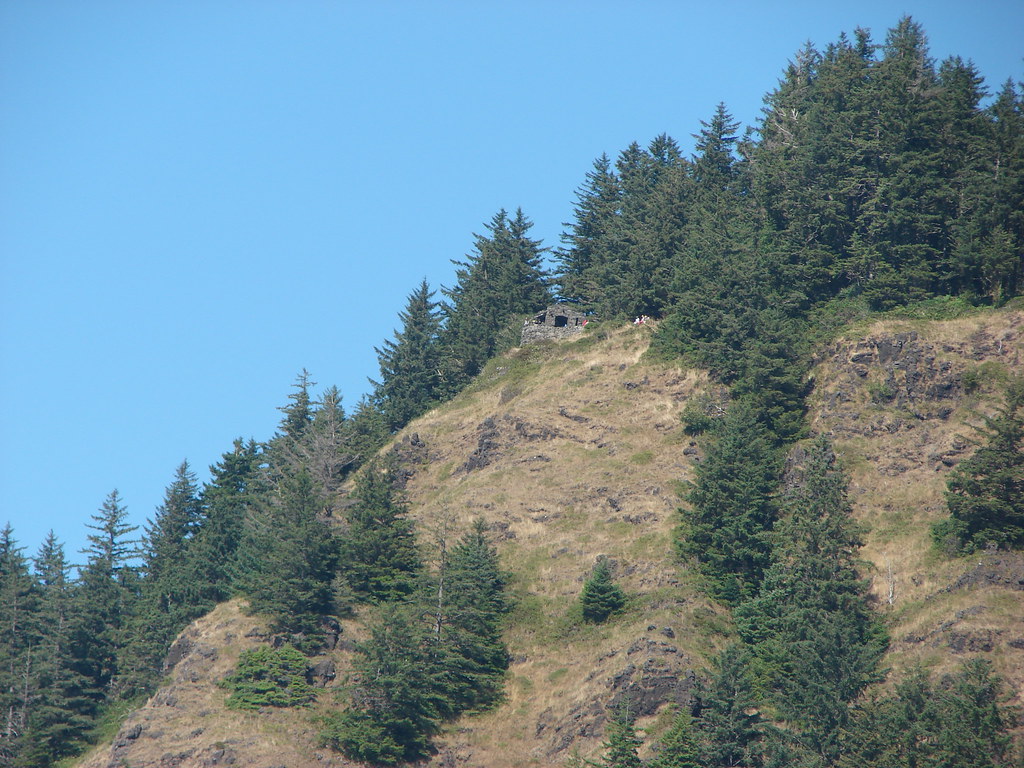
There was also a view to the north of the Cape Perputua Shelter which we would visit a couple years later (post).
Cape Perpetua stone shelter

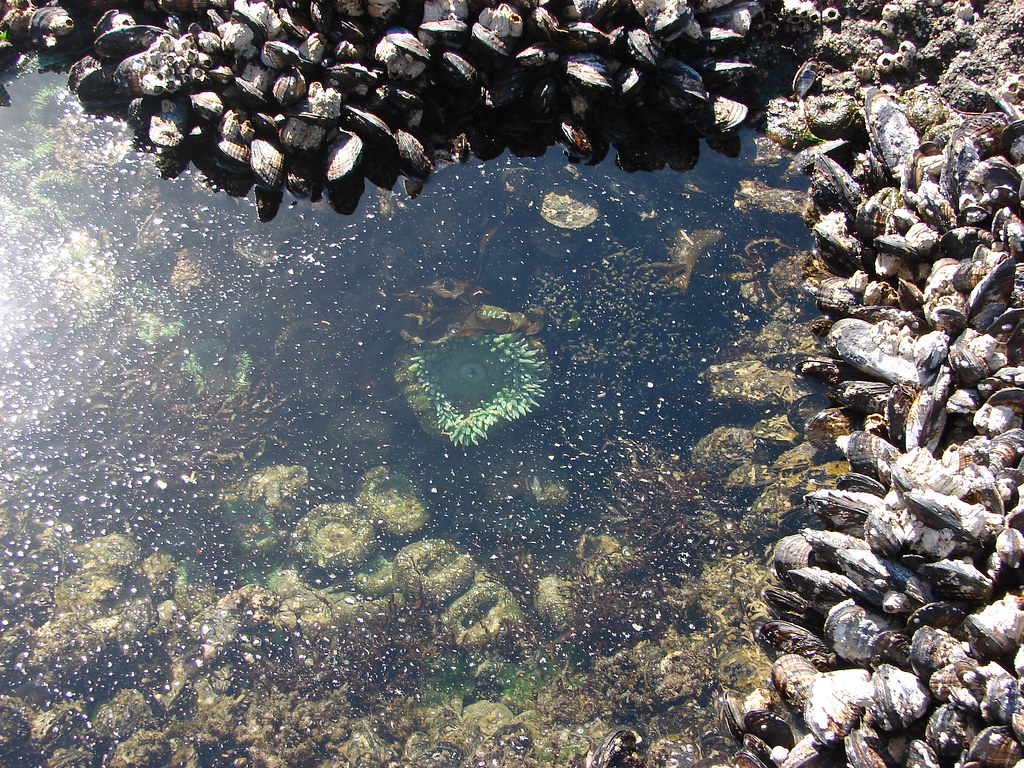
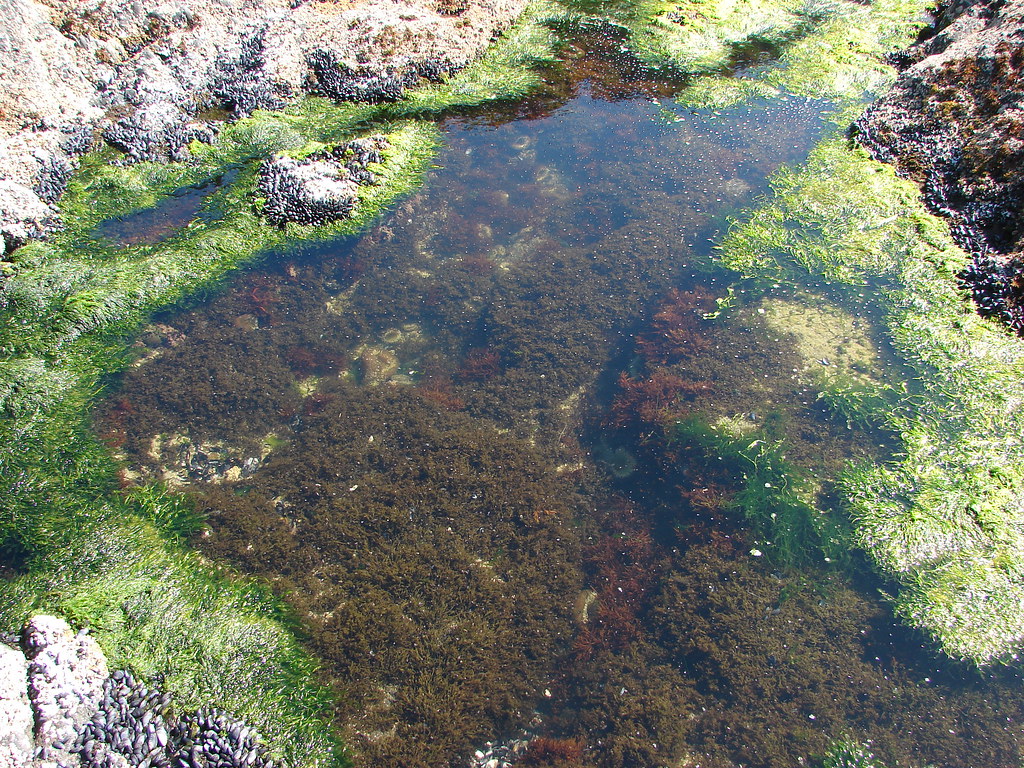
Thor’s Well may have been quiet due to the tide being out but that also meant that we could see quite a few of the tide pools.
Tide pool

Anemone

Starfish

Tide pool

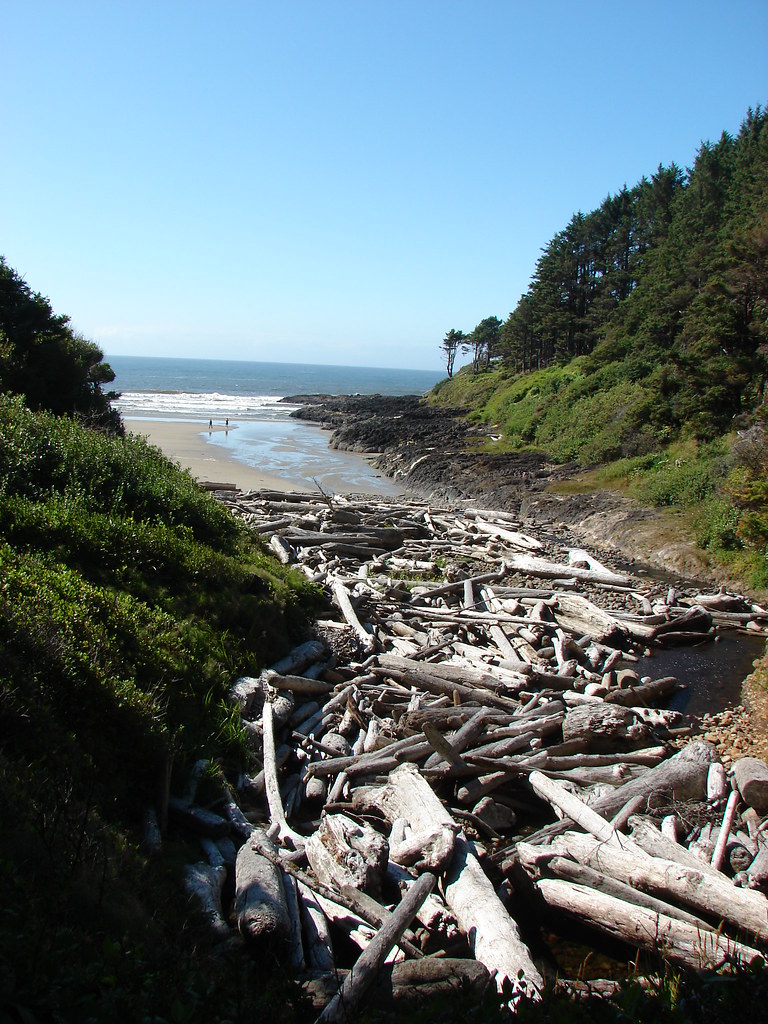
After touring the tide pools we headed back toward the parking area but turned left before passing under Highway 101 to take the Cape Cove Trail. This path crossed over Cape Creek on a bridge before leading down to more tidepools along the Devil’s Churn, a 50 slot carved into lava rock by the Pacific.
Cape Creek

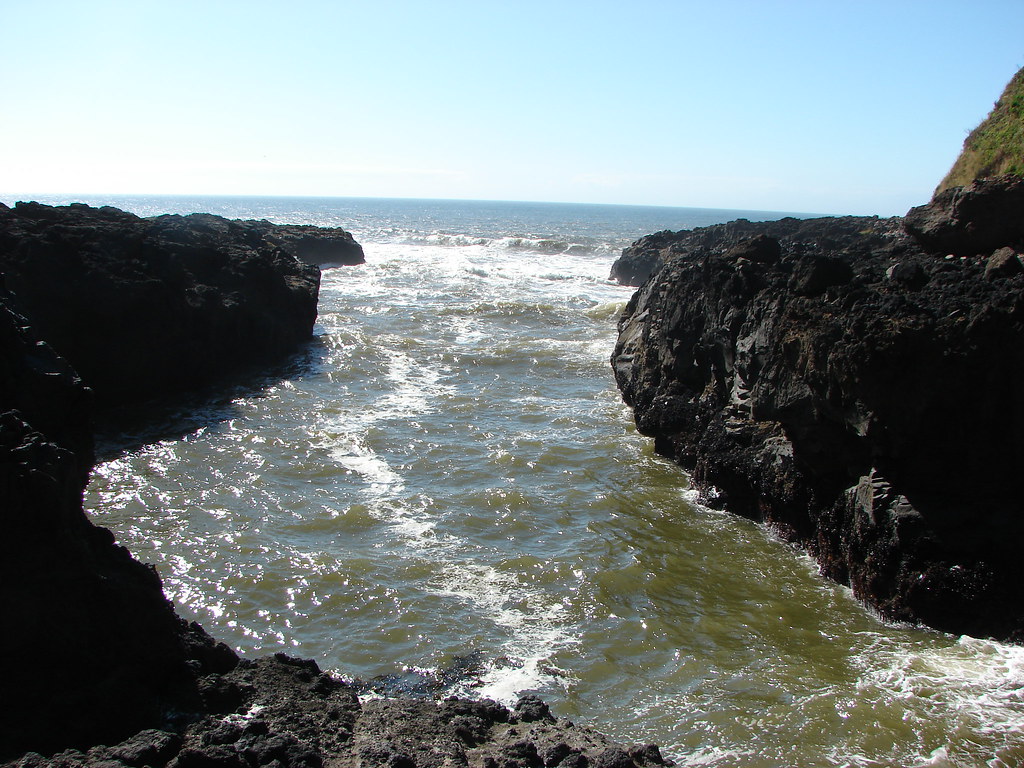
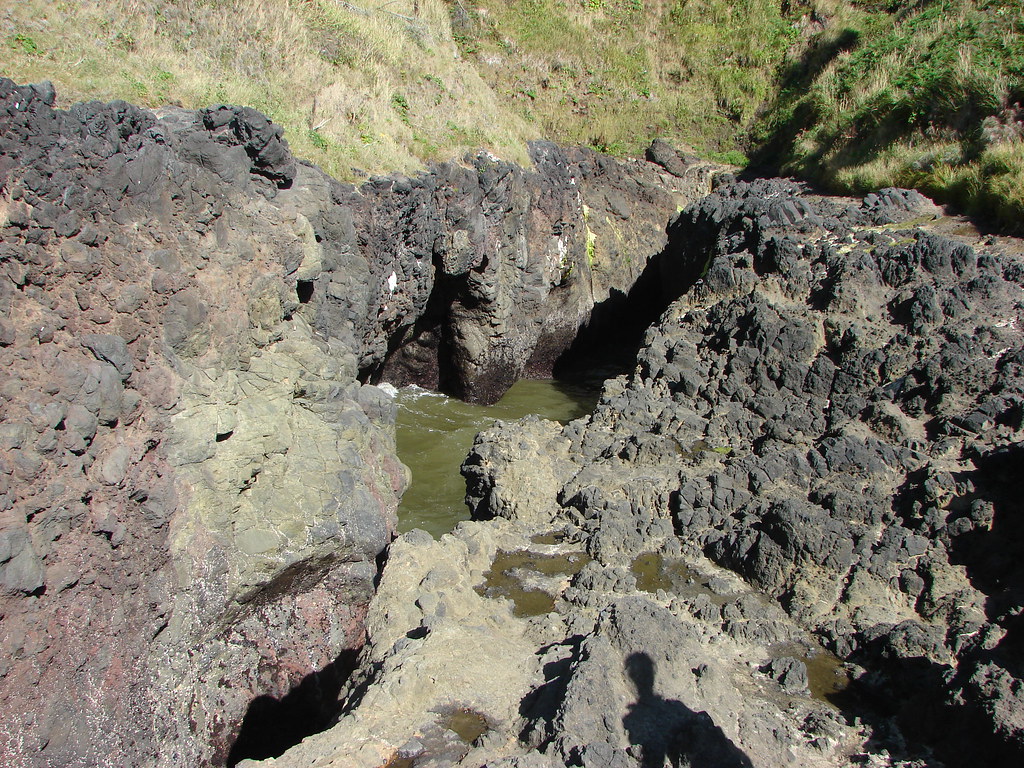
Devil's Churn

Devil's Churn

Again with the tide out there wasn’t much action occurring in the Devil’s Churn but it was still an interesting feature. Our hike here was just under 2 miles making it a reasonable hike for almost anyone. In addition to our plan to revisit the Drift Creek Wilderness we have one more trail to take at the Cape Perpetua Scenic Area so we will also be returning there someday to hike the Giant Spruce Trail. Happy Trails!

Flickr: Drift Creek North and Cape Perpetua Scenic Area

Categories
Clackamas Hiking Old Cascades Oregon Throwback Thursday Trip report

Throwback Thursday – Clackamas River Trail

**Note the 2020 Riverside Fire burned a most of this hike.**

It’s time for another throwback Thursday hike. This week we’re covering our 6/30/2012 visit to the Clackamas River Trail. This was a strange hike for us. For some reason we were really dragging on this hike. Of the hikes where we’ve had our GPS with us our average moving speed for this one was our 9th slowest. All eight of the slower hikes had extenuating circumstance such as snow or extended off-trail stretches which contributed to the slower pace but this hike had none of that.

We began our hike at the Fish Creek Trailhead. The steep hillsides in the Clackamas River Canyon are prone to slides and rockfall which close the trail from time to time so as always it pays to double check the trail status before heading out.
Fish Creek Trailhead

The trail contoured along the hillside above the Clackamas River often within sight of Highway 224 on the opposite side. A half mile from the trailhead the trail spent some time near the riverbank before climbing away through a 2003 fire zone.
Clackamas River

Foggy forest along the Clackamas River Trail

Clackamas River

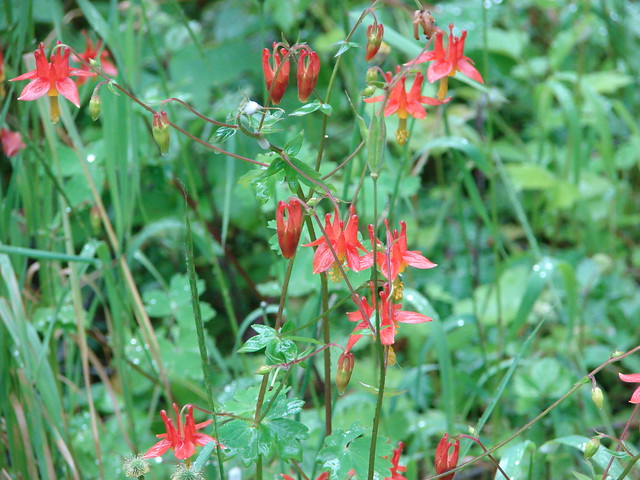
June flowers bloomed along the way including orange tiger lilies, purple penstemon, and red columbine.
Columbine

The trail left the 2003 fire zone after 2 miles and entered a lush green forest passing several small side streams.
Stream along the Clackamas River Trail

Waterfall back in the trees

Skunk cabbage

Creek along the Clackamas River Trail

Rhododendrons were blooming along this section.
Rhododendron

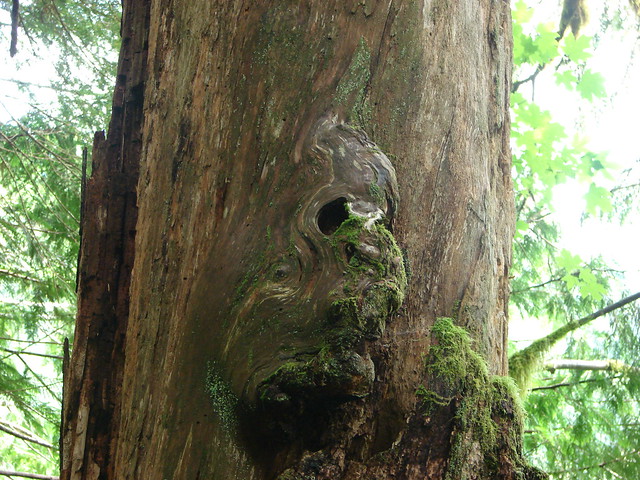
There was also a unique feature on a tree trunk, what appeared to us to be a face coming out of the wood.
Face in a tree

Just over 3.5 miles from the Fish Creek Trailhead we arrived at Pup Creek where a pointer to the right led us on side trail to 100′ Pup Creek Falls.
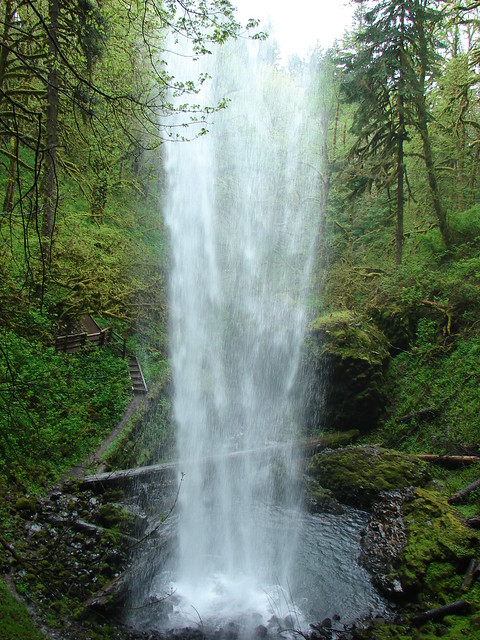
Pup Creek Falls

Pup Creek Falls

We had lunch by the falls before continuing. Our original plan had been to hike to Indian Henry Campground and back for a 15.6 mile round trip but the bridge at Pup Creek was out. We contemplated fording the creek but we had both felt pretty lethargic and knew we were dragging so we turned around and headed back leaving the other section for another time. Happy Trails!

Flickr: Clackamas River

Categories
Bend/Redmond Central Oregon Hiking Oregon Throwback Thursday Trip report

Throwback Thursday – Shevlin Park

On 8/5/2011, during a vacation in Central Oregon, we headed to Shevlin Park on the outskirts of Bend for an easy day hike. The 4.8 mile loop was a perfect break in the midst of a week of longer hikes.

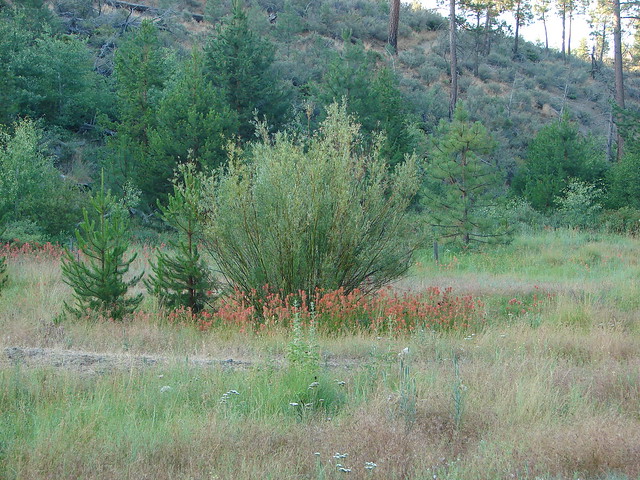
We parked in a large lot at the park entrance and walked across the park’s road to a trail that passed through a meadow for 100 yards before crossing over Tumalo Creek on a footbridge.
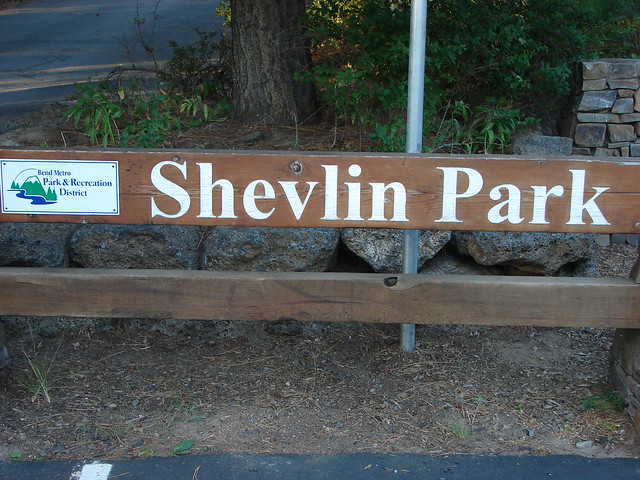
Shevlin Park sign

Bridge over Tumalo Creek

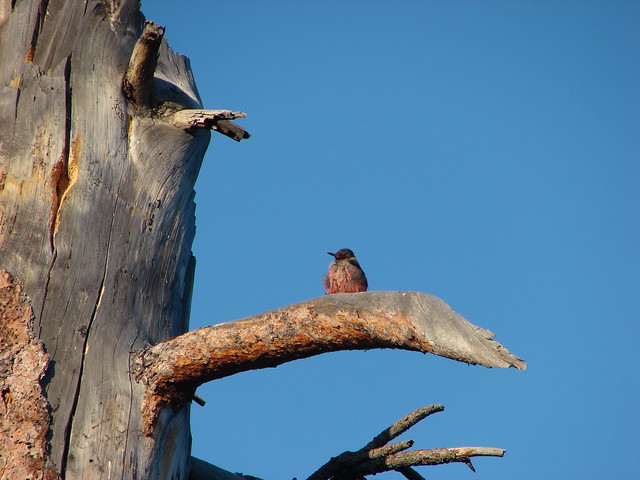
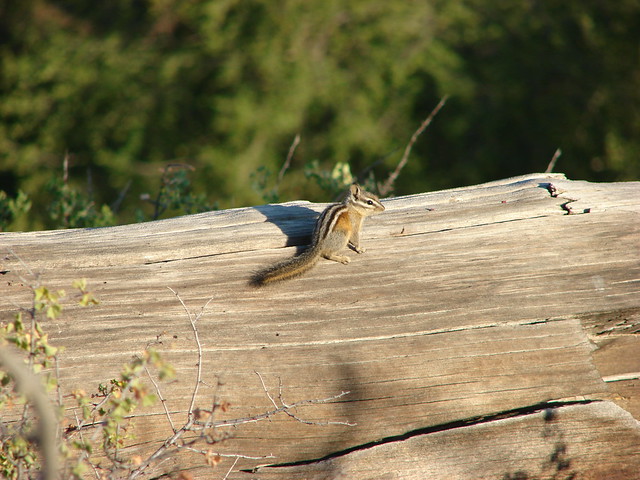
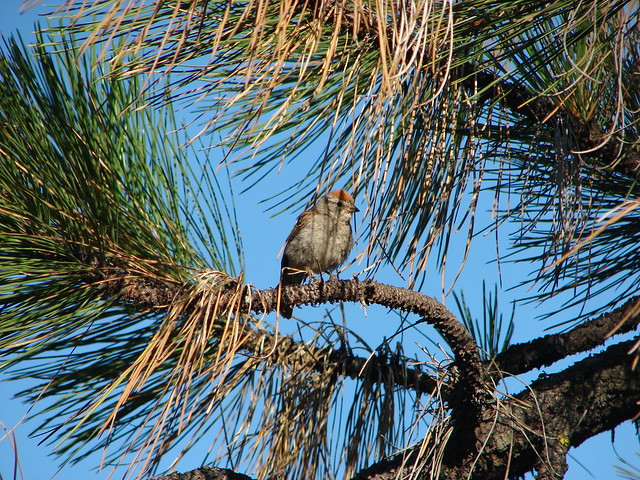
The trail climbed just a bit to a rim on the canyon above the creek. A fire in 1990 was stopped at the rim which still showed a few signs of the blaze. Birds and chipmunks were plentiful along this stretch.
Paintbrush

Loop Trail in Shevlin Park

Lewis's Woodpecker

Chipmunk

Chipping sparrow

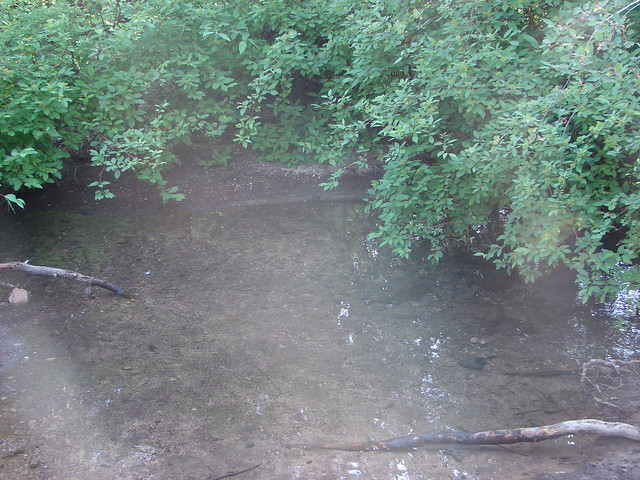
Tumalo Creek flowed through the forest in the green canyon below.
Tumalo Creek

At approximately the 1.75 mile mark we forked to the right and followed a trail back down into the canyon and crossed a side creek on another footbridge. We began encountering mosquitoes at that point and having had given enough blood already that week we picked up the pace quickly covering the next .6 miles where yet another bridge led us back over Tumalo Creek.
Tumalo Creek

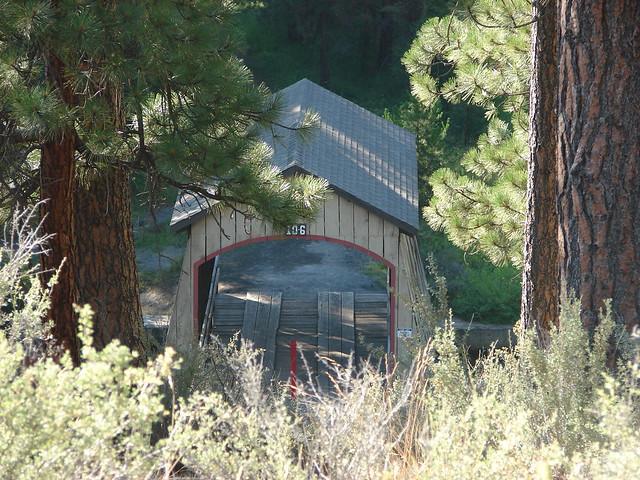
The trail once again climbed away from the creek which provided relief from the mosquitoes. From the bridge it was 2.2 miles back to the parking lot. At the 1.5 mile mark a side trail led down to the Hixon Crossing covered bridge which we had a nice view of from above.
Hixson Crossing Covered Bridge

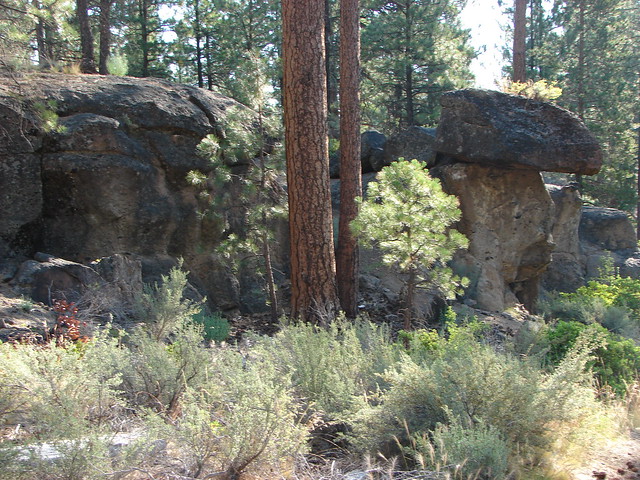
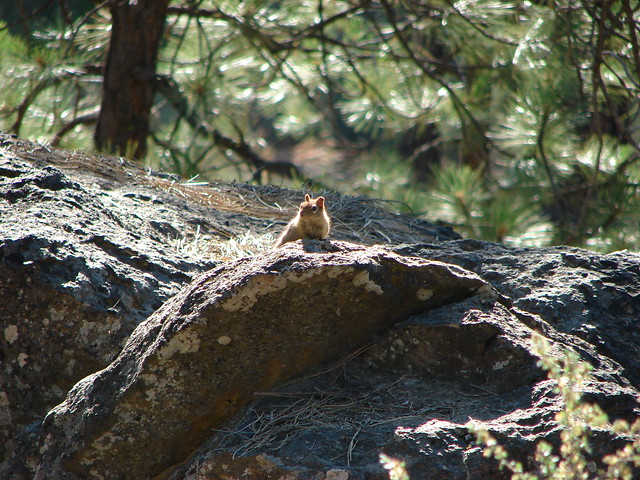
The trail passed Ponderosa Pine trees and some interesting rock formations where golden-mantled ground squirrels and gray Douglas squirrels watched us as we passed by.
Rocks along the Loop Trail in Shevlin park

Golden-mantled Ground Squirrel

Douglas Squirrel

With a relatively short distance and only 300′ of elevation gain the Shevlin Park loop was a great choice for a recovery day. It’s proximity to Bend also meant we had plenty of time left in the day to pursue other activities in town. Happy Trails!

Flickr: Shevlin Park

Categories
Hiking Oregon Salem/Albany Throwback Thursday Trip report Willamette Valley

Throwback Thursday -Shellburg Falls

**Note the 2020 Beachie Creek Fire burned the area covered in this hike.**

This weeks Throwback Thursday hike features the some lesser known and visited waterfalls near Salem, OR not far from the more famous falls of Silver Falls State Park.

On 5/22/2011 we headed out for a short hike to a pair of waterfalls on Shellburg Creek.  Two trailheads offer access to the falls. The Shellburg Falls Trailhead is open year around while an upper trailhead located at the Shellburg Falls Campground is only open from May 20th through October.  We started at the upper trailhead. To reach the campground from Highway 22 turn north on Wagner Road, which is just east of Mehama, OR, and follow signs for 8 miles to the campground.
Shellburg Falls Trailhead

From there a .8 mile trail crossed Shellburg Creek twice on it’s way to Shellburg Falls and then Lower Shellburg Falls. From the looks of the creek we didn’t expect much from the falls but as is often the case looks can be deceiving.
Shellburg Creek

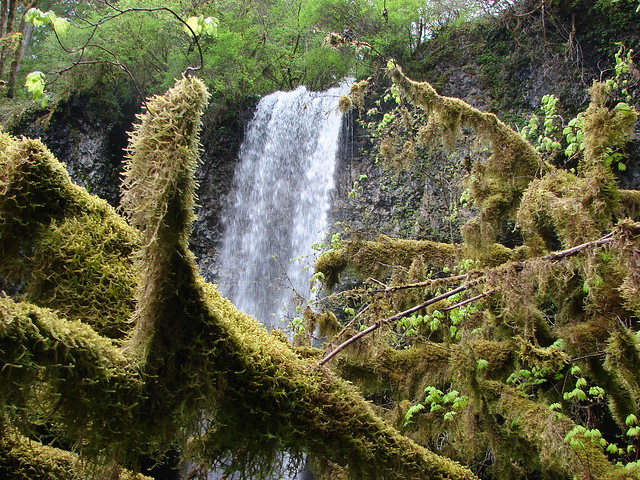
Shellburg Falls

The trail dropped down and passed behind the falls before continuing downhill to a short side trail to the bottom of the falls.
Shellburg Falls

Shellburg Falls

Shellburg Falls

Less than a quarter mile later we arrived at a closed road (the route up from the lower trailhead)which crossed Shellburg Creek via a concrete bridge. Lower Shellburg Falls lay just on the other side of this bridge.
Lower Shellberg Falls

We turned left (east) on the road and followed it for .3 miles to the August Mountain Trail. The August Mountain Tail climbed just over a mile to junction with the half mile Vine Maple Trail which led us back to the upper trailhead.
Shellburg Creek Trail sign

Much of these trails crossed logging roads and passed through thinned forests.
View from the Shellburg Creek Trail

From the upper trailhead the loop was right around 3 miles while starting from the lower trailhead would have added about 2.6 miles to the days total. While Silver Falls State Park sees plenty of crowds Shellburg Falls sees far fewer. If you’re in the area and love waterfalls it’s definitely worth the visit. Happy Trails!

Flickr: Shellburg Falls

Categories
Coastal Range Hiking Oregon Throwback Thursday Trip report

Throwback Thursday – Alsea Falls

Now that we are in the midst of our offseason it’s time to bring back our Throwback Thursday posts. This installment of Throwback Thursday features our final hike of 2012 and the last hike we took before starting this blog.   On 12/19/2012 we headed for the Alsea Falls Recreation Area which is located in the Coast Range west of Monroe, OR.  To reach the area from Highway 99w we turned west near Monroe at a sign for Alpine.  Signs for the recreation area kept us headed in the right direction.  We could have started our hike in a couple of places including the most popular trailhead at a day use picnic area practically next to Alsea Falls. We opted to instead to begin further up the South Fork Alsea River at a small trailhead along Miller Road.

Alsea Falls trailhead

The level trail followed the South Fork Alsea River for a mile to the Alsea Falls Campground. At the .7 mile mark a trail joined from the right which was to be our return route. Had it been earlier in the year there probably wouldn’t have been many views of the river along this stretch but with the leaves gone from the trees the river was often visible.

South Fork Alsea River

South Fork Alsea River

We didn’t take the footbridge across the river into the campground opting to stay on the east side of the river for another .6 miles to a second footbridge ignoring a side trail to the right (our return route) shortly before the bridge.

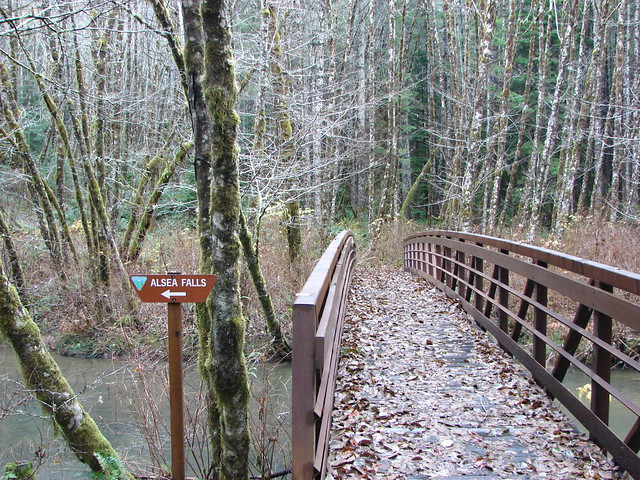
Bridge over the South Fork Alsea River

This bridge led to the day use picnic area. We crossed the bridge pausing to look downstream at the top of Alsea Falls.

South Fork Alsea River

A .3 mile path continued downstream on the south side of the river below the falls. The photos we’d seen of Alsea Falls had obviously been taken at other times of the year. The pictures we’d seen were of a terraced fall gently cascading over rocks, but what we found was a whitewater cascade.

Alsea Falls

Alsea Falls

Alsea Falls

After admiring just how much more water was flowing now than what we’d seen in the photos we recrossed the footbridge and turned left continuing downstream. The trail climbed a bit before dropping back down near river level and another split in the trail after .6 miles. A trail here descended to the river bank before petering out.

South Fork Alsea River

From here the trail soon joined an old road which we followed briefly toward McBee Park to another trail which led slightly uphill to the right.

Alsea Falls Trail

Trail to Green Peak Falls

This trail ran parallel to Peak Creek but stayed far enough away to keep it hidden most of the half mile to Green Peak Falls.

Trail to Green Peak Falls

Meadow on the way to Green Peak Falls

Peak Creek

Having not seen any pictures of Green Peak Falls we weren’t sure what to expect but were pleasantly surprised by this 60′ waterfall.

Green Peak Falls

Green Peak Falls

Green Peak Falls

Almost as mesmerizing as the waterfall was a tree on the far side of the creek that was covered in light green lichen.

Lichen draped tree

On the way back we had a couple of loop options. We could have taken a .6 mile section of trail from the picnic area to the campground, but we chose a slightly longer loop with a little extra elevation gain. Just beyond the footbridge to the picnic area we turned left at a trail sign and headed uphill into the forest.

Trail sign in the Alsea Falls Recreation Area

This path climbed for a half mile to a road where we turned right for another half mile before descending on another half mile trail to the junction we had passed that morning .7 miles from Miller Road. This mile and a half was view less but the trails were well maintained.

Forest in the Alsea Falls Recreation Area

The Alsea Falls Recreation Area is popular in the warmer months when the river is more inviting but we had basically had the area to ourselves and the strong flow over the falls made a Winter visit worthwhile as well. Happy Trails!

Flickr: Alsea Falls

Categories
Hiking Northern Coast Oregon Oregon Coast Trip report

Nehalem Bay State Park, Kilchis Point Reserve, and Cape Meares State Scenic Viewpoint

We didn’t waste any time starting on our 2018 list of hikes as we took advantage of favorable weather on New Year’s Day and headed for the Oregon Coast. Our plan for the day was to make three stops near Tillamook. First at Cape Meares State Scenic Viewpoint, then at Kilchis Point Reserve, and finally at Nehalem Bay State Park. As we neared Tillamook though it became apparent that we were a bit ahead of the Sun so we decided to swap the first and final stops to avoid sitting at the Cape Meares Trailhead waiting for light.

We drove north through Tillamook on Highway 101 to mile post 44 (one mile south of Manzanita) where we turned west at a sign for Nehalem Bay State Park. After paying the $5 day use fee we parked at the large day use area. We waited briefly for enough light to take a short path to the ocean.
Nehalem Bay Trailhead

Pacific Ocean

The view from the beach was a good one with some of our previous destinations visible to the north.
Neahkahanie Mountain
Neahaknie Mountain, Angora Peak, and Cape Falcon

To the south our final destination of the day, Cape Meares, jutted out into the Pacific.
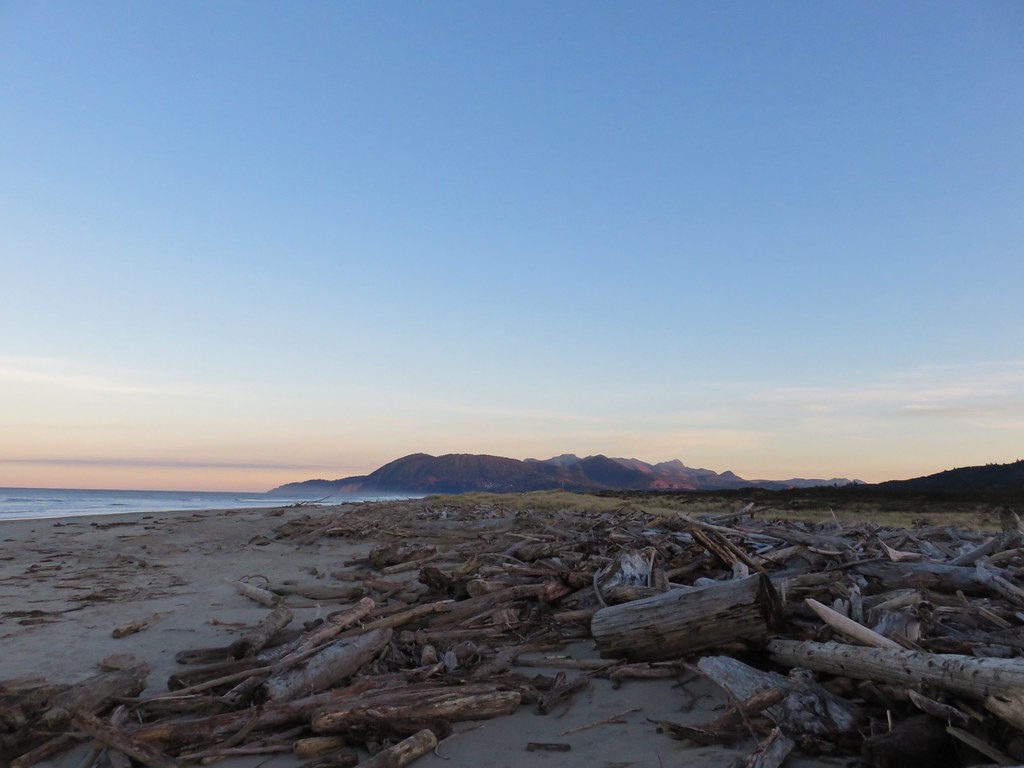
Looking south from the Nehalem Spit

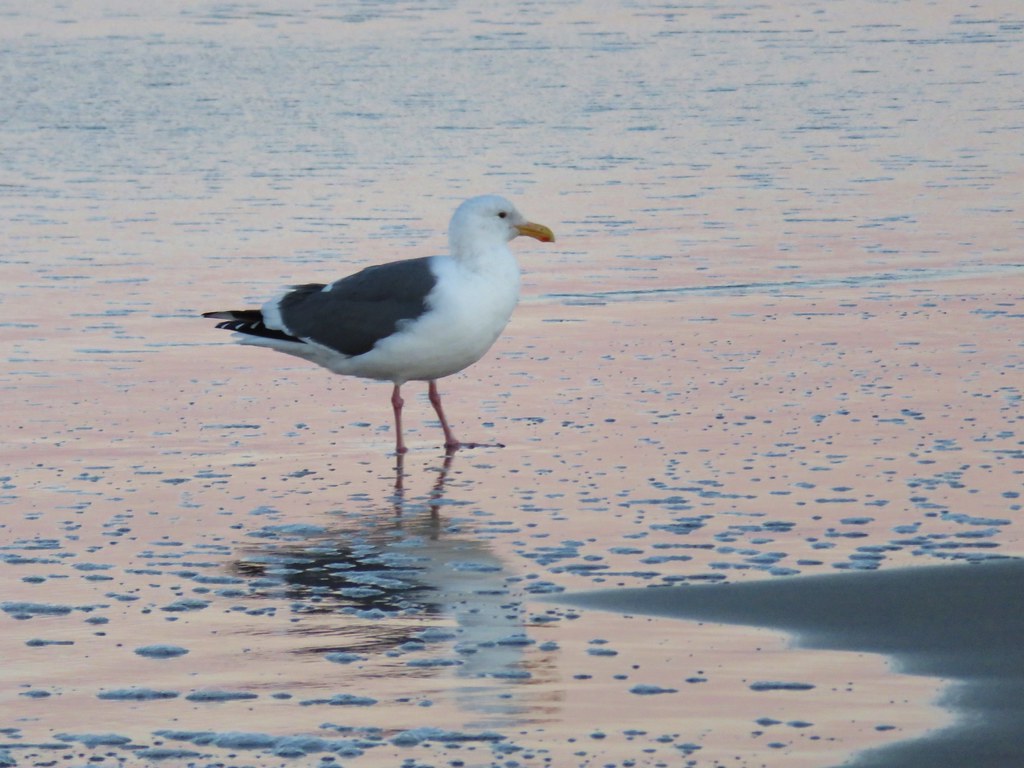
We walked south along the quite beach for 2.25 miles to the jetty at the end of the spit. We were joined by a lone jogger, some seagulls, and a curious seal.
Morning glow on the Pacific

Seagull

Seal

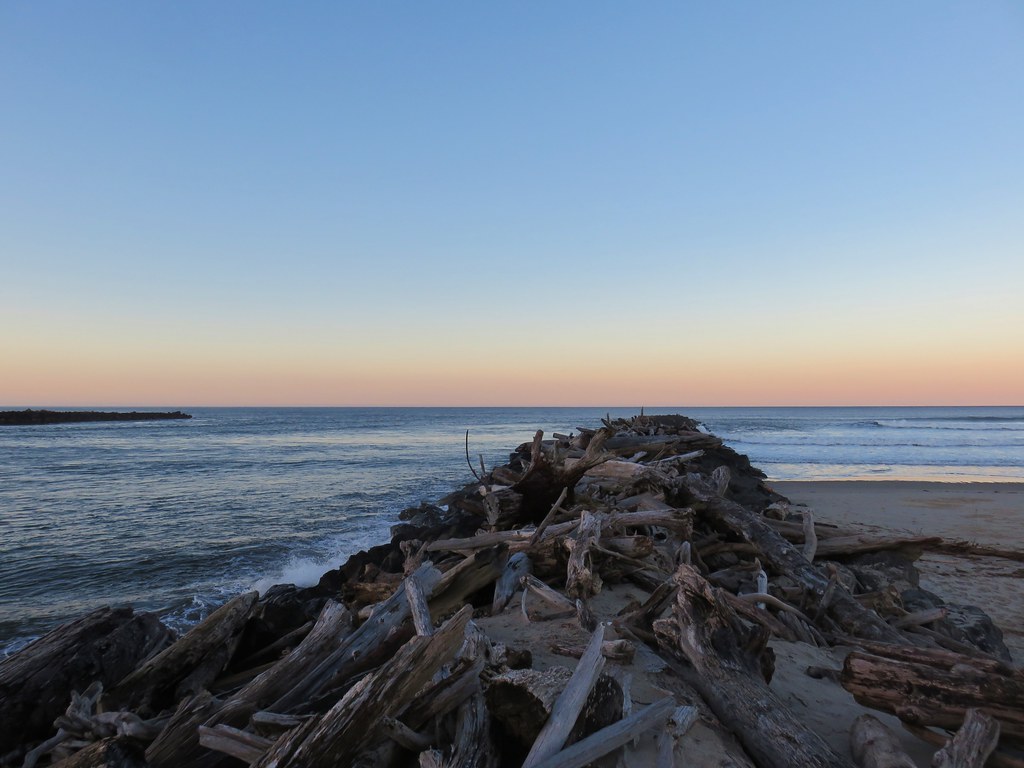
Jetty on Nehalem Spit

A mass of driftwood near the jetty forced us to backtrack a bit along the beach to a hiker sign where we turned inland.
Morning light hitting Neahkahanie Mountain

Hiker post on Nehalem Spit

We crossed the spit to the bay and turned north along the water on a worn path.
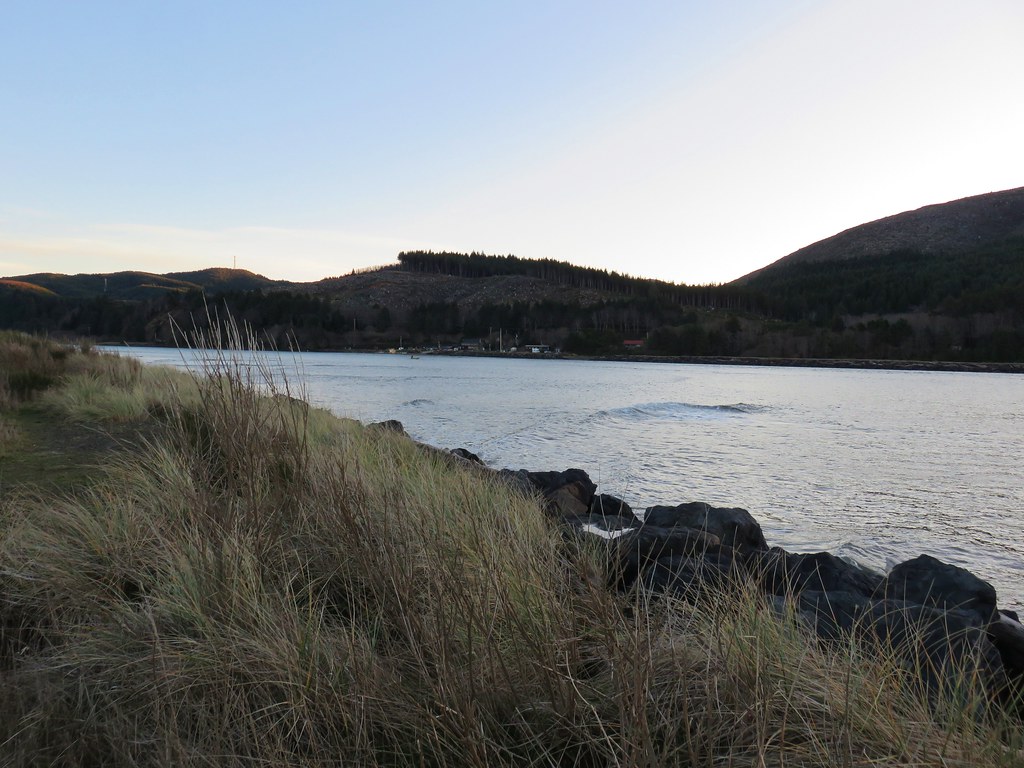
Swell heading into the bay

We were eventually able to get down onto the sandy Nehalem Beach which we walked along as far as we could before the high water forced us back up into the vegetation.
Neahkahanie Mountain across Nehalem BayNehalem Beach ahead

While we walked along the beach we spotted a bald eagle, more seals, and a varied thrush.
Bald eagle

Seals in Nehalem Bay

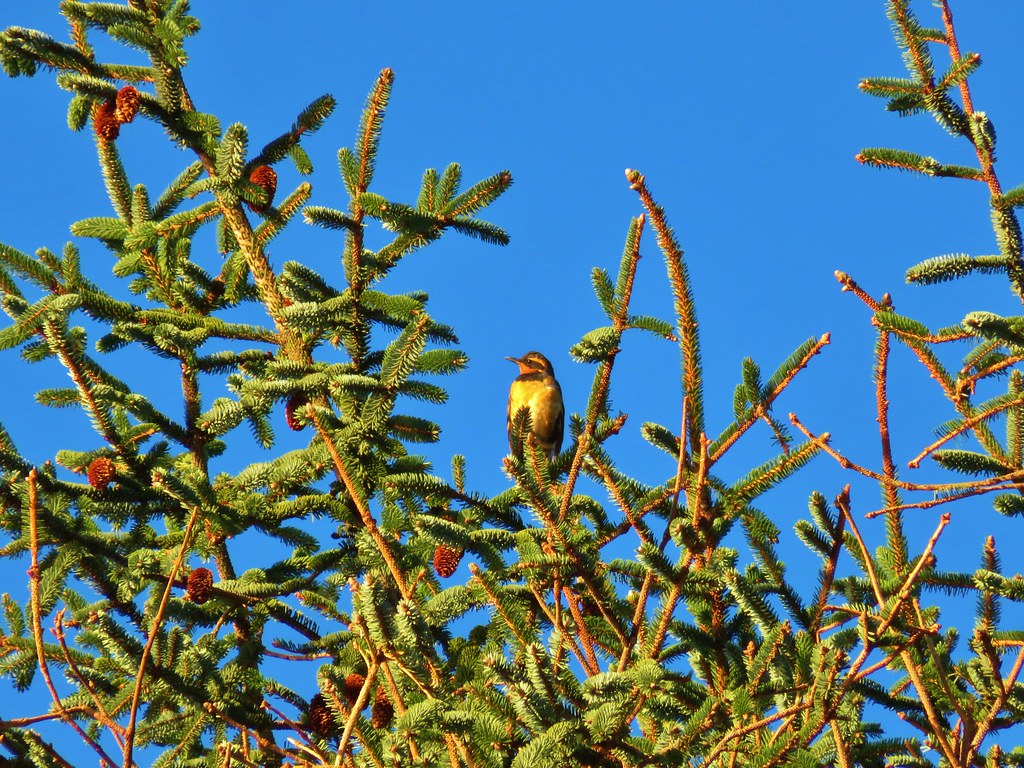
Varied thrush

Ideally we would have been able to keep on the sand all the way back along the bay to the park’s boat ramp but since that wasn’t an option we turned inland on what appeared to be a well traveled trail. We were hoping it would lead us to the horse trail that our map showed running down the center of the spit but after a short distance the path we were following became flooded.
More water on Nehalem Spit

We were forced to attempt to follow a maze of game trails.
Off trail travel on Nehalem Spit

We could guess who was responsible for the confusion of trails by the elk sign we continually spotted. We lucked out at one point when we came to another flooded area at a narrow point where we were able to cross on driftwood. Had we tried sticking to the bay we would have run into a spot too wide to cross and wound up where we were anyway.
Inlet along Nehalem Bay

Shortly after crossing the water travel became easier as we were able to reach another sandy beach and then pick up a wider more traveled trail back to the horse trail not far from the day use parking lot.
Nehalem Bay

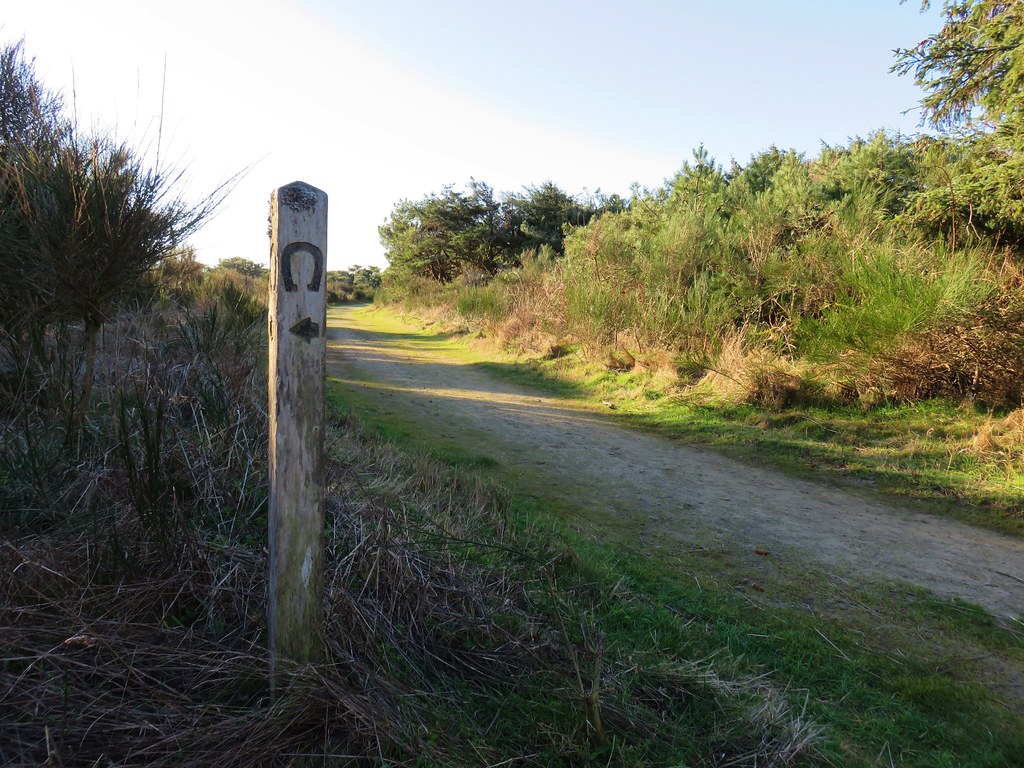
Horse Trail in Nehalem Bay State Park

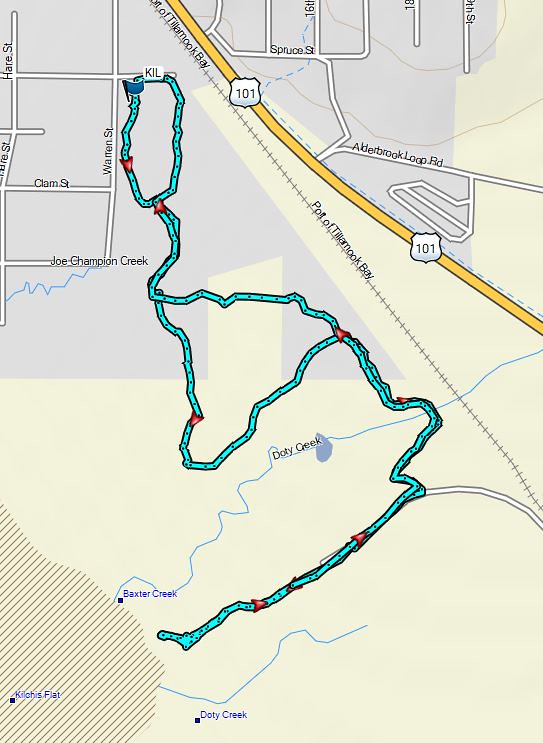
Our guidebook and called this a 5.2 mile loop but the time we’d arrived back at the car we had squeezed 5.7 miles out of it due to backtracking because of the flooded trail.

After returning to the highway we headed south to Bay City for our second stop of the morning – Kilchis Point Reserve. We turned towards Tillamook Bay on Warren Street near mile post 61 and followed pointers to the parking area on Spurce Street.
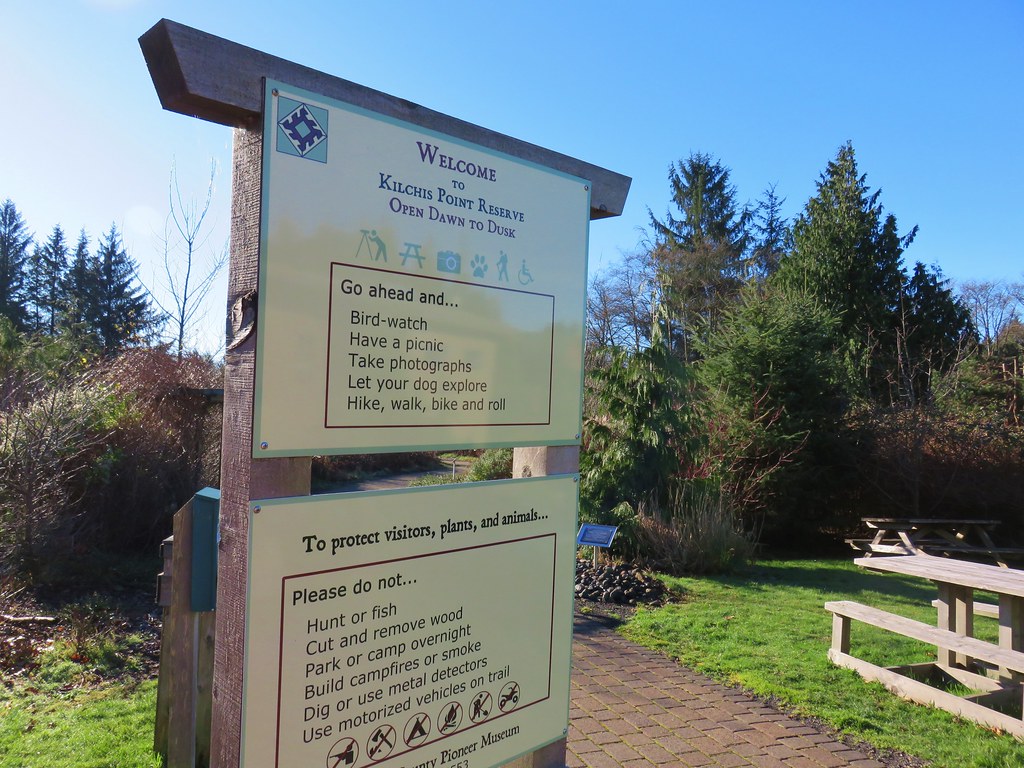
Kilshis Point Reserve Trailhead

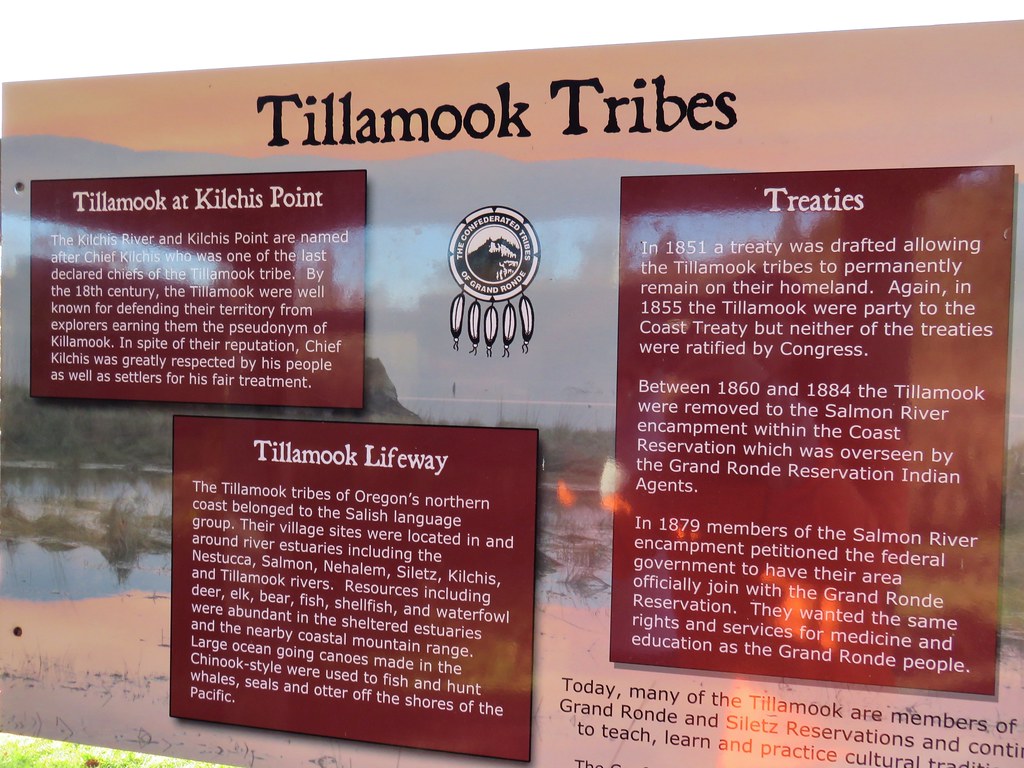
Kilchis Point is the site of one of the largest Native American villages along the Northern Oregon Coast. It is also the location where the Morning Star of Tillamook, first ship registered in the Oregon Territory, was built. The small park is very nice with plenty of amenities and a plethora of information posted throughout. It was a little chilly out so we didn’t stop to read all the signs this time but that just gives us a reason to stop again and check it out in the Spring or Summertime.
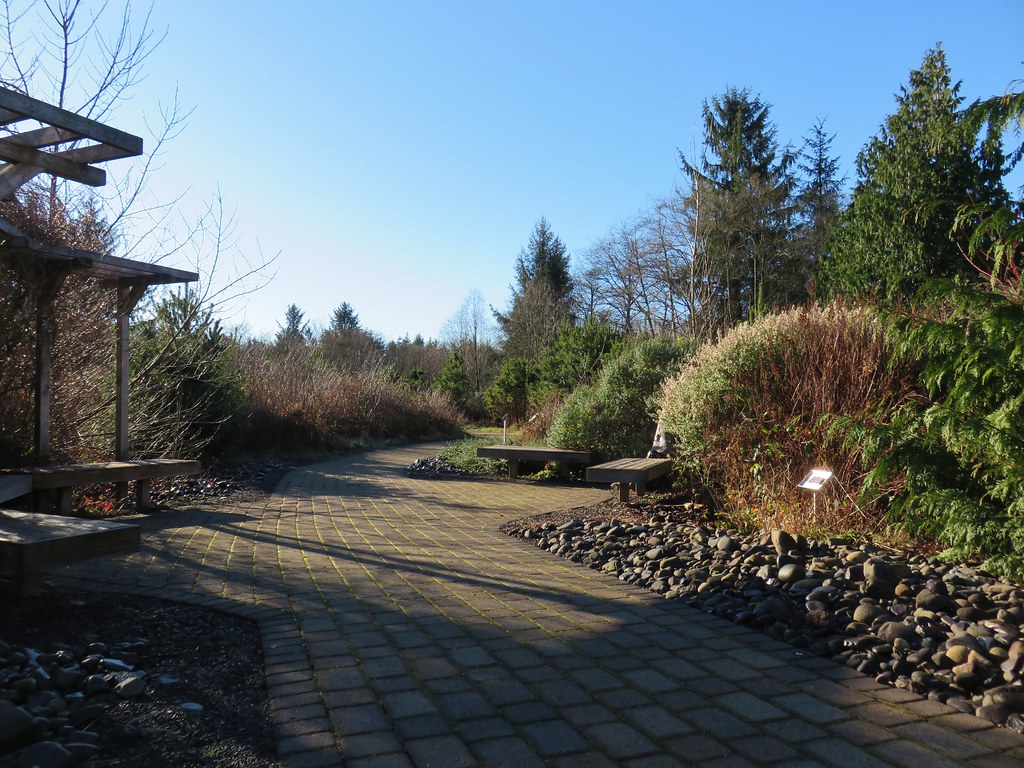
Path at Kilchis Point Reserve

Interpretive sign at Kilchis Point Reserve

Interpretive sign at Kilchis Point Reserve

Interpretive sign at Kilchis Point Reserve

We followed the brick path from the parking area keeping right at junctions a total of 1.2 miles to a bird watching gazebo at Tillamook Bay.
Brick path at Kilchis Point Reserve

Gazeebo for birdwatching at Kilchis Point Reserve

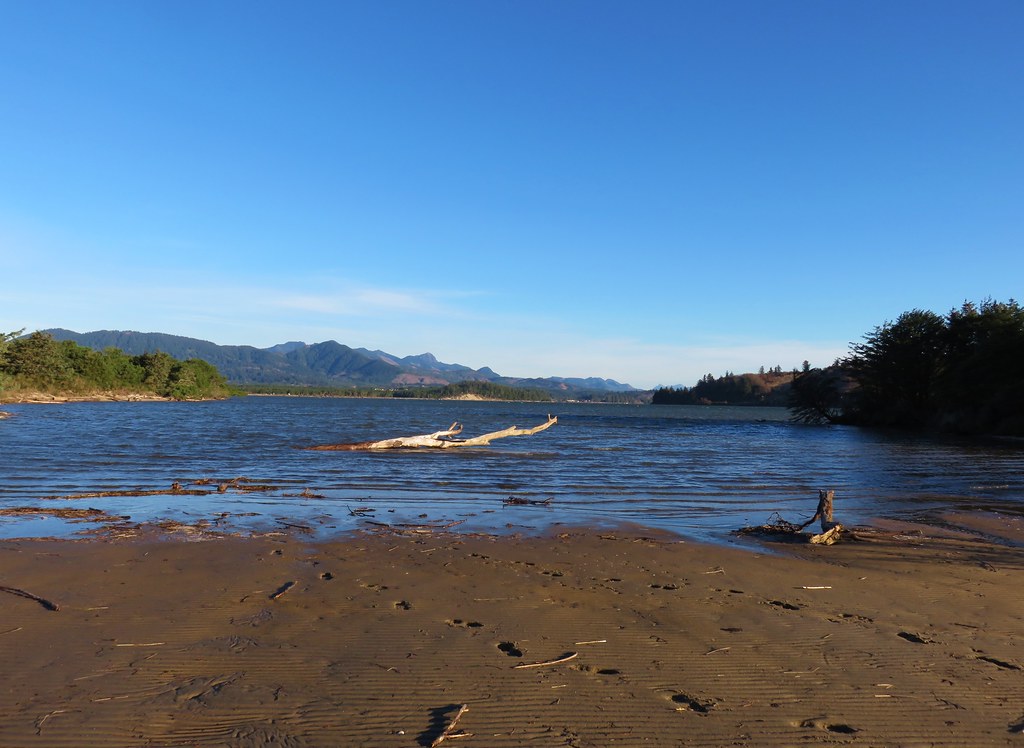
Tillamook Bay

We didn’t spot many animals (other than dogs) along the way but we did get to listen to a pair of bald eagles for a bit.
Bald eagle

After a short break by the bay we returned to the parking area by following signs and staying right at trail junctions to complete two short loops.
Trail sign at Kilchis Point Reserve

Kilchis Point

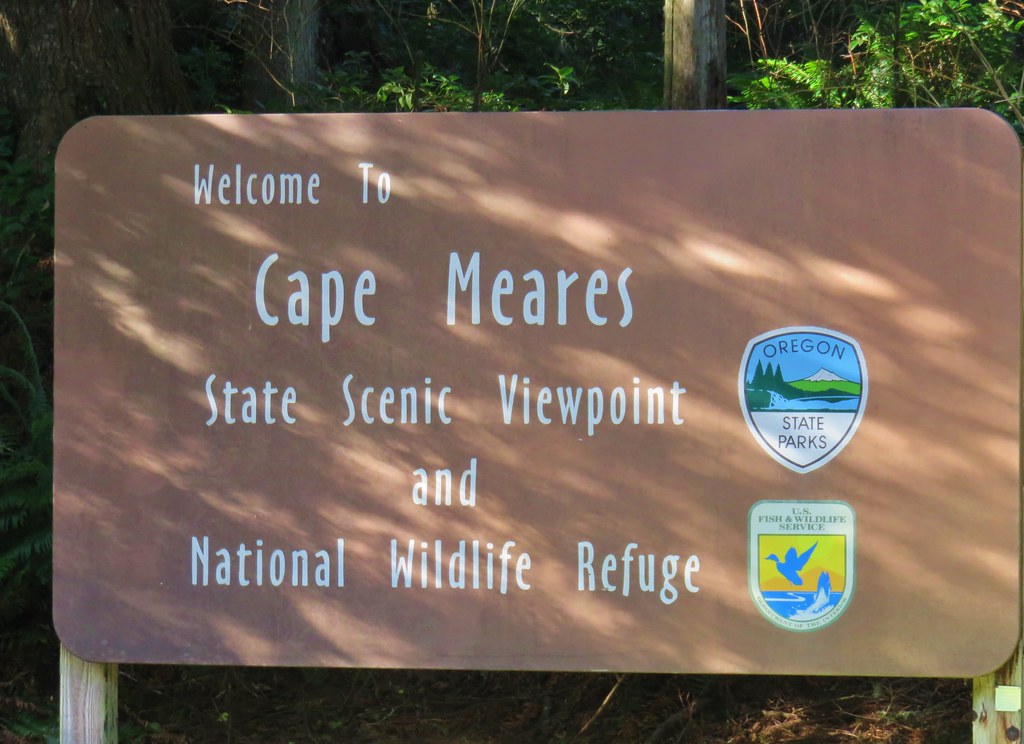
We then drove south to Tillamook and followed signs to Oceanside on Highway 131. From Oceanside we followed signs to Cape Meares State Scenic Viewpoint and parked at a trailhead parking area at the park entrance.
Cape Meares Trailhead

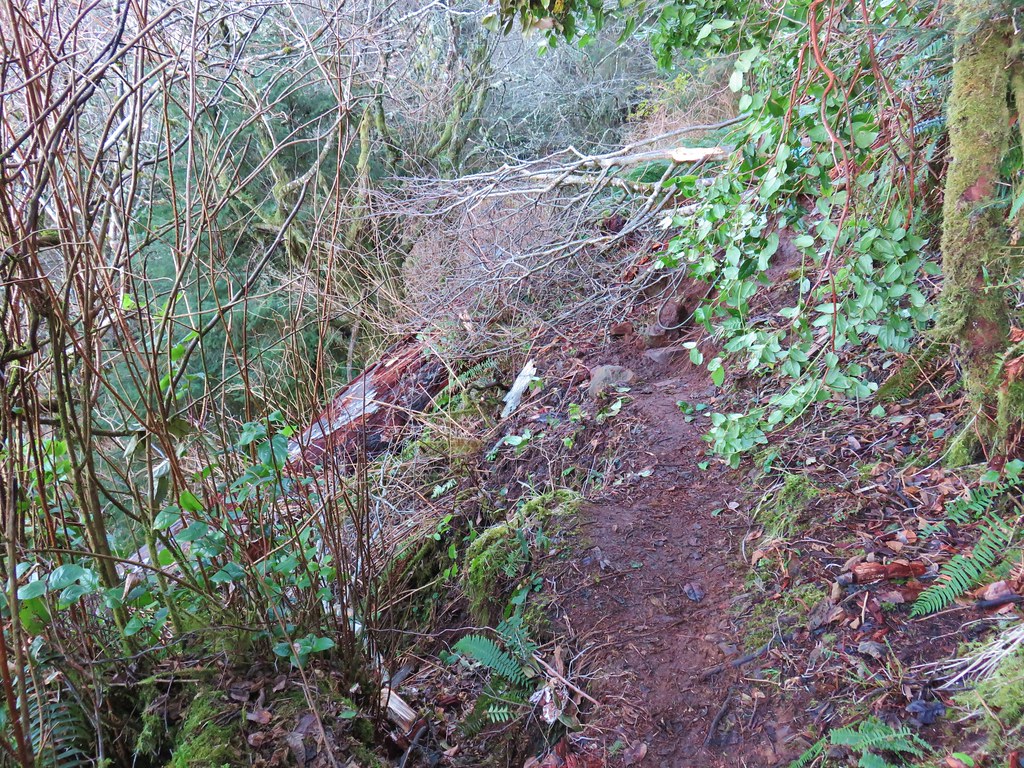
A mudslide in January of 2013 closed the Three Capes Scenic Loop beyond the park entrance. That slide continues to slowly shift the area and has affected a trail between the trailhead and the beach to the north of Cape Meares. We decided to head down this trail to see the conditions first hand.
Cape Meares Trail map

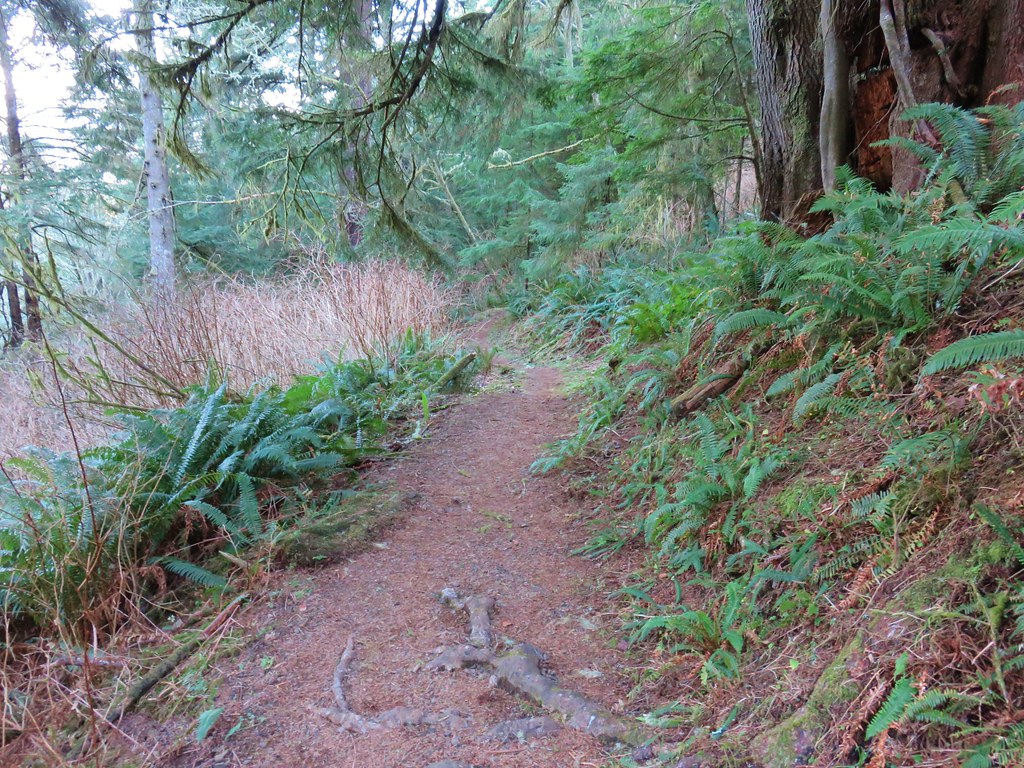
Trail at Cape Meares

The upper portion of the trail was in reasonably good shape although there was a small tree that required ducking under.
Trail at Cape Meares

Shortly after passing a fairly nice view of another place we had previously hiked, Bayocean Spit, we came to a jumble of debris.
Bayocean Spit from Cape Meares

Washed out trail at Cape Meares

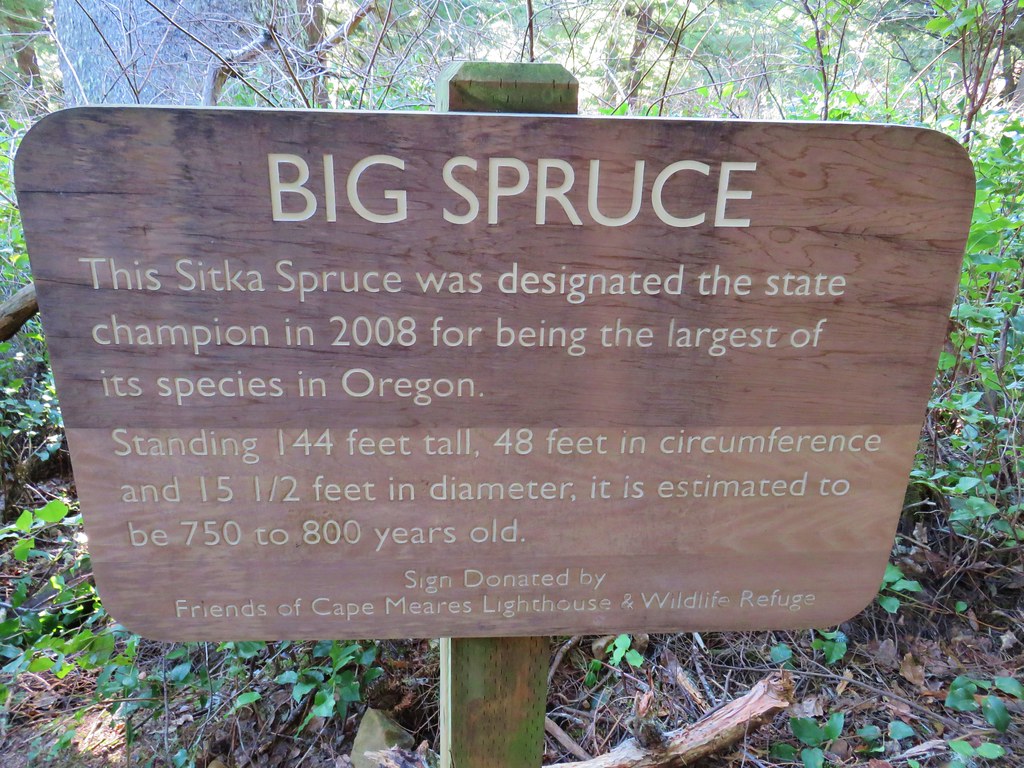
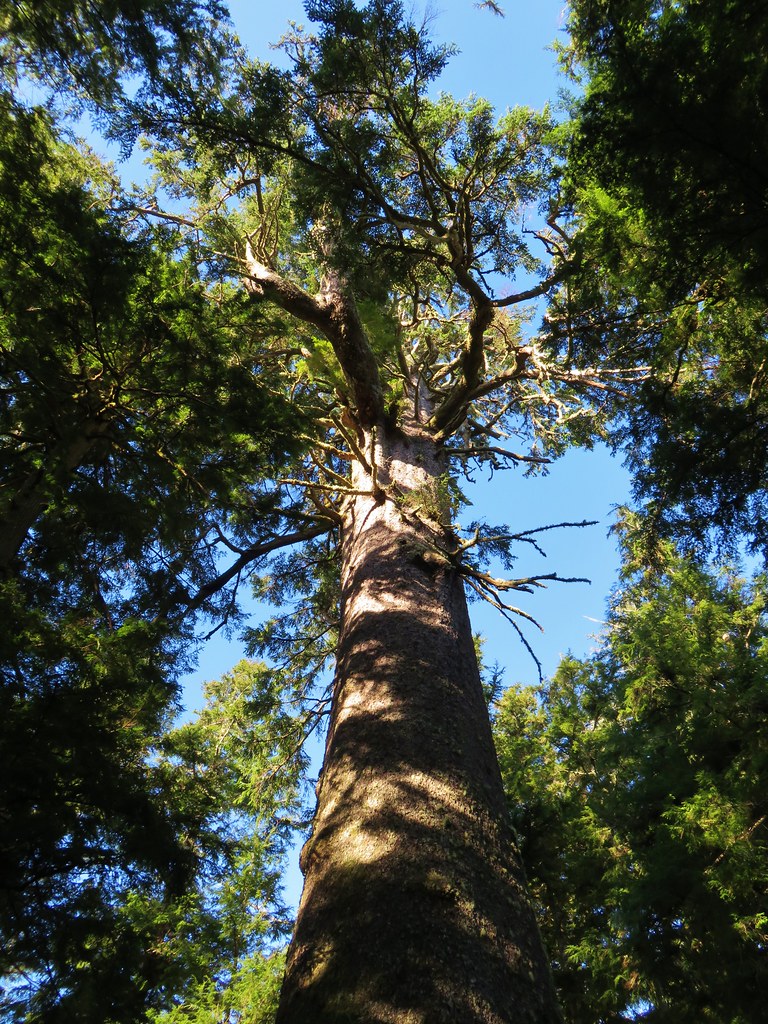
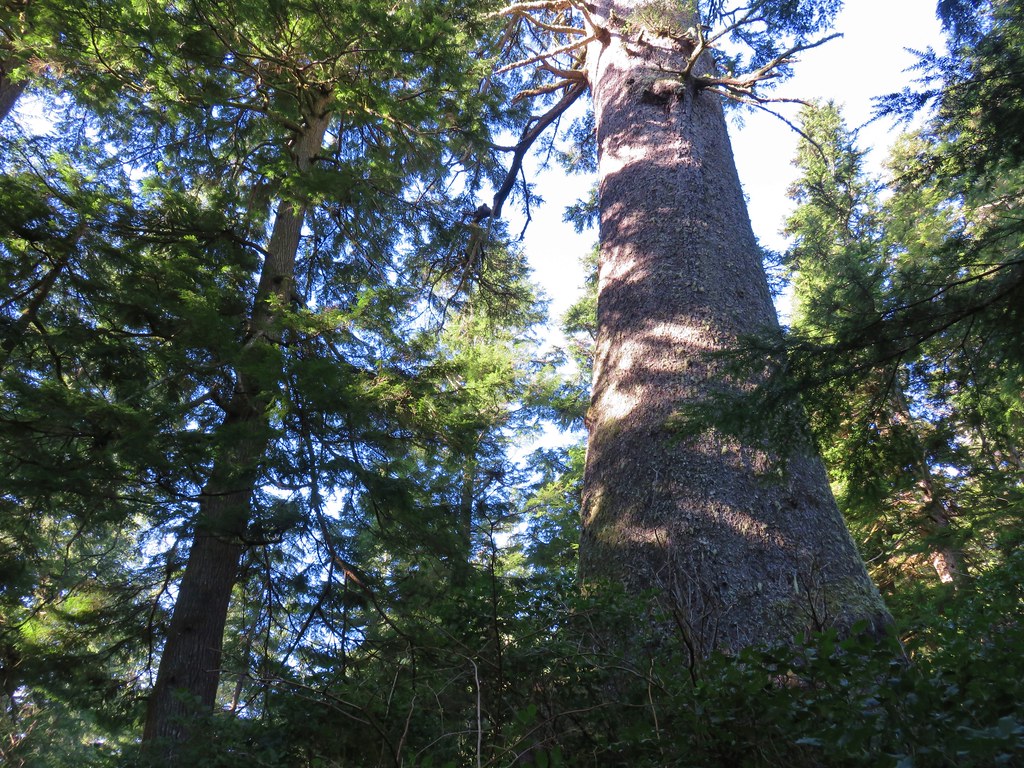
That was our turn around point,a little over half a mile from the trialhead. We headed back up to the trailhead and took the .2 mile Big Spruce Trail. The tree is estimated to be 750 to 800 years old and is the largest known Sitka spruce in Oregon.
Sign for the Big Spurce

Big Spruce

Big Spruce at Cape Meares

For a bit of perspective if the tree sprouted in 1217 it was there at the start of the fifth crusade.

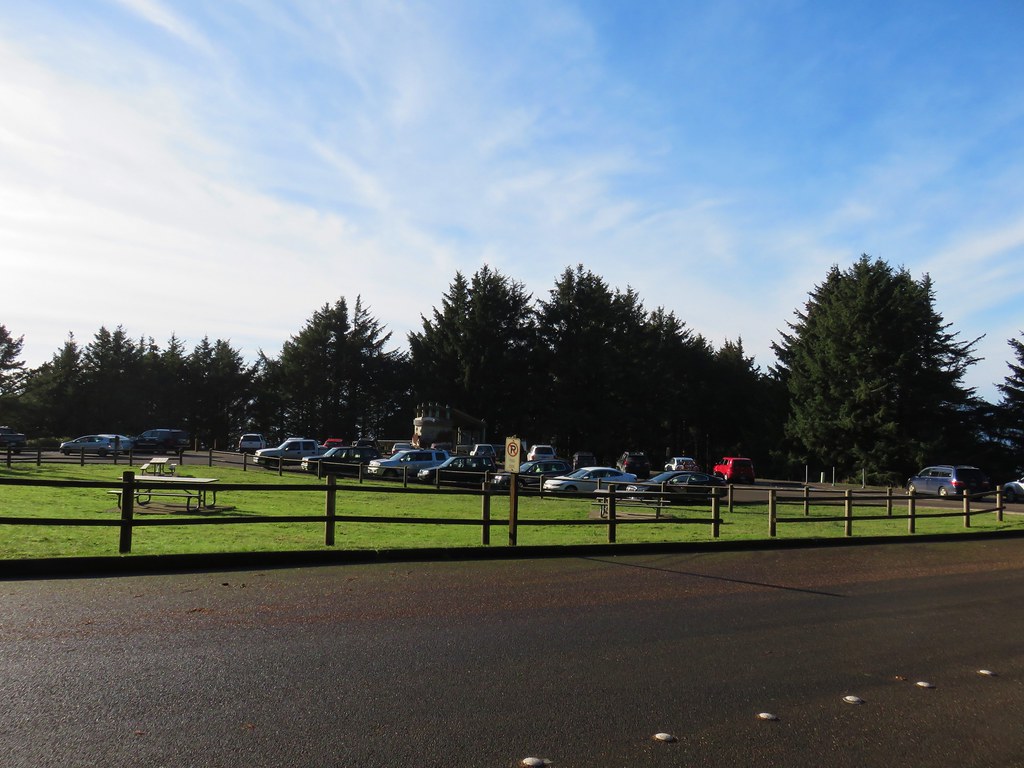
After visiting the old tree we road walked .6 miles along the entrance road to the crowded parking area for the Cape Meares Lighthouse.
Cape Meares lighthouse parking

We stopped at a viewpoint platform overlooking Tower and Pillar Rocks to the north.
Tower and Pillar Rocks

A .2 mile path led from the parking area past more viewpoints to the lighthouse.
Cape Meares

Waterfall at Cape Meares

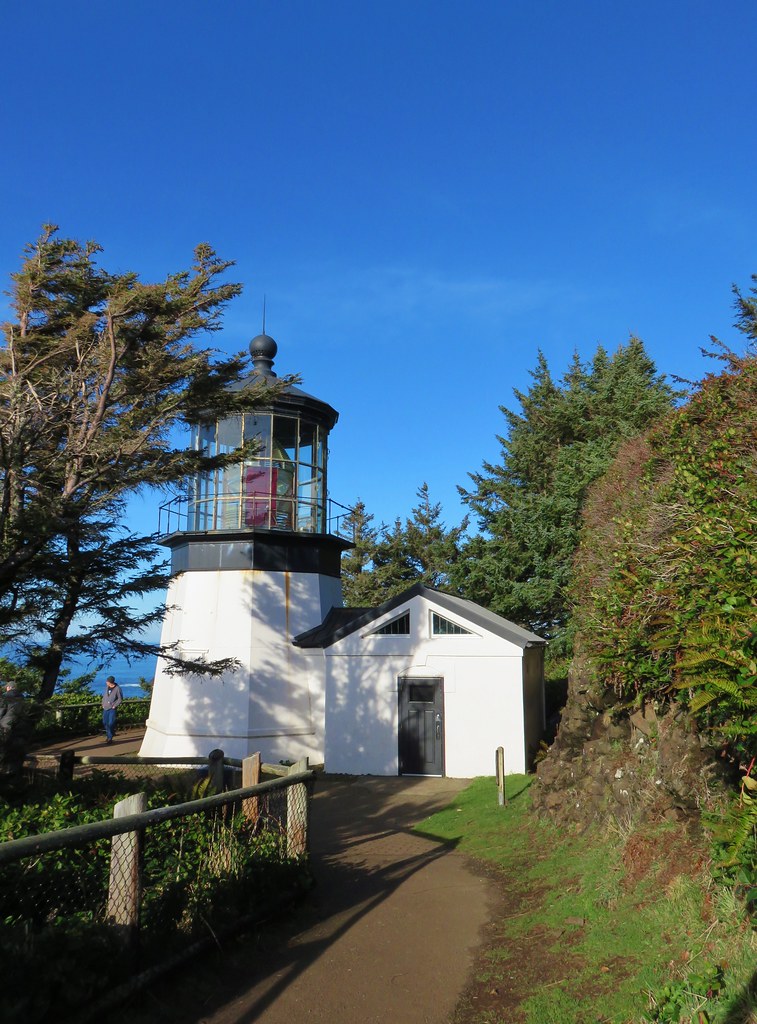
Cape Meares Lighthouse

Cape Meares Lighthouse

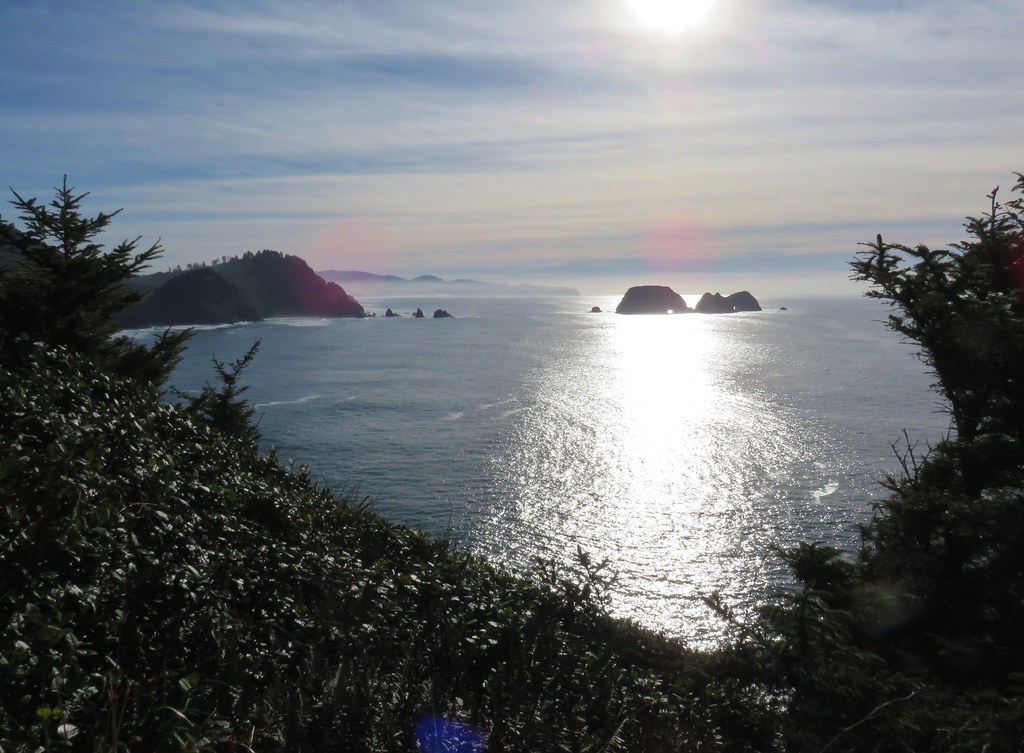
A second .2 mile path led back to the parking lot allowing for a short loop and providing views south to Cape Lookout and the Three Arch Rocks Wilderness, one of the two off-limits wilderness areas in Oregon.
Looking south from Cape Meares

After returning to the parking area we headed for the Octopus Tree which was just a tenth of a mile away.
Sign for the Octopus Tree

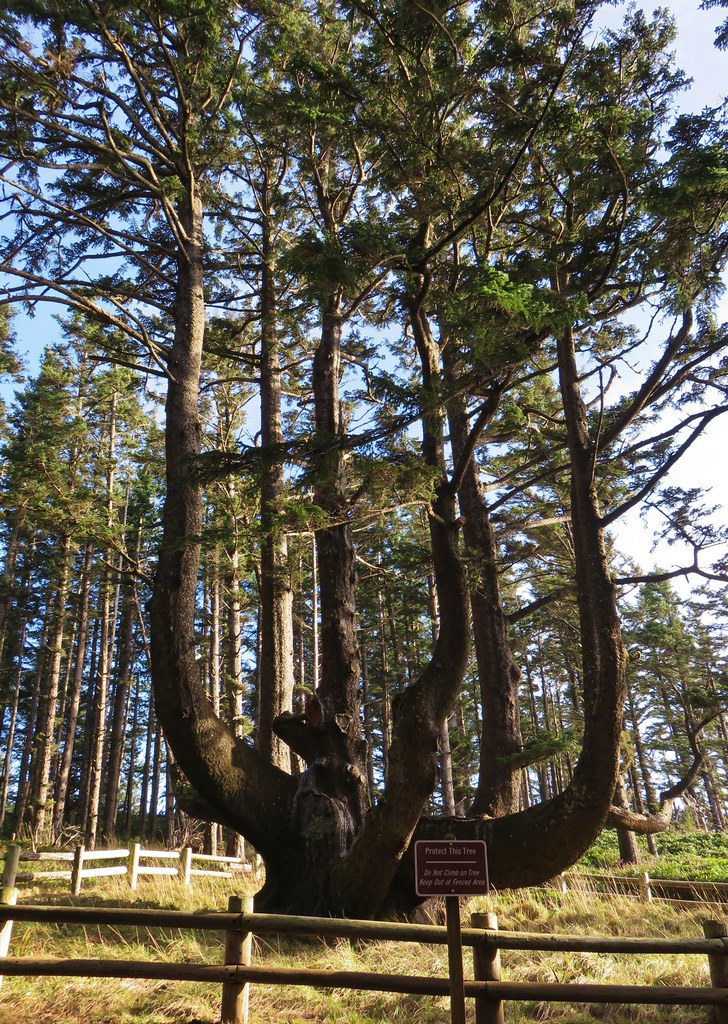
Octopus Tree at Cape Meares

Octopus Tree at Cape Meares

Another Sitka spruce, this unique tree has no central trunk. Instead several limbs have grown vertically. After visiting this tree we walked back up the entrance road to our car and headed home, capping off our first outing of 2018. Happy Trails!

Flickr: Nehalem Bay, Kilchis Point, and Cape Meares

Categories
Year-end wrap up

The Hikes of 2017 – A Look Back

Once again it’s time for our year end review post. Each year has a bit of a different feel to it, but this year was especially so. This was by far the most challenging year we’ve faced in terms of being able to visit the trails we’d planned on. A heavy winter snow pack lingered delaying access to many areas. Then an unusually bad fire season closed much of the Mt. Jefferson and Three Sisters Wilderness areas as well as parts of the Columbia Gorge. Snow returned in mid-September causing more changes to our plans. In the end plans for 39 of our originally scheduled 63 days of hiking were pushed out to future years as well as 2 additional short hikes that were part of multi stop days. Plans for another 12 of those days were shifted around on the schedule which meant that only 10 of our originally planned days occurred as we had envisioned them in January. We had also planned on spending 18 nights backpacking but wound up with a measly 3 nights in the tent. Despite all the issues we actually managed to end the year having hiked on 64 days and covered 751.6 miles.

Here is a look at where we wound up. The blue hiker symbols denote trailheads and the two yellow houses are the approximate location of our two backpacking campsites.
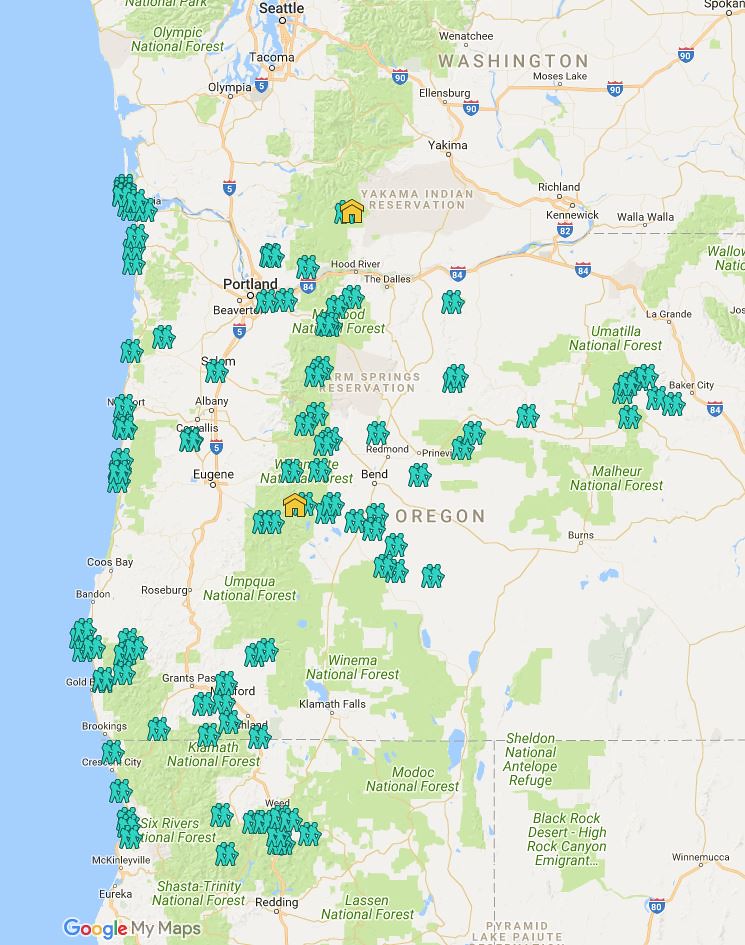
2017 Trailheads

Due to the issues with access to so many locations the mix of hikes this year was very different. An example of this is the average high point of our hikes:

                     2013-2016                2017
Jan.-Apr.    1444′                        1776′
May             2718′                        2355′
June            4900′                        3690′
July             5553′                        6530′
August       6419′                        3048′
Sept.           6400′                        4175′
Oct.             4886′                        3484′
Nov.-Dec.   2042′                        750′

Another example is our mileage distribution:

                     2013-2016                2017
Jan.-Apr.    9.19%                       9.74%
May             13.57%                     14.14%
June            13.75%                      13.50%
July             13.75%                      19.15%
August       19.33%                      6.07%
Sept.           14.13%                      23.28%
Oct.             12.17%                      10.36%
Nov.-Dec.   4.11%                        3.75%

As you can see August was way off the norm with many of those miles coming in September this year. Several wildfires were burning by then and we also changed some plans due to work and family commitments. Finally we chose to stick close to home the weekend of the solar eclipse .

On many occasions we visited multiple trailheads in a single day. We had been slowly increasing the frequency of doing so but this year 25 of our 64 days included more than one stop. In fact we stopped at a total of 106 trailheads this last year.

None of that made it a bad year, it just felt very different. The 64 hiking days was the most we’ve managed in a single year and the 751.6 miles was second only to 2016s 792.8 We managed to make decent headway on our quest to visit all of Oregon’s 45 visit-able wilderness areas by checking 8 more off the list. Rock Creek (post), Spring Basin (post), Wild Rogue (post), Grassy Knob (post), Bridge Creek (post), Clackamas (post), North Fork John Day (post), and Cummins Creek (post).

This year we made use of guidebooks by four different authors as well as a few websites. Most of our destinations can be found in William L. Sullivan’s 100 Hikes in Oregon guidebooks (information) but we also made use of Scott Cook’s “Bend, Overall“, Matt Reeder’s “101 Hikes in the Majestic Mount Jefferson Region“, and Bubba Suess’s “Hiking in Northern California“.

A special thanks goes out to Bubba Suess and his Hike Mt. Shasta website for his suggestions and input on our visit to the Mt. Shasta area in July. On that trip we visited four of California’s wilderness areas: Russian (post), Castle Crags (post), Trinity Alps (post), and Mt. Shasta (post). Our visit the the Trinity Alps brought us to the most southerly point while hiking to date. We also reached our highest elevation on that trip when we hiked to the top of Mt. Eddy (post) and saw our first rattle snake along the PCT (post).

We also set a new mark for the western most point reached on a hike when we visited Cape Blanco in May (post).

One way that this year was no different than previous years was that we once again saw and experienced many things for the first time during our hikes. It’s not surprising that we saw new things given that 57 out of our 64 days were comprised of entirely new sections of trail and none of the other 7 were exact repeats. In fact only about 17.2 miles retraced steps from previous hikes which works out to less than 2.5% of our total mileage for the year.

Some new flowers for us included:
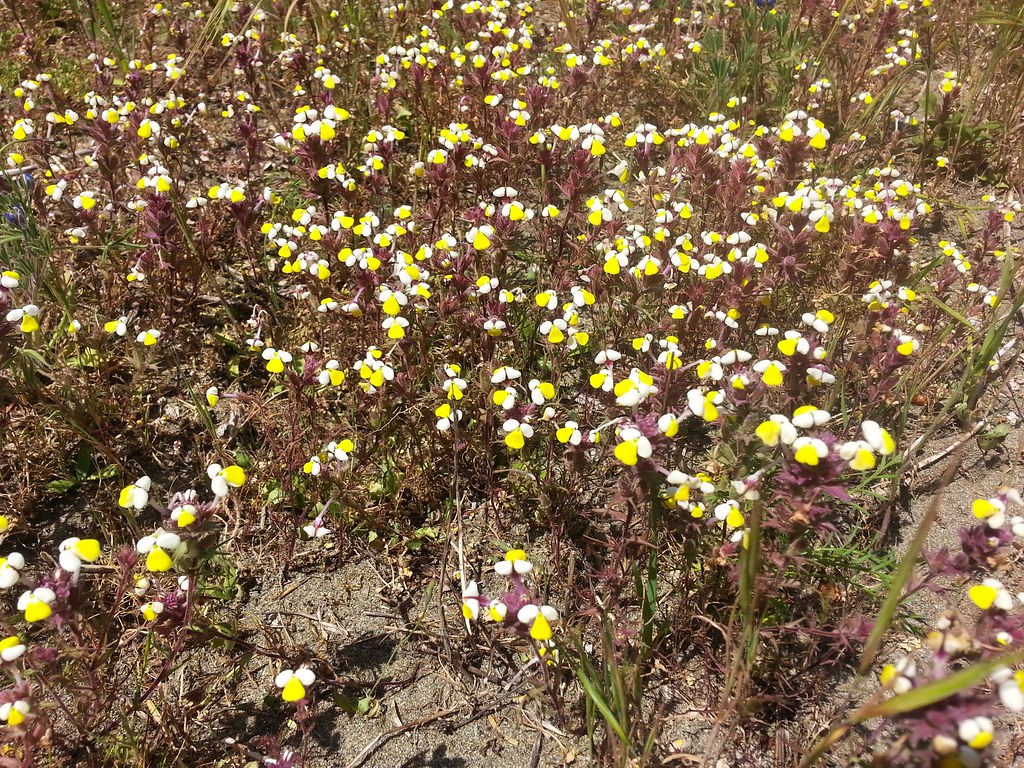
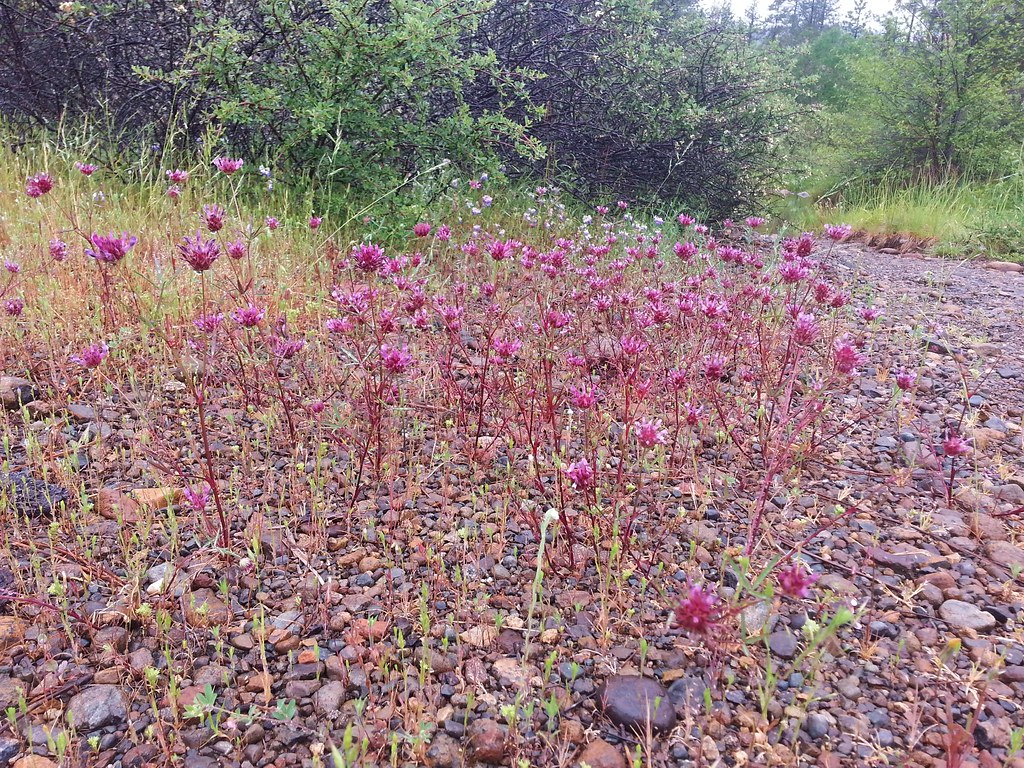
Butter and eggsButter and eggs – Yontocket

Possibly tomcat cloverTomcat clover – Rough and Ready Botanical Wayside
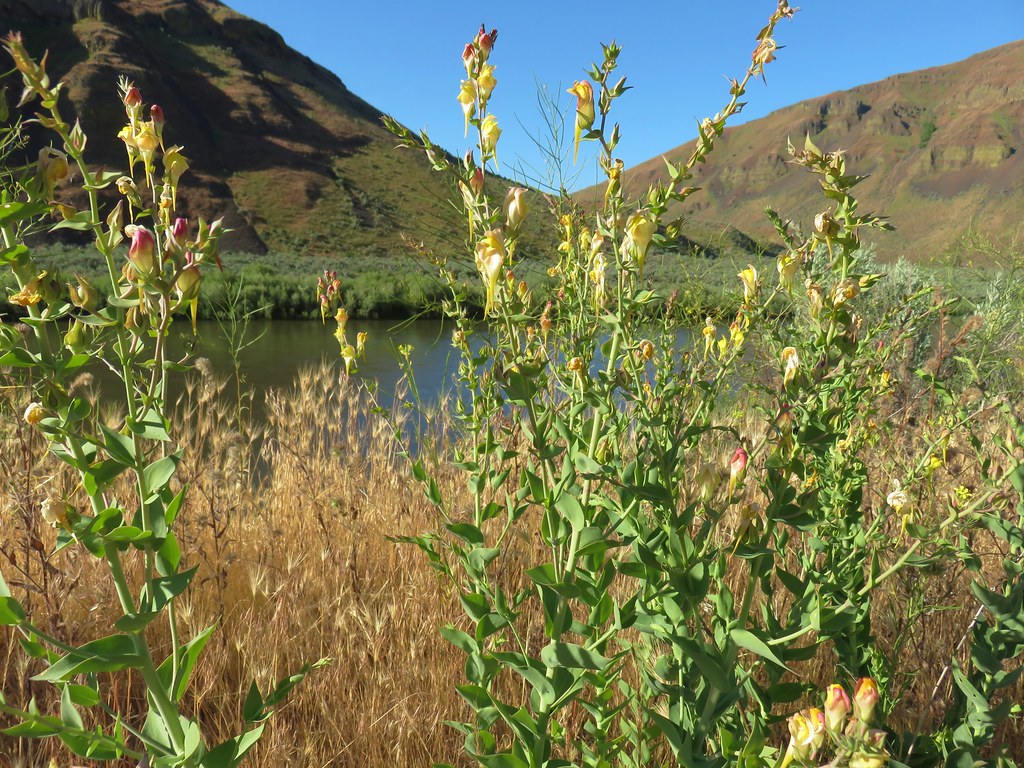
dalmatian toadflax along the John Day RiverDalmation toadflax – Cottonwood Canyon State Park

Heart-leafed milkweedHeart-leafed milkweed – Applegate Lake

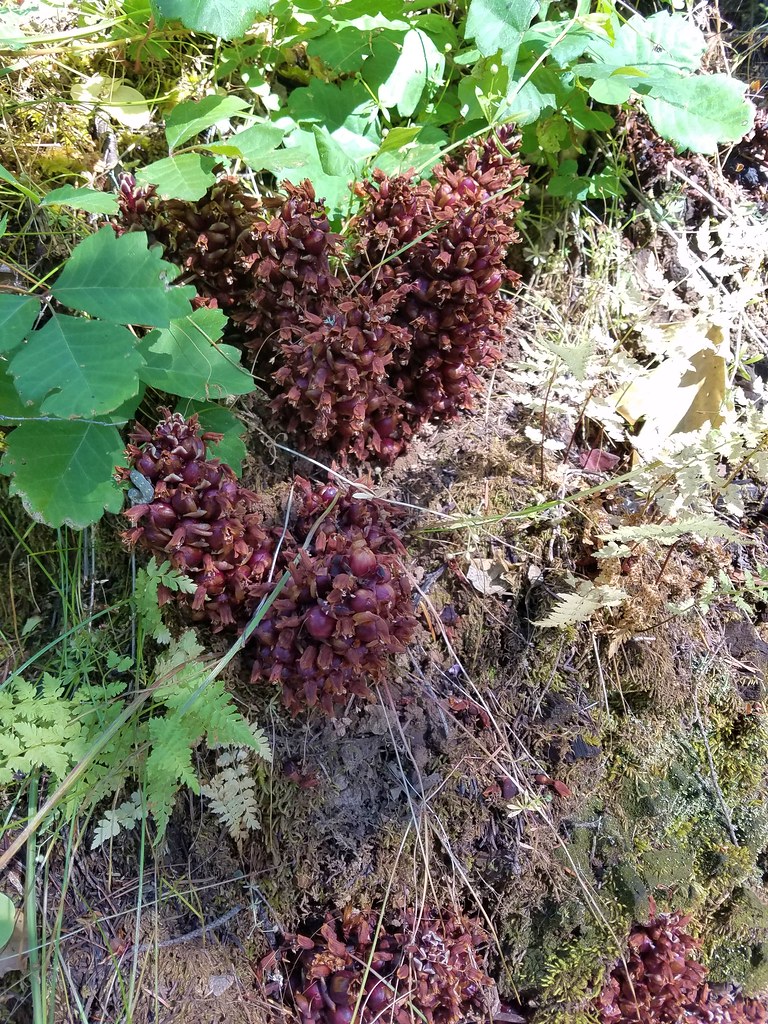
California groundconeCalifornia groundcones – Jacksonville

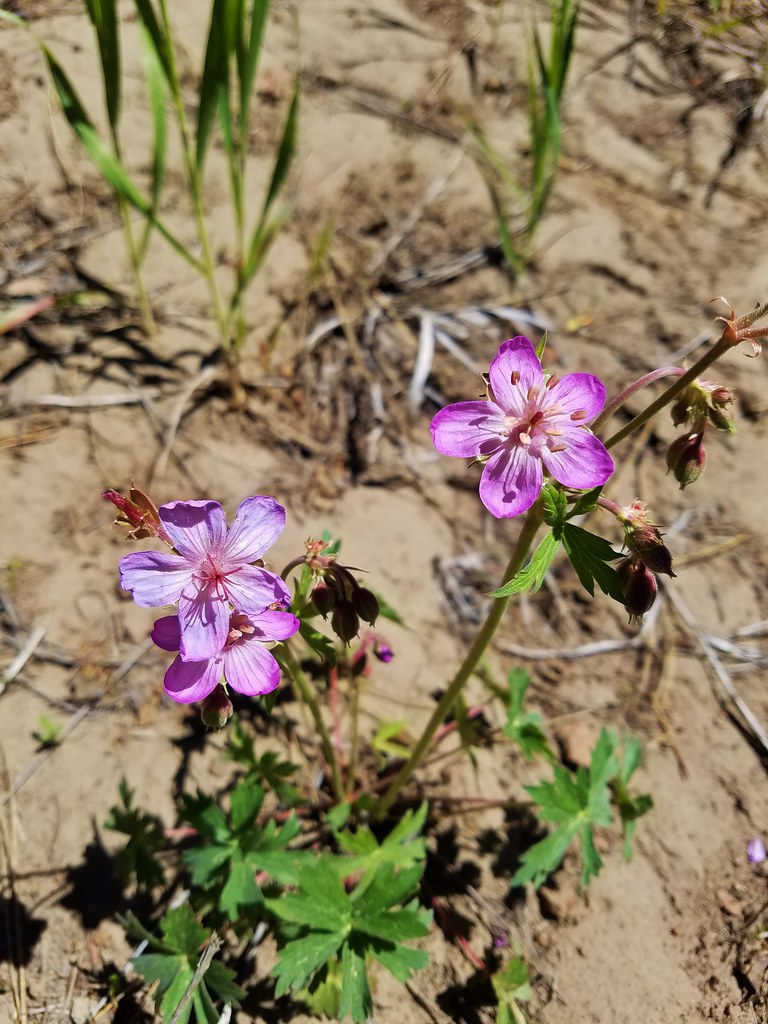
GeraniumGeranium – Lost Creek Lake

GeraniumGeranium – Round Mountain

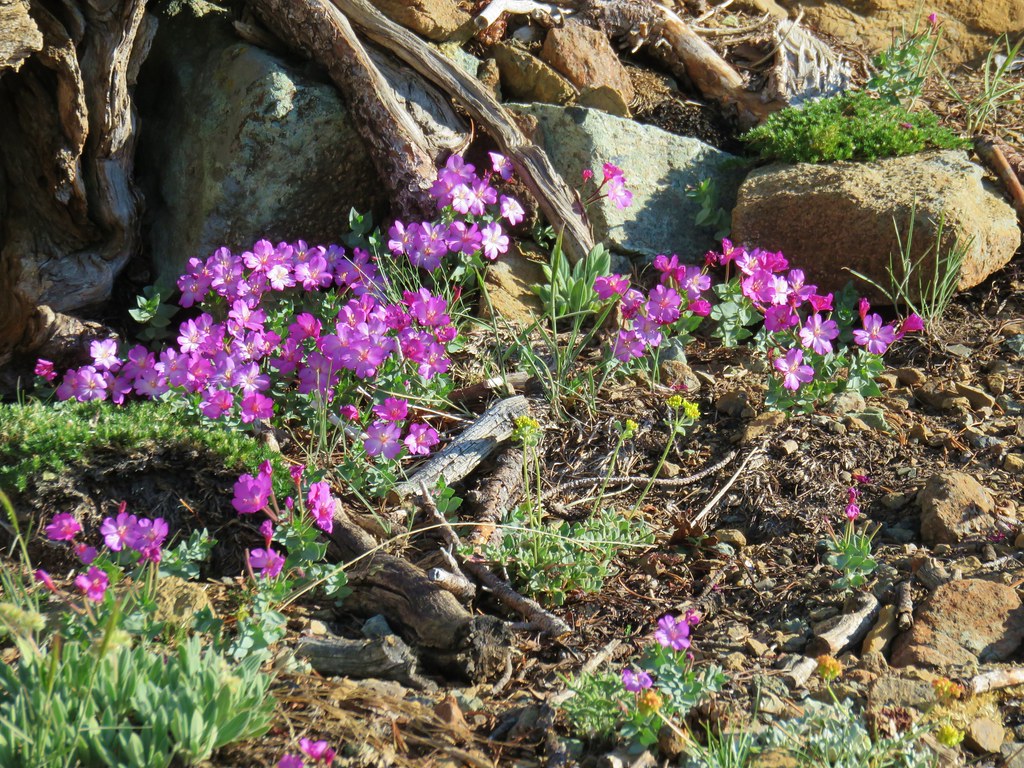
rockfringe willowherbRockfringe willowherb – Mt. Eddy

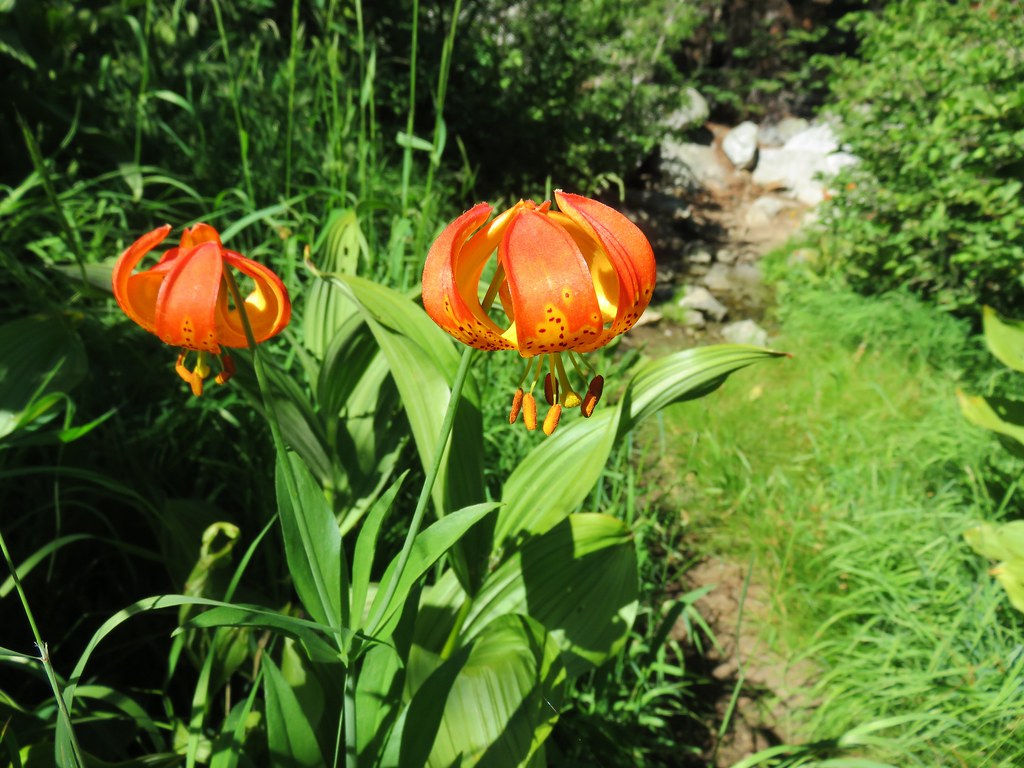
Leopard lilyLeopard Lily – Trinity Alps Wilderness

There were a few new critters too:
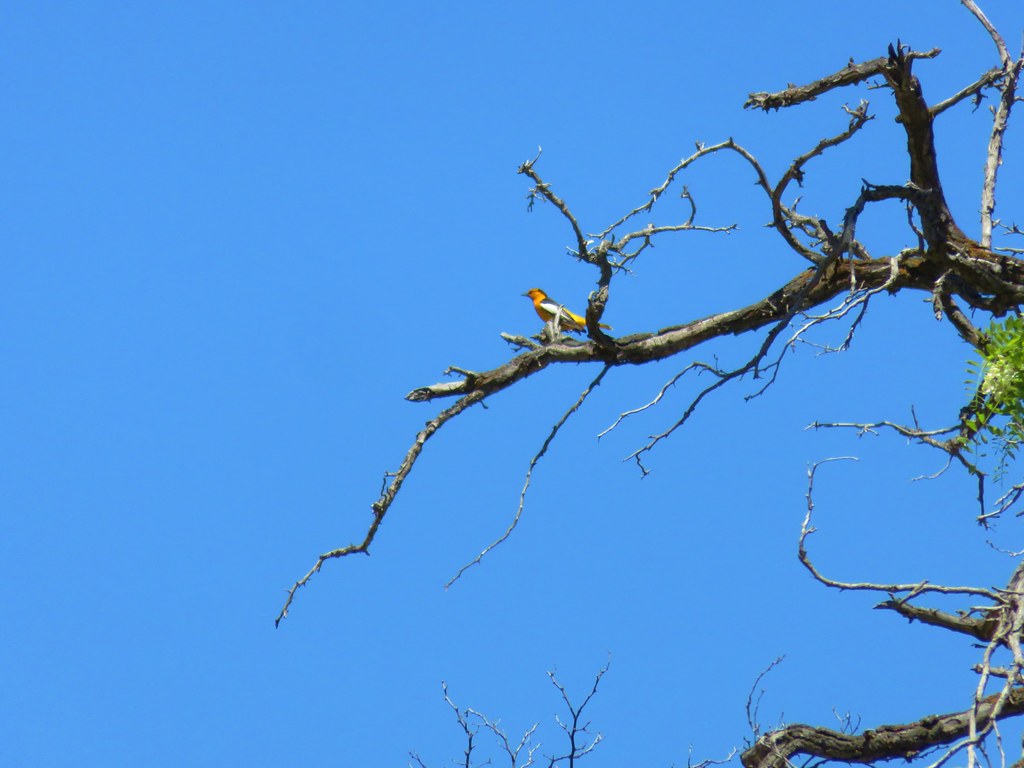
Bullock's OrioleBullock’s Oriole – Cottonwood Canyon State Park
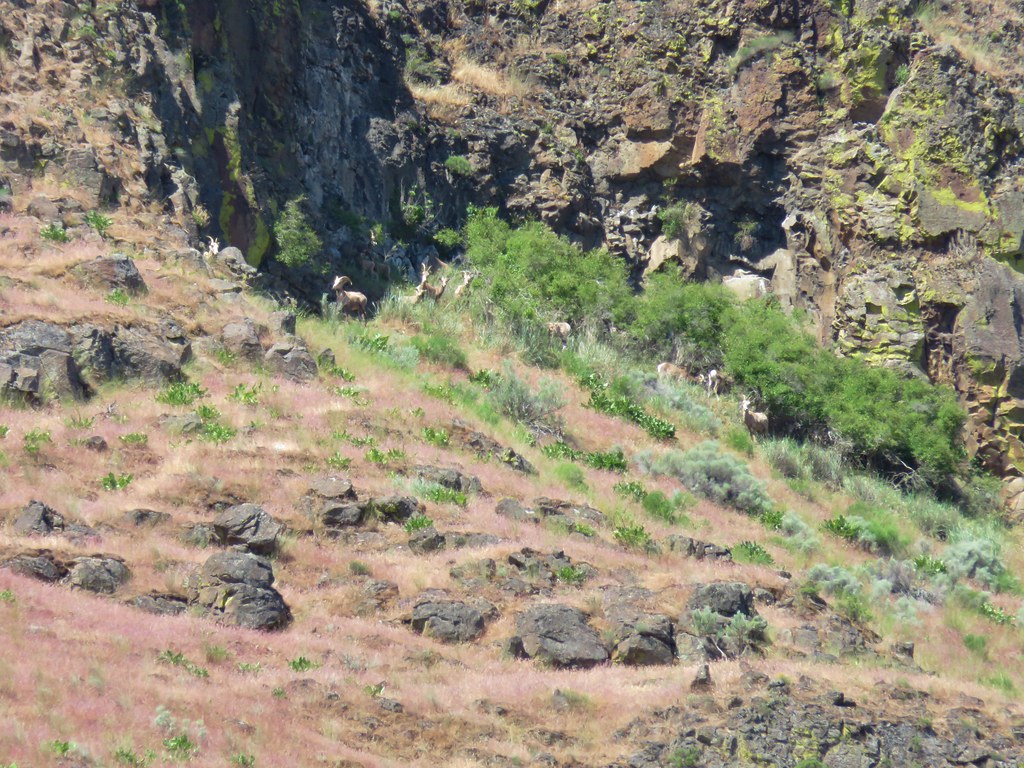
Big Horn SheepBig horn sheep – Cottonwood Canyon State Park
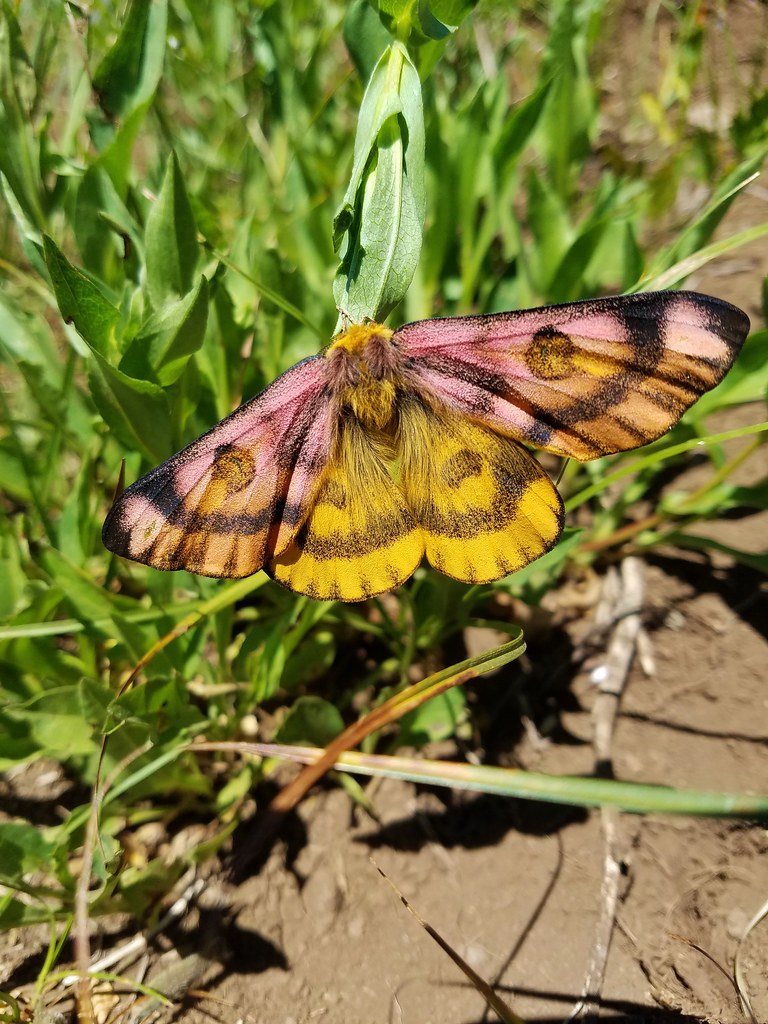
Sheep mothSheep moth – Grasshopper Meadow

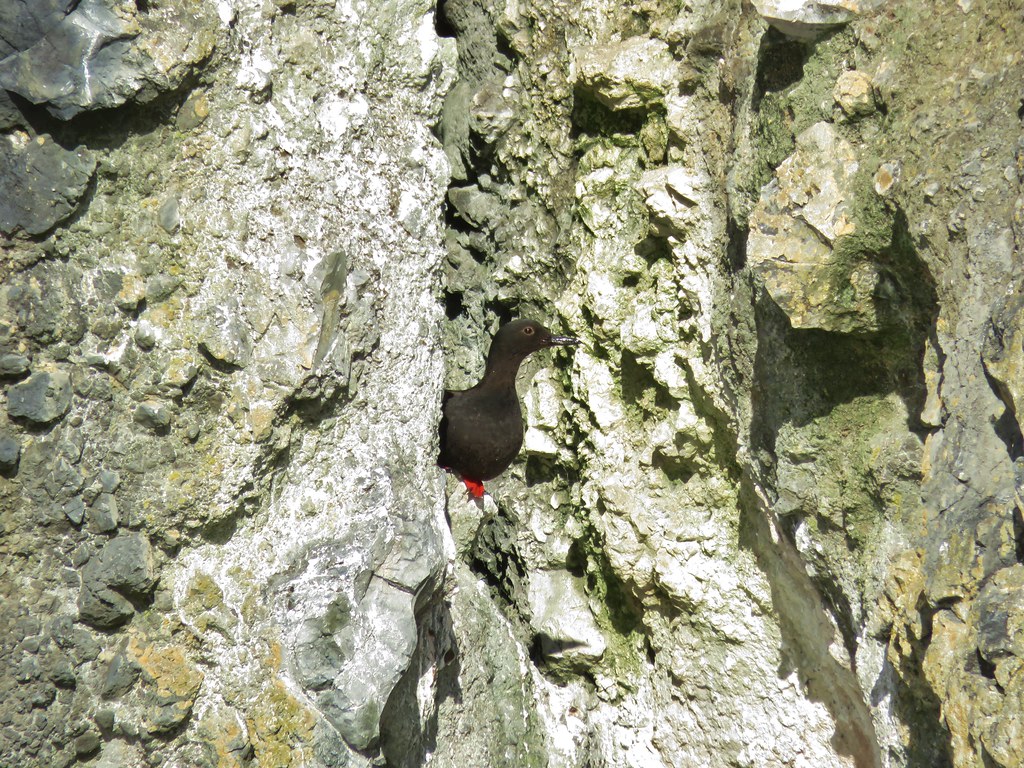
Pigeon guillemotPigeon guillemot – Yaquina Bay

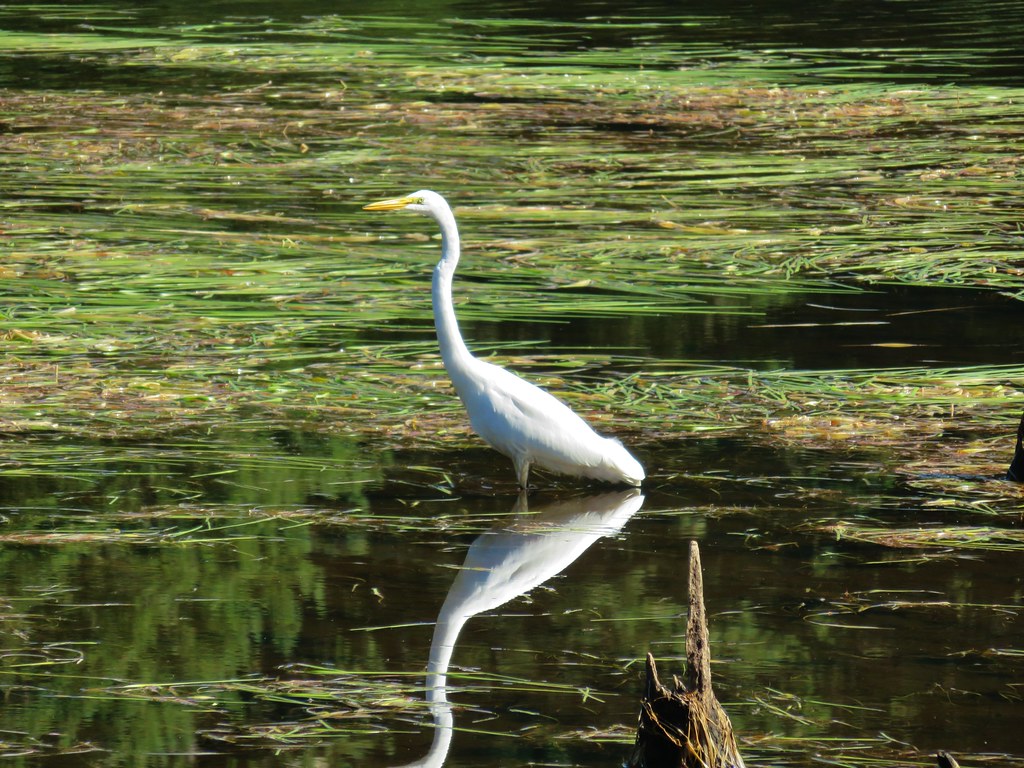
EgretEgret – Cape Disappointment State Park

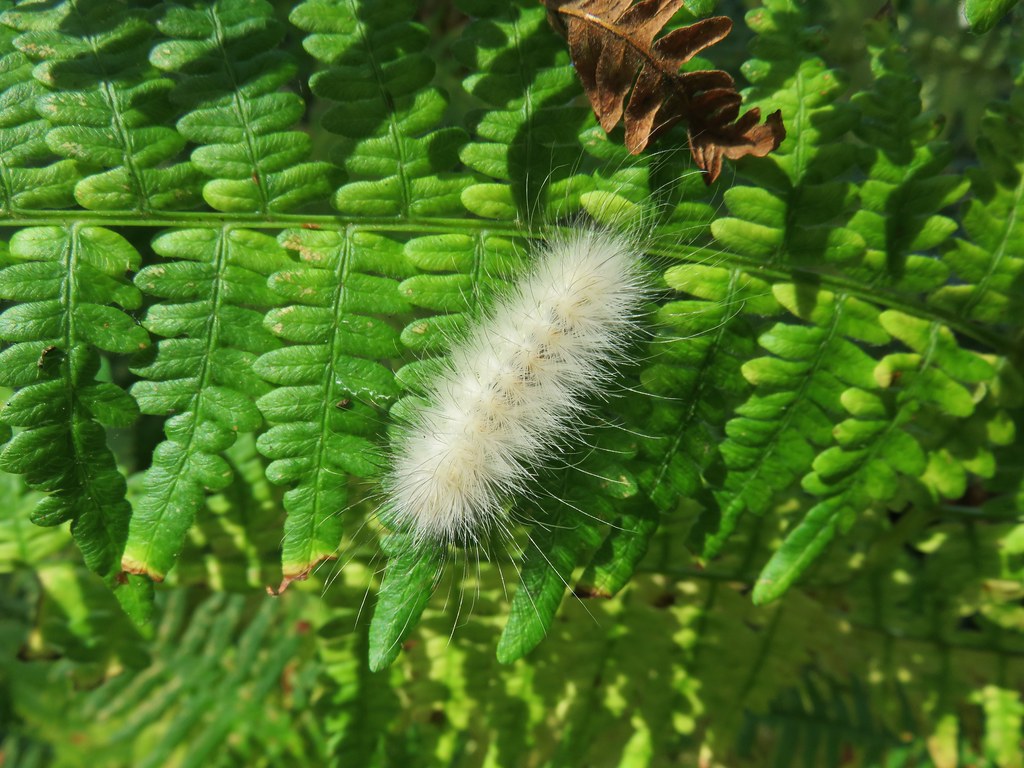
CaterpillarCaterpillar – Cape Disappointment State Park

As is often the case we started and ended our hikes at the coast.
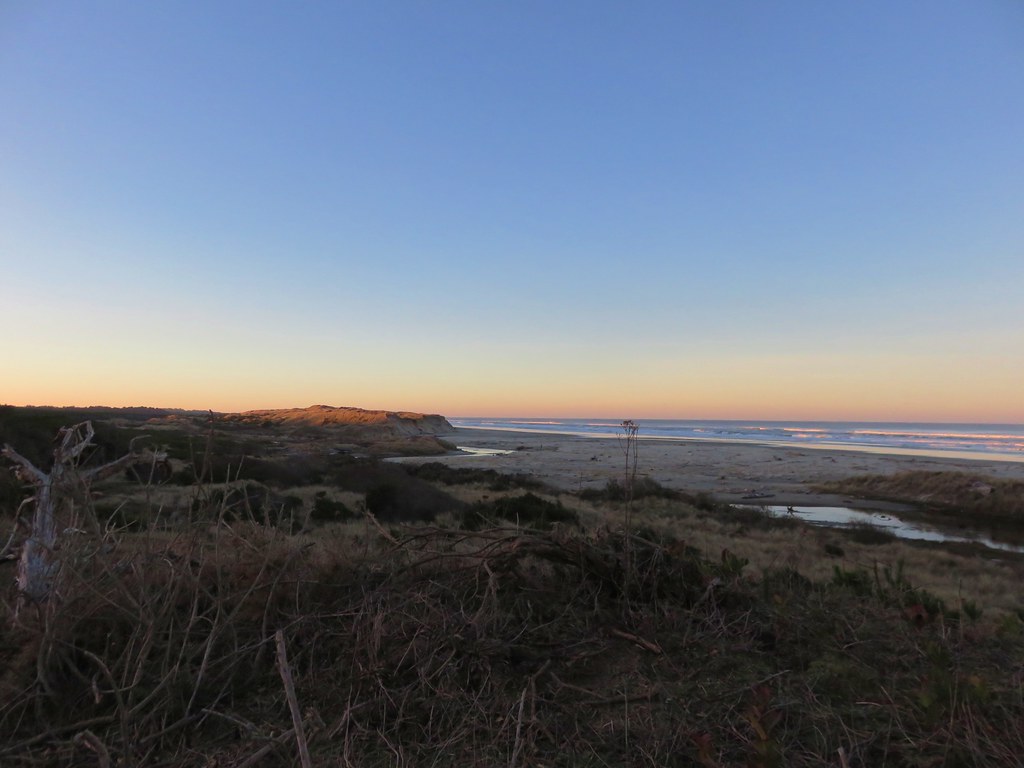
Berry Creek flowing toward the PacificBaker Beach in January

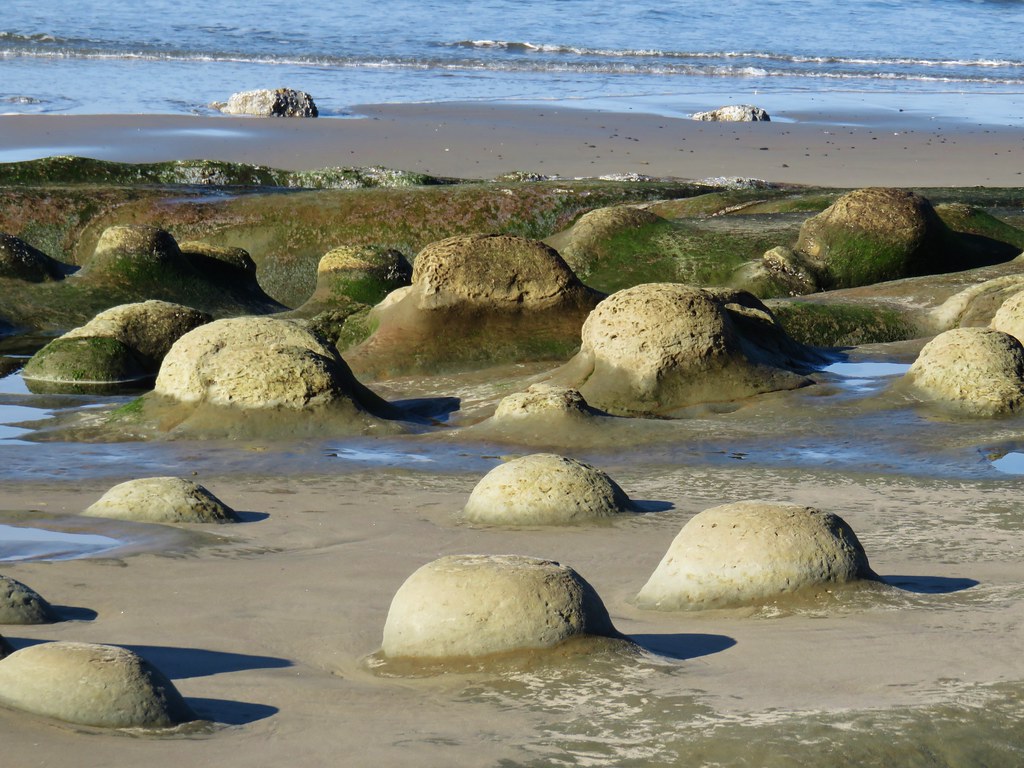
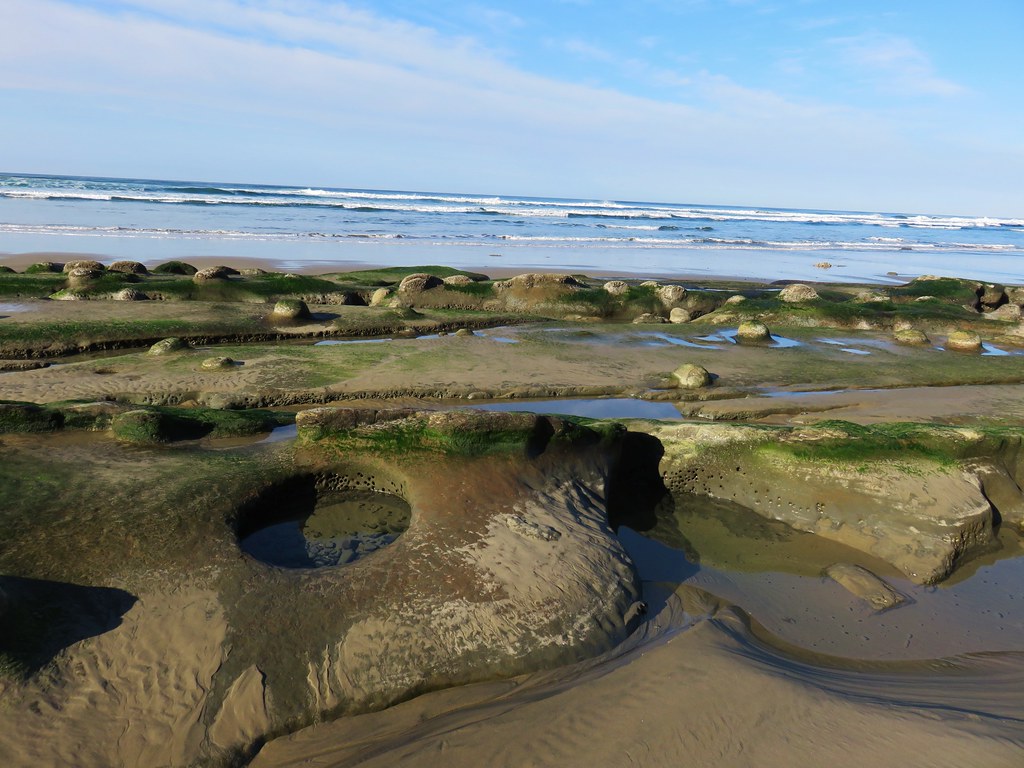
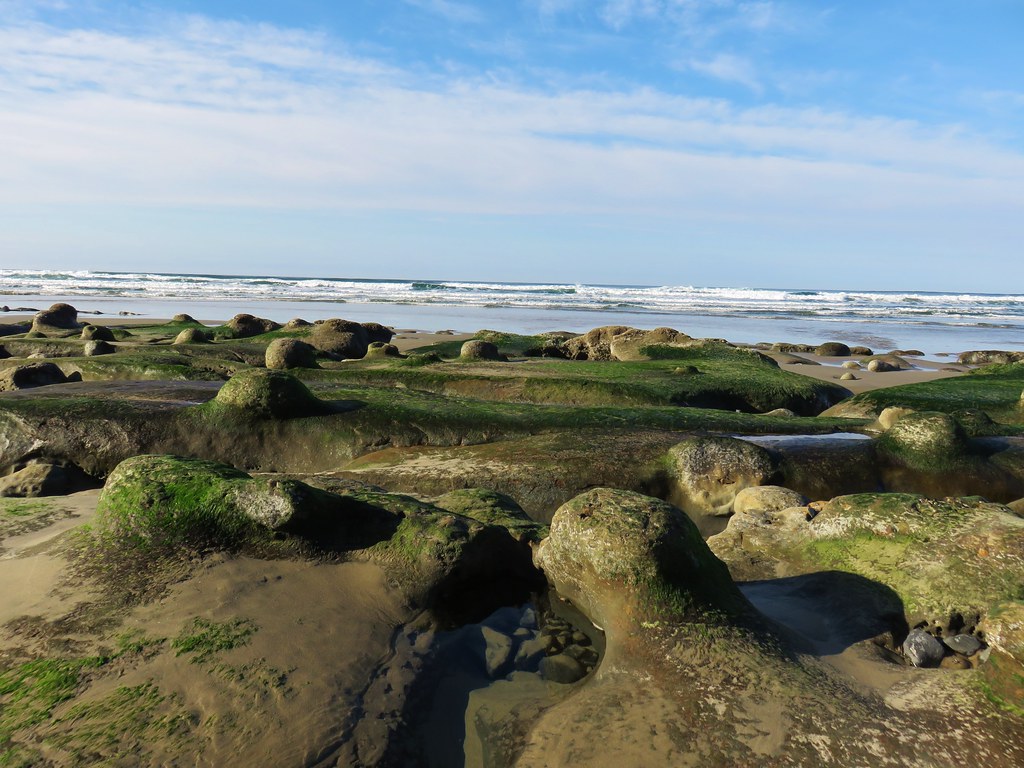
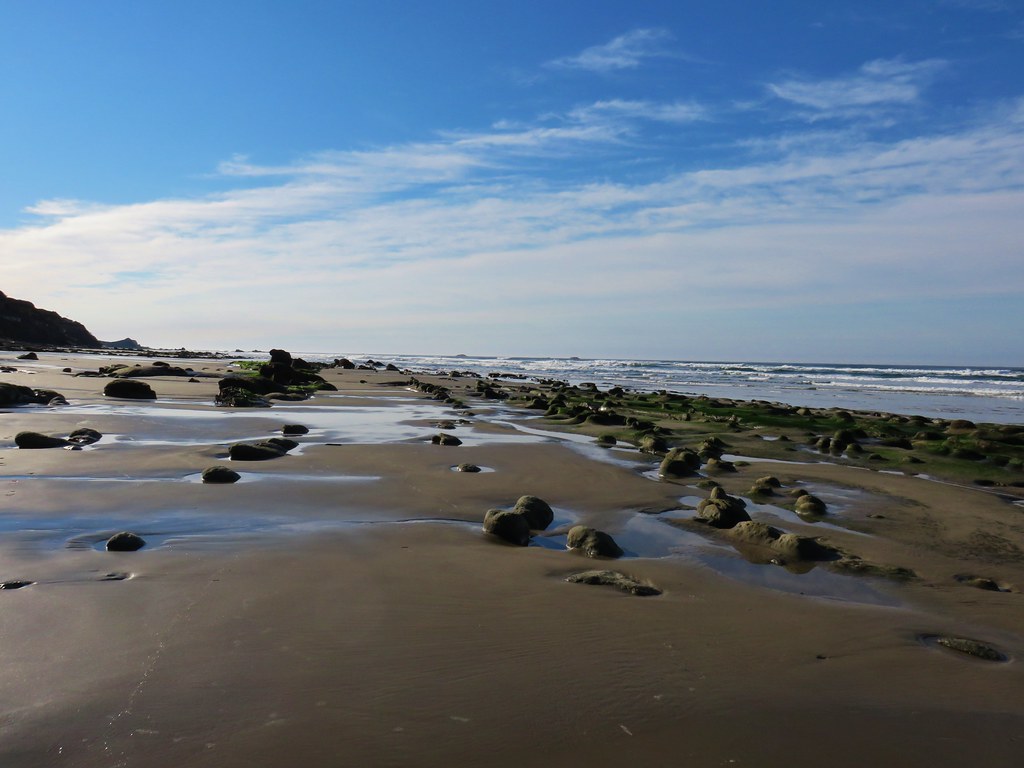
Exposed rocks on Ona BeachOna Beach in December

In between we visited some pretty amazing places. Here are just a few of the highlights:
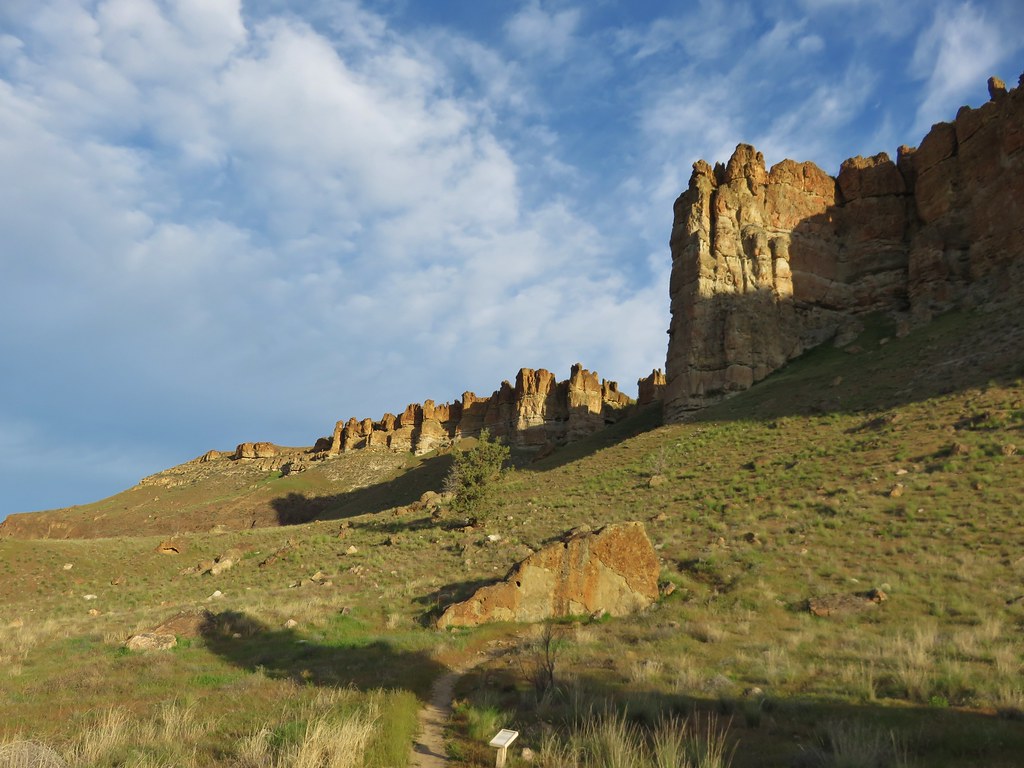
Clarno Unit - John Day Fossil BedsPalisades – Clarno Unit, John Day Fossil Beds, April
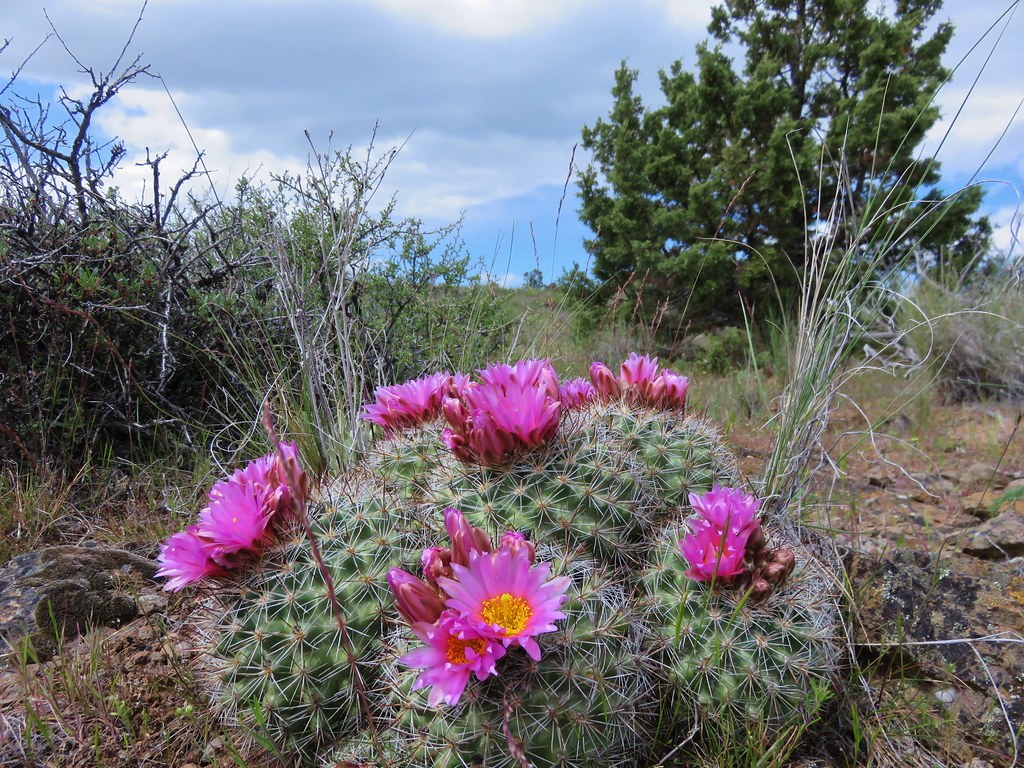
Hedgehog cactusHedgehog Cactus – Spring Basin Wilderness, April

Fern CanyonFern Canyon – Prairie Creek State Park, May
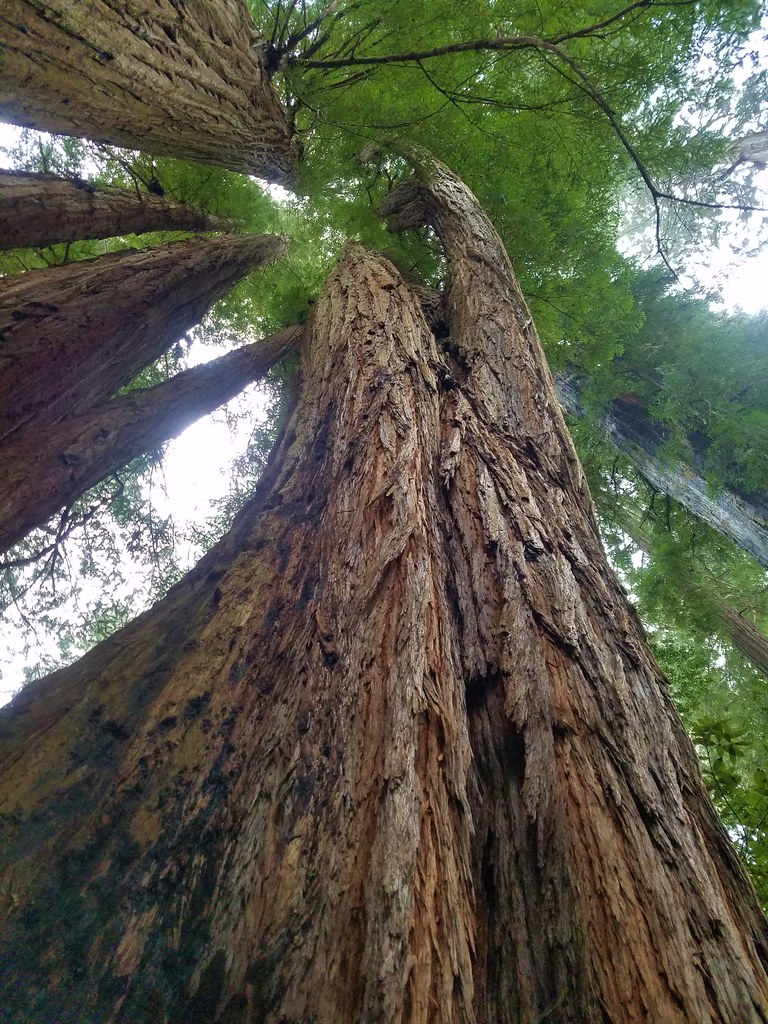
Tall Trees GroveTall Trees Grove – Redwoods National Park, May
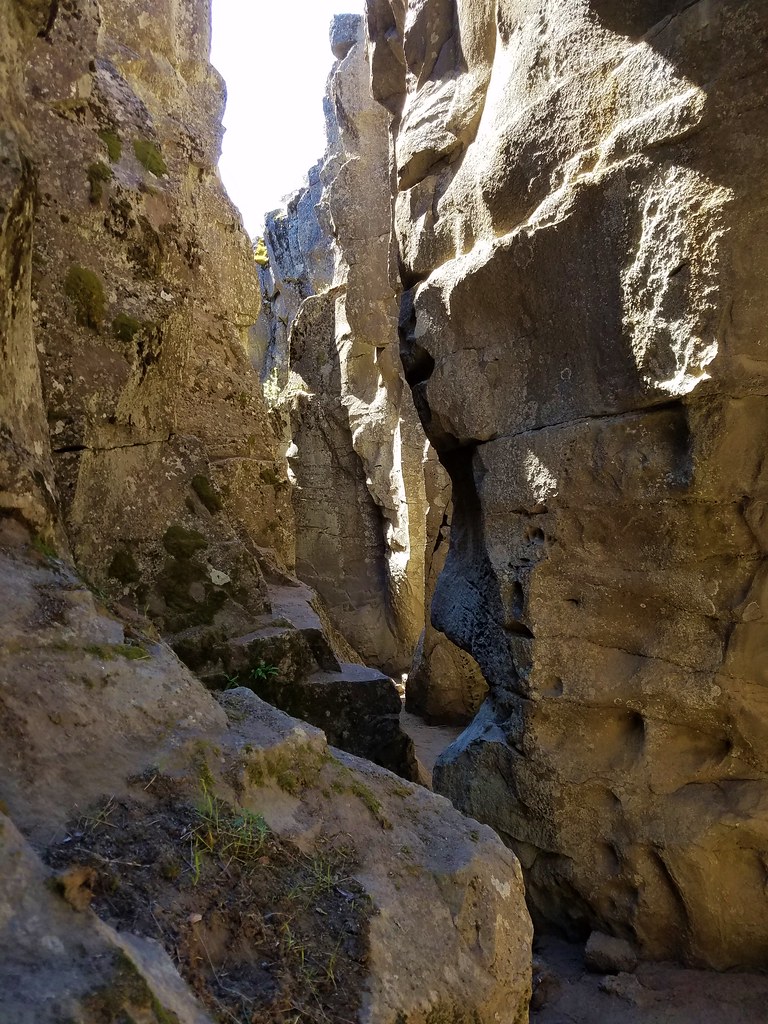
Crack in the GroundCrack in the Ground, Christmas Valley, May
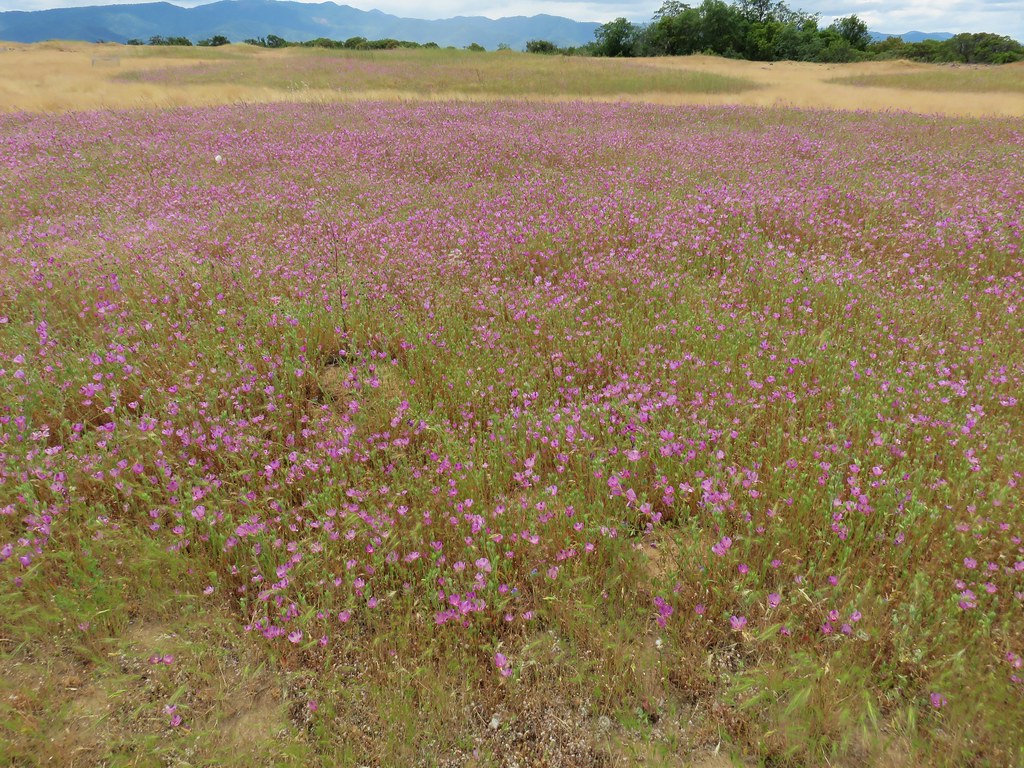
Wildflowers on Lower Table RockWildflowers on Lower Table Rock, Medford, June

View to the north from the Bridge Creek WildernessNorth Point – Bridge Creek Wilderness, June
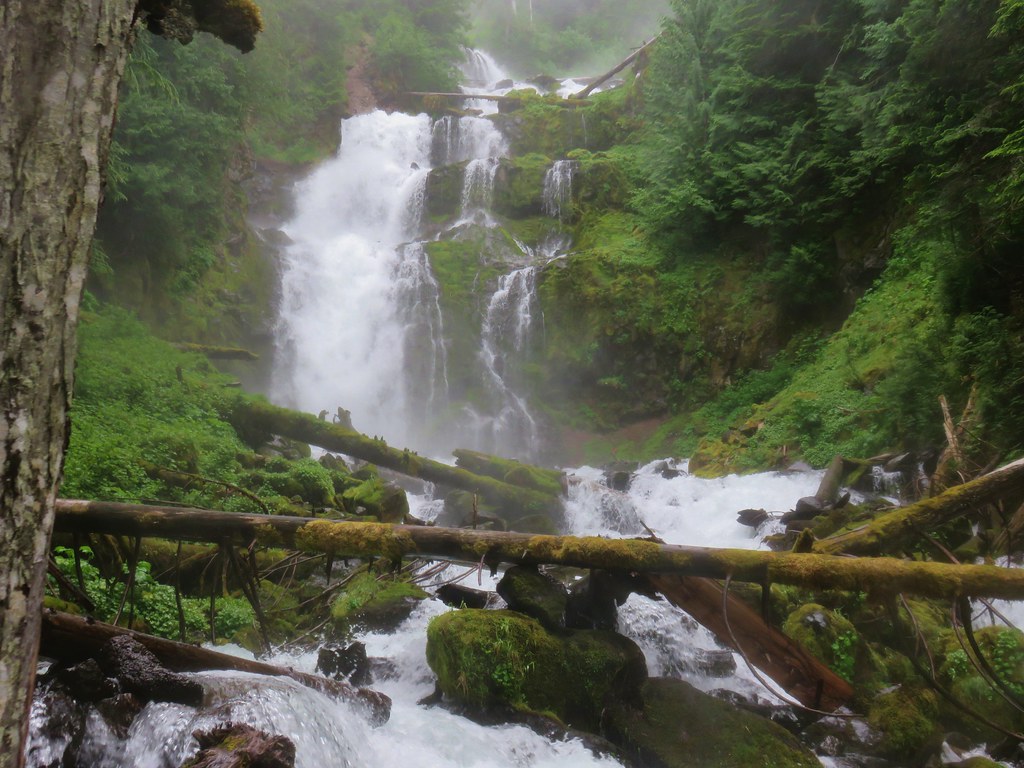
Upper Linton FallsUpper Linton Falls – Three Sisters Wilderness, July

Deadfall Lakes from Mt. EddyView from the Summit of Mt. Eddy, July

Caribou LakeCaribou Lake – Trinity Alps Wilderness, July

Vista Ridge TrailFireweed along the Vista Ridge Trail – Mt. Hood Wilderness, August
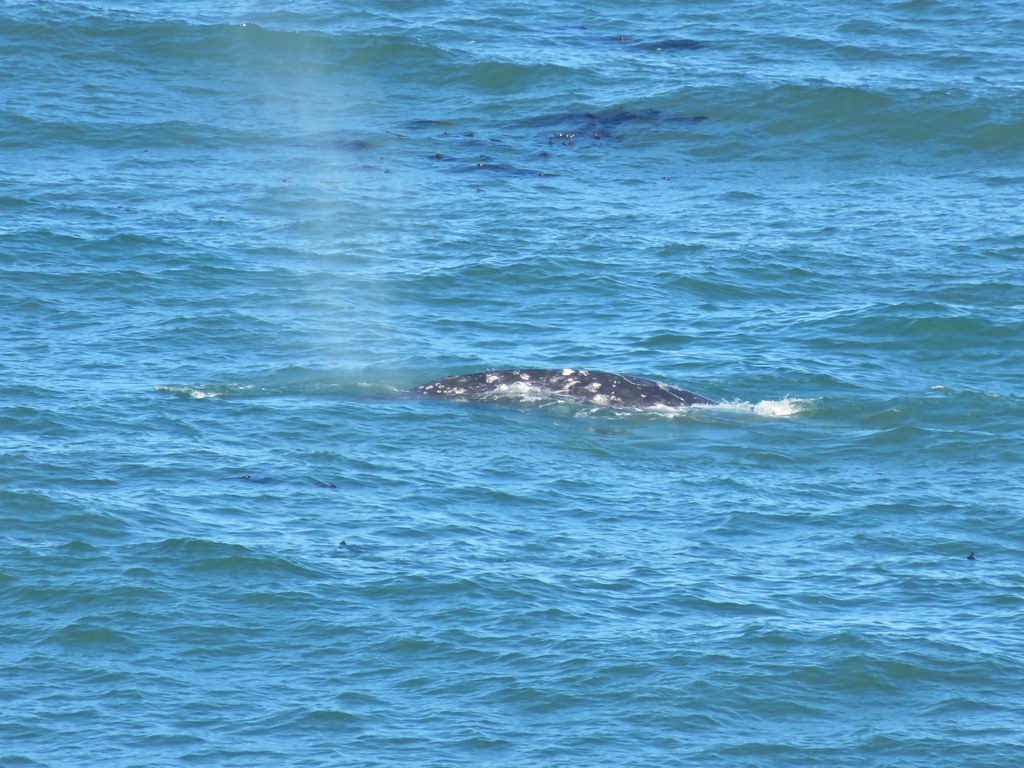
Grey back whale seen from Yaquina HeadWhale – Yaquina Head, August

Mt. Adams from Horseshoe MeadowHorseshoe Meadow – Mt. Adams Wilderness, September

Bull elk at Clatsop SpitBull elk – Clatsop Spit, September

View from the Blue Basin Overlook TrailBlue Basin – John Day Fossil Beds, September

Mt. Ireland from Baldy LakeBaldy Lake – North Fork John Day Wilderness, September
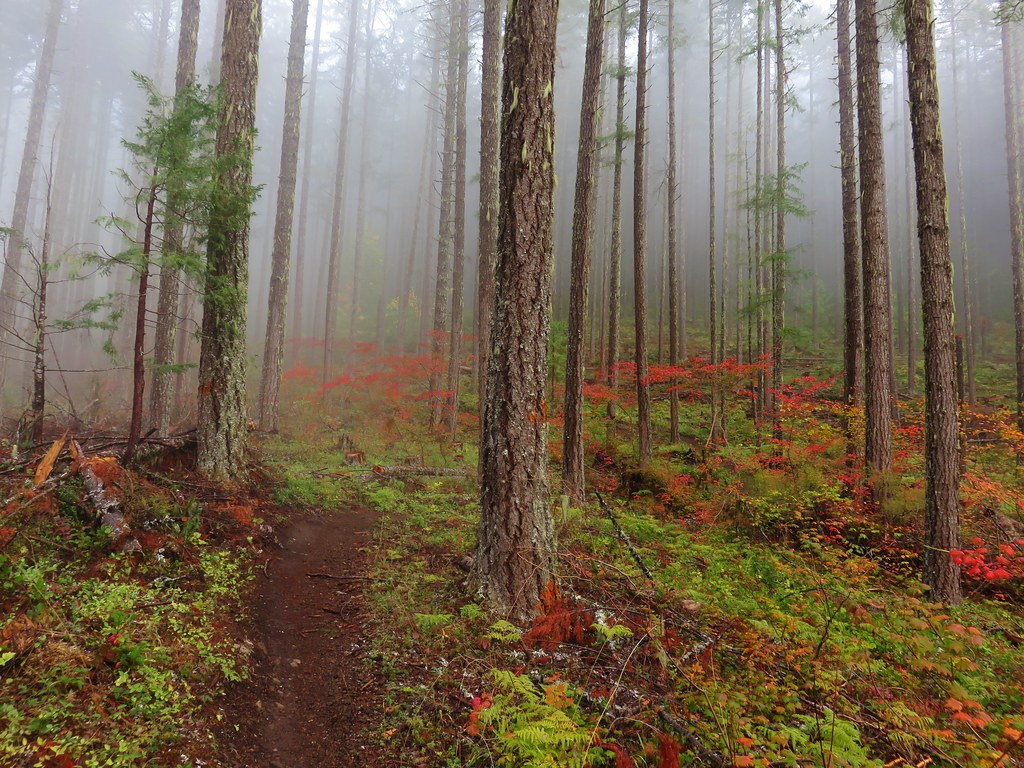
Dead Mountain TrailDead Mountain Trail – Willamette National Forest – October

Mt. Adams, Mt. Hood and Mirror LakeMt. Hood from Tom Dick and Harry Mountain – Salmon-Huckleberry Wilderness, October

Cummins Ridge TrailCummins Creek Wilderness, November

It is only a small sample of the amazing diversity that we are blessed with here in the Pacific Northwest. We are looking forward to discovering more new places next year, hopefully with less disruptions to our plans (including not tossing my camera into any rivers). Happy Trails!

Categories
Central Coast Hiking Oregon Oregon Coast Trip report

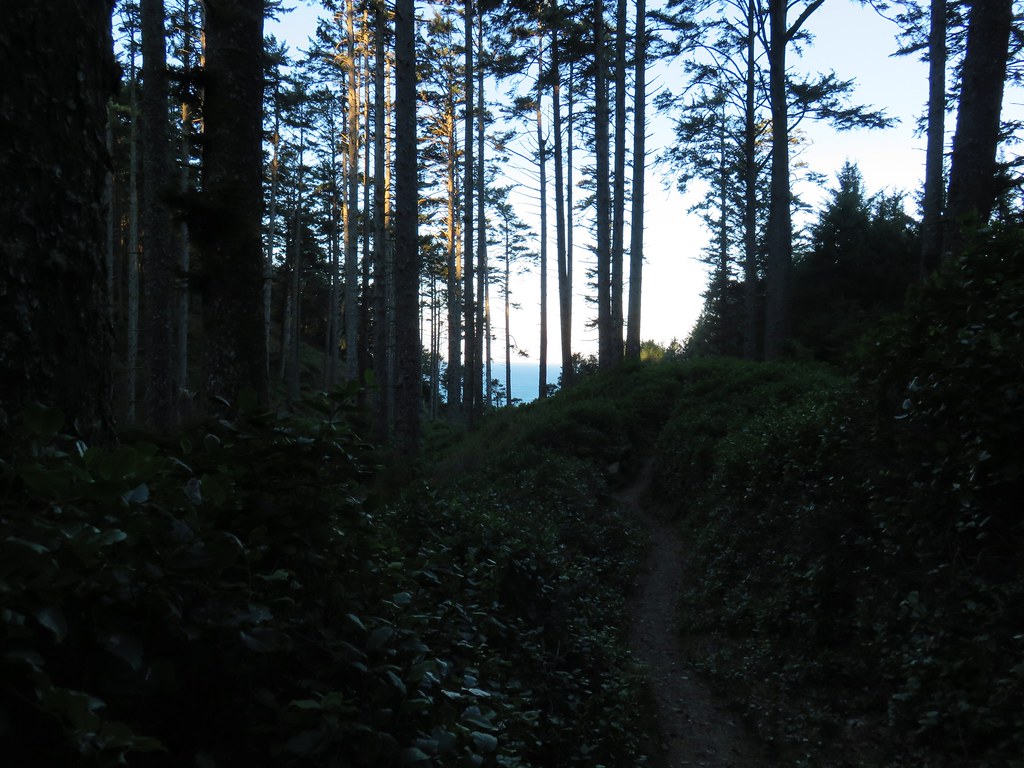
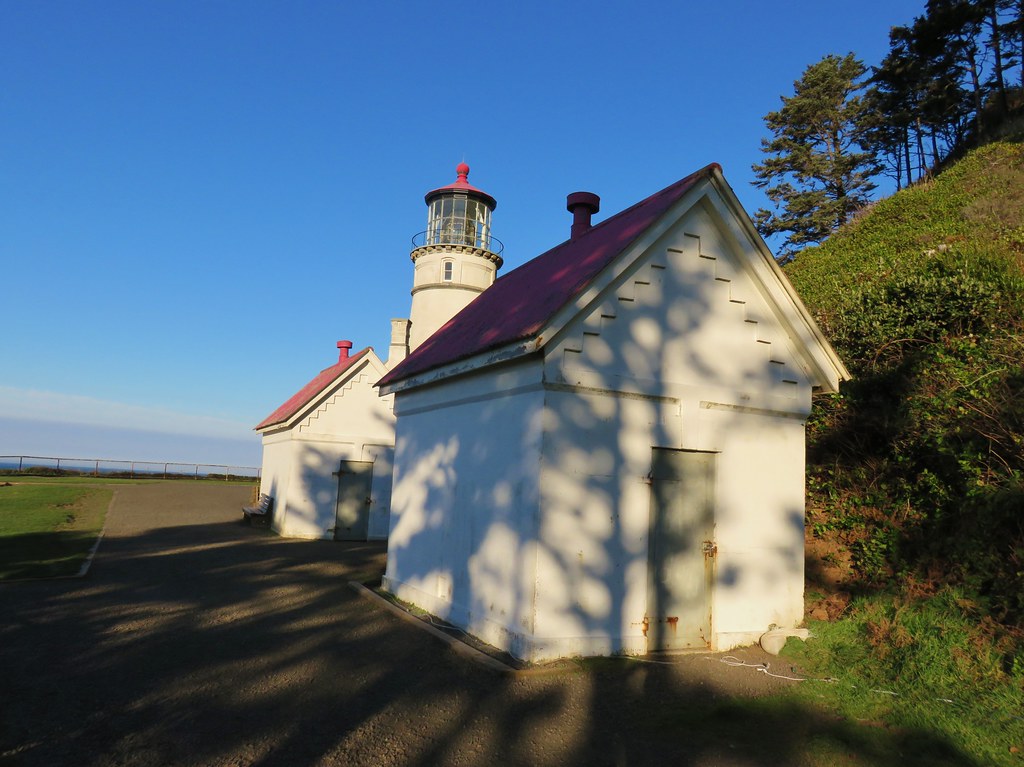
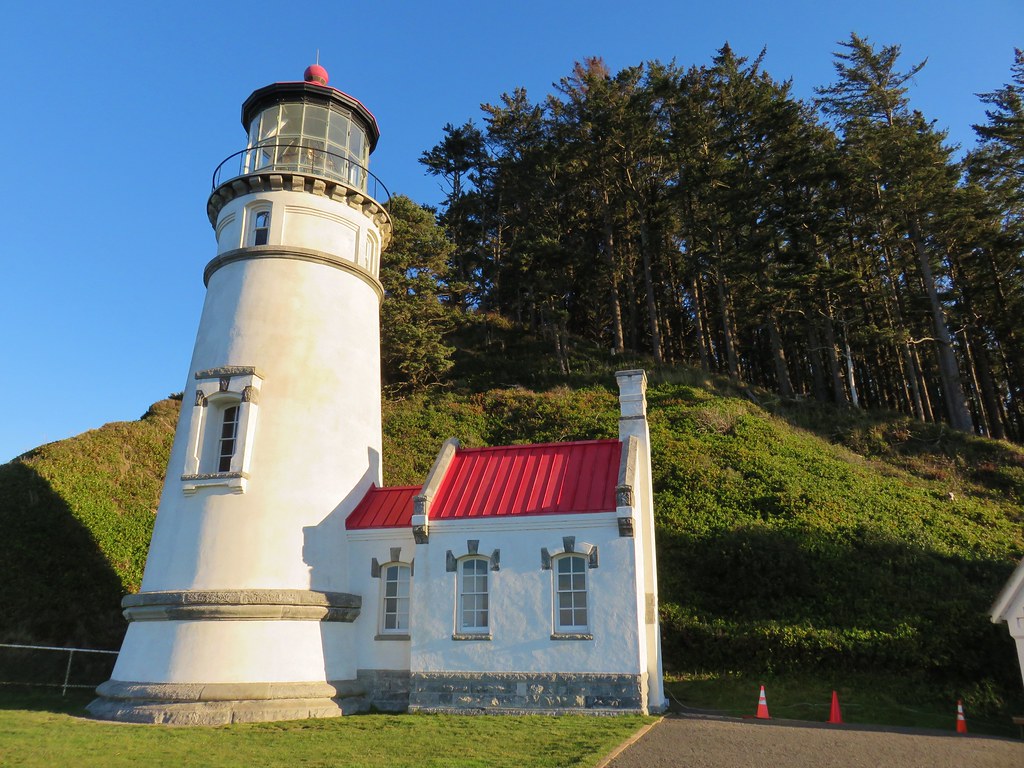
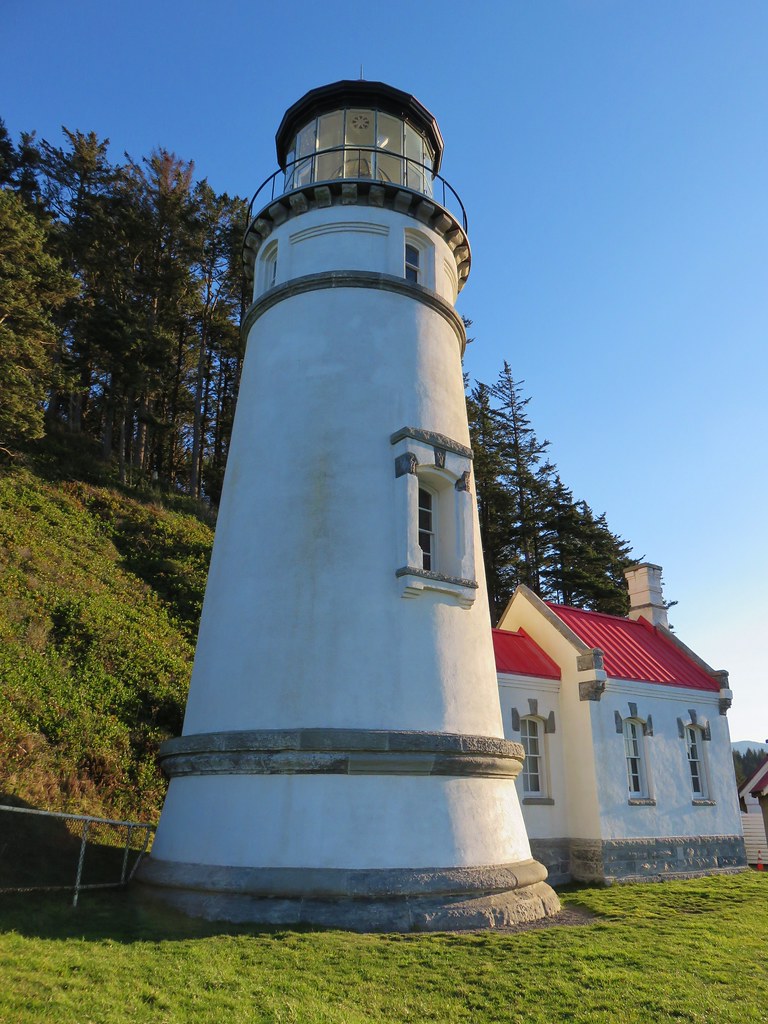
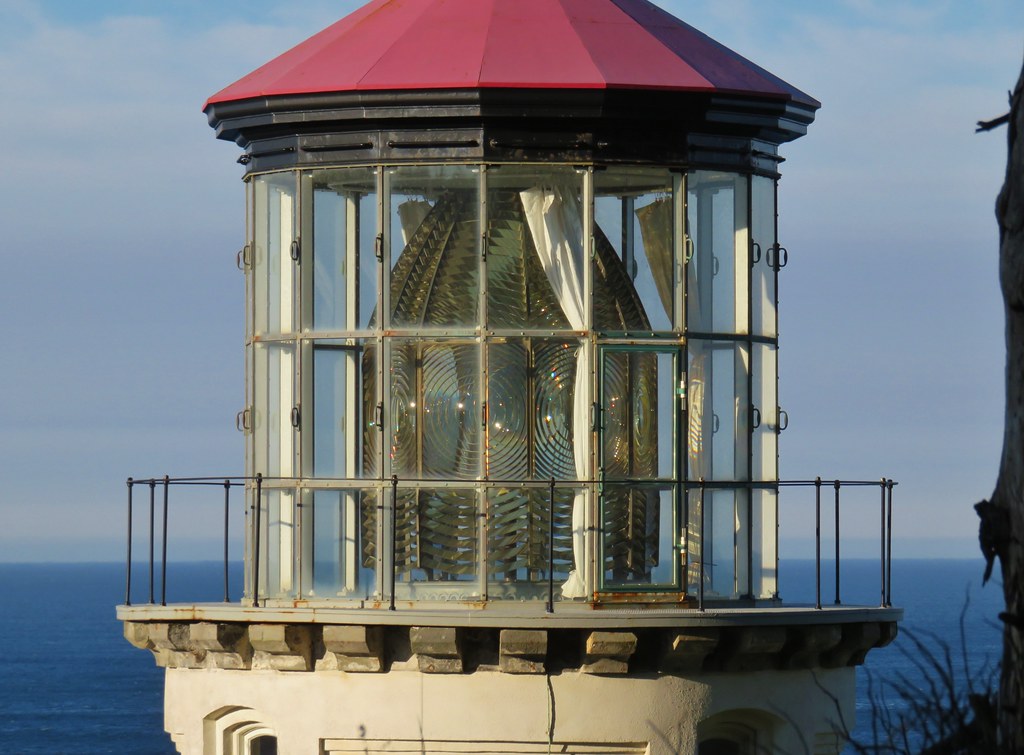
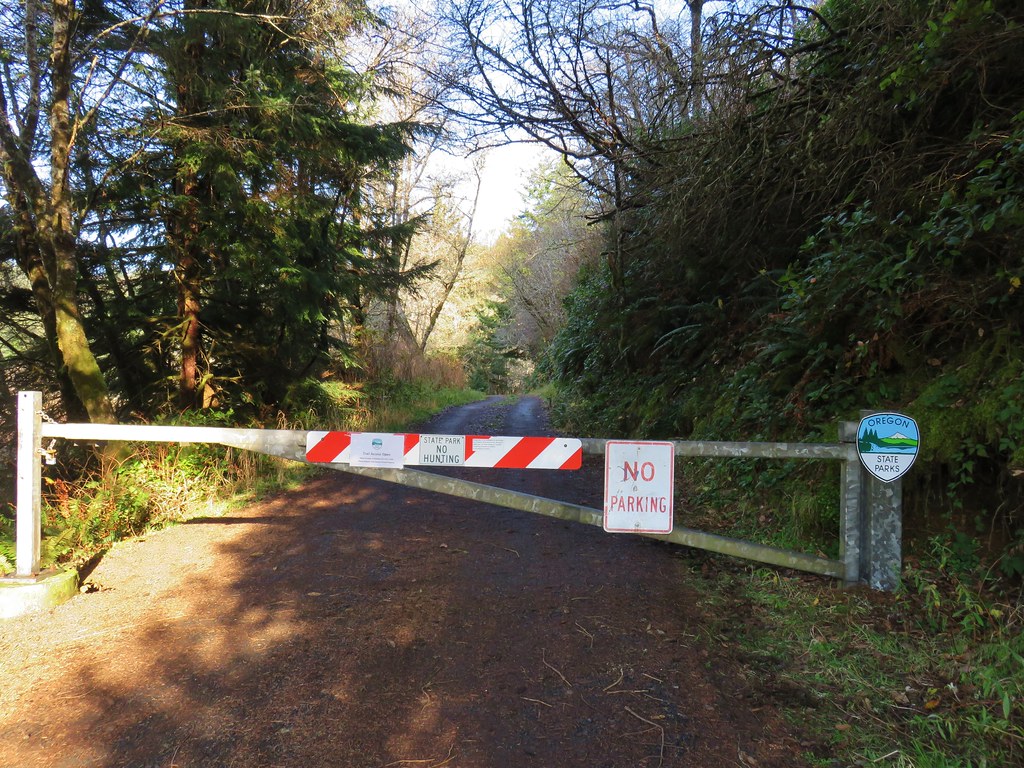
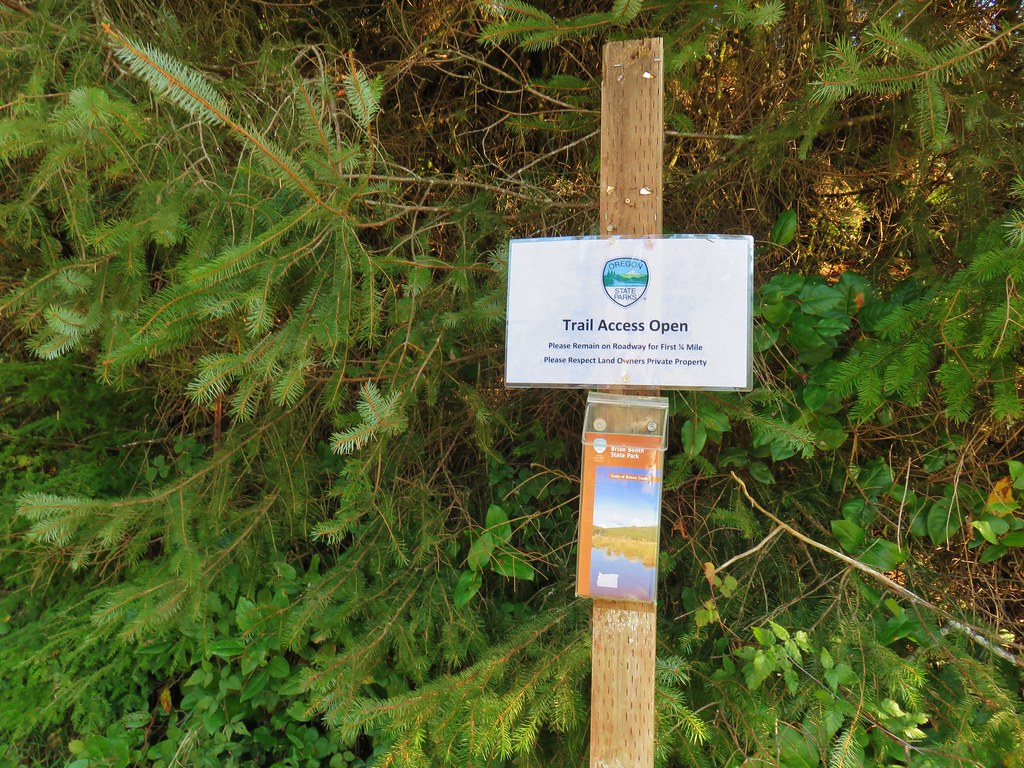
Heceta Head and Brain Booth State Park

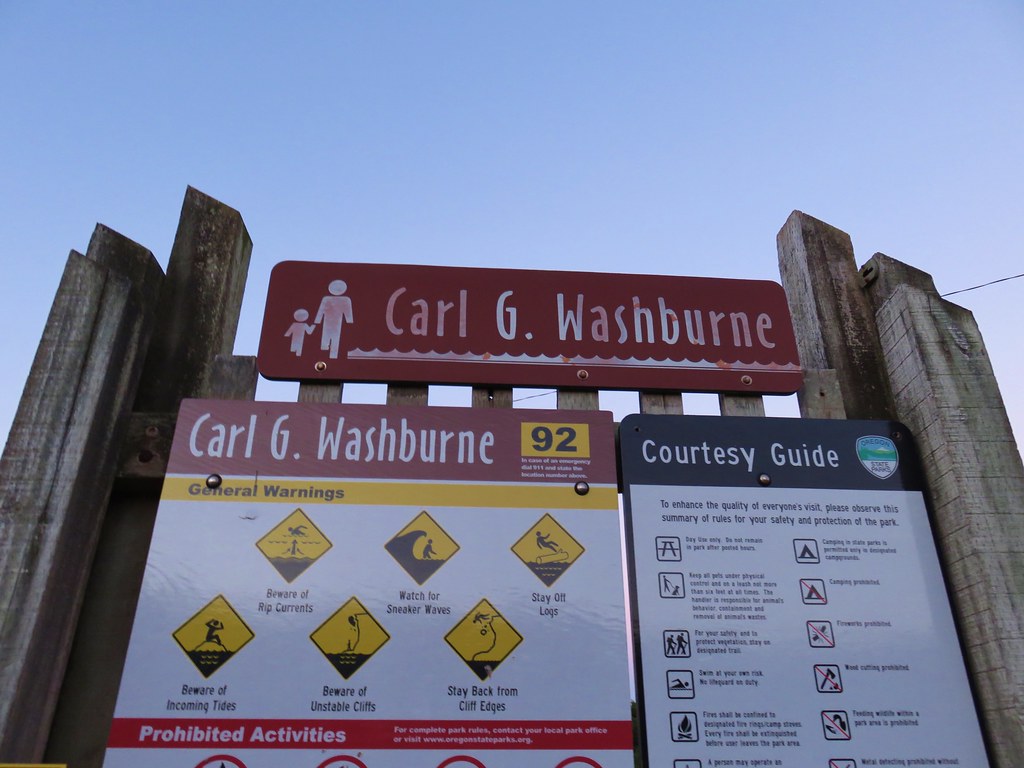
For our final outing of 2017 we returned to the Oregon Coast for three short hikes between Newport and Florence. We began our day by driving Highway 101 35 miles south of Newport (14 miles north of Florence) to the Carl G. Washburne Memorial State Park Day Use parking lot.
IMG_1413

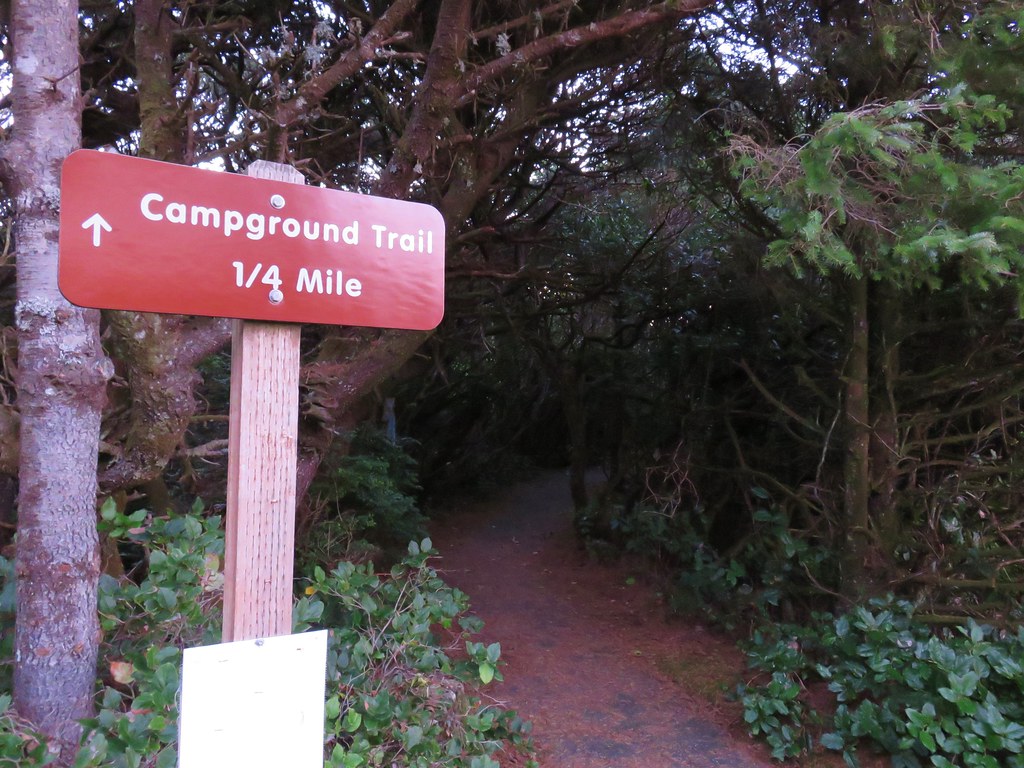
Our plan was to hike to the Heceta Head Lighthouse State Scenic Viewpoint and then return on a different route. In order to complete the loop portion of the hike we needed to cross Highway 101 twice. We decided to get the crossing done as soon as possible thinking that traffic would be less problematic earlier in the day. From the parking area we took a paved path east following a pointer for the Campground Trail.
IMG_1416

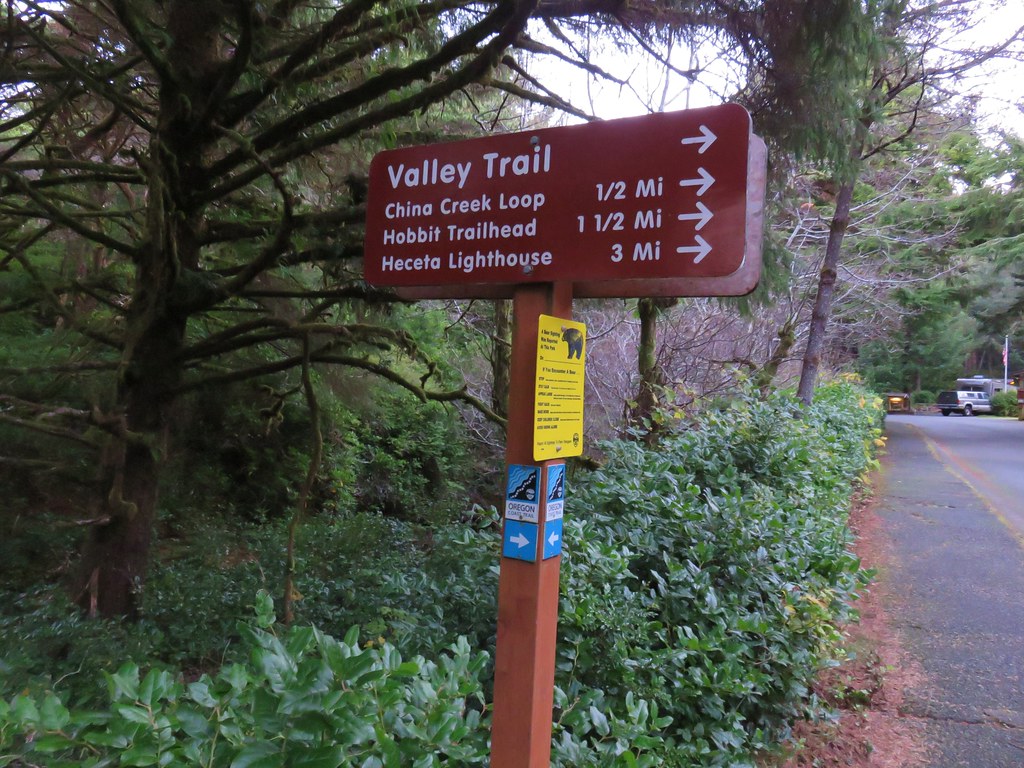
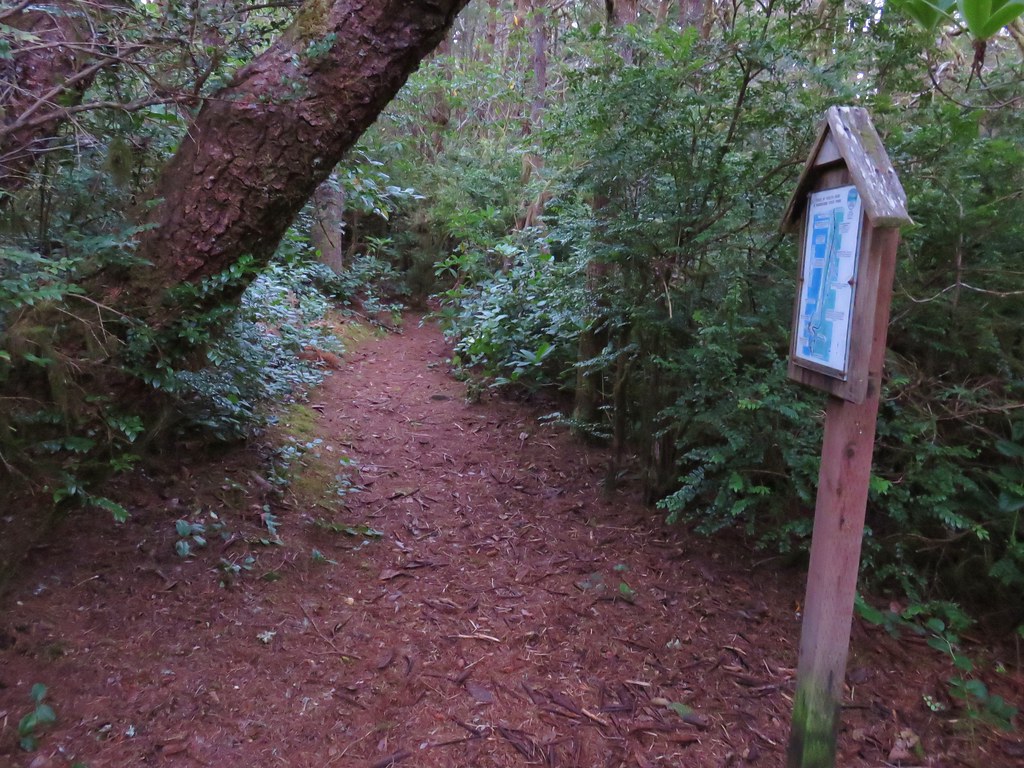
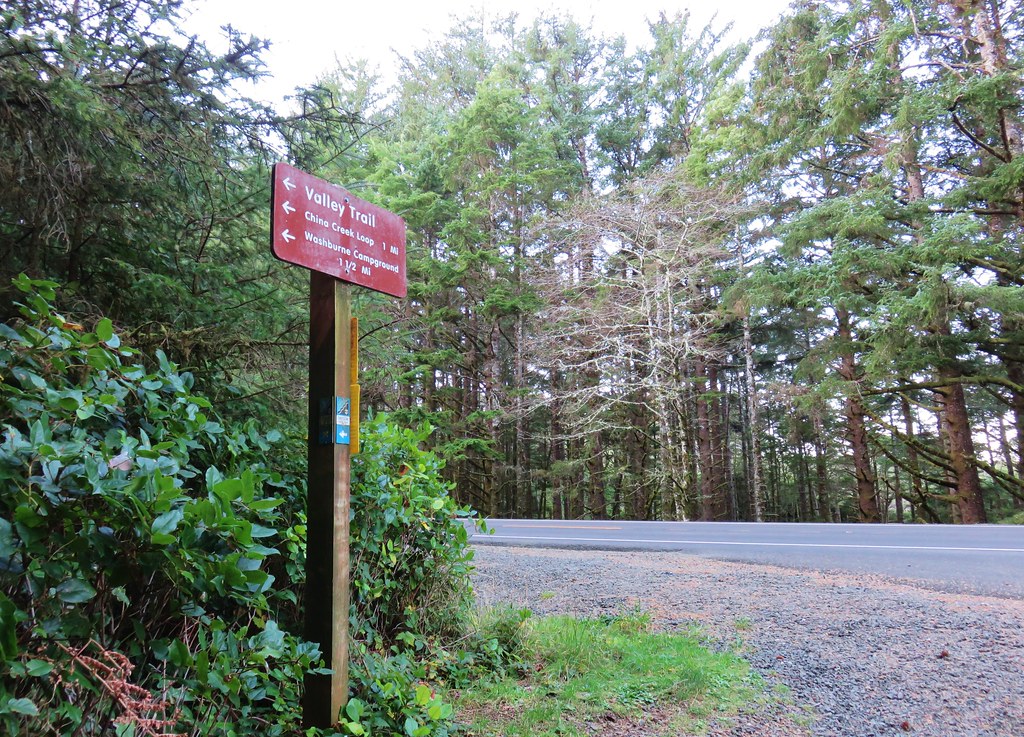
After a tenth of a mile we crossed the empty highway and continued on the campground entrance road for just over an additional tenth of a mile where we turned right at a signpost onto the Valley Trail.
IMG_1419

IMG_1420

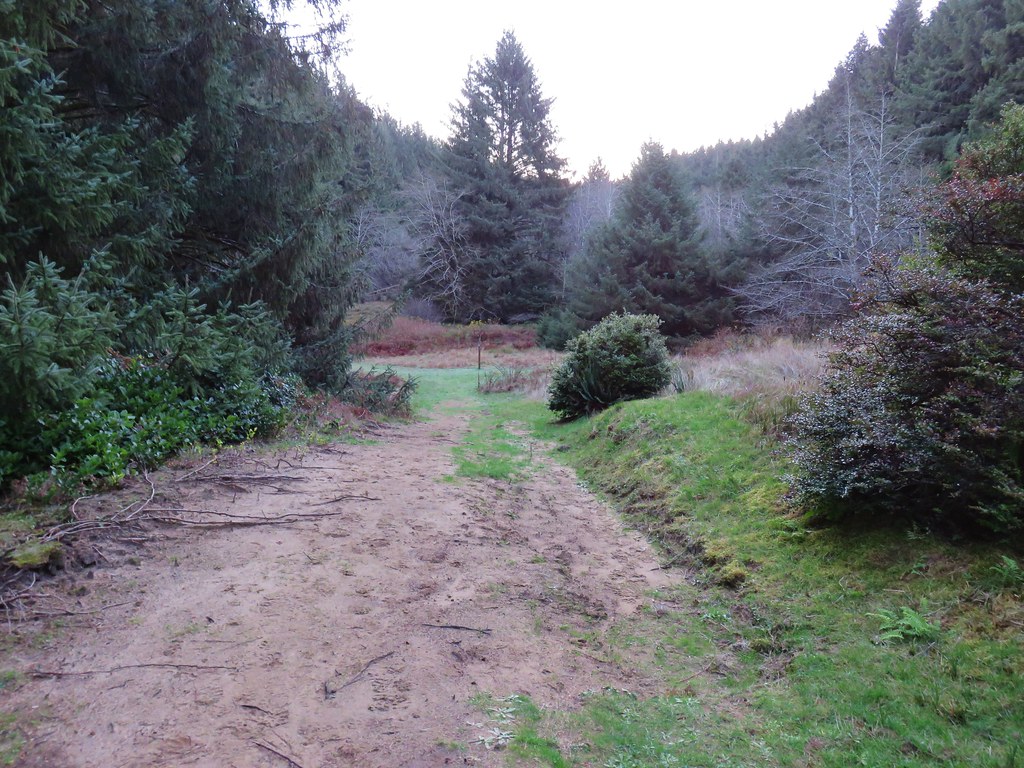
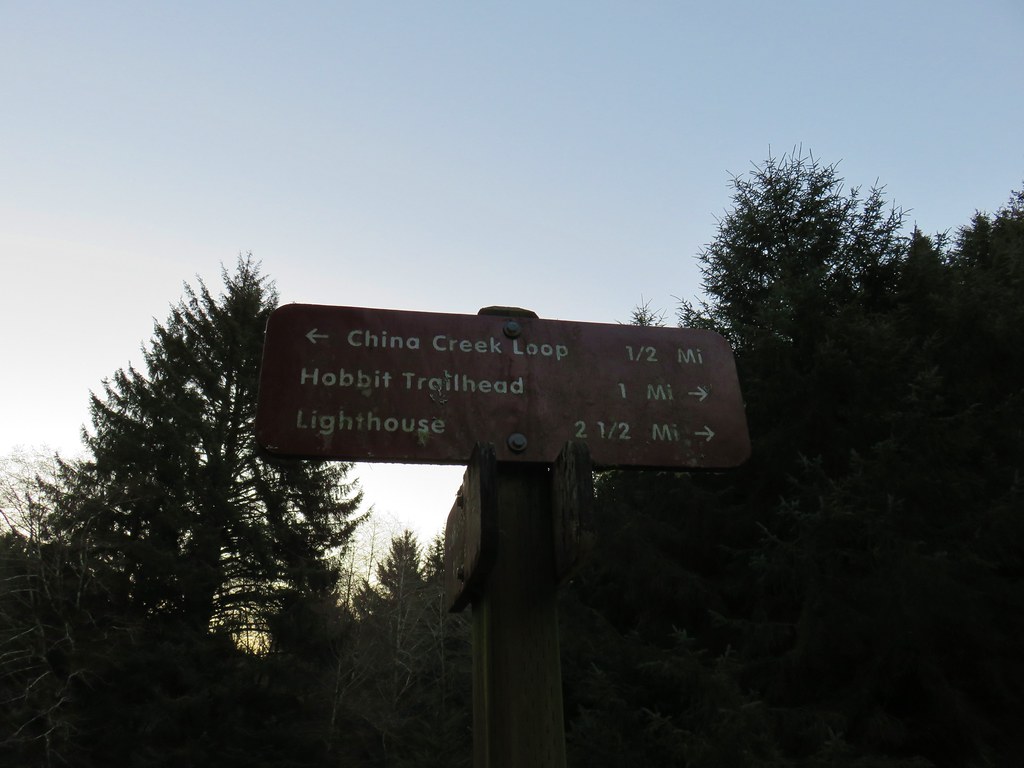
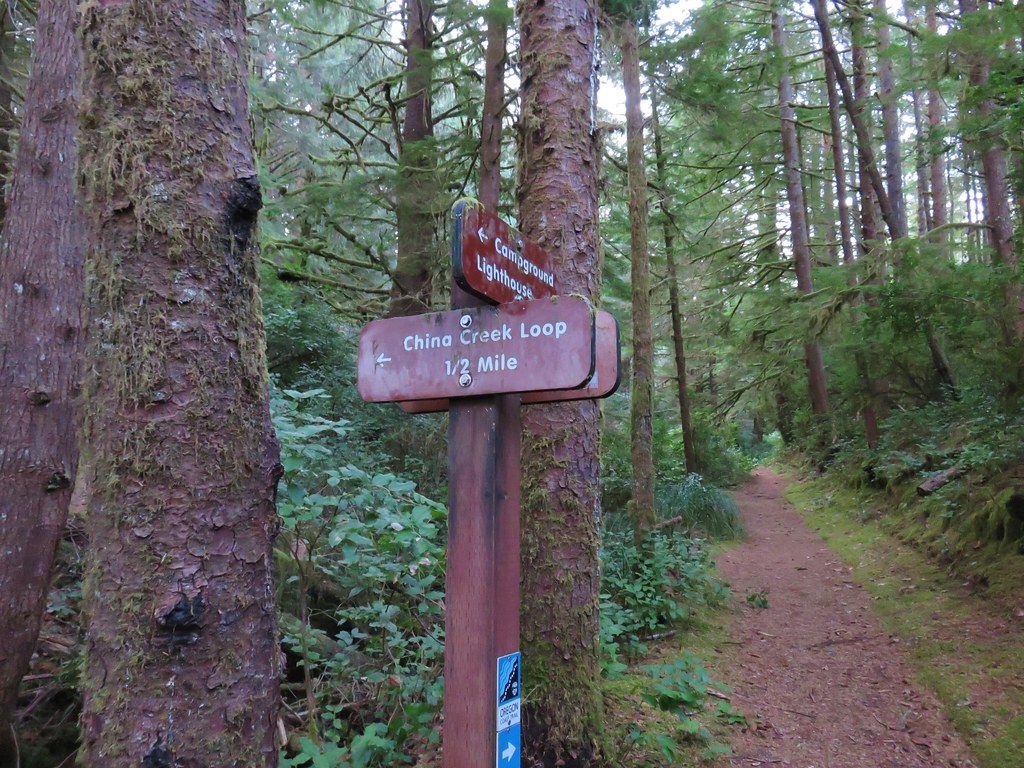
We followed this trail for three tenths of mile to a junction in a meadow with the China Creek Loop Trail.
IMG_1426

IMG_1428

The loop added a little distance to the hike but not enough to keep us from turning left and crossing China Creek on a footbridge.
IMG_1429

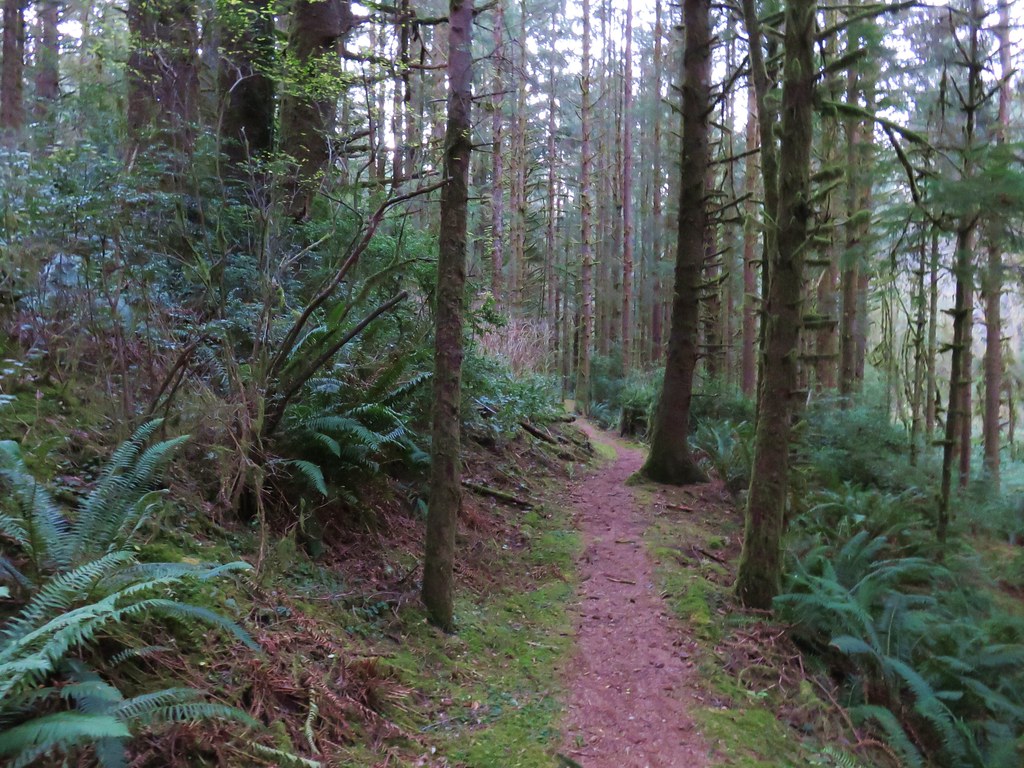
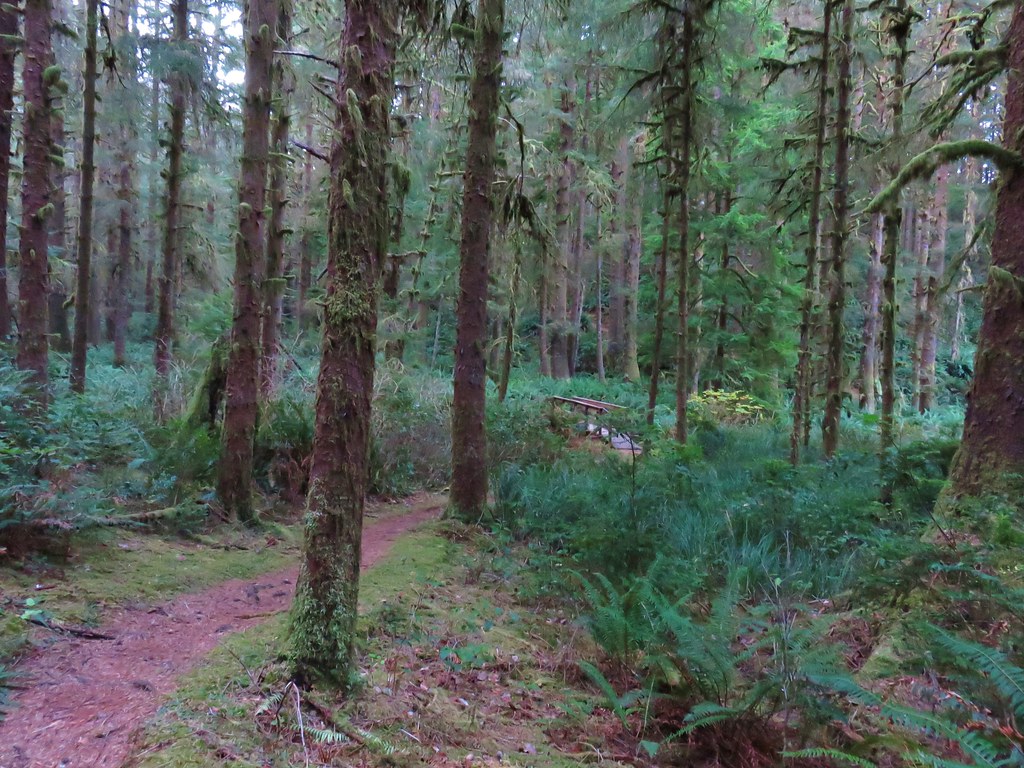
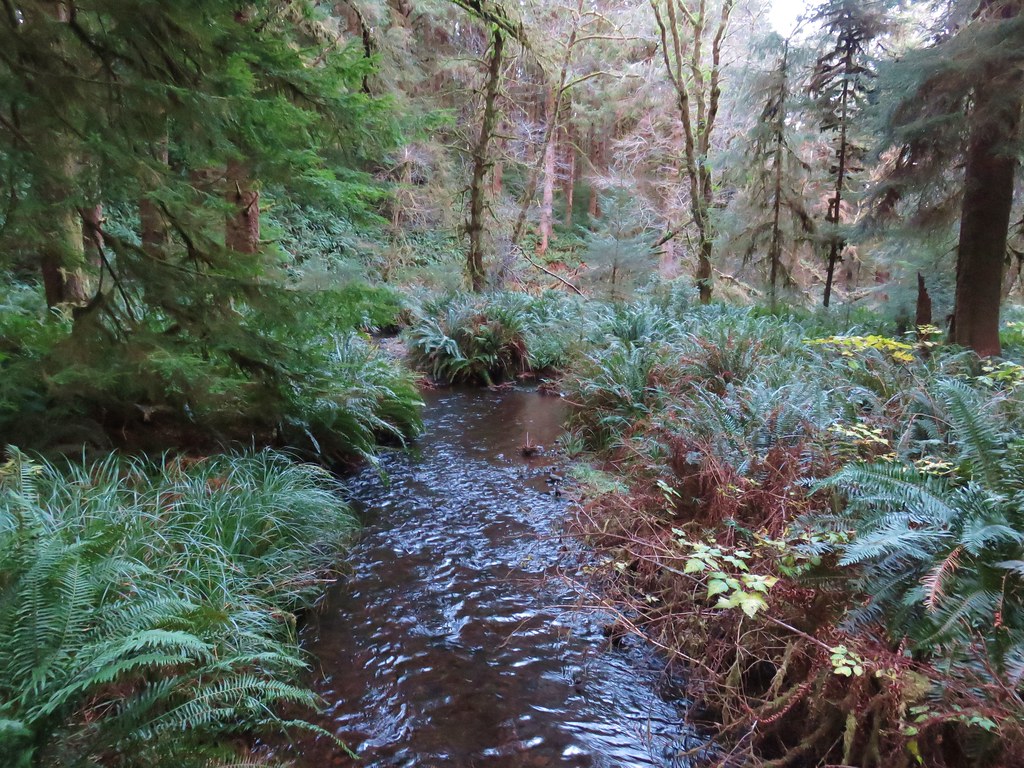
The China Creek Loop passed through a green coastal forest crossing China Creek again after .3 miles.
IMG_1433

IMG_1434

IMG_1437

A half mile from the second crossing we found ourselves back at the Valley Trail where we turned left toward the lighthouse.
IMG_1439

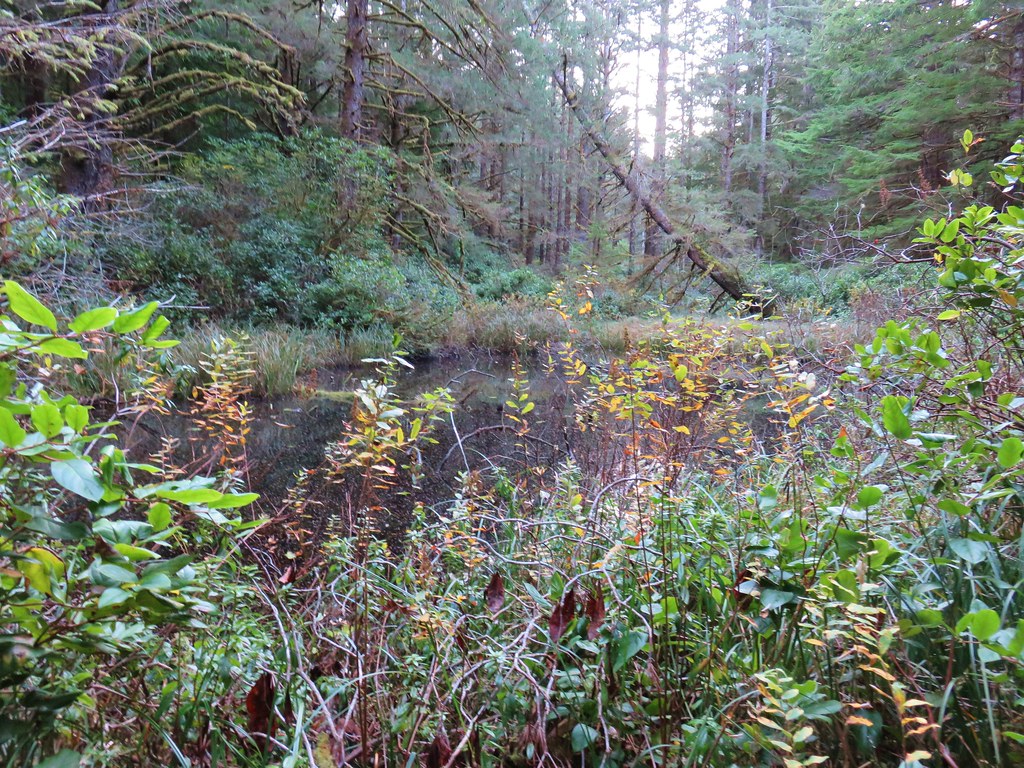
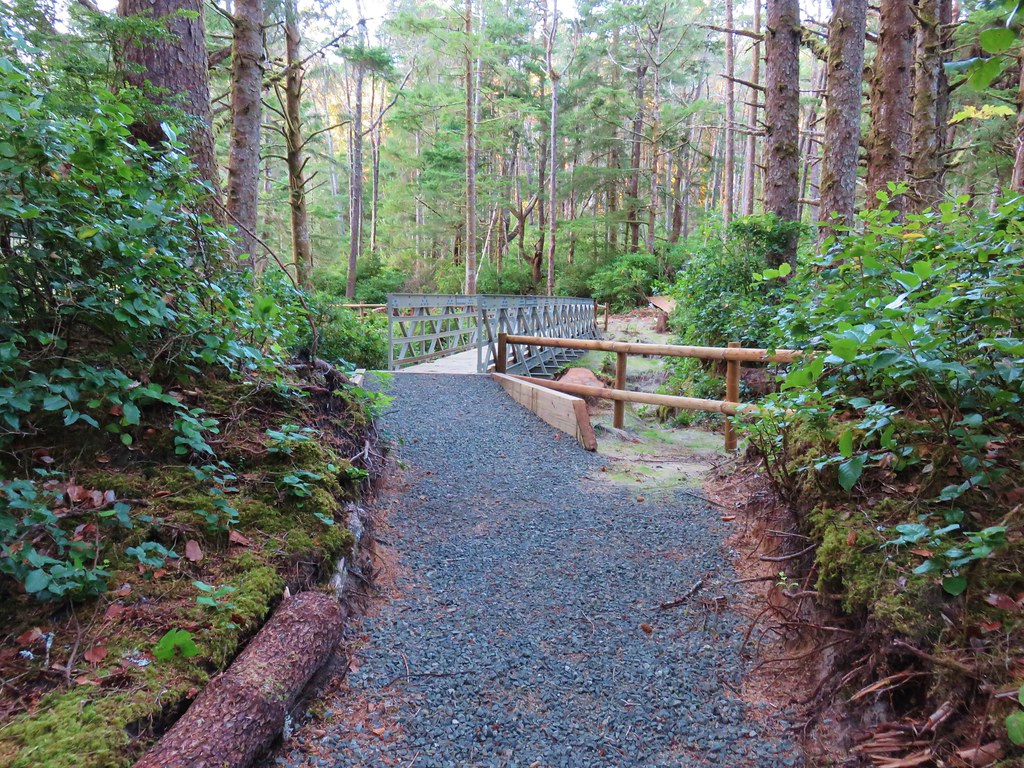
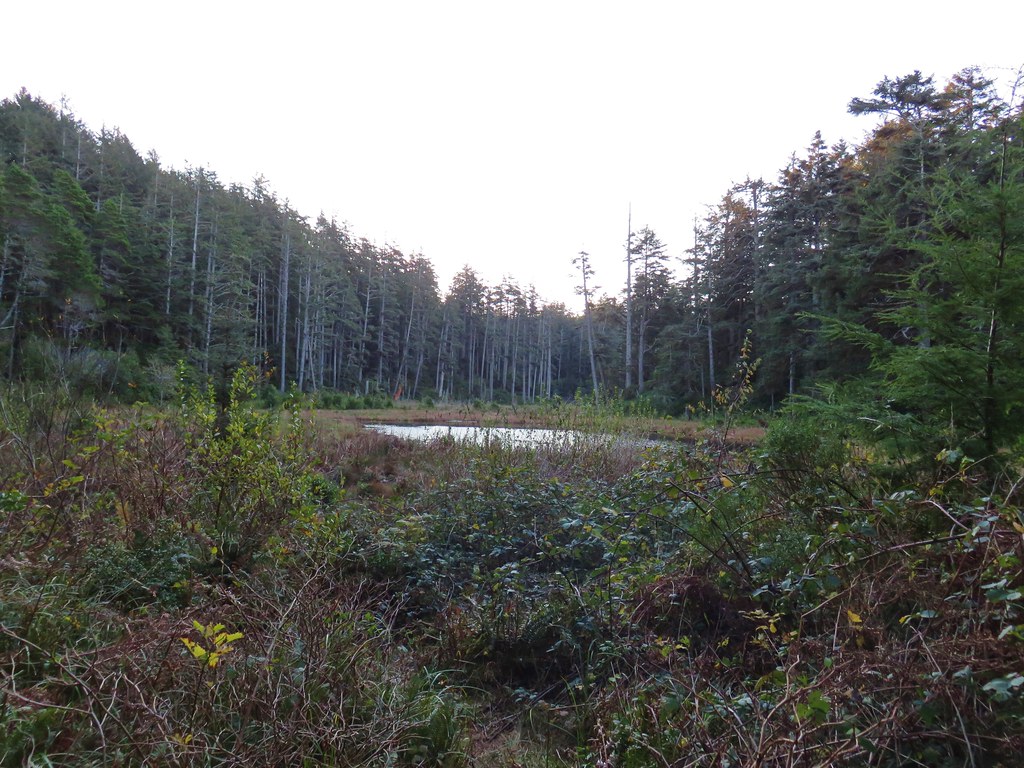
Over the next mile the trail passed two small ponds, crossed Blowout Creek on what appeared to be a recently installed footbridge, and skirted a beaver lake.
IMG_1441

IMG_1443

IMG_1444

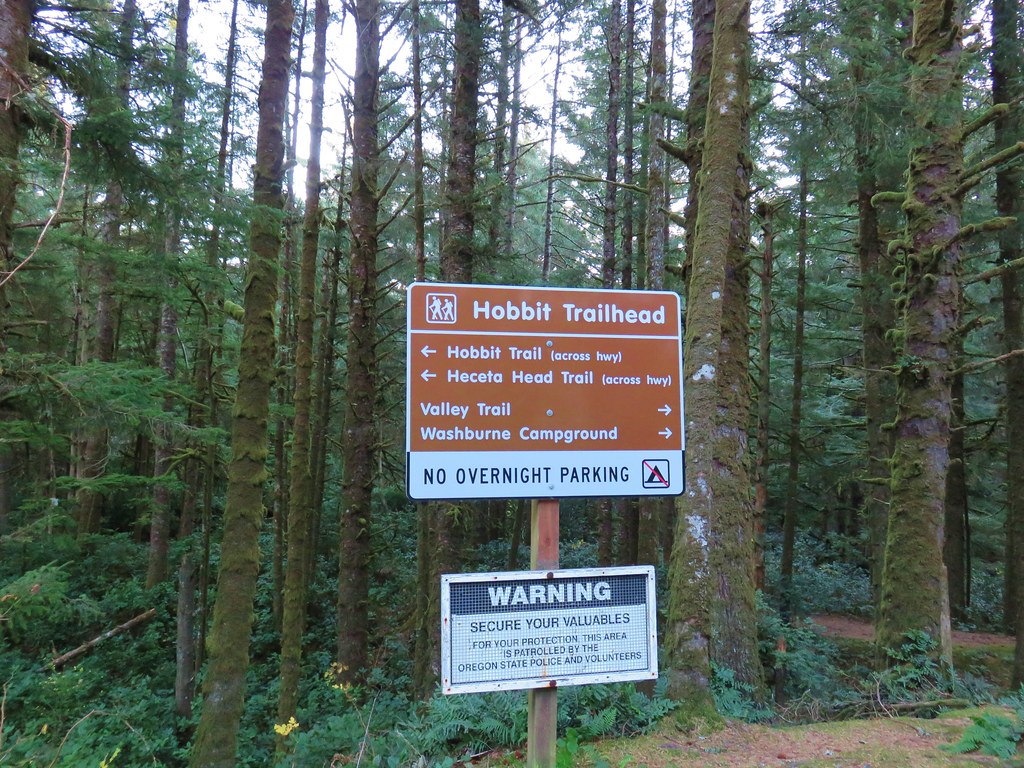
We were now at the second crossing of Highway 101 at the Hobbit Trailhead, another possible starting point.
IMG_1449

IMG_1447

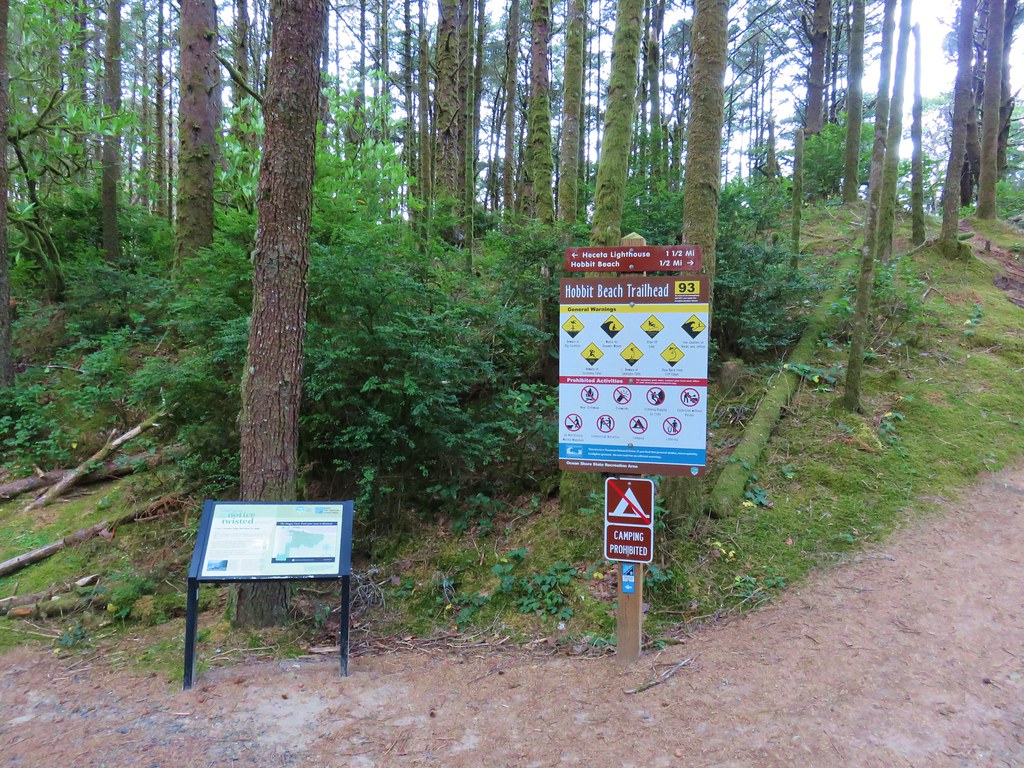
On the other side of the highway the trail split, right was our return route via Hobbit Beach but first we turned left to visit the lighthouse. We were now following the route of the Oregon Coast Trail.
IMG_1451

At first the trail remained near the highway but soon veered away toward the ocean as it began to climb up Heceta Head.
IMG_1458

IMG_1460

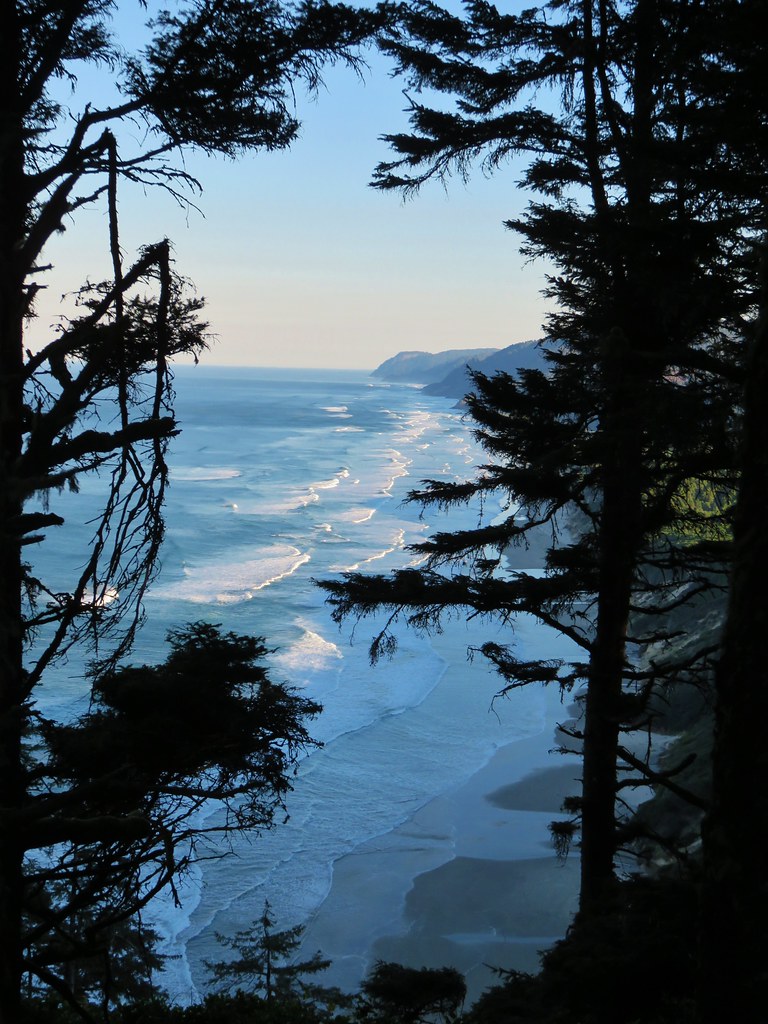
The trail climbed gradually and offered a few views north to Cape Perpetua.
IMG_1466

IMG_1471

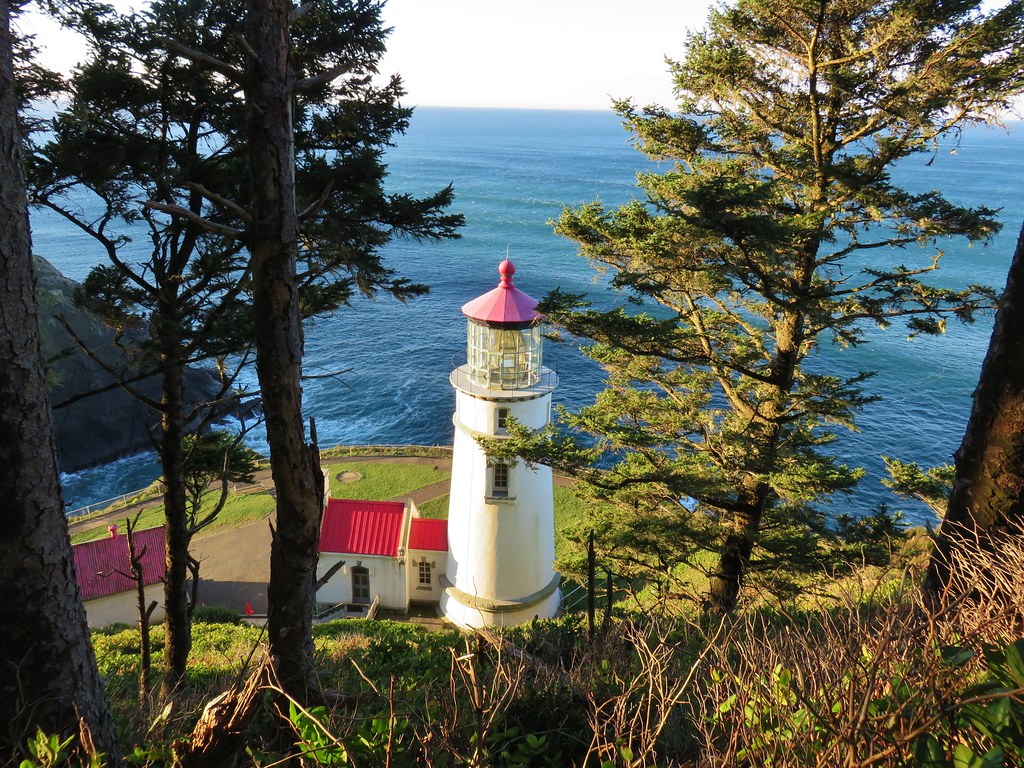
After reaching a saddle on the head, the trail descended to the south in a series of switchbacks before following a ridge and finally arriving above the lighthouse at the Heceta Head Lighthouse State Scenic Viewpoint.
IMG_1483

Seal Lion Point jutted out to the south where the occasional bark of a sea lion drifted our way.
IMG_1487

We made our way down to the lighthouse to get a closer look.
IMG_1491

IMG_1496

IMG_1499

IMG_1502

After a short break we returned the way we’d come to the fork and turned toward Hobbit Beach. We arrived at the beach in a little under half a mile.
IMG_1505

IMG_1506

IMG_1507

A quiet 1.2 mile walk along the beach (and across Blowout Creek) brought us back to our car at the day use area.
IMG_1515

IMG_1517

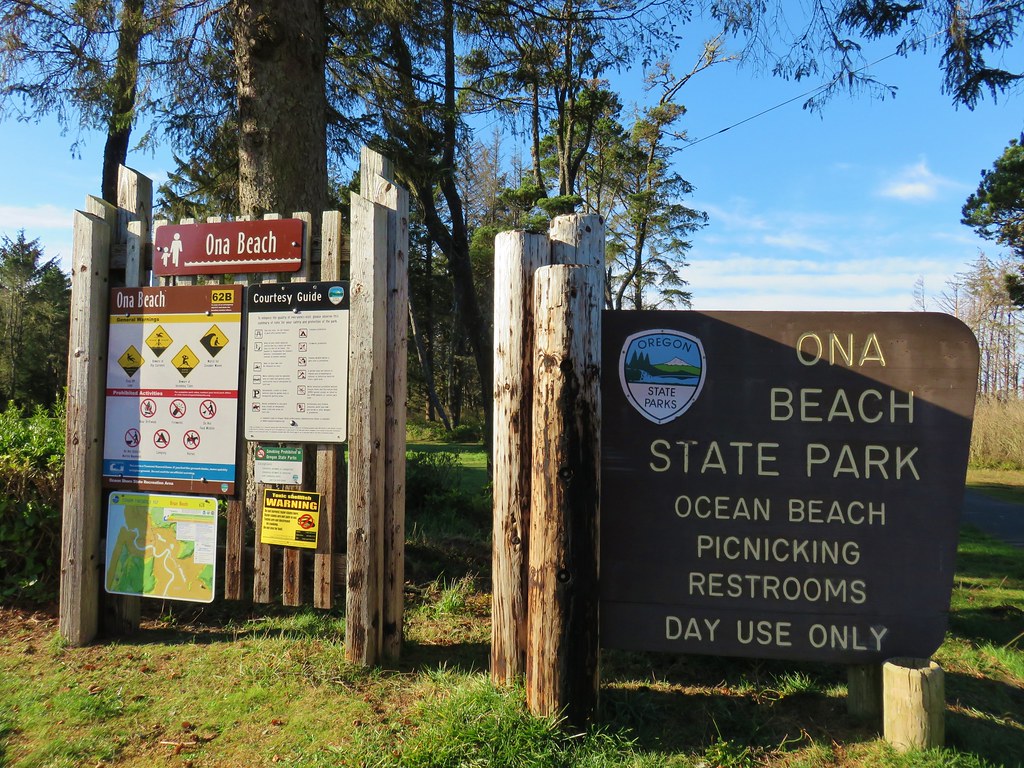
From there we drove north on Highway 101 for 28 miles to Ona Beach State Park, one of two units of Brian Booth State Park.
IMG_1519

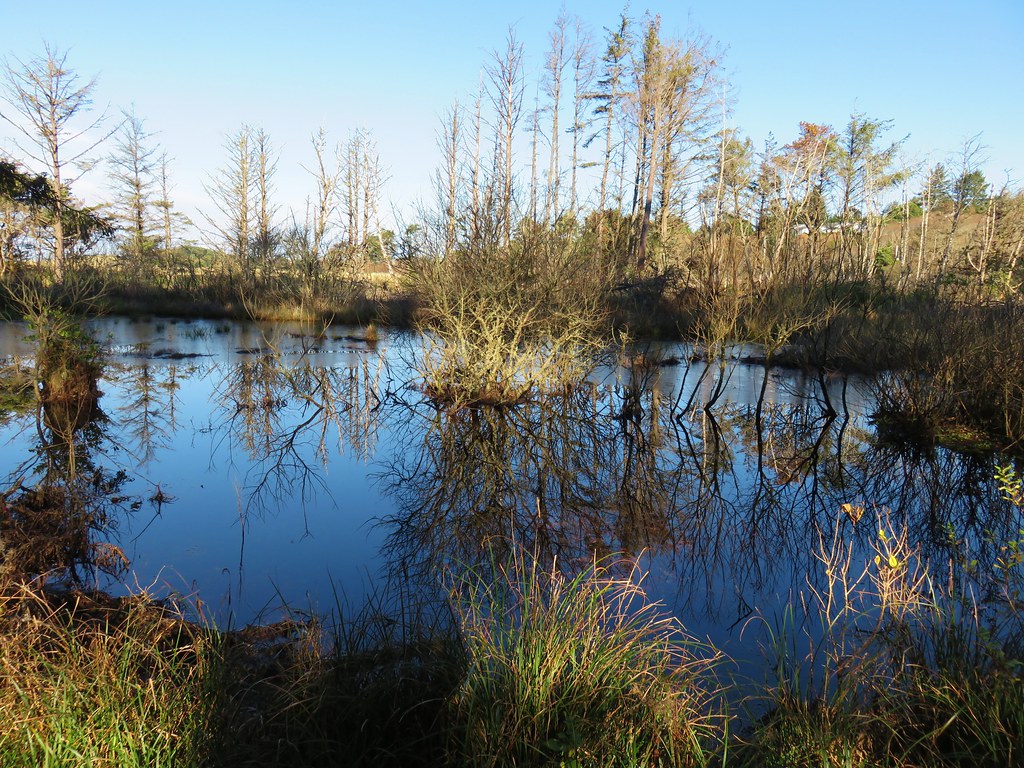
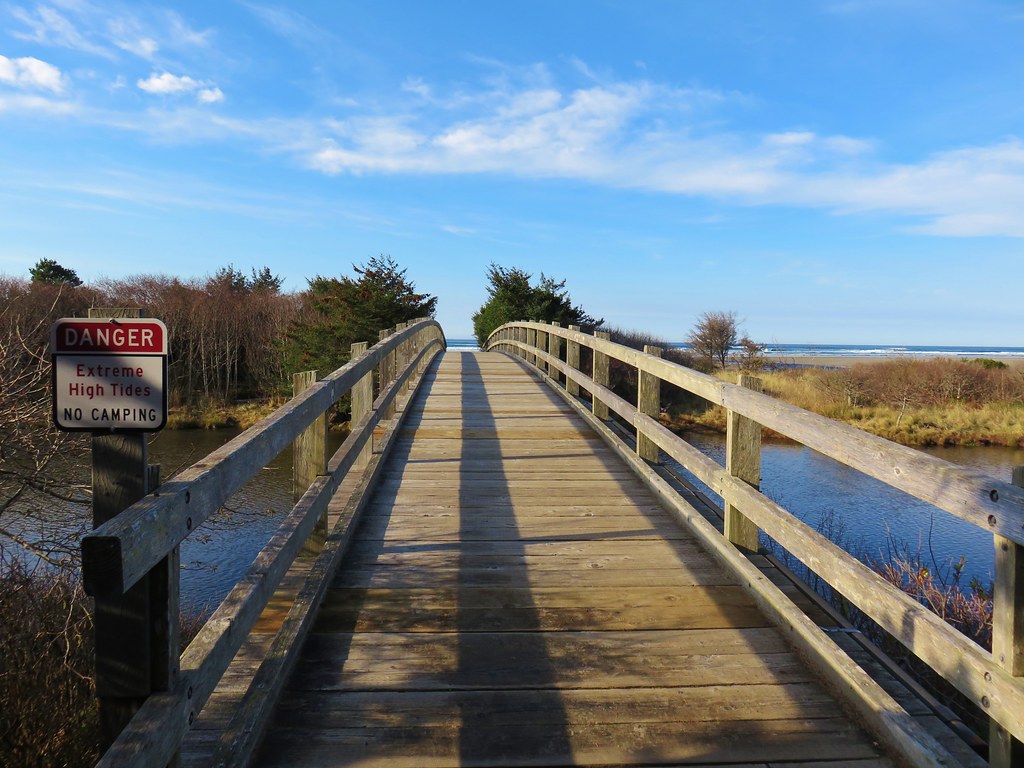
For this hike we planned on hiking along Ona Beach to Seal Rock and back. We passed through a large picnic area avoiding some flooded trails and arriving at a footbridge over Beaver Creek.
IMG_1521

IMG_1624

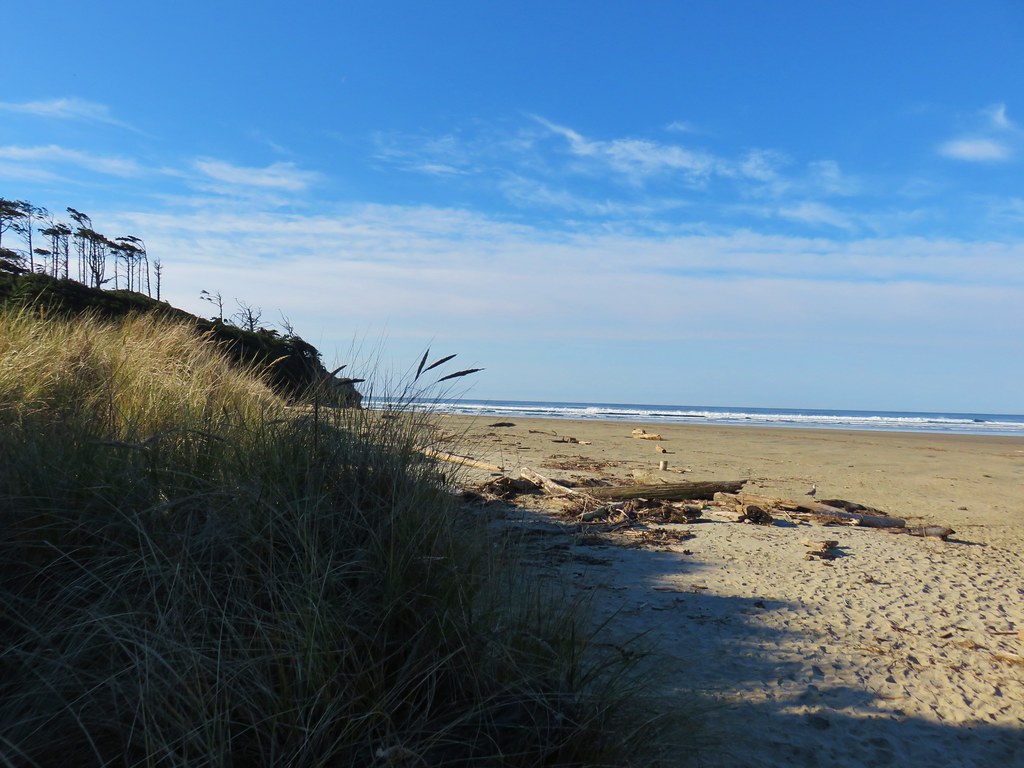
After crossing the creek we turned south along Ona Beach.
IMG_1526

Portions of the beach can be impassible at high tide but we had arrived an hour and a half below low tide. Exposed rocks made the first stretch of beach very interesting.
IMG_1537

IMG_1538

IMG_1541

IMG_1545

IMG_1543

IMG_1547

The rock along the beach eventually petered out but a number of ocean rocks just offshore held our interest.
IMG_1555

IMG_1560

IMG_1566

IMG_1576

Further to the south lay the Seal Rock Recreation Site.
IMG_1582

Approximately 1.75 miles from the footbridge we turned inland along a small creek on an unmarked but obvious trail. We followed this path up to Highway 101 where a short road walk brought us to the entrance of the park.
IMG_1587

IMG_1588

We followed a paved path out to a viewpoint where much of the area was roped off for erosion control.
IMG_1597

IMG_1598

IMG_1599

IMG_1596

After admiring the views we returned the way we’d come and headed for our final stop at the Beaver Creek Natural Area, the second unit of Brian Booth State Park. To reach the winter trailhead for the Beaver Creek Loop from Ona Beach State Park we crossed Highway 101 onto N. Beaver Creek Road. After a mile we turned right onto S. Beaver Creek Road for another 1.1 miles and parked on the shoulder across from a gate.
IMG_1628

We picked up a trail map and set off on the gated service road.
IMG_1625

IMG_1632

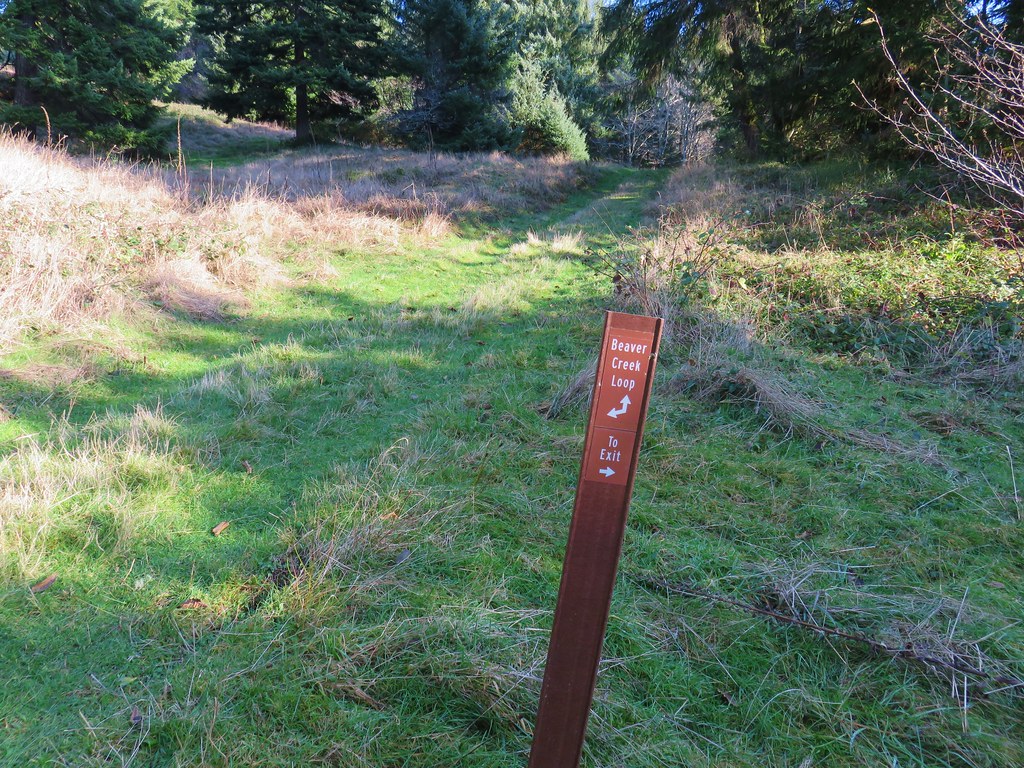
After .4 miles we turned uphill on a mowed path following posts for the Beaver Creek Loop.
IMG_1635

IMG_1638

Being the coast we’d seen a few flowers still blooming despite it being mid-December and even eaten a few huckleberries along the China Creek Loop earlier in the day. Here we found a few blackberry? blossoms.
IMG_1639

After climbing for .3 miles we arrived at a saddle where we could have turned right on the Elk Meadow Trail for a half mile loop.
IMG_1643

IMG_1642

We already had enough mileage planned for the day so we saved that for another time and continued on the Beaver Creek Loop. After passing another trail to Snaggy Point we began to descend toward the marshes surrounding Beaver Creek.
IMG_1646

IMG_1647

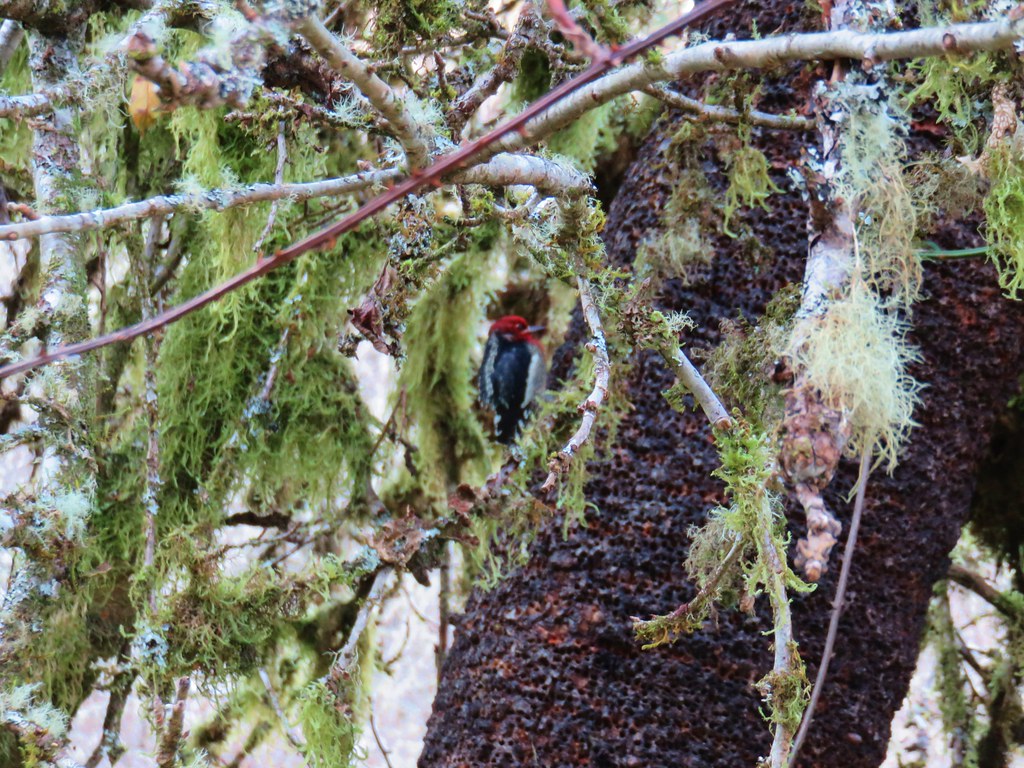
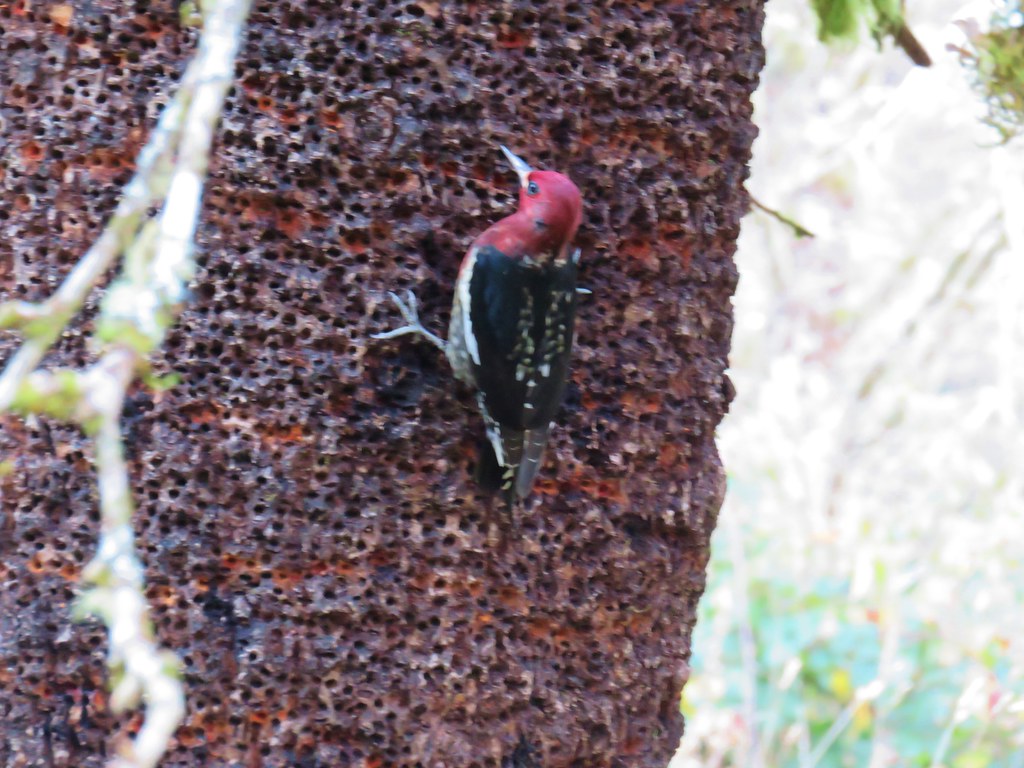
We stopped to watch a couple of woodpeckers circle a tree. They didn’t seem too bothered by us but they wouldn’t hold still long enough for a decent photo.
IMG_1648

IMG_1649

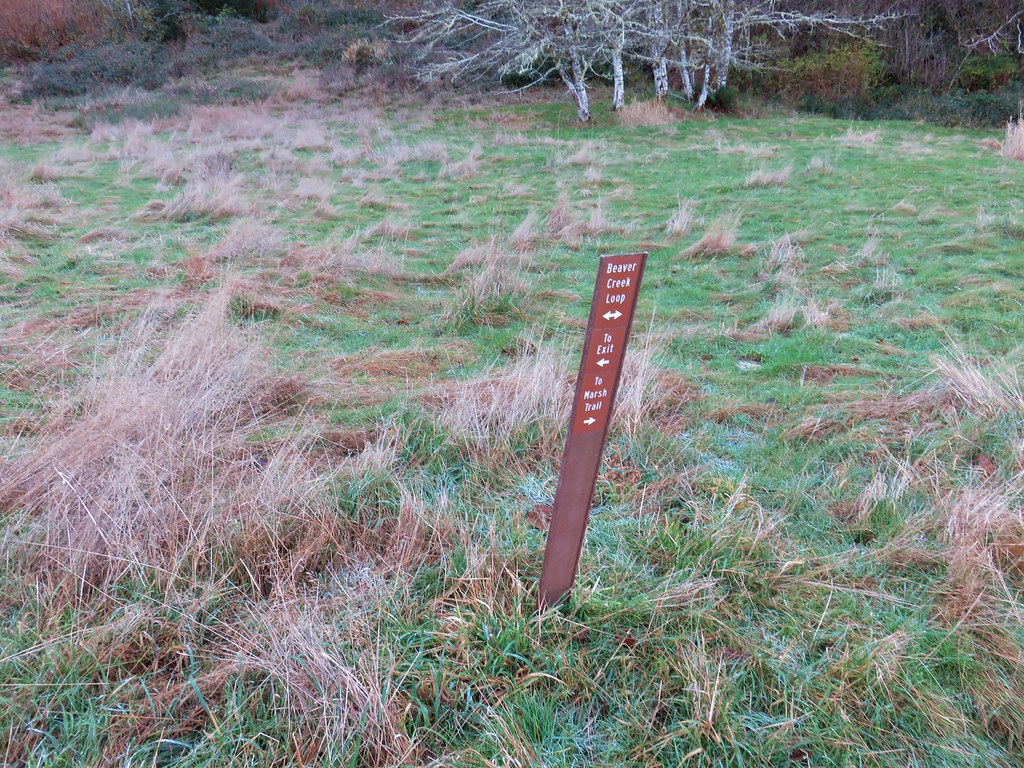
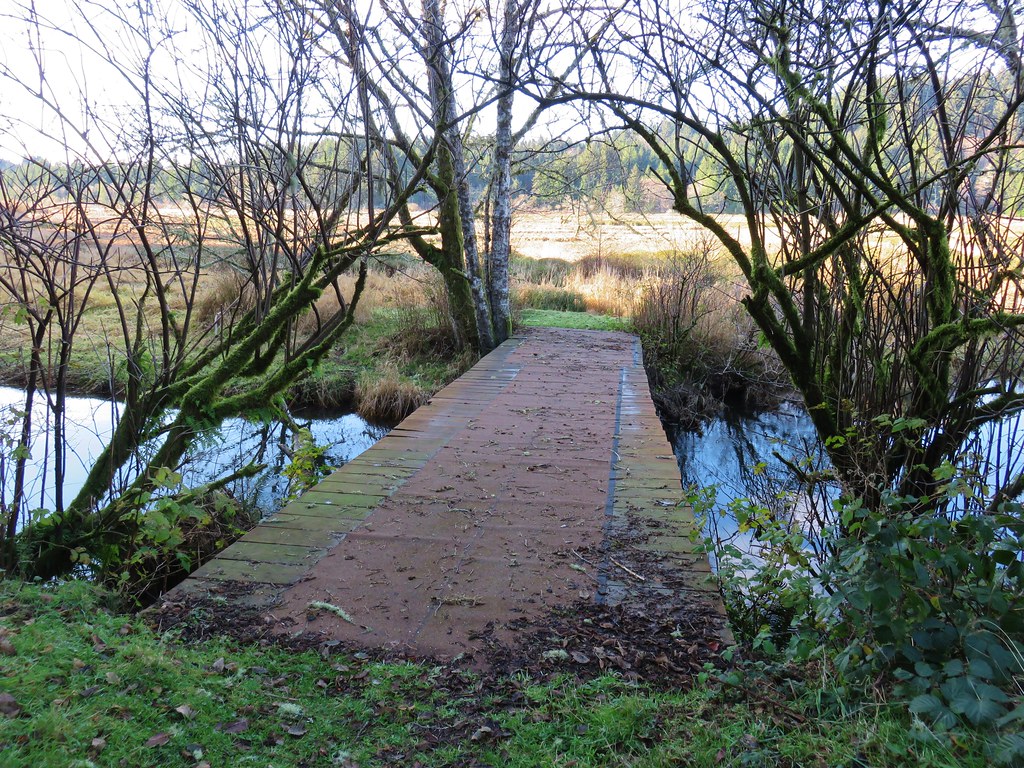
We briefly followed a pointer for the Marsh Trail which brought us to a footbridge over Beaver Creek. For about two months during Summer the marsh is apparently dry enough to cross without too much trouble.
IMG_1652

IMG_1655

IMG_1656

We heard some ducks and startled a great blue heron (a couple of times) as we continued along the loop. We also spotted a hawk, more woodpeckers, and some small birds before arriving at a pole barn at the end of the service road we’d started on that seemed to be undergoing some construction.
IMG_1660Hawk flying off

IMG_1669

IMG_1671

IMG_1678

From the barn it was only .2 miles back to the start of the loop. The hike here came in at an even three miles. Ona Beach to Seal Rock had been 4.6 miles round trip and our hike to Heceta Head was 6.6 miles giving us a total of 14.2 miles for the day. Each of the hikes would be worthy destinations on their own and there were several more trails to explore in the Beaver Creek Natural Area making a return visit tempting someday.

With our 2017 hikes completed it’s time to get to work on 2018. Happy Trails!

Flickr: Heceta Head and Brian Booth State Park

Categories
Hiking Oregon Portland Trip report Willamette Valley

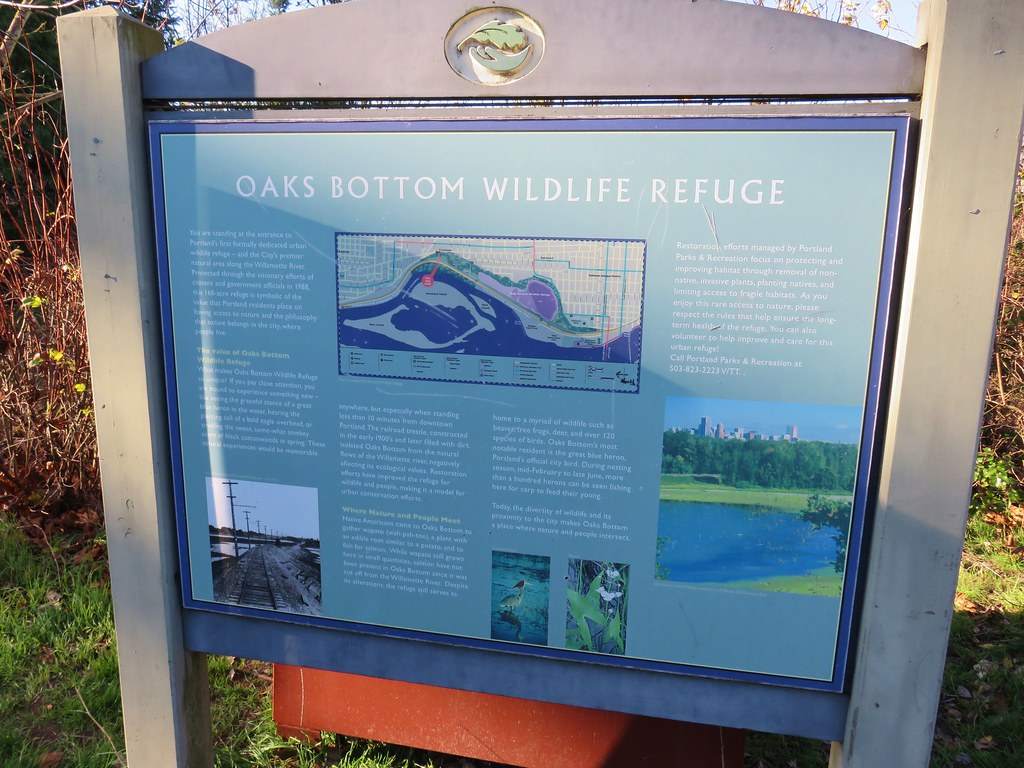
Oaks Bottom Wildlife Refuge

We made a late addition to our scheduled hikes when it became clear that the weather on the day of the Give and Get Social for Trailkeepers of Oregon (TKO) was going to be too nice to pass up.  We had short two featured hikes in Portland from William L. Sullivan’s 100 Hikes in NW Oregon & SW Washington that we had not been able to work into our future plans.   The TKO event was taking place at Dig a Pony which was conveniently close to one of these two hikes, Oaks Bottom Wildlife Refuge.

We began our hike uncharacteristically late, just after 1:15pm, from the north parking area on SE Milwaukee Ave.

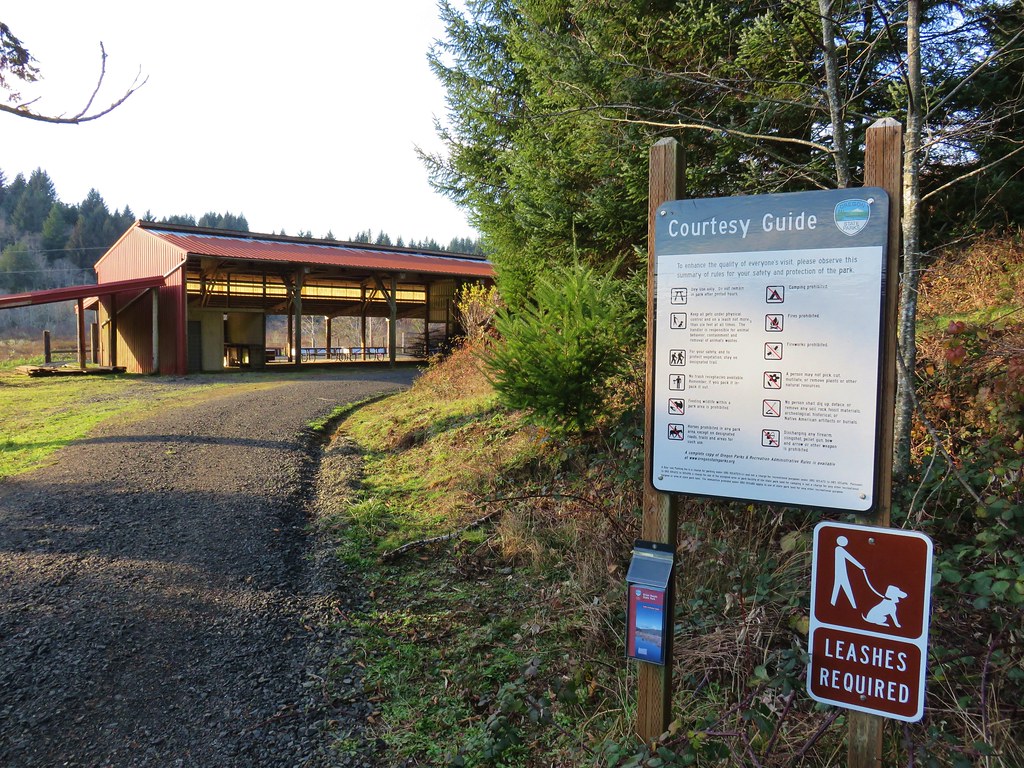
IMG_1291

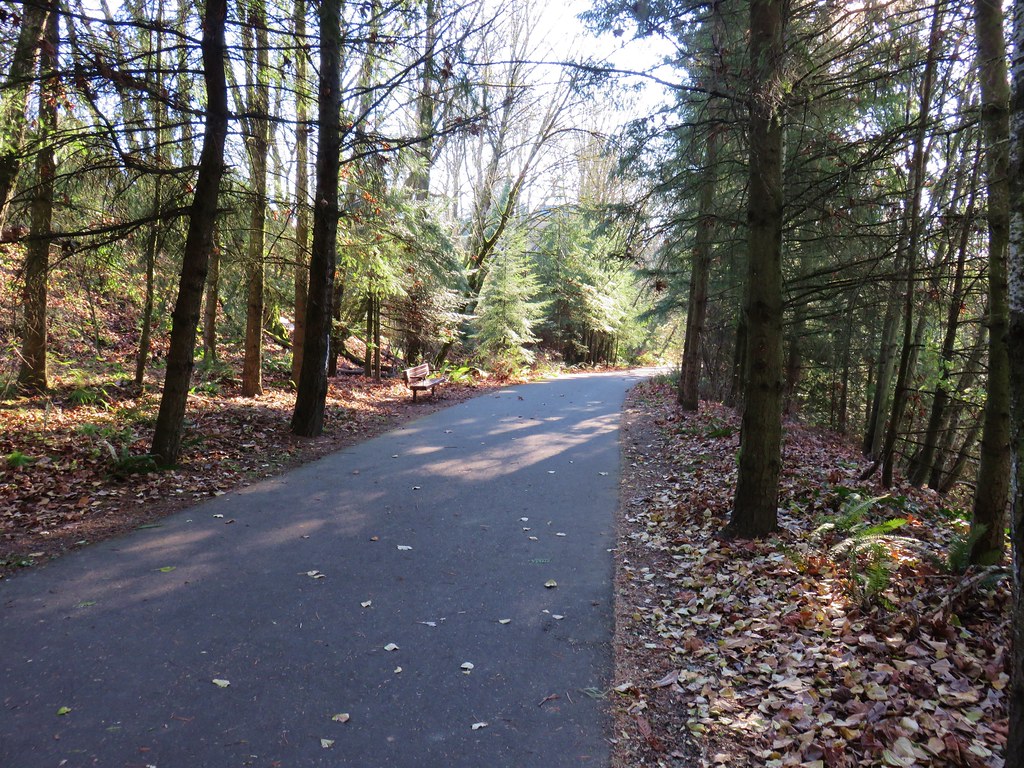
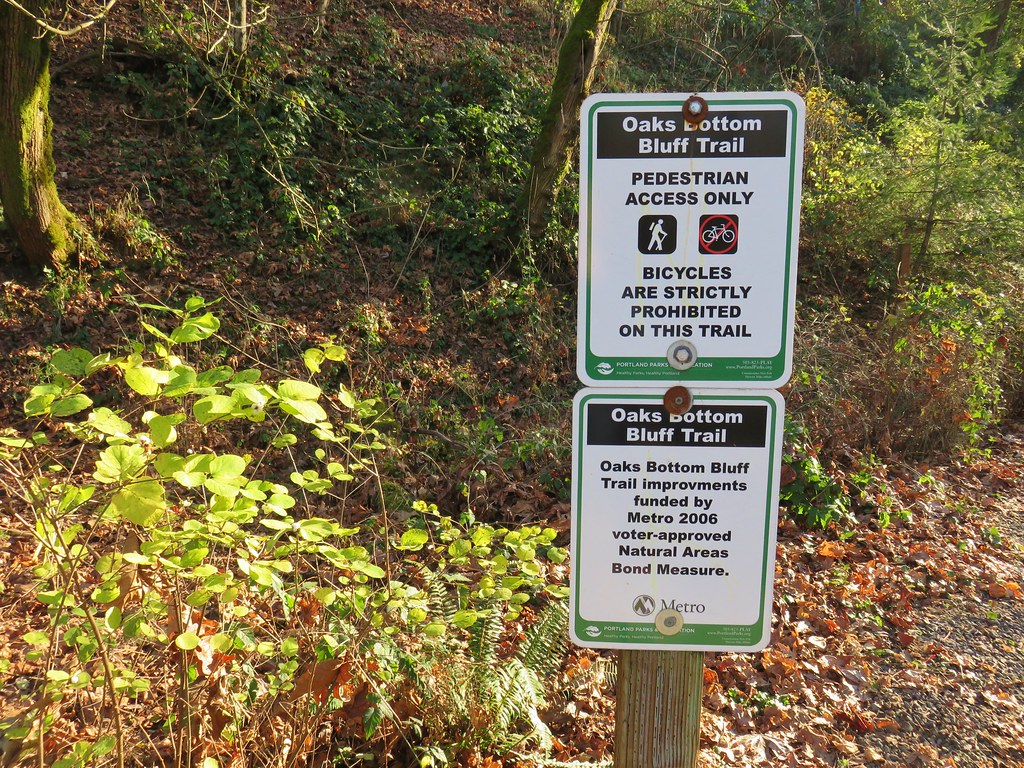
We followed a paved path downhill to a sign for the Oaks Bottom Bluff Trail.

IMG_1294

IMG_1299

Here the trail split and we stayed left crossing a small footbridge. We would return via the right fork after completing a loop around Wapato Marsh.

IMG_1300

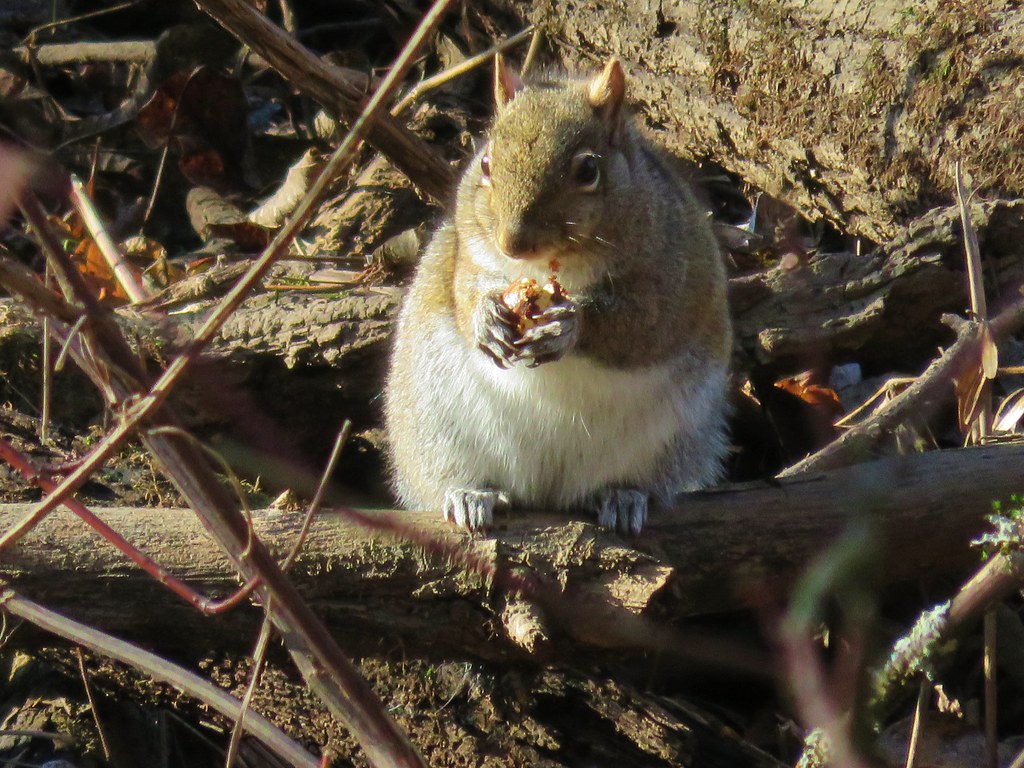
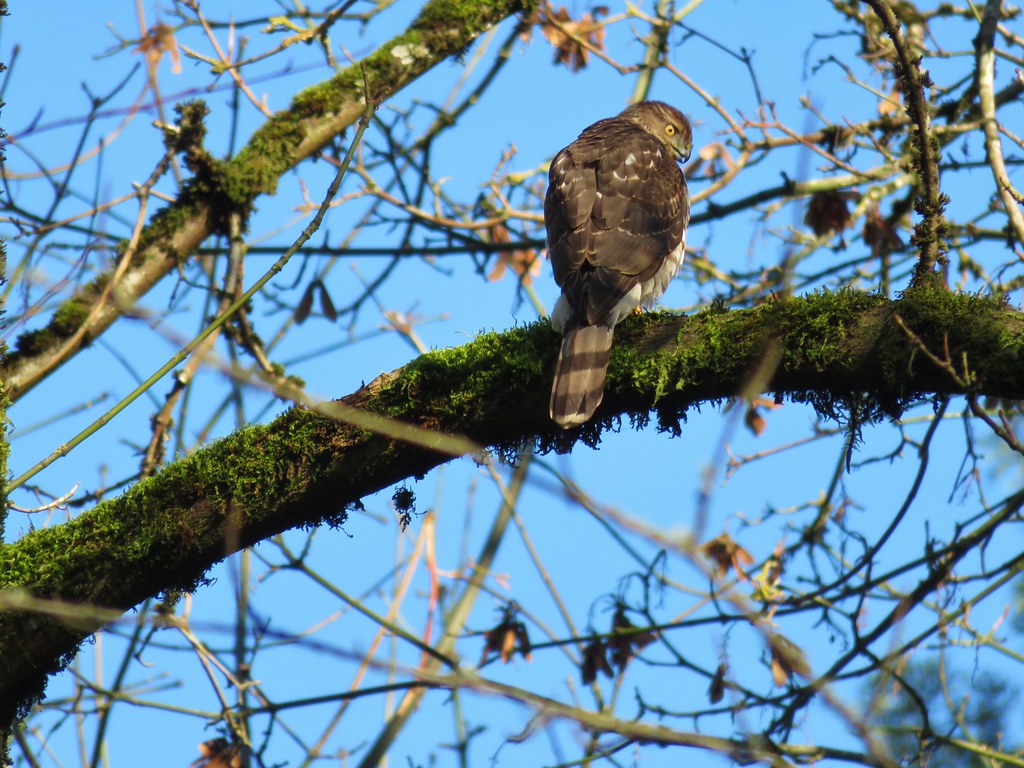
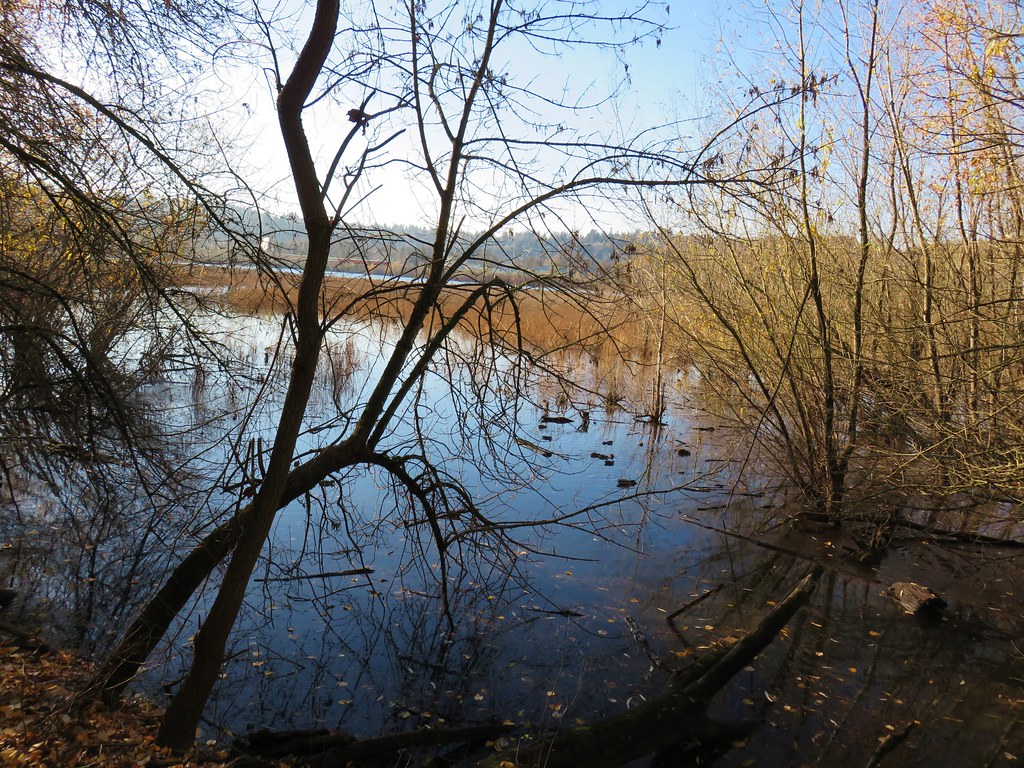
The amount of water in the marsh increased as we went. The first wildlife we spotted were small birds, squirrels and a hawk.

IMG_1313

IMG_1314

IMG_1327

IMG_1326

IMG_1320

IMG_1305

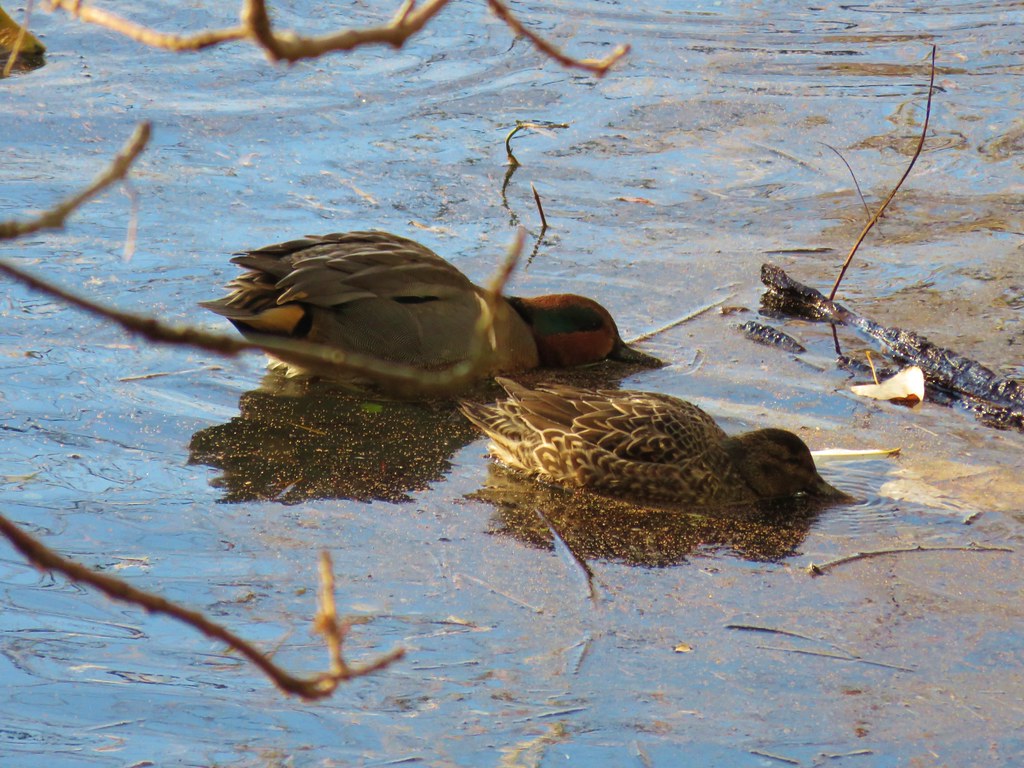
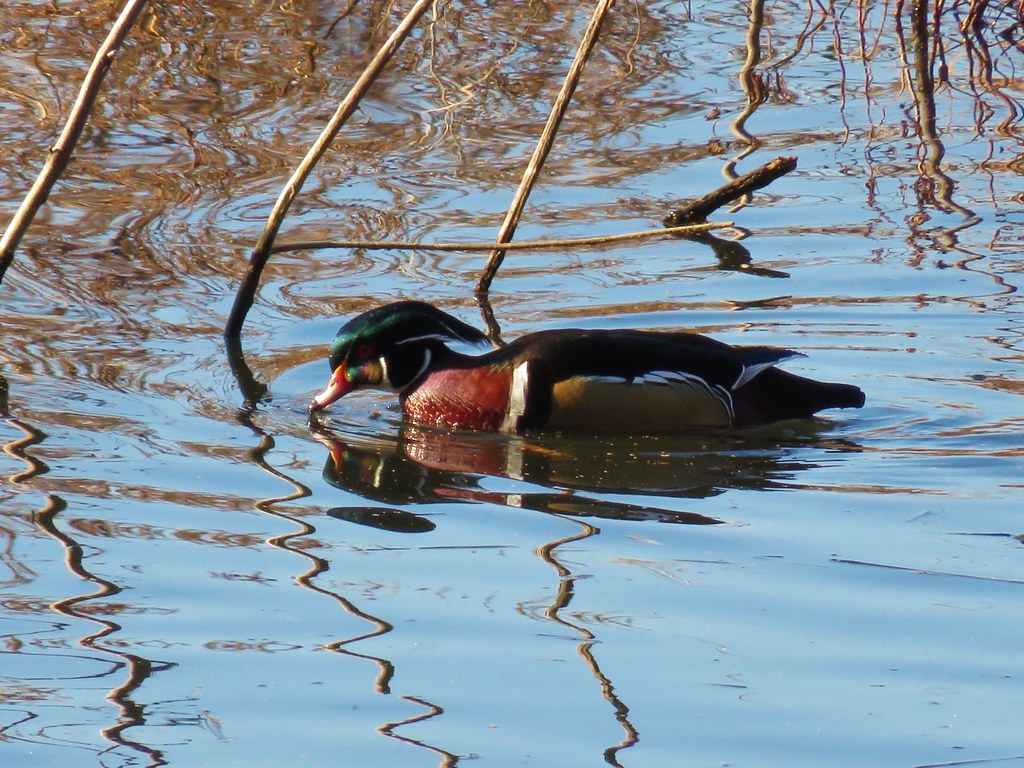
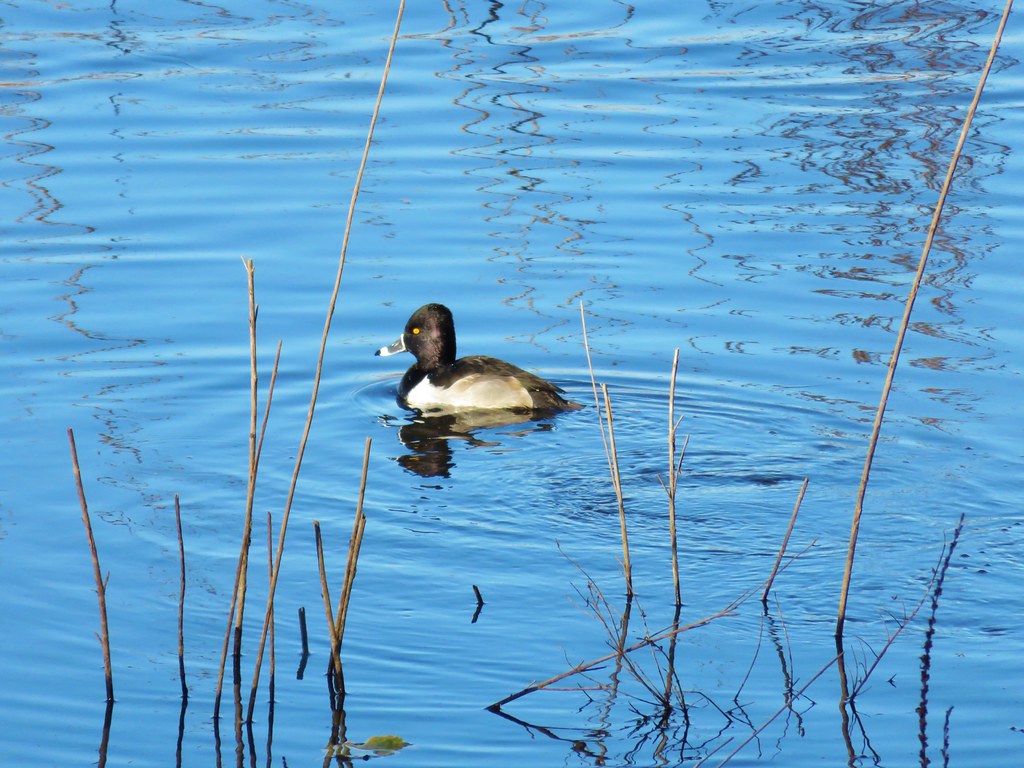
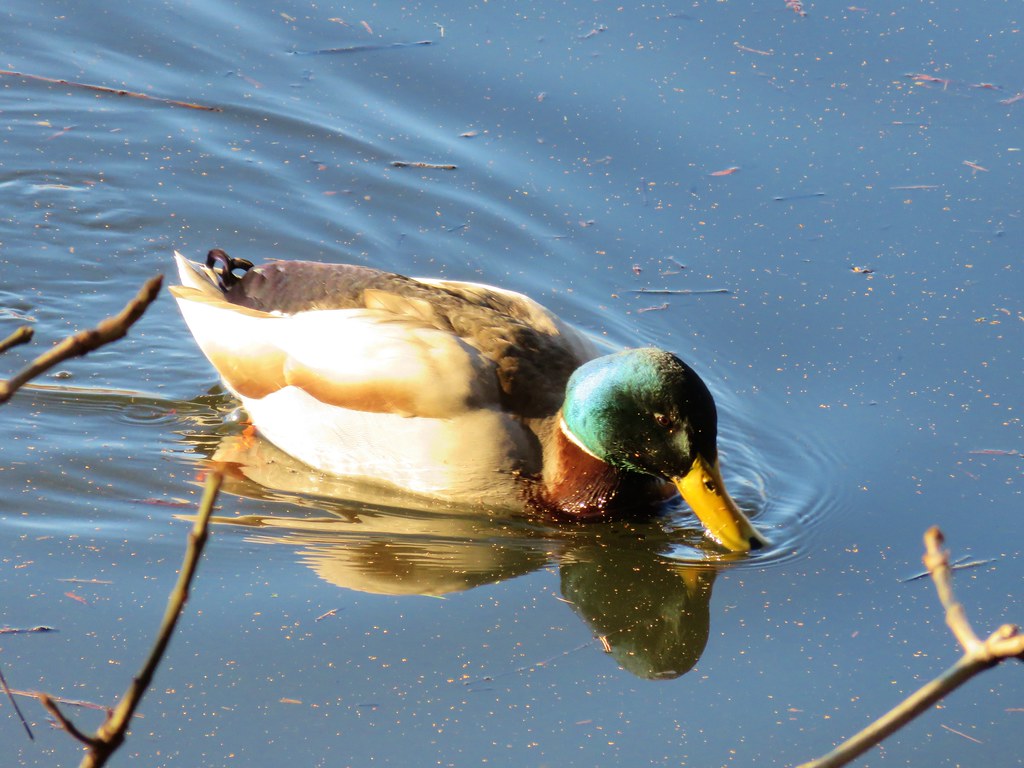
As the amount of water increased we began to see a number of ducks. Several species were present, some of which we were unfamiliar with.

IMG_1332

IMG_1339Green-winged teal

IMG_1349Wood duck

IMG_1377Ring necked duck?

IMG_1354Mallard

IMG_1360Not sure what kind of duck is in the upper left hand corner.

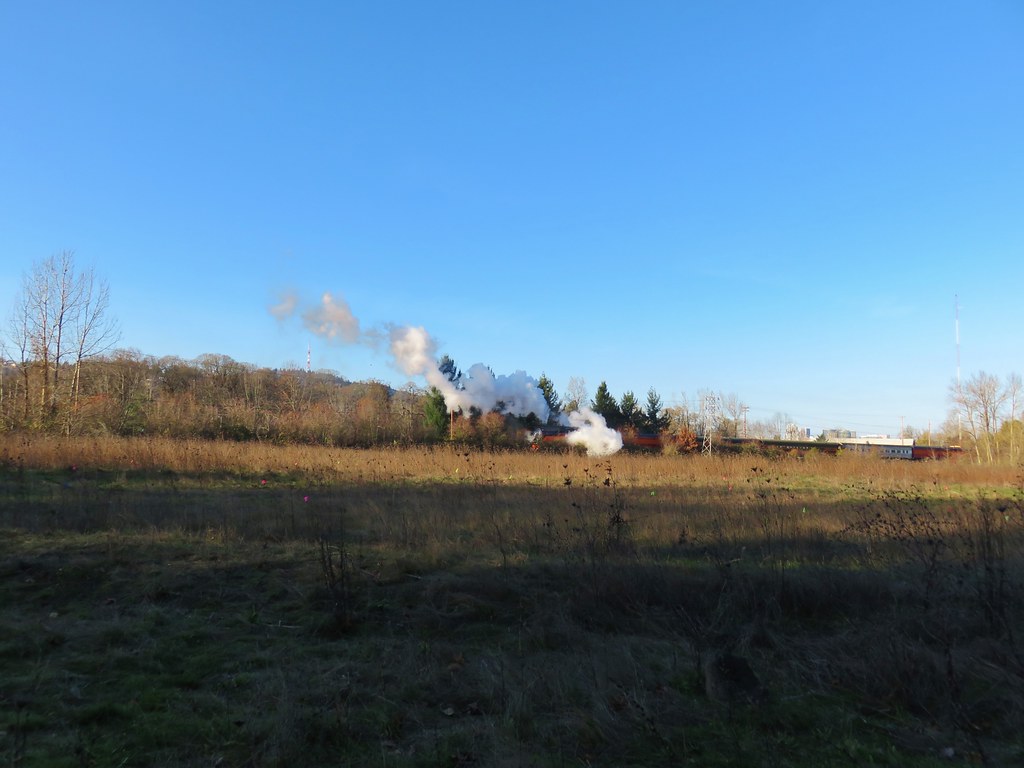
At the far end of the marsh trails from Sellwood Park joined at a meadow. Across the meadow to the west the Holiday Express train was preparing to depart.

IMG_1380

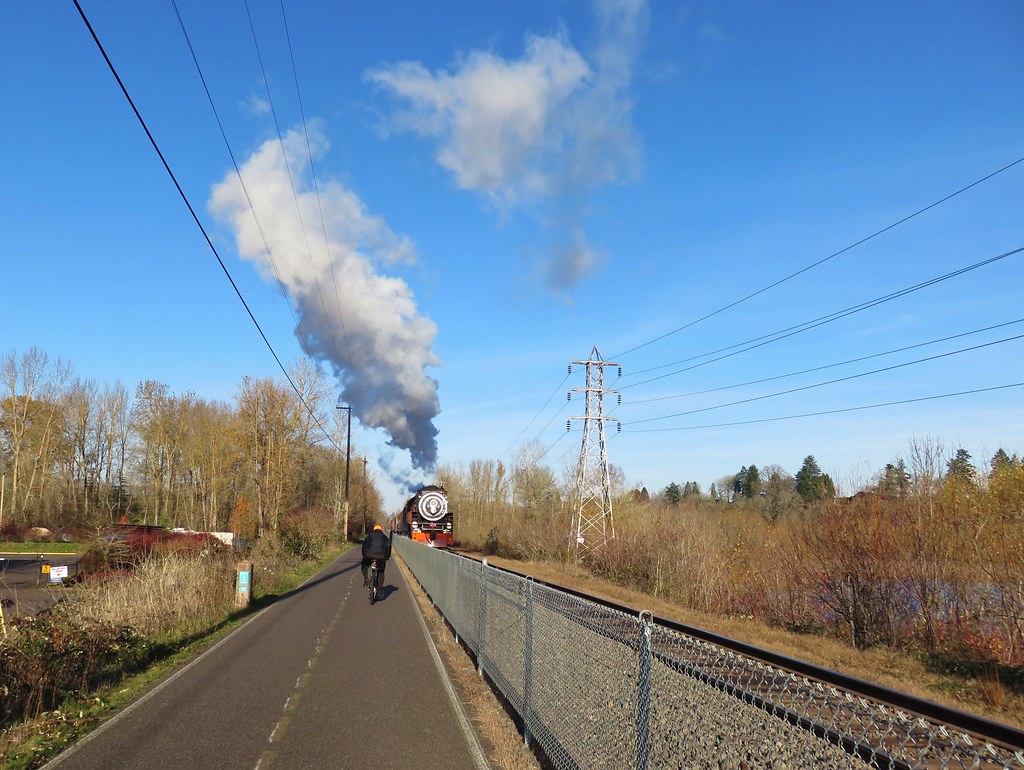
We continued around the marsh passing under the train tracks and turned right on the paved Springwater Corridor. The Holiday Express passed us as we went.

IMG_1385

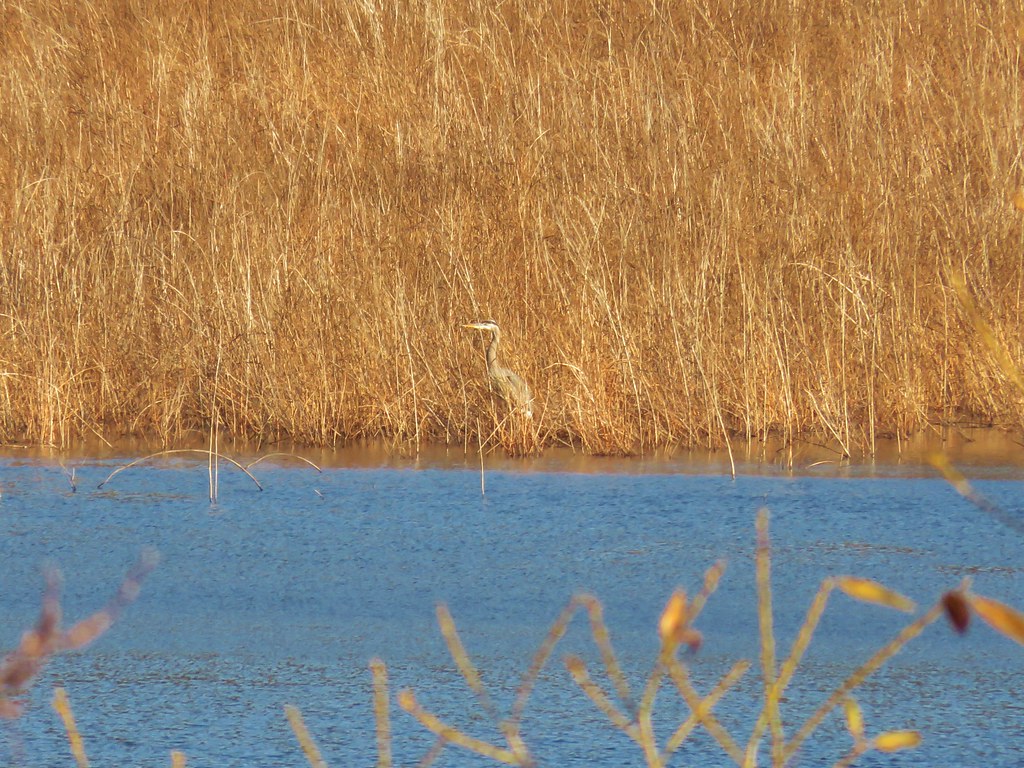
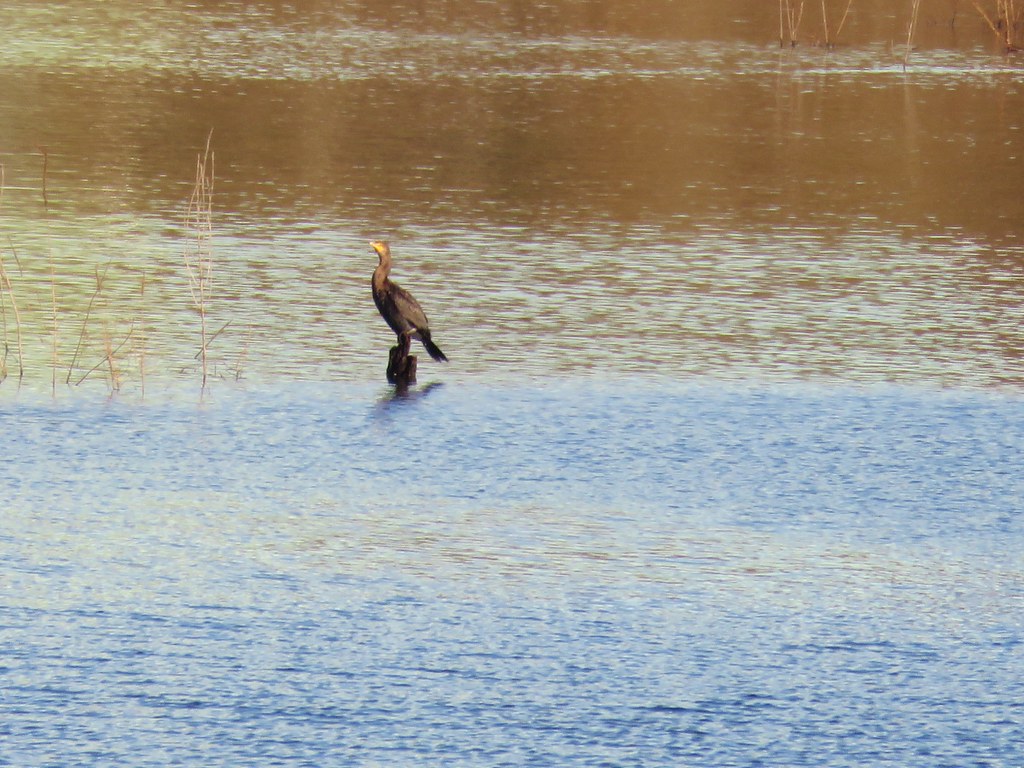
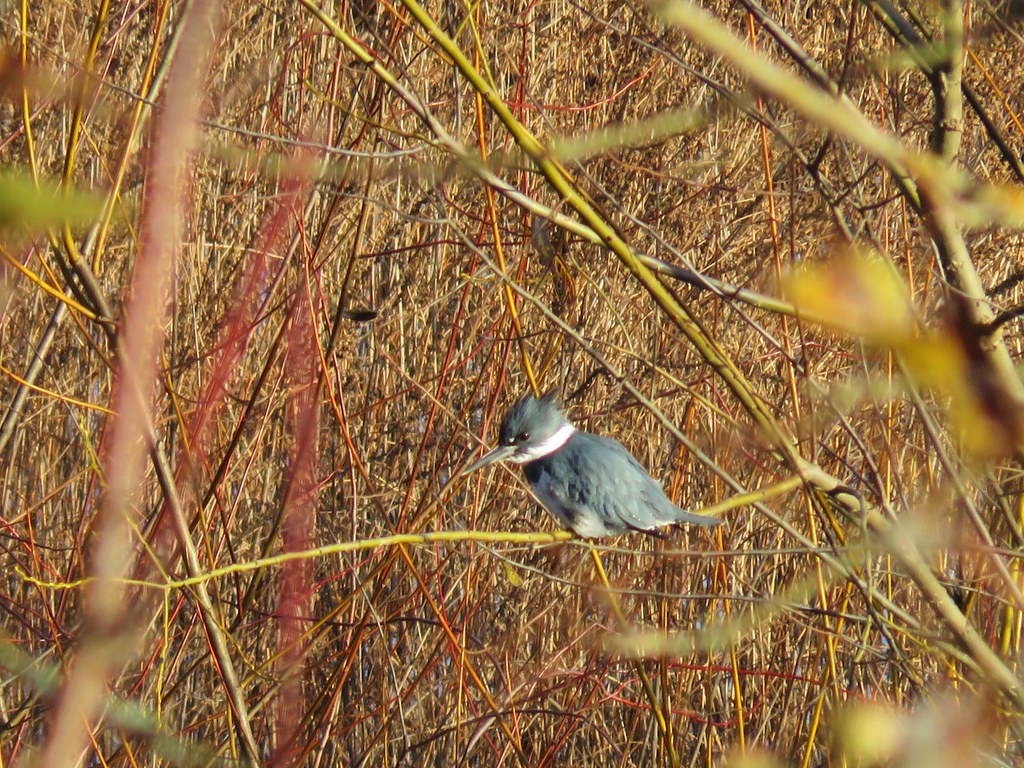
From this path we spotted some other birds including several herons, a cormorant, and a kingfisher.

IMG_1395

IMG_1392

IMG_1403

We passed a viewpoint of the Willamette River to the west before passing back under the railroad tracks.

IMG_1405

Before passing back under the the tracks we took a short path to the west toward the river where a few pieces of art could be seen amid the trees.

IMG_1408

IMG_1407

We turned off the paved path at a hiker only sign and passed through a wooden fence.

IMG_1410

We were quickly back at the start of the loop and returned uphill to our car. A nice three mile or so stroll with lots of wildlife to watch. We ended our day at Give and Get where we had a good time despite not winning any of the raffles. Happy Trails!

Flickr: Oaks Bottom Wildlife Refuge

Categories
Central Coast Hiking Oregon Oregon Coast Trip report

Cummins Ridge Trail – Cummins Creek Wilderness

On Veterans day we celebrated our 22nd wedding anniversary by visiting our 34th Oregon wilderness area – the Cummins Creek Wilderness. The 9,173 acre wilderness is located along the Oregon Coast between Florence and Waldport. The Cummins Creek Wilderness is home to the only old-growth Sitka Spruce forest in the state. For our visit we chose the only designated trail in the wilderness, the Cummins Ridge Trail.

There are trailheads at either end of the nearly 6 mile long Cummins Ridge Trail which opens up the option of a car shuttle if one only wanted to hike the trail one way. For a shuttle hike starting at the upper (east) trailhead located along Forest Road 5694 would make the most sense as the majority of the hike would be downhill. Our plan was to do an out and back so we started from the lower (west) trailhead located approximately 2.5 miles from Highway 101 on Forest Road 1051.
Lower Cummins Ridge Trailhead

The trail almost immediately enters the wilderness area.
Informational sign board at the lower trailhead

Cummins Creek Wilderness sign

It was raining steadily as we set off which we hadn’t really expected based on the forecast but as the day progressed the rain lessened and eventually quit. The lower portion of the trial followed an old road bed which at times was obvious but at others the vegetation had nearly hidden it.
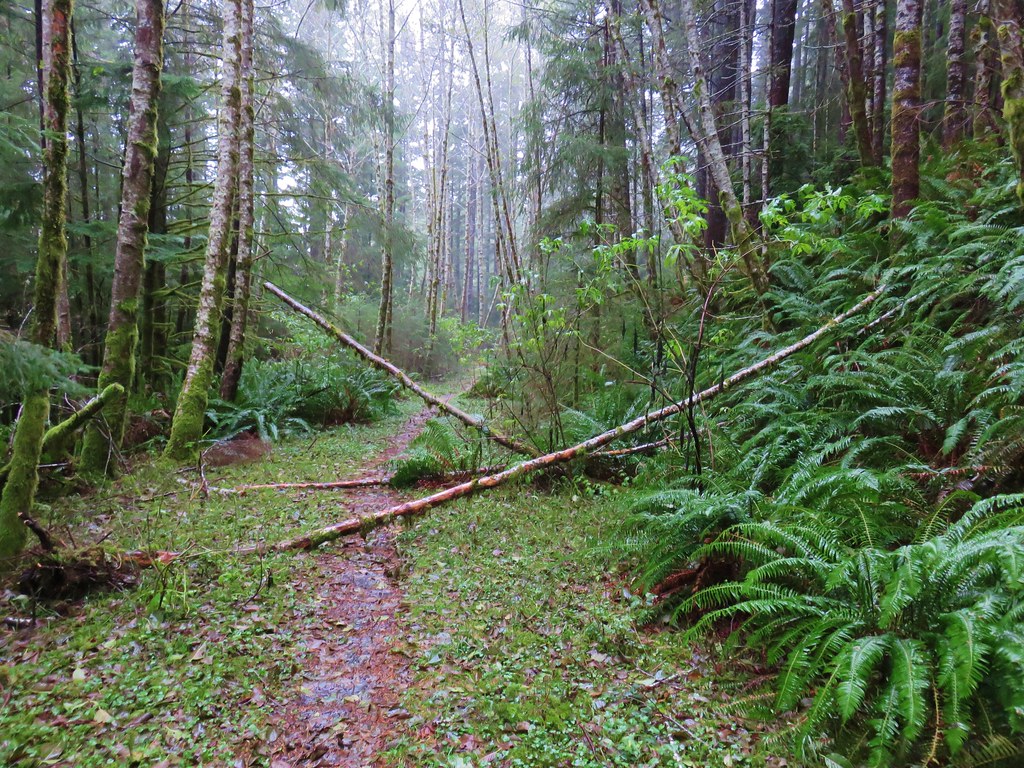
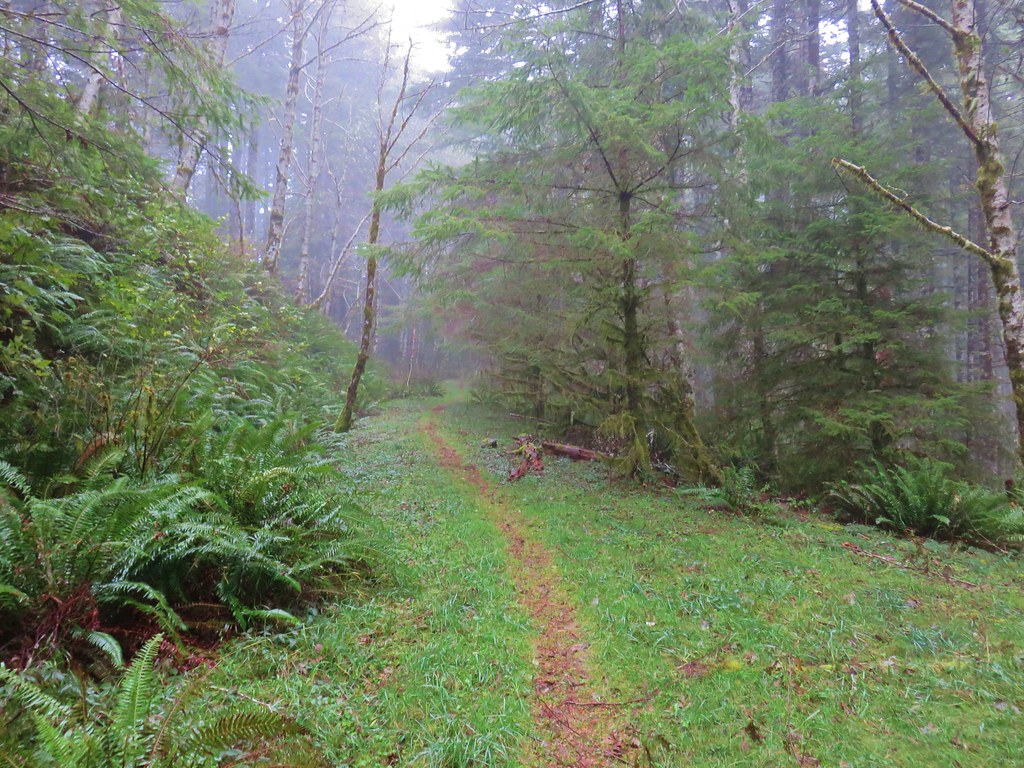
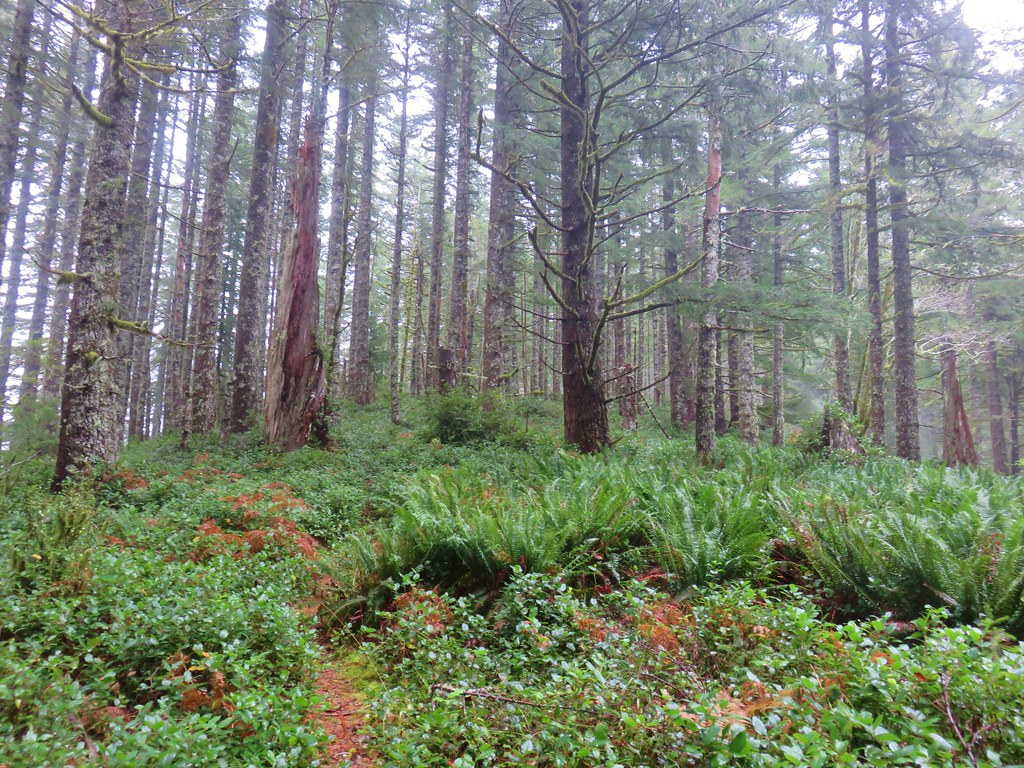
Cummins Ridge Trail

Cummins Ridge Trail

Cummins Ridge Trail

Cummins Ridge Trail

Cummins Ridge Trail

Cummins Ridge Trail

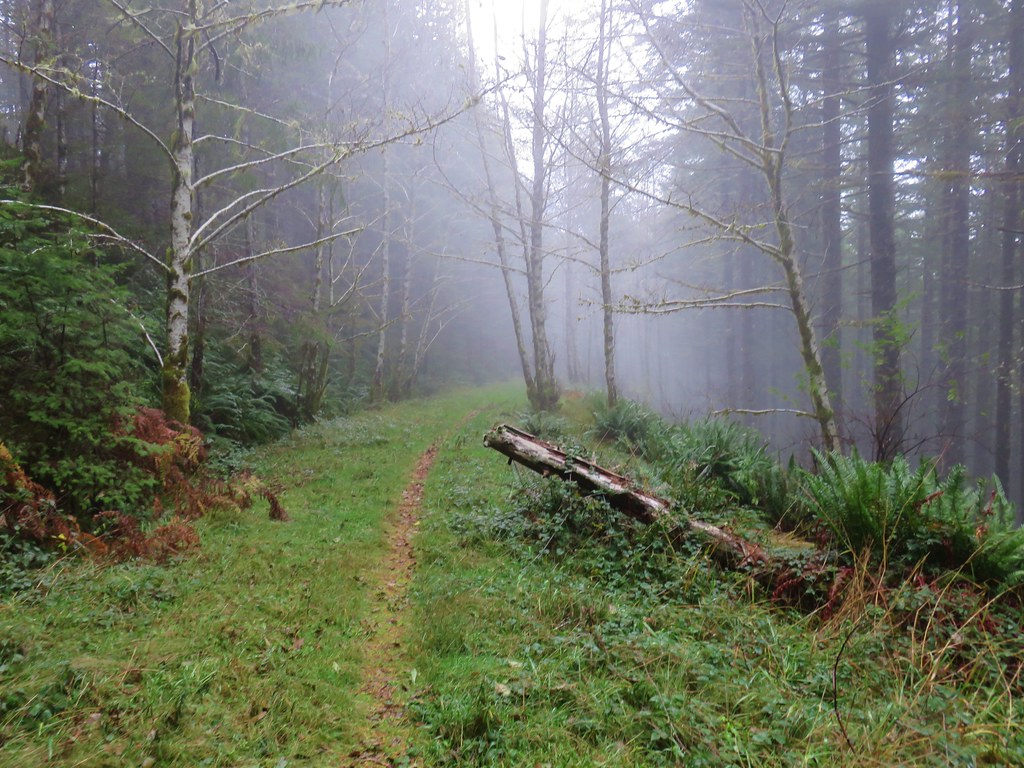
After about 3 miles on the old road bed the trail forked to the right leaving the road and leading us into a foggy forest.
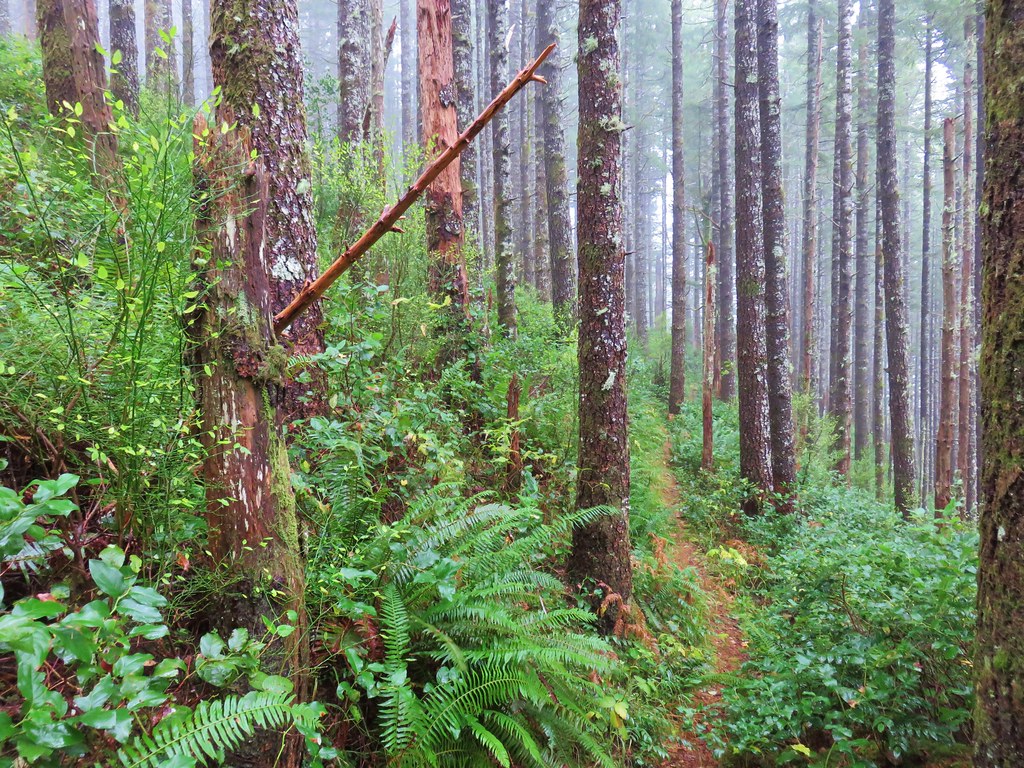
Cummins Ridge Trail

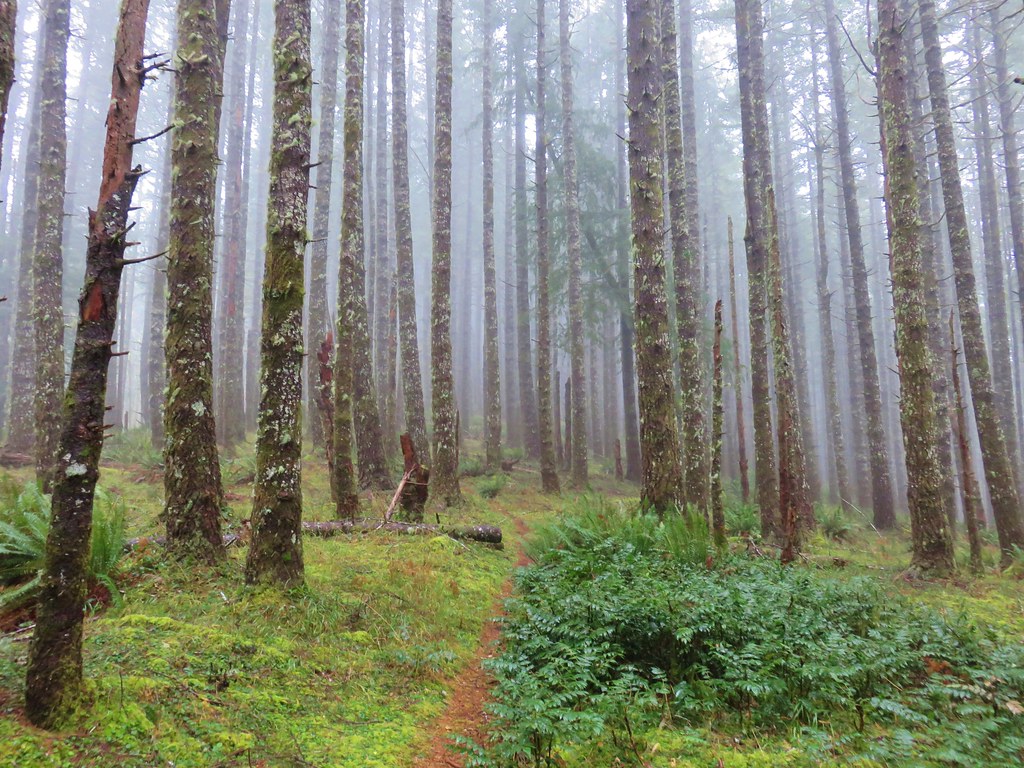
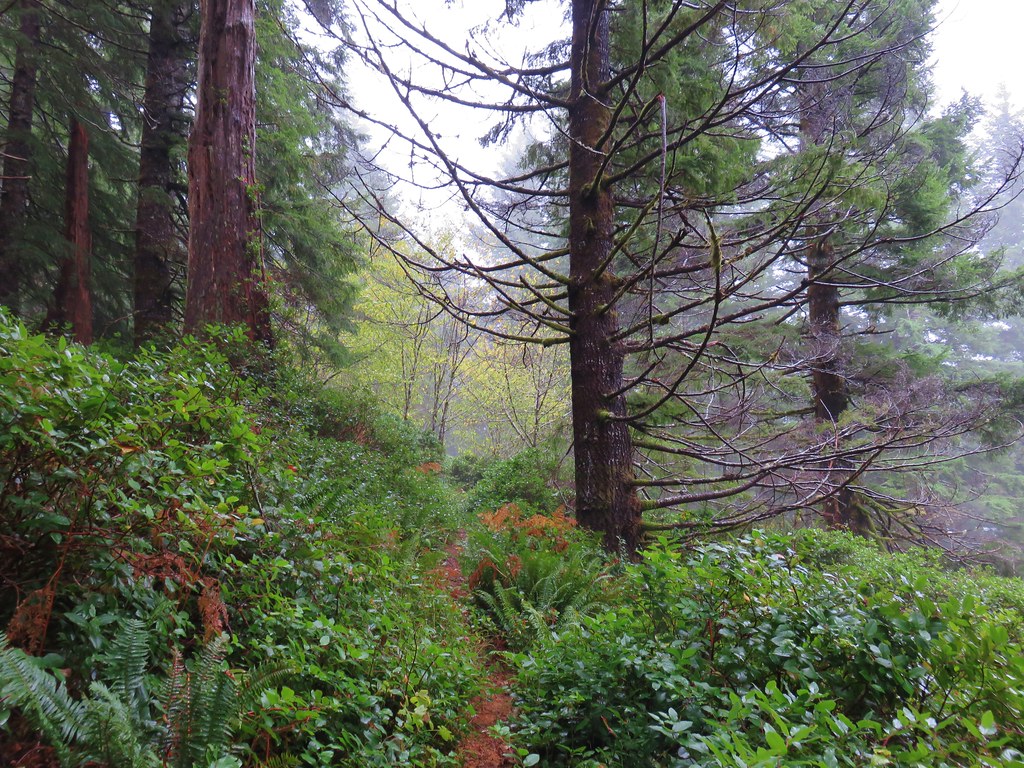
The trail was in good shape with just a couple of short overgrown sections and never very steep as it followed the ridge up and down to the upper trailhead.
Cummins Ridge Trail

Cummins Ridge Trail

Cummins Ridge Trail

Cummins Ridge Trail

Cummins Ridge Trail

Cummins Ridge Trail

Cummins Ridge Trail

Upper Cummins Ridge Trailhead

We returned the way we’d come for an 11.9 mile hike with approximately 1200′ of elevation gain. The forest along the ridge limit any real views that might otherwise be available from the trail.
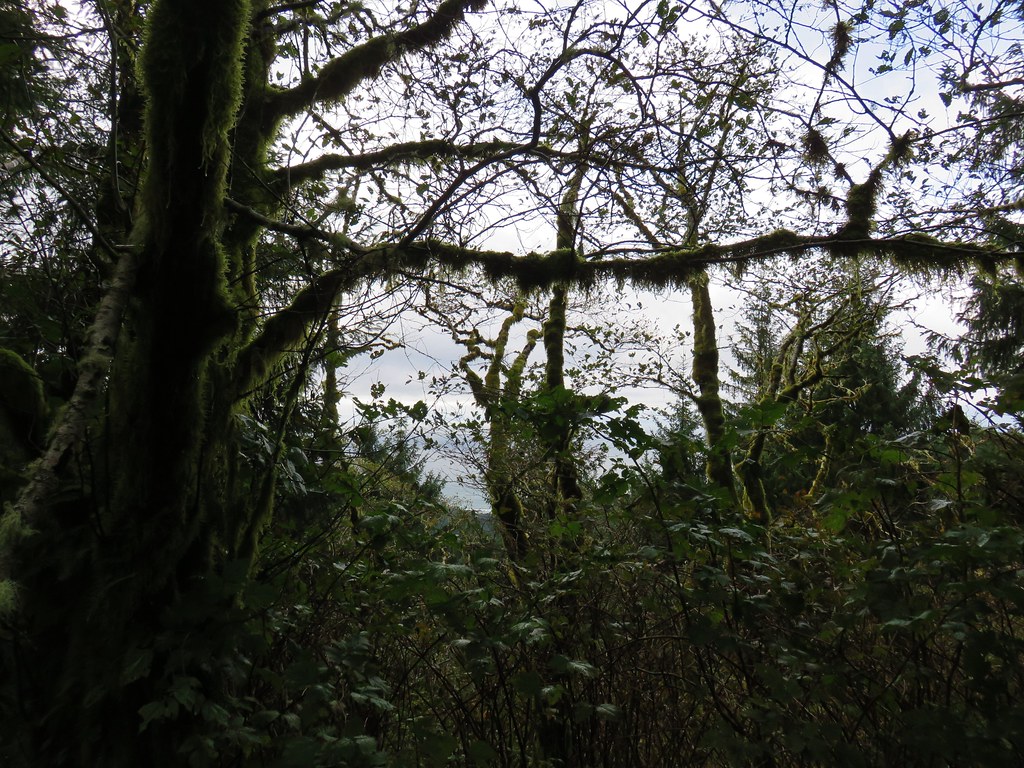
View from the Cummins Ridge Trail

We did manage a couple of brief glimpses of the Pacific Ocean through the trees.
Pacific Ocean from the Cummins Ridge Trail

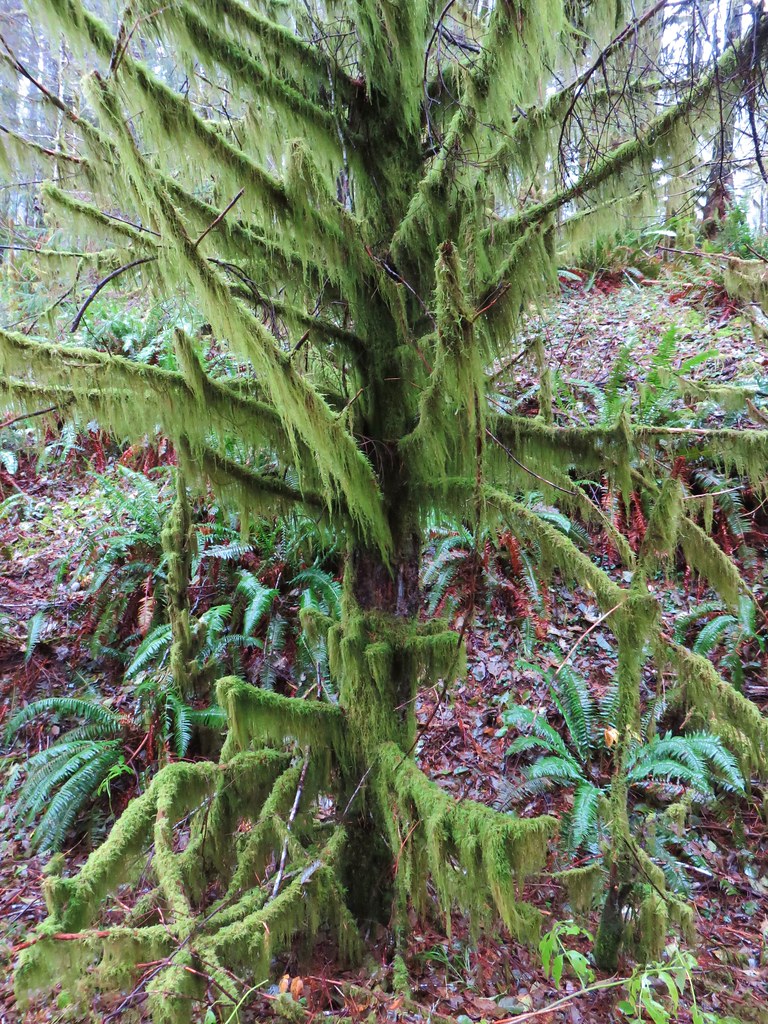
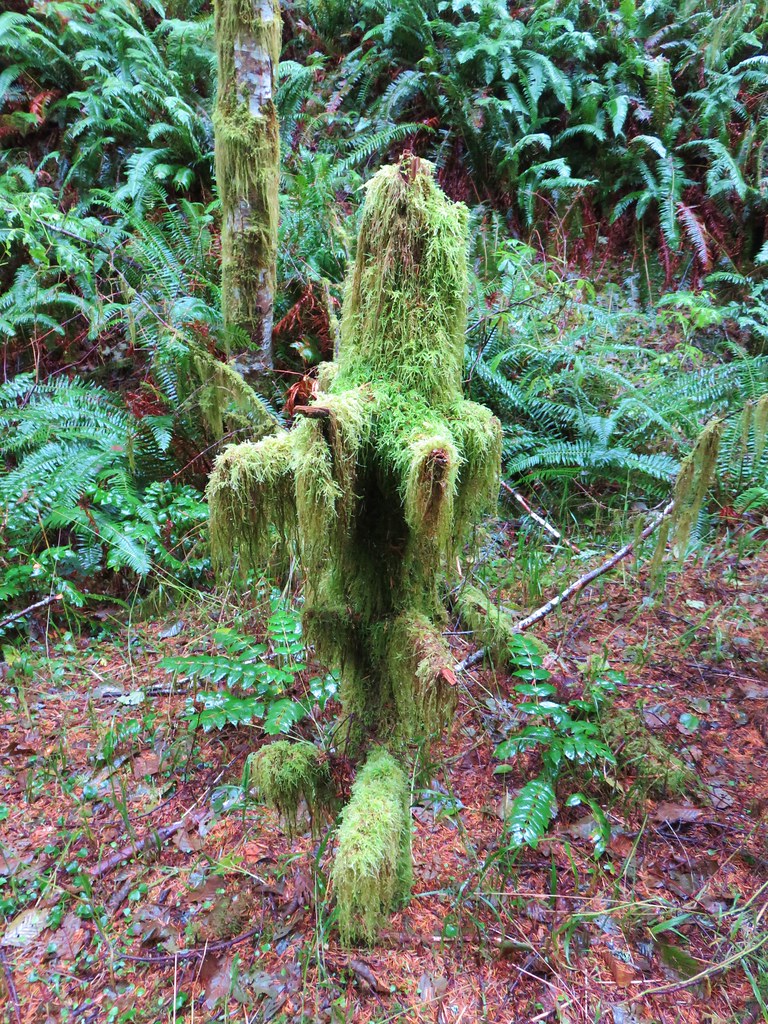
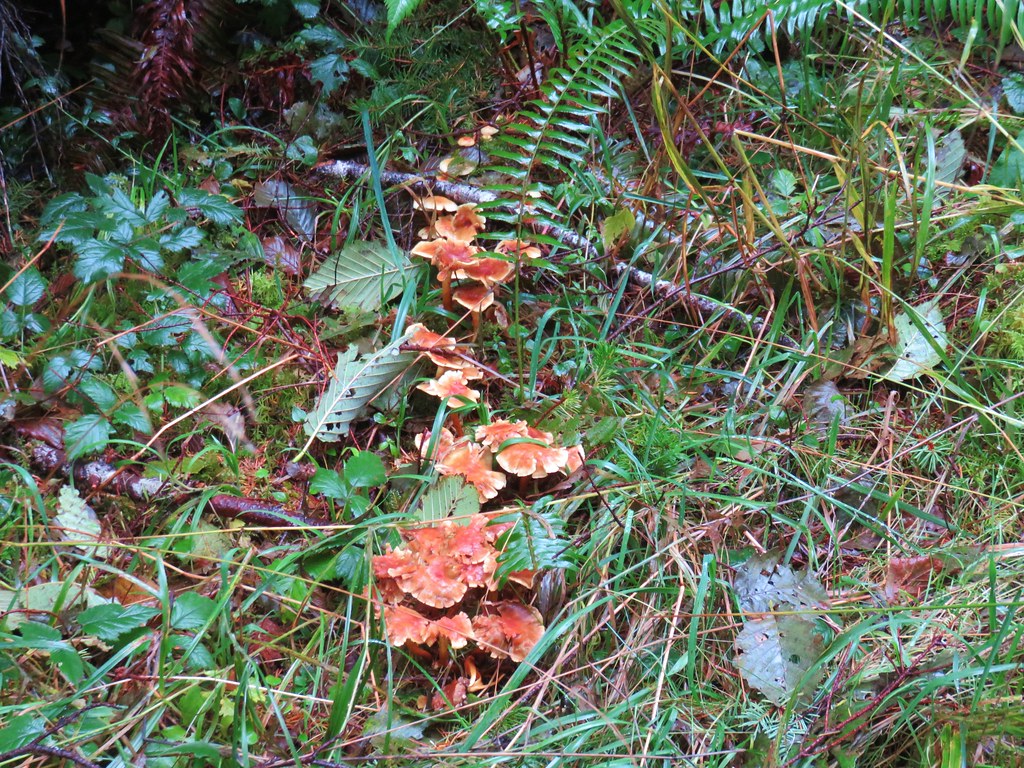
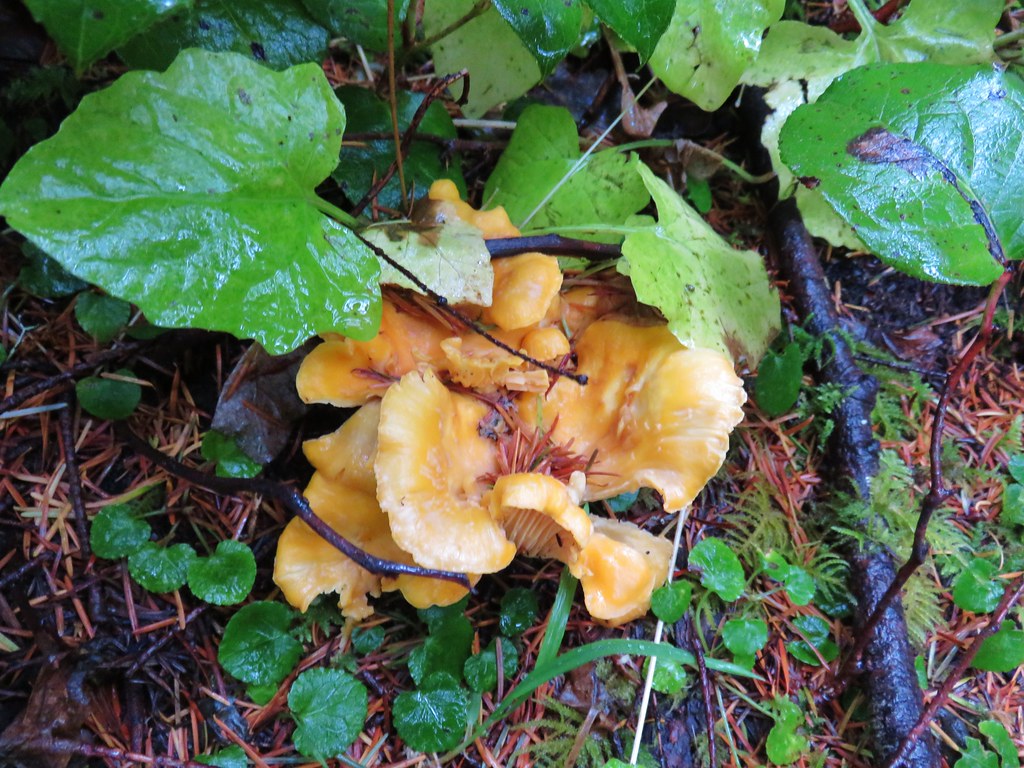
With no viewpoints and no water features along the trail it is strictly a hike for those who are looking for a nice forest stroll. Not all hikes need to lead to an amazing view or some Instagram destination to be enjoyable. We enjoyed the moss covered trees, various mushrooms, and some bird sightings on our visit.
Mossy tree

Fuzzy little tree

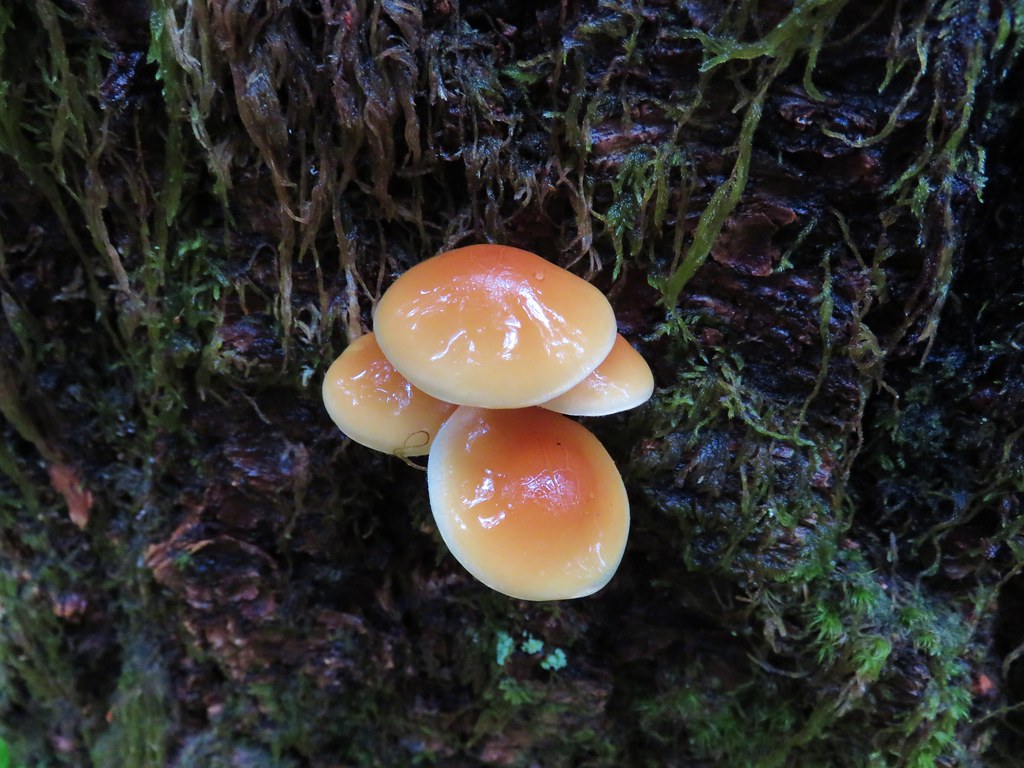
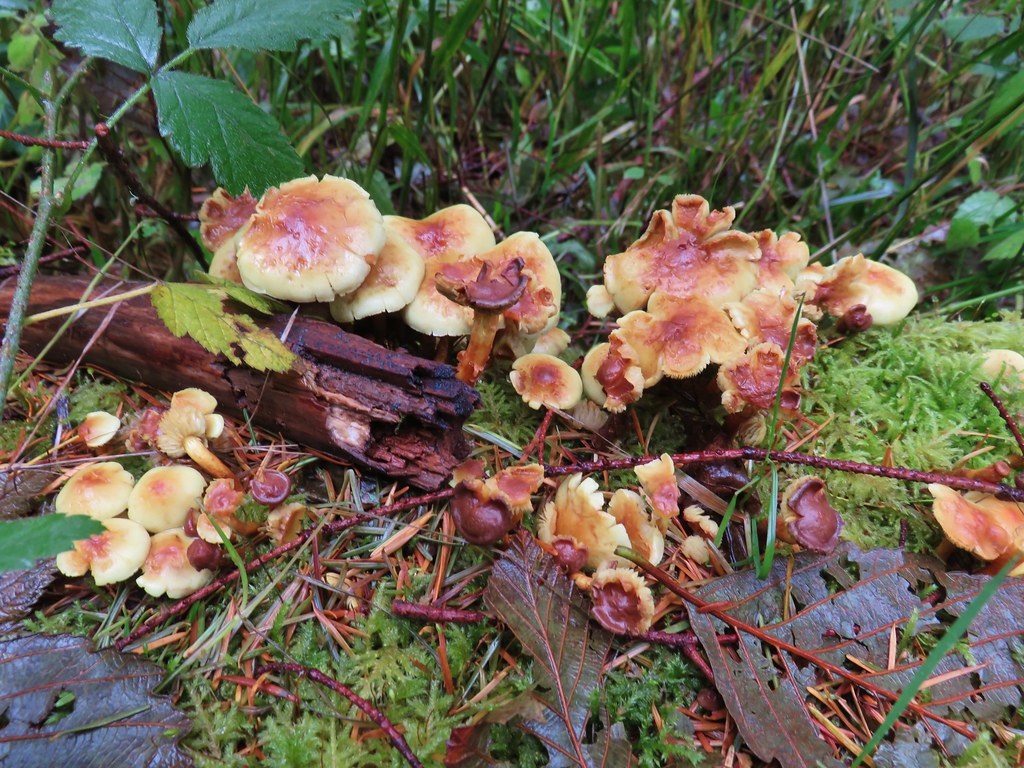
Mushrooms along the Cummins Ridge Trail

Mushrooms

Mushrooms

Mushrooms

Mushrooms

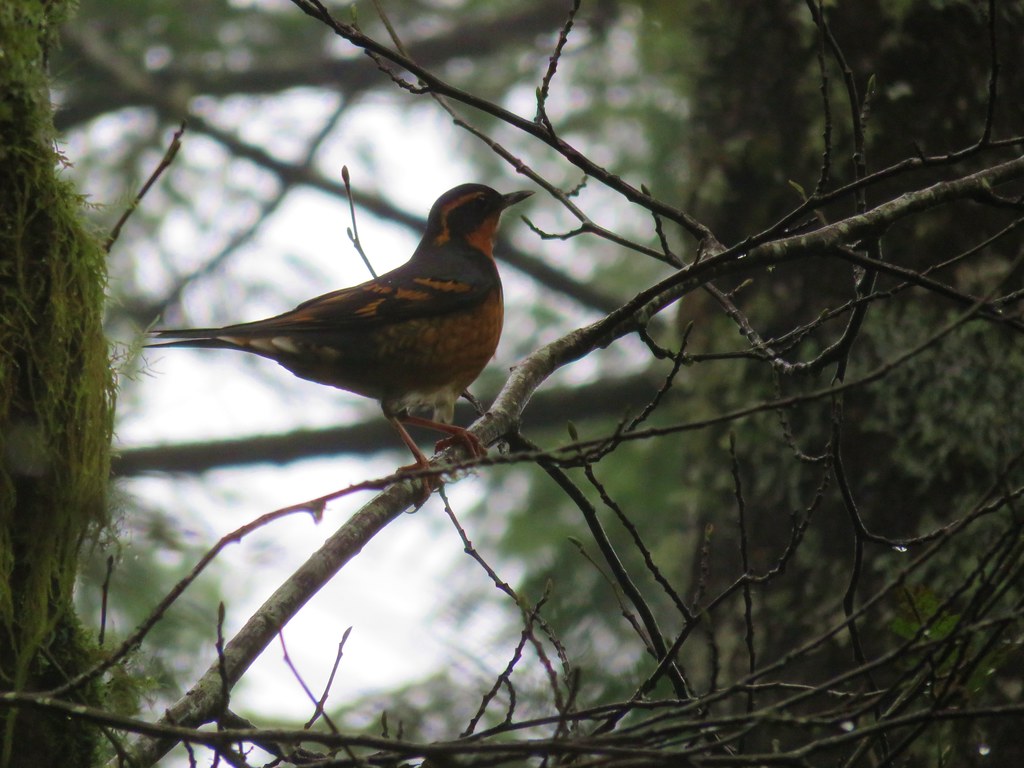
Varied Thrush

This was a great cloudy/rainy day hike and leaves us with just 11 of the 45 visit-able Oregon Wilderness areas left to go. Happy Trails!
Flickr: Cummins Ridge Trail