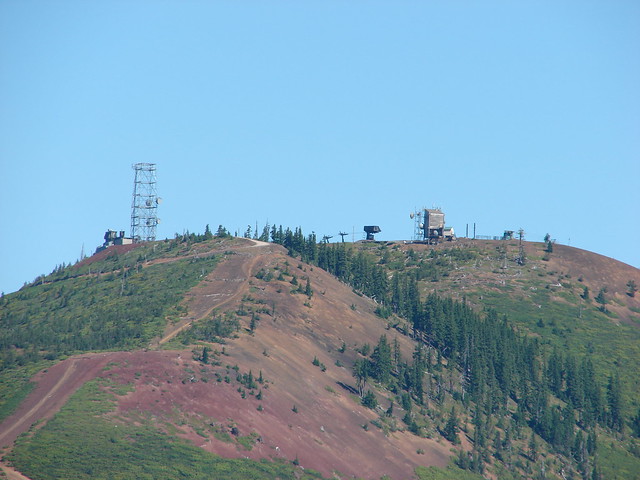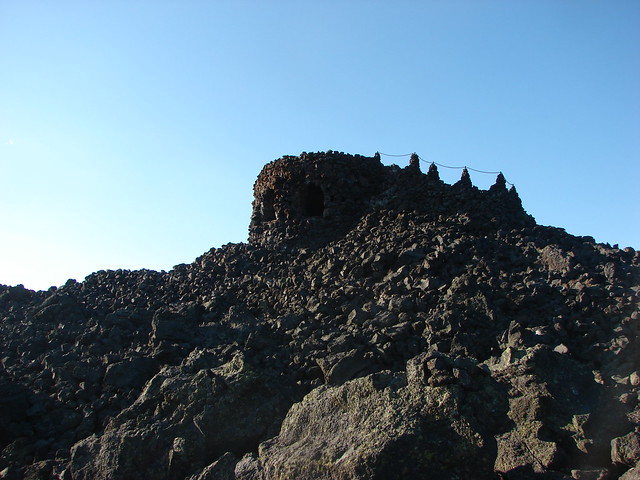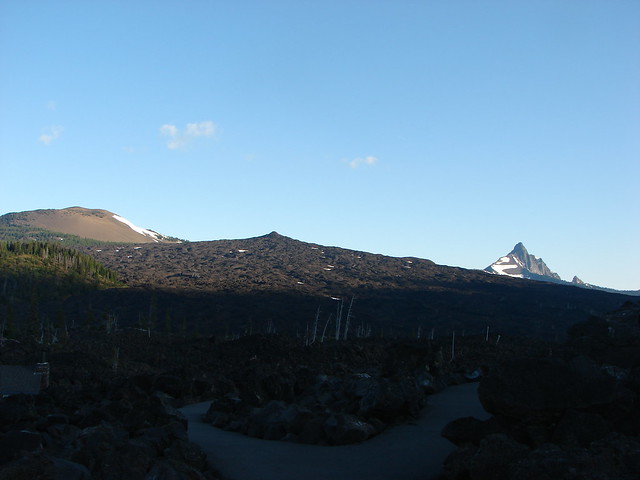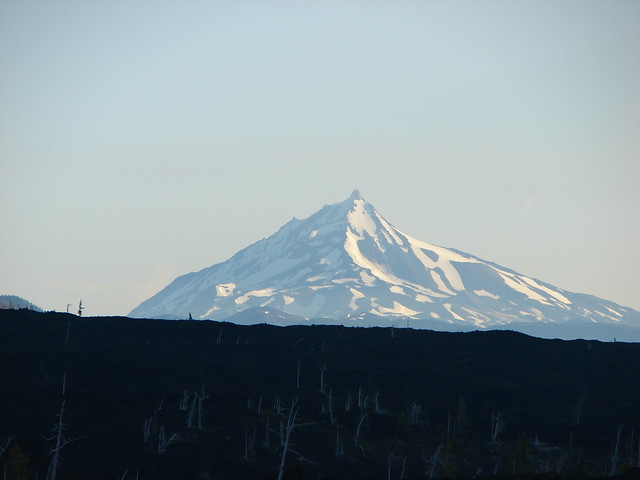
Categories
High Cascades Hiking Mt. Washington Area Oregon Trip report

McKenzie River Trail – Clear Lake to Carmen Reservoir – 11/22/2025

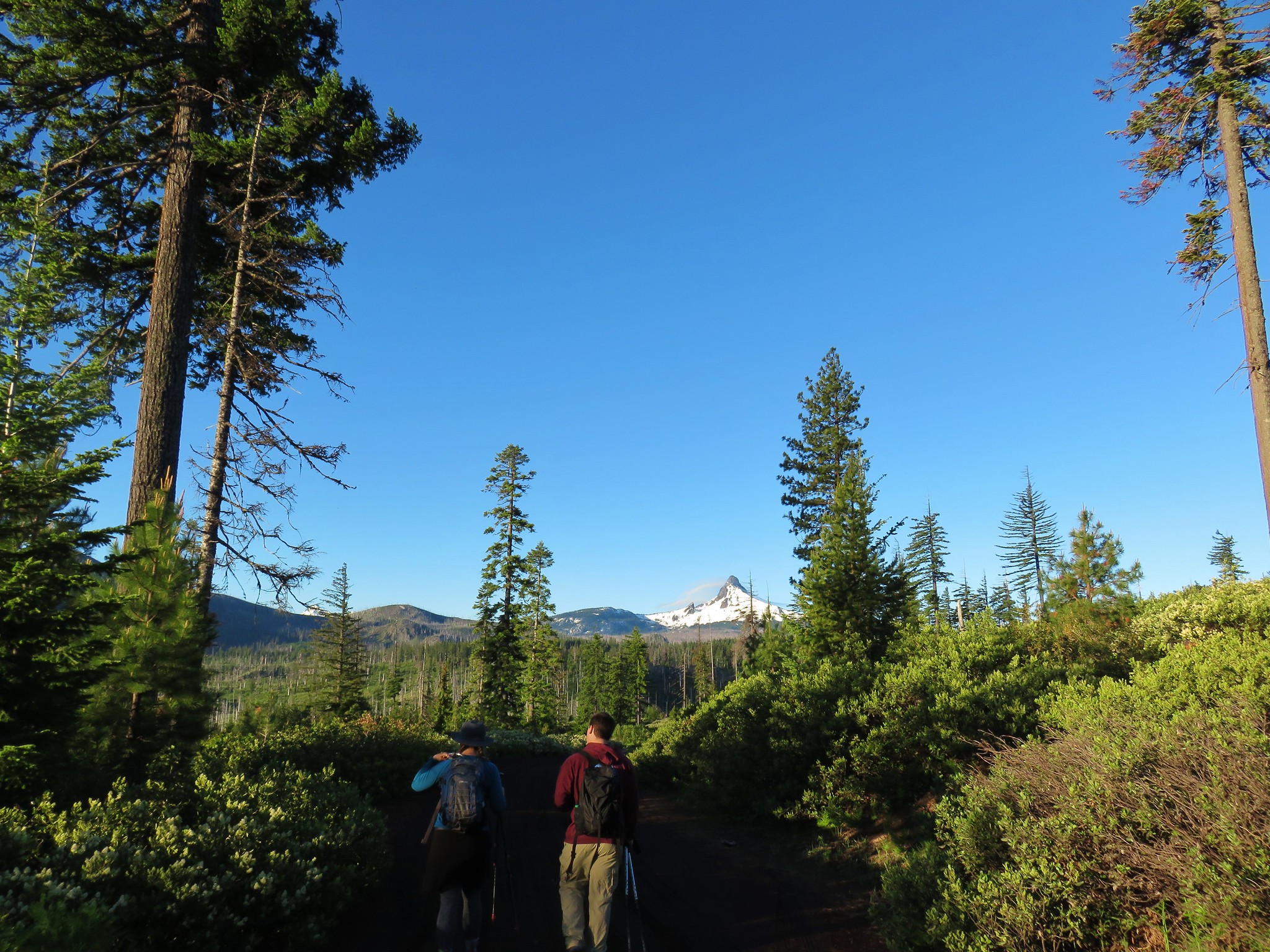
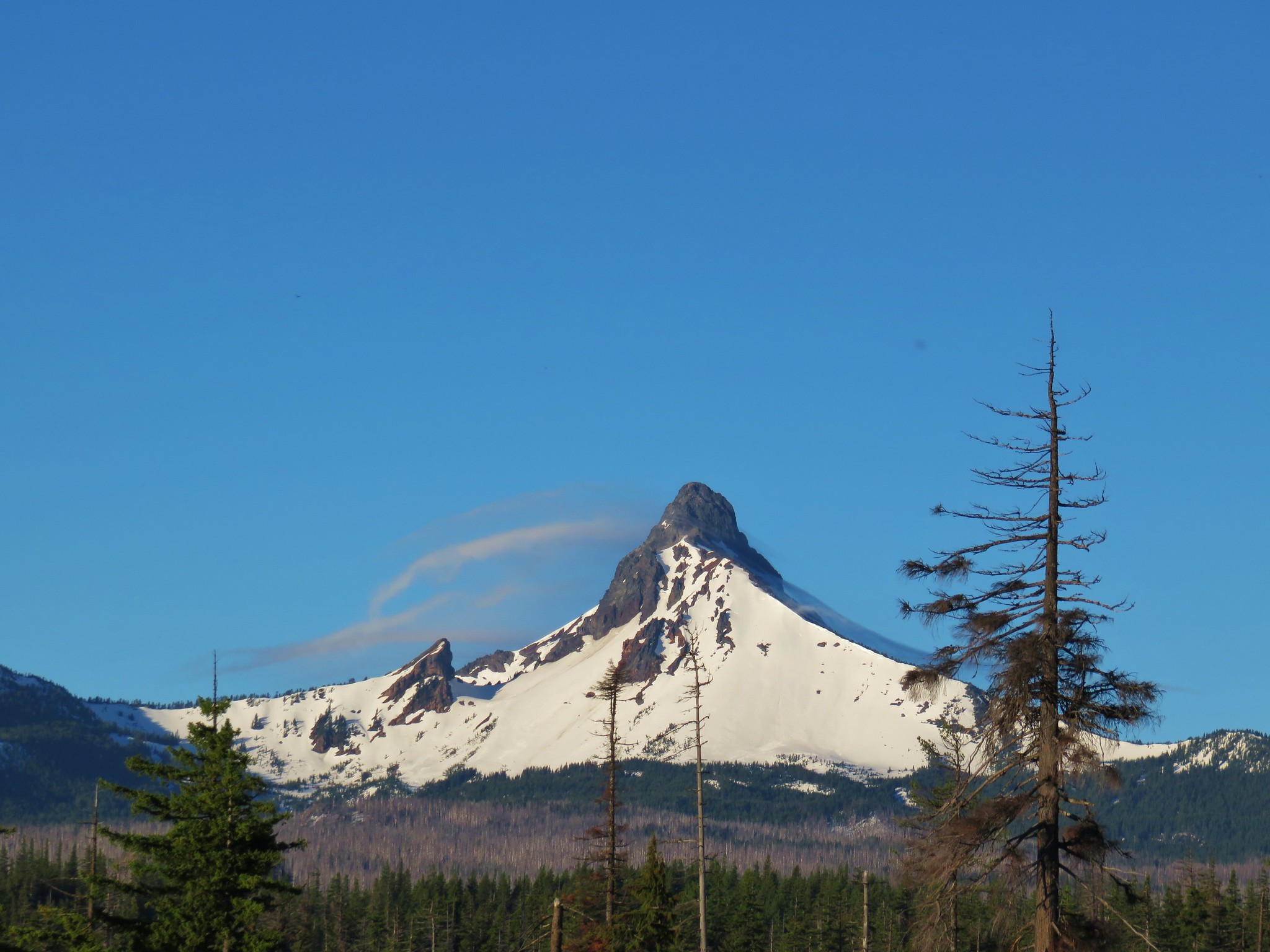
A bluebird day forecast in the mountains on a day off equaled a trip to the northern end of the McKenzie River Trail at the Upper McKenzie River Trailhead for a hike past Clear Lake, Sahalie Falls, Koosah Falls and Carmen Reservoir. While we’d visited each of those sites previously this hike would include two sections of the McKenzie River Trail that we had not hiked before.

We left the Willamette Valley fog behind and arrived at the trailhead a little after 7am and were greeted with clear skies and freezing temperatures.
IMG_3000

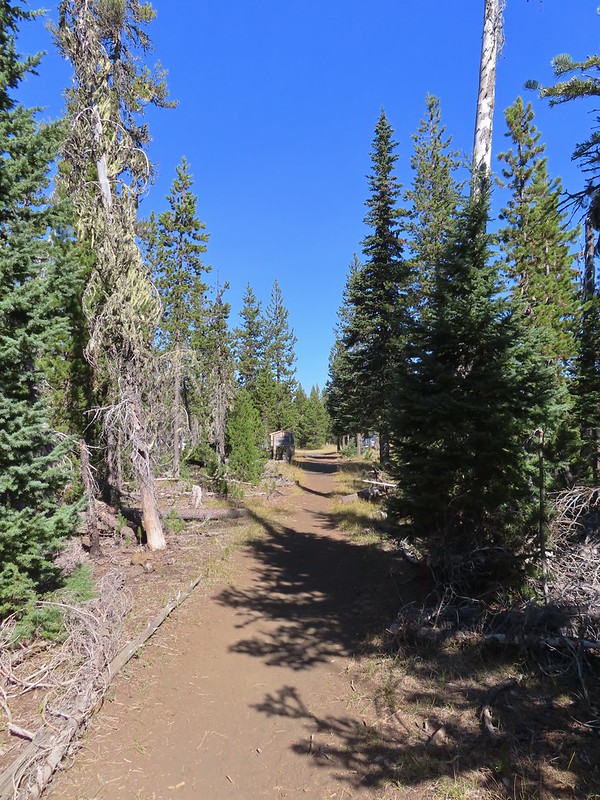
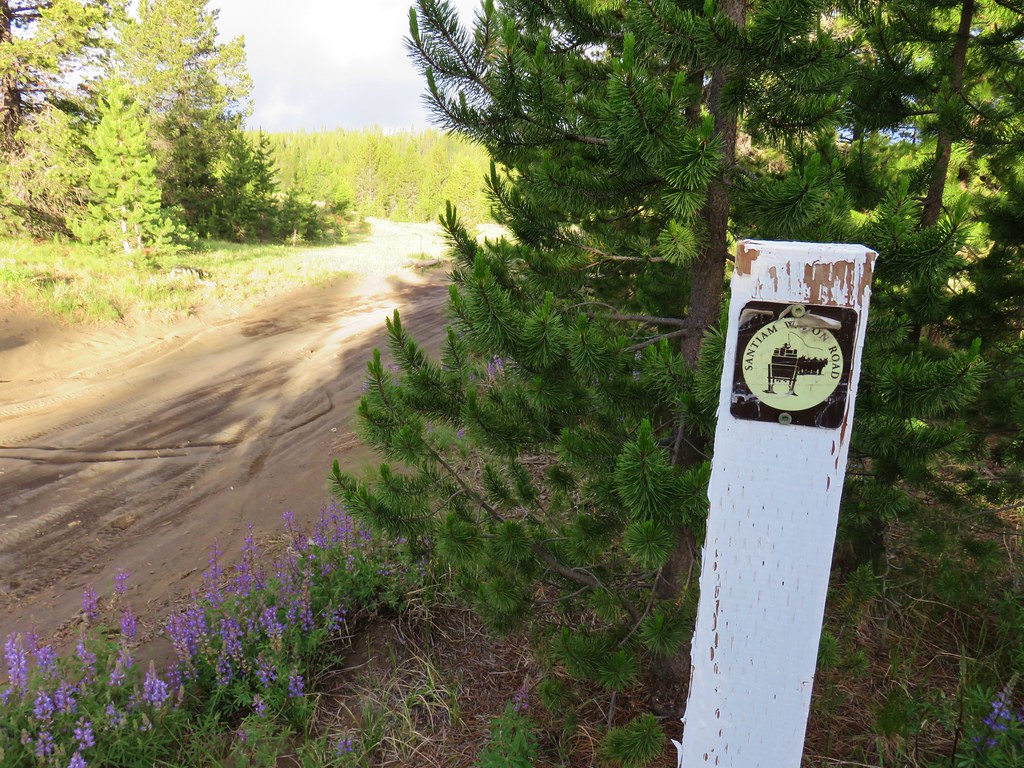
Two trails leave from this trailhead, the Old Santiam Wagon Road which we’d hiked in 2023 (post) and the McKenzie River Trail. The McKenzie River Trail starts to the right of a large signboard and immediately crosses the bed of Fish Lake Creek which is dry most of the year.
IMG_3003

IMG_3006
Spring snowmelt fills Fish Lake (post) but the porous lava beneath the lake drains it by Summer.

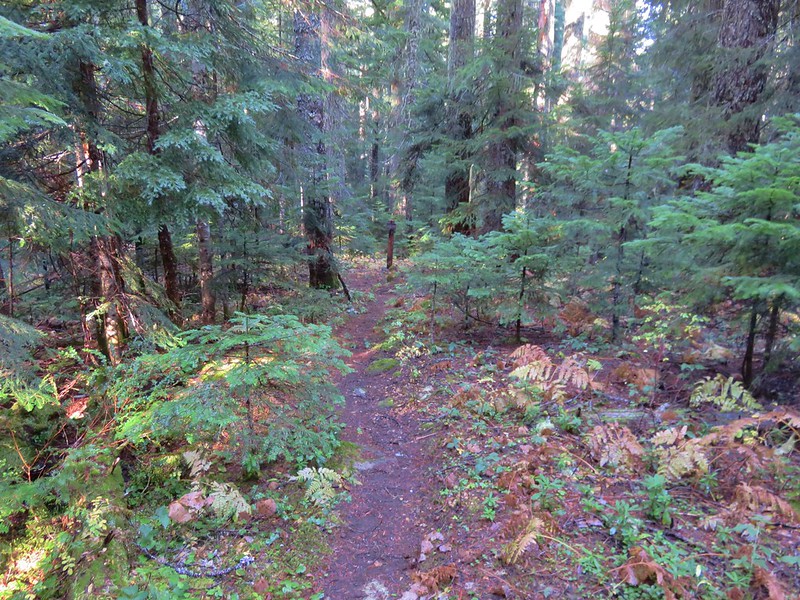
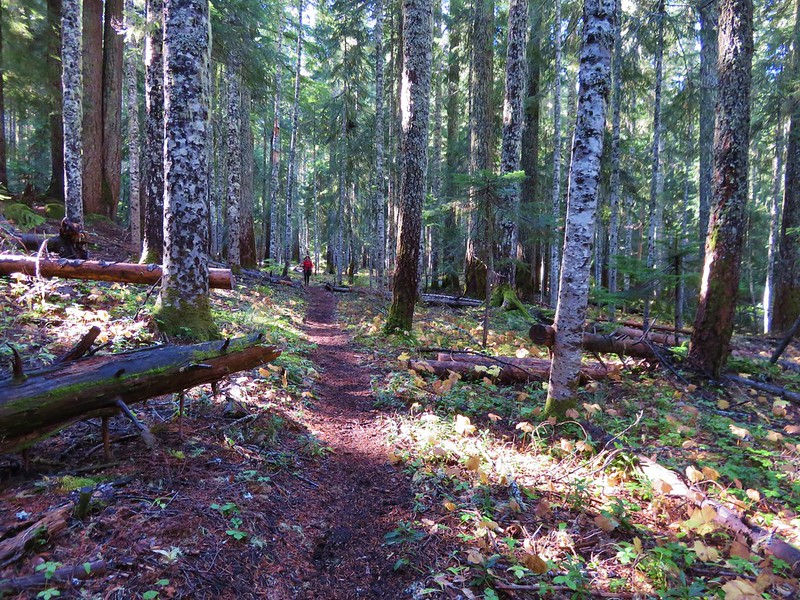
The trail passed through the forest between Highway 126 and Fish Lake Creek for a mile to a junction with the Clear Lake Trail.
IMG_3007

IMG_3008
The trail crossed Eno Road at the 0.2-mile mark.

IMG_3010
At the junction with McKenzie River Trail turns left and recrosses Fish Lake Creek with the Clear Lake Trail continuing straight allowing for a loop around Clear Lake.

We had decided to stick to the McKenzie River Trail and pass around the eastern side of the lake first and return on western side. The primary reason was that there is a view of several Cascade mountains from the Clear Lake Trail, but with the Sun having just risen it would have been behind the mountains. By saving the views for the return trip the Sun would be almost directly overhead allowing for a better view of the snowy peaks.
IMG_3011
The second footbridge over Fish Lake Creek.

It wasn’t long after crossing the footbridge that we got our first views of Clear Lake.
IMG_3012

IMG_3013

There were dozens of ducks on the lake including buffleheads, common mergansers, and Barrow’s goldeneyes.
IMG_3018
The ripples in the lake are the ducks moving away from the annoying hikers.

IMG_3020
Barrow’s goldeneye

IMG_3028
Common mergansers

IMG_3030
The Clear Lake Resort across from the trail.

A half mile from the junction the trail passes Great Spring which is the primary source of Clear Lake and the McKenzie River.
IMG_3039

IMG_3041

IMG_3042

Beyond the spring the trail continued around the lake passing through frosty lava flows and small sections of forest for another 1.8-miles before reaching a junction with the other end of the Clear Lake Trail.
IMG_3045
The boat ramp at the resort.

IMG_3047

IMG_3053
There were quite a few American dippers (ouzels) along the shore of the lake.

IMG_3056

IMG_3062

IMG_3066
Buffleheads

IMG_3074

IMG_3090
A section of the trail is paved near the Coldwater Cove Campground.

IMG_3093

IMG_3094
The trail crosses the campground boat ramp.

IMG_3100
Looking back across the lake we could see several of the Old Cascades peaking up over the trees.

IMG_3102
Crescent Mountain (post) and The Three Pyramids (post)

IMG_3105

IMG_3107
Another ouzel

IMG_3109

IMG_3113

IMG_3115
The southern end of the Clear Lake Trail.

We stayed on the McKenzie River Trail which crossed FR 770 after 0.4-miles then Highway 126 before arriving at a junction with the Waterfalls Trail 0.7-miles from the Clear Lake Trail junction.
IMG_3116

IMG_3121
Witch’s butter

IMG_3123

IMG_3124

IMG_3125
FR 770 provides access to the Coldwater Cove Campground.

IMG_3127
The trail crossing Highway 126. We were lucky there was not much traffic to deal with on either dash across today.

IMG_3129
After crossing the highway the trail joined the McKenzie River.

IMG_3133

IMG_3135
The junction with the Waterfalls Trail.

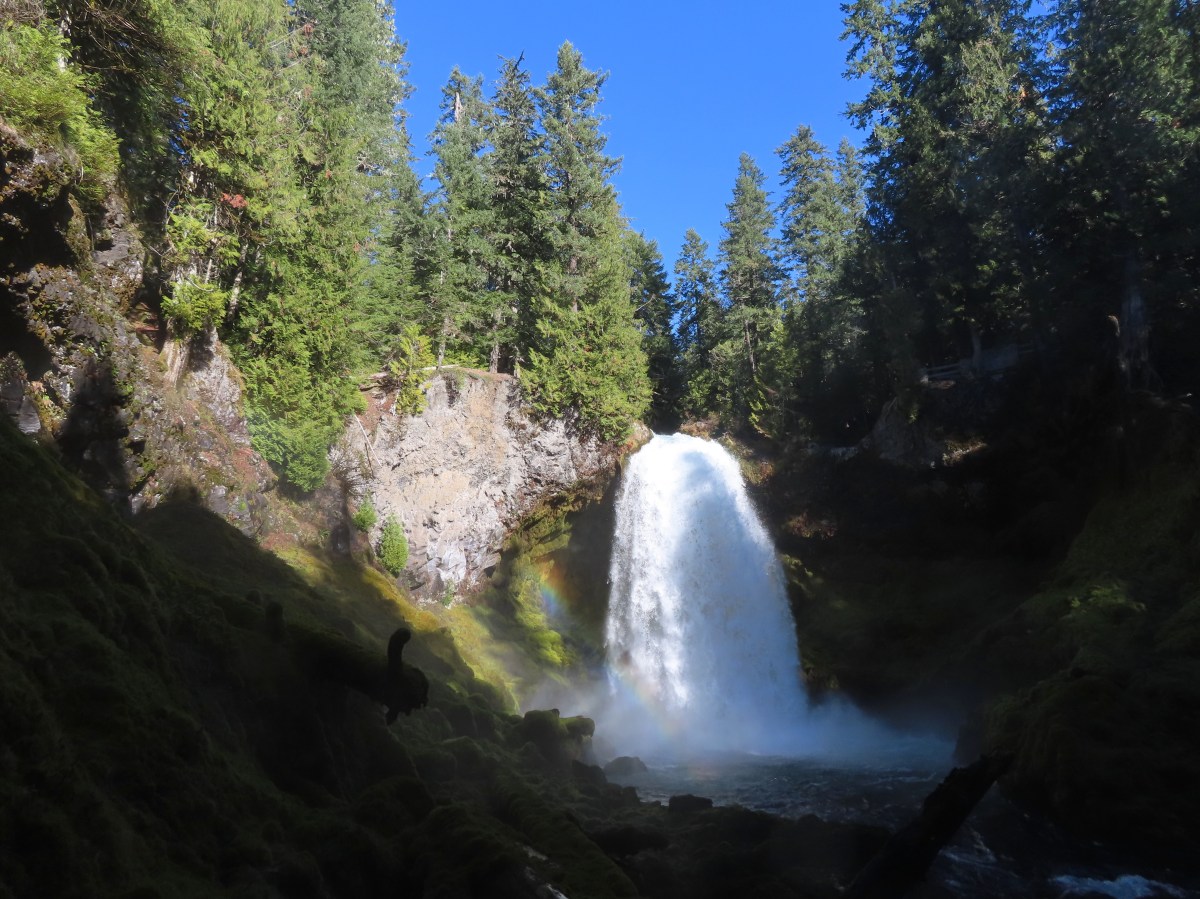
We decided to leave the McKenzie River Trail here and take the Waterfalls Trail down to Carmen Reservoir and then return via the McKenzie River Trail. It was a little over a third of a mile from the junction to an overlook above Sahalie Falls.
IMG_3138

IMG_3142

IMG_3145

IMG_3150
Sahalie Falls

IMG_3146
McKenzie River below Sahalie Falls.

IMG_3154
McKenzie River above Sahalie Falls.

A tenth of a mile further down the trail is a second viewpoint with a direct view of the falls.
IMG_3156

IMG_3165

IMG_3164

We continued past this viewpoint another half mile to the top of Koosah Falls.
IMG_3168

IMG_3171

IMG_3177

IMG_3181

IMG_3185
Ouzel

IMG_3187

IMG_3191
This unnamed waterfall was off the trail a bit and hard to get a good view of from this side of the river.

IMG_3194

IMG_3195
View from above Koosah Falls.

There were two viewpoints for Koosah Falls along the trail.
IMG_3199

IMG_3200

IMG_3210
The second viewpoint.

IMG_3211

IMG_3214

From the second Koosah Falls viewpoint it was another third of a mile to Carmen Reservoir where we turned right on FR 750 for a tenth of a mile to the Carmen Reservoir Trailhead.
IMG_3218

IMG_3222
The FR 750 bridge over the McKenzie River.

IMG_3223

IMG_3226
Carmen Reservoir

IMG_3228
Walking along FR 750 toward the McKenzie River Trail.

IMG_3230

We took a short break on a bench at the trailhead then followed pointers for the McKenzie River Trail.
IMG_3231

After a short climb we turned right onto the McKenzie River Trail and in 0.2-miles came to a series of views of Koosah Falls.
IMG_3235

IMG_3236
Coral fungus

IMG_3237

IMG_3240

IMG_3242

IMG_3251

The trail initially climbed gradually from Koosah Falls before steepening as it neared Sahalie Falls.
IMG_3253
McKenzie River above Koosah Falls.

IMG_3254

IMG_3255
The unnamed waterfall.

IMG_3259
It was a little tricky to find the right use path that led to this view of the unnamed waterfall and it required scrambling between some wet logs and mossy rocks.

IMG_3264

As the trail steepened a use trail forked off to the right which led to a direct view of Sahalie Falls.
IMG_3271
Looking back along the use trail. It was a sketchy in spots, especially with how wet everything was.

IMG_3272
To get a view of the falls I had to scramble over these rocks.

IMG_3266

IMG_3269

We continued on past Sahlie Falls to the footbridge over the river and the junction with the Waterfalls Trail.
IMG_3275

IMG_3282

IMG_3286
The McKenzie River from the footbridge.

From the junction we returned to the Clear Lake Trail junction and turned onto that trail to finish the loop around the lake.
IMG_3289

IMG_3292
Turning onto the Clear Lake Trail.

IMG_3294

The Clear Lake Trail crossed the McKenzie River at the outlet of Clear Lake then traversed a forested hillside above the lake for a mile to the Clear Lake Day Use Area.
IMG_3296

IMG_3297

IMG_3299
Clear Lake from the bridge.

IMG_3305

IMG_3307
Sand Mountain (post) with some snow patches across the lake.

IMG_3308
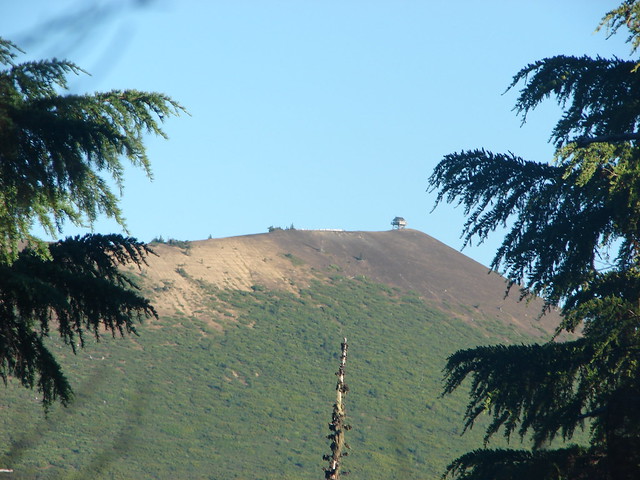
The Sand Mountain lookout tower on the summit to the right.

IMG_3311
Mt. Washington across the lake.

IMG_3313
The top of Mt. Washington.

IMG_3317

IMG_3335
The top of North Sister with a bit of Middle Sister to far right.

IMG_3336
Picnic shelter at the day use area.

IMG_3337

We briefly lost the trail here as there wasn’t any obvious signage near the resort.
IMG_3341
Cafe and boat rentals.

We wound up following a pointer for restrooms instead of following the trail along the shore of the lake and had to cut down through the cabins to rejoin the actual trail.
IMG_3343

IMG_3345

IMG_3347
Back on the official Trail.

We followed the Clear Lake trail as it bowed out and around the Ikenick Creek arm of Clear Lake.
IMG_3348

IMG_3350
More Barrow’s goldeneyes.

IMG_3356
Footbridge over Ikenick Creek.

After crossing Ikenick Creek the trail returned to Clear Lake and arrived at a bench with a view across the lake of the Three Sisters.
IMG_3363
Scott Mountain (post) across the lake.

IMG_3369
Tree trunk in Clear Lake.

IMG_3376
The Three Sisters

IMG_3380

IMG_3383
North, Middle, and South Sister

After taking in the view of the Three Sisters we completed the loop and returned to the car stopping often along the way to take photos of the numerous mushrooms that lined the trail.
IMG_3392

IMG_3393

IMG_3396

IMG_3399

IMG_3405

IMG_3411

IMG_3413

IMG_3415

While the temperatures had risen into the 40’s by the time we got back to the trailhead there was still plenty of ice and frost left on the ground.
IMG_3422

The GPS put our hike at 11.7-miles with approximately 1000′ of cumulative elevation gain. For shorter hikes either of the loops that we did during this outing are worthy options.
Screenshot 2025-11-22 152352

This was a great hike with a lot of variety. Lakes, waterfalls, mountain views, lava fields, mossy green forest and some wildlife. The lack of leaves on the bushes and trees around the lake provided a little better viewing experience than we’d had on our first visit to Clear Lake and the cold temperatures reduced the crowds around the waterfalls. With the additional sections of the McKenzie River Trail completed we now only have about 1.5 of the 26.5-mile trail left to hike. Happy Trails!

Flickr: McKenzie River Trail – Clear Lake to Carmen Res.

Categories
High Cascades Hiking Mt. Washington Area Oregon Trip report

Patjens Lakes – 07/19/2025

Heather was able to join me for the last hike of my July vacation. I chose the Patjens Lake Loop in the Mount Washington Wilderness to wrap up the five hikes. It seemed fitting since we had hiked on Mt. Hood (post) to kick off my vacation then I had visited Mt. Jefferson area (post), the Three Sisters area (post), and the Three Fingered Jack area (post). That left Mt. Washington as the only major Oregon Cascade Mountain north of the Three Sisters I hadn’t hiked near during the week.

The Patjens Lakes loop was my pick for a couple of reasons. First, I wanted a relatively easy hike following some longer, more challenging hikes during the week. and at 7 to 8 miles with just a little over 600′ or so of elevation gain this loop fit the bill. The second reason was it had been almost 13 years since we’d done the loop (post).

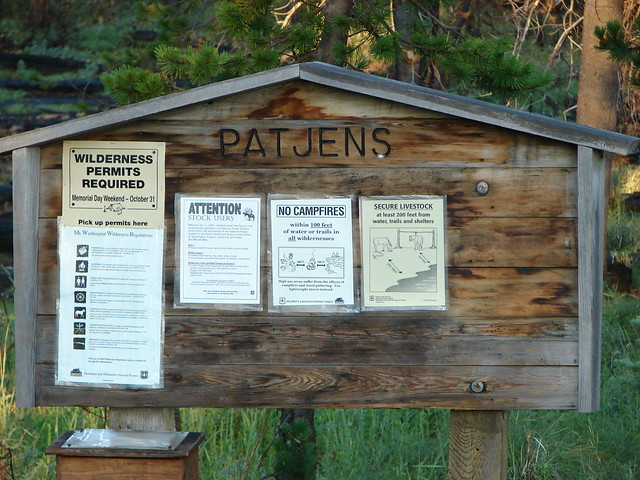
We parked at the Patjens Lakes Trailhead and after filling out a self-issued wilderness permit set off on the trail.
IMG_6766

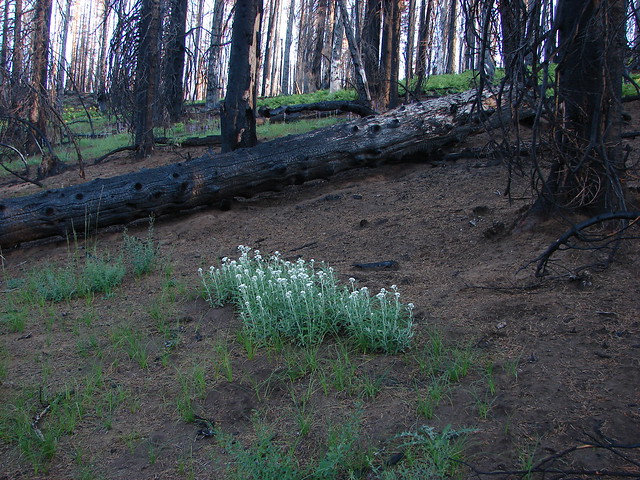
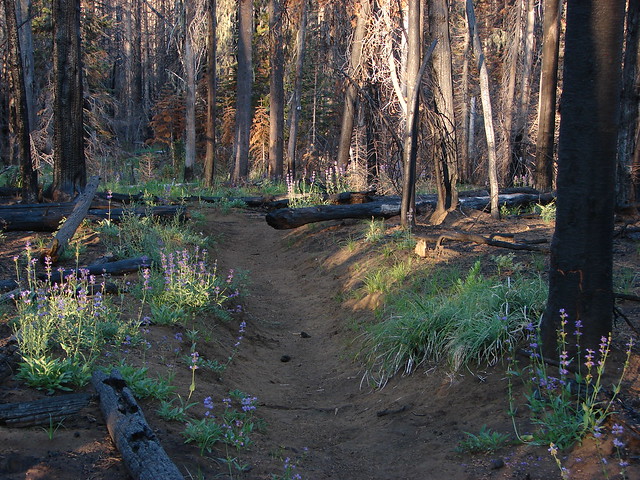
The majority of the route passes through the 2011 Shadow Lake Fire scar. In the 13 years since our first visit many of the burned trees have fallen and some new trees have begun replacing them. As a result, the views were much more open.
IMG_6786
Mt. Washington beyond Big Lake.

IMG_6788

IMG_6789
Patjens Butte

IMG_6791
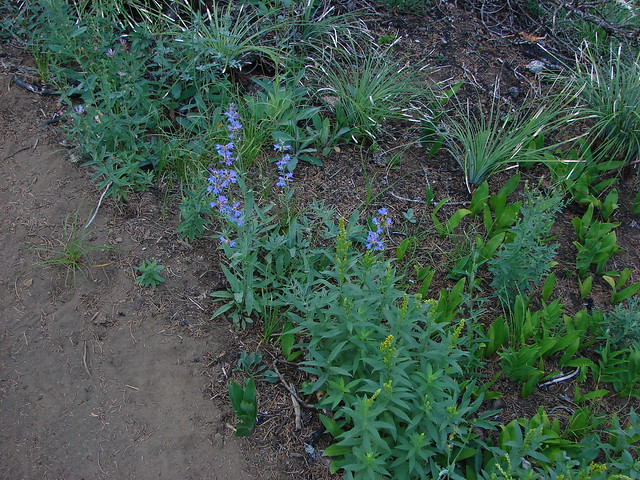
Pearly everlasting

IMG_6793
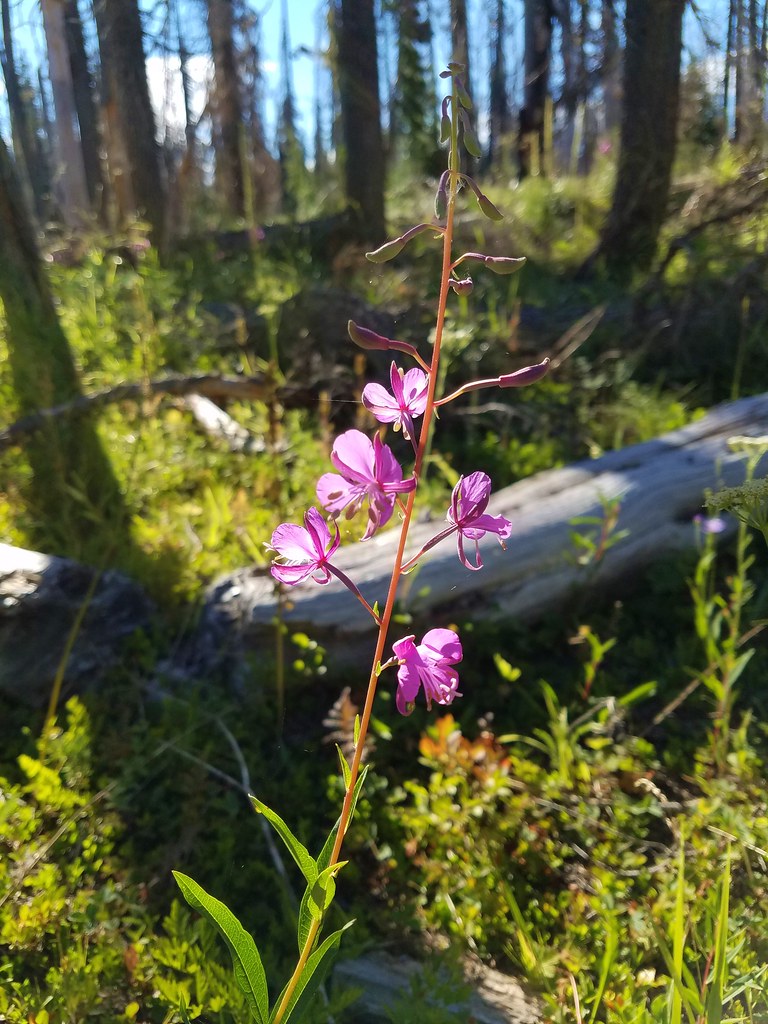
Fireweed

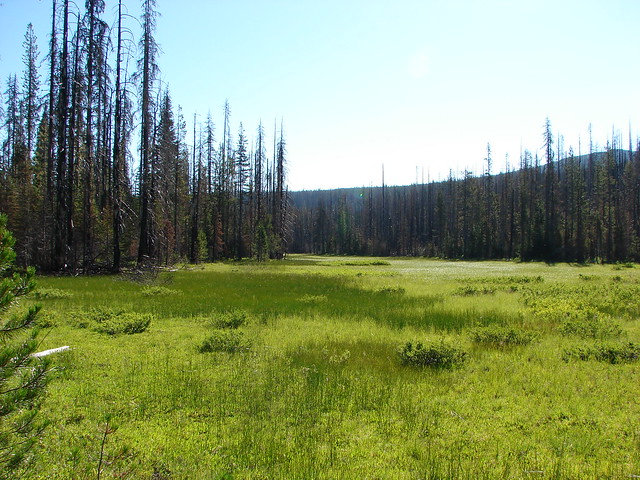
The trail makes a brief descent to pass around an unnamed lake and long meadow.
IMG_6798
At the 0.3-mile mark the loop begins.

IMG_6803
Scarlet gilia and milk kelloggia

IMG_6802
Closer look at the milk kelloggia.

IMG_6804
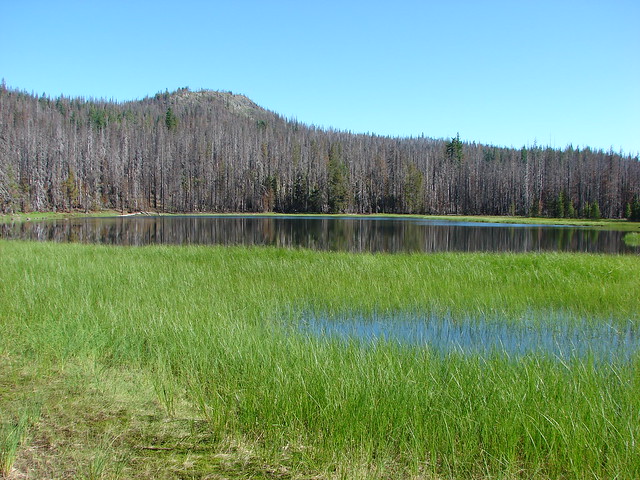
The unnamed lake below Patjens Butte.

IMG_6806
Goldenrod, scarlet gilia, and penstemon

IMG_6809
Tent caterpillars

IMG_6814
Thistle

IMG_6817
Cardwell’s penstemon

IMG_6819
The long meadow on the left.

There were a bunch of birds near the meadow including northern flickers, lazuli buntings, juncos and sparrows.
IMG_6829
A lazuli bunting in the foreground and a northern flicker further down the log.

IMG_6832
Northern flicker

IMG_6837
Lazuli bunting

IMG_6839
Sparrow

Beyond the meadow the trail climbed to a saddle between Peak 5026 and Peak 5164.
IMG_6840

IMG_6842
Aster

IMG_6844
Twinberry

IMG_6846
Ragwort

IMG_6853
Butterfly on lupine.

IMG_6856
Sickle top lousewort

IMG_6858

IMG_6865
Sub-alpine fleabane

IMG_6869
Scouler’s bluebells

IMG_6873
Twinflower

IMG_6874
Chipping sparrow with a snack.

IMG_6879
Sand Mountain (post)

IMG_6880
Maxwell Butte (post), the top of Mt. Jefferson, Hoodoo Butte, and Hayrick Butte.

IMG_6884
Strawberries

IMG_6886
Huckleberries

IMG_6888
It had been a good year for beargrass blooms, but they had all gone to seed.

IMG_6889
Woodland beardtongue

IMG_6892
The top of Mt. Jefferson.

IMG_6894
The only Washington lily left that was still kind of in bloom.

IMG_6895
Entering the Mt. Washington Wilderness.

Shortly after entering the wilderness the trail arrived at the saddle between the peaks where it began a mile long descent. It was on this descent that the difference in views was most evident.
IMG_6903
The Three Sisters, The Husband, and Scott Mountain (post).

Patjens Lake Trail
The Three Sisters from the trail in 2012.

IMG_6907
Mt. Washington, Belknap Crater (post), the Three Sisters, and The Husband.

IMG_6917
We could even see Diamond Peak (post) over the right shoulder of Scott Mountain.

IMG_6914
Diamond Peak

IMG_6920
Wildflowers along the hillside.

IMG_6923
Lupine and scarlet gilia

IMG_6933
The trail entered a section of forest that escaped the Shadow Lake Fire.

IMG_6938
Moth on vanilla leaf.

IMG_6942
Scarlet gilia

IMG_6944

IMG_6950
White-veined wintergreen and prince’s pine

IMG_6953

IMG_6955
Foam flower

Shortly after the trail emerged from the unburnt forest we arrived at what some, ourselves included, consider the first of the Patjens Lakes on the right.
IMG_6958

IMG_6960
Whether or not this first lake counts as a “Patjens” lake is debatable, but we like to include it as a fourth member of the group.

IMG_6961
Hardhack

The trail entered another section of unburned forest where we detoured down a short trail to the next Patjens Lake.
IMG_6966

IMG_6968
This lake escaped the 2011 fire leaving it the only lake surrounded by green trees.

IMG_6972
Bufflehead family

Beyond the second lake the trail reentered the fire scar where it would stay for the remainder of the hike. A third of a mile from the second lake we arrived at the third lake where we left the trail in order to loop around it.
IMG_6975

IMG_6979
Peak 5164 on the left and Patjens Butte on the right.

IMG_6983
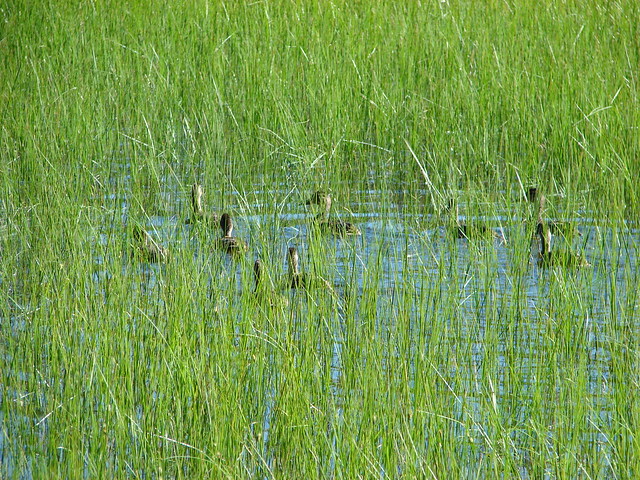
Almost synchronized ducks.

IMG_6986
Cinquefoil

IMG_6989
Duck family

IMG_6998
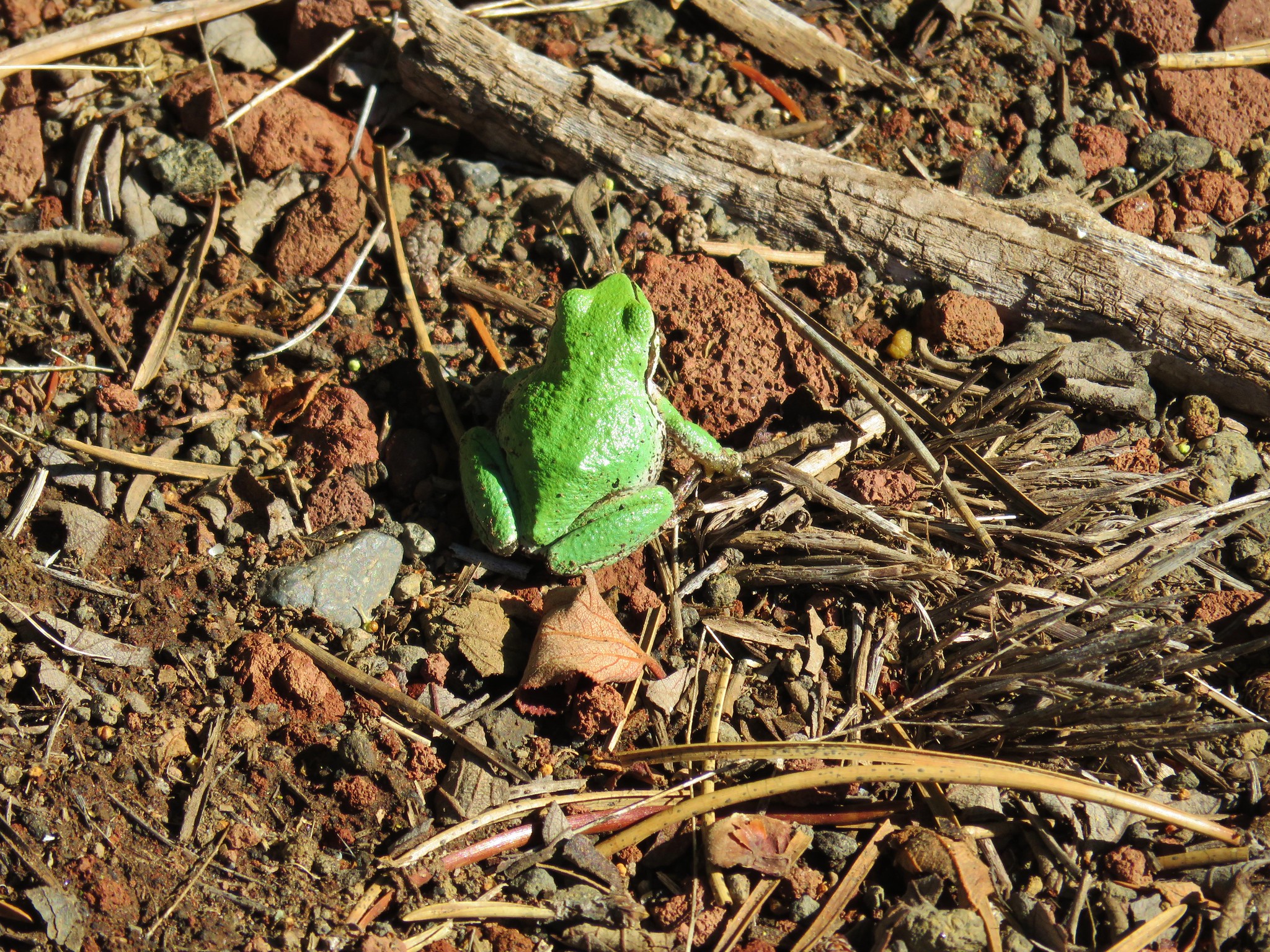
Tree frog

We hadn’t looped around this lake in 2012 but wanted to see what the view of Mt. Washington was like this time.
IMG_7004
There was a rough user trail to follow at times.

IMG_7008

Field crescent
Field crescent

Form the northern end of the lake we headed cross country to the final Patjens Lake.
IMG_7020

IMG_7022
Aster

IMG_7023
The fourth Patjens Lake.

On our first trip it was this lake that we looped around.
IMG_7028

This time we headed along the western end of the lake to return to the official trail.
IMG_7030
Dragonflies

IMG_7035

IMG_7039
Peak 5164 and Patjens Butte

IMG_7040
The Patjens Lake Loop just ahead.

We turned left onto the trail and gradually climbed for a mile and a half to a view of Big Lake.
IMG_7044

IMG_7047
Western sulphur

IMG_7058

IMG_7062

IMG_7066
Looking back after leaving the Mt. Washington Wilderness.

IMG_7077
Hoodoo Butte, Hayrick Butte, and Three Fingered Jack

IMG_7083
Hoodoo and Hayrick Buttes across Big Lake.

For the next 0.6-miles the trail followed the hillside above Big Lake providing nice views across the lake and back to Mt. Washington.
IMG_7088
Big Lake Youth Camp on the eastern side of the lake.

IMG_7084
Swallow

IMG_7085
Rosy spirea

Stellar's jay
Stellar’s jay

IMG_7109
Thimbleberry

IMG_7112

IMG_7116

IMG_7119
This right-hand fork leads down to the Big Lake Campground. We stayed left.

IMG_7123
Nice view of Mt. Washington.

Mt. Washington and Big Lake
The view in 2012.

IMG_7124
The ridge on the left of Mt. Washington is the North Ridge (post) which is used by mountain climbers.

From the final viewpoint the trail turned away from the lake and descended to the junction where the loop had started.
IMG_7125
Heading west toward Sand Mountain.

IMG_7129

IMG_7135

We turned right after completing the loop and returned to our car.
IMG_7137
One last look back.

IMG_7138
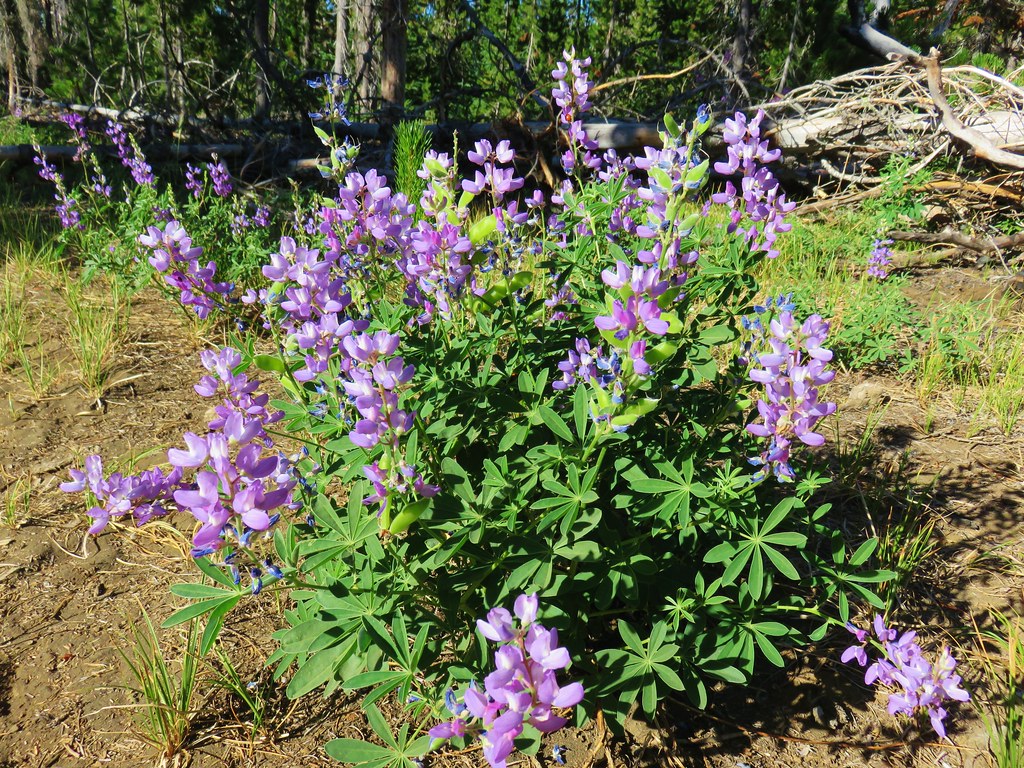
Lupine

IMG_7139

Today’s hike came in at 7.4 miles with a little over 600′ of elevation gain.
Screenshot 2025-07-19 133401

Despite the area around Big Lake being full of people we saw very few people on the hike itself. Mosquitos were a bit of a nuisance at times, particularly for Heather who assisted me by keeping them occupied. If you don’t care about wildflowers Autumn would probably be a great time to visit. The distance between the lakes and the trailhead and lack of steep climbs makes this a good option for younger hikers/backpackers too. Happy Trails!

Flickr: Patjens Lakes

Categories
High Cascades Hiking Mt. Washington Area Oregon Trip report

Santiam Wagon Road – McKenzie River TH to Sand Mountain – 07/08/2023

From 1865 to 1939 the Santiam Wagon Road served as the primary means of transportation from the Willamette Valley to Central Oregon. Beginning in Lebanon the nearly 400-mile route crossed the central Cascade Mountains at Santiam Pass. Sections of the road have been preserved and now serve as trails.

We’d previously hiked sections at House Rock (post), Tombstone Pass (post), Fish Lake (post), Sand Mountain (post), and Whychus Canyon Preserve (post). For our previous hike to Sand Mountain we had started near Big Lake and followed the wagon road West for almost three miles to forest road 2690-810 which leads to Sand Mountain.

For this visit we began to the West of Sand Mountain at the McKenzie River Trailhead.
IMG_3639

The 26.5-mile long McKenzie River Trail shares this trailhead with the Sanitam Wagon Road.
IMG_3642

IMG_3645

We set off on the wagon road through an old lava flow. The flow was old enough that the forest had had time to mature.
IMG_3652

IMG_3655

IMG_3663Prince’s pine

IMG_3667Candystick

20230708_070836Twinflower

IMG_3681Big uprooted tree.

The road climbed gradually from the trailhead for three miles to a crossing of Forest Road 2676.
IMG_3686

IMG_3690A carpet of vanilla leaf leaves.

IMG_3704

IMG_3707FR 2676

We jogged left on FR 2676 for approximately 50′ to a gate and the continuation of the Santiam Wagon Road.
IMG_3710Despite the “Closed to all Motor Vehicles” sign it was obvious, and unfortunately not surprising, that some people feel they have a right to ignore anything they disagree with.

The road continued its gradual climb but the surface now was much sandier which required a bit more effort. The forest also changed from large fir trees to smaller lodgepole pine and snowbrush.
IMG_3715More candysticks

IMG_3720The few sections that weren’t sandy consisted of lava rock.

IMG_3727Dwarf lupine

IMG_3728Pussy paws

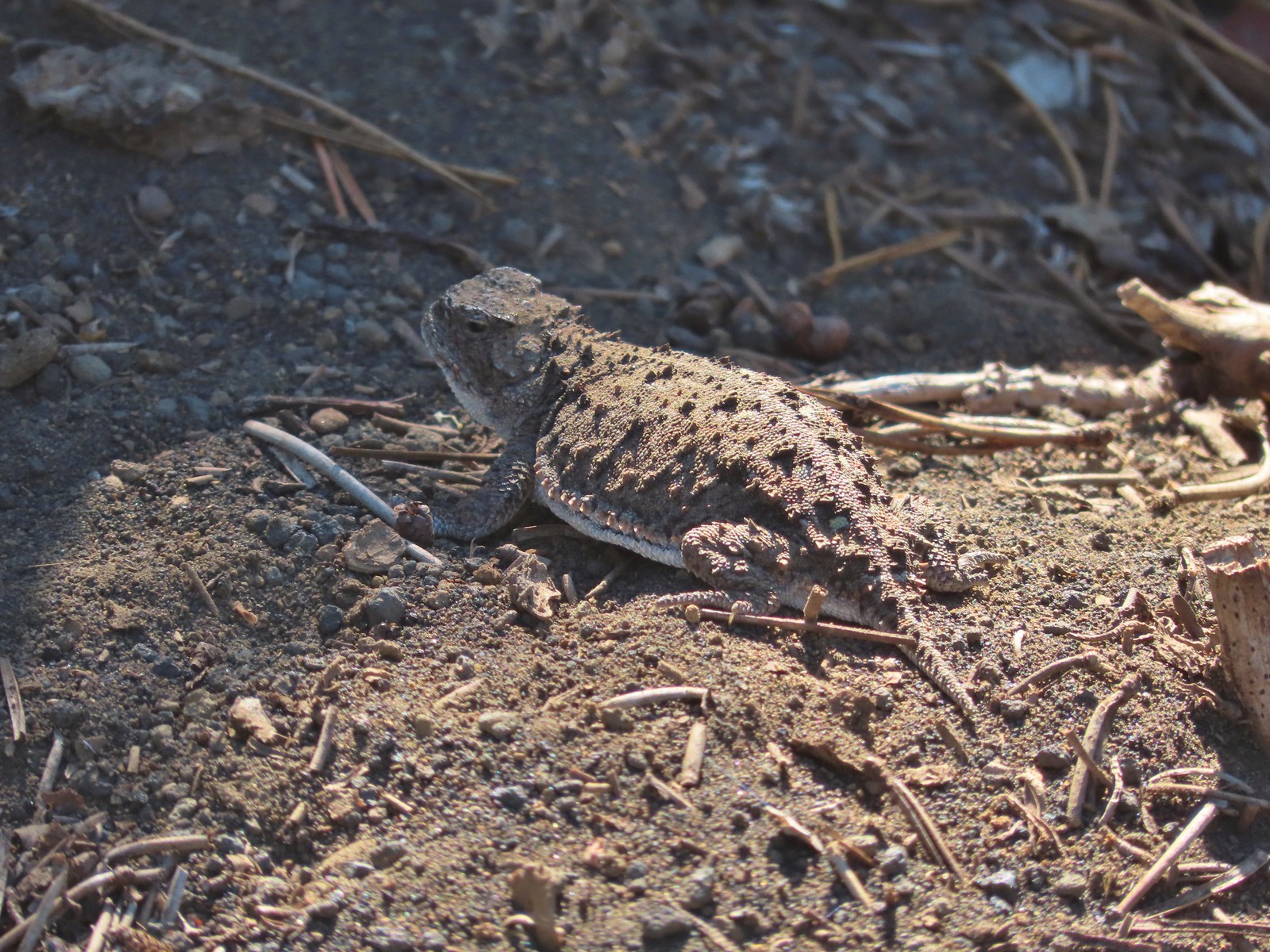
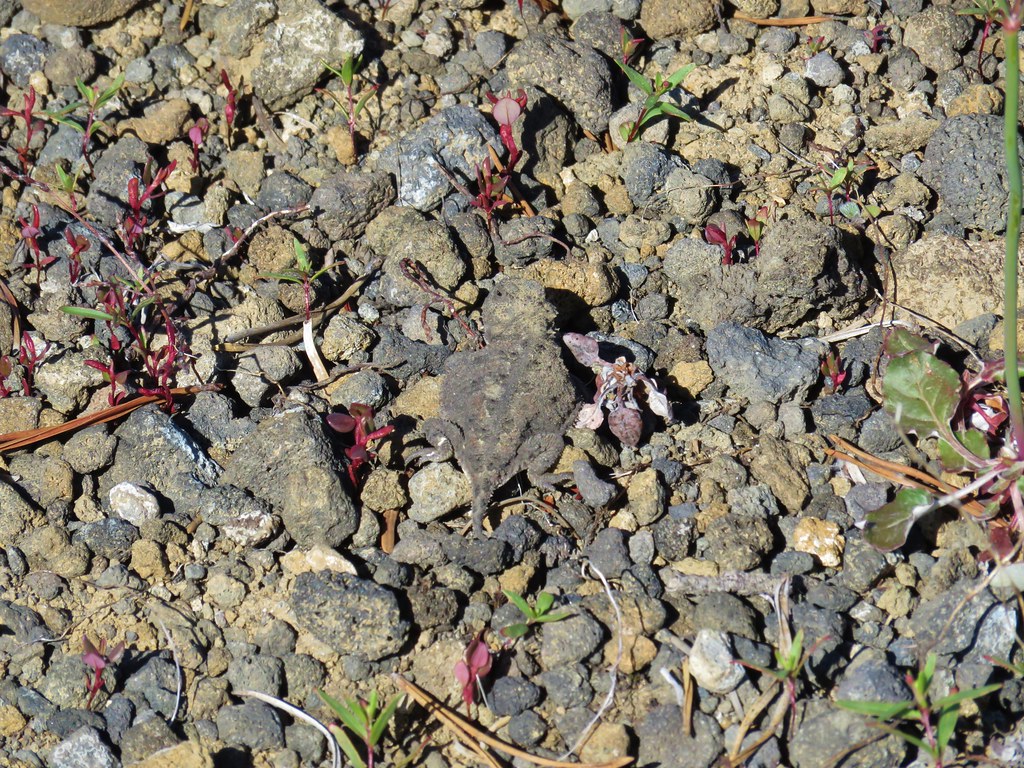
IMG_3734Pygmy short-horned lizard next to a deer print.

IMG_3738Sand Mountain on the right.

IMG_3742Another pygmy short-horned lizard

IMG_3746Snowbrush lining the road with the northern end of Sand Mountain ahead.

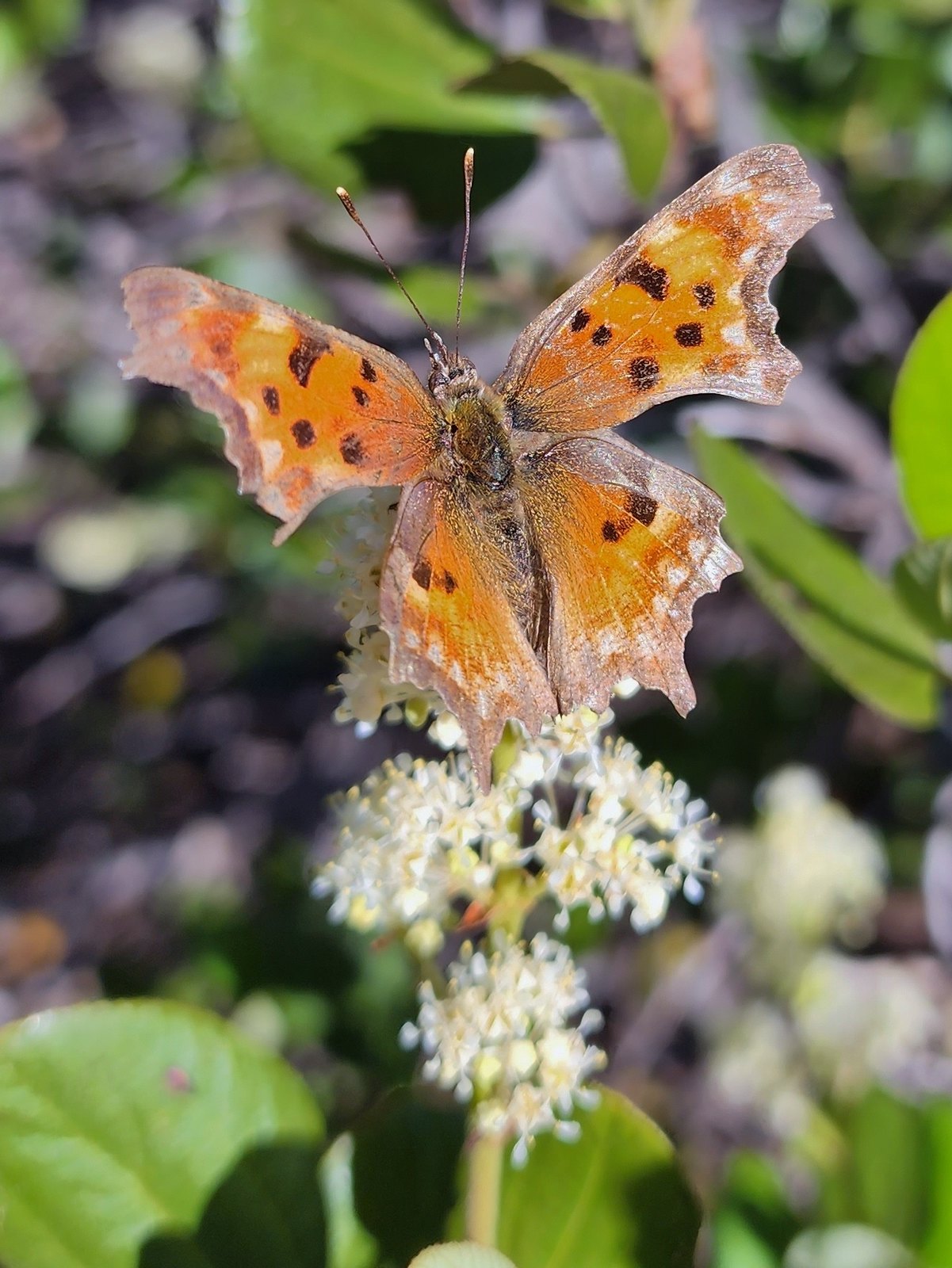
IMG_3751Butterflies, including this hoary comma, and other pollinators love the snowbrush.

20230708_090253Hoary comma

Just over a mile and a half beyond FR 2676 we passed another gate at a junction with FR 890. Here the road is open to motorized vehicles as part of a large Santiam Pass OHV Trails network. The large amount of trails/roads open to these types of vehicles in the area made their usage on the closed section of the Santiam Wagon Road even more annoying.
IMG_3754

IMG_3755

We followed this portion of the road for 0.4-miles to the gated road to Sand Mountain.
IMG_3757Penstemon

IMG_3759The Moon over Sand Mountain.

IMG_3761Mt. Washington

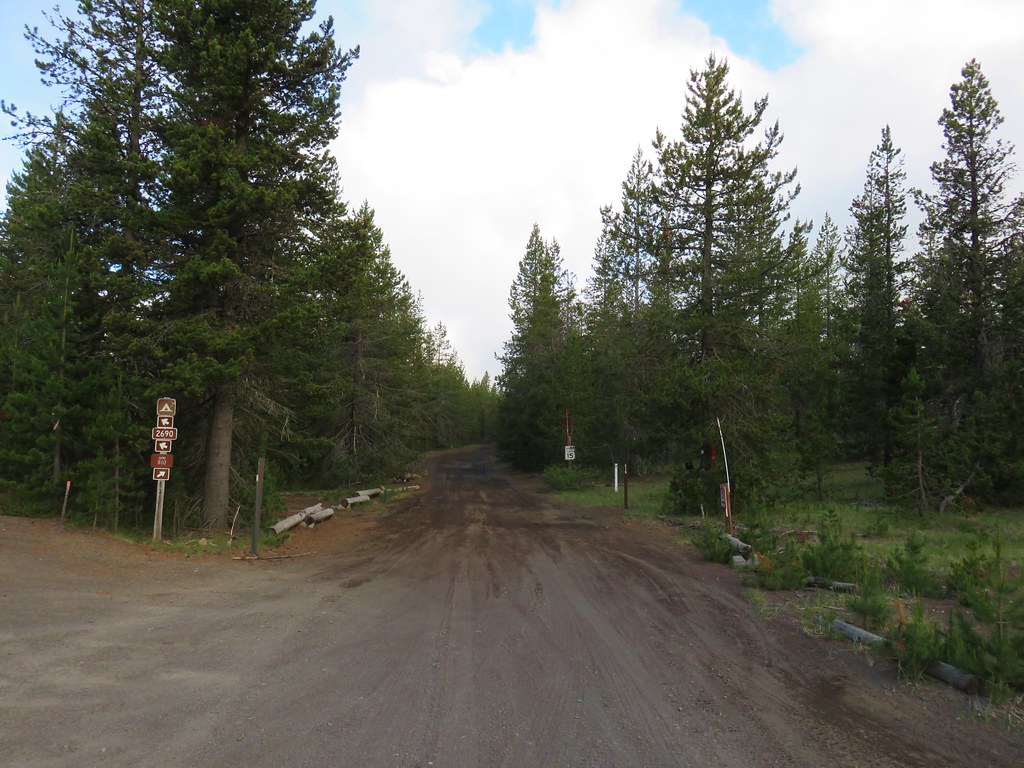
IMG_3765Sign and gate at the road to Sand Mountain.

We followed this road uphill for a mile and a half to a parking area between Sand Mountains two craters. As we climbed the surrounding peaks came into view.
IMG_3769

IMG_3773Buckwheat

IMG_3781More snowbrush

IMG_3779California tortoiseshell

IMG_3784The Sand Mountain Lookout from below.

IMG_3788Mt. Jefferson and Three Fingered Jack

IMG_3789Mt. Washington and the Three Sister

Western swallowtailWestern swallowtail

IMG_3803The Three Pyramids(post), Scar Mountain & Trappers Butte(post), and Coffin & Bachelor Mountains (post).

IMG_3802Echo Mountain & North Peak to the left and Crescent Mountain(post) to the right.

IMG_3808Browder Ridge (post) to the center-left, Iron Mountain center, and South Peak, Cone Peak, Echo Mountain & North Peak to the right.

IMG_3818Lorquin’s admiral

IMG_3819

From the parking area we followed the lined trail uphill for 0.4-miles to the staffed Sand Mountain Lookout.
IMG_3821

IMG_3830Mt. Washington (post), Belknap Crater (post), and the Three Sisters.

IMG_3831

IMG_3833Maxwell Butte (post), Mt. Jefferson, and Three Fingered Jack.

IMG_3836Just a bit of snow left on the North facing slope.

IMG_3841Western pasque flower

IMG_3844It’s very faint but the top of Mt. Hood was visible over the lower left shoulder of Maxwell butte.

IMG_3845Penstemon

IMG_3846

IMG_3847Belknap Crater, the Three Sisters, The Husband, Scott Mountain (post), and Diamond Peak (post) in the distance.

IMG_3848Zoom of Diamond Peak. The round looking hump in front is Fuji Moutain (post).

IMG_3853

IMG_3858Hoodoo and Hayrick Buttes, Black Butte (post), and Cache Mountain.

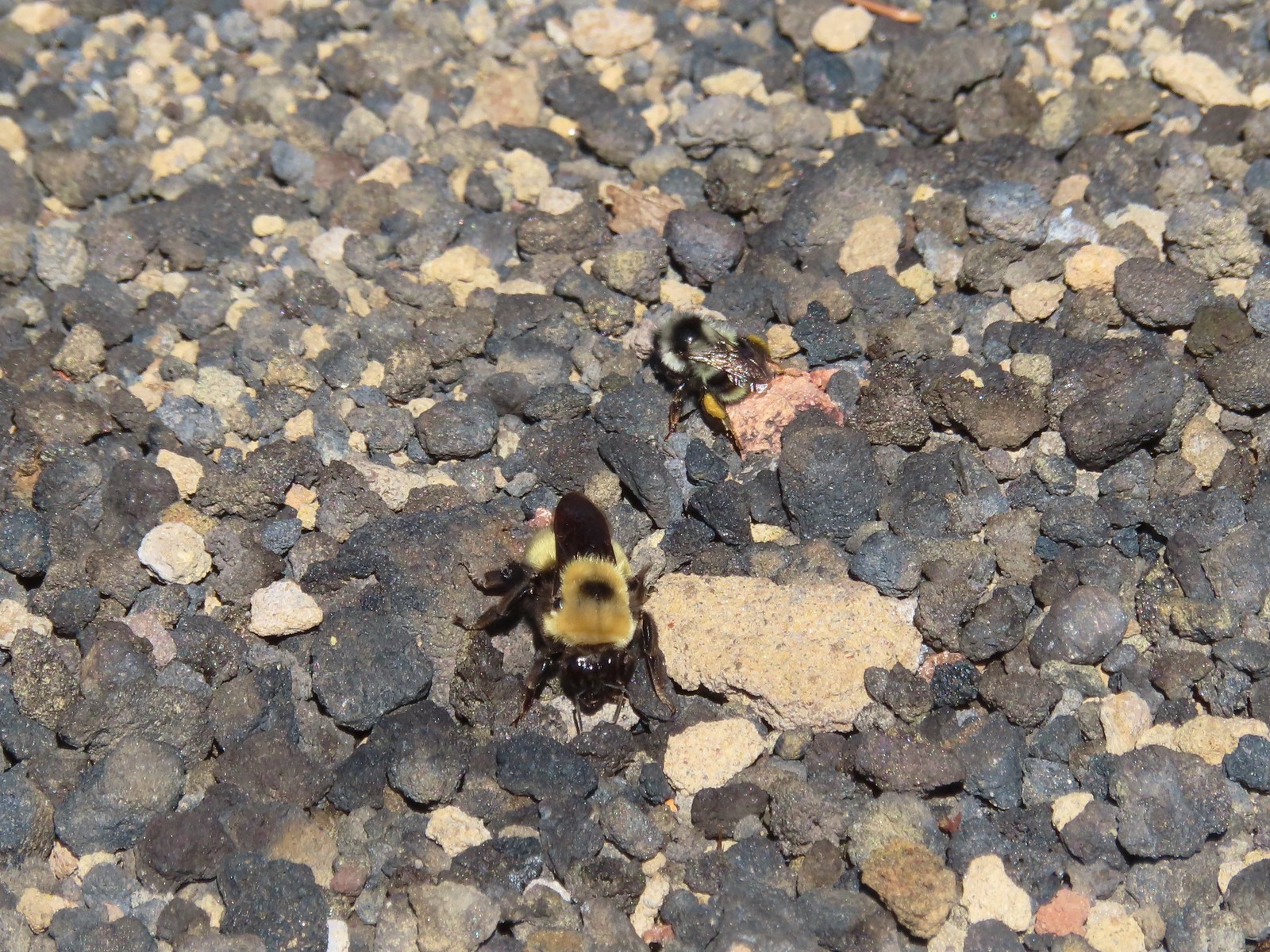
IMG_3861There were quite a few bumblebees at the summit interested in the rocks in this area.

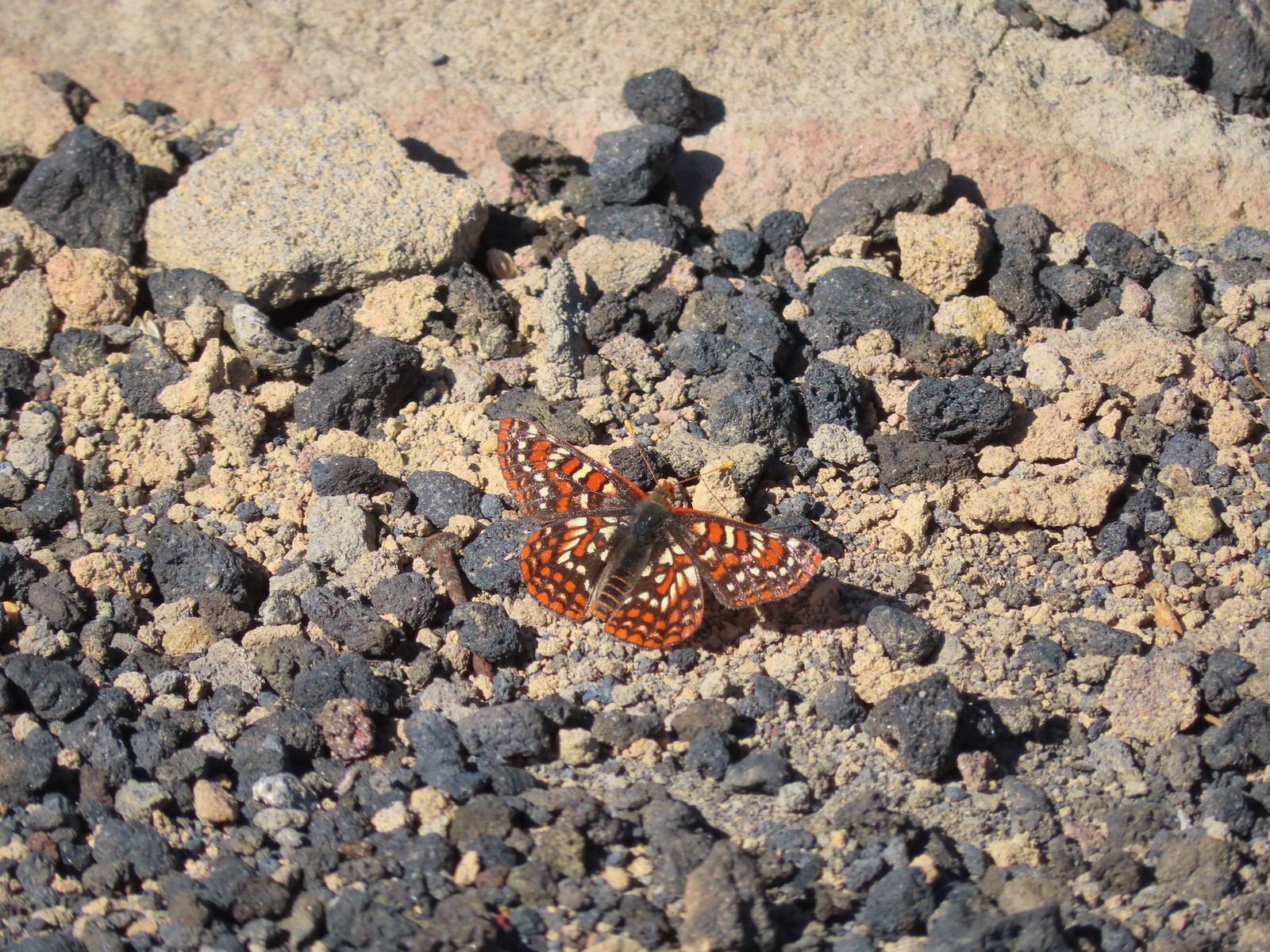
IMG_3863This Edith’s checkerspot joined the bees for a moment.

We stopped to talk to the current staffer who said it was the nicest morning he’d seen in almost a week. The amount of smoke/haze was indeed much less than we’d experience on the 4th at Rocky Top (post). Before continuing on we confirmed with him that the loop around the crater was still open to hiking and he said it was and also suggested that we take the closed road back to the parking area instead of looping all the way around back to the lookout. His reasoning was that the last climb up to the lookout was a bit of a scramble. On our previous visit we had actually gone down that section as we had done the loop counterclockwise. We planned on a clockwise loop this time so we thanked him and kept the road return open as an option.
IMG_3855Viewpoint below the lookout.

IMG_3871The lookout from the viewpoint.

20230708_103106Not sure if this is an aster or a fleabane.

IMG_3885The trail getting ready to drop down to a saddle. The peaks from right to left are: Browder Ridge, Twin Buttes, Latiwi Mountain, Wildcat Moutain, Tidbits Mountain (post), Bunchgrass Mountain, and Carpenter Mountain (post) followed by an unidentified ridge on the left.

IMG_3886

IMG_3888We were a little surprised to find these broomrape hiding in this silverleaf phacelia.

IMG_3890

IMG_3894Drummond’s anemone

IMG_3897Look into the crater.

IMG_3899

IMG_3902A couple of penstemon blossoms with the Three Sisters in the background.

IMG_3907The colors around the crater add to the scenery.

IMG_3910

IMG_3911Pyrola of some sort.

IMG_3919

IMG_3922Starting the steep climb back toward the lookout.

IMG_3925View from the roadbed. We opted to do as the lookout staffer suggested and follow the road back down toward the parking area instead of back up to the lookout.

IMG_3926

IMG_3932There was one good sized snow drift left encroaching on the road.

The forecast had said there was a slight chance of showers starting at Noon with another slight chance of thunderstorms in the afternoon beginning at 2pm. Aside from some clouds to the over Central Oregon to the East and one or two strays over Mt. Washington the sky remained was still clear as we headed back.
IMG_3938This little cloud wasn’t much of a threat.

IMG_3940If anything the views had improved now that Sun was more directly overhead.

IMG_3941

Not long after we’d started back down the road from the parking area we spotted another hiker on her way up. It would be the only other hiker we’d see on the roads/trails all day and it turned out to be one of the strangest coincidences we’ve ever experienced. On the drive to the trailhead that morning we were having a discussion about how often we wind up doing a hike just days before or after we see one of the other hikers we follow doing the same hike. There have also been numerous times where we find out after a hike or trip that we were in the same area or even the same trails at the same time but somehow missed each other. The only person we have run into more than once is Cheryl Hill (Just Peachy), once during a 2015 hike in Jefferson Park (post) and the other near Table Lake in 2018 (post). After the whole conversation that morning we were pleasantly surprised to find it was again Cheryl. This was her first visit to this lookout and she mentioned that it would be her 91st. She is currently working on visiting all of the standing lookouts in Oregon a project that we find very interesting. We had a nice conversation then headed our respective directions.

On the way back there were somehow even more butterflies vising the snowbrush.
IMG_3944A checkerspot

IMG_3952A hairstreak

IMG_3962Three Fingered Jack and Hoodoo Butte

IMG_3966Three Fingered Jack. Note the climbers trail on the slope to the right.

IMG_3970Ash in the basin below Sand Mountain.

IMG_3985

IMG_3989Pussy paws

IMG_3991Female western tanager

IMG_3998Moth

IMG_4002Snake in the trail.

IMG_4006The snake retreated to a nearby log when we approached.

IMG_4007Back in the forest.

IMG_4013This moth blended with the nearby fungus.

I had contemplated hiking the McKenzie River Trail down to Clear Lake (post) prior to returning to the car but that was before I knew how far our hike to Sand Mountain was going to be. The hike turned out to be 14.7 miles with 2500′ of mostly gradual elevation gain.

We have this section of the McKenzie River Trail on our to-do list so we decided to wait until then and retuned to the car to prepare for the drive home.

Although it was a little longer hike than we’d planned it was a good hike and not particularly difficult. The location of the lookout between the High Cascades and Old Cascades provides excellent views and the crater is an interesting feature. Add in the history of the Santiam Wagon Road with the solitude we experienced and you’ve got a really nice day. Happy Trails!

Flickr: Santiam Wagon Road to Sand Mountain

Categories
High Cascades Hiking Mt. Washington Area Oregon Trip report

Mount Washington North Ridge – 10/15/2022

Our lack of rain unfortunately continued for another week allowing the numerous fires in Oregon and Washington to remain active. To top it off a warm, dry East wind arrived in time for the weekend creating a red flag warning for high fire danger and blowing the smoke from the current fires into Western Oregon. The combination of the smoke and unseasonably high temperatures had me searching for a suitable hike. My Plan A, B, and C hikes were all forecast to be in the smoke (and warmer than I’d prefer in October) then I remembered seeing that Hike Oregon had gone up Mount Washington’s North Ridge back in August using a climbers trail off of the Pacific Crest Trail. I had been interested in that trail ever since hearing about it during the Chemeketans Route Finding course we’d taken and then later passing it on our hike to Mount Washington Meadows in 2017 (post). A quick of check of the forecast there showed clear (but breezy) skies and a high below 60 at the mountain, I was sold.

Just as we had done in 2017 I parked at the Pacific Crest Trailhead at Big Lake which at this time does not require a Cascade Wilderness Permit for day-use (one is required for overnight stays).
IMG_3615

I set off South on the PCT shortly before sunrise and followed it for three miles to a cairn marking the obvious climbers trail.
IMG_3387Mount Washington from the Mt. Washington Wilderness boundary just a few hundred feet from the trailhead.

IMG_3395Three Fingered Jack to the North from the PCT.

IMG_3399From left to right – Sand Mountain (post), Hoodoo Butte, and Hayrick Butte.

IMG_3401Mount Washington

IMG_3406Sunrise on Hoodoo Butte.

IMG_3410Sunlight hitting the spire of Mount Washington.

IMG_3416Hayrick Butte and Three Fingered Jack at sunrise.

IMG_3424Big Lake, Hoodoo, Hayrick Butte, and Three Fingered Jack.

IMG_3429Just over two miles from the trailhead I passed a sign for the non-maintained use trail from the private Big Lake Youth Camp.

IMG_3432

IMG_3440Shortly before reaching the climbers trail the PCT left the 2011 Shadow Lake Fire scar.

IMG_3442The cairn and climbers trail from the PCT.

I turned left onto this trail which was fairly easy to follow through the trees.
IMG_3443Huckleberry leaves turning color.

IMG_3444

IMG_3446

IMG_3448There were a few logs to navigate and keeping an eye on the tread was helpful.

The trail climbed moderately at first then steepened as it went, with occasional flatter sections before reaching the ridge.
IMG_3451

IMG_3452Maxwell Butte (post) behind Hoodoo and Hayrick Butte.

IMG_3454

IMG_3459Mount Washington

IMG_3468

I stopped here for a moment to admire a raptor that was hovering high above the ridge (small black dot in the middle of the photo).

IMG_3470The only movement that I could see was when it tilted its tail feathers which would catch the sunlight.

IMG_3471First view of Mt. Jefferson behind Three Fingered Jack.

IMG_3473Coming up on the ridge.

IMG_3474Three Fingered Jack, Mt. Jefferson, and a lot of smoke to the North.

IMG_3478Cache Mountain and Black Butte (post) to the NE.

Approximately 1.5 miles from the PCT the climbers trail turned North along the ridge toward Mount Washington.
IMG_3484View along the ridge to Mount Washington.

IMG_3488That East wind was really noticeable as I made my way along the open ridge crest.

I didn’t have much trouble following the trail for the first three-quarters of mile up the ridge. It was typical Cascade volcanic rock which isn’t the most fun rock to hike through but the views were great.
IMG_3496_stitchThree Fingered Jack and Mt. Jefferson to the left. Green Ridge (post) across the center, and Cache Mountain & Black Butte to the right.

IMG_3503Big Lake came into view as I climbed.

IMG_3506One of the steeper sections I went up. The spire is poking up on the right.

IMG_3509Mount Washington’s shadow.

IMG_3510View back down the ridge.

IMG_3511I was hoping to get up and over these rocks where the map showed a more level bench but I wound up reaching a chute where I was unsure of the correct route. The further up I’d gone the more braided the trail became and I may have been too far left. A climber had passed me way back on the PCT but if I had been able to watch him go up here I may have found a better route.

IMG_3513The chute that turned me back. It’s a bit hidden by the rocks in the foreground but there was no way across that I would have been comfortable with and scrambling up looked way too sketchy for my taste (especially w/o a helmet).

I sat down here and took a brief break to catch my breath and have a snack. I was just over 7100′ in elevation and had been feeling that on the climb up.
IMG_3514My shadow on the left from my break spot.

IMG_3518This was the place I’d come up.

IMG_3523Zoom of Three Fingered Jack and Mt. Jefferson

IMG_3525With all the smoke I hadn’t noticed Coffin (flat top) and Bachelor Mountains (post) beyond Hoodoo, Hayrick, and Maxwell Buttes.

After catching my breath I started carefully down, pausing often to admire the view.
IMG_3527The Moon overhead to the West.

IMG_3528Patjens Lakes (post) in the forest below.

IMG_3536Lookout tower on Black Butte.

IMG_3540Unfortunate that my timing once again put the Sun directly in line with my view.

I passed three more hikers heading up the ridge on my way down and at one point wound up following a wrong trail too low on the ridge and had to scramble back up to the correct one.
IMG_3555Using a tree to try and get a better view.

IMG_3561A framed Mt. Jefferson.

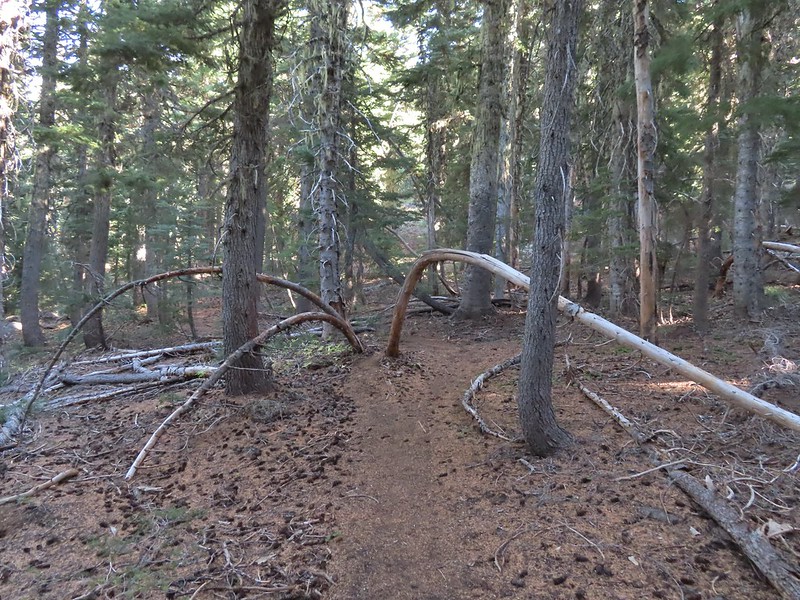
IMG_3570Sometimes it’s the little things, like these bent trees that I really appreciate on a hike.

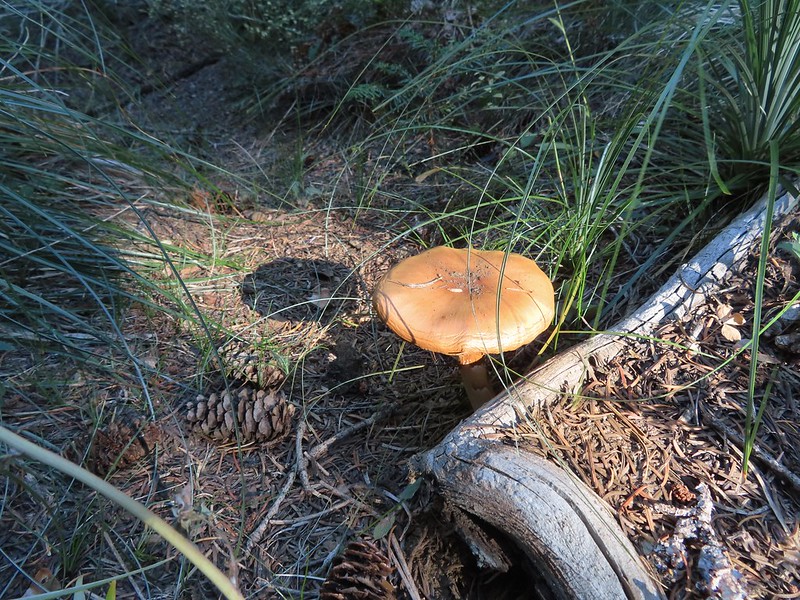
IMG_3572This mushroom casting a shadow was another one.

IMG_3574

When I got back to the PCT I turned right and hiked the three miles back to the trailhead.
IMG_3575

IMG_3584Looking back at Mount Washington from the PCT.

IMG_3589Three Fingered Jack

IMG_3595Hoodoo and Hayrick Buttes behind Big Lake.

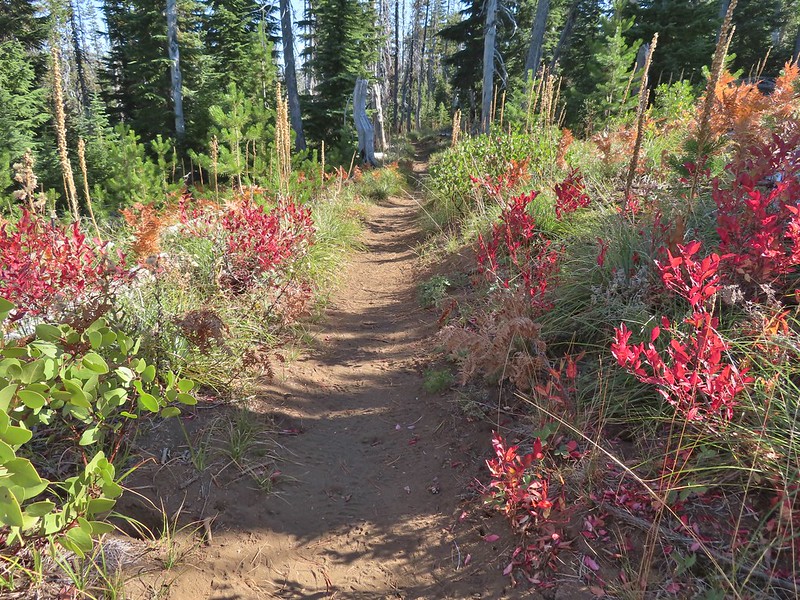
IMG_3601Huckleberry bushes and ferns adding some Fall colors.

IMG_3607The best Fall colors were near the trailhead.

IMG_3608

IMG_3611The trailhead from the wilderness boundary sign.

This hike came to 10.7 miles with a little over 2700′ of elevation gain. In total I saw 7 hunters, 4 climbers, and two fellow hikers, not bad for a sunny Saturday. It might not be one for those uncomfortable with heights or climbing/descending loose volcanic rock (for those reasons it was a good choice since Heather is still sidelined) but if you don’t mind those things this would be a worthwhile outing.

When I got back to Salem around 2pm it was 90 degrees, in mid-October! The good news is that the high pressure system causing the warm, dry weather is supposed to break up this week with rain to follow. Hopefully it will be enough to put an end to the fires. Happy Trails!

Flickr: Mount Washington North Ridge

Categories
High Cascades Hiking Mt. Washington Area Oregon Trip report

Sand Mountain – 6/23/2019

For our second trip this year we had planned on heading to the North Fork Umatilla Wilderness and then to the John Day area for a couple of days but the week before our trip our 16 year old cat Buddy wasn’t doing well. After a couple of visits to the vets (and having nearly a pound of fluid removed from his lungs) he was placed on several medications. He’s doing much better now (he is currently on my lap helping me write this entry) but we didn’t want to leave him so soon so we decided to stay home and do a series of day hikes instead.
20170908_165356

Not only was this a fairly last minute change of plans but the forecast for the week was all over the place concerning chances of precipitation and the amount of clouds vs sun. We decided on a handful of potential hikes then checked the forecast for each one trying to come up with an optimal schedule. The process led us to choosing Sand Mountain for our second hike (Vista Ridge and Owl Point (post) being the first).

Sand Mountain is located near Santiam Pass in the Cascade Mountain and is a geologic study area. The U.S. Forest Service and the Sand Mountain Society seasonally staff the Sand Mountain Lookout in part to keep off highway vehicles from damaging the fragile area. Off trail travel off any kind is banned in the study area, but as we were shown by one of the Rangers in the lookout all the signs and barriers in the world can’t stop some morons from doing whatever it is they want to do as there were several tracks visible in the volcanic soil where OHVs or snow moblies had torn things up but I digress.

We chose to follow William L. Sullivan’s suggestion in his “100 Hikes in the Central Oregon Cascades” guidebook (hike #129 in the 4th edition) by parking at the intersection of FR 810 and Big Lake Road.
IMG_9950

To get here turn south off of Highway 20 toward the Hoodoo Ski Area and follow Big Lake Road for 3.1 miles. FR 810 is open to vehicles which allows one to park 2.9 miles closer to Sand Mountain, but why drive on a rough 15mph dirt road if you don’t have to? Additionally FR 810 follows the route of the Santiam Wagon Road which connected the Willamette Valley to Central Oregon and was used from 1865 to 1939. The 400 mile long route is now listed on the National Register of Historic Places.
IMG_9962

IMG_9969

It was a pleasant walk with a few scattered flowers along the way.
IMG_9971Lupine

IMG_9968Beargrass plumes amid the trees

IMG_9979Pussypaws

At the two and a half mile mark we came to a somewhat confusing junction.
IMG_9981

There were snow mobile signs here, one of which had a pointer for Sand Mountain.
IMG_9982

We turned left here following the pointer.
IMG_9983

After about a third of a mile we realized that we were on the wrong side of Sand Mountain so we pulled up the map and compared it with GPS to confirm our suspicions of being on the wrong track. We were indeed so we turned around, but not before getting a decent view of the Sand Mountain Lookout which appeared to be in a bit of a cloud.
IMG_9985

IMG_9986

We turned left after getting back to the junction and continued on the Santiam Wagon Road another .4 miles to a sign for the Sand Mountain Special Interest Area. This would be the starting point for the shorter hike option.
IMG_9989

Here we turned left again passing a gate and several notices regarding the prohibited activities in the area.
IMG_9991

IMG_9992

The road bed passed by a dark bed of ash as it began climbing up Sand Mountain.
IMG_0001

IMG_0008

We were seeing a bit of blue sky overhead as we climbed around and up the west side of the cinder cone but the only cloud free mountain we could make out was Iron Mountain (post).
IMG_0010

IMG_0011Iron Mountain

After a mile and a half we arrived at the old trailhead, now a large parking area for the Forest Service and volunteers who staff the lookout.
IMG_0013

IMG_0015

We headed up the trail which again had several notices stating foot traffic only and reminders to stay on the marked trail.
IMG_0016

IMG_0024

IMG_0030

IMG_0039

From this trail we could see Hoodoo, Hayrick Butte, and Black Butte (post)along with the blue waters of Big Lake.
IMG_0029From left to right – Hoodoo, flat topped Hayrick Butte, and Black Butte (behind Cache Mountain).

There was just a bit of snow left over on the trail and a few western pasque flowers were starting to bloom and a western toad was out and about.
IMG_0032

IMG_0035

IMG_0196

IMG_0040

We arrived at the base of the lookout tower after climbing for about a third of a mile.
IMG_0044

A Forest Service Ranger came out to greet us and give us an informative lesson on Sand Mountain and the surrounding geologic area. Sand Mountain is the largest in a series of 23 cinder cones formed along a N-S fissure which also includes 42 distinctive vents and over three quarters of a cubic mile of lava. She informed us that the snow melt from Sand Mountain seeps through the cinder and ash into a large aquifer where after approximately 2 years it makes its way into Clear Lake via the Great Springs and then down the McKenzie River. (post)

We were also informed that Sand Mountain is home to pygmy short-horned lizards but the ranger wasn’t sure that we would see any given the cloudy conditions and chilly breeze. She let us know that we could follow a path down to a viewpoint on the rim of the northern crater and that we were also allowed to hike around the rim if we wanted but she did mention that the climb up the northern end was somewhat steep. We thanked her for the information and headed down to the viewpoint.
IMG_0046

20190623_085411Dwarf lupine at the viewpoint.

The clouds appeared to be breaking up to the west over the Old Cascades.
IMG_0051

The same didn’t appear to be true to the SE though where the snowy Cascade Mountains were still squarely behind the clouds.
IMG_0055

We opted to go around the rim in a counter-clockwise rotation. That way we would be hiking directly toward the Cascades as we looped around in hopes that they might yet clear up.
IMG_0057Starting the loop from the viewpoint.

There really wasn’t any visible tread to speak of on the side of the rim below the lookout and we briefly wondered if we had done something wrong. We stepped as lightly as possible and avoided the patches of vegetation along the way.
IMG_0058

IMG_0060Penstemon and snowbrush

We eventually made it to what appeared to be an old road bed where the path became a bit clearer.
IMG_0061

IMG_0062

The hike around the crater was very interesting. A surprising amount of wildflowers were blooming in the rocks and the views down into the crater were impressive.
IMG_0069

IMG_0081

20190623_090751

20190623_090846

IMG_0096

IMG_0105

IMG_0103

As we rounded the crater there was a nice view across to the lookout.
IMG_0094

About this time the Old Cascades had finally shaken off their cloud cover allowing us to identify some additional features.
IMG_0089The Three Pyramids with Scar Mountain (post) to the far right.

IMG_0090Crescent Mountain (post)

IMG_0091Echo Mountain and North Peak

As we continued toward the Cascades things began looking up that way as well.
IMG_0104

We paused when we were directly across the crater from the lookout to watch the Three Sisters become nearly cloud free.
IMG_0126

IMG_0120Belknap Crater (post), the Three Sisters, and the Husband.

IMG_0124

I pushed on heading steeply uphill now hoping to get a view of Mt. Washington as well. As I was climbing I thought I saw another toad, but it turned out to be on of the pygmy short-horned lizards the ranger had told us about.
IMG_0140

IMG_0143Mt. Washington joining the show.

Another short but steep section of climbing brought me up to an even better view which now also included Big Lake and to a second lizard.
IMG_0153

IMG_0151

IMG_0166

IMG_0168

I waited with the lizard for Heather who had stopped at the first lizard.
IMG_0152Can you see Heather’s hat?

We hung out with our new lizard friend while we watched the mountains uncover further.
IMG_0176

IMG_0171The Husband

IMG_0178Mt. Washington

IMG_0182Scott Mountain (post) and a snowy Maiden Peak (post) in the distance.

The only one that wasn’t playing nice was Three Fingered Jack to the NE.
IMG_0181

Near the viewpoint area below the lookout we spotted our third lizard.
IMG_0186

Interestingly they all seemed to have slightly different coloration but each blended very well with their surroundings.

From the viewpoint we could now also see part of Mt. Jefferson, but like Three Fingered Jack it was still partly obscured by clouds.
IMG_0189

IMG_0190Maxwell Butte (post) in front of Mt. Jefferson.

We headed back down Sand Mountain hoping that as we did so the other peaks might come out.
IMG_0197Looking toward Mt. Jefferson and Three Fingered Jack at a quarter to ten.

IMG_0215Looking toward Mt. Jefferson and Three Fingered Jack at a quarter after ten.

IMG_0224Looking toward Mt. Jefferson and Three Fingered Jack at a 10:23am.

IMG_0227

As we wound our way down we ended up heading directly toward Mt. Washington and the Three Sisters. Each of the Three Sisters seemed to be working on small lenticular clouds.
IMG_0230

IMG_0234

We returned the Santiam Wagon Road and headed back. On the return trip we spotted a few butterflies, a golden-mantled ground squirrel and some orange agoseris which we had somehow missed on our way in.
IMG_0240

IMG_0249

IMG_0251

IMG_0244

I also briefly detoured to check out a beargrass patch along some of the official OHV trails.
IMG_0258

IMG_0259

With our .6 mile detour up the snowmobile track we wound up with an 11.3 mile hike, another 5.8 of which could have been removed by driving up FR 810.

We took the long way back to Salem opting to follow Highway 20 over Tombstone Pass to stop at the Rooster Rock Trailhead.
IMG_0270

This was less of a hike and more of a quest for a picture of a Menagerie Wilderness sign. We had hiked to Rooster Rock in 2016 (post) from a different trailhead but there had been no wilderness sign on that route. The shorter but steeper Rooster Rock Trail enters the Menagerie Wilderness less than a quarter mile from the trailhead and before the trail starts its climb so I hopped out of the car and hustled up the trail to see if there was a sign along this path.
IMG_0273

There was part of a sign at least at the wilderness boundary which was better than nothing.
IMG_0275

I did do a quick search in the immediate vicinity hoping to locate the other half but was unable to. Satisfied with the outcome I returned to Heather and the car and we headed home to Buddy (and Hazel our other kitty). Happy Trails!

Flickr: Sand Mountainm

Categories
High Cascades Hiking Mt. Washington Area Oregon Trip report

Mount Washington Meadows

One week after returning from our Northern California trip we found ourselves headed to Bend to drop off some furniture to our Son who had recently moved.  It wasn’t going to be a long visit due to his having to work so after a quick tour of his new apartment we were back on our way home.

Our plan was to stop for a hike on the way home along the Pacific Crest Trail near Santiam Pass south to Mount Washington Meadows. We had left Salem at 5am so it would still be fairly early when we hiked. Just after 8:30 we pulled into the PCT trailhead near Big Lake.

IMG_6597

We headed south on the PCT which quickly entered the Mt. Washington Wilderness amid trees burned in the 2011 Shadow Lake Fire.

IMG_6601

IMG_6603

The first two or so miles passed through the burn where despite most of the trees being dead, there was plenty of green and other colors present.

2017-08-05 13.36.29

IMG_6801

2017-08-05 13.37.22

2017-08-05 08.56.33

IMG_6599

IMG_6605

IMG_6610

IMG_6611

2017-08-05 08.55.45

IMG_6628

The lack of living trees did allow for some views of both Mt. Washington ahead and Three Fingered Jack to the north beyond Big Lake, the Hoodoo Ski Area and the flat topped Hayrick Butte.

IMG_6644

IMG_6638

IMG_6639

We could also see two small buttes just to the SW of Big Lake which we had hiked around in 2012 when we visited the Patjens Lakes.

That hike was also done during the first week of August, but less than a year removed from the Shadow Lake Fire. It was interesting to see how the forest was recovering with the passing of several more years.

Patjens Lake TrailPatjens Lake Trail – August 2012

IMG_6791Pacific Crest Trail – August 2017

A wider variety of plants including various berries were present now.

We left the burn area where we were able to see what the forest will look like again eventually.

IMG_6650

IMG_6675

We passed several small meadows and lots of wildflowers as we went.

IMG_6661

IMG_6664

IMG_6653

IMG_6657

IMG_6666

IMG_6670

IMG_6683

IMG_6687

We had been gradually climbing and when a break in the trees allowed us a view to the north where we spotted Mt. Jefferson over the shoulder of Three Fingered Jack.

IMG_6672

IMG_6674

It was a bittersweet view as it reminded us that the Whitewater Fire was burning on the west side of Mt. Jefferson and had already burned over portions of several trails leading to Jefferson Park.

There was no real visible smoke but we knew that it was there and those trails would look a lot like what we’d passed through earlier in the Shadow Fire area.

When the PCT began to curve around a ridge to the left the Spire of Mt. Washington came into view.

IMG_6689

An open hillside then opened up views to the south were several other familiar peaks were visible.

2017-08-05 10.47.55_stitch

These included the North and Middle Sister, Belknap Crater, the Husband, Diamond Peak, and Scott Mountain.

IMG_6783North & Middle Sister with Belknap Crater

IMG_6697Scott Mountain

As we continued we passed through some increasingly impressive meadows until reaching a large lupine filled meadow below Mt. Washington.

IMG_6703

IMG_6710

IMG_6718

IMG_6719

IMG_6720

Mt. Washington rose above the meadow where we were able to get a great look at the eroded volcano.

IMG_6733

IMG_6724

IMG_6735

IMG_6744

Lupine wasn’t the only thing in abundance in the meadow. There was also a large number of tortoiseshell butterflies who seemed to be overly attracted to me.

IMG_6730

2017-08-05 11.01.51

2017-08-05 11.03.23

2017-08-05 11.03.30

We continued through the meadow where we found a nice display of cat’s ear lilies still in bloom amid the lupine.

IMG_6745

IMG_6751

At this point we’d gone a little over 5.5 miles, but the level grade of the PCT and the great scenery so far enticed us to continue a little further to see what else the area had to offer. We decided to follow the PCT until it began to lose elevation as it crossed a valley between Mt. Washington and Belknap Crater. We soon found ourselves in another area affected by fire.

IMG_6755

IMG_6779

We ended our hike as the PCT bent around a ridge end where it would begin the 400′ elevation loss before climbing up to the shoulder of Belknap Crater which was visible across the valley.

IMG_6762

From this vantage point we could also make out Little Belknap Crater.

IMG_6774

After a short break we headed back through the meadows and returned to our car.

IMG_6781

The 12.4 mile round trip had proved to be a lot more entertaining than we’d expected. We hadn’t really known what to expect having selected the hike from the back of our guidebook in the additional hikes section, but it had been a thoroughly enjoyable outing. Happy Trails!

Flickr: Mount Washington Meadows

Categories
High Cascades Hiking Mt. Washington Area Oregon Trip report

Blue Lake

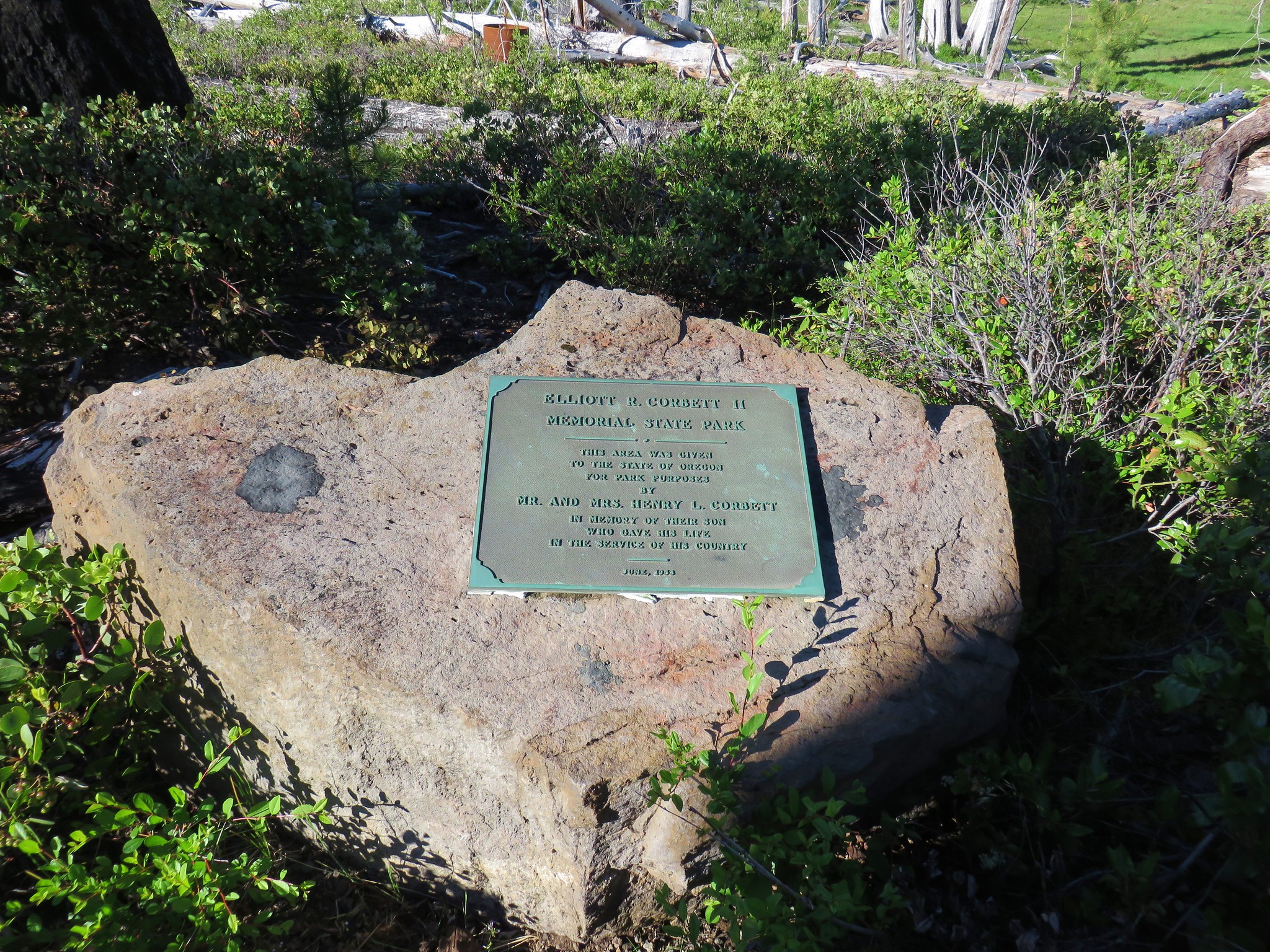
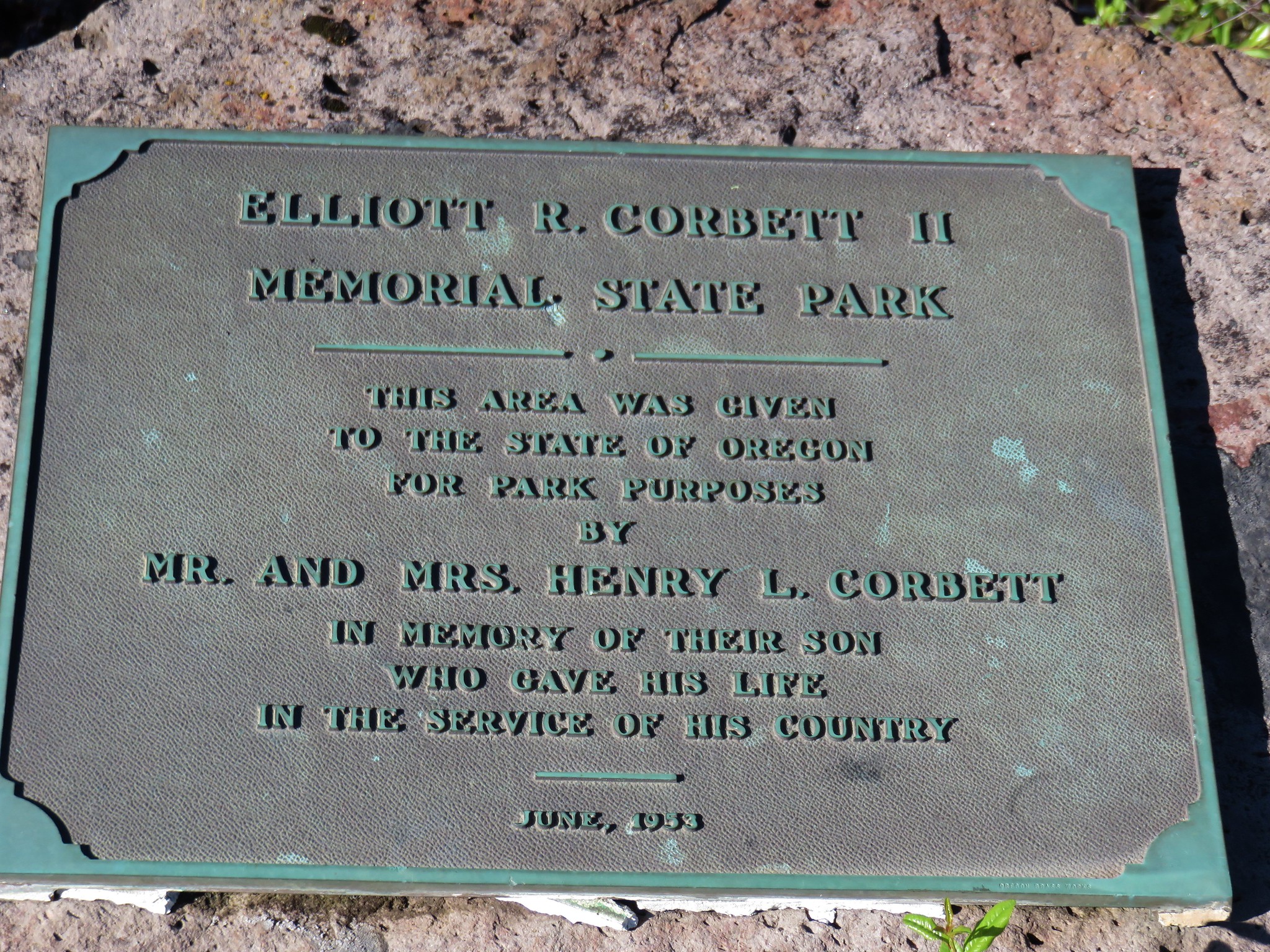
On Father’s Day we were joined by our Son, Dominique, on a jaunt to Blue Lake before heading home. Blue Lake is located south of Highway 20, just east of Santiam Pass. Much of the lake is privately owned but the Elliott Corbett Memorial State Park occupies the western end of the lake.

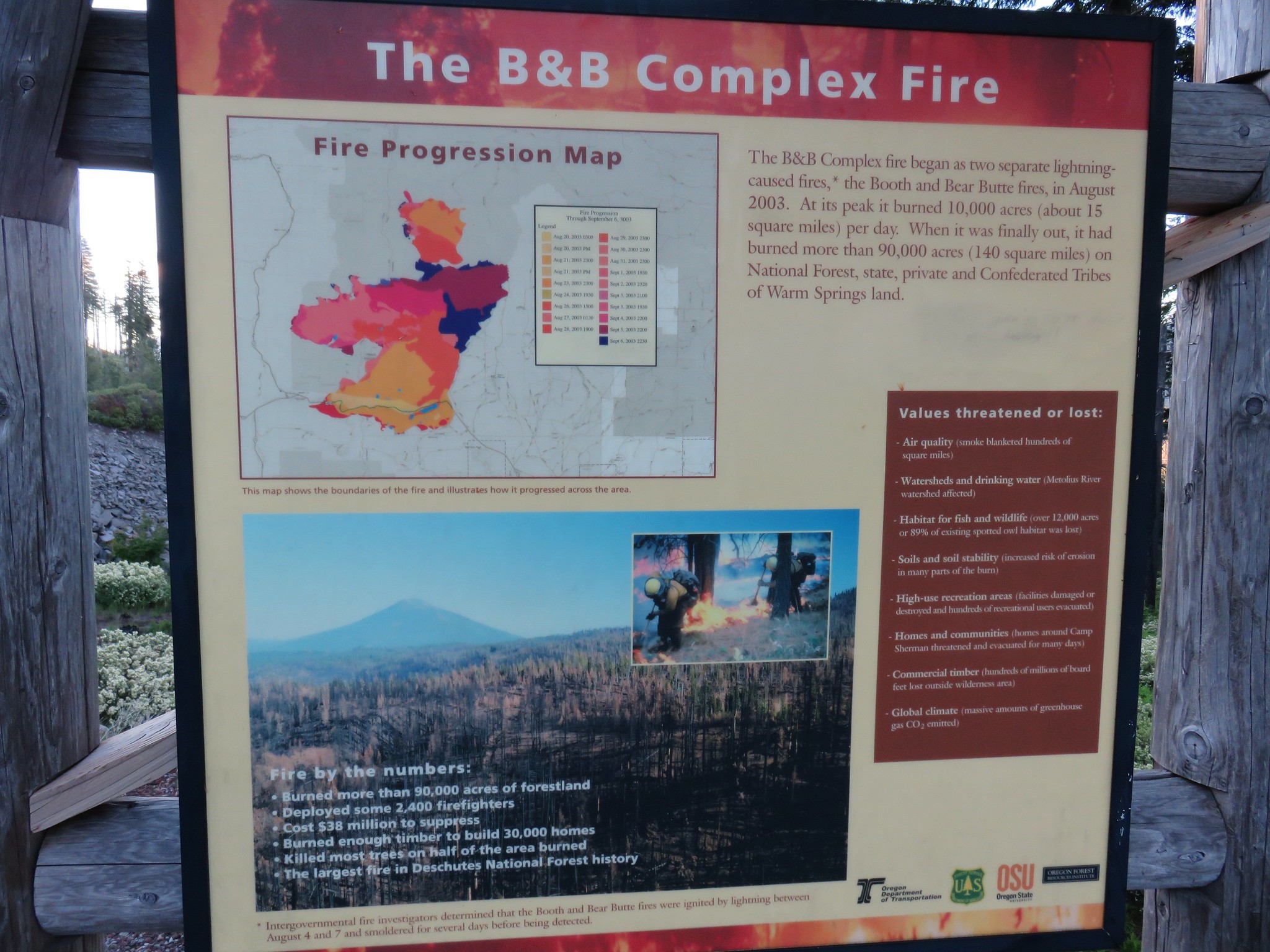
This area burned in the 2003 B & B Complex Fire and we began our hike at a fire interpretive kiosk in a large paved sno-park lot.
IMG_3194

IMG_3195

Starting here meant a road walk of 2.5 miles before reaching an actual trail but the description in Matt Reeder’s “101 Hikes in the Majestic Mount Jefferson Reagion” (we highly recommend this guidebook) called the final stretch of road “narrow, brushy, steep, rocky and subject to occasional washouts that turn the road into a series of deep gullies”. Given that the hike would still only be between 7 and 8 miles (and an extra 700′ of elevation gain) by starting here we felt it was worth avoiding any more ugly roads for the weekend.

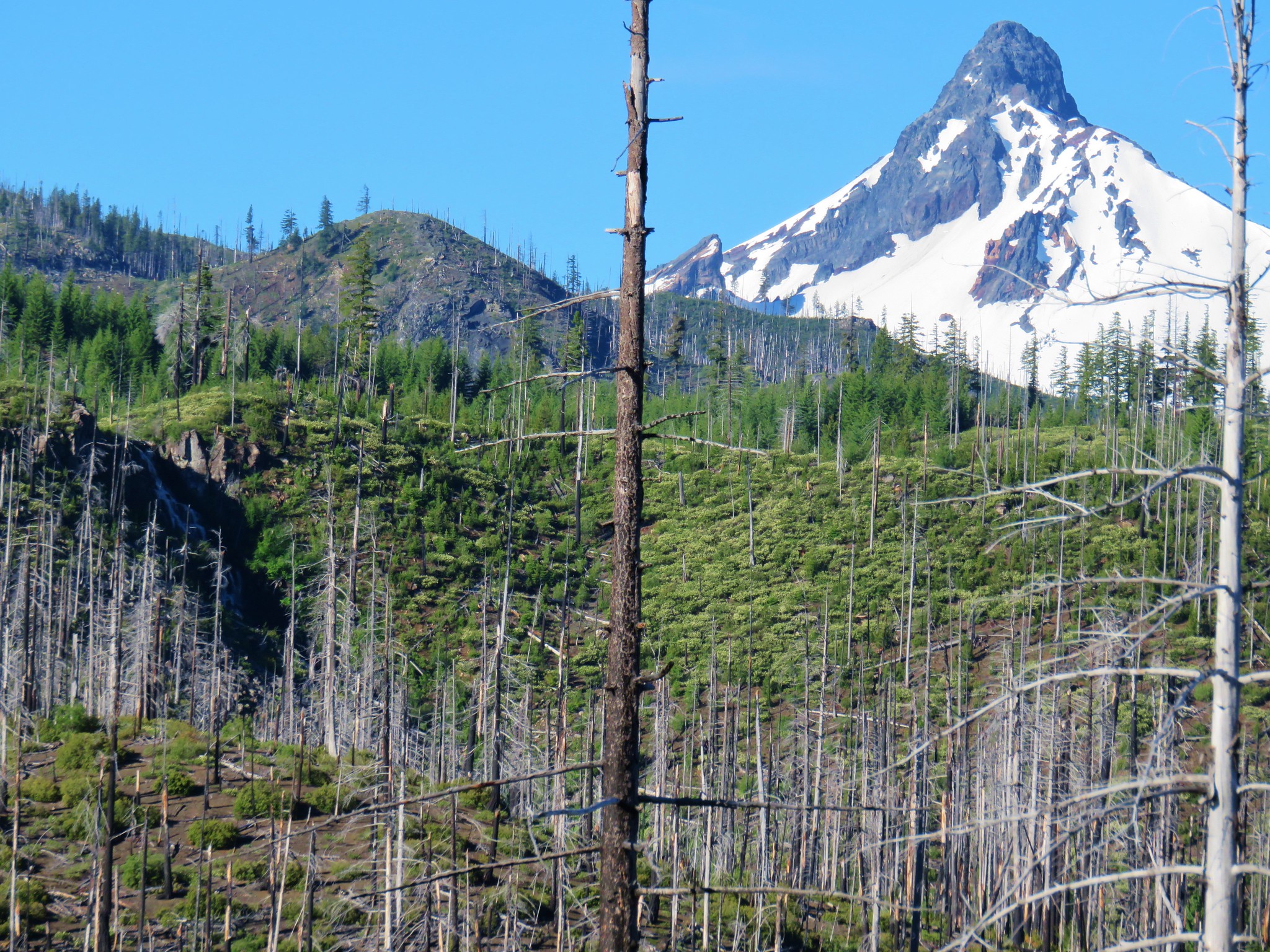
We walked through the parking area, which had a nice view of Mt. Washington, to FR 2076.
IMG_3198

We followed this road downhill. It was a beautiful morning and the view of Mt. Washington was spectacular.
IMG_3208

IMG_3209

The summits of the North and Middle Sister also made a brief appearance.
IMG_3206

After .7 miles we came to a junction with Road 200 which had a sign warning it wasn’t suitable for trailers. We got ourselves confused here due to not re-reading Matt’s description but instead looking at the topographic image in the entry that showed the lake and trail but not the entire road walk. We should have taken Road 200 here but where the map picked up in the book the track was no longer on Road 200 so we mistakenly thought we needed to stay on FR 2076.

FR 2076 was in fairly good shape and was certainly not steep. It was traversing a hillside south toward Mt. Washington.
IMG_3220

After almost a half mile we knew something was amiss. Looking at the GPS showed we were indeed heading for a lake but it was Island Lake dead ahead not Blue Lake. We pulled the book out and read the directions and realized our mistake. We backtracked to Road 200 and once again headed downhill.

Road 200 was not great, and maybe the previous days short but horrific section of Forest Road 2630 in the Ochocos unduly influenced us, but most high clearance vehicles would probably be fine. Although, meeting a vehicle going the other way would be tricky as there weren’t many wide spots.

Walking the road had its advantages though. In addition to the mountain views were wildflowers including a surprising group of rhododendron.
IMG_3216

IMG_3217

IMG_3219

IMG_3230

The rhododendron were upstaged by a nice buck with velvet antlers which Dominique spotted.
IMG_3231

We took our second wrong turn 1.5 miles down Road 200 when we forked right on Road 200 when we should have stayed straight at what appeared to be a pile of rocks. We’d only gone a tenth of a mile when we caught this one and headed back to the rocks to find a road continuing on the other side. Another .4 miles brought us to a parking turnaround. Here we ignored an obvious trail straight up a hill and took a faint path to the left.
IMG_3238

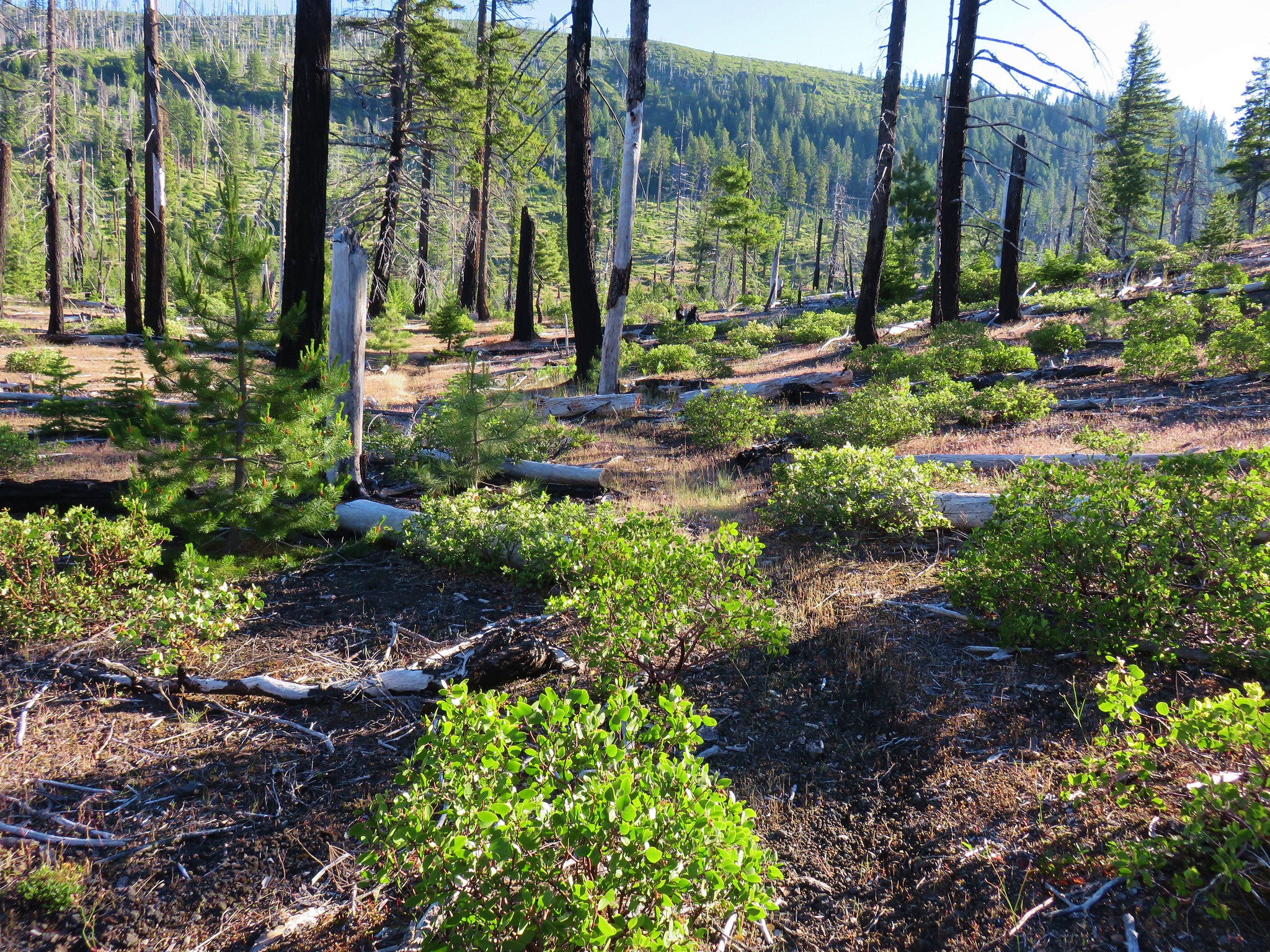
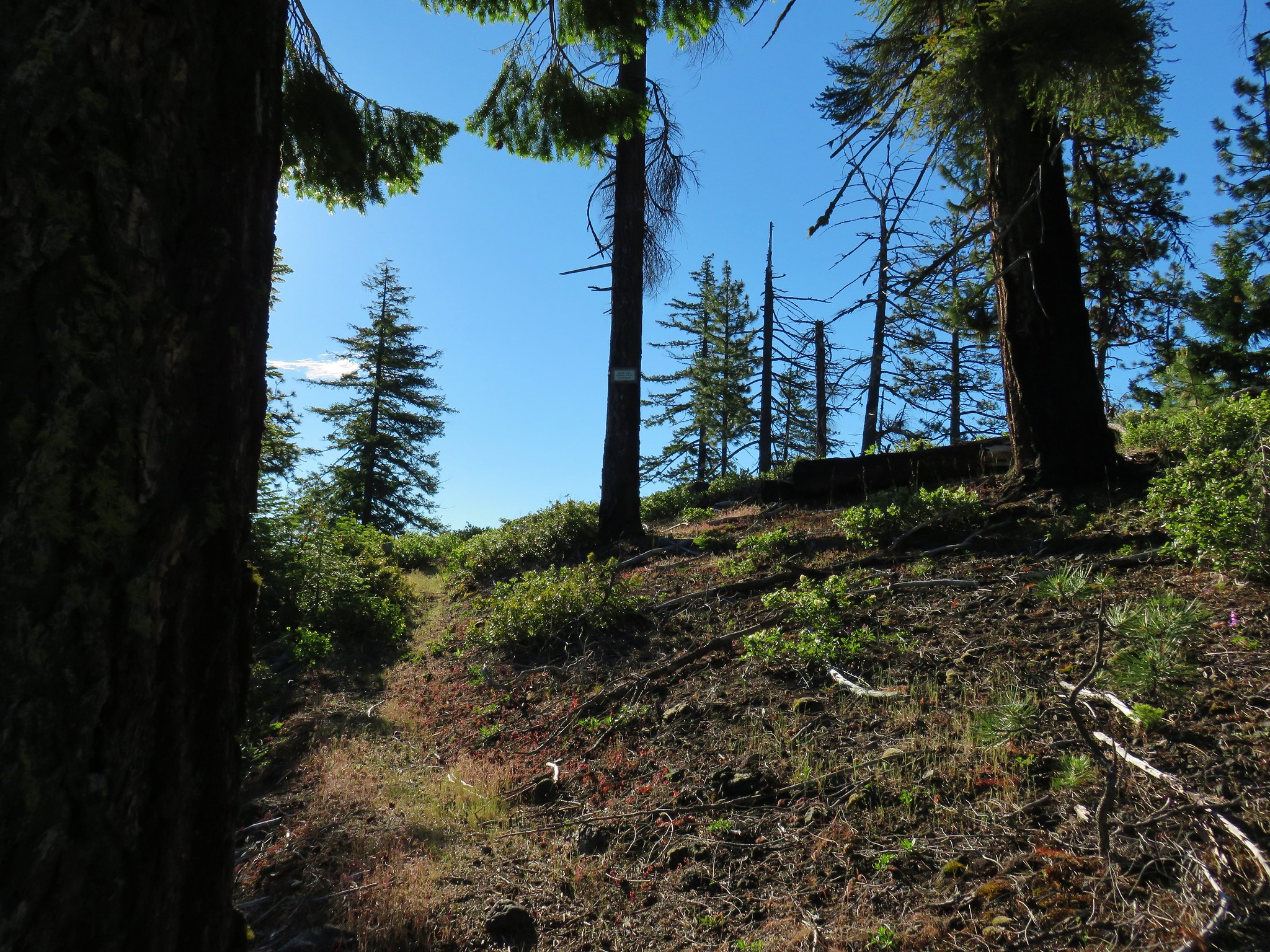
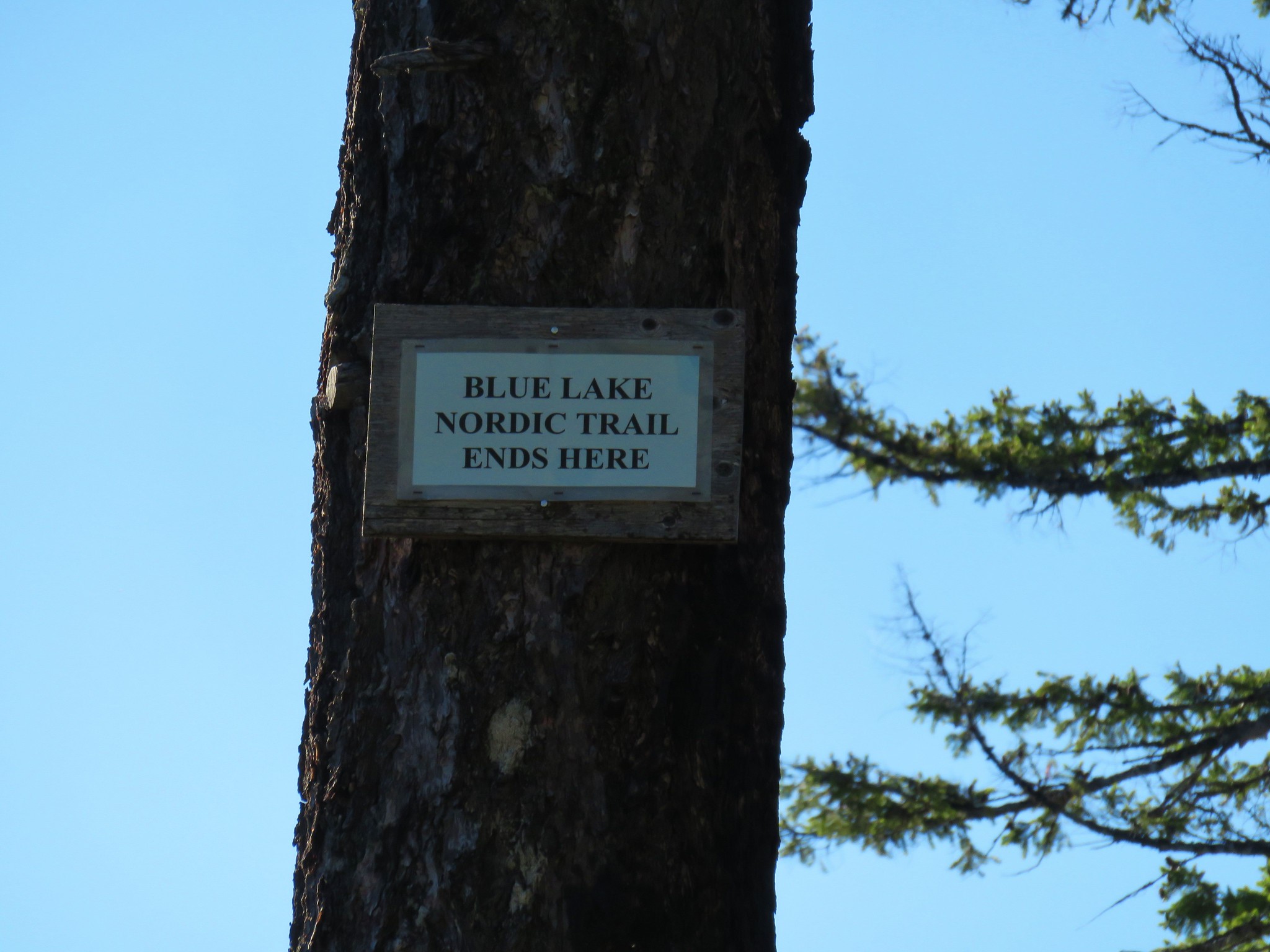
This path began to climb up a ridge to a sign announcing the end of the Blue Lake Nordic Trail.
IMG_3239

IMG_3240

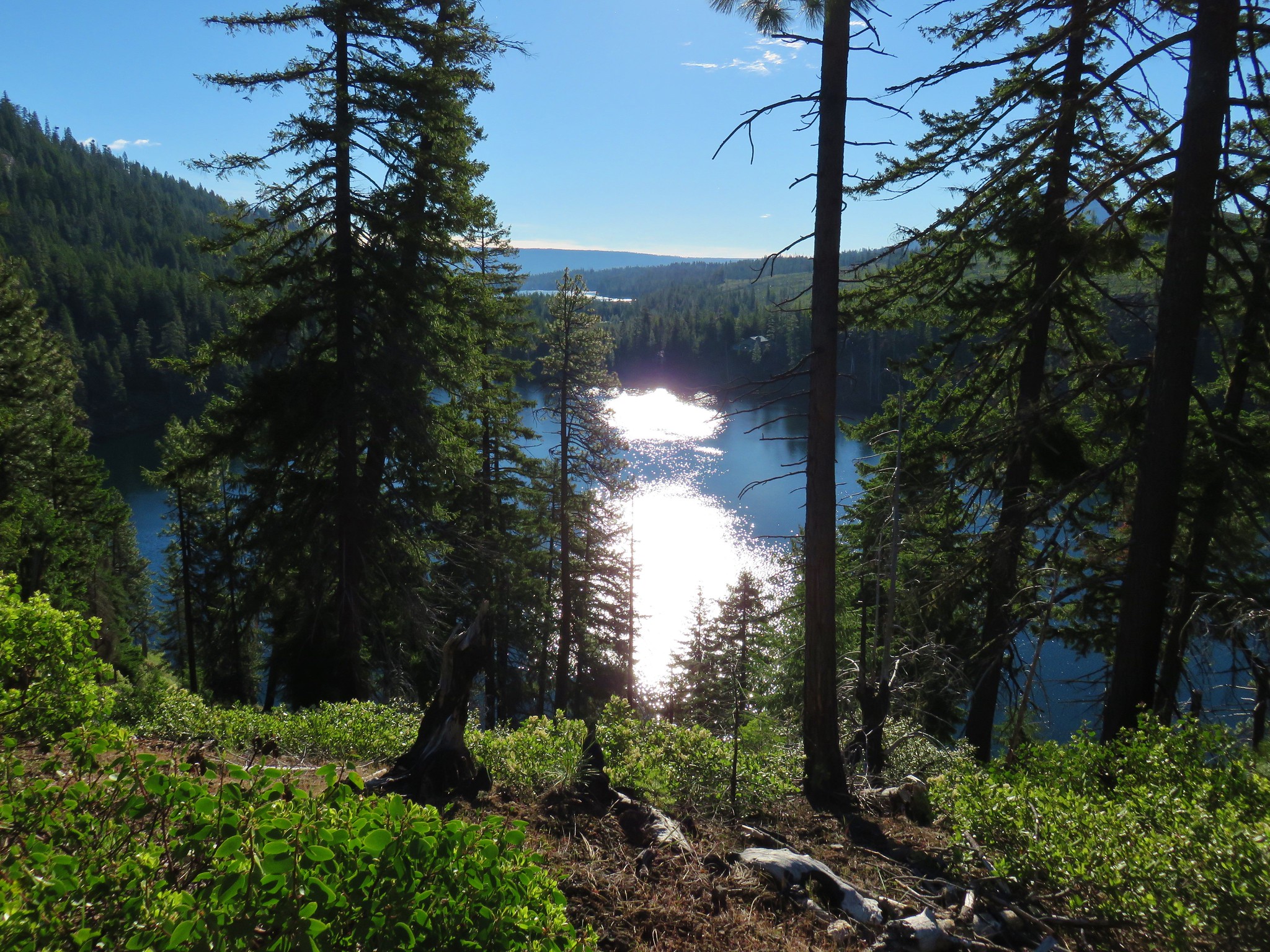
Once we gained the ridge we had a view of Blue Lake below and Suttle Lake a little further to the east.
IMG_3243

Blue Lake fills a collapsed cladera to a depth over 300 feet. The trail followed the ridge along the western end of the lake. We followed it around to a knoll described in the guidebook as the start of private land.
IMG_3258

IMG_3265

IMG_3269

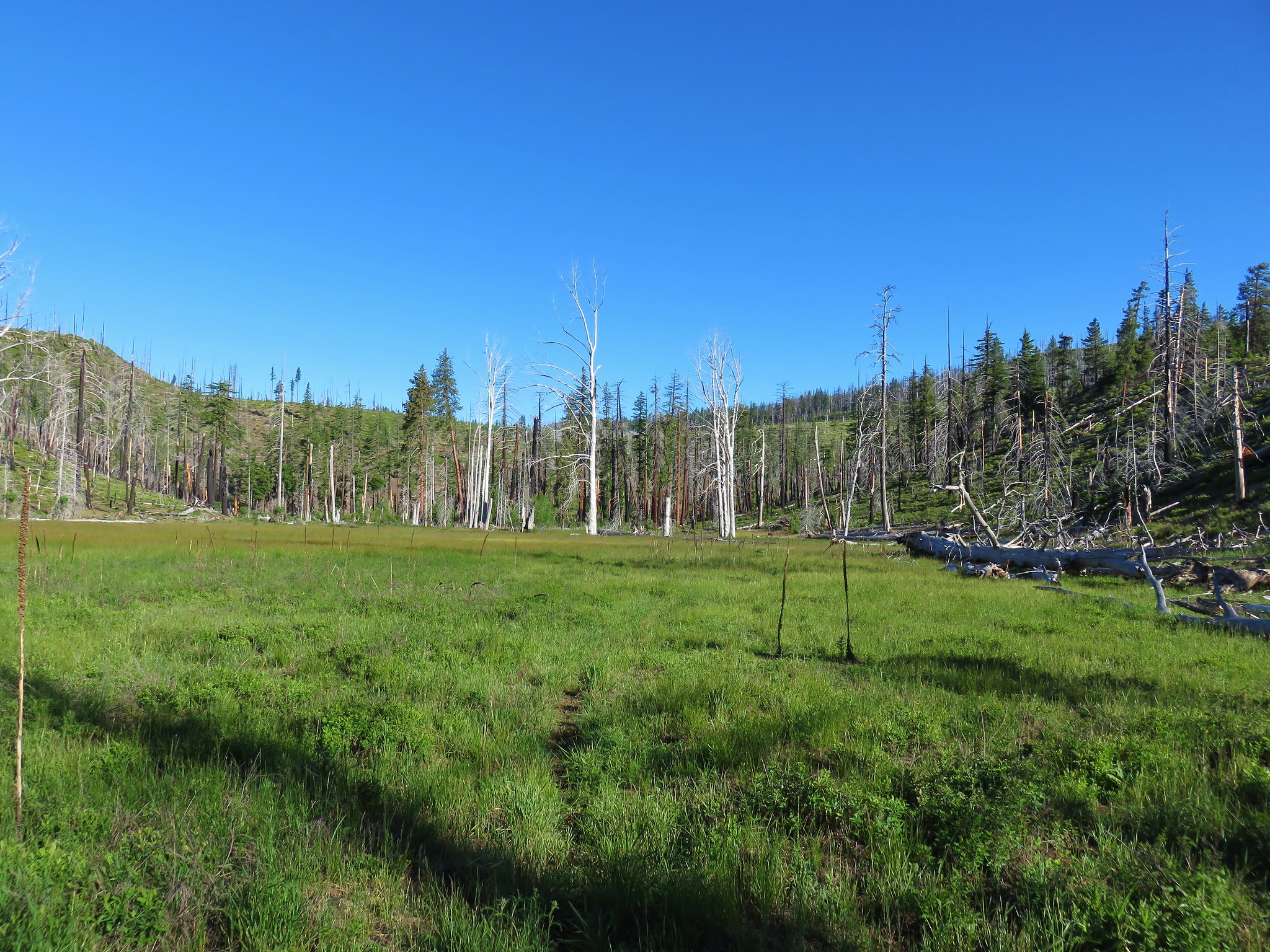
Opposite the lake, on the other side of the ridge, lay a meadow with Mt. Washington looming behind.
IMG_3260

In addition, the seasonal Cache Falls could be seen flowing down the hillside below hidden Cache Lake.
IMG_3255

IMG_3257

After visiting the knoll we backtracked a tenth of a mile along the ridge then headed downhill on a faint path heading toward what appeared to be an old road bed. There was a bit of maneuvering around blowdown to get to the road bed where we discovered a clearer path coming down from a point further along the ridge. Here was also the memorial plaque for the Elliott R. Corbett II Memorial State Park.
IMG_3270

IMG_3271

The trail led into and through the meadow before arriving back at the turnaround at the end of the road walk.
IMG_3272

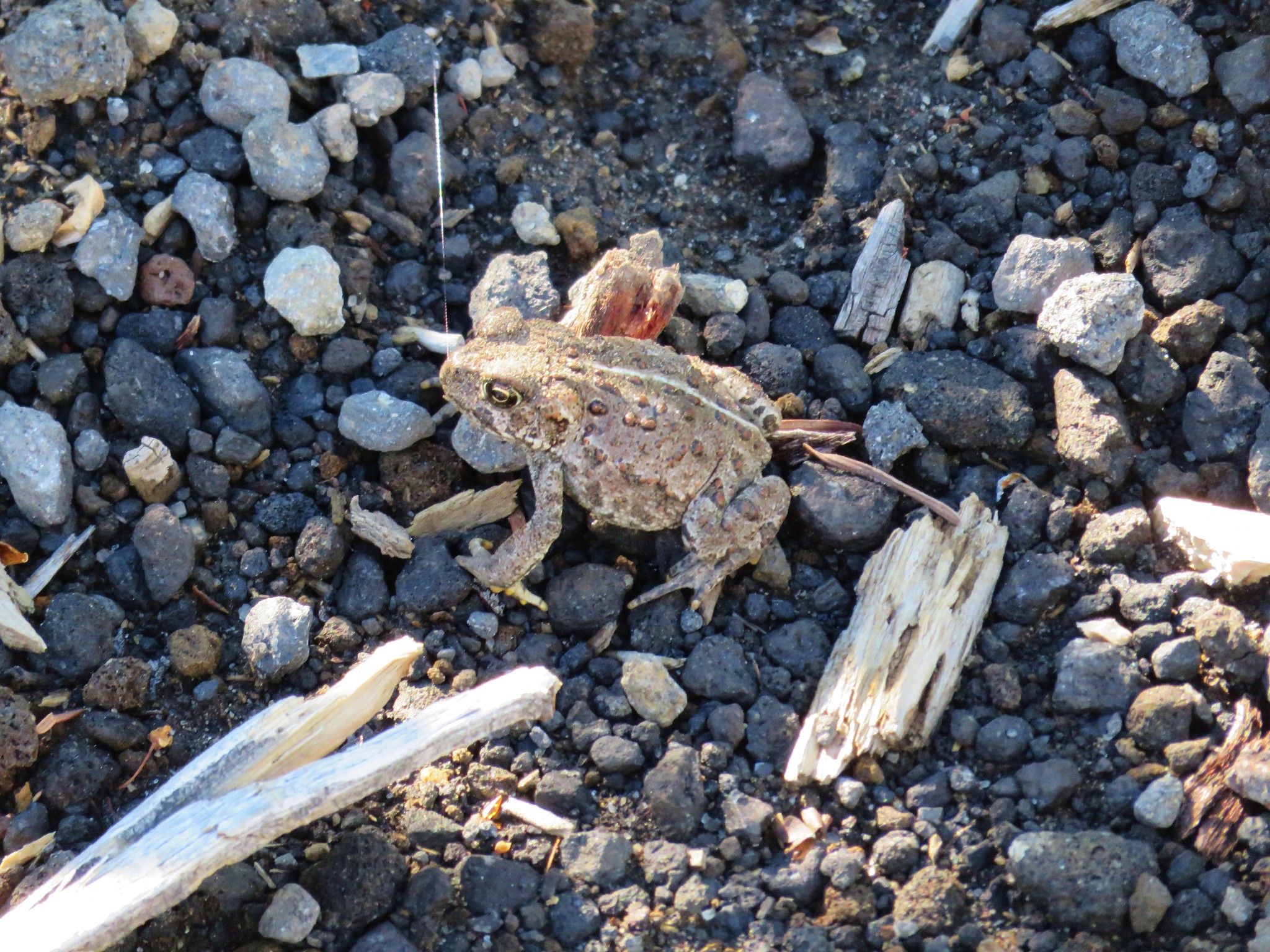
On the way back up we spotted a toad and a frog along the roads.
IMG_3280

IMG_3289

As we neared the sno-park Three Fingered Jack came into view through the trees.
IMG_3295

IMG_3296

Remember my comment earlier about avoiding any more ugly roads for the weekend? Well Google got us again. We had originally planned on visiting the nearby Skylight Cave after the hike. In June between the hours of 9 and 11 am sunbeams come through an opening in the roof a short lava tube. The driving directions in our “Bend, Overall” guidebook were from Highway 242 but a look at Google Maps had shown what appeared to be a pretty straight forward 5 mile(ish) drive from Highway 20. We had written directions for that route but about 4 miles into our attempt we came to a 4-way junction with no road signs. Our written directions indicated we should go straight but we were on a gravel road crossing a gravel road and the road ahead was a narrow dirt track. We tried using the Garmin to figure out where we were, but the Garmin showed far more roads than Google had and it seemed to agree that the dirt road was the one we were looking for. After some indecision Heather decided to give it a go. It was quickly obvious that that was a bad choice as the road was narrow, overgrown, and rocky in places. When we spotted a wide enough spot to turn around we did so retreating once again to the 4-way junction. It was after 10am and now we had no confidence that we were even where we had meant to be. So we threw up the white flag and decided to try again some other time when we can follow the guidebook directions.

When we got home we looked again on Google and discovered that the dirt track had been the correct route and we’d only been about 3/4 of a mile from the cave. Happy Trails!

Flickr: Blue Lake

Categories
High Cascades Hiking Mt. Washington Area Oregon Throwback Thursday Trip report

Throwback Thursday – Patjens Lakes

On 8/2/2012, a day after our mosquito filled visit to Miller & Maidu Lakes, we were heading home. I had injured my right knee running down the trail to Miller Lake in an attempt to thwart the mosquitoes and it was feeling a little off, but I wanted to give a hike a try on the way over Santiam Pass.

We decided to try Patjens Lakes due to it being relatively short, right around 6 miles, with only 400′ of cumulative elevation gain. The trailhead is located on the NW side of Big Lake off of Forest Road 2690 which is also the entrance road to the Hoodoo Ski Area.
Patjens Lake Trailhead

We stayed right at a fork near the trailhead planning on doing a counter-clockwise loop. A 2011 wildfire had burnt much of the forest along the loop but signs of life were already returning.
Patjens Lake Trail

Goldenrod, penstemon and aster

Pearly everlasting

Patjens Lake Trail

Mt. Washington and Big Lake were visible along the first portion of the trail.
Mt. Washington

The trail looped around a small butte passing a series of meadows and view to the NW of the Sand Mountain Lookout.
Meadow along the Patjens Lake Trail

Lupine

Sand Mountain Lookout

Shortly after passing a horse trail joining on the right the we entered the Mt. Washington Wilderness and began the only real significant climb of the hike.
Wt. Washington Wilderness sign

The trail climbed to a saddle between the butte and a small hill. At the saddle the Three Sisters were visible to the south.
Forest along the Patjens Lake Trail
Small hill from the saddle.

Patjens Lake Trail

The Three Sisters

As the trail descended from the saddle it entered forest that had been spared by the fire.
Patjens Lake Trail

We passed through a series of meadows full of ferns and scarlet gilia.
Patjens Lake Trail

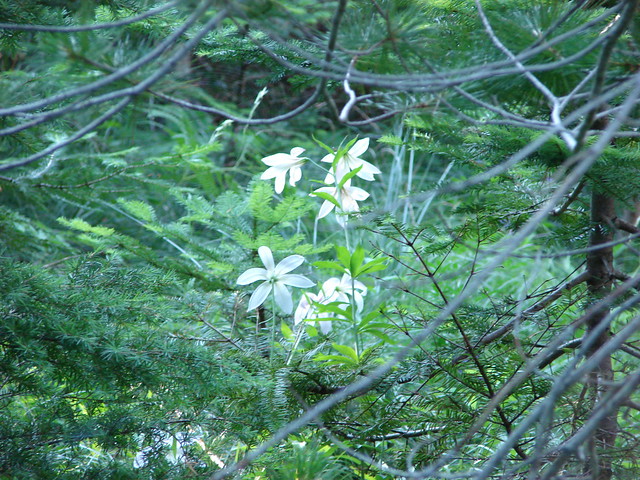
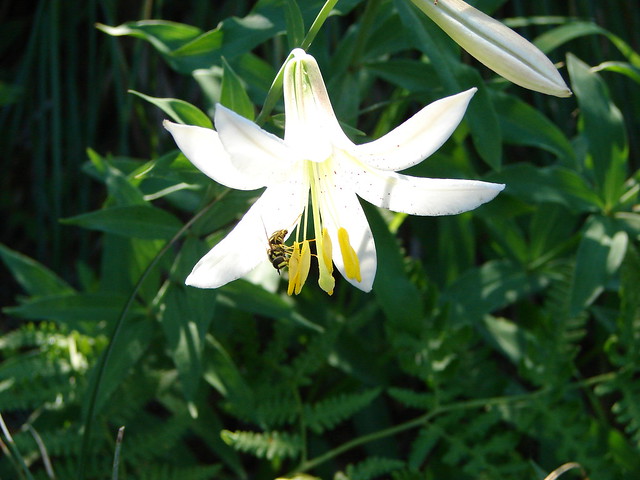
Tall cascade lilies rose above the ferns.
Cascade Lilies

Cascade lilies

Cascade Lily

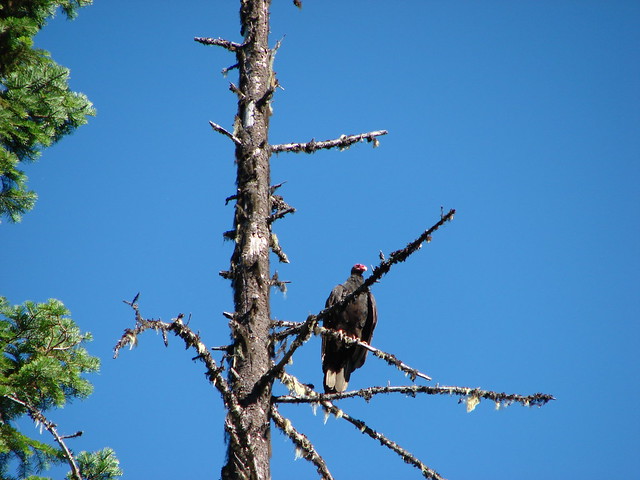
As we were passing through one of these meadows we encountered a foul reek. There was obviously some sort of rotting carcass out in the brush but we couldn’t see anything. We were a little concerned that it might have been a mountain lion kill or that a bear might be feeding on it so when we heard a ruckus off to our right we were on high alert. The noise turned out to be a pair of turkey vultures who had apparently located the dead animal.
Turkey Vulture

Turkey vulture

We left well enough alone and continued on our way paying extra attention for any large predators that might have been attracted by the smell. Around a mile from the saddle we came to a small body of water on the right side of the trail.
Patjens Lake #1

The first Patjens Lake was approximately .7 miles from the pond on our left.
A Patjens Lake

The trail then passed a large meadow reentering the burn area before reaching the second Patjens Lake.
Meadow along the Patjens Lake Trail

Patjens Lake #2

The third lake was just beyond the second and it looked like they were probably connected for a brief times during high water. We left the trail and began to loop around the third lake in a clockwise direction.
A Patjens Lake

A number of ducks could be seen in the reeds.
Ducks on a Patjens Lake

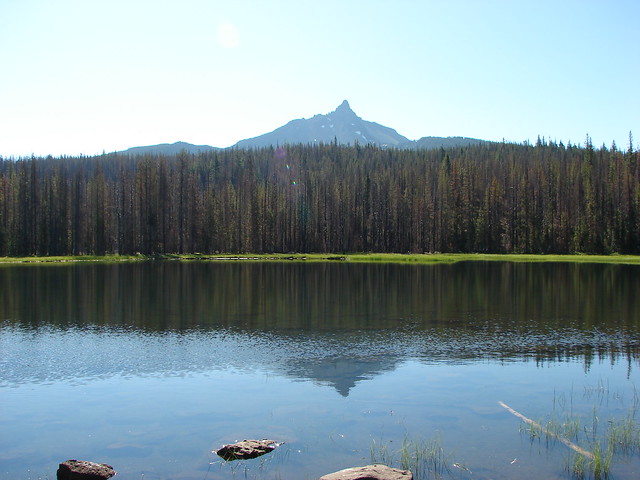
From the north end of the lake there was a nice view of Mt. Washington rising over the forest to the south.
Mt. Washington from a Patjens Lake

We took a break here watching the ducks and admiring the mountain then continued around the lake back to the trail. A mile and a half from the last lake we came to a junction near Big Lake where we turned left following the lake shore back toward the trailhead. Flat Hayrick Butte and round Hoodoo Butte rose above the blue waters of Big Lake.
Hoodoo and Hayrick Buttes from Big Lake

Hoodoo Butte
Hoodoo Ski Area

Looking back over our shoulders provided big views of Mt. Washington.
Mt. Washington and Big Lake

A mile from the junction at Big Lake we were back at the trailhead. Despite a little discomfort going downhill my knee had held up which was encouraging. The hike had been a good choice for it and it had been a really nice hike even with the burned forest. Happy Trails!

Flickr: Patjens Lakes

Categories
Bend/Redmond Central Oregon High Cascades Hiking Mt. Washington Area Oregon Throwback Thursday Trip report

Throwback Thursday – Alder Springs

**In 2025 the Alder Springs Fired burned over the Alder Springs Trail.**

This week we’re going to throwback to a hike that had a profound impact on how we hike. In 2011 the snow melt was unusually late and wound up impacting us on our vacation in Central Oregon during the first week of August. On 8/3/2011 we had planned on hiking the Benson Lake Loop. We took the McKenzie Highway (Hwy 242) from Sisters and headed for the trailhead.  It was a beautiful morning and we stopped at the Dee Wright Observatory to take in the spectacular views.

Dee Wright Observatory

Belknap Crater, Little Belknap Crater and Mt. Washington

Belknap Crater, Little Belknap Crater and Mt. Washington

Mt. Jefferson

Mt. Jefferson

Black Butte

Black Butte

Black Crater

Black Crater

North & Middle Sister

North and Middle Sister with the Little Brother

We continued on to the trailhead near Scott Lake and set off on the Benson Lake Trail.

Benson Lake Trailhead

In the mile and a half to Benson Lake we encountered a few snow patches and lots of mosquitoes.
Snow along the Benson Lake Trail

From Benson Lake we could see our next planned stop,Scott Mountain which appeared relatively snow free.

Benson Lake

The trail conditions deteriorated quickly beyond Benson Lake as the mosquitoes were thick and relentless and the trail was covered in snow.

Snowmelt pond near Benson Lake

Snow along the Benson Lake Trail

We were still quite inexperienced hikers with raw map skills, no GPS, and we hadn’t learned to look for blazes yet so we were relegated to following a lone set of footprints which worked until they disappeared. While we struggled to locate the trail Heather had a mosquito fly directly into her eye where it stuck. It remains the most disgusting hiking moment ever for us.

After extracting the kamikaze mosquito we surrendered and turned back while we knew we could still find the trail back.

We had only hiked around 4 miles by the time we were driving back toward Sisters and began looking for another hike that we might be able to do. We landed on the Alder Springs trail which would be snow free being in the high desert and at an elevation of only 2600′. Even better the trailhead was less than 20 miles from Sisters.

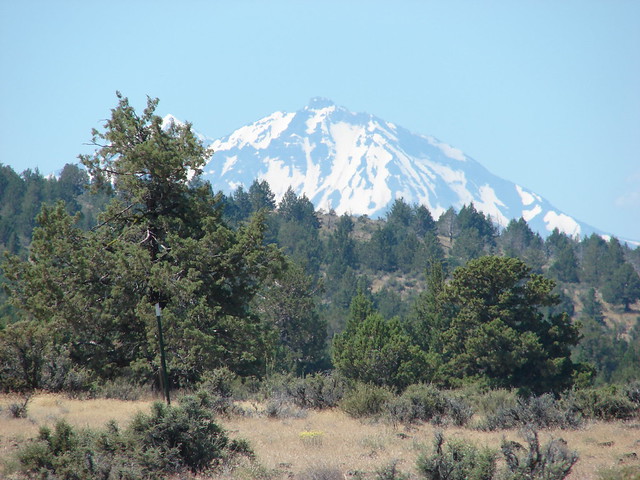
From the trailhead parking area Mt. Washington and the North Sister were visible. It was odd to think we’d just been forced by snow to turn back from a hike on the other side of those two mountains and now we were standing amid the sagebrush and juniper in the high desert. Not only was it a drastic change in scenery but it was also a lot warmer.

Alder Springs Trailhead

Mt. Washington

Middle and North Sister

The view here also included a look down the Wychus Creek Canyon which is where the trail would be leading us.

Wychus Creek Canyon

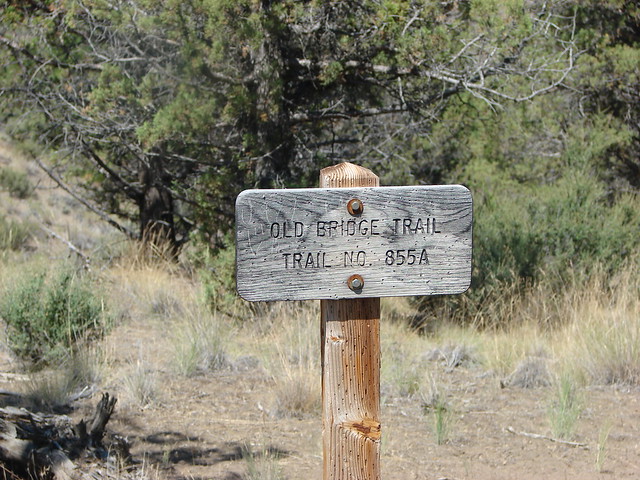
The Alder Springs Trail descended .2 miles to a fork where the Old Bridge Trail split to the left.

Old Bridge Trail sign

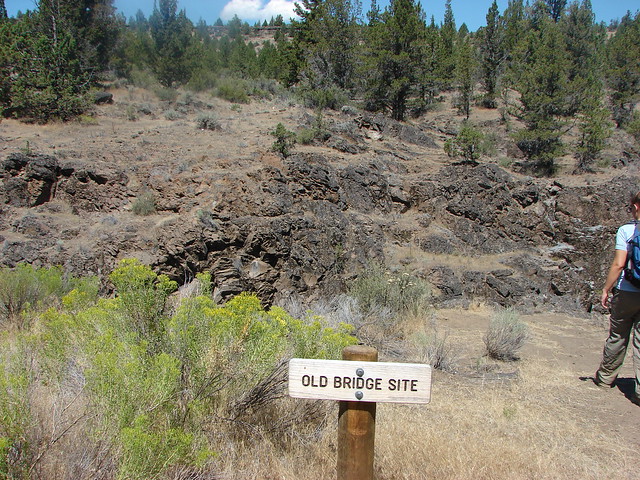
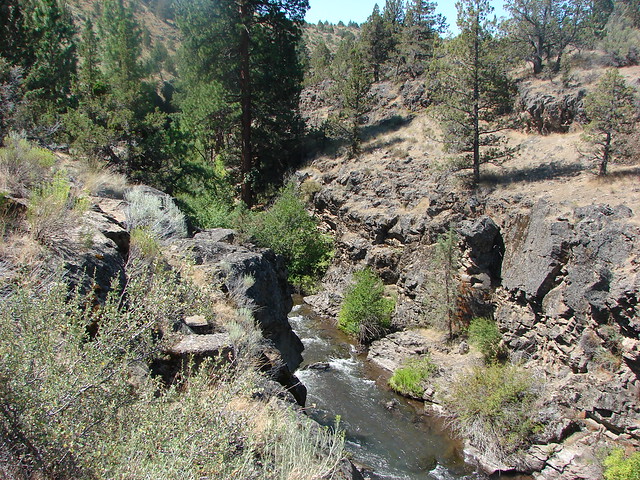
We took this .4 mile path down to the site of a former bridge and then down to the bank of Wychus Creek.

Site of a former bridge over Wychus Creek

Whychus Creek

Wychus Creek

We then returned to the Alder Springs Trail and followed it 1.2 miles to Alder Springs. This section of trail provided some nice views of the canyon before descending to the creek.

Wychus Creek Canyon

Wychus Creek

Whychus Creek Canyon

Rock formations along the Whychus Creek Canyon

A short narrow slot in the canyon wall was a neat little detour along the way.

Whychus Creek Canyon

Dry waterfall

The scenery became a little greener as the trail dropped to creek level and neared Alder Springs.

Alder Springs Trail

Alder Springs Trail

Interpretive sign at Alder Springs

We faced a choice here, turn back or ford the creek and continue a little over a mile and a half to the Deschutes River at its confluence with Wychus Creek. It was too nice a day and the scenery was too good to turn back so we forded the shin deep creek. Downstream the creek seemed to flow right into the canyon wall.

Whychus Creek

Whychus Creek

Springs bubbled up in several spots joining the waters of Wychus Creek along the far bank.

Alder Springs

Alder Springs

Beyond the springs the trail stuck fairly close to the creek as it met the canyon wall and turned north.

Whychus Creek

Soon we were once again traversing the hillside a bit above the creek due to the thick vegetation along the creeks banks.

Whychus Creek Canyon

Whychus Creek

At one point the trail split with the right hand fork dropping down near to the creek in a thistle filled meadow. We took this path thinking it would be fun to be in the thistle and closer to the creek but as we made our way into the meadow the a distinctive sound of a rattle rose up.

Thistle meadow along the Alder Springs Trail

We slowed up and realized that there were at least two maybe three alarms being raised from different sides. We proceeded slowly making plenty of noise ourselves keeping our trekking poles ahead to give any snakes plenty of time to leave the area. We never saw any but they made plenty of noise. On the way back we skipped the meadow and stayed on the path that passed higher up the hillside.

We continued on, now on high alert, to the confluence of the river and creek. On the far side of the water rose a spectacular striped rock fin.

Rock fin near the Wychus Creek and Deschutes River confluence

Rock fin

A sign on a ponderosa announced the end of the maintained trail.

End of the Alder Springs Trail

A rock ledge along the Deschutes River provided a perfect lunch spot across from the fin where we could watch the river as it headed further down the canyon.

Deschutes River

Deschutes River

Rock fin from the Deschutes River

Having arrived at this spot from the Alder Springs Trailhead gave this spot a real feeling of remoteness. The fact that we hadn’t seen any other hikers since the parking area and having to ford the creek added to the sensation of solitude. In actuality the homes of Crooked River Ranch were not far away on the other side of the river and the Scout Camp Trail loops around the fin that seems so remote.

The Alder Springs Hike was a little over 6 miles round trip with about 650′ of elevation gain.

The experience at Benson Lake was a key motivating factor in our decision to make getting a GPS unit before the 2012 hiking season a top priority. It also reminded us that we needed to improve our map and navigational skills which we began to focus more on. Happy Trails!

Flickr: Benson Lake & Alder Springs

Categories
High Cascades Hiking Mt. Washington Area Oregon Trip report

Scott Mountain Loop Day 2 – Mt. Washington Wilderness

We had set our alarms for 5:30am hoping to get a jump on the day and be ready to start hiking as soon as there was enough light. The forecast had called for increasing chances of rain as the day went on and we had watched an increase number of clouds fill the sky the night before including some low clouds descending to the tree tops around the Tenas Lakes. When we stuck our heads out of the tent we were pleasantly surprised to see a sky filled with stars overhead. We turned our MPOWERED Luci inflatable solar lantern on and began packing up. As we cooked breakfast and finished packing the sky filled with color.
Sunrise from our campsite

Sunrise from our campsite with North Sister peaking through the trees

Sunrise from the little lake near our campsite

Sunrise from the little lake near our campsite

We began hiking shortly after 7am returning to the Benson Trail where we headed north .2 miles to the Scott Mountain Trail. Scott Mountain was already catching the morning sunlight as we approached.
Scott Mountain

We momentarily considered heading back up to the summit, but neither of us really felt like hauling our full backpacks up the steep trail. We settled for the few views along the trail below Scott Mountain where the Three Sisters appeared cloud free through the trees.
North Sister
North Sister

Middle Sister
Middle Sister

Middle Sister

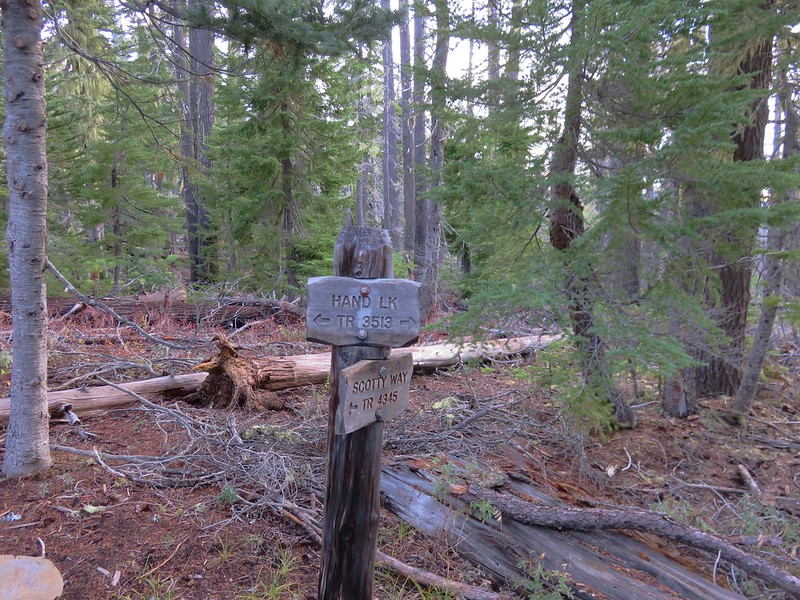
After a mile on the Scott Mountain Trail we took the Scotty Way Trail and began descending toward the Hand Lake Trail.
Scotty Way Trail junction with the Scott Mountain Trail

Scotty Way Trail

We followed this trail approximately 1.7 miles to its end at the Hand Lake Trail where we turned left.
Hand Lake Trail junction with the Scotty Way Trail

As usual I had checked the Forest Service websites for the trails that we would be using a couple of days before our trip to make sure there were no closures or alerts we needed to be aware of. The Willamette National Forest page for the Hand Lake Trail listed the current conditions for the Hand Lake Trail as ” open and cleared” as of 7/22/2016.
What part of this picture is “cleared”?
Blowdown over the Hand Lake Trail

For the next two and a half miles the trail (when there was one) passed through burnt forest with faint tread and a good deal of blowdown. For awhile we were able to follow tracks left by a horse; that helped keep us on the right course.
Hand Lake Trail

More blowdown over the Hand Lake Trail

When we weren’t searching for the trail there were some decent views.
Black Crater and North & Middle Sister
Black Crater and the North & Middle Sisters from the Hand Lake Trail

Mt. Washington
Mt. Washington from the Hand Lake Trail

Mt. Washington from the Hand Lake Trail

After approximately 1.75 miles we lost the hoof prints and were forced to make a wide arc to the south away from where the map showed the trail should have been. We were coming up on a steep drop down into a basin where the map showed the trail descending in a series of six switchbacks so using the Garmin we worked our way back toward the location where the switchbacks began on the map.
Looking west from the Hand Lake Trail

With no obvious trail visible we searched around a bit and found what may have been part of the original trail but now it appeared to be a simple game trail from the amount of deer and elk sign we were seeing.
Following a game trail down into a basin

In any event it was the only trail in sight so we followed it steeply downhill reaching the basin where we were able to relocate the actual trail near an unnamed lake.
Unnamed lake along the Hand Lake Trail

Unnamed lake along the Hand Lake Trail

After another quarter mile of faint trail and blowdown we entered unburnt forest on a much clearer trail.
Hand Lake Trail

Hand Lake Trail

A mile and a half on this nicer trail brought us back to the junction with the Deer Butte Trail we had passed the day before.
Hand Lake Trail junction with the Deer Butte Trail

We followed the Deer Butte Trail just over two and a quarter miles back to the Robinson Lake Trailhead ending our final backpacking trip of the year.
Deer Butte Trail

The distance from Tenas Lakes back to the Robinson Lake Trailhead came to 8.9 miles according to the GPS which was almost a mile further than we had expected, but we hadn’t planned on wandering back and forth trying to keep on the Hand Lake Trail. Had we known what a mess that 2.5 mile section was we wouldn’t have even tried it, but we made it and it was another chance to put our navigational skills to the test. Happy (blowdown free) Trails!

Flickr (both days): https://www.flickr.com/photos/9319235@N02/albums/72157674905089576