After a dry spell, April showers returned as we prepared for a planned outing to the Columbia River Gorge. On the plus side the plan was to visit several waterfalls which would only benefit from the additional precipitation, and it might keep a few folks home meaning less crowds. On the minus side was the potential for limited views during our planned loop to Devil’s Rest, and possible difficulty keeping the camera lens dry. The pros won out and we got our typical early start to try and make sure there would be a parking spot when we got to our third stop at the Wahkeena Falls Trailhead.
Our plan for the day was to begin by stopping at the two shorter hikes first then end with a longer lollipop loop hike from the Wahkeena Falls Trailhead up to and around Devil’s Rest. Note that all loops visiting Devil’s Rest rely in part on a network of user-created trails. This network of trails, sometimes known as “Foxglovia”, was largely the result of the hard work of “Red Shorts” who sadly passed away unexpectedly earlier this month. Thanks to his work the trails we used on this day were in good shape and well signed for the most part. It will now be left up to others to carry on his work if the trails are to remain passable. As always it is important to attempt to get updated trail conditions before heading out.
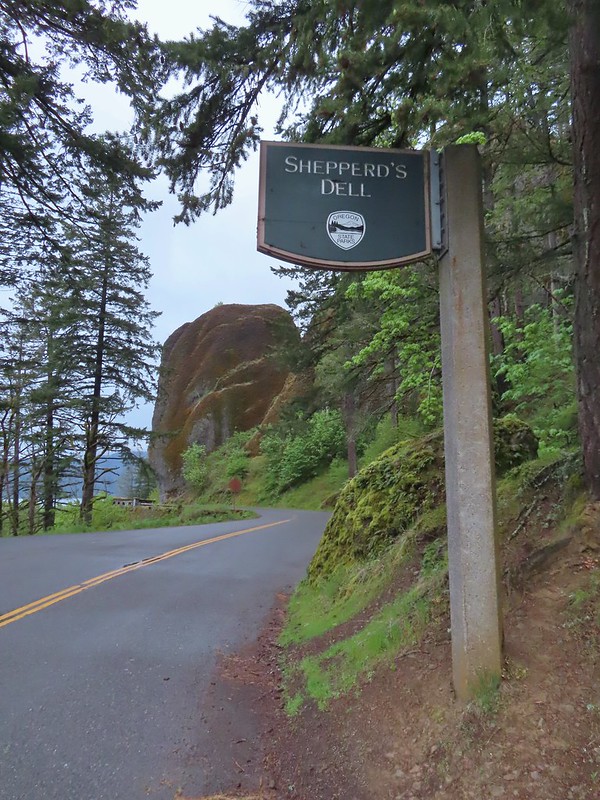
We started with the shortest hike of the day by parking at a small pullout along historic Highway 30 across from a sign for Sheppard’s Dell.
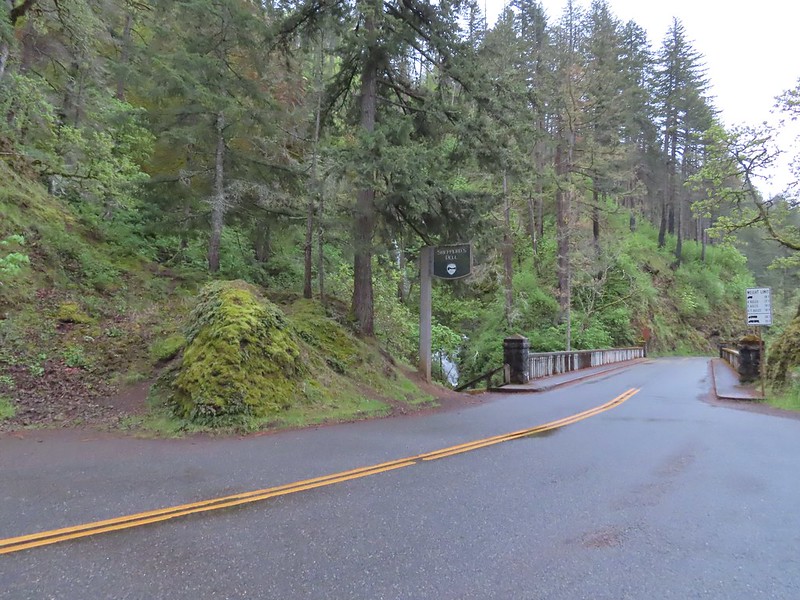 The trailhead at 6:15am.
A short path on the far side of the highway leads to a viewpoint at Young Creek and of the 1914 highway bridge.
 The Bishops Cap along Highway 30.
 The stone railed trail can be seen along the cliff above the lower falls.
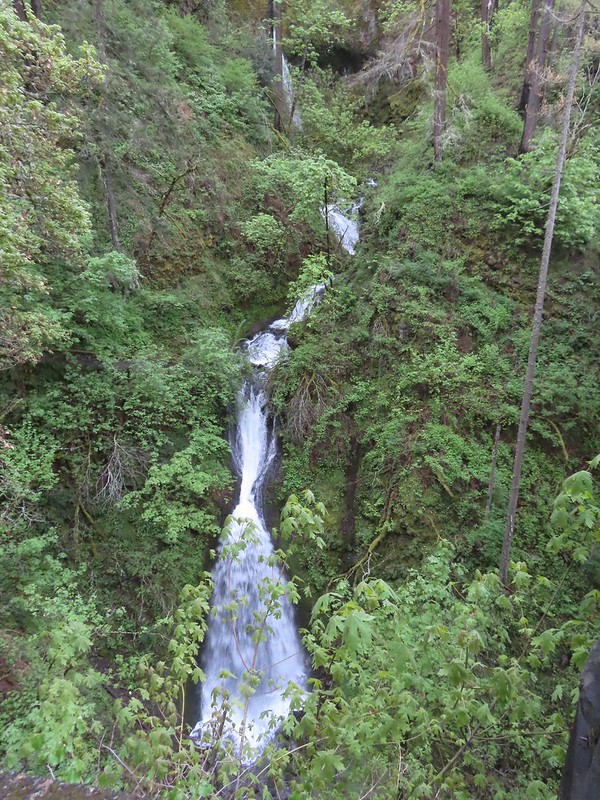 The upper falls can be seen through the trees with the lower falls more visible.
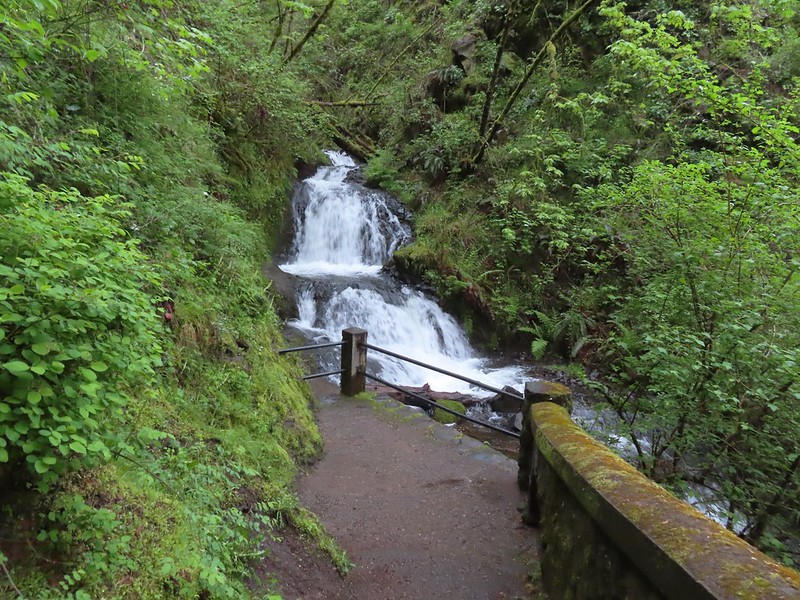 End of the trail.
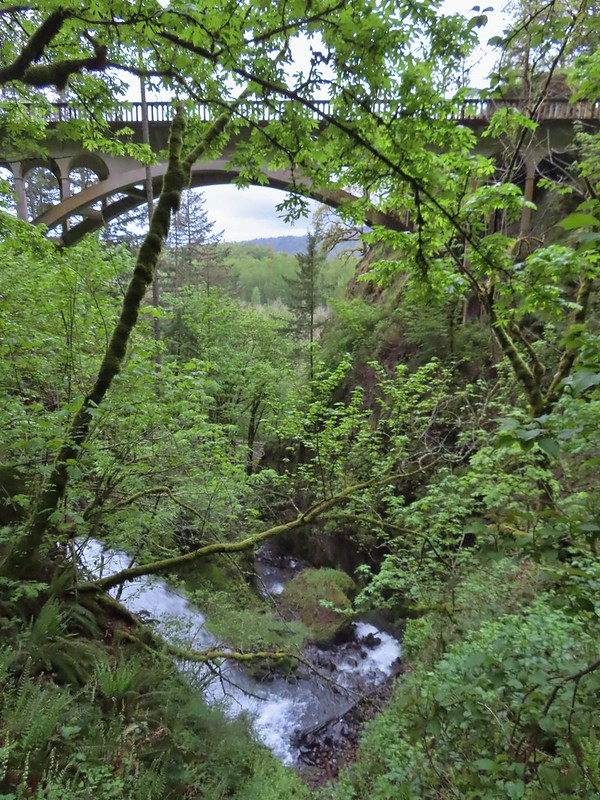 The bridge from the trail.
From Sheppard’s Dell we drove east on Highway 30 (less than a mile) to the Bridal Veil State Scenic Viewpoint.
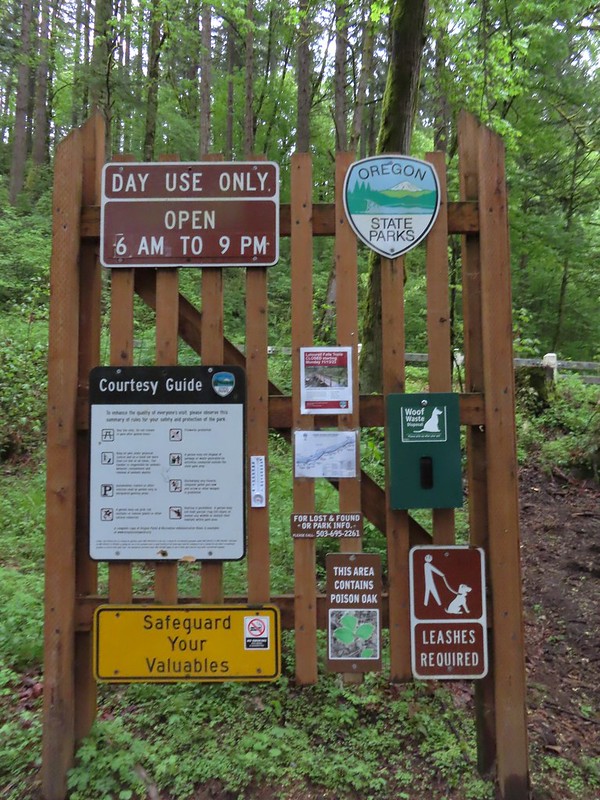 Informational signboard at the trailhead.
This park hosts two short trails, the Bridal Viel Falls Trail and the Overlook Loop Trail. We started with trail to the falls which began as a paved path next to the restrooms.

After a short distance the trail turns to gravel as it begins to descend to Bridal Veil Creek.
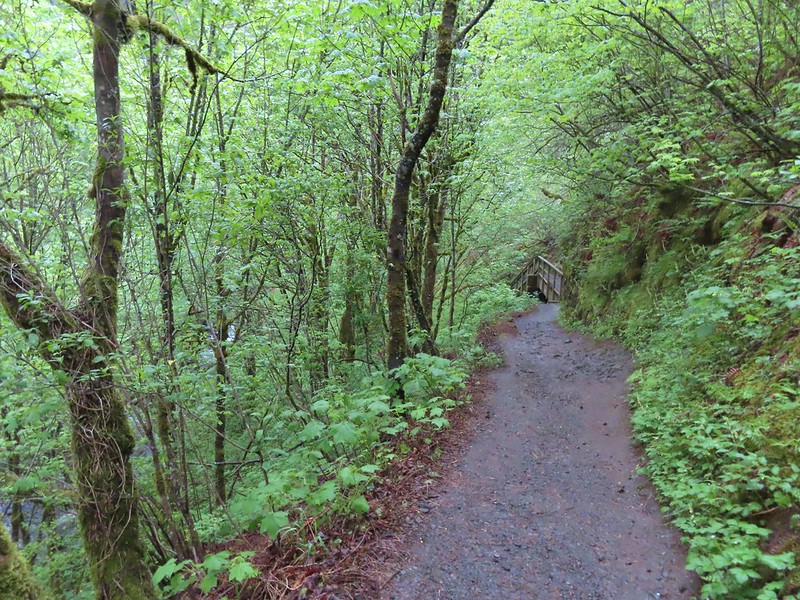
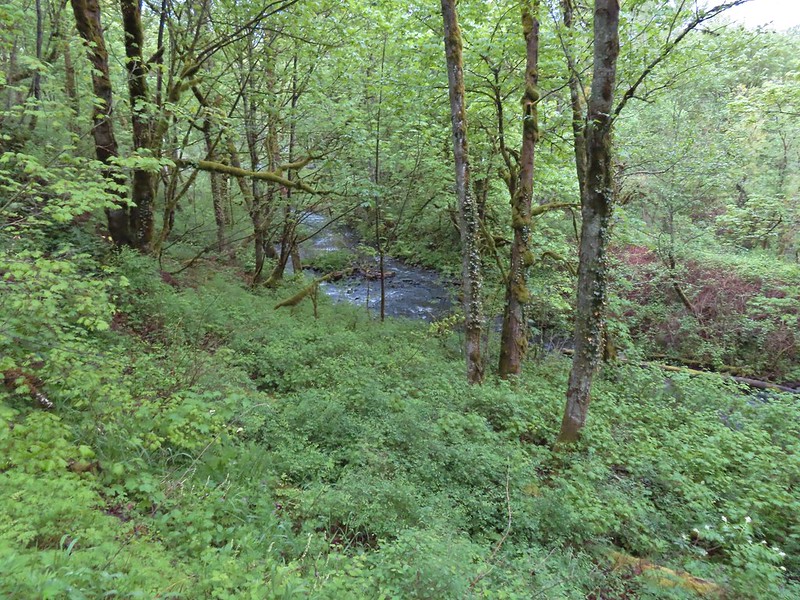 Bridal Veil Creek
The trail crosses the creek on a wide footbridge then turns right and climbs slightly to a viewing platform across from the falls.
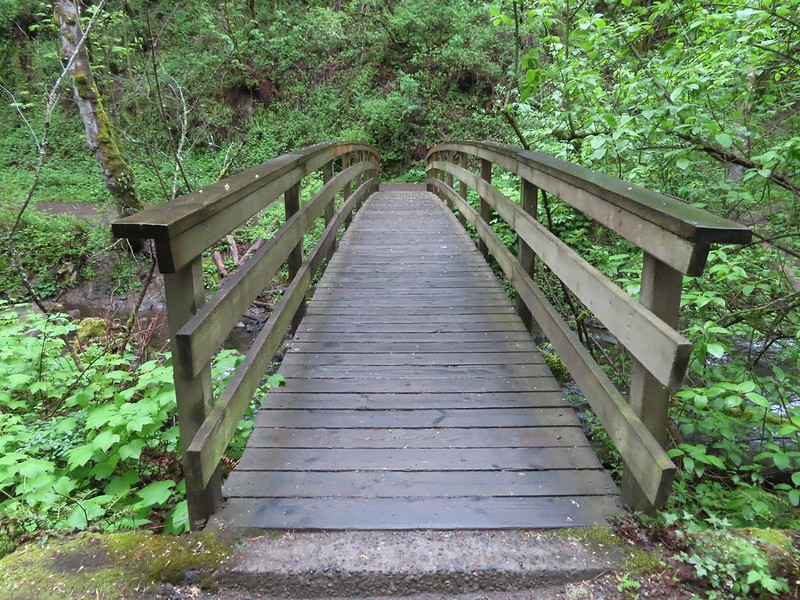
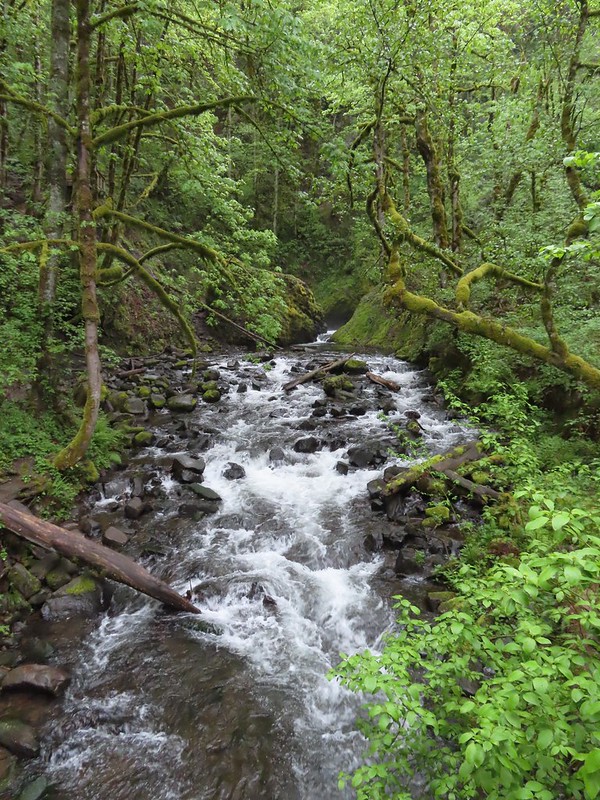
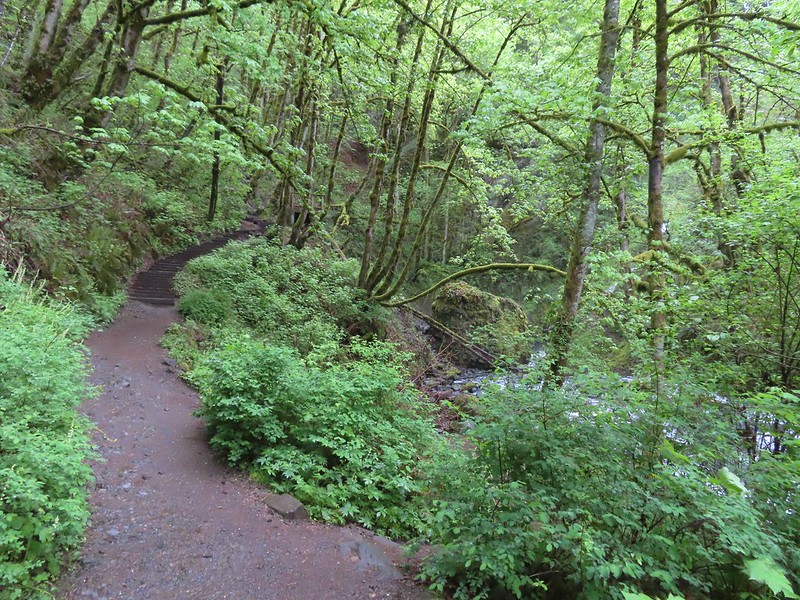
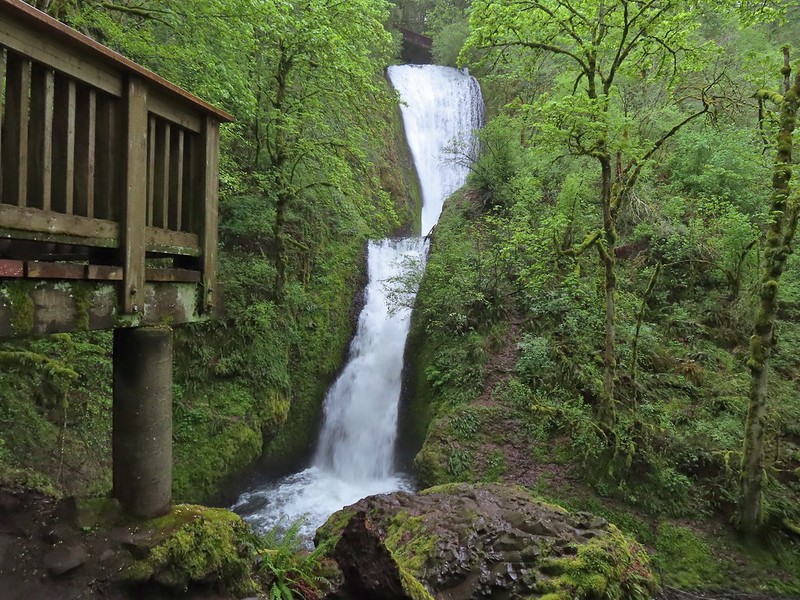 The 120′ two-tiered Bridal Veil Falls.
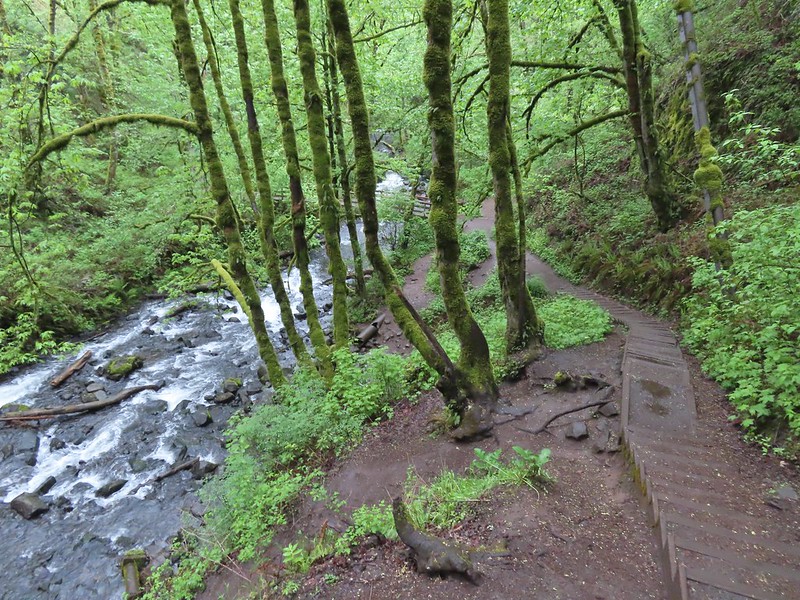
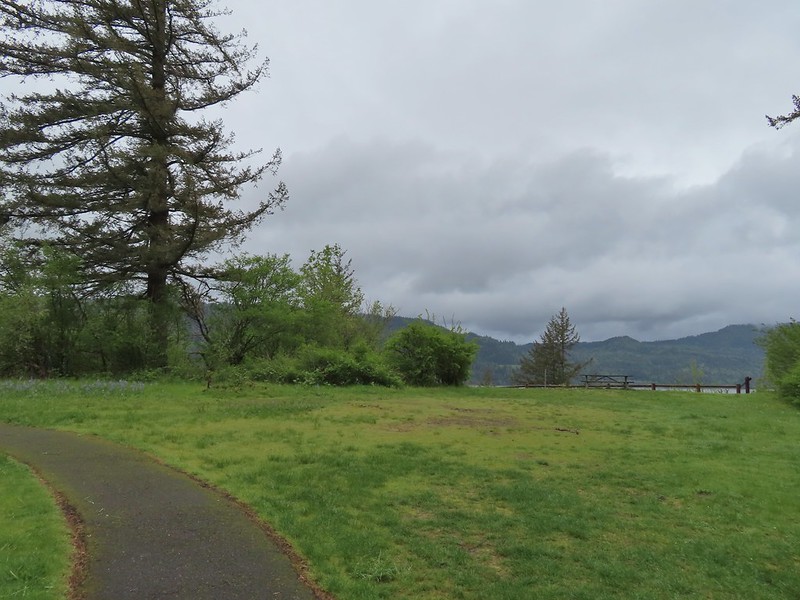
After admiring the waterfall we returned the way we’d come and set off on the Overlook Loop Trail. The half mile interpretive loop passes several viewpoints across the Columbia River to Washington.
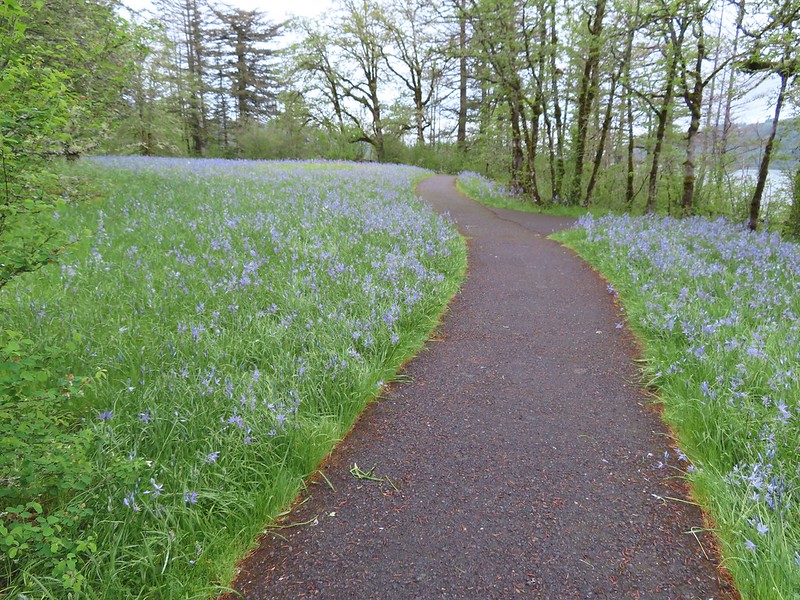
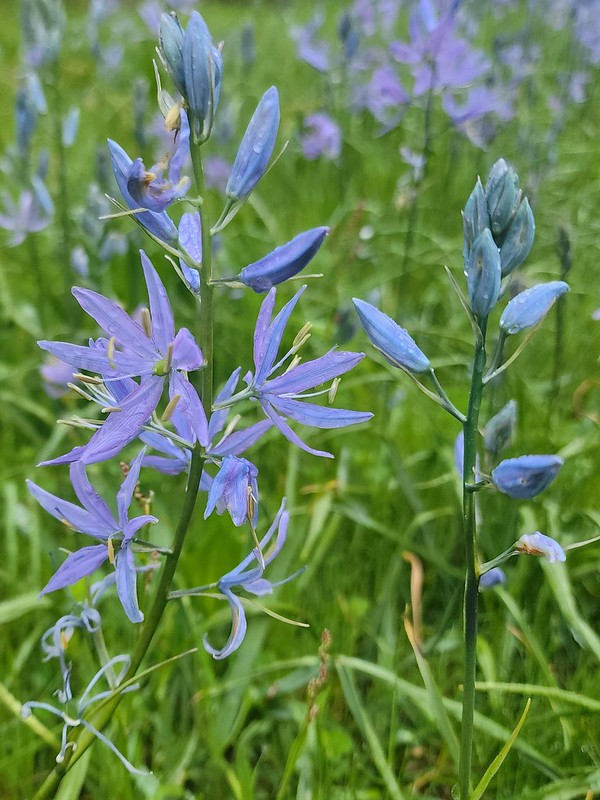
There was a lot of camas blooming along the trail.
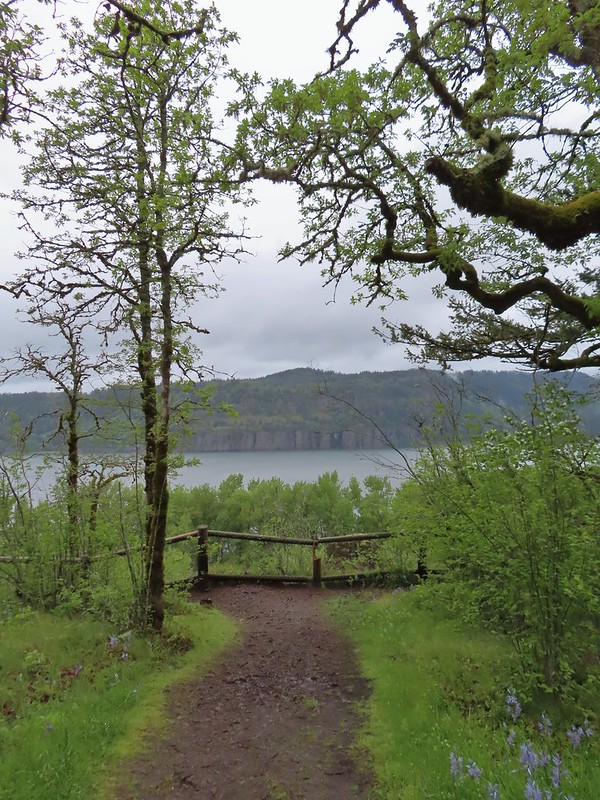 Cape Horn (post) across from one of the viewpoints.
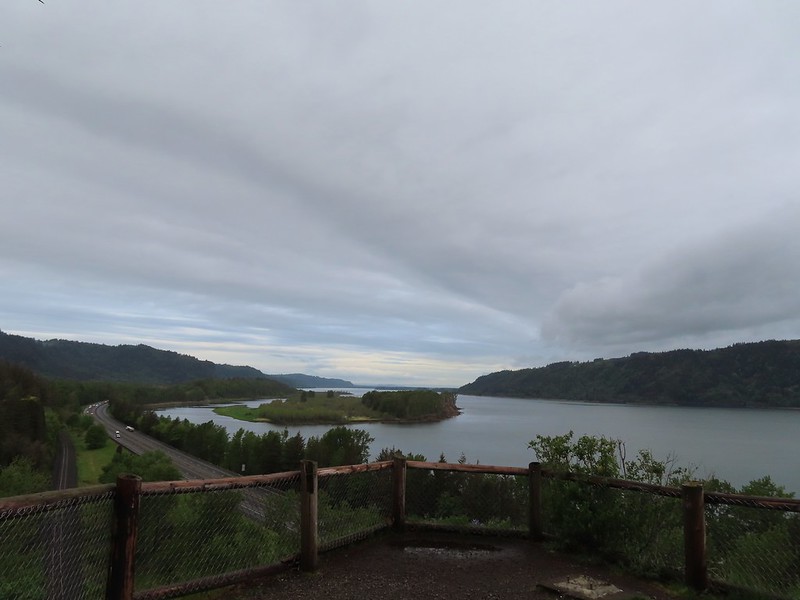 Sand Island to the west.
 The Overlook Loop arriving back at the trailhead parking area.
The short 1.1-mile hike here was still a mile longer than that at Sheppard’s Dell which meant it only a little after 7am as we headed for our final stop of the day. There are actually several starting points for loop hikes involving Devil’s Rest with the most popular seemingly being the Angel’s Rest and Wahkeena Falls Trailheads. Multnomah Falls and Palmer Mill Road are two others that allow for loops under 10-miles. While the Angel’s Rest Trailhead was closer to Bridal Veil it is a slightly longer loop with more elevation gain than starting from Wahkeena Falls Trailhead. Starting at Wahkeena Falls also means getting to see that waterfall and Fairy Falls prior to the start of the loop.
There were a few parking spots available at the Angel’s Rest Trailhead and even fewer cars at Wahkeena Falls when we arrived at 7:15am. We’d been to Wahkeena Falls before. Heather, Dominique and I on an out-and-back from the aforementioned Angel’s Rest Trailhead in 2013(post) and just myself in 2022 after hiking to Larch Mountain from Multnomah Falls (post). Before starting the 1.4-mile climb to the start of the loop we stopped at the Wahkeena Falls viewpoint.

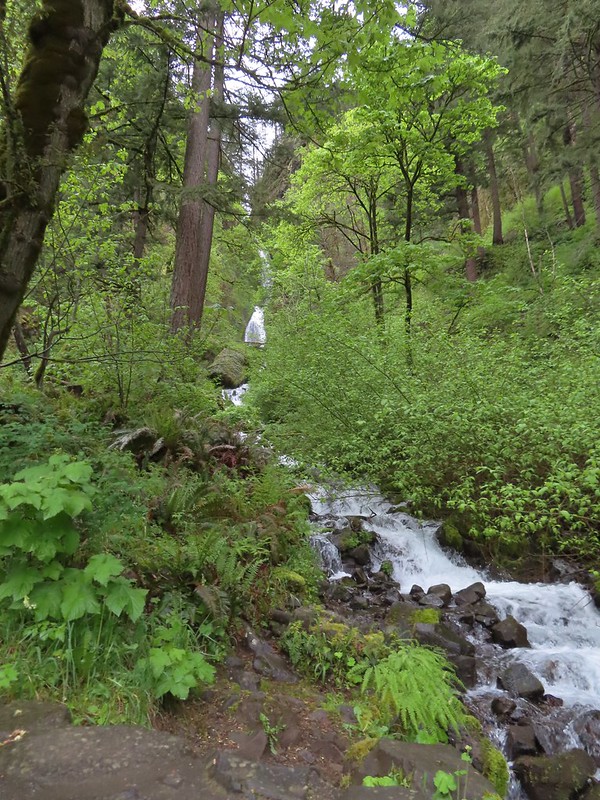
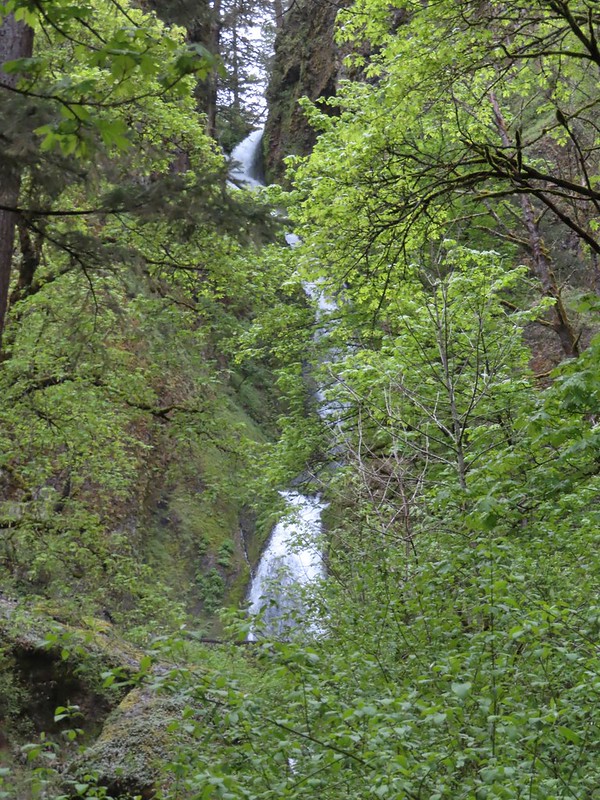 While the Wahkeena Trail passes just below the falls the upper portion of the falls is only visible from a distance.
The trail begins as pavement as it switchbacks uphill before turning to rock/dirt and arriving at a footbridge below the lower portion of Wahkeena Falls at the 0.2-mile mark.
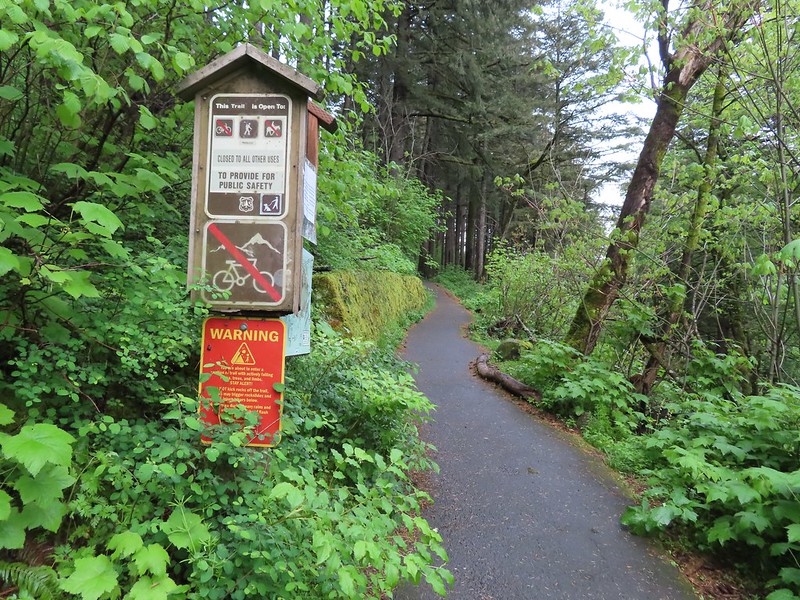
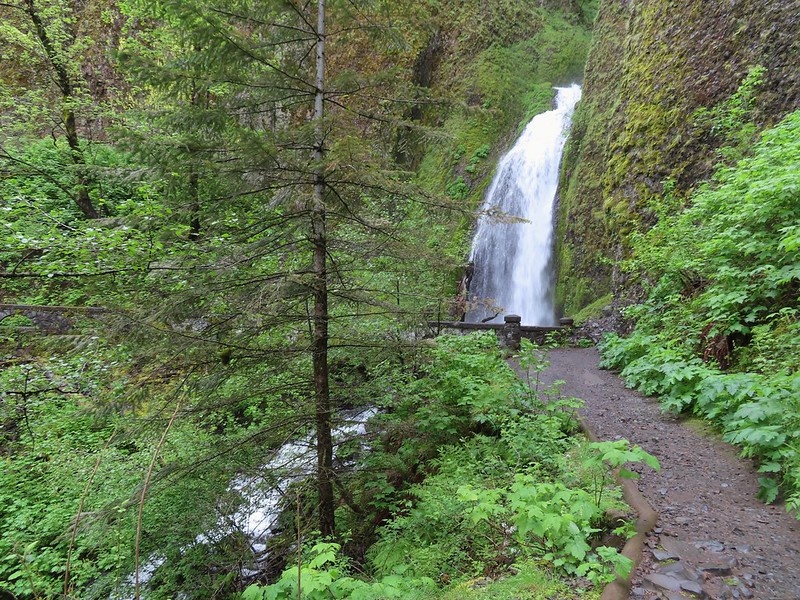
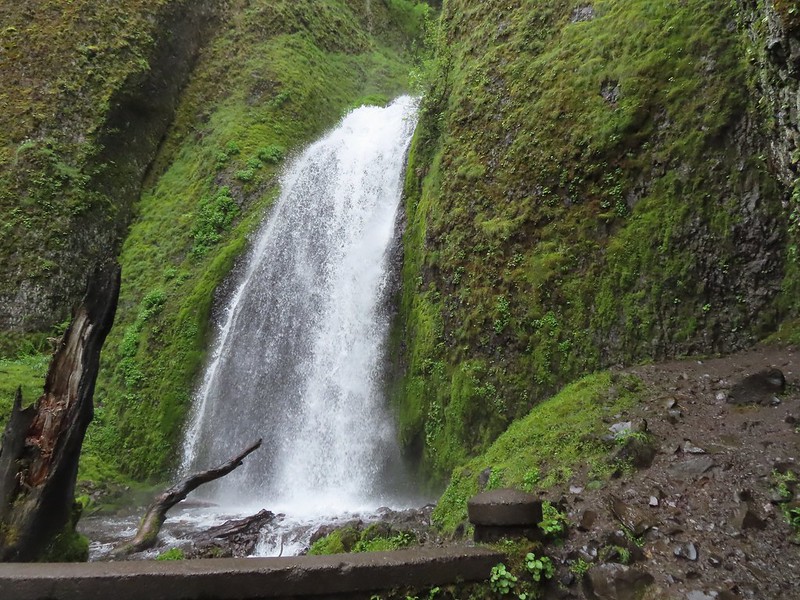
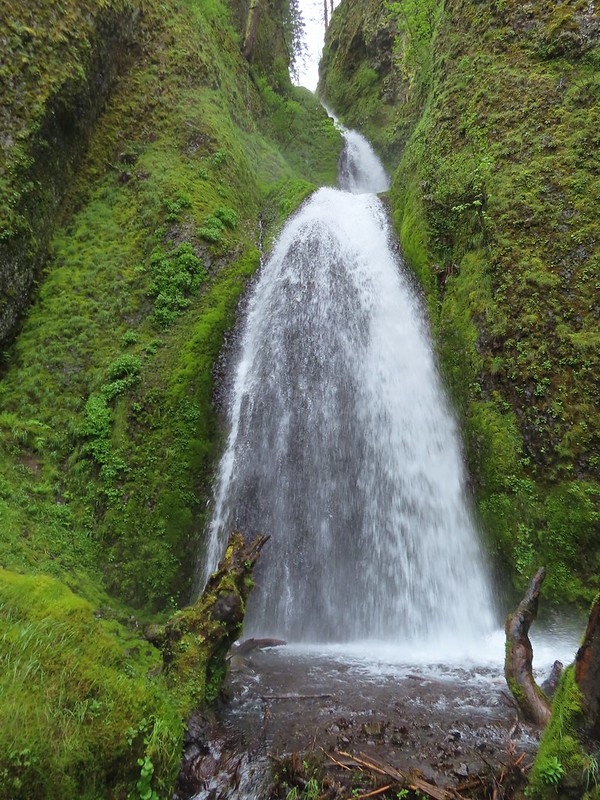
Beyond the falls the trail climbs to a spur trail to the Lemmons Viewpoint then continues along Wahkeena Creek (crossing it twice) to Fairy Falls at the 1.1-mile mark.
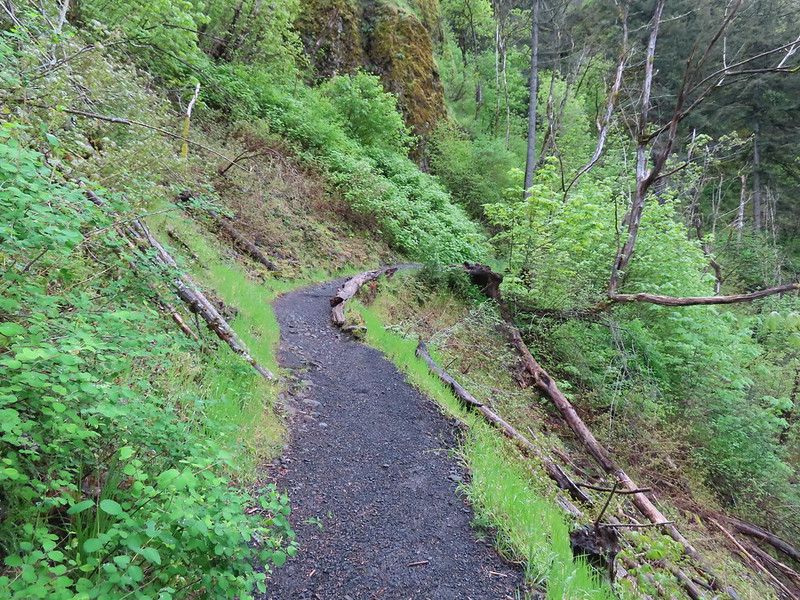
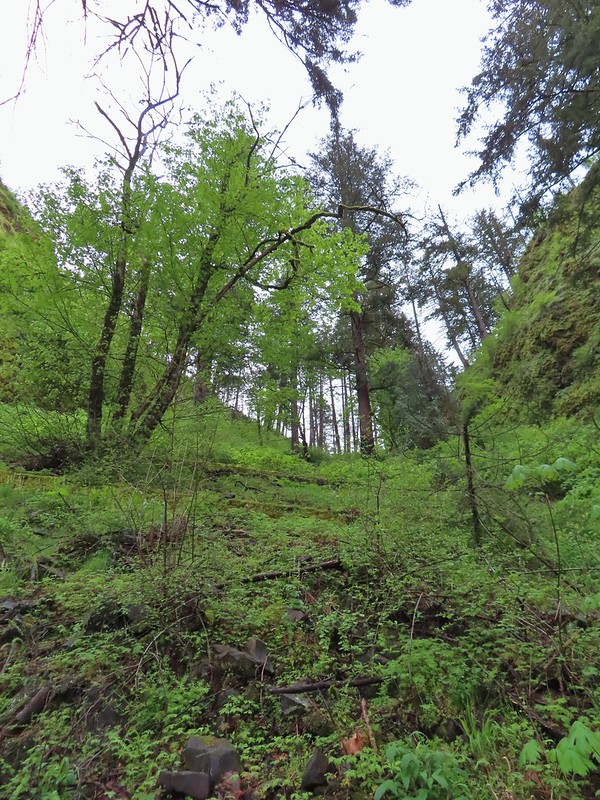 The Wahkeena Trail switchbacking up to the Lemmon Viewpoint junction.
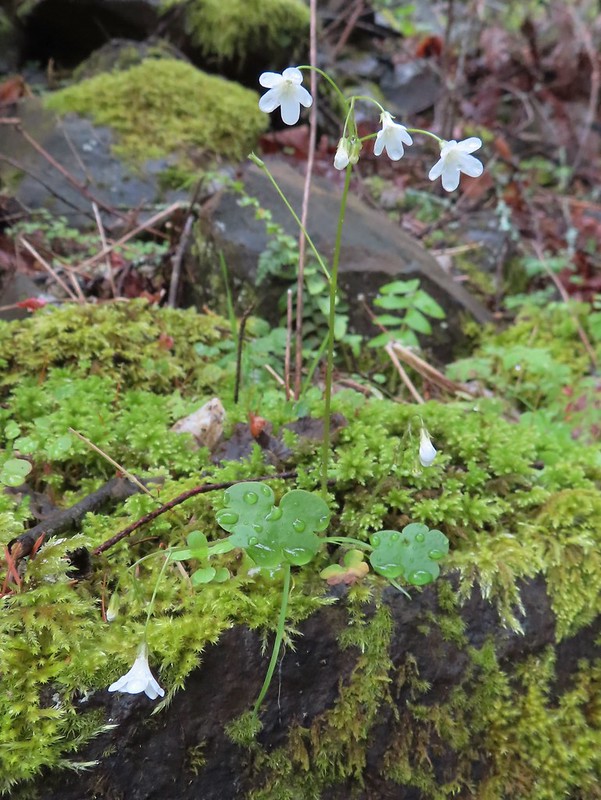 Sitka mist-maidens
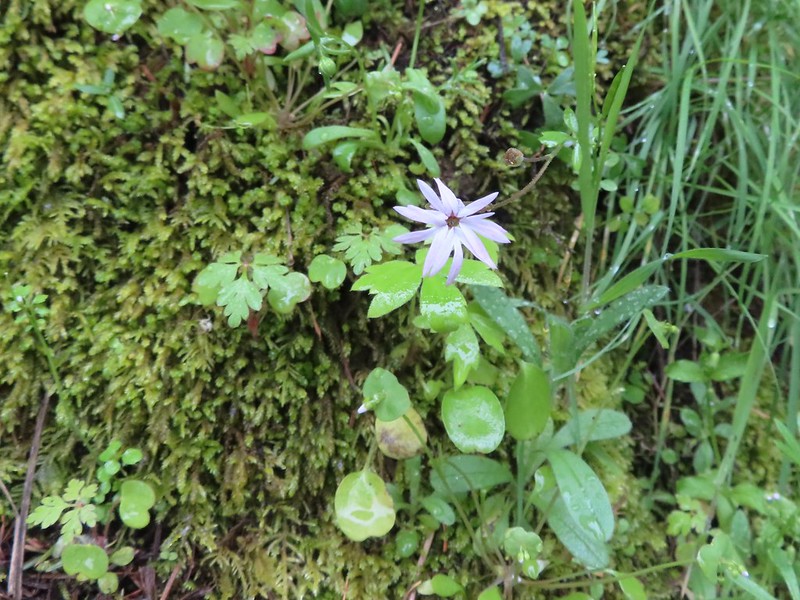 Woodland-star
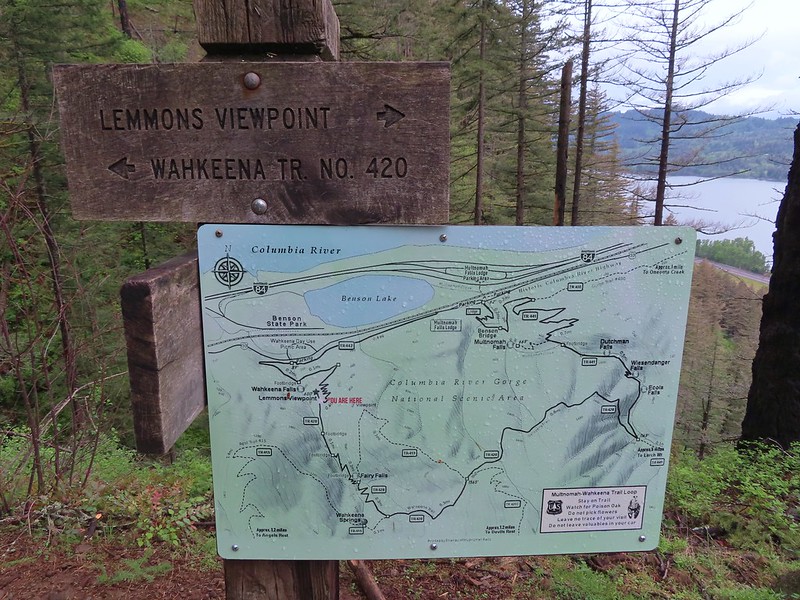 The Forest Service includes maps at junctions involving official USFS trails. Note that the map does not extend to Devil’s Rest or include the Foxglovia area.
 Our first paintbrush sighting for the year was at the Lemmons Viewpoint.
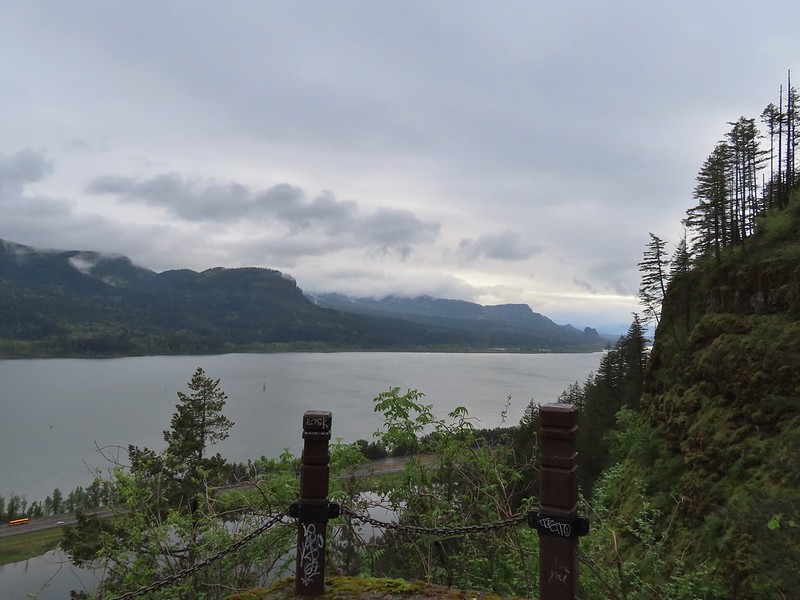 Archer Mountain in the foreground with Hamilton Mountain (post) and Beacon Rock (post) further to the east.
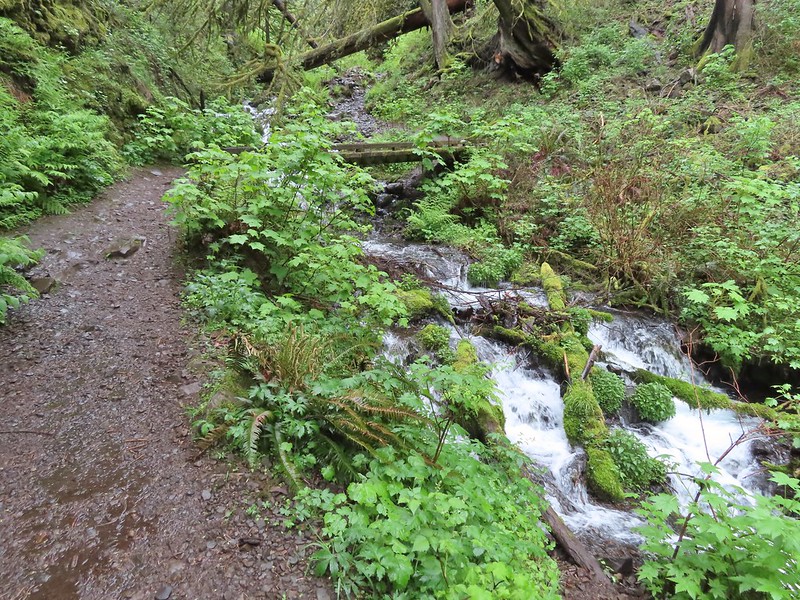 The first crossing of Wahkeena Creek.
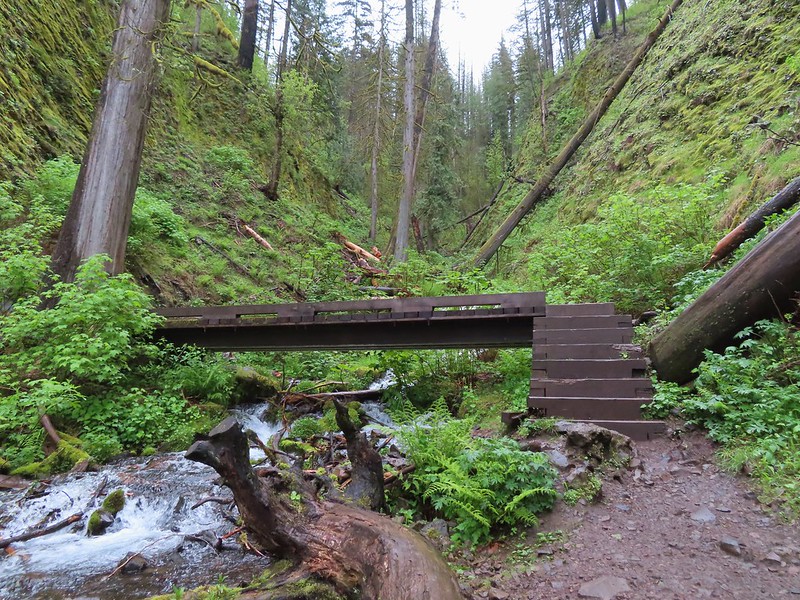 Second footbridge.
Since my visit in October 2022 the trail has experienced a couple of slides, likely a lingering result of the 2017 Eagle Creek Fire. As of 2/18/24 the Forest Service advises caution if attempting to navigate the slides and in fact does not recommend attempting it. They had not officially closed the trail, but also do not have an eta on repairs.
 This was the first sketchy new obstacle. The large tree is cutting across a switchback rerouting the trail steeply uphill. While there were some footholds the steepness combined with muddy conditions required caution.
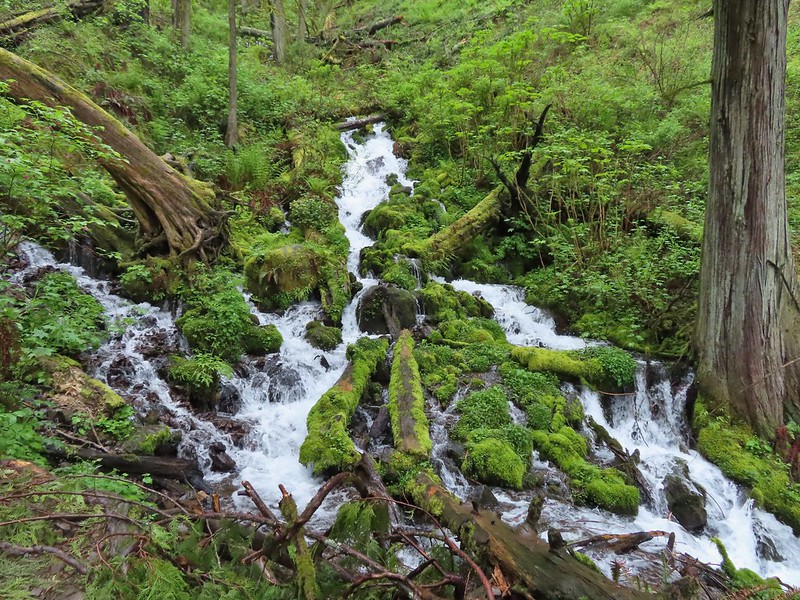 Wahkeena Creek
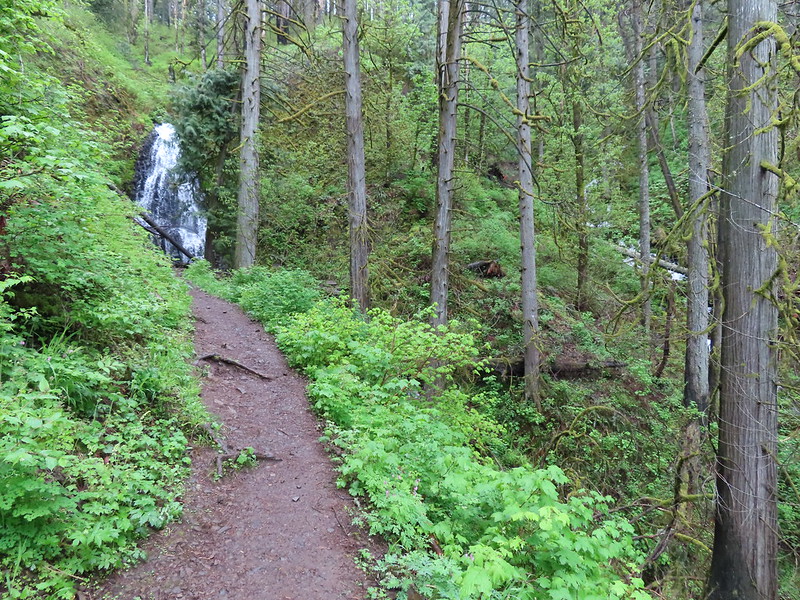 Fairy Falls with Wahkeena Creek through the trees on the right.
 Fairy Falls
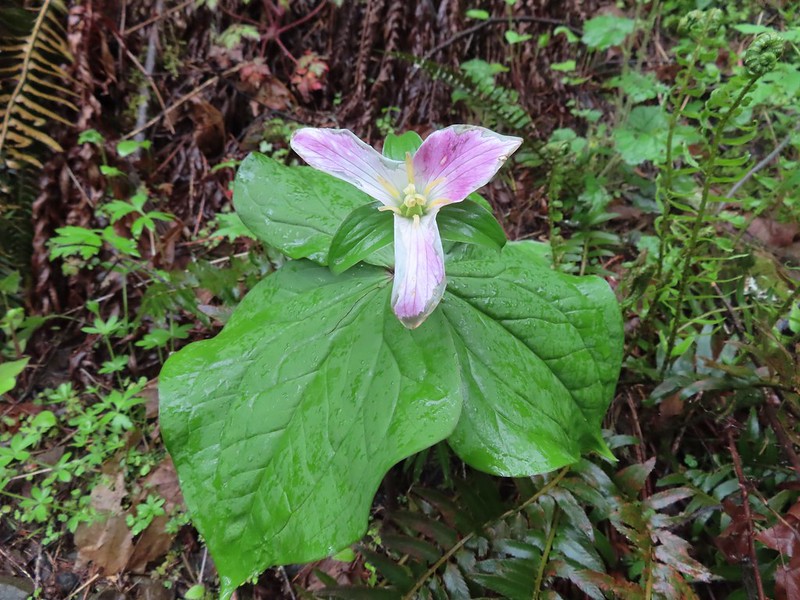 Trillium
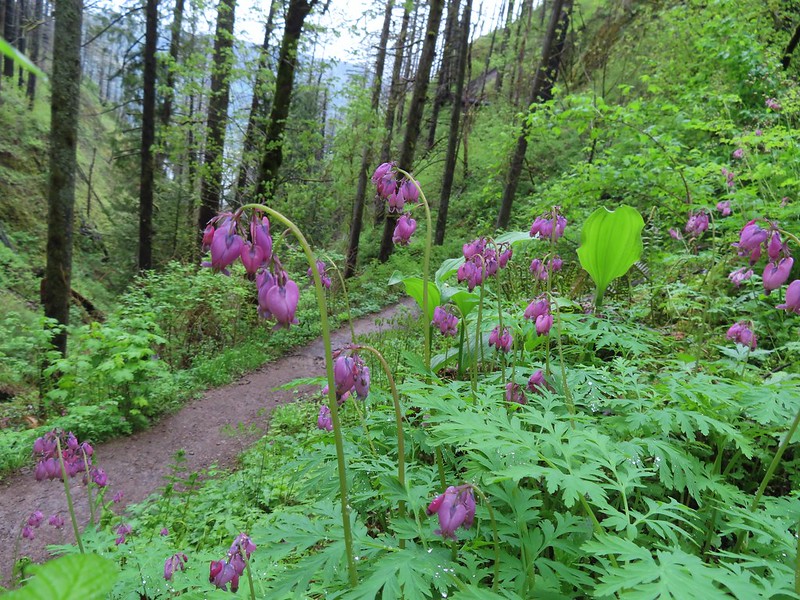 Bleeding heart
The worst of the slides was a short distance beyond Fairy Falls.
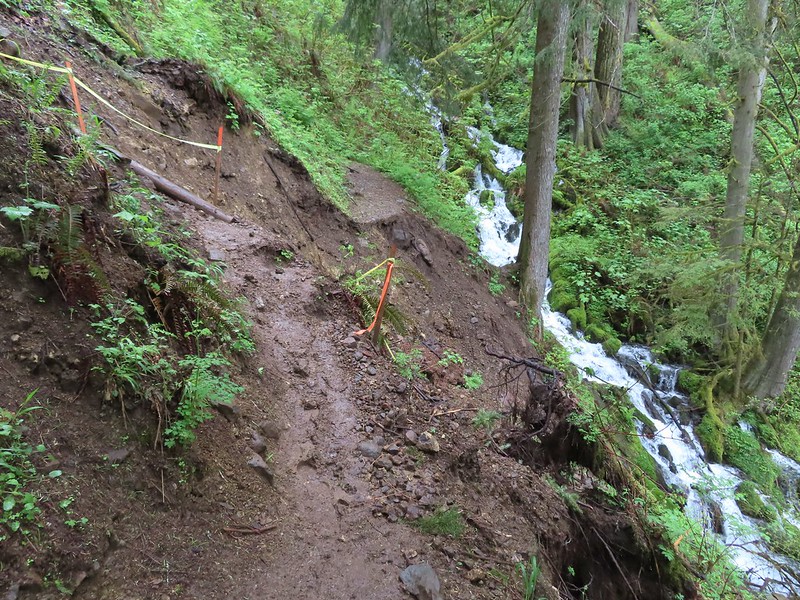 The worst slide took out a section of trail just before a switchback.
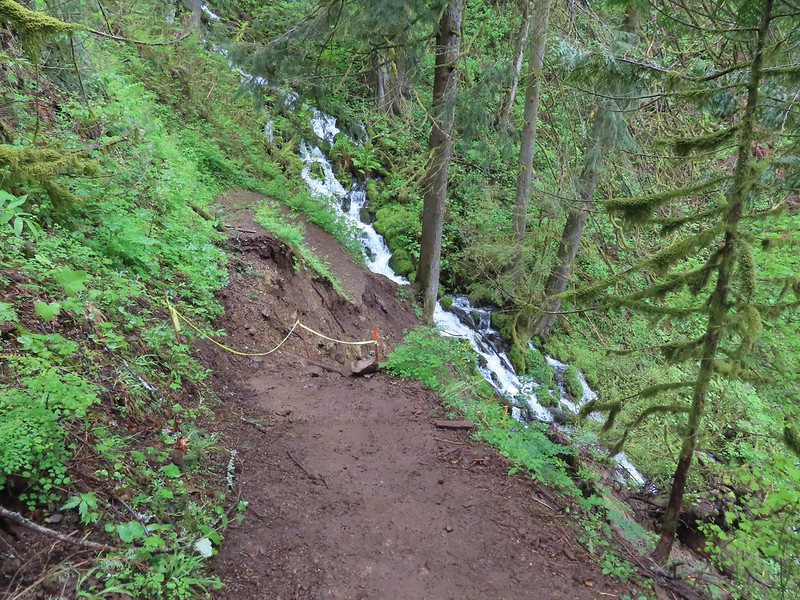 Looking down the washout.
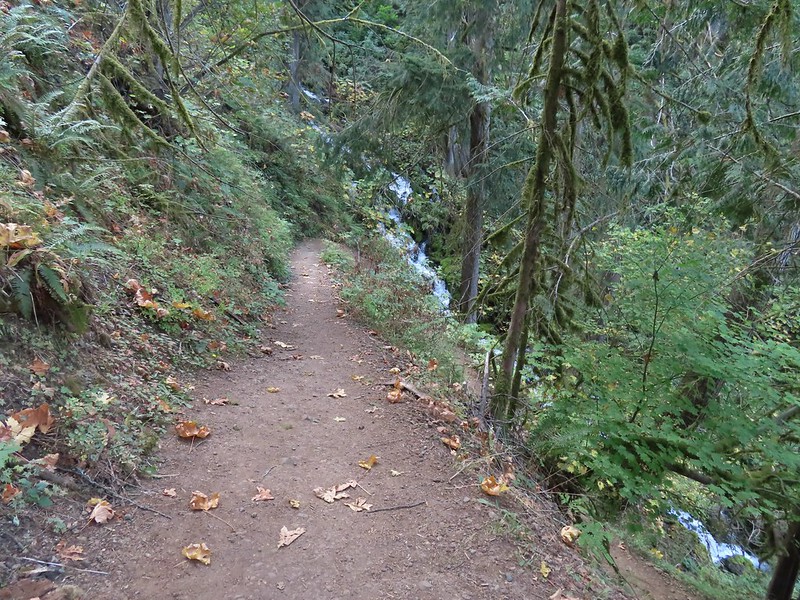 The switchback in 2022.
Not pictured, but just above the missing section of trail was another large, downed tree. It was possible to pass under but to do so we both needed to get on our hands and knees.
Neither of us were looking forward to going down either of these washed-out sections but that was a problem for later. The rest of the Wahkeena Trail was in good shape and we followed it past its junction with the Vista Point Trail to a junction with the Angel’s Rest Trail and the start of the loop.
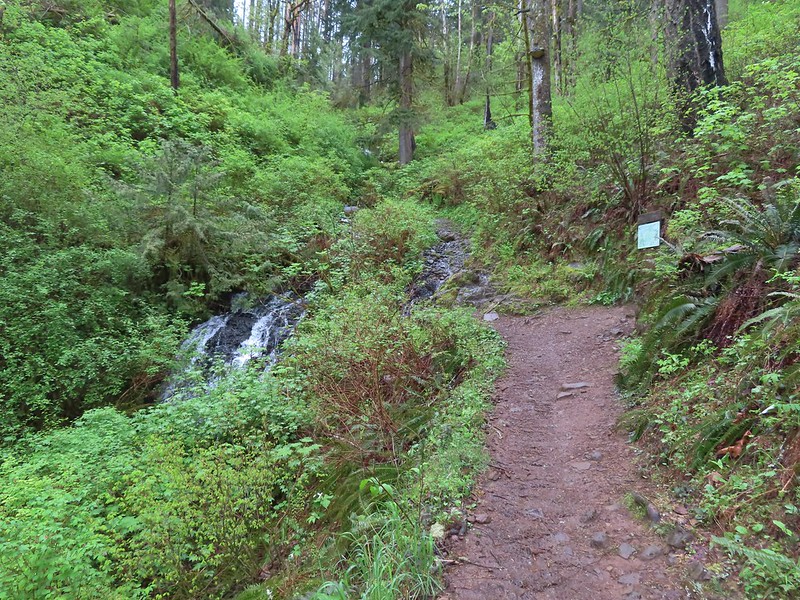 Coming up on the lower end of the Vista Point Trail.
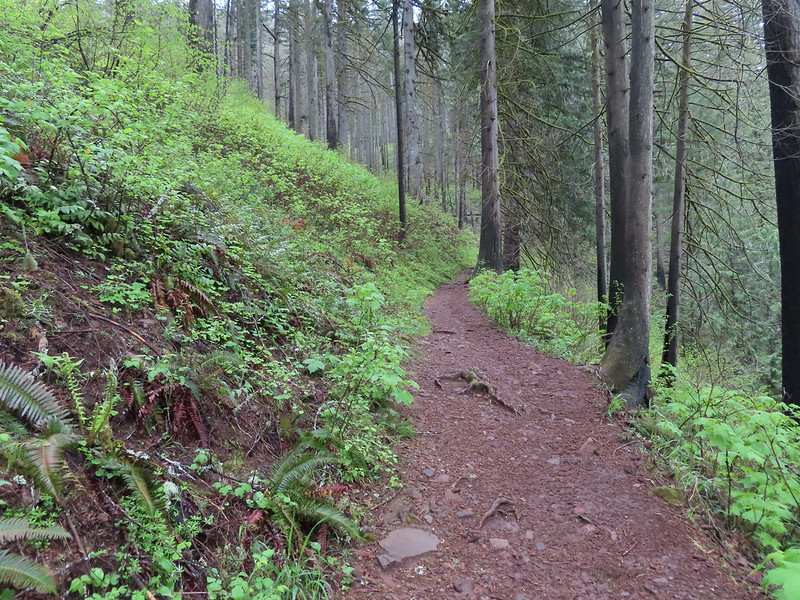
 The Angel’s Rest Trail junction.
We went left at this junction sticking to the Wahkeena Trail as it climbed to a junction with the upper end of the Vista Point Trail.
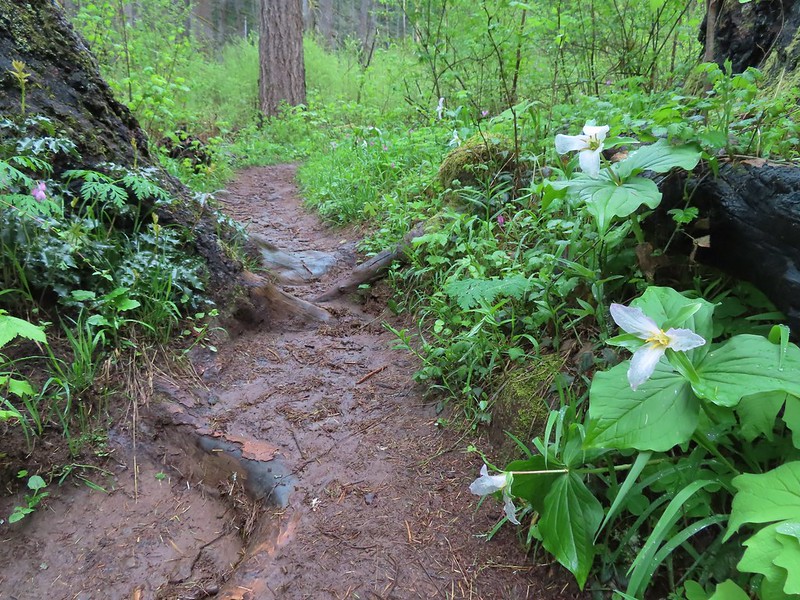
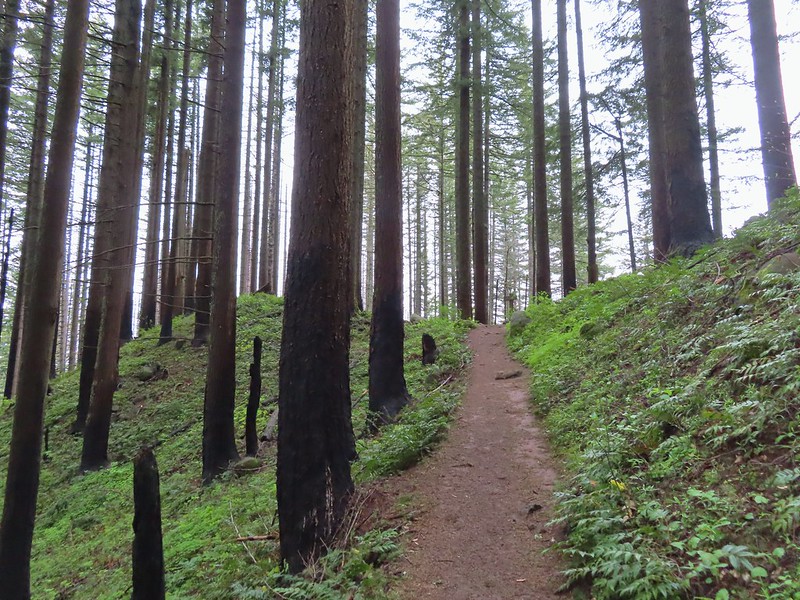
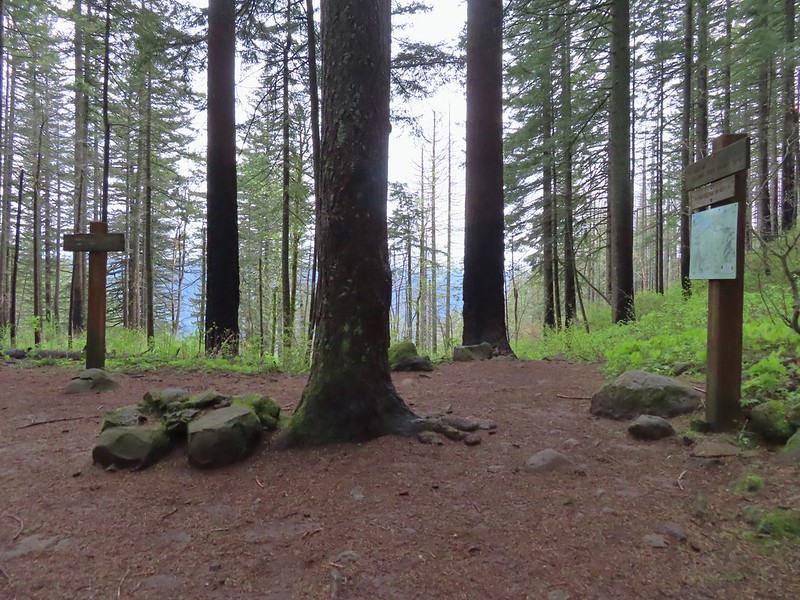 Signs at the junction with upper end of the Vista Point Trail.
Beyond this junction the Wahkeena Trail descended slightly to a junction with the Devil’s Rest Trail.
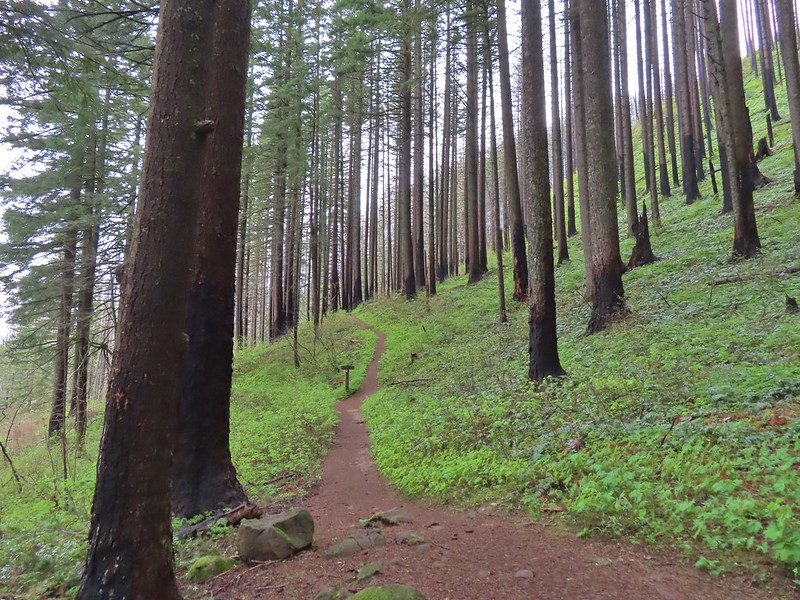
We veered uphill to the right on the Devil’s Rest Trail.

The Devil’s Rest Trail (Trail 420C) is an official USFS trail that ends at the rocky outcrop atop Devil’s Rest after 1.6 miles. The trail climbs approximately 800′ but is fairly gradual initially using switchbacks to keep the climb reasonable.
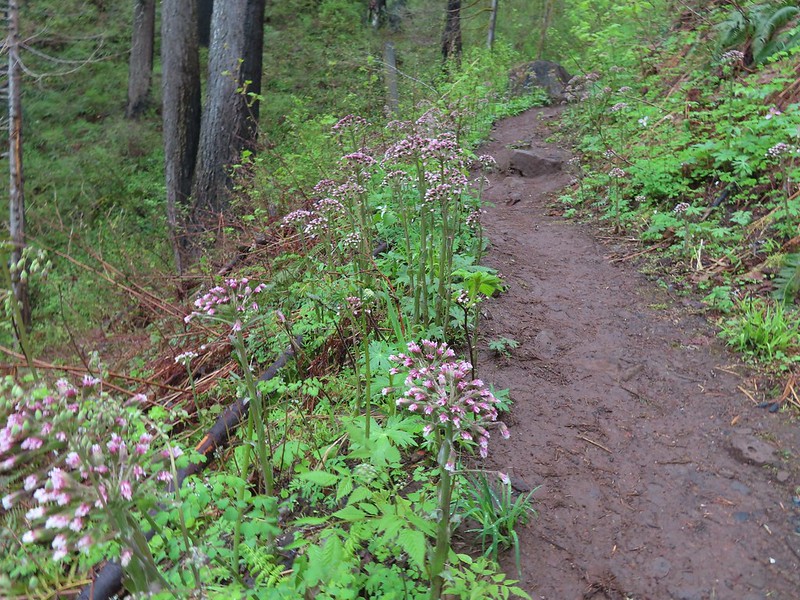 Coltsfoot along the trail.
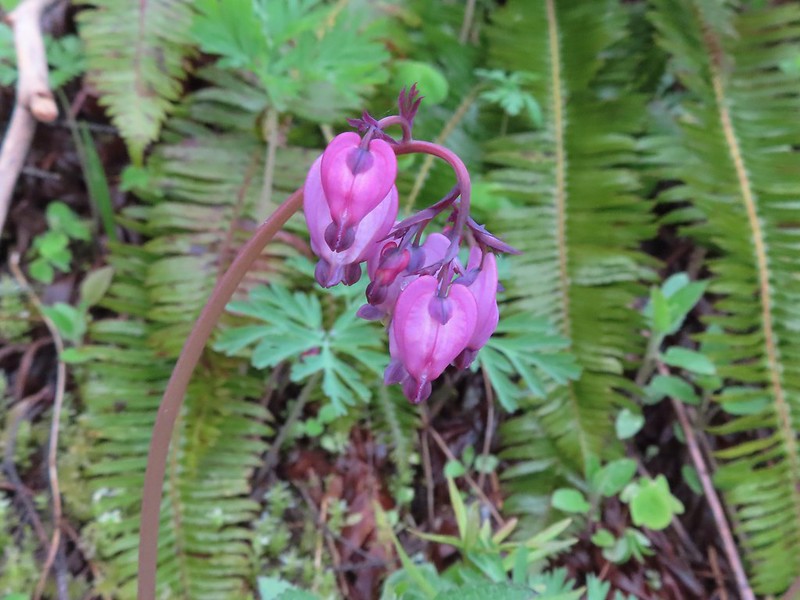 Bleeding heart
 Violets lining the trail.
After switchingback along Shady Creek the trail arrives at the rim of the Wahkeena Bowl where the climb becomes even more gradual.
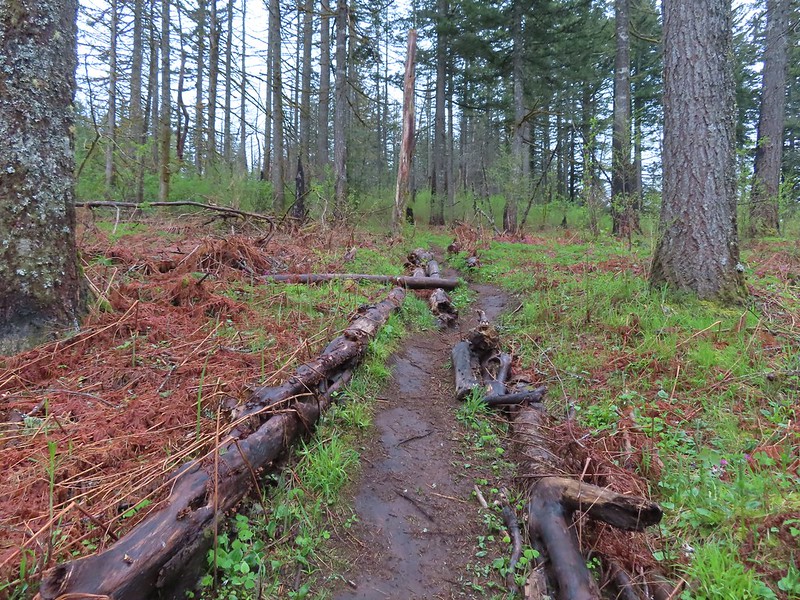
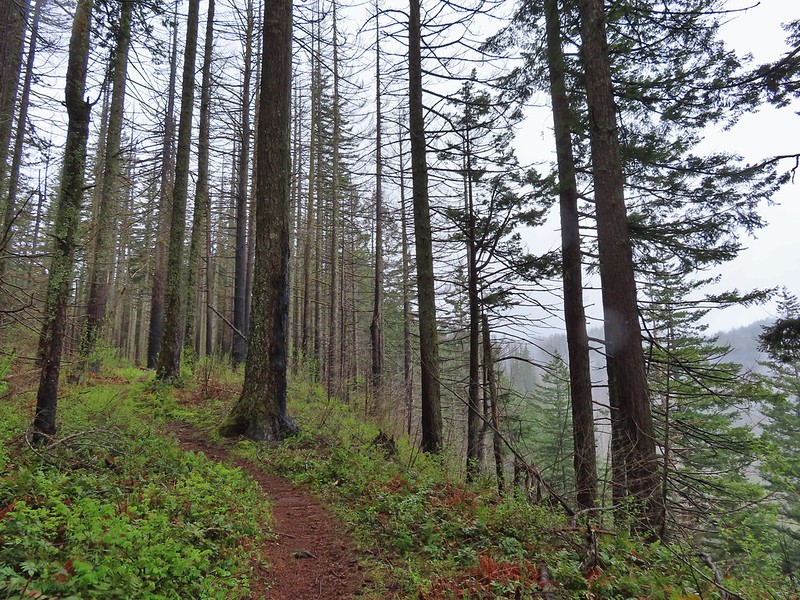 Traveling along the rim of the Wahkeena Bowl.
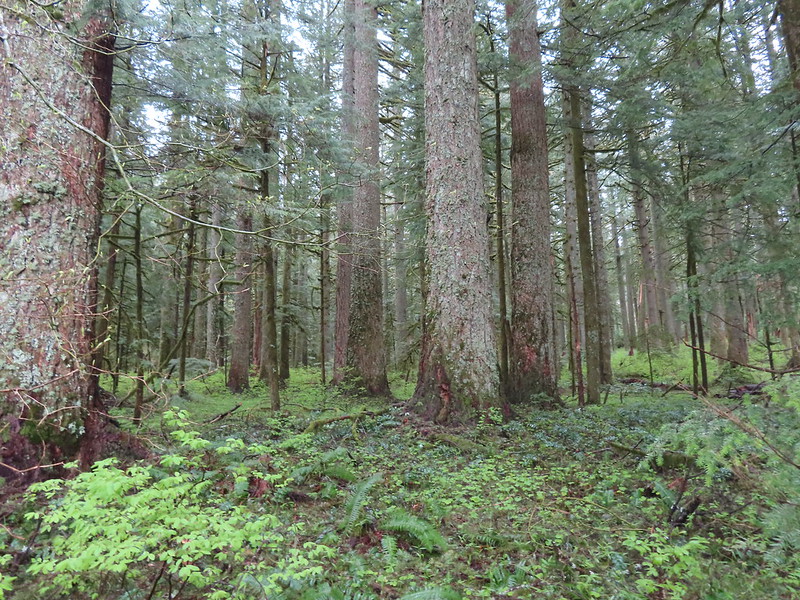 A small pocket of forest that escaped the Eagle Creek Fire.
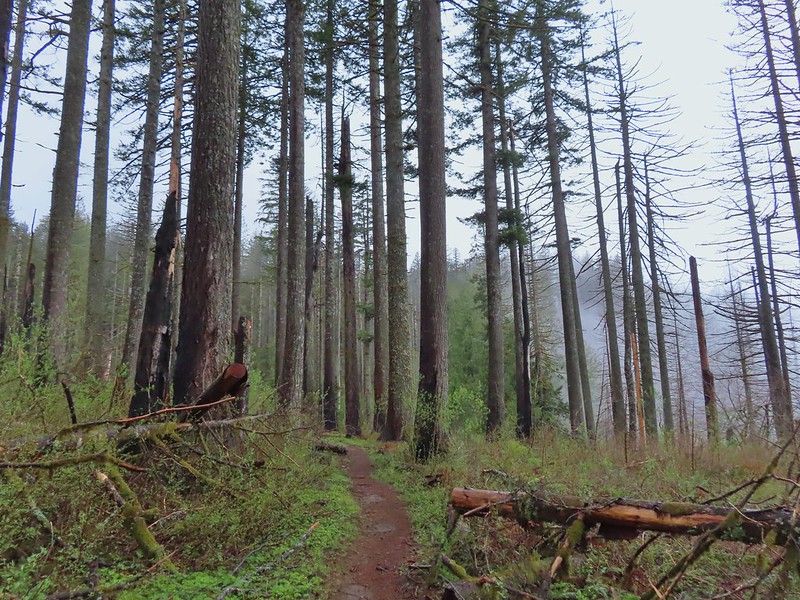 Devil’s Rest looking a little foggy from below.
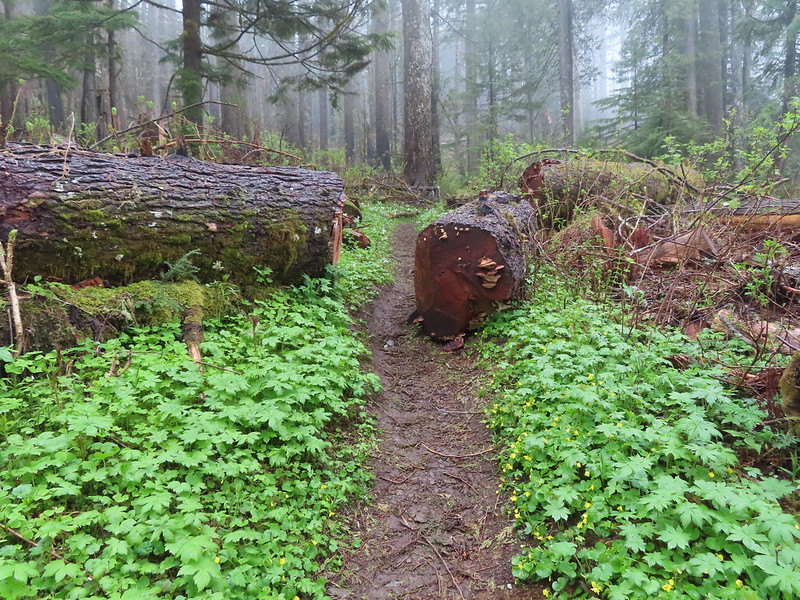
 There were a lot of trillium along the rim.
We passed a trail crew that was just hiking in to start work. Not sure how they got up there, but it was nice to see them out and we thanked them for their efforts.
The trail passed two rocky viewpoints before making a final climb to Devil’s Rest.
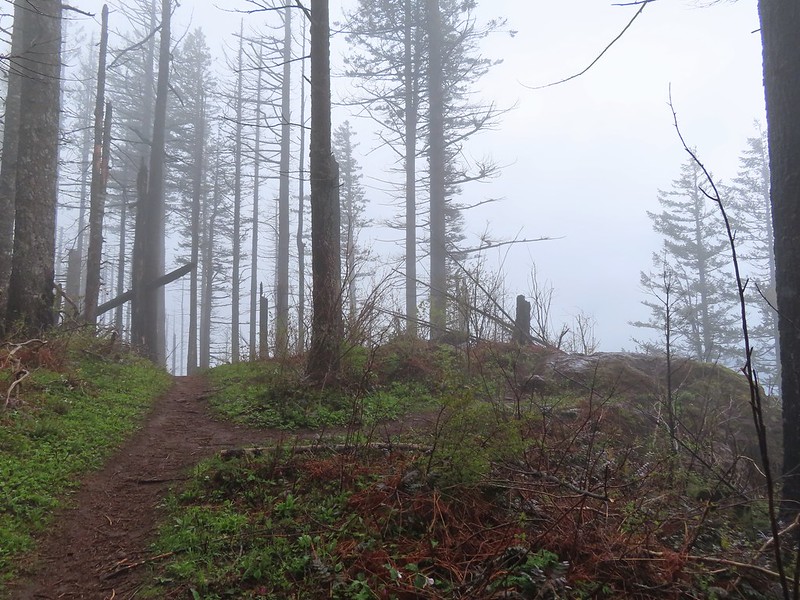 The first viewpoint was slightly off the trail.
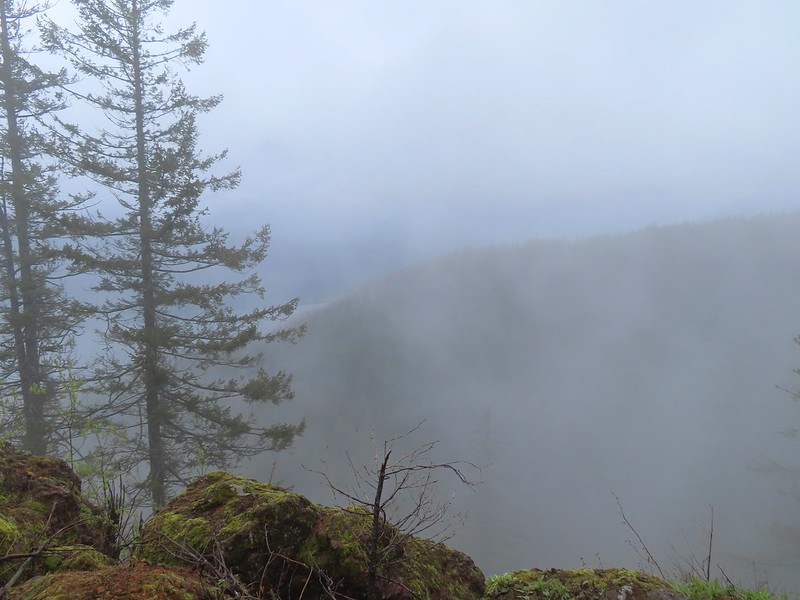 We could at least make out the Columbia River below.
 We were going in and out of fog ever few minutes.
 Archer Mountain making an appearance.
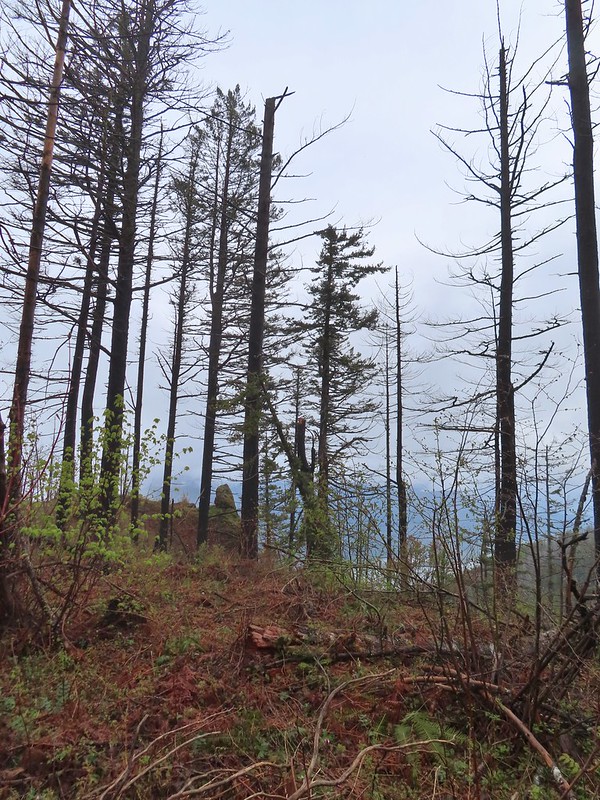 A trail led to the second outcrop which had a rock sticking up.

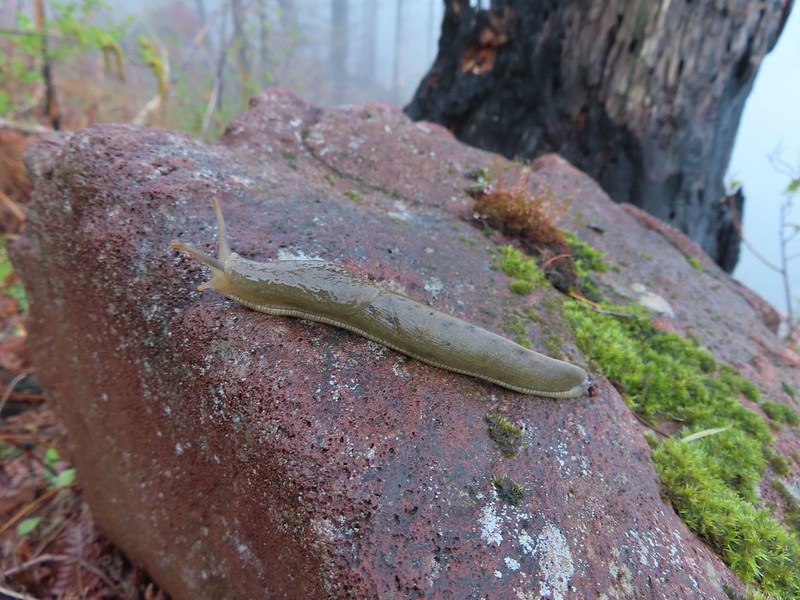 Company at the viewpoint.
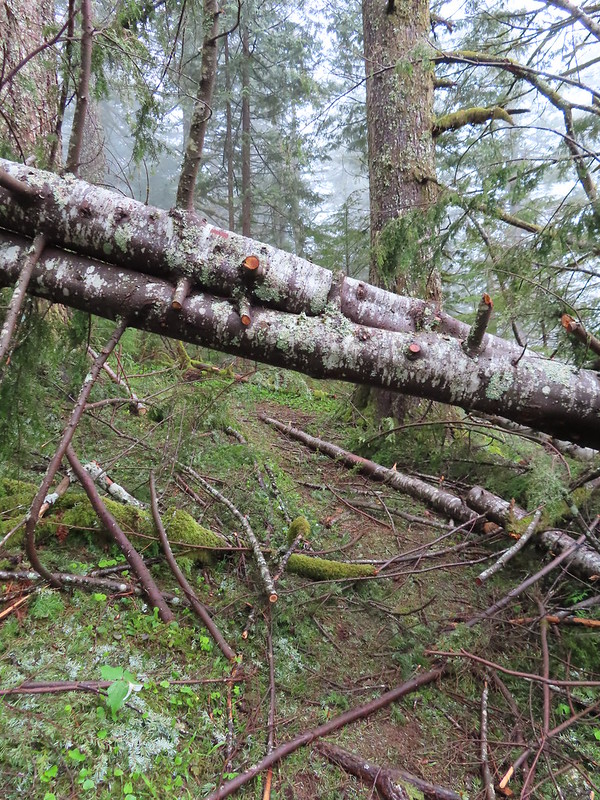 Something for the trail crew to work on.
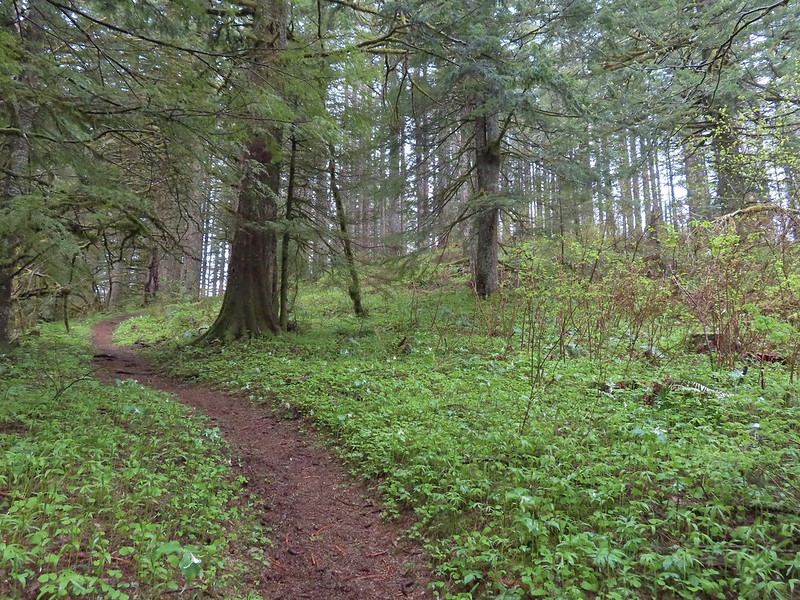 Nearing Devil’s Rest.
The Devil’s Rest Trail veered right at a fork and ended at a rock outcrop.
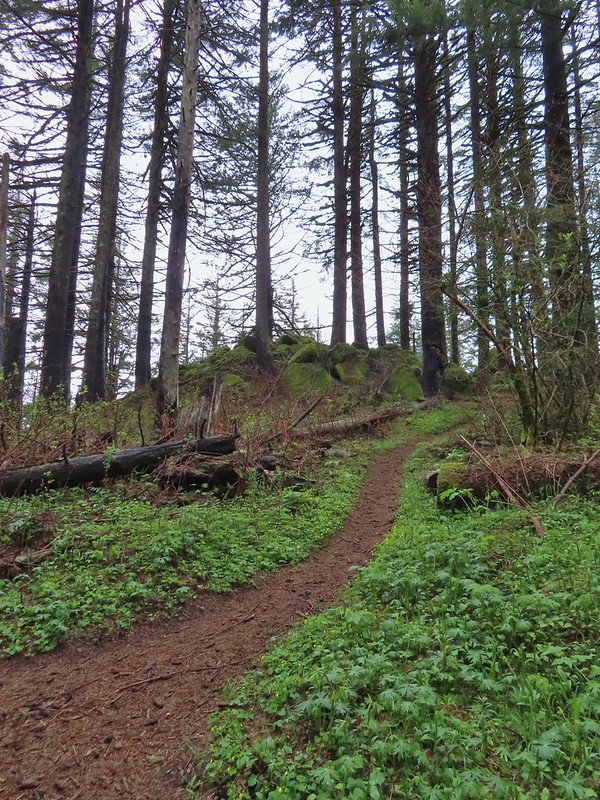
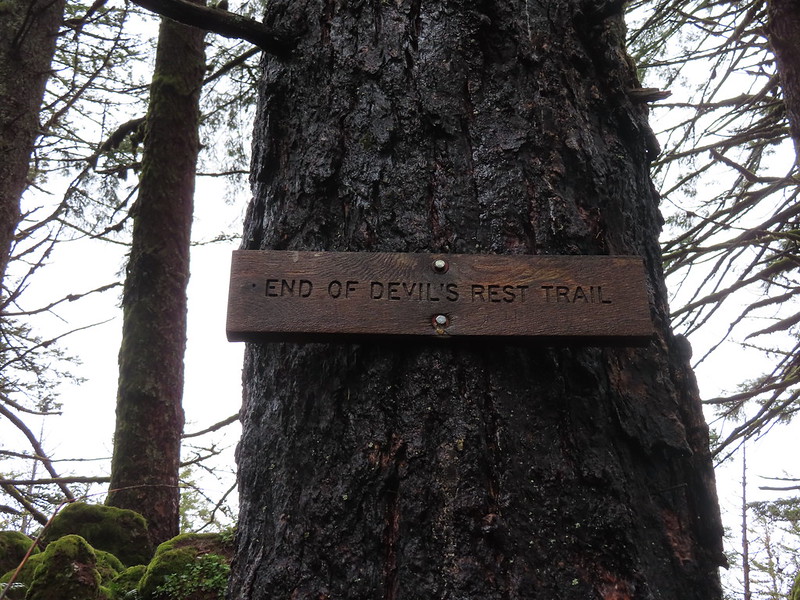

Even without the foggy conditions there wouldn’t have been much of a view from Devil’s Rest, the FS mentions that in their description, but it still makes for a nice destination.
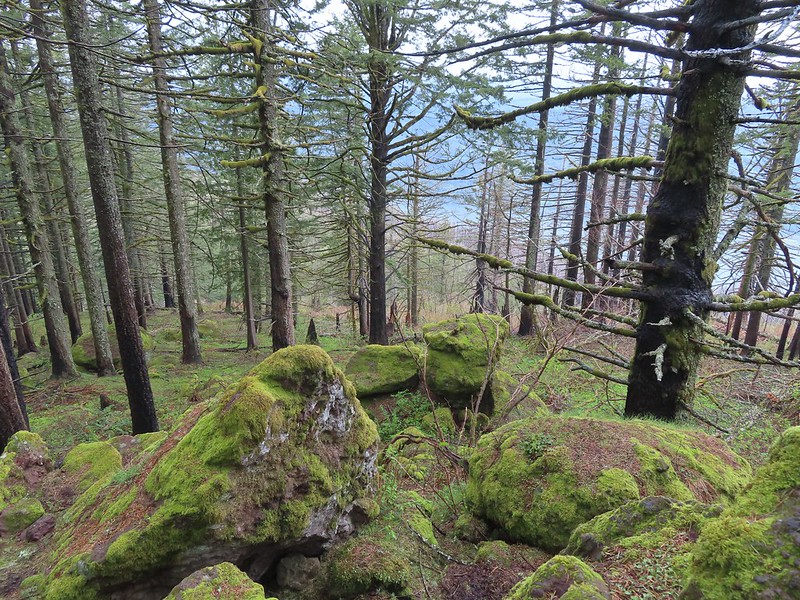
Earlier I mentioned that there were several potential places to start a hike to Devil’s Rest, but there are also several options for returning. The obvious being simply returning via the USFS Trail. To make a loop out of the hike there are a number of options. The steepest and most difficult would be finding the Primrose Path which reportedly heads directly downhill from Devil’s Rest. We didn’t see that trail, but we also weren’t planning on using it. We hiked back along the Devil’s Rest Trail to the junction below and turned right following a pointer for Angel’s Rest.
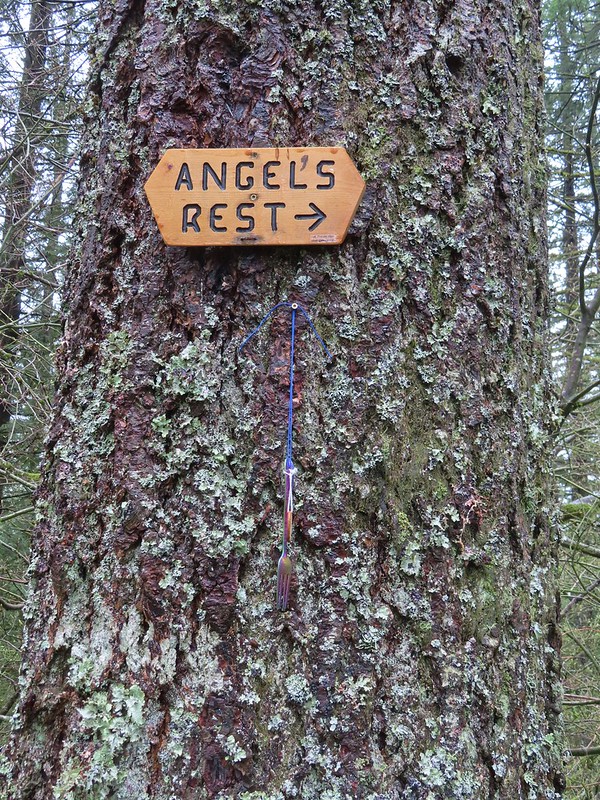
From there things got a little confusing for us. While we had our GPS and maps showing loops from both Oregon Hikers and NW Hiker none of them showed all of the current trails, but we didn’t realize that initially. This trail is part of the upper Foxglove Way Trail. 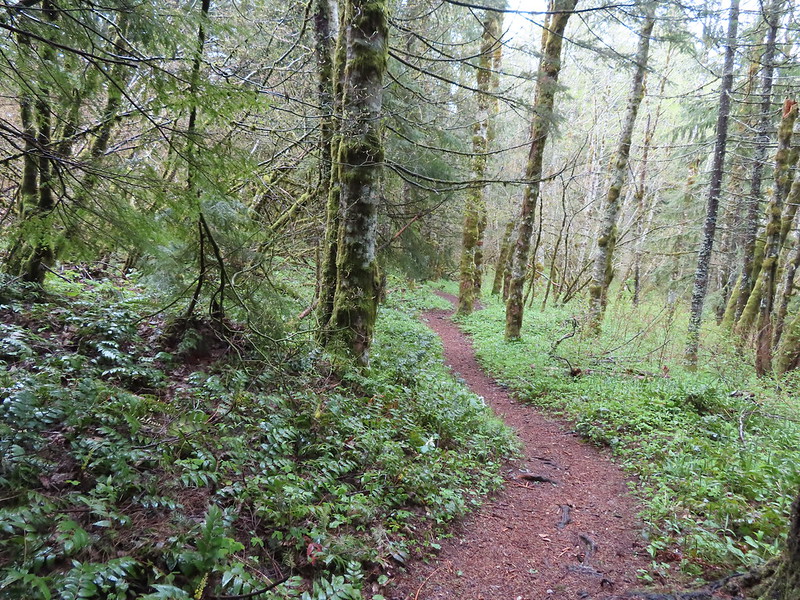
A short distance from the the first Angel’s Rest point we came to a fork in the trail with another Angel’s Rest pointer. This one saying to go take the left hand fork.
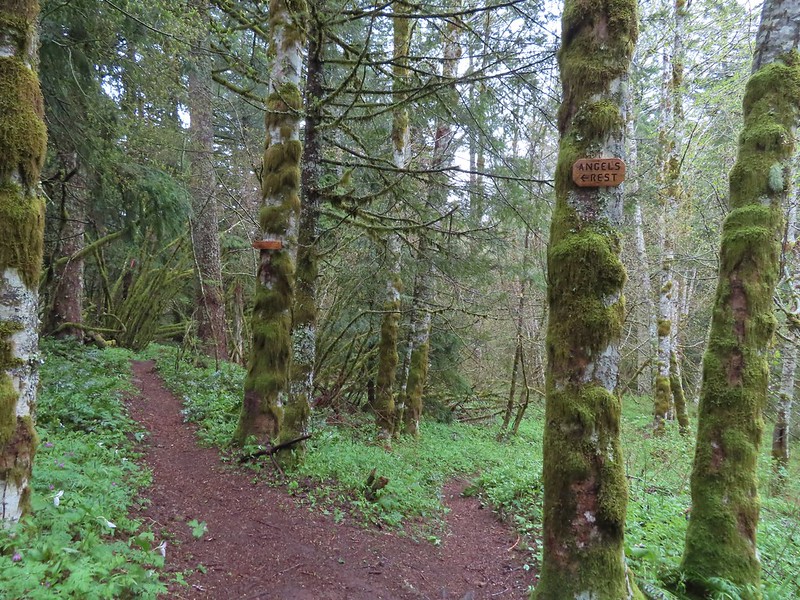
By going left we were now on a newer (22-23) route. This new trail is referred to as either the She Devil Trail or Red Shorts Cut Trail.
 The pointer says “To She Devil Trail” with Red Shorts Cut at the bottom but AllTrails and some more recent Oregon Hikers maps label this section the She Devil Trail.
Regardless of which is the official name it wasn’t on the maps we had but it took us a bit to realize we weren’t where we thought we were. As it turns out Red Shorts built this trail as a more gradual, albeit longer, option. This explained the Angel’s Rest pointer since this was his intended route. The trail itself was in great shape and easy to follow.
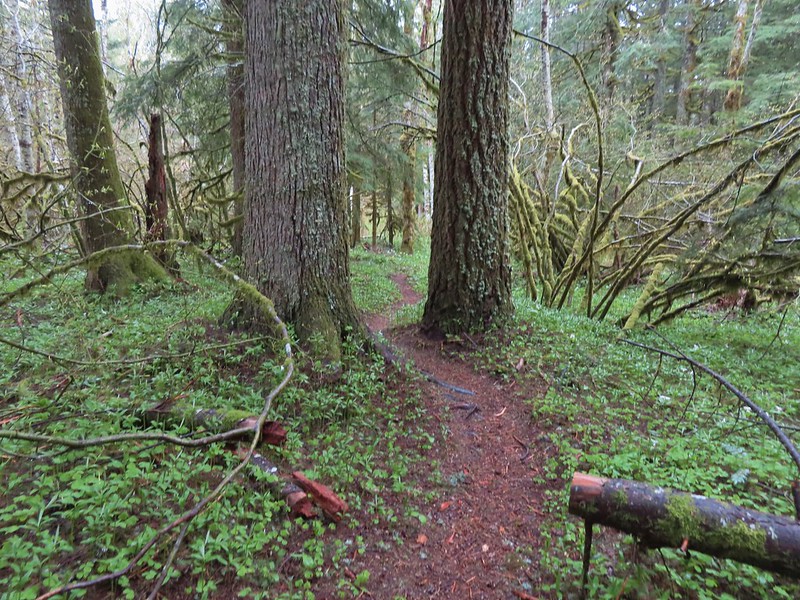

The first clue that we might not know where we were came when we passed a stake marking a less worn trail that simply said “Multnomah Basin Road” with a pointer.
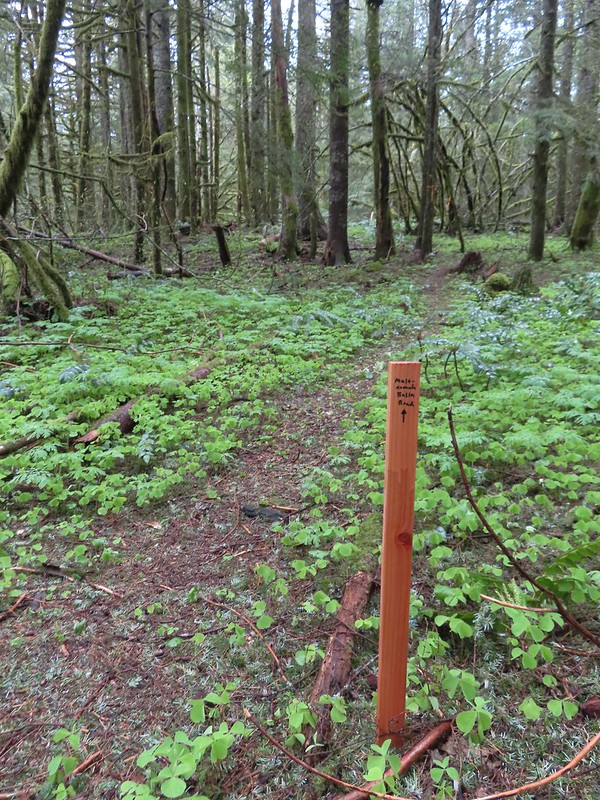
Post hike research revealed this was the Lil’ Devil Trail which connects to yet more trails. We correctly ignored this spur and continued on She Devil.

It wasn’t long before we passed another trail and pointer, this time on our right.
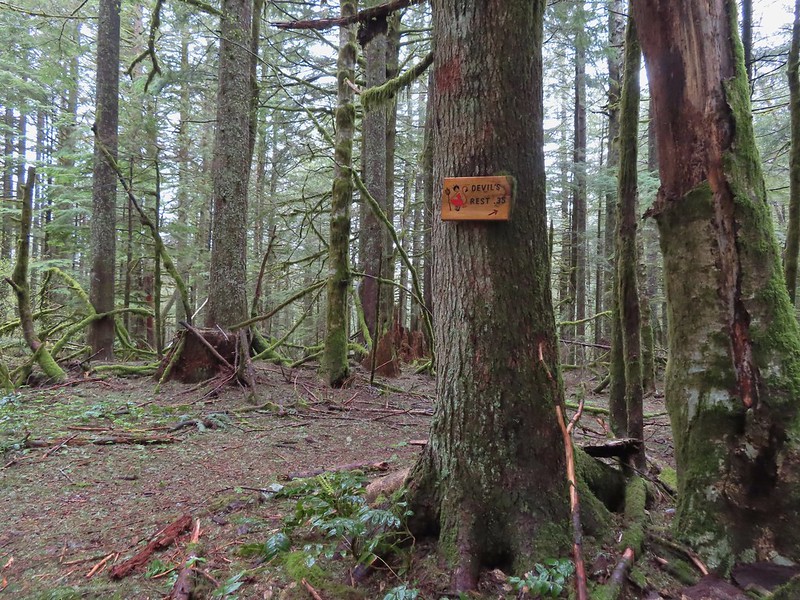
This turned out to be the She Devil – Devil’s Fork Trail junction. Taking the Devil’s Fork Trail would have saved us a fair amount of distance as it descends to the Foxglove Trail in 0.2 miles then continues another 0.4 to the Lily’s Lane Trail. Because we didn’t have all the existing trails on our maps we mistook this for a different trail altogether. Instead of turning right we stuck to the She Devil Trail.

We now had enough of a GPS track that we could compare it to the route shown on the Oregon Hikers/NW Hiker maps and see that something seemed off. Our track had headed too far to the SSW compared to the maps so when we came to the next split in the trail we veered right on a flagged trail.
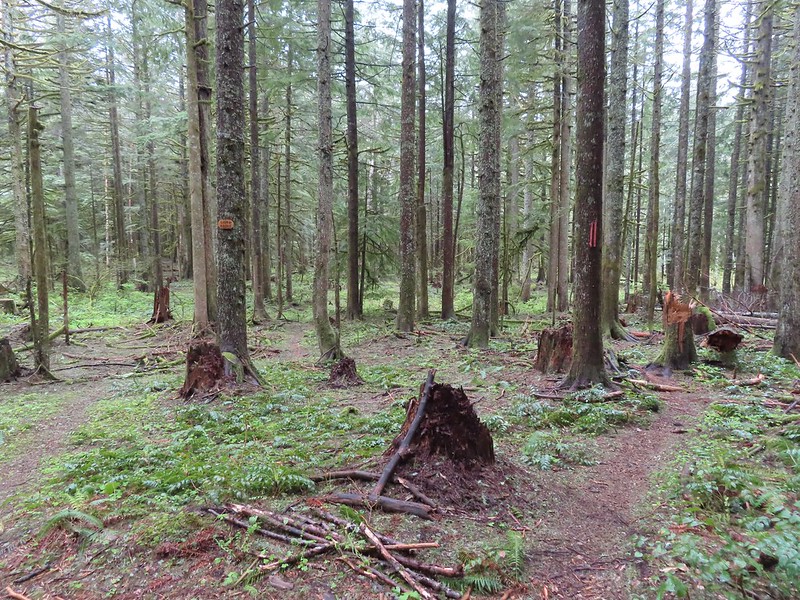 The pointer on the left is for Smith Road. We didn’t see any signs for the right-hand fork.
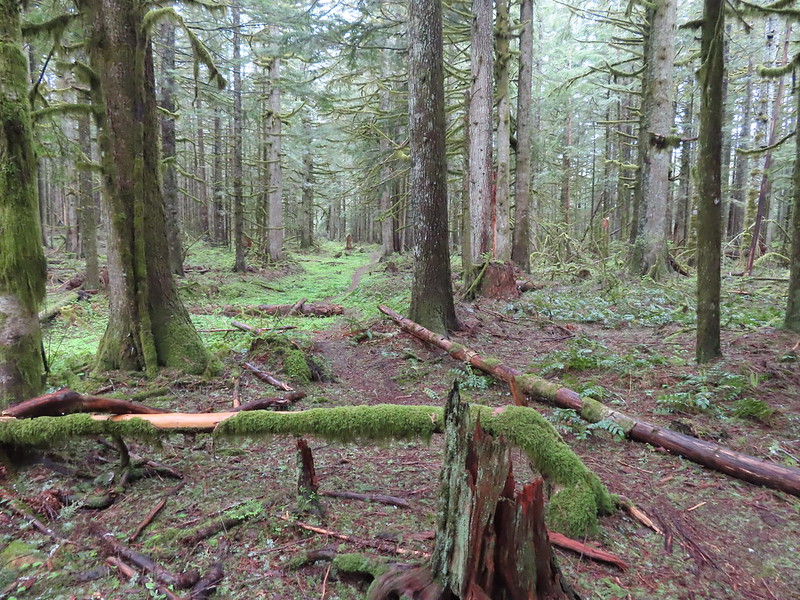
Despite not seeing a sign for the flagged trail we knew we didn’t want to continue heading SSW. This turned out to be the Red Shorts Cut Trail which slowly curved around to head NNW and meet up with the Foxglove Trail.
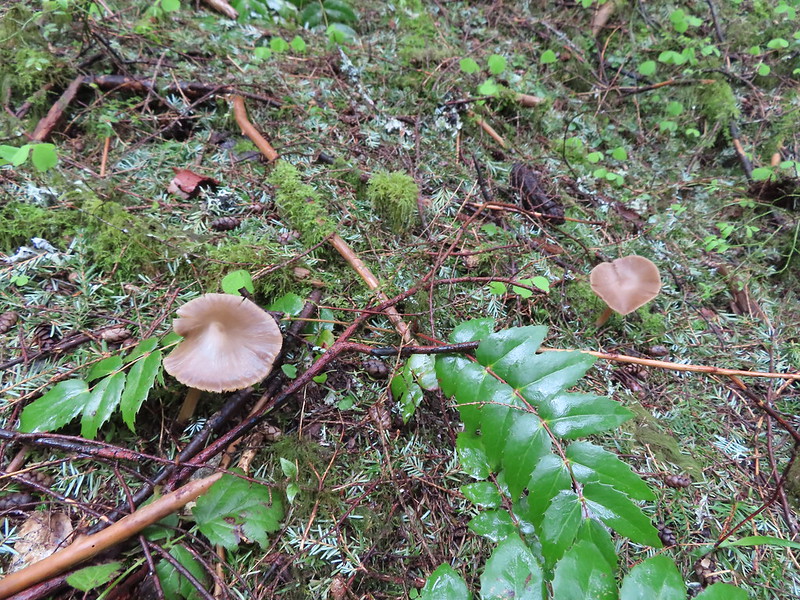 Mushrooms
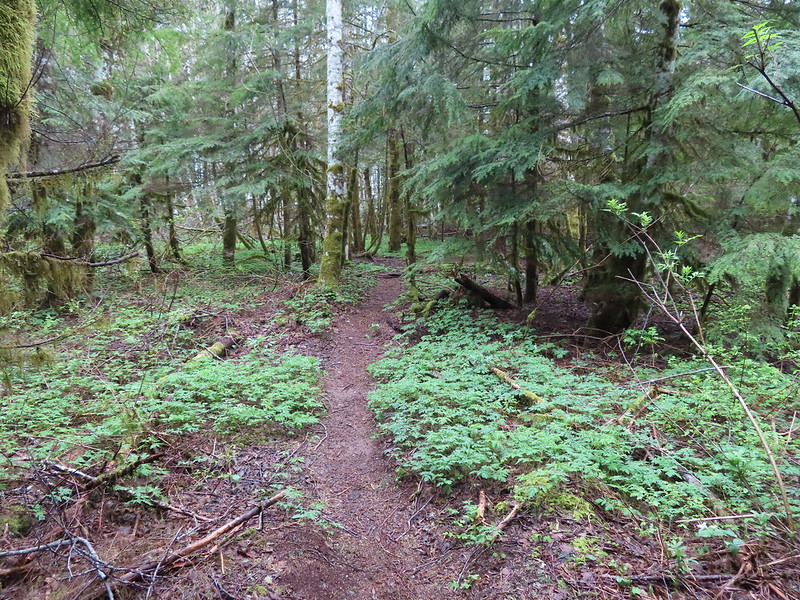
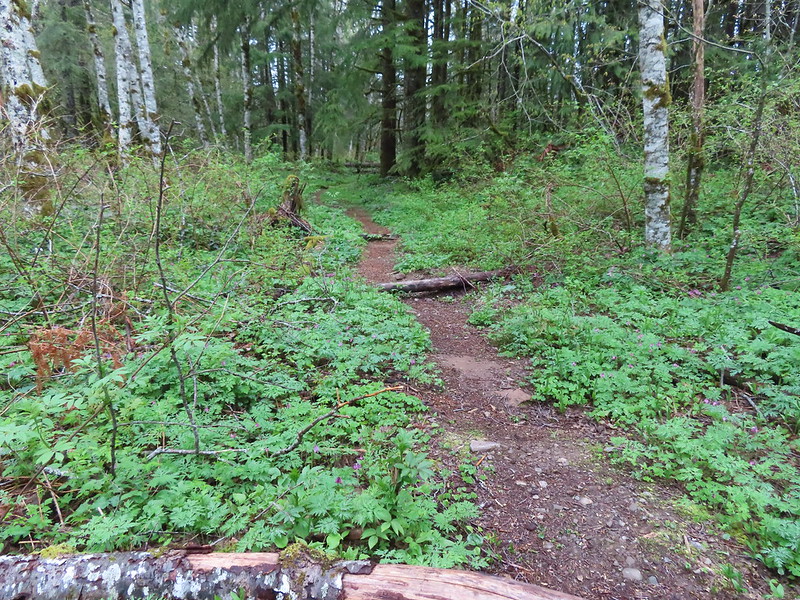
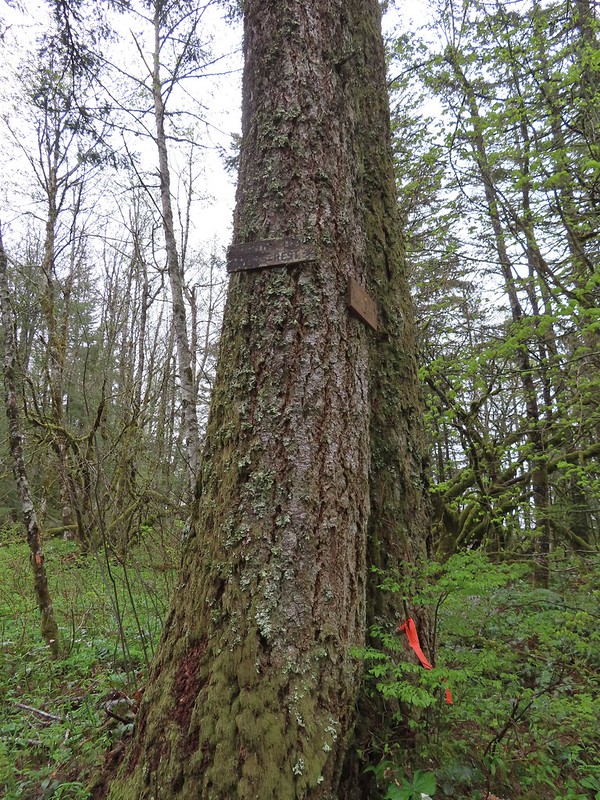
Approximately 0.4-miles along the Red Shorts Cut Trail we arrived at the Foxglove Trail where we were initially confused once again. We could continue in a NNW direction or turn right (ENE). We correctly, although not confidently, turned right onto the Foxglove Trail.
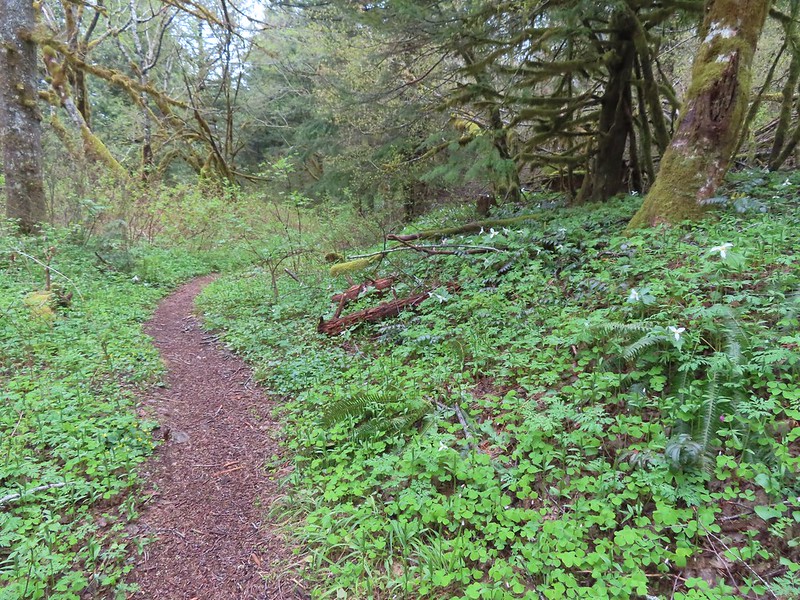

After a third of a mile we arrived at a 4-way junction.
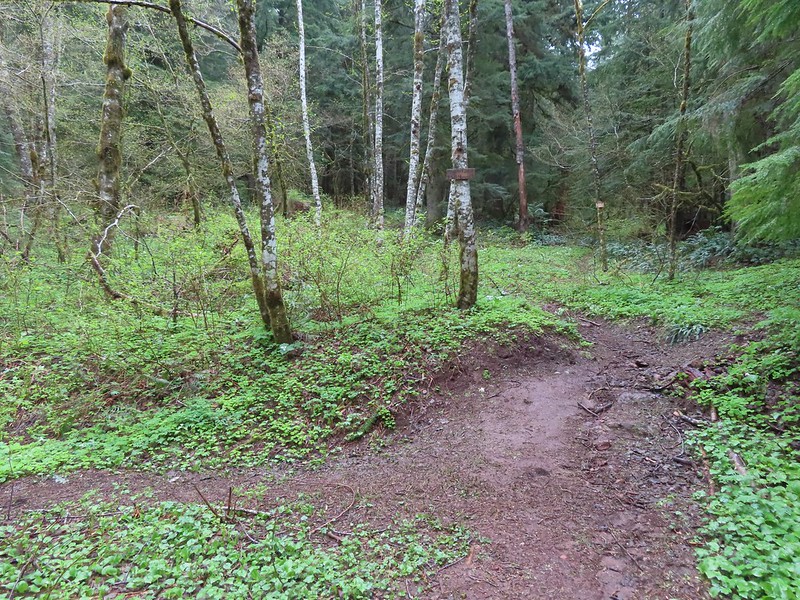
This was the Devil’s Fork Trail crossing the Foxglove Trail. In other words, had we taken the Foxglove Trail way back when we veered left on the She Devil Trail it would have led us here. Likewise had we taken the Devil’s Fork Trail when we stayed left on the She Devil Trail it would have brought us here. Regardless of which trail brought us to this 4-way junction following the pointer for the Wahkeena Trail was the direction we wanted to go.

We turned left onto the Devil’s Fork Trail which briefly followed an old road bed.
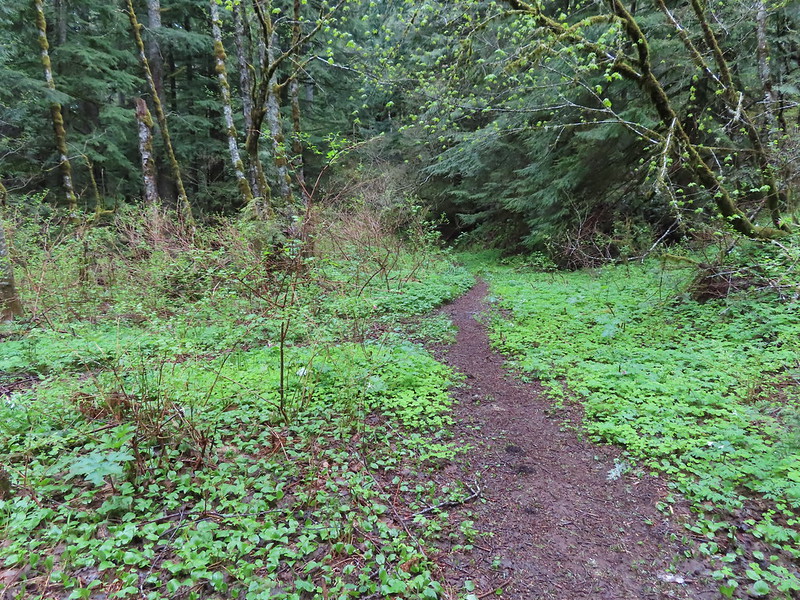

We passed the signed Devil’s Cut-off Trail a tenth of a mile from the 4-way junction. This is the trail we mistook the upper portion of the Devil’s Fork Trail for. The cut-off leads over to the Primrose Path.
 The Devil’s Cut-off Trail on the right.
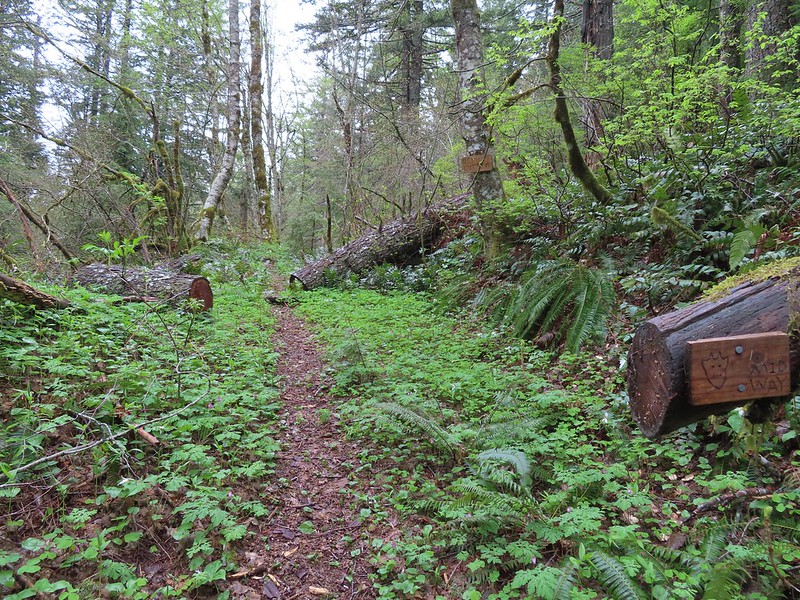 Signage on the Devil’s Cut-off Trail.
Sticking to the Devil’s Fork Trail brought us to the Lily’s Lane Trail in another third of a mile.

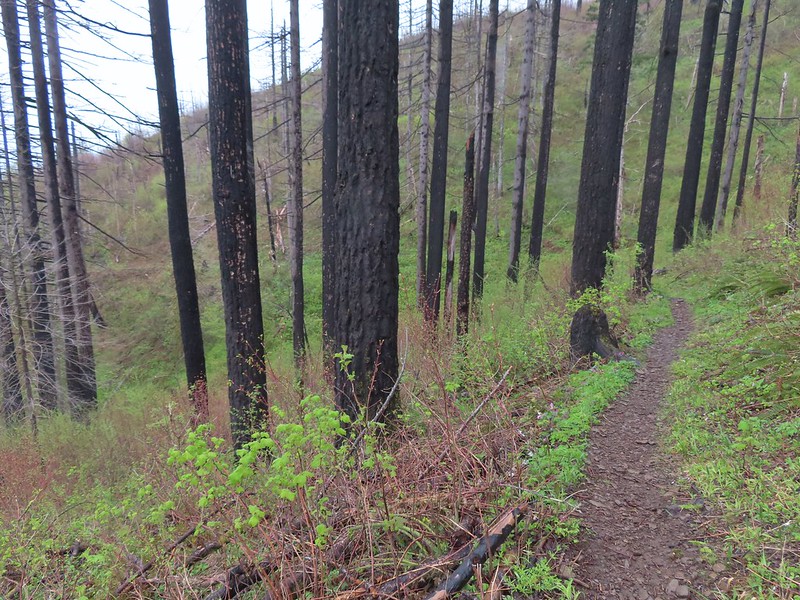
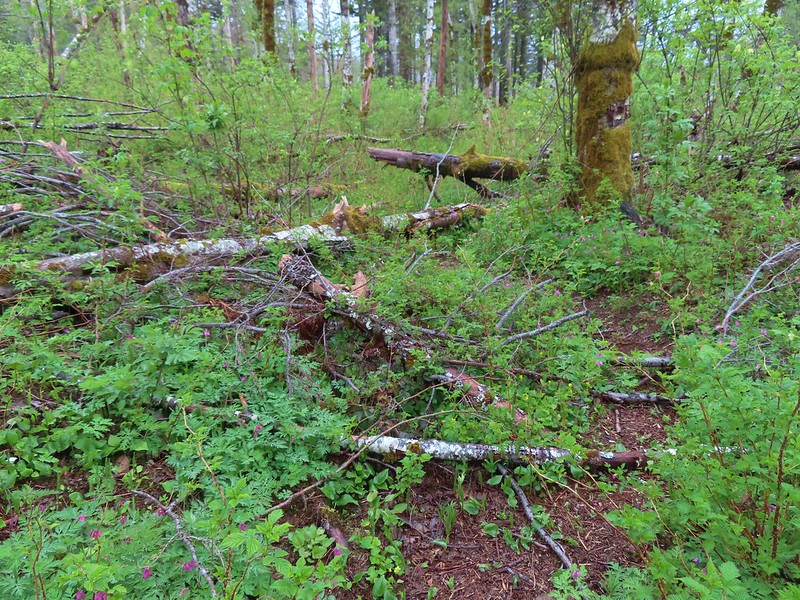 This was honestly the most debris/blowdown we encountered on the user-maintained trails.
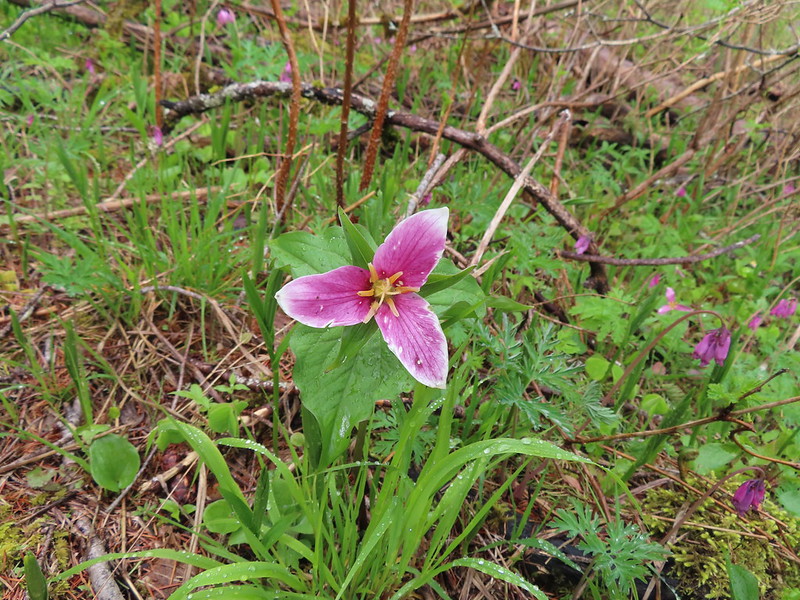
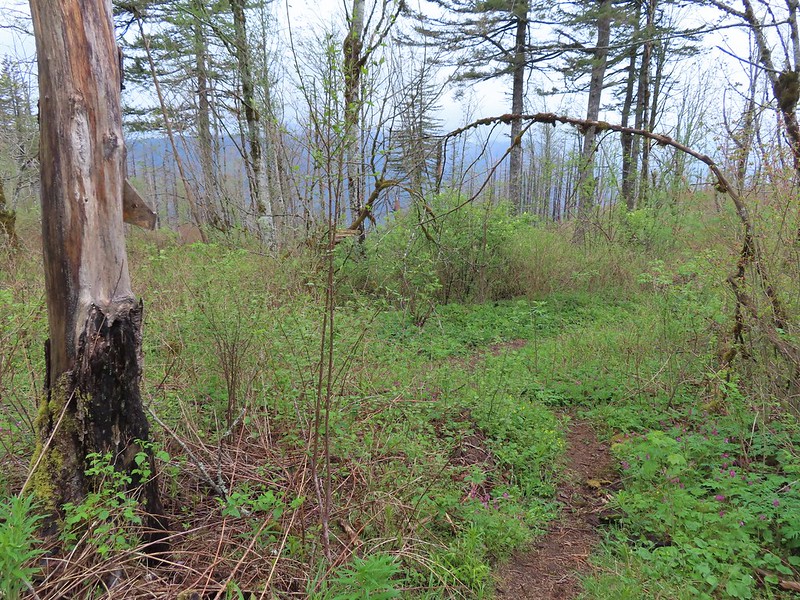
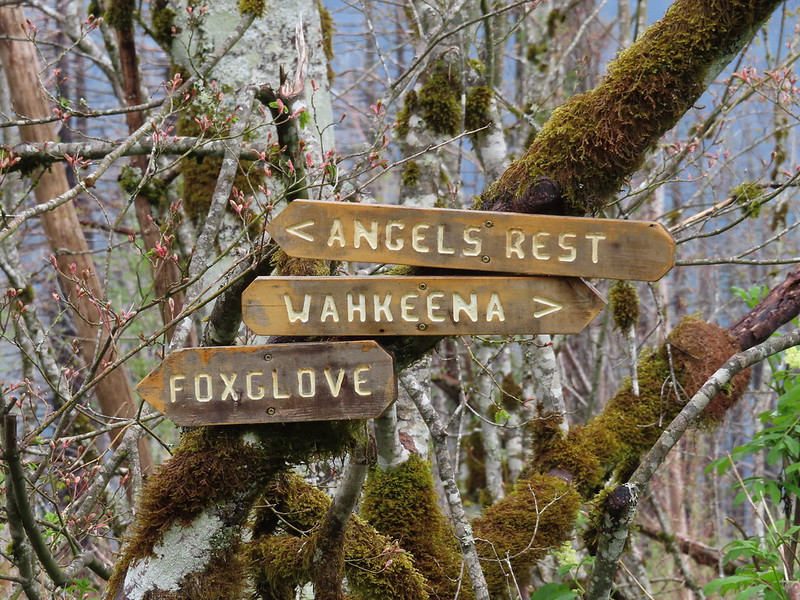 Pointers at the junction with the Lily’s Lane Trail.
 Devil’s Fork Trail signs at the junction.
We turned right on Lily’s Lane for 0.2-miles to its end at the Angel’s Rest Trail.
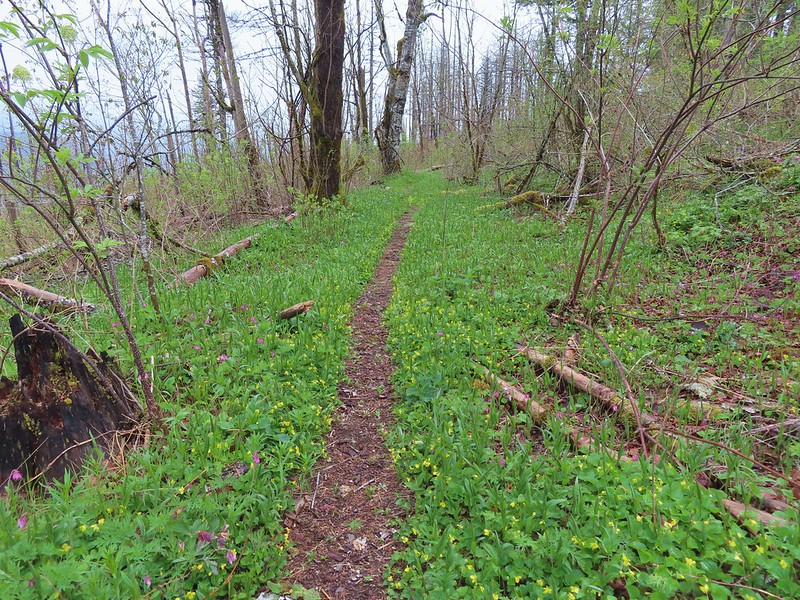
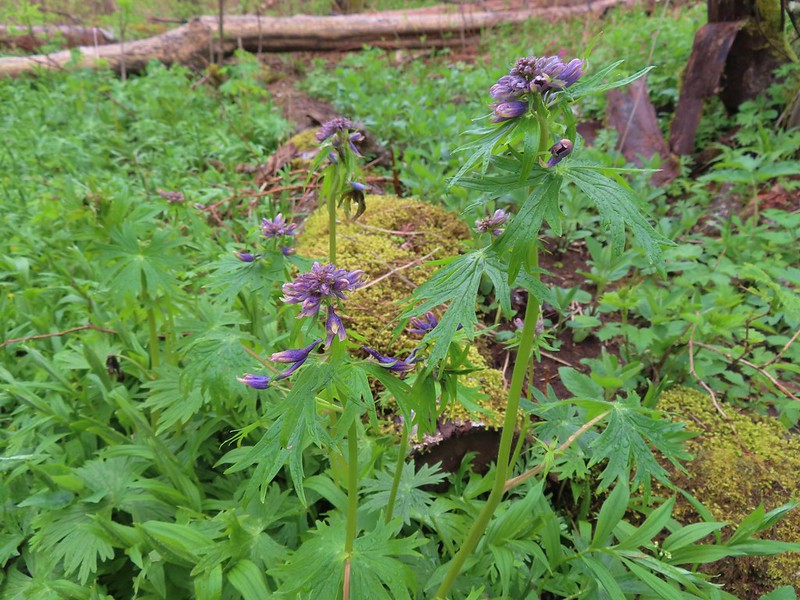 Columbian larkspur getting ready to bloom.
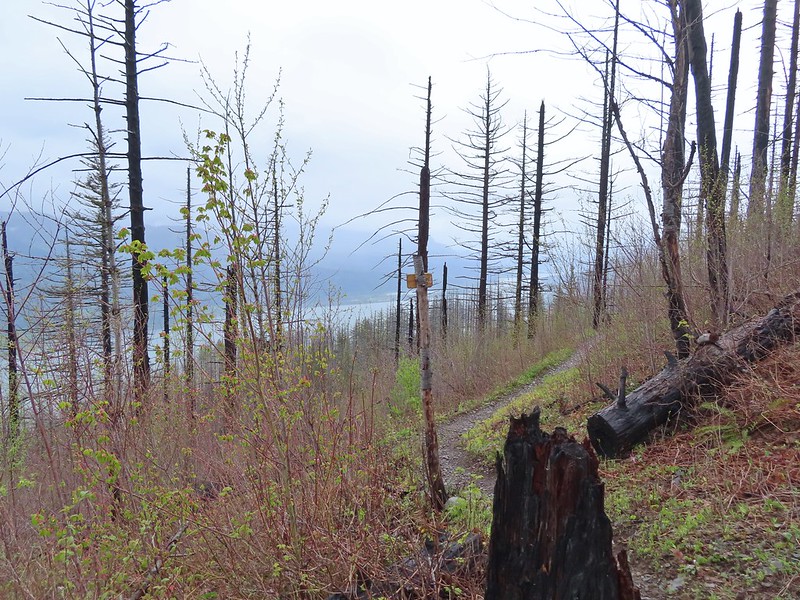
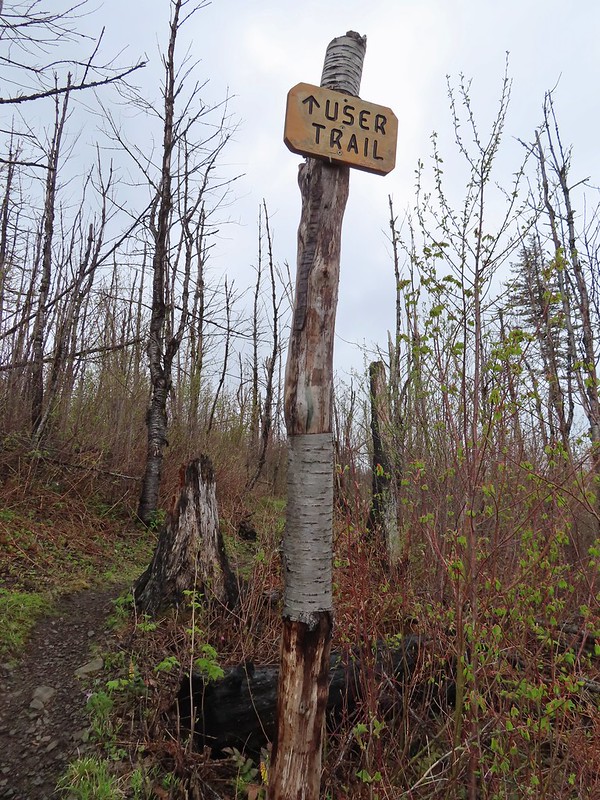 Sign at the Lily’s Lane/Angel’s Rest Trail junction.
We turned right on the Angel’s Rest Trail and followed it for 1.5-miles back to the Wahkeena Trail.
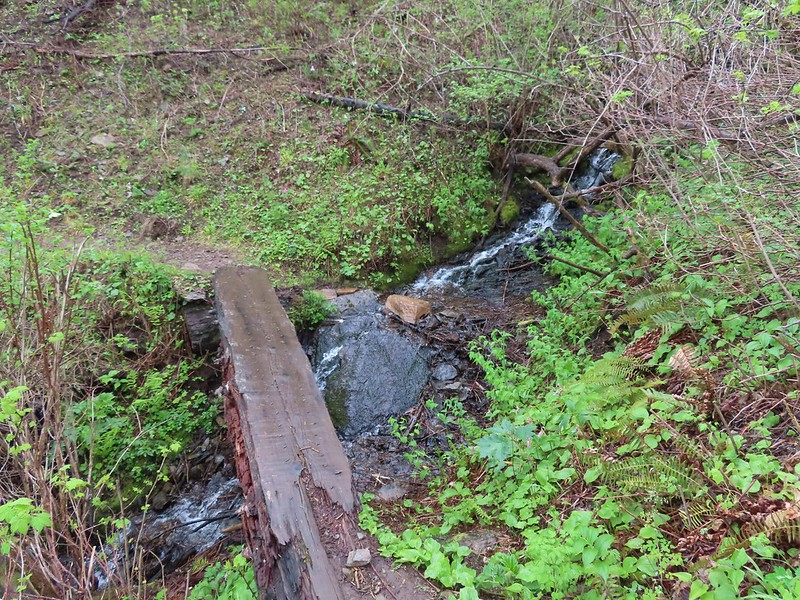 Mist Creek Footbridge.
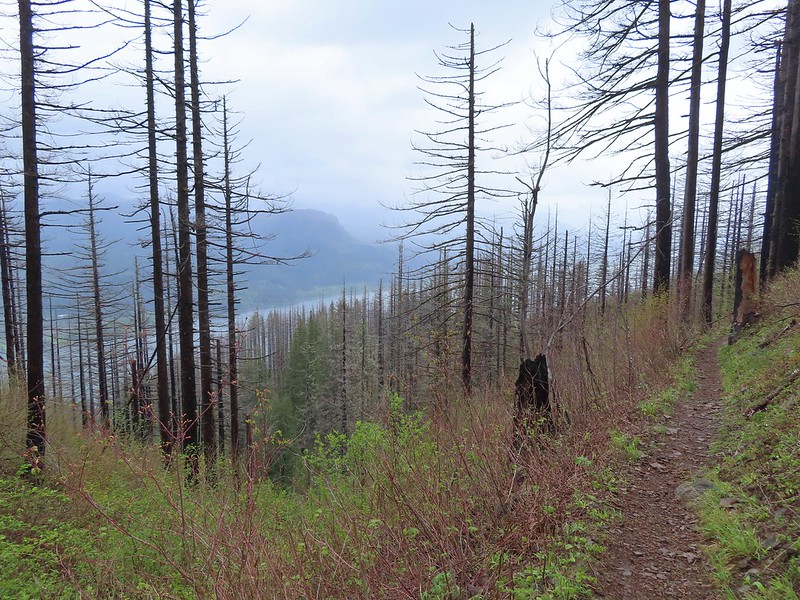
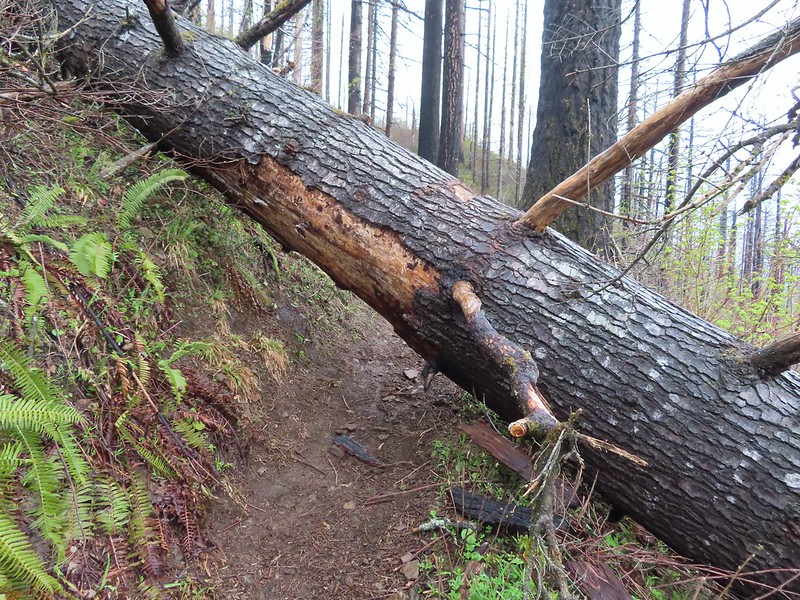 The first of two logs that required crawling under.
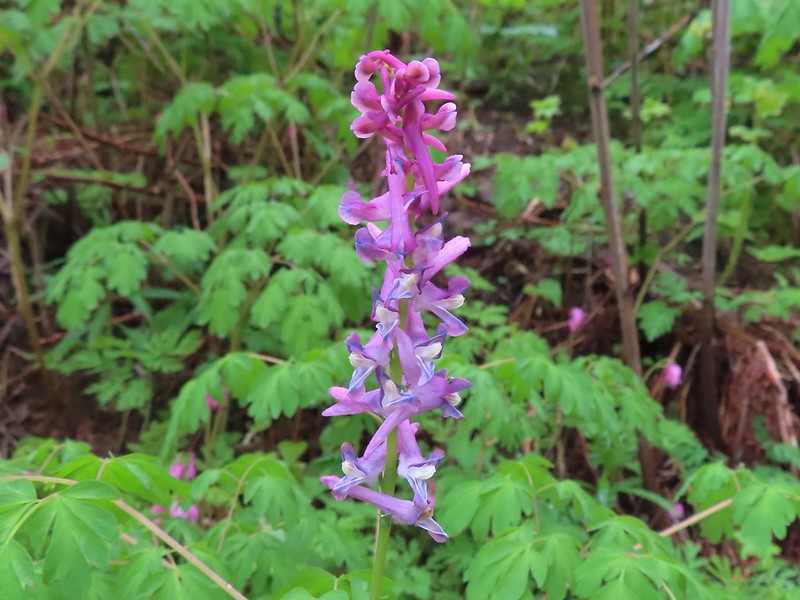
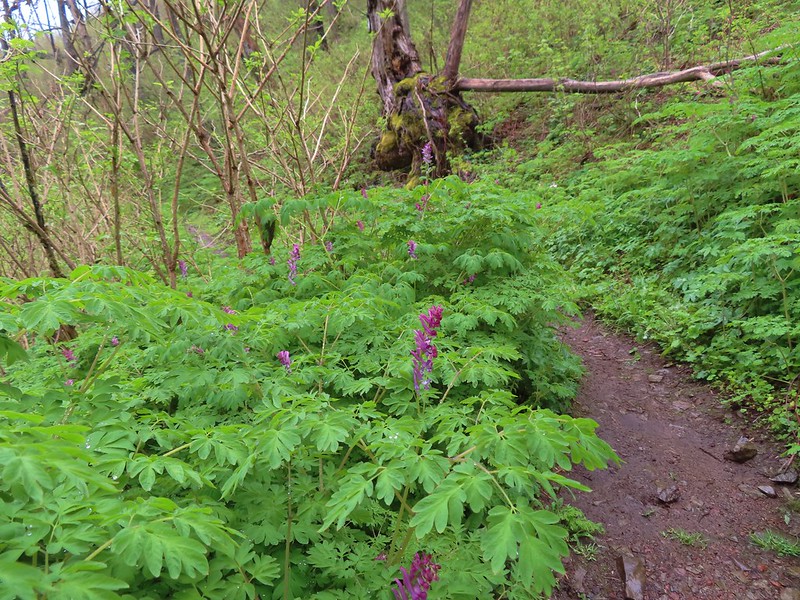 There was a short section filled with Scouler’s corydalis.
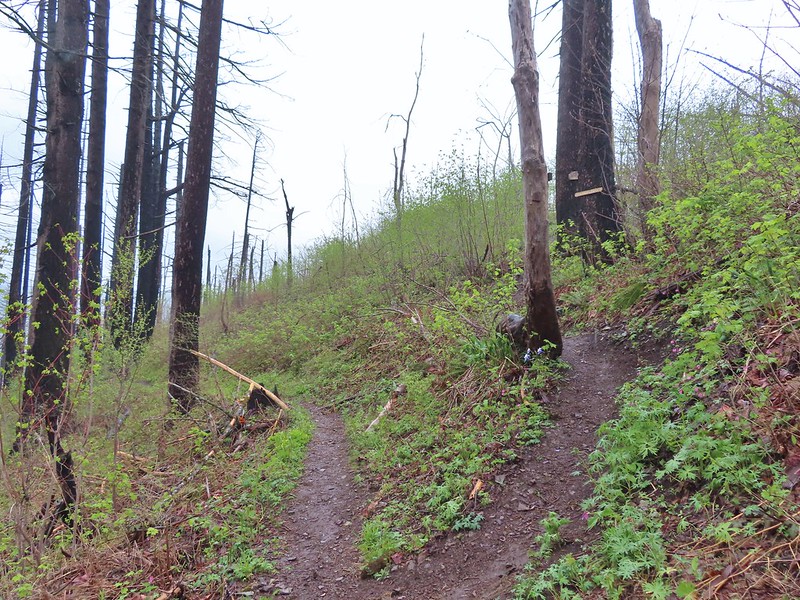 The Primrose Path joining from the right.
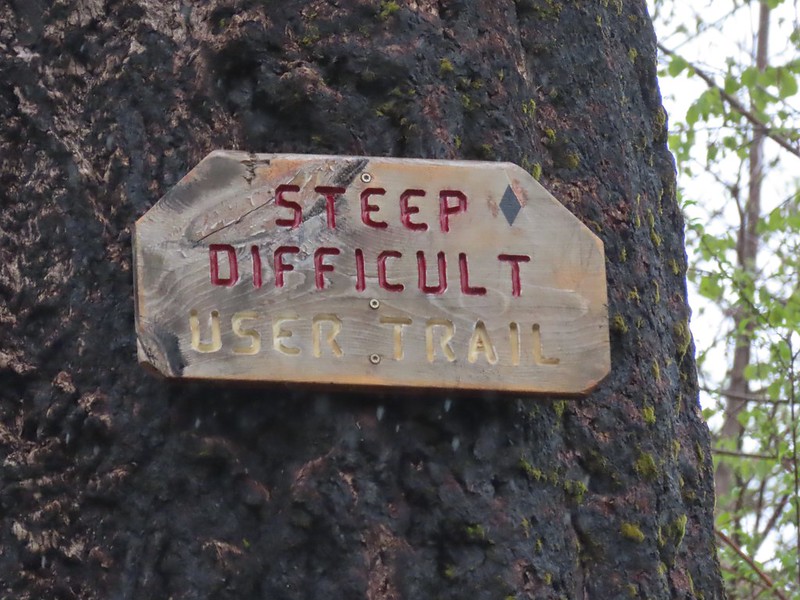 Primrose Path warning.
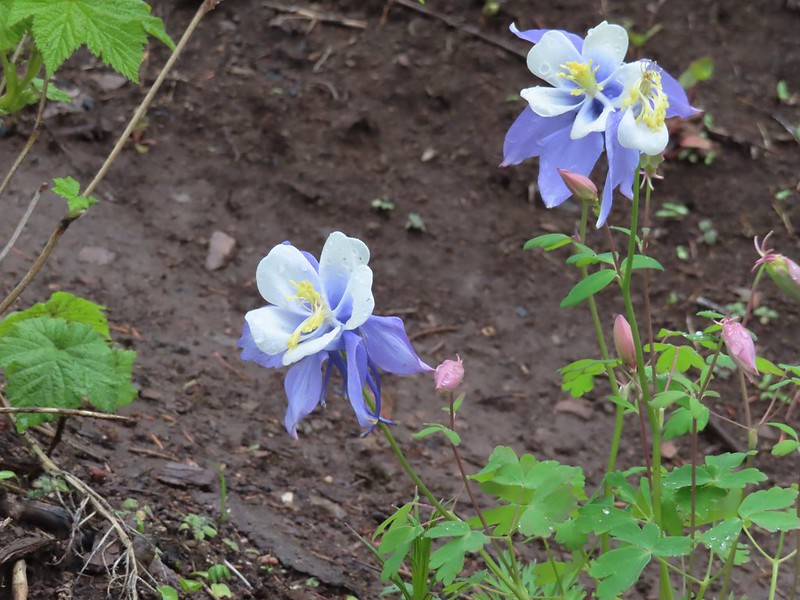 Does anyone know the story of this columbine at the Primrose junction? It has to be non-native.
 Wahkeena Creek from the Angel’s Rest Trail.
 Valerian
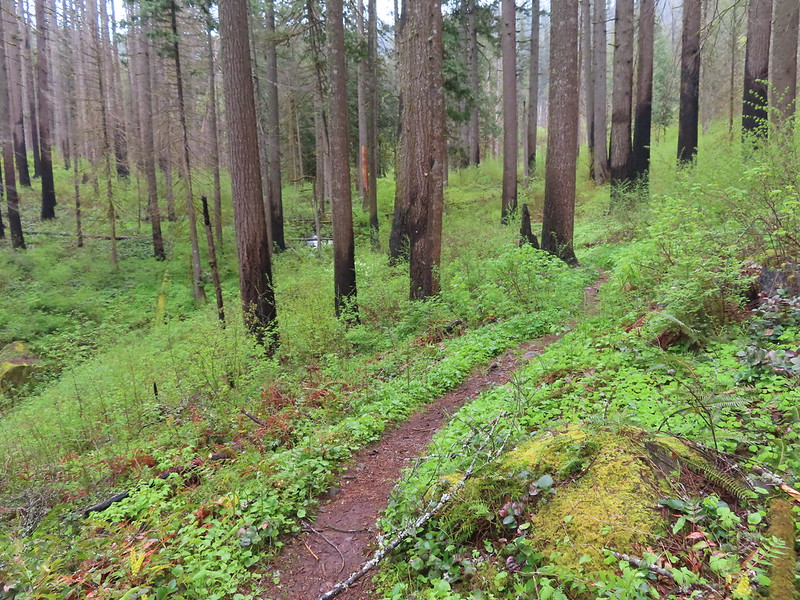
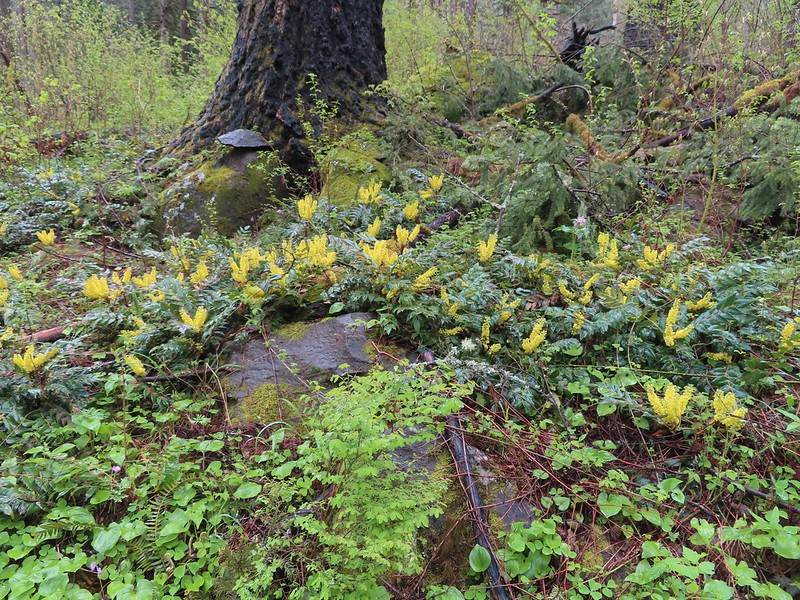 Nice display of Oregon grape near Wahkeena Springs.
 Arriving at Wahkeena Springs.
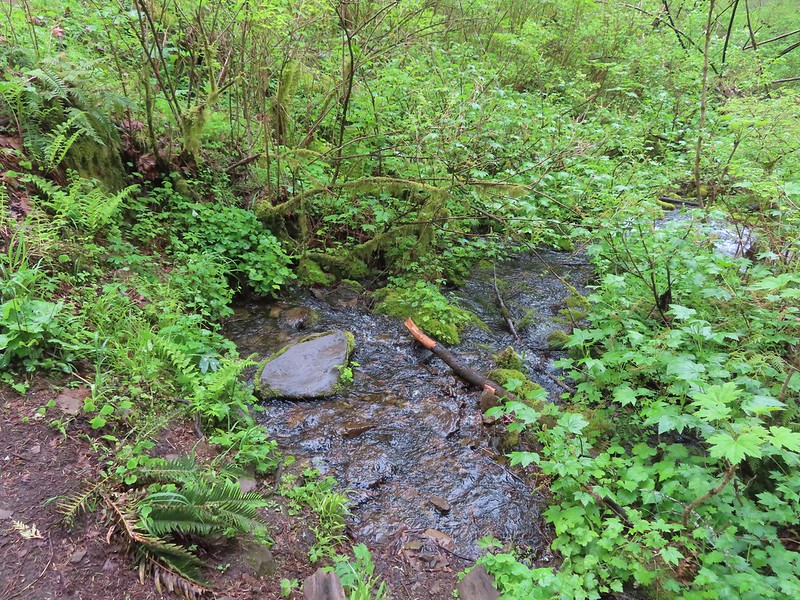 Wahkeena Springs
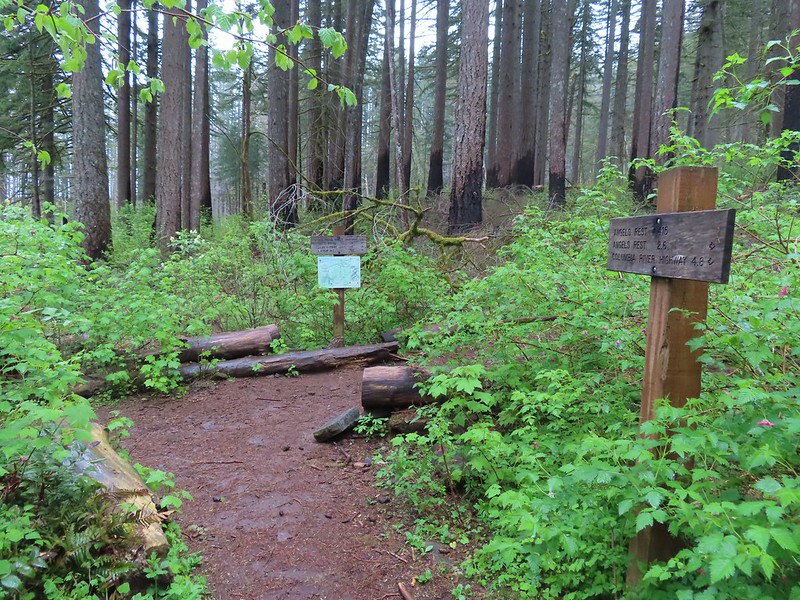 The Wahkeena Trail junction is a very short distance from Wahkeena Springs.
We turned left onto the Wahkeena Trail and began our decent. It was busier than it had been that morning, but it still wasn’t crowded. The less-than-ideal weather seemed to have worked in our favor. Aside from a couple of brief light showers we’d stayed dry and couldn’t have hoped for better given the forecast. We carefully navigated the tricky slides and made our way back down to Wahkeena Falls.
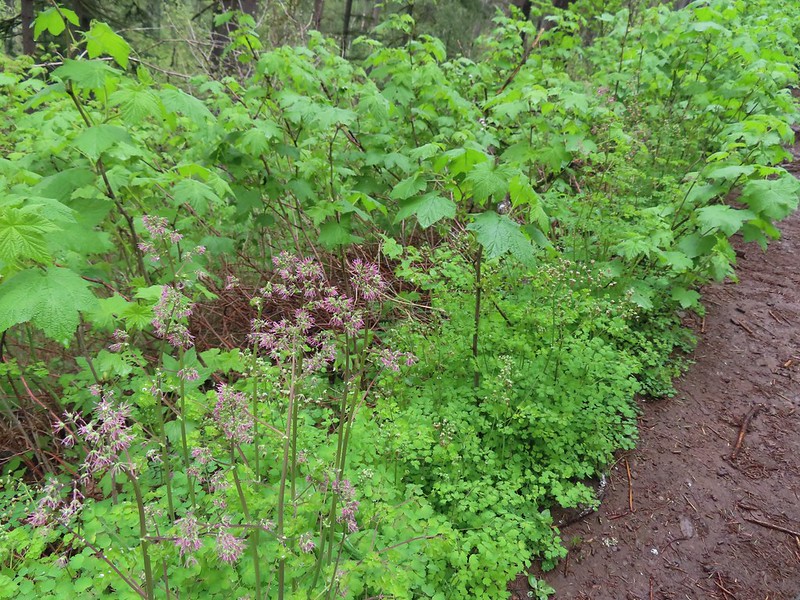 Both female and male versions of western meadowrue. Today was by far the most meadowrue we’d ever seen on a hike.
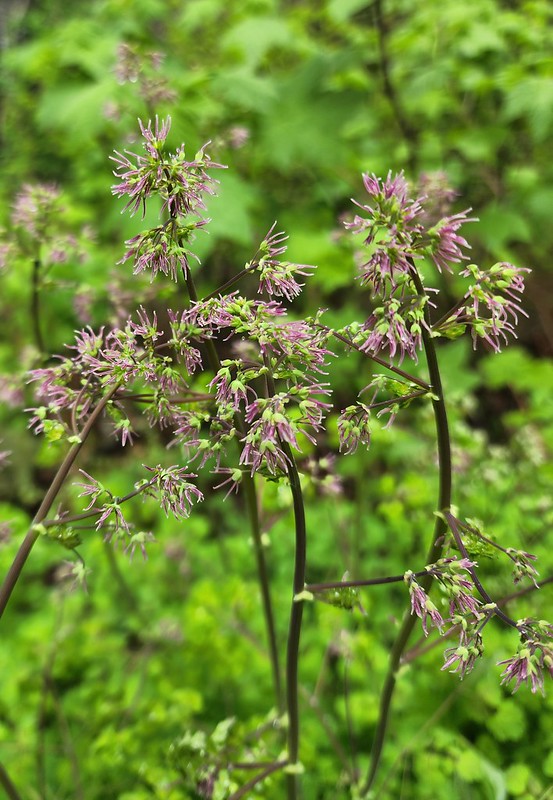 Female
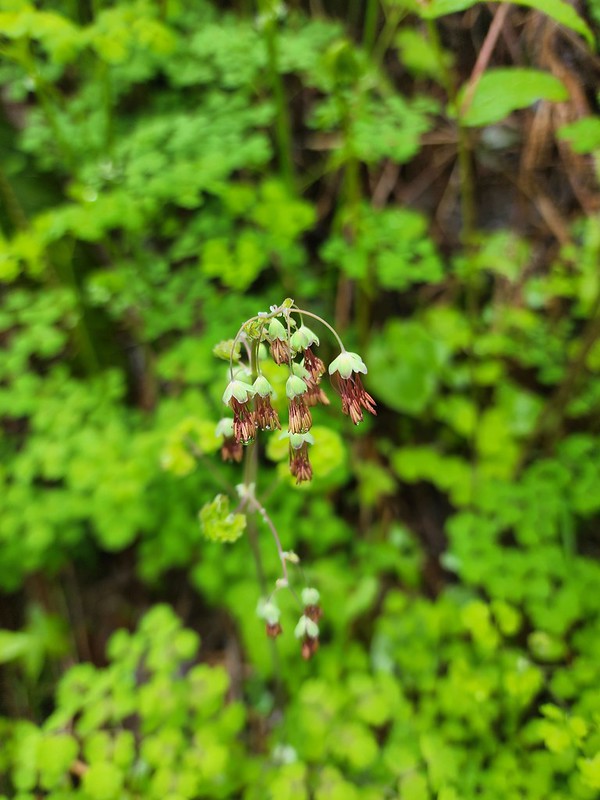 Male
Male
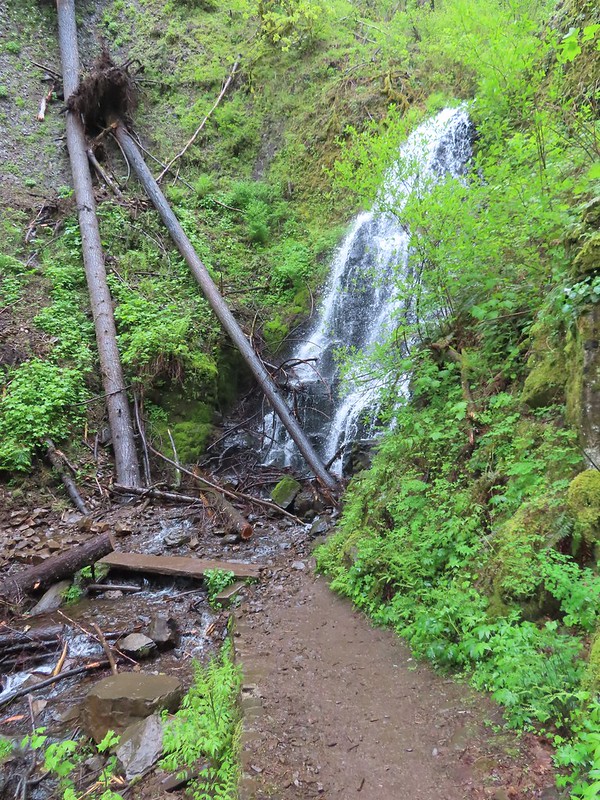 Fairy Falls
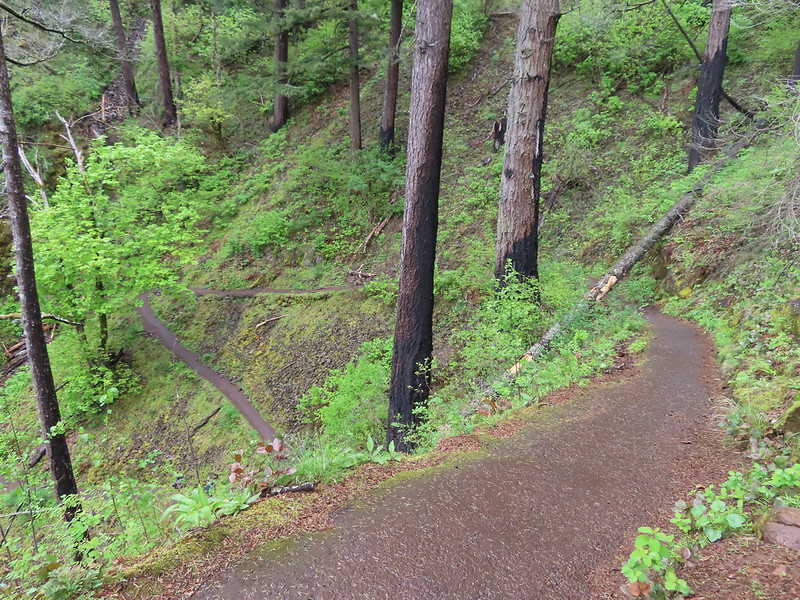 Starting down the switchbacks.
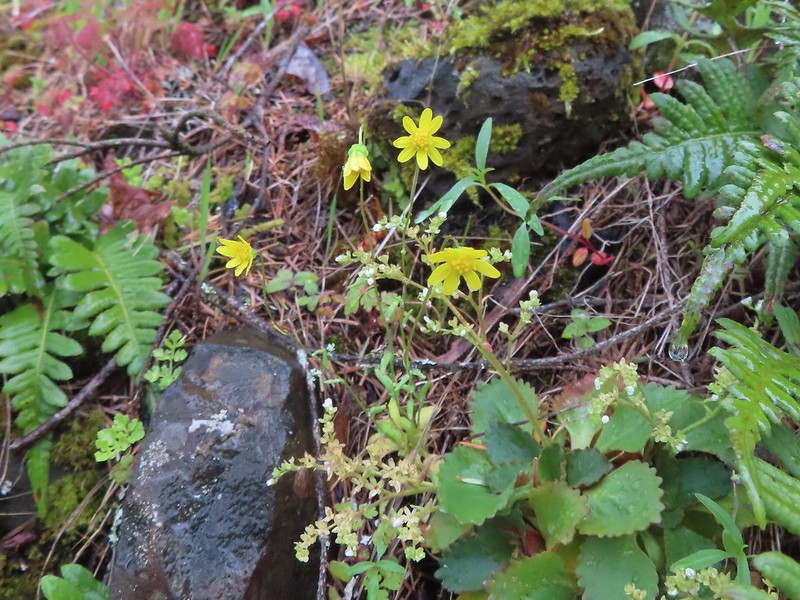 Gold stars
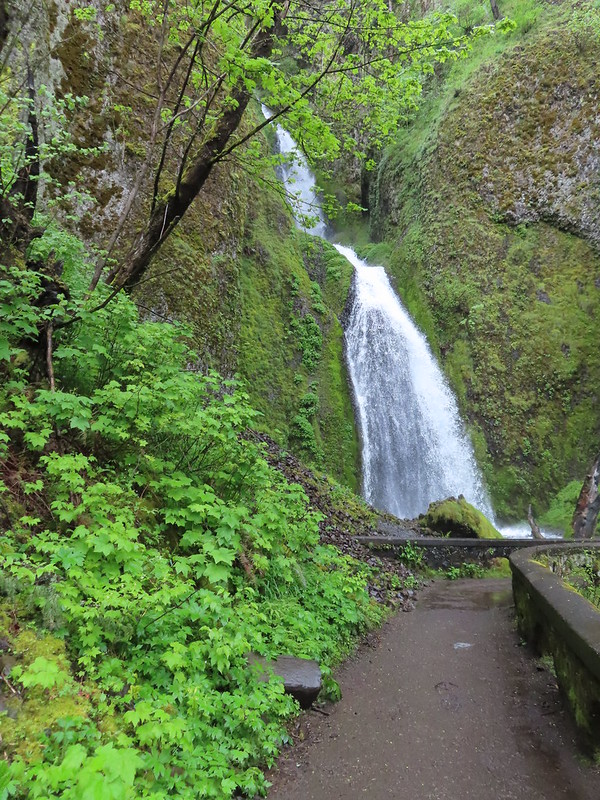 Wahkeena Falls.
The version of the loop that we did came to 9.4-miles with 2350′ of elevation gain.

This turned out to be a great day in the Gorge with the first two waterfalls being more than worth the quick stops and the Devil’s Rest hike added a good amount of adventure. I was saddened to learn of Red Shorts passing when I got home and started researching what we’d done wrong. I was glad to have taken the route that we wound up with though as it was a testament to his hard work and effort.
Flickr: Sheppard’s Dell, Bridal Veil Falls, and Devil’s Rest


 The best of the color was while I was still at the trailhead.
 Checkerbloom
 Common madia
 Meadow checker-mallow and vetch
 The platform
 Too late for any color.
 There always seems to a western meadowlark or two on Mt. Baldy.
 Spotted towhee
 I went left to hike the loop clockwise.
 Moffitti Marsh in the distance.
 Geese flying over.
 Snake in the grass.
 Pied-billed grebes
 Common yellowthroats
 Gadwalls
 Moffitti Marsh
 Dove
Dove


 House finch
 Swallow
 Sparrow

 Crow
Crow Goose family
 Common yellow-throat (female)
 Roses
Roses
 Columbine
 White-crowned sparrow
 Ookow
Ookow Tolmie’s mariposa lily
 Waxwing


 Cottonwood Pond is in the lower left corner.


 The yellow-headed blackbirds were particularly noisy.
 A cinnamon teal in front of two mallards?
 This loop was 3.4-miles.
 Grizzly Mountain from Pond 4.
 Killdeer
 One of the interpretive signboards ahead.
 Goose family
 There were plenty of benches to enjoy the views from.
 Mallards
 Cinnamon teal
 Must be a green-winged teal but the angle of light made the patch on his head look blue.
 We’d never seen so many killdeer in one area.
 Spotted sandpipers
 Brewer’s blackbird
 Swallow
 Pollinator garden
 Ring-necked ducks
 Wilson’s phalarope
 Yellow-headed blackbirds
 American coot
 Adolescent geese
 Dove
Dove Gadwalls
 Female yellow-headed blackbird
 Pair of bucks.
 Ruddy ducks
 Red-winged blackbird harassing an osprey.
 Gray Butte
 A pair of hawks.
 Not birds.
 Marsh wren
 Great blue heron
 Observation deck at Pond 10.
 Another marsh wren.

 Heading back to the parking area.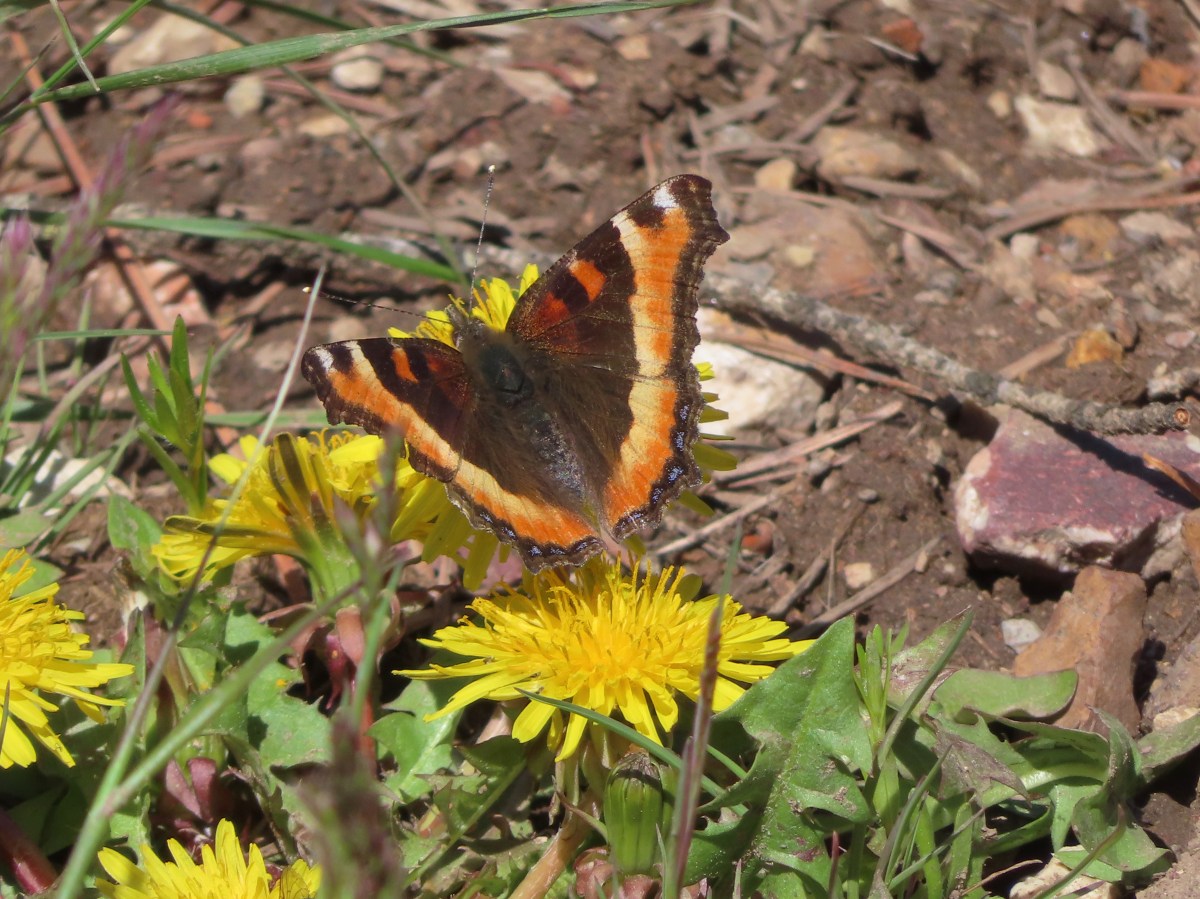
 Sign for the trailhead along FS21.
 This mud and torn up area was why we chose the shoulder instead.
 Arnica near the trailhead.

 Broomrape
 Larkspur
 Death camas
 Lomatium and few-flowered pea-vine
 Lupine
 Woodland star
 Oregon sunshine
 Violet
 McClellan Mountain, Moon Mountain and Fields Peak (
 Balsamroot
 The clearer track to the left leads to Tupper Butte in approximately 0.3-miles. We continued straight on the Madison Butte Trail.
 The Strawberry Mountains with Strawberry Mountain (
 Glacier lily
 The fence in the distance.
 Huckleberry
 Mt. Hood
 Old man’s whiskers
 Ball-head waterleaf
 Small bluebells
 Paintbrush
 Trail marker on the tree.
 One of two fresh piles of scat along the trail.
 The markers were helpful because the trail was quite faint at times.
 Slender phlox
 Shooting stars
 Rock outcrop along the trail at the 2.1-mile mark.
 View from the rock outcrop.
 Larches

 Chocolate lily
 Lance-leaf spring beauty
 Violets
 Madison Butte from the trail.
 Bottle Spring
 Pond below the spring.
 Glacier lilies
 Trail sign at Madison Butte Road.
 Blue-eyed Mary
 The
The  Mt. Jefferson poking up in the distance.

 Wild onions


 The Strawberry and Aldrich Mountains to the south.
 The Elkhorns (
 The Elkhorns with Mt. Ireland (
 Looking SW we could see Mt. Jefferson and also make out the Three Sisters further to the south. Mt. Hood and Mt. Adams were also visible although partially obscured by clouds.
 A rockcress
 Swallowtail
 Milbert’s tortoiseshell
 Skipper
 Mushroom
 Fairy slipper
 A particularly large paintbrush.
 Orange tip
 Larkspur


 Violets
 Ring-necked ducks and an American coot
 Arnica
 Ducklings
 Ring-necked duck
 Fleabane?
 Camas
Camas A coot and a sandpiper
 Red-winged blackbird
 Our first eared grebe.


 M Hill from the trail.
 The crosswalk on SW Canyon Road.
 Kiosk at the bottom of the hill.
 The “M” on the side of the hill.

 Gray Butte (
 Broken Top and the Three Sisters to the left with Mt. Jefferson to the right.
 Broken Top and the Three Sisters
 Mt. Jefferson
 Ash-throated flycatcher


 Passing under a trestle and a siphon pipe.
 Lupin
Lupin A lomatium
 Ringlet
 Ground squirrel
 Marmot
 Crossing the dry bed of Willow Creek.
 Fiddleneck
 Hawk
Hawk Desert yellow fleabane
 Small cascade flowing into Willow Creek.


 cut-leaf thelypody
 Carey’s balsamroot
 Rocky Mountain iris
 Lazuli bunting
 Taper-tip onion
 Bullock’s oriole near the top of the photo.
 Silverleaf phacelia
 Paintbrush


 Our turnaround spot. The deer were watching us from just right of the largest rock outcrop.
 Yarrow and silverleaf phacelia above Willow Creek.
 Rock wren
 Raven nest
 This appears to be hound’s tongue.


 Grizzly Mountain from the wrong path.
 Barnes Butte from the Calumet Trail.

 Threadleaf phacelia
 Barnes Butte from the 4-way junction.


 Penstemon
 Milkvetch
 Phlox
Phlox Mt. Jefferson beyond Gray Butte.
 Rock outcrop below Barnes Butte.
 Cinnabar Mine
 A skipper and flies on a groundsel.
 A sulphur
 The trail to the summit.


 Bench at the summit.
 L to R: Black Butte (
 Round Mountain to the east (
 Powell Buttes to the SW with Mt. Bachelor, Broken Top and the Three Sisters beyond.
 Mt. Bachelor (
 Broken Top and the Three Sisters
 Of course by heading down it meant we started with a slight climb on The Meadow.

 Viewpoint along The Meadow.
 Orange globe-mallow
 Buckwheat


 A hairstreak
 The Canal Trail running parallel to the Pave Trail.
 Mountain identifier
 Coming up on the end of the Canal Trail.
 Lizard
 Arriving back at the trailhead.

 The first signboard near the small parking area.
 Elk Creek Road from the small parking area.


 Bleeding heart
 Salmonberry
 Fairy lanterns
 Largeleaf avens
 Scouler’s corydalis
 Coastal monkeyflower


 Trillium
 Star flower
 The well graded trail uses a combination of switchbacks and long traverses to climb over 1000′.
 Looking down at the trail below.


 Anemone
 Western buttercup


 Paintbrush, parsley, and blue-eyed Mary


 Fairy lanterns and paintbrush
 Lupine was just beginning to bloom along the road.
 On the way back down.
 West Fork Elk Creek to the left and Elk Creek to the right from the bridge.
 The junction with the Elk Creek Trail.
 We missed a section of leafy mitrewort on our earlier pass.
 The small parking area from the trail.


 Thimbleberry
 Coming up on the start of the boardwalk.
 Scouler’s corydalis at the base of the boardwalk.
 The boardwalk junction.

 The base of Cathedral Tree.
 One of two benches near the 300+ year old stika spruce.
 Cathedral Tree

 Beyond the boardwalk the trail was a bit rougher.
 Trail markers were present at times to help identify the correct route.
 Pacific waterleaf
 The Astoria Columnn.
 Megler Bridge


 Young’s River on the left and the Lewis & Clark River on the right
 The early bird.


 The spiral staircase.

 Young’s River
 Traffic on the Columbia River.
 Looking out toward the Pacific beyond Astoria.
 Deer in the grass below the Astoria Column.
 Heather below the column.


 This was a spur trail 0.2-miles from the column (0.6-mile from the trailhead) that also leads down to Irving Street and could be used for a loop if you don’t mind some street walking. We opted to pass and did the hike as an out-and-back.
 False lily-of-the valley
 The last trillium?
 Fringecup
 The start of the short trail to the falls.
 Interpretive signs near the start of the trail.
 The falls were noted during Lewis and Clark’s stay at nearby Fort Clatsop (
 This was a tough one to photograph due to the amount of spray being blown straight at us by the force of the water.
 We pulled over onto the shoulder of Hwy 202 to snap a picture of these bulls.

 Bleeding heart
 Fairybells
 Scouler’s corydalis


 I was joined by a pair of ouzels at the falls.
 Looking back at Heather on the other side of Fishhawk Creek.
 Me through the trees below the falls.
 Please note that you need a permit to park at the refuge.
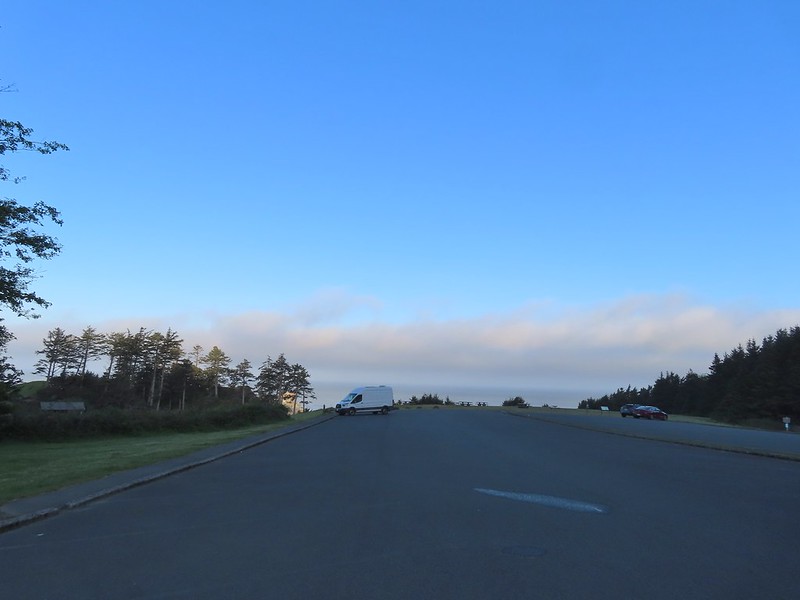
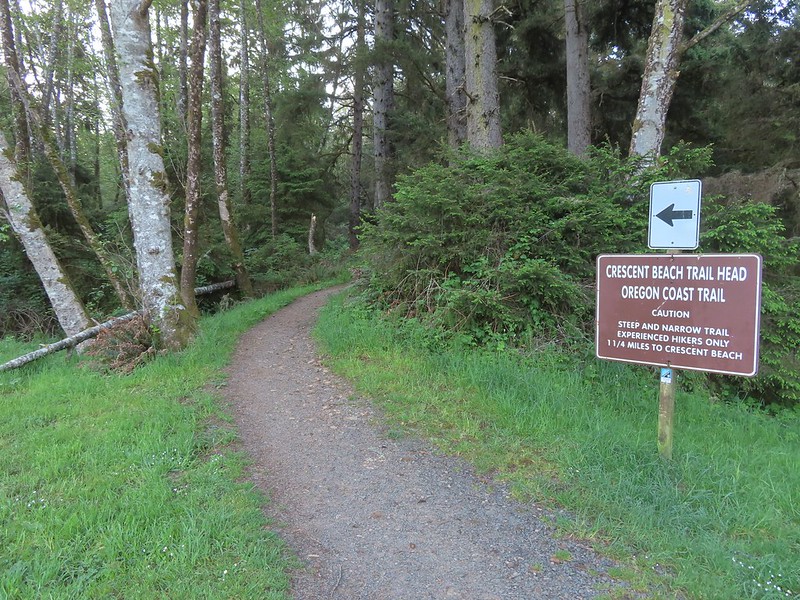 The trail begins near the restrooms.
 Ecola Park Road.
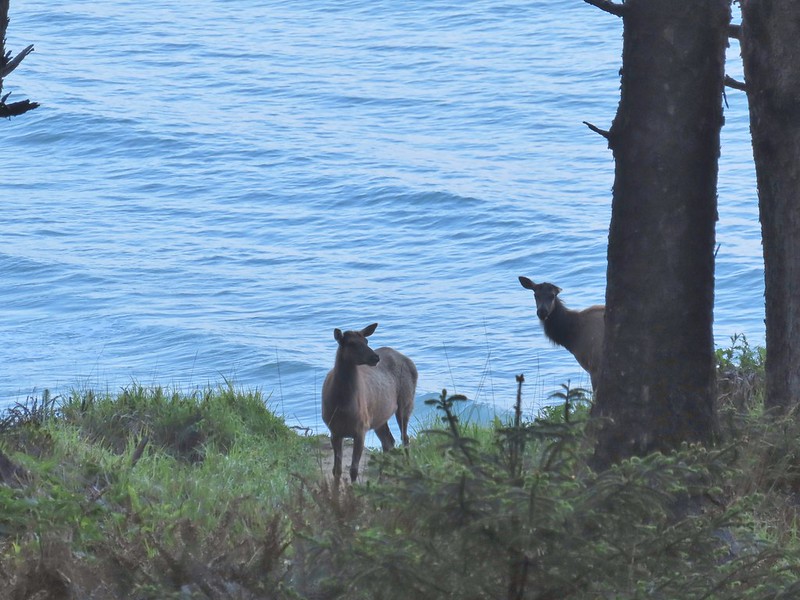
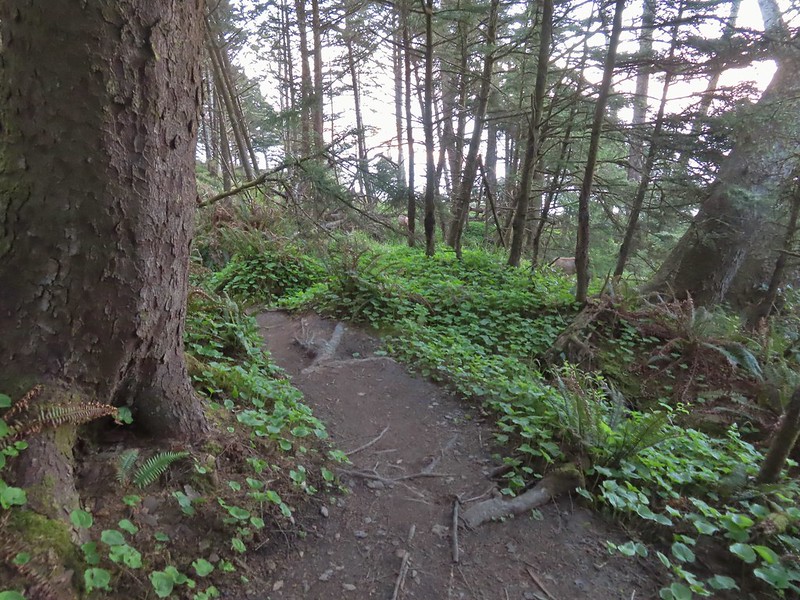
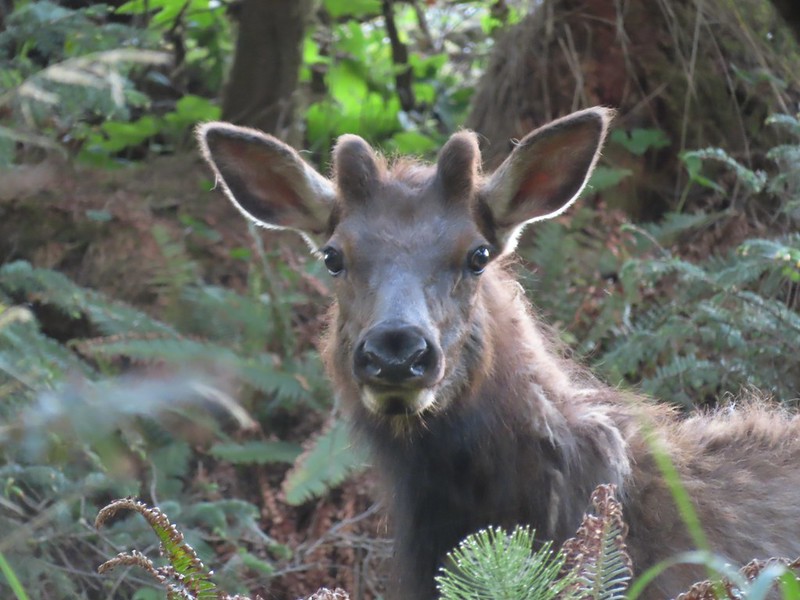
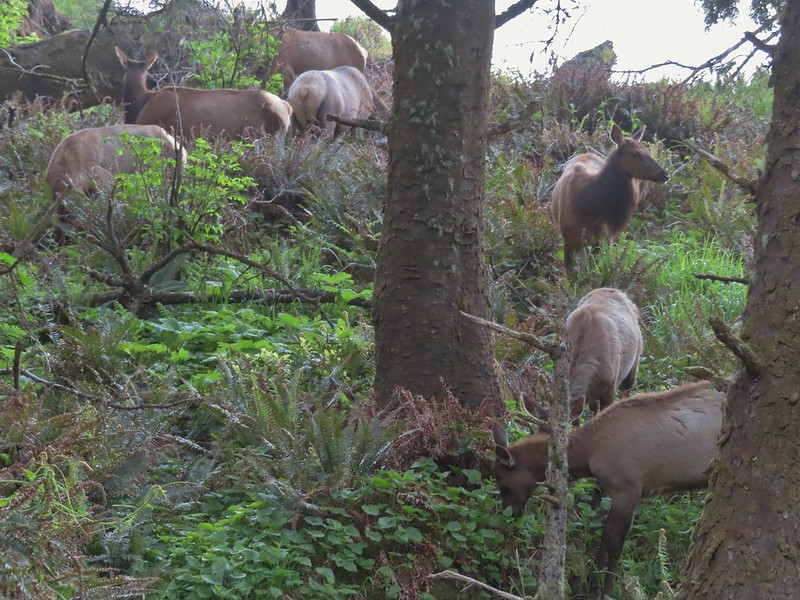
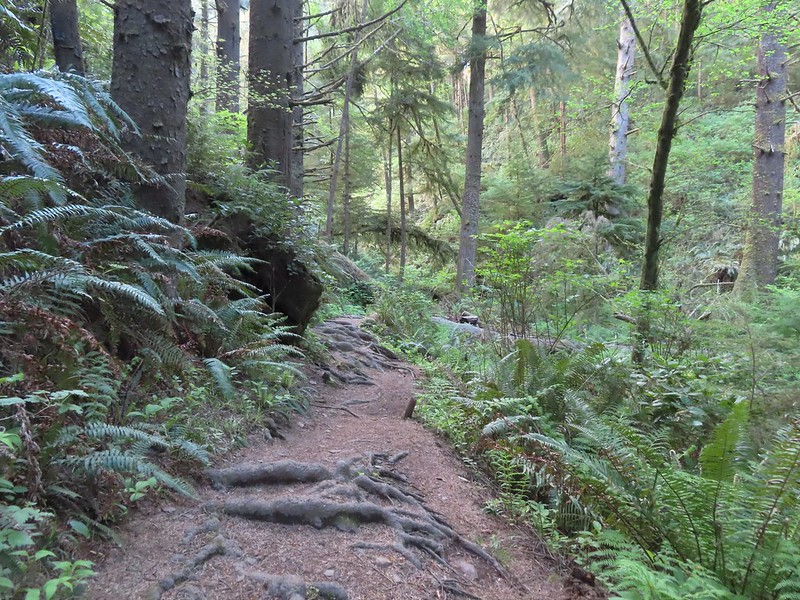
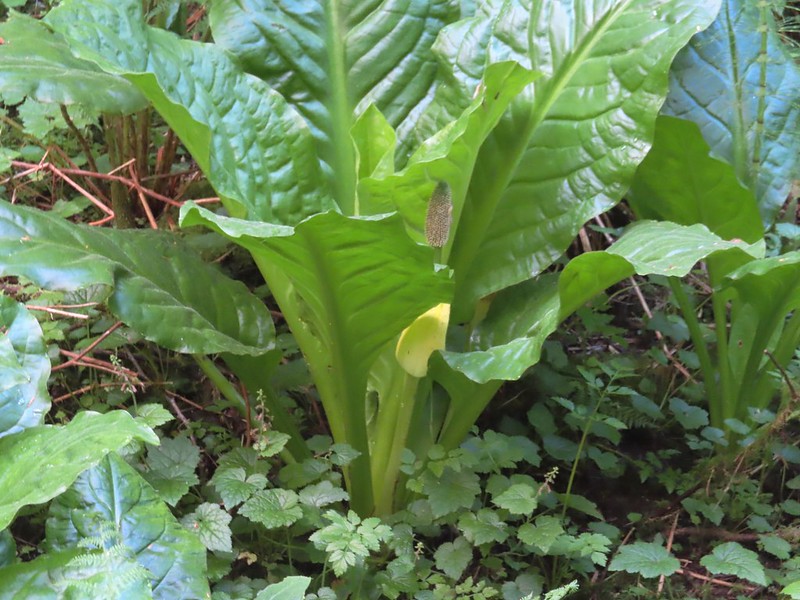 Skunk cabbage
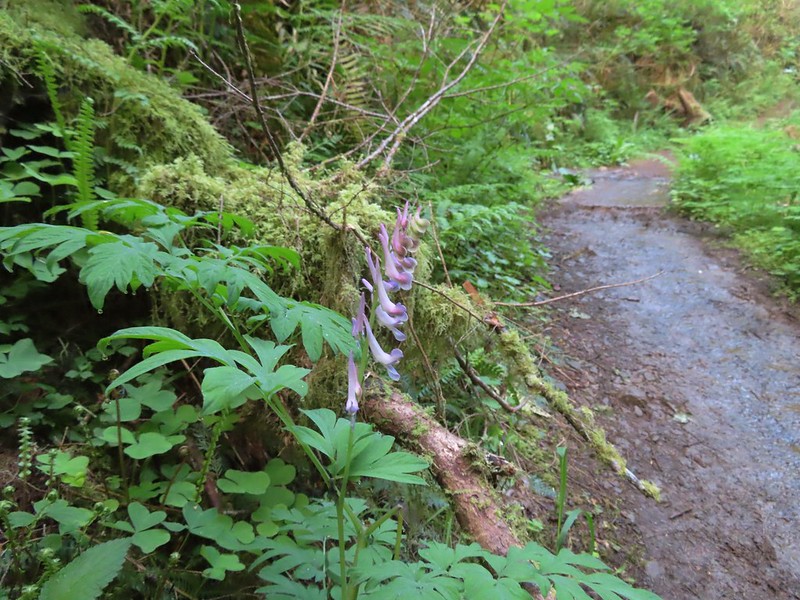 Scouler’s corydalis
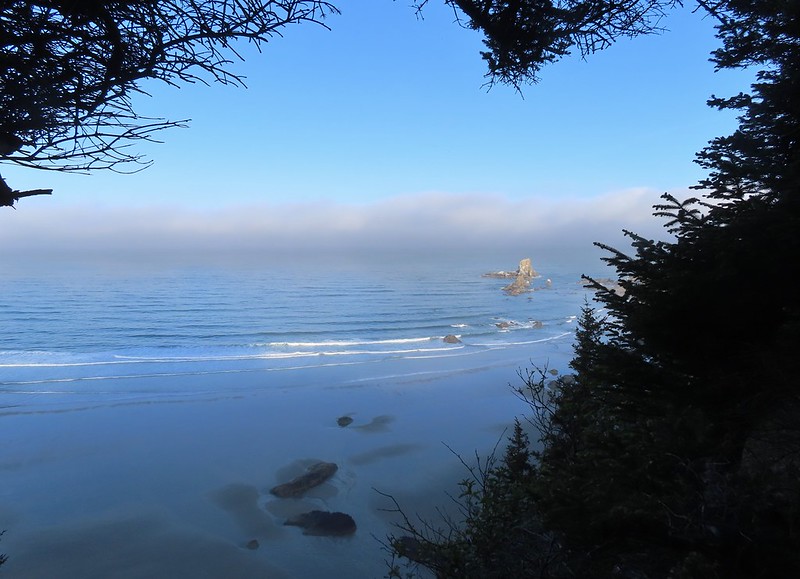 Window to the Pacific.

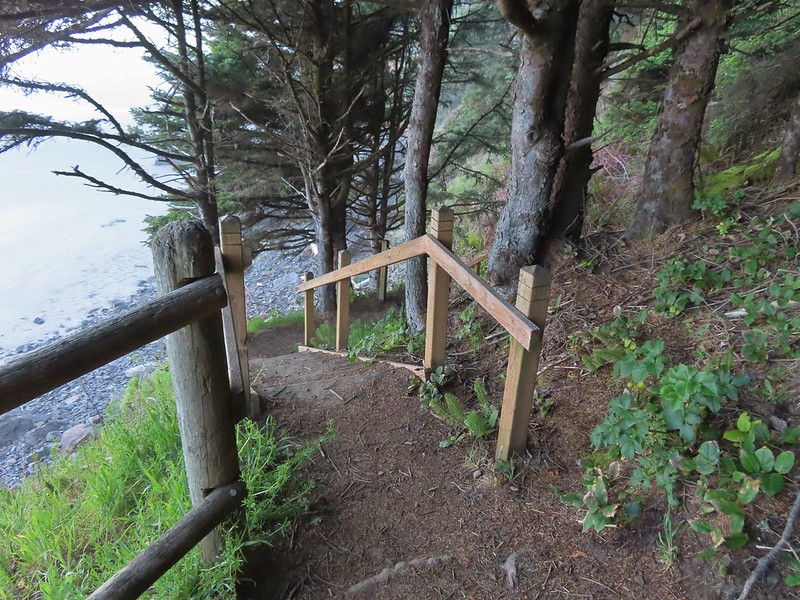
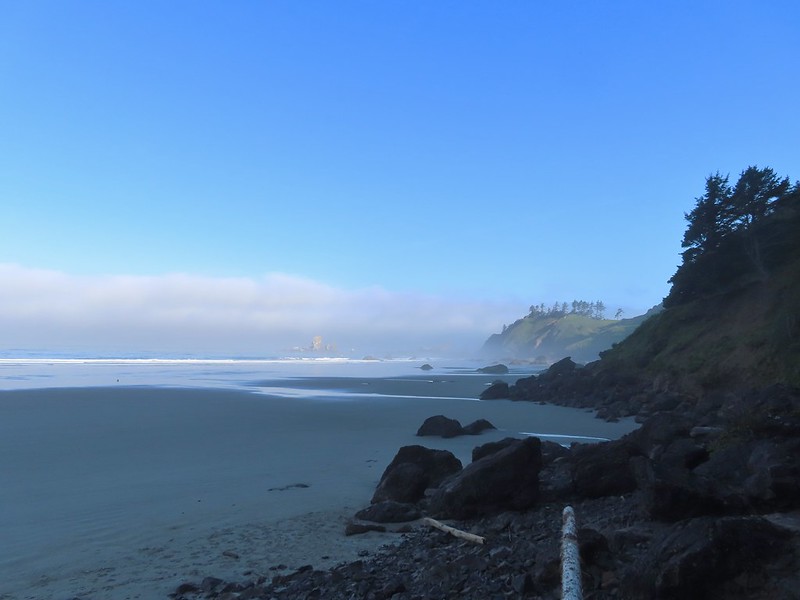 Ecola Point
 Chapman Point and Bird Rocks
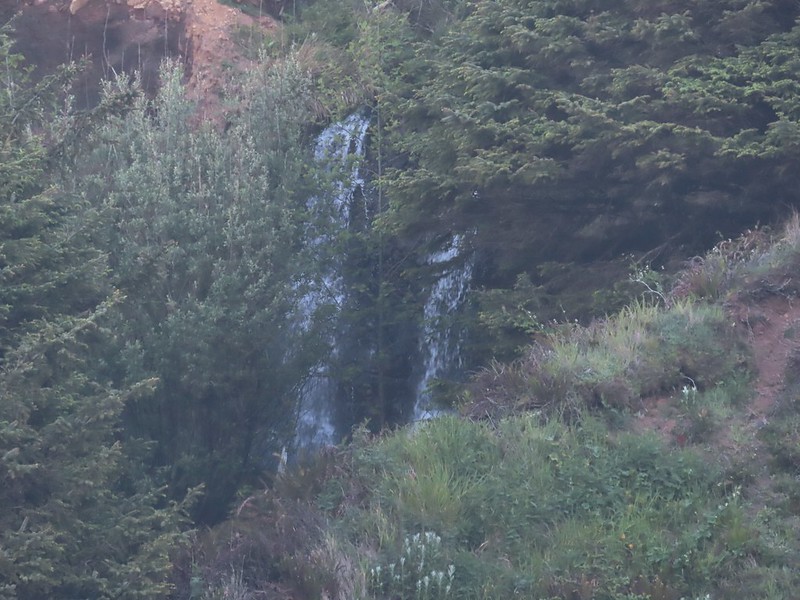 The upper falls.
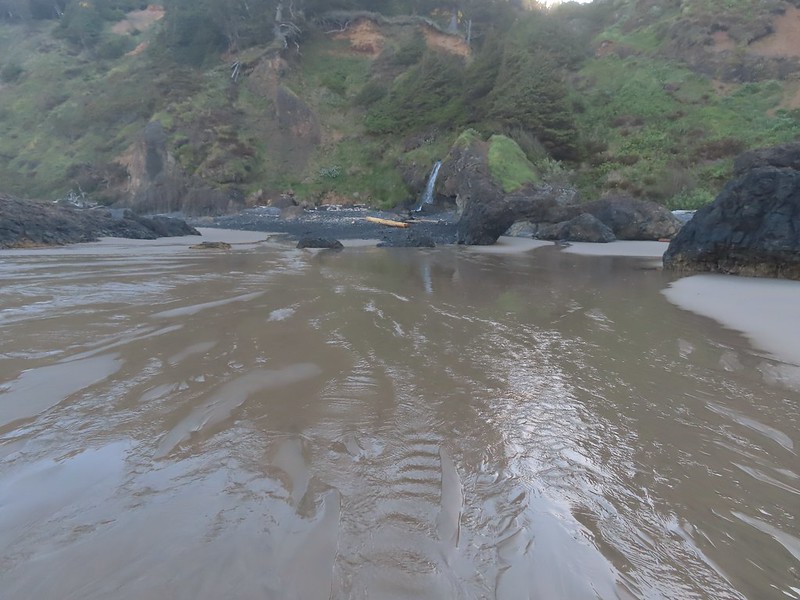 Waterfall Creek
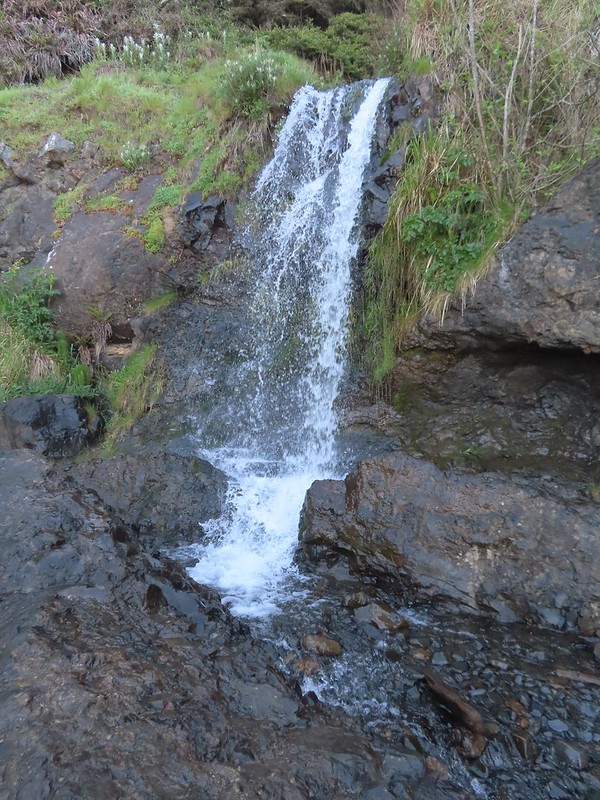 The lower falls.
 The tide pools from Waterfall Creek.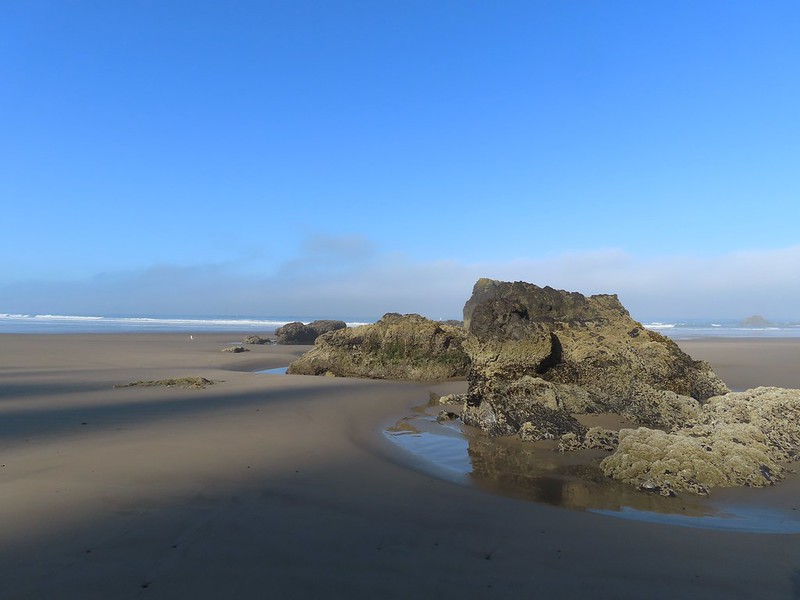
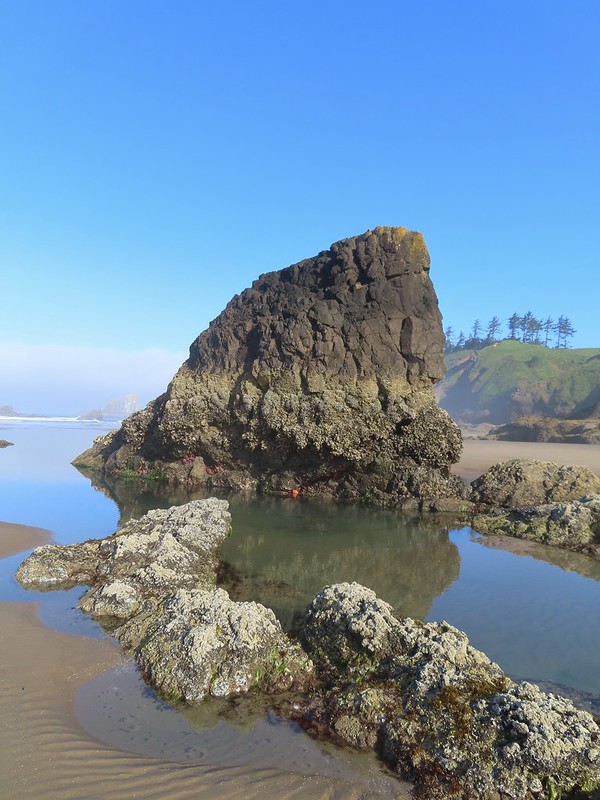
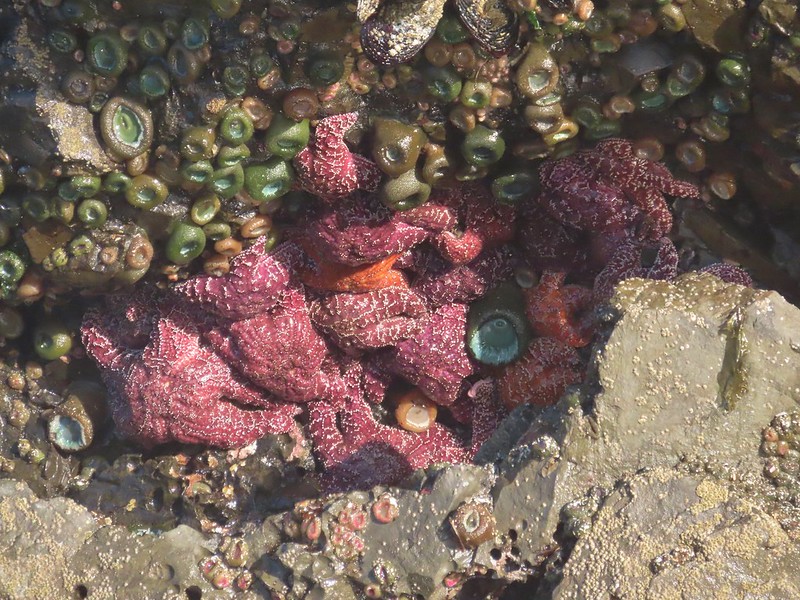

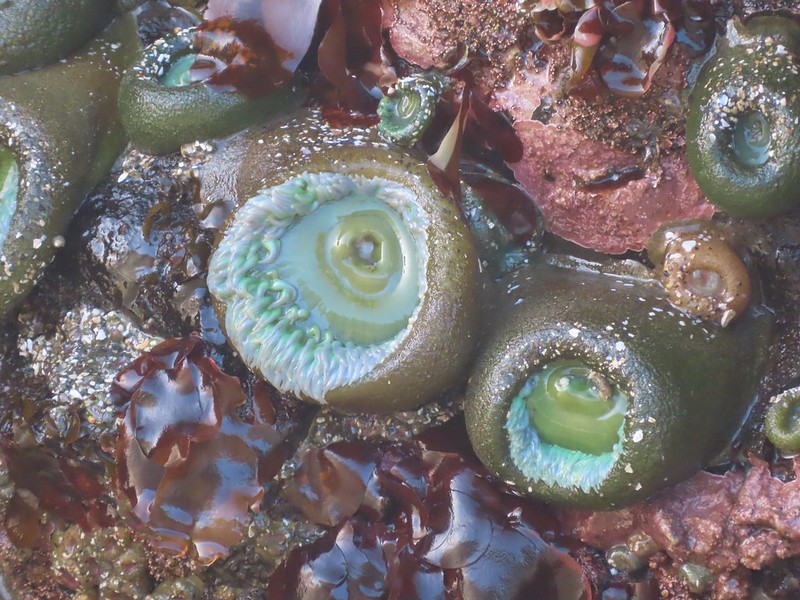
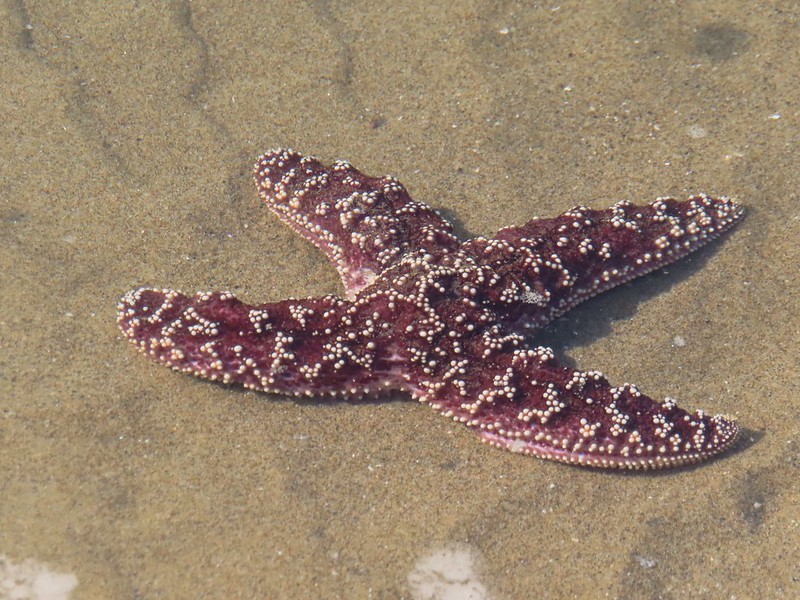
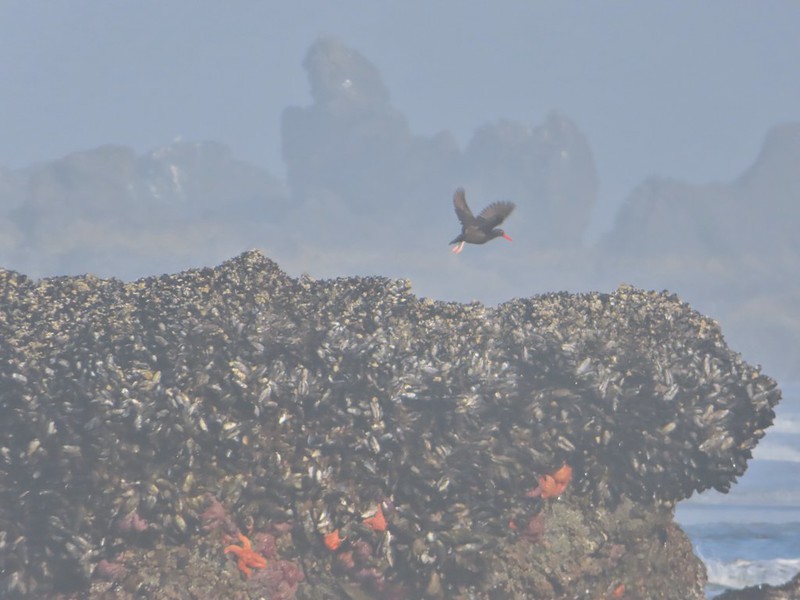
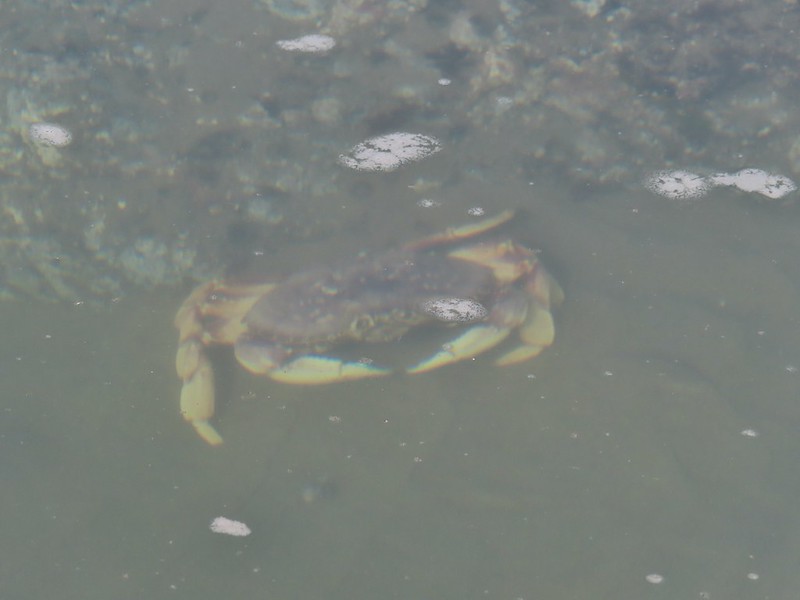
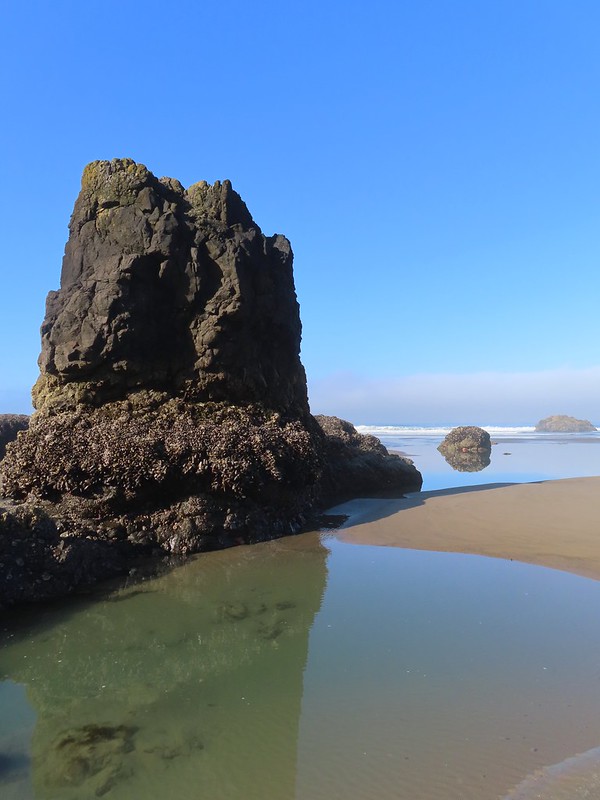
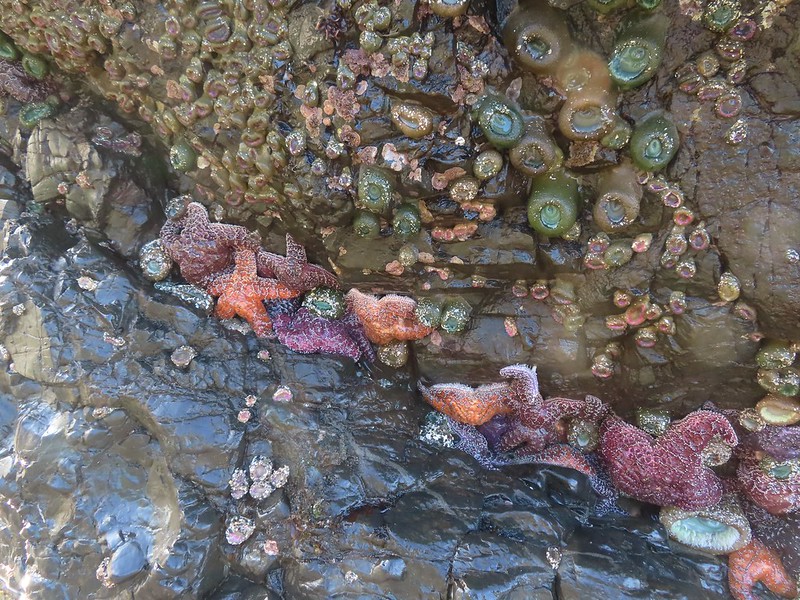

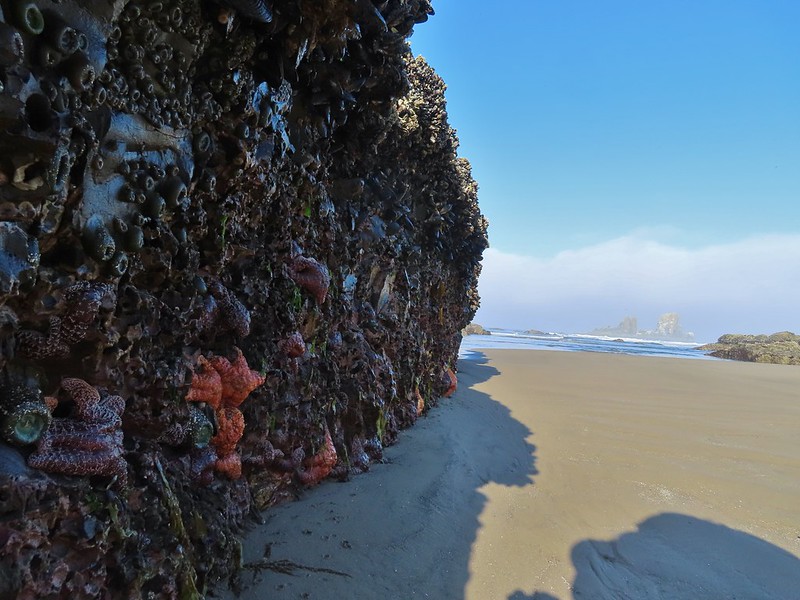

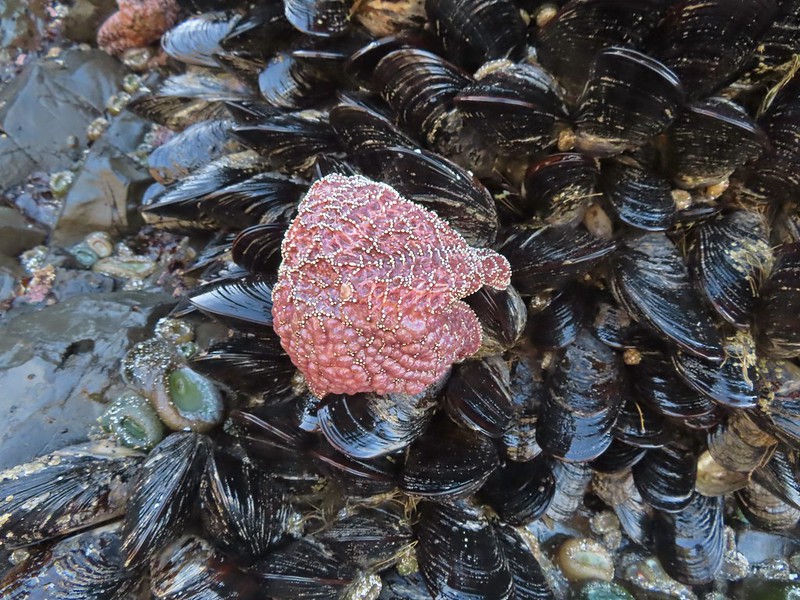
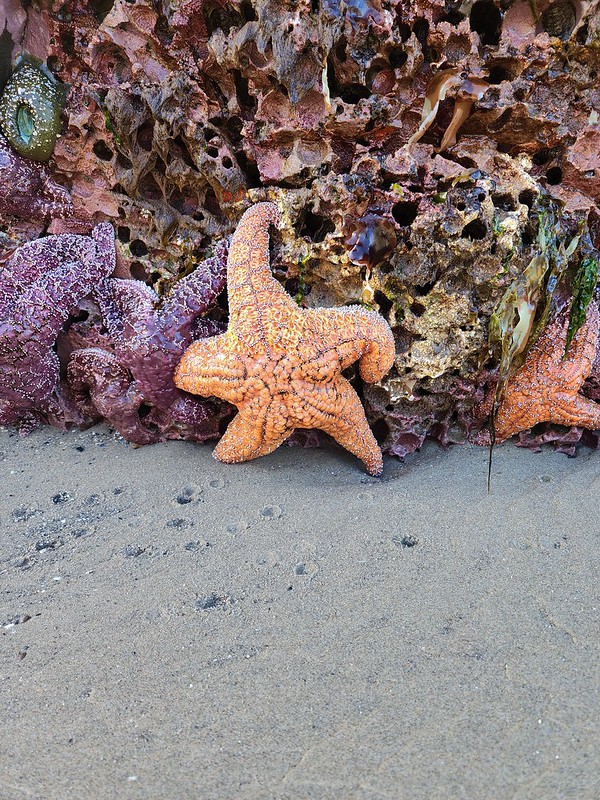 We found Patrick from Spongebob!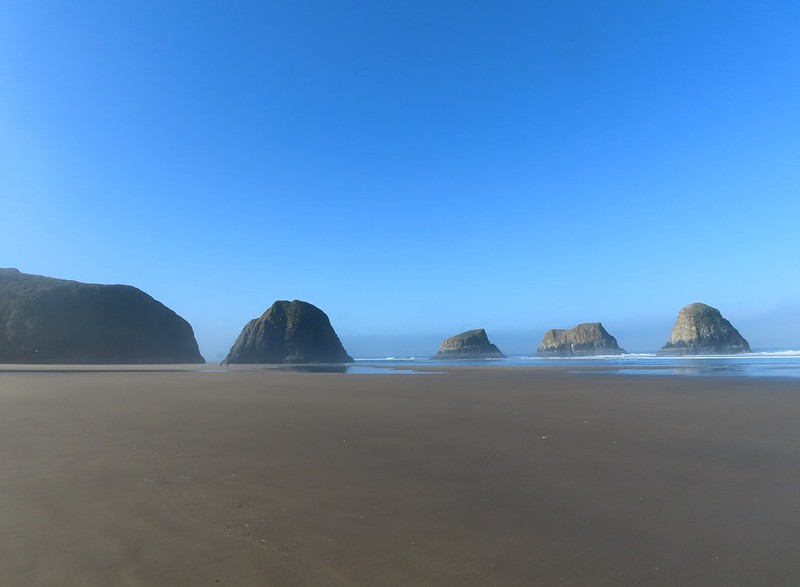
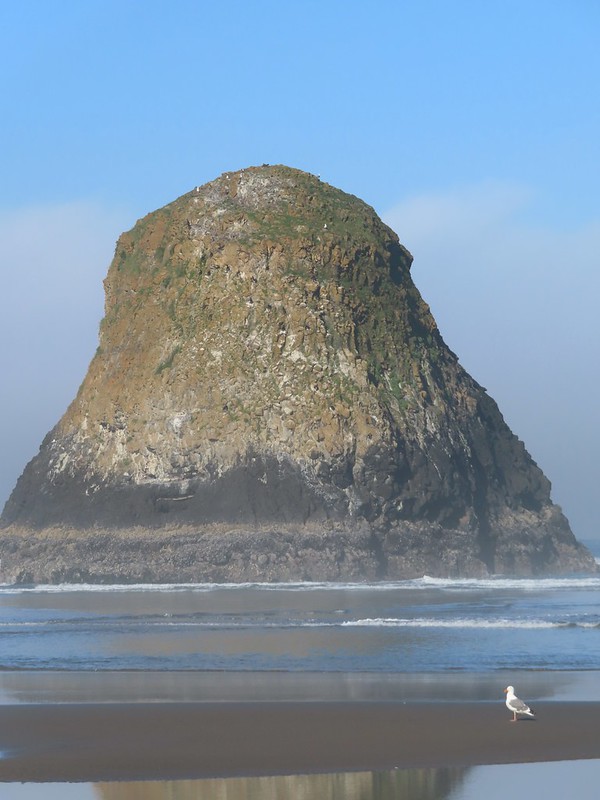
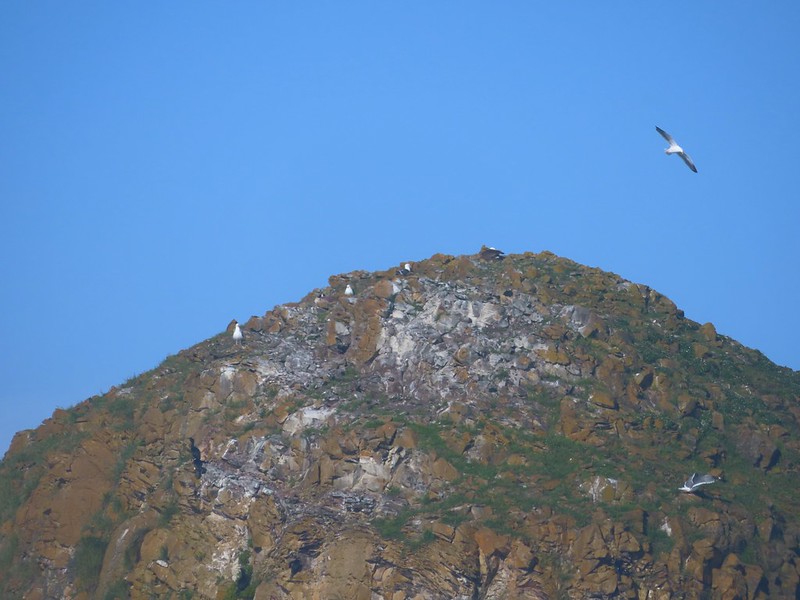
 We were curious as to what forces carved out the backside of this rock.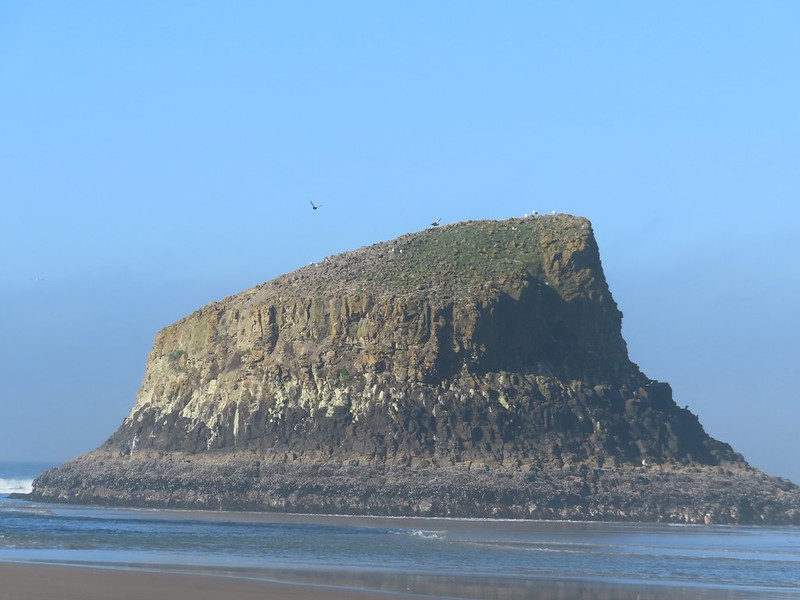
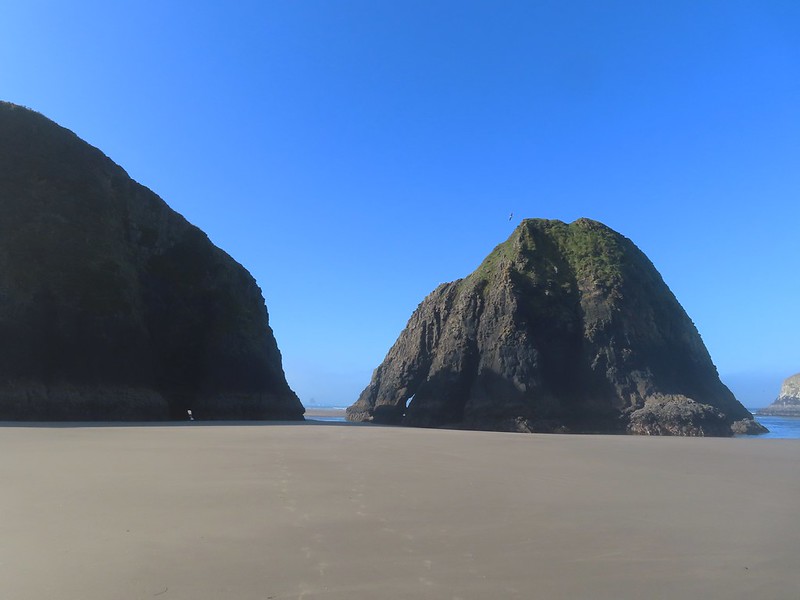 Chapman Point is only passable at certain low tides. On the far side is Cannon Beach (
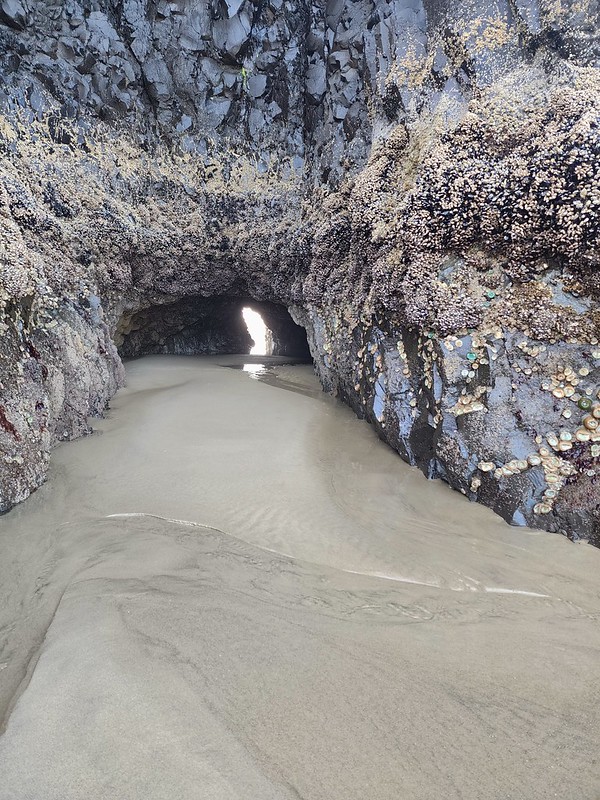 This cave through Chapman Point was flooded at the far end.
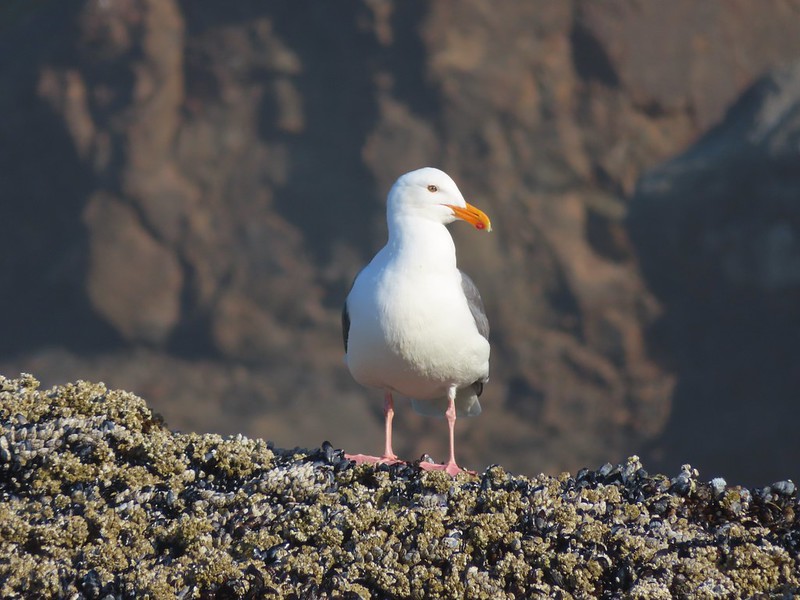
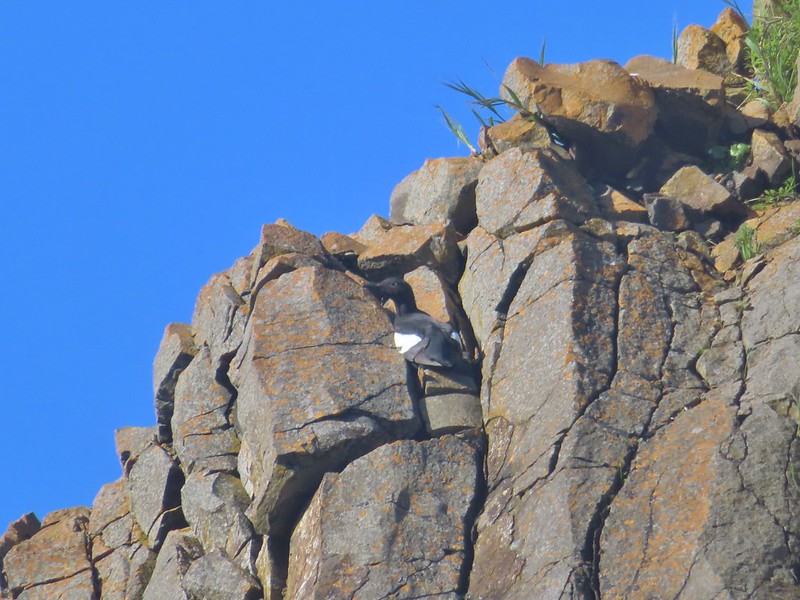 Pigeon guillemot
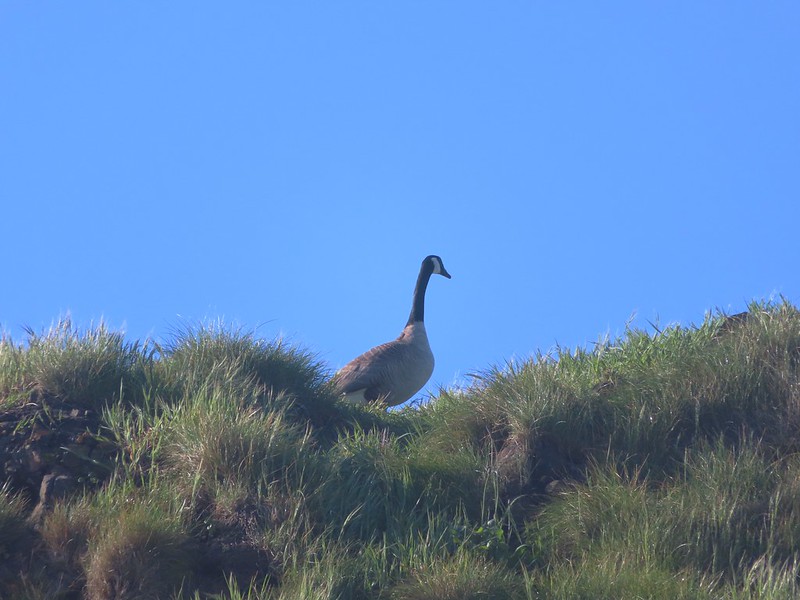 Goose
Goose
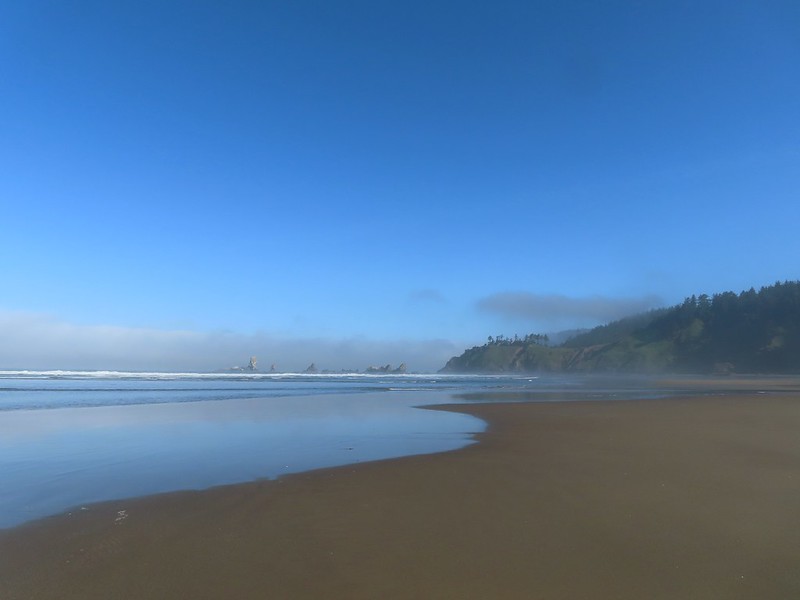

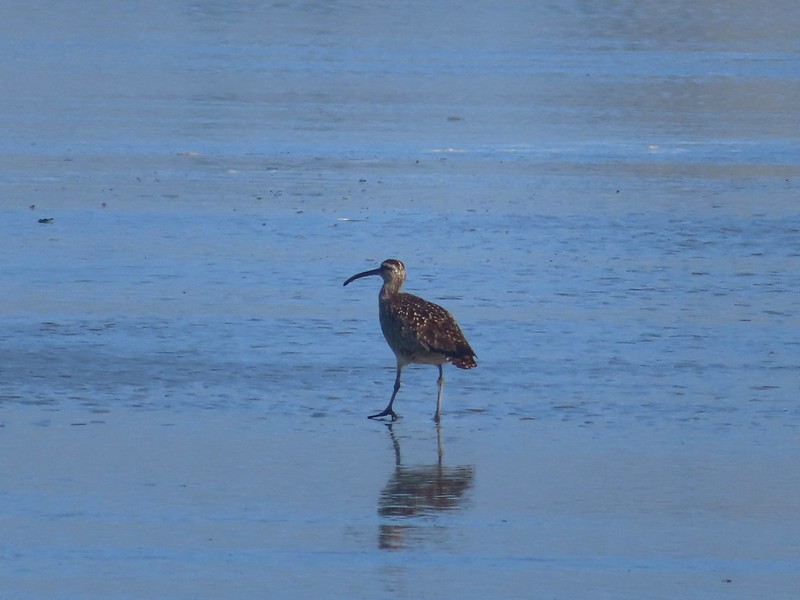 Whibrel
 Seaside bittercress
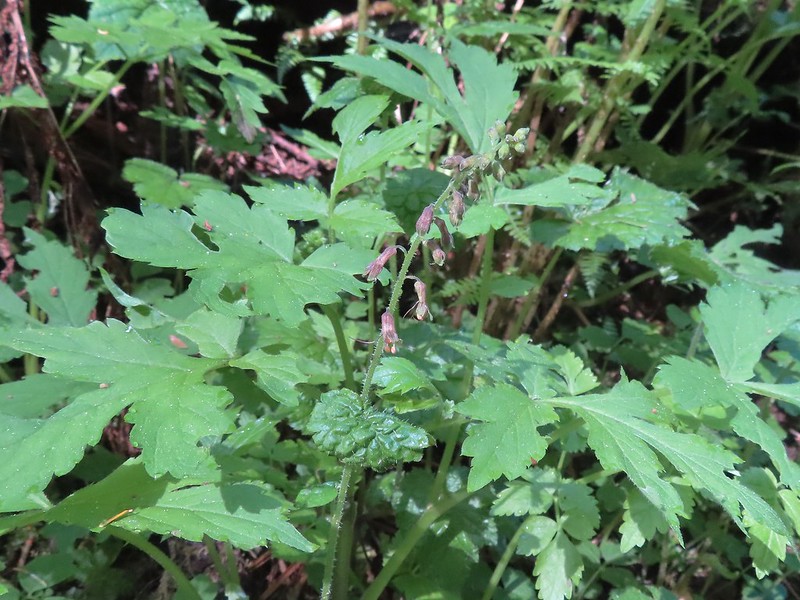 Youth-on-age
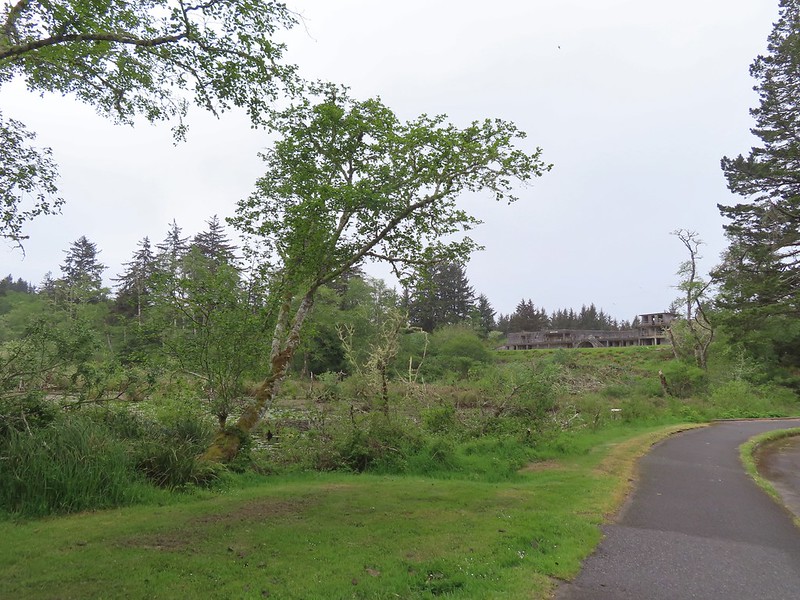 Battery Russell from the lot.

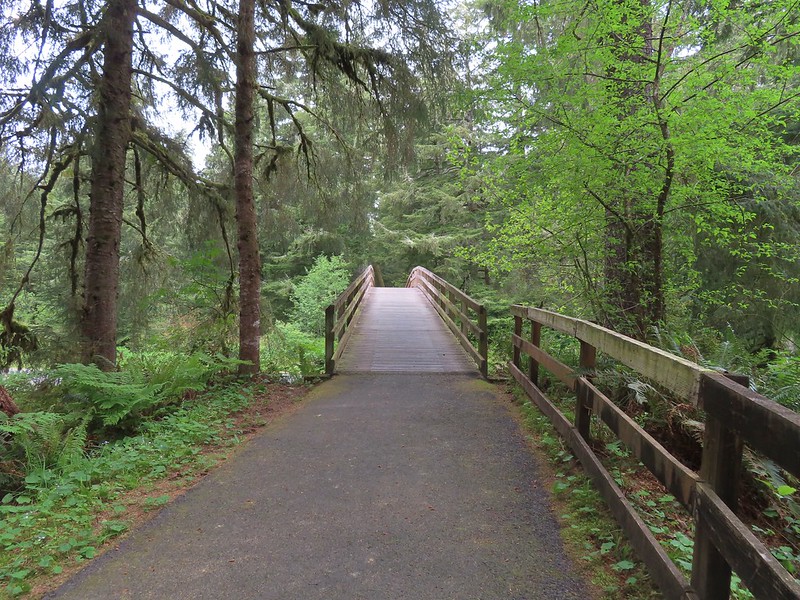 The overpass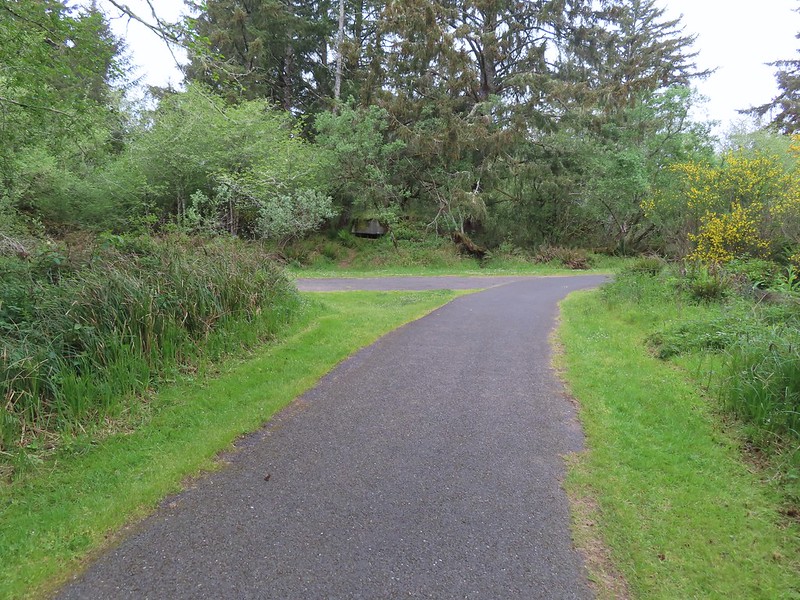

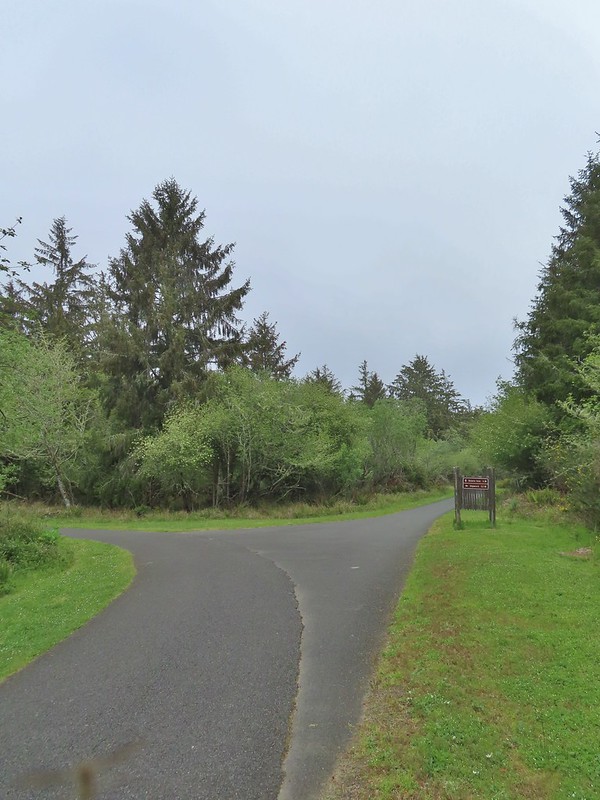

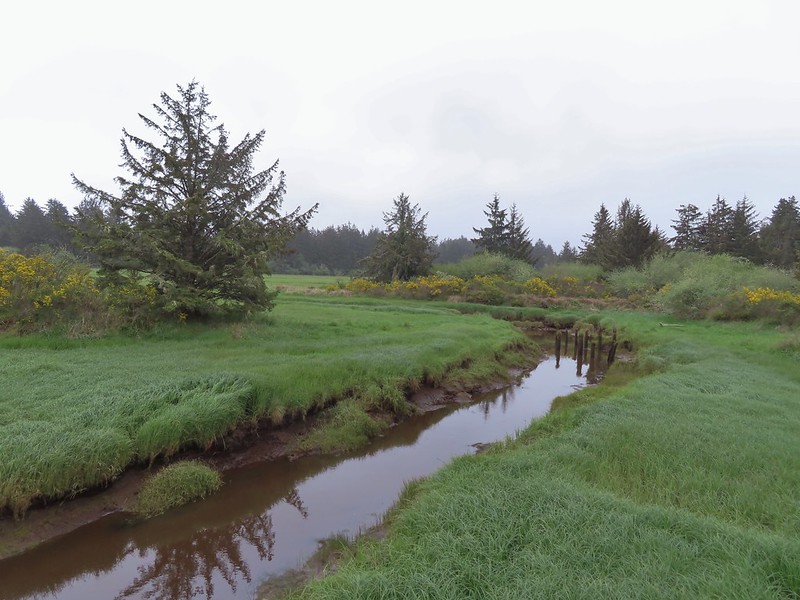 Looking out toward Swash Lake from the bridge.
 The gate to the Historic Area is locked in the evening.
 Visitor’s center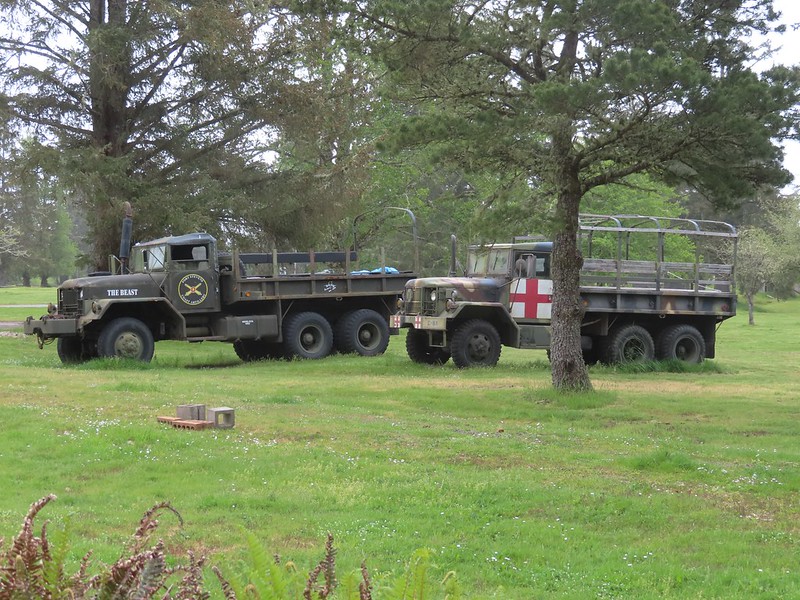
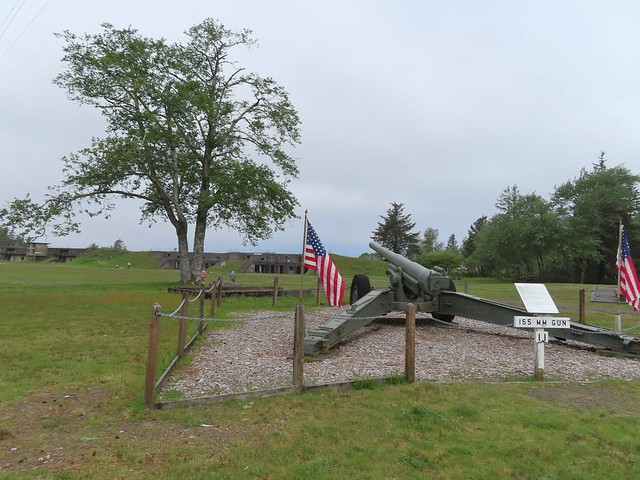


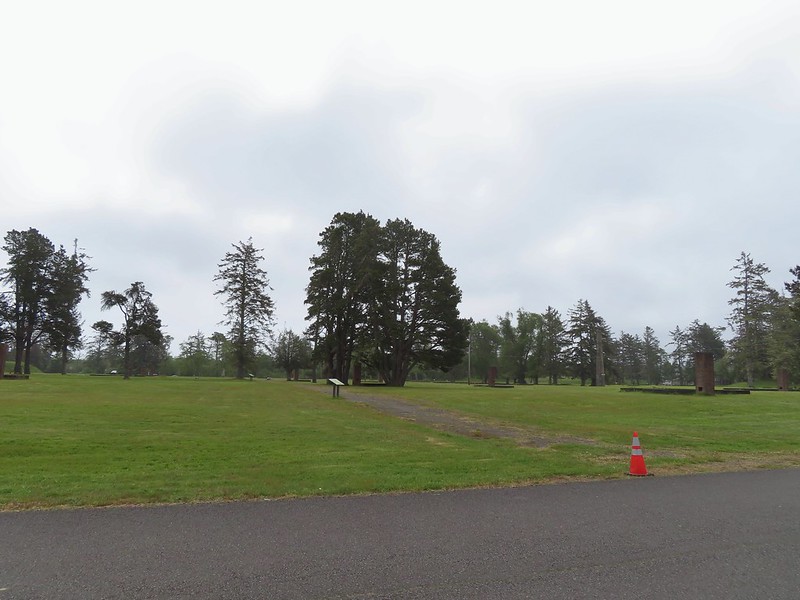
 The guardhouse on the left.
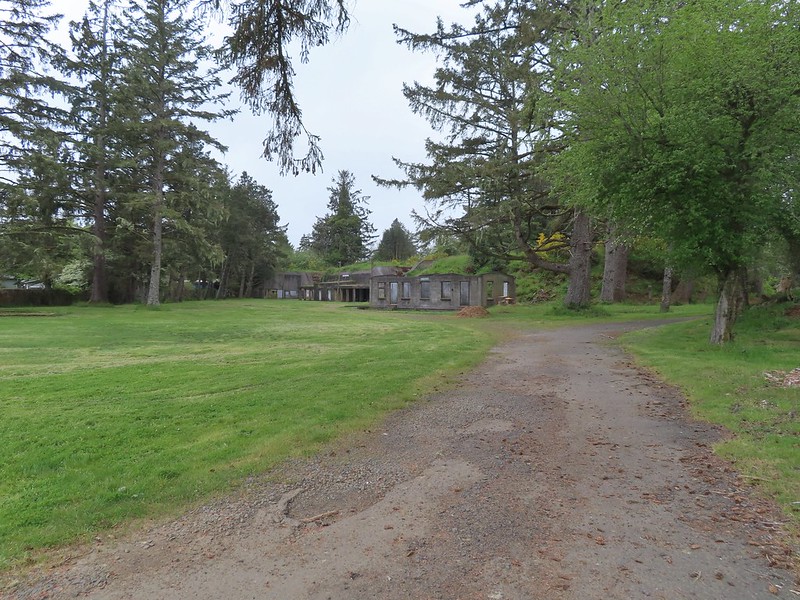 Battery Clark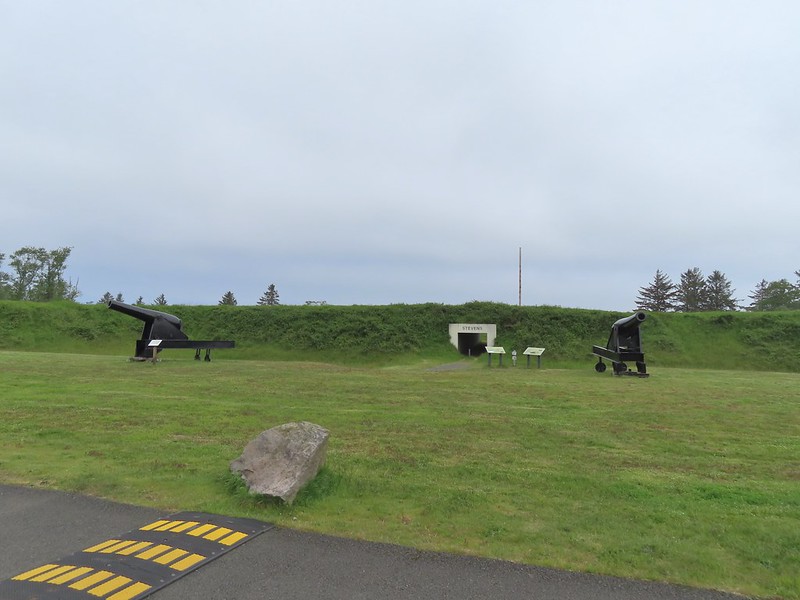
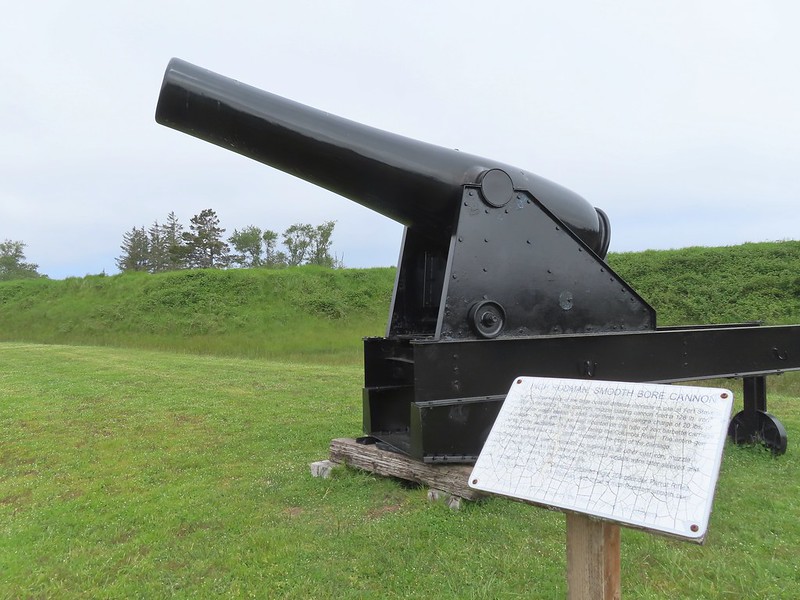


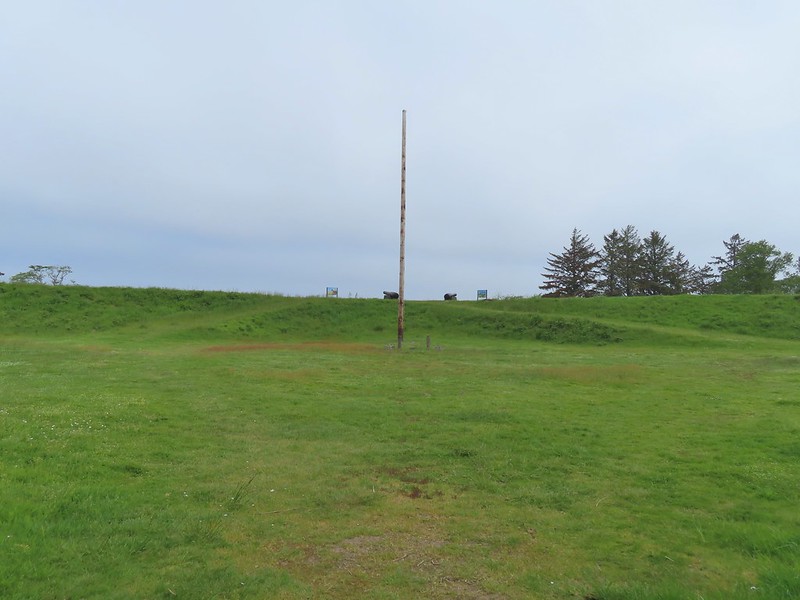 Fort Stevens Earth Works.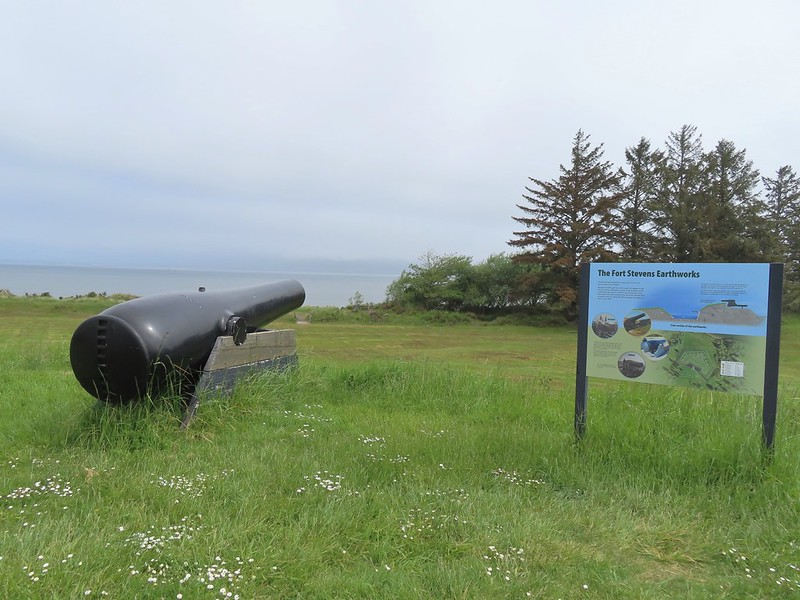
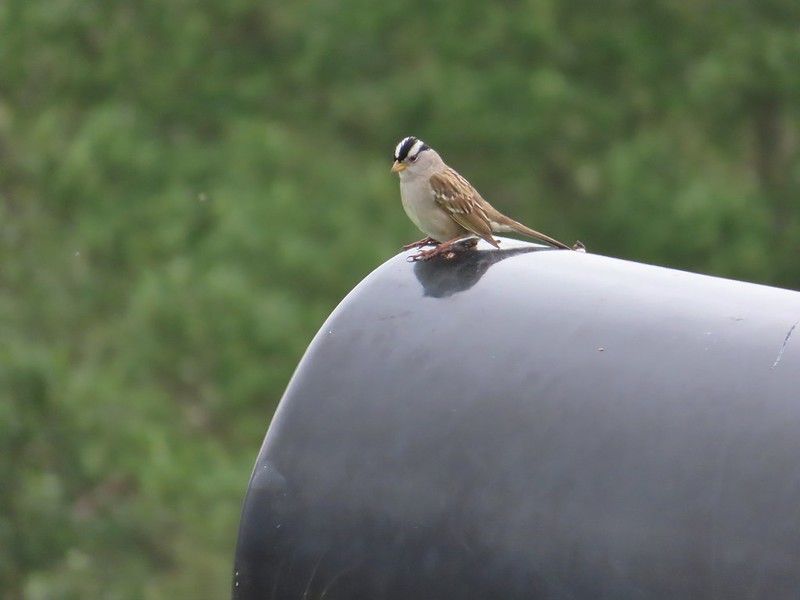 White-crowned sparrow
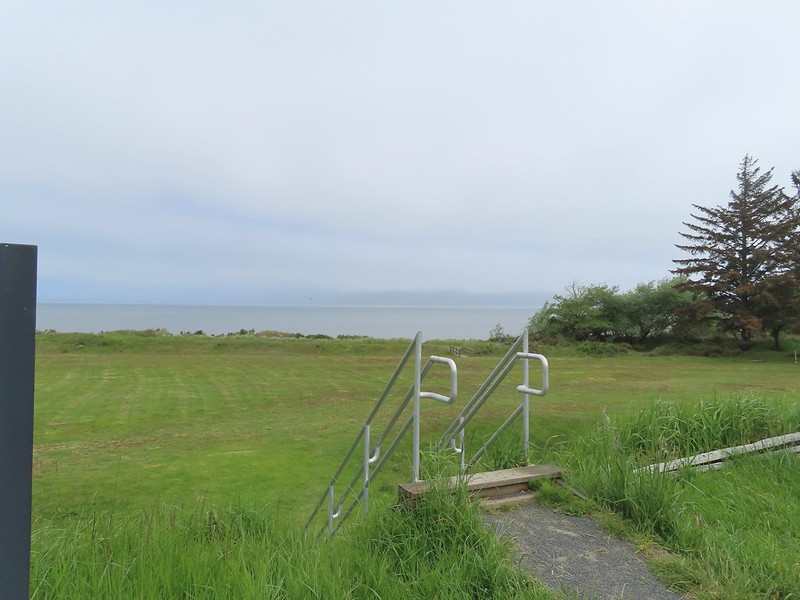 We cut across the grass below to the footbridge in the distance.
 Columbia River
 Looking west toward the Pacific.
 Battery Smur
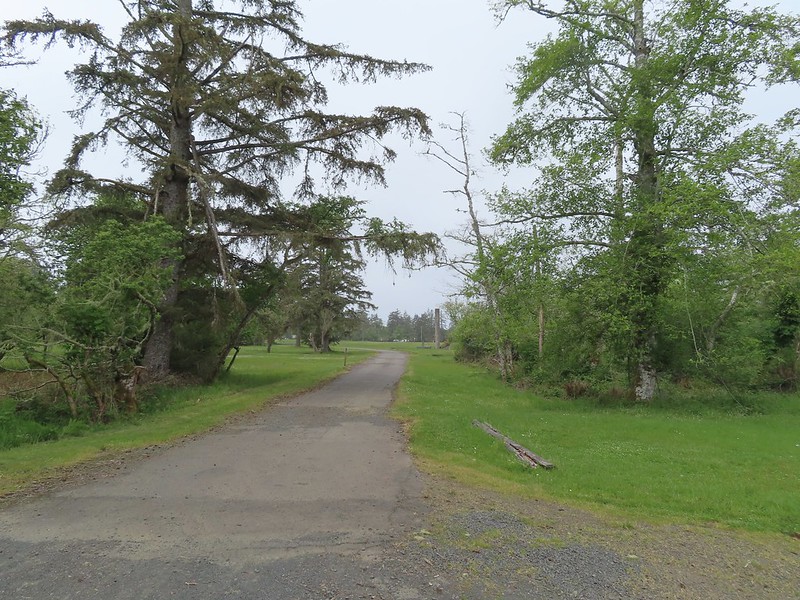 The roadbed coming in from the former barracks site.
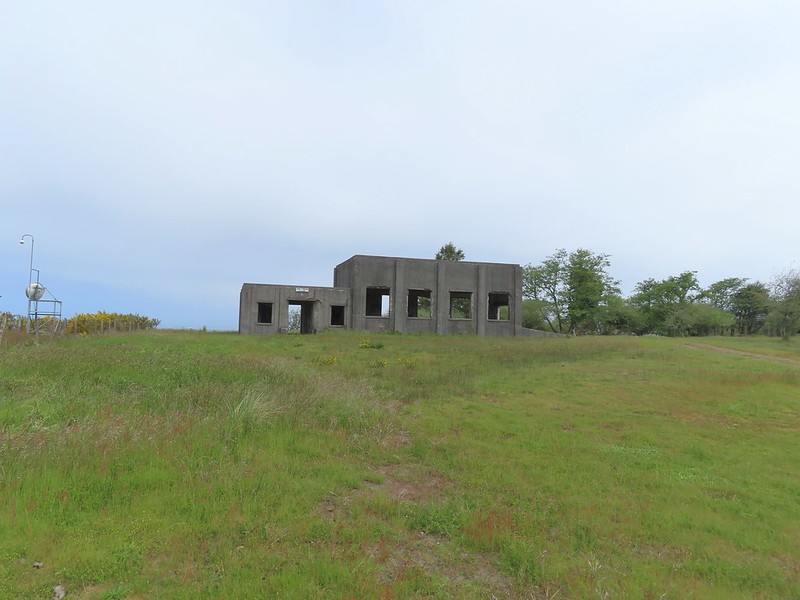 Mine Loading Building
 Searchlight Generator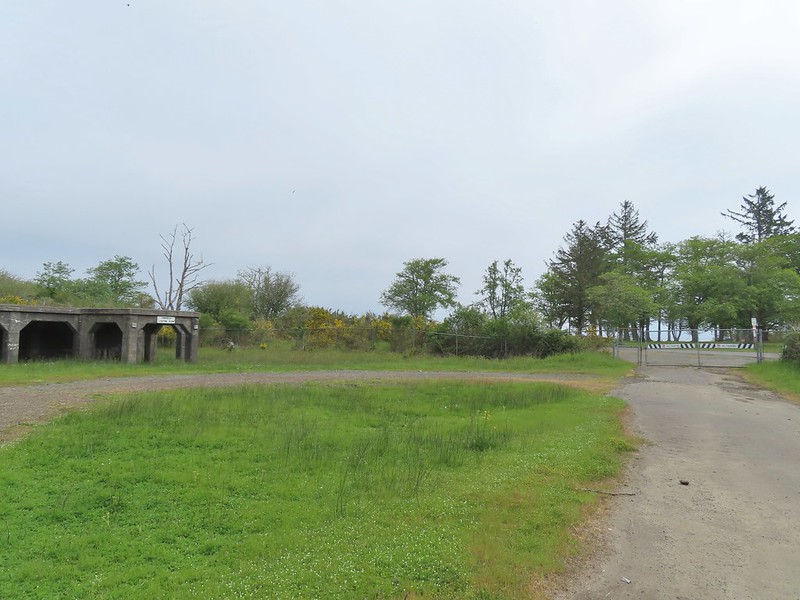
 Torpedo Loading Room
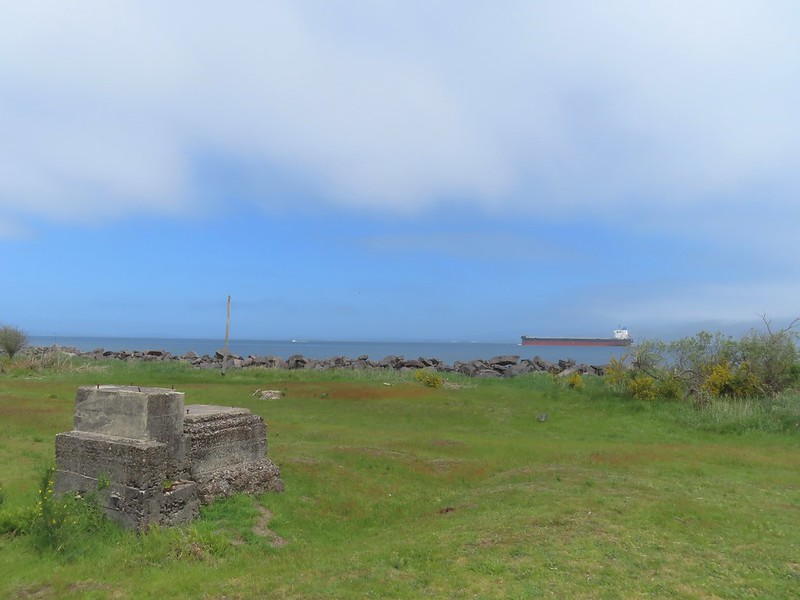


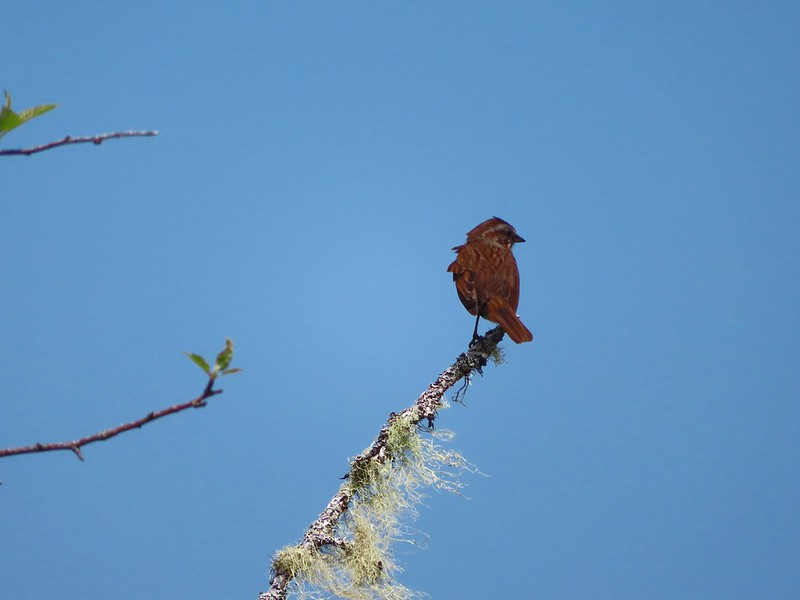
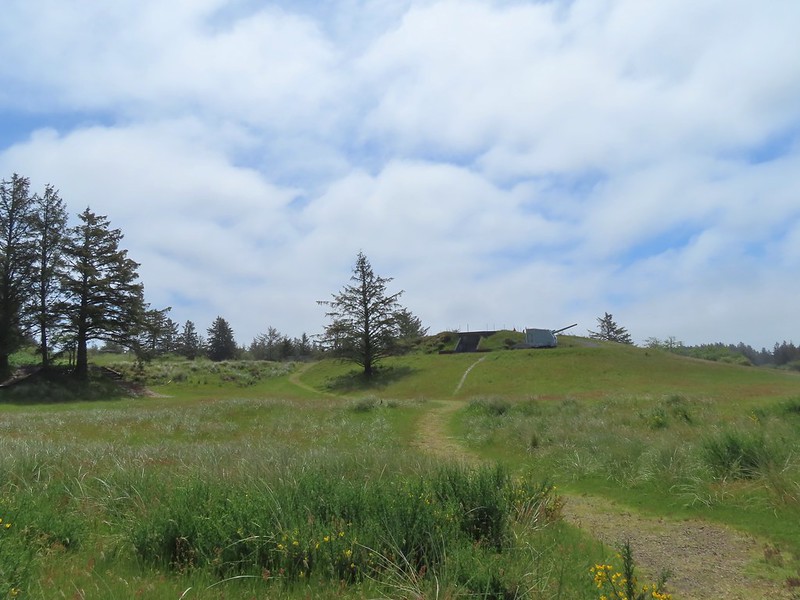 Battery 245

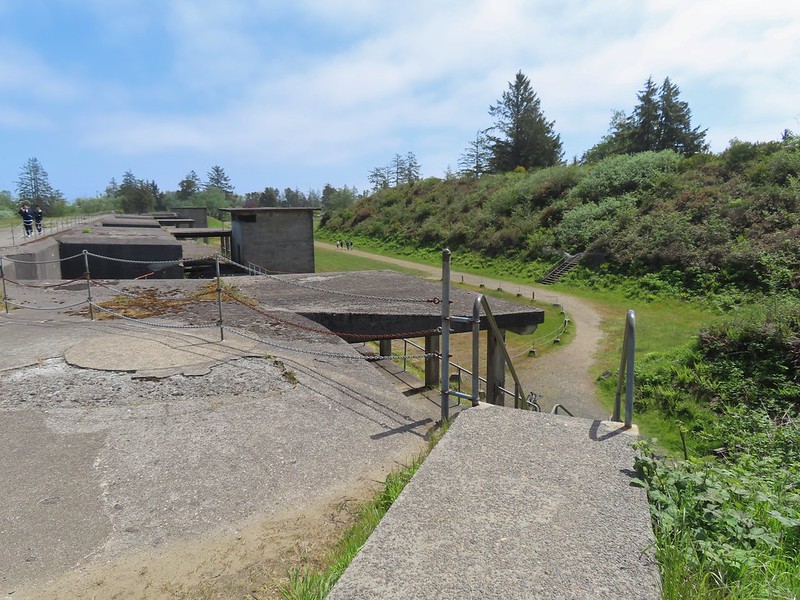


 Sign for the Lil’ Oozlefinch Putting Course.
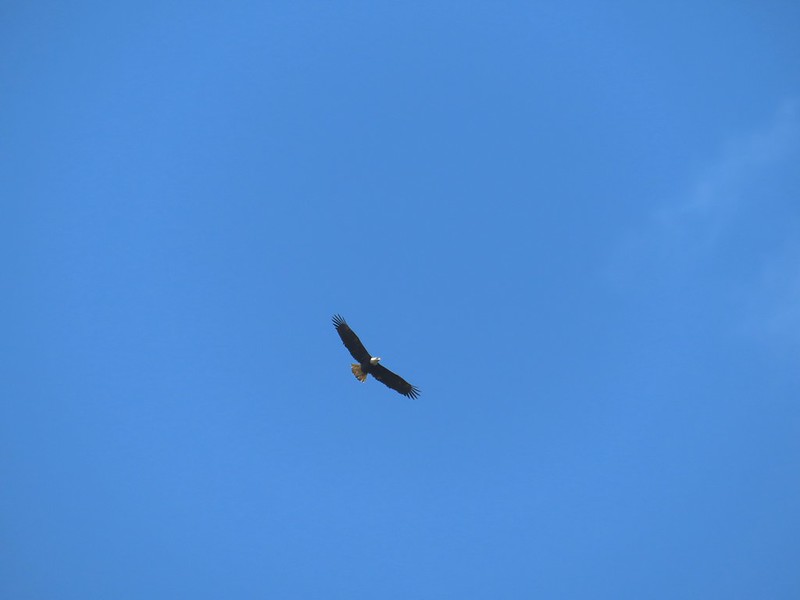 Bald eagle
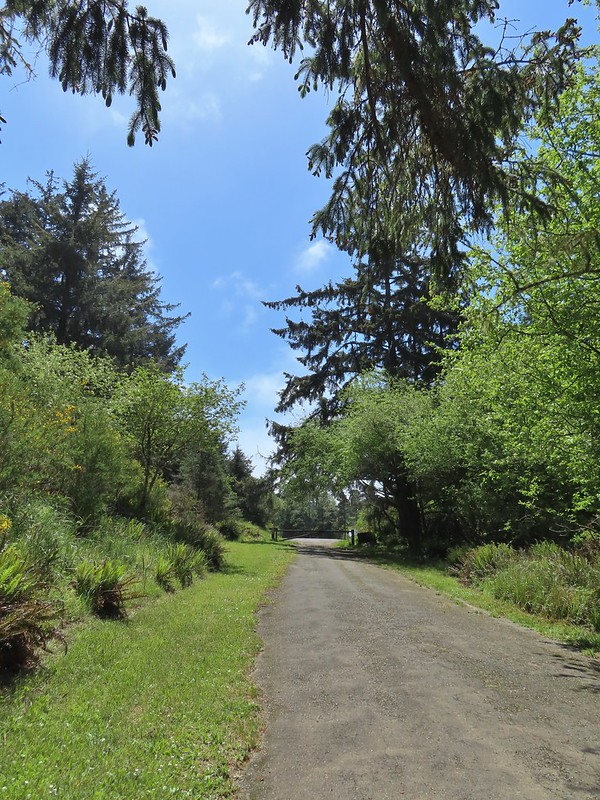 Gate near Jetty Road.
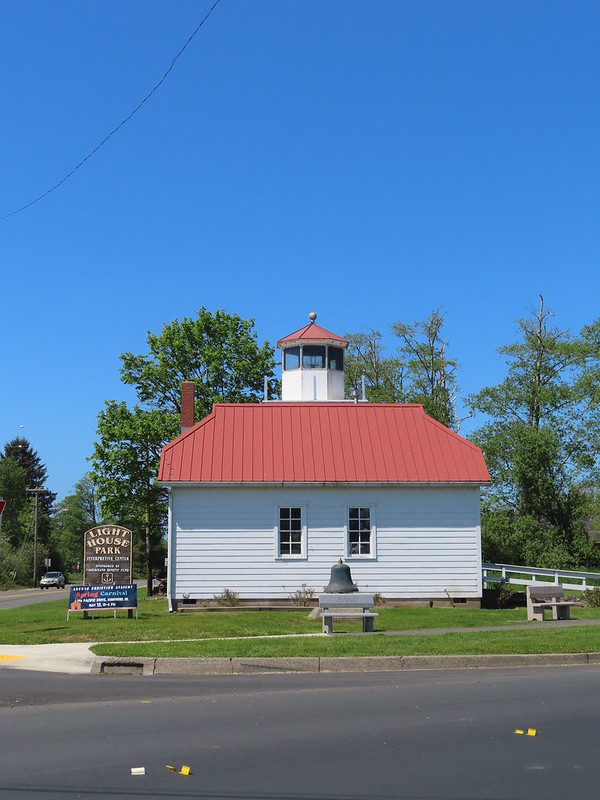
 The parking lot at the park.
 Emerging from the underpass.
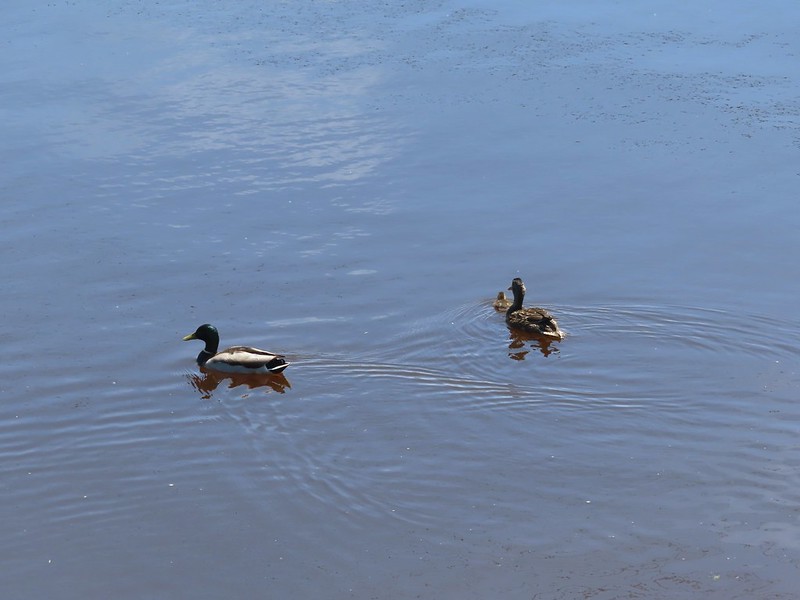 Mallard family
 Sign at the park.
 Eighth Street Dam from the grassy track.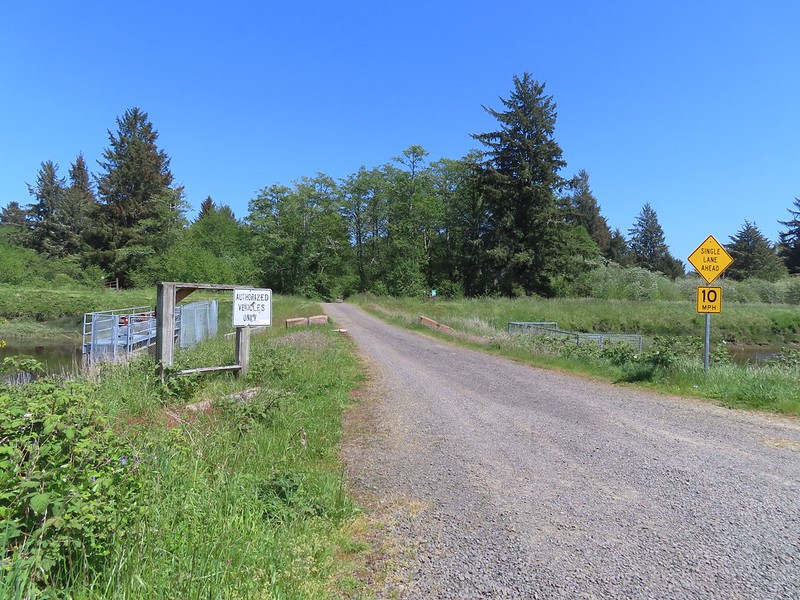
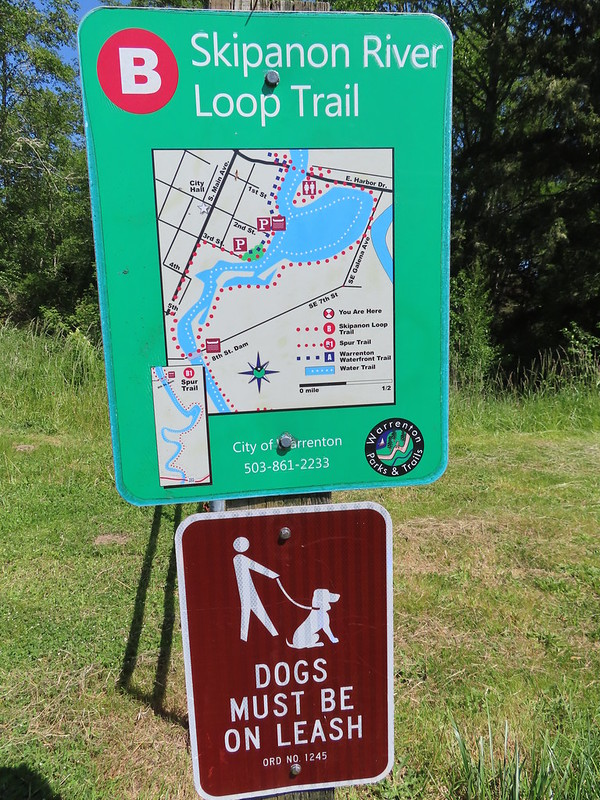 Until we saw this sign we’d been thinking that maybe the trail didn’t exist any longer. We were also questioning how the loop was supposed to get back across the river at the other end since the only bridge across the river there was Harbor Drive. Until seeing this we were thinking of turning around at the dam, but instead we decided that we’d do the loop with Heather getting a table at Nisa’s while I recrossed the river to retrieve the car.

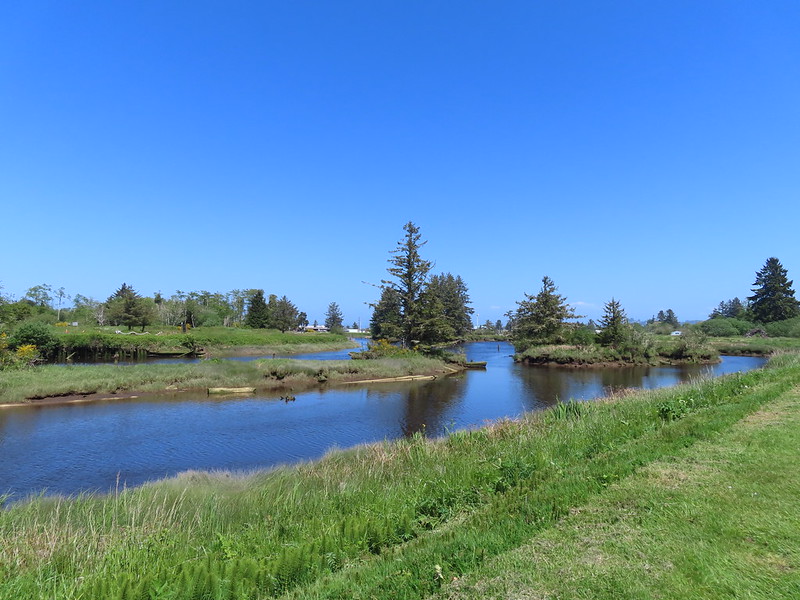
 Not the clearest picture but I think this is a greater scaup based on the head shape. We’ve seen a number of lesser scaups, but this would be our first greater.
 Great blue heron
 Cormorant
 A brief paved section.
 Nisa’s Thai Kitchen across Harbor Drive.
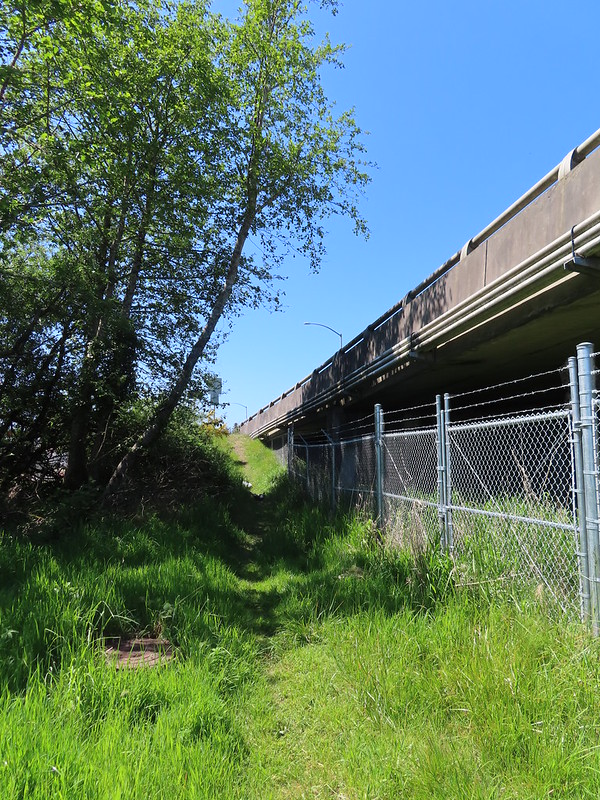 Looking back up the path from Harbor Drive.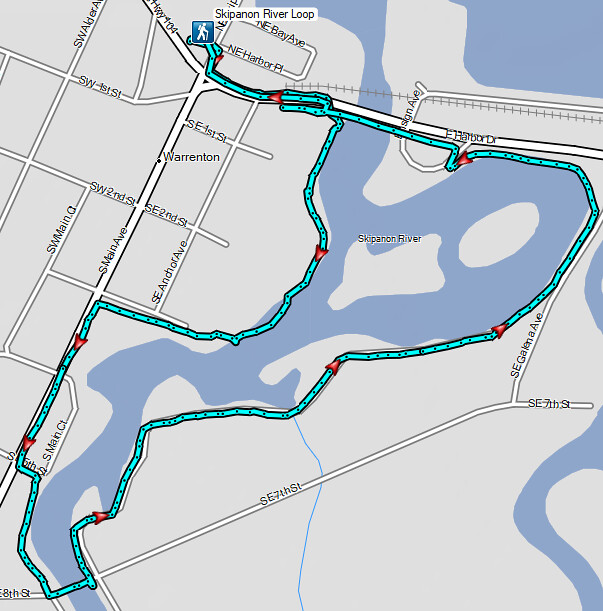


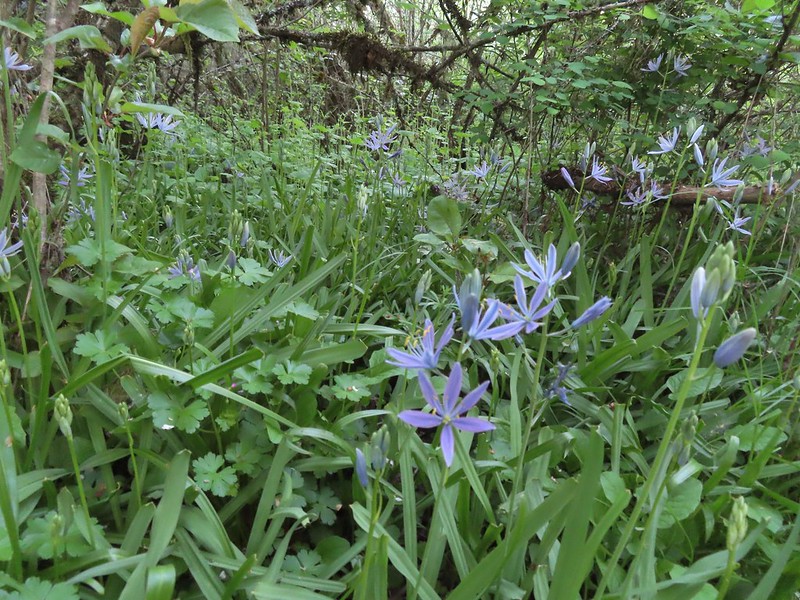 Camas
Camas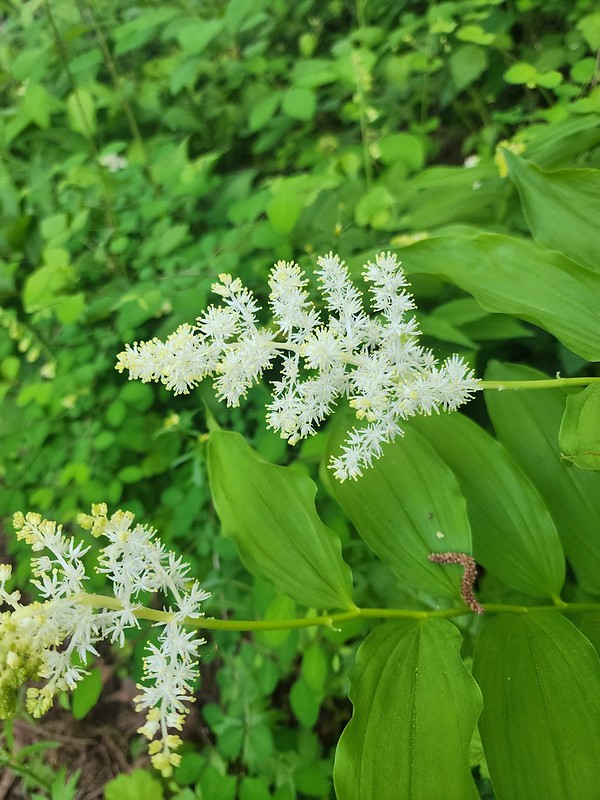 Solomonseal
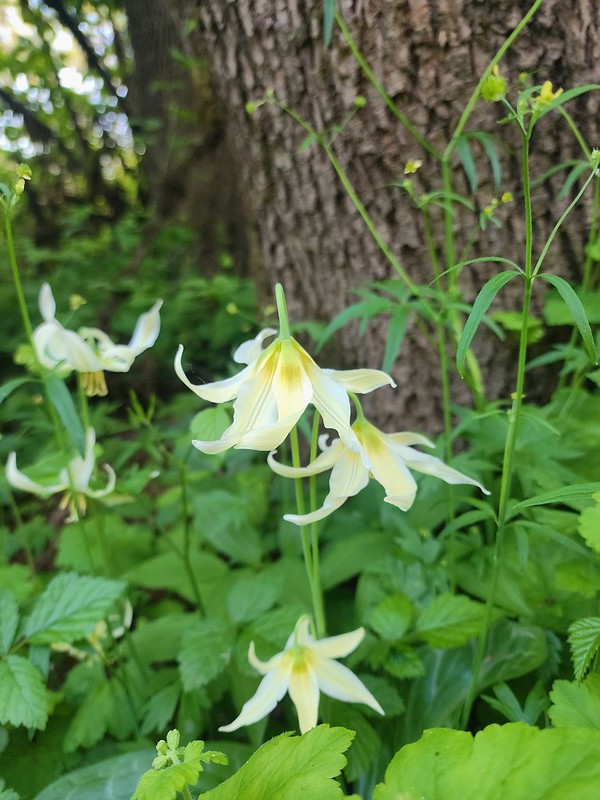 Fawn lilies
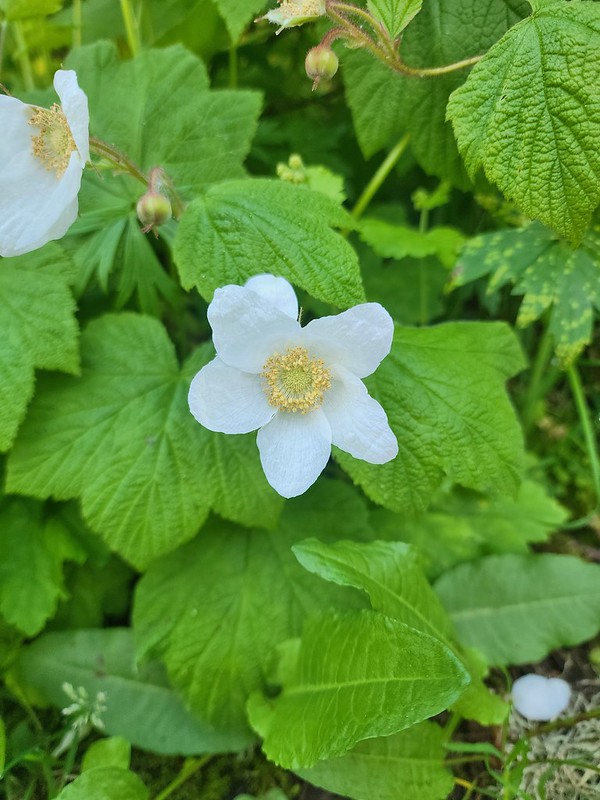 Thimbleberry
 Giant purple wakerobin
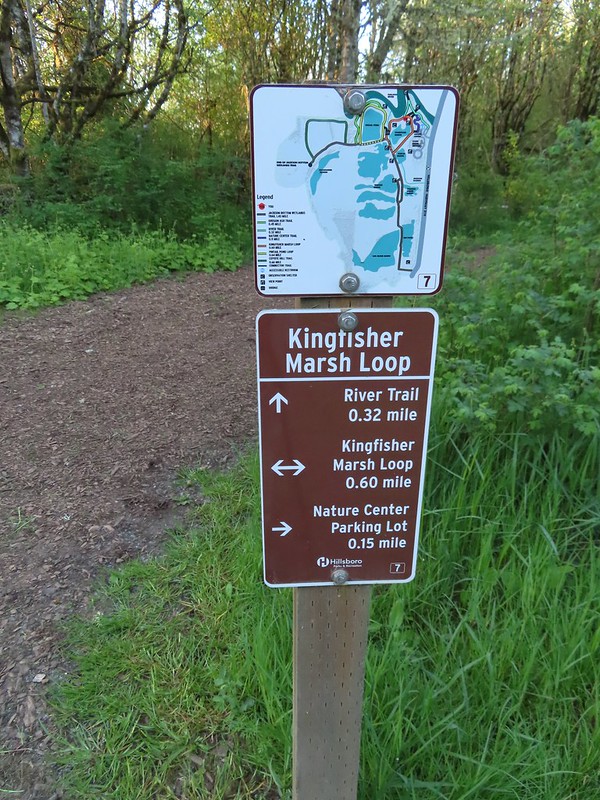 The trail signs were very helpful in keeping us on track.
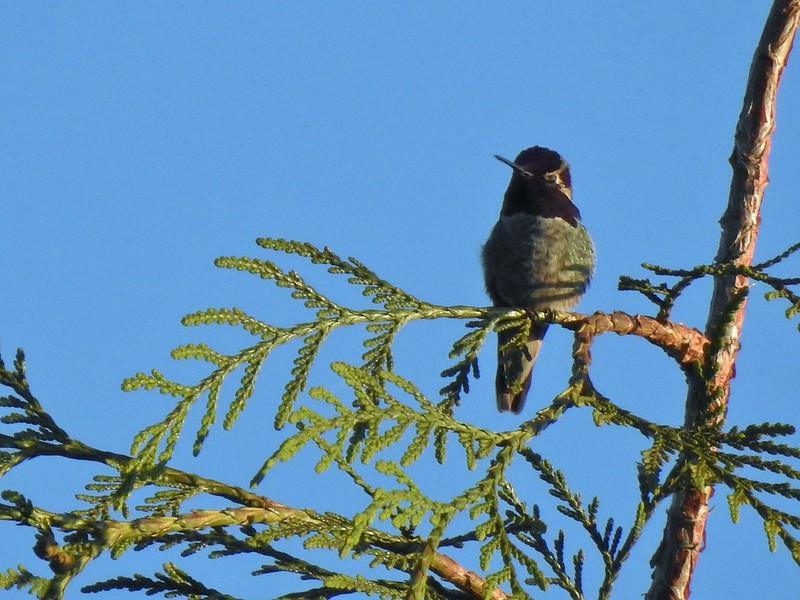 Anna’s hummingbird
 Viewpoint overlooking Kingfisher Marsh.
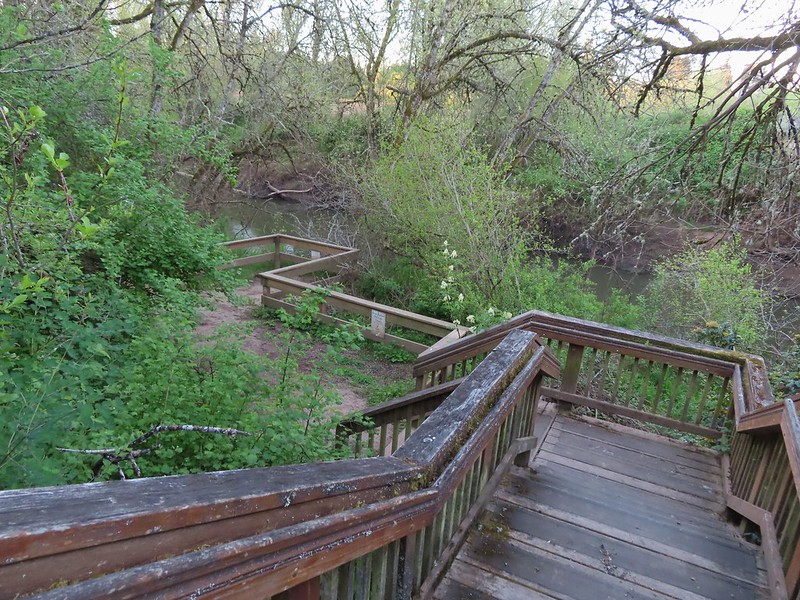
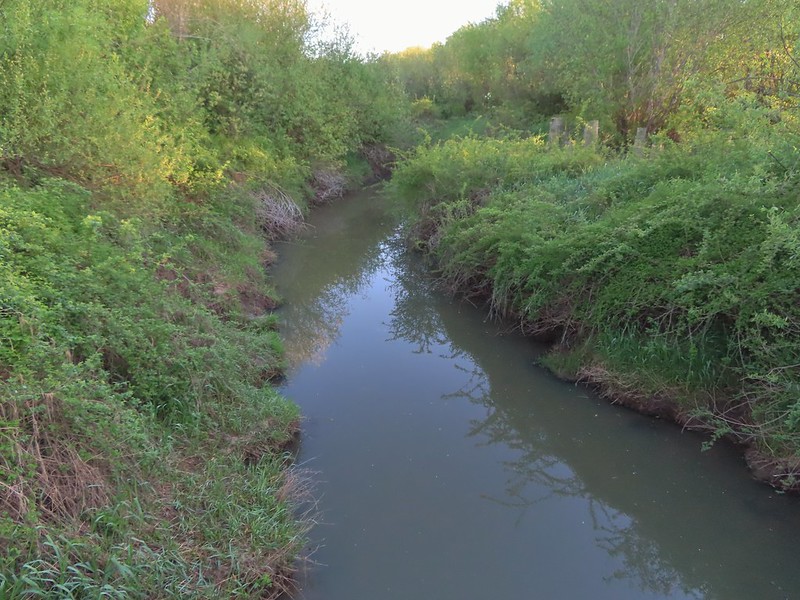 The trail crossed Jackson Slough on a footbridge.
 Pintail Pond Loop
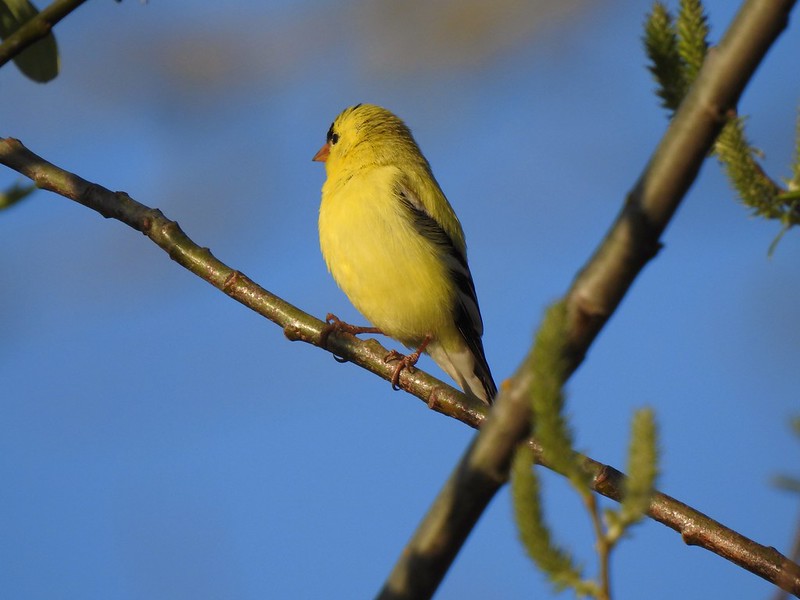 American goldfinch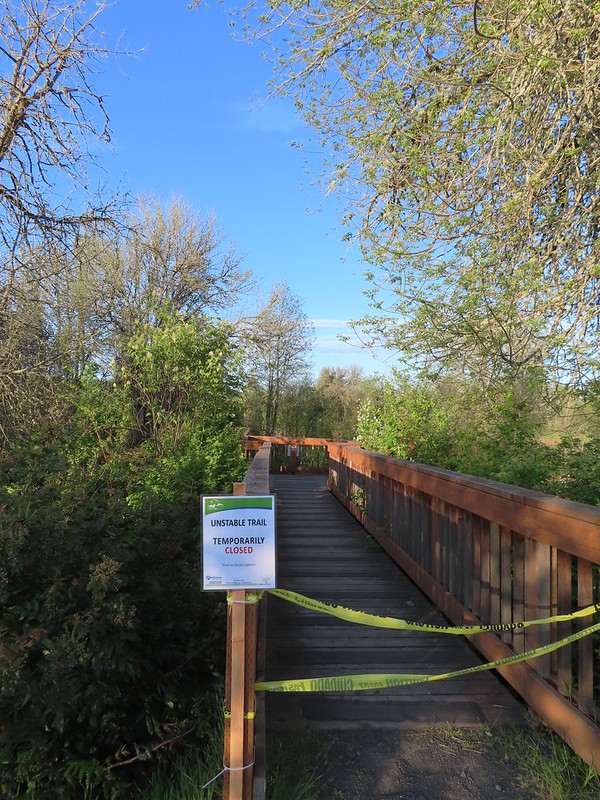
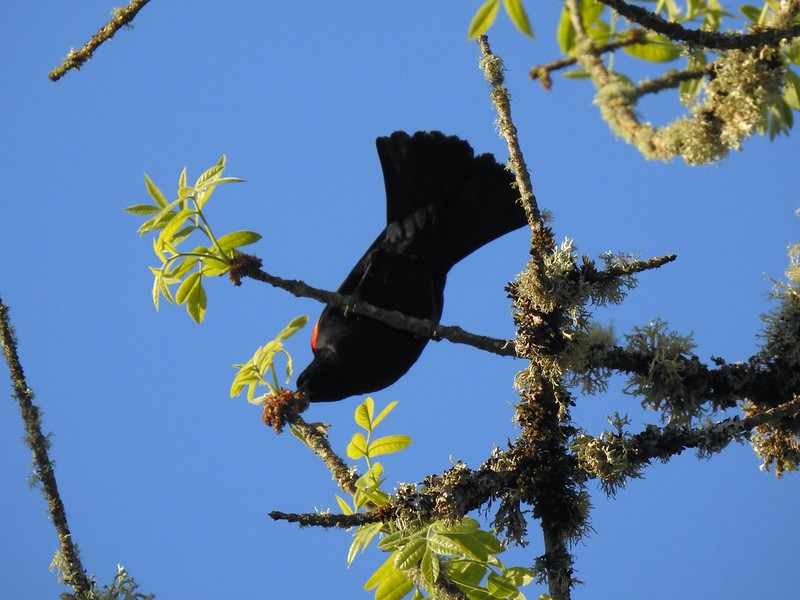 Red-winged blackbird
 Sparrow
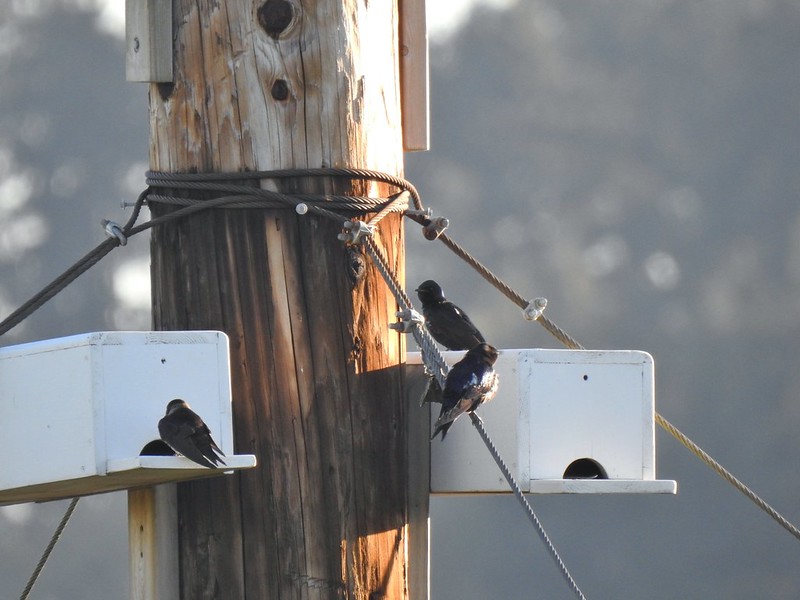 Purple martins
 American robin
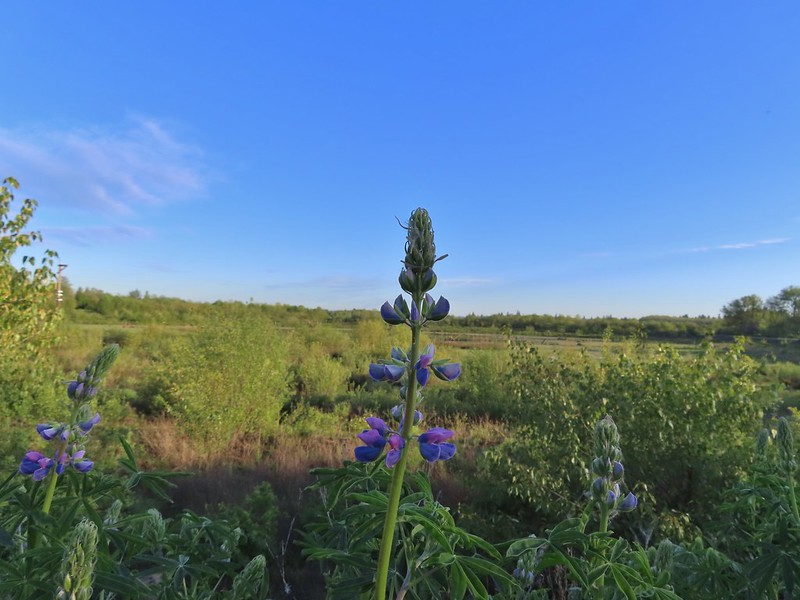 There is a lot of lupine in the preserve but only a few had started blooming.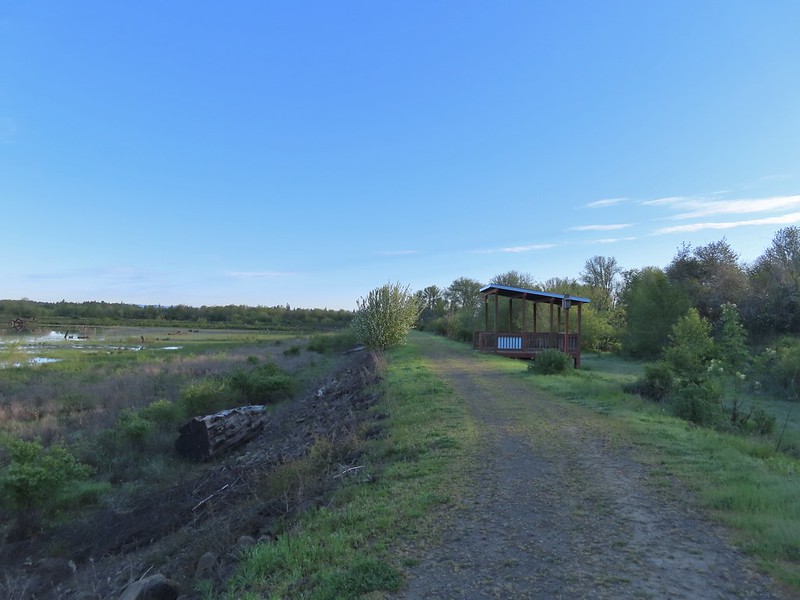


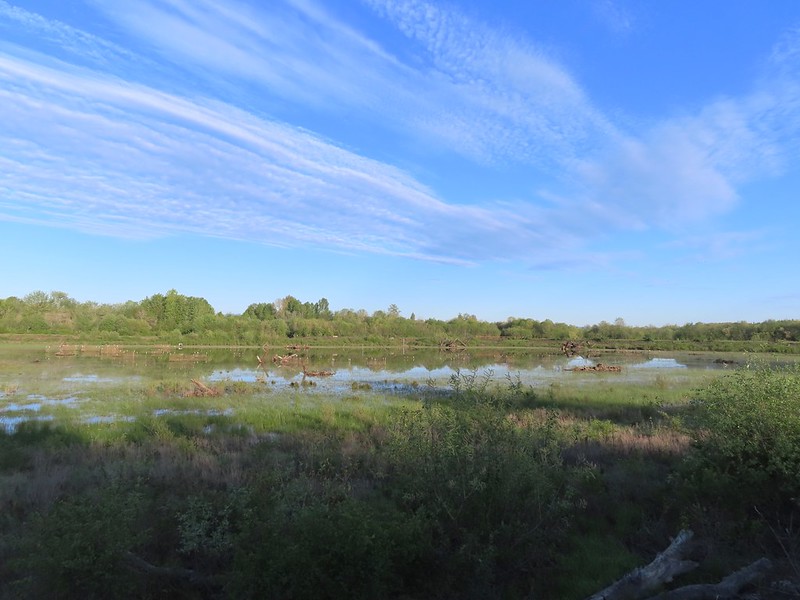 Pintail Pond
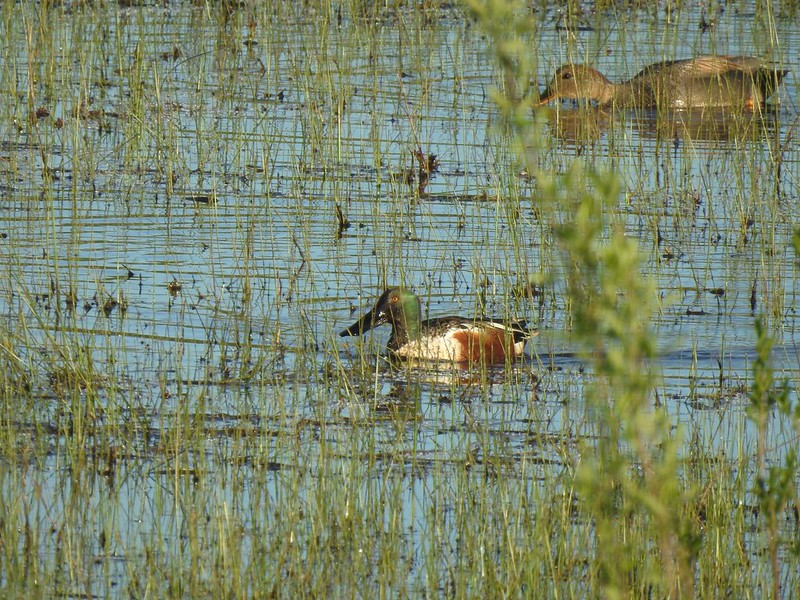 Northern shoveler drake and a gadwall
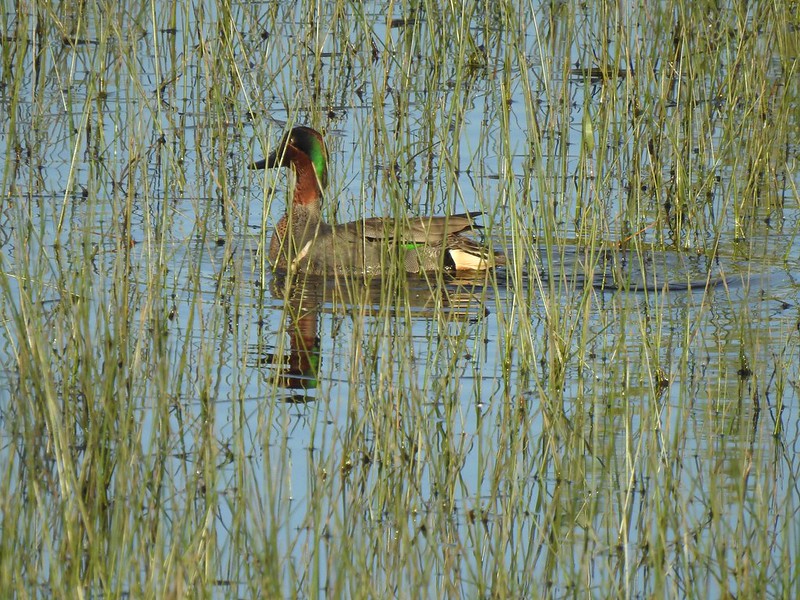 Green-winged teal
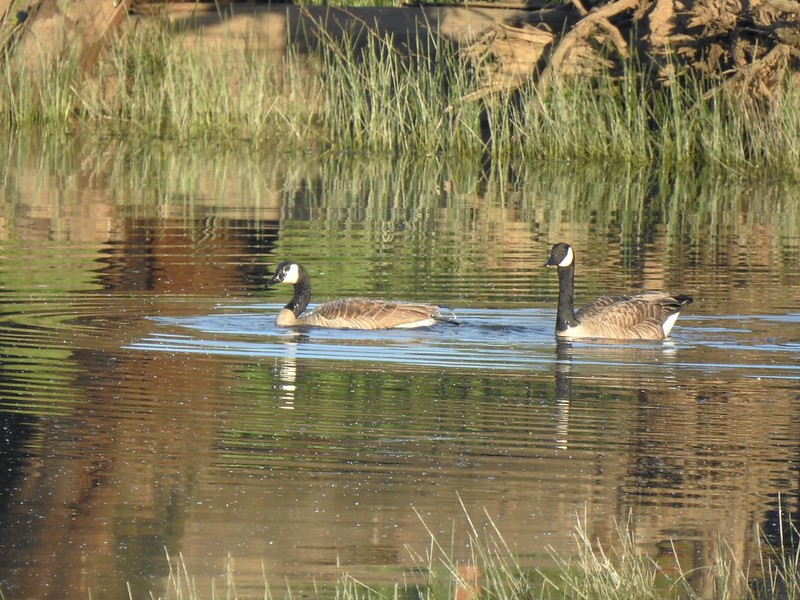 Geese
Geese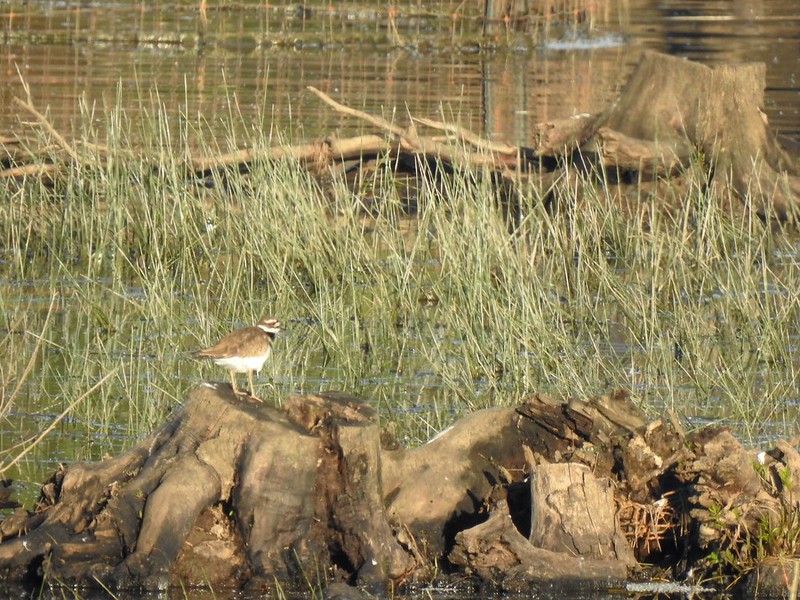 Killdeer
 More camas
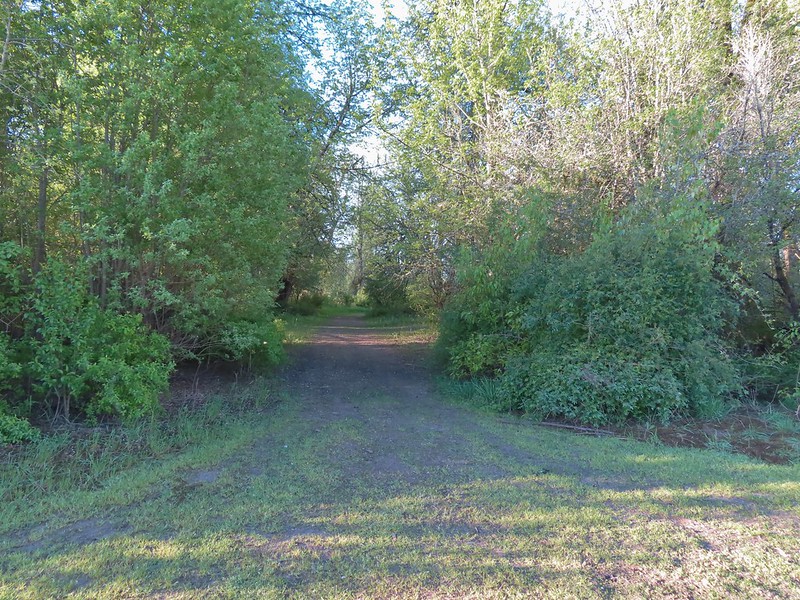 The Ash Trail.
 Orange-crowned warbler
 Jackson Bottom Wetlands
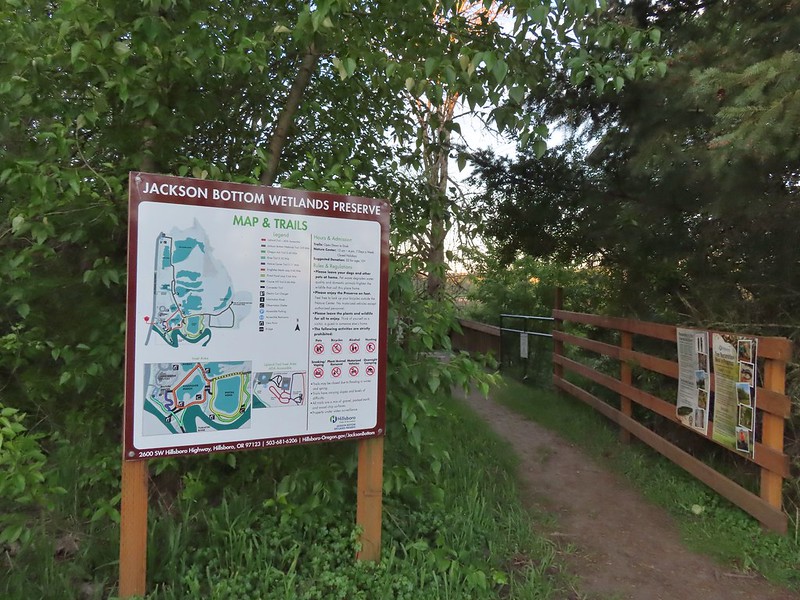
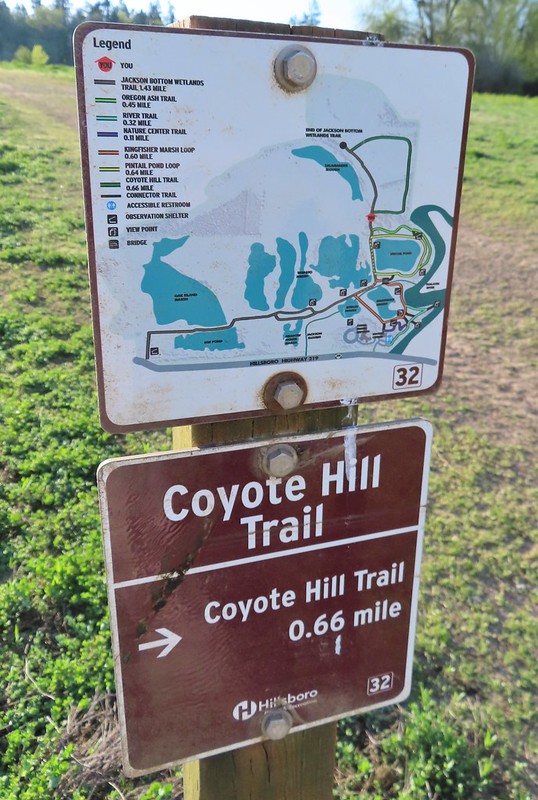 Can’t emphasize enough how helpful the map/pointer combinations are.
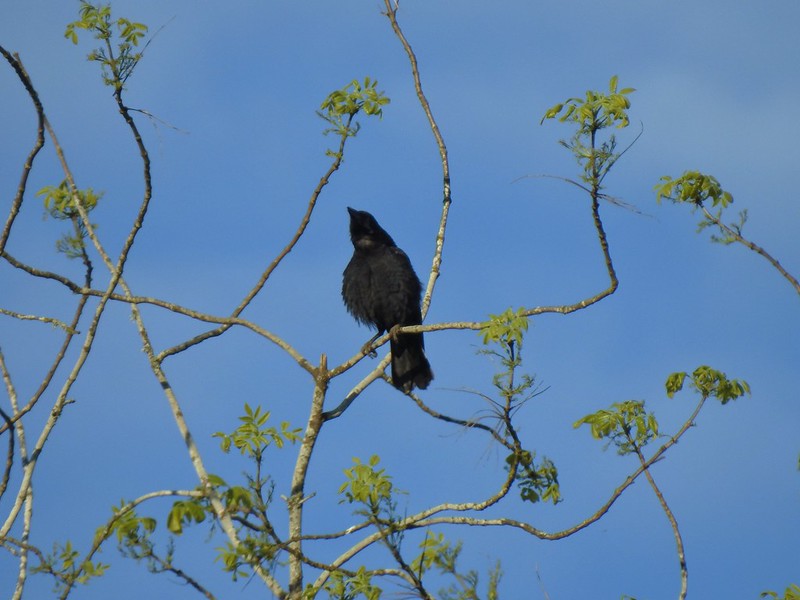 Noisy crow
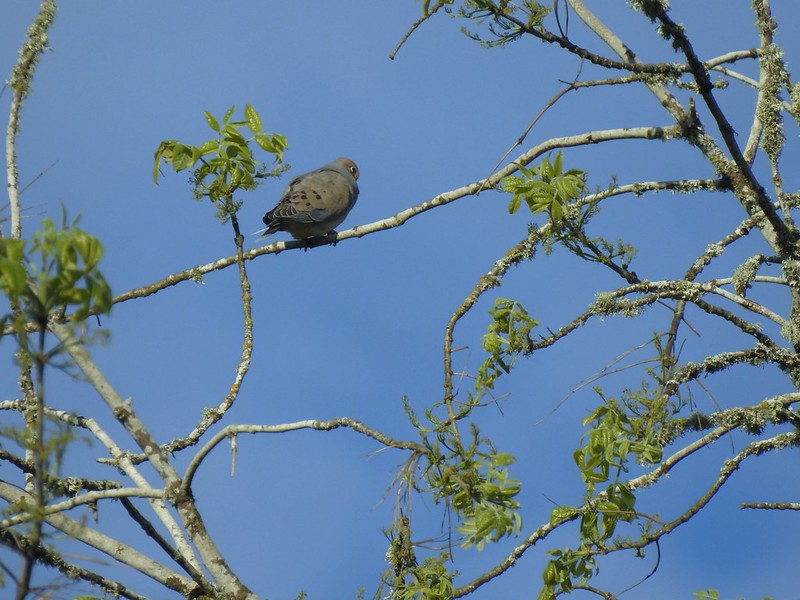 Mourning dove
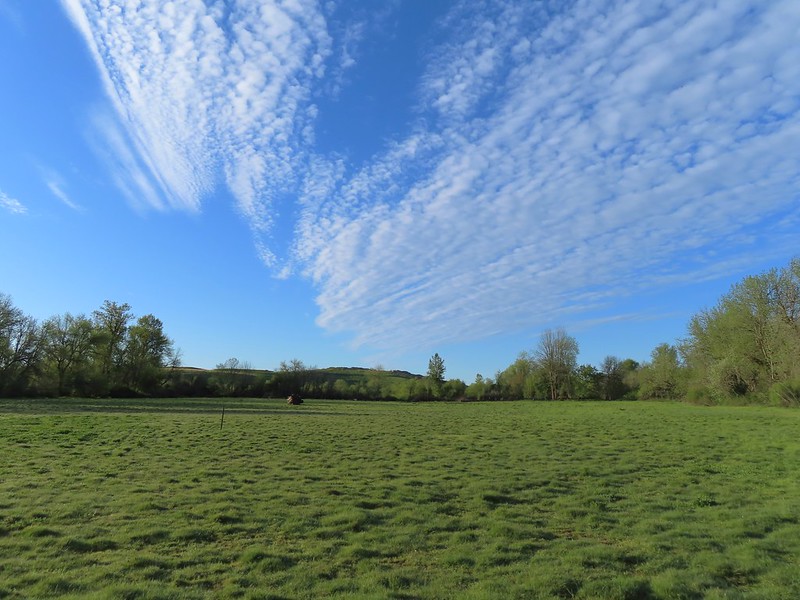 Our assumption was that that is Coyote Hill in the distance.
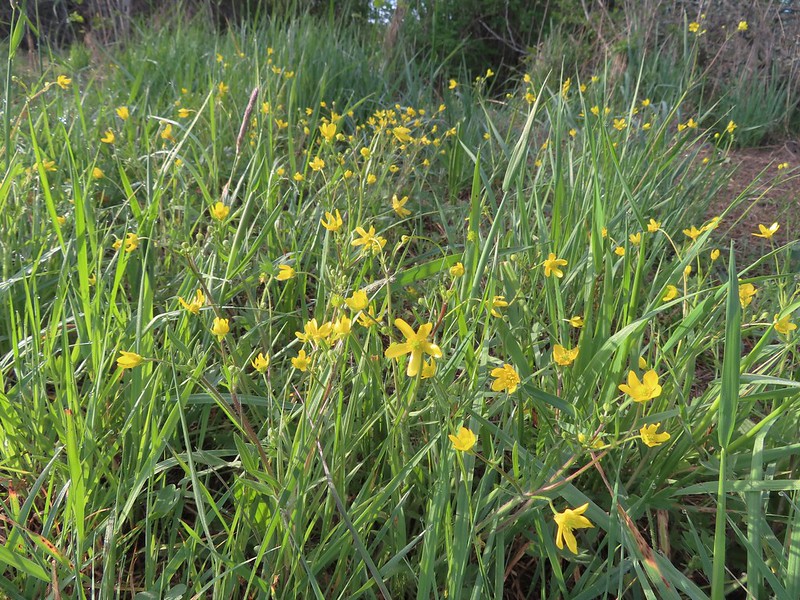 Western buttercups
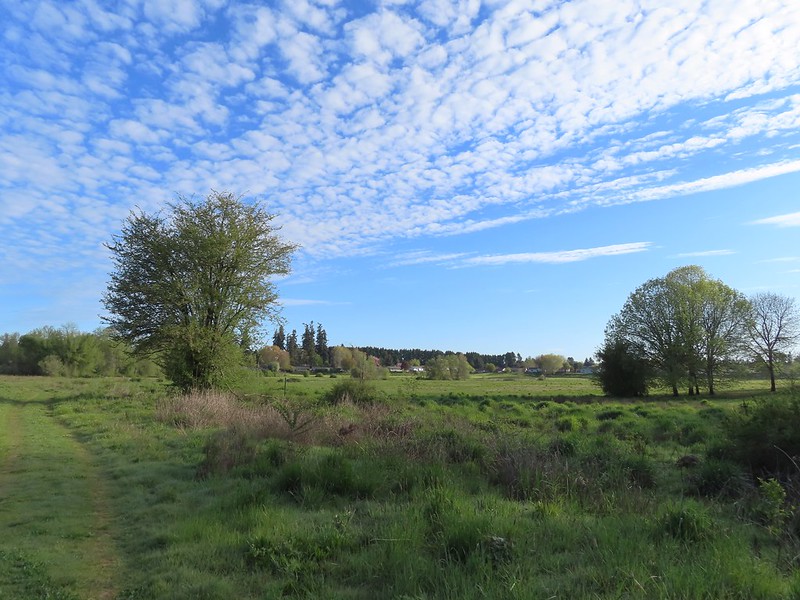 Some houses on the wetlands border.
 Golden-crowned sparrow
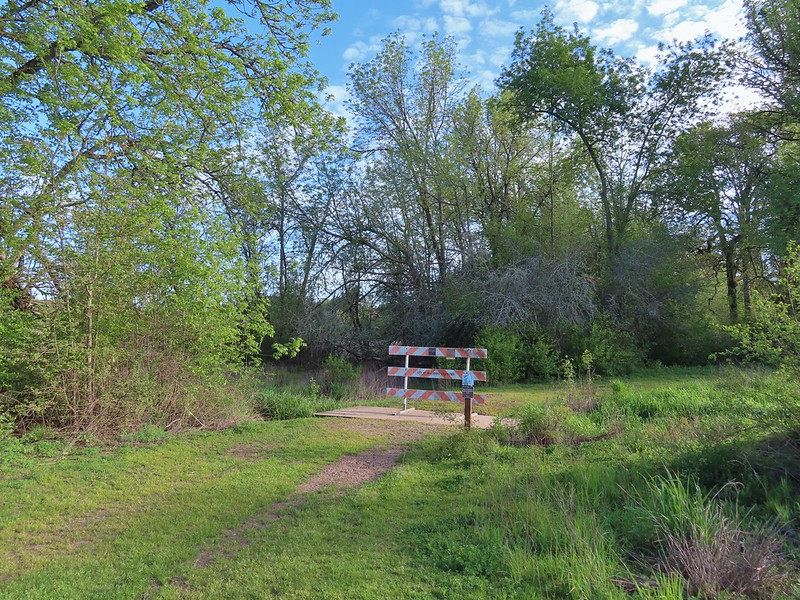 End of the trail.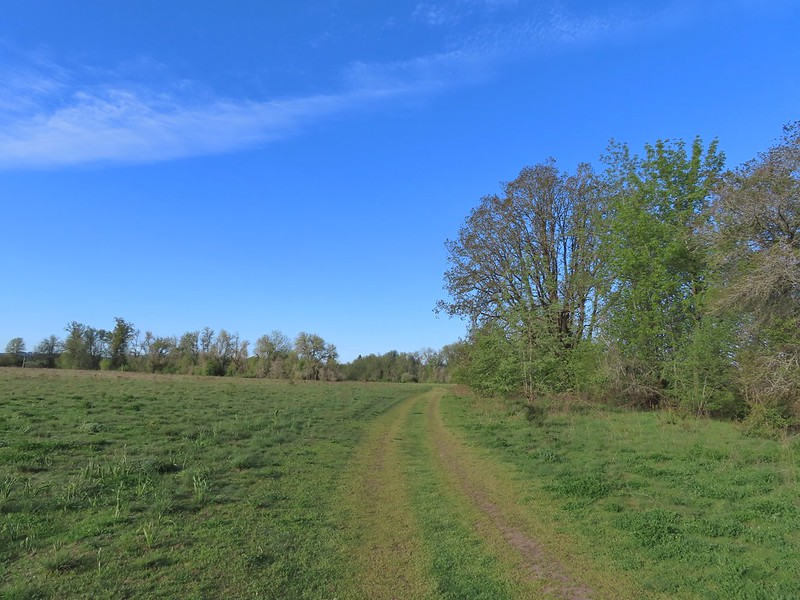
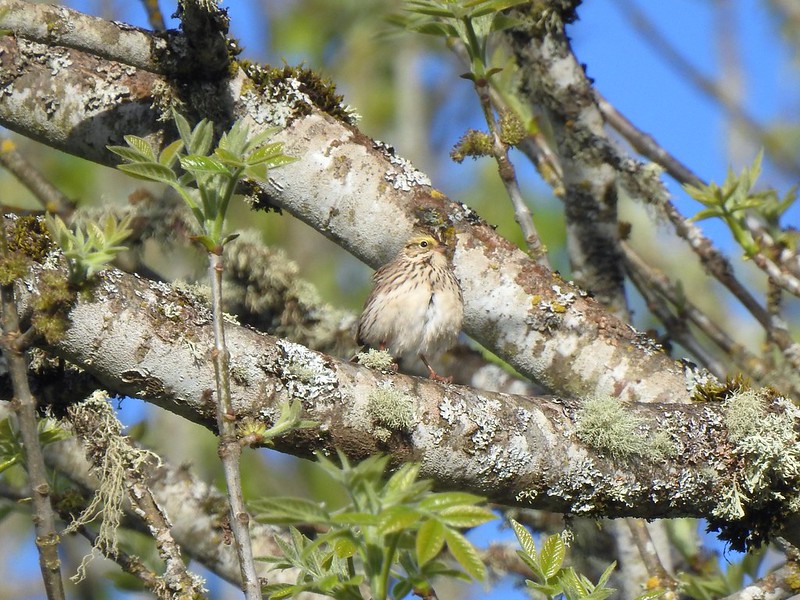 Savannah sparrow
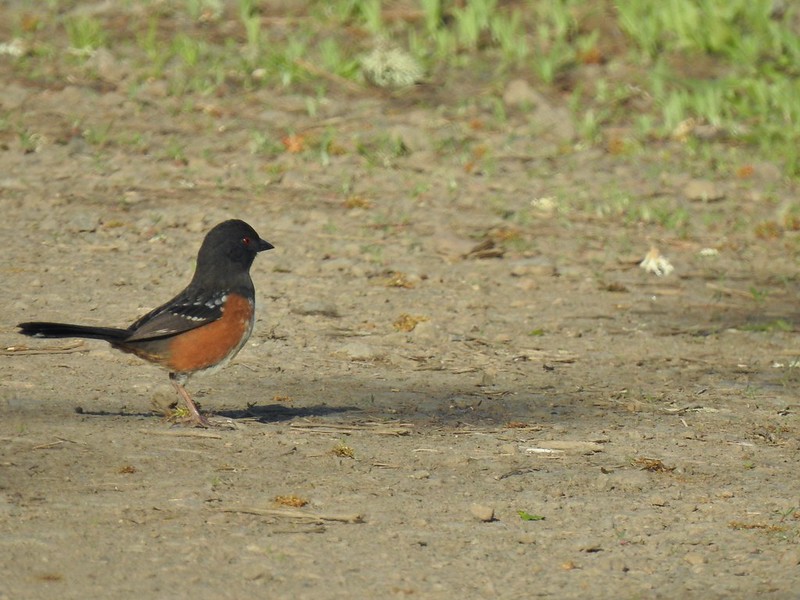 Spotted towhee
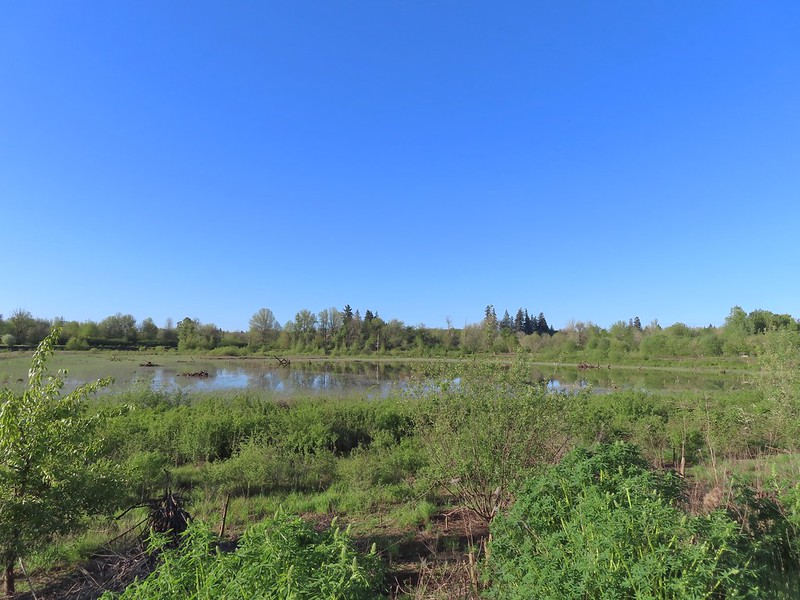 Passing Pintail Pond.
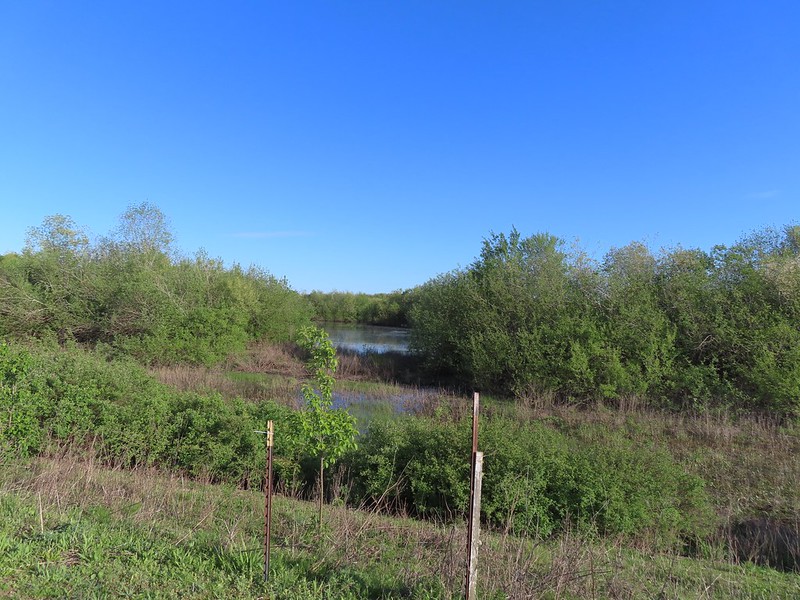 Wapato Marsh
 White-crowned sparrow
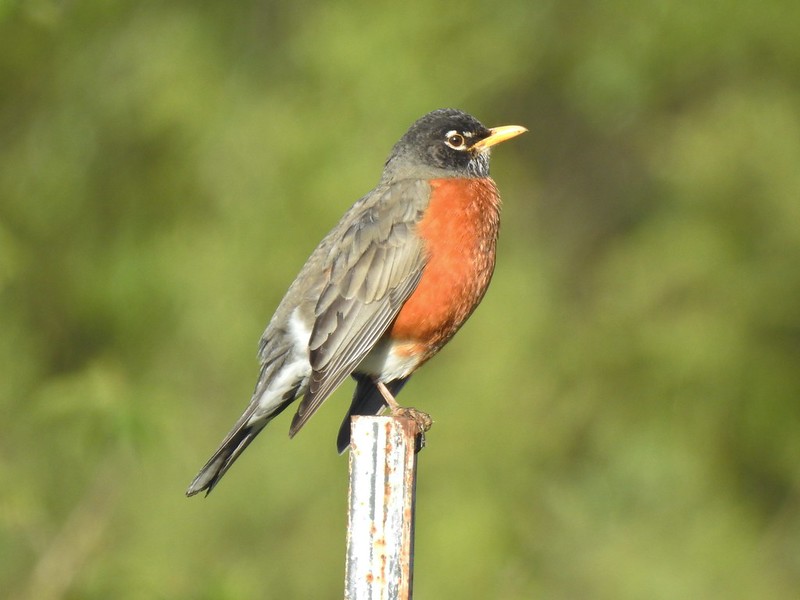 American robin
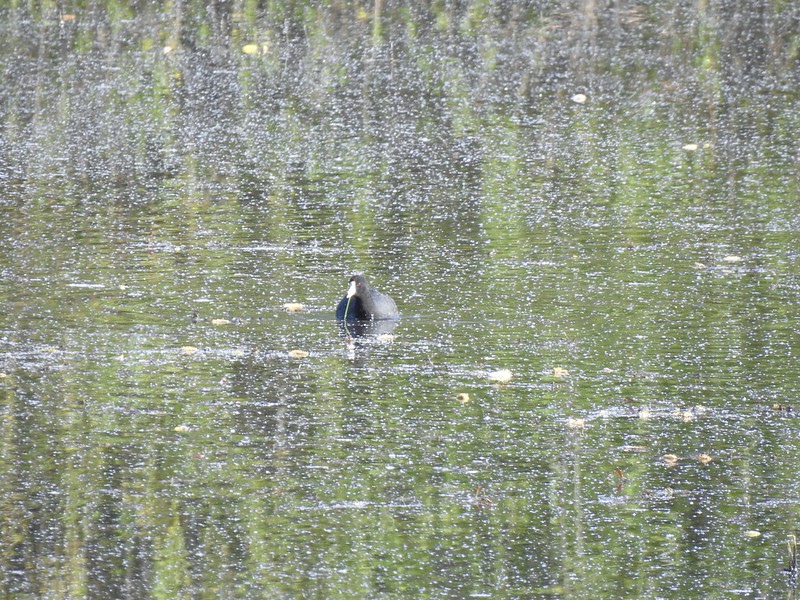 American coot
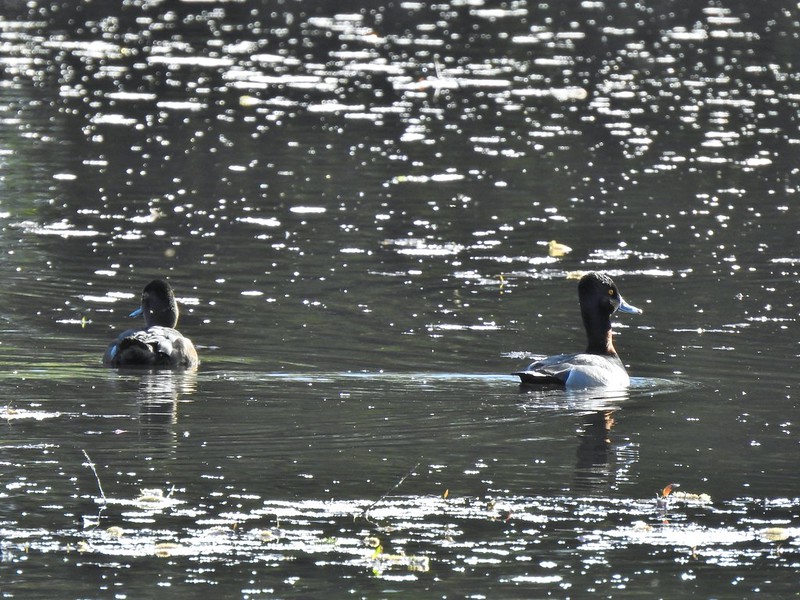 Ring-necked ducks
 Wapato Marsh
 Cormorants
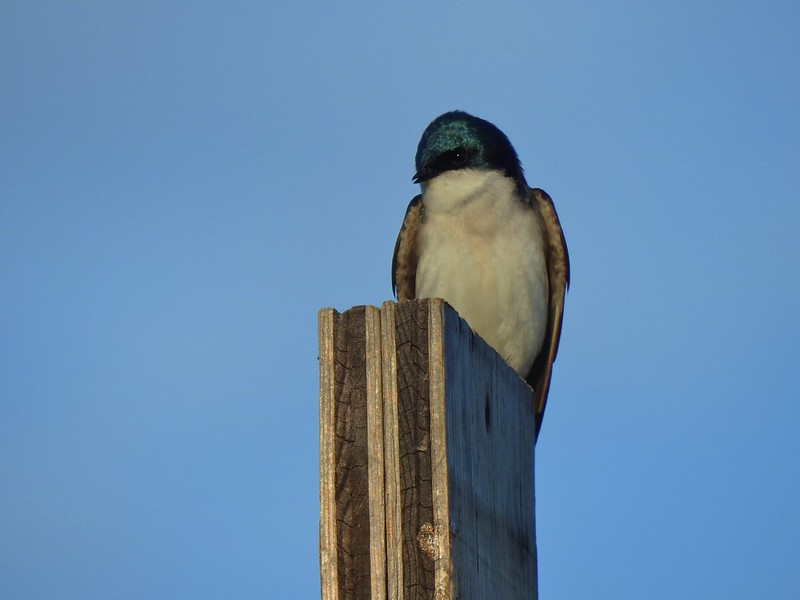
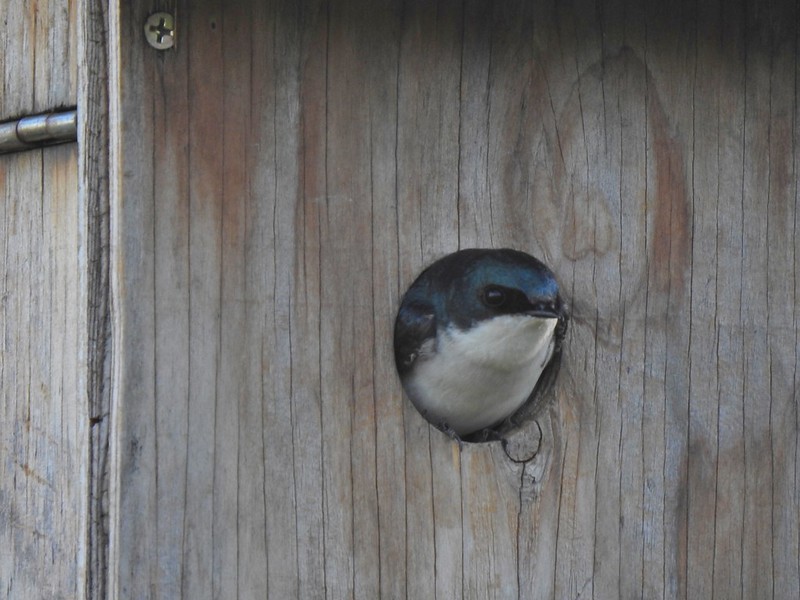
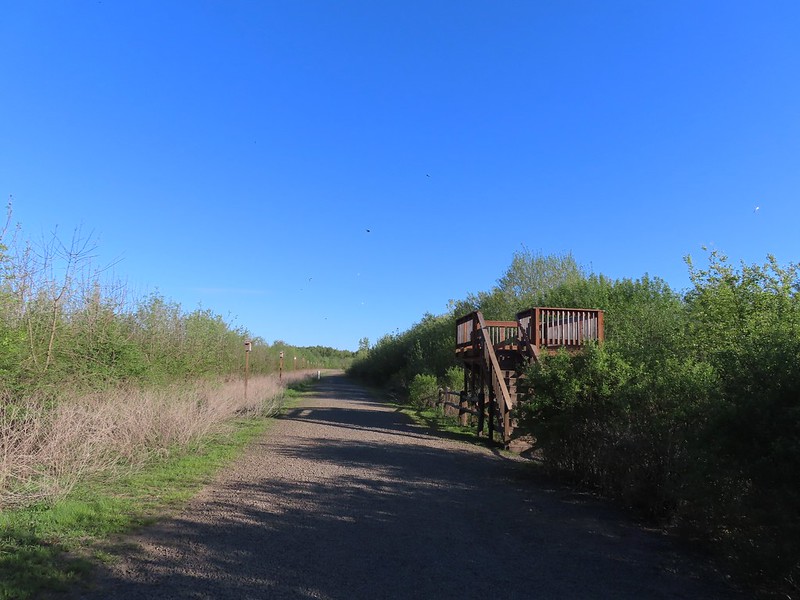 Raised viewing platform with many tree swallow photobombs.
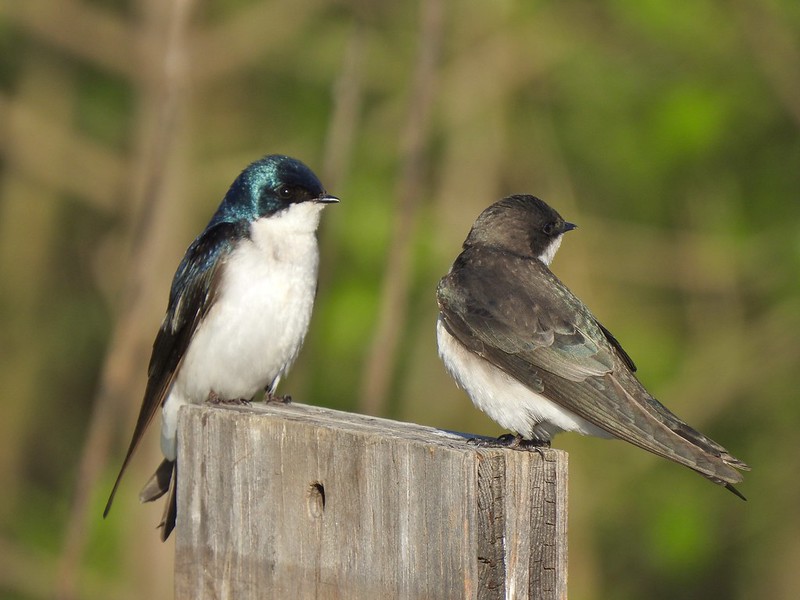 This couple was having quite the discussion.
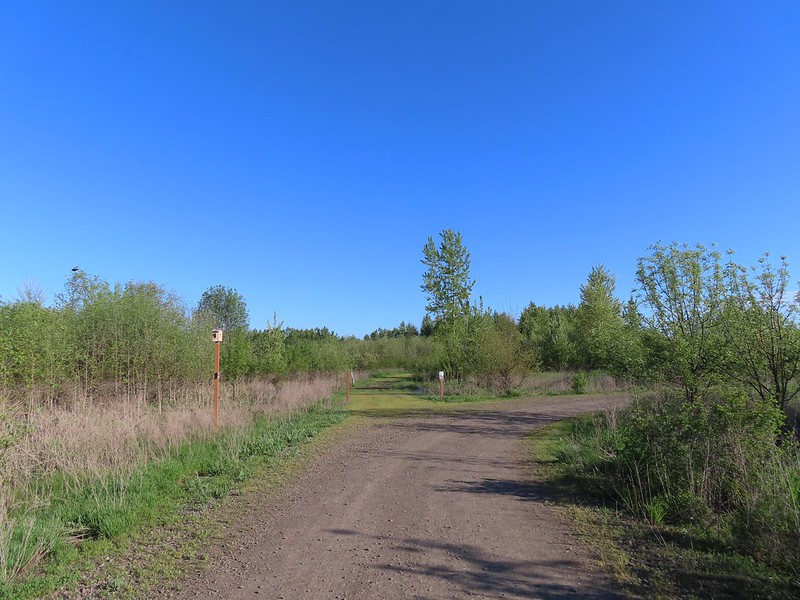 The Bobcat Marsh Trail on the left.
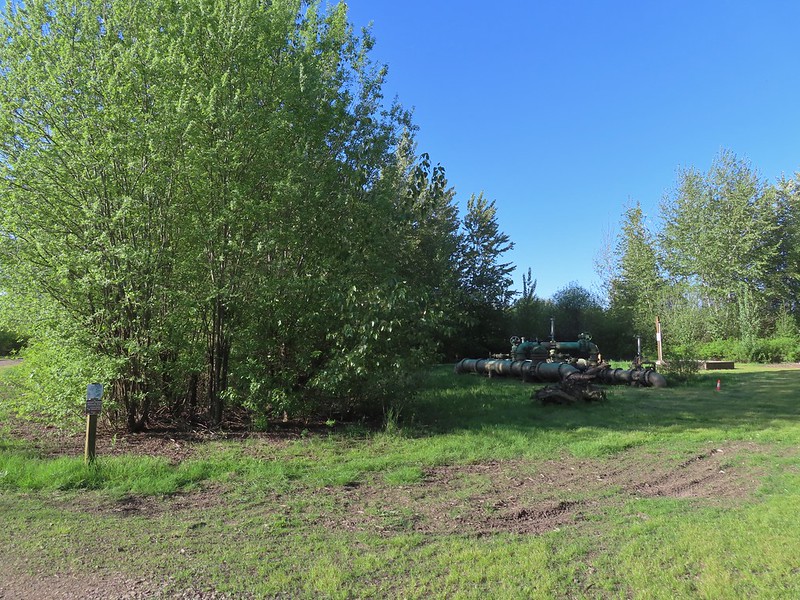 Water treatment pipes at the other end of the Bobcat Marsh Trail.
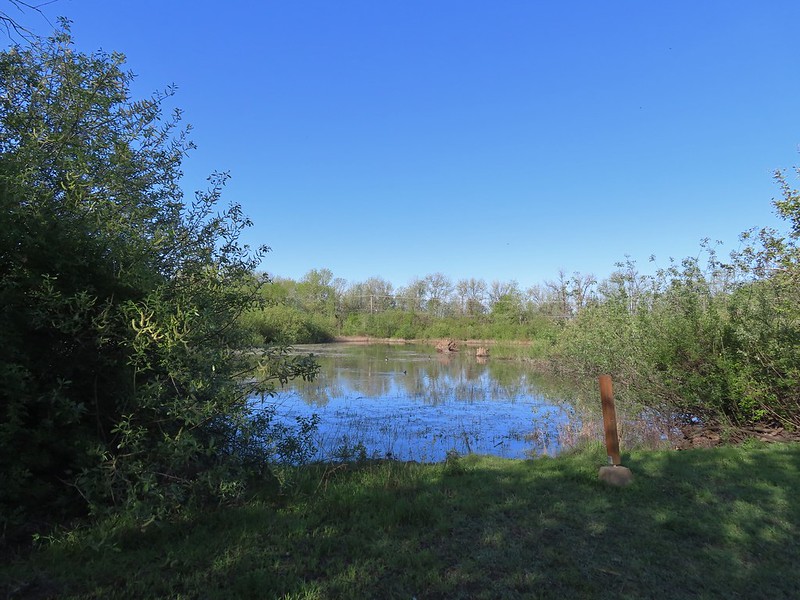 NW Pond
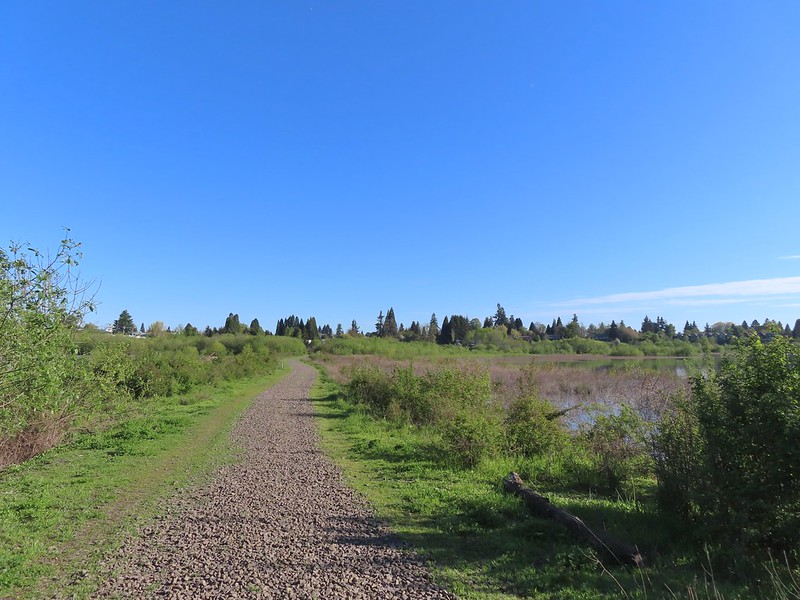 The trail passed between the NW Pond on the left and Oak Island Marsh on the right.
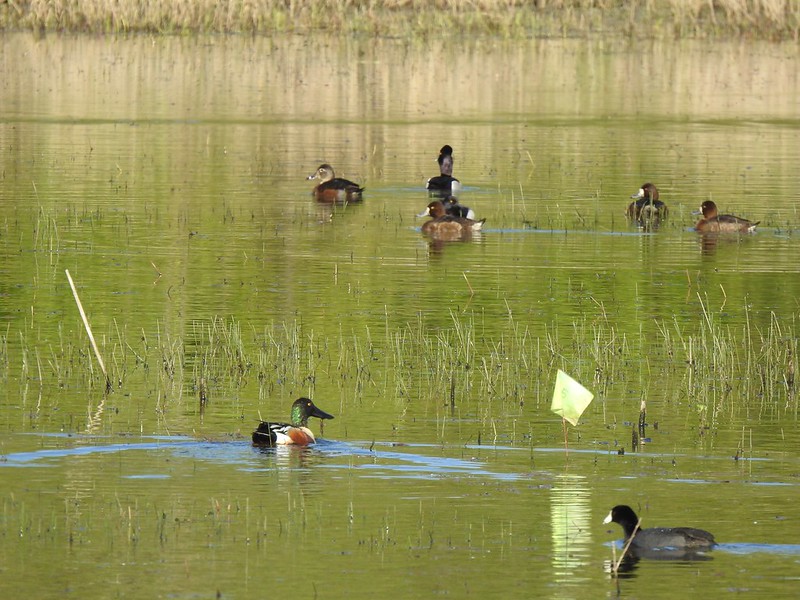 NW Pond had a variety of waterfowl. This is a northern shoveler drake, ring-necked duck pair, four lesser scaups, and an American coot.
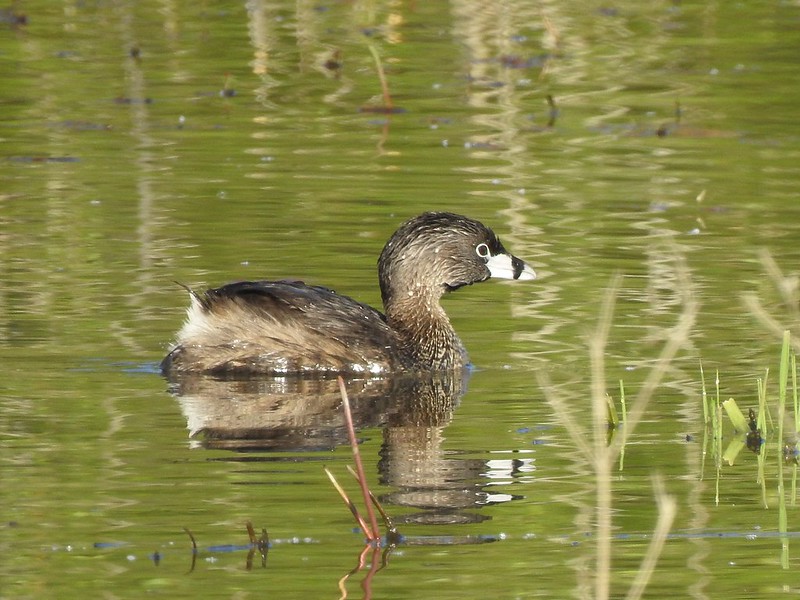 Pied-billed grebe in NW Pond
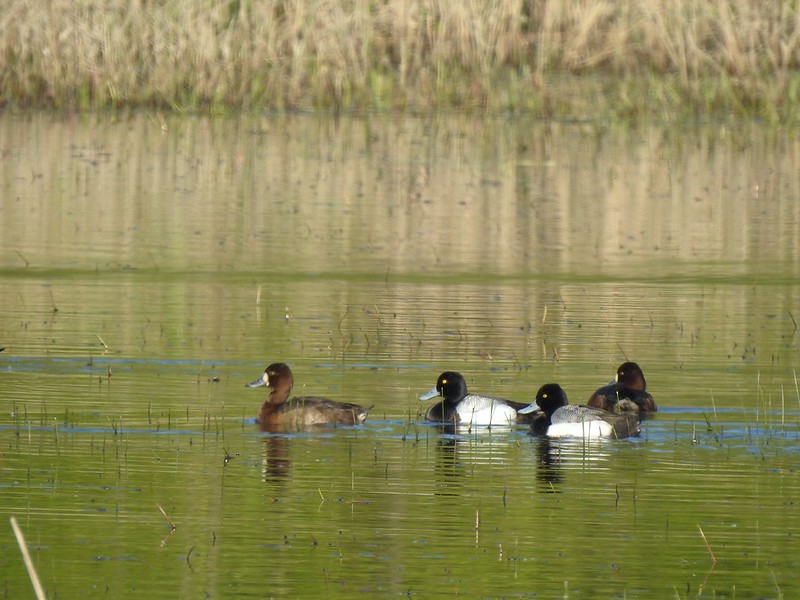 Lesser scaups
 Goose and mallards
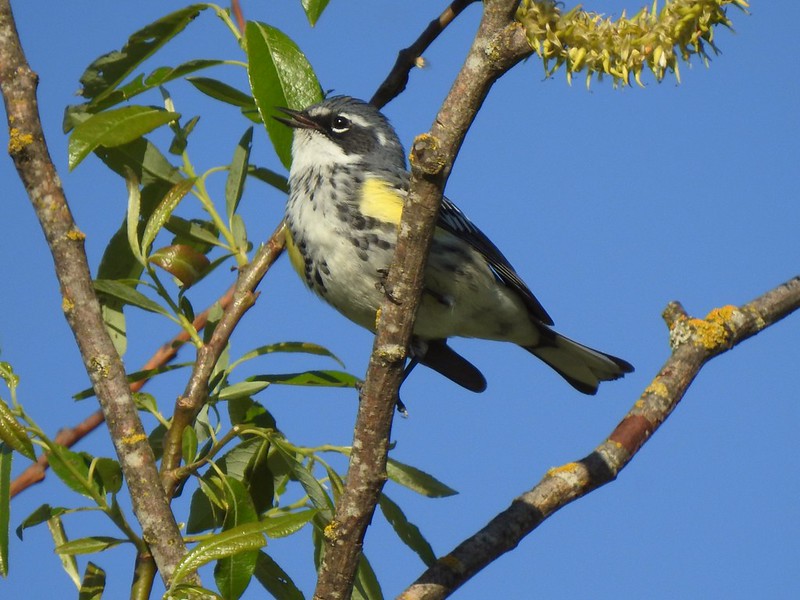 Yellow-rumped warbler
 The northern trailhead.
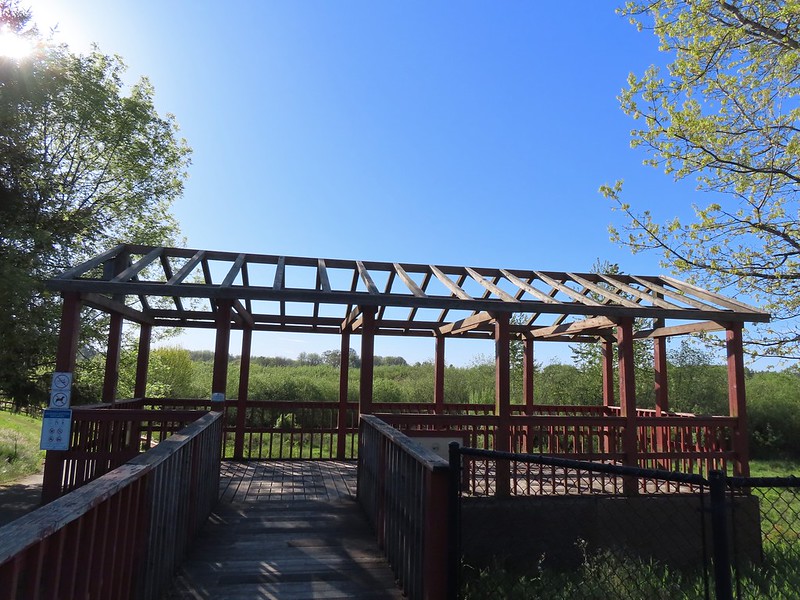 Viewing platform at the trailhead.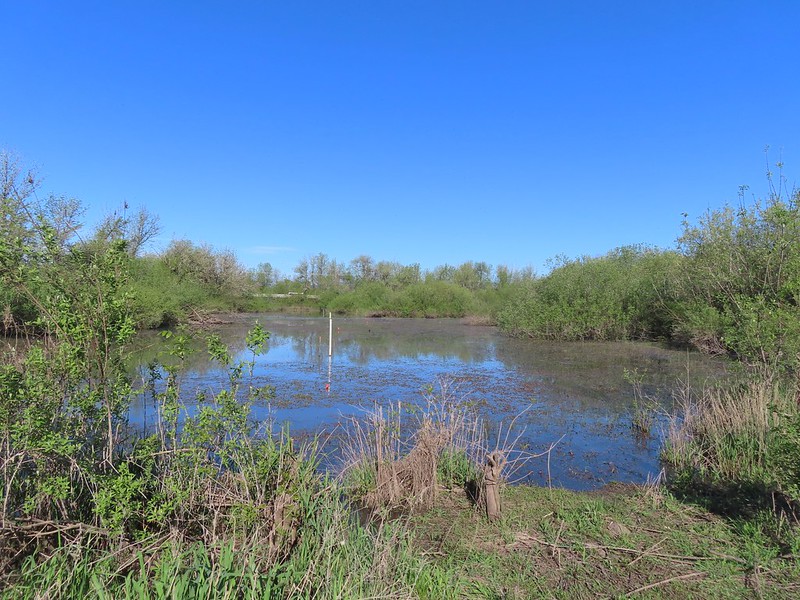
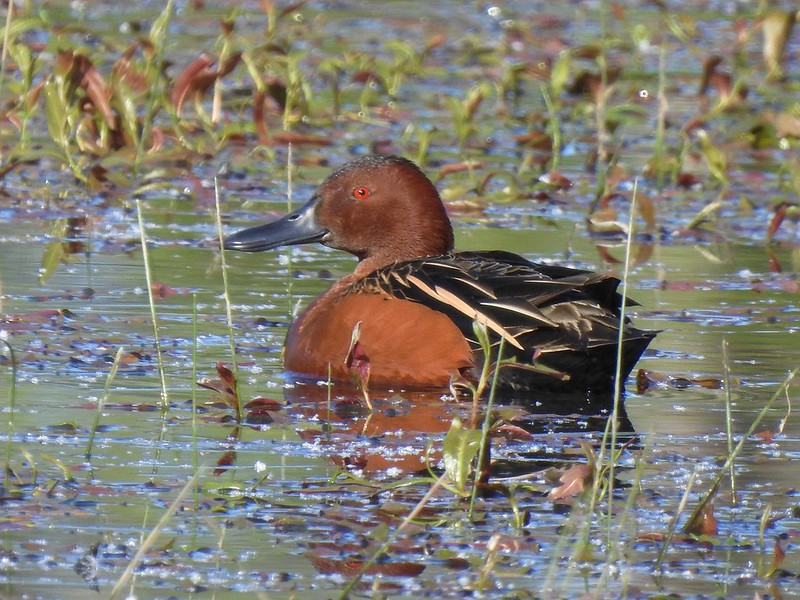 Cinnamon teal on Meadow Mouse Marsh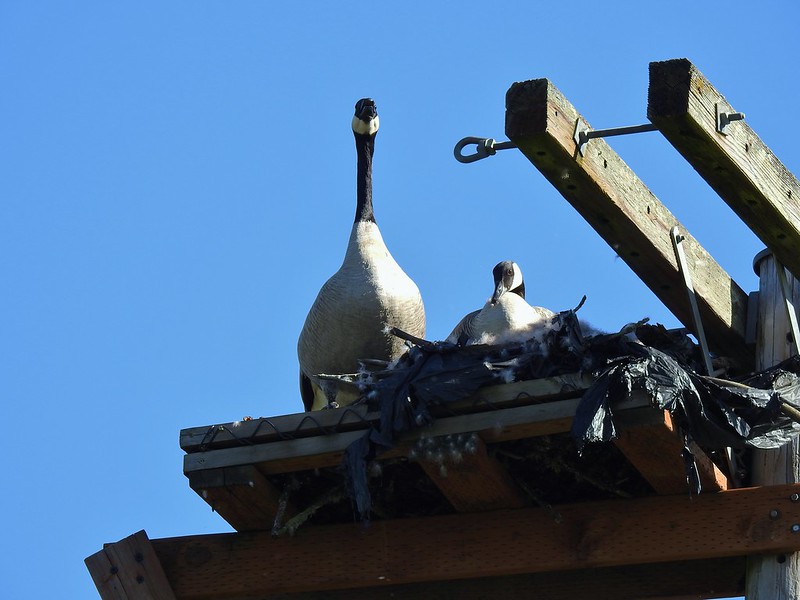

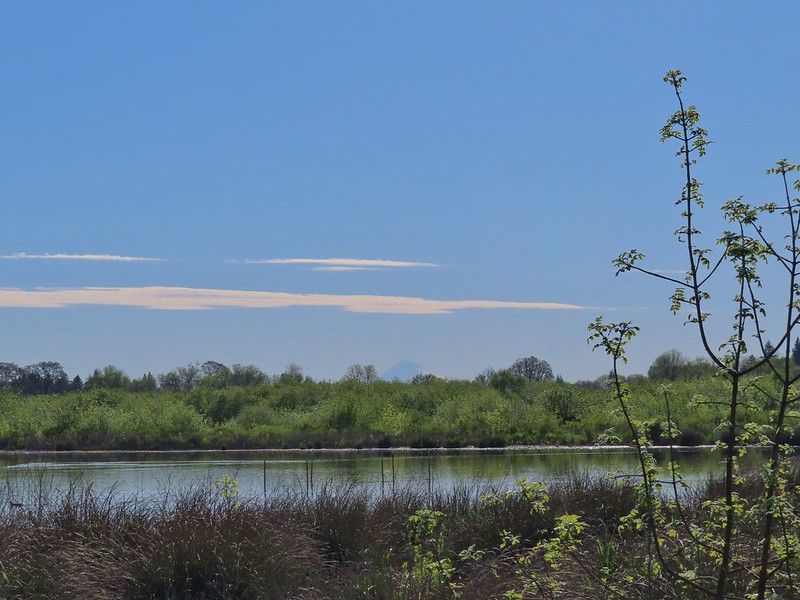 Mt. Hood beyond Wapato Marsh
 Back on the Kingfisher Marsh Loop.
 The Kingfisher Marsh Loop turned left here.
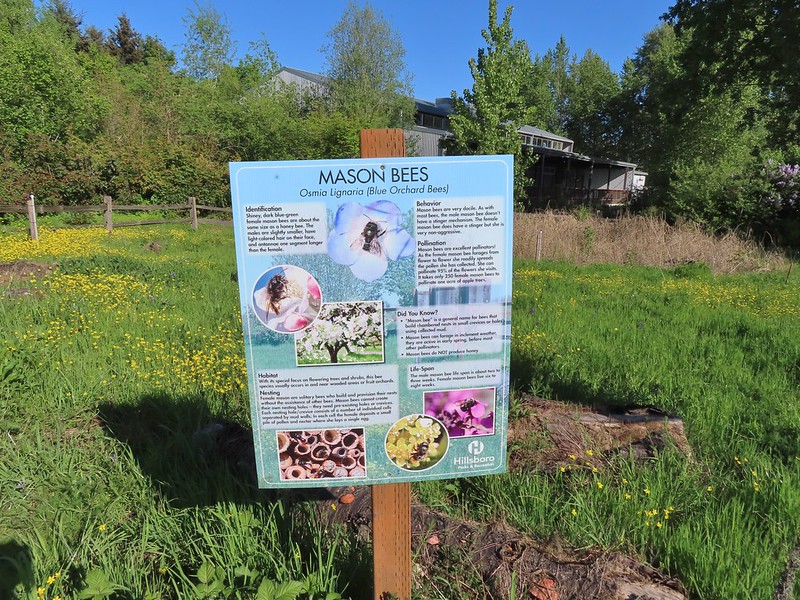
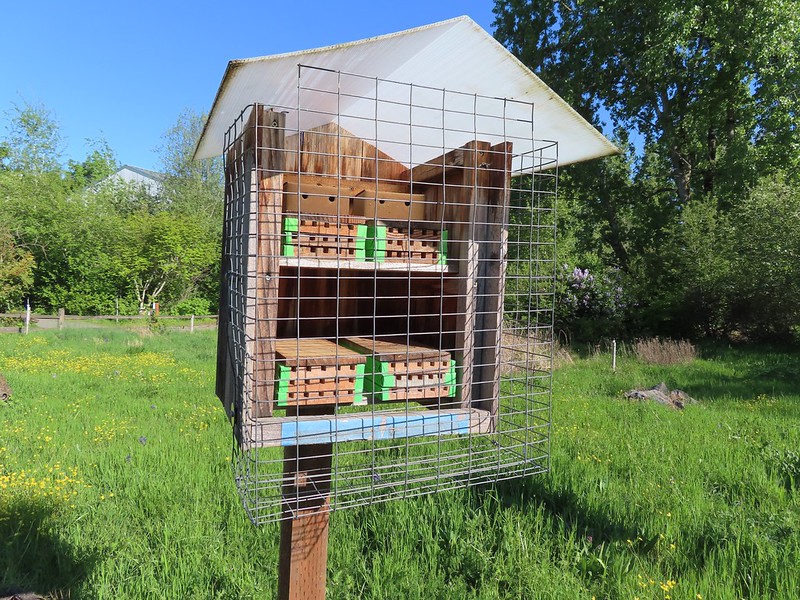 Mason bee house
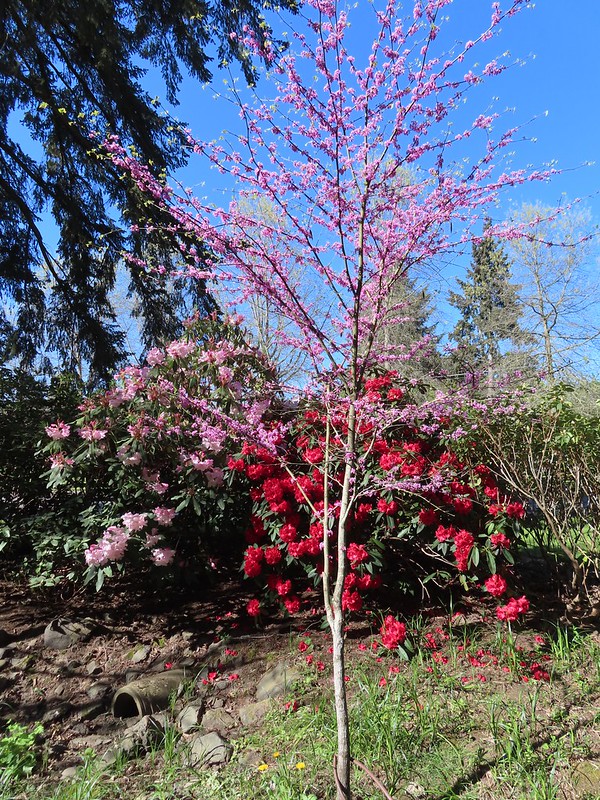
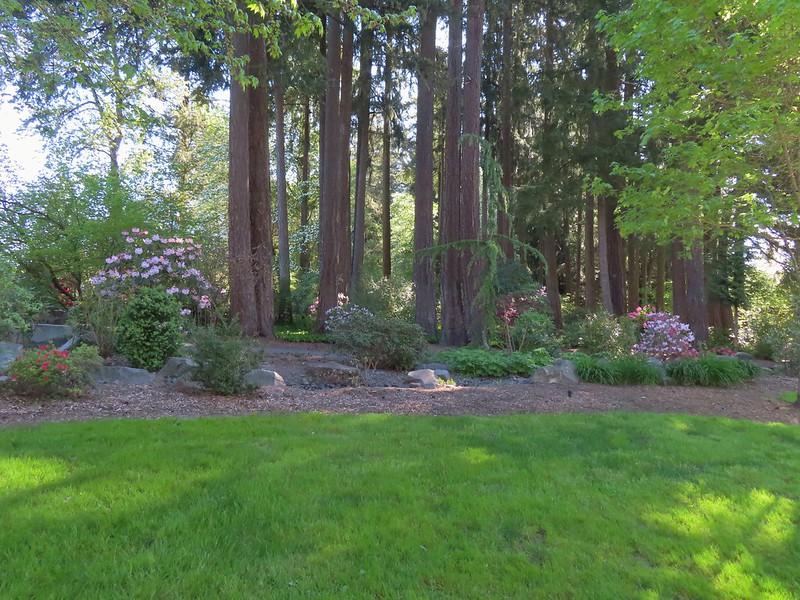
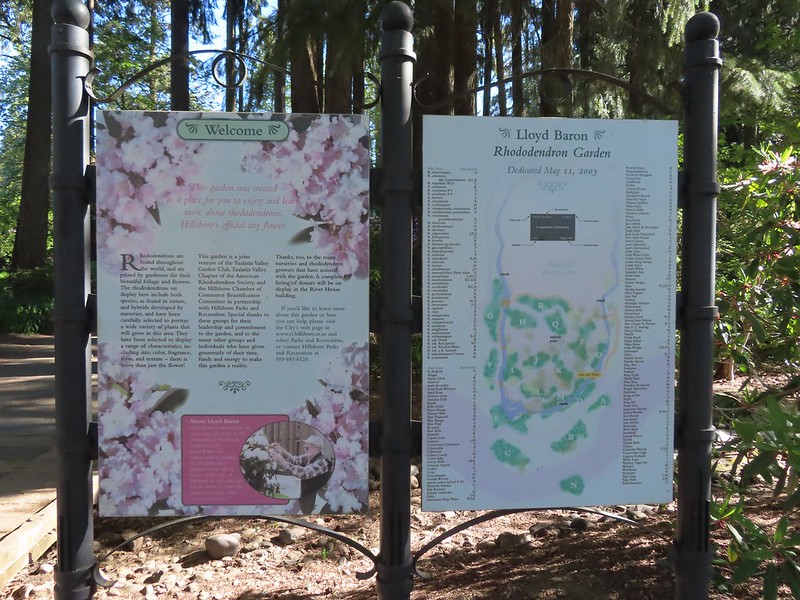 Sign for the rhododendron garden.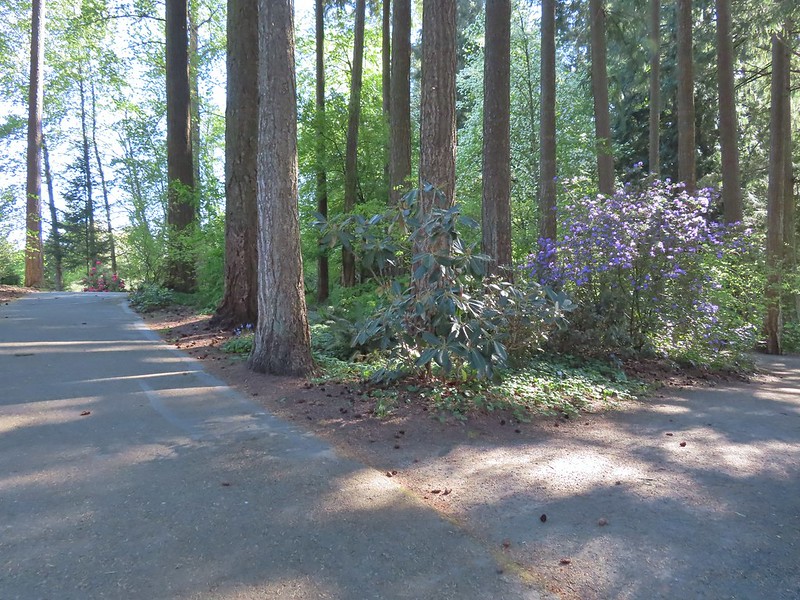
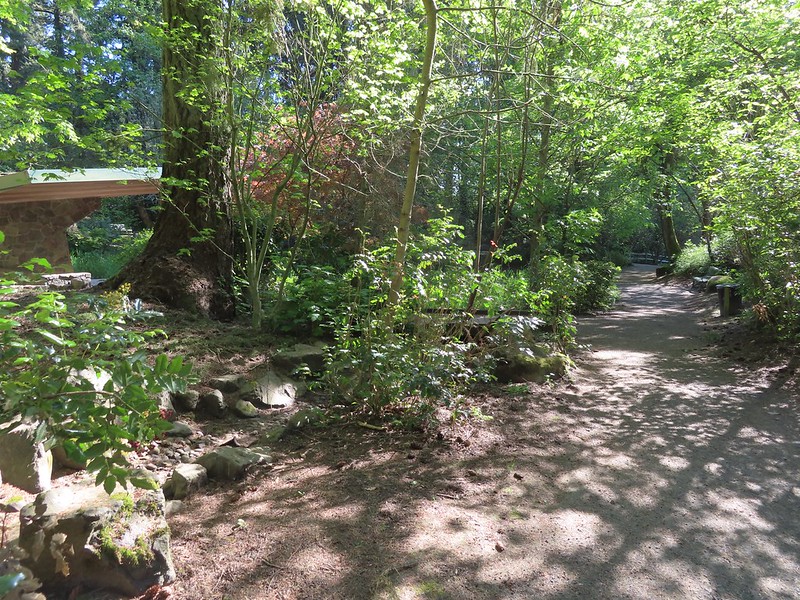
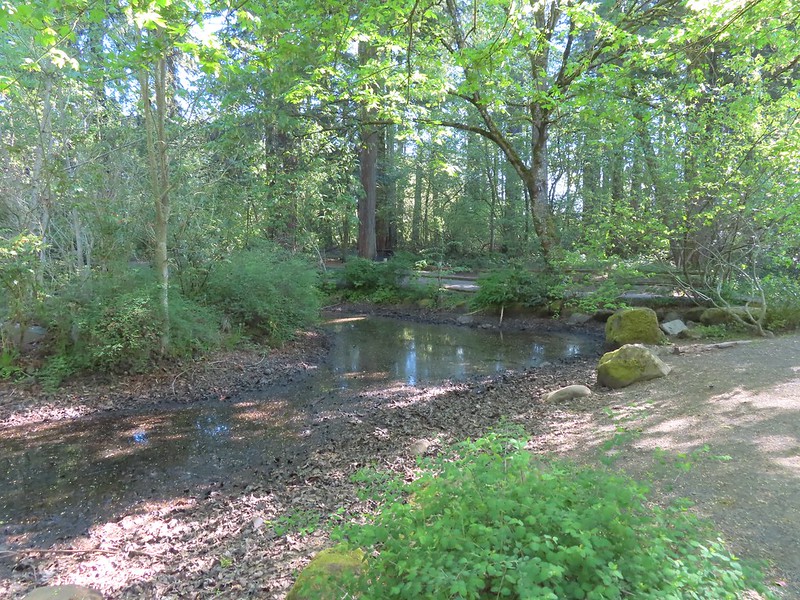 The Woodland Pond
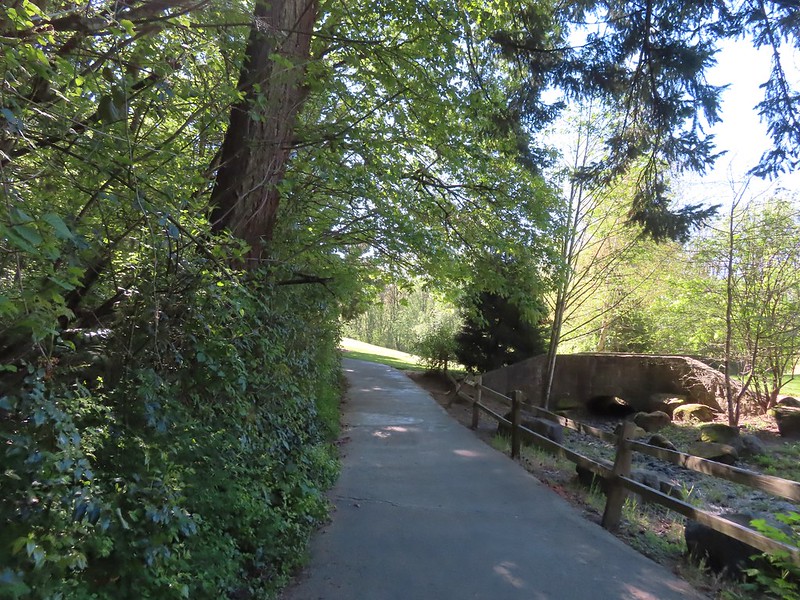 Heading for the Rock Creek Trail.
 Rock Creek from the Rock Creek Trail.
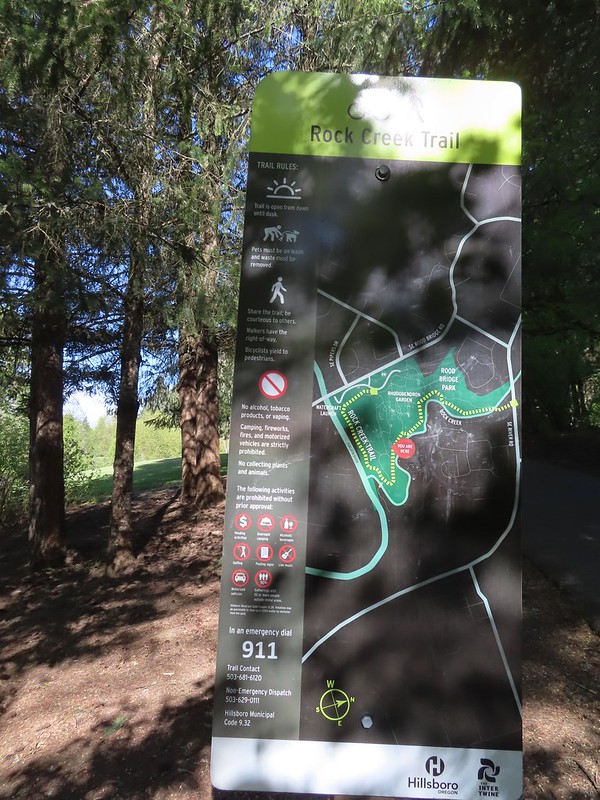 The maps for the park were a little tougher to follow as most of the trails weren’t named and there were a lot of interconnected short segments.
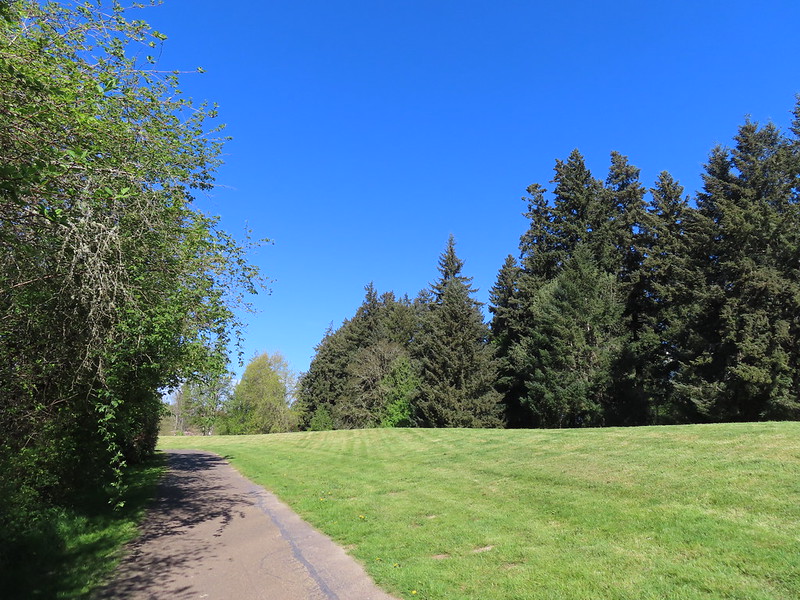
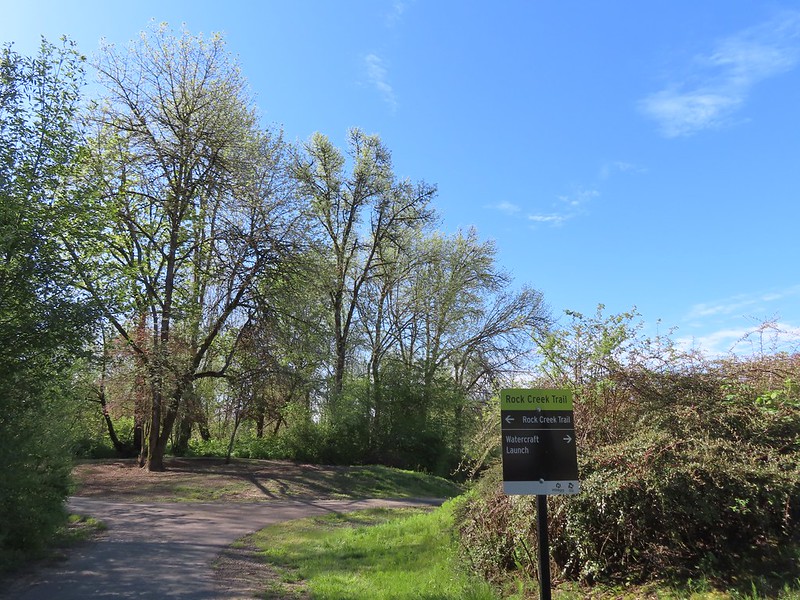
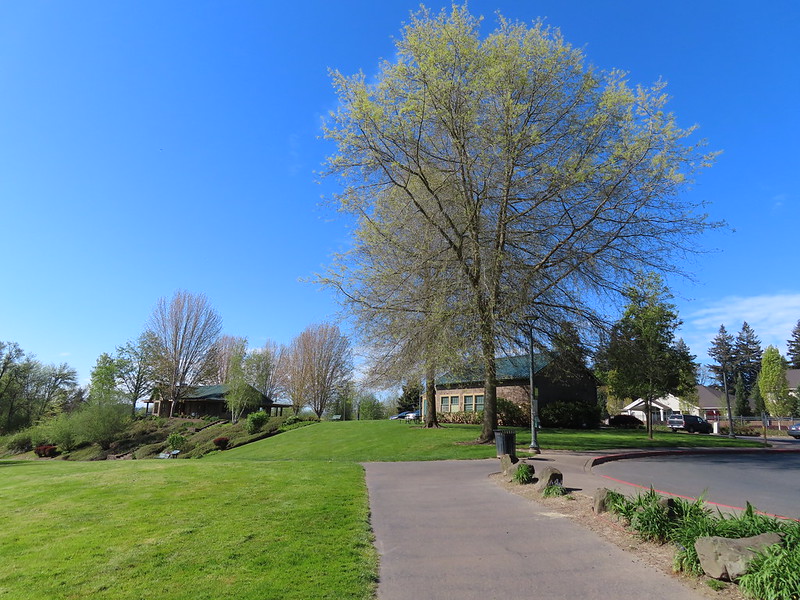 The junction ahead is where the Rock Creek Trail beings/end according to the Rock Creek Trail maps. Maps of Rood Bridge Park simply refer to this as part of the “Main Trail Loop”, if they label it at all.

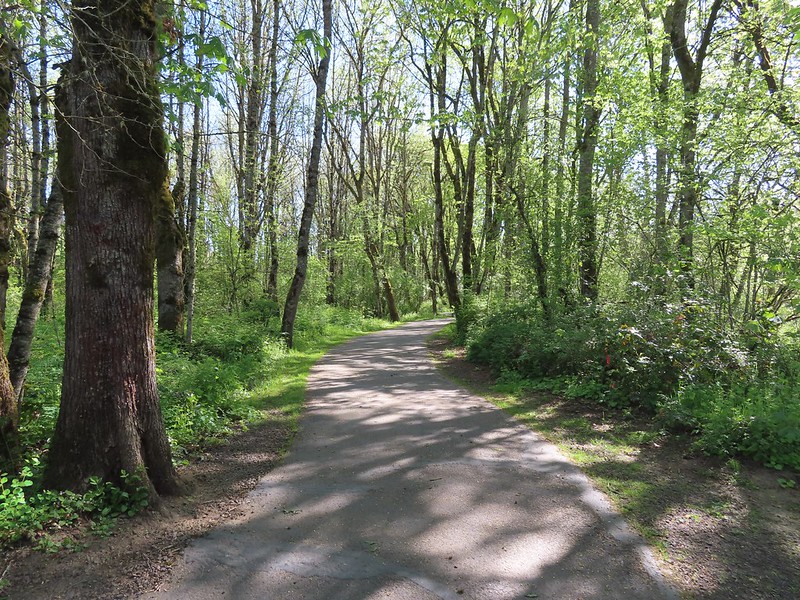
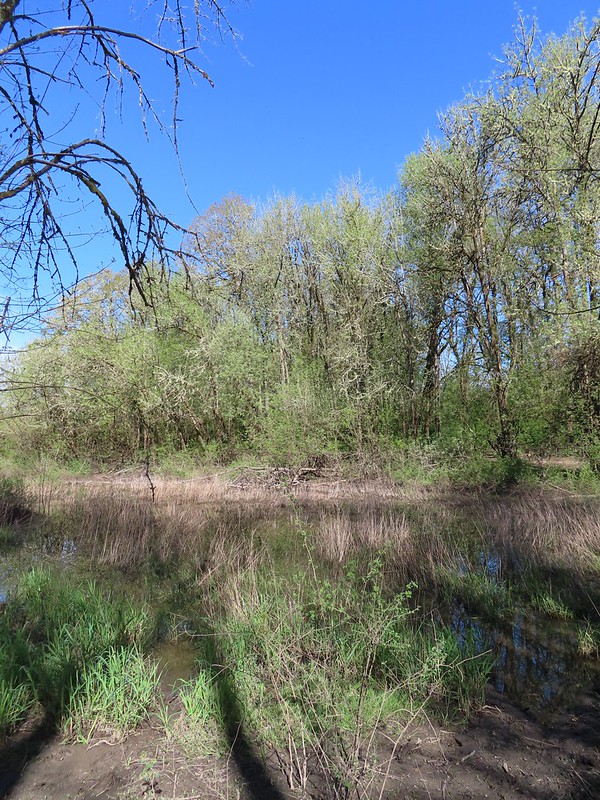
 Mallards
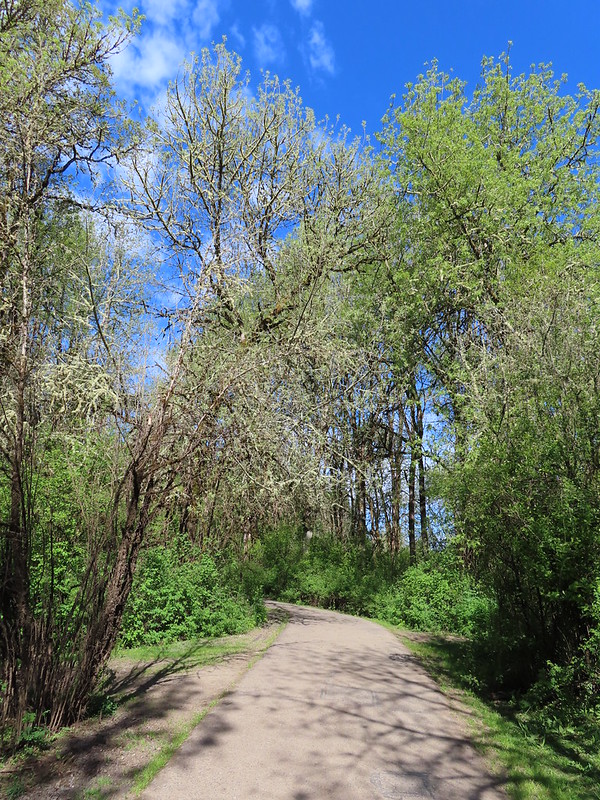
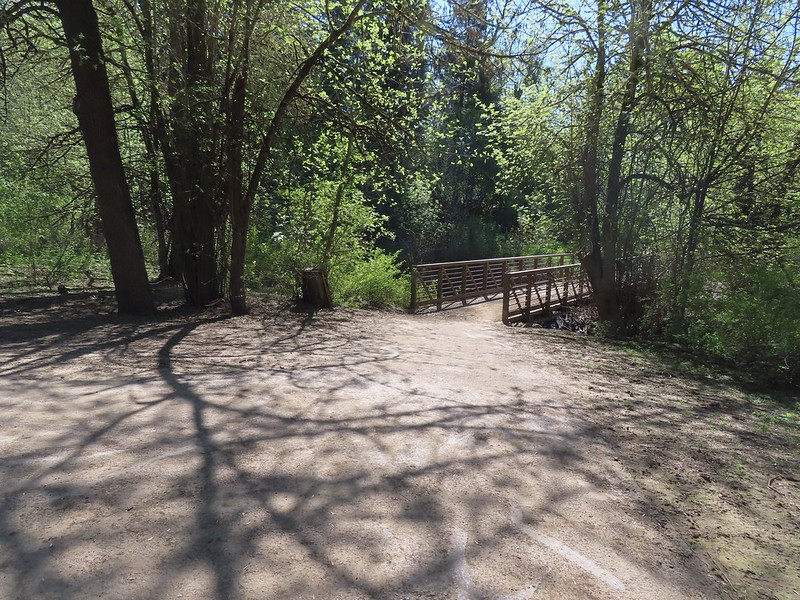 Footbridge at the start of the Lollipop Loop.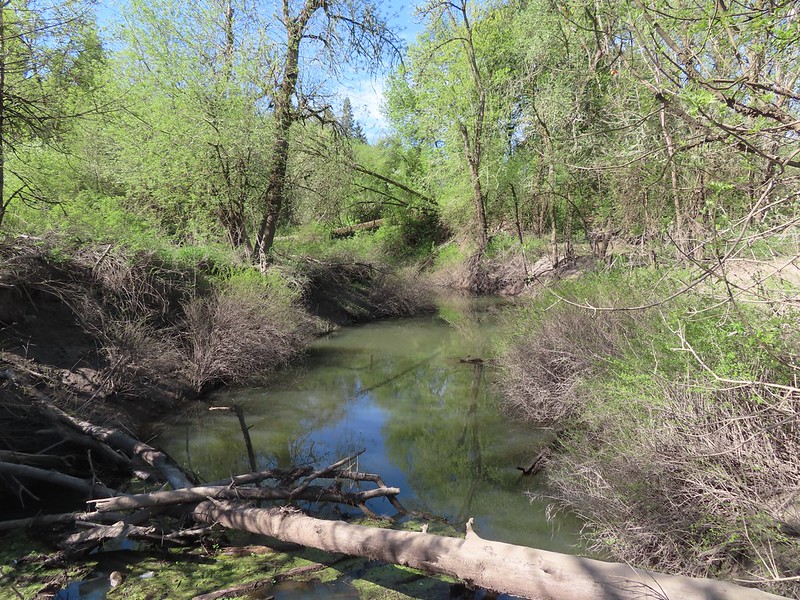

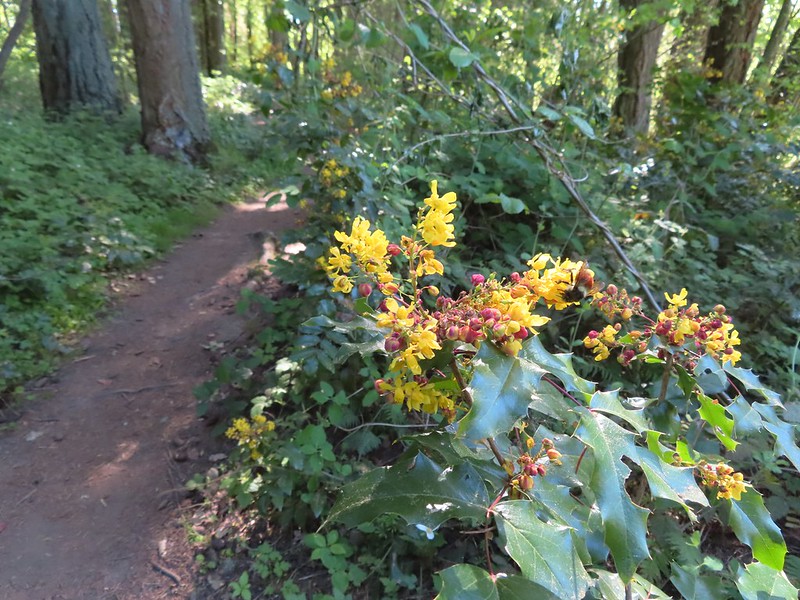 There was a fair amount of Oregon grape as well.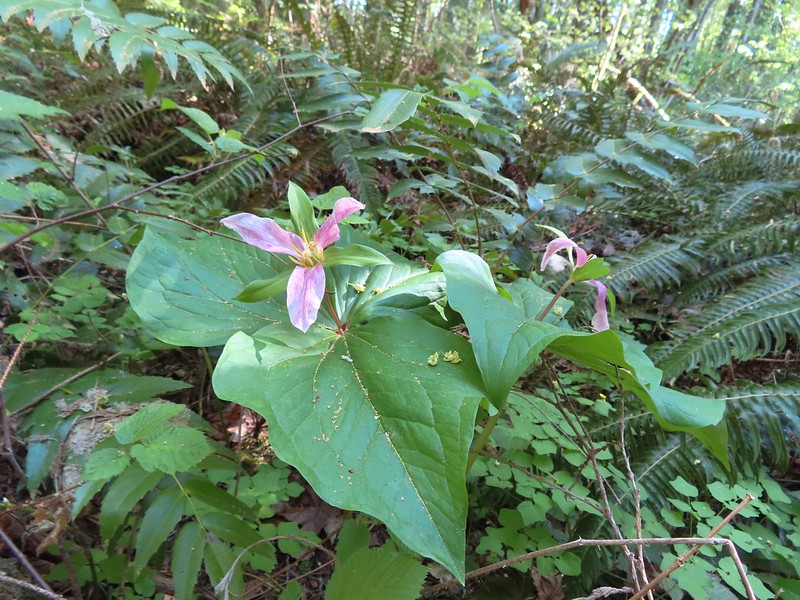

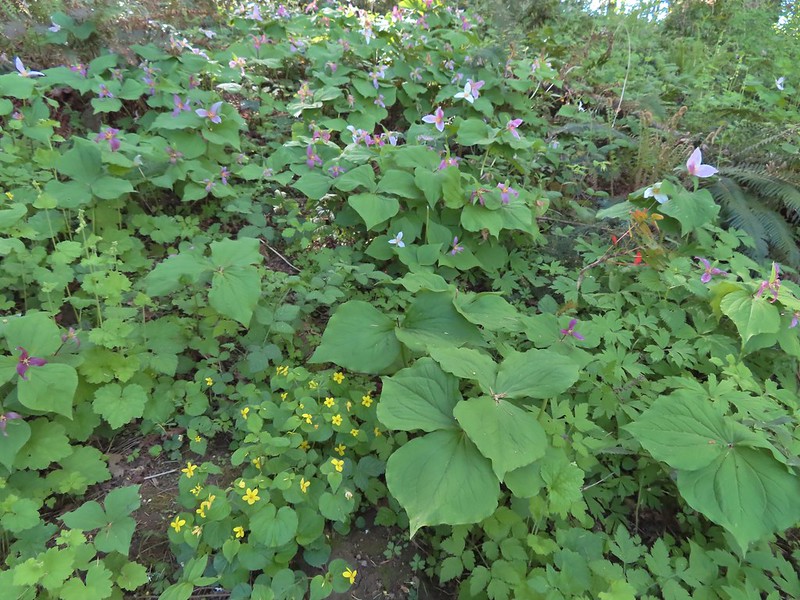 Violets and trillium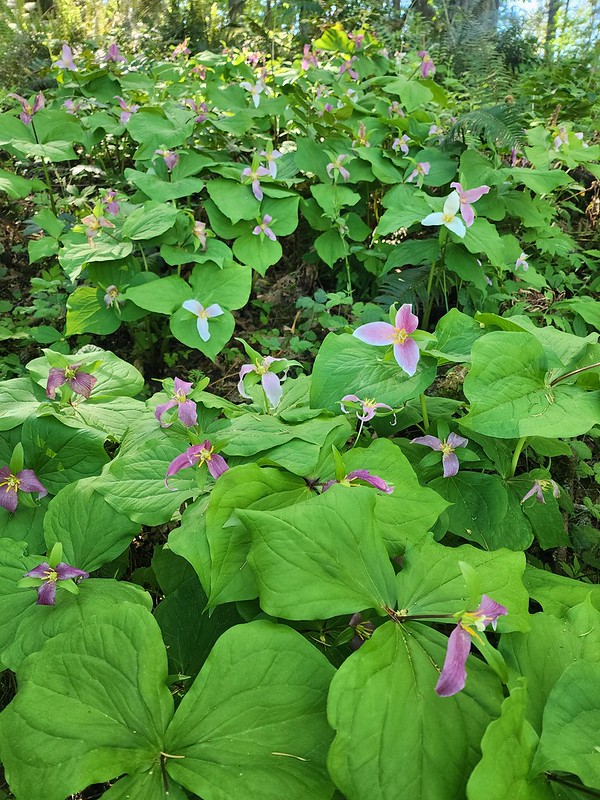
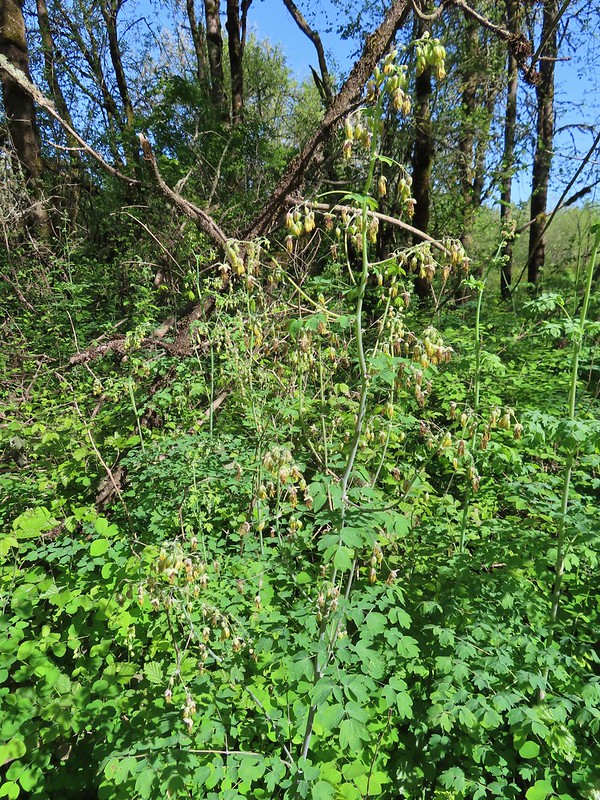 Western meadowrue
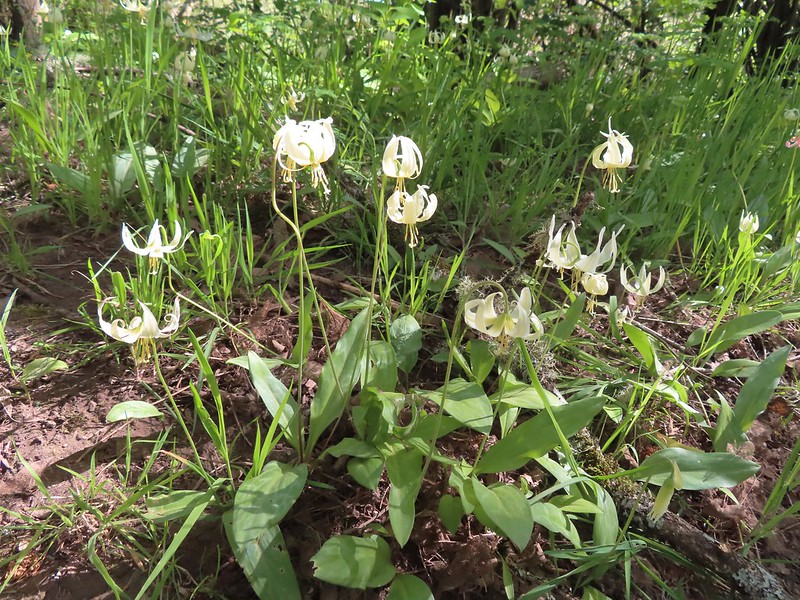 Fawn lilies
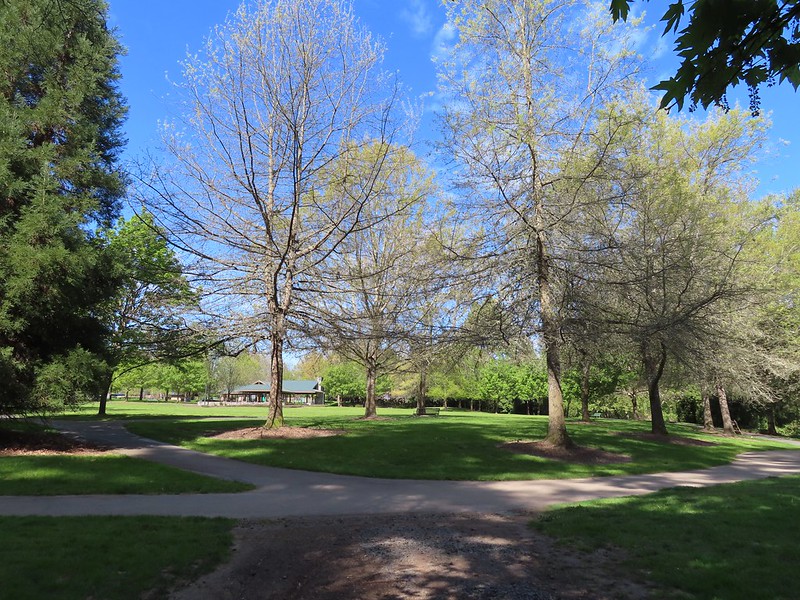
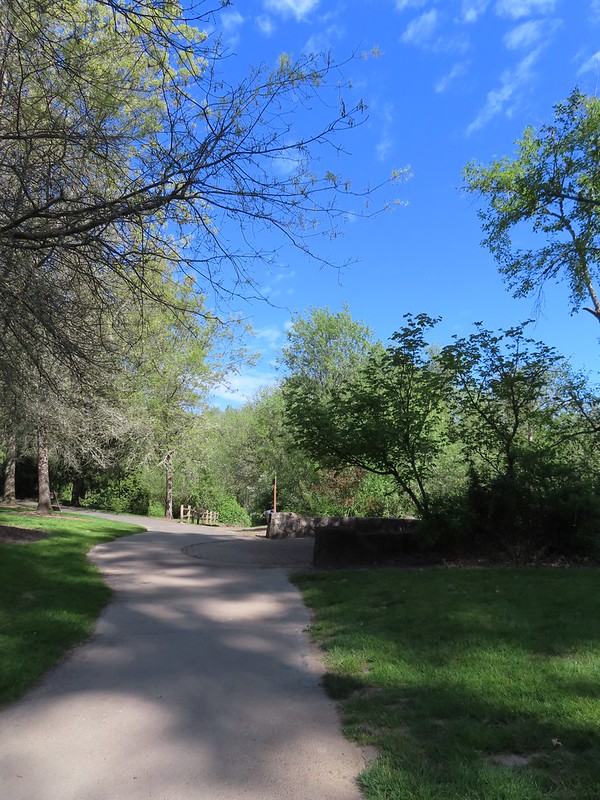

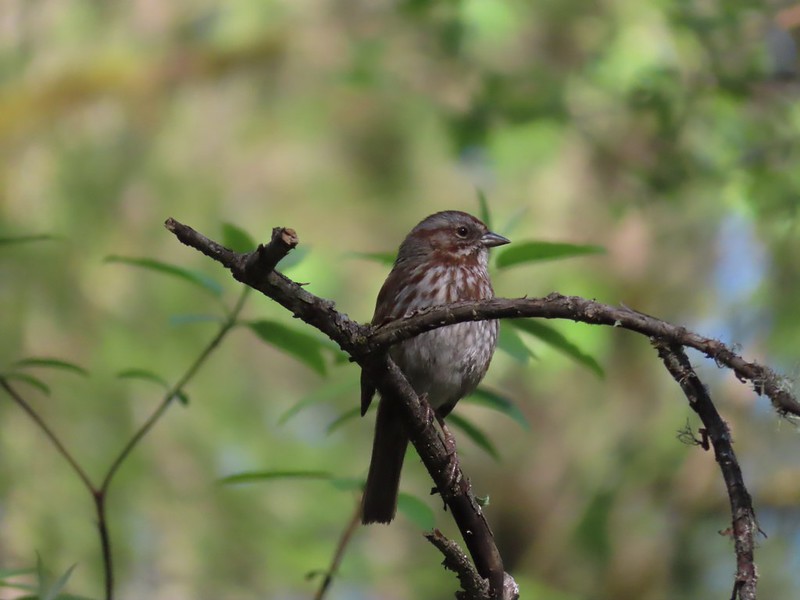 Sparrow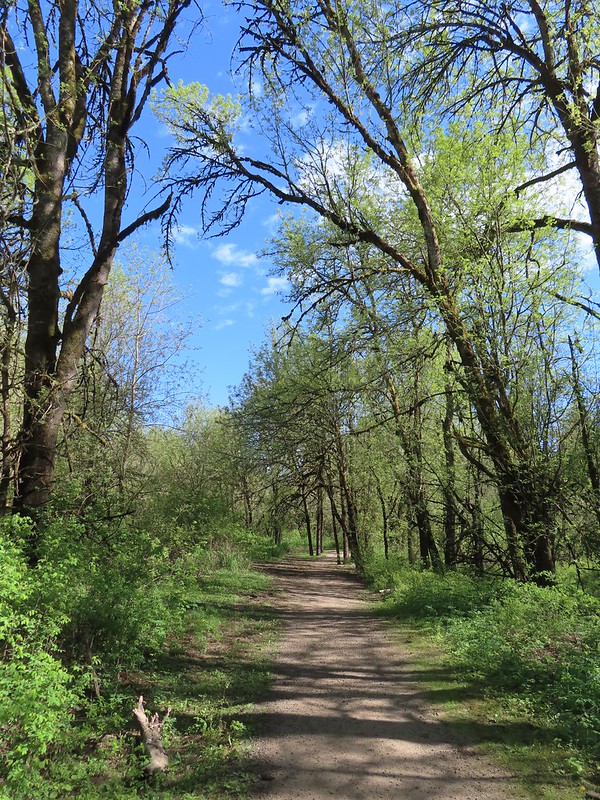
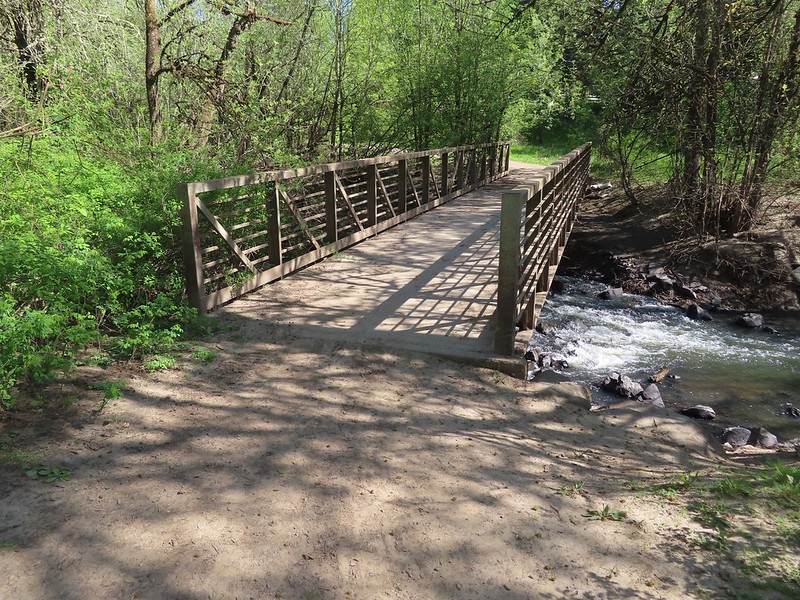 Footbridge over Rock Creek.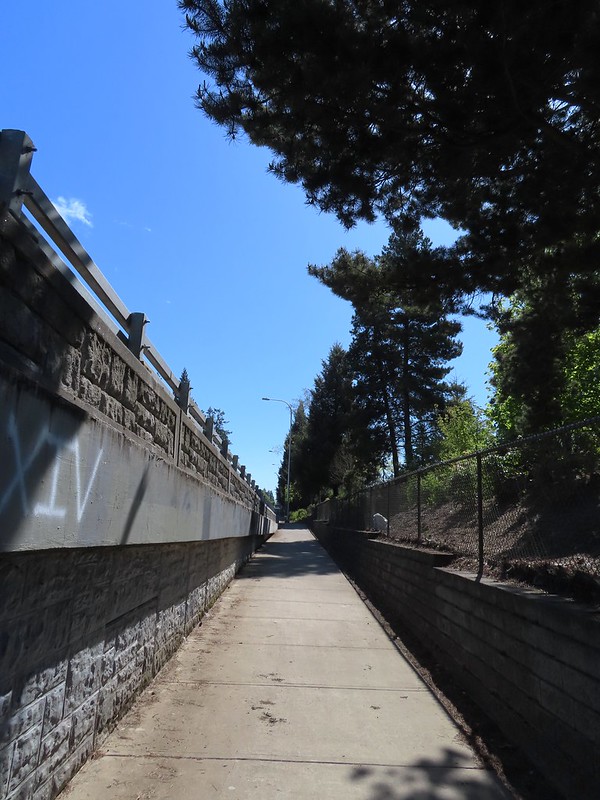
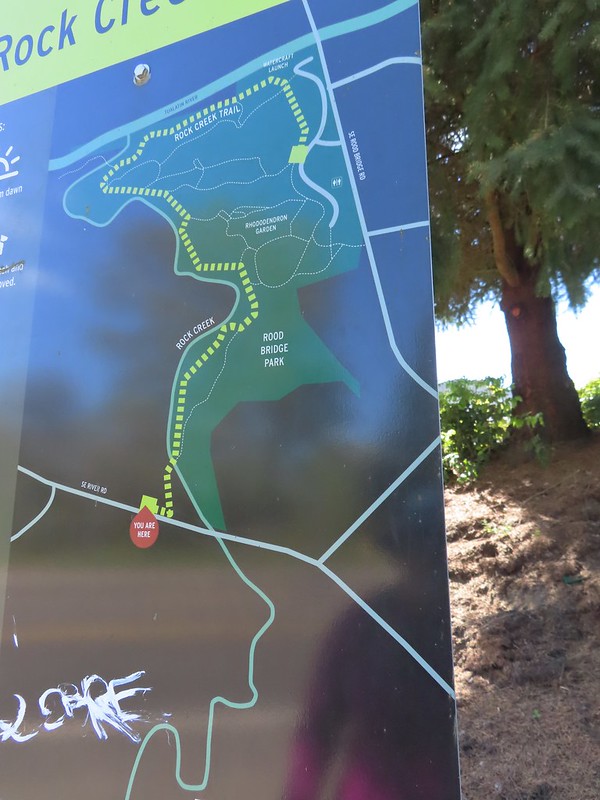
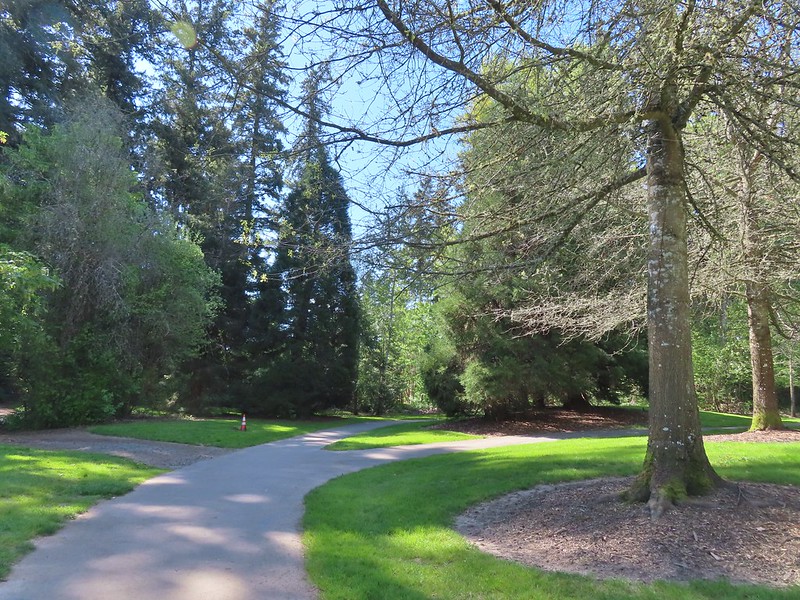 Left is the dirt path we’d taken earlier, straight is the Rock Creek Trail, and right led to the Rhododendron Garden.
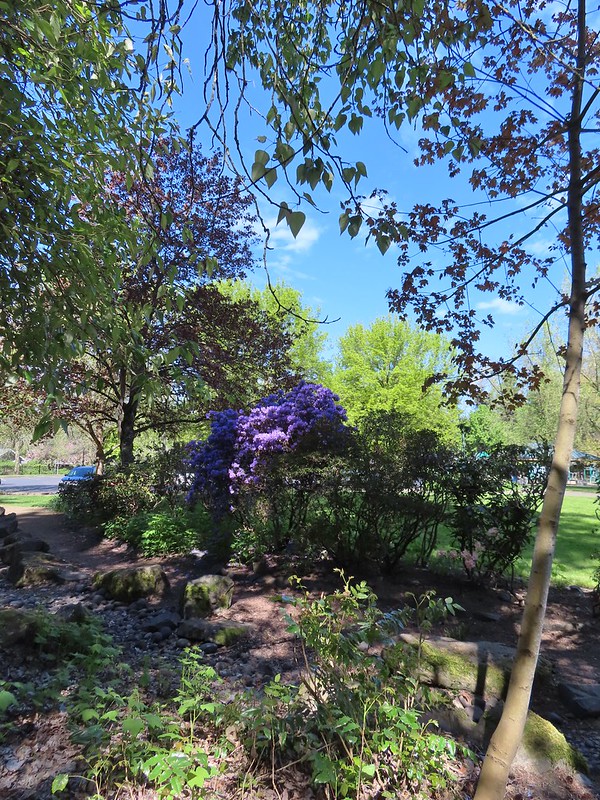

 Jackson Bottom on the left and Rood Bridge to the right.
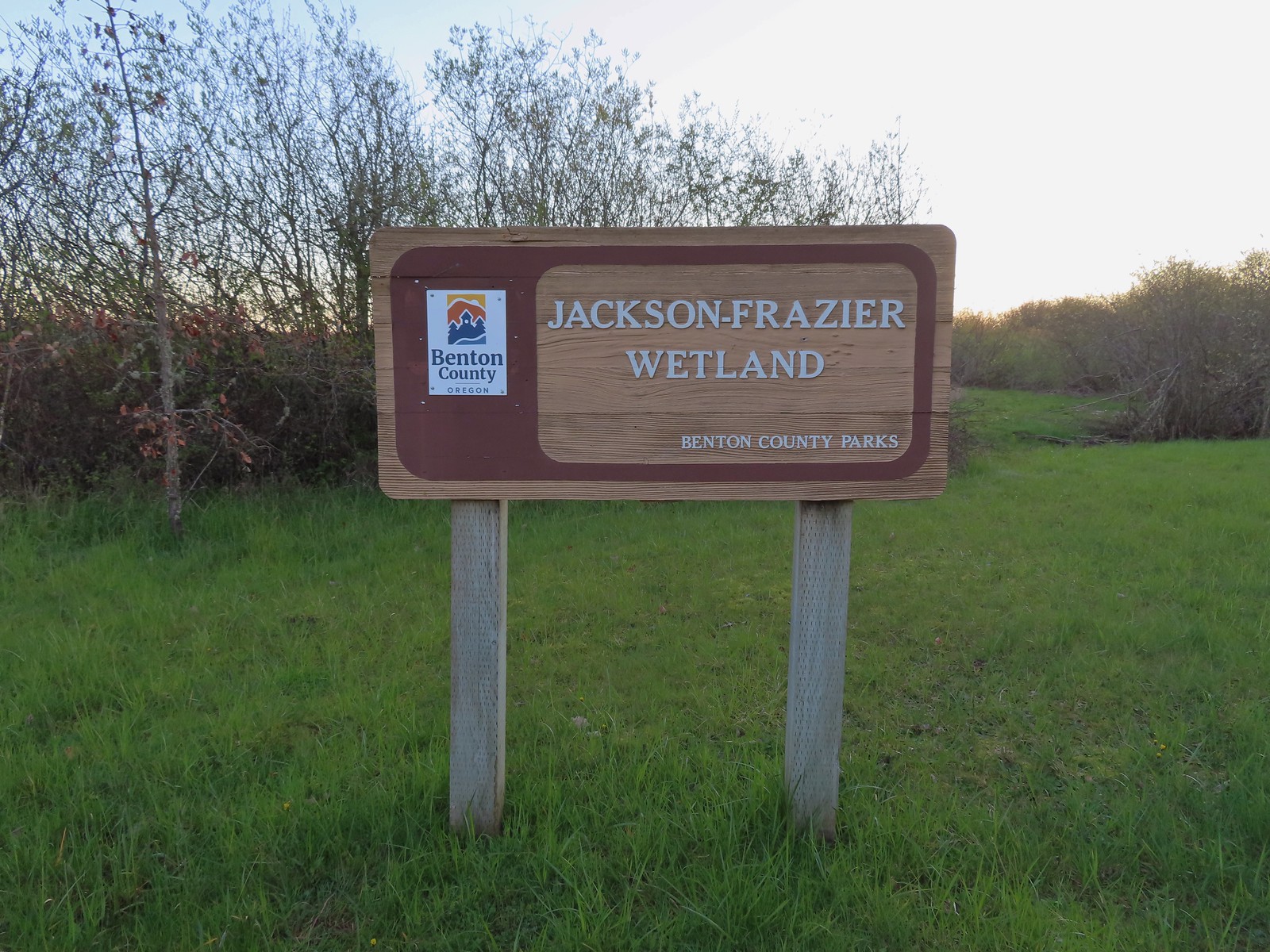
 A footbridge along the paved path crosses Frazier Creek.
 Kiosk at the start of the Bob Frenkel Boardwalk.
 The start of the loop. We went counterclockwise.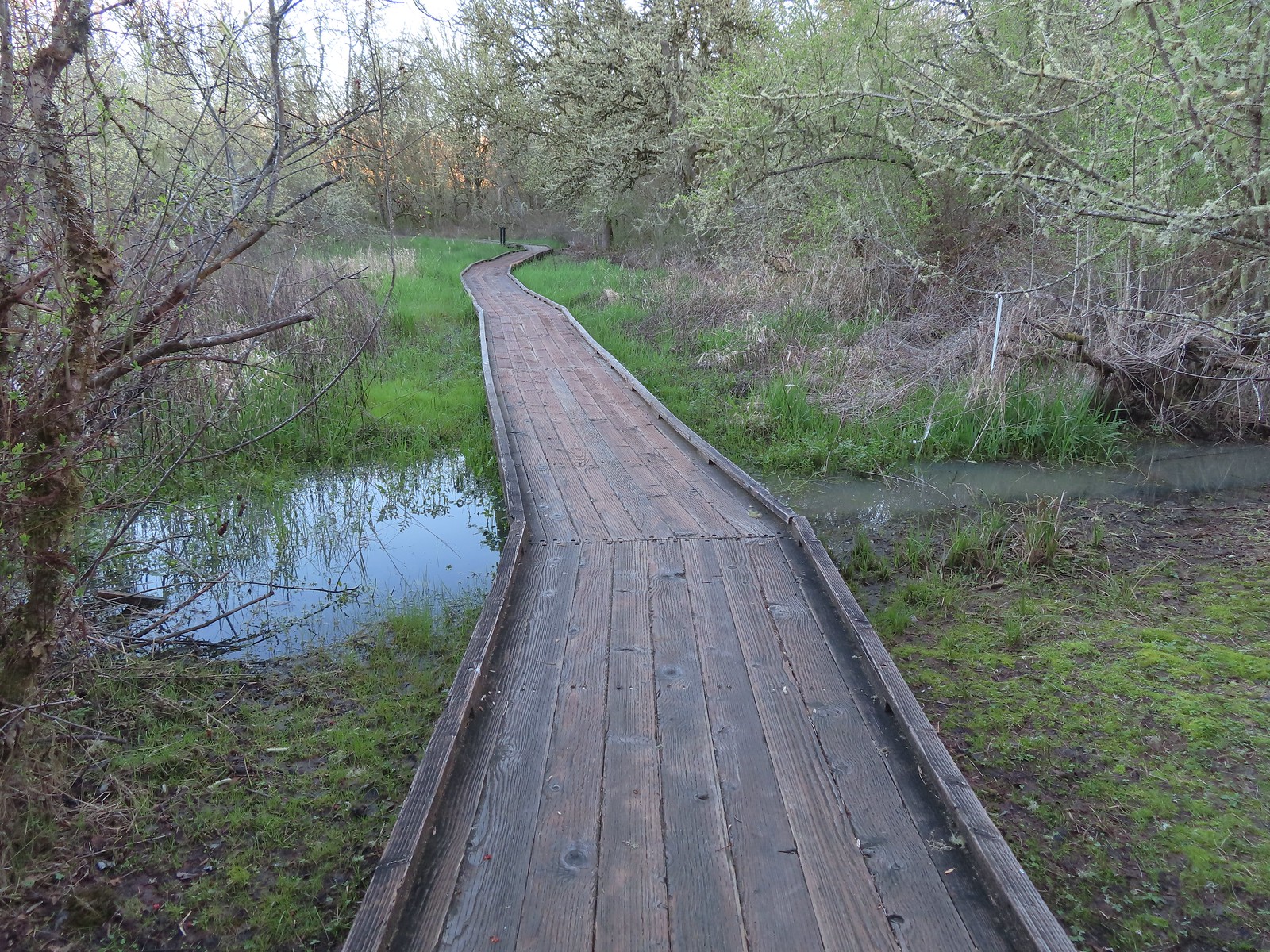
 Northern flicker
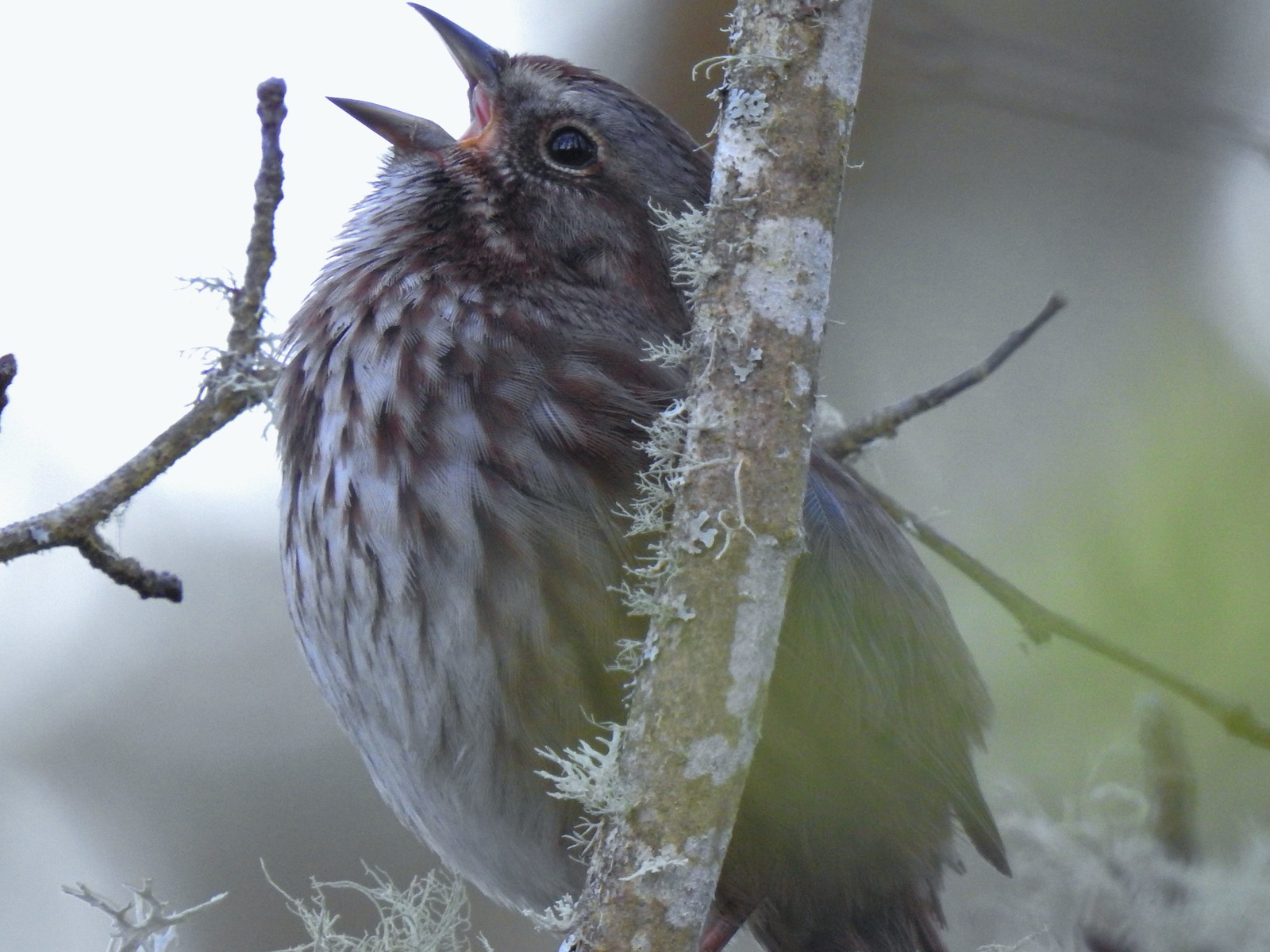 We listened to this sparrow sing for a bit. It was putting on quite the performance.
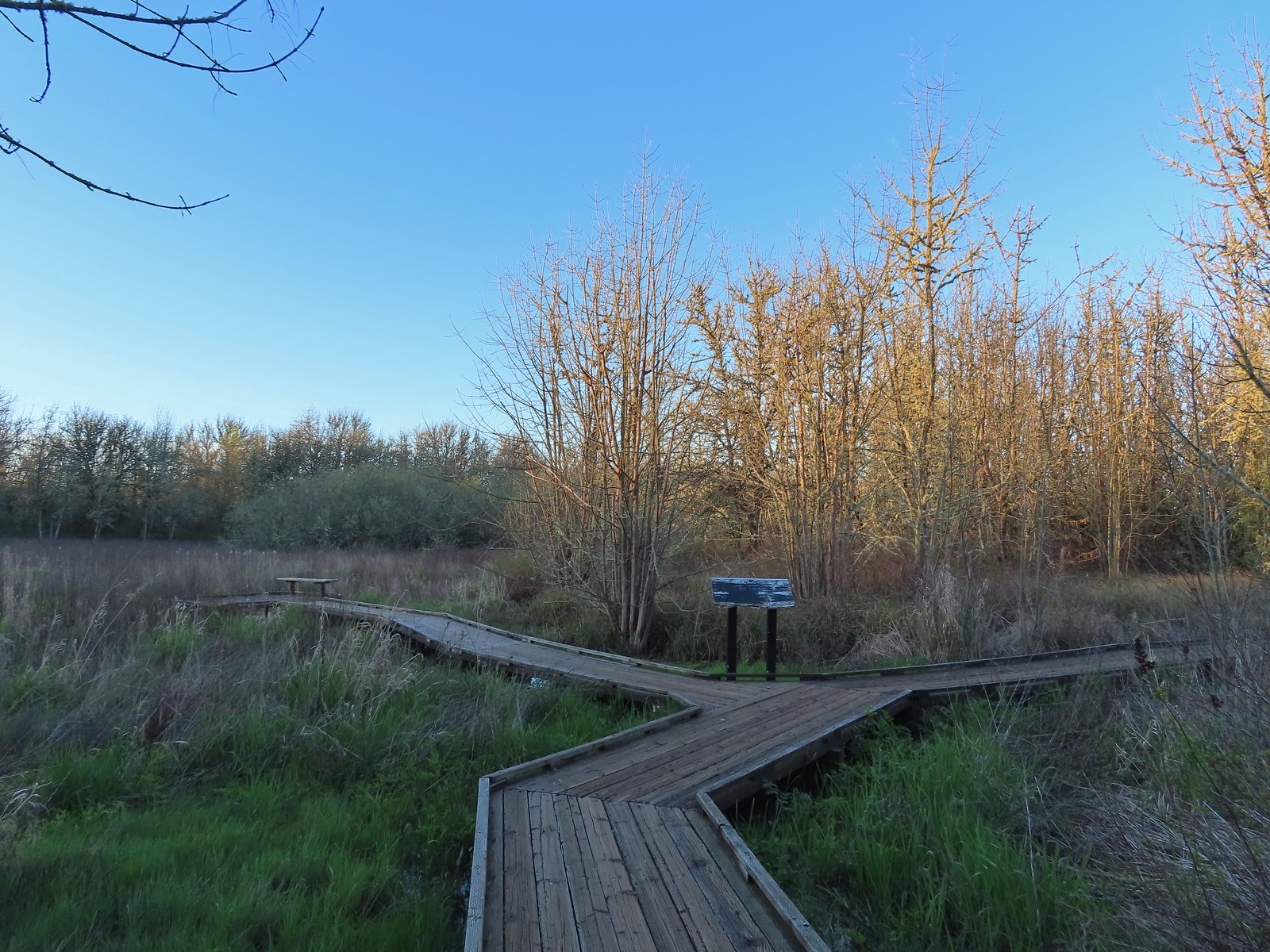 One of a couple viewing platforms off the main boardwalk.
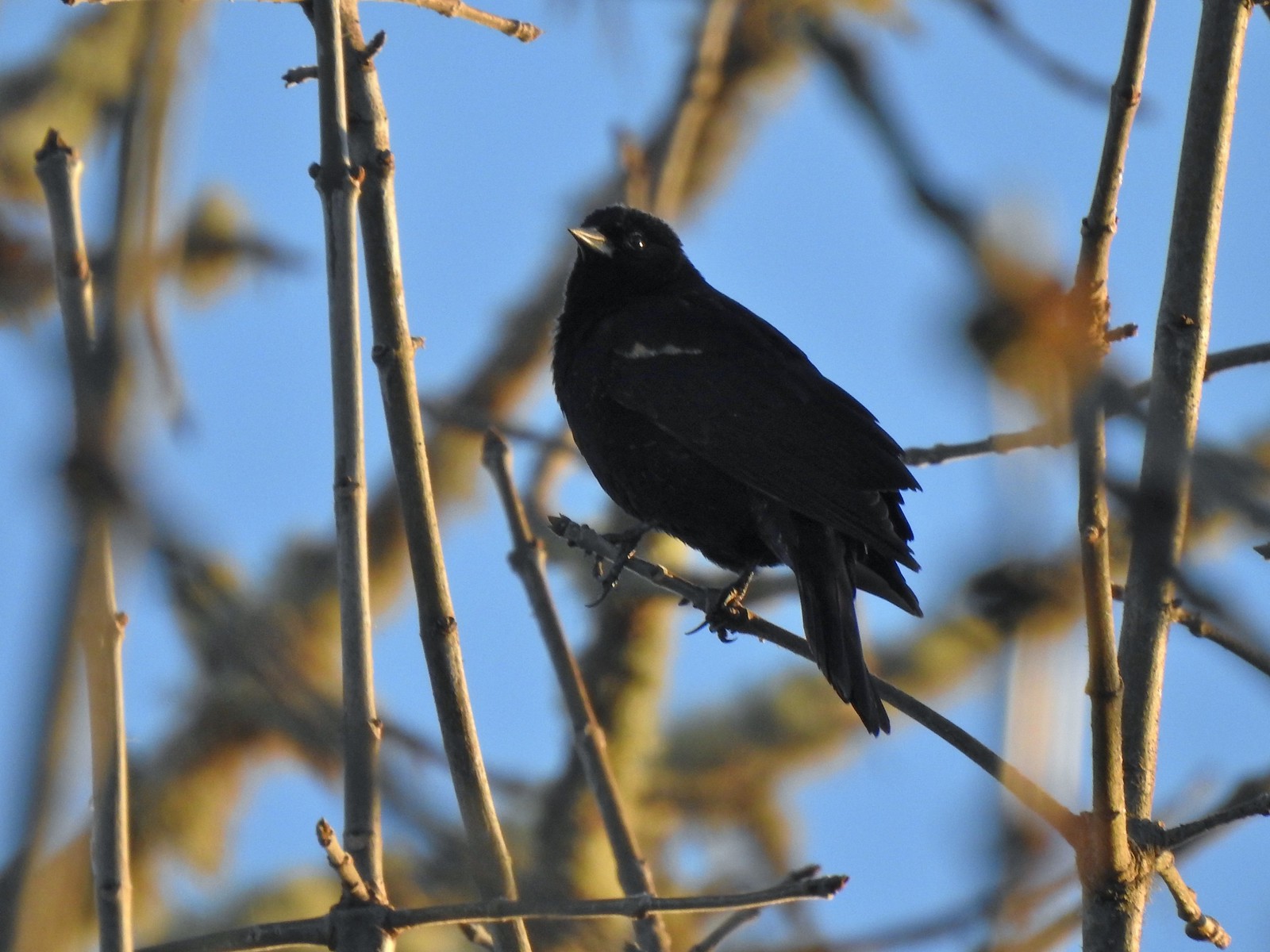 Blackbird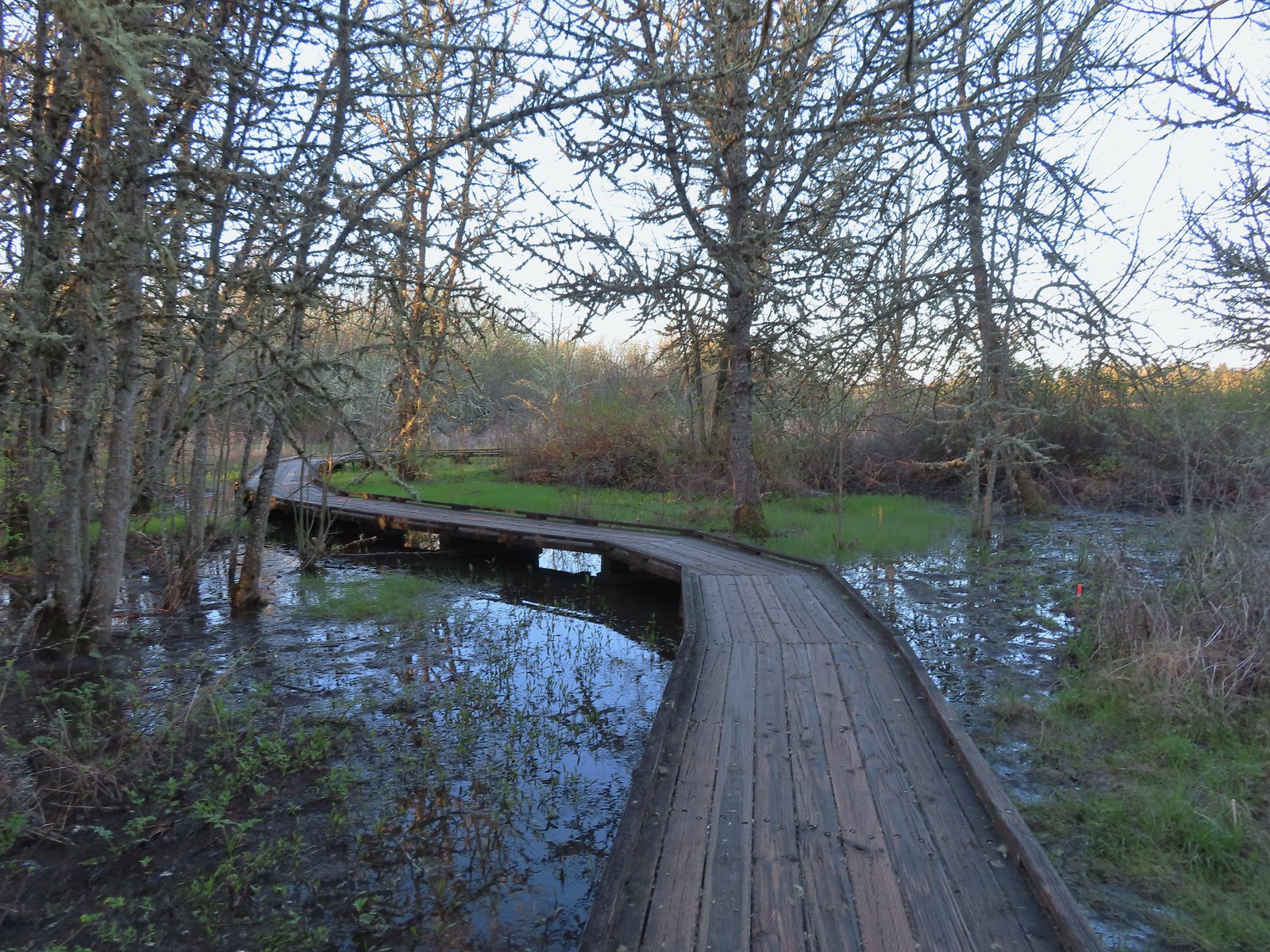
 Robin in the morning sunlight.
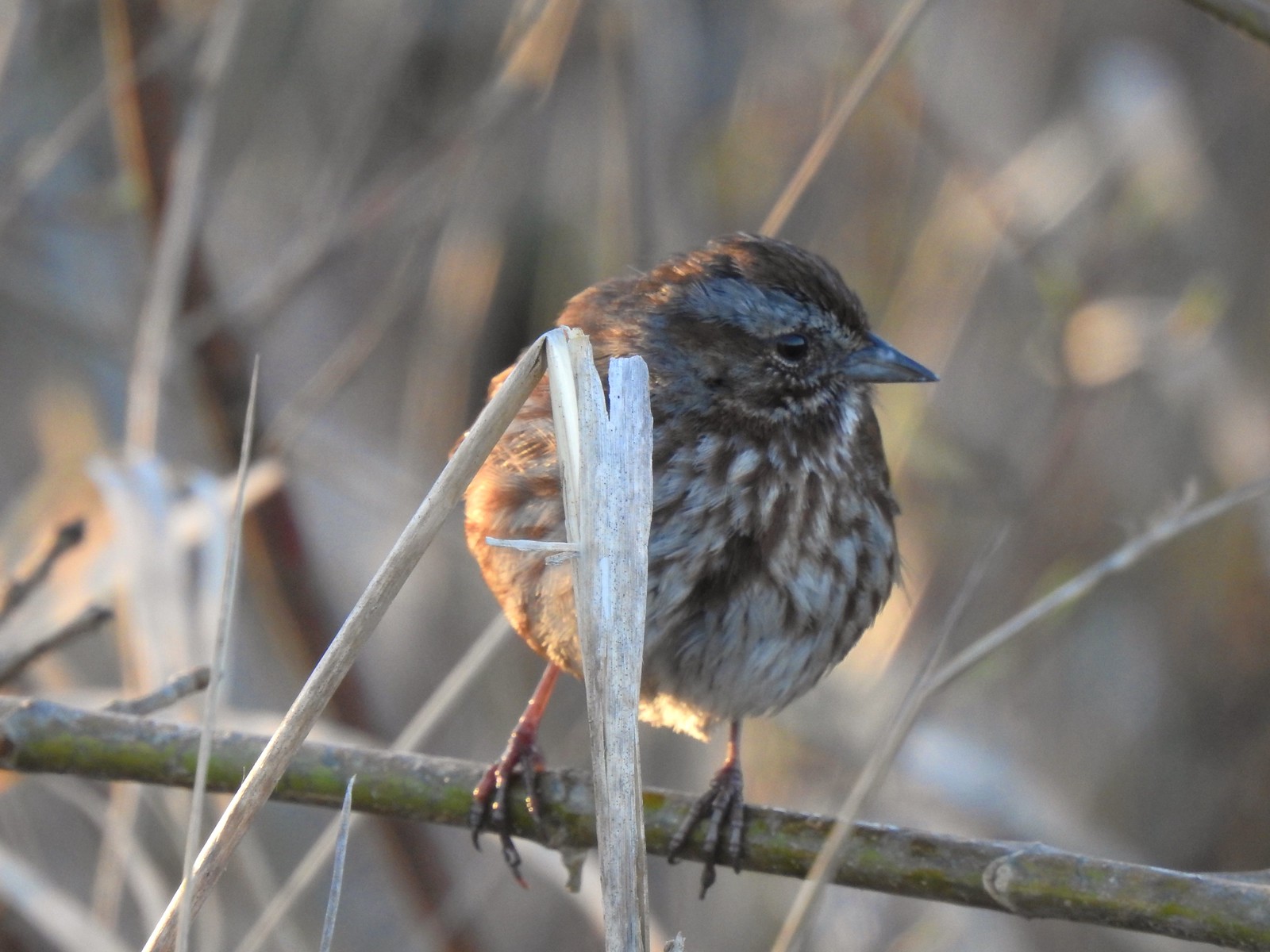 Sparrow
 Hummingbird
 Easter rabbit?
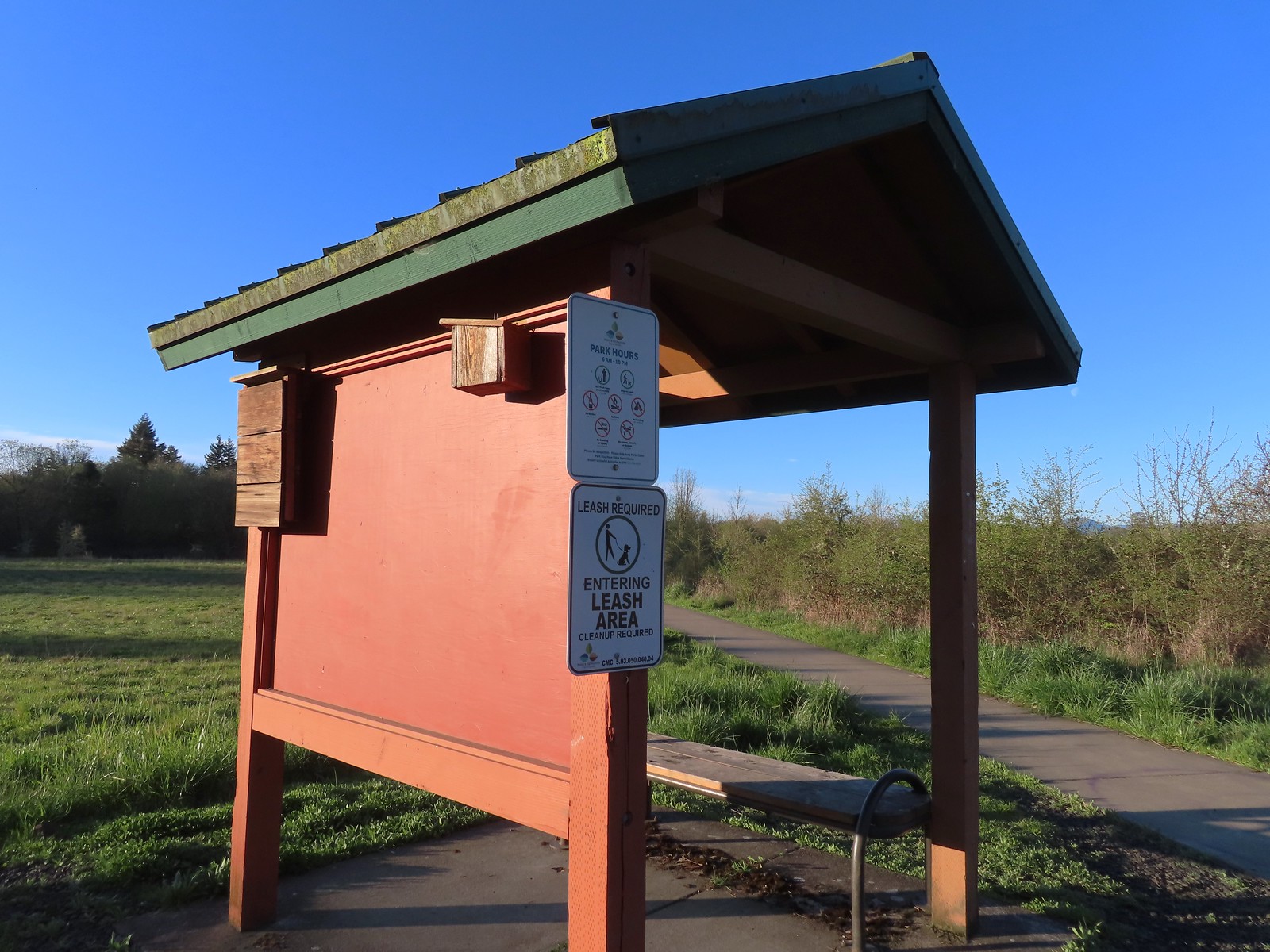 Kiosk at the trailhead.
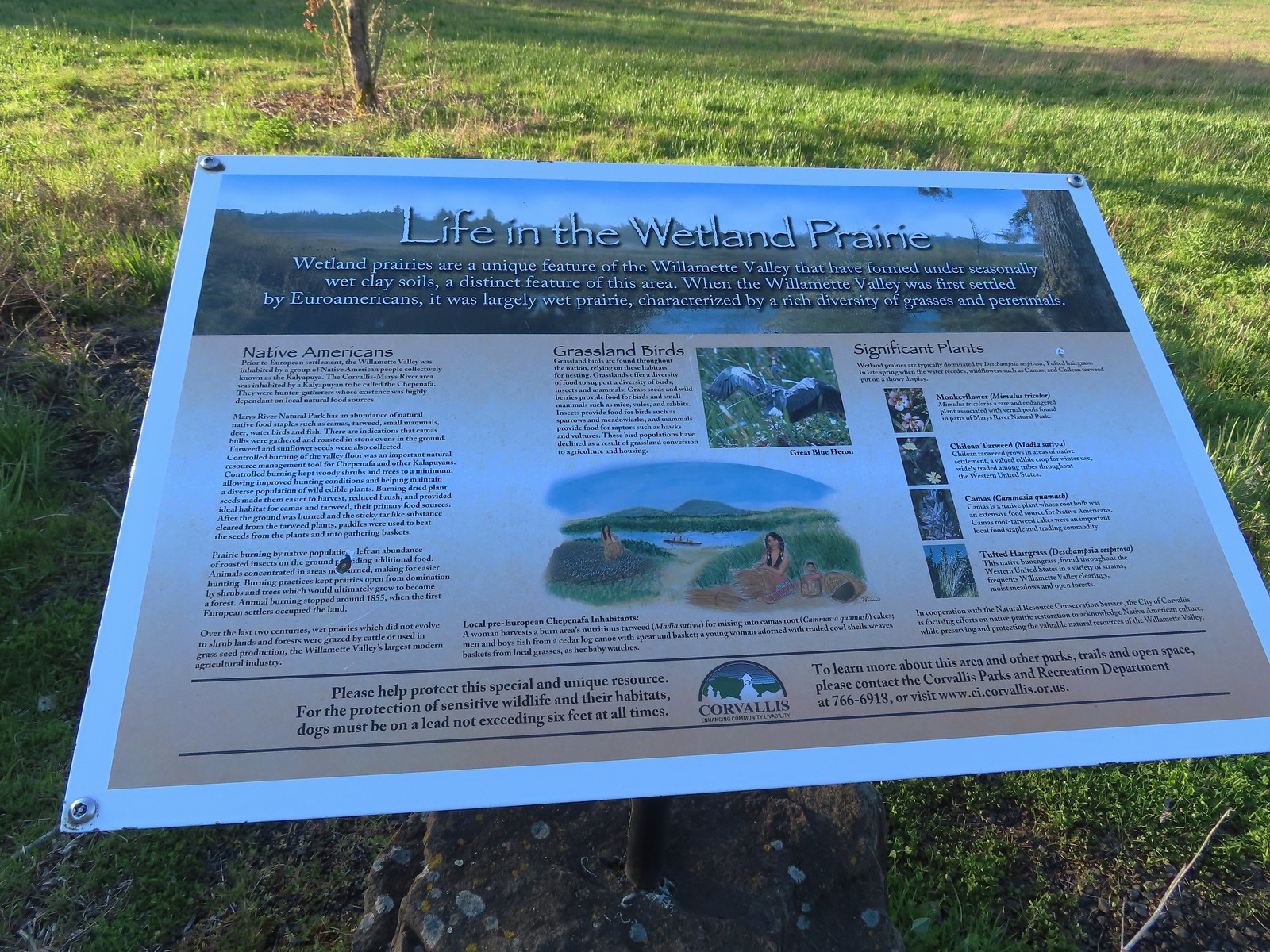 Interpretive sign along the path.
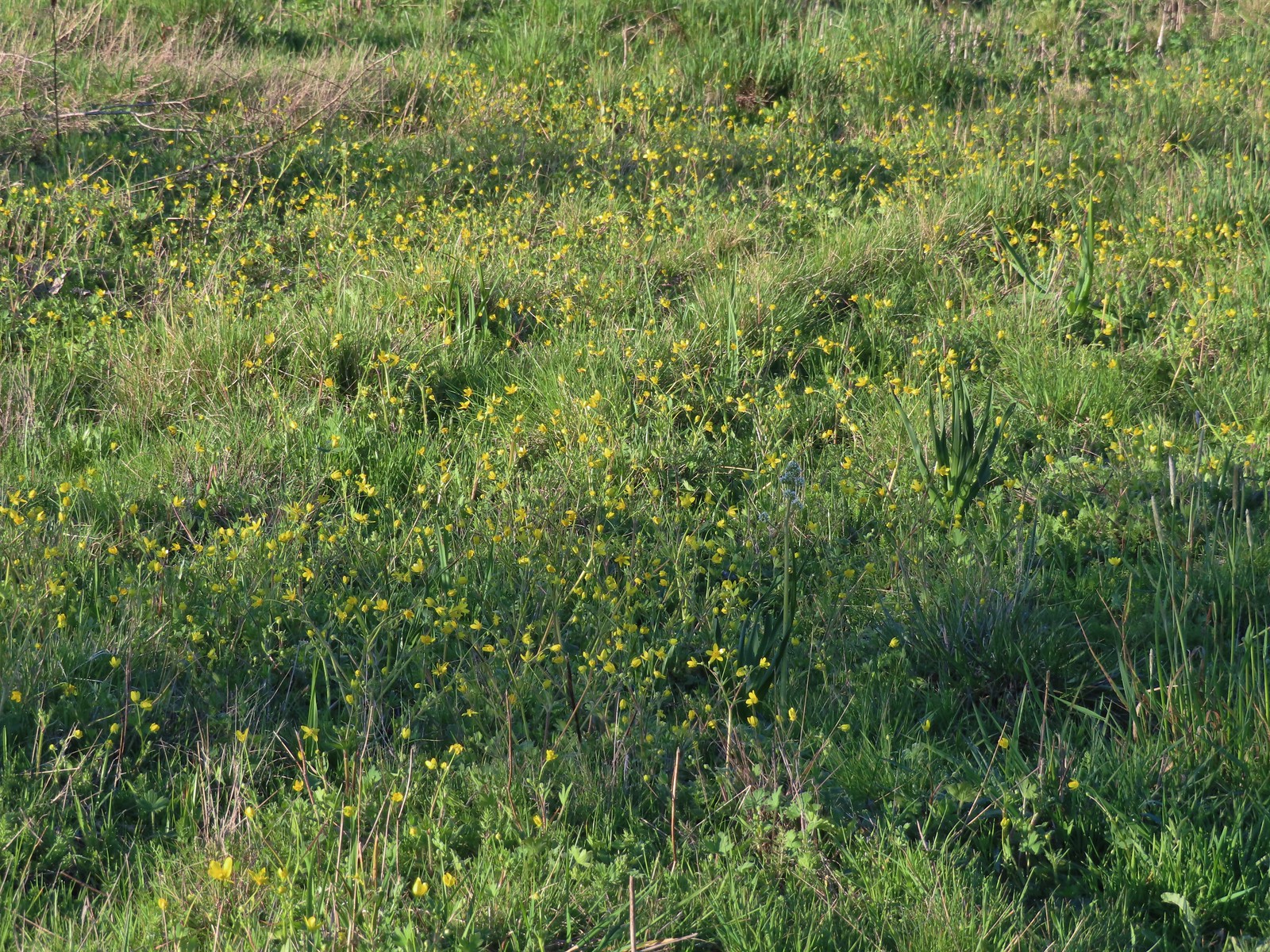 Buttercups and a bog saxifrage
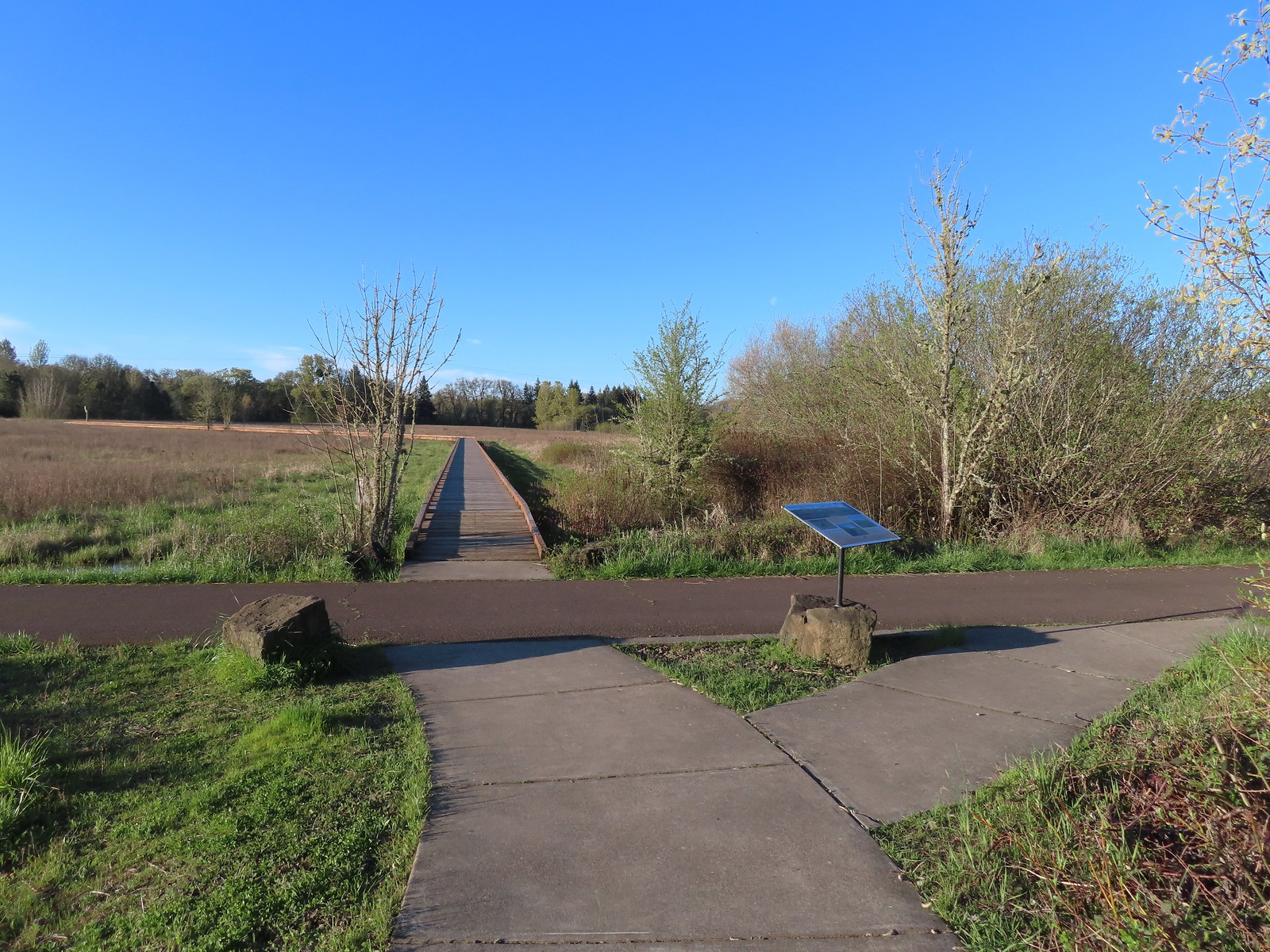 The start of the boardwalk.
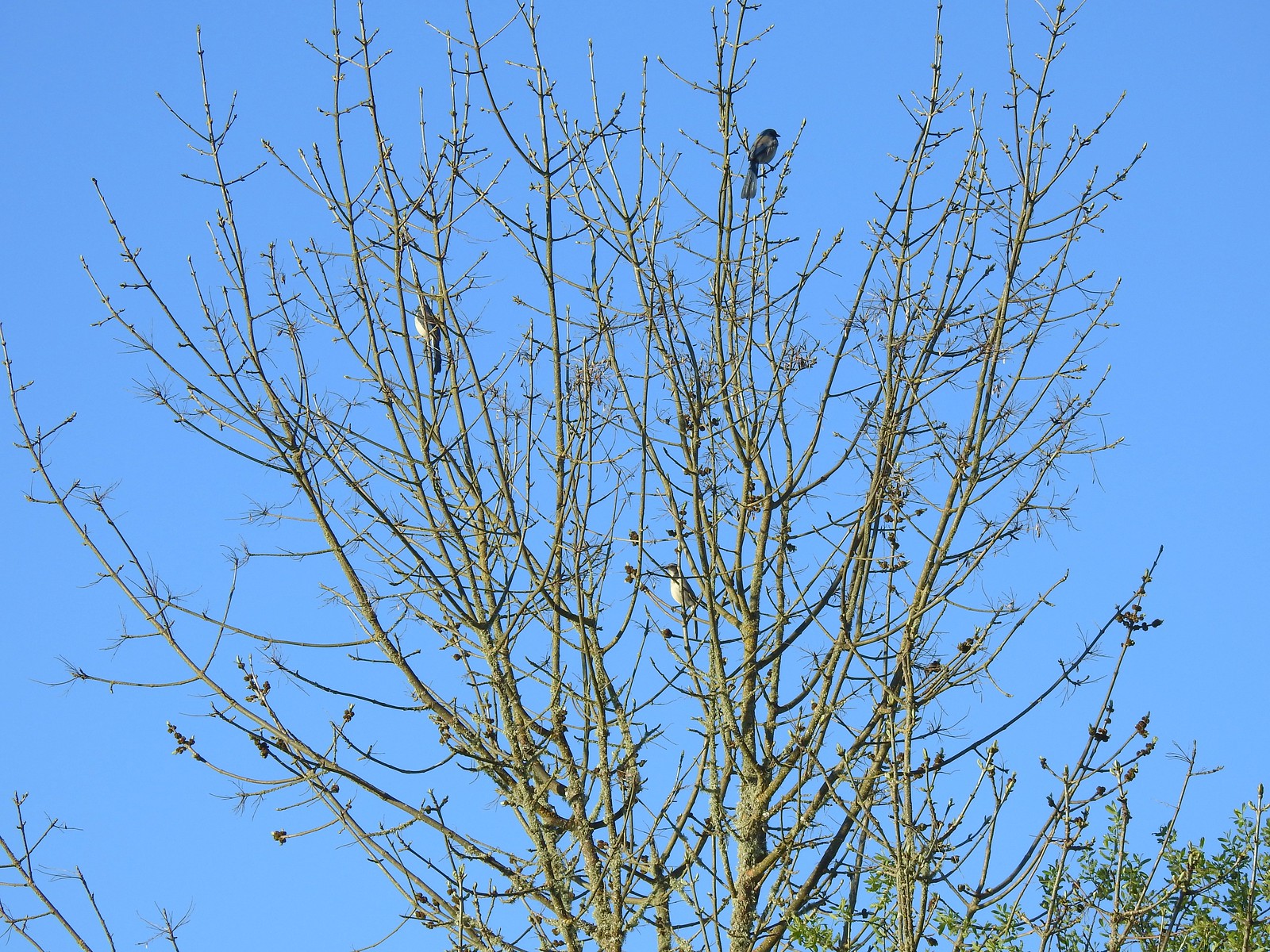 Three California scrub-jays
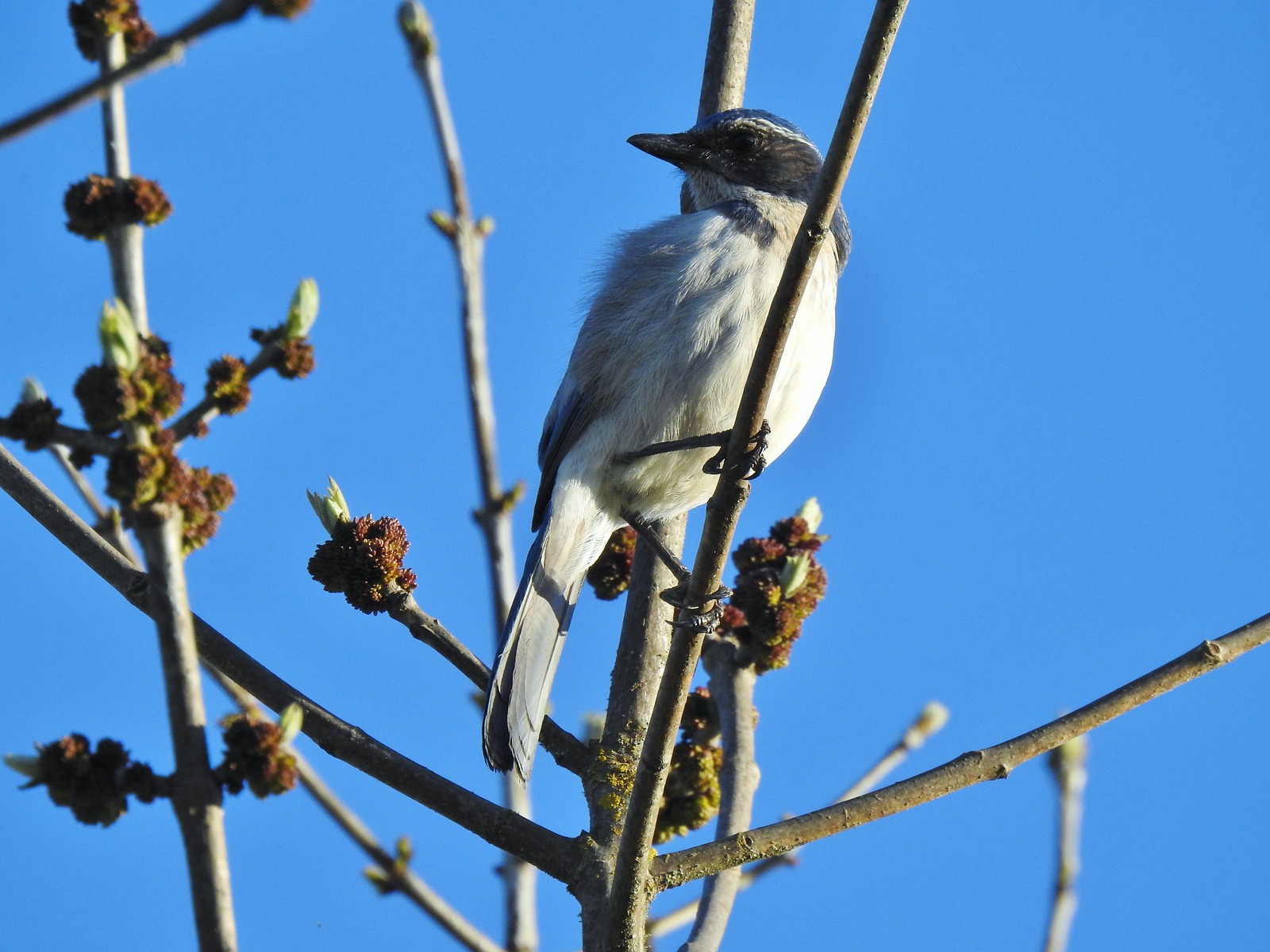 One of the scrub-jays up close.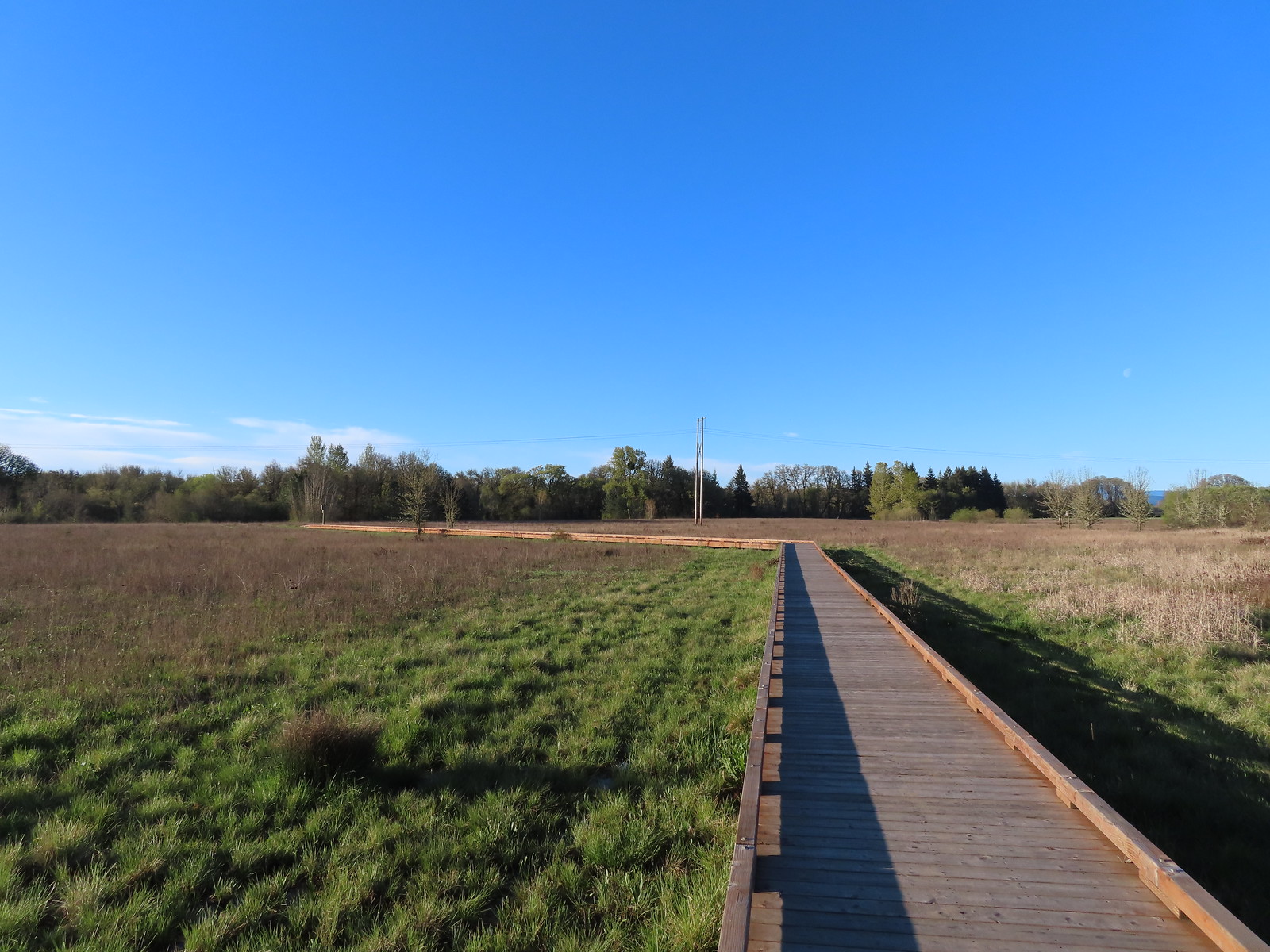
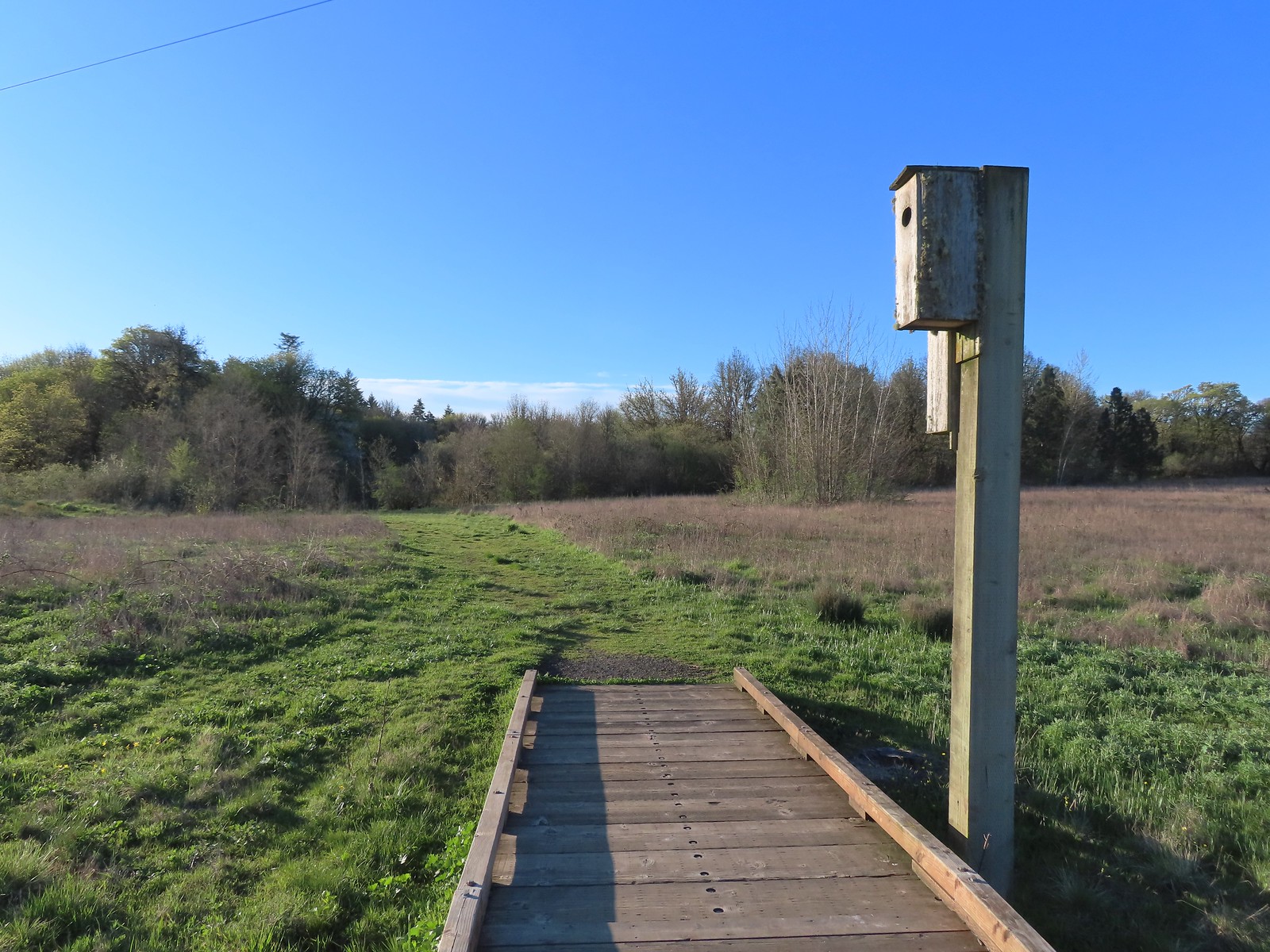 We walked a short distance from the end of the boardwalk to visit Mary’s River.
 Swollen Mary’s River. It did appear that it might be possible to make this a loop in the dry season by following a grassy track, but it was too wet and muddy to even attempt that today.
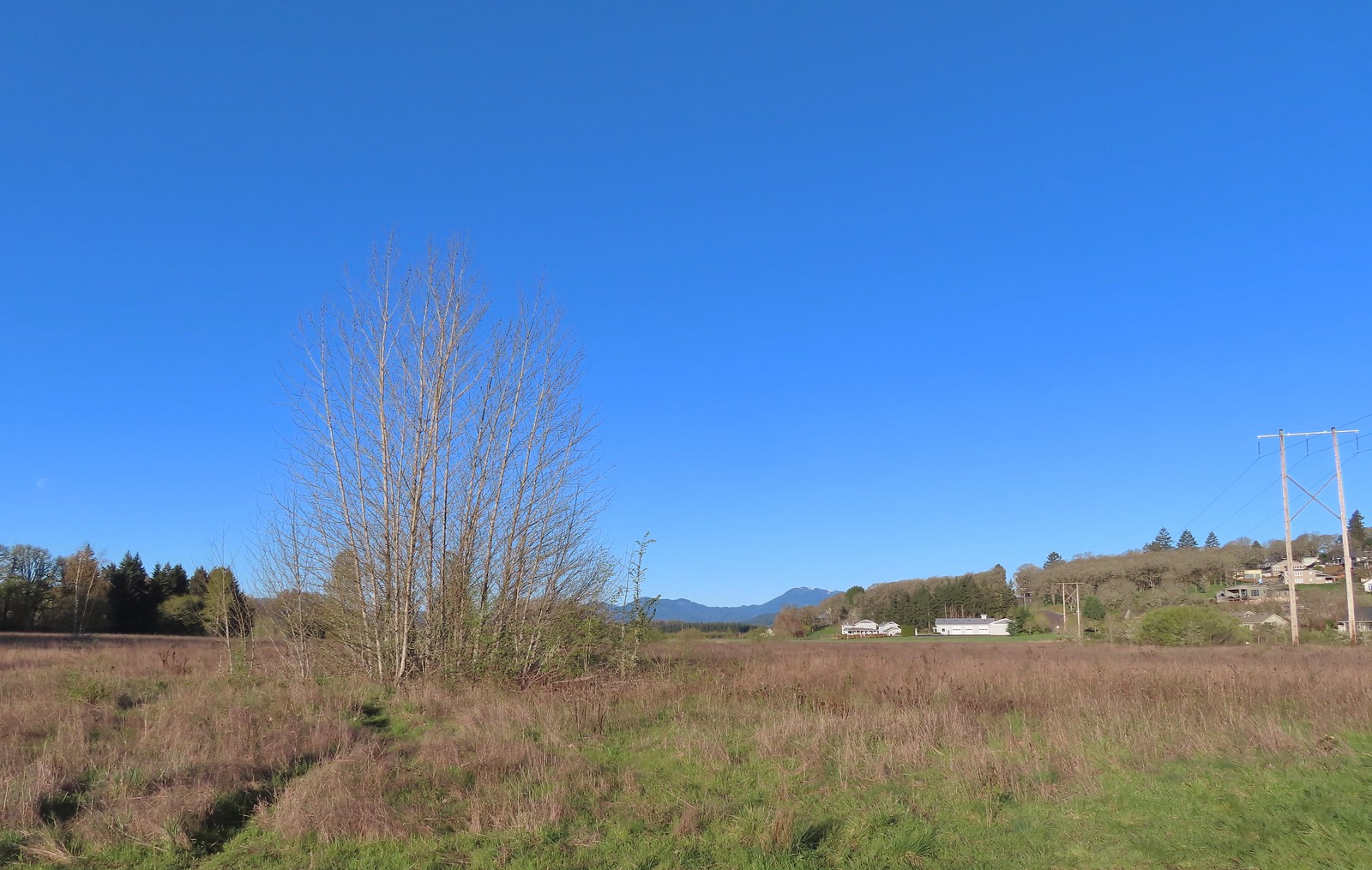 Mary’s Peak (
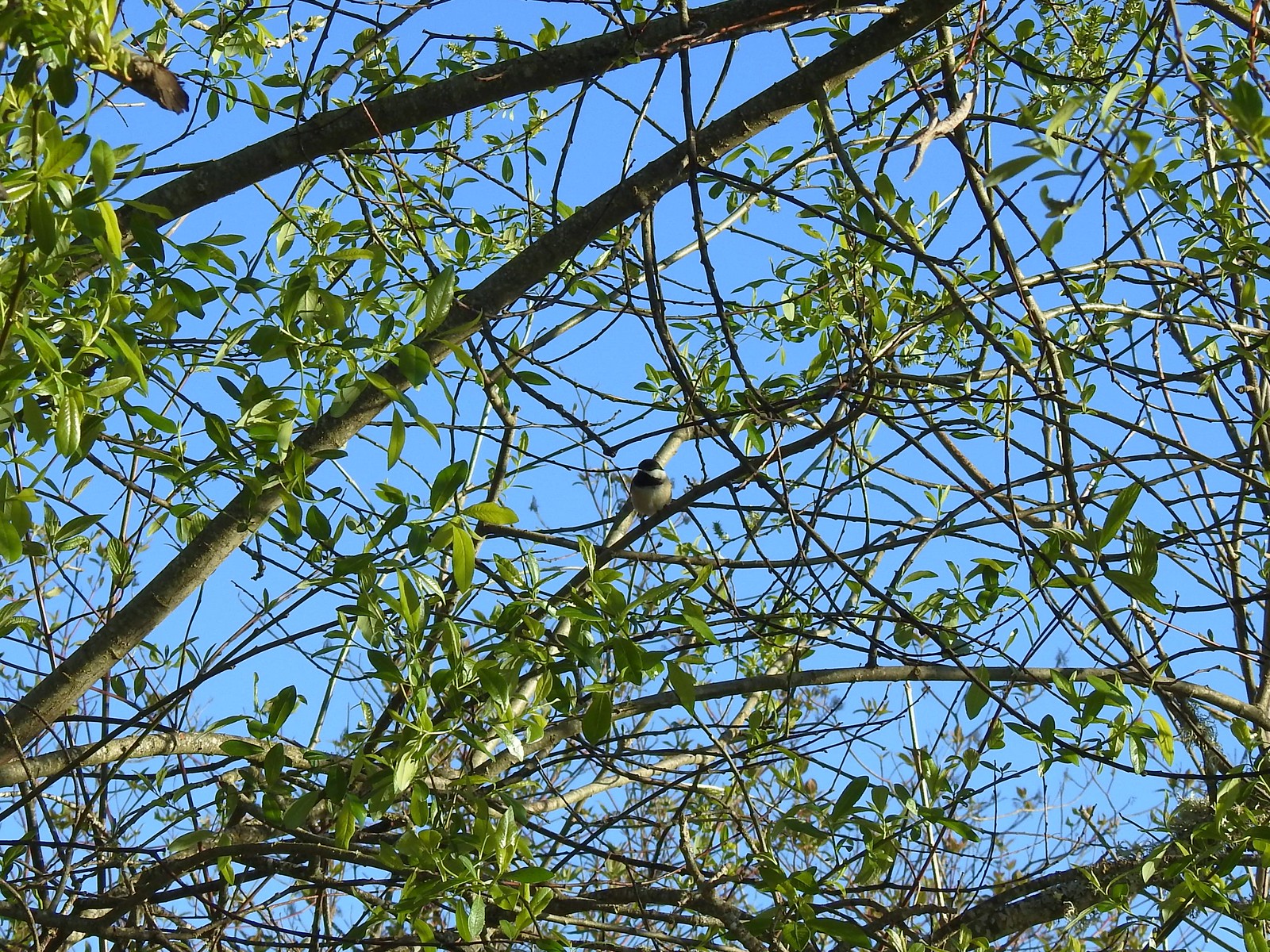 Black-capped chickadee
 Anna’s hummingbird
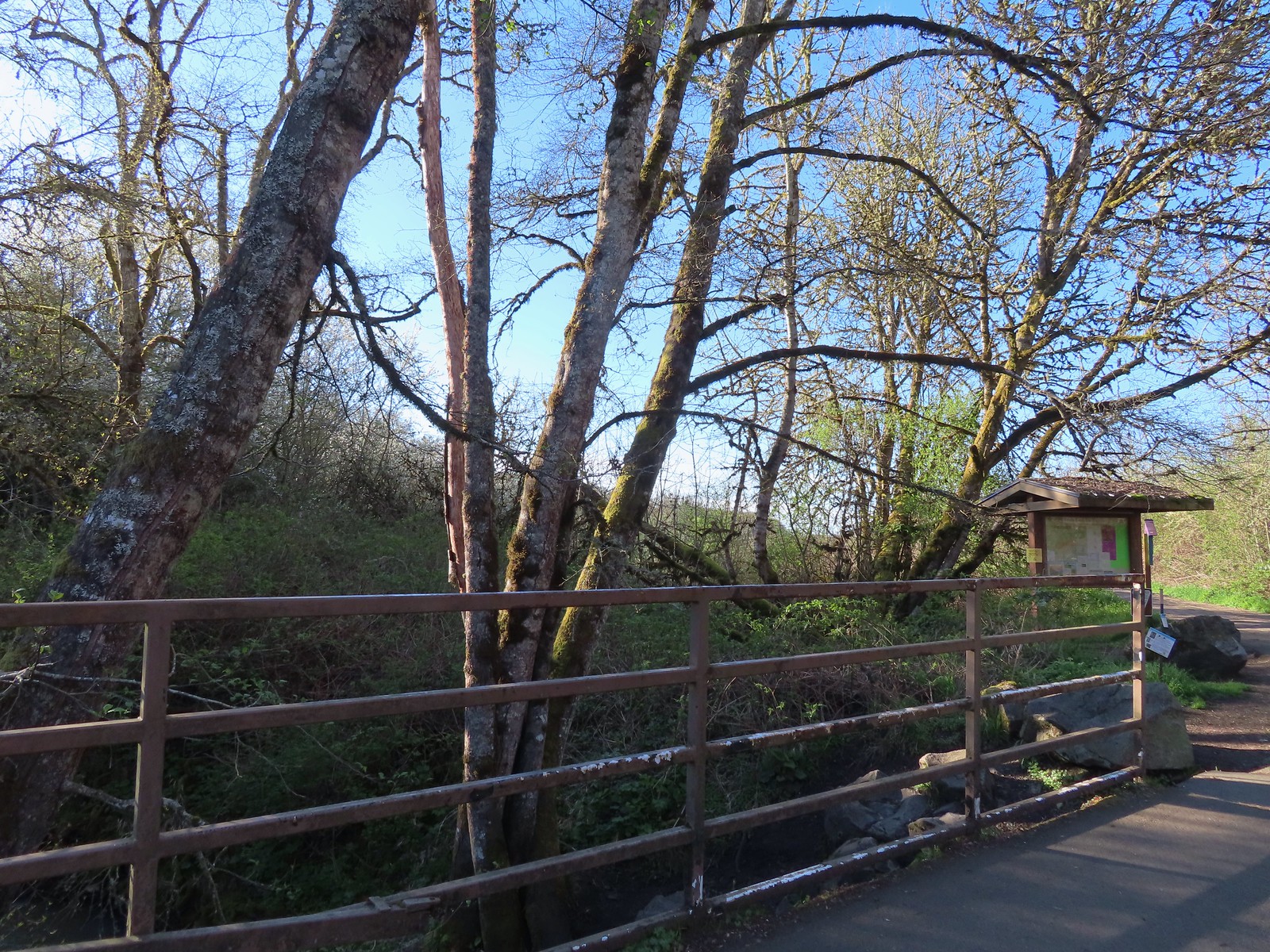 Kiosk just on the other side of Oak Creek from the trailhead parking lot.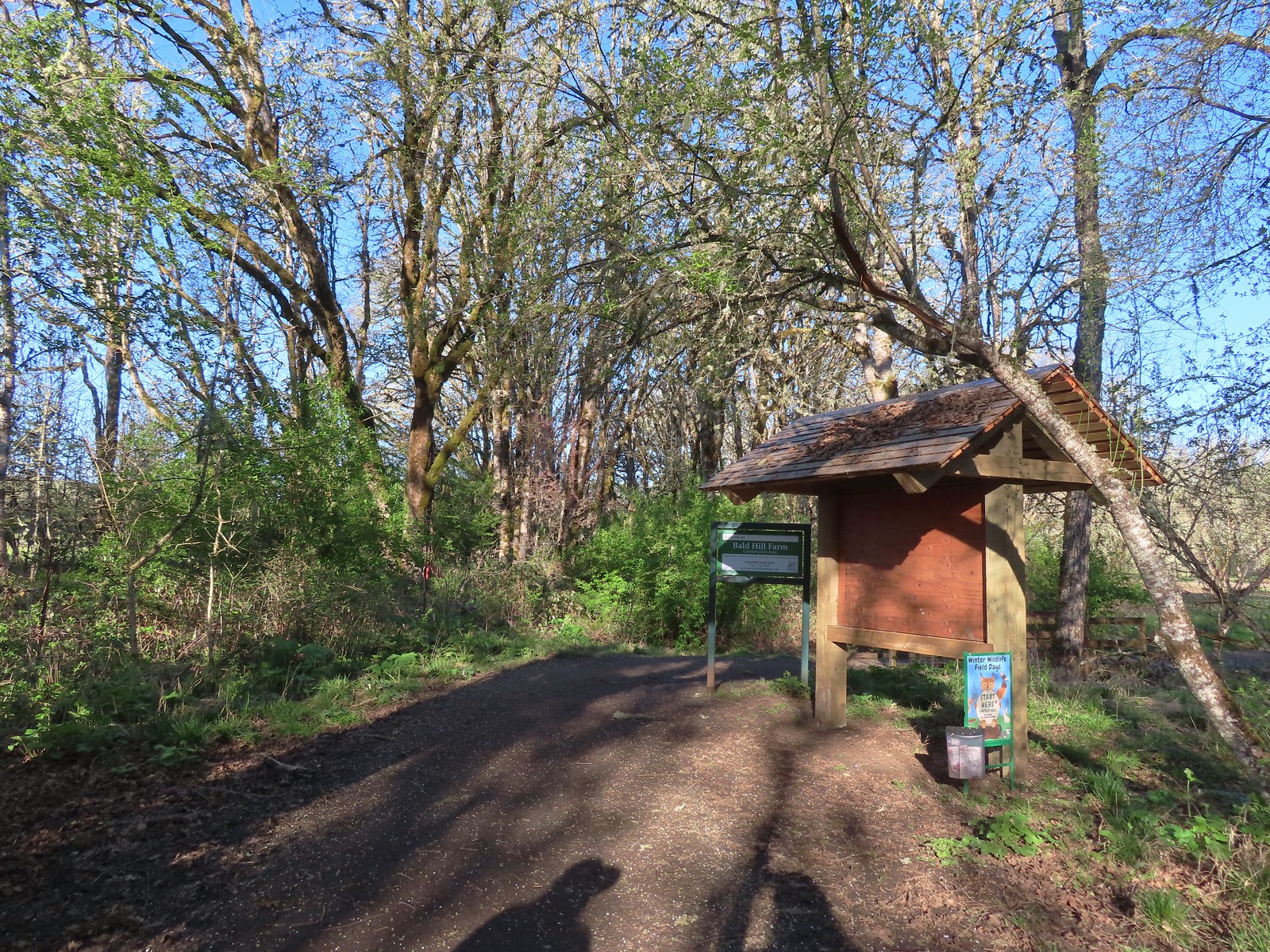
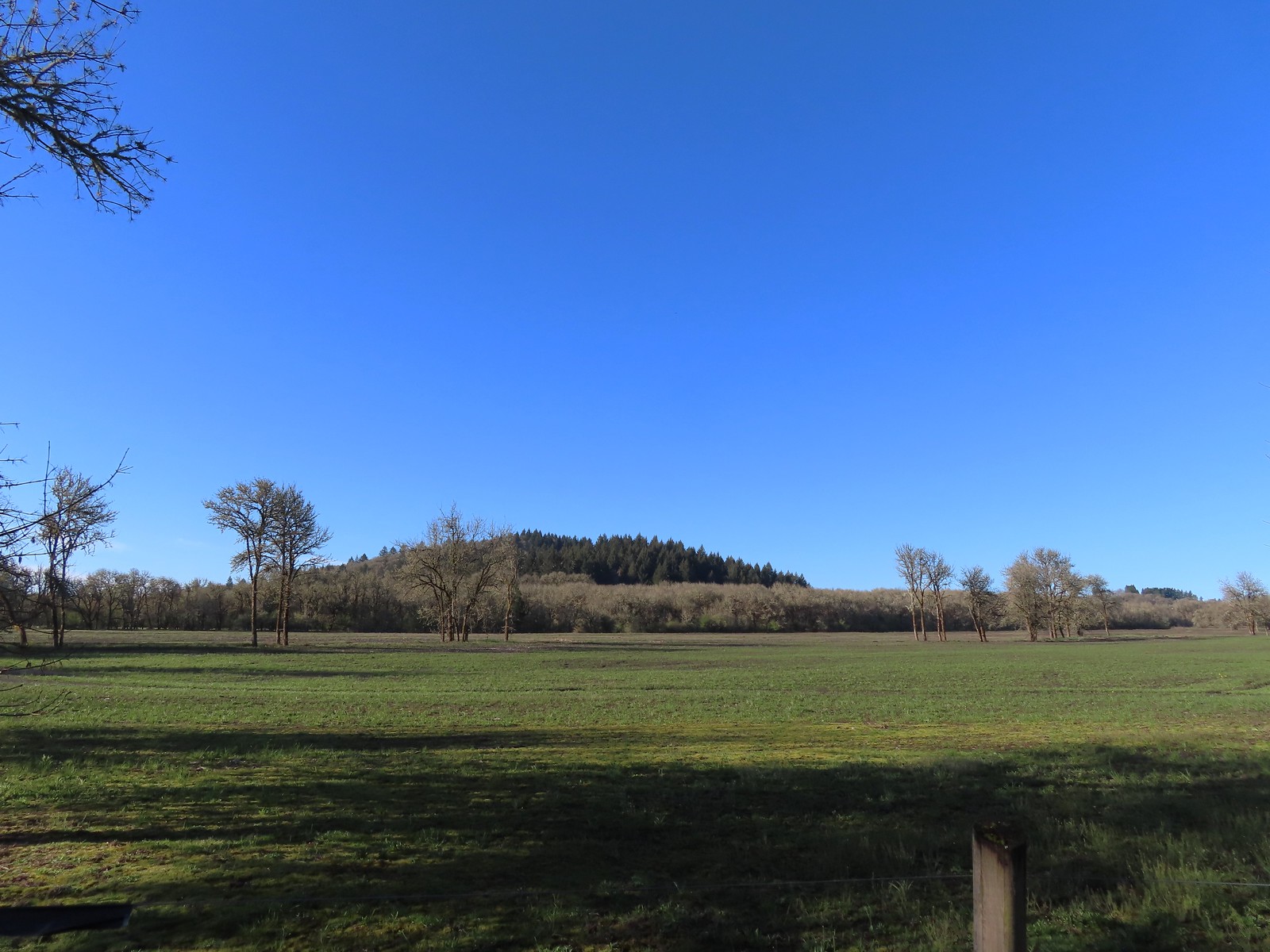 Bald Hill from the trail.
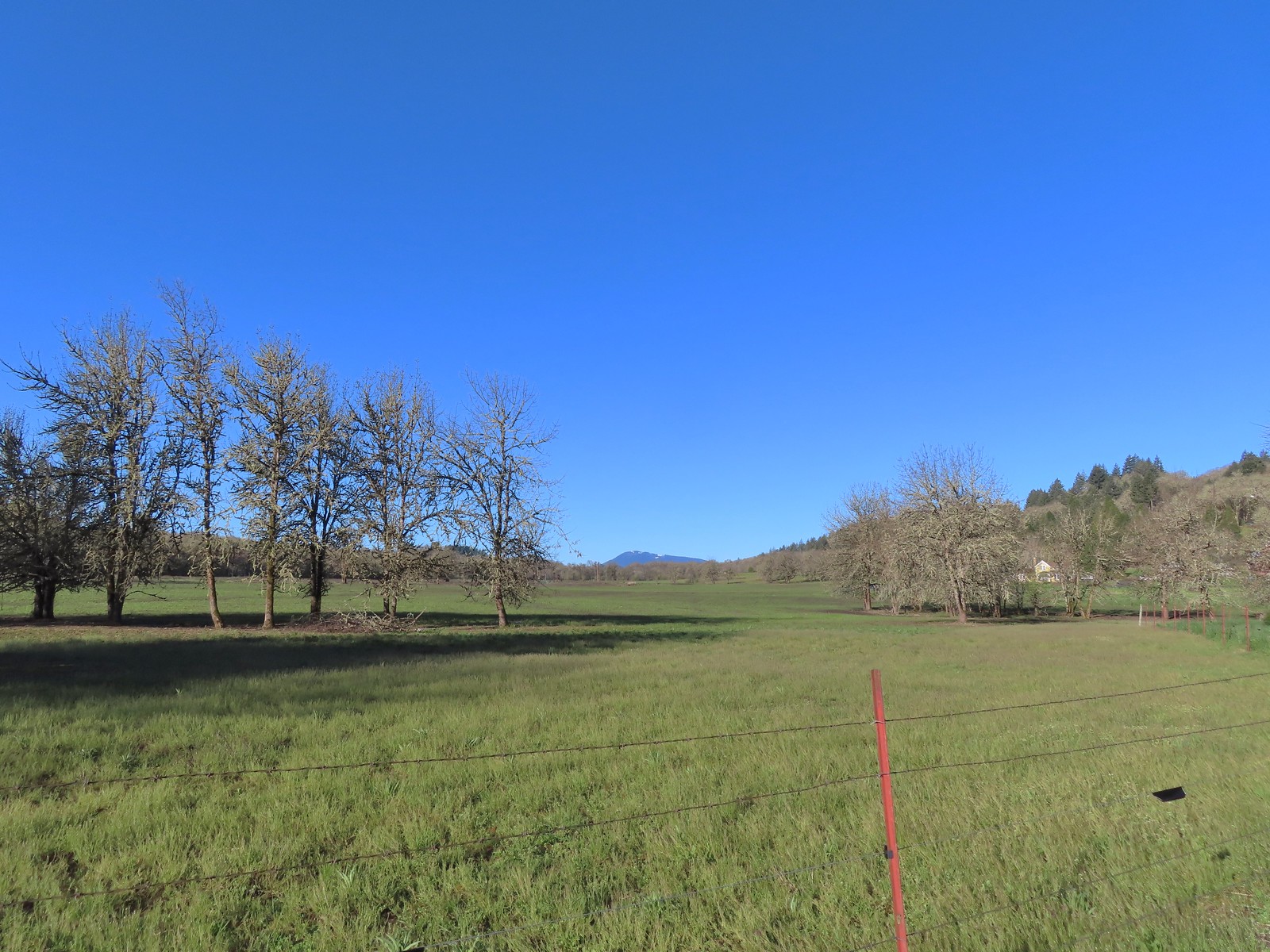 Mary’s Peak
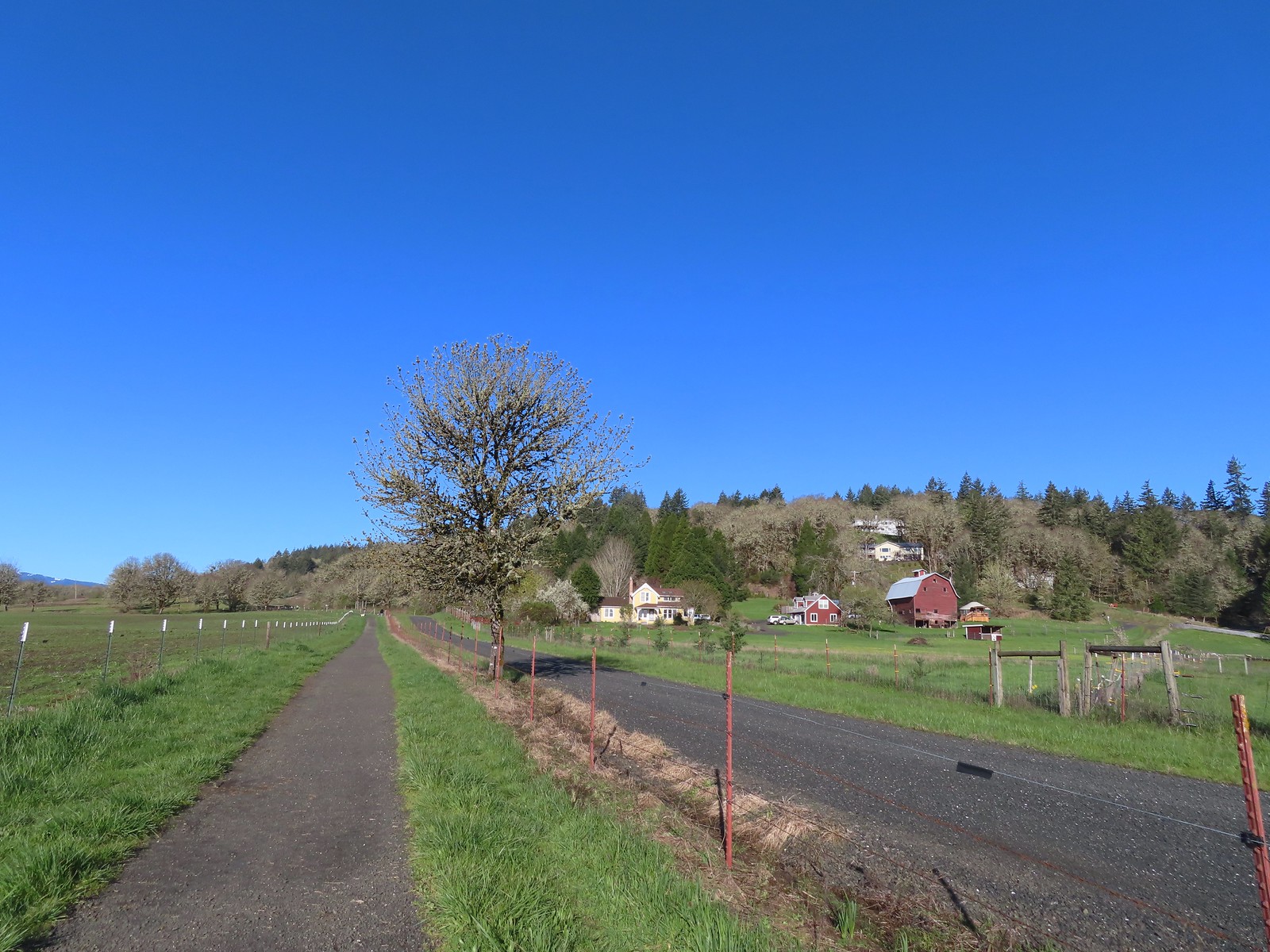 The barn across the gravel road.
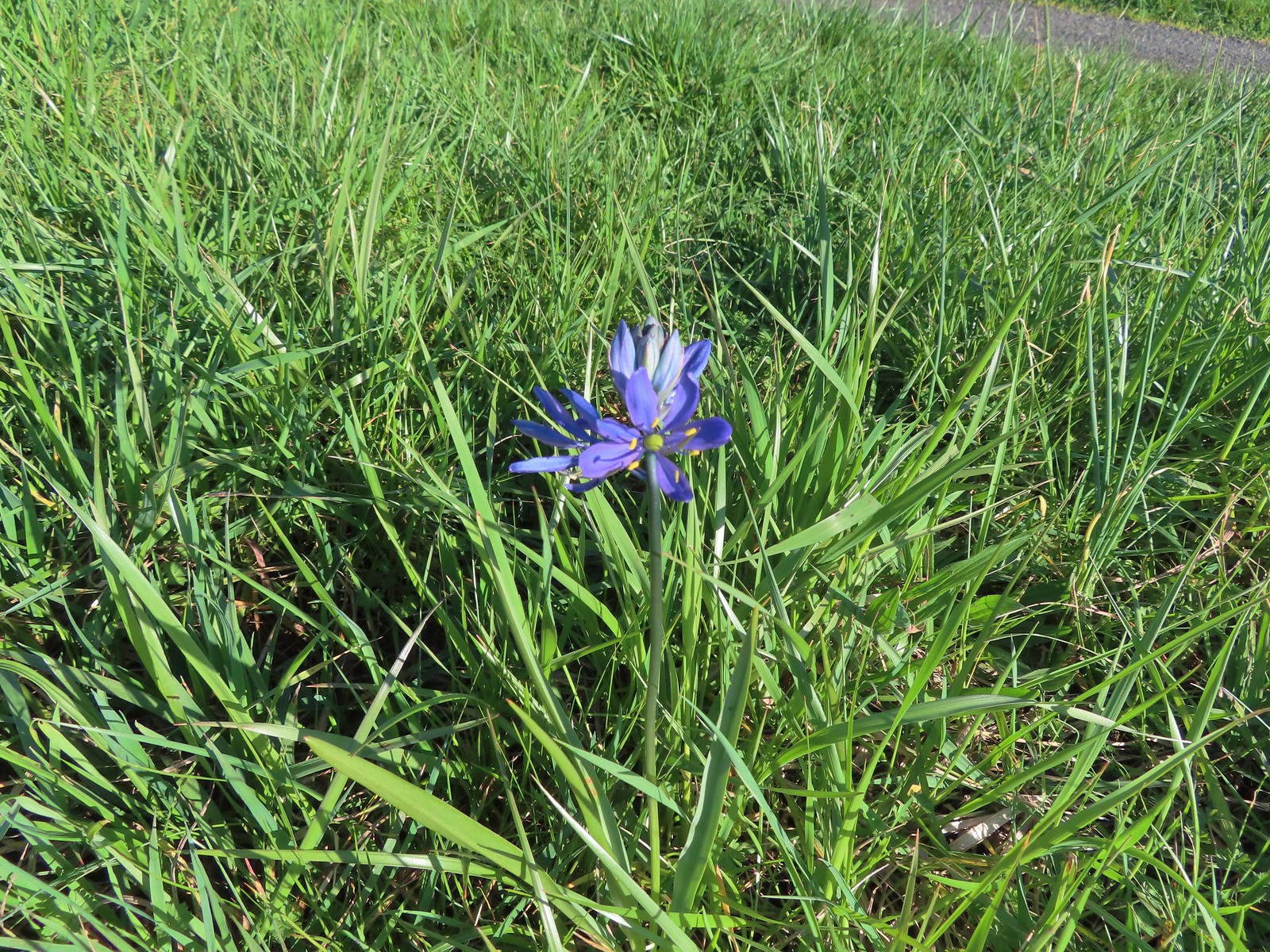 Our fist camas sighting of the year. The only one in bloom that we’d see all day.
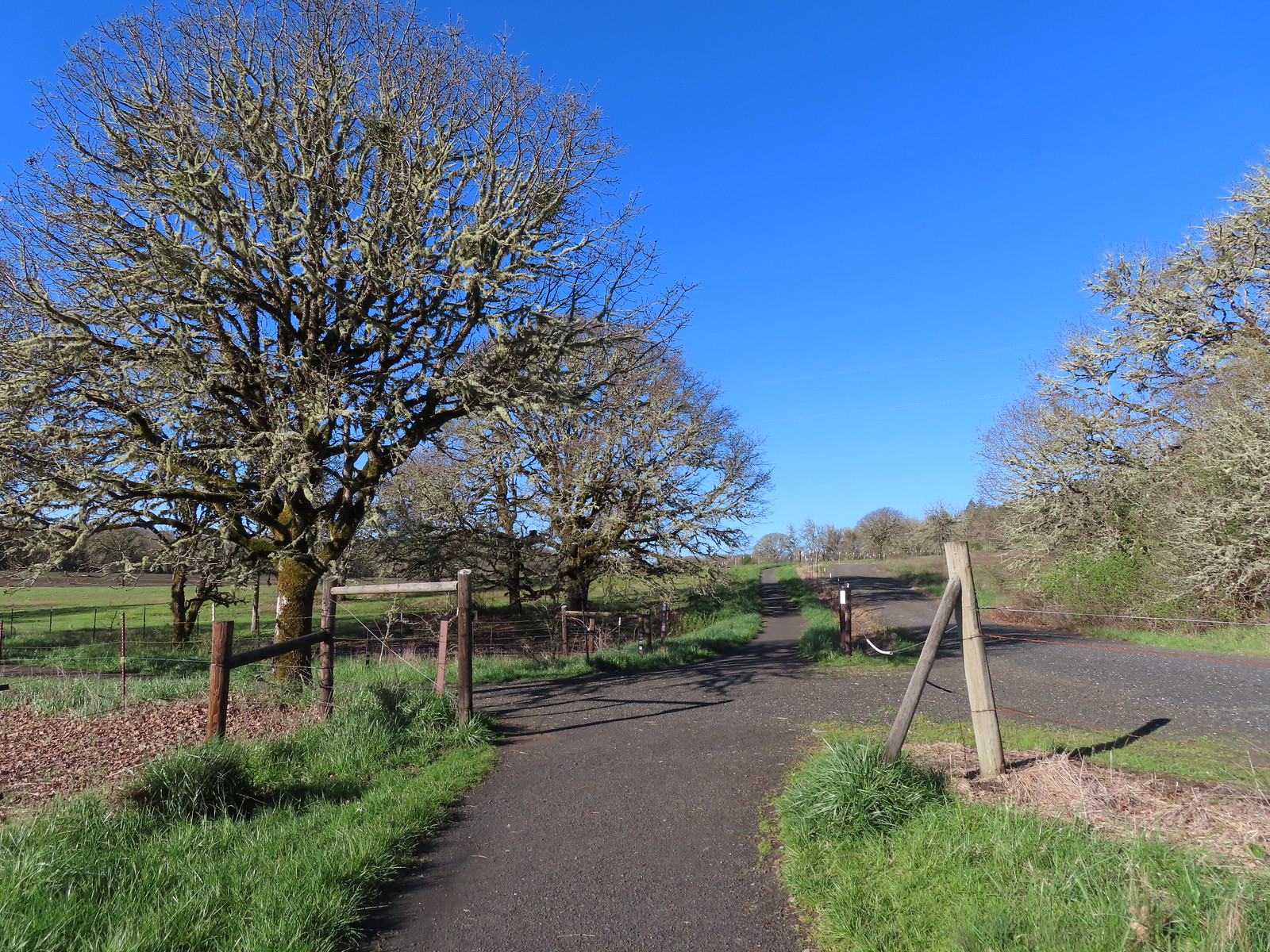 We’d turned left here on our 2016 Bald Hill hike.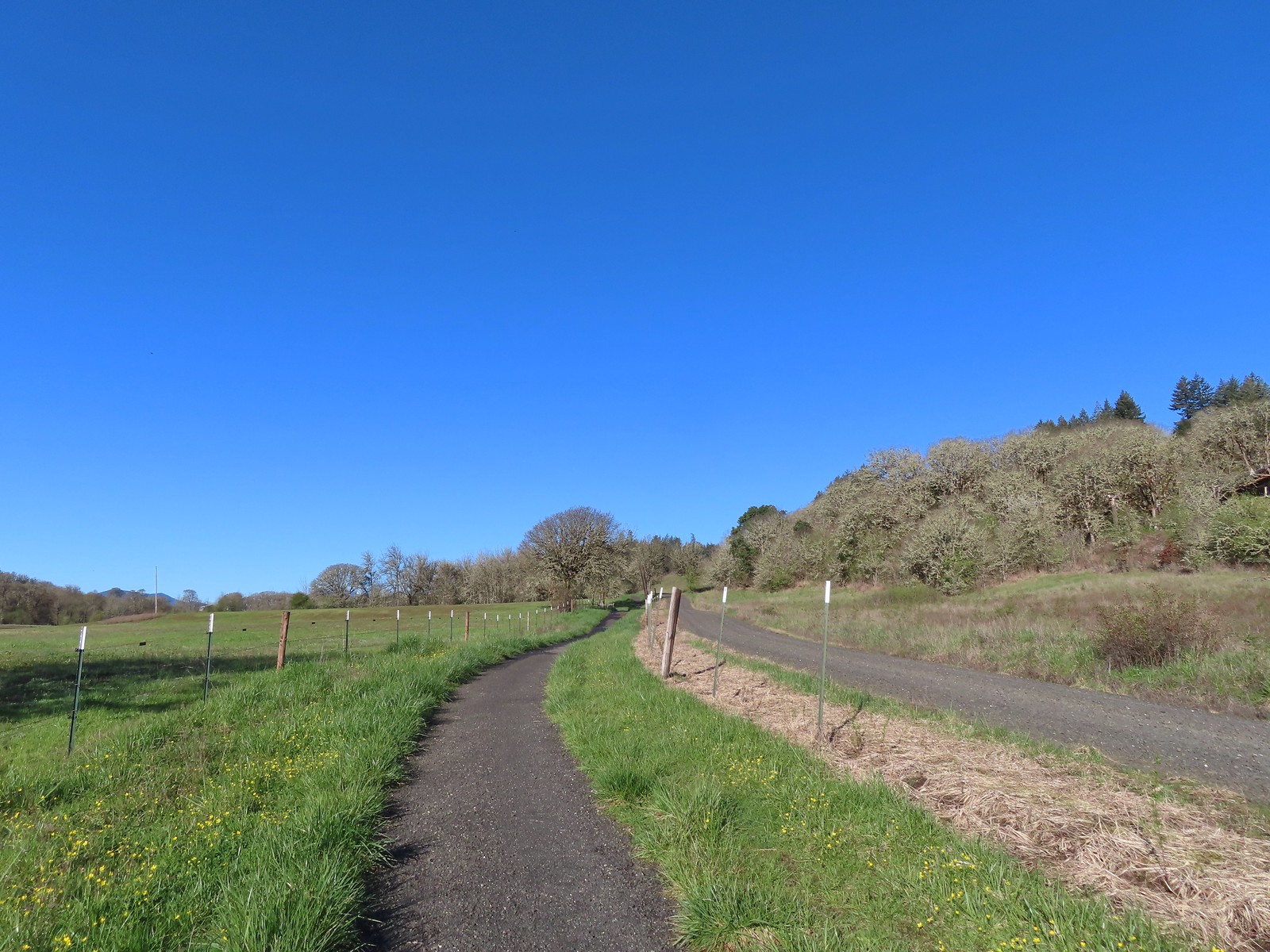
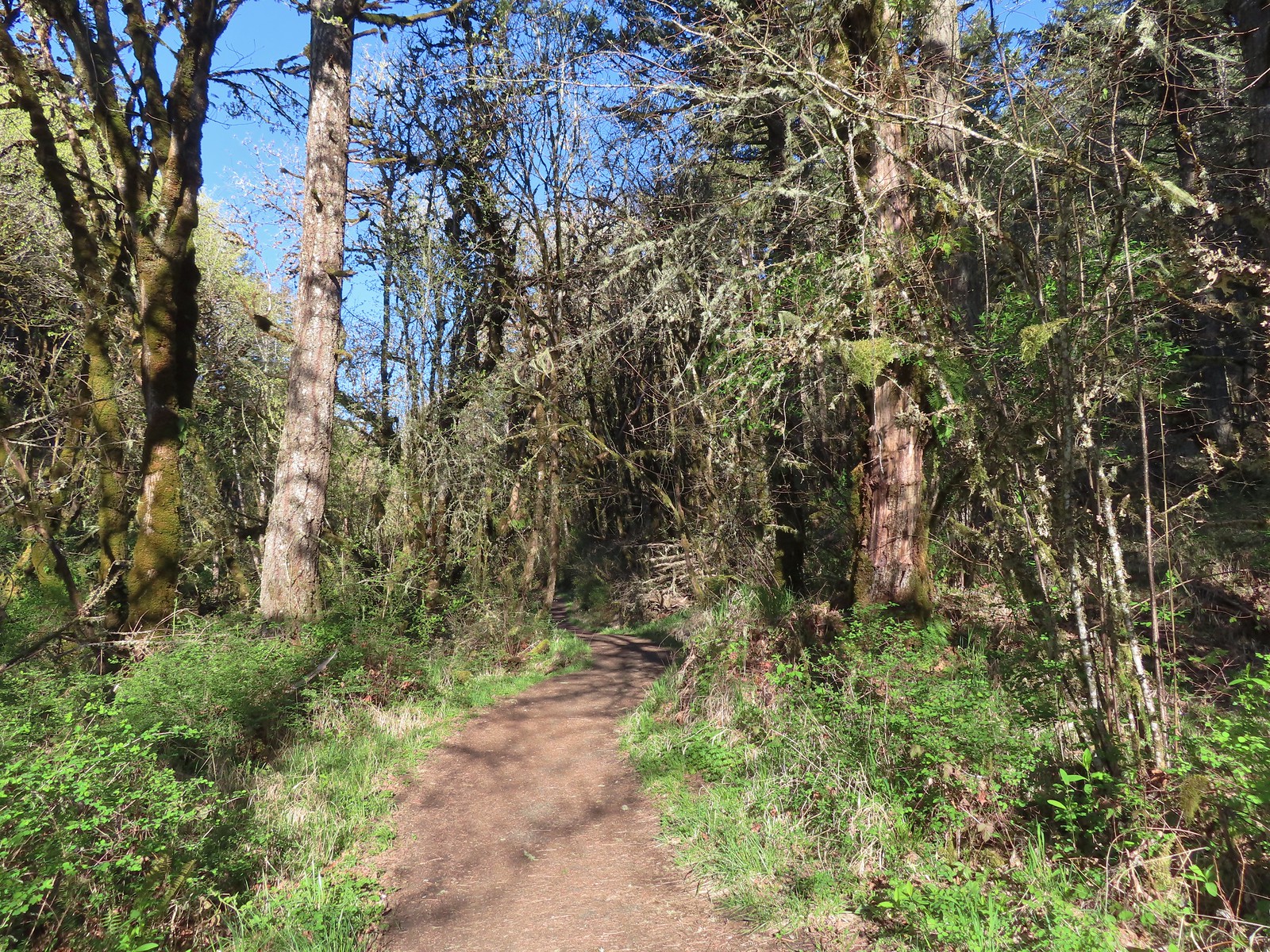
 Crossing the farmhouse road to join the gravel road.
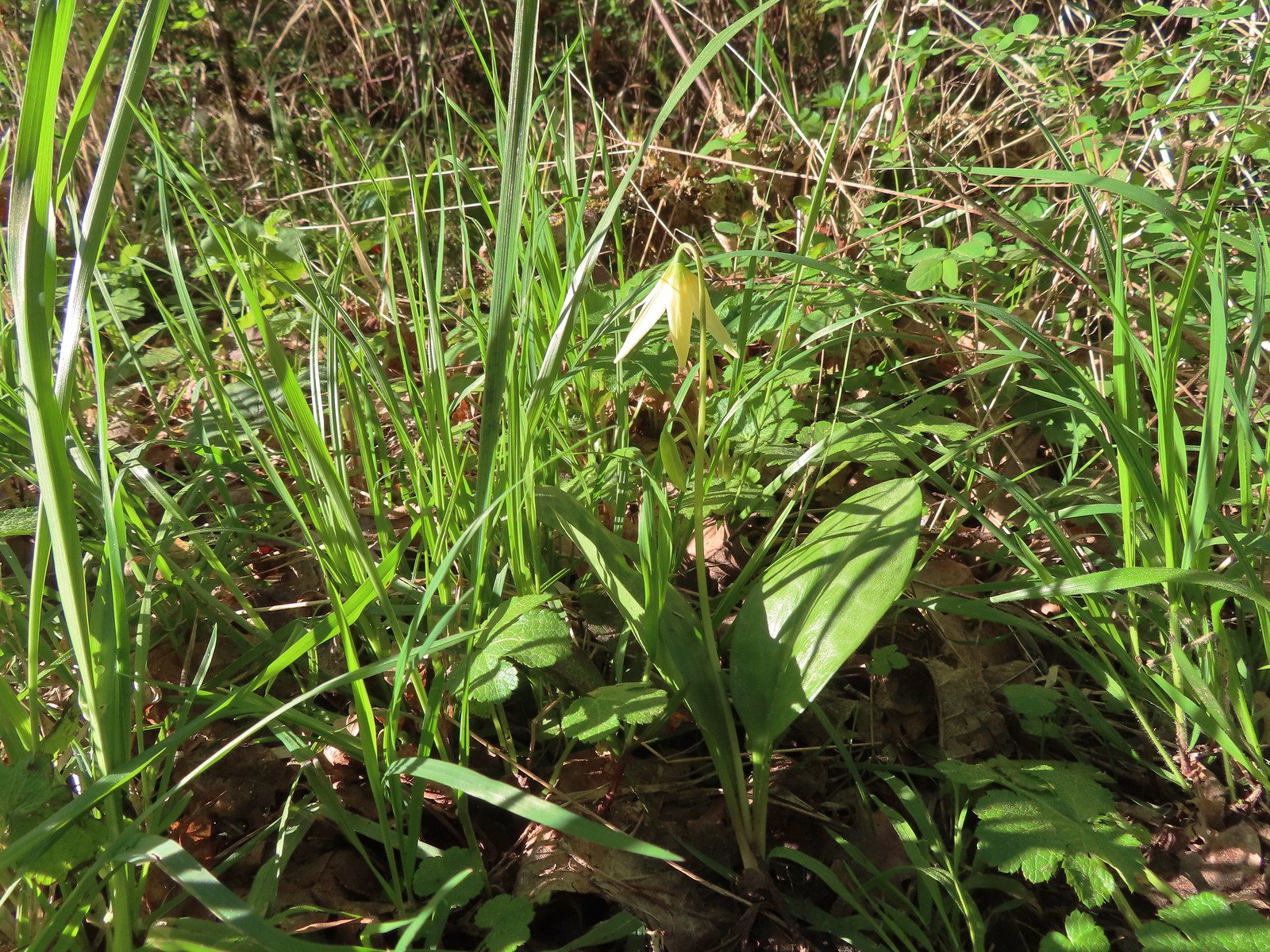 The first of many fawn lilies we’d see.
 Giant white wakerobin
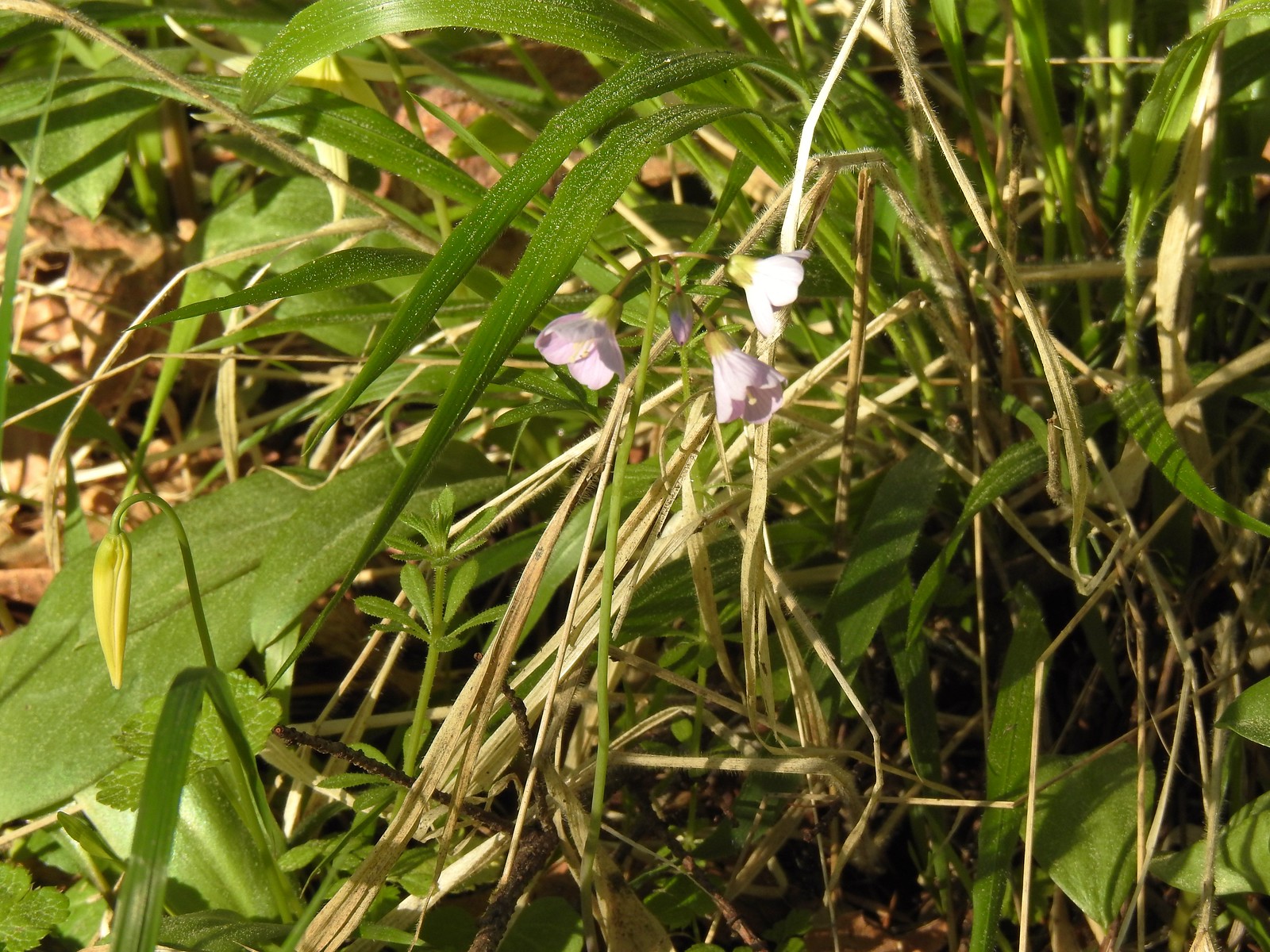 Toothwort
 More fawn lilies
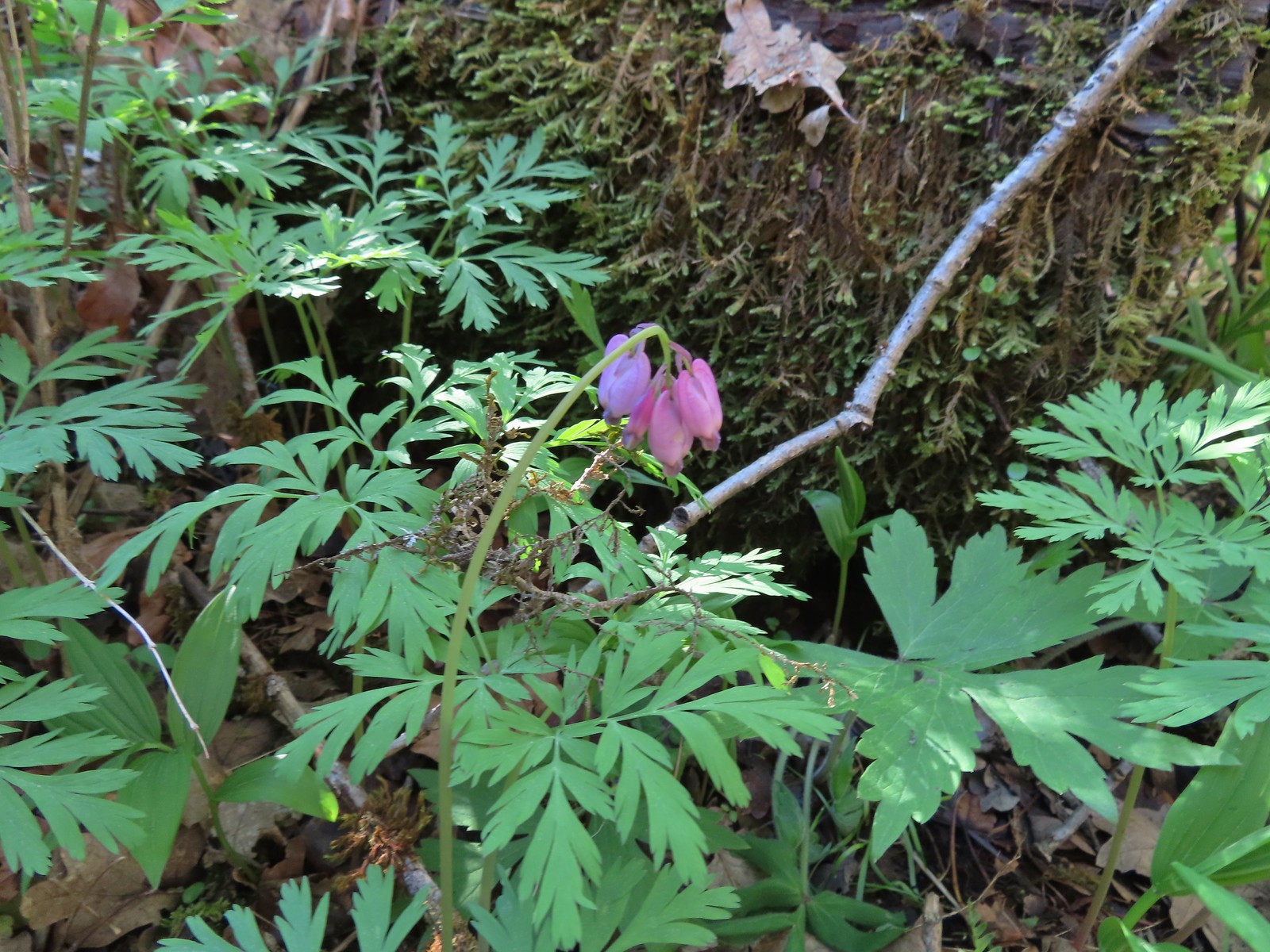 Bleeding heart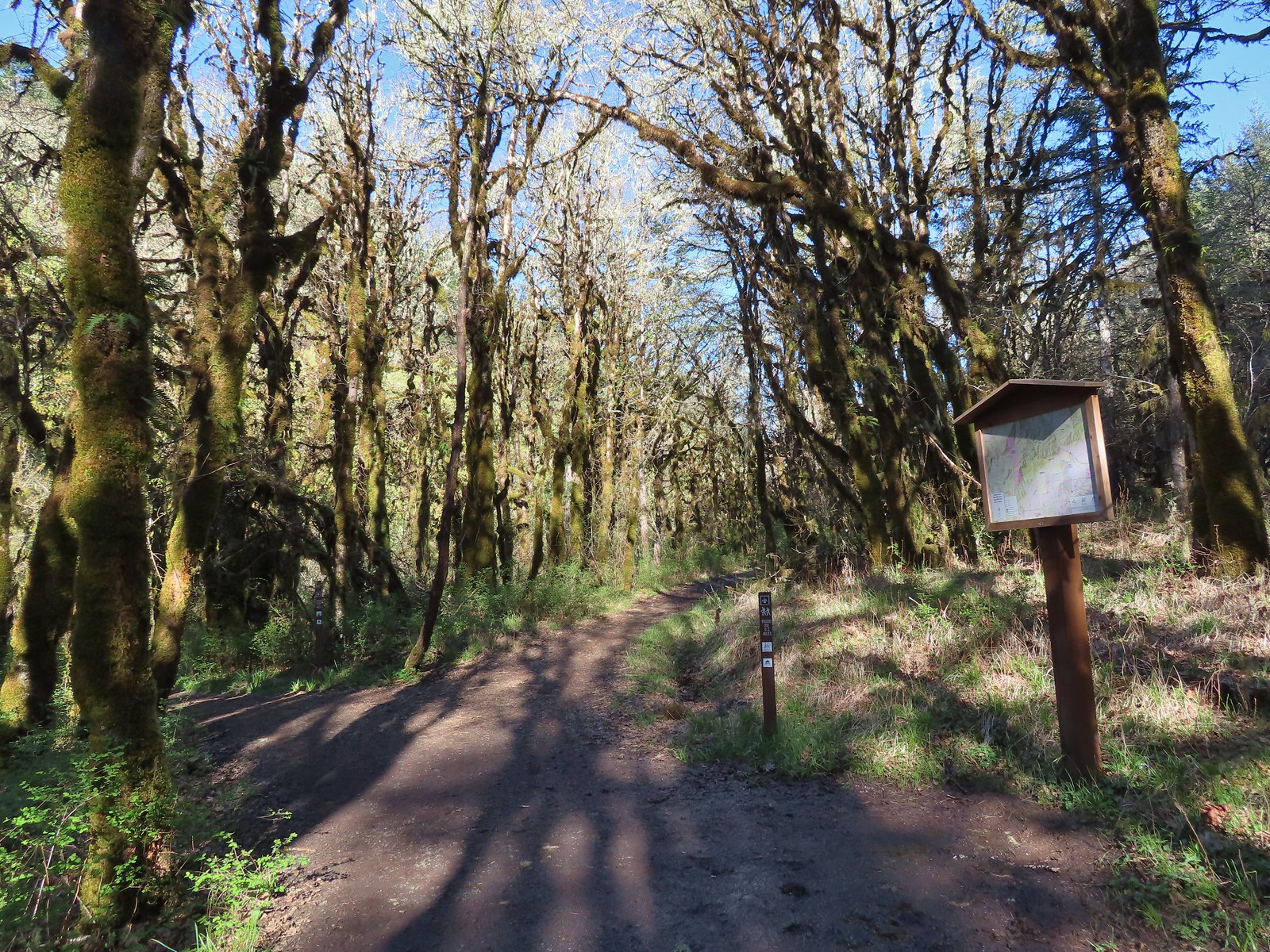
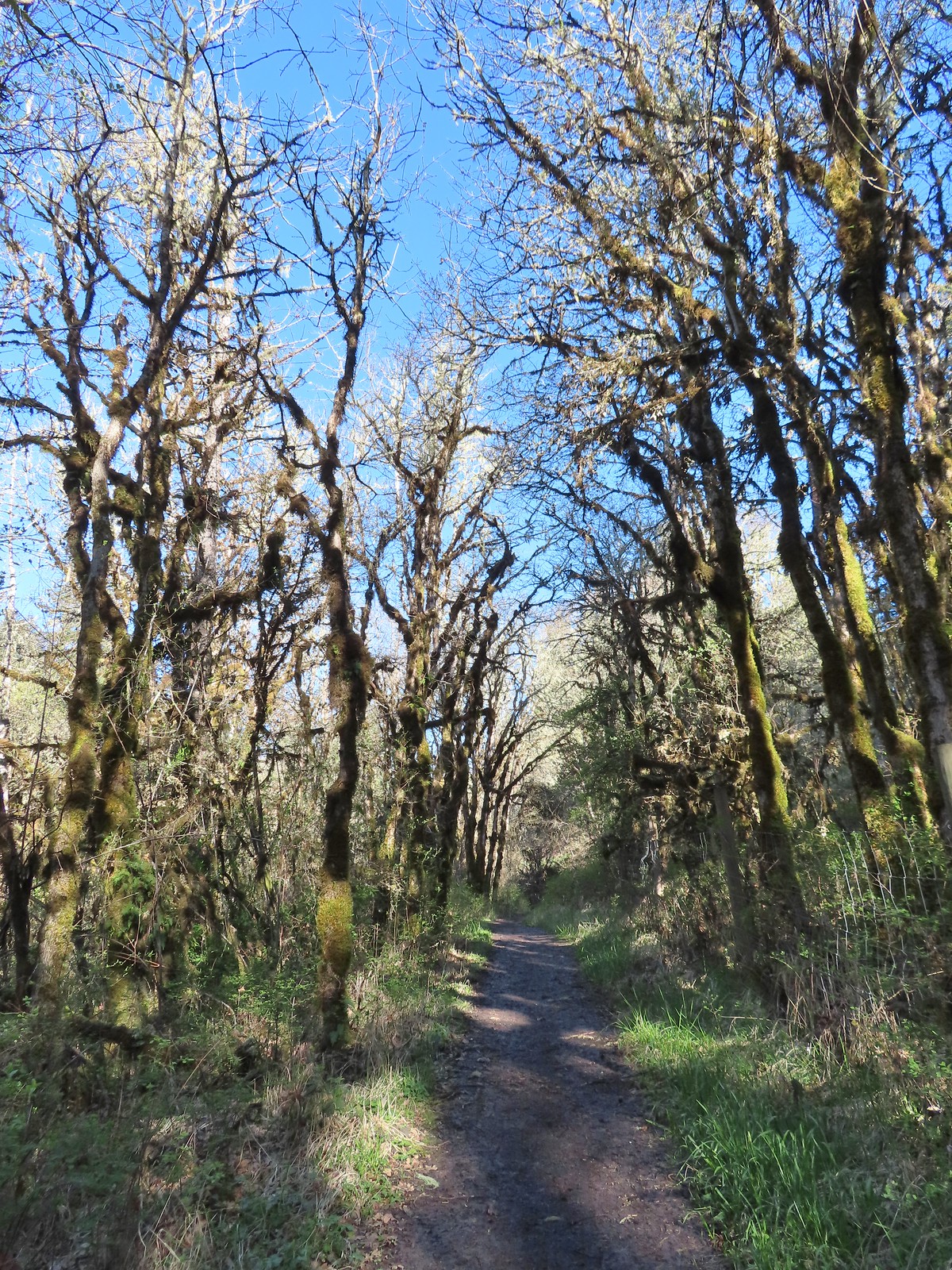
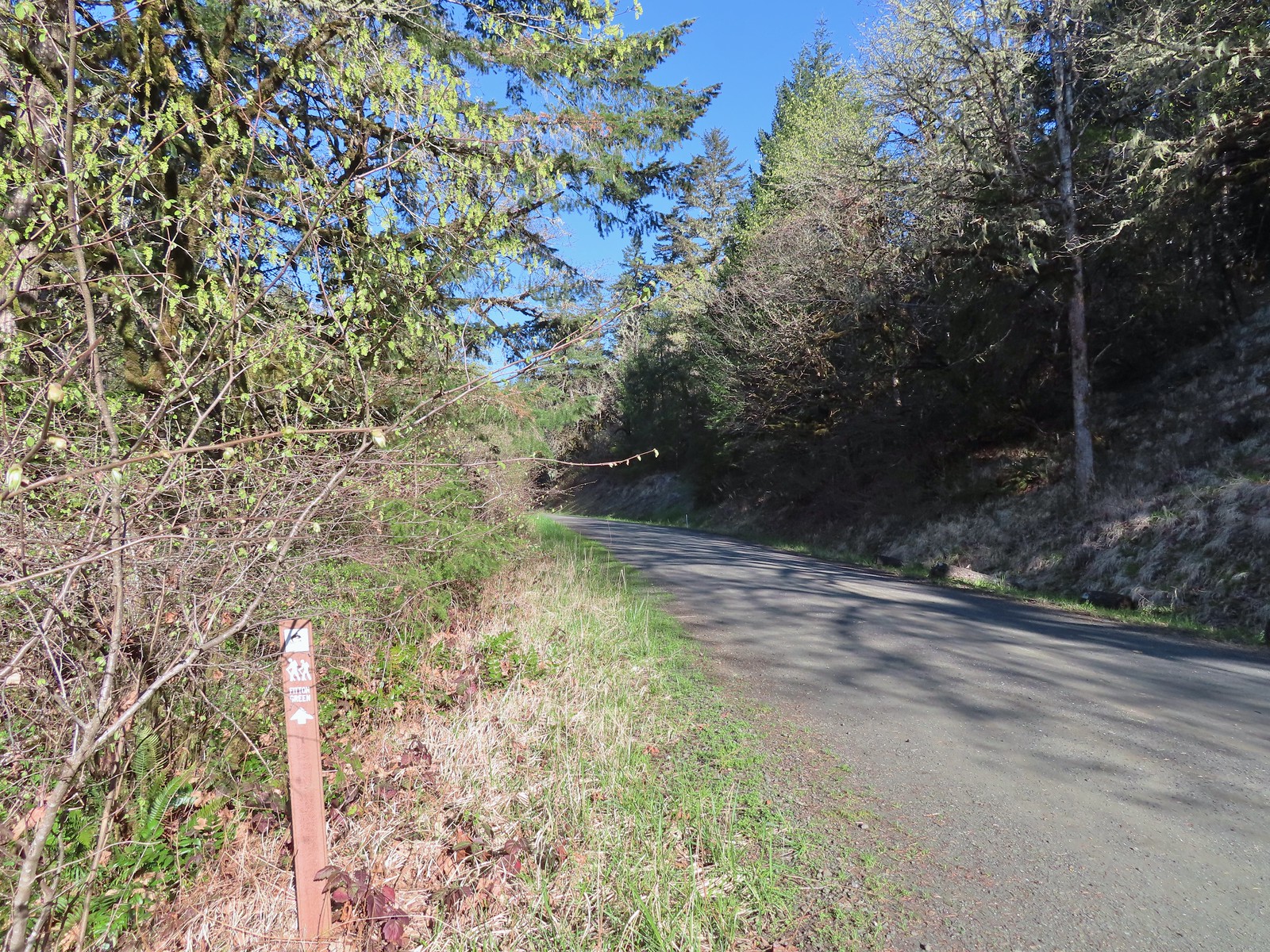 Trail pointer at Wynoochee Drive.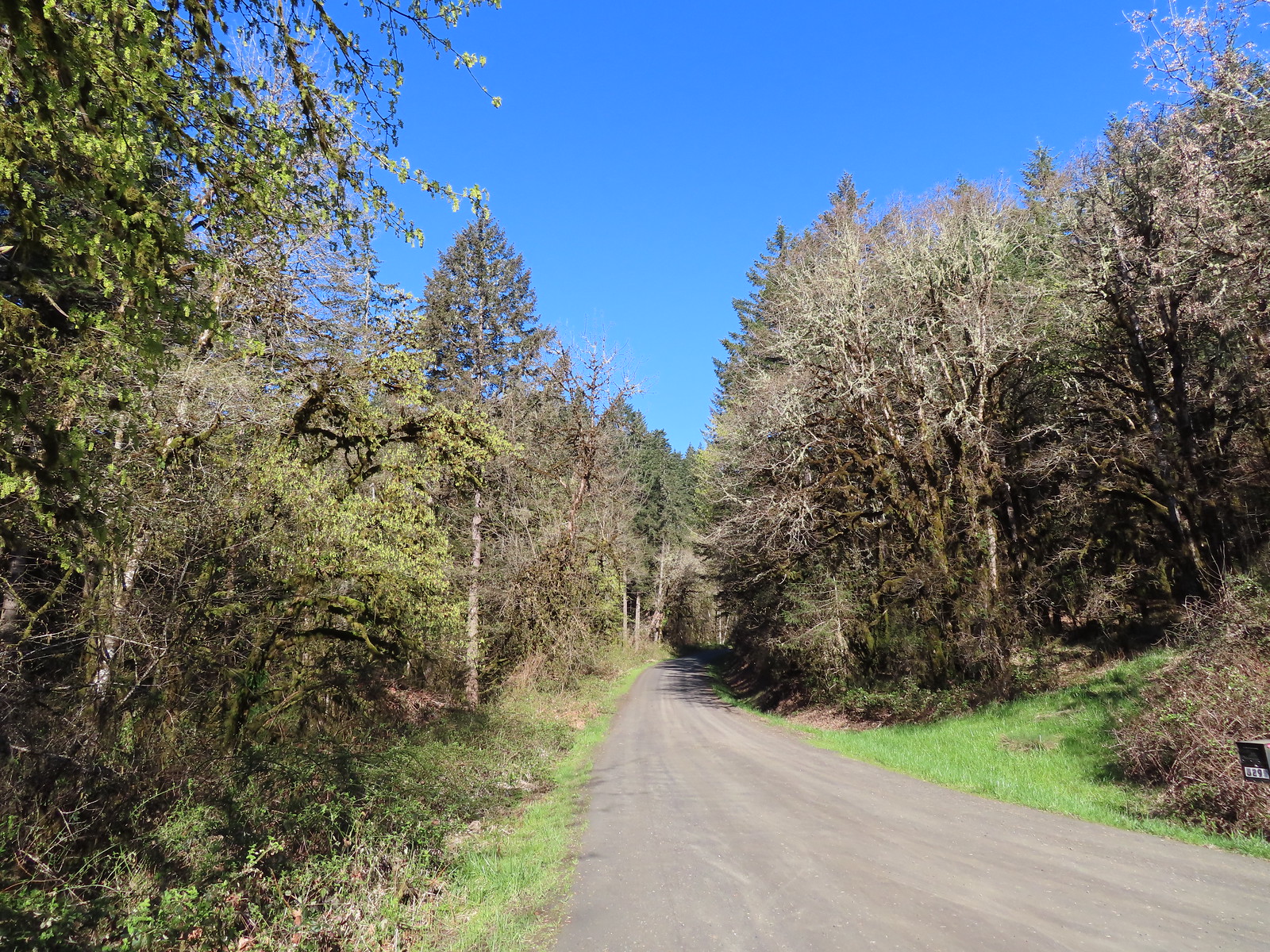
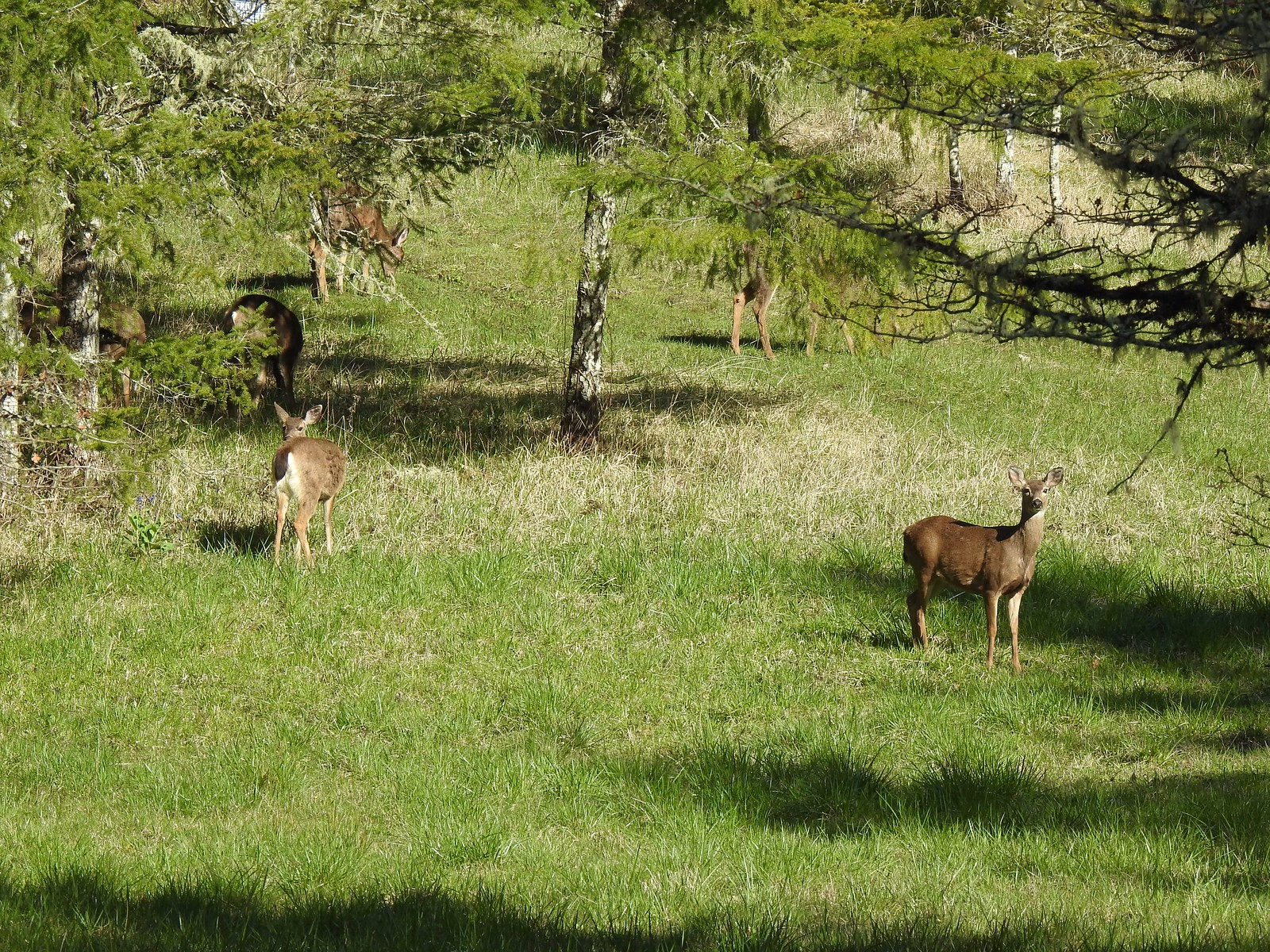 I count six in this photo.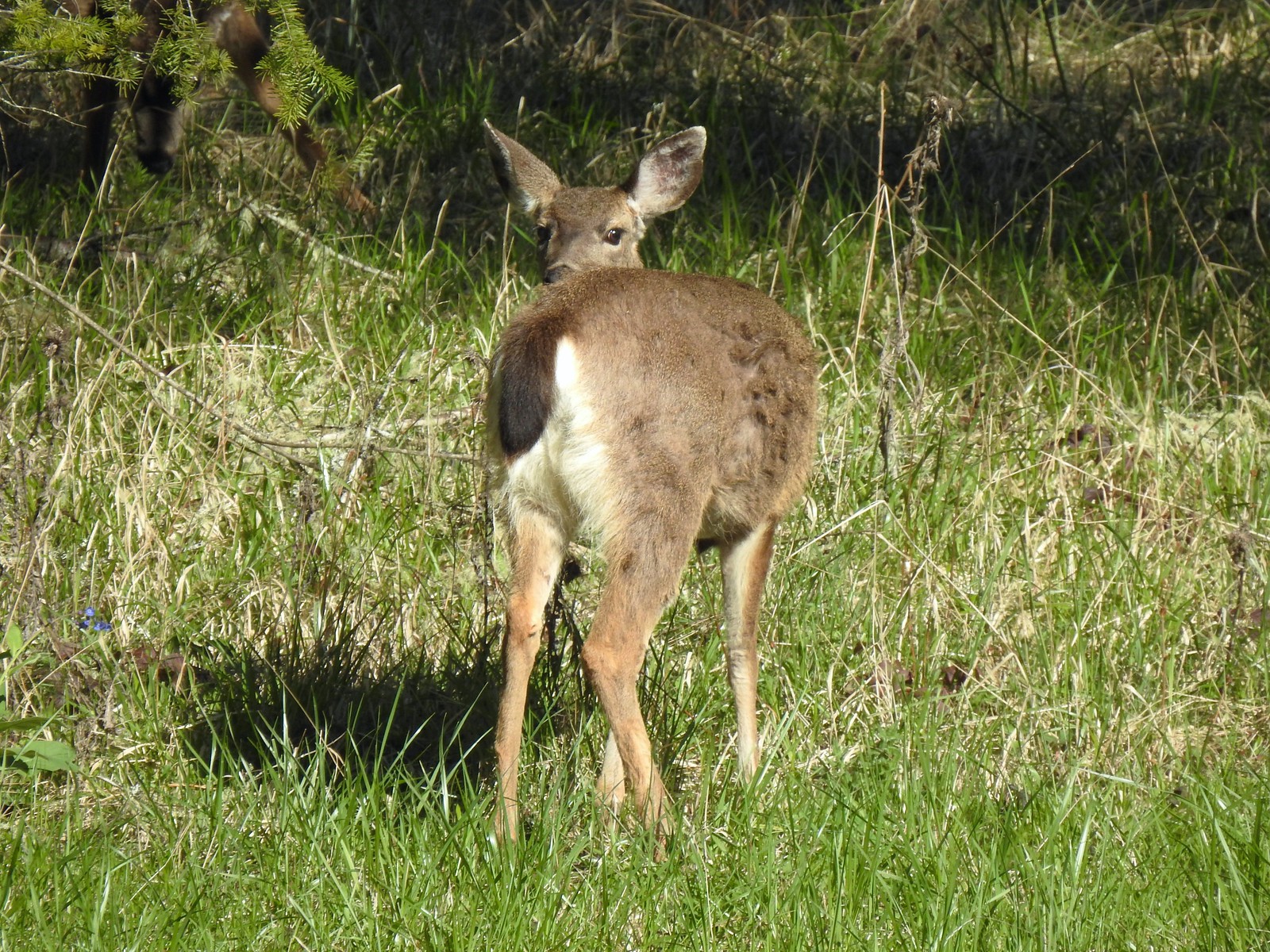

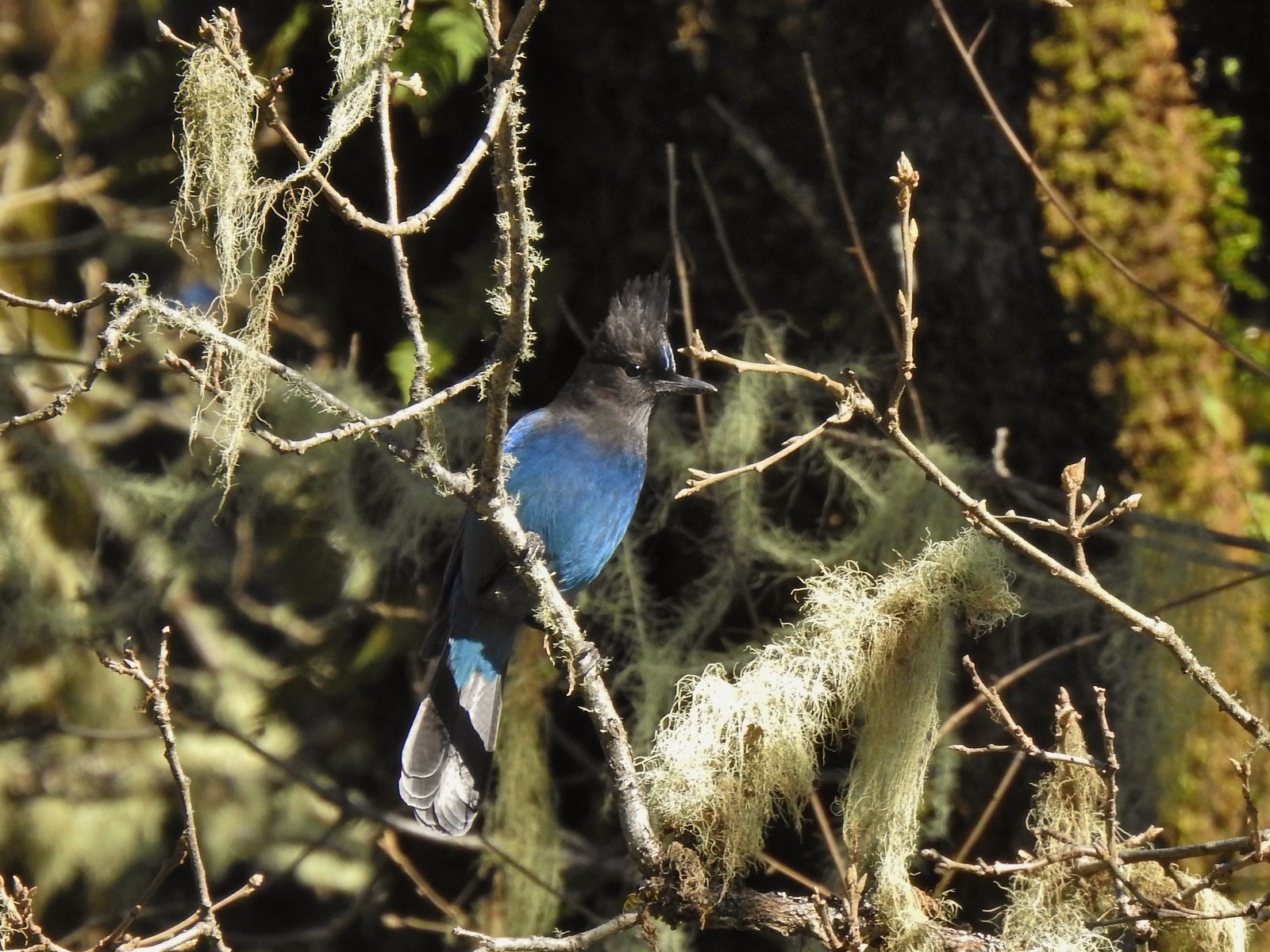 While most of the jays wouldn’t sit still in the open long enough for a decent photo this one at least cooperated.
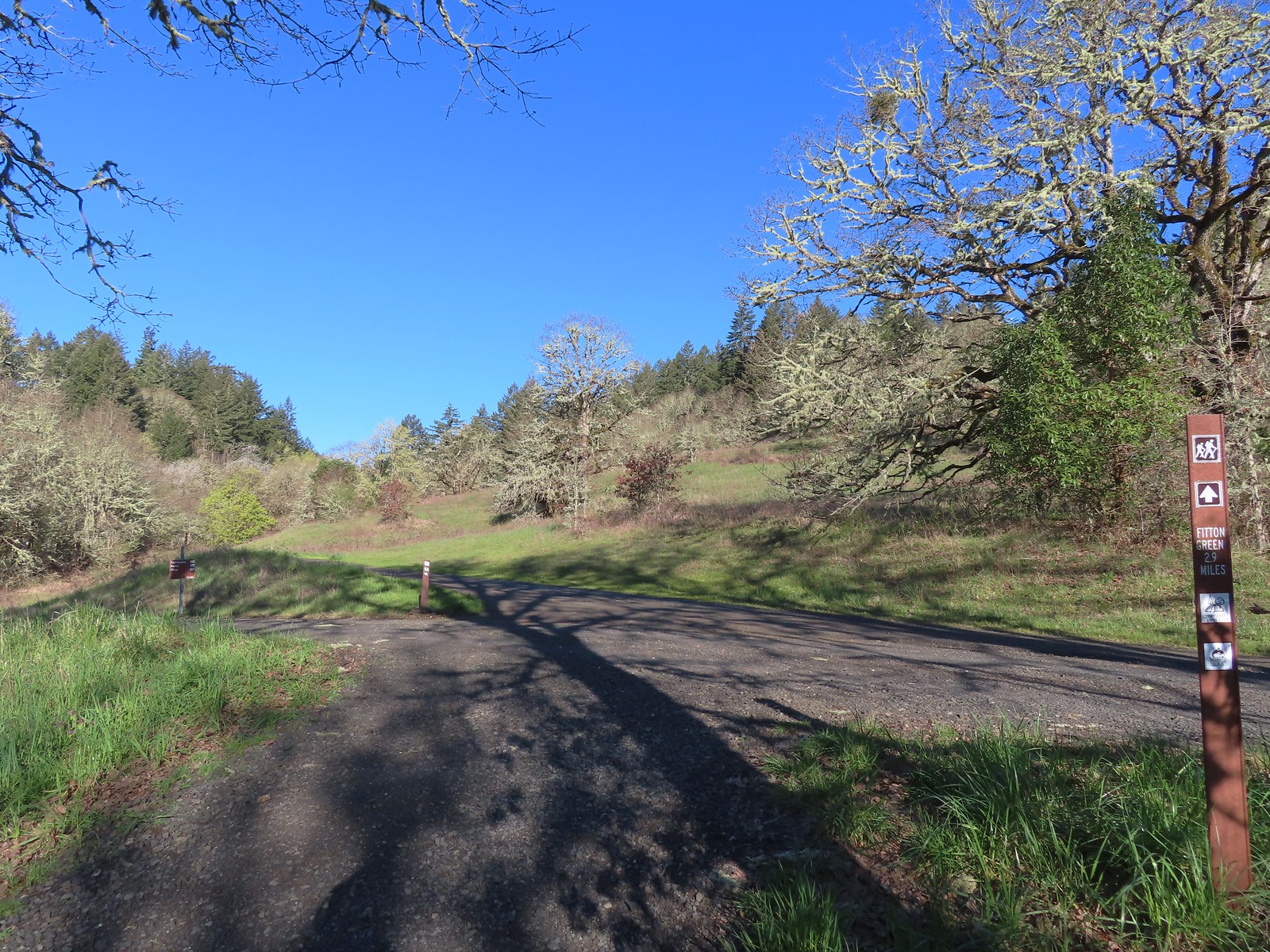
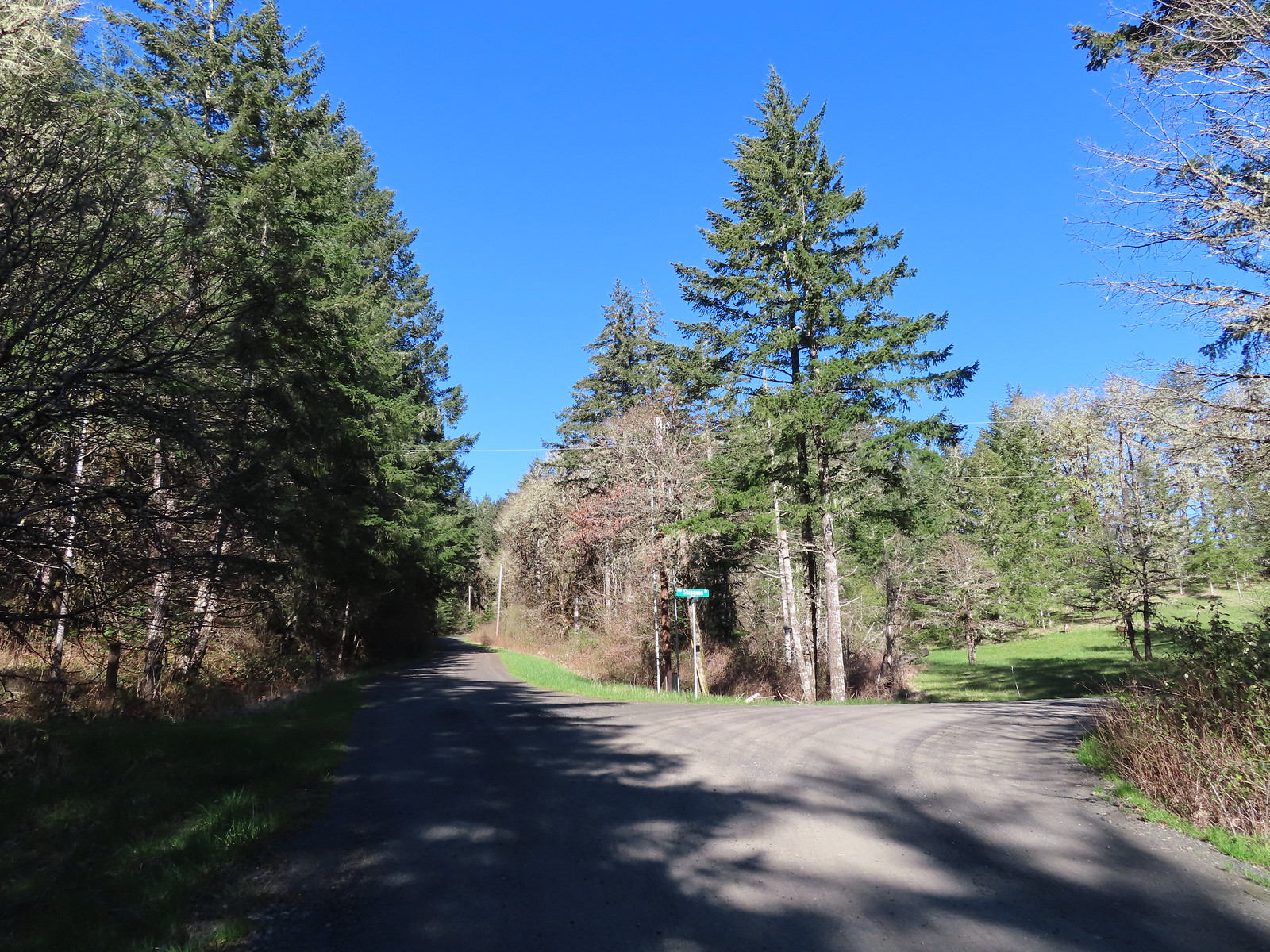
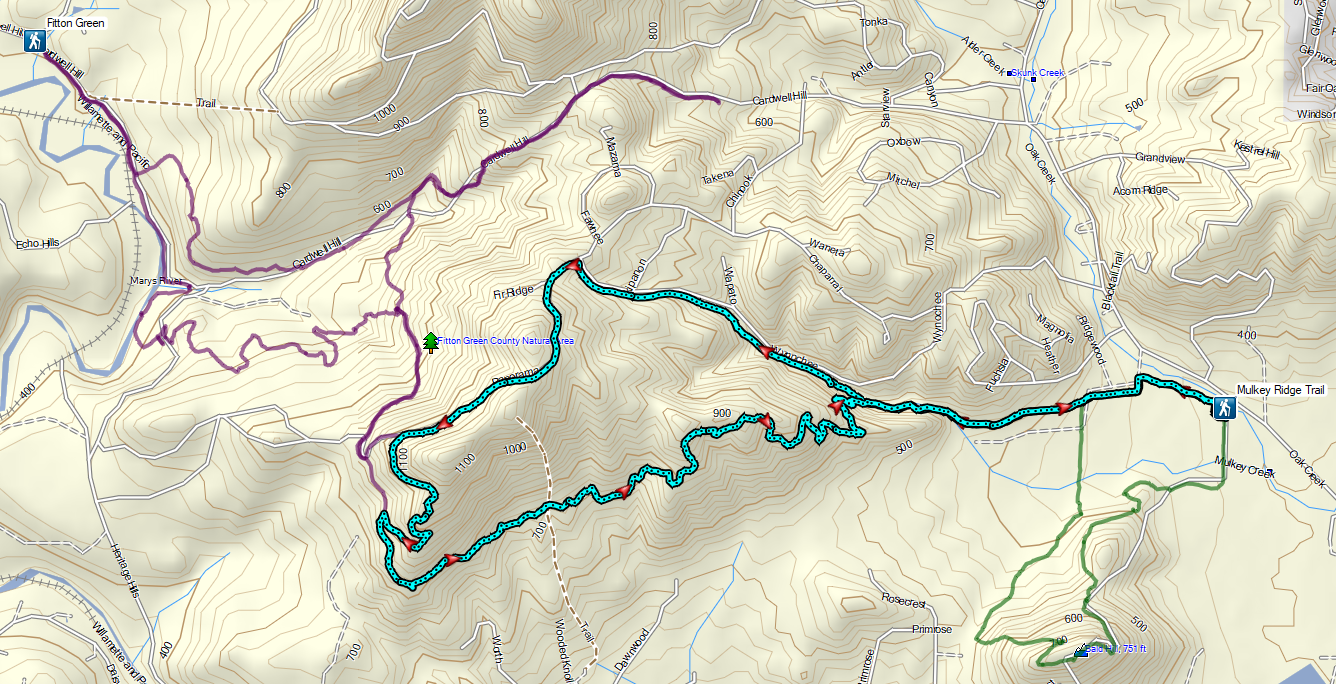
 Sign for the Fitton Green Natural Area at the intersection with Panorama Drive.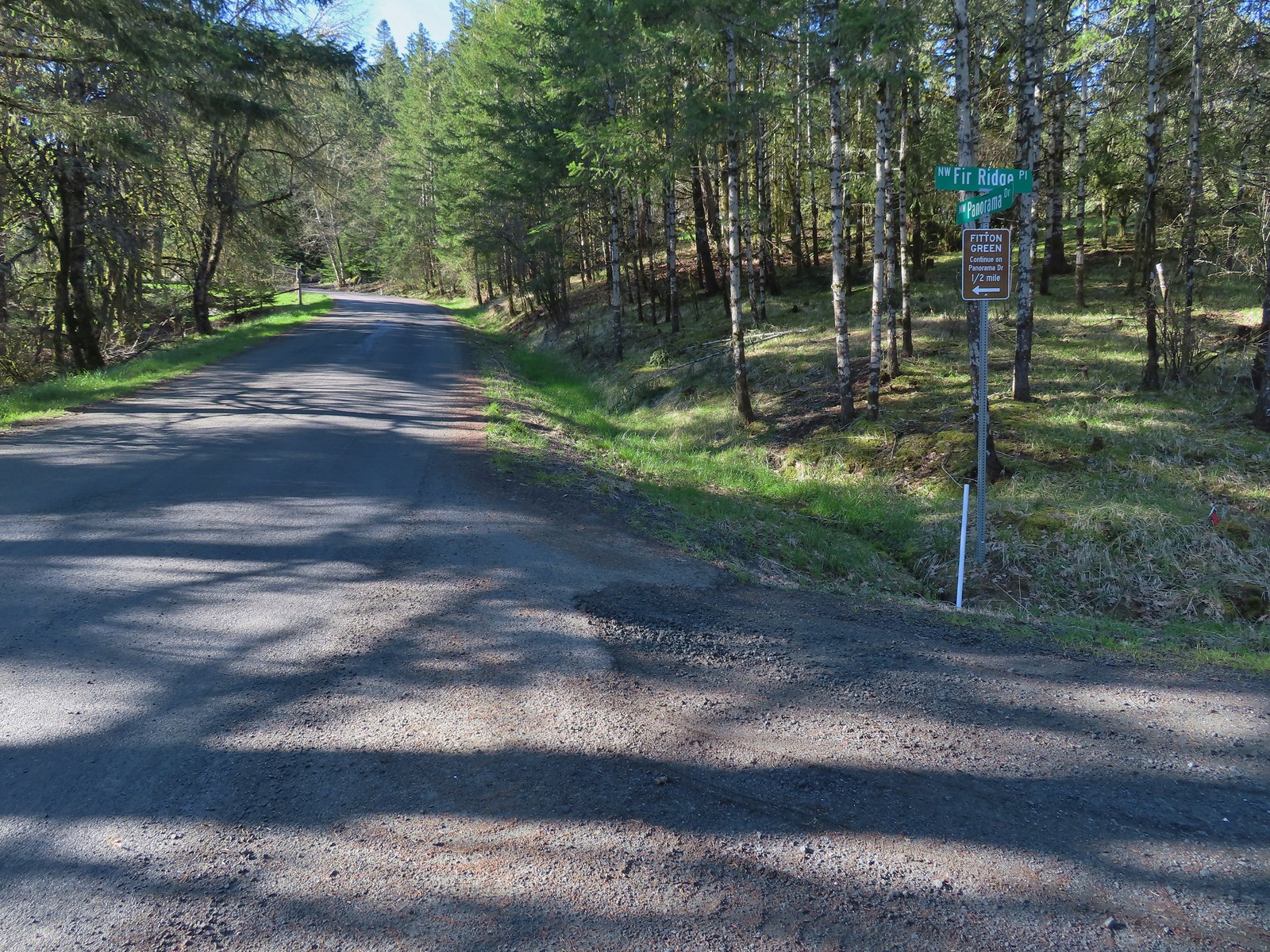
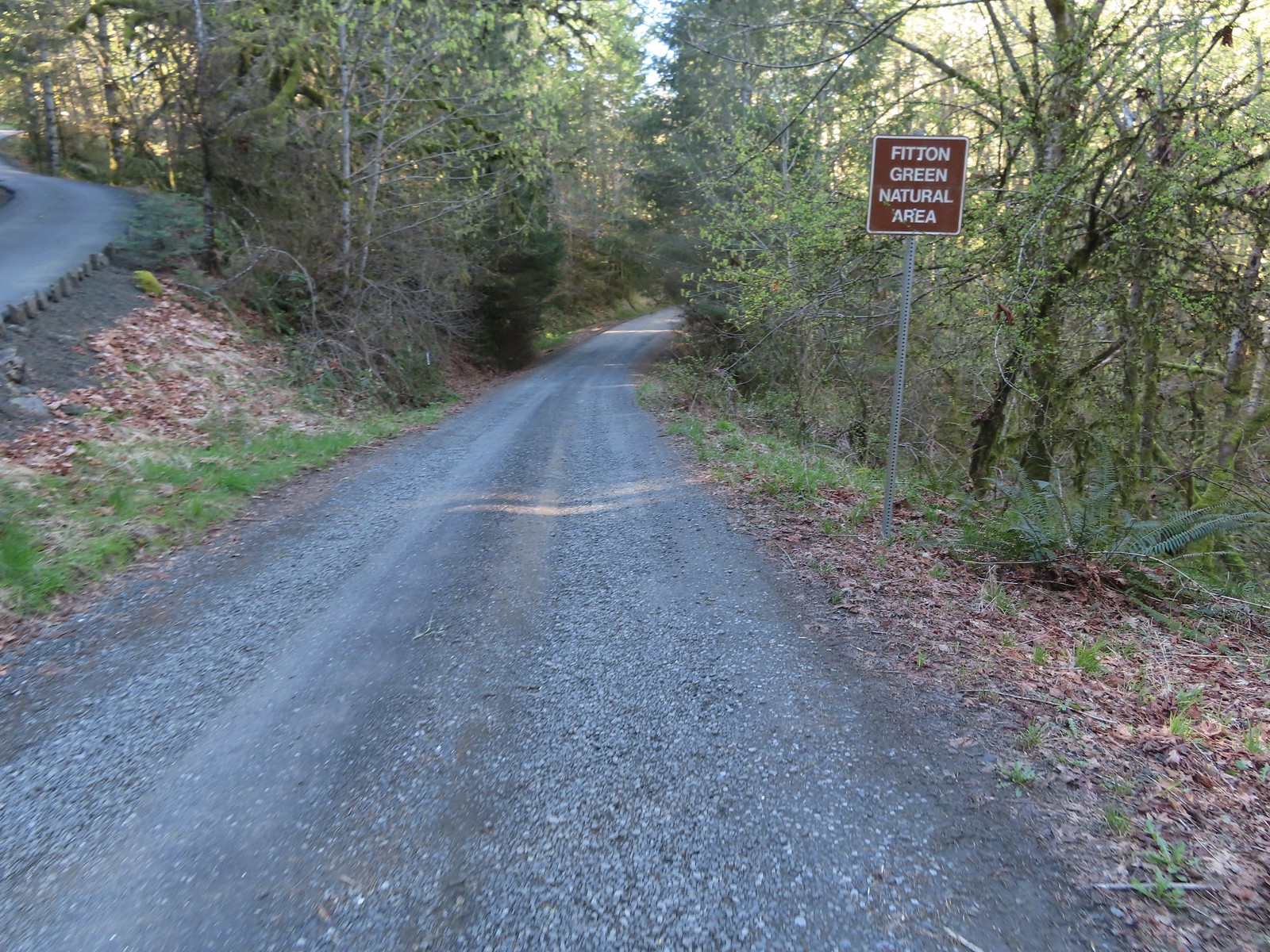 The road turned to gravel shortly before arriving at the trailhead.
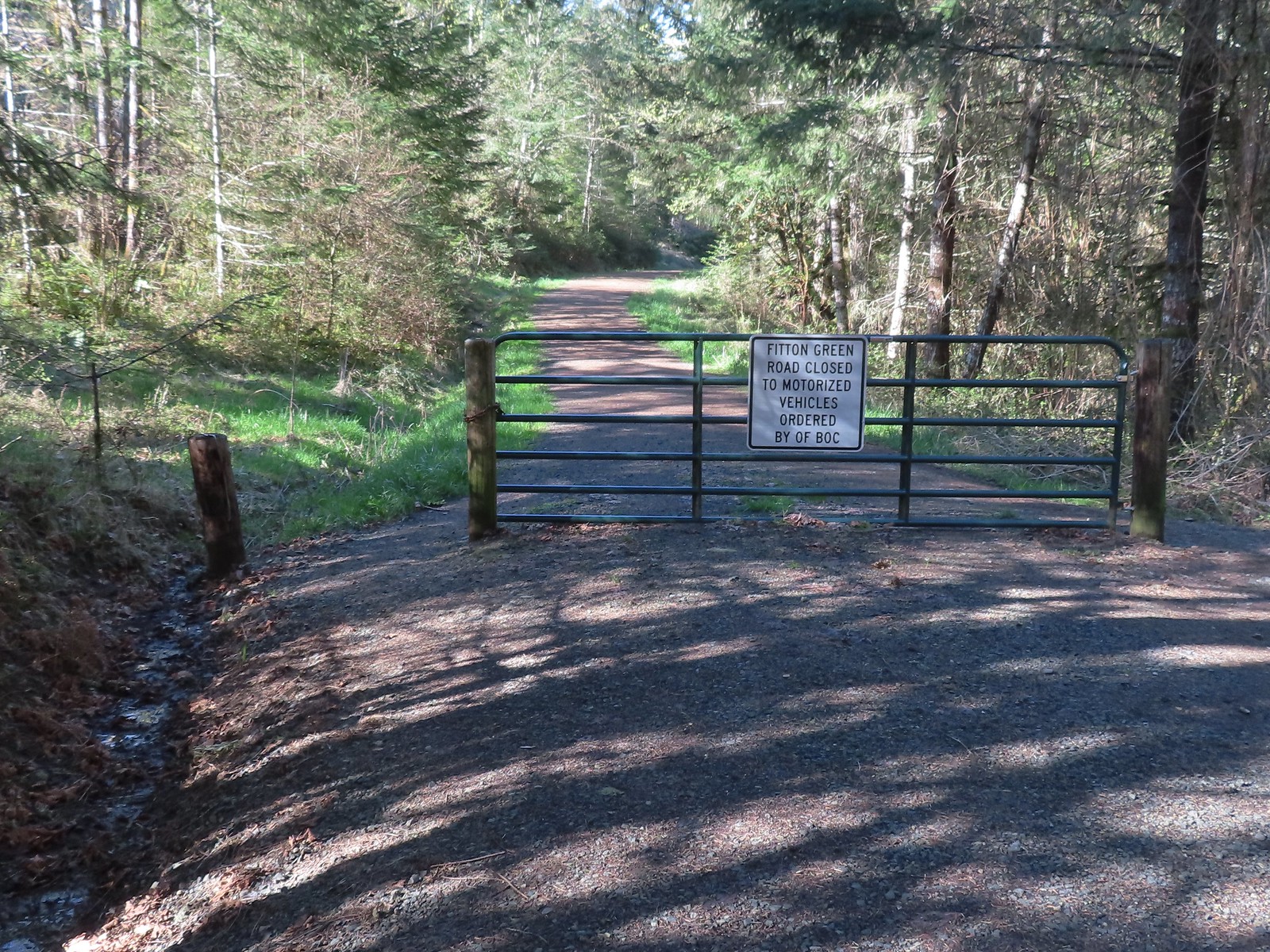 Gate at the trailhead.
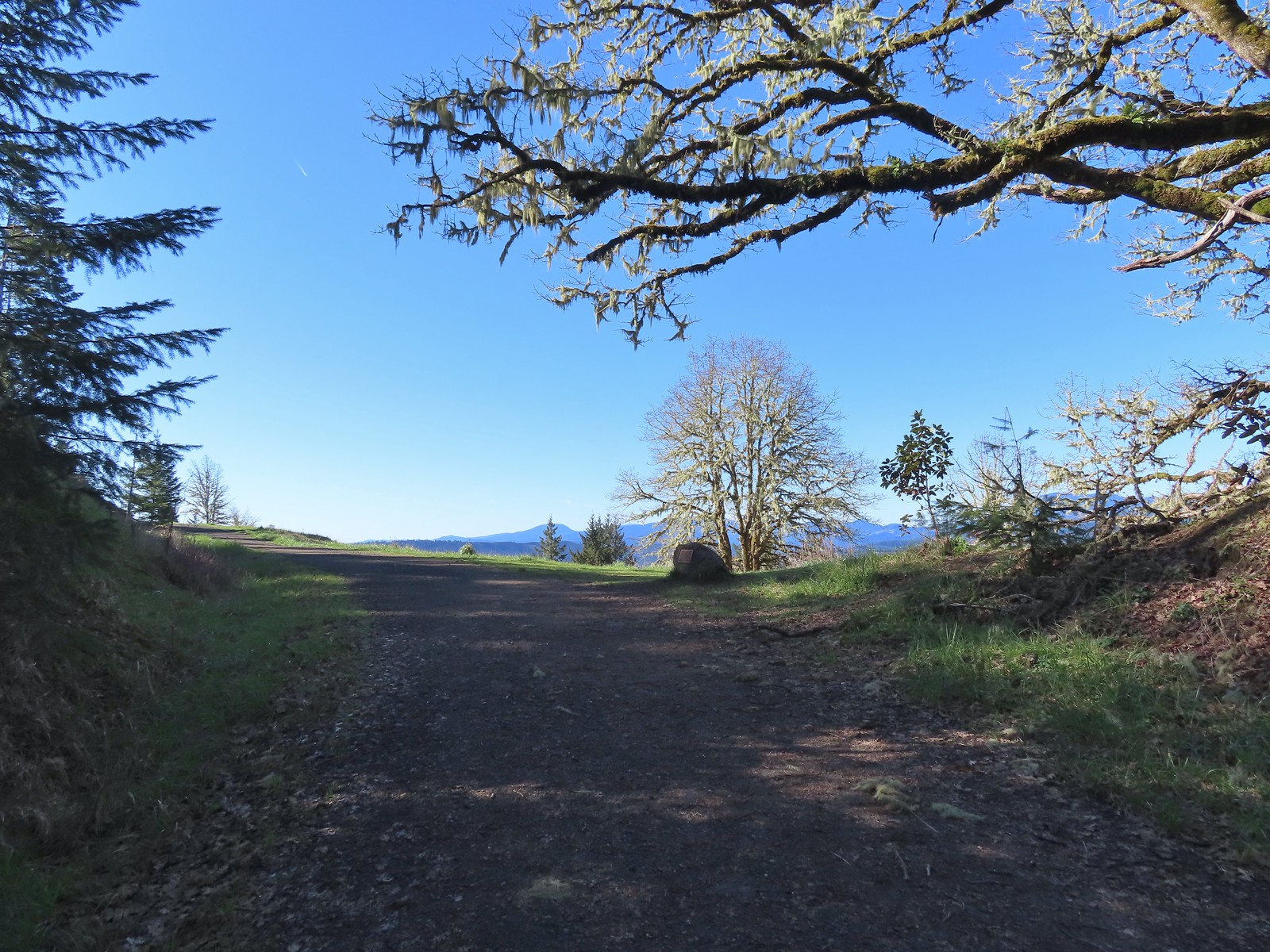
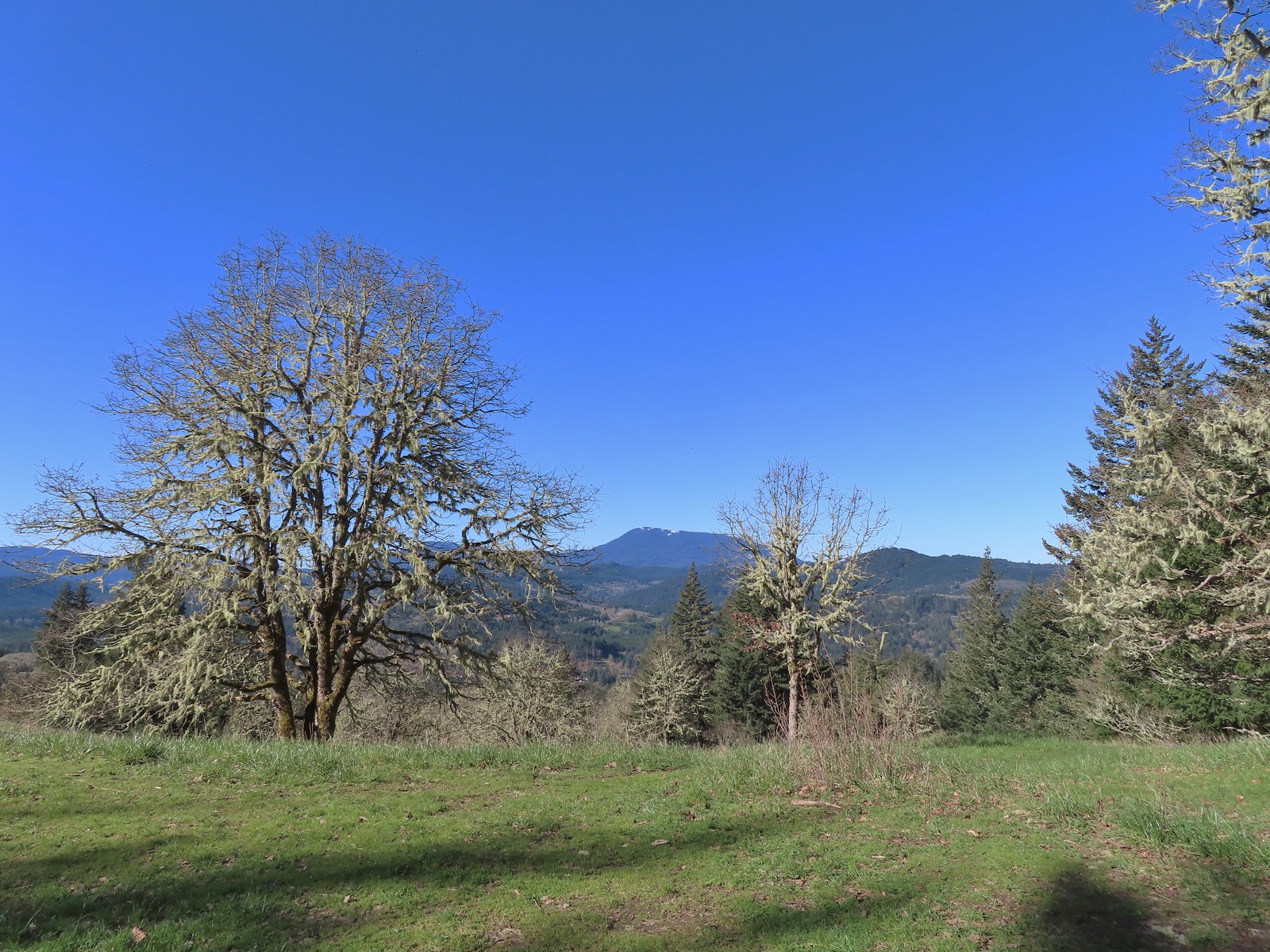
 Mary’s Peak still sporting a decent amount of snow.
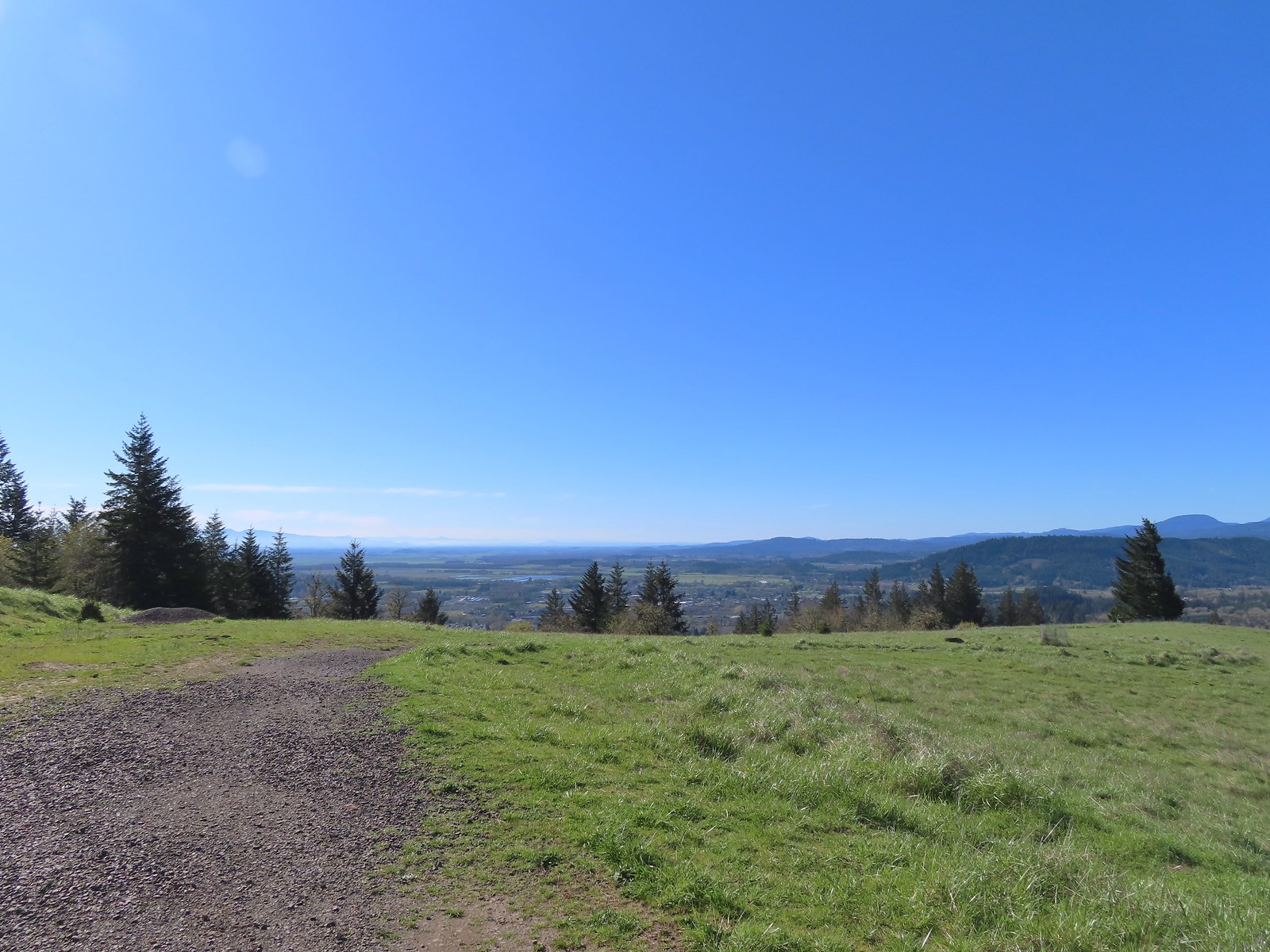 Looking SE towards Corvallis
 Looking West towards the Coast Range.
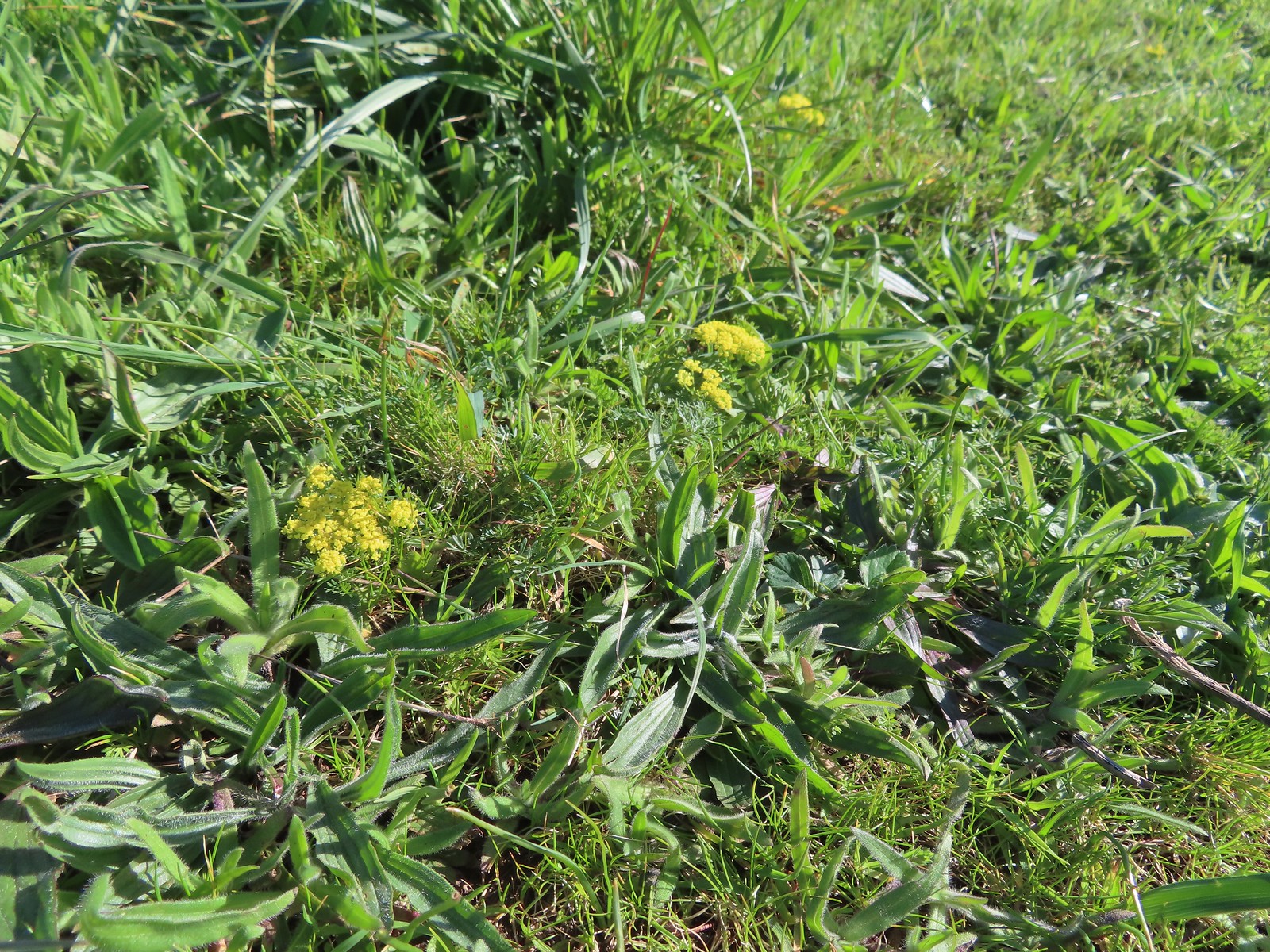 Common lomatium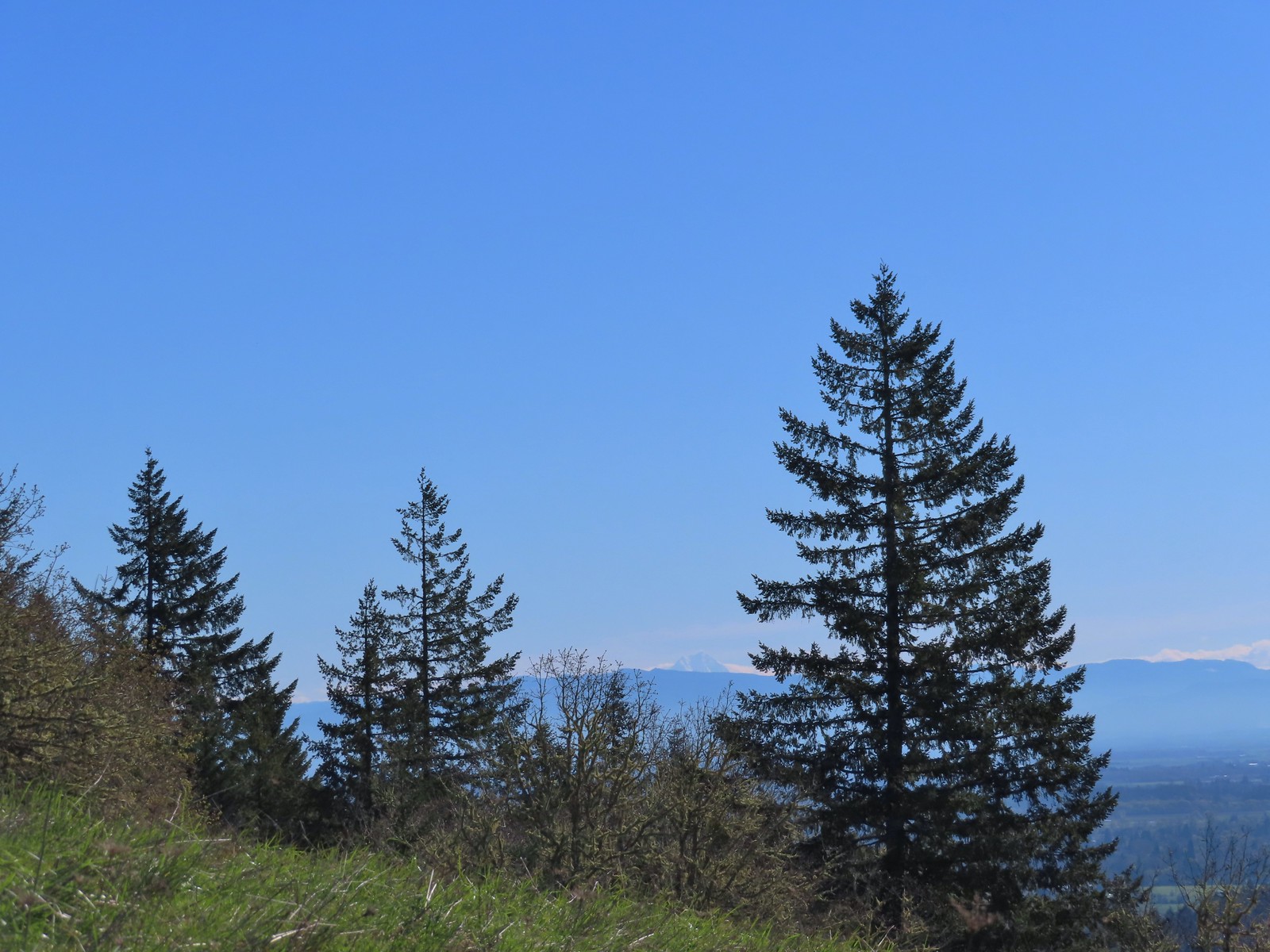
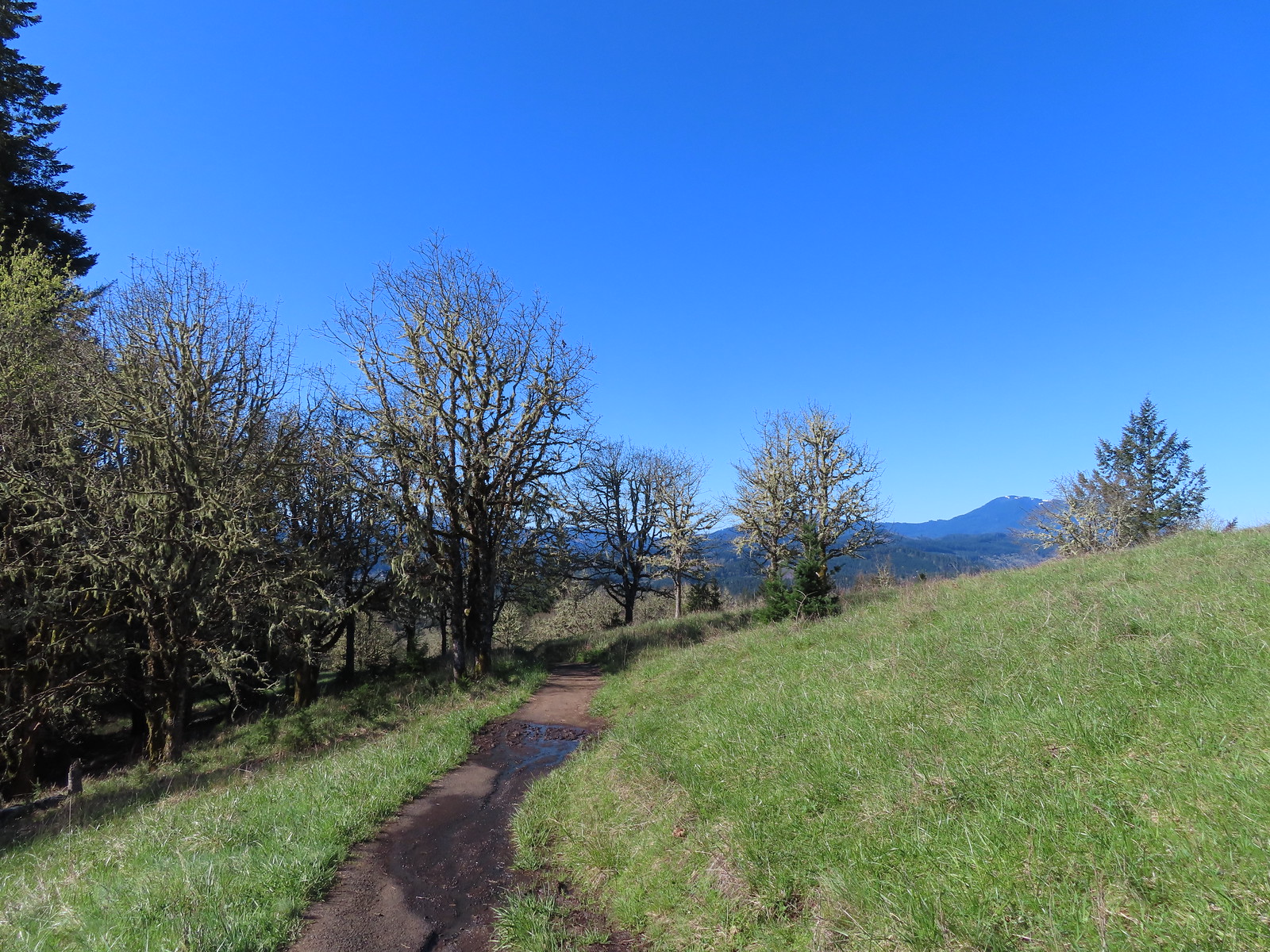
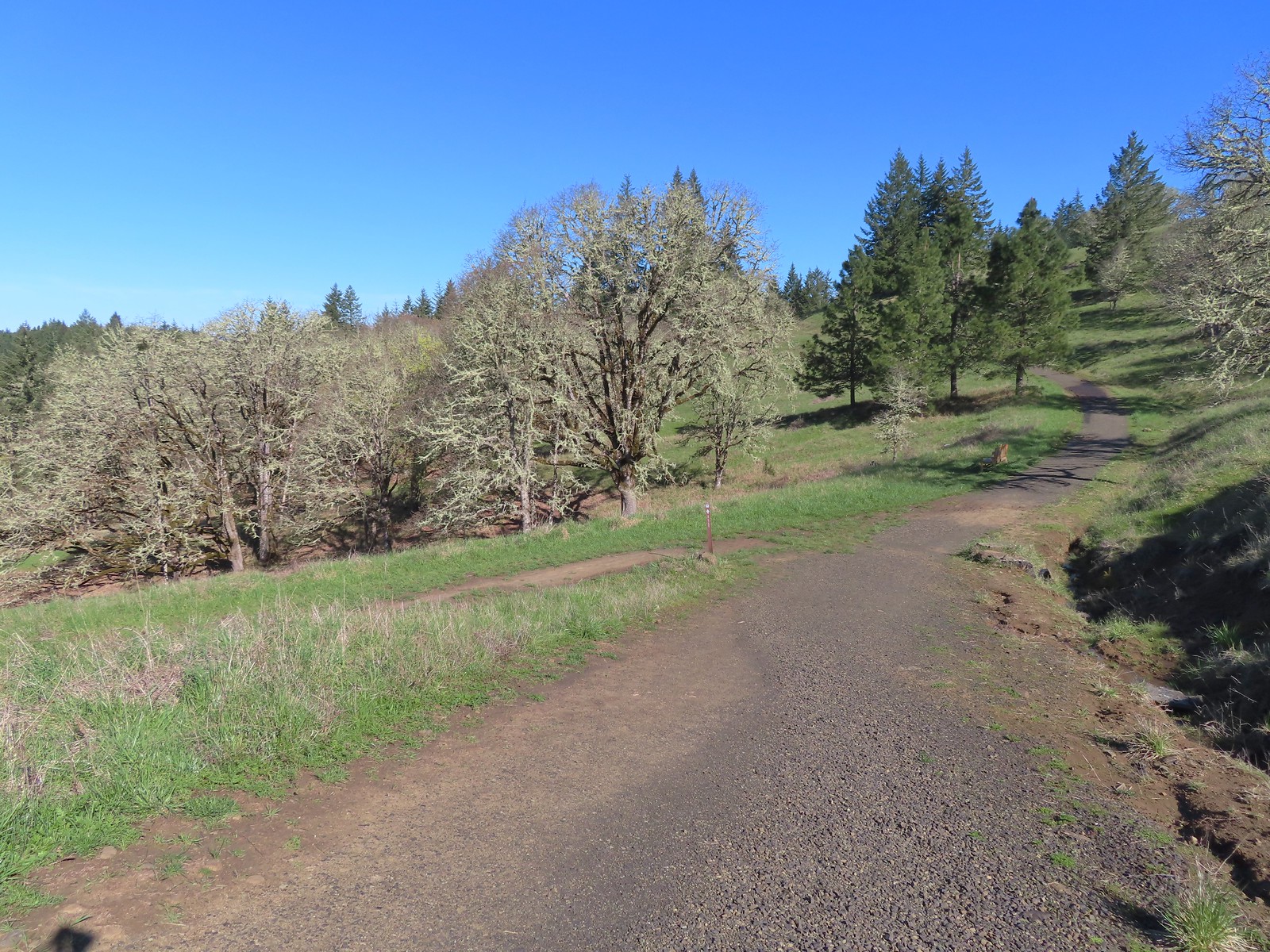 The Mulkey Ridge Trail below to the left arriving at the Allen Throop Loop.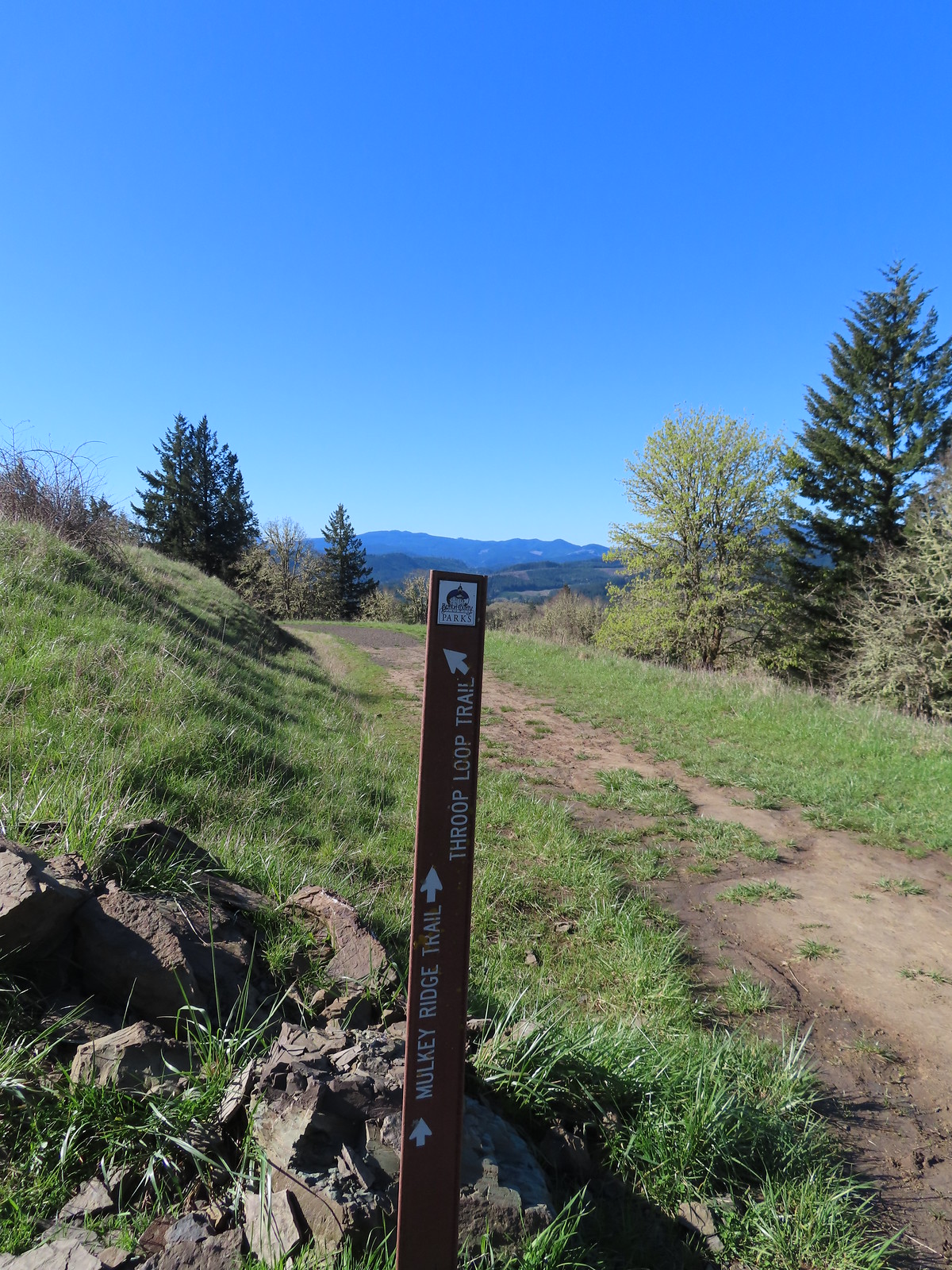
 Strawberry
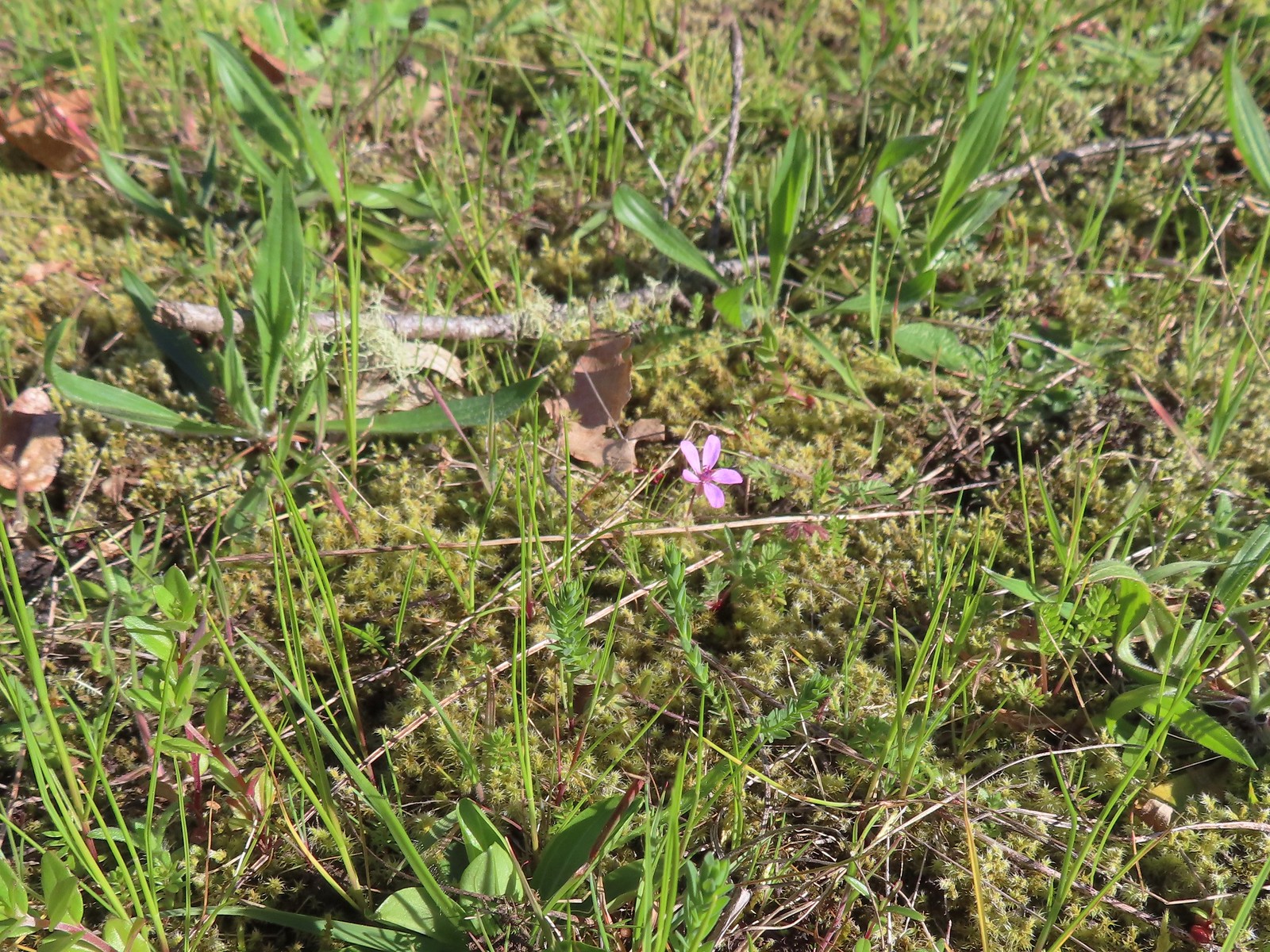 Redstem storksbill
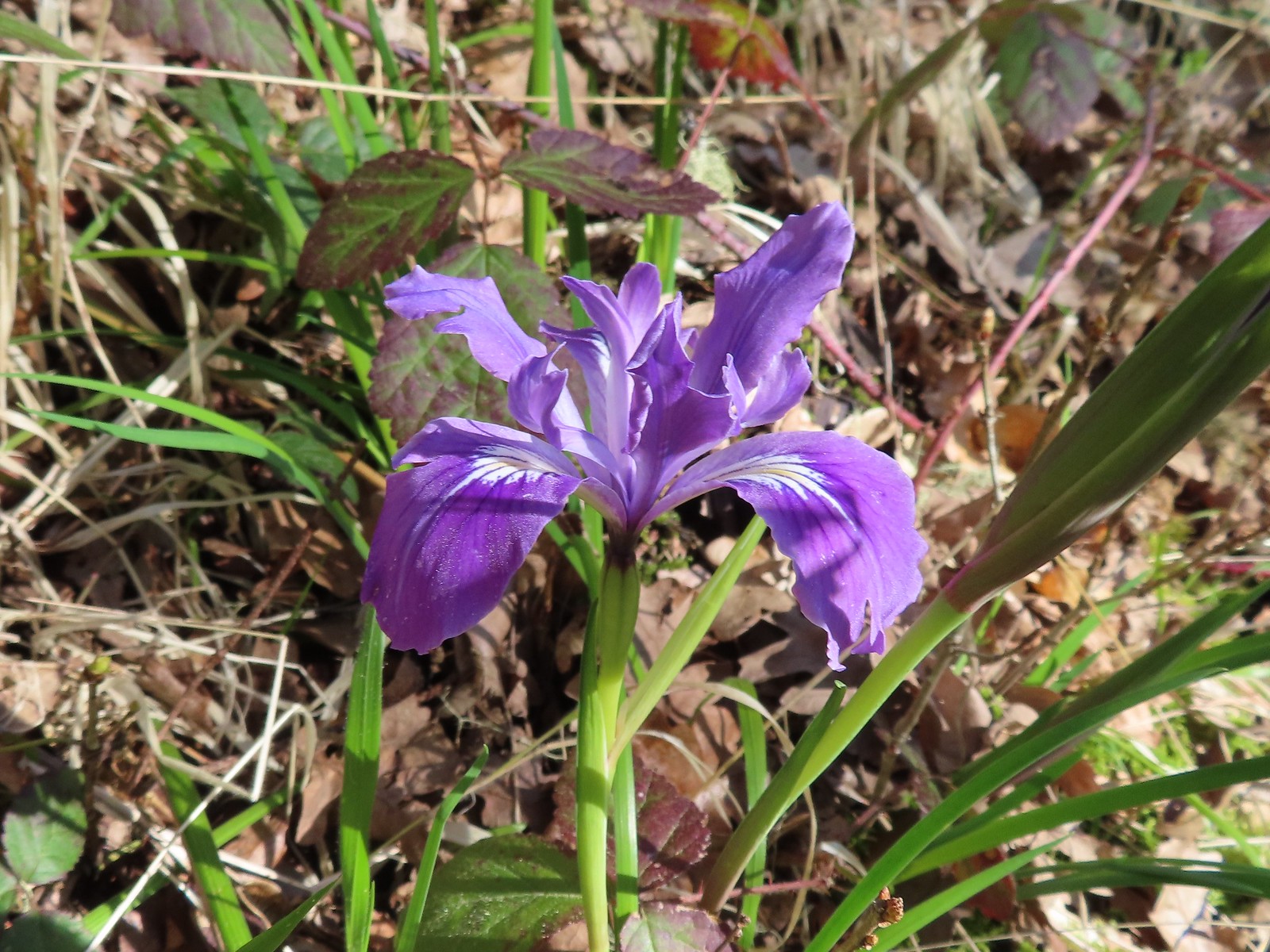 Wild iris
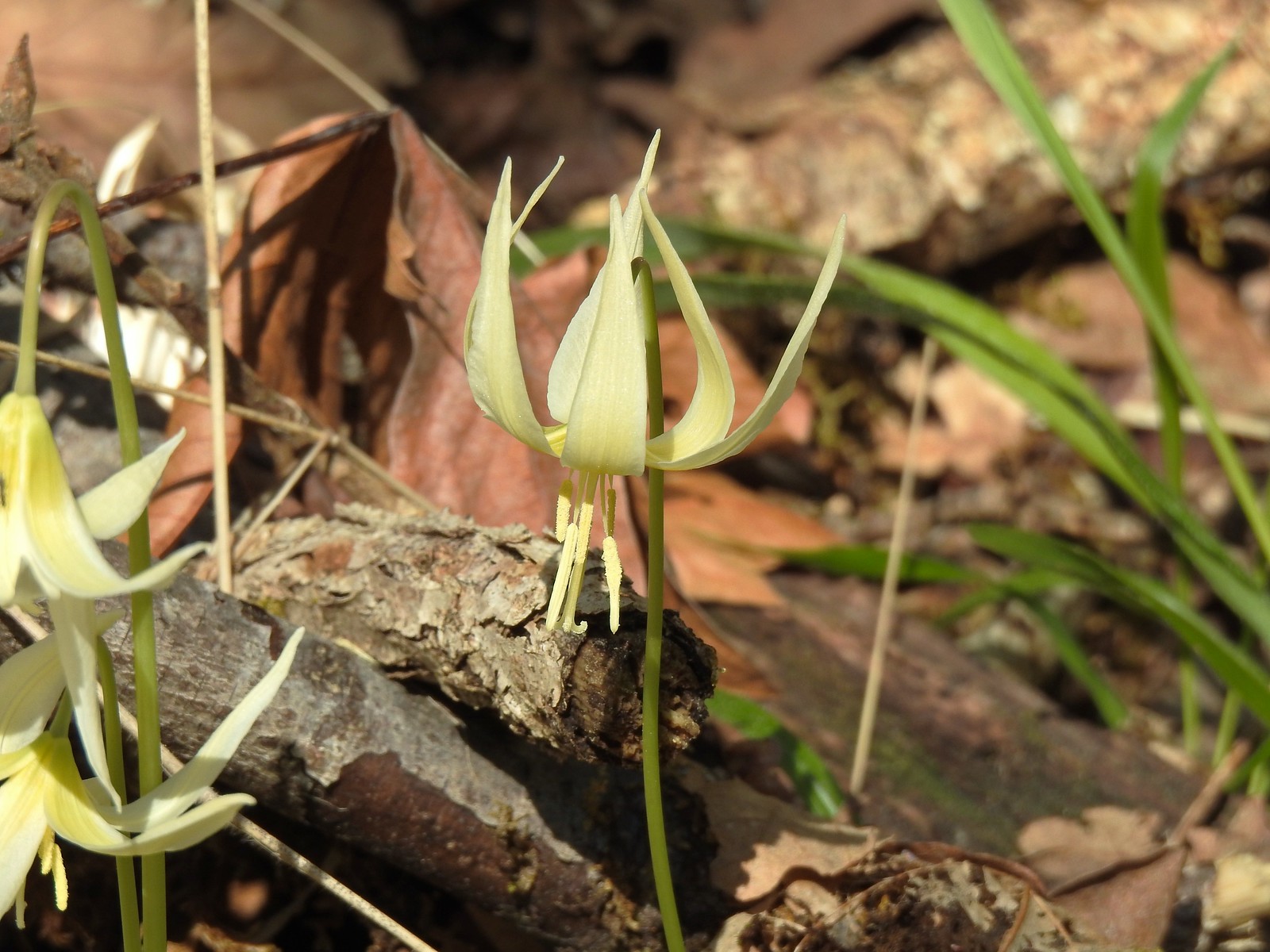 More fawn lilies
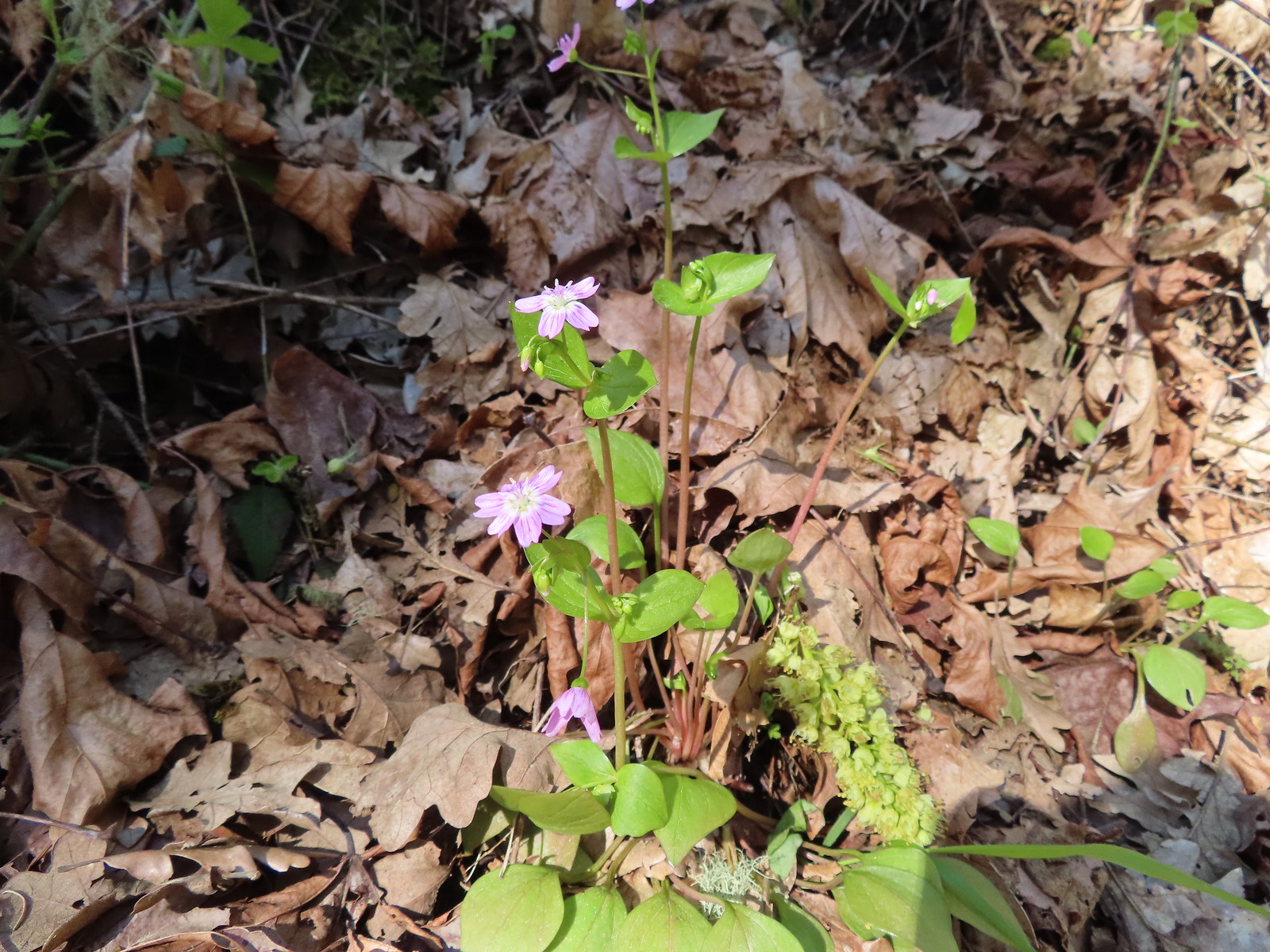 Candy flower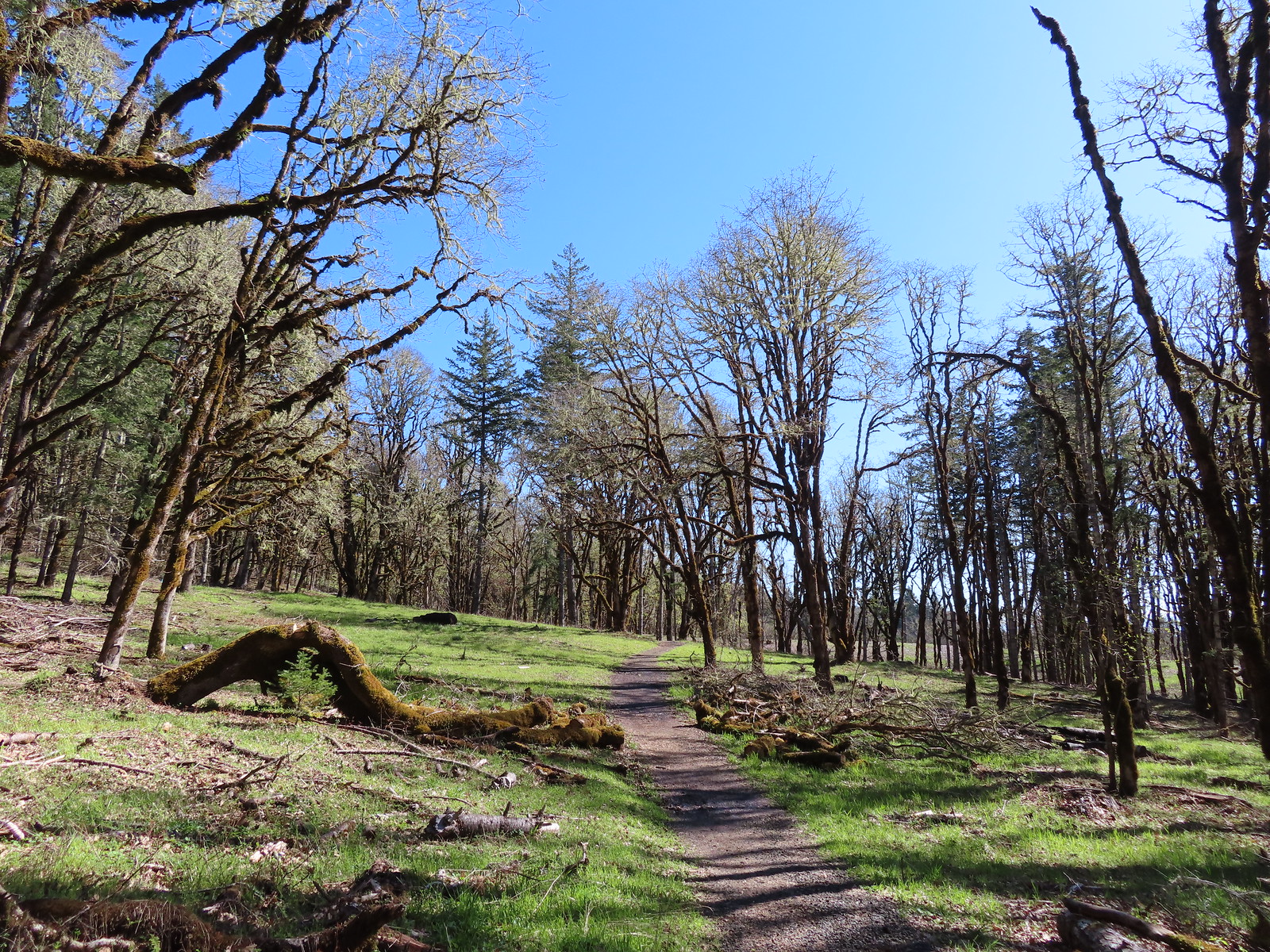
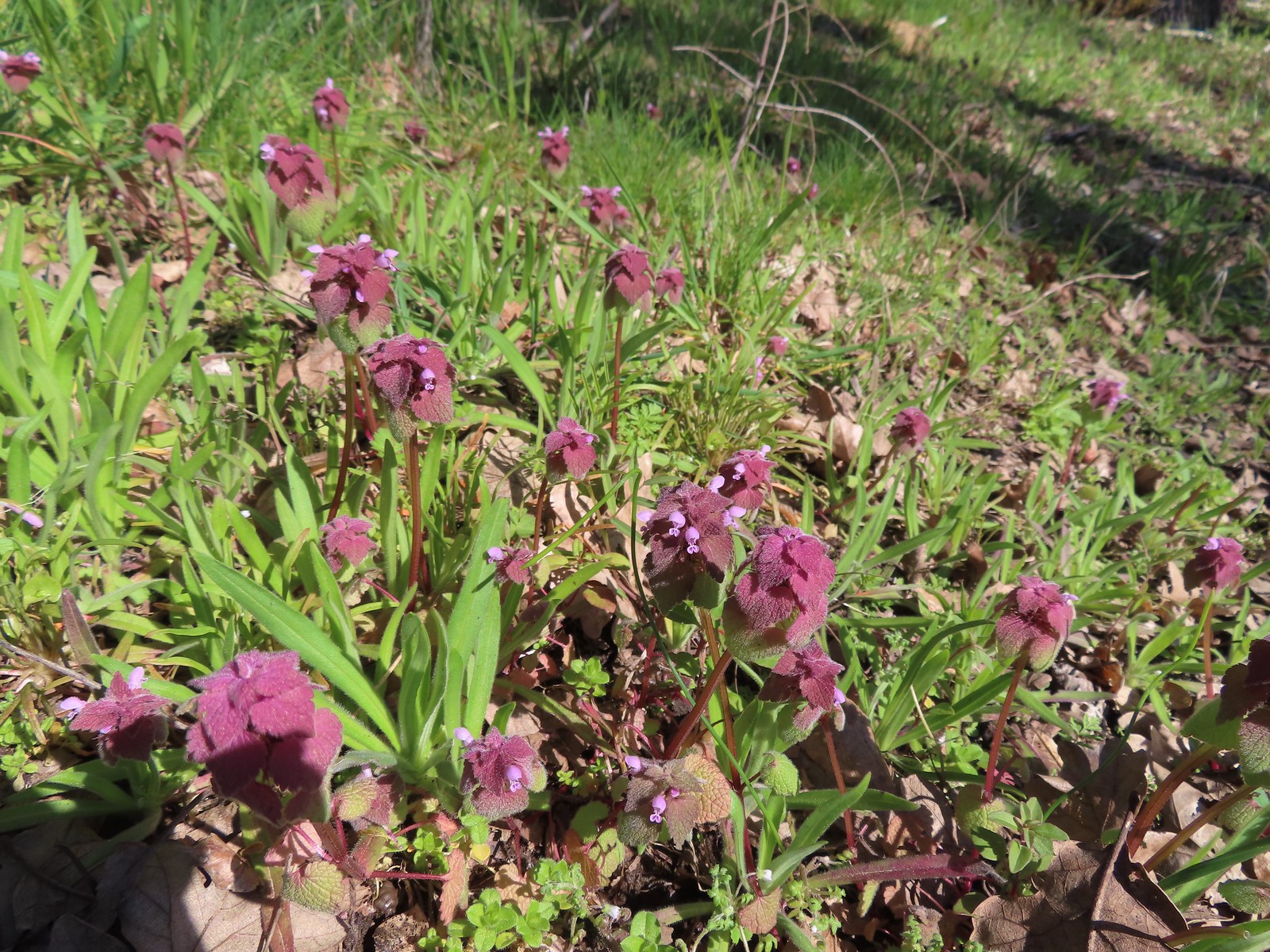 Purple deadnettle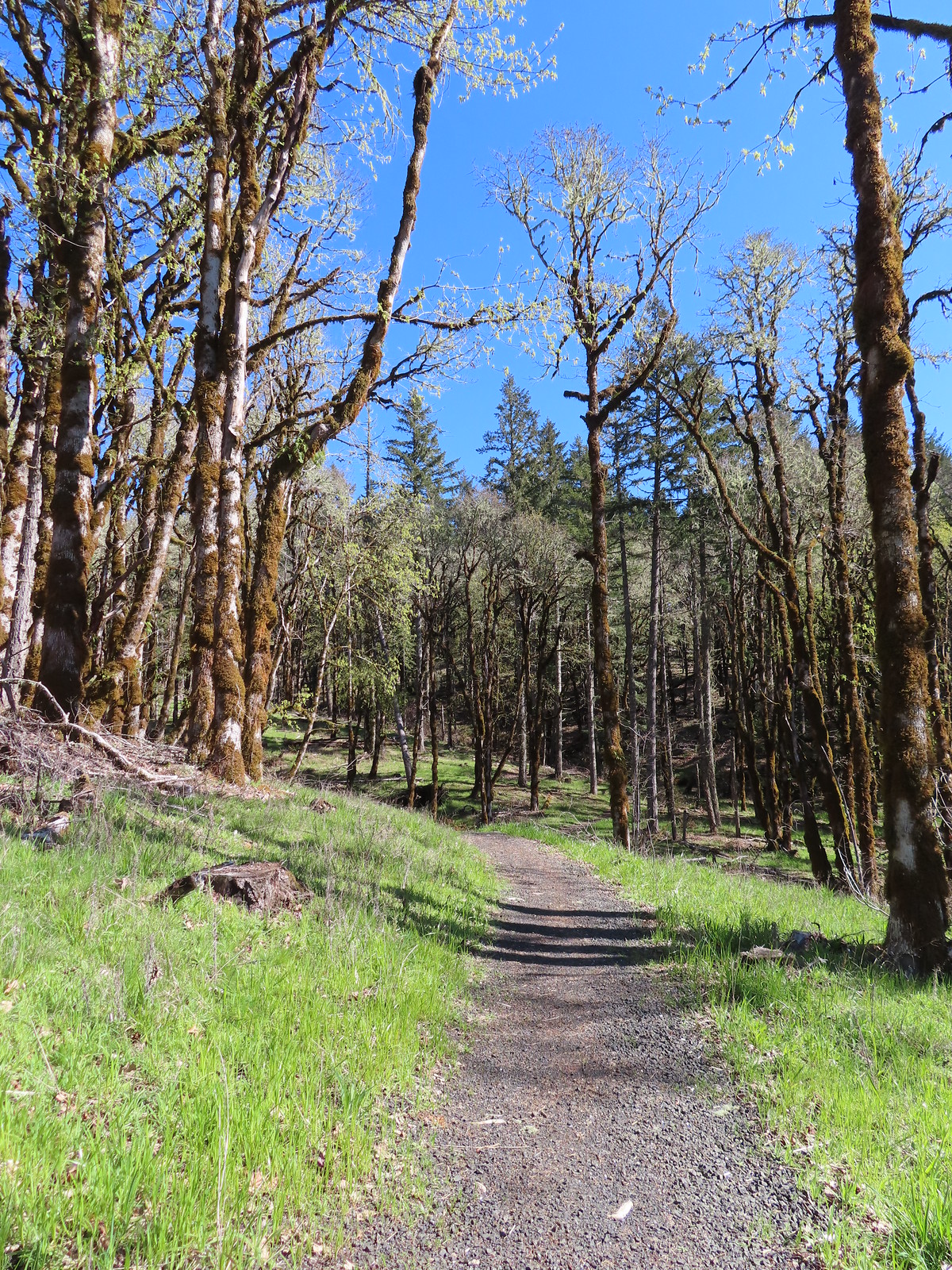
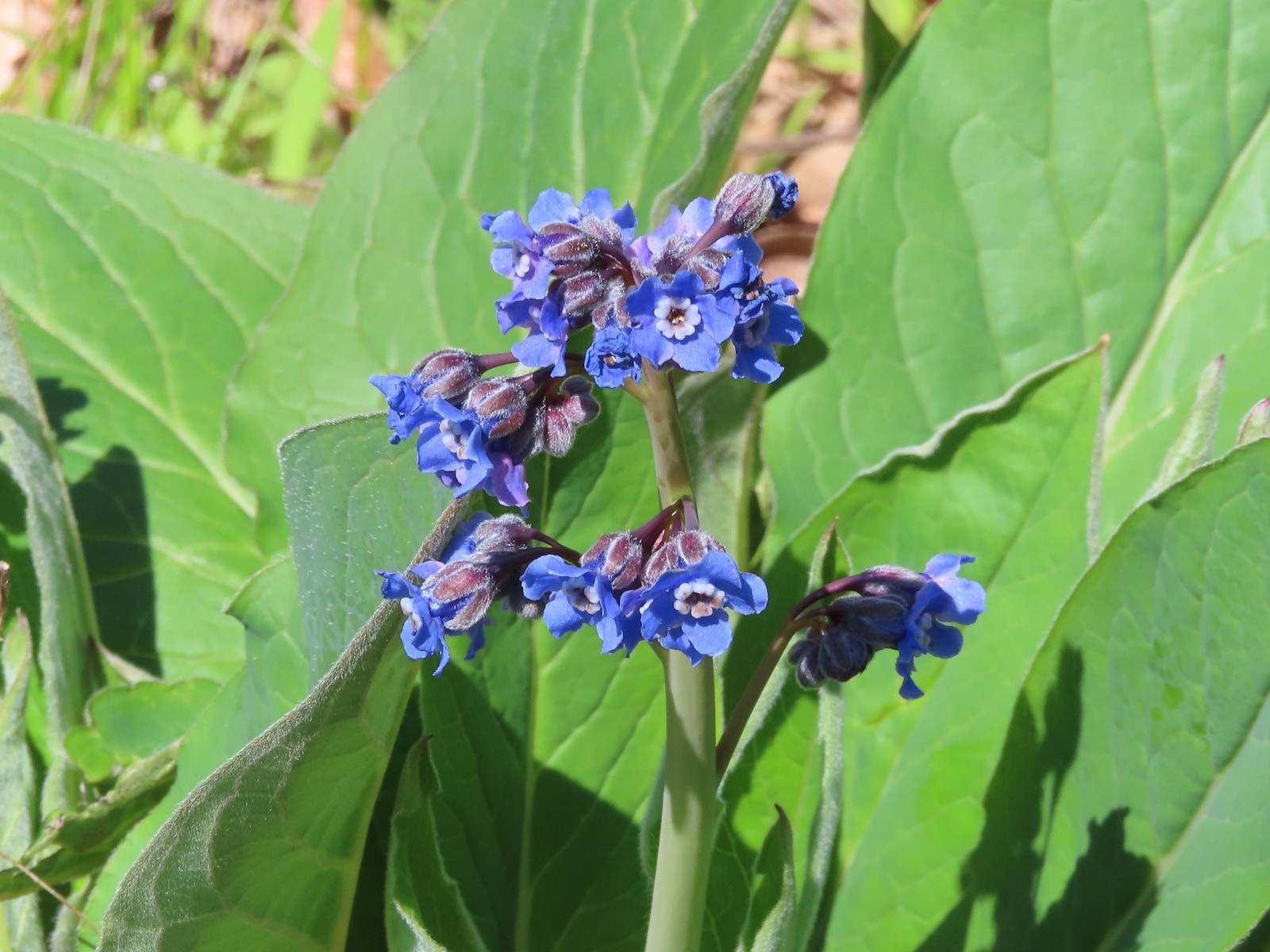 Pacific hound’s tongue
 Colorful turkey tails
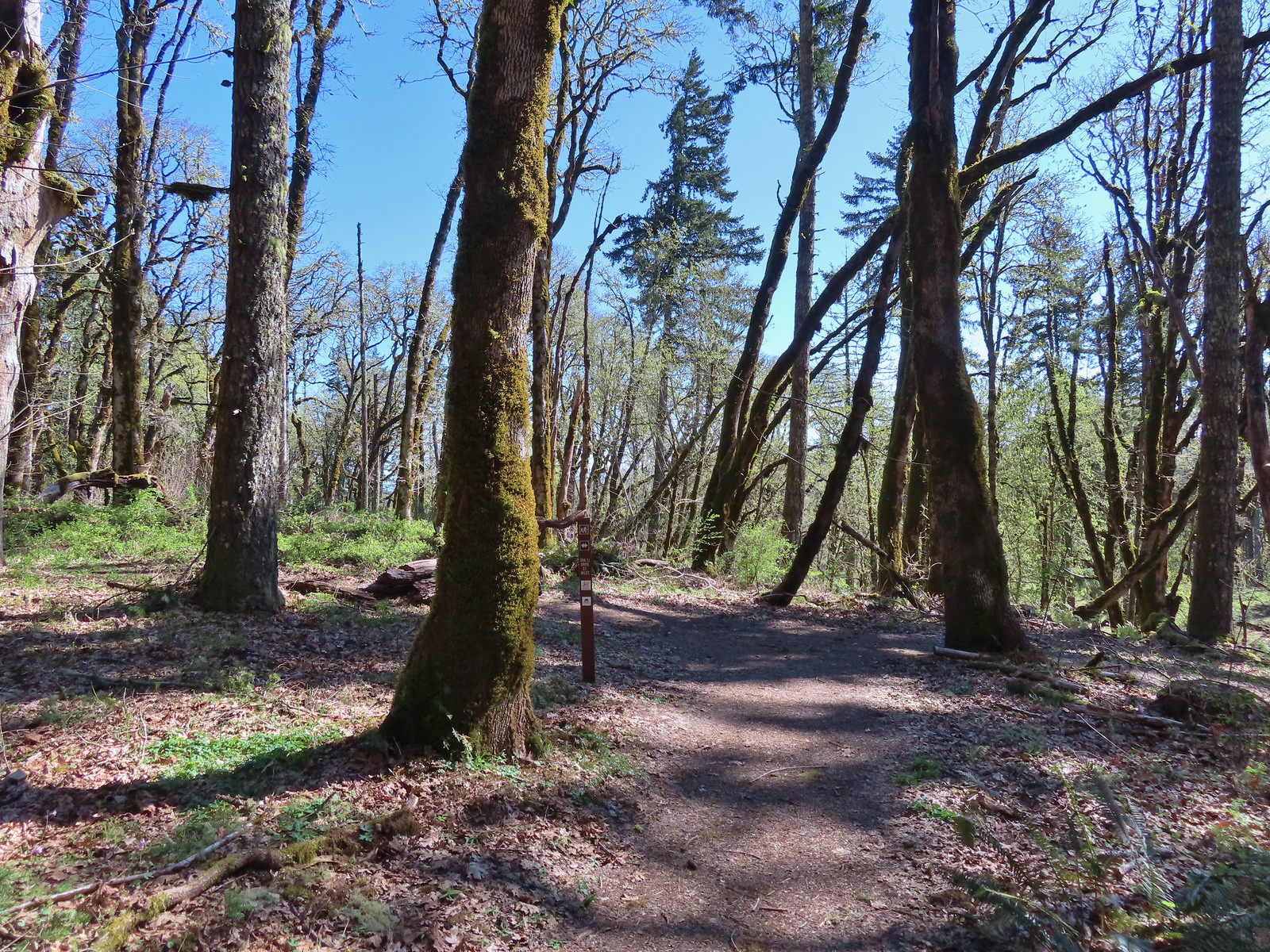 The trail splits briefly along a ridge marking what used to be the end of trail from the Oak Creek Trailhead.
 Dark-eyed junco
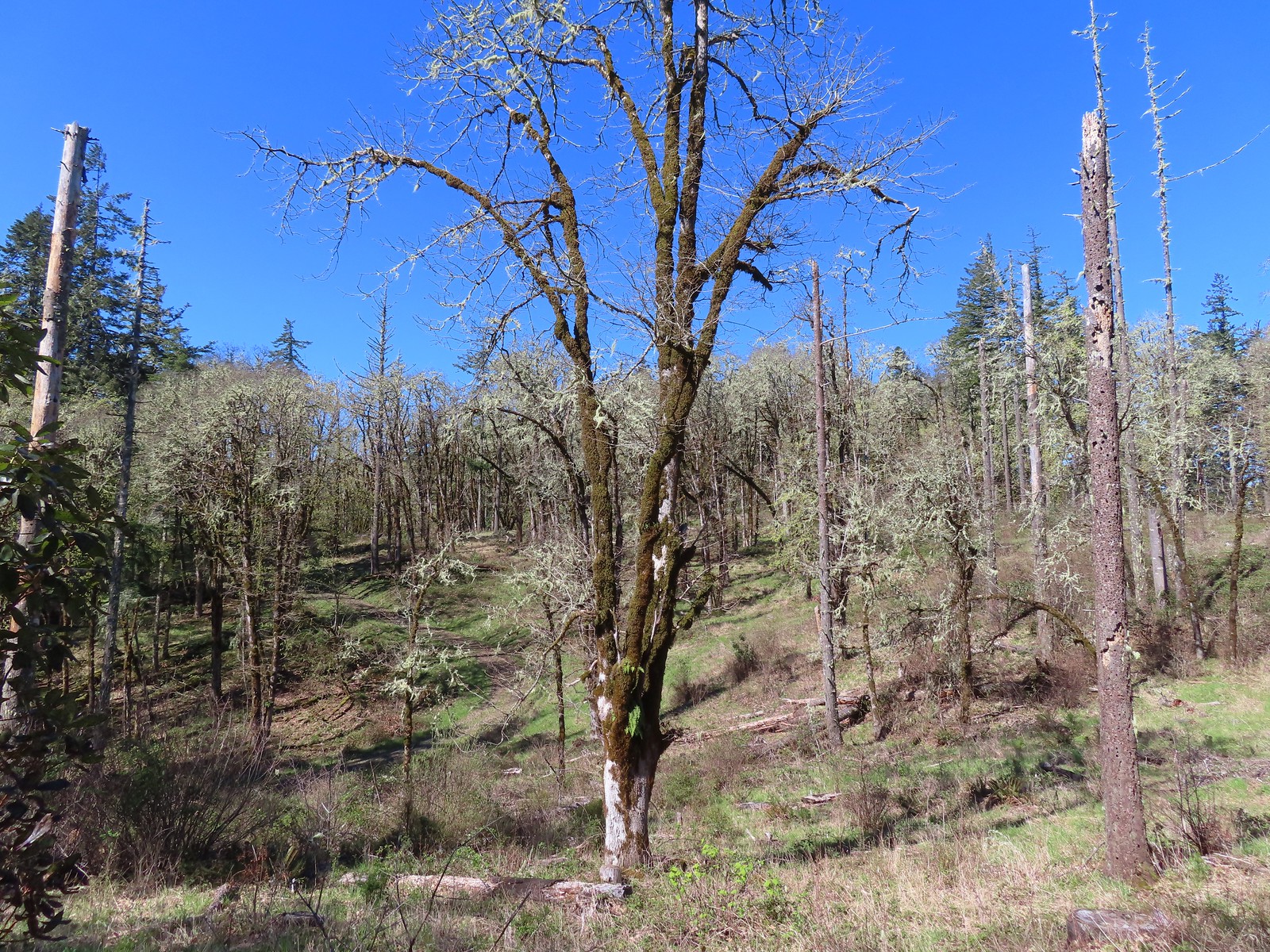 There were a pair of acorn woodpeckers in this area that we stopped to watch.
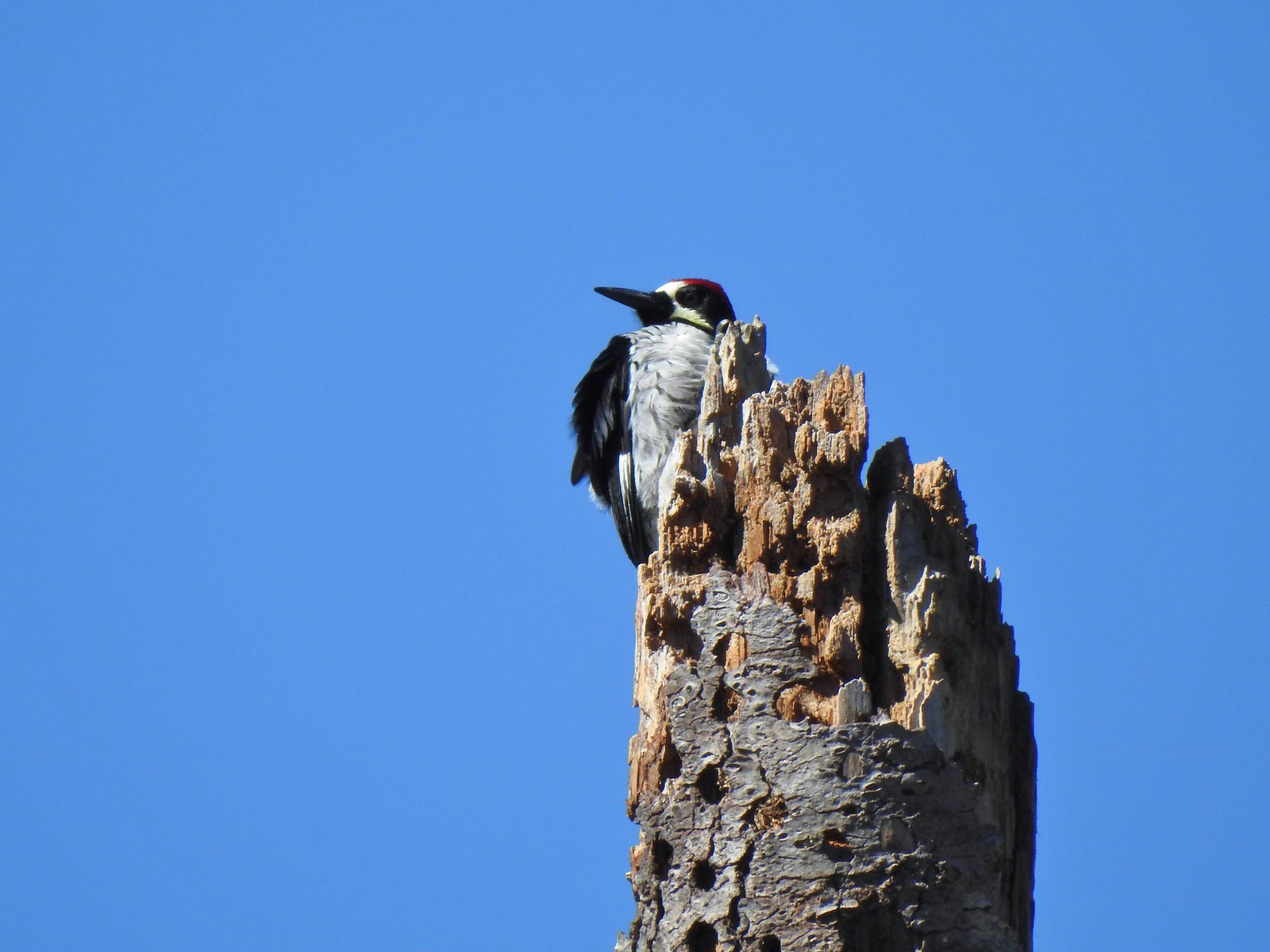 This tree was full of holes that the woodpeckers use to store their acorns in.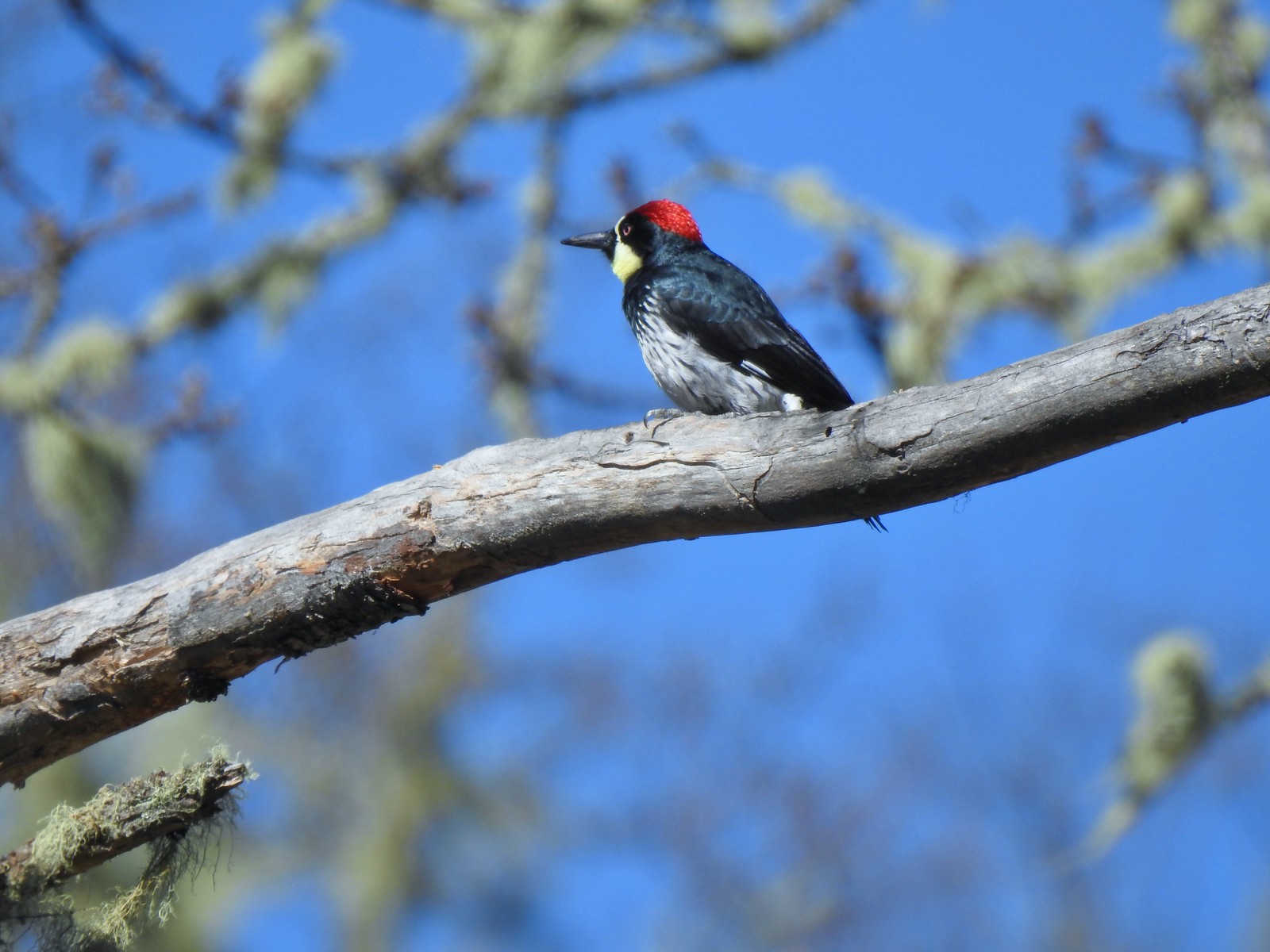
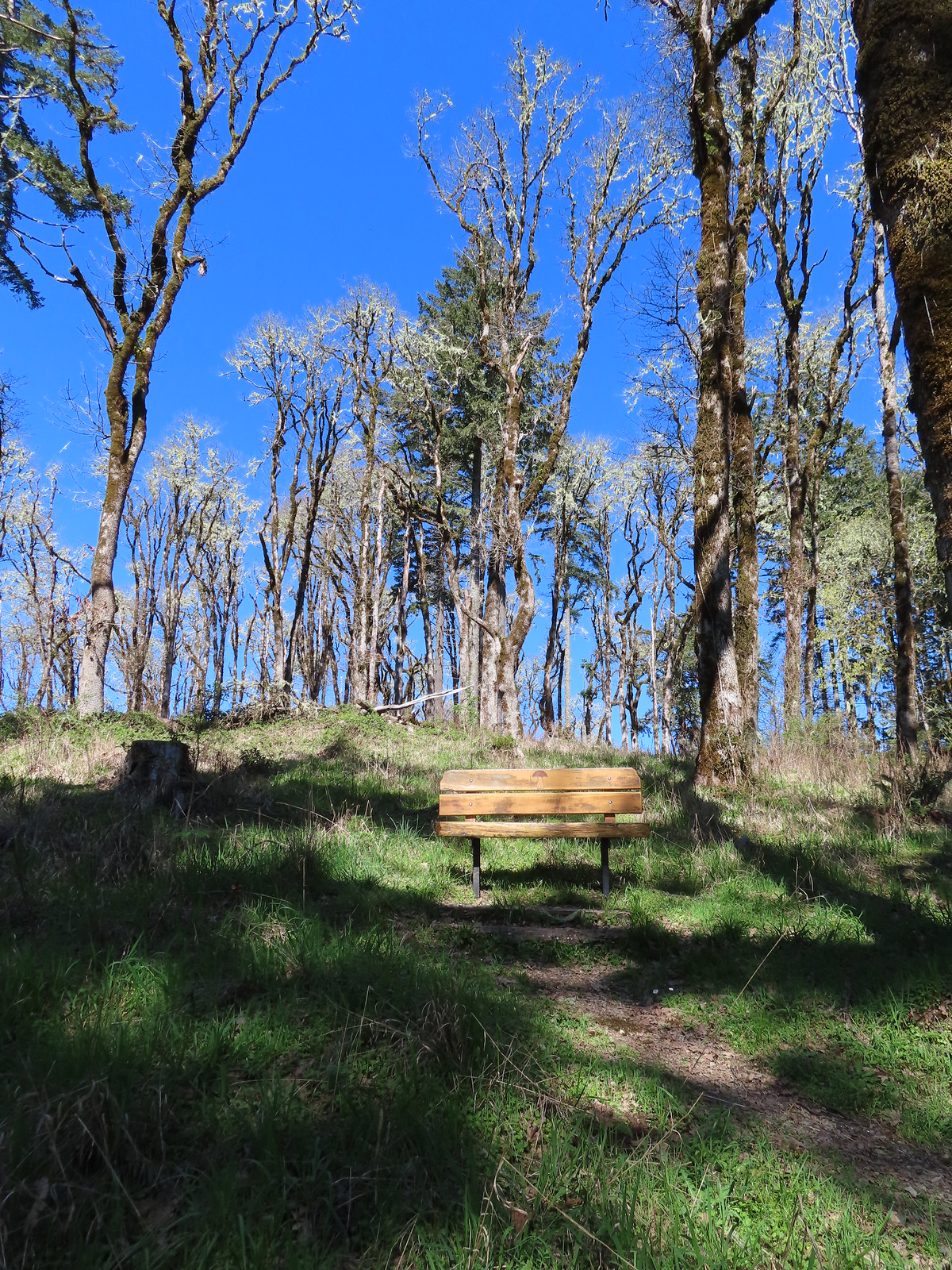 One of several benches along the trail.
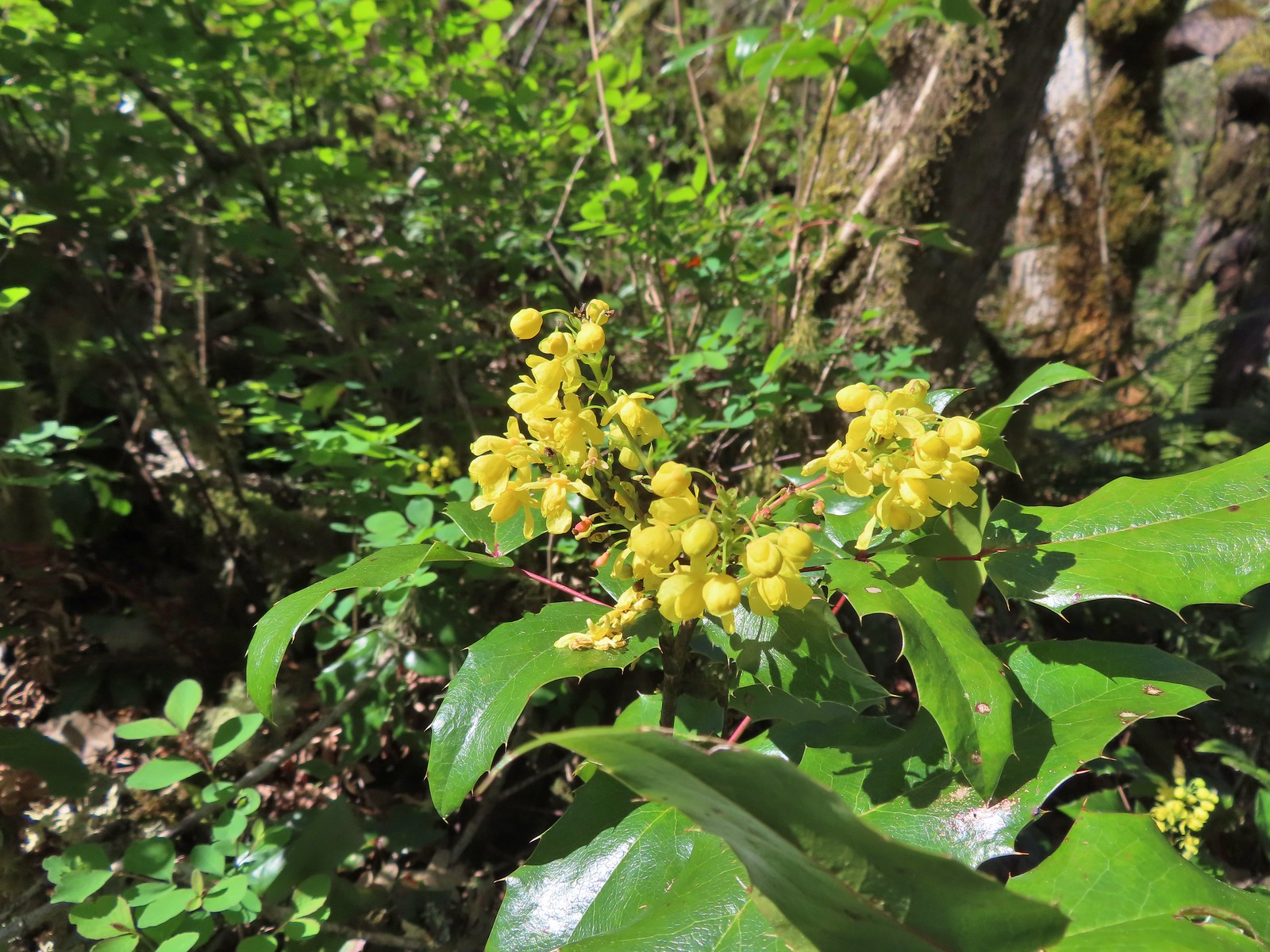 Oregon grape
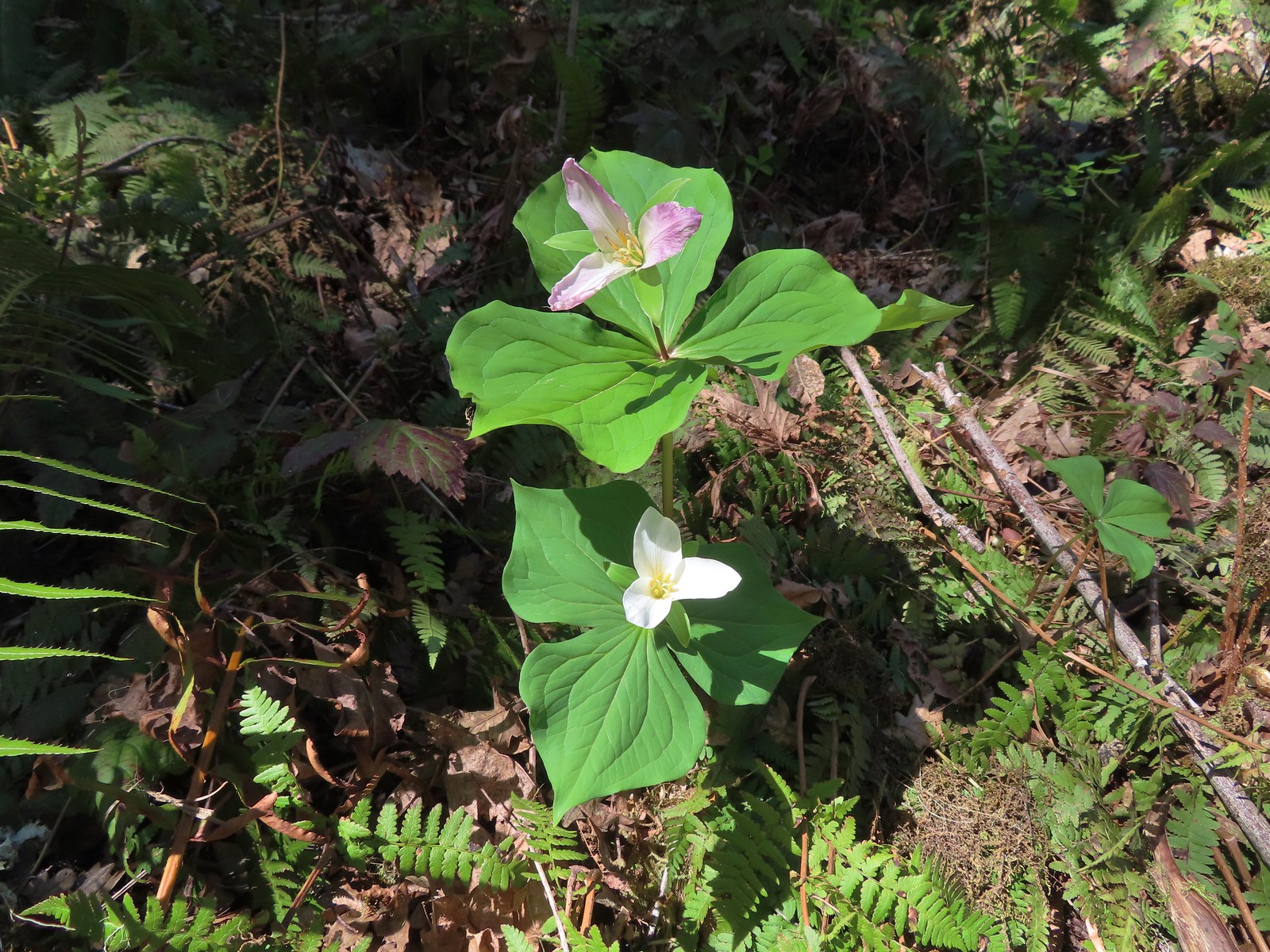 Trillium
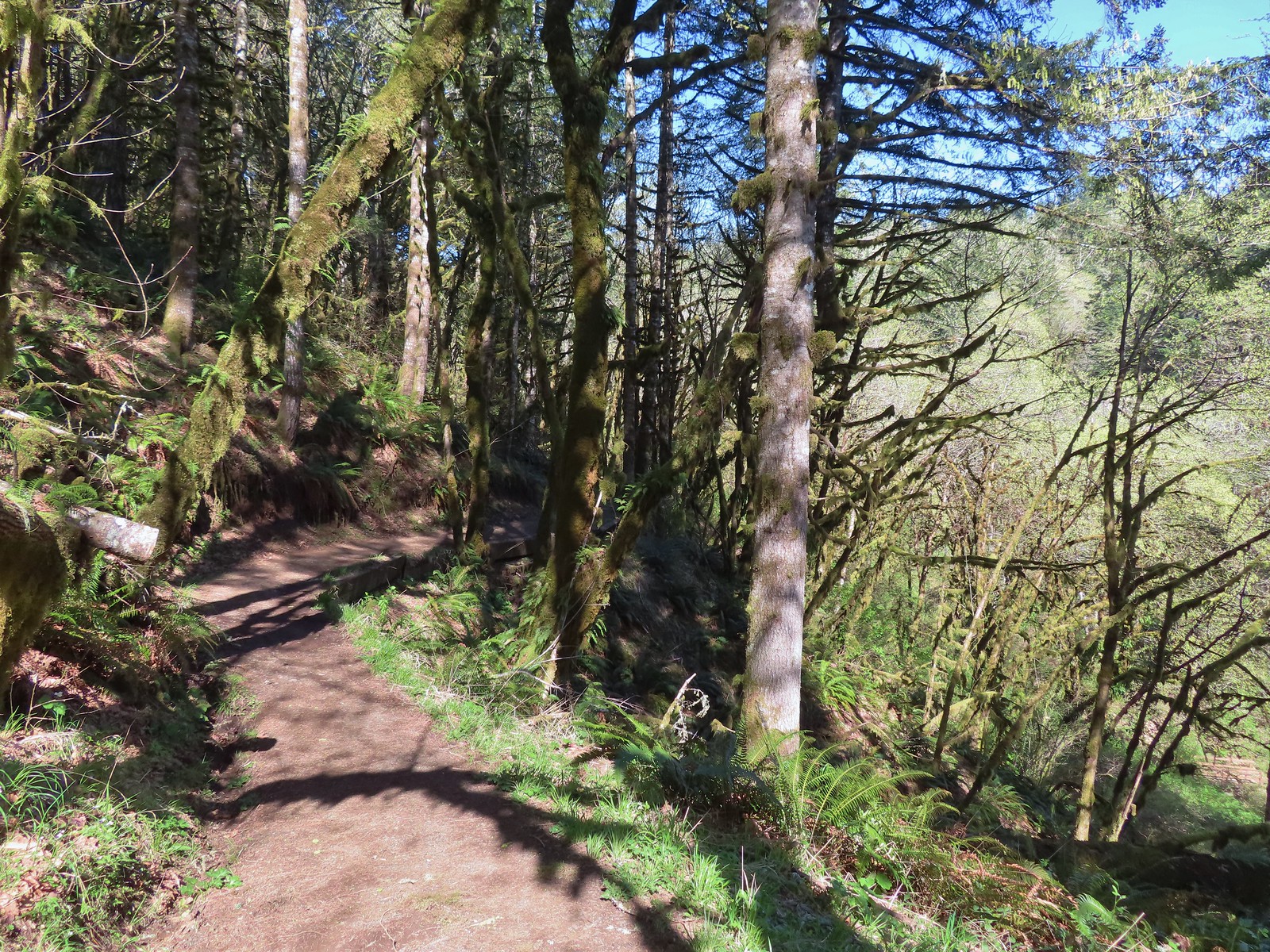 The Mulkey Ridge Trail descending to Mulkey Creek. (Note the footbridge in the lower right-hand corner.)
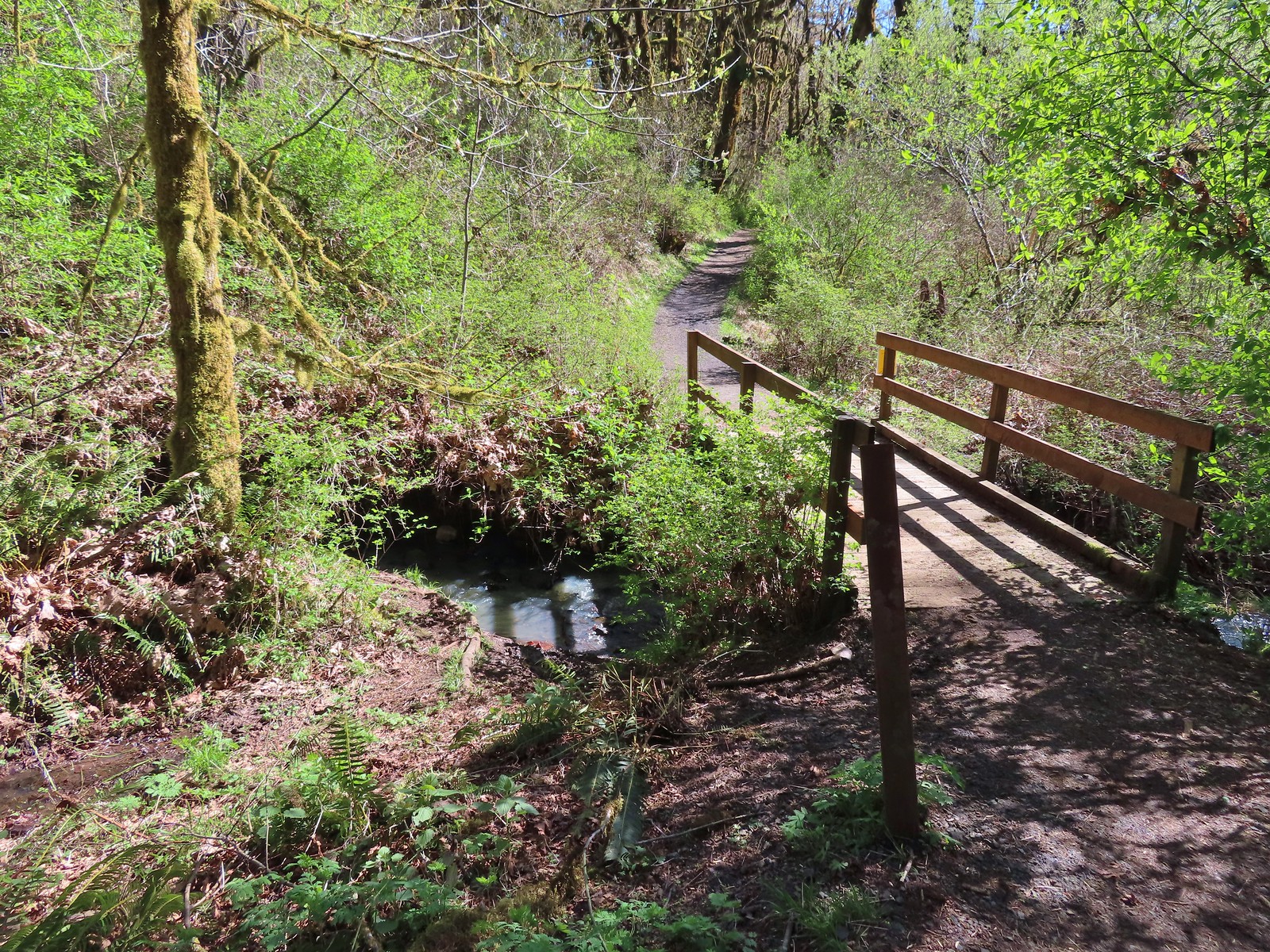 Footbridge over Mulkey Creek.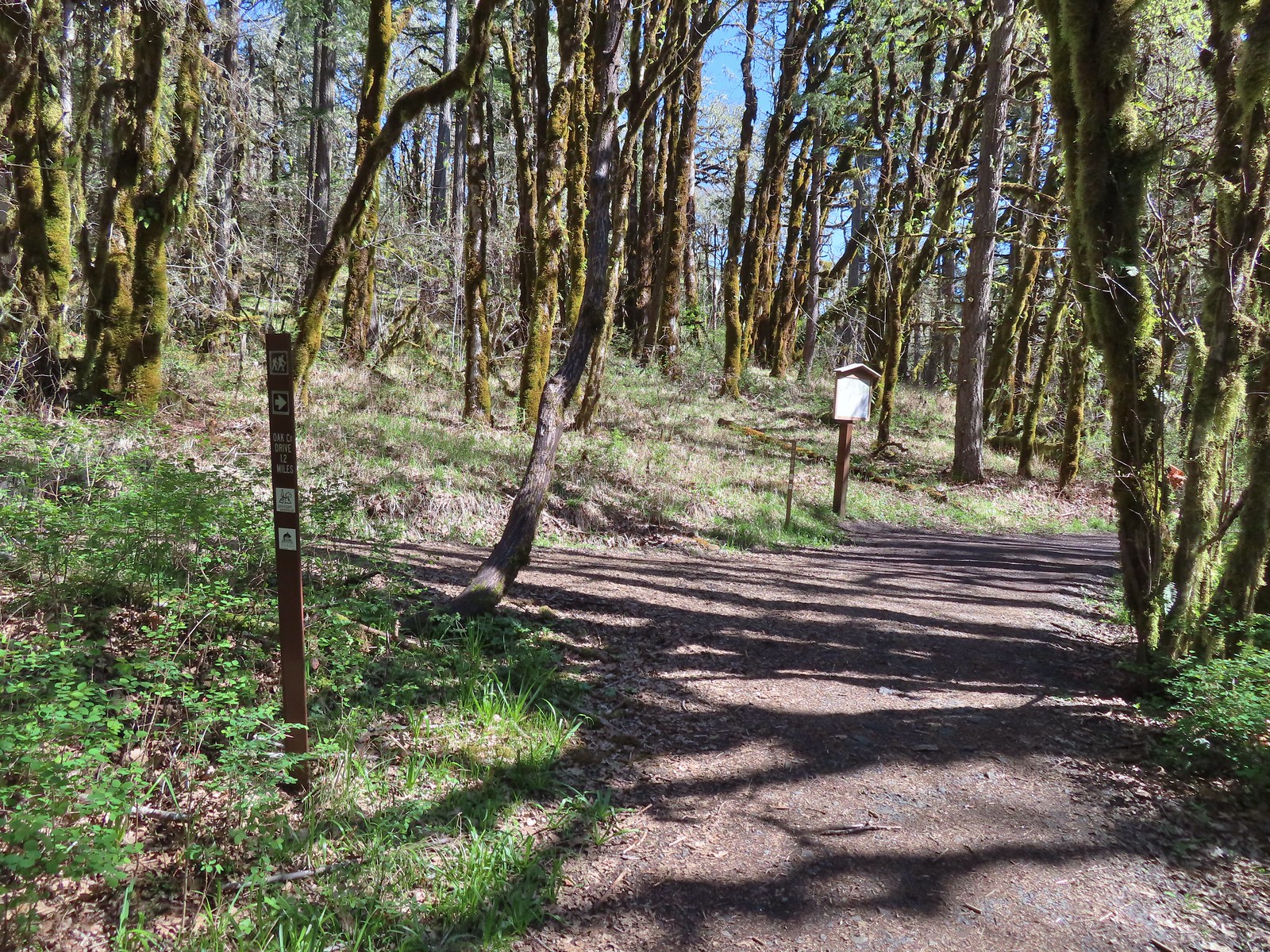
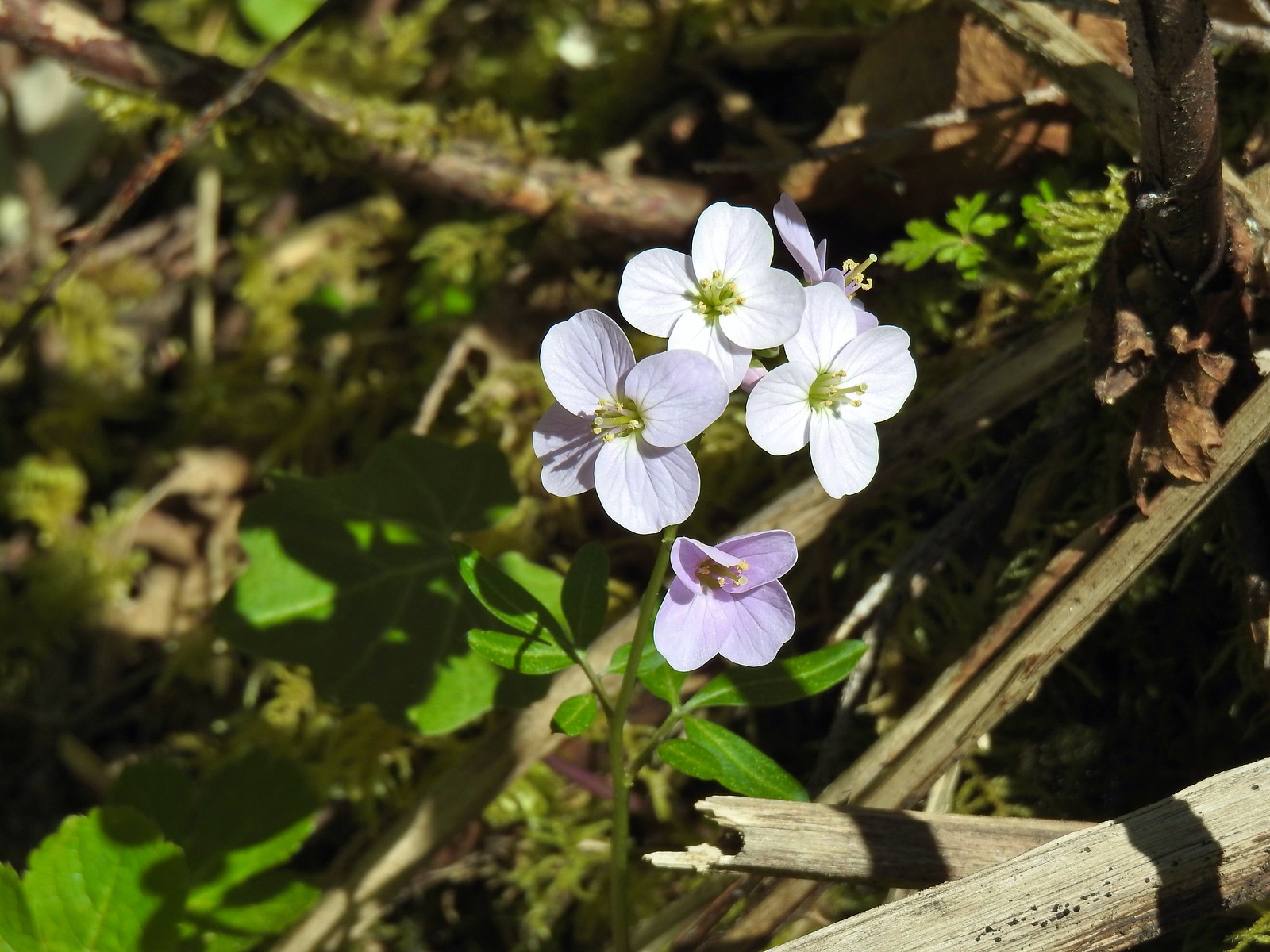 Toothwort
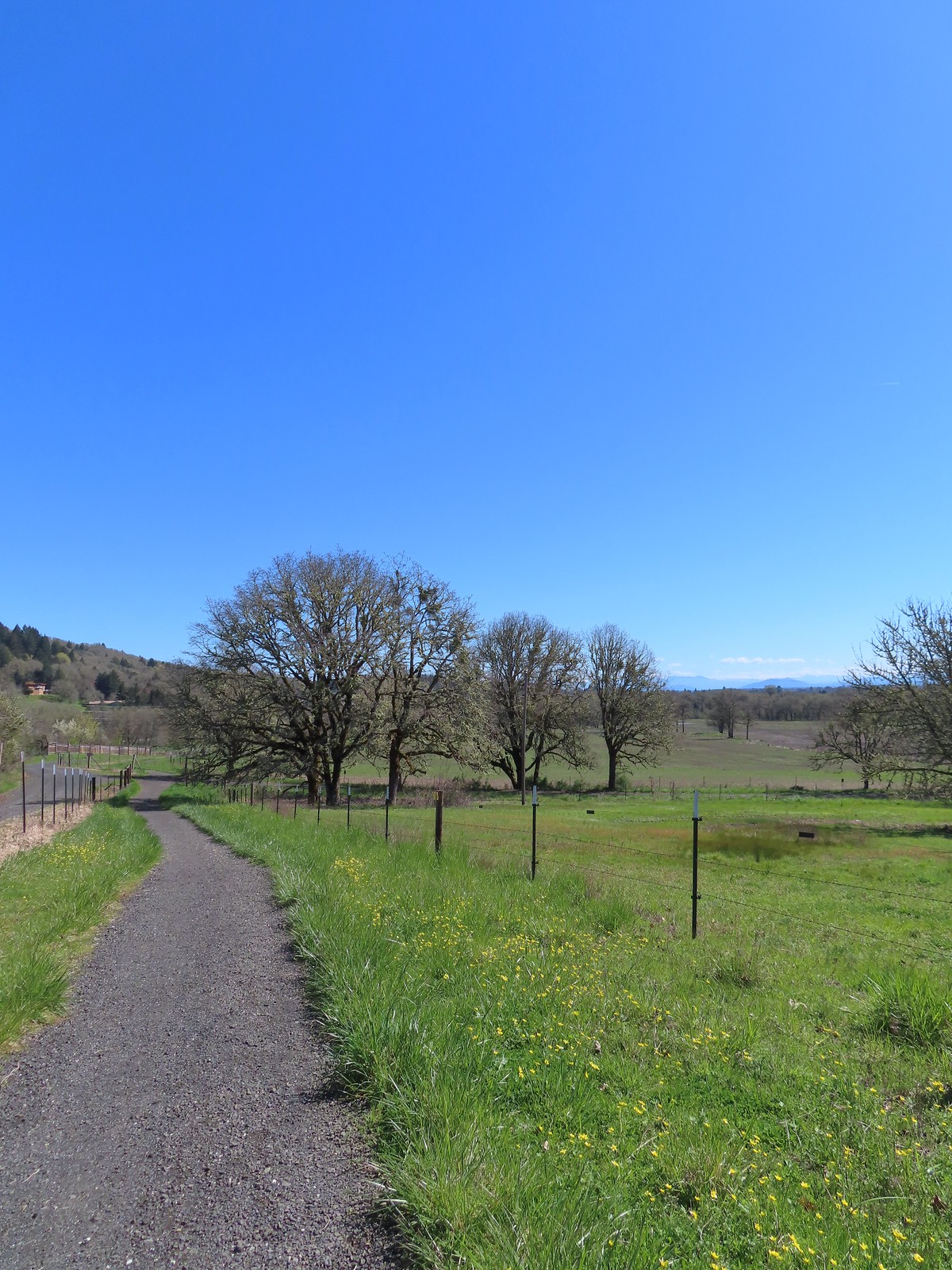 Western buttercups along the trail on our way back.
 wanderingyuncks