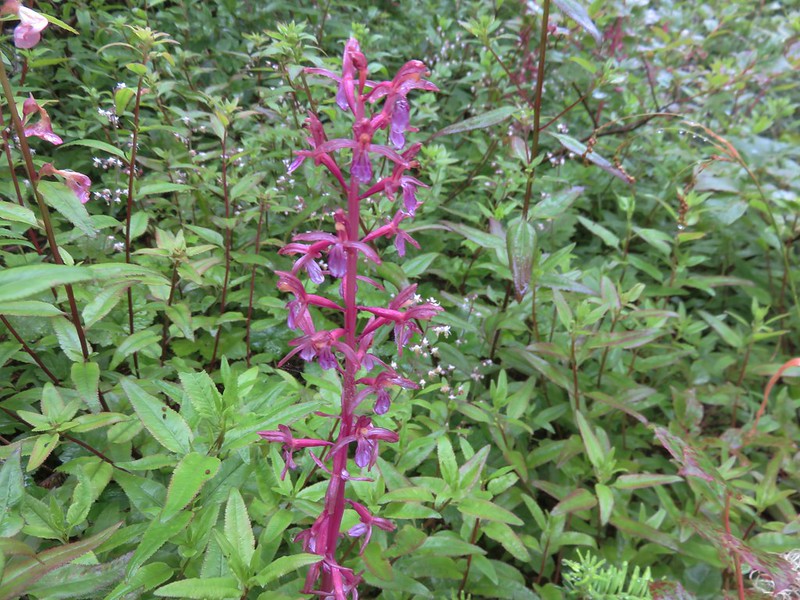
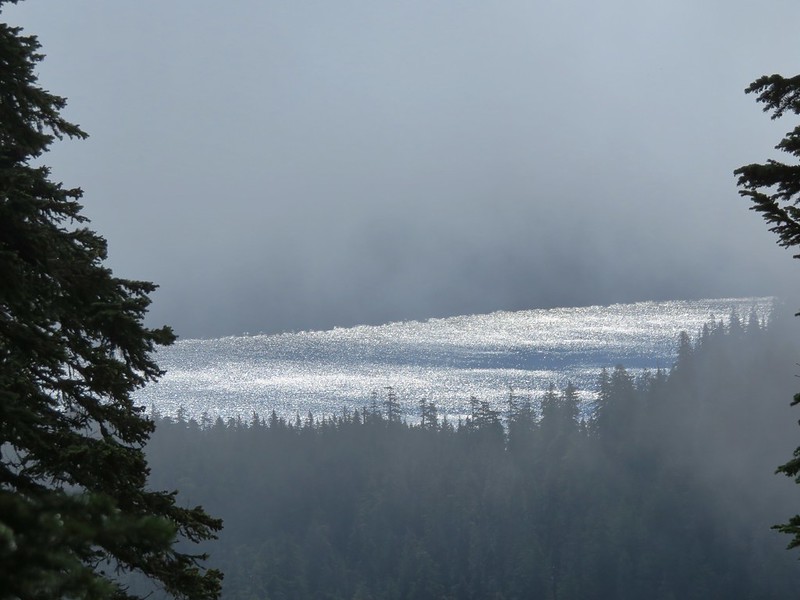
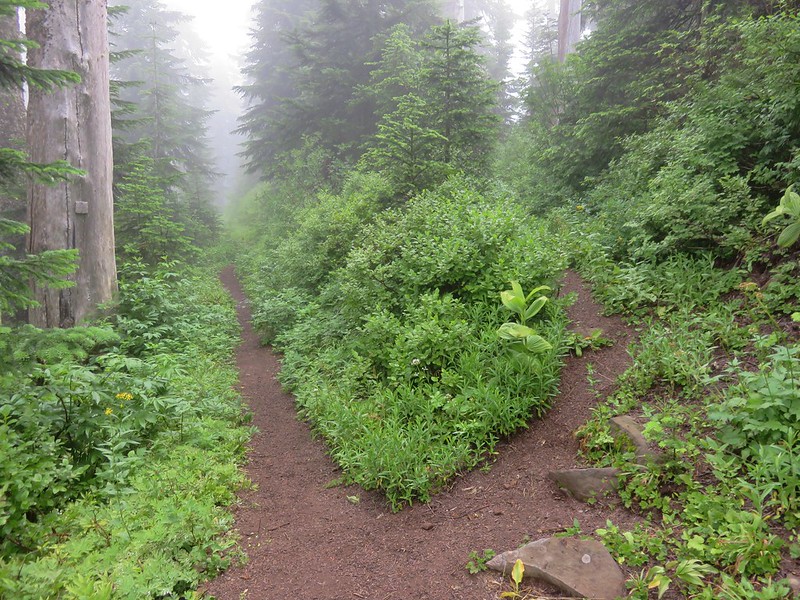
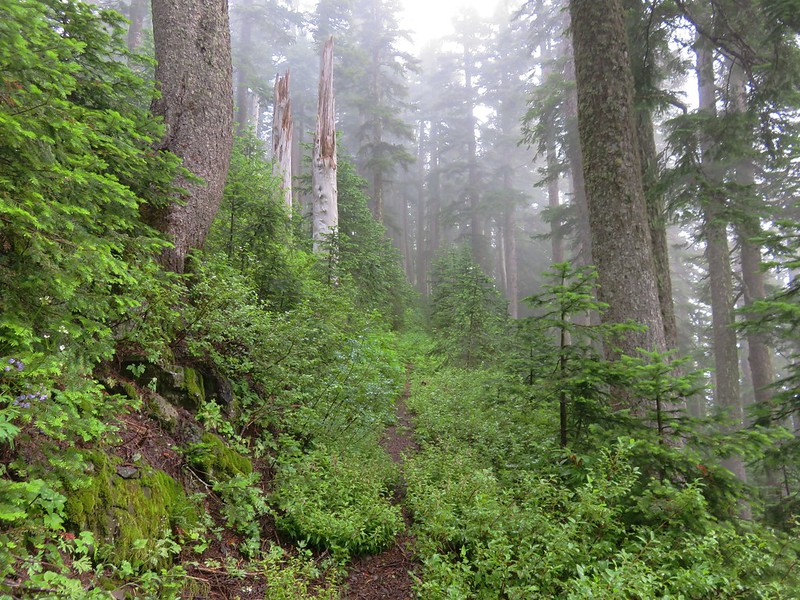
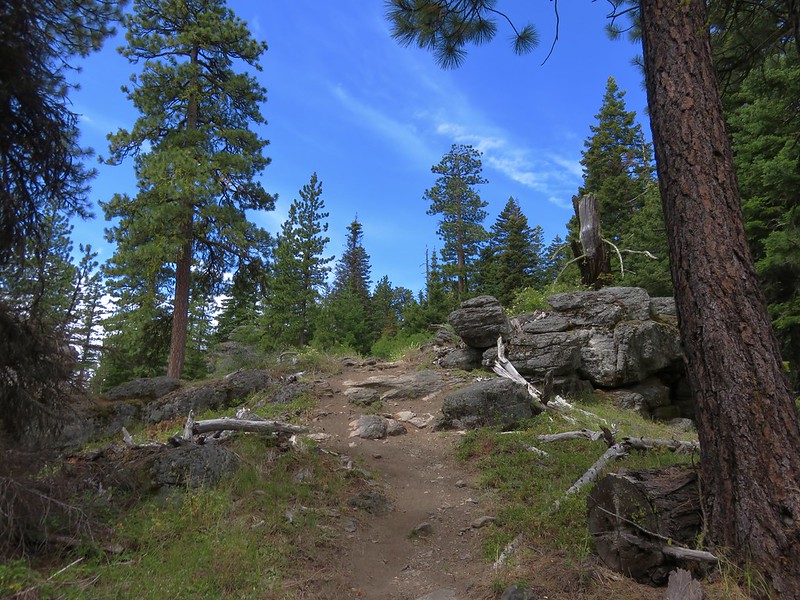
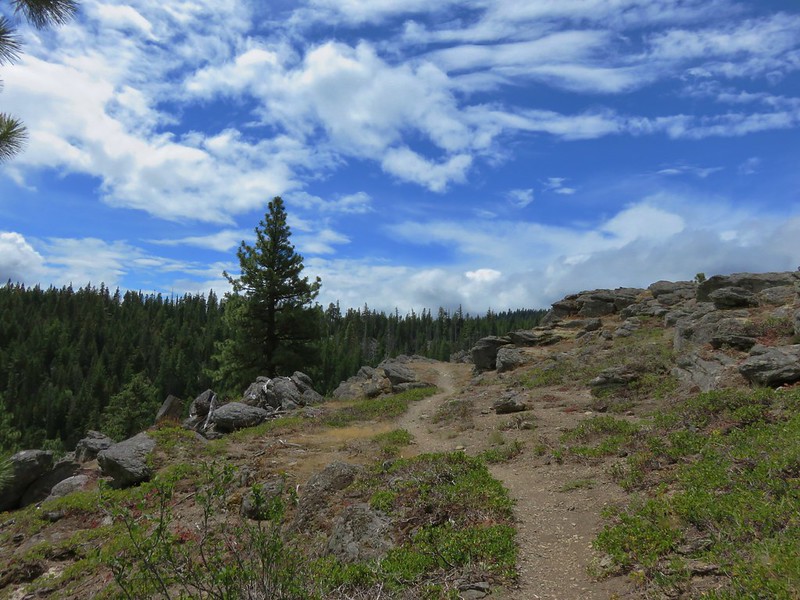
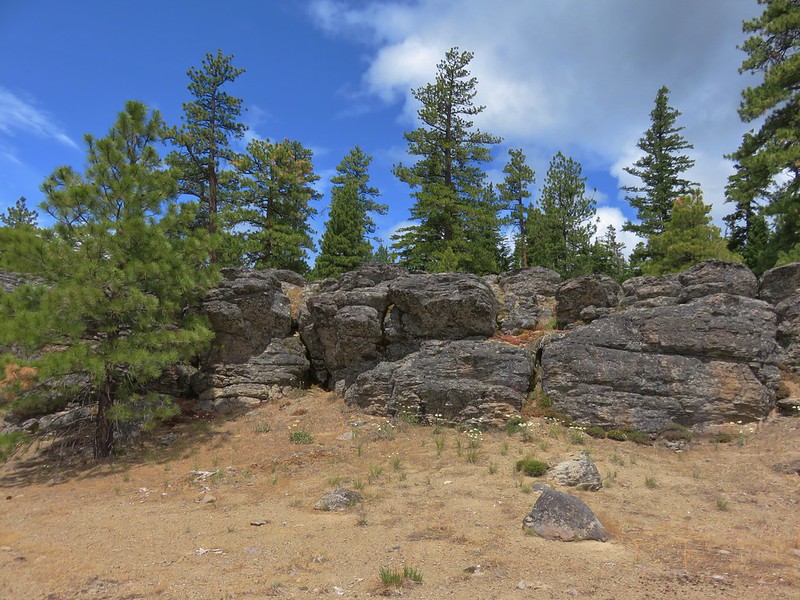
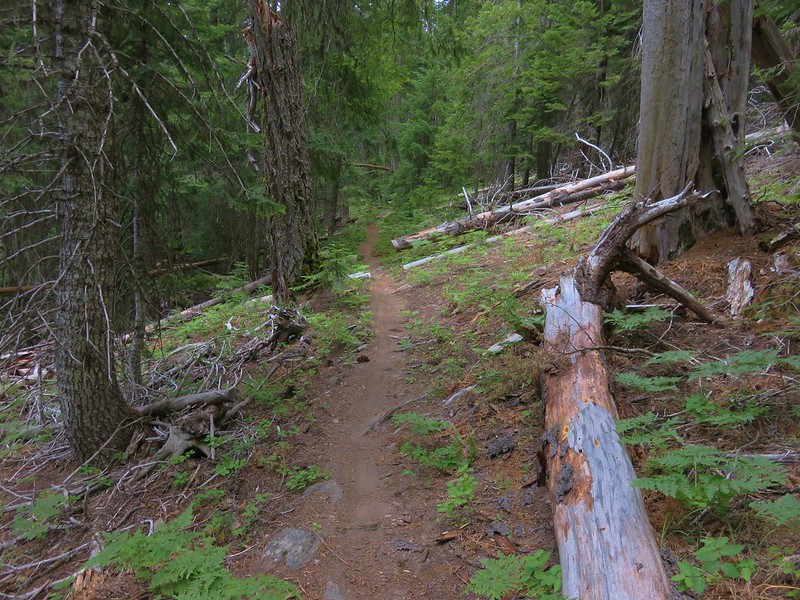
Categories
High Cascades Hiking Mt. Hood Area Oregon Trip report

Vista Ridge and Owl Point – 6/22/2019

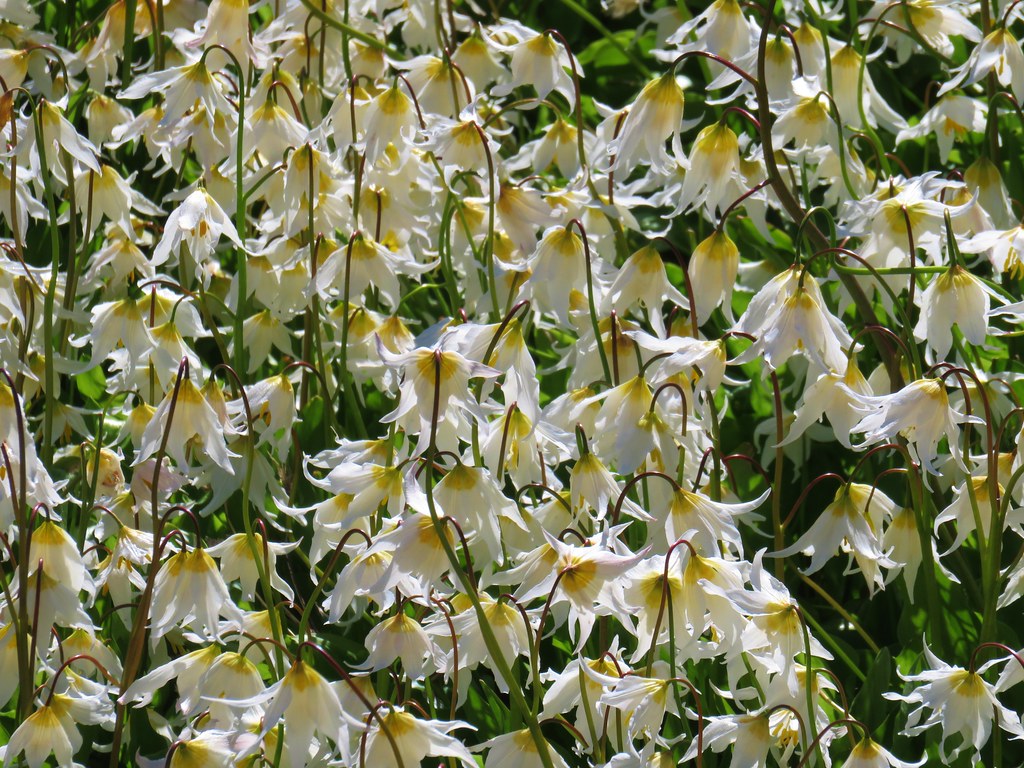
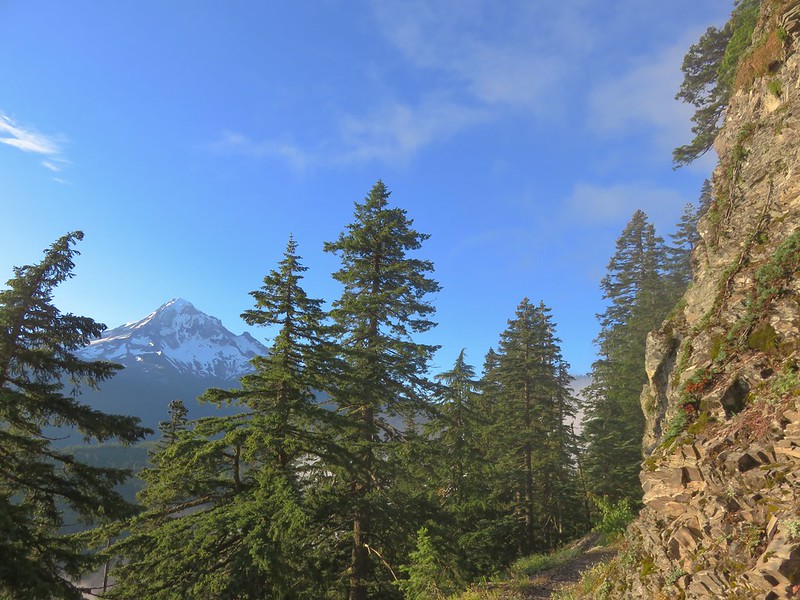
In 2017 we hiked the Vista Ridge Trail to Eden Park, Cairn Basin, and Elk Cove in the Mt. Hood Wilderness (post). It had been a cloudy August day which deprived us of any views of the mountain save for a brief glimpse from Elk Cove. The lack of views was enough to put the trail back on our to do list, but there were a couple of other reasons we had wanted to get back to this trail. First was the side trip to Owl Point along a segment of the Old Vista Ridge Trail which was reclaimed by volunteers in 2007. The second was a desire to see the avalanche lilies that bloom profusely on Vista Ridge in the fire scar left by the 2011 Dollar Fire.

We had been following reports on the avalanche lilies from fellow hikers and after seeing that they were blooming we checked the weather forecast for a clear day and headed up to the Vista Ridge Trailhead.
IMG_9657

The view of Mt. Hood had been clear on our drive so we decided to head out to Owl Point first and then up Vista Ridge for the lilies. We followed the Vista Ridge Trail for .4 miles to a junction with the Old Vista Ridge Trail at the edge of the 2011 fire scar.
IMG_9661

IMG_9664

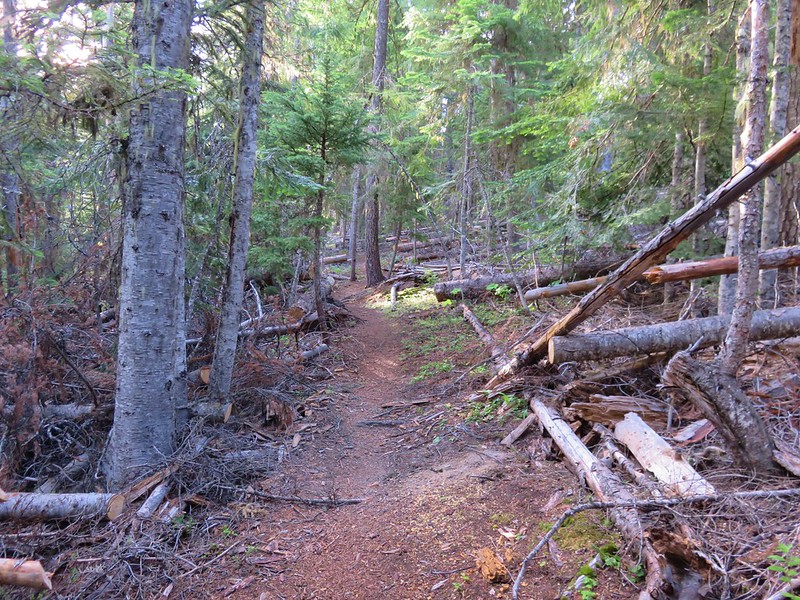
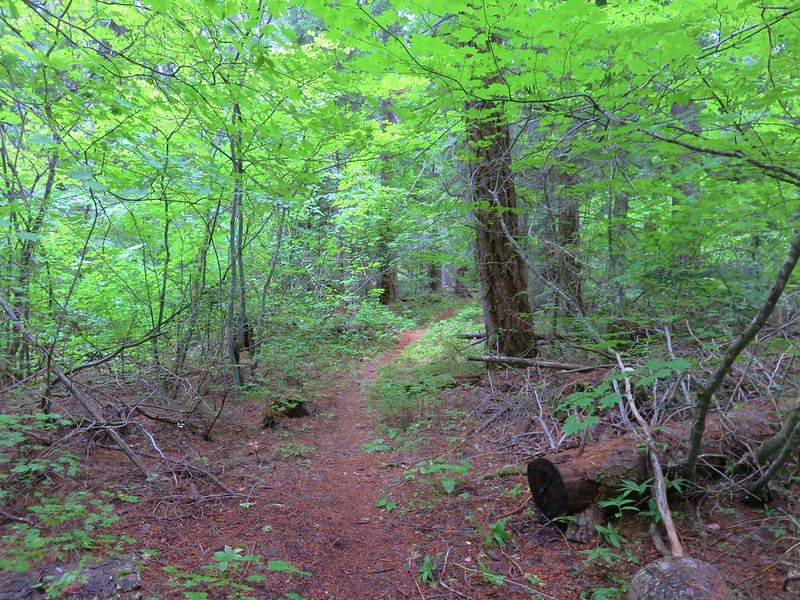
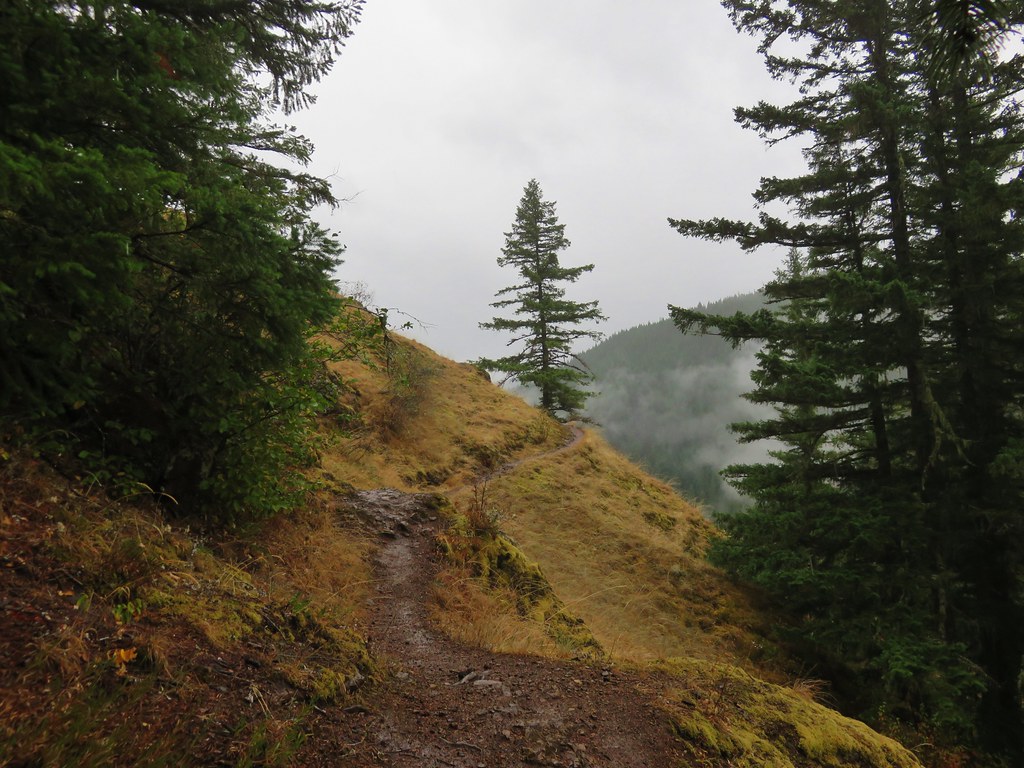
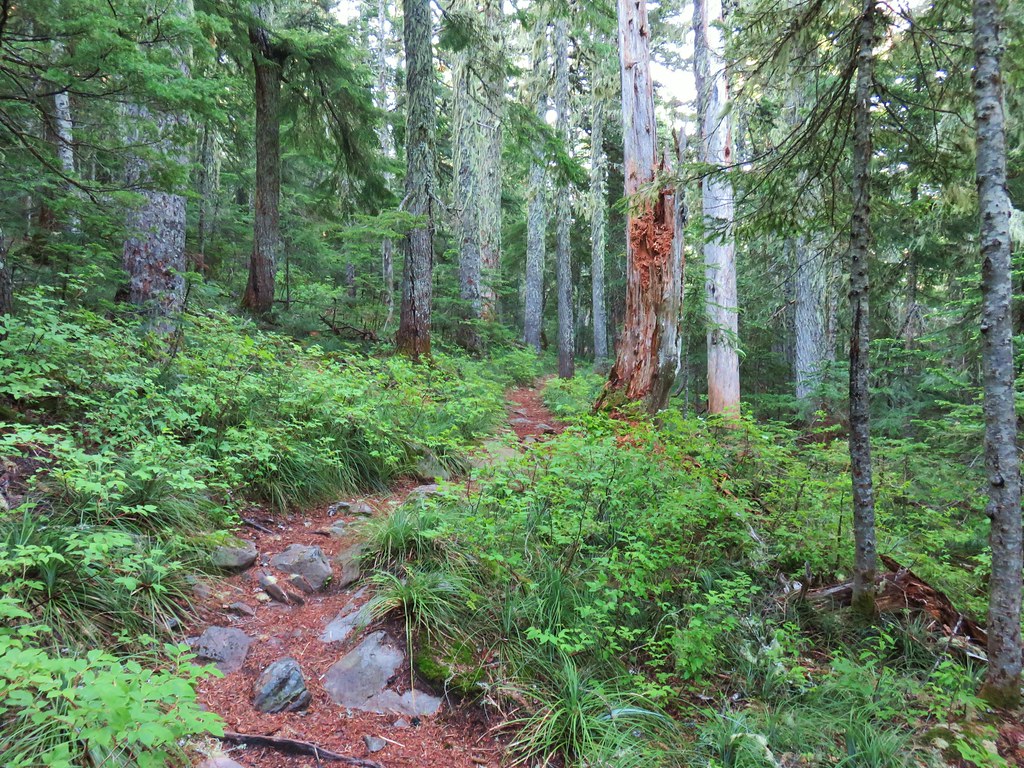
We turned left onto the Old Vista Ridge Trail and headed toward Owl Point. The trail, which relies on volunteers to keep it maintained, was in good shape.
IMG_9666

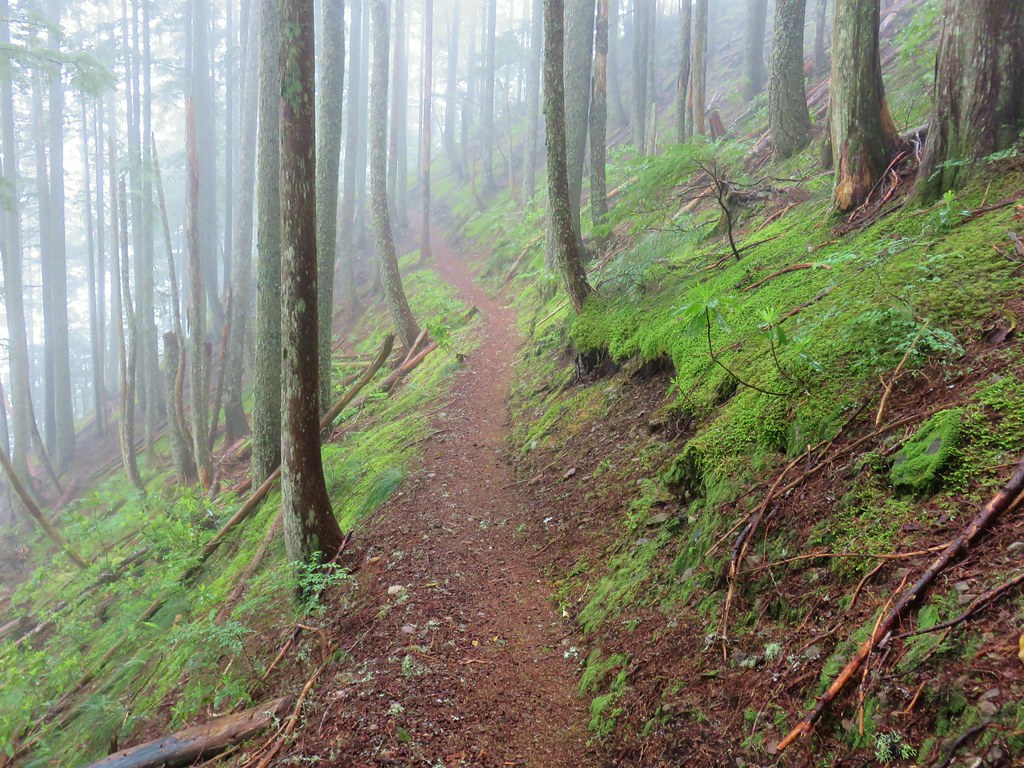
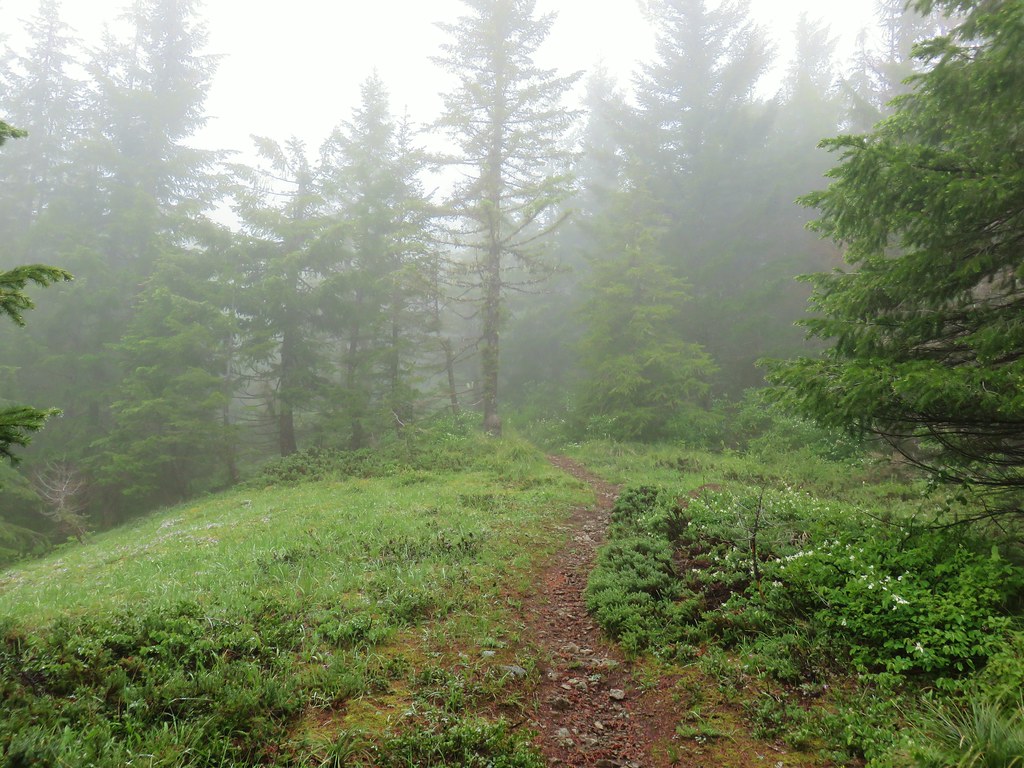
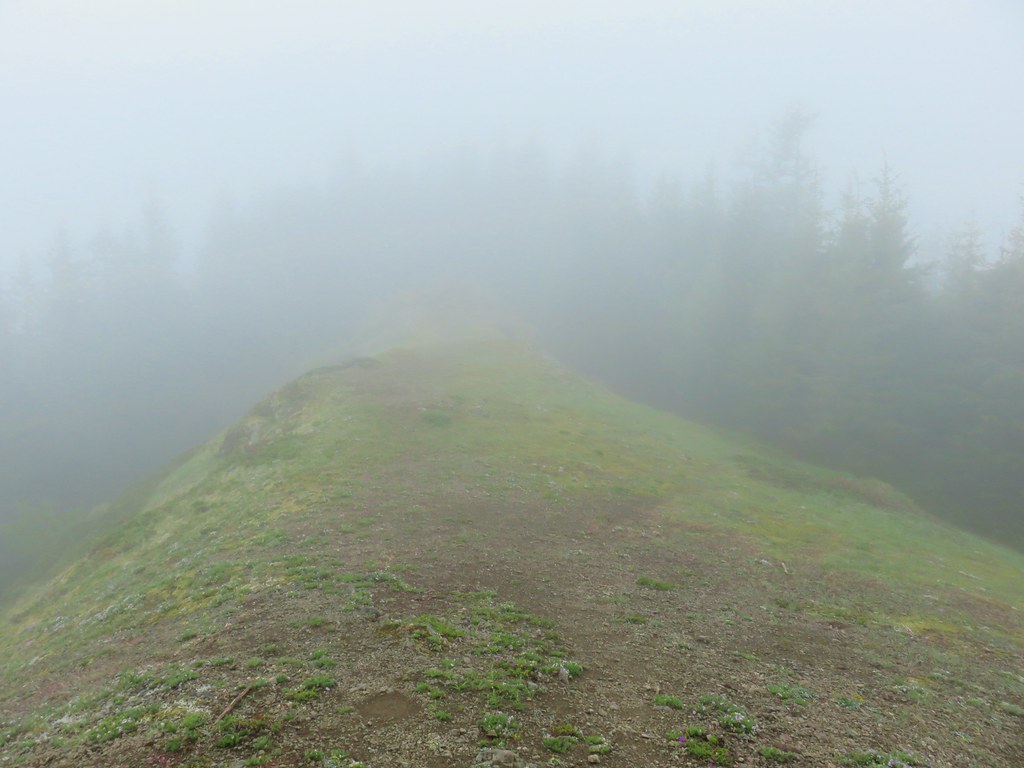
As we made our way north along though we began to run into some fog.
IMG_9667

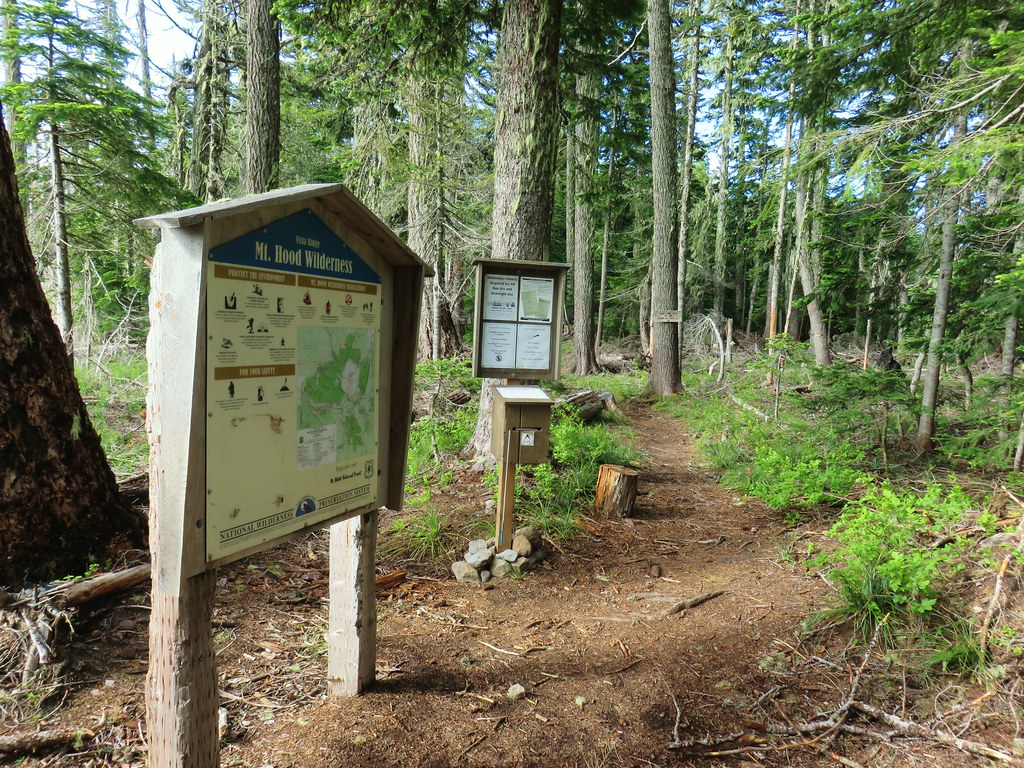
We had gone a little over half a mile from the junction and decided to turn back and save the viewpoint for later not wanting to risk missing out on a view. We backtracked to the junction, filled out a wilderness entry permit and headed up a fog free Vista Ridge.
IMG_9671

IMG_9675

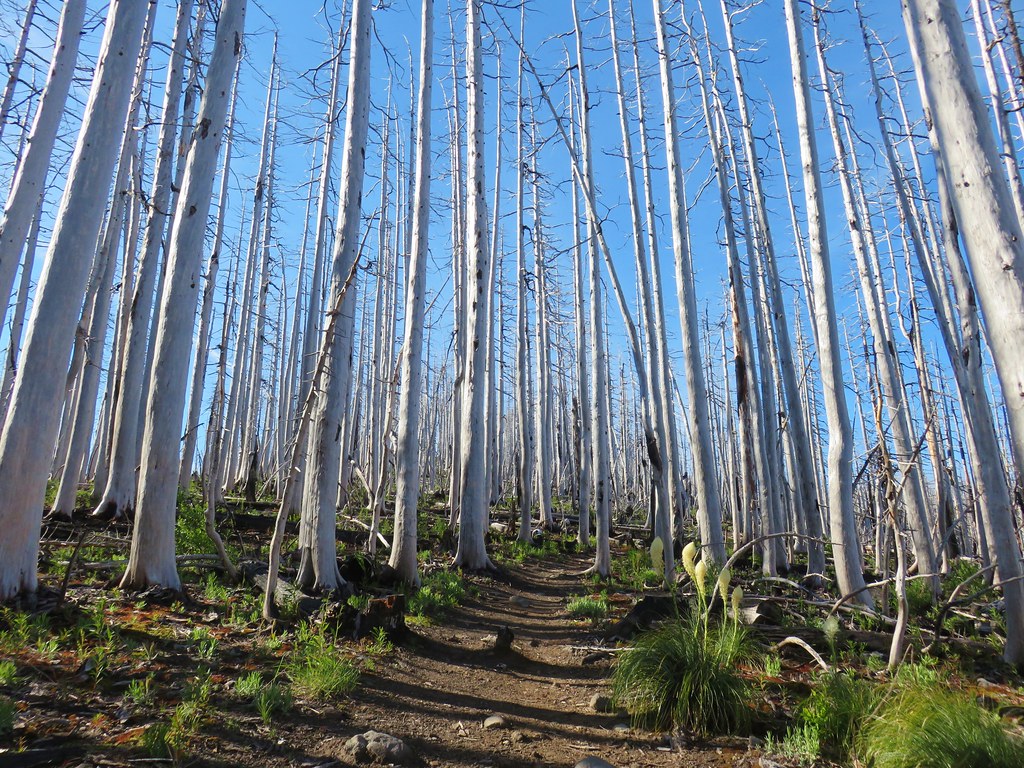
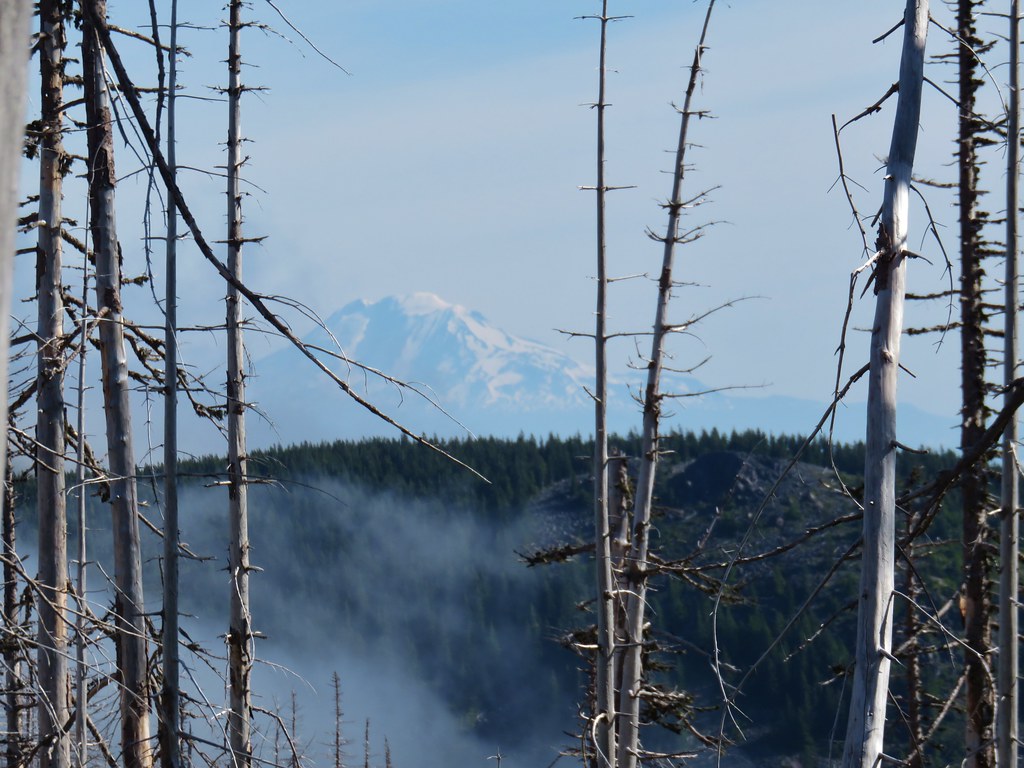
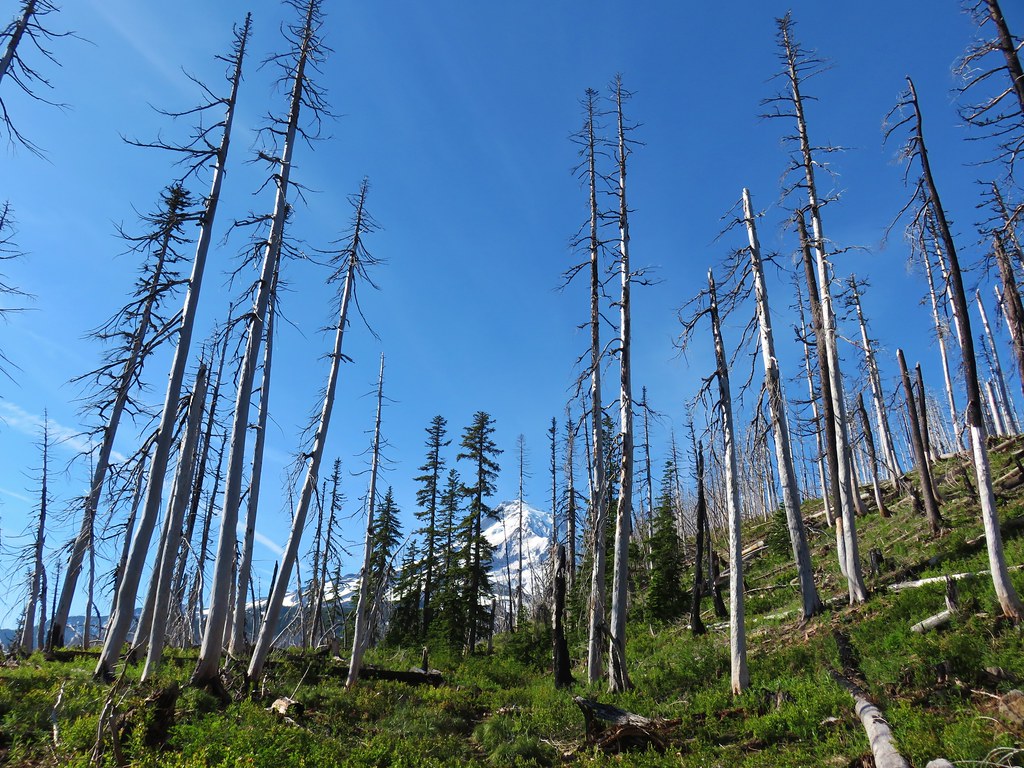
Unlike our last visit this time we could see Mt. Hood through the snags as we climbed.
IMG_9683

Looking back over our shoulders we could see the cloud that had caused us to turn back was not actually over Owl Point.
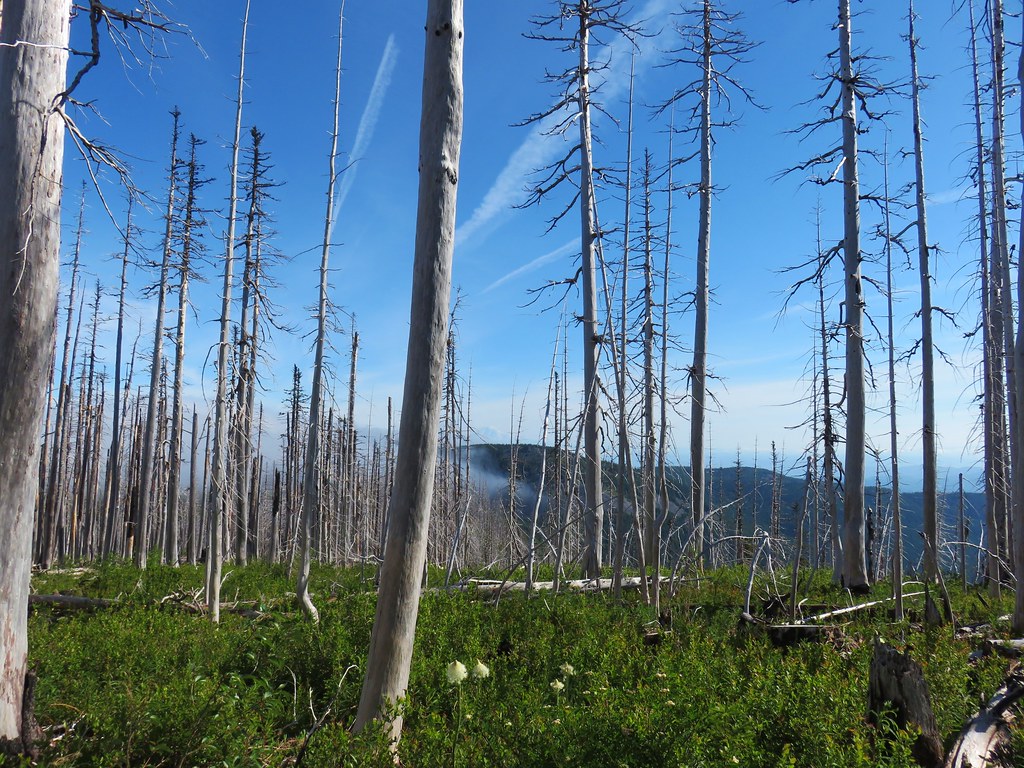
IMG_9689

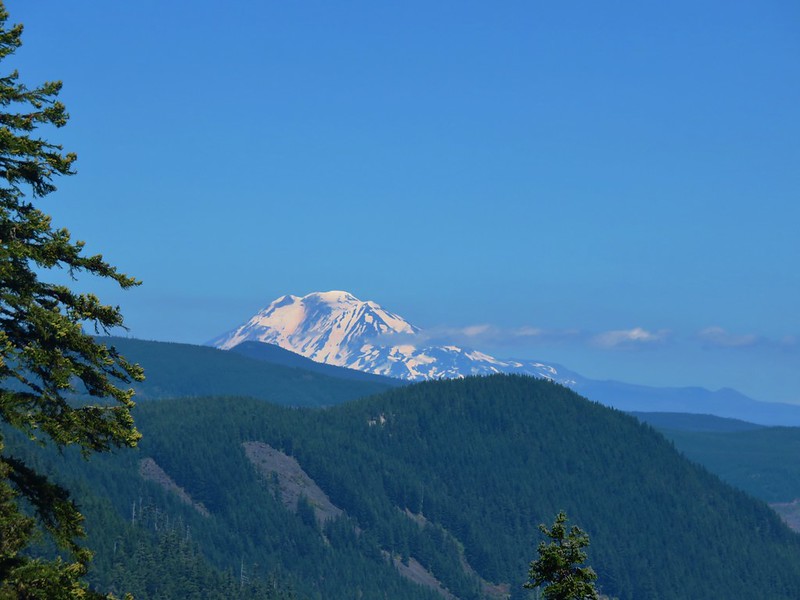
IMG_9690 Mt. Adams beyond Owl Point

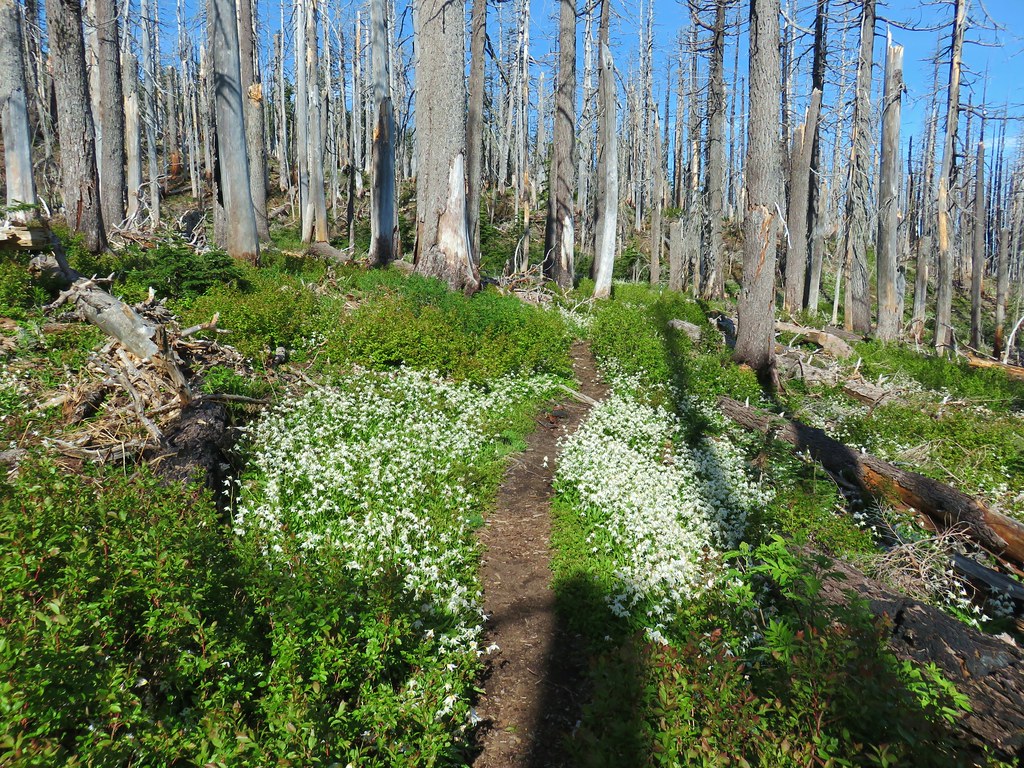
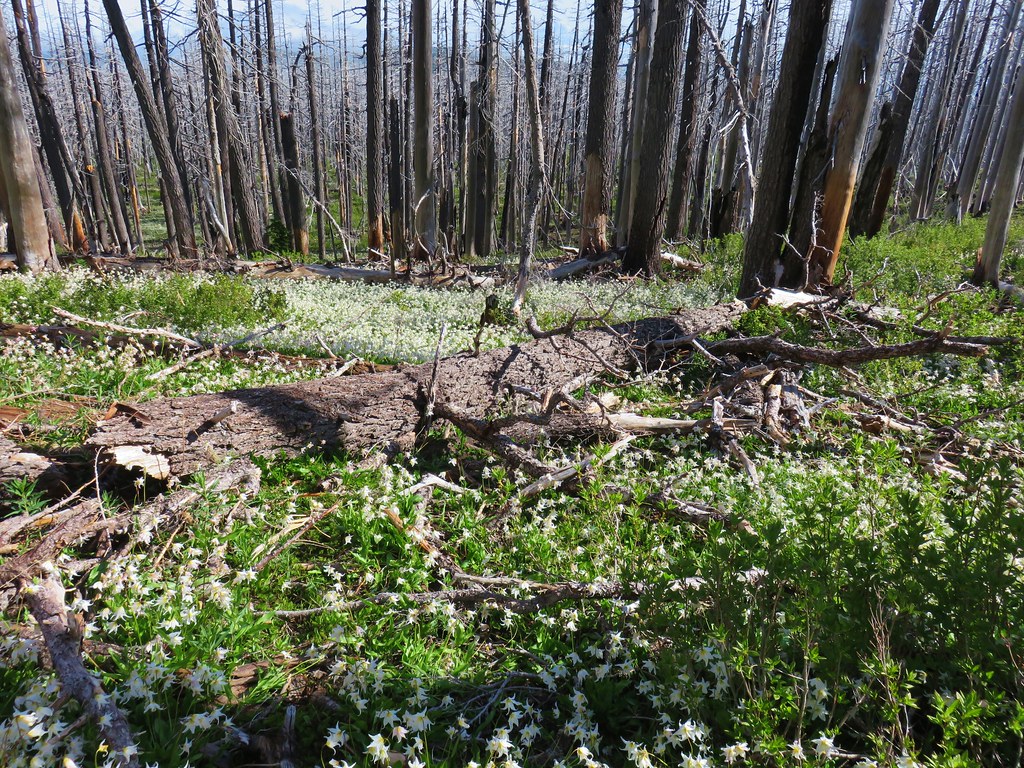
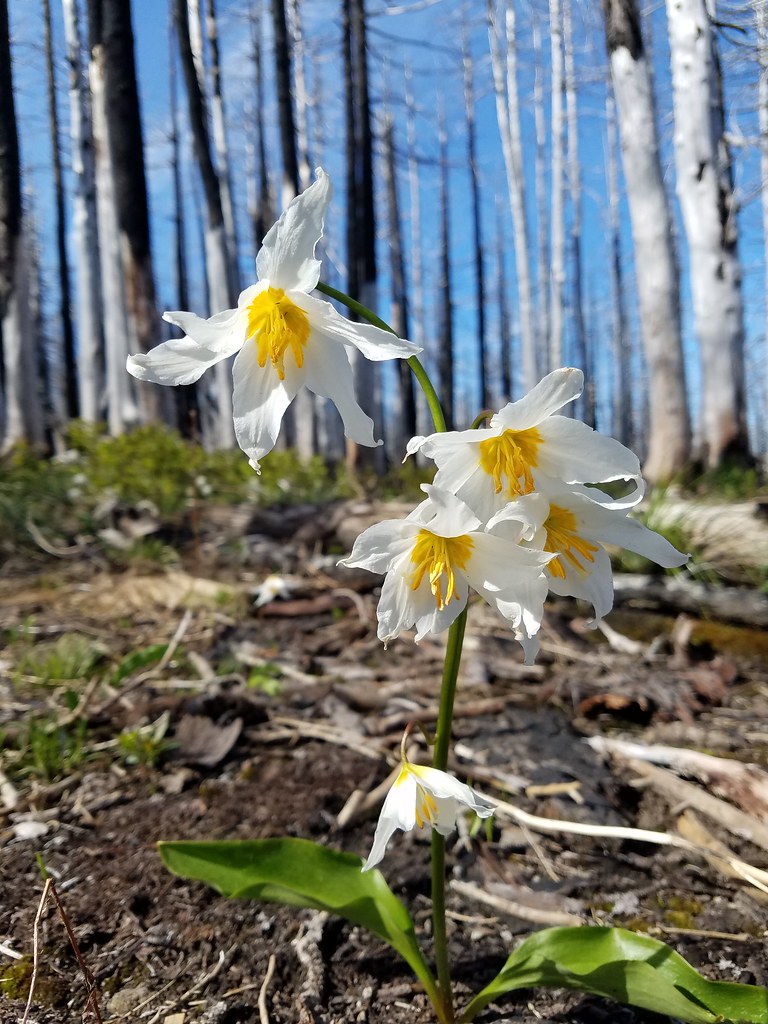
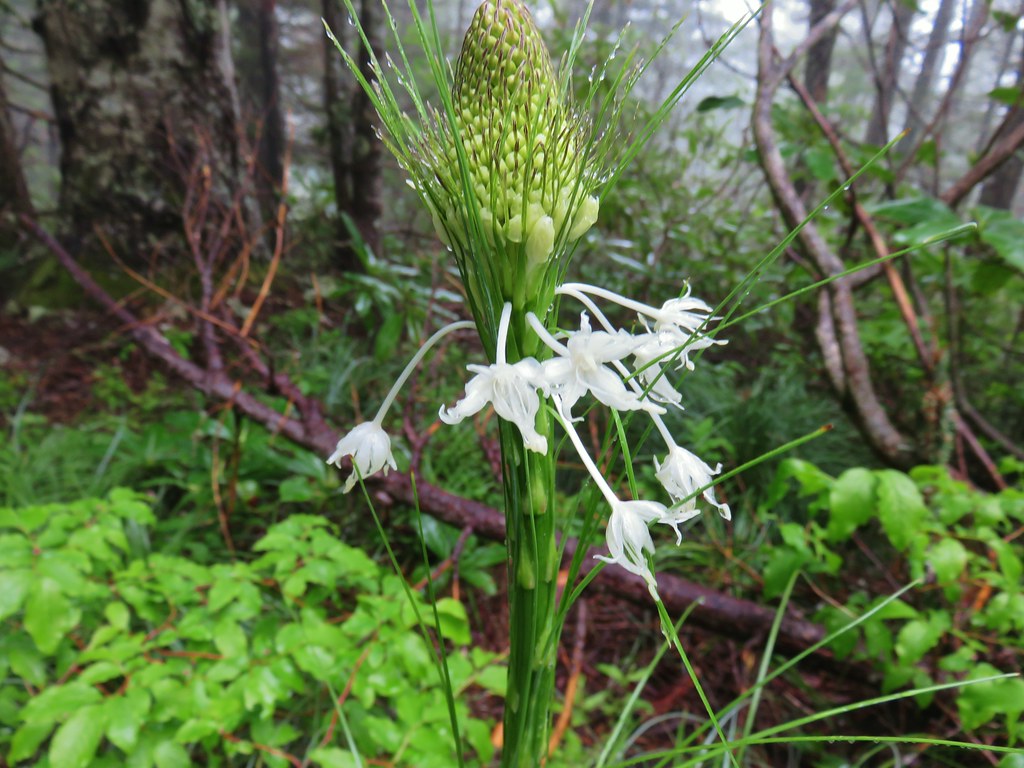
Most of the avalanche lilies were already past until shortly after entering the Mt. Hood Wilderness a mile up the Vista Ridge Trail.
IMG_9692

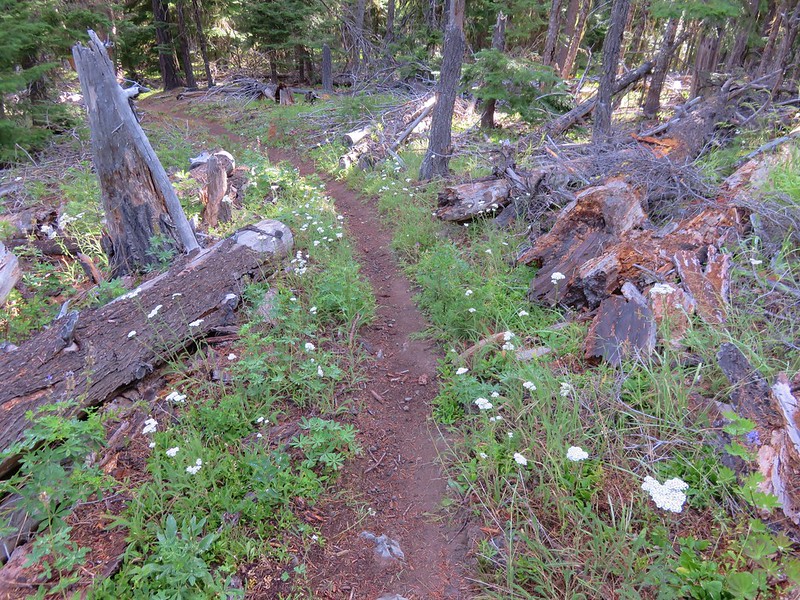
At first the lilies were sparse but then small patches appeared followed by increasingly large fields of white.
IMG_9696

IMG_9697

IMG_9700

IMG_9702

IMG_9706

IMG_9721

20190622_091402

As we gained elevation we left the heavy bloom behind and began seeing flowers that had yet to open.
IMG_9736

We hit snow about two and a quarter miles from the trailhead.
IMG_9738

IMG_9739

It was patchy and navigable without needing our microspikes and we continued uphill for another quarter mile passing a nice view of Mt. Adams and the Eden Park Trail along the way.
IMG_9745

IMG_9748

IMG_9749Eden Park Trail

We ended our climb at a snowfield where the Vista Ridge Trail headed left of the ridge toward its junction with the Timberline Trail.
IMG_9765

The trail looked passable with the microspikes but we had a nice view from where we were and didn’t see a point in continuing on given we still wanted to get out to Owl Point and we were planning on hiking for the next three days straight.
IMG_9763

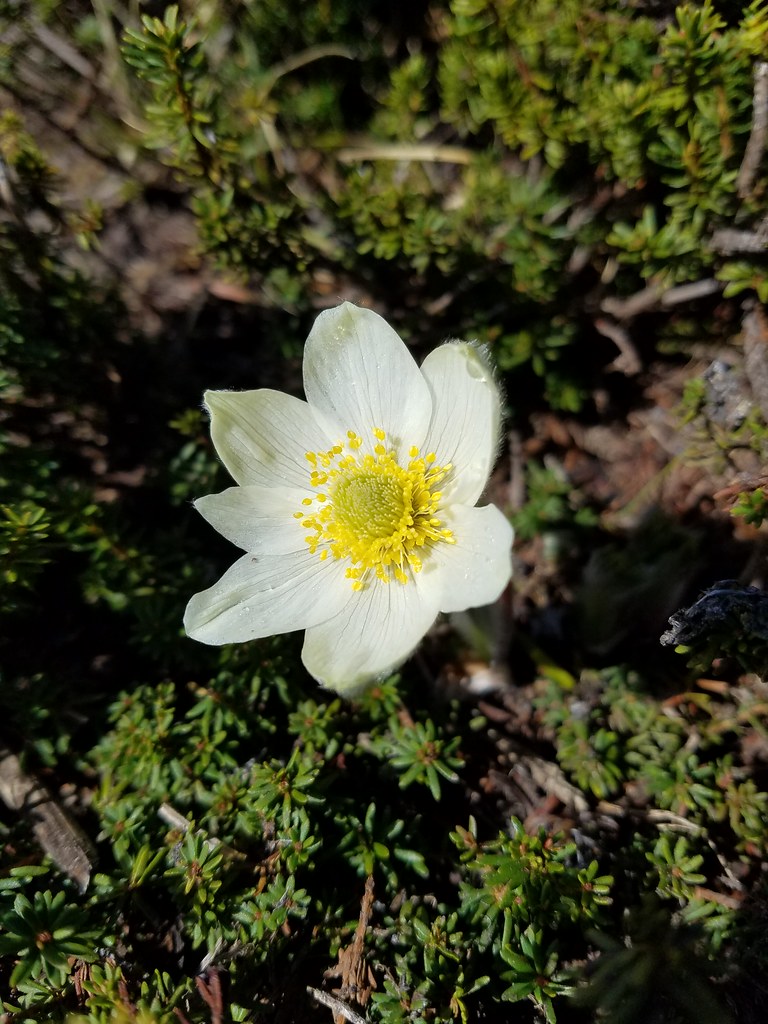
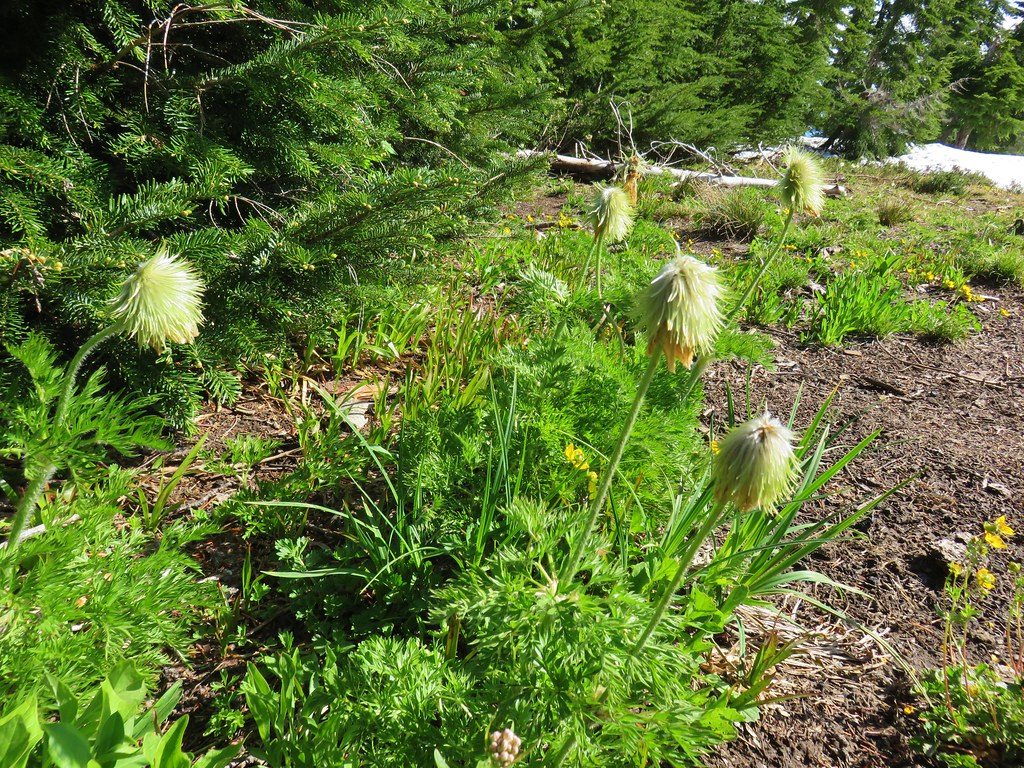
Near our turn around we spotted some other early bloomers – western pasque flowers aka hippies on a stick.
IMG_9769

20190622_093738

IMG_9774western pasque flowers already going to seed

Paintbrush and cinquefoil was also present.
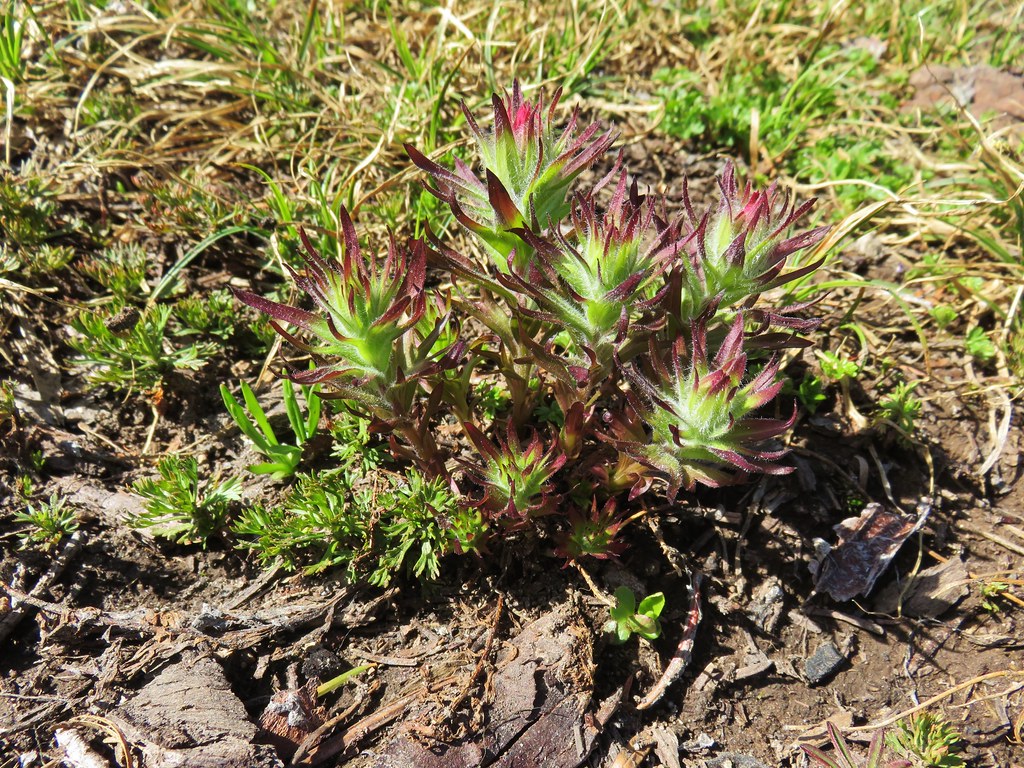
IMG_9781

20190622_093621

After an extended break enjoying the view of Mt. Hood we headed back down to the Old Vista Ridge Trail junction stopping along the way to once again admire the avalanche lilies and also to share a moment with a friendly yellow-rumped warbler.
IMG_9826

IMG_9834

We turned back onto the Old Vista Ridge Trail and repeated the first section which seemed to climb more this second time. (At least our legs felt like it did.) This time there was no fog though and we soon found ourselves at a viewpoint looking at Owl Point.
IMG_9856

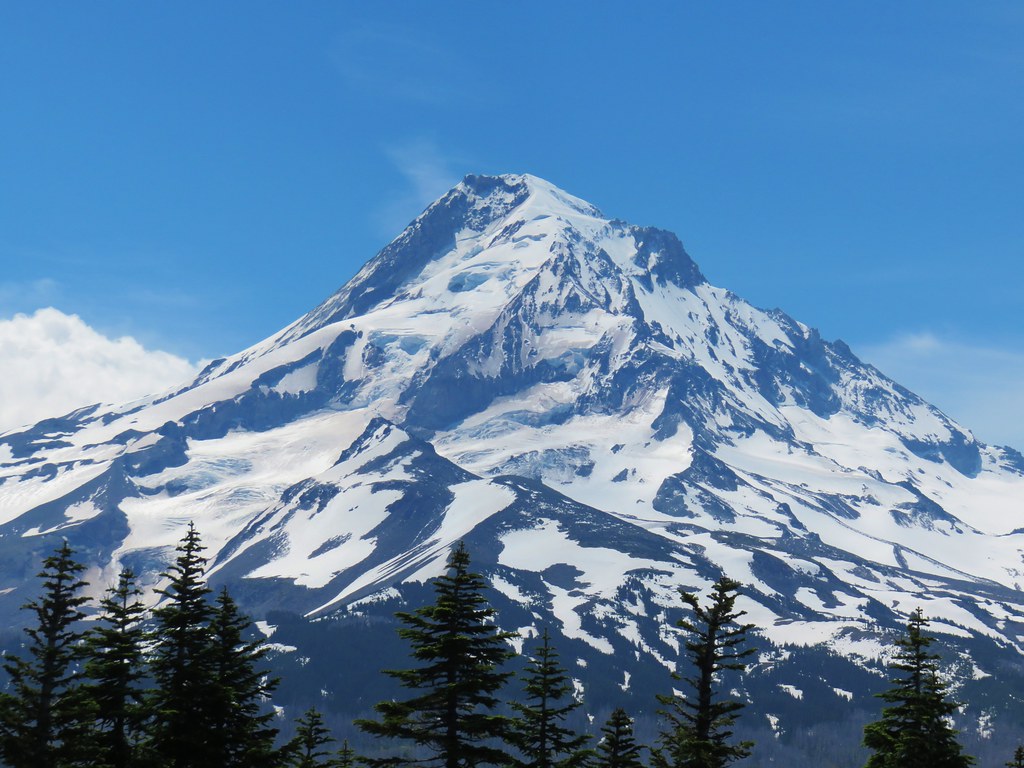
There was also a decent view of Mt. Hood.
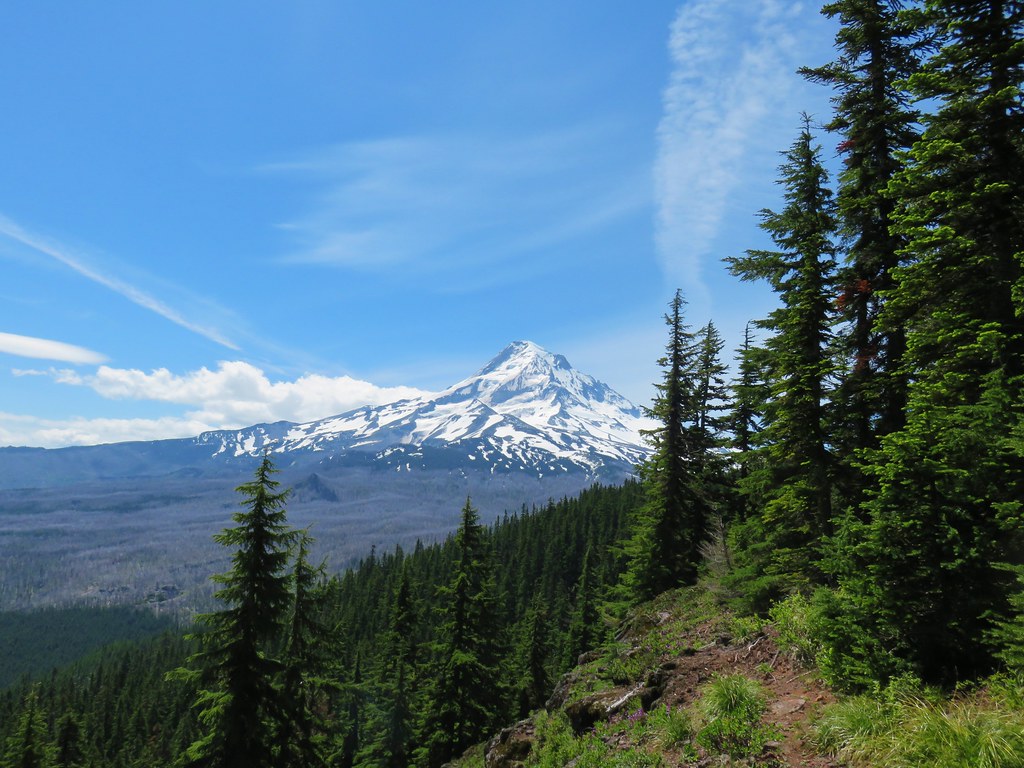
IMG_9866

After the initial climb the trail leveled out some along the ridge top where a few patches of snow remained.
IMG_9874

That meant more avalanche lilies, although nowhere near the numbers that Vista Ridge was home to.
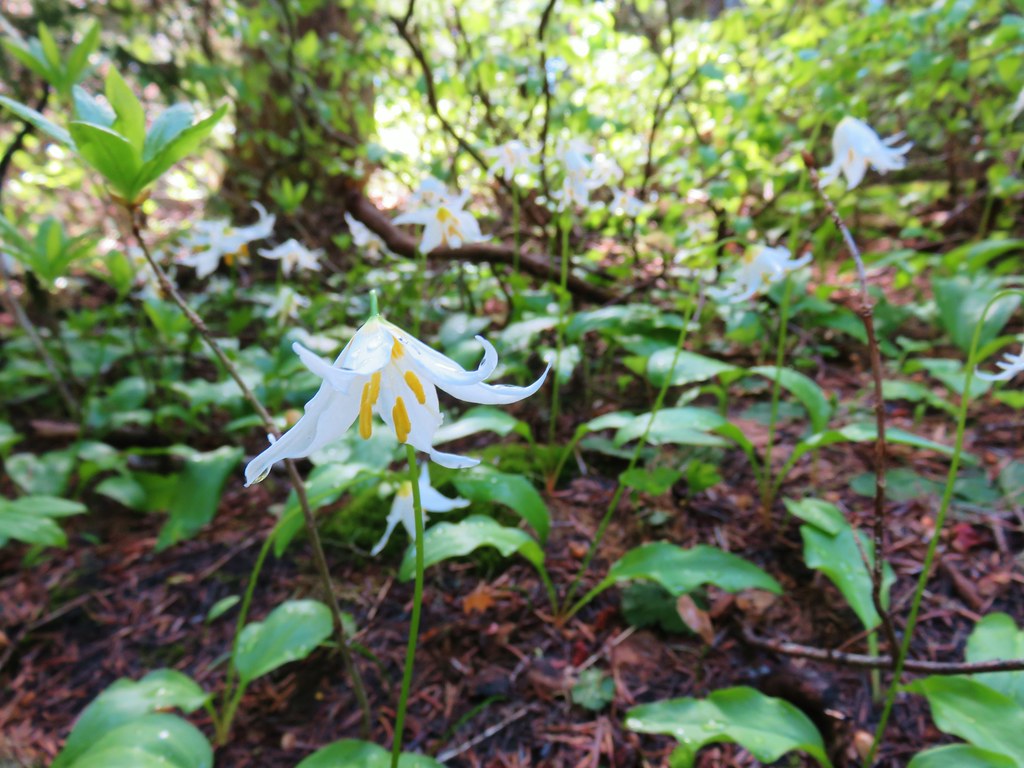
IMG_9879

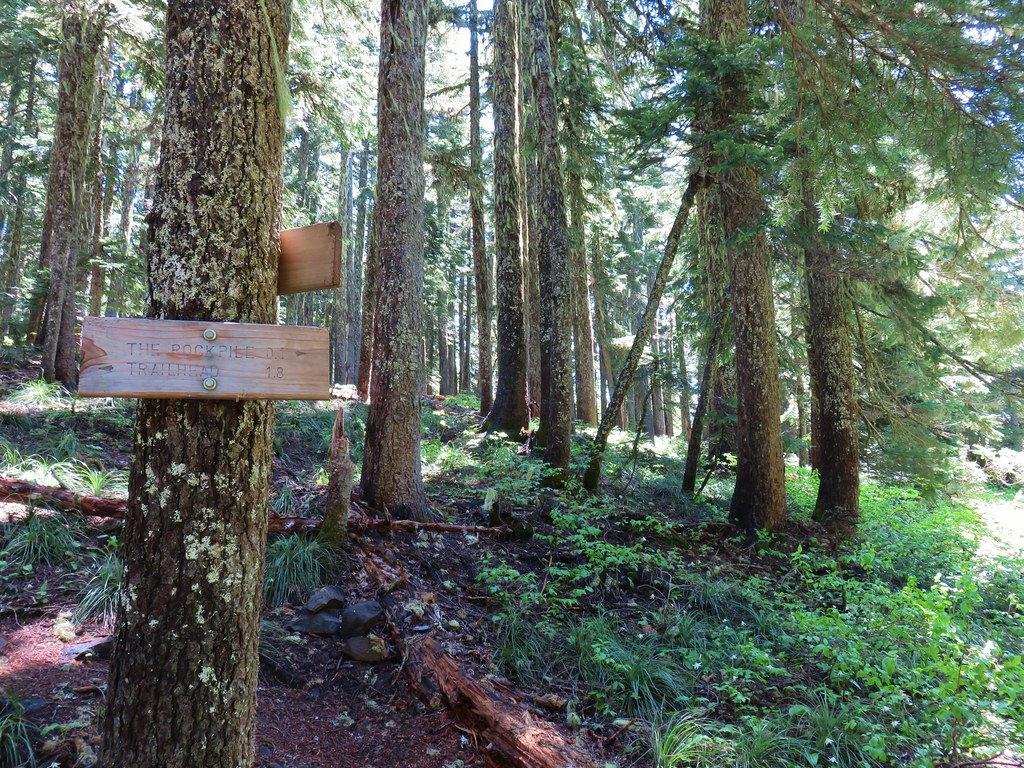
After climbing to a saddle we came to a sign for The Rockpile viewpoint.
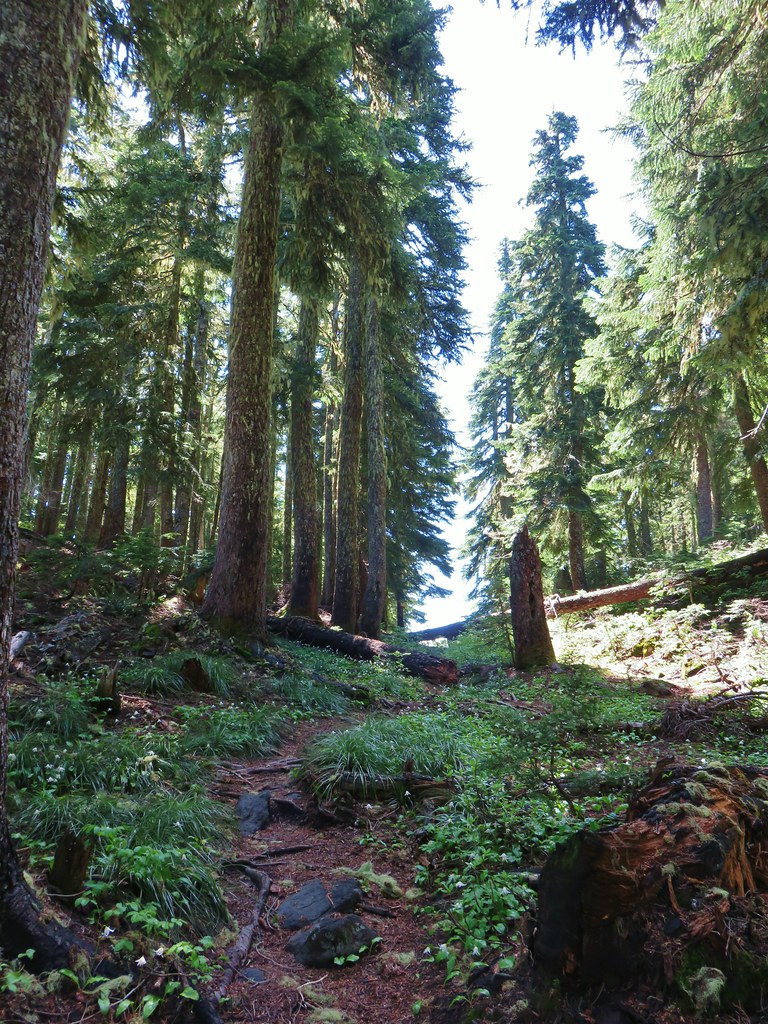
IMG_9885

IMG_9886

The short spur trail led out to a nice view of Mt. Hood but we had startled a dog that was with some backpackers and it wouldn’t stop barking so we quickly took our leave heading for quieter surroundings.
IMG_9888

IMG_9892

The spur trail to Owl Point was just a tenth of a mile from the trail to the Rockpile.
IMG_9894

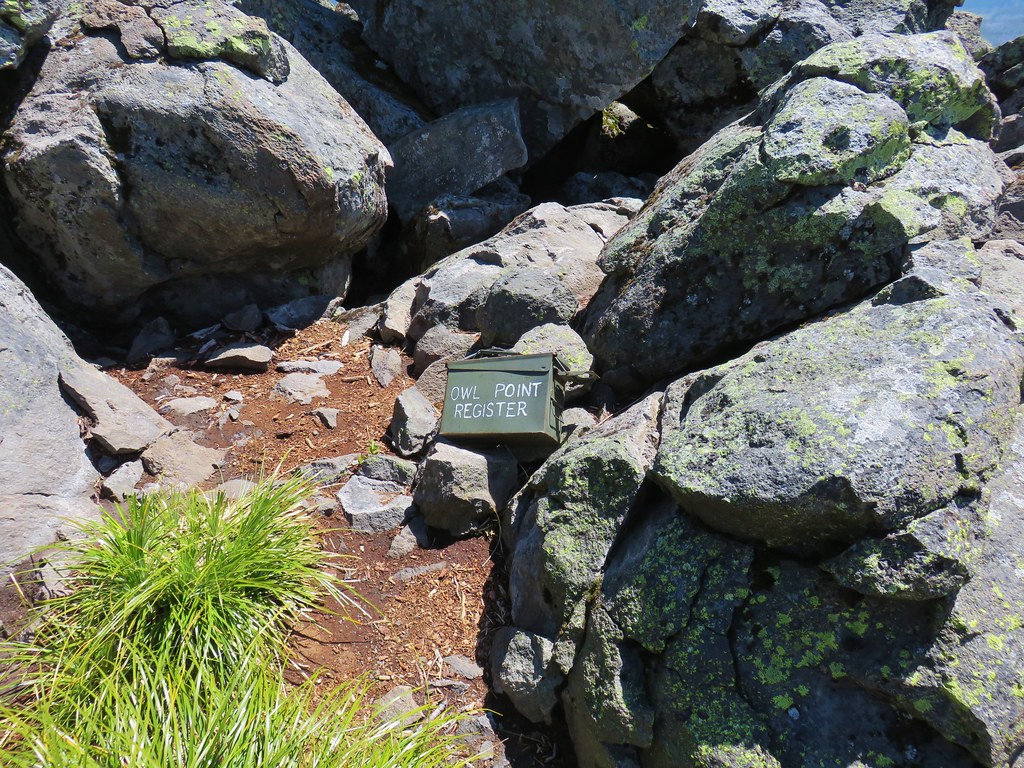
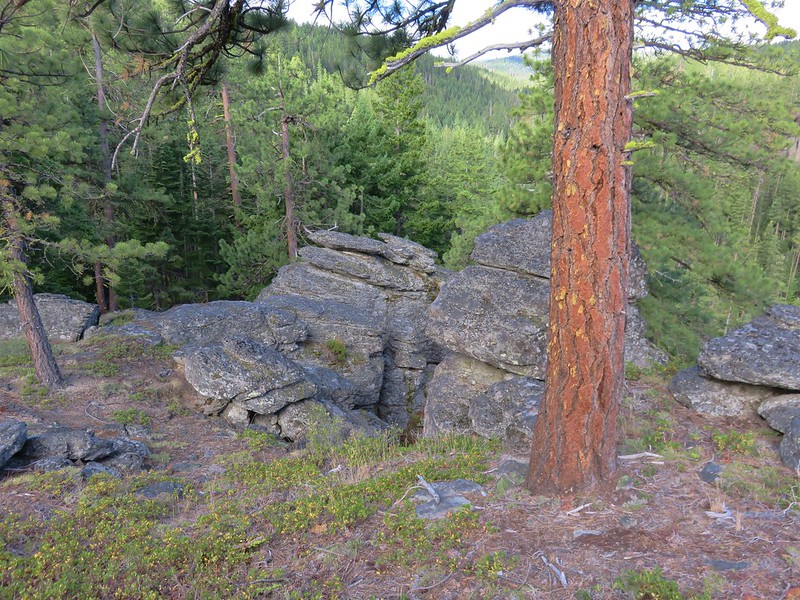
We followed this spur to it’s end at a register at Owl Point.
IMG_9898

IMG_9899

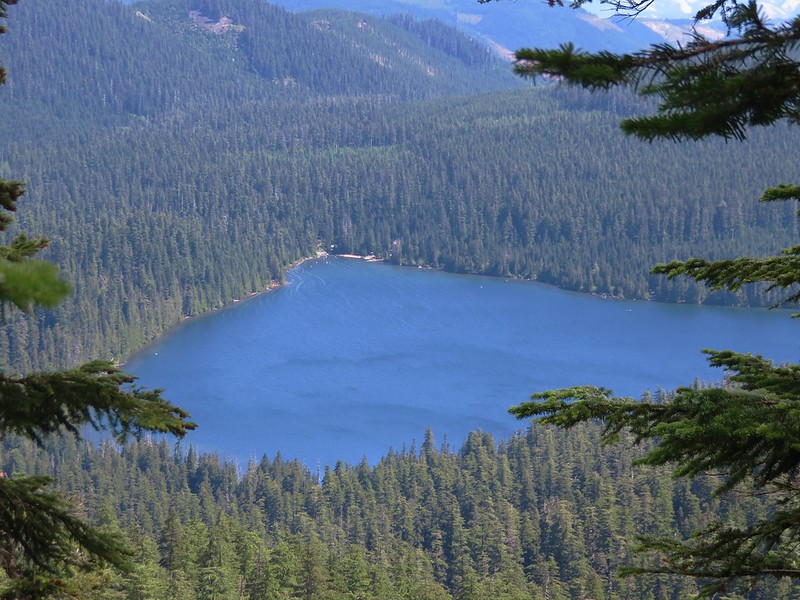
Laurance Lake lay below to the east with Surveryors Ridge beyond.
IMG_9900

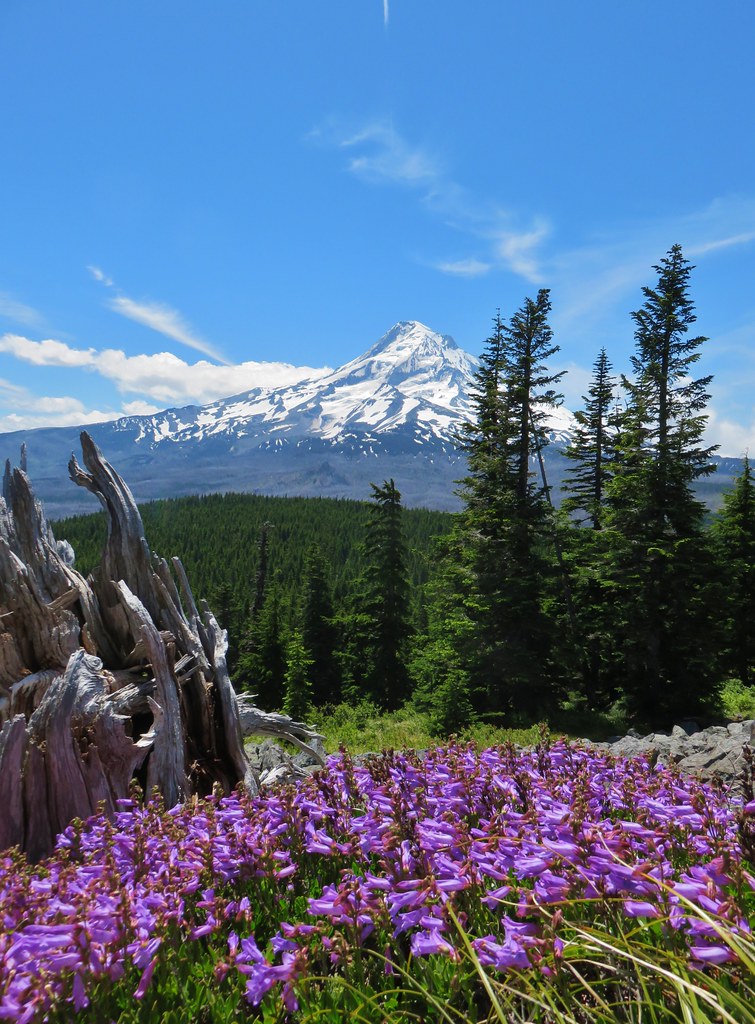
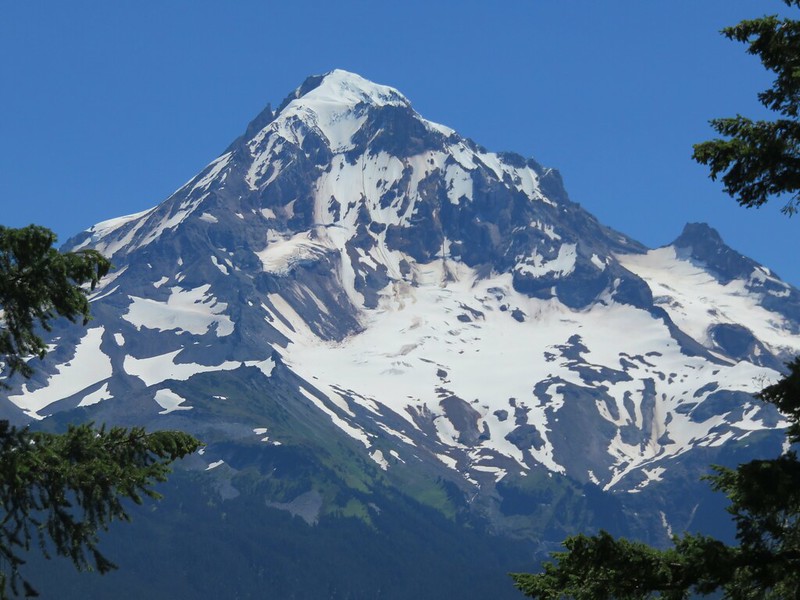
Mt. Hood was the main attraction though.
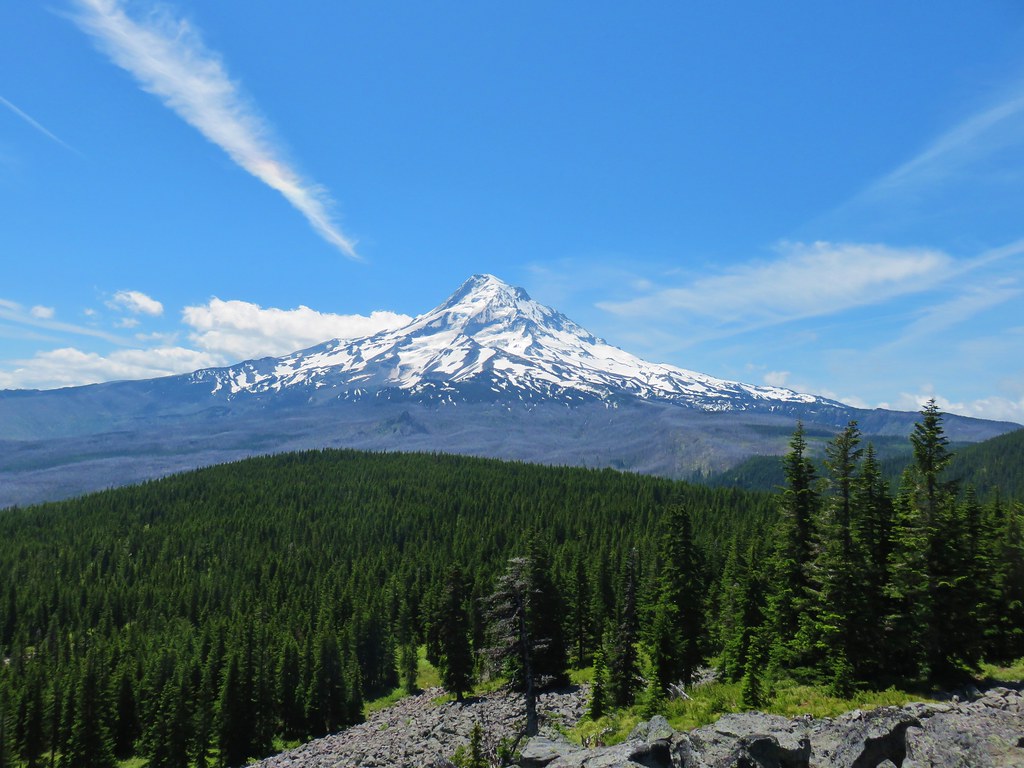
IMG_9902

IMG_9928

We sat for awhile admiring the mountain and studying Vista Ridge where we could see the trail cutting across the snow beyond where we had turned around.
IMG_9922

IMG_9923

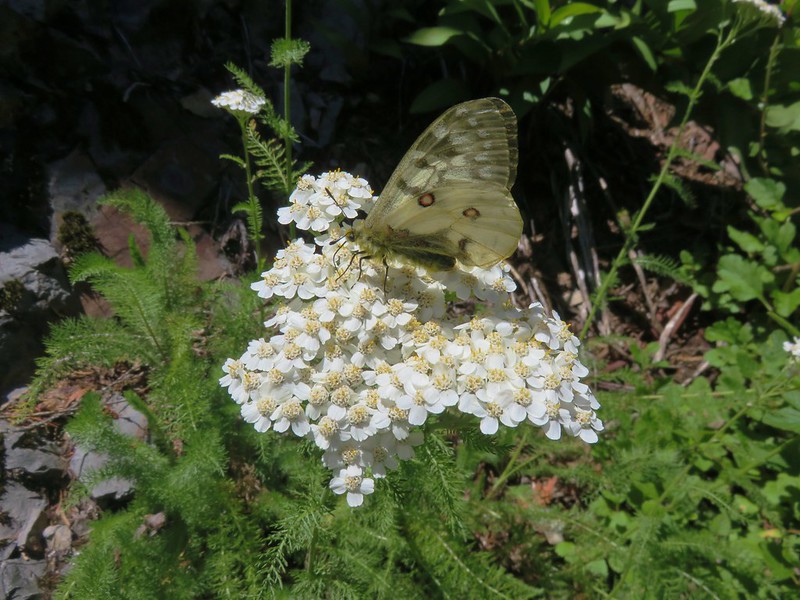
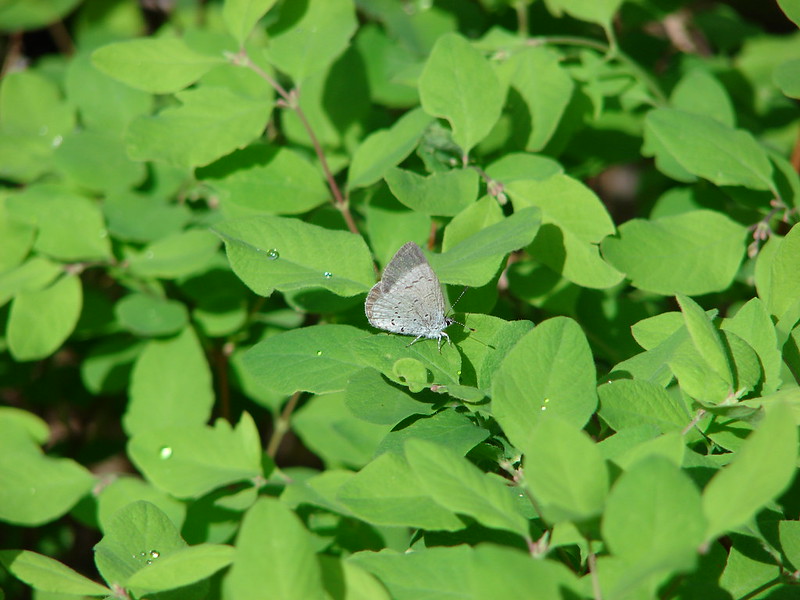
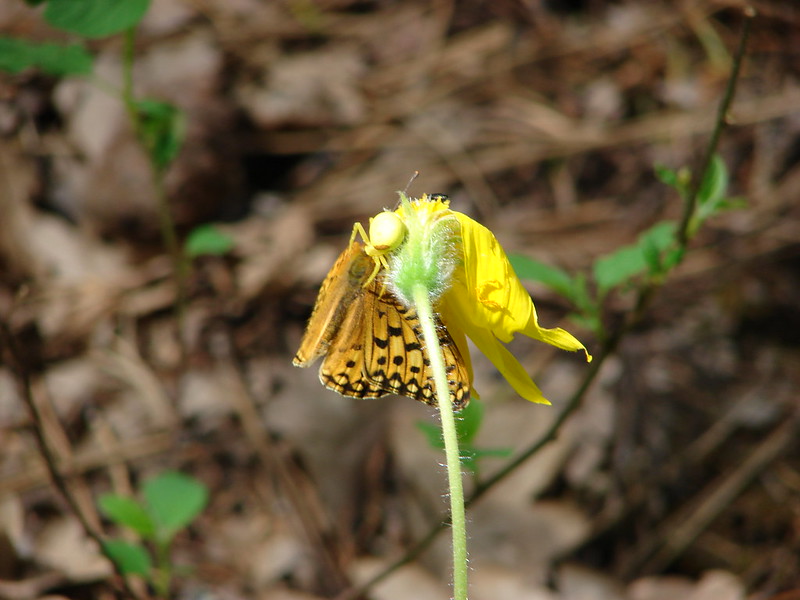
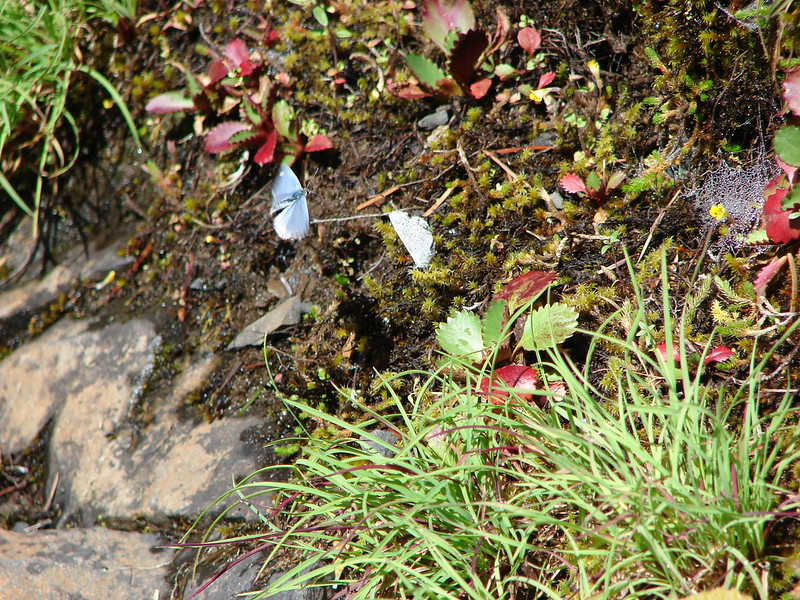
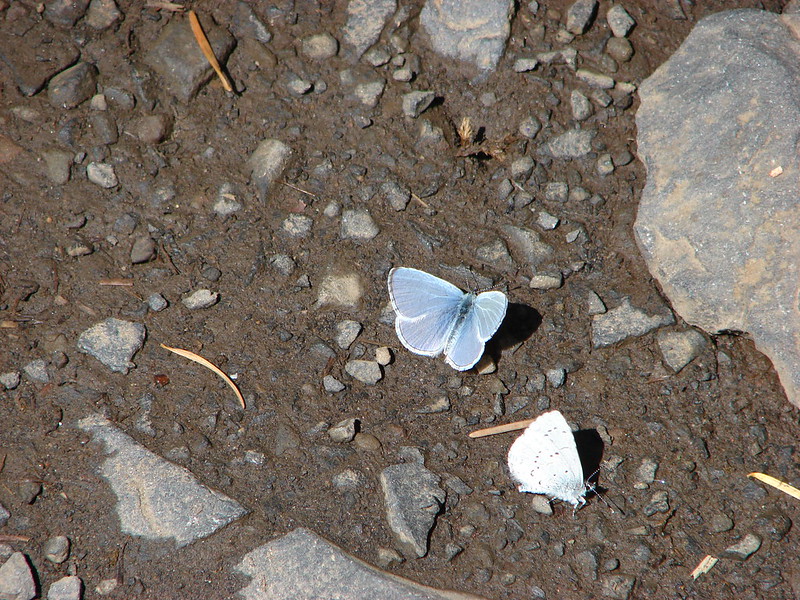
We also spent some time looking for pikas but never saw (or heard) any. We did however have a butterfly join us briefly.
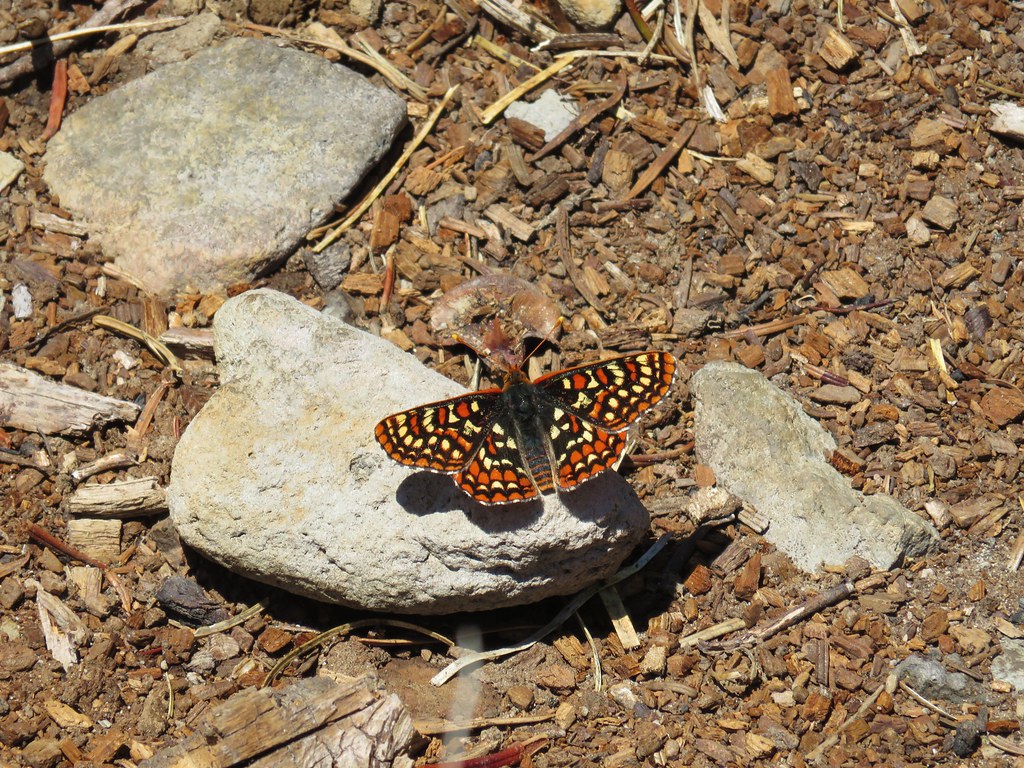
IMG_9925

When we had returned to the Old Vista Ridge Trail we continued north for another tenth of a mile to visit Alki Point.
IMG_9935

This viewpoint looked north and on a cleared day would have offered views of Mt. St. Helens, Mt. Rainier, and Mt. Adams. We settled for a glimpse of Rainier’s summit above some clouds (that’s Mt. Defiance in the foreground) and a semi-obstructed view of Mt. Adams.
IMG_9938

IMG_9939Mt. Rainier (sort of)

IMG_9941Mt. Adams

We headed back to the trailhead completing a 10.8 mile hike that would have been under 10 had we not had the false start on the Old Vista Ridge Trail in the morning. The avalanche lilies had not disappointed, it was a great way to start a four day stretch of hiking. Happy Trails!

Flickr: Owl Point and Vista Ridge

Categories
High Cascades Hiking Mt. Hood Area Oregon Trip report

Boulder Ridge Trail and Wildwood Recreaction Area

Our most recent hike brought us to the BLM managed Wildwood Recreation Site. We were going to be taking the Boulder Ridge Trail from the site to a viewpoint along Huckleberry Mountain in the Salmon-Huckleberry Wilderness. The view had escaped us during a 2015 hike the same viewpoint using the Bonanza Trail (post). Cloudy conditions that day had been our downfall so we were a little apprehensive when we saw the forecast calling for a slight chance of showers in the morning but then it called for the skies becoming mostly sunny.

With the Wildwood Recreation Site not opening until 8am (the road is gated) it meant we would be getting a little later start than we normally would which would hopefully give the clouds more time to burn off. After paying the $5 day use fee we parked at the trailhead parking area which acts as the trailhead for the Boulder Ridge Trail as well as for two short interpretive trails – The Cascade Streamwatch and the Wetlands. We decided to do both of these before heading up the Boulder Ridge Trail to give the weather even more time to clear up.
IMG_9096

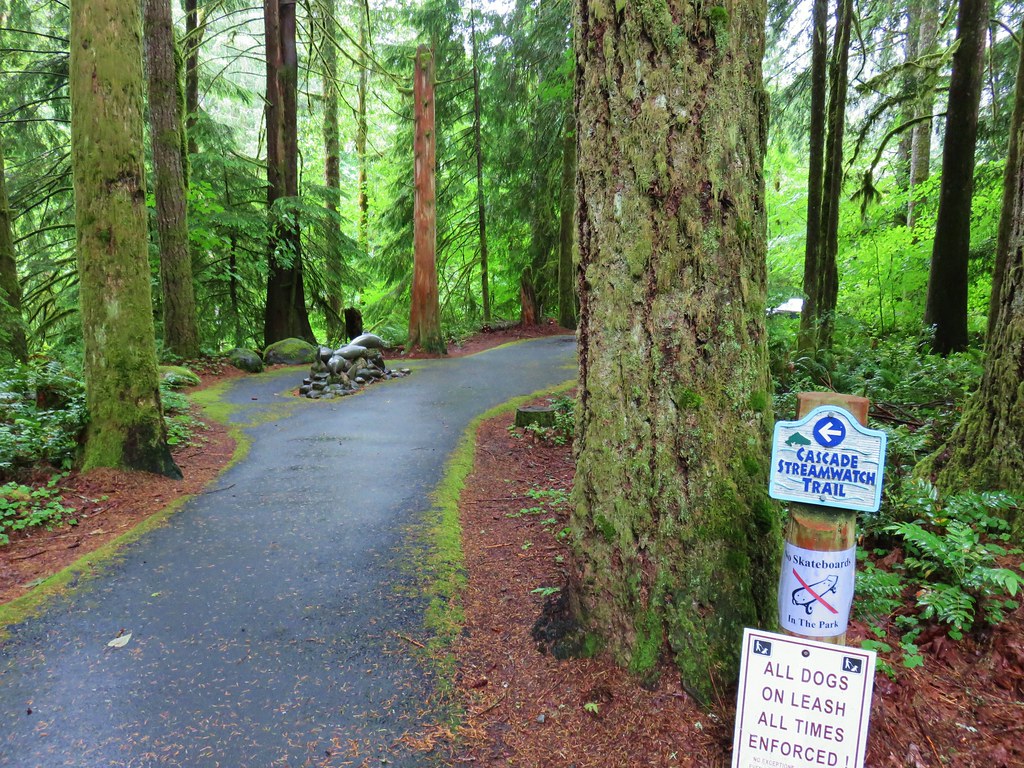
We began with the paved Cascade Streamwatch Trail.
IMG_9098

IMG_9101

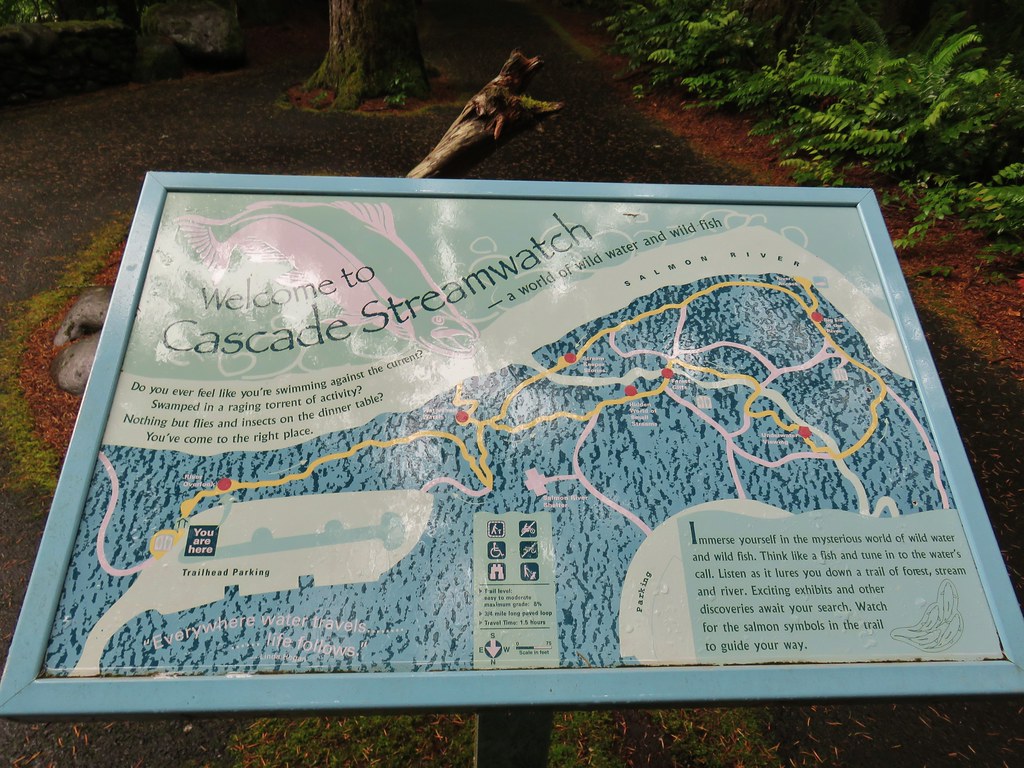
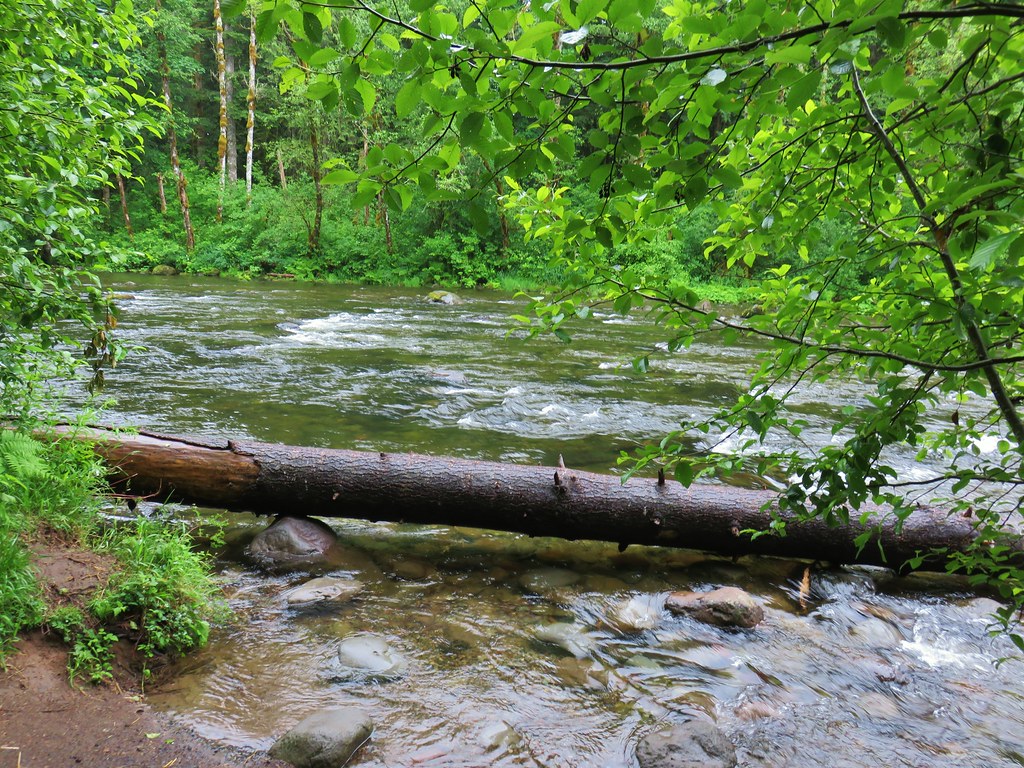
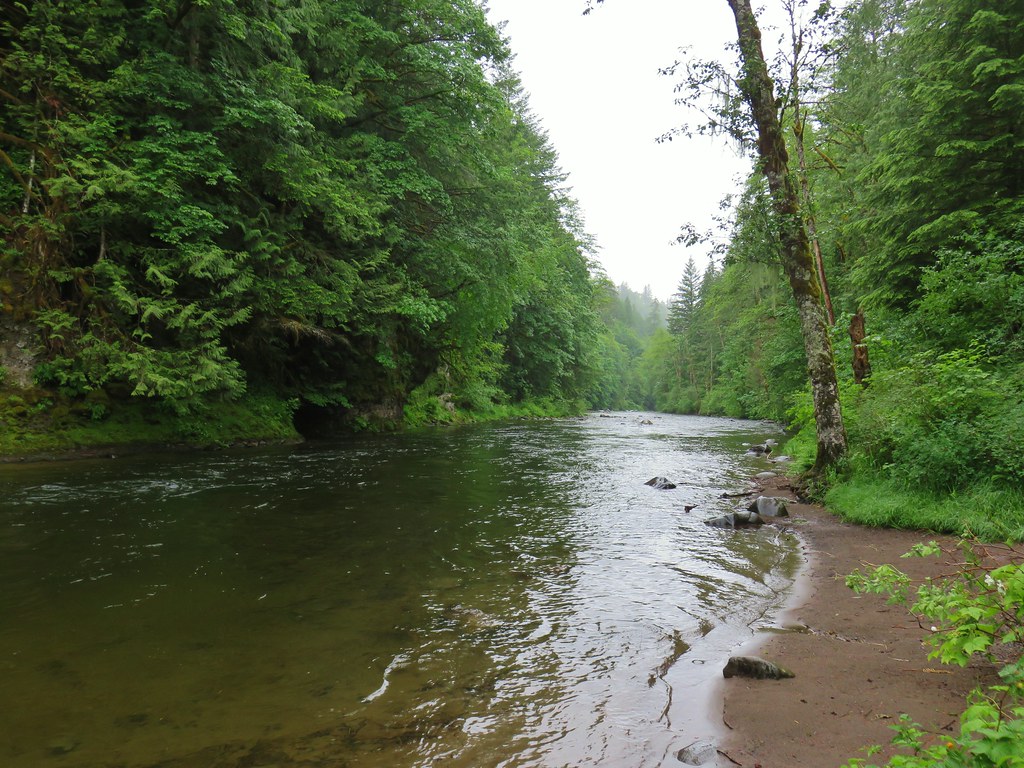
The trail led down through the forest to the bank of the Salmon River with several interpretive signs along the way.
IMG_9104

IMG_9108

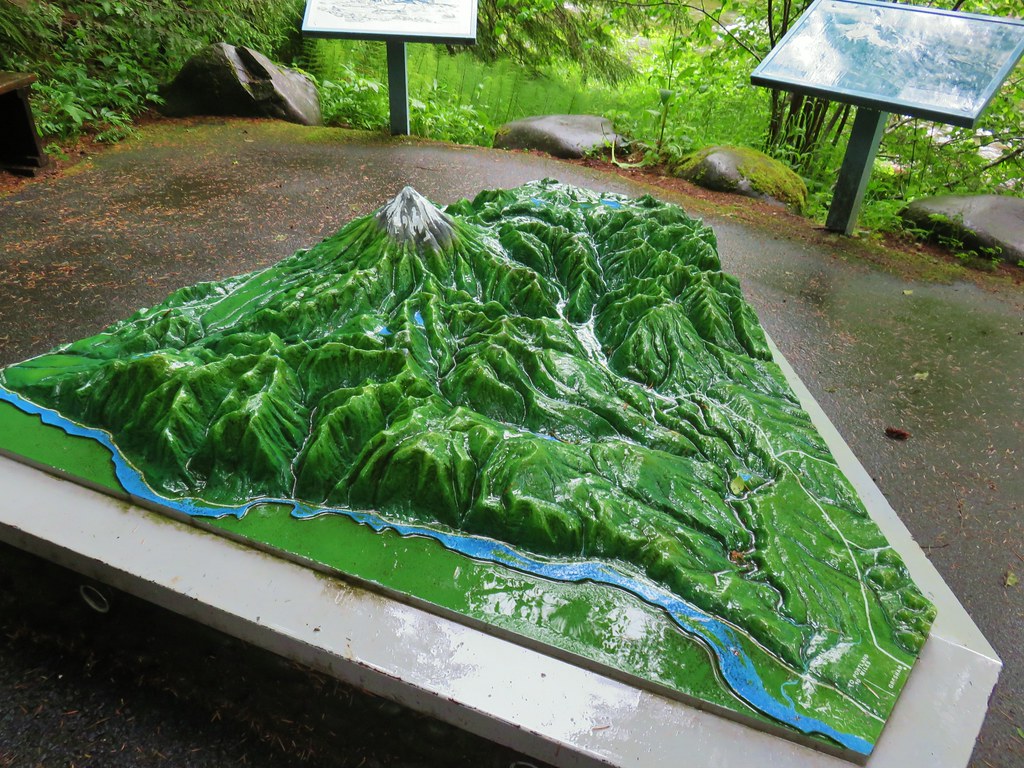
Of particular interest was a 3D model of the Salmon River drainage including Mt. Hood. It mapped out the southern and western flowing creeks and rivers drain into the Sandy River and eventually the Columbia.
IMG_9106

Further along the loop is an underwater viewing area. There were only a few small fish visible on this day but we imagined that at times it would be quite a sight.
IMG_9117

We continued on the loop which passed a sandy beach near a deep hole in the Salmon River where at times spawning steelhead trout and chinook salmon can be seen.
IMG_9124

IMG_9123

After completing this short (under a mile) informative loop we returned to the trailhead parking and walked over to a signboard for the Boulder Ridge Trail.
IMG_9132

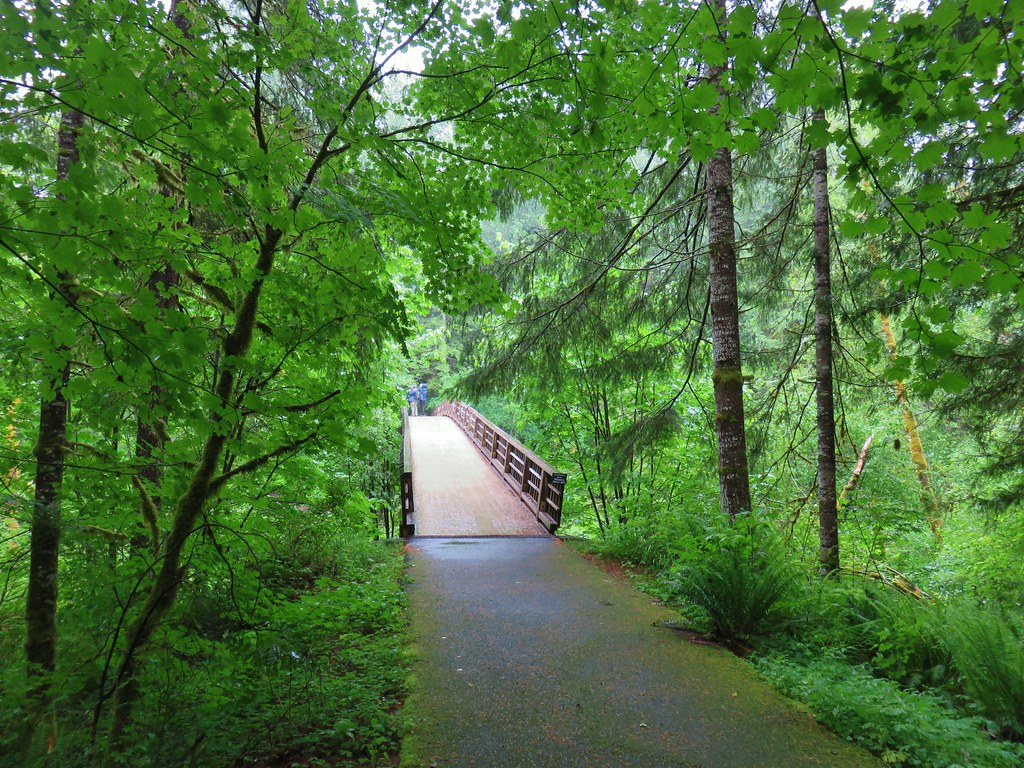
A paved path here lead to a bridge spanning the Salmon River and the start of the Wetlands Boardwalk.
IMG_9135

IMG_9137

IMG_9139

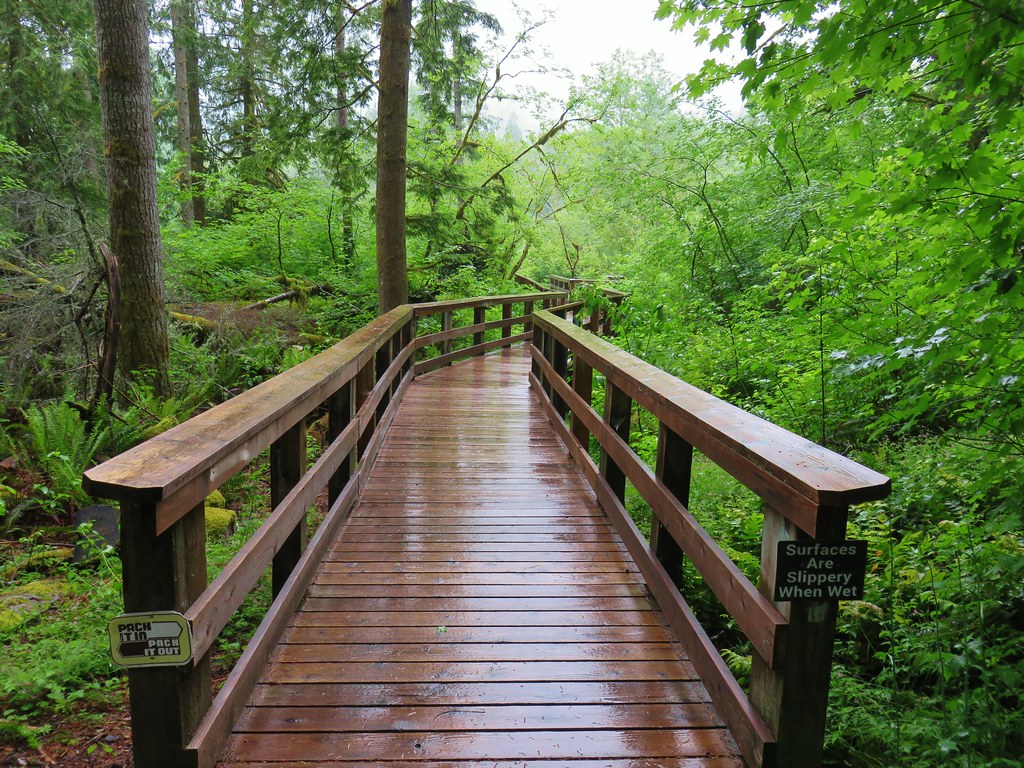
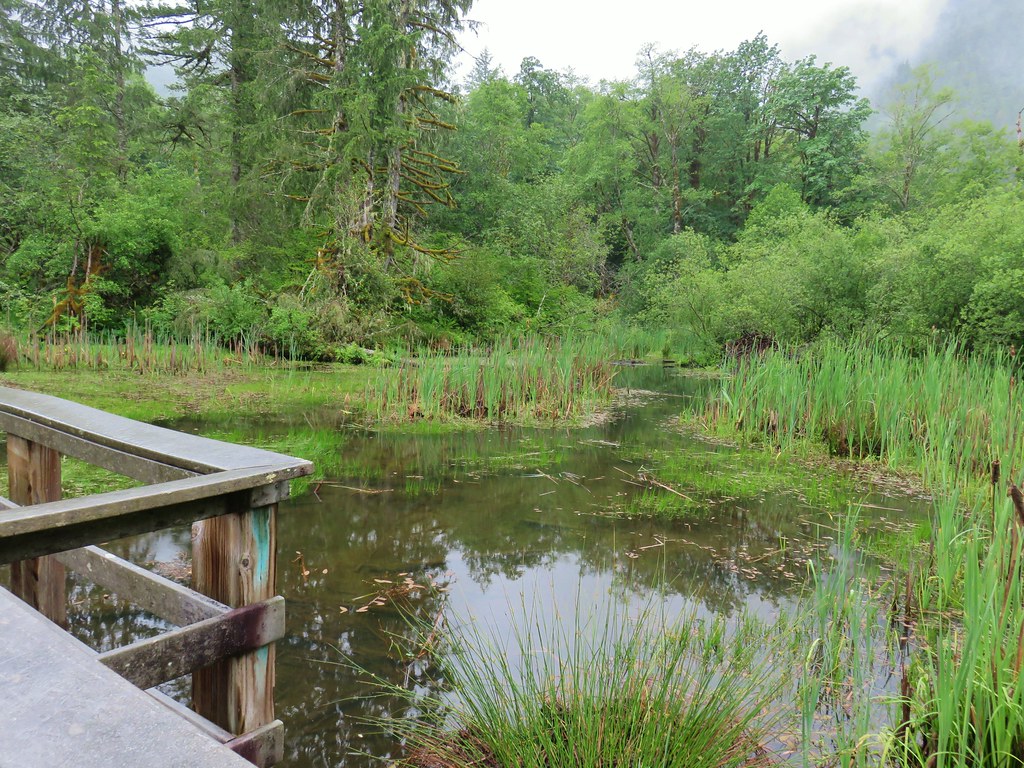
We took each of the side trails along the boardwalk starting with the detour to Cattail Marsh.
IMG_9140

IMG_9141

The next side trip was to see the results of beaver dams and how they help create the wetlands. We didn’t see any beavers (yet again) but there were some newts swimming in the waters.
IMG_9147

Next up was a “Ghost Forest” caused by rising waters caused by the beavers work.
IMG_9150

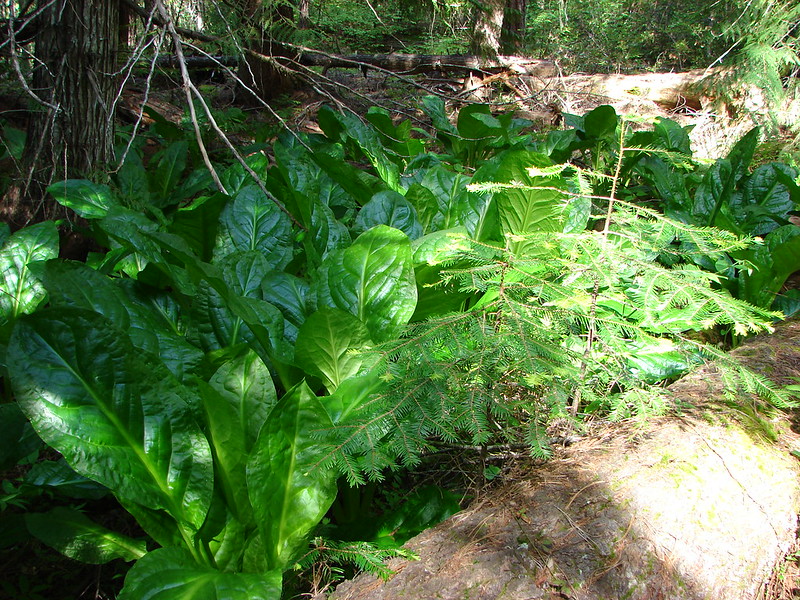
The boardwalk then passed a large amount of skunk cabbage before reaching a final detour to a view of the transition from a wetland to a stream.
IMG_9153

IMG_9155

The boardwalk ended at a junction where a left turn led to the Boulder Ridge Trail while a right turn would complete a short loop back to the parking area (also under a mile total).
IMG_9156

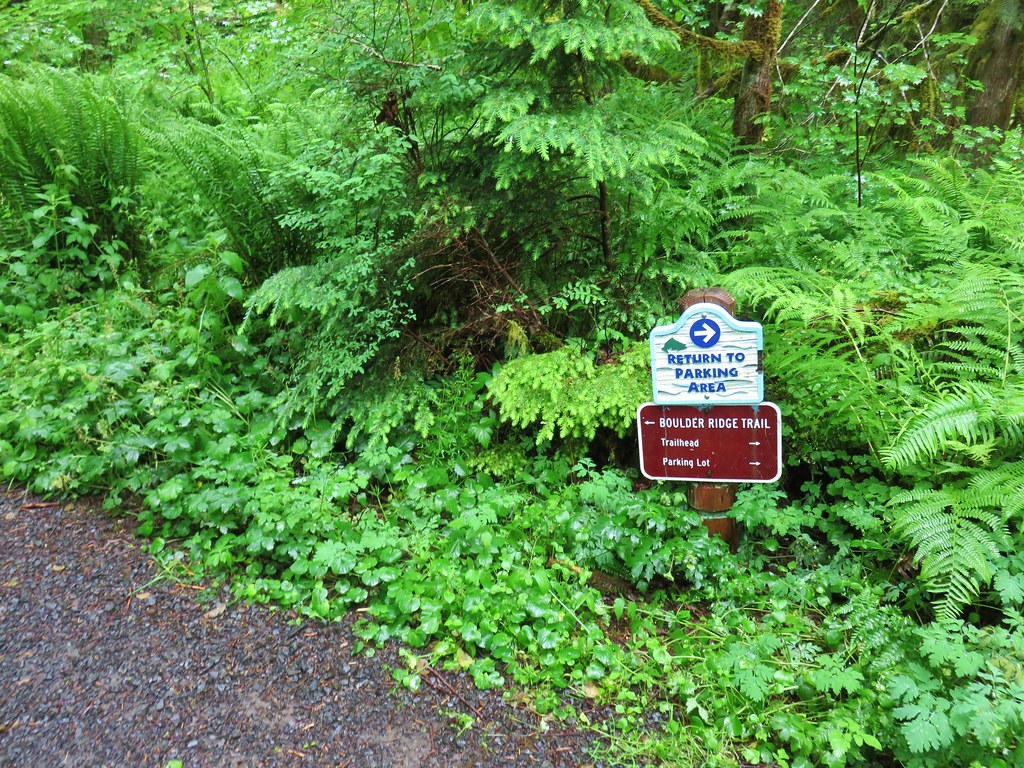
Left we went passing a sign for the Boulder Ridge Trail and signing in at a signboard.
IMG_9157

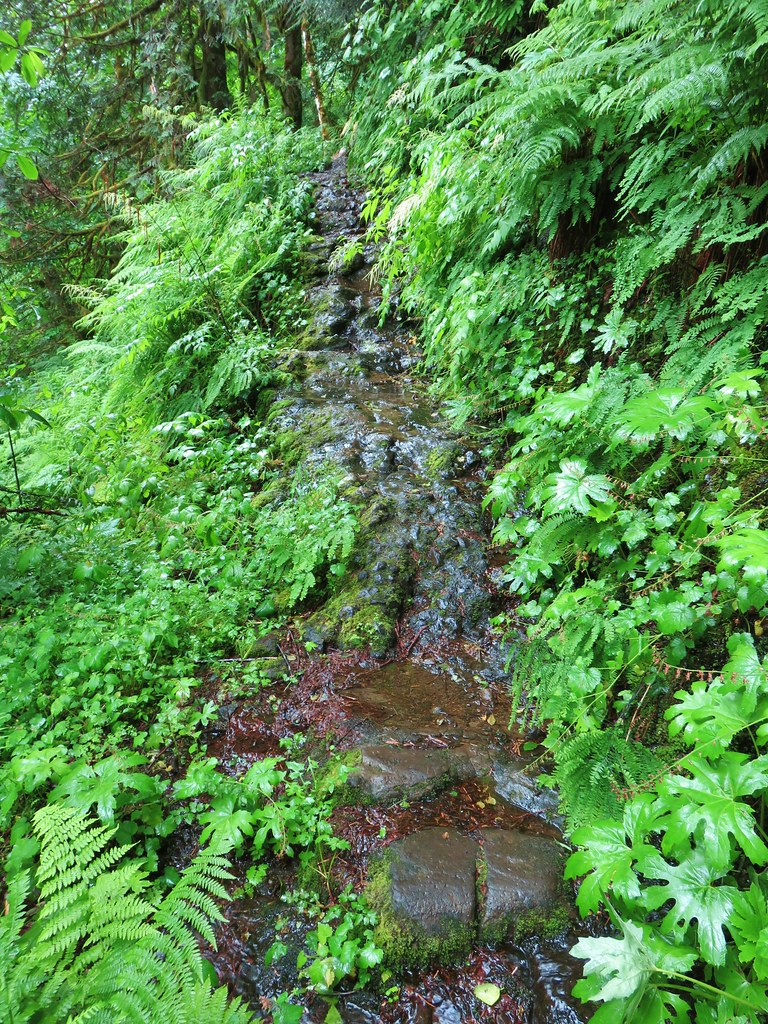
The trail wasted little time in launching uphill needing to gain 3100′ to reach the top of Huckleberry Mountain. Not only did it head uphill immediately but it crossed a rocky area that had been exposed by a series of seeps. It looked narrow and possibly slick.
IMG_9158

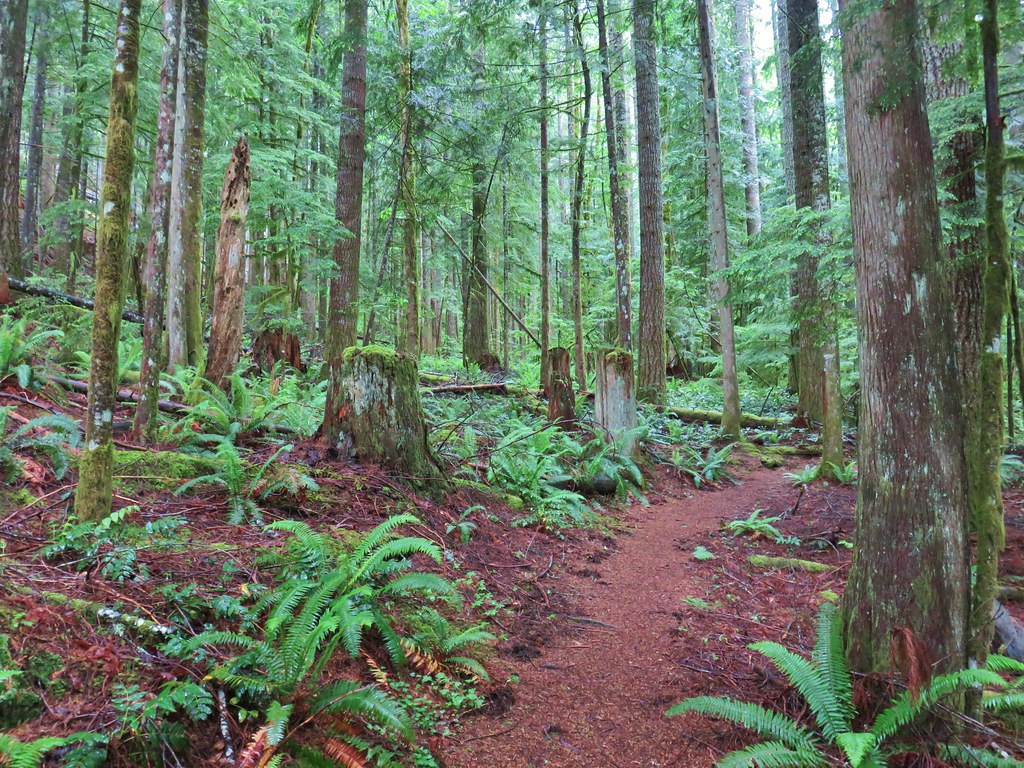
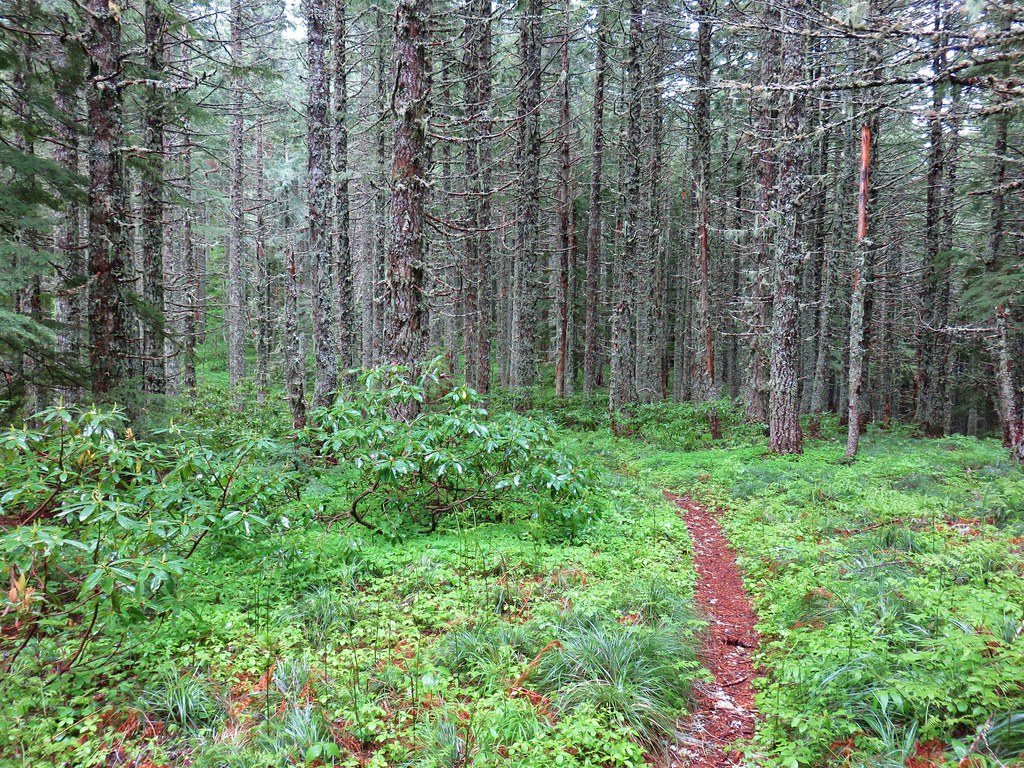
The trail climbed steeply gaining 1400′ in then next two and a quarter miles where a rocky viewpoint looked into clouds instead of Mt. Hood. Just a bit before reaching the viewpoint we had entered the Salmon-Huckleberry Wilderness. One thing that has never disappointed us about the Salmon-Huckleberry Wilderness and surrounding area is the beauty of the forest. The clouds might have been blocking our views of Mt. Hood but the fog added a nice element to the forest.
IMG_9164

IMG_9166

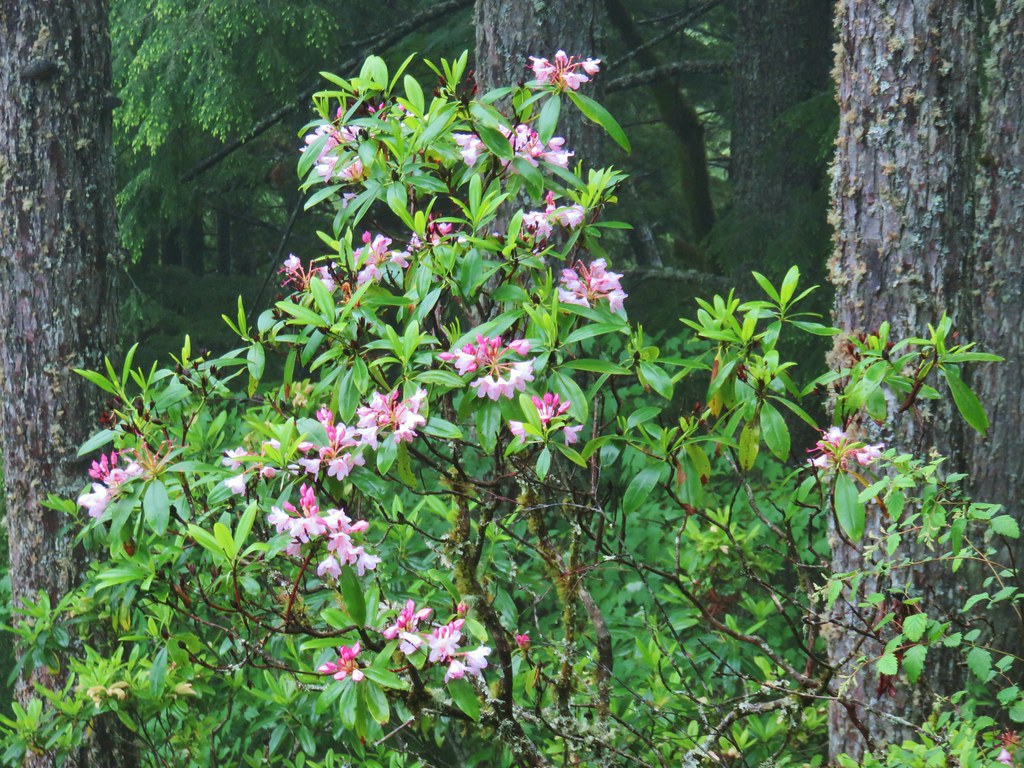
IMG_9169Rhododendron

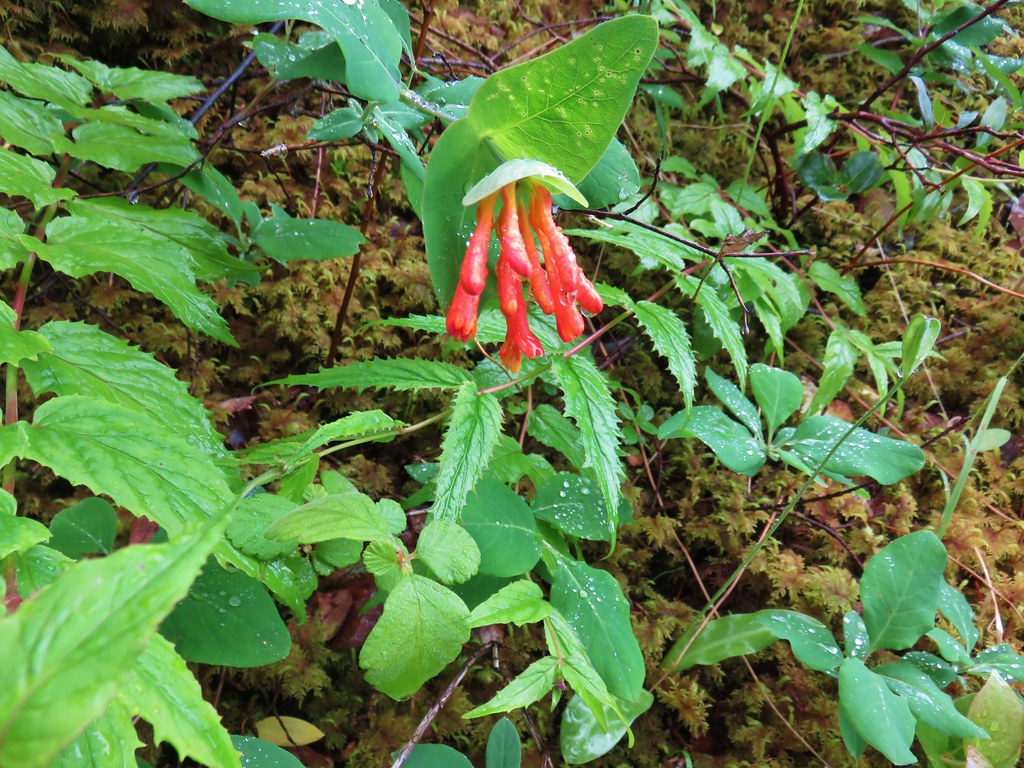
IMG_9171Honeysuckle

IMG_9172Beargrass and rhododendron along the trail.

IMG_9180Coralroot and sourgrass

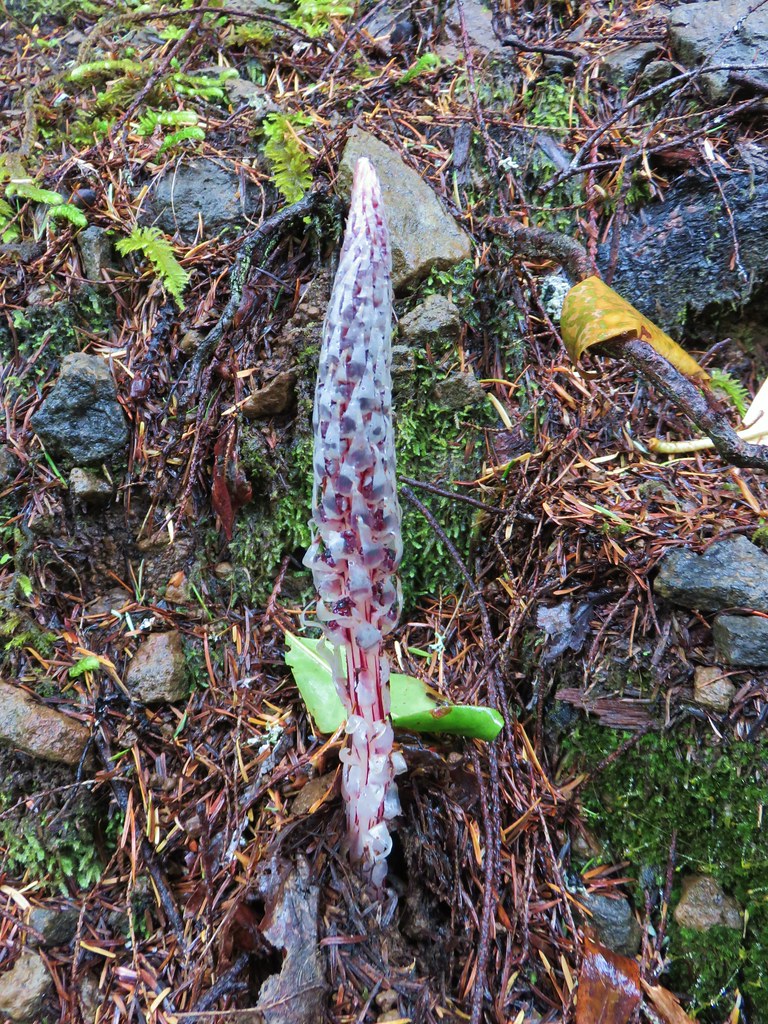
IMG_9188Candy stick

IMG_9194

IMG_9197Damp iris

IMG_9202

IMG_9216

We passed by the viewpoint hoping that maybe there would be a view by the time we were headed back down. The trail continued to climb gaining another 800′ over the next mile and a quarter where another rock viewpoint looked east.
IMG_9220

IMG_9222Green lichen

IMG_9236

IMG_9255A few trees peaking through the clouds along McIntyre Ridge (post)
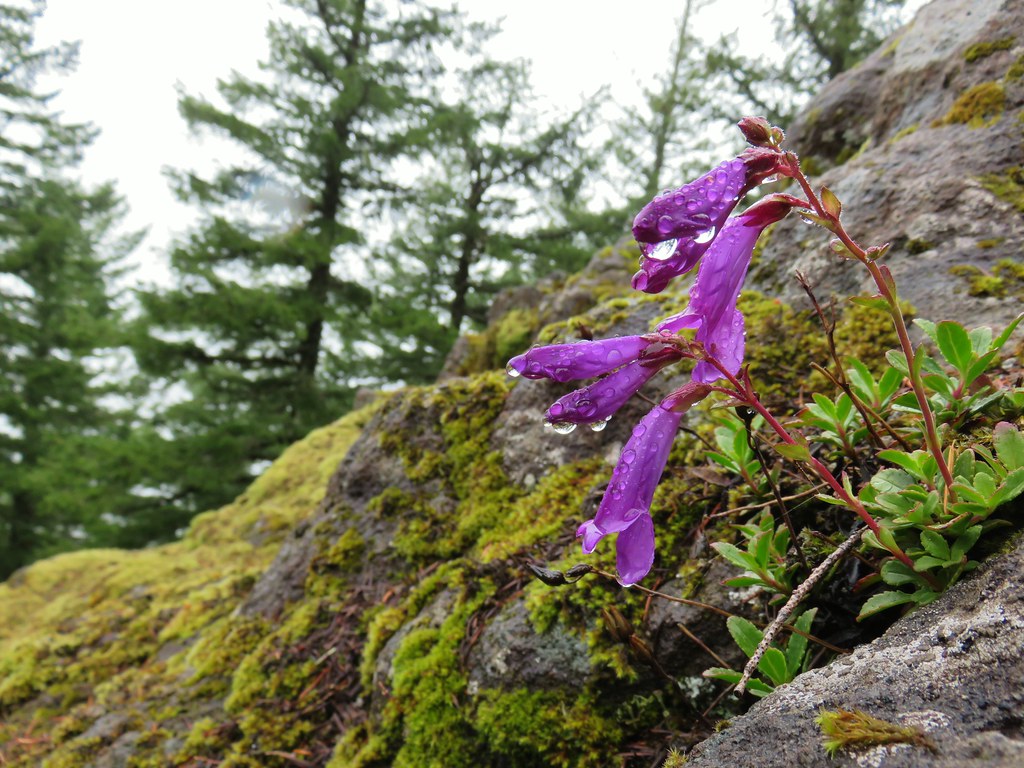
With no view to speak of we turned our attention to the flowers in the area.
IMG_9248Penstemon

IMG_9245Paintbrush

IMG_9250Biscuitroot

IMG_9252Beargrass

IMG_9358Lupine

For the next half mile the trail climbed more gradually spending some time on the ridge top amid a carpet of green before dropping off and arriving at a small seasonal stream where some Scouler’s corydalis was blooming.
IMG_9263

IMG_9270

IMG_9274

Another half mile of climbing brought us to the end of the Boulder Ridge Trail at a signed junction with the Plaza Trail.
IMG_9283

The only choice to continue here was to turn right onto the Plaza Trail as there is no longer any discernible continuation of it to the left of the junction.
IMG_9284

It was almost 11:45 now and we had been hoping that the skies would be starting to clear but looking up revealed no sign of it happening anytime soon. We still had approximately a mile and a half to our goal though so we sallied forth. After a brief respite from climbing the trail headed uphill into more fog.
IMG_9288

IMG_9292

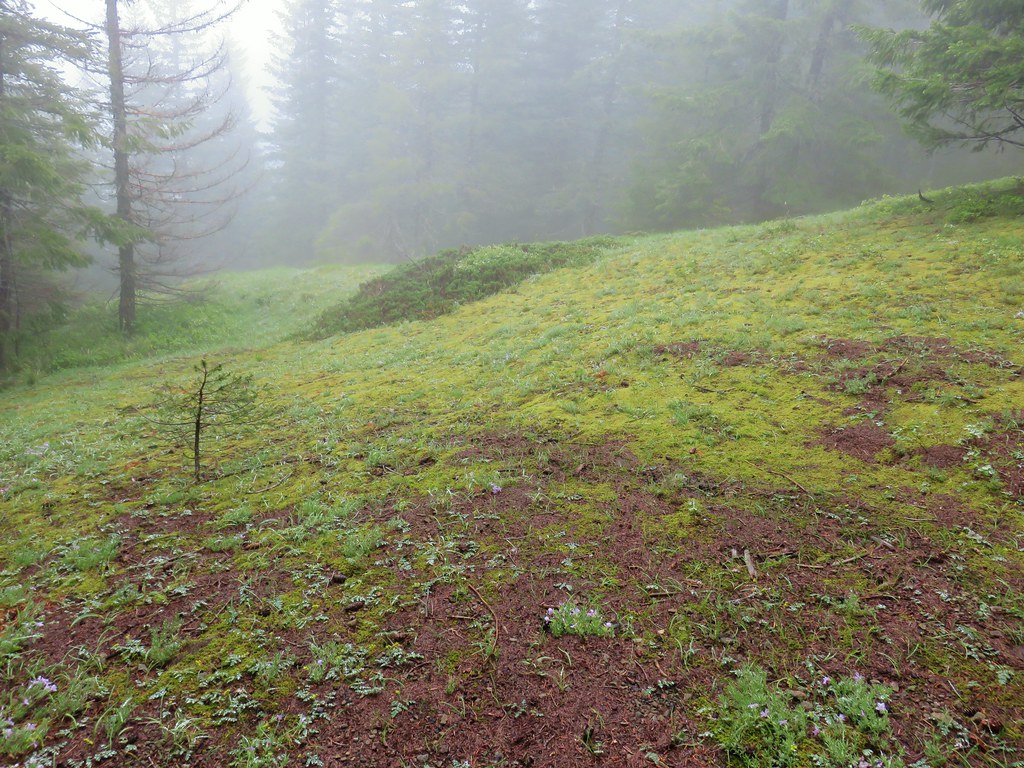
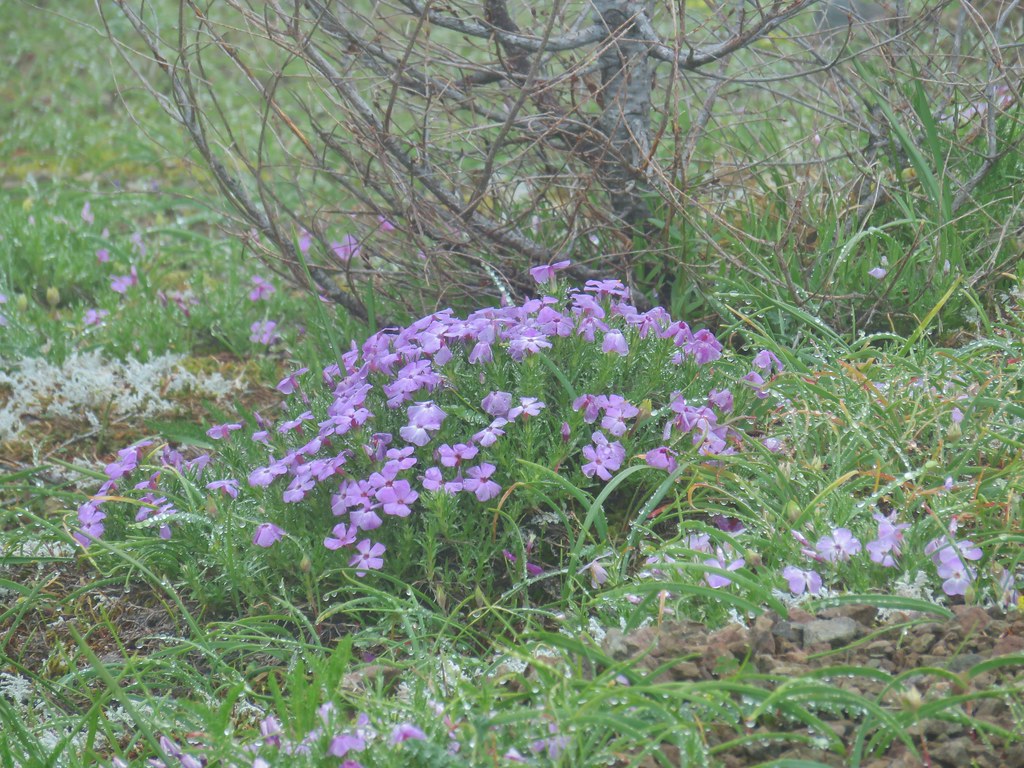
As the trail passed the 4000′ elevation it passed through a small grassy meadow where a few phlox were blooming.
IMG_9302

IMG_9312

As the trail gained the final 280′ of elevation there were more open areas where indian plum was blooming while the beargrass was just starting.
IMG_9303

IMG_9313

IMG_9315

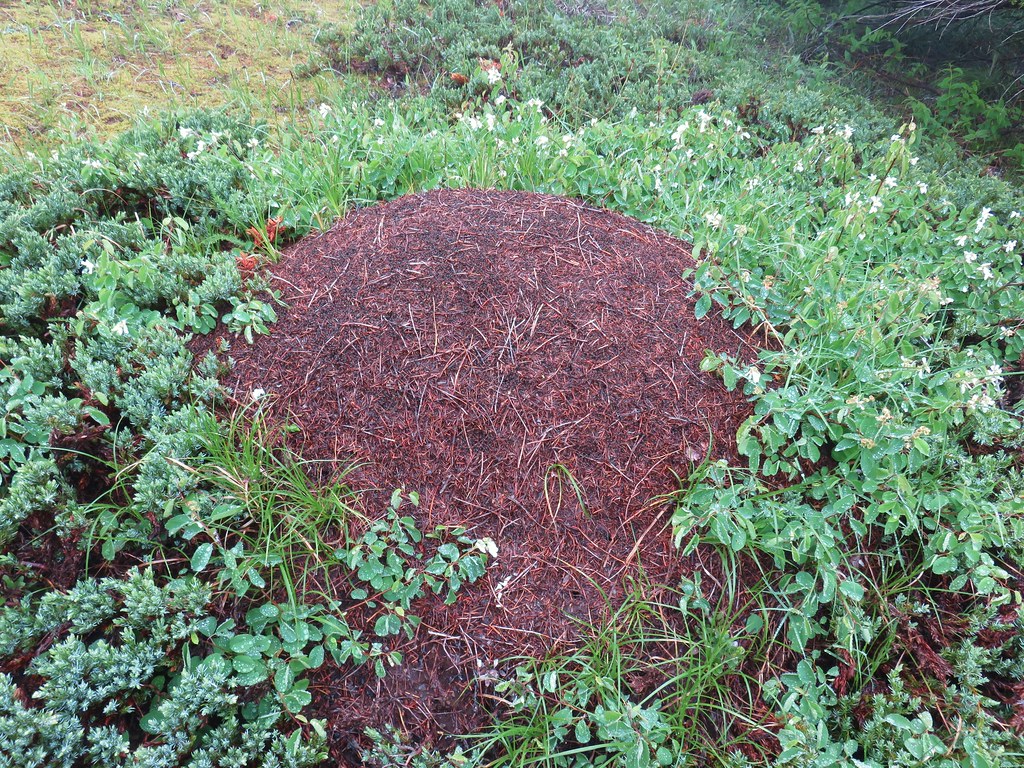
We passed by a large ant pile.
IMG_9306

IMG_9305

When we reached the viewpoint the clouds had not only not lifted but they were actually worse than they had been in 2015.
IMG_93162019

Huckleberry Mountains summit2015

Slightly disappointed we made our way to a rock outcrop and again looked to the nearby flowers instead of Mt. Hood.
IMG_9317

IMG_9319Phlox

IMG_9329Paintbrush

IMG_9333Penstemon

IMG_9342Avalanch lily

IMG_9322Wild onion

We stayed for a bit looking for any hint of the clouds breaking but they sky remained a canvas of white so we started back down shortly before 1pm. The view had changed quite a bit at the eastern facing viewpoint when we arrived 45 minutes later. It was still overcast but the clouds had lifted noticeably.
IMG_9353

By the time we reached the lower viewpoint that we had not stopped at earlier there was a significant amount of blue sky overhead.
IMG_9360

The only problem was a mass of clouds directly over (or in front of) Mt. Hood.
IMG_9363

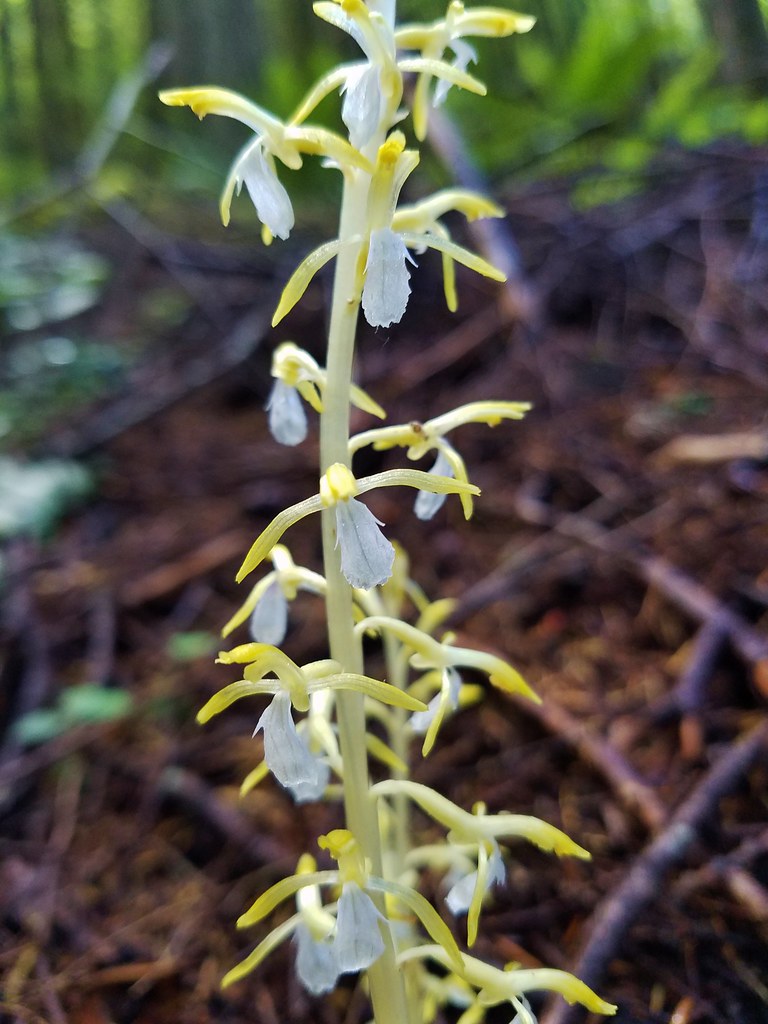
You win some you lose some. We made our way back down to the Salmon River stopping to admire some yellow coral root along the way.
20190608_145138

20190608_145110

IMG_9374

Despite missing out on the view again the 12.9 mile hike was a good one albeit challenging with over 3000′ of elevation gain. The interpretive trails were a lot of fun and the Mt. Hood National Forest in the Salmon-Huckleberry Wilderness was as scenic as ever. Happy Trails!

Flickr: Boulder Ridge

Categories
High Cascades Hiking Mt. Hood Area Oregon Trip report

Buck Peak

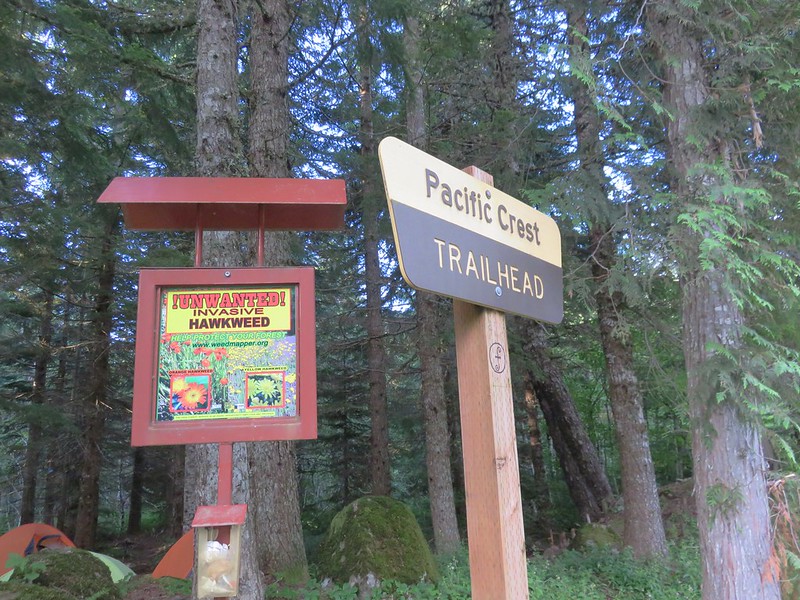
A week out from our somewhat cloudy visit to the Mount Margaret Backcountry we found ourselves heading back into the clouds on the Pacific Crest Trail. Our goal for the day was the viewpoint atop Buck Peak which is just off the PCT to the NW of Lost Lake in the Mt. Hood National Forest. We began our hike at the Pacific Crest Trailhead at Lolo Pass.
IMG_2482

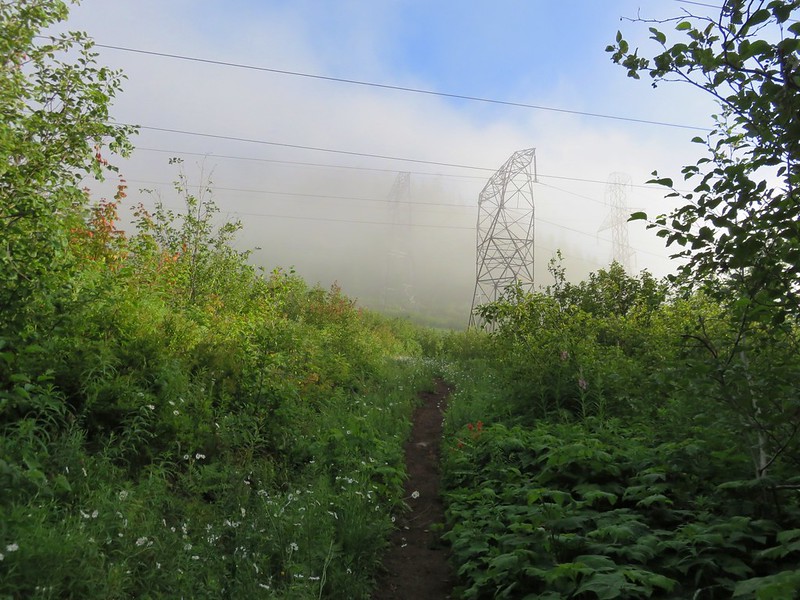
We headed north on the PCT which quickly passed under some power lines where we met our first clouds.
IMG_2487

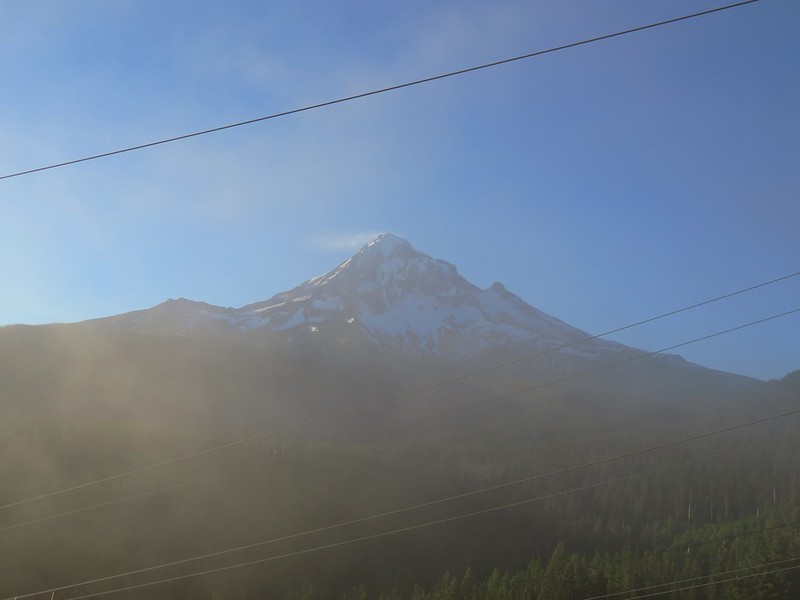
Looking back toward Mt. Hood from the power lines it looked like blue skies around the mountain.
IMG_2492

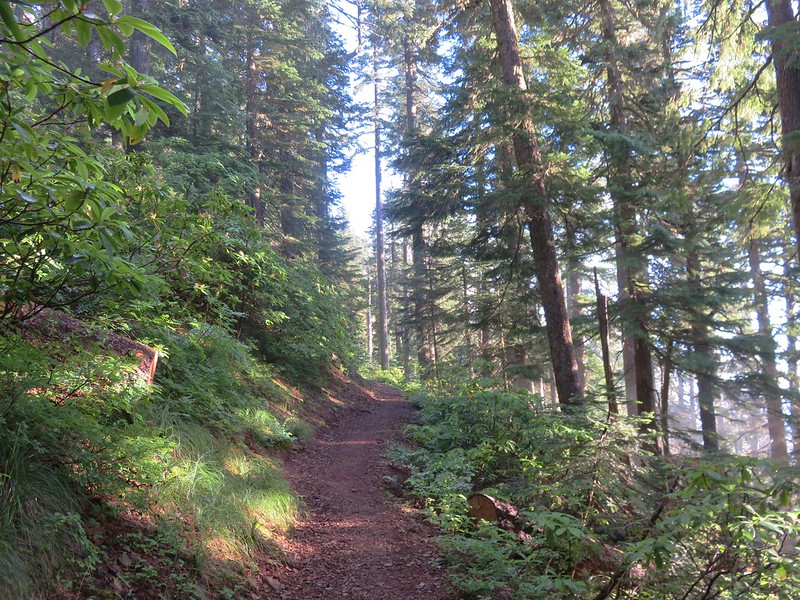
The PCT climbed gently up a ridge where we had a few views between the clouds that were passing over.
IMG_2498

IMG_2516

IMG_2533

IMG_2530

IMG_2538

A decent variety of flowers could be found along the more open portions of the trail.
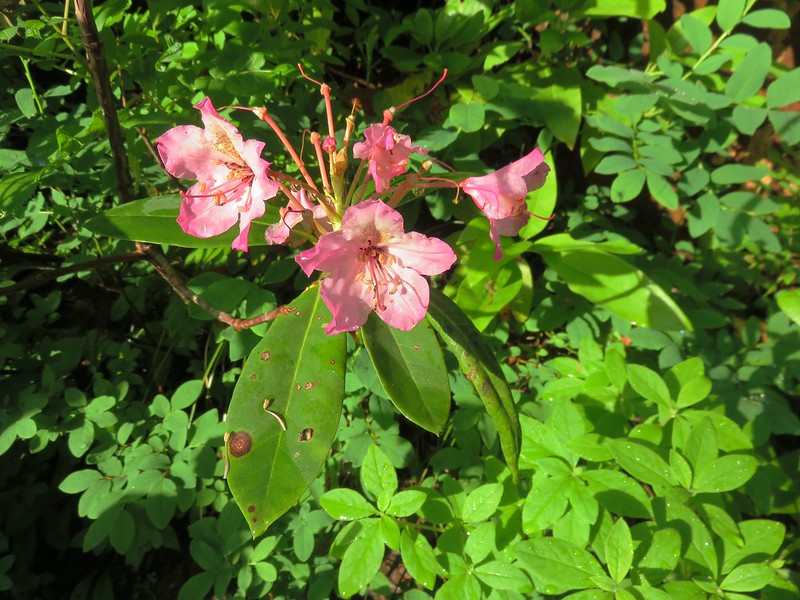
Rhododendron
IMG_2493

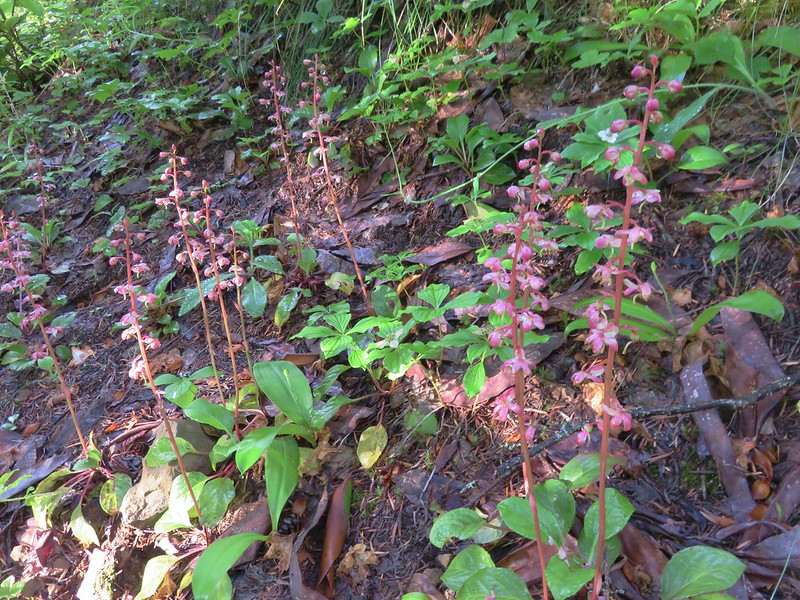
Pink pyrola
IMG_2496

Tiger lilies
IMG_2506

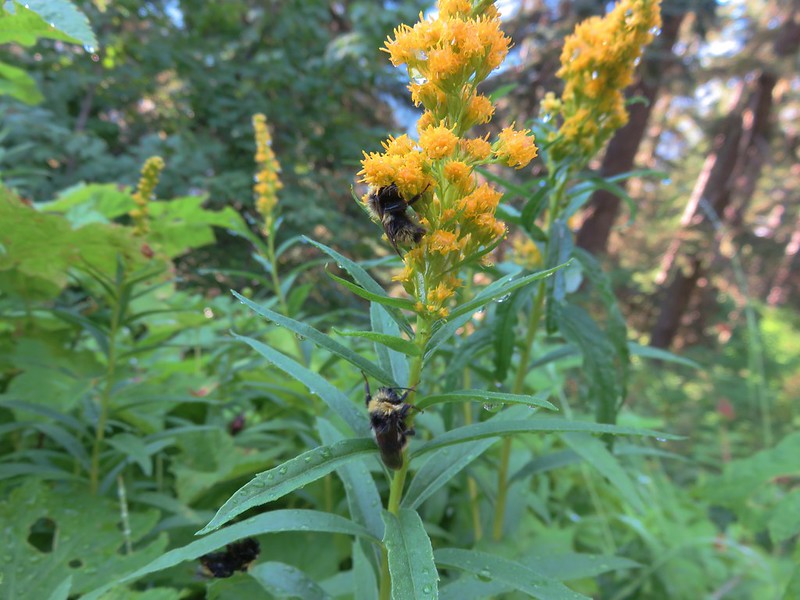
Bees on goldenrod
IMG_2512

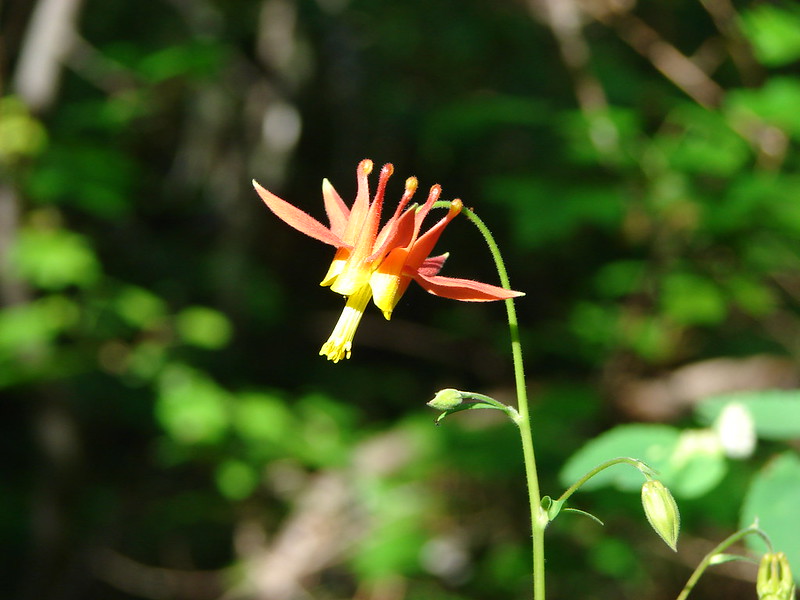
Columbine
IMG_2520

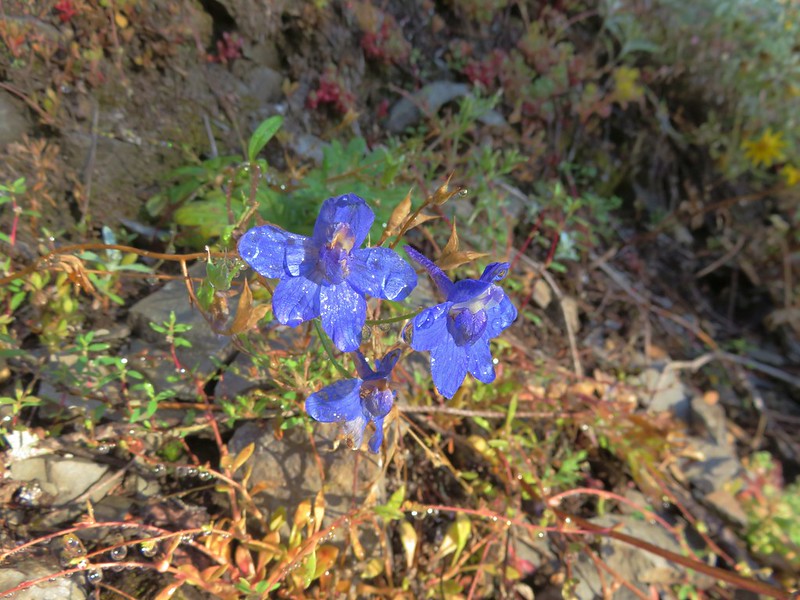
Larkspur
IMG_2523

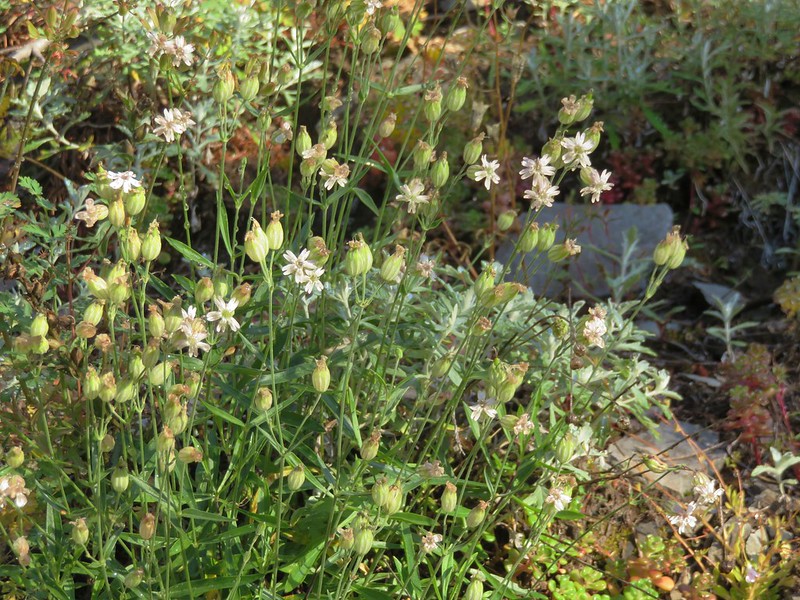
Catchfly
IMG_2526

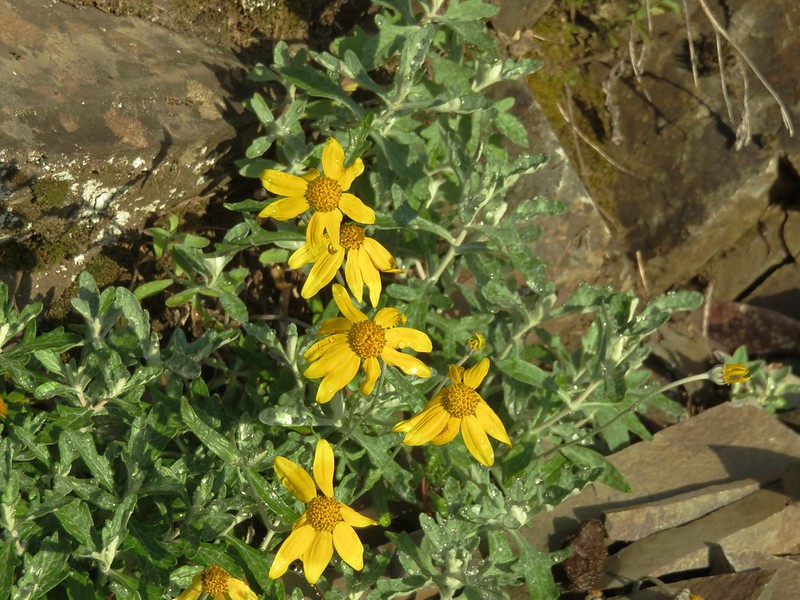
Oregon sunshine
IMG_2529

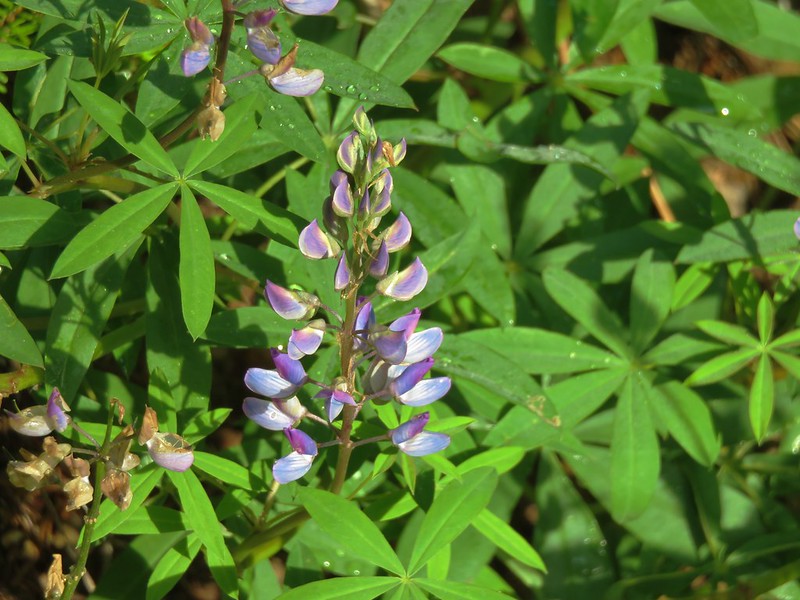
Lupine
IMG_2541

Penstemon
IMG_2544

The trail soon entered the trees where it remained for the majority of remainder of the hike to Buck Peak. The forest was full of huckleberries and some salmonberries.
IMG_2545

IMG_2548

It was increasingly foggy as we gained elevation.
IMG_2552

Approximately 4.5 miles from Lolo Pass we arrived at a junction with the Huckleberry Mountain Trail which led down to Lost Lake.
IMG_2553

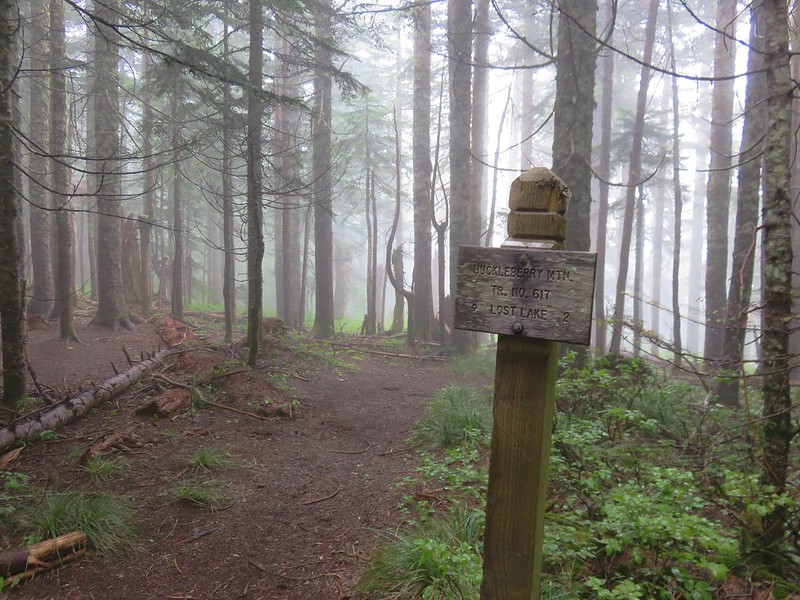
We continued on the PCT passing a spur trail to Salvation Spring and heading further into the clouds. There were a number of downed trees across the trail after the Huckleberry Mountain junction but nothing impassable. With the forest and the clouds, views were few but we did get a couple of glimpses of Lost Lake along the way. The majority of the time we were just looking at the different flowers along the way.
Beargrass
IMG_2553

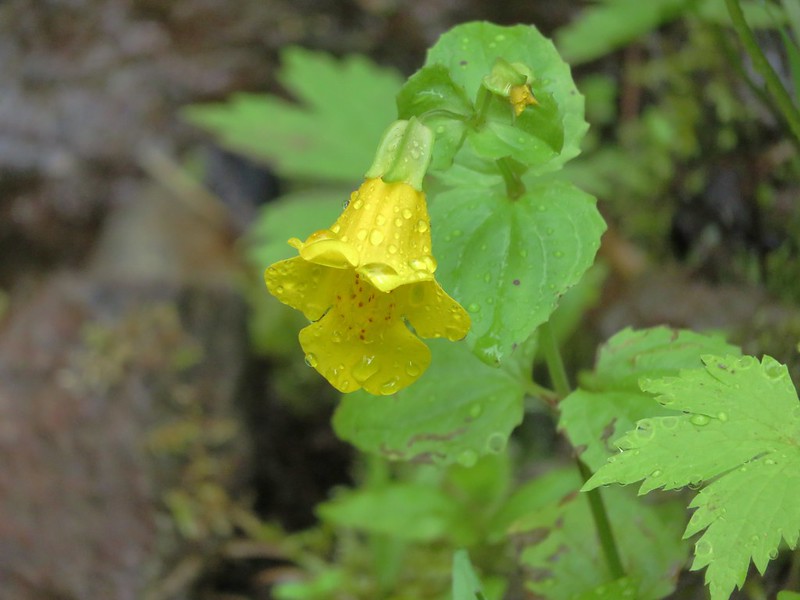
Monkeyflower
IMG_2556

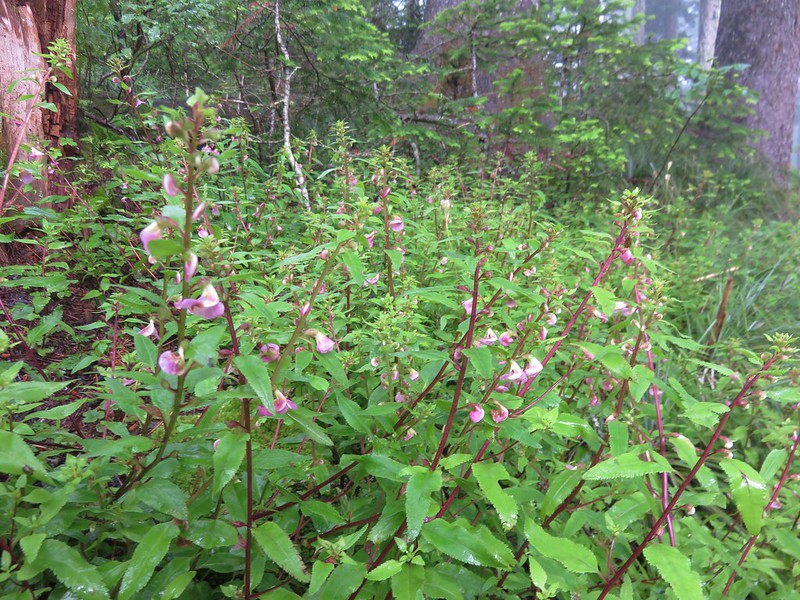
Parrot’s beak lousewort
IMG_2557

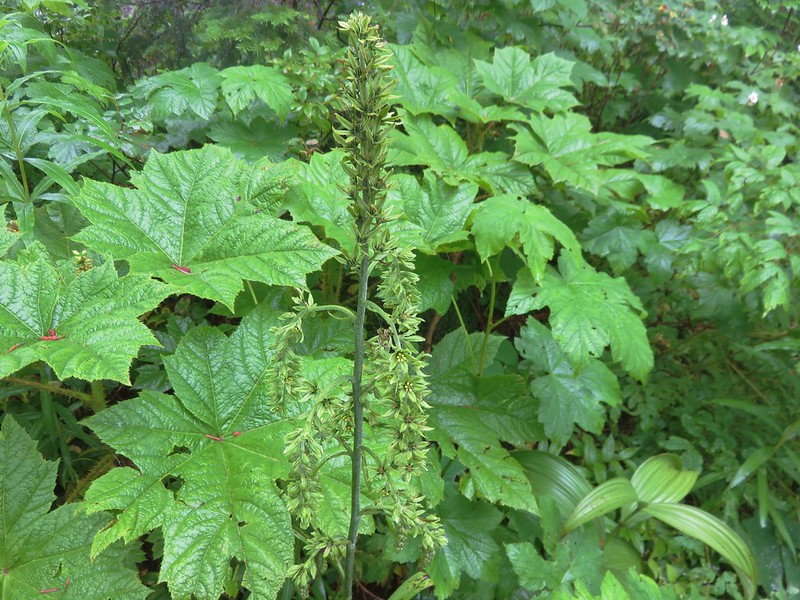
False hellbore
IMG_2561

IMG_2561

Coralroot
IMG_2568

IMG_2586

The trail to Buck Peak was unsigned but easy to spot as it split up and to the right from the PCT.
IMG_2590

The trail was a little brushy and the clouds had left the plants rather damp which in turned soaked us pretty quickly.
IMG_2591

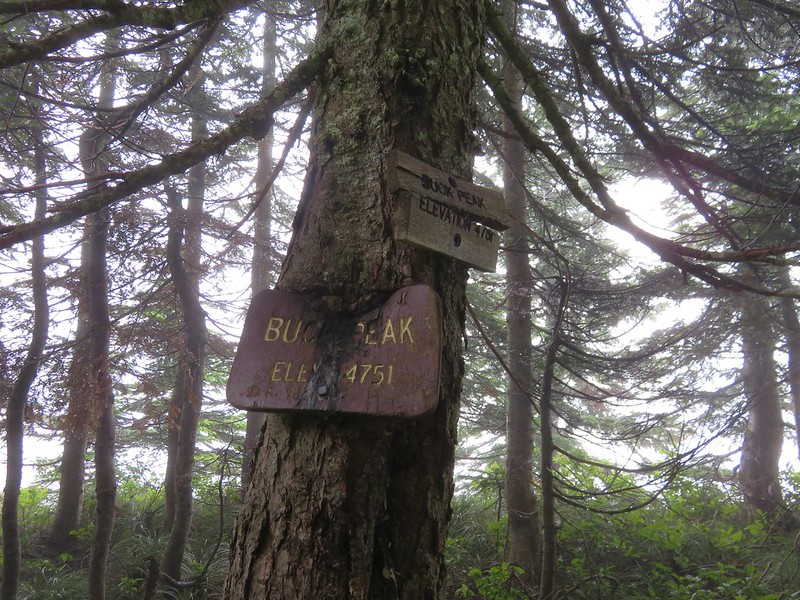
After a half-mile on the Buck Peak Trail we arrived at the signed summit.
IMG_2594

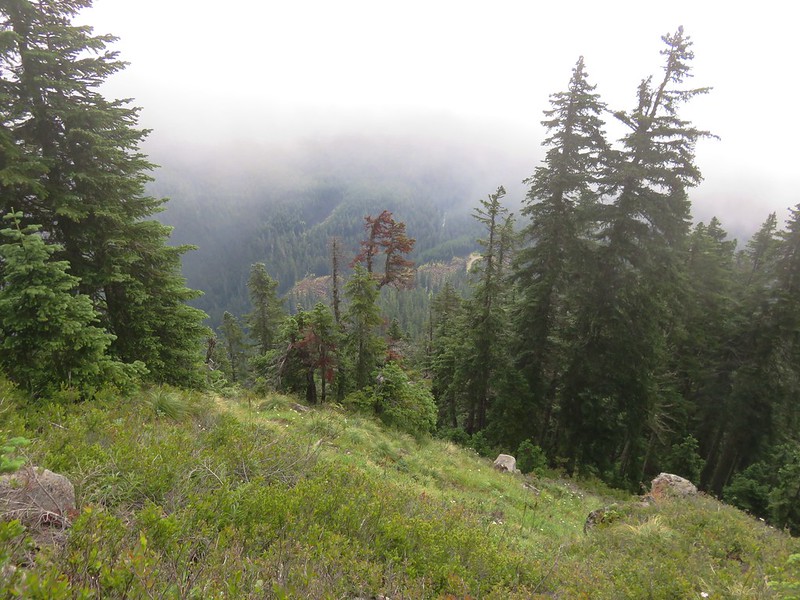
The panoramic viewpoint of several Cascade Mountains was on the fritz and we were lucky to get a couple of looks at Lost Lake below.
IMG_2599

IMG_2603

IMG_2605

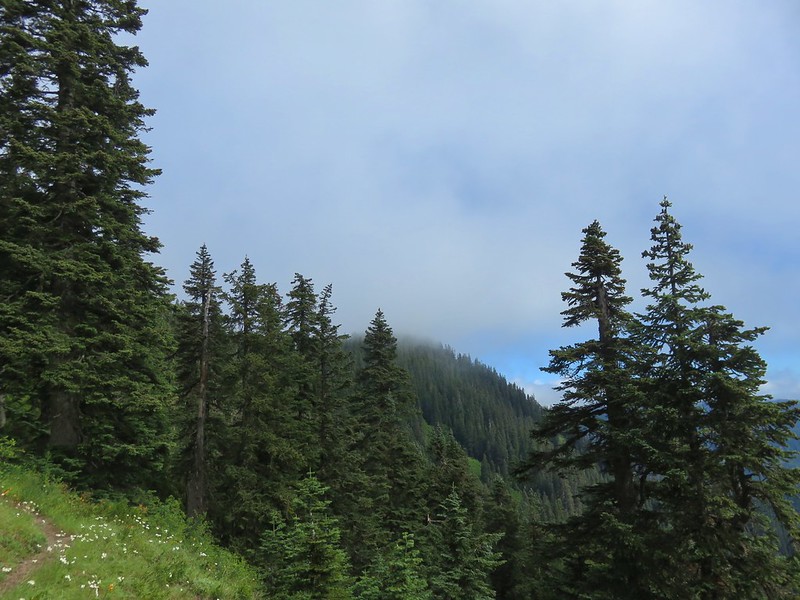
We sat on the rocky viewpoint for awhile watching the clouds pass over hoping to wait them out but finally decided it could be hours before the view cleared and headed back down. Things had already cleared up some along the PCT and the views were starting to open up as we made our return trip.
Lost Lake Butte above Lost Lake
IMG_2619

IMG_2622

Buck Peak still in a cloud.
IMG_2624

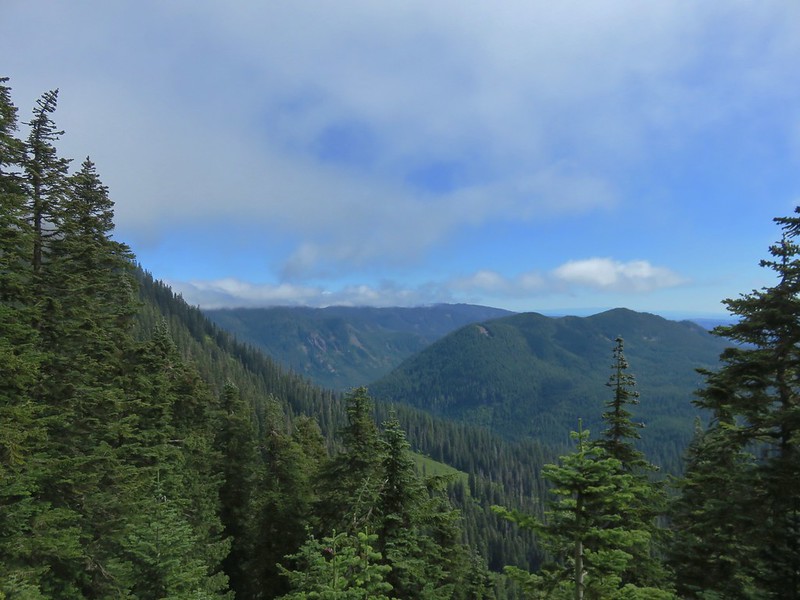
Eventually the sky had cleared enough to provide some great views of Lost Lake, Mt. Hood, and even Mt. Adams in Washington.
IMG_2630

IMG_2641

IMG_2653

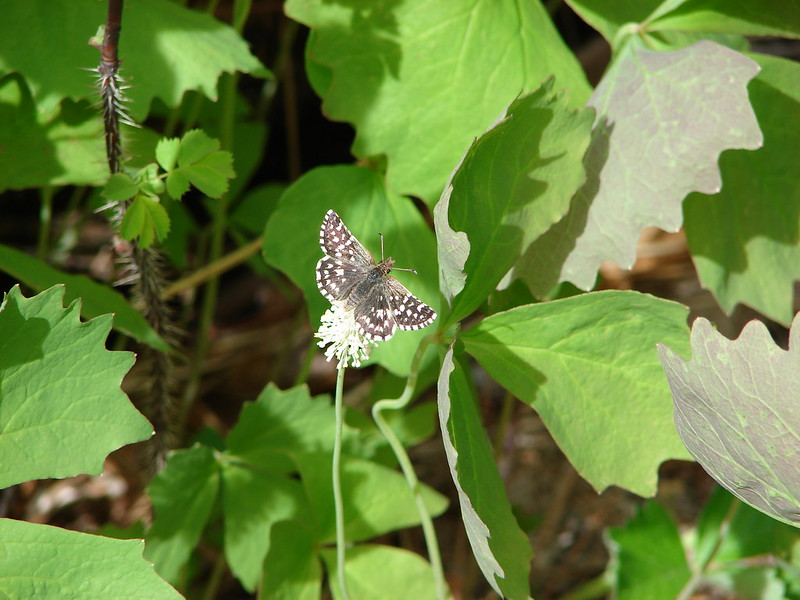
The butterflies had come out in the afternoon and as we passed the rockier section of trail they were busy pollinating the flowers.
IMG_2665

IMG_2676

Mt. Hood loomed large as we passed under the power lines and finished up our hike.
IMG_2674

The hike was over 15 miles round trip but really didn’t feel that long. The approximately 1500′ of elevation gain was gradual and spread out nicely. One item to note is that this section of the PCT and the Buck Peak Trail are in the Bull Run Watershed Management Area which is the primary source of drinking water for Portland and is closed to the public. Hikers are required to remain on the trails within the area’s boundary. Happy Trails!

Flickr: https://www.flickr.com/photos/9319235@N02/albums/72157671458188065

Categories
Badger Creek Area Hiking Oregon Trip report

Fifteenmile Creek

An unusually wet forecast had us looking for an alternative hike this past week.  I was looking for a hike that didn’t have a mountain view as it’s main focus and if there was less of a possibility of getting rained on that would be a bonus.  In looking at our list of “to-do” hikes Fifteenmile Creek stood out as a good option.  The hike is in the Mt. Hood National Forest east of Mt. Hood and Lookout Mountain.  A loop descends from Fifteenmile Campground through the ecological transition zone between the Cascade Mountains and Central Oregon.

The forecast looked promising with Mt. Hood acting as the rain shadow for this area so we headed out the door at 4:30am and made the two and a half hour drive past Mt. Hood to Highway 35. To reach Fifteenmile Campground from Hwy 35 we took Forest Road 44 for 8.5 miles to Forest Road 4420 where we turned right for 2.3 miles to Forest Road 2730. The campground was 1.9 miles down FR 2730.  A bonus for this hike is the roads were paved the entire way with minimal potholes.
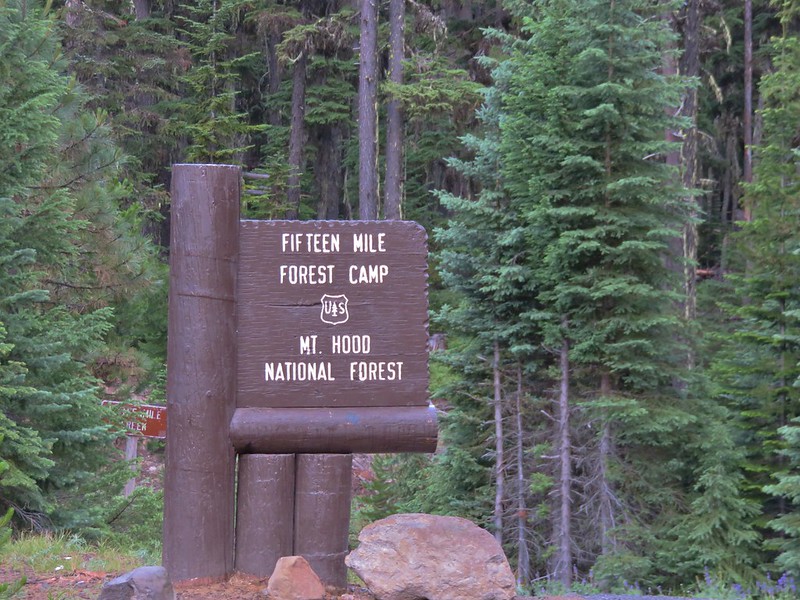
Fifteen Mile Forest Camp entrance

We parked in a small two car parking area near the trailhead and set off on the Fifteenmile Trail toward the Cedar Creek Trail junction.
Fifteenmile Trail

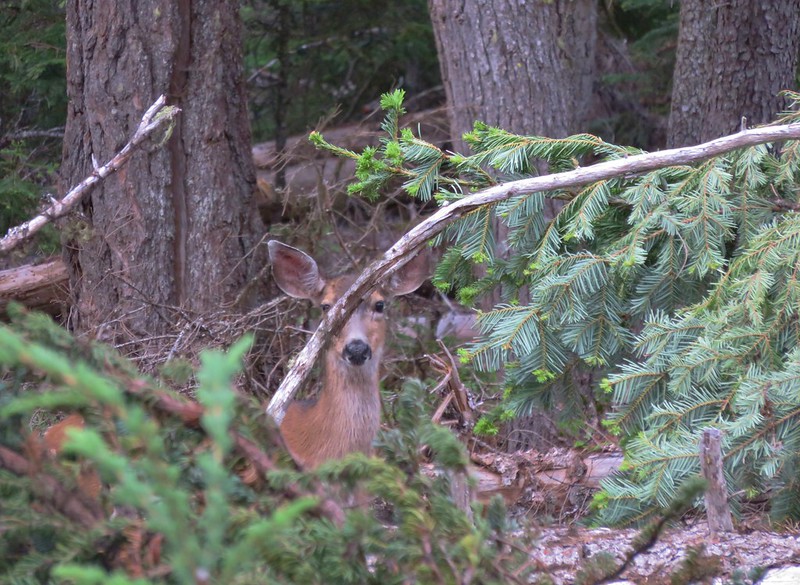
We were not alone in the forest.
Doe

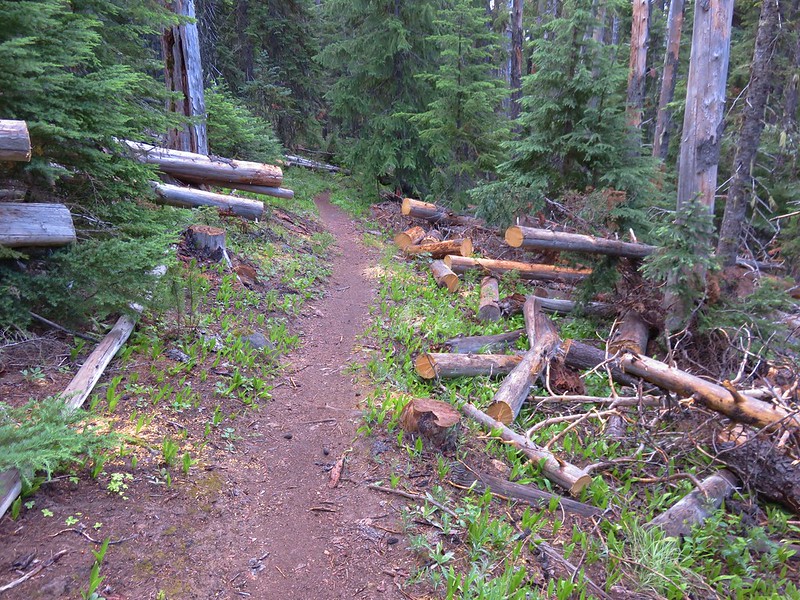
The trail descended along Fifteenmile Creek for a quarter mile to the start of the loop. The trail had been logged out a month earlier and was in great shape despite evidence that there had been a lot of trees down.
Fifteenmile Trail

Footbridge over Fifteenmile Creek

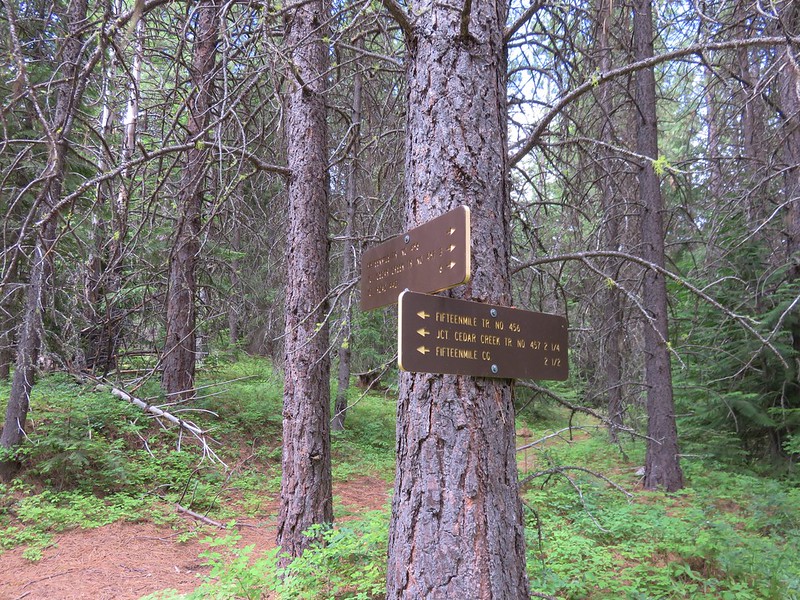
Fifteenmile Trail sign

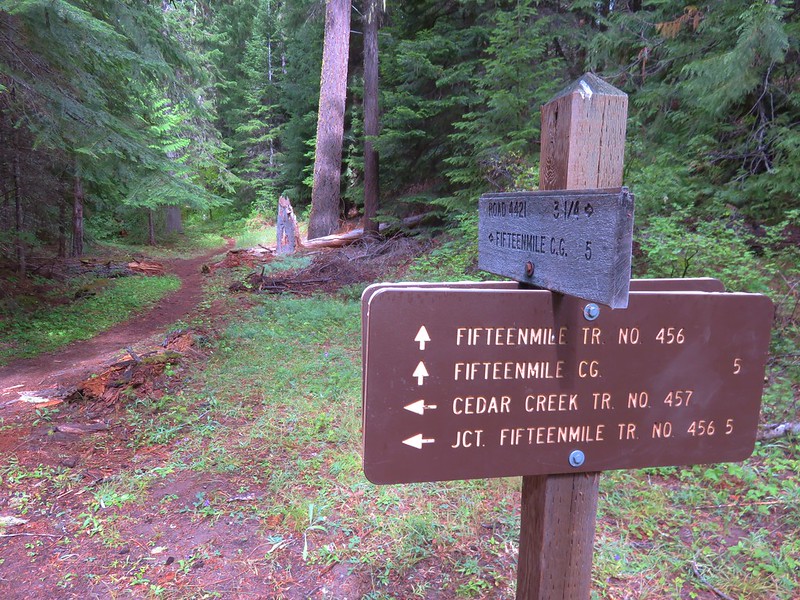
The sign at the start of the loop was a little confusing in that it showed the Cedar Creek Trail jct as being another quarter mile to the right, but the trail sign at the trailhead had also listed the jct as a quarter mile away. We did not see another trail junction along the Cedar Creek Trail until it rejoined the Fifteenmile Trail so it would seem the sign is an error. In any event we followed the pointer for the Cedar Creek Trail and crossed Fifteenmile Creek.
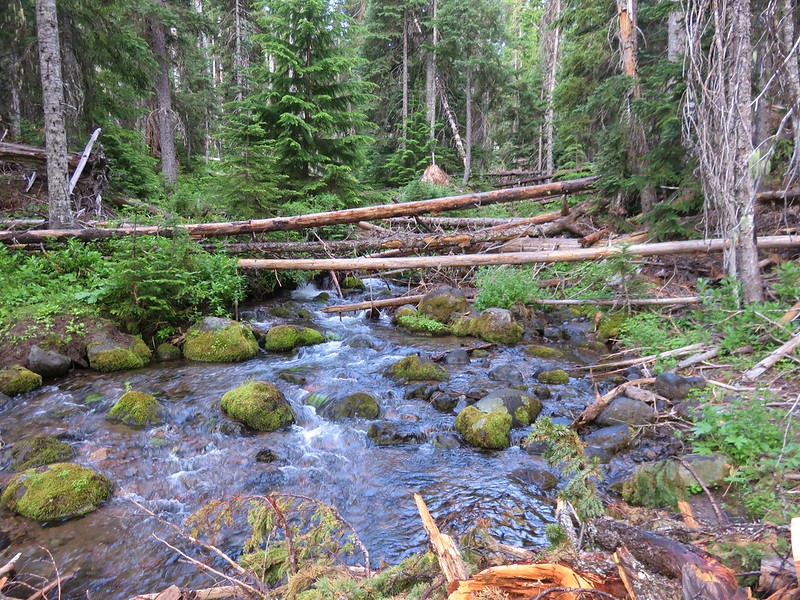
Fifteenmile Creek

The Cedar Creek Trail climbed up through a forest to a ridge top where it began to pass through meadows and by rocky viewpoints across the Fifteenmile Creek Valley.
Cedar Creek Trail

Cedar Creek Trail

Cedar Creek Trail

View from the Cedar Creek Trail

Andesite

It was too late in the year for the best of the wildflowers in the area but there were still quite a few along the way.

Lupine
Lupine

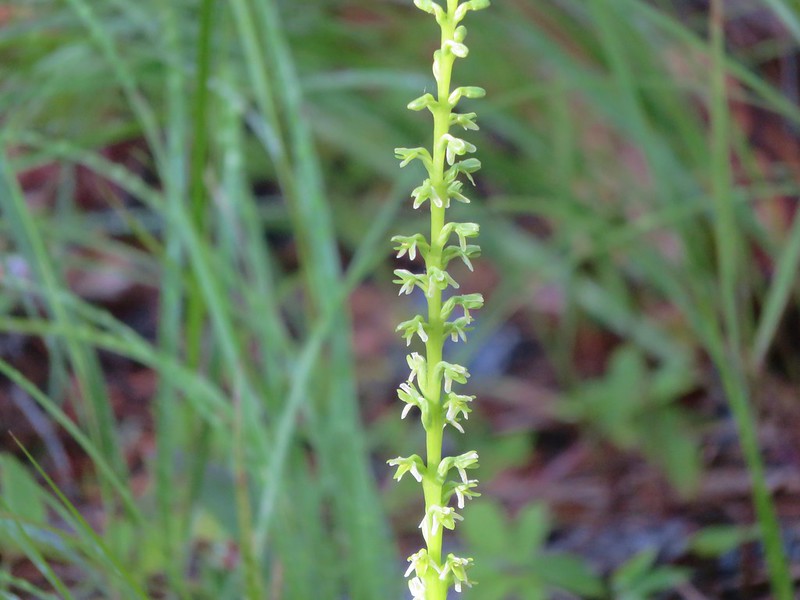
Slender bog orchid
Slender bog orchid

Prince’s pine
Prince's pine

Scouler’s bluebell
Scouler's bluebell

Worm-leaf stonecrop
Worm-leaf stonecrop

Wild onion
Wild onion
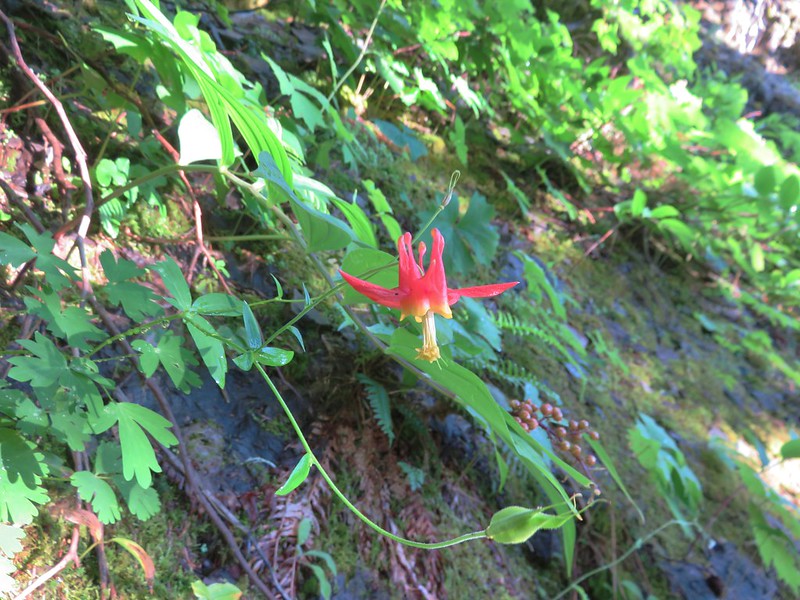
The trail was now descending along the ridge and as it did so we were dropping down toward Central Oregon. We were now in the pine-oak grassland zone which sits between the forests of Mt. Hood and the high desert of Central Oregon. Manzanita, ponderosa pine, and juniper trees began to appear and we were passing more interesting andesite formations.
Cedar Creek Trail

A couple of Juniper trees along the Cedar Creek Trail

Cedar Creek Trail

Andesite rock piles

The ridge began narrowing as we approached the lower junction of the Cedar Creek and Fifteenmile Trails. The flat plain of Central Oregon lay straight ahead reveling the stark contrast in the topography between the Cascades and High Desert.
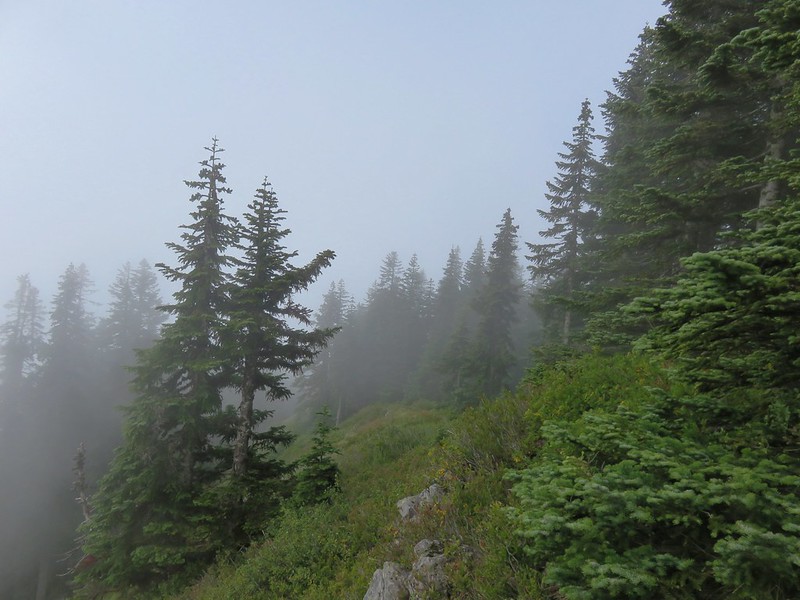
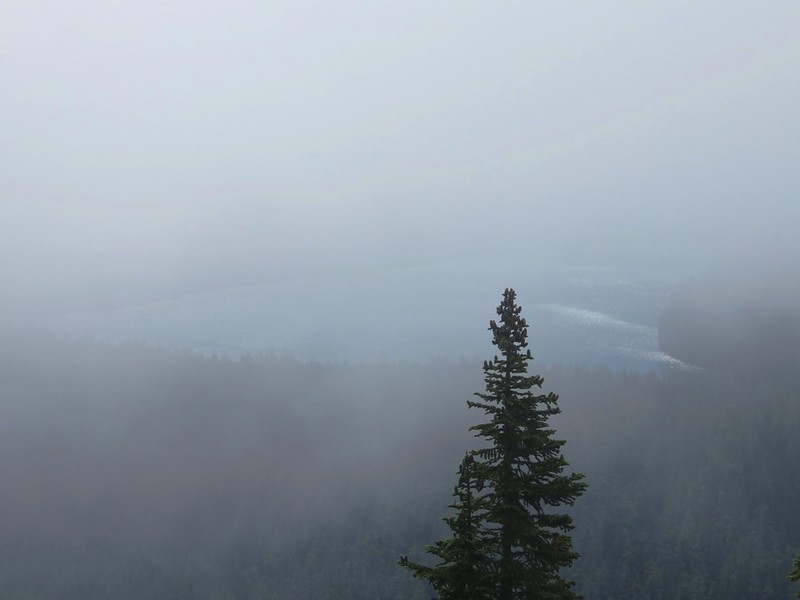
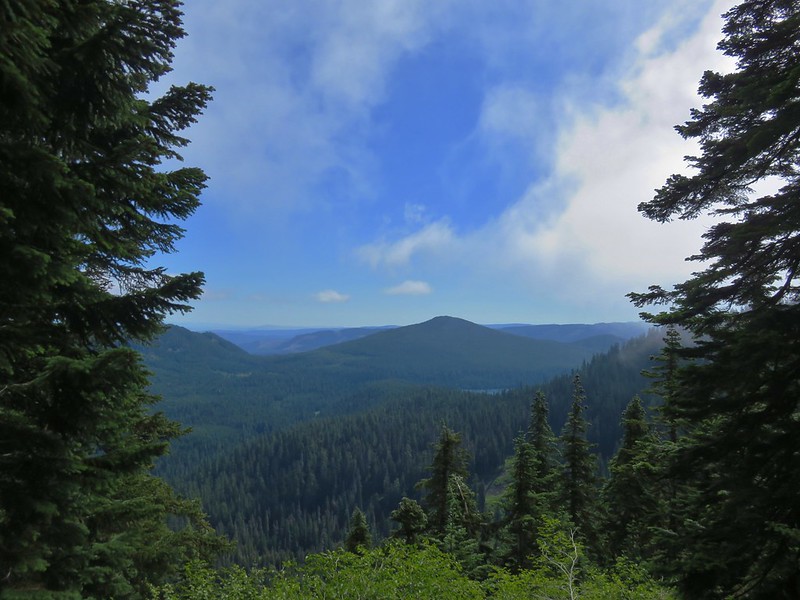
Cedar Creek Trail looking east

Looking east toward the Central Oregon plain

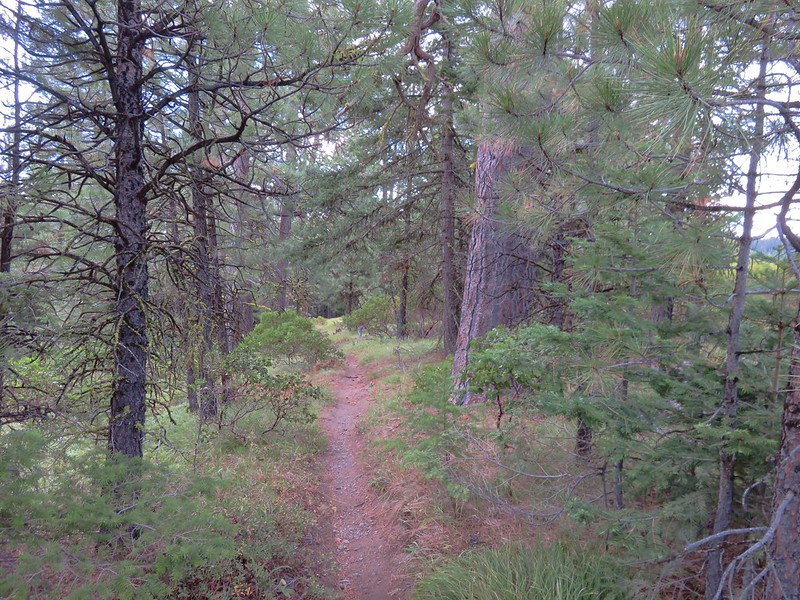
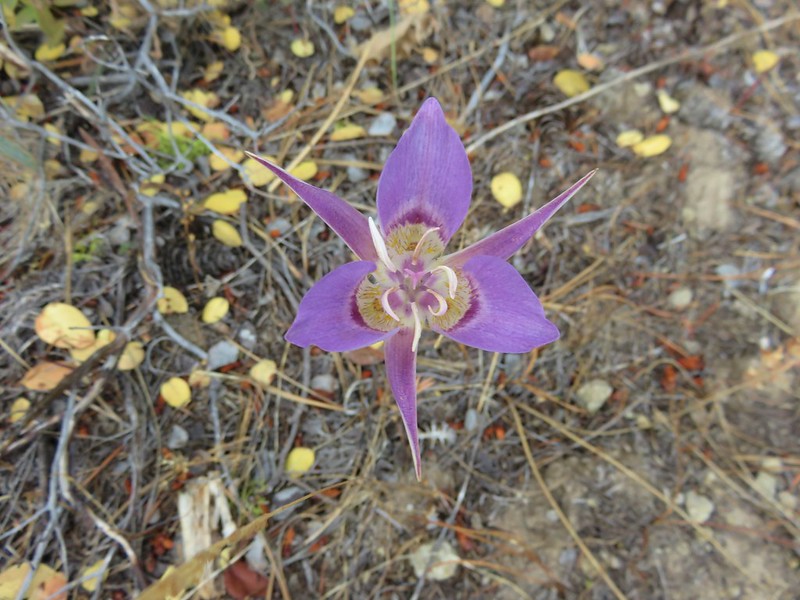
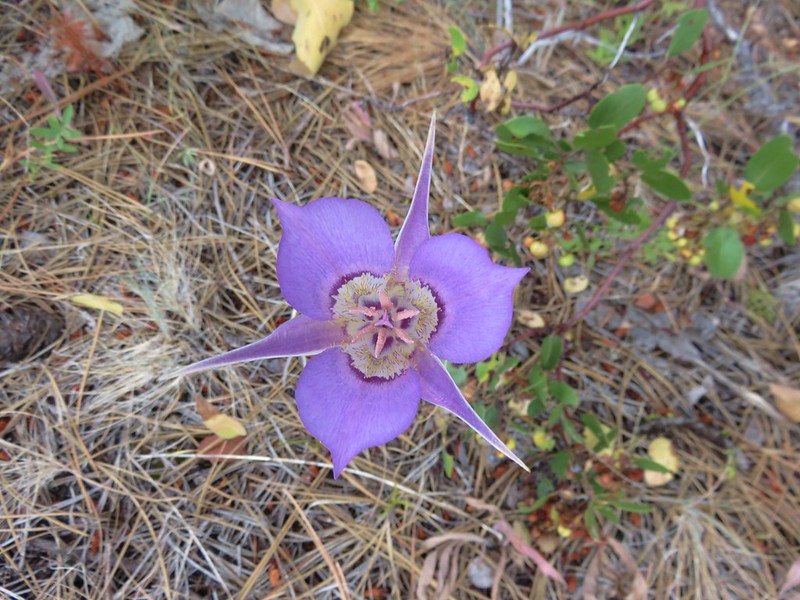
There were a bunch of sagebrush mariposa lilies, one of my favorite wildflowers, along this stretch.
Sagebrush mariposa lily

Sagebrush mariposa lily

The trail steepened a little at the end of the ridge and dropped down to a trail junction at Fifteenmile Creek.
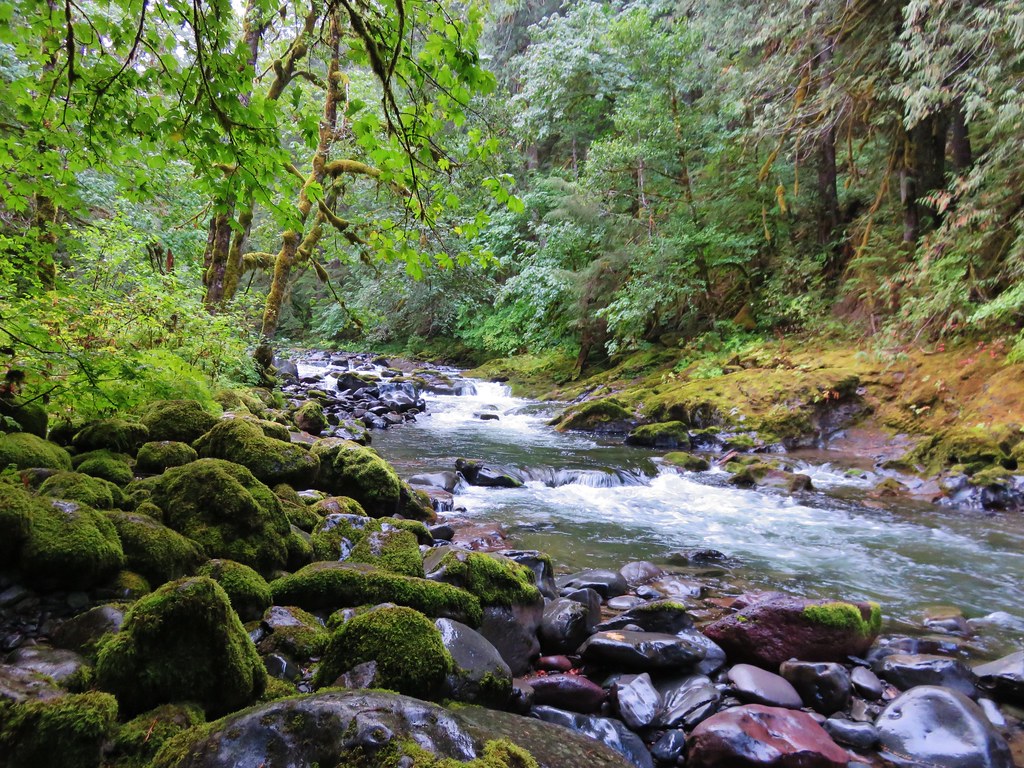
Fifteenmile Creek

Lower junction
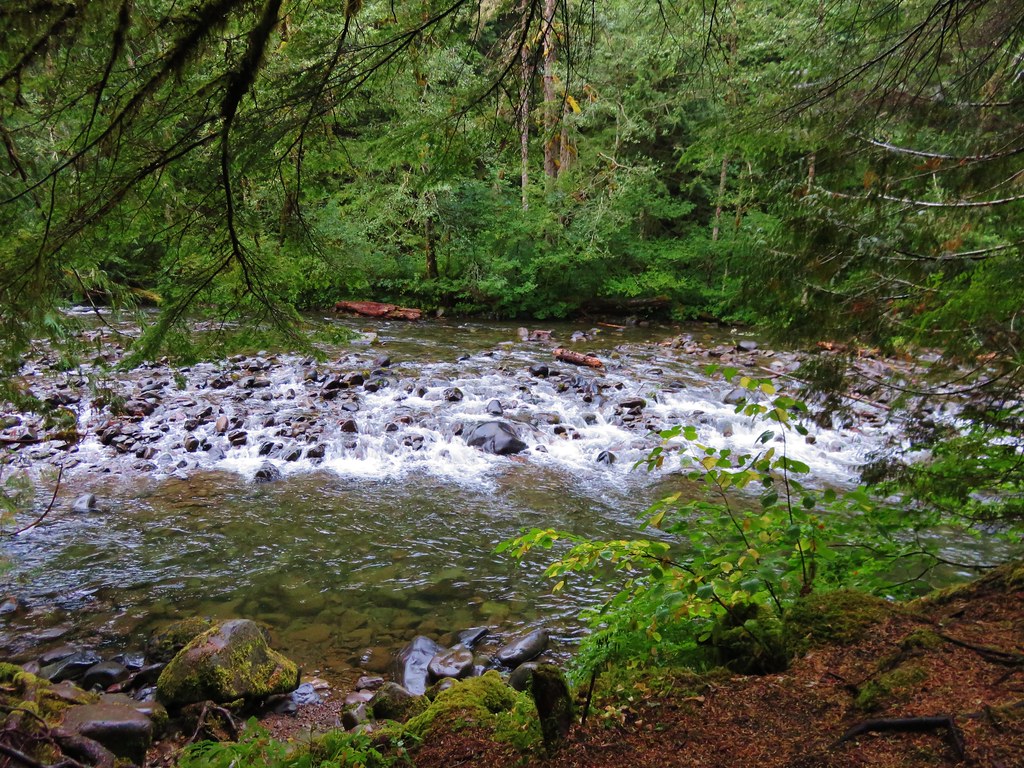
After a little exploration we started up the Fifteenmile Trail to complete the loop and return to Fifteenmile Camp. The lower portion of the Fifteenmile Trail climbed very slowly through a much lusher forest than we had seen along the lower portion of the Cedar Creek Trail.
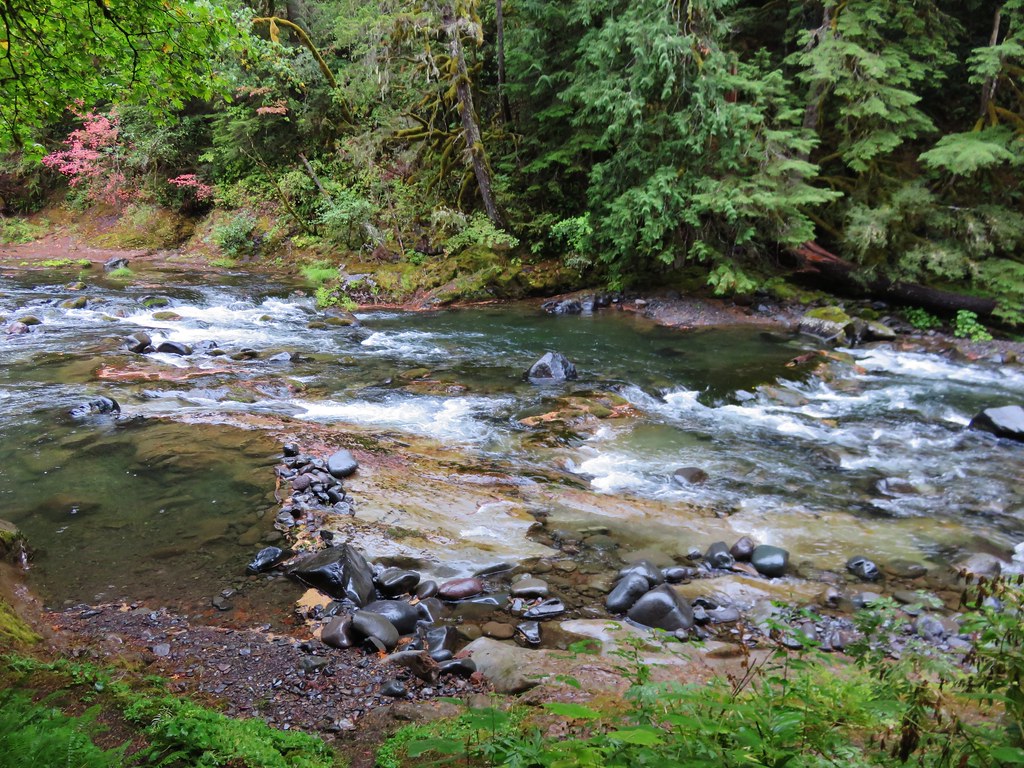
Fifteenmile Trail

Fifteenmile Trail

Fifteenmile Trail

It eventually began to climb more quickly and entered the terrain more akin to that along the Cedar Creek Trail with meadows and andesite formations.
View from the Fifteenmile Trail

Andesite along the Fifteenmile Trail

Again it was too late for the best of the flowers but not completely devoid of them.
Grand collomia
Grand collomia

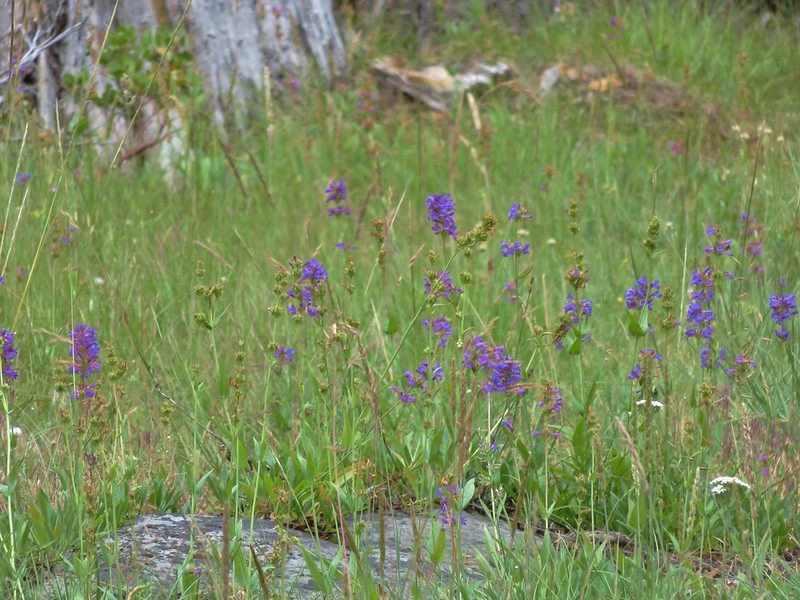
Penstemon
Penstemon

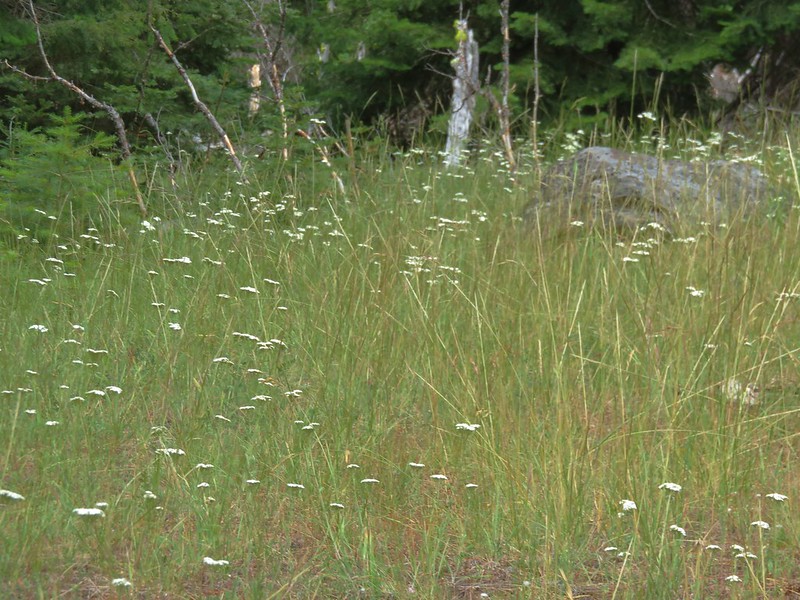
Yarrow
Yarrow

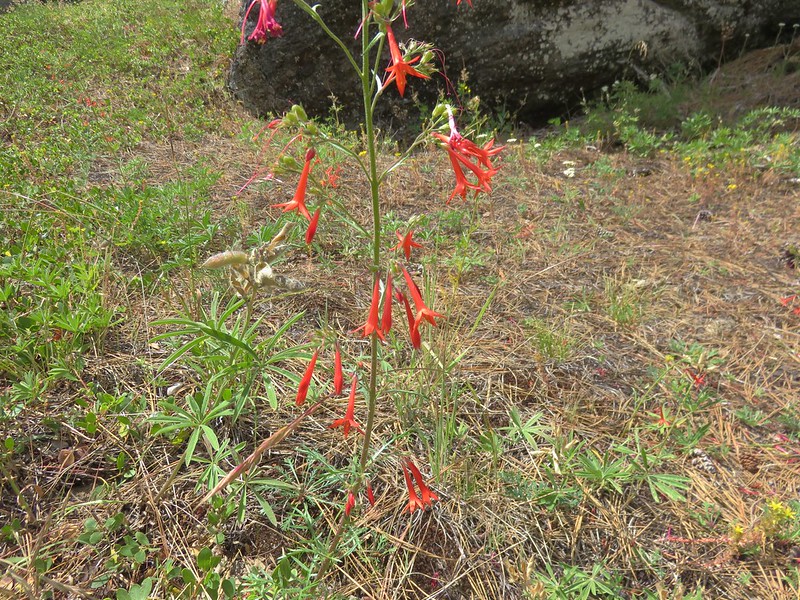
Scarlet gilia
Scarlet gilia

After 2.5 miles the trail arrived at a signed junction with an old roadbed.
Trail junction along the Fifteenmile Trail

We followed the old roadbed for a short distance before it gave way to trail once again. The trail then climbed through a series of increasingly impressive andesite formations.
Fifteenmile Trail

Fifteenmile Trail

Andesite outcroping

Looking down into the Fifteenmile Creek Valley

The trail then reenters the forest for good as it drops down to a footbridge over Foster Creek, climbs to a second footbridge across an unnamed creek, and finally arrives back at the Cedar Creek Trail jct just a quarter mile from the trailhead.
Fifteenmile Trail

Fifteenmile Trail

Fifteenmile Trail

It had turned out to be a good choice for the day. We had our fair share of blue skies and only a few minutes of a light sprinkle for rain. Although these trails are popular with mountain bikers we only saw two during our hike and no other hikers. Based on the amount of balsamroot and lupine that was no longer in bloom, a visit during the first part of June would probably be great for the wildflowers here. The views, the andesite formations, and the varied ecological zones along the way would make it a worthwhile trip anytime though. Happy Trails!

Flickr: https://www.flickr.com/photos/9319235@N02/albums/72157668046892554

Categories
High Cascades Hiking Mt. Hood Area Oregon Trip report

Salmon River Trail

Rain! We finally got some much needed rain in parts of the Pacific Northwest this past weekend. While it helped out with a few of the many wildfires burning in the area, strong winds associated with the storm fanned the flames of others on Saturday. For us it meant rearranging our hiking plans a bit. We wanted to avoid the strong winds and find a hike where cloudy and rainy conditions wouldn’t interfere with possible views. We typically look for a river or creek hike in similar conditions and chose the Salmon River Trail in the Mt. Hood National Forest. The trail follows the Salmon River into the Salmon-Huckleberry Wilderness and past some nice old growth forests. Our plan was to start at the Old Salmon River Trailhead which is located 2.7 miles along Salmon River Road off of Highway 26 at Zig Zag. From the trailhead we would hike the Old Salmon River Trail up to the Salmon River Trailhead (located 4.9 miles along Salmon River Road) and follow that trail 3.5 miles to a canyon viewpoint.

We arrived at the trailhead about 6:30am under cloudy skies and a light mist.
Old Salmon River Trailhead//embedr.flickr.com/assets/client-code.js

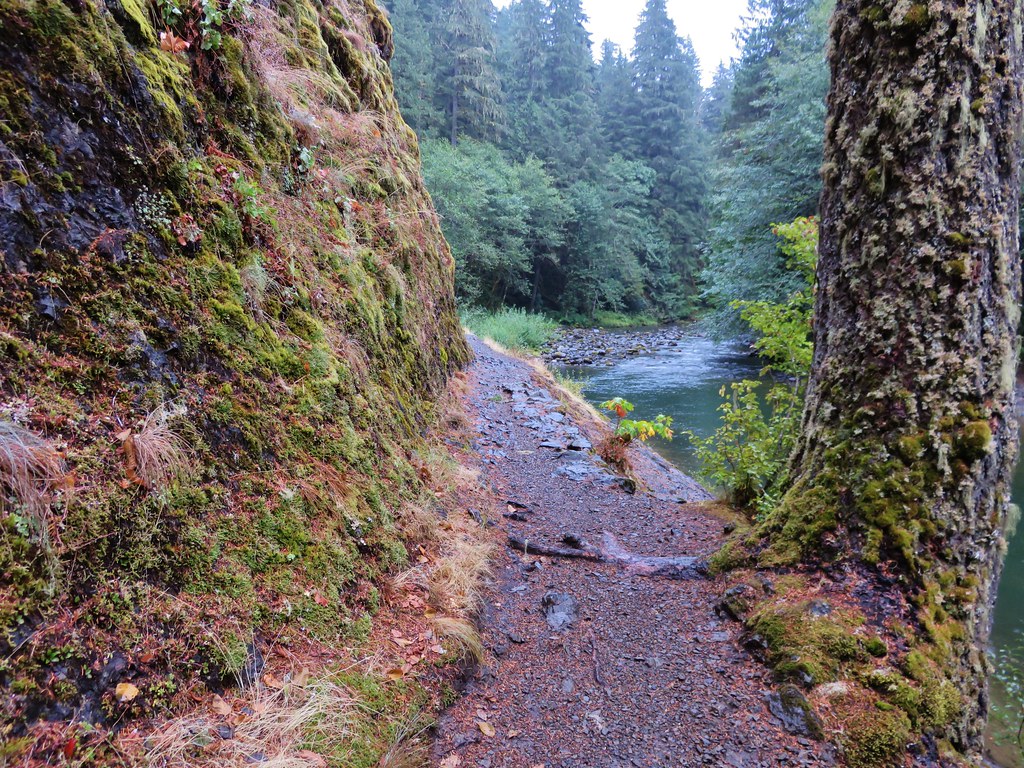
The trail quickly descended through the forest to the Salmon River. IMG_8640//embedr.flickr.com/assets/client-code.js

IMG_8642//embedr.flickr.com/assets/client-code.js

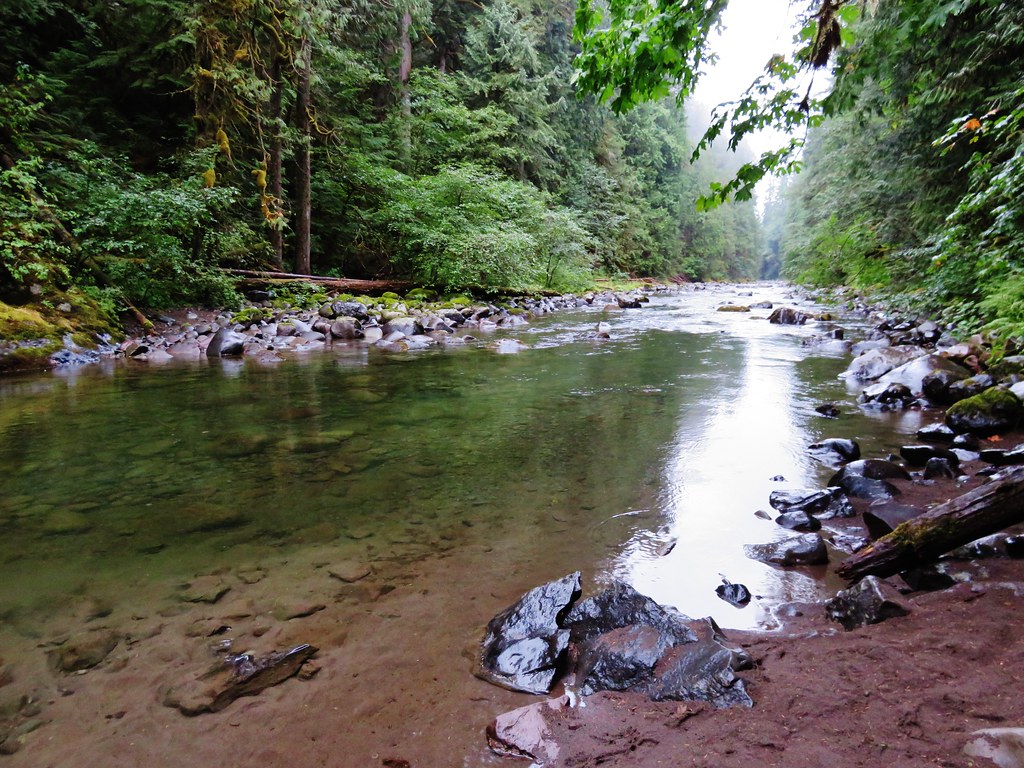
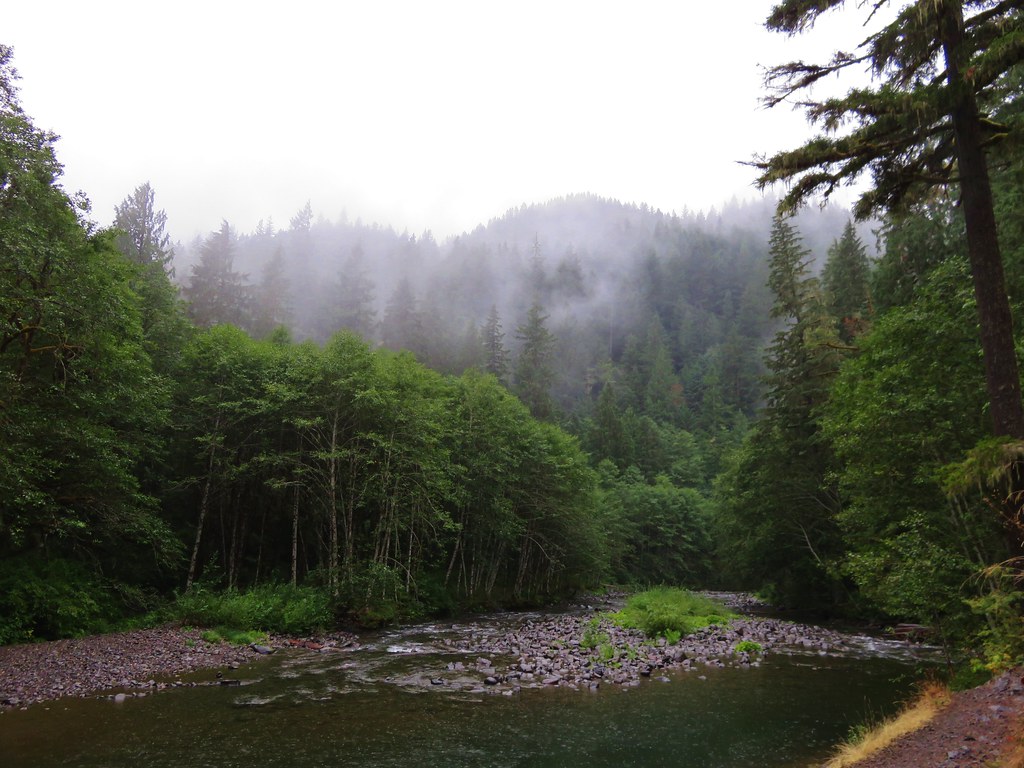
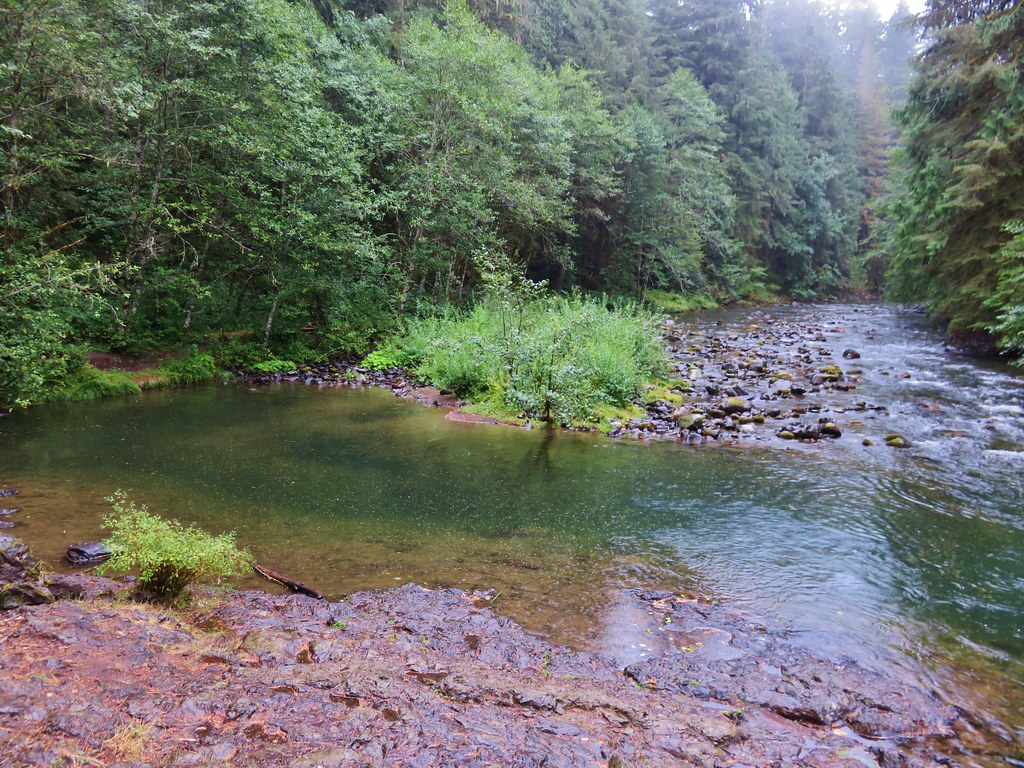
The river was sometimes deep and calm and at other times flowed noisily over rocks.
IMG_8659//embedr.flickr.com/assets/client-code.js

Salmon River//embedr.flickr.com/assets/client-code.js

IMG_8656//embedr.flickr.com/assets/client-code.js

Salmon River//embedr.flickr.com/assets/client-code.js

The trail occasionally joined Salmon River Road for short sections. The trail ended the third time it met the road at the 2.6 mile mark. On the far side was the start of the Salmon River Trail.
IMG_8665//embedr.flickr.com/assets/client-code.js

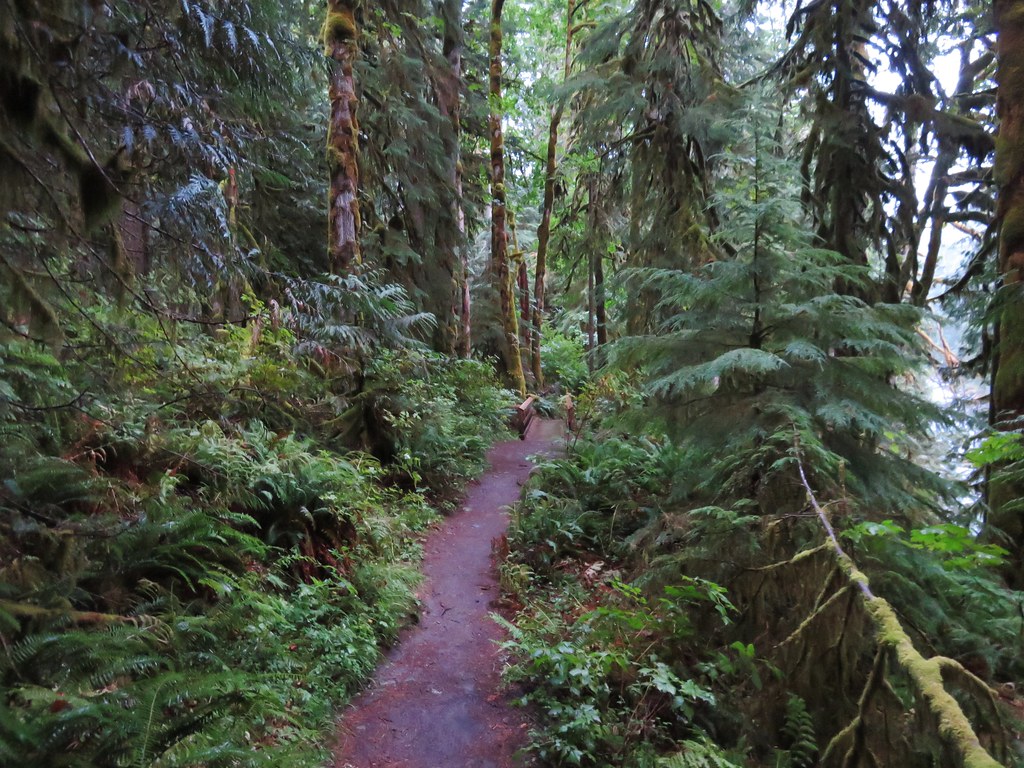
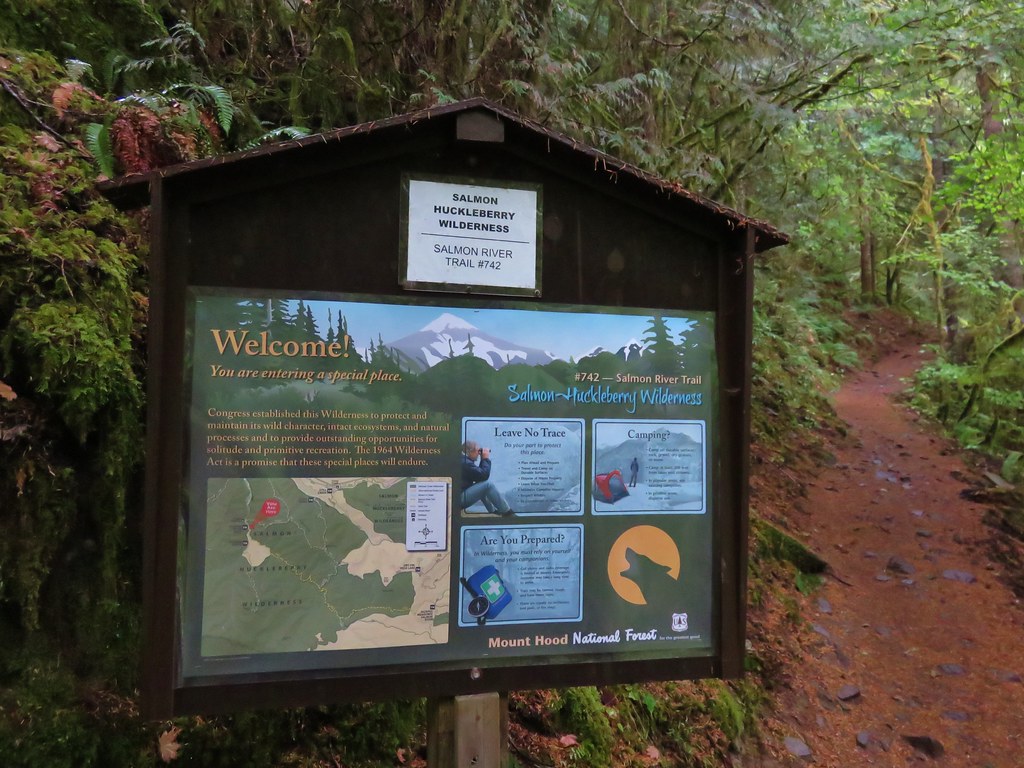
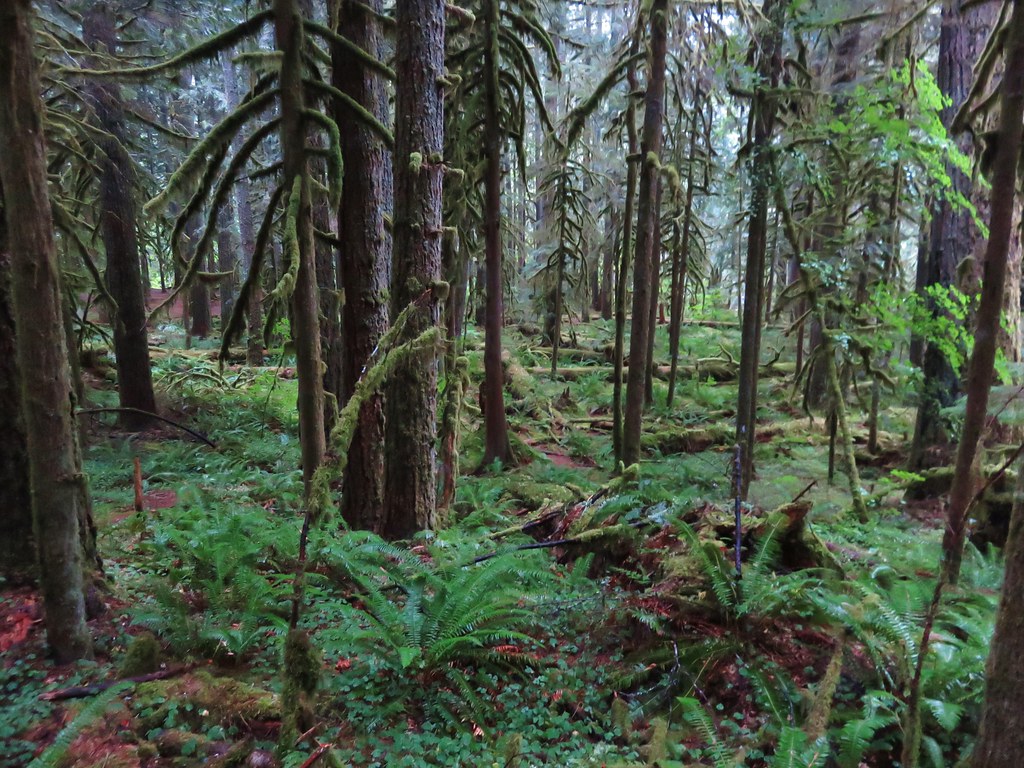
We alternated between passing along the river and through the old growth forests of the Salmon-Huckleberry Wilderness.
IMG_8666//embedr.flickr.com/assets/client-code.js

IMG_8668//embedr.flickr.com/assets/client-code.js

IMG_8670//embedr.flickr.com/assets/client-code.js

IMG_8672//embedr.flickr.com/assets/client-code.js

IMG_8673//embedr.flickr.com/assets/client-code.js

IMG_8677//embedr.flickr.com/assets/client-code.js

Salmon River Trail along the Salmon River//embedr.flickr.com/assets/client-code.js

Salmon River Trail in the Salmon-Huckleberry Wilderness//embedr.flickr.com/assets/client-code.js

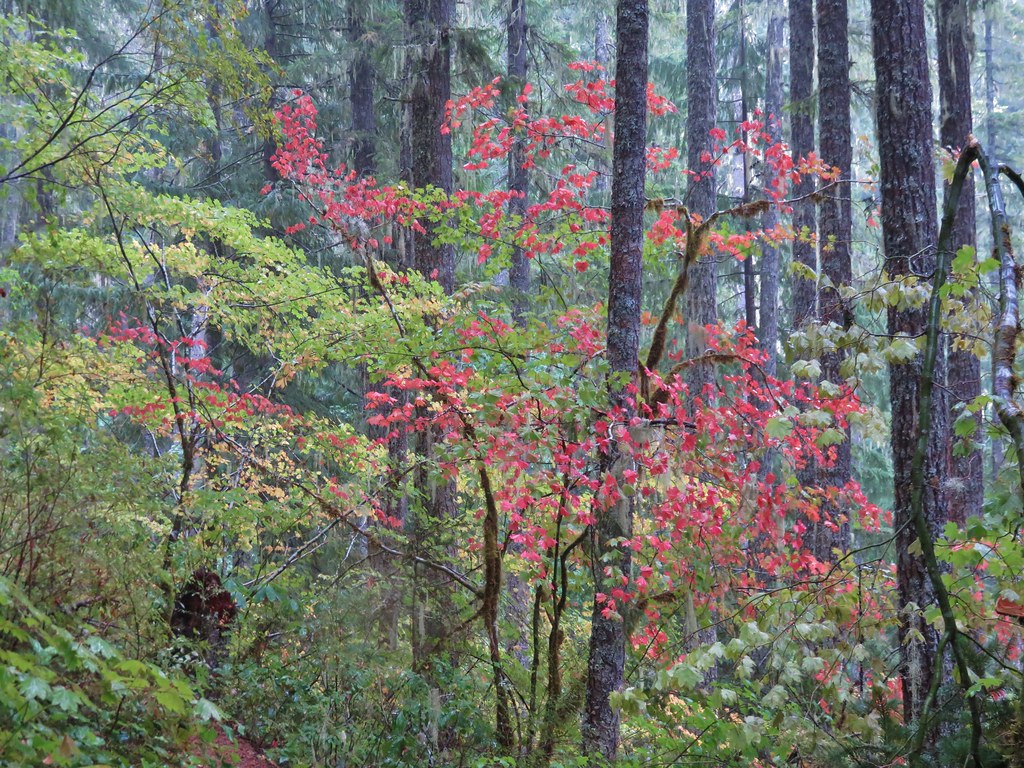
Fall Colors on Display//embedr.flickr.com/assets/client-code.js

At a fork in the trail, at the 3.5 mile mark, the right hand path led out to a grassy viewpoint.
IMG_8696//embedr.flickr.com/assets/client-code.js

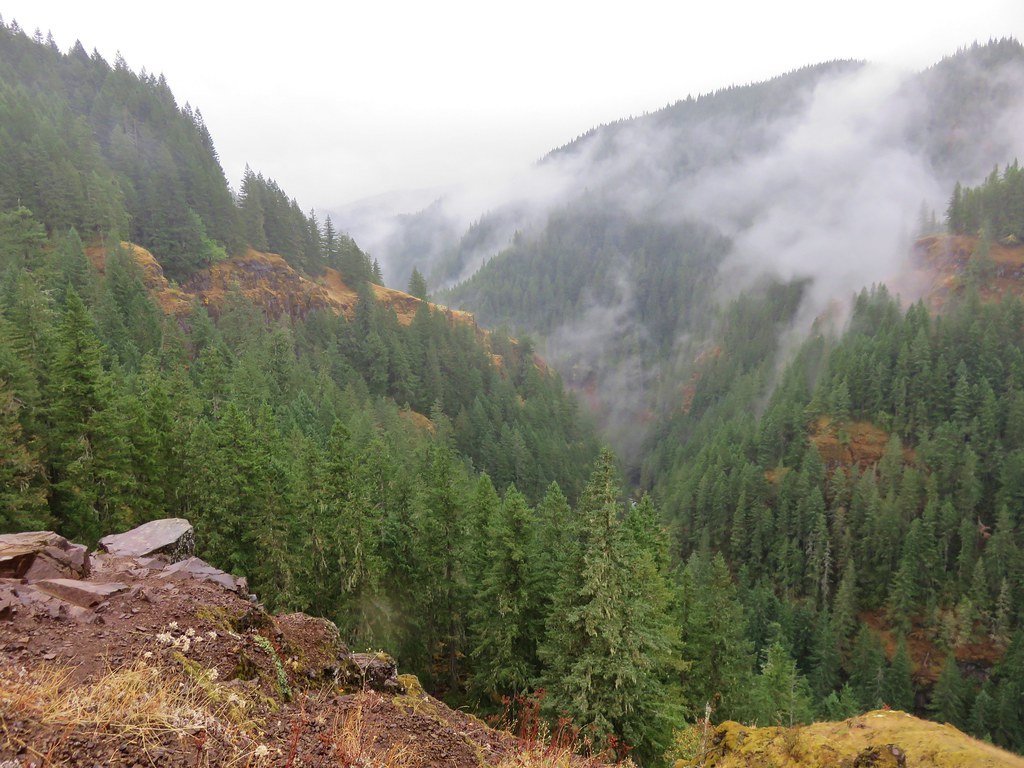
The Salmon River flowed through the canyon far below.
IMG_8697//embedr.flickr.com/assets/client-code.js

Salmon River Canyon//embedr.flickr.com/assets/client-code.js

IMG_8700//embedr.flickr.com/assets/client-code.js

It had been raining a little harder as the morning went on but we had a brief respite at the viewpoint and took a short break before the rains returned and we resumed our hike.
It was a pretty quick return trip being mostly downhill following the same route we’d come up earlier. Even though we’d already hiked the trail in the other direction we’d missed a small waterfall on a side creek across from the Old Salmon River Trail.
Small creek feeding into the Salmon River//embedr.flickr.com/assets/client-code.js

We also stopped to admire a large nursery log that had several decent sized trees growing atop it.
IMG_8720//embedr.flickr.com/assets/client-code.js

IMG_8722//embedr.flickr.com/assets/client-code.js

It had been a great hike for the rainy weather and a beautiful place to visit. Happy Trails!

Flickr: https://www.flickr.com/photos/9319235@N02/albums/72157657952382142

Categories
Badger Creek Area Hiking Oregon Trip report

Badger Creek

We combined our latest hike with a bit of reconnaissance hoping to check out some possible camp sites for an overnight trip this Summer. The plan was to hike the Badger Creek Trail from Bonney Crossing 7.7 miles to it’s junction with the Badger Creek Cutoff Trail looking for possible tent sites near the junction. This was our first visit to the Badger Creek Wilderness which is located just to the east of Mt. Hood in the Mt. Hood National Forest. Badger Creek flows from Badger Lake through a forested valley before joining Tygh Creek and eventually emptying into the White River. From Bonney Crossing the trail heads up the valley through a diverse forest as it climbs from an elevation of 2200′ to Badger Lake at 4500′. We turned around at just under 3650′ for our hike.

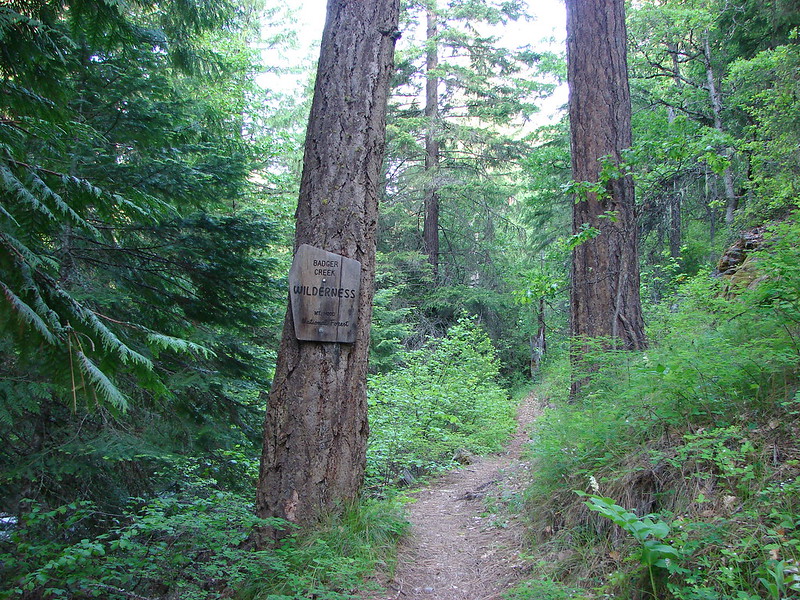
For once we were not one of the first cars at the trailhead, in fact we wound up having to park a little bit up the road as the few spots at the trailhead were taken. After walking down to the trailhead we were quickly greeted by a wilderness sign signaling the edge of the Badger Creek Wilderness.

DSC06113

Not a lot of sunlight was finding it’s way down into the valley in the morning but it did manage a few highlights.
DSC06118
DSC06149
DSC06154
DSC06170

There was an interesting mix of both trees and flowers along the trail. Various types of pine, cedar, fir, and oak trees could be seen with a number of different flowers. The most interesting of the flowers was an odd yellow flower on a tall stalk that we kept seeing. After doing some research I discovered that it was silvercrown.
silvercrown

Some of the other flowers present were balsamroot and lupine:
DSC06255

Columbine
DSC06192

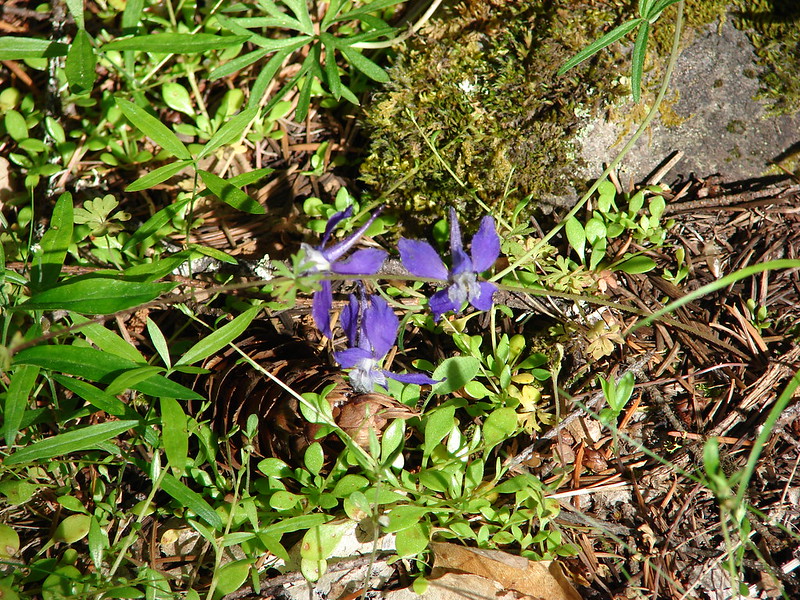
Larkspur
DSC06183

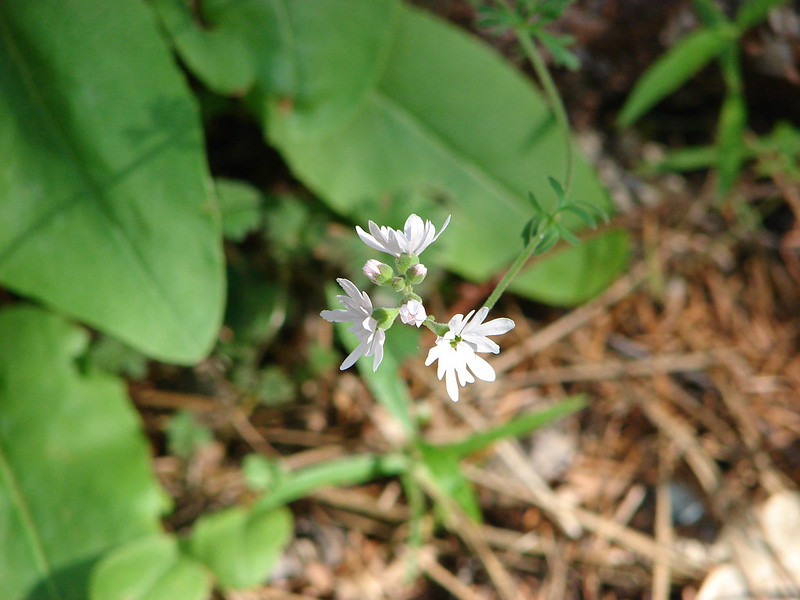
Prairie Star
DSC06196

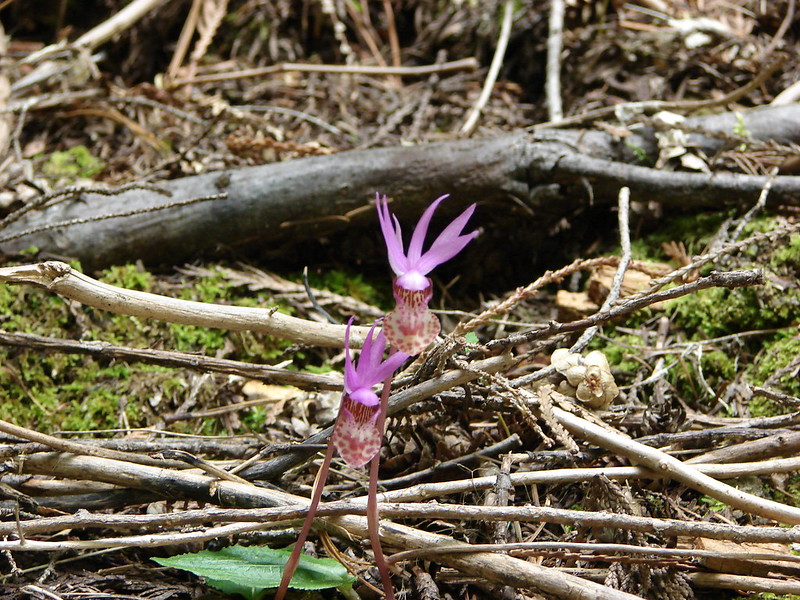
Fairy Slippers
DSC06352

Arnica
DSC06427

There was also large patches of Vanilla leaf and skunk cabbage which were both really fragrant on this day. The vanilla leaf was much more pleasant. 🙂
DSC06226
DSC06243

While the trail stayed fairly close to Badger Creek there really weren’t a lot of opportunities to get down to the creek. Steep banks and dense vegetation limited access but there were a few places where camp sites had been established that allowed access to the creek.
Badger Creek
DSC06232
DSC06331

Shortly after the Post Camp trail joined up with the Badger Creek Trail was the only real discernible waterfall that we saw.
Unnamed Waterfall

Being down in the forested valley meant that there were not many views up. The best views came at our turnaround point at the cutoff trail junction where we could see the top of Lookout Mountain and a couple of the other high points of the surrounding hills.
DSC06348
DSC06350
DSC06351

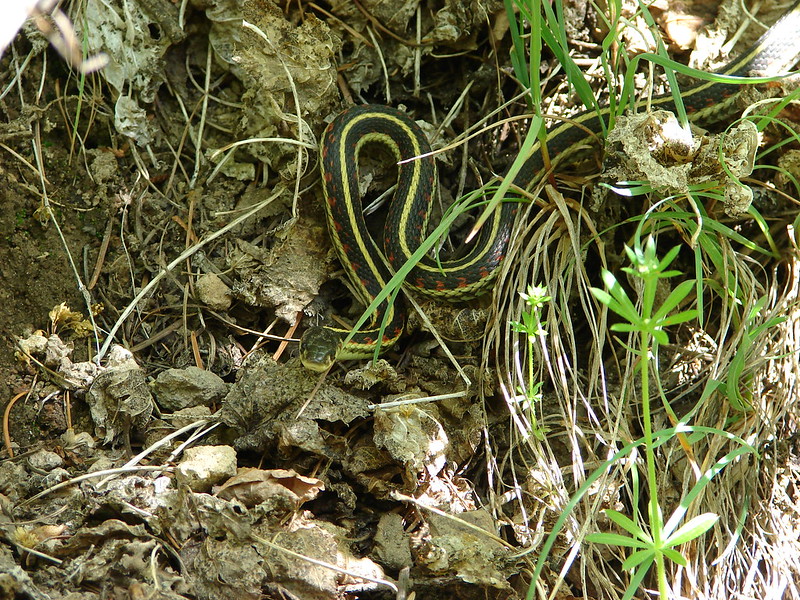
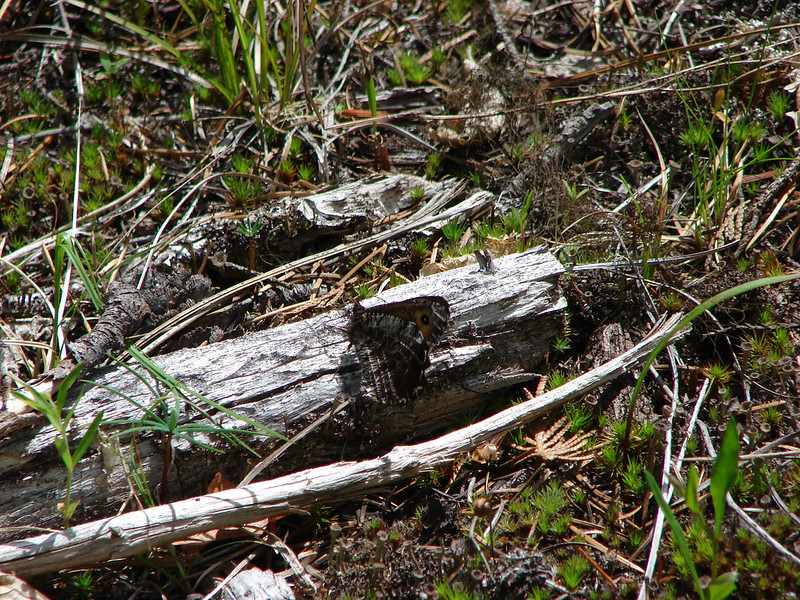
As the day went on it got quite warm on the trail and the wildlife started to come out, especially the butterflies. We had seen a couple of deer on the drive in but on the trail we didn’t spot anything larger than a snake.
DSC06303
DSC06304
DSC06361
DSC06272
DSC06312
DSC06325
DSC06373
DSC06381
DSC06398
DSC06418

One of the more interesting sightings was a butterfly that had been caught by a camouflaged spider.
DSC06423

We were surprised that we didn’t see more people on the trail on the way to our turnaround point based on the number of cars that were at the trailhead when we’d set off. We were even mores surprised by the large number of hikers we encountered on our way back to the trailhead. We just kept passing groups heading in the whole afternoon. I’d seen conflicting reports as to the popularity of this trail but apparently on Memorial Day weekend it is rather popular. We found plenty of new cars at and near the trailhead when we got back and as we were packing up at 4pm cars continued to arrive.

We wound up getting a pretty good idea of where we’ll aim to set up camp when we do our next trip to the Badger Creek Wilderness and are looking forward to visiting Lookout Mountain on that trip. Happy Trails!

fickr: https://www.flickr.com/photos/9319235@N02/sets/72157644778350436/
facebook: https://www.facebook.com/deryl.yunck/media_set?set=a.10204070023858063.1073741878.1448521051&type=3

Categories
High Cascades Hiking Mt. Hood Area Oregon Trip report

The Other Eagle Creek (Salmon-Huckleberry Wilderness)

We continued what I have dubbed “Creek Week” by visiting another Eagle Creek the day after our trip to the one in the Columbia Gorge. Even though both creeks share the same name and both are located partially in the Mt. Hood National Forest the similarities end there. This Eagle Creek flows through the old growth forest of the Salmon-Huckleberry Wilderness and is much less visited than the one in the Gorge. There are no dizzying cliffs or giant waterfalls but rather the relaxing sound of running water while you stroll through a lush forest.

It was good that the trail was so relaxing because the drive to it was anything but. The hike was listed as an additional hike in the 2012 edition of William Sullivan’s 100 Hikes in Northwest Oregon & Southwest Washington complete with driving directions. He warned of a confusion of logging roads and he was right. I had also Googled the route and printed out directions from the Forest Service to the trailhead. The road names all matched but each of the directions gave different distances once we got onto SE Harvey Rd. Google said 1.2 miles, the Forest Service 1.8 miles, and Sullivan a more detailed 2.6 miles. Our first mistake was not paying attention to the difference in the distances given followed by not using the odometer as soon as we turned onto Harvey Rd. The area was heavily logged with operations ongoing so there were many side roads and turnoffs and no signs for any type of trail. We drove to the end of what we thought was Harvey Rd. and found a pile of garbage where people had obviously come out to shoot guns (seems to be a favorite pastime in that area) but no sign of a trail. We turned around and headed back the way we’d come looking for any sign of a trail that we might have missed. There were a couple of possibilities but nothing obvious. As we were reading the different instructions we noticed the different mileages which made it more confusing. In the end we decided to drive back to the start of SE Harvey Rd. and use the Odometer. There was nothing at the 1.2 mile mark so the Google instructions were ruled out. At the 1.8 mile mark a gated road led down to the right. The trail description in the book stated that the trail began on an overgrown old road so this had possibilities. I got an idea here and turned on the GPS to see if we were at the trail but when the map came up there was no trail where we were so we hopped in the car and continued to follow Sullivan’s mileage directions. We stopped at one point when we spotted what looked like it might have been an old road with a possible trail leading from it but again using the GPS it was clear that we still had not found the trail. At the 2.4 mile mark we spotted a barricaded road leading down to the right so again we stopped to check it out. This time the GPS showed us on a direct line for the trail and a small path led between the snags blocking the road. There were no signs but this was it.
DSC04775
What we believe happened was the Forest Service stared counting mileage about half a mile after Sullivan started. Then the final approximate quarter mile of Sullivan’s directions had been since blocked by the logging operation because after a brief walk on the road we came to a second small barrier behind which we found an overgrown road such as he had described.
DSC04776

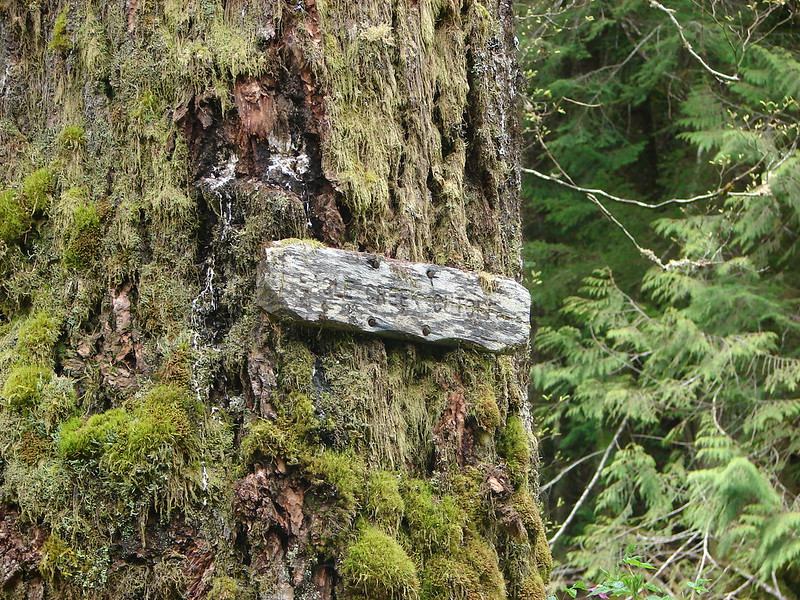
In any event according to the GPS we had found the trail and were on our way down to Eagle Creek. We finally found a sign to confirm what the GPS was telling us. Near the end of the overgrown road there was some flagging and a sign announcing the beginning of the Salmon-Huckleberry Wilderness.
DSC04779

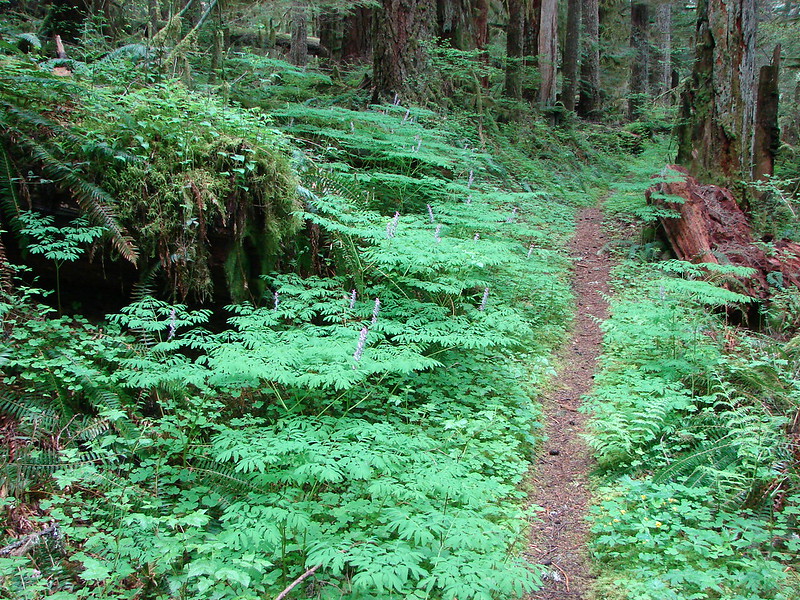
After entering the wilderness the trail looked less and less like an old road until it finally became a full on trail.
DSC04793
DSC04795

We ran across some interesting trees/trunks on the early portion of the trail. One of our favorites was a tree growing on top of an old trunk. You could see the new trees root system running down the length of the old trunk.
DSC04807
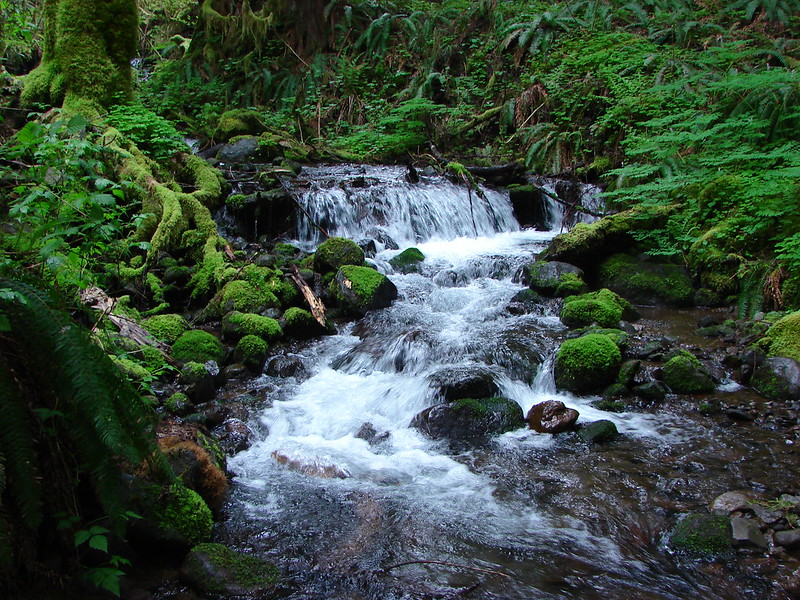
Another old trunk had a stream flowing out from under it.
DSC04816

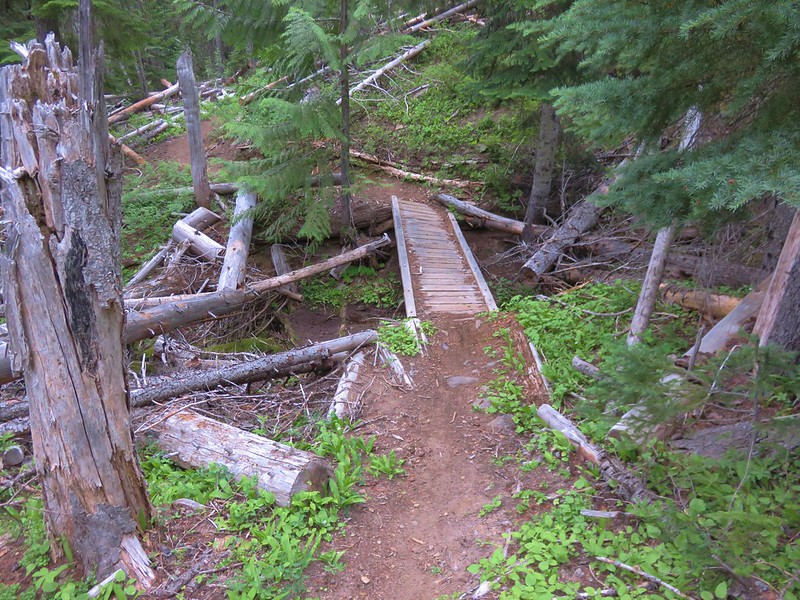
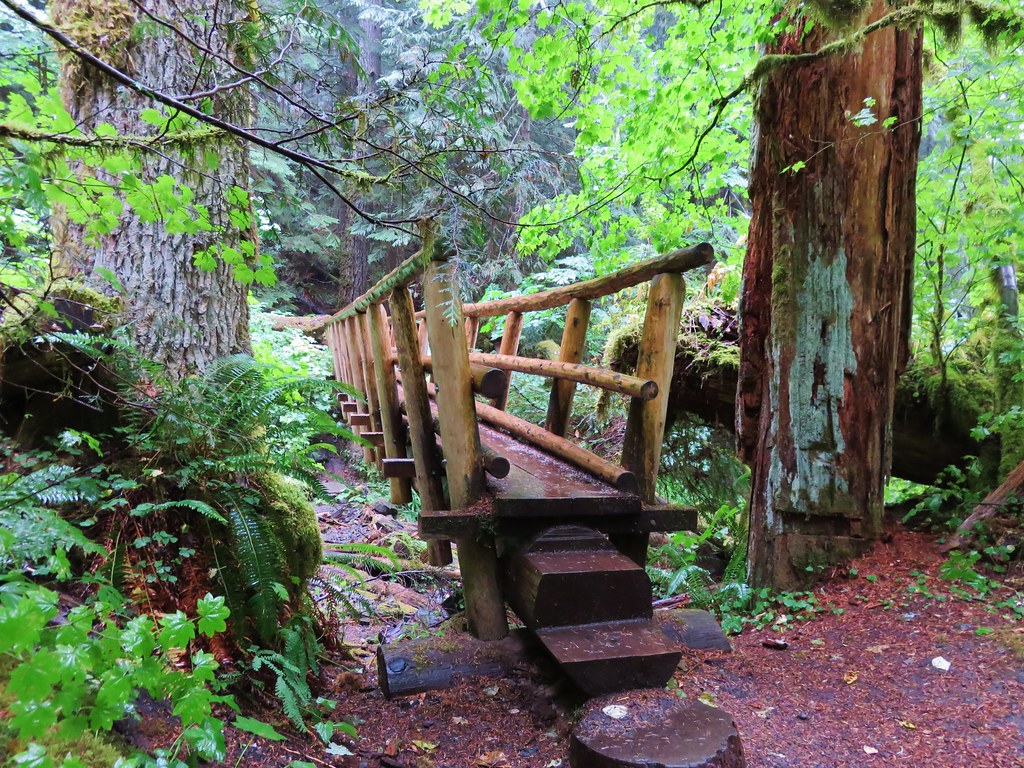
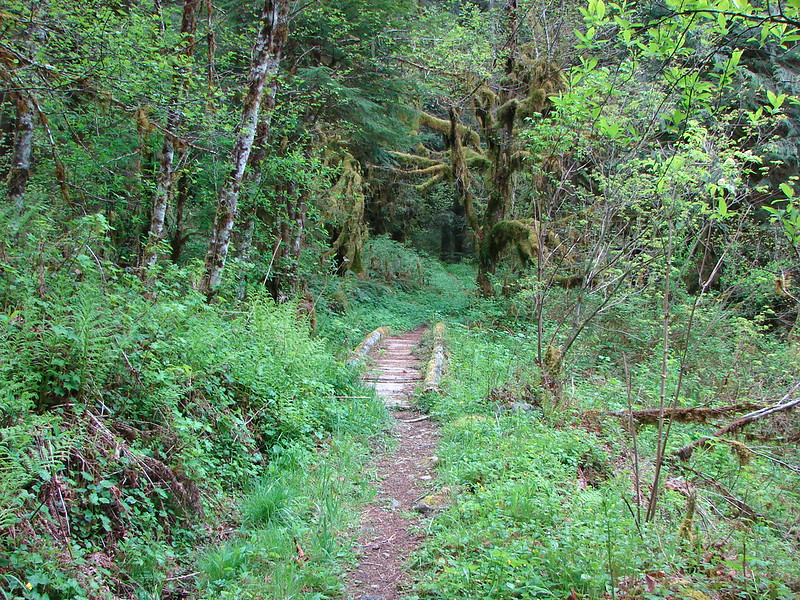
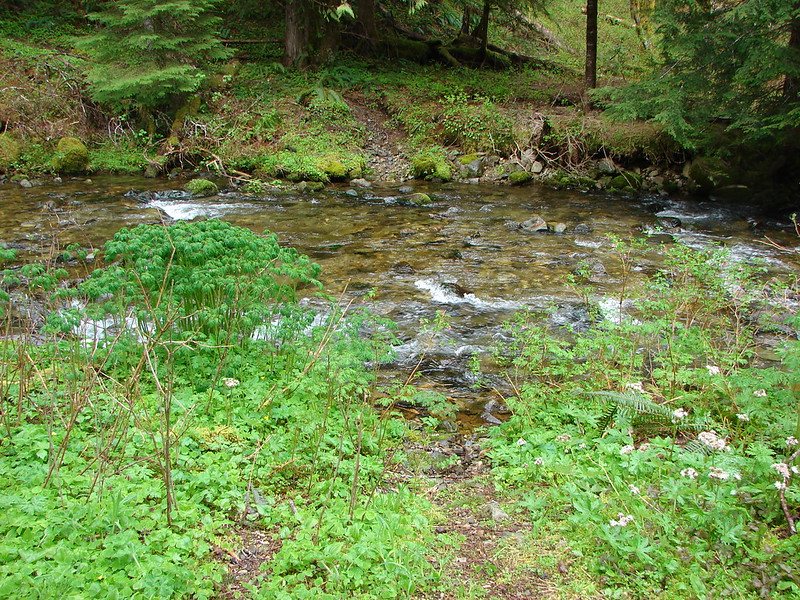
There were many streams and creek to cross along the trail, but only one bridge.
DSC04821
There was no way we were going to keep our feet dry on some the crossing but that was okay with us, the streams just added to the beauty of the forest.
DSC04855
DSC04874

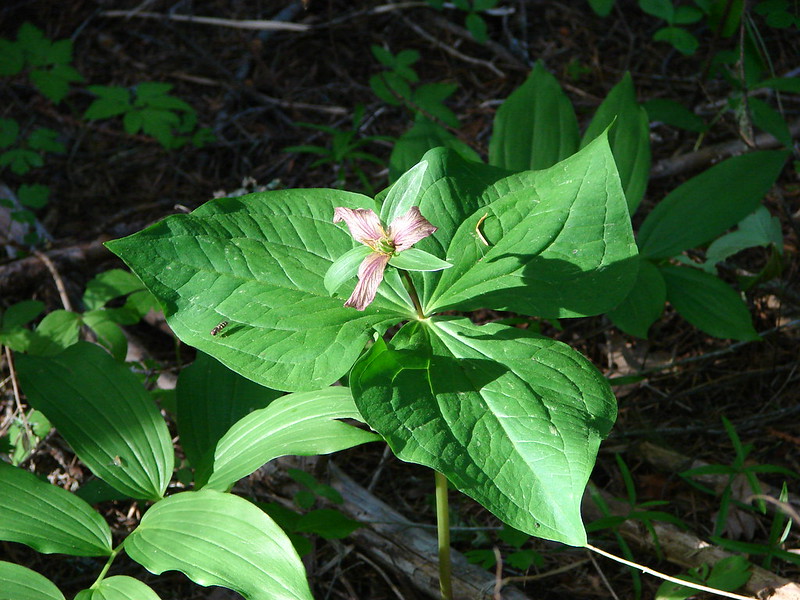
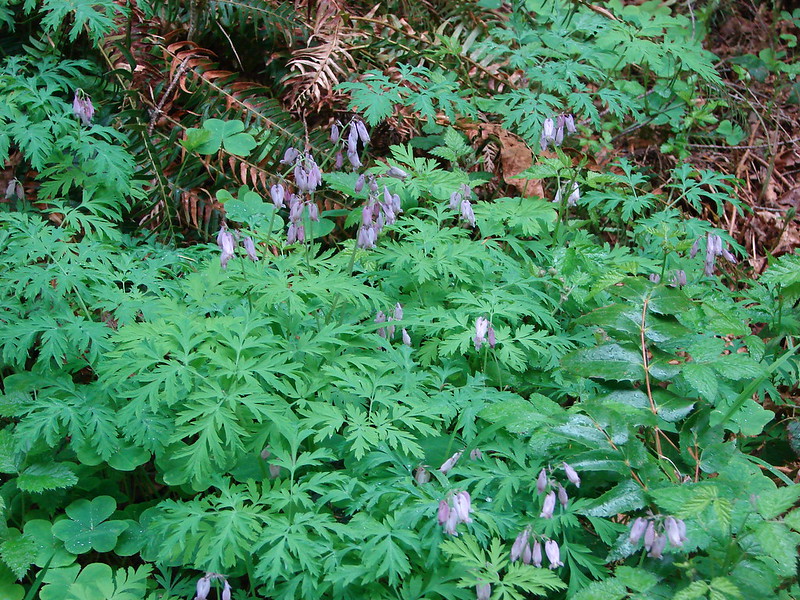
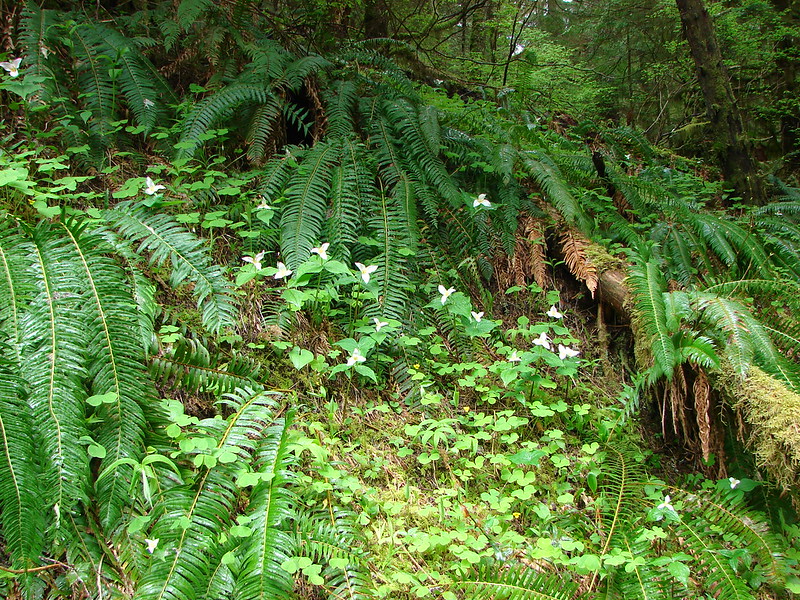
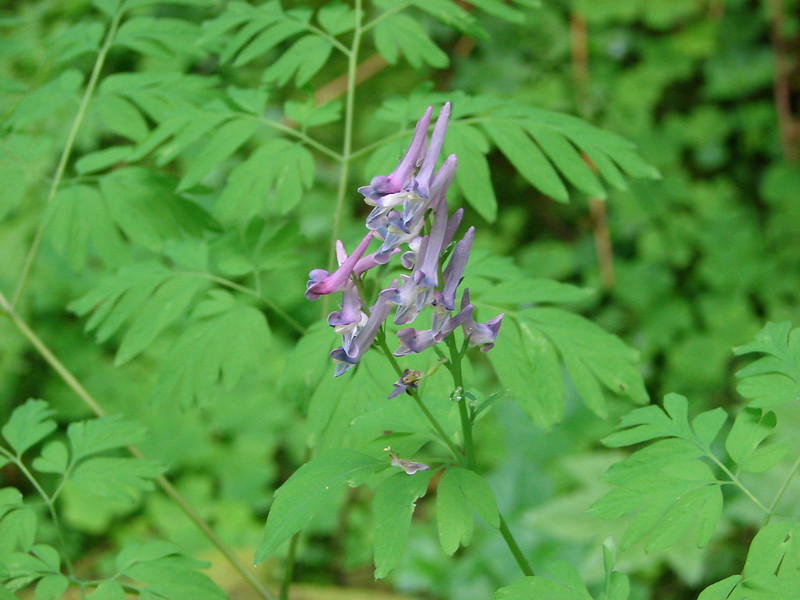
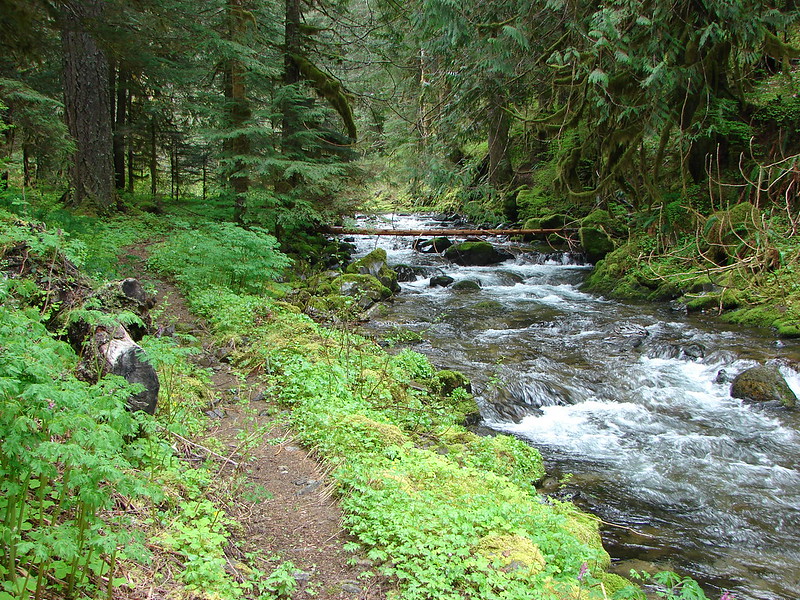
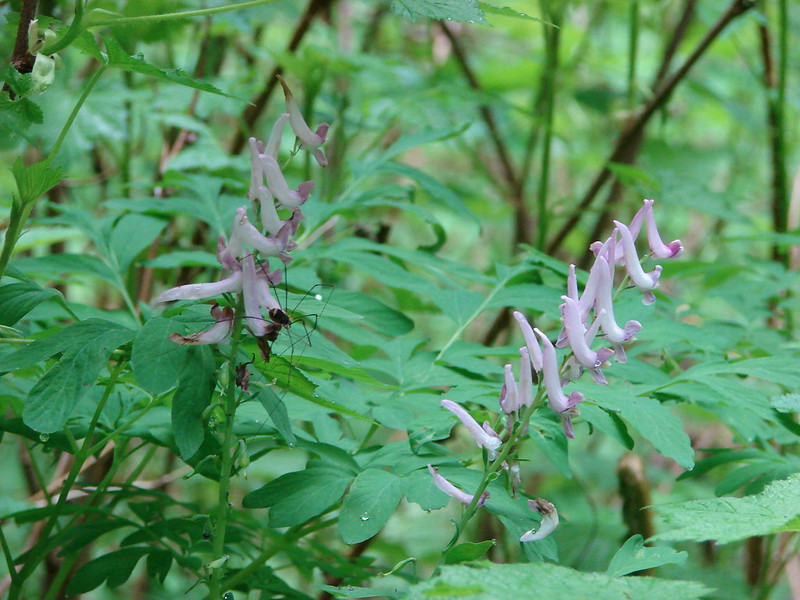
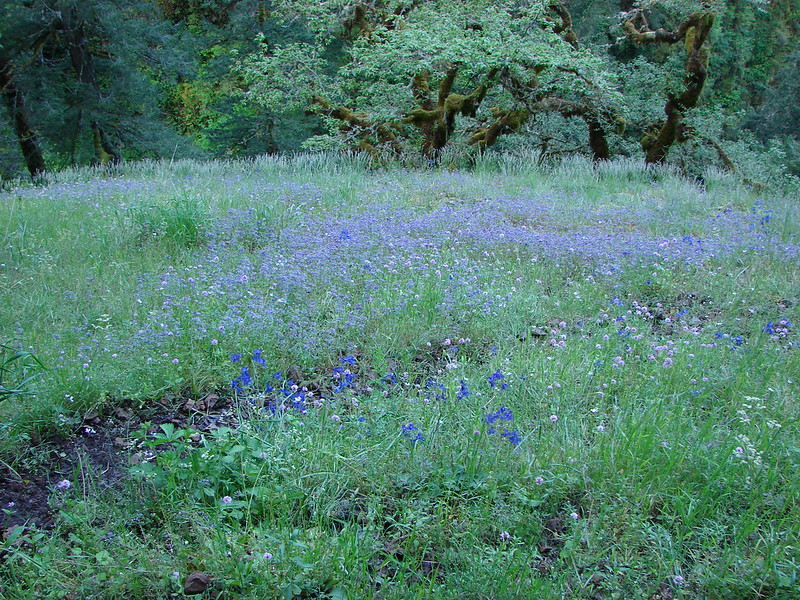
Due to the dense forest there weren’t a large variety of wildflowers but there were some including bleeding heart, wood violets, lots of trillium, and a new one to us scouler’s corydalis.
Bleeding Heart
DSC04800
Wood Violets
DSC04888
Trillium
DSC04907
Scouler’s Cordylis
DSC04858
scouler's corydalis

Open areas where were filled with salmon berry bushes.
DSC04865

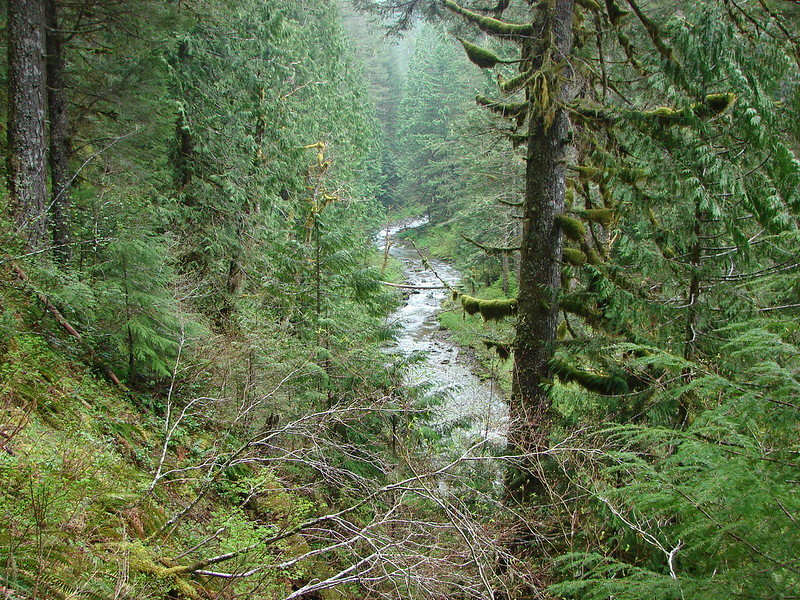
We were up above Eagle Creek at times and then we would be walking next to the water for a bit. It was a decent sized creek lined with lush forests.
Eagle Creek in the Salmon-Huckleberry Wilderness
DSC04902
DSC04921

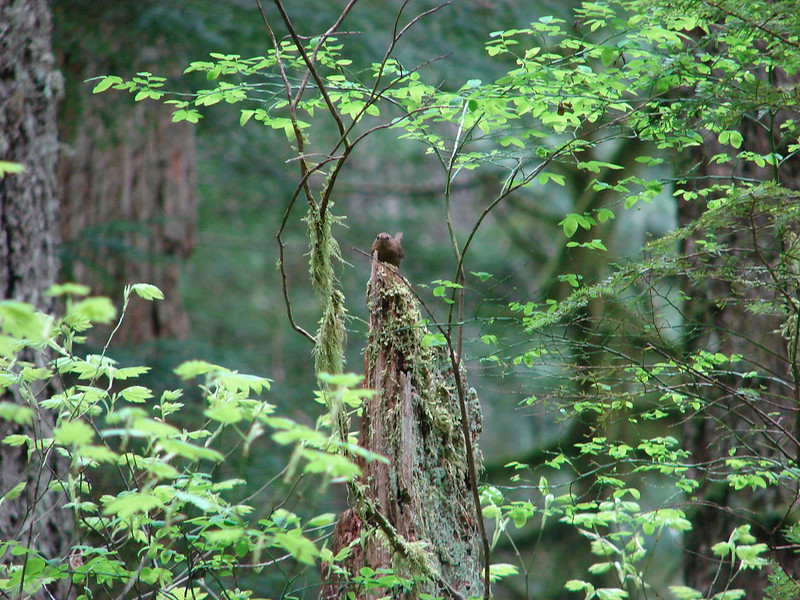
We didn’t see a lot of wildlife on this hike but I think that was partially due to the lushness of the forest. At one point we startled a deer that was in the creek but all I saw was splashing then a brown and white flash as it ran into the trees. What we did see was an Ouzel, an interesting spider, a couple of newts, and one of our favorite little song birds that I believe is a Pacific Wren.
DSC04915
DSC04847
DSC04862
DSC04831

We turned around when we reached the end of the Eagle Creek Trail. Here it connected to the Eagle Creek Cutoff Trail which fords Eagle Creek before heading up a ridge to the Old Baldy Trail.
DSC04928
The Eagle Creek Cutoff ford
DSC04929

We had a little drizzle from time to time up to this point but as we began our return trip the drizzle turned to a light rain. We made quick work of our return slowing only due to the climb back up the old road. It had been a great hike for relaxing end to our creek streak with. Next up we’re going to attempt to get a view, but in the Pacific Northwest Spring views can be tricky. Until then Happy Trails!

flickr: https://www.flickr.com/photos/9319235@N02/sets/72157644170377089/
facebook: https://www.facebook.com/deryl.yunck/media_set?set=a.10203946548091246.1073741875.1448521051&type=3

Categories
Columbia River Gorge South Hiking Oregon Trip report

Eagle Creek

**Note the 2017 Eagle Creek Fire burned a portion of this hike.**

This year we are redoing several hikes for one reason or another. The first of our redo’s was Eagle Creek in the Columbia Gorge. We had attempted this hike back in October of 2012 but we weren’t able to get to the final two falls due to the trail being closed because of a forest fire. Being Fall the water flow was also very low so the falls we did see were nowhere near their peaks. Having learned from our timing issue I put this one in the middle of our first week of vacation in order to catch the falls at a good flow and to hopefully avoid the crowds that visit the gorge trails on the weekend.

We arrived at the trailhead at 6:30am and set off on the trail. Portions of the trial had to be blasted out of the side of the cliffs when it was constructed making for some dramatic views.
DSC04293
One immediate difference from our previous trip was the presence of many wildflowers. Plectritis, larkspur, and giant blue eyed mary lined the trail. In some open places and shooting star could be seen near seepage.
DSC04358

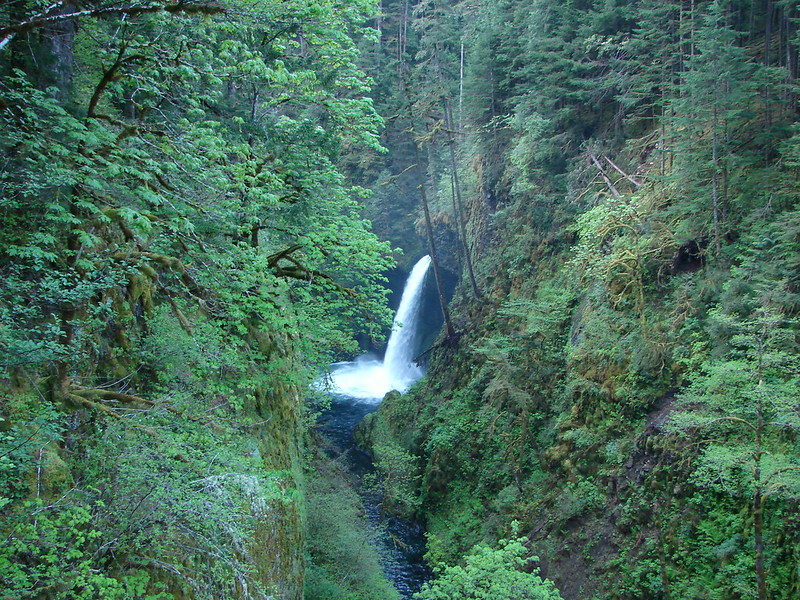
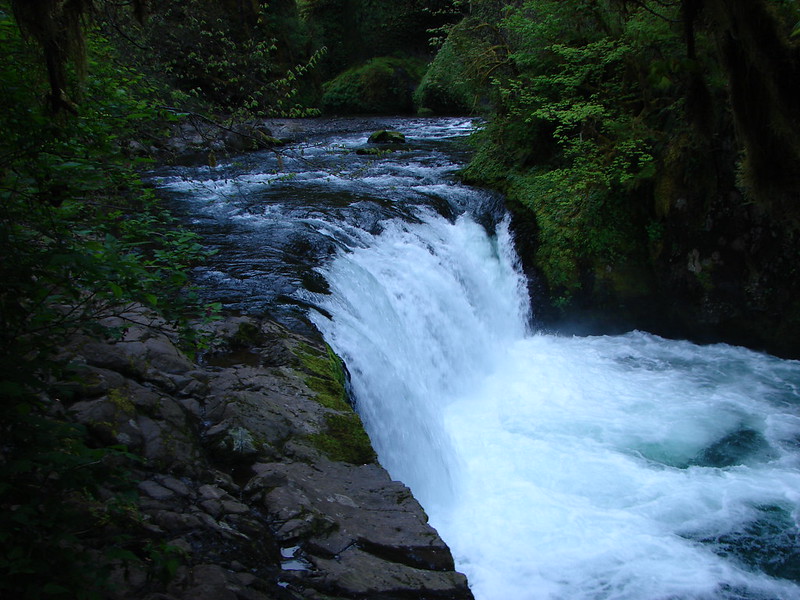
The first big fall can be seen after 1.5 miles via a viewpoint looking up Eagle Creek to Metlako Falls.
DSC04365

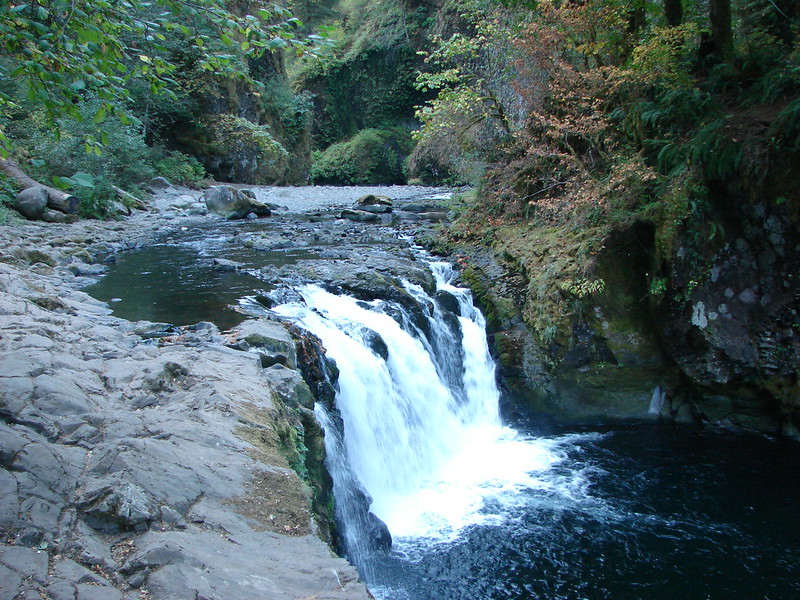
Shortly after leaving the viewpoint a set of signs announce the .5mi side trail down to Punchbowl Falls. The difference from our last visit was immediately noticeable when we reached Lower Punchbowl Falls.
Oct. 2012
035
May 2014
DSC04381

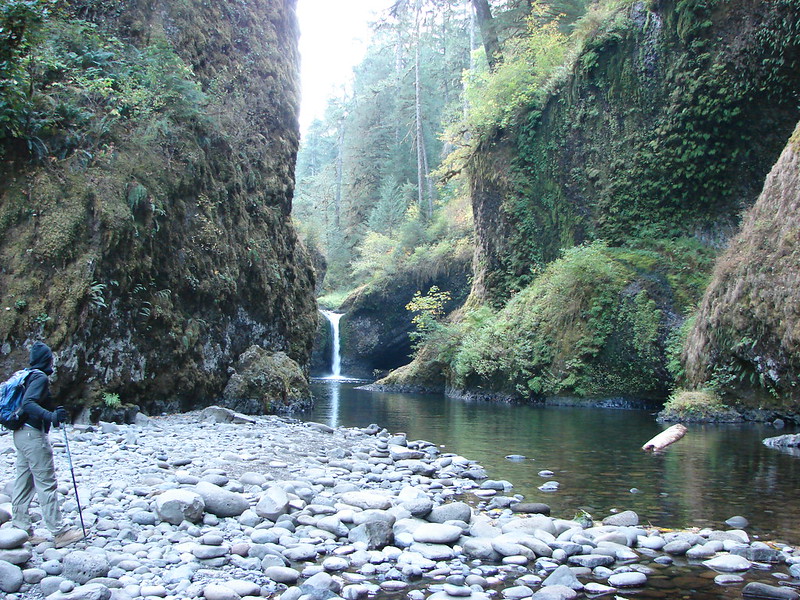
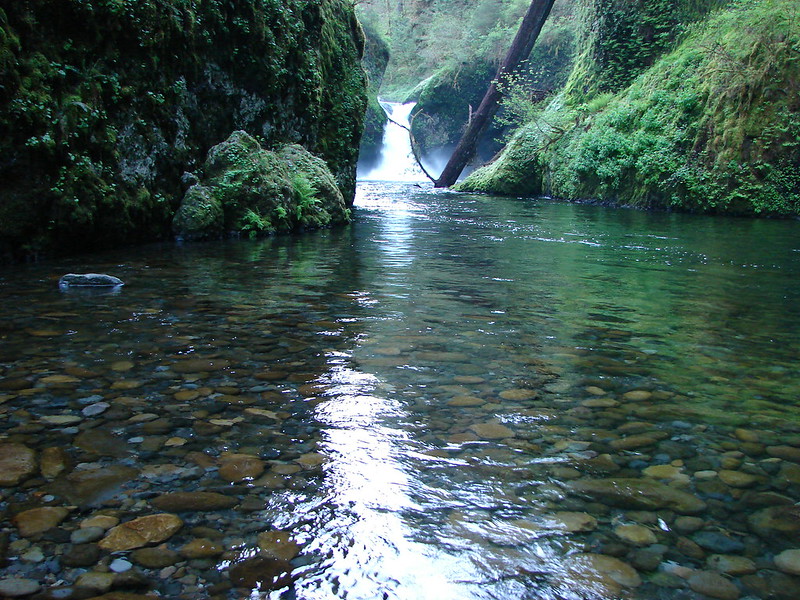
Even more noticeable was the creek level below Punchbowl Falls. In October we would walk on dry rocks far enough out to get a nice view of Punchbowl Falls, but now the only way to see the falls from below was to wade out into the creek.
Oct. 2012
Punchbowl Falls
May 2014
Punchbowl Falls
Another difference was the tree that had fallen down into the pool below Punchbowl Falls which happened sometime this past Winter.

The main trail then travels above Punchbowl Falls where a partly obscured view looks down into the bowl.
DSC04414
Some arnica was blooming here.
DSC04418

The trail crosses many side streams that are flowing into Eagle Creek from the canyon walls. These were much pretty this time as well.
Oct. 2012
054
May 2014
DSC04425

The next major falls along the trail is Loowit Falls. This was the most disappointing of the falls in 2012.
Loowit Falls
That was not the case this time. Not only were the falls much fuller but a lovely patch of Larkspur lined the trail at the viewpoint.
DSC04455
DSC04464

The next marker is High Bridge at the 3.3 mile mark where the trail crosses over Eagle Creek on a foot bridge. Scenic views abound here too and not just down at the creek.
DSC04491
DSC04499

Next up is Skoonichuck Falls. This one is hard to get a good view of as it requires a little scrambling down to a little ledge above the creek. In 2012 I didn’t go down to the better viewpoint but I made it down this time.
Oct. 2012
097
May 2014
DSC04506

The trail crosses back over the creek at 4 and a half mile bridge. On our previous trip we’d had lunch shortly after crossing this bridge below Tenas Falls. In 2012 we didn’t realize these were a named falls, it was just a scenic place for a break. We found our way back down to the spot this time to see the difference.
Oct 2012
108
May 2014
DSC04524

Continuing on the trail it enters the Mark O. Hatfield Wilderness in the Mt. Hood National Forest. Not long after entering the wilderness the trail crosses Wy’East Creek where you can see the top of another waterfall back in the forest a bit.
DSC04542
There is a primitive trail that leads back to the falls. It requires a lot of climbing over, under and around debris but eventually you arrive at the base of the falls where a decent trail leads behind them. There was another drastic difference in Wy’East Falls.
Oct. 2012
140
May 2014
DSC04553
I hadn’t bothered to go behind the falls the last time but this time I couldn’t pass up the curtain of water.
DSC04554

Our previous trip had ended shortly after leaving Wy’East Falls at a trail junction with the Eagle Benson Trail where there was a posted notice of the trail closure.
129
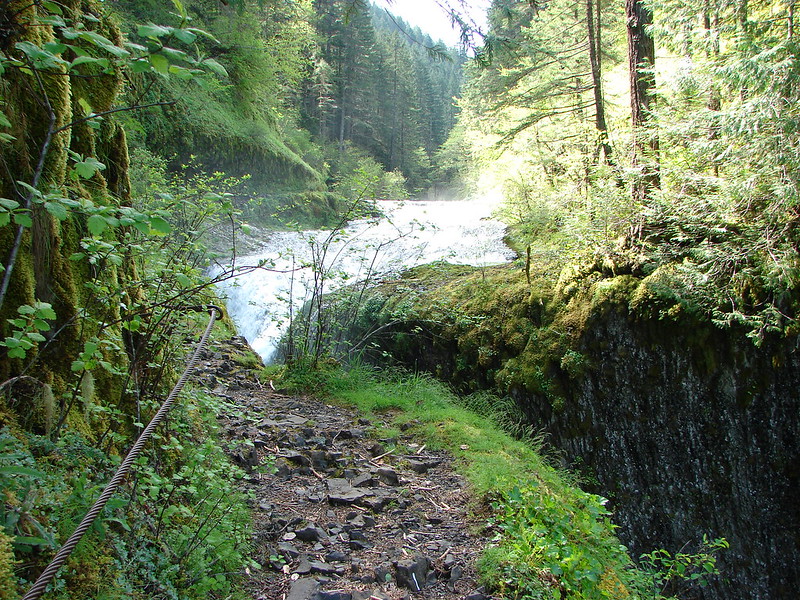
This time we were able to continue on passing more wildflowers, distant falls, and cliff edged trail.
DSC04579
DSC04589
DSC04563
DSC04566

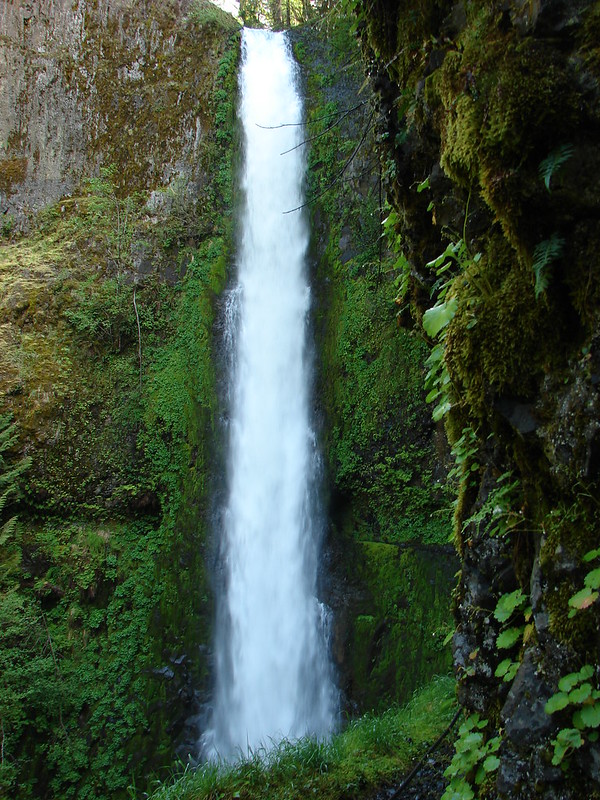
Near the 6 mile mark we got our first glimpse of Tunnel Falls.
DSC04590
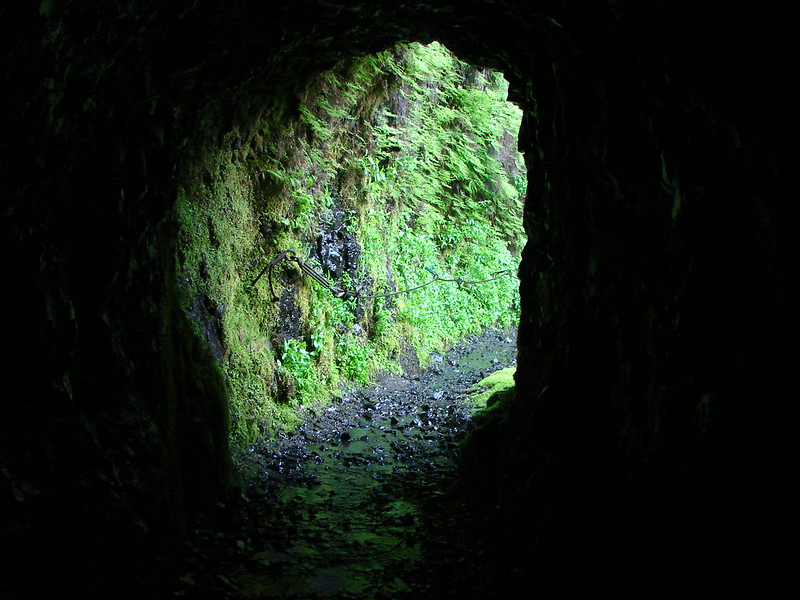
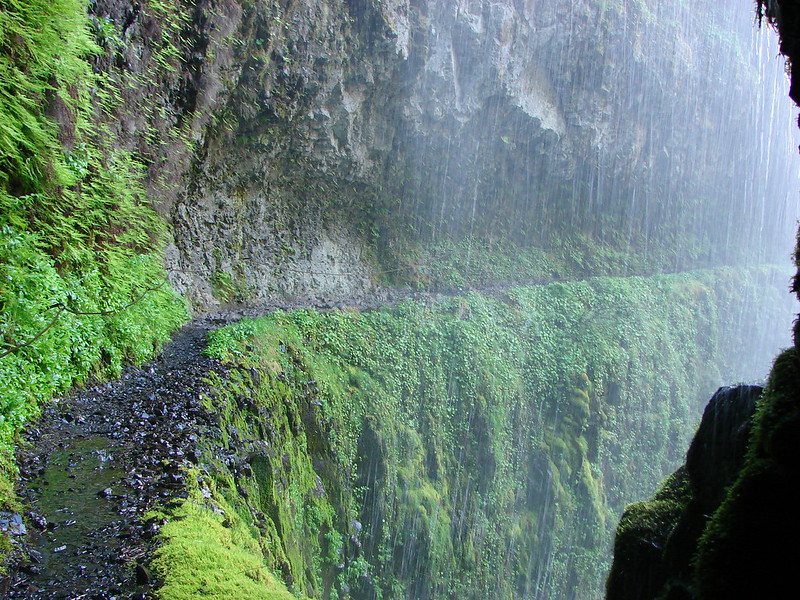
Tunnel Falls got it’s name from the tunnel that was blasted out of the rock in order to pass the trail behind and the falls and continue on up Eagle Creek.
DSC04603
DSC04610
DSC04611
DSC04687

Leaving Tunnel Falls the trail is at it’s most dizzying. Sometimes called the vertical mile the trail traverses along the cliff to the next and final big fall – Twister Falls.
DSC04623
DSC04624

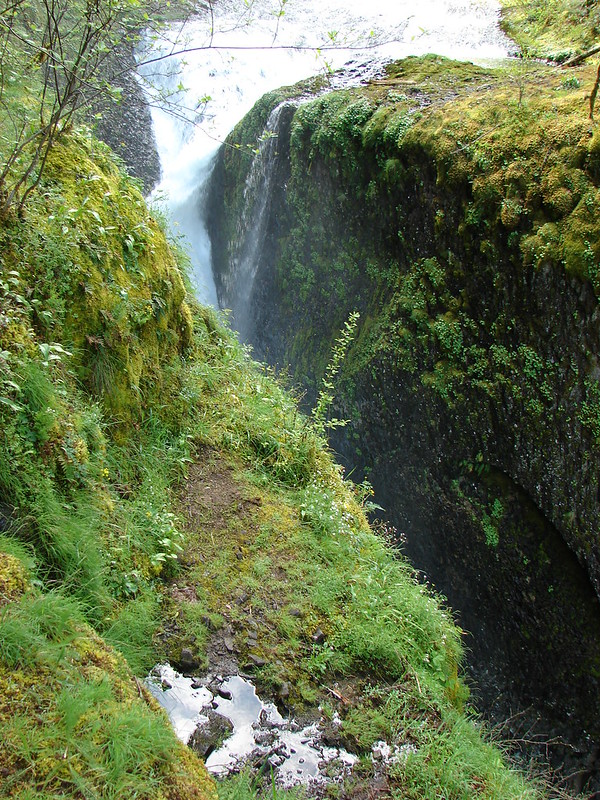
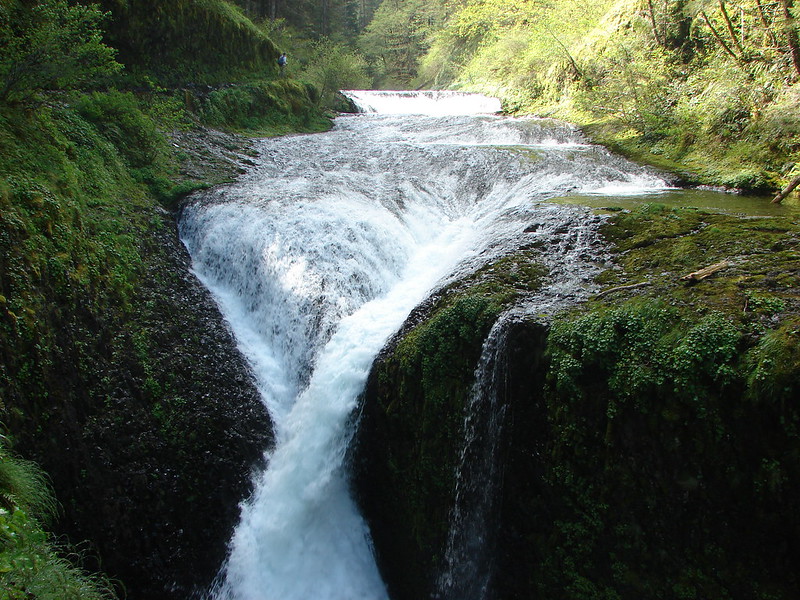
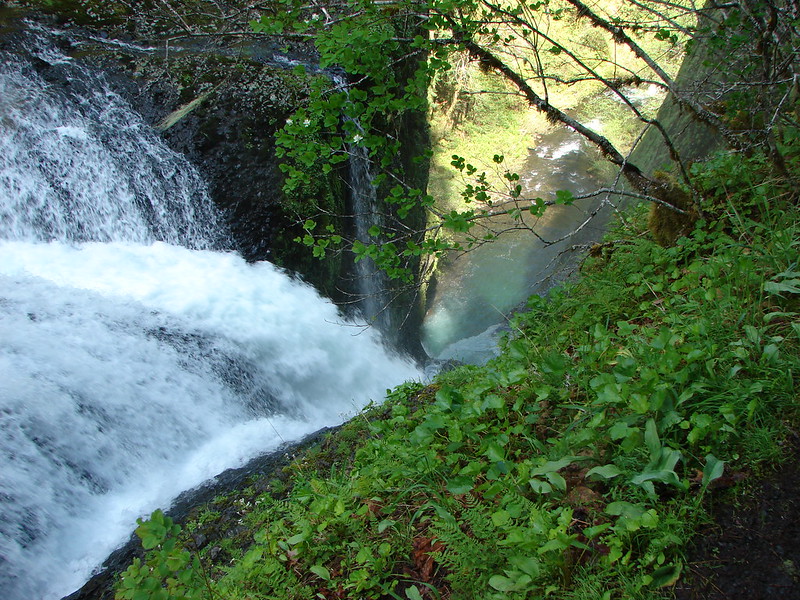
Twister Falls was really interesting but also very difficult to get a good view of. The best view is from a little ledge just below the trail.
DSC04633
DSC04634

Looking down the chasm gives you an idea of the complexity of this fall.
DSC04678

Above Twister Falls the trail levels out but is extremely rocky and somewhat slick for a bit. Heather had gotten ahead of me and was focused on something in the creek as I approached.
DSC04643
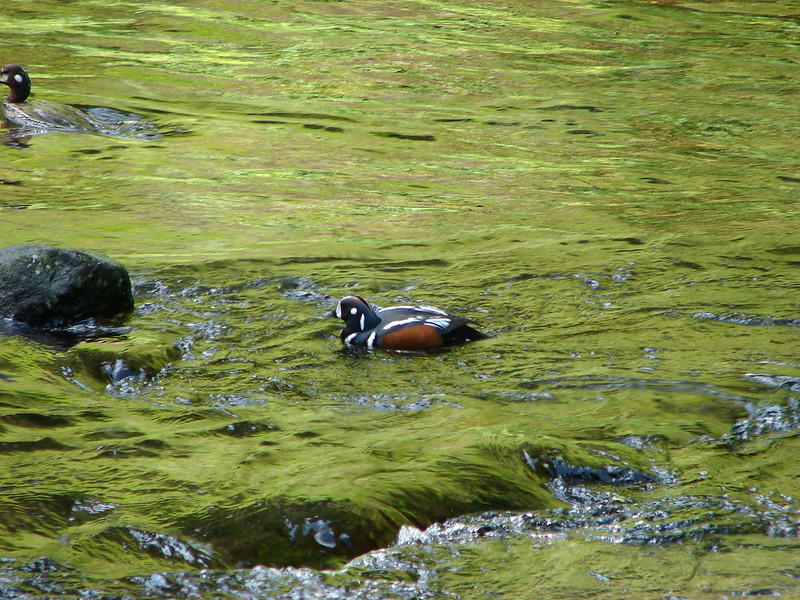
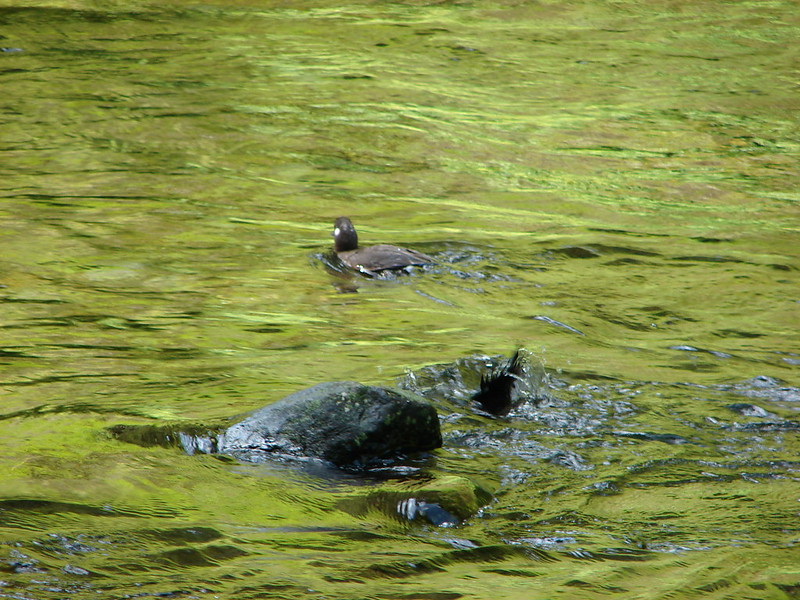
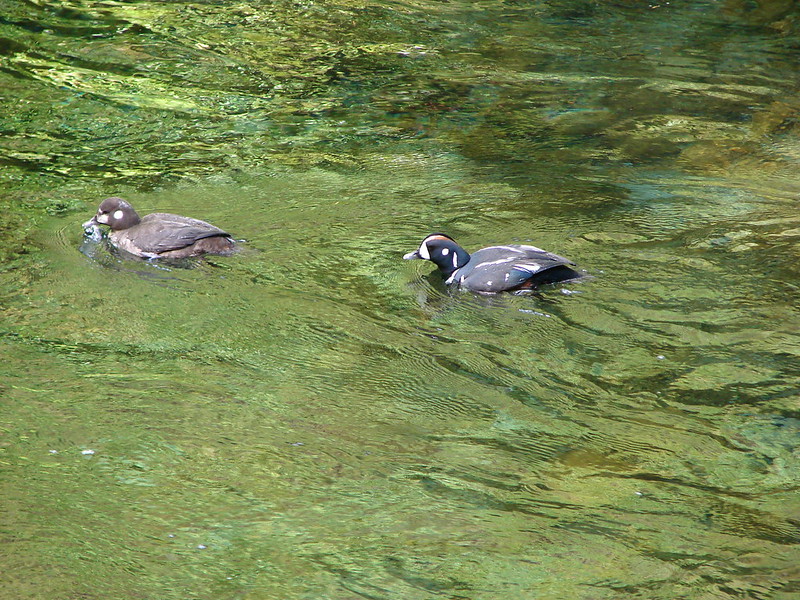
It turned out to be a pair of Harlequin Ducks who were paddling around a pool diving for food.
DSC04646
DSC04647
DSC04648
Harlequin Duck

After hanging out with the ducks for a bit we started on our return trip. The sun was shining and the butterflies had come out.
DSC04690
DSC04705
DSC04708

When we got back to Loowit Falls I stopped to take a couple more pictures with the different lighting when Heather notice a pair of ducks in the creek below. It was another (or the same?) pair of Harlequin Ducks.
DSC04721
DSC04723

It was a lot of fun to go back and redo this hike at such a different time of year. Being able to compare the changes that the seasons bring and to also finally reach Tunnel & Twister Falls made this a very satisfying hike. No matter what the season – Happy Trails!

flickr: https://www.flickr.com/photos/9319235@N02/sets/72157644572170635
facebook: https://www.facebook.com/deryl.yunck/media_set?set=a.10203943516615461.1073741874.1448521051&type=3

Categories
Year-end wrap up

The hikes of 2013 – A year in review.

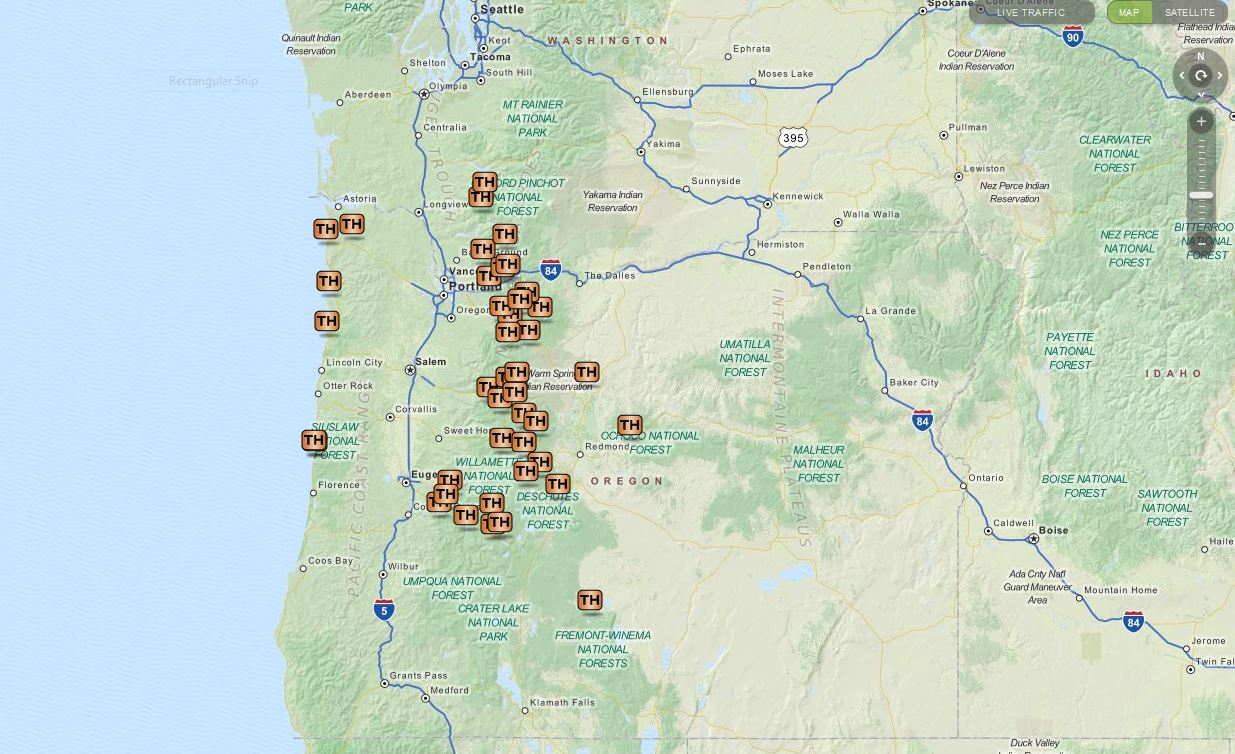
What an amazing year of hiking it was! As we reach then end of 2013 we thought we’d make one final entry recapping the beautiful areas and unique features we were blessed enough to encounter while out on our “wanderings”. We began the year in February at the Oregon Coast, hiking at Gwynn Creek and Cape Perpetua then finished up just a couple of weeks ago, once again on the Oregon Coast at Tillamook Head, 140 miles north of where we had started. Sandwiched in between these two hikes were 40 other adventures in which we climbed mountains, crossed rivers, and scrambled cross-country to explore a small sampling of the trails of NW Oregon and SW Washington. We put together a map of the approximate location of the trailheads for each of the hikes.
2013 Trailheads
An interactive version can be viewed on mapquest using the following link.
http://mapq.st/1bQXoXo

I’ve always been interested in numbers so I have kept quite a few statistics regarding these 42 hikes. Here are some of those that I found most interesting. We visited 10 wilderness and 2 scenic areas in 8 different national forests. In addition to the national forests we hiked in 4 state parks and at a national volcanic monument. Some of the other numbers are as follows:
Total Miles (according to the Garmin) – 515.2
Cumulative Elevation Gained (approx.) – 88,000′
Minimum/Maximum Elevation – sea level/10,358′
Total Moving Time (per the Garmin) – 240hrs 36min
Total Time on the Trails (per the Garmin) – 280hrs 6min
Total Miles Driven (approx.) – 7550 miles

For the most part the weather was good. We had a warm, dry end to Winter which carried into Spring clearing many trails of snow earlier than normal. This allowed for some earlier visits to some of the higher elevation areas and also an early bloom for most of the wildflowers including the bear grass which only blooms every 2nd or 3rd year. A mild summer kept temperatures bearable and despite the dry beginning to the year the fire season wasn’t too bad. Fall brought an early snowstorm and left an early winter wonderland at mid-elevations and some unusually cold temperatures of late created some interesting ice displays.

Words can’t do justice to the beauty of God’s creation that we experienced this so year I’ll try to keep them to a minimum and attempt to let pictures show what they can.
I have to start with the Cascade Mountains. The most awe inspiring creations, these steadfast beacons that on clear days dot the horizon always seem to draw our attention.

From the rim of Crater Lake in the south to Mt. Rainier in the north they rise above the other ridges, rooted in their positions, yet ever changing in order or varying in appearance depending on what our location was. Some of the views we had were amazing.

Mt. Scott, Mt. Thielsen, Mt. Baily, & Diamond Peak from the South Sister Summit
View from the South Sister
Cascade Peaks from Mt. Bachelor to Mt. Hood (minus the North Sister which was hidden behind the Middle) from Mt. Fuji
Waldo Lake
Mt. Washington to Mt. Hood from the Pacfic Crest Trail near Yapoah Crater
Belknap Crater, Mt. Washington, Three Fingered Jack, Mt. Jefferson & Mt. Hood
Mt. Washington to Mt. Bachelor from Three Fingered Jack
Broken Top, Mt. Bachelor, The Three Sisters, Mt. Washington and The Husband
Mt. Rainier, The Goat Rocks, and Mt. Adams from Wildcat Mountain
Mr. Rainier, The Goat Rocks, and Mt. Adams
Mt. St. Helens, Mt. Rainier, and Mt. Adams from Silver Star Mountain
View from Ed' Trail

Individual peaks working from the south to the north.
Mt. Thielsen:
From Fuji Mountian
Mt. Thielsen

Diamond Peak:
From Waldo Mountain
Fuji Mountain and Diamond Peak
From Fuji Mountain
Diamond Peak

Mt. Bachelor:
From Fuji Mountain
Mt. Bachelor
From Tam MacArthur Rim
Mt. Bachelor

Broken Top:
From above Moraine Lake
Broken Top and Moraine Lake
From Fuji Mountain
Broken Top and Ball Butte
From Tam MacArthur Rim
Broken Top

South Sister:
From above Moraine Lake
South Sister Climbers Trail
From Tam MacArthur Rim
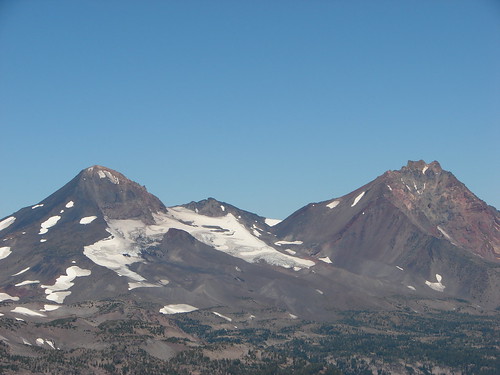
South Sister
From Fuji Mountain
South Sister

Middle & North Sister
From Tam MacArthur Rim
Middle and North Sister
From Scott Meadow
North & Middle Sister and Little Brother from Scott Meadow
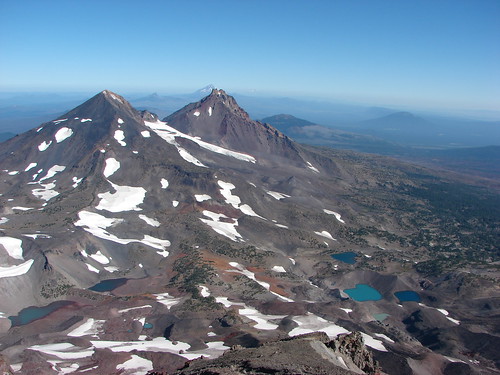
From the South Sister
South Sister summit view

Mt. Washington
From the Matthieu Lakes Trail
Mt. Washington
From Fuji Mountain
Mt. Washington and Belknap Crater
From Three Fingered Jack
Mt. Washington and The Husband

Three Fingered Jack:

From the Matthieu Lakes Trail
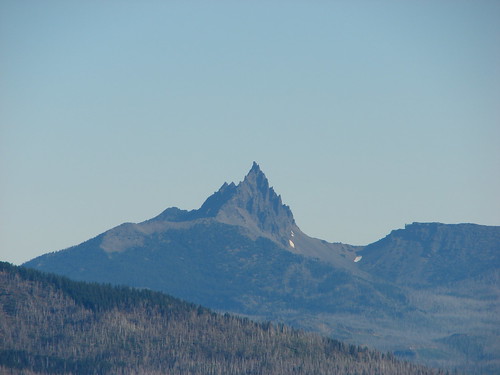
Three Fingered Jack
From Canyon Creek Meadows
Three Fingered Jack from the upper meadow

Mt. Jefferson:
From Fuji Mountain (Dwarfing Three Fingered Jack)
Mt. Jefferson and Three Fingered Jack
From Hanks Lake
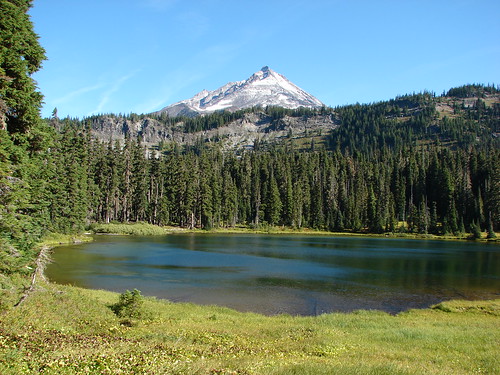
Hank's Lake
From Three Fingered Jack
Looking back down
From Bays Lake in Jefferson Park
Bays Lake in Jefferson Park

Mt. Hood:
From Barrett Spur
Mt. Hood from Barrett Spur
From Table Mountain
Mt. Hood from Table Mountain
From Elk Meadows
Mt. Hood from Elk Meadows
From Lamberson Butte
Mt. Hood
From Youcum Ridge
Mt. Hood from Yocum Ridge
From Timothy Lake
Mt. Hood from Timothy Lake

Mt. St. Helens:
Mt. St. Helens
From the Loowit Trail on Mt. St. Helens
Mt. St. Helens from the Loowit Trail
From Johnston Ridge
Mt. St. Helens

Mt. Adams:
From Silver Star Mountain
Paintbrush, penstemon and Mt. Adams

Mt. Rainier:
From Wildcat Mountain
Mt. Rainier

From the giant rock towers of the mountains we move on to the delicate meadows full of wildflowers that often times call the mountains home. We visited amazing wildflower displays near Mt. Hood, Mt. Jefferson, and Three Fingered Jack but the Cascades were possibly outdone by Silver Star Mountain in Washington.
Bear Grass on Mt. St. Helens
Mt. St. Helens from a beargrass meadow along the Loowit Trail
Balsam Root and Paintbrush in the Ochoco National Forest
Paintbrush and balsamroot
Clearcut on Silver Star Mountain
Tarabell Trail
Meadow on Salmon Butte
An arnica in  a meadow of plectritis, larkspur and monkeyflower
Elk Meadows
Elk Meadows
Near Heather Creek on Mt. Hood
Wildflowers along the Timberline Trail at Heather Creek
Mt. Hood Meadows
Wildflowers in Mt. Hood Meadows
Lupine in Canyon Creek Meadows
Three Fingered Jack
On Coffin Mountain
Aster, penstemon and paintbrush
Avalanche Lilies on the Timberline Trail
Avalanche lilies
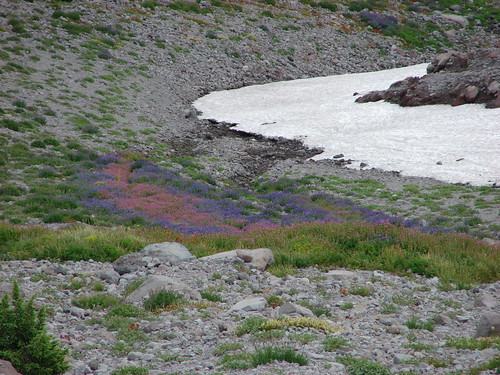
Western Pasque flowers and Paintbrush near Elk Cove
Mt. Hood from the Timberline Trail near Elk Cove
Barret Spur on Mt. Hood
Lupine and monkeyflower
Gentians in Jefferson Park
Gentians
Jefferson Park
Wildflowers along the South Breitbenbush Trail
Along the South Brietenbush River in Jefferson Park
Wildflowers along the South Breitenbush River
Aster on Yocum Ridge
Aster field on Yocum Ridge
On Yocum Ridge
Wildflowers along the Yocum Ridge Trail
More from Yocum Ridge
Paintbrush and aster

There weren’t many hikes where the presence of water was not felt. We encountered it in various forms and in an array of colors. There were lakes, creeks, rivers, waterfalls, springs, and the Pacific Ocean adding sights and sounds to our hikes.
Roaring Creek
Roaring Creek
McKenzie River
Mckenzie River
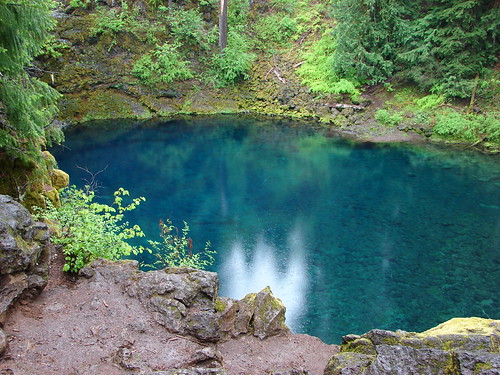
Tamolitch Pool
Tamolitch Pool
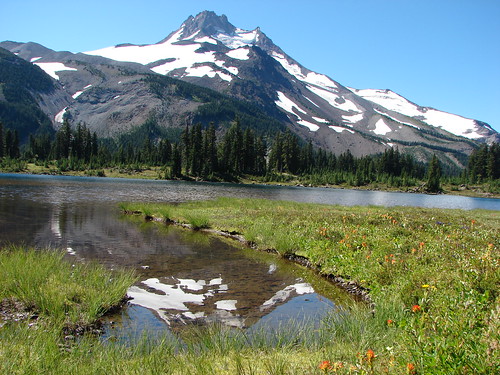
Russell Lake
Mt. Jefferson from Russell Lake
Umbrella Falls
Umbrella Falls
Diamond Creek Falls
Diamond Creek Falls
Heather Creek
Waterfall on Heather Creek
South Matthieu Lake
South Mattieu Lake
Benham Falls
Benham Falls
Carver, Camp, and the Chambers Lakes
Carver, Camp and some of the Chambers Lakes
Lewis Tarn
Lewis Tarn
Creek near Pamelia Lake
Waterfall near Pamelia Lake
Timothy Lake
Timothy Lake
Little Crater Lake
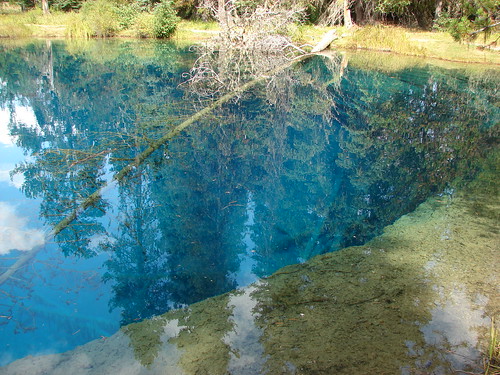
Little Crater Lake
Frozen pond near Fuji Mountain
Half frozen pond
Birthday Lake
Birthday Lake
Ramona Falls
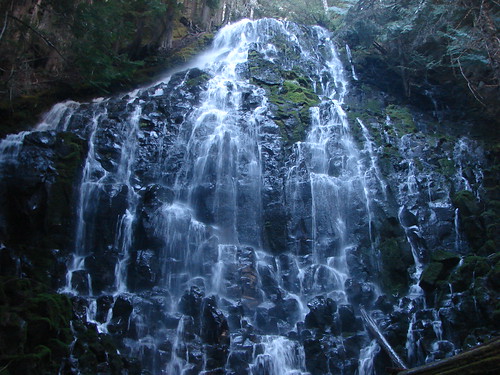
Ramona Falls
Pacific Ocean at Tillamook Head
View from Ecola State Park
Pacific Ocean from Cape Perpetua
Looking south from Cape Perpetua
Last but not least the most unpredictable of the sights out on the trails are the creatures that call these places home. From flying ants on Coldwater Peak to the black bear who left its tracks in the snow on Fuji Mountain we were the tourists traipsing through their neighborhoods. We spotted our first elk, snow shoe hare, and sooty grouse this year. We also had the mysterious case of “mouse rain” on Salmon Butte which you can read about here:https://wanderingyuncks.wordpress.com/2013/06/20/salmon-butte/
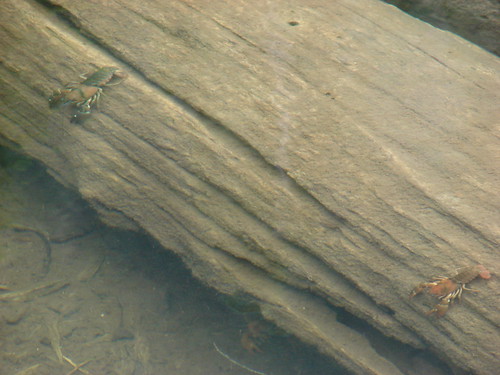
Crawdads in Middle Rock Lake
Tide pool at Cape Kiwanda
Snail
Rough skinned newt
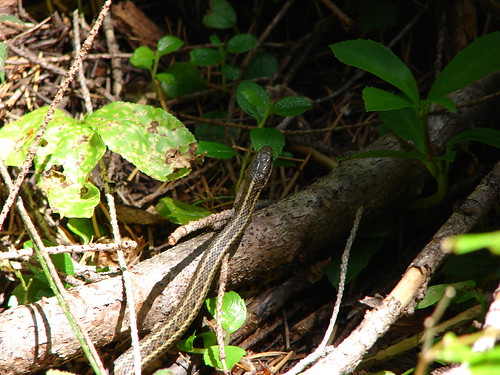
Snake
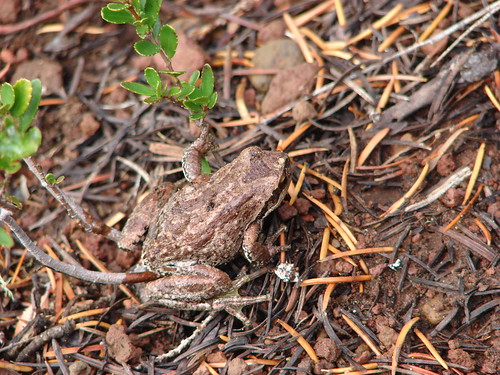
Tree frog
Spider along the Tam McArthur Rim Trail
Bug on Fuji Mountain
Frog
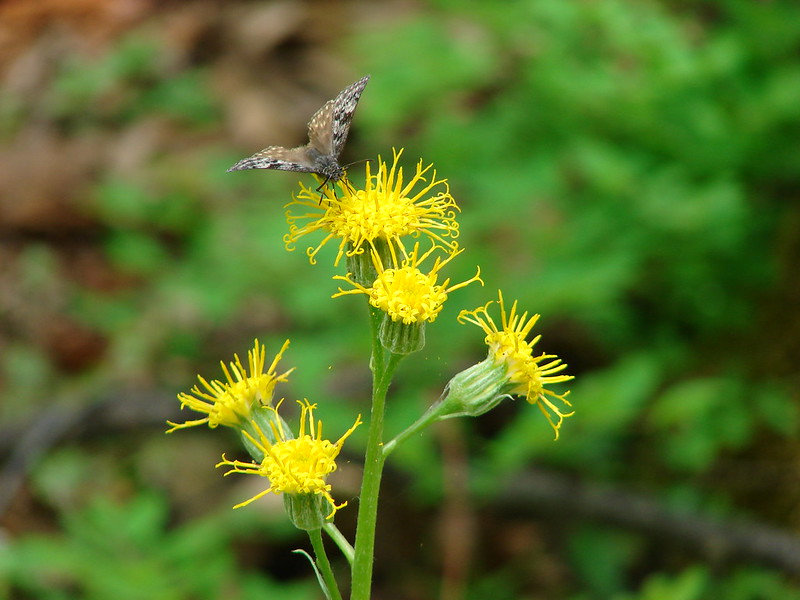
Butterflies
Zerene fritillary butterfly
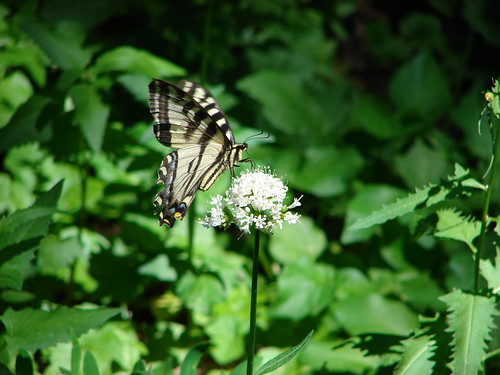
Swallowtail butterfly
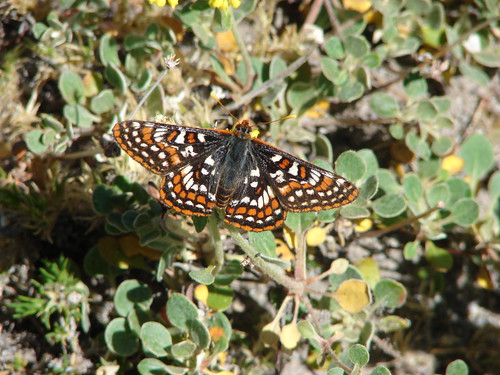
Edith's checkerspot
Milbert's Tortoiseshell Butterfly on the way up Coldwater Peak
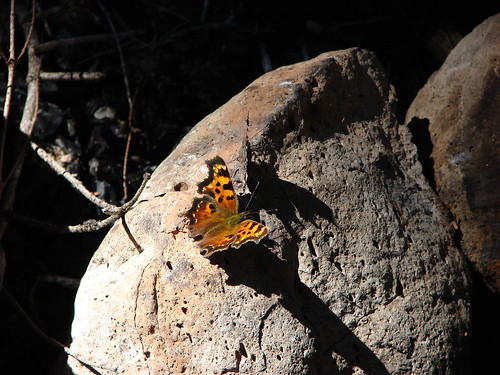
Hoary Comma
Hoary Comma
Clodius parnassian
Birds
Bald eagle
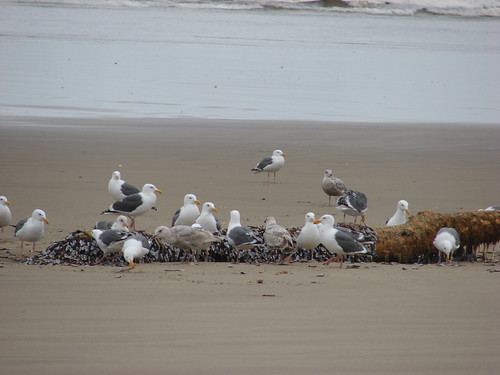
Seagull buffet
Yellow-Rumped Warbler
Owl
Gray jay taking a bath
Duck family
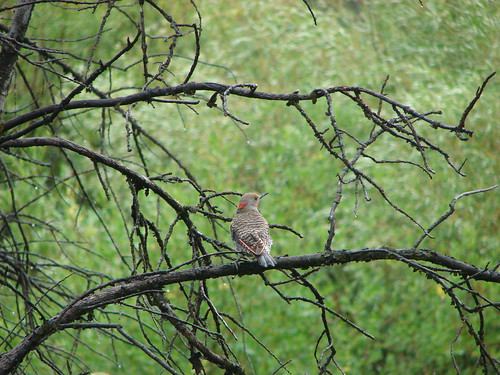
Northern Flicker
Osprey
Hummingbird
Red Crossbill
Osprey flying over ducks on Timothy Lake
Hummingbird
Canada geese
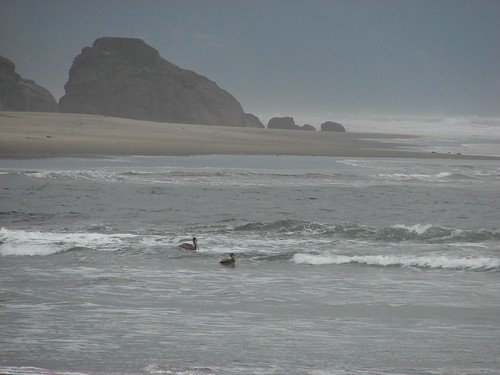
Pelicans
Common goldeneyes on Wall Lake
Great Blue Heron
Little guys
Chipmunk
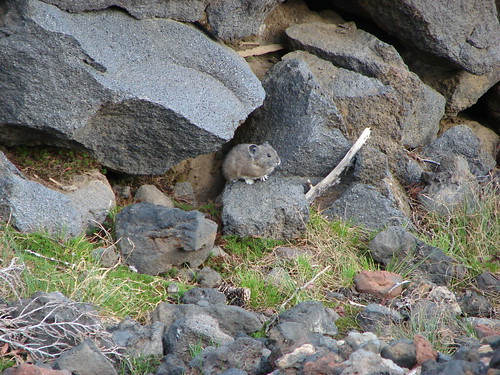
Pika
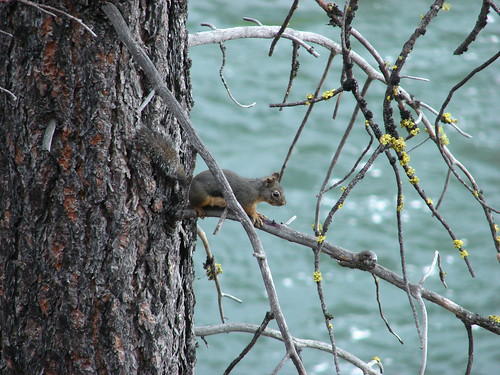
Douglas squirrel
Golden Mantled Squirrels
Snowshoe hare

Big Guys
Our first elk sighting. Near the Observation Peak Trailhead
Columbia Black Tailed Deer
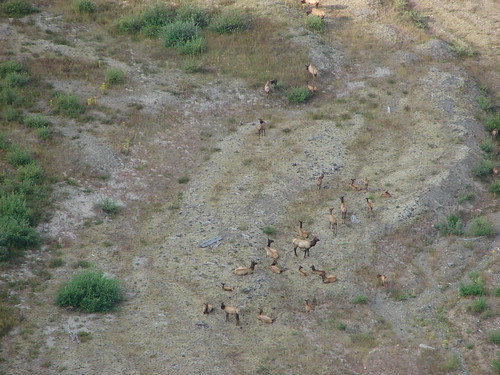
Elk herd on the far shore of the Deschutes River
Elk
Deer near the Lower Black Butte Trailhead

We’d like to leave you with what each of us found to be their favorite hike and the most difficult. For myself Elk Meadows was my favorite. https://wanderingyuncks.wordpress.com/2013/07/24/elk-meadows/ The variety and beauty we encountered on that hike put it atop my list. As for the most difficult I chose Silver Star Mountain https://wanderingyuncks.wordpress.com/2013/07/04/silver-star-mountain/ which was also in the running for my favorite. The heat on that day made it the hardest one for me.

After much deliberation Heather chose the same hike as I did her favorite, Elk Meadows; something about that day had her mesmerized as we traveled up Gnarl Ridge towards Mt. Hood. For the most difficult she picked Observation Peak due in part to having fallen shortly after we stared the hike and spraining her hand and wrist. It made for a more challenging and uncomfortable hike as she endeavored to keep her injury elevated above her heart during most of the journey. https://wanderingyuncks.wordpress.com/2013/07/09/observation-peak/

Dominique chose Fuji Mountain for his favorite. There was snow and a great view with a reasonable amount of distance. https://wanderingyuncks.wordpress.com/2013/10/09/fuji-mountain/ For the most difficult he picked Table Mountain and the climb up Heartbreak Ridge. https://wanderingyuncks.wordpress.com/2013/06/14/table-mountain/

I am already hard at work putting together a 2014 itinerary which will include some overnight backpacking trips and hopefully visits to the Goat Rocks Wilderness and Mt. Adams in Washington. If all goes as planned we will kick things off in January, take things slow until we’ve recovered from our April half or full marathons, and then be ready to crank things up in May. Until 2014 here is a link to a 2013 hikes in pictures album on Flickr http://www.flickr.com/photos/9319235@N02/sets/72157635497870439/

Merry Christmas & Happy Trails!

Categories
Clackamas Hiking Old Cascades Oregon Trip report

Shellrock, Serene, and the Rock Lakes

We headed out on the first day of Autumn for our first post Summer hike and boy did Fall arrive in full force. We headed to the Roaring River Wilderness to check out several lakes on a loop hike. There was a possible view of Mt. Hood and several Washington snow peaks, but it was obvious from the forecast that any views were unlikely. The Roaring River Wilderness is part of the Mt. Hood National Forest and one we had yet to visit. We began our hike at the Shellrock Lake trail head under cloudy skies and a light mist.

After donning our rain gear for the first time in months we decided to do a “warm up” hike to Hideaway Lake in the opposite direction of our planned hike. The trail to Hideaway Lake started on the opposite side of the road from the Shellrock Lake trail. A short .5 miles path brought us to the lake which we then circled on a 1 mile loop. After completing the loop we returned to the parking area and set off toward Shellrock Lake.

The Shellrock Lake trail quickly entered the Roaring River Wilderness and just a short while later we arrived at Shellrock Lake. Fog drifted over the water at this peaceful lake which had plenty of campsites but no campers.

Shellrock Lake
Shellrock Lake

We passed by the lake and began climbing at a sign for the Frazier Turnaround. This portion of the trail was fairly steep and rocky and also full of rough skinned newts. After 1.3 miles of climbing we arrived at Frazier Turnaround where we could have parked if we’d been willing to try the terrible access road.

From Frazier Turnaround the loop portion of our hike started. We followed a sign pointing to Serene and the Rock Lakes. Our first destination was Middle Rock Lake. We took the quarter mile path to the lake where we spotted numerous crawdads and a frog.

Crawdads in Middle Rock Lake
Frog in Middle Rock Lake

The trail continued along Middle Rock Lake and was supposed to take us to Upper Rock Lake. We ran into a little bit of an issue as we attempted to follow this portion of the trail when it appeared to veer away from the lake. We followed this faint path uphill where it was becoming increasingly overgrown until it finally disappeared at several fallen trees. Thinking the trees had blocked the path we worked our way around them and picked up what appeared to be the continuation of the faint path which quickly ended below a rock slide with no lake in sight. It was time to break out the Garmin (again) which revealed that we were too far to the right of Upper Rock Lake so we set off cross country through the wet brush. We passed a pair of scenic lily pad ponds before finally reaching Upper Rock Lake and finding a good trail leading to it’s shore.

Pond near Upper Rock Lake
Upper Rock Lake
Upper Rock Lake

We followed the good trail down and discovered the source of our confusion. A tree had fallen along the shore of Middle Rock Lake which had hidden the trail and obscured the view of the single pink flagging that indicated the correct path. We had turned right at the uprooted base of this tree on the only visible path to us at the time.

We had one more of the Rock Lakes to visit, Lower Rock Lake, which was on the other side of the loop trail so we returned the way we came and went down to visit this last one. There wasn’t much to see there, just a nice little forest lake so we quickly returned to the Serene Lake trail and continued our loop. The trail had dropped down to the Rock Lakes but now we were climbing up through a nice forest. After several switchbacks the trail leveled out and arrived at Serene Lake. This was the deepest lake of the day and was surrounded by rocky slopes and forest. Clouds drifted up over the hillsides surrounding the lake while we had a snack on it’s shore.

Serene Lake
Serene Lake

We left Serene Lake and headed for our last point of interest, Cache Meadow. The trail continued to climb as we continued on until finally leveling off on a plateau above Serene Lake. Here would have been the mountain views with Serene Lake below but the weather had not cooperated and only Serene Lake was barely visible below.

Serene Lake from the viewpoint

The rain began to pick up as we approached Cache Meadow. The meadow was larger than I had expected and the remains of a vast display of flowers covered the ground. Now only a few aster held some lingering petals. A small unnamed lake filled one end of the meadow but we didn’t explore much due to the increasing rain.

Cache Meadow
Cache Meadow

The next four plus miles was through the rain as we completed the loop back to Frazier Turnaround and then descended back to Shellrock Lake. The rain did let up as we left the wilderness area long enough for us to change into dry clothing before driving home. The only thing missing was a cup of hot chocolate 🙂 Happy Trails

Facebook photos: https://www.facebook.com/deryl.yunck/media_set?set=a.10202227553437454.1073741858.1448521051&type=1
Flickr: http://www.flickr.com/photos/9319235@N02/sets/72157635784902576/