Categories
Hiking Northern Coast Oregon Oregon Coast Trip report

Crescent Beach, Ft. Stevens Historic District, and the Skipanon River Loop – 05/11/2024

We spent Mother’s Day weekend hiking several trails in Clatsop County. We began on Saturday by driving to Ecola State Park and parking in the Ecola Point parking lot. We last visited the park in December 2013 when we hiked north along the Oregon Coast Trail (OCT) to Tillamook Head’s high point. (post)
IMG_4145

For this visit our plan was to hike south on the OCT then take the Crescent Beach Trail down to that beach.
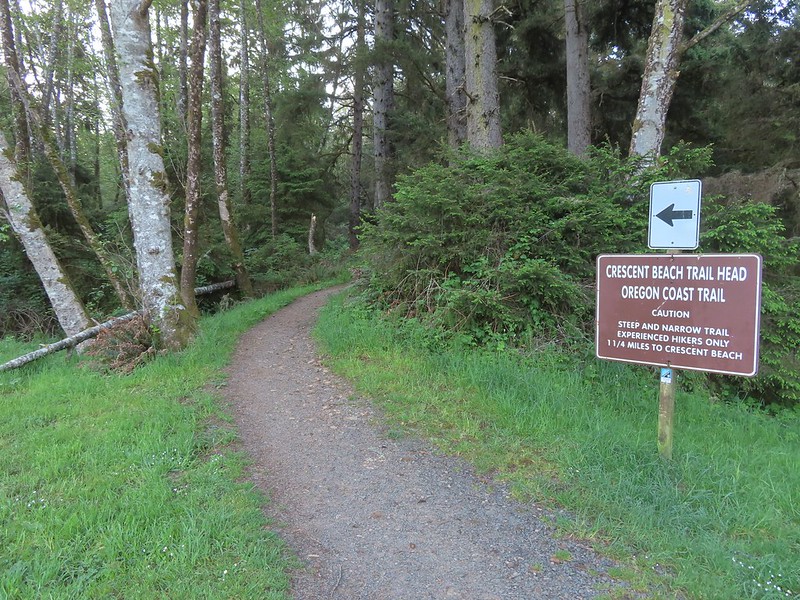
IMG_4148The trail begins near the restrooms.

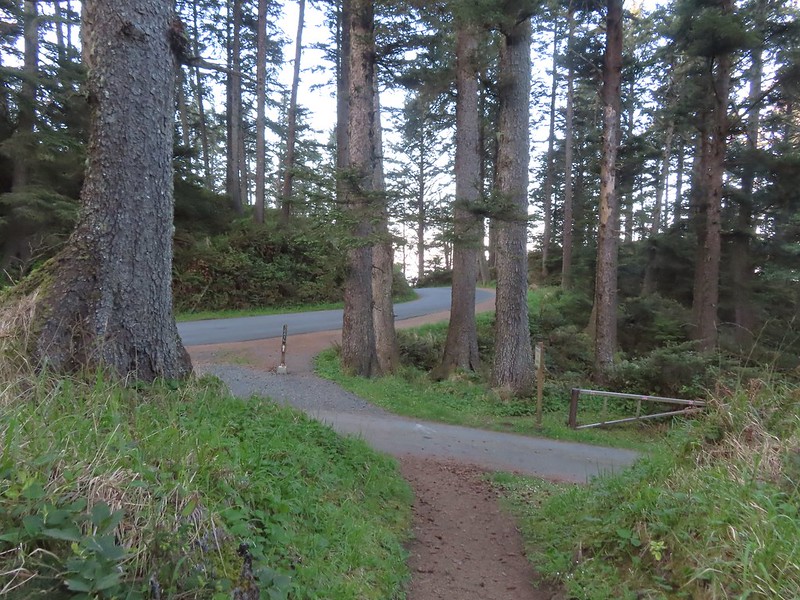
The trail began by climbing via a couple sets of wooden stairs to Ecola Park Rd which it briefly followed along the shoulder.
IMG_4150

IMG_4156Ecola Park Road.

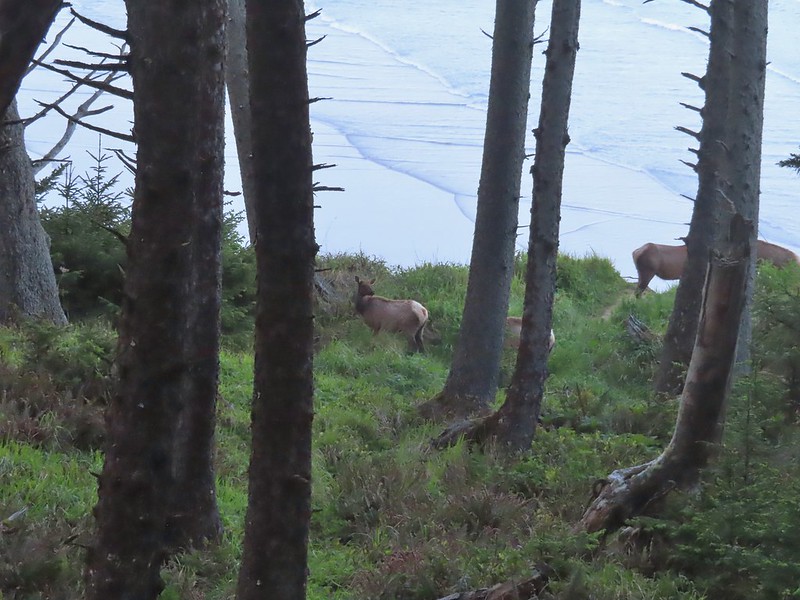
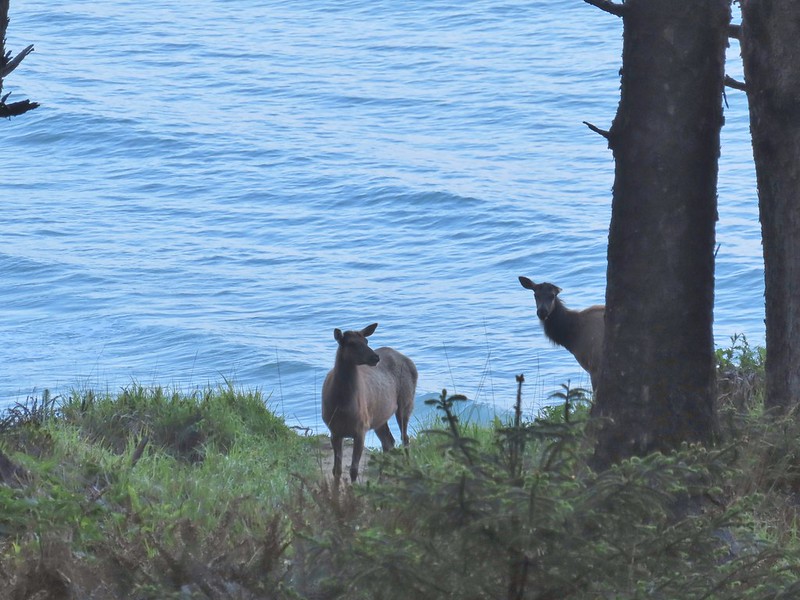
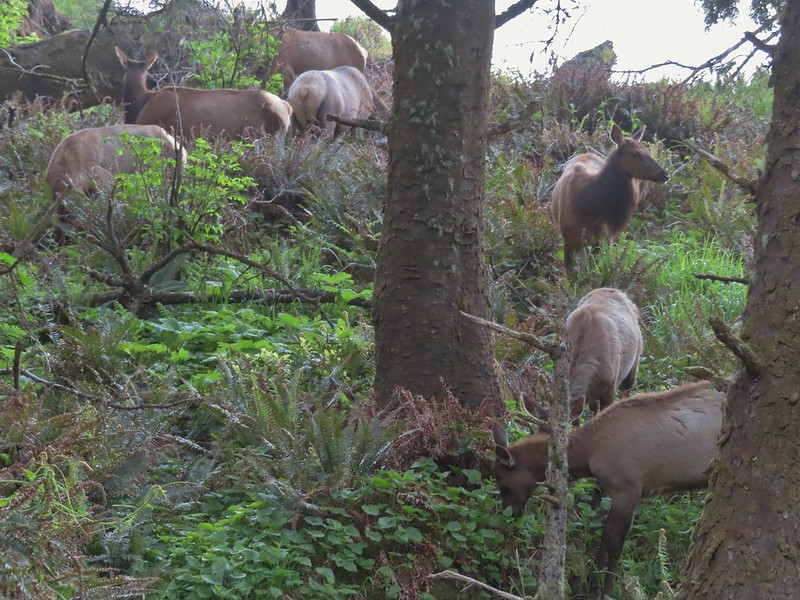
Where the trail left the shoulder, we came to a pair of cyclists who we thought were looking out at the Ocean. It took a second for us to realize that they were actually watching a small herd of elk in the forest below.
IMG_4162

IMG_4158

IMG_4165

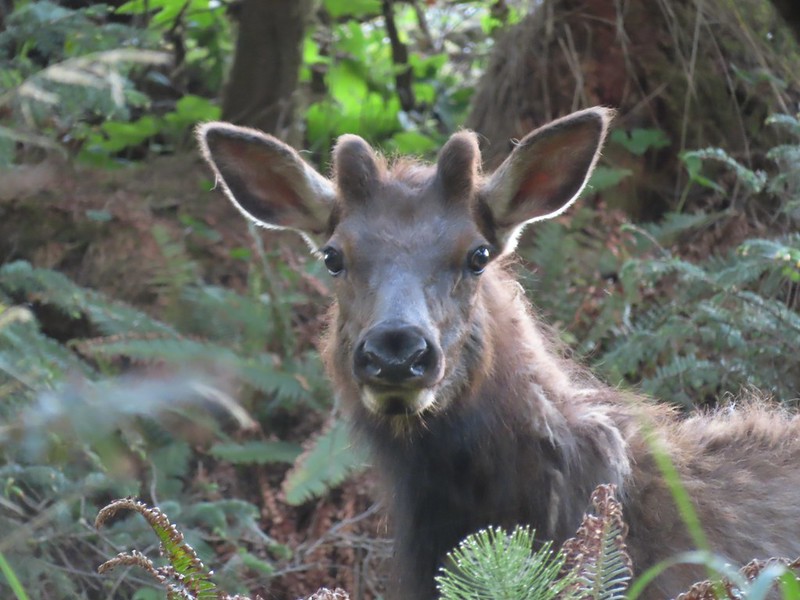
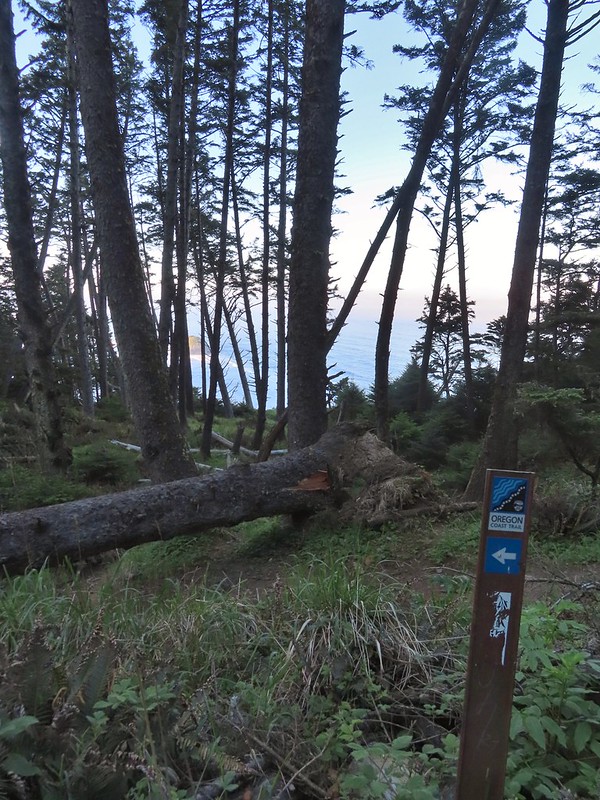
After watching the elk for a moment we started down the trail which wound up switching back down toward the elk. Luckily they were following proper Leave No Trace Principals and remained an acceptable distance from the wild hikers.
IMG_4172

IMG_4174

IMG_4178

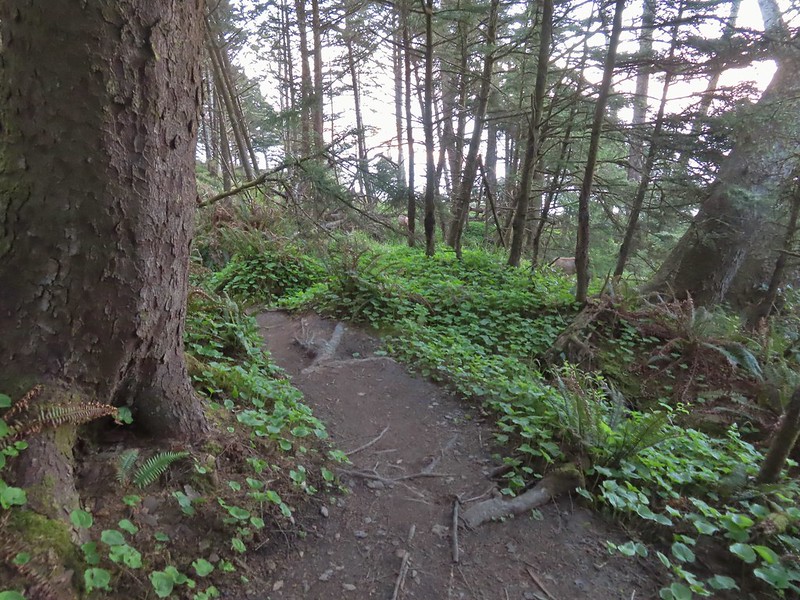
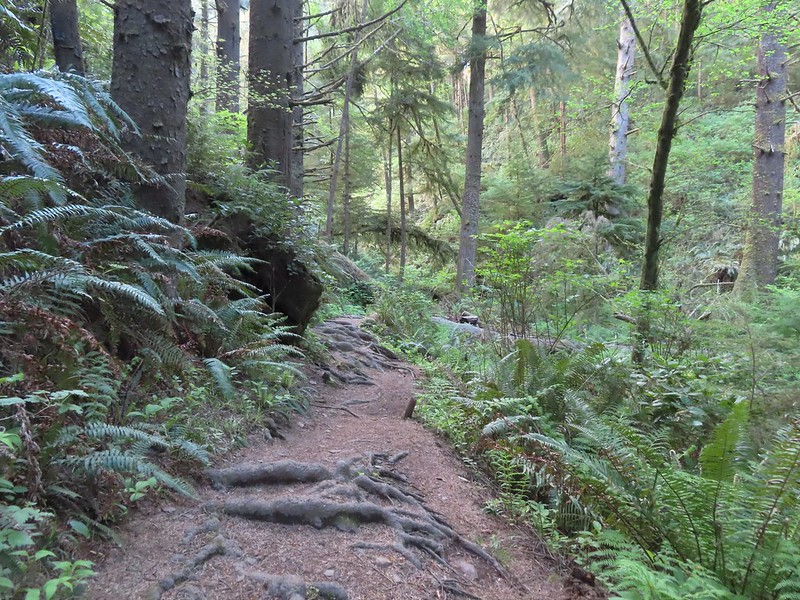
We continued on past the elk following the OCT approximately a mile from parking lot to the junction with the Crescent Beach Trail.
IMG_4187

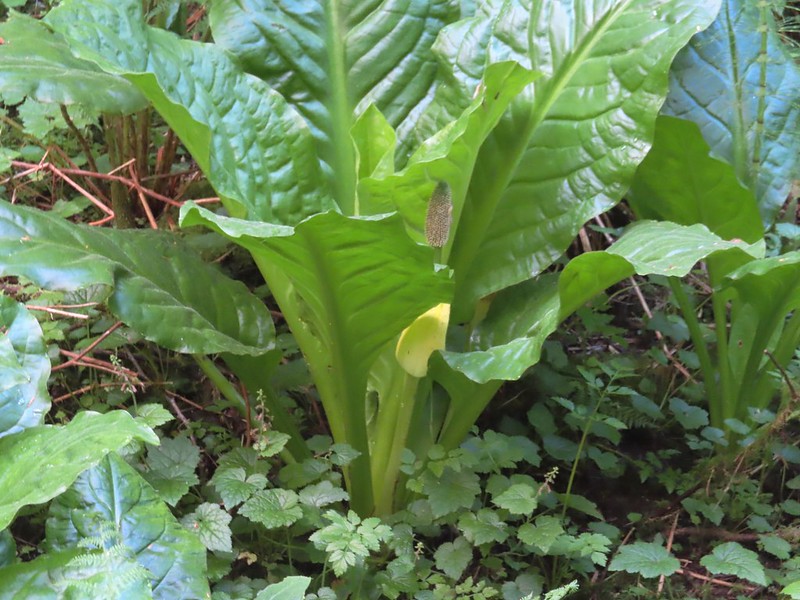
IMG_4188Skunk cabbage

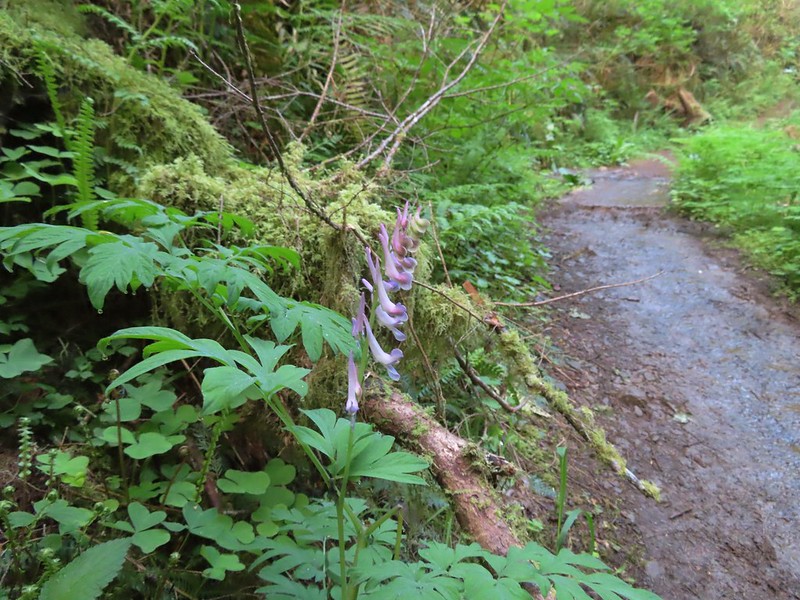
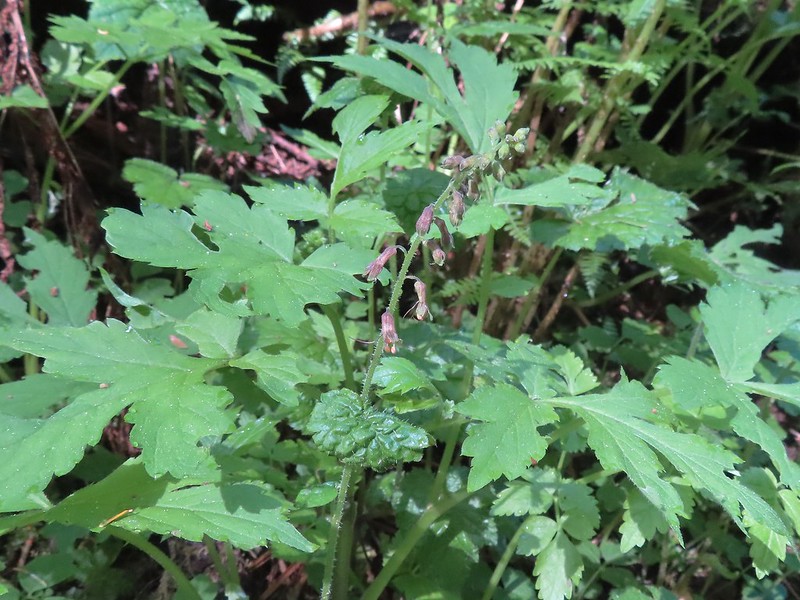
IMG_4190Scouler’s corydalis

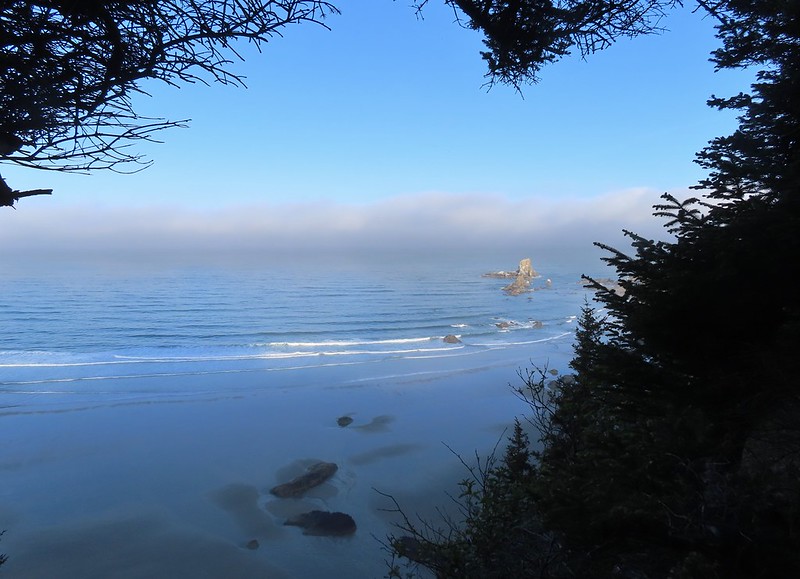
IMG_4194Window to the Pacific.

IMG_4198

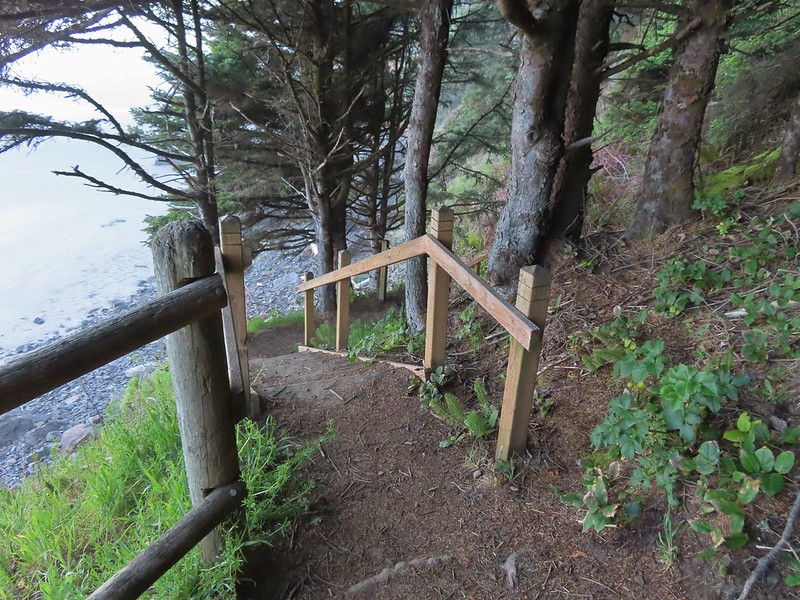
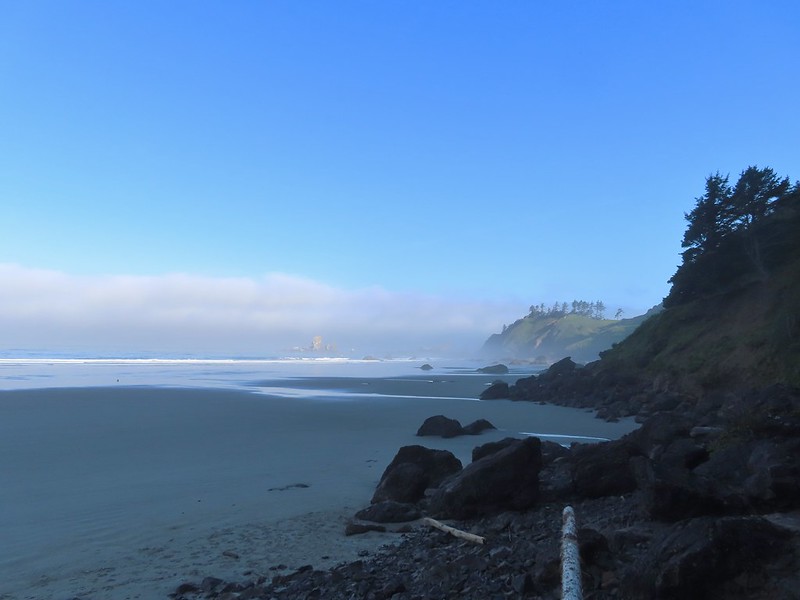
We turned right at the junction and descended a quarter mile to Crescent Beach.
IMG_4202

IMG_4207

IMG_4208Ecola Point

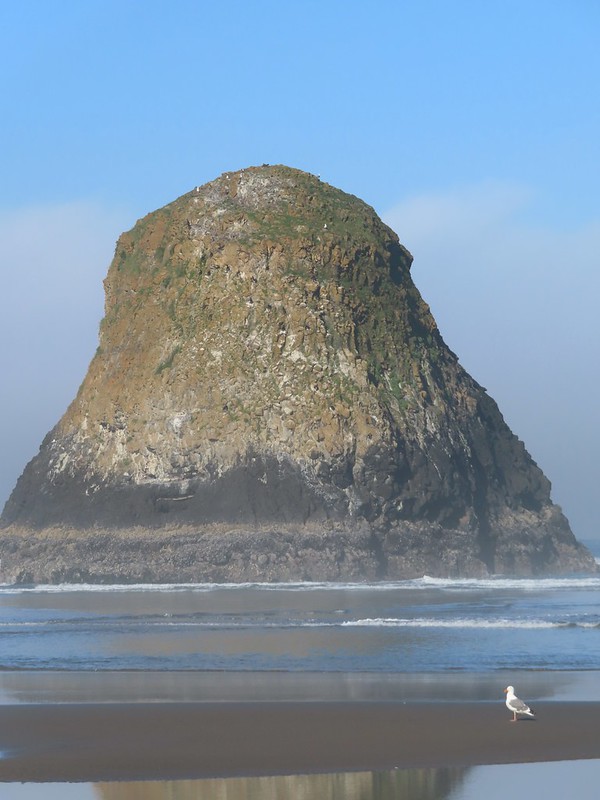
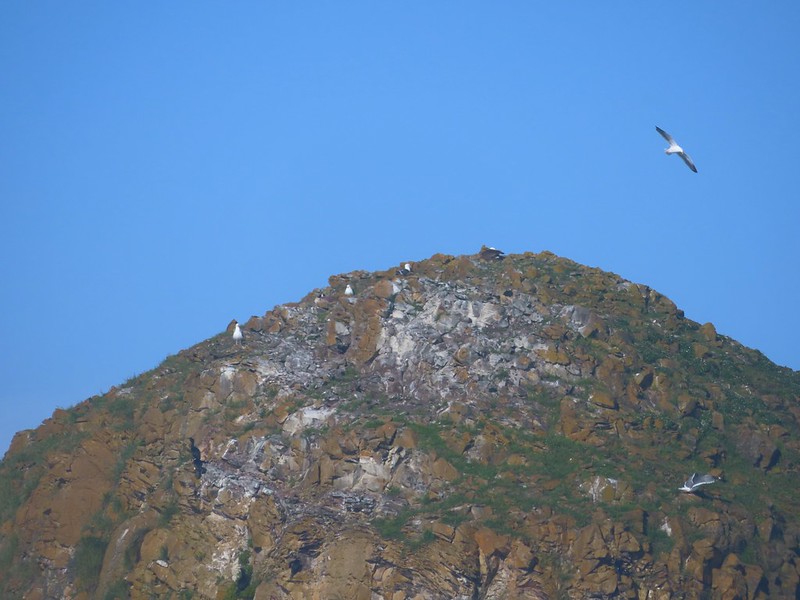
IMG_4210Chapman Point and Bird Rocks

We decided to head north toward Ecola Point to check out the tide pools. We had inadvertently timed our visit nearly perfectly as it was about an hour and a half from low tide.
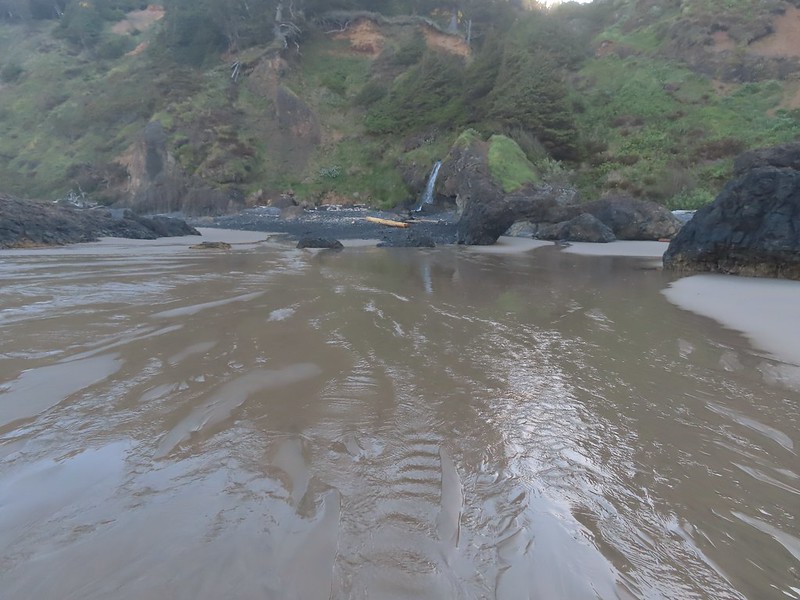
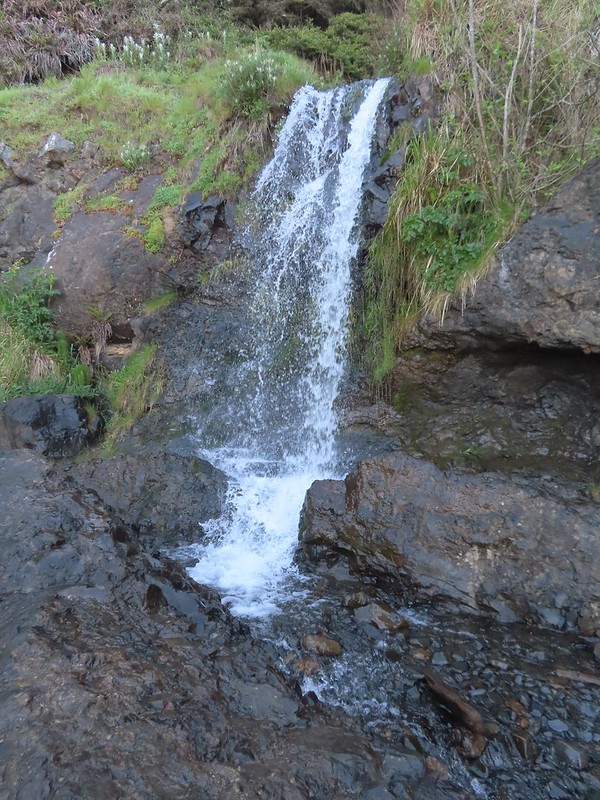
Prior to reaching the tide pools we passed Waterfall Creek.
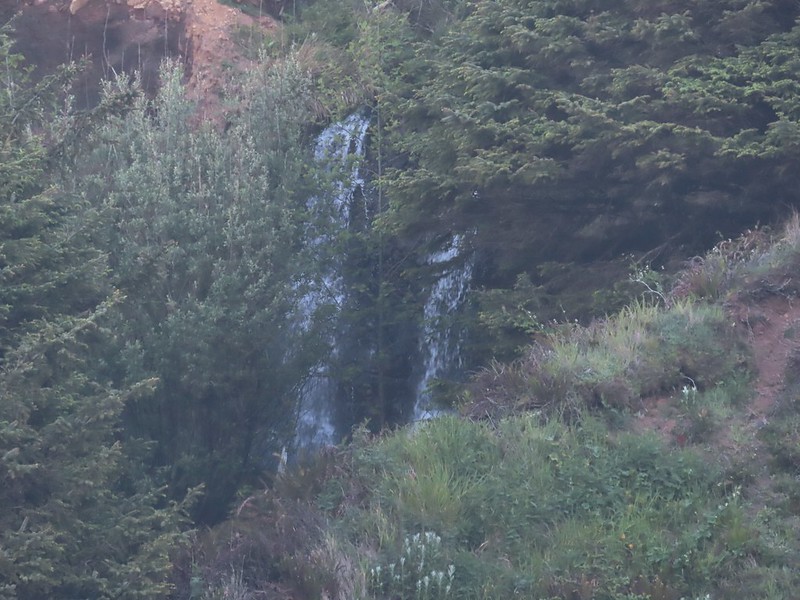
IMG_4213The upper falls.

IMG_4214Waterfall Creek

IMG_4218The lower falls.

IMG_4219The tide pools from Waterfall Creek.

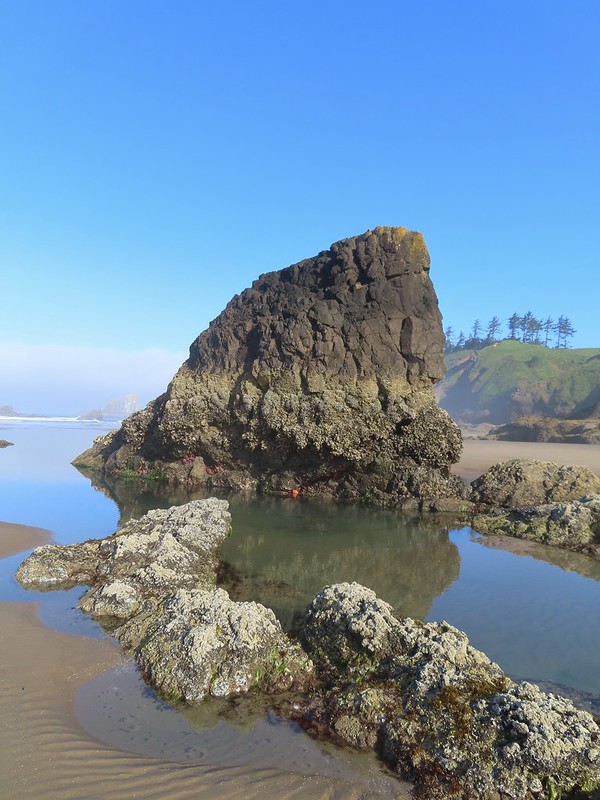
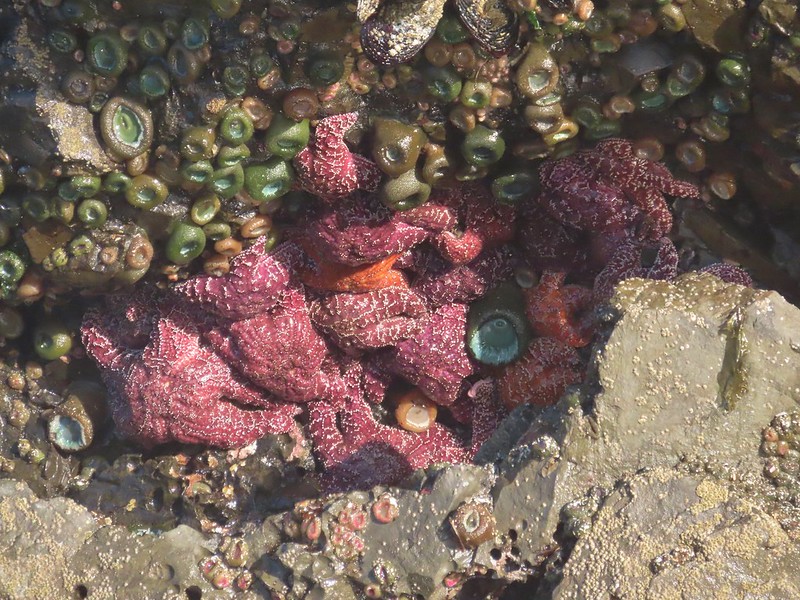
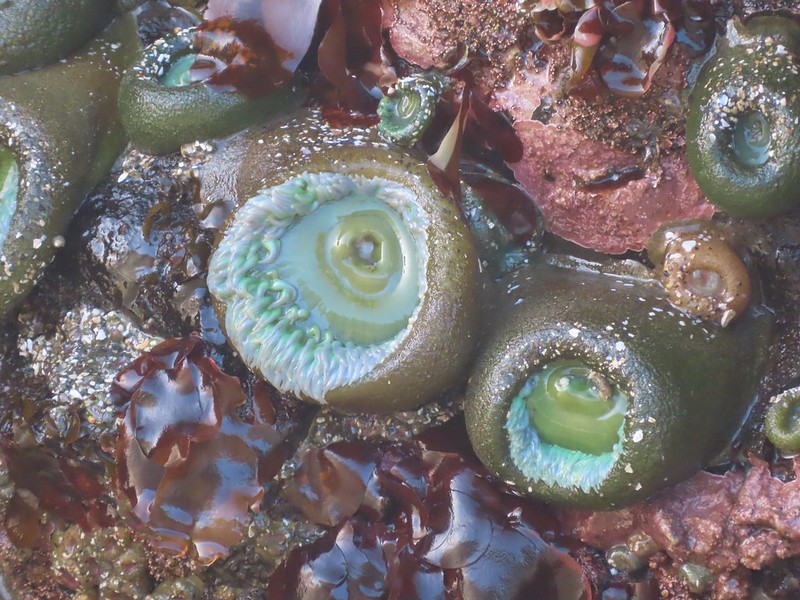
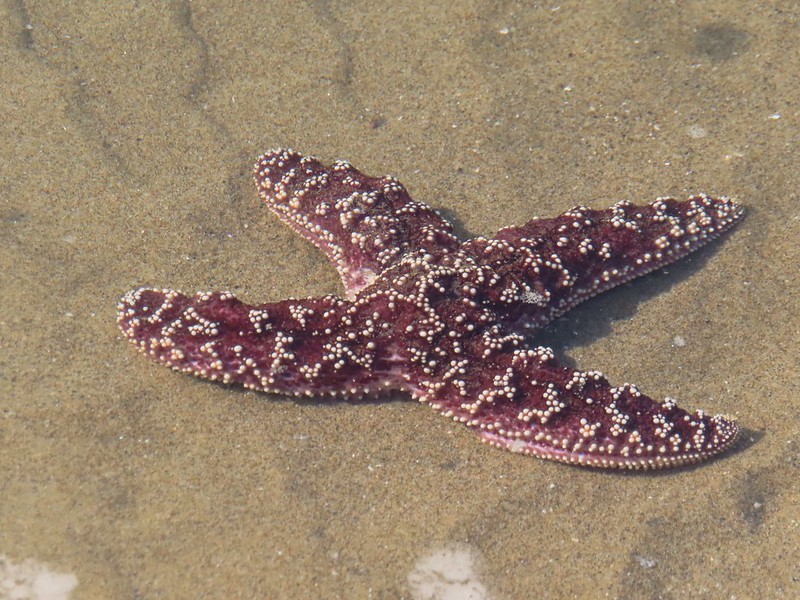
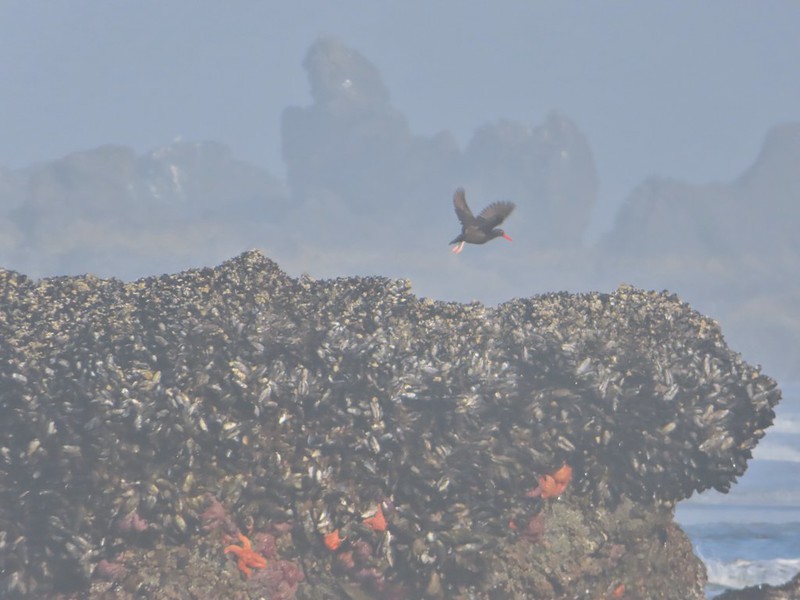
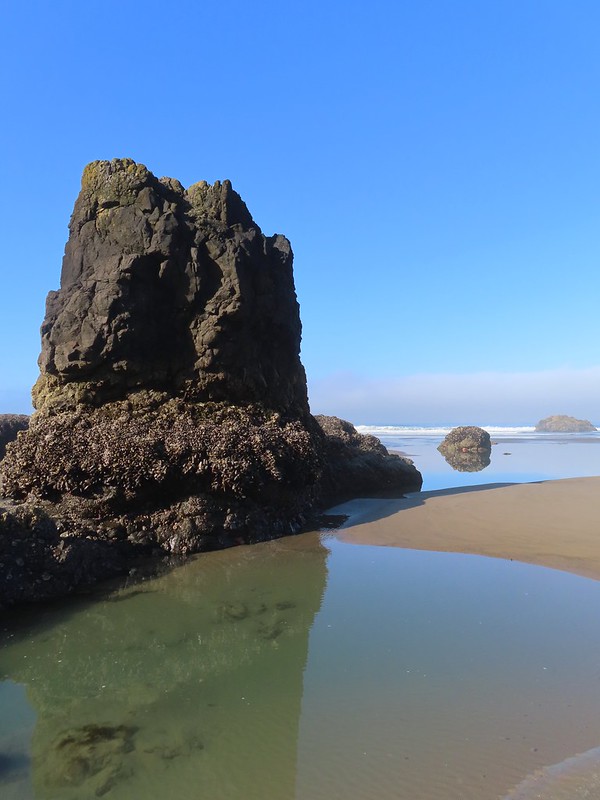
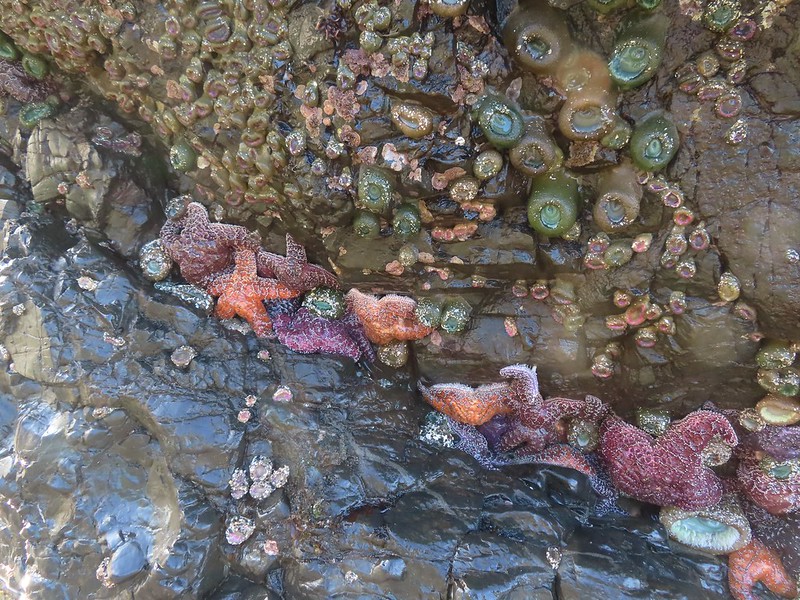
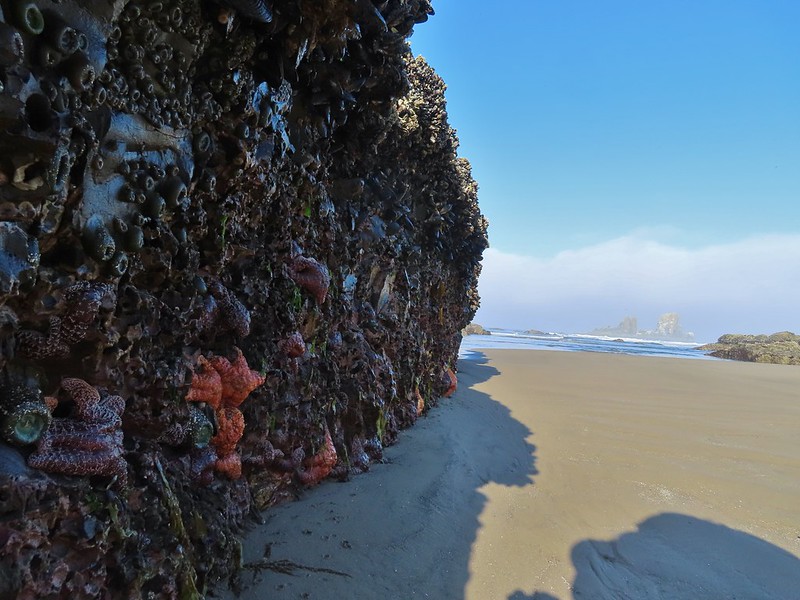
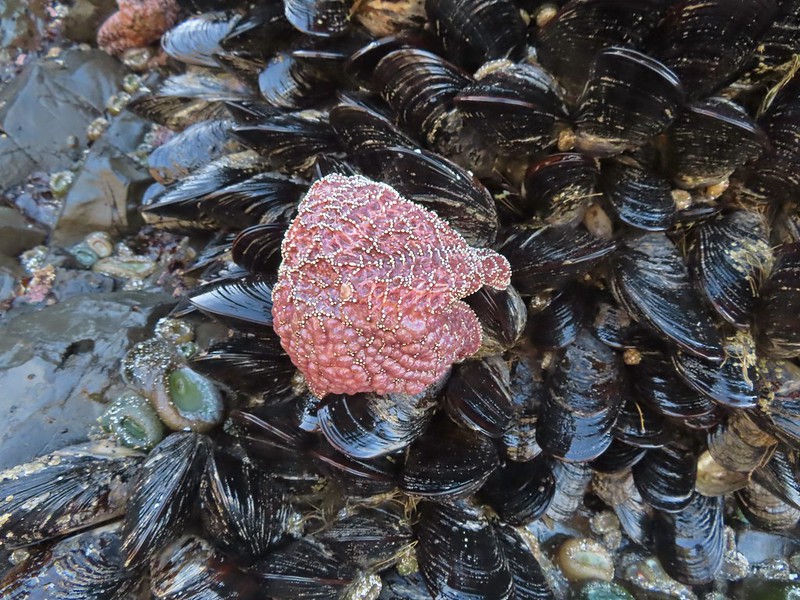
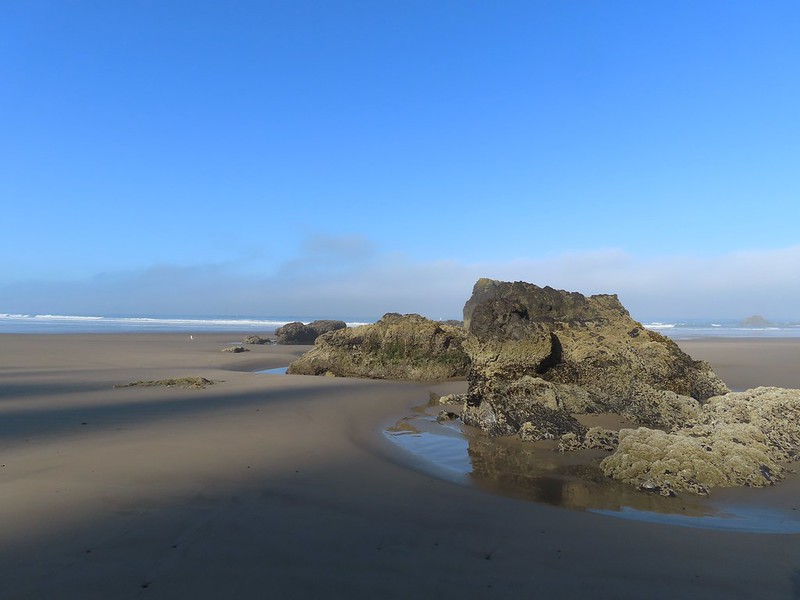
The tide pools wound up being some of the most impressive we’d seen. We spent a good amount of time walking around to the different pools. We were careful not to climb on any of the rocks or to disturb any of the wildlife. In fact some of the rocks that were exposed are likely part of the Oregon Islands Wilderness.
IMG_4222

IMG_4226

IMG_4228

IMG_4229

IMG_4234

IMG_4236

IMG_4239

IMG_4240

IMG_4243

IMG_4245

IMG_4246

IMG_4253

IMG_4257

IMG_4259

IMG_4260

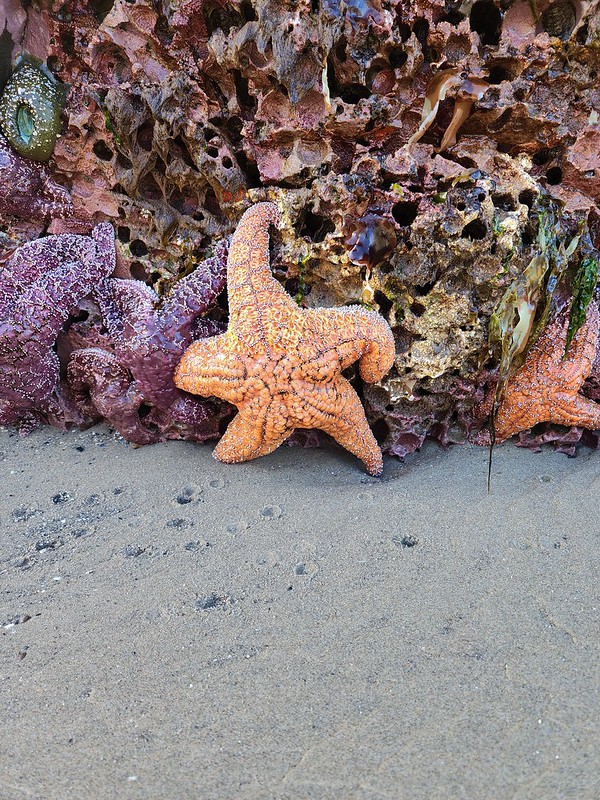
20240511_082411We found Patrick from Spongebob!

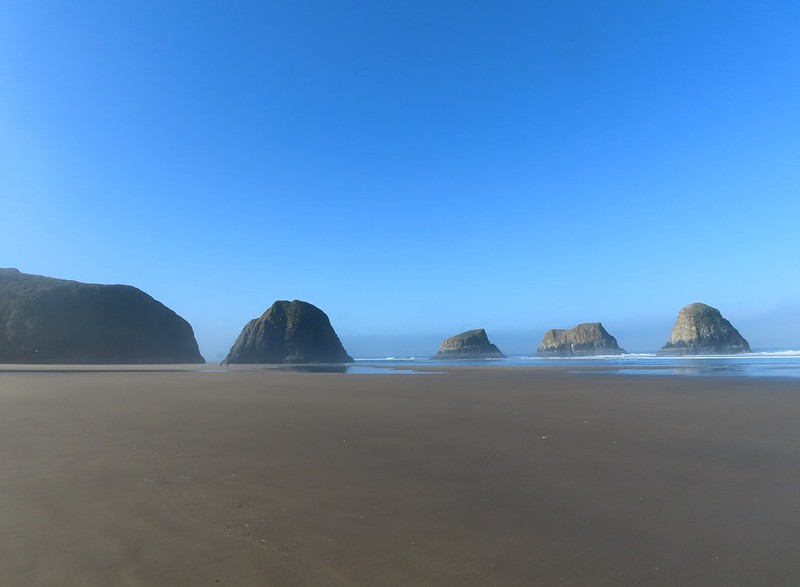
After admiring the tide pools we headed south along the beach toward Chapman Point and the Bird Rocks.
IMG_4274

IMG_4282

IMG_4277

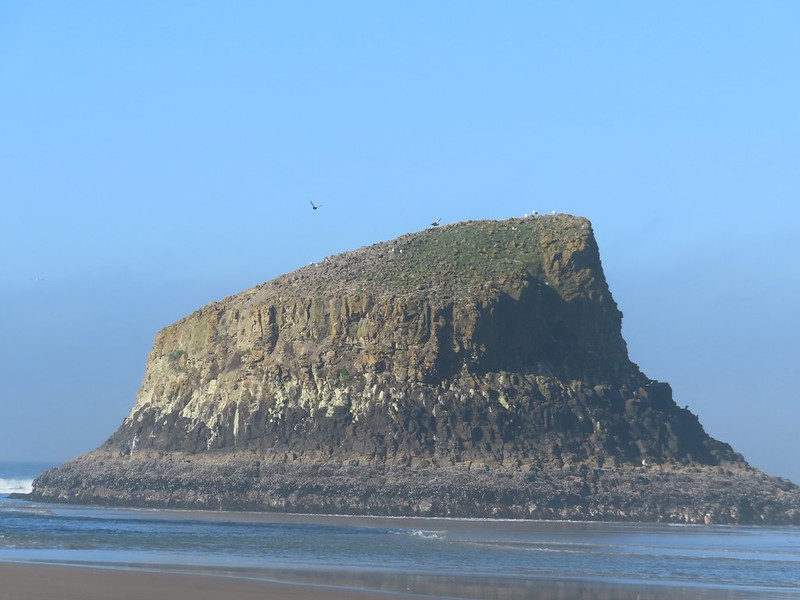
IMG_4280We were curious as to what forces carved out the backside of this rock.
IMG_4281

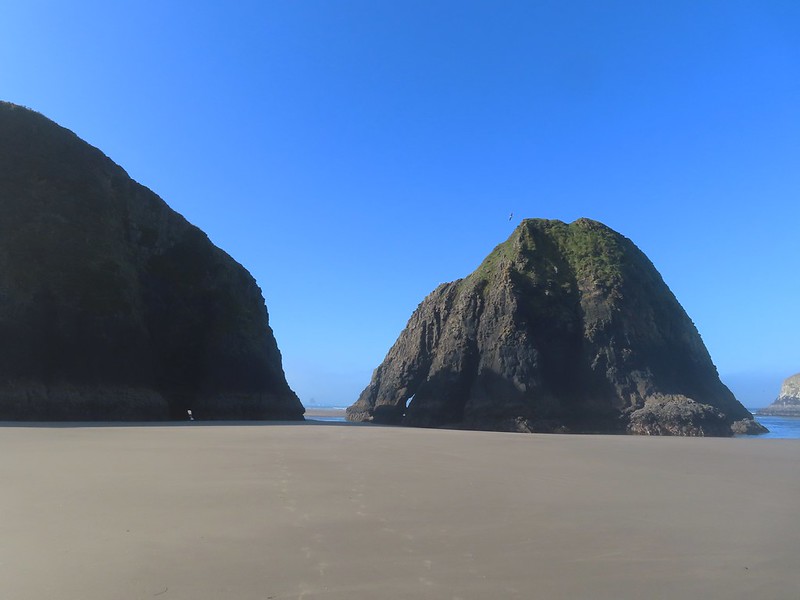
IMG_4285Chapman Point is only passable at certain low tides. On the far side is Cannon Beach (post).
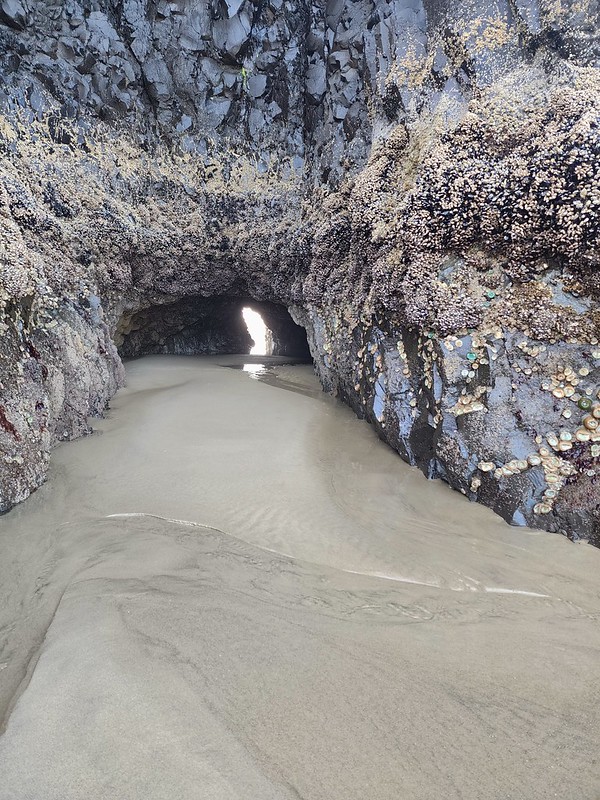
20240511_084246This cave through Chapman Point was flooded at the far end.
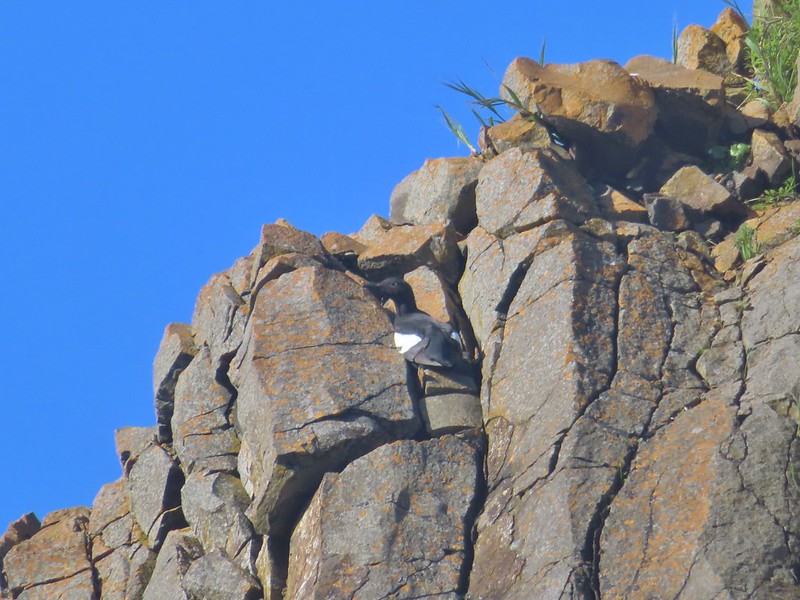
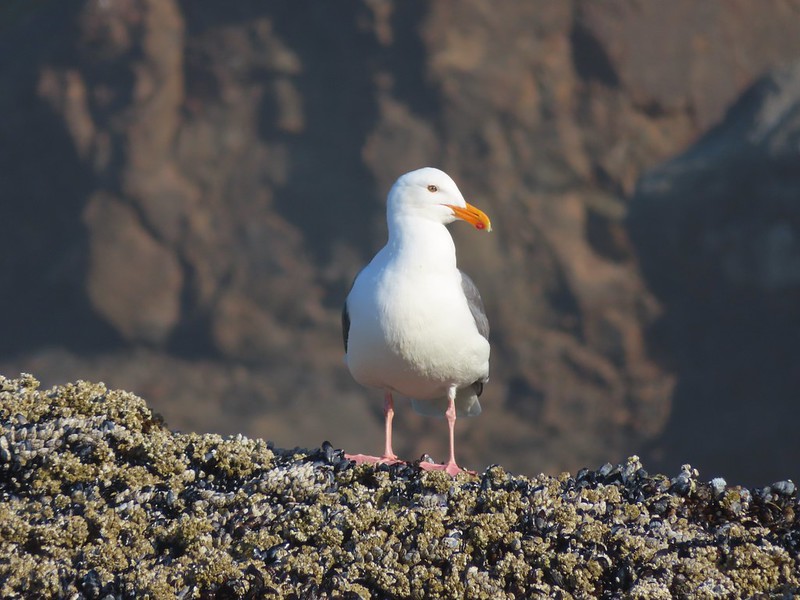
IMG_4287Pigeon guillemot

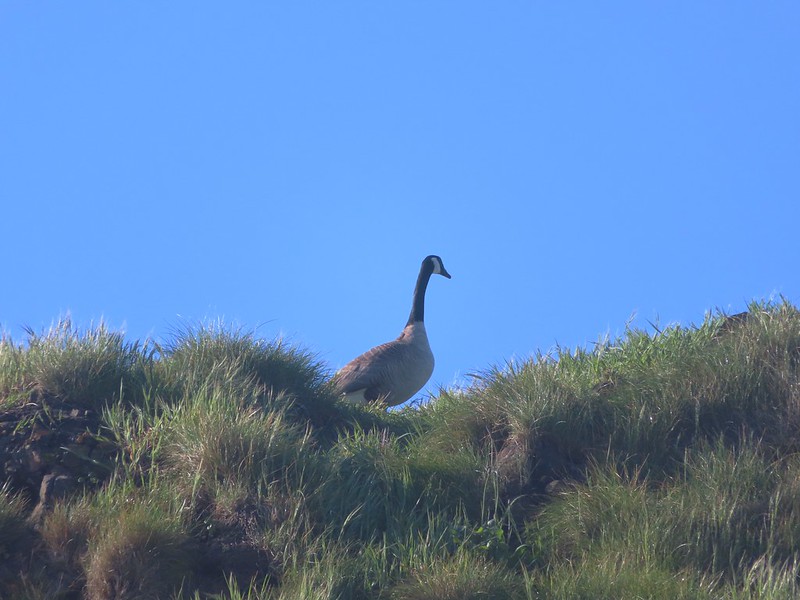
IMG_4302Goose

IMG_4294

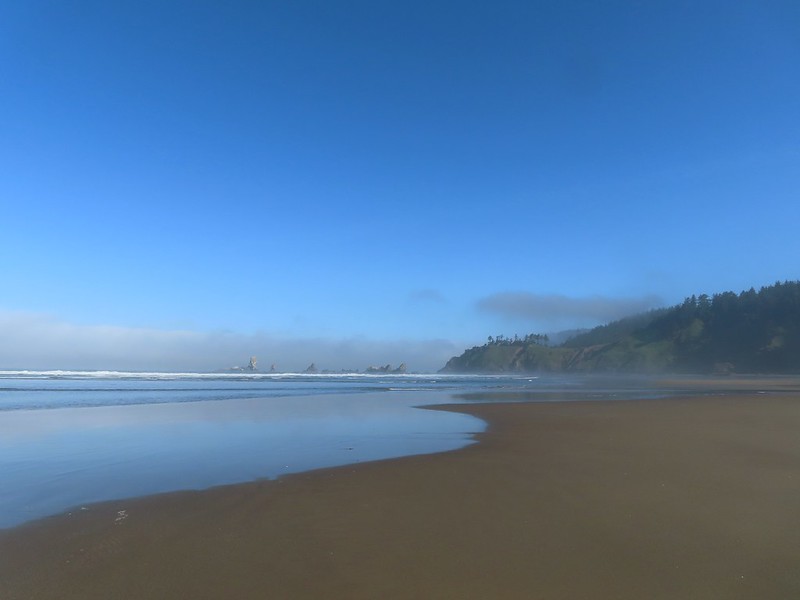
We turned around at Chapman Point and headed back to the Crescent Beach Trail.
IMG_4298

20240511_084942

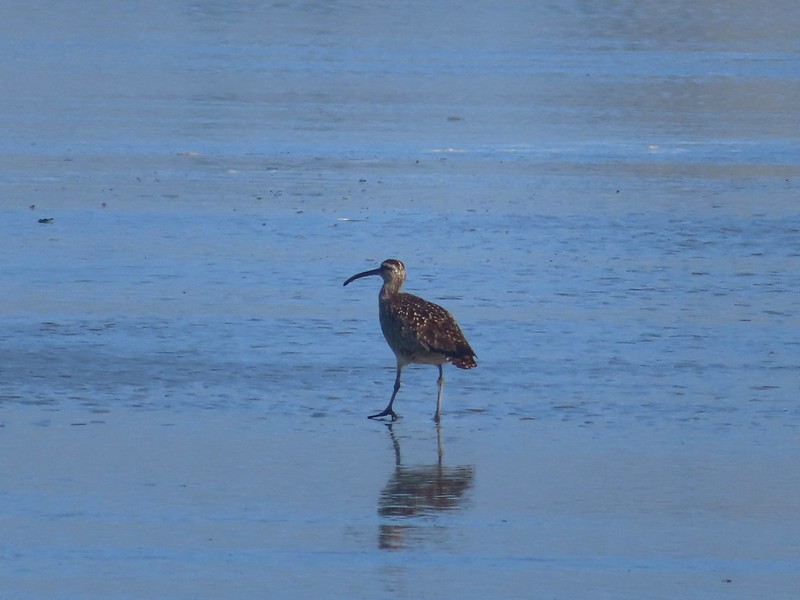
IMG_4304Whibrel

We retraced our steps back to Ecola Point where the lot was beginning to fill up.
IMG_4307

Seaside bittercressSeaside bittercress

IMG_4311Youth-on-age

Our hike here came to 4.4-miles with approximately 600′ of elevation gain.
Screenshot 2024-05-13 185332

We hopped in our car and headed north to Fort Stevens State Park for our next hike. There are several parking lots at Fort Stevens and we opted to park at Battery Russell lot.
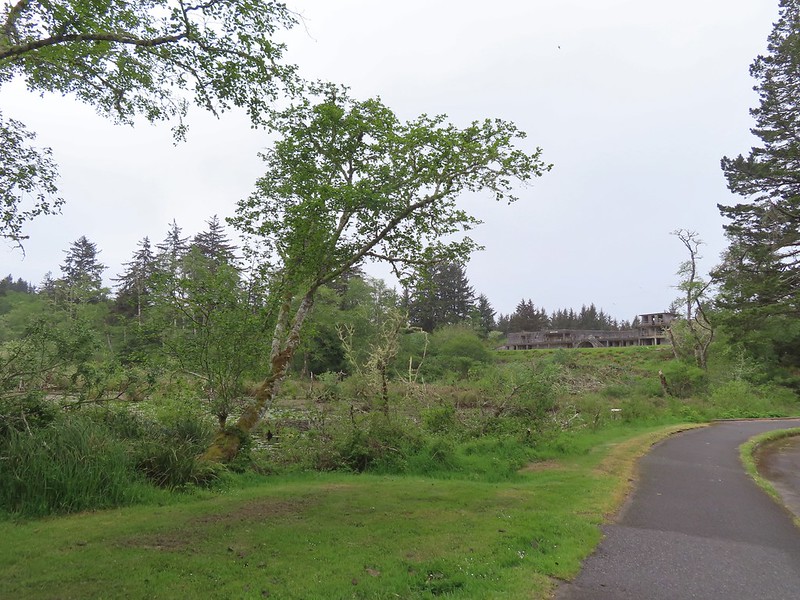
IMG_4317Battery Russell from the lot.

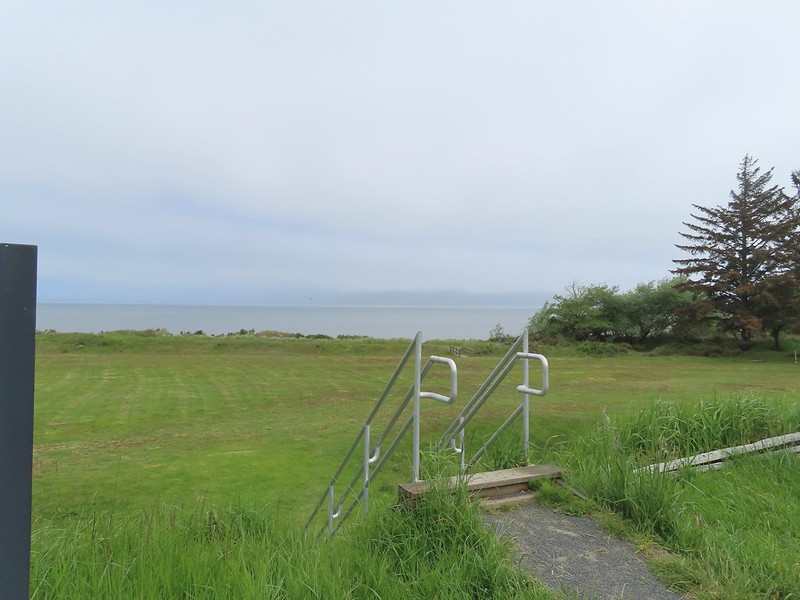
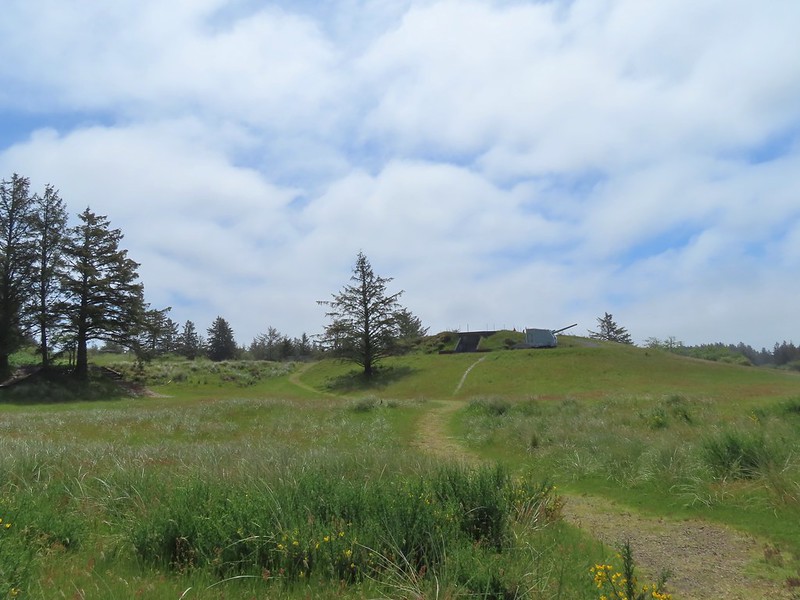
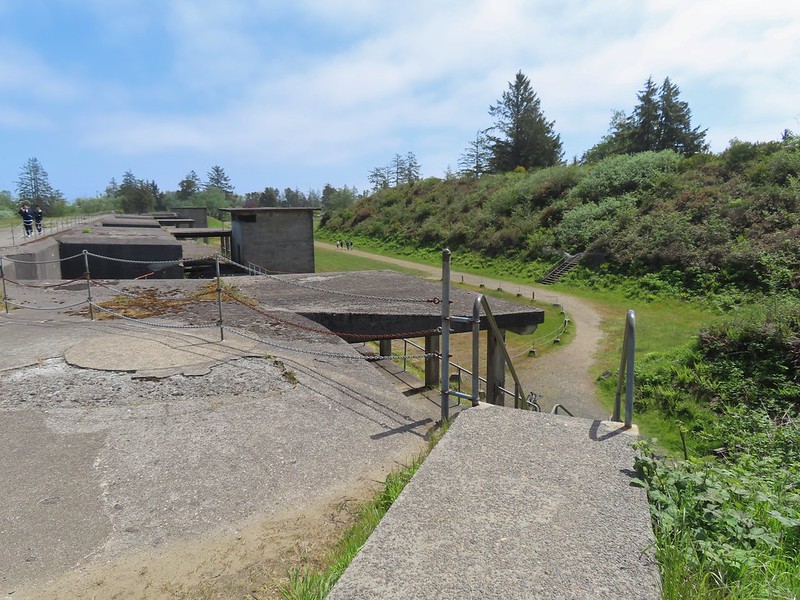
As with Ecola Point we had started a hike here before. In September 2017 we visited Battery Russell, Coffenbury Lake, and a shipwreck at the park (post). Again today we were going in the opposite direction, this time north to visit the park’s Historic Area. We followed a paved path east from the parking lot then over Jetty Road on an overpass.
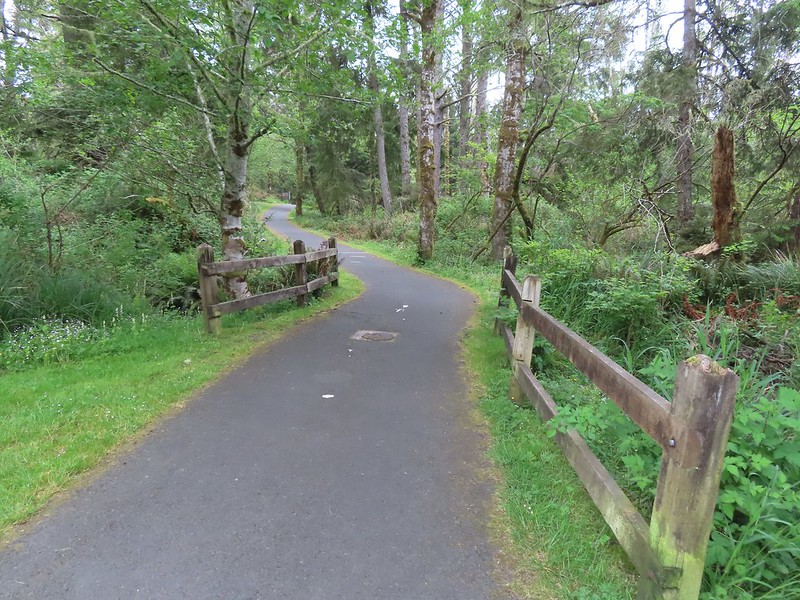
IMG_4318

IMG_4321

IMG_4327The overpass

We followed the paved path to a junction near a pill box where we went right.
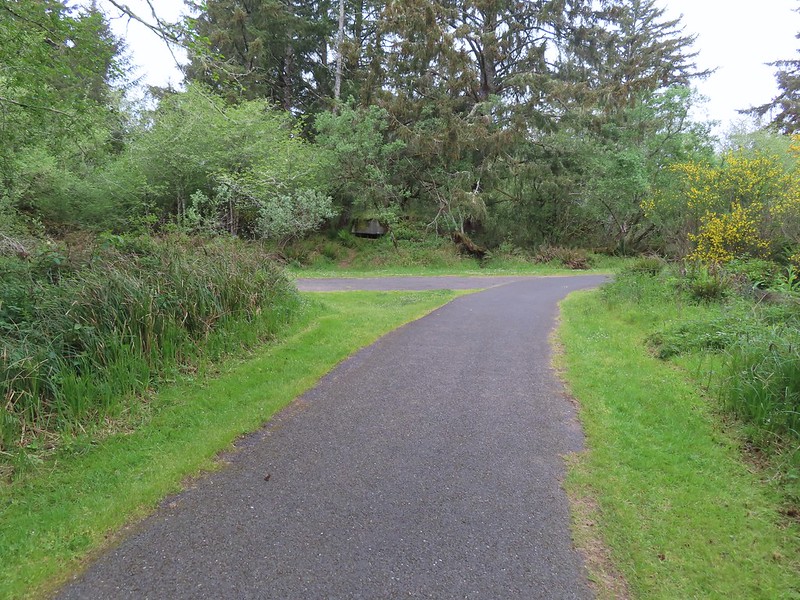
IMG_4333

The path led past Swash Lake which helped explain the host of mosquitos that were flying around us.
IMG_4337

We stayed right at the next junction and Jetty Lagoon on the Swash Lake Bridge.
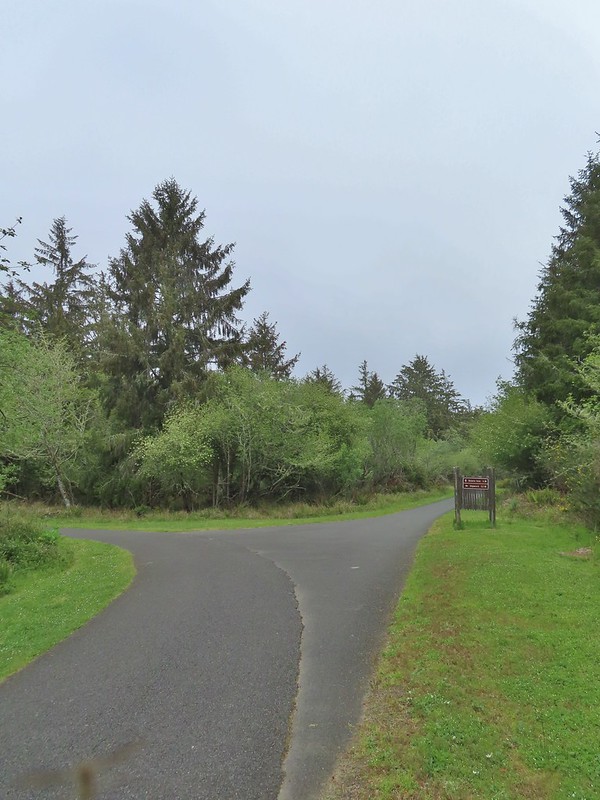
IMG_4338

IMG_4339

IMG_4342Looking out toward Swash Lake from the bridge.

A little under 2 miles form the parking lot we arrived at the visitor’s center.
IMG_4344The gate to the Historic Area is locked in the evening.

IMG_4347Visitor’s center

A number of trails and paths wind around the Historic Area as well as open spaces that one can simply walk across. We made up our own route based on a suggested hike from the Oregonhikers Field Guide.
IMG_4346

IMG_4349

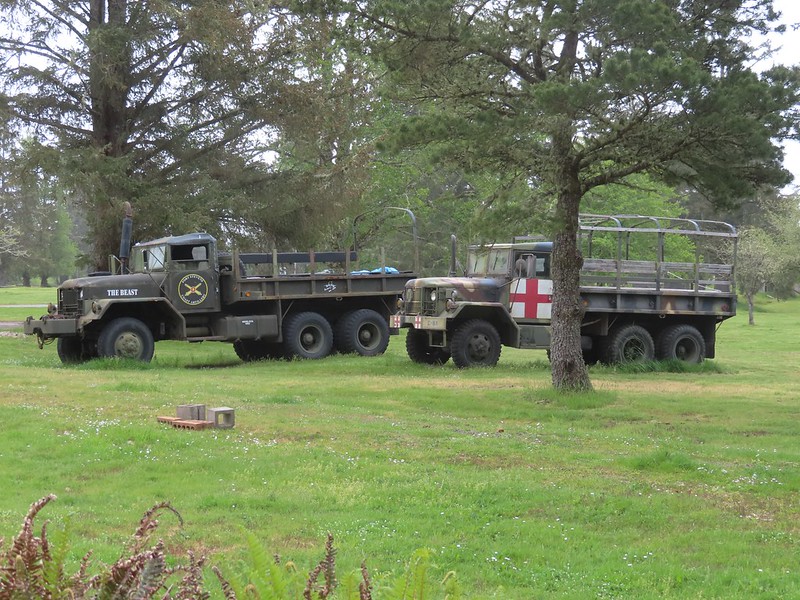
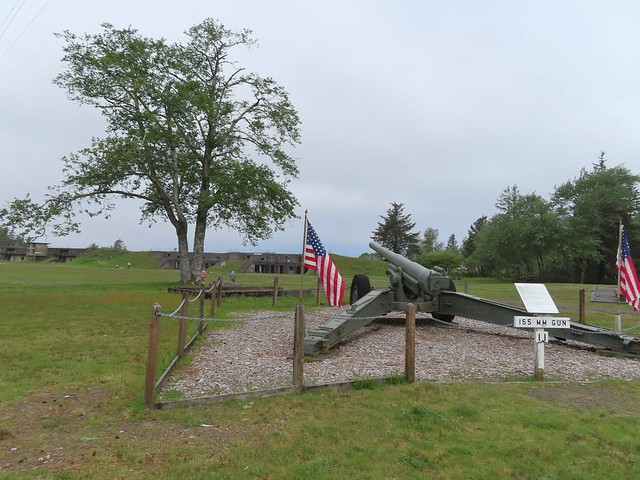
We began by walking past a jeep on display and looping behind the visitor’s center.
IMG_4351

IMG_4356

IMG_4357

From the visitor’s center we headed into a large open space where the barracks had once been.
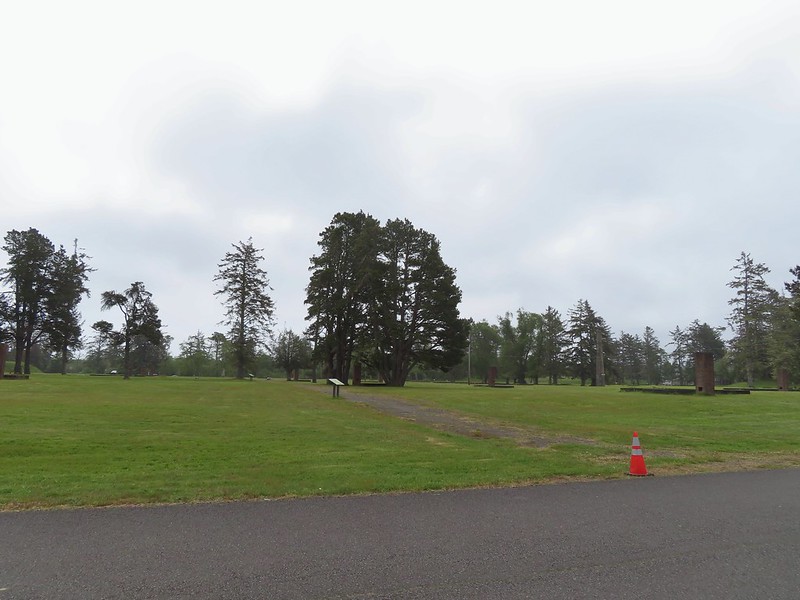
IMG_4358

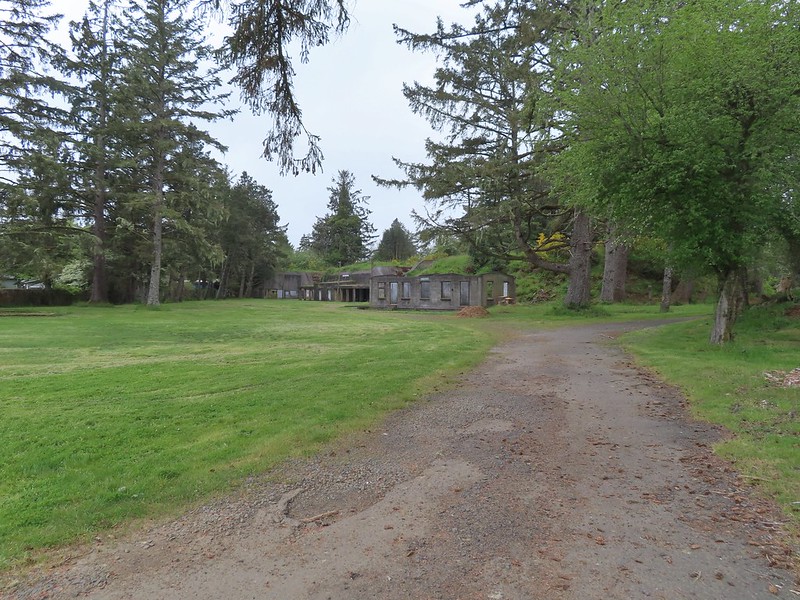
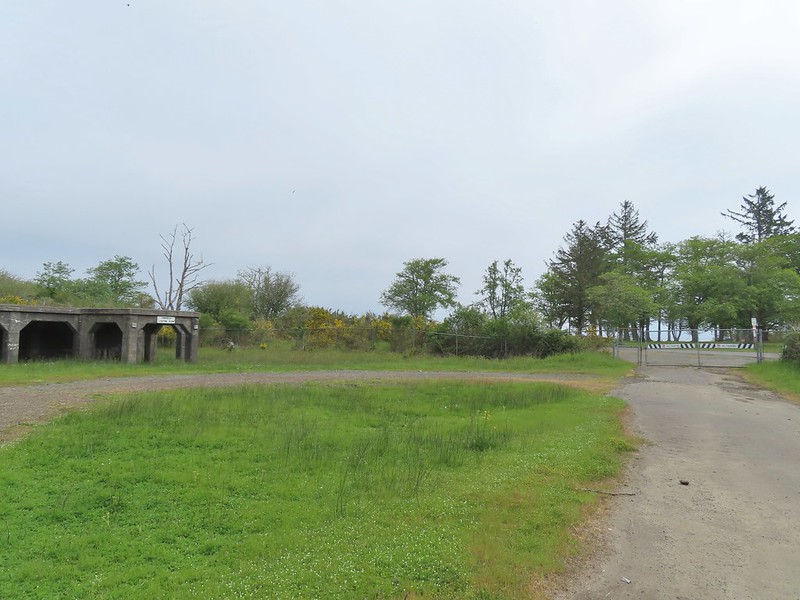
We made our way to the far end of the open space and turned south to see the old guardhouse and Battery Clark.
IMG_4366The guardhouse on the left.

IMG_4368Battery Clark

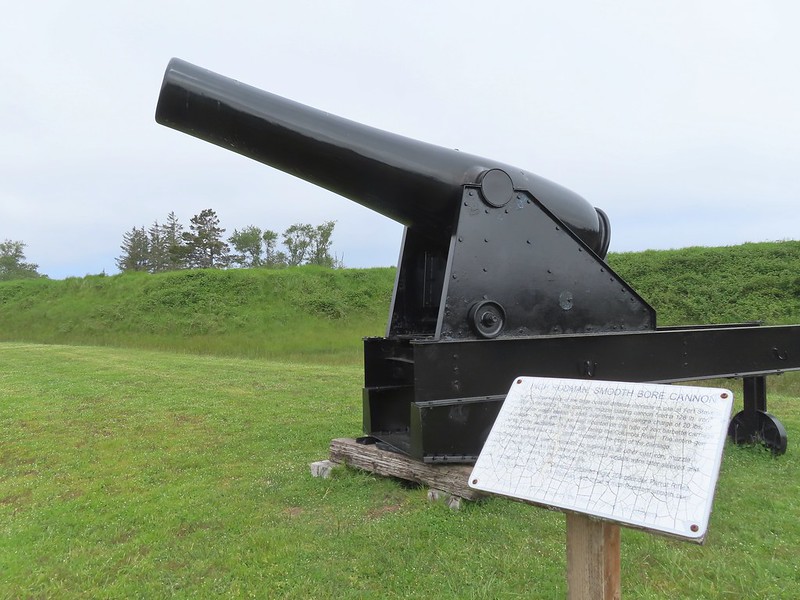
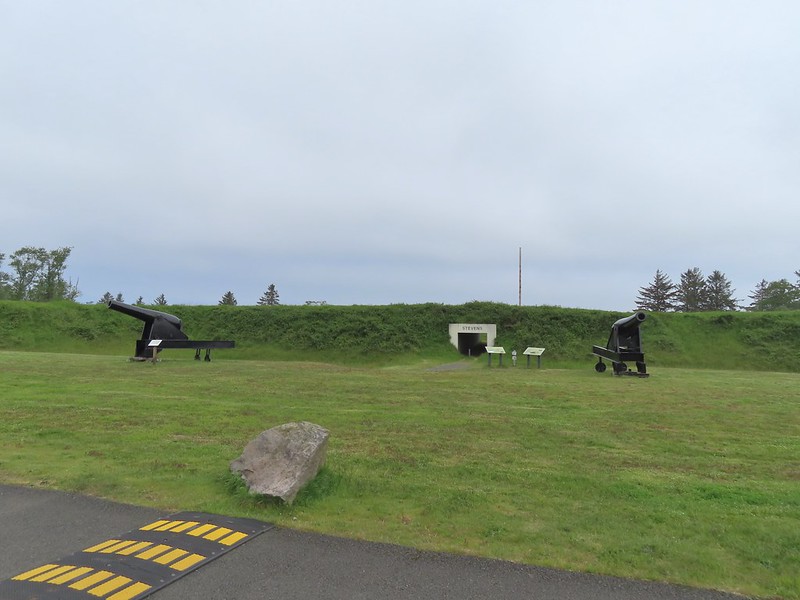
We then turned back north cutting across the barracks area toward a pair of smooth bore cannons and Battery Freeman.
IMG_4375

IMG_4377

IMG_4379

We passed the cannons and hiked through a guarded underpass.
IMG_4376

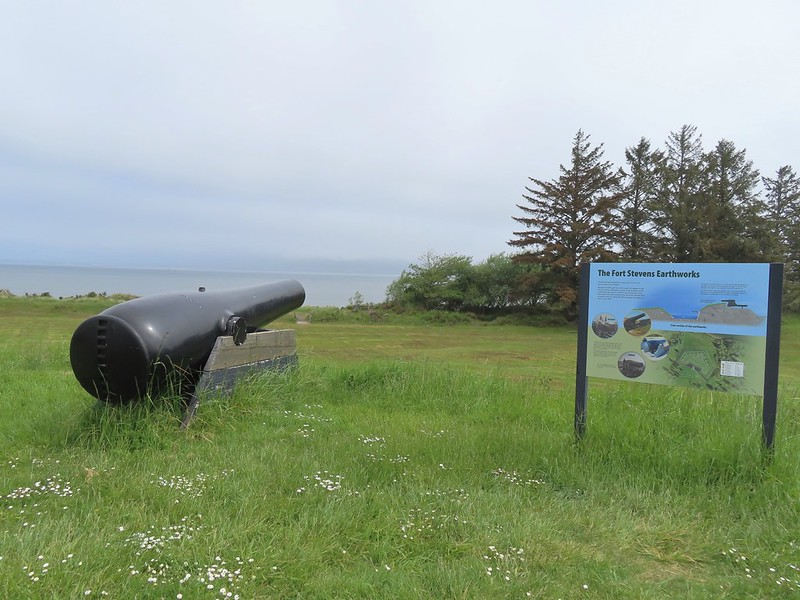
IMG_4381Fort Stevens Earth Works.

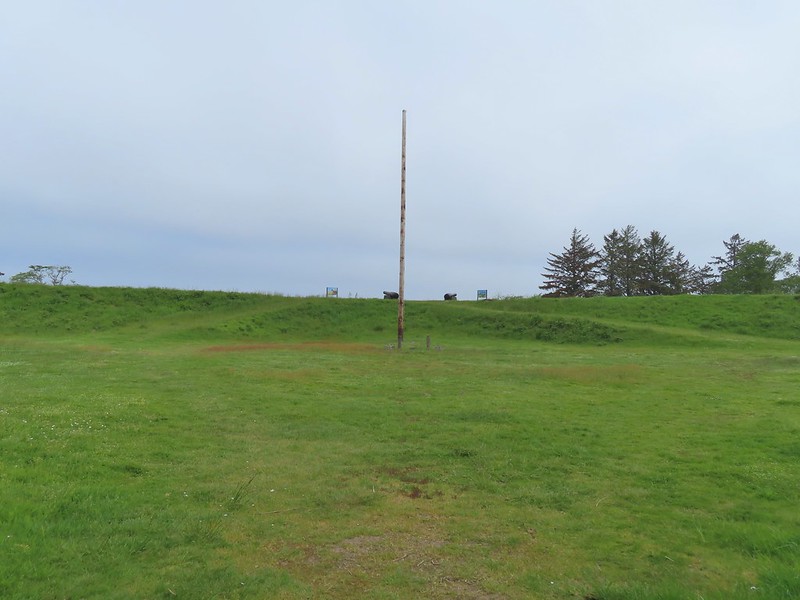
We crossed a grassy field to the cannons atop the Earth Works then descended a staircase.
IMG_4382

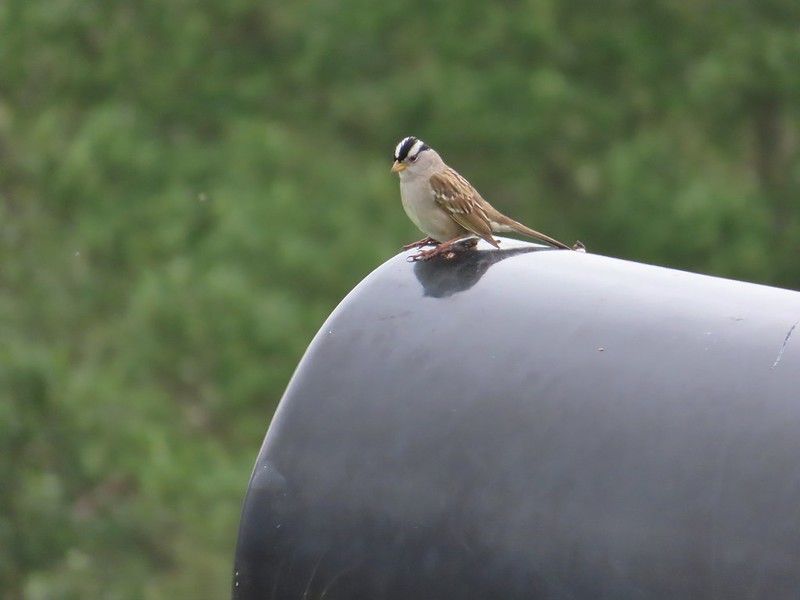
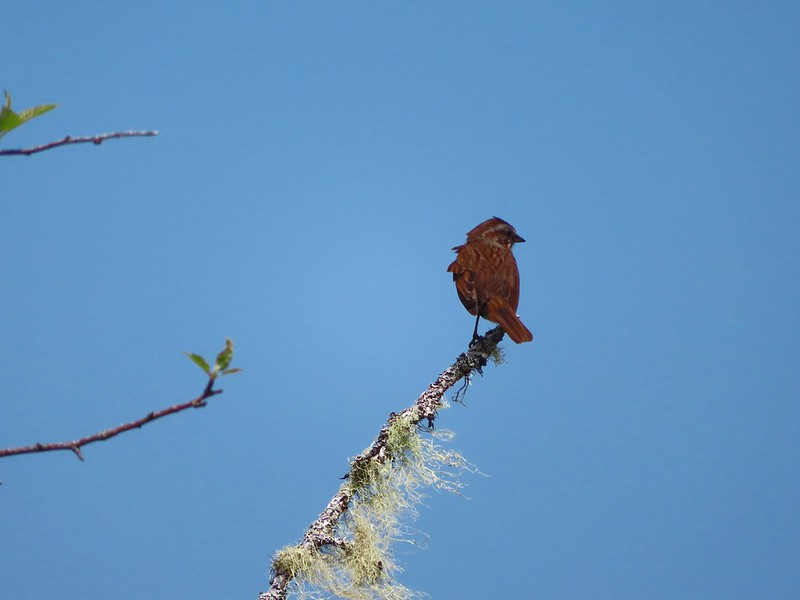
IMG_4386White-crowned sparrow

IMG_4385We cut across the grass below to the footbridge in the distance.

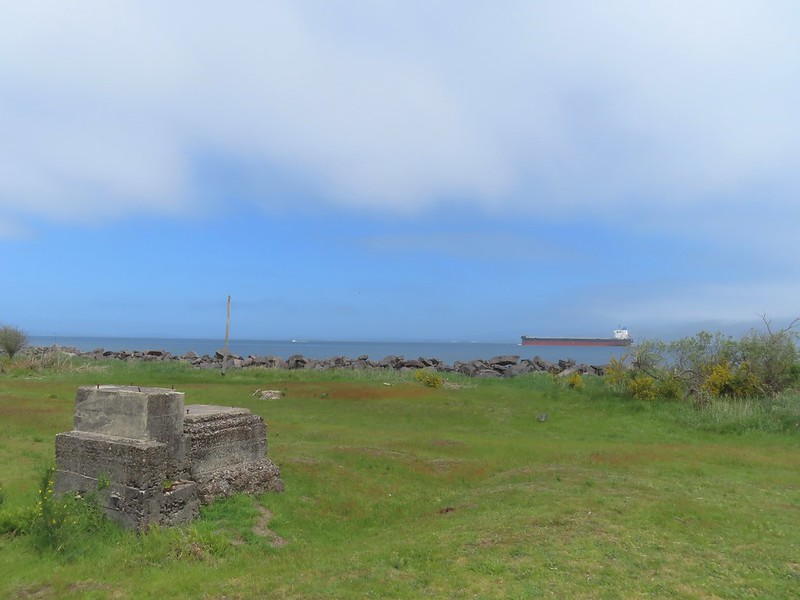
IMG_4388Columbia River

IMG_4389Looking west toward the Pacific.

At the Columbia we turned right on the Jetty Trail and followed it past some disc golf holes and Battery Smur to a former roadbed.
IMG_4390

IMG_4391Battery Smur

IMG_4392The roadbed coming in from the former barracks site.

We turned left on this road and followed it to a gate and the former Torpedo Loading Room.
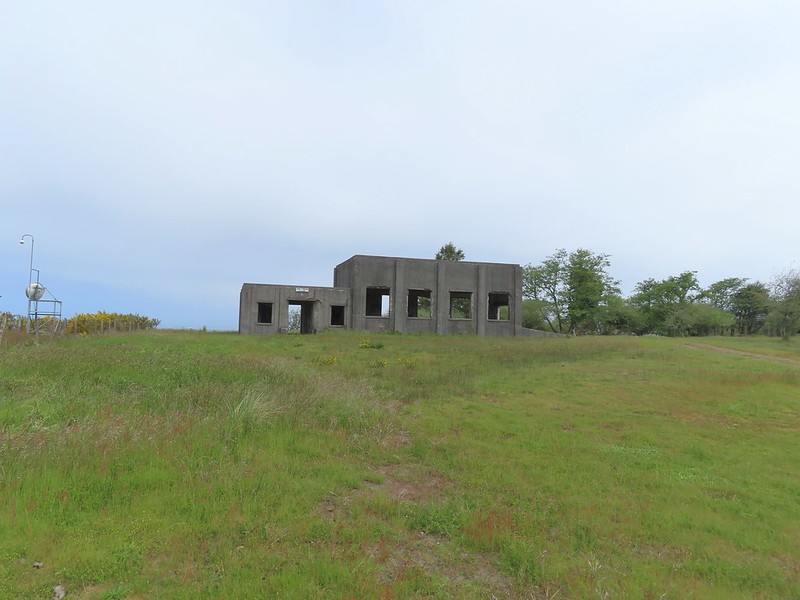
IMG_4393Mine Loading Building

IMG_4398Searchlight Generator

IMG_4396

IMG_4397Torpedo Loading Room

We turned around here and walked back to the Jetty Trail and followed it west through the Disc Golf Course to the Clatsop Longhouse site.
IMG_4401

IMG_4402

IMG_4407

IMG_4409

From the longhouse site we continued on the Jetty Trail toward Battery 245.
IMG_4410

IMG_4411

IMG_4415

IMG_4416

IMG_4423Battery 245

IMG_4425

We hiked around Battery 245 and onto Battery Mishler.
IMG_4430

IMG_4432

IMG_4433

We passed this battery and Battery Pratt then veered right on a paved path which led back to the path we’d followed from Battery Russell.
IMG_4437

IMG_4438Sign for the Lil’ Oozlefinch Putting Course.

We headed back toward the parking lot and at the Pill Box we veered right which was a more direct route to the parking lot. The drawback was that there was no overpass here so we had to watch for traffic before crossing Jetty Road.
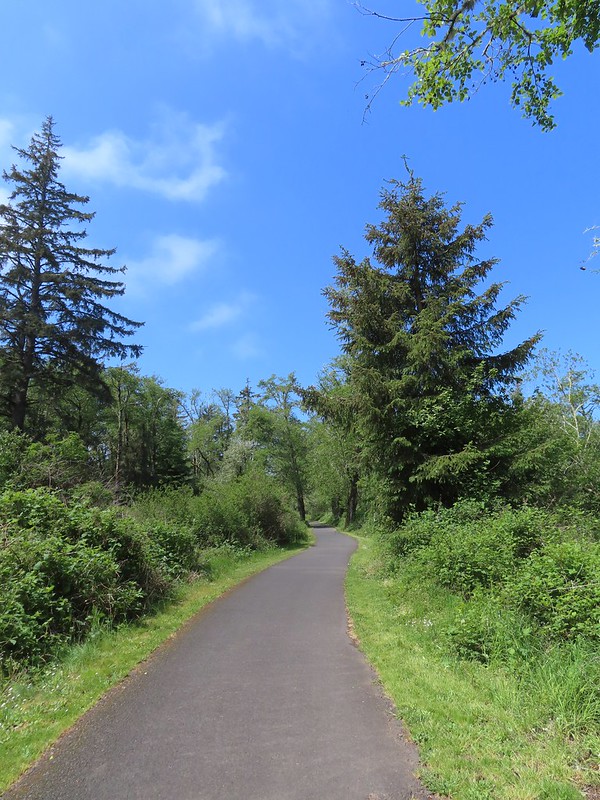
IMG_4439

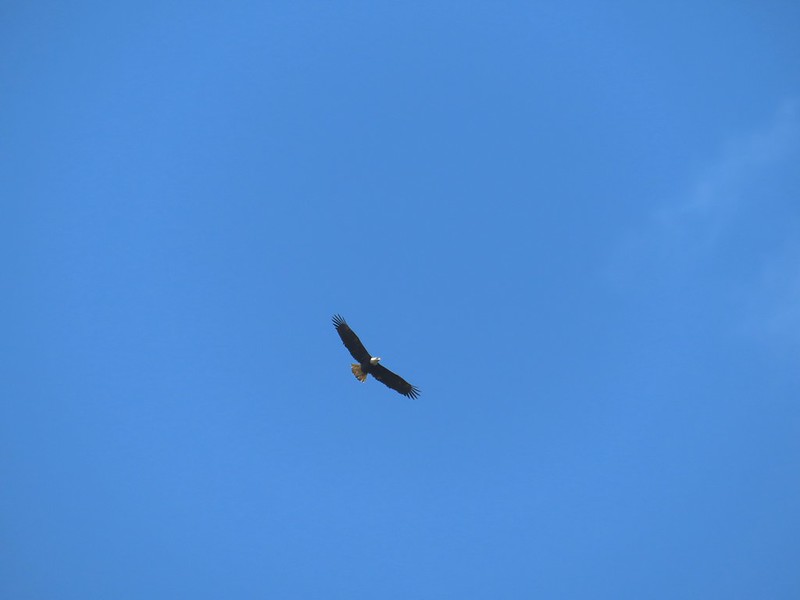
IMG_4441Bald eagle

IMG_4444

IMG_4446Gate near Jetty Road.

After crossing Jetty Road, we followed the paved path left a tenth of a mile to the Battery Russell parking lot. This hike came to 6.3-miles with just 75′ or so of elevation gain.
Screenshot 2024-05-13 185015

Our final stop of the day was just 5 miles from the Battery Russell parking lot at Lighthouse Park in Warrenton.
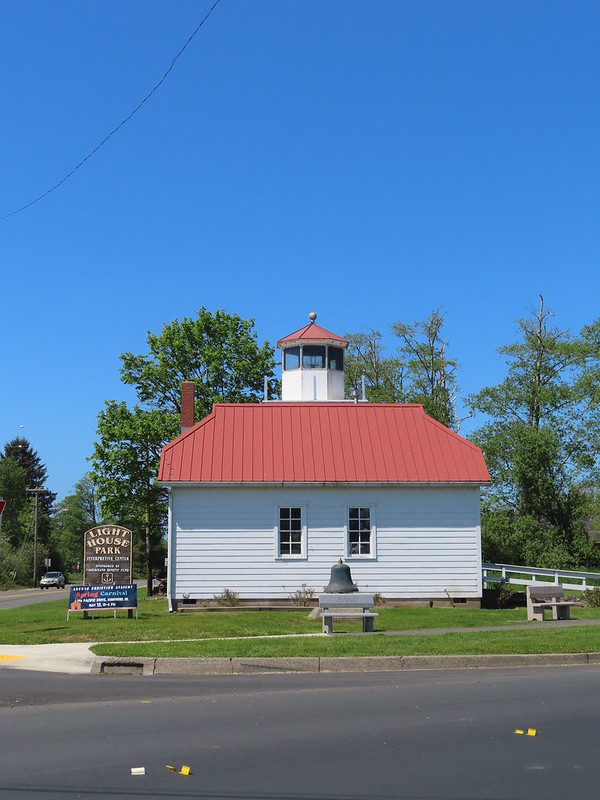
IMG_4486

IMG_4449The parking lot at the park.

Our plan here was to hike the 2-mile Skipanon River Loop. Three things drew us to this trail. First it was a trail we hadn’t yet hiked. Secondly, we hadn’t hiked along the Skipanon River yet, and while it isn’t an official goal we are trying to visit as many of Oregon’s rivers as possible. Finally, one of our favorite post hike restaurants, Nisa’s Thai Kitchen is located along the route.

From the parking lot we crossed NE Skipanon Drive and followed the sidewalk past a storage facility to a path next to E Harbor Drive that promptly passed beneath the road.
IMG_4451

IMG_4452Emerging from the underpass.

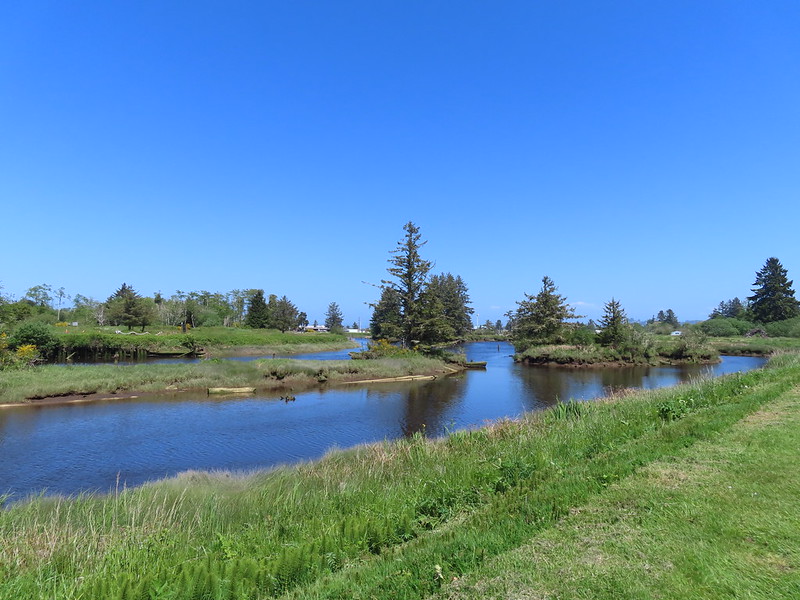
We turned right onto a paved path along the Skipanon River for a third of a mile to Skipanon River Park.
IMG_4453

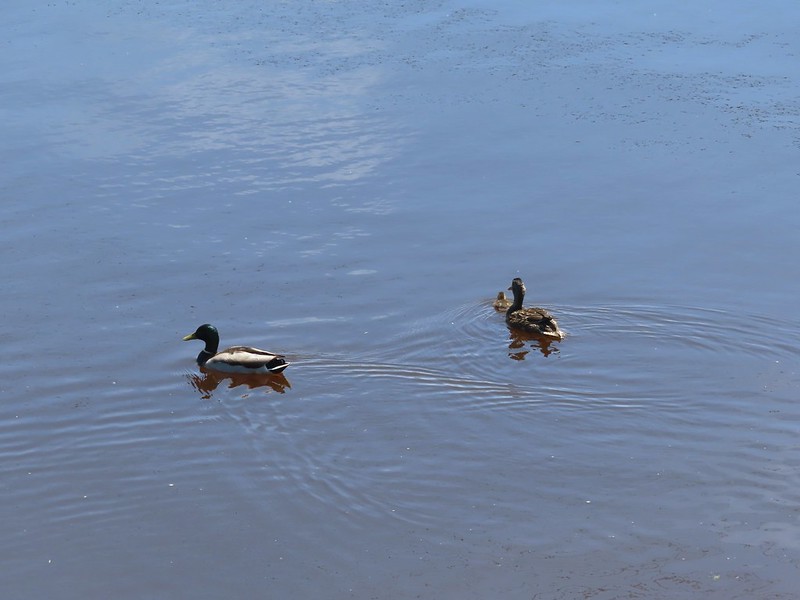
IMG_4454Mallard family

IMG_4460Sign at the park.

At the park the trail ended and we turned right onto SE 3rd St and followed it a block to S Main Avenue where we turned left. After two blocks on Main we turned left onto SE 5th St and then took a right on a grassy track behind some buildings.
IMG_4461Eighth Street Dam from the grassy track.

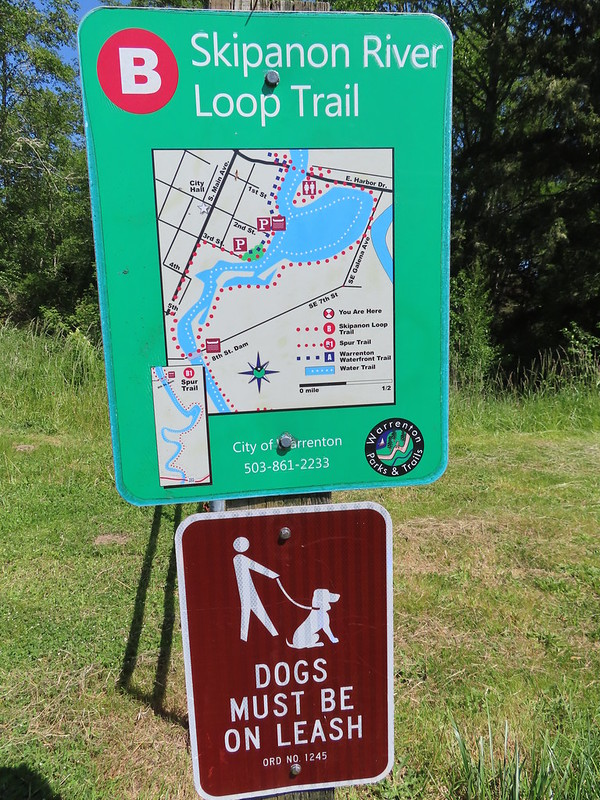
We crossed the river on the 8th Street Dam where we finally saw an official trail map.
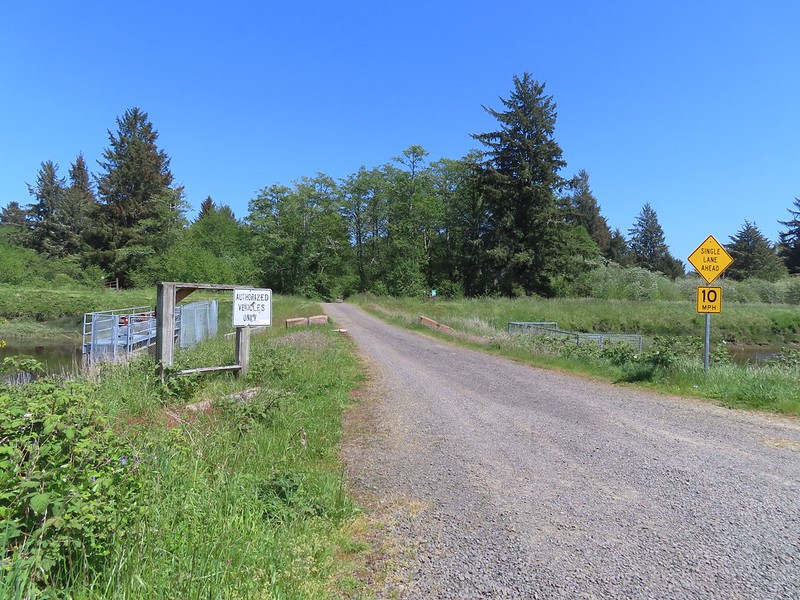
IMG_4463

IMG_4465Until we saw this sign we’d been thinking that maybe the trail didn’t exist any longer. We were also questioning how the loop was supposed to get back across the river at the other end since the only bridge across the river there was Harbor Drive. Until seeing this we were thinking of turning around at the dam, but instead we decided that we’d do the loop with Heather getting a table at Nisa’s while I recrossed the river to retrieve the car.

With lunch calling, and our feet feeling a bit worn, we opted not to do the optional out-and-back B1 spur trail and continued on the loop past a gate.
IMG_4466

On this side the trail was a nice grassy track following a dike which was far more pleasant than Main Avenue.
IMG_4469

IMG_4470

Greater scaupNot the clearest picture but I think this is a greater scaup based on the head shape. We’ve seen a number of lesser scaups, but this would be our first greater.

IMG_4475Great blue heron

IMG_4480Cormorant

IMG_4482A brief paved section.

IMG_4483Nisa’s Thai Kitchen across Harbor Drive.

There was a nice wide bike/pedestrian lane on the bridge making the crossing not too bad even with traffic. As I was made my way across I noticed a path leading down to the underpass on the south side of Harbor Drive which meant I wouldn’t need to cross the main street on foot.
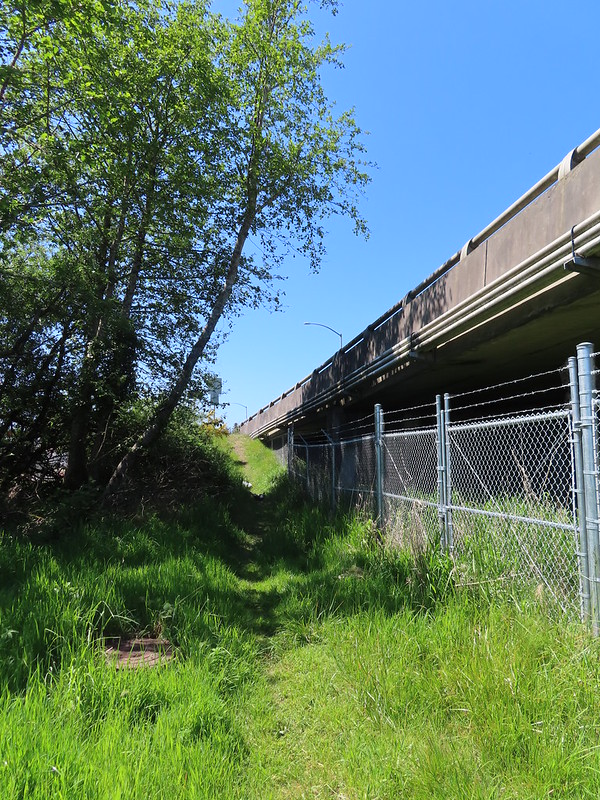
IMG_4485Looking back up the path from Harbor Drive.

The loop came in just over 2-miles with minimal elevation gain.
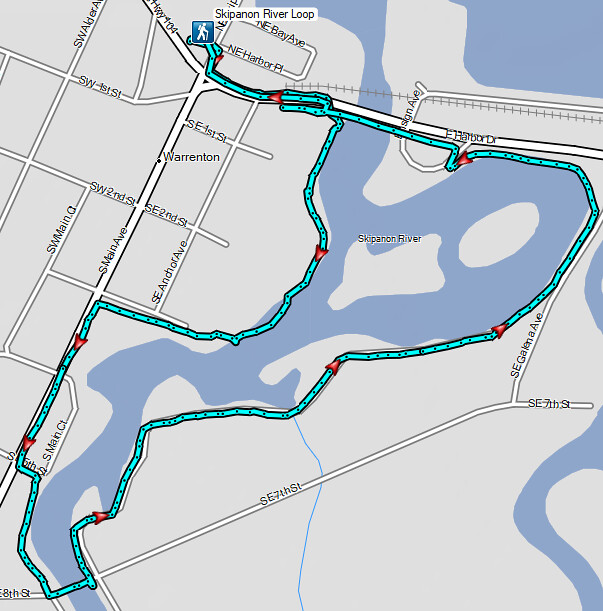
Screenshot 2024-05-13 185144

This would probably be a nicer hike early in the morning when less traffic was about. It was a little awkward walking along the city streets as well, but the grassy dike was a comfortable walk. What really made this worth the stop though was the Drunken Noodles and Pad Thai. After a satisfying meal we drove to Astoria arriving at our motel right after check in time (3pm). We originally thought we might head out to the Astoria Riverwalk after cleaning up, but after showering a resting for a bit it was clear that 12.9 miles were enough for one day. Happy Trails!

Flickr: Crecent Beach, Fort Stevens Historic Area, and the Skipanon River Loop

Categories
Hiking Oregon Roseburg Area Trip report

Fall Creek and Wolf Creek Falls – 08/07/2022

**Note the 2017 Jones Fire burned a portion of this hike.**

For the second set of hikes during our weekend near Glide, OR we had a pair of short waterfall hikes planned which we hoped would be less eventful than our hikes had been the day before. We started our morning by heading east on Highway 138 to the recently reopened (following the 2020 Archie Creek Fire) Fall Creek Falls Trailhead. This is one of three stops that make up Sullivan’s featured hike #2, Fall Creek Falls edition 4.2 “100 Hikes/Travel Guide Southern Oregon & Northern California”. We had visited Susan Creek Falls in June this year before this trail reopened (post). The third hike to Fern Falls is still inaccessible due to still being under a closure order from the fire.

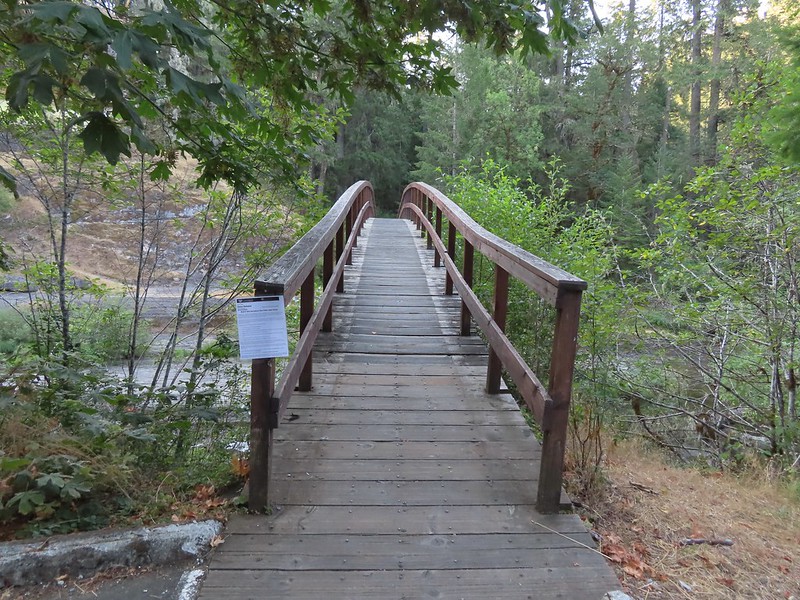
From the small parking area the trail immediately crosses the creek on a footbridge.
IMG_9032

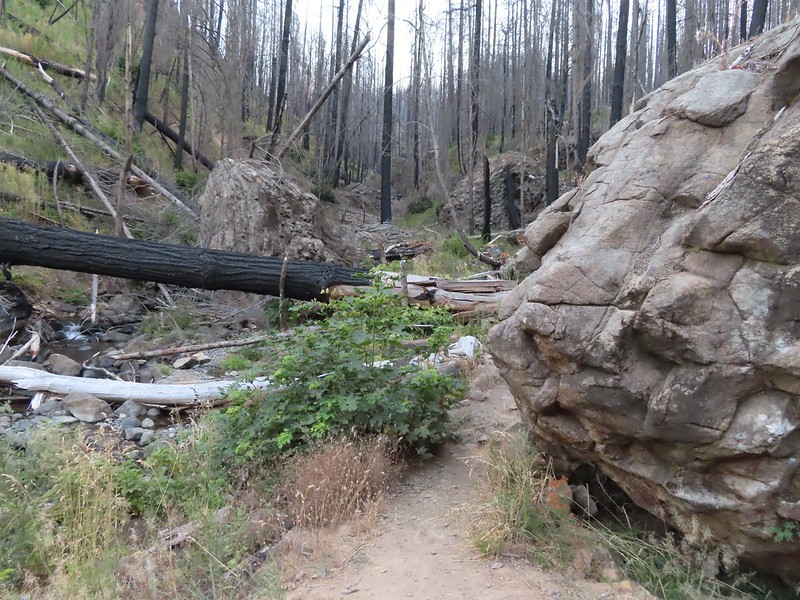
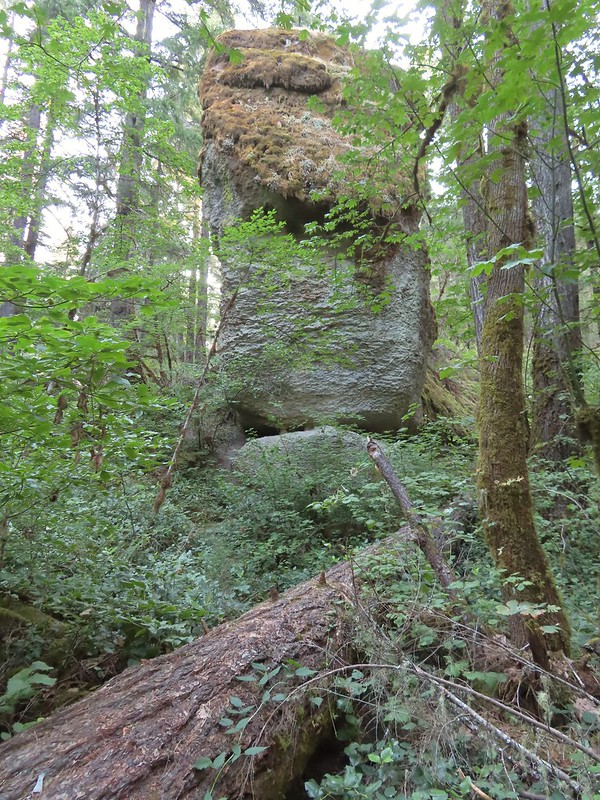
The trail passed between some interesting rock formation in the first third of a mile.
IMG_9033

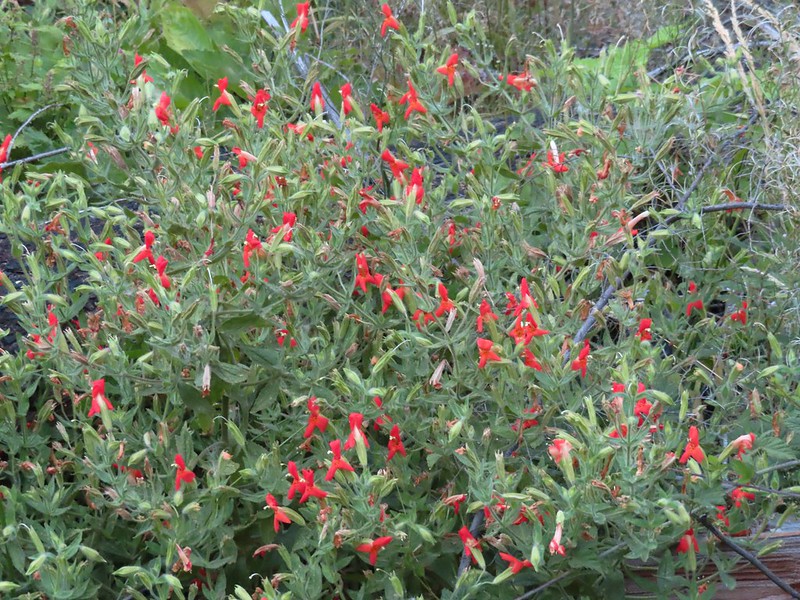
IMG_9035Scarlet monkeyflower

IMG_9039

IMG_9040

The terrain opened up a bit as we neared the waterfall.
IMG_9050

IMG_9057

The trail first passes near the splash pool of the lower tier before switchbacking uphill to a viewpoint of the upper tier.
IMG_9059

IMG_9063

IMG_9064Heading for the viewpoint.

IMG_9066

IMG_9070The upper tier from the viewpoint.

Our 6am start allowed us to have the trail and falls to ourselves which was nice because it is a popular trail. (There was a couple sleeping on the pavement in the parking lot surrounded by empty Mike’s Hard Lemonade bottles. To their credit they did pack everything into their car when they left.)

After returning to the car we drove to the Wolf Creek Falls Trailhead along Little River Road. The 1.2 mile trail here is part of featured hike #3 – Little River Waterfalls in Sullivan’s book and is overseen by the BLM and begins with a crossing of the Little River on an arched footbridge.
IMG_9074

IMG_9075

IMG_9076

IMG_9077

IMG_9079

The forest along the trail combined with Wolf Creek made this our favorite scenery of the weekend. It was a perfect mix of forest, creek, and rock formations.
IMG_9084

IMG_9087

IMG_9090

IMG_9088

IMG_9092

IMG_9093

IMG_9095

IMG_9098

IMG_9105

Wolf Creek Falls solidified this as our favorite hike of the weekend. The trail first passes above a lower fall then leads to a viewpoint above that cascade and of the larger 70′ fall at trails end.
IMG_9107First good view of the lower fall from the trail. The upper fall was visible but somewhat blocked by trees.

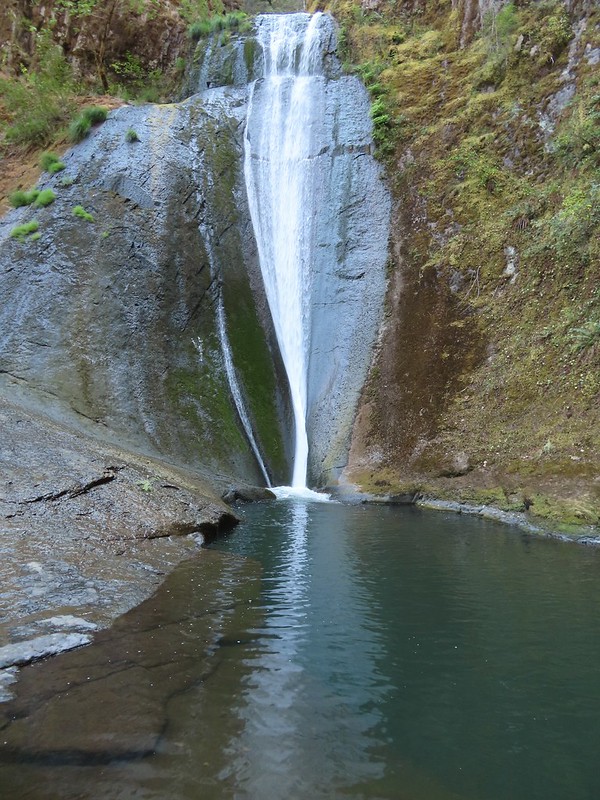
IMG_9108

IMG_9116We really liked how the water curved and narrowed as it cascaded down.

IMG_9120The pool appeared to be extremely deep.
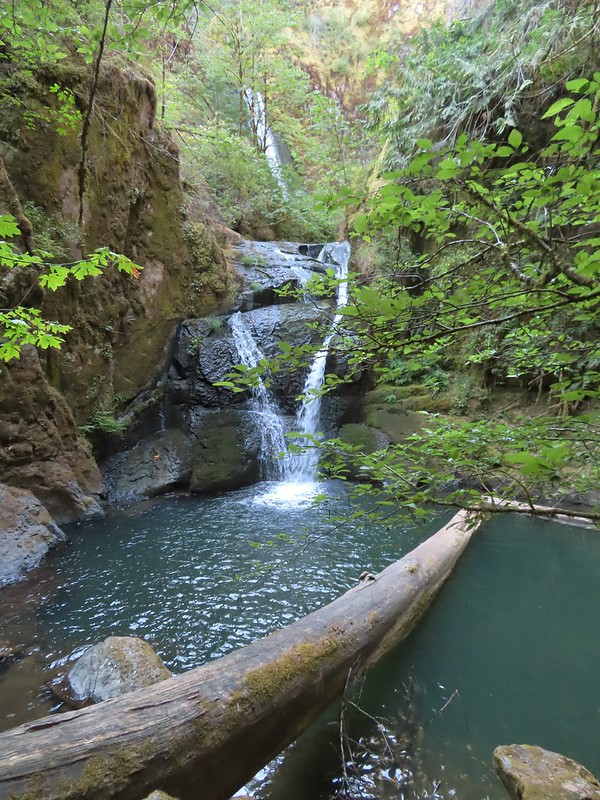
After a nice break admiring the upper fall we headed back and I detoured downhill on a use trail to get a closer look at the lower falls.
IMG_9125

IMG_9127

Even though it was still early (we were at the falls a little after 8am) we were surprised no one had been on the trail. There hadn’t been any cars at the trailhead either time we’d driven by the day before either which we found a bit odd considering how nice the trail and waterfall were. We did finally encounter a couple of other hikers as we made our way back to the car. This had been a perfect hike to end our trip on. The two hikes combined for just 4.5 miles and 630′ of elevation gain, which was about all my feet could take, and we were able to make it home before noon giving us plenty of time to unpack and get ready for the work week ahead. Happy Trails!

Flickr: Fall Creek and Wolf Creek Falls

Categories
Coastal Range Hiking Oregon Trip report

North Fork Nehalem River – 02/20/2021

Like much of the U.S. we’ve had some ugly weather so far in February so when we saw the potential for a “not too wet” window of time we decided to head out for this month’s hike. On our schedule for February was the North Fork Nehalem River in the Coastal Range. This hike came from the Oregon Hikers Field Guide, my favorite online source for ideas. This particular hike utilizes roads instead of trails which was actually a good thing after an unusually destructive ice and snow storm had come through just a week before our hike. We hopped that the combination of the roads and some clearcuts along those roads would mean we wouldn’t have to deal with much if any debris from the storm. As we drove west on Highway 26 from Portland we were amazed at how much damage there was to trees in the Coastal Range. Between the damage we saw and a couple of heavy rain showers we were wondering what we might be getting ourselves into as we turned south onto Highway 53. The rain let up as we wound our way down past more damaged trees to the Nehalem Fish Hatchery. We had planned to stop at the hatchery first for a quick stop to see Umbrella Falls but signs at the hatchery indicated it was closed to visitors due to COVID-19 (the ODFW website for the hatchery didn’t mention the closure). With access to the 1/8 mile path to the falls blocked we had to skip Umbrella Falls for now and we drove the short distance north on Highway 53 to Cole Mountain Road (just north of the bridge over the North Fork Nehalem River) where we turned west (right) and kept right at a fork to reach the North Fork Nehalem Trailhead.
Trailhead on North Fork Road

We parked at a pullout before a gate marking the start of private land owned by McCracken Woodlands LLC and set off on foot.
Informational sign from McMracken Woodlands LLC

After crossing over a small stream we started getting views of the North Fork Nehalem River on our right.
Stream along North Fork Road

North Fork Nehalem River

North Fork Nehalem River

We were soon passing one of several clearcuts.
Clearcut above North Fork Road

While we are always on the lookout for wildlife we rarely spot anything when we’re specifically looking for something. Today was no exception and after scanning the hillside and coming up empty we started walking again. I turned around to see what the view was like behind us and caught movement 2/3rds of the way up the hill. It was a pair of deer that were well aware of us and making their way in the other direction.
Deer in the clearcut

Deer moving away from us through the clearcut

A mile into the hike we crossed the river on a bridge.
North Fork Road crossing the North Fork Nehalem River

North Fork Nehalem River

North Fork Nehalem River

Just under a half a mile from the bridge we came to North Fork Falls where some steps led down to a fish ladder.
North Fork Falls

North Fork Falls

Fish ladder at North Fork Falls

North Fork Nehalem River

After checking out the falls and fish ladder we continued on North Fork Road passing twin seasonal waterfalls, a quarry, and a pond before crossing over Gods Valley Creek near the two and three quarter mile mark of the hike.
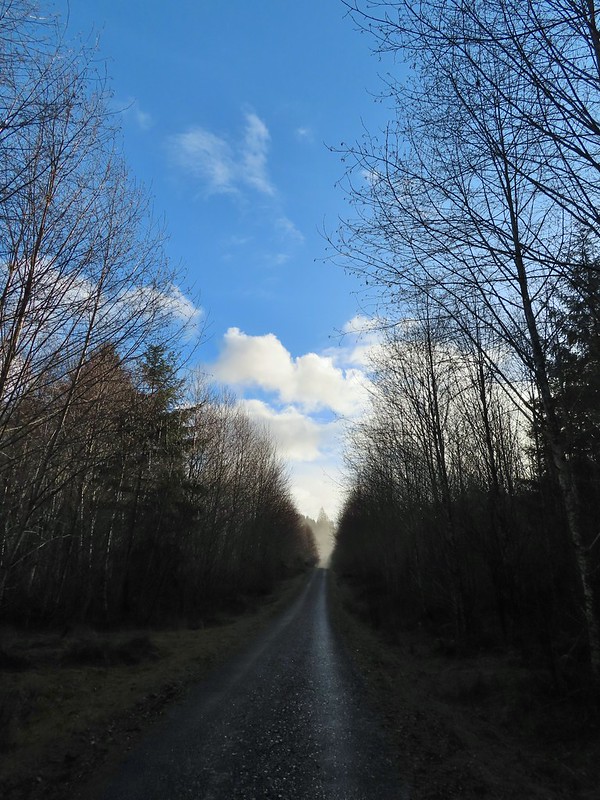
North Fork Road

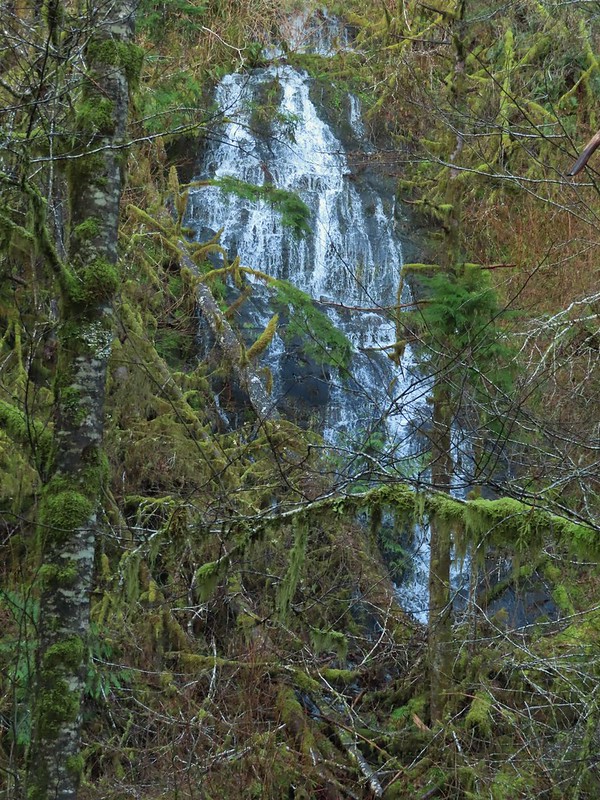
Twin seasonal waterfalls along North Fork Road

Pond along North Fork Road

Gods Valley CreekGods Valley Creek

Just beyond Gods Valley Creek we spotted some old moss covered picnic tables. We’d be interested in the history here as there was also at least one former campsite with an old fire ring in the area as well. Our guess is that before the logging this was some sort of recreation area but we haven’t been able to find any information online about it.
Old picnic tables

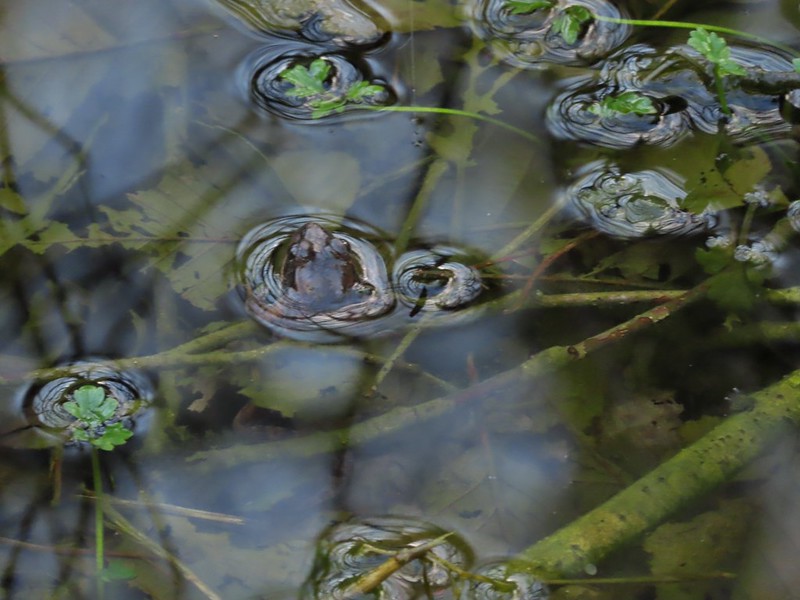
FrogFrog near the old picnic tables.

After crossing the creek the road left the North Fork Nehalem as the river bent northward sticking to a straight line to another crossing of the River just before the 3.5 mile mark.
North Fork Road

North Fork Road crossing the North Fork Nehalem River

North Fork Nehalem River

A gate at the far end of this bridge marked the boundary of the private land and the start of the Clatsop State Forest. We followed North Fork Road through the forest another two miles to Fall Creek (just on the far side of another large quarry).
Skunk cabbageNot much in the way of flowers yet but there was a bit of skunk cabbage in bloom.
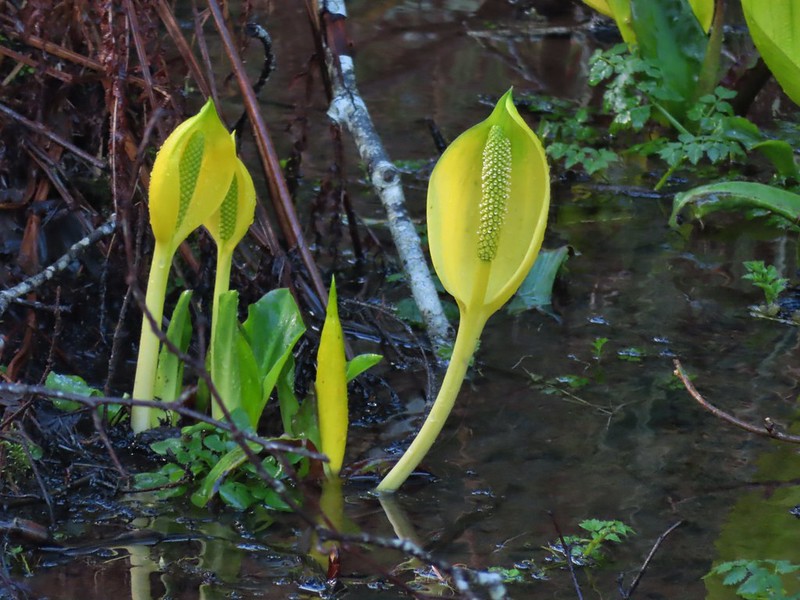
Skunk cabbage

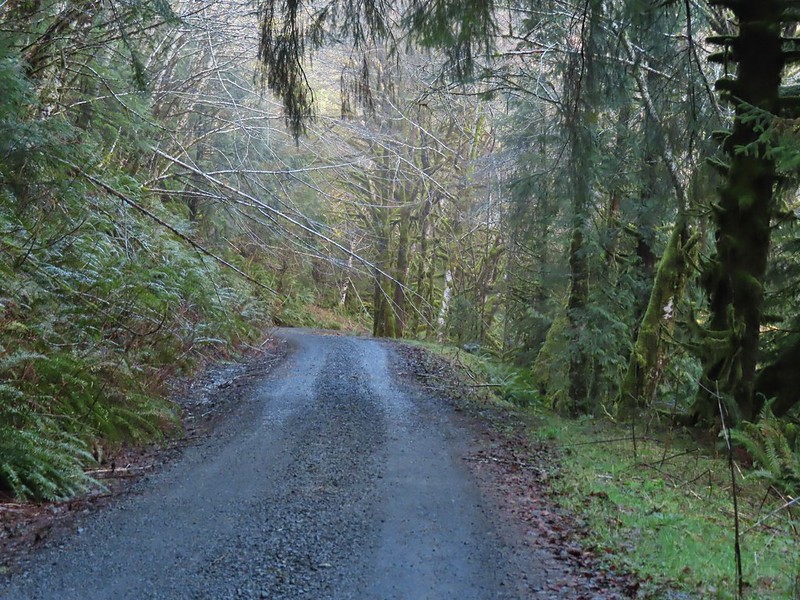
North Fork RoadSome low hanging trees, presumably from the storm. The roads had been cleared but occasional damage along the side of the road was evident.
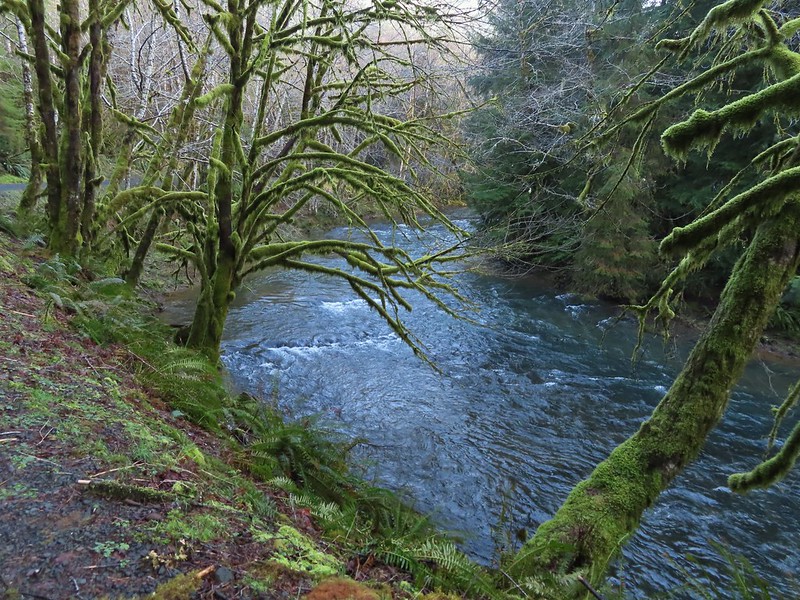
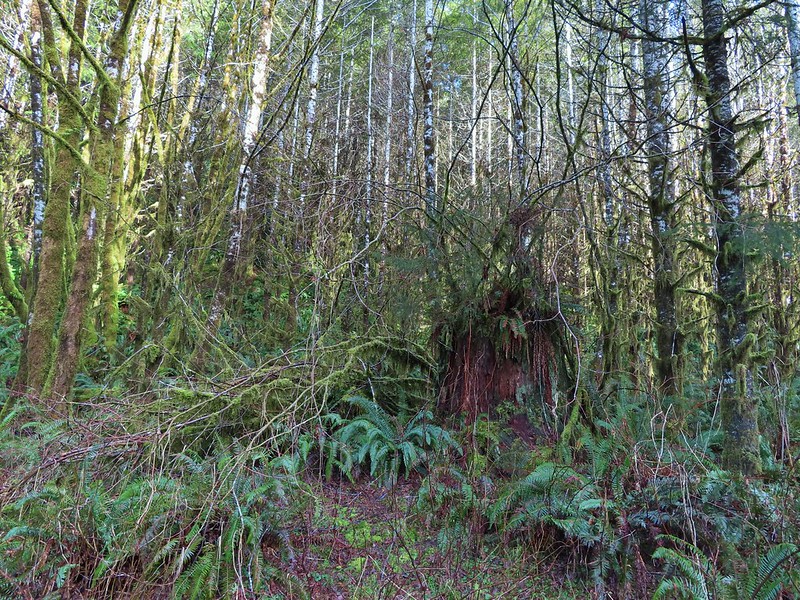
North Fork Nehalem River

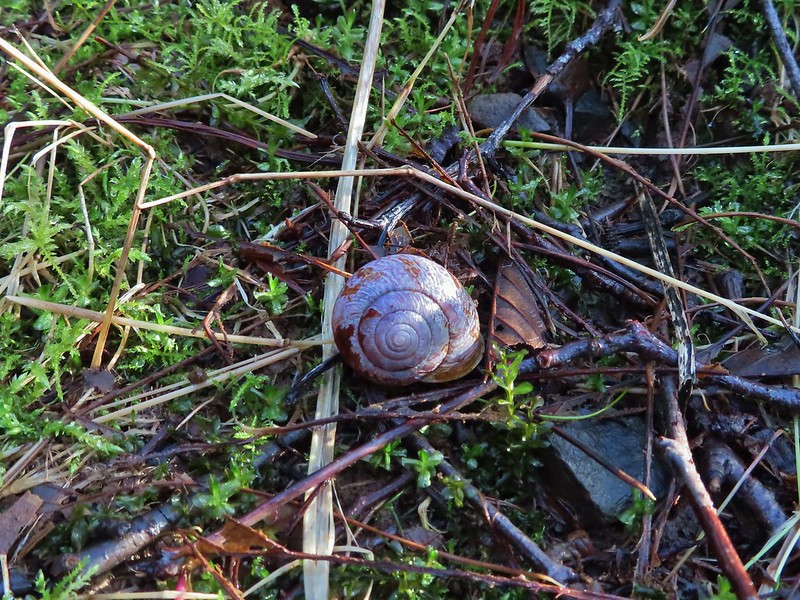
Snail shell

Old stump amid younger treesThere were no recent clearcuts in the Clatsop State Forest section but there was evidence of past logging.

Fall CreekFall Creek

After crossing Fall Creek the road (which is shown on maps as Hill Road here) turned away from the river and followed Fall Creek. We took a short detour to the right toward the river where a gated suspension bridge led to another fish ladder.
North Fork Nehalem River

Path to a closed suspension bridge over the North Fork Nehalem RiverNot sure why I neglected to get a picture of the bridge from the locked gate but this is the only one I took of the bridge.

Upper North Fork FallsThe hike description in the Oregon Hikers Field Guide mentions walking along the bank to get a view of Upper North Fork Falls from the rocks below but that wasn’t going to be an option with the river level today.
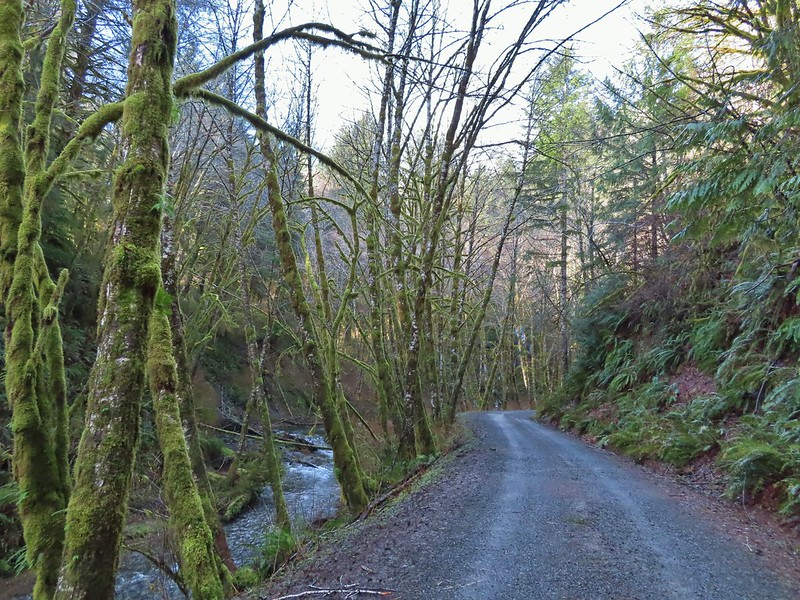
After checking out the bridge we returned to the the road and continued uphill along Fall Creek to visit three more waterfalls.
Hill Road along Fall Creek

We came to the first fall after .3 miles, a side stream flowing into Fall Creek. The lack of leaves made it a little easier to see the falls than it would be later in the year.
Waterfall spilling into Fall Creek

I was able to make my way down to Fall Creek below the falls for a closer look. (I did however get slapped in the face a couple of times by the vegetation.)
Waterfall spilling into Fall Creek

Another quarter mile brought us to the final two falls. A stepped fall on Fall Creek and another side stream flowing into Fall Creek.
Falls on Fall Creek

Waterfalls on Fall Creek

Waterfall spilling into Fall Creek

Waterfall spilling into Fall Creek

We were pleasantly surprised at how nice these last three waterfalls were, especially the two on the side streams. We were also thankful that we hadn’t had any real precipitation to deal with. We headed back the way we’d come looking for anything we’d missed on our fist pass.
Thick moss on a treeWe both thought that this thick moss looked like some sort of hairstyle.
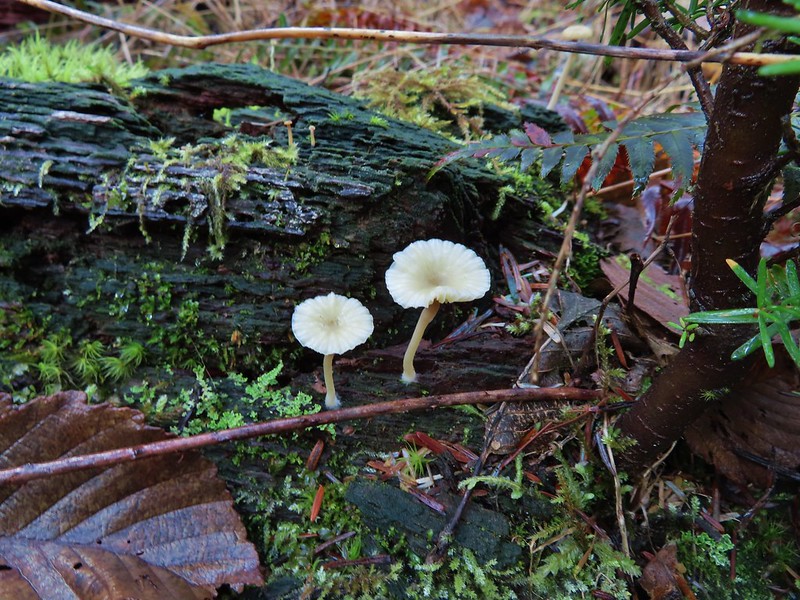
Mushrooms

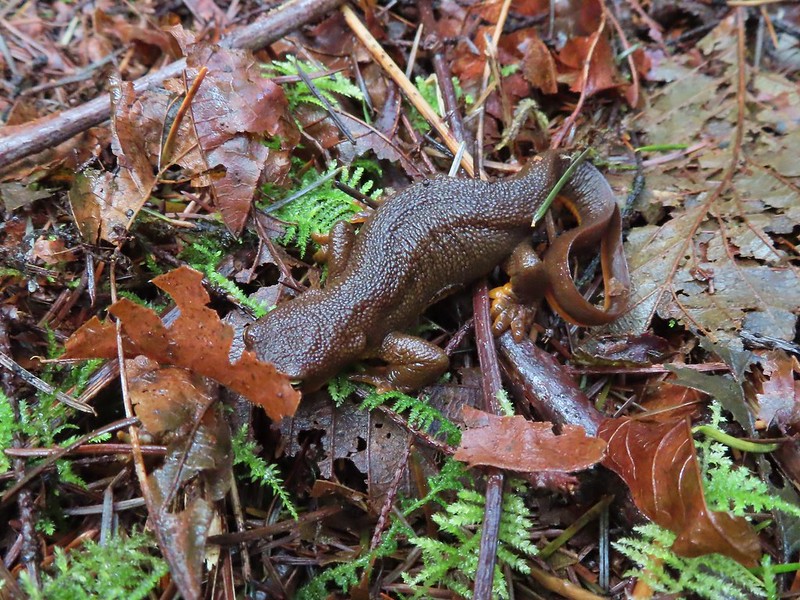
Rough skinned newtRough-skinned newt

A brief mist passed over but that was it and we enjoyed some bright blue sky as we finished up our outing.
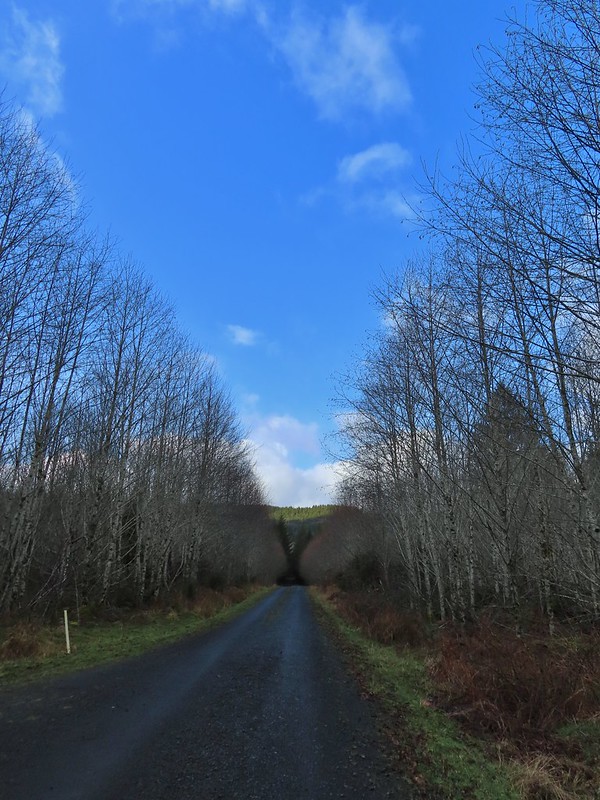
North Fork Road

The hike came in at a little under twelve and a half miles with just over 500′ of elevation gain. We passed three anglers on the road on the way back and saw two more (their fishing line anyway) down on river. This was a great winter hike and a thoroughly enjoyable outing despite being entirely on roads. It just goes to show that it’s the not the surface but the surroundings that make a good hike. Happy Trails!

Flickr: North Fork Nehalem River

Categories
Hiking Oregon Three Sisters Area Trip report Waldo Lake Area

Erma Bell Lakes and the Shale Ridge Trail – 08/29/2020

With our recent backpacking trip around Diamond Peak (post) leaving us with just one more featured hike yet to do from William L. Sullivan’s “100 Hikes/Travel Guide Central Oregon Cascades” (4th edition) the only logical thing to do the following weekend was that last remaining hike. That hike was to the Erma Bell Lakes and as luck would have it late August was a pretty good time to visit, the berries were ripening and the mosquitoes weren’t too much of a nuisance. With a drive time of almost three hours the loop around the 8.5-9 mile loop around the lakes wouldn’t take long enough for us not to break our self imposed rule of the driving time being longer than our time spent hiking so we added a second stop to the day at the Shale Ridge Trail.

We started the morning by driving to the Skookum Creek Campground where the Erma Bell Trail begins.
IMG_5089

IMG_5091

The trail crosses Skookum Creek on a footbridge.
IMG_5092

IMG_5093

Soon after crossing the creek the trail enters the Three Sisters Wilderness.
IMG_5097

The trail traverses a forested hillside where we found a few ripe thimbleberries to snack on.
IMG_5099

A little over half a mile from the trailhead the Irish Mountain Trail splits off to the left toward Otter Lake allowing for a loop past that and several other lakes.
IMG_5104

We stayed right choosing to follow Sullivan’s suggestion to complete the loop counter-clockwise. The trail continued along the forested hillside for another mile before crossing a small stream on a bridge near Lower Erma Bell Lake.
IMG_5105

IMG_5108

IMG_5113

Just beyond the bridge we took a short spur trail to the left to visit the lake.
IMG_5115

IMG_5116

IMG_5117

The lake was a pretty blue color and quite deep.
IMG_5133

IMG_5135

Despite the beauty of the lake our attention had been diverted by the familiar “meep” of pikas, our favorite trail critters. We quickly spotted one of the little fur balls collecting greens along the rocky lake shore.
IMG_5119

IMG_5121

IMG_5127

IMG_5130

We watched the pika go back and forth with its greens several times before resuming our hike. We continued on the trail around the lake taking another detour after crossing the lake’s main outlet creek to check out a small cascade.
IMG_5136

20200829_083744

Beyond the outlet the trail began a .4 mile climb up toward the Middle Erma Bell Lake.
IMG_5142Lower Erma Bell Lake from the climb.

A short but steep trail to the left just before the high point of the trail led to a viewpoint of a waterfall between the lower and middle lakes.
IMG_5144

IMG_5162Above the falls.

IMG_5156

After checking out the waterfall we continued up to Middle Erma Bell Lake.
IMG_5176

IMG_5170

IMG_5175Ouzel

IMG_5178Ducks

We continued beyond Middle Erma Bell Lake passing a small pond on the right before arriving at Upper Erma Bell Lake .7 miles from the waterfall, also on the right.
IMG_5186Pond along the trail.

IMG_5189Spur trail on the right to Upper Erma Bell Lakes.

IMG_5192Paintbrush and aster along the lake shore.
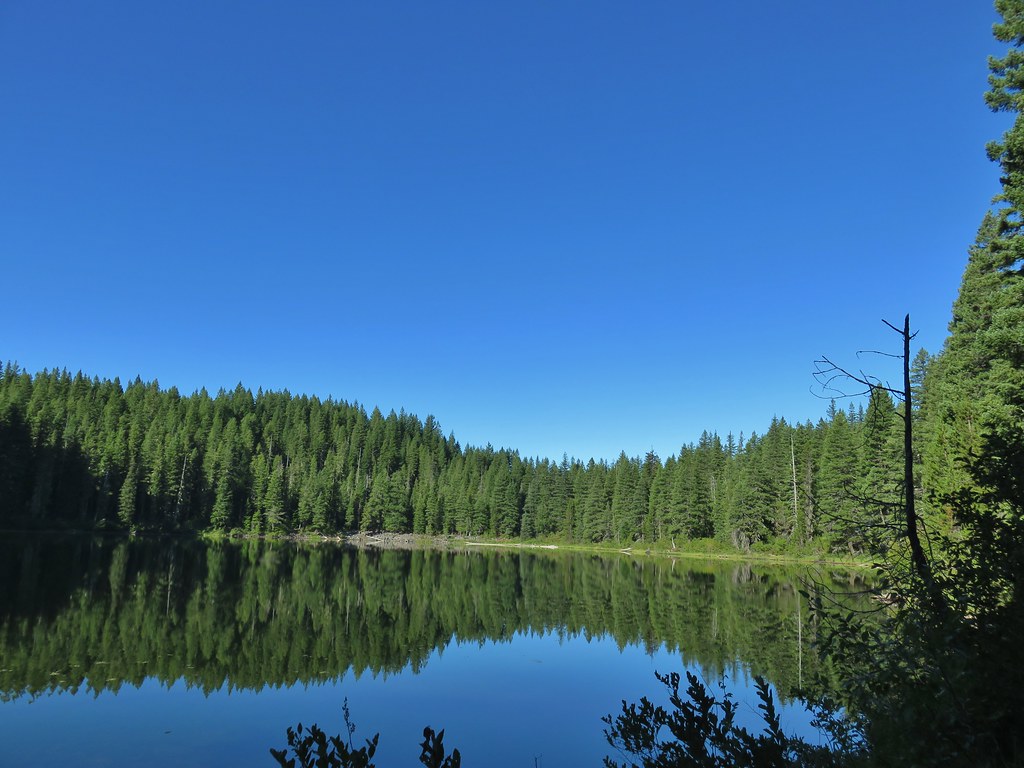
IMG_5193Upper Erma Bell Lake

IMG_5197Lupine and paintrbush

In addition to a few flowers there were lots of ripe berries near the lake which we sampled before continuing. The trail climbed gradually for half a mile to a junction with the Judy Lake Trail which passes Mud and Edna Lakes (but no Judy Lake) before ending at the Taylor Burn Guard Station.
IMG_5202Judy Lake Trail on the right.

We stayed left passing above Mud Lake which was barely visible through the trees below.
IMG_5203

Just under a mile from the Judy Lake Trail junction we arrived at another junction, this time with the Williams Lake Trail.
IMG_5207Williams Lake Trail joining from the right.

Again we stayed left continuing for another .4 miles to Williams Lake. Before reaching the lake we encountered a grouse that was less than pleased with our presence.
IMG_5217Grouse giving us the what for from a tree.

IMG_5212

IMG_5220Williams Lake

IMG_5227Dry creek bed near Williams Lake.

The trail began to descend beyond Williams Lake passing through some damper meadows where berries were plentiful and some flowers remained (and so did some mosquitoes).
IMG_5229

IMG_5232

IMG_5234Pearly everlasting

IMG_5237Fleabane

IMG_5243Prince’s pine

IMG_5244Mushroom

IMG_5250

IMG_5254Aster

IMG_5257

IMG_5258Coneflower

IMG_5265

IMG_5272Paintbrush

IMG_5275

IMG_5277Paintbrush

A little over two and a quarter miles beyond Williams Lake we arrived at a junction with the Irish Mountain Trail which headed uphill to the right.
IMG_5281

A short distance from the junction we came to Otter Lake.
IMG_5287

IMG_5294Curious dragonfly

The trail descended for another half mile to the Erma Bell Lakes Trail completing the loop.
IMG_5298

We turned right and returned the .6 miles to the now busy trailhead. Sullivan lists the hike at 8.4 miles but we both came up with a little over 9 miles, most likely due to the various side trips tp the waterfalls and along the lake shores. We left the trailhead and headed back toward Oakridge on Forest Road 19 stopping at the Shale Ridge Trailhead on the left (south) near milepost 30.

This trailhead serves as the start of the Shale Ridge Trail and the upper terminus of the North Fork Trail (segment 5). We had spent time on the North Fork Trail earlier in the year hiking segment 1 out of Westfir and another short section to Buffalo Rock in May (post).
IMG_5305

We weren’t here for that trail today and instead headed south on the Shale Ridge Trail, which according to a note written on the signboard had been partially logged out in June.
IMG_5303

<img src="https://live.staticflickr.com/65535/50286349281_6b323abbee_b.jpg&quot; width="768" height="1024" alt="IMG_5304">

IMG_5306

The trail quickly entered the Waldo Lake Wilderness.
IMG_5312

We followed the trail through old growth forest. The North Fork Middle Fork Willamette River could be heard at time off to our right but not seen.
IMG_5316

IMG_5317Ghost Pipe aka Indian Pipe

We were below the ridge that we had been on during the Erma Bell Lakes hike and at the 1.8 mile mark we came to Skookum Creek which was flowing through multiple channels through the forest. This area was the highlight of the hike along the Shale Ridge Trail.
20200829_125709_HDR

IMG_5334

IMG_5332

IMG_5338

We continued beyond Skookum Creek just over a mile to the North Fork Middle Fork River at Cedar Bog. This was as far as we had planned on going and as far as the trail had been cleared to. In theory the trail continues up to the Blair Lake Trail (post) on the far side of the river but the condition beyond Cedar Bog is mostly likely very rough.
IMG_5349Arriving at Cedar Bog.

IMG_5350One of a couple dry channels.

IMG_5353North Fork Middle Fork

IMG_5358Flagging on a downed tree marking the continuation of the Shale Ridge Trail.

IMG_5360North Fork Middle Fork at Cedar Bog

IMG_5363Orange flagging on the far side of the river.
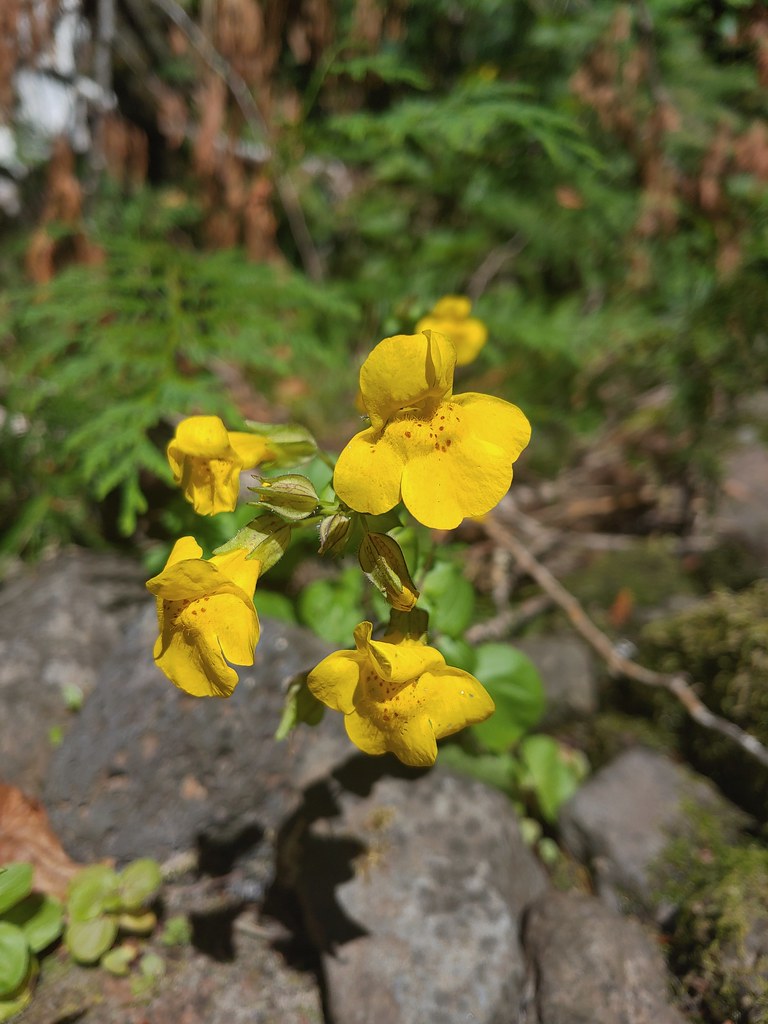
20200829_132354Monkeyflower at Cedar Bog

IMG_5366Candy flower

We turned back here and returned to our car completing a 5.8 mile out and back. While this hike was short on views there were some impressively large trees along the way and it was fairly level with only a 400′ cumulative elevation gain. The two hikes combined for nearly 15 miles of hiking which ensured that our hiking time was indeed longer than our driving time. More importantly we’d seen some nice lakes, all of which had their own distinct differences and had been gotten to watch a pika doing its thing. On top of it all we could finally say that we had done at least part of all 100 featured hikes in one of Sullivan’s guidebooks. Happy Trails!

Flickr: Erma Bell Lakes and the Shale Ridge Trail

Categories
Hiking Mt. Adams Trip report Washington Washington Cascades

Foggy Flat Backpack Day 2 – 08/02/2020

Normally when we are just hiking back to a trailhead the same way we got to a campsite it wouldn’t warrant a separate trip report, but our hike from Foggy Flat back to the Killen Creek Trailhead did. After spending the night at Foggy Flat(post) we woke just after 5am to find clear skies and a nice sunrise.
IMG_3076Goat Rocks in the morning

Even before the Sun was up it was light enough to get a good look at Mt. Adams.
IMG_3081Mt. Adams

IMG_3087

IMG_3083

Morning had brought out the mosquitoes so we decided to pack up and stop for breakfast somewhere along the return hike hoping for a less buggy spot. After a mile we stopped at the Muddy Meadows Trail junction where a log made for a prefect bench to have breakfast on.
IMG_3100Looking down the Muddy Meadows Trail from the log.
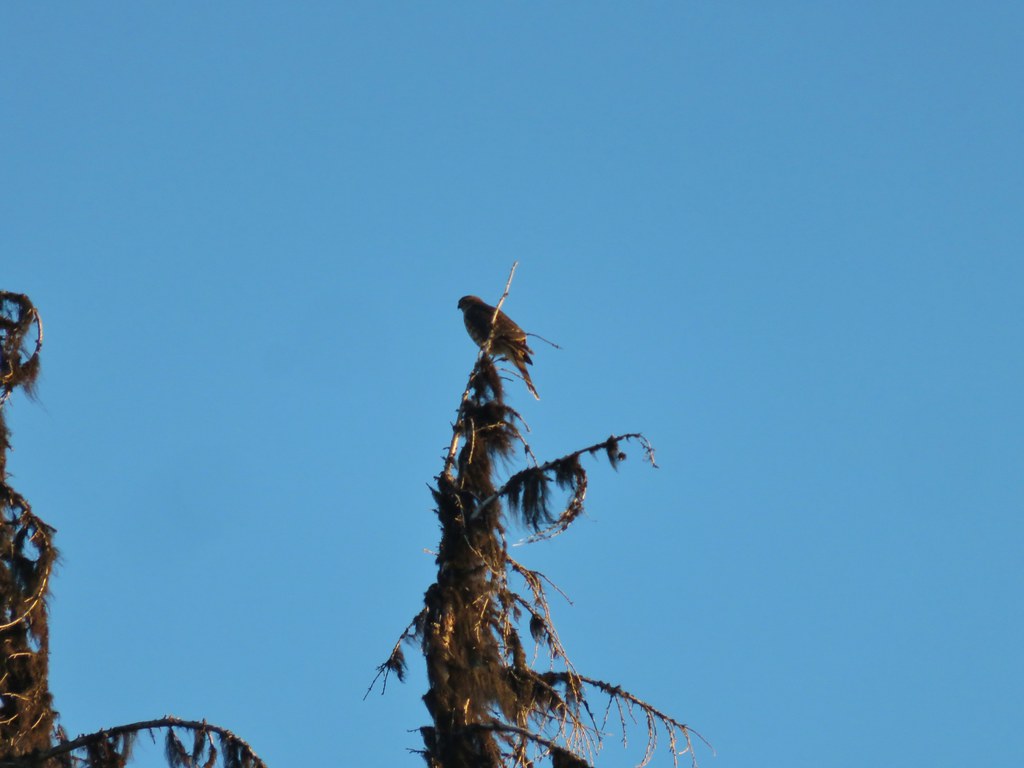
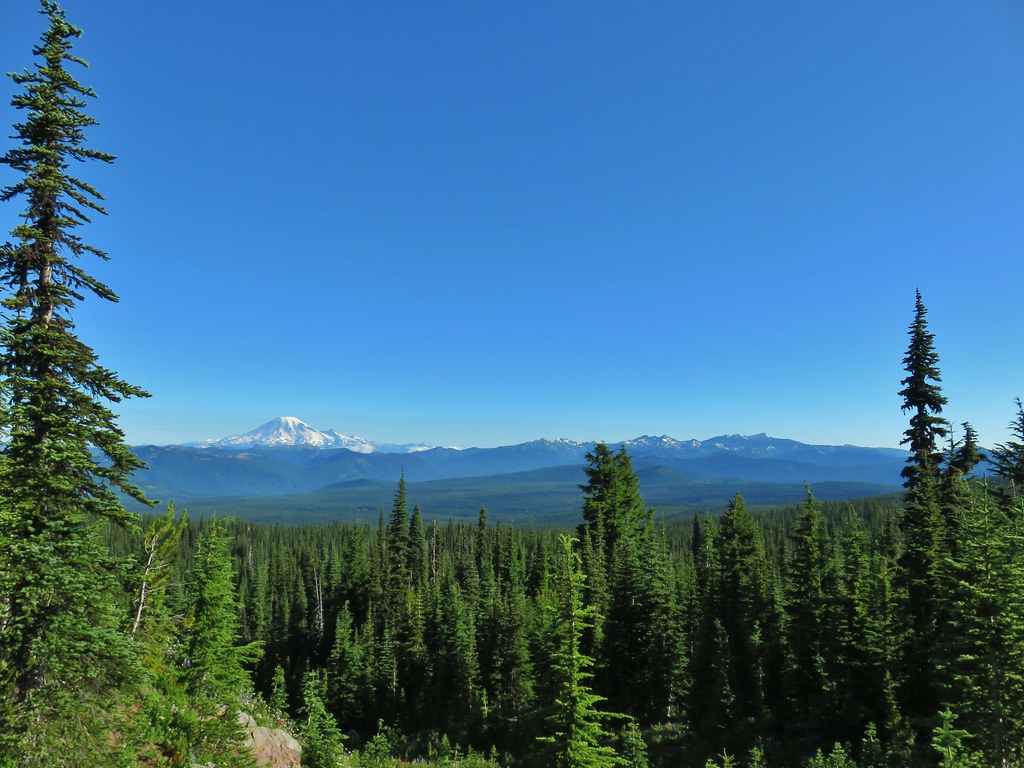
After breakfast we continued on the Highline Trail which offered good views of Mt. Rainier and Goat Rocks in this direction. When we weren’t looking at the mountains or the flowers various birds caught our attention.
IMG_3091Small hawk

IMG_3120Gray jay

Going in this direction gave us some good looks ahead toward Mt. Rainier.
IMG_3110Mt. Rainier and some of the Goat Rocks.

IMG_3116

IMG_3128Northern flicker

The unnamed lake near the Pacific Crest Trail had an excellent reflection of the forest and Mt. Adams.
IMG_3137

IMG_3141

IMG_3145Little bird near the PCT junction.

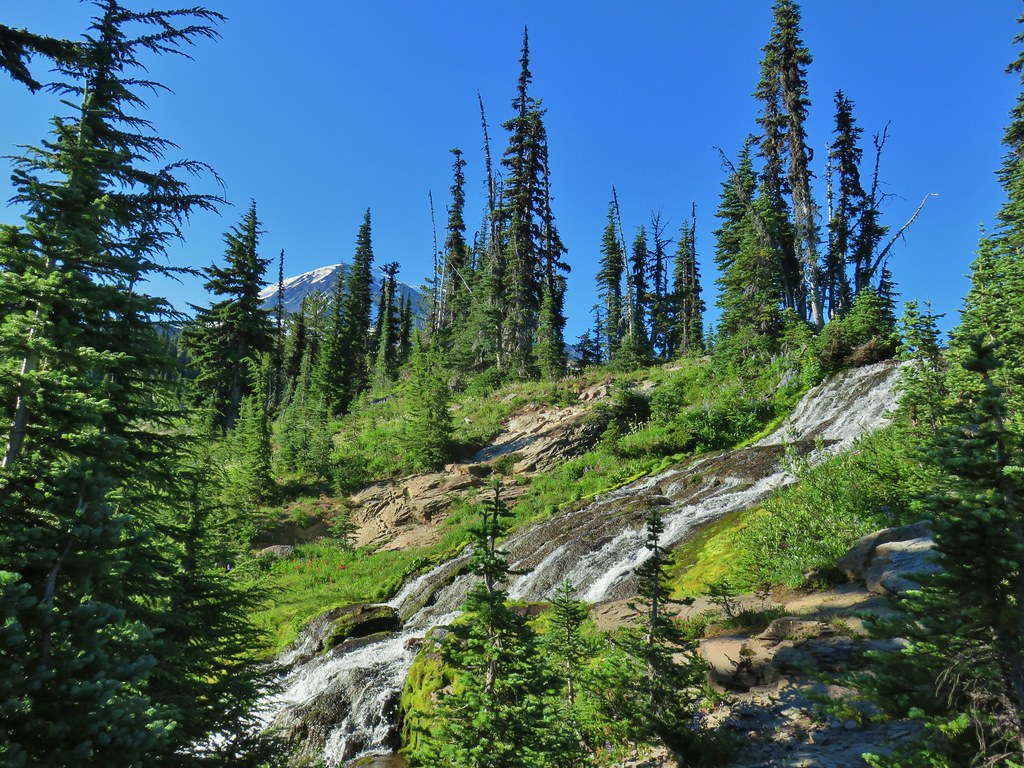
When we reached Killen Creek (.2 miles beyond the PCT junction) we crossed on the footbridge then removed our packs to take the steep use trail down below the waterfall as we’d planned the day before.
IMG_3154

IMG_3158Killen Creek below the waterfall.

IMG_3167

IMG_3171Mt. Adams from the waterfall.

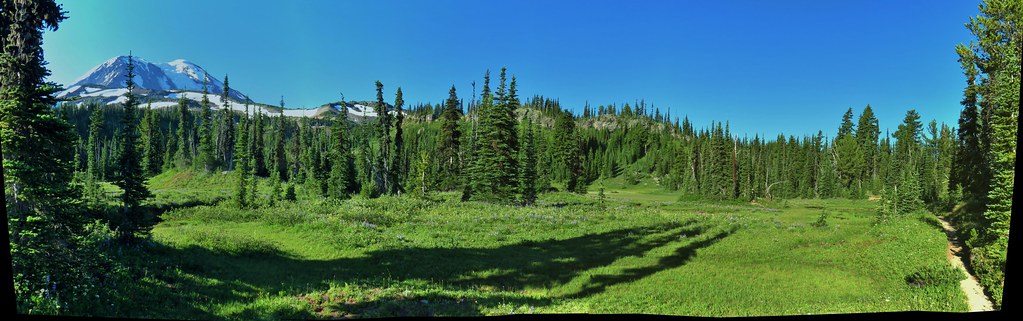
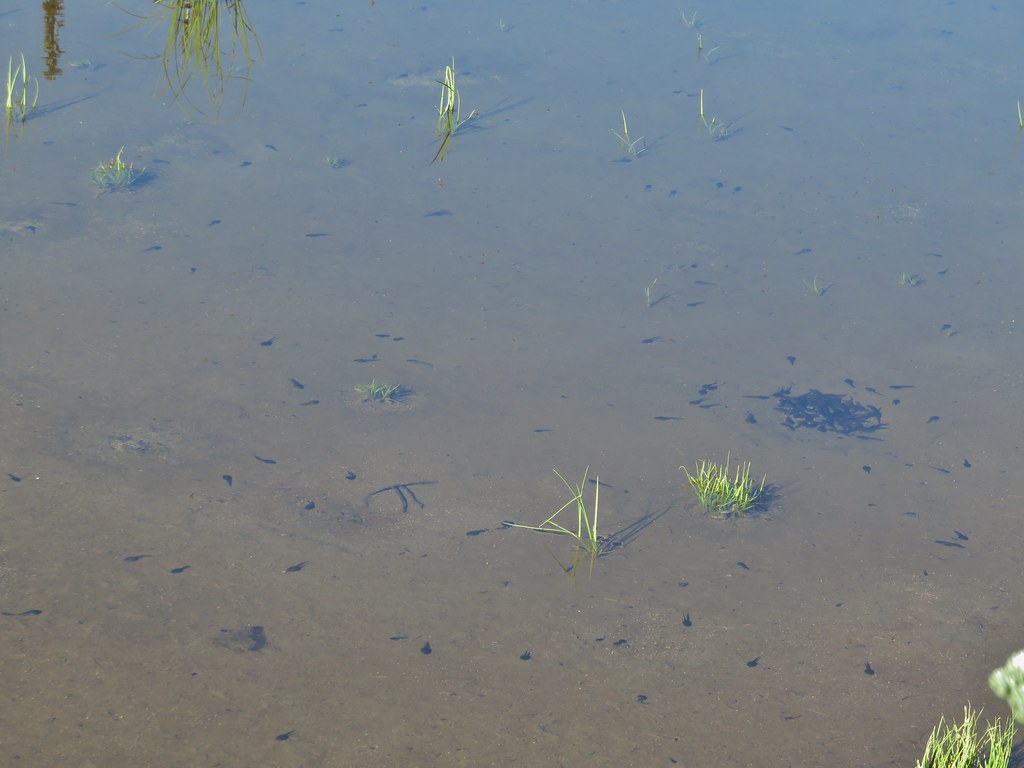
After exploring the area below the falls we climbed back up and continued through Killen Creek Meadows, stopping to check on the pollywogs along the way.
IMG_3174_stitch

IMG_3181

The blue sky made for a different look than we’d had the day before and we kept pausing along the way to marvel at the scenery.
IMG_3195Mt. Rainier and Goat Rocks from the PCT.

IMG_3204

IMG_3207

IMG_3209Breakfast time (possibly second breakfast)

IMG_3210

IMG_3214Zooming in on Mt. Rainier

IMG_3215

IMG_3221

We were almost surprised when we arrived at the junction with the Killen Creek Trail. The miles go by pretty quick when you’re distracted. We turned down that trail putting Mt. Adams to our backs.
IMG_3225

IMG_3231Killen Creek Trail heading away from Mt. Adams.
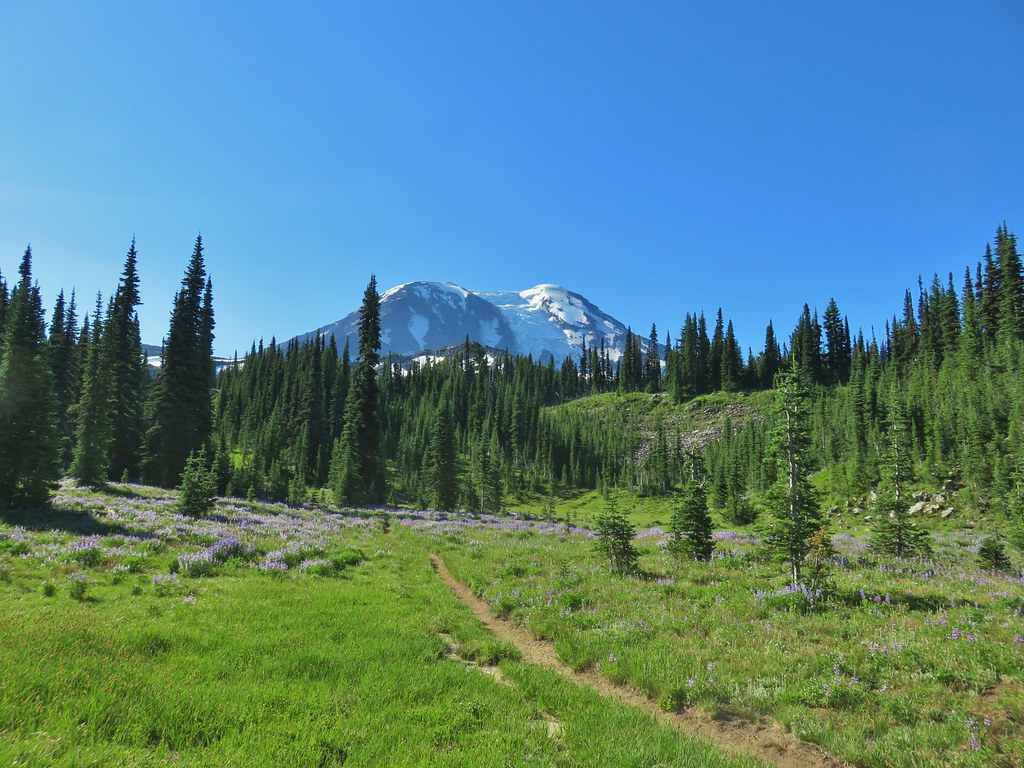
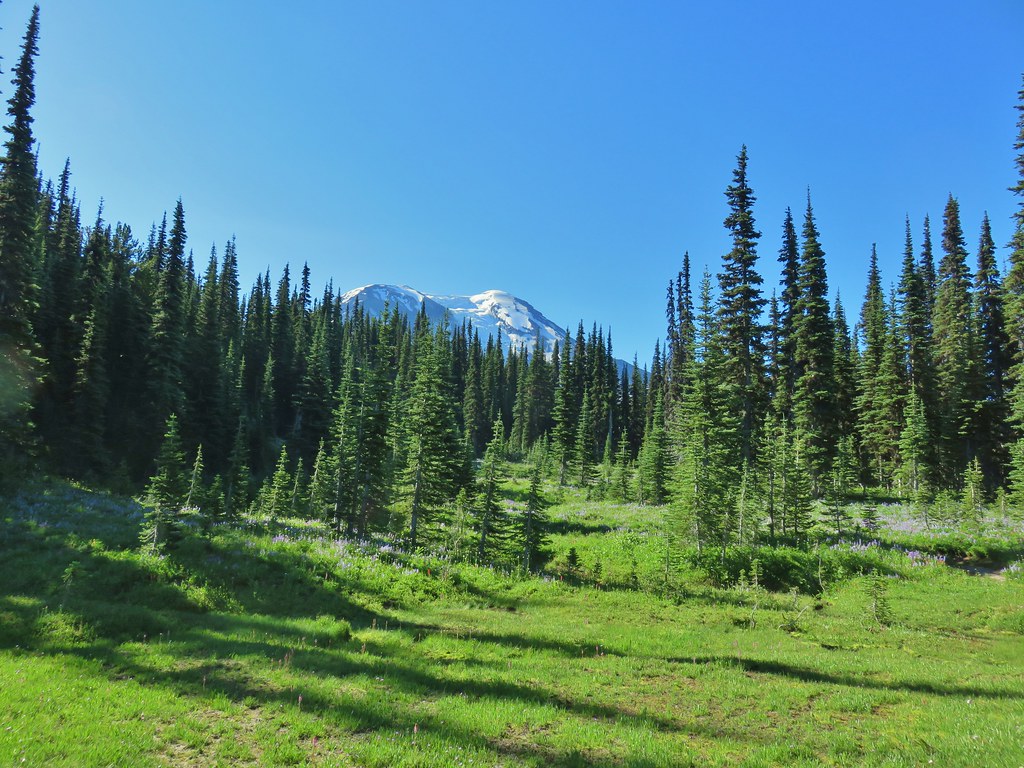
We turned to look back several times seeing less and less of the mountain before we lost sight of it for good.
IMG_3233

IMG_3236

It had been wonderful trip. The Mt. Adams Wilderness has yet to let us down and we’re already looking forward to our next visit down the road. Happy Trails!

Flickr: Foggy Flat Backpack Day 2


Categories
Central Oregon Hiking Lakeview Oregon Trip report

Petroglyph Lake, Warner Valley Overlook, and DeGarmo Canyon – 07/22/2020

**Note the 2024 Warner Peak Fire burned over the Warner Overlook.**

We took our second outing to the Hart Mountain National Antelope Refuge in three short hikes. The temperatures were still expected to be high and Wednesday also provided the best chance for afternoon thunderstorms so we wanted to be done early for the day.

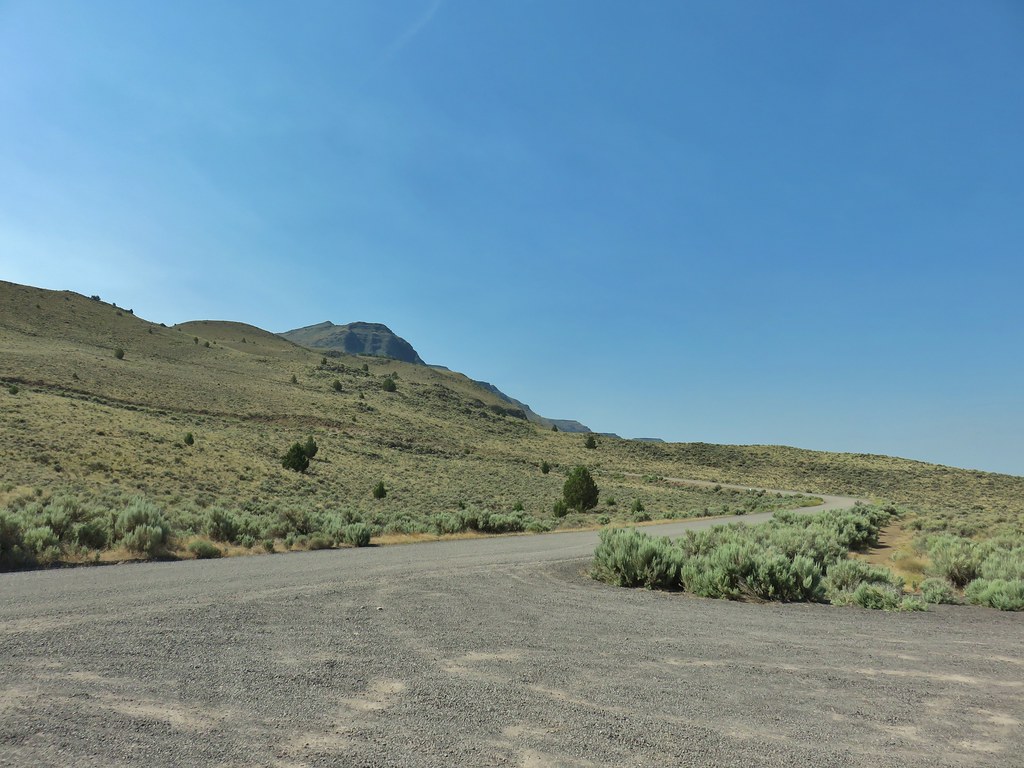
Our first hike for the day was Petroglyph Lake. As I mentioned in our previous post the Petroglyph Lake Road was closed so we had to decide how we wanted to get there. The easiest choice would have been to walk the closed road for 1.6 miles to visit the lake but Sullivan described a 5 mile off trail loop that not only visited the lake but also a viewpoint along Poker Jim Ridge. We picked the loop and parked along Hart Mountain Road near the signed Hill Top Reservoir Road.
IMG_1257

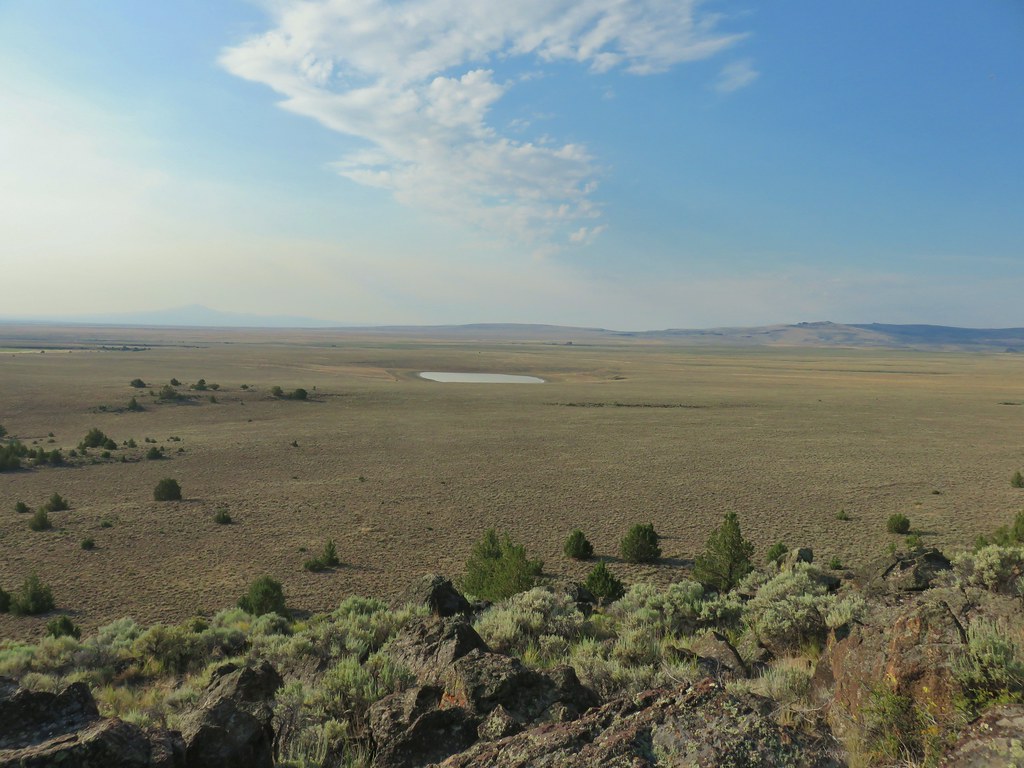
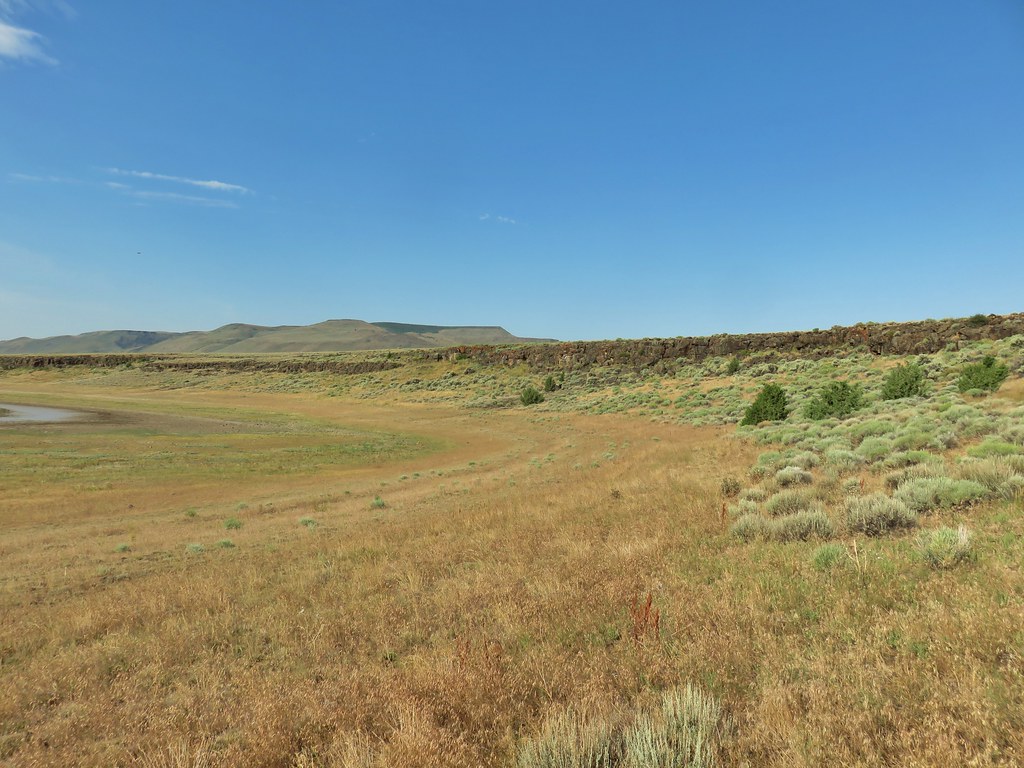
Looking across Hart Mountain Road we could see the small juniper covered knoll along Poker Jim Ridge that we were going to be aiming for.
IMG_1258The knoll is the lower rise to the left.

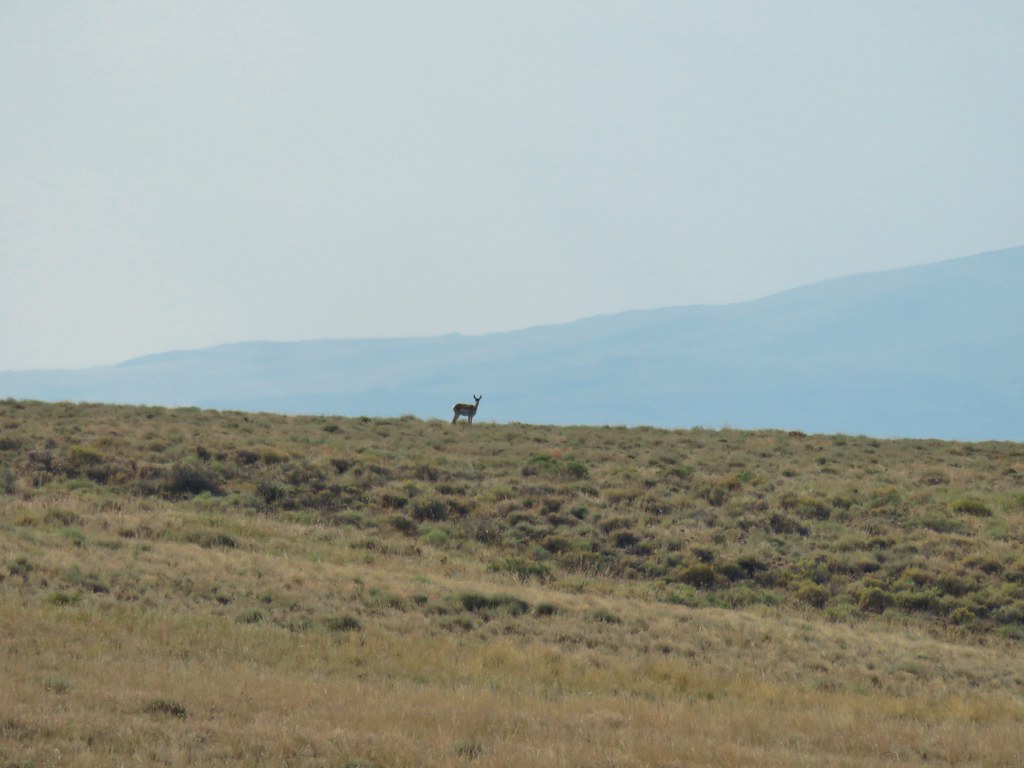
There was a lone pronghorn grazing in the morning light.
IMG_1259

We set off across through the sagebrush angling for the rim.
IMG_1267

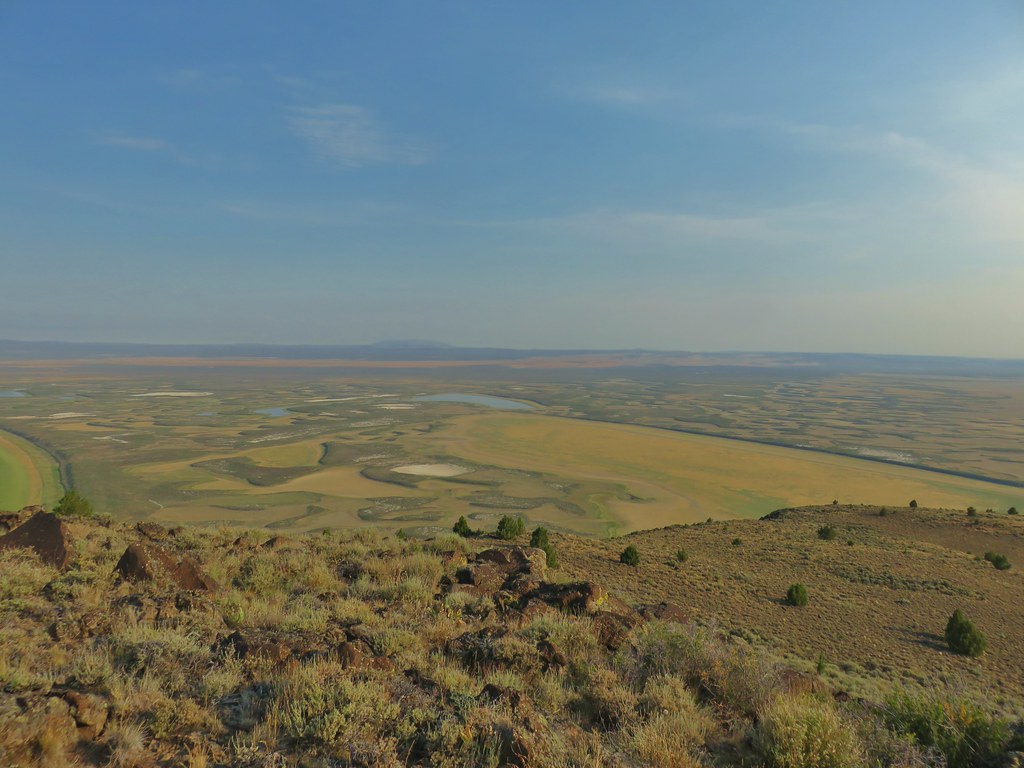
IMG_1268From left to right: Flagstaff Lake, Upper Campbell Lake, and Campbell Lake.

IMG_1271Hart Mountain Road climbing up to the plateau.

IMG_1272

IMG_1273Campbell Lake

We followed the rim north toward the knoll.
IMG_1276

IMG_1277

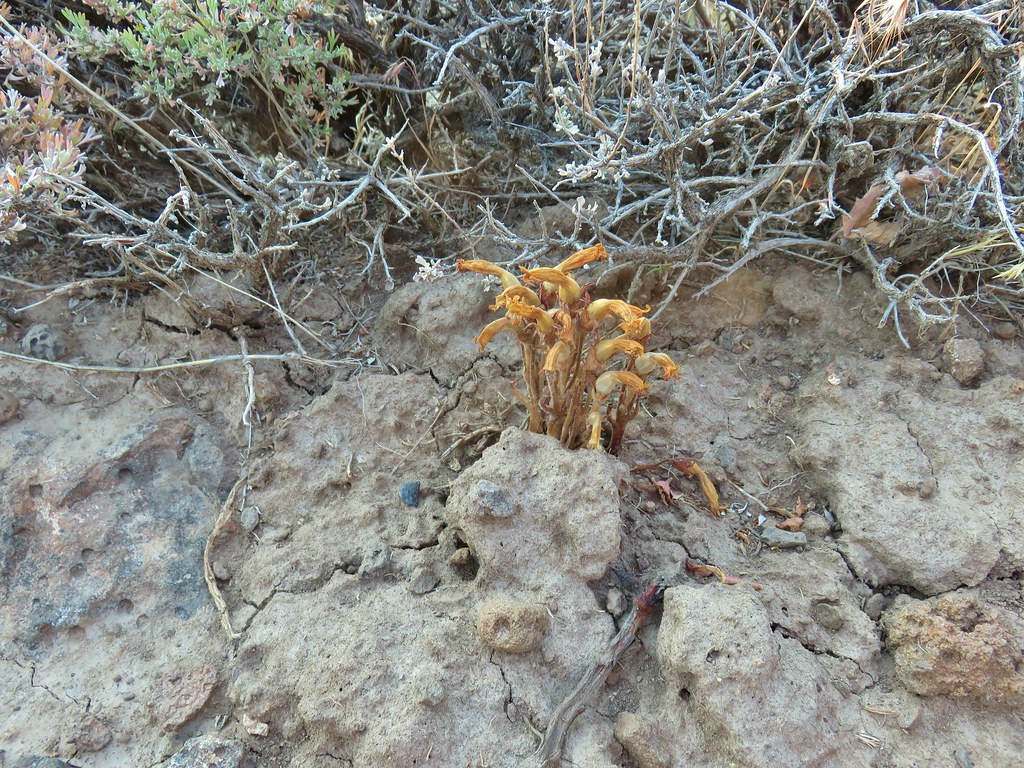
IMG_1282An Orobanche

IMG_1284

IMG_1285

IMG_1287

Petroglyph Lake was not visible at first but it lay to the east and we could make out the basin that it was in.
IMG_1291

As we gained elevation the further north that we got we finally could see the lake in the basin.
IMG_1294

We arrived at the knoll a little over 2 miles from where we’d parked.
20200722_073355

IMG_1301White pelicans and seagulls on Campbell Lake.
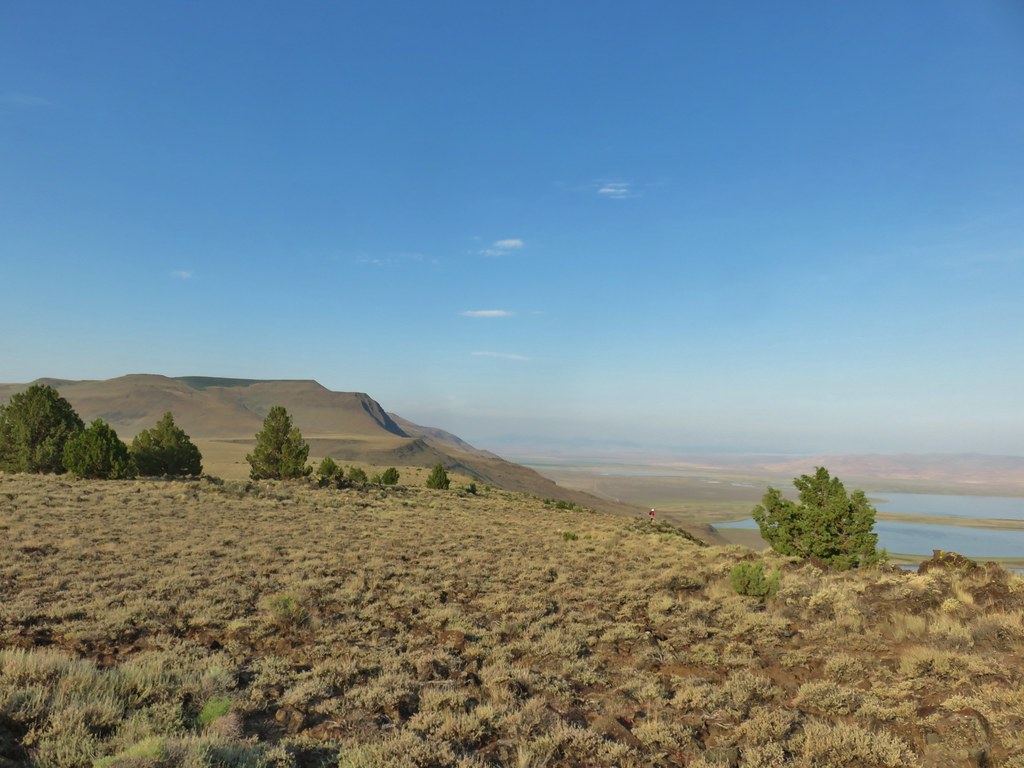
IMG_1305Looking south along Poker Jim Ridge

IMG_1307Looking north along Poker Jim Ridge

IMG_1308Junipers on the knoll

We made our way to the north end of the knoll to get a better view in that direction.
IMG_1312Bluejoint Lake below the ridge.

IMG_1313Stone Corral Lake

To reach Petroglyph Lake we had to backtrack to the south on the knoll to avoid a rocky descent.
IMG_1320

IMG_1321

When we found a suitable spot to descend we could see the lake clearly but we knew that we would lose sight of it again once we were down off the knoll so we picked out some other features to use as reference points. When we were able to see the lake again we aimed for the left side knowing that a rock ledge rimmed its right side.
IMG_1331

IMG_1338

IMG_1345Pronghorn above the lake.

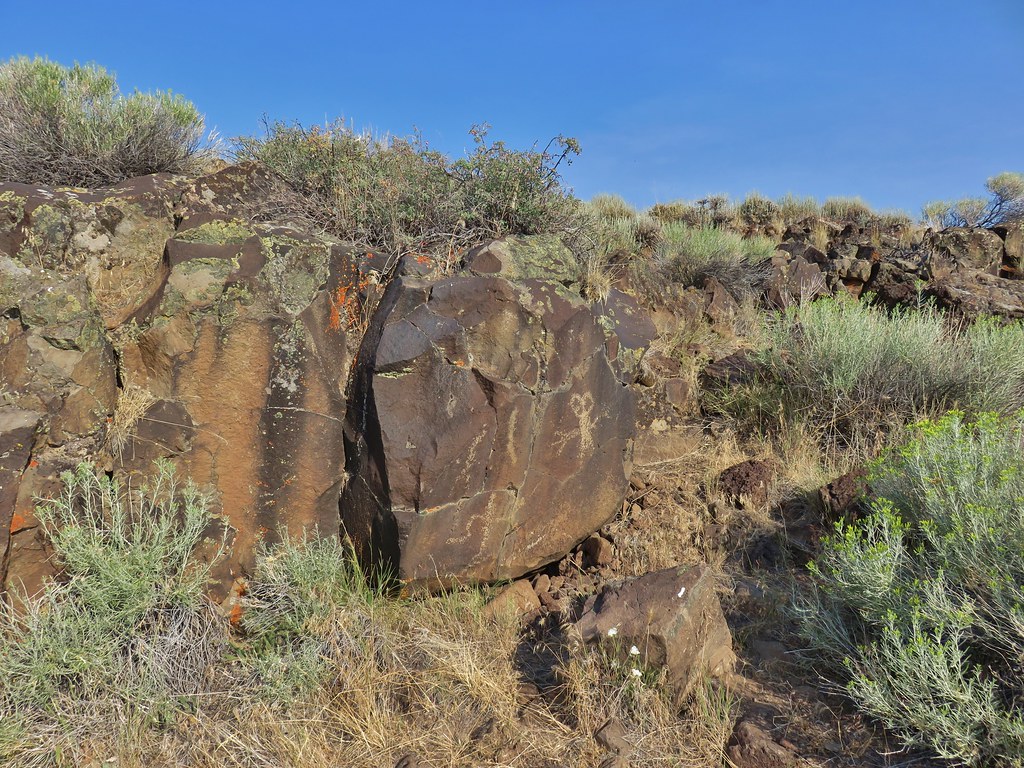
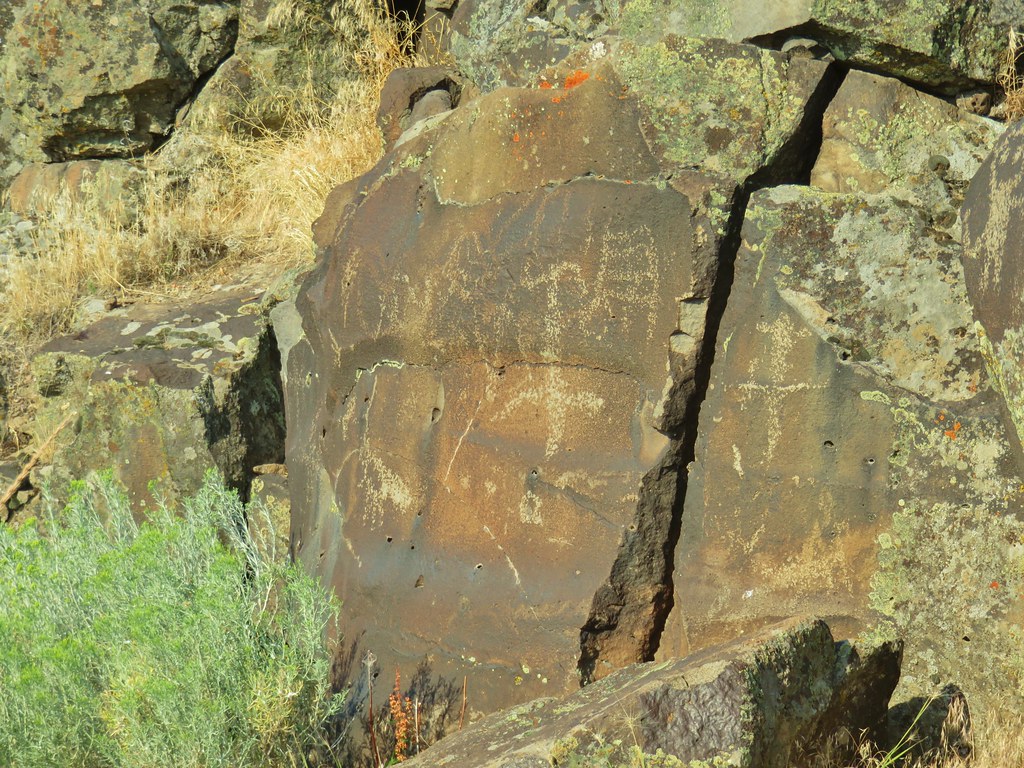
As we neared the lake we got below the rim rock and turned right to explore along it as this is where the petroglyphs are.
IMG_1352

It was approximately a half mile to Petroglyph Lake Road at the far end of the lake and most of that distance was along the cliffs looking at the petroglyphs.
IMG_1363

IMG_1366

IMG_1368

IMG_1369

IMG_1376

IMG_1379

IMG_1390Dragon fly

IMG_1398Western fence lizard

IMG_1410Yellow bellied marmot

IMG_1412

IMG_1414

When the cliffs began to fade we followed a clear path along the lake to the road where we encountered the first other hikers since the previous Saturday (we’d been passed by a single mountain biker the day before).
IMG_1421

After a brief (6 foot) conversation with them we were ready to continue on but we faced a choice. Sullivan’s loop would have had us setting of cross country for 1.5 miles back to the hill top where our car was parked. We could also walk Petroglyph Lake Road to Hart Mountain Road and then walk up that road back to the car. This second option doubled the mileage but it also took us to within a mile of the refuge headquarters where we’d seen the bulk of the pronghorn the day before and it was road walking and not bushwhacking which we were both about done with for a while. The road it was.
IMG_1427

The road walk was fine, there were several flowers, a plethora of butterflies, and we did see a few more pronghorn, albeit at a distance.
IMG_1431

IMG_1433Some type of primrose I think.

IMG_1438

IMG_1441

IMG_1445Lupine

IMG_1460There were dozens of butterflies and other pollinators on this rabbitbrush.
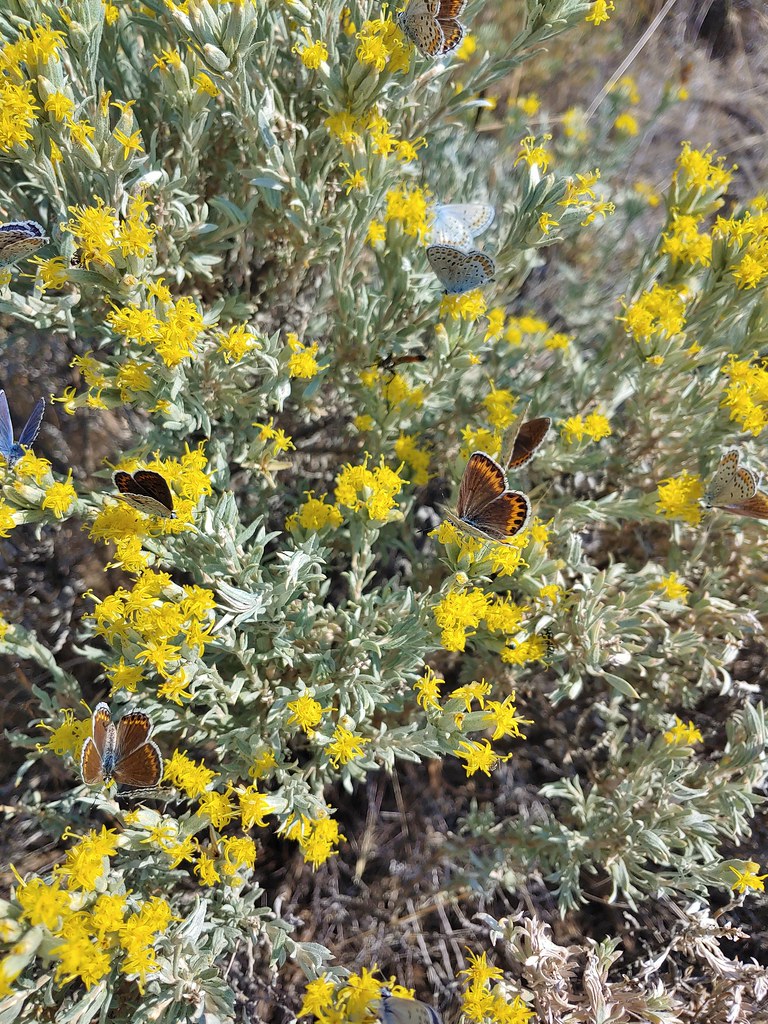
20200722_093355

IMG_1451

IMG_1475

IMG_1483The gate at Petroglyph Lake Road

IMG_1485Hart Mountain Road

IMG_1489The juniper knoll along Poker Jim Ridge and yes there are a few pronghorn out there.

IMG_1498Pronghorn keeping their distance from us.
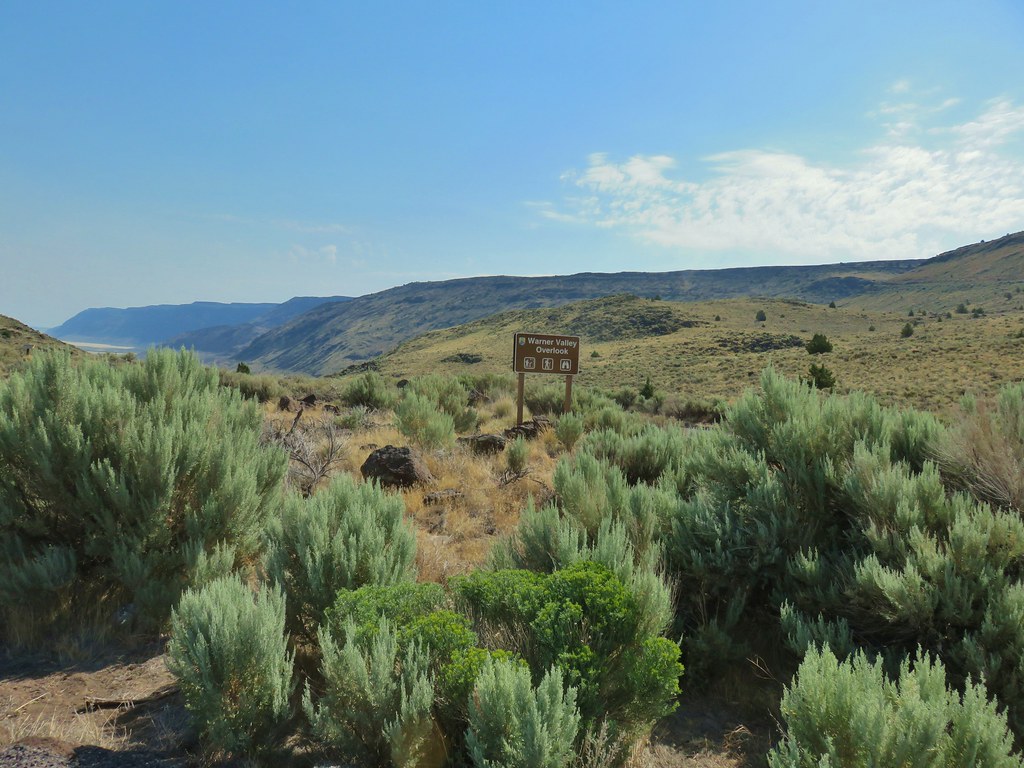
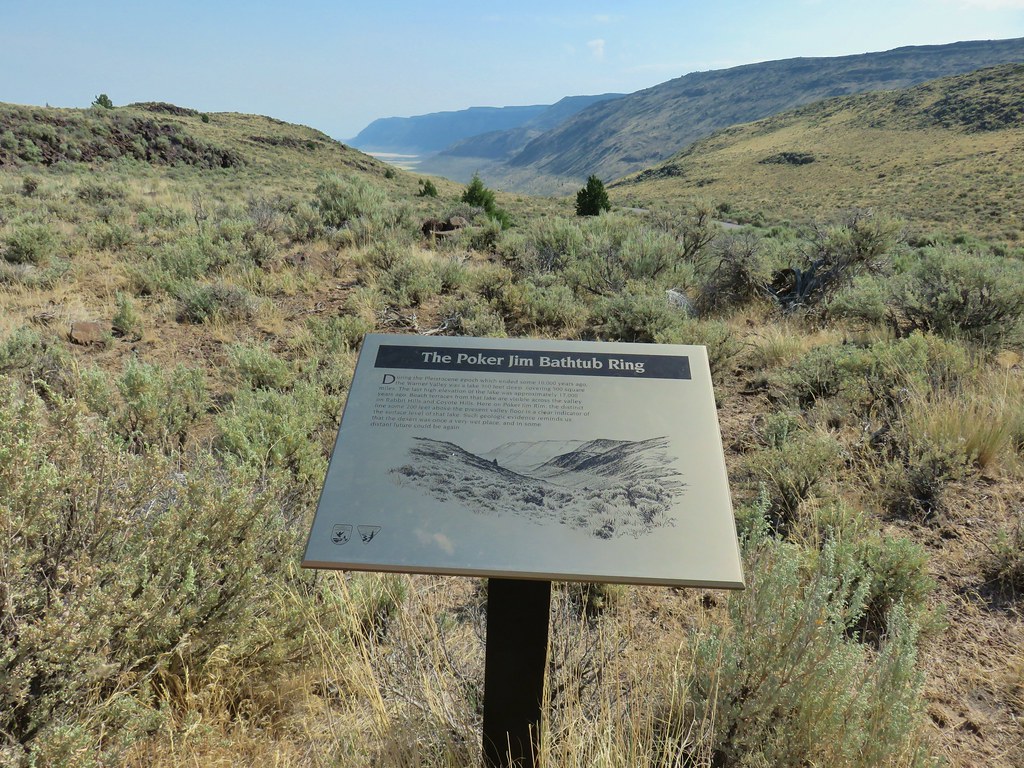
After making it back to our car we drove just under 2 miles back down Hart Mountain Road to a small pullout with a Warner Mountain Overlook sign and a short (.4 mile) loop trail. We weren’t aware of this little interpretive loop until we drove past it the day before but it looked interesting so we added it to this days itinerary.
IMG_1505Sign for the overlook.

IMG_1506View from the pullout back up toward Hart Mountain.

IMG_1509The start of the loop trail.

Since we had already been up to the juniper knoll which looked this same direction the views from the overlook were not much different from those, but the half dozen interpretive signs along the route were interesting and worth the quick stop.
IMG_1511We like interpretive signs like this where we can see with our own eyes what is being described.
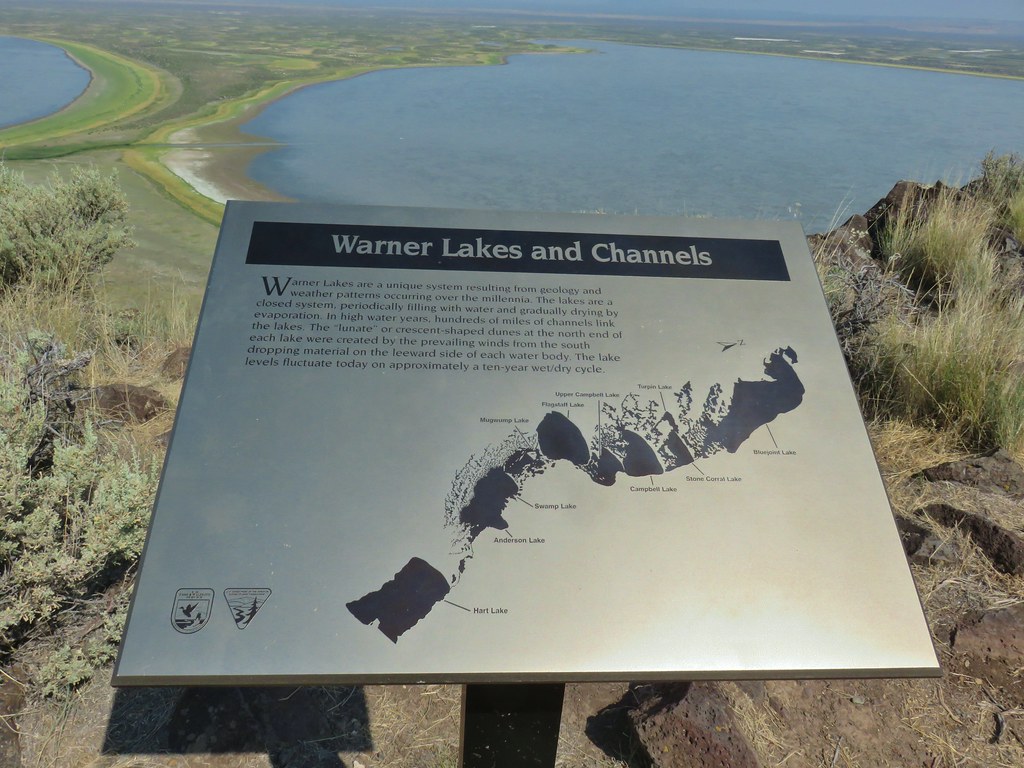
IMG_1518This one helped with identifying the different lakes plus provided the history.

IMG_1524Another of our favorites are the ones that identify the various hills and peaks.
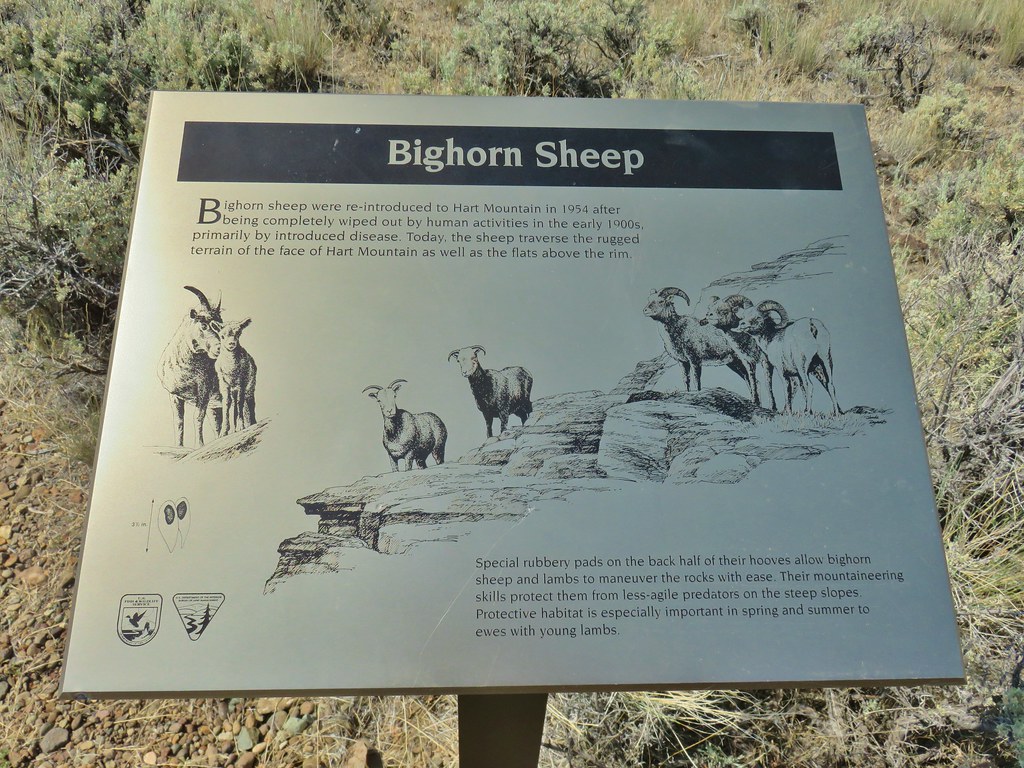
IMG_1527We worked really hard on spotting some big horn sheep on this trip to no avail. There was so much space that they could be in it was like looking for a needle in a haystack.
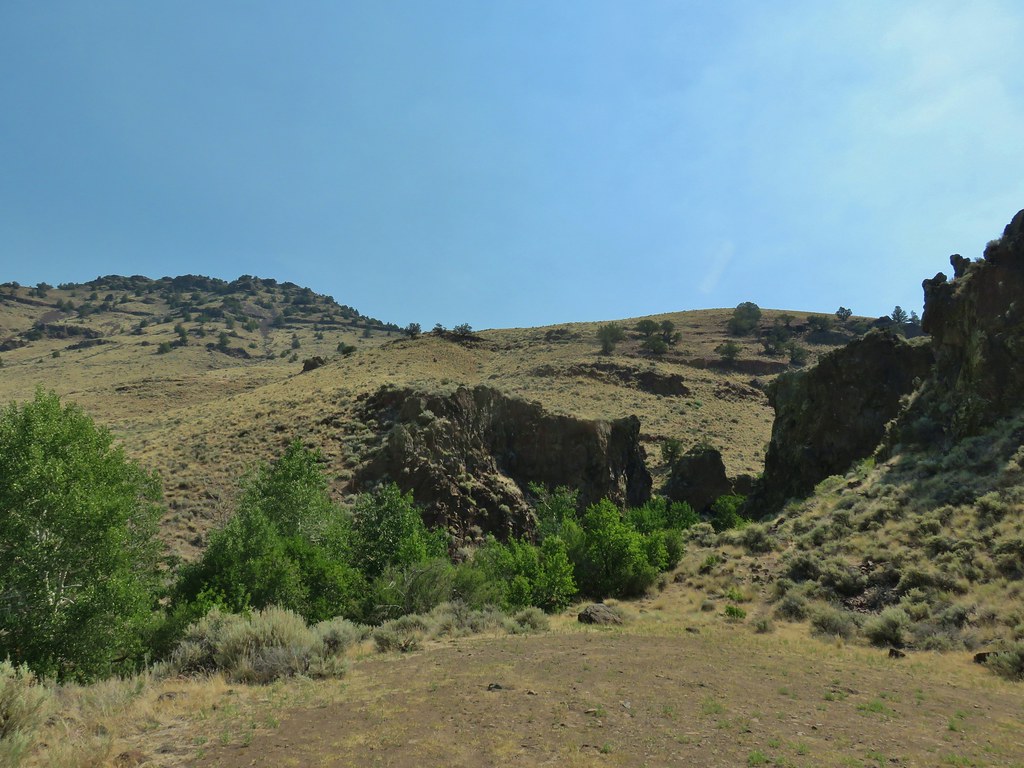
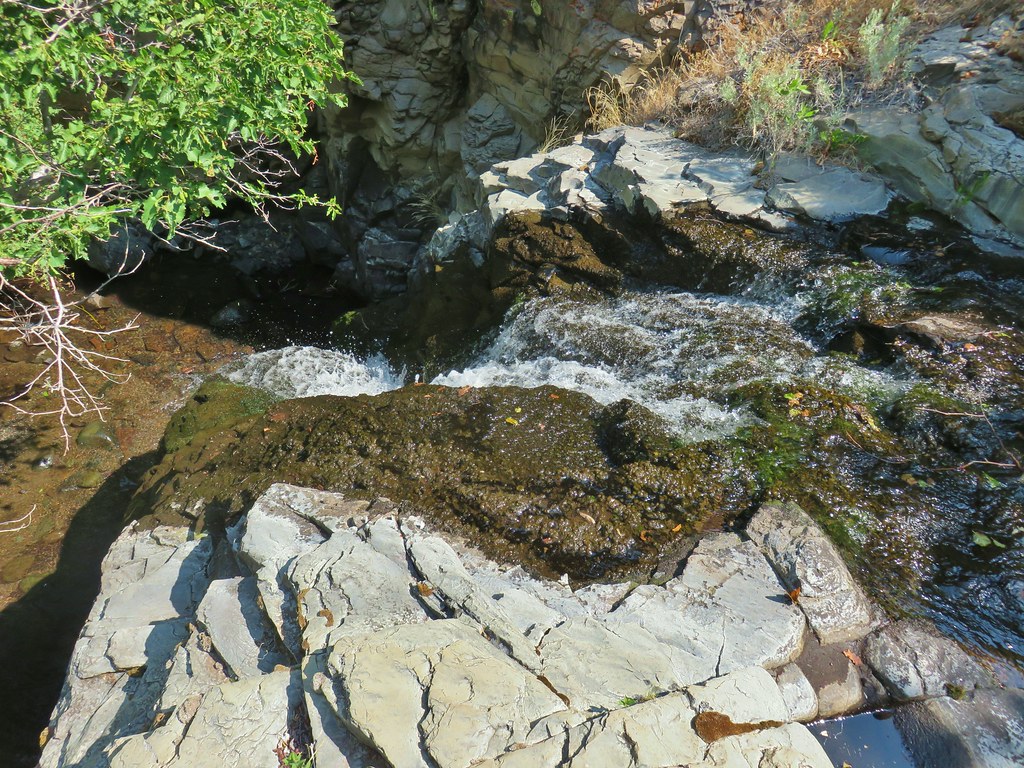
After completing the loop we continued our drive back toward Lakeview on Hart Mountain Road. We turned off once more at a small pointer for DeGarmo Canyon (4.5 miles after pavement resumed in this direction or 9.4 miles from Plush). Sullivan described the half mile dirt road as very rough and requiring a high clearance vehicle, otherwise he suggested parking along Hart Mountain Road and walking to the trailhead. Typically we heed these warning from him but for some reason I decided to test the road with our Outback. It wasn’t pretty but we did make it to the parking area and I vowed not to make that mistake again.
IMG_1531

Sullivan lists three possible hikes with with some additional optional side trips. He has a 1.4 mile out and back to a 35′ waterfall, a 2.6 mile loop, and a 9.4 mile hike to DeGarmo Notch. If you make it to DeGarmo Notch it’s only 2 more miles (4 round trip) to Warner Peak. When our vacation started my plan had been the 9.4 mile hike with the optional trek up Warner Peak. As the week progressed we wound up hiking to Warner Peak the day before from Barnhardi Basin (post) so we didn’t need to do that anymore. We had toyed with the idea of still hiking up to DeGarmo Notch but we had seen that feature the day before as well and we were hot, tired, and a little sick of bushwacking which the 9.4 mile hike had some more of. That left us with the 1.4 mile out and back or 2.6 mile loop, both of which visited the waterfall.

Before we decided which option we would be doing we needed to get across DeGarmo Creek. Sullivan had warned of a dangerous crossing just above a 10′ waterfall and recommended following a rock ledge 50′ upstream to an easier crossing. Given the time of year the creek wasn’t flowing very strongly and vegetation was crowding the rock ledge so we opted to cross above the 10′ waterfall despite the warning.
IMG_1533It’s not visible in this photo but there were dry rocks close enough on the far side to simply step over the water onto. The wet rock would have been very slippery and certainly dangerous.

We followed a path upstream and found the location of Sullivan’s recommended crossing.
IMG_1539

A steep trail led up around the vegetation along the creek into a wider canyon that had some very interesting rock formations. It was also extremely warm as it was directly in the sun and there was no breeze.
IMG_1557

IMG_1554

IMG_1559

IMG_1561

We had our eyes out for snakes but only saw a couple of lizards.
IMG_1566

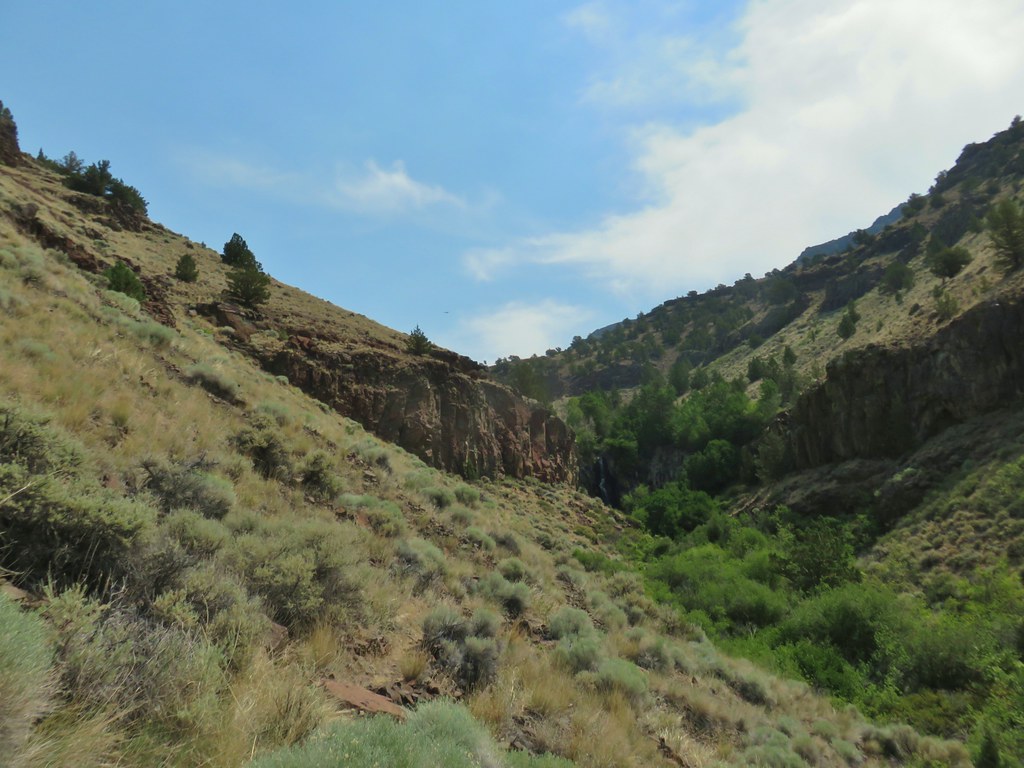
The 35′ waterfall was just .7 miles up the canyon and it came into view well before we arrived at it.
IMG_1572

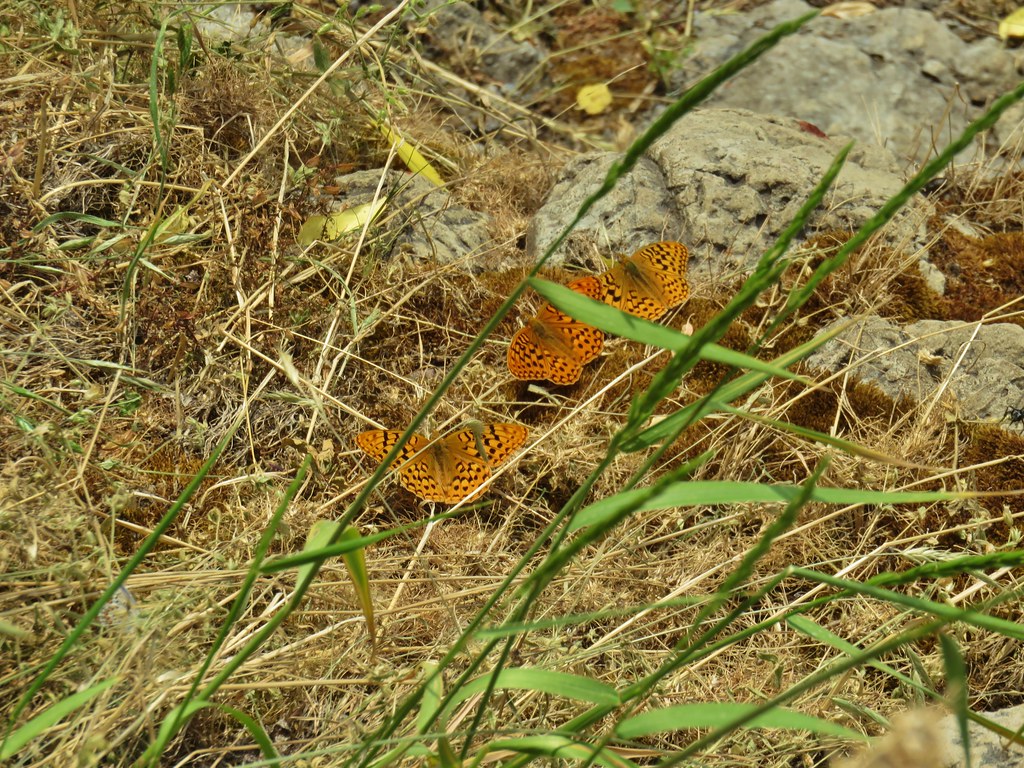
The temperature at the falls was much more pleasant and was a popular spot with the local butterflies.
IMG_1576

IMG_1579

IMG_1581

IMG_1597

IMG_1598

20200722_112717

We took a relaxing break at the falls surrounded by the butterflies. When it was time to continue our hike we both agreed that neither one of us was up for what it would take to do any of the options other than the 1.4 mile out and back. In order to do any of the longer hikes, even the 2.6 mile loop, we would have needed to follow a steep scramble route 200′ before the falls up around some cliffs. We had both spied the route on our way to the falls and both thought “not today”.
IMG_1619The scramble route is at the base of the cliff to the right.
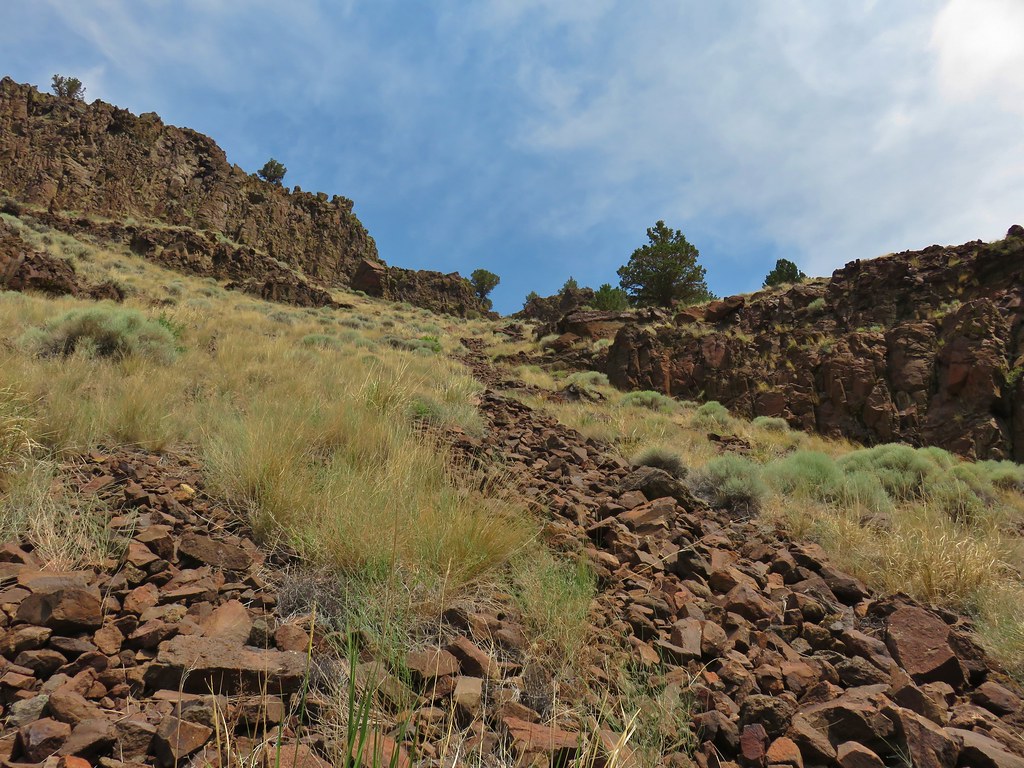
IMG_1620Looking up from the trail at where the scramble route was heading.
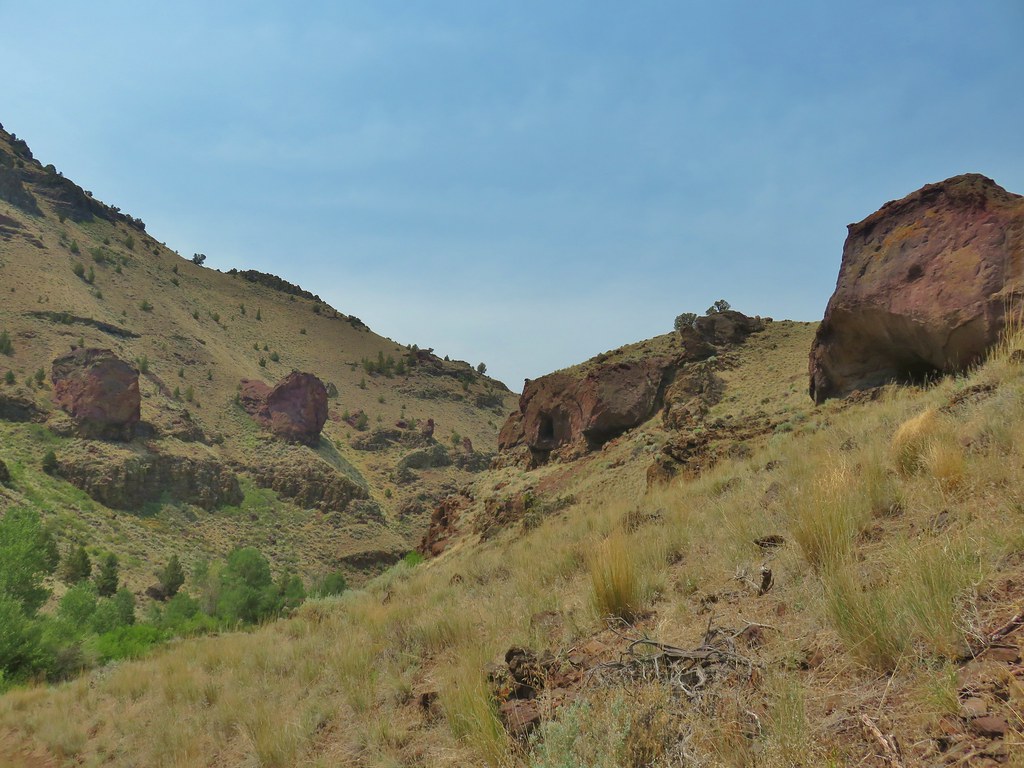
We were happy with our choice and ready to get out of the heat so we retraced our steps back to the 10′ water fall.
IMG_1623

IMG_1627

The smaller waterfall had been invaded by butterflies too.
IMG_1629

IMG_1632

After carefully driving the wretched half mile to Hart Mountain Road we headed back to Lakeview to treat ourselves to burgers and milkshakes from the Burger Queen drive thru. It was our shortest day so far of the vaction at 8.7 miles (6.8 at Petroglyph Lake, 0.4 at the overlook, and 1.5 at DeGarmo Canyon) but that was plenty. Thursday’s hike had the potential of being the longest of our trip as we were set to visit one of the six remaining wilderness areas in Oregon that we had yet to hike in, the Gearhart Mountain Wilderness. Happy Trails!

Flickr: Petroglyph Lake, Warner Valley Overlook, and DeGarmo Canyon

Categories
Coastal Range Hiking Oregon Trip report

Gales Creek Trail

A day off of work for New Years and a clear weather forecast = our first hike of 2019. Our trail of choice was the Gales Creek Trail in the Tillamook State Forest. We began our hike at the Gales Creek Trailhead, the same trailhead that we used in 2015 for a hike to nearby University Falls (post).

We began this hike as we had on our previous visit by following the Gales Creek Trail west from the parking area.
IMG_5410

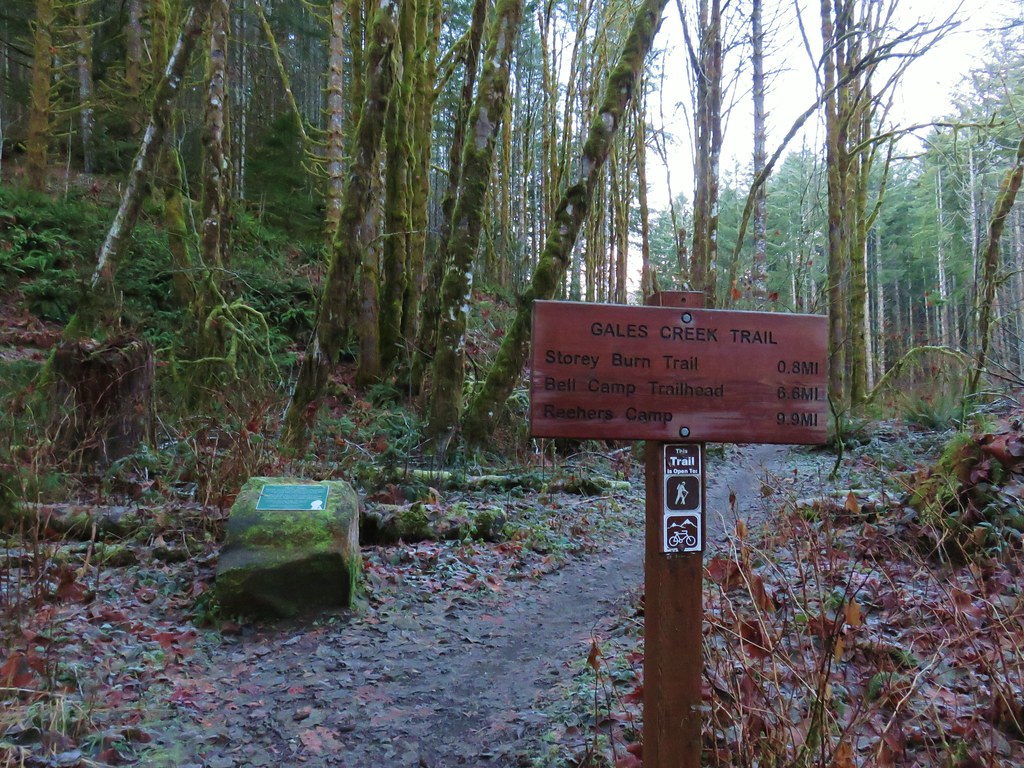
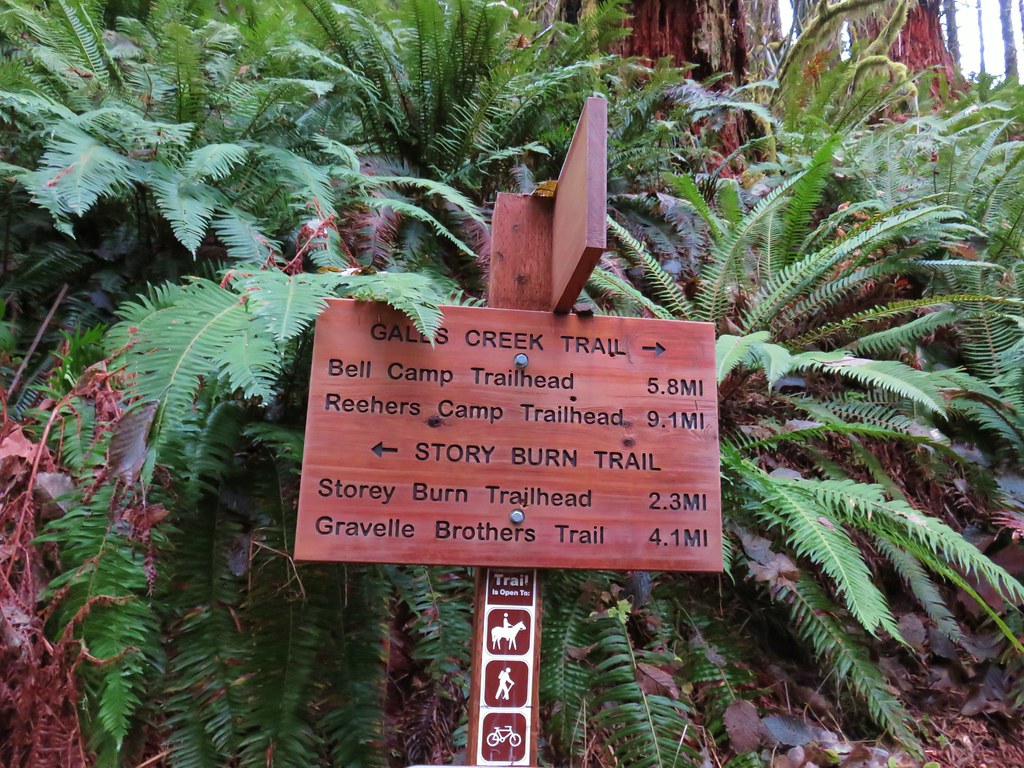
The first .8 miles to the Storey Burn Trail was a repeat of 2015 as we crossed Low Divide Creek on a footbridge and arrived at the trail junction.
IMG_5415

IMG_5417

Unlike last time when we turned left onto the Storey Burn Trail this time we turned right sticking to the Gales Creek Trail which paralleled Gales Creek.
IMG_5421

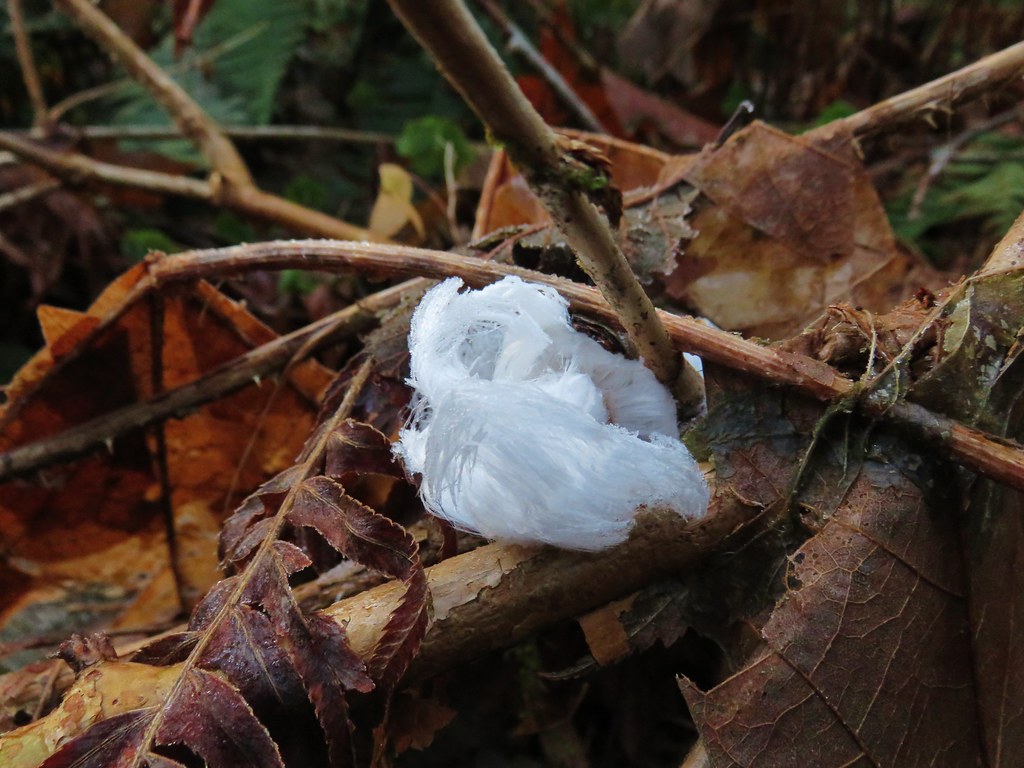
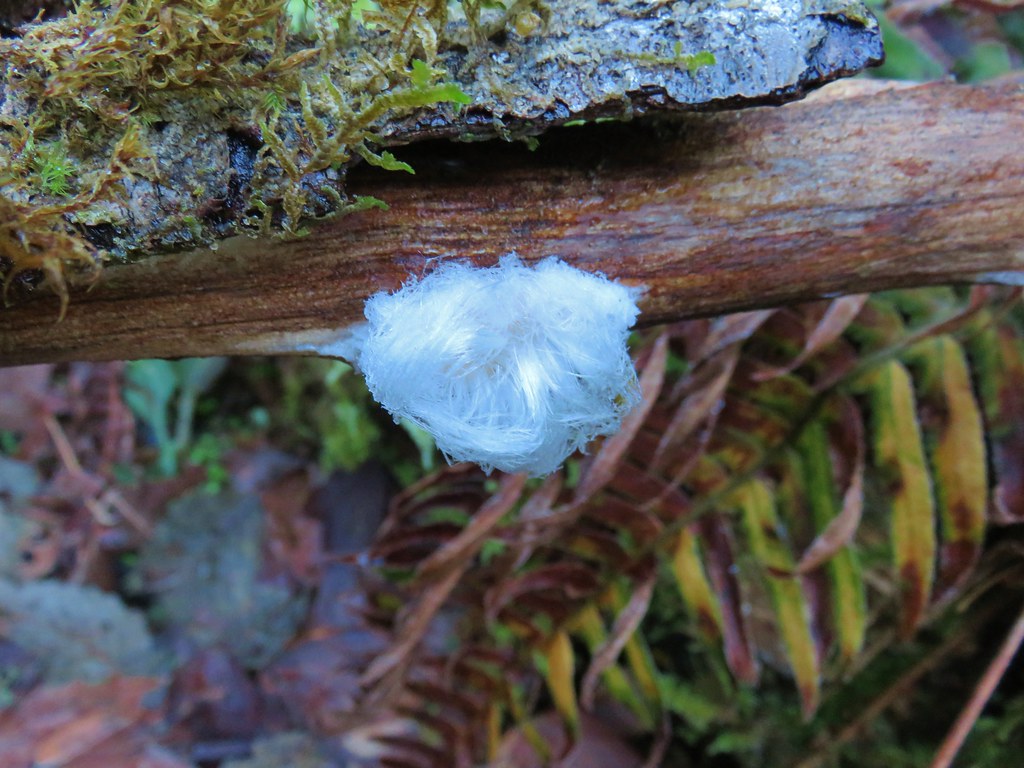
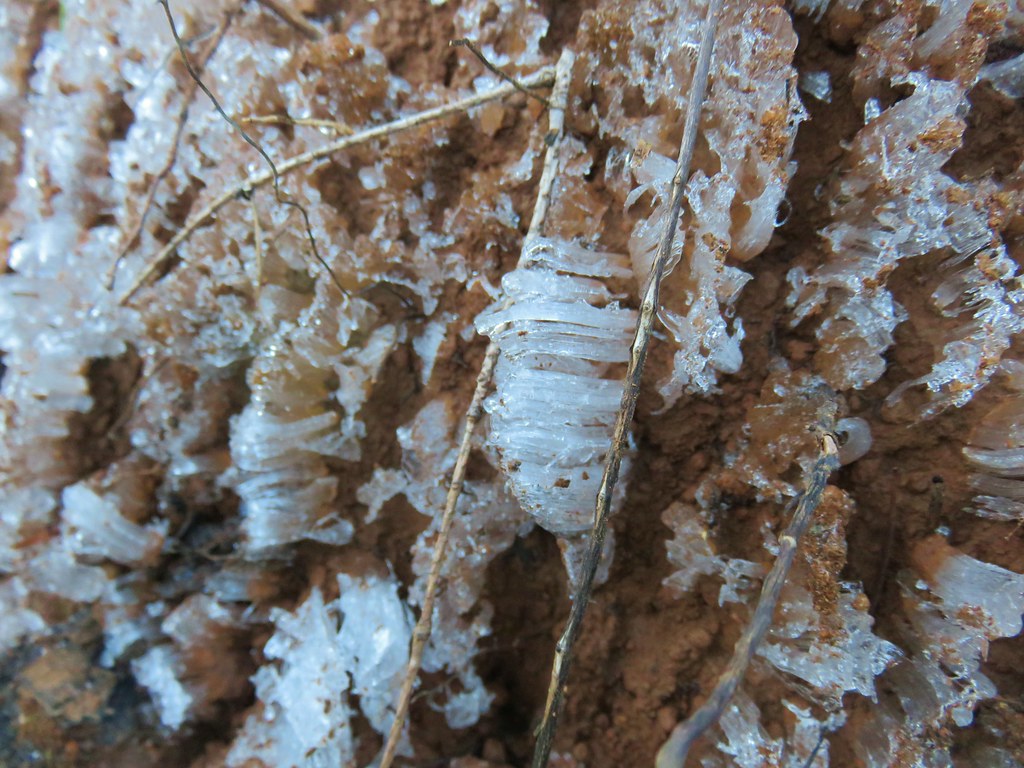
It was a chilly morning, about 28 degrees, and there was a fair amount of frost on the ground and plants. In addition to the typical frost we see on a chilly morning, we had been noticing white clumps here and there. The clumps looked like they could be garbage at first glance but it wasn’t. Other thoughts were fur but we couldn’t think of any animals in the area with white fur or something from a tree but it wasn’t the right time of year for things like cottonwood. Our next guess was a little closer with a fungus but upon closer inspection we determined it was some sort of fine ice/frost.
IMG_5423

IMG_5452

It was very interesting. The scarcity of the clumps told us that there must be some set of conditions to create these frost clumps and spent much of the hike marveling at the designs. Thanks to the help of some fellow hikers over at Oregonhikers.org we later learned that this type of frost is the result of a fungus inside certain rotting wood that leaves water and carbon dioxide behind as the wood decays. The CO2 forces the water out of the wood through tiny holes and when the temperature is just a bit below freezing creates the frost “hairs” . Here is a post describing the phenomena in more detail and a article on BBC – Earth with a time lapse video of the frost forming.

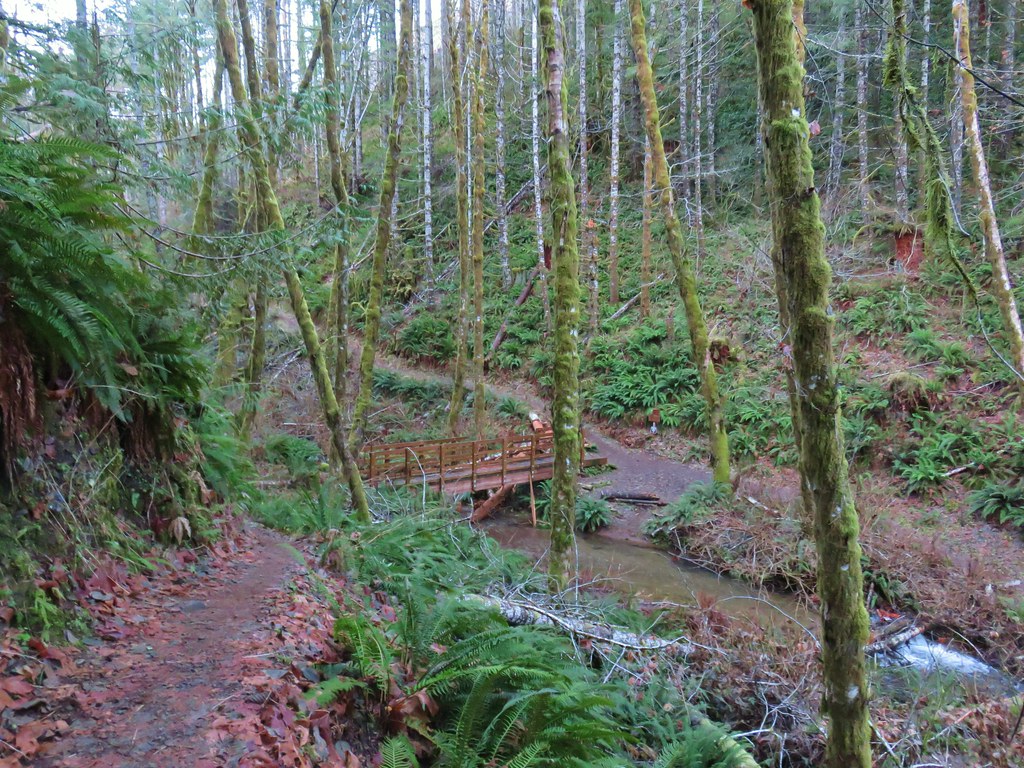
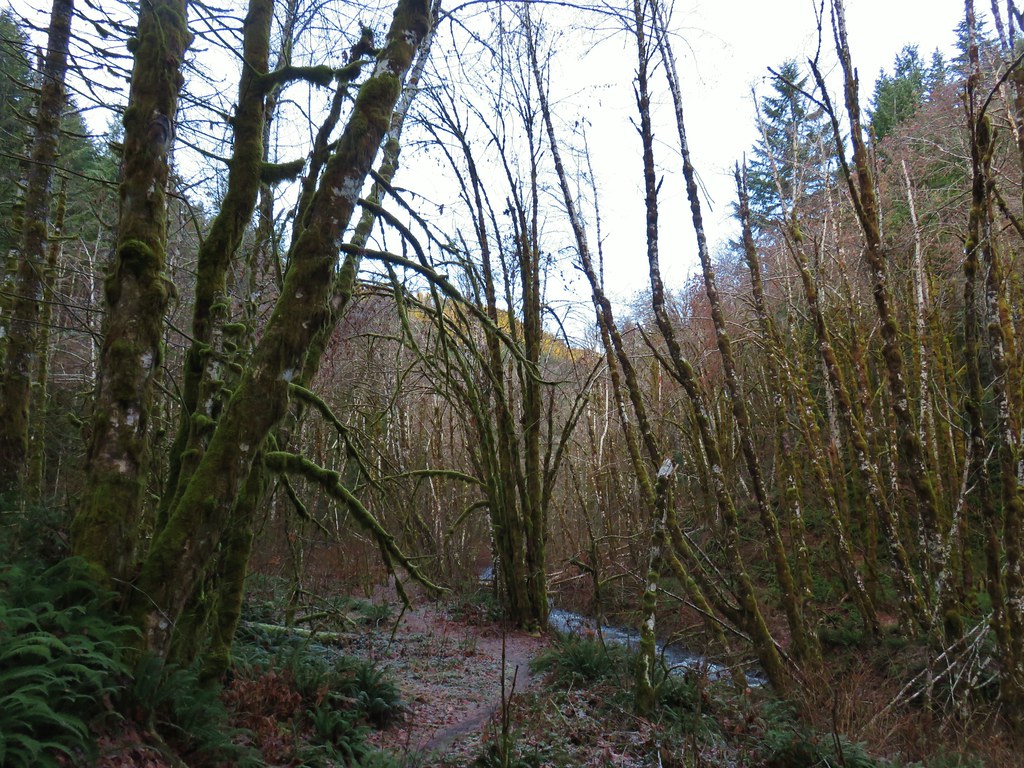
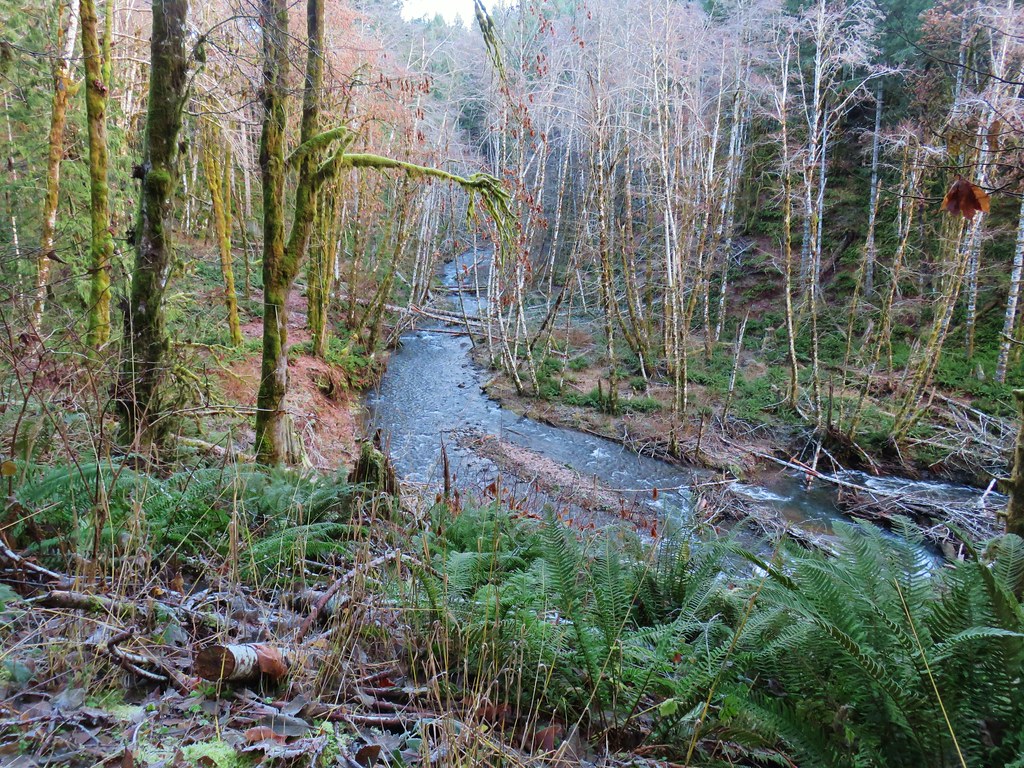
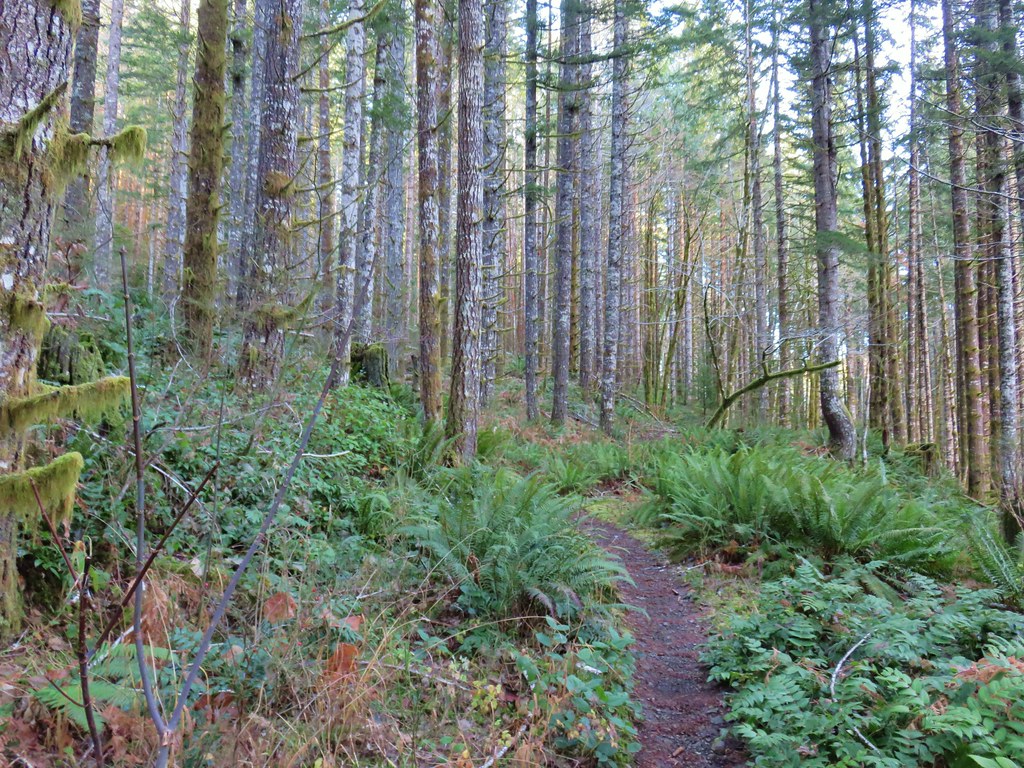
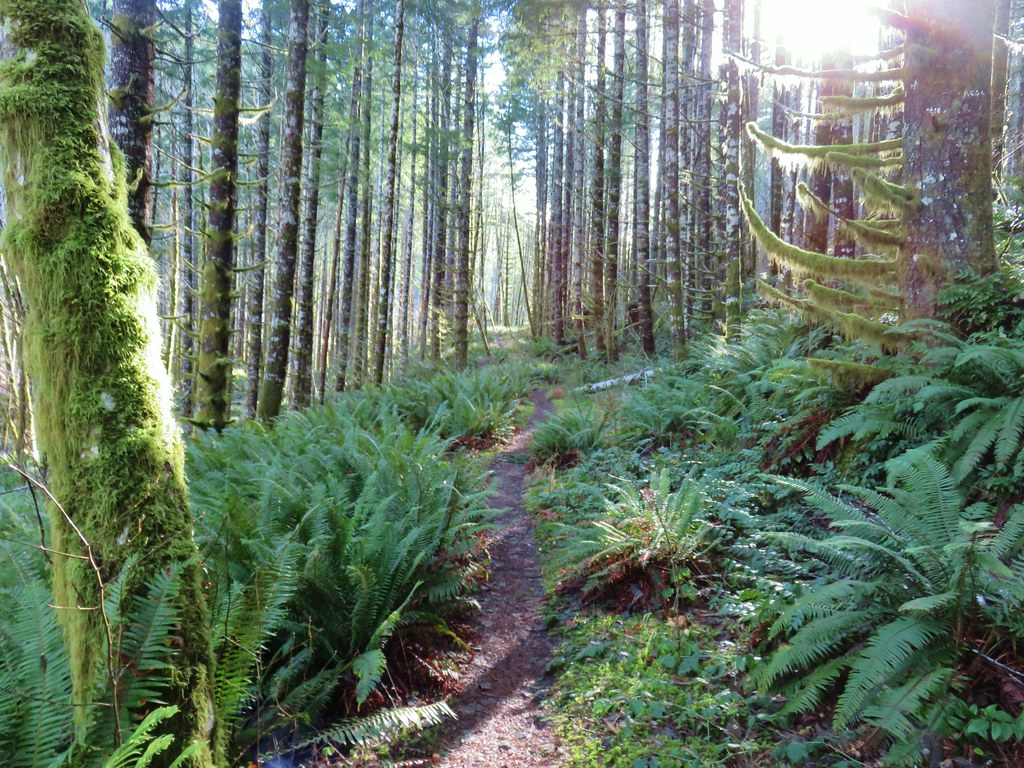
The Gales Creek Trail stuck fairly close to the creek, sometimes rising a bit above it as it passed through the forest and crossed several streams that would likely have been dry in the summer months.
IMG_5425

IMG_5427

IMG_5432

IMG_5433

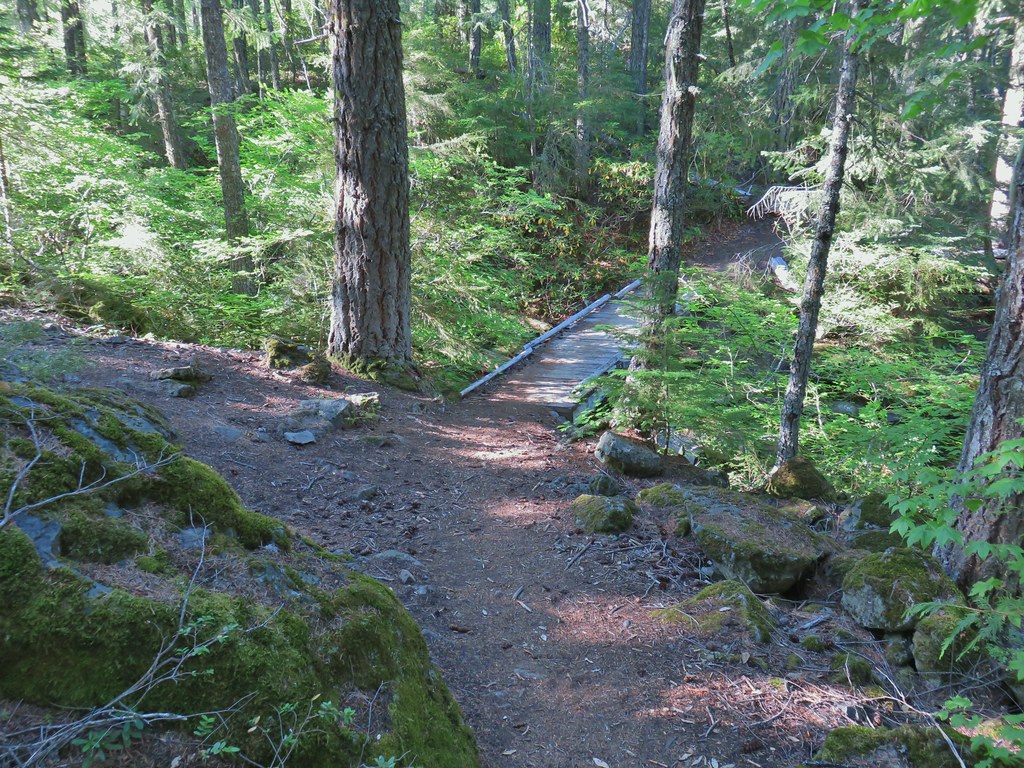
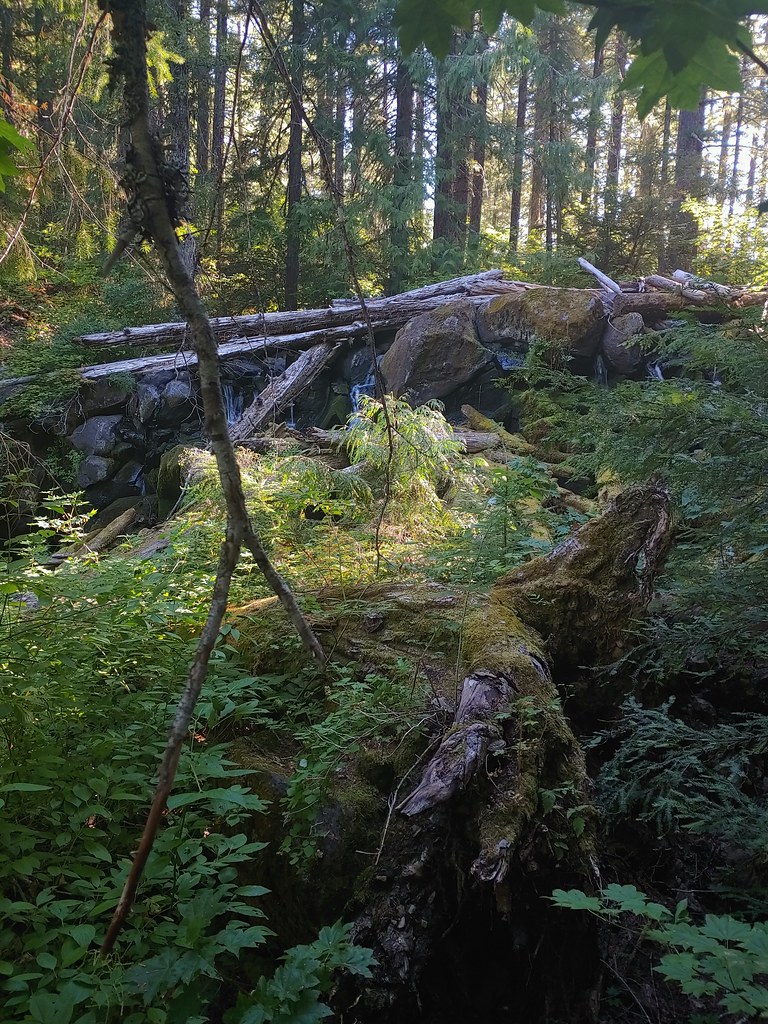
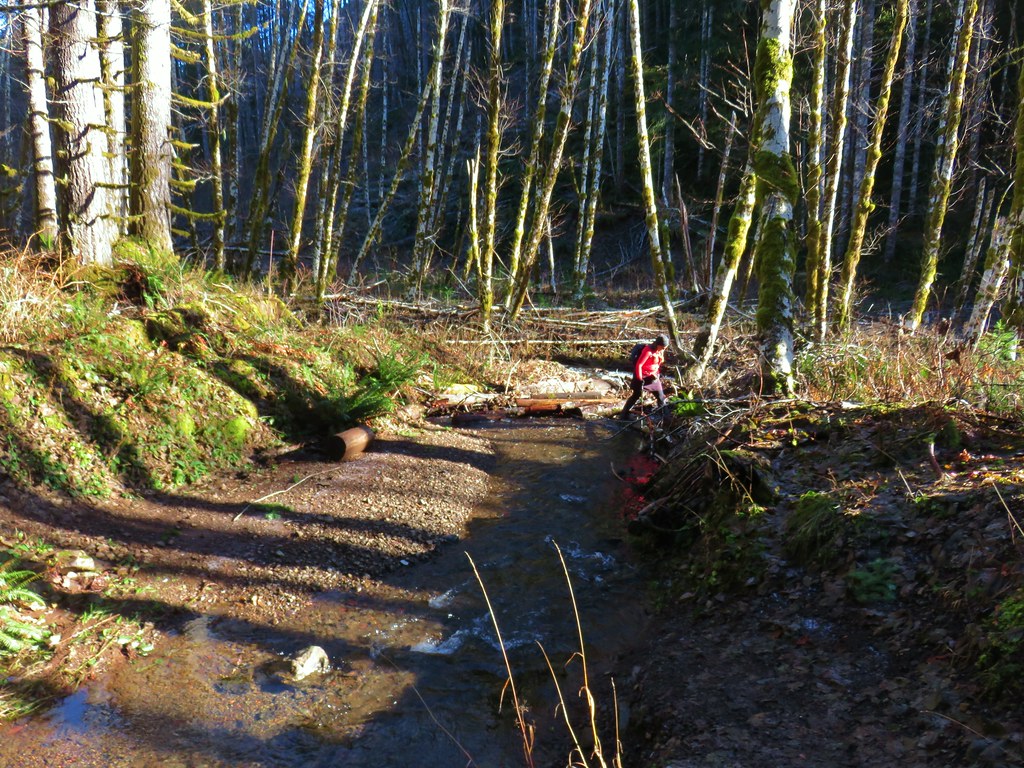
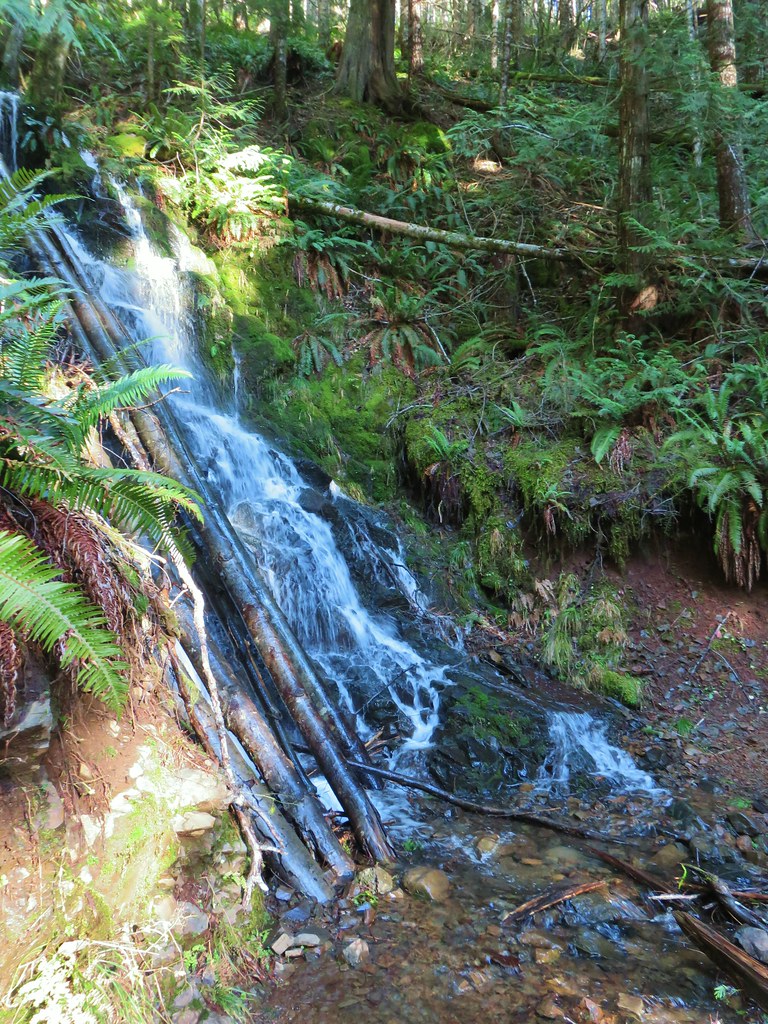
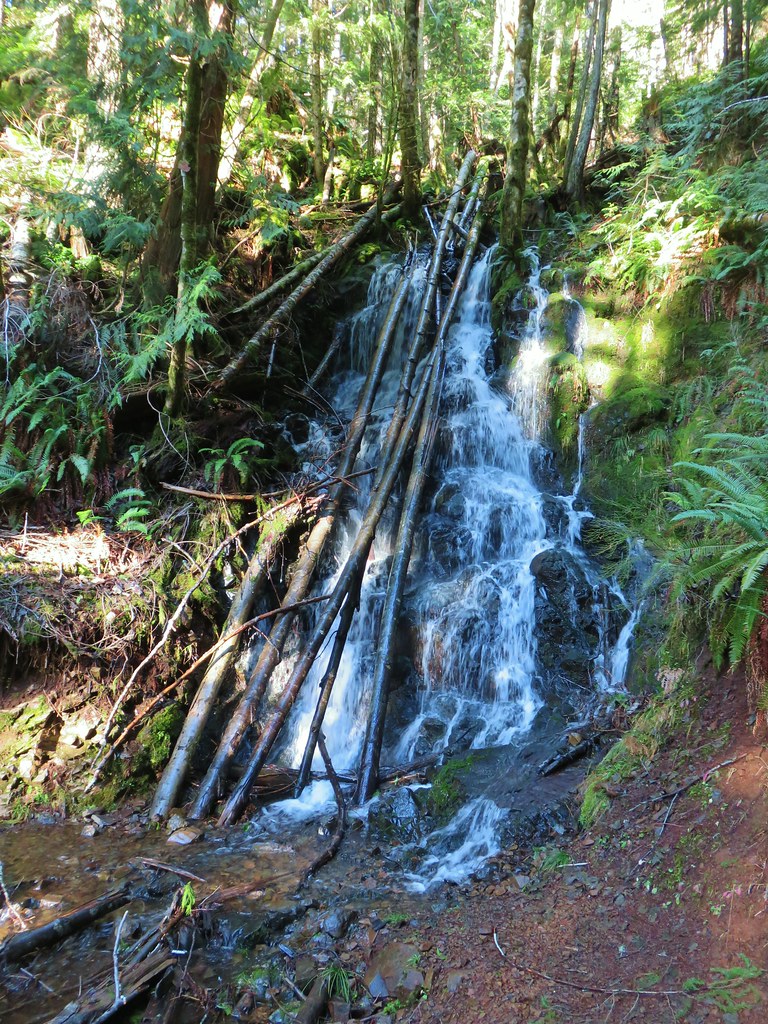
A mile and a half from the Storey Burn Trail junction we did come to a dry creek bed, but a flash of water back in the trees looked like it might be a decent waterfall. The terrain looked like it might make for a reasonable off-trail jaunt and the fact that there was no water down at the trail but there was some further up made us curious so we decided to head uphill. After about a quarter mile climb over and around downed trees we found ourselves looking at a nice 20′ or so waterfall. The terrain narrowed enough that we couldn’t get right up to the falls but it was still a nice view (although not the best lighting for photos).
IMG_5437

IMG_5448

IMG_5450The route we came up.

After admiring the falls we returned to the trail and continued west toward the Bell Camp Trailhead.
IMG_5453A short section of railroad grade.

More creek crossings followed, some trickier than others, but we managed to keep our feet fairly dry using rocks or logs.
IMG_5454

A total of 2.25 miles from the junction we arrived at stand of alders as the site of good sized slide that occurred in 2007.
IMG_5457

IMG_5459

IMG_5461

Just over a mile from the alder stand we came to the trickiest crossing of the day. There appeared to be two options across, a lone rock barely sticking out of the water and a pile of slick looking logs. Due to the direction we were heading the rock was too far to reach so we opted for the logs. Some carefully placed steps got us across dry.
IMG_5471The logs we came across.

IMG_5472The rock after having crossed.

On the way back I opted to attempt a jump from the rock. It worked but after watching Heather recross fairly easily on the logs my 46 year old body thought that would have been a better choice.
IMG_5508Heather finishing her crossing on the way back.
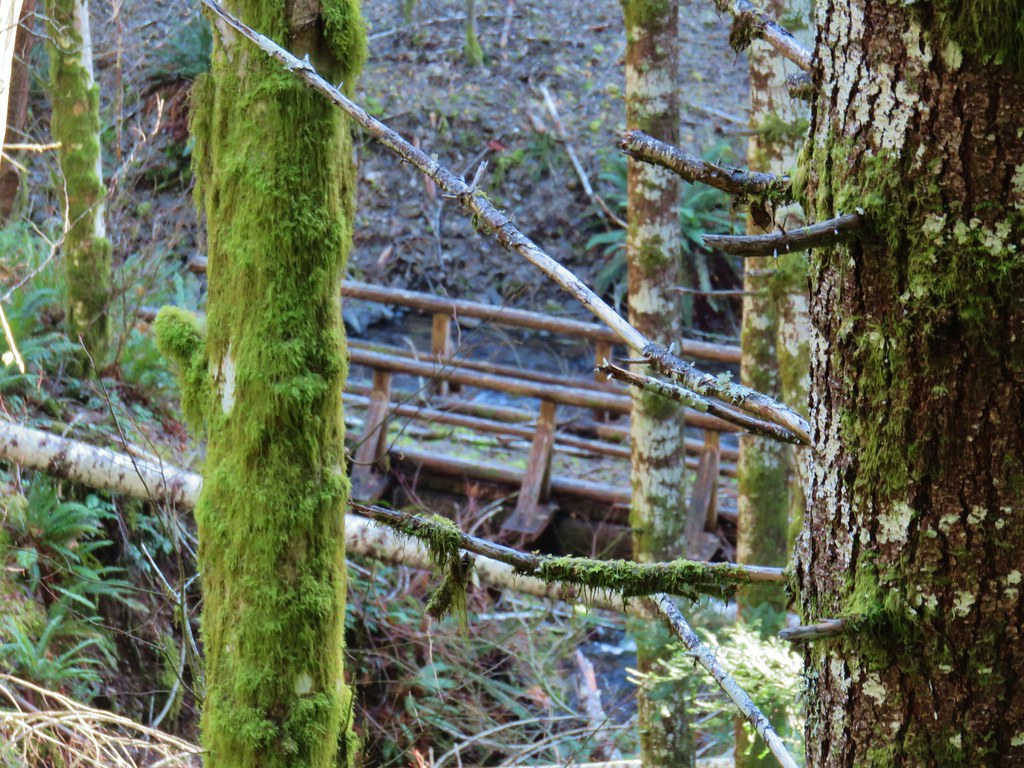
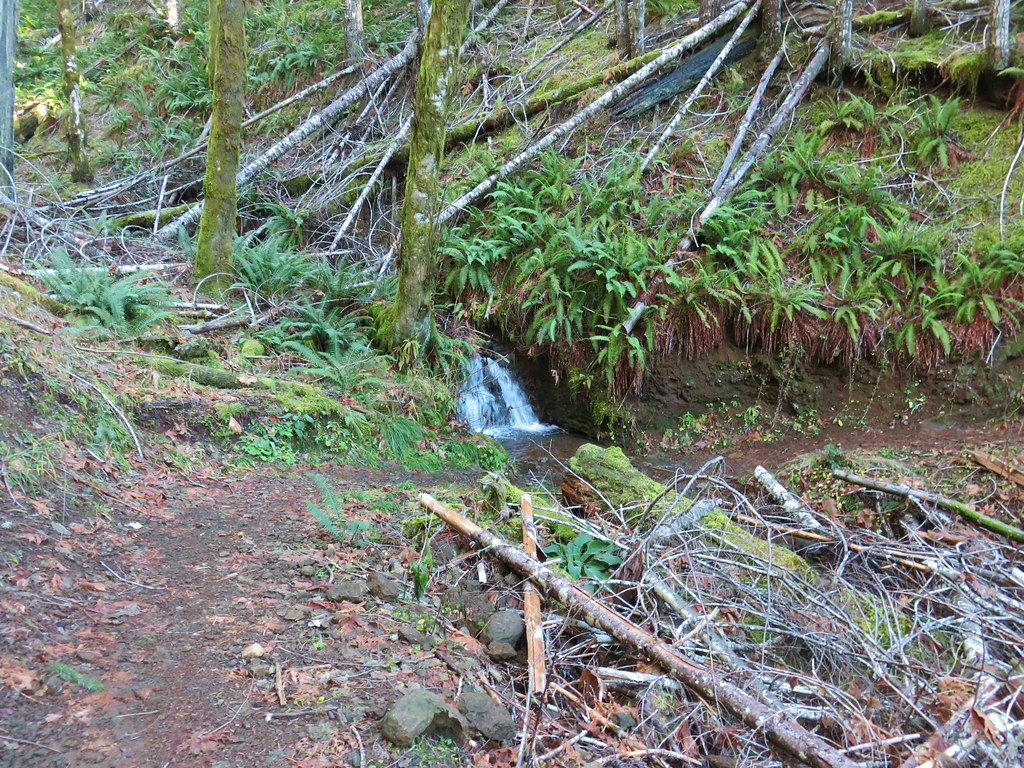
Beyond this crossing the trail turned inland away from Gales Creek a bit. Slides apparently forced the trail to be rerouted at some point because a footbridge could still be seen through the trees closer to Gales Creek.
IMG_5507

We passed a very small cascade along this section and then approximately 1.75 miles from the tricky creek crossing arrived at our turn around point, a 25′ waterfall right along the trail.
IMG_5473

IMG_5483

IMG_5486

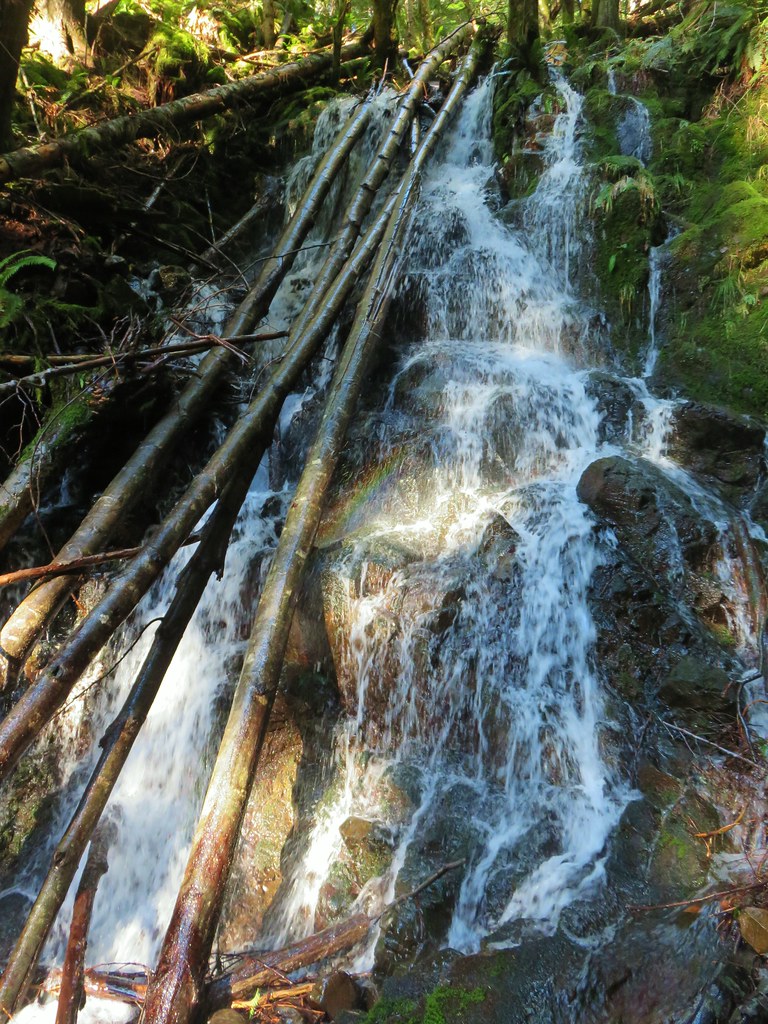
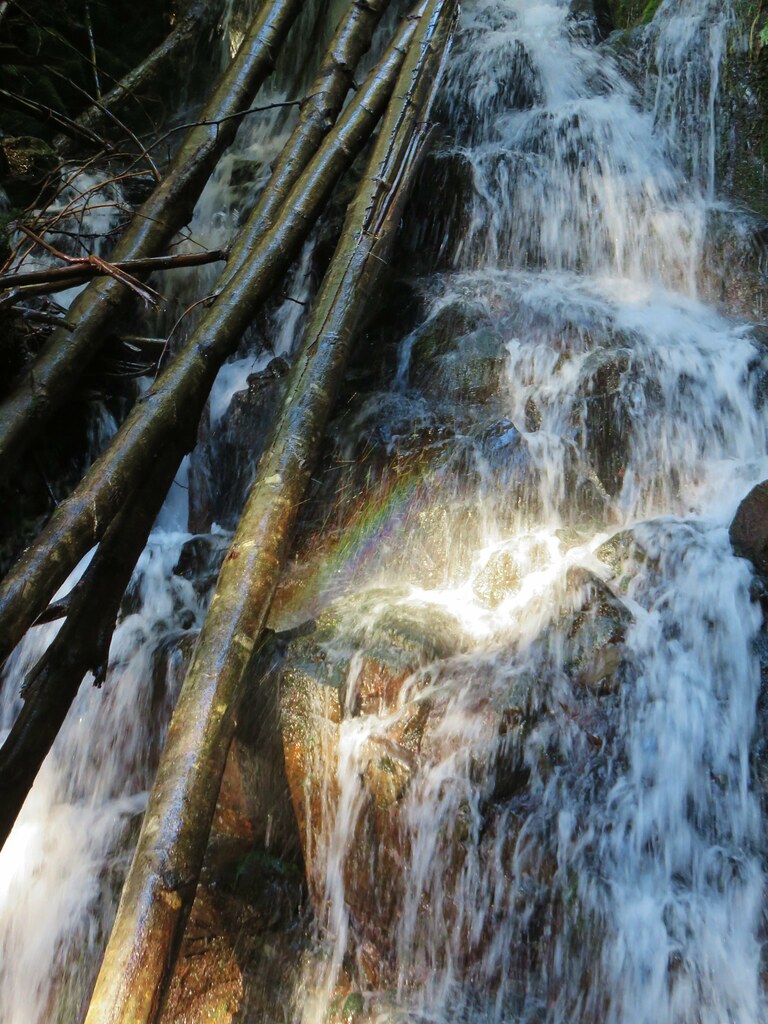
We took a break at the falls and as we studied the falls the light moved enough to create a small rainbow.
IMG_5499

IMG_5500

We returned the way we’d come. The sun was shining but it was still chilly as we made our way back.
IMG_5511

IMG_5516

IMG_5464

We didn’t see much wildlife, just a handful of birds, and being the middle of winter no wildflowers but there were a few mushrooms to enjoy.
IMG_5467

IMG_5469

IMG_5523

With the half mile side trip the hike wound up being just under 12.5 miles with approximately 1500′ of elevation gain. It was a nice start to a new year of hiking. Happy Trails!

Flickr: Gales Creek Trail

Categories
Bull of the Woods/Opal Creek Hiking Old Cascades Oregon Trip report

Elk Lake Creek – Bull of the Woods Wilderness

**Note a portion of this hike burned in the 2021 Bull Complex.**

While we continue to work on completing all of the featured hikes in William L. Sullivan’s guidebooks we occasionally take a break from that pursuit and take a hike recommended from another source. Our recent hike along the Elk Lake Creek Trail was one such outing.

Using Matt Reeder’s “101 Hikes in the Majestic Mount Jefferson Region” we drove to the northern end of the Elk Lake Creek Trail.
Elk Lake Creek Trailhead

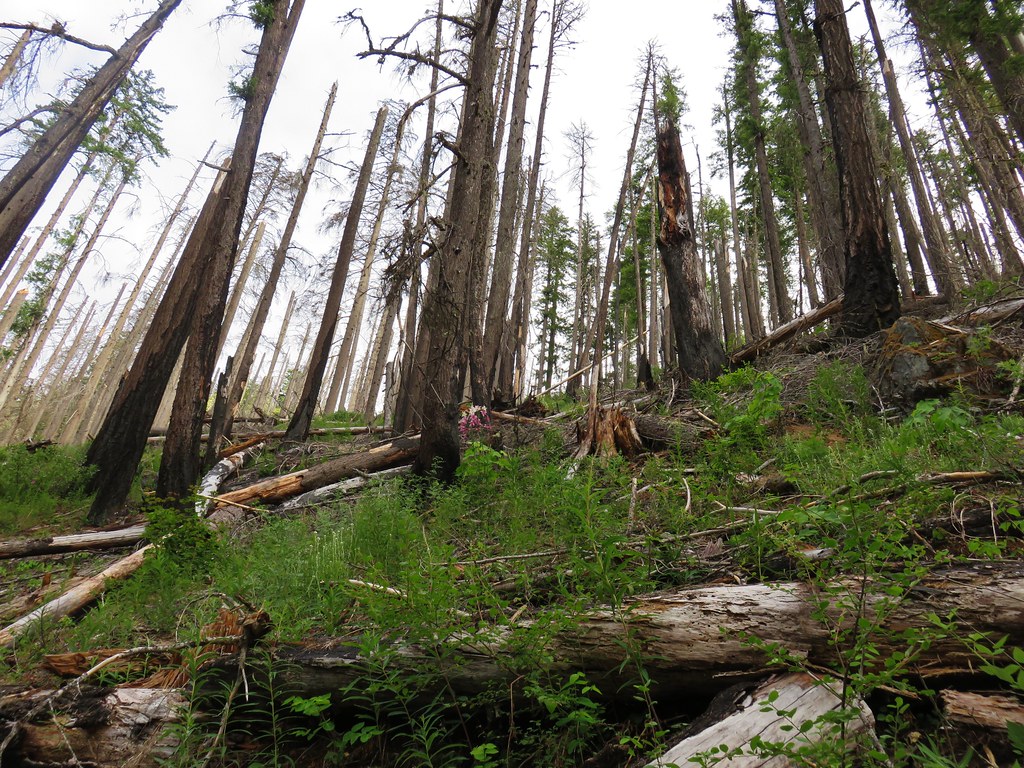
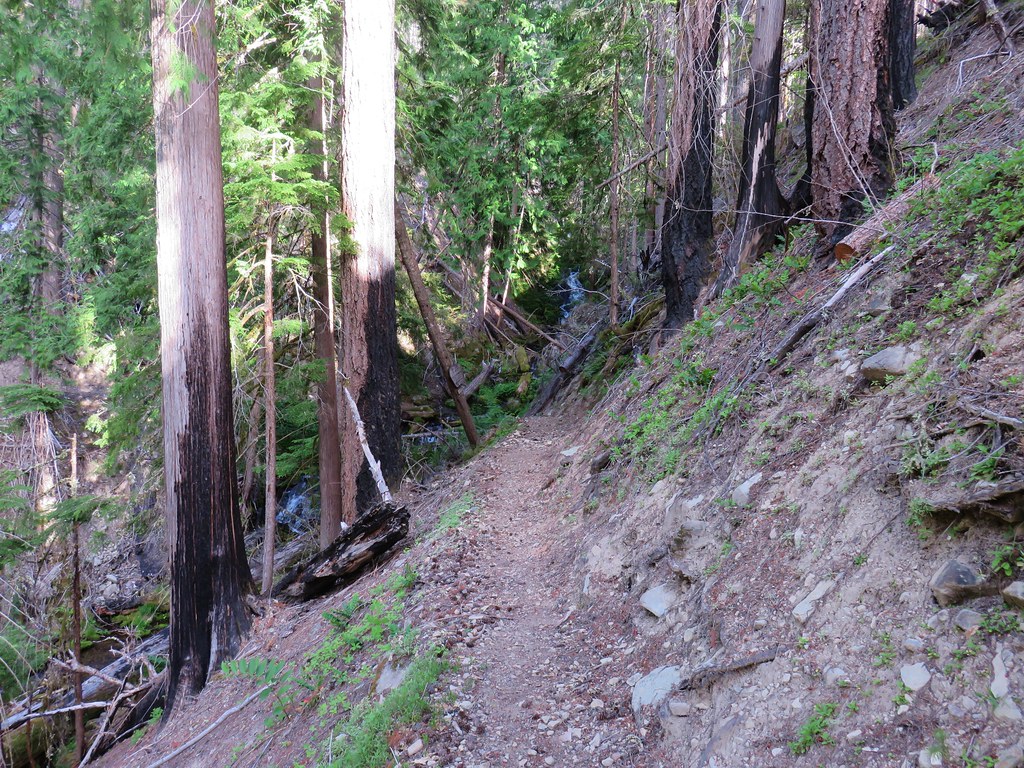
After a short forested section the trail traversed a burnt hillside above Elk Lake Creek.
Elk Lake Creek Trail

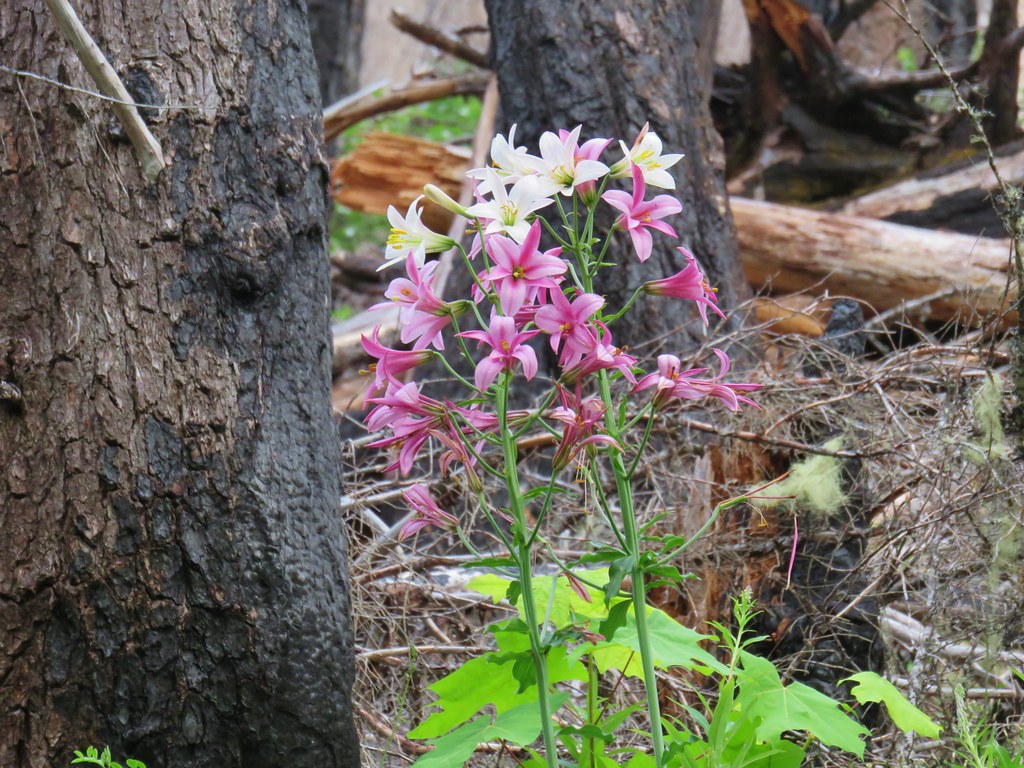
Washington Lilies above the Elk Lake Creek Trail

Washington lilies

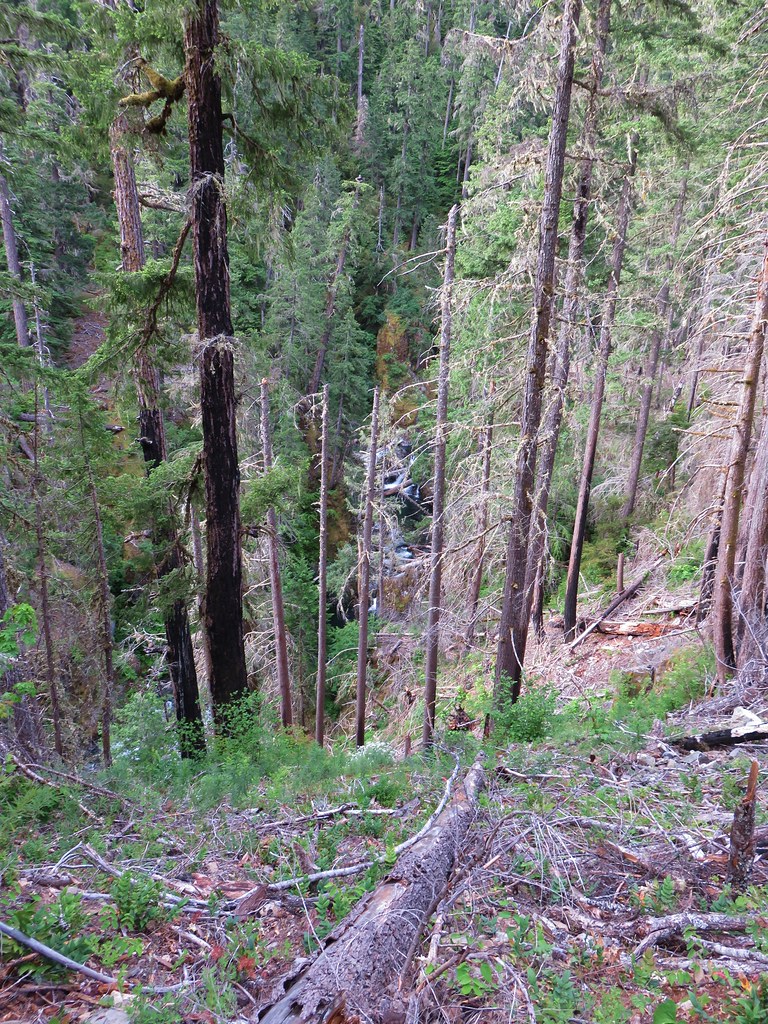
Elk Lake Creek

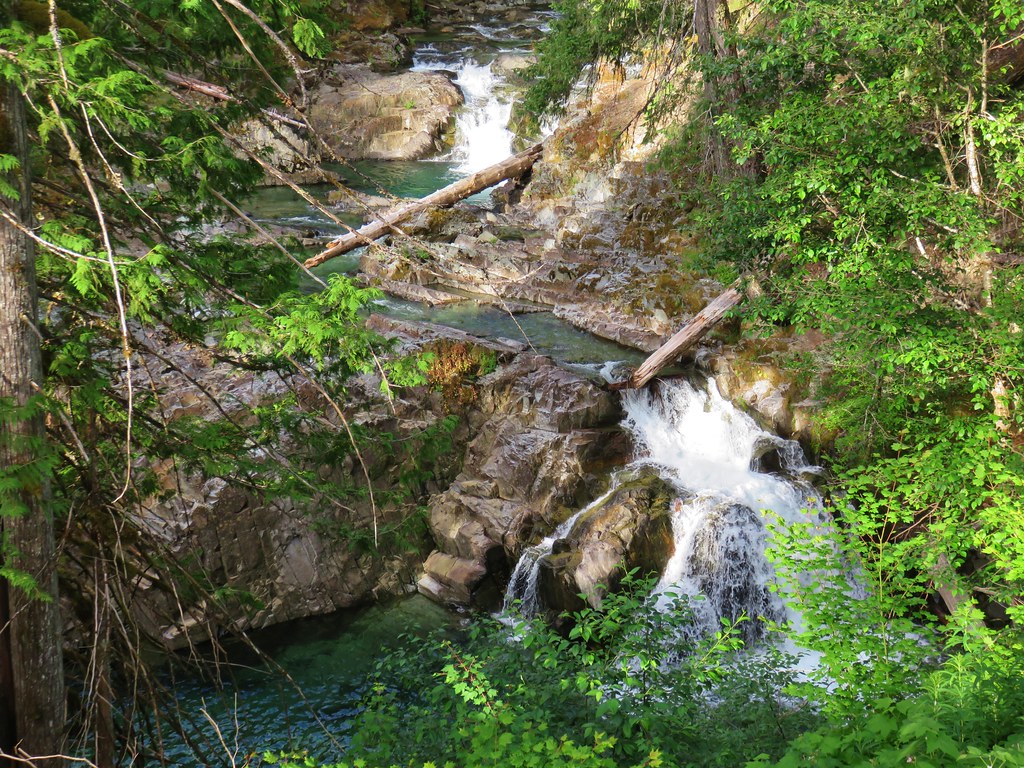
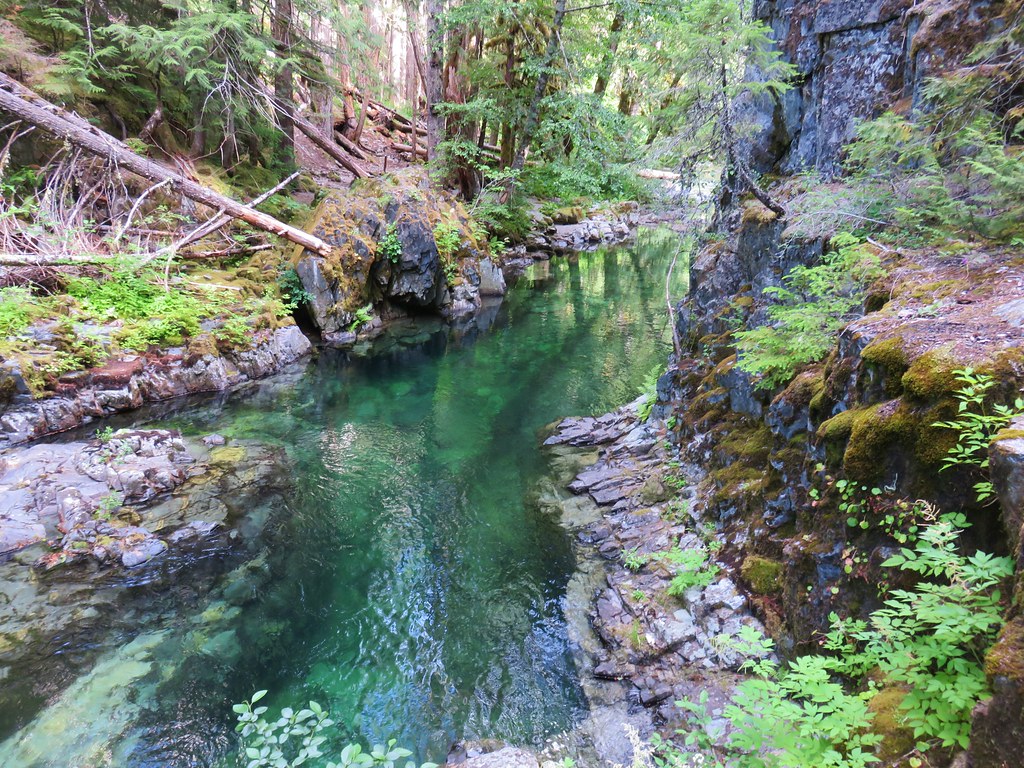
As the gap between the creek and trail narrowed we passed a pair of small waterfalls leading into green pools. A small amount of bushwhacking was required to get the best views.
Elk Lake Creek

Elk Lake Creek

The burned section ended just before entering the Bull of the Woods Wilderness near Pine Cone Creek at the 1.1 mile mark.
Elk Lake Creek Trail

Elk Lake Creek Trail entering the Bull of the Woods Wilderness

Pine Cone Creek

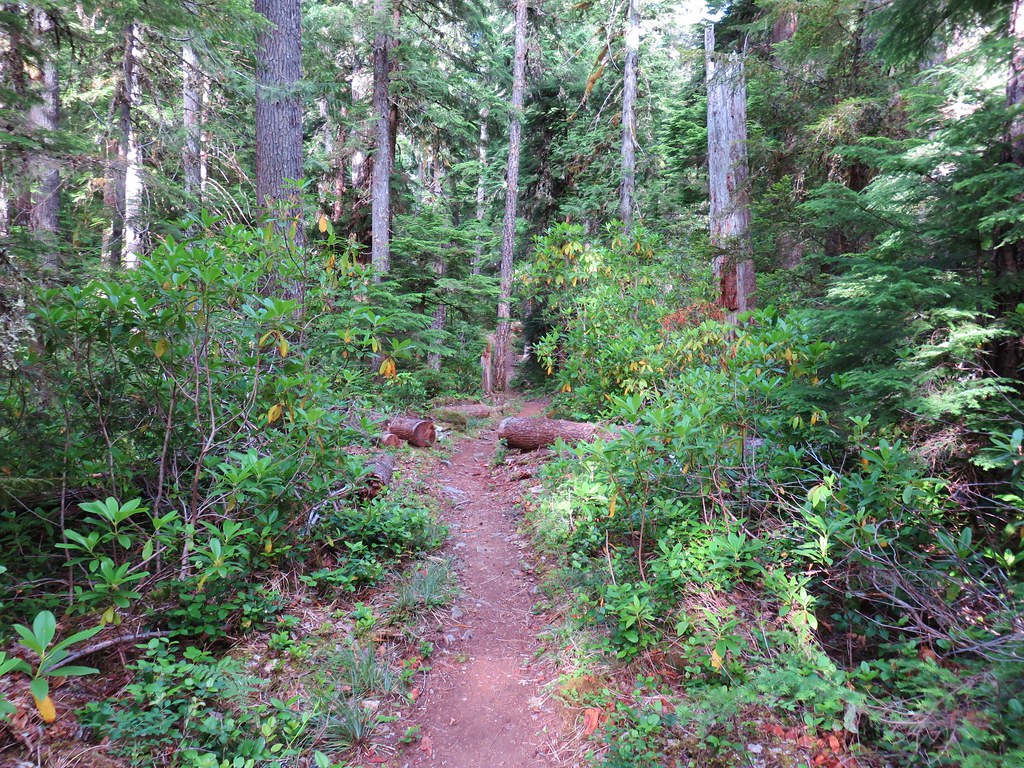
Beyond Pine Cone Creek the trail entered a fir forest with rhododendron and ripening huckleberries.
Elk Lake Creek Trail

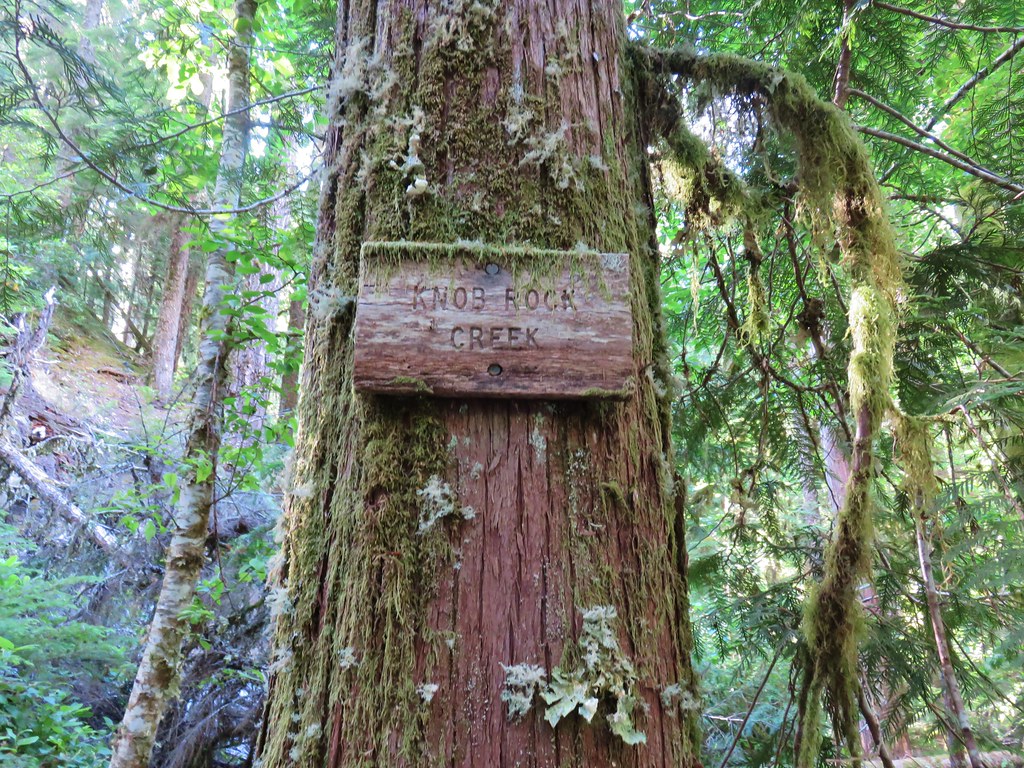
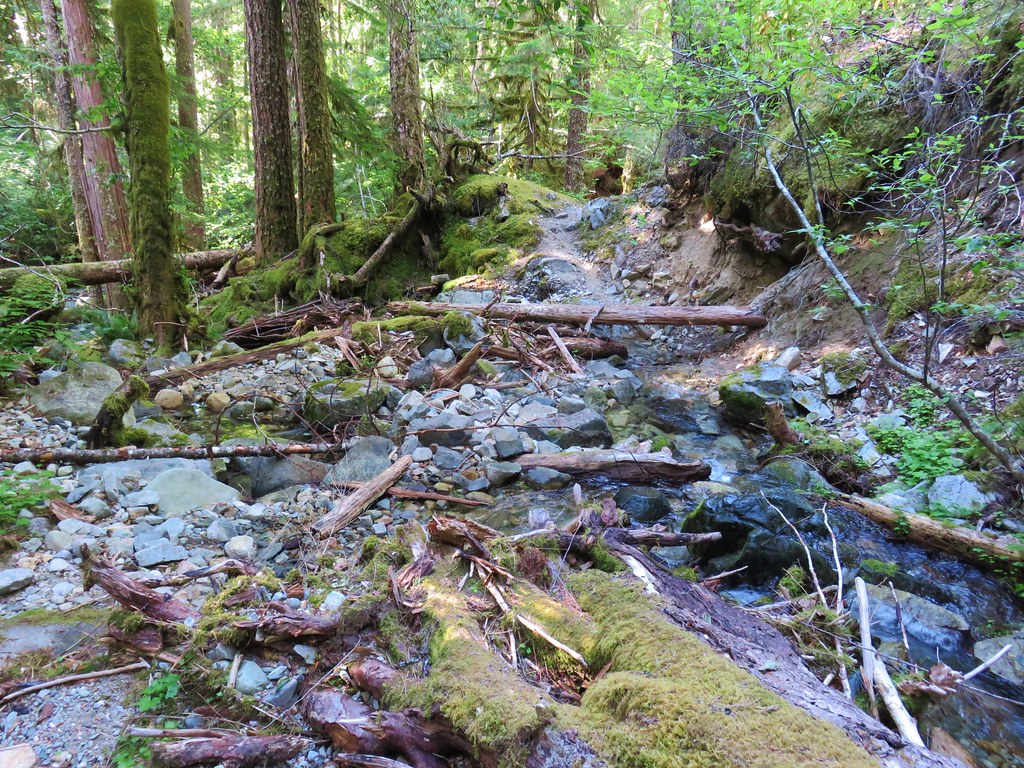
Just before the two mile mark we arrived at a crossing of Knob Rock Creek.
Sign for Knob Rock Creek

Knob Rock Creek

Knob Rock Creek

Just around a ridge end from Knob Rock Creek was Welcome Creek which had a couple of nice little waterfalls.
Welcome Creek

Waterfall on Welcome Creek

Waterfall on Welcome Creek

A short climb from Welcome Creek brought us to a junction with the Welcome Lakes Trail.
Welcome Lakes Trail

Welcome Lakes Trail sign

That trail climbs 2000′ in three miles through mostly burned forest to Welcome Lakes, a trip for another time. We stayed straight on the Elk Lake Creek Trail (Trail 559).
Elk Lake Creek Trail

From the junction the trail descended for two tenths of a mile to a ford of Elk Lake Creek. We had originally planned to do this hike last June but the high snow pack had left creek running high well into June making the fords of Elk Lake Creek dangerous. With a much lower snow pack this year the ford was only knee deep and not swift.
Elk Lake Creek ford

Elk Lake Creek

Elk Lake Creek ford

On the far side of the creek I nearly stepped on a rough skinned newt. He high tailed it off the trail and tried to disguise himself as a piece of bark.
Rough skinned newt

Rough skinned newt

For the next three quarters of a mile the trail passed through old-growth forest just a bit away from the creek but it was always within earshot and often eye sight.
Elk Lake Creek Trail

Elk Lake Creek

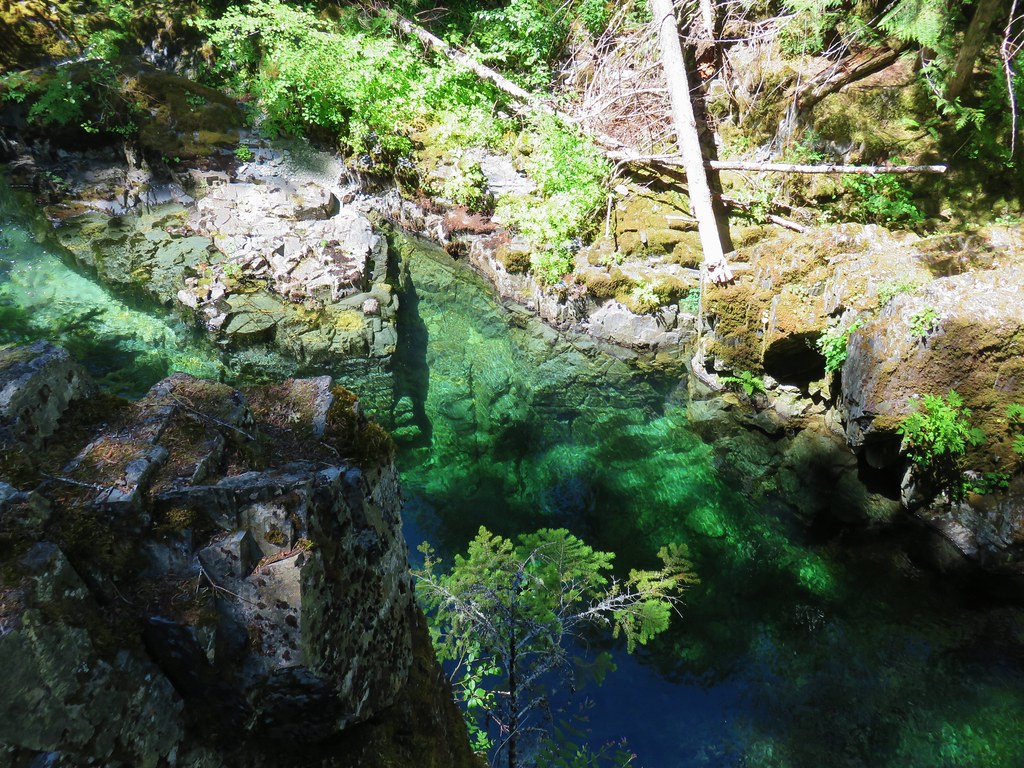
Just over 3.25 miles from the trailhead the trail arrived at a viewpoint above an emerald pool.
Elk Lake Creek

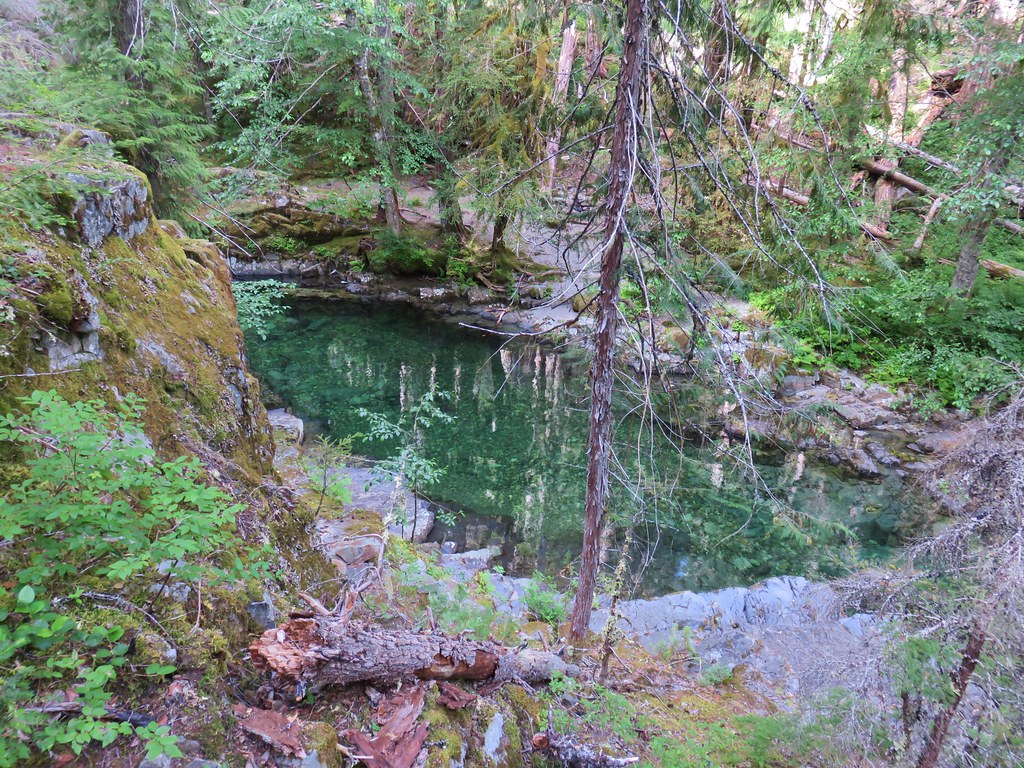
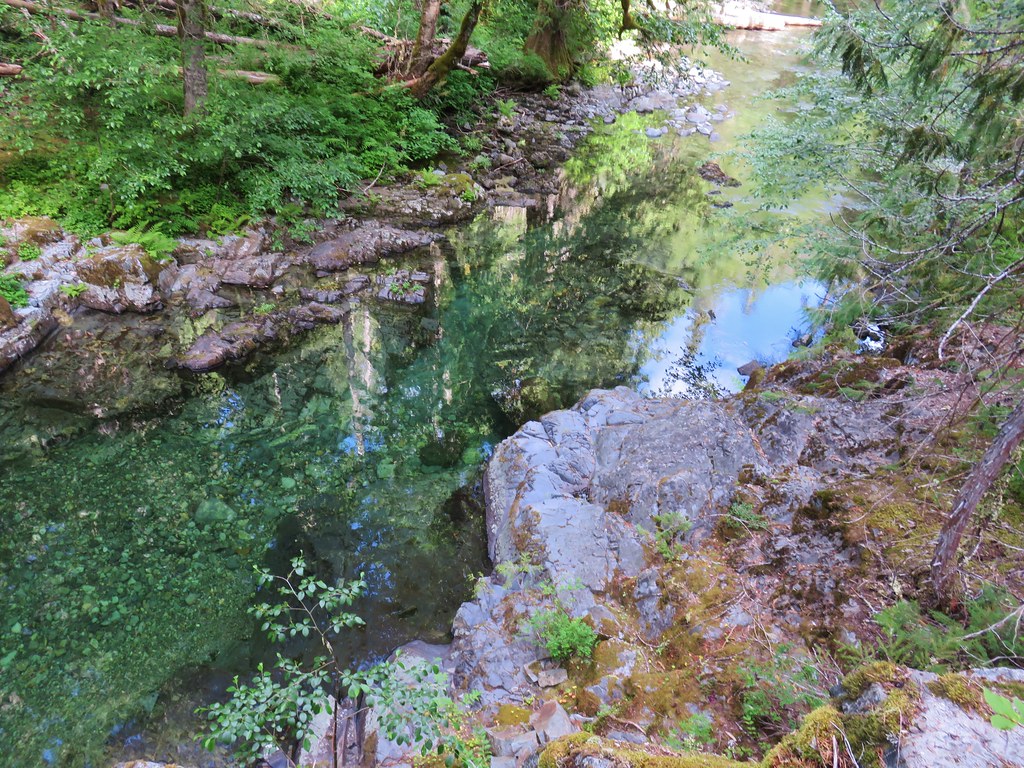
Emerald Pool

Emerald Pool on Elk Lake Creek

Emerald Pool

We spent a good deal of time marveling at the colors here on the creek before continuing on. Beyond the emerald pool a small section of trail had been claimed by a stream.
Elk Lake Creek Trail

We reached the second knee deep ford of Elk Lake Creek 0.4 miles from the pool.
Elk Lake Creek

On the far side, the trail became a bit brushy as it continued near the creek skirting a hillside of rocks.
Elk Lake Creek Trail

Hillside above the Elk Lake Creek Trail

As soon as we were past the rock fields the trail reentered the forest.
Elk Lake Creek Trail

We faced another ford near the 5 mile mark, this time of Battle Creek.
Battle Creek

Battle Creek

Just two tenths of a mile later we had reached our original goal – the junction with the Mother Lode Trail (Trail 558).
Elk Lake Creek Trail junction with the Mother Lode Trail

Mother Lode Trail

The Elk Lake Creek Trail continued from the junction and would have eventually brought us to Elk Lake after nearly another 4 miles but continuing from the junction meant climbing up a ridge. Instead of turning back here though we decided to hike a short distance up the Mother Lode Trail to visit Mother Lode Creek. This looked to involve much less climbing so off we went to yet another ford of Battle Creek.
Battle Creek

We soon entered forest burned in the 2010 View Lake Fire Complex and after a half mile on this trail came to a junction with the now abandoned Geronimo Trail.
Mother Lode Trail junction with the abandoned Geronimo Trail

What appeared to be a homemade sign marked that trail and its tread was still visible heading uphill into the burn.
Old Geronimo Trail

Mother Lode Creek was just a short distance away and we hiked down to it before turning back.
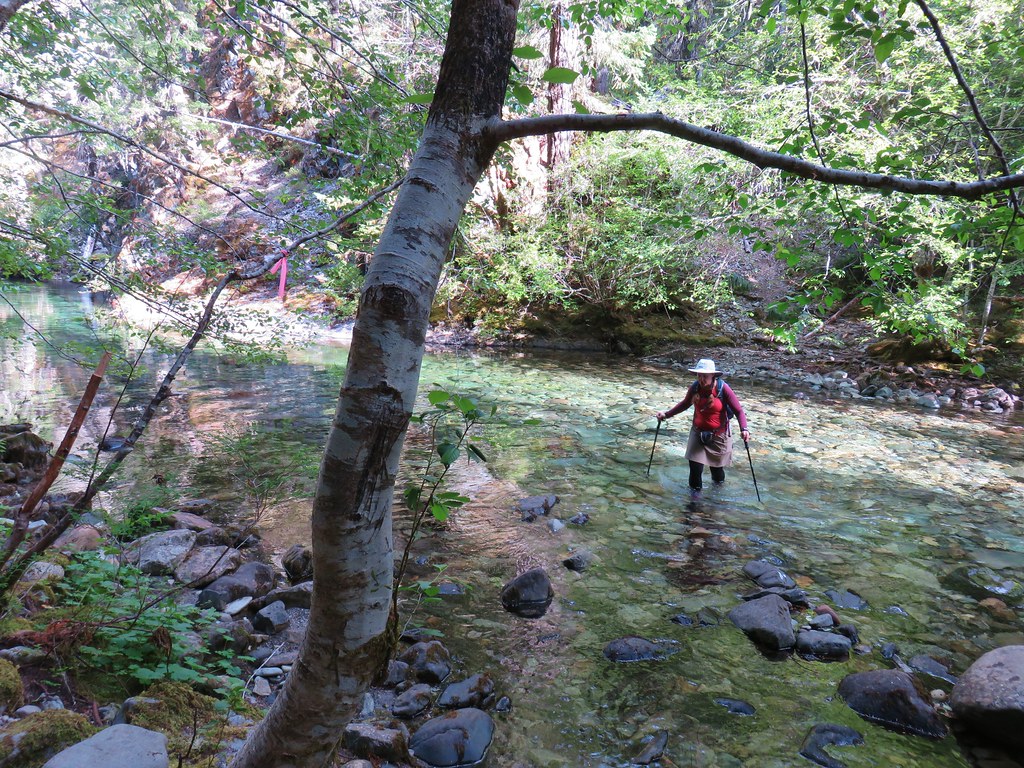
Sign for Mother Lode Creek

Mother Lode Creek

We returned the way we’d come stopping again at the emerald pool which was now in the sunlight. We watched fish swimming in the clear water for a bit before continuing on.
Emerald pool

Emerald Pool on Elk Lake Creek

Fish

The hike was a little over 11.5 miles with approximately 1500′ of total elevation gain and 5 fords (I forded Mother Lode Creek to get a picture of its sign). One of the things we really enjoyed about the hike was that there were several “attractions” along the way with the small waterfalls, the emerald pool, and the old-growth forest in general. There were a few mosquitoes around but one spraying of DEET seemed to keep most of them at bay. This makes for a great early summer hike as long as the water levels make the fords possible. Happy Trails!

Flickr: Elk Lake Creek

Categories
Central Coast Hiking Oregon Oregon Coast Trip report

Harts Cove & Drift Creek Falls

It has become a tradition to finish off our hiking year either on the Oregon Coast or in the coast range. This year we targeted a pair of shorter hikes to keep the tradition alive. For the first of these two hikes we traveled to Cascade Head just north of Lincoln City in order to visit Harts Cove where a waterfall spills into the Pacific Ocean. We parked at the Cascade Head Upper Trailhead along road 1861 at a sign post for the Nature Conservancy Trail. A trail here led off for a mile to Cascade Head’s upper viewpoint which we had visited before. In order to find the Harts Cove Trailhead we walked another .9miles down road 1861 where a large parking area with plenty of signs marked the start of the trail. We could have driven here but were contemplating hiking to the upper viewpoint later if the sky cleared so we decided to park at the upper trailhead.
DSC08186

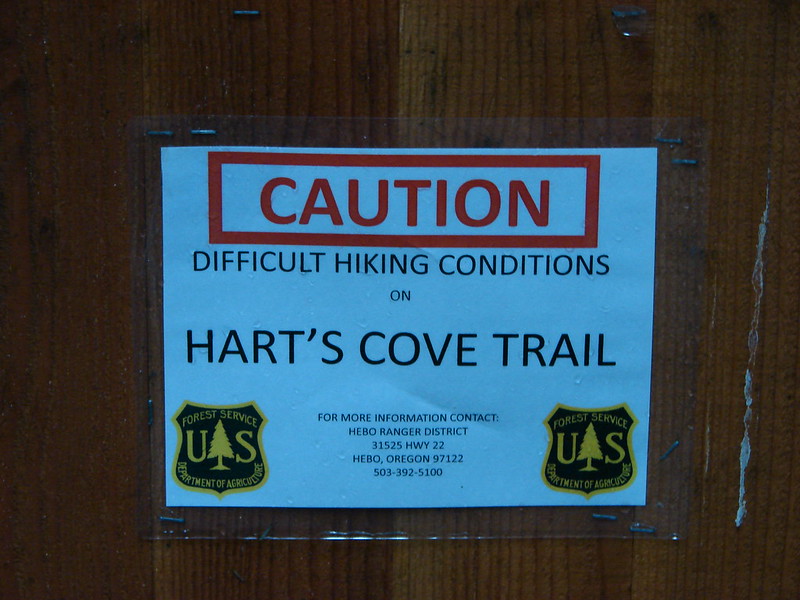
One of the signs warned of difficult hiking conditions on the trail which piqued our interest.
DSC08187

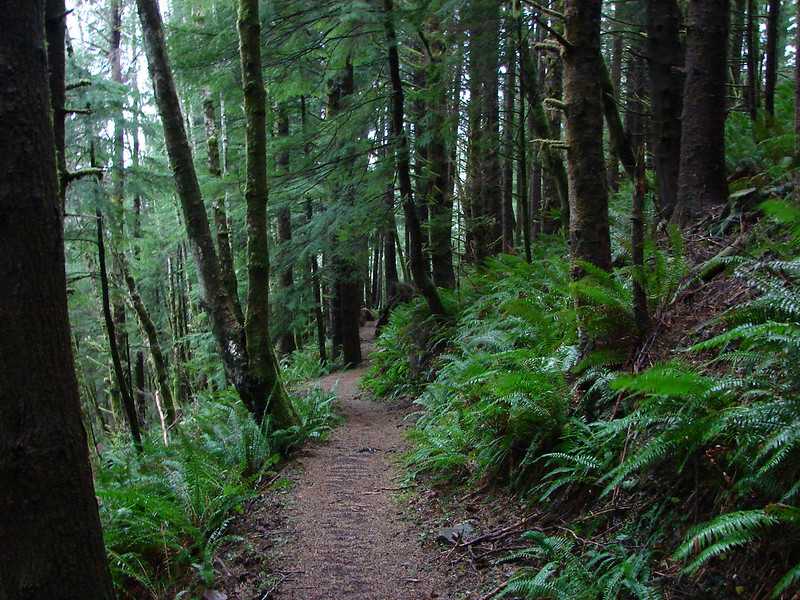
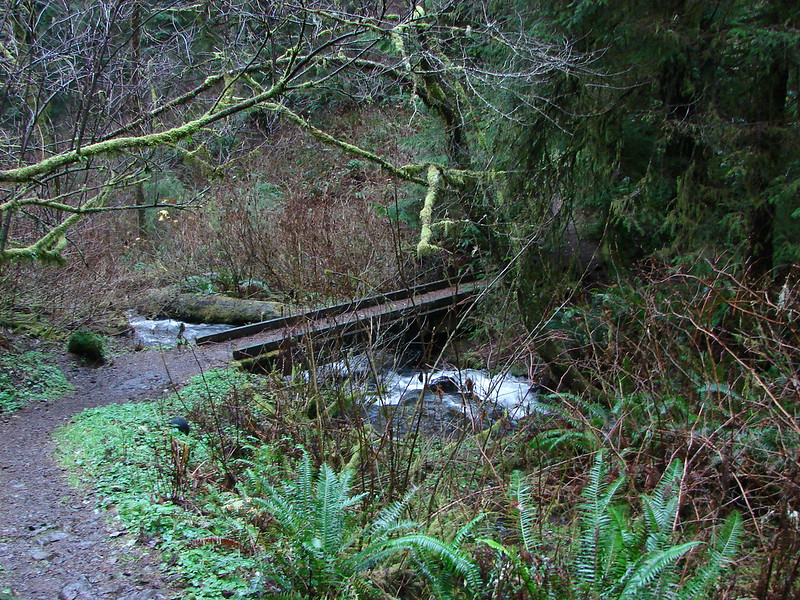
The trail started out by diving fairly steeply downhill through the forest for the first half mile then descended more gradually to a bridge across Cliff Creek.
DSC08192

DSC08193

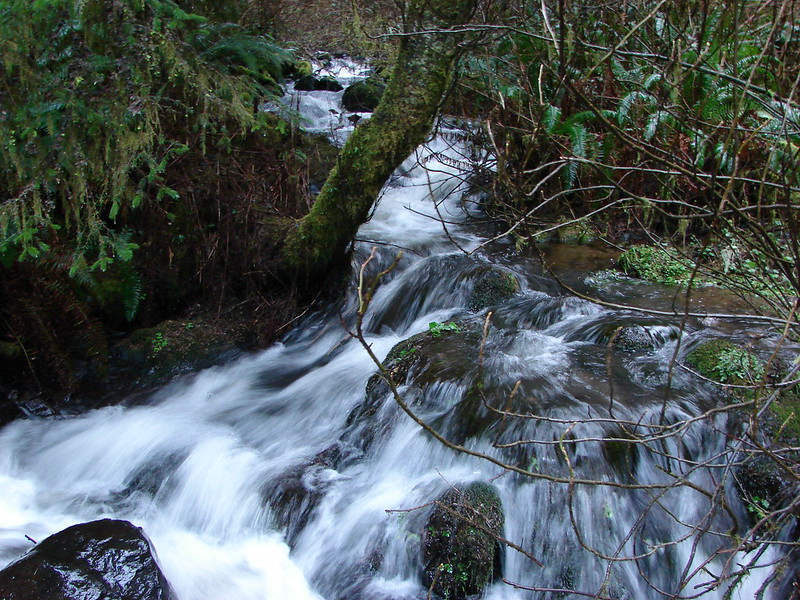
Cliff Creek

After crossing the creek the trail turned back toward the ocean along a ridge. We could hear a number of sea lions on the rocks below but could only get small glimpses of them across the water through the trees.
DSC08200

As the trail wound around the ridge end there was a bench that offered an obstructed view across Harts Cove to a meadow which was where the trail would end. The trail then bent back leading us around the cove. We crossed Chitwood Creek which appeared to have once had a bridge but it was now in pieces further down the creek.
DSC08207

We had been in clouds and fog for most of the hike but as we came out of the forest into the meadow we could see clearer skies out over the ocean. The trail was steep here also and muddy making it a bit slick.
Looking down the trail:
DSC08210

Looking up from below:
DSC08269

North toward Cape Lookout:
Cape Lookout from the meadow near Harts Cove

South toward Cascade Head:
Cascade Head

The sea lions could still be heard across the way below Cascade Head, and now we could see them better.
Sea Lions and Seagulls

We followed the trail down and around to the left toward Harts Cove so that we could get a view of Chitwood Creek’s waterfall. We were surprised to find a handful of flowers in bloom including a number of Salal bushes.
DSC08234

The waterfall turned out to be very picturesque as it fell down into the surging ocean.
Harts Cove and Chitwood Creeks waterfall

Chitwood Creek waterfall

DSC08268

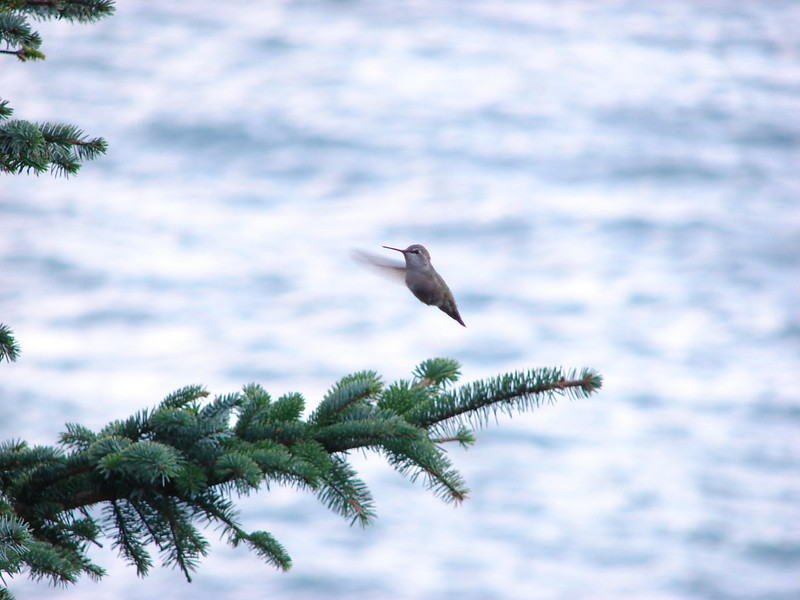
There was a nice open spot below a tree where we stopped for a snack and to remove some of the unnecessary layers of clothes we had on. While we were resting there Heather spotted a hummingbird that was interested in my orange jacket. It was zipping about, landing occasionally and then darting back into the air. I was snapping pictures frantically trying to get some sort of picture before the hummingbird disappeared. I wasn’t sure if I’d managed to get anything until we got home, but I wound up getting lucky with a single shot.
Hummingird in the meadow near Harts Cove

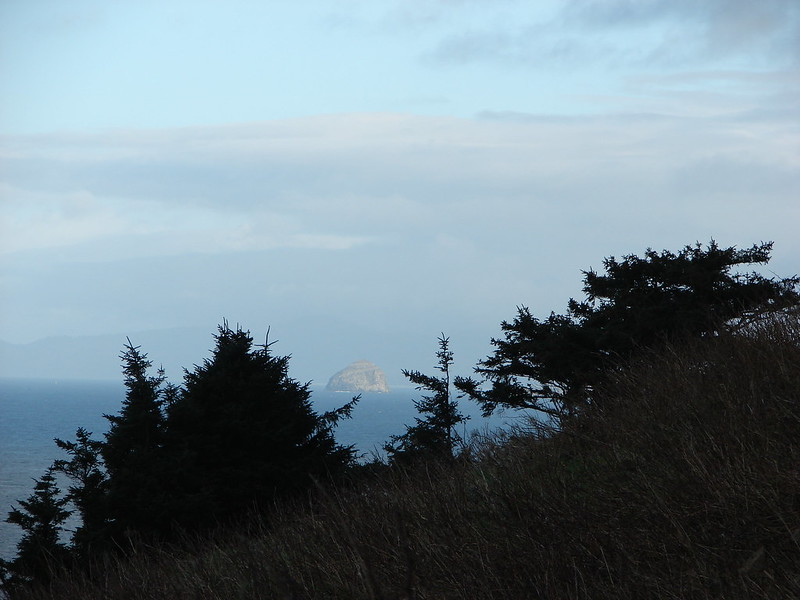
As we headed back up the steep trail we noticed that Haystack Rock near Pacific City was shinning in full sunlight.
DSC08270

We returned the way we’d come and decided to skip the upper viewpoint because it still appeared to be enveloped in the clouds. This hike had been 7.6 miles which included the unnecessary 1.8 miles due to parking at the upper trailhead.

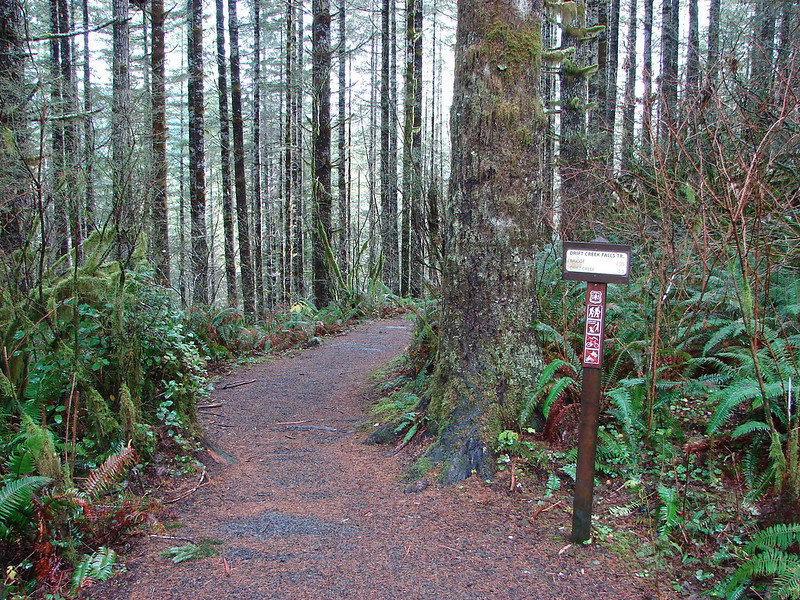
Our next stop was Drift Creek Falls which is located in the Siuslaw National Forest between Hwy 18 & Hwy 101 along Drift Creek Camp Road (Road 17). There was a good sized parking area and restrooms at the trailhead.
Drift Creek Falls Trailhead

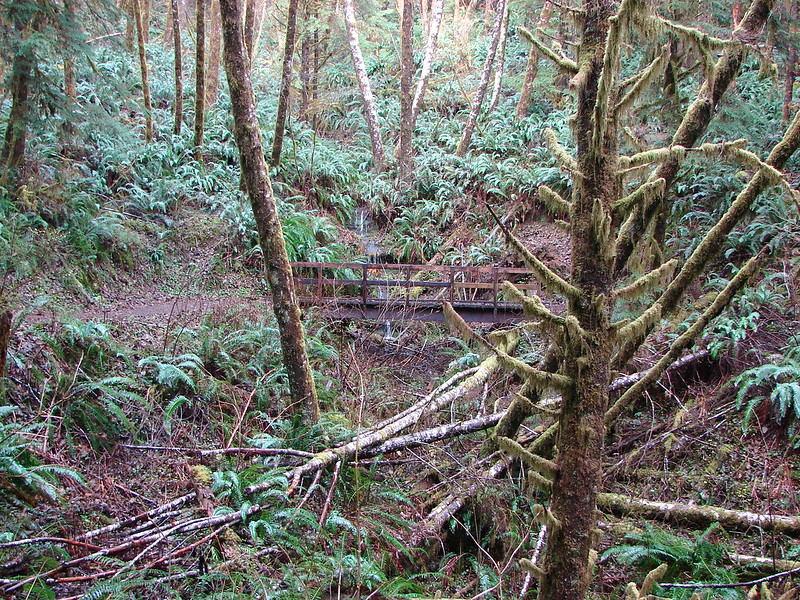
The trail leads down through the forest crossing two creeks on footbridges.
DSC08289

DSC08292

DSC08295

DSC08296

At the .7 mile mark the trail forks at a sign for the North Loop, a longer loop option which we planned to take on the way back from the falls. A third of a mile later we came to the other end of the North Loop.
DSC08322

Just a short distance later we arrived at the suspension bridge over Drift Creek.
Suspension Bridge over Drift Creek

The bridge passes over the creek very close to the falls allowing for some nice views.
Drift Creek Falls

DSC08304

The trail continues on the far side of the bridge down to Drift Creek where we could get a different perspective.
Drift Creek Falls

After enjoying the falls for a bit we headed back, this time taking the North Loop which would add about .7 miles to the return trip. This 1 mile section of trail climbed up and wound back through the forest. Aside from the trees and a few mushrooms there wasn’t much to see, but the trail was nice and good for a little extra exercise if wanted.
North Loop - Drift Creek Falls Trail

DSC08327

By taking the North Loop back we wound up with a total of 3.9 miles showing on the Garmin. These two trails were close enough (30 minute drive) and short enough to do in a day but they were also nice enough to stand on their own. As far as the cautions at the Harts Cove Trail we didn’t experience anything that we found too hard or scary but some of that is subjective and the trial was steep in places and the wet conditions caused a lot of mud which was slick at times. We will most likely be back to the coast sometime next month to kick off our 2015 hikes, but until then Happy Trails!

flickr:https://www.flickr.com/photos/9319235@N02/sets/72157649223220159/
facebook:https://www.facebook.com/media/set/?set=a.10205640025507123.1073741919.1448521051&type=1

Categories
Hiking Mt. St. Helens Trip report Washington Washington Cascades

June Lake

One of the things that makes for a good hike is variety. We have often commented on how much variety can be packed into just several miles of hiking. The terrain, vegetation, wildlife and views can vary drastically in a relatively short distance. That was the case on our most recent hike in the Mt. St. Helens National Volcanic Monument.

We had toyed with the idea of making this an overnight trip but the uncertainty of suitable water sources gave us pause so we amended our plans to make a day hike out of it. We stuck with our original plan to start at the June Lake trail head and headed up to the Loowit Trail from there. Originally we planed on turning right on the Loowit and heading over to the Plains of Abraham to find a camp spot and then explore further on down to Loowit Falls, but that would be too far for a day hike so instead we decided to go left and check out Dryer Creek Meadows.

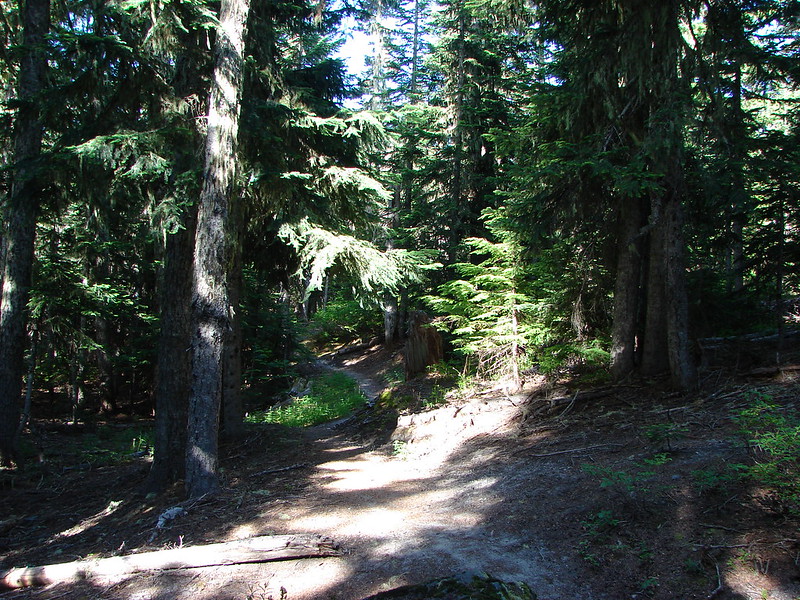
It was a cloudy morning as we set off on the June Lake Trail. From the trail head it was a mere 1.3 miles to June Lake on a nice wide trail that gently climbed through a forest with plenty of ripe berries to snack on.
DSC01371
DSC01354

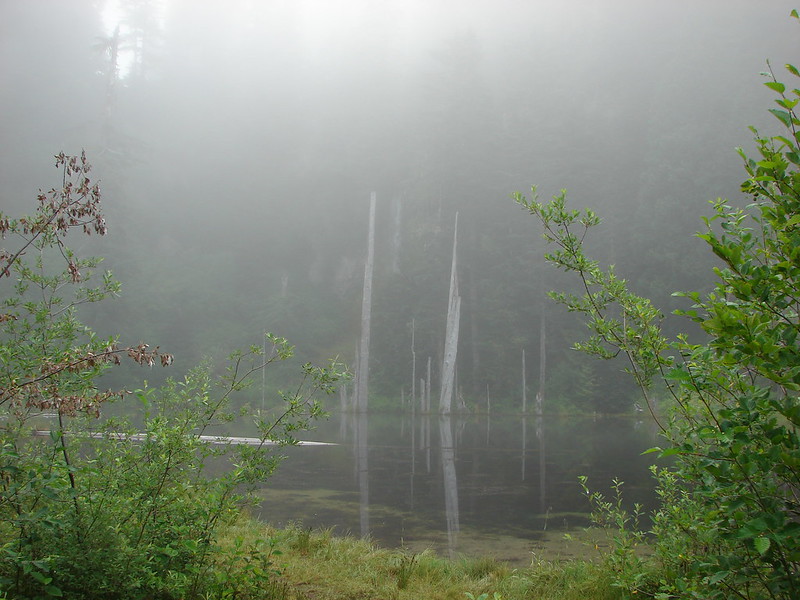
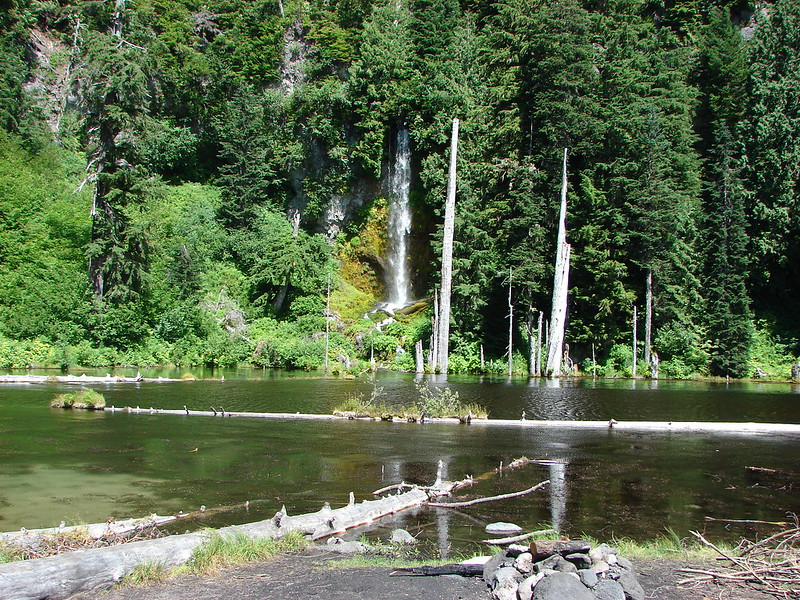
We were surrounded by fog when we arrived at June Lake which made it difficult to get a good view of the 40′ waterfall that falls on the far shore of the lake.
DSC01385

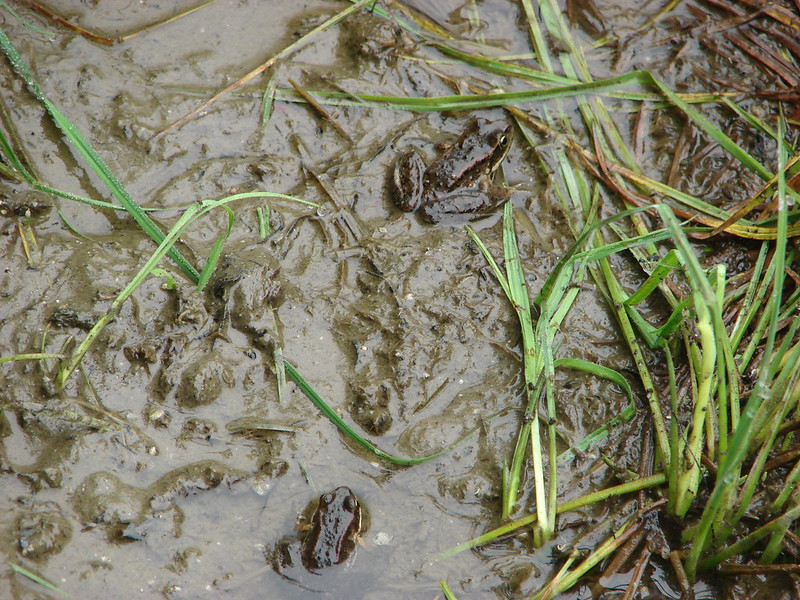
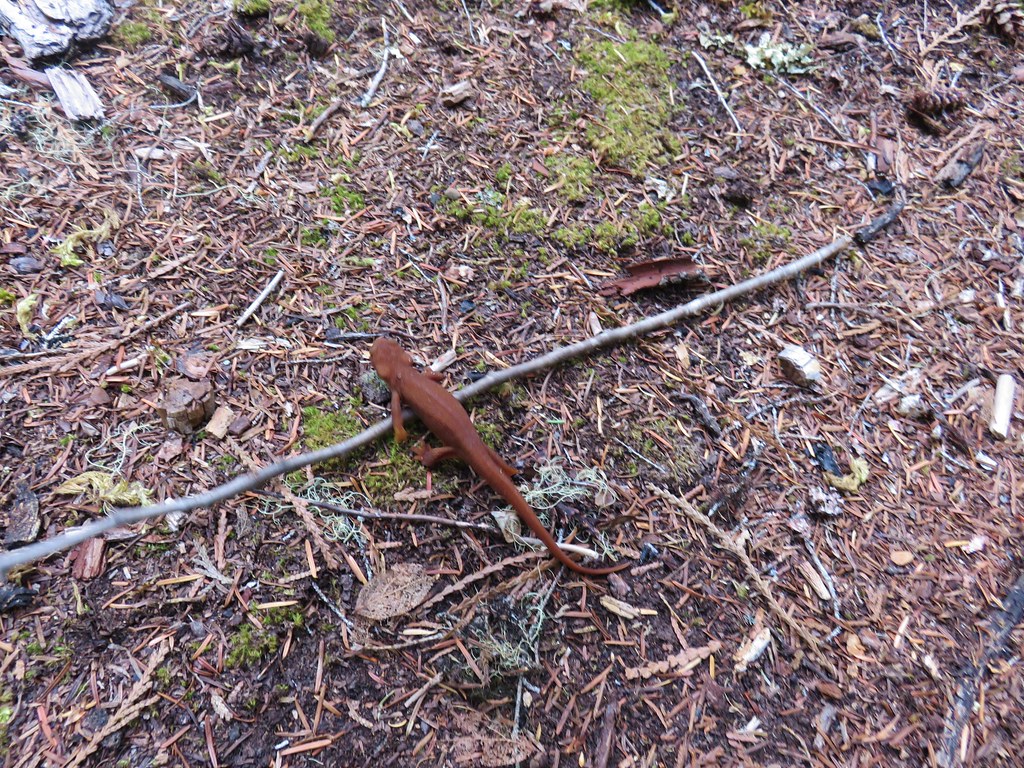
While exploring the small lakes shore we spotted a couple of frogs in the muddy water.
Frogs at June Lake

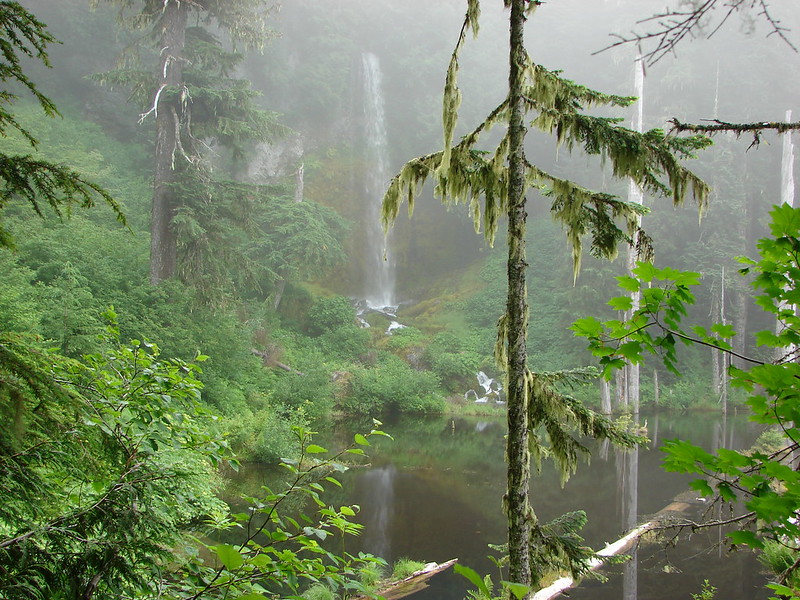
The best view of the falls came from a side trail at the north end of the lake shortly after a switchback. The reflection of the falls created the illusion of water both falling and rising to the surface of the lake.
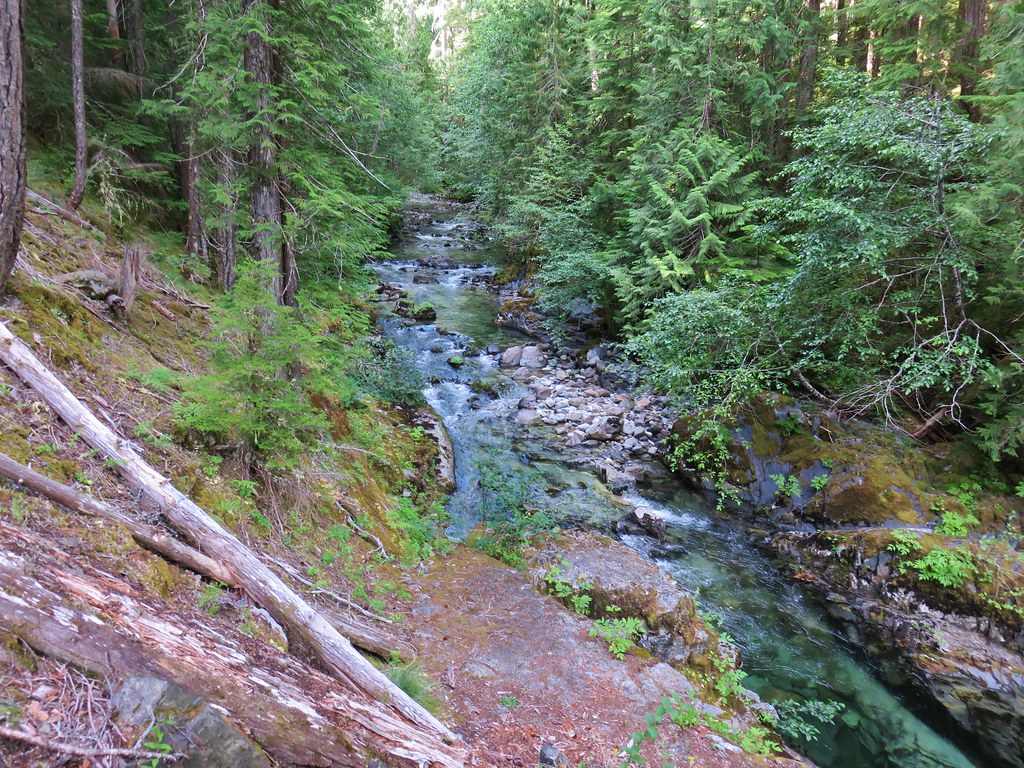
DSC01396

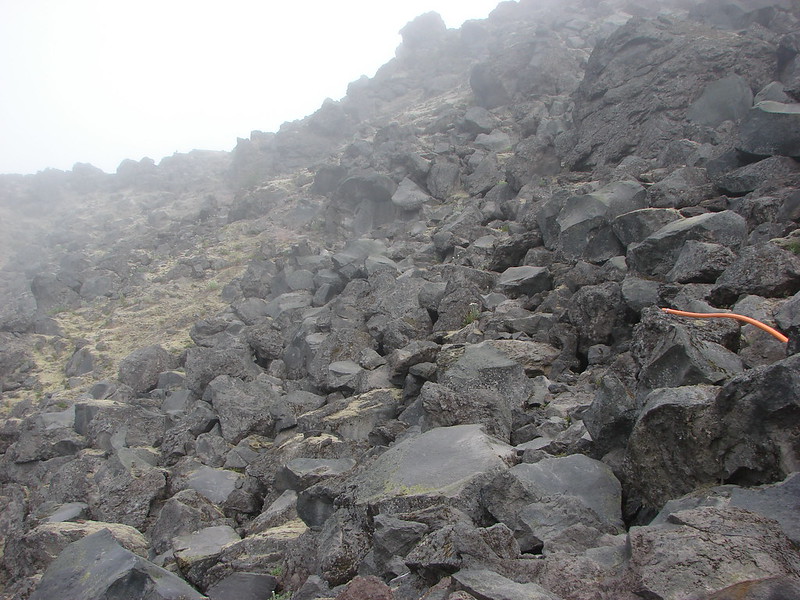
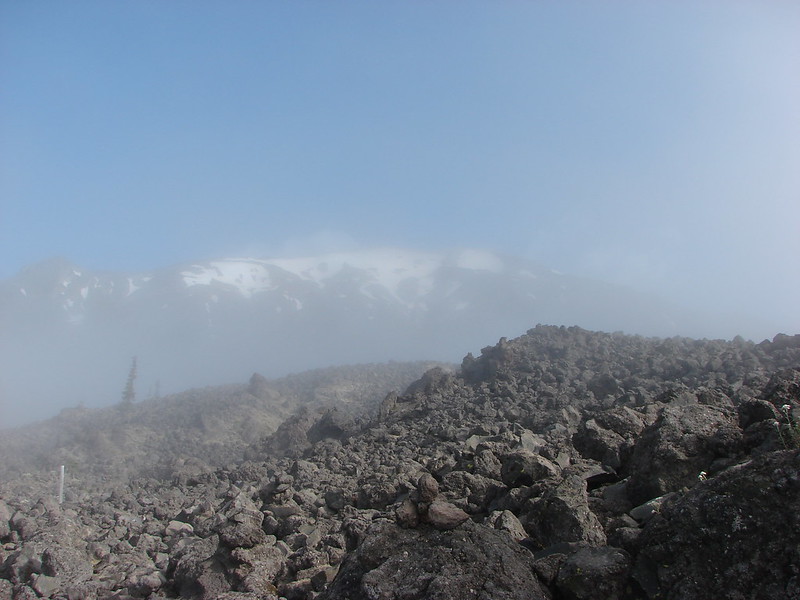
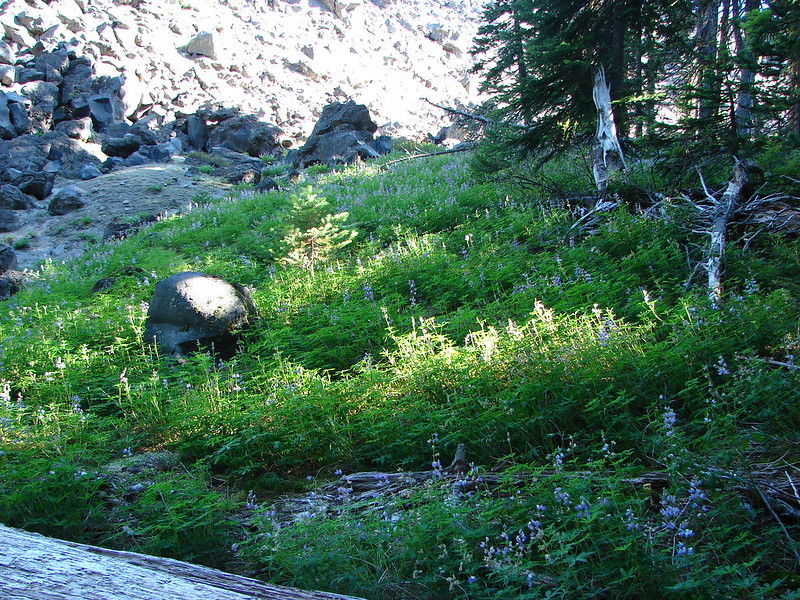
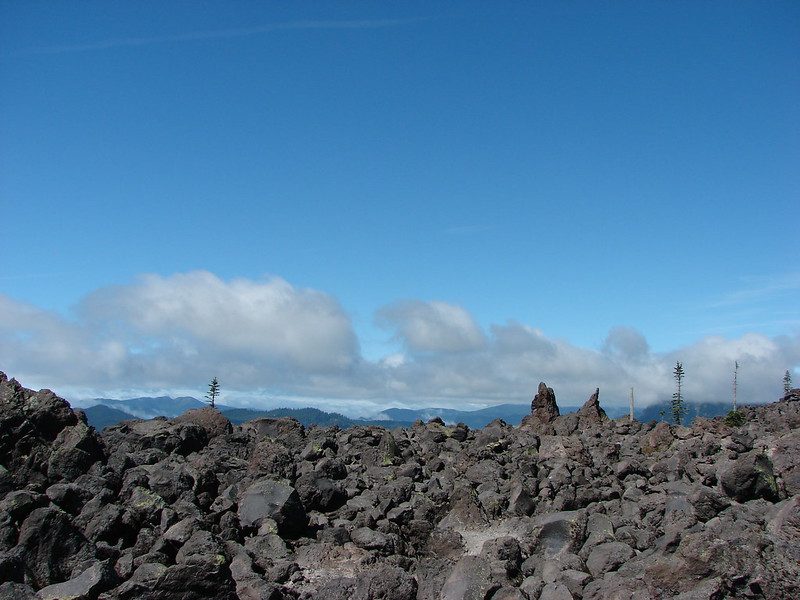
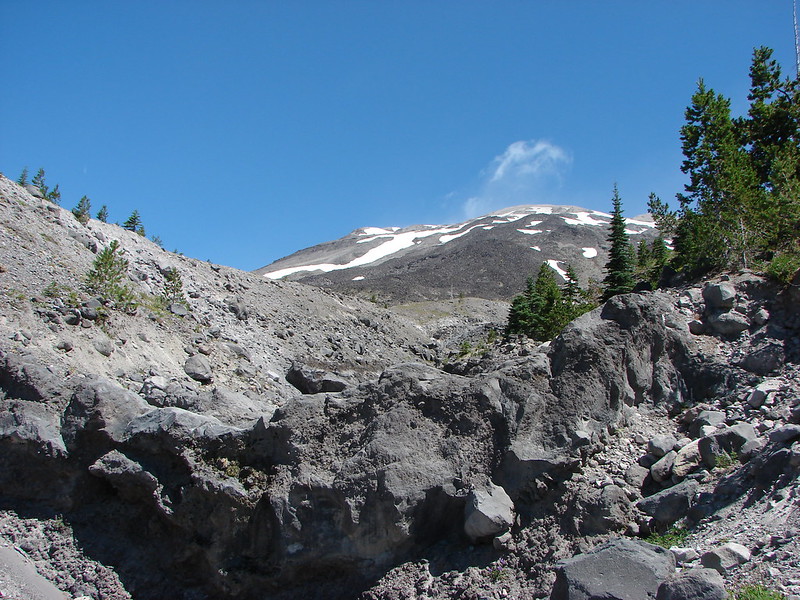
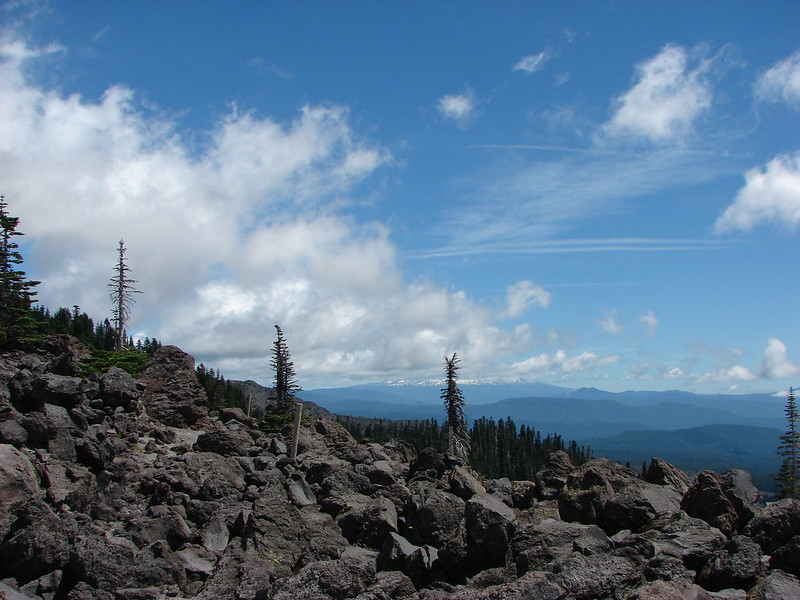
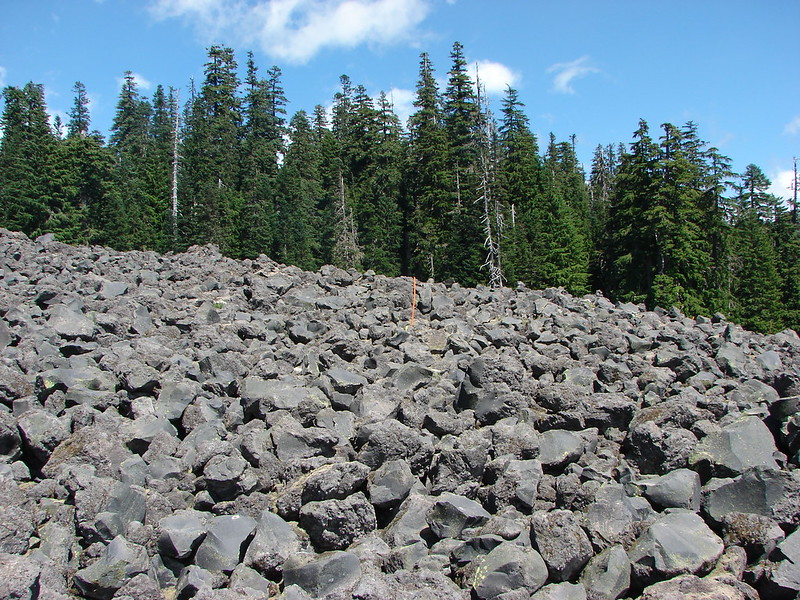
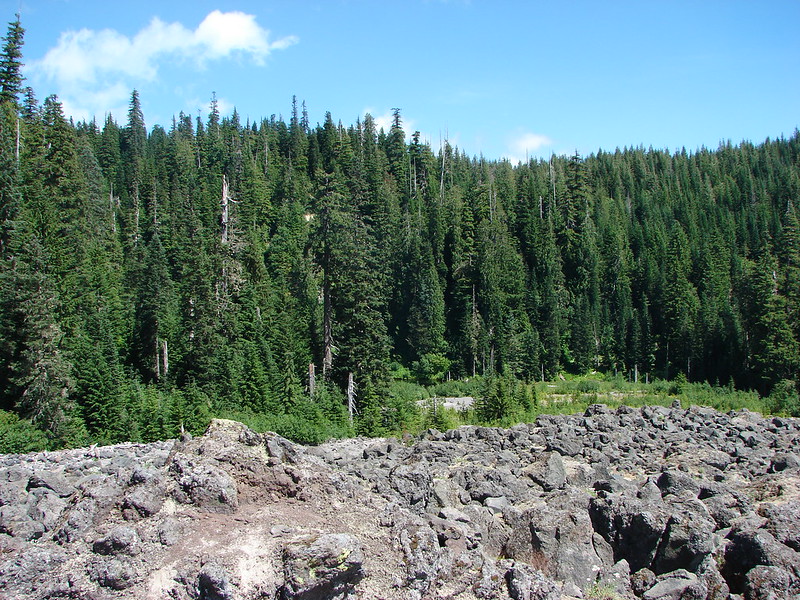
About a quarter mile from the side trail we arrived at the junction with the Loowit Trail which circles the entire mountain on a 29.5 mile loop. We turned right and quickly emerged from the forest and began crossing the first of three lava flows that make up the “Worm Flows”. Unlike some of the other lava fields we have hiked over there was no visible trail in many places, just a series of posts and rock cairns to aim for.
DSC01408

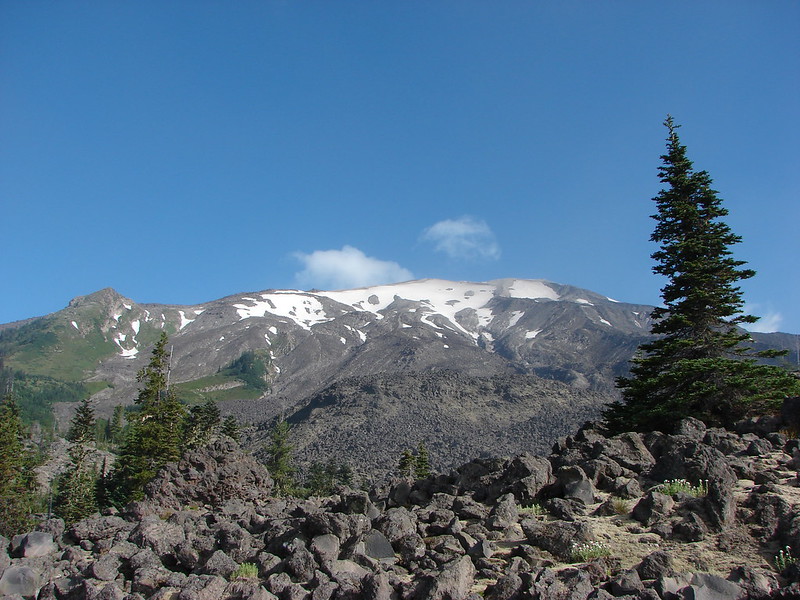
It meant a lot of rock hopping and scouting for the best looking route to the next marker. While we were working on making our way over the lava the clouds began to give way and we were treated to a clear view of Mt. St. Helens.
DSC01432
Mt. St. Helens

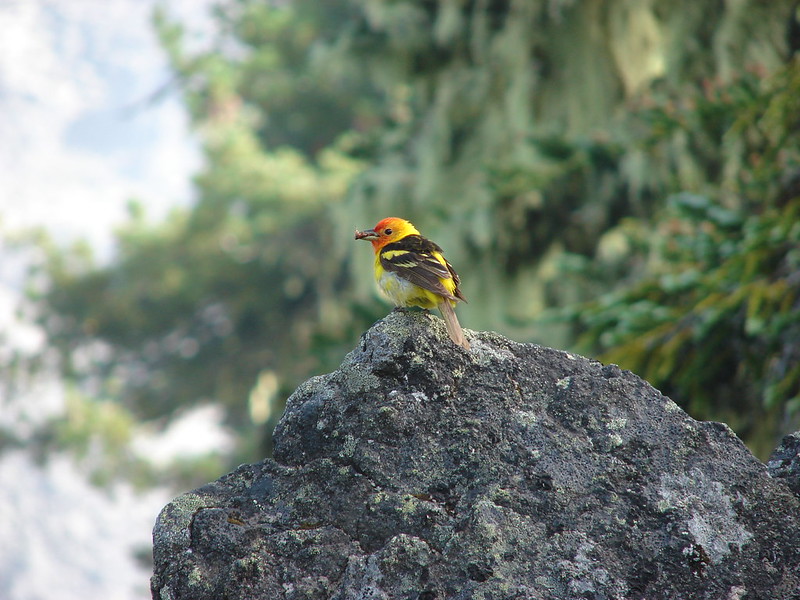
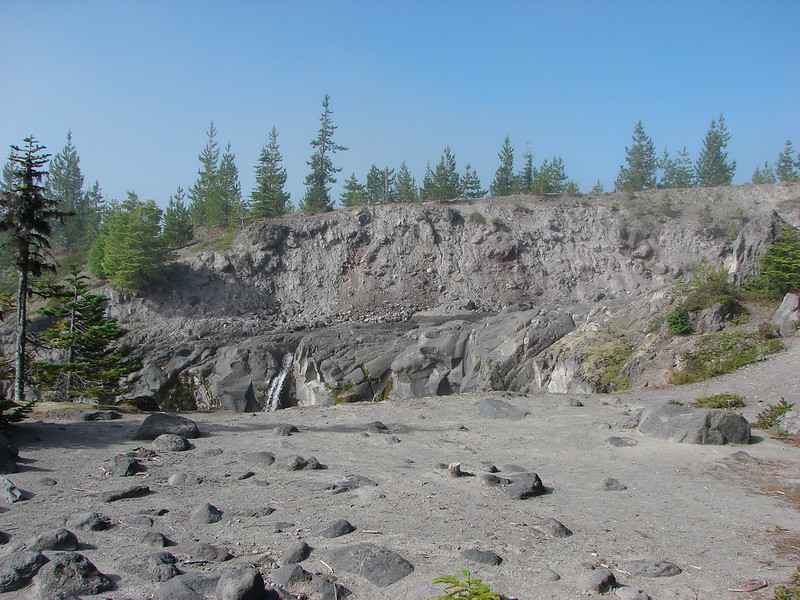
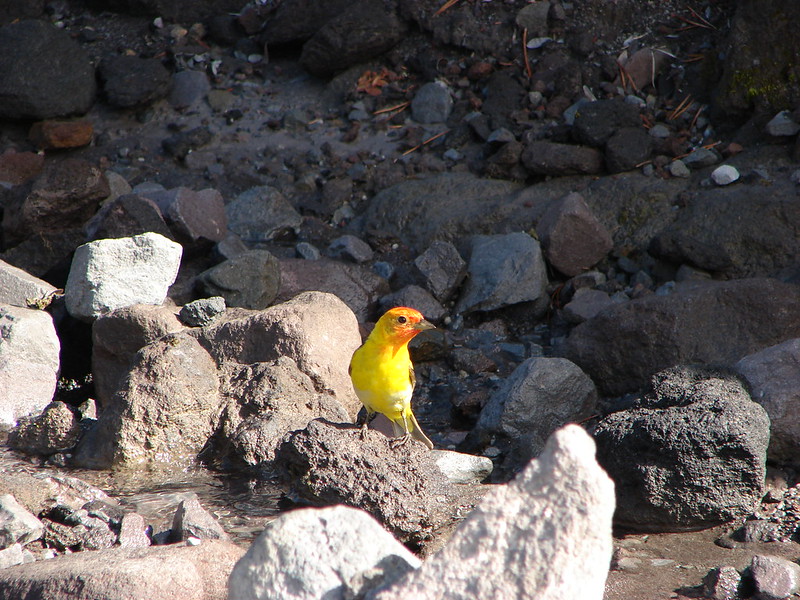
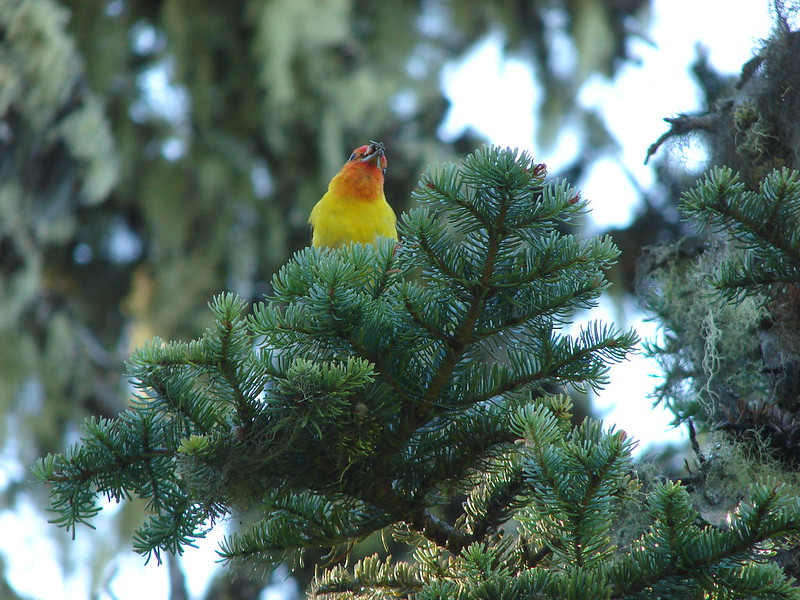
After crossing the Worm Flows the trail began descending into Swift Creeks canyon where we would find Chocolate Falls. On our way down a colorful western tanager posed for some pictures.
Western Tanager
DSC01474

Before reaching swift creek we passed through a small pocket of vegetation.
DSC01479
DSC01478

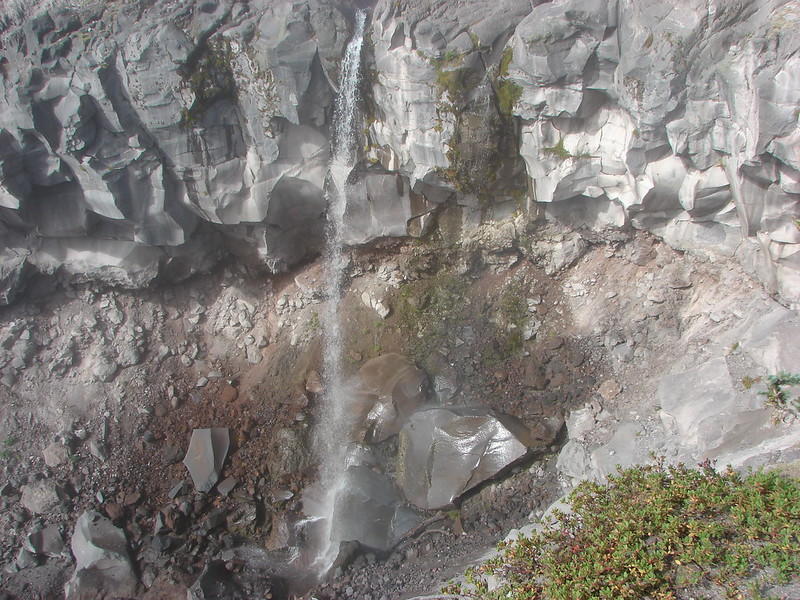
We were happy to find water flowing over Chocolate Falls as Swift Creek often dries up overnight and doesn’t begin flowing again until after 11AM on some days.
DSC01481
DSC01482

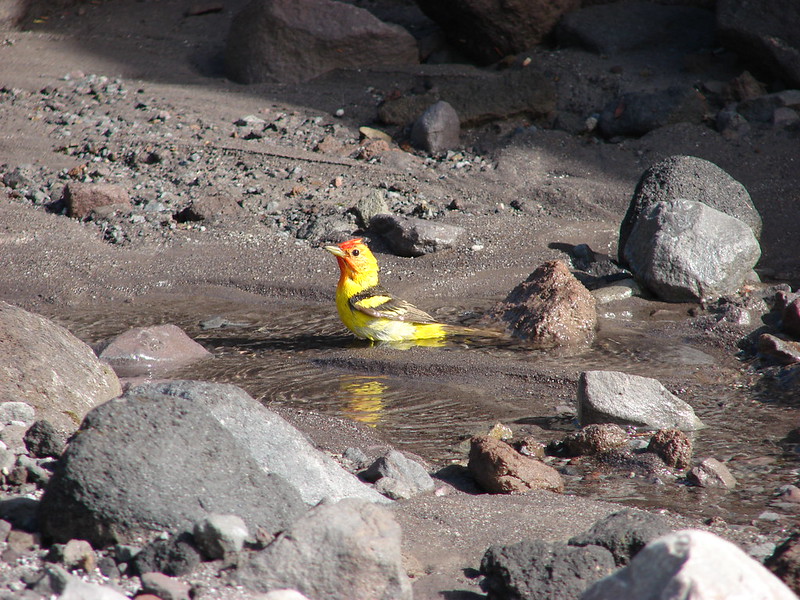
We took a snack break at the falls and while we were relaxing we were joined by what I think was the same western tanager who decided it was time for a bath.
Western Tanager
Western Tanager

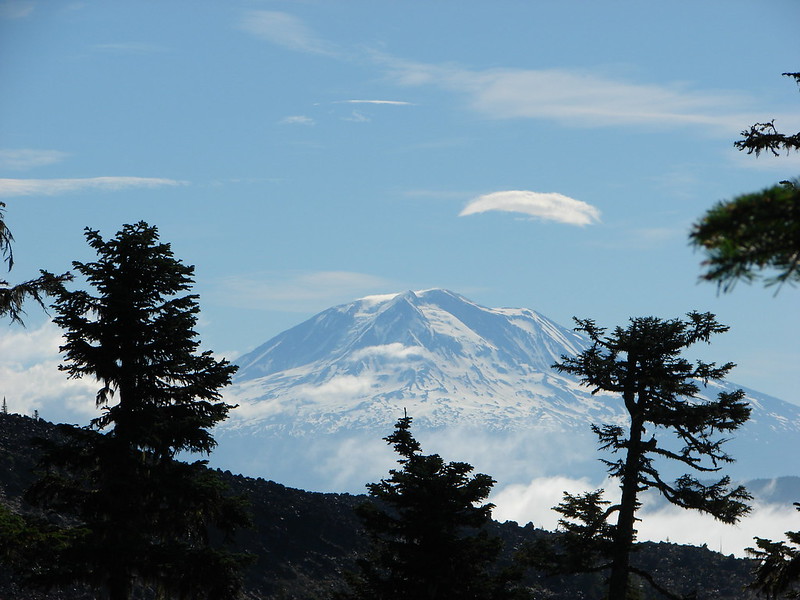
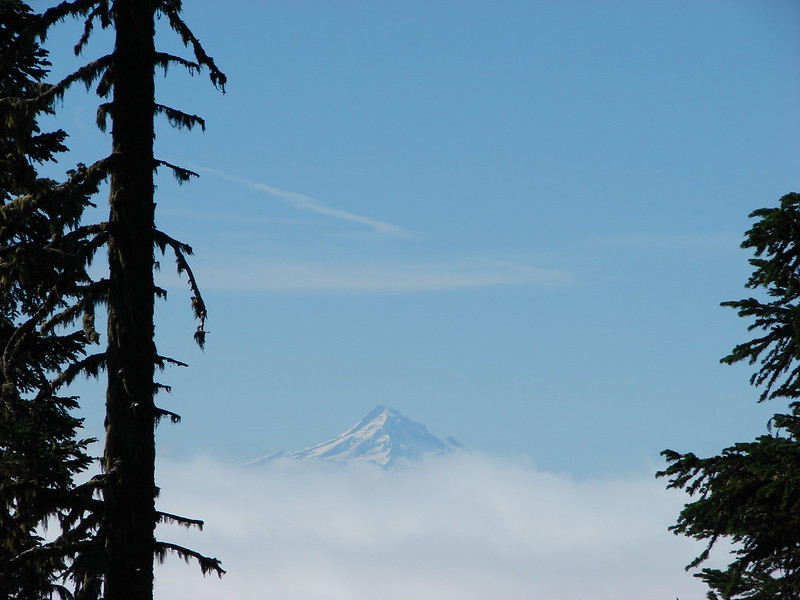
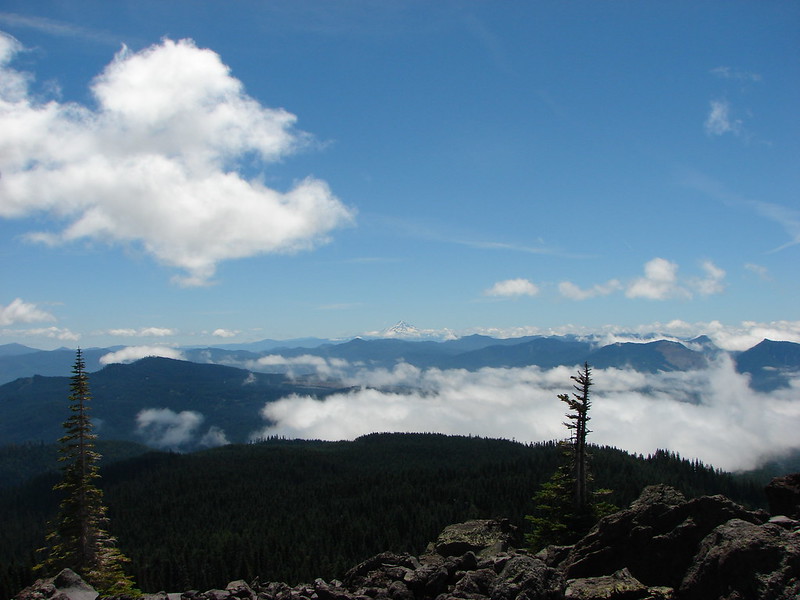
We continued on the Loowit Trail from Swift Creek and began a steep climb that passed through forest and meadows. We also were treated to a great view of Mt. Adams and a descent view of Mt. Hood looming above the clouds.
Mt. Adams
Mt. Adams
Mt. Hood
DSC01550
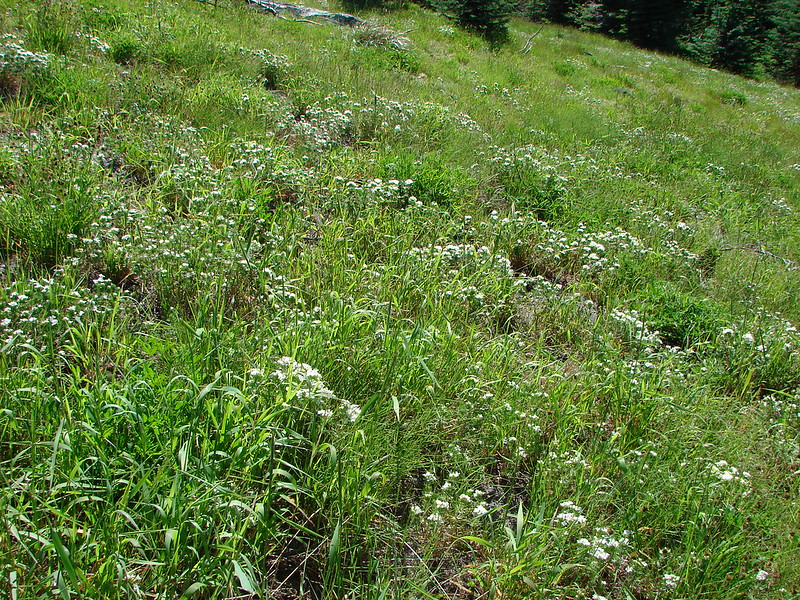
Meadow filled with nuttall’s linanthus
DSC01585
Mt. Adams from one of the meadows
DSC01611
Passing through a meadow
DSC01612
Mt. Hood from the meadow
DSC01613
Mountain heather and a blue copper butterfly
DSC01608

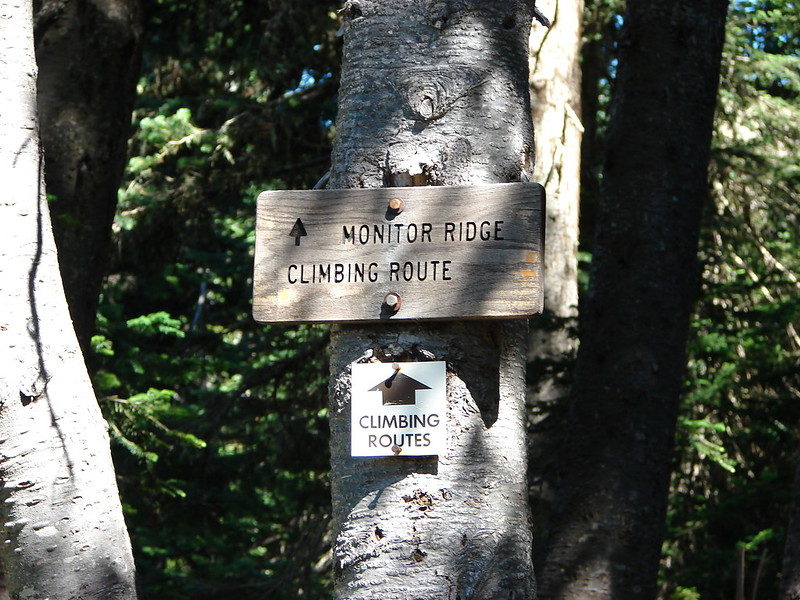
Two miles from Chocolate Falls we crossed the Ptarmigan Trail which climbs up Monitor Ridge to the Rim of Mt. St. Helens.
DSC01620
We have a date with that trail later this year.

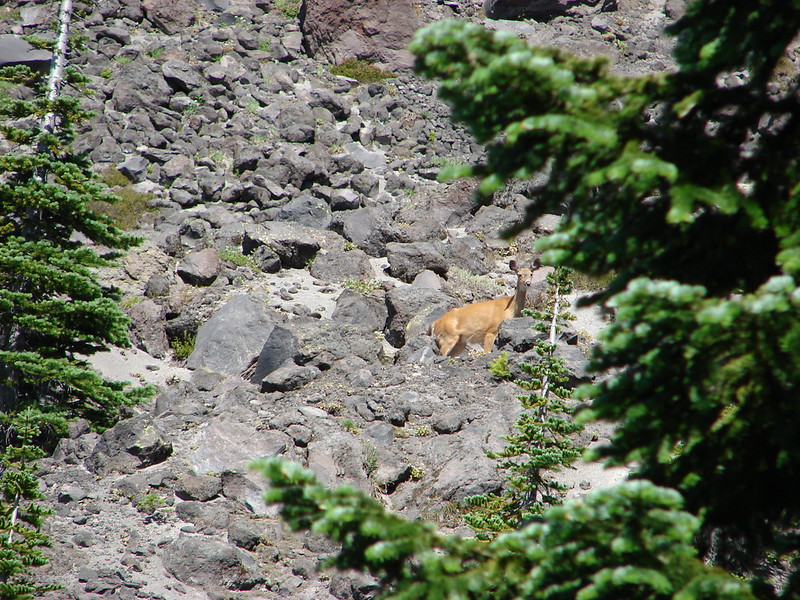
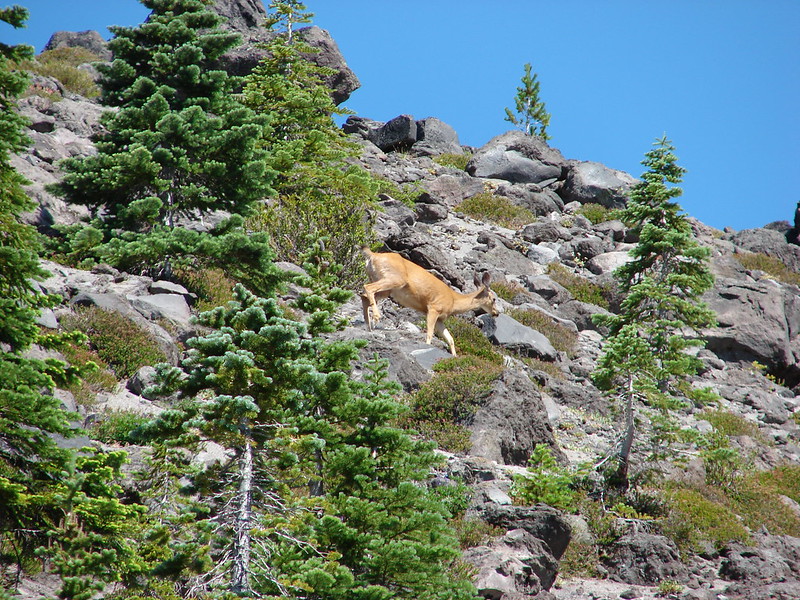
We crossed the trail and shortly came to the edge of another lava flow. A doe was making her way up toward Monitor Ridge showing off her superior rock hopping skills.
Doe
DSC01635

This crossing was .9 miles of post to post travel.
DSC01646
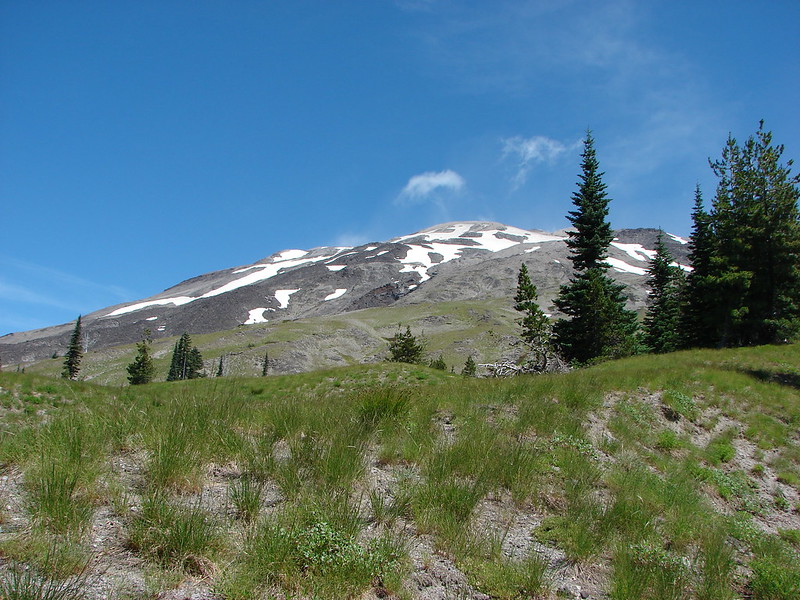
From this section we had a great view of Mt. St. Helens, Monitor Ridge, and the Green Knob.
DSC01648

After navigating the lava flow we were once again in a forest. This one was drier and the trees more sparse than the previous sections we’d passed through. Cicadas chirped loudly from the pine trees and scattered flowers dotted the sandy landscape.
DSC01664
DSC01665
DSC01666

The trail then began alternating between trees and meadows.
DSC01673
DSC01674

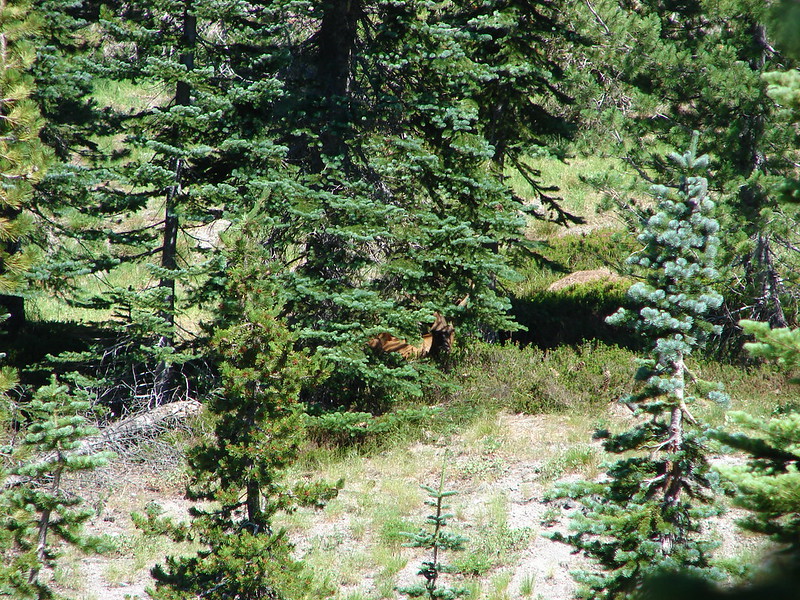
As we came around a corner I noticed something peering out of a tree further up along the trail.
DSC01680
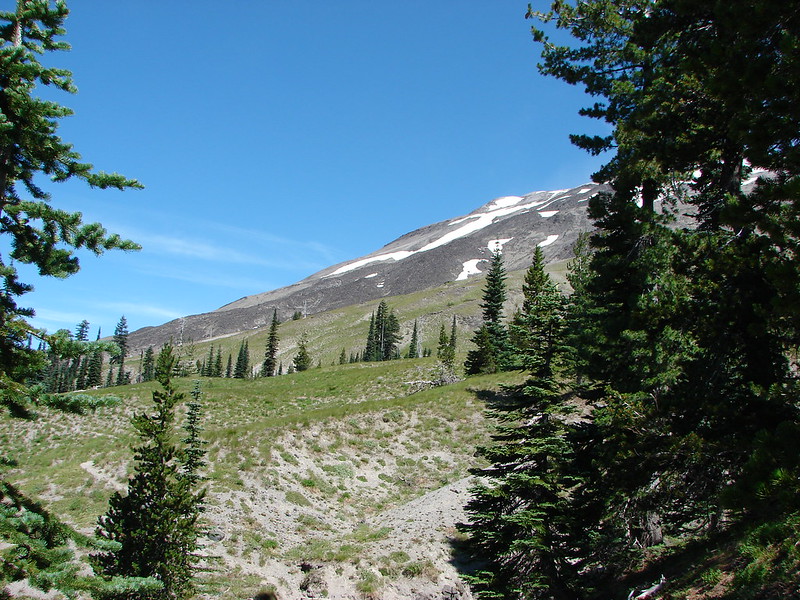
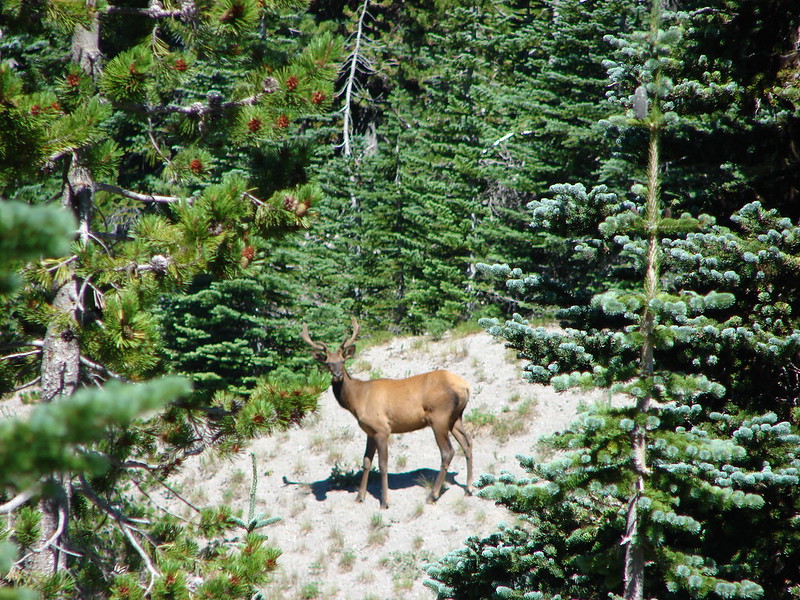
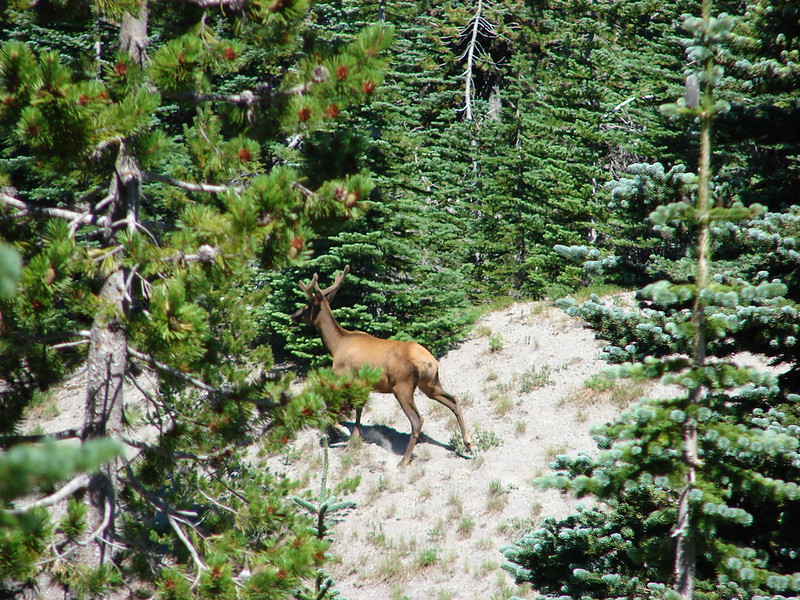
A bull elk emerged and gave us a quick look before heading downhill deeper into the trees.
DSC01683
Elk

We turned around at the dry Dryers Creek and retraced our steps back toward Chocolate Falls.
Mt. St. Helens from the dry bed of Dryers Creek
DSC01692

Mt. Adams had been hidden by clouds while Mt. Hood had nearly fully emerged from them.
DSC01715
DSC01716

There was evidence of the increased afternoon snow melt when we arrived back at Chocolate Falls.
DSC01740
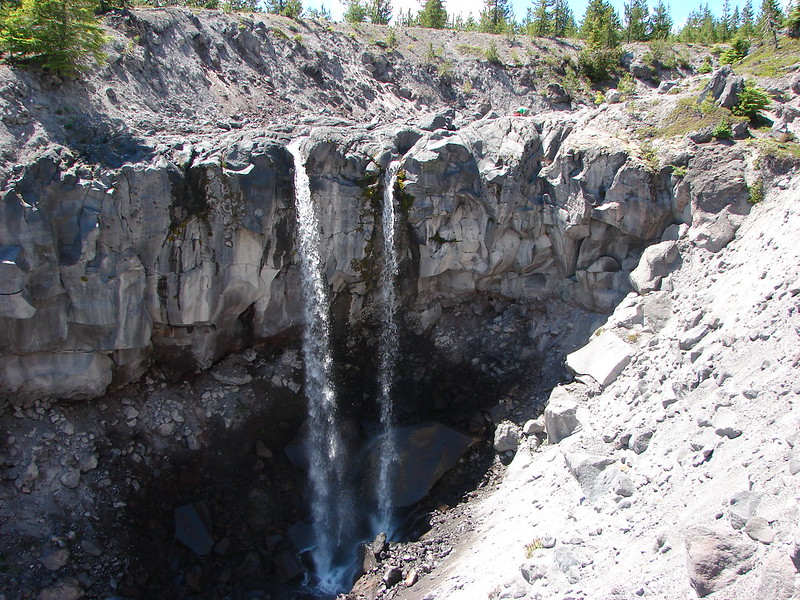
Chocolate Falls
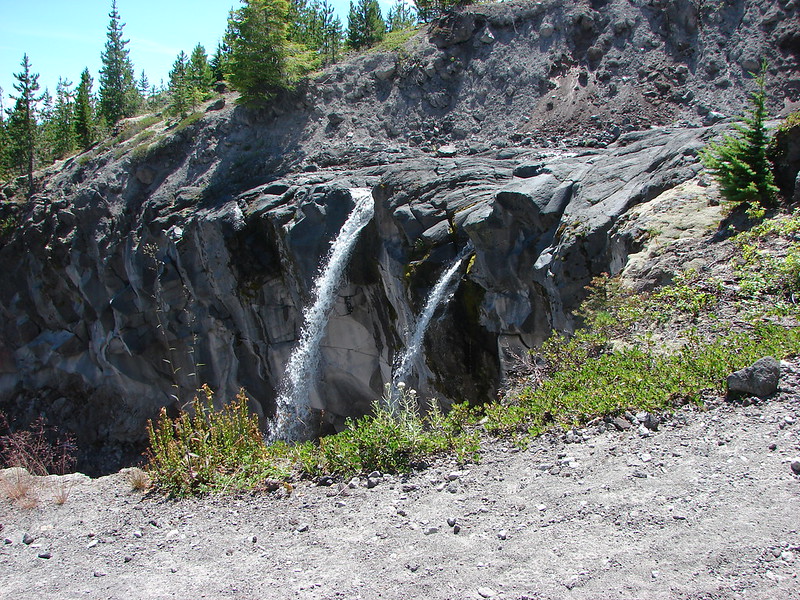
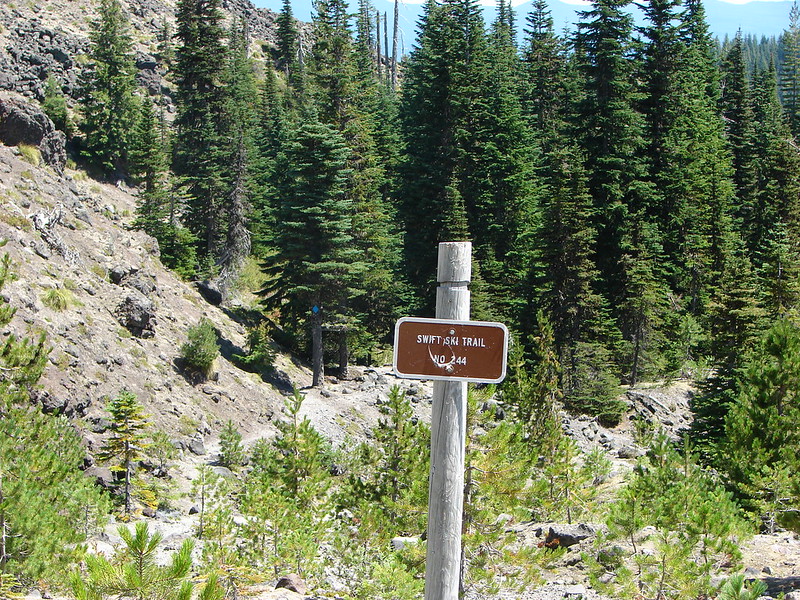
We took our shoes and socks off and soaked our feet for a bit in the creek before setting off from the falls. When we did get going we left the Loowit Trail and turned right along Swift Creek on the Swift Ski Trail.
DSC01754
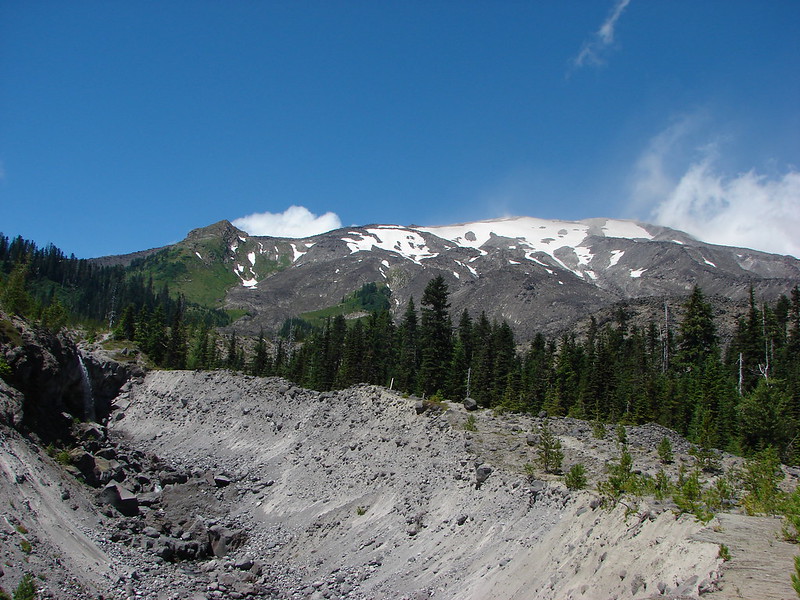
Chocolate Falls and Mt. St. Helens

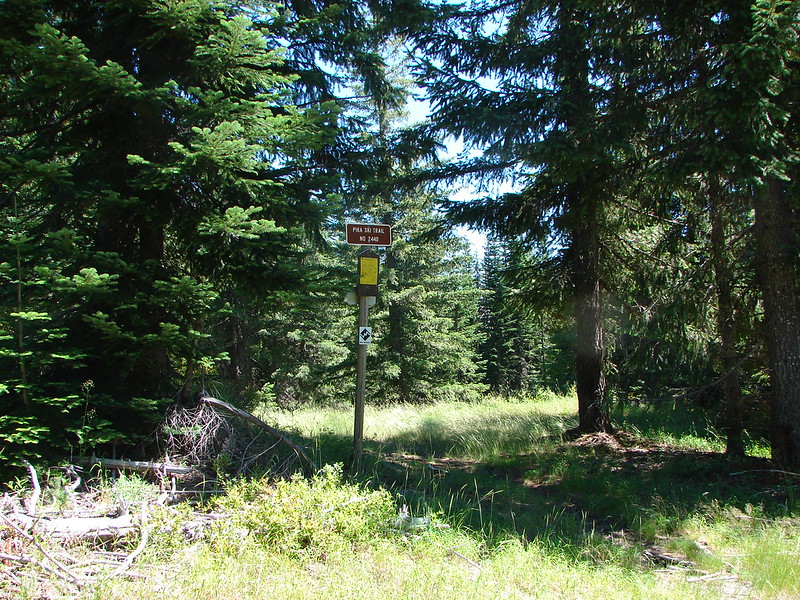
It was an easy trail to follow and we quickly descended .5 miles to the Pika Ski Trail which we took and headed back toward June Lake.
DSC01764

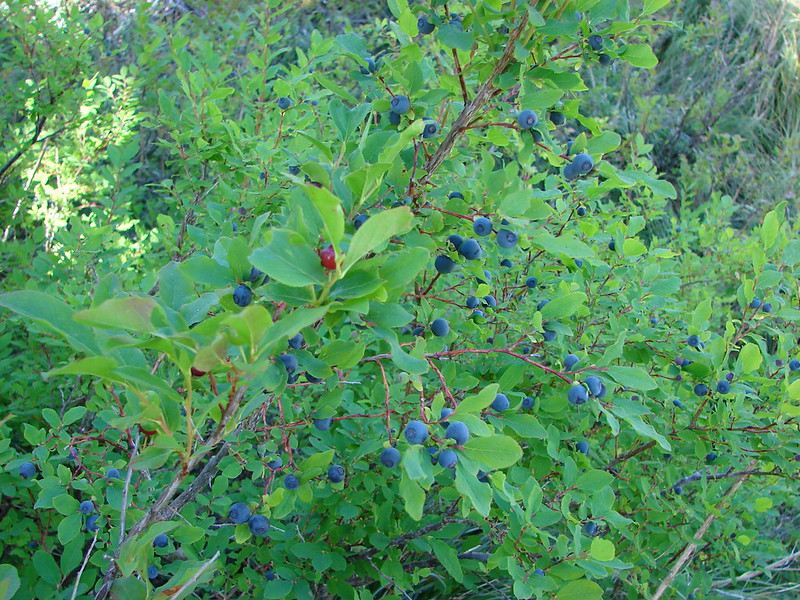
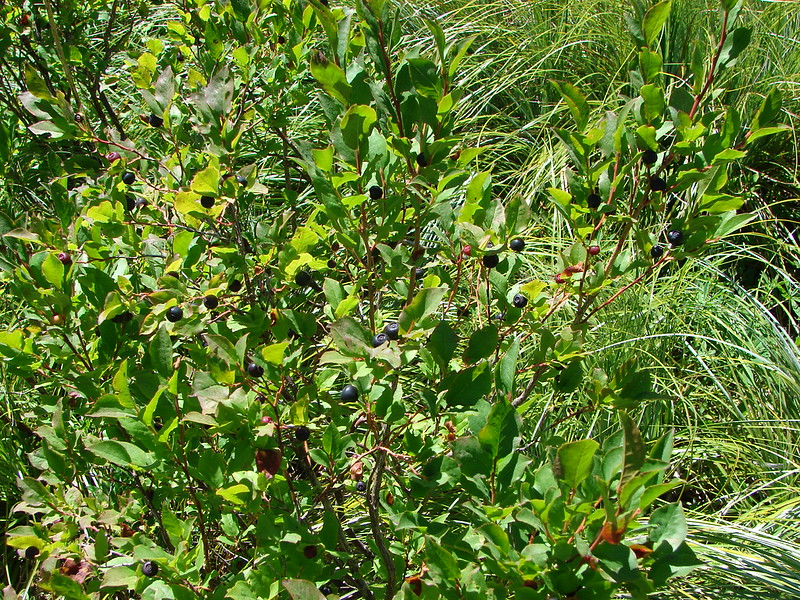
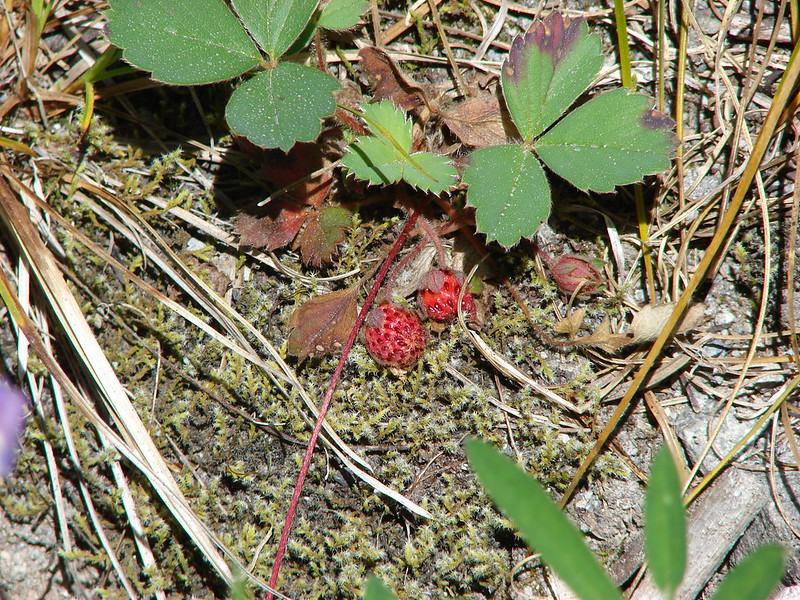
The Pika Trail was easy to follow for the first few tenths of a mile plus it was lined with ripe blueberries, huckleberries, and a few strawberries.
DSC01770
DSC01772
DSC01761

The easy trail didn’t last long though as we still had to cross part of the Worm Flows to return to June Lake. The crossing here was the most difficult of the day as there was no sign of any trail at all and the few orange poles ended halfway across the lava flow.
DSC01774

Luckily from the final pole June Lake was visible on the other side of the flow.
DSC01776

We headed for the lake and eventually made it down to the sandy bed of a dry creek which we climbed out of and returned to the June Lake Trail. The lake was clear now so we stopped to get some unobstructed photos of the waterfall and lake before beginning the final leg of our hike.
June Lake

We took our time on the final 1.3 miles partly due to being tired from all the rock hopping and partly because we were picking berries as we went. The hike had totaled 13.4 miles and in that distance we’d passed two waterfalls, a lake, several creeks (dry and flowing), through several sections of forest, multiple meadows, and over four different lava flows. We’d seen an elk, a deer, chipmunks, golden-mantled squirrels, frogs, and various birds. We sampled at least 6 different kinds of berries, saw a variety of wildflowers, and had views of three cascade volcanoes. It had been worth the effort. Happy Trails!

flickr: https://www.flickr.com/photos/9319235@N02/sets/72157645372723387/
Facebook: https://www.facebook.com/media/set/?set=a.10204499327590388.1073741894.1448521051&type=1