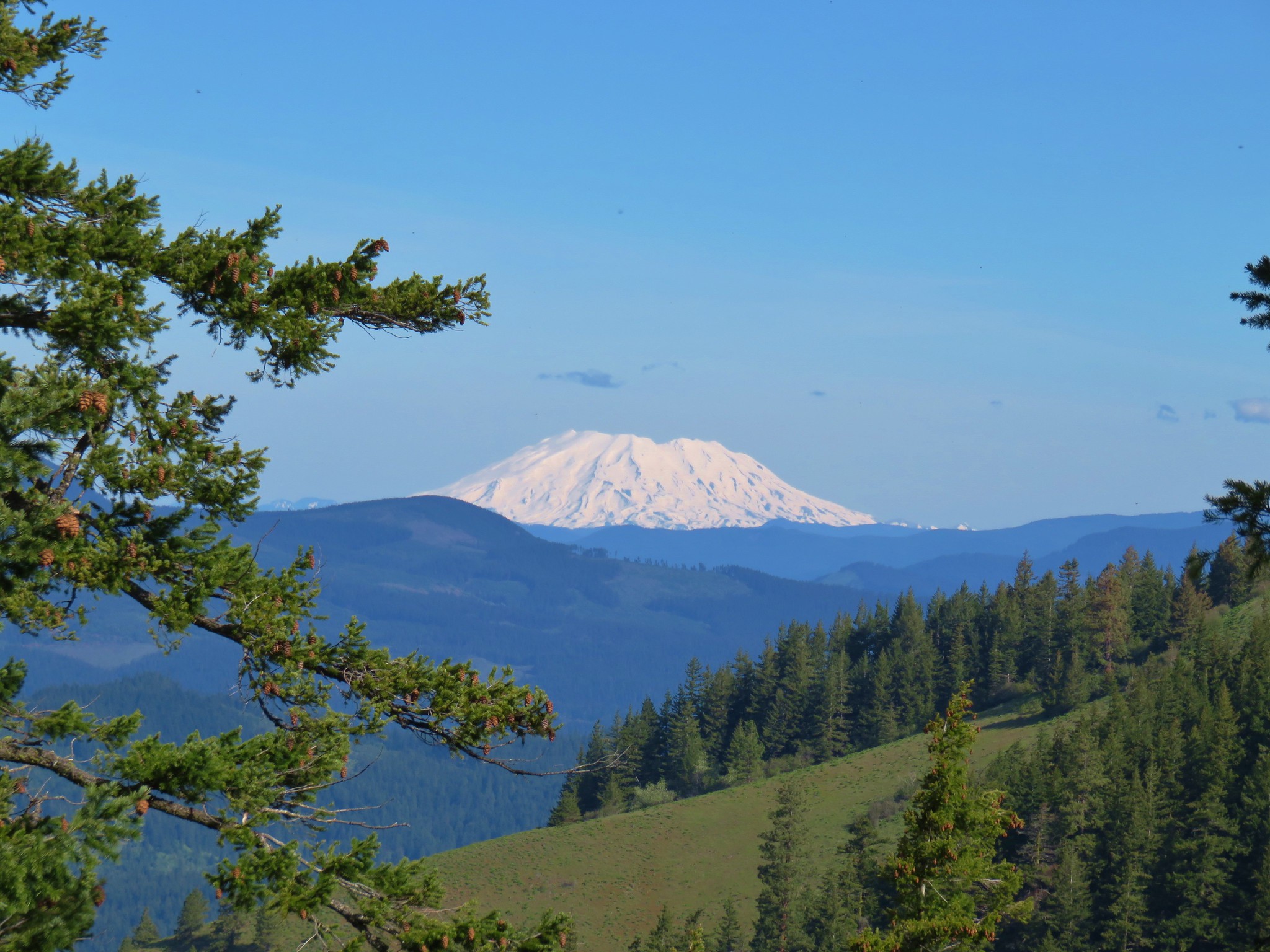
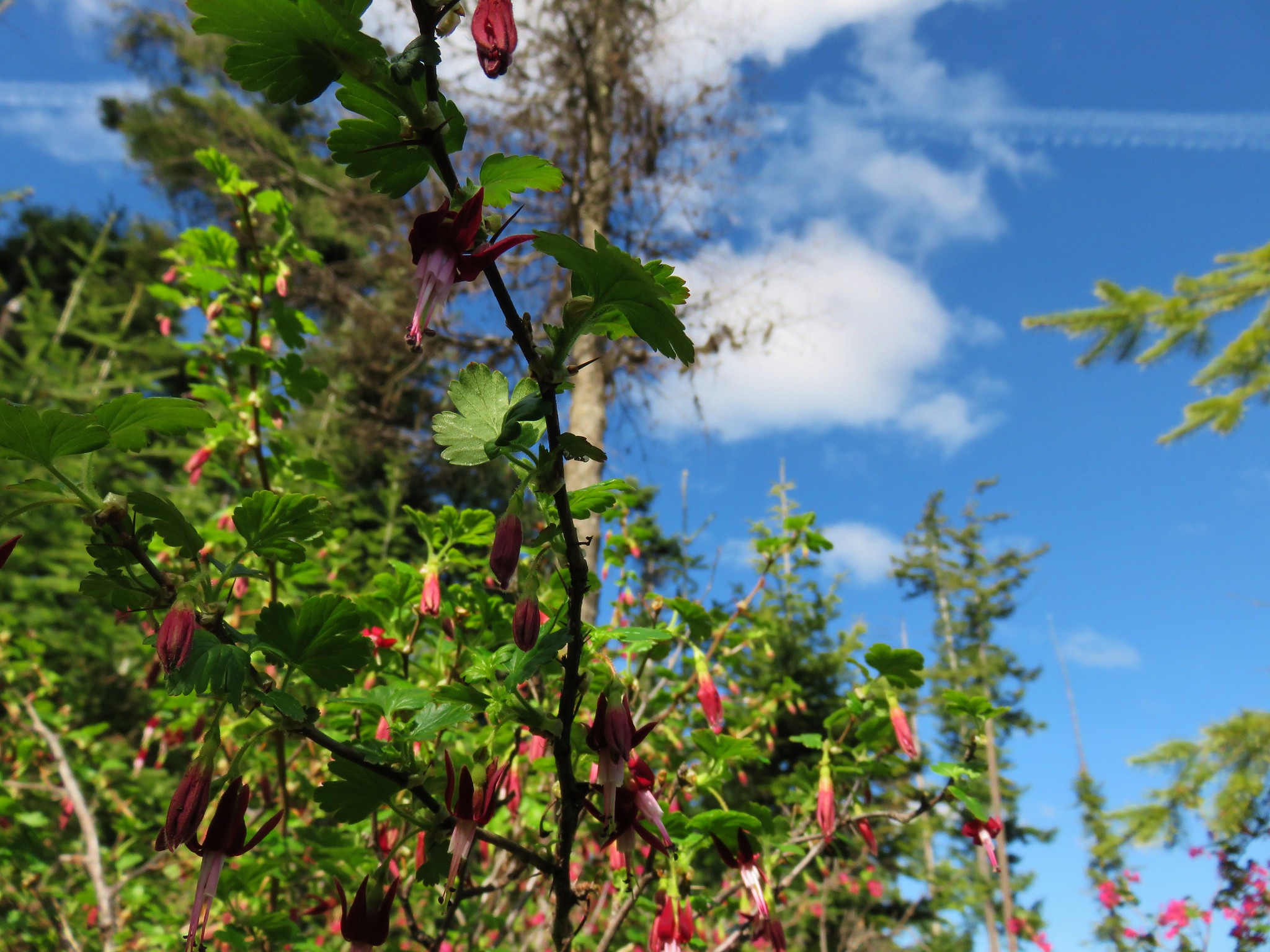
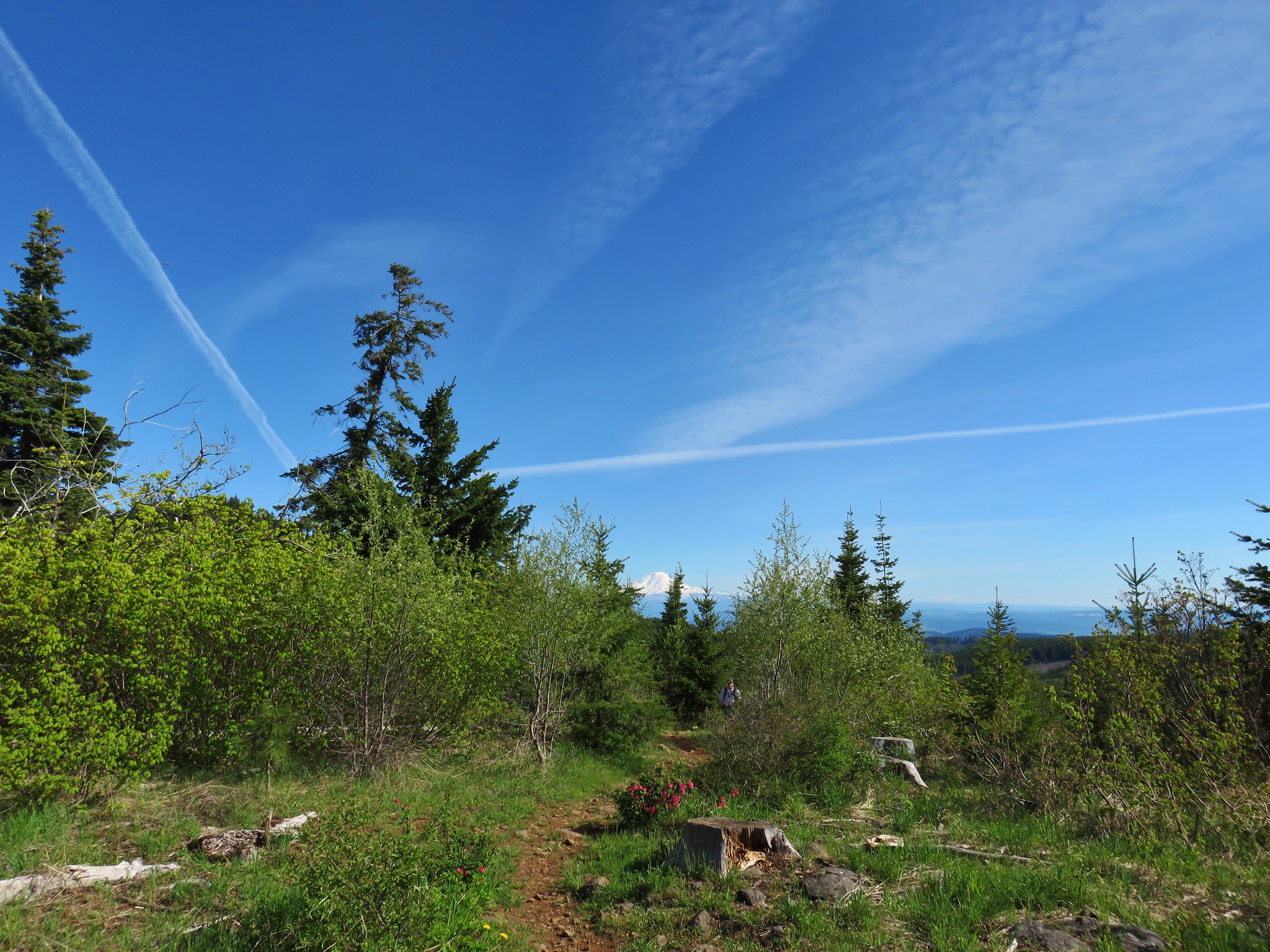
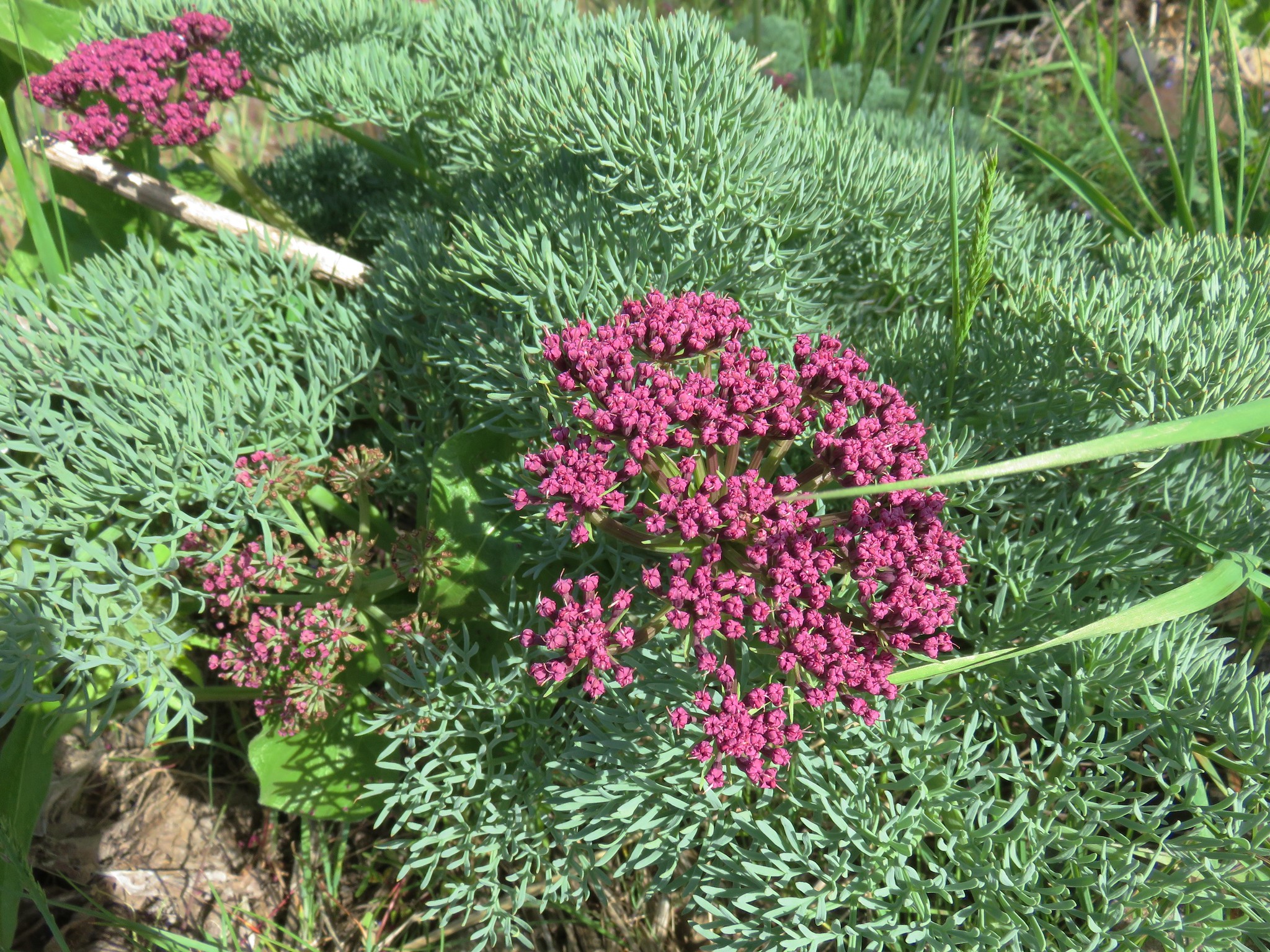
Categories
Bend/Redmond Central Oregon Hiking Oregon Throwback Thursday Trip report

Throwback Thursday – Pine Mountain

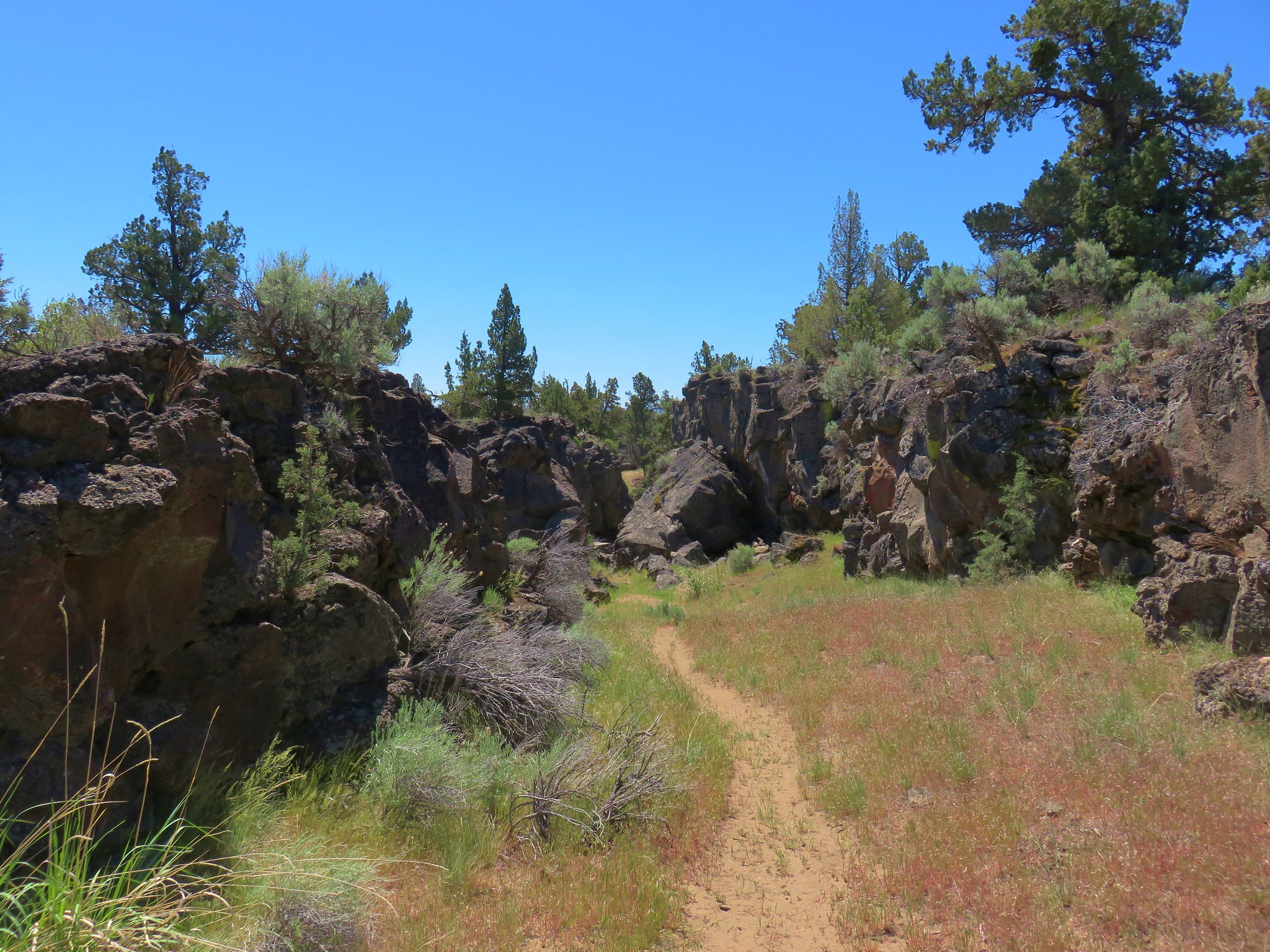
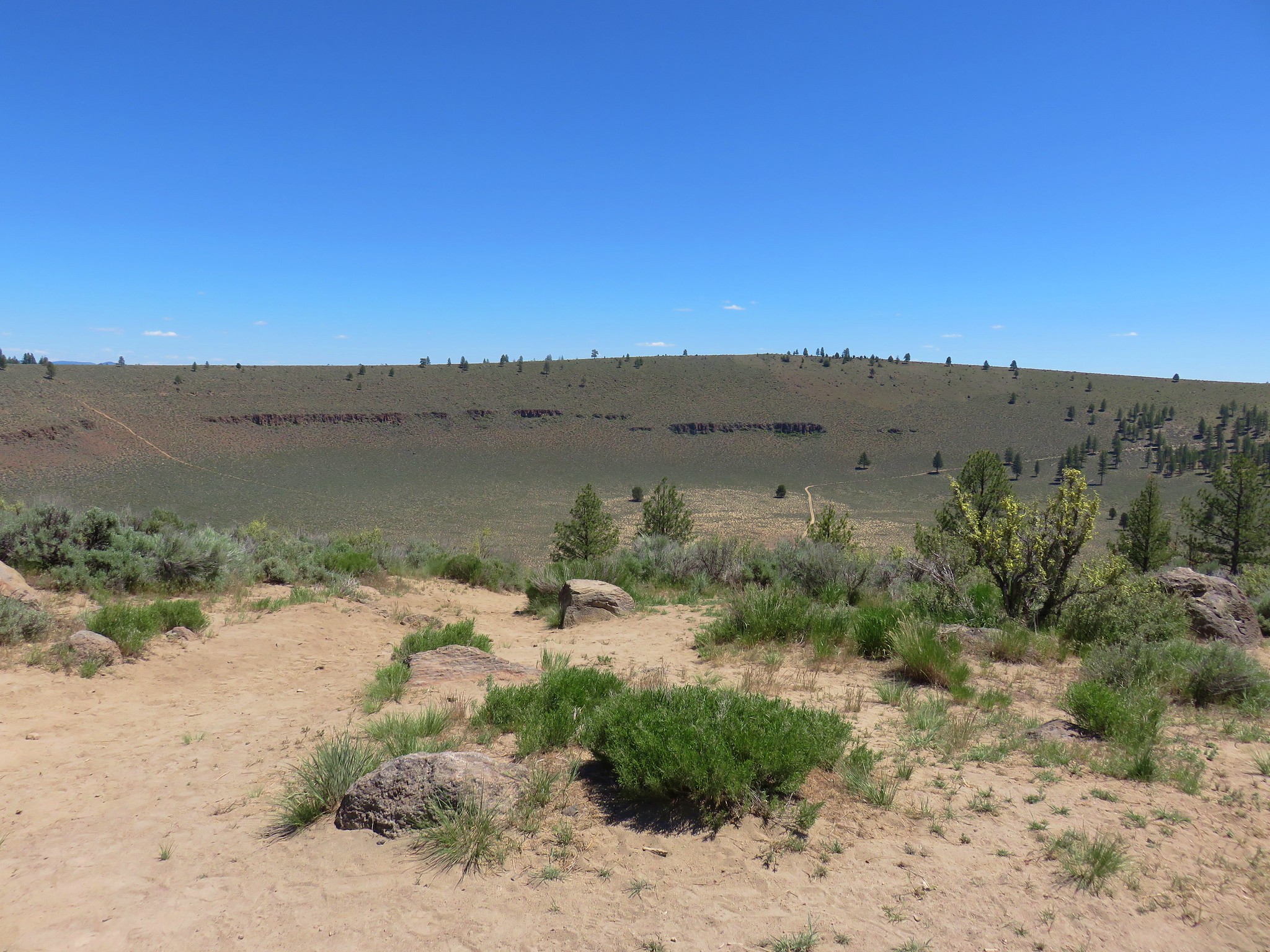
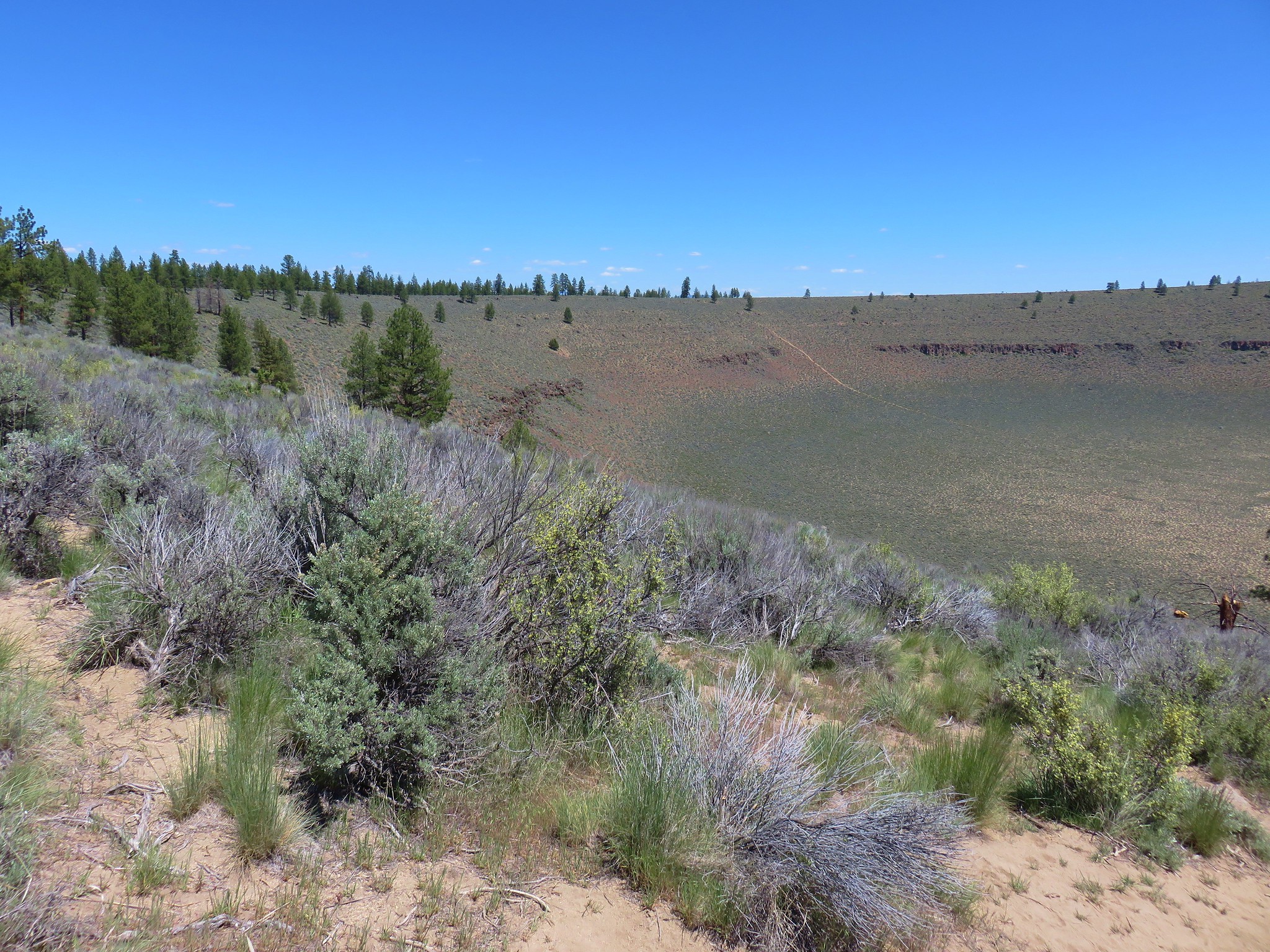
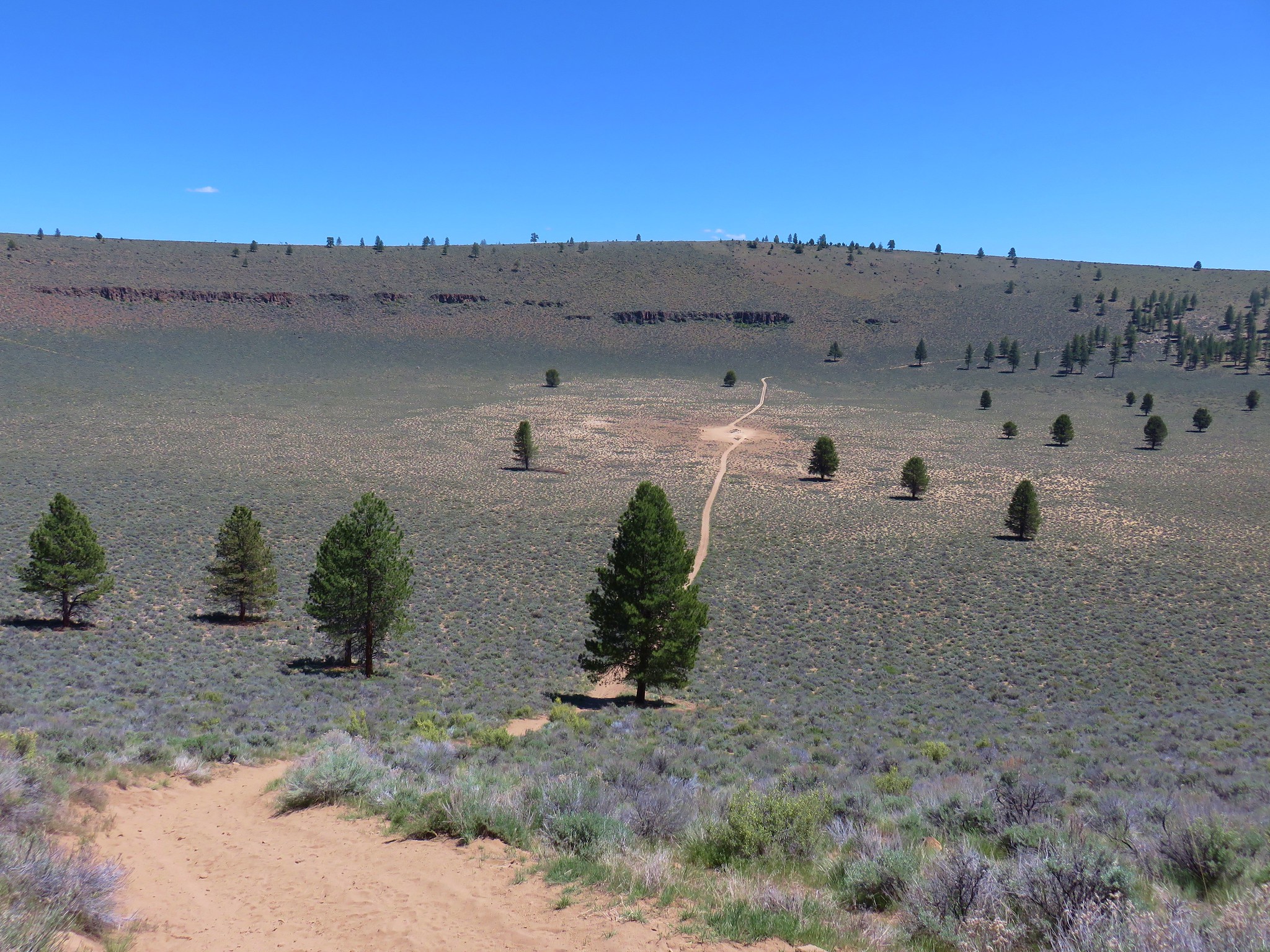
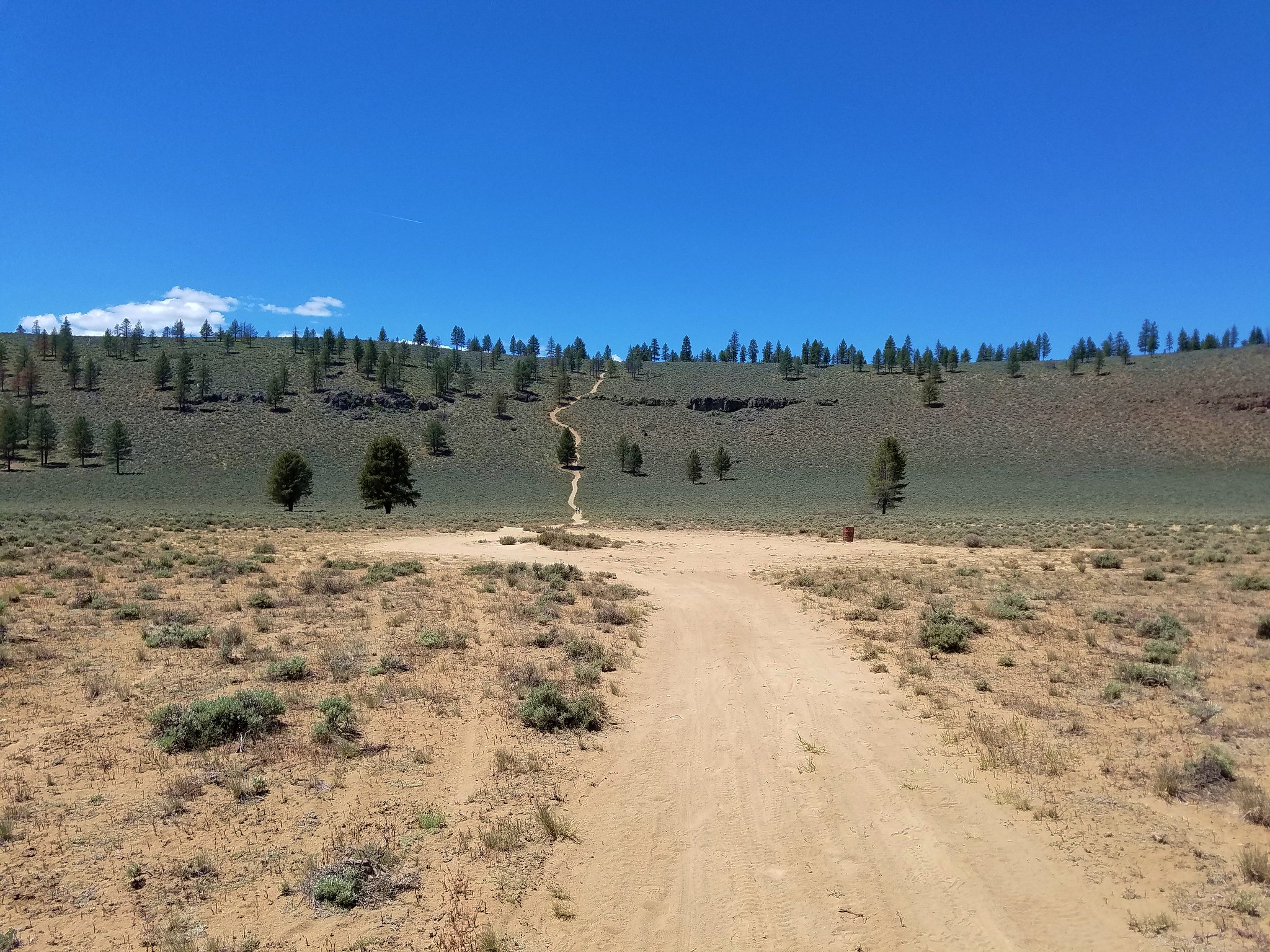
Welcome to another installment of Throwback Thursday. Today we’re covering a 7/30/2012 visit to Pine Mountain east of Bend. This mostly trail-less hike started at the Pine Mountain Observatory.

We walked past the domes housing the telescopes and took a trail near the white dome uphill to a stone windbreak.

Pine Mountain Observatory

Pine Mountain Observatory

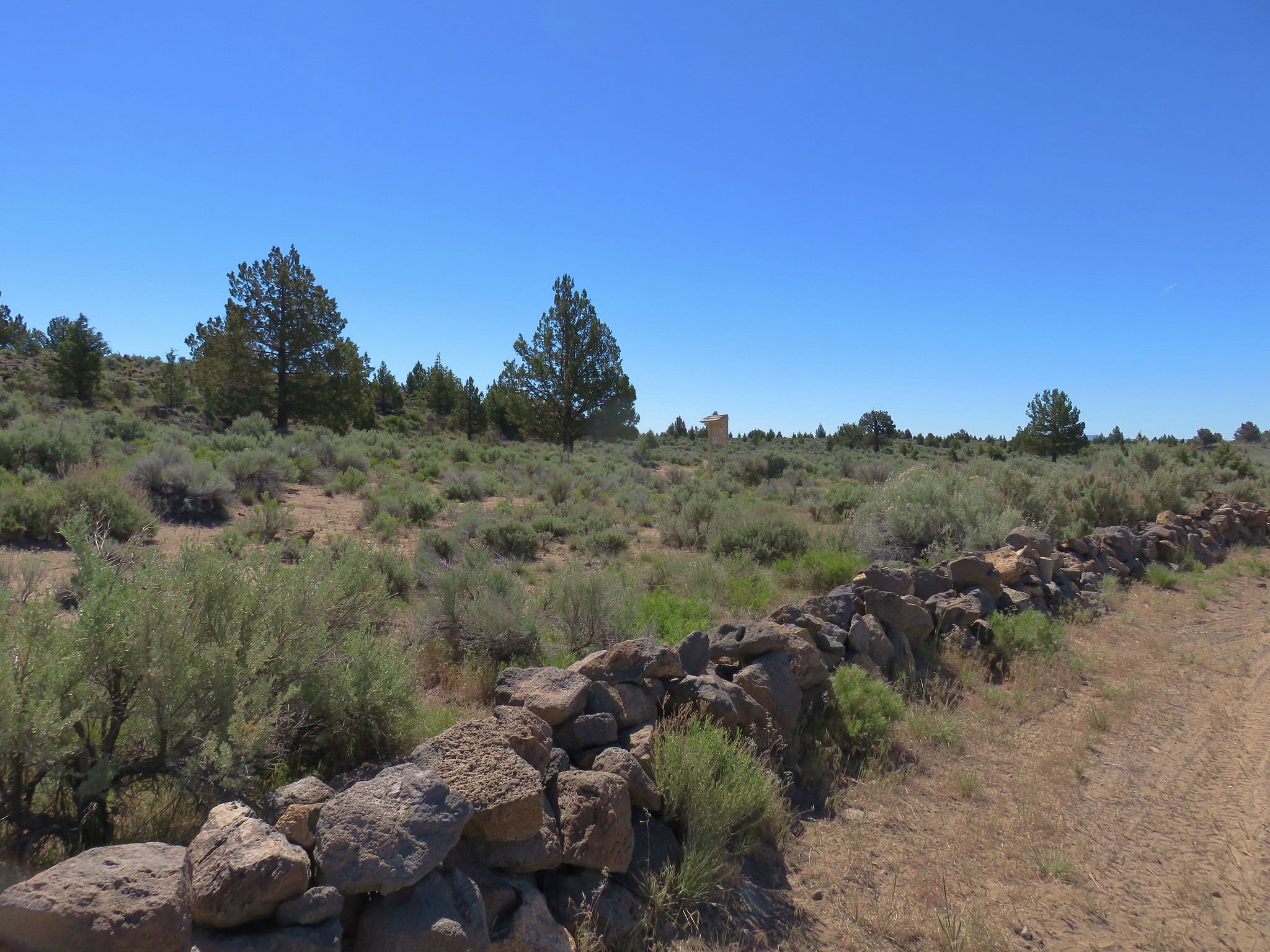
Stone windbreak on Pine Mountain

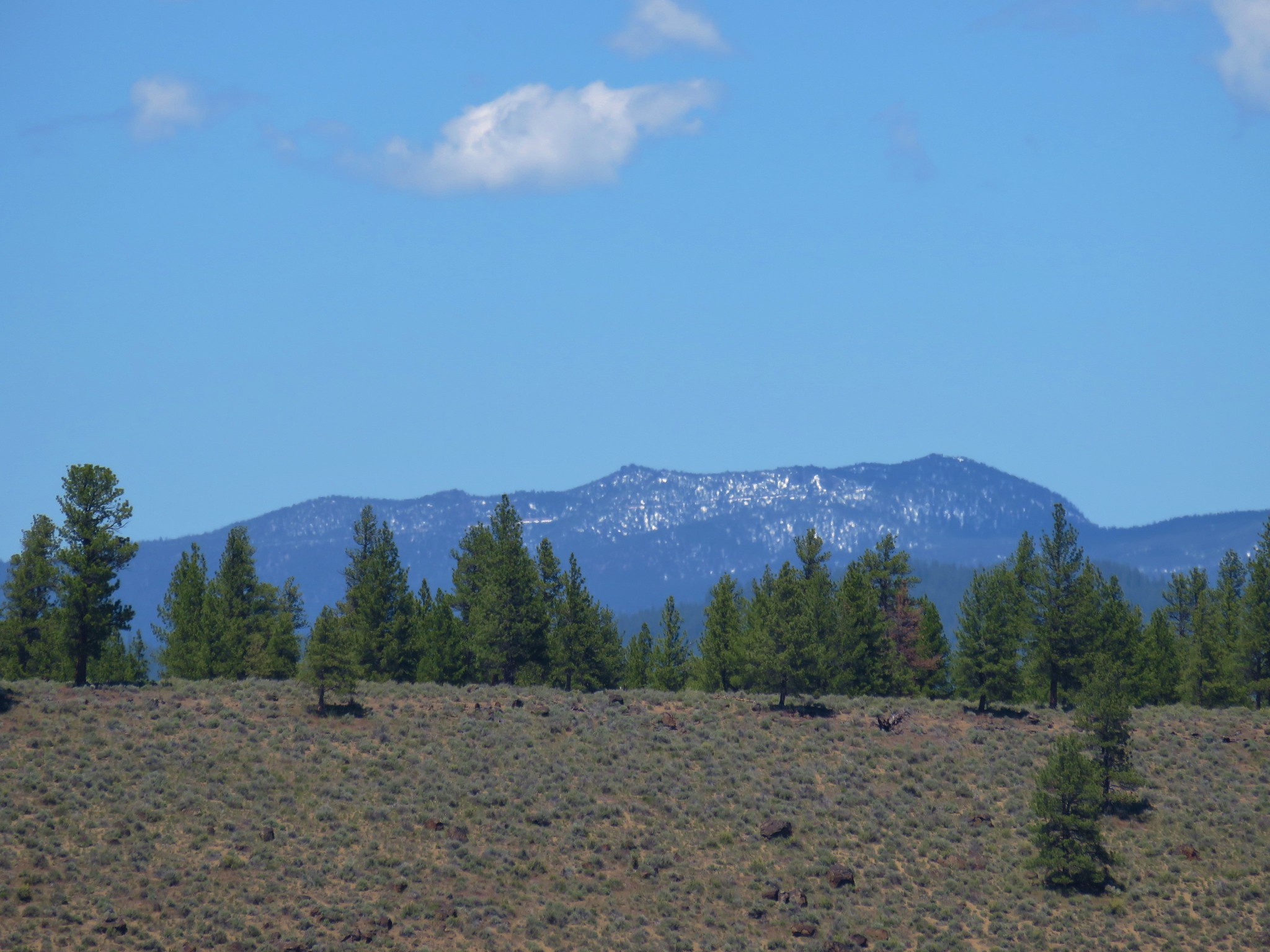
The high point of this first hill has an elevation of 6349′, 160′ lower than the actual summit of Pine Mountain. The view from the first shelter was good nonetheless with Mt. Bachelor, Broken Top and the Three Sisters lining the horizon to the NW.

Mt. Bachelor, Tumalo Mountain, Broken Top and the Three Sisters from Pine Mountain

Further north was Black Crater, Mt. Washington, and Three Fingered Jack

Black Crater, Mt. Washington and Three Fingered Jack

The view extended NW to Mt. Jefferson.

Mt. Jefferson

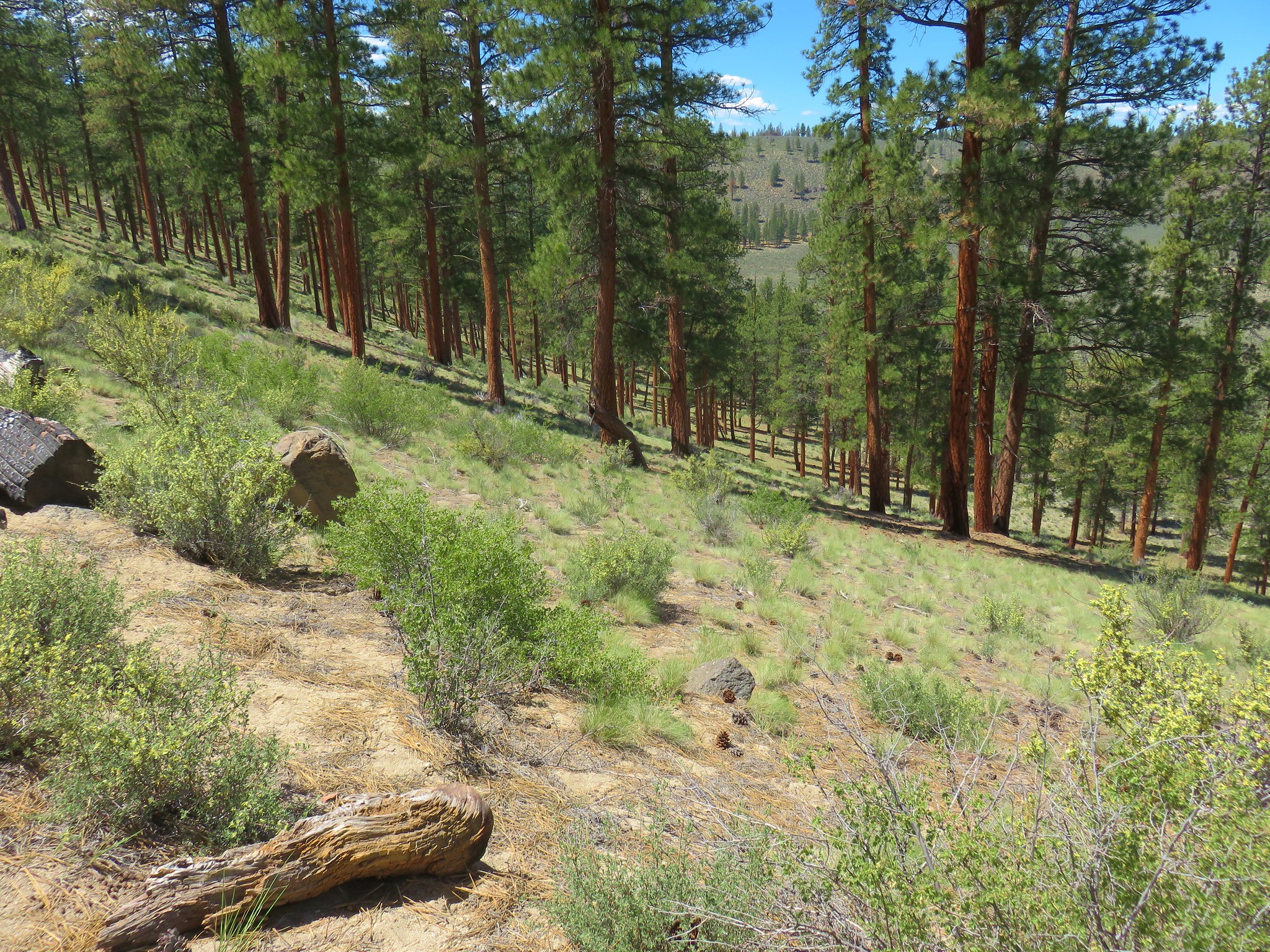
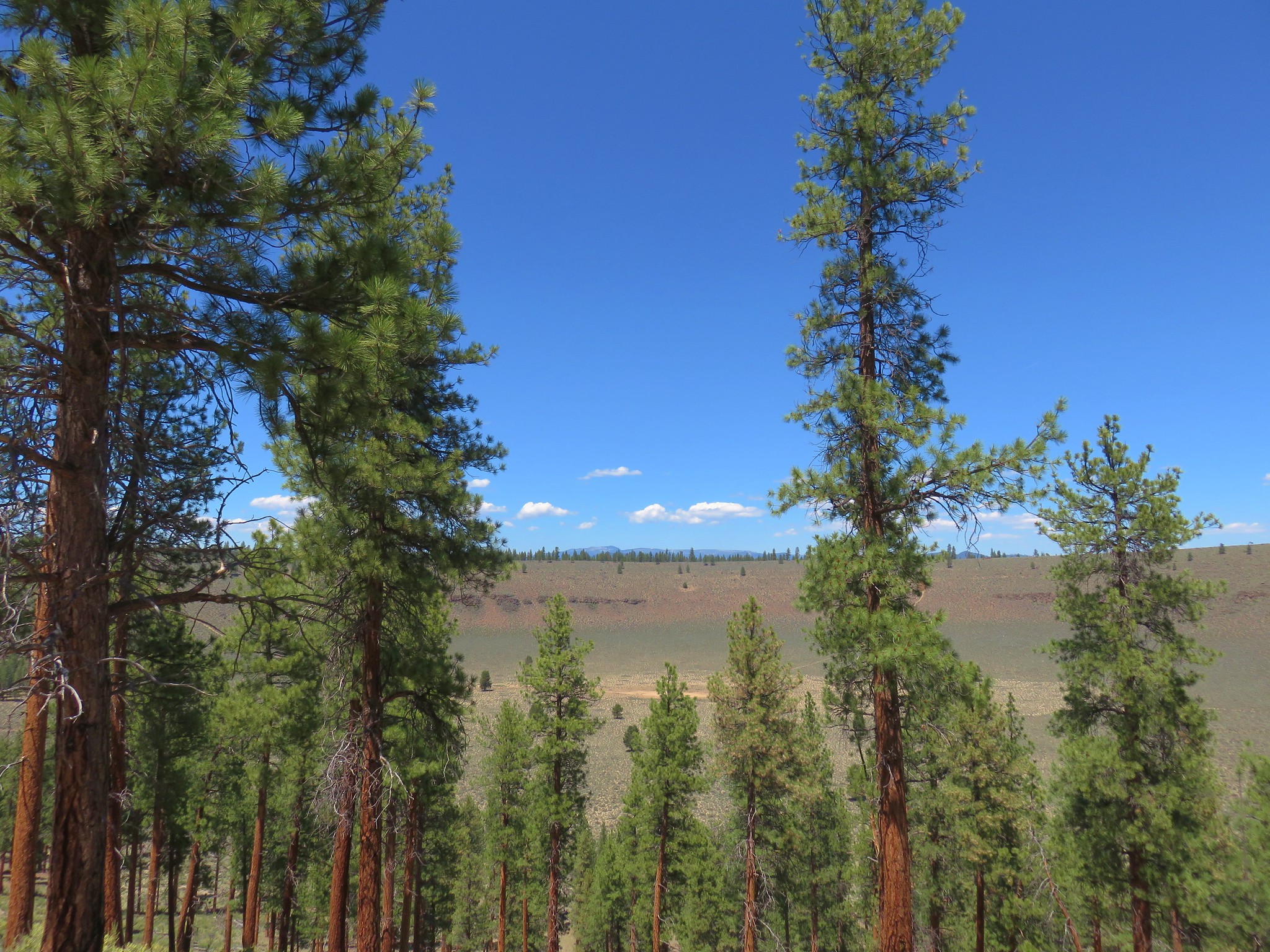
From the stone shelter we followed a faint path downhill to the east (away from the observatory) which brought us to gravel road where we turned left. For the next half mile we remained on the road staying left at all times. The thinned forest along the road was mostly Ponderosa Pines. The open forest allowed us to spot several deer along the way.

Deer on Pine Mountain

Deer on Pine Mountain

Deer on Pine Mountain

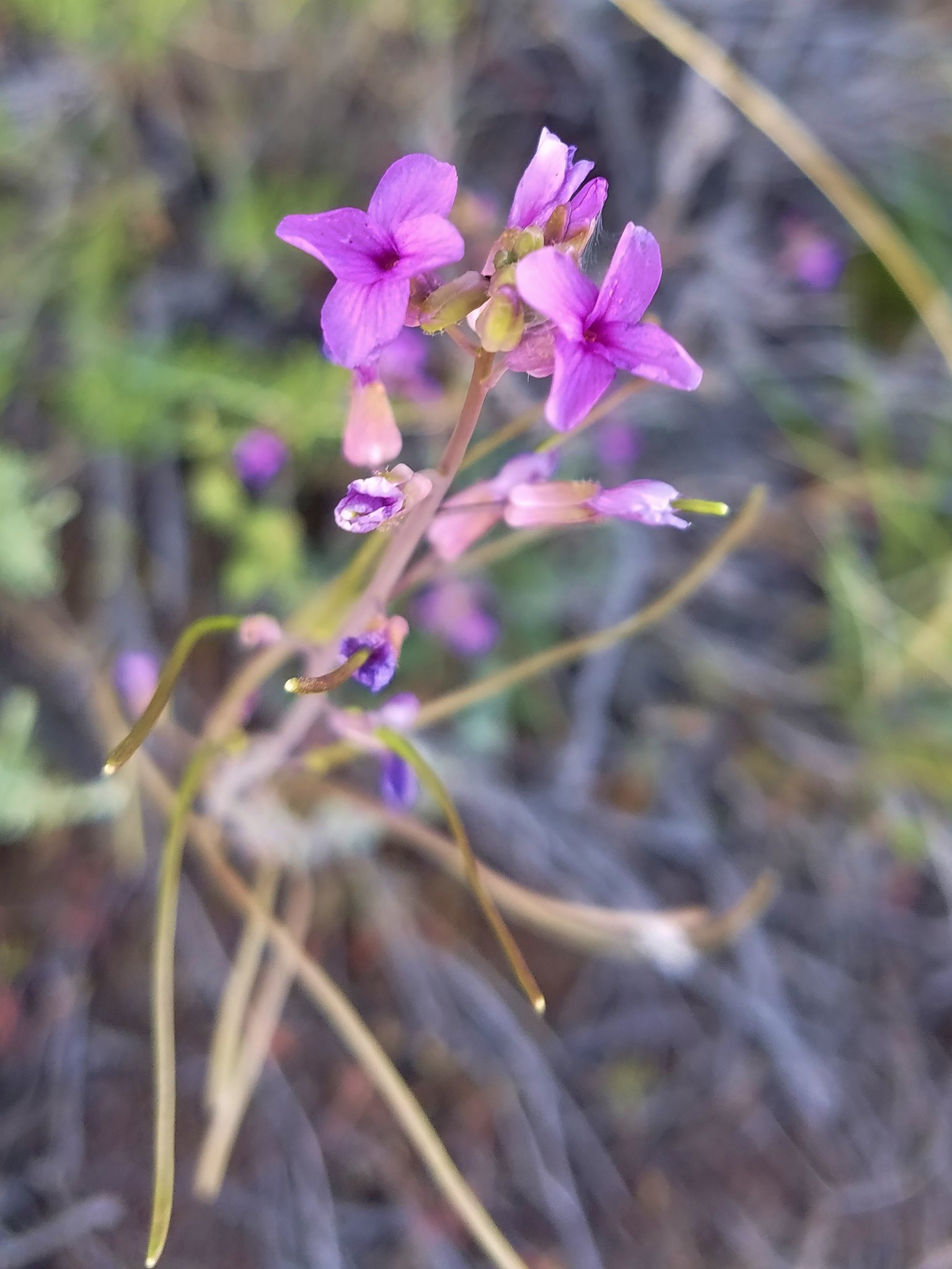
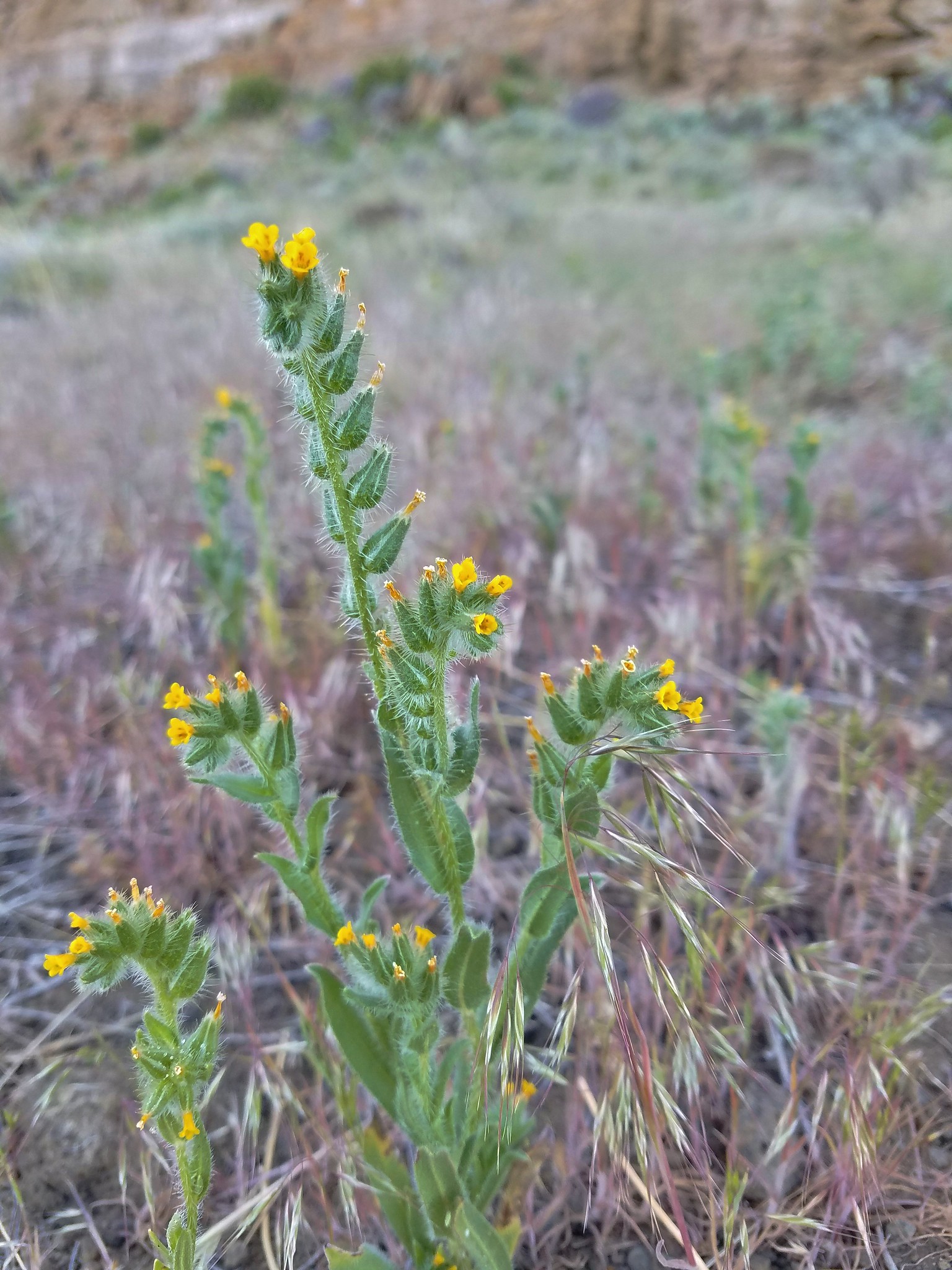
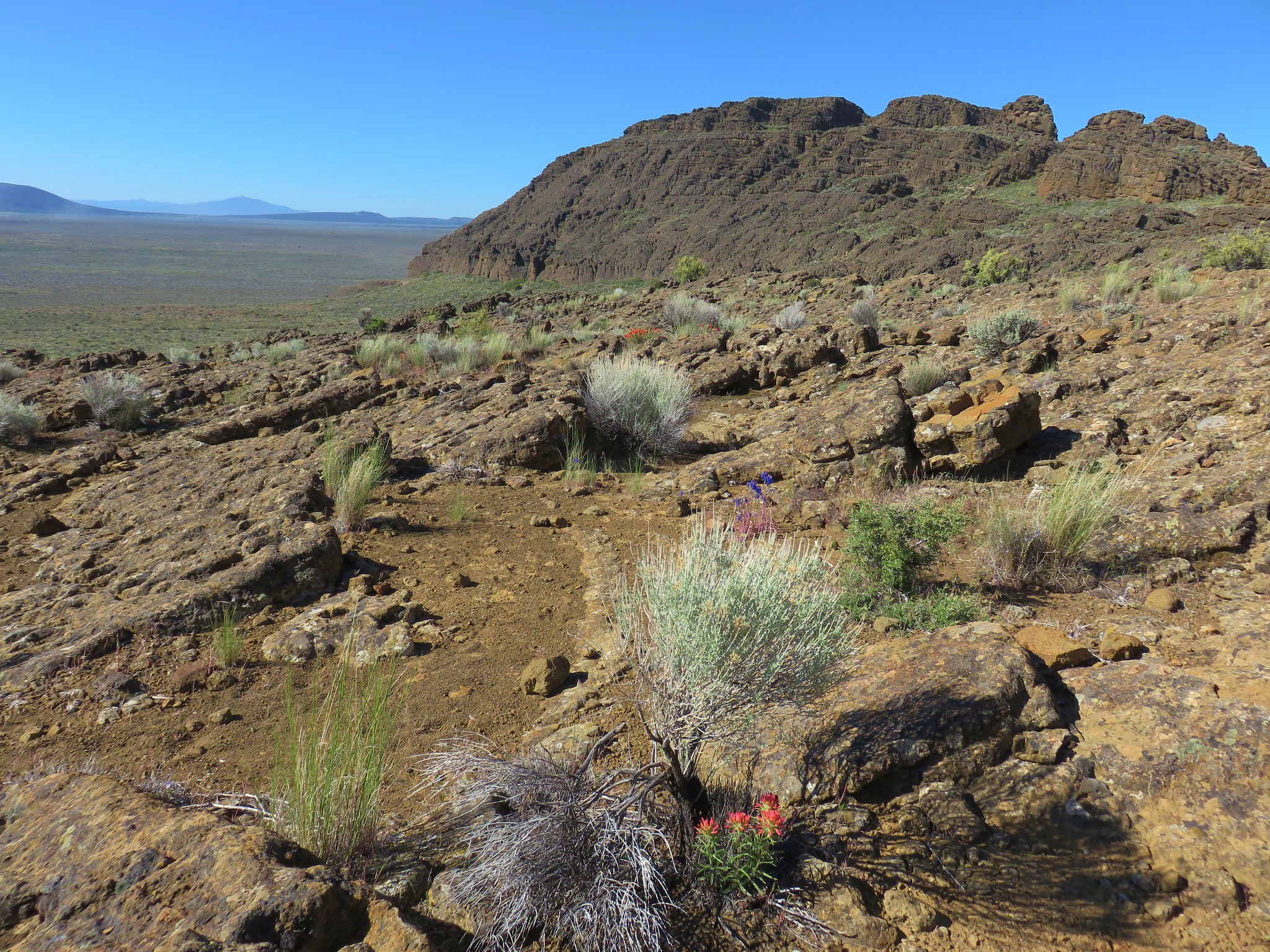
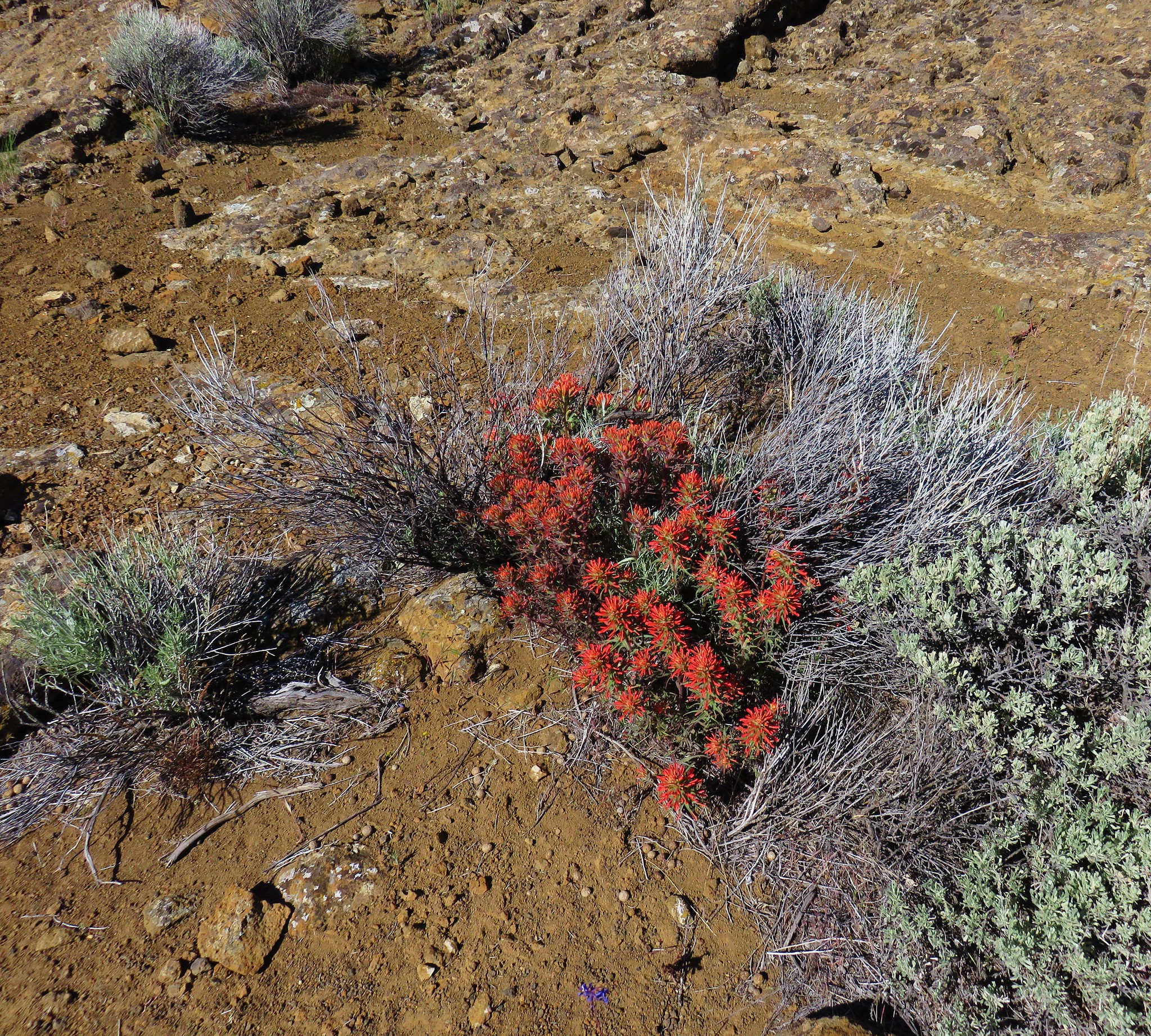
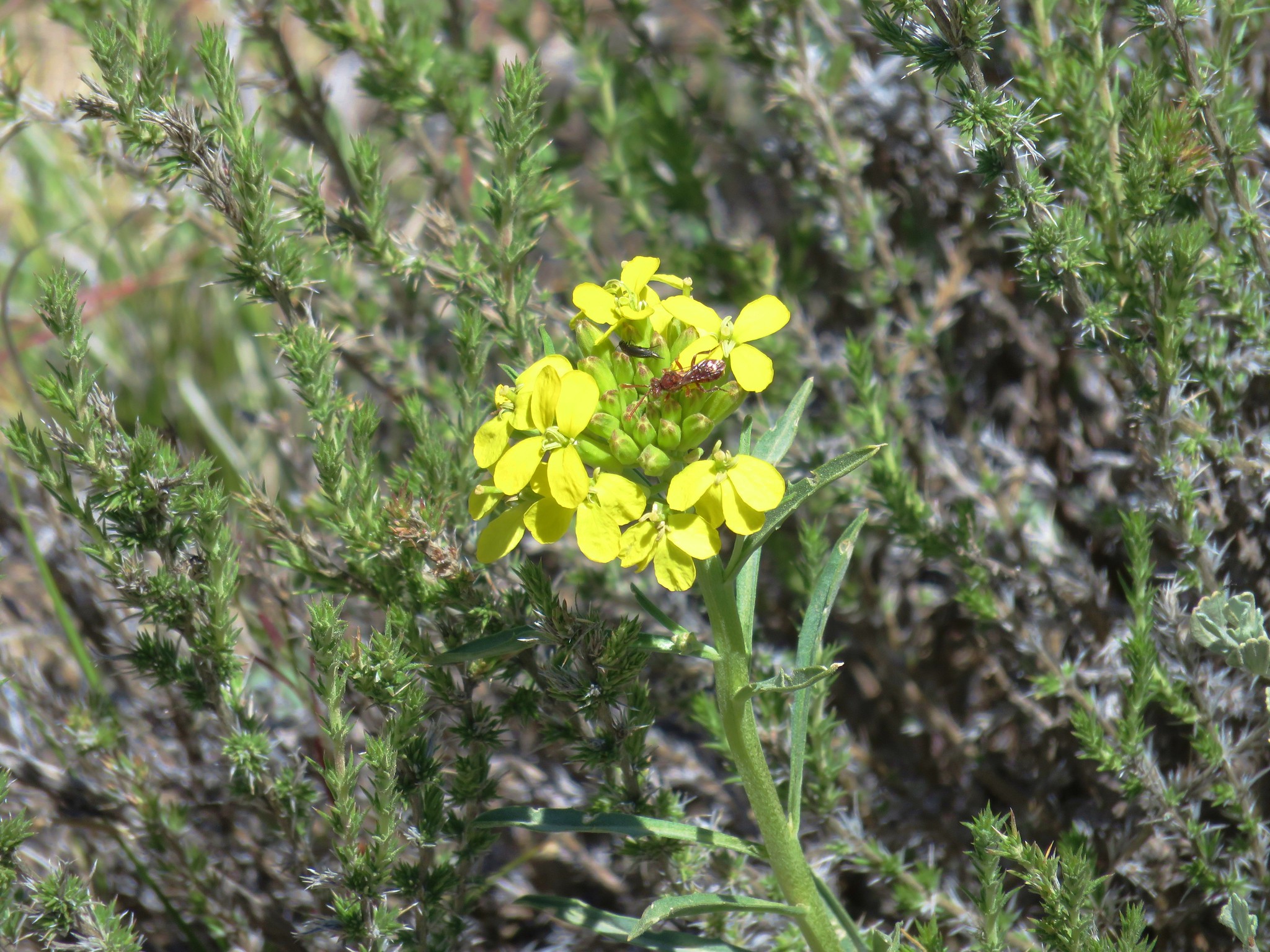
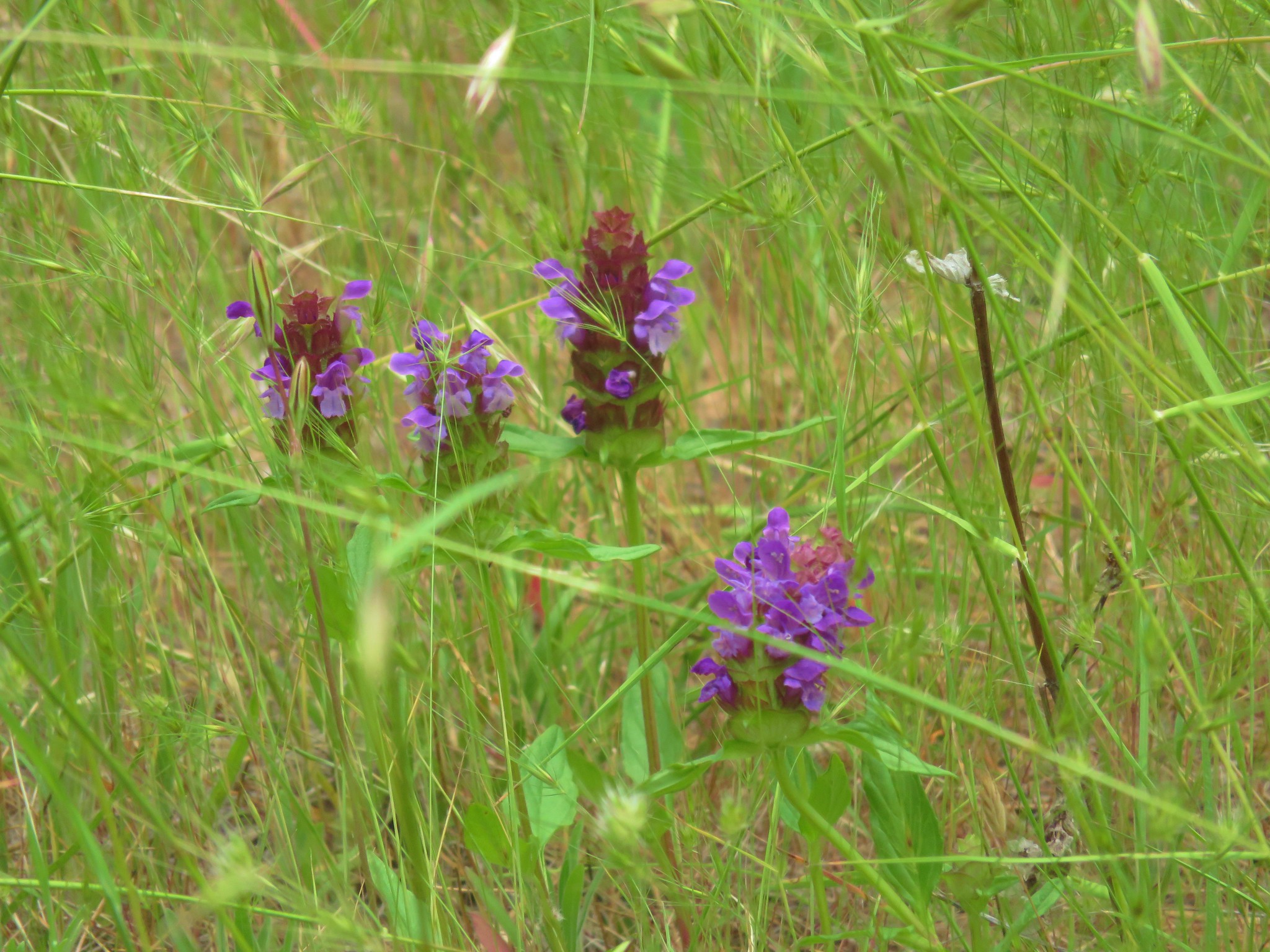
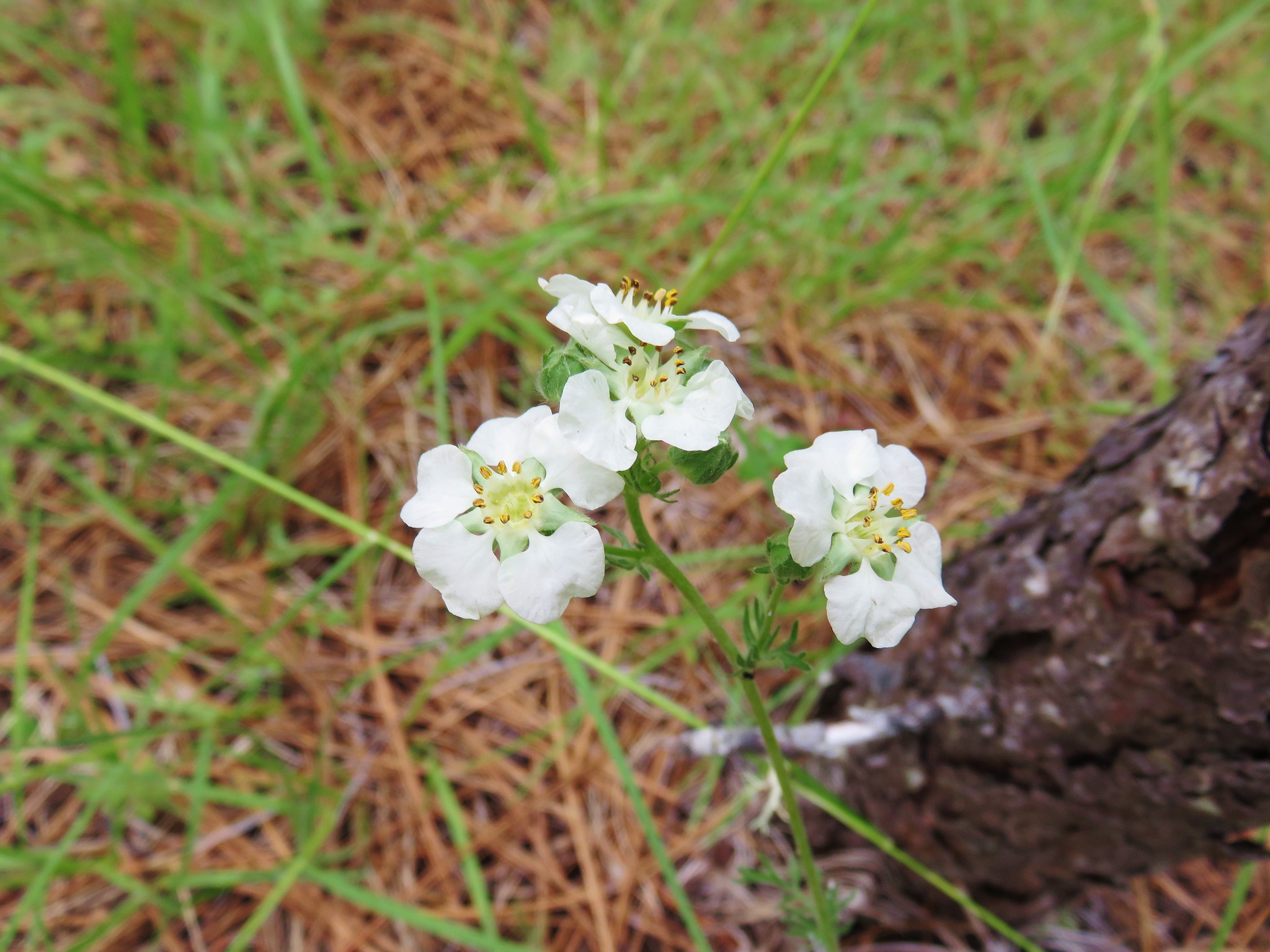
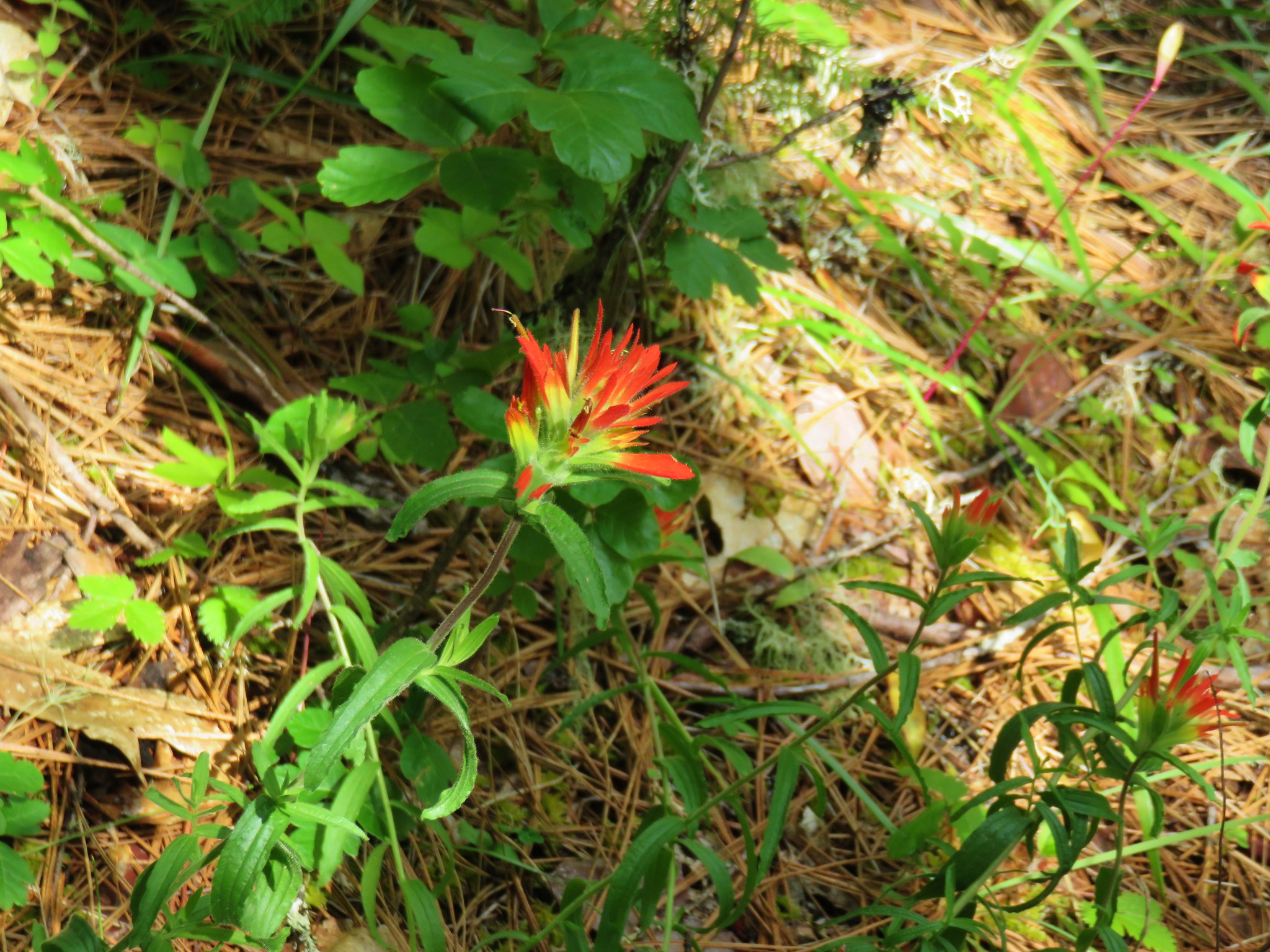
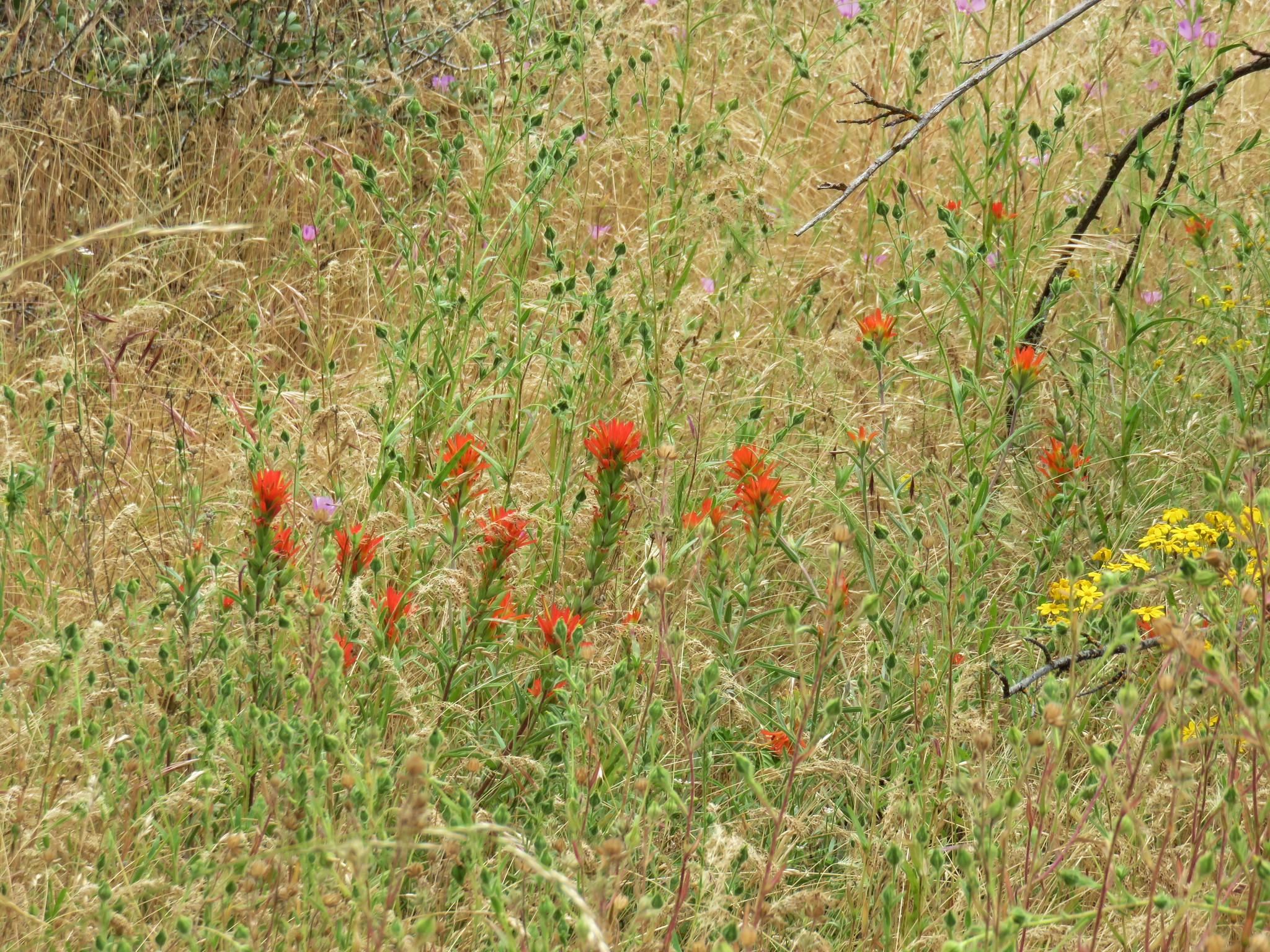
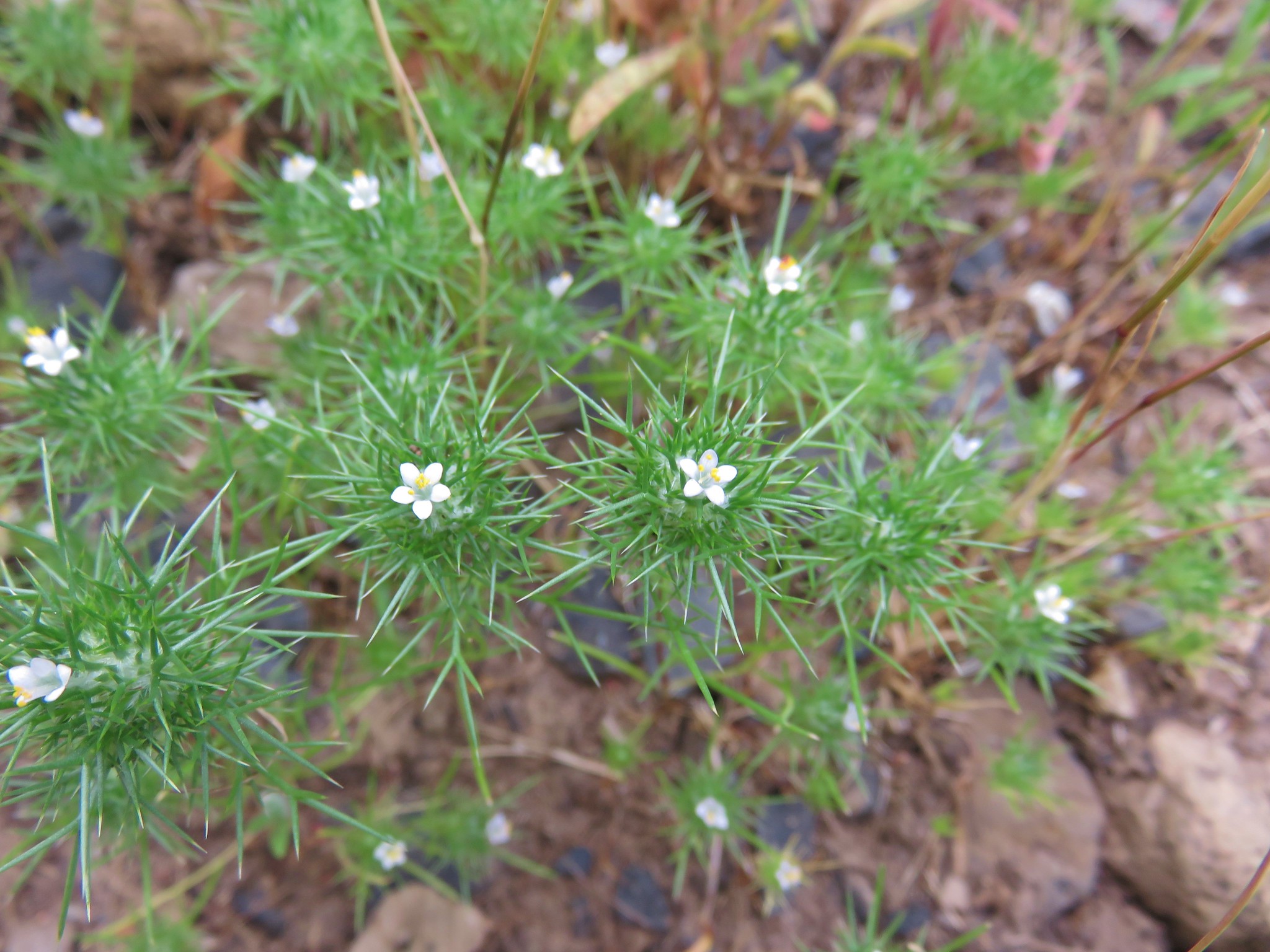
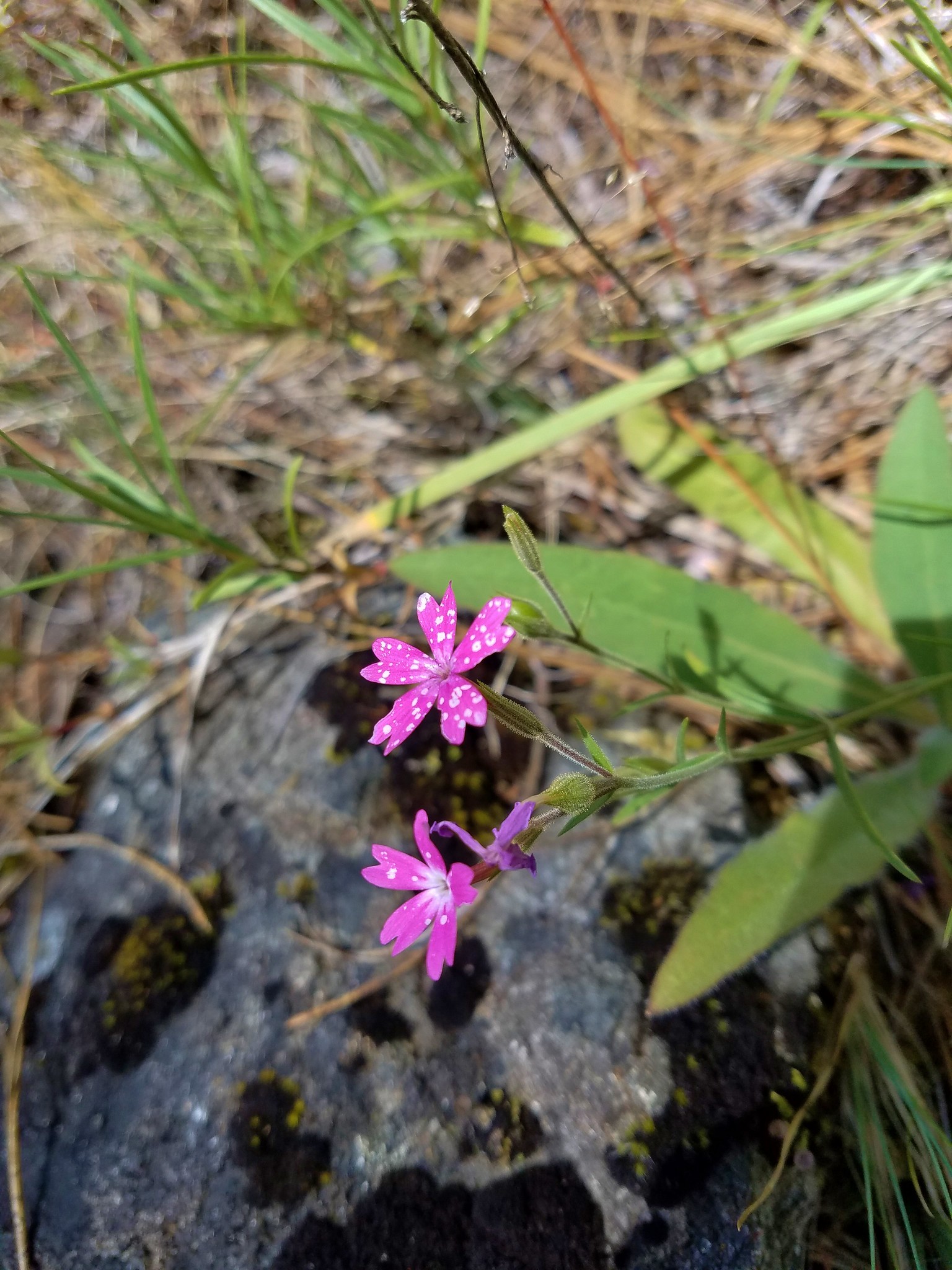
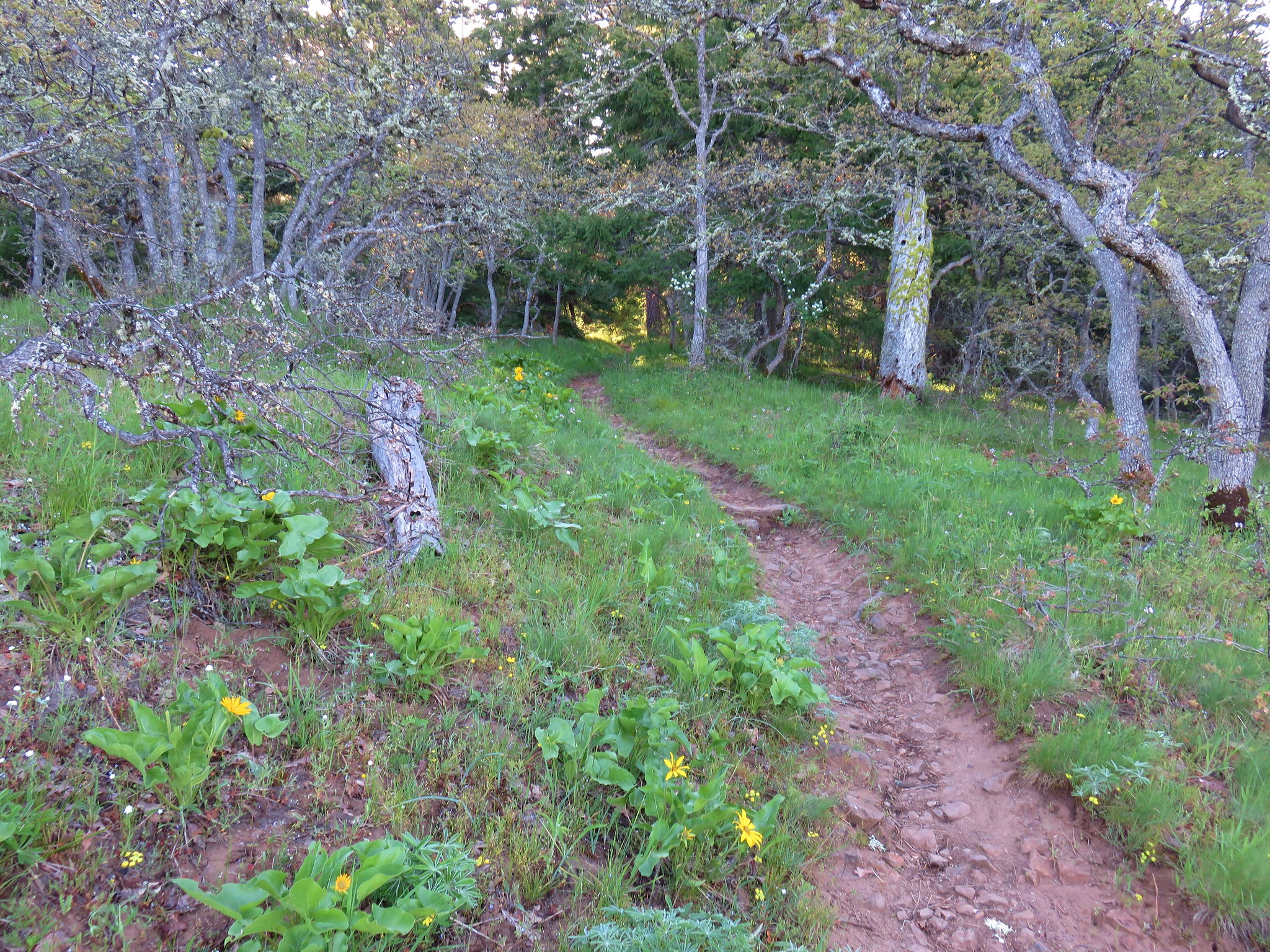
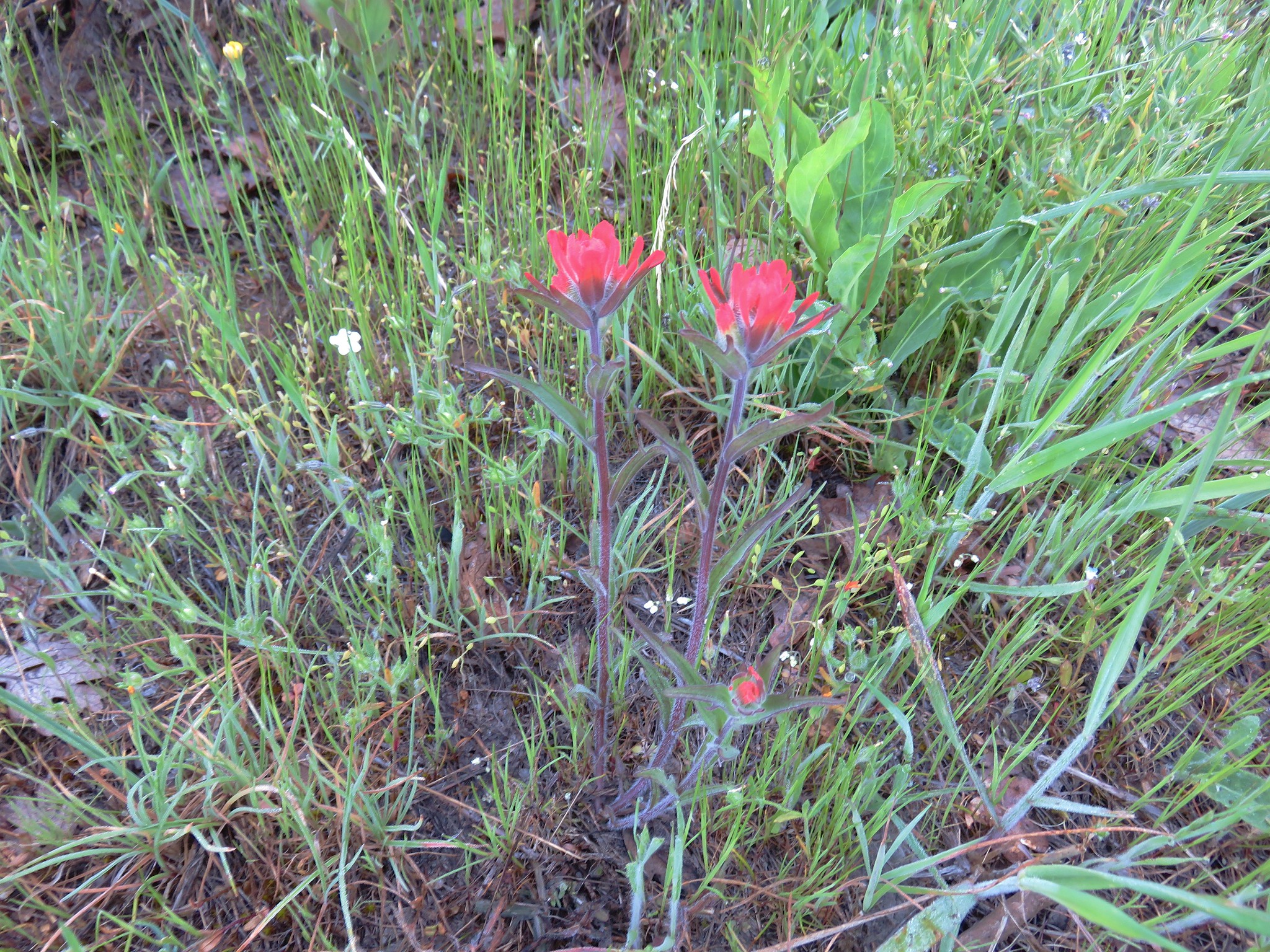
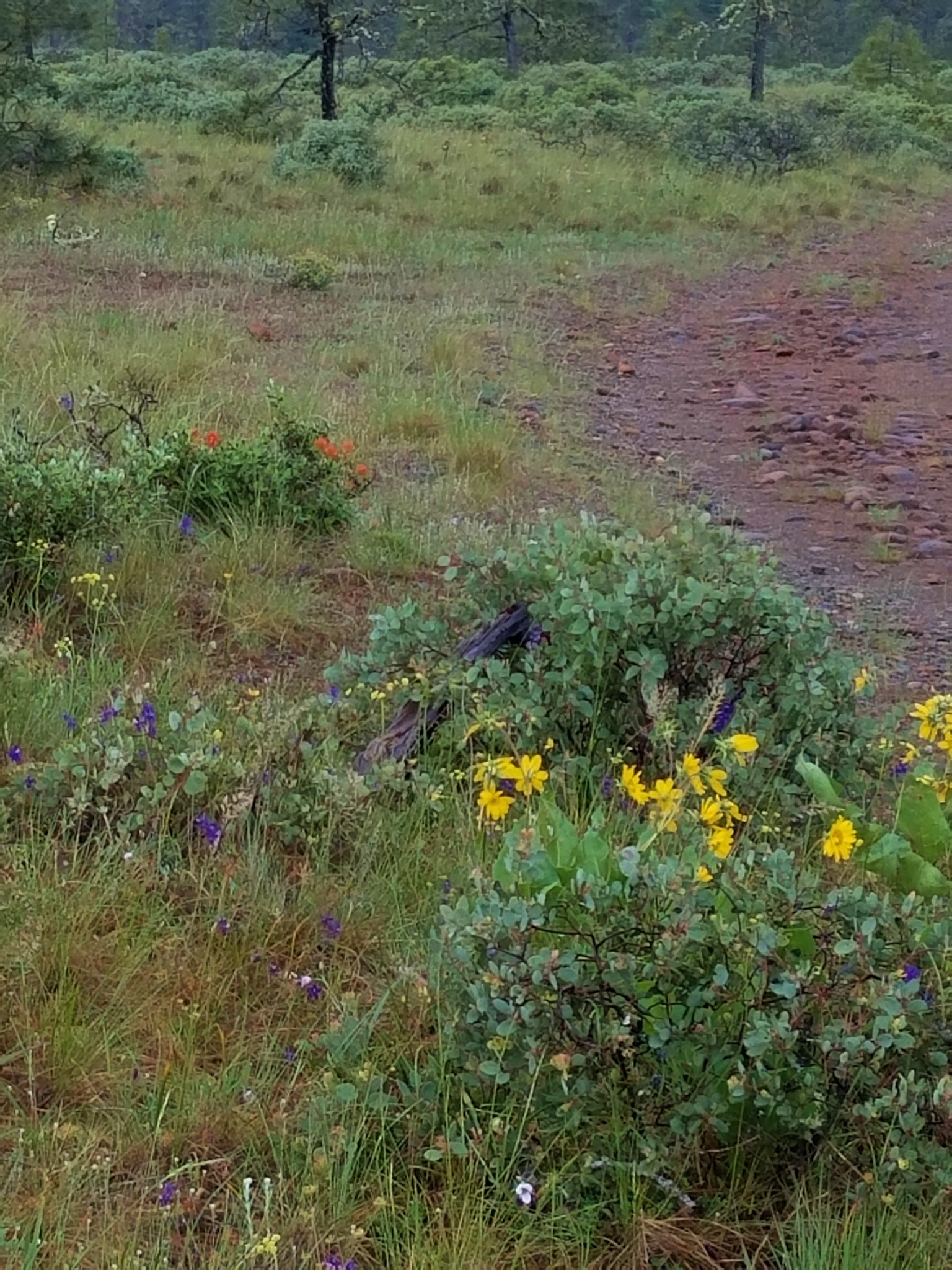
We left the road at a sharp right turn on a wide saddle. When the road turned we stayed straight following faint cattle trails through a level ponderosa forest for approximately 200 yards to a rock knoll. Wildflowers amid the sagebrush here included mountain coyote mint, paintbrush, and catchfly.

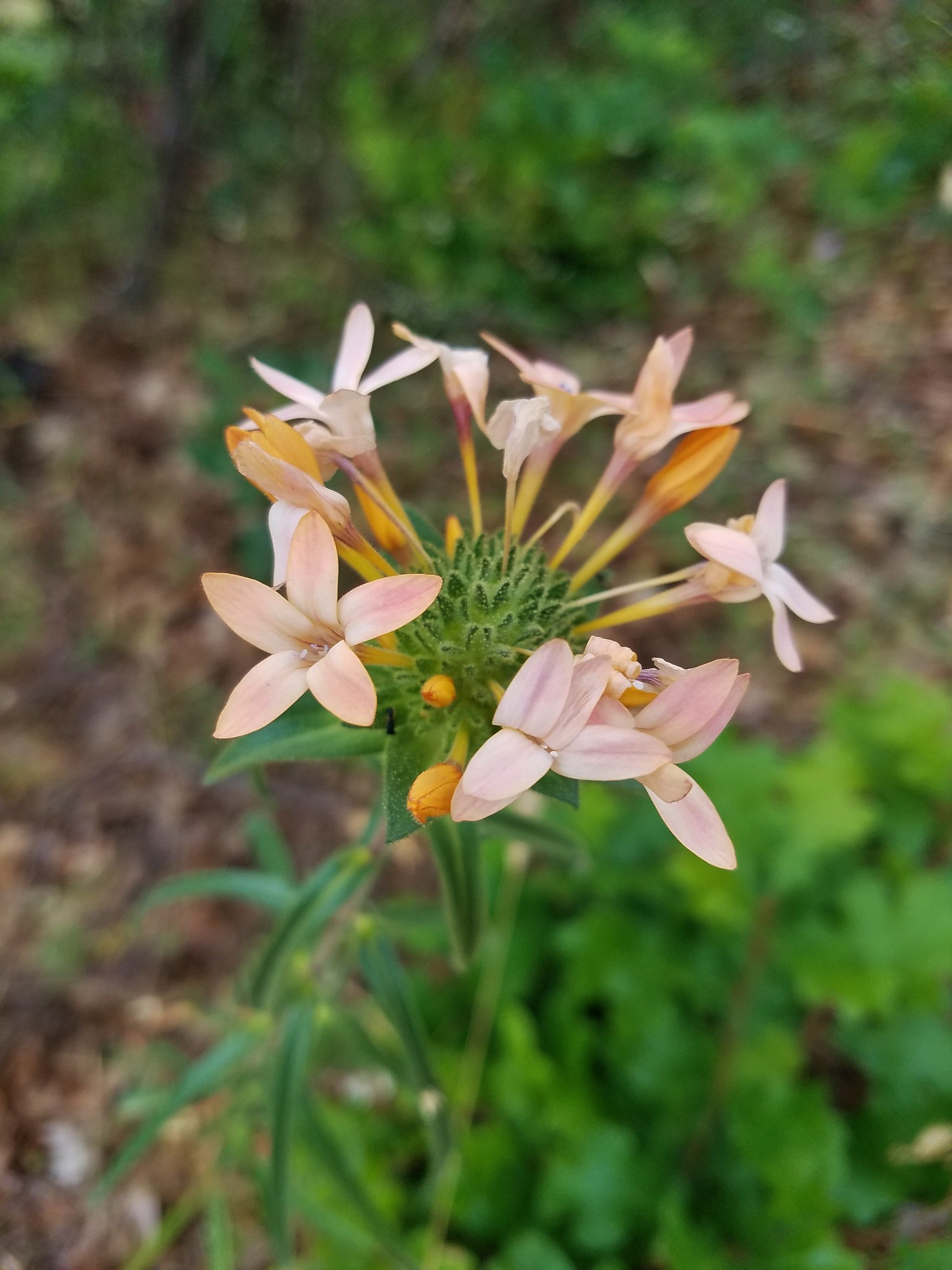
Coyote mint on Pine Mountain

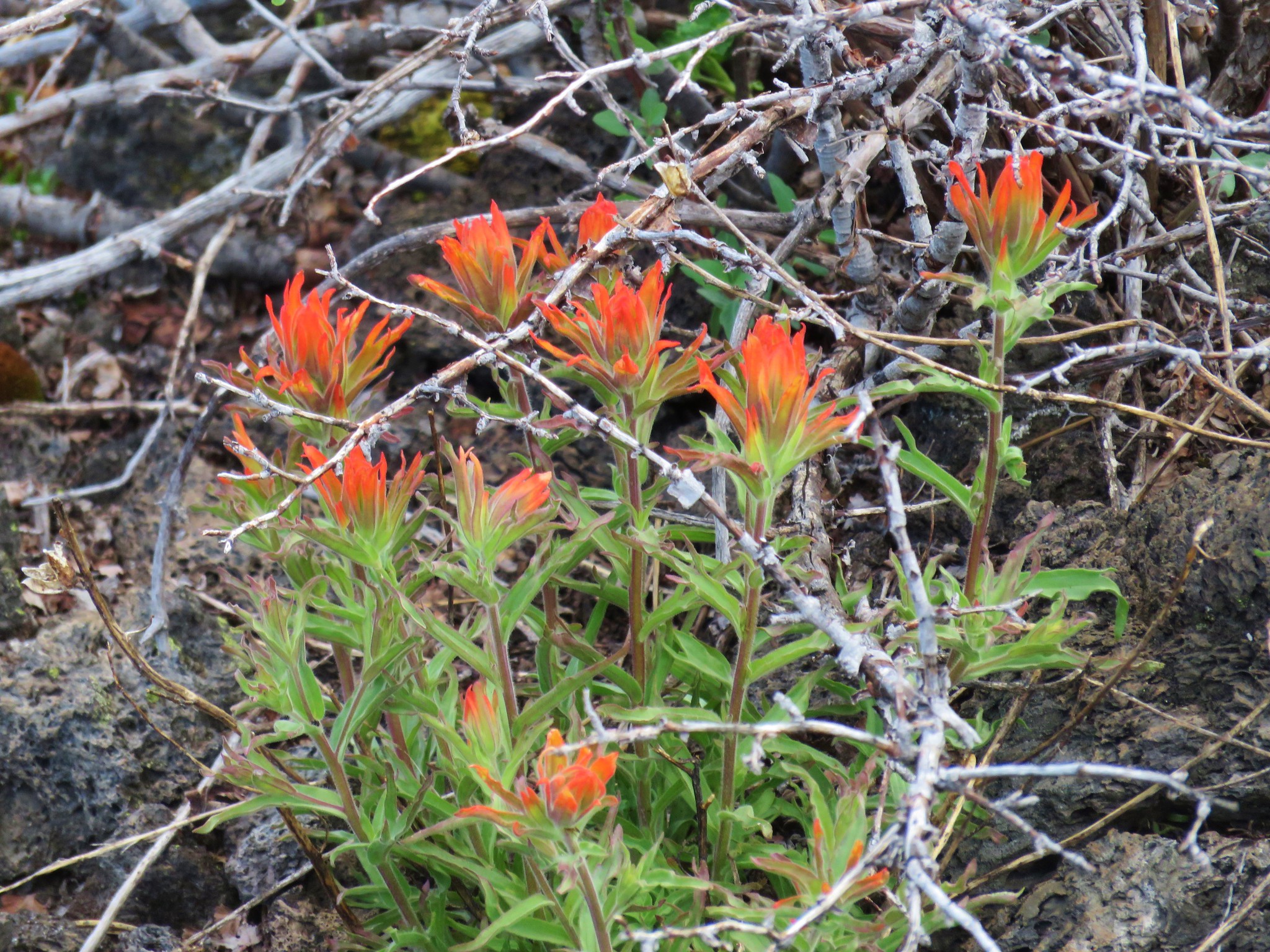
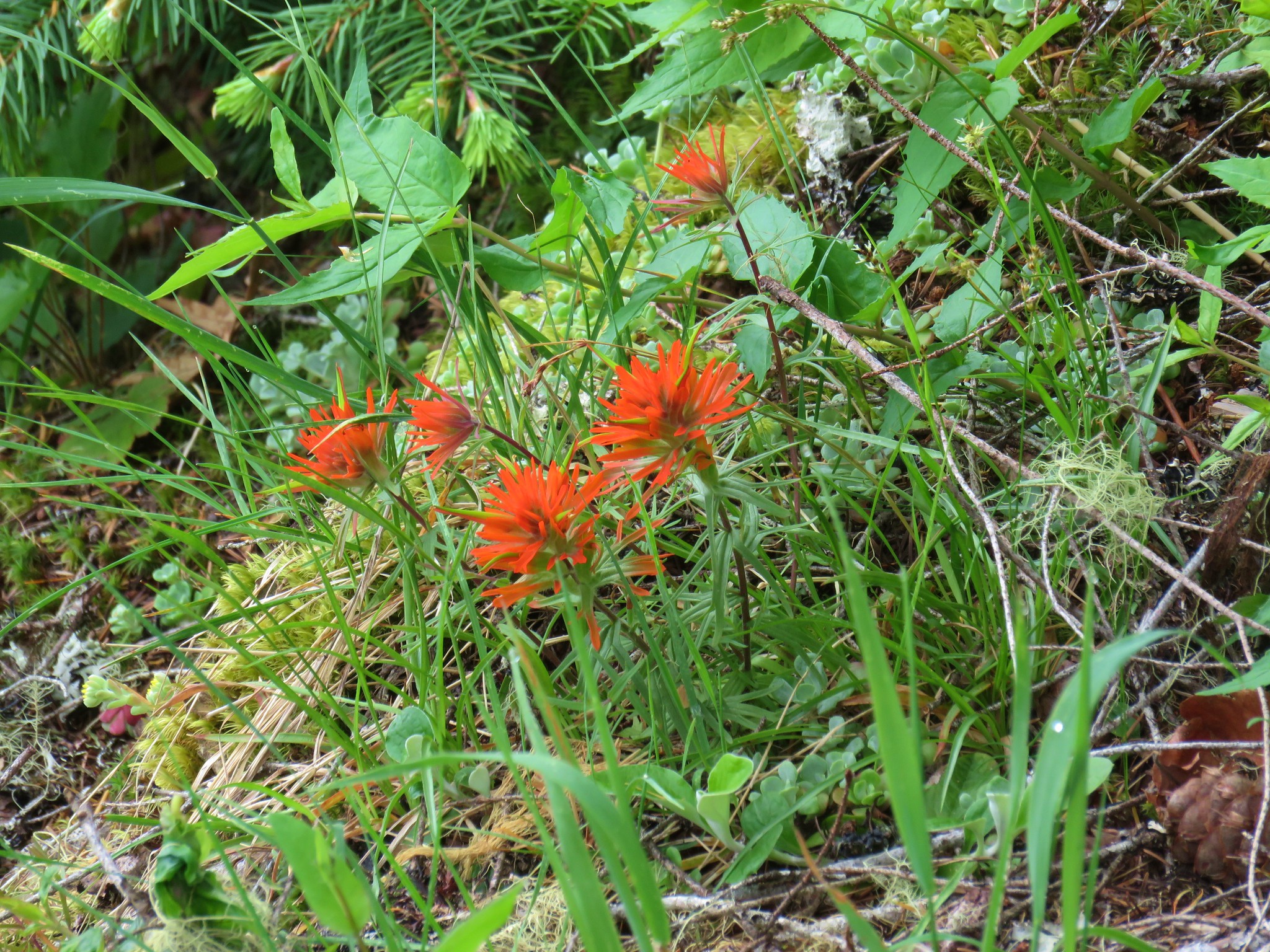
Paintbrush

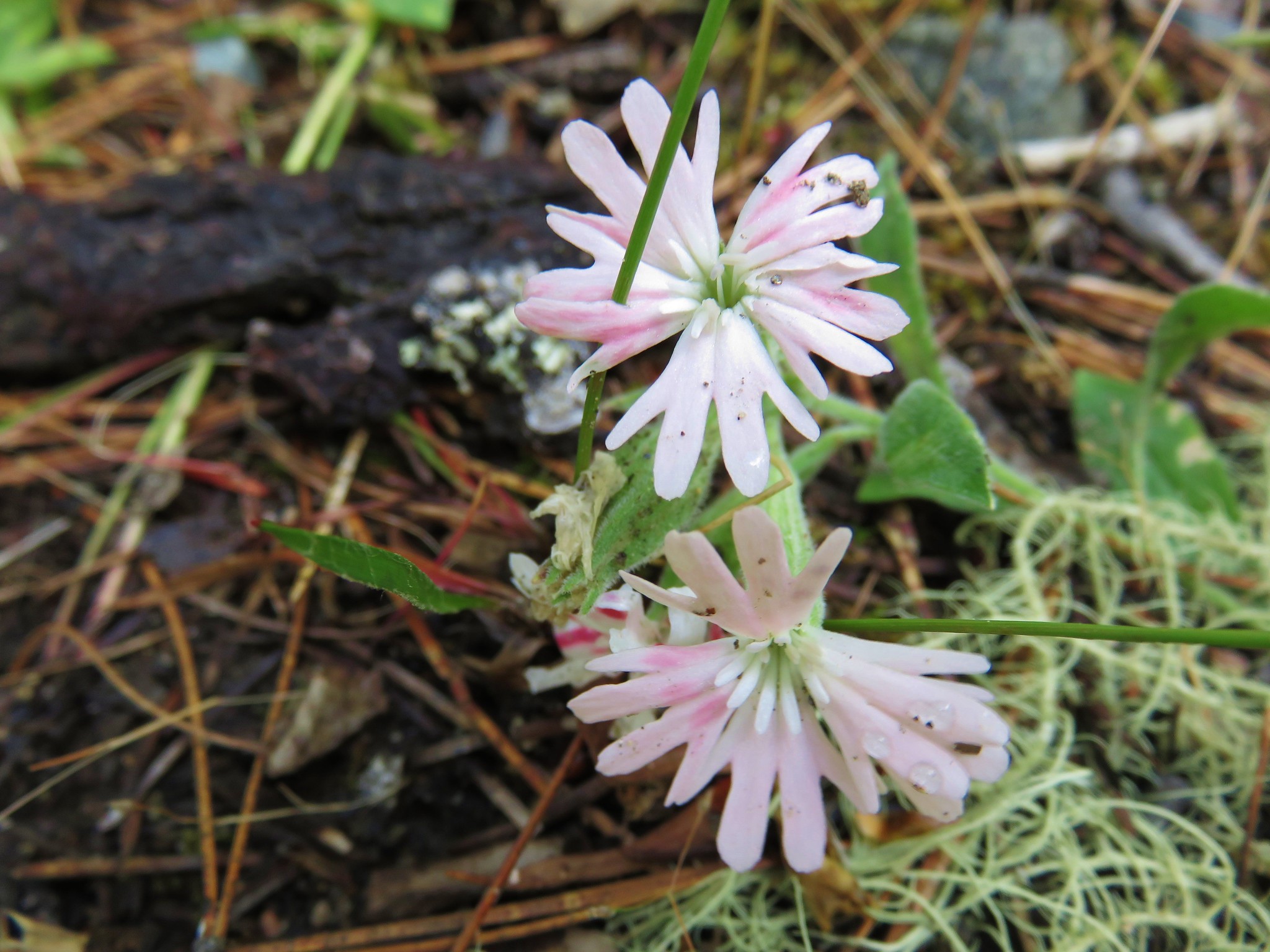
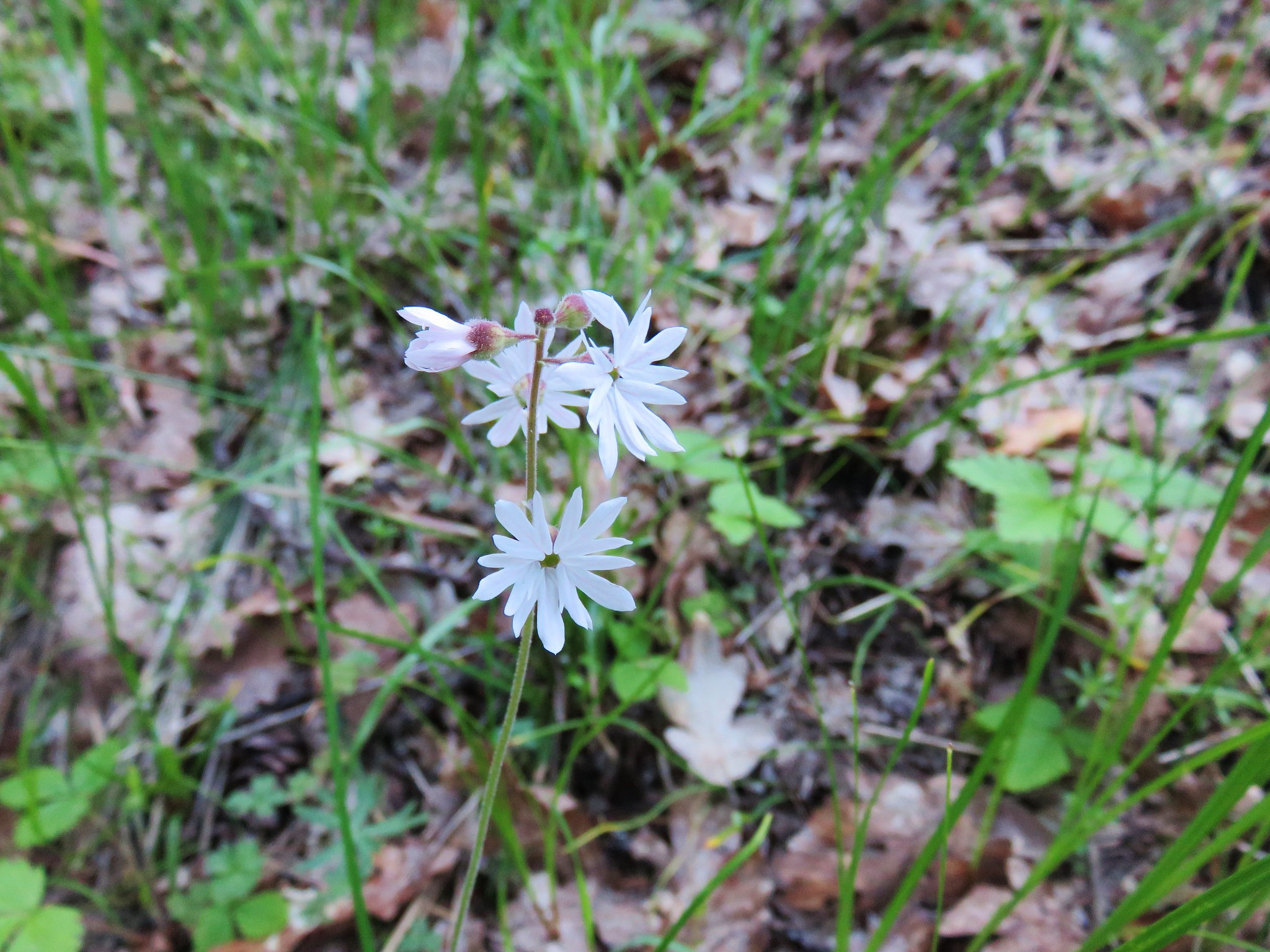
Catchfly

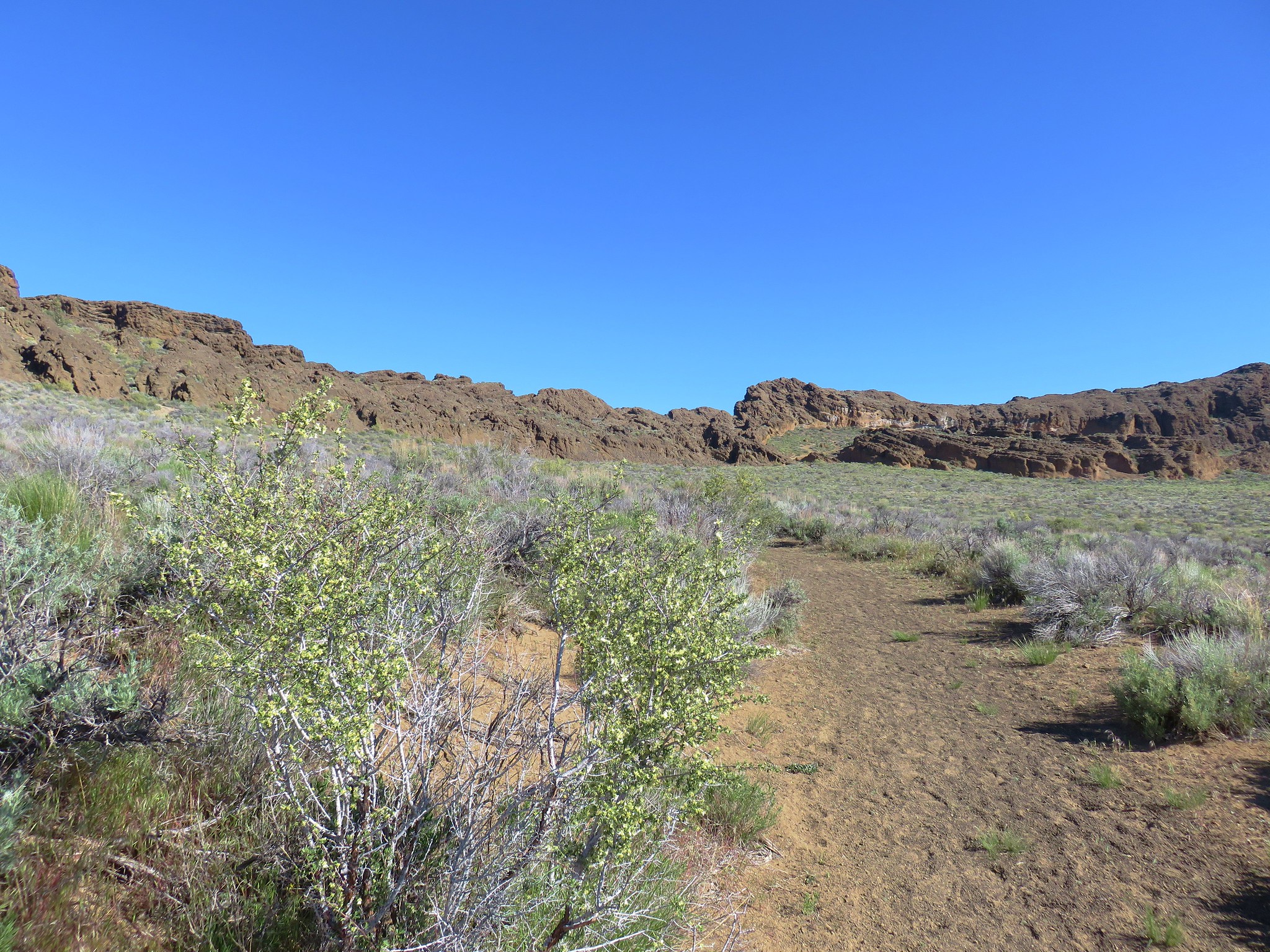
We approached the knoll on it’s right side passing it on a gentle sagebrush covered slope.

Offtrail on Pine Mountain

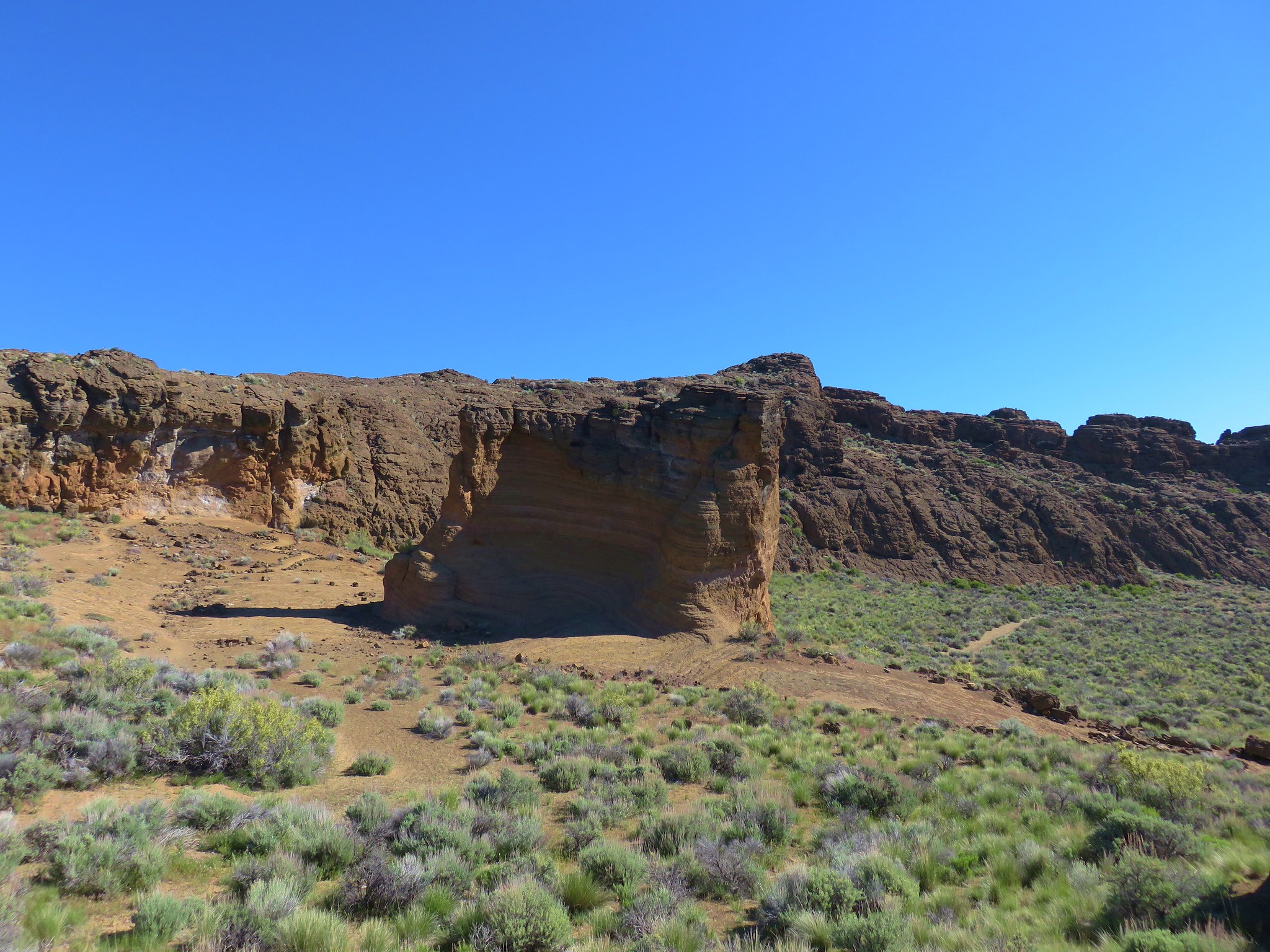
Rock outcrop on Pine Mountain

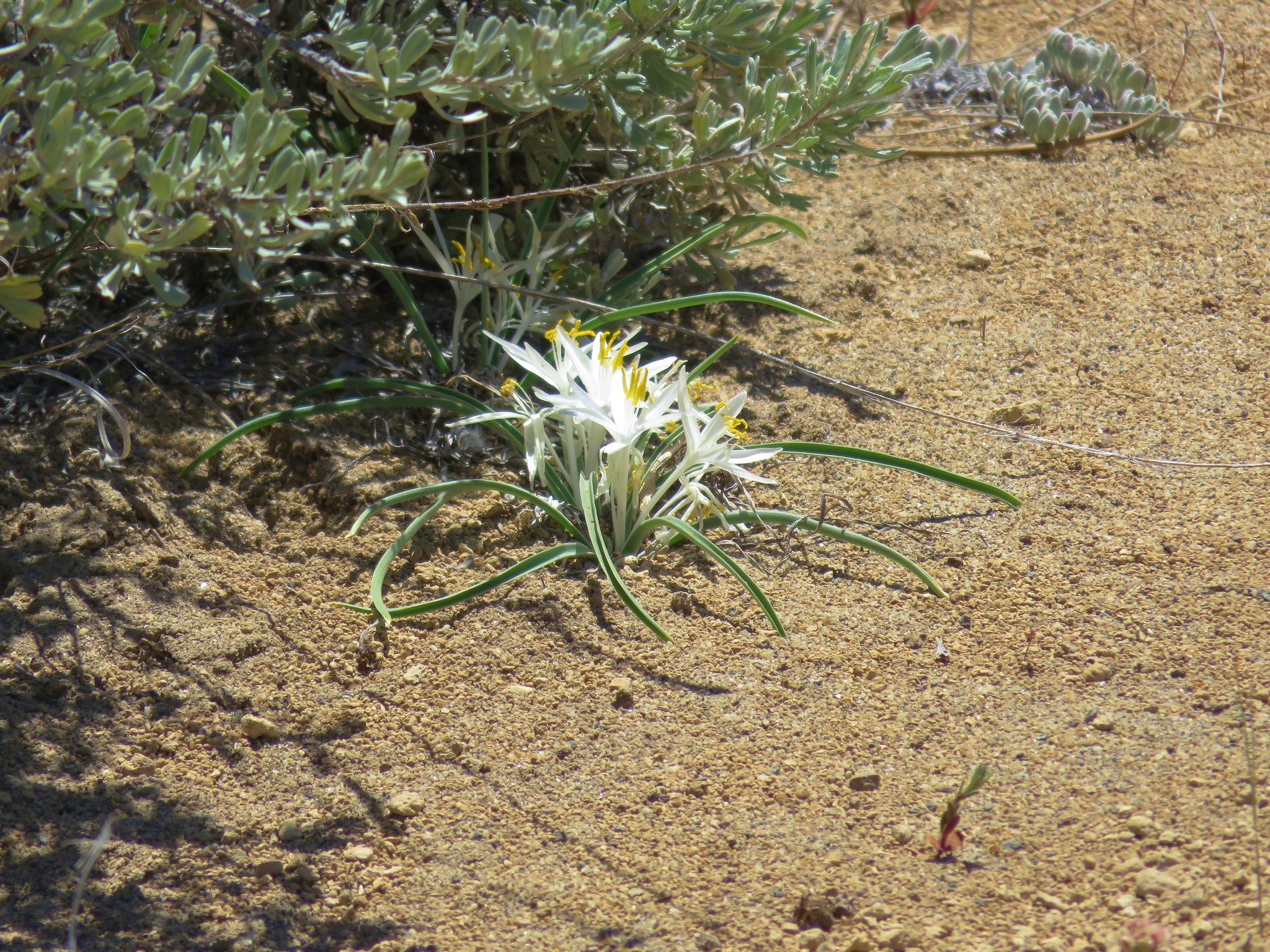
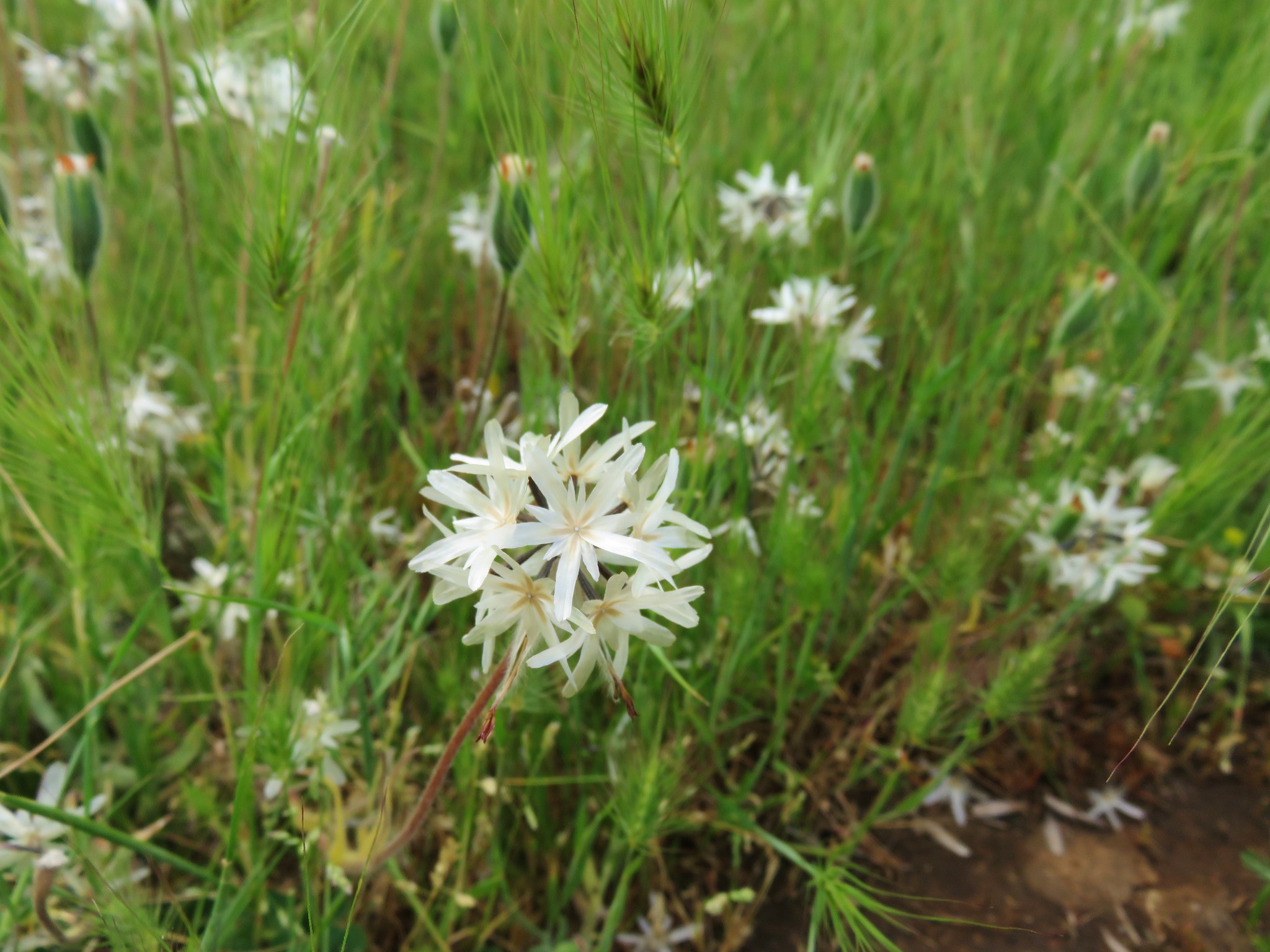
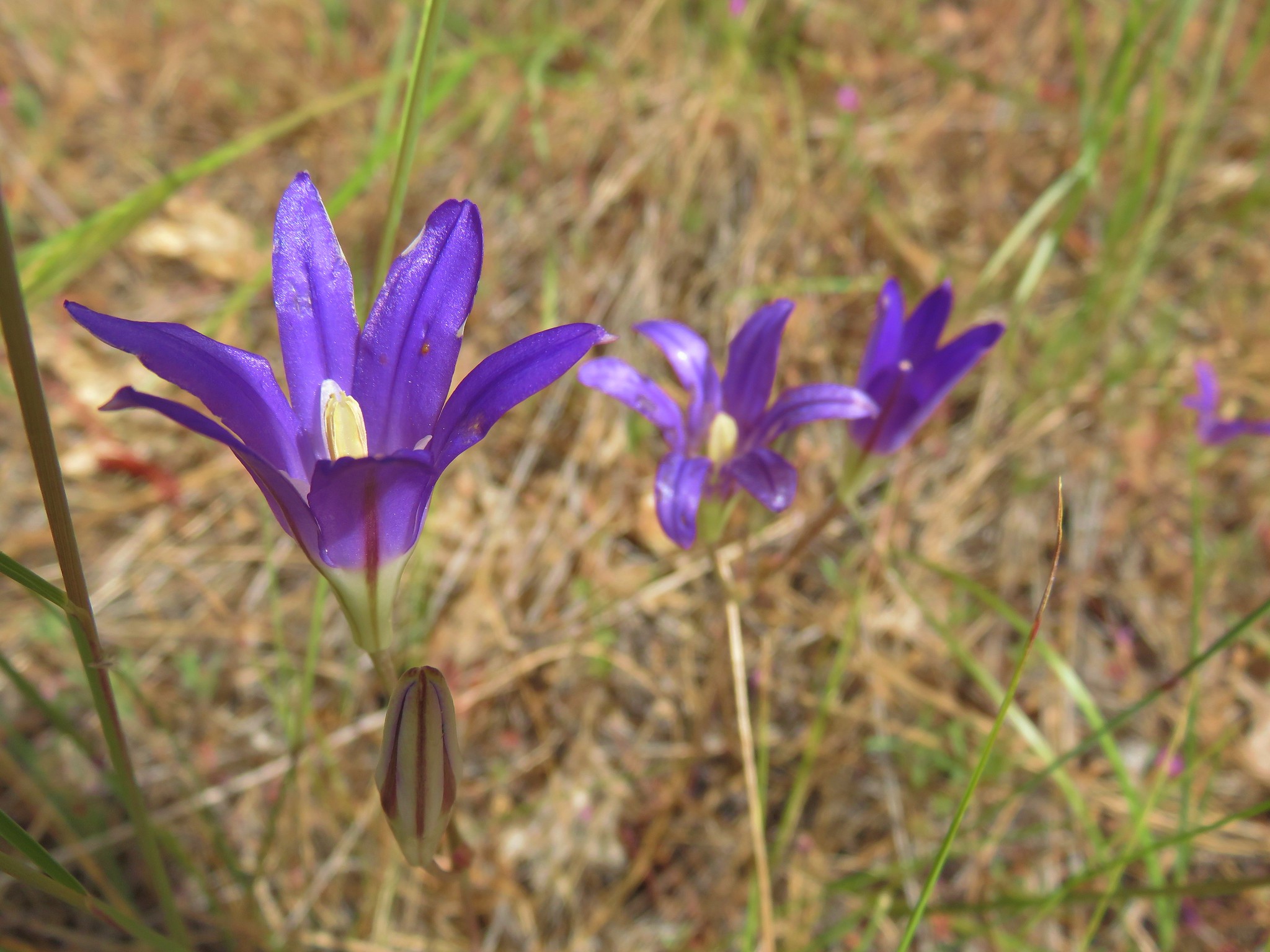
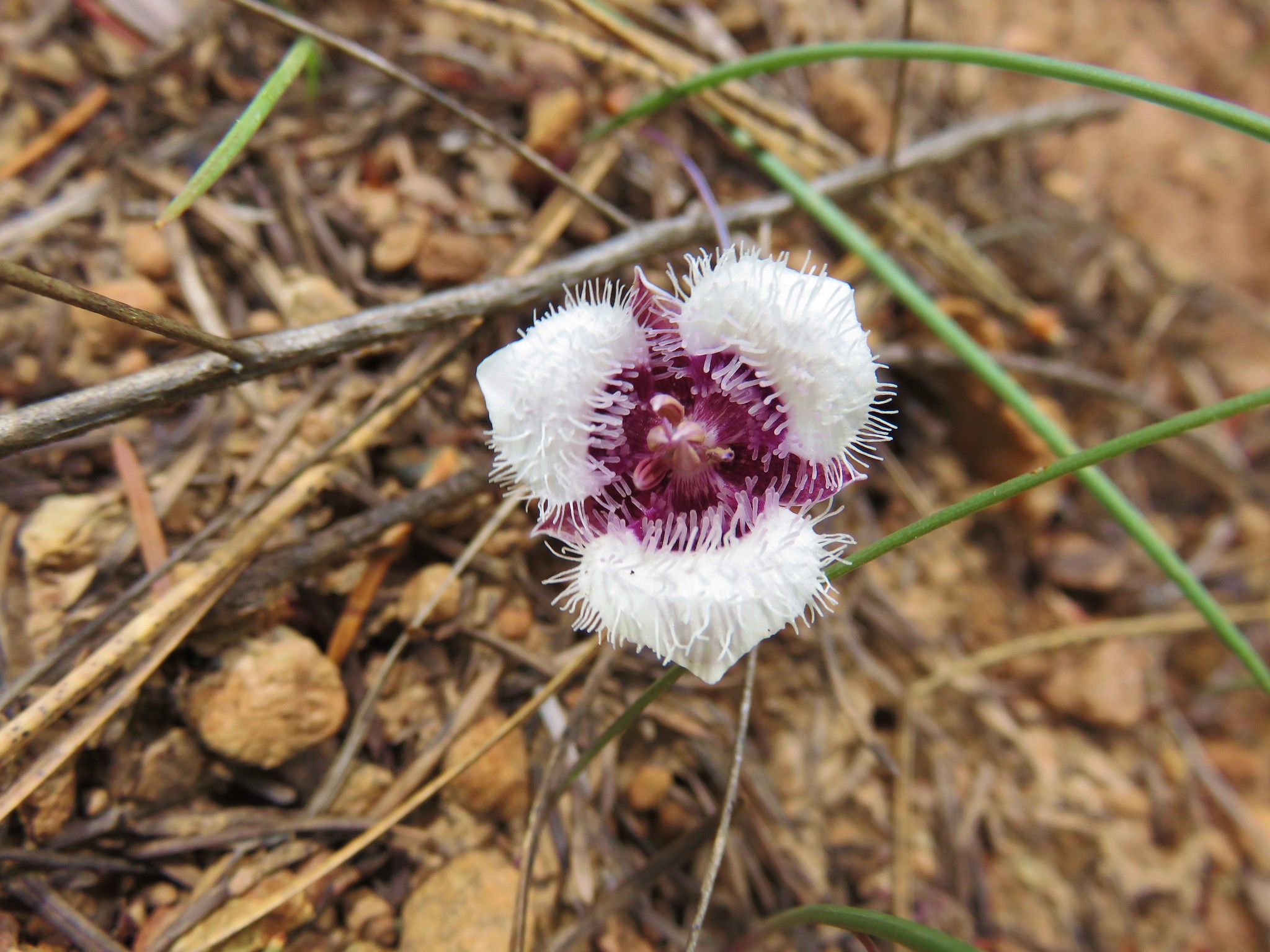
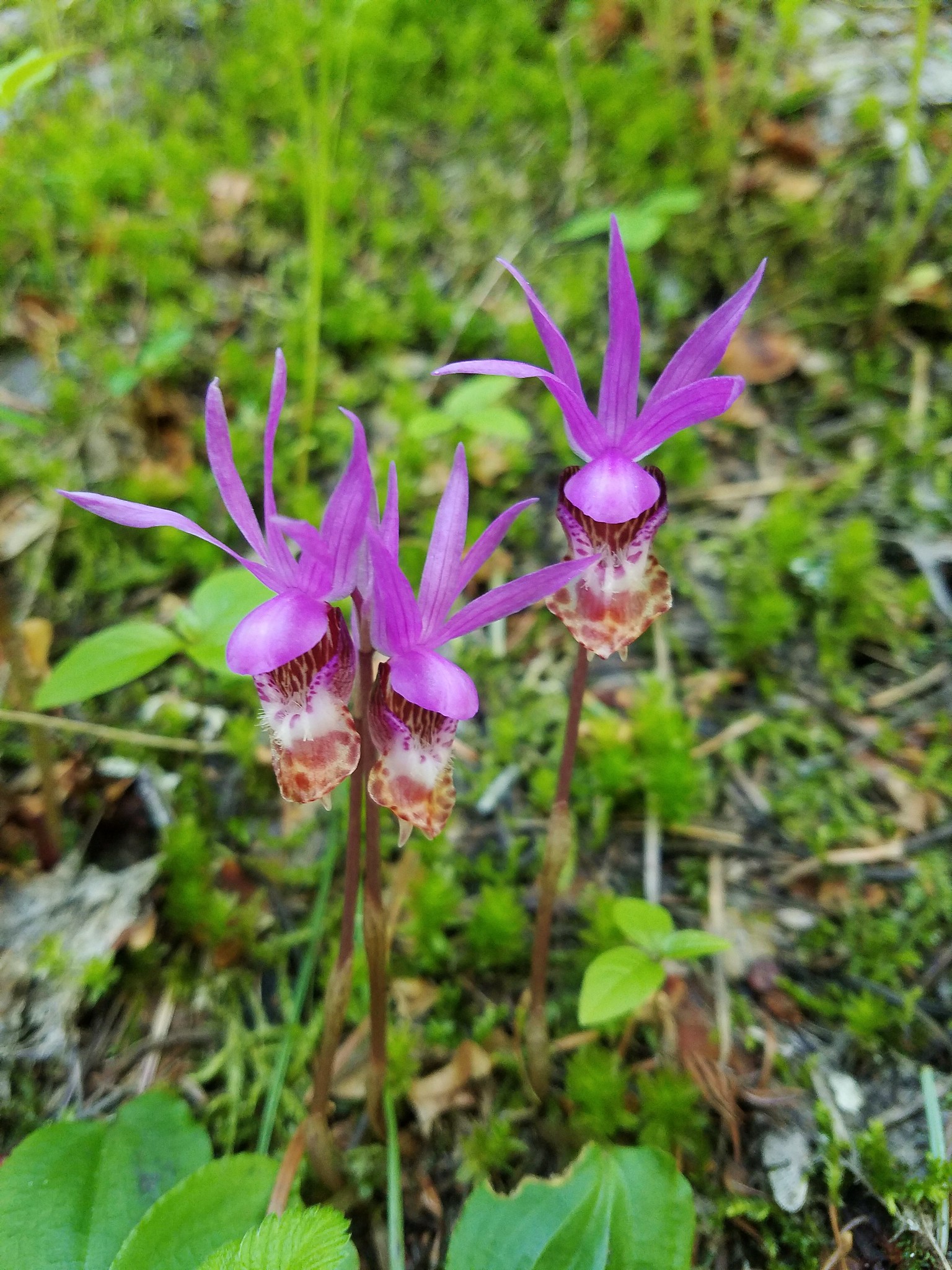
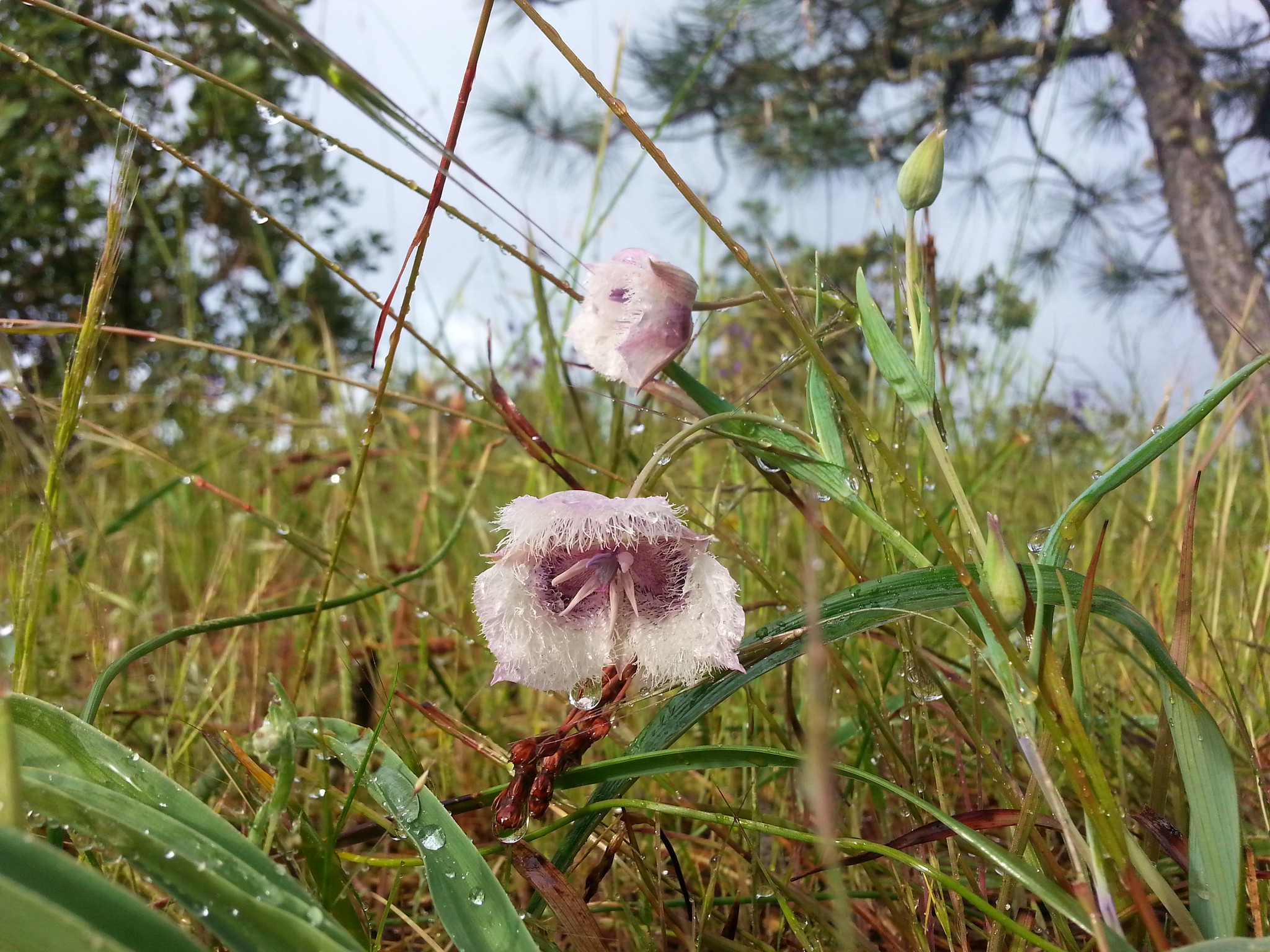
Occasionally we would come across a sagebrush mariposa lily as we traveled the 1.2 miles from the road to the true summit.

Mariposa lily

Mariposa Lily

The open ridge crest provided constant views.

Paintbrush on Pine Mountain with Broken Top and The Three Sisters in the distance

Offtrail on Pine Mountain

View from Pine Mountain

View from Pine Mountain

The 6509′ summit of Pine Mountain was marked by a single wooden post.

Pine Mountain summit

View from the summit of Pine Mountain

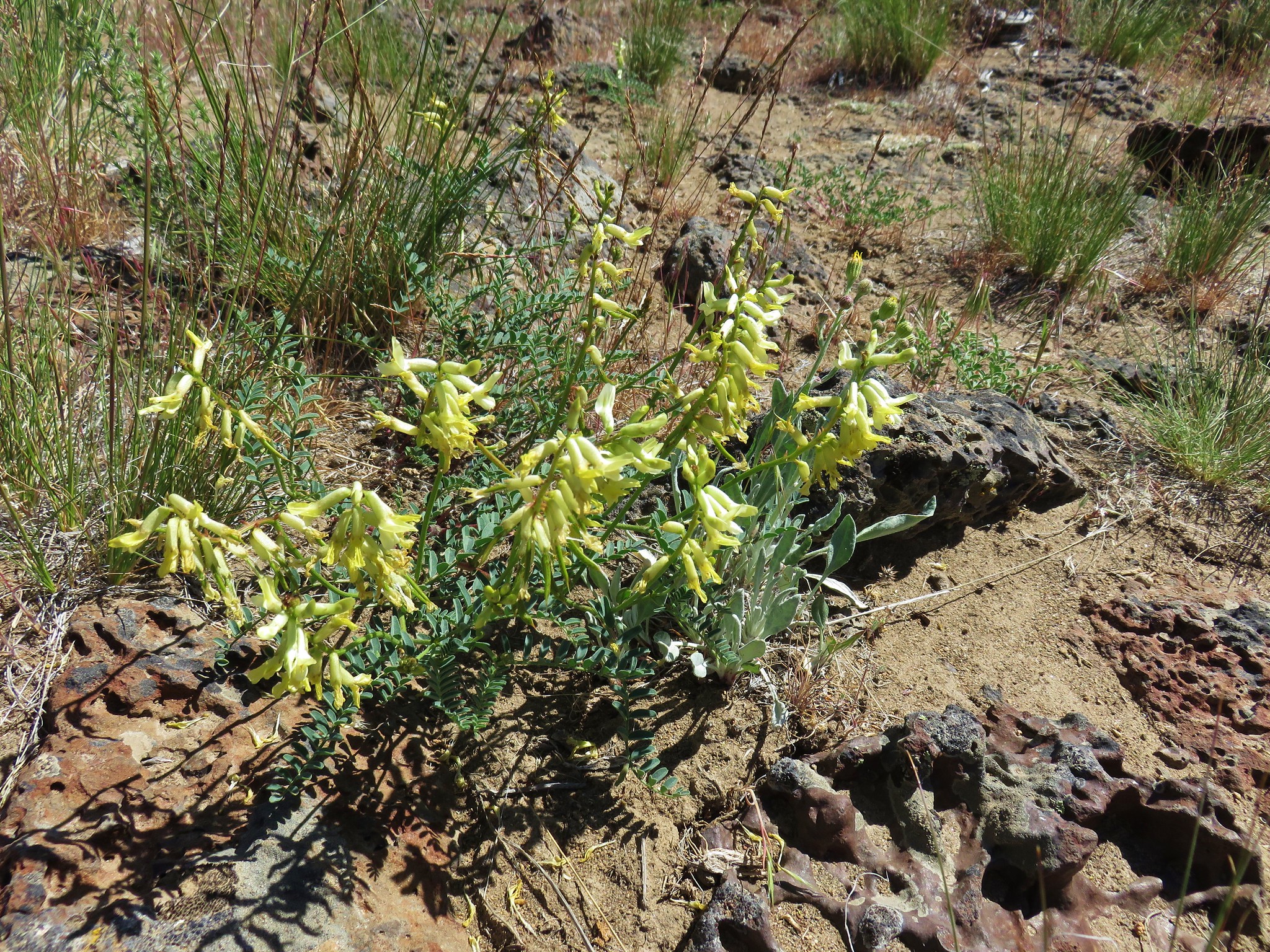
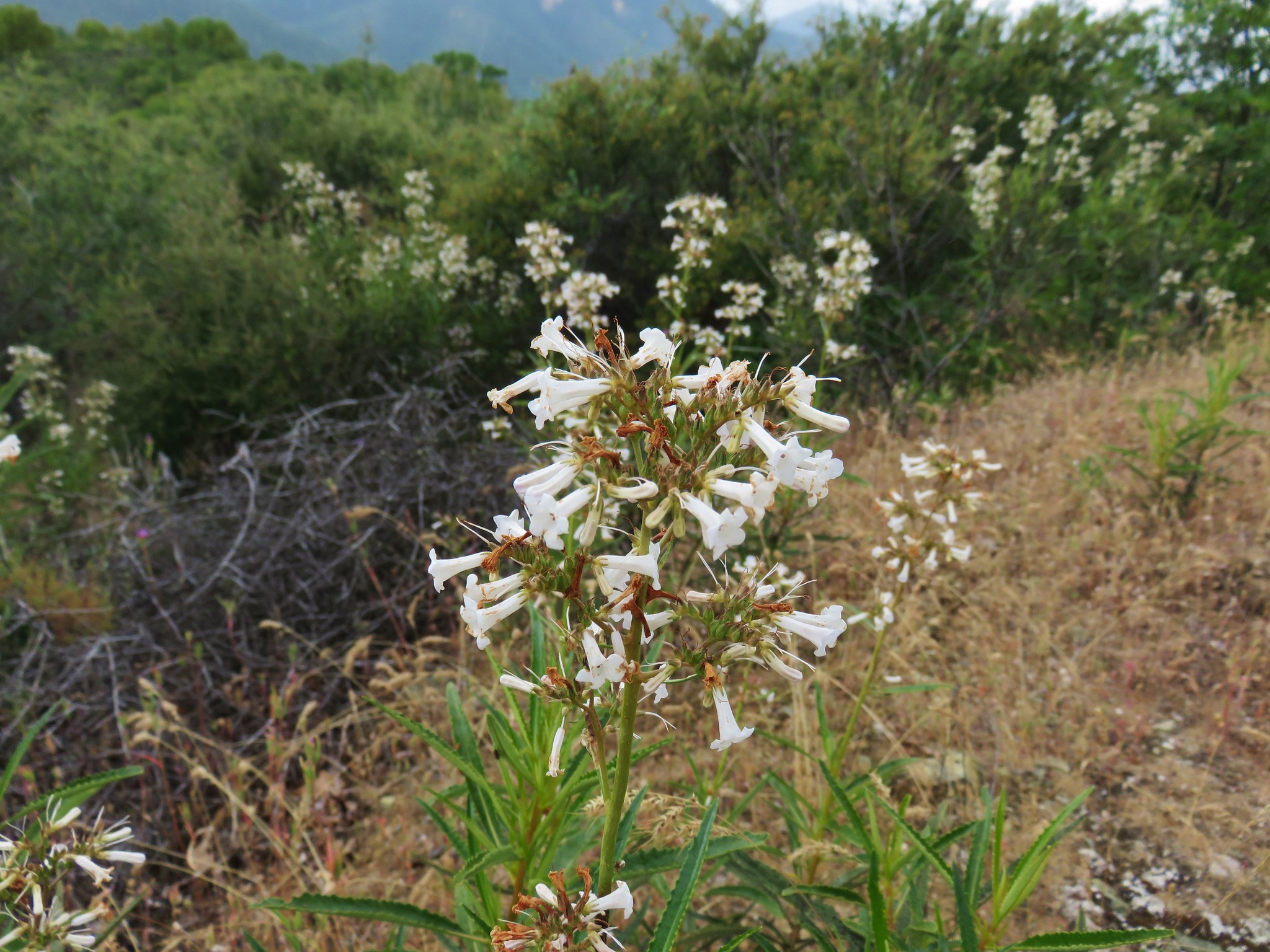
We continued on from the summit following a ridge NE. Near the base of another rocky outcrop we picked up an old cat track that wound around the left side of the rocks. Here the mountain coyote mint fairly blooming nicely.

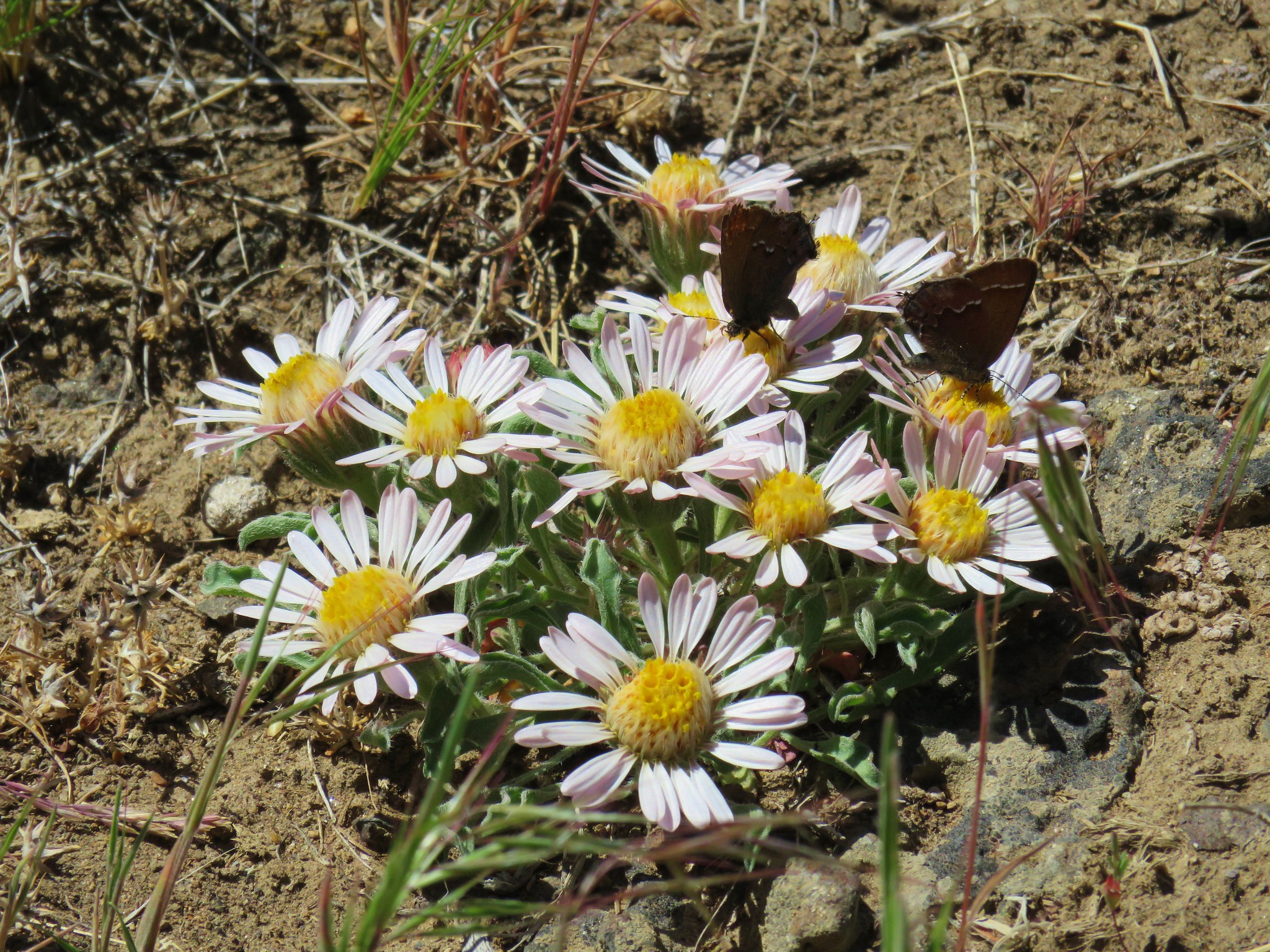
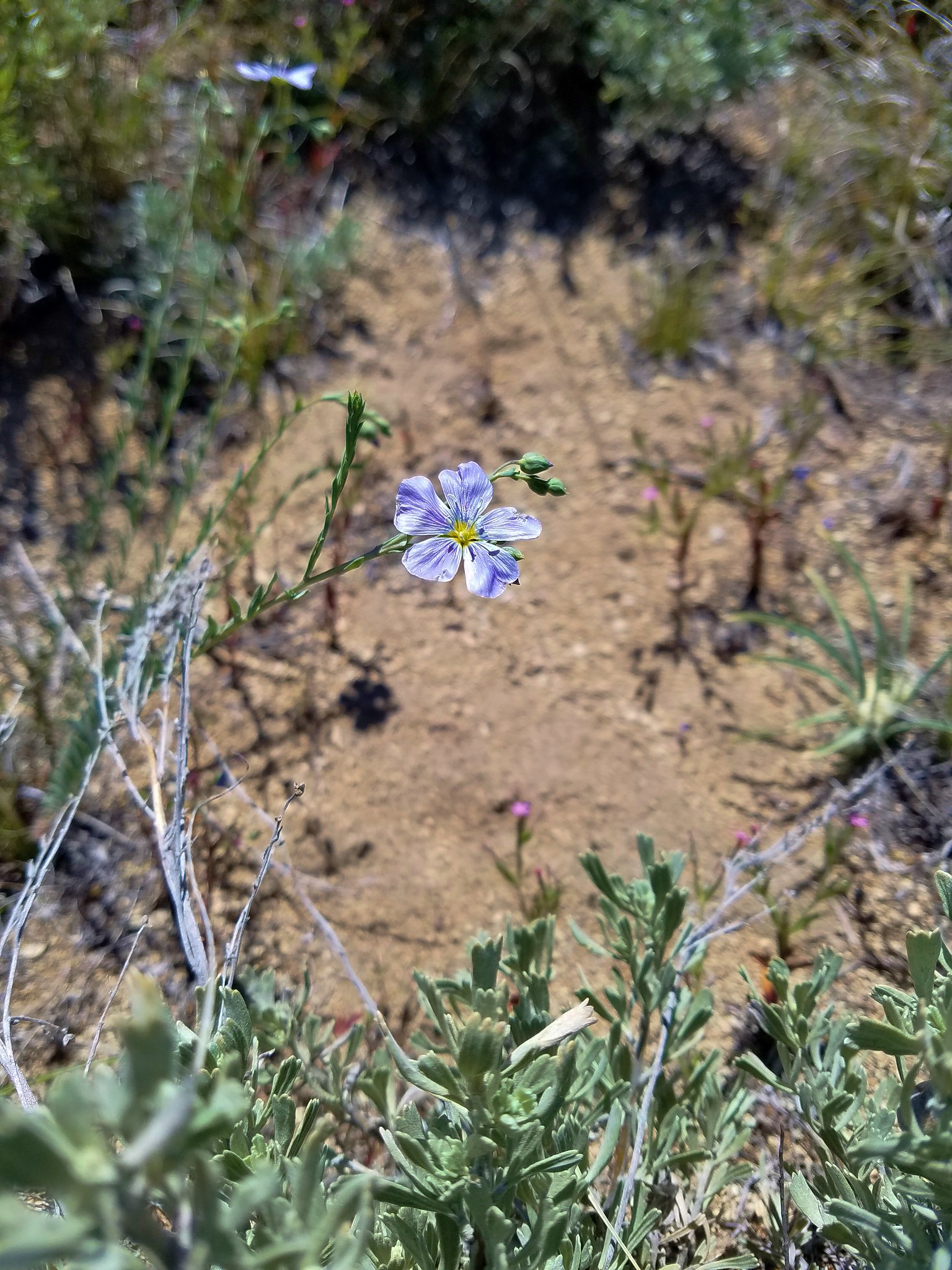
wildflowers on Pine Mountain

Wildflowers on Pine Mountain

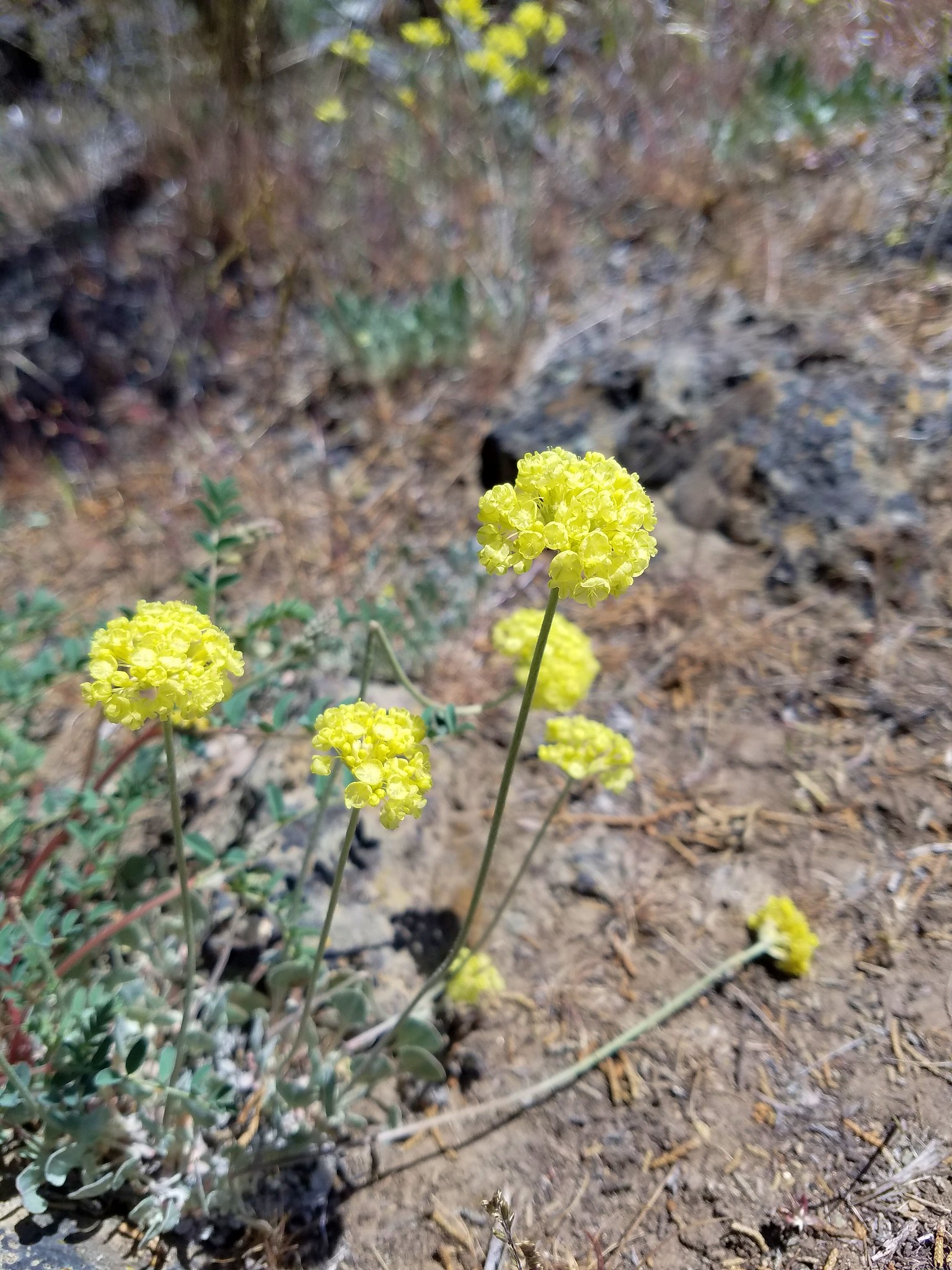
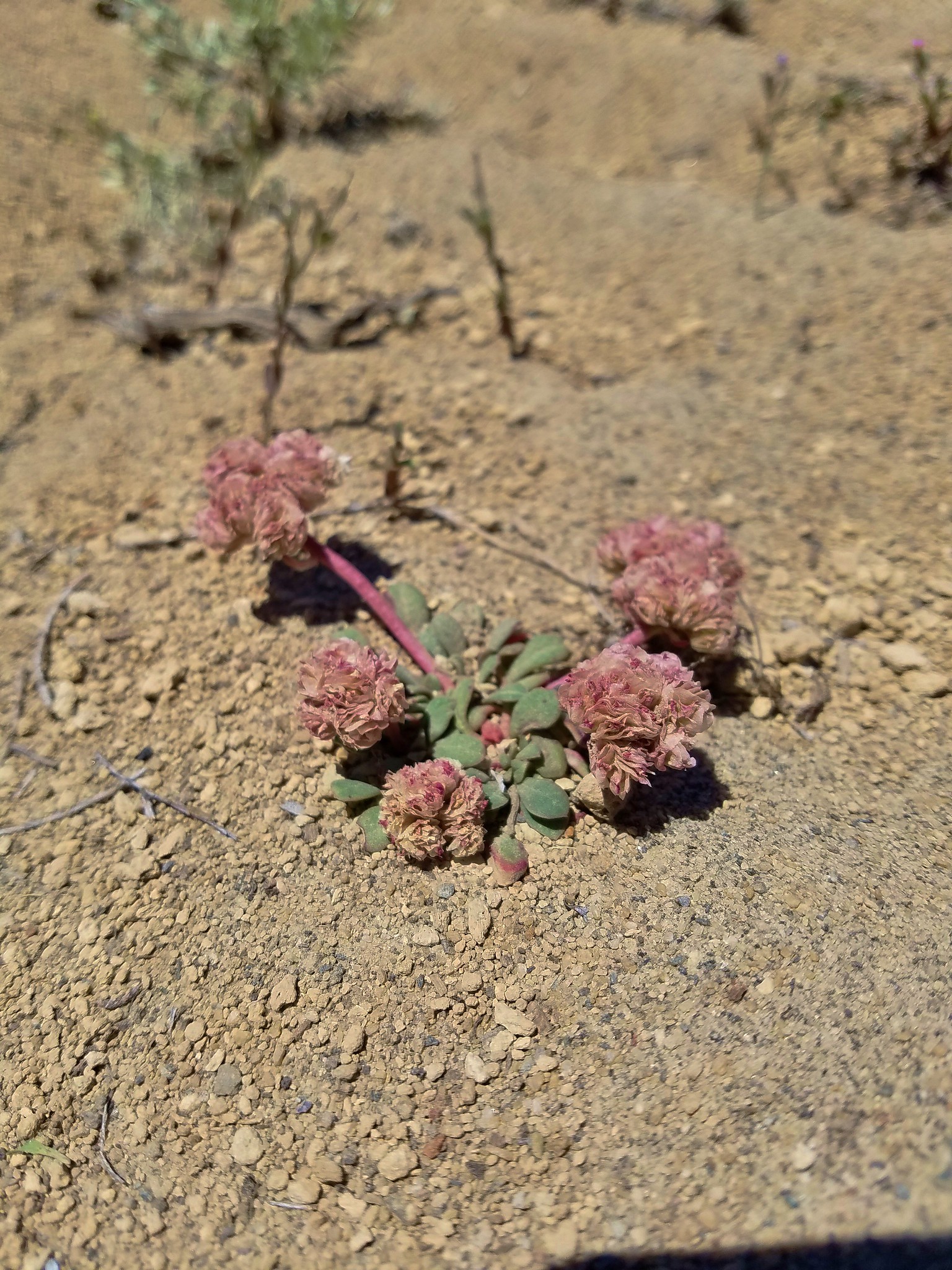
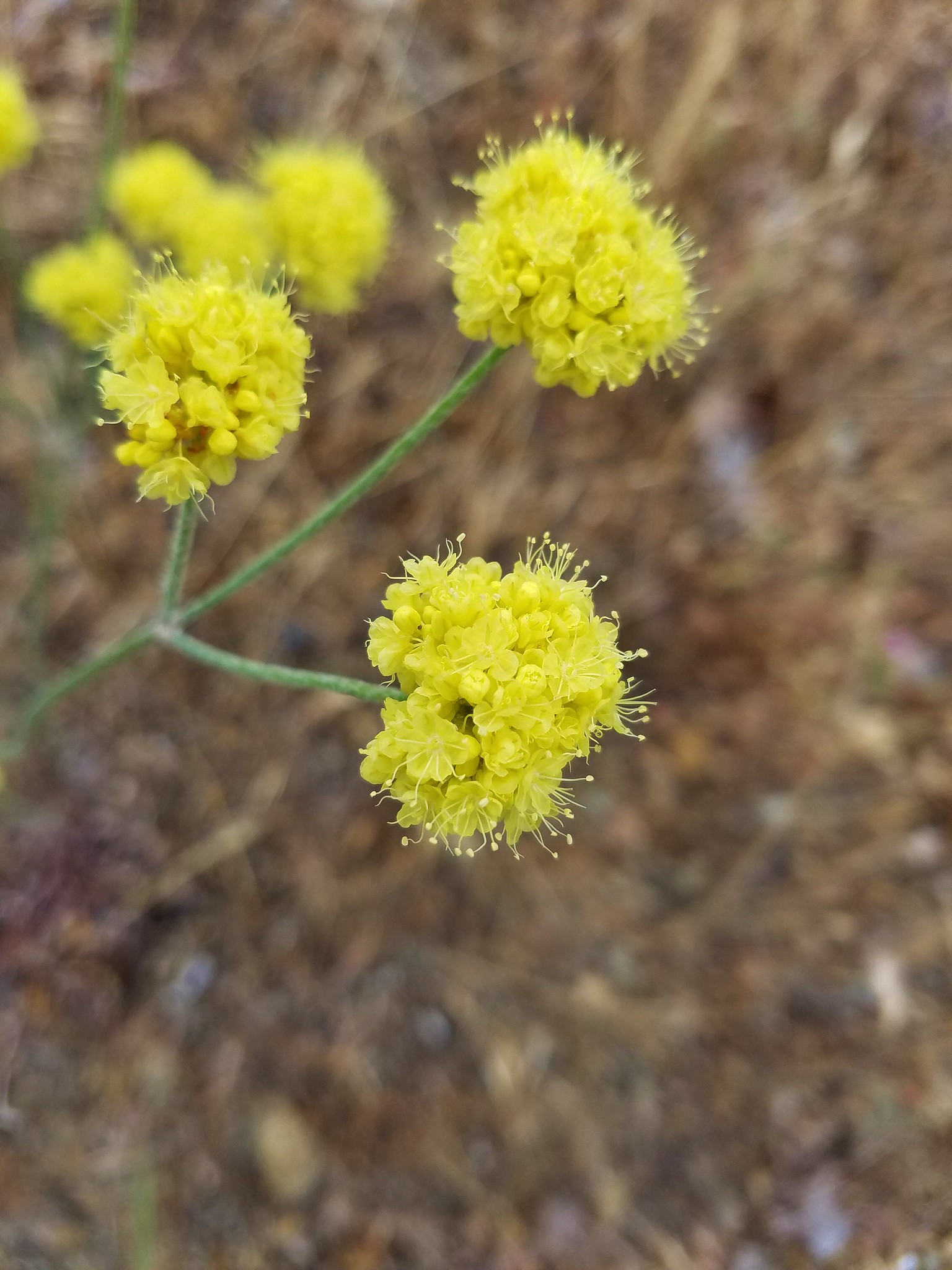
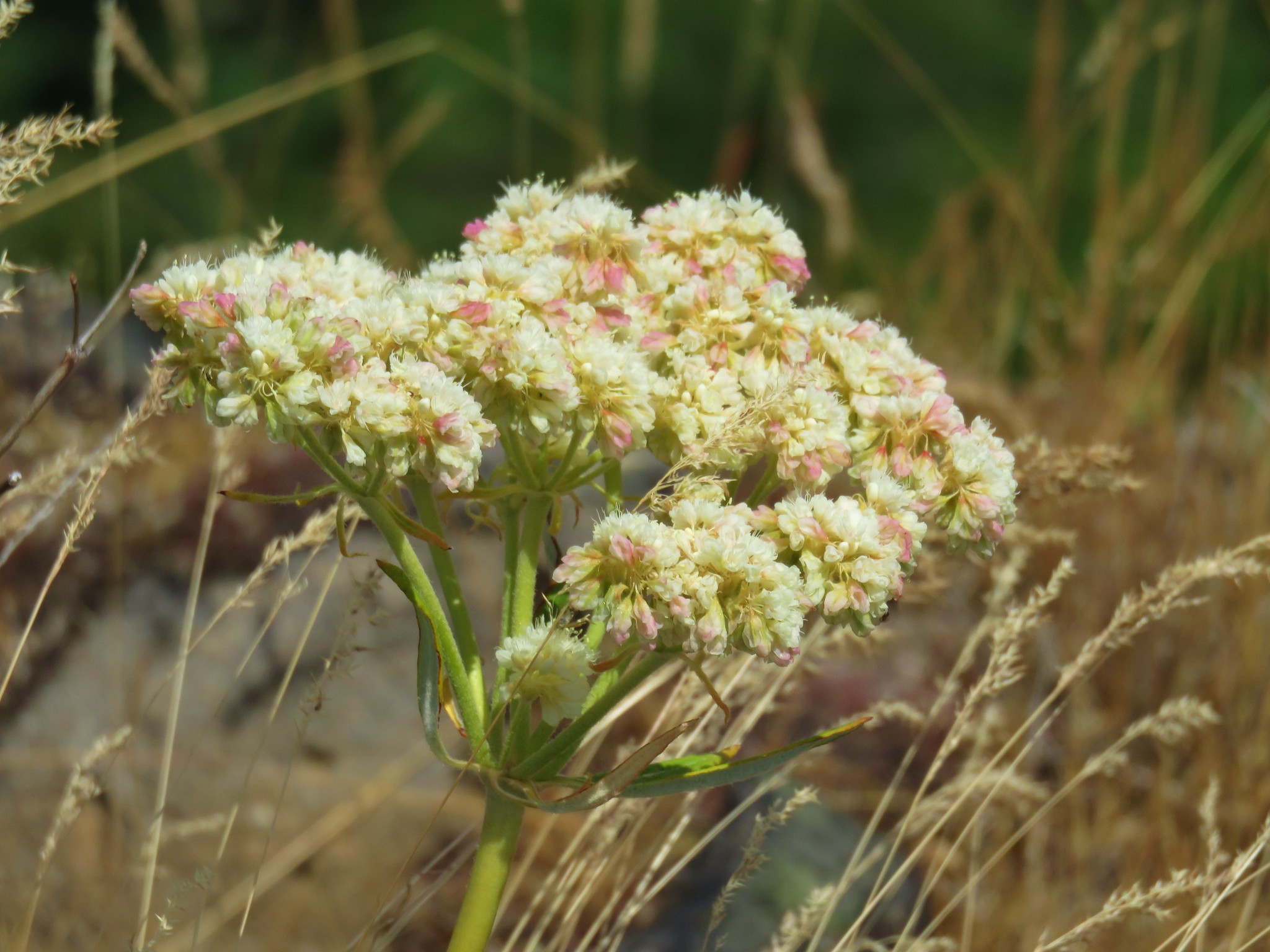
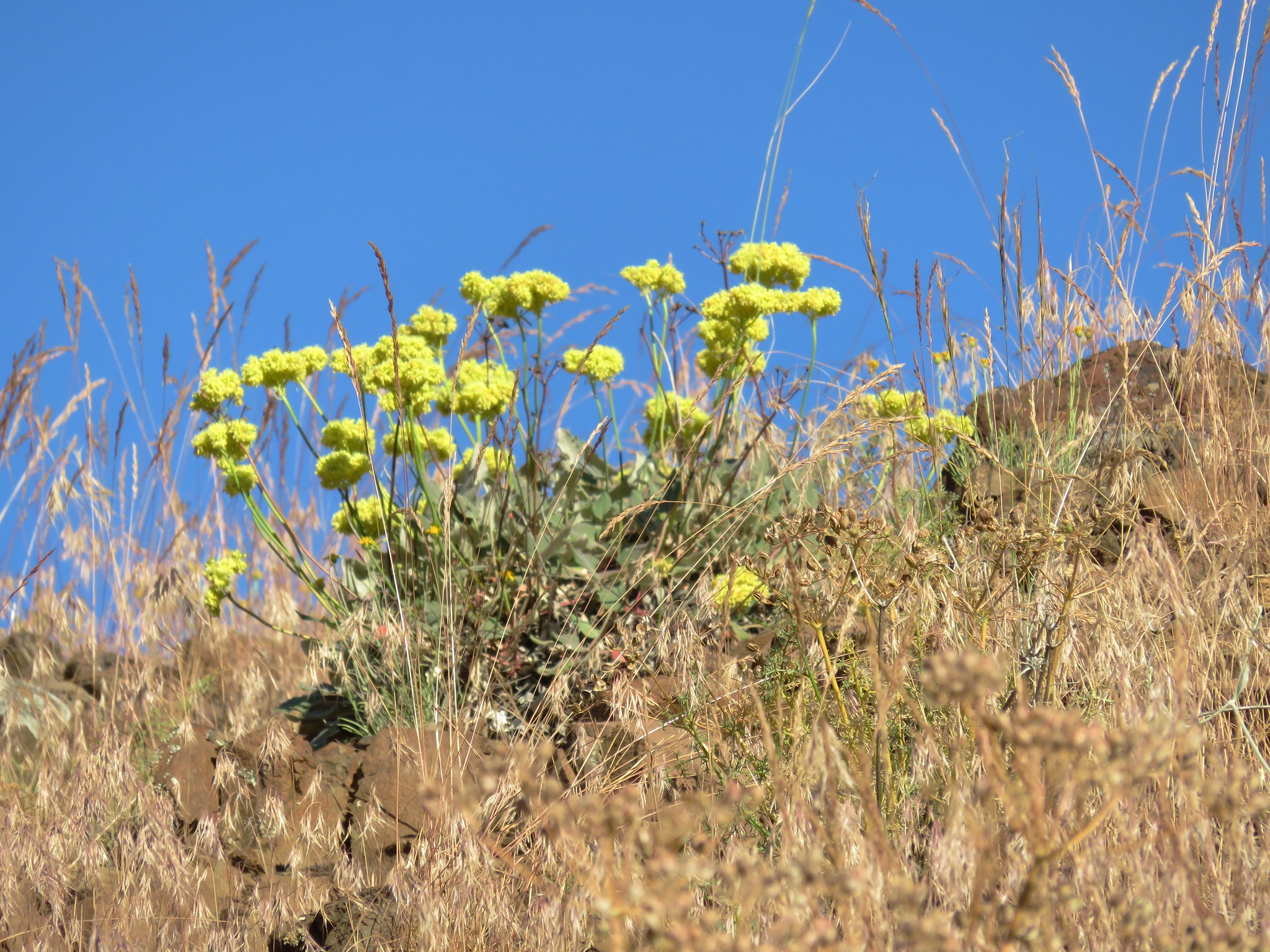
Buckwheat

Just .7 miles from the summit we reached the top of another rise on the mountain and another wooden post.

View from Pine Mountain

For some reason the view here was a little better than the previous two high points and we could make out a faint Mt. Hood far to the NW.

View from Pine Mountain

Mt. Hood

A ridge extended even further east which we could have followed a little over a mile and a half further to a final hilltop with some radio towers, but we were trying to keep the mileage down and it would have meant an additional 500′ of elevation gain so after a nice break we started back.

On the way back up to the summit one of my favorite scenes occurred. The wooden post and a single tree stood alone on the sagebrush summit with the rocky face of Paulina Peak on the horizon.

Paulina Peak to the left of the Pine Mountain summit

We returned to the gravel road which we then followed all the way back to the parking lot at the observatory instead of climbing back up and over the first hill. The round trip was a little over 5.5 miles with around 1100′ of elevation gain. We were in the midst of a week long hiking vacation and had wanted something scenic but not too taxing and Pine Mountain had delivered. Happy Trails!

Flickr: Pine Mountain

Categories
High Cascades Hiking Mt. Jefferson Area Oregon Throwback Thursday Trip report

Throwback Thursday – Duffy Lake

We’re going all the way back to July 28, 2010 for this weeks throwback hike. This was our first visit to the Mt. Jefferson Wilderness as well as the first time we attempted an off-trail scramble. We started at the Duffy Lake Trailhead taking the Duffy Lake Trail toward Duffy Lake.

Duffy Lake Trail

The trail followed along the North Santiam River which was running real low but not yet dry for the season.

Wildflowers along the North Santiam River

North Santiam River

We passed the a junction with the Turpentine Trail at the 1.5 mile mark and crossed the river just over a mile later before reaching another junction in a meadow near Duffy Lake. Although we couldn’t see the lake from there Duffy Butte rose above the trees.

Duffy Butte

A number of trails were present in the Duffy Lake area. The first junction after crossing the river was with the Maxwell Butte Trail which forked to the right. Before reaching Duffy Lakes outlet creek we took the next fork to thw right which was a short connector trail to the Santiam Lake Trail which we then turned right on following it for about 3/4 of a mile through wildflower meadows to Santiam Lake and a great view of Three Fingered Jack.

Santiam Lake Trail

Three Fingered Jack and Santiam Lake

Three Fingered Jack from Santiam Lake

After visiting the lake shore we headed back the way we had come for .6 miles then turning right on the Dixie Lakes Trail at a pointer for the Eight Lakes Basin.

Trail sign at the Dixie Lakes Trail

This 1.8 mile trail would lead us pass the small Dixie Lakes before joining the Blue Lake Trail. Much of the trail passed through forest burned in the massive 2003 B&B Fire.

A Dixie Lake

South Dixie Lake

A Dixie Lake

North Dixie Lake

Beargrass

Junction with the Blue Lake Trail

The trail junction was near Alice Lake which was where our off-trail scramble up Red Butte would start.

Red Butte

Red Butte

Alice Lake

Alice Lake

Being our first off-trail experience we weren’t exactly sure what we were supposed to be looking for but we knew that the route started on the west side of the lake and headed up the butte. It was quite the adventure. Just when we thought we might be following a use trail we’d lose it. Some of the butte had been burned in the fire so there was plenty of downed trees and limbs to navigate. The good news with that was we knew we could follow the edge of the burn downhill and we’d wind up back on the trail near Alice Lake so we weren’t too concerned with getting lost. As we neared the summit of Red Butte the vegetation began to give way to more and more cinder where it was much easier to pick out the use trail.

Snow on Red Butte

Looking down from the summit we could see little Alice Lake below.

Alice Lake from Red Butte

To the south we had a great view of Three Fingered Jack and beyond that loomed Mt. Washington, North Sister, Middle Sister, and The Husband.

Three Fingered Jack, Mt. Washington, The Three Sisters and The Husband

The Three Sisters and Mt. Washington

Mt. Washington in front of the North & Middle Sister (with the summit of South Sister behind them all)

Around to the north was Mt. Jefferson.

Mt. Jefferson

Just to the SW of Red Butte was Duffy Butte and Mowich Lake.

Mowich Lake and Duffy Butte

Mowich Lake

We had a much easier time following the use path on the way down and successfully completed our first scramble. We turned right when we arrived back at the Blue Lake Trail and followed it for a mile to the southern end of Mowich Lake where we could look back across the water to Red Butte.

Mowich Lake

Another 3/4 miles along the trail brought us a junction with the Santiam Lake and Duffy Lake Trails.

Trail junction near Duffy Lake

We took a moment to visit Duffy Lake and Duffy Butte.

Duffy Butte from Duffy Lake

We walked along the lake to its outlet where we picked up the Duffy Lake Trail and headed back toward the trailhead. A nice lollipop loop with a couple of side trips to Santiam Lake and up Red Butte the total distance was a little over 13 miles with approx 2000′ elevation gain. Happy Trails!

Flickr: https://www.flickr.com/photos/9319235@N02/albums/72157632953676368

Categories
Columbia River Gorge South Hiking Oregon Throwback Thursday Trip report

Throwback Thursday – Oneonta Falls

**Note the 2017 Eagle Creek Fire burned over much of this hike.**

This weeks Throwback Thursday hike took place on 7/2/2012 and holds the distinction of being our first in the Columbia Gorge as well as the first for which we used our “100 Hikes in Northwest Oregon & Southwest Washington” guidebook by William L. Sullivan.

One of the many reasons that we appreciate his guidebooks so much is the number of options he provides. In addition to the 100 featured hikes each book lists several barrier free options and contain up to 108 additional hikes with much briefer descriptions in the back of the book. To top it off he often provides information on multiple options within a featured hike which is what we followed on this trip.

The hike to Oneonta and Horsetail Falls is listed as a 2.7 mile loop in our 2011 3rd edition of the NW guidebook which would have been too short a loop to warrant our drive to the trailhead but another option was listed at the end of the hike description, a 12.2 mile loop passing more waterfalls including Multnomah Falls, Oregon’s tallest waterfall.

Our hike started at the Horestail Falls Trailhead along the Historic Columbia River Highway. Horestail Falls is literally right there and the trail starts beside it.

Horsetail Falls

Horsetail Falls

The trail climbed for .2 miles to a junction with the Gorge Trail where we turned right promptly arriving at Ponytail Falls.

Horsetail Falls Trail

Ponytail Falls

We followed the Gorge Trail behind the falls, which is always a fun thing to do, and continued to a viewpoint overlooking the cloud covered Columbia River.

Ponytail Falls

Ponytail Falls

Columbia River and Beacon Rock

The trail then followed the Oneonta Gorge to a footbridge over the creek near Oneonta Falls.

Oneonta Gorge

Footbridge over Oneonta Creek

Oneonta Falls

On the far side of the bridge the trail climbed to a junction with the Oneonta Trail. The short 2.7 mile loop described in the guide book turned right here and descended .9 miles to the old highway for a half mile road walk back to the trailhead. The other option had us turn left on the Oneonta Trail and climb up along Oneonta Creek where in just under a mile we came to the aptly named Triple Falls.

Triple Falls

We followed the Oneonta Trail along the creek for nearly 3 more miles passing a junction with the Horestail Creek Trail just over a mile from Triple Falls. The forest was wonderfully green surrounding the creek with smaller side creeks all around.

Oneonta Creek

Small fall along the Oneonta Trail

Oneonta Creek

Creek along the Oneonta Trail

Junction with the Horsetail Creek Trail

Beyond the junction with the Horestail Creek Trail the Oneonta Trail veered away from the creek and began to climb up to Franklin Ridge. We were headed into the clouds as we climbed past some talus slopes to the next trail junction.

Talus

Forest along the Oneonta Trail

At the junction with the Franklin Ridge Trail we found ourselves in a forest wholly different than the lush green one we’d climbed from.

Forest along the Oneonta Trail

We turned right onto the Franklin Ridge Trail and began passing through the cold gray forest. It didn’t stay gray forever though and we soon found ourselves on an overgrown trail in a meadow full of purple larkspur.

Franklin Ridge Trail

Larkspur along the Franklin Ridge Trail

Near the end of Franklin Ridge the trail descended to a junction with the Larch Mountain Trail, just over two miles from where we had picked up the trail and 3 miles from the Multnomah Lodge.

Larch Mountain Trail sign

The hike down the Larch Mountain Trail along Multnomah Creek was gorgeous. Green forests and a series of waterfalls awaited as we made our way down to the top of Multnomah Falls.

Multnomah Creek

Multnomah Creek

Multnomah Creek

Multnomah Creek

Ecola Falls

Ecola Falls

Weisendanger Falls

Weisendanger Falls

Middle and Lower Dutchman Falls

Dutchman Falls

As we got closer to the upper viewpoint the number of other hikers grew exponentially. The upper viewpoint was closed off but as we made our way further down toward the lodge the falls came into view.

Multnomah Falls

To finish our loop we would need to take the Gorge Trail which split off from the Larch Mountain Trail .6 miles from the upper viewpoint. That split was before the Larch Mountain Trail reached the Benson Bridge below Multnomah Falls and since we were that close to the bridge and the lodge we decided to check them out before completing the loop.

Crossing the Benson Bridge was a nightmare. A mass of humanity was stopped on the bridge trying to get pictures while others were trying to get across it to go up the trail, we were salmon swimming against the current and by the time we’d made it down to the lodge I was done with people. I took a couple of photos, used the facilities inside the lodge, then we headed back up through the quagmire of bodies to the Gorge Trail.

Multnomah Falls

What the Gorge Trail lacked in scenic creeks and waterfalls it made up for in solitude. We followed it to a junction with the return route of the 2.7 mile loop option where we forked left and followed it down to the old highway. As we followed the highway the number of people began to increase, especially as we neared the Oneonta Gorge. Unfortunately this beautiful canyon was already becoming and now is too popular for it’s own good. It’s possible to wade upstream and so many people do so now that lines form as people wait to clamber over a resident log jam. We skipped the side trip that day and have yet to venture in.

After passing the mouth of the gorge the path passed through a tunnel left over from the early days of the old highway. A bridge later replaced the tunnel but it was reopened for foot traffic.

Oneonta Gorge tunnel

Our first hike in the Columbia River Gorge had given us a taste of a little of everything the area has to offer. Amazing waterfalls, lush green forests, talus slopes, wildflower meadows, massive crowds at popular spots, and wonderful solitude further up trail. It’s an amazing area in an amazing state. Happy Trails!

Flickr: https://www.flickr.com/photos/9319235@N02/albums/72157632954287431

Categories
Central Coast Coastal Range Hiking Oregon Oregon Coast Trip report

Niagara Falls and Neskowin

We took advantage of a favorable forecast and headed out for our February hike to visit a pair of coastal waterfalls and then the beach near Neskowin.  We’ve had a lot of snow and rain this winter making it a good time to catch the waterfalls assuming you can reach them.  The storms have left their mark on some of the trails and roads so we weren’t sure what to expect as we prepared to head out, but a quick check of the Forest Service website listed the Niagara Falls Trailhead as open so we were optimistic.

The Niagara Falls Trailhead is located east of Mt. Hebo in the Siuslaw National Forest. There was good signage along the route which took us  5 miles east of Blaine, OR on Upper Nestucca Road (Forest  Road 85) where we turned right onto Niagara Road (Forest Road 8533). A small herd of elk were grazing in the field at this turn.
IMG_8536

IMG_8538

We followed this gravel road for 4.3 miles. The road was in pretty good shape and had obviously been cleared recently. At the 4.3 mile mark we forked right following signs for the trail for another .7 miles to the trailhead.
IMG_8543

The mile long Niagara Falls Trail led downhill through a fern filled forest crossing a small creek three times on footbridges.
IMG_8545

IMG_8551

This small creek was flowing well enough to create its own decent, albeit hard to see little fall.
IMG_8553

As the trail leveled out along Pheasant Creek the first fall to come into view was Niagara Falls.
IMG_8556

IMG_8563

As the trail neared Niagara Falls an opening to the left revealed Pheasant Falls.
IMG_8576

A footbridge below Pheasant Falls brought us to a picnic table at the end of the Niagara Falls Trail.
IMG_8579

IMG_8582

IMG_8590

We returned the way we’d come. The 2 mile hike had been a nice warm up and now we were headed back to Highway 101 and then south to Neskowin.

We stared our second hike of the day at the Winema Road Beach Access which is located near the Wi-Ne-Ma Christian Camp. The beach access can be reached by driving .6 miles on Winema Road which is 4 miles north of Neskowin along Highway 101.
IMG_8604

From the beach the view south extended to Cascade Head and to the north to Cape Lookout beyond Haystack Rock.
IMG_8614

IMG_8615

Our timing wasn’t great as it was a little before 10am when we started and high tide would be just after 12:30 so it was already coming in. This meant we would not be getting to a couple of places that would have been accessible at lower tide. We headed north first for .4 miles to some rocks jutting out onto the beach. Along the way we passed a small waterfall that we had not been expecting.
IMG_8618

IMG_8619

At low tide it is possible to continue .6 miles to the mouth of the Nestucca River across from Bob Straub State Park but the waves were already reaching the rocks and we knew if we continued we’d be stuck until the tide went back out so after playing around on the rocks for a minute we turned around and headed south.
IMG_8621

We hadn’t gone too far to the south when we reached the outlet creek of Daley Lake which wasn’t mentioned in our guidebook. The only way across was to ford the creek, but luckily it was only ankle deep and not too cold.
IMG_8627

On the other side of creek was a picnic table that seemed really out of place. Heather noted that it appeared to be close enough that the ocean would reach it, although it wasn’t very close at that time. The rest of the sights were pretty typical of a beach walk. Driftwood, rocks, pieces of shells, seaweed, boats, sea birds, and lots of washed up garbage.
IMG_8628

IMG_8633

IMG_8624

There was something we couldn’t recall seeing before though. Large numbers of pickle shaped jelly fish looking things of various sizes.
IMG_8622

A little under 2.5 miles from the Winema Beach Access the beach became impassable due to the tide reaching the rock wall protecting the houses at Neskowin. Luckily the Mt. Angel St. access was located at the north end of the rock wall so we left the beach and walked inland to Breakers Blvd.
IMG_8634

We turned right on the paved street and walked for .7 miles to Carlton Ave. where we turned left toward the Proposal Rock Inn which was on the far side of Neskowin Creek. At the creek we turned right and followed it to Proposal Rock.
IMG_8638

IMG_8639

Our guidebook indicated it was possible to continue another .6 miles south to Cascade Head but the creek was far too swollen for us to ford it. Likewise we were unable to reach Proposal Rock due to it’s being surrounded by water.
IMG_8644

With the tide in we couldn’t walk back along the beach from there so we took the paved streets of Neskowin once again back to the Mt. Angle St. access. We then hiked back along the beach where we discovered that Heather had been right about the ocean reaching that odd picnic table.
IMG_8653

IMG_8654

IMG_8651

You just never know what you’re going to see along the Oregon Coast. Happy Trails!

Flickr: Niagara Falls & Neskowin

Categories
Bend/Redmond Central Oregon Hiking Oregon Throwback Thursday Trip report

Throwback Thursday – Tumalo Falls

On 8/2/2011 during a week of vacation in Central Oregon we did a 6.8 mile loop hike visiting several waterfalls, most notably Tumalo Falls.

We began at an interpretive sign at the end of Tumalo Falls Road (Road 4603) on the North Fork Trail.
Tumalo Falls trailhead

North Fork Trail sign

We kept right at junctions passing the lower viewpoint with its straight ahead look at the falls and continued to the upper viewpoint beside the falls which is less than a quarter mile from the trailhead.
Tumalo Falls

Tumalo Falls

Tumalo Falls

Tumalo Falls

The beauty of the falls and the easy access make it a very popular destination but we were there early and had the view to ourselves. Most people turn back after reaching the upper viewpoint but we continued on the North Fork Trail further into the forest.
North Fork Trail

The trail stuck close to Tumalo Creek passing Double Falls after .8 miles followed by Middle Tumalo Falls .9 miles later.
Double Falls

Middle Tumalo Falls

After passing a spring the trail crossed the Middle Fork Tumalo Creek on a footbridge.
North Fork Trail

Smaller fork of Tumalo Creek

Beyond the footbridge we took a brief detour toward the North Fork Tumalo Creek to see Lower North Fork Tumalo Falls.
Lower North Fork Tumalo Falls

After returning to the North Fork Trail we continued to follow the Middle Fork Tumalo Creek passing several more nice waterfalls. The names of some of which we are not certain of.
Small waterfall on Tumalo Creek

Middle Fork Tumalo Falls

Lower Middle Fork Tumalo Falls

Middle Fork Tumalo Falls

Shortly beyond Middle Fork Tumalo Falls we arrived at a junction with the Swampy Lakes Trail which we turned left on and promptly crossed the creek on a log.
Tumalo Creek Crossing

From this trail we could see part of snowy Tam McArthur Rim where the headwaters of Tumalo Creek originate.
Tam McArthur Rim

We followed the Swampy Lakes Trail just over 2 miles from the creek crossing to a junction with the Bridge Creek Trail where we turned left along Bridge Creek to complete the loop. One final waterfall awaited along this final 1.3 mile section – Bridge Creek Falls.
Bridge Creek Falls

A moderate to easy hike the loop is a great option for waterfall lovers spending time in the Bend area. Happy Trails!

Flickr: Tumalo Falls

Categories
Central Oregon Hiking Newberry Crater Oregon Throwback Thursday Trip report

Throwback Thursday – Paulina Peak

With the frequency of our hikes down during our off-season we’ve decided to go back and write up some of our outings from before we started this blog. We’re hoping to have Throwback Thursday posts during those weeks that we don’t have a new trip report to write. We’ll start with hikes that we haven’t repeated since starting the blog and, at least to begin with, are not in our plans to be hiked again in the foreseeable future. That is not to say that they are not worthwhile hikes, they all are. In our attempt to take as many different trails as possible we rarely repeat hikes, and when we do it has typically been because we missed something the first time such as a view or blooming wildflowers.

Please keep in mind that we completed all of the throwback hikes at least 4 years ago so before visiting any of the trails be sure to check with the managing agency on their current condition and availability.

With that disclaimer we’d like to start off with one of the most diverse hikes in terms of scenery that we’ve taken – Paulina Peak in the Newberry National Volcanic Monument. This hike was done on 8/6/2011 during a week long vacation in Central Oregon.
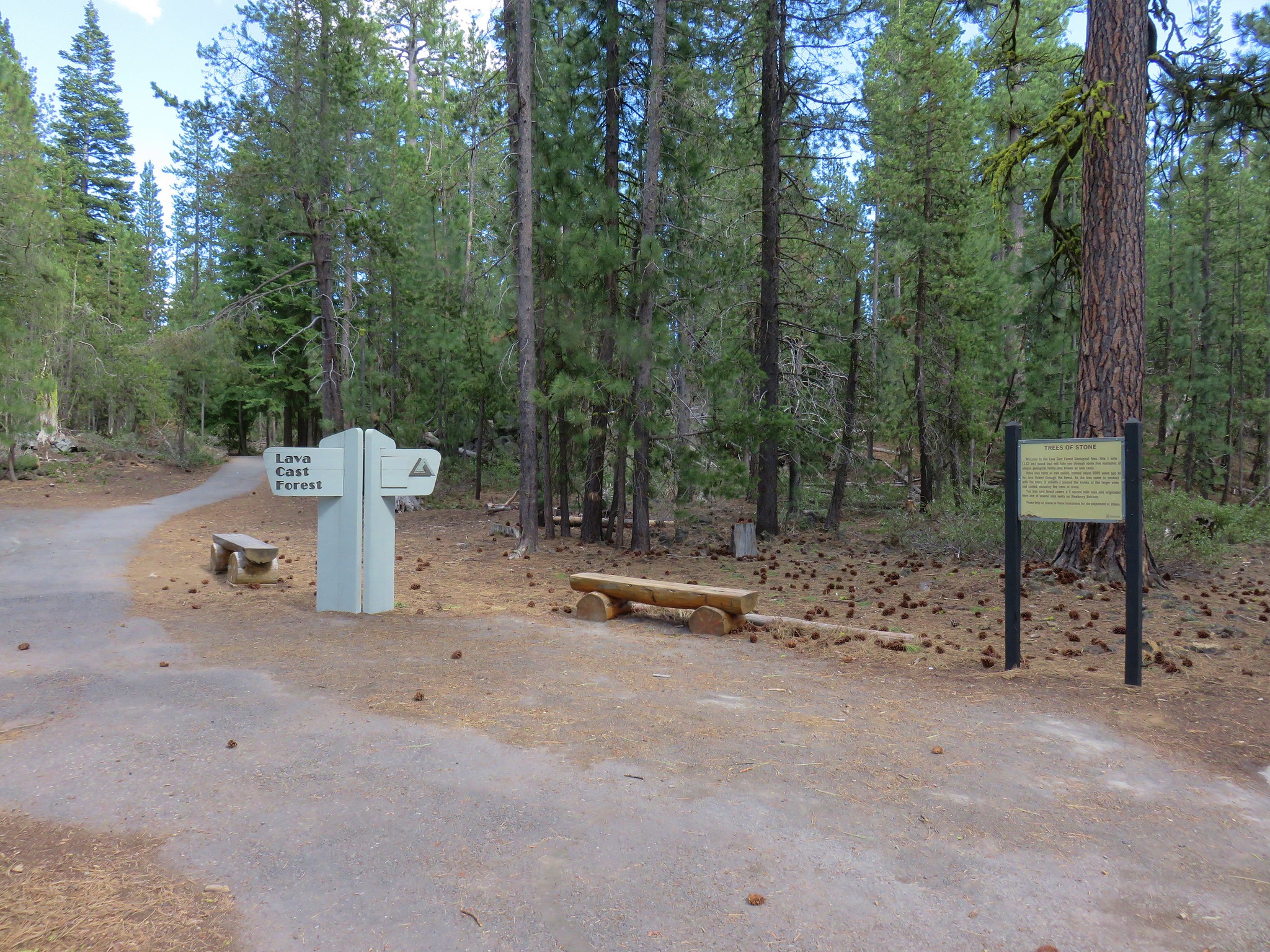
There are a number of hiking options in the monument and our visit consisted of a loop using several different trails allowing us to visit several different worthwhile goals. We began our hike by parking at the Big Obsidian Flow Trailhead.
Big Obsidian Flow

Big Obsidian Flow Amphitheater sign at the trailhead

We started with the .8 mile interpretive Big Obsidian Trail which took us into the obsidian flow passing numerous information signs along the way.
Interpretive sign at the Big Obsidian Flow

Obsidian

Big Obsidian Flow

In addition to the interpretive signs and cool rock formations the trail offers views of Paulina Peak, Paulina Lake, and Lost Lake.
Paulina Peak from the Big Obsidian Flow Trail

Paulina Lake
Paulina Lake with Mt. Bachelor and the South Sister beyond.

Lost Lake

A great option for kids this proved to be perfect warm up for the longer loop we had planned. After returning to the parking area we followed the Silica Trail for 100 yards to a junction with the Newberry Crater Trail where we turned right.
Newberry Crater Trail sign

We followed this trail for another half mile to the Lost Lake Trail where we once again turned right following a pointer for the Crater Rim Trail.
Lost Lake Trail sign

The Lost Lake Trail passed near Lost Lake but not close enough to get a look although occasional hints of sulfur in the air gave it’s presence away. After passing Lost Lake the trail began switching back uphill alongside the Big Obsidian Flow. The open forest sported a number of blooming lupine plants.
Forest along the Lost Lake Trail

Lupine

Snow along the Lost Lake Trail

As we climbed we gained views of both of the large lakes in the Newberry Caldera.
Paulina Lake
Paulina Lake

East Lake
East Lake

After nearly 3 miles on the Lost Lake Trail the trail leveled out after cresting a knoll. Here the trail forked. The left fork led a quarter mile to the Pumice Flat and then on to the Crater Rim in another 3/4 of a mile while the right hand fork reached the Crater Rim Trail in only a half mile (and at a much closer point to Paulina Peak).
Trail signs along the Lost Lake Trail

Before taking the right hand fork we visited the Pumice Flat which was dotted with purple dwarf lupine blossoms.
Lupine near the Pumice Flat

Pumice Flat

Pumice Flat

From the junction near the Pumice Flat the trail climbed almost 350′ to the rim of the caldera and the Crater Rim Trail. This section of trail offered a nice view of our goal, Paulina Peak, as well as a look down on the Pumice Flat from above.
Paulina Peak

Pumice Flat near the Crater Rim Trail junction

Junction with the Crater Rim Trail

We turned right on the Crater Rim Trail and headed toward Paulina Peak. Although it was a little hazy out due to smoke form a couple of forest fires the views along this section extended from Mt. Jefferson in the north to Mt. Thielsen in the South.
Mt. Jefferson
Mt. Jefferson

Mt. Thielsen
Mt. Thielsen

The views back down into the caldera where less affected by the haze.
Pumice Flat and the Big Obsidian Flow from the Crater Rim Trail
Pumice Flat

East Lake and the Big Obsidian Flow
East Lake

Paulina Lake
Paulina Lake

The trail traversed around the south side of Paulina Peak meeting up with Road 500 two and a half miles from where we had turned onto the Crater Rim Trail.
Crater Rim Trail

Crater Rim Trail

Road 500 allows people to drive up to the 7984′ summit of Paulina Peak which makes it accessible to anyone. The Crater Rim Trail picked up on the far side of Road 500 at a trail sign after a 100′ jog to the left.
Crater Rim Trail

Crater Rim Trail

We followed the Crater Rim Trail for an additional .9 miles where we arrived at a junction with the Paulina Peak Trail.
Paulina Peak Trail

We followed this trail to the parking area atop Paulina Peak at the end of Road 500.
Paulina Peak summit sign

Despite the haze the 360 degree view was spectacular.
Diamond Peak
Diamond Peak to the SW

View from Paulina Peak
Mt. Bachelor, Broken Top, and The Three Sisters to the NW

Mt. Bachelor, Broken Top and the Three Sisters
Closer look at the mountains

Paulina Lake
Paulina Lake to the north.

East Lake
East Lake and the Big Obsidian Flow to the NE

Big Obsidian Flow and the Pumice Flat from Paulina Peak
Pumice Flat to the East

After a nice break at the summit we returned to the Crater Rim Trail and continued on our loop. The trail headed down into the forest passing a view back to Paulina Peaks cliffy north face before recrossing Road 500 after 1.8 miles.
Crater Rim Trail

Paulina Peak

After another mile we reached a junction near Road 21 and the Paulina Visitor Center. Here we faced a choice. We could have turned right on a horse path for 3 miles back to the Big Obsidian Trailhead or we could cross Road 21 and take a slightly longer route along the shore of Paulina Lake. Of course we chose option C which was to take the lake shore trail but only after detouring to visit Paulina Falls.
Trail sign along the Crater Rim Trail

We followed the Crater Rim Trail across Road 21 and briefly along the entrance road to the Paulina Lake Lodge then turned left on the Paulina Falls Trail which followed Pualina Creek .3 miles to a picnic area at the falls viewpoint.
Paulina Creek

Paulina Creek

The twin falls were beautiful and quite a change from the other scenery we had encountered so far during the hike.
Paulina Falls

After a taking advantage of the cooler air by the falls to recharge we set off on the final leg our our hike. We crossed the lodge entrance road where we picked up the Paulina Lake Shore Loop Trail.
Trail sign for the Paulina Lake Shore Loop Trail

This 7.5 mile trail loops around Paulina Lake and is on our schedule for this year along with the upper portion of the Peter Skene Ogden Trail.  To complete our loop for this trip we would follow the lake shore for roughly 2.5 miles to the Silica Trail.

The scenery along this section of the lake shore varied quite a bit changing from grassy marsh to forest to rocky shore line and back.
Paulina Lake

Forest along the Paulina Lake Shore Loop Trail

Paulina Lake

Paulina Lake

Paulina Peak

BIg Obsidian Flow from Paulina Lake

After all the different views and scenery the hiked had provided up to the point when we arrived at the Silica Trail the final half mile paled in comparison.
Trial sign for the Silica Trail

The Silica Trail led away from Paulina Lake through a mostly viewless, dusty lodgepole pine forest before crossing Road 21 and bringing us back to the Big Obsidian Flow Trailhead.
Big Obsidian Flow sign

Our hike was somewhere around 15 miles (pre GPS) with approx 2500′ of elevation gain so it’s not for everyone, but everyone of the highlights of this hike are accessible via shorter options. This and the availability of numerous other recreational activities make the Newberry National Volcanic Monument a great place to visit. Happy Trails!

Flickr: https://www.flickr.com/photos/9319235@N02/albums/72157632954961759

Categories
Central Coast Hiking Oregon Oregon Coast Trip report

Baker Beach and Rock Creek Wilderness

Since 2013 our first hike of the year has been somewhere along the Oregon Coast.  Often the weather at the coast during January is nicer than other parts of the State making it a great time to visit.  This was certainly the case this year as the first part of January saw near record snows and freezing temperatures over much of the State.  The coast had not escaped the weather entirely but by the time we headed out for our first hike of the year, things were much nicer there than at home in the Willamette Valley.

Our destination was Baker Beach Camp just north of Florence, OR. This was a change (already) to our plans for 2017 but the forecast for the area was just too good to pass up. Mostly sunny skies and a high of 48 degrees was what was being called for so we left 23 degree Salem early in the morning and headed down to Eugene then west to Florence on Highway 126.

Baker Beach Camp is located at the end of Baker Beach Road, 7 miles north of Florence along Highway 101.  The only signage along the highway was a small green street sign which I noticed just as we passed by it. After quickly turning around we turned onto the gravel road and followed it .5 miles to the camps parking area.

Baker Beach Camp

Baker Beach Camp sign

To start our hike we walked a short distance back along the road and turned left at a trail sign for the Lily Lake Loop.

Start of the Lily Lake Loop

A short sandy climb brought us to a trail junction at the top of a sandy ridge.

Pacific Ocean from the Lily Lake Loop Trail in the morning

The Pacific Ocean was visible beyond Baker Beach and the sand dunes.

Trail signs along the Lily Lake Loop

The Berry Creek Loop would have kept us up on the sandy ridge while the Lily Lake Loop dropped down and passed near Lily Lake before climbing back up to the ridge top and rejoining the Berry Creek Loop Trail. We wanted to see the lake so we followed the Lily Lake pointer passing through a salal filled forest before things opened up along the lake.

Lily Lake Loop Trail

Trail along Lily Lake

We stayed on the paths closest to the lake thinking that one would bring us right to it but instead the lake remained mostly hidden behind first a row of trees then by a reed filled marsh near it’s outlet.

Lily Lake

We could see that there was quite a bit of activity on the lake with several types of ducks and some Canada geese floating on the water, but it was hard to get any clear photos with the vegetation in the way.

Canada geese on Lily Lake

Bufflehead

Bufflehead on Lily Lake

From the lake we climbed back up to the top of the Sandy Ridge which overlooked a small pond and Berry Creek flowing out toward the Pacific.

Moon over the Pacific Ocean

Berry Creek flowing toward the Pacific

There was no sign here and we could have followed the sandy ridge back to the junction we’d been at earlier, but instead we followed a path down to the base of the ridge which led us back to the start of the Baker Beach Trail at Baker Beach Camp. This little loop was just under 1.5 miles.

Baker Beach Trail

Here we turned right following the pointer for Baker Beach. (The Lily Lake/Berry Creek Loop continued from this junction creating an additional 1.7 mile loop to the north of the camp.)

The trail passes through a deflation plain behind the beaches foredune for .4 miles.

Foredune at Baker Beach

Looking north along the Baker Beach Trail

The deflation plain is the result of the dunes no longer expanding due to the loss of additional sand being blown from the beach. European bunchgrass which was introduced in the early 1900’s to help stabilize jetties but spread along the beaches and began stopping the blowing sand from leaving the beach which created the foredunes denying the dunes further inland any additional sand.

Baker Beach

Pacific Ocean from the foredune at Baker Beach

Cape Mountain from the foredune at Baker Beach

When we reached the beach we turned south heading toward Sutton Creek which was 3 miles away. Aside from a few birds we had the beach to ourselves.

Sanderlings on Baker Beach

Seagull and sanderlings

After about 3/4 of a mile along the beach we climbed back up the foredune to get a look at Sutton Creek which we had visited the previous February.

Sutton Creek behind the foredune

Ducks on Sutton Creek

We traveled along the foredune for a bit before dropping back down to the beach.

Patterns in the sand

Baker Beach

We had been considering crossing Sutton Creek and continuing south along Heceta Beach another 2.5 miles to the Siuslaw River but the creek was wide and it wasn’t that warm out.

Sutton Creek

Sutton Creek

After watching several large chunks of sand fall into the creek we headed back with the Heceta Head Lighthouse blinking in the distance to the north.

Heceta Head Lighthouse from Baker Beach

As we were recrossing the deflation plain we spotted a doe amid the grass and pines.

Heading back toward Baker Beach Camp

Doe

Doe

Since we’d cut our hike short (8.2 miles instead of the 13.2 planned) we had time to do another. We could have hiked Heceta Beach like we had planned by driving back to Florence and parking at the end of South Jetty Road, but we had noticed that that beach was already busy when we were at Sutton Creek earlier. We preferred something a little less crowded which led us to the Rock Creek Wilderness.

This was one of the wilderness areas that we had yet to visit and it was just another 8 miles north on Highway 101 from Baker Beach Road. We hopped in our car and drove to the gated entrance to the Rock Creek Campground.

Rock Creek Campground sign along Highway 101

The campground was closed for the season so we had to walk along the paved entrance road for approximately .4 miles.

Road to Rock Creek Campground

There had been one other vehicle parked at the gate and we passed it’s owner on his way back up from the campground area. The little campground was located right along Rock Creek.

Rock Creek

Rock Creek

The 7,486 Rock Creek Wilderness was designated as such in 1984 and has no Forest Service developed or maintained trials. That being said there is a use trail leading from the end of the Rock Creek Campground that can be followed into the wilderness.

Use trail leading from the Campground into the Rock Creek Wilderness

The path was brushy and narrow but passable as it followed along the creek.

Use trail in the Rock Creek Wilderness

Rock Creek Wilderness

Rock Creek

Occasional flagging was present but really unnecessary as the brush was so thick that we had to follow the path in order to keep moving forward. The only real obstacle to speak of was a large downed tree that had fallen over the best path, but game trails led around the root ball.

BIg tree down in the Rock Creek Wilderness

Without an official trail there were no signs to mark the beginning of the wilderness area so we just followed the path as long as we could. After awhile the path led into a frosty meadow where the canyon widened.

Frosty meadow in the Rock Creek Wilderness

It was a muddy in spots but enough of the ground was still frozen to make it passable. Elk and deer sign were everywhere. It was a beautiful spot with the white frost contrasted against the green of a coastal forest while rays of sunlight attempted to penetrate the canopy.

Frosty meadow in the Rock Creek Wilderness

Sunlight through the trees in the Rock Creek Wilderness

The sound of water flowing on every side only added to the ambiance. There was more flagging at the far end of the meadow and some on the far side of Rock Creek but again this wasn’t a day for fording creeks so we declared victory here and turned around.

Our turn around point (too cold to ford the creek today)

When we got home I wanted to make sure we’d actually made it into the wilderness so I pulled up the interactive map on Wilderness.net. The actual wilderness boundary bows away from the Rock Creek Campground making it further up along the creek than I had thought, but comparing our GPS track to that map showed we had managed to get about .4 miles into the Rock Creek Wilderness.

The Wilderness.net map

Rock Creek Wilderness

Our GPS track

Rock Creek Wilderness Track

On a warmer day when you don’t mind spending some time in the creek it’s possible to get further into the wilderness as this trip report indicates.a href=”http://www.cascadiahiking.com/2012/08/rock-creek-wilderness-no-trail-no.html” target=”_blank”>Cascadia Hiking

Our adventure was only 2.2 miles round trip including the road walk to and from the campground but the solitude and remote feeling of the Rock Creek Wilderness made it seem much more removed from civilization.

With that our 2017 hiking year is officially under way. We checked off our 27th Oregon Wilderness Area and still have 18 to go, 4 more of which are planned this year. Happy Trails!

Flickr: https://www.flickr.com/photos/9319235@N02/albums/72157679106715756

Categories
Bend/Redmond Central Oregon Hiking Oregon Trip report

Flatiron Rock – Oregon Badlands Wilderness

We thought our hikes were done for the year after visiting Chip Ross Park and Dimple Hill earlier this month, but a rare opportunity to hike with our Son on Christmas Eve couldn’t be passed up.  We were heading to Bend to celebrate Christmas with our families and after driving over Santiam Pass  we met up with Dominique and drove to the Flatiron Rock Trailhead on Highway 20 east of town.
Flatiron Rock Trailhead

Our plan was to repeat part of a 22.6 mile hike we had done this past May. This time around we were shooting for a 7 mile hike out to Flatiron Rock and back.

We followed the same course as on our previous visit starting out on the 1.9 mile Ancient Juniper Trail. Unlike last time there was a few inches of snow on the trail and more along side it.
Trail sign in the Oregon Badlands Wilderness
Ancient Juniper Trail - Oregon Badlands Wilderness

It was a beautiful day with temperatures just below freezing. The sagebrush and junipers were covered in snow and robins sang as they gobbled up juniper berries.
Ancient Juniper Trail - Oregon Badlands Wilderness

Snow covered sagebrush

Robin catching snow?

When we arrived at the Ancient Juniper Trail junction with the Flatiron Rock Trail things were a litter whiter than last time.
Trail junction in the Oregon Badlands Wilderness

Trail junction in the Oregon Badlands Wilderness

At the junction we turned left onto the Flatiron Rock Trail and followed it 1.6 more miles to Flatiron Rock at a junction with the Castle Trail.
Flatiron Rock from the Flatiron Rock Trail

Flatiron Rock from the Flatiron Rock Trail

Flatiron Rock Trail junction with the Castle Trail

The number of hikers who had been through the snow before us had been dwindling and at Flatiron Rock it appeared that no one had ventured up into the rock itself since the last snow.
Flatiron Rock

I reached the rock first and headed inside its passageways to get a birds eye view of Heather and Dominique coming up the trail.
View from Flatiron Rock

View from Flatiron Rock

Flatiron Rock Trail

Although a few clouds limited the views from Flatiron Rock they were better than they had been on the cloudy day in May as both the Middle and North Sister appeared on the horizon.
Middle and North Sister from Flatiron Rock

Middle and North Sister from Flatiron Rock

In addition to those 10,000′ peaks Black Butte, Gray Butte, and Powell Butte rose above the high desert.
Black Butte

Gray Butte

Powell Butte

Several passages on Flatiron Rock allow for a nearly half mile loop past colorful lichen and interesting rock formations including a couple of arches.
Inside Flatiron Rock

Lichen on the rocks

Rock arch in Flatiron Rock

Rock arch in Flatiron Rock

Various animal tracks could be seen in the snow but the only ones we saw were the robins which seemed to particularly like the rock.
Robins (at least 14) at Flatiron Rock

After completing the loop we retraced our steps to the junction with the Ancient Juniper Trail where we remained on the Flatiron Trail for 1.2 miles to the trailhead. Between the passing clouds and the lowering of the Sun the light began to soften along this final stretch sometimes leaving the snow with a beautiful blueish color.
Flatiron Rock Trail

Flatiron Rock Trail

Flatiron Rock Trail

After finishing the hike we drove to my parents house and relaxed waiting for them to return with my brother and his family. It was the perfect way to kick of Christmas weekend and to cap off our 2016 hiking year all in one. Happy Trails (and Holidays)!
Flickr: https://www.flickr.com/photos/9319235@N02/albums/72157674546328223

Categories
Corvallis Hiking Oregon Trip report Willamette Valley

Chip Ross Park and Dimple Hill

A week of snow and icy conditions had kept us indoors much of the week so when the forecast for Sunday looked promising we decided to cash in our December hike and make the short drive down to Chip Ross Park in Corvallis.  The park offers a 1.5 mile loop trail as well as access to the more extensive trail network in Oregon State University’s McDonald-Dunn Research Forest.
It was a foggy morning when we arrived at the parking area at the end of Lester Rd.
Chip Ross Park Trailhead

Chip Ross Park had been closed part of the year as the City of Corvallis attempts to restore the area to it’s natural oak habitat. Many trees have been removed and some of the trails closed or rerouted. A small section of the loop remains closed but should be reopened in early 2017.
Chip Ross Park

We headed left along a wide tract passing many piles of debris left over from the tree removal.
Chip Ross Park<

After a quick half mile climb we arrived at a signboard and trail map for the McDonald-Dunn Research Forest.
Infromational signboard for McDonald-Dunn Research Forest

McDonald-Dunn Research Forest Trail Map

We had visited the forest in October when we hiked to the summit of McCulloch Peak and really enjoyed that hike so we were looking forward to checking out some of the other trails.

We set off on Lower Dan’s Trail following it through the forest just under a mile to a road crossing.
Lower Dan's Trail

Lower Dan's Trail

Road crossing of Lower Dan's Trail

We then took Upper Dan’s Trail which began on the far side of the road.
Upper Dan's Trail

This trail crossed Jackson Creek on a footbridge before climbing up toward the summit of Dimple Hill.
Upper Dan's Trail

Upper Dan's Trail

Junctions along the way were well signed making it fairly easy to stay on track.
Upper Dan's Trail

Trail map in the McDonald-Dunn Research Forest

As we followed Upper Dan’s Trail to the 1493′ summit of Dimple Hill we began to catch some glimpses of blue sky above the fog.
Blue sky above the trees

McDonald-Dunn Research Forest

Approximately 2.5 miles from the road crossing we arrived at the summit of Dimple Hill.
Dimple Hill summit

The summit was above the clouds and we had a great view of Mary’s Peak to the south.
Clouds below Dimple Hill

Mary's Peak from Dimple Hill

Mary's Peak from Dimple Hill

Mary's Peak from Dimple Hill

We took a short rest on the summit bench soaking in the sunshine before continuing on.
Bench on Dimple Hill

Trees on Dimple Hill

Frozen grass on Dimple Hill

We took Road 650 down and around the NE side of Dimple Hill where we found quite a bit more snow than there had been at the summit.
Looking west from Dimple Hill

Snowy trees on Dimple Hill

The combination of snow, fog, and sunlight created some beautiful scenery.
Sunlight in the McDonald-Dunn Research Forest

McDonald-Dunn Research Forest

At a fork in the road we headed right on Road 600 a.k.a. Patterson Road.
Road junction in McDonald-Dunn Research Forest

After about three quarters of a mile on Patterson Road we turned downhill on the Upper Horse Trail
Upper Horse Trail

This trail switchbacked downhill eventually reentering the fog.
Upper Horse Trail

At another junction we followed a pointer for the Lower Horse Trail.
Lower Horse Trail

We continued to follow pointers for the Lower Horse Trail passing a private residence in a meadow before turning right briefly on the road to that house.
Lower Horse Trail

Meadow along the Lower Horse Trail

Short road walk along the Lower Horse Trail

We forked left on this road which crossed Jackson Creek before leading us back to Lower Dan’s Trail at the road crossing. We then headed back to Chip Ross Park where we checked out it’s summit benches which were still in heavy fog.
Bench in Chip Ross Park

Bench in Chip Ross Park

The total hike was 9.1 miles with approximately 1650′ elevation gain. The view on Dimple Hill was wonderful and just what the doctor had ordered after the spell of bad weather we’d had. For what was possibly our final hike of 2016 it was a great way to end the year. Happy Trails!

Flickr: https://www.flickr.com/photos/9319235@N02/albums/72157678011347405

Categories
Columbia River Gorge South Hiking Oregon Trip report

Wyeth Trail To North, Rainy, and Black Lakes

**Note the 2017 Eagle Creek and 2024 Whiskey Creek fires burned portions of this hike.**

This past Veterans Day we celebrated our 21st wedding anniversary with a hike. Heather had spent the first part of the week in Las Vegas attending a convention for her work so we were looking to spend some quality time together and what better way than out on the trail away from distractions.

Our hike on the schedule for this month was to be a lollipop loop starting at Wyeth Campground in the Columbia Gorge and passing North, Rainy, and Black Lakes before returning via Green Point Ridge. I had originally estimated this hike to be a little over 16 miles with around 4000′ of elevation gain. Both of these figures turned out to be low. The total elevation gain was closer to 5000′ and the GPS read 21.5 miles when all was said and done.

The Wyeth Trail begins at Wyeth Campground which was gated closed for the season so we parked near the gate on the side of the Wyeth Road (Exit 51 off of I-84) and walked through the empty campground.
Sunrise from Wyeth Campground

Wyeth Campground

The campground is the eastern terminus for the Gorge Trail #400 which we followed briefly to a signed junction near a footbridge over Gorton Creek.
Footbridge over Gorton Creek

Wyeth Trail junction with the Gorge Trail

We turned left following the pointer for the Wyeth Trail passing under a set of power lines before the bridge-less crossing of Harphan Creek.
Creek crossing

Not long after crossing Harphan Creek the Wyeth Trail began its climb. The trail gained approximately 3500 over the next 4.8 miles. This mostly forested section used numerous switchbacks to keep from ever being too steep.
Wyeth Trail

Wyeth Trail

Wyeth Trail

Wyeth Trail

There were a couple of open areas which offered small views across the Columbia River toward Mt. St. Helens. Although the mountain was free of clouds the gray skies above and behind it provided a good camouflage from the camera.
Columbia River from the Wyeth Trail

The trail leveled off at a saddle where it began following the ridge south to the Green Point Ridge Trail junction.
Wyeth Trail juntion with the Green Point Ridge Trail

Green Point Ridge Trail

The Green Point Ridge Trail was our return route so we stayed left and continued 1.4 miles to North Lake. Along the way there was a nice view of Mt. Defiance from a rock field.
Mt. Defiance from the Wyeth Trail

To see North Lake we followed an unsigned trail to the right at a junction where signs pointed back to the Wyeth Campground and ahead to the Mt. Defiance Trail.
Wyeth Trail

Wyeth Trail sign for the Mt. Defiance Trail

North Lake
North Lake

After sitting for a bit on some rocks along North Lake we continued along it’s shore back to the the Wyeth Trail at a junction with the North Lake Trail.
North Lake Trail

We took the North Lake Trail following it for a mile past a small pond to another trail junction.
Pond along the North Lake Trail

North Lake Trail junction with the Rainy Lake Trail

We headed to the left onto the Rainy Lake Trail.
Rainy Lake Trail

A quick .4 miles brought us to Rainy Lake with a view of Green Point Mountain on the far side.
Rainy Lake

Green Point Mountain from Rainy Lake

Green Point Mountain

A tenth of a mile beyond the lake the trail left the Mark O. Hatfield Wilderness and ended at the Rainy Lake Campground, which can be driven to. Directions

Mark O. Hatfiled Wilderness boundary near the Rainy Lake Campground

We walked through the campground passing the unique outhouse to the Rainy-Wahtum Trail.
Outhouse at the Rainy Lake Campground

Rainy Lake Trail

The Rainy-Wahtum Trail would lead us up to a junction with the Gorton Creek Trail where we would begin our return to the Wyeth Campground but before we did that we had wanted to visit nearby Black Lake. Both the North Lake Trail map available on the Mt. Hood Forest Service website and Google showed a trail descending to Black Lake from the Rainy-Wahtum Trail. We were keeping our eyes out for this trail and just when we began to think we had missed it we spotted a path near a small cairn.
We thought this was marking the trail to Black Lake

We turned left onto this faint path passing the remnants of an old sign that could no longer be read. All traces of the path soon disappeared and we looked around for old blazes or any other sign of the correct route. With nothing to be seen we pulled out the Forest Service map and compared it the map shown on the Garmin. The GPS didn’t show the trail but we could compare the topography of the two maps to get a good idea of where the trail should be. We bushwacked downhill using the topographic maps in an attempt to pick up some sort of trail but weren’t having any luck so we finally decided to follow a decommissioned logging road down to its junction with Dead Point Road which went by Black Lake after passing the Rainy Lake Campground.
Road to Black Lake

We found a few flowers along the road before arriving at the Black Lake Campground.
Thistle

Black Lake Campground

Black Lake

Black Lake

We took a break at one of the picnic tables which we shared with a caterpillar.
Caterpillar

We followed the road back to the Rainy Lake Campground and set off once again on the Rainy-Wahtum Trail. We watched again for any signs of a different trail to Black Lake both before and after the one we’d turned down but never saw anything.

The Rainy-Wahtum Trail followed what was once Wahtum Road up to a 4-way trail junction.
Rainy-Wahtum Trail

The junction is the meeting point of the Rainy-Wahtum, Gorton Creek, and Herman Creek Cutoff Trails.
Rainy-Wahtum Trail junction with the Gorton Creek, and Herman Creek Cutoff Trails

Gorton Creek Trail

WWII signal Hut

Our route was to follow the Gorton Creek Trail but first we took a very short detour on the Herman Creek Cutoff Trail to check out a WWII signal hut which seemed fitting on Veterans Day.
WWII signal Hut

We started down the Gorton Creek Trail reentering the Mark O. Hatfield Wilderness and gradually climbing Green Point Ridge.
Wilderness sign along the Gorton Creek Trail

As we approached Green Point Mountain, which is really just the highest point on the ridge, the first view to open up was of Rainy Lake and Mt. Defiance beyond.
Mt. Defiance and Rainy Lake

Rainy Lake

The Oregon Hikers Field Guide entry for  Green Point Mountain mentions views of Mt. Defiance, Rainy Lake, and Mt. Adams but we quickly found that there were more views than that. Before we were able to see Mt. Adams to the north a glance behind us to the south revealed Mt. Hood rising above the tress.
Mt. Hood

A viewpoint near the summit offered the Mt. Adams, Mt. Defiance, and Rainy Lake view.
Mt. Adams, Mt. Defiance and Rainy Lake

Mt. Adams
Mt. Adams

The view of Mt. Hood was especially nice with a layer of clouds in the valley below it and an opening of blue sky in the clouds above.
Mt. Hood from Green Point Mountain

When we reached the summit we were a bit surprised to see Mt. Rainier join the view to the north and Mt. Jefferson to the south.
Mt. Rainier from Green Point Mountain

Mt. Jefferson and Olallie Butte
Olallie Butte and Mt. Jefferson from Green Point Mountain

Mt. Hood & Mt. Jefferson
Mt. Hood and Mt. Jefferson from Green Point Mountain

In addition the Goat Rocks were also visible between Mt. Rainier and Mt. Adams.
Goat Rocks from Green Point Mountain

After enjoying the surprisingly good view we began our descent. It was nearly 2pm and we’d been hiking for almost 7 hours already. I was beginning to suspect that the hike was going to be longer than what I had estimated. We tend to average right around 2mph so a 16 mile hike should take us 8 hours. We hadn’t taken any extended breaks and it didn’t feel like we’d been going particularly slowly on the climb up so extra distance was the only explanation for the time. We picked up the pace on the way down not wanting to have to rely on using lights to finish the hike in the dark.

A quarter mile from the summit we left the Gorton Creek Trail at a three-way junction. The Gorton Creek Trail headed downhill to the left and on the right the North Lake Trail came up from the lake. We stayed straight on the Green Point Ridge Trail.
Green Point Ridge Trail

We followed the wooded ridge another 2.5 miles ignoring the Plateau Cutoff Trail to the left after 1.5 miles.
Green Point Ridge Trail

The steepest section of trail we’d been on all day was the final descent down to the Wyeth Trail.
Green Point Ridge Trail descending to the Wyeth Trail junction

Once we were back on the Wyeth Trail we retraced our steps down to the power lines. Mt. St. Helens was a little more visible on our way down in the afternoon light.
Mt. St. Helens in the distance

Mt. St. Helens from the Wyeth Trail

That morning we had noticed a trail coming up from the Wyeth Campground at the power lines which appeared to be a shorter route than what we had done so when we spotted it on the way down we followed it into the campground arriving back at our car ten minutes before 5pm.

We had hiked from dawn to dusk (nearly 10 hours) without seeing anyone else on the trails. The views had been much better than expected and the lakes were all nice. One of the things that held our interest was the amazing variety of mushrooms along the way. The various colors, shapes, and sizes were impressive. Here is a small sample of that variety.
Mushrooms along the Wyeth Trail

Mushrooms

Mushroom

Mushrooms

Mushroom

Green mushrooms

Mushroom

Red mushroom

Another mushroom

Orange mushroom

Yellow mushrooms

Mushroom on a log

Mushroom groud near Black Lake

Mushrooms along the Wyeth Trail

Despite the hike turning out to be a lot longer than planned it was a great way to spend our anniversary. Happy Trails!