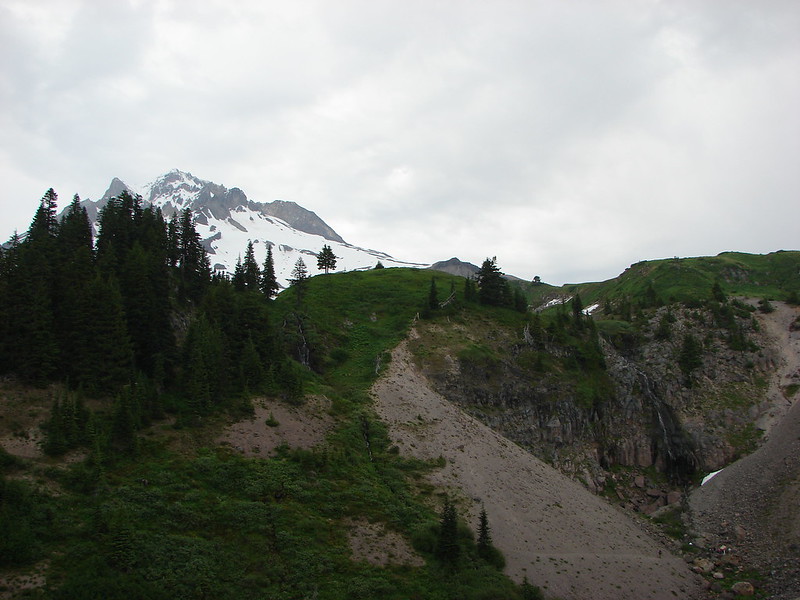
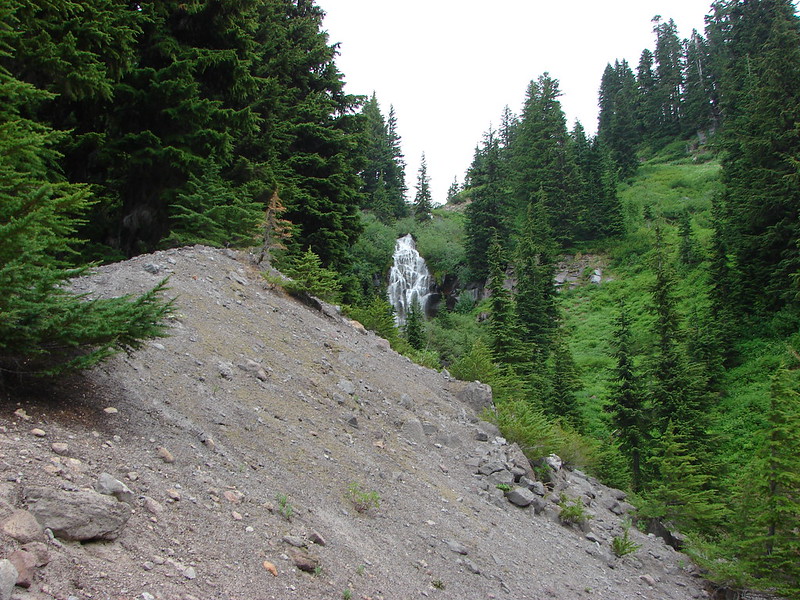
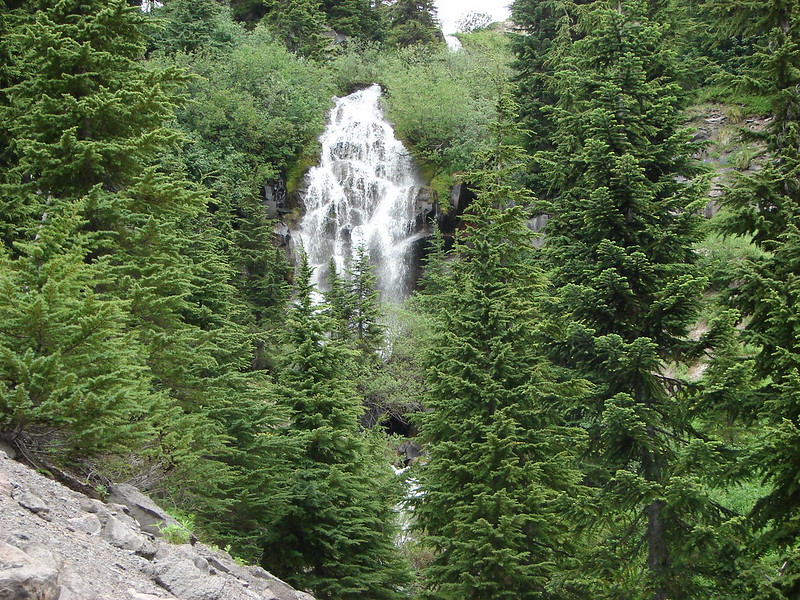
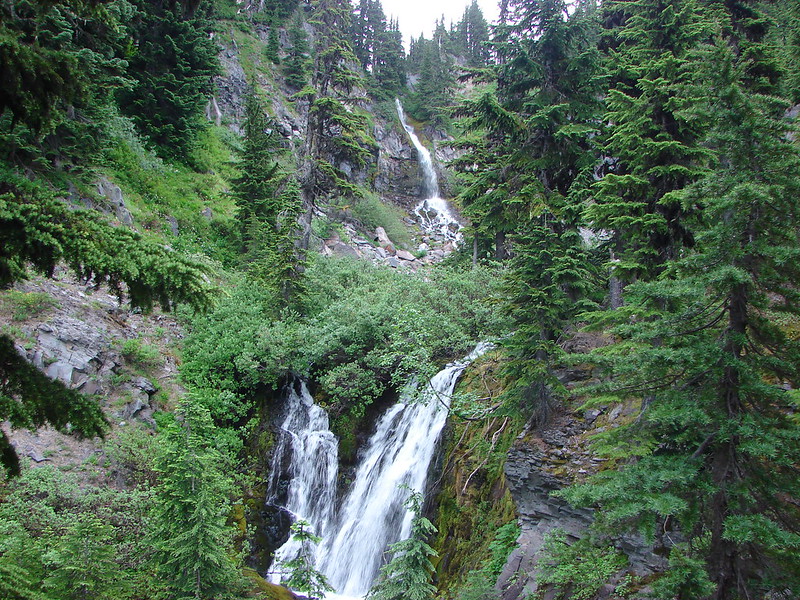
Categories
Goat Rocks Hiking Trip report Washington Washington Cascades

Goat Rocks Wilderness

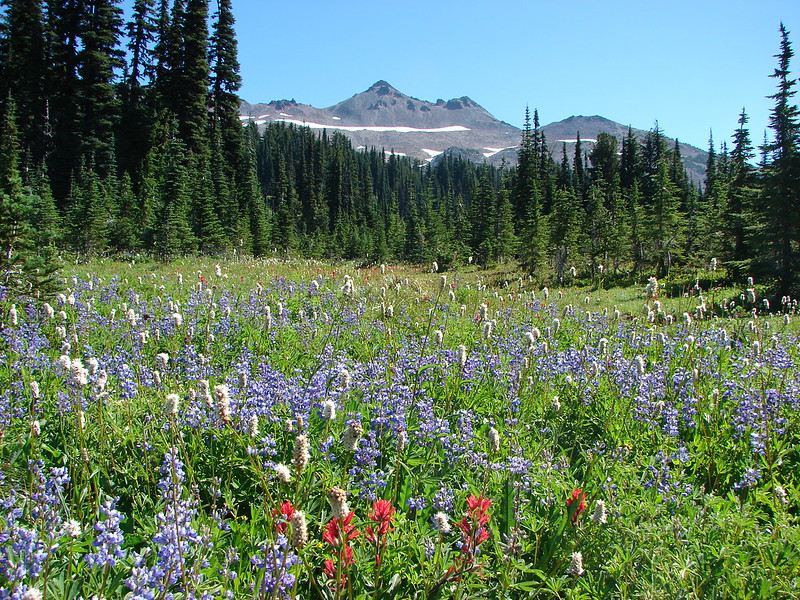
We just returned from our longest backpacking trip to date, a three night, four day stay in the Goat Rocks Wilderness in Washington. What an amazing place. Located between Mt. Adams and Mt. Rainier the Goat Rocks Wilderness sports spectacular views, vast meadows of wildflowers, and plenty of wildlife. A number of trails including the Pacific Crest Trail provide 120 miles of hiking opportunities to explore this special place. Our plan was to establish a base camp at Alpine and then explore in all directions from there.

We started our trip at the popular Snowgrass Trailhead and quickly entered the wilderness.
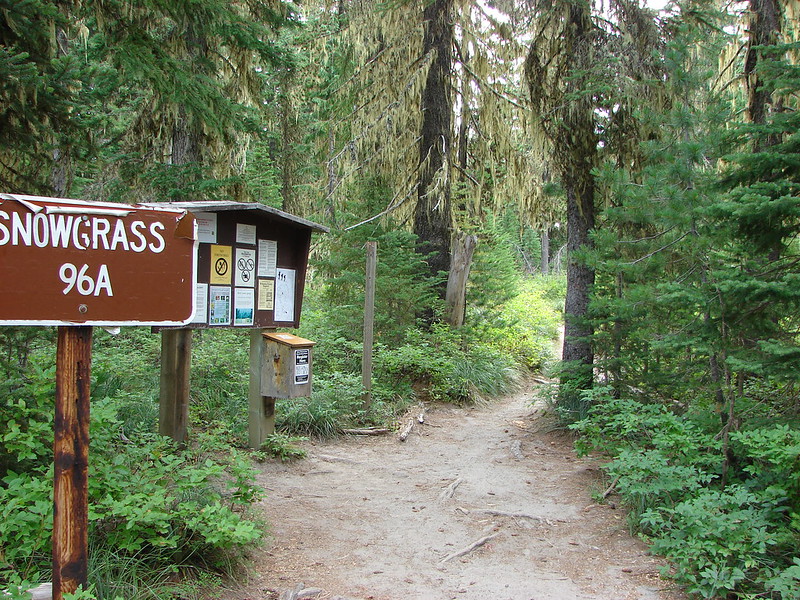
DSC02449

DSC02450

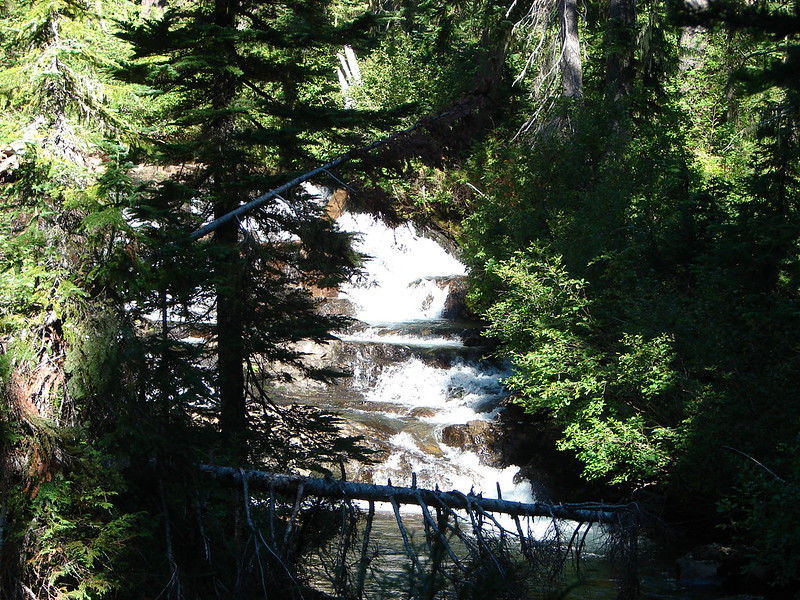
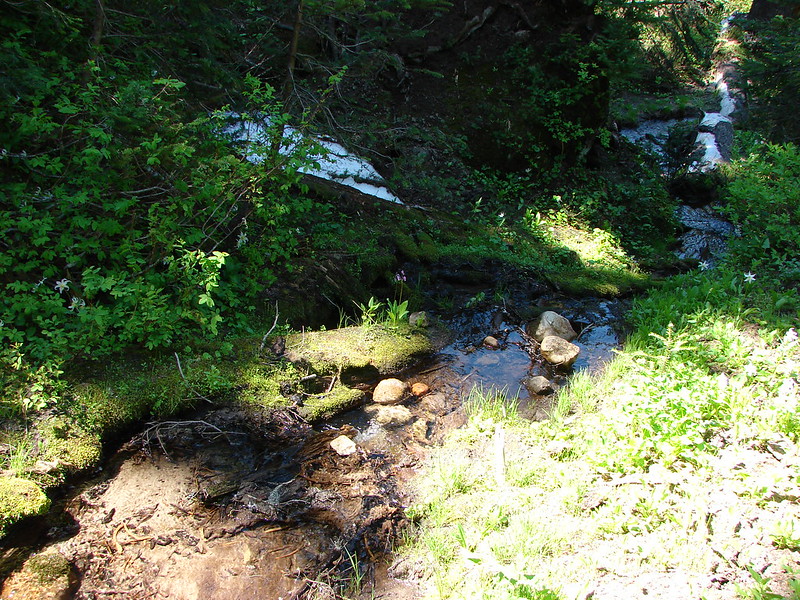
A little over 1.5 miles we crossed Goat Creek on a footbridge.
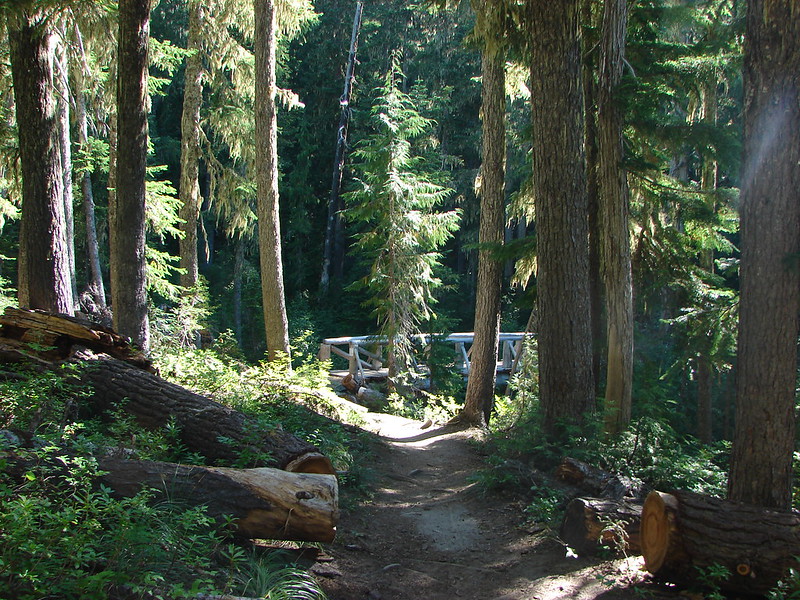
DSC02466

DSC02469

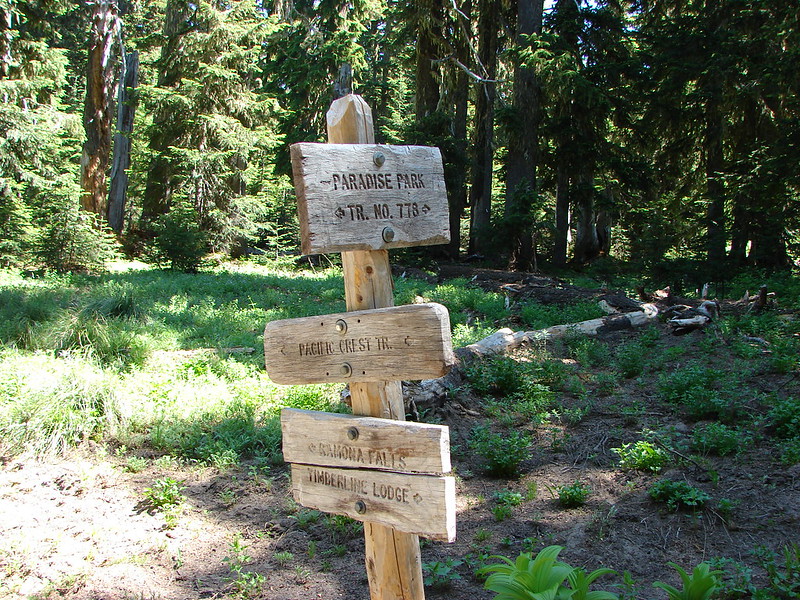
In another 2 miles we came to a trail junction where Bypass Trail 97 split off on its way up to the Pacific Crest Trail. Staying left on the Snowgrass Trail we climbed .7 miles to a trail junction.
DSC02534

DSC02535

DSC02550

DSC02557

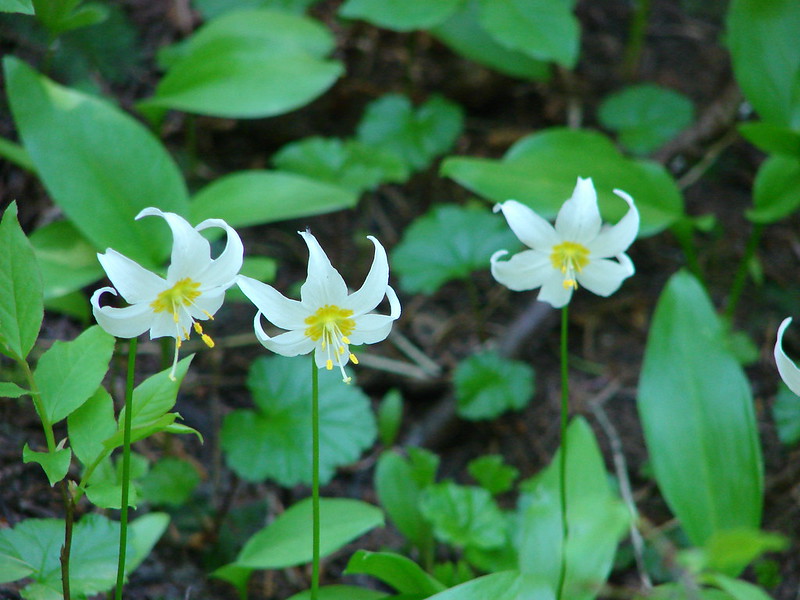
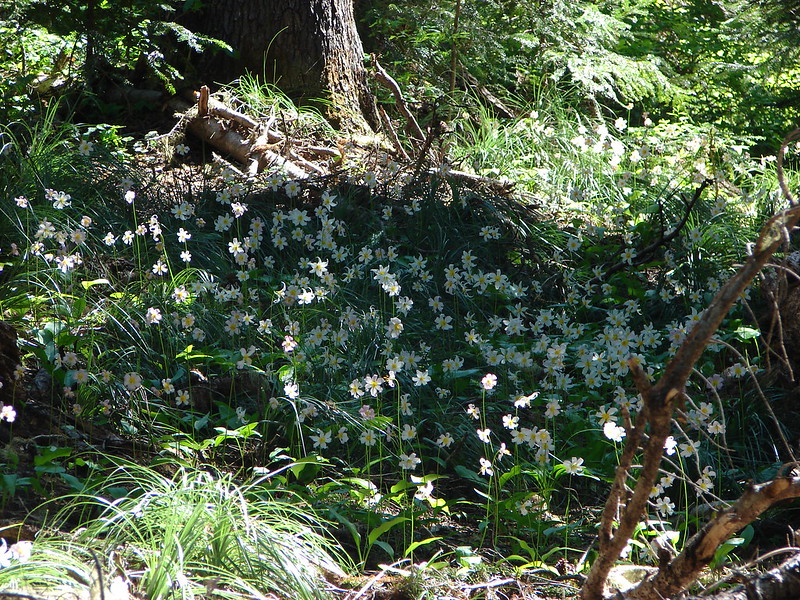
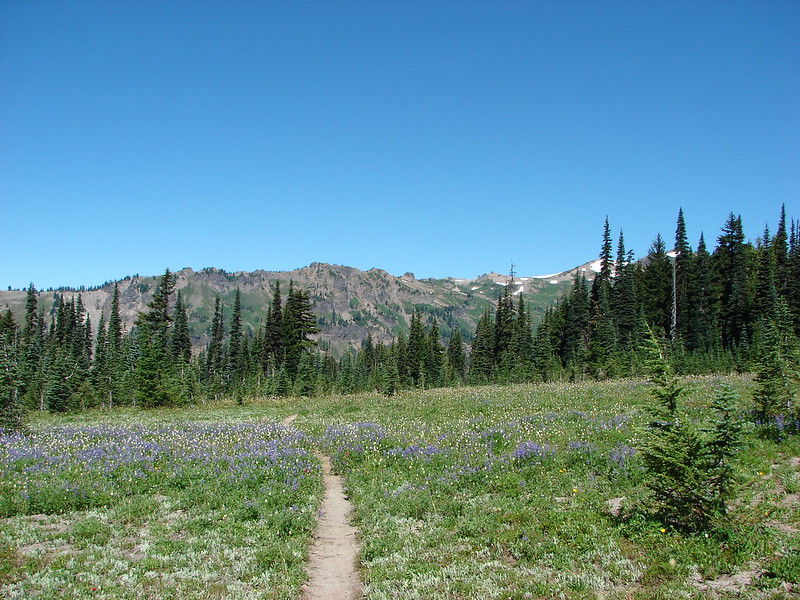
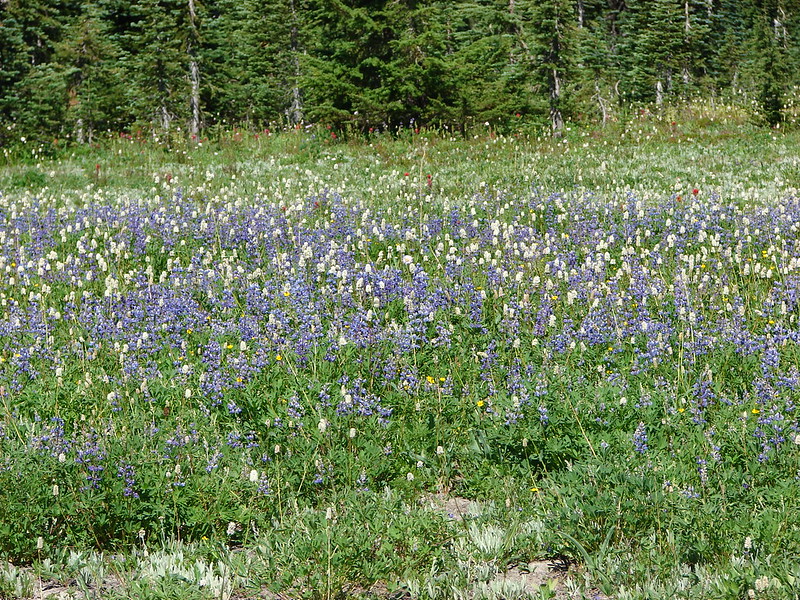
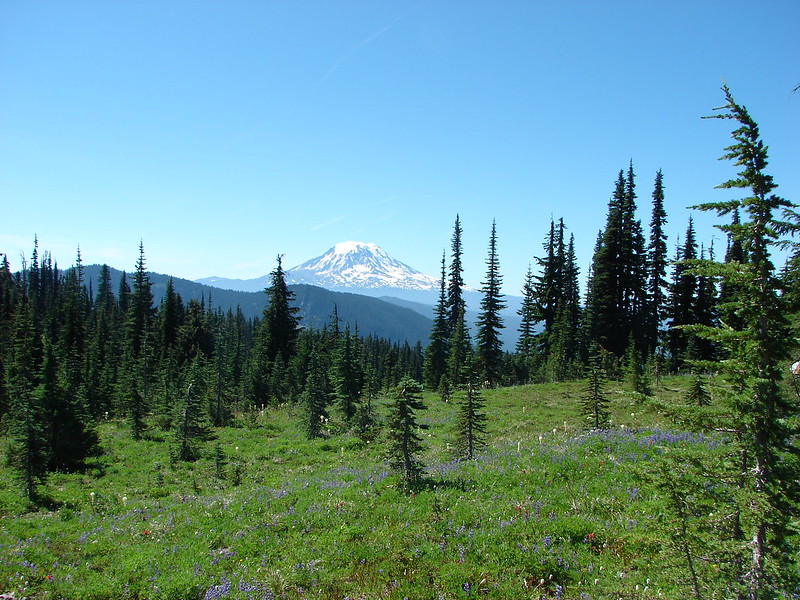
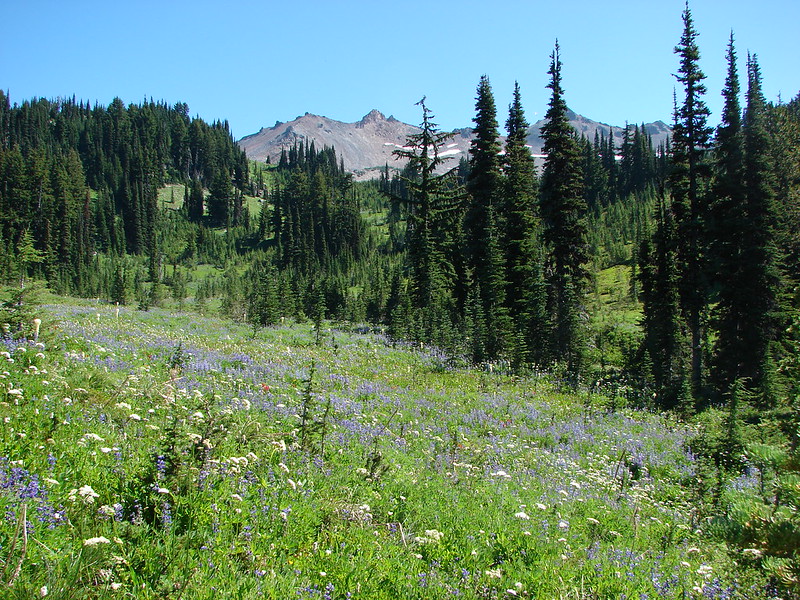
The Lily Basin Trail meets the Snowgrass Trail at this junction amid a wildflower meadow. Just a short distance away was Alpine where we began searching for a tent site. The views and wildflowers at Alpine were simply amazing. We ended up deciding on a small site with a view of Old Snowy Mountain.
DSC02582

DSC02575

DSC02578

DSC02928

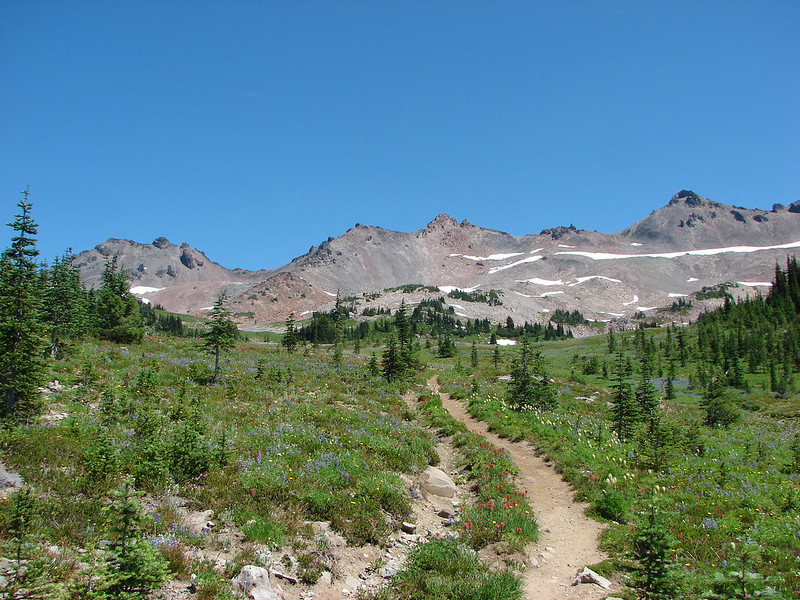
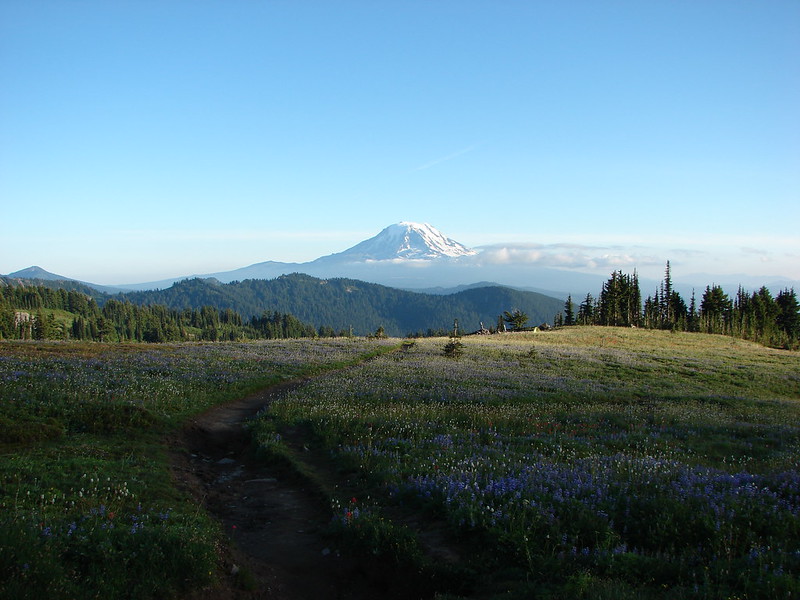
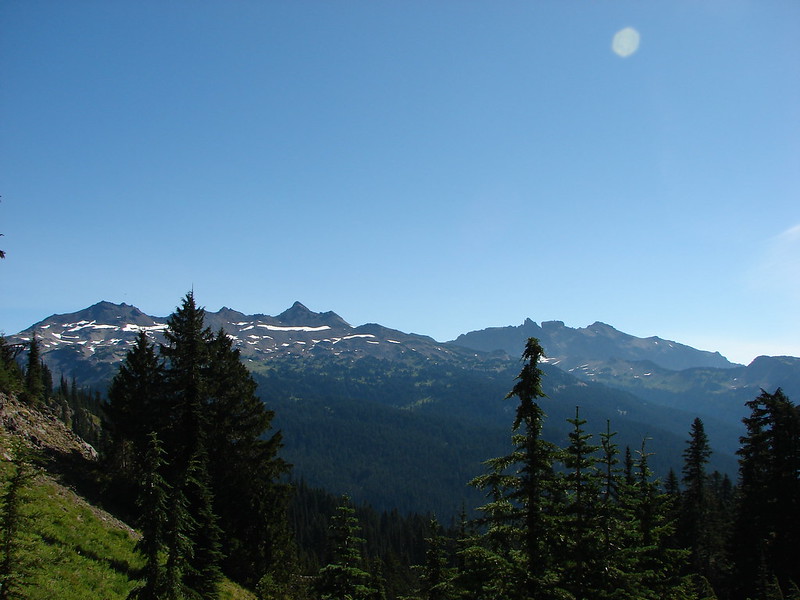
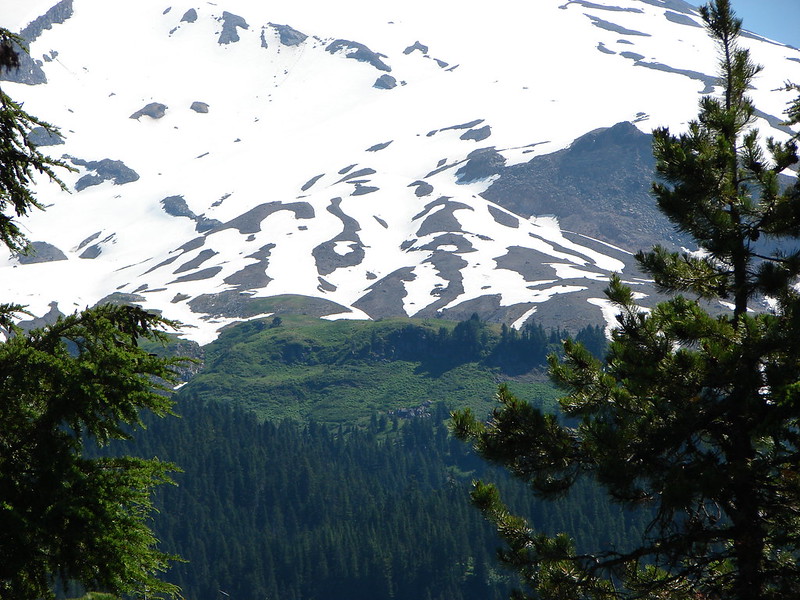
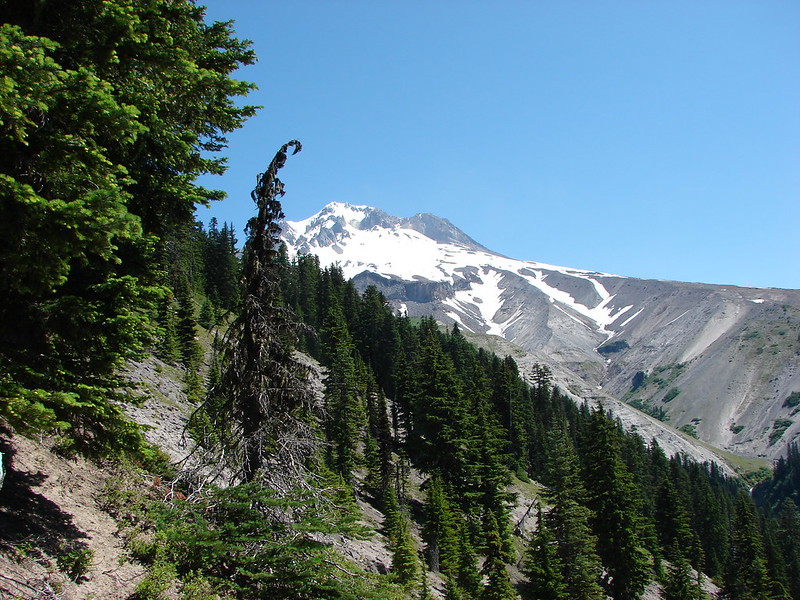
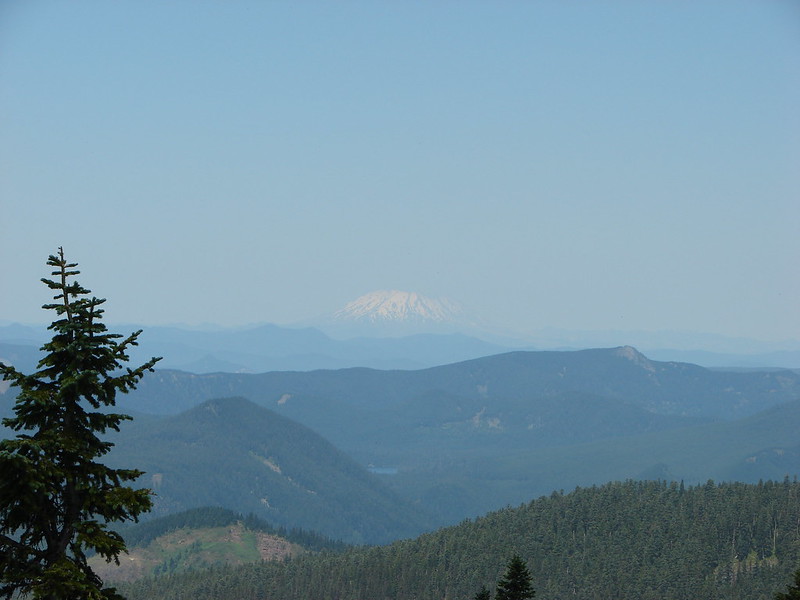
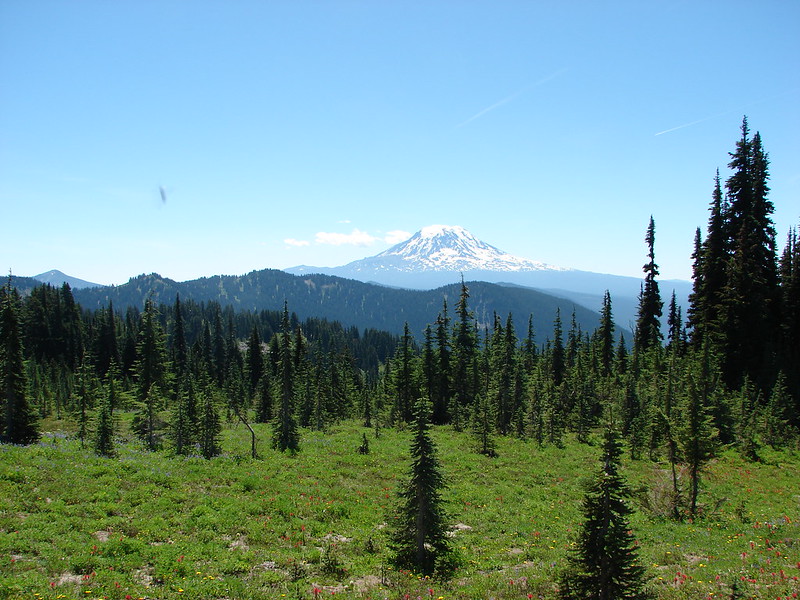
After setting up camp we loaded up our daypacks and headed back to the Snowgrass Trail and climbed to the Pacific Crest Trail. The scenery just kept getting better as we approached the PCT. Mt. Adams was standing tall to the SE, Mt. St. Helens sat in the distance to the SW and Old Snowy Mountain & Ives Peak lay dead ahead.
DSC02641

DSC02664

DSC02642

DSC02647

DSC02668

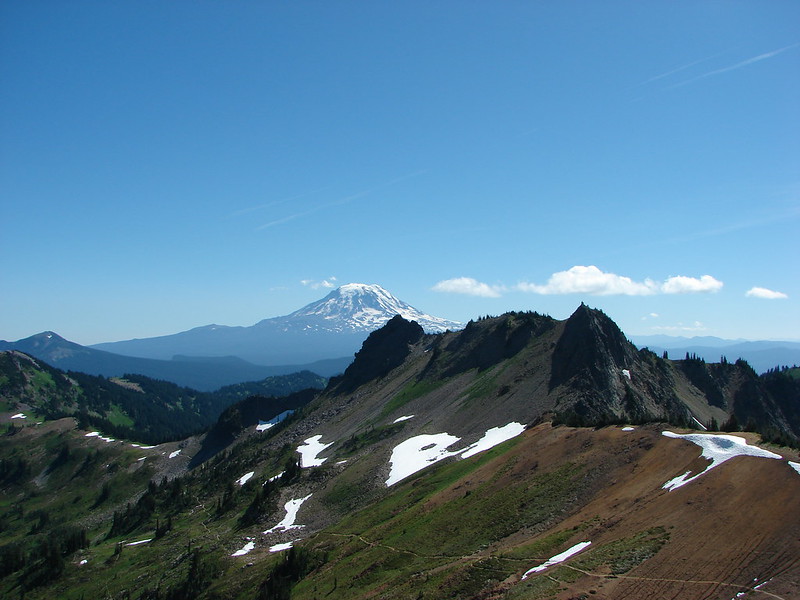
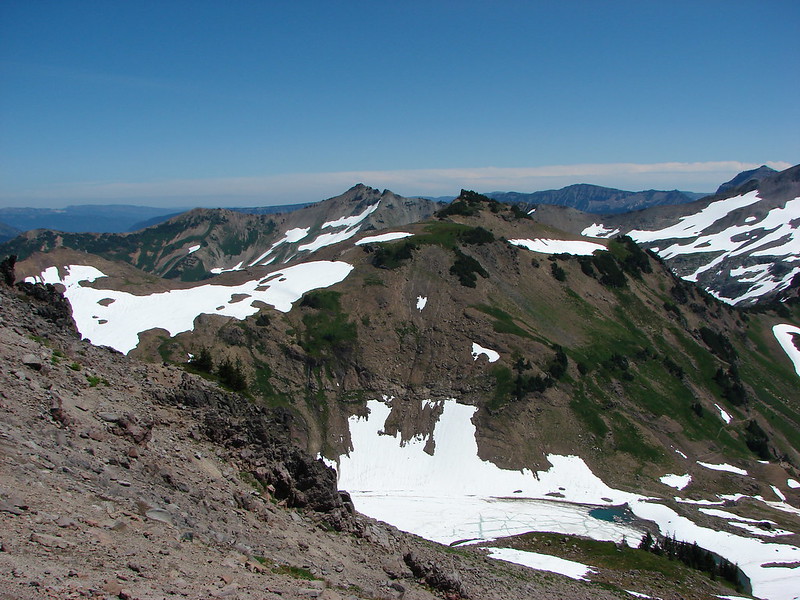
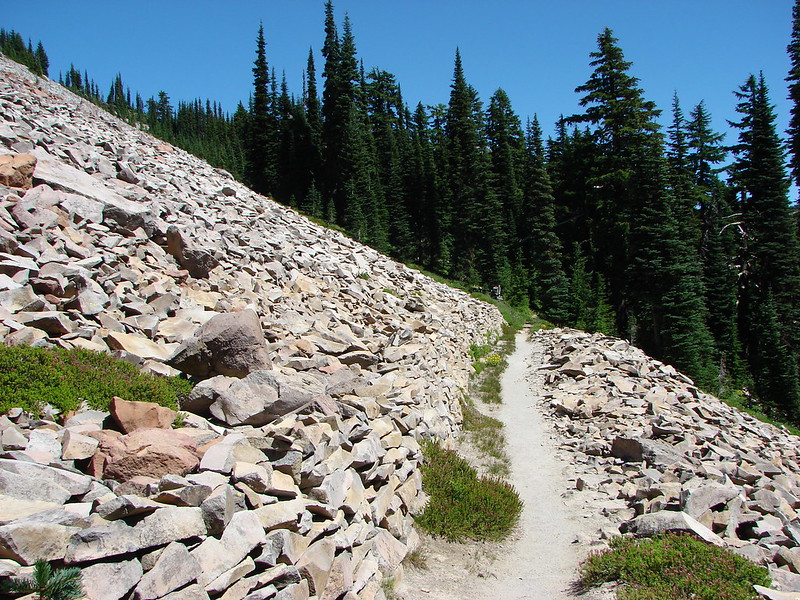
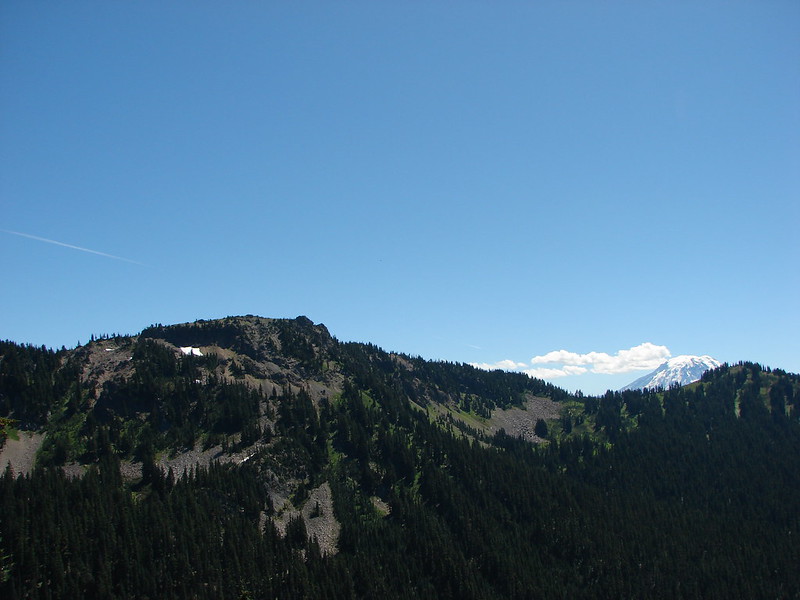
We turned right (south) on the PCT and headed toward the Cispus Basin planning to go as far as Cispus Pass before turning around. After a mile the Bypass Trail 97 joined the PCT which we would take on the way back. After crossing a large rock slide we got our first view across the Cispus Basin to Mt. Adams peaking over the far ridge.
DSC02722

DSC02729

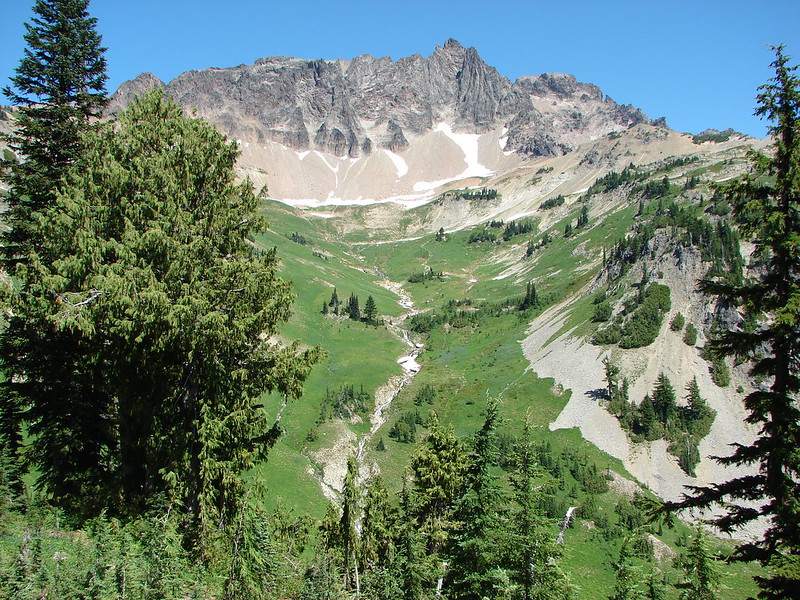
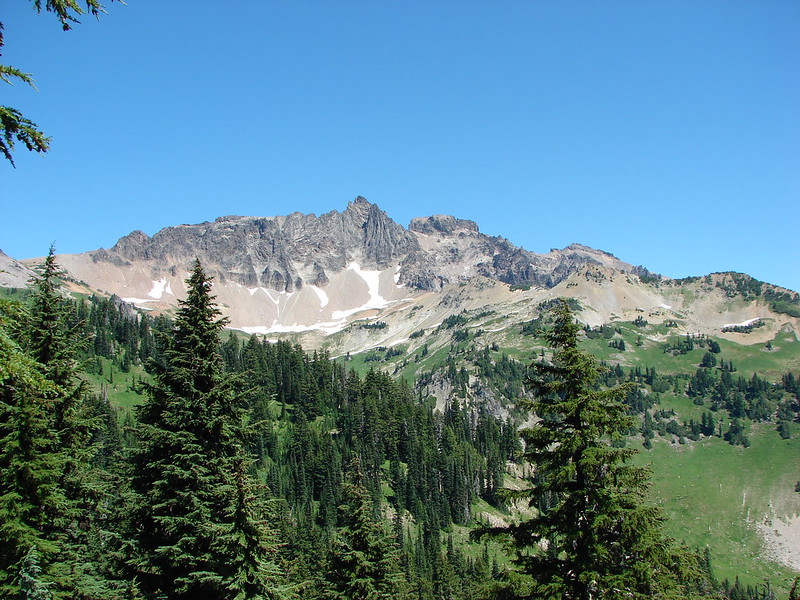
The Cispus River begins at the top of the basin underneath more jagged peaks of the Goat Rocks.
DSC02728

DSC02750

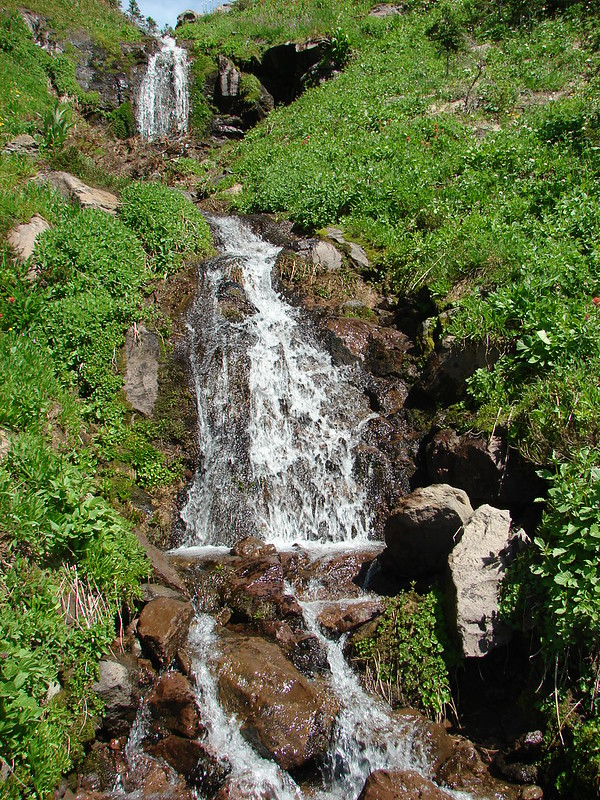
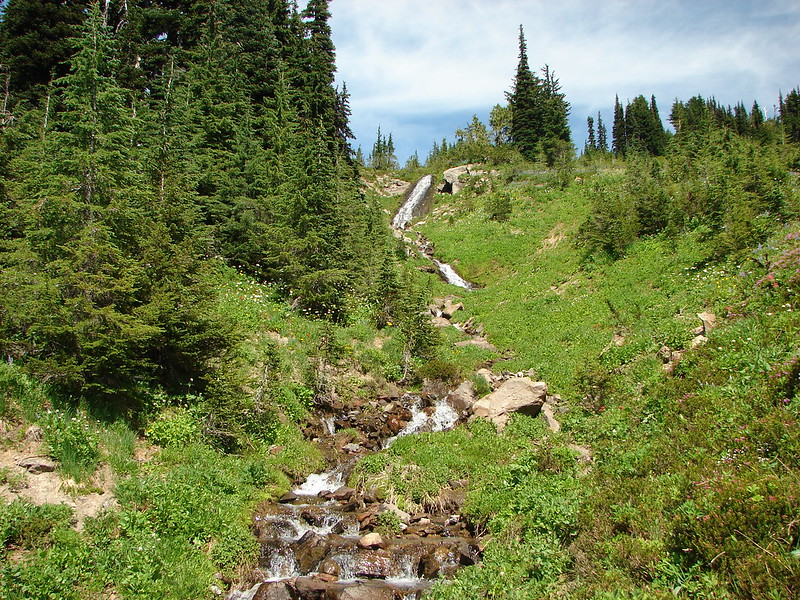
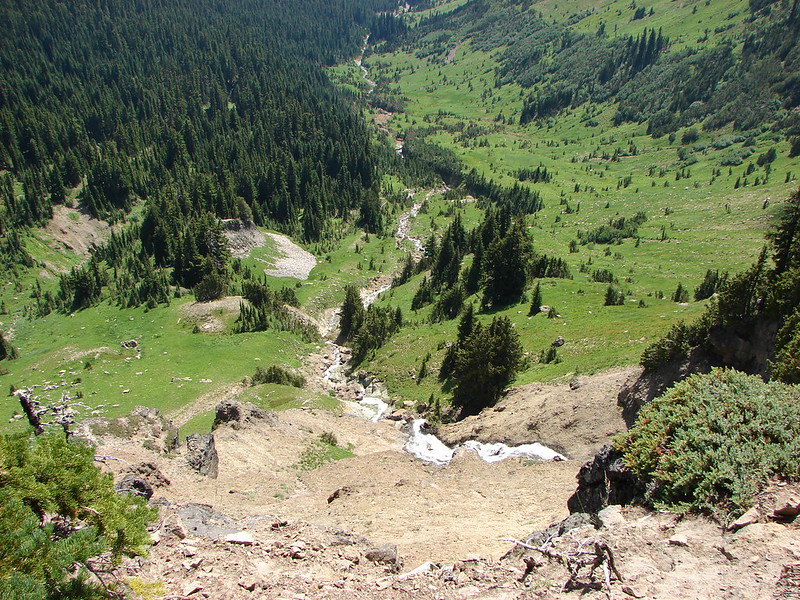
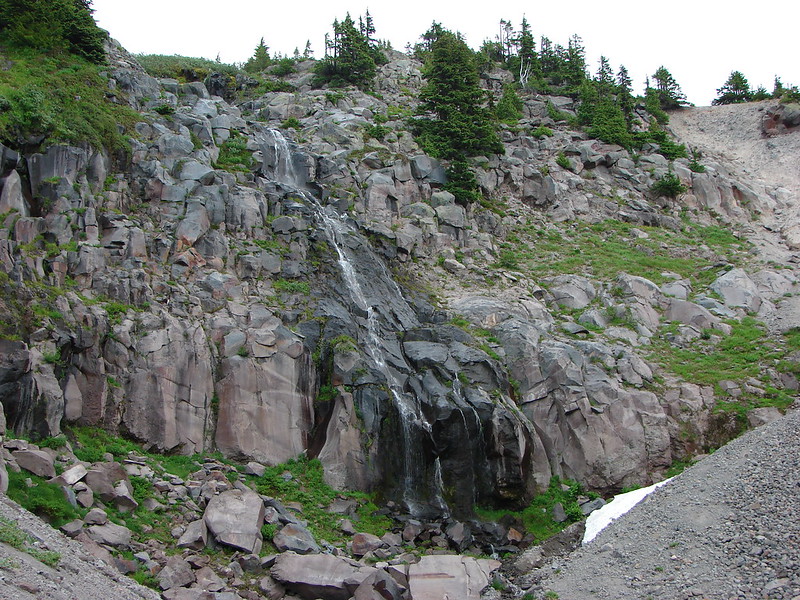
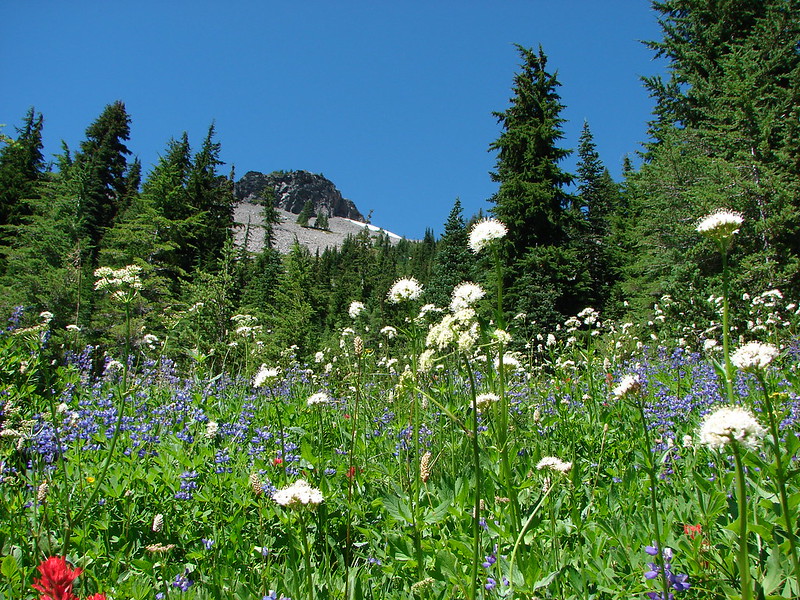
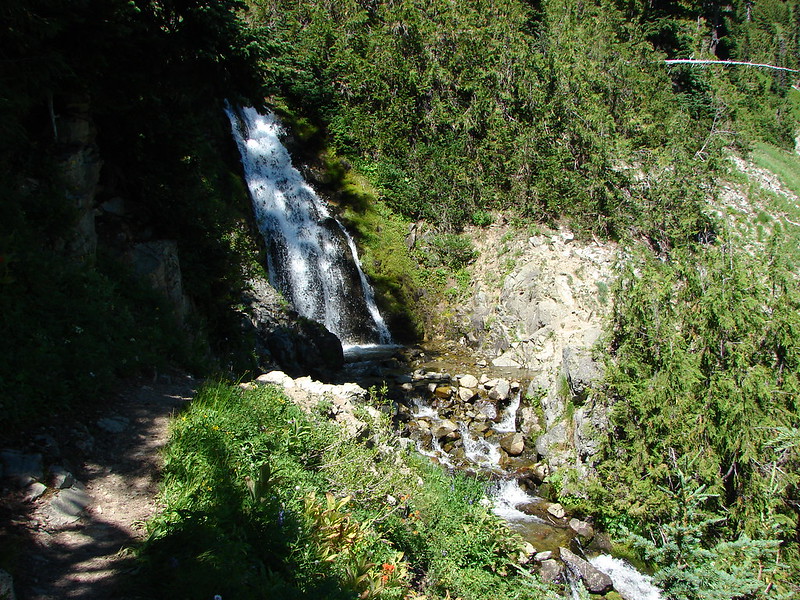
There had been wildflowers all along the trail but as we entered the basin they increased. Adding to the scenery was a waterfall that the PCT passed below.
DSC02740

DSC02757

DSC02786

The trail continued around the basin crossing the Cispus River and then heading up the eastern side of the basin.
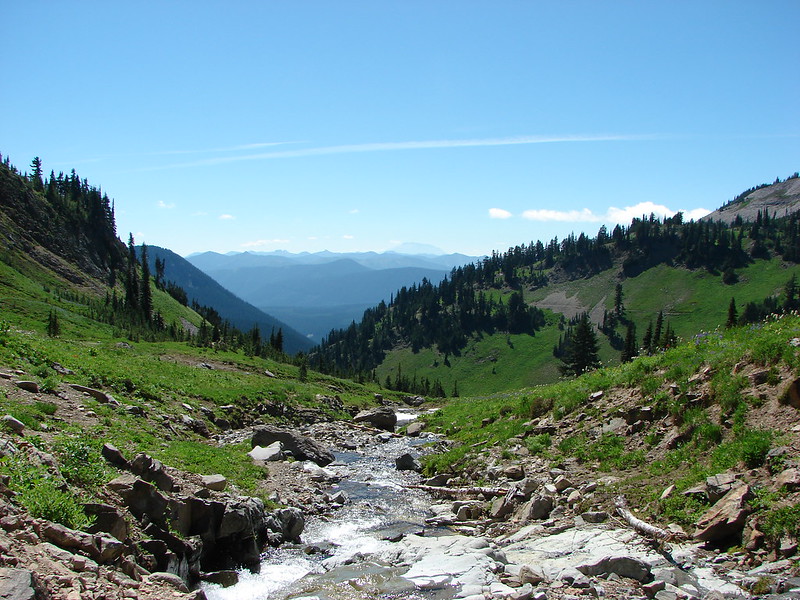
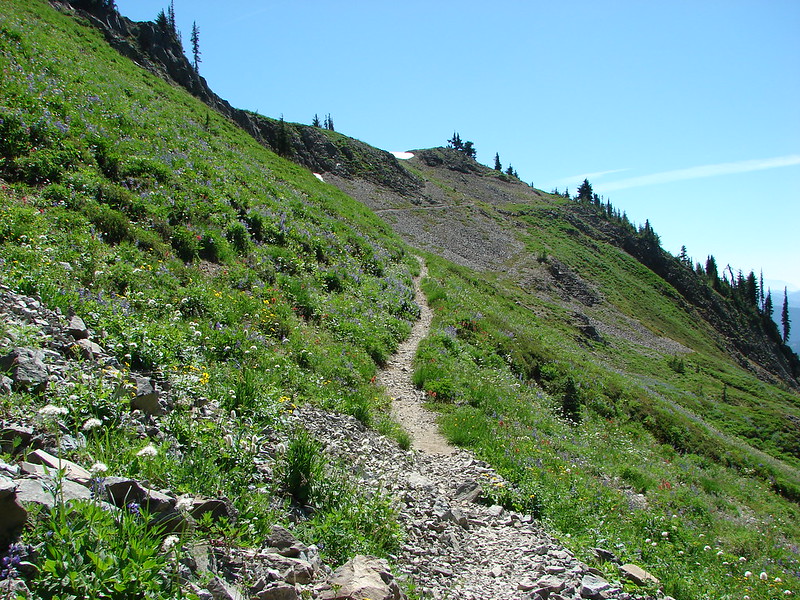
DSC02789

DSC02804

At the top of the ridge was Cispus Pass and the border of the Yakima Indian Reservation. The Klickitat River flowed below and Mt. Adams was again visible to the SE.

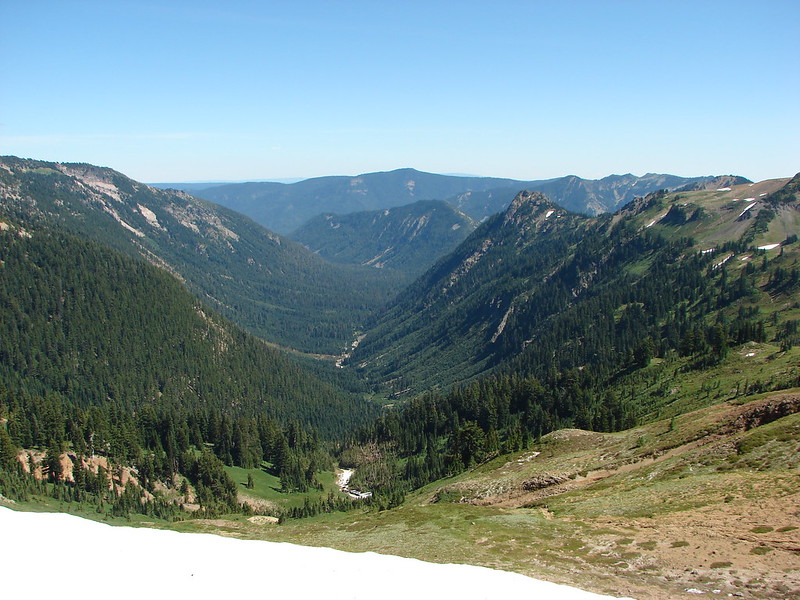
DSC02825

DSC02828

DSC02835

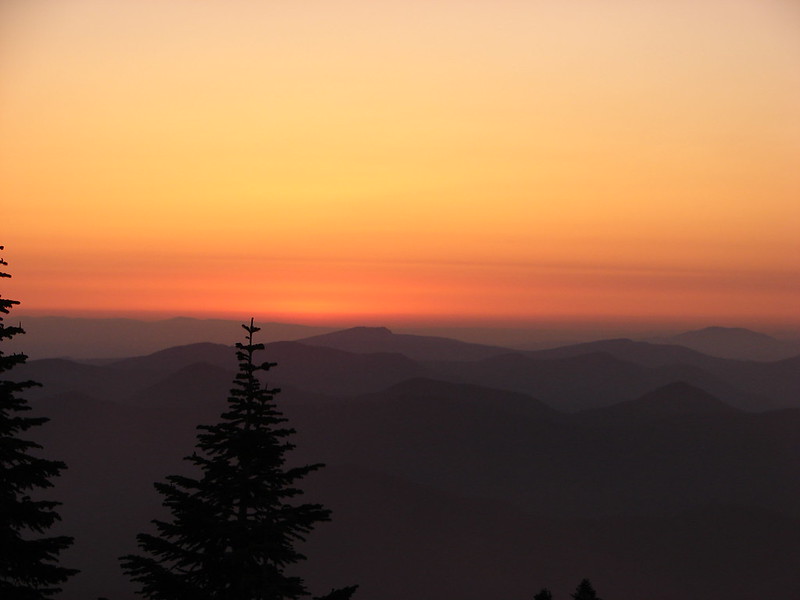
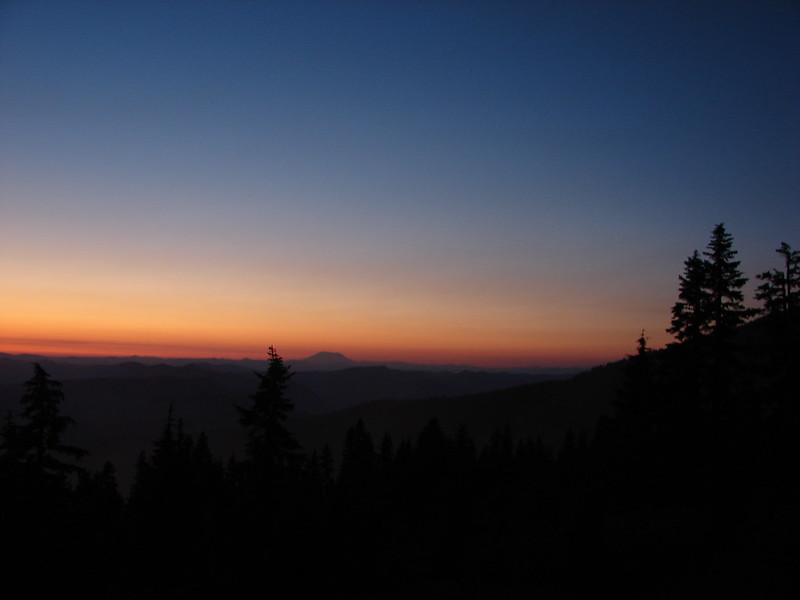
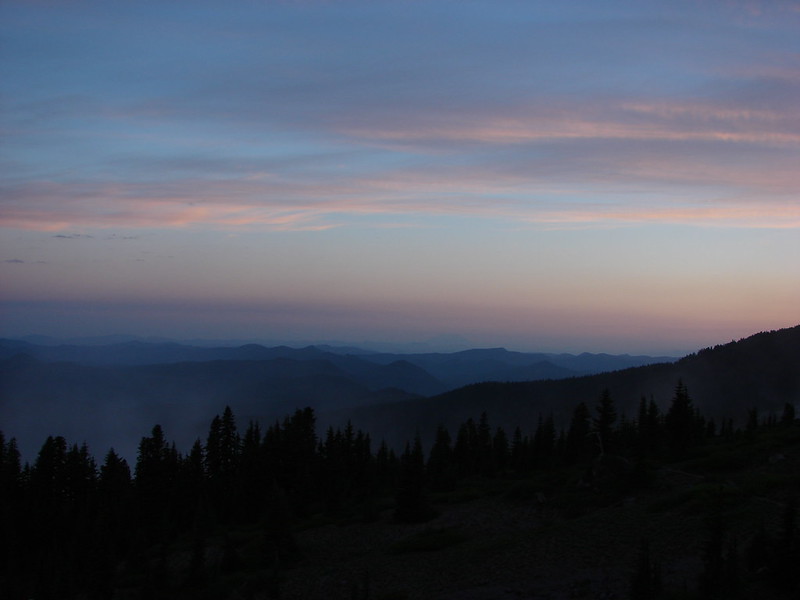
We returned to Alpine via the Bypass Trail 97 and took a short rest before heading back out to catch the sunset. We decided to try heading further out on the Lily Basin Trail since the Sun would be setting over the ridges in that direction. We passed a small pond with a big reflection before finding an unoccupied camp site where we settled in.
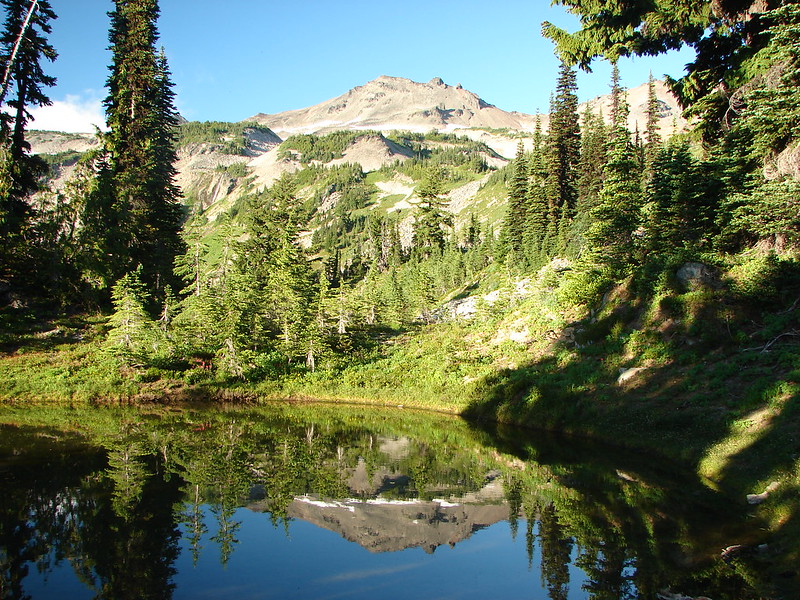
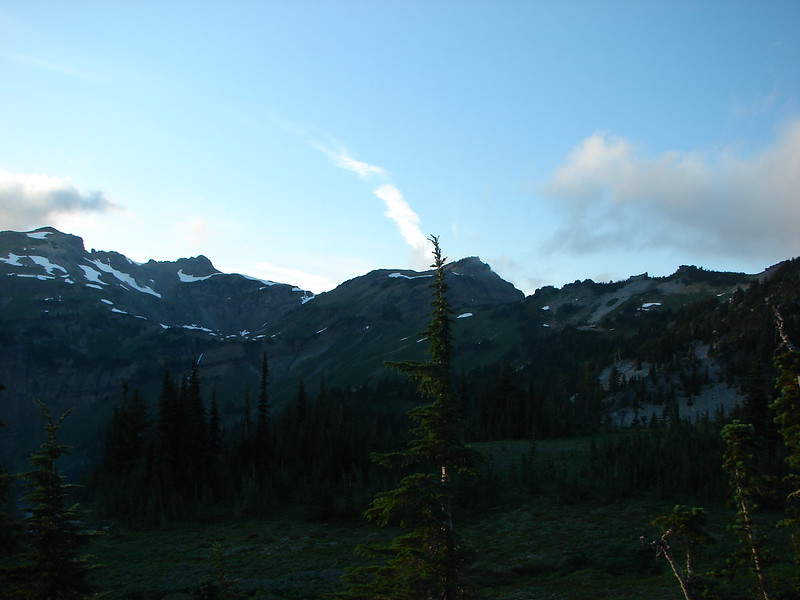
DSC02935

DSC02968

DSC02964

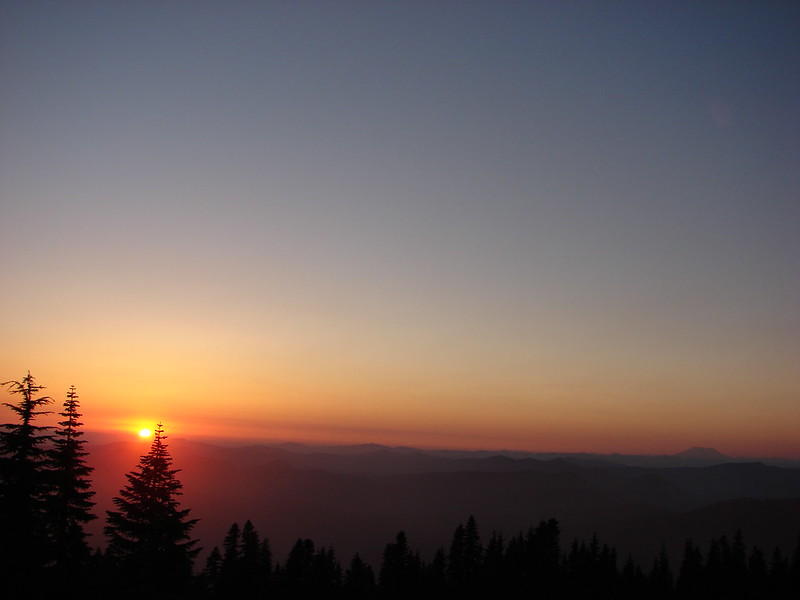
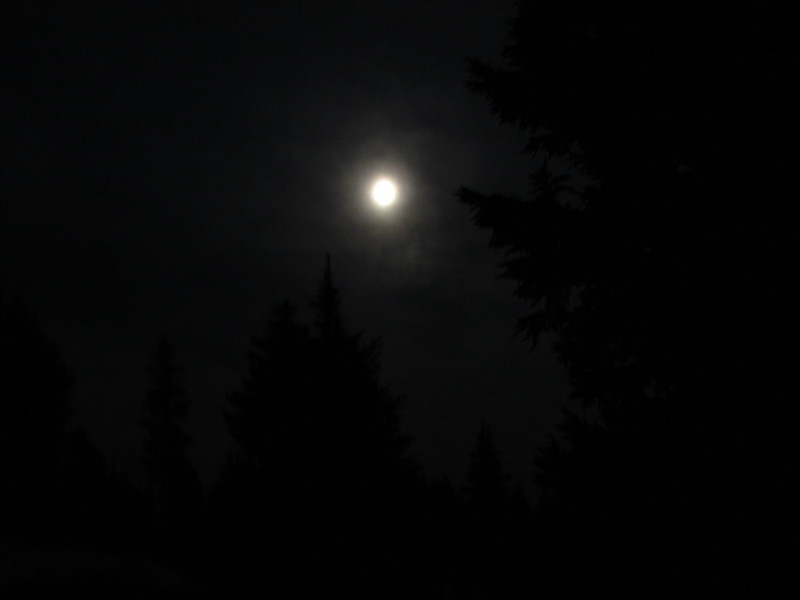
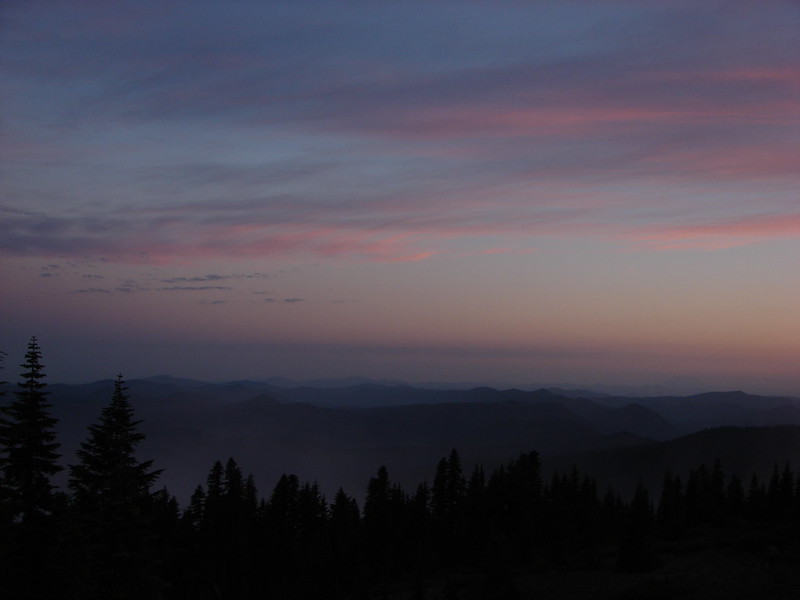
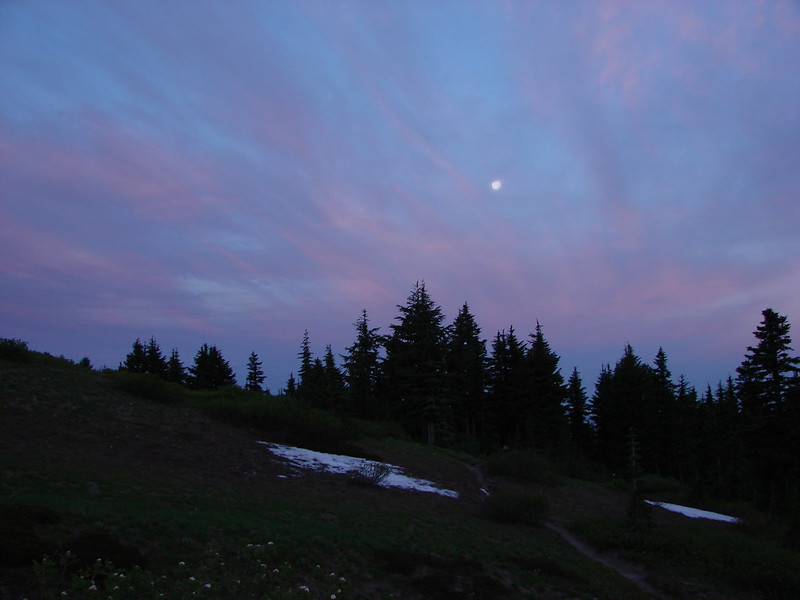
Clouds started to move in and cover some of the higher points though so we headed back toward Alpine to check on Mt. Adams. The Moon had risen over the ridges to the North of Mt. Adams making for a perfect ending to our first day.
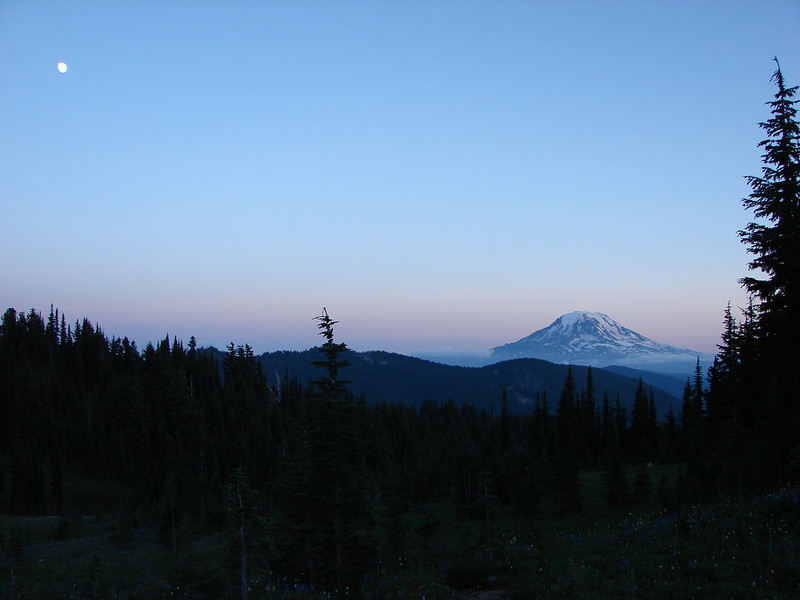
DSC03004

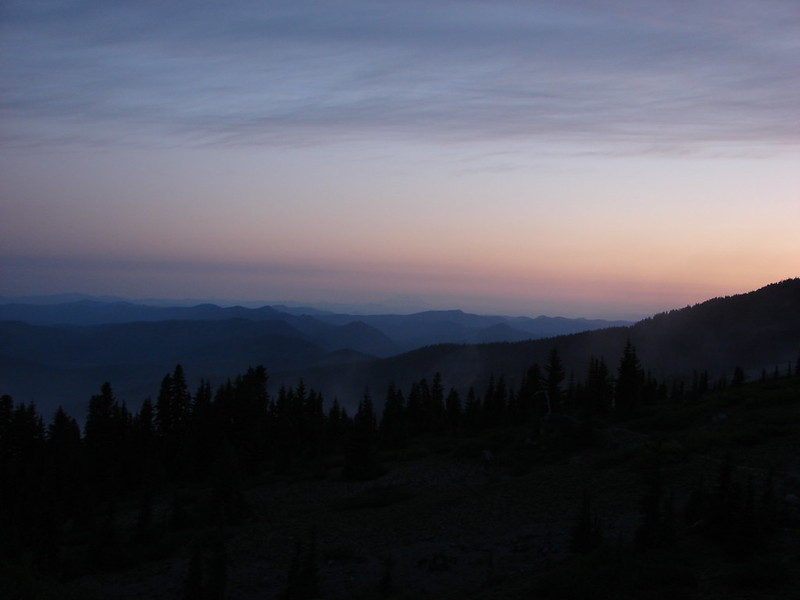
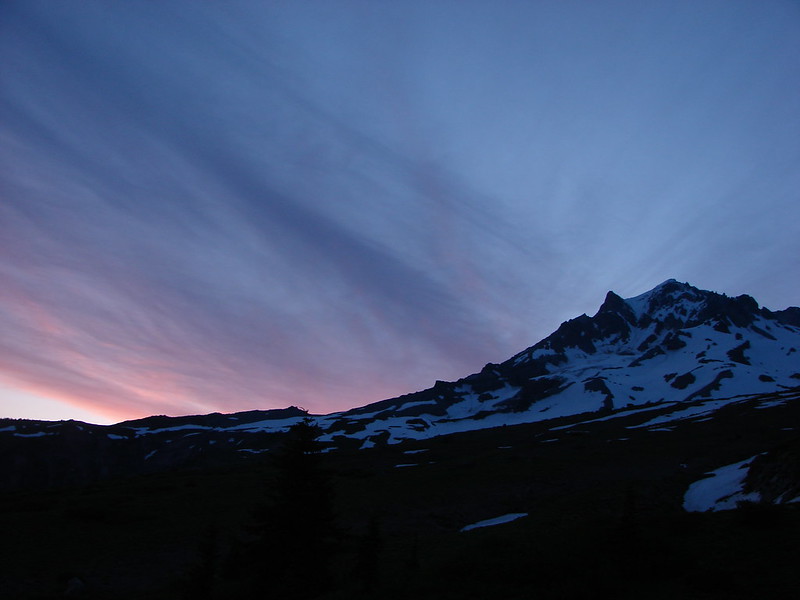
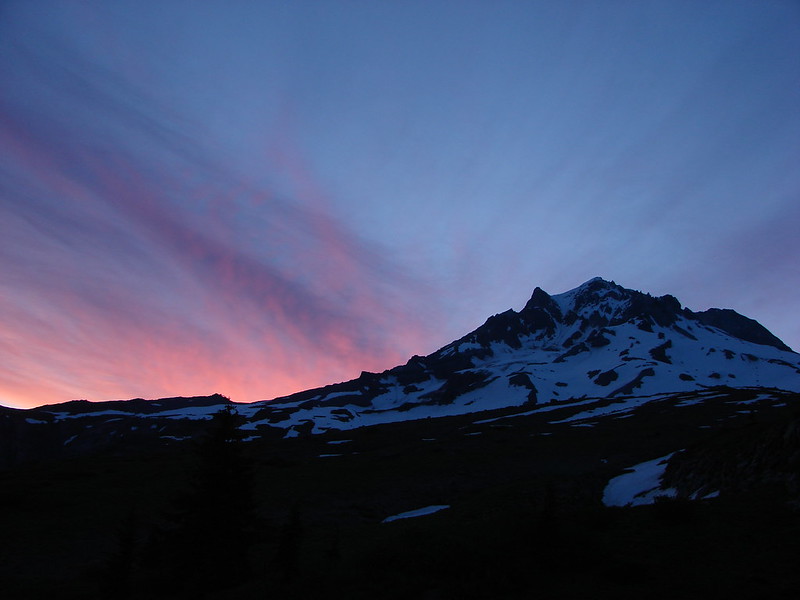
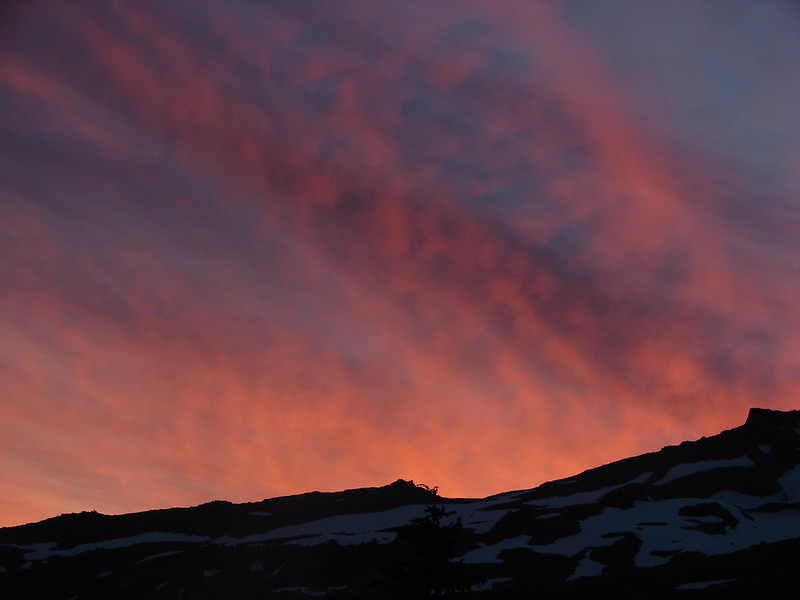
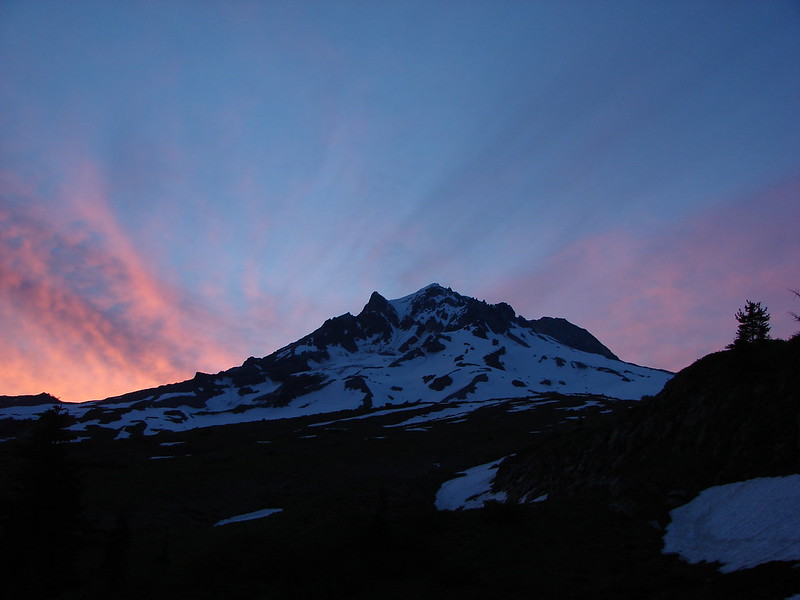
I was up early on day 2 and was able to catch the sunrise which lit up the clouds over Ives Peak and Mt. Adams.
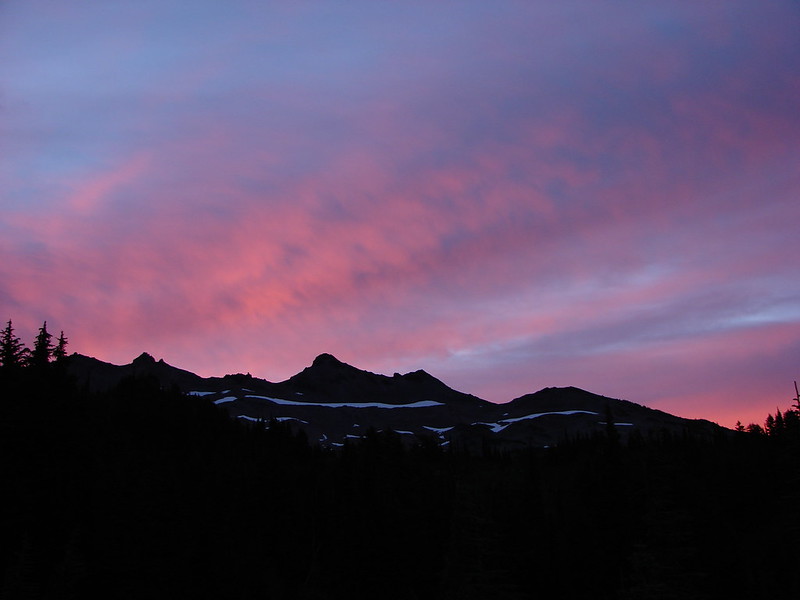
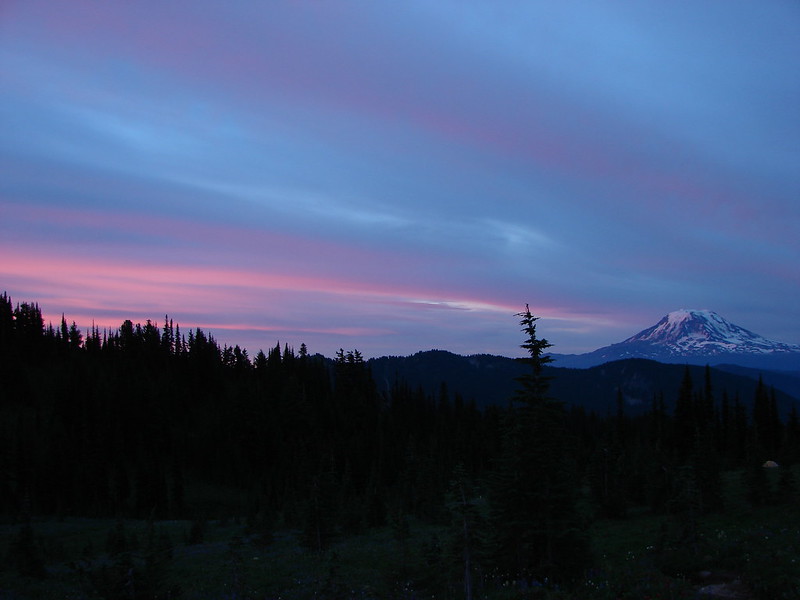
DSC03037

DSC03029

Several elk were passing through the trees on the far side of Alpine but the low amount of light left me with a single picture worthy of a bigfoot sighting. 🙂
DSC03068

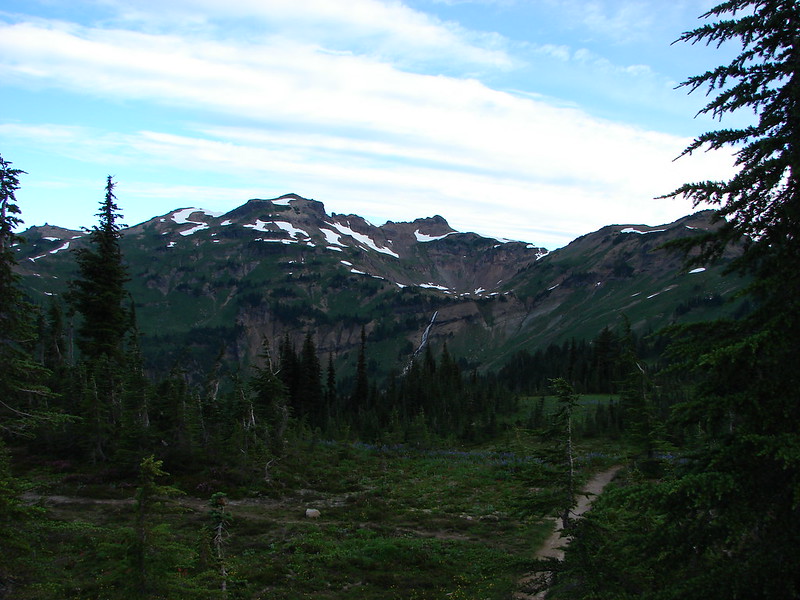
We set off early on the Lily Basin Trail planning on passing Goat Lake then continuing on the trail to Heart Lake with a possible side trip up Hawkeye Point. As we headed in that direction the view of Hawkeye Point and Goat Creek falling from the rocky ledge below Goat Lake was another stunner.
DSC03075

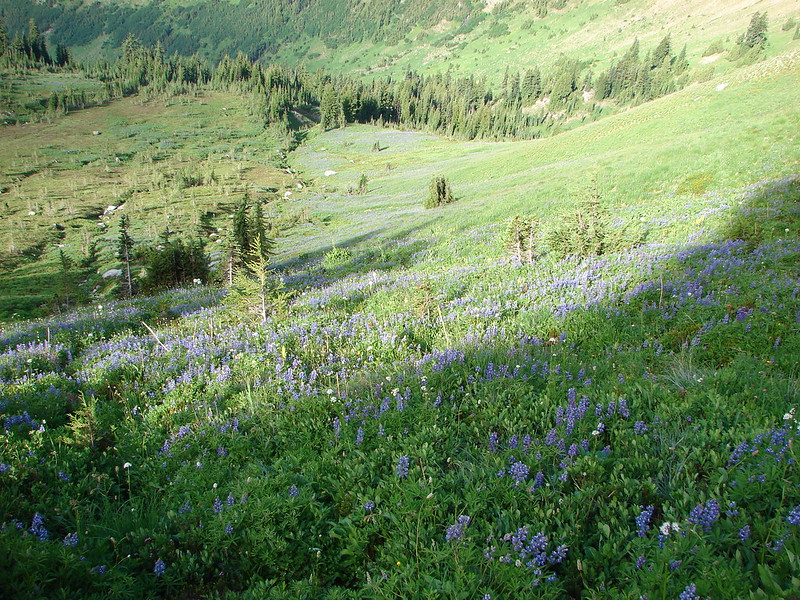
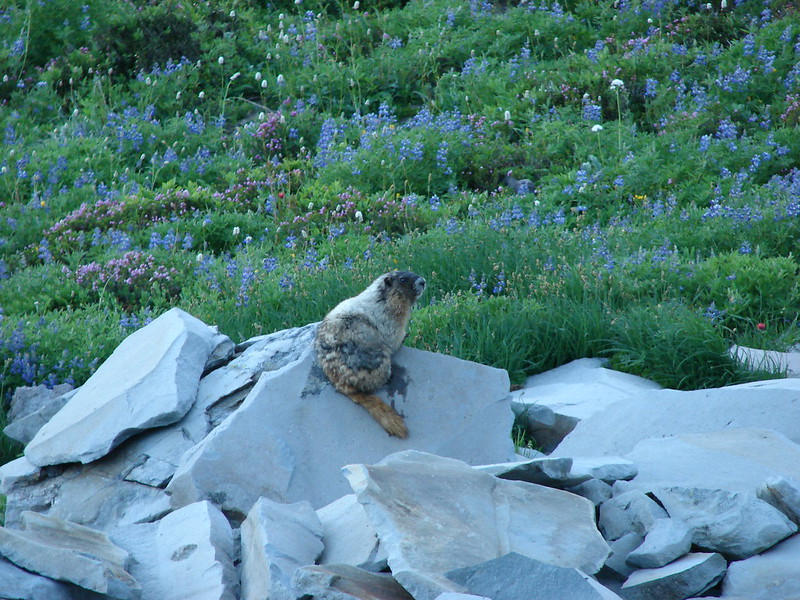
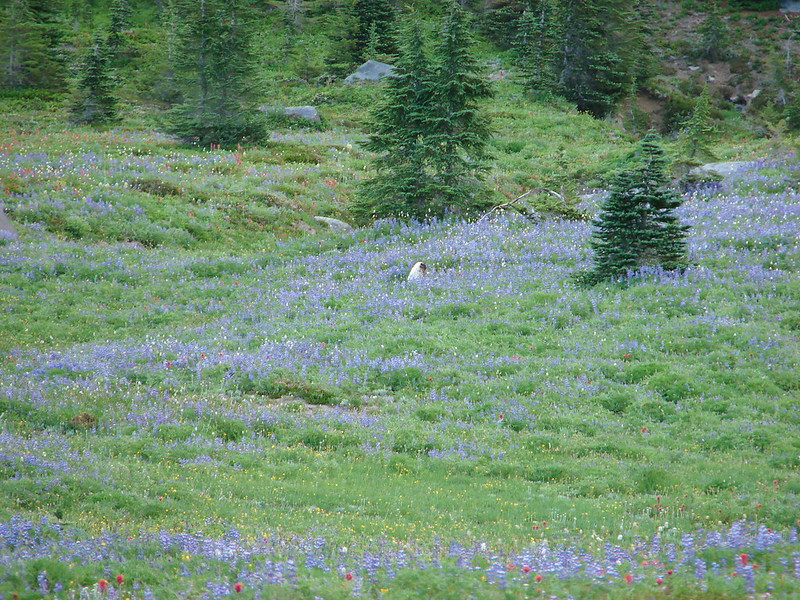
The trail passed through some large wildflower meadows where marmots could be seen scurrying about in the lupine.

DSC03080

DSC03085

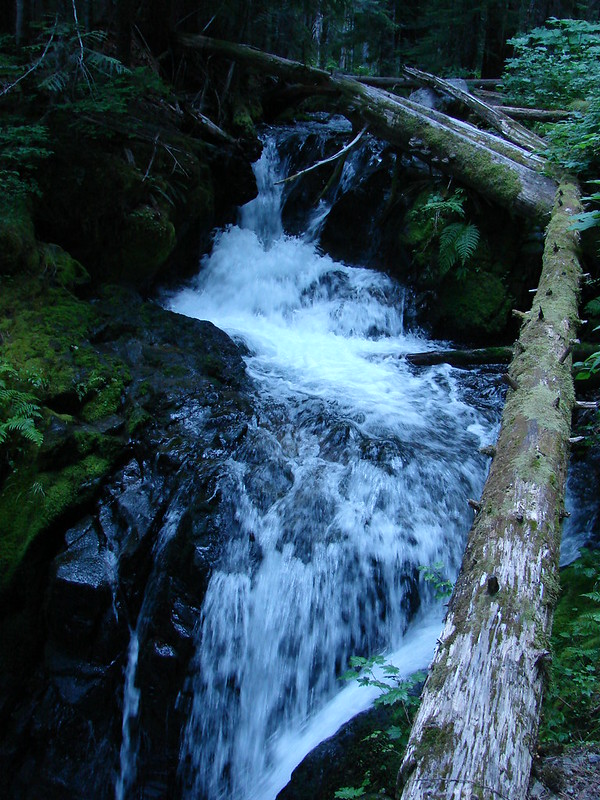
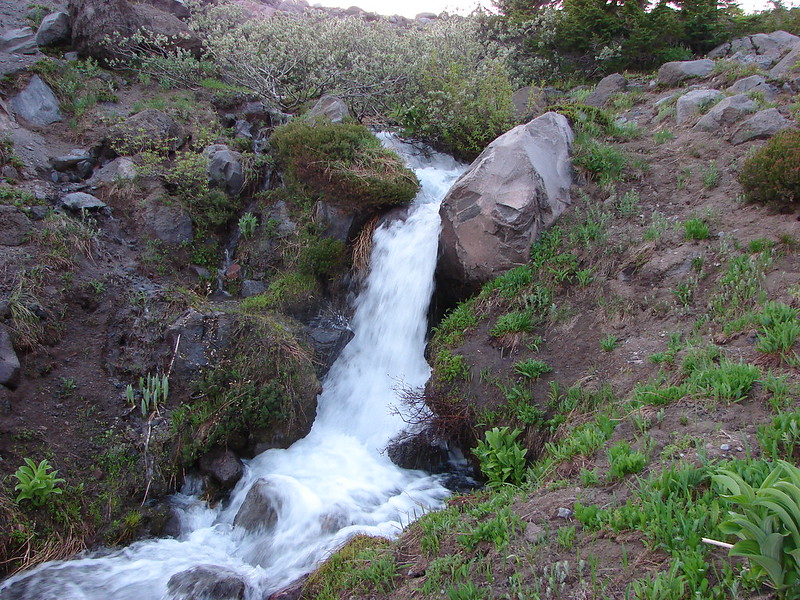
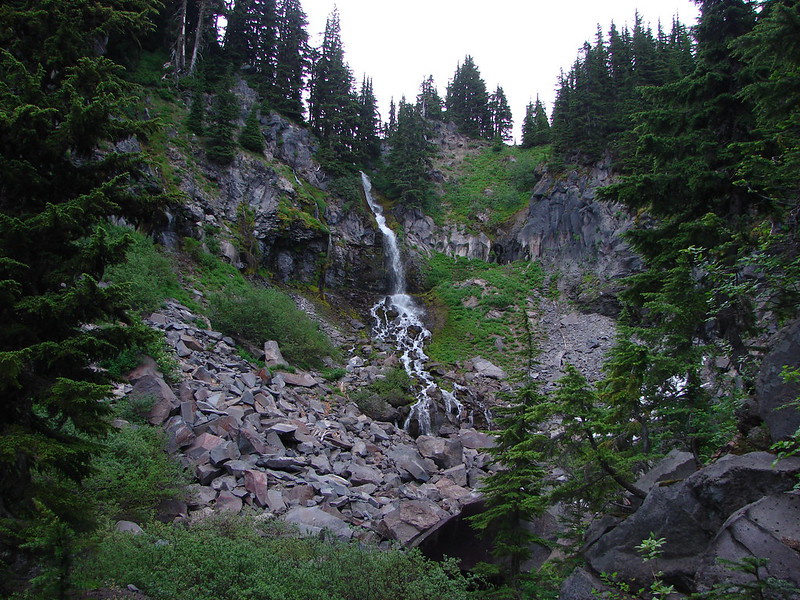
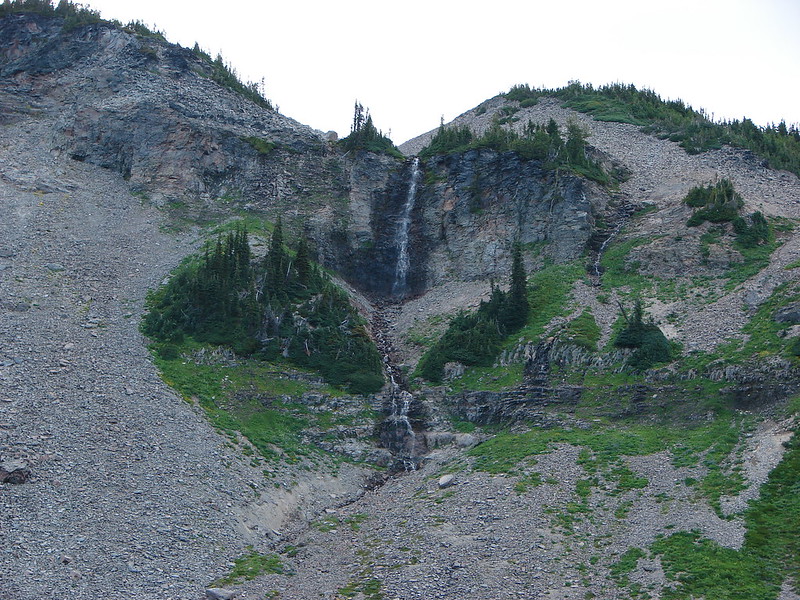
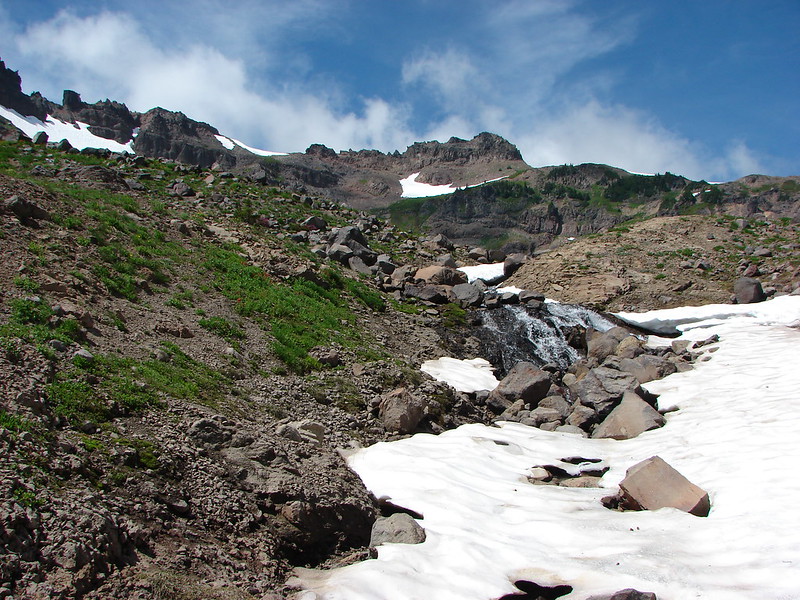
We also passed several waterfalls. The first just disappeared into a rock slide while the second slid down the rocks.
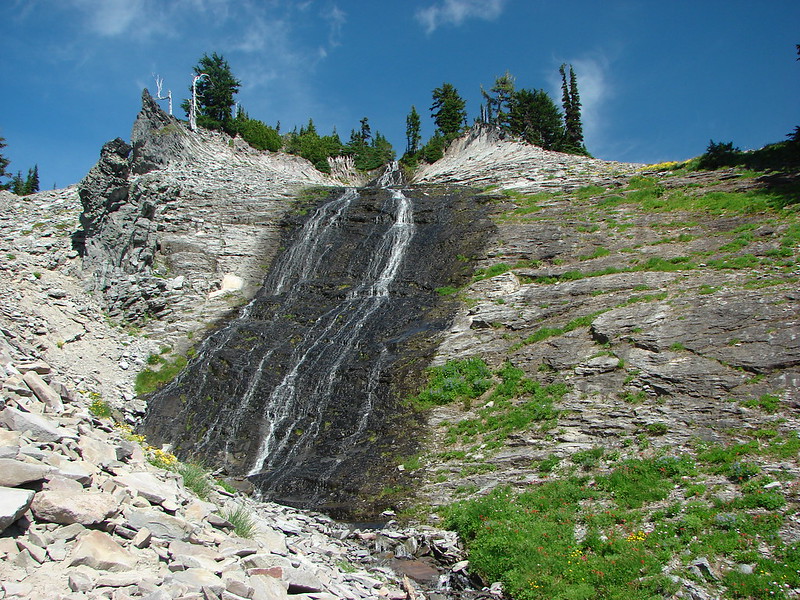
DSC03090

DSC03514

DSC03490

DSC03493

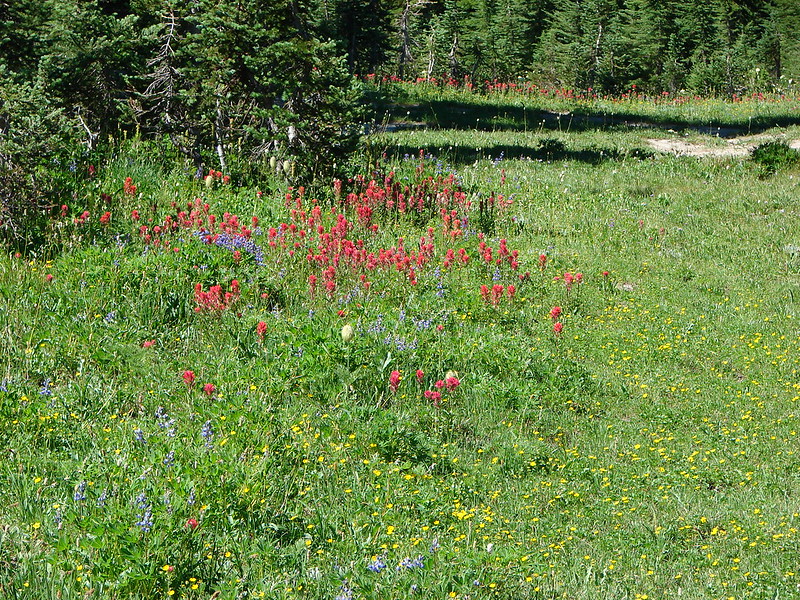
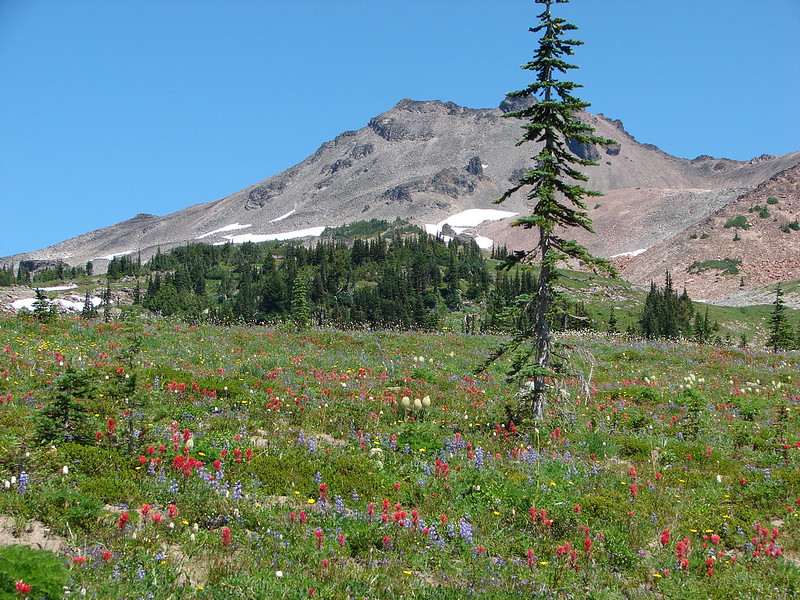
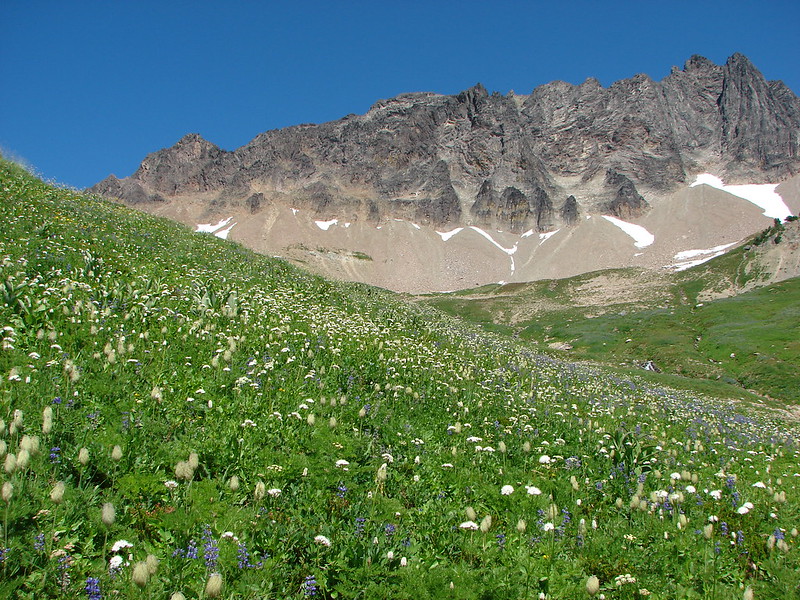
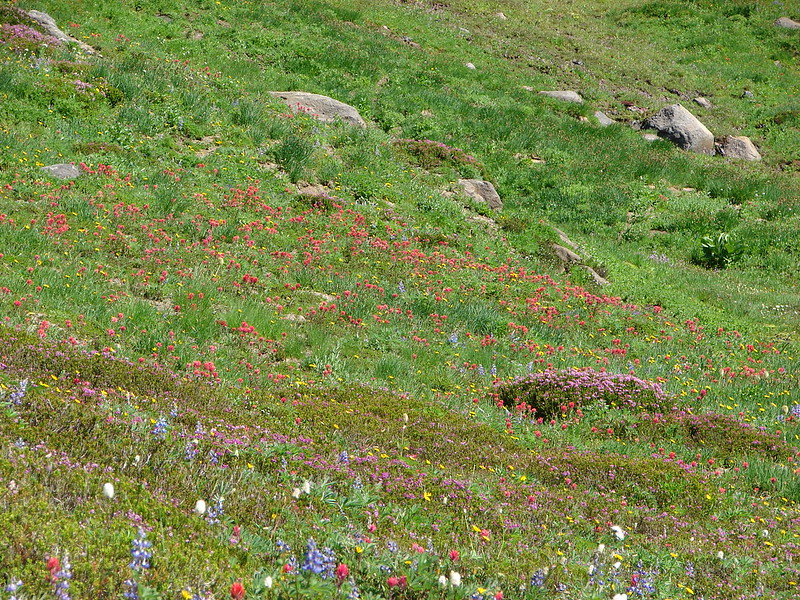
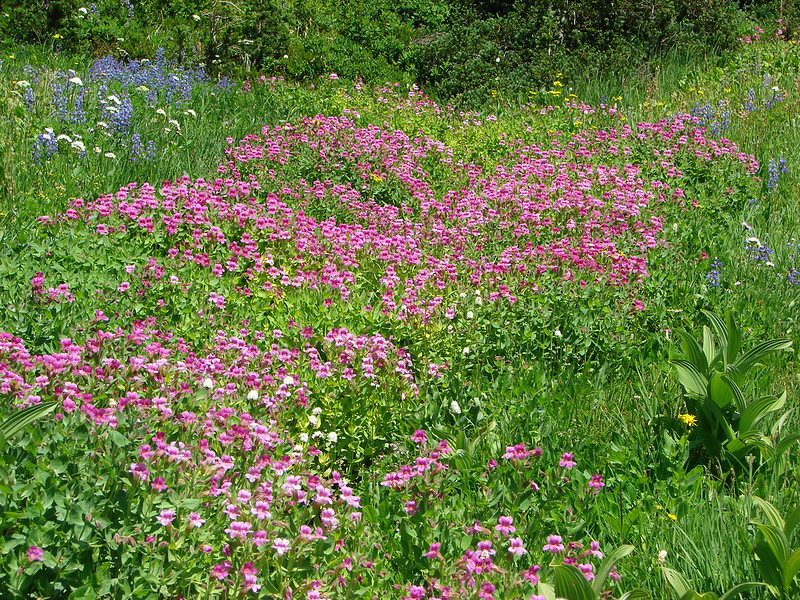
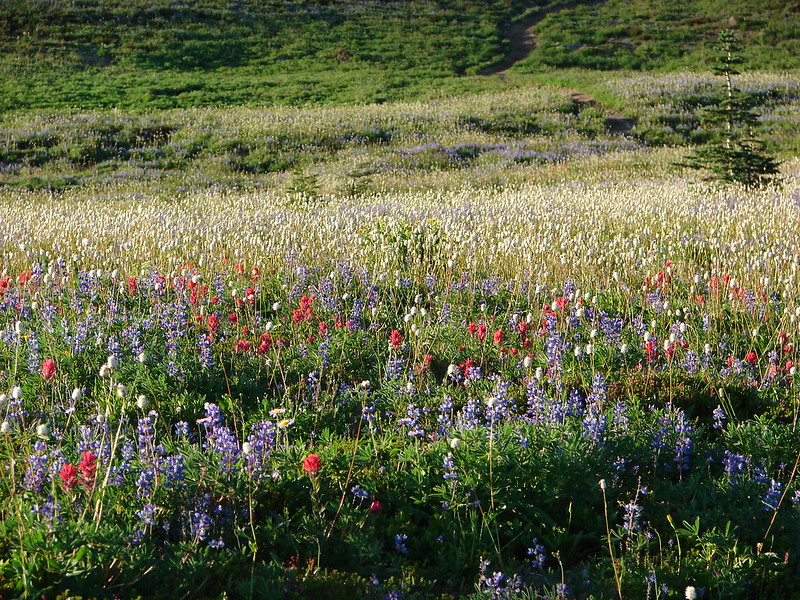
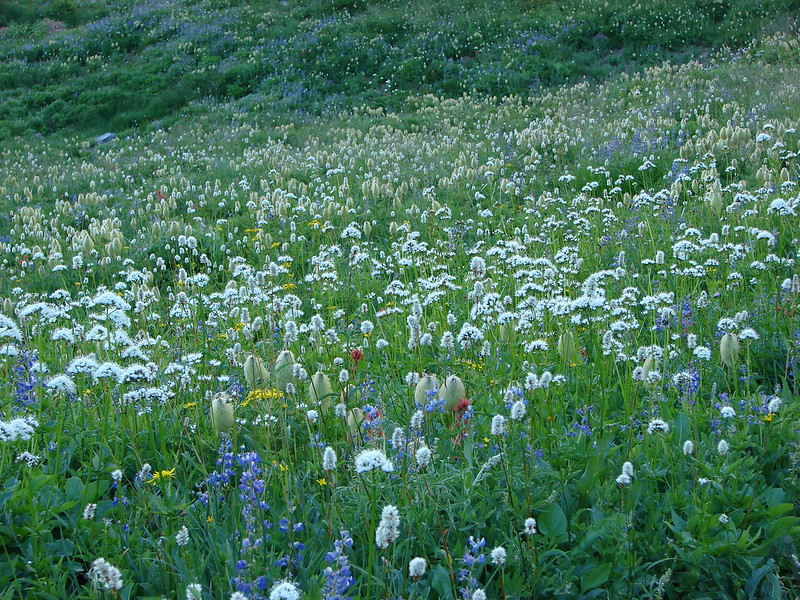
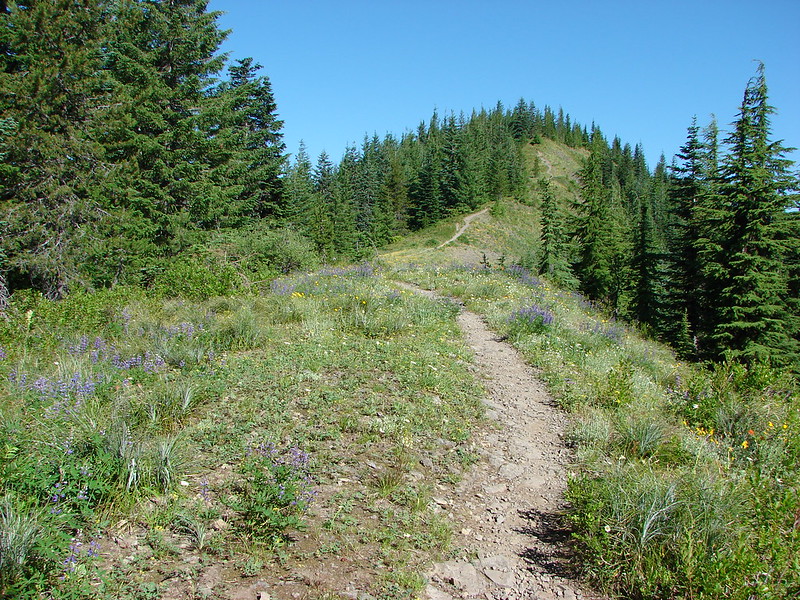
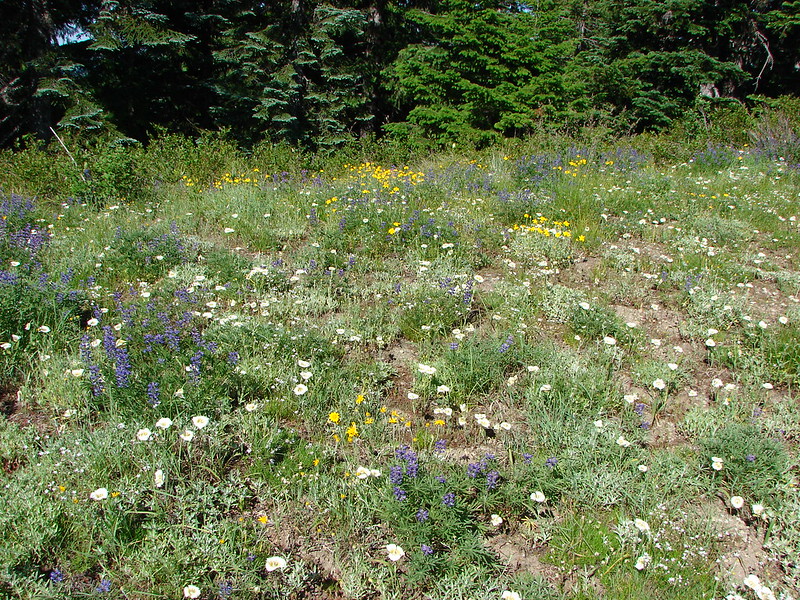
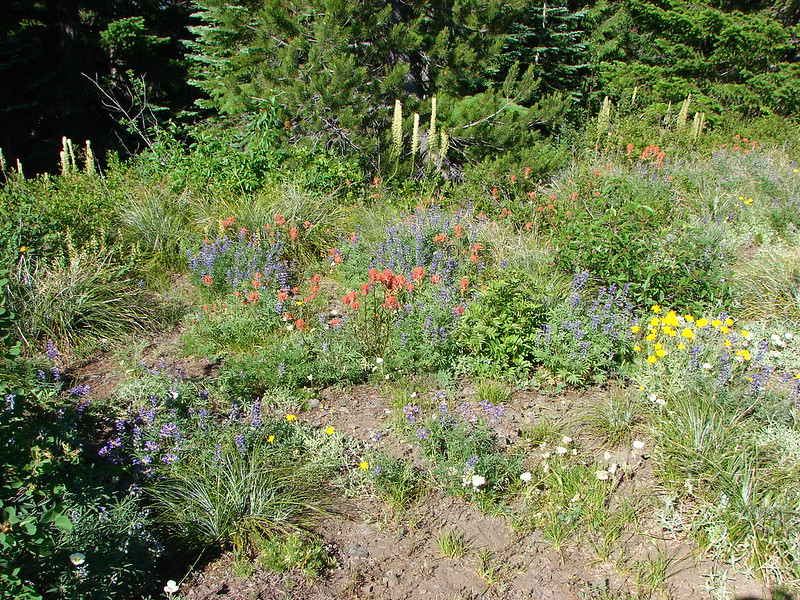
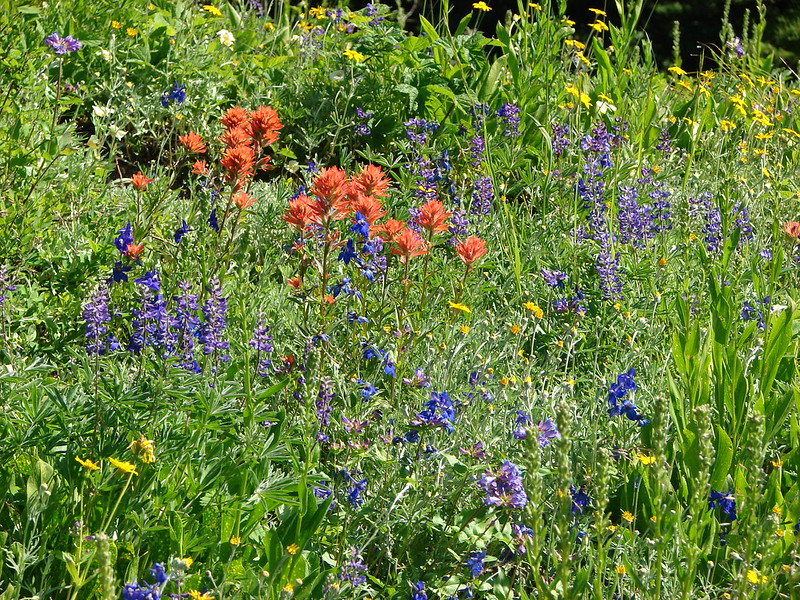
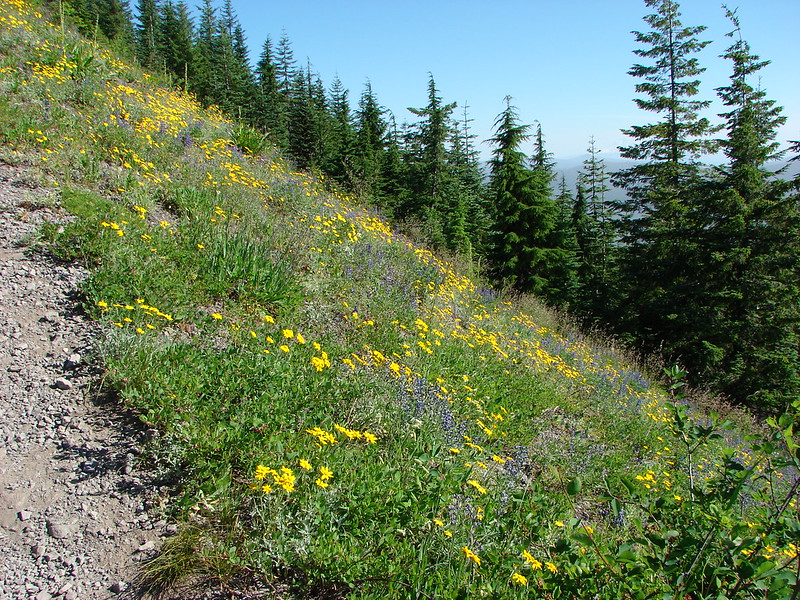
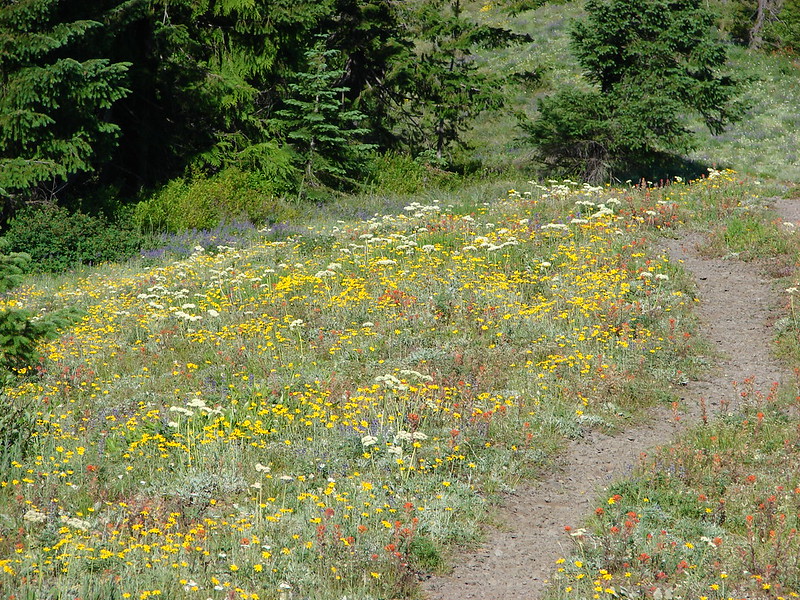
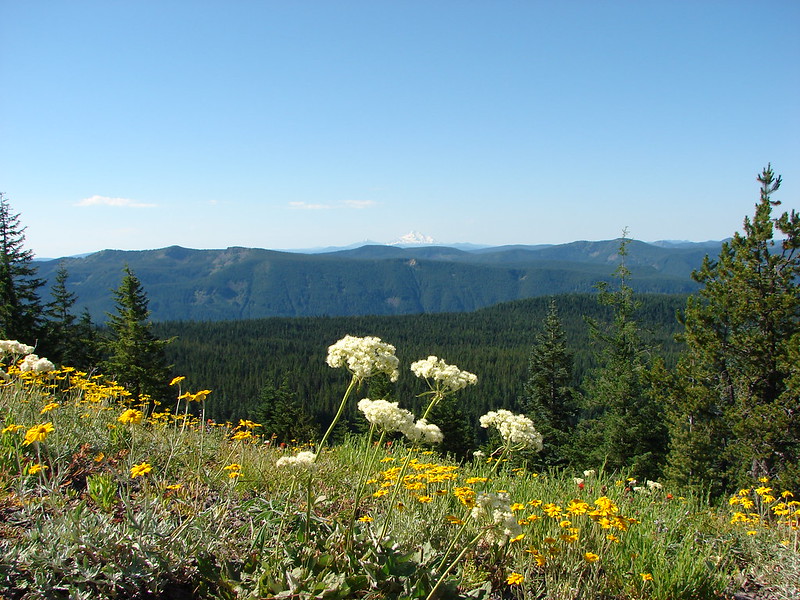
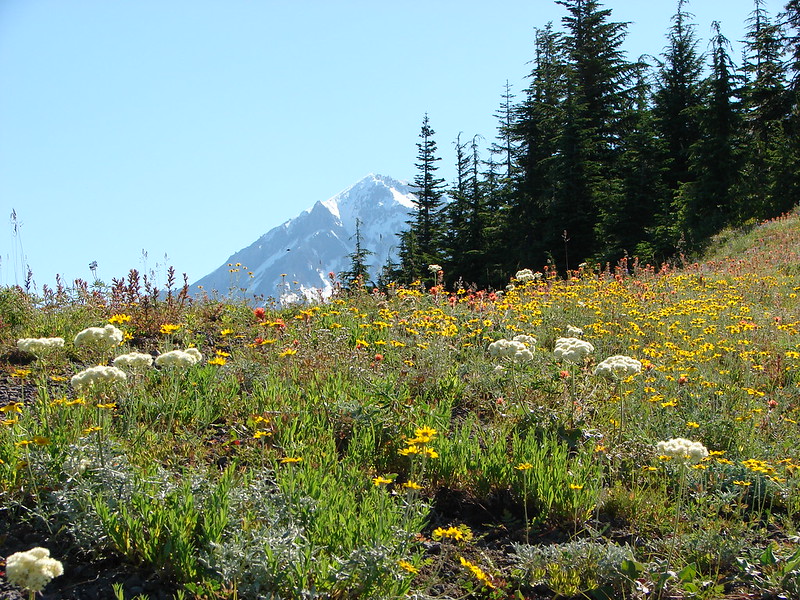
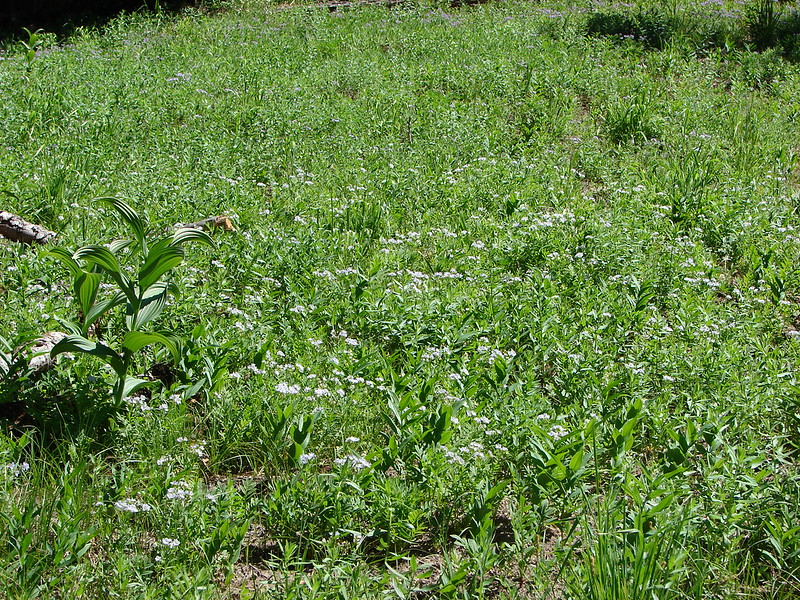
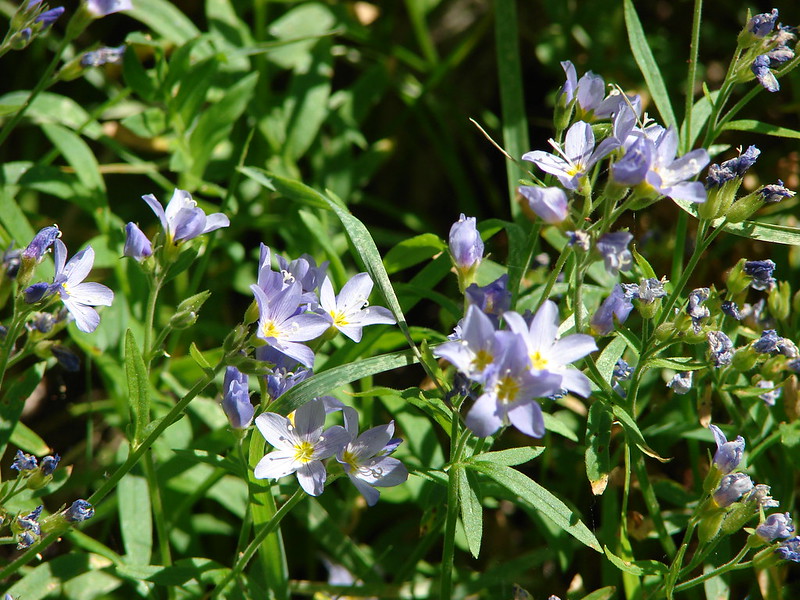
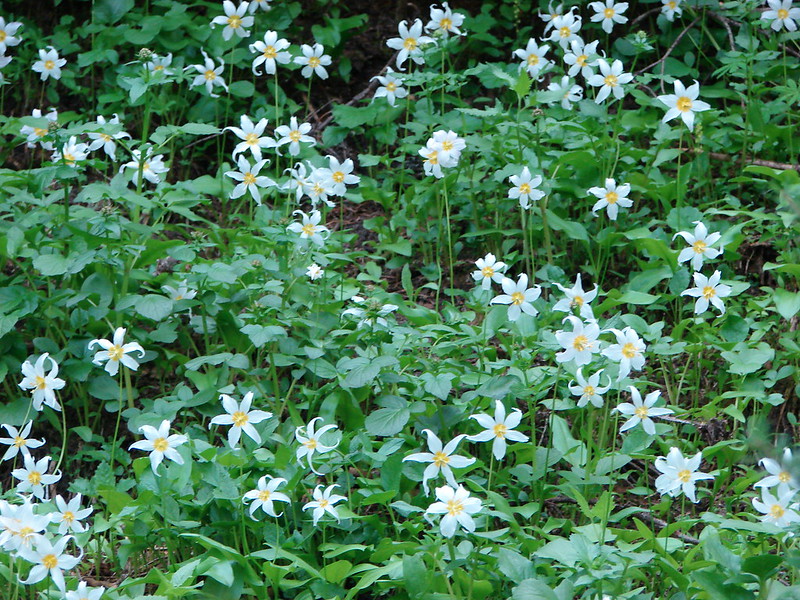
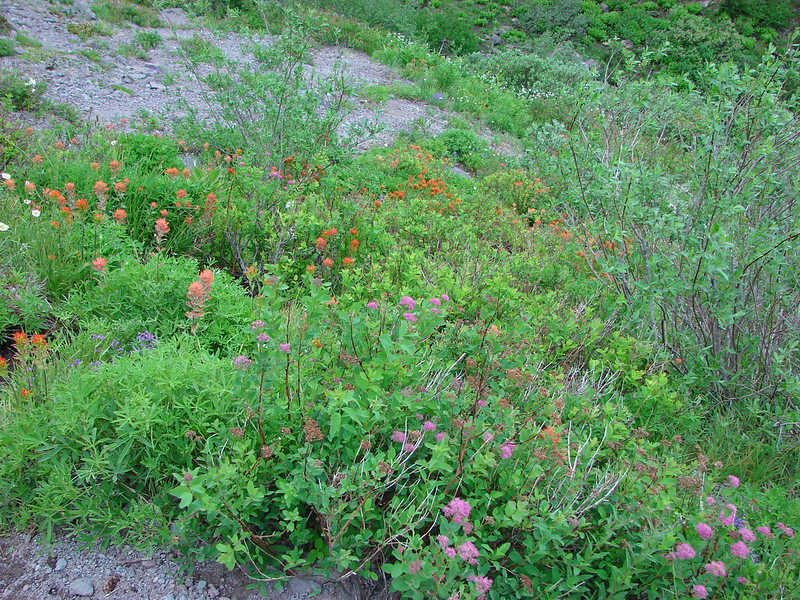
Everything was so impressive but most of all were the wildflowers. The variety and amounts of them were unbelievable. Entire hillsides were covered in colors.
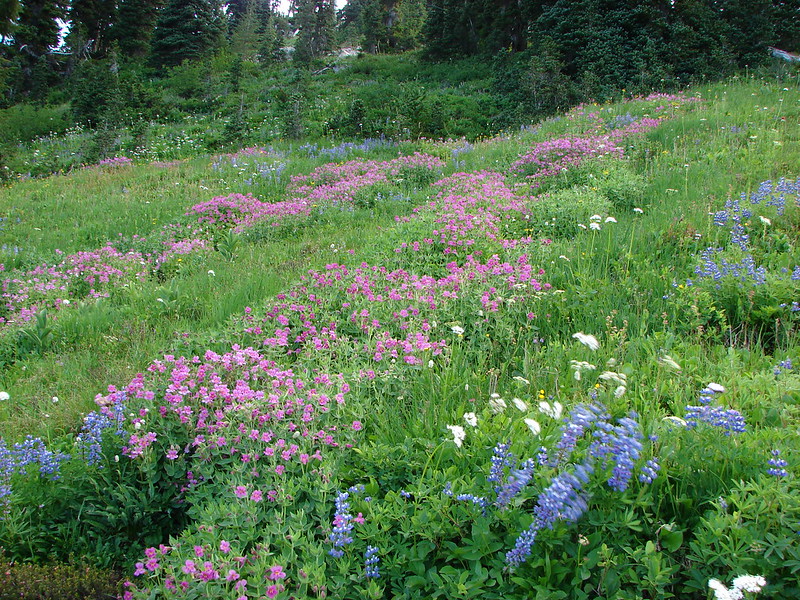
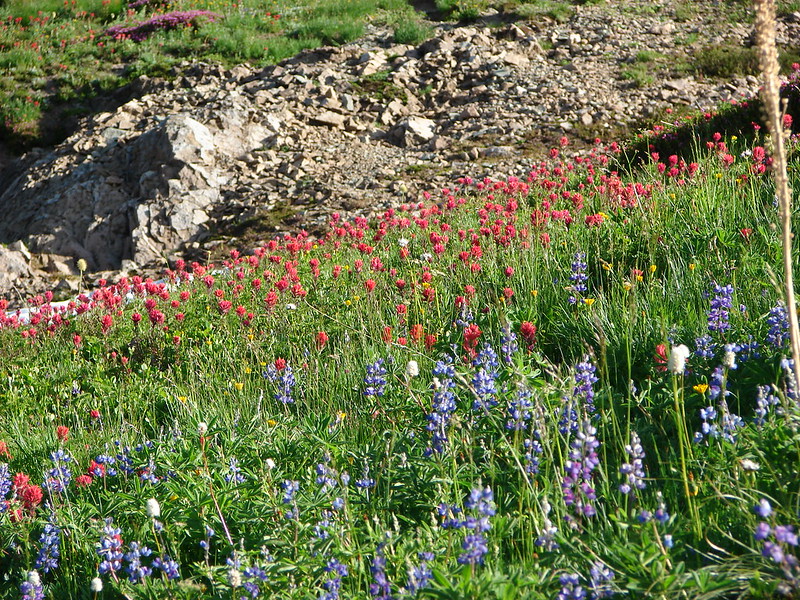
DSC03124

DSC03152

DSC03144

And to top it off Mt. Adams loomed behind us.

DSC03130

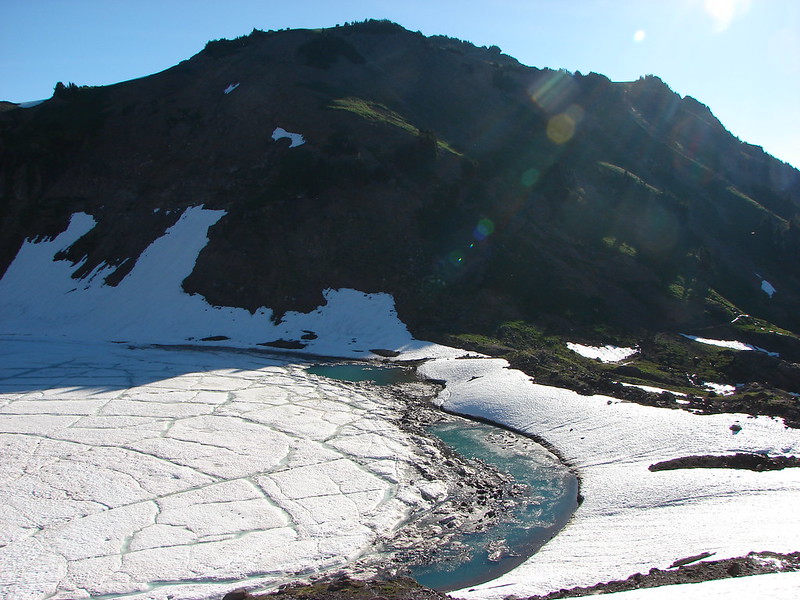
When we arrived at Goat Lake it was mostly frozen as we had expected. The lake rarely ever thaws out completely sitting in a bowl beneath Hawkeyepoint.
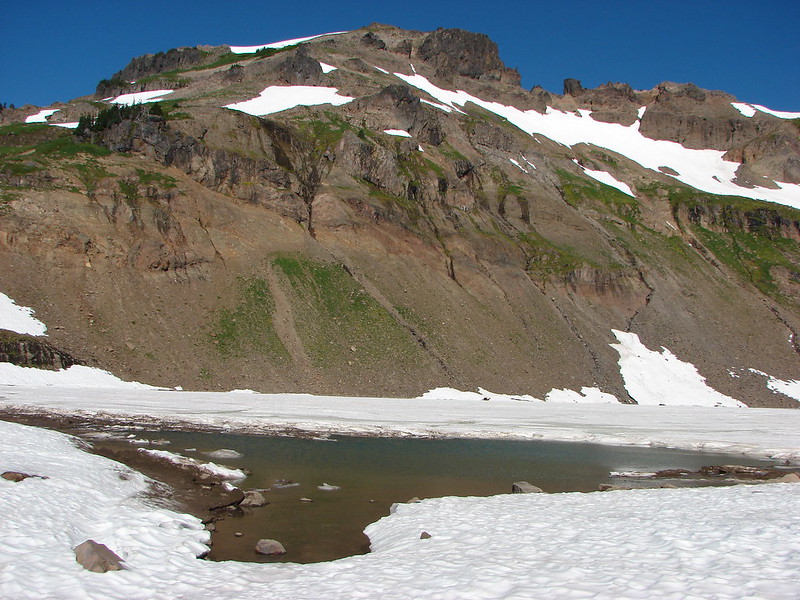
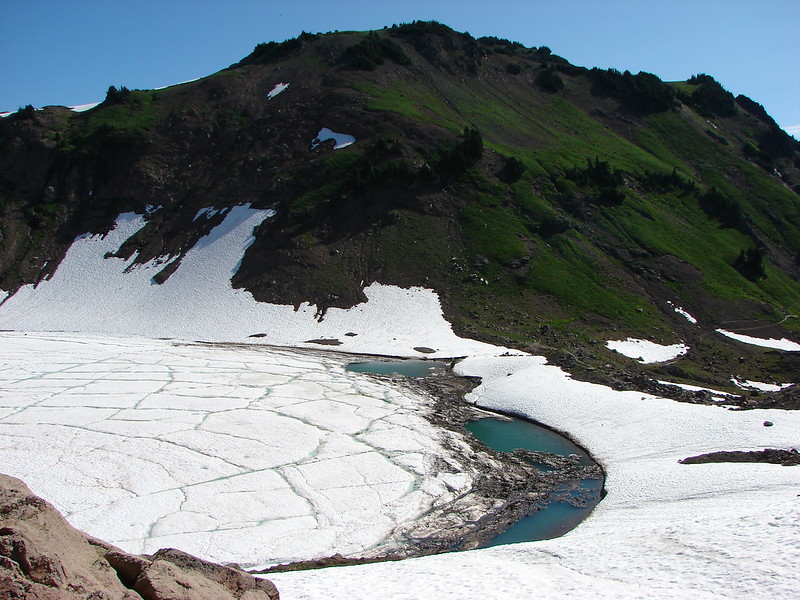
DSC03168

DSC03191

From the lake the trail climbed to a ridge crest junction with the Goat Ridge Trail. Again the wildflowers were profuse.

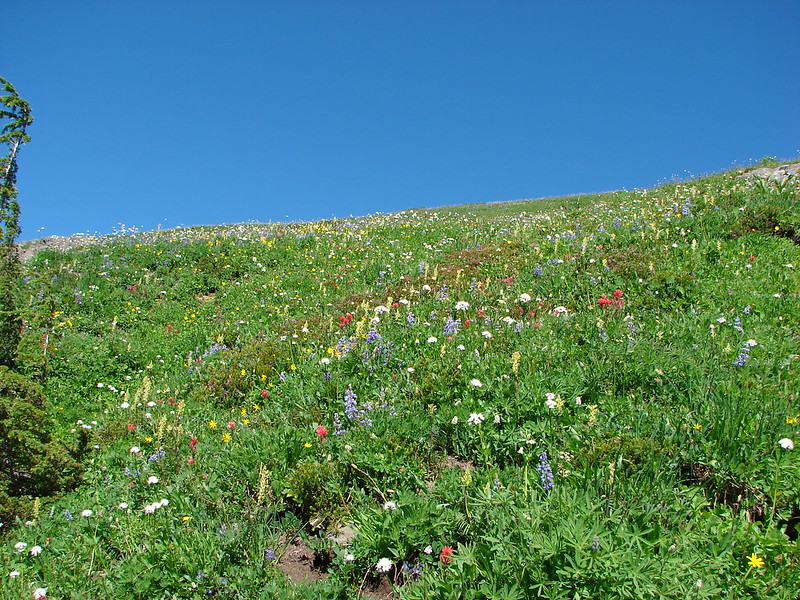
DSC03232

DSC03227

DSC03230

When we reached the junction Mt. St. Helens came into view beyond the Jordan Basin.
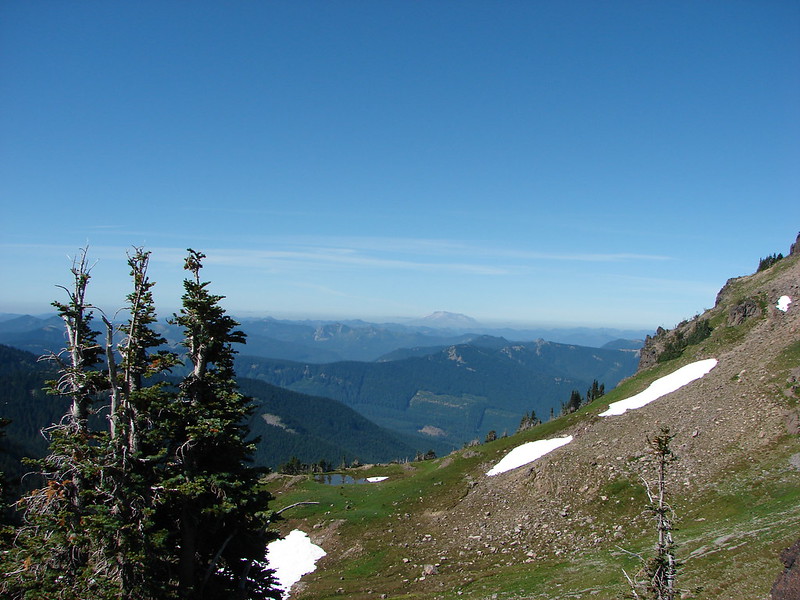
DSC03244

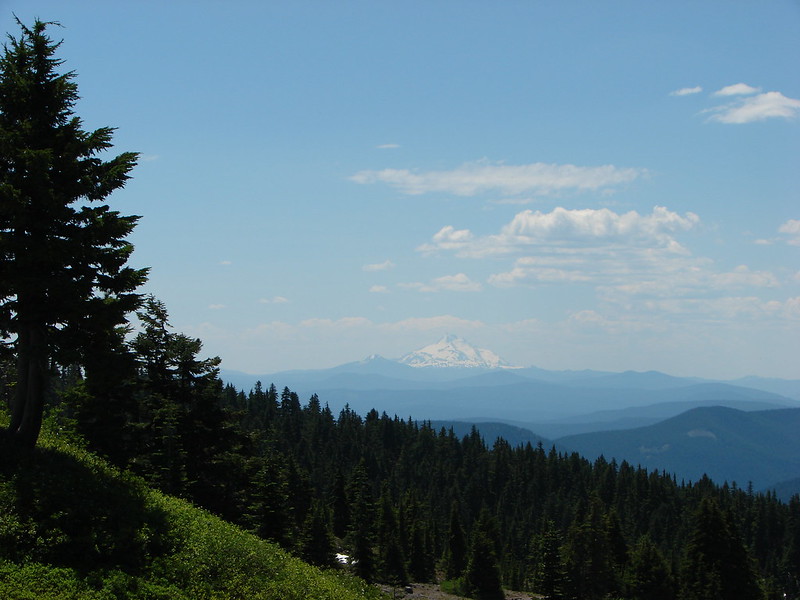
We left the Lily Basin Trail to attempt to climb Hawkeye Point. As we climbed the tip of Mt. Hood could be seen over the shoulder of Mt. Adams.
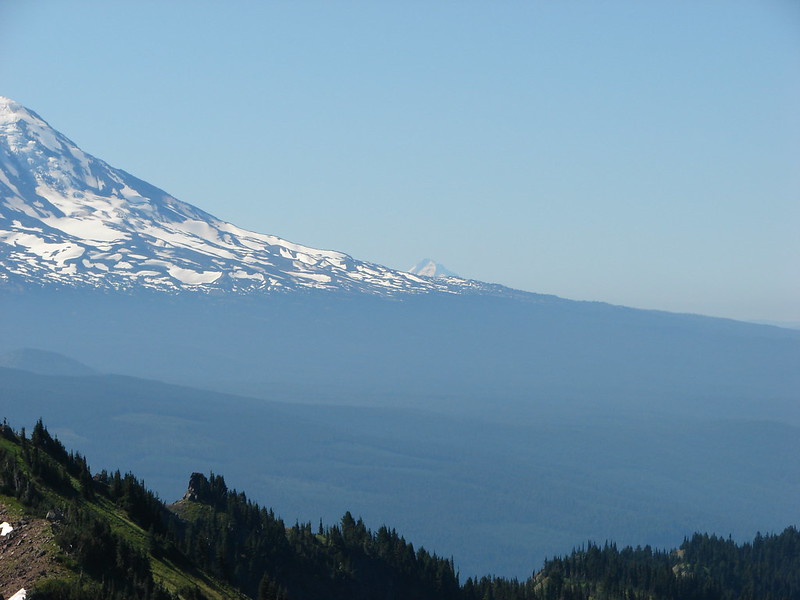
DSC03266

Then came Mt. Rainier beyond Johnson Peak.
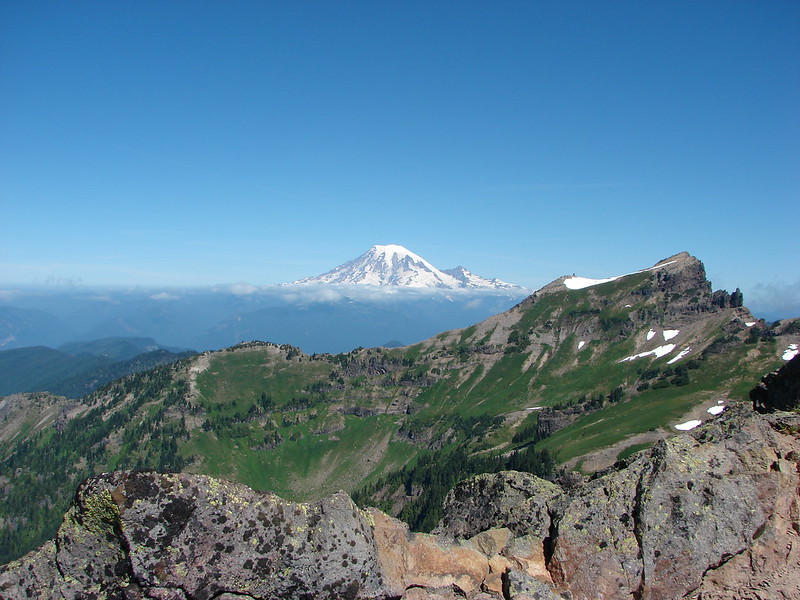
DSC03268

We followed a clear path to a rocky knob where we discovered a large snowfield lying between us and the visible trail up to the summit of Hawkeye Point.
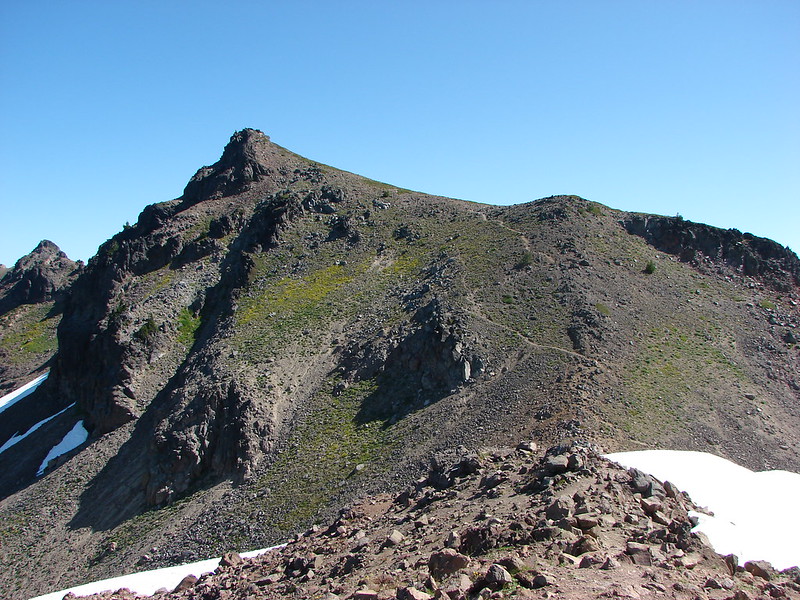
DSC03282

There was a steep drop part way out on the snowfield and no visible tracks so we decided to declare victory where we were and see if there was a different route to the trail we could see on the far side so we climbed back down to the Lily Basin Trail and started to head toward Heart Lake. We didn’t get far though before we were stymied by another snowfield.

DSC03301

We decided to take a short break before heading back to search for a different route to Hawkeye Point. While we were resting Heather spotted the one thing I was really hoping to see on the trip – Mountain Goats! There was a pair of them near the top of the ridge across the basin.
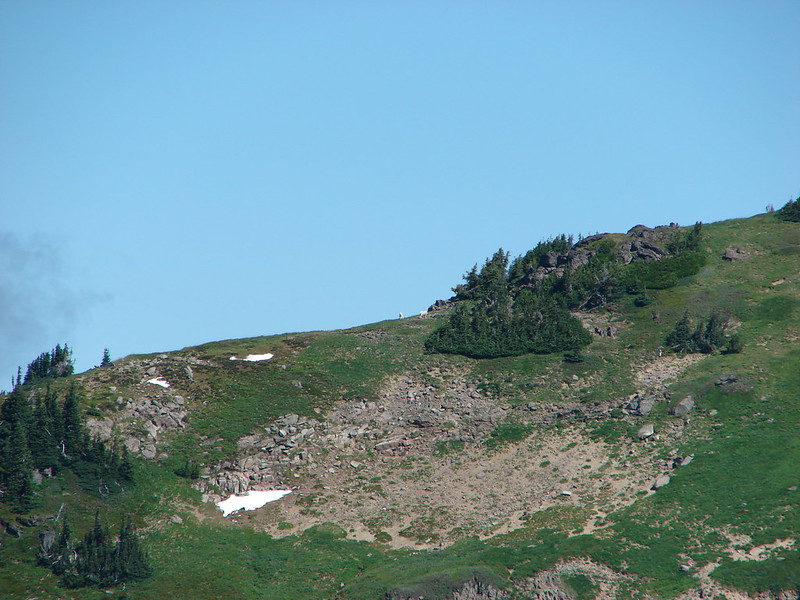
DSC03318

Mountain Goats were on top of my list of animals we hadn’t seen yet while hiking so even though they were a long way away it was exciting.

After they disappeared over the ridge we started our search for a path around the snowfield to Hawkeye Point. We managed to find what turned out to be a goat path that got us around the snowfield, but we were too far down a steep hill with no visible route up to reach the continuation of the real trail. Instead we followed the goat trail passing some beds complete with goat fur to a view of Goat Lake below.
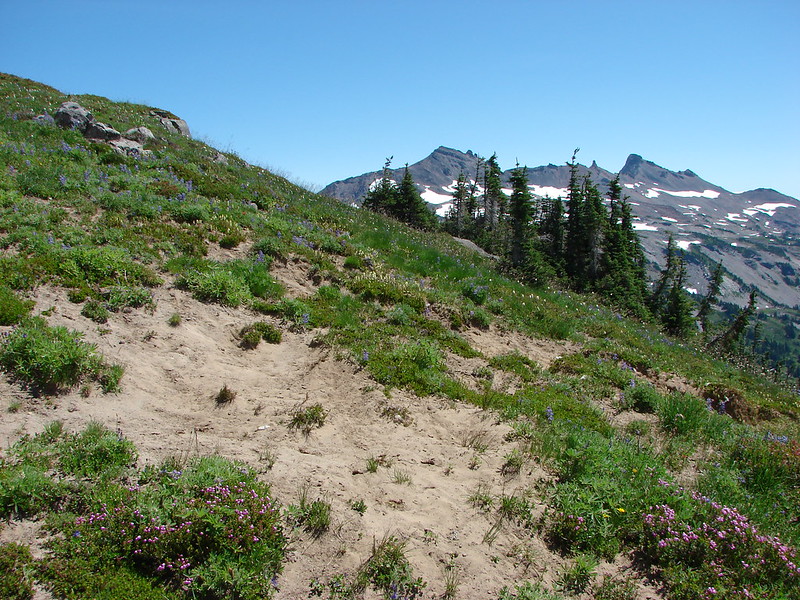
DSC03335

DSC03336

DSC03342

Satisfied with the view we began our return trip to camp. It was such a pretty trail that was just as spectacular the second time through.
DSC03383

DSC03407

DSC03411

DSC03488

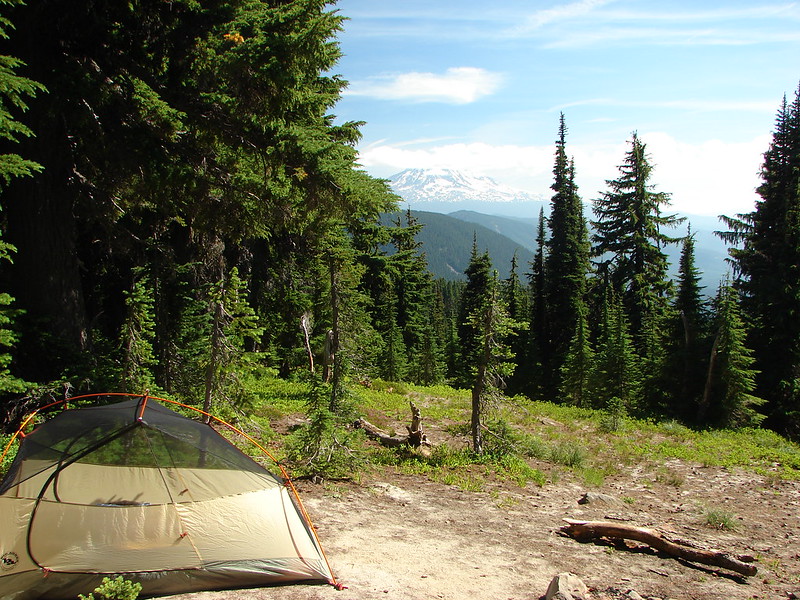
When we got back to camp we noticed that the family who had been camped further back in the same area as us had left. We took the opportunity to switch sites and moved to a spot with a view of Mt. Adams.
DSC03525

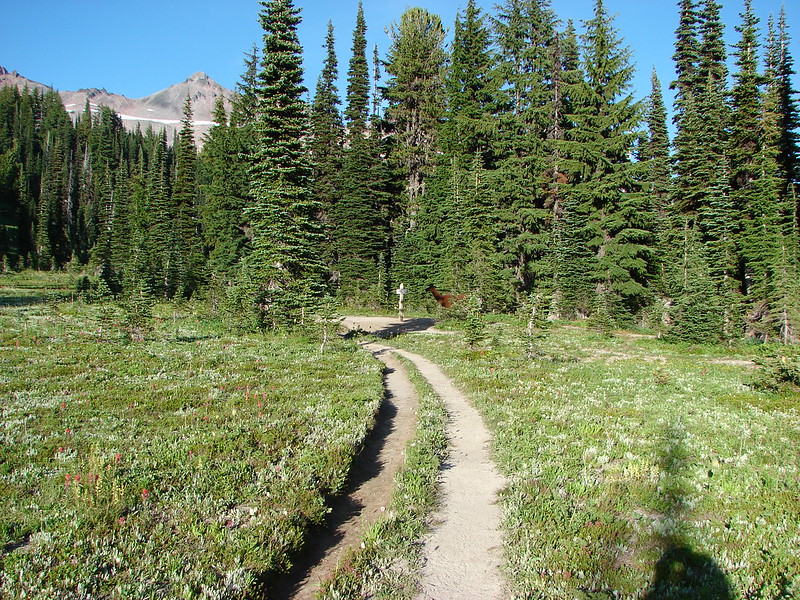
After getting our new site set up we decided to go up to the PCT junction to catch the sunset. When we reached the junction with the Snowgrass Trail in Snowgrass Flat Heather noticed a large animal emerging from the trees on our right. We could see dark brown and my first thought was Elk but then it stepped out into the sunlight on the trial.
DSC03539

It was a llama and it looked mighty proud of itself.
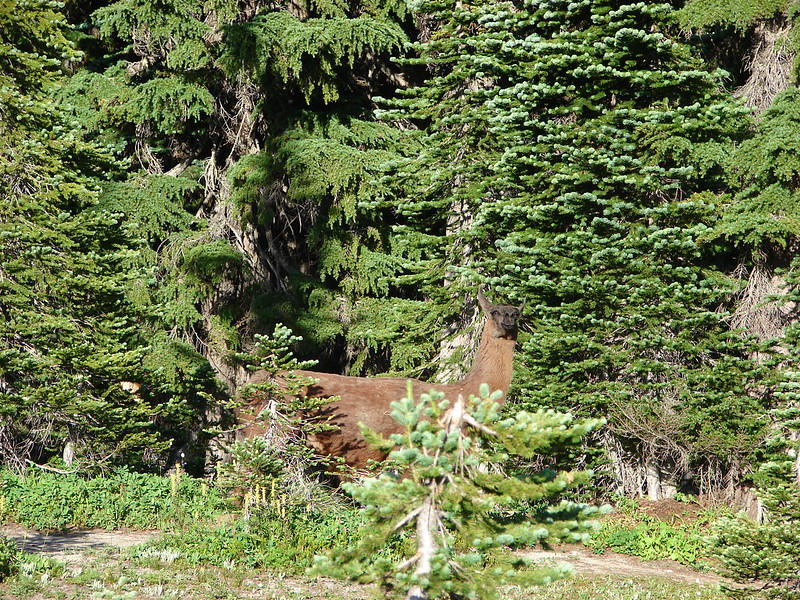
DSC03545

We didn’t see anyone around but someone must have been using it as a pack animal. It rolled in the dirt for a moment then got up and then disappeared into another camp site. It was so unexpected all we could do was laugh all the way up to the PCT.

Meanwhile the setting Sun was bringing out the best in the wildflowers on the PCT.

DSC03556

DSC03555

DSC03553

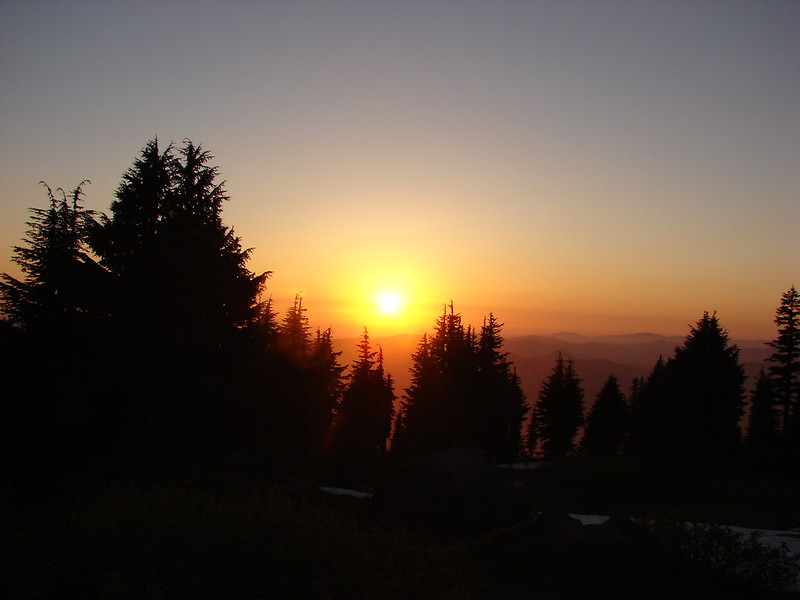
We found an open site and watched the Sun disappear behind a bank of clouds that was hanging over Goat Ridge before returning to our tent and putting day 2 to bed.

DSC03568

DSC03579

Goat Rocks - Mt. Adams sunset

The third day started much like the previous day with a pretty Mt. Adams sunrise.
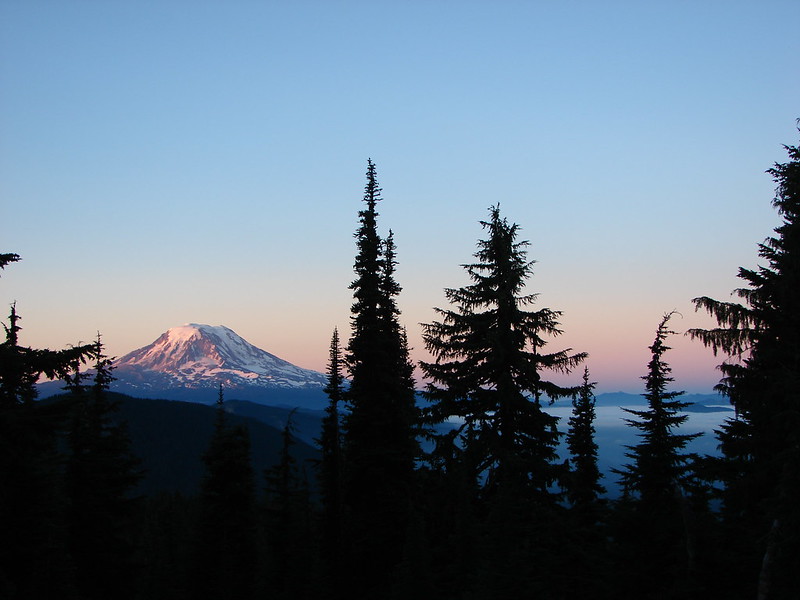
DSC03593

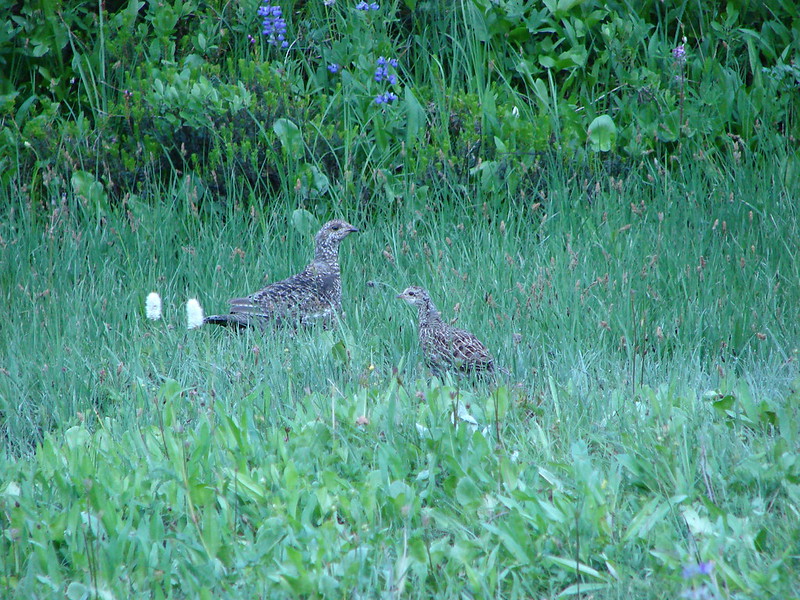
The animals were up early too.

DSC03595

DSC03601

DSC03606

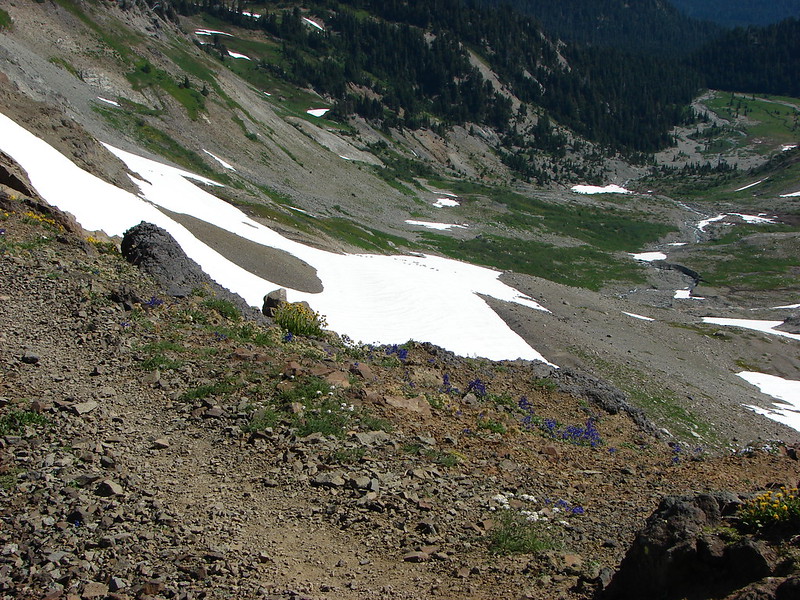
After a yummy breakfast of Mountain House Biscuits and Gravy we headed up to the PCT once again but this time headed left (North) toward Old Snowy Mountain. As we approached the mountain we left the meadows behind for more rocky terrain dotted with lingering snowfields. The flowers were not completely left behind though.
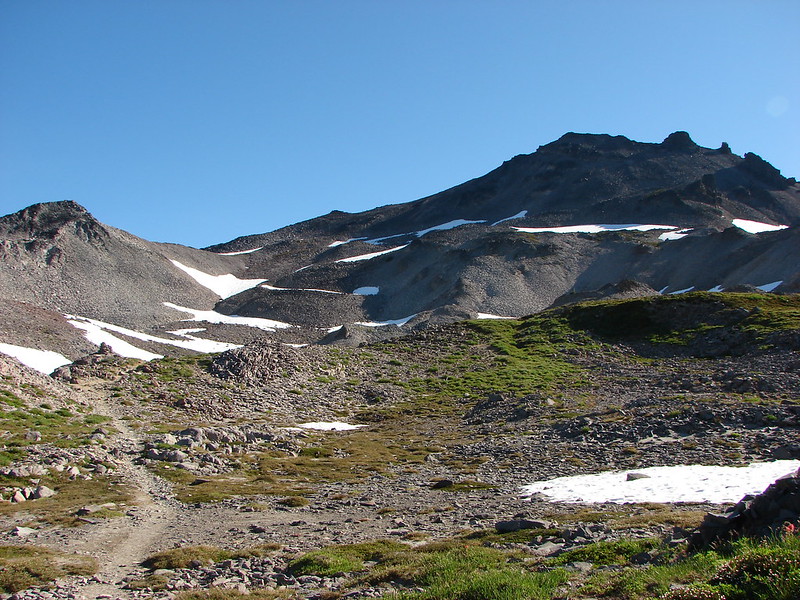
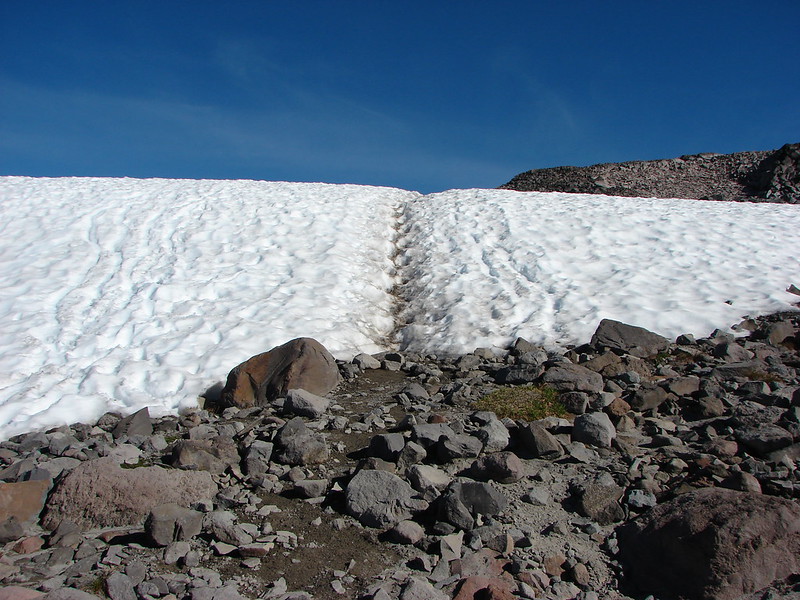
DSC03632

DSC03636

DSC03637

We spotted a ground squirrel that appeared to be sitting on a ledge enjoying the view along with its breakfast. The ledge it was on looked out over Goat Lake to Hawkeye Point with Mt. Rainier towering behind.

DSC03639

DSC03642

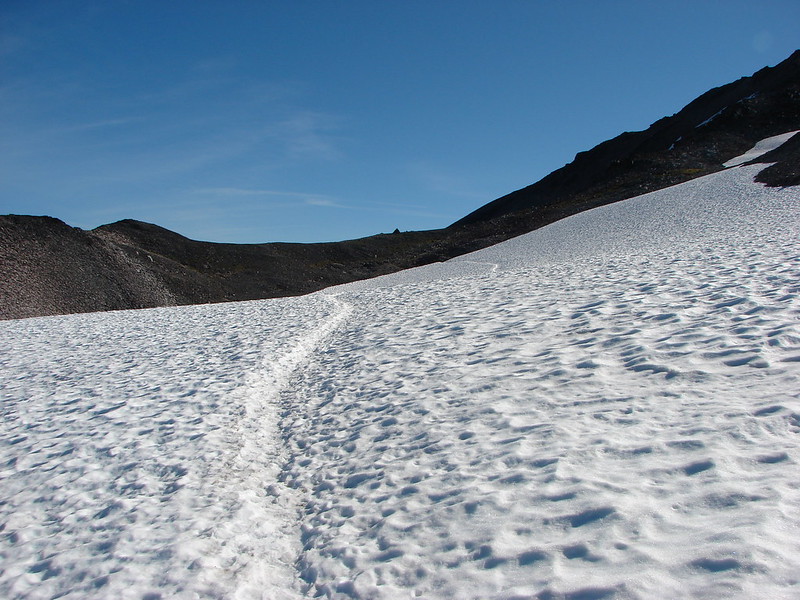
The trail crossed several snowfields but unlike those we encountered the day before the trail was easy to follow and none were too steep.
DSC03655

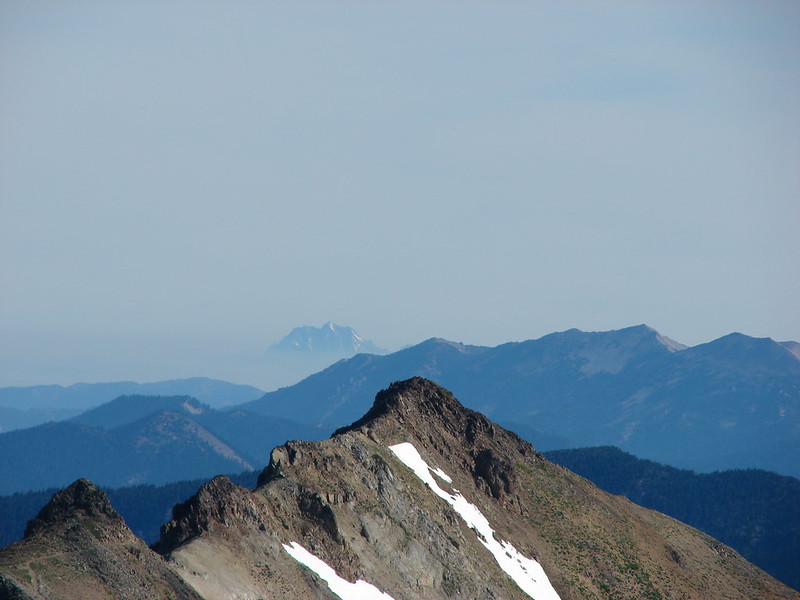
The views were great in every direction and we were able to spot a new mountain to the North – Mt. Stuart.

DSC03659

DSC03669

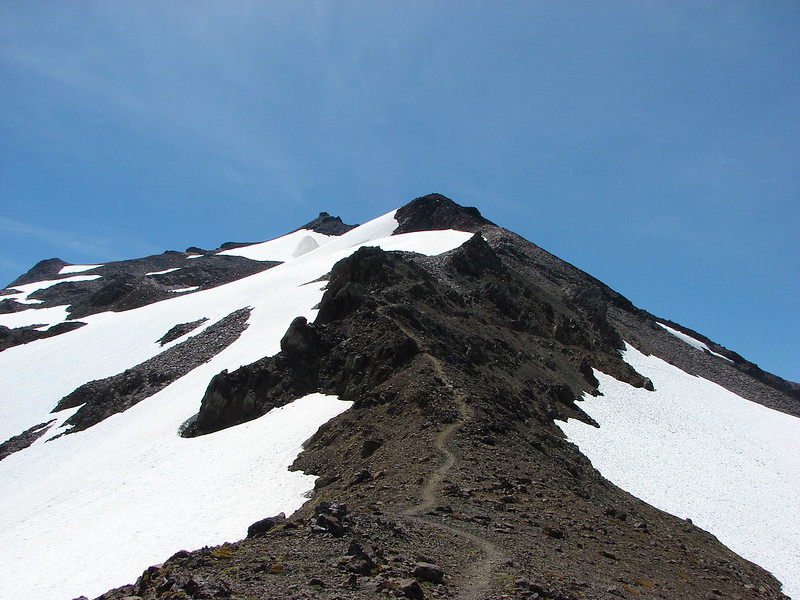
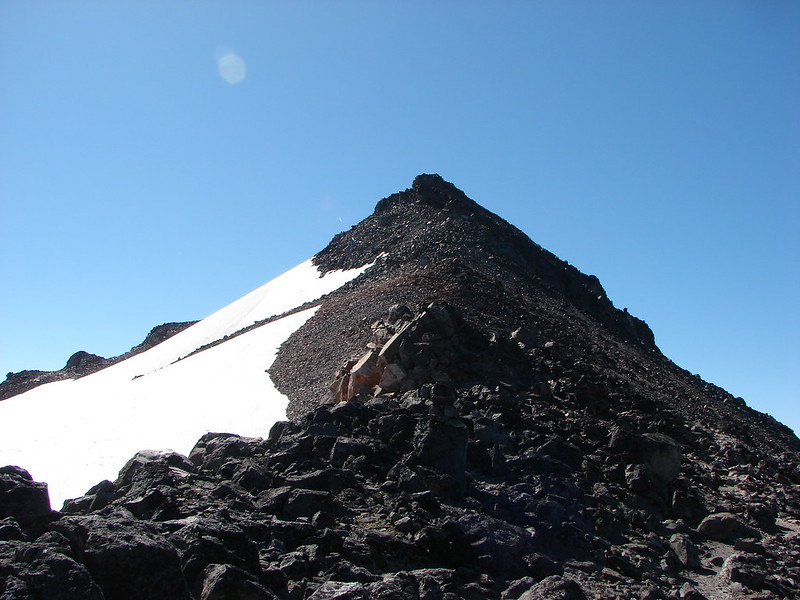
The PCT eventually splits with a hiker bypass climbing up higher on the side of Old Snowy to avoid lingering snowfields on a steep, exposed hillside. We took the bypass having seen the snow fields from our exploration of Hawkeye Point the day before, plus we had considered climbing Old Snowy Mountain and the bypass would lead past that trail. When we reached the junction for the summit of Old Snowy we could only make out the lower portion of trail. After the previous days exploits we decided against trying to climb it then and figured we could always try it on the way back past.
DSC03683

We found out later that the crest of the bypass trail is the highest point of the Pacific Crest Trail in the state of Washington at 7230′.

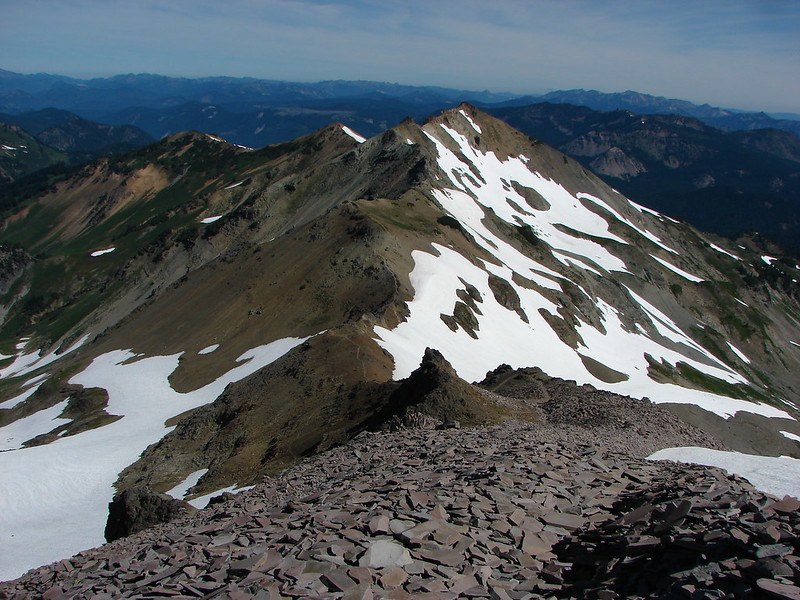
From the crest the PCT descends to “The Knife” before reaching Elk Pass where we had planned to turn around. As we began to descend though we got a good look at the trail ahead.
DSC03691

It was the freakiest looking trail we had encountered and for the first time I wasn’t sure I could do it, but after having a couple of thru-hikers pass by and survive we decided to go for it.
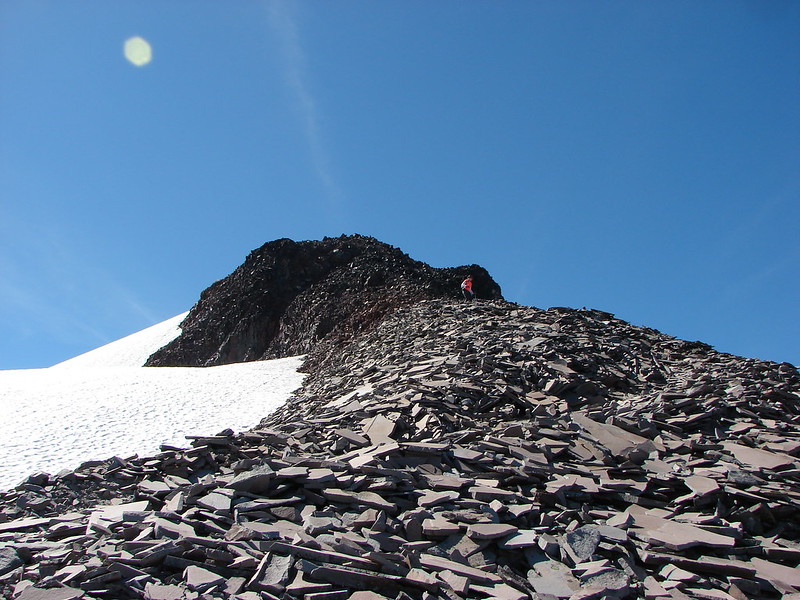
DSC03692

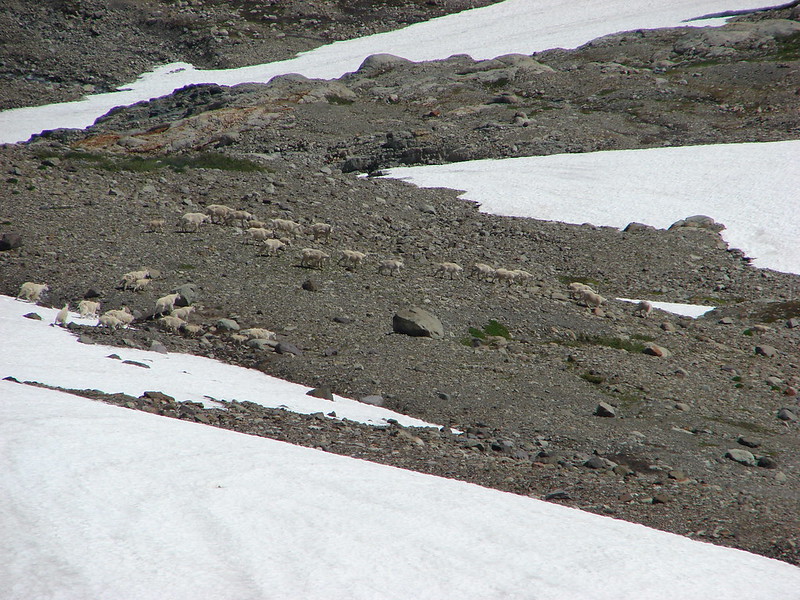
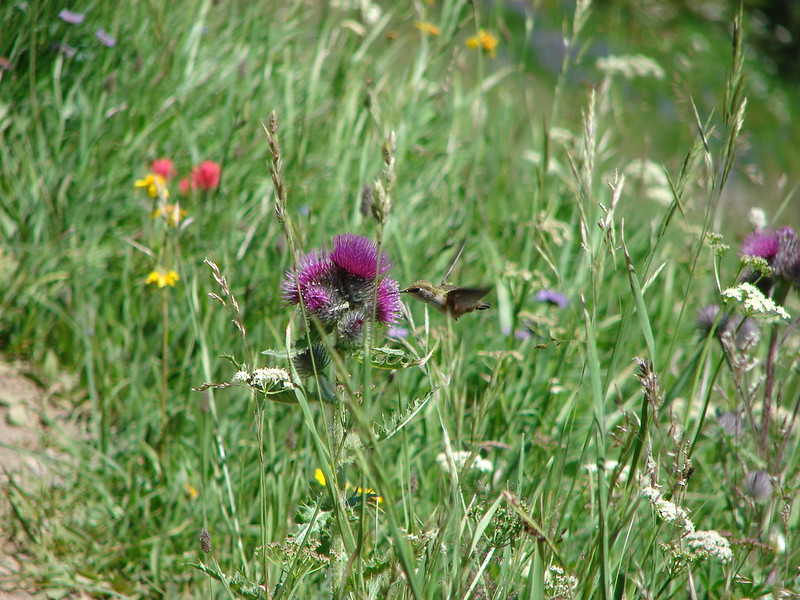
It was nerve racking at first but the trail was good and the views better. We spotted flowers and wildlife all around including a large group of mountain goats in the valley to our right.
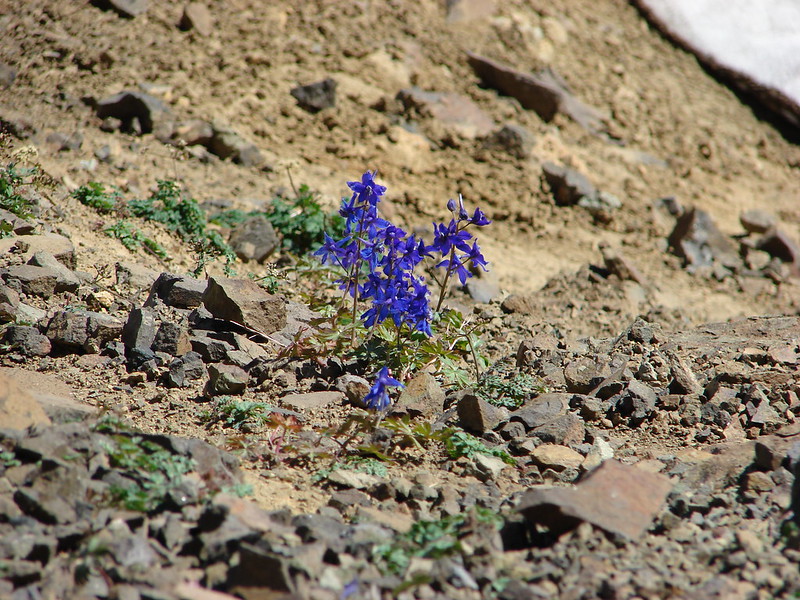
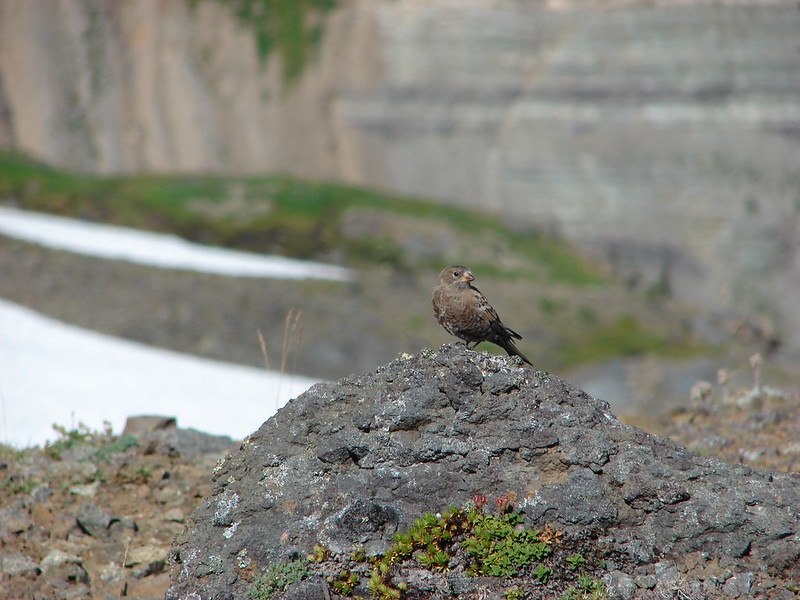
DSC03698

DSC03705

DSC03725

DSC03709

Soon we could see Packwood Lake in the valley to our left.
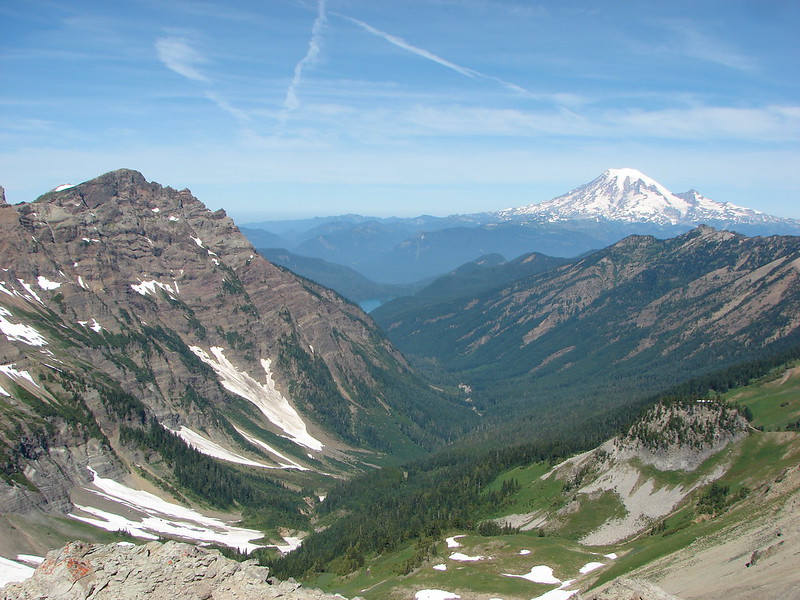
DSC03758

Also in that valley was another herd of goats.
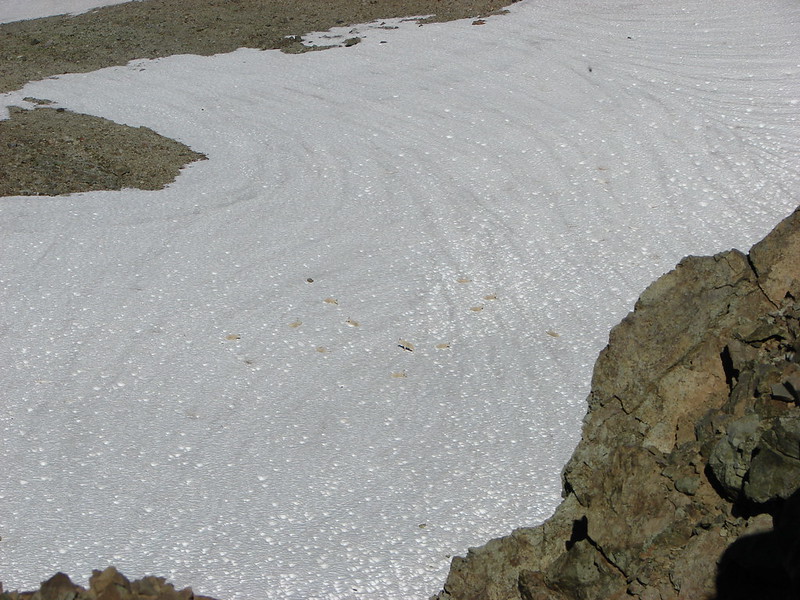
DSC03769

DSC03772

We decided to turn around prior to reaching Elk Pass when we reached a crest and realized that we’d have to climb back up several hundred feet if we continued on and we already had a good climb ahead of us to get back up to the PCT high point.

PCT down to Elk Pass
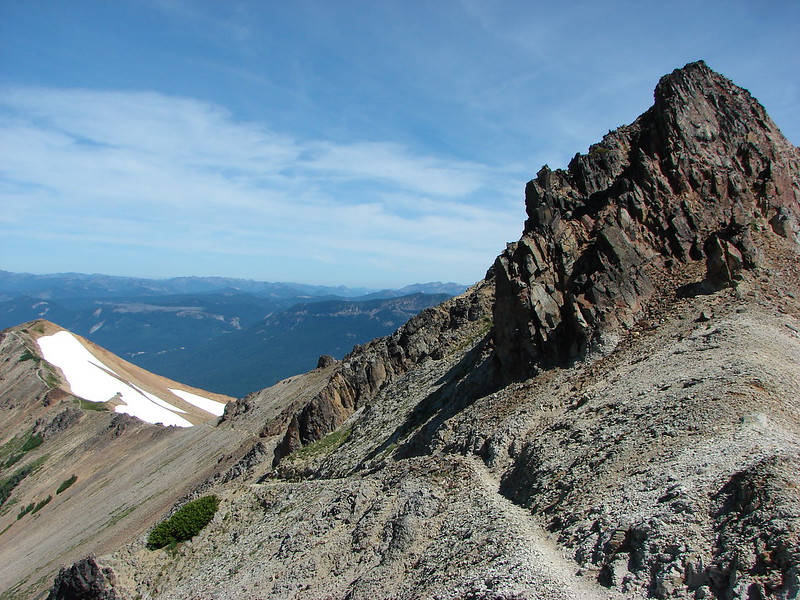
DSC03830

PCT up to the crest

DSC03906

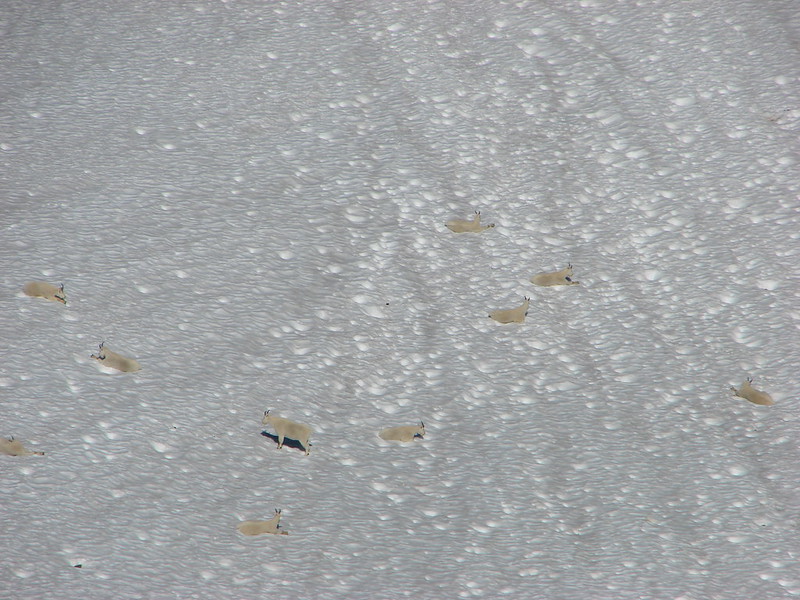
As we were returning the first group of goats we had seen suddenly started to dash across the snow. A second group came racing down from a higher meadow joining the first group.
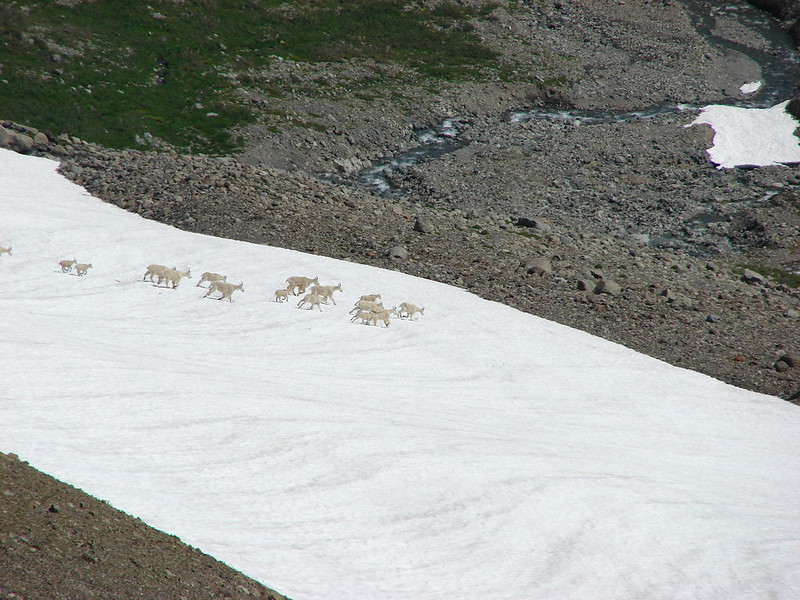
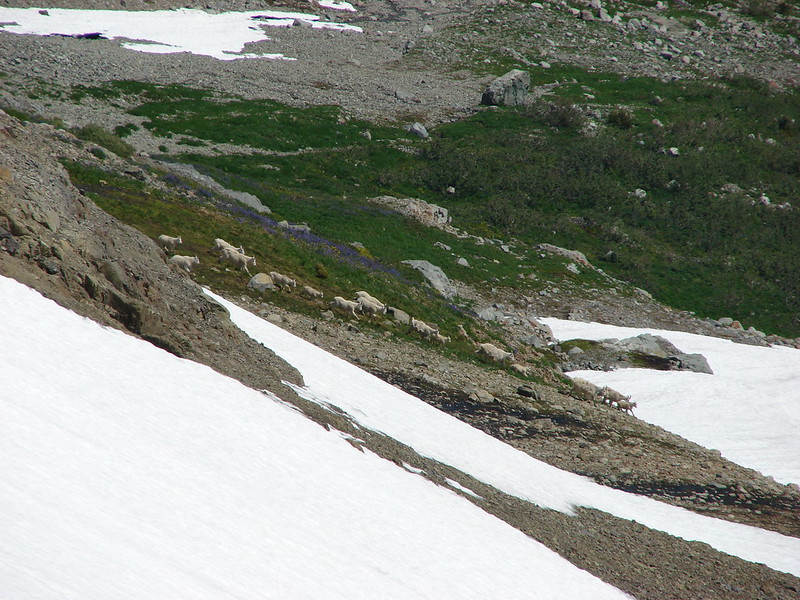
DSC03887

DSC03895

DSC03900

We don’t know what spooked them but it was fun to watch them run.

When we finally got back up to the crest the trail up Old Snowy was easy to see. There was a line of people hiking up and down. Between the crowds and our tired legs we decided we’d done enough climbing for the day and headed back to Alpine. Things had gotten crowded in the wilderness as it was the weekend and a lot of people had shown up. Most of the camp sites were now taken so we stuck close to ours until we turned in for the night after the Moon had risen.
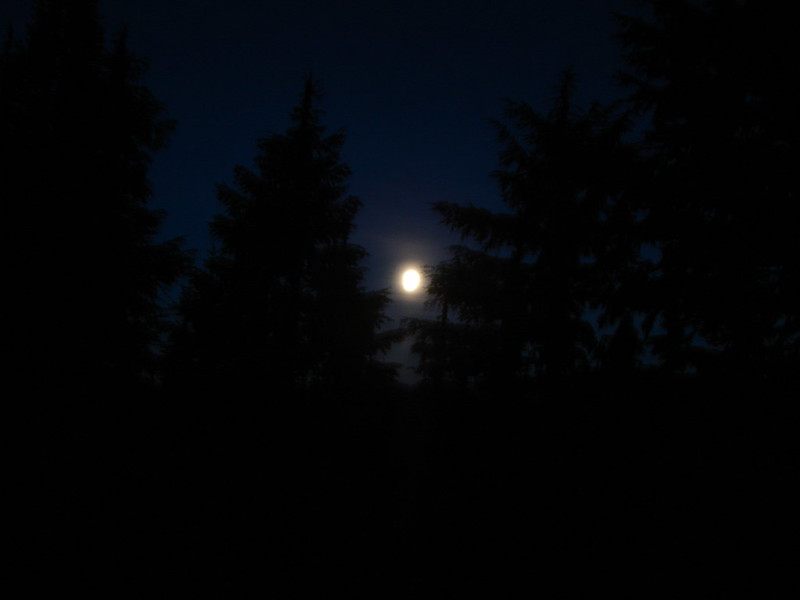
DSC04013

We set our phones to wake us at 5am on our last day so we could get a nice early start. Another amazing sunrise greeted us as we packed up our gear.
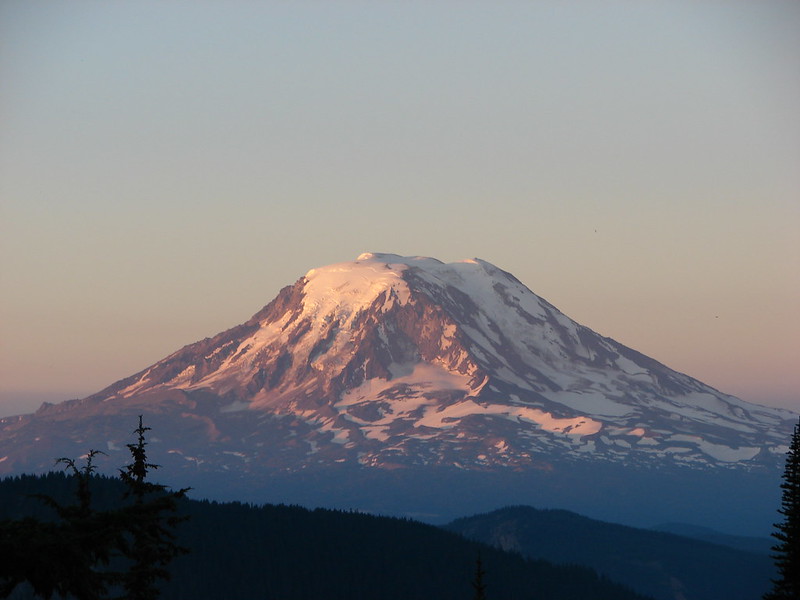
DSC04018

We took the Lily Basin Trail toward Goat Lake and were greeted by a friendly little Pika near Slide Falls.
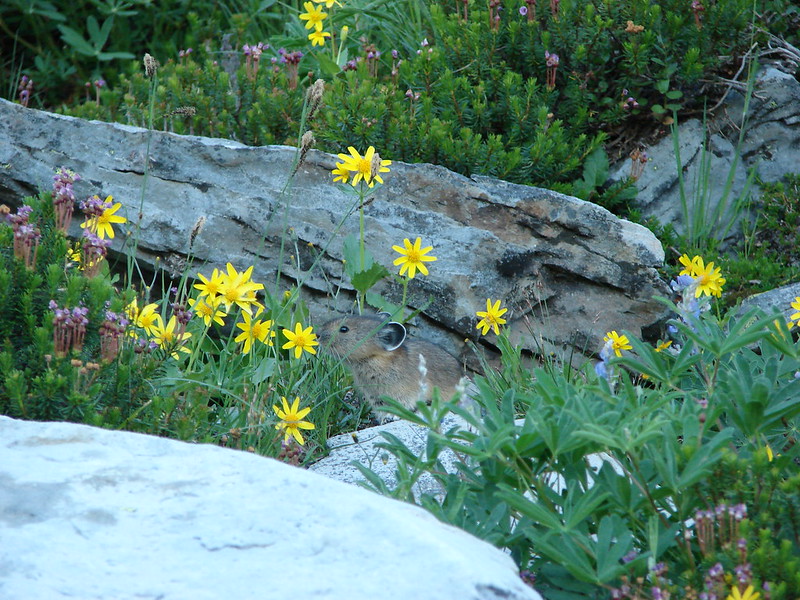
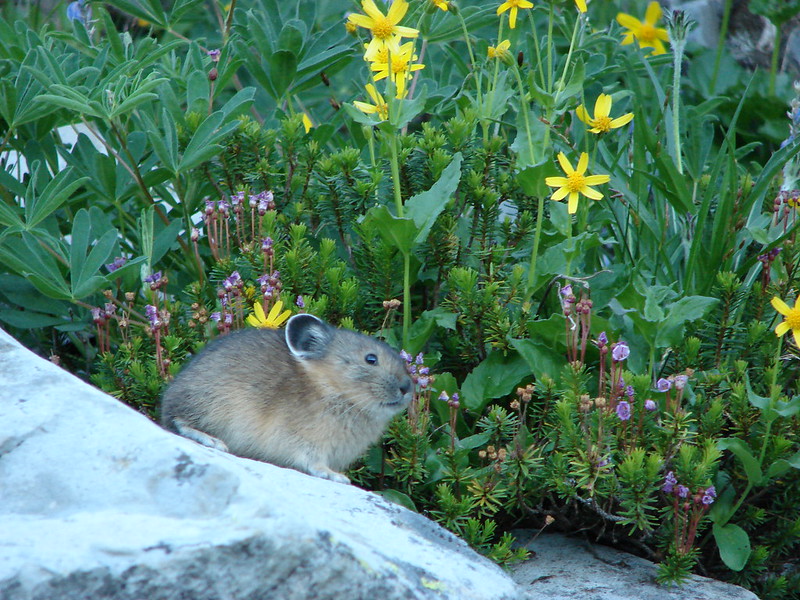
DSC04026

DSC04030

The marmots were also out to send us off.
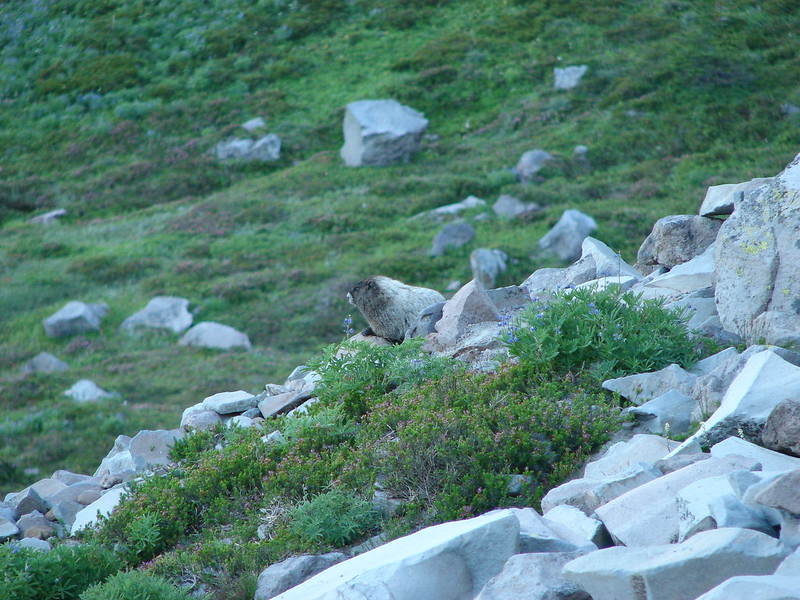
DSC04036

DSC04037

We stopped at the lake to get some water out of Goat Creek and were paid a visit by a pair of Ouzels.
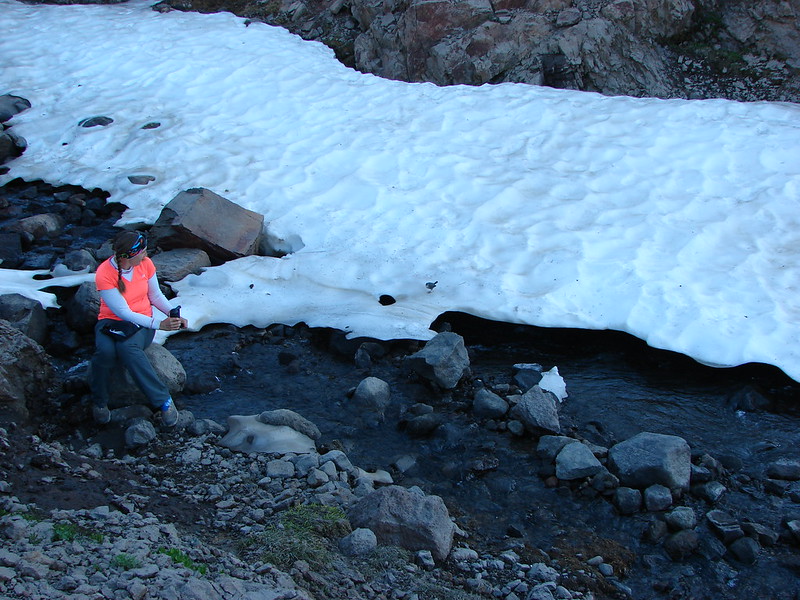
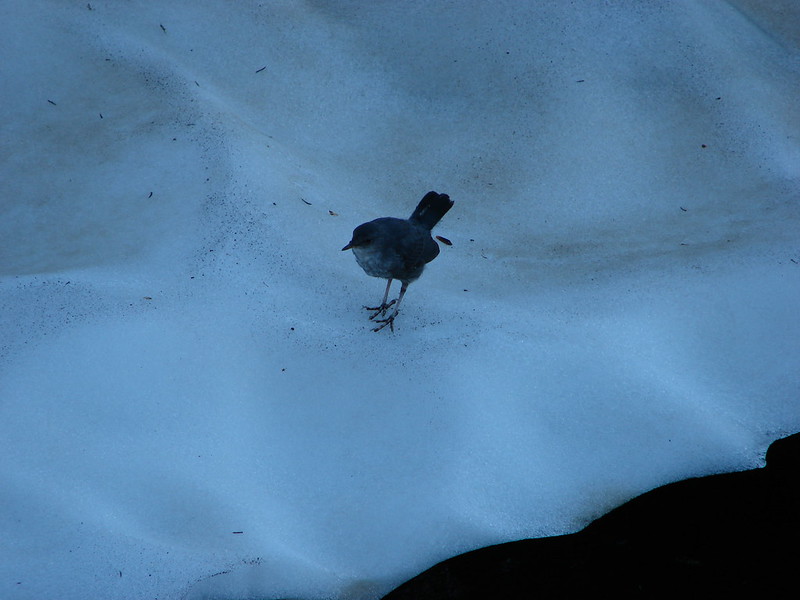
DSC04057

DSC04053

Goat Lake had refrozen a little overnight.
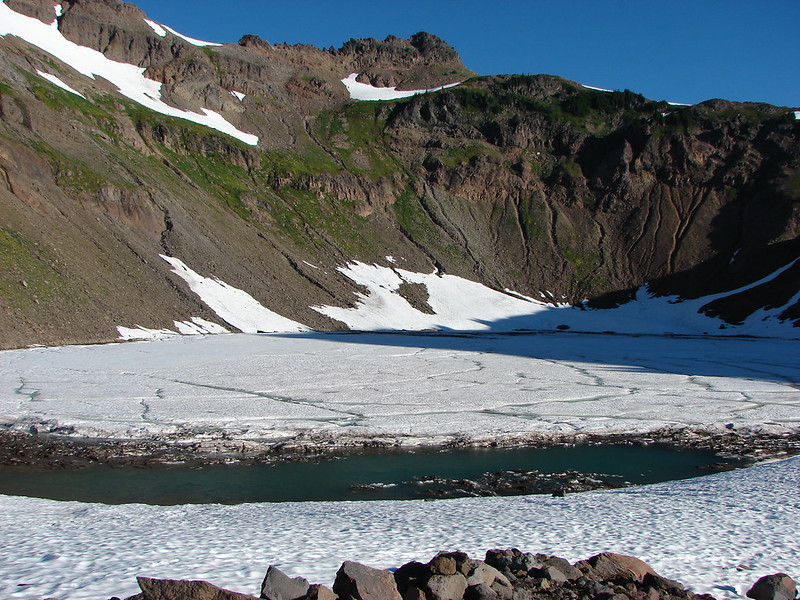
DSC04058

DSC04059

At the junction with the Goat Ridge Trail we took it and dropped down into the Jordan Basin. The best views we’d had of Mt. St. Helens were had as we descended into the basin.
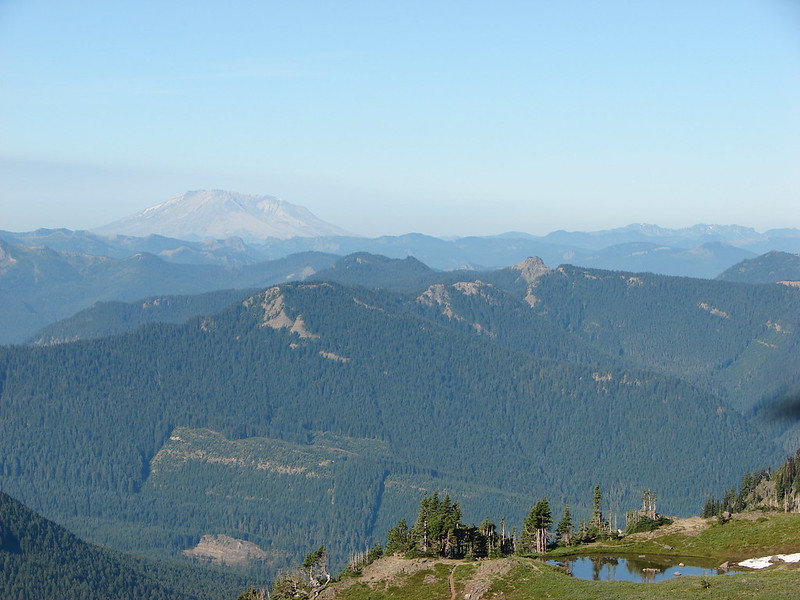
DSC04075

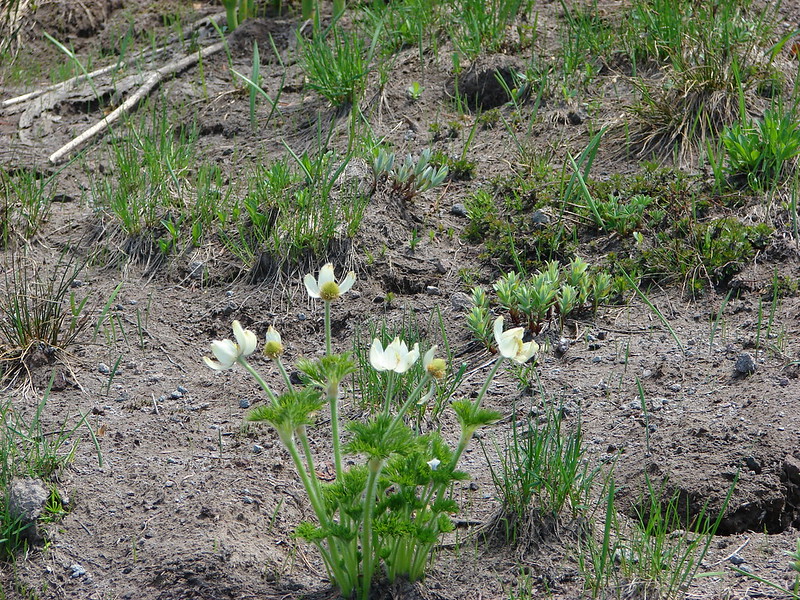
Of course there were wildflowers.

DSC04081

And a lot of crickets or grasshoppers.
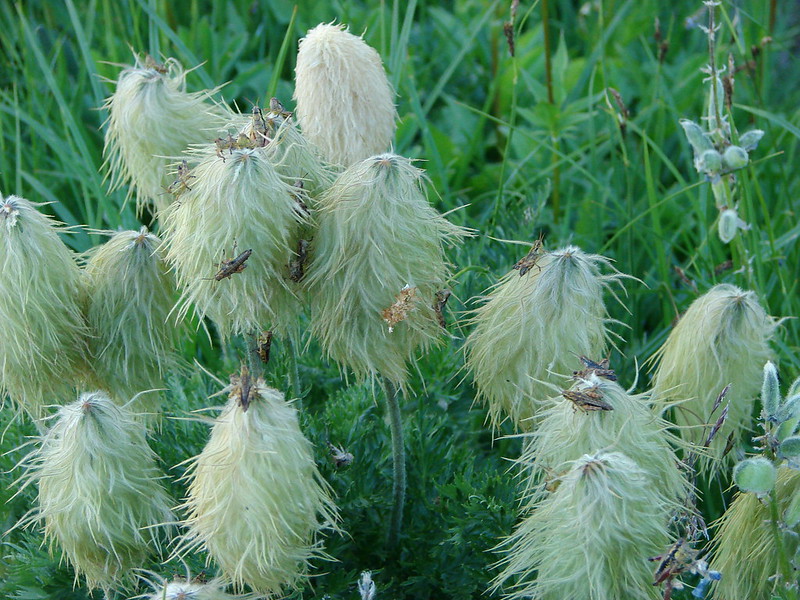
DSC04082

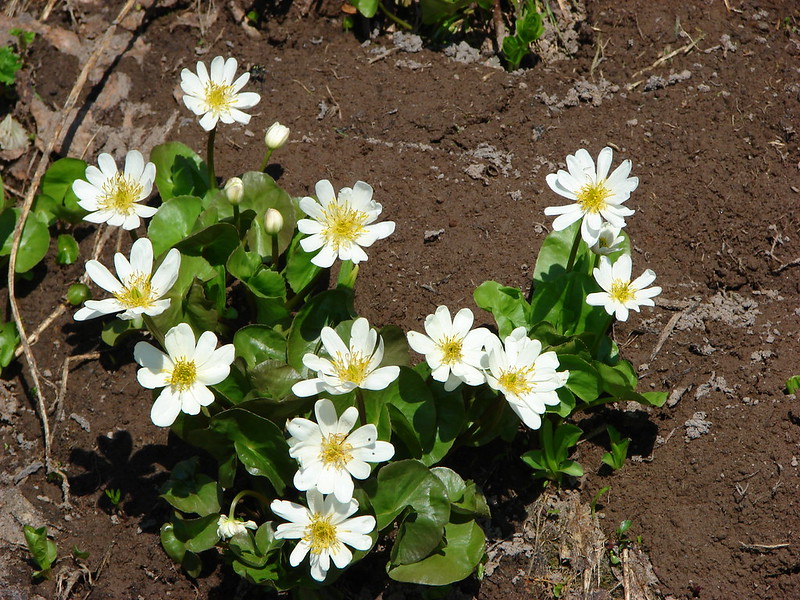
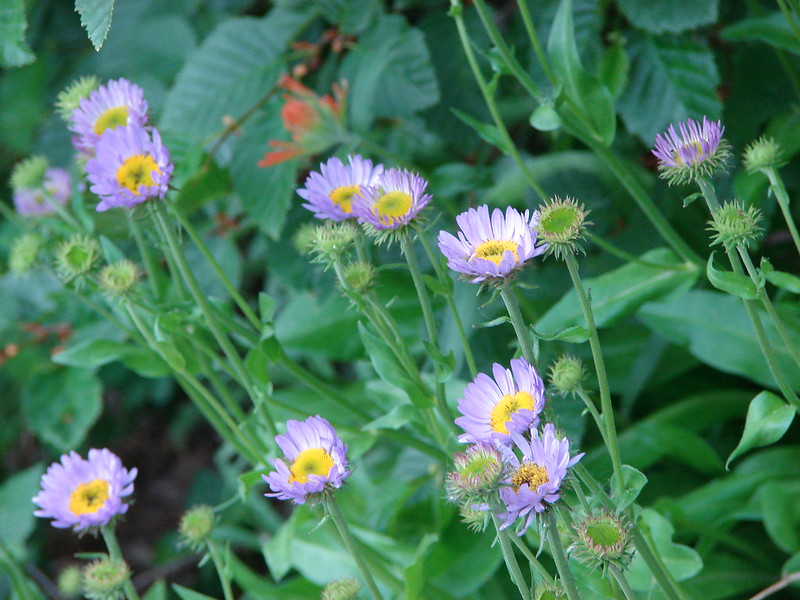
There were flowers in this basin that we hadn’t seen at all in the other parts of Goat Rocks.
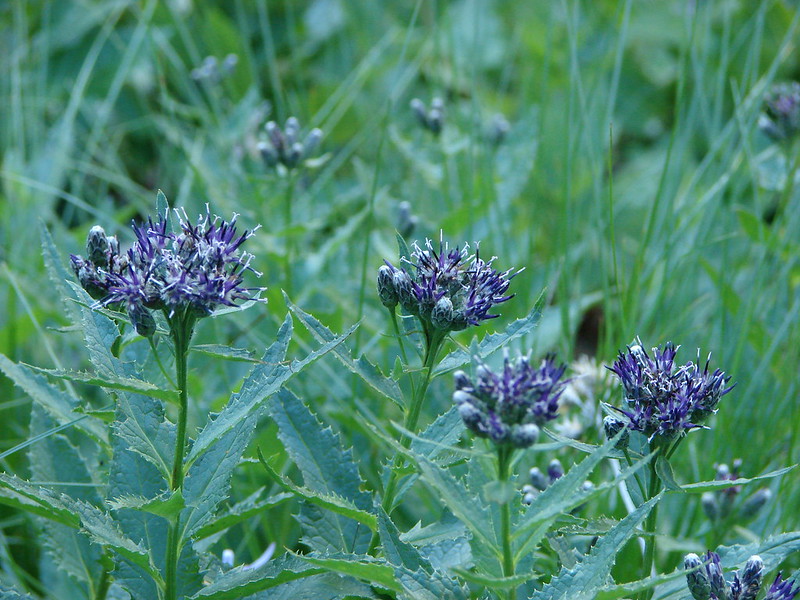
DSC04105

Soon we were far enough down to no longer be able to see the mountains. It was a bittersweet hike as we hated to leave this beautiful place but after four days a shower was sounding real nice. We got one last glimpse of Mt. Rainier, Mt. Adams, and Goat Rocks before entering the trees for good.

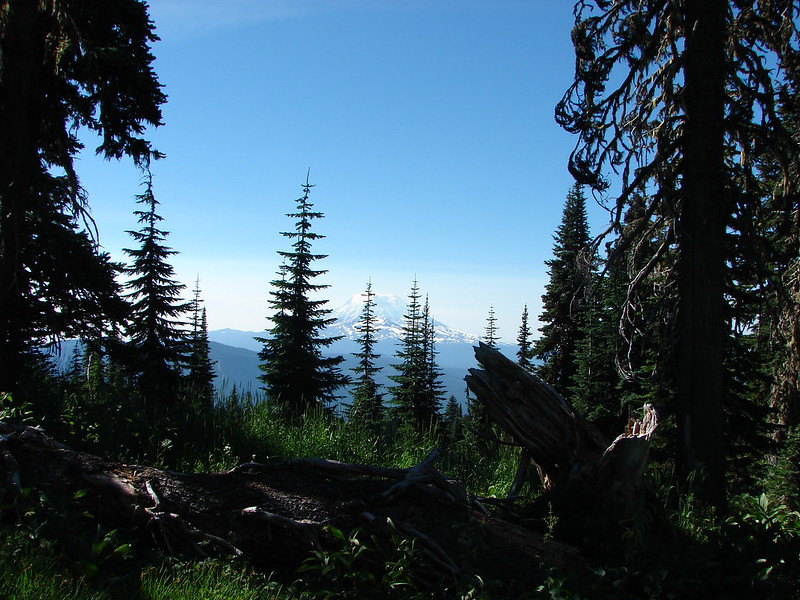
DSC04158

DSC04172

DSC04170

The Goat Ridge Trail would take us to the Berrypatch Trailhead and from there a .6 mile connector trail would bring us back to the Snowgrass Trail just .1 miles from our car. We were moving quickly along the connector trail when the wilderness gave us one last surprise. A small tree frog sitting on a huckleberry bush next to the trail.
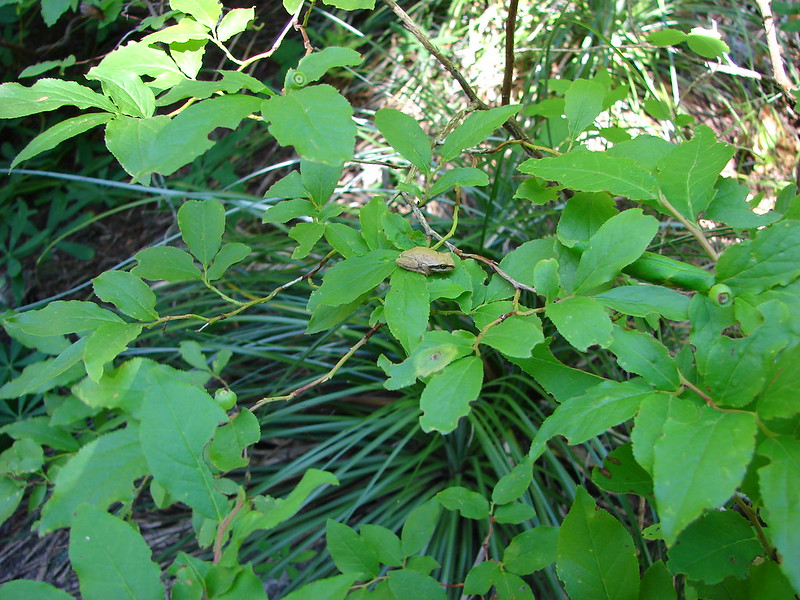
DSC04199

Our time was up but we were already thinking of our next visit. We can’t wait to go back and explore more of the wilderness. The only negative to the entire trip was witnessing the disregard for the area that some of the people showed. There were people traipsing through the meadows and setting up tents on the vegetation. Such a beautiful place to visit will only stay that way if people take care of it so please go and visit but stay on the trails and camp on the brown ground not the green. Happy Trails.

UPDATE on the llama.  The llama had indeed either been left or escaped and was seen multiple times throughout the summer.  She was finally rescued this fall and is safe and doing well according to this report: http://www.rattlesnakeridgeranch.com/documents/Rescue_in_the_Goat_Rocks_Wilderness.pdf


Flickr albums: Day 1-https://www.flickr.com/photos/9319235@N02/sets/72157646295294436/

Day 2-https://www.flickr.com/photos/9319235@N02/sets/72157646295758026/

Day 3-https://www.flickr.com/photos/9319235@N02/sets/72157645936565989/

Day 4-https://www.flickr.com/photos/9319235@N02/sets/72157645937647578/
Categories
High Cascades Hiking Mt. Hood Area Oregon Trip report

Burnt Lake to Paradise Park Overnight

Our latest overnight trip brought us to the Mt. Hood Wilderness where we planned to continue honing our backpacking skills. We plotted out a trip that would bring us to some new places as well as some previous favorites. The plan was to start at the northern trail head of the Burnt Lake Trail, pass Burnt Lake and climb up to East Zig Zag Mountain where we would take the Zig Zag Mountain Trail up to the Paradise Park Trail. From there we would head up to Paradise Park and camp somewhere along the Paradise Park Loop Trail near Split Rock. We’d been to East Zig Zag Mountain and Paradise Park in 2012 on separate hikes, but we had come in on different trails for those trips.

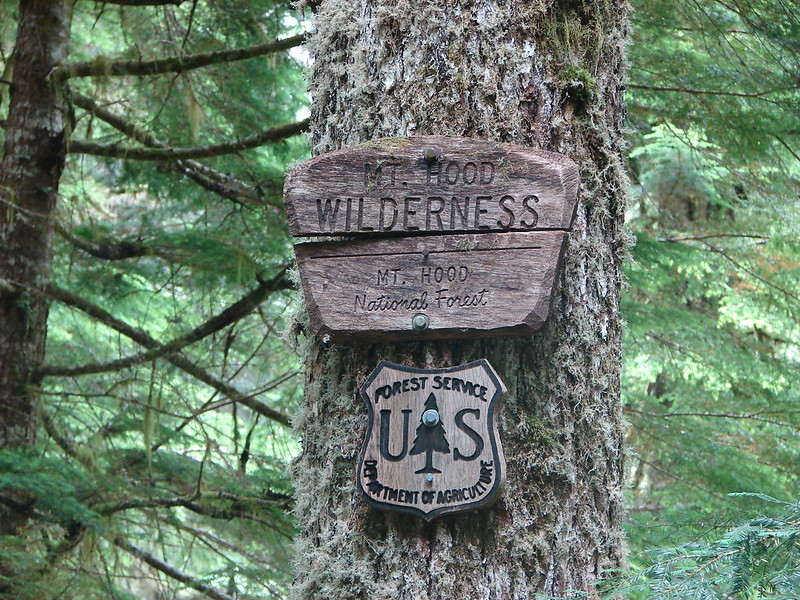
We set off from the Burnt Lake trail head shortly before 7am and quickly entered the Mt. Hood Wilderness.
DSC01348

The trail climbed between Burnt Lake Creek and Lost Creek for 1.9 miles before crossing and then recrossing Burnt Lake Creek. Near the 2.5 mile mark an unmarked side trail to the left led downhill to Lost Creek Falls. (Waterfalls on Lost Creek became a theme for this trip.)
DSC00785

The trail then veered away from Lost Creek and climbed for a mile up to Burnt Lake. Along the way we got our first glimpses of Mt. Hood.
DSC00792

We stopped briefly to check out Burnt Lake but decided to wait until the return trip to locate the best viewpoint of Mt. Hood from the lake shore.
DSC00797
DSC00800

From Burnt Lake the trail climbed up to the Zig Zag Mountain Trail where we took a brief detour to visit the summit of East Zig Zag Mountain. Heather decided to remain amid the wildflowers at the junction with the southern portion of the Burnt Lake Trail while I climbed up to the former lookout site.
Mt. Hood and Burnt Lake from the south trail junction:
DSC00818

Trail heading up East Zig Zag Mountain:
DSC00830

Wildflowers:
DSC00835
DSC00836
DSC00838
DSC00843
DSC00854

Mt. Jefferson:
DSC00856

Mt. Hood:
DSC00859

Butterfly:
DSC00867

Heather waiting at the junction:
DSC00866

After getting my wildflower fix we headed East on the Zig Zag Mountain Trail and began climbing towards Paradise Park. The trail began with a nice gradual ascent through open meadows of beargrass, huckleberry, and other bushes. It was fairly overgrown but easy enough to follow.
DSC00876

We then came to a forested ridge where the trail suddenly steepened – downhill! We had been at 4600′ when we joined the Zig Zag Mountain Trail and needed to get up to 5800′ in 3.7 miles to reach Paradise Park. Going down meant more climbing on the way up as well as having to climb up on the way back down the following day. There were at least 4 fairly brief but steep descents before we began climbing again. At least were some nice views of the mountain ahead of us and a view of our goal.
Paradise Park is the light green areas just above the tree line:
DSC00890
The Paradise Park Loop Trail passed just below the pile of boulders:
DSC00894

As we neared the Paradise Park Trail Junction we began to see lots of avalanche lilies, a telling sign of recent snow melt, and a few patches of snow still hanging on.
DSC00897
DSC00911
DSC00907

After joining the Paradise Park Trail we passed through several meadows and a nice viewpoint of the Zig Zag River before arriving at the Pacific Crest Trail in a mere .2 miles.
DSC00922
DSC00923
Zig Zag River Canyon and Mississippi Head (the rock outcropping at the center of Mt. Hood):
DSC00916
Oh the choices!
DSC00925

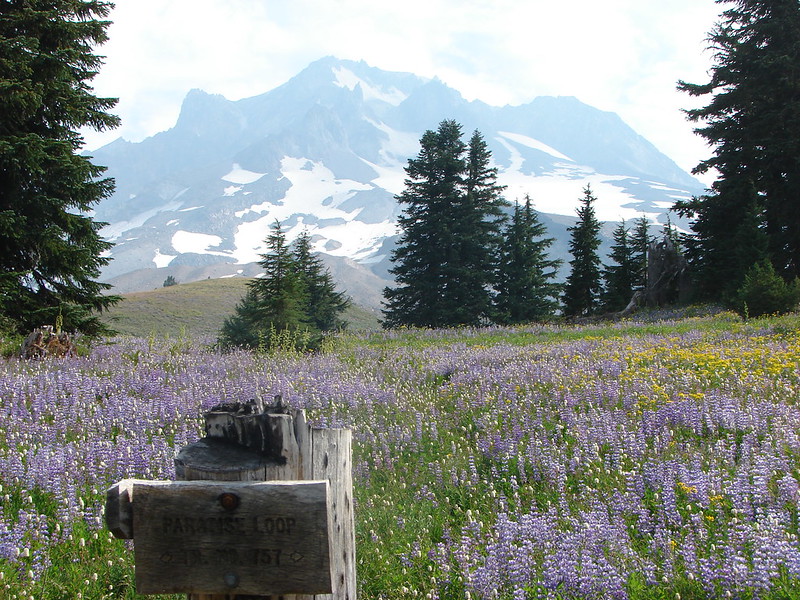
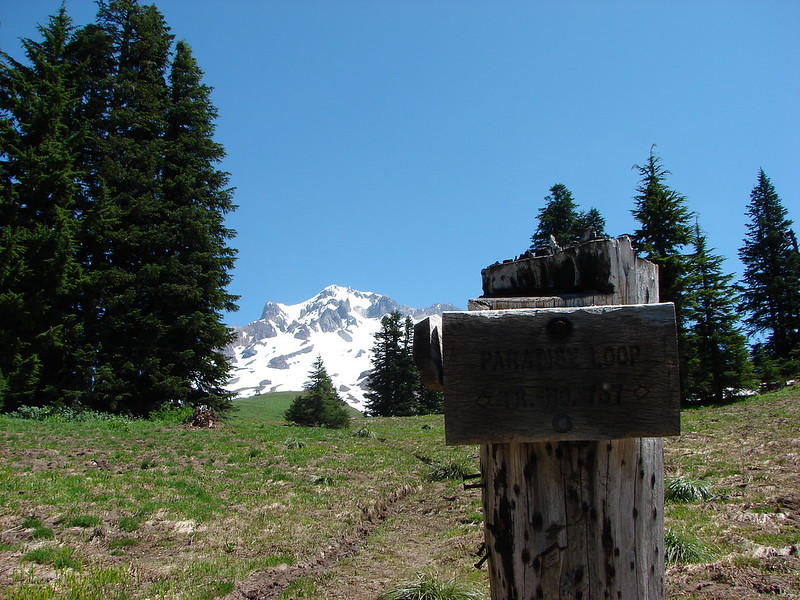
We crossed over the the PCT and climbed up to the Paradise Park Loop Trail which was a fairly steep .5 miles and 400′ above us. It was late August when we visited in 2012 and to this day the wildflowers in the meadow at the junction of these two trails remains the best display we’ve seen. There was little indication of the scene to come this trip as the snow was still melting off and only a few early flowers could be found. The view of Mt. Hood was still top notch though.
Late August 2012
173
Mid July 2014
DSC00935
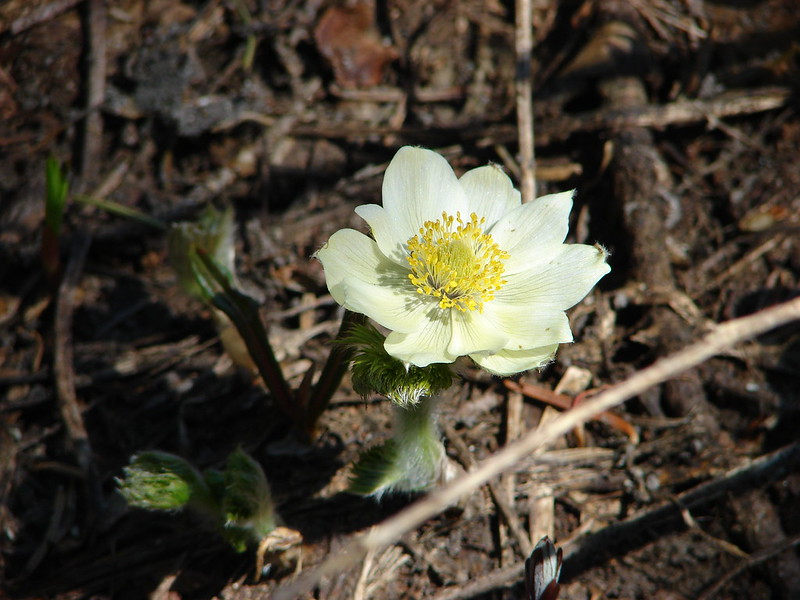
Western Pasque Flower
DSC00932
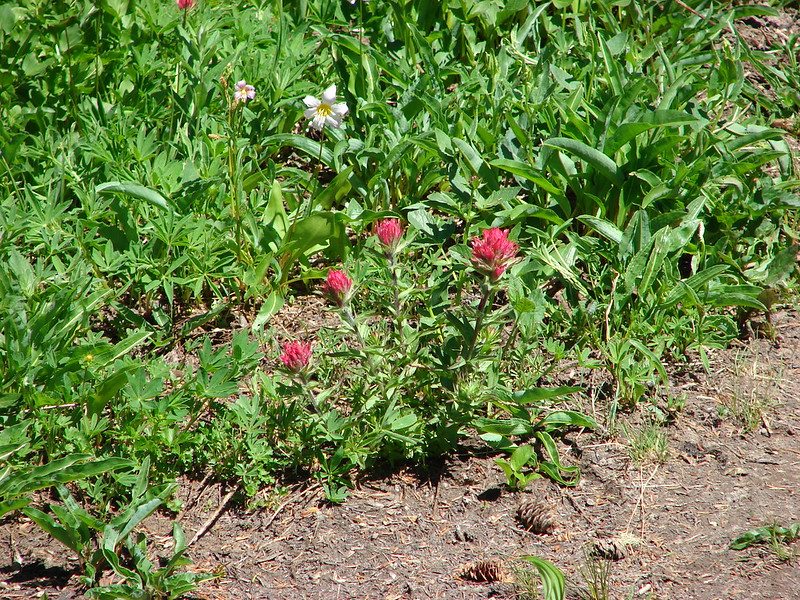
Avalanche lilies and paint
DSC00939

We headed left at the junction and started looking for our tent site. We passed several good locations but had something specific in mind. We were looking for a site close to a water source, with a good view, but also with some shade as it was quite warm. We made our way North passing the remains of the Paradise Park Shelter, crossing both branches of Lost Creek, and passing Split Rock before we found what we had been looking for.
South Branch Lost Creek crossing
DSC00945
Mt. Hood from the crossing
DSC00950

North Branch Lost Creek crossing – The snow shelf made this one tricky as the creek was flowing under the edge of the snow.
DSC00960
DSC00963

Split Rock
DSC01002

Camp
DSC01000

After setting up camp we spent the rest of the afternoon and evening alternating between exploring the area and relaxing as we waited for sunset.
Mountain heather beginning to bloom
DSC00970

Cinquefoil
DSC00982

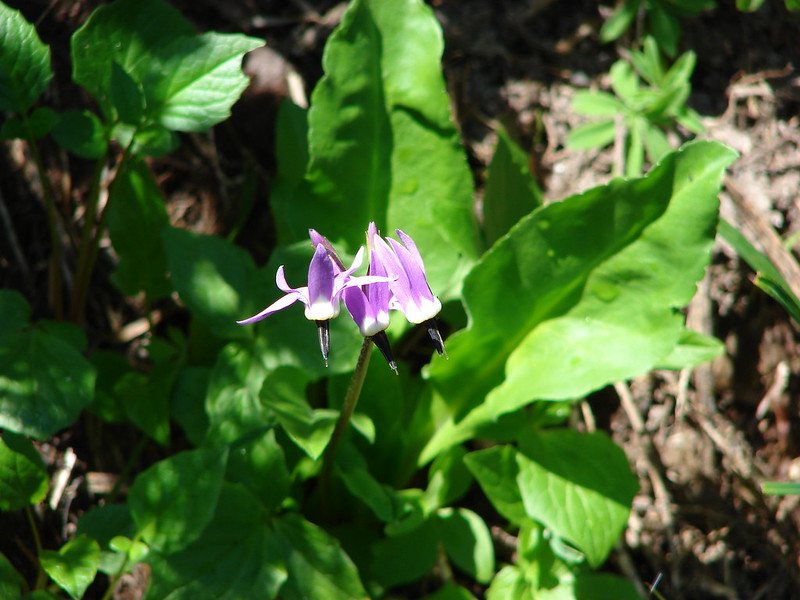
Shooting Star
DSC00989

Marsh marigolds
DSC01040

Western pasque flowers
DSC00991
DSC01066

Mt. Jefferson
DSC00972

Mt. St. Helens
DSC00990

East Zig Zag Mountain and some of our route from earlier in the day
DSC01012

DSC01009
DSC01023

Yocum Ridge on the other side of the Sandy River. The waterfall is on what appears to be an unnamed fork of the Sandy River but I’ve seen it referred to as Paradise Park Creek.
DSC01024

The Sandy River
DSC01031

Waterfall flowing down into Lost Creek
DSC01052
DSC01055

Marmot in the grass near the falls
DSC01061

Our shadows as the Sun was getting lower
DSC01064

Small waterfall on Lost Creek
DSC01073

Sunset
DSC01082
DSC01090
DSC01104
DSC01124

After watching the Sun go down we turned in. For some reason I wound up awake shortly after 4am so I grabbed the camera again and waited for the sunrise.
The Moon was super bright all night and a few clouds had moved in to the South by the morning
DSC01151

Starting to get some sunlight
DSC01180
DSC01184

Then came the colors
DSC01195
DSC01205
DSC01213
DSC01210DSC01224
DSC01227

After a breakfast of Mountain House freeze dried scrambled eggs and bacon (yes we managed to use our stove this trip 🙂 ) we packed up camp and began our return trip. We decided to continue on the loop which would bring us back to the PCT which we could then take South back to the Paradise Park Trail junction. This would allow us to visit a few waterfalls on the way back. The first of the falls is on Rushing Water Creek as it comes down from Paradise Park. There was a nice display of wildflowers just before the falls here.
DSC01272
DSC01278
DSC01294
DSC01297

There was a trail crew from the Pacific Crest Trail Association gathered at the base of the falls that was out doing some trail maintenance.
DSC01300

It had clouded up and as we were passing the falls rain began to fall lightly. We decided to stop at the next set of falls to waterproof our sleeping bags just in case it started to rain harder. The next set of falls were on Lost Creek. Both branches come down within a short distance of each other and both in scenic waterfalls.
North Branch Lost Creek
DSC01303
DSC01305

South Branch Lost Creek
DSC01313
DSC01317

It was raining off and on but not very hard but then we began to hear thunder. We picked up our pace as best we could as the thunder became steadier and we started to see the flashes of lighting. We had made it to the Paradise Park Trail and were back on the Zig Zag Mountain Trail when the hike got really interesting. We came around a bend in the trail and less than 20 yards ahead of us was a black bear. We all instantly froze, even the bear for a split second before it turned in bolted back into the forest. All I’d had time to do was say “bear” before it had vanished. I had just put the lens cap back on the camera and tucked it under my shirt to keep the rain off of it so I had no chance at getting a picture. Heather went for the bear spray just to be safe but it was long gone.

We made it back to the steep sections that we were dreading without further incidents. The climb was pretty much as ugly as we’d expected but the rain had let up without ever getting too heavy so we were dry at least. Dry until we reached the overgrown section of trail that is. By the time we emerged from that section we looked and felt like we’d forded a thigh-high creek. 🙂

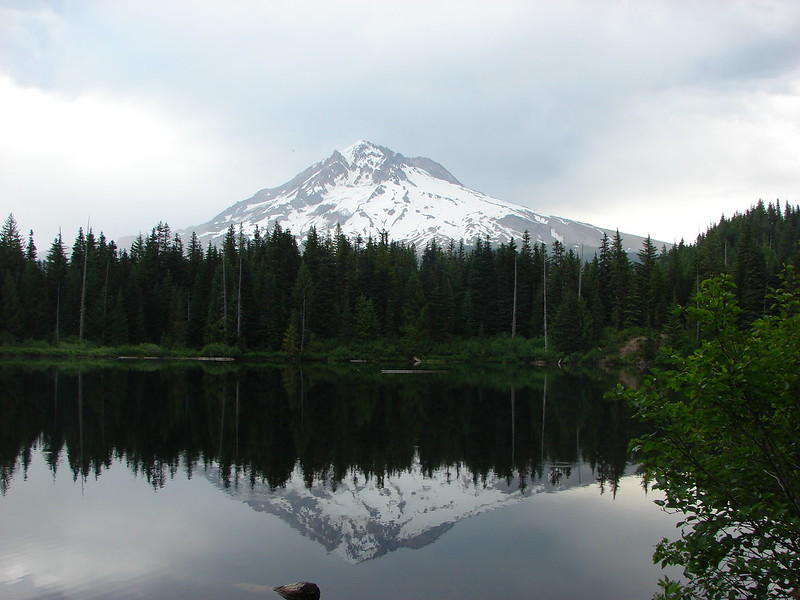
When we got back to Burnt Lake we headed down past campsite C where there is a great view of Mt. Hood from the lake shore.
DSC01337

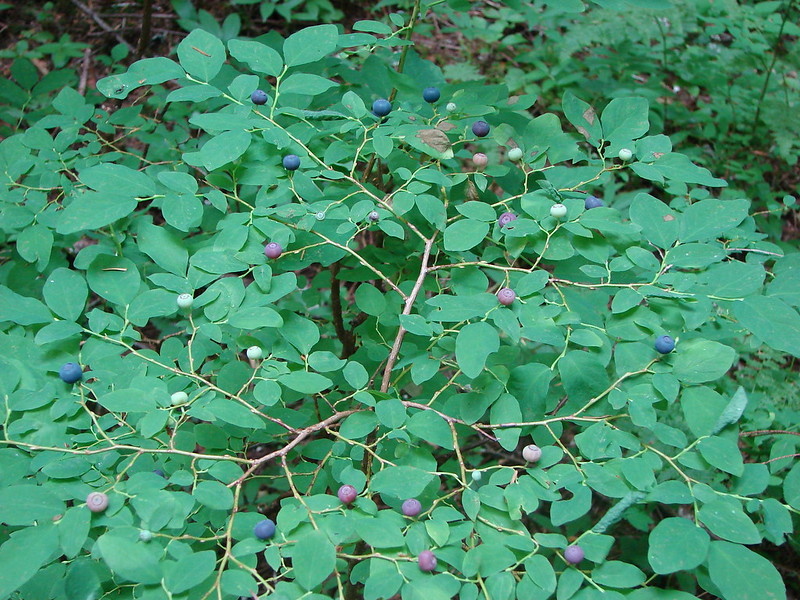
We ticked off the remaining 3.5 miles at a brisk pace pausing occasionally to sample the salmon and blueberries that were ripening nicely along the trail.
Oval-leaf blueberries
DSC01346

Mt. Hood had delivered another amazing adventure. Happy Trails!

flickr: https://www.flickr.com/photos/9319235@N02/sets/72157645261769389/
Facebook: https://www.facebook.com/media/set/?set=a.10204454188061928.1073741893.1448521051&type=1

Categories
Year-end wrap up

The hikes of 2013 – A year in review.

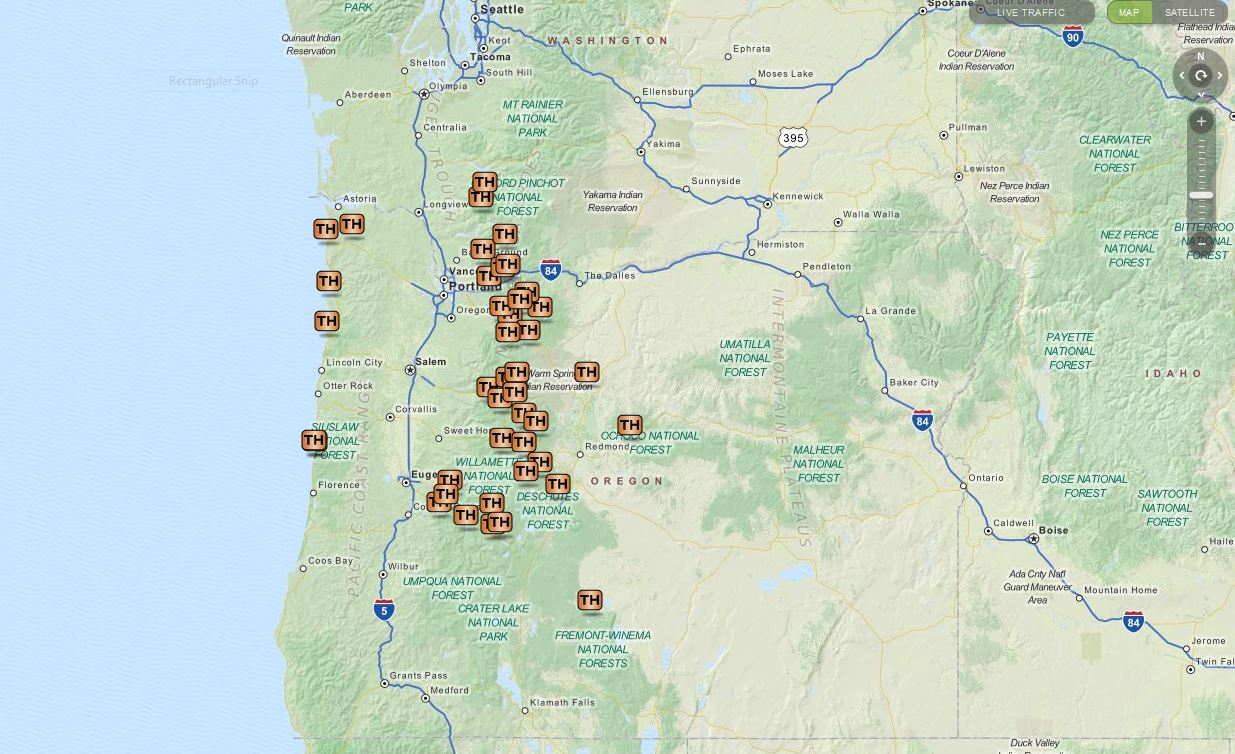
What an amazing year of hiking it was! As we reach then end of 2013 we thought we’d make one final entry recapping the beautiful areas and unique features we were blessed enough to encounter while out on our “wanderings”. We began the year in February at the Oregon Coast, hiking at Gwynn Creek and Cape Perpetua then finished up just a couple of weeks ago, once again on the Oregon Coast at Tillamook Head, 140 miles north of where we had started. Sandwiched in between these two hikes were 40 other adventures in which we climbed mountains, crossed rivers, and scrambled cross-country to explore a small sampling of the trails of NW Oregon and SW Washington. We put together a map of the approximate location of the trailheads for each of the hikes.
2013 Trailheads
An interactive version can be viewed on mapquest using the following link.
http://mapq.st/1bQXoXo

I’ve always been interested in numbers so I have kept quite a few statistics regarding these 42 hikes. Here are some of those that I found most interesting. We visited 10 wilderness and 2 scenic areas in 8 different national forests. In addition to the national forests we hiked in 4 state parks and at a national volcanic monument. Some of the other numbers are as follows:
Total Miles (according to the Garmin) – 515.2
Cumulative Elevation Gained (approx.) – 88,000′
Minimum/Maximum Elevation – sea level/10,358′
Total Moving Time (per the Garmin) – 240hrs 36min
Total Time on the Trails (per the Garmin) – 280hrs 6min
Total Miles Driven (approx.) – 7550 miles

For the most part the weather was good. We had a warm, dry end to Winter which carried into Spring clearing many trails of snow earlier than normal. This allowed for some earlier visits to some of the higher elevation areas and also an early bloom for most of the wildflowers including the bear grass which only blooms every 2nd or 3rd year. A mild summer kept temperatures bearable and despite the dry beginning to the year the fire season wasn’t too bad. Fall brought an early snowstorm and left an early winter wonderland at mid-elevations and some unusually cold temperatures of late created some interesting ice displays.

Words can’t do justice to the beauty of God’s creation that we experienced this so year I’ll try to keep them to a minimum and attempt to let pictures show what they can.
I have to start with the Cascade Mountains. The most awe inspiring creations, these steadfast beacons that on clear days dot the horizon always seem to draw our attention.

From the rim of Crater Lake in the south to Mt. Rainier in the north they rise above the other ridges, rooted in their positions, yet ever changing in order or varying in appearance depending on what our location was. Some of the views we had were amazing.

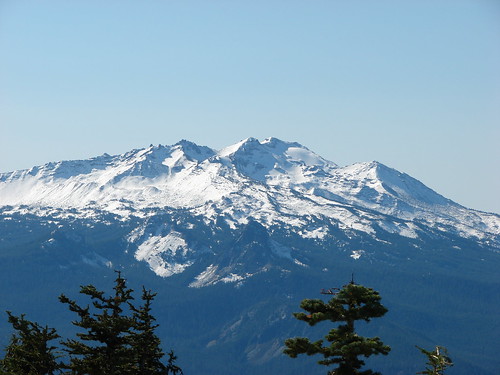
Mt. Scott, Mt. Thielsen, Mt. Baily, & Diamond Peak from the South Sister Summit
View from the South Sister
Cascade Peaks from Mt. Bachelor to Mt. Hood (minus the North Sister which was hidden behind the Middle) from Mt. Fuji
Waldo Lake
Mt. Washington to Mt. Hood from the Pacfic Crest Trail near Yapoah Crater
Belknap Crater, Mt. Washington, Three Fingered Jack, Mt. Jefferson & Mt. Hood
Mt. Washington to Mt. Bachelor from Three Fingered Jack
Broken Top, Mt. Bachelor, The Three Sisters, Mt. Washington and The Husband
Mt. Rainier, The Goat Rocks, and Mt. Adams from Wildcat Mountain
Mr. Rainier, The Goat Rocks, and Mt. Adams
Mt. St. Helens, Mt. Rainier, and Mt. Adams from Silver Star Mountain
View from Ed' Trail

Individual peaks working from the south to the north.
Mt. Thielsen:
From Fuji Mountian
Mt. Thielsen

Diamond Peak:
From Waldo Mountain
Fuji Mountain and Diamond Peak
From Fuji Mountain
Diamond Peak

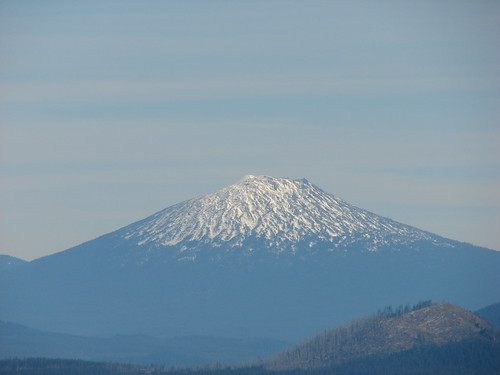
Mt. Bachelor:
From Fuji Mountain
Mt. Bachelor
From Tam MacArthur Rim
Mt. Bachelor

Broken Top:
From above Moraine Lake
Broken Top and Moraine Lake
From Fuji Mountain
Broken Top and Ball Butte
From Tam MacArthur Rim
Broken Top

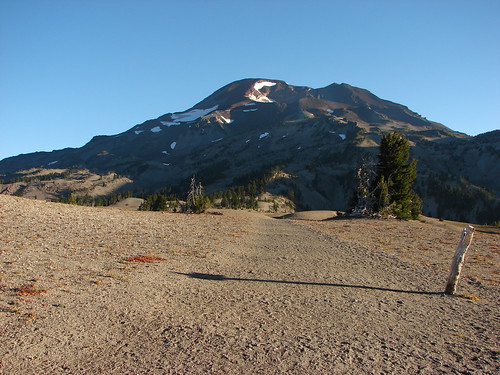
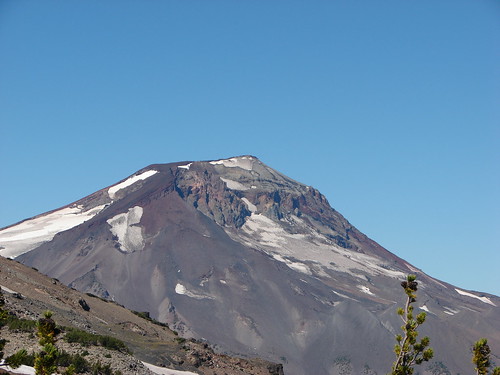
South Sister:
From above Moraine Lake
South Sister Climbers Trail
From Tam MacArthur Rim
South Sister
From Fuji Mountain
South Sister

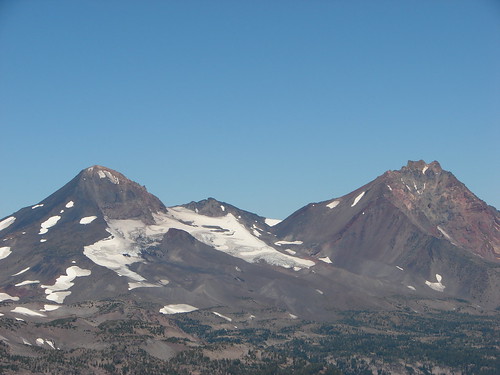
Middle & North Sister
From Tam MacArthur Rim
Middle and North Sister
From Scott Meadow
North & Middle Sister and Little Brother from Scott Meadow
From the South Sister
South Sister summit view

Mt. Washington
From the Matthieu Lakes Trail
Mt. Washington
From Fuji Mountain
Mt. Washington and Belknap Crater
From Three Fingered Jack
Mt. Washington and The Husband

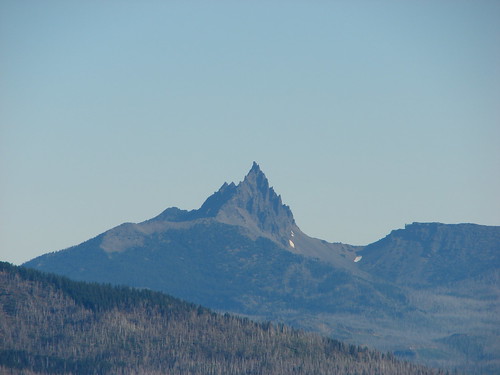
Three Fingered Jack:

From the Matthieu Lakes Trail
Three Fingered Jack
From Canyon Creek Meadows
Three Fingered Jack from the upper meadow

Mt. Jefferson:
From Fuji Mountain (Dwarfing Three Fingered Jack)
Mt. Jefferson and Three Fingered Jack
From Hanks Lake
Hank's Lake
From Three Fingered Jack
Looking back down
From Bays Lake in Jefferson Park
Bays Lake in Jefferson Park

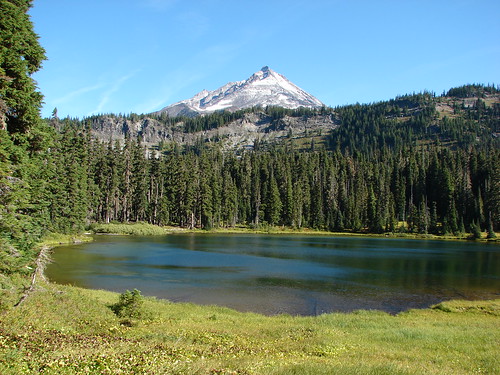
Mt. Hood:
From Barrett Spur
Mt. Hood from Barrett Spur
From Table Mountain
Mt. Hood from Table Mountain
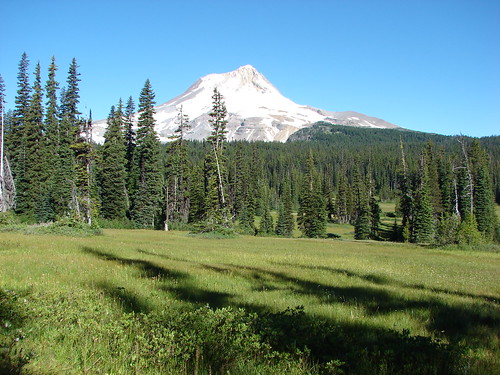
From Elk Meadows
Mt. Hood from Elk Meadows
From Lamberson Butte
Mt. Hood
From Youcum Ridge
Mt. Hood from Yocum Ridge
From Timothy Lake
Mt. Hood from Timothy Lake

Mt. St. Helens:
Mt. St. Helens
From the Loowit Trail on Mt. St. Helens
Mt. St. Helens from the Loowit Trail
From Johnston Ridge
Mt. St. Helens

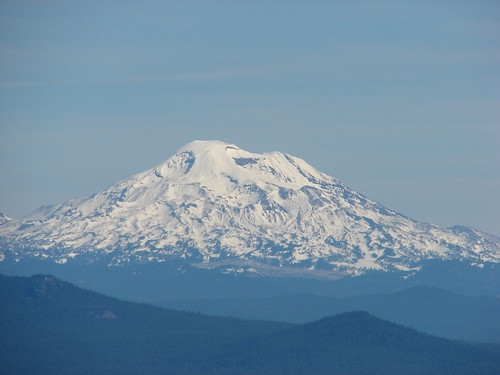
Mt. Adams:
From Silver Star Mountain
Paintbrush, penstemon and Mt. Adams

Mt. Rainier:
From Wildcat Mountain
Mt. Rainier

From the giant rock towers of the mountains we move on to the delicate meadows full of wildflowers that often times call the mountains home. We visited amazing wildflower displays near Mt. Hood, Mt. Jefferson, and Three Fingered Jack but the Cascades were possibly outdone by Silver Star Mountain in Washington.
Bear Grass on Mt. St. Helens
Mt. St. Helens from a beargrass meadow along the Loowit Trail
Balsam Root and Paintbrush in the Ochoco National Forest
Paintbrush and balsamroot
Clearcut on Silver Star Mountain
Tarabell Trail
Meadow on Salmon Butte
An arnica in  a meadow of plectritis, larkspur and monkeyflower
Elk Meadows
Elk Meadows
Near Heather Creek on Mt. Hood
Wildflowers along the Timberline Trail at Heather Creek
Mt. Hood Meadows
Wildflowers in Mt. Hood Meadows
Lupine in Canyon Creek Meadows
Three Fingered Jack
On Coffin Mountain
Aster, penstemon and paintbrush
Avalanche Lilies on the Timberline Trail
Avalanche lilies
Western Pasque flowers and Paintbrush near Elk Cove
Mt. Hood from the Timberline Trail near Elk Cove
Barret Spur on Mt. Hood
Lupine and monkeyflower
Gentians in Jefferson Park
Gentians
Jefferson Park
Wildflowers along the South Breitbenbush Trail
Along the South Brietenbush River in Jefferson Park
Wildflowers along the South Breitenbush River
Aster on Yocum Ridge
Aster field on Yocum Ridge
On Yocum Ridge
Wildflowers along the Yocum Ridge Trail
More from Yocum Ridge
Paintbrush and aster

There weren’t many hikes where the presence of water was not felt. We encountered it in various forms and in an array of colors. There were lakes, creeks, rivers, waterfalls, springs, and the Pacific Ocean adding sights and sounds to our hikes.
Roaring Creek
Roaring Creek
McKenzie River
Mckenzie River
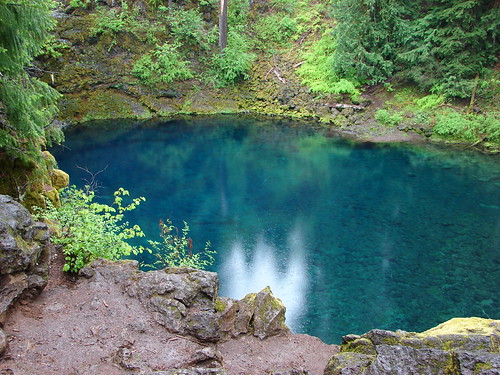
Tamolitch Pool
Tamolitch Pool
Russell Lake
Mt. Jefferson from Russell Lake
Umbrella Falls
Umbrella Falls
Diamond Creek Falls
Diamond Creek Falls
Heather Creek
Waterfall on Heather Creek
South Matthieu Lake
South Mattieu Lake
Benham Falls
Benham Falls
Carver, Camp, and the Chambers Lakes
Carver, Camp and some of the Chambers Lakes
Lewis Tarn
Lewis Tarn
Creek near Pamelia Lake
Waterfall near Pamelia Lake
Timothy Lake
Timothy Lake
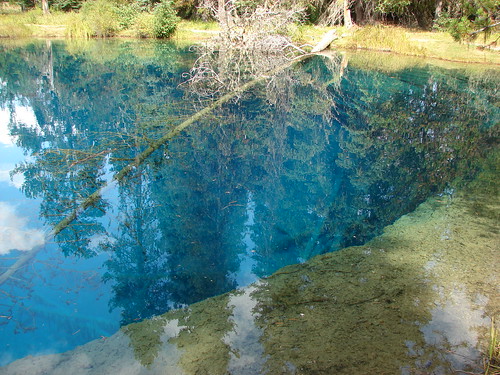
Little Crater Lake
Little Crater Lake
Frozen pond near Fuji Mountain
Half frozen pond
Birthday Lake
Birthday Lake
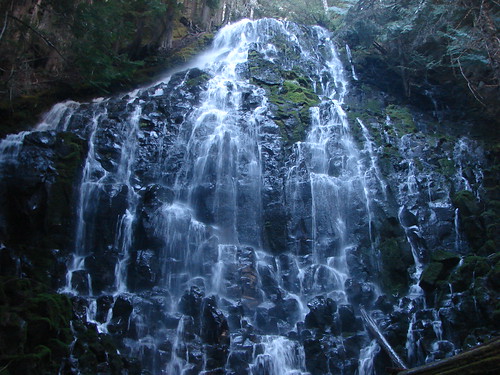
Ramona Falls
Ramona Falls
Pacific Ocean at Tillamook Head
View from Ecola State Park
Pacific Ocean from Cape Perpetua
Looking south from Cape Perpetua
Last but not least the most unpredictable of the sights out on the trails are the creatures that call these places home. From flying ants on Coldwater Peak to the black bear who left its tracks in the snow on Fuji Mountain we were the tourists traipsing through their neighborhoods. We spotted our first elk, snow shoe hare, and sooty grouse this year. We also had the mysterious case of “mouse rain” on Salmon Butte which you can read about here:https://wanderingyuncks.wordpress.com/2013/06/20/salmon-butte/
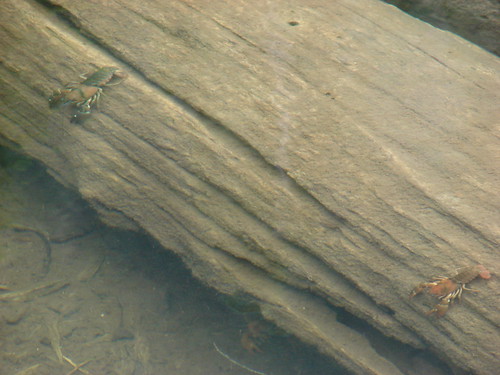
Crawdads in Middle Rock Lake
Tide pool at Cape Kiwanda
Snail
Rough skinned newt
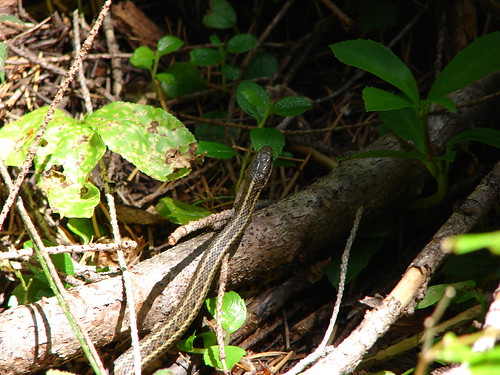
Snake
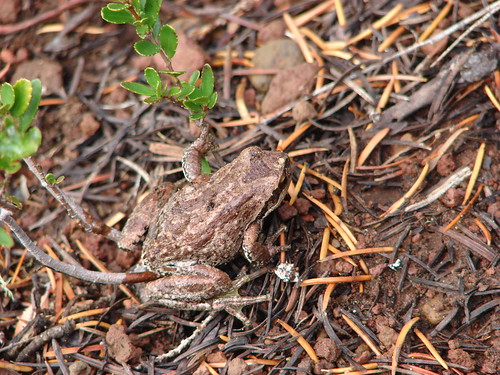
Tree frog
Spider along the Tam McArthur Rim Trail
Bug on Fuji Mountain
Frog
Butterflies
Zerene fritillary butterfly
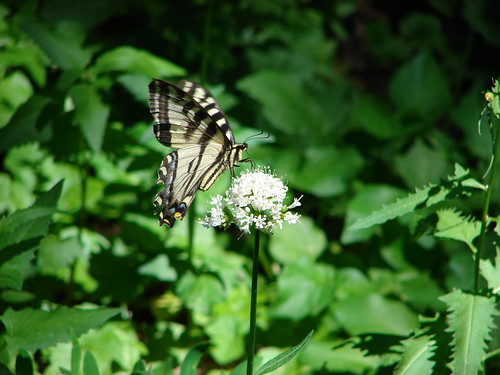
Swallowtail butterfly
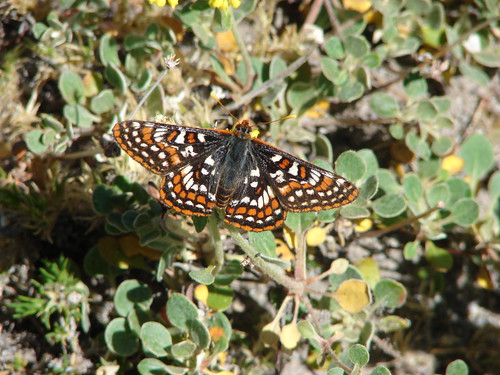
Edith's checkerspot
Milbert's Tortoiseshell Butterfly on the way up Coldwater Peak
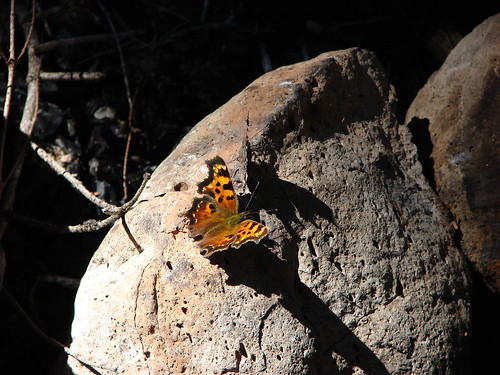
Hoary Comma
Hoary Comma
Clodius parnassian
Birds
Bald eagle
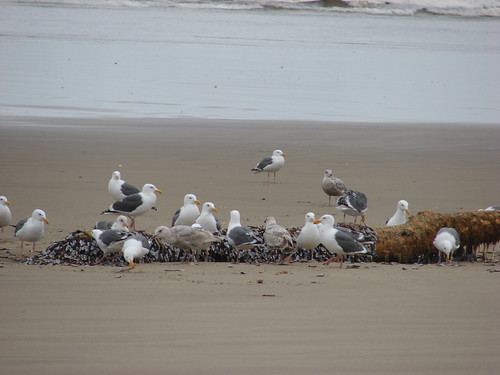
Seagull buffet
Yellow-Rumped Warbler
Owl
Gray jay taking a bath
Duck family
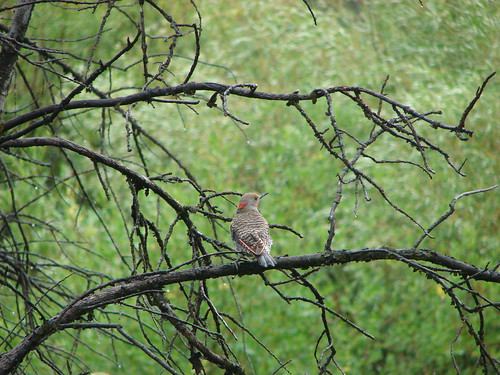
Northern Flicker
Osprey
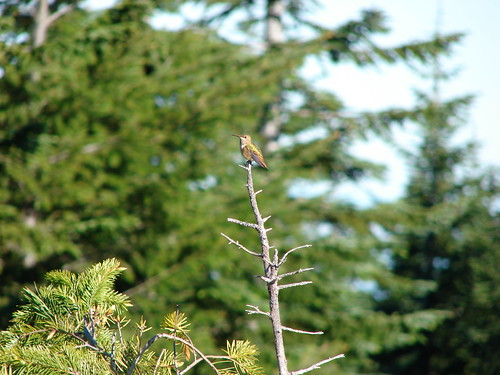
Hummingbird
Red Crossbill
Osprey flying over ducks on Timothy Lake
Hummingbird
Canada geese
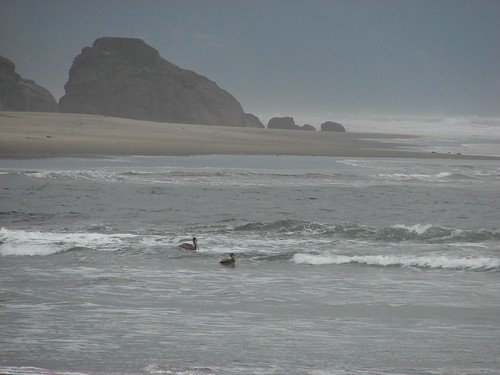
Pelicans
Common goldeneyes on Wall Lake
Great Blue Heron
Little guys
Chipmunk
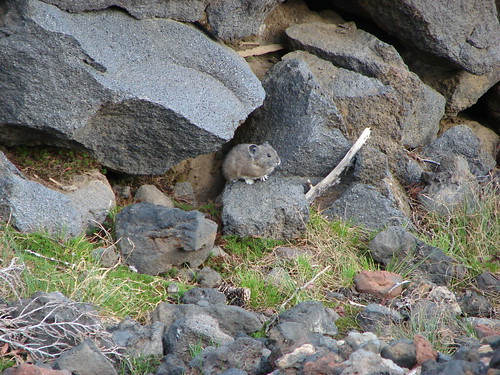
Pika
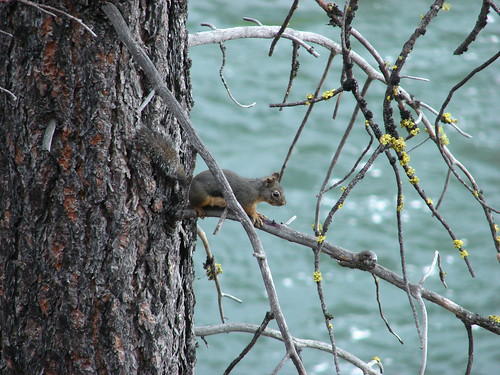
Douglas squirrel
Golden Mantled Squirrels
Snowshoe hare

Big Guys
Our first elk sighting. Near the Observation Peak Trailhead
Columbia Black Tailed Deer
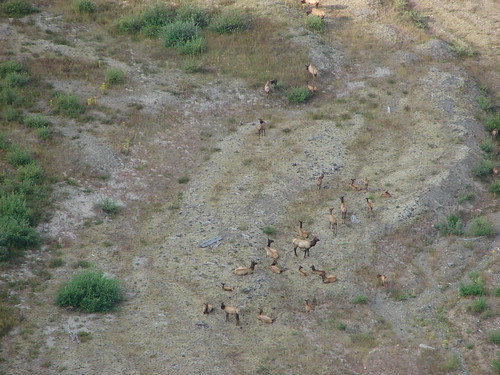
Elk herd on the far shore of the Deschutes River
Elk
Deer near the Lower Black Butte Trailhead

We’d like to leave you with what each of us found to be their favorite hike and the most difficult. For myself Elk Meadows was my favorite. https://wanderingyuncks.wordpress.com/2013/07/24/elk-meadows/ The variety and beauty we encountered on that hike put it atop my list. As for the most difficult I chose Silver Star Mountain https://wanderingyuncks.wordpress.com/2013/07/04/silver-star-mountain/ which was also in the running for my favorite. The heat on that day made it the hardest one for me.

After much deliberation Heather chose the same hike as I did her favorite, Elk Meadows; something about that day had her mesmerized as we traveled up Gnarl Ridge towards Mt. Hood. For the most difficult she picked Observation Peak due in part to having fallen shortly after we stared the hike and spraining her hand and wrist. It made for a more challenging and uncomfortable hike as she endeavored to keep her injury elevated above her heart during most of the journey. https://wanderingyuncks.wordpress.com/2013/07/09/observation-peak/

Dominique chose Fuji Mountain for his favorite. There was snow and a great view with a reasonable amount of distance. https://wanderingyuncks.wordpress.com/2013/10/09/fuji-mountain/ For the most difficult he picked Table Mountain and the climb up Heartbreak Ridge. https://wanderingyuncks.wordpress.com/2013/06/14/table-mountain/

I am already hard at work putting together a 2014 itinerary which will include some overnight backpacking trips and hopefully visits to the Goat Rocks Wilderness and Mt. Adams in Washington. If all goes as planned we will kick things off in January, take things slow until we’ve recovered from our April half or full marathons, and then be ready to crank things up in May. Until 2014 here is a link to a 2013 hikes in pictures album on Flickr http://www.flickr.com/photos/9319235@N02/sets/72157635497870439/

Merry Christmas & Happy Trails!

Categories
High Cascades Hiking Mt. Jefferson Area Oregon Trip report

Red Lake Trail

**Note the 2020 Lionshead Fire burned the area covered by this hike.**

I am a bit behind on our trip reports but that’s because we were busy getting a few more hikes in on our final week of vacation. After our hike on the coast at Pacific City we headed back toward the mountains on Thursday. We had been debating on whether or not to attempt the hike we had planned due to the early snow that had been falling in the Cascades. The planned hike had us starting on the west end of the Red Lake Trail, climbing Potato Butte, continuing on to Top Lake, and then making a small loop past Cigar Lake where we would attempt to climb Double Peaks before returning to the Red Lake Trail and our car.

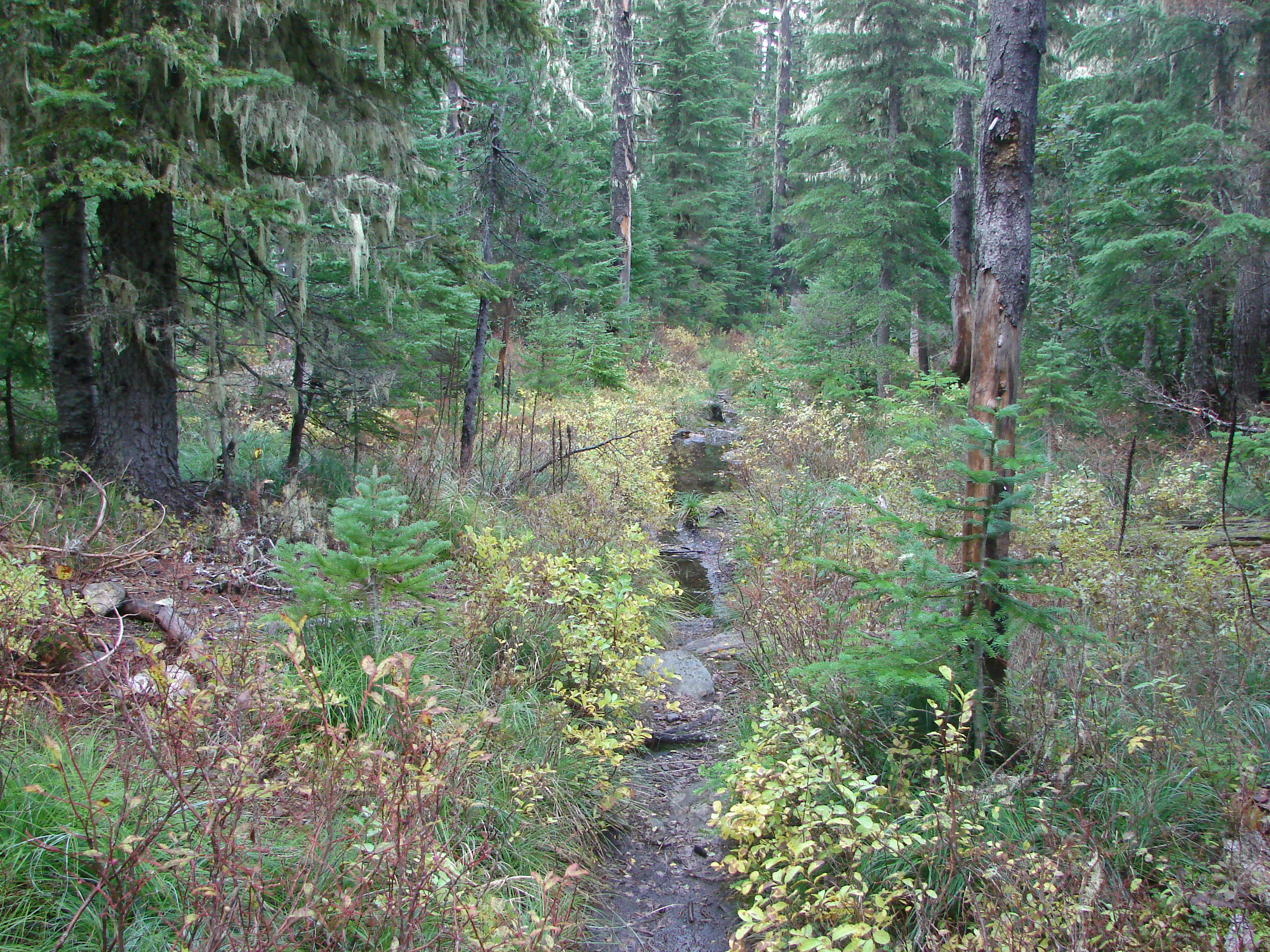
It was a nice morning as we set off and there were some good Fall colors on display. We climbed for a mile and a half before reaching the trails namesake – Red Lake.
017

Water on the Red Lake Trail
Red Lake
Red Lake

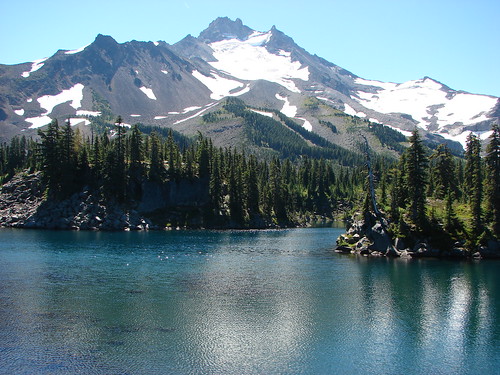
After passing Red Lake the trail then visits three more lakes in the next 1.3 miles. Avrill Lake was up first with a great reflection of Olallie Butte and Twin Peaks.
059

Next up was Wall Lake where we got our first good glimpse of Potato Butte.
072

Finally we came to Sheep Lake where a pair of ducks paddled beneath the reflection of Double Peaks.
086

We took a trail on the eastern end of Sheep Lake that led up to Potato Butte. There were several swollen ponds along this trail and in places standing water obscured the path. We wound up losing the trail at the base of the butte and decided to scramble to the top and hope to pick up the correct trail at the summit.

One of the many swollen ponds along the Potato Butte Trail

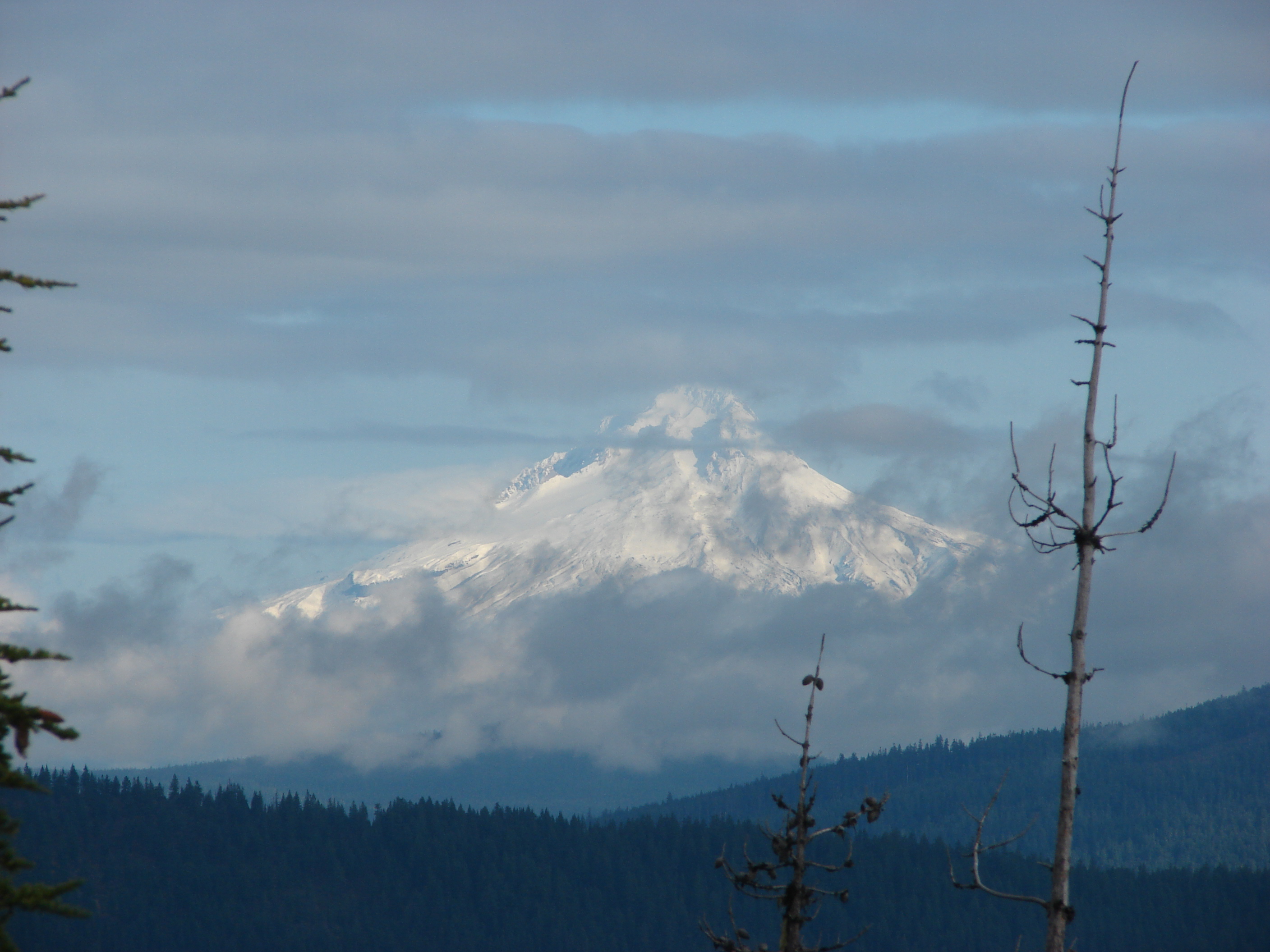
We arrived at the summit and easily picked up the official trail. We had a fairly good view of Mt. Hood despite the presence of some clouds and a great view of Olallie Butte.

Mt. Hood from Potato Butte
Olallie Butte from Potato Butte

On the way down on the real trail we got a good look toward Mt. Jefferson which was hiding in the clouds and at Double Peaks. At 5280′ Potato Butte had only small amounts of scattered snow but Double Peaks was clearly snow-covered at its height of 5998′.

Looking toward Mt. Jefferson from Potato Butte
Twin Peaks on the left and Double Peaks on the right from Potato Butte

When we got to the base of the butte we saw the reason for our having lost the trail on the way up. One of the ponds had enveloped the actual trail making it impossible to see. We made our way around the edge of the pond and back to the Red Lake Trail and continued east toward the Pacific Crest Trail which we would use for part of our small loop to Cigar Lake.

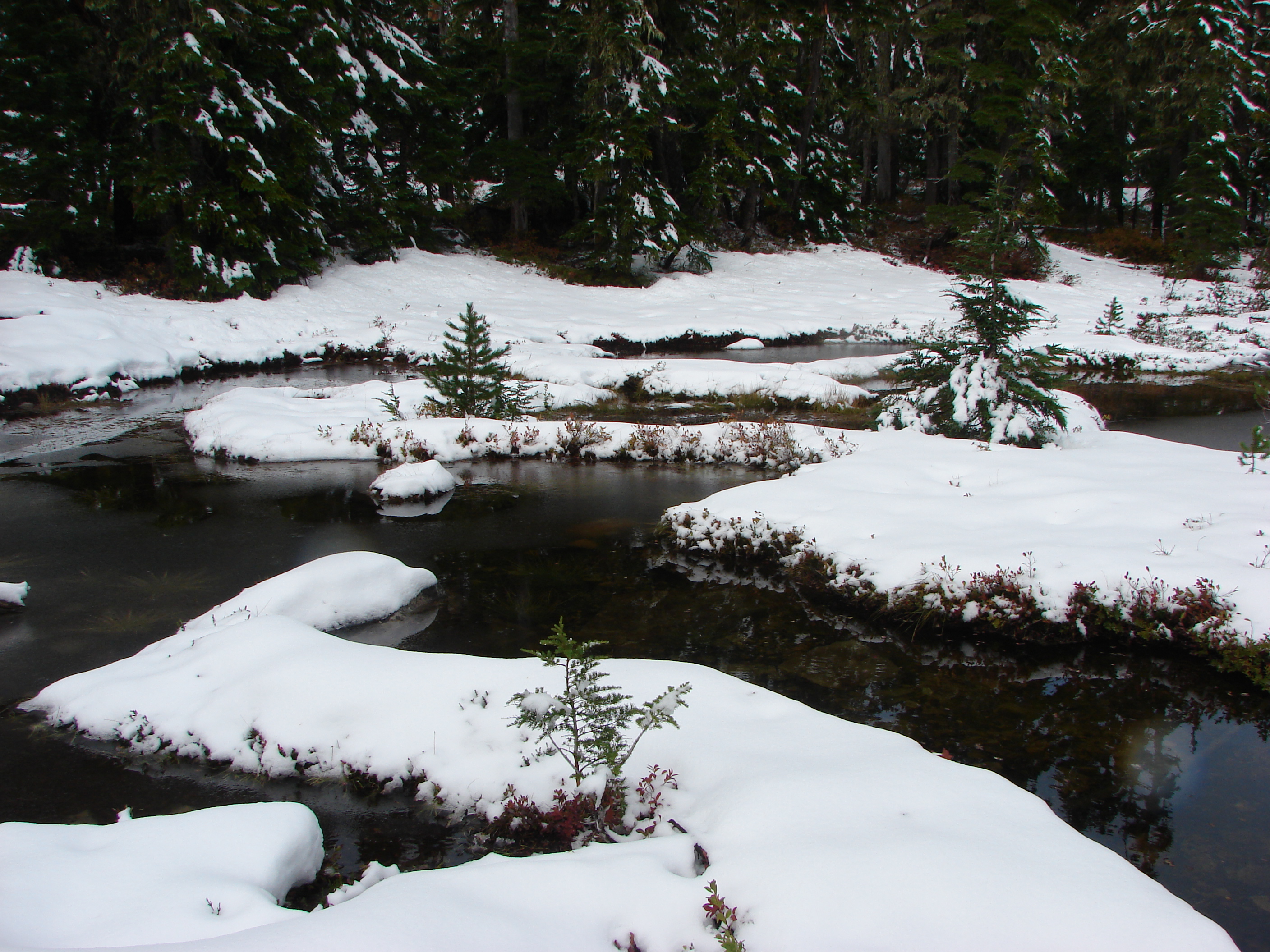
The trail passed Fork Lake and several other unnamed ponds/lakes as it slowly climbed toward the PCT. We also began encountering more and more snow as we went.

Pond below Twin Peaks
Increasing amounts of snow

The snow made it possible to see a variety of animal tracks showing us just how many different species that we never see walk these same trails. At the PCT junction we continued on the Red Lake Trail heading down now to Top Lake.

Some of the tracks in the snow
Top Lake
Top Lake
Fall on the shore of Top Lake

At Top Lake we left the Red Lake Trail and skirted the overflowing lake to its south end and climbed back up to the PCT near Cigar Lake.

Double Peaks from Cigar Lake

There was a good amount of snow at Cigar Lake but we decided to see how far up Double Peaks we could make it. We found the marker for the trail easily enough, but between the snow and the extra water around Cigar Lake we were having a hard time determining just where the trail actually was. Luckily for us a deer had left us a set of tracks that we were able to follow that led us across and around the edge of Cigar Lake and to the continuation of the Double Peaks Trail which was just barely identifiable by a slight indentation in the snow.

Snow and water near Cigar Lake
Double Peaks Trail
Double Peaks Trail

Once we found the trail it was like walking through a winter wonderland. The snow was anywhere from a half-inch deep to mid-shin. The snow-covered trees looked ready for Christmas making this one of the most enjoyable stretches of hikes we’d had.

Heather on the Double Peaks Trail
Christmas Trees in October

The trail was fairly steep and we almost lost it near the top when it veered up between some boulders but we managed to follow it all the way to the summit.

The base of Mt. Jefferson from Double Peaks
Evidence of wind and ice
Potato Butte from Double Peaks
Olallie Butte
Olallie Butte
Timber, Olallie, Long, and Monon Lake from Double Peaks

We didn’t get the view of Mt. Jefferson we’d hoped for but the snow more than made up for that. As we started down Double Peaks the day began to warm up and the snow was melting quickly. We did a lot of sliding down the slushy trail before reaching the PCT again and heading back to the Red Lake Trail. We returned the way we’d come only now we had some blue skies and sunlight as we passed the lakes and arrived back at our car. Happy Trails!

Sunlight mushroom
Sunlight mushroom
Twin Peaks from Sheep Lake in the afternoon

Facebook photos: https://www.facebook.com/deryl.yunck/media_set?set=a.10202367670300288.1073741861.1448521051&type=3
Flickr: http://www.flickr.com/photos/9319235@N02/sets/72157636413874236/

Categories
Columbia Gorge North Hiking Trip report Washington

Table Mountain

If at first you don’t succeed, try, try again. After our recent string of cloud obscured views I was determined to break the streak. I had been watching the weather forecast all week and decided everything was lining up perfectly for a return to the Columbia Gorge and another attempt at a view of the Cascades. The nasty weather and the poncho attack on Hamilton Mountain needed to be avenged so for this hike I picked Table Mountain.

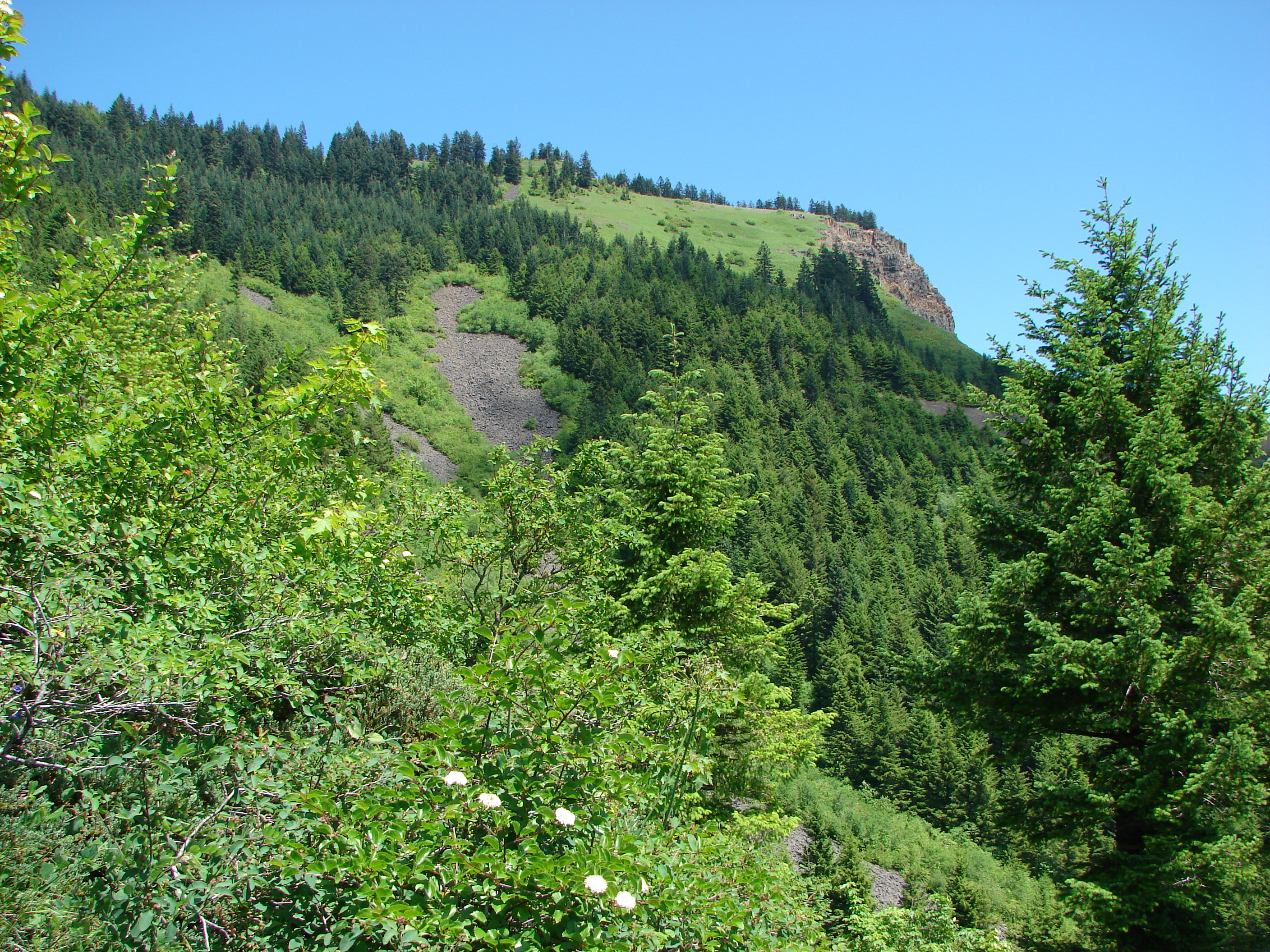
Table Mountain is located less than 5 miles east of Hamilton Mountain. It should have been what I was looking at from the saddle when I was sucker punched by the poncho during that hike. Much of Table Mountain collapsed into the Columbia River centuries ago leaving dramatic cliffs on the south face. With an elevation of 3417′ it is nearly 1000′ taller than Hamilton Mountain so the potential for views is great.

We woke up to a beautiful sunny morning but as we approached Portland an ominous cloud hung to the east of the city. The skies all around were blue and we hoped that Table Mountain was far enough to the east to be clear of the cloud. We formulated a plan b just in case when we reached Hamilton Mountain which was once again covered in clouds, but when we arrived at the trail head behind Bonneville Hot Springs the summit of Table Mountain was cloud free. With blue skies to the north and east we decided to give it a try.

The first 2.2 miles of the trail pass through a pretty forest, first on a volunteer created trail, then following an old road up to the Pacific Crest Trail (PCT). This first section was nice but unremarkable although we did come across some ripe salmonberries to sample. After a short walk on the PCT we reached the sign for the loop trail to the summit of Table Mountain. The aptly named Heartbreak Ridge Trail gains 1770′ in 1.5 miles. In order to do this the trail heads up with a vengeance. After 0.6 miles (and 800′ of elevation) the trail arrived at a saddle viewpoint. To my dismay the clouds that had been to the west were now heading east obscuring much of the view and had now covered Table Mountains summit. The trail then dipped down to the base of a 500 yard long rock slide where we spotted our first beargrass bloom of the year (on a hike not from the car).

The trail appears to end at the rock slide but the rocks are the trail. Following poles we scrambled up the rocks to the continuation of the trail. This part proved to be quite fun. Just a few tenths of a mile after reaching the trails continuation we reached the meadows on the summit. An all to familiar view greeted us here. We had come all this way and couldn’t see more than a few hundred feet due to clouds. The meadows were filled with various wildflowers creating a colorful display and many plumes of beargrass stood at attention along the meadows edges.

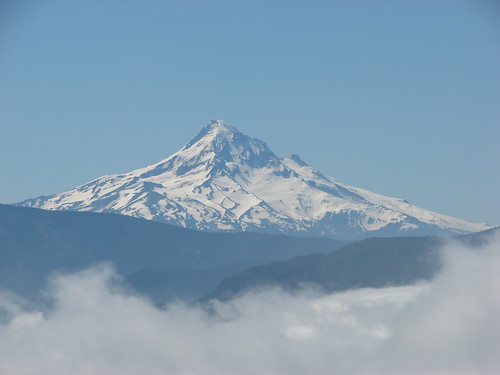
As we headed south along the summit trail toward the viewpoint at that end a faint window opened in the clouds and there stood Mt. Hood. The clouds had begun to slowly break up and by the time we reached the viewpoint better and better views were opening up.
201
We could now see Mt. Hood and the tip of Mt. Jefferson at times. Below we could see the Bonneville Dam on the Columbia River and the Heartbreak Ridge trail as it crossed the viewpoint saddle. We spent awhile here waiting for the openings and then headed back down the trail to find a spot for lunch.

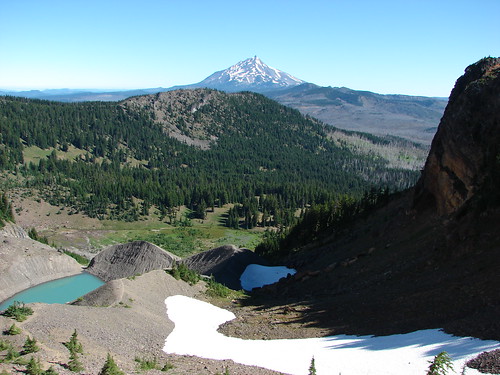
We chose a spot that offered a view to the north and east in addition to Mt. Hood to the south. As we ate glimpses of Mt. Adams and Mt. Rainier began to appear. We eventually traveled further north on the summit loop to a second viewpoint at that end. There we discovered a beargrass meadow and ever improving views of Mt. Adams, Mt. Rainier, and also the rim of Mt. St. Helens.

Mt. Adams
Mt. Adams

We never quite got a clear view of any of the Washington peaks due to a pesky line of little clouds but after getting our fill of the view we headed down the west ridge. This trail was almost as steep as it made its way down and contained a lot of loose rocks. In addition it traveled close enough to the edge of the ridge that anyone with a fear of heights might really have a hard time. That being said the views from this trail were great. Mt. Hood lay ahead while behind was Table Mountain and the rock slide we had scrambled up.
521
The going was slow but we eventually made it down to the PCT. I had no takers when I asked if anyone wanted to go around again when we reached the Heartbreak ridge junction so we returned to our car satisfied with the days views and ready to plan our next adventure. Happy Trail.

facebook photos: https://www.facebook.com/deryl.yunck/media_set?set=a.10201335132527489.1073741836.1448521051&type=3
way too many flickr photos: https://www.facebook.com/deryl.yunck/media_set?set=a.10201335132527489.1073741836.1448521051&type=3