Categories
High Cascades Hiking Mt. Jefferson Area Oregon Trip report

Maxwell Butte & Lava Lakes Trails – 10/18/2025

I had been looking for a good time to check out the Lava Lakes Trail since my hike to Duffy Lake in September (post). That opportunity presented itself when Heather decided she wasn’t quite feeling up to an outing. A quick check of the forecast showed mostly sunny skies with temperatures close to freezing in the morning and gradually increasing to the mid 50s.

My plan was to take the Maxwell Butte Trail to the Lava Lakes Trail then follow that trail to the Duffy Lake Trail and visit Duffy Lake for the second time this year. If I felt up to it on the way back, I would detour up Maxwell Butte before returning to the car.

We have hiked up Maxwell Butte twice in the past (2015) & (2019) and both times had parked near the restrooms at the Maxwell Butte Sno-Park. With the current government shutdown I wouldn’t be utilizing those facilities so this time I drove the extra 0.5-miles to the Maxwell Butte Trailhead.
IMG_2420

This is one of the trailheads that requires a Central Cascades Wilderness Day Use Permit however they are only required between June 15th and October 15th meaning shutdown or not I didn’t need one today.
IMG_2619

It was 2.2-miles of gradual climbing from the trailhead to the junction with the Lava Lakes Trail.
IMG_2422

There are a couple of signed junctions with Nordic Trails in the first 1.2-miles before the trail enters the Mt. Jefferson Wilderness.
IMG_2424
The first junction was at the half mile mark. The nordic trail is the one to the right.

IMG_2425
The Maxwell Butte Trail also has nordic markers.

IMG_2428
At the 1.2-mile mark a nordic trail crosses the Maxwell Butte Trail. This trail is part of a 7.3-mile loop that passes two snow shelters.

IMG_2430

IMG_2431

The Cascades got their first significant snow the previous weekend and I started seeing some small remaining patches around 4800′ in elevation.
IMG_2432

IMG_2435
Frosty leaves

IMG_2436
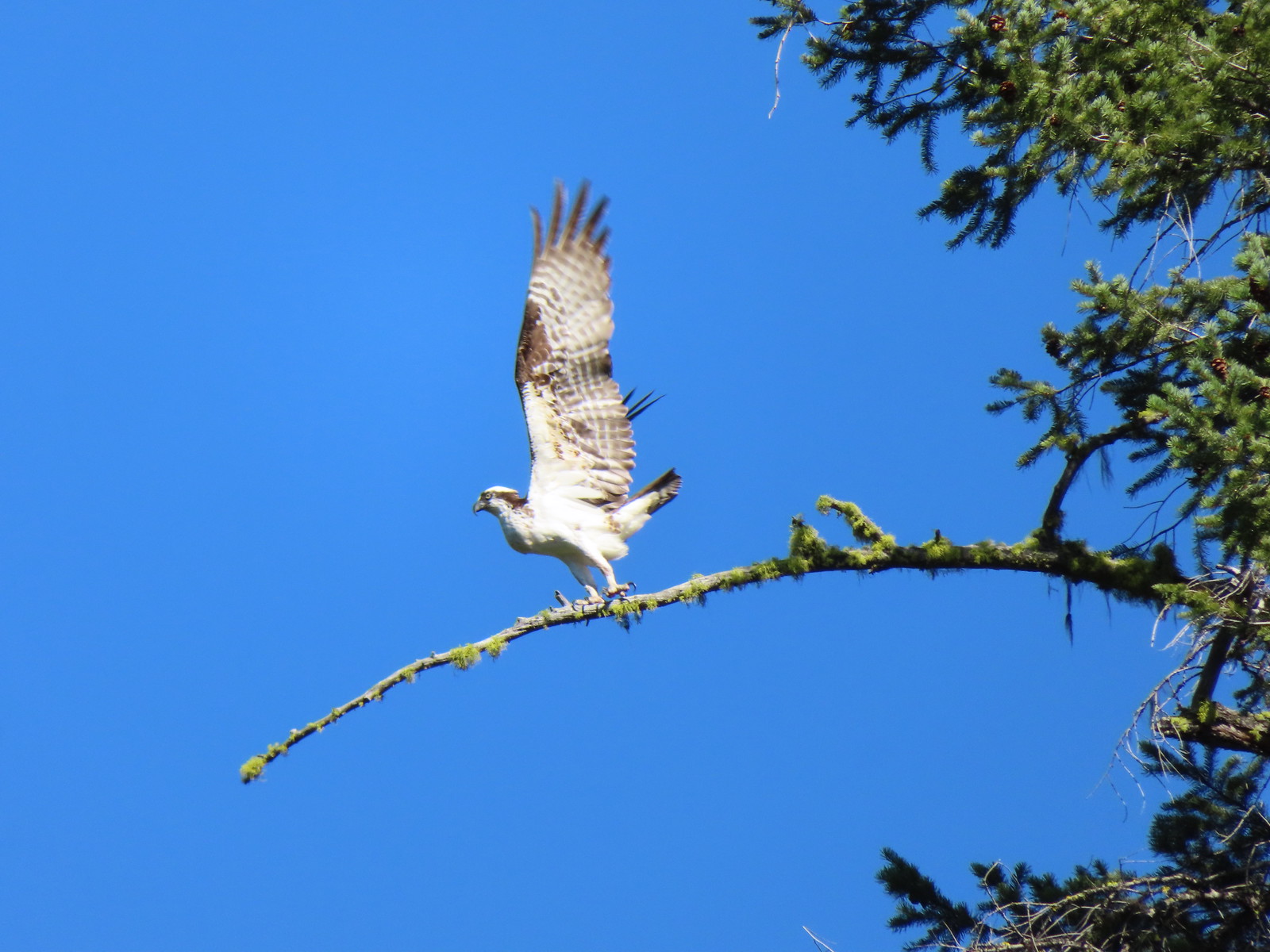
This hawk seemed a little irritated with my presence.

IMG_2438

IMG_2440
Signpost at the Lava Lakes/Maxwell Butte Trail junction.

I stayed left at the junction on what was now the Lava Lakes Trail. I took a brief detour to see Twin Lakes near the junction before continuing on.
IMG_2442

IMG_2443

The Lava Lakes Trail extends 2.8-miles between the Maxwell Butte and Duffy Lake Trail. The trail was in good shape and relatively level all things considered.

A little under a half mile from the junction the trail passed near Train Lake which wasn’t really visible from the trail, but a very short use trail brought me to a campsite on the rocks above the lake.
IMG_2447

IMG_2448
The top of Maxwell Butte was visible over the trees on the far side of Train Lake.

IMG_2449
Train Lake

I started encountering more snow beyond Train Lake, but it was only about an inch or two deep at most.
IMG_2451
Both trails had a few small logs down that were easily stepped over or around.

IMG_2452
A kitty had used the trail at some point.

IMG_2453

IMG_2458

Just under 2-miles from the junction the trail passed a small pond/lake at the base of a talus slope.
IMG_2463

IMG_2464

While I was checking out the body of water I was also keeping an eye out for pikas which eventually paid off.
IMG_2465

IMG_2472

After passing the pond the trail began to descend toward the Duffy Lake Trail.
IMG_2473

IMG_2475
Coral fungus

As I neared the Duffy Lake Trail I came to what appeared to be an old junction.
IMG_2476
Note the pieces of trail sign on the tree.

There had not been any other trail junctions on any of the maps I had looked at during my planning, and there was clear tread straight ahead, so I continued straight here. Had I stopped to check the GPS I would have seen that the trail as shown on the map made a hard left here and I would have reached the Duffy Lake Trail in 100 yards. Instead I wound up in some meadows along channels of the North Santiam River.
IMG_2477
Duffy Butte rising above the trees.

I spotted a blaze in a tree next to some trail tread so I headed in that direction.
IMG_2478

That led me to another meadow where I completely lost any sign of trail. I finally checked my GPS and realized what had happened. I had gone two tenths of a mile toward Duffy Lake through Duffy Prairie and was now only about 100′ from the Duffy Lake Trail, so I simply crossed the dry riverbed and popped onto the trail and headed right.
IMG_2479
Duffy Lake Trail

Less than a tenth of a mile later I was at the junction with the Duffy, Blue, and Santiam Lakes Trails.
IMG_2480

At the junction I turned left toward Duffy Lake to the day use area I’d stopped at in September.
IMG_2484
Duffy Butte

IMG_2482
Duffy Lake

After a brief stay at Duffy Lake I headed back along the Duffy Lake Trail. It was 0.3-miles to the actual junction with the Lava Lakes Trail.
IMG_2482

I turned left at the junction, crossed the North Santiam River (bed), and came to the junction where I’d gone straight earlier.
IMG_2487

IMG_2488
The riverbed was still dry despite the recent rain and snow.

IMG_2491
Approaching the junction. I could see why I had missed the tread; there were a couple of downed trees laying along it and blocking the view coming from the direction that I had.

I turned right and made the 2.8-mile hike back to the Maxwell Butte Trail junction. I scanned for pikas as I passed the talus slope and stopped again briefly at Train Lake, but it was a pretty uneventful return. The forest was beautiful, one of the few trails left in the wilderness that doesn’t pass through any recent fire scars. (The Cal Topo fire history layer shows no fires on the 1900-present layer.)
IMG_2493
There were a few snags around the talus slope but also many tall green trees.

IMG_2495
With the Sun higher up Train Lake was a greener color now.

IMG_2500
Back at the Maxwell Butte Trail junction just after 10:30am.

It was such a gorgeous day that I couldn’t skip a side trip up Maxwell Butte so I turned left at the junction and passed Twin Lakes on the other side.
IMG_2504
It isn’t easy to make out in the photo but the snowy top of Mt. Jefferson was visible in the distance over Twin Lakes.

While there had been snow on the Lava Lakes Trail there were more clear sections than snowy. That wasn’t the case with the Maxwell Butte Trail beyond Twin Lakes. It still wasn’t deep but it made the going a little slower.
IMG_2507

IMG_2510

IMG_2516

IMG_2517

IMG_2518
Deer print

As the trail neared Maxwell Butte the forest thinned out which also lessened the amount of snow covering it.
IMG_2519

With less trees and more elevation I began getting views to the south of several Cascade peaks.
IMG_2522

IMG_2524
Mt. Washington partially behind the tree on the left. Broken Top is visible between the flank of Mt. Washington and the North Sister. Middle and South Sister are to the right.

IMG_2526
Maxwell Butte looming above the trail.

IMG_2528
Flat topped Hayrick Butte and Hoodoo Butte in front of the above-mentioned peaks. To the right of the Three Sisters is The Husband (with snow). To the right of that in the distance is Substitute Point (post) and Proxy Point. The hump with a little snow on it closer to the right is Scott Mountain (post).

IMG_2532
Diamond Peak (post) in the distance behind Sand Mountain and the Sand Mountain Lookout (post).

The trail eventually begins a series of switchbacks to reach the former lookout site atop Maxwell Butte.
IMG_2532

IMG_2542
A better look at Tam McArthur Rim (post) and Broken Top behind Mt. Washington.

IMG_2544

IMG_2545
Black Butte (post) to the east.

IMG_2546
Zoomed in on Black Butte.

IMG_2547
There wasn’t a lot of snow along the switchbacks but there were a few drifts like this. I had my micro-spikes with me just in case, but someone had already been through to create steps, so I never actually felt the need to put them on.

IMG_2550
Snow in the crater on Maxwell Butte.

IMG_2551
Almost to the summit.

IMG_2553
Mt. Jefferson from the former lookout site.

It was about 20-minutes before Noon when I reached the summit which was almost 2 hours later than it had been on our last visit. I was hoping that the later arrival would improve the view by allowing the Sun to be more directly overhead and that was indeed the case. (Our first visit doesn’t count because we were socked in by clouds that day.)
IMG_2558
With the recent snow it was a lot easier to make out Mt. Hood to the left of Mt. Jefferson.

IMG_2560
Mt. Hood and Mt. Jefferson

IMG_2563
Three Fingered Jack and Black Butte

IMG_2572
Mt. Hood with Bear Point (post) and Dinah-Mo Peak along the ridge in front.

IMG_2568
Mt. Jefferson

IMG_2569
Three Fingered Jack

IMG_2574
The view south.

IMG_2575
Black Crater (post) to the left of Broken Top, Mt. Washington and the Three Sisters.

I took a break on a rock outcrop overlooking the wilderness and looked for the various lakes we’ve visited over time.
IMG_2581
Mt. Hood, Mt. Jefferson, and Three Fingered Jack along with several lakes in the Mt. Jefferson Wilderness.

IMG_2577
Santiam Lake (post)

IMG_2578
Upper (closer) and Lower Berley Lakes (post)

IMG_2579
I could just see a little of Craig Lake (post) ontop of this plateau.

IMG_2580
Mowich Lake and Red Butte.

After having a snack and resting my feet I tagged the actual summit and then headed back down.
IMG_2587

IMG_2589
The summit view.

IMG_2592
Heading down.

IMG_2599
The clouds were showing their hand that a change in the weather was coming. Another wet system would be moving in overnight.

I ran into the first other hikers, a couple and a dog, that I’d seen all day while I was taking a picture of some ferns that had turned color.
IMG_2601

IMG_2603
Passing Twin Lakes again.

IMG_2607
Huckleberry bushes along the Maxwell Butte Trail.

IMG_2612
Vine maple leaves turning color.

IMG_2613
A varied thrush. For those of you who regularly read our trip reports you know this is my nemesis as far as photos go. For me this is a pretty good one as I can tell what kind of a bird I was trying to photograph.

IMG_2617
Back at the trailhead.

I saw one other hiker, and her dog, after the couple and that was it. There had been people camped at Duffy Lake, but I only heard them and saw the tents in the distance. I had expected to at least see a hunter or two given it was rifle season for deer, but I’m not complaining. I was anticipating 15.6-miles and my GPS showed 15.7 which made sense given the handful of detours to get a view of the lakes. Total elevation gain was approximately 3100′.
Screenshot 2025-10-19 040754

This was a really enjoyable hike. The forest was great, and the handful of lakes and ponds provided some additional attractions. The view from Maxwell Butte was excellent as well and I did not regret adding the extra distance and elevation to my day. Happy Trails!

Flickr: Lava Lakes Trail
Categories
High Cascades Hiking Mt. Jefferson Area Oakridge Area Old Cascades Oregon Trip report

Head of Jack Creek (10/4/2025) & McCredie Hot Springs (10/5/2025)

Hiking took a backseat this past weekend as we headed to Bend for a joint birthday celebration for our son and Heather’s father. Both have October birthdays with a 50-year gap in between, and this year was 30 & 80 respectively. Despite those ages not seeming possible (or believable) celebrate we did.

On our way from Salem over to Bend we made a stop at Jack Creek Campground for a short leg stretching hike to the Head of Jack Creek.
IMG_1882

From the end of the campground a wide, nearly level, 0.4-mile trail parallels Jack Creek leading to several springs.
IMG_1885

IMG_1888
Chipmunk

IMG_1889
Jack Creek stays within earshot of the trail but glimpses of it are rare until near the springs.

IMG_1892
The trail passes along the eastern end of the 2003 B & B Fire scar.

IMG_1893
Larch tree starting to don its fall color.

Near the three-quarter mile mark we passed a bench at a junction with a spur arriving from the right. There is another possible trailhead, but there is little information on its exact location or on the condition of the access road.
IMG_1895

IMG_1896

IMG_1898

IMG_1899

IMG_1903
Sign for the Head of Jack Creek at the end of the trail.

IMG_1906
Head of Jack Creek

IMG_1908

After seeing the springs we returned the way we’d come and finished our drive to Bend. We spent just over an hour on the 2.6-mile hike so there was plenty of day left to visit and celebrate with Heather’s family.

Heather had picked our son up in Eugene on Friday and we’d celebrated his birthday with my parents that night. Since we needed to drop him off back in Eugene before we headed back to Salem we took Highway 58 over Willamette Pass. I had been looking for a similar leg stretcher along this drive and decided to finally check out McCredie Hot Springs and make it a theme weekend. There is a day use area along Highway 58 just over 8-miles east of Oakridge with very short path leading to pools on the north bank of Salt Creek. A longer trail beginning at a pullout along gravel forest road 5875 leads to some pools on the south bank of the creek. This “longer” trail is just 0.4-miles making it another short hike.
IMG_1943
Sign above the pullout.

IMG_1916
One of two access points to the trail from the pullout.

The trail had a couple of downed trees along with some roots and rocks along with a little under 100′ of elevation change.
IMG_1917

IMG_1918

IMG_1922

IMG_1925
Salt Creek

IMG_1941
These mushrooms were a color that we couldn’t recall seeing before.

IMG_1930
McCredie Hot Springs. Please be aware that nudity is allowed at most hot springs in Oregon and McCredie is no exception. There were a couple of people in the hot springs on the north bank so there are no pictures of that side.

IMG_1938
This was the largest pool. We wouldn’t call it hot but it was nice and warm.

IMG_1932
This smaller pool was a little warmer.

IMG_1936
Reflection in the hot springs.

After inspecting the pools we returned to the car and drove on to Eugene and then headed home. This stop was under a mile with around 75′ of cumulative elevation gain.

Both of these stops were nice breaks on the drives over the passes. It was fun to have them both involve springs but have them be such different types. Happy Trails!

Flickr: Head of Jack Creek & McCredie Hot Springs

Categories
High Cascades Hiking Mt. Jefferson Area Oregon Trip report

Duffy Lake Trail to Jorn Lake – 09/17/2025

For the second hike of my September vacation I decided to revisit one of our earliest hikes. Our first visit and only previous visit to Duffy Lake (post) had been over 15 years ago and was only our 14th day spent hiking. Since that time I have spent 774 more days on trails. My plan for this outing was to revisit Duffy and Mowich Lakes and to continue on to Jorn Lake which we had visited on a 2016 hike starting from the Marion Lake Trailhead (post). I left open the option to hike up Red Butte depending on the amount of wildfire haze, and how I was feeling.

I obtained a Central Cascades Wilderness Day Use Permit for the Duffy Lake Trailhead and arrived shortly before sunrise (I had expected to be delayed by road construction.)
IMG_0645
There were already a lot of cars at the trailhead.

I set off on the Duffy Lake Trail which was quickly joined on the left by the main spur of the Duffy Lake Trail which begins at Big Meadows Horse Camp at the Mt. Jefferson Wilderness boundary.
IMG_20250917_064239421_HDR

It’s 3.3-miles and 750′ of elevation gain to Duffy Lake from the trailhead which makes for a pretty gentle climb. Both Heather and I prefer to have shorter sections broken up by markers (preferably no more than 1.5-miles) and for this hike I used a couple of trail junctions to do just that. From the junction with the cutoff to Big Meadows Horse Camp it is approximately 1.4-miles to the Turpentine Trail.
IMG_0655

IMG_0656
The first of two rock fields along this stretch. I heard a couple of pikas but was unable to spot any of them.

IMG_0662

IMG_0664
The second rock field.

IMG_0666
You can loop back to the trailhead by combining this trail with the Big Meadows Tie Trail which brings you to the Duffy Lake Trail coming from the horse camp about a half mile from the junction near the trailhead. Heather and I did that in 2010, but I opted not to add the additional three quarters of a mile to my day.

From the junction with the Turpentine Trail it is another mile and a half to the next junction with the Lava Lakes Trail.
IMG_0672

IMG_0674
The North Santiam River’s dry bed alongside the trail.

IMG_0675
The trail crossing the riverbed.

IMG_0678
A small part of Duffy Butte visible ahead.

IMG_0679
The Lava Lakes Trail connects to the Maxwell Butte Trail (post) 2.8-miles away at Twin Lakes.

Three tenths of a mile from the Lava Lakes Trail I arrived at a 4-way junction at the SW end of Duffy Lake where a day use area provides a nice view.
IMG_0683
Signs at the 4-way junction. The day use area was to the left and the faint 0.4-mile Duffy Prairie Trail forked off to the right.

IMG_0684
Day use sign on the tree at the bottom.

IMG_0686

IMG_0691

IMG_0693
Lousewort

IMG_0695
Aster

After a quick stop at the day use area I continued along the lake stopping on a footbridge over the outlet which feeds the North Santiam River when the lake is full enough.
IMG_0696

IMG_0701

IMG_0699
Common merganser

Shortly after crossing the bridge I arrived at a junction with the Blue Lake Trail which marks the end of the Duffy Lake Trail. The Blue Lake Trail is eight miles long with one end a tenth of a mile to the right (east) of the Duffy Lake Trail at a junction with the Duffy Prairie and Santiam Lake Trails and the other end at the Marion Lake Trail. In 2010 we had forked right onto the Duffy Prairie Trail then we took the Santiam Lake Trail to visit Santiam Lake and returned to the Blue Lake Trail via the Dixie Lakes Trail. I knew I wasn’t going to visit Santiam Lake since we had revisited that lake from the Pacific Crest Trail in 2021 (post). I was considering taking the Dixie Lakes Trail on the way back and cutting down here on the Blue Lake Trail though.
IMG_0705

For now I continued straight on the Blue Lake Trail passing more great views of Duffy Lake and Butte.
IMG_0709

It was just over three quarters of a mile from the Duffy Lake/Blue Lake junction to Mowich Lake which required gaining nearly 300′ of elevation. Along this section the trail passed in and out of the 2003 B&B Fire scar.
IMG_0713
Meadow near the end of Duffy Lake.

IMG_0719
Duffy Butte from the fire scar.

IMG_0720

IMG_0721
Huckleberry bush

IMG_0722
The trail leveled out before arriving at Mowich Lake.

IMG_0723
No campfire sign just before the lake. I took the spur to the left which led down to the lake while the Blue Lake Trail continued to the right.

IMG_0724
Heading down to Mowich Lake.

IMG_0725
Red Butte to the right.

IMG_0728

Instead of returning to the trail via the spur I’d come down I decided to follow the lake shore for a bit thinking I would just pop back up on the Blue Lake Trail when another use trail appeared.
IMG_0730

IMG_0732
American pipit

Opting to follow the lake shore turned out to be a bit of a poor choice. I wasn’t seeing any other use trails and I could see on the map that the Blue Lake Trail veered uphill away from the lake near its middle. After checking my GPS and seeing that I was getting pretty close to where the trail would be turning away, I decided to just turn uphill and bushwack to it.
IMG_0742
The trail is up there somewhere.

IMG_0743
Found it!

IMG_0745
Duffy Butte behind Mowich Lake.

The trail climbed gradually through the fire scar and past the junction with the Dixie Lakes Trail.
IMG_0751

IMG_0756
It was approximately 0.8-miles between the spur trail down to Mowich Lake and the Dixie Lakes Trail junction.

The trail leveled out at the junction and continued a third of a mile to a use trail just before Alice Lake.
IMG_0762
Pearly everlasting along the trail.

IMG_0763
Level trail in unburnt forest.

At the use trail I faced the choice of continuing straight to Jorn Lake or detouring up Red Butte. I was feeling up to the 500′, half mile climb and more importantly the visibility was good. The issue I ran into was there were three tents set up nearly on top of the trail. Not wanting to trapse through their camp I cut through the forest and started up the butte hoping to pick up the use trail at some point.
IMG_0765

IMG_0767
Alice Lake below.

IMG_0770
The summit of Red Butte.

After climbing almost two tenths of a mile I spotted the use trail.
IMG_0771
The use trail in the dirt area in the middle of the trees.

IMG_0773
Following the use trail.

IMG_0776
Penstemon

IMG_0780
Bumble bee on thistle.

IMG_0782
Maxwell Butte from the use trail.

IMG_0784
Scott Mountain (post) on the left and Diamond Peak (post) in the distance to the right.

IMG_0788
Mt. Jefferson behind the trees.

IMG_0790
The summit of Red Butte.

Once I was at the summit I headed south to an overlook of Mowich Lake.
IMG_0798
The two Dixie Lakes are visible in the forest to the left of Mowich Lake.

IMG_0799
Three Fingered Jack, Mt. Washington, and the Three Sisters.

IMG_0800
The Three Sisters behind Mt. Washington.

After admiring the view from this end of the butte I headed back across the summit to get the view to the north.
IMG_0804
South Cinder Peak (post) between the trees and Rockpile Mountain to the right of them.

IMG_0806
A little scrambling over the downed trees to the left resulted in a great view to the north.

IMG_0814
Northern flicker

IMG_0816
Saddle Mountain and Marion Mountain (post) to the left with Jorn Lake below and Mt. Jefferson in the distance.

IMG_0818
Jorn Lake

IMG_0820
Mt. Hood peaking up to the left of Mt. Jefferson.

IMG_0826
Fritillary on thistle.

After soaking in the view headed back down the trail looking for a little shade to take a break in.
IMG_0830
I used this log as a bench to have a snack and change out my socks before following the use trail down to Alice Lake.

IMG_0832

IMG_0835
Milk kellogia

IMG_0837

IMG_0840

I passed a little closer to the tents on my way back to the Blue Lake Trail then turned left and headed toward Jorn Lake.
IMG_0843
Red Butte across Alice Lake from the Blue Lake Trail.

IMG_0844

IMG_0847
The tents on the far side of Alice Lake.

The trail began to descend toward the Eight Lakes Basin losing approximately 200′ in nearly a mile to a junction with the Bowerman Lake Trail near Jorn Lake.
IMG_0849

IMG_0852
Aster

IMG_0854
Green Peak, Saddle Mountain, and Marion Mountain

IMG_0856

IMG_0857
Jorn Lake

I turned right onto the Bowerman Lake trail for a moment then took a use trail down to the lake.
IMG_0860

IMG_0862

After visiting the lake I headed back up the Blue Lake Trail. Two tenths of a mile from the Bowerman Lake Trail junction I veered downhill on a faint use trail to visit Red Butte Lake.
IMG_0868
The top of Three Fingered Jack from the trail.

IMG_0869
The use trail.

IMG_0870
Three Fingered Jack from Red Butte Lake.

From Red Butte Lake I cut back up to the Blue Lake Trail and climbed back up past Alice Lake to the Dixie Lakes Trail junction.
IMG_0877

From what little I could see of the Dixie Lakes Trail it appeared to be in good shape, so I veered left and headed for the lakes.
IMG_0882

IMG_0883

After half a mile I spotted North Dixie Lake through the trees.
IMG_0890

I found a good use trail and headed down to the lake for a closer look.
IMG_0891

Once again I decided to follow the lakeshore instead of returning to the trail and followed it to the southern end with a good view of Red Butte.
IMG_0894

IMG_0899

From North Dixie Lake I crossed a meadow and arrived at South Dixie Lake.
IMG_0900

IMG_0902
Woodpecker

IMG_0904
Elk and deer prints in the mud.

IMG_0905

It was a lot easier to cut back over to the trail from South Dixie Lake than it had been from Mowich Lake.
IMG_0906

IMG_0907

Not long after leaving South Dixie Lake the trail began to descend to its junction with the Santiam Lake Trail.
IMG_0909
This was the only tree down along the trail which clearly receives maintenance from time to time.

IMG_0910
The Three Pyramids (post)

IMG_0913

IMG_0915
Paintbrush

IMG_0921
It was a total of 1.6-miles from the Blue Lake Trail junction to the junction with the Santiam Lake Trail.

I turned right on the Santiam Lake Trail and followed it 0.4-miles to the 3-way junction with the Blue Lake and Duffy Prairie trails.
IMG_0923

IMG_0926

IMG_0928
Unsigned junction with the Duffy Prairie Trail on the left and the Blue Lake Trail on the right.

Since we had taken the Duffy Prairie Trail in 2010 I forked right onto the Blue Lake Trail which descended steeply to the junction with the Duffy Lake Trail in just a tenth of a mile.
IMG_0929

IMG_0932
The junction with the Duffy Lake Trail.

I turned left onto the Duffy Lake Trail and followed it 3.6-miles back to the car. There wasn’t much new to see on the way back. I still wasn’t able to spot any of the pikas I was hearing in the rock fields. Outside of small birds, chipmunks, and squirrels the only other critters I saw were a couple of grouse including one in the trail near the trailhead.
IMG_0954

This hike came in at 15.3-miles with a just over 2000′ of cumulative elevation gain.
Screenshot 2025-09-17 150225

While most of the hike was on trails that we’d previously hiked I managed to get a small amount of new trail. While we’ve covered a lot of the area around Three Fingered Jack there are still some trails/sections left to explore.
Screenshot 2025-09-19 074637

There were a lot of people on the trails here, which was a little surprising given it was a Wednesday in September, but they were pretty spread out so no location that I visited felt crowded outside of the trailhead. The view from Red Butte is a really good one and well worth a visit. Happy Trails!

Flicker: Duffy Lake Trail to Jorn Lake

Categories
High Cascades Hiking Mt. Jefferson Area Oregon Trip report

Craig Lake – 07/17/2025

Disclaimer – This hike requires map and navigational skills due to portions of the route using abandoned trails and some off-trail travel.

For the final outing of my solo vacation I decided to attempt a visit to Craig Lake in the Mt. Jefferson Wilderness. This is one of Hike Oregon’s “Members Only” hikes. I decided to combine that described hike with a visit to the Berley Lakes, which Heather and I had visited in 2021 (post).

At one time there had been official trails to all these lakes but at some point, possibly after the 2003 B&B Fire, the trails were abandoned by the Forest Service. The old trails aren’t shown on my GPS map, but I found them on CalTopo and made sure I had a copy of them with me. The hike starts at the Santiam Pass Pacific Crest Trailhead which requires a NW Forest Pass to park, but not a Central Cascades Wilderness Permit for day hikes (you do need a permit for overnight stays).
IMG_6444

IMG_6446

A short connector trail leads from the trailhead to the PCT where I turned left.
IMG_6449
Water left for thru hikers.

The PCT climbs gradually through the 2003 fire scar with increasingly good views to the south of Mt. Washington, the Three Sisters and Broken Top.
IMG_6452

IMG_6455
After 0.2-miles on the PCT the Old Summit Trail heads off to the right (post).

IMG_6459
Broken Top, North Sister, Middle Sister, and Mt. Washington (L to R).

IMG_6470
It was a good beargrass year, but the bloom had happened a few weeks before my visit.

IMG_6471
The lupine however was near peak bloom.

IMG_6475
Tent caterpillars

IMG_6483

IMG_6484

IMG_6485
Scarlet gilia and lupine.

IMG_6488
Three Fingered Jack

IMG_6492
Penstemon

At the 1.3-mile mark I arrived a junction with the Santiam Lake Trail which I turned left onto.
IMG_6496

The Santiam Lake Trail descends gradually providing some decent views of Three Fingered Jack.
IMG_6502

IMG_6501
Thistle

IMG_6505
The trail passes this unnamed lake shortly after splitting from the PCT.

IMG_6510
Scarlet gilia

IMG_6519
Buckwheat

IMG_6524
Sub-alpine mariposa lily

IMG_6527
Lupine along the trail.

IMG_6533

IMG_6539
Scarlet gilia and lupine

IMG_6541
Broken Top, North Sister, Middle Sister, Mt. Washington, Hayrick Butte, and Hoodoo Butte.

IMG_6548
Penstemon lining the trail.

I followed the Santiam Lake Trail for a mile and a half before I spotted the former Berley Lakes Trail splitting off to the left.
IMG_6551
Even with the wood over it the tread was obvious at the junction.

The Berley Lakes Trail sees just enough use for the tread to be reasonably visible, but the lack of maintenance requires some effort to stick to the path.
IMG_6552

IMG_6556

IMG_6558
Beargrass at the dry bed of Lost Creek Lake.

IMG_6560
Plume moth on arnica

IMG_6561
Columbine

IMG_6567

According to the CalTopo map it was 0.4-miles between junction with the Santiam Lake Trail and the old Craig Lake Trail. It also showed it was just on the other side of another seasonal branch of Lost Creek. Unlike the Berley Lake Trail juction with the Santiam Lake Trail the Craig Lake Trail wasn’t obvious. Without the trails being on the GPS map as well I was forced to try and compare the CalTopo map to the GPS. I could tell by comparing the maps that I had gone too far so I decided to simply turn off the Berley Lakes Trail and head in the general direction of the missing trail in hopes of picking up the tread along the way. I discovered later that I missed the Craig Lake Trail by less than 100 yards, but I didn’t manage to find the tread on the way up to Craig Lake.
IMG_6570
I needed to get up this butte to find the lake which was some 250′ above the Berley Lakes Trail.

I angled through the forest, but I didn’t angle far enough SW to find the Craig Lake Trail. This was partly due to needing to find a passable route up and partly due to not matching my route closely enough to the alignment shown on the CalTopo map.
IMG_6572

IMG_6573
Forest at the base of the butte.

IMG_6575
Starting up the butte.

IMG_6577
Hummingbird

IMG_6578
Three Fingered Jack

IMG_6579
I was hoping this was going to be the trail when I spotted it from a distance, but it was nothing more than a steep game trail.

I eventually gave up on trying to find the trail and instead focused on getting up to some flat terrain. I knew that if I could reach the lake then I would more than likely find the trail there and be able to follow it down.
IMG_6580
I headed more or less straight up here.

IMG_6583
Finally some level terrain.

My adventure wasn’t over just because I’d reached the plateau where the lake was. I had come up north of the lake and still needed to make my way there. In a classic lost person move my initial attempt resulted in a 0.2-mile loop as I over corrected while picking my way through the trees. I paid closer attention to the GPS on my next attempt to reach Craig Lake and was successful however this time I hadn’t drifted far enough east to reach the trail and instead found myself on a rock peninsula.
IMG_6584

IMG_6586
North Sister and Mt. Washington from the peninsula.

IMG_6585
Craig Lake

IMG_6588
Penstemon

After regathering myself I headed back off the peninsula and worked my way east to find the Craig Lake Trail which I was able to do.
IMG_6589

IMG_6590
The peninsula from the Craig Lake Trail.

IMG_6591
At times the Craig Lake Trail was fairly obvious.

My next mistake came after following the Craig Lake Trail for a tenth of a mile. I lost the tread in some blowdown and vegetation. The trail had turned right to climb up some rocks, but I stayed straight and wound up on some cliffs with a view to the south.
IMG_6592

From the viewpoint I scrambled up the rocks and wound up picking up the trail again near a campsite.
IMG_6593
Where I went up the rocks.

IMG_6594
Woodland beardtongue

IMG_6595
One of the campsites on the east end of Craig Lake.

IMG_6597
Three Fingered Jack from Craig Lake

IMG_6603
Craig Lake

I took a break at one of the campsites and had some food while enjoying the view.
IMG_6608
My break spot.

IMG_6607
Aster

IMG_6609
The view from the campsite. The mosquitos were an issue at the lake shore but they weren’t too bad up here.

When it was time to continue on I followed the Craig Lake Trail around the lake to where I would have come up had I been able to find the trail earlier.
IMG_6613
Bunchberry

IMG_6615
View across Craig Lake.

IMG_6619
The Craig Trail heading down from the plateau.

The upper portion of the trail was obvious but after 0.2-miles of descending I lost the tread in a meadow.
IMG_6620

IMG_6621

IMG_6624
The meadow where I lost the trail.

IMG_6625
View of the Craig Lake Trail entering the meadow.

Here again I used the GPS to head for the Berley Lakes Trail which I arrived at in another tenth of a mile, just a few yards from where CalTopo Map showed the junction.
IMG_6631
The old trail veered further right (south) in the meadow than I did.

IMG_6628
Orange agoseris

IMG_6630
Phacelia

IMG_6636
Butterfly

IMG_6638
The Berley Lakes Trail.

I turned left on the Berley Lakes Trail planning on visiting Lower Berley then Upper Berley Lakes. In hindsight I should have saved our 2021 track to the GPS because after just a third of a mile I made yet another mistake. I came to a fork and incorrectly chose to stay left on what was an obvious path but not the old alignment of the Berley Lakes Trail. I figured out my mistake pretty quickly and the tread petered out leaving me to follow game trails and any other route I could find while I used my GPS to get me to Upper Berley Lake. (I’d passed Lower Berley and didn’t want to back track to the trail, so I just skipped visiting that lake today.)
IMG_6641
Checkerspot on an alpine false dandelion.

IMG_6642
Stellar’s jay

IMG_6643
Still on the trail.

IMG_6644
The trail passed through a number of flowering meadows.

IMG_6646
At this point I was off trail just trying to get over a rise to be able to drop down to Upper Berley Lake.

I wound up following a draw that was lined with lingering snow patches and full of mosquitos.
IMG_6650

IMG_6651
Witch’s butter

IMG_6654
Looking back up the draw.

IMG_6655
Pussypaws

I finally located the Berley Lakes Trail between the two lakes and turned left to reach Upper Berley Lake.
IMG_6657

IMG_6658

IMG_6660

IMG_6661
Shooting stars

IMG_6663
Mountain heather

IMG_6665
Three Fingered Jack from Upper Berley Lake.

I followed the old trail to the east side of the lake to its historic end. From there it was a 0.6-mile cross country hike through meadows to reach the Santiam Lake Trail.
IMG_6668

IMG_6670
Paintbrush

IMG_6673

IMG_6675

IMG_6676
Sub-alpine mariposa lilies and pentstmon

IMG_6681

IMG_6685
From here I could see the Santiam Lake Trail.

IMG_6687
The Santiam Lake Trail, a welcome sight.

I turned right onto the trail and followed it 2.7-miles back to the Pacific Crest Trail.
IMG_6692

IMG_6693
Dwarf lupine

IMG_6694

IMG_6695
Alpine wild buckwheat

IMG_6699
Lost Creek

IMG_6701

IMG_6704
There were a lot of nice wildflower meadows, but this was the best one of the day.

IMG_6709
Buckwheat, lupine and scarlet gilia.

IMG_6712

IMG_6715
Pond along the trail.

IMG_6717
Fritillary on an orange agoseris.

IMG_6722

IMG_6725
Clodius parnassian on penstemon.

IMG_6737
Looking back at Three Fingered Jack.

IMG_6738
Maxwell Butte (post)

IMG_6743
The Pacific Crest Trail junction.

From the junction it was mostly downhill for the 1.3-miles back to my car.
IMG_6759

IMG_6762
Woodpecker

IMG_6764
Leaving the wilderness.

I wound up hiking 10.8-miles and climbed a cumulative 1500′. The hike was challenging due to the abandoned trails compounded by my mistakes leading me cross country a couple of times.
Screenshot 2025-07-17 130957
The orange portion marks the Craig Trail alignment.

Screenshot 2025-07-17 132051
The blue is my track overlaid on the CalTopo map showing the historical trail alignments for Berley and Craig Lakes.

It was a fun, and at times, frustrating morning but I was glad to have been able to visit another of the lakes in the Cascades. Happy Trails!

Flickr: Craig Lake

Categories
High Cascades Hiking Mt. Jefferson Area Oregon Trip report

Whitewater Trail to Jefferson Park – 07/14/2025

I had another solo week of vacation while Heather had to work (boo), and I kicked it off with a visit to the recently reopened Whitewater Trailhead. The trailhead had been closed after the Labor Day fires in 2020 and remained so until late Autumn 2024. The Whitewater Trail was the trail we used the time we visited Jefferson Park in 2011 as well as 2014 and 2015.

In all this would be my 9th visit to Jefferson Park which is the arguably my favorite spot in the Oregon Cascades outside of Crater Lake. Our most recent visit was last September via the Woodpecker Ridge Trail (post). The earliest date of any of the previous visits had been the 2015 visit on August 8th. That was a dry year leaving the flowers and other vegetation looking more like September than early August. We had always avoided July to avoid the mosquitos that follow the snow melt. They tend to be very attracted to Heather and will harass her unforgivingly. With her having to sit this one out I thought it would be a good time to finally try a July visit. I secured my Central Cascades Wilderness Permit and got an extra early start to avoid the heat of the day.

There were about a half dozen cars parked at the trailhead when I arrived at 5:30am.
IMG_5336

The trail is in good shape and did not need to be rerouted due to the fire. Regardless it was a different experience due to the lack of trees along the route which created new views nearly the entire 4.2-miles to its end at the Pacific Crest Trail.
IMG_5335

Northwestern rabbit-tobacco

IMG_5350
Entering the Mt. Jefferson Wilderness

IMG_5352
Pearly everlasting

IMG_5353
Mt. Jefferson

IMG_5359
White-veined and one-sided wintergreen

IMG_5371
The Three Pyramids (post) on the left and Bachelor & Coffin Mountain (post) on the right.

IMG_5377
Penstemon along the trail with Mt. Jefferson in the distance.

IMG_5391
Lousewort

IMG_5394
Fading Washington lily.

IMG_5395
Thimbleberry

IMG_5413
Mt. Jefferson, the Three Sisters, and Three Fingered Jack

IMG_5414
The Three Sisters and Three Fingered Jack

IMG_5416
Boca Cave (post) below Triangulation Peak.

IMG_5417
Boca Cave

IMG_5425
Pika! It was great to see several of these “rock rabbits” scurrying about the rock fields along the trails today.

IMG_5437
Lewis’ monkeyflower

IMG_5453
Woodpecker

IMG_5459
Aster

IMG_5460

IMG_5465
Yarrow and penstemon

IMG_5468
Whitewater Falls

IMG_5471
Scarlet gilia

IMG_5479
Stonecrop

IMG_5481

IMG_5483
Scouler’s bluebells

IMG_5485
Oregon sunshine

IMG_5498
Bleeding heart

IMG_5499

IMG_5500
Phacelia and rosy spirea

IMG_5503
Aster?

IMG_5509
Looking for pikas….

IMG_5507
Found one!

IMG_5510
Valerian, ragwort and bleeding heart

IMG_5518
Whitewater Creek crossing.

IMG_5521
Yellow monkeyflower

IMG_5523
Marsh marigolds

IMG_5530
Junction with the Pacific Crest Trail.

The mosquito activity had picked up near the Whitewater Creek crossing and they remained a bit of a nuisance throughout Jefferson Park, but they weren’t too bad unless I stopped for an extended period of time.
IMG_5537
Arnica

IMG_5538
Lupine with Mt. Jeferson in the background.

IMG_5539
Junco

IMG_5542
Sign announcing Jefferson Park.

IMG_5543
Wildflowers at the entrance to Jefferson Park.

IMG_5547
More wildflowers near the entrance.

IMG_5553
Lupine along Whitewater Creek

IMG_5562
We almost always see a pika in the rocks along this stretch.

IMG_5566

IMG_5570
Cinquefoil

IMG_5587

IMG_5589
Park Butte

I stuck to the PCT through Jefferson Park with the plan being to start visiting the lakes from the northern end with Russell Lake. There were many pauses to look back over my shoulder at Mt. Jefferson.
IMG_5594
Snowmelt pond along the PCT.

IMG_5599
Shooting stars and pink mountain heather.

IMG_5604
Field of paintbrush and mountain heather on the far side of Jefferson Park.

IMG_5605

IMG_5617
Paintbrush lining the PCT heading toward Park Butte.

IMG_5627
The only patch of snow still covering the PCT along this section was on a north facing hill prior to descending to the South Breitenbush River.

IMG_5631
South Breitenbush River

IMG_5652
Mt. Jefferson from Russell Lake.

IMG_5651
Marsh marigolds

IMG_5656
Park Butte from Russell Lake.

IMG_5661
Bog laurel

I took a short break at Russell Lake before being prompted to continue by the host of mosquitos that were beginning to congregate around me.
I followed one of the trails around the lake through an unoccupied campsite and back to the PCT above the snow covered portion.
IMG_5666

IMG_5667
Campsite with a “No Fires” reminder post.

IMG_5663
Moth

IMG_5671
Heading south on the PCT near its junction with the South Breitenbush Trail.

I turned right on the South Breitenbush Trail which would lead me down to a junction with a side trail to Park Lake.
IMG_5672

IMG_5679
South Breitenbush Trail

IMG_5686
Another snowmelt pond.

IMG_5687
There was a little more snow remaining along this stretch of trail.

IMG_5696
Heading down toward the junction.

IMG_5697
Lewis’ monkeyflower

IMG_5698
South Breitenbush River from the trail.

I turned uphill on the obvious trail and climb over a hill then dropped down to Park Lake.
IMG_5702
Going up!

IMG_5713
Park Lake

IMG_5715
Sandwort

After tagging Park Lake I headed toward Rock Lake with a quick detour to Scout Lake first.
IMG_5716

IMG_5718
Alpine false dandelion

IMG_5721
Looking back at Park Lake and Park Butte.

IMG_5725

IMG_5726
Either an aster or fleabane.

IMG_5727

IMG_5729
Mt. Jefferson from Scout Lake. One of the advantages of visiting earlier in the year was the location of the Sun overhead. Later in the Summer it has moved far enough south to make getting a good photo from this angle hard. The disadvantage of course was not being able to sit longer and enjoy the view sans mosquitos.

After getting a couple of shots of Scout Lake I made my way over to Rock Lake.
IMG_5738

I wanted to get a view of Mt. Jefferson from this lake as well so I made my way around the lake counterclockwise.
IMG_5748

At the SE side of the lake I followed a trail up a small hill and made my way to Bays Lake.
IMG_5750
Rock Lake and Park Butte from the hill.

IMG_5754
Bays Lake

I again headed counterclockwise around this lake on what began as a good trail.
IMG_5756

IMG_5759
Clodius parnassian

IMG_5762
Mt. Jefferson from the outlet of Bays Lake.

IMG_5764
Frog hanging out at the outlet.

IMG_5768
Park Butte from Bays Lake.

The trail I was following led to an occupied camp site (the only one that I encountered this day) so I followed a fainter path to swing around them. I rejoined the original path I’d been following but I wound up losing it along the rocky shore of Bays Lake. Looking at my 2015 track the “good” trail was above the rocks, but I didn’t have that track handy, so I picked my way along the rocks until things got really rough and I bailed straight uphill.
IMG_5771
Small pond above Bays Lake.

IMG_5774
Climbing above the rocks.

IMG_5780
Park Butte and Bays Lake

IMG_5783
Pond above Bays Lake.

I found clear trails above the rocks and followed them for 0.2-miles. At that point I was back on my 2015 route, but I knew that trail curved back ENE to pass near Scout Lake before intersecting the PCT. The PCT wasn’t too far below where I was and when I saw a fairly clear path heading in that direction I decided to follow it. Long story short this path got very faint as it passed through an area that had been impacted by one of the fires. I was debating whether to turn back or try and continue downhill when I spotted a couple of hikers heading into the park. The PCT was close enough that I decided to pick my way down to the trail. I wouldn’t recommend this route, but it worked out.
IMG_5786
Looking up at where I came down.

Back on the PCT I headed for the Whitewater Trail and my car.
IMG_5792
No pika sightings on the way back but I did hear a few “meeps”.

IMG_5794
Beetles on beargrass

IMG_5804
The meadow at the entrance of Jefferson Park was now in full sunlight.

IMG_5807
Lupine

IMG_5809
I believe this is an arnica.

IMG_5812

It was heating up fast on the exposed Whitewater Trail. The lack of tree cover does allow for some epic views, but it also means there is no escaping the sun.
IMG_5831

IMG_5839
Penstemon

IMG_5856
Bee visiting stonecrop.

IMG_5858

IMG_5869
I don’t recall this rock formation from our previous hikes, another thing revealed by the fires.

IMG_5870
There were at least five checkerspot butterflies on this clump of aster.

IMG_5886
Nowhere to hide from the heat.

IMG_5891
Mt. Jefferson, the Three Sisters and Three Fingered Jack

IMG_5894
Fireweed

IMG_5896
Black-backed woodpecker

IMG_5904
There were copious amounts of trailing blackberries along the lower portion of the Whitewater Trail, some of which were ripe (and eaten).

IMG_5910
This patch of spreading dogbane was being visited by over a half dozen butterflies of different varieties as well as some other pollinators.

IMG_5934
Arriving back at the trailhead.

Today’s route around Jefferson Park came in at 13.3 miles with just under 2350′ of elevation gain.
Screenshot 2025-07-14 141321

It was bittersweet to revisit the Whitewater Trail. It was tough to see how intensely the fires had burned the area, but the trail was in good shape and the hike was very enjoyable. I had passed a number of people heading up on my way out including a Forest Service Ranger. We talked for a bit, and he asked if I’d seen any fire rings or trash, which I hadn’t. He eventually got around to asking to see my Cascade Wilderness Permit which I had ready on my phone (and a paper copy in my pack). It was actually exciting to be asked to show the permit since we always make sure we have the required permits whether it be California Campfire, National Park Entry, Central Cascades, or a county park, but we almost never are asked for proof that we have them. I know that there are some out there that remain vehemently opposed to the permit system, but there are no easy answers to overcrowding and overuse. It’s the system in place and we’ll continue to respect that. Happy Trails!

Flickr: Jefferson Park 2025

Categories
High Cascades Hiking Mt. Jefferson Area Oregon Trip report

Woodpecker Trail to Jefferson Park – 09/13/2024

Our first visit to Jefferson Park was way back in 2011 and it made such an impact on us that we revisited yearly up to 2017 when the lightning sparked Whitewater Fire forced us to skip a year. We returned in 2018 (post) and then decided to take a break from our yearly visits. Then in 2020 the Lionshead Fire, driven by strong easterly winds, raced through the area before combining with the Beachie Fire on 9/7/20. There are still closures in effect due to that fire, but the Woodpecker Trailhead has since been reopened and we thought it was time to revisit an old friend.

We had used the Woodpecker Trailhead for our 2016 visit (post) prior to either of the fires impacting the area. This was also before the Central Cascade Wilderness Permits were enacted. Currently the Woodpecker Trailhead only requires a free self-issued permit for day-use which can be obtained at the trailhead. Overnight permits are required for the Mt. Jefferson Wilderness regardless of which trailhead is used from 6/15 to 10/15.
IMG_4823

Heather and I had set different goals for the day. I had my sights set on finally visiting Sprague Lake which is located just below Park Ridge (post) and requires off-trail navigation. Heather had set a more sensible goal of stopping at Scout Lake which is the first lake that you reach when entering Jefferson Park from the SW. Given our different goals we established a meeting spot on the west side of Scout Lake and set off at our own paces.
IMG_4358Another reminder that overnight permits are required in the wilderness.

Due to the two recent fires having burned over the entire route of our planned hikes the vast majority of the trails up to Jefferson Park are devoid of any tree cover. Luckily for us it was in the upper 30’s when we set off and the highs were set to be in the upper 50’s in Jefferson Park and low 70’s at the trailhead. It was also forecast to be mostly clear skies as recently cooler temperatures combined with rain and even some snow at higher elevations had helped to suppress the numerous fires currently burning in other parts of the Cascades and eastern Oregon.
IMG_4361Low clouds in the valley.

IMG_4367Mt. Jefferson through some of the snags with a few surviving trees on the right.

After an initial steep climb the trail levels out then descends slightly into a patch of trees that survived the fires. At the 1.2-mile mark it enters the Mount Jefferson Wilderness.
IMG_4378

Just under a half mile later the trail climbed to an unsigned junction with the Pacific Crest Trail (PCT).
IMG_4389Mt. Jefferson from the junction, note the rock cairn on the left marking the PCT.

IMG_4393The cairn at the junction.

We turned left on the PCT and followed it through the fire scars for 2.6-miles to a crossing of Russell Creek.
IMG_4397Triangulation Peak (post) getting hit with sunlight with Whitewater Lake (lower right) in Mt. Jefferson’s shadow.

IMG_4395Whitewater Lake

IMG_4398Triangulation Point and Bocca Cave (Trailheads still closed.)

IMG_4406Tarn 0.3-miles from the junction.

IMG_4410Mt. Jefferson reflecting in the tarn.

IMG_4413Ducks on the tarn.

IMG_4416The Sentinel Hills with Park Butte behind to the right. The Whitewater Trail (post) traverses the hillside below the Sentinel Hills, but that trailhead is also still closed.

IMG_4440The fires did open up fairly consistent views of the mountain.

IMG_4447A few remaining penstemon blossoms.

IMG_4450Heading down to the Russell Creek crossing.

IMG_4453This can be a tricky crossing at times, but there was a makeshift bridge which made it fairly easy this time.

IMG_4459Aster and pearly everlasting near the creek.

Beyond Russell Creek the PCT climbed for half a mile to a junction with the Whitewater Trail where we turned right sticking to the PCT.
IMG_4460

IMG_4469We started seeing more trees that had survived the fire as we got closer to Jefferson Park.

IMG_4471Gentians and aster

IMG_4478Grass-of-parnassus

IMG_4479

From this junction it was just under a mile to the first of several signed trails leading to Scout Lake off the PCT.
IMG_4482There were patches of burned forest along this stretch.

IMG_4485Approximately 0.4-miles from the junction the trail crosses Whitewater Creek.

IMG_4489From the other side of Whitewater Creek the views of Mt. Jefferson are amazing.

Black-backed woodpeckerBased on the barred sides I believe this is a black-backed woodpecker.

IMG_4494Unofficial use trails are an issue in Jefferson Park which has prompted the Forest Service to install a number of “Closed for Rehabilitation” sign such as the one on the left side of the trail.

IMG_4495They’ve also added quite a few signs to indicated sanctioned trails. Typically in wilderness areas the Forest Service tries to keep signage to a minimum, but overuse has led them to add additional signs.

IMG_4502Another sign with Park Butte in background.

Since I was headed for Park Ridge I ignored the trails to Scout Lake for now and continued on the PCT for three quarters of a mile beyond the first sign for Scout Lake to a sign for Russell Lake on the right side of the trail.
IMG_4509

IMG_4511The last of the pointers for Scout Lake.

IMG_4513PCT heading for Park Butte and Park Ridge.

IMG_4517Russell Lake pointer.

Categories
High Cascades Hiking Mt. Jefferson Area Oregon Trip report

Gooch and Downing Creek Falls – 08/10/2024

Before getting to the post please note that Gooch Falls is located on private land and access may be restricted at any time. Please be respectful of the landowner’s property and requests.

A busy weekend combined with the large number of wildfires currently burning across the state we decided to stick closer to home and check out a pair of waterfalls that we’d been wanting to see in person. Our son Dominque was also in town and was able to join us for the outhing.

Neither of these hikes use an official trail, so neither has a trailhead either. As I mentioned before the route to Gooch Falls in primarily on private land. Due to these circumstances, we’ve decided not to go into much detail on how to drive to either fall. However, as of the date of our outing they could both be found on AllTrails and other websites, so they aren’t exactly a secret.

We started off with Gooch Falls by parking on the shoulder of a gated forest road.
IMG_1768

After confirming that there were no “Private Property or “No Trespassing” signs we continued up the road and picked up a clear trail leading into the forest.
IMG_1772

We followed this path to Gooch Falls where there was a rope to assist with the steep descent to a viewpoint partway down the hillside.
IMG_1773

IMG_1793
The rope for the steep (and slick) section.

IMG_1782Gooch Falls

IMG_1789

After admiring the falls for a while we headed back to our car. This hike was roughly two thirds of a mile round trip with a little over 100′ of elevation gain. This was an impressive waterfall and we were glad to have the opportunity to visit. In order to keep access open if you do visit please be sure to pack out any trash and don’t damage any trees or plants.

We headed for our next stop to visit Downing Creek Falls. Be aware that the short forest road to the trailhead described on AllTrails is truly one lane except for a small pullout near the highway meaning there is no way for vehicles to pass one another.
IMG_1794The road widened briefly near the pullout that acts as the trailhead.

We walked up the road following a description posted by Off the Beaten Trail! to its end where a use trail began.
IMG_1796

IMG_1795Delicious red huckleberries provided morning snacks along much of the road and trail.

IMG_1797

We followed the path as it brought us to Downing Creek.
IMG_1798

IMG_1800We forked right when the ancient roadbed headed uphill.

IMG_1801

IMG_1803

The trail continued along the creek to Downing Creek Falls.
IMG_1810

IMG_1811Not Downing Creek Falls, just one of many streams along the mossy hillside flowing into the creek.

IMG_1813Downing Creek Falls

IMG_1815

IMG_1822

IMG_1827

This was another wonderfully scenic waterfall and worthy of a nice break before heading back. On the way back we took a right-hand fork that led us out to the ancient roadbed uphill just enough to see the tops of Coffin and Bachelor Mountains (post) over the tress.
IMG_1836The flat top of Coffin Mountain to the left of the tall trees at center and Bachelor Mountain to the right.

IMG_1837Coffin Mountain

We followed the roadbed downhill to rejoin the trail, but I soon split off to find the creek again to see what was making the creek roar with sound.
IMG_1838It took us a bit to realize that this was indeed a really old roadbed.

As I headed cross-country toward the creek I picked up a fainter trail running between the creek and the trail we’d come in on. I could still see Heather and Dominque so I communicated to them that I was going to try and follow it as far back as it would allow and I’d meet them at the car. I made several stops along the way to look at the creek flowing through the green forest.
IMG_1842

IMG_1843

IMG_1844There was sporadic flagging along the creek.

IMG_1845

IMG_1846Another flag ahead.

IMG_1848The faint trail running along Downing Creek.

IMG_1850

IMG_1851When I lost the path a couple times I just looked for signs like this old log cut for where the tread might be.

IMG_1856

Sun starting to rise above the forest.

IMG_1857I wasn’t expecting to see caution tape. Maybe that’s all the person had because I couldn’t identify any hazard here.

IMG_1858A forested island in Downing Creek.

I was able to follow the creek all the way back to the pullout where I found Heather and Dominique waiting.
IMG_1859It was a short climb back up to the road.

This hike is just over a mile round trip with just under 300′ of gradual elevation gain giving us a grand total of just over 1.75-miles for the day (and a little under 400′ of elevation gain). Both of the waterfalls were impressive, especially given the time of year. We tend to avoid waterfall hikes in the Summer when flows tend to be lower, but that wasn’t an issue with these creeks. Happy Trails!

Flickr: Gooch & Downing Creek Falls

Categories
High Cascades Hiking Mt. Jefferson Area Oregon Trip report

Sisi Butte and Fish & Si Lakes – 09/16/2023

While we are focused on our quest to complete Sullivan’s featured hikes (post) we are also plugging away at several other guidebooks including Matt Reeder’s 2016 “101 Hikes in the Majestic Mount Jefferson Region”. It’s been a bit of a challenge to make much progress in this book since 2020 when wildfires burned much of the area it covers. In some cases the trails were burned and in others the access roads to the trailheads were closed for hazardous tree removal. The two stops we had planned for this outing were two such hikes.

Our first stop was to visit the viewpoint and lookout tower on Sisi Butte. The fires didn’t burn the butte, but until Forest Road 46 was reopened between Detroit and Estacada this past June it wasn’t accessible for us to reach the trailhead.

Our adventure actually began before reaching the trailhead. Over the final two miles of our drive we passed at least two dozen cars heading toward Olallie Lake (post). We guessed that there must be some sort of race happening which turned out to be correct, the 100-mile Mountain Lakes 100 to be exact. Luckily the racecourse wasn’t along either of the hikes we’d planned for the day, we’ve made that mistake before and it doesn’t make for the most enjoyable hike. (Someday I’ll learn to check for races/events at the same time I’m checking the managing agencies information on the trail conditions.) We eventually made it to the gated road and parked along the side of FR 4220 (Old Skyline Road).
IMG_9362

This was about as straightforward as a hike can get. We followed the closed road up Sisi Butte for just under three miles to the lookout tower. There was a lock on the door to the observation deck, but we were able to climb up to that point to get views of Mt. Hood, Mt. Jefferson, and Three Fingered Jack.
IMG_9364Dust from ultra runner’s cars hanging over the closed roadbed.

IMG_9365Mt. Jefferson in the monring.

IMG_9366The Summer haze we’ve grown to expect was back after having improved following a brief period of rain.

IMG_9367The smoke does make for some colorful sunrises though.

IMG_9368Scouler’s bluebells

IMG_9373There was a nice forest along the road. Much of the butte is within one of the five tracts making up the Clackamas Wilderness but being a man-made improvement the road itself is not part of the Sisi Butte tract.

IMG_9383Mt. Hood to the North.

IMG_9384Mt. Hood

IMG_9391Despite the surrounding haze the sky above the road was bright blue.

IMG_9390There were numerous good views of Mt. Jefferson from the road.

IMG_9394Olallie Butte (post) and Mt. Jefferson.

IMG_9399About 0.4 miles from the lookout an abandoned spur road splits off to the right toward the eastern summit which is just a couple of feet higher than the western.

IMG_9405The tower is still staffed at times, but it was empty today.

IMG_9407

IMG_9411Penstemon

IMG_9420Olallie Butte, Mt. Jefferson and Three Fingered Jack from the lookout.

IMG_9421Mt. Jefferson and Three Fingered Jack

IMG_9415Mt. Hood, West Pinhead Butte, and the eastern summit.

IMG_9417A hazy Mt. Hood.

IMG_9418Flat topped Battle Ax Mountain (post), Silver King Mountain (post), Pansy Mountain, Bull-of-the Woods (post), Big Slide Mountain (post), and Schreiner Peak in the Bull-of-the Wilderness.

IMG_9423Bachelor and Coffin Mountains (post) in the Old Cascades.

After taking in the views we headed back down. We’d passed a pair of hunters on the way up and a pair of hikers on the way back down along with a few grouse.
IMG_9435Grouse along the road.

IMG_9436

IMG_9442Despite high temperatures around 80 the leaves reminded us that Fall would be arriving soon.

IMG_9451Canada jay checking us out.

The out-and-back was just shy of 6-miles with approximately 1400′ of elevation gain.

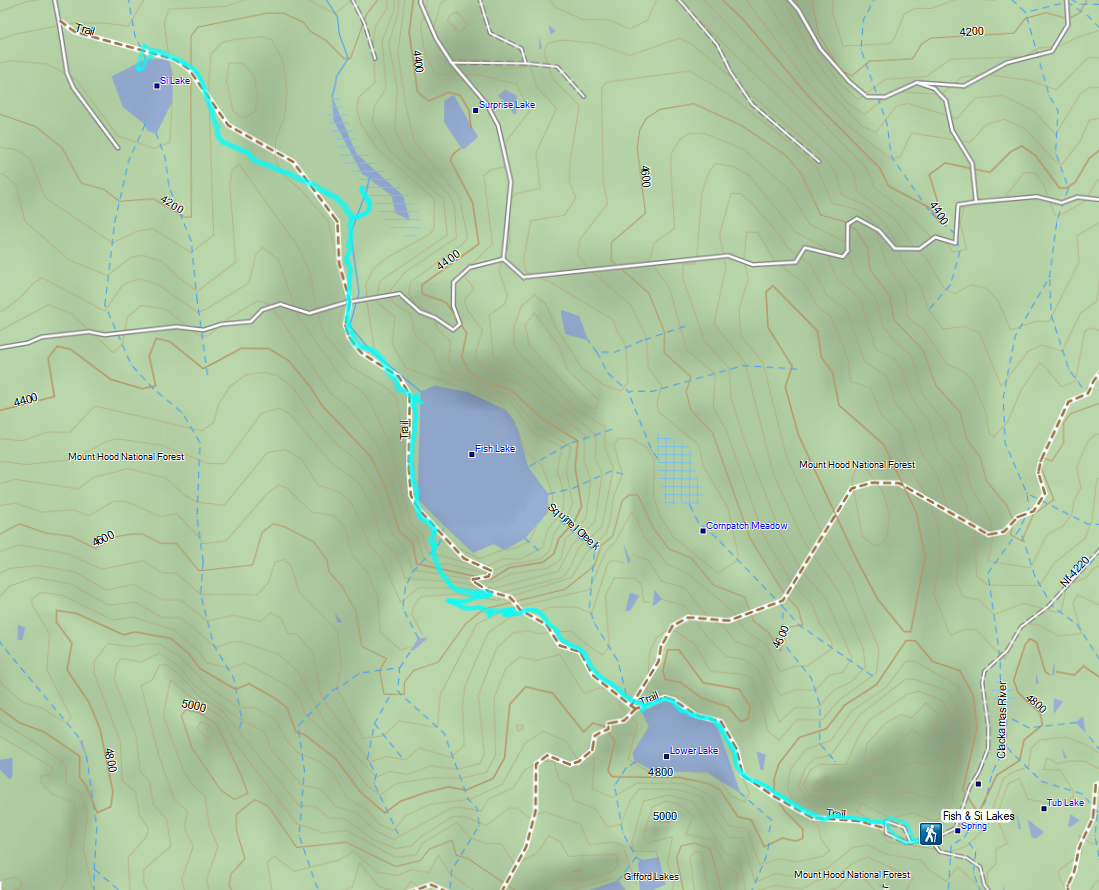
From the gated road we turned around and headed South on FR 4220 for a total of 6.5-miles to the Lower Lake Campground entrance.
IMG_9454

While Sisi Butte had escaped the 2020 wildfires the Lionshead Fire had severely damaged the campground and the trail to Fish Lake.
IMG_9456Lower Lake Campground, a work in progress.

IMG_9457While the campground was closed, the trail was open despite the fire damage.

IMG_9460The Fish Lake Trail at Lower Lake Campground.

While the sign at the trailhead said it was a half mile to Lower Lake we actually arrived at the eastern end of the lake after a third of a mile.
IMG_9465Ferns creating a green hillside in the burn scar.

IMG_9467Lower Lake

The trail passed along the northern shore of Lower Lake without too much trouble. There was on small detour necessary to avoid some blowdown, but it was easily navigated.
IMG_9468The water in Lower Lake was quite colorful.

IMG_9469

IMG_9471Duck

IMG_9475

IMG_9479Most of the lakes in the Olallie Lake Scenic Area have signs naming them.

IMG_9484Potato Butte (post) from Lower Lake.

IMG_9486Olallie Butte

We had detoured to Lower Lake prior to the fire during our Lodgepole Loop hike in 2019 (post).

Just a short distance from the western end of the lake we crossed the Lodgepole Trail.
IMG_9489

For the next quarter of a mile the trail was fairly level.
IMG_9491Sisi Butte off to the right.

IMG_9493Fireweed going to seed.

IMG_9494Buckwheat

IMG_9495The burn was intense along the trail, but it was in pretty good shape all things considered.

After a quarter mile the trail arrived at a cliff above Fish Lake and then began a steep descent dropping 400′ over the next half mile to the lake.
IMG_9498Sisi Butte and Fish Lake from the cliff.

IMG_9499Mt. Hood peeking out from behind West Pinhead Butte.

IMG_9500Mt. Hood

IMG_9502The Fish Lake Trail switchbacked a few times before giving up on that and dropping steeply for the final 0.2 miles.

IMG_9512A beat up Lorquin’s admiral.

IMG_9514There were signs of somewhat recent trail maintenance, but given the severity of the burn and the steepness of the hillside the trail is going to need a lot of ongoing attention to keep it passable.

IMG_9516The trail disappeared a couple of times in brush and blowdown near the lake, but it was never hard to pick back up.

IMG_9520

IMG_9522

IMG_9525

There were no people at the lake, just a pair of ducks enjoying the warm day.
IMG_9534

IMG_9538Nap time.

IMG_9540Olallie Butte from Fish Lake.

After passing around the southern side of the lake we arrived at a nice campsite under some unburned trees.
IMG_9541

Beyond Fish Lake the forest along the trail was mostly out of the fire scar.
IMG_9545The trail followed along Squirrel Creek (currently dry) for 0.4-miles.

Just under a quarter of a mile from Fish Lake the trail crossing a road and under some power lines.
IMG_9549

IMG_9550

Four tenths of a mile from Fish Lake we came to a trail sign with a pointer to Surprise Lake.
IMG_9556We passed a few of these “Spot Fire” flags, presumably left over from 2020.

IMG_9558The signed junction.

IMG_9559

We detoured to check out the brushy lake and found it to be as Reeder reported, brushy had difficult to explore.
IMG_9560

IMG_9565I had to walk out on a log and fight through some thick brush to reach a decent view of the water.

IMG_9566Surprise Lake

We returned to the Fish Lake Trail and continued another half mile to Si Lake.
IMG_9569The trail between the junction and Si Lake got a little brushy.

IMG_9572Huckleberry leaves in their Fall colors.

IMG_9574Si Lake from the trail.

IMG_9579

IMG_9575Si Lake.

IMG_9581Tortoiseshell butterfly

Si Lake was the smallest of the three lakes along the Fish Lake Trail (not counting Surprise Lake) and lacked a view of any of the surrounding peaks. The day was heating up quickly and we had a nearly 900′ climb over the three miles back to the car, so we took a short break and headed back.

A few clouds formed overhead and a slight breeze kicked up during our return which fortunately kept if from feeling too hot.
IMG_9589Olallie Butte from Fish Lake.

IMG_9595Black bear print along the shore of Fish Lake.

IMG_9600

IMG_9607White breasted nuthatch

IMG_9612Lower Lake from the Fish Lake Trail.

IMG_9614Olallie Butte from Lower Lake.

IMG_9624While parts of Lower Lake are shallow it actually reaches a depth of 73′ which is the reason it is so colorful.

IMG_9633Arriving back at Lower Lake Campground.
This hike came in just over 6-miles and 900′ of elevation gain making this a 12-mile, 2300′ elevation gain day.

The hikes were enjoyable and offered a lot of solitude, we only saw three people (all at Lower Lake) along the Fish Lake Trail in addition to the four at Sisi Butte. Cooler temperatures and less smoke would have been preferred but it was a great outing none the less. Happy Trails!

Flickr: Sisi Butte and Fish & Si Lakes

Categories
Bend/Redmond Central Oregon Hiking Mt. Jefferson Area Oregon Trip report

Metolius River Backpack – 07/22/23 & 07/23/23

Our first couple of planned backpacking trips didn’t happen for one reason or another but we really wanted to get at least one overnight trip in before August. We’d picked up some new gear that we hoped to give a test run before a longer outing we have planned for August.

Recent reports of a heavy mosquito presence at our plan “A” location forced us to look for a plan “B”. We turned to one of the early trips that hadn’t happened, a hike along the Metolius River starting from the Lower Bridge Campground. Matt Reeder describes 10.1-mile hike to a former trailhead that once served the Shut-In Trail in his “101 Hikes in the Majestic Mount Jefferson Region”. By all accounts the Shut-In Trail was a brushy mess, at least beyond a mile from the former trailhead. Our plan was to set up camp at the old trailhead and then explore the Shut-In Trail as far as it was passable.

Reeder mentioned that ticks could be a nuisance in the Spring but by this time they and most of the mosquito’s wouldn’t be a problem. The downside of visiting this time of year though would be the heat with highs forecast in the upper 80s. The temperature was pleasant when we arrived at the trailhead just after 7am. We parked at a small trailhead across from the Lower Bend Campground.
IMG_4335

We’d hiked through this trailhead during a 2012 hike starting from the West Metolius Trailhead (post). Lower Bridge which we’d used to cross the river had been the northern end of that hike. For this trip we would be heading further North and then East as we rounded Green Ridge (post) at the Horn of the Metolius.

To reach the trail we had to walk through the campground to the top of its loop and pass between a couple of occupied camp sites to a trail sign.
IMG_4338

IMG_4340The sign is visible from the campground road.

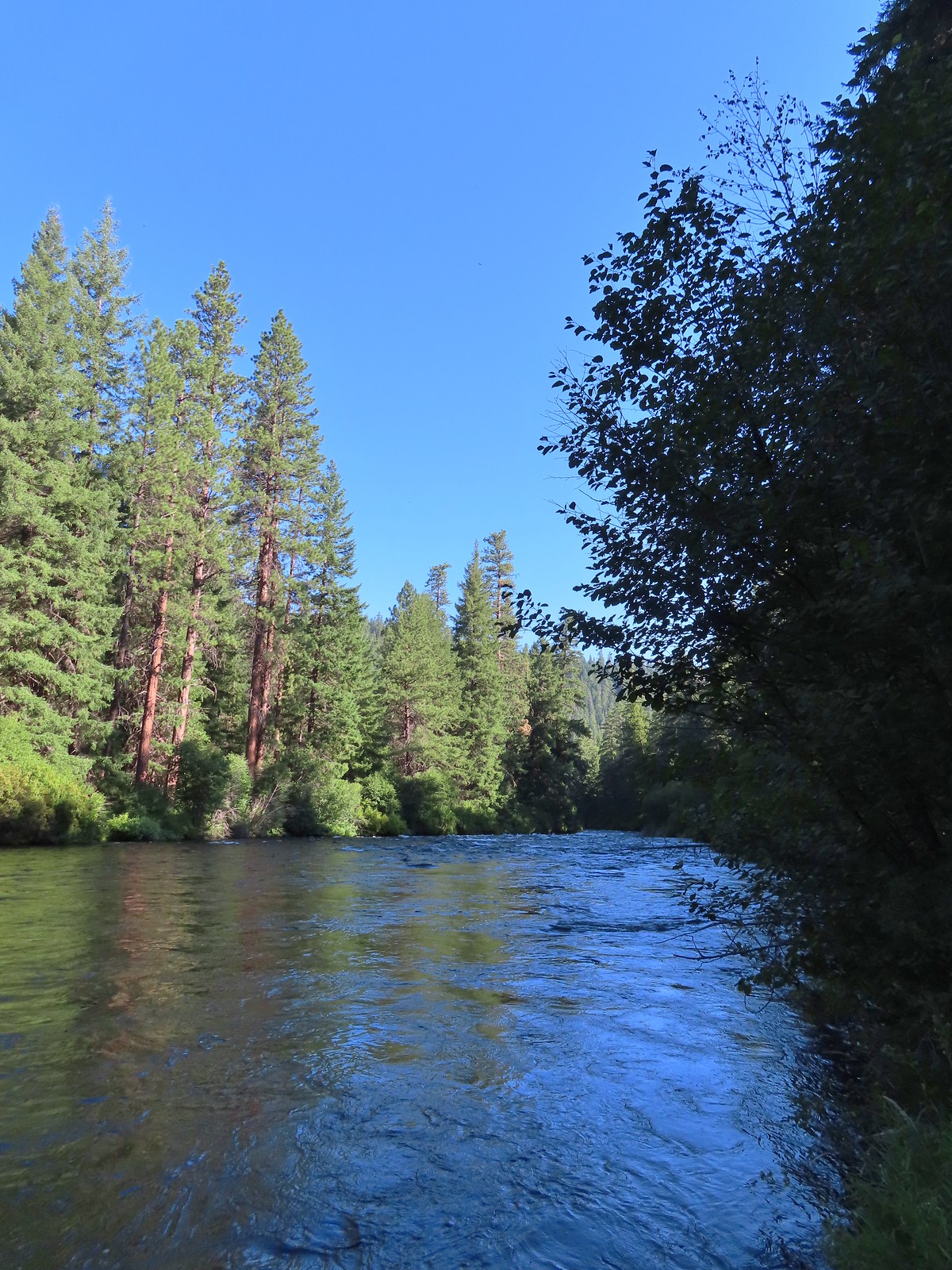
The trail quickly reached the banks of the Metolius. This 23-mile river is fed primarily by a series springs and spring fed creeks beginning with the Head of the Metolius (post). The river ends at Lake Billy Chinook (post) where it joins waters from the Crooked and Deschutes Rivers. The spring fed water is cold and clear which makes the Metolius a beautiful river.
IMG_4342

IMG_4344

The trail passes a number of large campsites early on with numerous side trails for fly fishers to access the river. Reeder mentioned the trail petering out just over a mile and a half from the campground across the river from the Candle Creek Campground and recommended veering away from the river there and joining the Lower Metolius River Road.
IMG_4354

IMG_4357

IMG_4359Common mergansers

IMG_4363

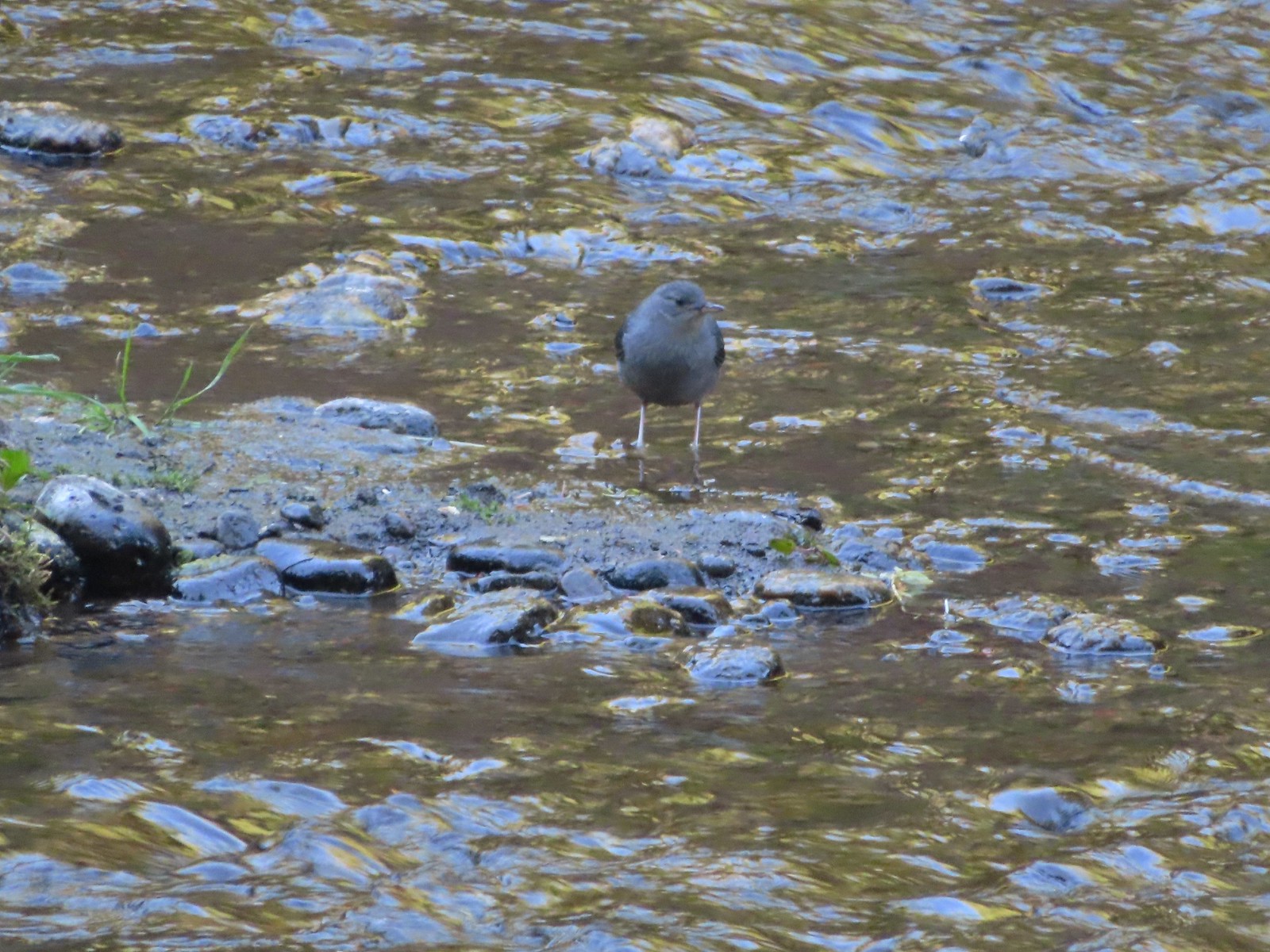
IMG_4365Ouzel

IMG_4367Goldenrod

IMG_4368Passing some of the campsites.

IMG_4384The Candle Creek Campground across the Metolius.

The trail seemed to be in pretty good shape as we passed the campground so instead of detouring to the road we stuck to the trail which was now more of a braided fisherman’s trail than a hiker trail, but it was passable without too much effort. That is until the final 100′ where we nearly lost the trail in brush before finding a very steep trail leading up to the road.
IMG_4394

IMG_4397We actually went left below the stump here but, on the way back wound up coming downhill by the stump.

IMG_4399More campsites.

IMG_4400

IMG_4403As we got further from the campground we encountered more and more brushy sections.

IMG_4407

IMG_4412Another section with an increased number of obstacles.

IMG_4415Getting a bit brushier.

IMG_4417We left the river for the road at this bend.

IMG_4419Heading up to the road.

IMG_4422The use trail from the road.

Several opportunities to head for the road prior to this had us deciding that we would look for one of those on the way back instead of returning exactly the way we came. We followed this road a total of 6.2 miles to where the GPS showed the road ending and the Shut-In Trail beginning. We actually were passed by a gentleman in an SUV who was heading for one a small number of private cabins located approximately 3.7 miles from where we’d joined the road. He stopped to ask where we were headed and wished us a good hike.
IMG_4423

IMG_4427We wondered what this post signified.

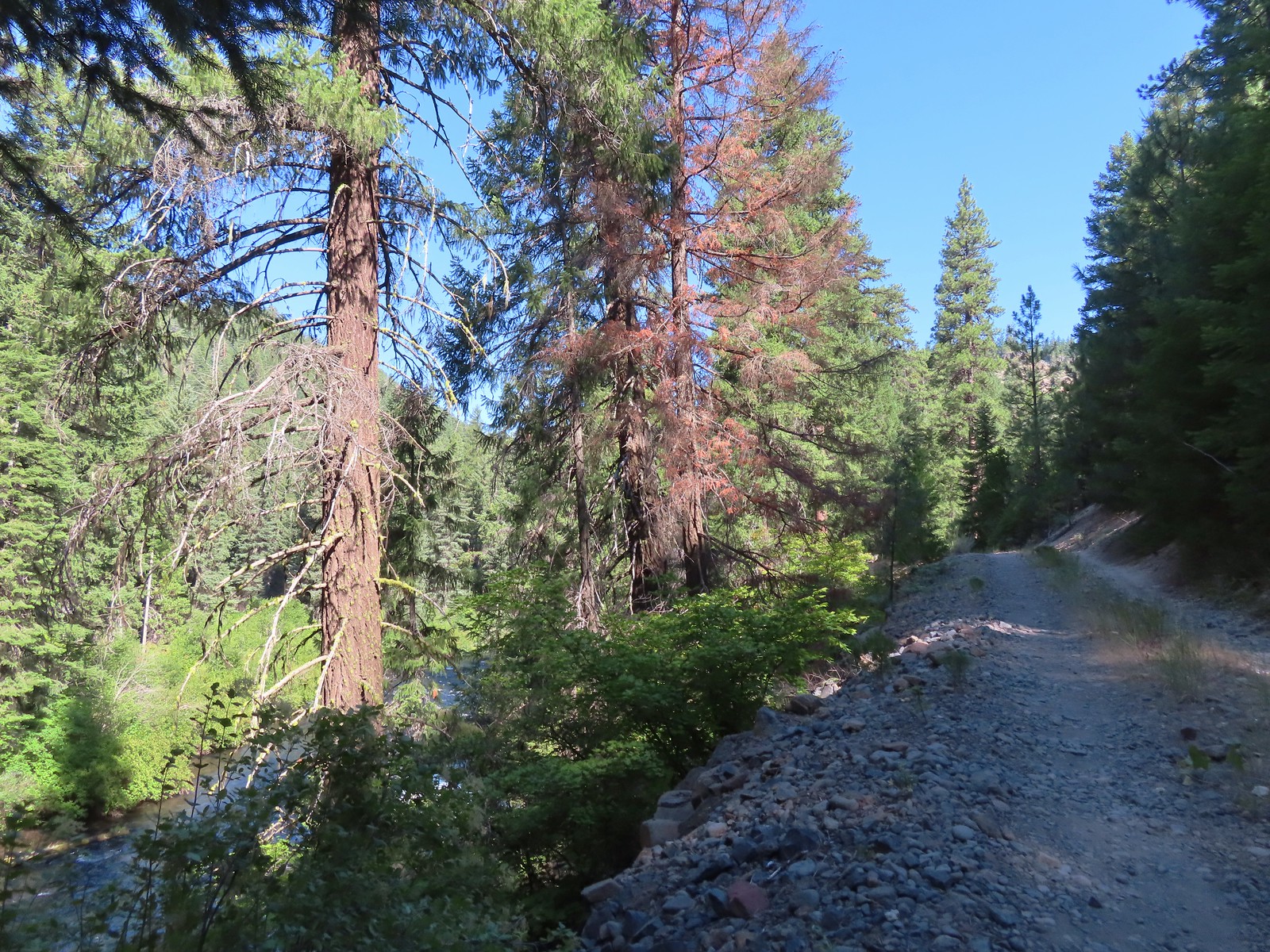
IMG_4432They were way past blooming but there were several mountain lady slippers along the road.
IMG_4434

IMG_4446Osprey nest

IMG_4441

IMG_4445

IMG_4457

IMG_4462Rock spire on lower section of Green Ridge. There are several interesting rock features higher up on the northern end of Green Ridge that were not visible from the road.

IMG_4463Orchid

IMG_4470Scarlet gilia

IMG_4474Some of the private cabins from the road.

IMG_4473

IMG_4476

IMG_4635

IMG_4482A couple more cabins.

Based on the Oregonhikers field guide we had expected the road beyond the private cabins to have downed trees but instead found they had all been cut and there were even tire tracks, bicycle most likely, all the way to the Shut-In Trail.
IMG_4483The end of the private land.

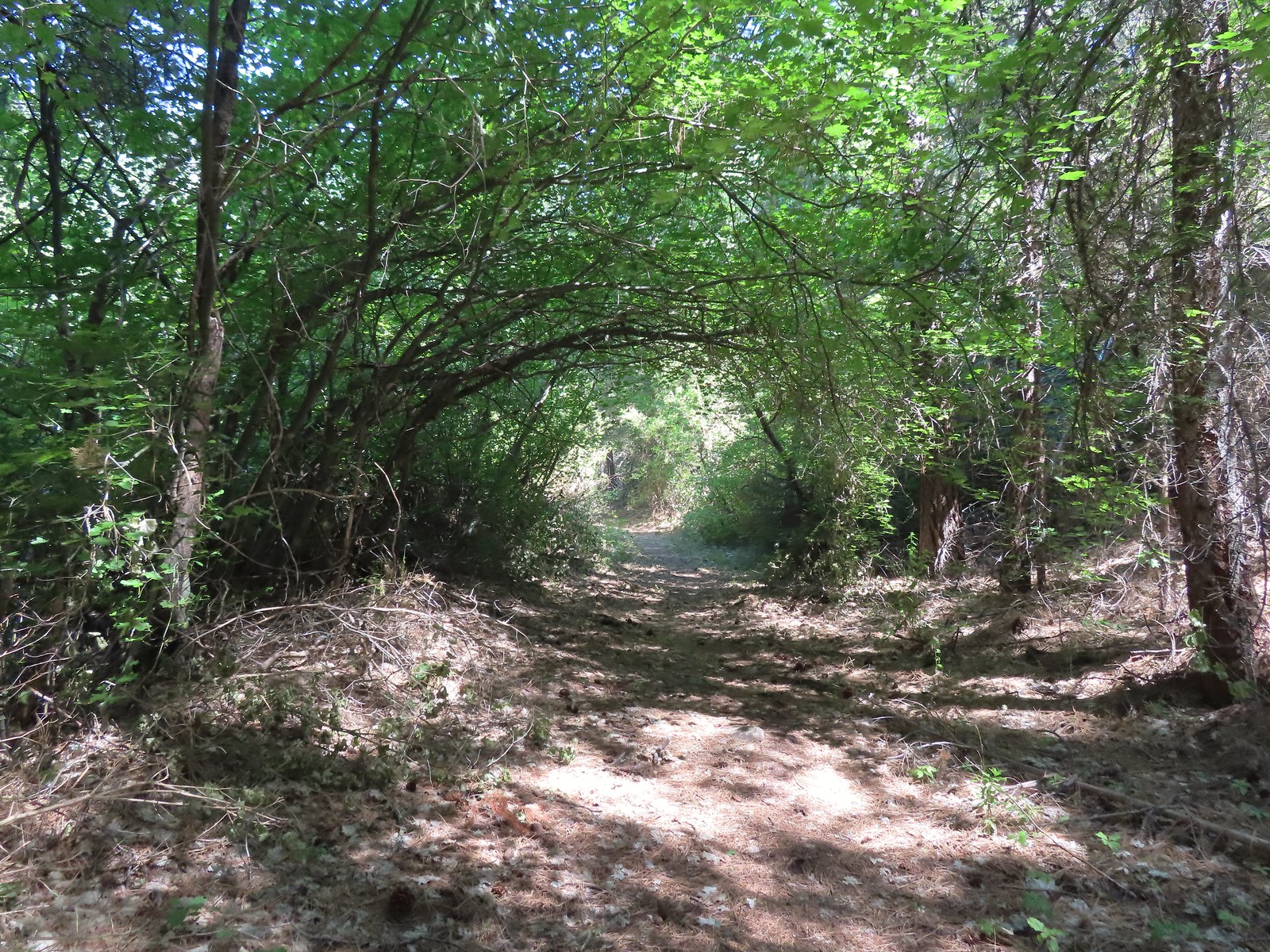
IMG_4485The clear water allows for nice views of the rocks making up the riverbed.
IMG_4488

IMG_4490

IMG_4492Even though it had received maintenance the road was not in good enough condition for larger vehicles.

IMG_4493

IMG_4506

IMG_4507Pink monkeyflower

IMG_4512

IMG_4516

IMG_4520Lorquin’s admiral

IMG_4524The forest opened up near the end of the road where we set up camp.

IMG_4538

IMG_4544Campsite

IMG_4528Yellow monkeyflower

We had arrived at our campsite a little before 12:15pm and it was really heating up, so we broke out our camp chairs and rested for several hours near the river before fixing an early dinner and setting off on the Shut-In Trail.
IMG_4541Lizard hanging out near the campsite.

After an early dinner we set off on the Shut-In Trail which we were surprised to find had seen some recent maintenance.
IMG_4526

IMG_4550

IMG_4557Grouse

IMG_4560The answer to the questions is yes bears do.

IMG_4562The Metolius through the trees.

IMG_4566Sagebrush mariposa lily. There also tire tracks in the trail behind.

IMG_4567

IMG_4570Recent brushing had been performed through this area.

IMG_4571Looking up the end of Green Ridge.

IMG_4573This large tree had been cut fairly recently.

IMG_4576Flagging marking a reroute around a downed tree.

After a little more than a mile and a half of good trail things began to deteriorate.
IMG_4581Starting to get brushy.

IMG_4582View across the river to the Warm Springs Indian Reservation.

IMG_4584Flowers along the Metolius.

IMG_4589

IMG_4591The Whitewater River was behind the rock formation on the far side. The Whitewater River begins at the Whitewater Glacier on Mt. Jefferson and flows roughly 7.5 miles through the Warm Springs Reservation to the Metolius.

IMG_4592More clear water.

IMG_4593Fireweed

IMG_4595Thimbleberries provided us with a few after dinner snacks.

IMG_4596Hedgenettle

IMG_4601The Shut-In Trail traveled right along the riverbank at times.

There was one section along the hillside that had experienced some pretty significant erosion.
IMG_4611 There was a small set of boards nailed together to assist with crossing the sketchiest part, but they were just lying on the hillside and not anchored in any way.

Just under two and a half miles from our camp we arrived at County Road 64. One could continue along this closed road for 4.6 miles to a gate just beyond the Monty Campground. A seasonal gate is located another 1.7-miles from the campground along the Metolius arm of Lake Billy Chinook.

IMG_4605The Shut-In Trail from CR-64.

IMG_4606CR-64

After a short break at the road we headed back.
IMG_4608

IMG_4612Frog on a skunk cabbage leaf. There were a few wet areas along the Shut-In Trail which meant a few mosquitos were present.

IMG_4616The Sun going down as we approached camp.

Our first day wound up being 15.3-miles, 10.5 to reach camp and a 4.8-mile round trip on the Shut-In Trail. The elevation gain was only about 800′ total.

We woke up early the next morning hoping to stay ahead of the heat. After breakfast and packing up we followed the Lower Metolius River Road a total of 8-miles before cutting down to the trail along the river.
IMG_4624

IMG_4634Pinedrops

IMG_4640Squirrel

IMG_4641Bee sleeping on thistle.

IMG_4647Large boykinia

The gentleman that had driven passed us the day before passed us again on his way into the cabins shortly before we turned off the road.
IMG_4660We turned off the road here on a well-established use trail down to the water.

Red AdmiralRed admiral. As far as I know this is the first one of this species of butterfly that we’d seen.

IMG_4672

IMG_4675Common wood nymph

IMG_4678Across from the Candle Creek Campground.

IMG_4681Green Ridge through some smoke. A couple of new fires, one on the Warm Springs Reservation and one East of Eugene had started over the weekend.

IMG_4682Love the colors of the Metolius.

IMG_4685Skipper on a mariposa lily.

IMG_4694

IMG_4699Lower Bridge Campground is ahead to the left in the trees.

Our return hike came in at 10.1-miles which was the distance Reeder indicated between the trailhead and Shut-In Trail. The elevation gain was under 500′ of very gradual uphill, mostly along the road.

Blue is our hike to camp. Yellow is the Shut-In Trai.
Red is our return to the trailhead.

Heat aside this turned out to be a great backpacking trip. Over the two days we only passed one fly fisher (near Lower Bridge Campground), the private landowner (2x in his car), and a pair of hikers (again near Lower Bridge Campground). There were people across the river at Candle Creek Campground and in Lower Bridge Campground itself, but it was about as much solitude as we could have asked for. The condition of the trails was also better than we’d expected despite the rough end of the Shut-In Trail toward CR-64. It was a successful test run of our new gear as well and we now feel ready for our longer trip coming up in August. Happy Trails!

Flickr: Middle Metolius River

Categories
High Cascades Hiking Mt. Jefferson Area Oregon Trip report

Grizzly Peak – 08/20/2022

While we completed our goal of hiking portions of all 100 featured hikes in William L. Sullivan’s 4th edition of “100 Hikes/Travel Guide Central Cascades” in 2020 (post) there remain a few “loose ends” that we’d like to take care of. We have established some guidelines for considering a featured hike “done” allowing us some wiggle room. For instance we might start at a different trailhead than Sullivan’s description but still visit the main attraction(s) he describes. It might also mean starting at the trailhead described but due to closures might cut the hike short. The two most common dilemmas we faced though were featured hikes with a short and long option and featured hikes that included multiple stops/destinations. Regarding the short vs long options we’ve tended to opt for the longer option assuming the distance is reasonable, under 16 miles (maybe not reasonable to all), but when the longer options are close to or more than 20 miles we’ve settled for the shorter.

For the featured hikes where there are multiple stops/destinations we allow the hike to be checked off once we have completed either the longest option, and/or visited the hike’s namesake. A perfect example is Featured Hike 23 in the Central Cascades book (4th edition). The hike is titled “Pamelia Lake & Hunts Cove” with three options given, all beginning at the Pamelia Lake Trailhead. The shortest is a 4.4 mile out-and-back to Pamelia Lake while the longest is a 12.4 out-and-back to Hunts Cove. Sandwiched in between is a 10 mile out-and-back hike up Grizzly Peak. We had been to Hunts Cove once (post) and Pamelia Lake twice (once on the way to Hunts Cove and the other on an attempt to reach Goat Peak (post)) so going by our self-imposed rules we checked the hike off, but we had yet to visit Grizzly Peak. To put a ribbon on the featured hike we obtained a pair of Central Cascade Wilderness Permits (required at this trailhead) and once again set off for Pamelia Lake.
IMG_9512

IMG_9515This was at least the third posted notice so there is no claiming you weren’t aware that a permit is needed.
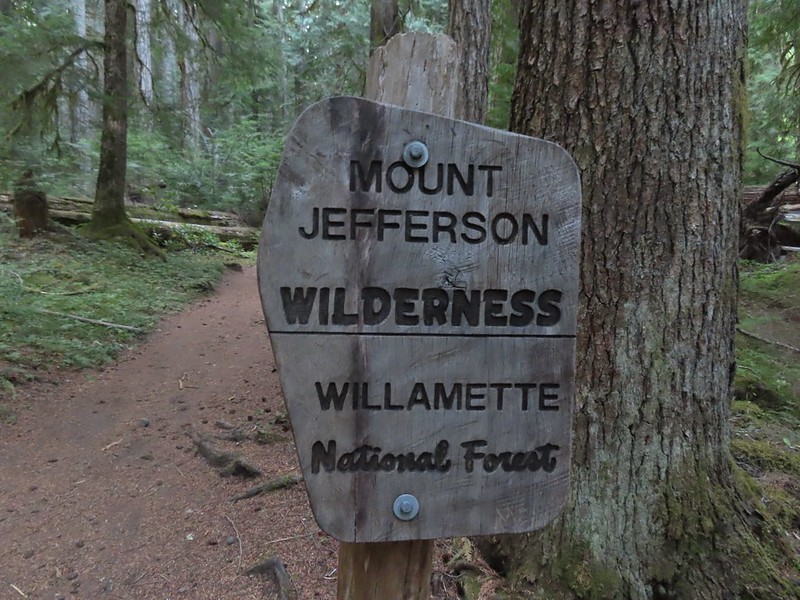
The roughly two mile hike to Pamelia Lake never disappoints.
IMG_9518

IMG_9519

IMG_9520Pamelia Creek

IMG_9521Fireweed along the creek.

IMG_9522

IMG_9523

We turned right onto the Grizzly Peak Trail at its junction a short distance from the lake.
IMG_9525

The trail crossed the dry outlet creek and then began the nearly 2000′ climb to Grizzly Peak.
IMG_9526 Pamelia Creek only flows underground here much of the year.

IMG_9528Heading up.

The trail climbs for two and three quarters of a mile to a former lookout site through a nice forest with limited view for the first two miles.
IMG_9532A glimpse of Mt. Jefferson.

IMG_9537That might be Woodpecker Hill, it was hard to tell exactly which ridge we could see with nothing else visible to help orient.

IMG_9538This looked like it might be a nice little waterfall with enough water.

IMG_9539That’s not enough water.

IMG_9541Heather below one of several switchbacks.

Just over two miles from the junction the Grizzly Peak Trail we came to a viewpoint on a ridge. Here the trail made a sharp right and followed the ridge SE. There were multiple views along this ridge, the one issue we had though was it was still fairly early and the angle of the Sun was catching all the haze in the air.
IMG_9552Turning up the ridge.

IMG_9557The haze was probably a combination of morning cloud/fog and smoke from the Cedar Creek Fire near Waldo Lake.
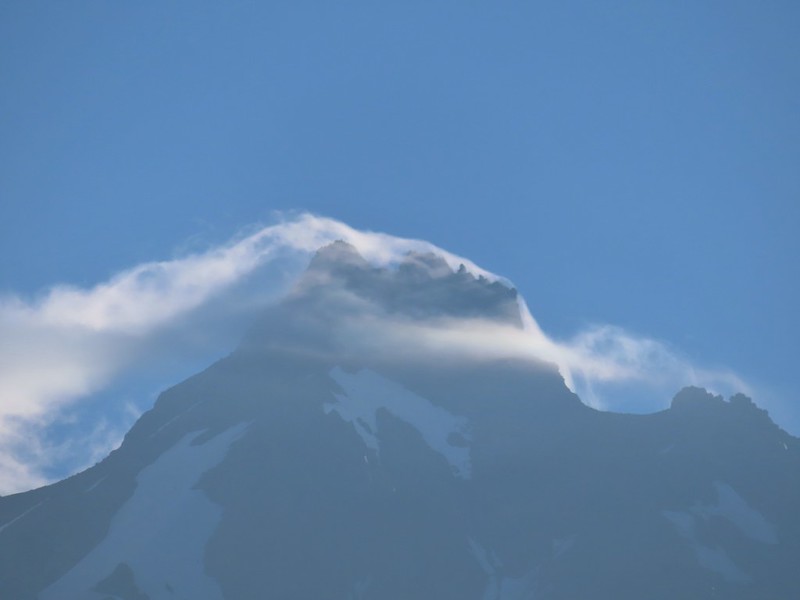
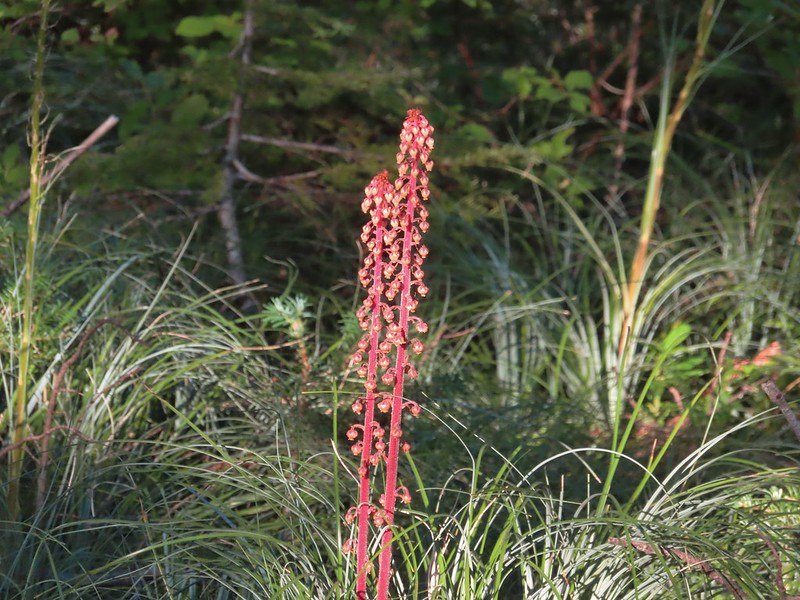
IMG_9555

IMG_9556

IMG_9558Pinedrops

IMG_9560We were too late for most of the flowers but there were a few pearly everlasting going.
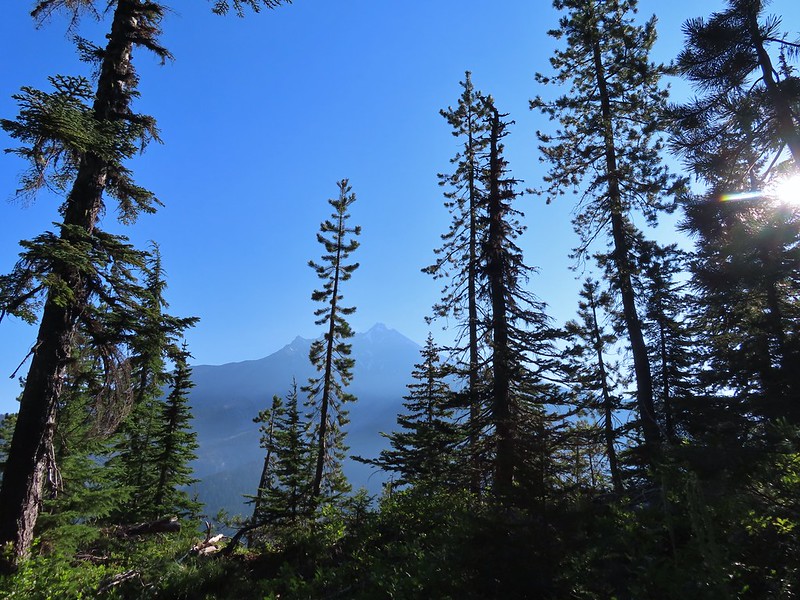
IMG_9565There’s that pesky Sun again.

After following the ridge for 0.4 miles the trail veered to the right leaving it and traversing up a forested hillside with views north towards the Bull of The Woods Wilderness where we got our first good look at the fire scars from the 2020 Labor Day fires.
IMG_9577

IMG_9578

IMG_9579Aster

IMG_9580Lousewort

IMG_9584Lots of burnt forest out there.

IMG_9583Triangulation Peak and Boca Cave (post)

A quarter mile after leaving the ridge the trail came to another ridge and made a hard right following this ridge up to the summit. This section provided views south to Three Fingered Jack, the Three Sisters, and Broken Top.
IMG_9590

IMG_9591Broken Top to the far left blending into the haze and Three Fingered Jack to the right with the Three Sisters in between.
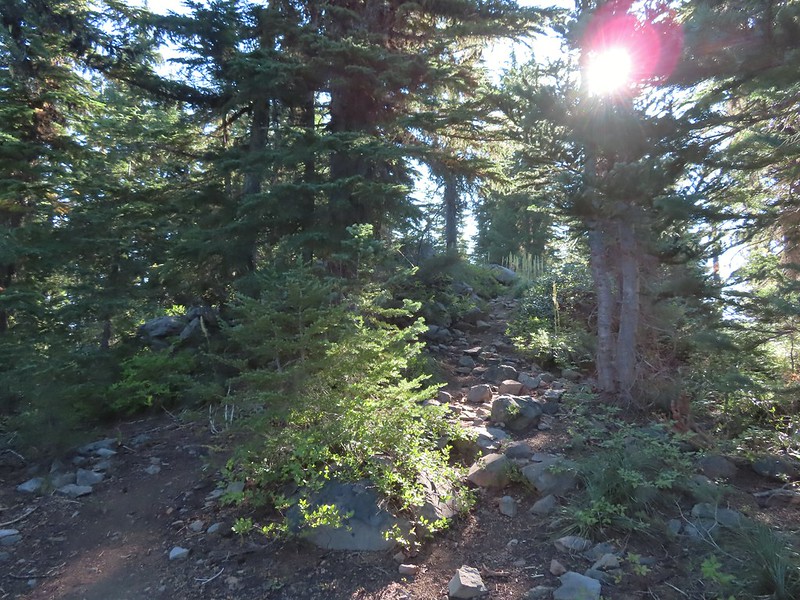
IMG_9594Just below the summit.

IMG_9597

IMG_9599Pamelia Lake below Mt. Jefferson.

We spent a little over half an hour at the summit checking out different views and watching several butterflies and some large black flying insects.
IMG_9604

IMG_9606Hunts Creek flowing into Pamelia Lake.

IMG_9607Had to hunt for a view of Three Fingered Jack.

IMG_9619A hard to make out Mt. Hood beyond the far ridge which consists of Bear Point to the left (post) and Dinah-mo Peak to the right.
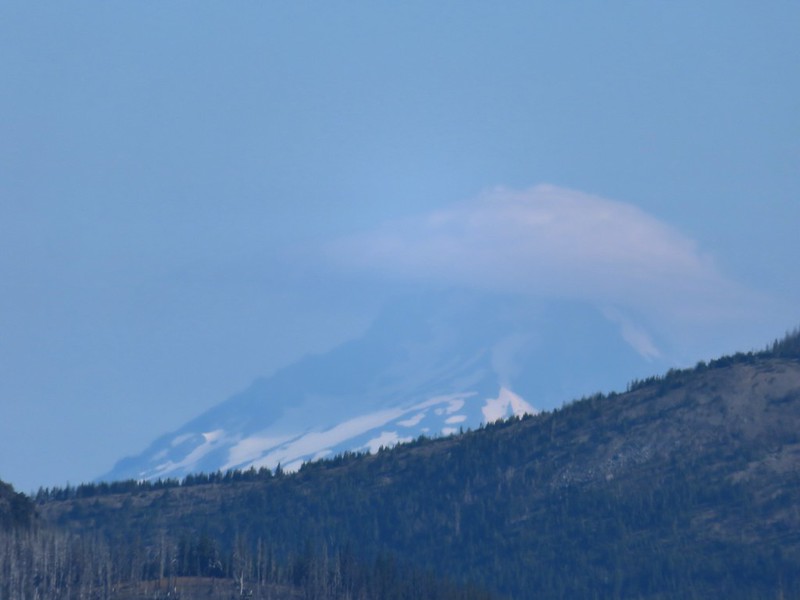
IMG_9639Mt. Hood

IMG_9622Beardtongue

IMG_9636A fritillary butterfly.

IMG_9637A skipper

We returned the way we’d come opting not to visit the lake on this trip since we have permits to return next month for a second attempt at Goat Peak.
IMG_9644Goat Peak is to the right of Mt. Jefferson.

IMG_9658Mt. Jefferson and Pamelia Lake from one of the viewpoints along the ridge.

IMG_9666

IMG_9667Cascade toad

20220820_105944

IMG_9682

IMG_9676One more of Pamelia Creek.

One other hiker had arrived at the summit a bit before we headed down and that was the only other person we saw until we were headed back down. We encountered one couple coming up the Grizzly Peak Trail and a number more on the Pamelia Lake Trail. It was a little surprising because the trailhead parking lot had looked nearly full when we had arrived that morning. The hike was nice and the well graded trail kept the 2700′ of elevation gain from ever feeling steep. It also allowed us to be home before 2pm which gave us time to unpack and clean up before heading of to a friends house for their annual margarita (and dinner) party. Happy Trails!

Flickr: Grizzly Peak