We were finally down to our last Oregon Wilderness area to visit, the Monument Rock Wilderness (post). The 20,210 acre wilderness is located in the southern Blue Mountains a little over an hour east of John Day. We’d spent the night in John Day and woke to find that it had rained overnight but we hadn’t heard any thunder so we were optimistic that no new lighting caused fires would be springing up. We had two hikes in the wilderness planned for the day with the first being a hike to the wilderness’s namesake, Monument Rock.
Our starting point for the hike to Monument Rock was the Table Rock Trailhead. The final 3.8 miles to this trailhead require slow driving and a high clearance vehicle.
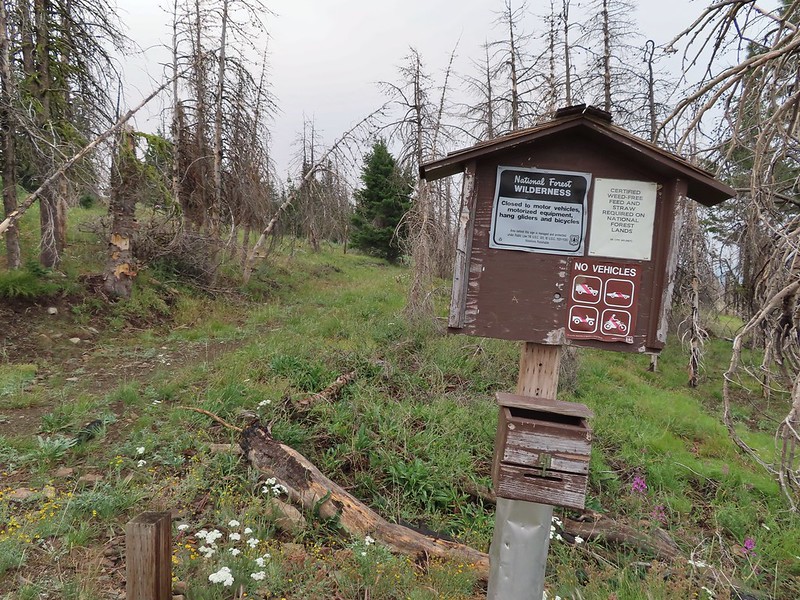
 The trailhead is at this hairpin curve below Table Rock. The road continues another 0.8 miles to the staffed Table Rock Lookout but reportedly worsens which is hard to imagine is possible.
The trail quickly crossed the wilderness boundary on an old roadbed completing our goal of hiking in all of Oregon’s 46 wilderness areas open to human visitors.

 First time seeing a wilderness sign quite like this.
There was quite a bit of smoke in the sky this morning even though we still weren’t really smelling it.
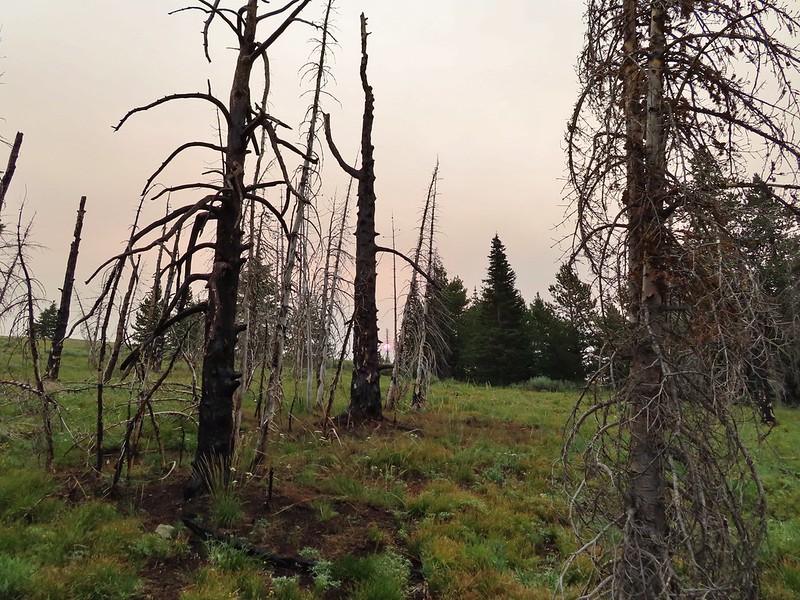
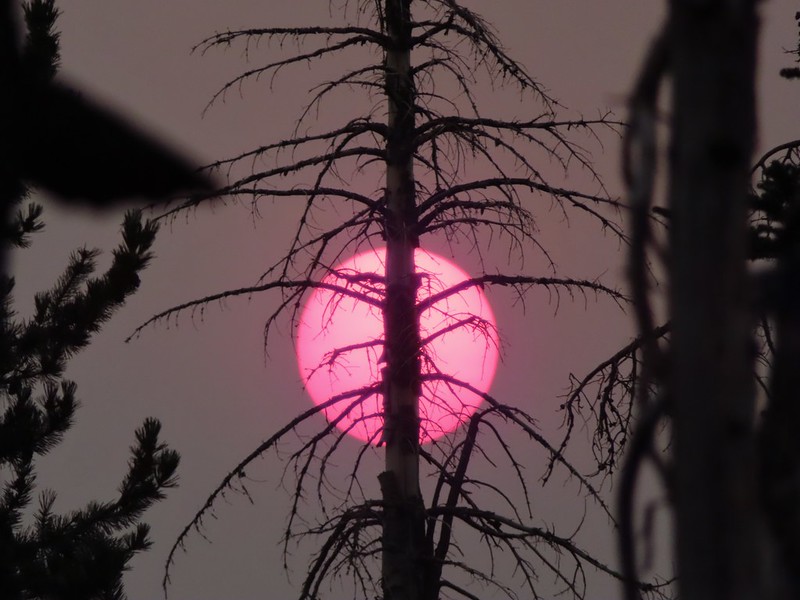 A red Sun behind the smoke, presumably mostly from the 400,000 plus acre Bootleg Fire east of Klamath Falls in south central Oregon.
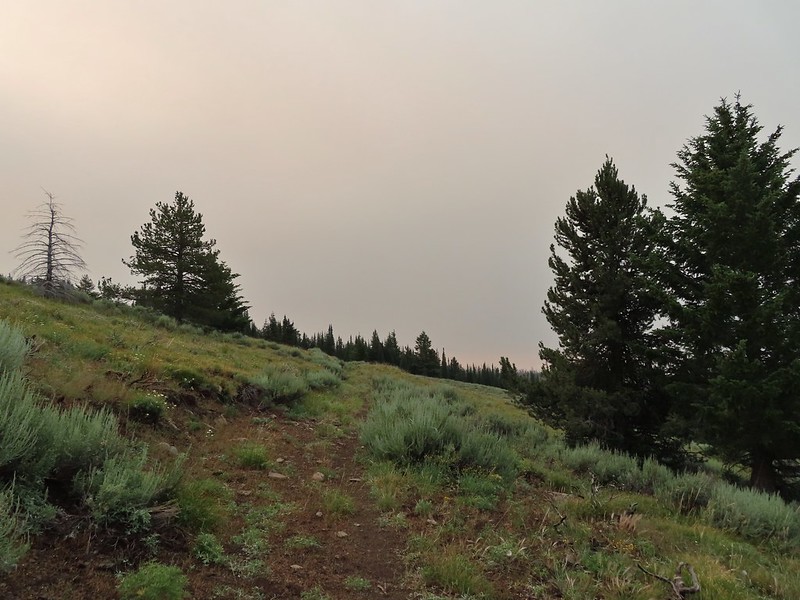
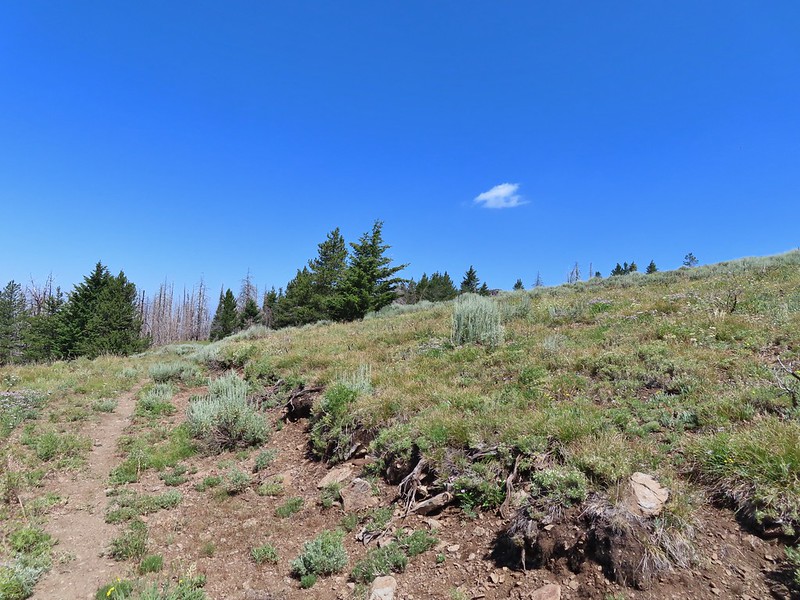
We followed the old road bed through sagebrush and occasional stand of trees for a total of 1.7 miles to a post. There was a nice amount of red paintbrush blooming amid the sage and lots of interesting rock formations along the way.
 Clark’s nutcracker

 Monument Rock in the distance.

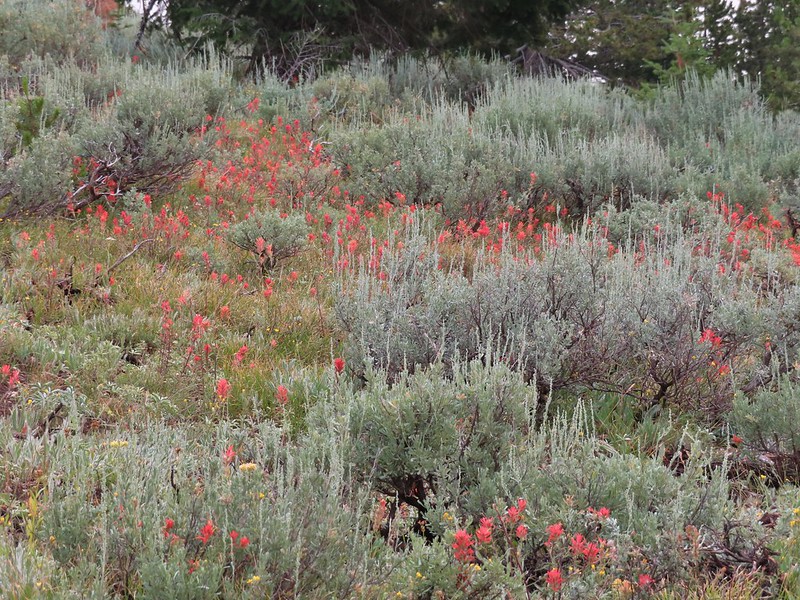 Paintbrush in the sagebrush.
 Ground squirrel

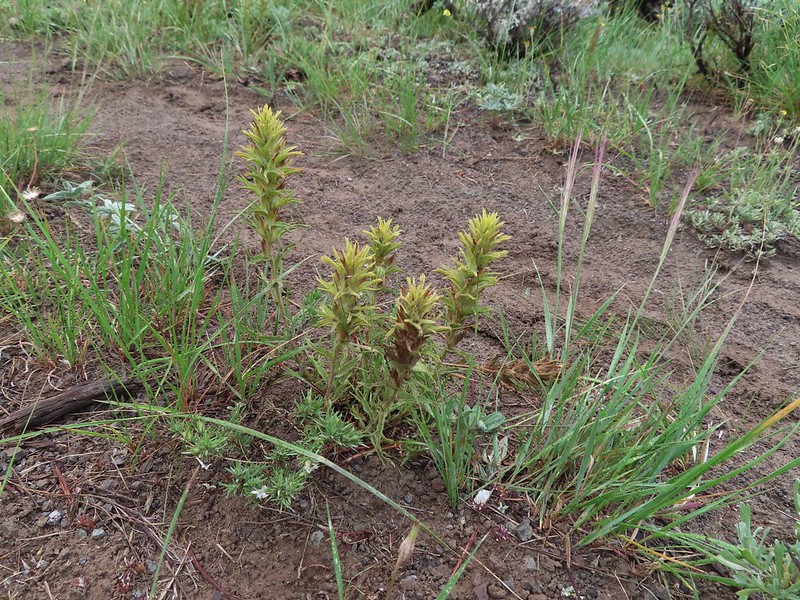 There was a fair amount of this green paintbrush too.
 We believe this post (not the 1.7 mile post) marked a side trail to Rock Spring but we didn’t see any tread in the area to know for sure.
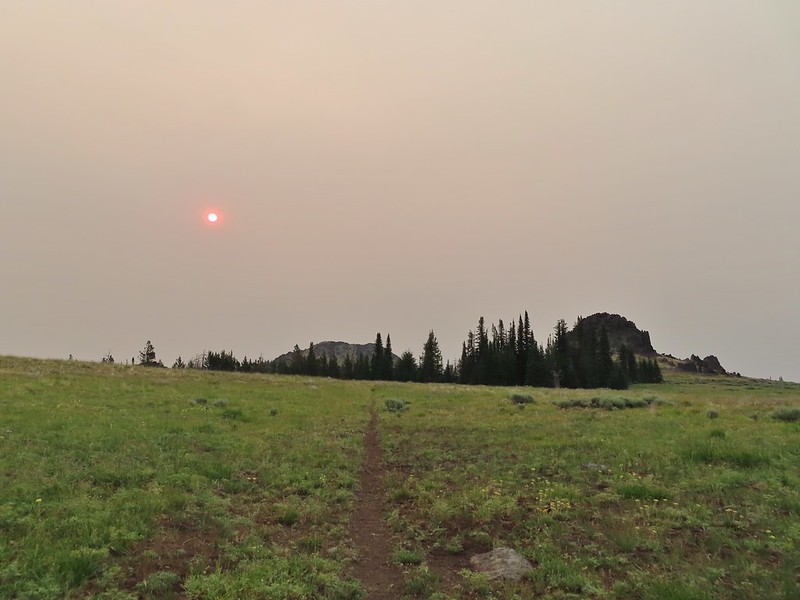 Bullrun Rock dead ahead.

 Table Rock in the distance.
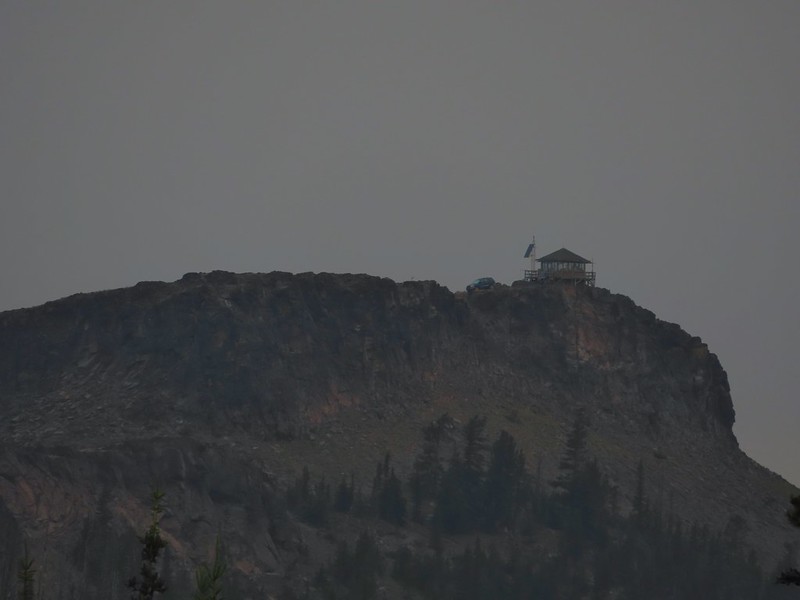 The Table Rock Lookout.

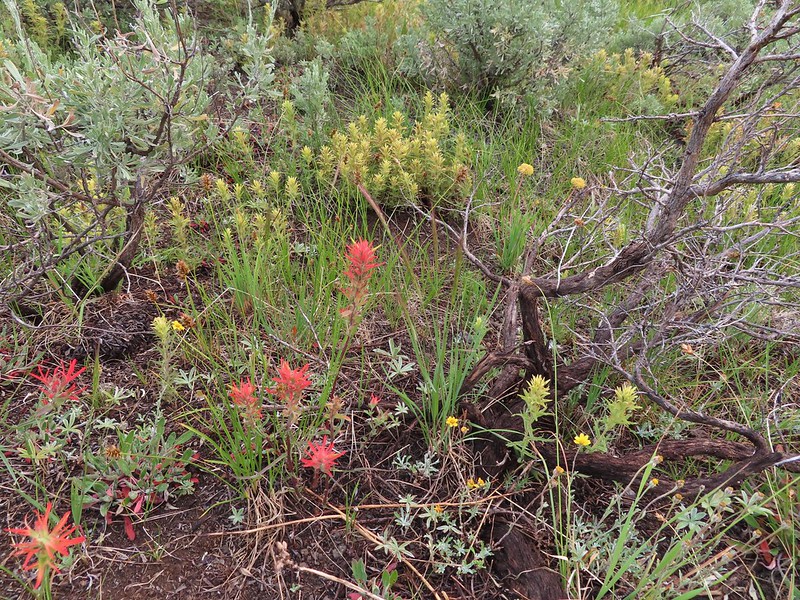 Two kinds of paint.
 Bullrun Rock below the Sun.
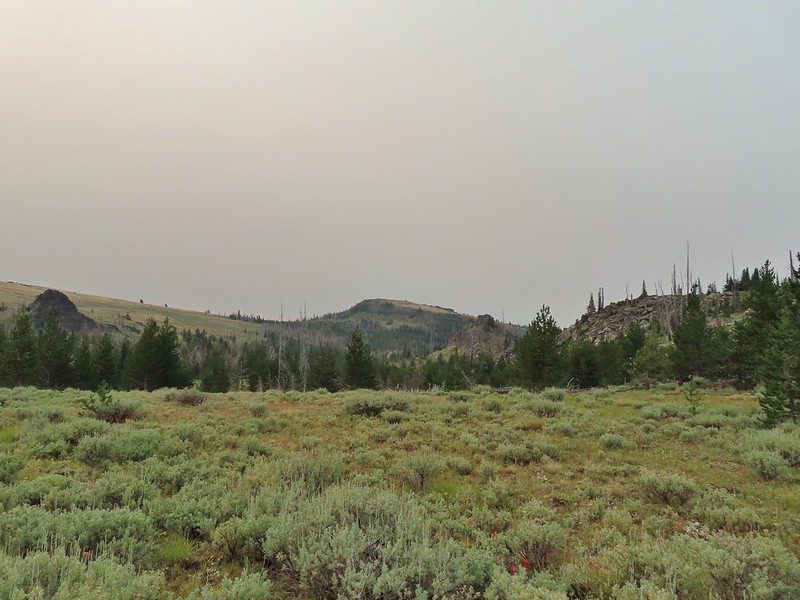 Monument Rock again.
 Old man’s whiskers
 A checkermallow
 We passed this sign for the Amelia Trail along the way but again didn’t see any trace of tread for it.
 Grazing cattle near the post.
 The post with Monument Rock in the background.
We made a sharp left turn following an old jeep track uphill toward Bullrun Rock.
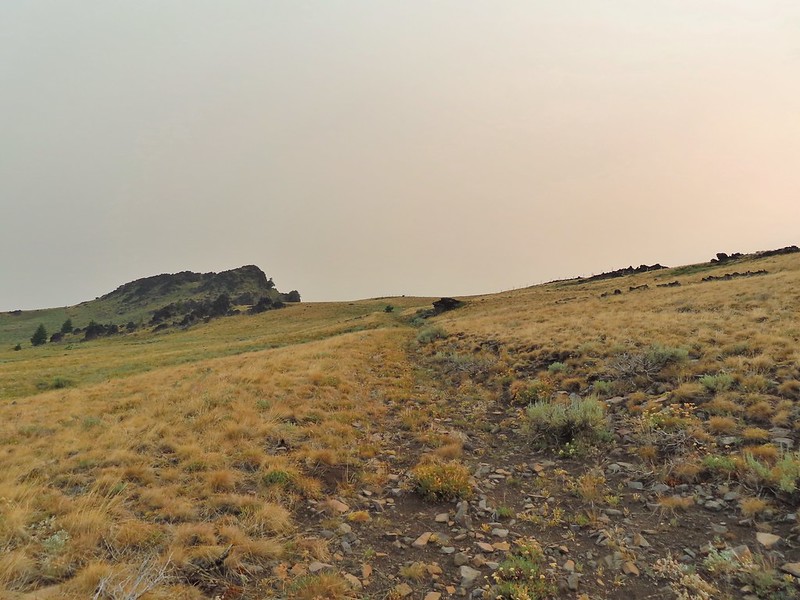
In a little under a half mile we were at the base of the rock near a fence.

 I believe that is Ironside Mountain.
We then scramble up the side of Bullrun Rock to the 7873′ summit.

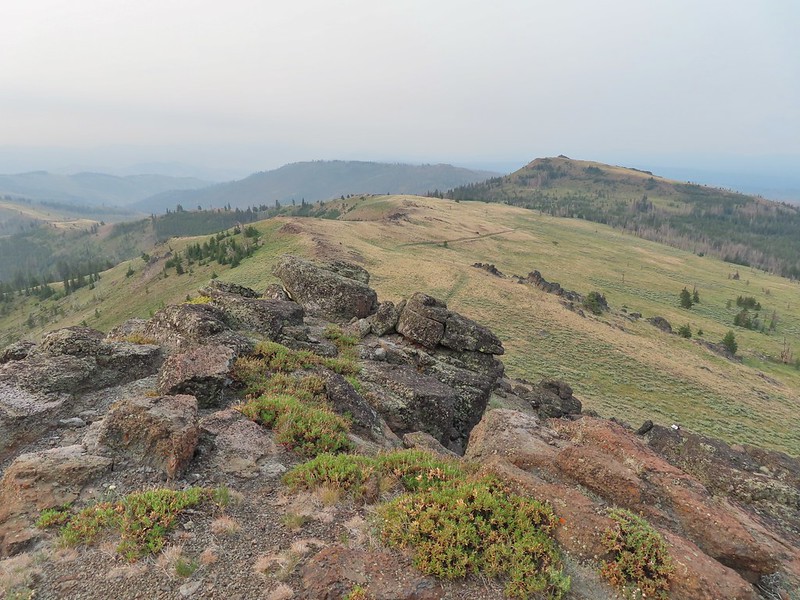 The jeep track and Monument Rock.
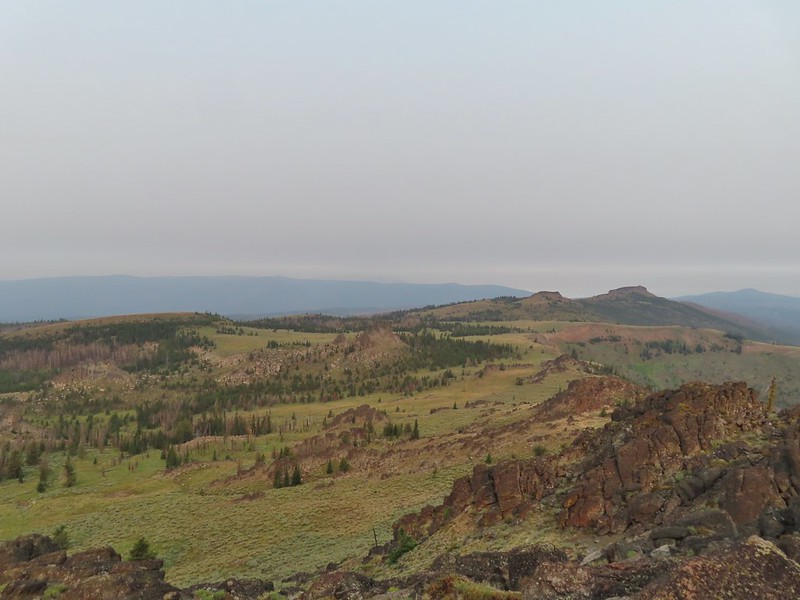 Table Rock
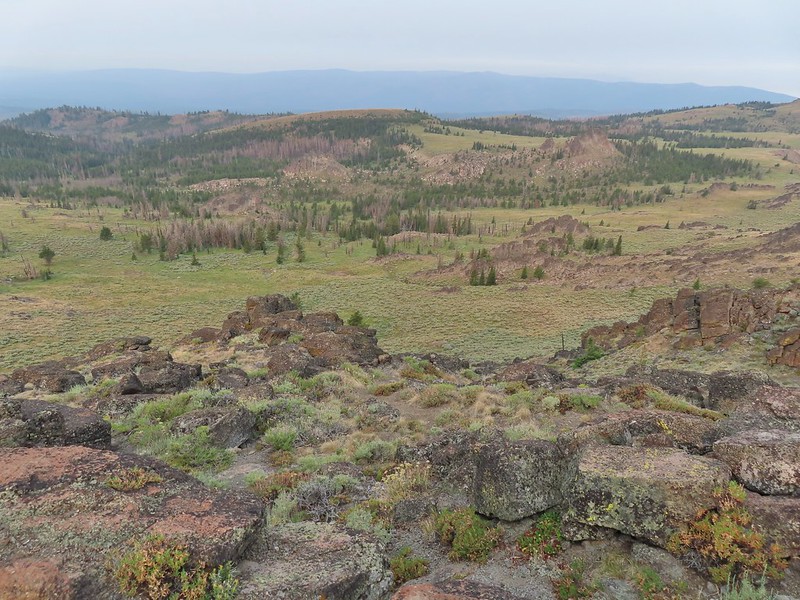 Looking down into the Monument Rock Wilderness
After enjoying the view we climbed down and returned to the post which we then continued past through an old fence and onward toward Monument Rock.

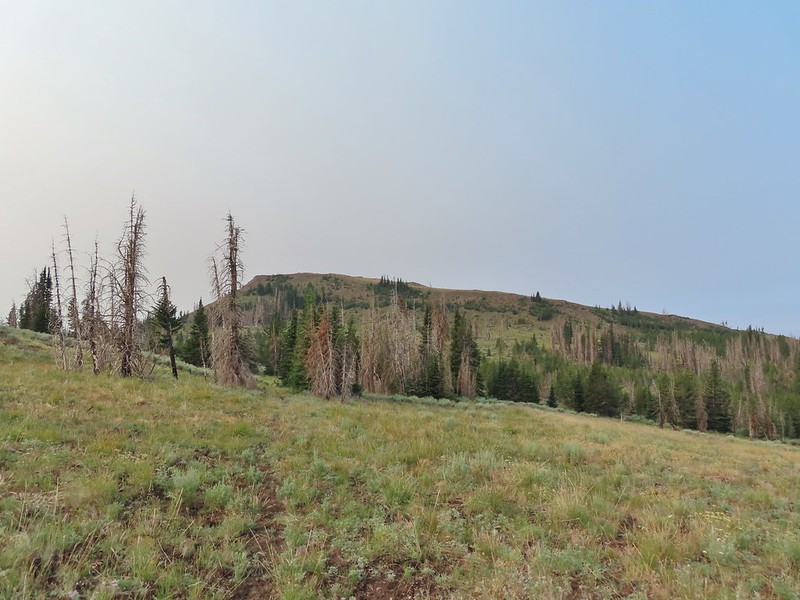
 Woodpecker
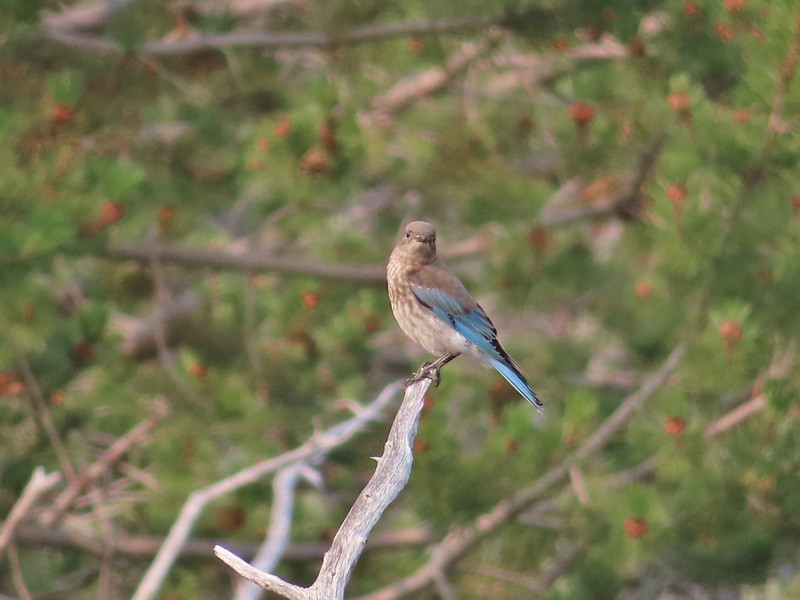 Mountain bluebird
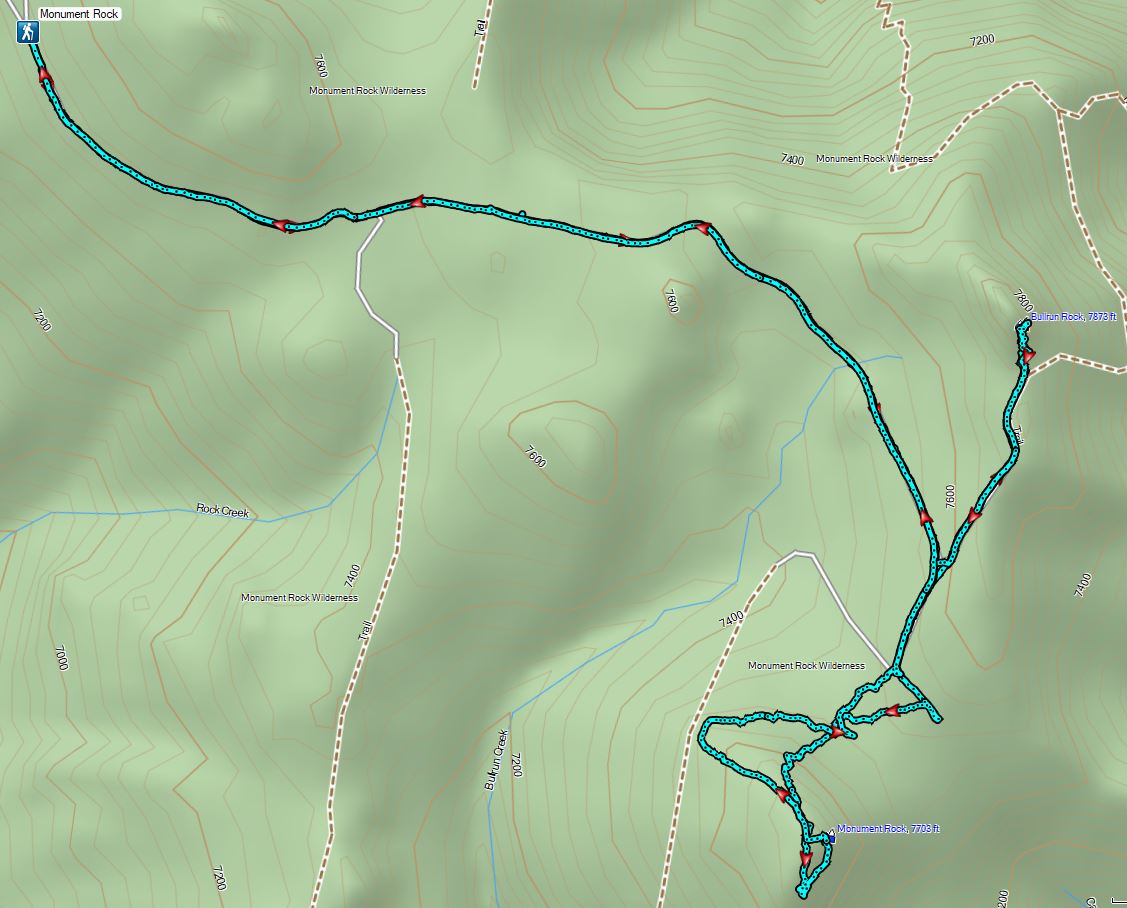
The old road bed wasn’t much more than a cattle trail now but we followed it for approximately 0.2 miles to what was shown on our GPS units as a sharp turn to the right. Sullivan indicated that there was a small cairn in this area marking the start of the route to Monument Rock. We didn’t notice any cairns but comparing the map on our GPS to the one in his guidebook led us to believe this was the correct spot so we followed an elk/cow path to the left but it was leading us too much to the east so we struck off cross country toward the flank of Monument Rock.

 Looking back toward Bullrun Rock.
The initial climb up was a little steeper than we’d expected which led us to believe we may have not been quite where Sullivan would have had us go up, but we managed to make it up to a broad ridge where we then headed uphill through sagebrush.
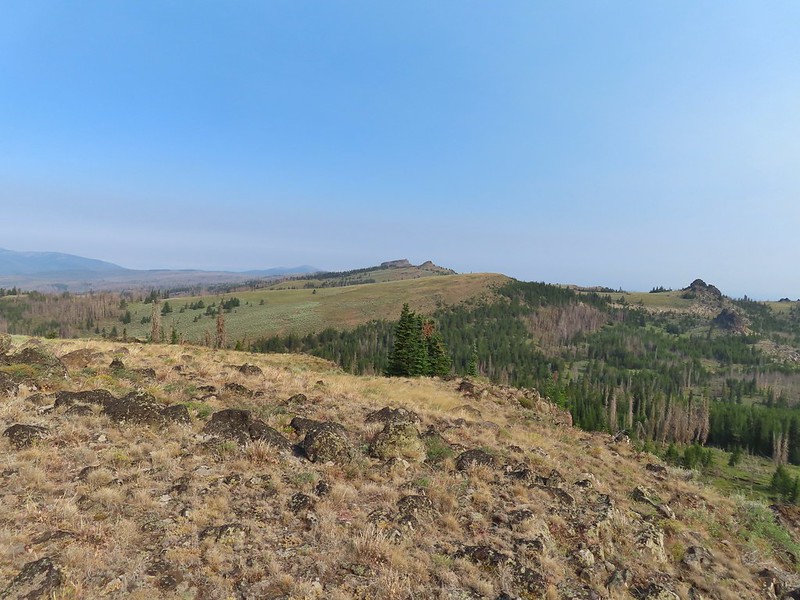 Table Rock from where we gained the ridge.
 Heading up.
Soon the large rock cairn atop Monument Rock was visible (the cairn was likely constructed by Basque shepherds or possibly gold miners long ago).

We made our way over to the andesite outcrop and climbed up to the cairn and took a break.
 Me making my way up to the cairn.
 Bullrun Rock from the cairn.
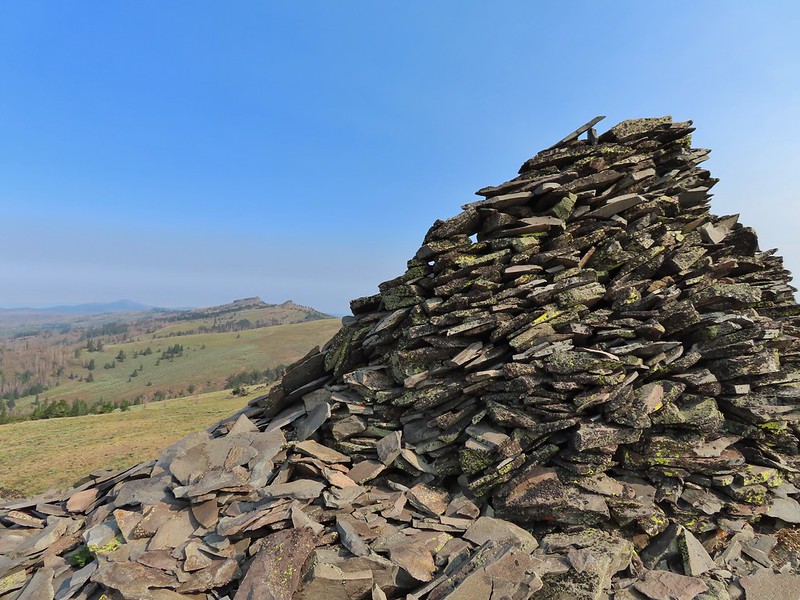 Table Rock from the cairn.
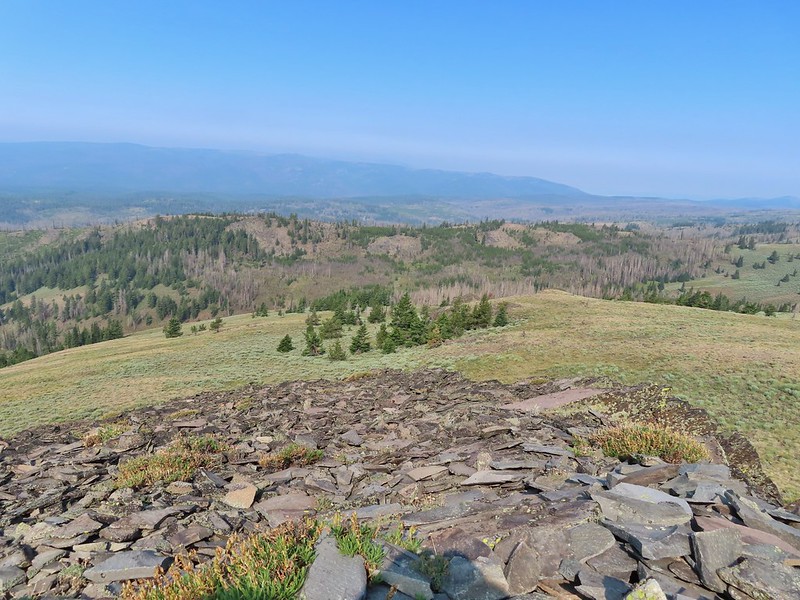 The Monument Rock Wilderness.
The haze had cleared up somewhat by this point giving us blue sky at least overhead as we began our hike back.
 The cairn on Monument Rock from below.
We decided to try a slightly different route back down hoping that we could follow the ridge further down and pick up what was showing on our GPS units as a trail below following South Bullrun Creek. Sullivan’s map showed the first part of the trail from the turn where we’d left the road bed extending 0.3 miles to a spring but the Garmins showed the trail then continuing south. Our thought was that if a trail had at one time been down there it was likely built on a less steep grade than the side we’d scrambled up.
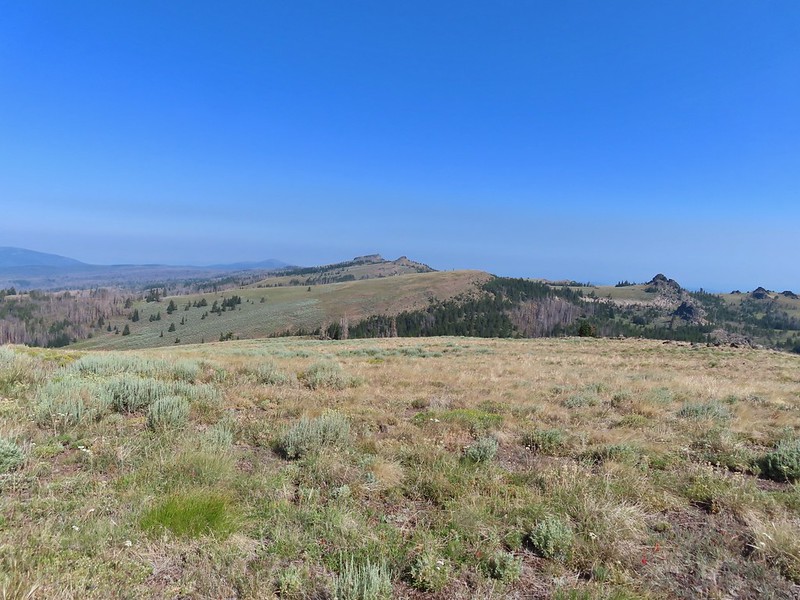 Heading downhill.
 Heather spotted this sheep moth.
When we came to what appeared to be an old jeep track or path of some sort we turned right (north) and followed it down a short but still steep hill.
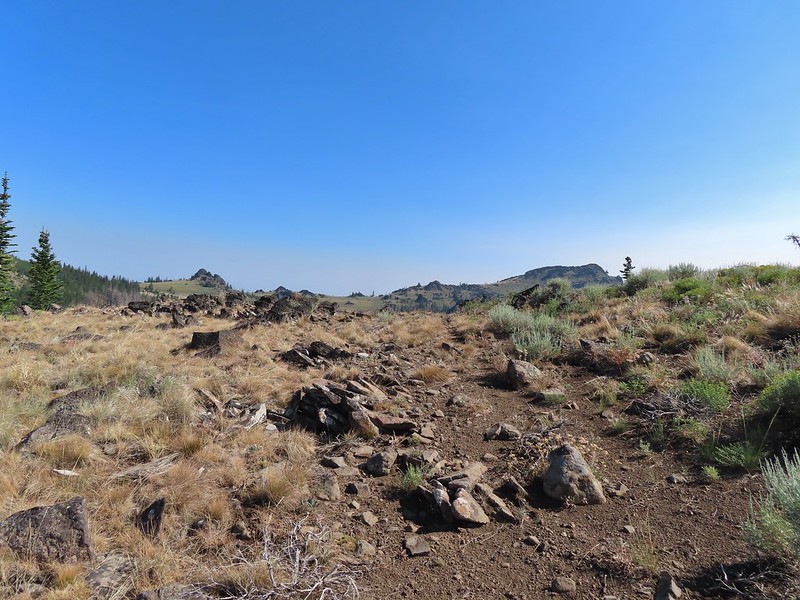
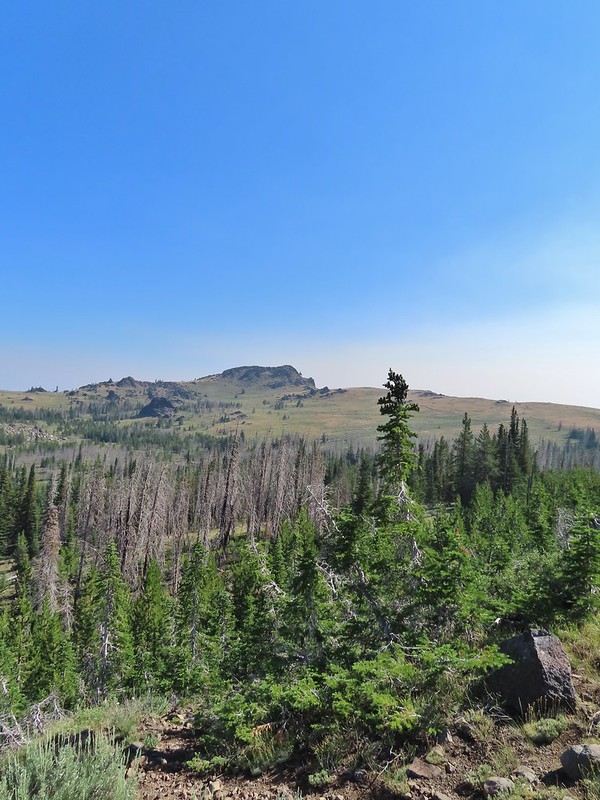 The path leading downhill.
The trail that was shown on the GPS dropped over 150′ from where we were, presumably down to the spring, but that was about 120′ more than we needed to lose so when the hillside leveled out a bit we made a hard right turn and made our way back to the track we’d taken earlier. We arrived below the point where we’d scrambled up and then headed back to the old road bed. Once we rediscovered the road we followed it back past the post and to the trailhead.
 Table Rock in the distance with Bullrun Rock on the right.
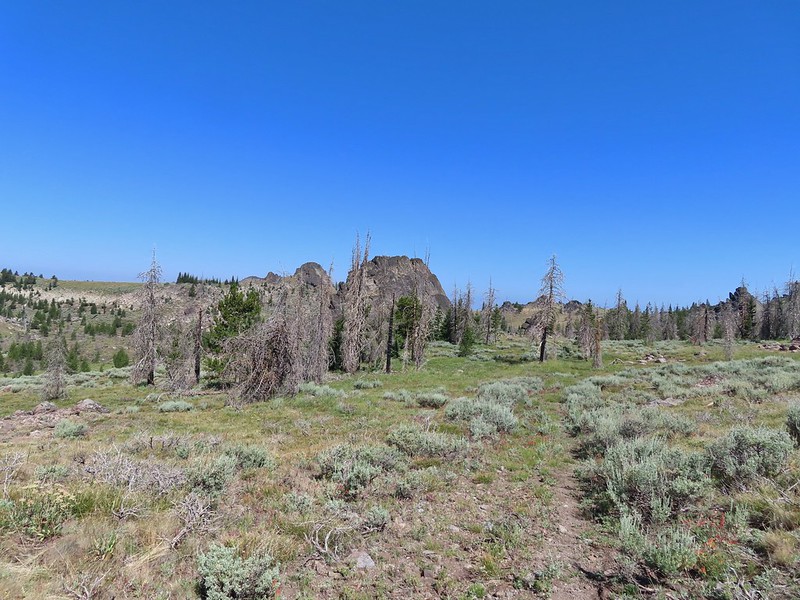
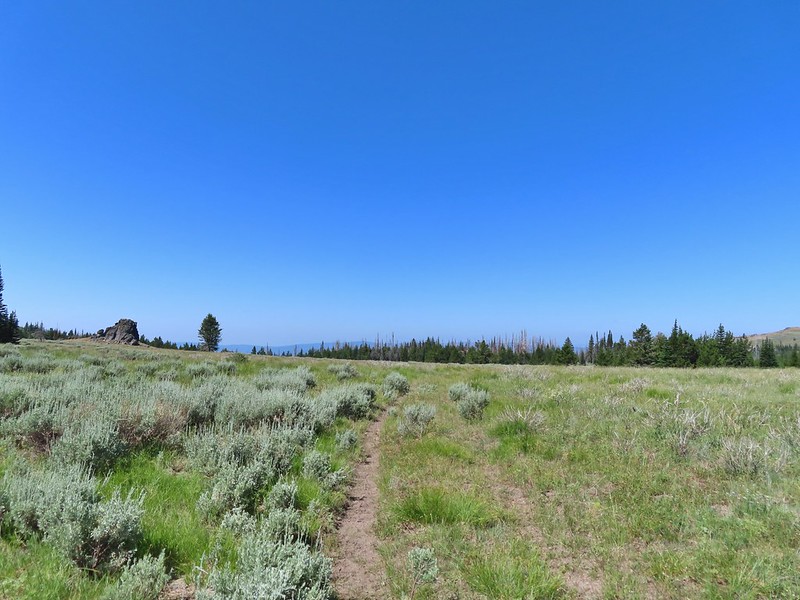



 Robin
Robin
 Quite a bit of a difference from the morning.
The hike here came in at an even 7 miles with just under 900′ of elevation gain.
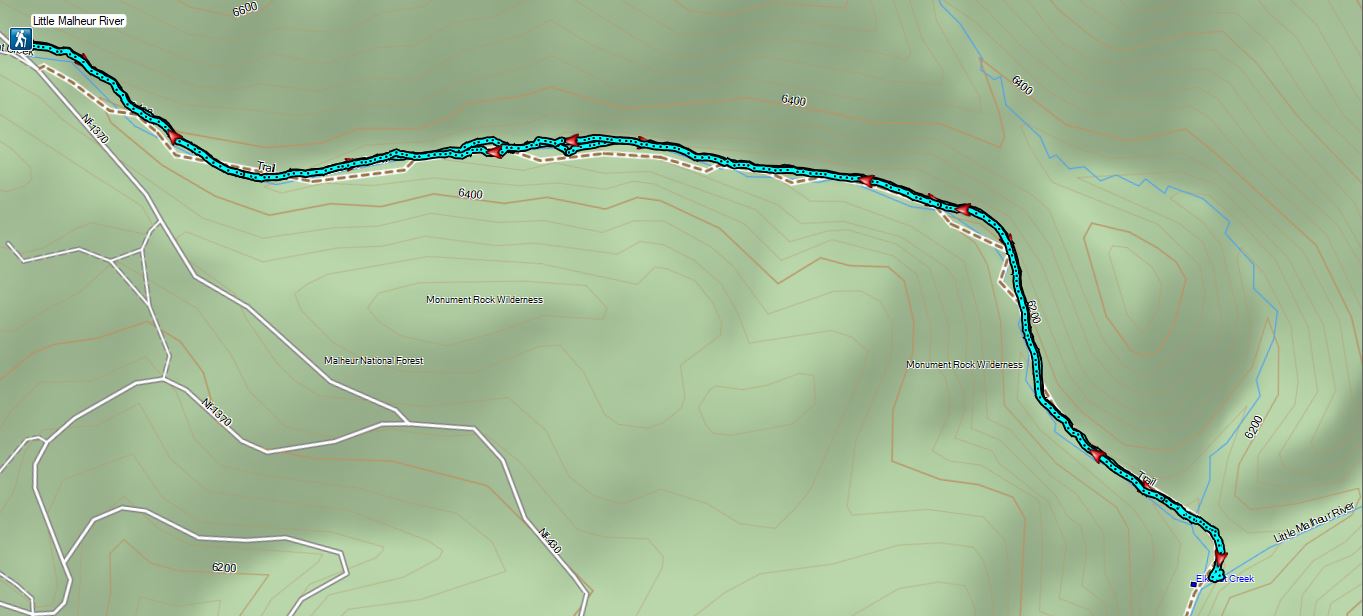
We had a little left in our legs after the Monument Rock hike so after navigating the rough 3.8 miles back to the Elk Flat Springs Campground we continued another 3/4 of a mile on Forest Road 1370 to the North Little Malheur Trailhead. The Little Malheur River had been one of Sullivan’s featured hikes in previous editions of his Eastern Oregon book but repeated fires and lack of maintenance have relegated it to a back of the book entry. We had decided to check it out to see what the trail condition was and to hopefully make it to the Little Malheur River which was approximately 2.2 miles from the trailhead.

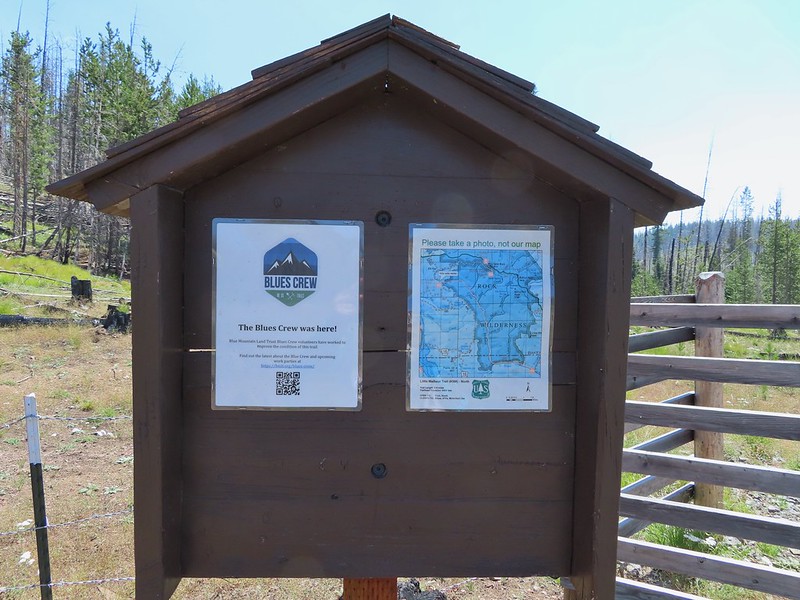
We were encouraged to find signs at the trailhead showing that the Blues Crew had done some work on the trail.
We were less excited that a cow crew was currently present.
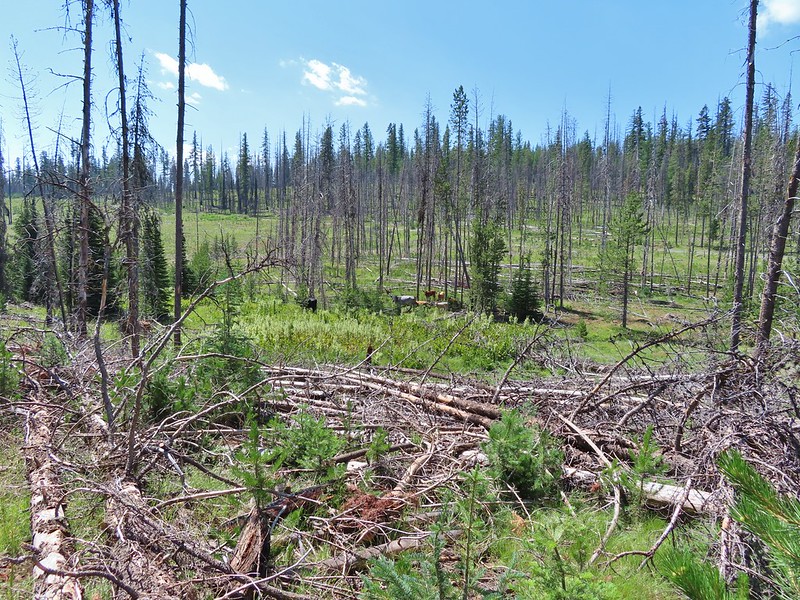

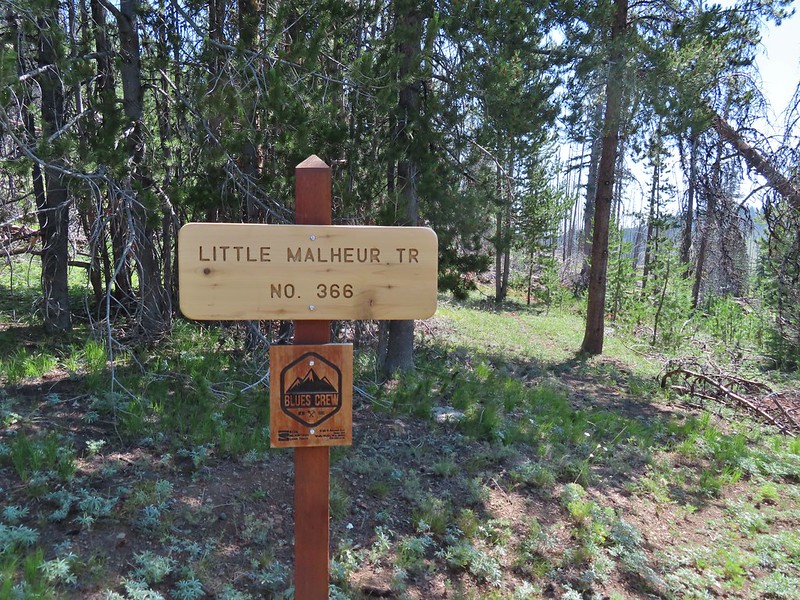
In true cow fashion instead of just letting us pass by above them on the trail they ran uphill onto the trail and the for the next couple of miles we occasionally caught up to them and they would run off along the trail again kicking up dust and leaving cow pie mines along the path but I digress. Getting back to the hike, the trail was faint but flagging and a few rock cairns assisted in keeping it found (along with the cows).

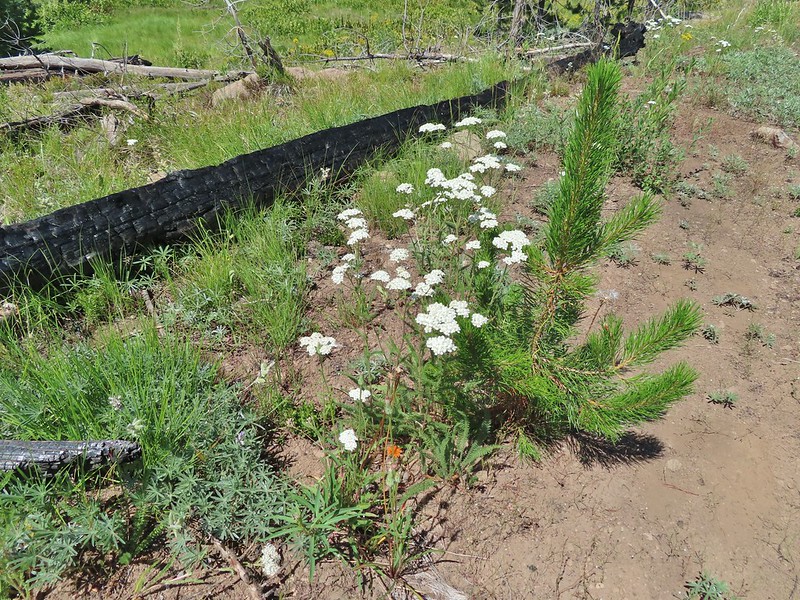 Yarrow and an orange agoseris.
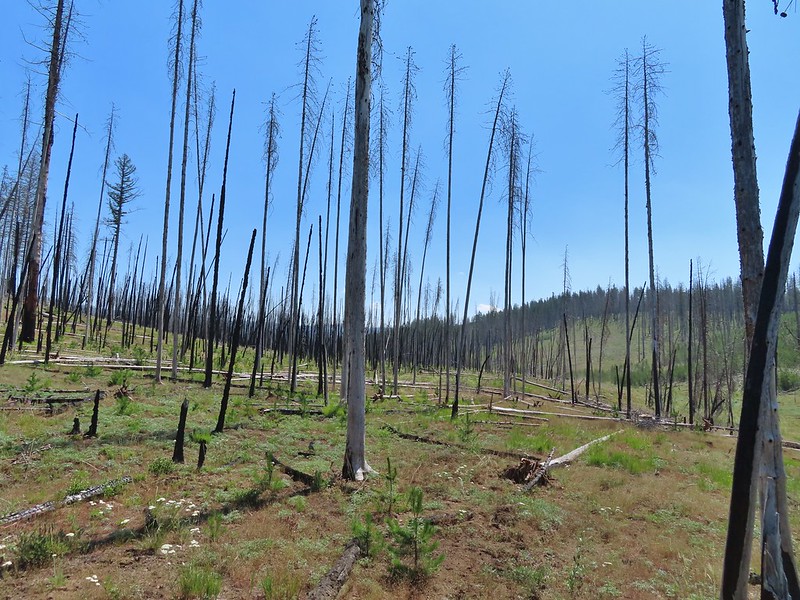
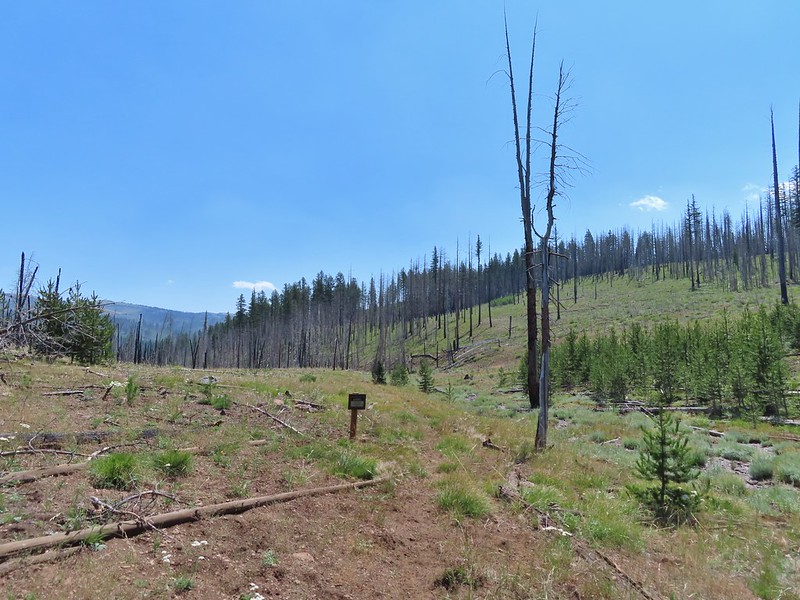 Wilderness sign marking the boundary of the Monument Rock Wilderness.
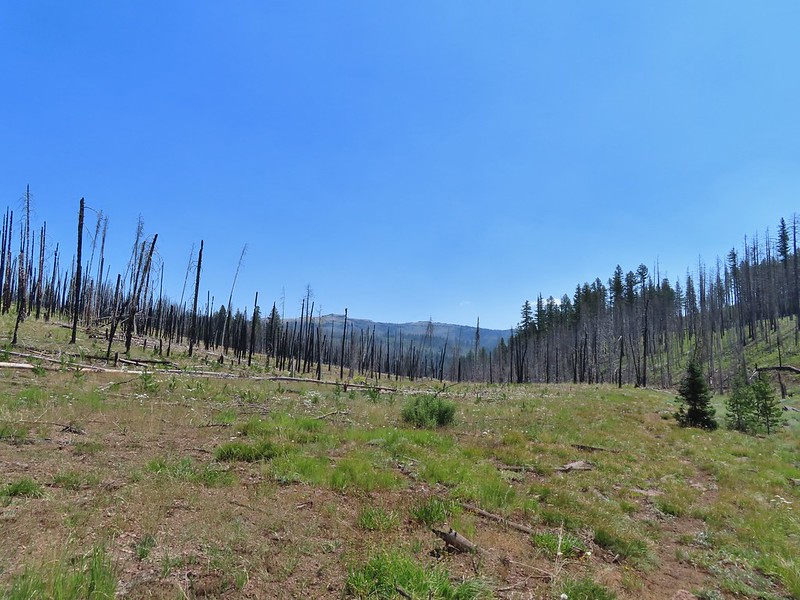 Table Rock from the trail.
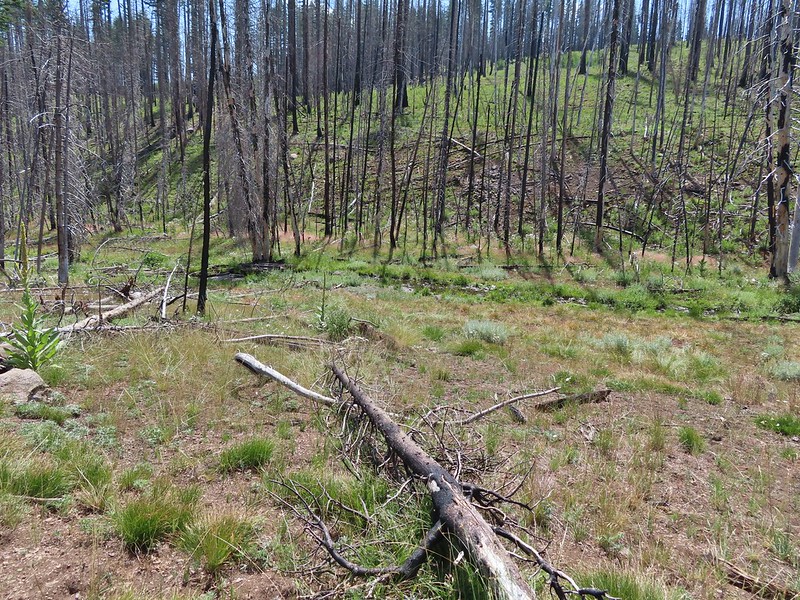 Elk Flat Creek.
 An orange flag to the right ahead.
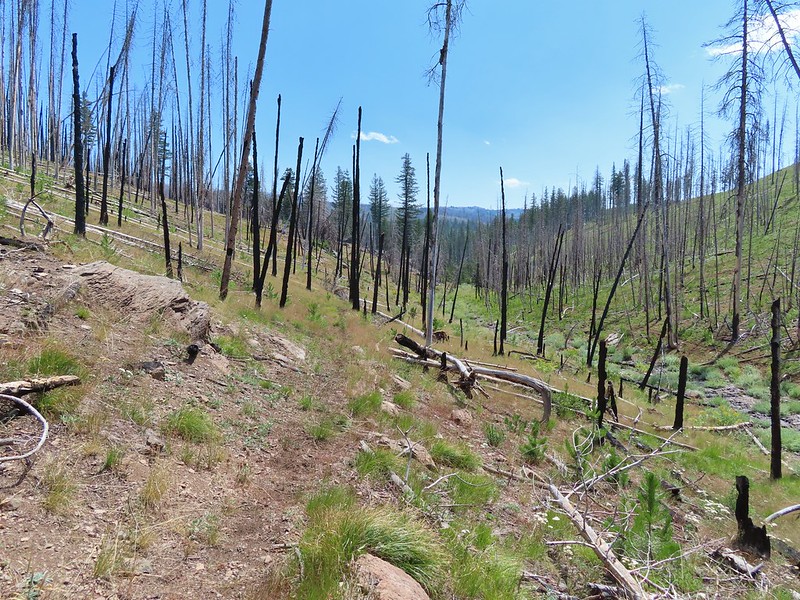 The trail following Elk Flat Creek.
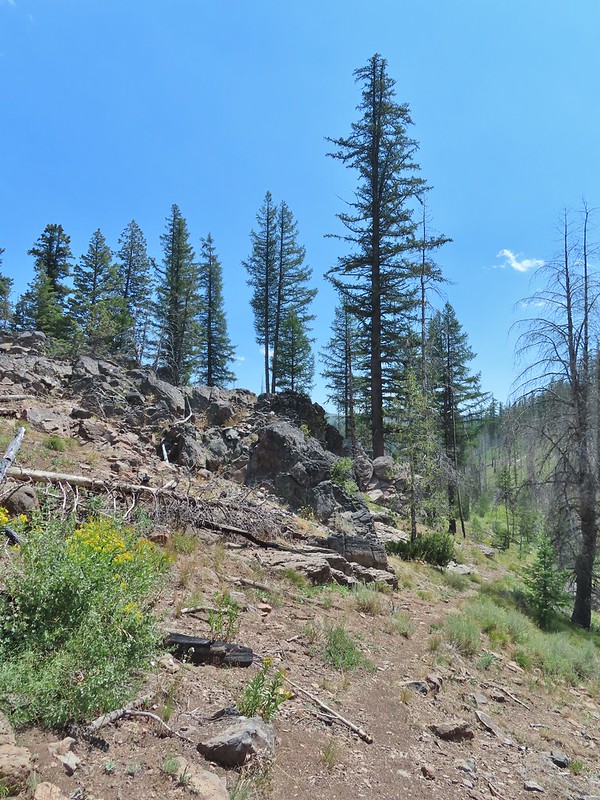 A few areas of green trees remained.

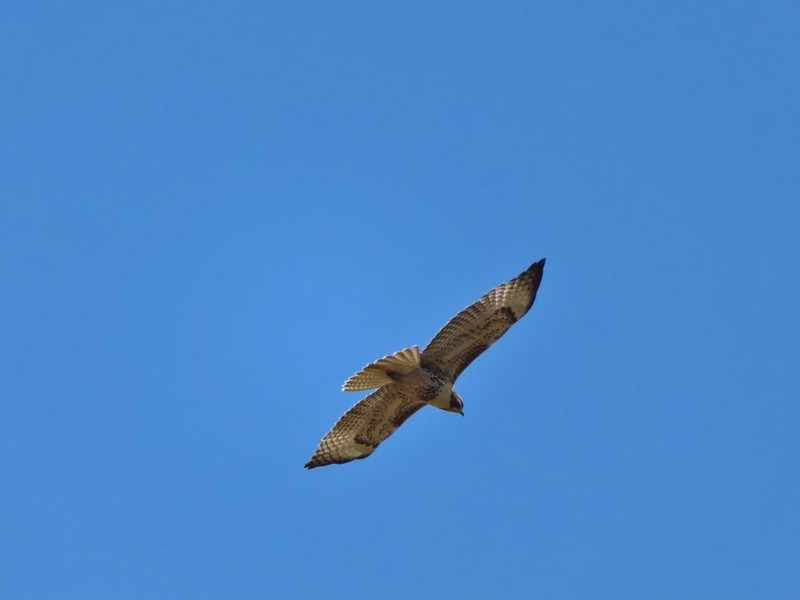
We were entertained by a large number of hawks in the area.


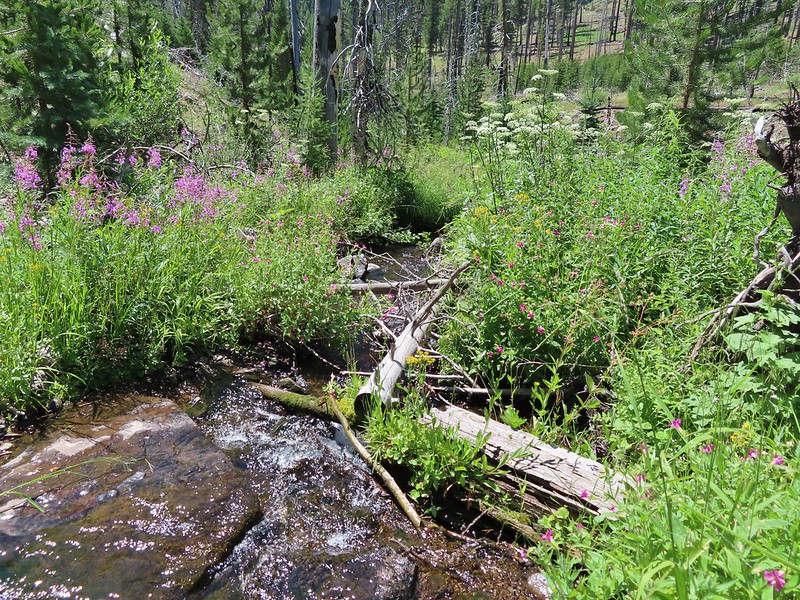
 Unnamed stream shortly before reaching the Little Malheur River.
 Monkshood along the stream.
 It appeared that quite a few trees survived along the Little Malheur.
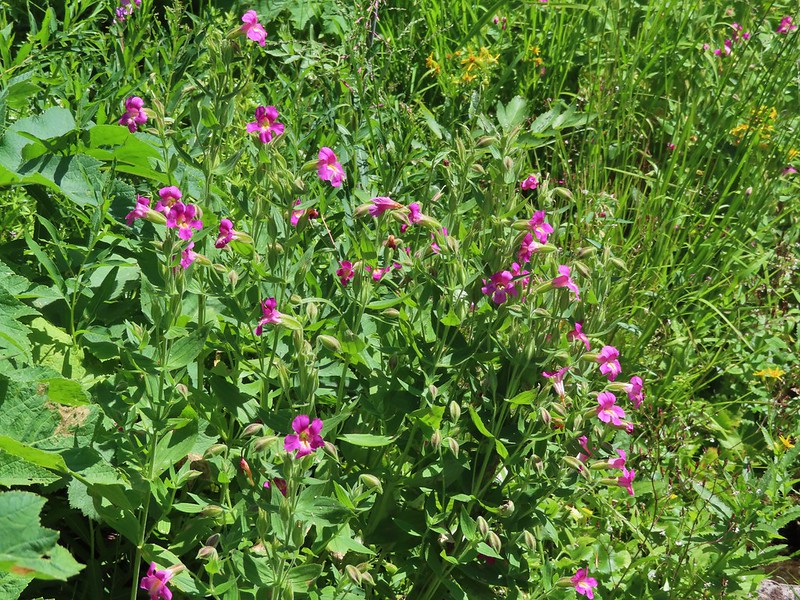
 The trail crossing the Little Malheur River. We were especially excited to see a lot of nice pink monkeyflower along the banks.
We reached the river which wasn’t much more than a creek here, but it was a pretty setting. Wildflowers and green vegetation hosted a number of butterflies.



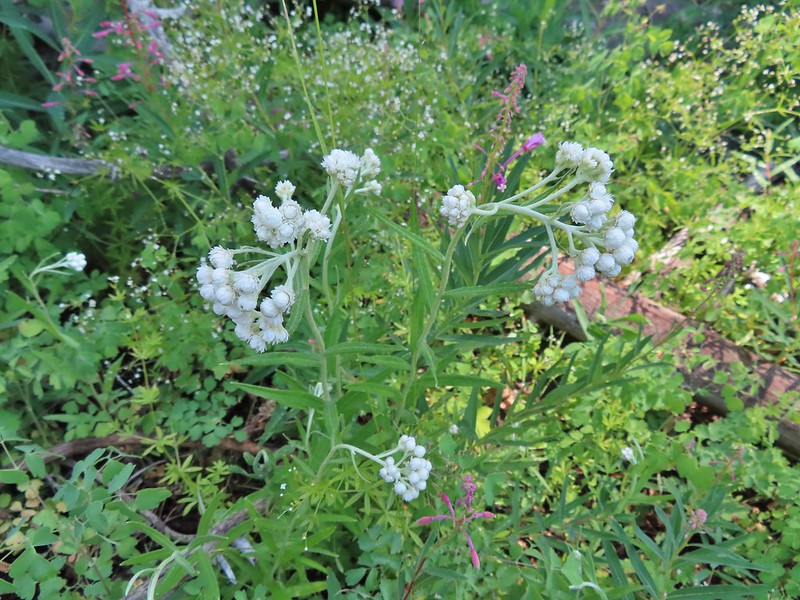 Pearly everlasting

After a nice relaxing break along the river we returned the way we’d come. In theory the trail extends another 5 miles to the south trailhead crossing the river 7 times along the way but we had gone far enough for today. It was nice not to be following the cattle on the way back.
 Ground squirrel
 Either a big ground squirrel or a small marmot.
 Another hawk.
 Fluffy clouds forming over the Monument Rock Wilderness.
Our hike here, which included just a bit of wandering, came in at 4.8 miles giving us 11.8 for the day.
It had been a good ending to our quest to visit all of Oregon’s designated wilderness areas and we celebrated with an early dinner at 1188 Brewing in John day before turning in early so that we could get up in the morning and head into the Strawberry Mountain Wilderness. Happy Trails!
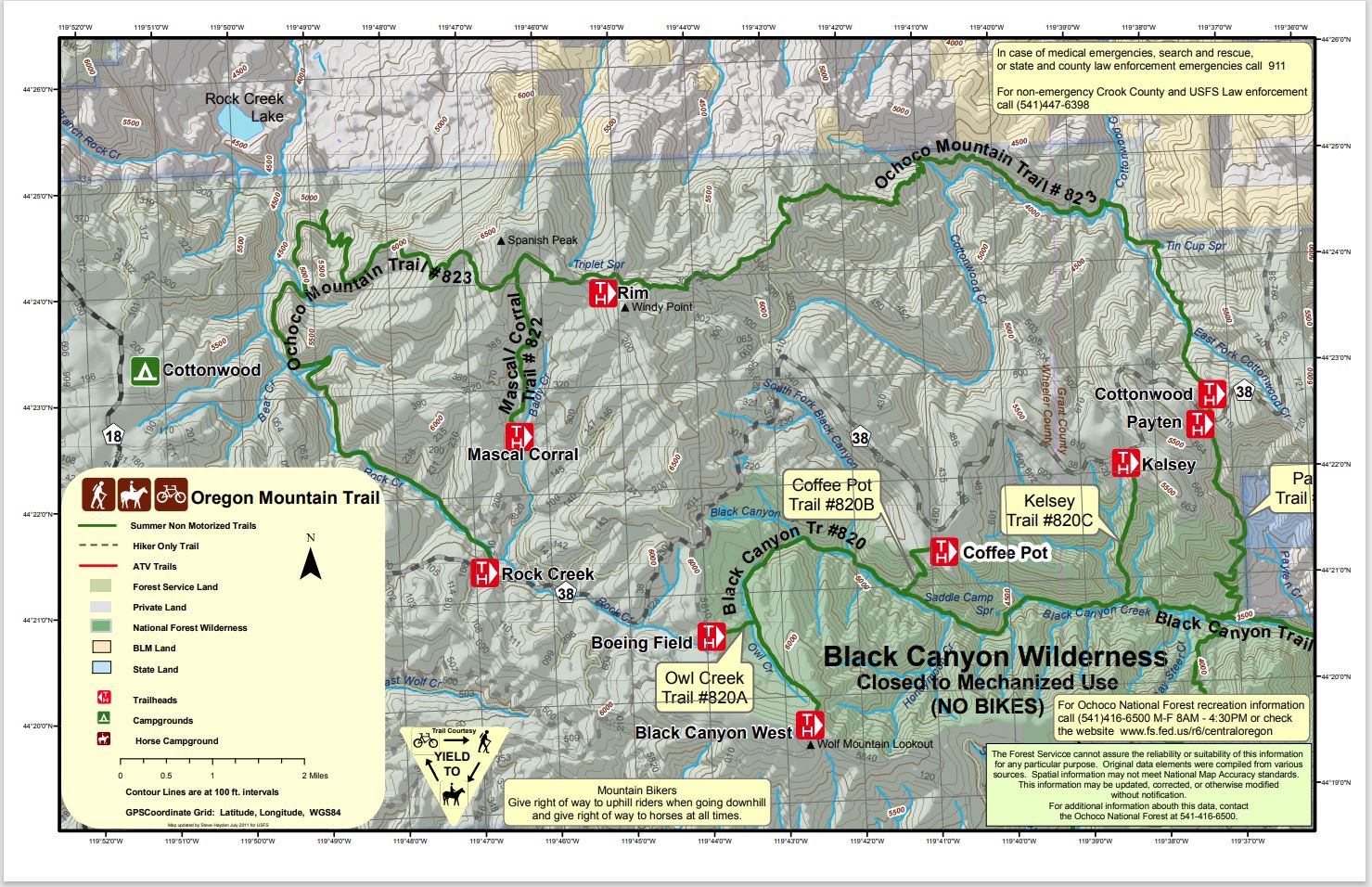
 Continuing along the Waterman Ditch.
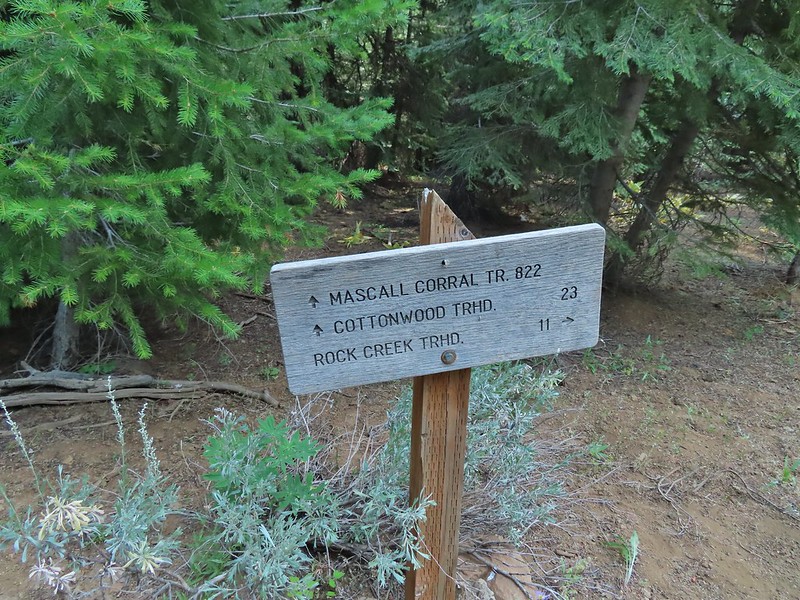
 If this trail sign was marking a junction it wasn’t clear where the other trail was.
 Campsite at the saddle.
 The Rim Trail sign on a tree trunk.




 Rock Creek Lake
 Gaining the ridge.

 View from the rim.
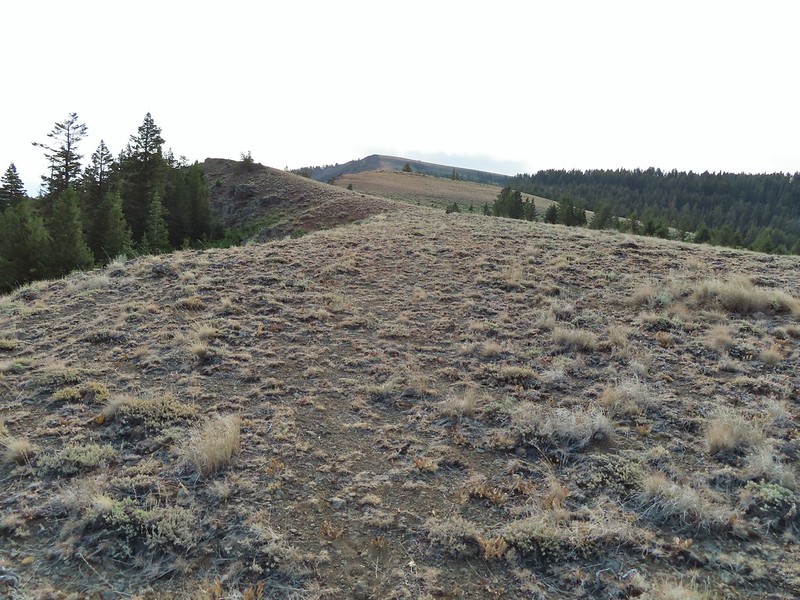 Spanish Peak
 A local
 Astter
 Some sort of delphinium I think.
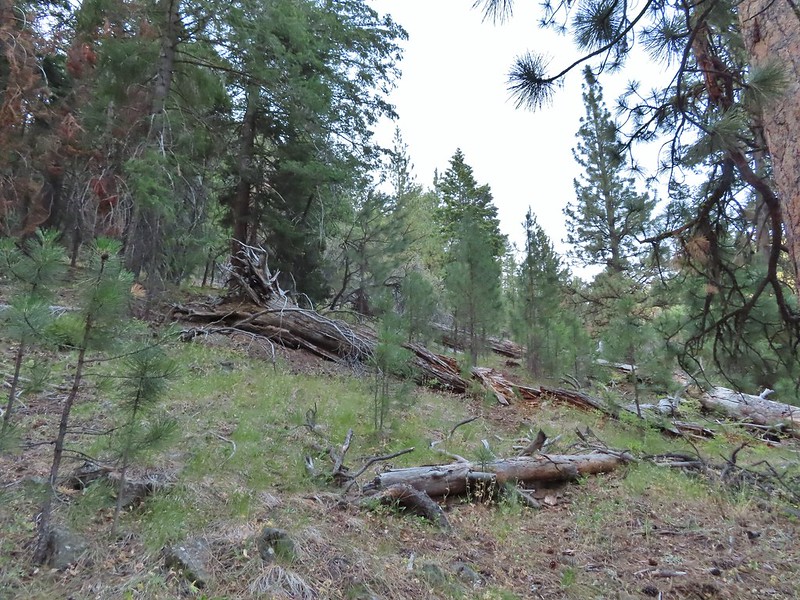
 Downed trees across the trail ahead.
 Interestingly camouflaged beetle on the upper onion.
 Lupine
 A checkermallow
 Some more downed trees that we had to go around.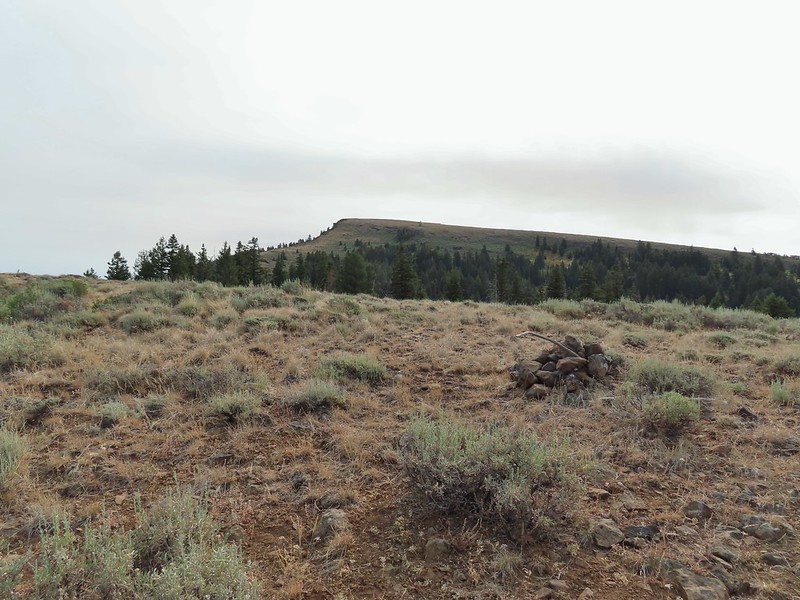


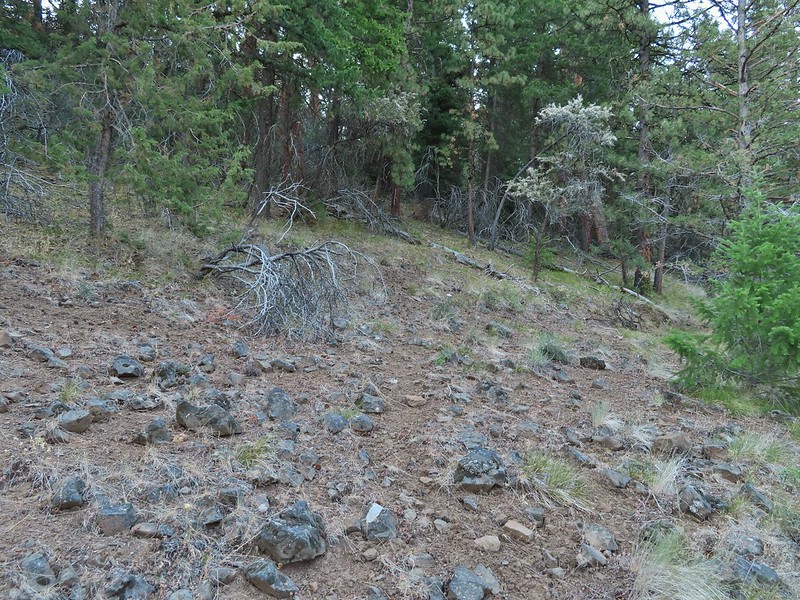
 We left the trail here, note the small cairn on the left.
 Heading uphill.
 Scarlet gilia
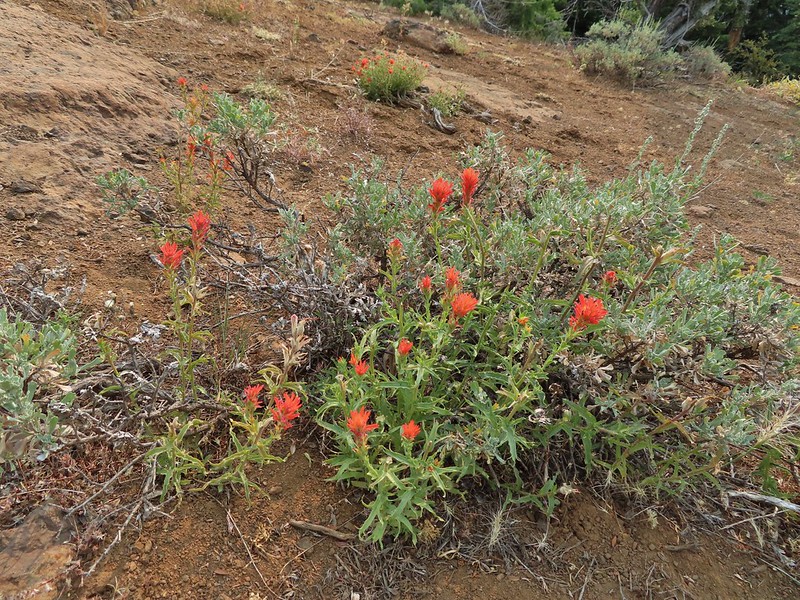 Paintbrush
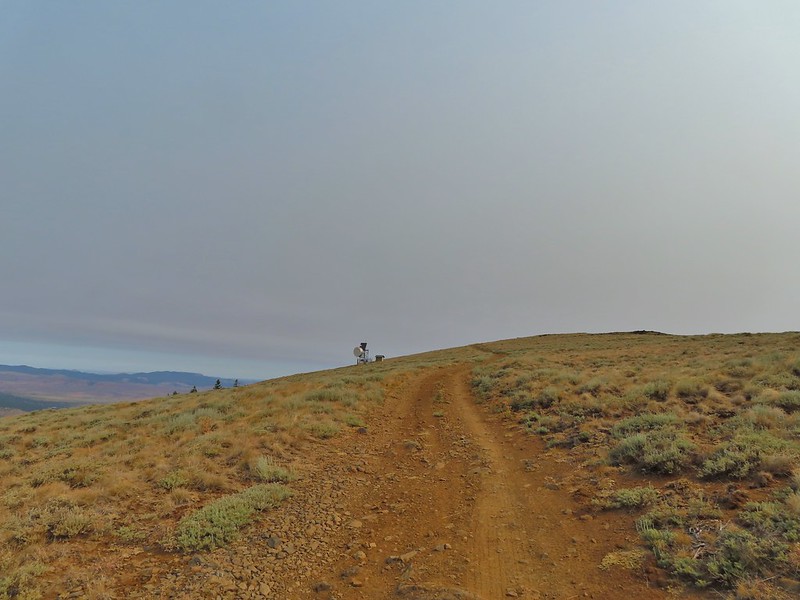
 The site of the former lookout.
 Looking out toward the John Day River valley.
 SE to Windy Point.
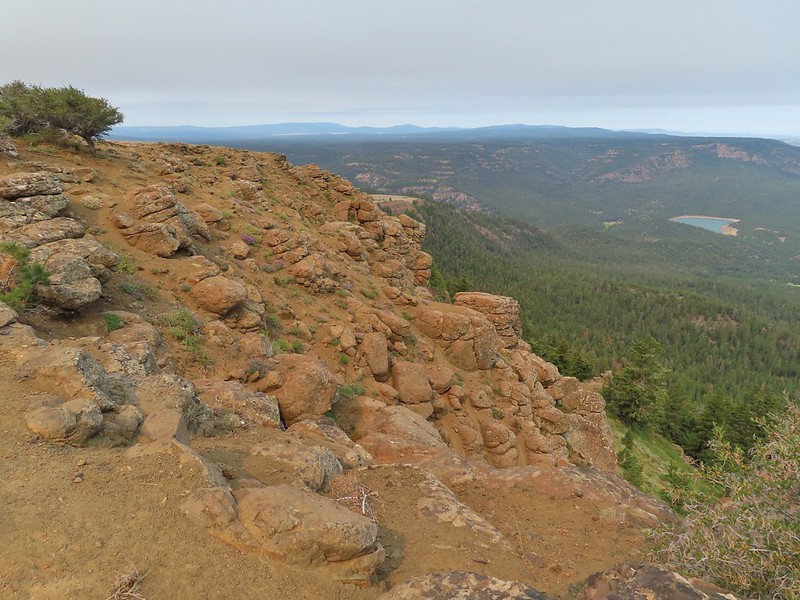 West to Rock Creek Lake and on the horizon the flat topped Lookout Mountain (
 NE to the John Day River Valley.
 Lookout and Round Mountain and the rim that we had hiked up below Spanish Peak.
 The Pisgah Lookout on the far side of the Bridge Creek Wilderness (
 A hazy Mount Hood to the NW.
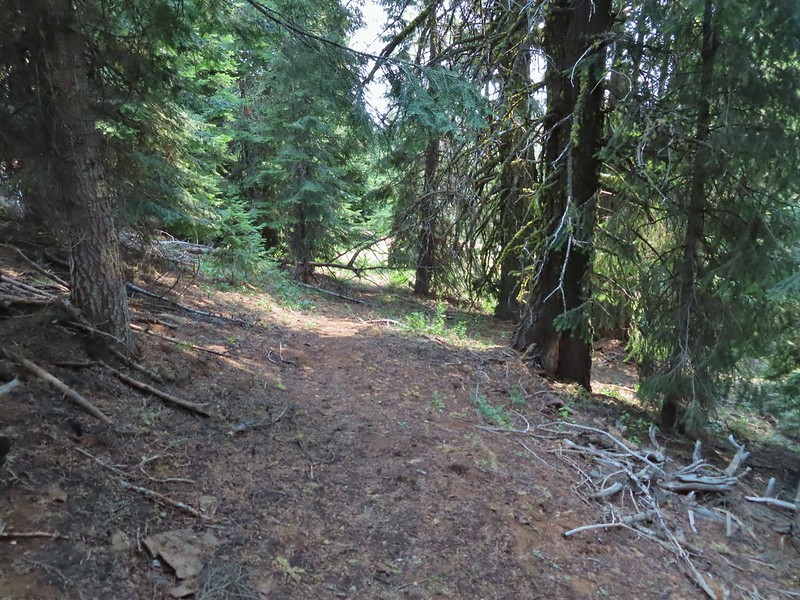

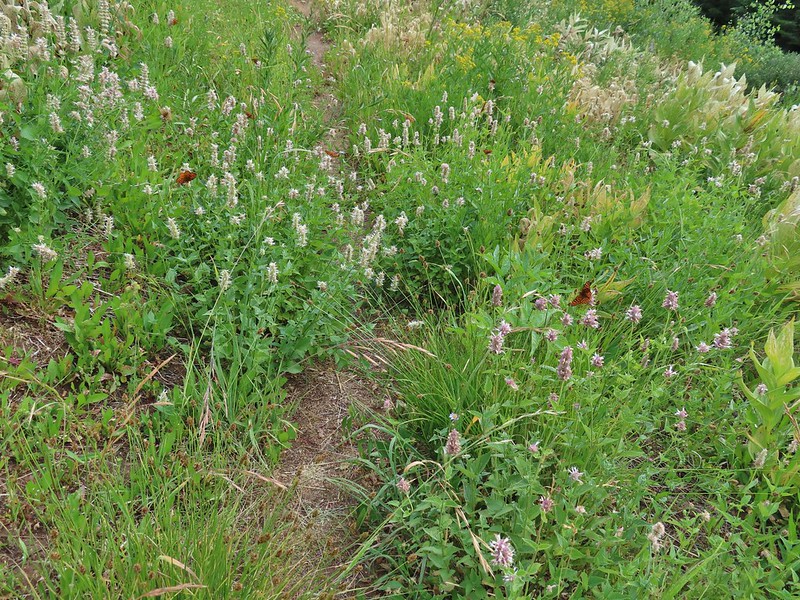

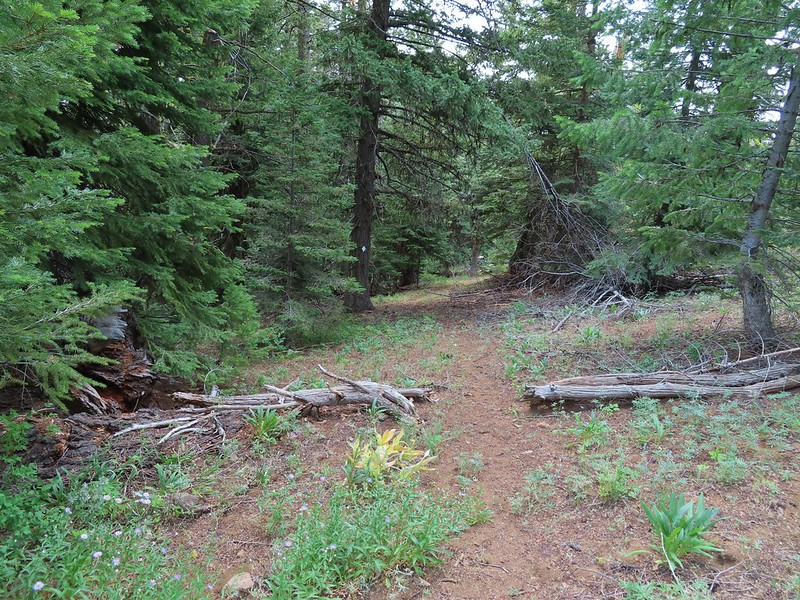
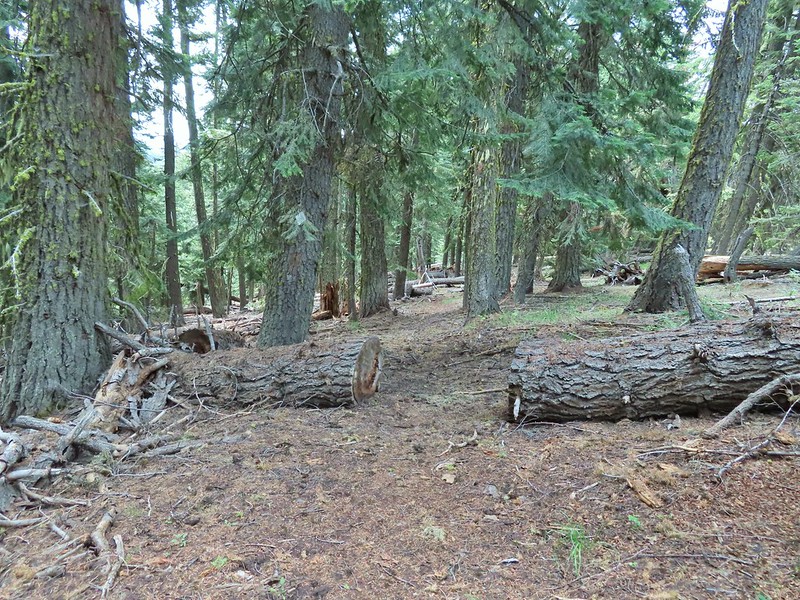
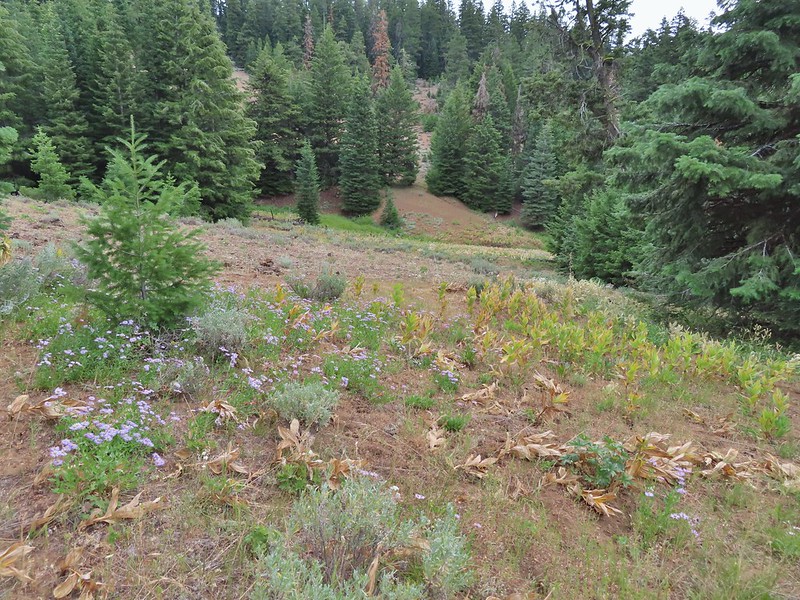 Baldy Creek was on our left.
 Red-tailed hawk
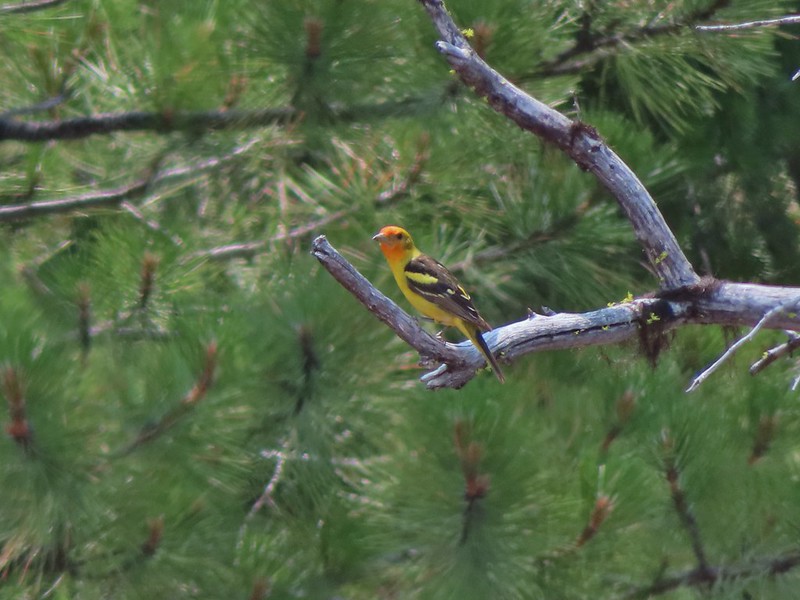 Western tanager
 Arriving at the trailhead.
 Signage at the trailhead.
 Baldy Creek below FR 3820.
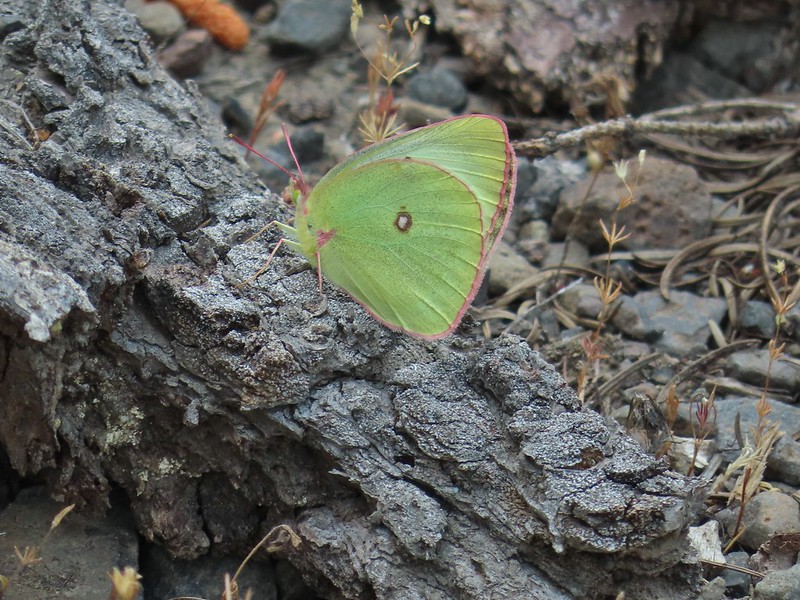 A sulphur butterfly of some sort.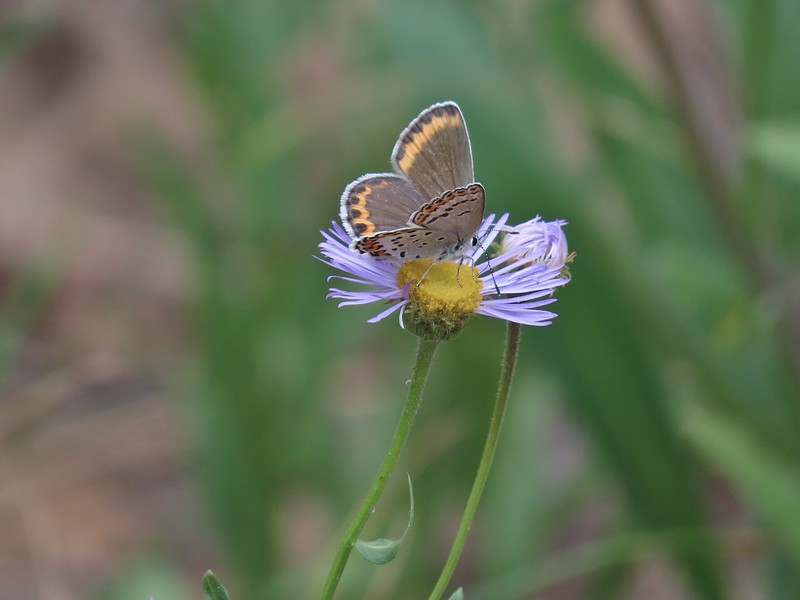
 A watermellon or June bug as we called them growing up.
 FR 3820 meeting Arvid Nelson Road.
 Spanish Peak from Arvid Nelson Road.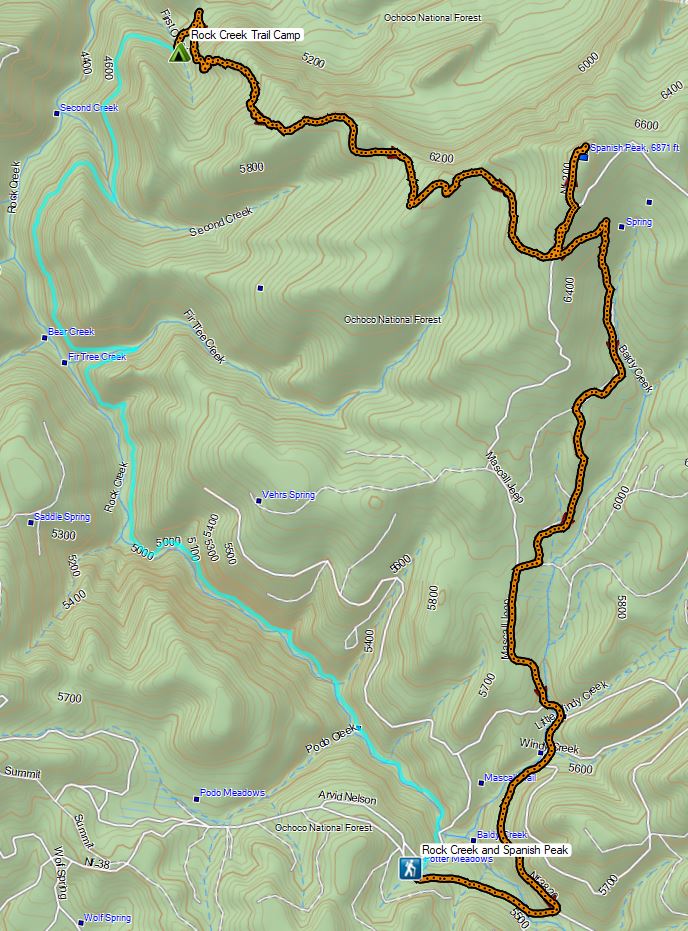

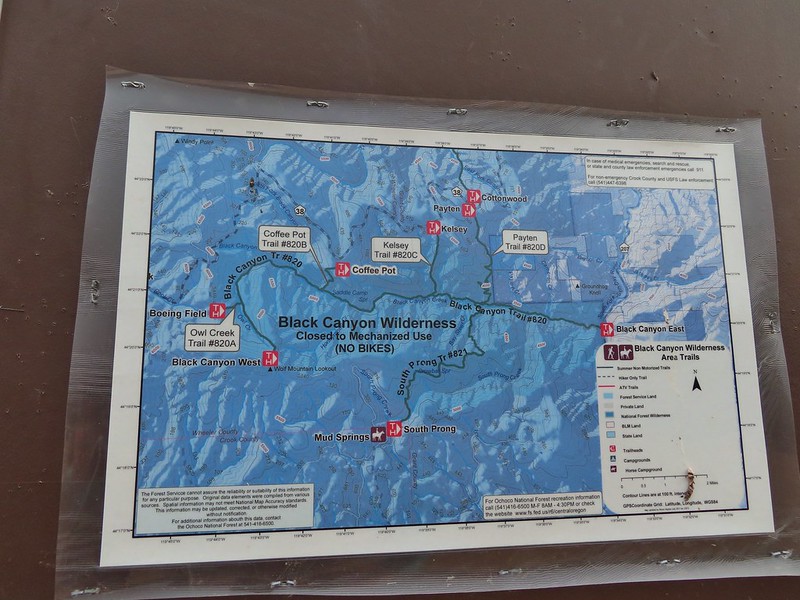
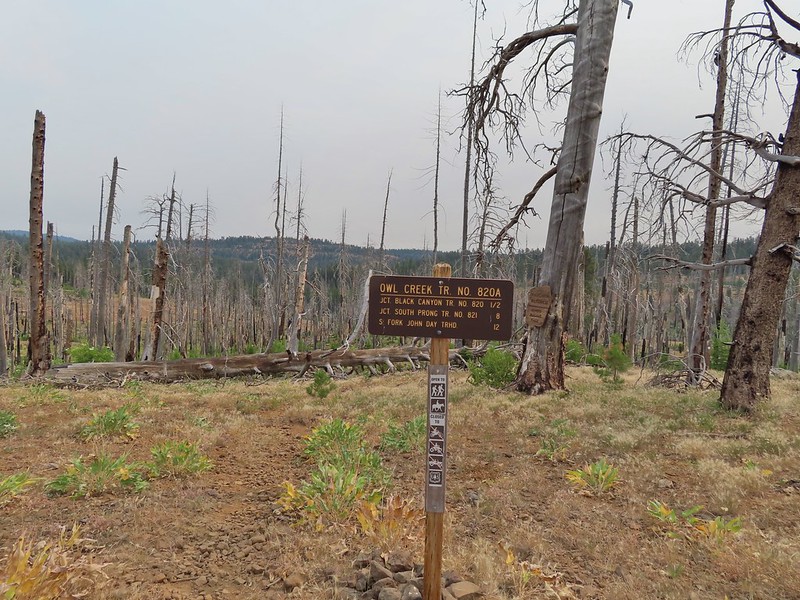
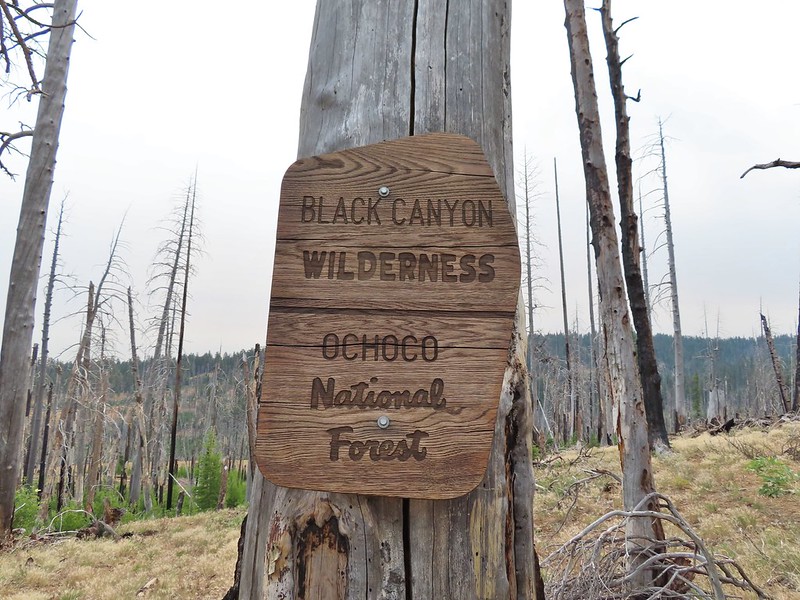

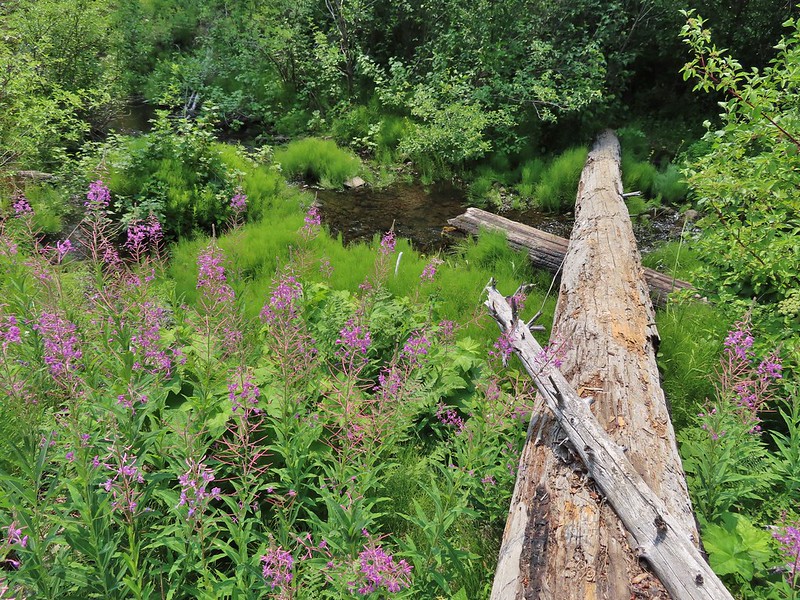
 Aster, paintbrush, and fireweed.
 Fireweed, aster, and pearly everlasting.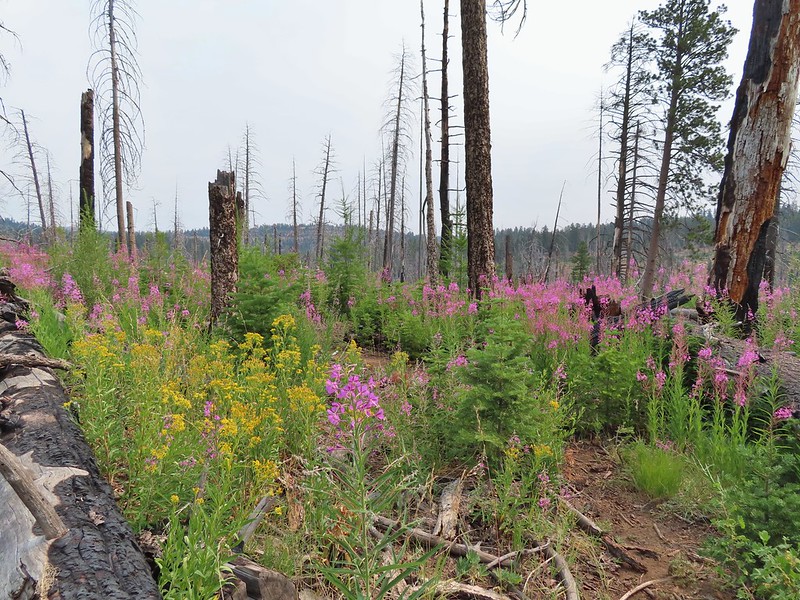
 Clouds and smoke mixing in the sky made it hard to tell if any thunderstorms might be developing.
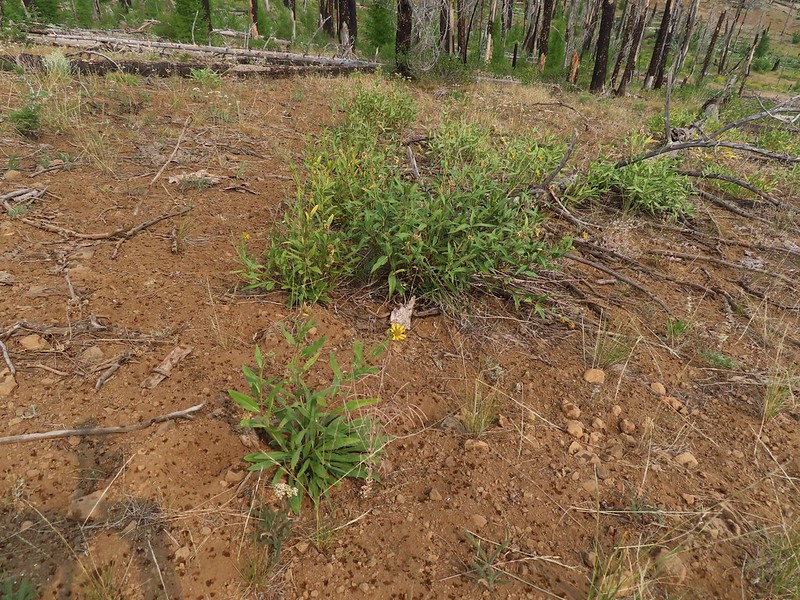 We never heard any thunder but we did briefly get sprinkled on.
 Ground squirrel.
 Columbine
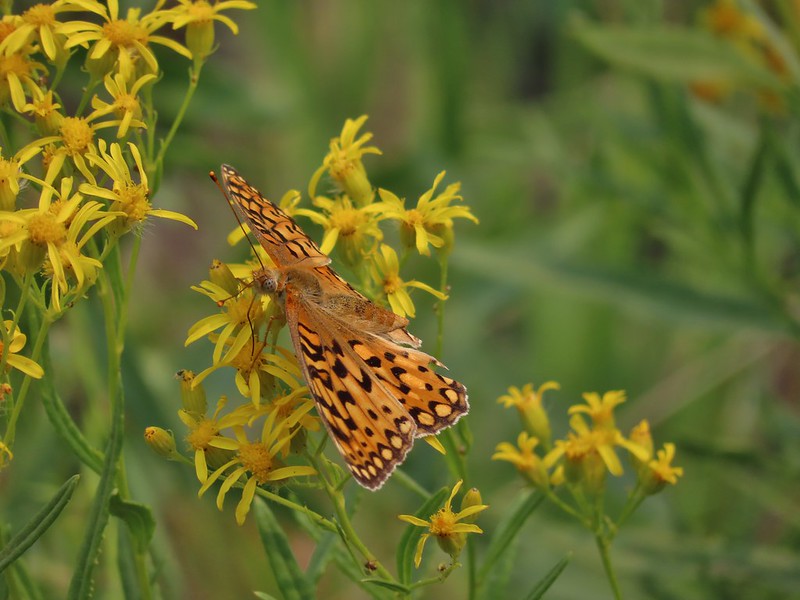 Fritillary butterfly
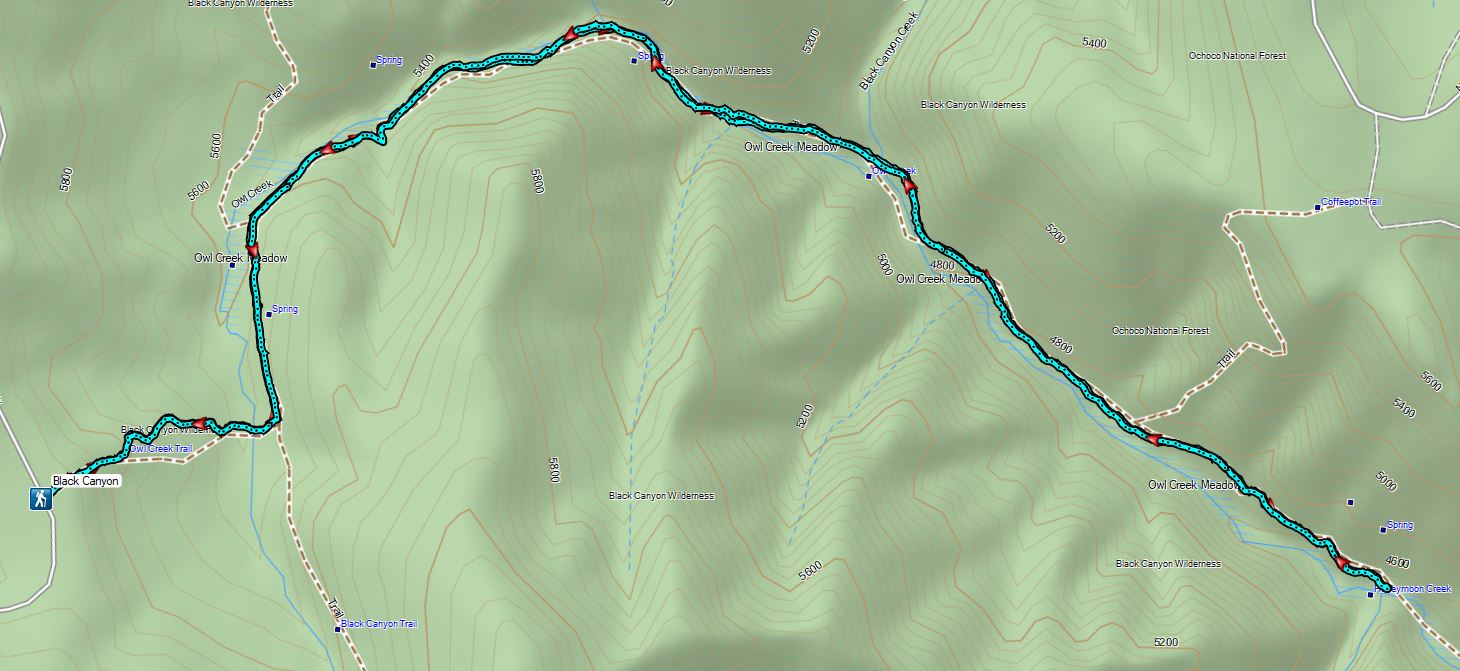
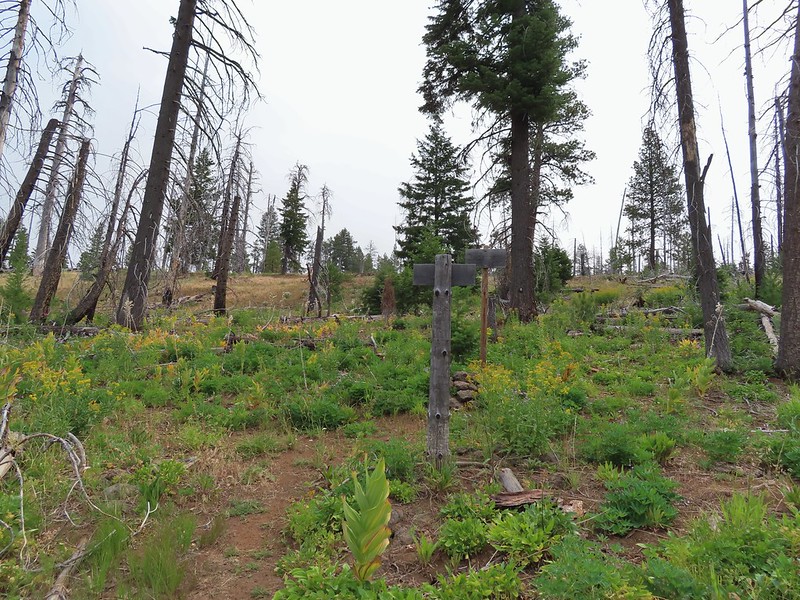 Black Canyon Trail junction.


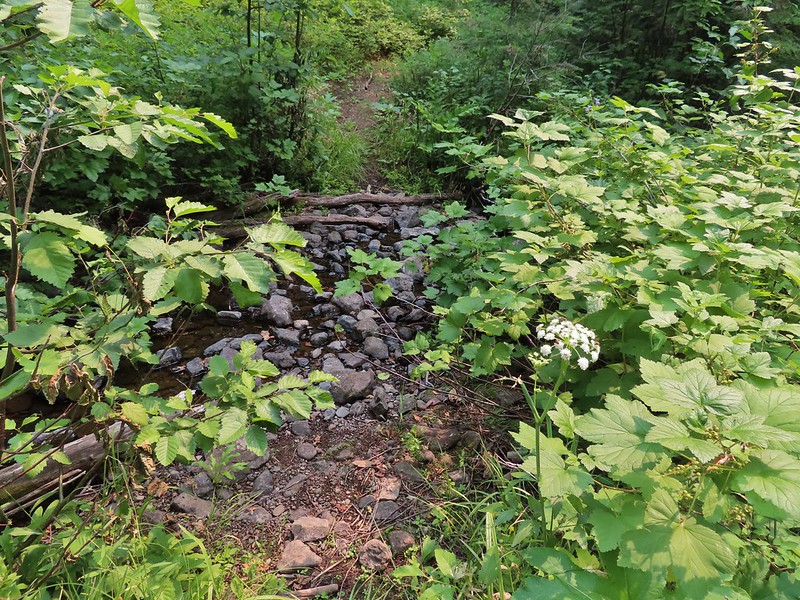 Owl Creek crossing approximately 1.5 miles from the junction.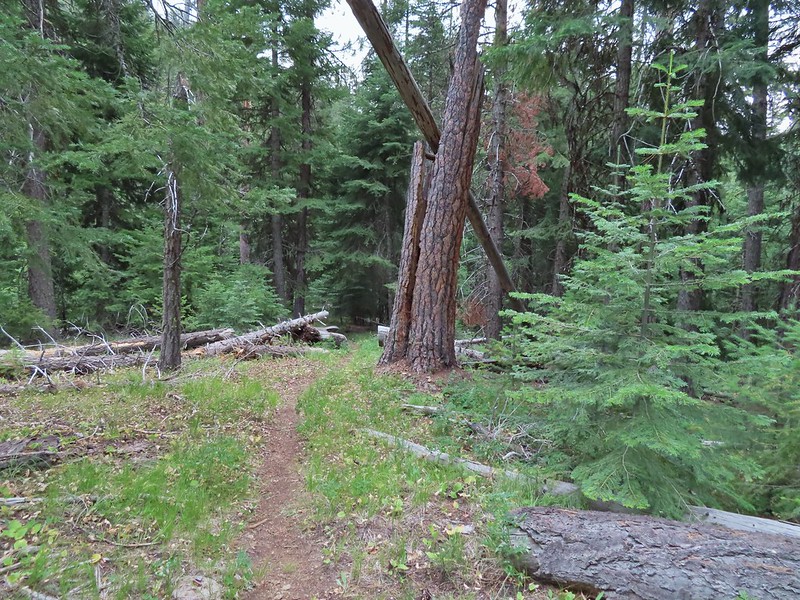


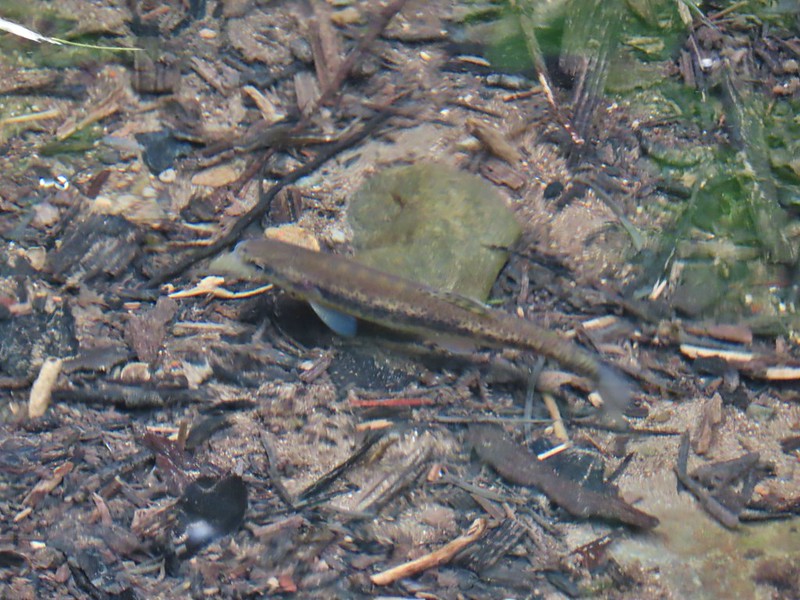 Fish in Black Canyon Creek


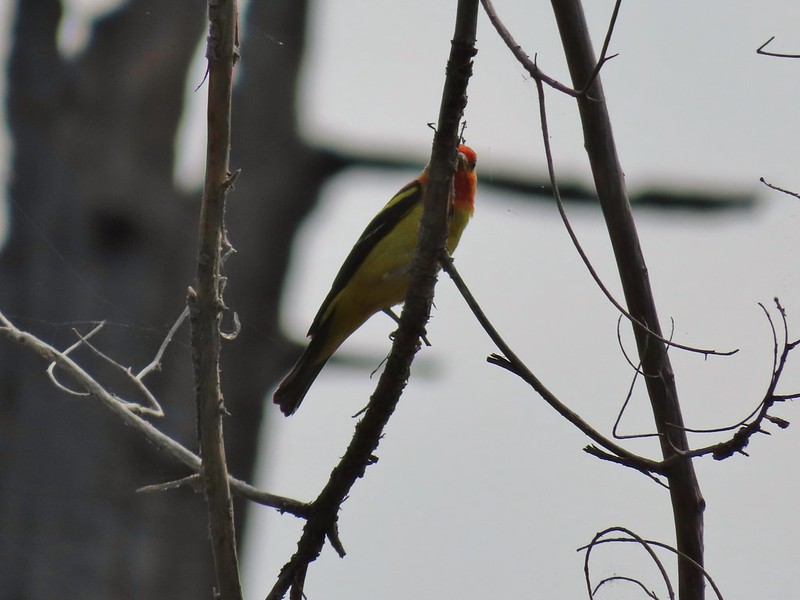 Western Tanager
 California tortioseshell
 Western Jacob’s ladder
 Black Canyon Creek
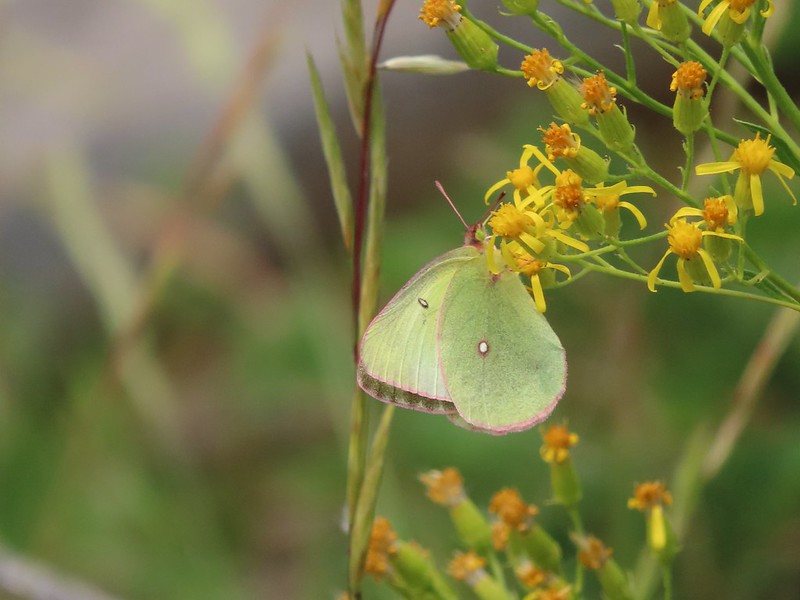



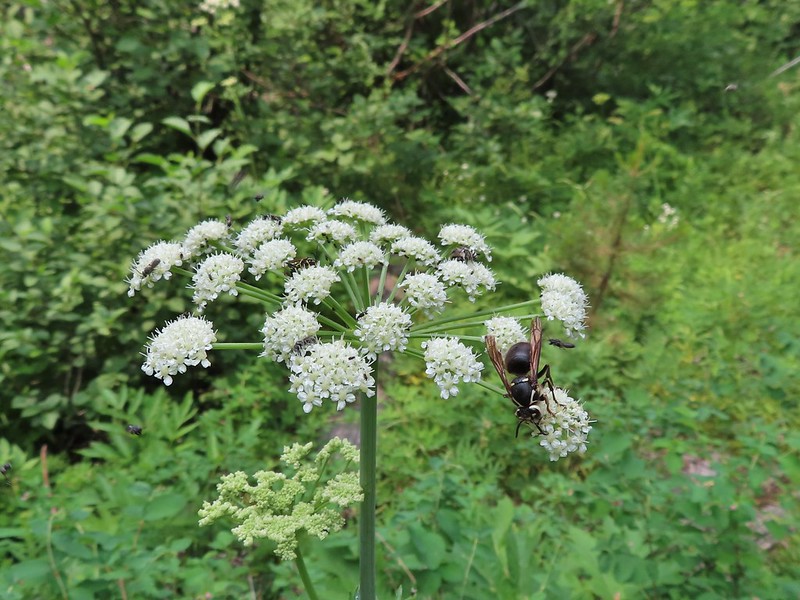 The number of insects on the blossoms and their size differences were fascinating.
 Snacks

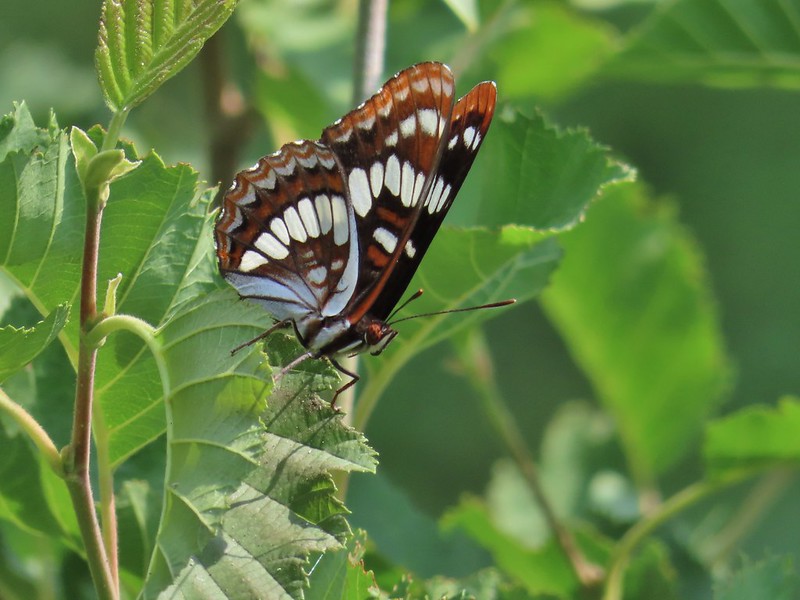 Lorquin’s adrmiral

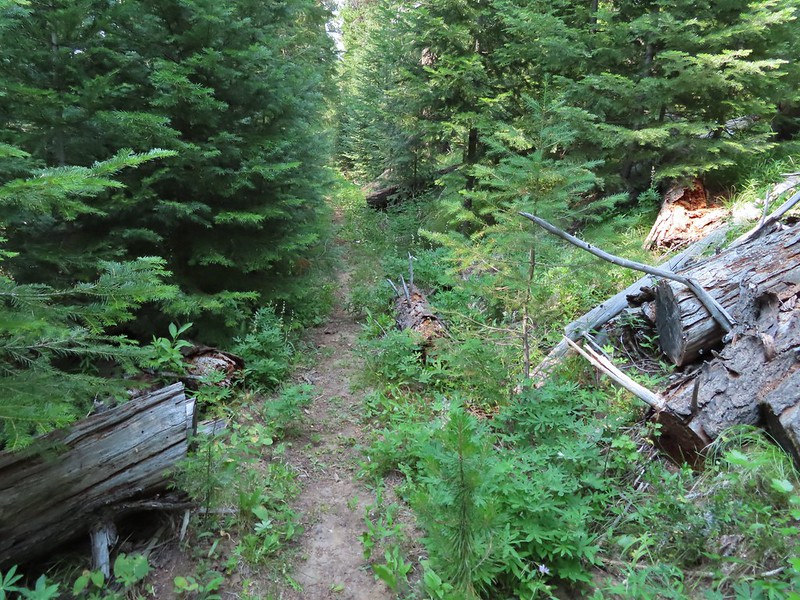
 A little light on the tread in this section.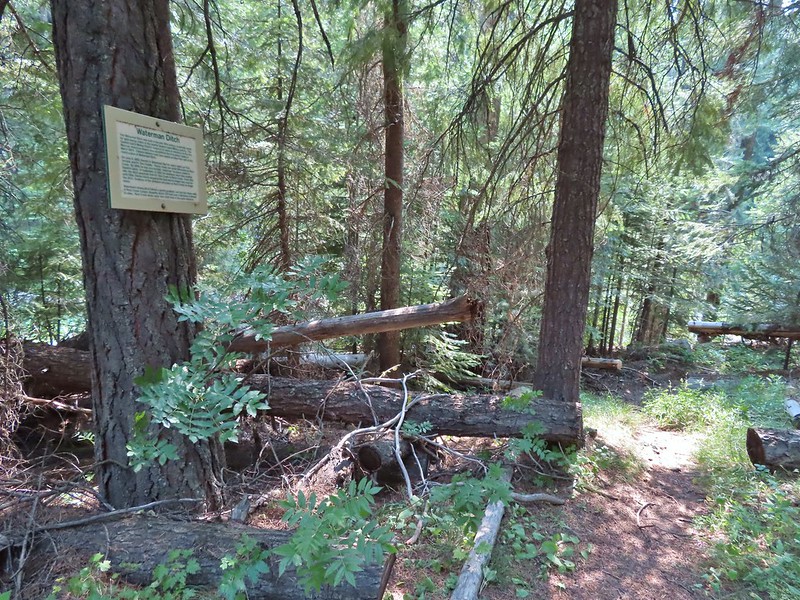



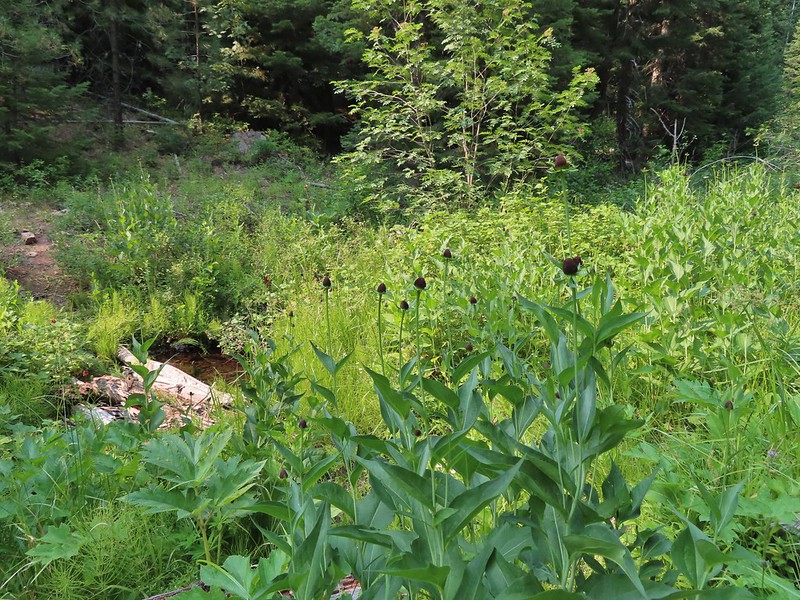 Fir Tree Creek
 Butterflies on coneflower
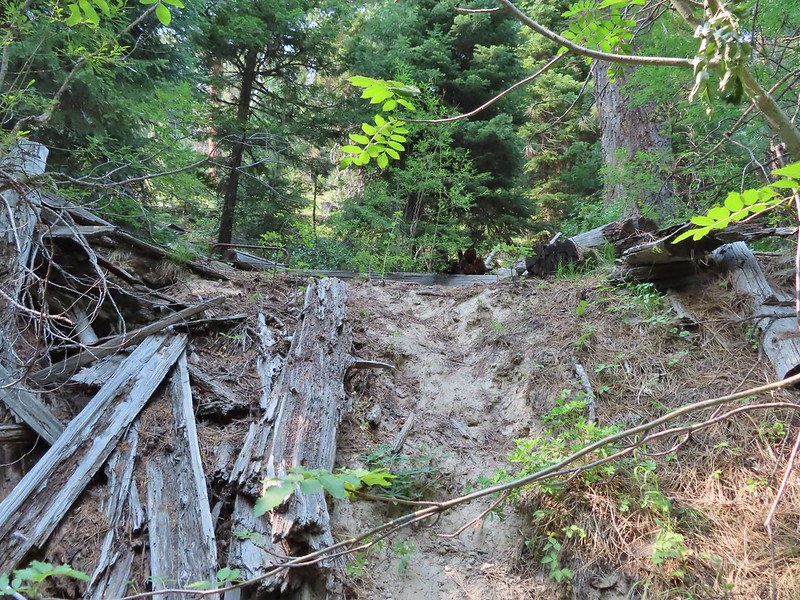 The cabin ruins.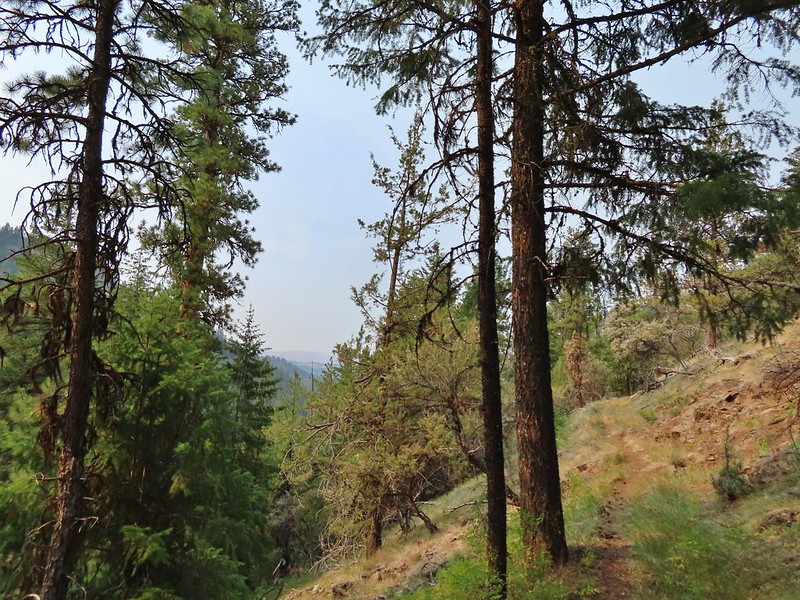
 Coming around a ridge end toward Second Creek.
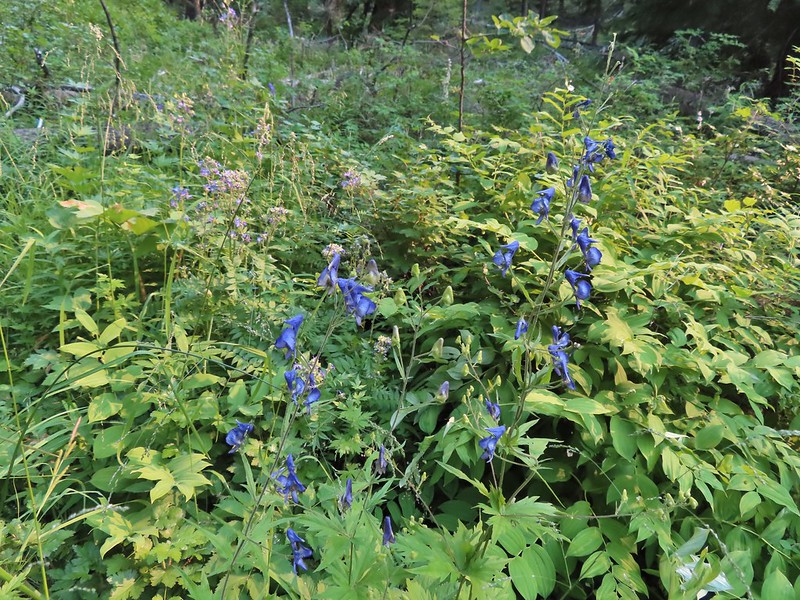 Monkshood at Second Creek
 This little guy oversaw our water pumping.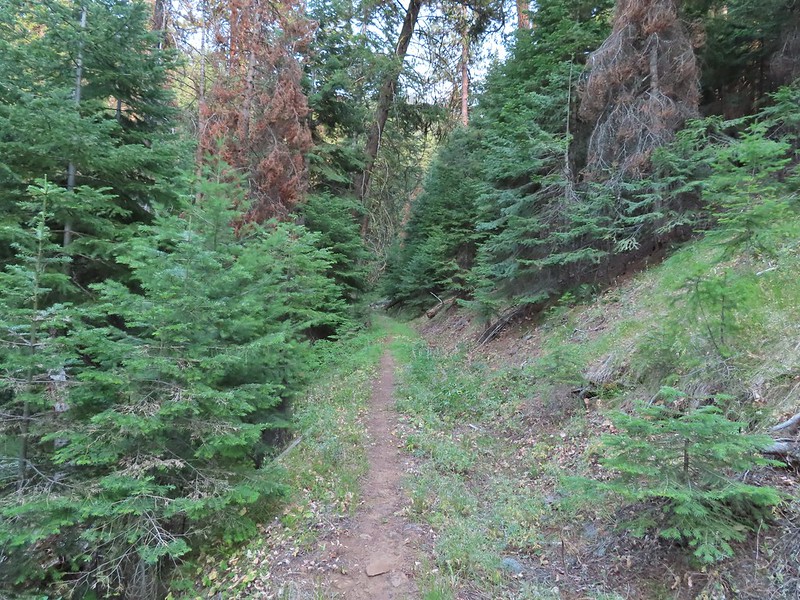
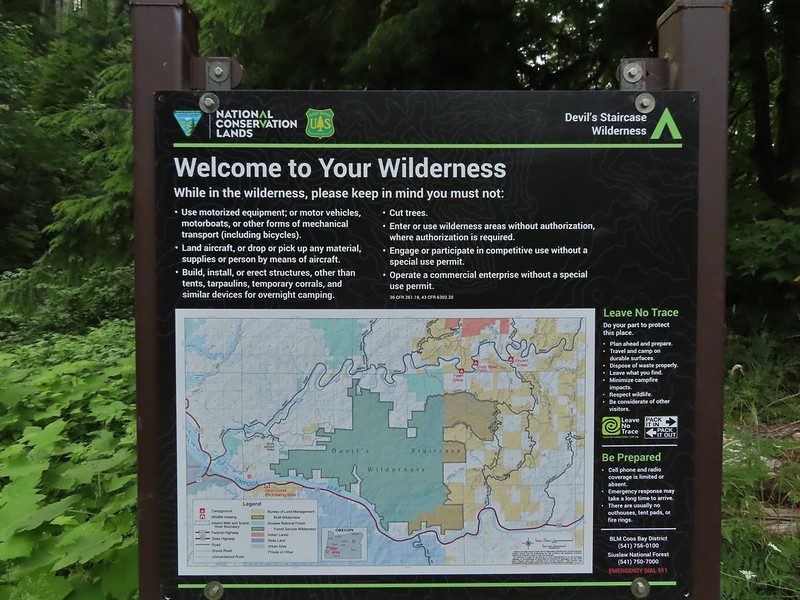

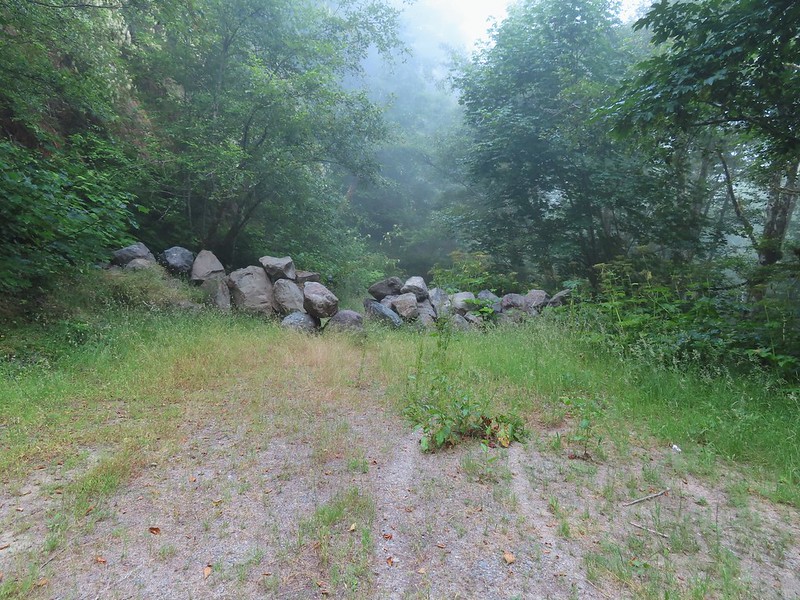 Wilderness boundary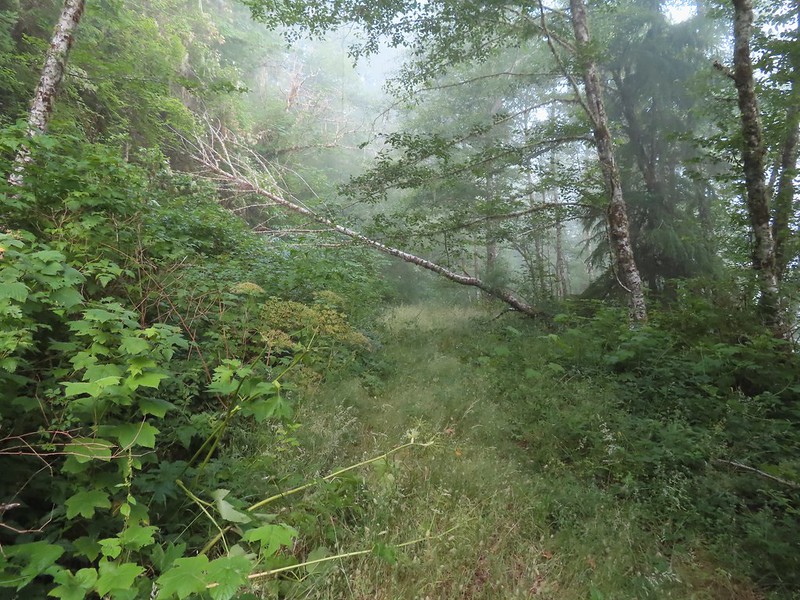
 Varied thrush
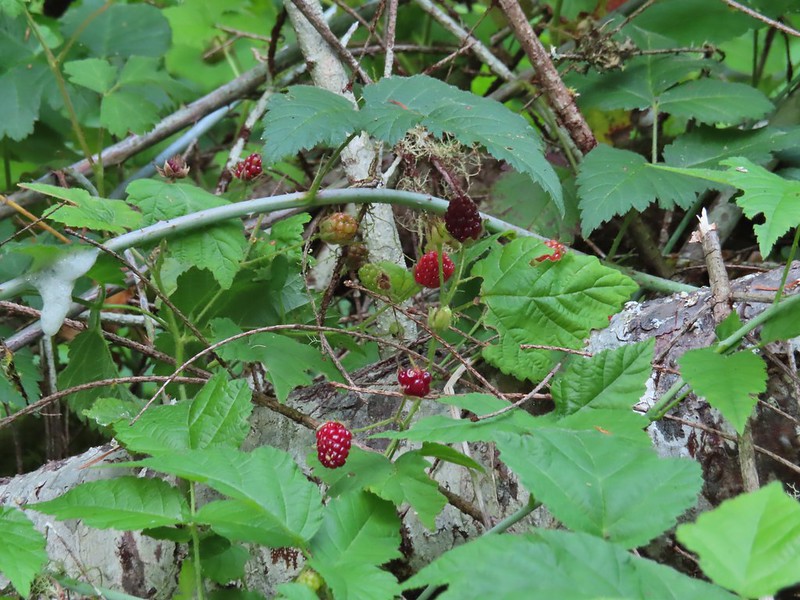 Blackberries, we found a couple of ripe ones later as well as ripe salmonberries, thimbleberries, and red huckleberries.
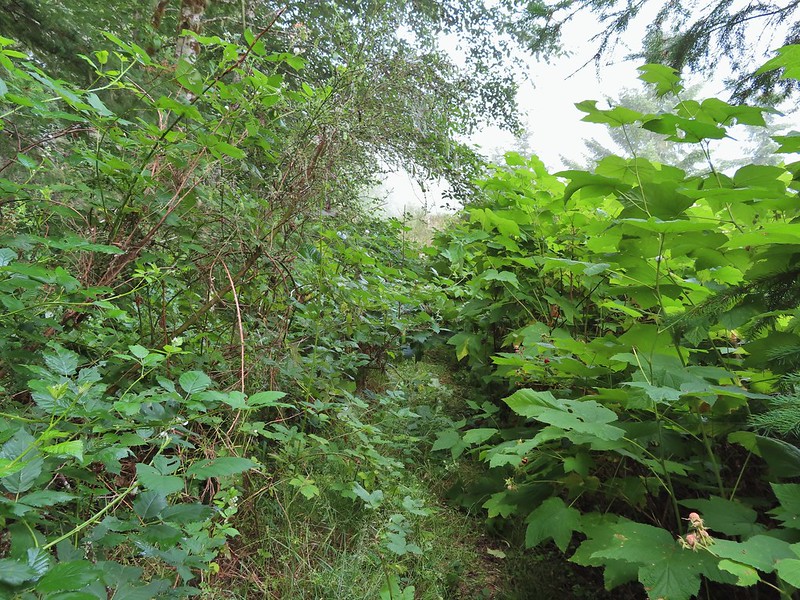 There was a lot of Himalayan blackberry to get through which caused many a scratch.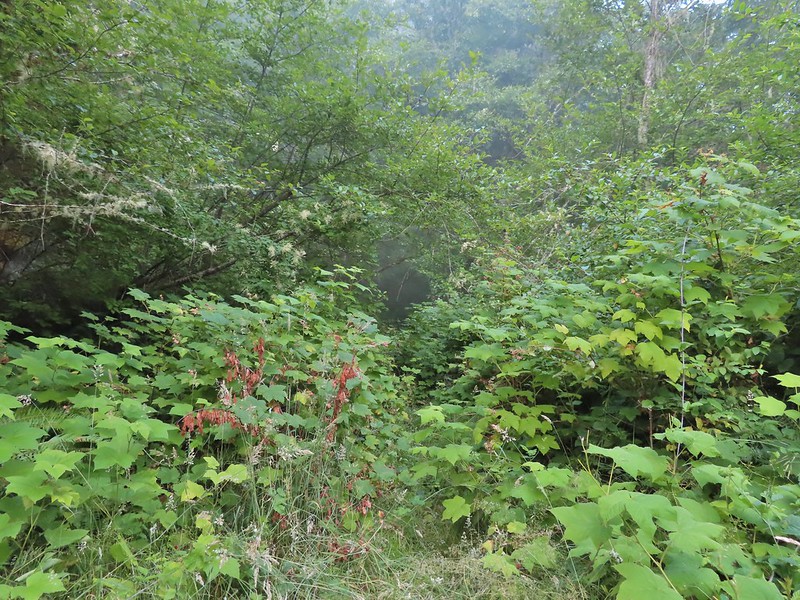

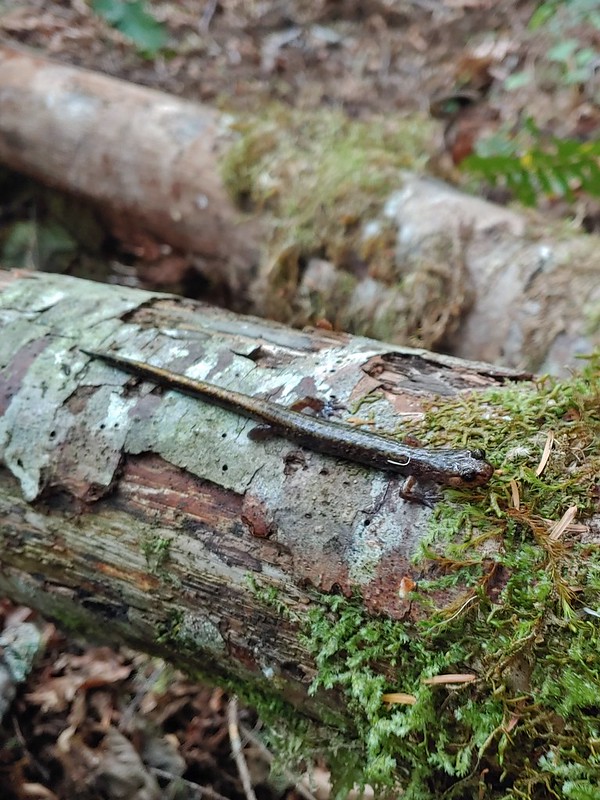 Salamander, possibly a Dunn’s.
 Snail on a fern.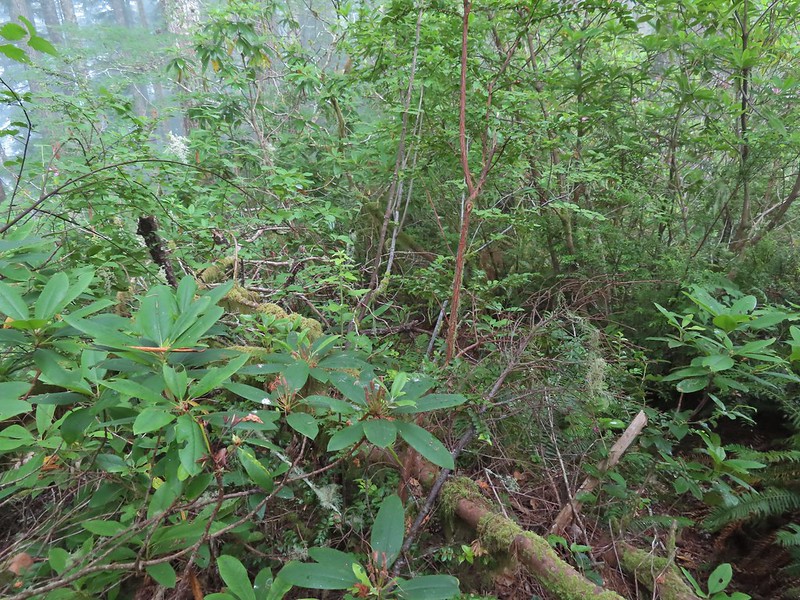
 A few rhododendron were still blooming.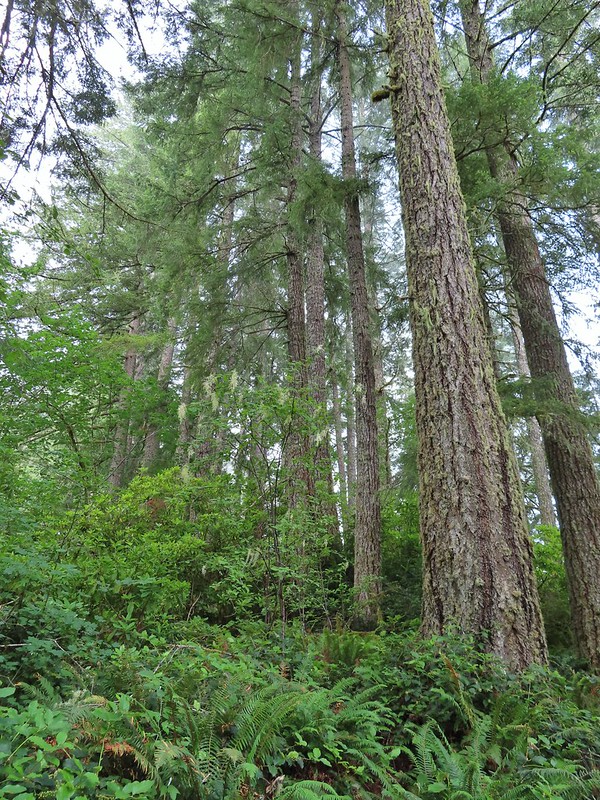
 Huckleberries
 This was the only open spot the whole day. There were some thistle and yarrow blooming here along with a bit of poison oak.
 Bees sleeping on thistle.
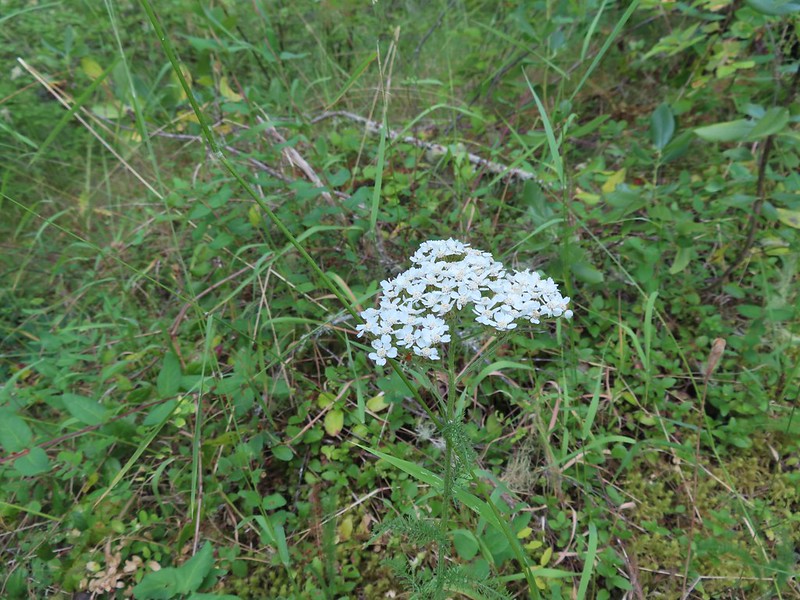 Yarrow

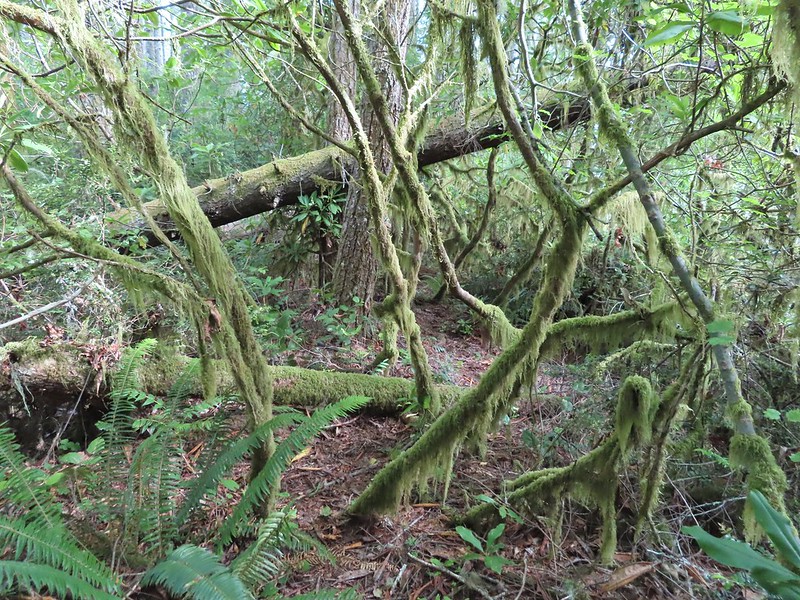 The rhododendron was often so tall we could walk through them.

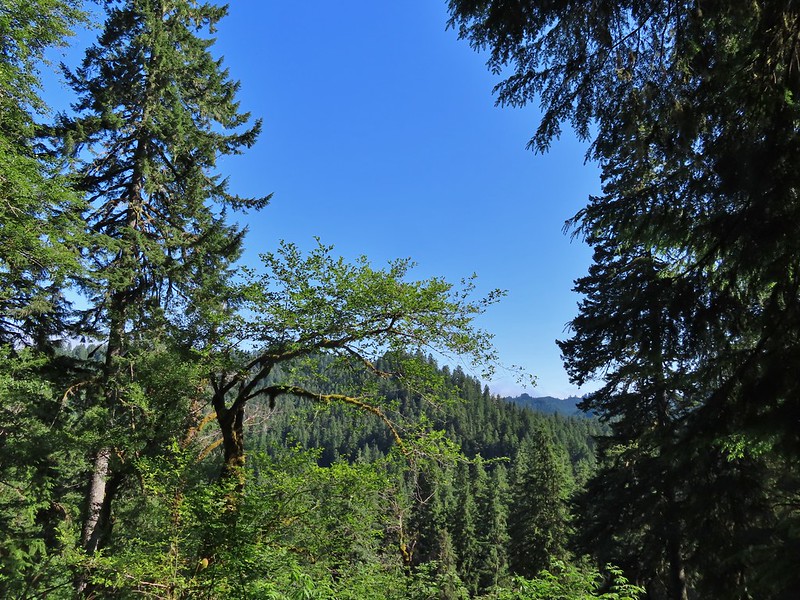 The morning fog burned off by 9:30am.
 Wild cucumber (coastal manroot)
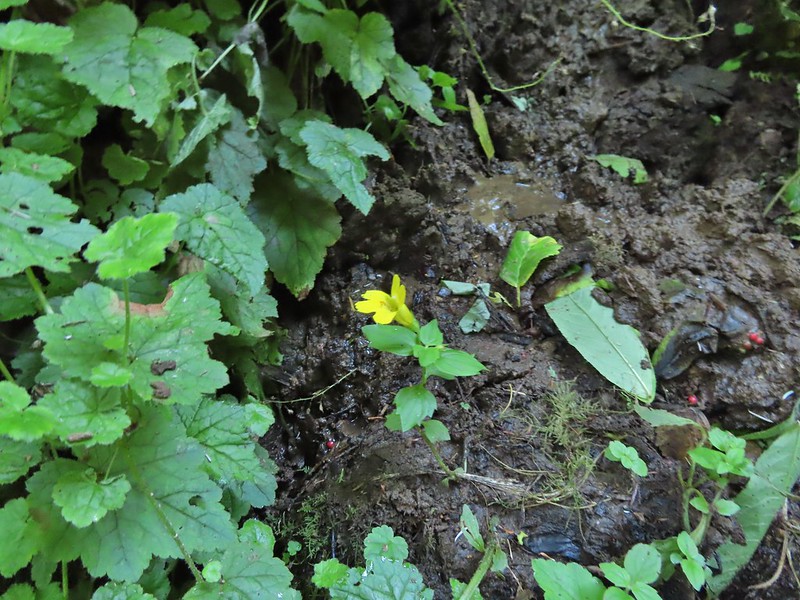 Monkeyflower
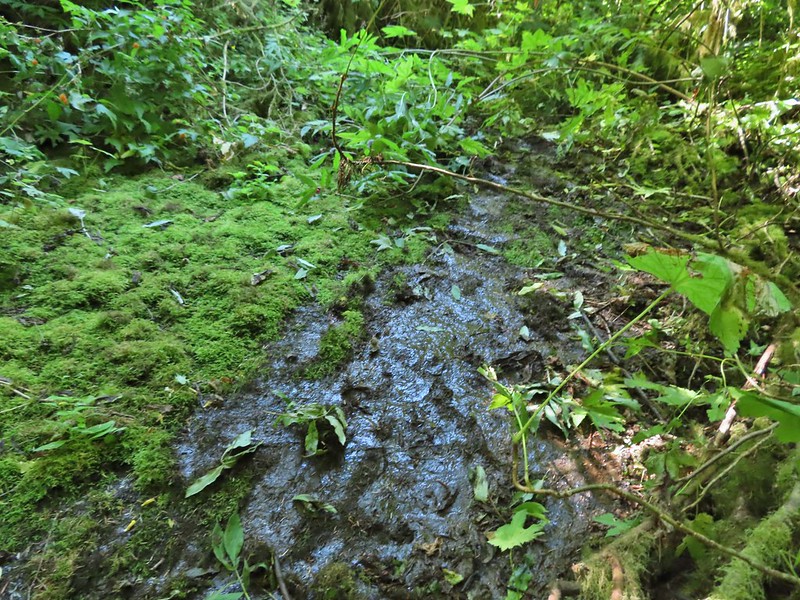 Although this picture doesn’t really convey it this section of exposed wet rock was at a fairly steep angle and was quite the challenging both coming and going.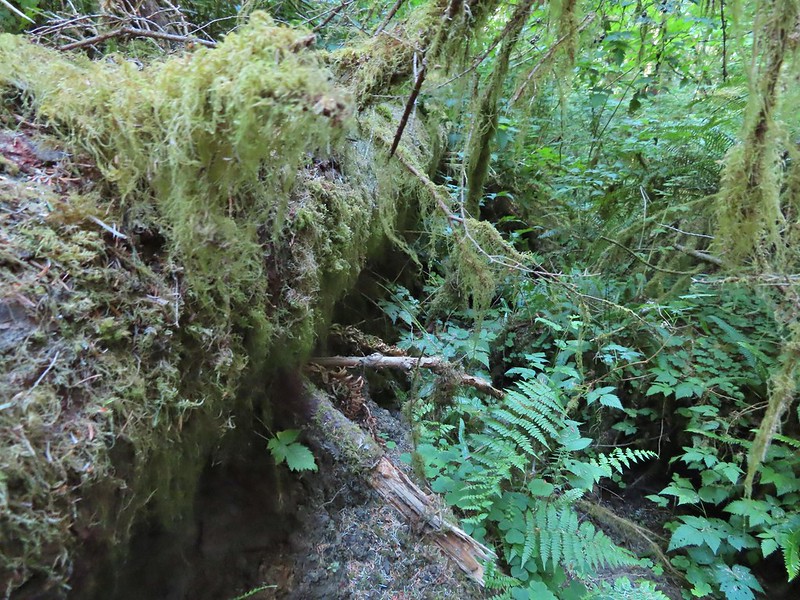

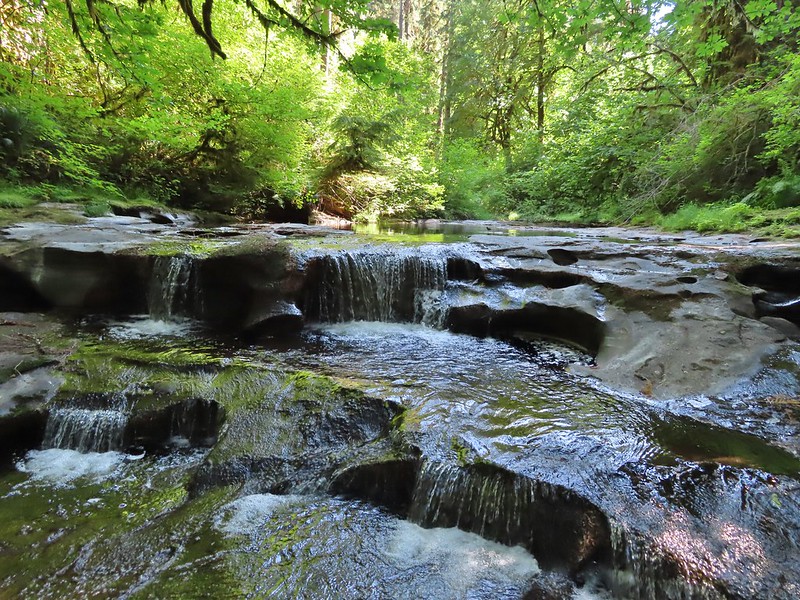
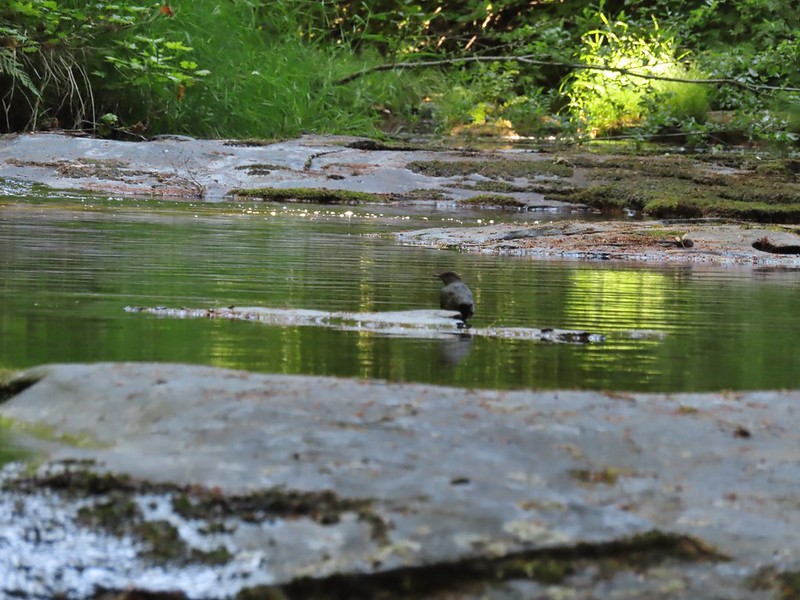 An ouzel
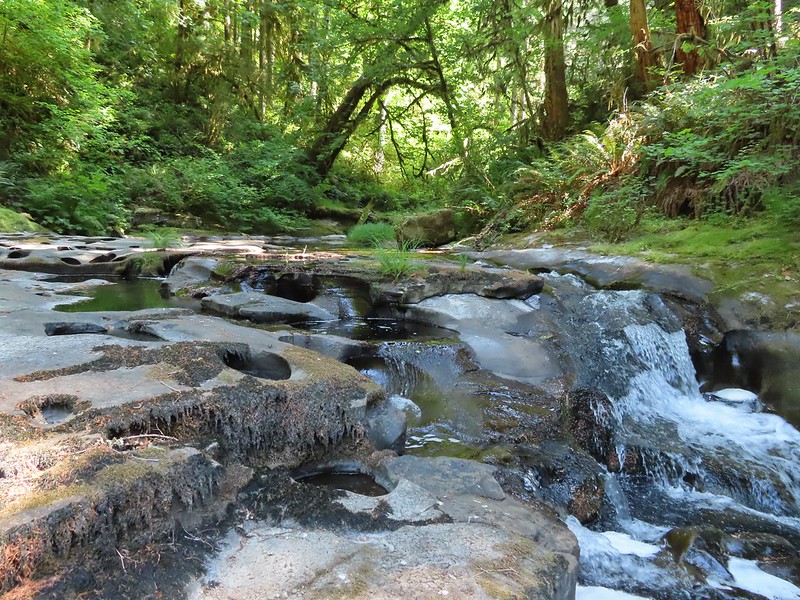
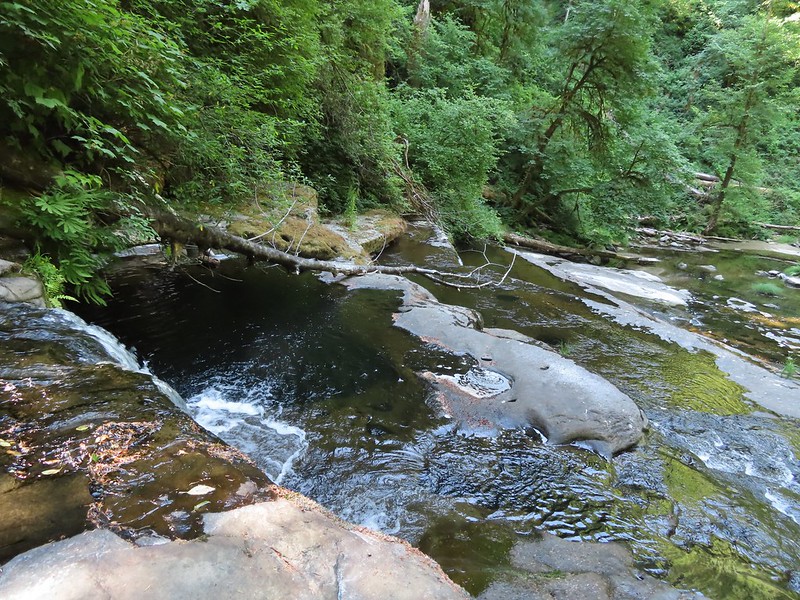 This was the ledge that we decided to not drop down off of.
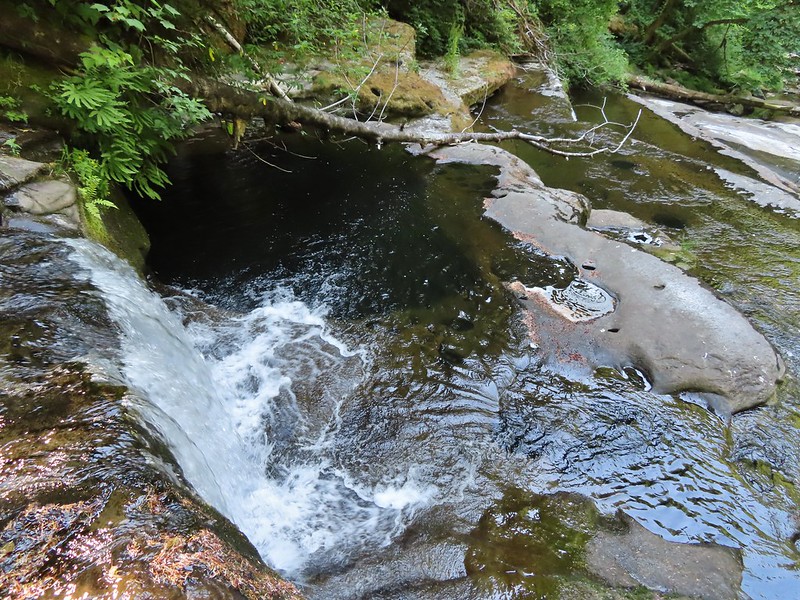 That pool is said to be approximately 20′ deep!
 We checked the little pools for rough skinned newts and this one had four and a crawdad.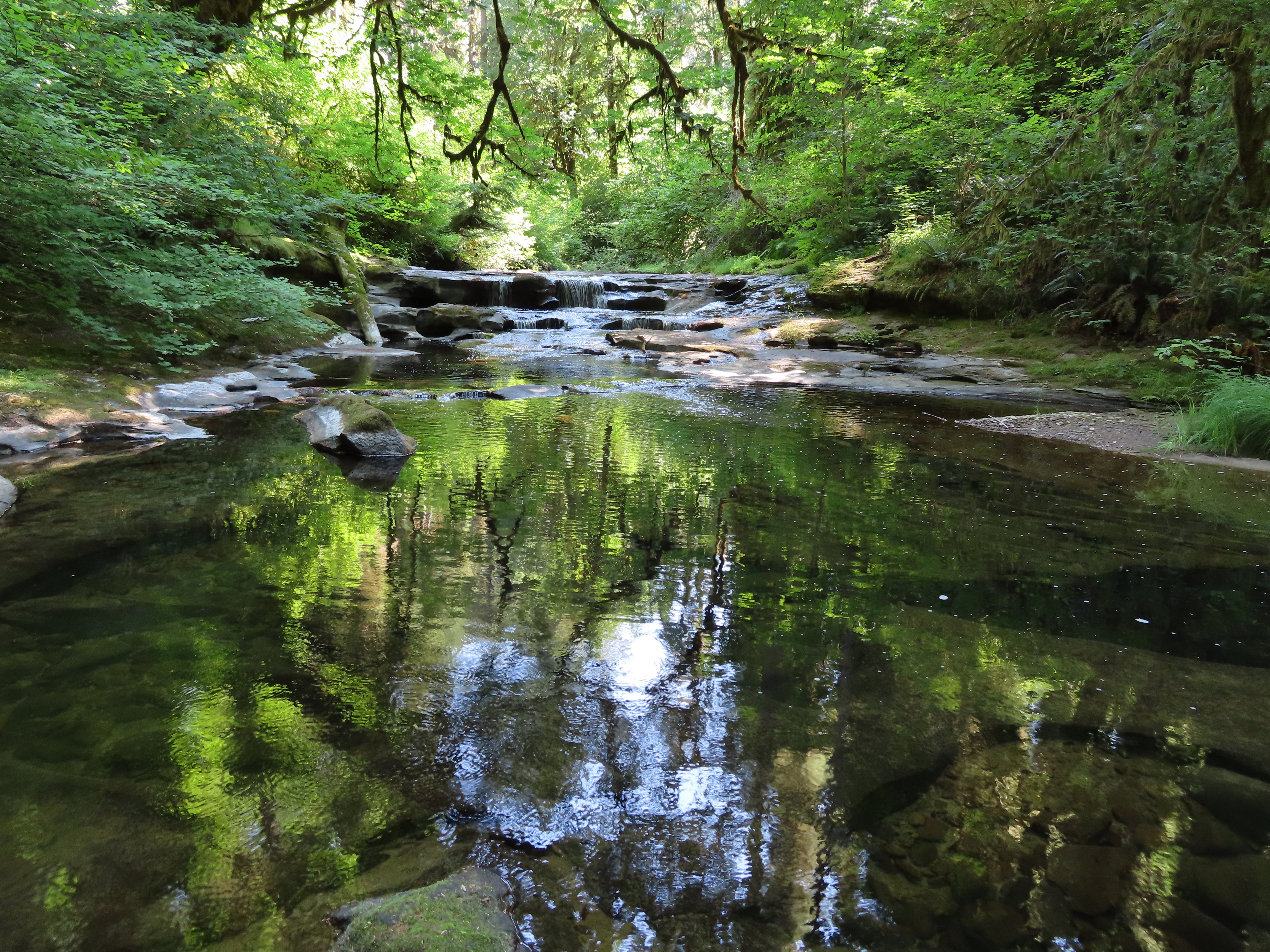


 A chickadee came to check on me as I was catching my breath under a rhododendron.
 Thimbleberries
 Salmonberries
 Swallowtail on a blackberry blossom.


 One of two phantom orchids we saw along the trail.
 Newish looking wilderness sign.
 Maples overhanging the trail.
 Madrone trunks
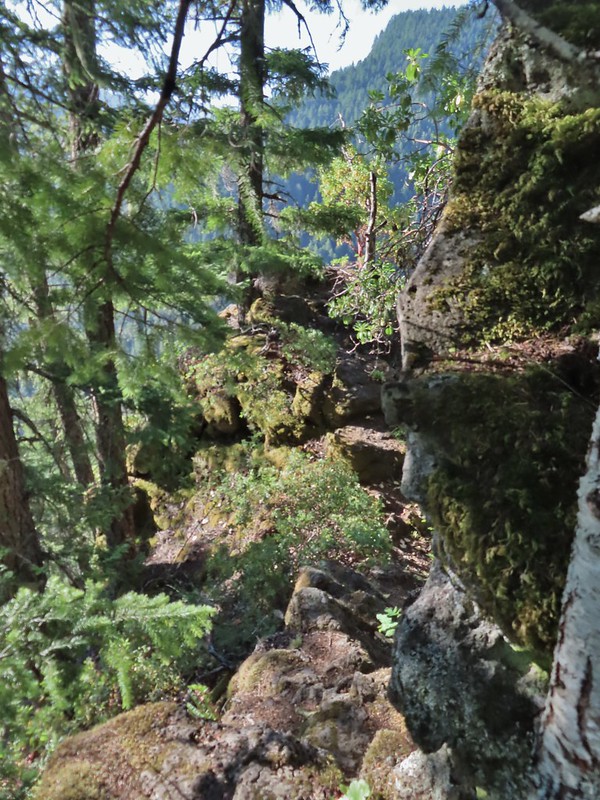 It’s a pretty narrow scramble so probably not for kids or those uncomfortable with heights.
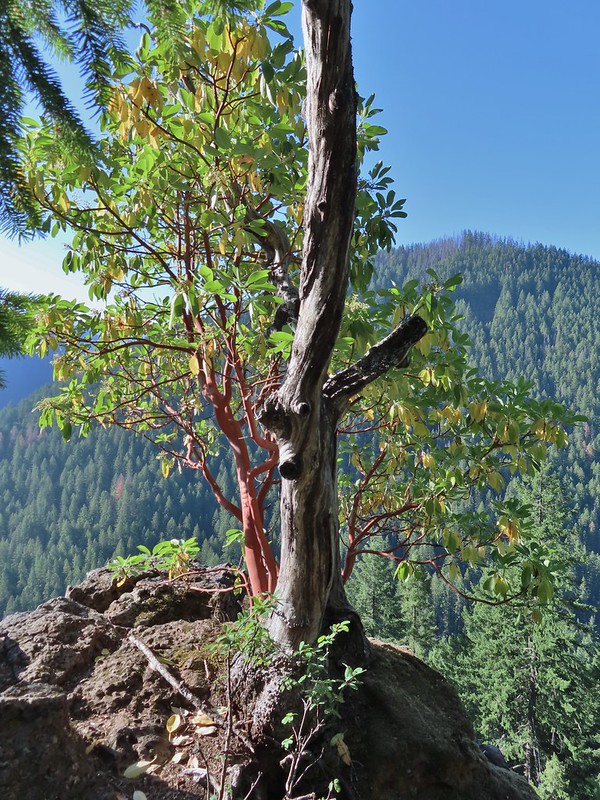 A lone madrone at the end of the fin.
 Looking toward the falls. (The North Sister is back there too but not visible due to the lighting.)
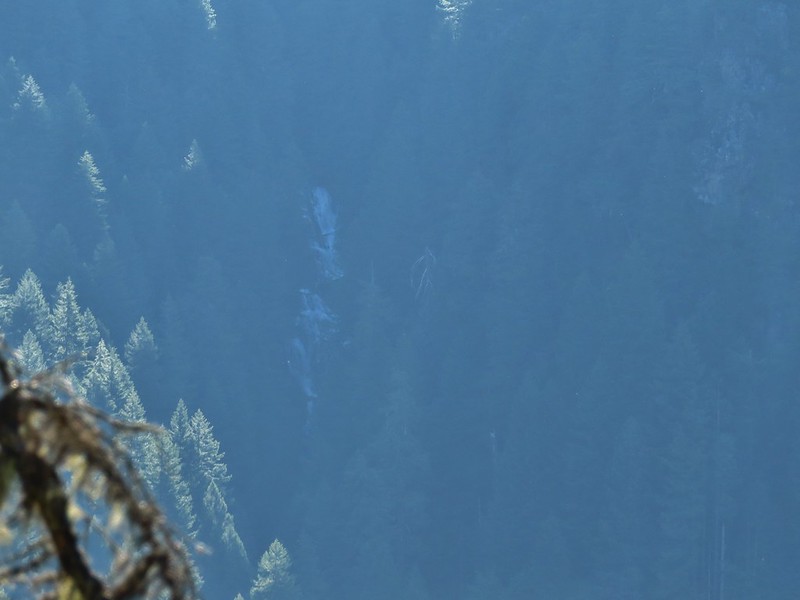 Rainbow Falls on Rainbow Creek
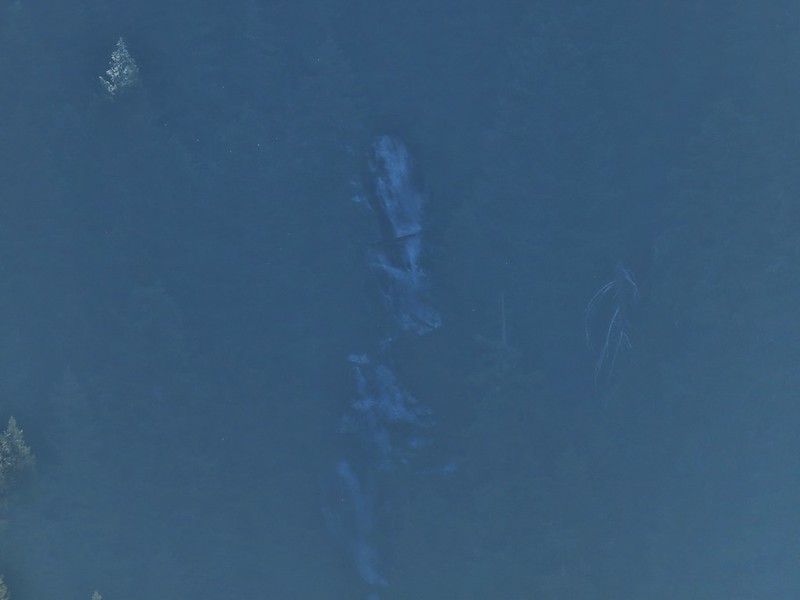 The best I could do with the lighting.
 Looking up Separation Creek.
 Looking back up along the rocks.

 Pink pyrola
 Crossing of Gold Creek which was nearly dry but it hosted a fair number of mosquitos.
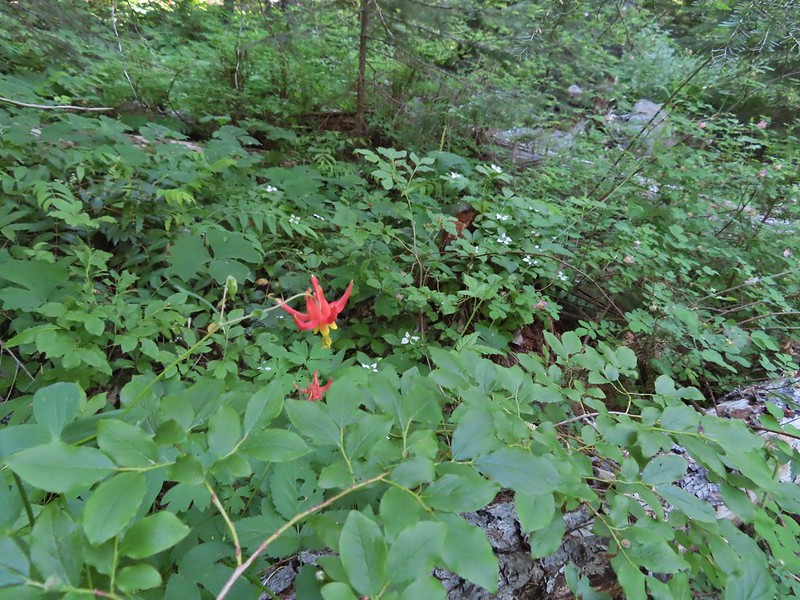 Columbine, bunchberry, and wild roses.
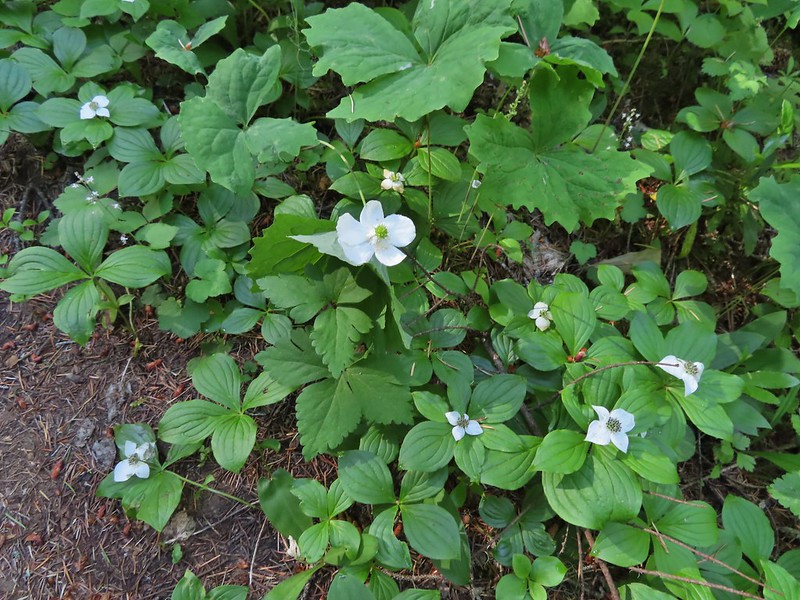 An anemone with some bunchberries
 Entering the Three Sisters Wilderness
 Queen’s cup
 Beargrass
 Candy sticks
 Rhododendron
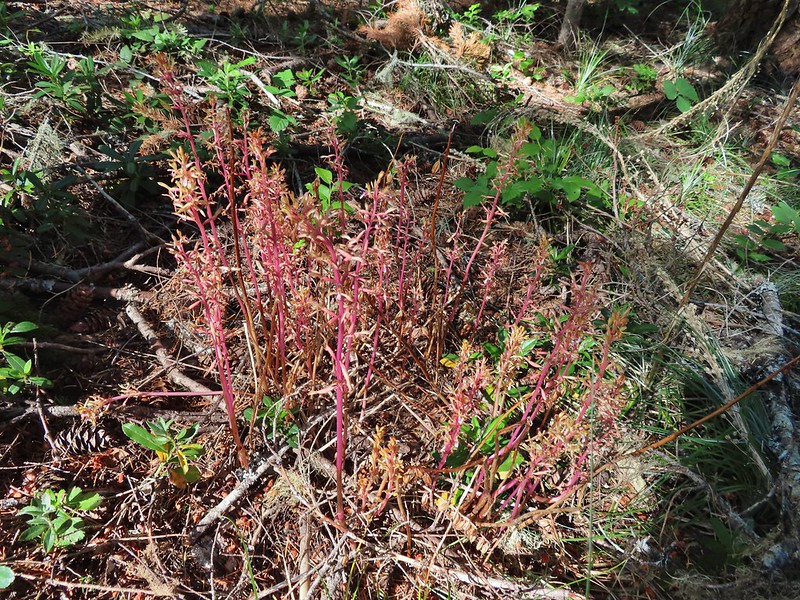 Pacific coralroot
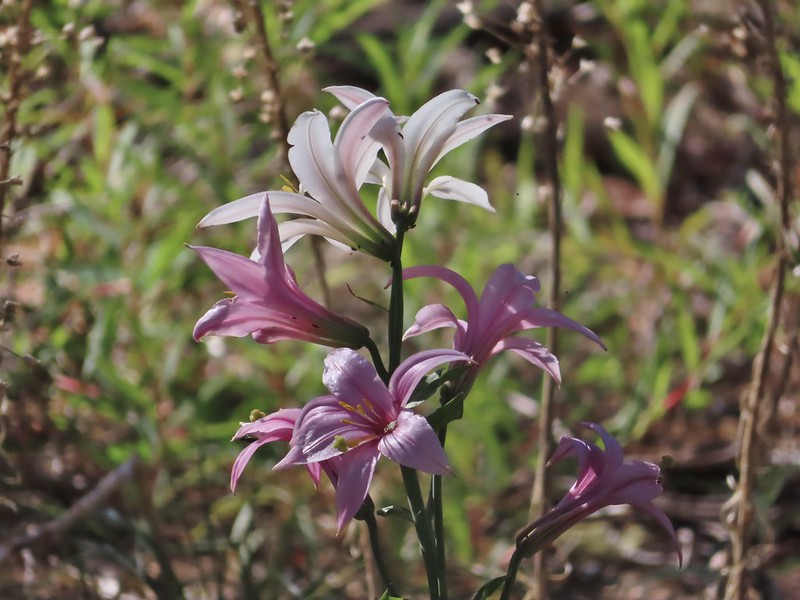 Washington lily
 Lupine
 Squirrel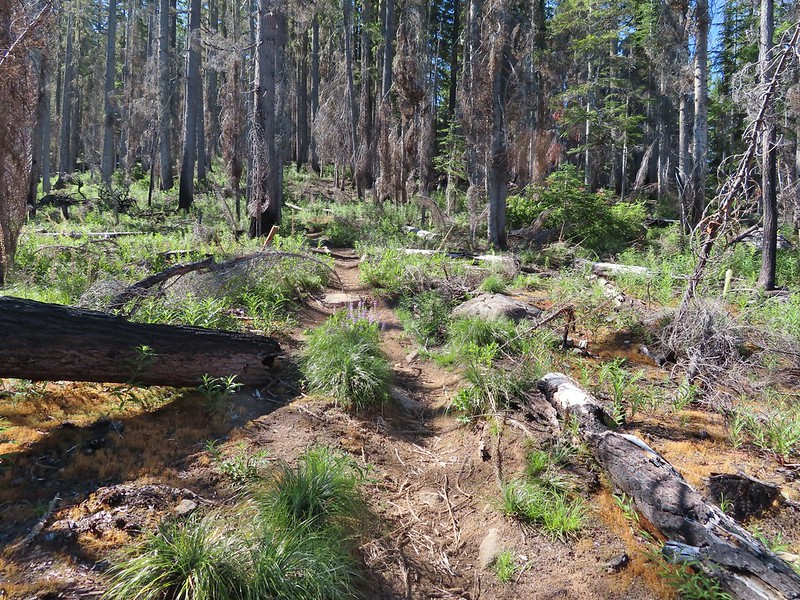
 Tiger lily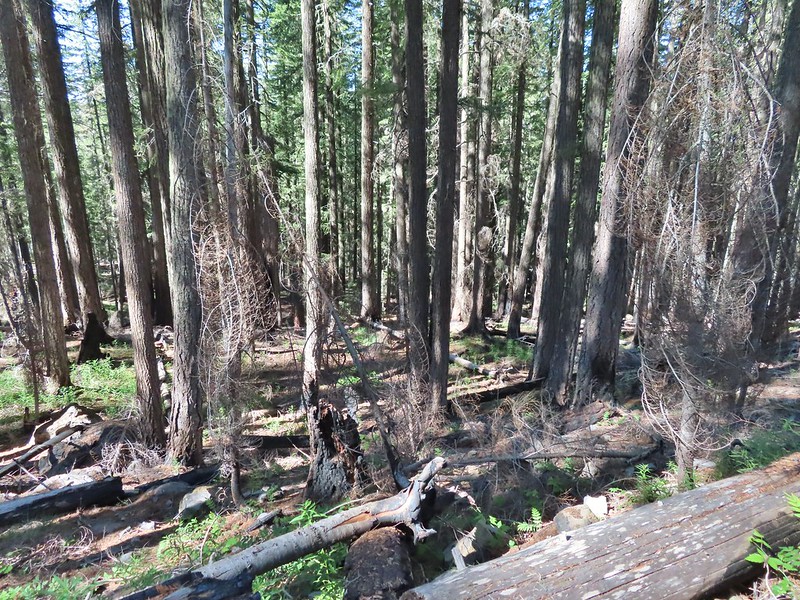
 Twinflower
 Leaving the green trees behind.
 Washington lilies
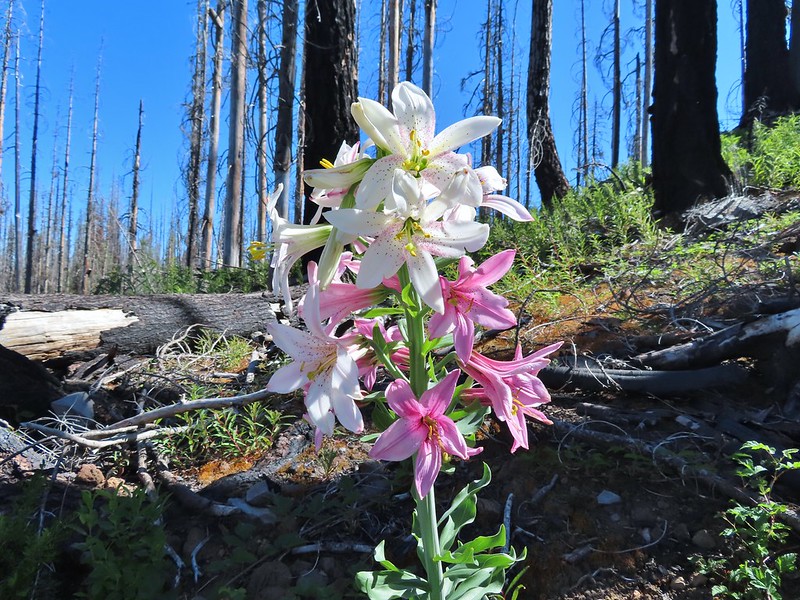 They smell as good as they look too!
 This one was a monster.
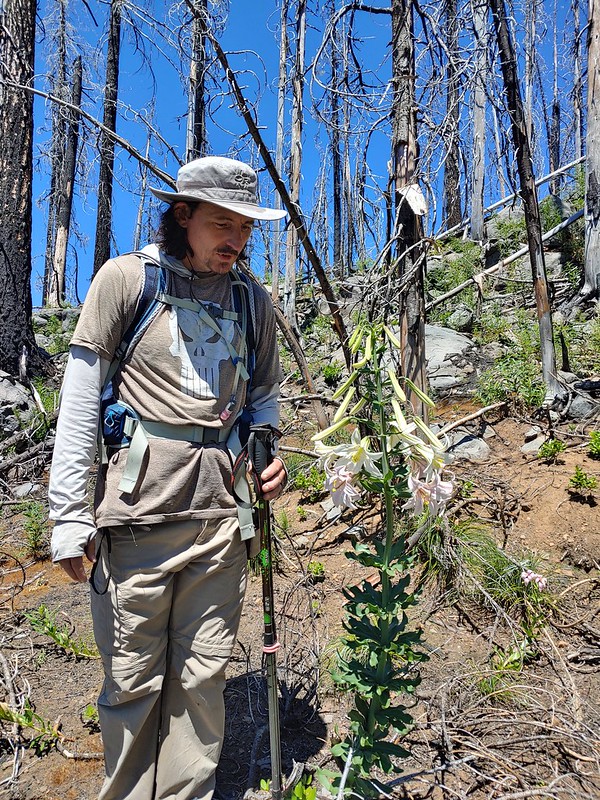 Chest high
 Crab spider on the lower left petal.
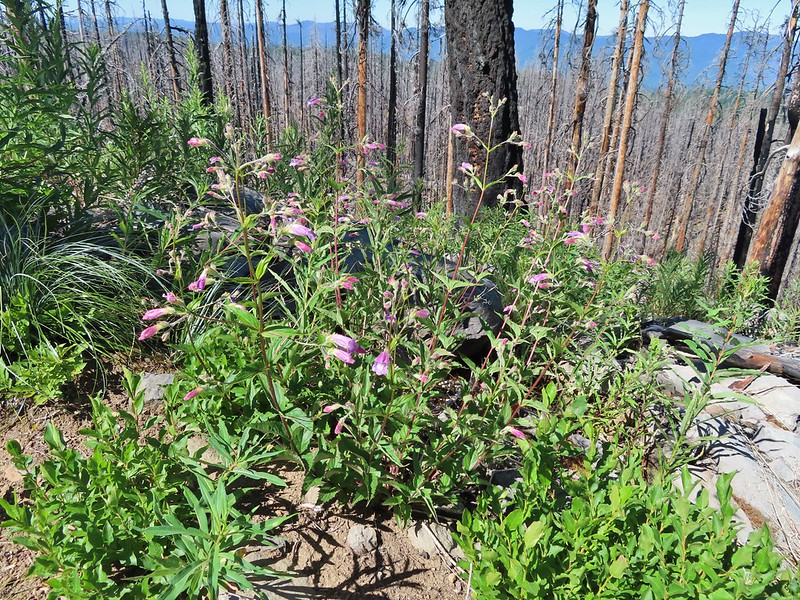 Penstemon
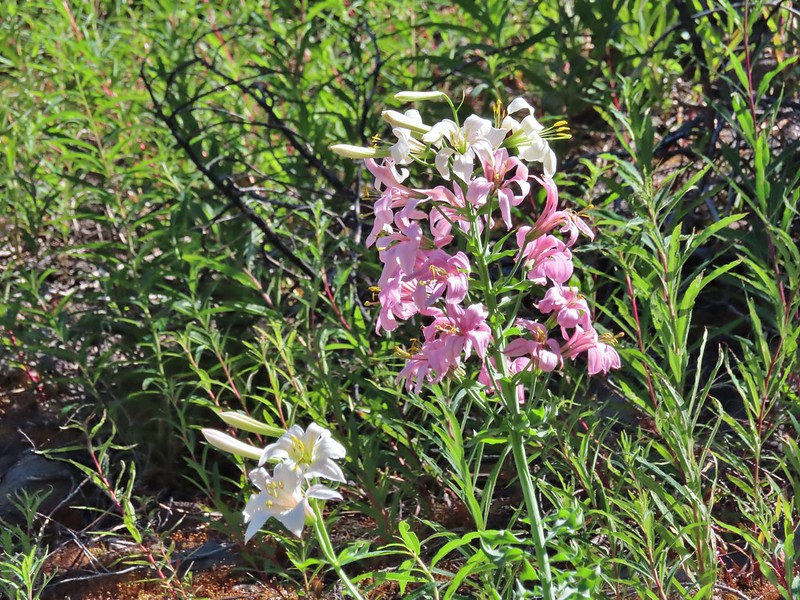 Earlier in the week I had been reading that the blossoms turn pink after being pollinated.
 Clodius parnassian
 Pretty moth
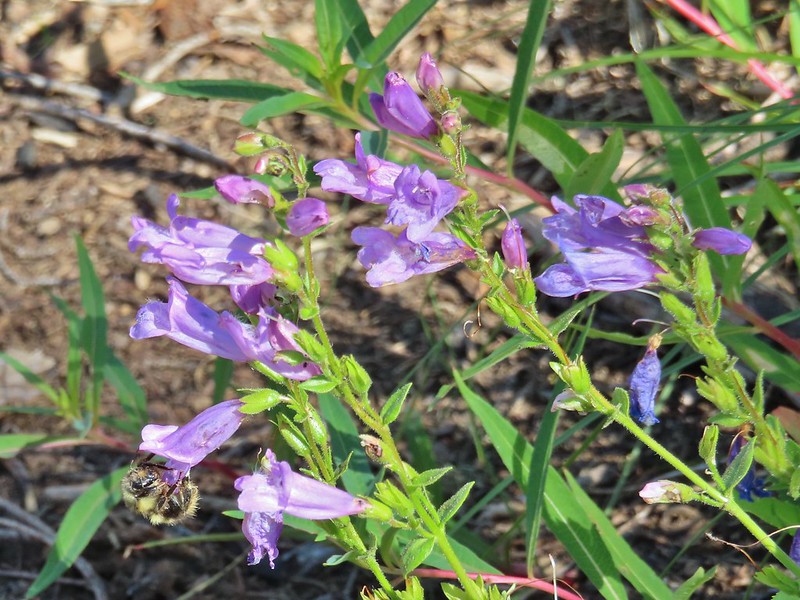 Penstemon
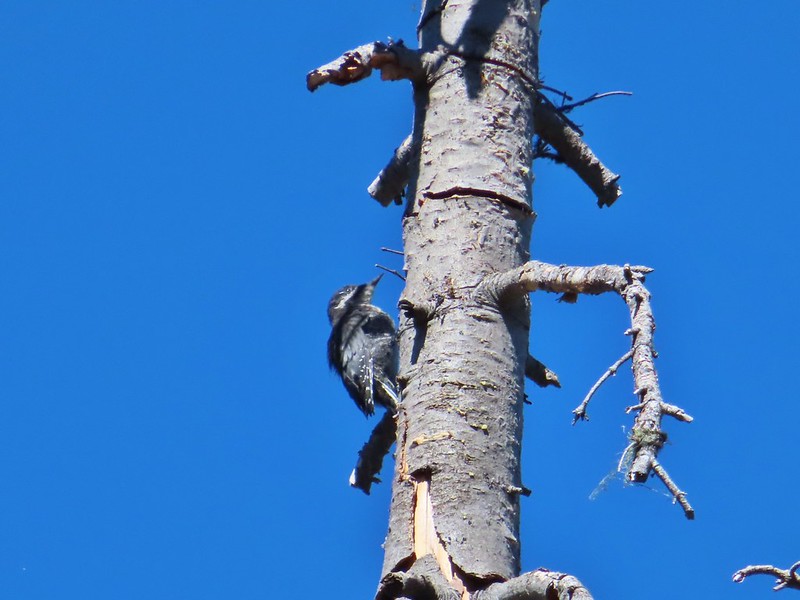 Woodpecker
 Pond along the trail.
 Water lilies
 Looking toward Proxy Point
 The Husband, South Sister, and the shoulder of Substitute Point.
 Frog along the trail.
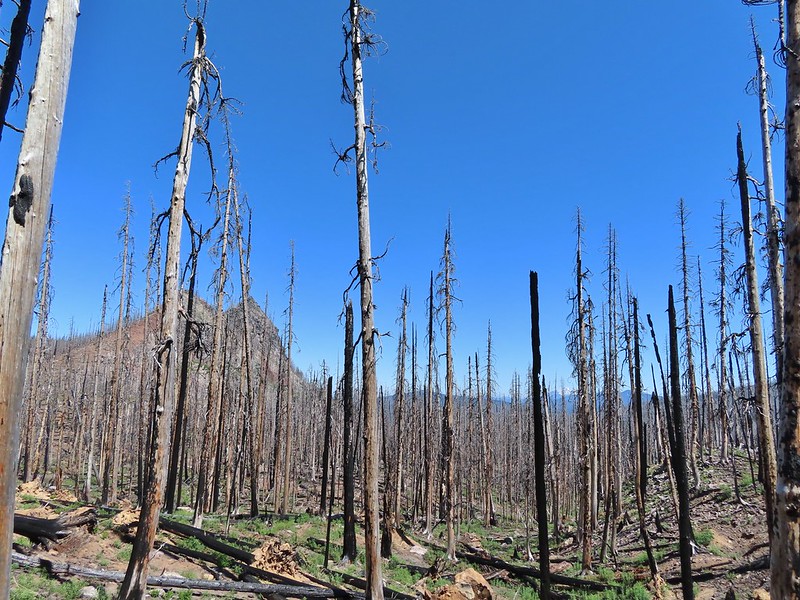 Proxy Point, Scott Mountain (
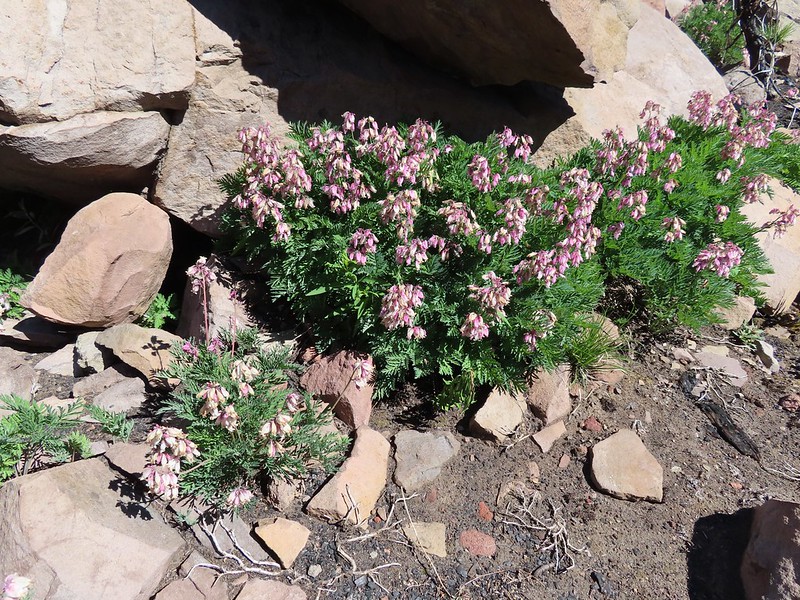 Bleeding heart
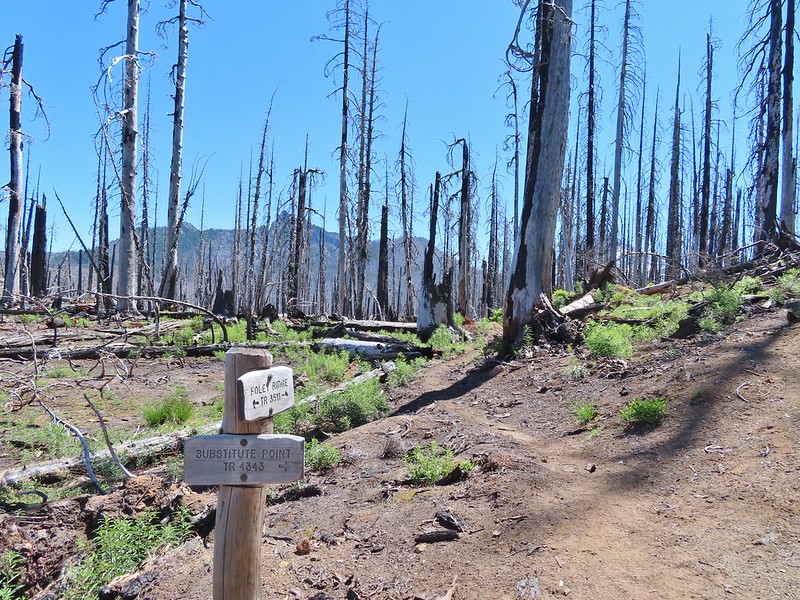 The Husband from the junction.
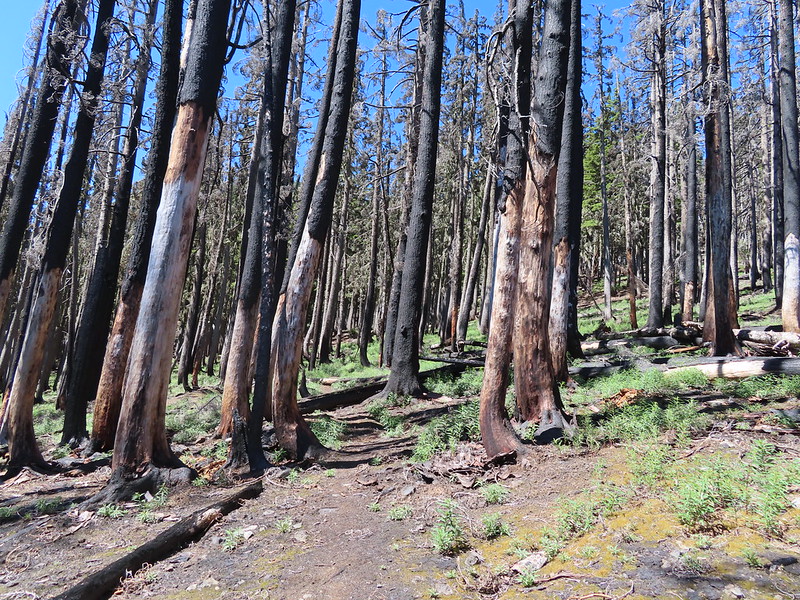
 This was sort of a mean trick, the trail entered these green trees then almost immediately switched back into the burn.
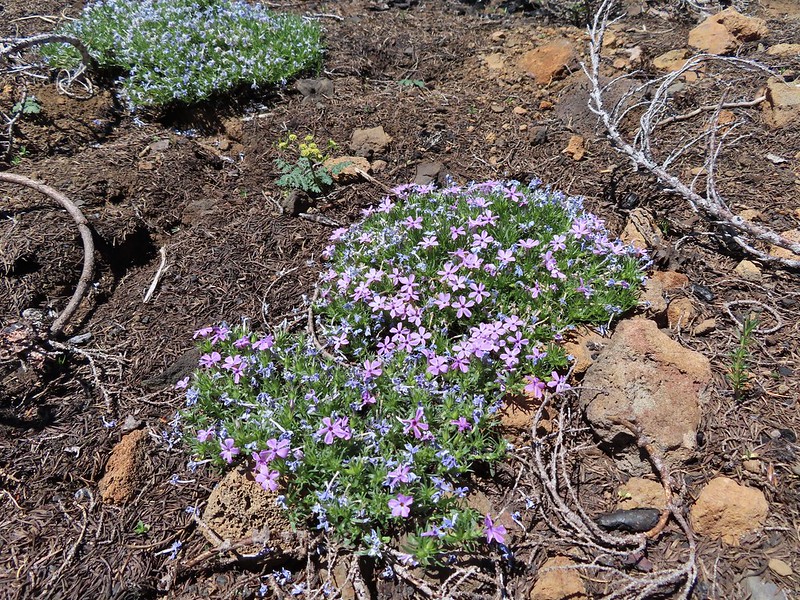 Phlox
Phlox
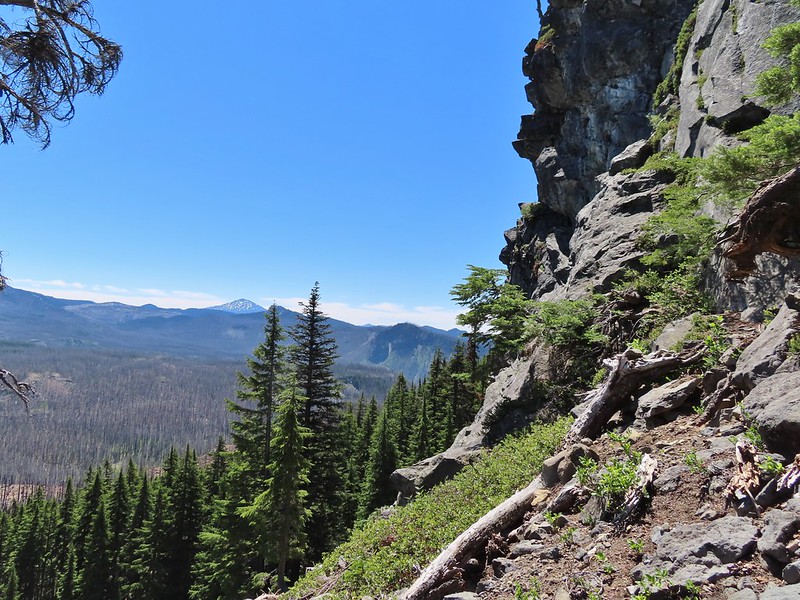 Mt. Bachelor from the trail.
 Proxy Point
 Some unburned forest and a view of Diamond Peak.
 Diamond Peak (
 The Little Brother and North & Middle Sister behind The Husband with South Sister to the right.
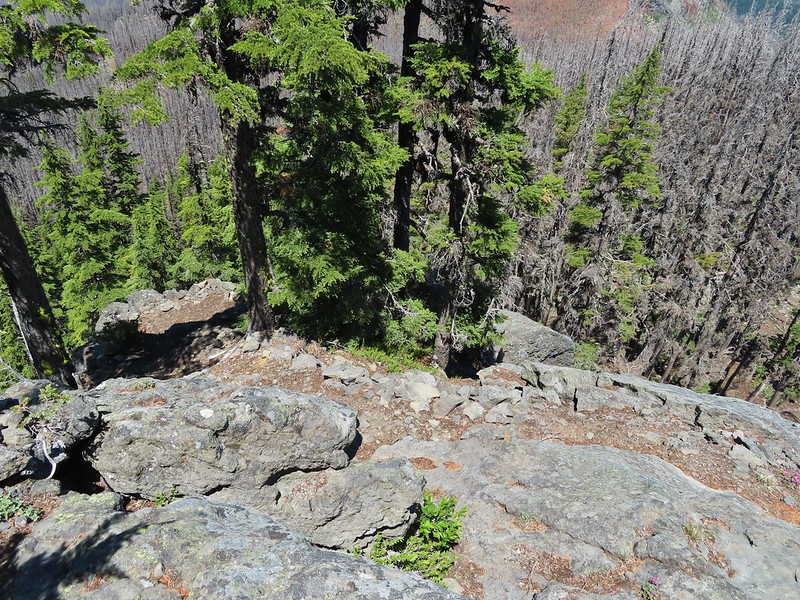 The trail leading up.
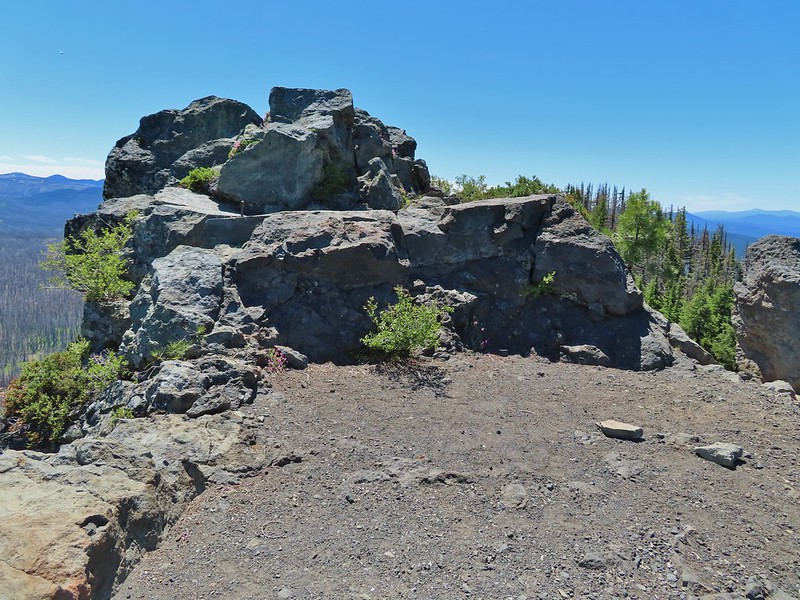 The summit of Substitute Point
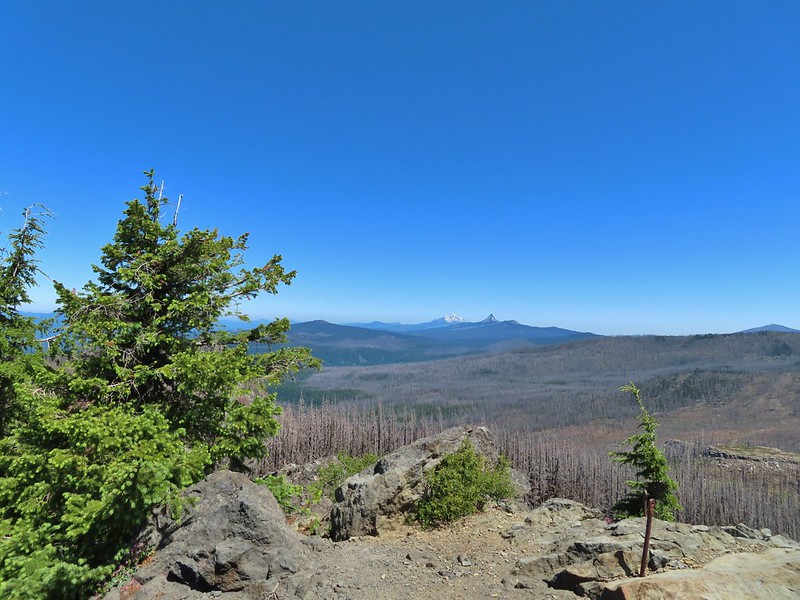 Scott Mountain, Three Fingered Jack, Mt. Jefferson, Mt. Washington, and Belknap Crater (
 Proxy Point and Scott Mountain.
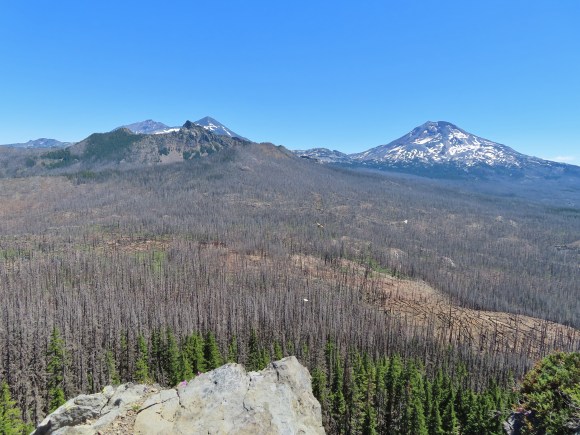
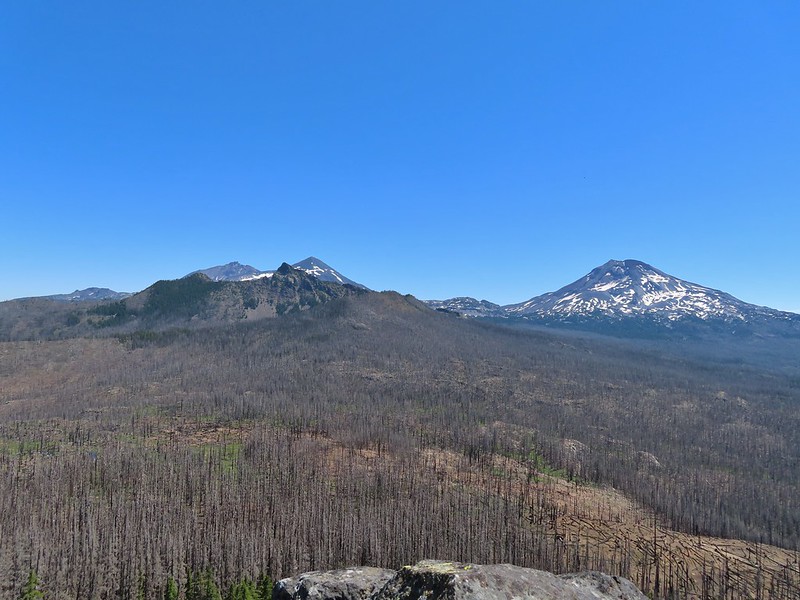 The Three Sisters, Little Brother and The Husband
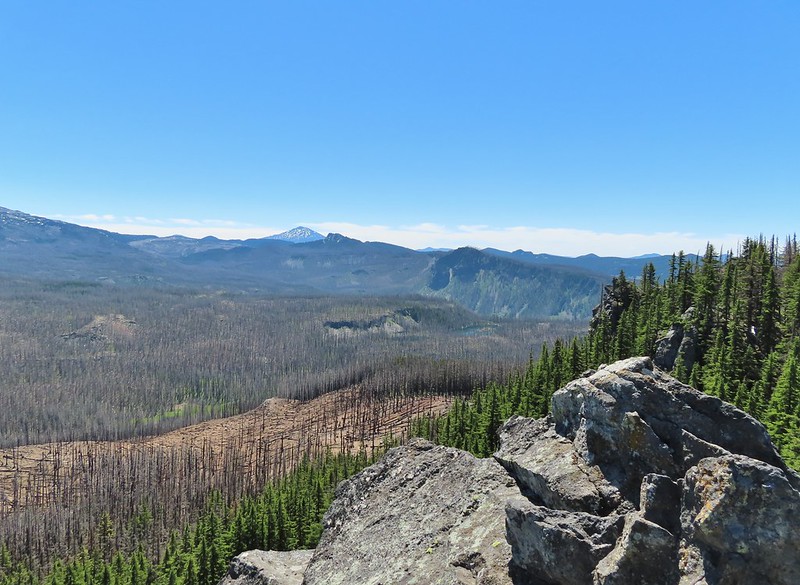 Mt. Bachelor, The Wife, and Sphinx Butte.
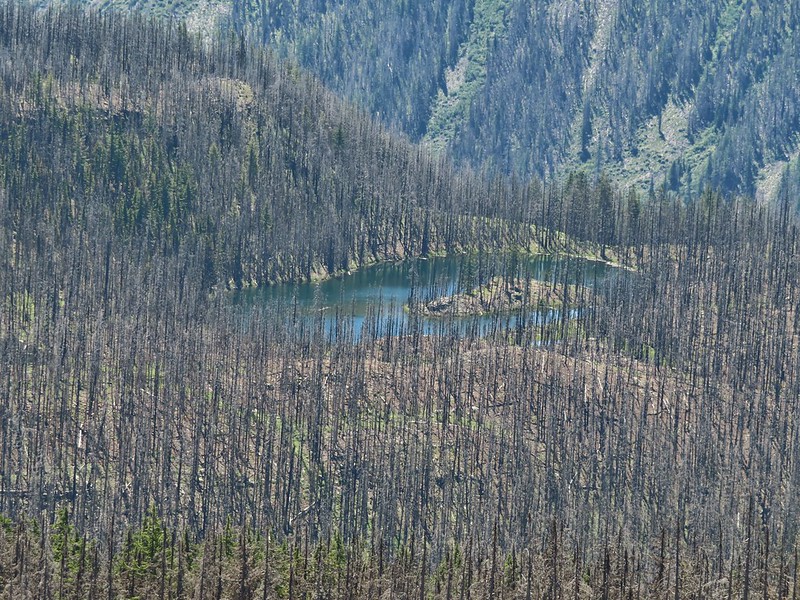 Kidney Lake
 Mt. Bachelor and The Wife
 North and Middle Sister behind The Husband
 Three Fingered Jack, Mt. Jefferson and Mt. Washington
 A swallowtail and two whites (maybe clodius parnassians) in flight.
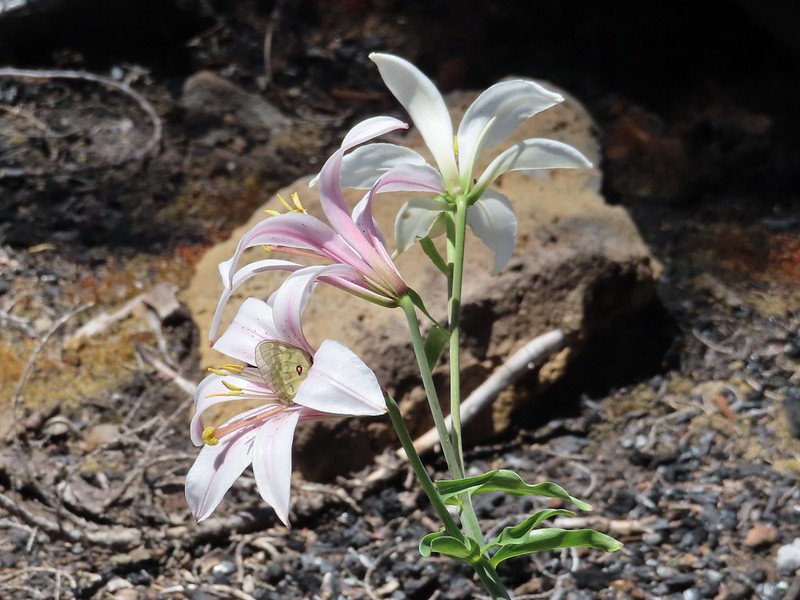 Clodius parnassian in a blossom.
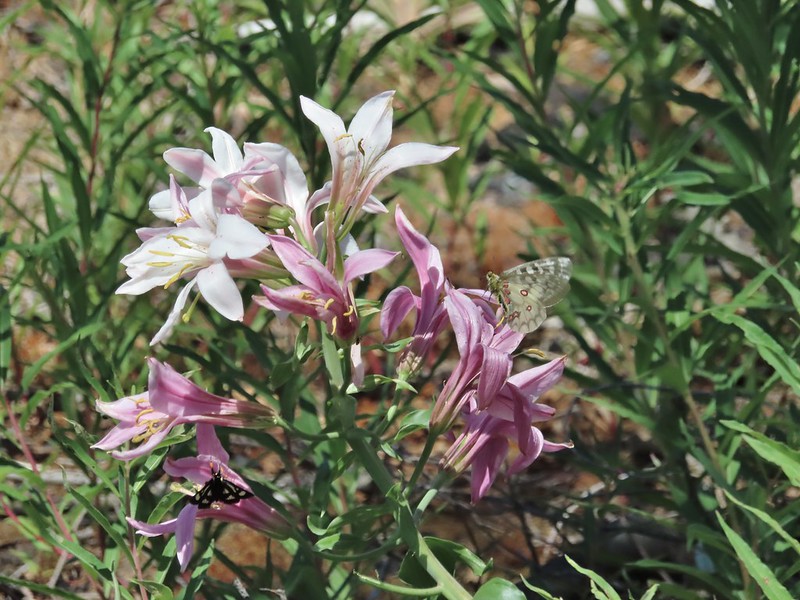 Moth and a parnassian.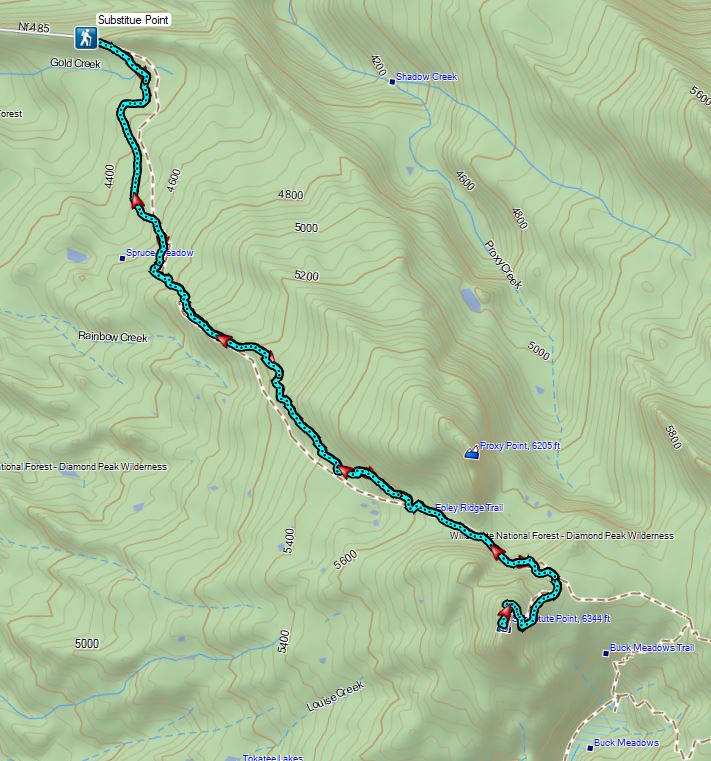


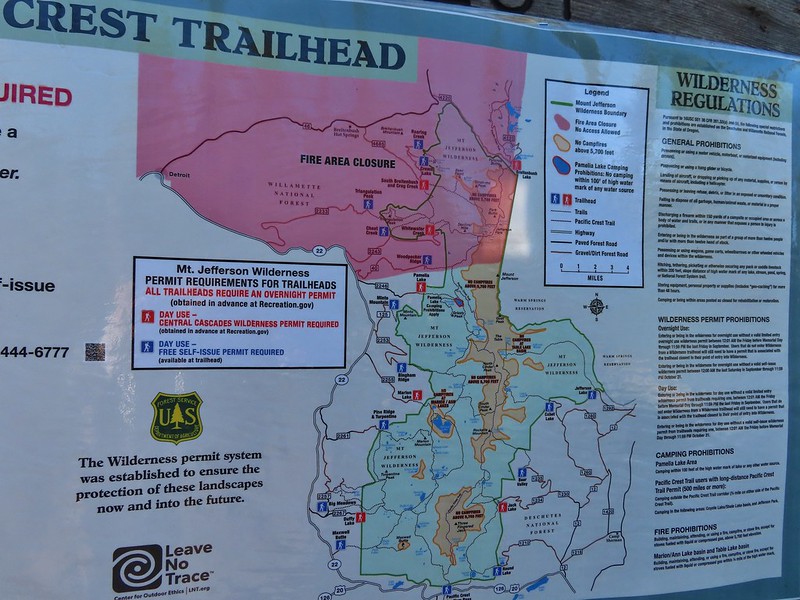
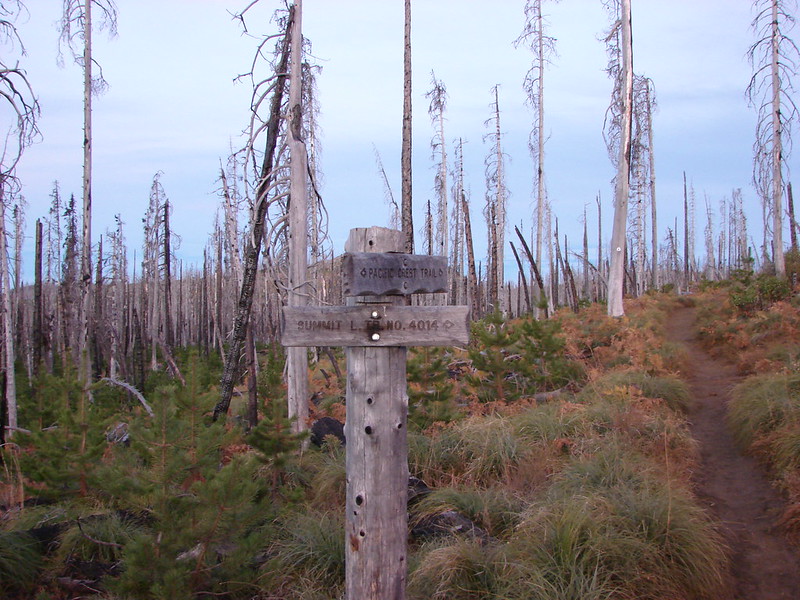 Trail sign at the junction on 10/13/2012.
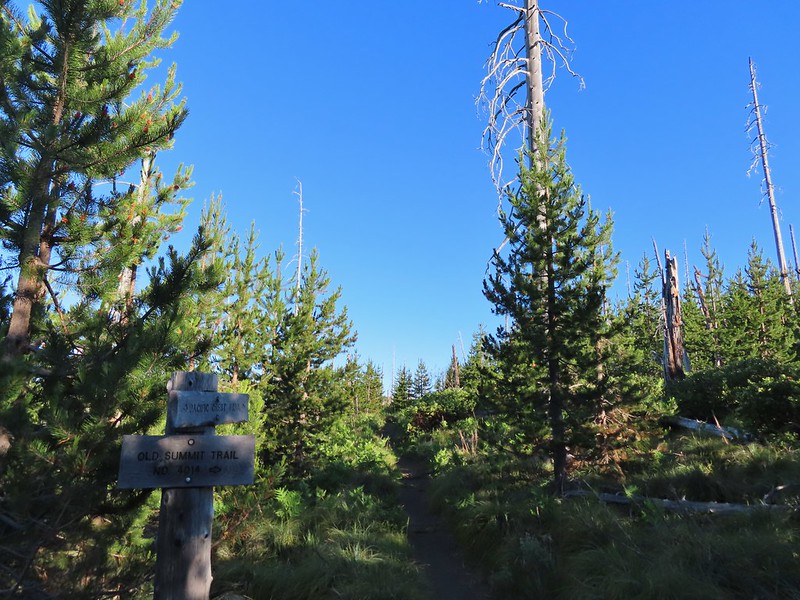 Trail sign at the junction on 07/03/2021.
 Entering the Mt. Jefferson Wilderness in 2012 (0.3 miles from the TH).
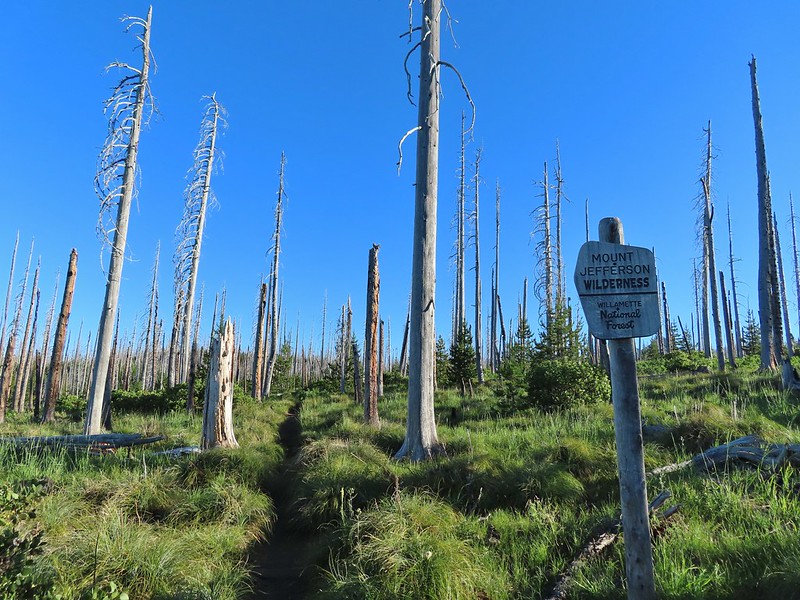 Entering the wilderness in 2021.
 Cache Mountain, Black Crater (post), Tam McArthur Rim & Broken Top (post), North & Middle Sister, Mt. Washington, and Hayrick Butte (flat top on the right).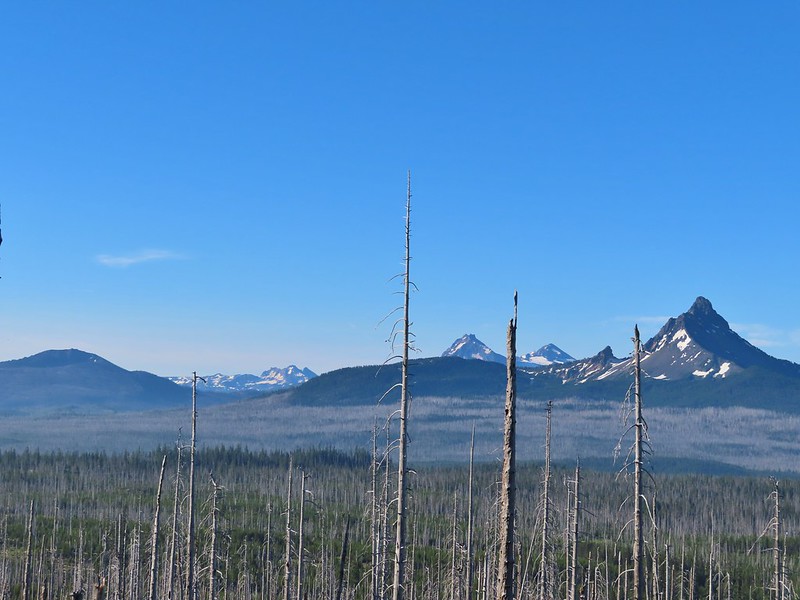

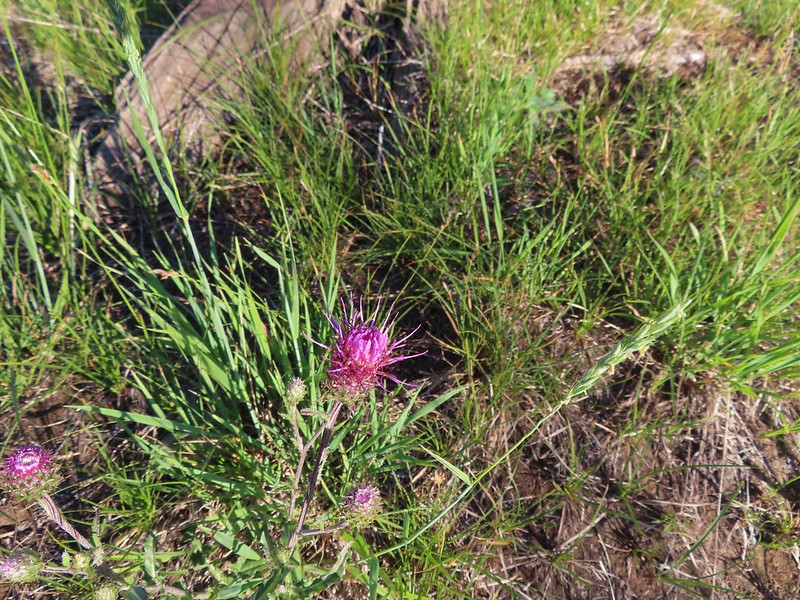 A thistle
 Penstemon
 Bleeding heart
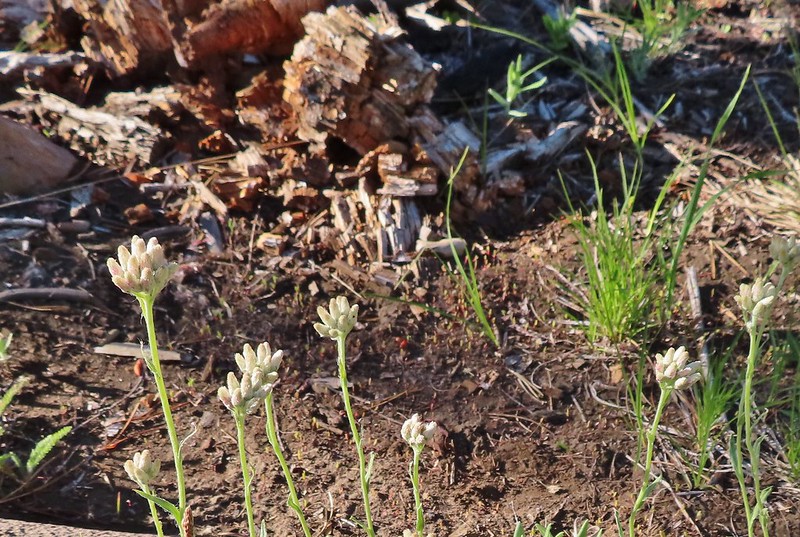 Pussytoes
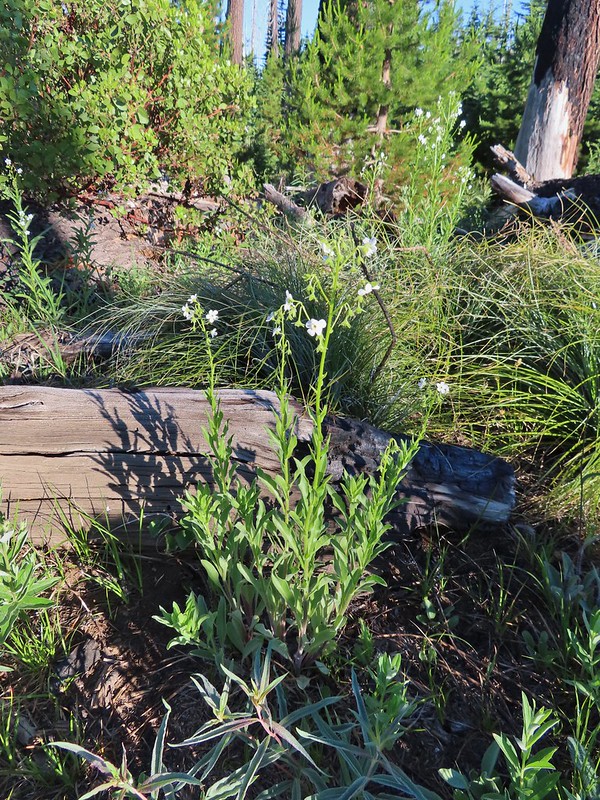 California stickseed
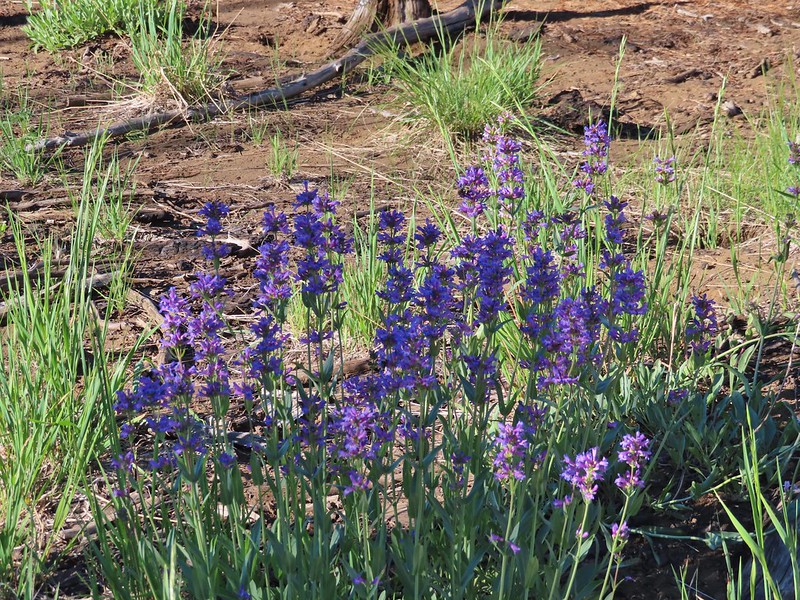 Another penstemon
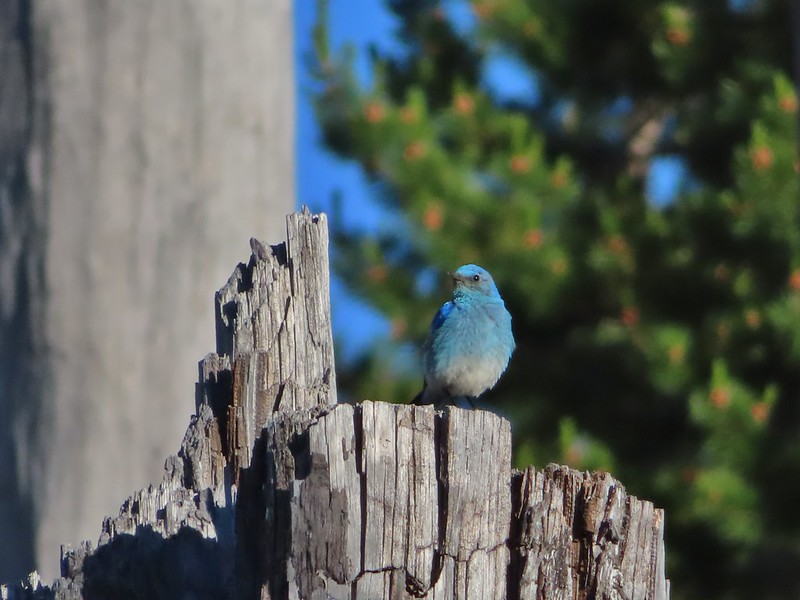 Mountain bluebird by the lake.

 There was a good amount of scarlet gilia blooming along this section of trail.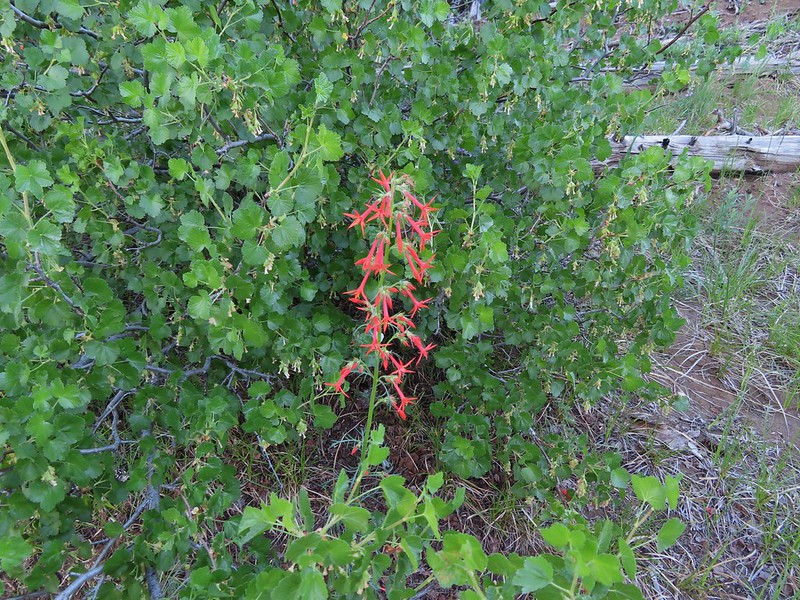
 Three Fingered Jack
 One of the ponds.
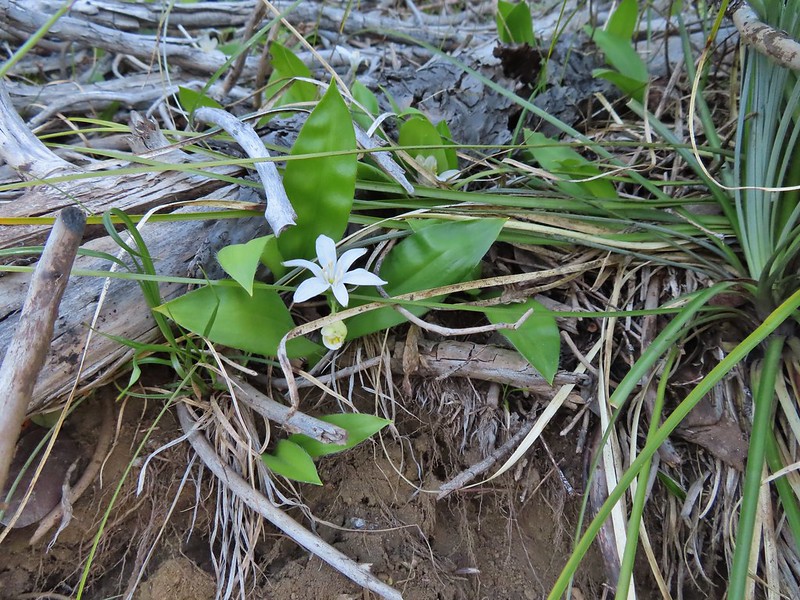 Queen’s cup
 Another pond with Maxwell Butte (
 Unnamed lake along the trail with Maxwell Butte behind.
 Lupine
 Dark-eyed junco
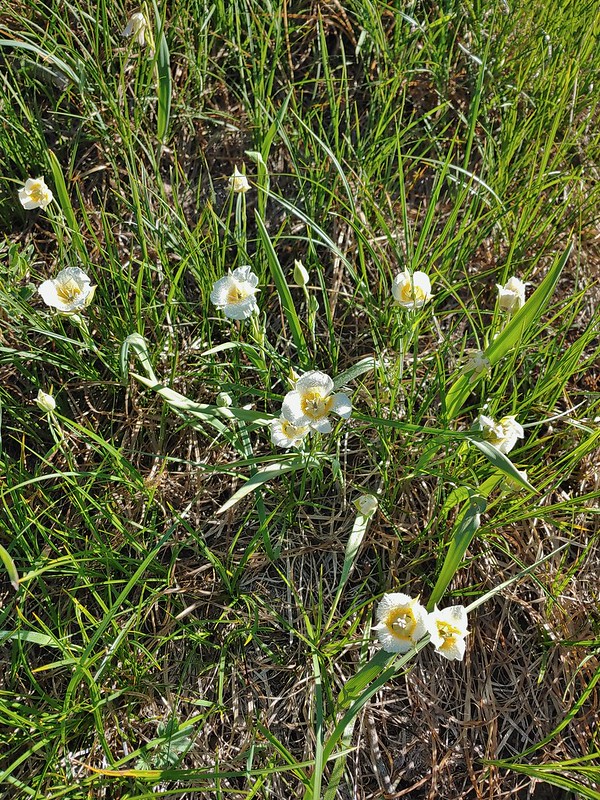 Sub-alpine mariposa lilies
 Woodpecker
 The view south.



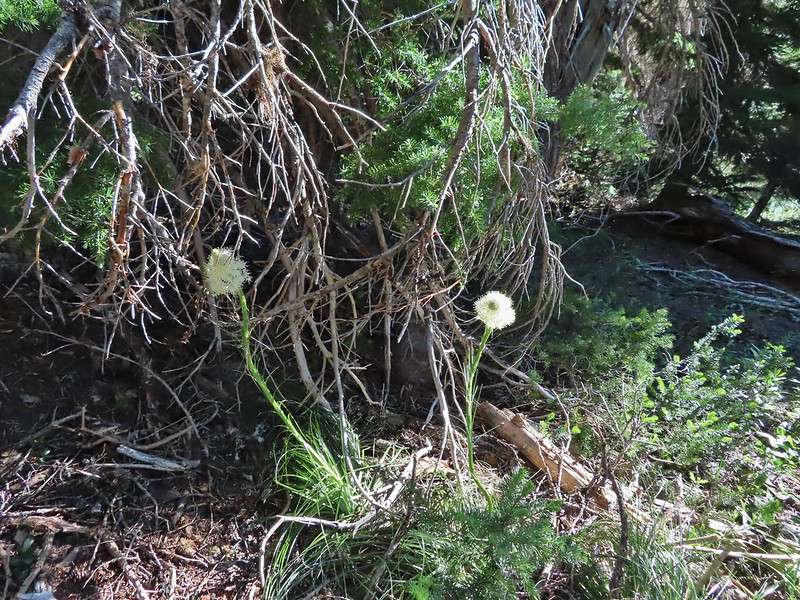 Beargrass
 Recent snow melt is another recipe for mosquitos.
 Another creek crossing.
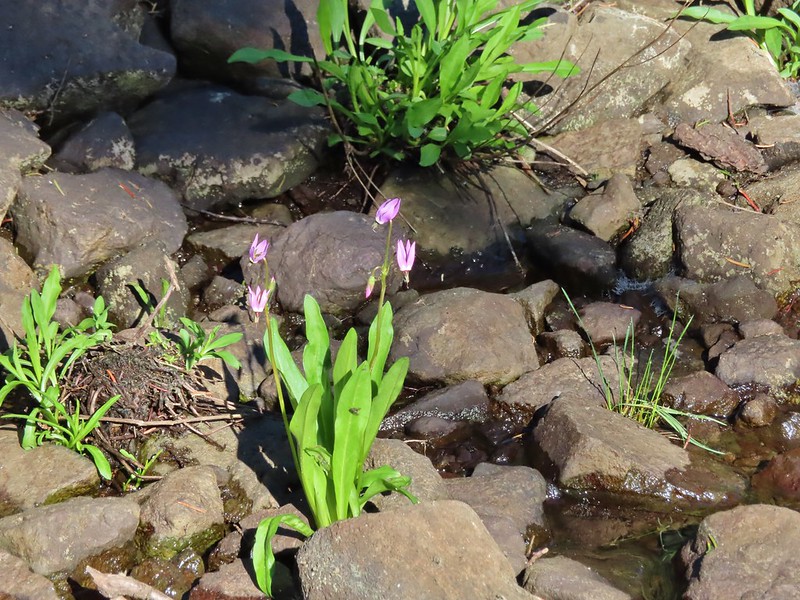 Shooting star
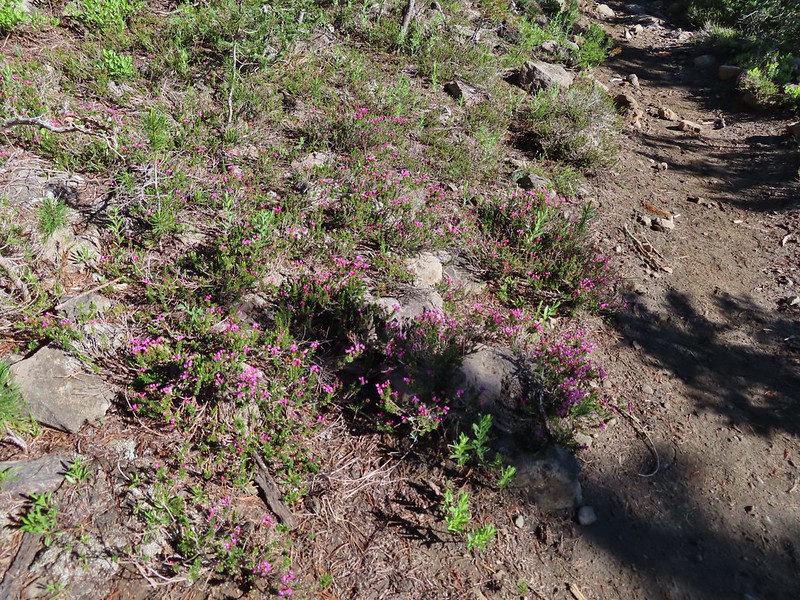 Mountain heather. Typically if we see this blooming we expect there to be mosquitos.
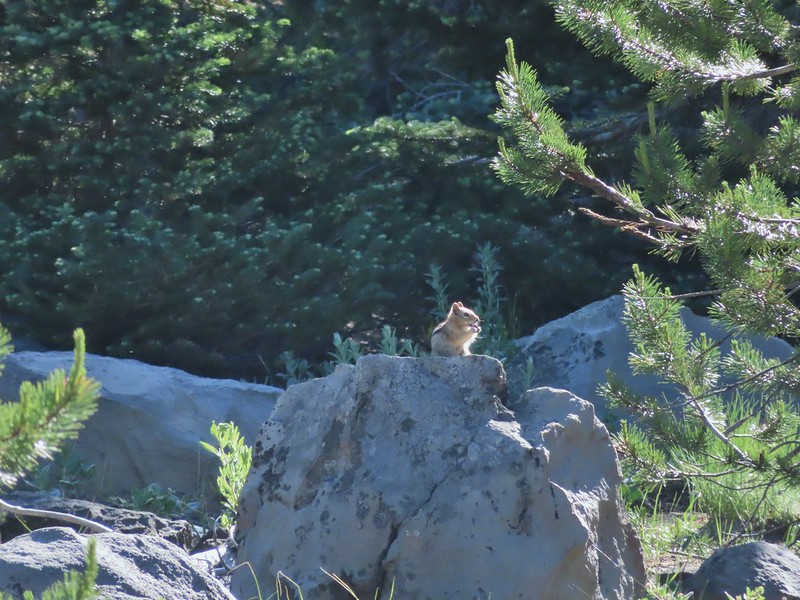
 A sulphur
 Alpine false dandelion
 One of several snow patches at the tree line.
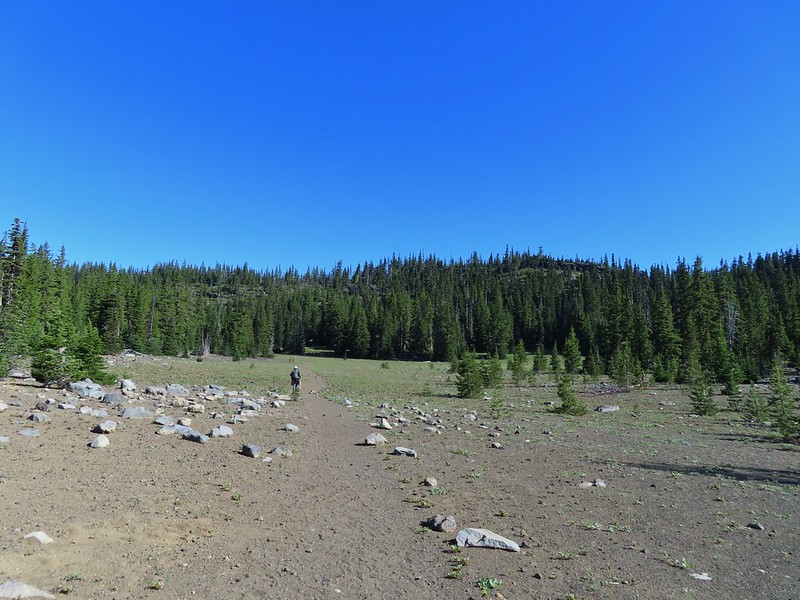 Nearing the end of the opening.
 More snow in the trees.
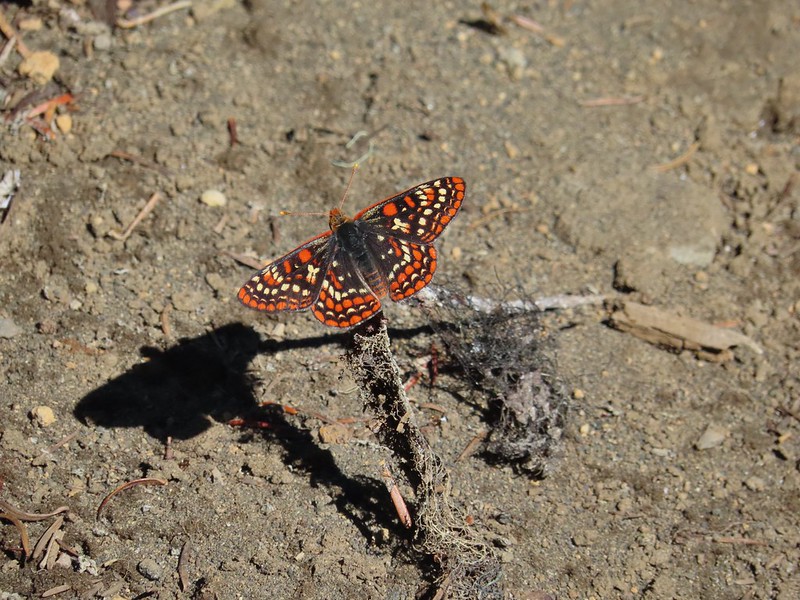
 A checkerspot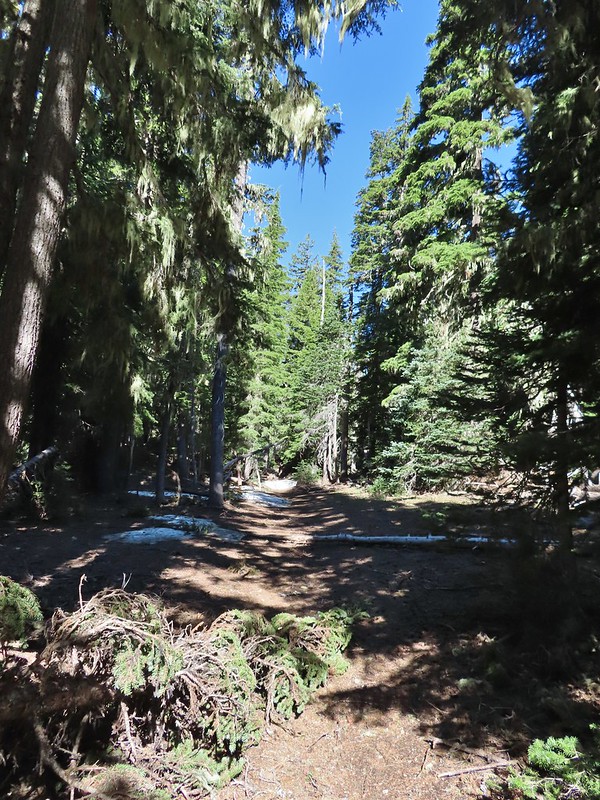
 Trees & melting snow = more mosquitos.
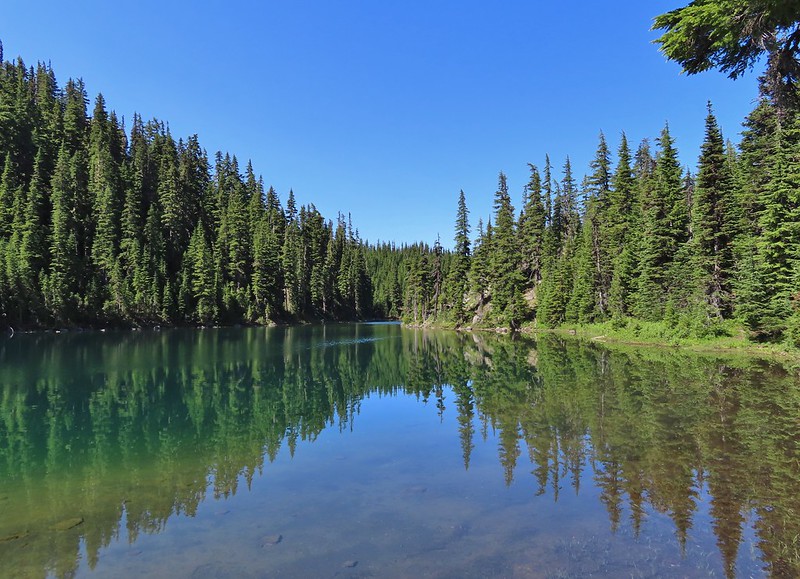
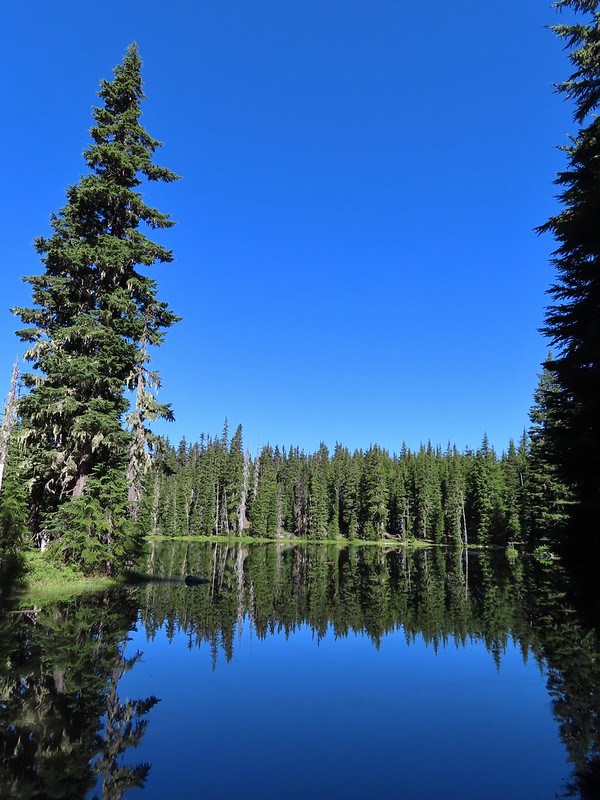 Not Santiam Lake but a very pretty unnamed lake just to the left of the trail approximately 0.4 miles from Santiam Lake.
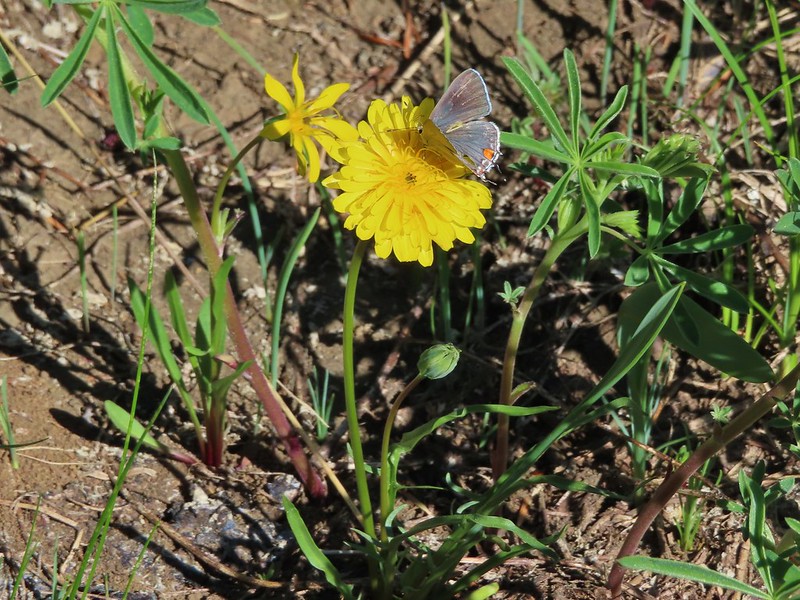 Not sure what type this is but the orange on the wing was pretty.
 Mt. Jefferson behind Red Butte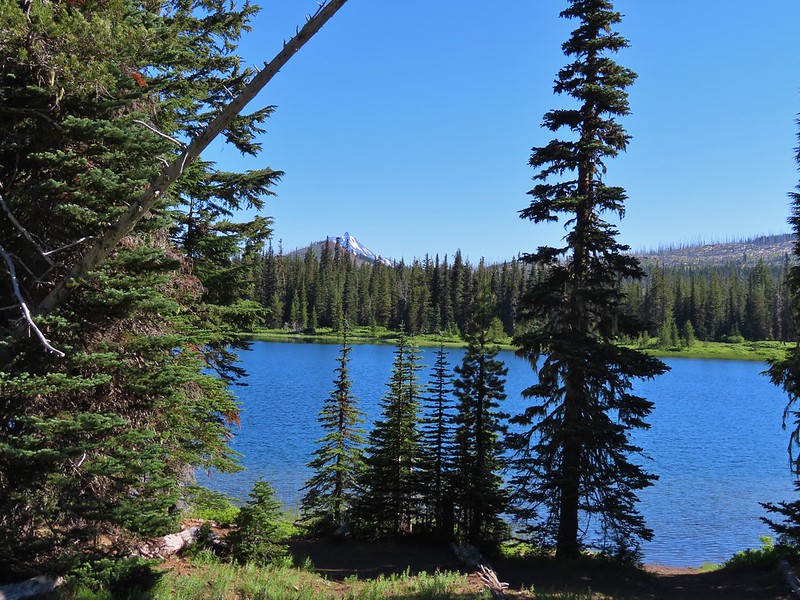
 Duffy Butte on the left.
 Three Fingered Jack
 Paintbrush, shooting stars, and buttercups.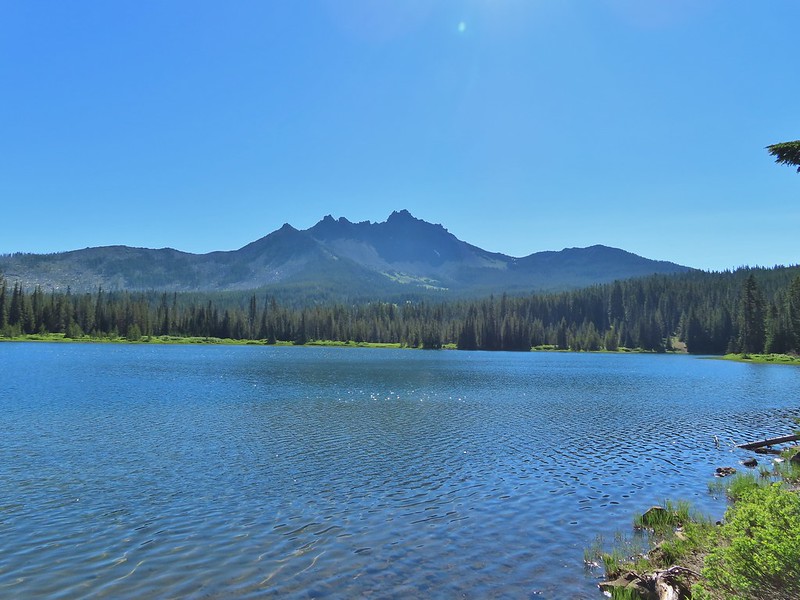
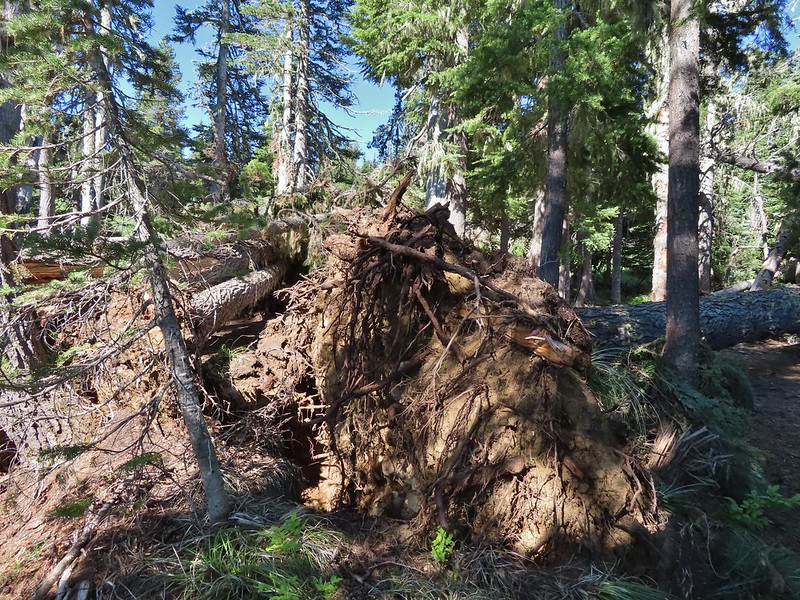 Just one of several large uprooted trees along the shore.

 The “topographic feature” ahead on the right where we planned on turning for Lower Berley Lake.
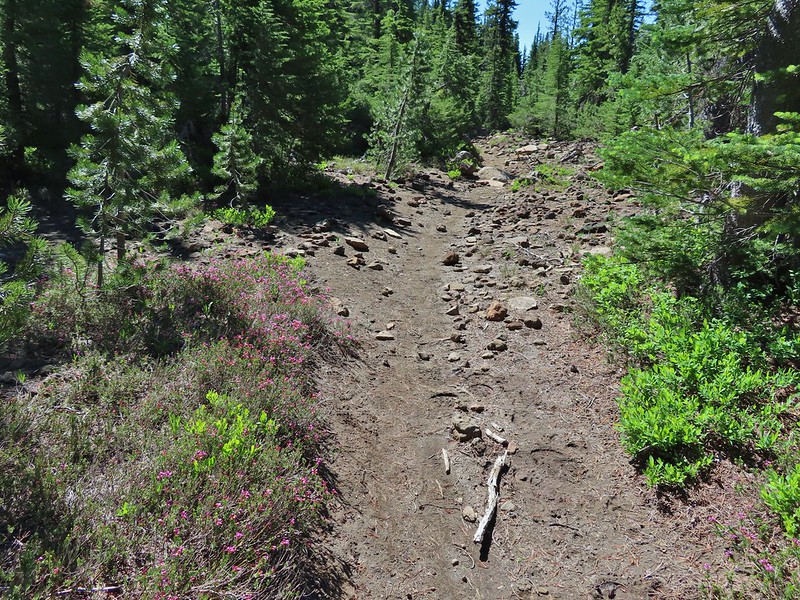 Mountain heather along the trail, it was warm and sunny enough that the mosquitos weren’t as bad this time by.
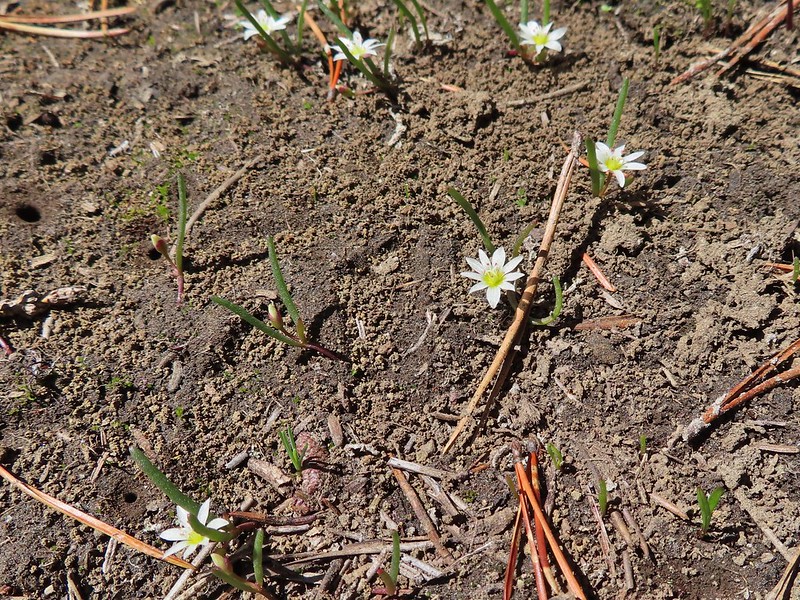 Threeleaf lewisia
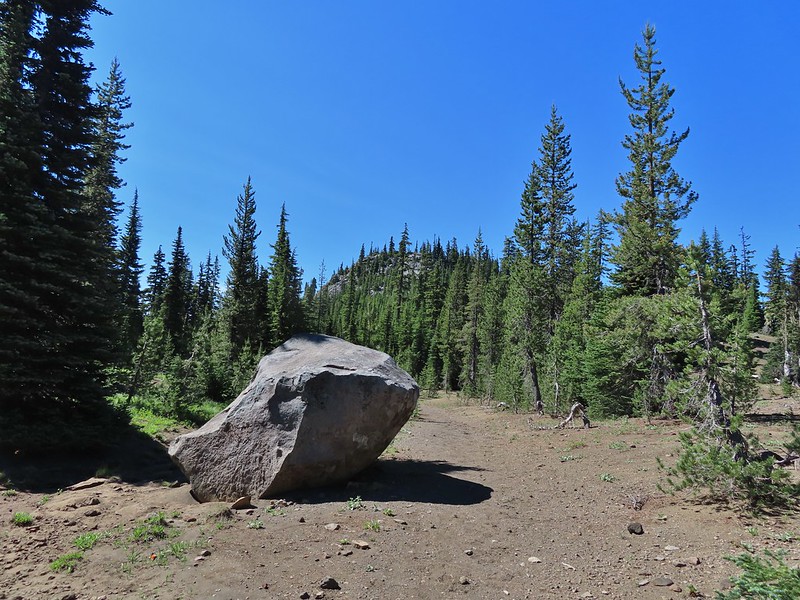 Getting closer to the hill where we planned on turning.
 California tortoiseshell butterflies in the bed of Lost Lake Creek.


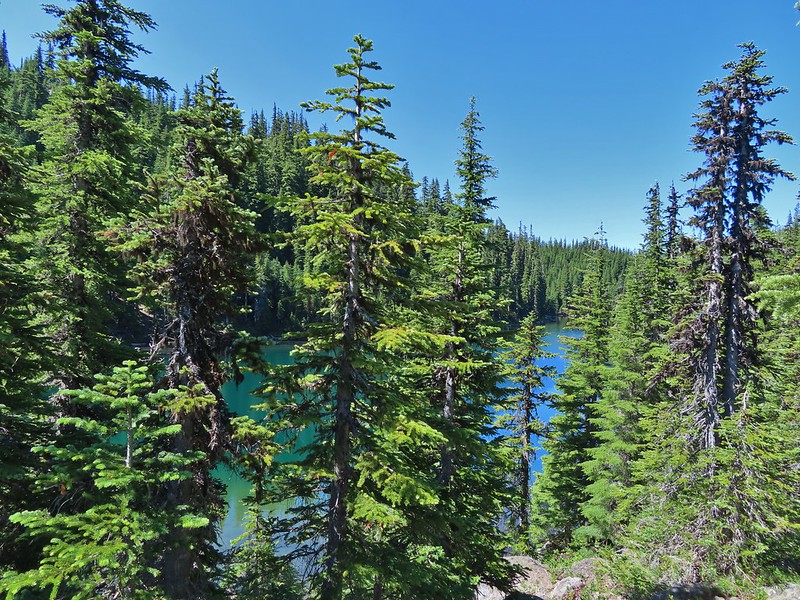
 Three Fingered Jack from the rocks.
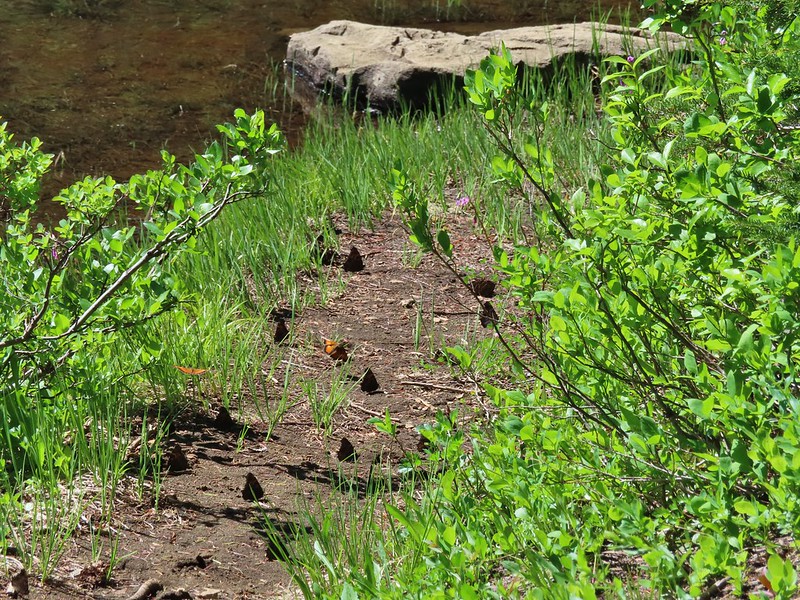 More tortoiseshells
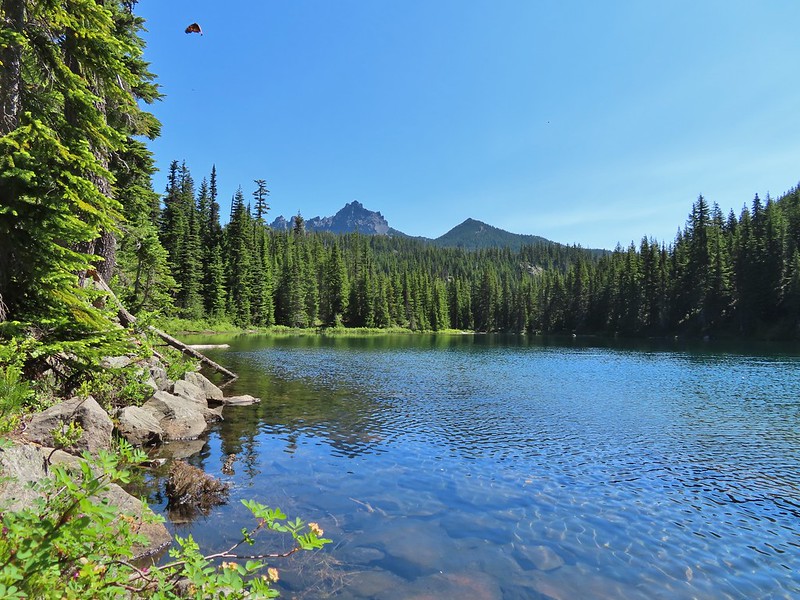 A butterfly photo bomb


 The bed was popular with the butterflies.
 Cross country to Upper Berley Lake, the doe was in this meadow and headed in the direction of the patch of snow at the far end.
 Upper Berley Lake
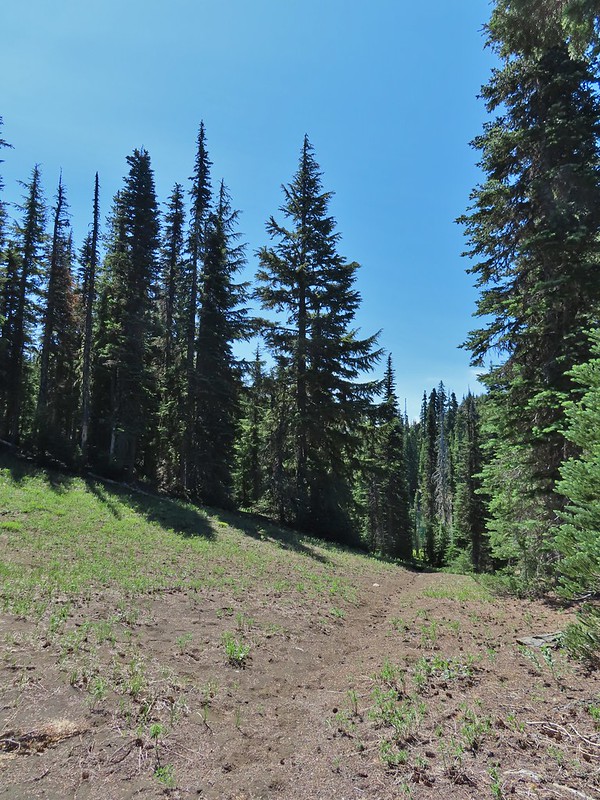 We wound up finding the same “user trail” and followed it down to the lower lake.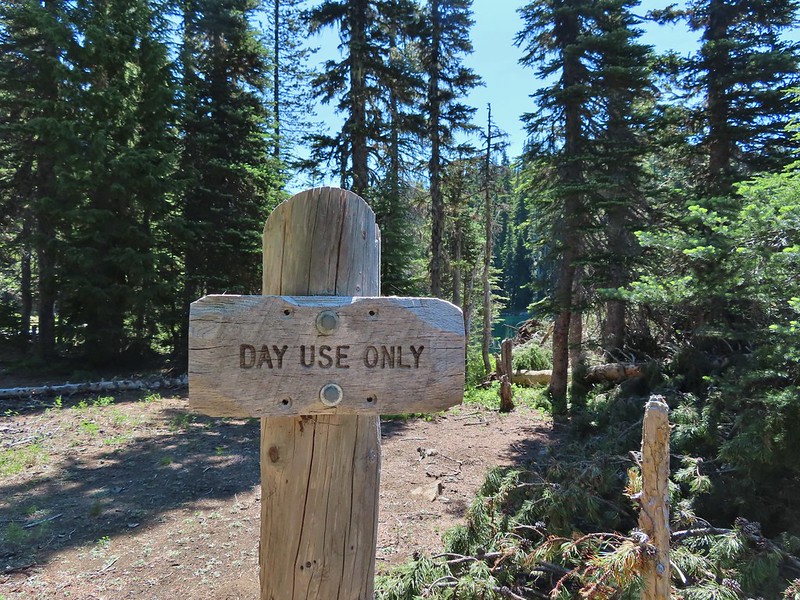
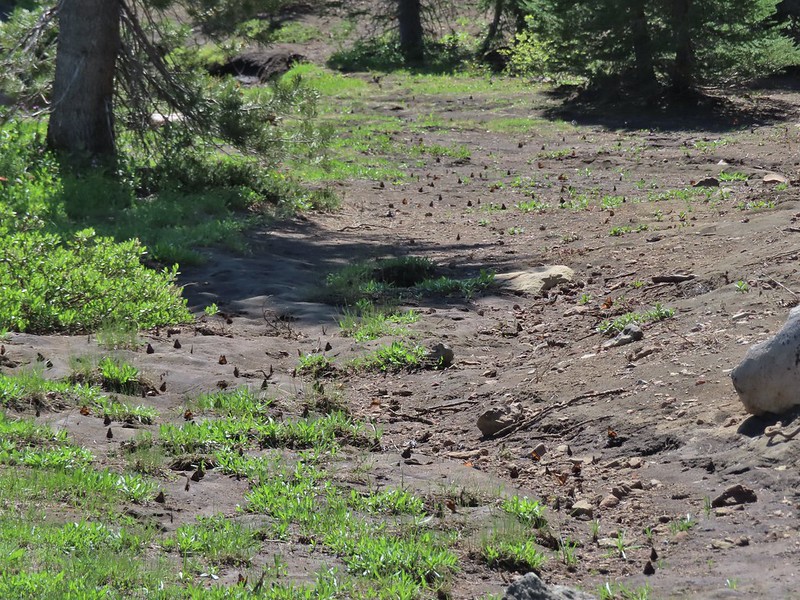 California tortoiseshell butterflies along Lower Berley Lake.
 Three Fingered Jack and about a half dozen butterflies.
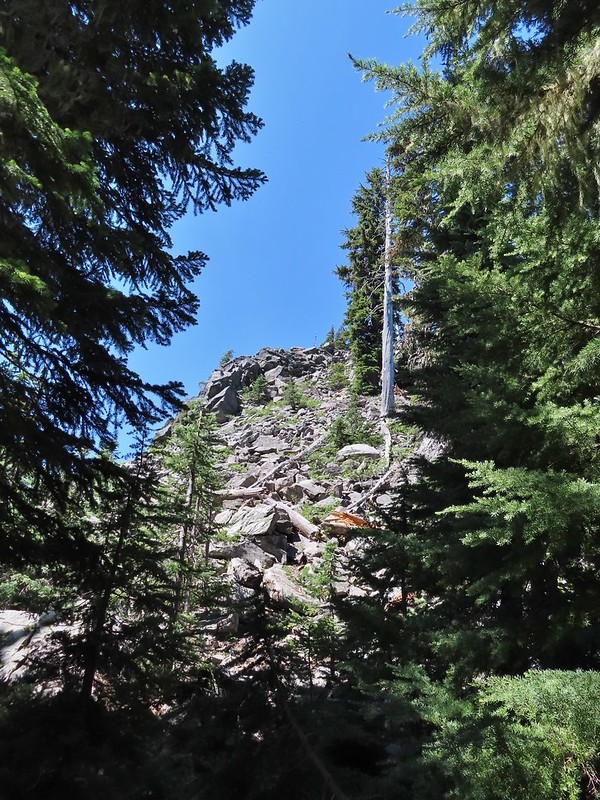 The hillside on the right was rocky.
 The trail dropping down from the saddle with Mt. Washington and the North Sister ahead.

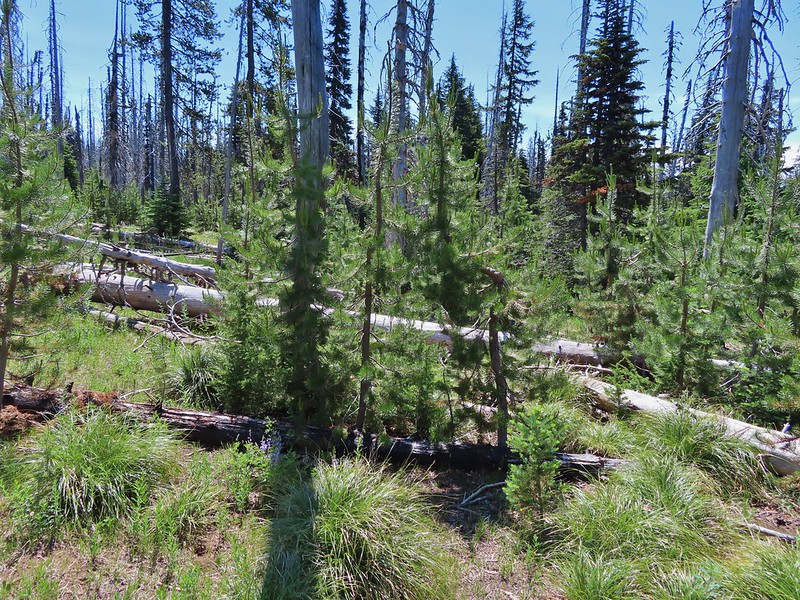
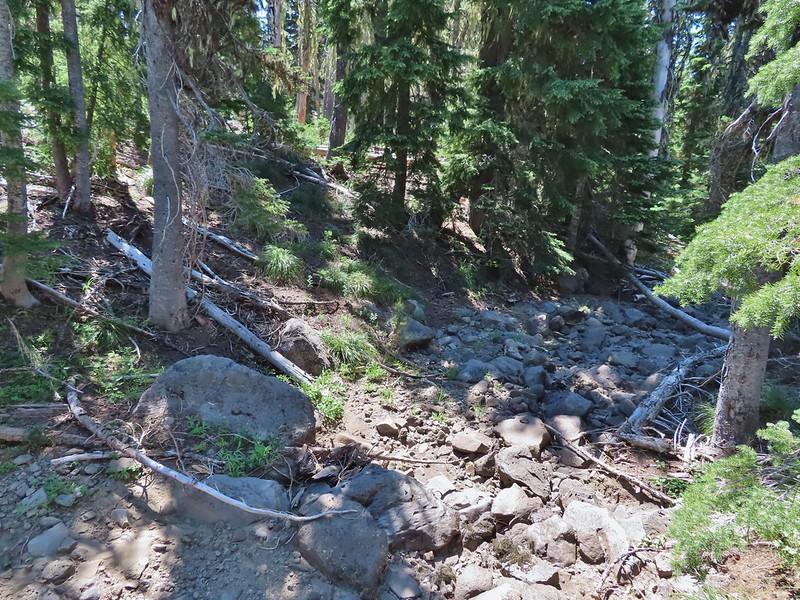
 Found it!


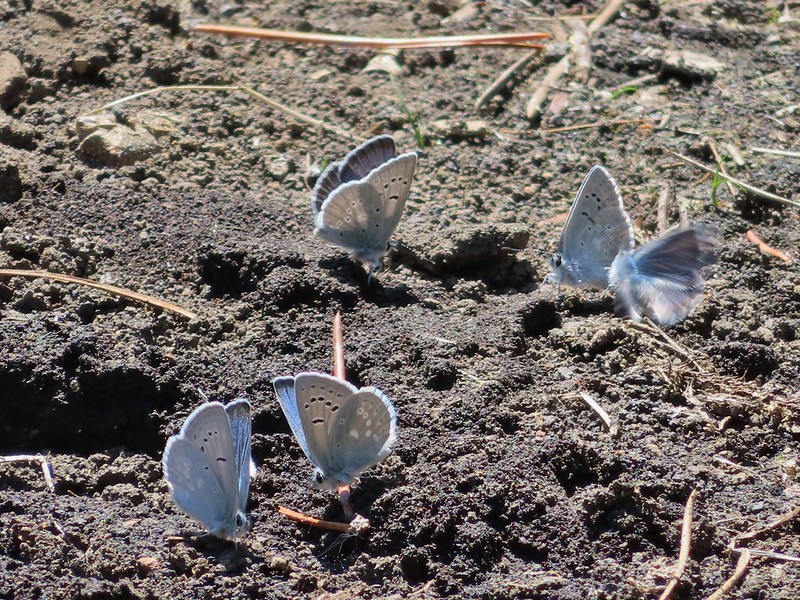
 Yellow beetle on lupine.
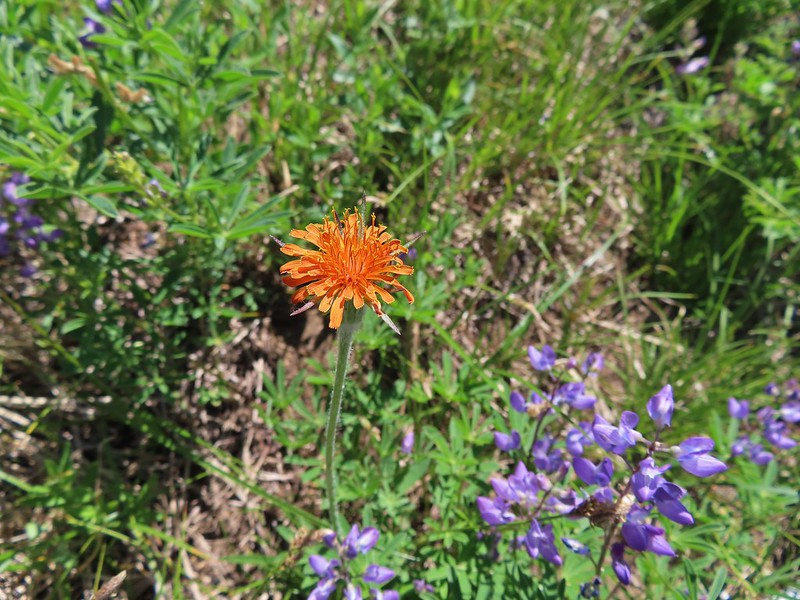 Orange agoseris
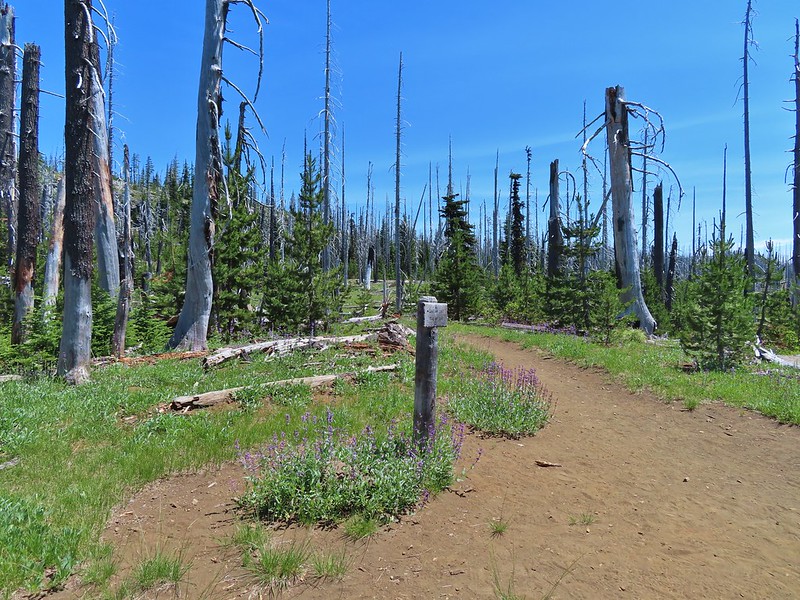 Back at the PCT.
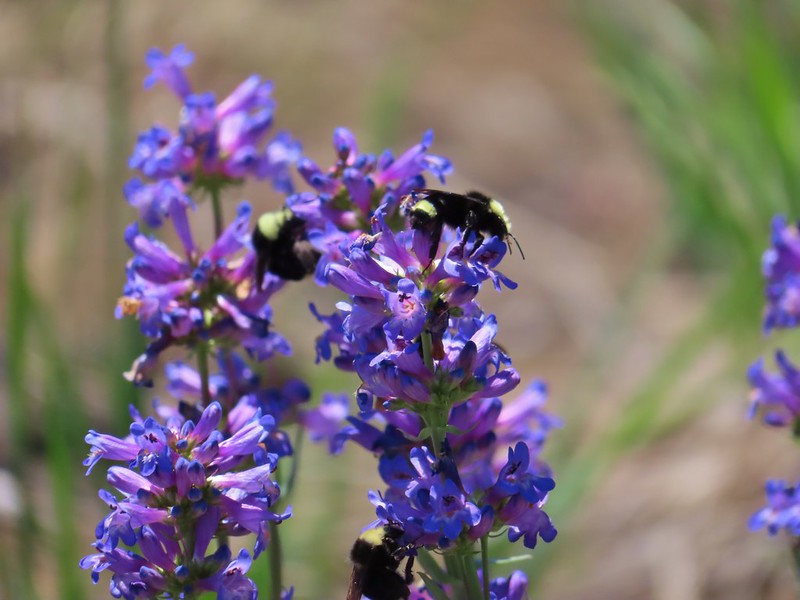 Bumble bees on penstemon.
 Cicada in the grass.
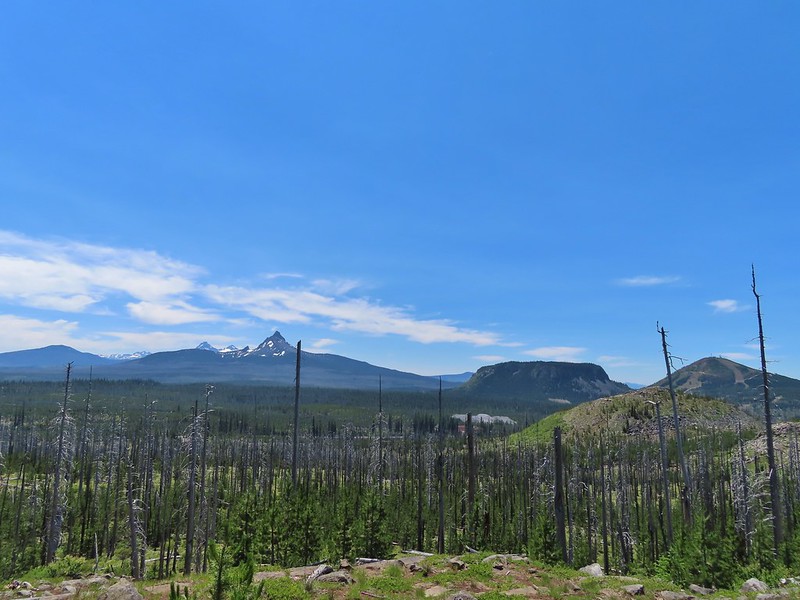 Black Crater, Broken Top, North & Middle Sister, Mt. Washington, Hayrick Butte, and Hoodoo Butte from the viewpoint.

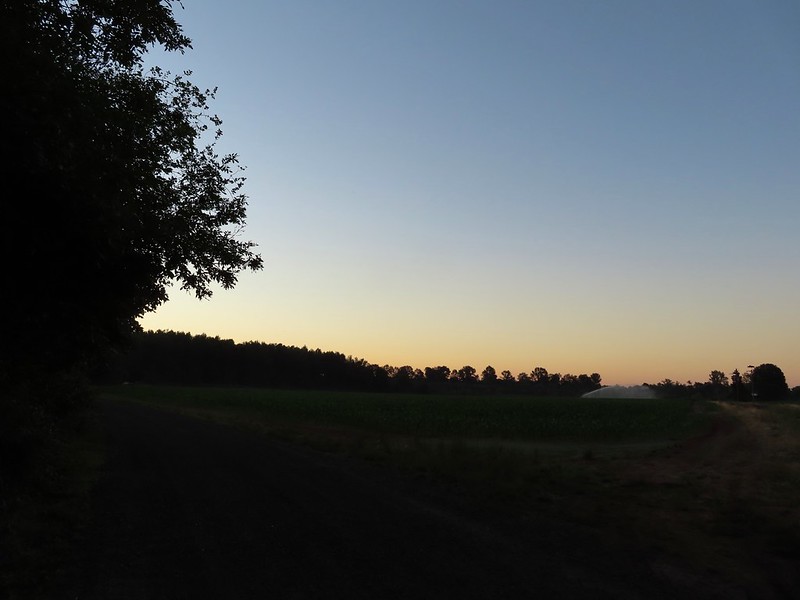 Private farm along the entrance road from the pullout we parked at.
 Osprey nest above the corn field.
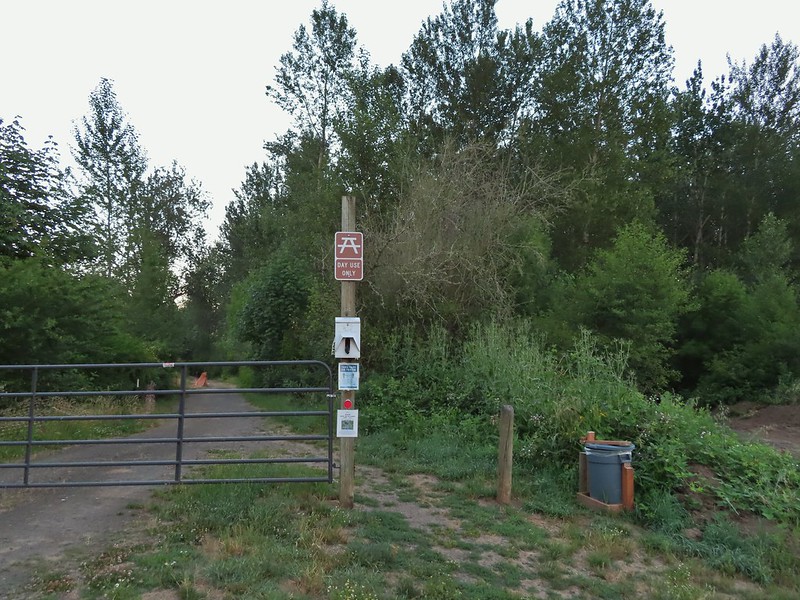 Gated road at the trailhead. There was a second gravel road to the right that was blocked with a log. The gravel road appeared to be fairly new and possibly a reroute of the gated road.
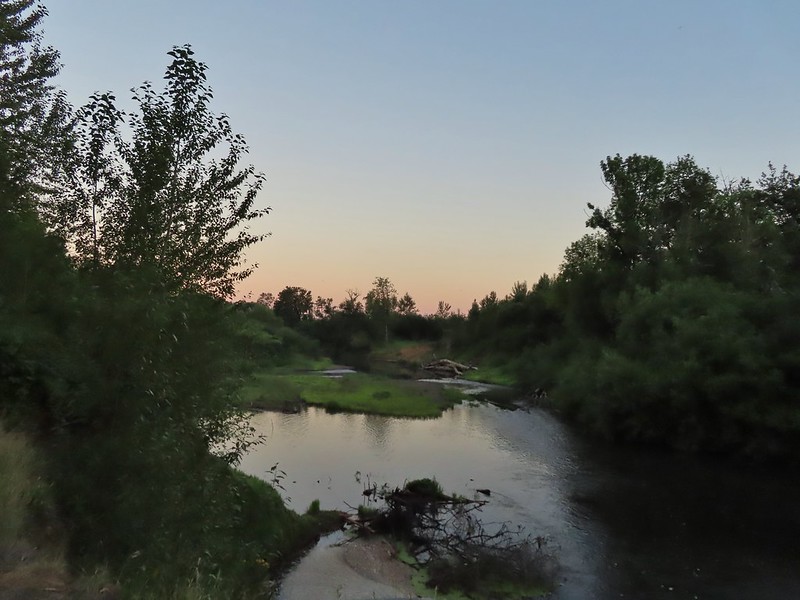

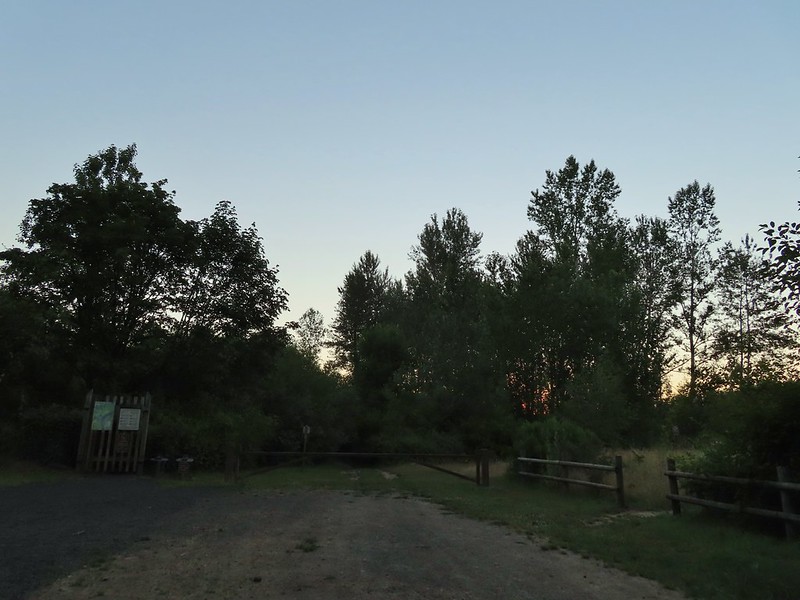 Old trailhead?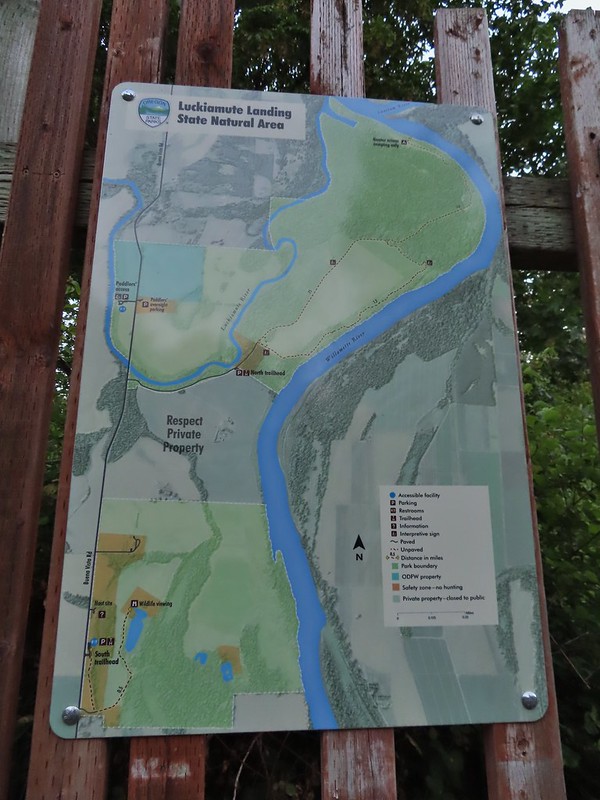

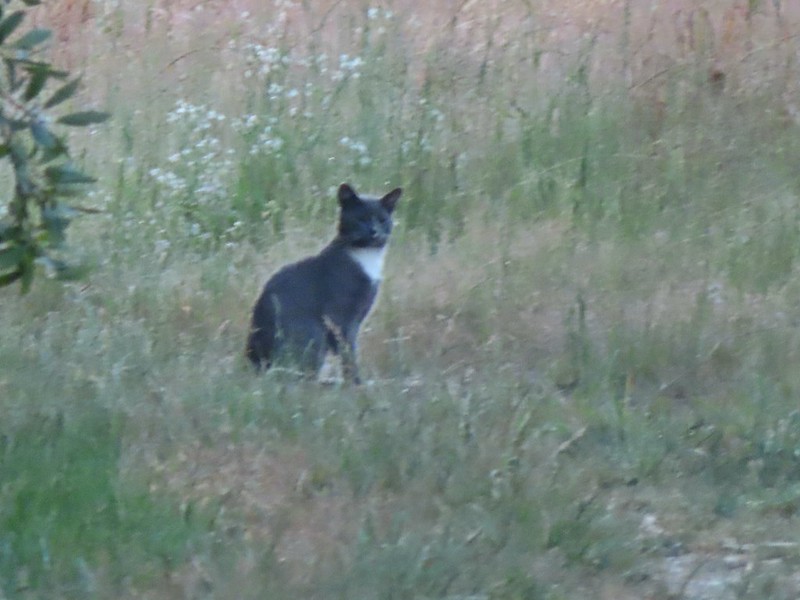 Extreme zoom on the kitty.


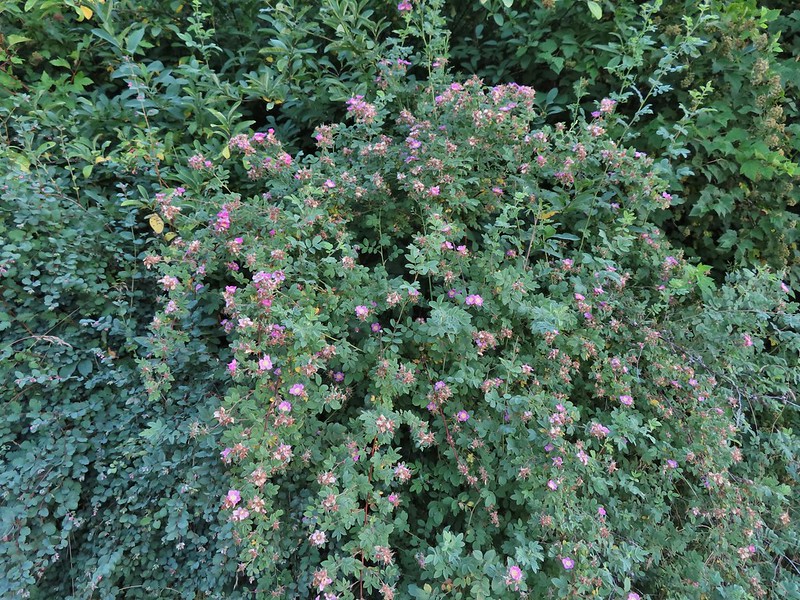 Wild rose
 Vetch
Vetch Oregon grape
 Thimbleberry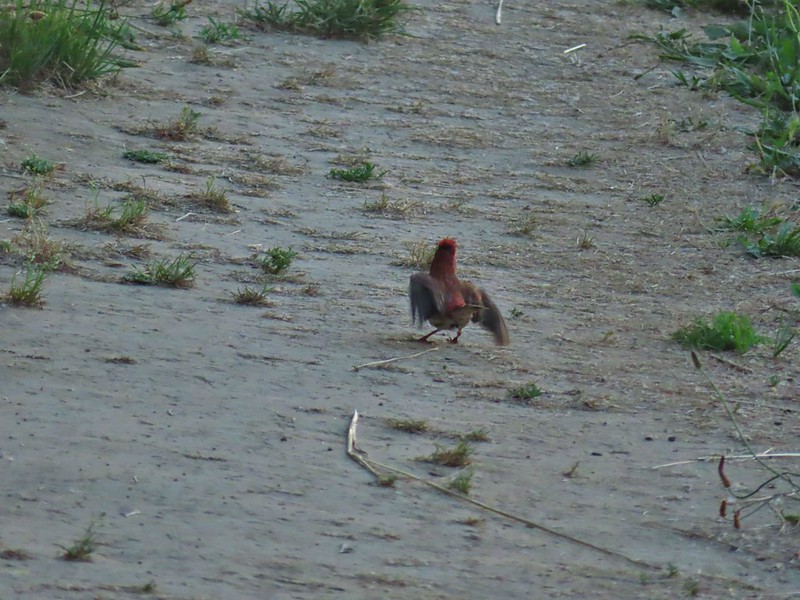


 We both initially thought that this was the start of an out and back to campsites along the Willamette River and that the loop continued around the field to the right. In fact there was a blue awning set up at the edge of the field in that direction and at least 3 vehicles (not sure why they were there or how they got through the gate). This was not the case and fortunately for us we were planning on doing the out and back which meant we didn’t make the mistake of turning here. The continuation of the loop was actually 0.2 miles further along the road in the forest.
 The correct right turn for the loop.
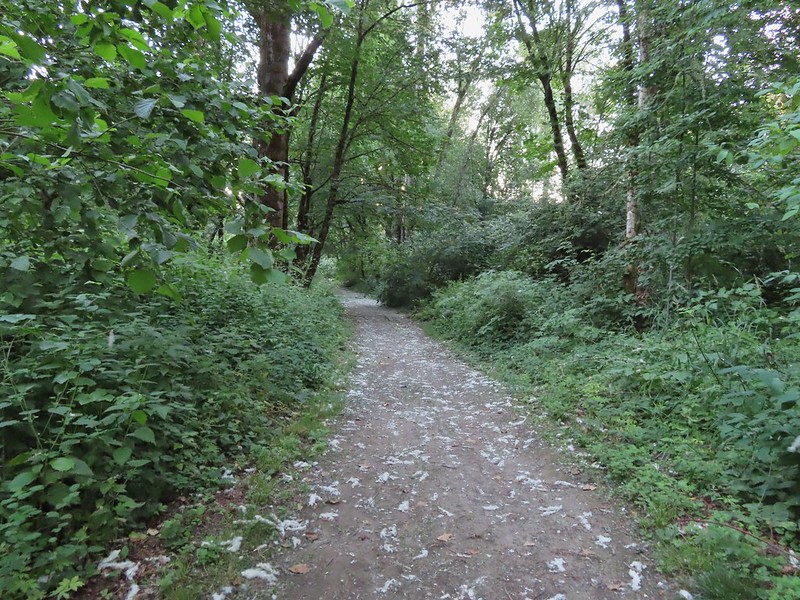 Cottonwood on the road.
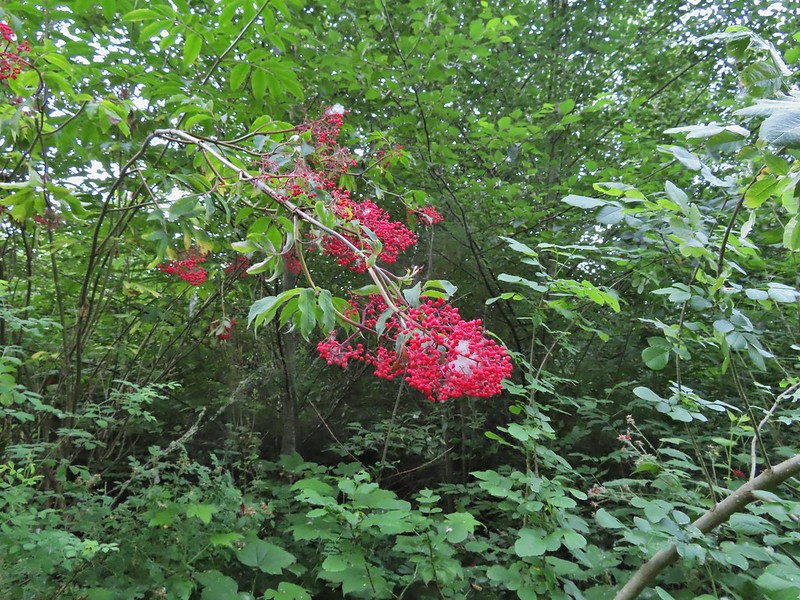 Red elderberry, a favorite of the birds.
 This wren was taking a dirt bath, perhaps an attempt to stay cool?
 A lot of invasive daisies in an opening.
 Native elegant brodiaea
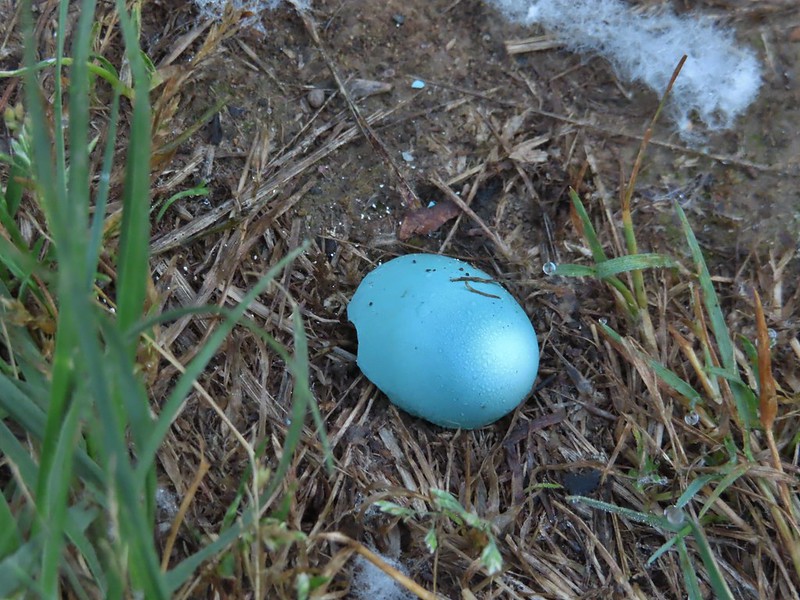 Egg shell
 More ripe berries.
 Poppies
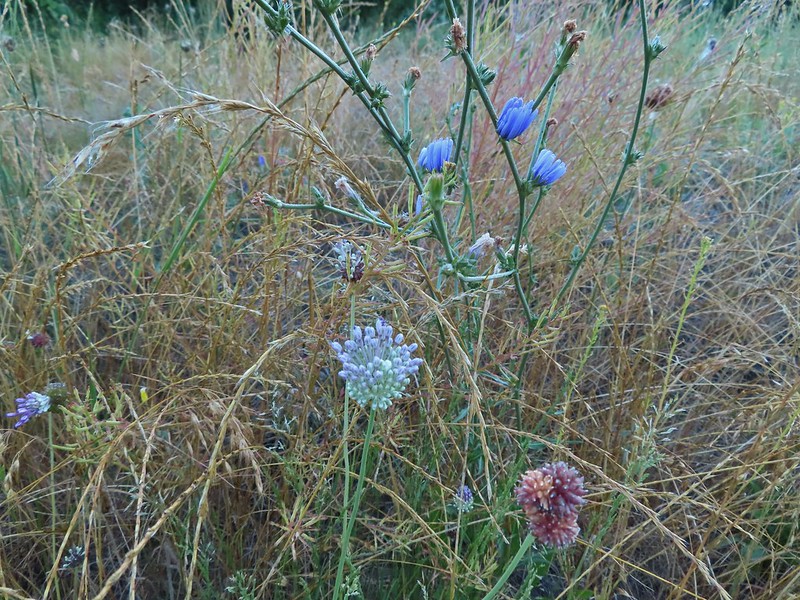 Mostly non-natives – chicory and clovers.
 More non-natives – Moth mullein and cultivated radish
 Slug
Slug Douglas spirea (native)
 The mouth of the Luckiamute on the left was hidden by trees.


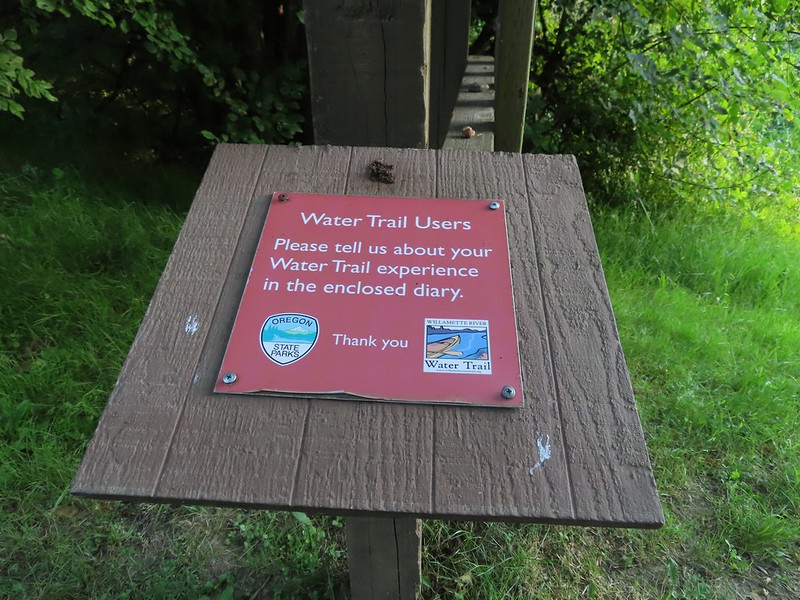

 Willamette River at the landing.
 Not sure what type of birds these were.
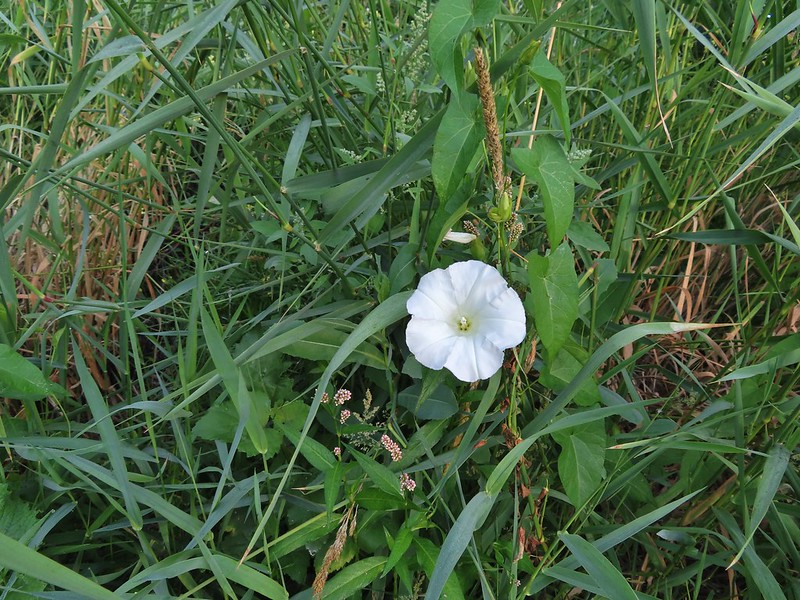 Bindweed at the landing.
 Bunny and a bird (not pictured is the chipmunk that raced across the road here).
 Slug also “racing” across the road. Speed is relative.
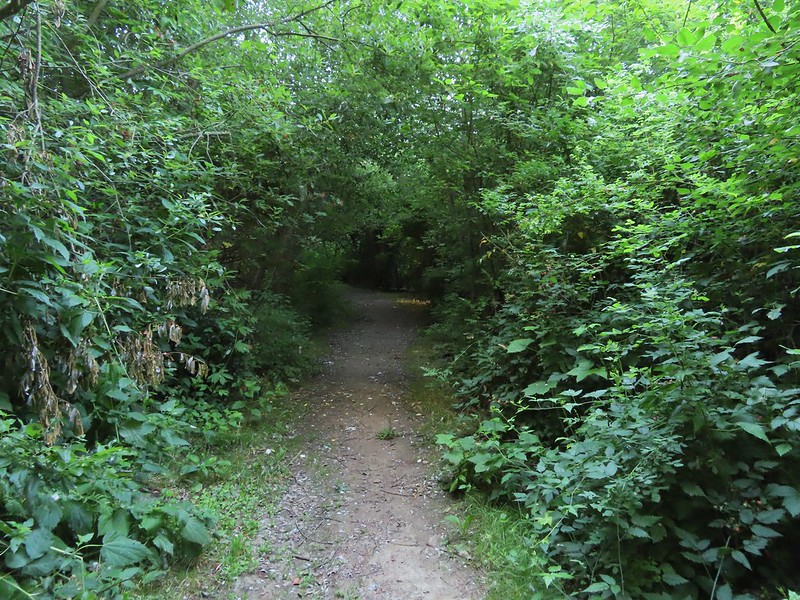 Back on the loop.


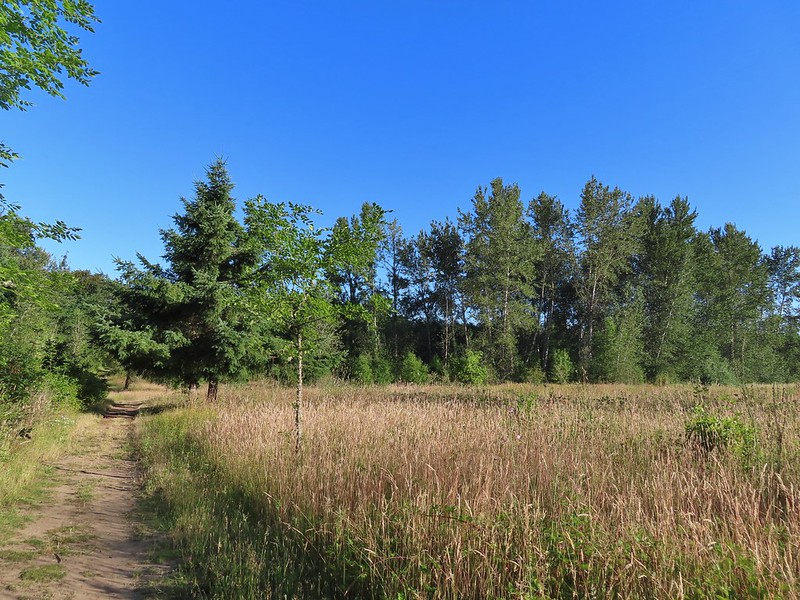 Near the end of the loop the trail passed back along the field.
 White crowned sparrow
 Possibly nelson’s checkermallow.
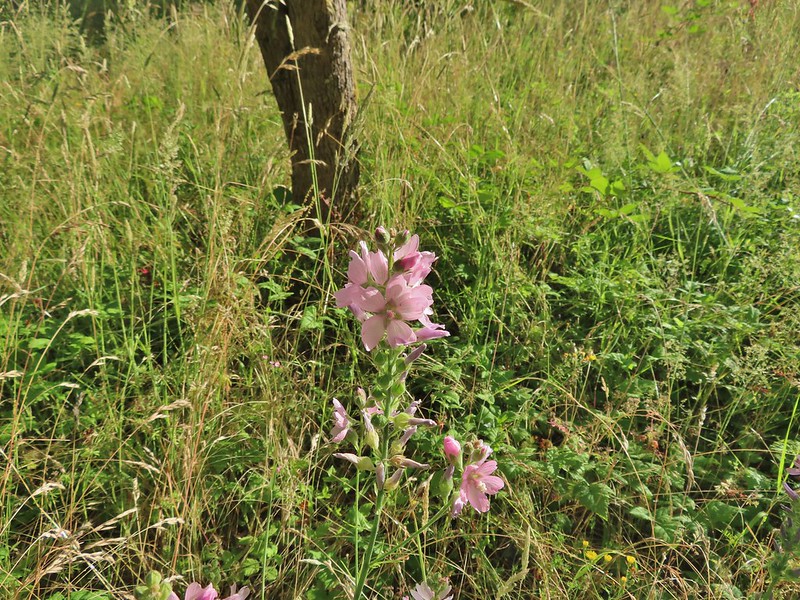 Meadow checkermallow
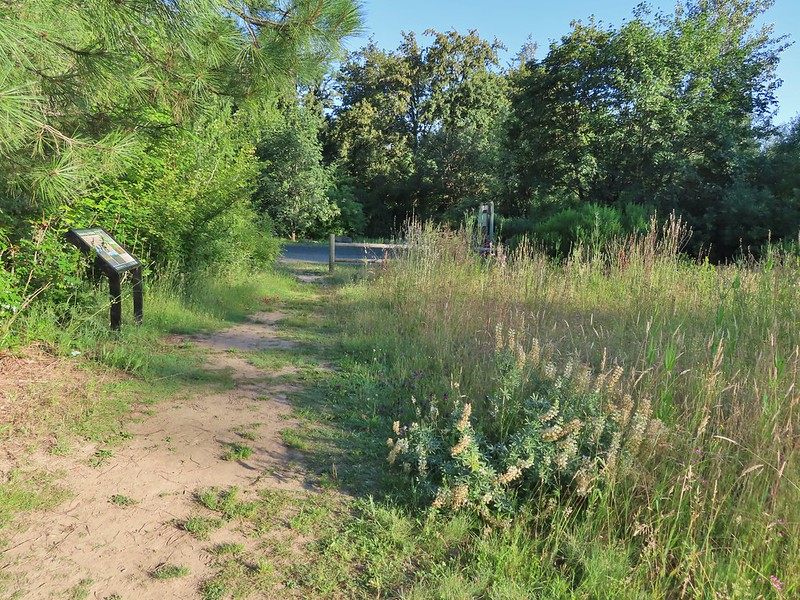 Completing the loop.
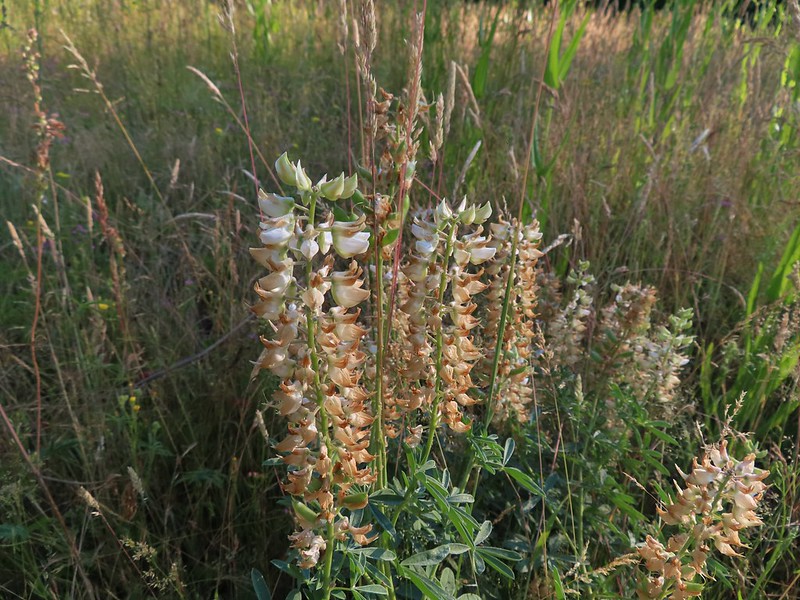 Lupine that is just about finished.
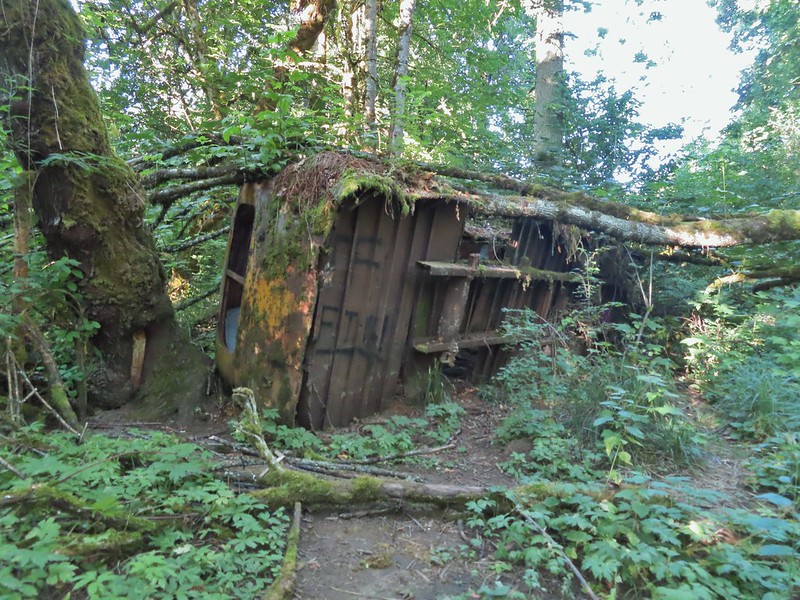 Old bus
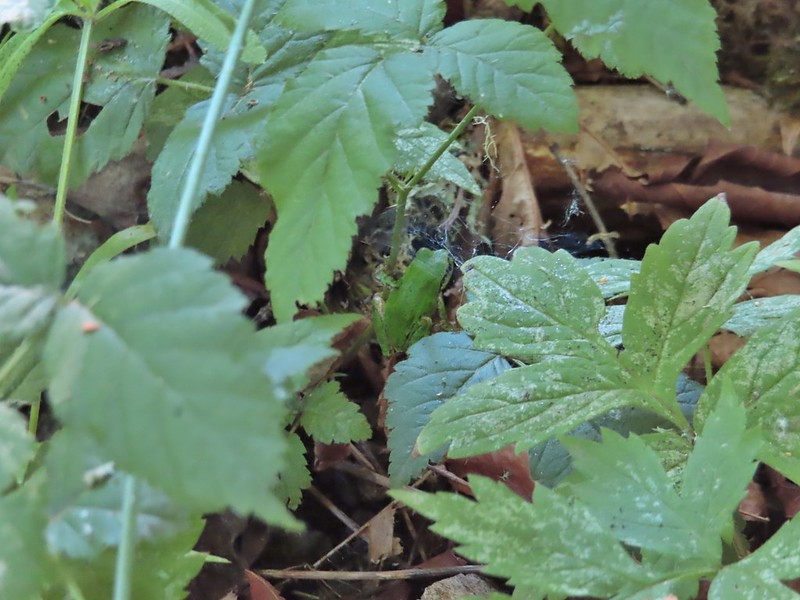 Tree frog
 Luckiamute River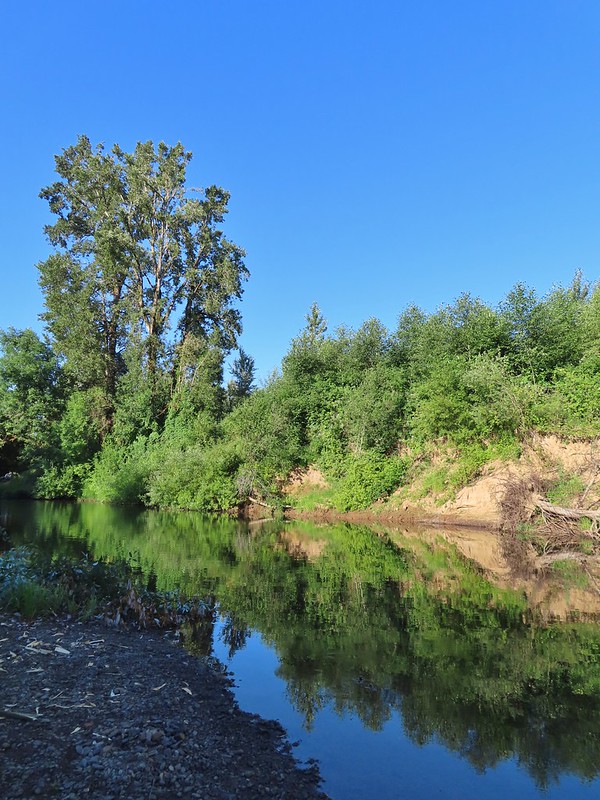
 Waiting for food.

 Old farm equipment with poison oak in the background.
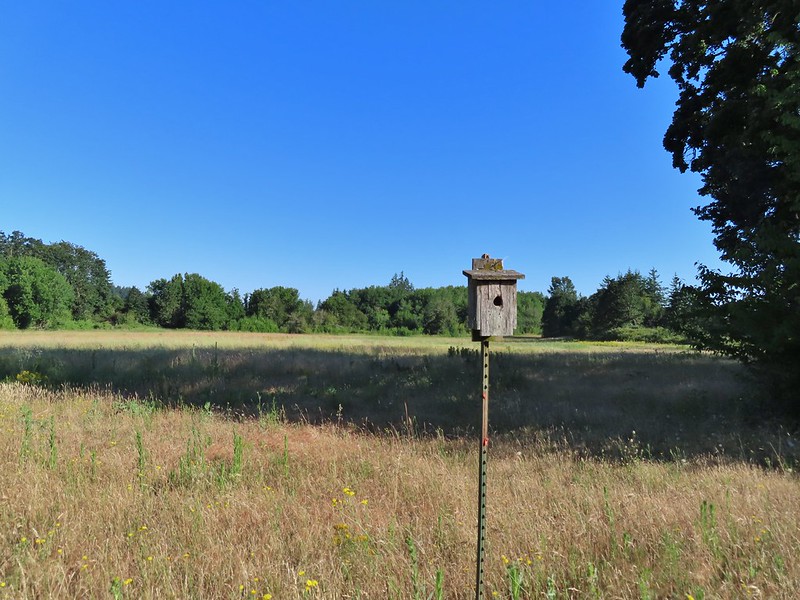 One of several birdhouses along the road.
 North end of the pond.

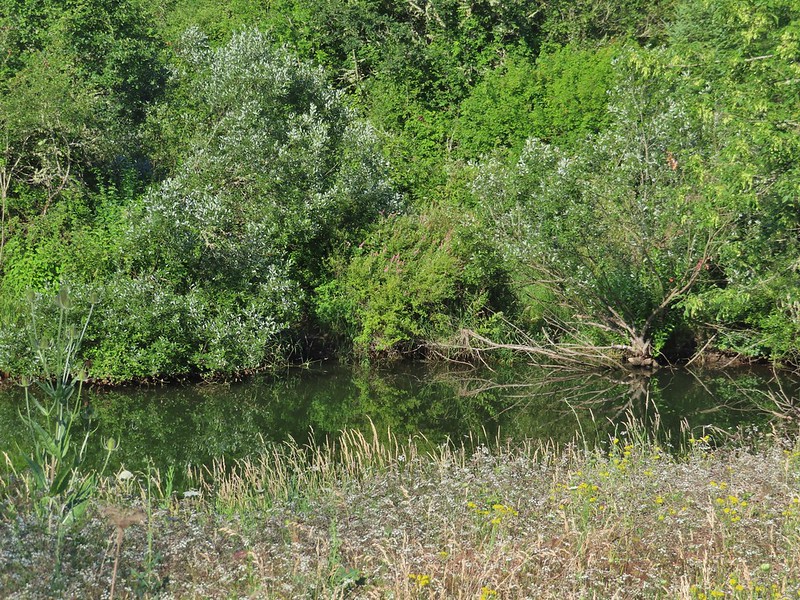 We are both pretty sure a turtle swam off from this area when we came into view.
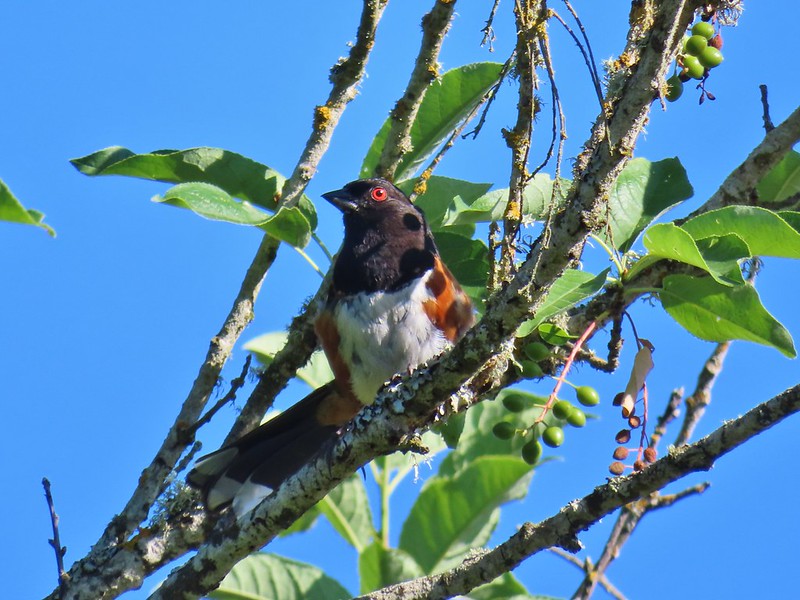 Spotted towhee
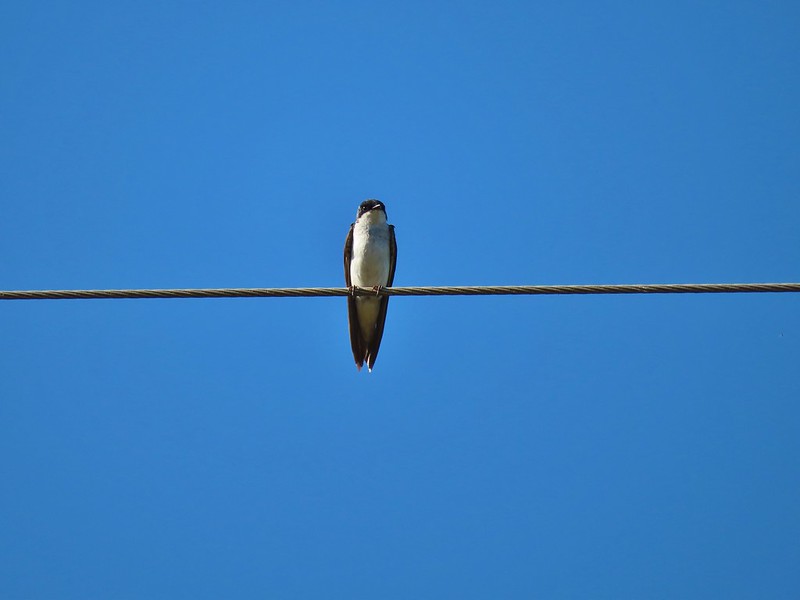 Swallow
 European centaury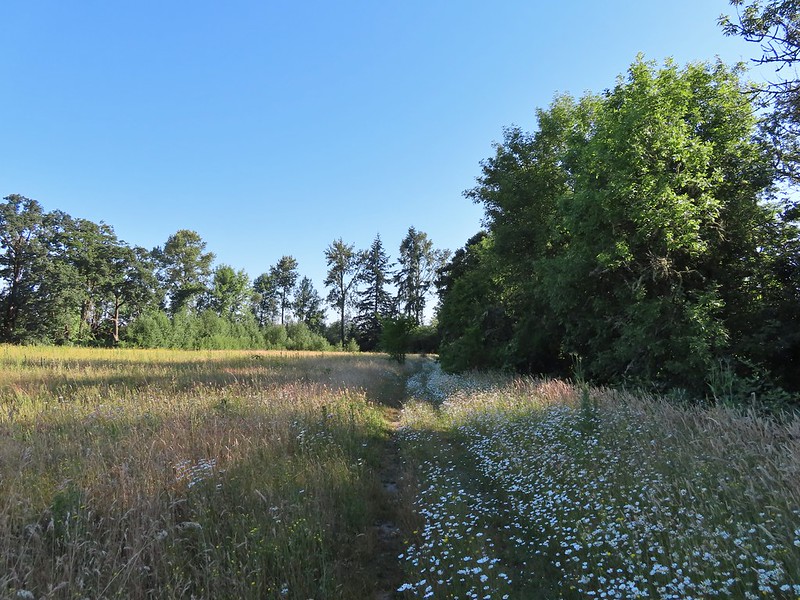

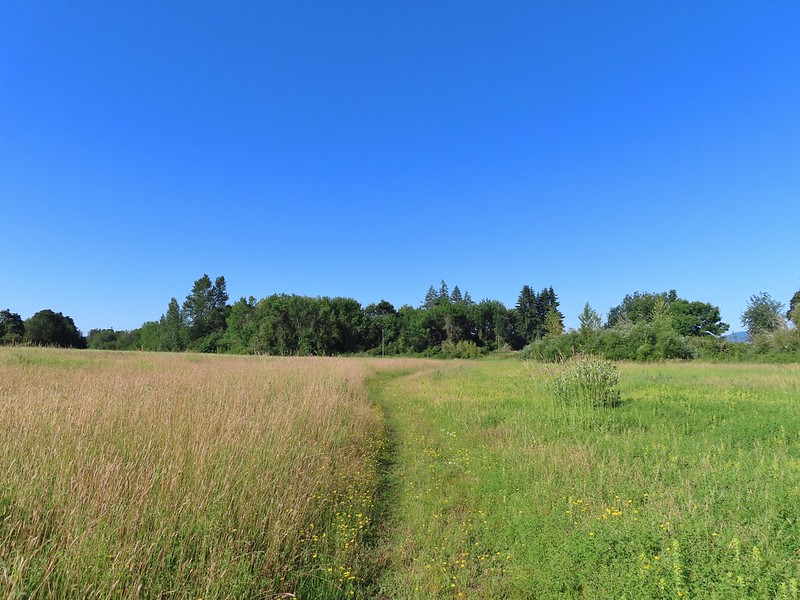
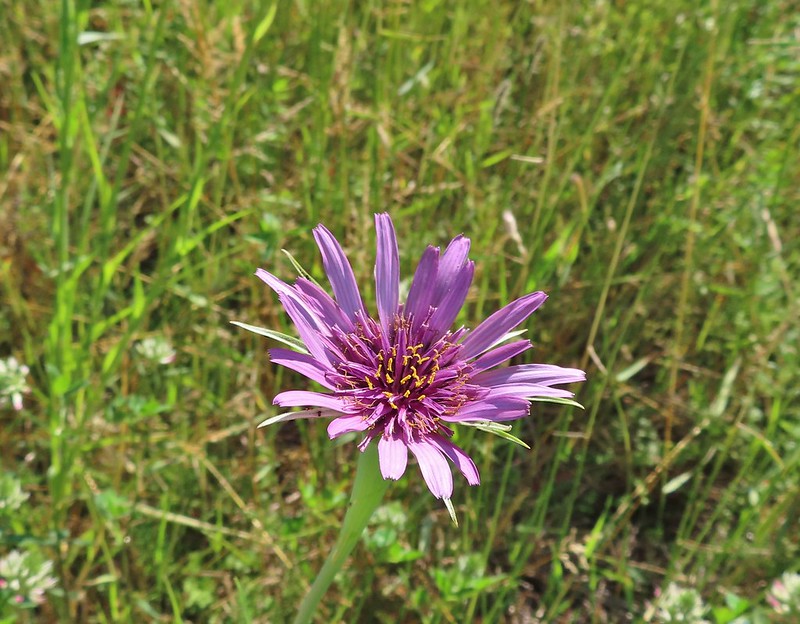 Oyster plant
 Creeping jenny
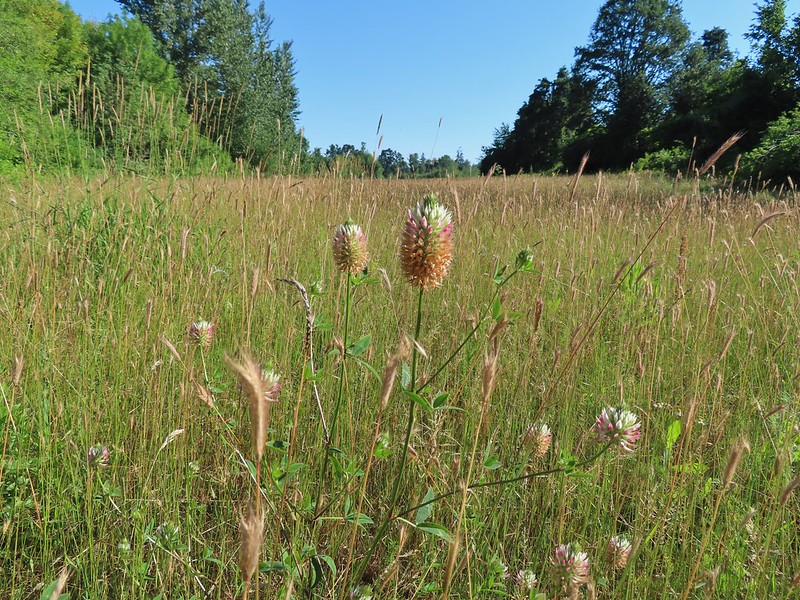 Arrowleaf clover
 Scrub jay
 Corn Chamomile
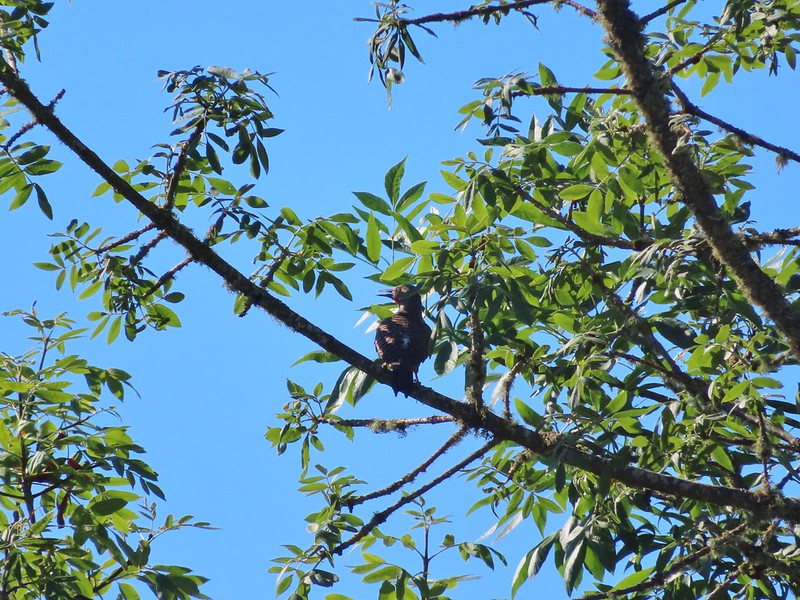 Northern flicker
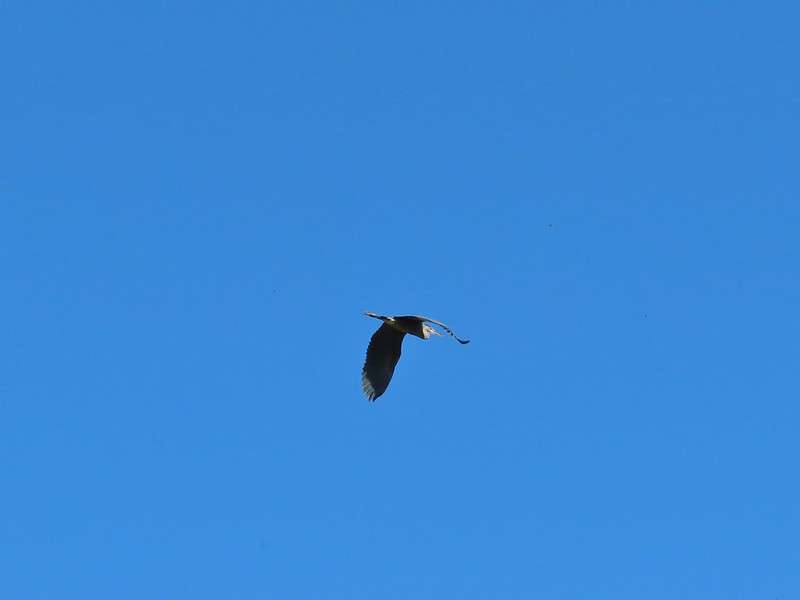 Great blue heron
 American kestral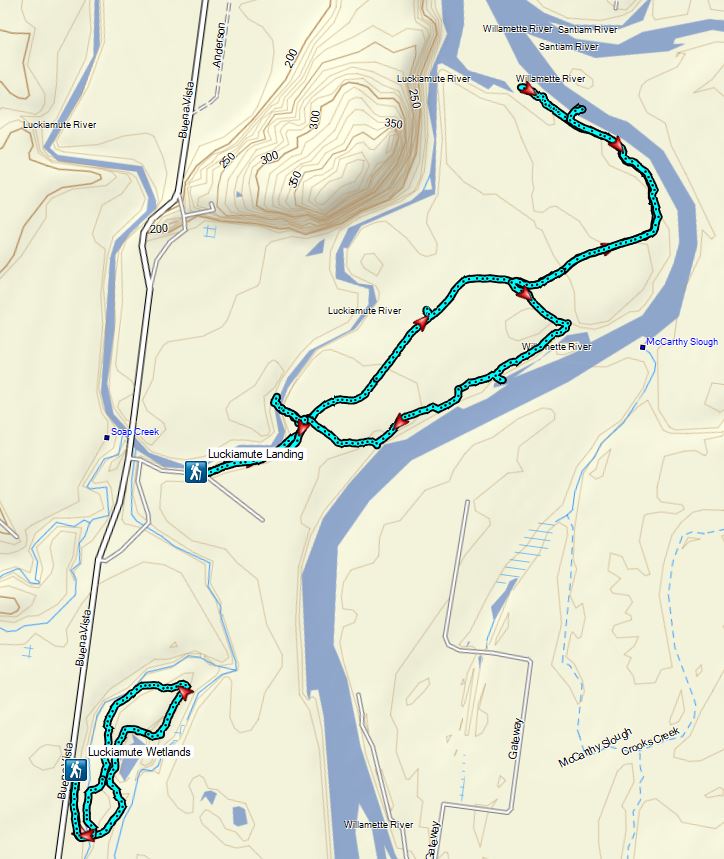


 American coot and a duck family.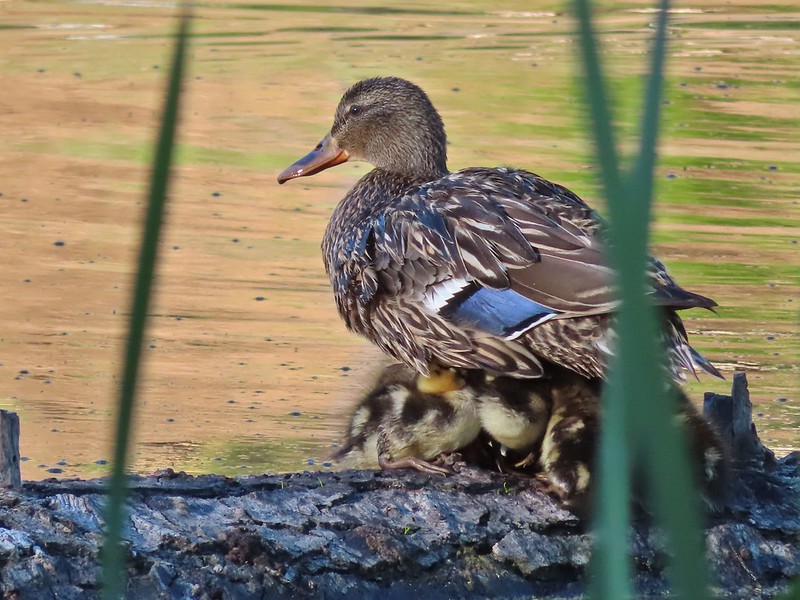
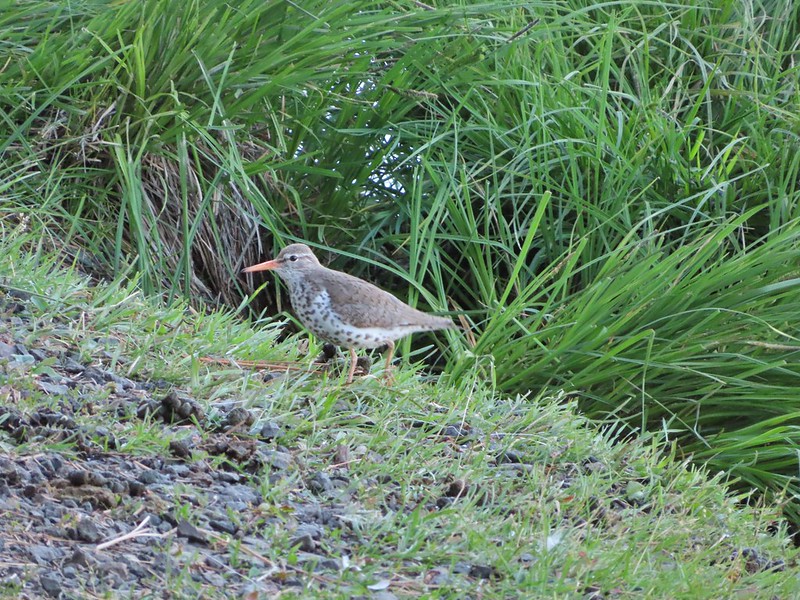 Spotted sandpiper
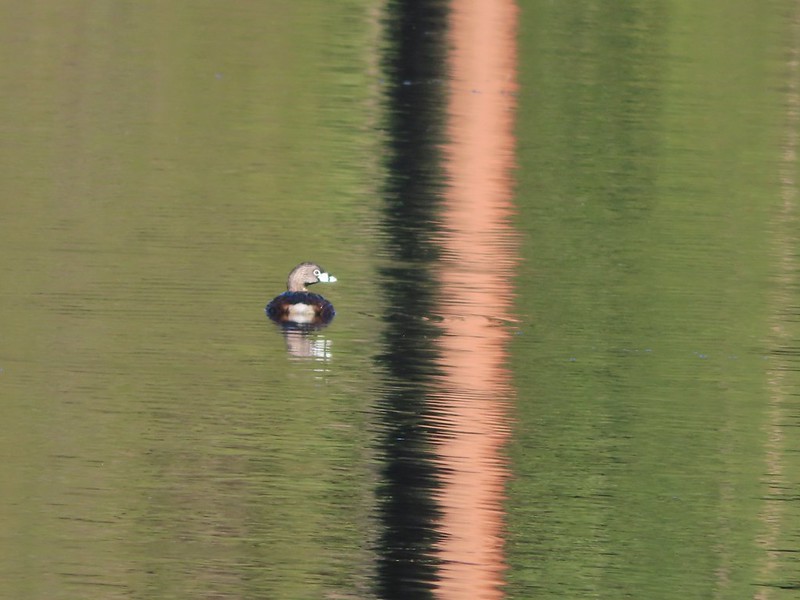 Pied billed grebe


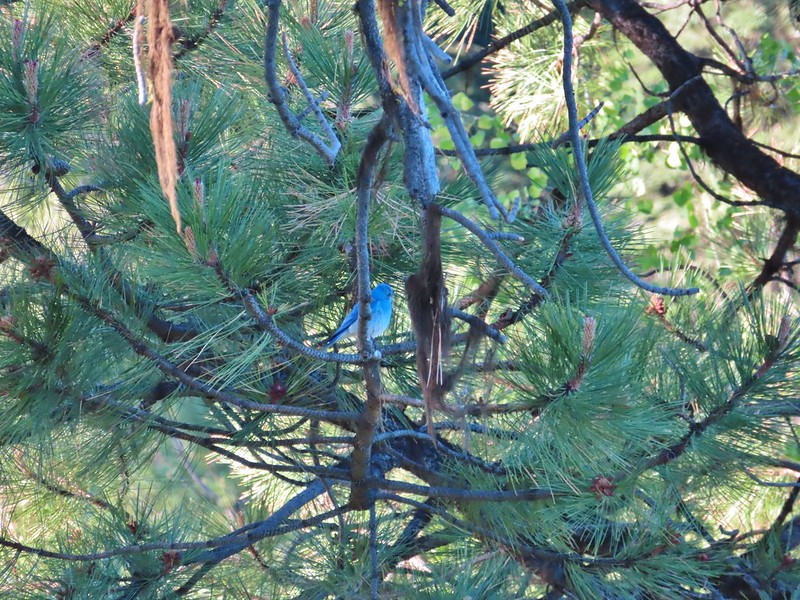 Mountain bluebird
 The spur of the Walton Lake Trail that leads to the Round Mountain Trail.


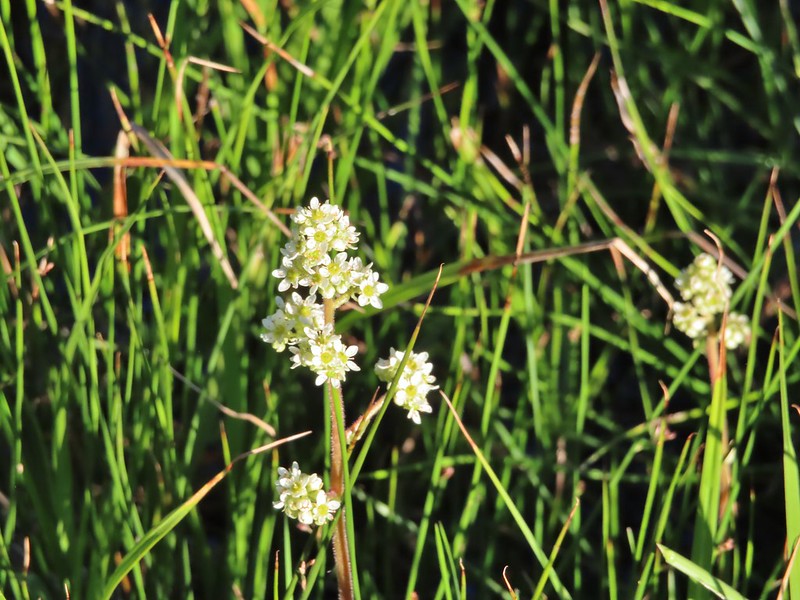 A saxifrage.


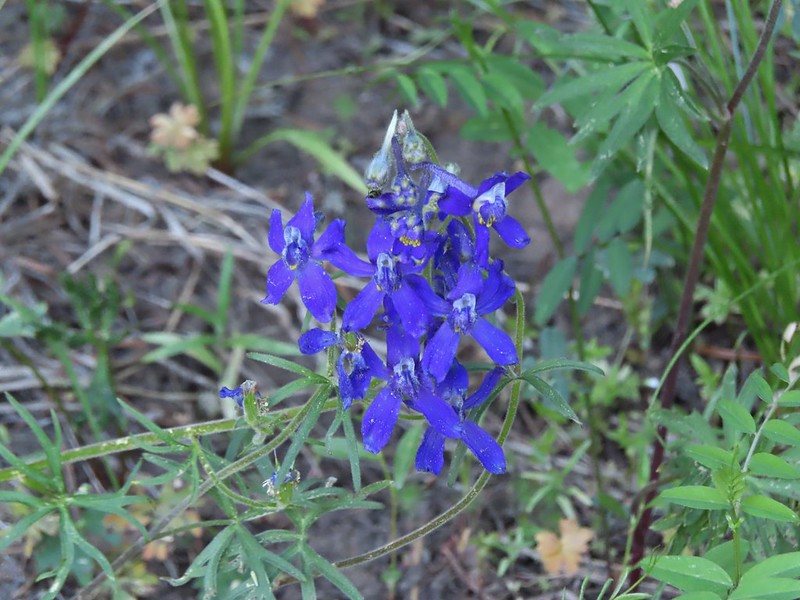 Larkspur


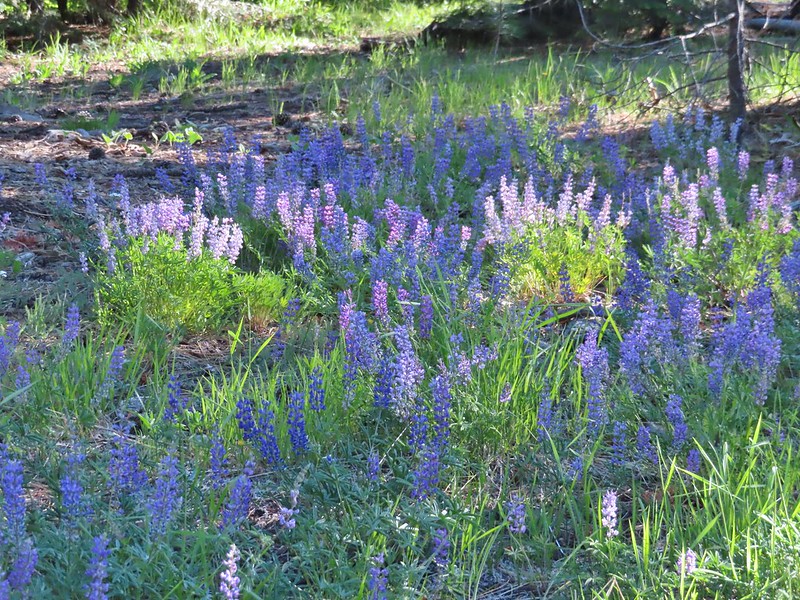

 Chocolate lily
 The rocky plateau with Round Mountain to the right.
 Death camas
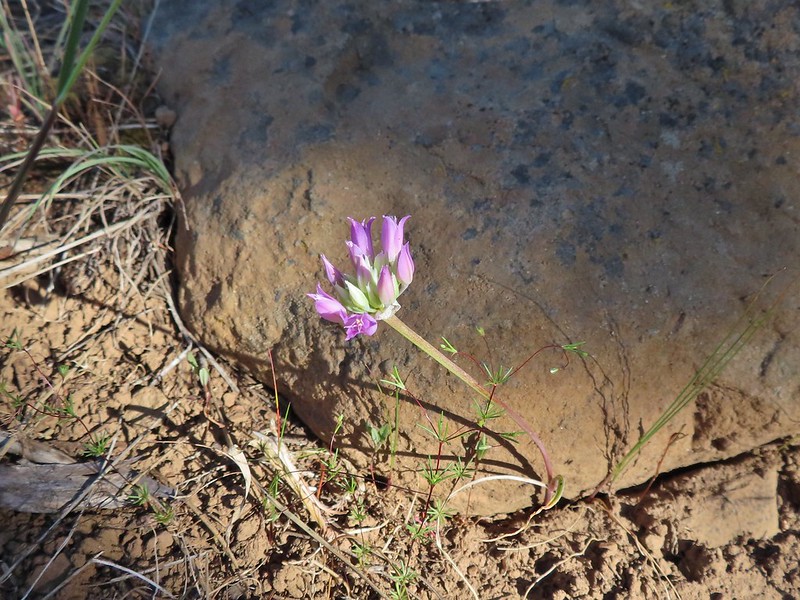 A wild onion
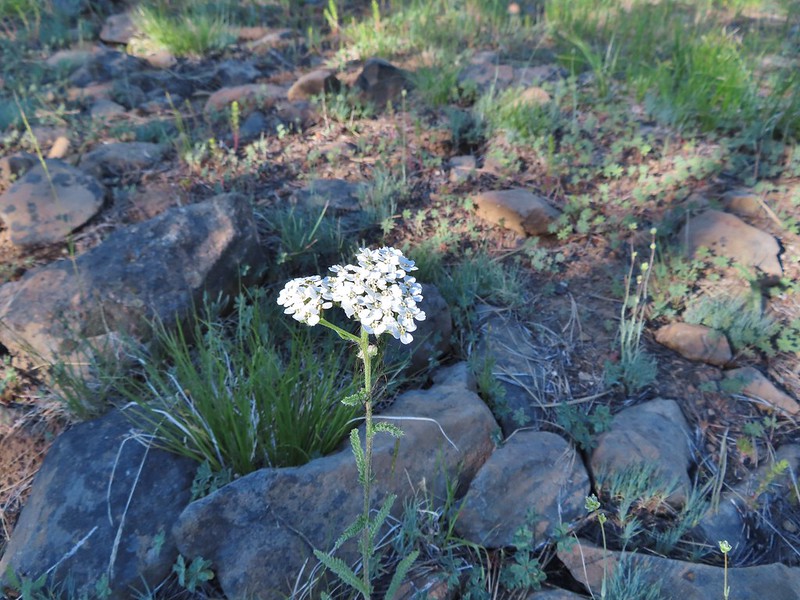 Yarrow
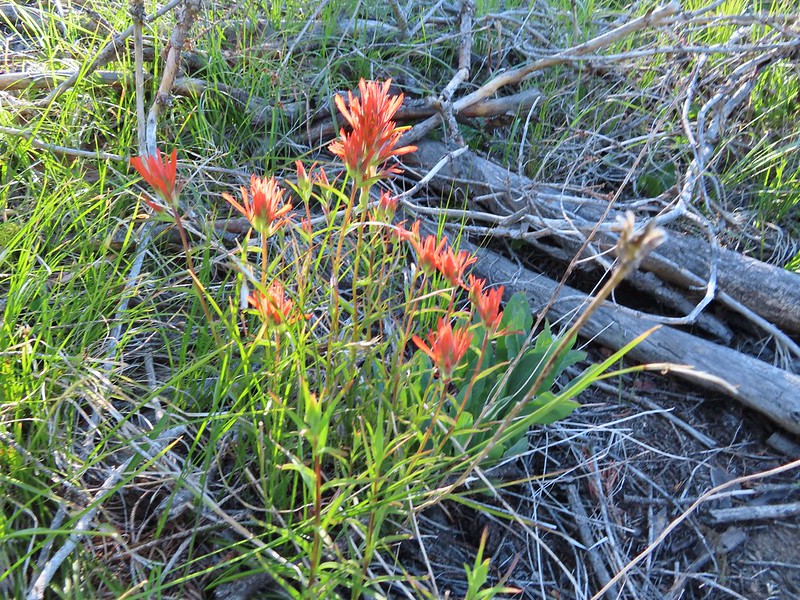 Paintbrush
 Valerian along the trail.
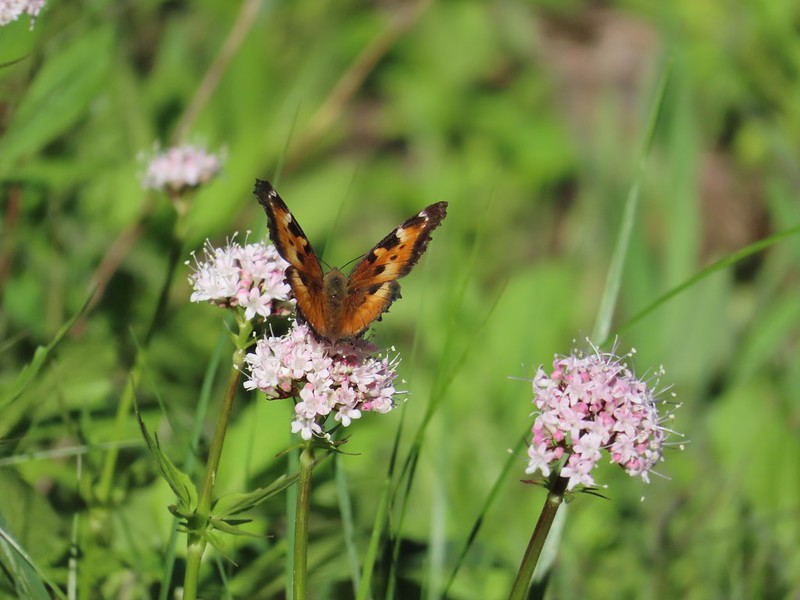 California tortoiseshell on valerian.
 Mt. Jefferson from the trail.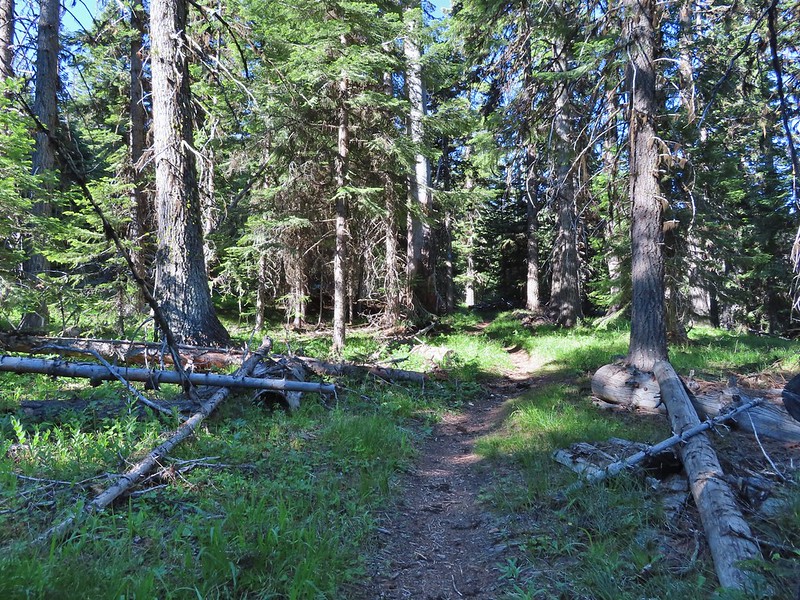
 Maybe a miterwort?
 Milbert’s tortoiseshell
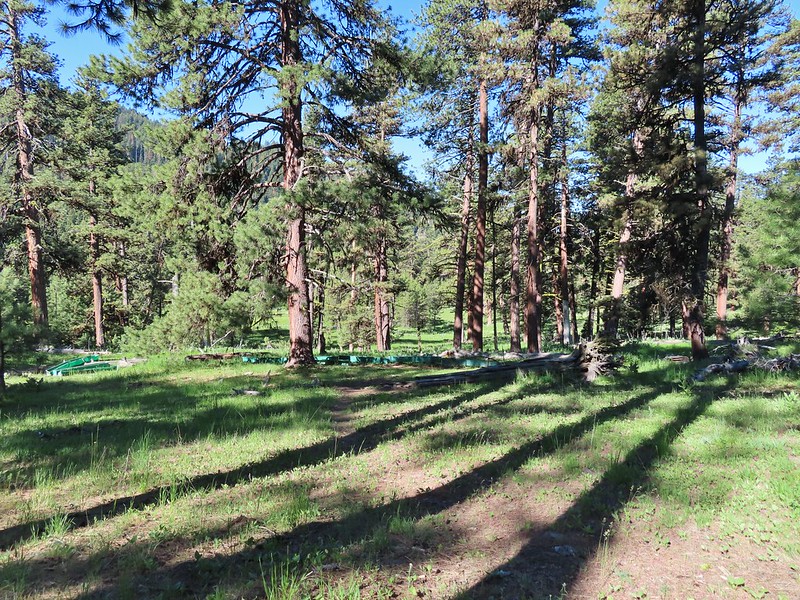 Scissors Spring
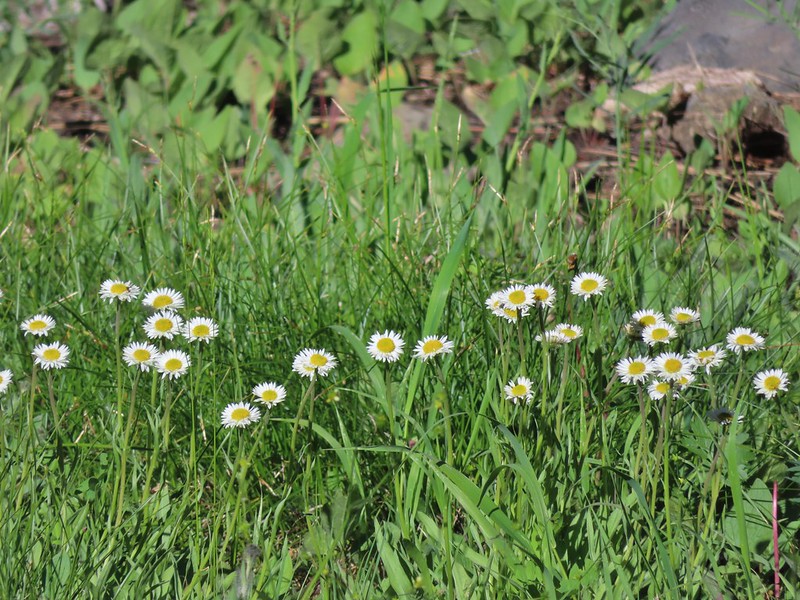 A fleabane
 Geranium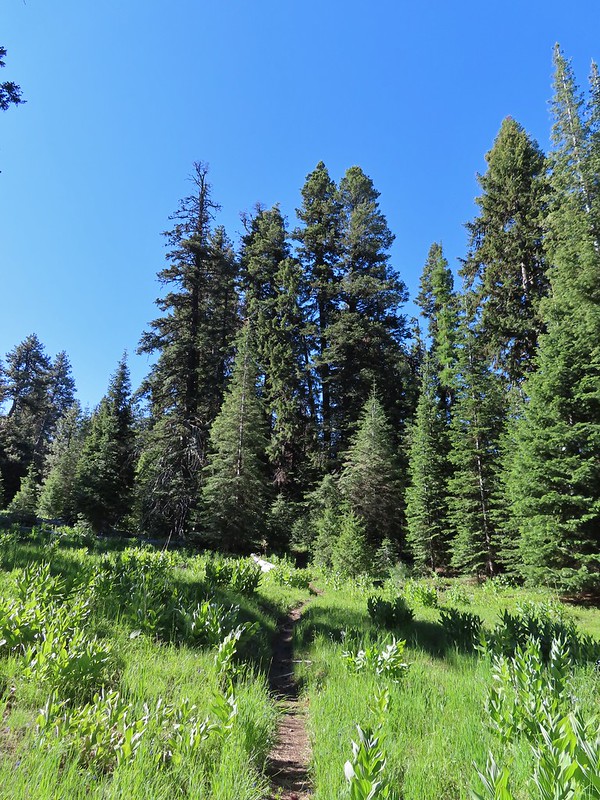

 Woodpecker
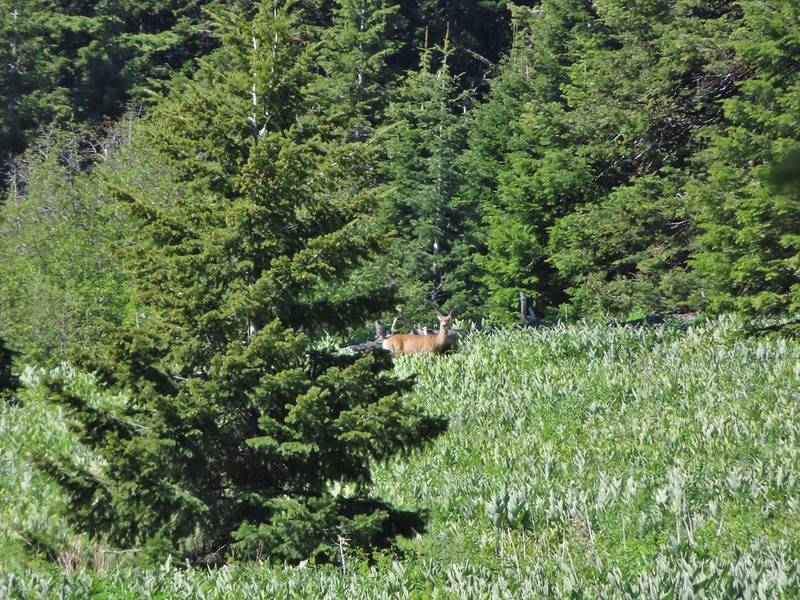 Another doe
 A comma butterfly of some sort.
 Possibly some sort of phlox?
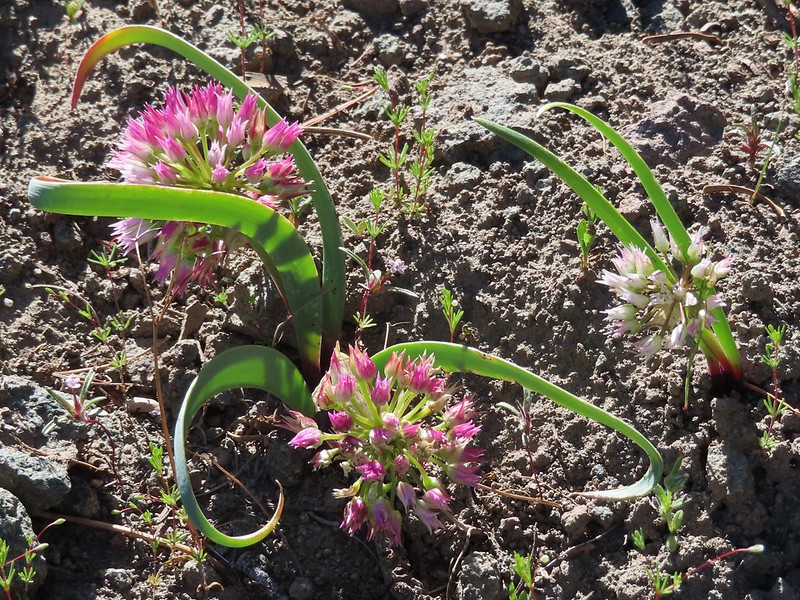 Another wild onion
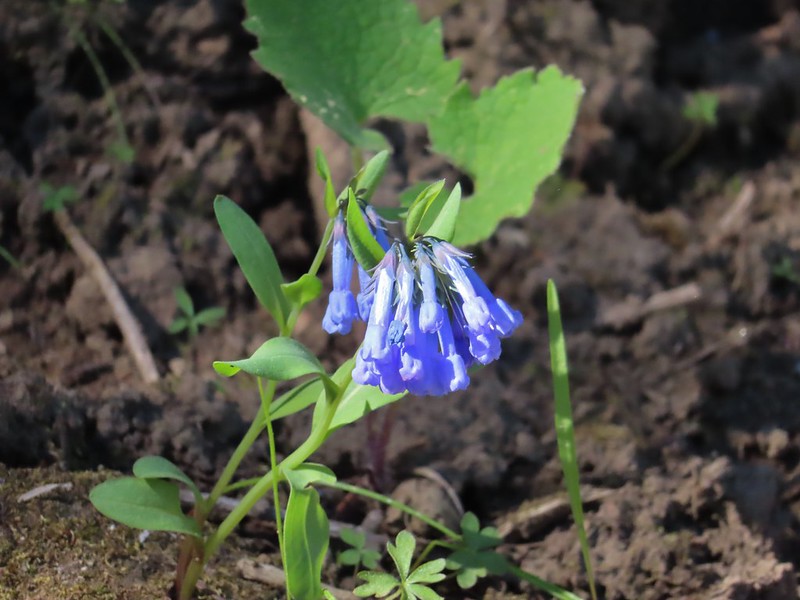 Mountain bluebells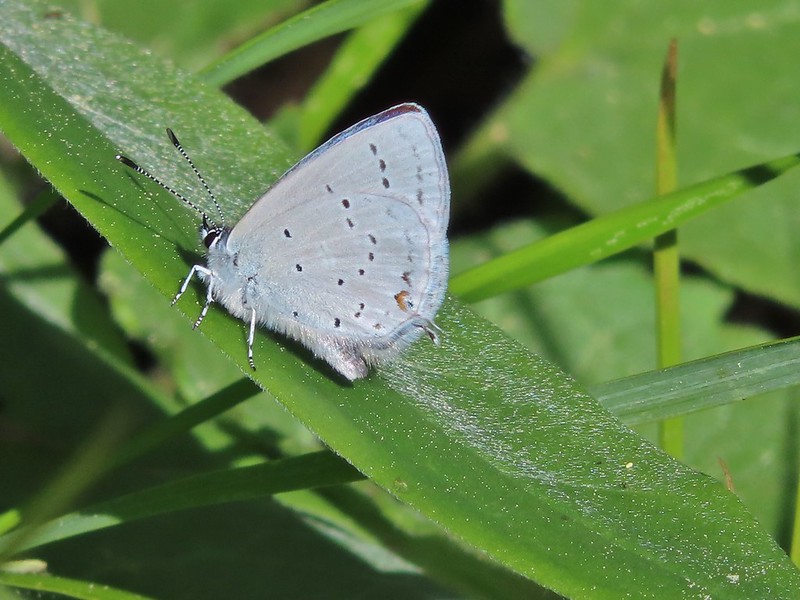
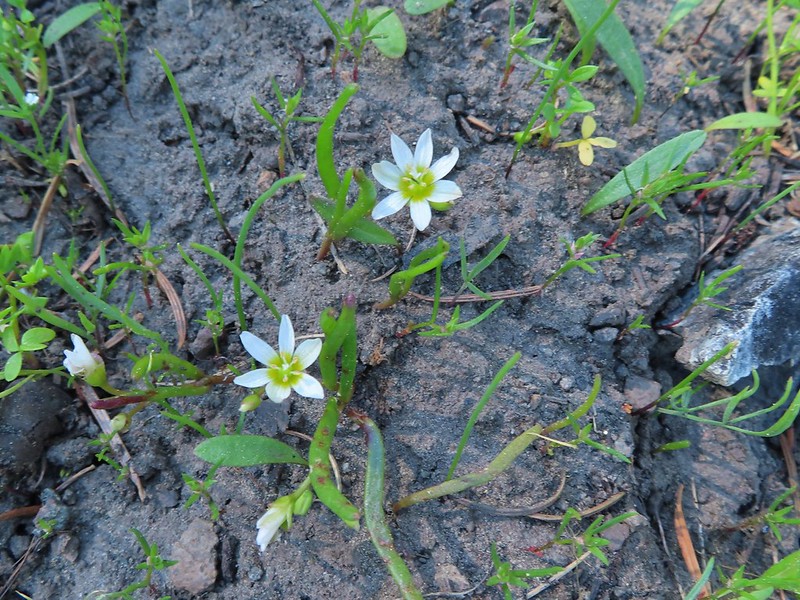 Threeleaf lewisia
 Butterfly on Jessica stickseed
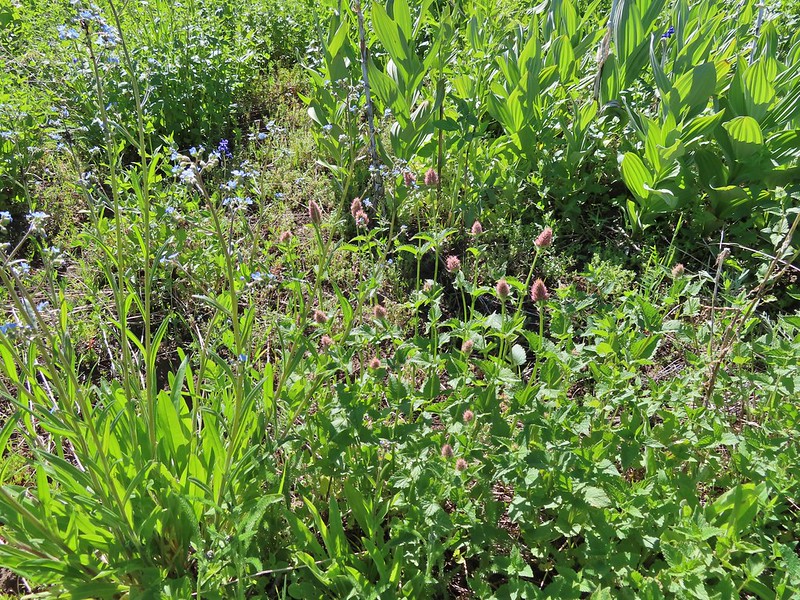 A larkspur, Jessica stickseed, and hyssop
 Robin
Robin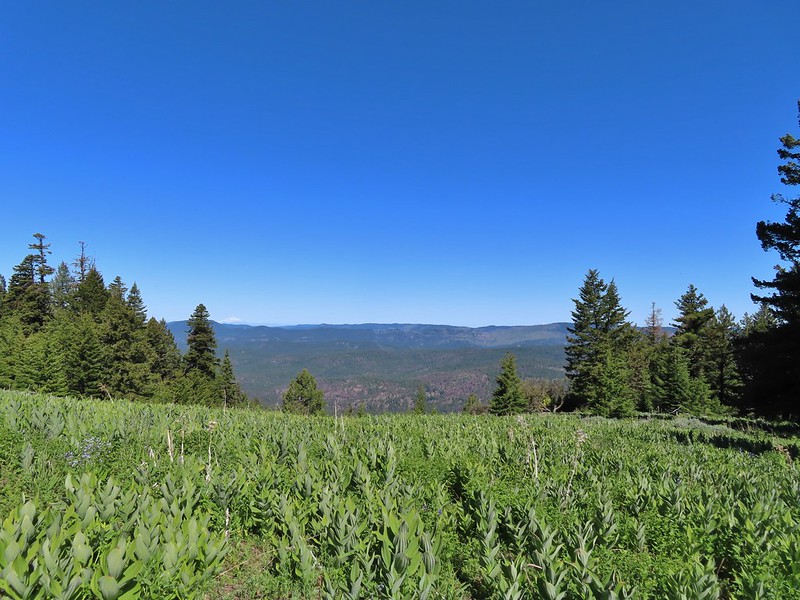 Mountain view from a meadow.
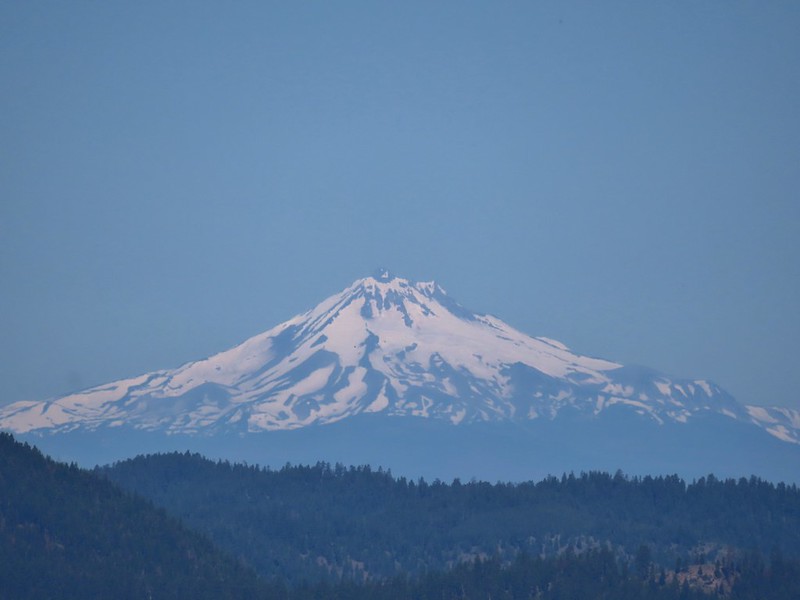 Mt. Jefferson
 Mt. Hood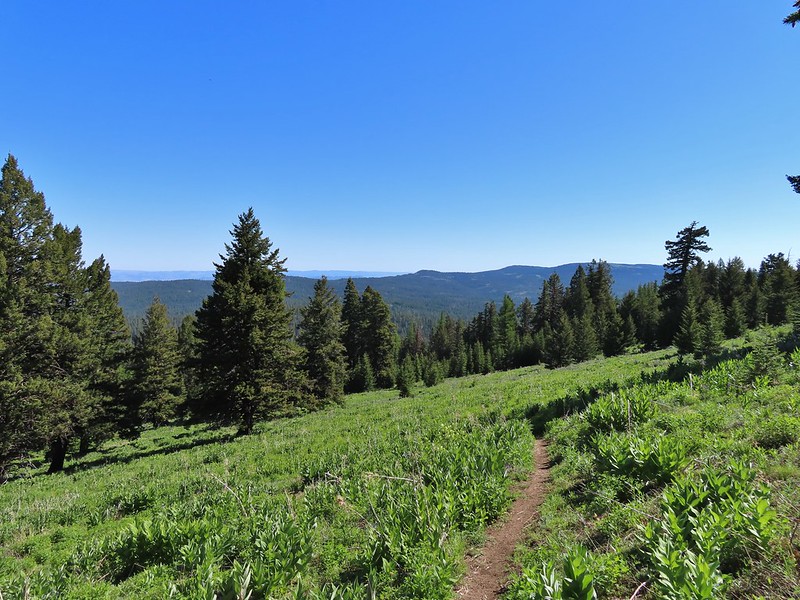
 Viewpoint at one of the switchbacks. Cascade Mountains from Diamond Peak to Mt. Jefferson.
 Diamond Peak
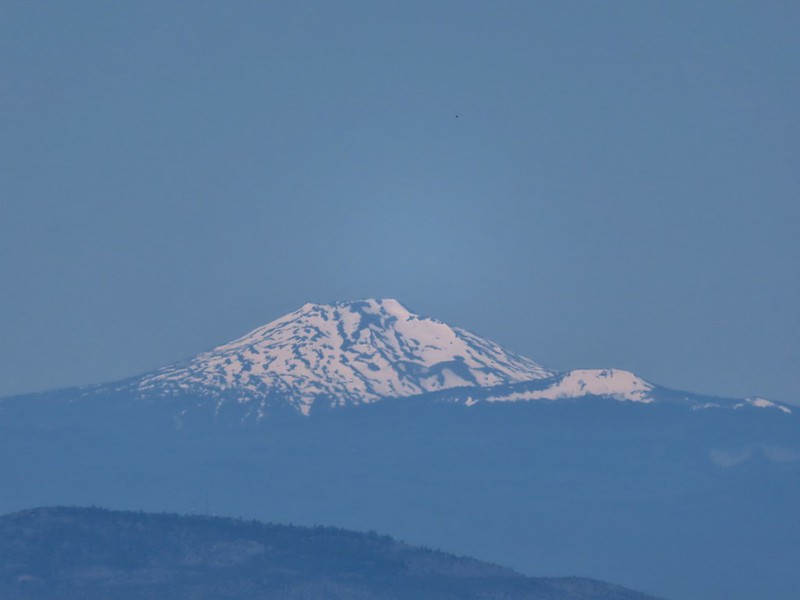 Mt. Bachelor
 Ball Butte and Broken Top
 Three Sisters
 Mt. Washington
 Three Fingered Jack
 Mt. Jefferson
 The trail sign along Round Mountain Road up the hill.
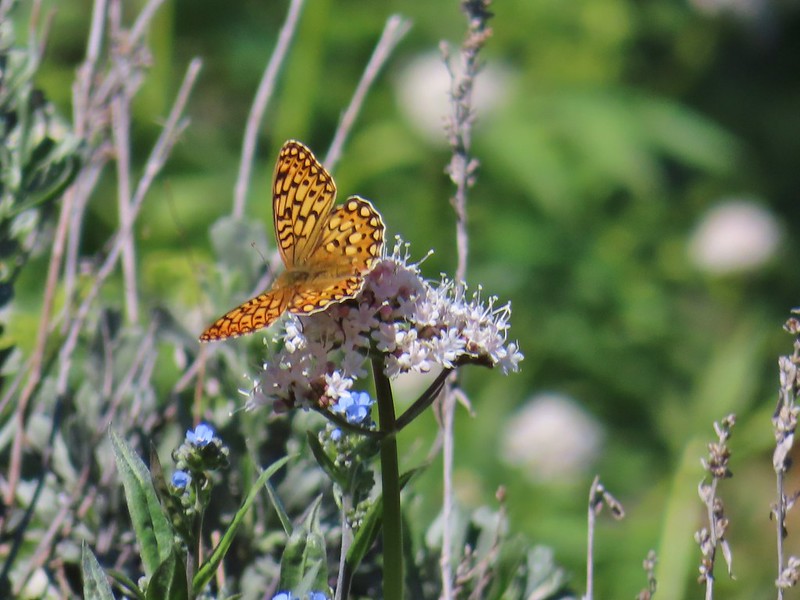 Fritillary butterfly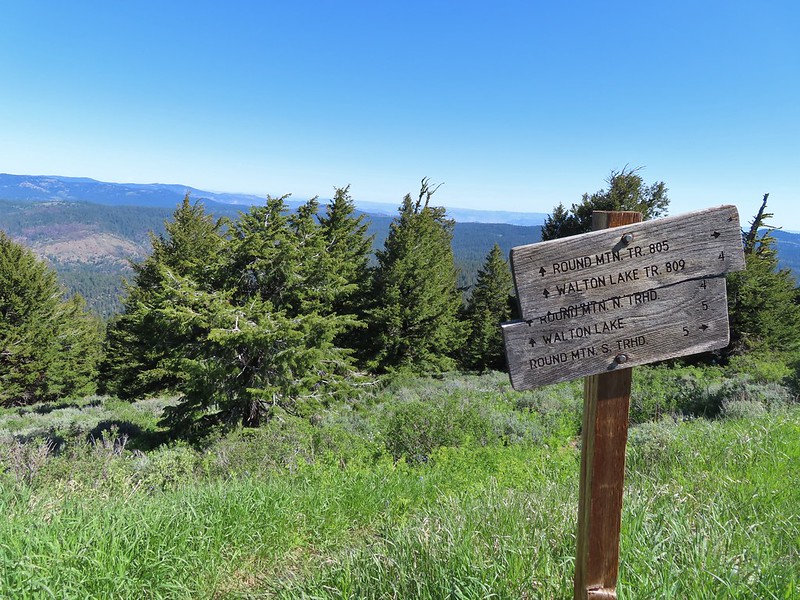
 Silky phacelia
 Prairie smoke
 Balsamroot
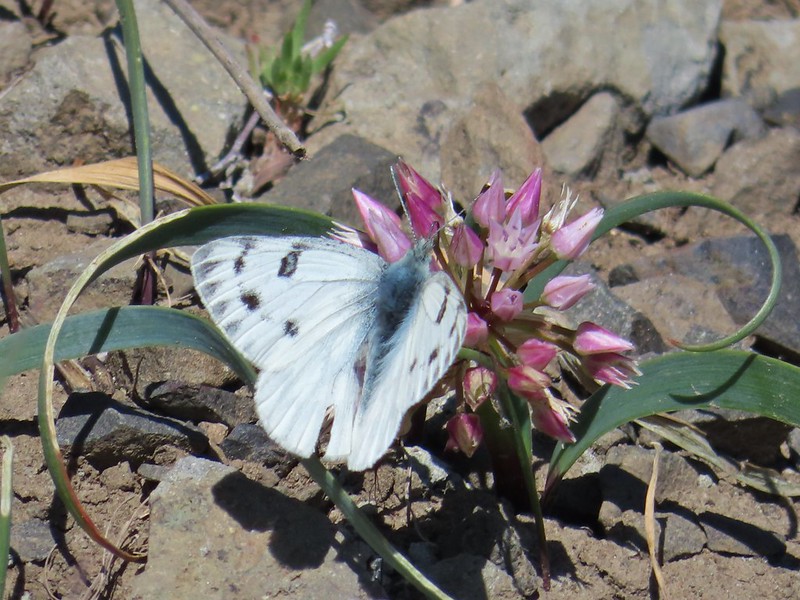 Butterfly on an onion
 Ladybug on lupine
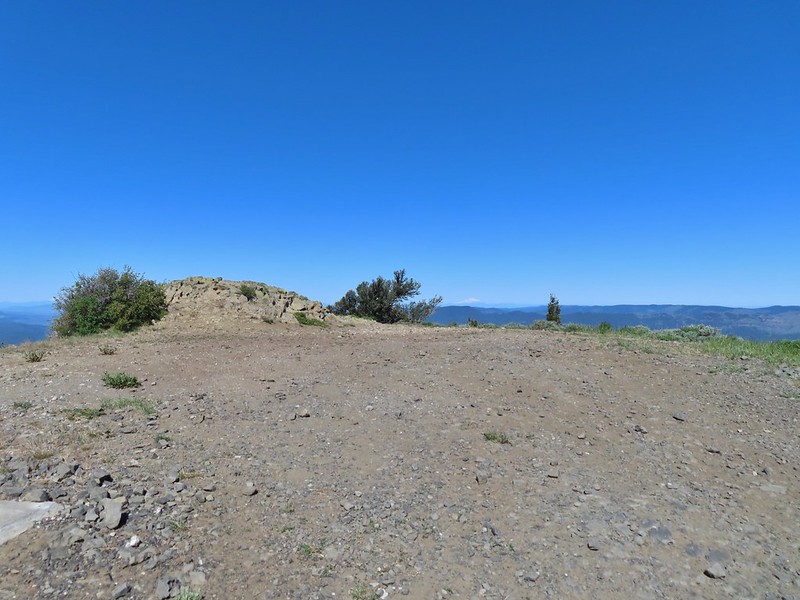 Round Mountain summit
 And occasionally land.
 Big Summit Prairie
 Lookout Mountain (
 Mt. Hood
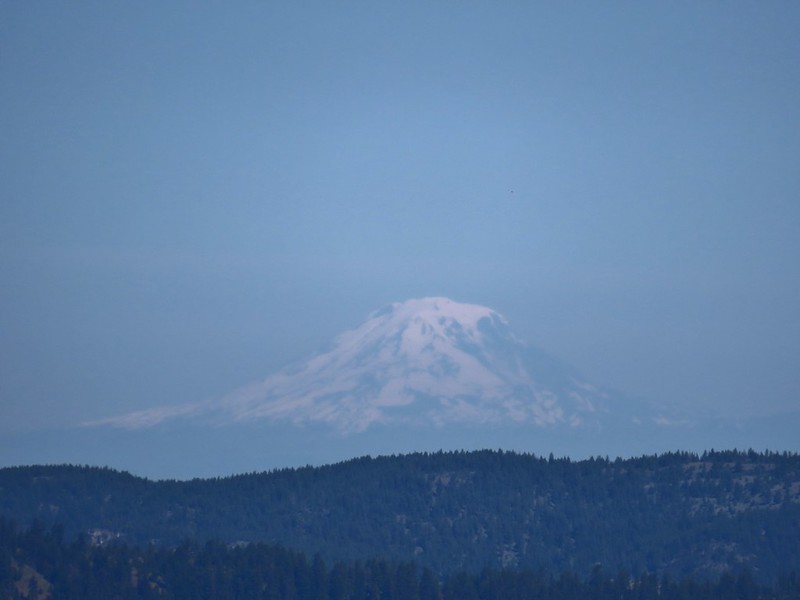 Mt. Adams
 Not too horrible of a photo of the orangetip on one of its many passes.
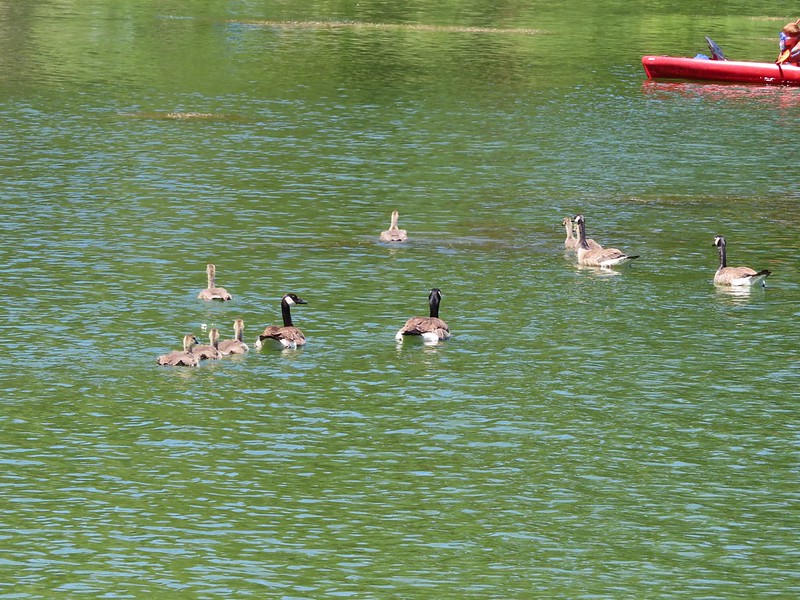
 A coot, a spotted sandpiper and ducks.
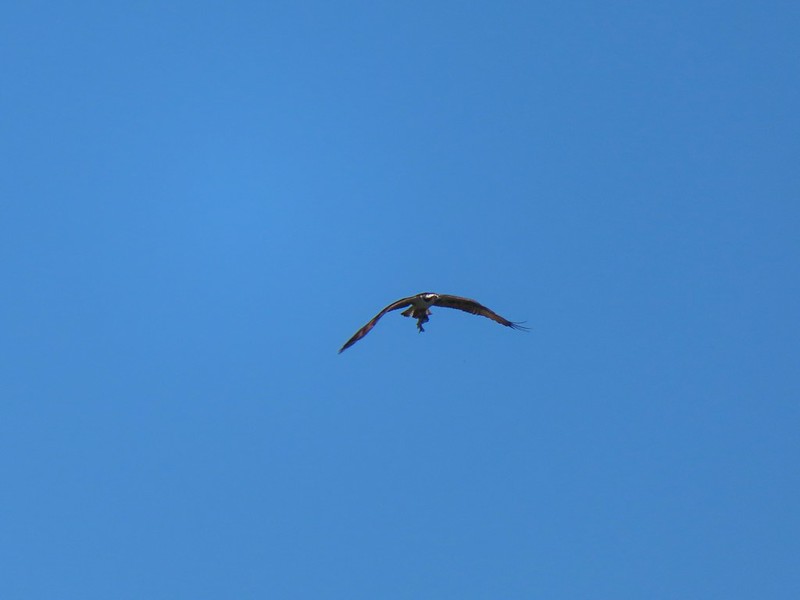 Osprey with a recently caught fish (we got to see the dive)
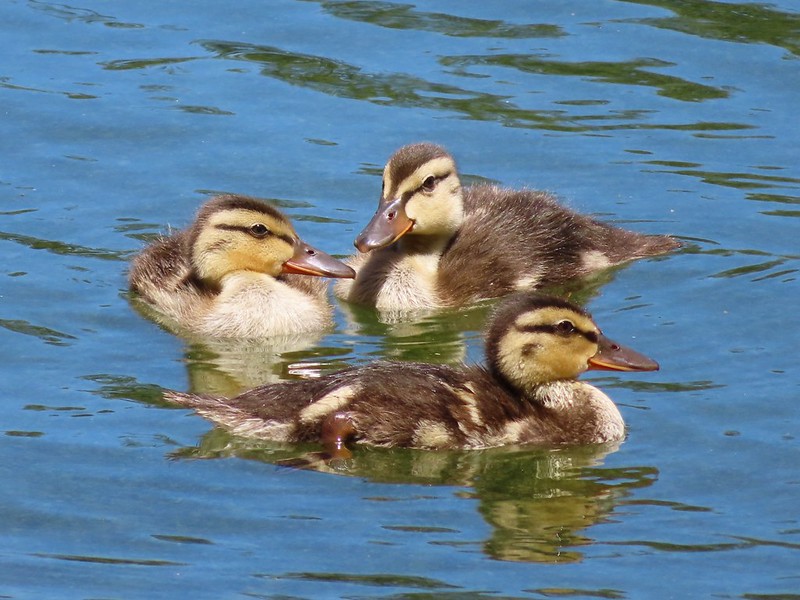 Ducklings
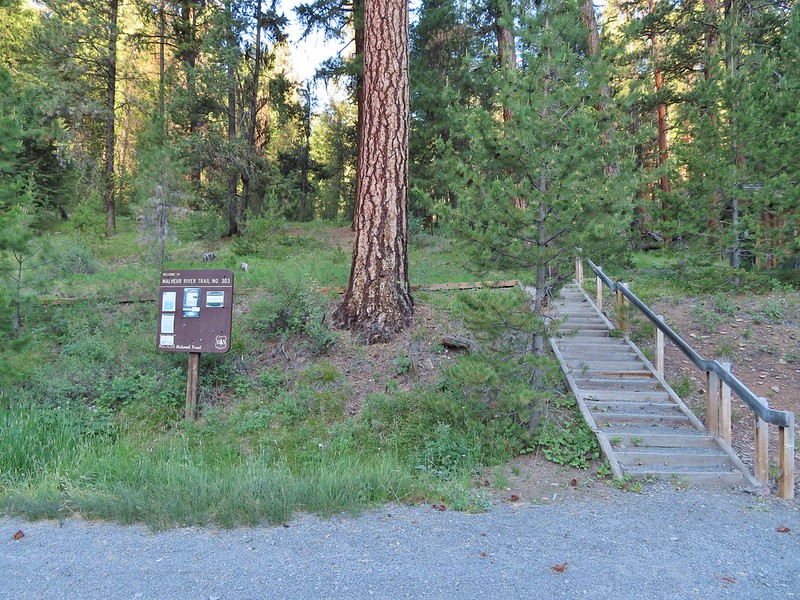
 Bench near the trailhead.
 Lupine along the trail.
 There was plenty of river access along the way.
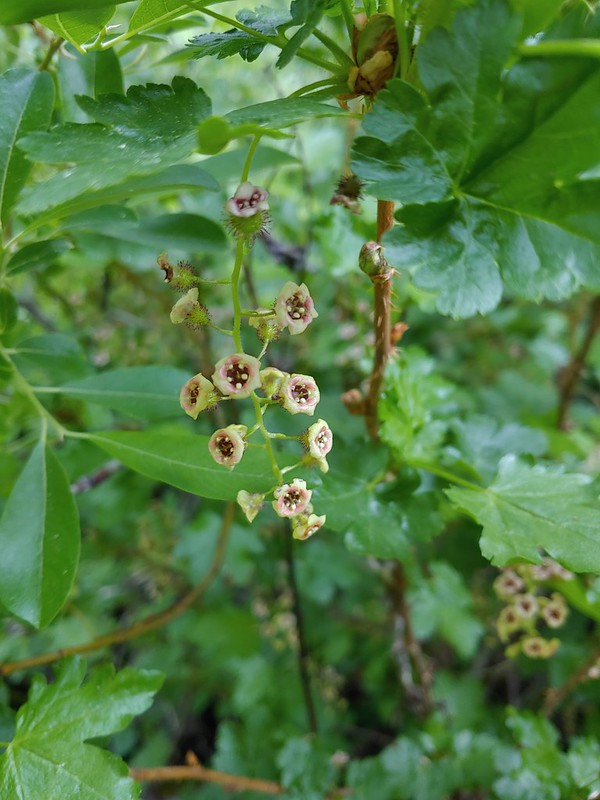 Currant
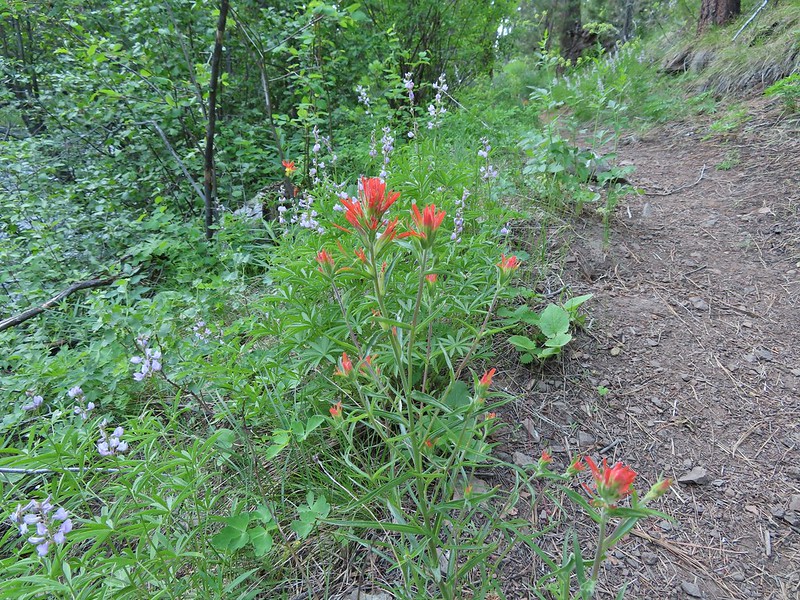 Paintbrush and lupine along the trail.
 Geraniums
 Ponderosa pines
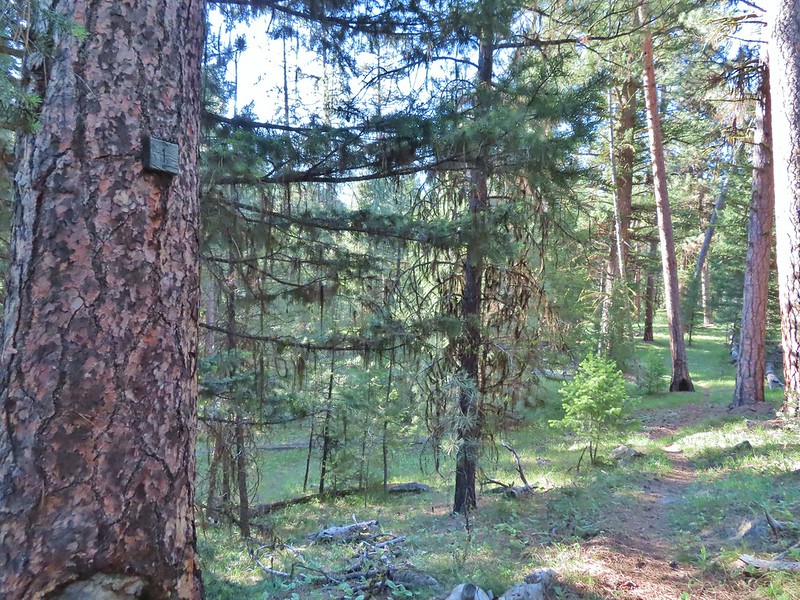 First 1
 Second 1
 Camas
Camas Balsamroot, columbine, geraniums and paintbrush.
 Photo from the afternoon on the way back.
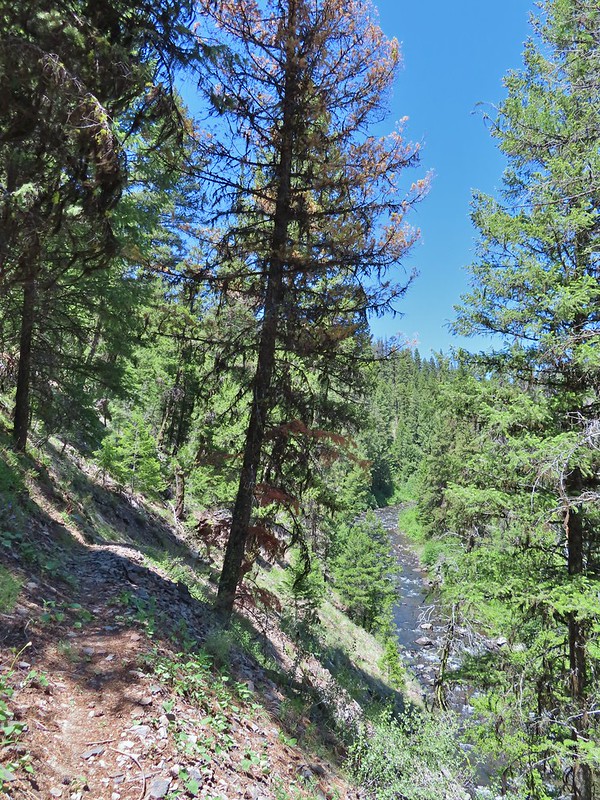 Photo from the afternoon on the way back.
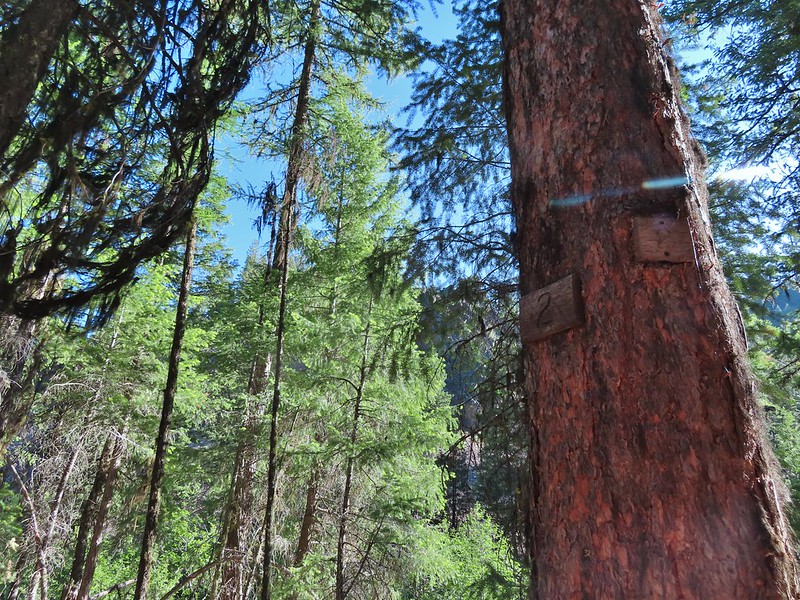 Tree marking mile 2.
 Typical “obstacles” that were present along the trail.
 Columbine
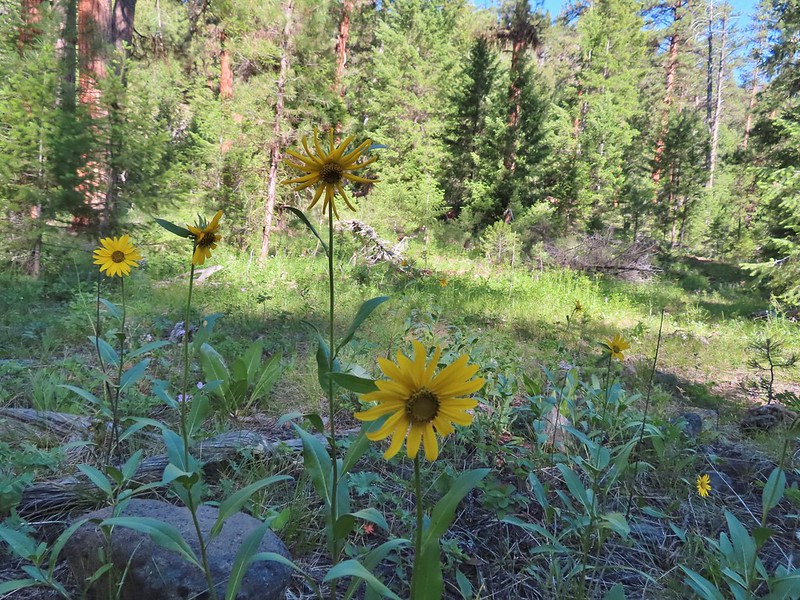 Cusick’s sunflower?
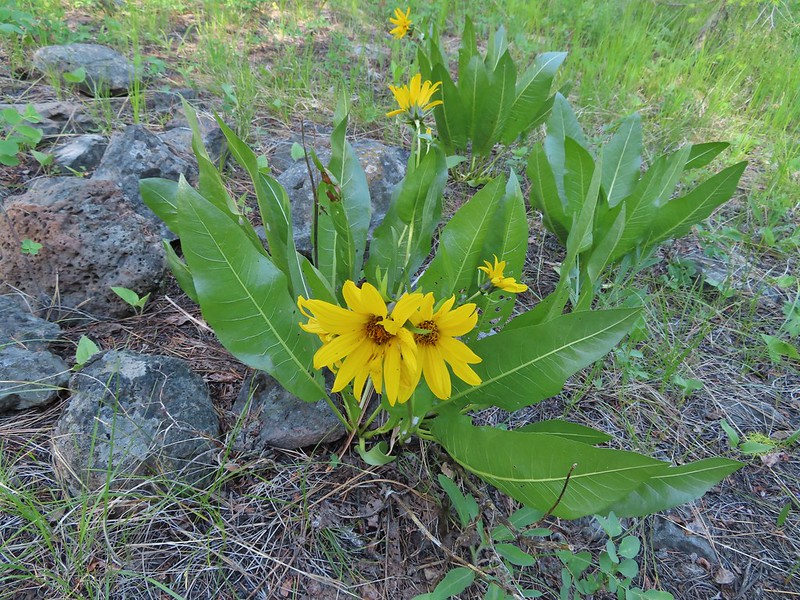 Balsamroot or mule’s ears?
 Woodland stars
 Mile 4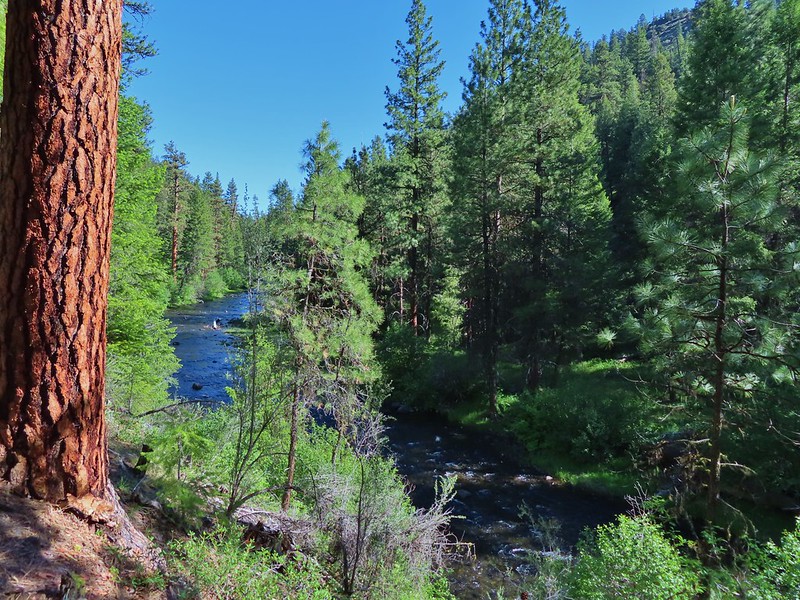

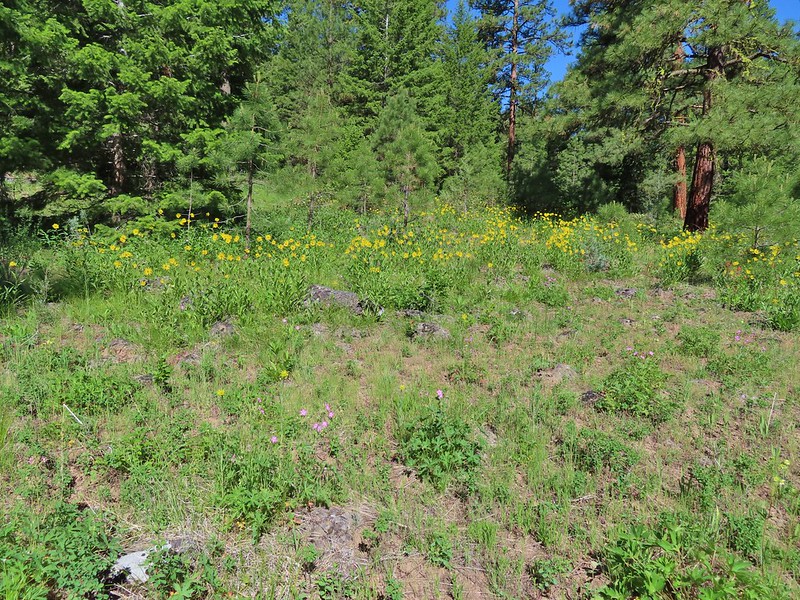
 Salsify and geraniums
 Sticky cinquefoil
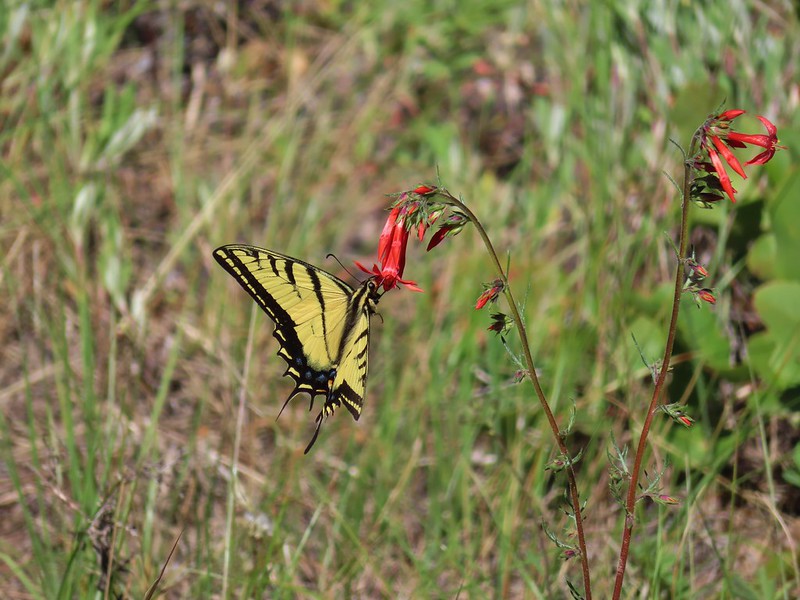 Swallowtail on scarlet gilia
 Geranium
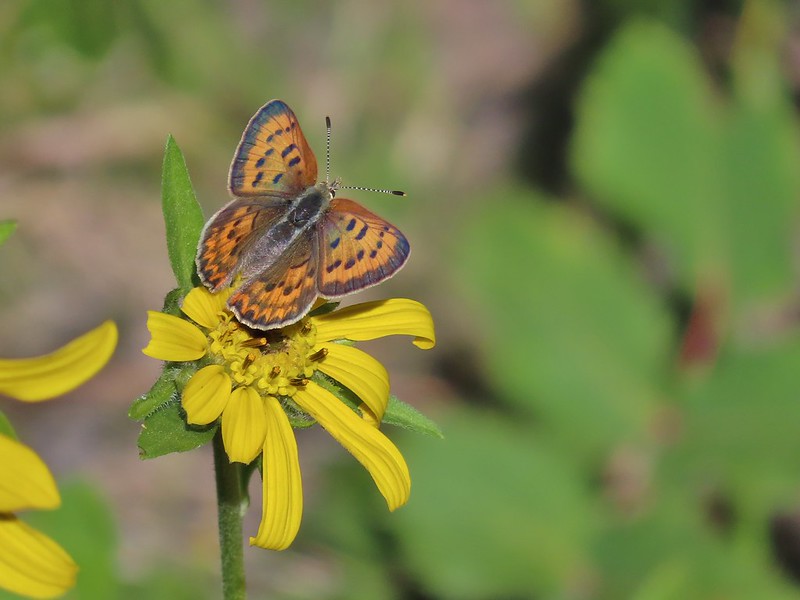 Some sort of copper butterfly
 A checkerspot
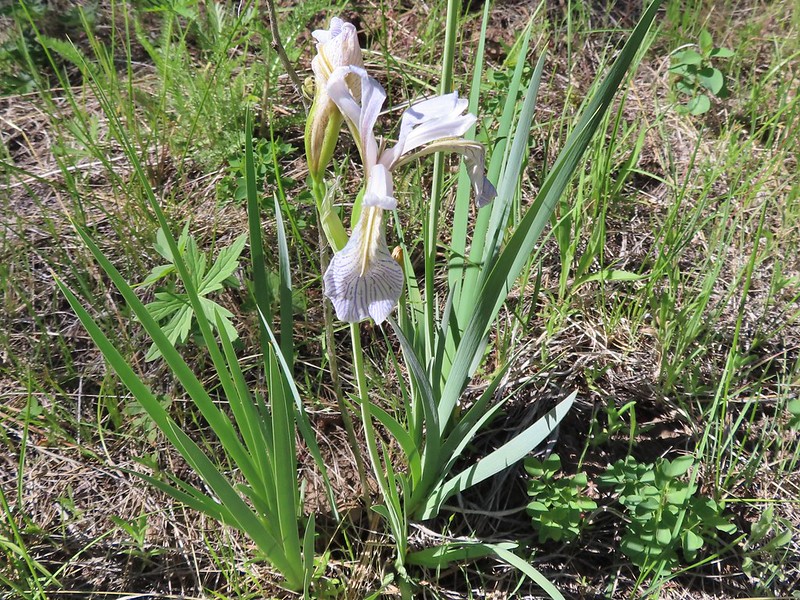 Iris
Iris Balsamroot (or mule’s ears)
 A fleabane
 A different type of fleabane.
 Larkspur
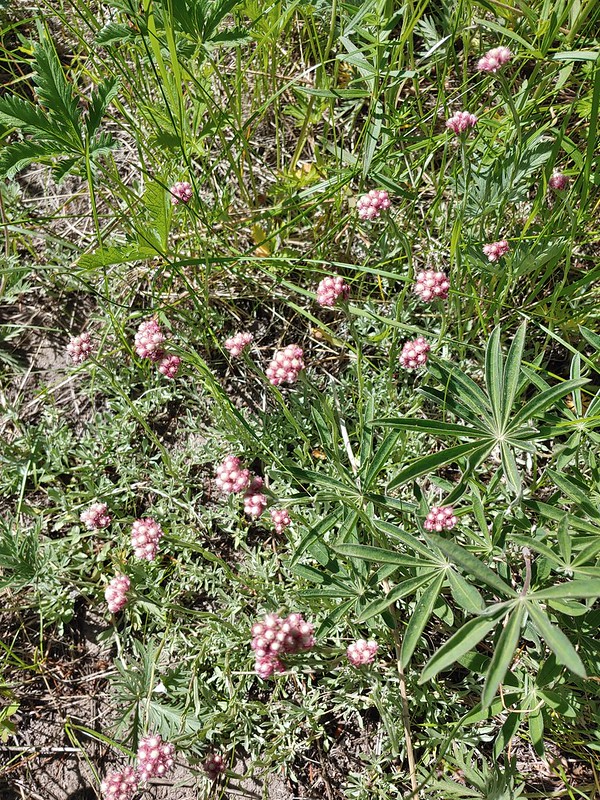 Rosy pussytoes
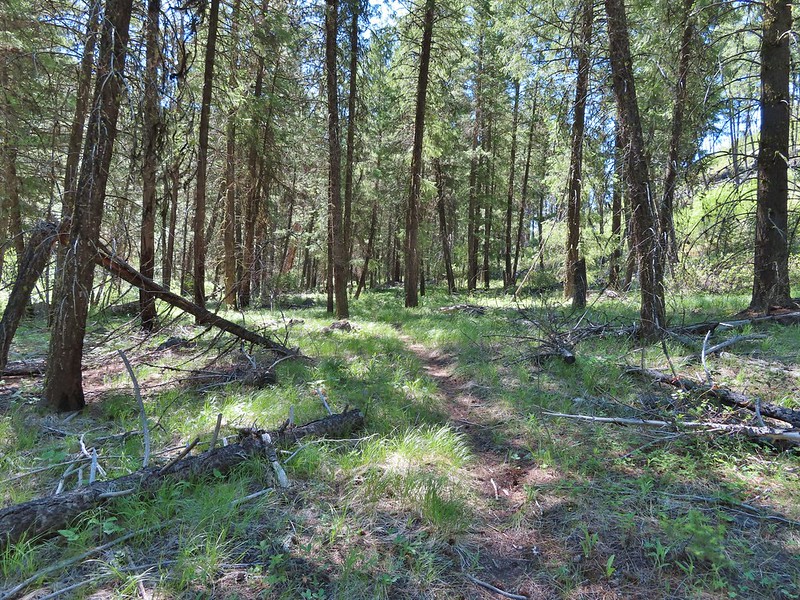
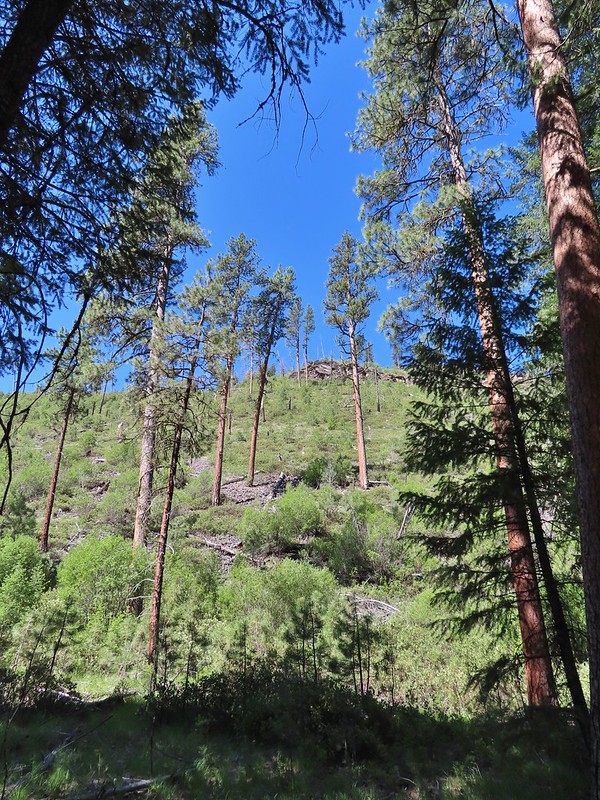 Hog Flat is up on top of the hillside.
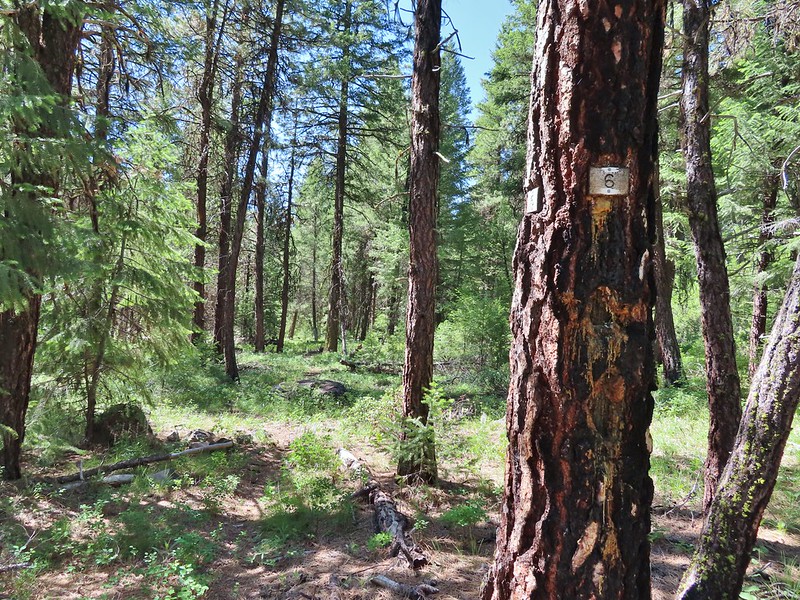 Mile 6 markers.
 Cracked egg in the trail.
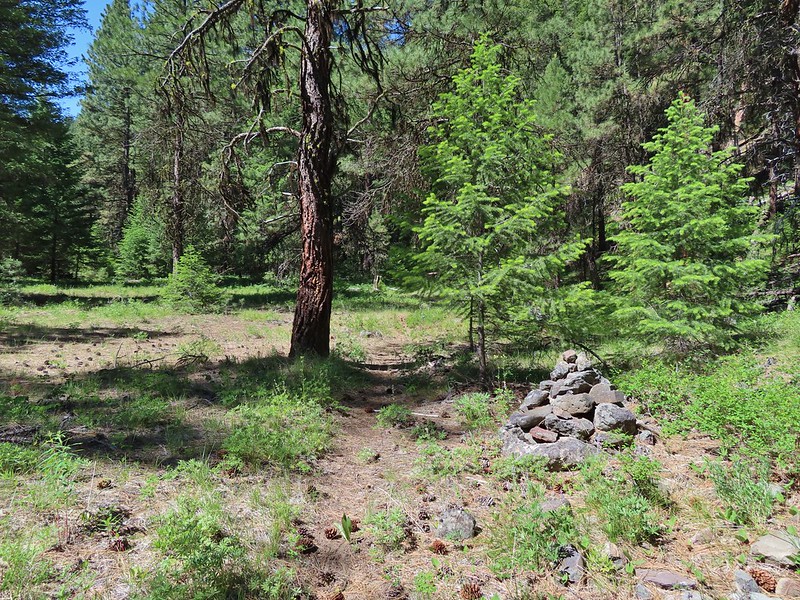 We passed this cairn around the 6.5 mile mark.
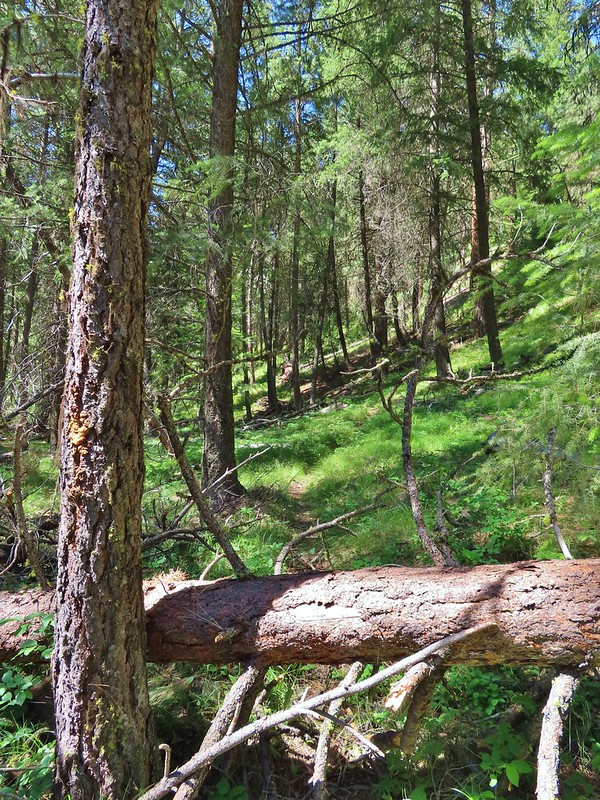 We turned around here shortly after passing the cairn. It appeared the trail was beginning it’s climb and we took the cairn and downed tree as signs that it was time to turn around. We did just that and headed back keeping our eyes open for the mile 3 and 5 markers.
 A fritillary butterfly on an iris.
 Found 5
 This was a particularly tricky little muddy spot to stay dry crossing.
 And there’s “3”.
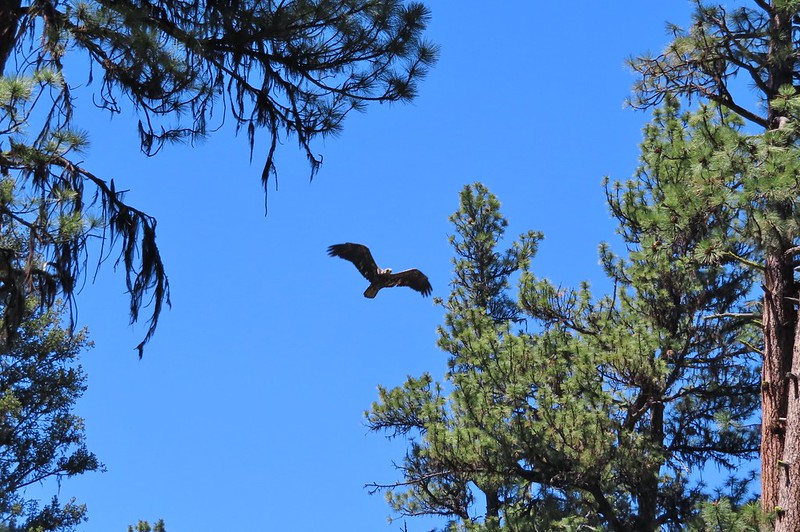 Immature bald eagle. We saw it on the way out in the same area but couldn’t get a photo. This time it flew right by me, and I think it was giving me the stink eye.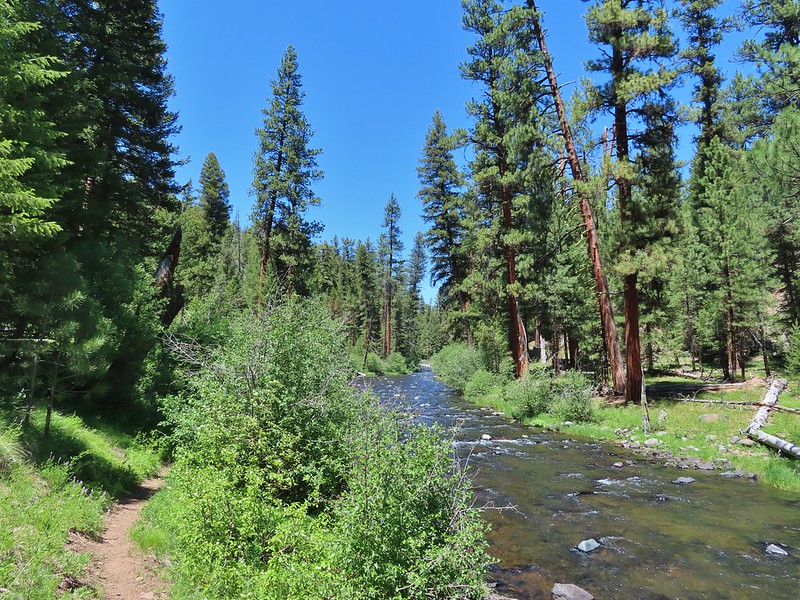
 Back at the trailhead.

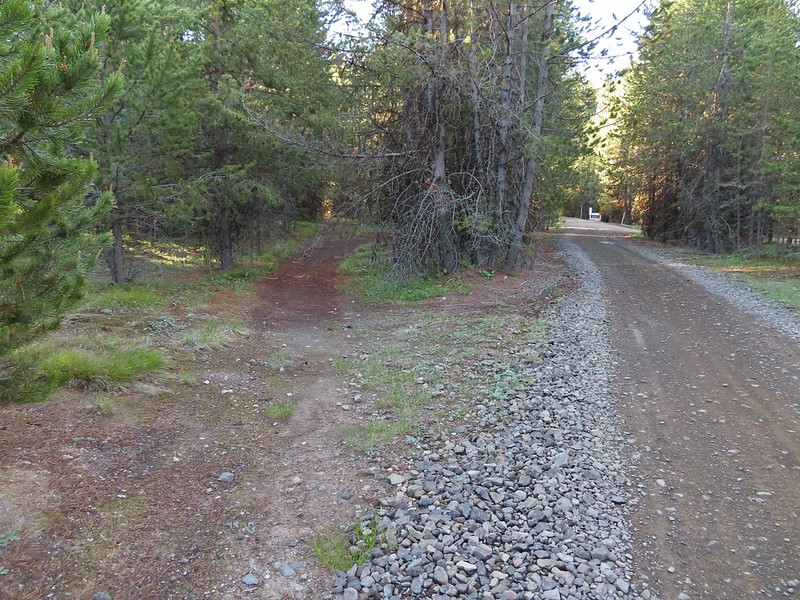
 Frosty penstemon
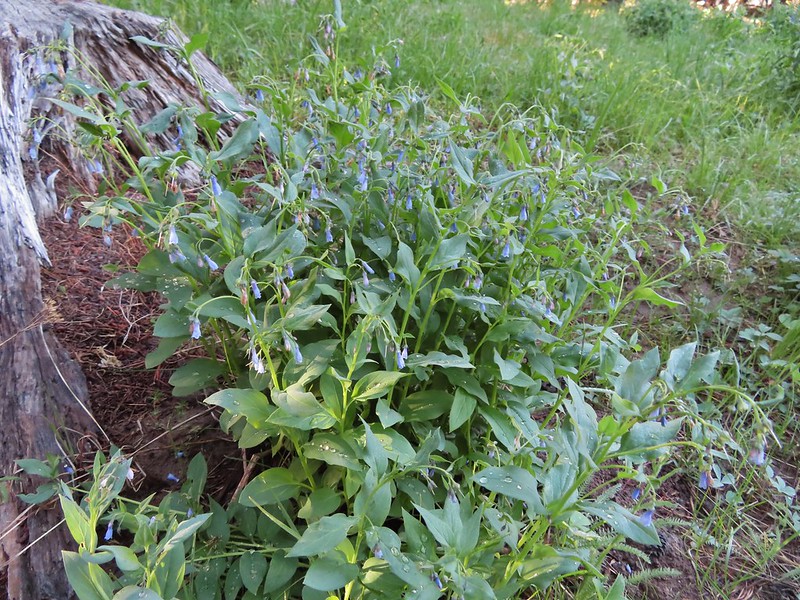 Tall mountain bluebells
 Big Creek
 Sign for the Tower Mountain Trail across NF-52.
 Buttercups
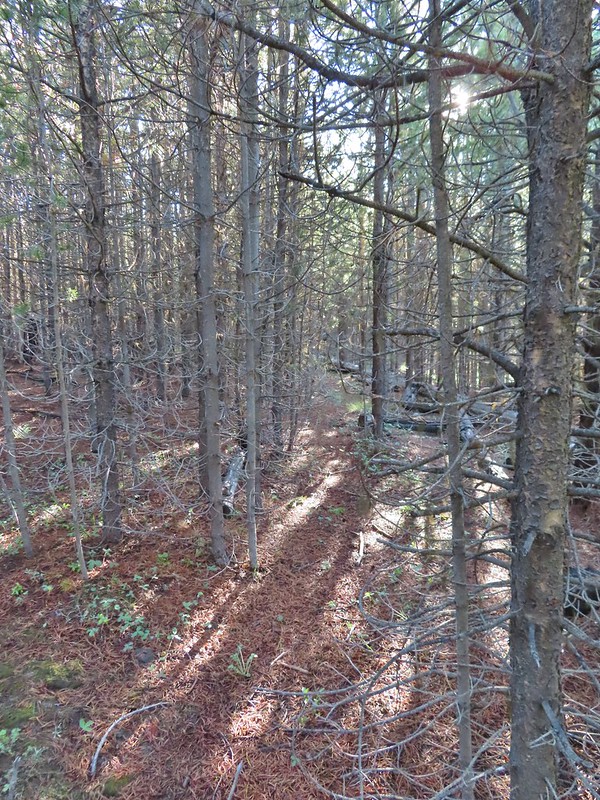 The trail passed through a stand of young lodgepole pine where it was easier to see but there wasn’t much room to maneuver. Our theory on why the Forest Service hadn’t widened this was to deter OHV riders from using the trail as there is a large network of OHV approved roads/trails in the area.
 Back to the faint tread.
 Elk had chewed up this section of trail.
 Snowshoe hare
 The hare wasn’t too concerned about us and even stopped to munch on some grass just a few feet away from us as we passed.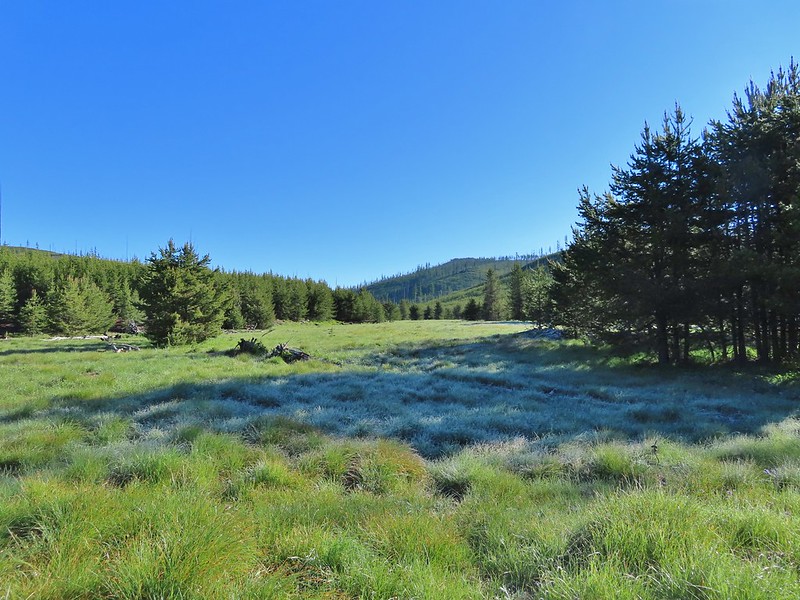
 The only sign/marker for the trail through the meadows.
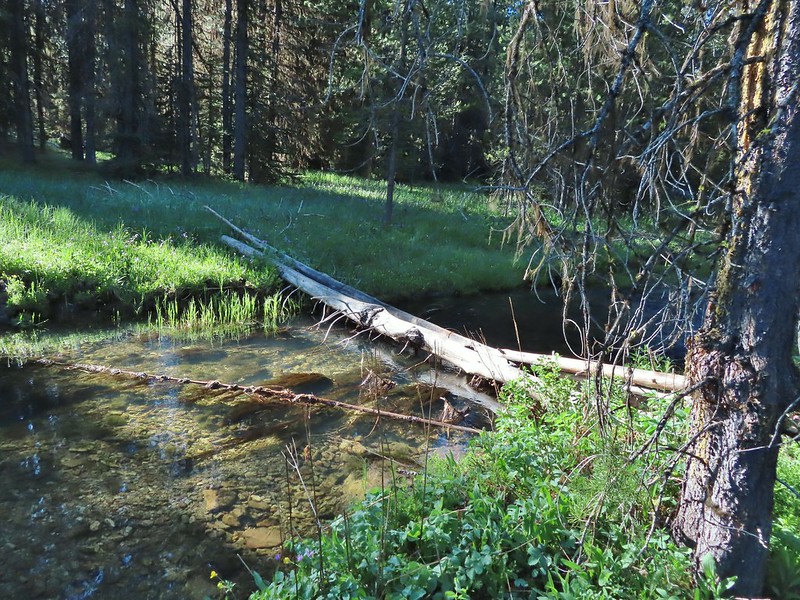

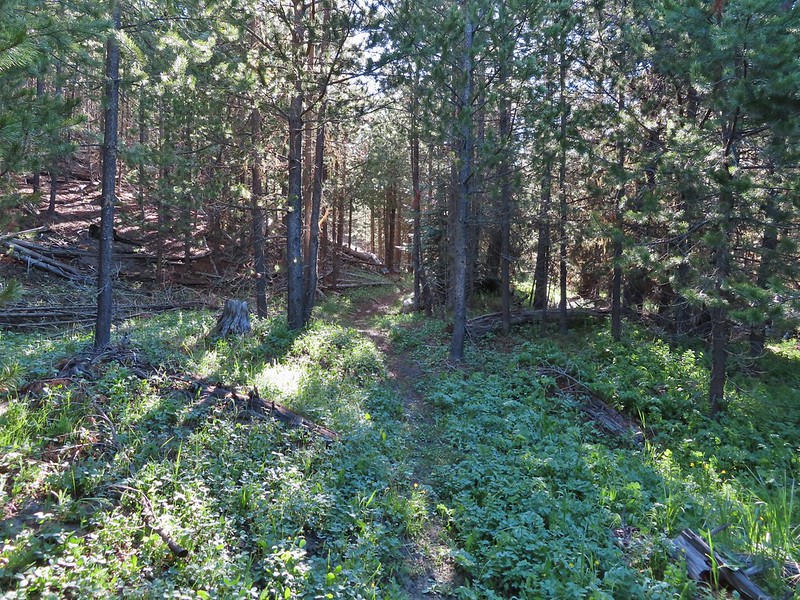


 Elephants head

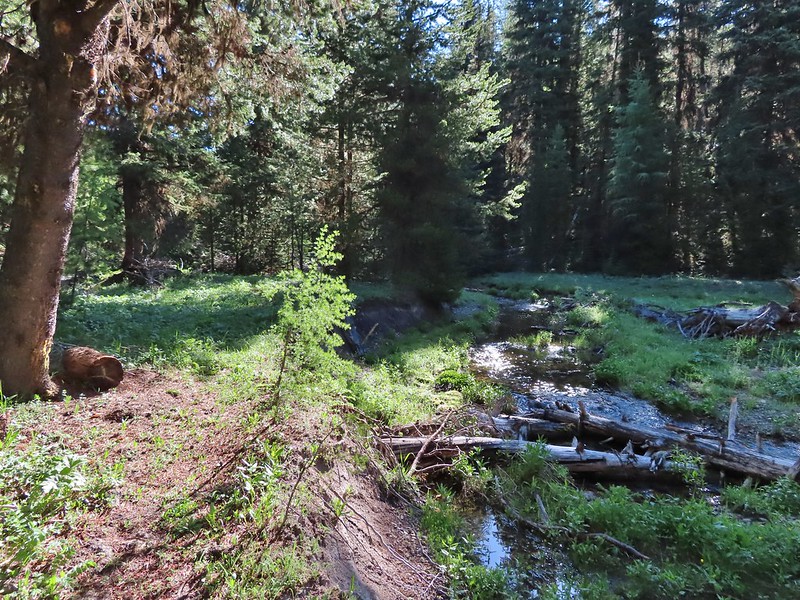

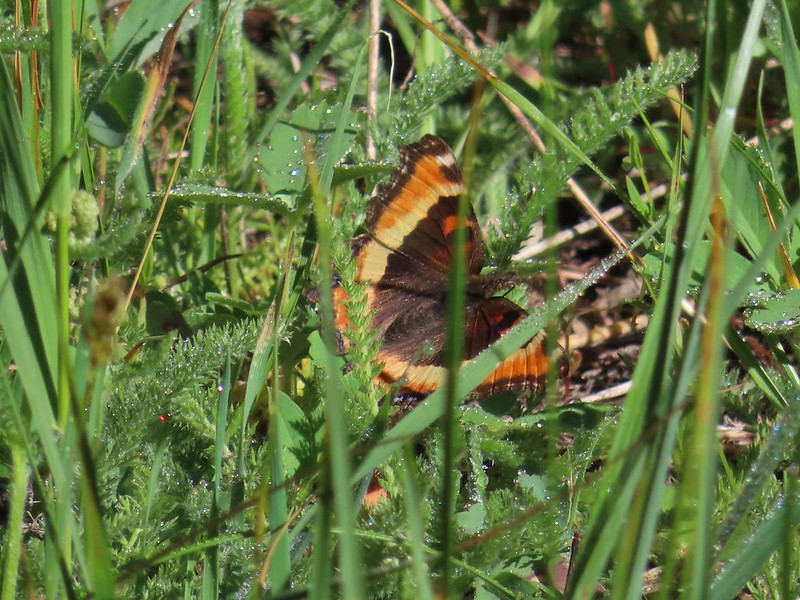 Milberts tortoiseshell
 Fleabane along the trail.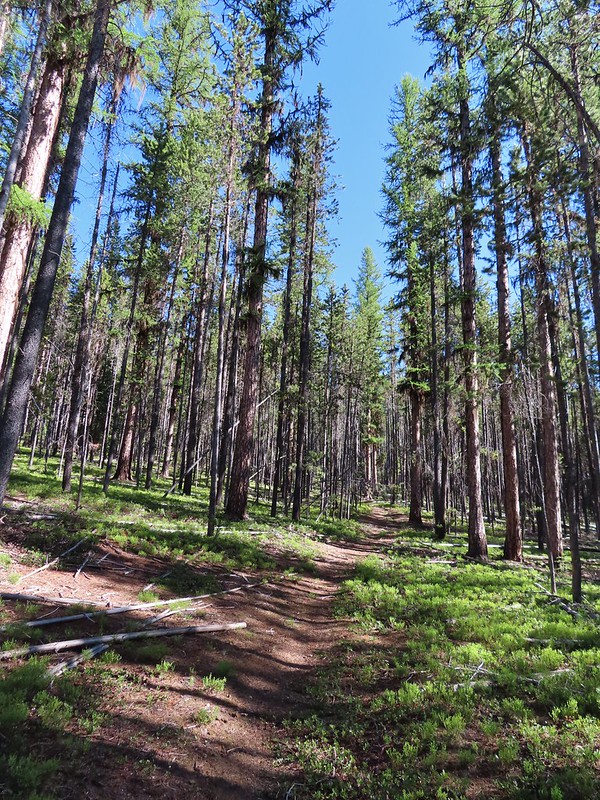



 Either a cinquefoil or an aven.
 Arnica
 Parsley
 Woodland stars
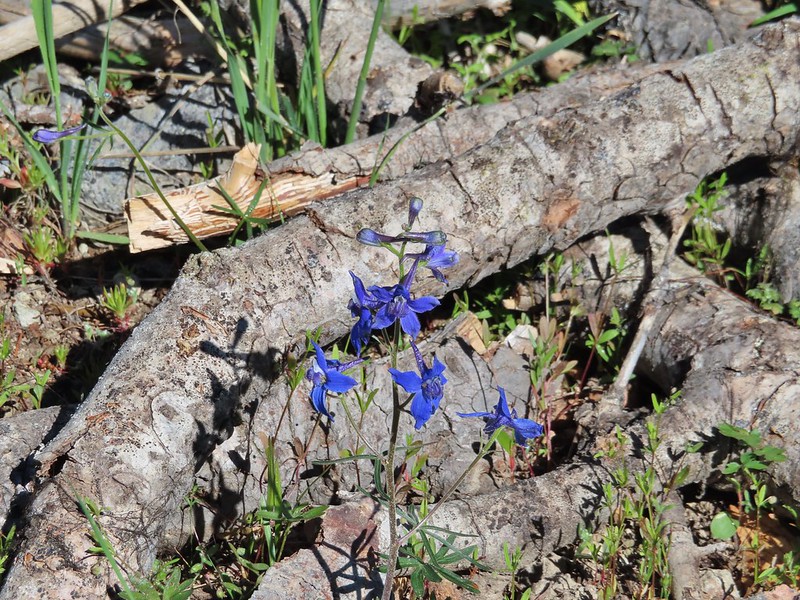 Larkspur
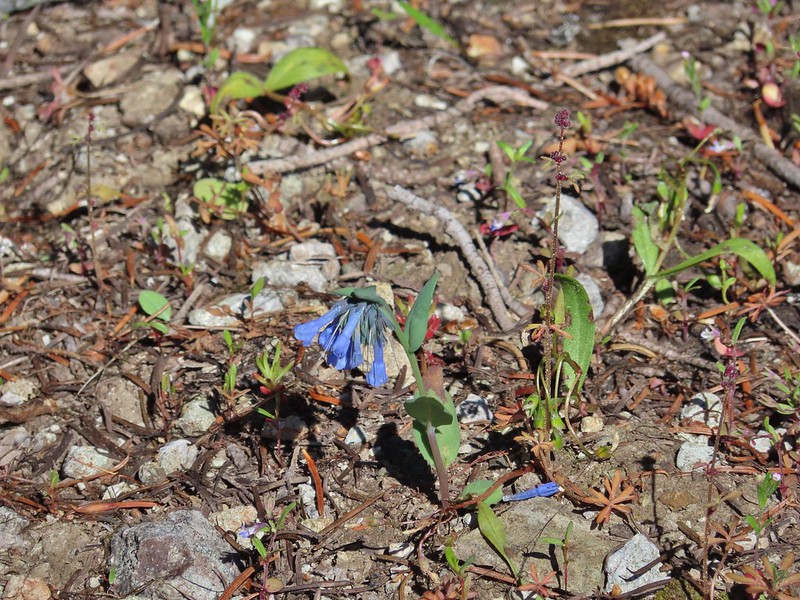 Mountain bluebells
 Violet
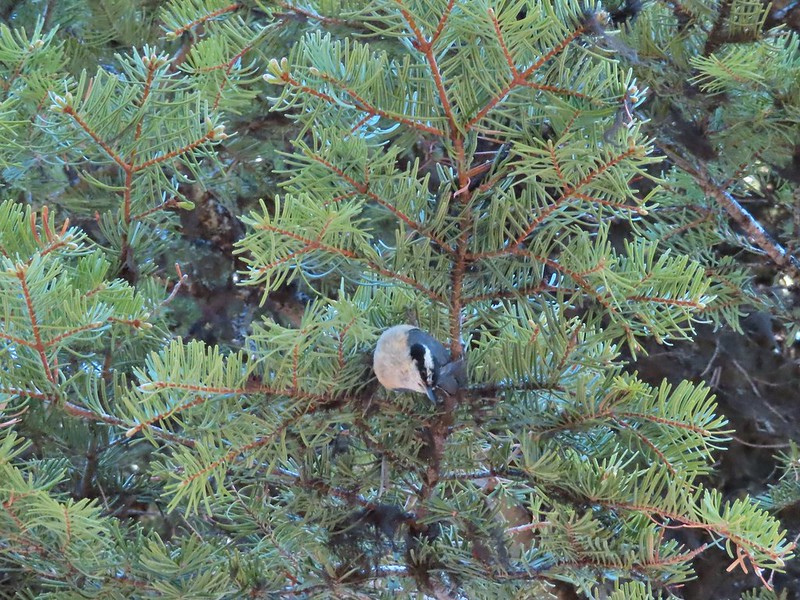 Nuthatch
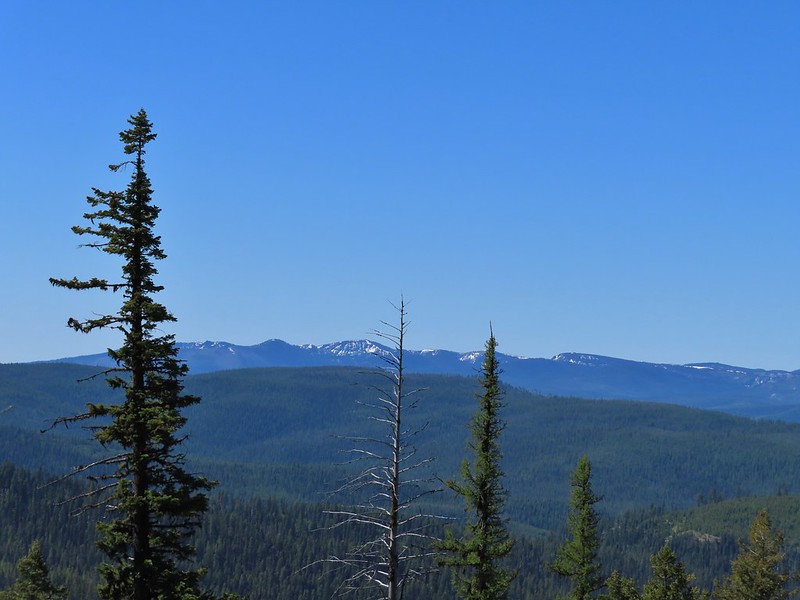 Vinegar Hill is in the center with Ben Harrison to the right of the green tree in the foreground.
 Back in forest burned in 1996.
 Glacier lilies
 Dropping to the saddle with Tower Mountain in the distance.
 Valerian
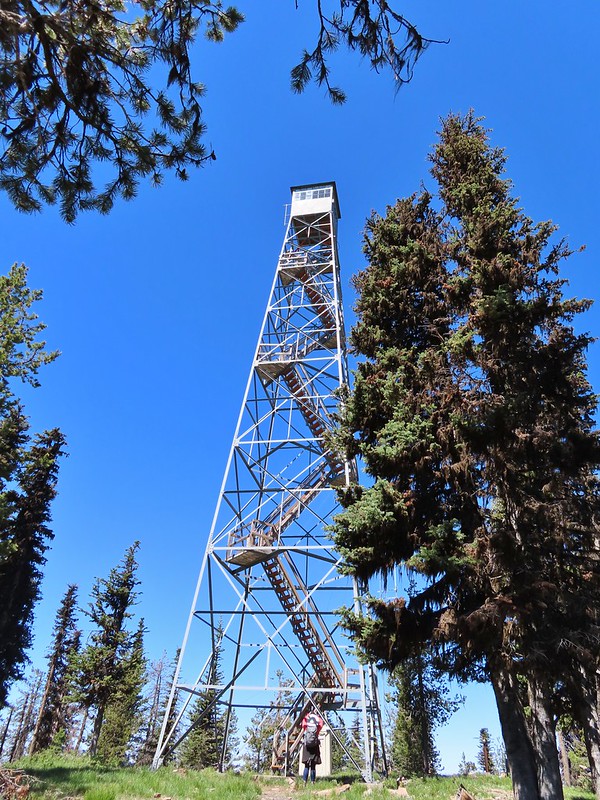
 The lookout tower on Tower Mountain.
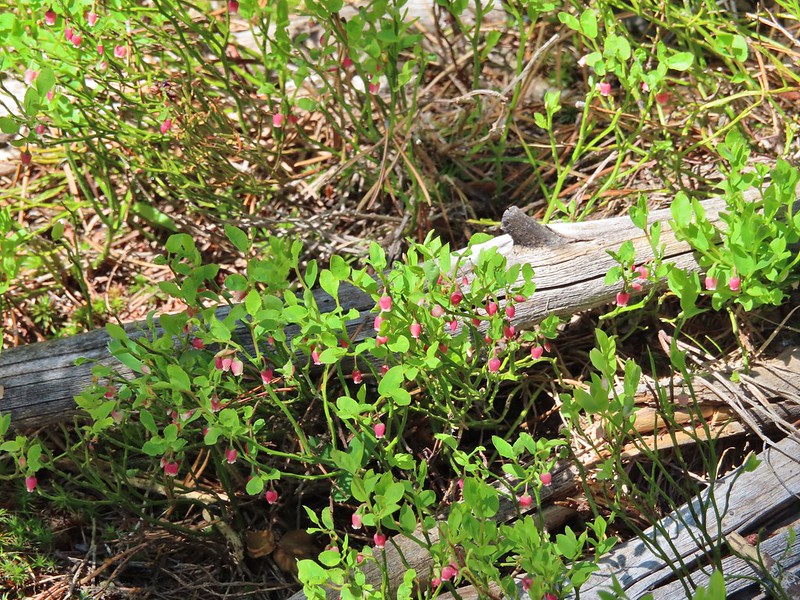 Huckleberry blossoms
 Arriving at the wilderness boundary.
 Looking back into the North Fork John Day Wilderness.

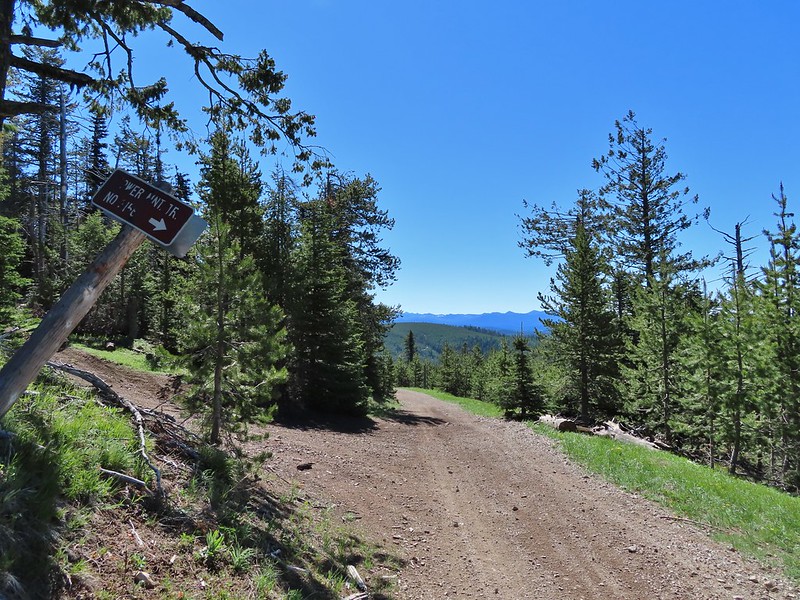
 The Elkhorns from NF-5226.
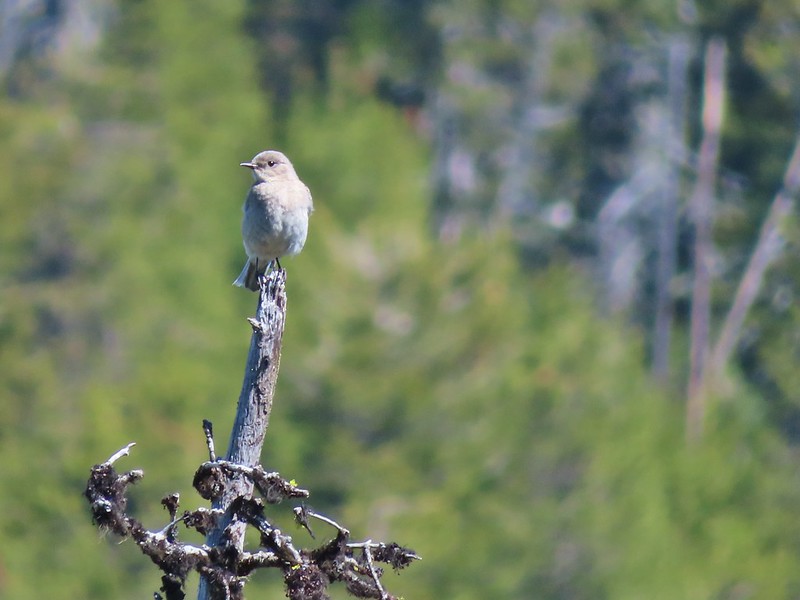 Western bluebird




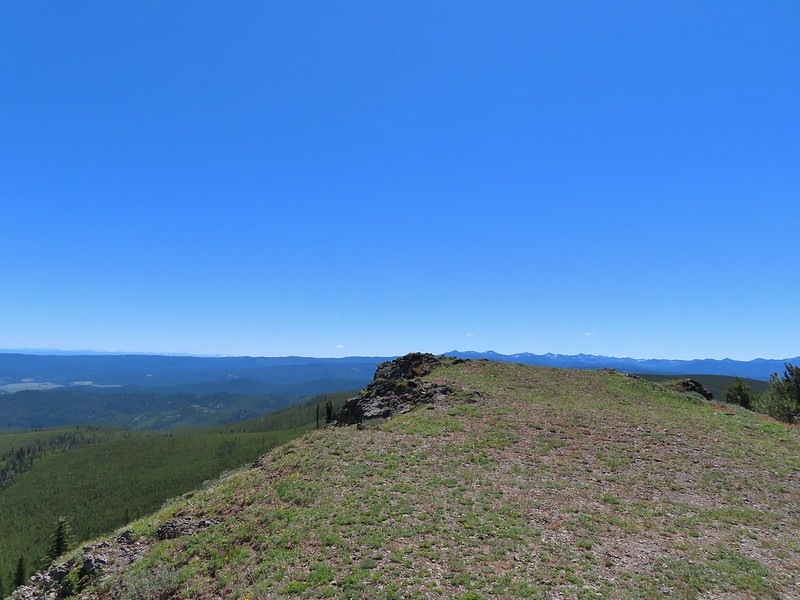 Wallowas on the left and the Elkhorns on the right.
 Wallowa Mountains including Eagle Cap
 Elkhorns
 Balloon pod milk vetch
 A patch of snow clinging to Tower Mountain.
 Lupine
 A penstemon
 Paintbrush
 Old man’s whiskers
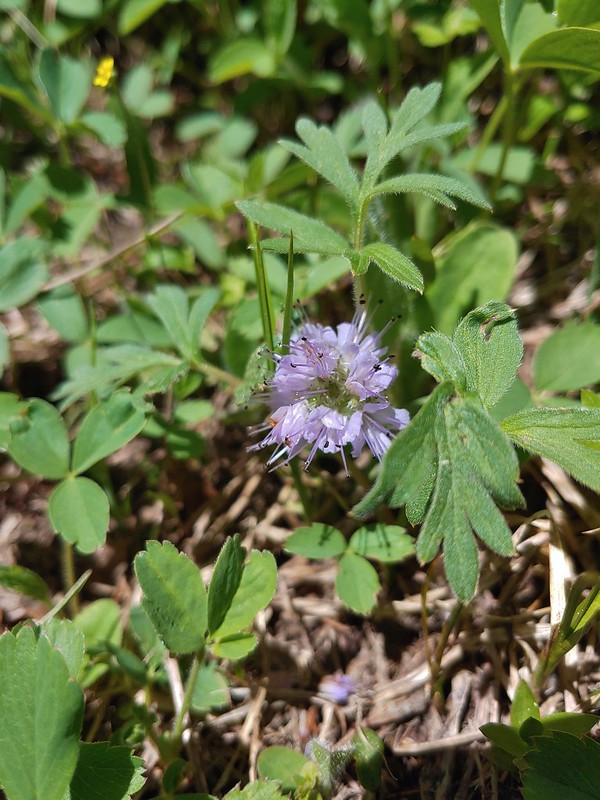 Ball head waterleaf
 Violets and ?
 Tortoiseshell on a cone.
 Shooting star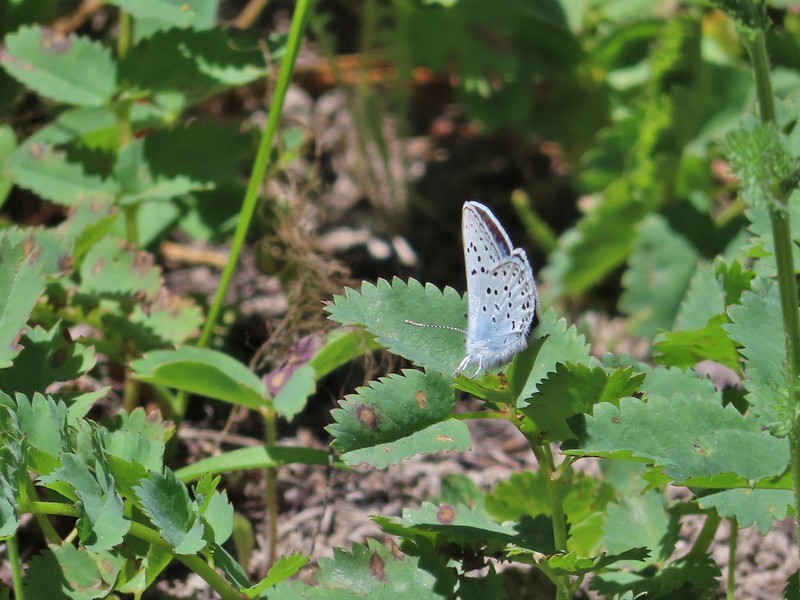
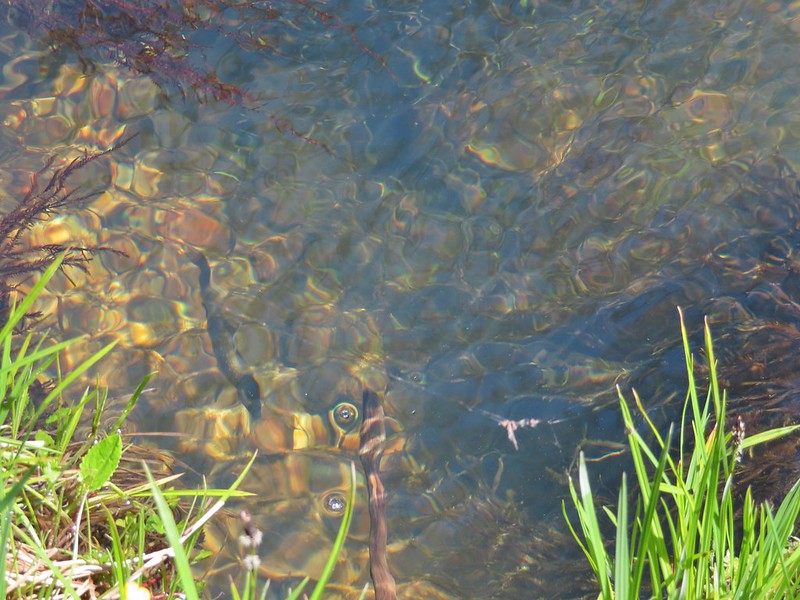 Fish in Big Creek.
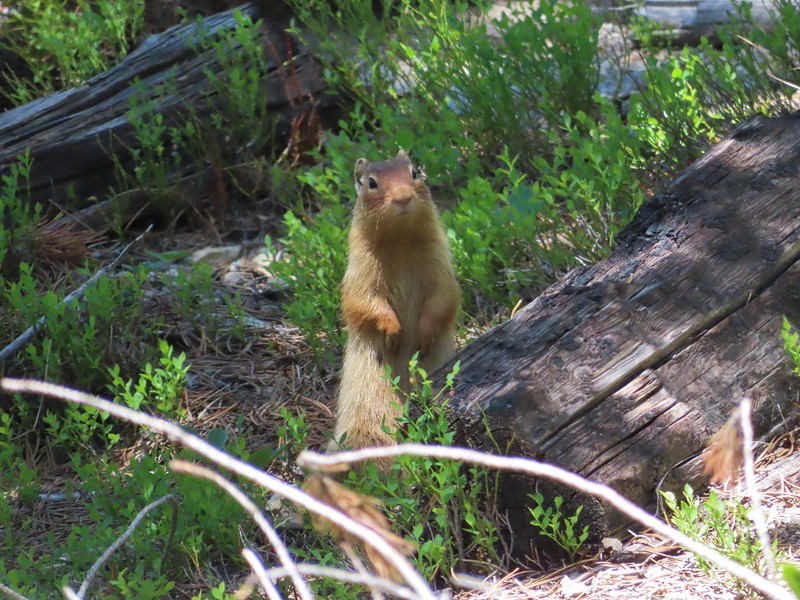 I believe this is a columbian ground squirrel.
 California tortoiseshell butterflies
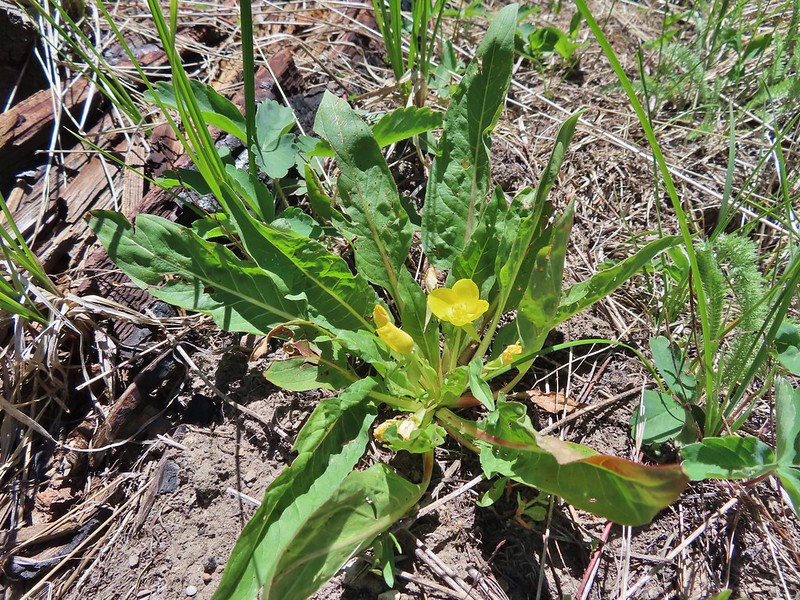 Diffuseflower Evening-primrose
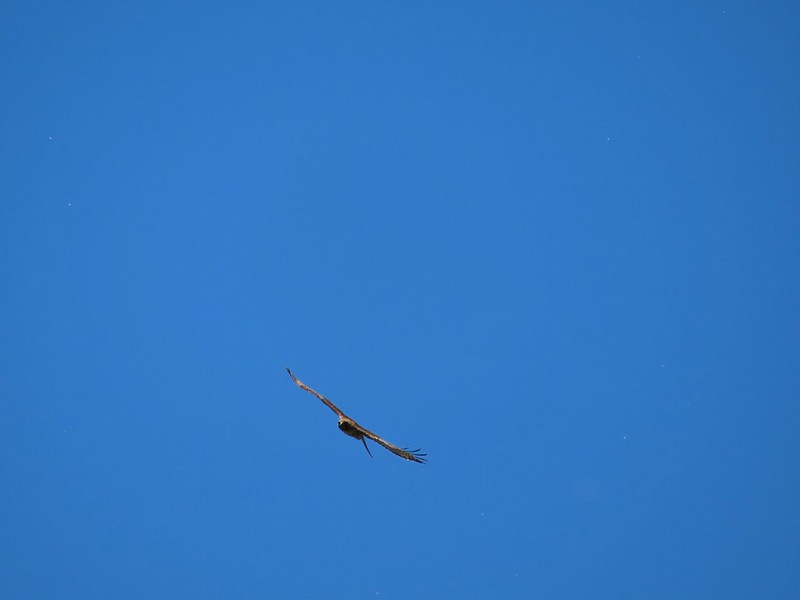 Red tailed hawk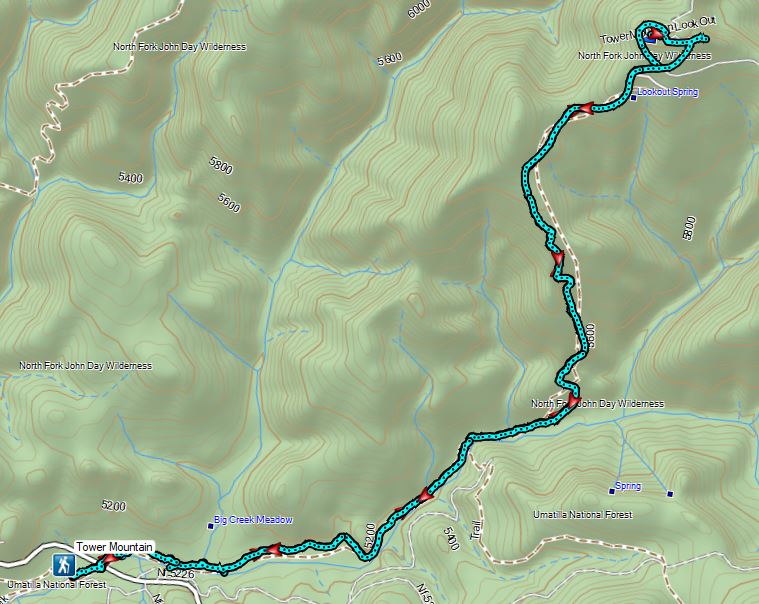
 wanderingyuncks


