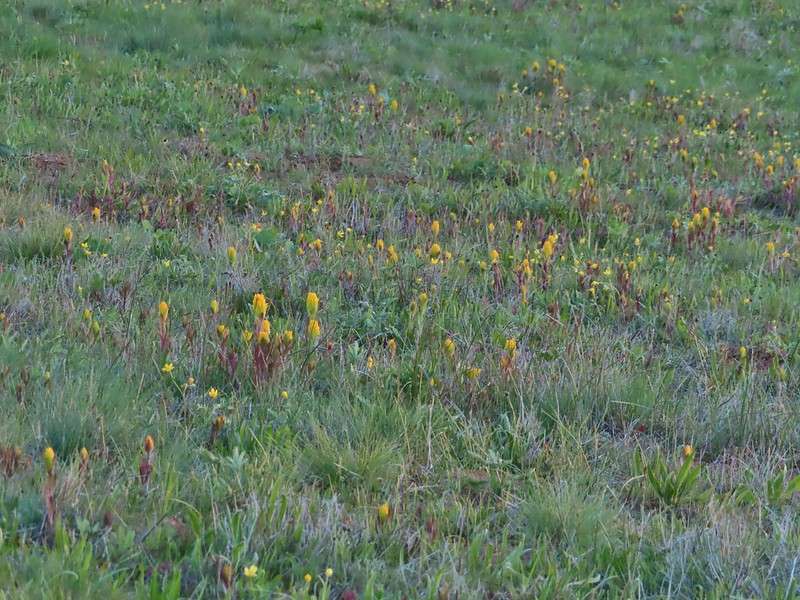
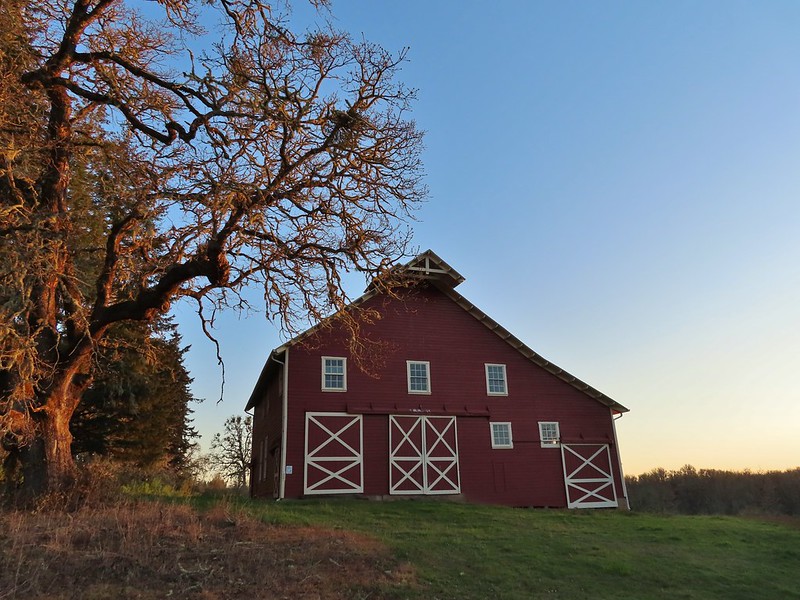
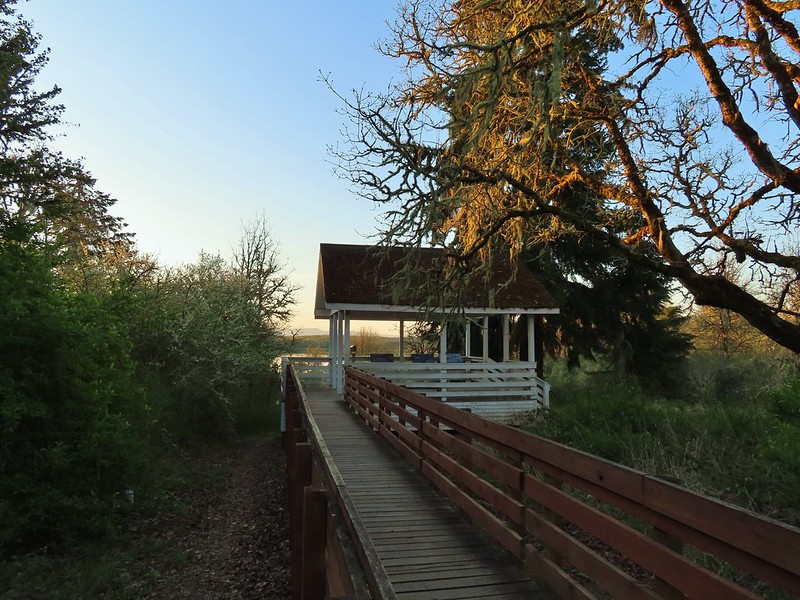
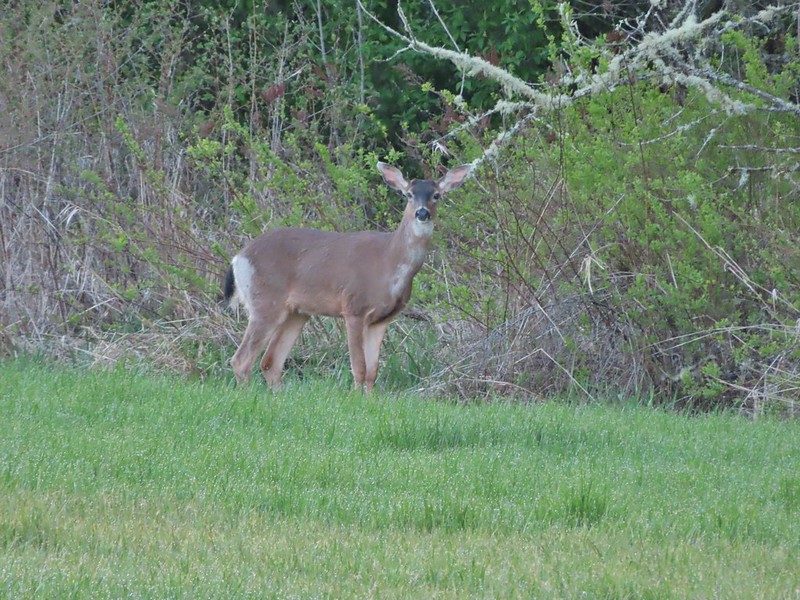
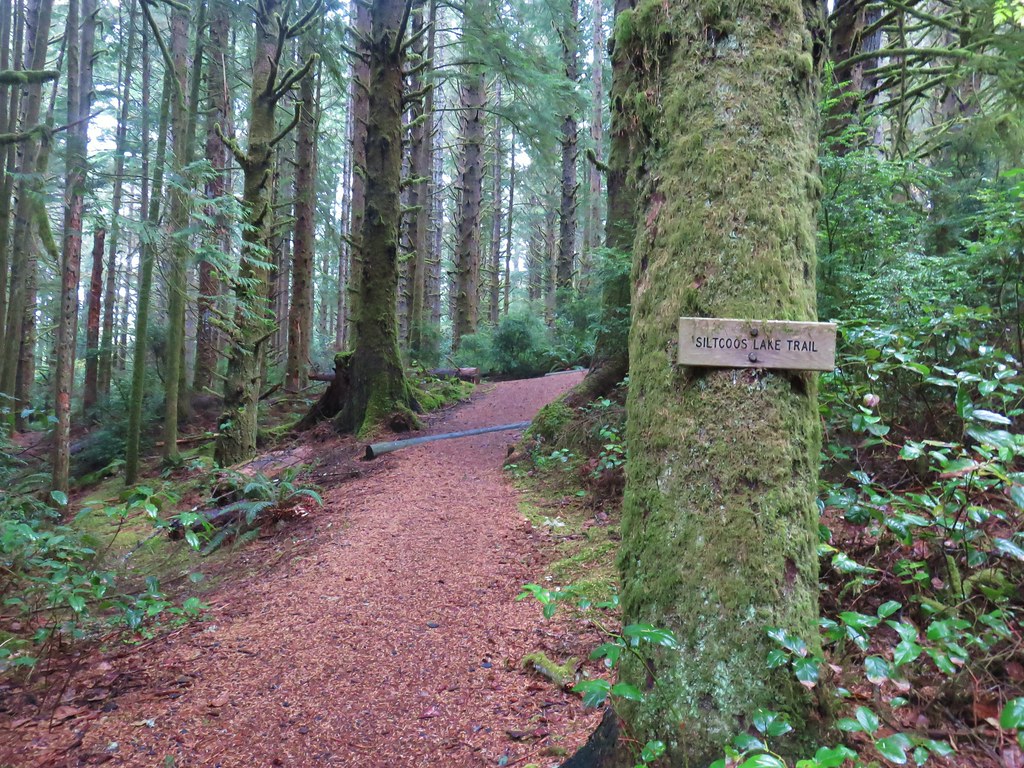
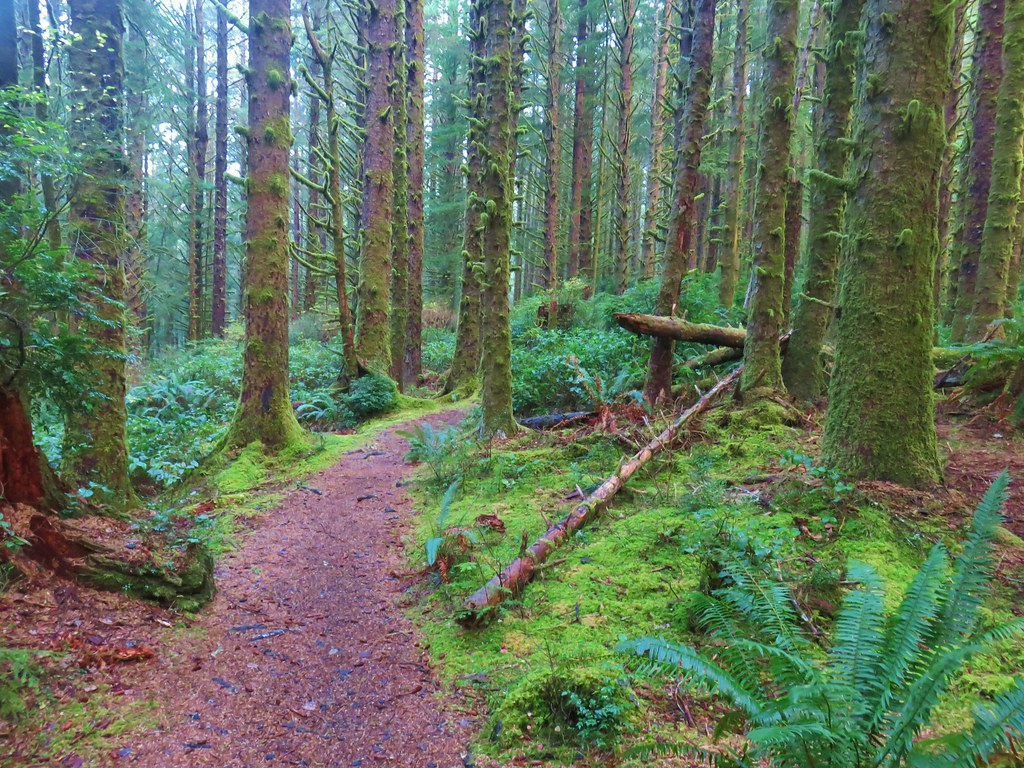
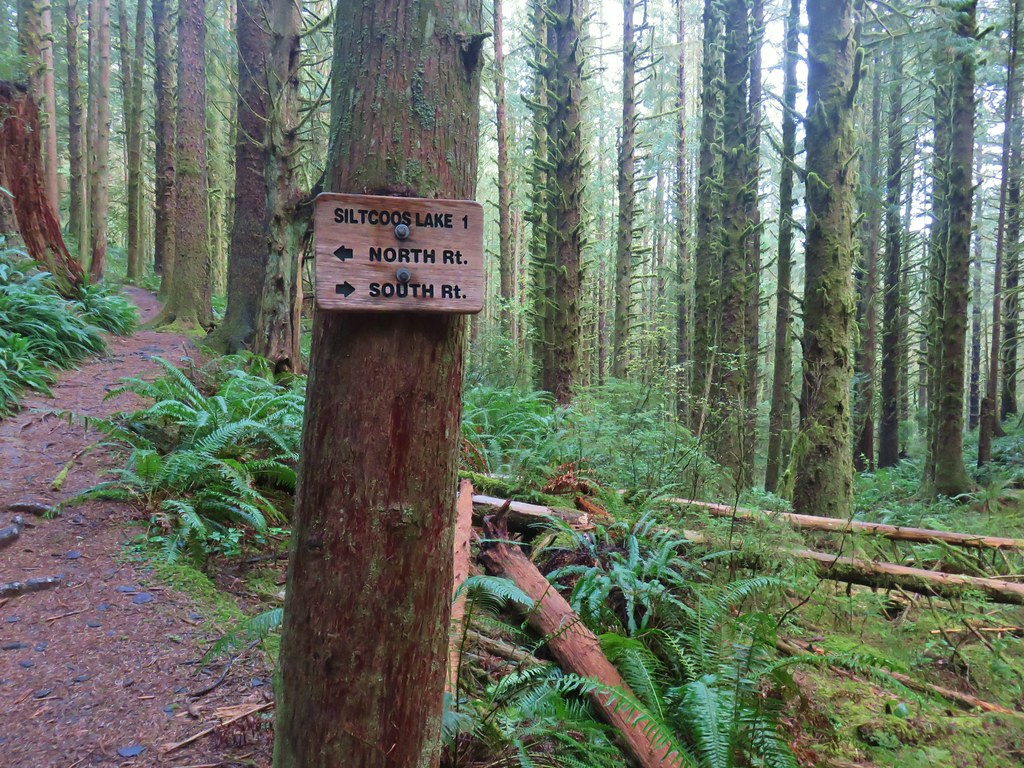
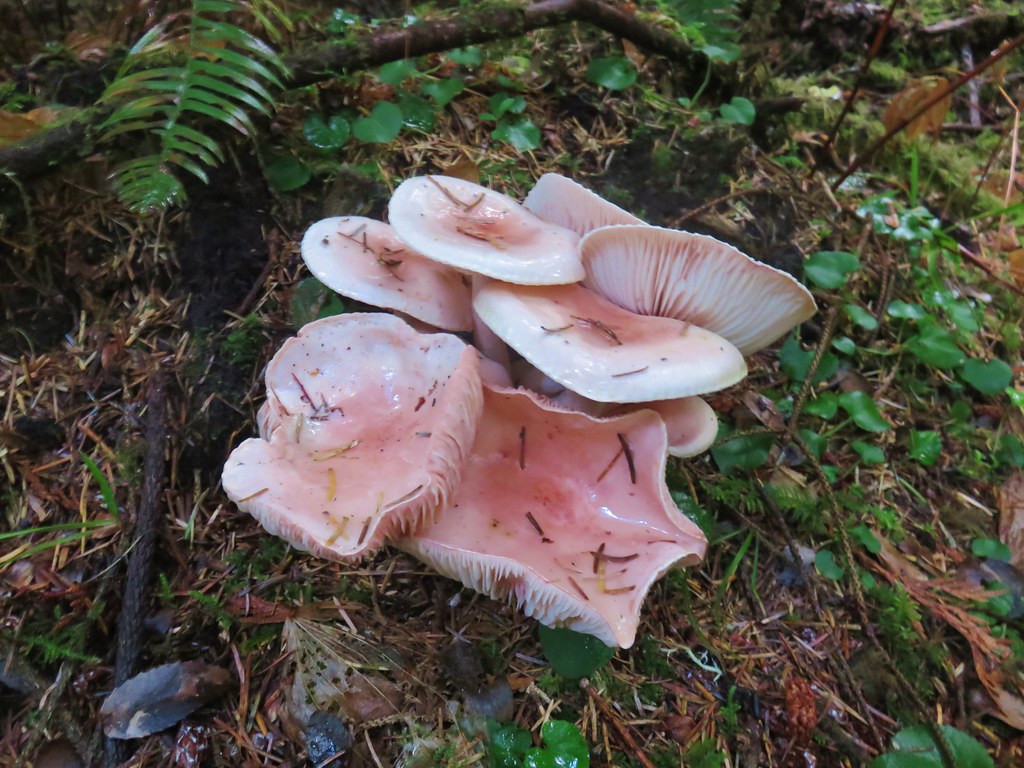
Categories
Corvallis Hiking Oregon Willamette Valley

William L. Finley Wildlife Refuge – 10/10/2024

After starting my week of vacation with back-to-back hikes with 4355′ and 5300′ of elevation gain, I took a day off and then picked a much more level hike to wrap up my week. I turned to the William L. Finley National Wildlife Refuge located just south of Corvallis, OR. Despite several visits there were still some portions of trails that I had yet to hike there. Heather and I first visited this refuge in 2017 to complete one of Sullivan’s featured hikes (post). We hiked the Homer Campbell Boardwalk, Woodpecker Loop, and Mill Hill Loop that day. We returned in 2020 to check out the SE corner of the refuge including Pigeon Butte. I returned in 2021 during a solo April vacation and re-hiked many of the trails we’d been on during our previous visits and adding a short section of trail/road that we hadn’t yet hiked. Our most recent visit was in 2023 to the Snag Boat Bend Unit which is located approximately 3-miles east of the main unit on the other side of the Willamette River.

For this visit I mapped out a route starting at the Turtle Flats Walkway Trail. This extremely short (0.02-mile) paved path was one of those trails I had not hiked, and the parking area had a restroom and was close to another trail I had not hiked in its entirety, the Prairie Trail.
IMG_5766Hunting information kiosk across from the Turtle Flats parking area.

IMG_6047The Turtle Flats restrooms. (Photo from the afternoon.)

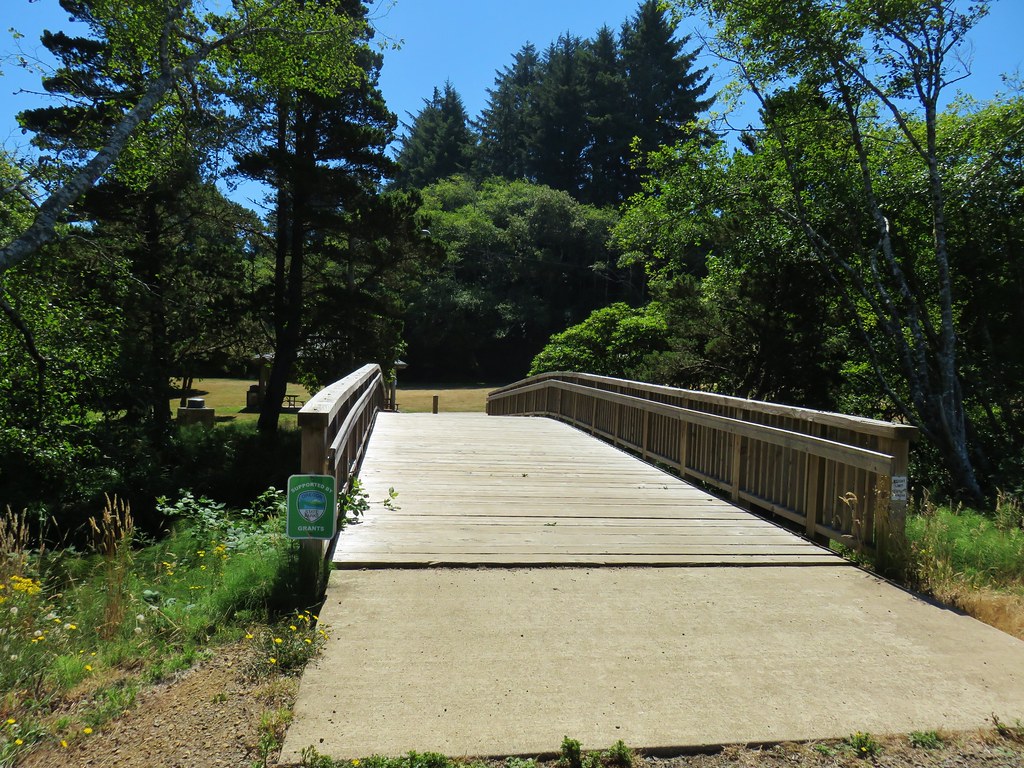
IMG_5767The entire Turtle Flats Trail in one photo.

IMG_5768Viewpoint at the end of the trail.

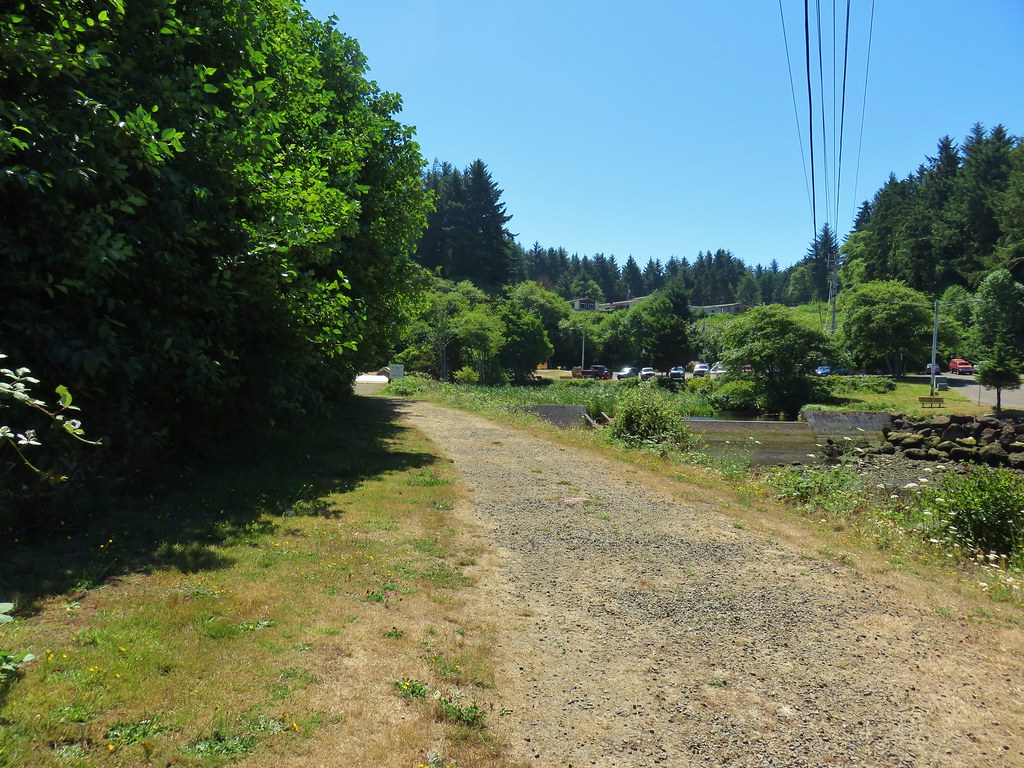
From the viewpoint a mowed path continued on to Finley Refuge Road across from the start of the Prairie Trail.
IMG_5770

IMG_5771

The Prairie Trail starts on a roadbed for a short distance then changes to “native surface” as it follows the edge of open fields.
IMG_5772

IMG_5774

I had a copy of the refuge map with me which came in handy to make sure I stayed along the correct fields.
IMG_5780I turned right here following said map through a small section of trees.

IMG_5782Poison oak is hard to miss when it is sporting its Fall colors.

IMG_5784Emerging from the trees and staying right.

The Prairie Trail turned East shortly after the trees and pointed me toward a pretty spectacular sunrise.
IMG_5786

IMG_5792

IMG_5796McCulloch Peak (post), Dimple Hill (post), and Vineyard Mountain (post) in the McDonald-Dunn Forest to the North.

IMG_5798Mary’s Peak (post) with a few clouds below its summit.

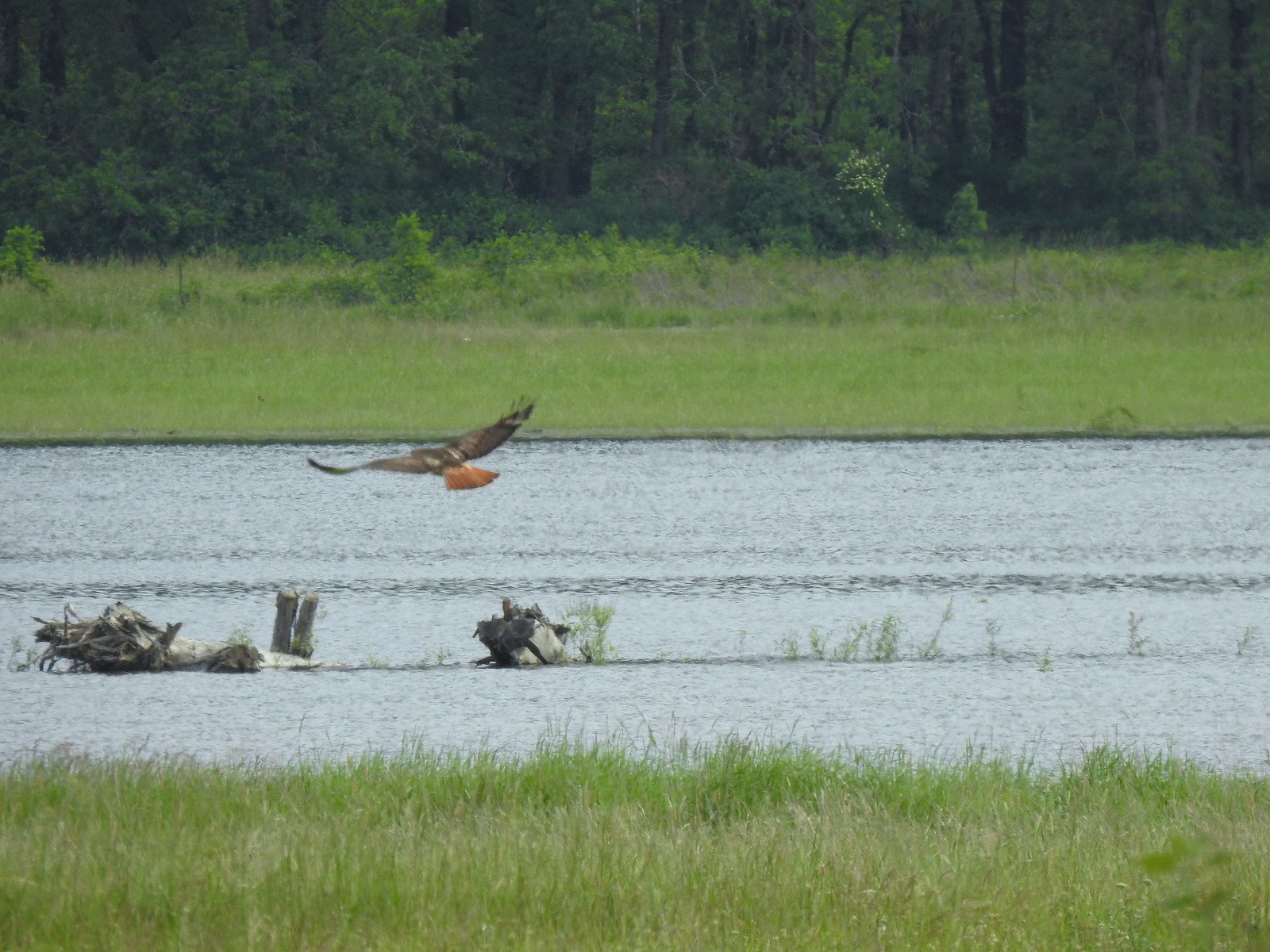
DSCN5032One of several raptors hunting over the fields.

IMG_5805Pigeon Butte to the left and Green Peak in the distance.

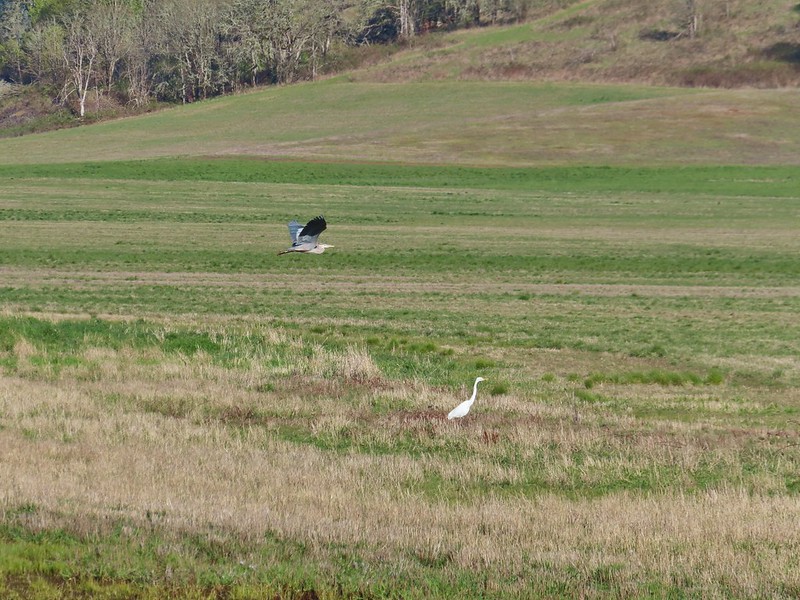
I thought I might see deer or even elk along the edges of the fields being fairly early in the morning, but aside from some fairly fresh deer sign the raptors and lots of smaller birds were all that seemed to be around. That was until I got to the northern end of McFadden Marsh. Still no deer or elk but I spotted the first great blue heron in a field just before arriving at the marsh.
IMG_5807

DSCN5037

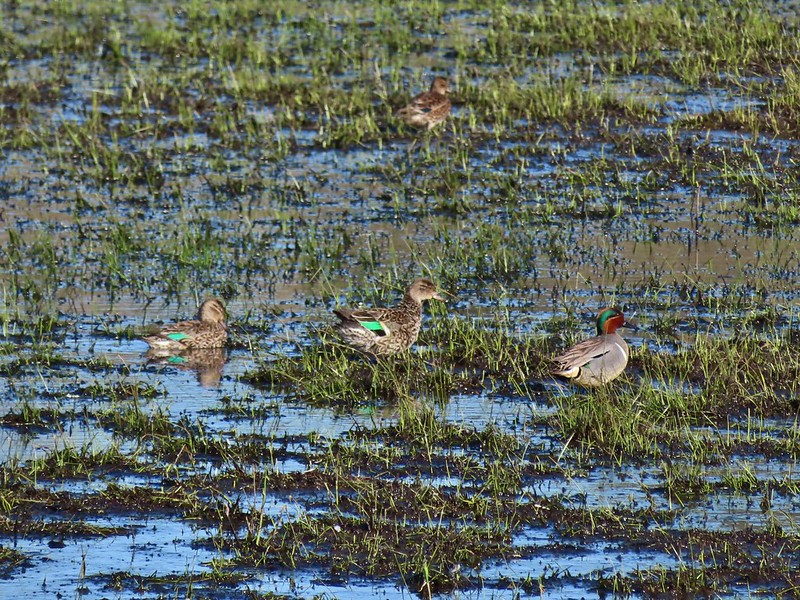
The marsh itself was full of egrets, ducks and a few more herons.
IMG_5811Fog and McFadden Marsh to the left.

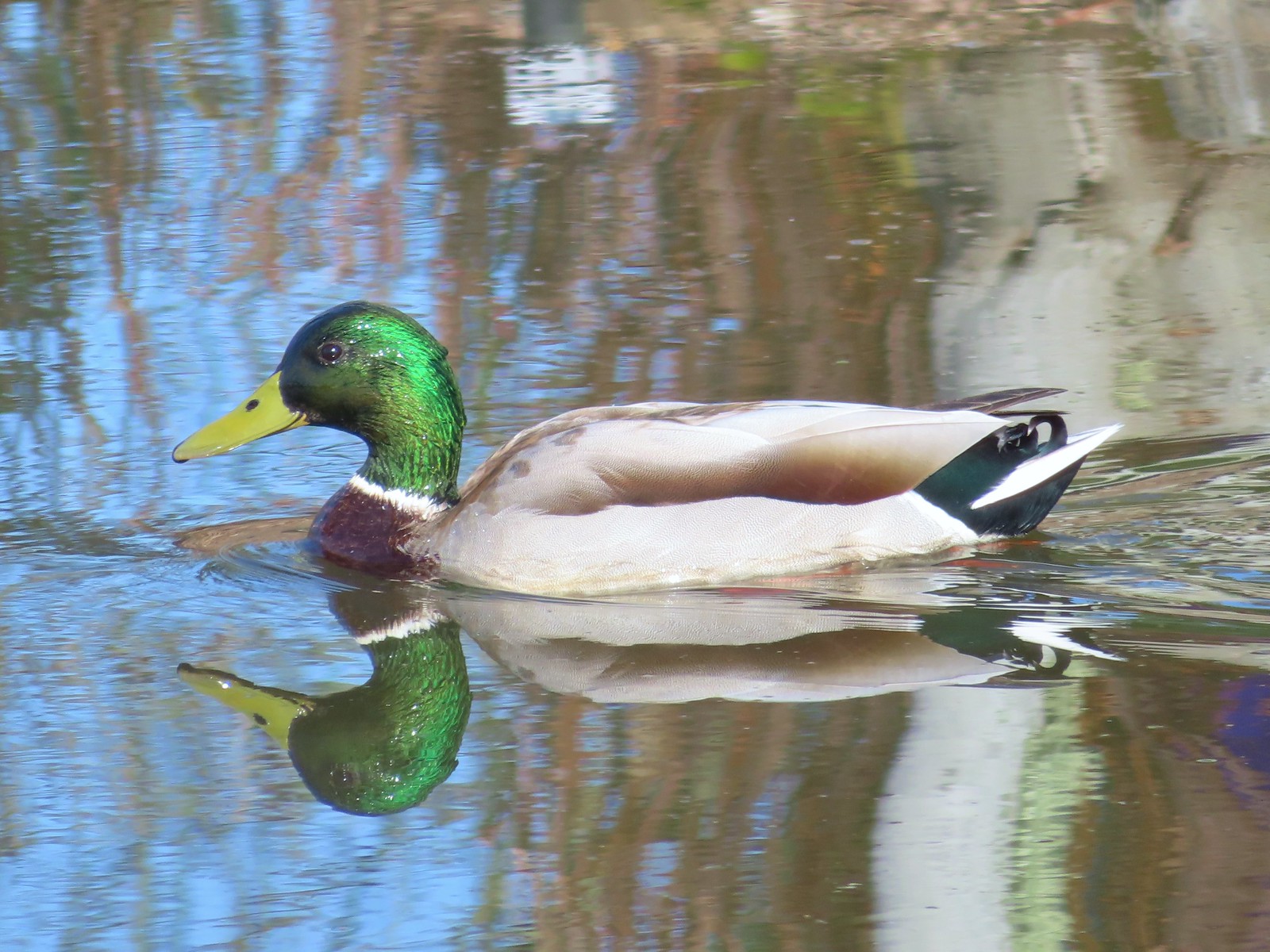
DSCN5042Mallards

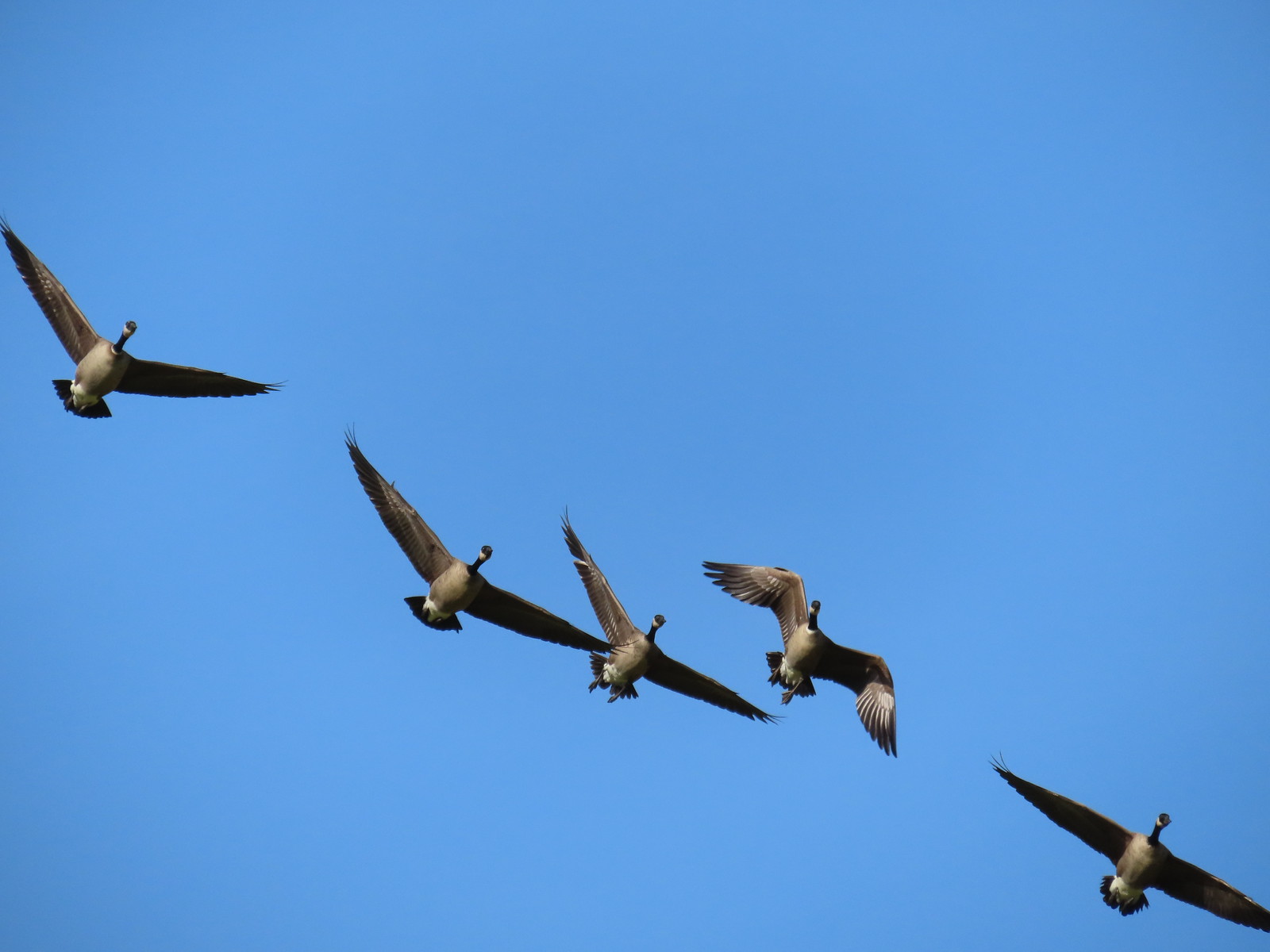
DSCN5045Geese flying overhead.

DSCN5047Egret and ducks

IMG_5812

DSCN5059Egrets

DSCN5061More egrets

DSCN5063Heron with the egrets.

IMG_5817McFadden Marsh

DSCN5077Egrets and a murder of crows.

DSCN5081Great blue heron

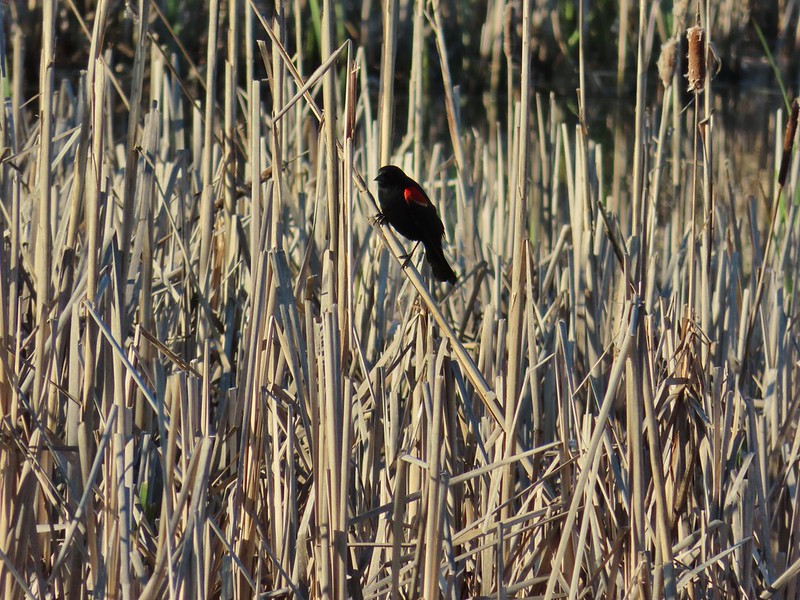
DSCN5082Red-winged blackbird

IMG_5826Prairie Trail along McFadden Marsh.

The Prairie Trail ends at a small pullout on Bruce Road which is where we’d parked for our 2020 hike here.
IMG_5830I could just make out the railings along Bruce Road from here.

DSCN5085Nutria family near Bruce Road.

DSCN5088The nutria family.

IMG_5833The Prairie Trail at Bruce Road.

I turned right onto gravel Bruce Road of 0.2-miles to a larger parking area on the others side of Muddy Creek.
IMG_5834

DSCN5093Northern flicker

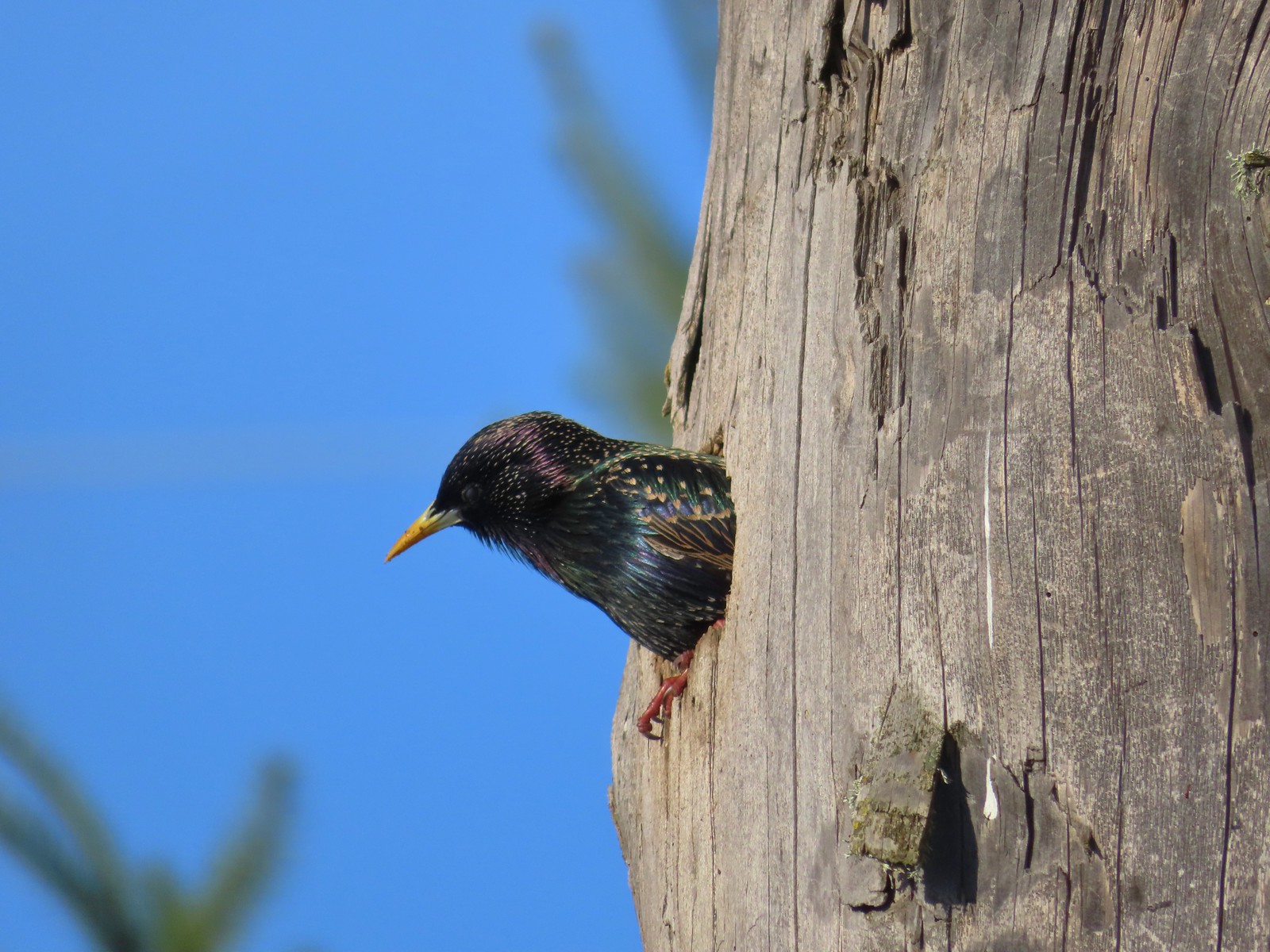
DSCN5094Starling

IMG_5836Muddy Creek

IMG_5838Interpretive signs at the larger parking area.

At this parking area I turned right onto the first mowed path which is the Cheadle Marsh Trail.
IMG_5839

I followed this grassy track, between Cheadle Marsh on the left and Muddy Creek on the right, for almost a mile to a junction near the Cheadle Barn.
IMG_5840

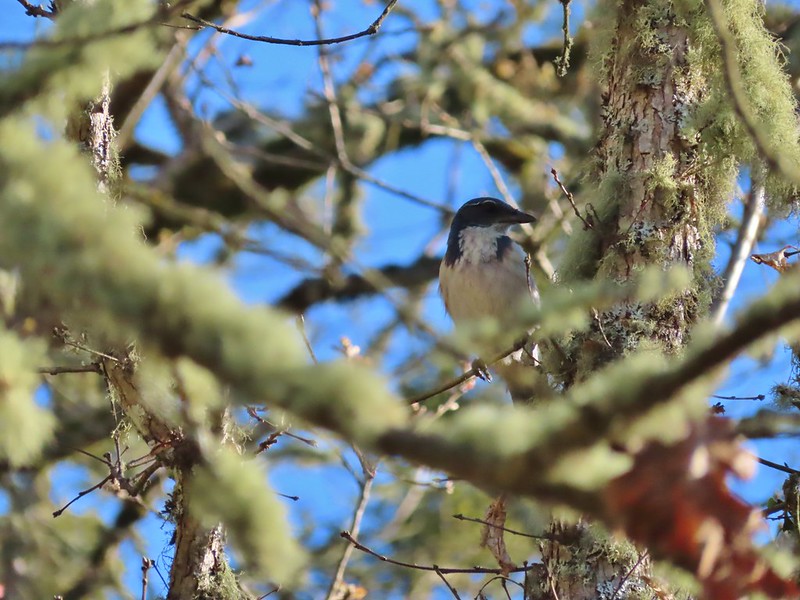
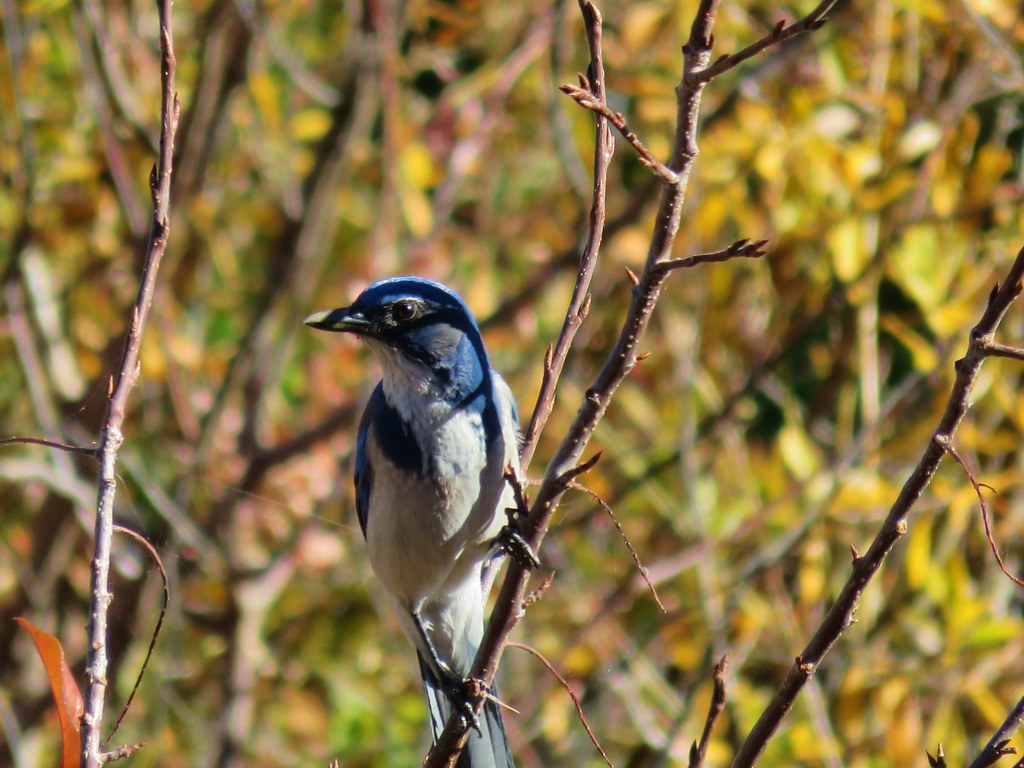
DSCN5096California scrub-jay

IMG_5841

DSCN5097Peregrine falcon?

IMG_5844Pigeon Butte across Cheadle Marsh.

DSCN5103While I was photographing this egret I glanced to my left and noticed a buck staring back at me.

DSCN5108

DSCN5111Meanwhile a great blue heron decided it wanted the egret’s perch.

DSCN5113

DSCN5115The heron and egret

DSCN5117American coot

IMG_5854

IMG_5856The roof of the Cheadle Barn poking up from the hill.

DSCN5129California quail escaping into the blackberry bushes.

IMG_5858The small hill up to the junction below the barn. My legs let me know that even this small hill was more than they were interested in today.

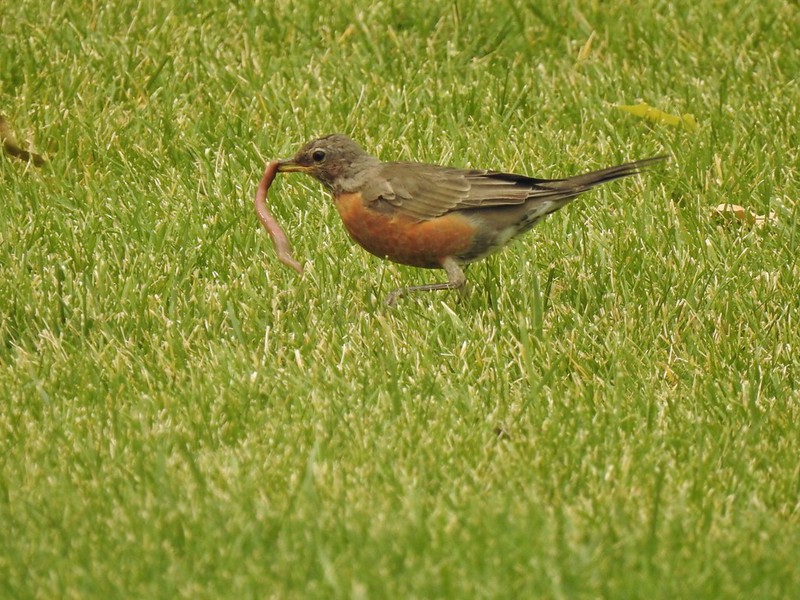
DSCN5132Robin

IMG_5861Spur trail to the Cheadle Barn.

I skipped the barn this time and continued on past a small pond to a junction with the Pigeon Butte Trail.
IMG_5862

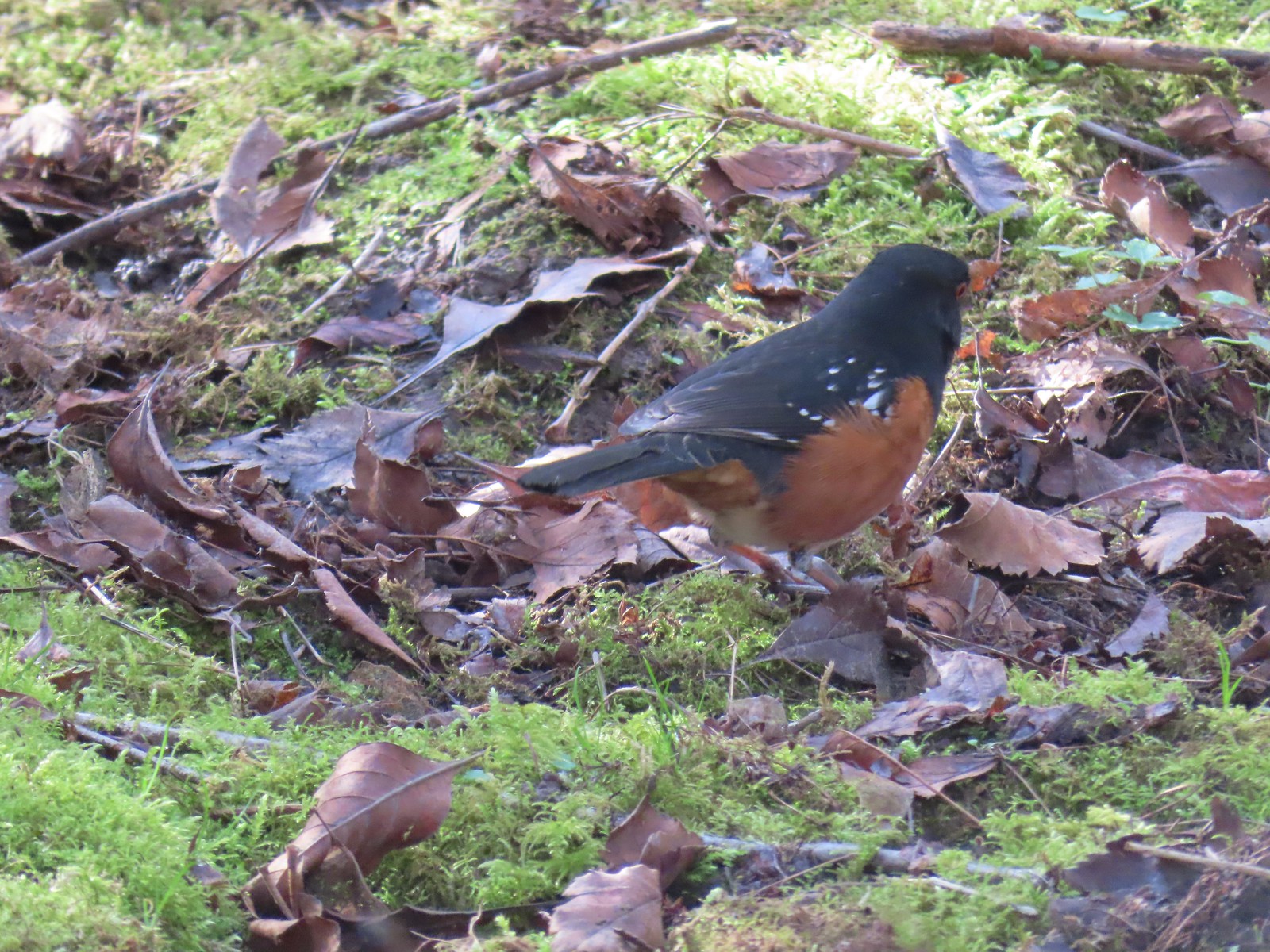
DSCN5134Spotted towhee

IMG_5868The pond and Cheadle Barn.

DSCN5138Ducks in the pond.

DSCN5139Pied-billed grebe. I also had a yellow-rumped warbler nearly land on me, but then it disappeared into the trees across the pond.

IMG_5867The gravel road that serves as the Pigeon Butte Trail ahead.

I turned right on the Pigeon Butte Trail and reluctantly made the gradual climb to a junction on the shoulder of the butte.
IMG_5869

DSCN5142A successful egret and unfortunate rodent.

IMG_5875The junction is located at the crest of the trail/road.

IMG_5876Spur trail to the summit of Pigeon Butte.

My legs had already declared that they were not interested in going uphill and I’d already been up the butte twice, so I skipped the spur trail and continued downhill.
IMG_5878

This section of trail passes the Finger Ponds which were almost completely dry this time of year.
IMG_5880

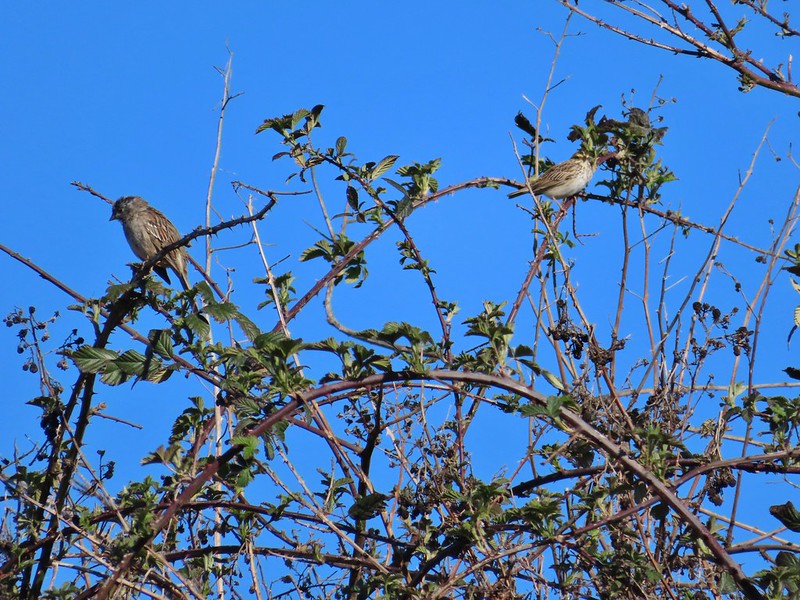
DSCN5146The dry ponds hosted a good number of songbirds.

IMG_5884It appeared that there had been a number of controlled burns performed throughout the refuge.

Pigeon Butte TrailThe 0.9-mile section ended at a junction with the Cattail Pond Trail.

I turned left onto that trail (also a roadbed) and followed it a mile to a pointer for Cattail Pond.
IMG_5889

IMG_5890Viewpoint bench looking toward Cabell Marsh.

IMG_5895Woolly bear caterpillar sharing the trail.

IMG_5896Gray Creek

IMG_5900

At the pointer the Cattail Pond Trail turns left, and the road becomes the Mid-Refuge Connection Trail. I turned left at the pointer to visit the pond and hike a 0.6-mile section of the Cattail Pond Trail that I’d yet to hike.
Mallards at Cattail PondMallards

DSCN5158More mallards

IMG_5907Maple Knoll on the far side of Cattail Pond.

DSCN5165

DSCN5170I’m assuming nutria but am not 100% convinced on this one.

The 0.6-mile section of trail looped around the pond and connected me to the Beaver Pond Trail which is the trail I’d taken on previous visits.
IMG_5911This section was a mixture of the edge of fields and wooded trail.

IMG_5913Follow the pointer.

DSCN5175A cedar waxing joined by a pair of finches.

IMG_5915

IMG_5920

IMG_5922I turned right at this sign onto the Beaver Pond Trail and followed it a half mile back to the gravel roadbed.

IMG_5923

IMG_5924Just under 100 yards from the Cattail Pond Trail is this unsigned junction. The left is a half mile out-and-back spur on along the side of Maple Knoll. I stayed right this time having done the spur in 2020 with Heather.

IMG_5928The trail passes the Beaver Pond just before arriving at the roadbed.

IMG_5929The Beaver Pond was pretty well deserted given its lack of water.

IMG_5930I turned left onto the Mid-Refuge Connecting Trail.

The connector trail climbed gradually to a signed 4-way junction that serves as the start of the Mill Hill Loop.
IMG_5932

IMG_5935Authorized personnel only on the right-hand fork here.

IMG_5938Arriving at the junction.

IMG_5940The right fork is the trail I came up. The center fork is the Mill Hill Trail, and the left fork is the Mill Hill Loop Trail which loops around Mill Hill in 1.7-miles and arrives back at the junction where I took this photo from.

Having done the Mill Hill Loop twice before I decided to save myself the distance and more climbing and took the center fork which would lead me to the Intertie Trail and eventually the Woodpecker Loop Trail.
IMG_5945

IMG_5946There are several junctions along this stretch, most of which are well signed.

IMG_5949This junction marks the start of the Intertie Trail.

IMG_5954Crossing Finley Refuge Road.

I was moving pretty quickly through the forest here and startled a doe that came around a bend from the other direction. She bounded into the trees but didn’t go too far.
IMG_5957

IMG_5958

When I arrived at the Woodpecker Hill Loop I turned left. It meant a little bit of climbing, but going this direction would lead me past the Environmental Education Shelter on Woodpecker Hill.
IMG_5960

IMG_5961Signage at the Woodpecker Hill Loop.

IMG_5962The Woodpecker Hill Loop is a well-developed interpretive trail.

DSCN5179Stellar’s jay

IMG_5965Each of these kiosks has an informational placard inside.

IMG_5968Near the crest of the trail.

IMG_5971The shelter on Woodpecker Hill.

I took a quick break on the shaded bench at the shelter then headed downhill to the Woodpecker Hill Trailhead.
IMG_5977

IMG_5978Dragon fly

IMG_5981

IMG_5987Signboard at the Woodpecker Hill Trailhead.

From the trailhead I walked down the entrance road to Finley Wildlife Refuge Road and turned left. I now had a 0.7-mile gravel road walk to reach the Cabell Barn.
IMG_5990Yay, more uphill.

DSCN5191The back of a killdeer.

IMG_5995Bald Hill on the left.

IMG_5997Winkle Butte is the near rise on the left. On a clearer day Mt. Jefferson would be visible in the distance to the right of Winkle Butte.

IMG_6000Cabell Barn ahead.

I turned right across from the barn on Cabell Lodge Road following a pointer for the Cabell Marsh Overlook.
IMG_6004

IMG_6006Historic granary

The Cabell Lodge burned on December 13, 2023.
IMG_6007

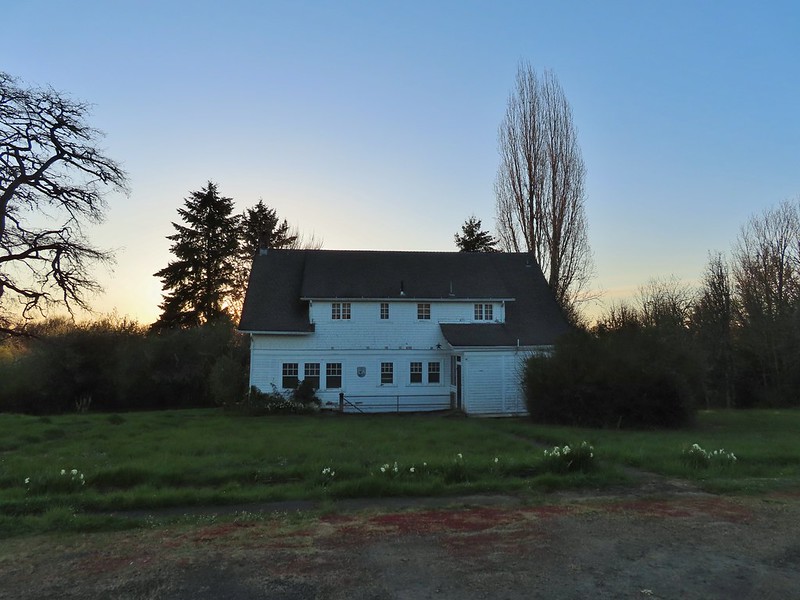
Cabell LodgeThe lodge in April, 2021.

From the parking area at the end of the road I followed a path to the overlook then descended to the marsh on the seasonal trail.
IMG_6008

IMG_6010

IMG_6013

Cabell Marsh was busy with a lot of mallards and a few other species mixed in.
IMG_6015

DSCN5196

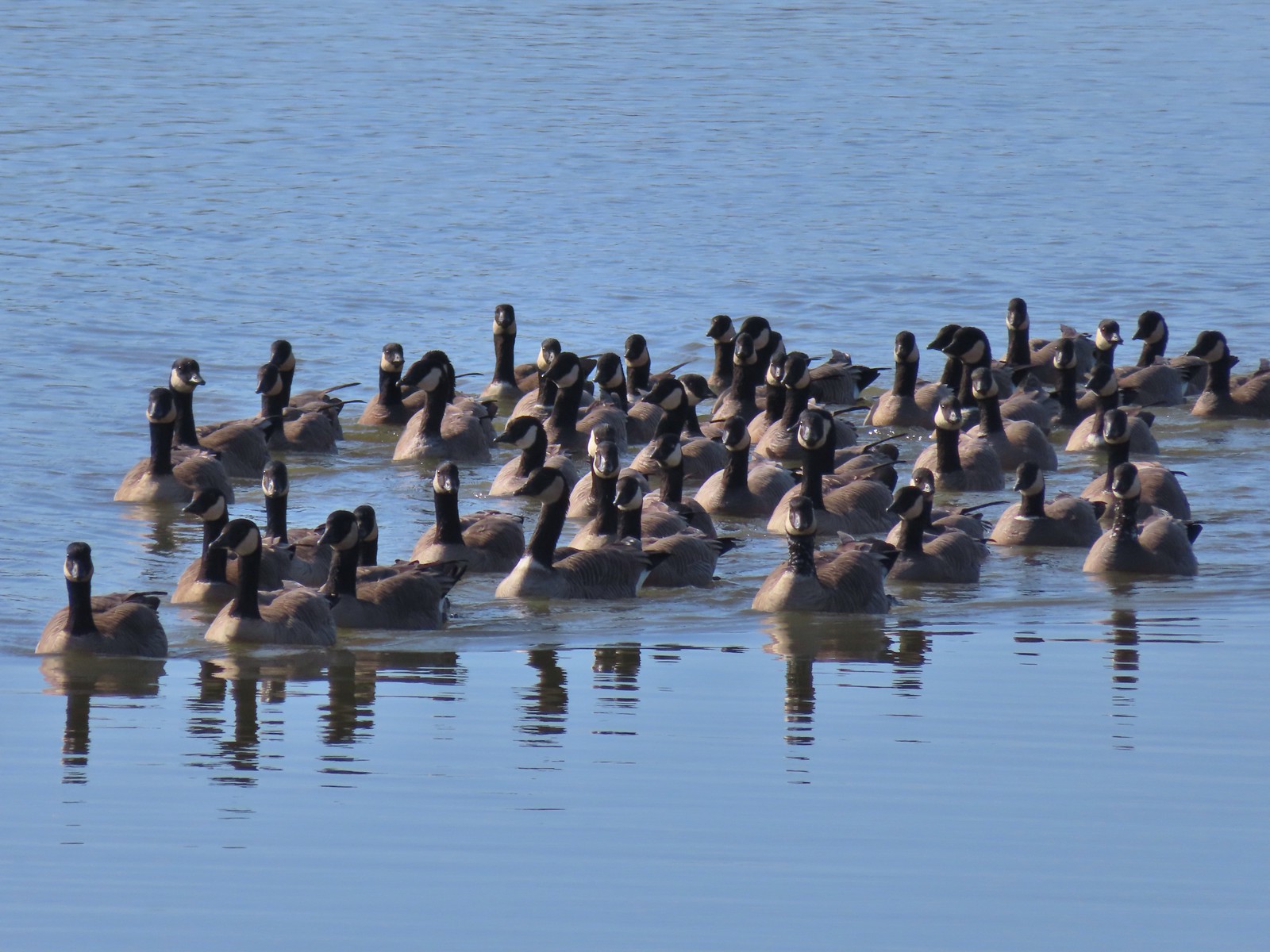
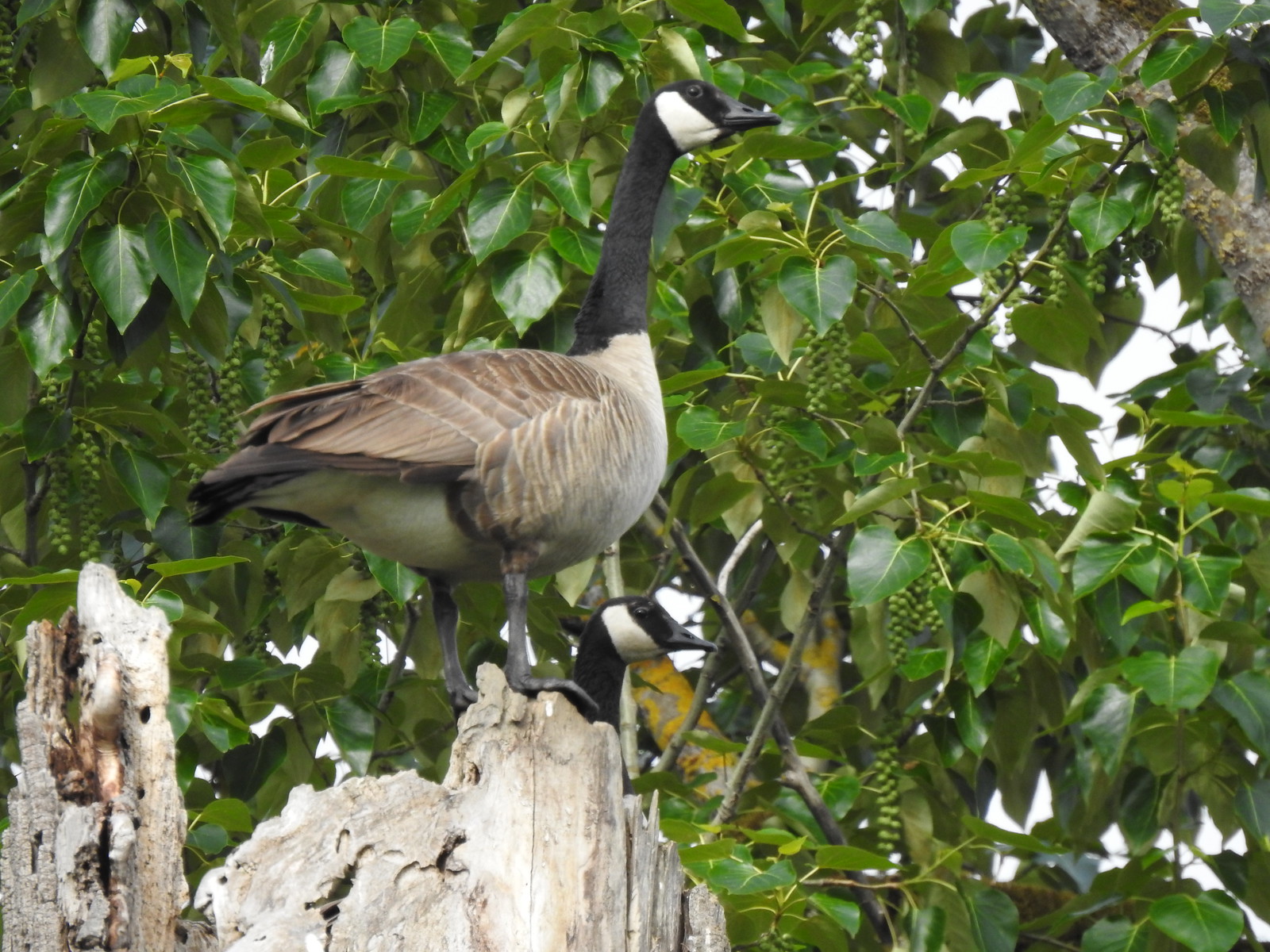
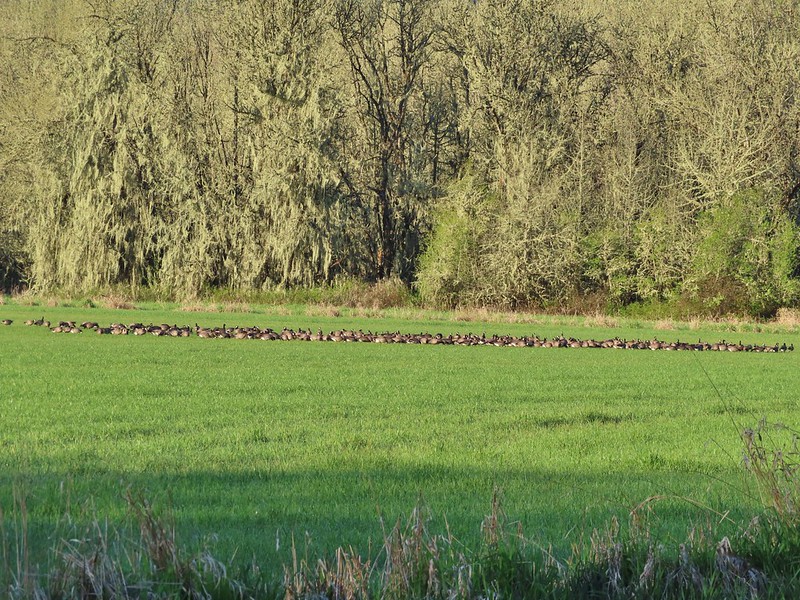
DSCN5200Geese

IMG_6018Pigeon Butte from the marsh.

DSCN5210Great blue heron towering over the ducks.

IMG_6021An egret along the shore to the right.

DSCN5224The egret facing off with the heron. The mallard appeared to be ready to act as the referee.

DSCN5226After a brief face off the egret moved on.

IMG_6024Observation blind accessed via the Homer Campbell Boardwalk.

When I reached the boardwalk I turned left and followed it a little over a third of a mile to a parking area where I picked up Finely Refuge Road again. I turned right and followed the road a half mile back to the grassy path that led to the Turtle Flats viewpoint.
IMG_6028

IMG_6035

IMG_6038Signboard at the boardwalk trailhead.

IMG_6039Back on the refuge road.

IMG_6041Muddy Creek

IMG_6044The path to Turtle Flats on the left and the start of the Prairie Trail ahead on the right.

The loop today came in at 13.2-miles with maybe 400′ of total elevation gain.
Screenshot 2024-10-10 141624

This was a nice mix of trail types, and as always seems to be the case here, it was full of wildlife sightings. Much of the refuge is only open seasonally (April 1 through October 31) although the Woodpecker Hill, Intertie, Mill Hill trails and the Homer Campbell Boardwalk (only to the observation blind) are open year-round. It was great to be able to hike some new to me trail and there is still a small unhiked spur off the Prairie Trail for a future visit. Happy Trails!

Flickr: Finley Wildlife Refuge 2024

Categories
Coastal Range Hiking Oregon Portland Trip report Willamette Valley

Ki-a-Kuts Falls Fernhill Wetlands – 02/24/2024

A mostly sunny, near 60-degree forecast, looked too good to pass up so we decided to head out and attempt a pair of short hikes in the Oregon Coast Ranges Tillamook State Forest. Our first stop was along Maple Creek Road for a hike to Ki-a-Kuts Falls.
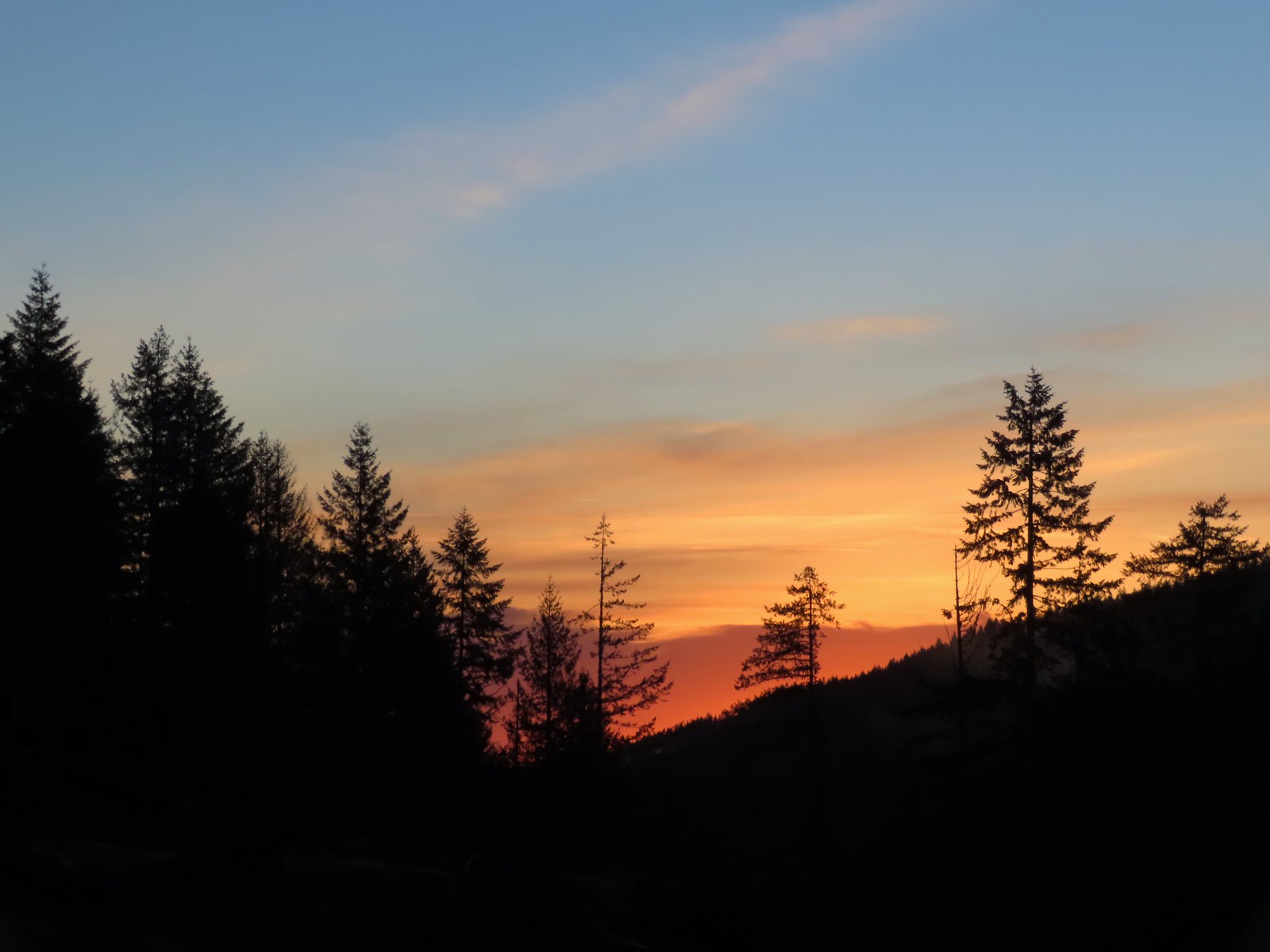
Sunrise from Maple Creek RoadSunrise from the trailhead.

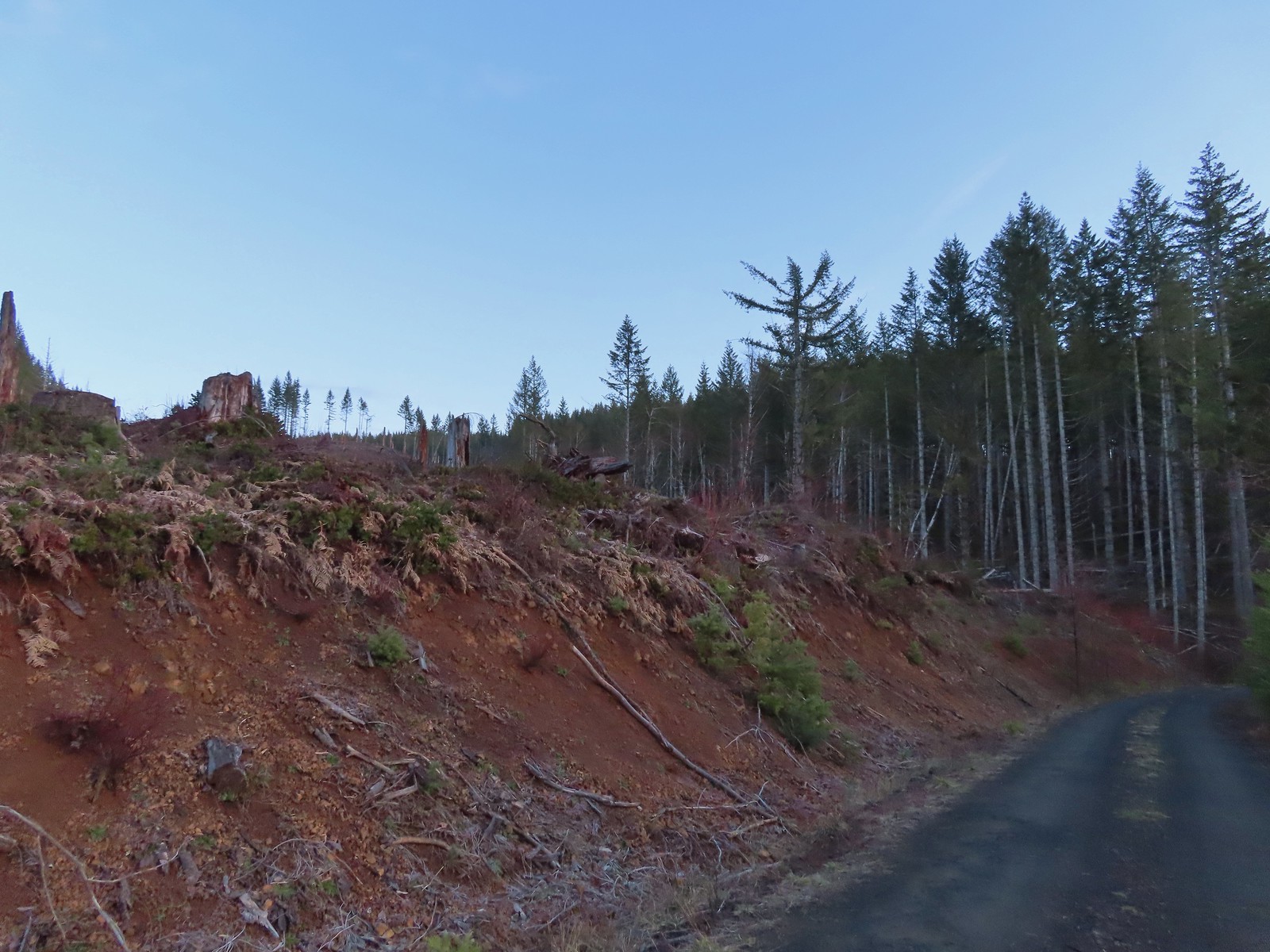
Clear cut along Maple Creek RoadClear cut at the trailhead.

The old alignment of the road was said to be located approximately 80 yards from the trailhead, but it appears that between time, storms, and logging operations the old road has become far less obvious.
Possibly the old alignment of Maple Creek RoadThis was the view through the forest from Maple Creek Road around the 80-yard mark.

We hiked further up Maple Creek Road and checked for a way down to the old alignment, but in the end decided that the slick conditions combined with the amount of blowdown on the hillsides would have made for a much more challenging hike than we were looking to tackle.
Looking out over the Tualatin River ValleyWe could hear the Tualatin River in the valley below and I managed to get far enough down the hill to get a glimpse of the water. I had descended from a pullout with a fire ring about 50-75′ looking for the old roadbed, but I still couldn’t make out where it actually was and had been slipping a lot on wet wood.

After climbing back up to Heather I called an audible and we turned to Plan B. The second hike we’d originally planned on was a 1.5-mile out and back further into the forest to visit Stairstep Falls, a rapid more than a fall, that requires fording the 25 yard wide Middle Fork North Fork Trask River. We decided against attempting that hike because it would effectively end our hiking day by leaving the only pair of hiking shoes I’d brought soaked. That was fine when it was going to be the final hike of our day, but we wanted to get a little more than 2.5-miles in. (We’d done close to 1 looking for the way to Ki-a-Kuts Falls.)

I’d known going in that there was a chance that we’d need to turn to Plan B because the most recent trip reports I could find for Ki-a-Kuts Falls was from 2014. That Plan B had been Fernhill Wetlands. Located in Forest Grove, OR the trailhead was just 26-miles from where we were. We drove back to Yamhill and then headed North on Highway 47 to the Fernhill Wetlands Trailhead.
Visitors Center at Fernhill Wetlands

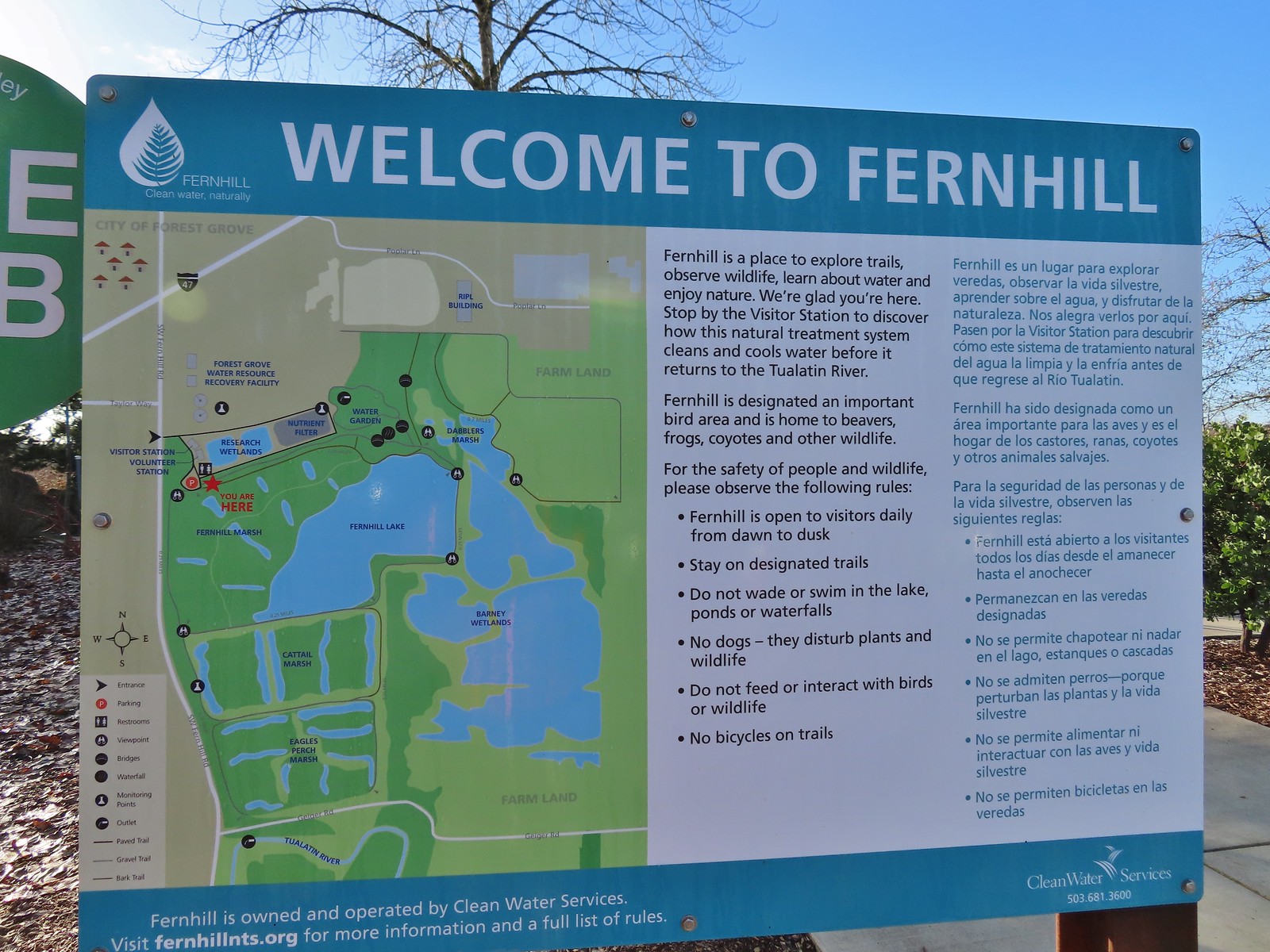
Informational signboard at Fernhill WetlandsMap and information at the trailhead.

There are several loops possible at the wetlands and we hoped to maximize these, so we headed south along Fernhill Marsh.
Fernhill Marsh

StarlingStarling

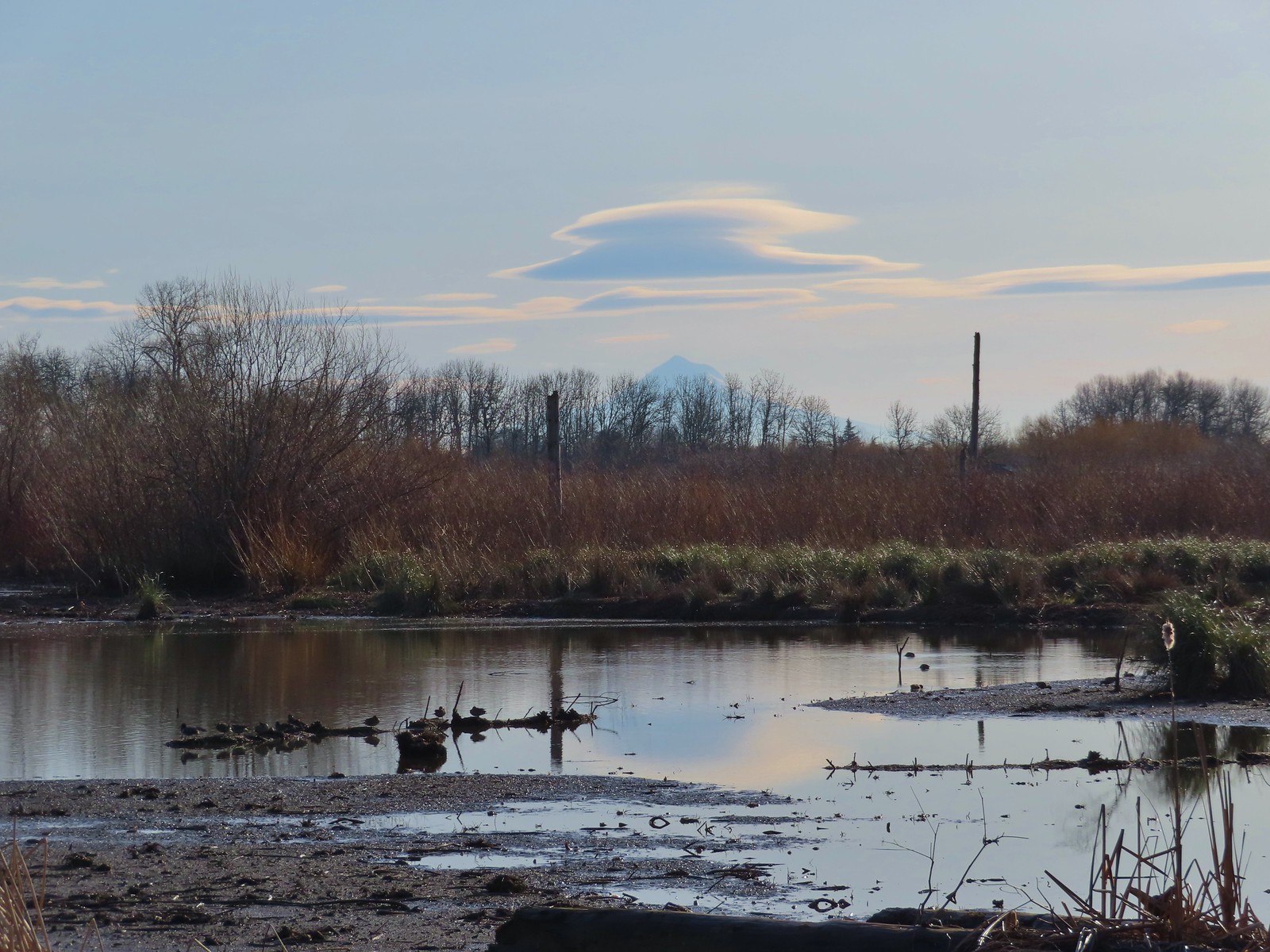
Mt. Hood beyond Fernhill MarshLenticular clouds over Mt. Hood in the distance.

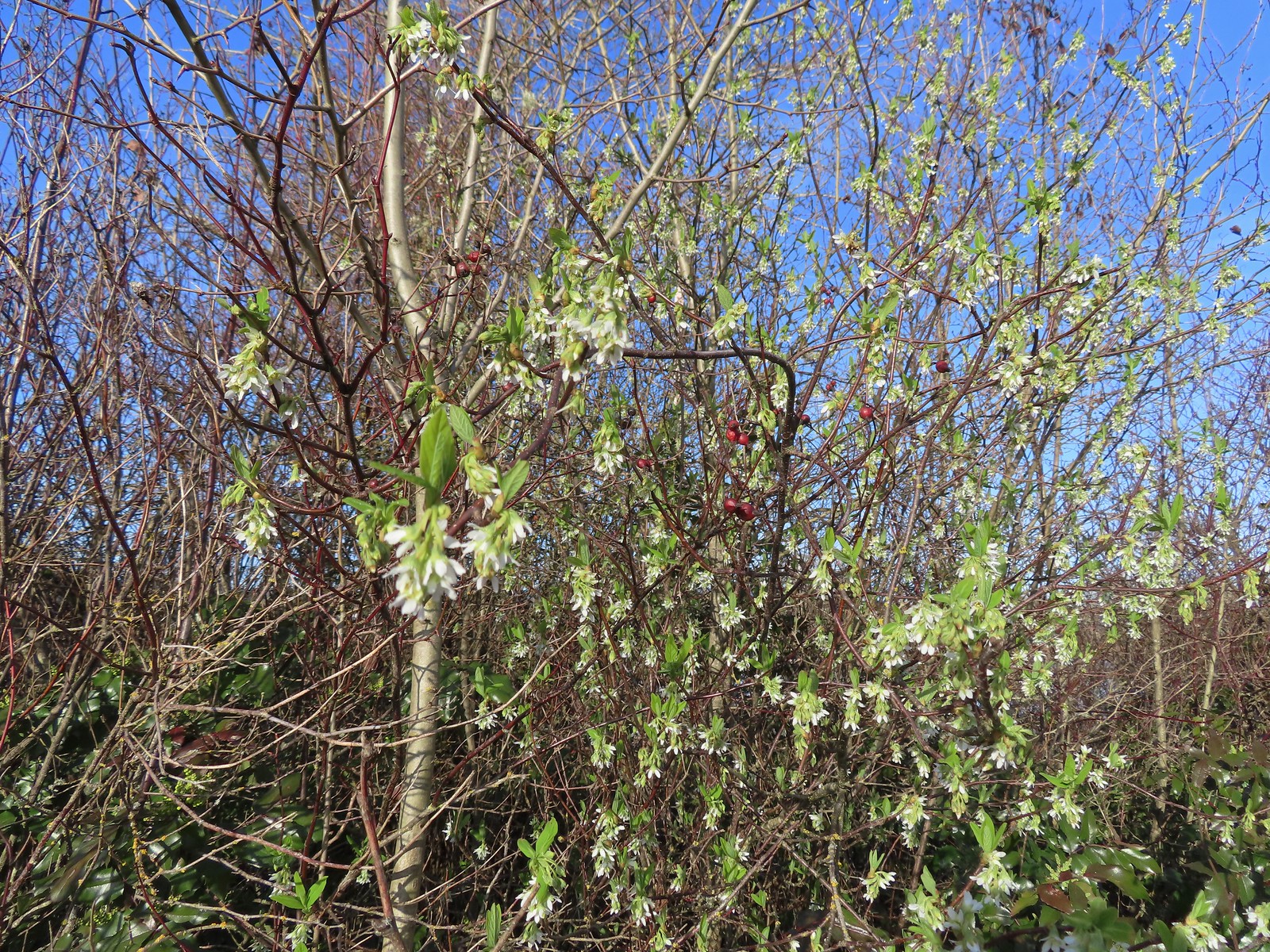
Indian plumOur first wildflower of the year is Indian plum in 2024.

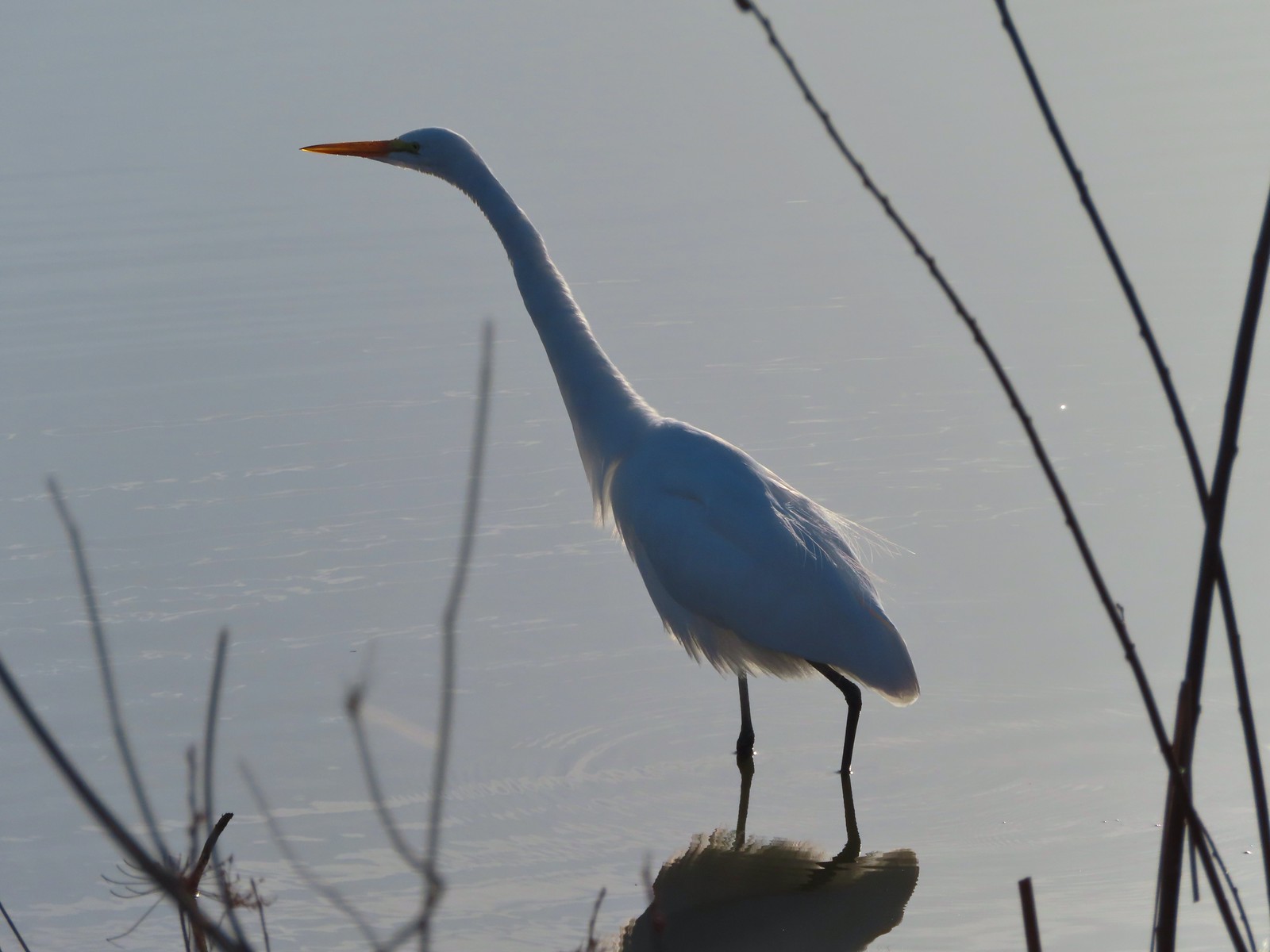
EgretEgret

Fernhill WetlandsPath at Fernhill Wetlands.

We stayed straight at a junction with a path between Fernhill Marsh and Cattail Marsh.
Gazebo at Fernhill WetlandsGazebo overlooking Cattail Marsh.

Great blue heron at Fernhill WetlandsGreat blue heron on a post above Cattail Marsh.

Great blue heron

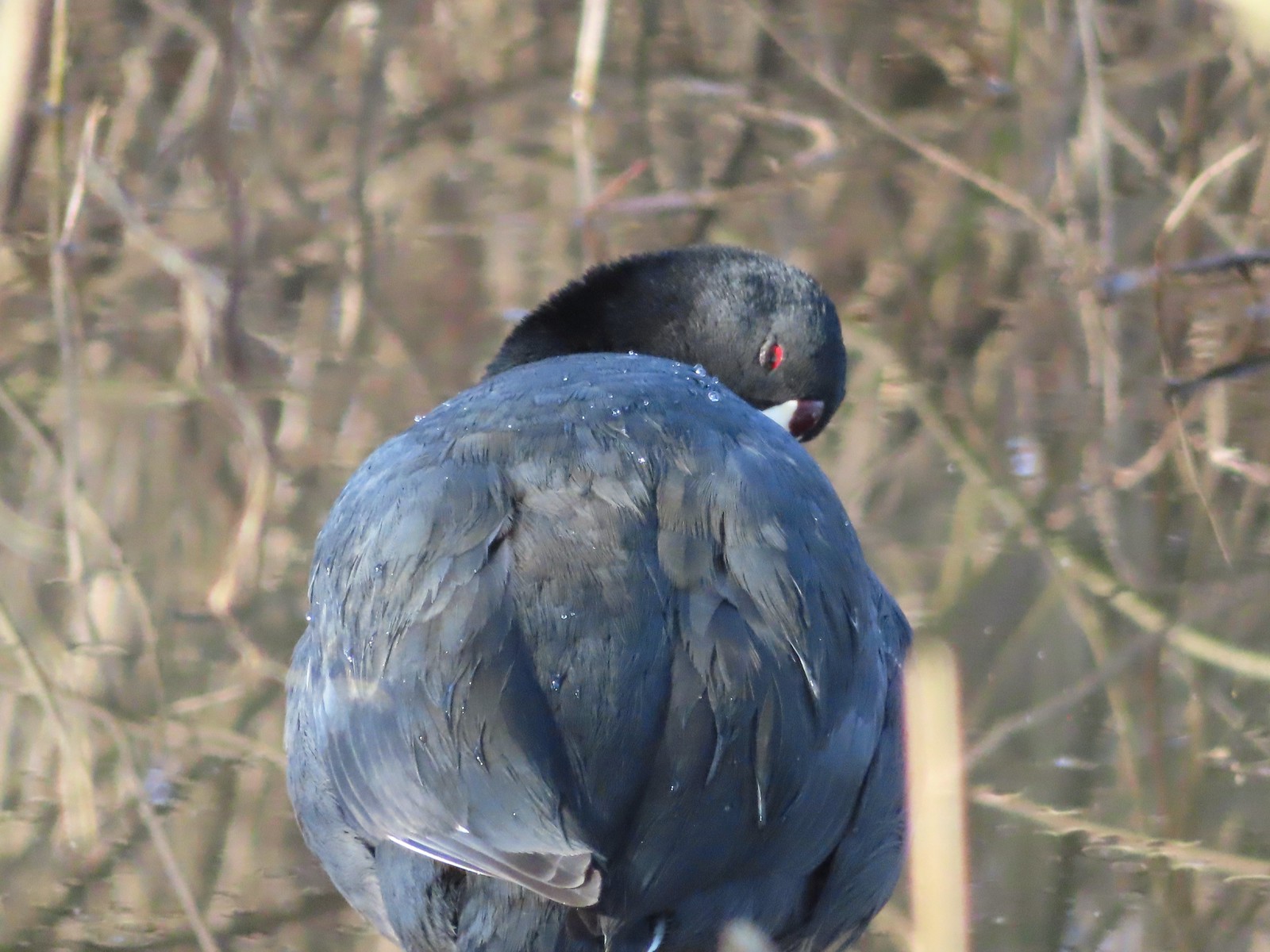
American cootAmerican coot

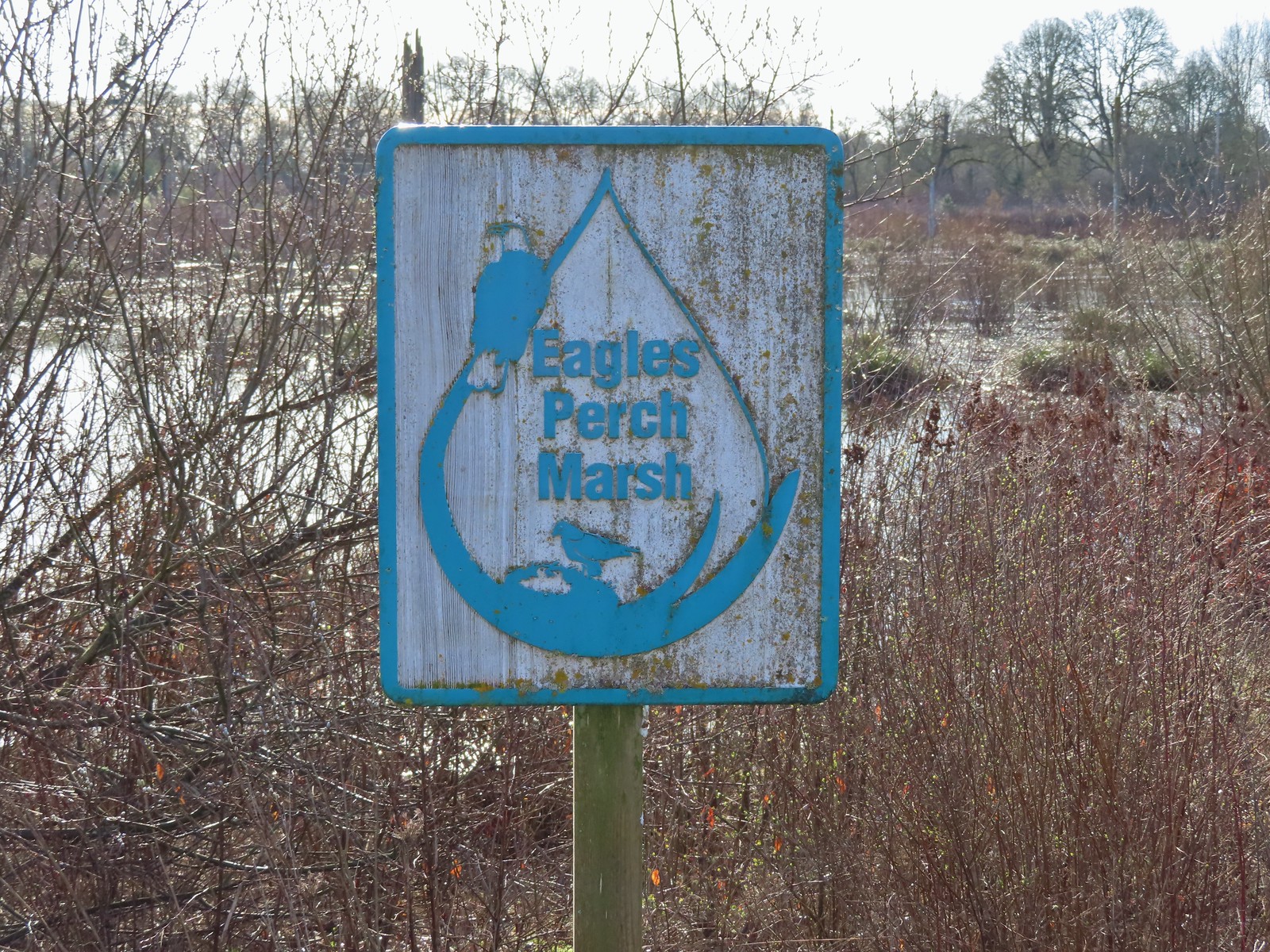
At the next junction we turned left between Cattail and Eagles Perch Marshes.
Eagles Perch Marsh sign

Fernhill Wetlands

Great blue heron at Eagles Perch MarshAnother great blue heron.

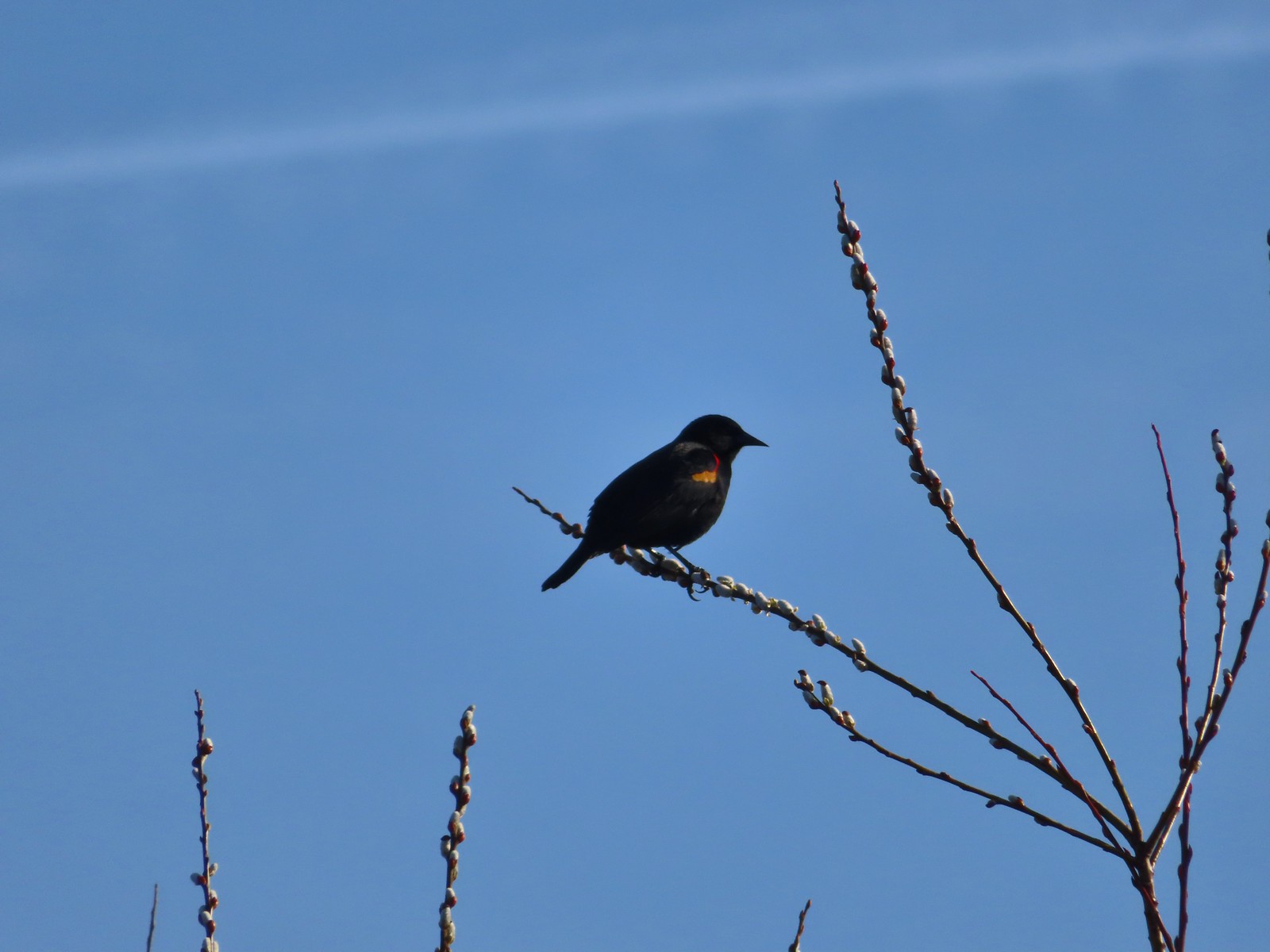
Red-winged blackbirdRed-winged blackbird

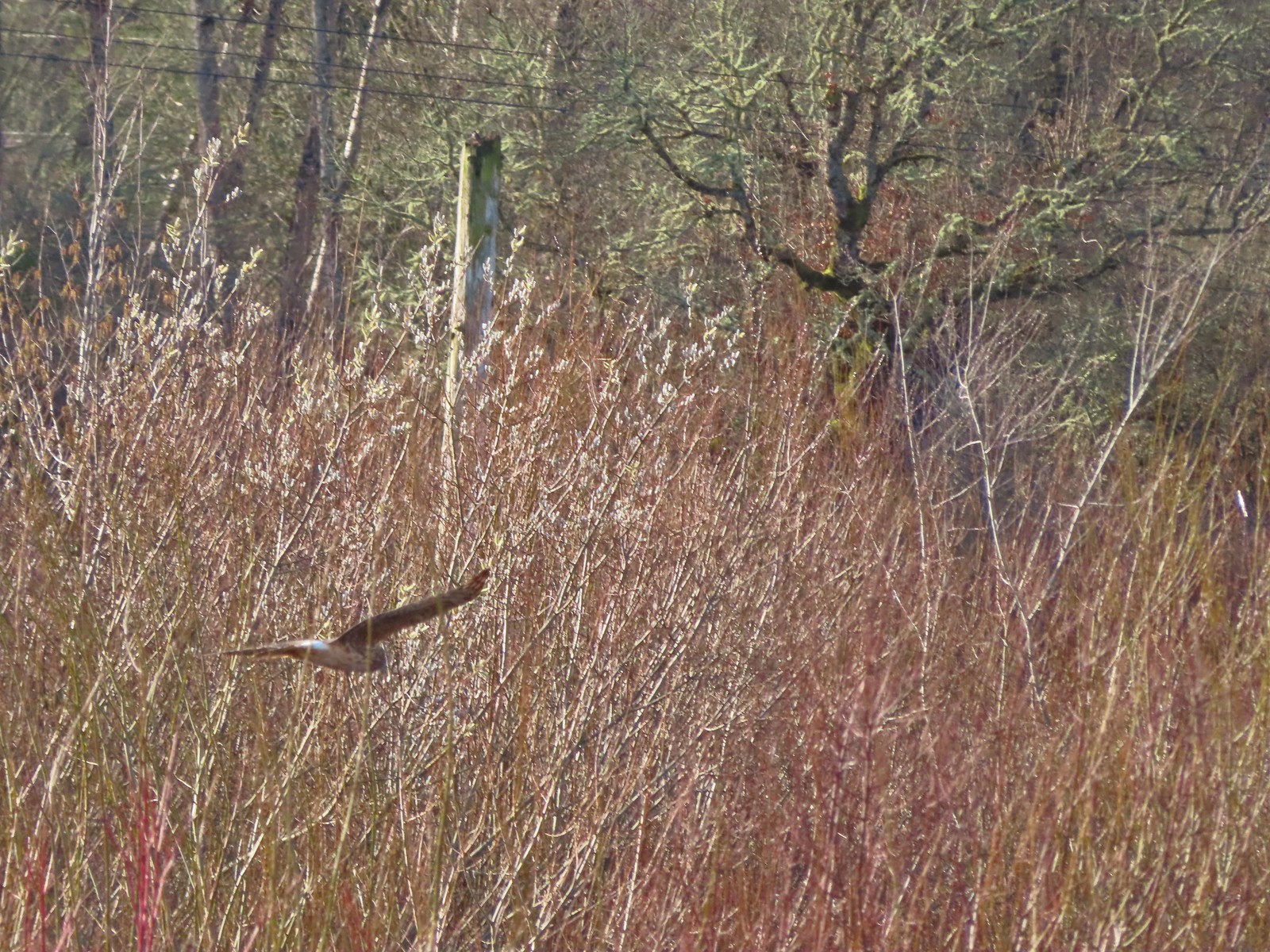
HawkHawk flying over Eagles Perch Marsh.

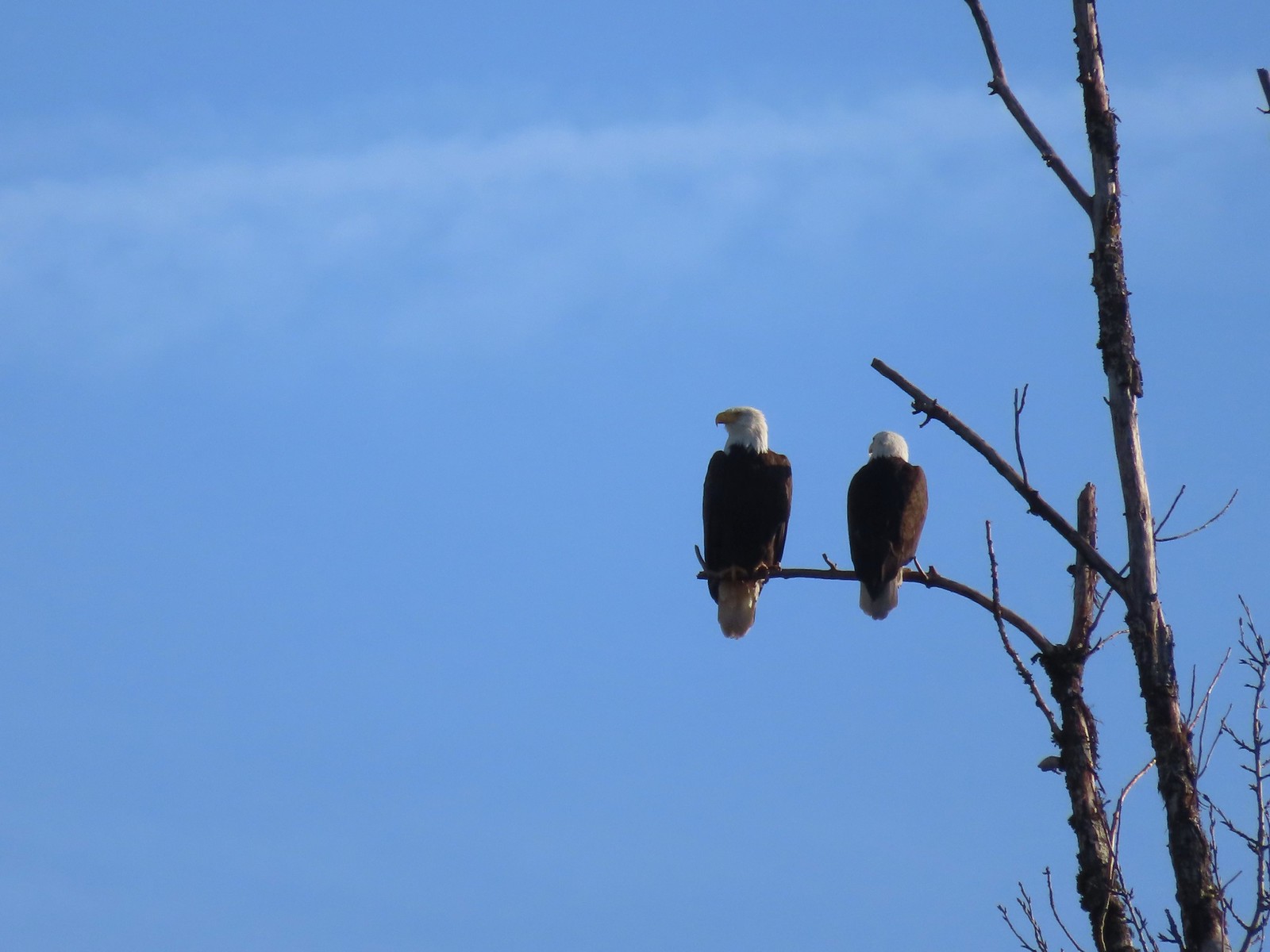
Fittingly at the far end of the marsh were a pair of bald eagles.
Bald eagles

We turned right and walked along Eagles Perch Marsh for a tenth of a mile to a gate along SW Geiger Rd.
Fernhill Wetlands

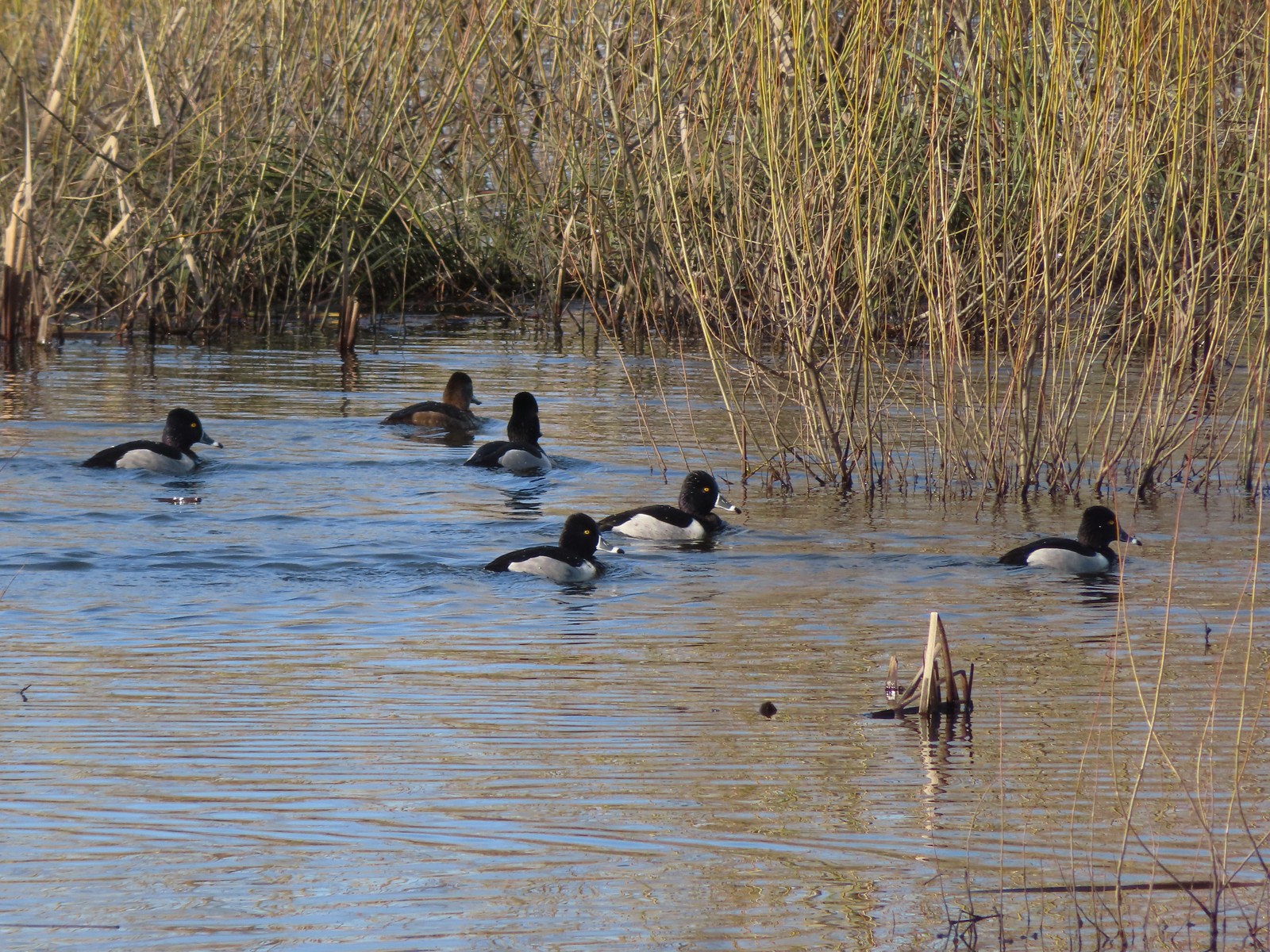
Ring-necked ducksRing-necked ducks

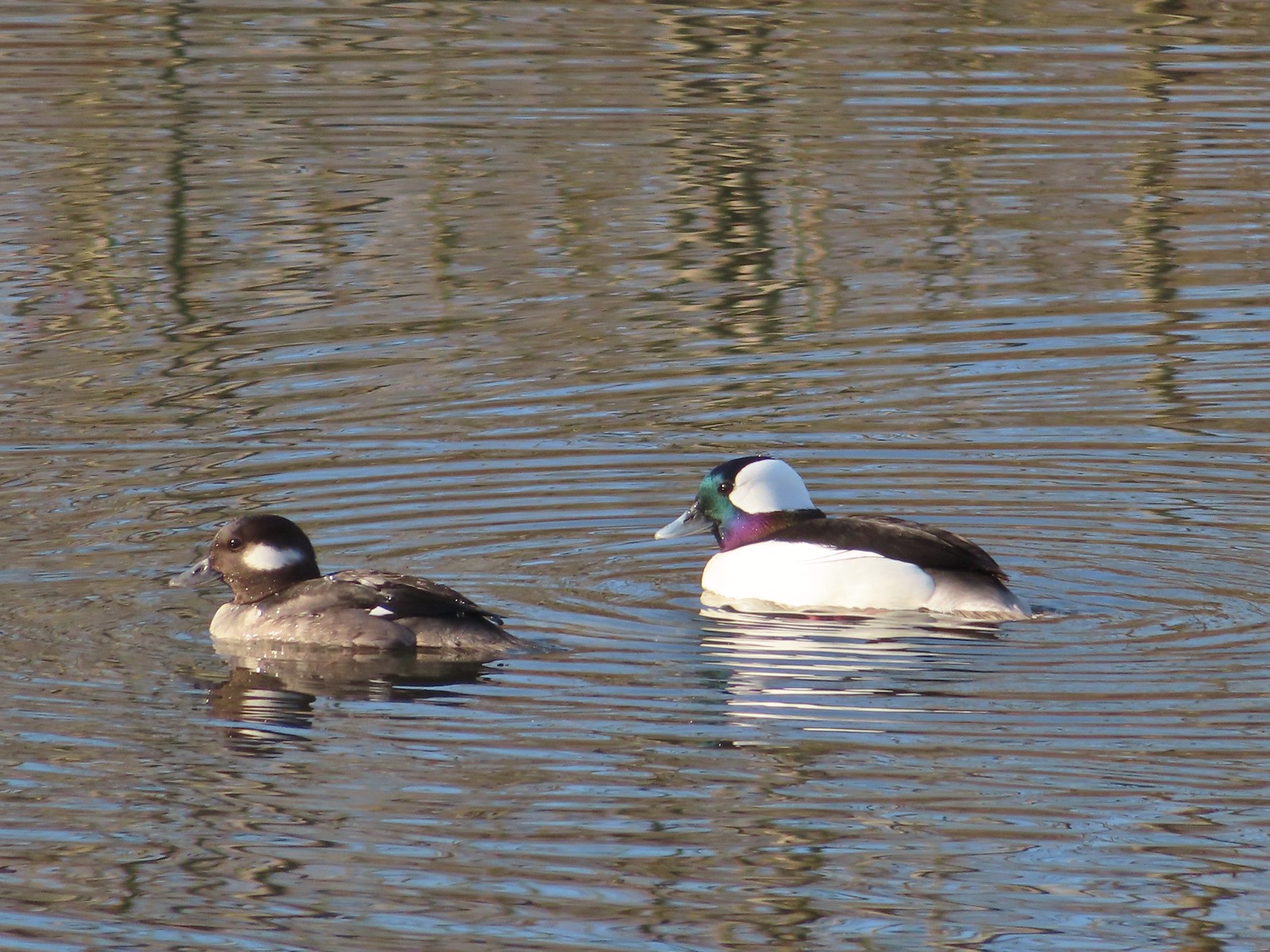
BuffleheadsBuffleheads

Hooded merganser?This one might be a hooded merganser?

After turning around we headed north passing Cattail Marsh and arriving at Fernhill Lake.
Fernhill wetlands

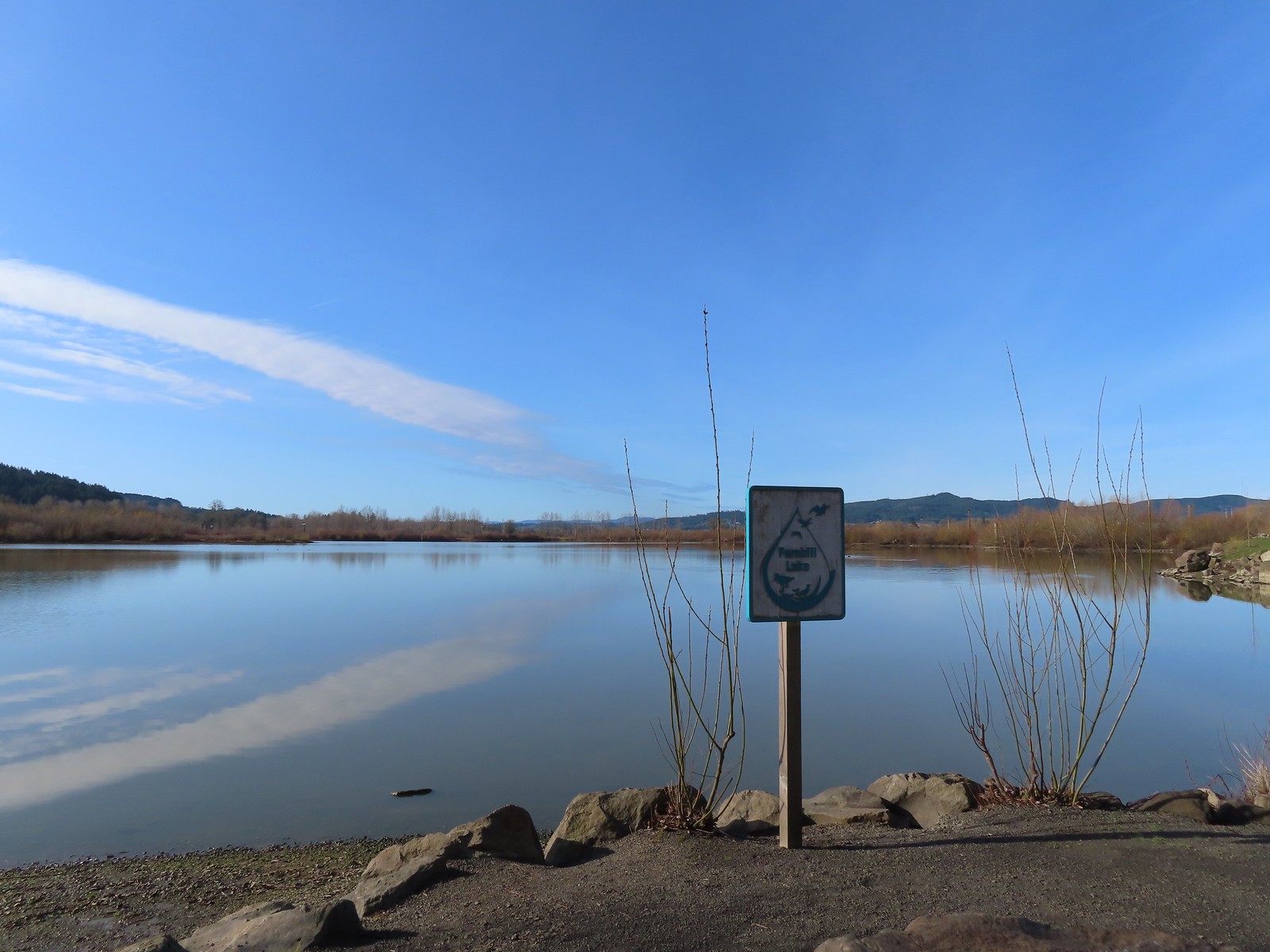
Fernhill LakeFernhill Lake

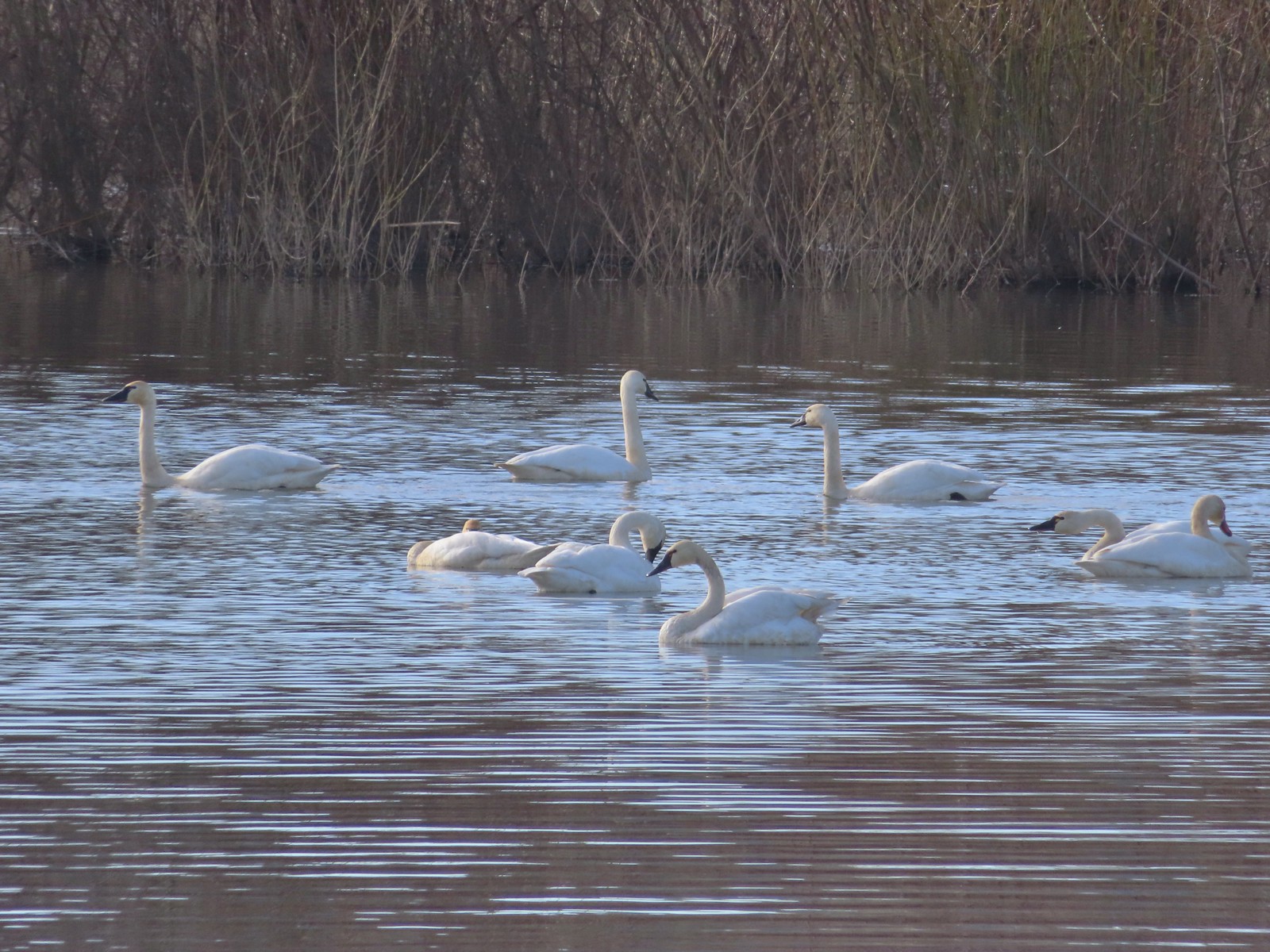
The trail bent eastward along the lake to a gazebo overlooking Barney Wetlands. From the gazebo we watched a flock of tundra swans. This was our second outing in a row (Wapato Lake) seeing tundra swans after not ever having seen them on a hike prior.
Fernhill LakeThis is where the trail turned east (for obvious reasons).

Barney WetlandsBarney wetlands

Tundra swans

Tundra swans

Tundra swans

Tundra swans

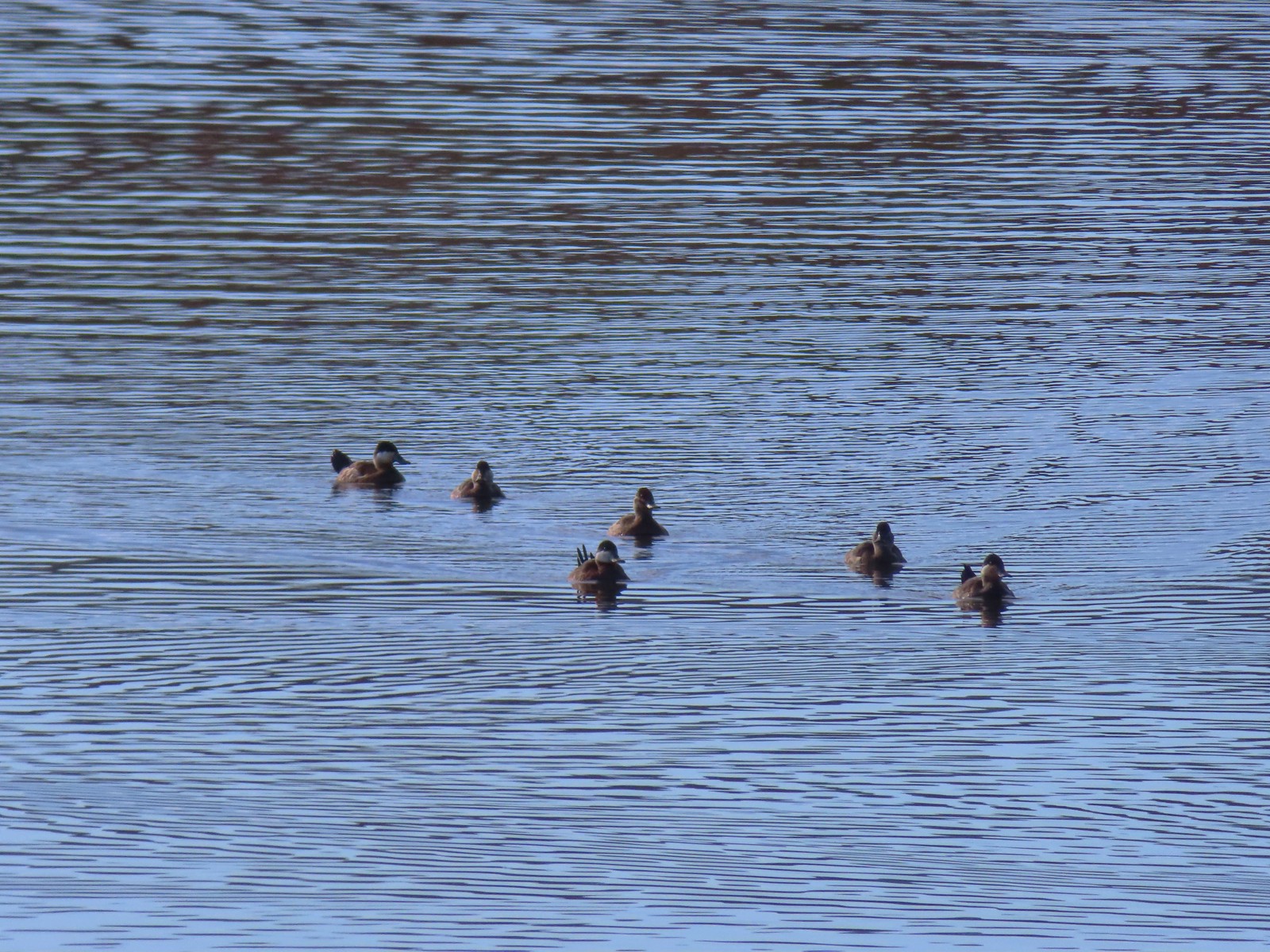
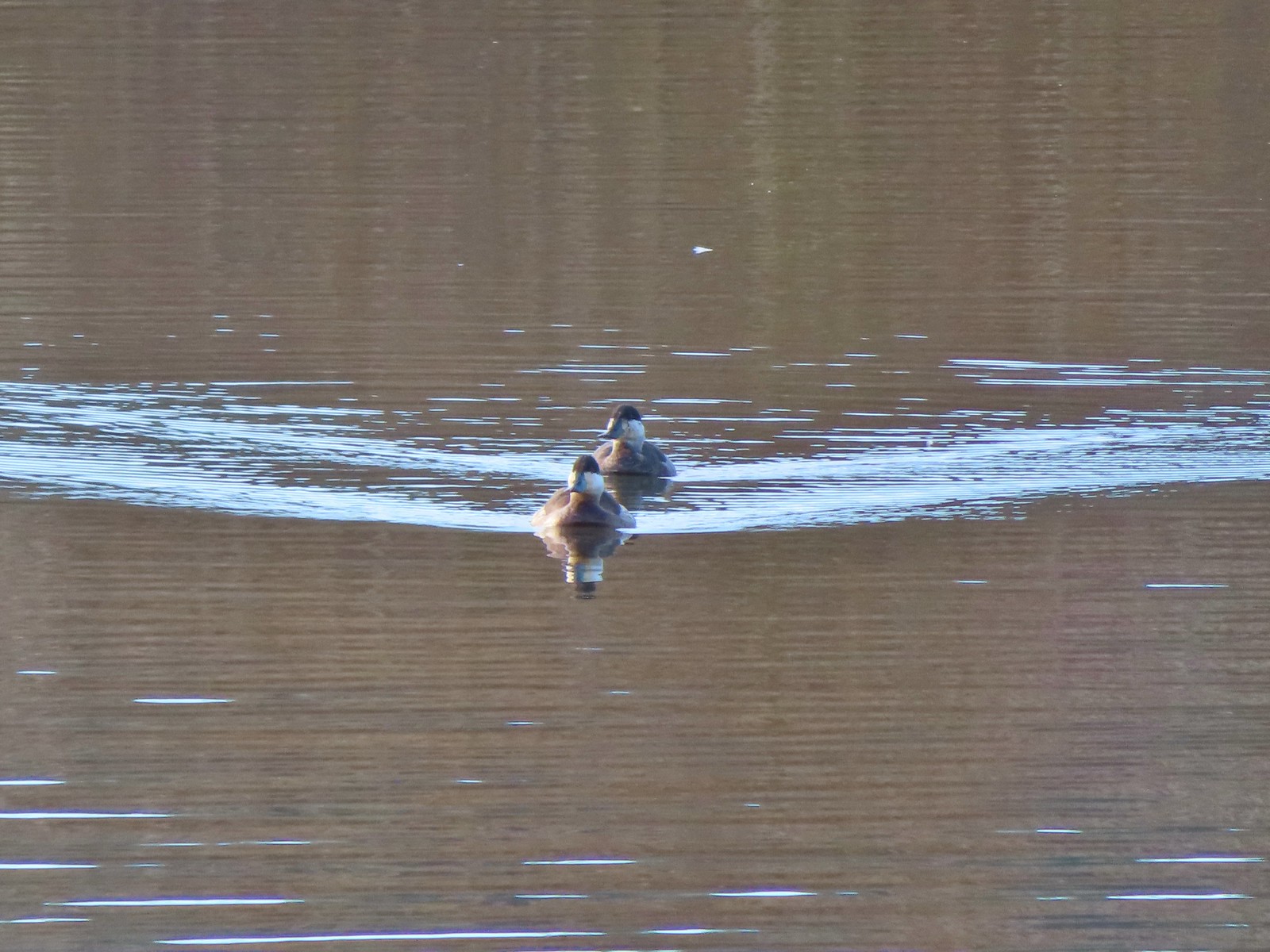
There were also quite a few ruddy ducks here which we don’t often see.
Ruddy ducks

Ruddy ducks

Ruddy ducks

Ruddy duck

After a good long break watching the swans we continued around Fernhill Lake to Dabblers Marsh.
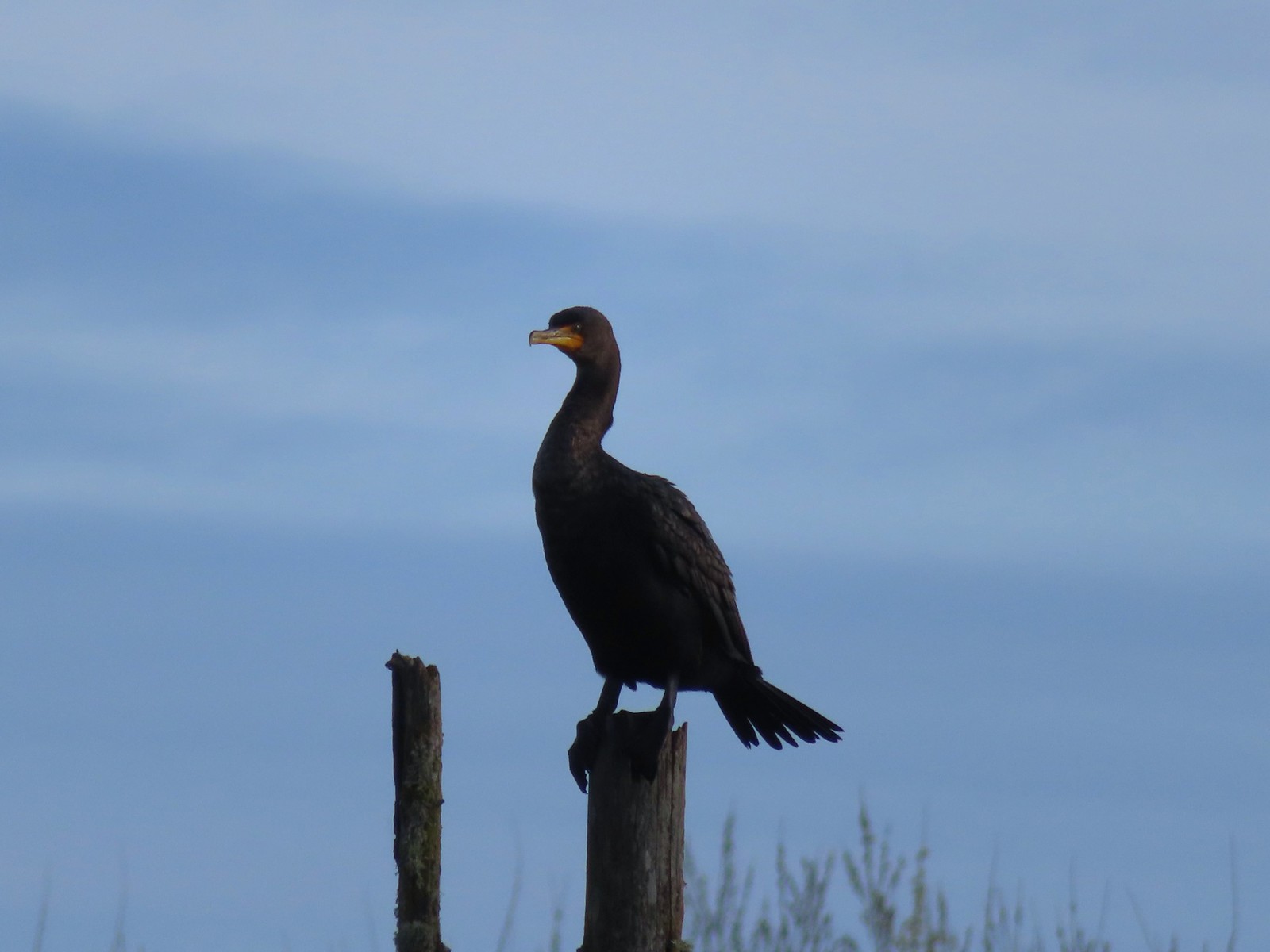
Double-crested cormorantDouble-crested cormorant on a post in Barney Wetlands.

Double-crested cormorantDouble-crested cormorant

Double-crested cormorantDrying off in the sun.

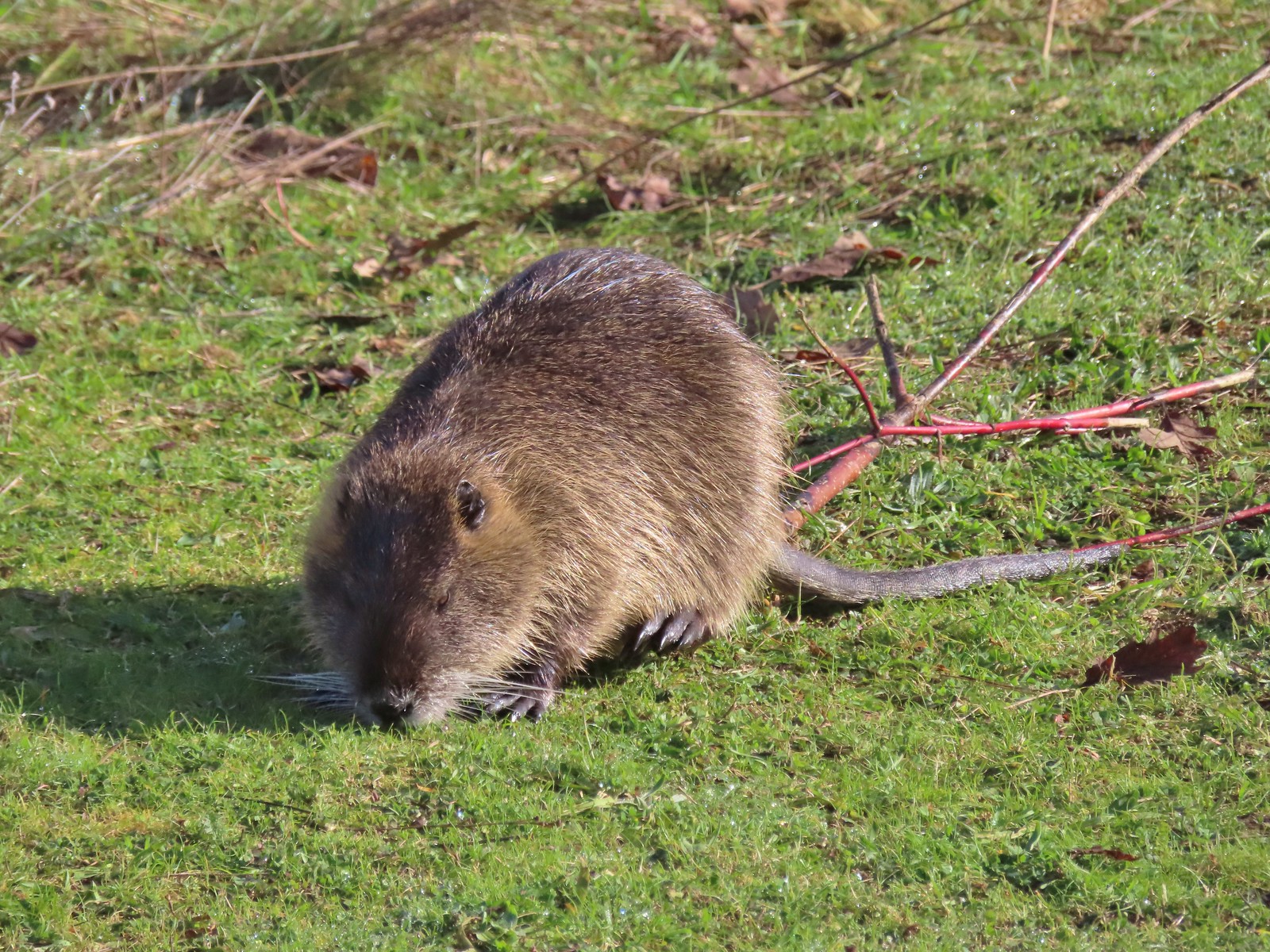
NutriaNurtia at a bench near Dabblers Marsh

NutriaNutria

Dabblers MarshDabblers Marsh

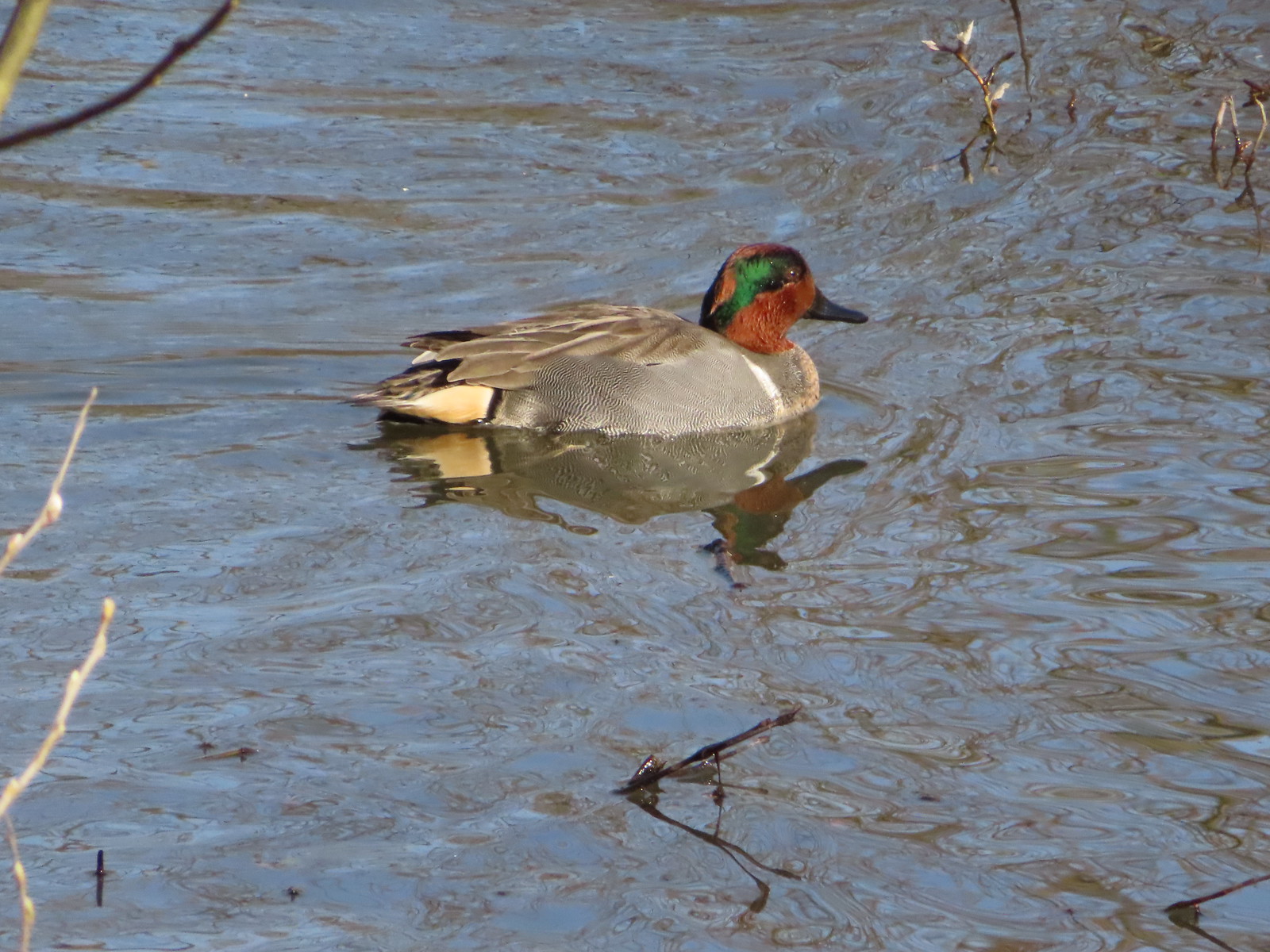
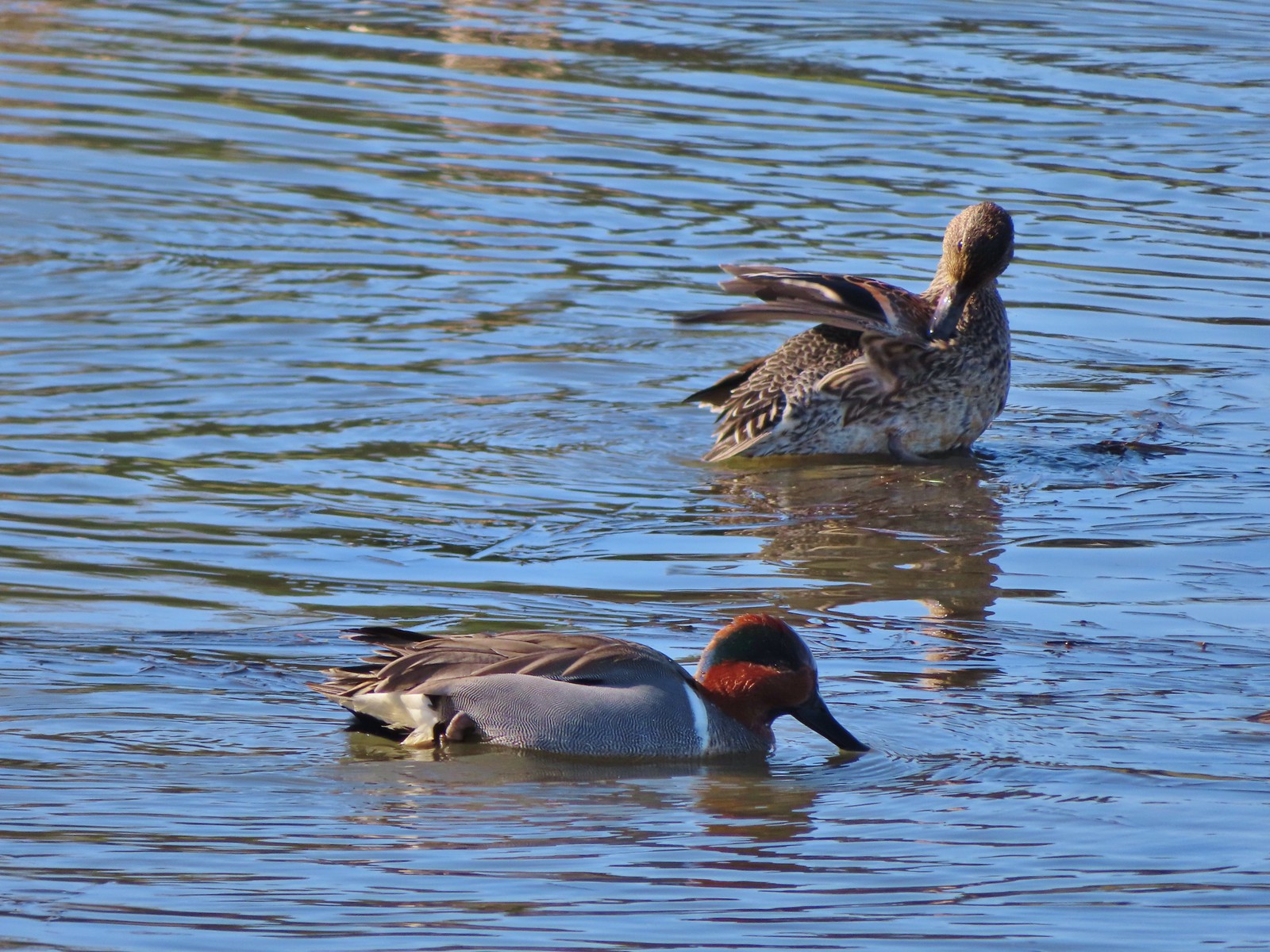
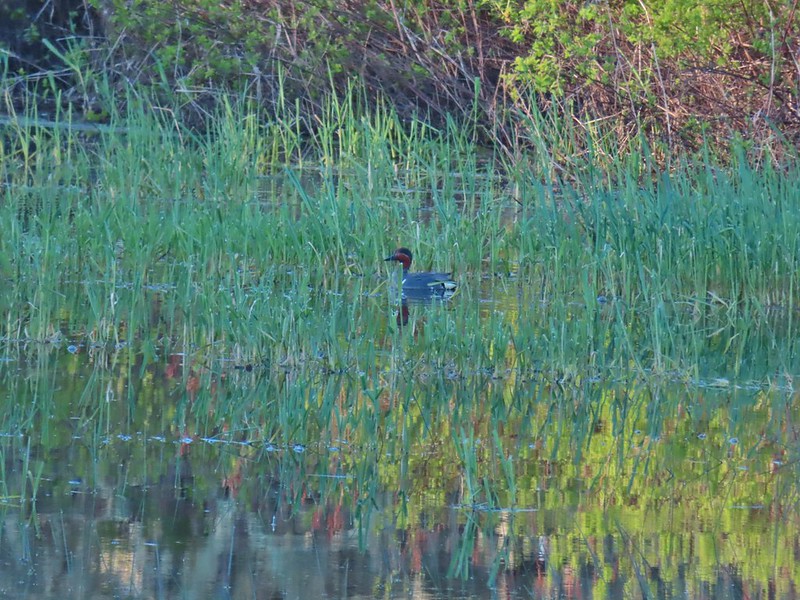
Green-winged tealGreen-winged teal

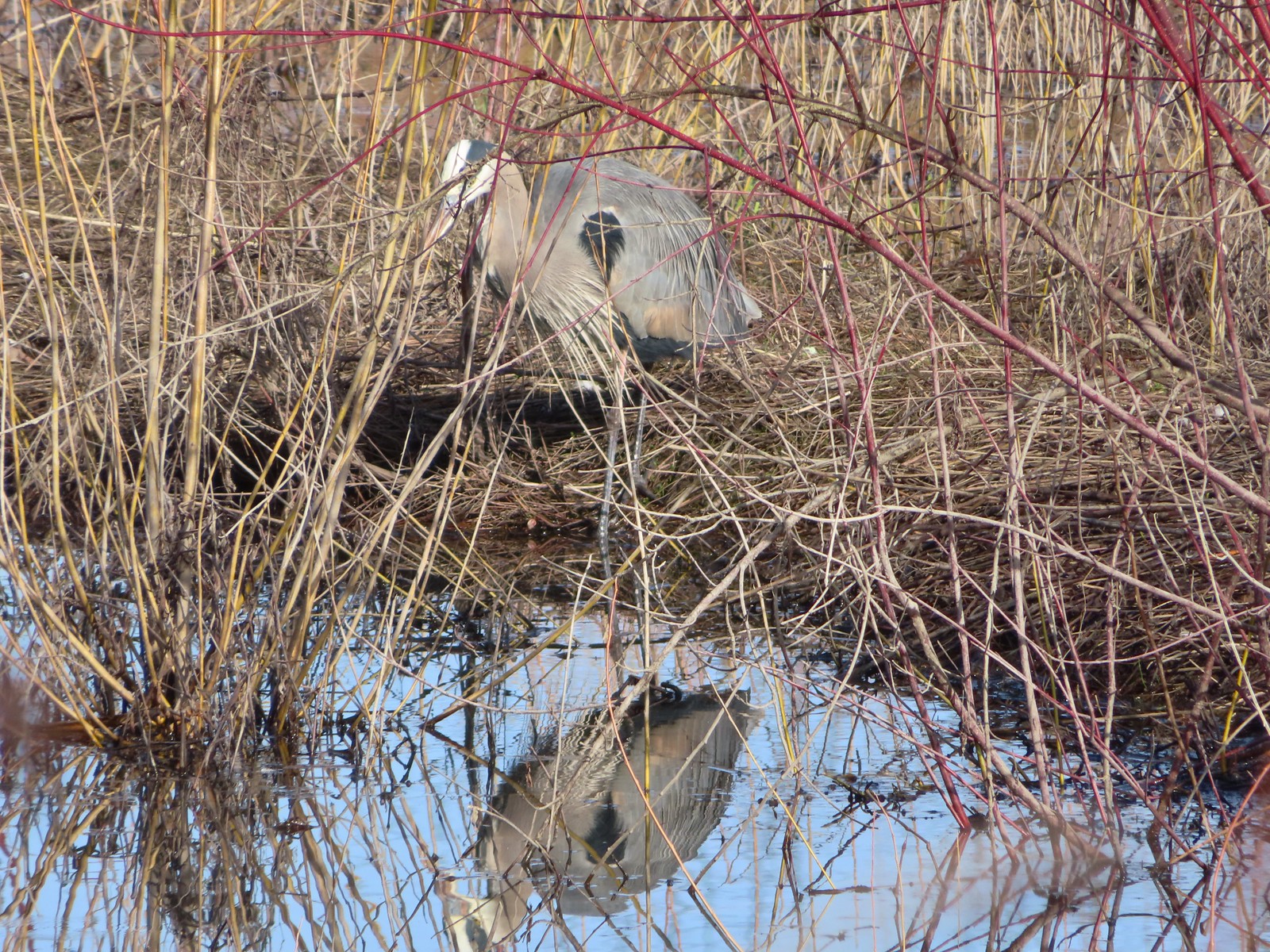
Great blue heronGreat blue heron

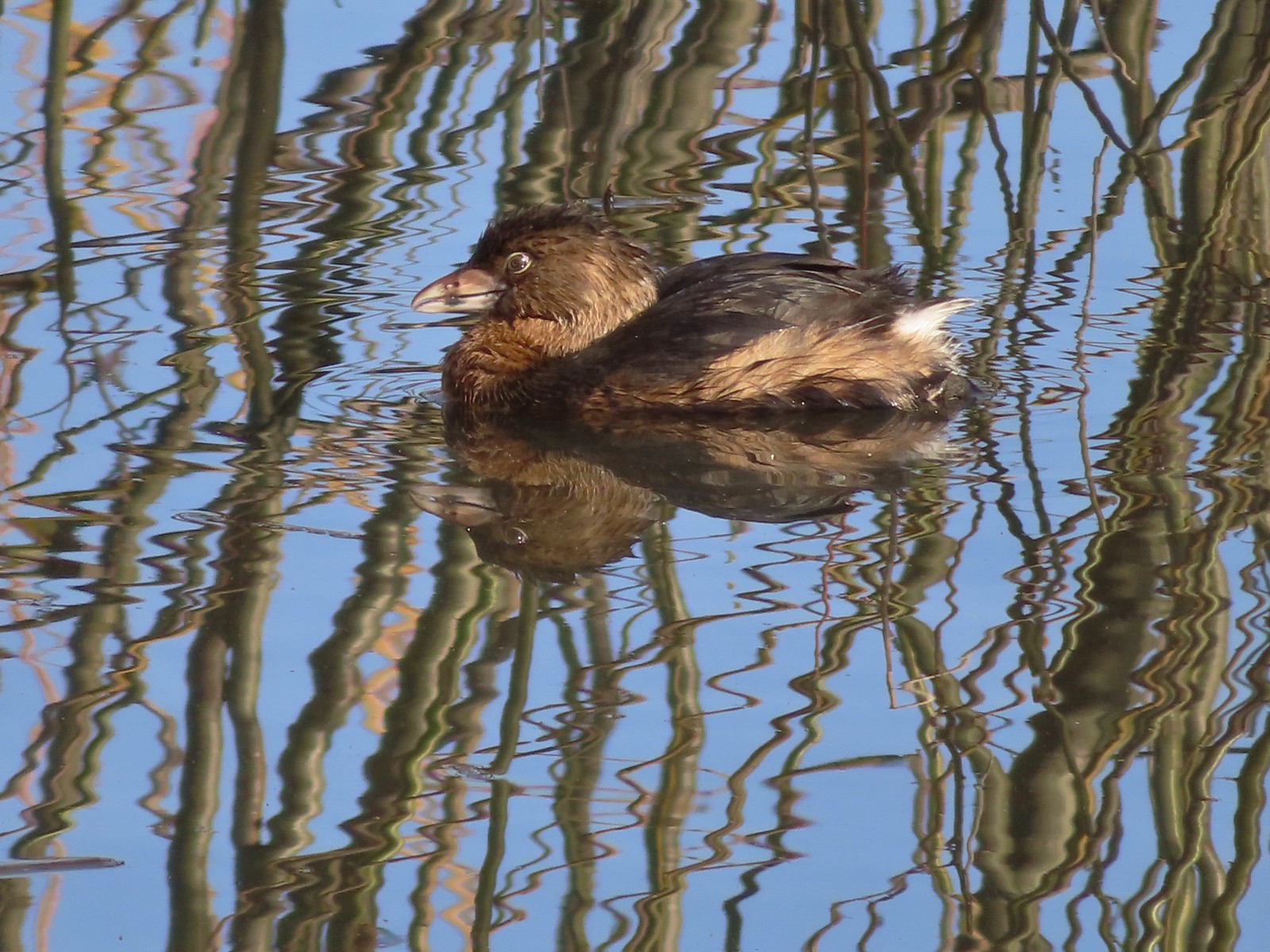
Pie-billed grebePie-billed grebe

We turned west between Fernhill Lake and Dabblers Marsh and came to a nice view of the lake and the start of the Dabblers Marsh Loop Trail.
Fernhill Wetlands

Fernhill Lake

Dabblers Marsh Loop Trail

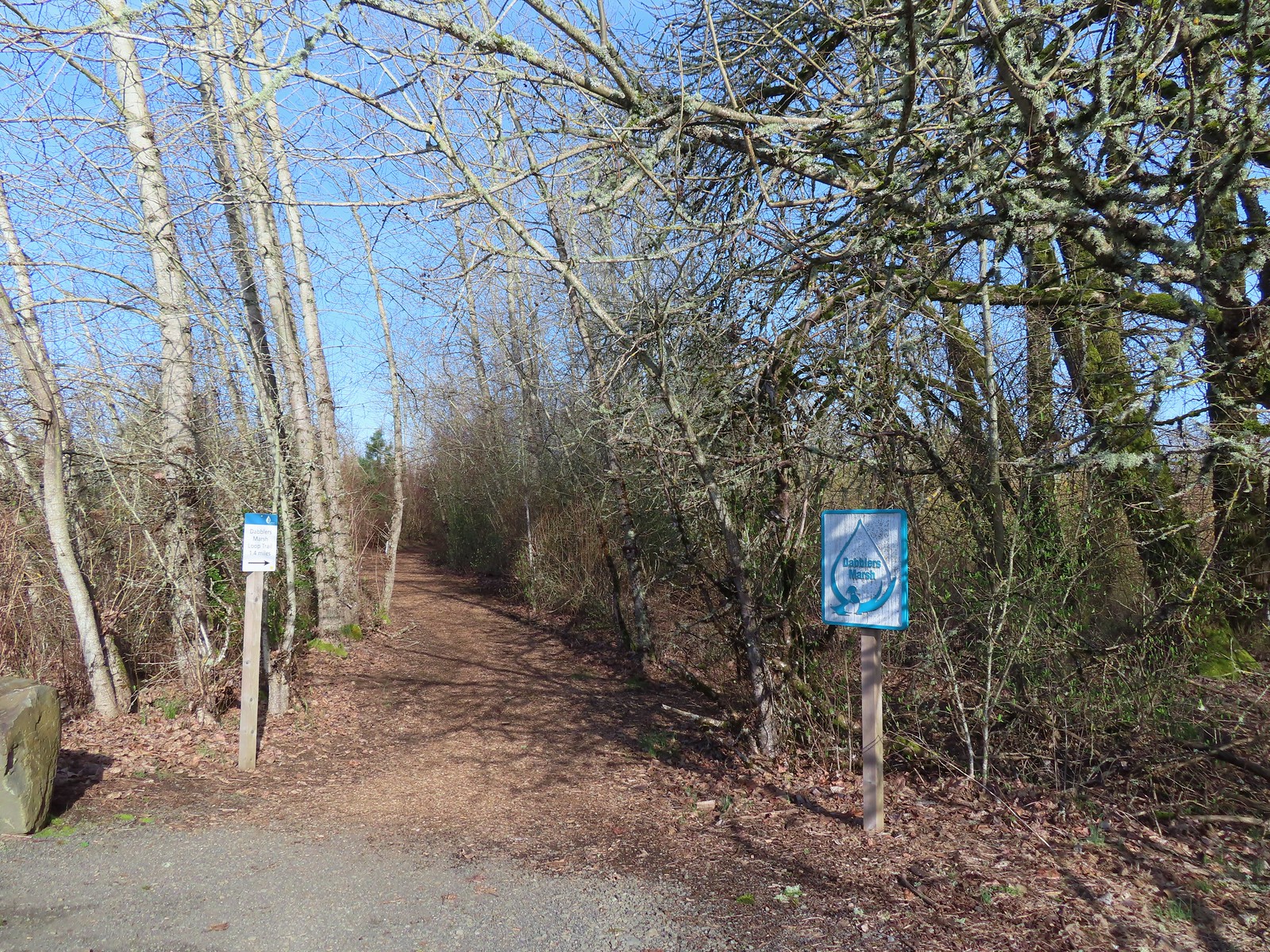
We turned onto the woodchip path along Dabblers Marsh and followed pointers to a loop around some farmland.
Dabblers Marsh Loop Trail

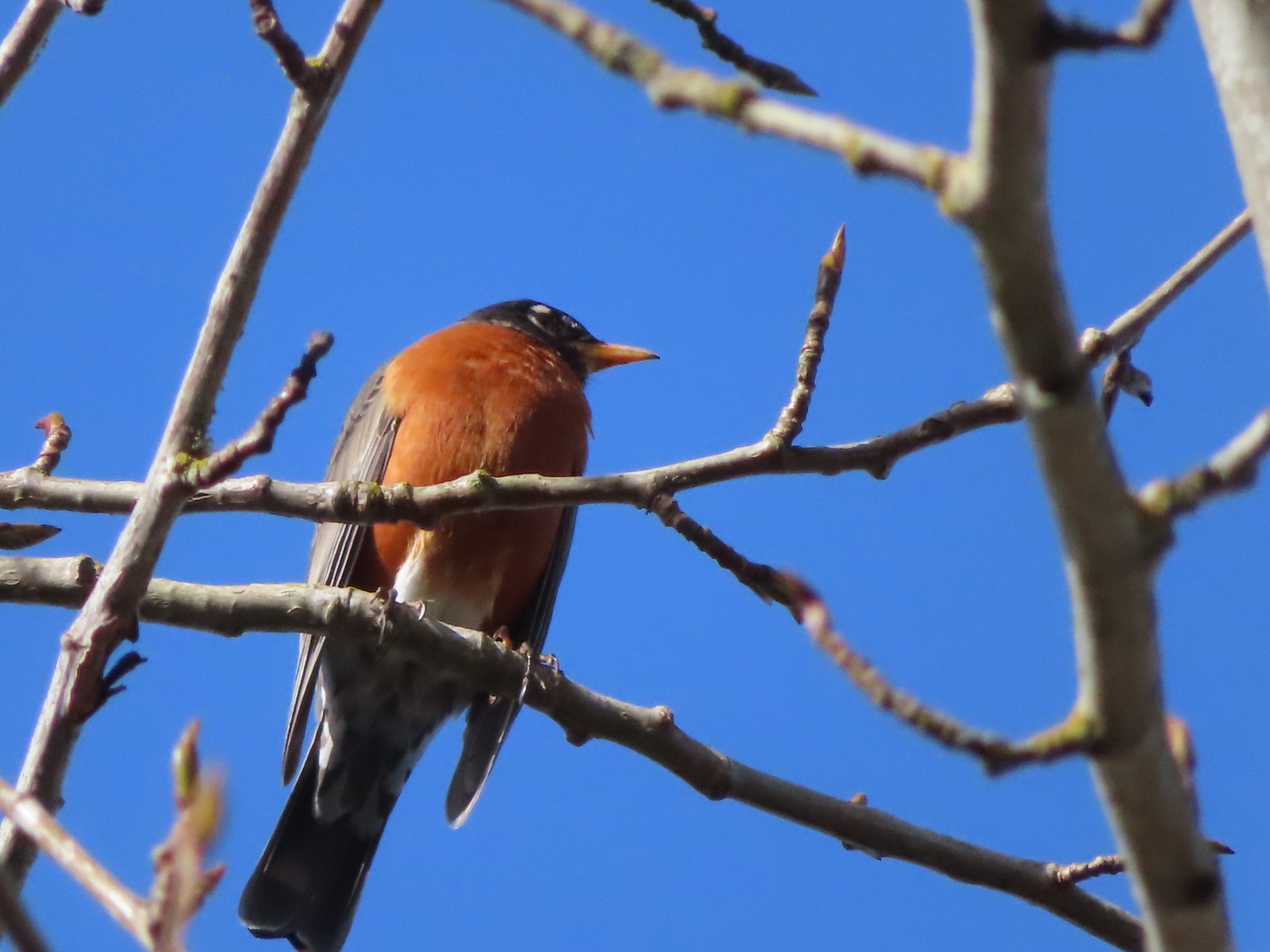
American robinRobin

Dabblers Marsh Loop Trail

Dabblers Marsh Loop TrailThe start of the loop at the edge of the farmland. We stayed left opting to hike the loop clockwise.

Anna's hummingbirdAnna’s hummingbrid

Geese in the fieldA gaggle of geese in the field.

Geese

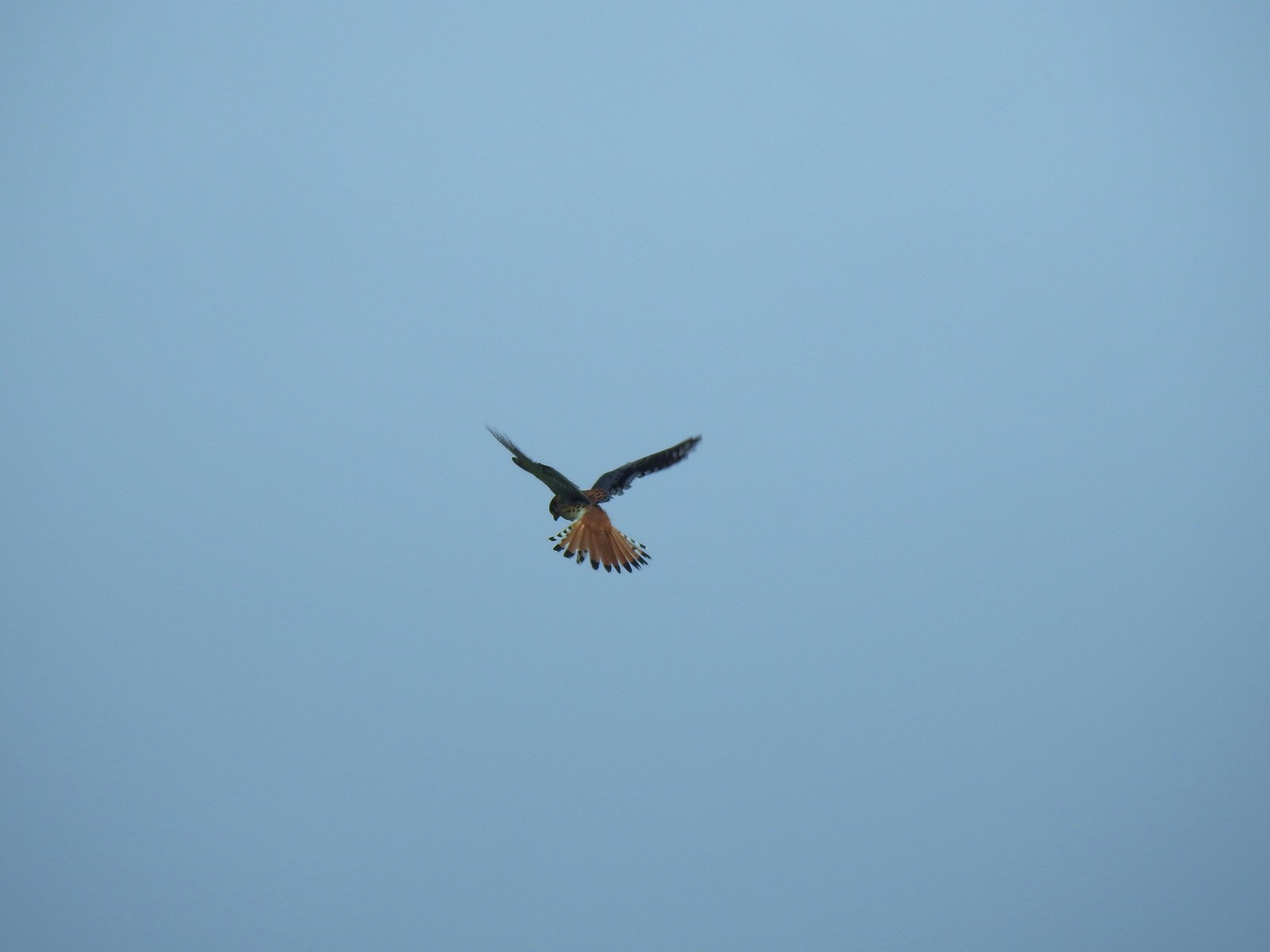
American kestrals along the Dabblers Marsh Loop TrailAmerican kestrels manning their posts.

American kestral

Purple dead-nettlePurple dead-nettle

Cackling geese coming in for a landingMore geese coming in for a landing.

Dabblers Marsh Loop Trail

Dabblers Marsh Loop TrailNear the end of the loop the trail left the field along Dabblers Marsh.

Spotted towheeSpotted towhee

RabbitRabbit

After completing the loop and returning to Fernhill Lake we did a loop through the Water Gardens.
Geese on Fernhill LakeGeese on Fernhill Lake

Water Garden at Fernhill Wetlands

MallardMallard drake

MallardMallard female

Water Garden at Fernhill WetlandsWater Gardens

Water Garden at Fernhill Wetlands

Water Garden at Fernhill Wetlands

Northern shovelers and a mallardNorthern shovelers, a mallard, and a coot.

Oregon grape beginning to bloomOregon grape beginning to bloom.

Northern shovelerNorthern shoveler

Green-winged tealsGreen-winged teal pair

Trails at Fernhill WetlandsPath along the Research Wetlands.

EgretEgret near the parking lot at Fernhill Marsh

Research wetlands at Fernhill WetlandsLooking back at the Research Wetlands from the near the trailhead.

We managed to get 3.7-miles in at the wetlands and saw a lot of birds and other animals. While there were quite a few more folks here than we’d seen on our previous hike at nearby Wapato Lake Wildlife Refuge, it never felt too busy. Plan B had earned an A+ in our books. Happy Trails!

Categories
Columbia Gorge North Hiking Trip report Washington

Steigerwald Lake National Wildlife Refuge – 05/20/2023

For the second week in a row, we turned to a National Wildlife Refuge System as a hiking destination. The U.S. Fish and Wildlife Service currently manages 568 wildlife refuges throughout the United States with the primary statutory purpose being the conservation of native species. Where and when appropriate the refuges offer access to the public for activities such as photography, wildlife viewing, hunting, fishing, paddling, and of course hiking. We have really come to enjoy our visits the various refuges, so we were looking forward to exploring a new one to us, the Steigerwald Lake National Wildlife Refuge.

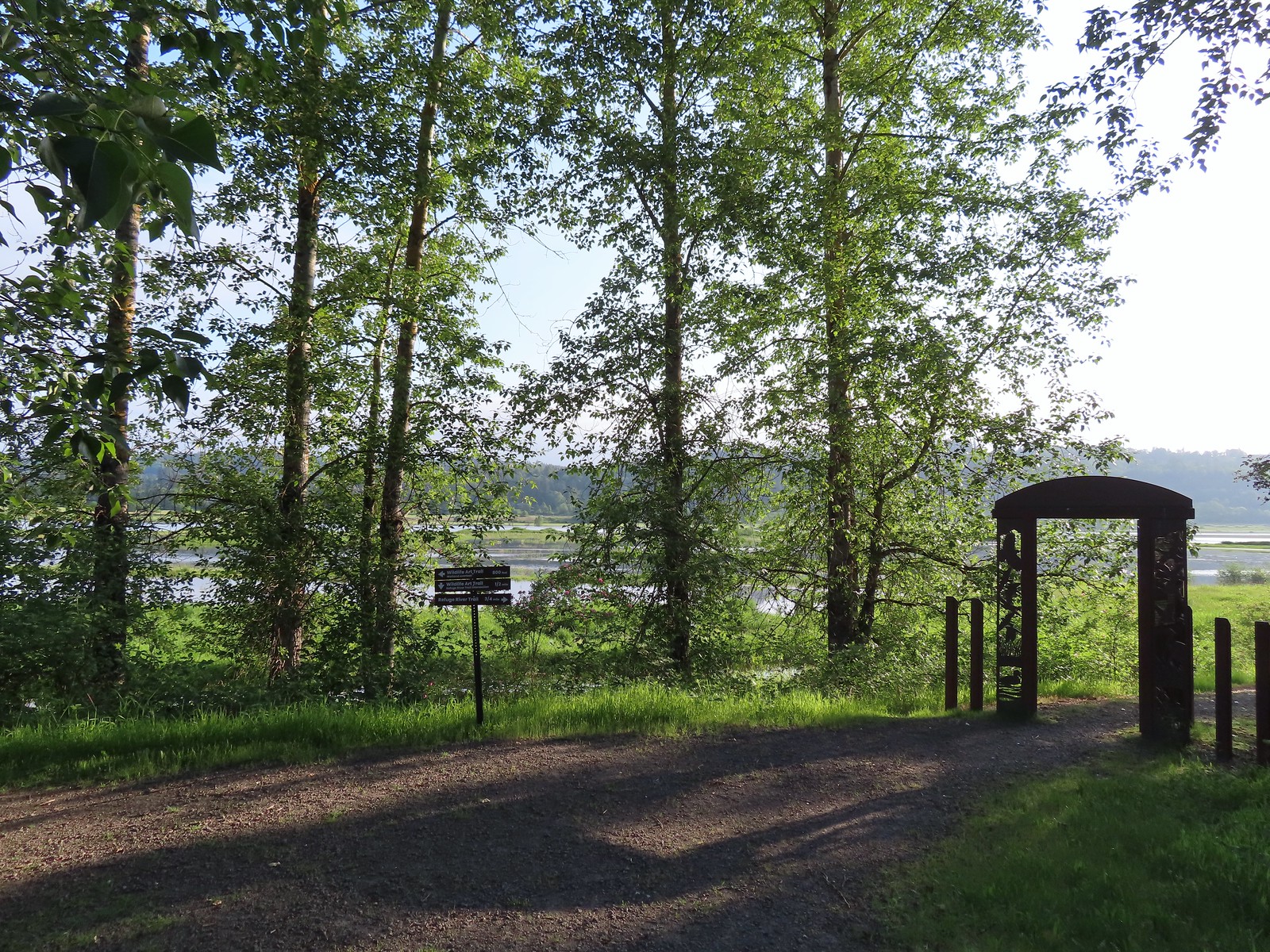
Situated just East of Washougal Washington along the Columbia River, Steigerwald Lake is part of the Ridgefield National Wildlife Complex. In addition to Steigerwald Lake the complex also includes the Franz Lake, Pierce, and Ridgefield refuges. Of those Ridgefield (post) is the only one we’d previously visited. We had hoped to visit this refuge a couple of years ago, but the refuge was undergoing an extensive restoration that kept it closed until May of last year. The refuge hosts roughly 5-miles of crushed gravel trails. Two of the trails, the Mountain View and the Refuge River, are open all year. A third trail, the Wildlife Art Trail, is partially closed October 1st through April 30th. The Refuge River Trail is open to pedestrians, bicycles, jogging, horseback riding, and leashed dogs which is rare for a refuge while the other trails are hiker (pedestrian) only. To use the Refuge River Trail joggers, cyclists, equestrians and leashed dogs enter the refuge from the West via the Captain William Clark Park Trail by either starting at Steamboat Landing or Captain William Clark Park.

Our plan was to start at the refuge trailhead and hike the trails then then take the Captain William Clark Park Trail to Steamboat Landing and back. We opted for this approach because online information showed 7am and 8am as the opening times for Captain William Clark Park and Steamboat Landing respectively while the refuge website reported that it’s gate opened at 5:30am and we’d be arriving shortly after six.
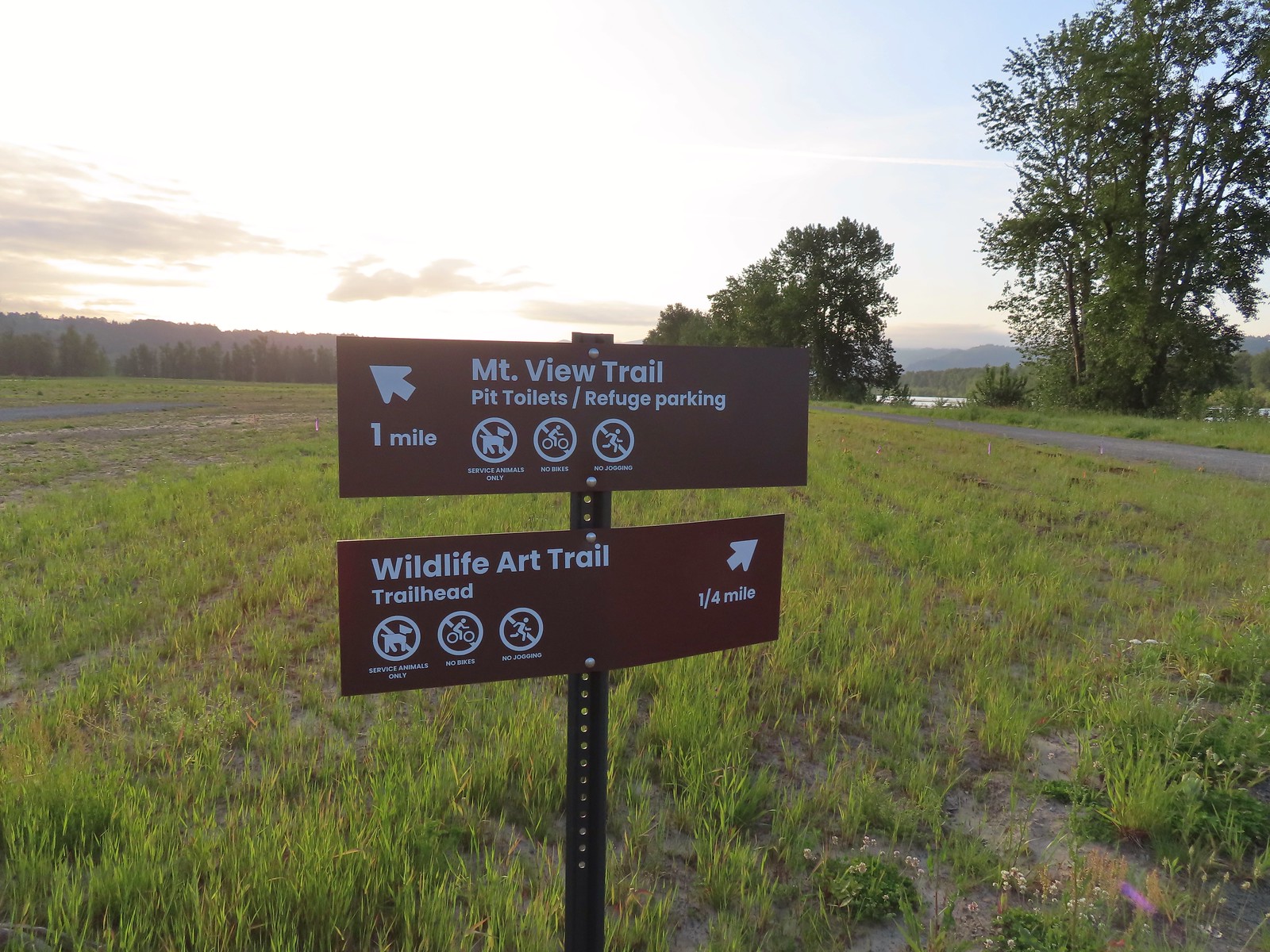
IMG_8000The Mountain View Trail is named so because of the view of Mt. Hood, which on this morning was hiding behind the clouds on the left side of the photo.

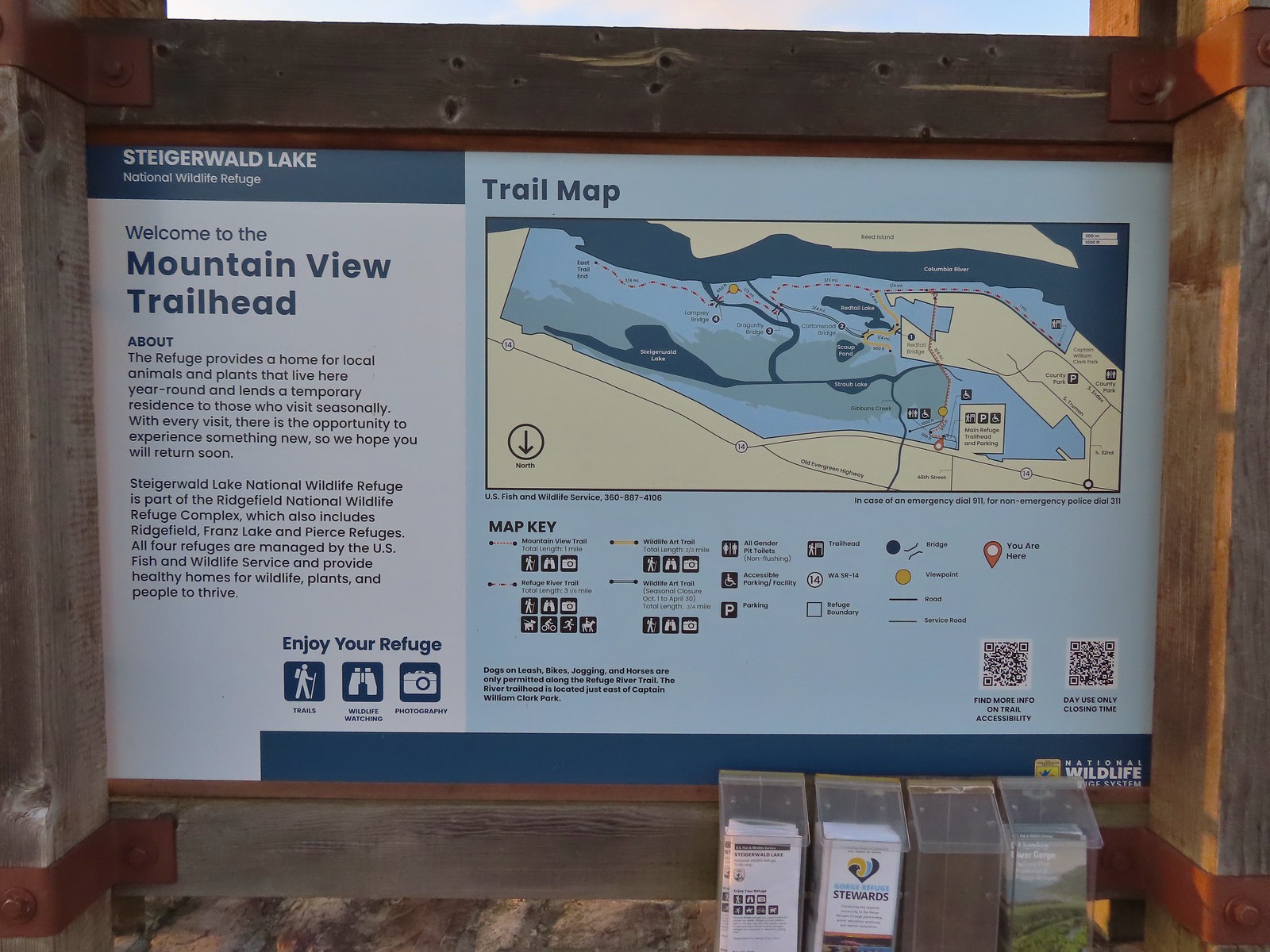
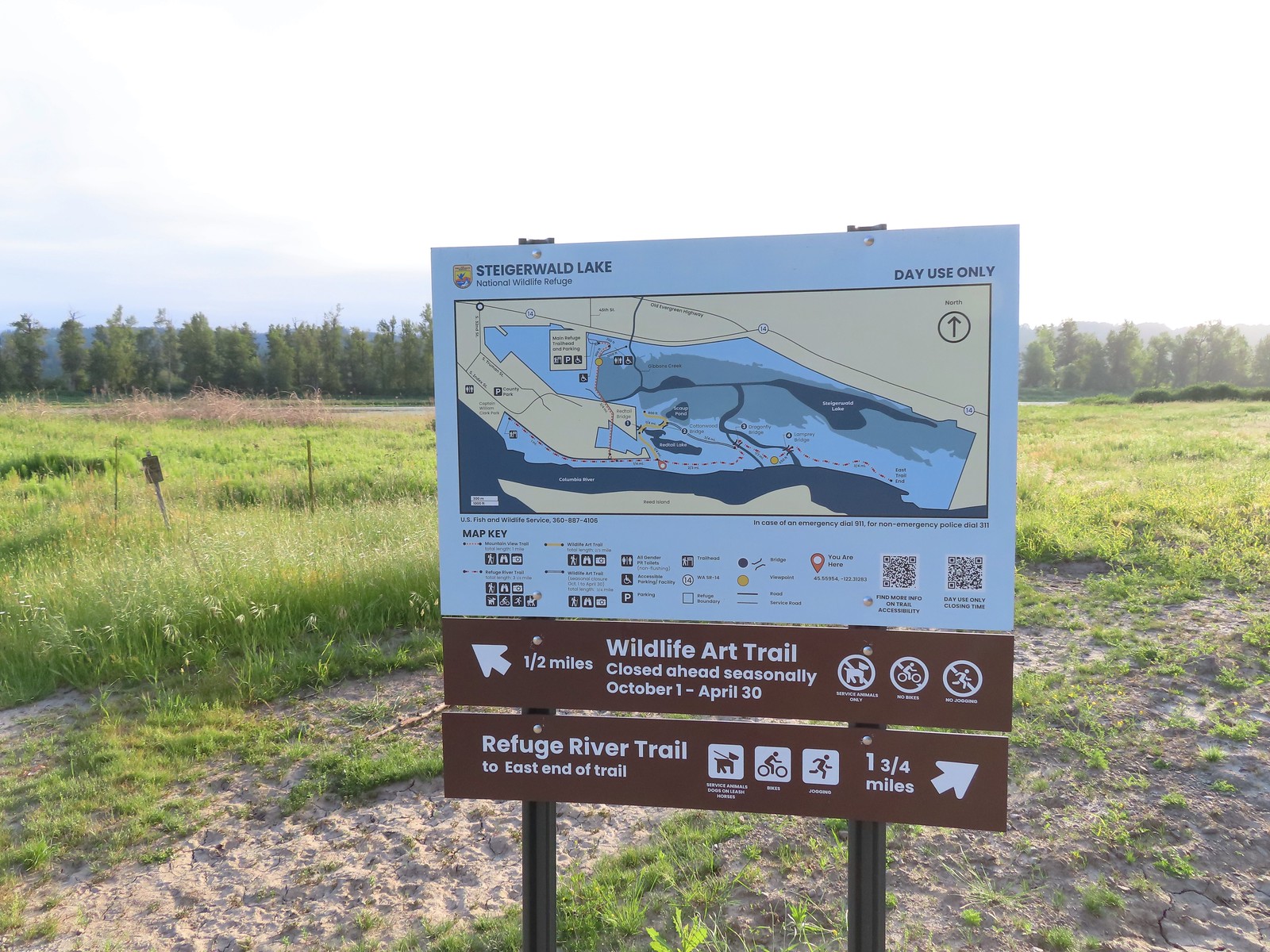
IMG_8001Map and information at the trailhead.

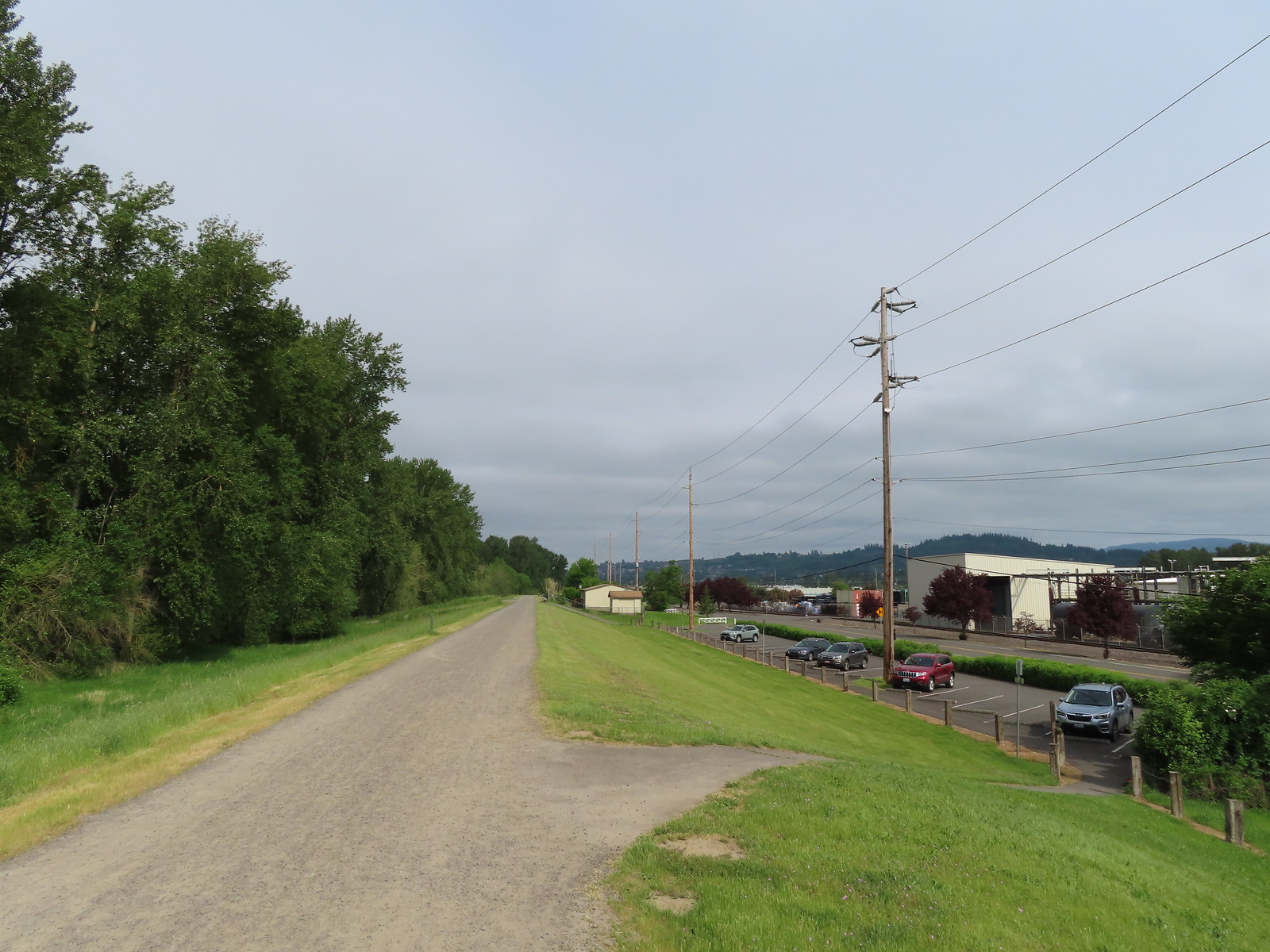
We followed the wide gravel trail as it climbed atop a levee separating the wetlands to the east from industrial lands to the West.
IMG_8005

IMG_8011View to the East.

IMG_8009Looking West toward Washougal.

We followed the trail atop the levee watching on both sides for wildlife.
IMG_8013

DSCN3604Mallards

DSCN3626A duck and a goose sharing a log.

DSCN3611A mallard and an egret in a channel to the West.

DSCN3607Ducks flying over the wetlands casting clear reflections.

DSCN3620Water dripping from a mallards bill.

IMG_8019

DSCN3631One of several rabbits we spotted to the West.

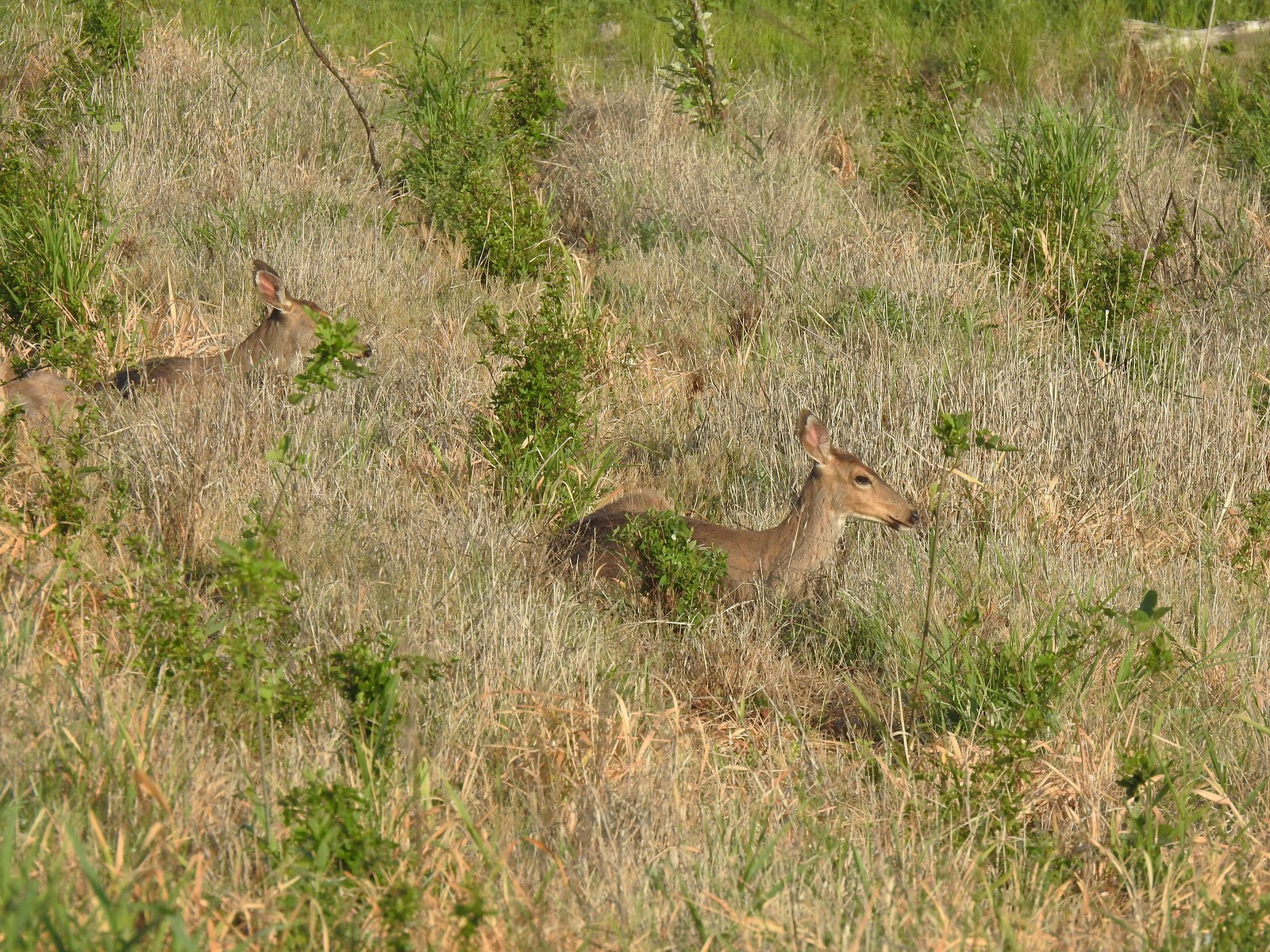
DSCN3635Deer across the wetlands. (The young buck may have been sticking his tongue out at us.)

DSCN3643Families of geese.

DSCN3648Wood duck mallard

When the trail split just prior to reaching the Refuge River Trail we stayed left.
IMG_8024

DSCN3652

IMG_8026Trail sign at the junction with the Refuge River Trail.

We turned left onto the Refuge River Trail following it for 0.3-miles to the Wildlife Art Trail where we again turned left.
DSCN3660Sparrow

IMG_8032

DSCN3667Coming in for a landing.

IMG_8033

IMG_8034Red Tail Lake to the right of the Wildlife Art Trail.

DSCN3678Pretty sure these are the same three we saw from the Mountain View Trail.

DSCN3685This deer laying along the shore of Red Tail Lake was new though.

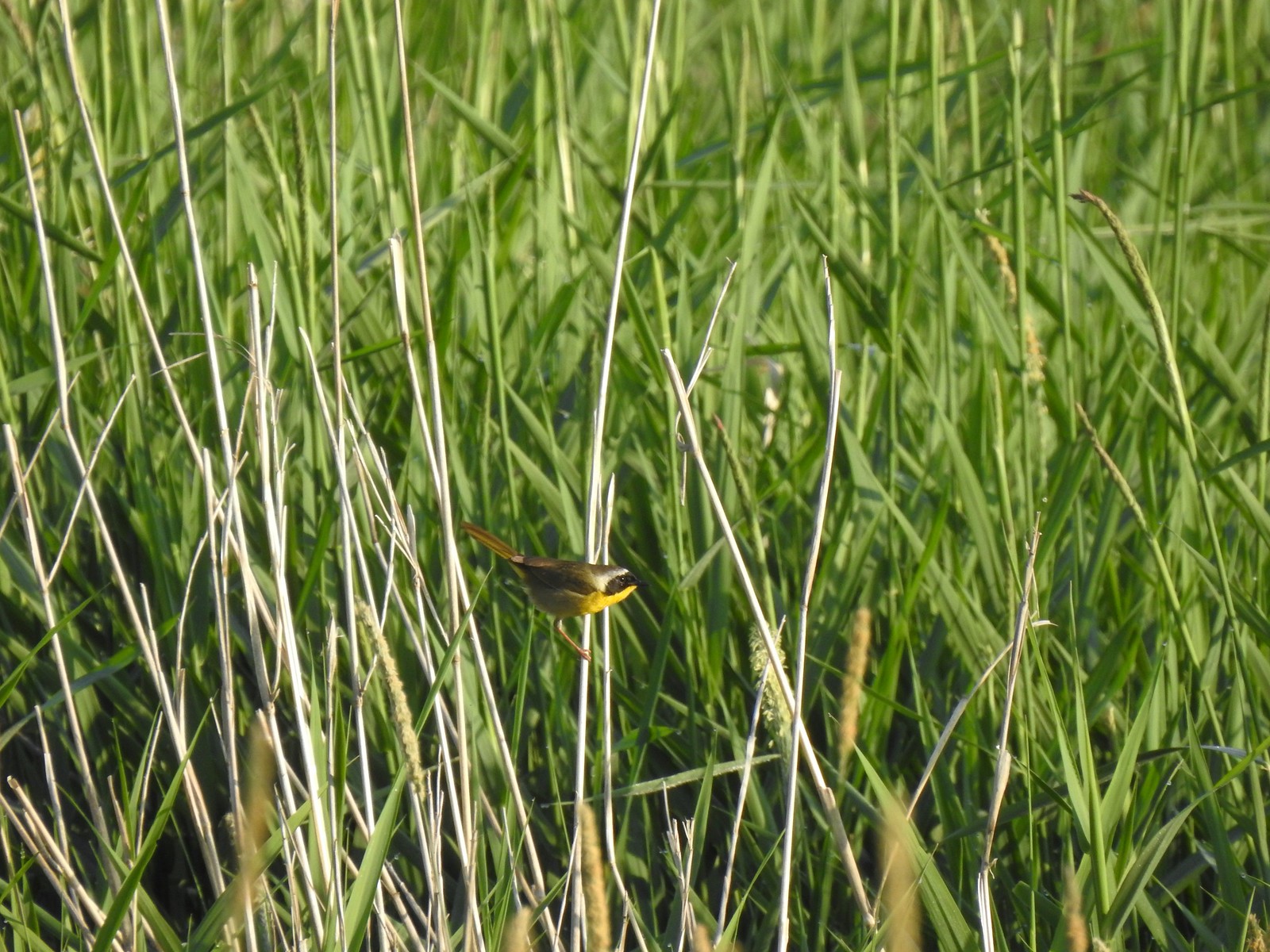
DSCN3675Common yellow throat

DSCN3676One of many great blue herons that we watched fly overhead throughout the day.

IMG_8042The Wildlife Art Trail passing around Redtail Lake.

IMG_8045Gibbons Creek is in that grass somewhere with at least one deer.

DSCN3692

DSCN3698Killdeer along Redtail Lake.

DSCN3700Turns out the deer laying on the lake shore wasn’t alone.

IMG_8044Roses

DSCN3705Purple martins

IMG_8046Just beyond the Cottonwood Bridge the trail forks. To the right is the seasonal section of the loop open May 1st through September 30th. The left-hand fork dead-ends in a tenth of a mile overlooking the wetlands.

IMG_8050We headed left to the overlook before continuing on the loop.

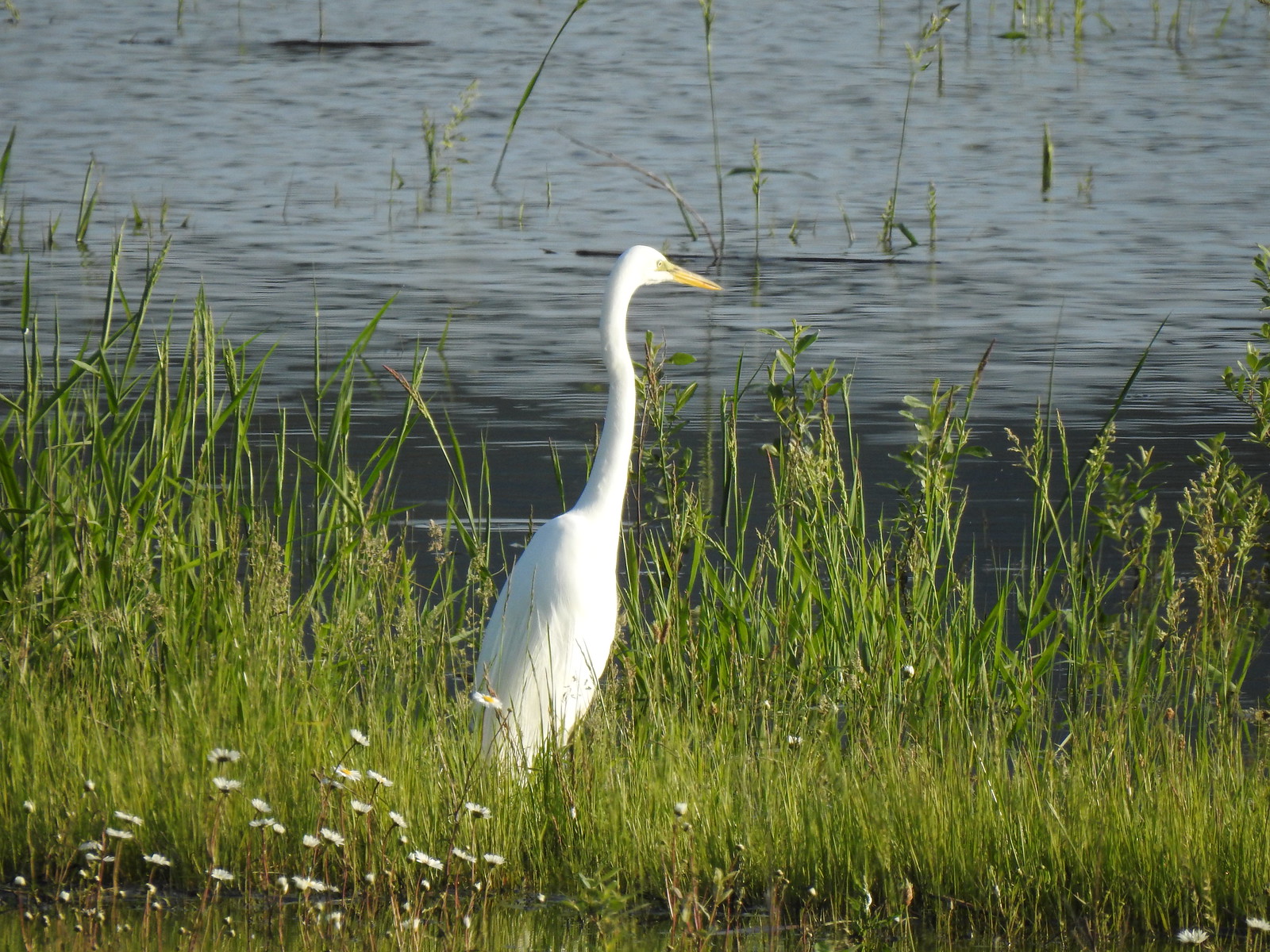
DSCN3713Egret at Scaup Pond.

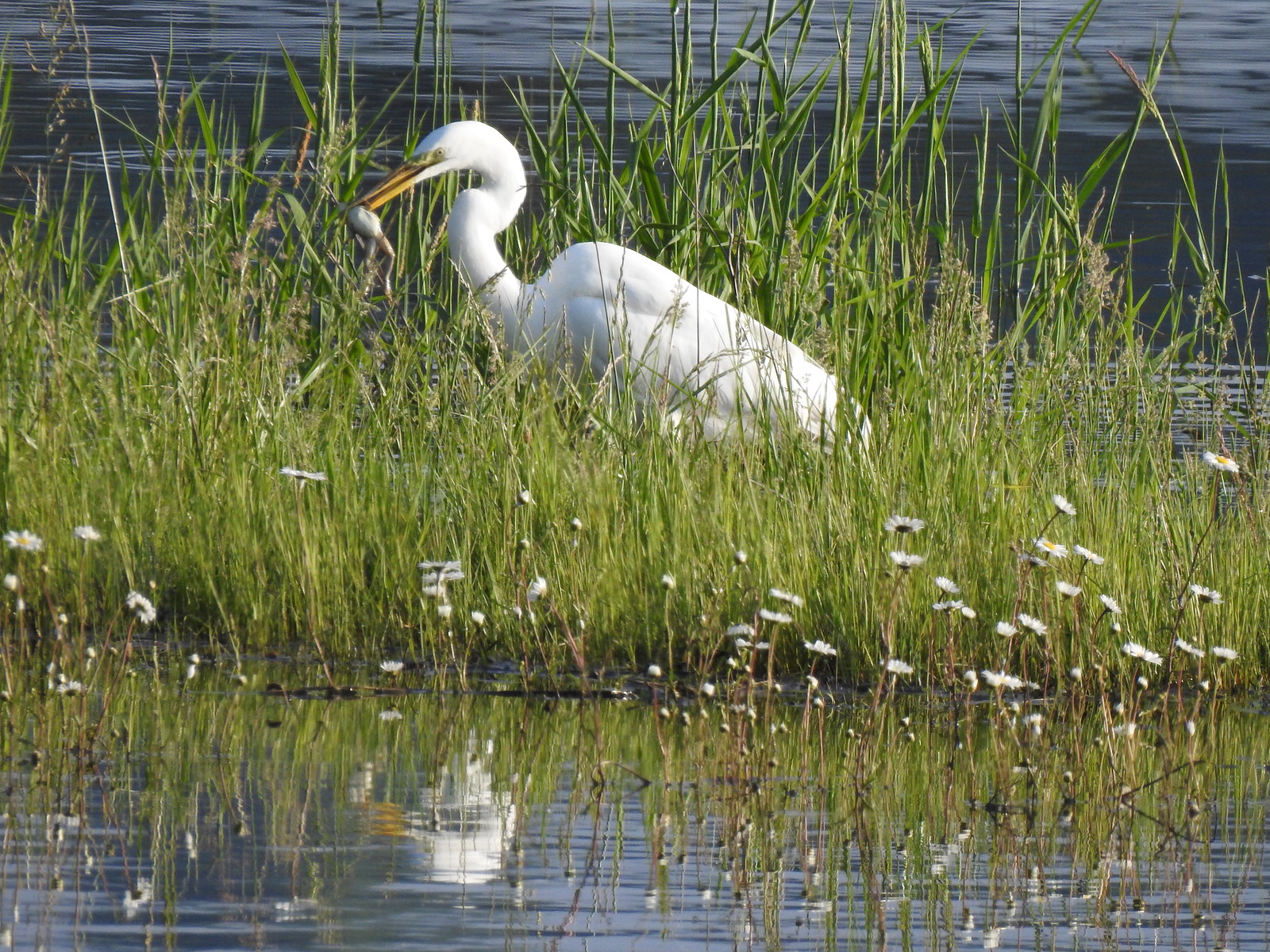
DSCN3717Egret with a frog meal.

IMG_8051

IMG_8052Mushrooms

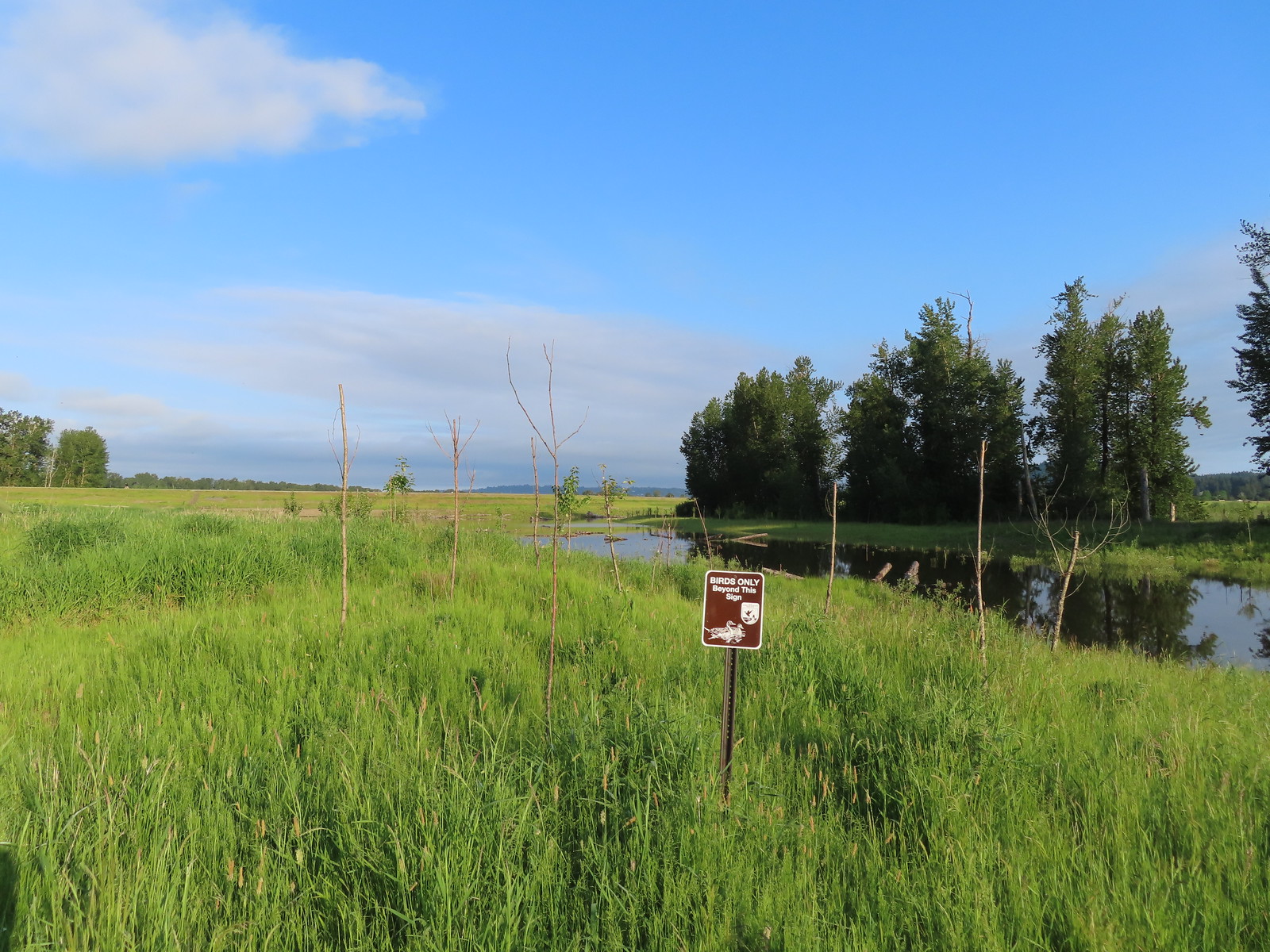
IMG_8054We got a kick out of the “Birds Only Beyond This Sign”.

DSCN3727Kingfisher

I had been watching a kingfisher as we arrived at the overlook and after it flew off I turned to my right and thought that there was a bittern standing just a few yards away. Then my eyes adjusted and I realized it was one of the art pieces and I’d been fooled.
IMG_8055We’ve only seen two bitterns on our hikes and both times we only spotted them as they flew off from the grassy cover that they’d been hiding in so I was pretty disappointed when I realized I’d been duped, but kudos to the artist because it looked real at first glance to me.

We returned to the loop and passed through the seasonal gate.
IMG_8056

The wetlands were pretty full of water to our left but between the trail and the water was a fair number of bushes and grass which was apparently popular with the deer.
IMG_8057

DSCN3740You have something in your teeth.

DSCN3741Spotted towhee

DSCN3742At least two deer in the grass.

DSCN3747Another American goldfinch.

We left the seasonal section of trail near the junction with Refuge River Trail where we again turned left, promptly crossing a creek on Dragonfly Bridge.
IMG_8066

IMG_8067

IMG_8068

DSCN3752Spotted sandpiper

We followed this trail to its end at the refuge boundary.
IMG_8071Oregon sunshine and yarrow

IMG_8072The Columbia River ahead.

IMG_8075Viewpoint along the Columbia River.

IMG_8078Approaching the Lampray Brdige.

IMG_8081Looking back from across the bridge there was a bald eagle in the dead snag along the river.

DSCN3760

DSCN3762There were lots of geese along this section of trail.

IMG_8084Red clover in some Oregon sunshine

DSCN3763Another spotted sandpiper

DSCN3767Steigerwald Lake in the distance with a family of geese and crow on a log in the near channel.

IMG_8089End of the trail.

IMG_8090It was about 8:15am when we turned around and it was already feeling fairly warm, but there was relief on the way in the form of some clouds coming in from the Pacific.

DSCN3778Savannah sparrow

IMG_8091Here come the clouds.

DSCN3780Double the eagles.

DSCN3782For the second week in a row we got to watch an American Kestral on the hunt.

IMG_8093Arriving back at the Dragon Fly Bridge and the junction with the Wildlife Art Trail.

We had planned on following the Refuge River Trail all the way to the western end of the refuge but just 500′ beyond the trail junction we rounded a corner to find the trail flooded.
IMG_8094

Since neither of us was interested in finding out how deep the water was we turned around and simply took the Wildlife Art Trail back.
IMG_8095

DSCN3787Red tailed hawk

DSCN3798Geese nesting atop a snag.

DSCN3796More deer in the grass along Gibbons Creek.

DSCN3803Egret at Redtail Lake.

DSCN3811Great blue heron at Redtail Lake.

We followed the Refuge River Trail back past the junction with the Mountain View Trail and continued West.
IMG_8102

DSCN3828Purple martins

DSCN3819When the light catches the feathers right it’s obvious where the purple martin’s name comes from.

DSCN3827Common yellowthroat

DSCN3833House finch

IMG_8106A mile from the Mountain View Trail we arrived at the refuge boundary with Captain William Clark Park.

IMG_8107The trail follows a dike to Steamboat Landing.

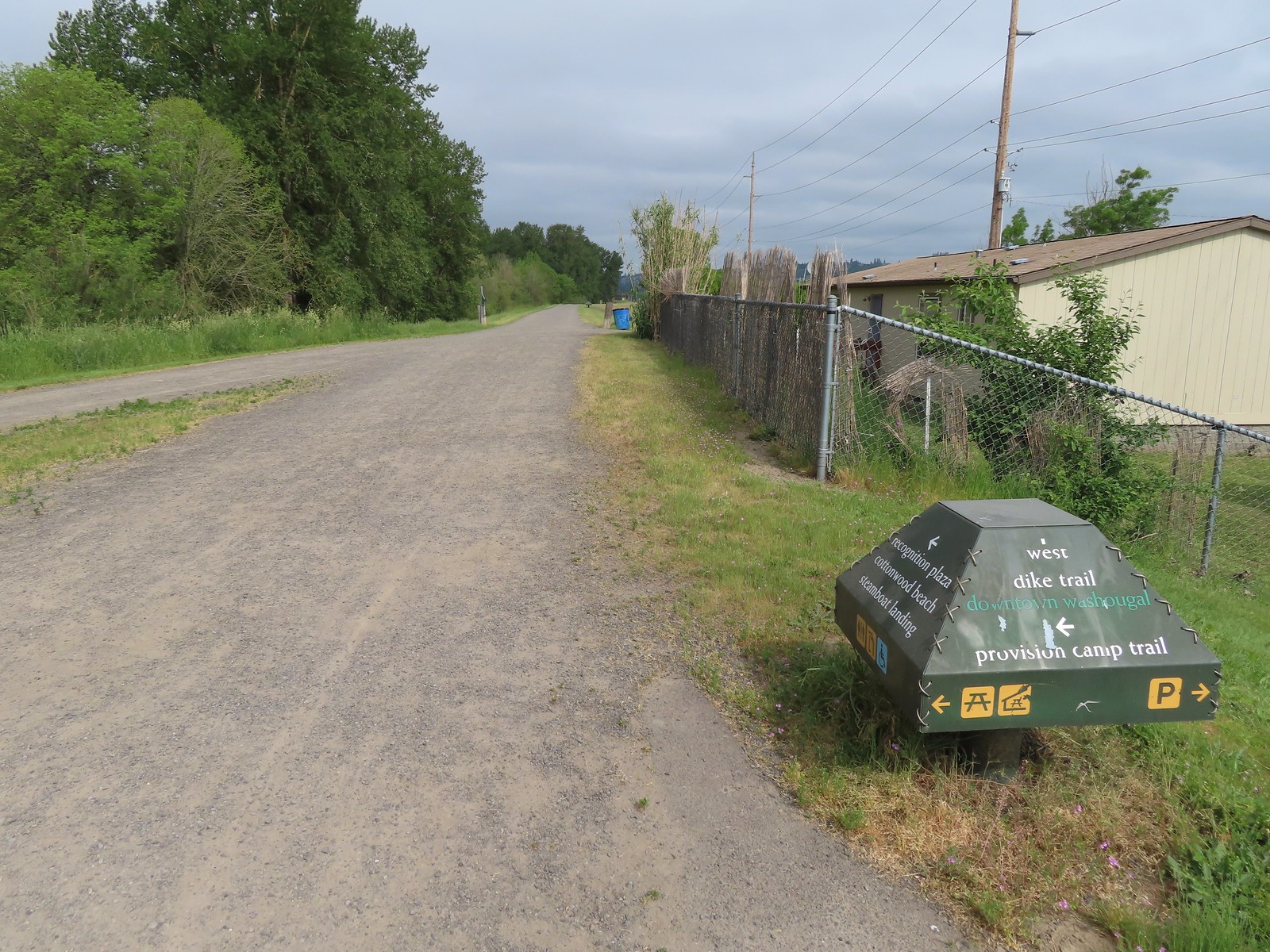
The main attraction at Captain William Clark Park is Cottonwood Beach where in 1806 Lewis & Clark established a camp while they secured provisions for the return trip through the Columbia River Gorge. The Provision Camp Trail leads down to the beach and picnic area.
IMG_8108

IMG_8109The Provision Camp Trail

While there had been quite a few people on the Captain William Clark Park Trail there were just a few people in this area.
IMG_8112

IMG_8114

While the beach is extremely popular in the Summer and especially on weekends it became evident why we weren’t seeing folks today when we reached the “beach access”.
IMG_8115

DSCN3835Northern flicker

Having the beach be underwater was fine with us, it meant fewer people, but the water level became an issue when the Provision Camp Trail turned back inland toward the dike to complete its loop.
IMG_8117Flooded trail ahead.

With the loop cut off we went back the way we’d come and returned to the dike where we turned left to continue on to Steamboat Landing.
DSCN3844Black headed grosbeak

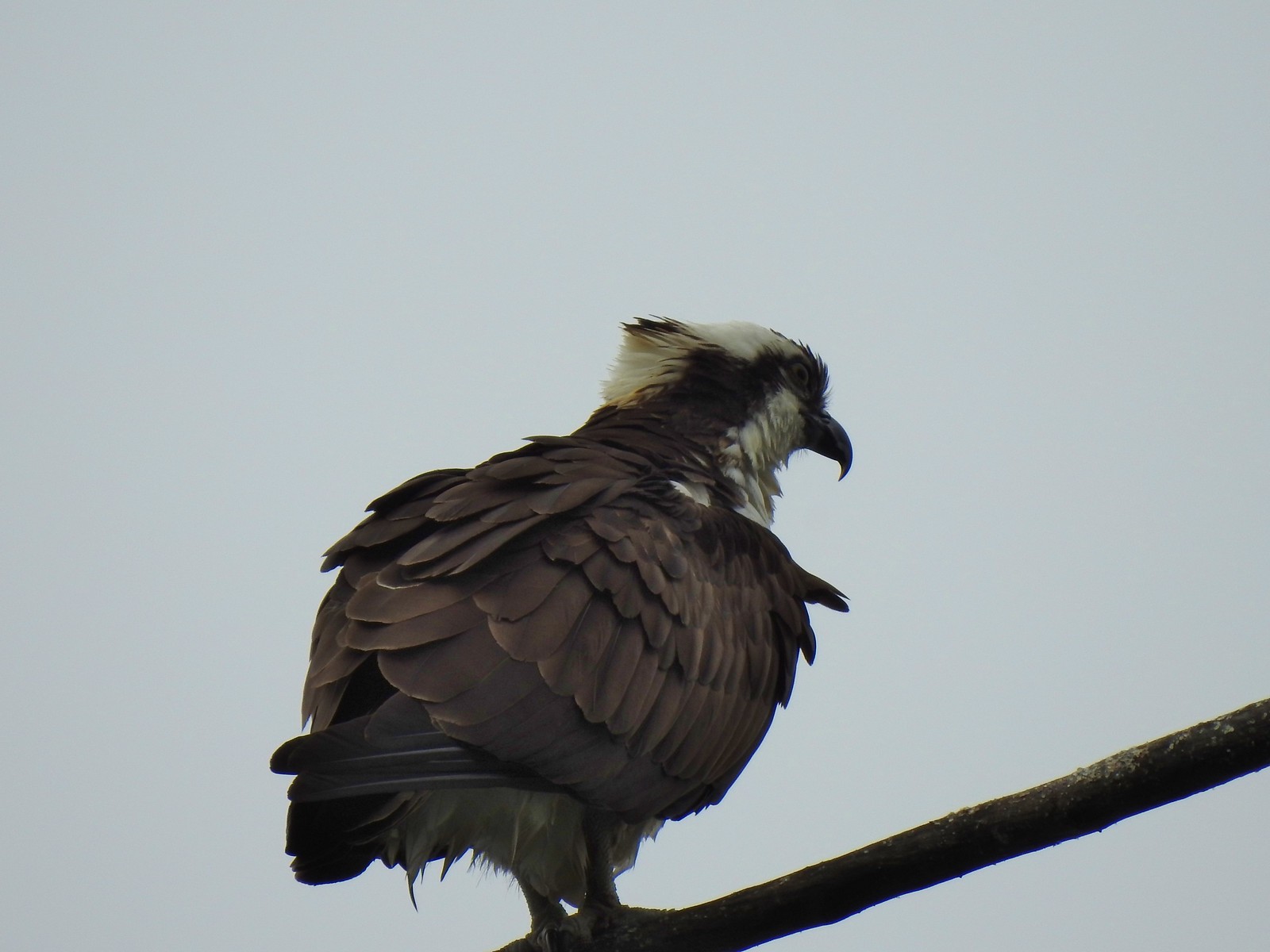
DSCN3850Osprey

IMG_8119Back on the dike.

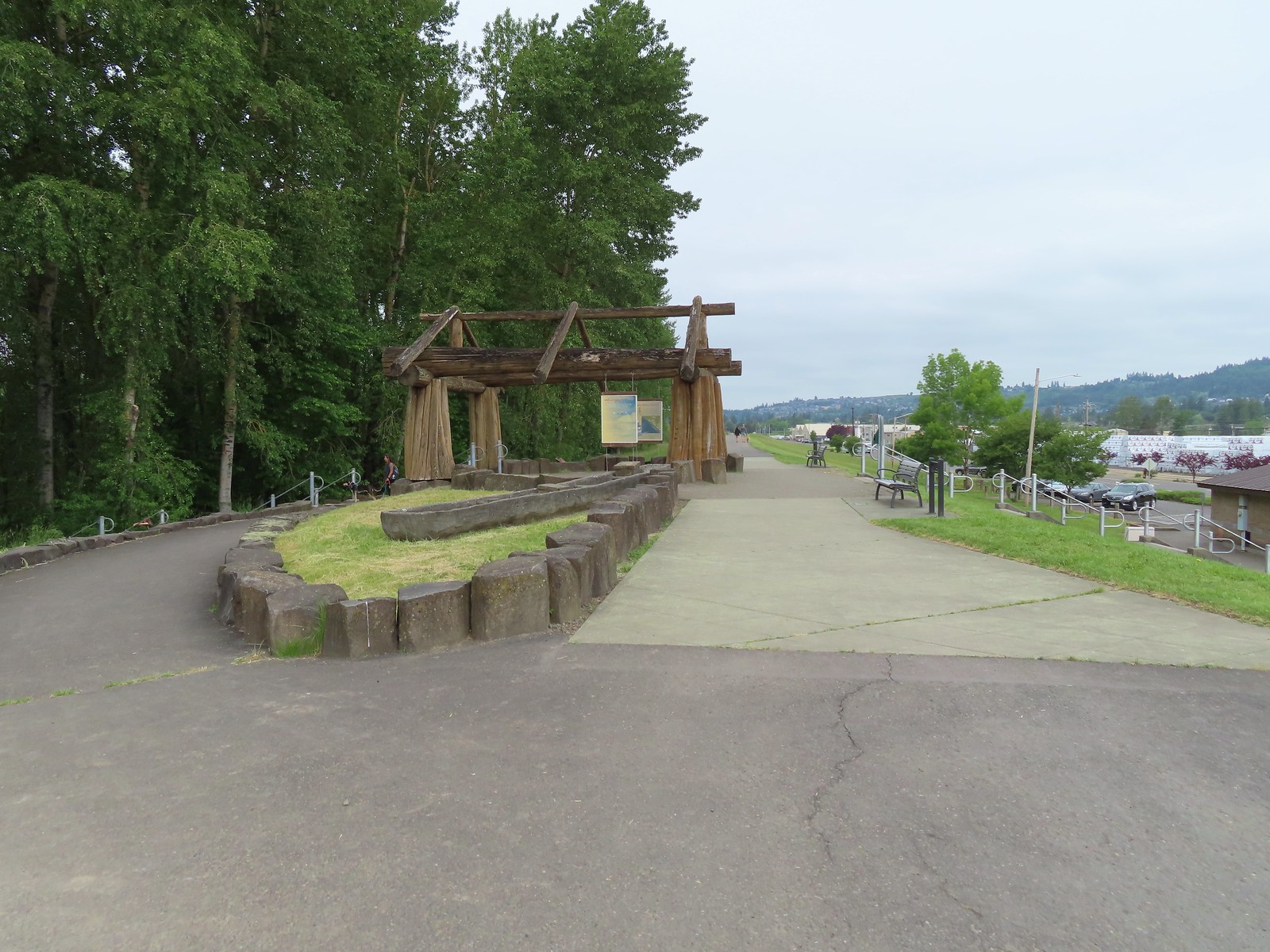
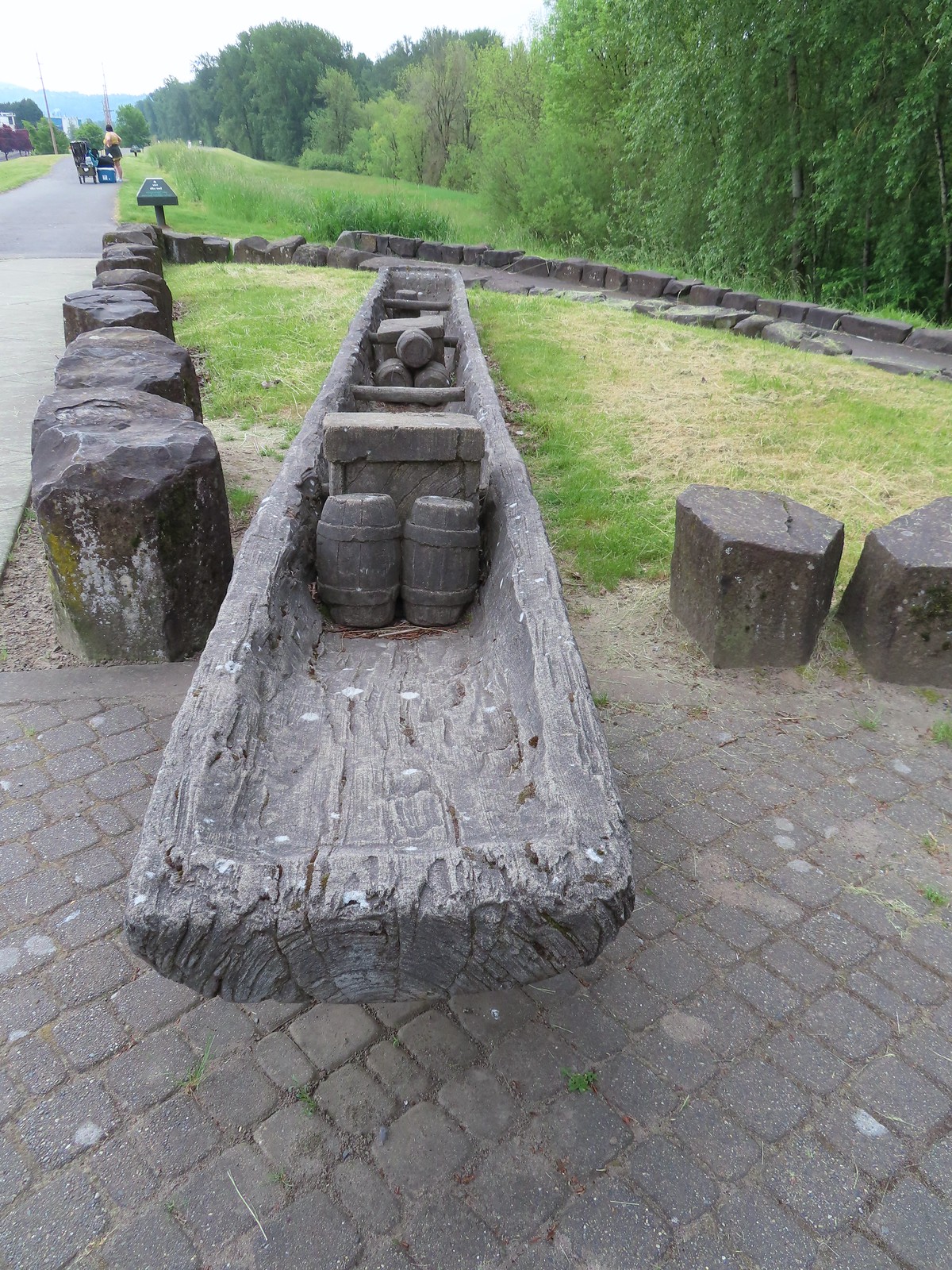
At the other end of the Provision Camp Trail was an interpretive display with replica canoes.
IMG_8120

IMG_8122

IMG_8124

IMG_8123The flooded section of trail from above.

It was another mile from the interpretive display to Steamboat Landing. The trail was pretty busy, and we were now in the city, but we were still managing to see a good deal of wildlife.
IMG_8129

DSCN3856Turtles!

DSCN3864Another turtle

IMG_8134

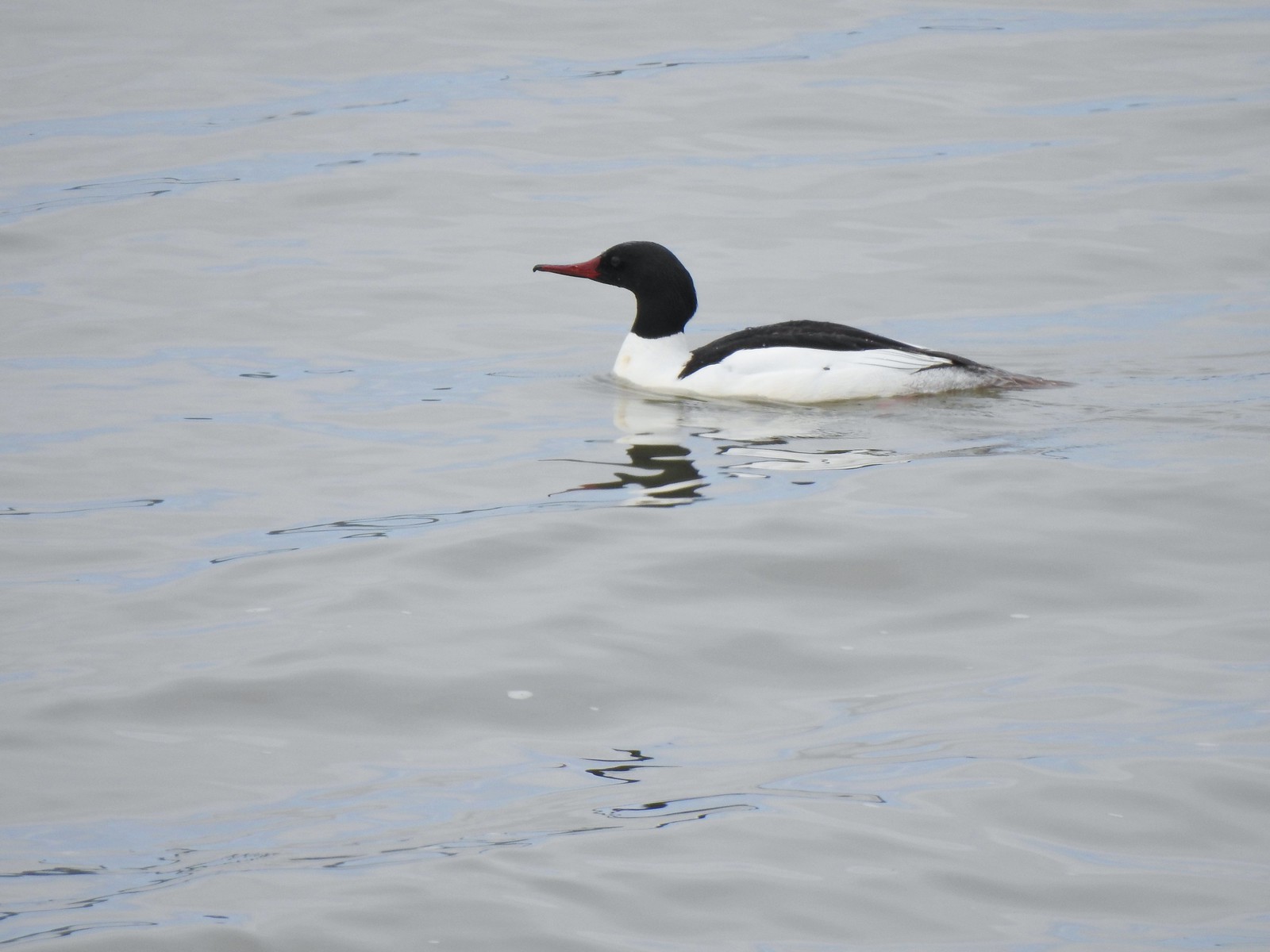
DSCN3870Common merganser

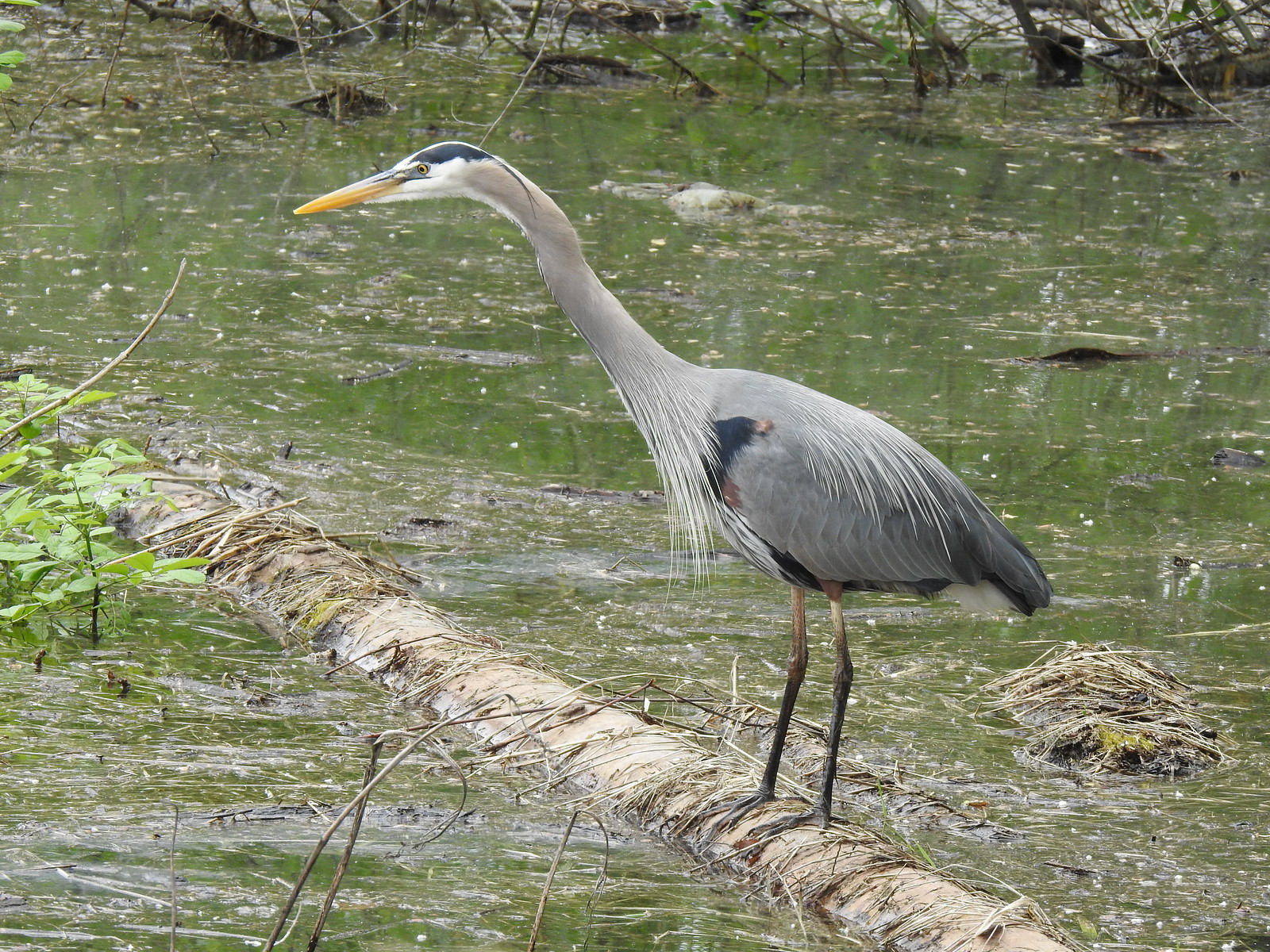
DSCN3891Great blue heron

IMG_8140Steamboat Landing

At Steamboat Landing we turned down to a viewpoint along a fishing dock.
IMG_8144

After a brief break we headed back.
DSCN3898A family of geese out for a float.

While it had clouded up overhead the morning clouds that had blocked any view of Mt. Hood had given way. Unfortunately, there was enough haze in the air to essentially wash the mountain out.
IMG_8153The large “hump” ahead is Larch Mountain (post). Mt. Hood is a little further to Larch’s right.

IMG_8152Grainy proof of Mt. Hood’s existence.

IMG_8159Silver Star Mountain (post) to the North.

We turned left onto the Mountain View Trail and headed back to the trailhead feeling really good about the amount of wildlife we’d seen although I was still a bit bummed about being fooled by the bittern art. As we neared the end of the wetlands that changed as a pair of bitterns got into a dispute over territory. The victor landed along the water below the levee.
IMG_8163

DSCN3915The American bittern in the grass.

I had the chance to take way too many pictures as the bittern posed for the people on the levee.
DSCN3930

DSCN3932

It was an exciting ending to a great wildlife hike. We made our way down to the now nearly full trailhead. Happy Trails!
IMG_8174We’d been the first car in the lot that morning.

Having to retrace our steps a couple of times due to flooded trails put our hike at 12.4 miles for the day with minimal elevation gain.

Full album (Flickr): Steigerwald Lake Wildlife Refuge

Categories
Central Oregon Hiking Oregon SE Oregon Trip report

Sagehen Hill, Malheur Wildlife Refuge, & Donner Und Blitzen River – 08/16/2021

Monday was mostly a travel day as we left Bend and headed for the Steens Mountain Resort where we would be staying for the next three nights. We did however manage to get a few short hikes in along the way beginning with a trail that had intrigued us since the first time we’d stopped at the Sagehen Rest Area on Highway 20 eighteen miles west of Burns. A highway rest stop seemed like a bit of an odd place for a trail but that’s part of what piqued our interest. The Sagehen Hill Nature Trial is a short (just over half a mile) interpretive loop with 11 numbered stops.
IMG_1968Trailhead sign at the south end of the rest stop. Brochures were located in the small box under the sign.

IMG_1969Map on the trailhead sign.

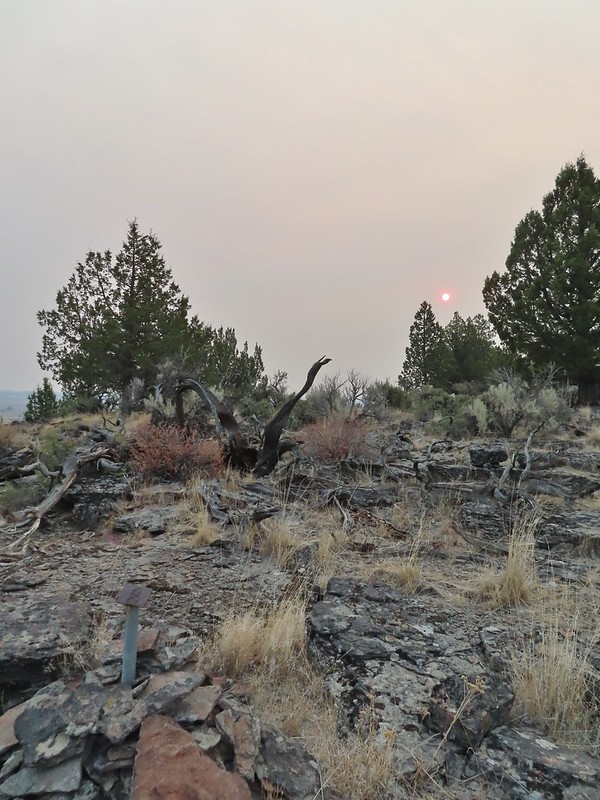
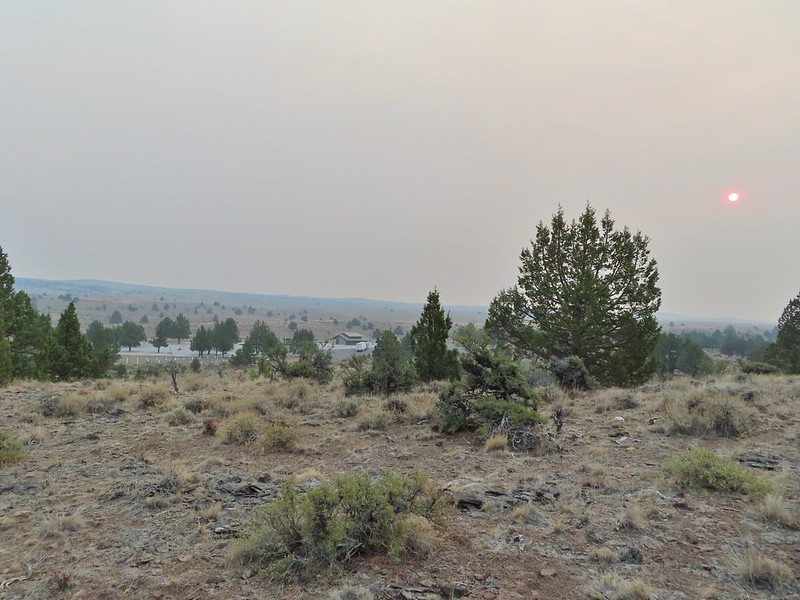
Smoke from fires near Lakeview, OR made for a smoke filled horizon and unlike our hike on Mt. Bachelor the previous day (post) here we could smell it in the air.
IMG_1972Red Sun through the smoke.

Despite the lack of views (on a clear day Steens Mountain would have been visible) it was a nice hike and the interpretive stops were interesting. We didn’t see any sage grouse here but we spotted some other wildlife along the route.
IMG_1974

IMG_1984

IMG_1989

IMG_1991The Harney Valley to the east.

IMG_1997

IMG_1998This stop was for a juniper that was blown apart by a lightning strike.

IMG_2000The rest area from the loop.

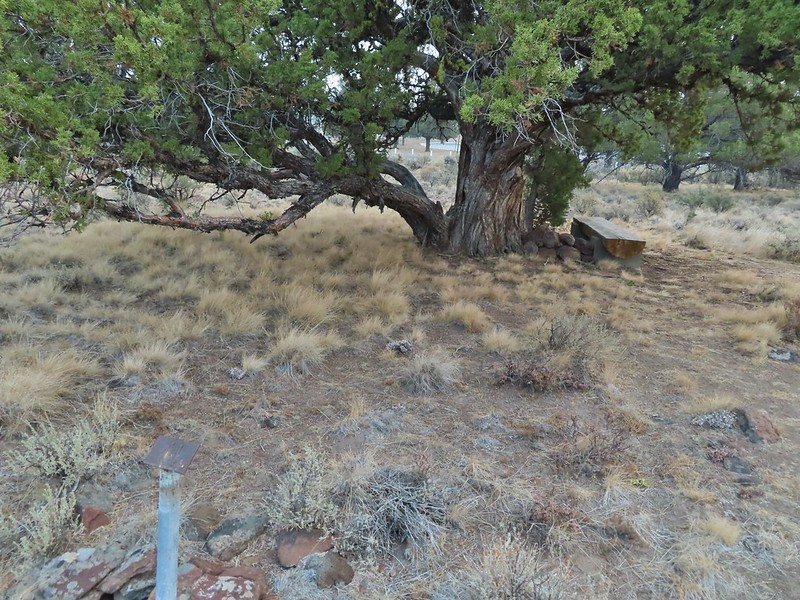
IMG_2001The last stop was to discuss the relationship between the junipers and the Idaho fescue that grows underneath.

This was a neat little trail and a nice leg stretcher. After completing the loop we drove into Burns, filled up our gas tank and then headed for our next stop at the Malheur National Wildlife Refuge Headquarters. This was the one place we had previously visited (post) but we hadn’t driven the entire auto tour route that time and there were some other trails in the complex that we could check out. We started with a stop at the headquarters where we once again were treated to a variety of wildlife as we toured the complex.
IMG_2011

DSCN0516Deer in the nearly dry Marshall Pond

DSCN0539Yellow headed blackbird

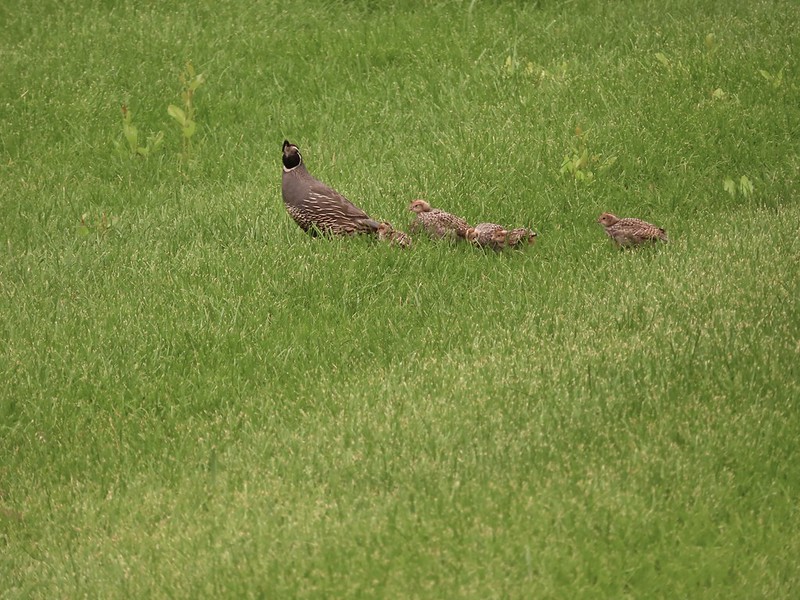
DSCN0557California quail

IMG_2045Owl

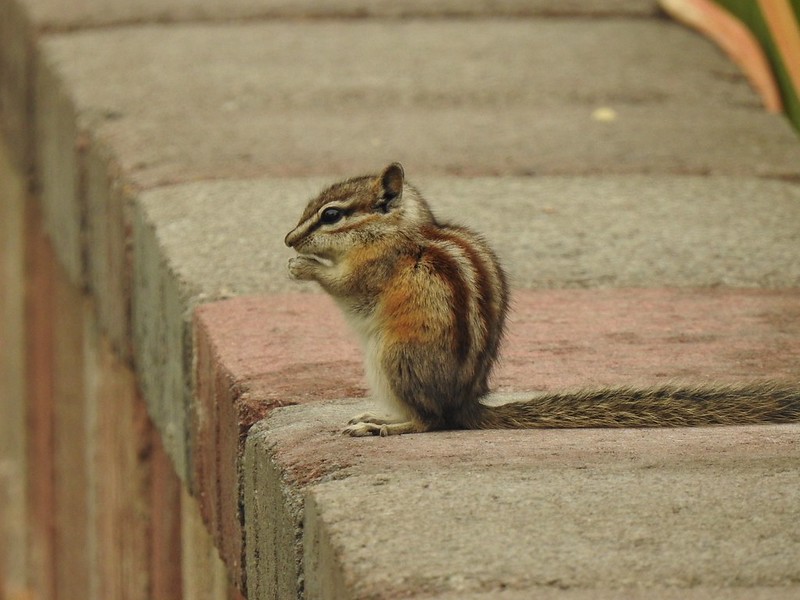
DSCN0614Chipmunk

IMG_2065More quail

DSCN0617The early bird

IMG_2077Hummingbird

IMG_2081Little bird on a feeder

We skipped the Overlook Trail this time due to the smoke filled horizon and started the auto tour route. Again there was plenty of wildlife to pause for along the drive and we also stopped at Benson Pond to hike the Benson Pond Trail (a short half mile out and back) where we were treated to a large number of ducks and other birds on the pond.
20210816_094117

DSCN0654Shrike

IMG_2099Hawk and a magpie

DSCN0663Osprey

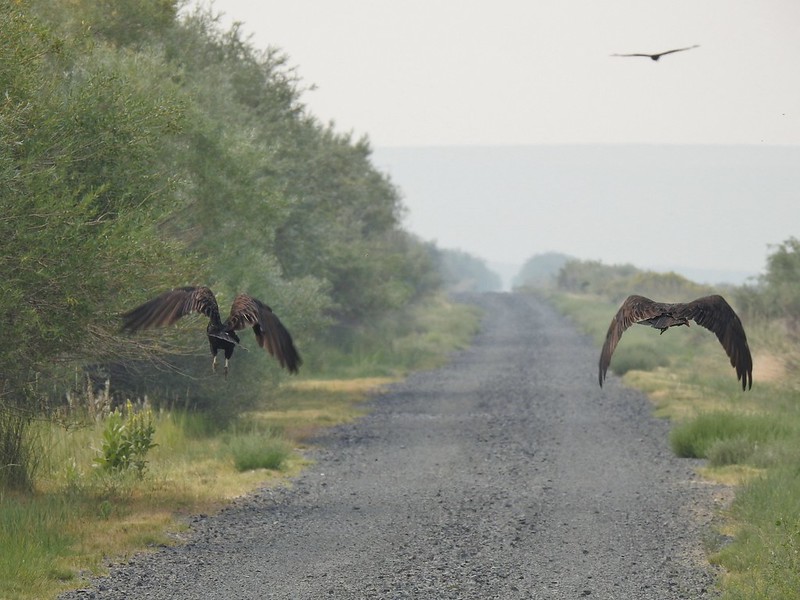
DSCN0667Turkey vultures

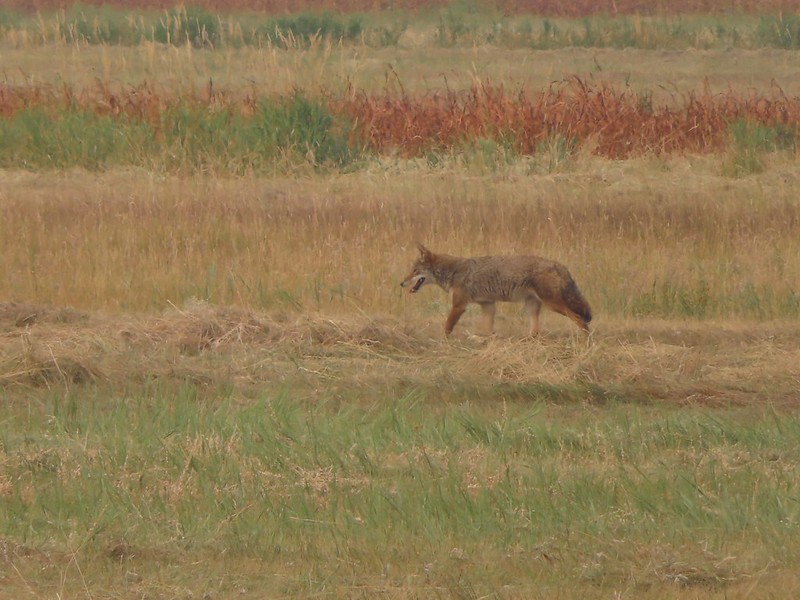
IMG_2125Coyote

IMG_2137

IMG_2138Mourning doves

IMG_2143Egrets and ducks at Benson Pond

<img src="https://live.staticflickr.com/65535/51393871889_968777c132_c.jpg&quot; width="800" height="600" alt="IMG_2153">American kestral

IMG_2156Old cabin at Benson Pond

IMG_2177Another owl

DSCN0725Another turkey vulture

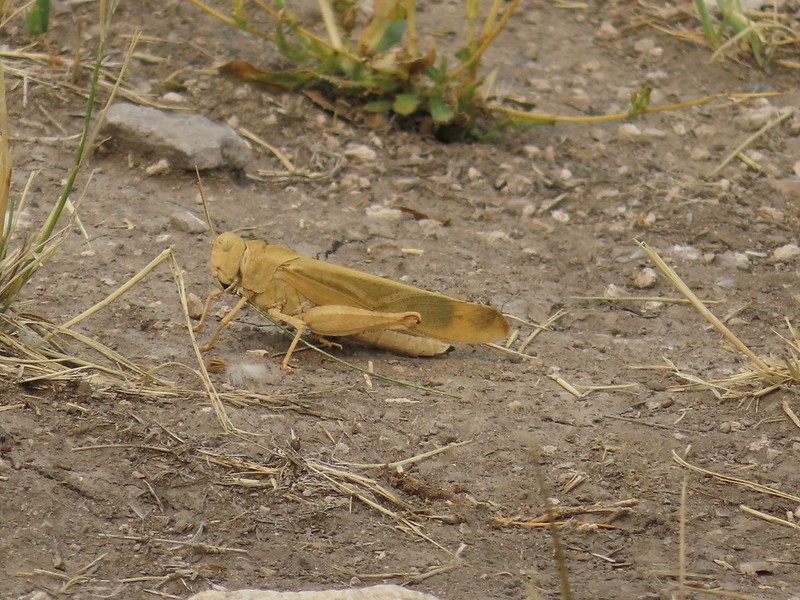
IMG_2189Grasshopper

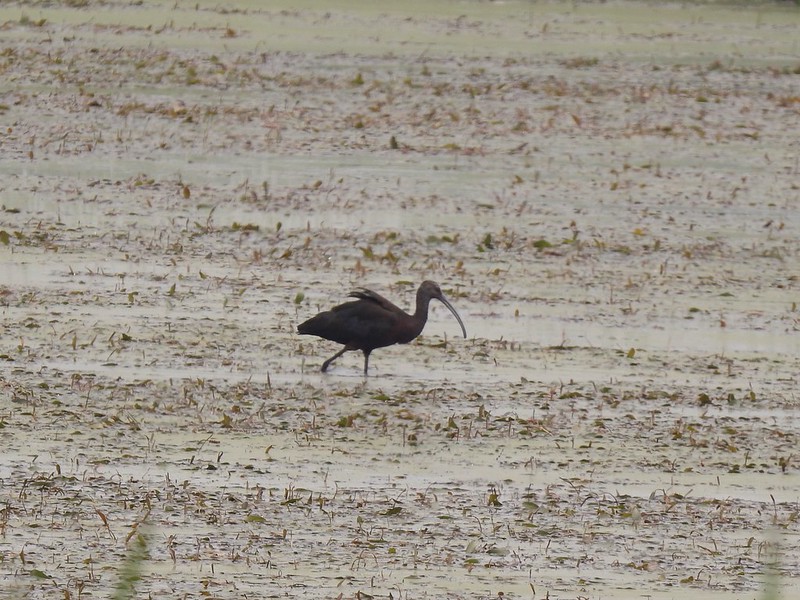
DSCN0733White faced ibis

DSCN0736Great blue heron amid the ducks.

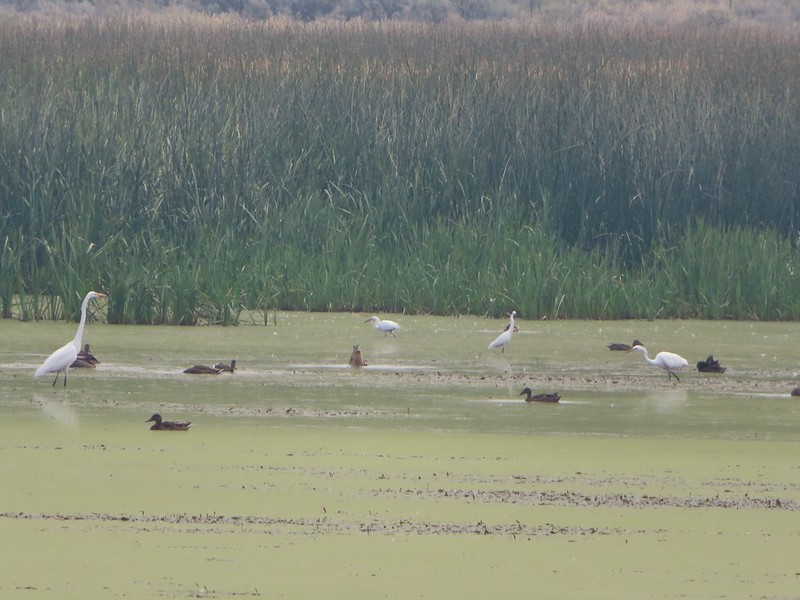
IMG_2195A couple types of egrets it appears.

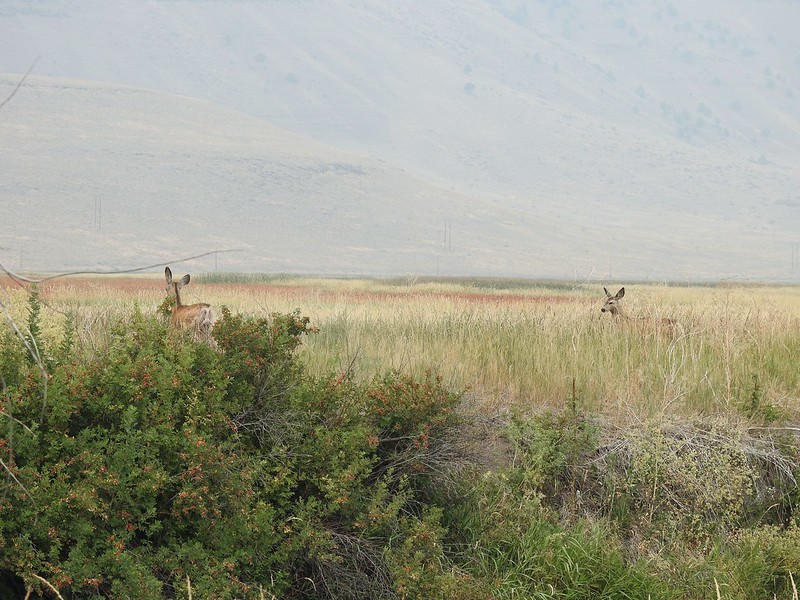
DSCN0763Deer that were in the Blitzen River

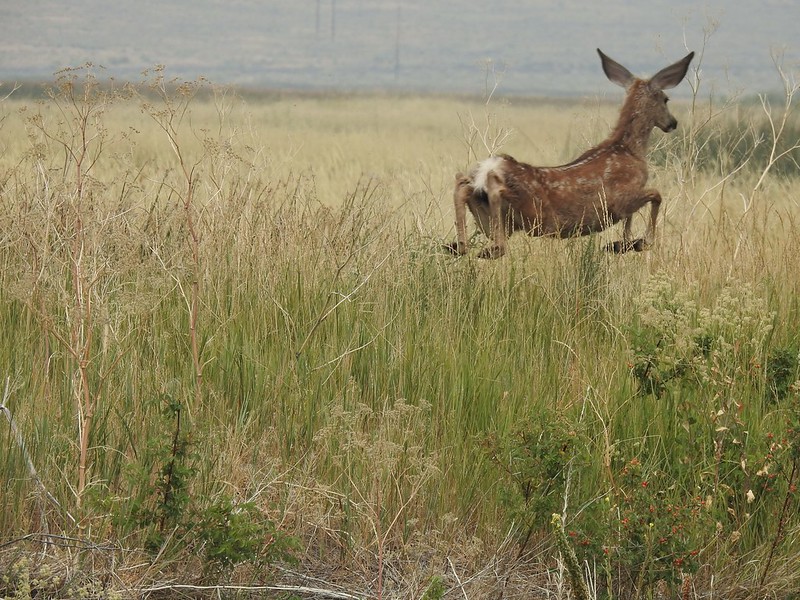
DSCN0764Bounding fawn

DSCN0769Ducks and coots at Knox Pond

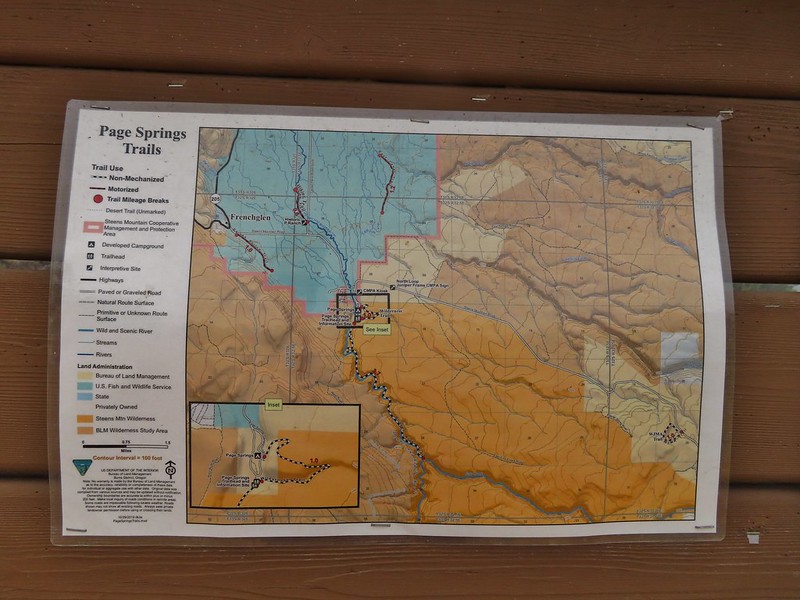
The auto tour route ends at the Steens Mountain Loop Road just a mile and a half from the Steens Mountain Resort. We were a bit too early to check in though so we drove past the resort another tenth of a mile to the entrance of the Page Springs Campground. We turned into the campground and parked at the day use area at its far end where two trails start. The one mile Wilderness Nature Trail and the 3.7 mile long Donner und Blitzen River Trail.
IMG_2201

IMG_2204

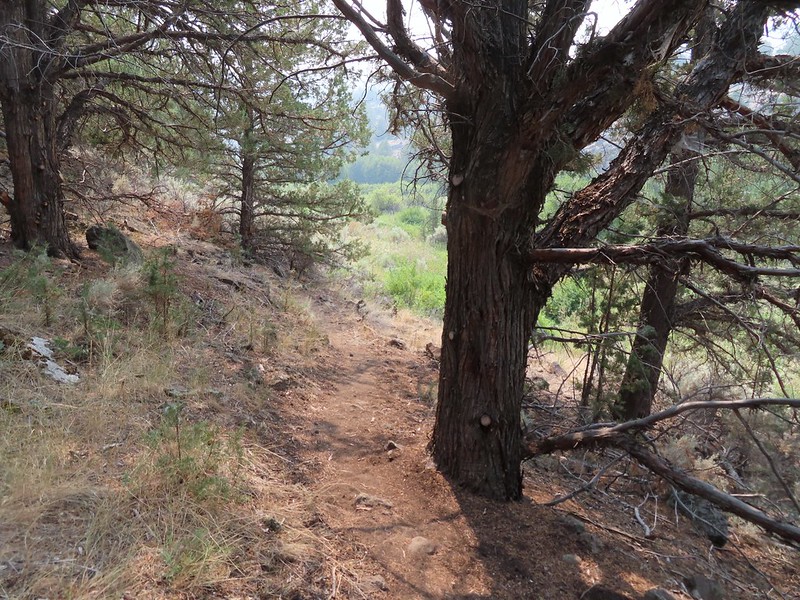
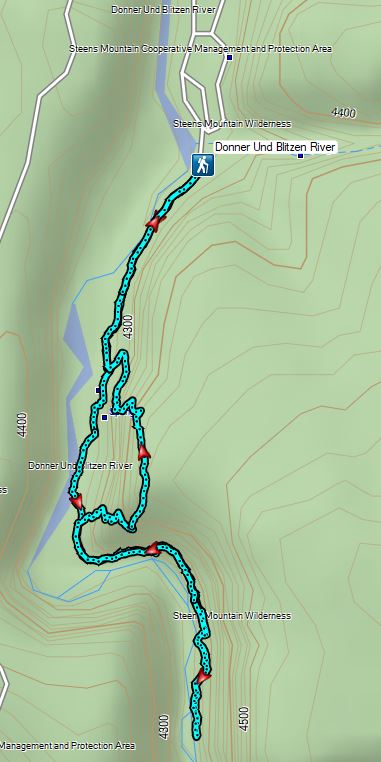
We decided to take the Donner und Blitzen Trail since the nature trail looped back into the campground and ended near one of the campsites leaving a short road walk back to the trailhead. The Donner und Blitzen Trail entered the Steens Mountain Wilderness a short distance from the trailhead and followed the river fairly closely for the first 1.2 miles which is as far as we went on this day. It was a little smokey and it was hot and enough time had passed that we would be able to check into the resort by the time we made it back to our car. The trail was a little brushy at times but a nice surprise was finding a loop option not shown on the map but clearly marked starting 0.4 miles from the trailhead and rejoining the river trail at the 0.7 mile mark. We took this route on the way back climbing up through the cliffs above the river providing some nice views despite the haze.
IMG_2209

IMG_2212

IMG_2216

IMG_2221

IMG_2224Bee and a butterfly

IMG_2228

IMG_2235A brushy section.

IMG_2242

IMG_2256A bee and a skipper

20210816_131717Praying mantis

IMG_2261The “other” trail on the hillside at the 0.7 mile mark.

IMG_2263

IMG_2272

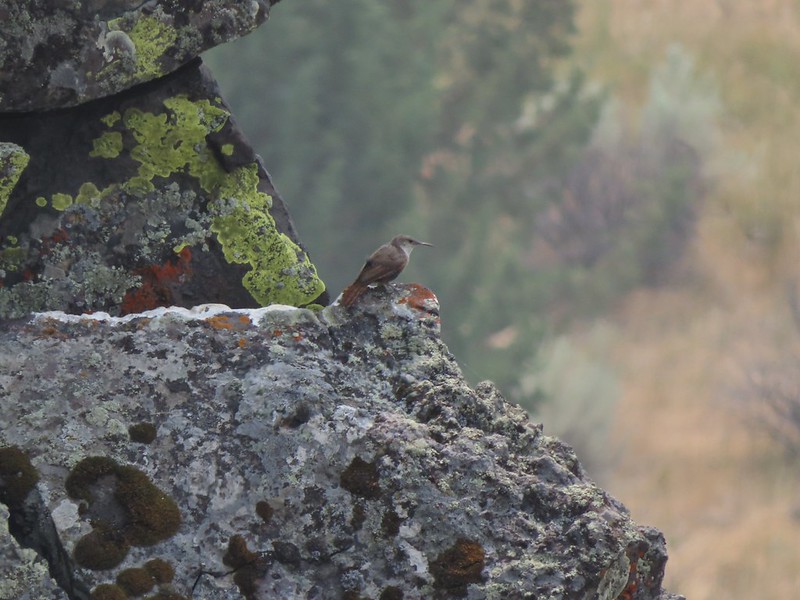
IMG_2275A wren?

IMG_2278

IMG_2280Fence crossing

IMG_2281Rejoining the Donner und Blitzen Trail at the 0.4 mile mark.

2.9 mile hike on the Donner und Blitzen trail

We got a total of 5.4 miles of hiking in between Sagehen Hill, the refuge headquarters, Benson Pond, and the Donner und Blitzen River. The abundant wildlife was the highlight of the day. We checked into the resort and got settled in our modular unit which had a full kitchen, shower, couch and most importantly A/C. We were hoping that the smoke would move out overnight or at least over the next day or two when the temperature was also set to drop to more reasonable levels. We spent the evening listening to the osprey that had a nest below the resort. Happy Trails!
IMG_2288

IMG_2289

Flickr: Sagehen Hill, Malheur Wildlife Refuge, and Donner und Blitzen River

Categories
Corvallis Hiking Oregon Willamette Valley

Finley Wildlife Refuge Loop – 4/14/2021

A day after visiting the Ankeny National Wildlife Refuge (post) I headed out to the William L. Finely National Wildlife Refuge for another attempt at spotting wildlife. Heather once again was working so I was on my own again. We had done two previous hikes here, one in 2017 visiting the Cabell Marsh and hiking the Woodpecker and Mill Hill Loops and the other in 2020 starting near Pigeon Butte. My plan was to combine most of those two hikes and add a few new short stretches to make a big loop through the refuge starting from the Woodpecker Loop Trailhead. One item to note is that some of the refuge is closed from November 1st through March 31st making this loop impossible during the seasonal closure.

The refuge is open from dawn to dusk and I arrived at the trailhead just as the Sun was beginning to rise behind Mt. Jefferson.
IMG_1814

IMG_1818

IMG_1820

From the Woodpecker Loop Trailhead I walked down to the refuge road and followed it to the left back to the Cabell Barn then turned right on a road at a season trail sign for the Cabell Marsh Overlook. I followed the roadbed to the Cabell Lodge and past the overlook down to Cabell Marsh.
IMG_1824Mt. Hood from the refuge road

IMG_1826The Three Sisters from the road

IMG_1832Yellow paintbrush

IMG_1841Cabell Barn

img src=”https://live.staticflickr.com/65535/51116225393_9feb61f994_c.jpg&#8221; width=”800″ height=”600″ alt=”IMG_1860″>Cabell Lodge

IMG_1852Rabbit at the lodge

IMG_1865Cabell Marsh Overlook

IMG_1871White crowned sparrows

IMG_1878Deer in a field near Cabell Marsh

IMG_1879Cabell Marsh (the marsh had been drained when we visited in 2020)

I slowly walked along the dike at the marsh using binoculars to try and identify how many different ducks were out on the water.
IMG_1880Norther shovelers

IMG_1887American coots

IMG_1889Ring-necked ducks

IMG_1892Buffleheads

IMG_1908Black pheobe

IMG_1910American wigeons

IMG_1915_stitchCabell Marsh

IMG_1921Canada geese

Wood duck, ring-necked ducks and a pie billed grebeWood duck, ring-necked ducks and a pied billed grebe

IMG_1951More northern shovelers

IMG_1953Ring-necked ducks

IMG_1955Green winged teal

IMG_1956Robin

At a junction on the SW end of the Marsh I stayed left following a roadbed past a huge flock of geese and some ponds to a junction with the Pigeon Butte Trail.
IMG_1961

IMG_1964

IMG_1970

IMG_1983Killdeer

IMG_1988

IMG_1991Red-winged blackbird

IMG_2003Junction with the Pigeon Butte Trail (grassy track heading uphill)
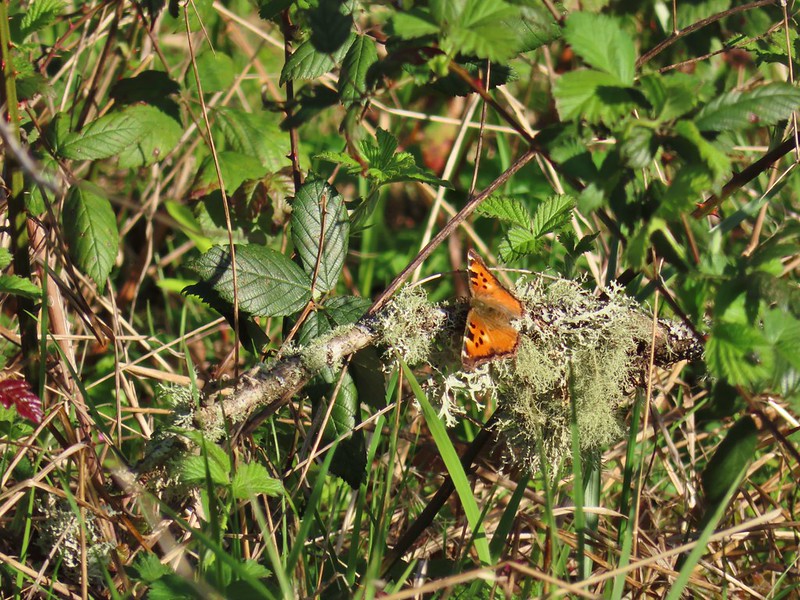
Originally I had planned on skipping the half mile trail to the top of Pigeon Butte but it was a beautiful morning and it had been too cloudy to see much on our hike in 2020 so I turned uphill an tagged the summit before returning to my originally planned loop.
IMG_2004Tortoiseshell butterfly

IMG_2012Spotted towhee serenade

IMG_2020Bewick’s wren

IMG_2022Madrone

IMG_2027Mourning dove

IMG_2029Camas blooming near the summit

IMG_2034View from Pigeon Butte

IMG_2036Scrub jay spotted on the way down.

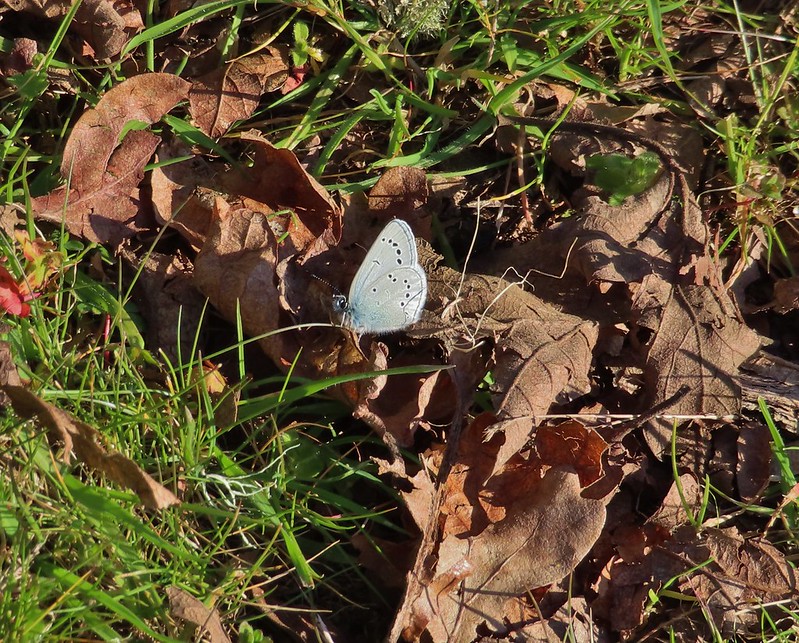
IMG_2038One of the “blue” butterflies, maybe a silvery blue
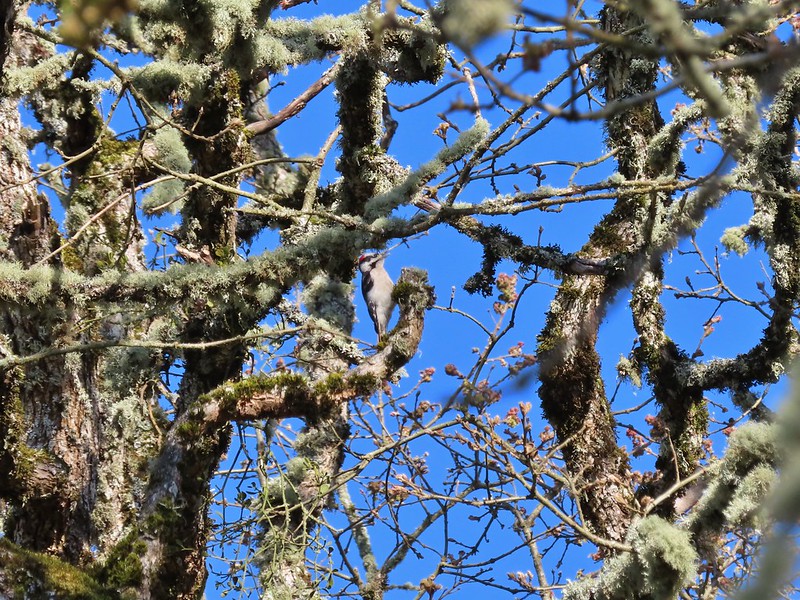
IMG_2043Acorn woodpecker

When I got back down to the junction I continued south on the Pigeon Butte Trail to a junction at a pond below Cheadle Barn.
IMG_2050Looking back at Pigeon Butte, the yellow paintbrush was starting its bloom on the hillside.
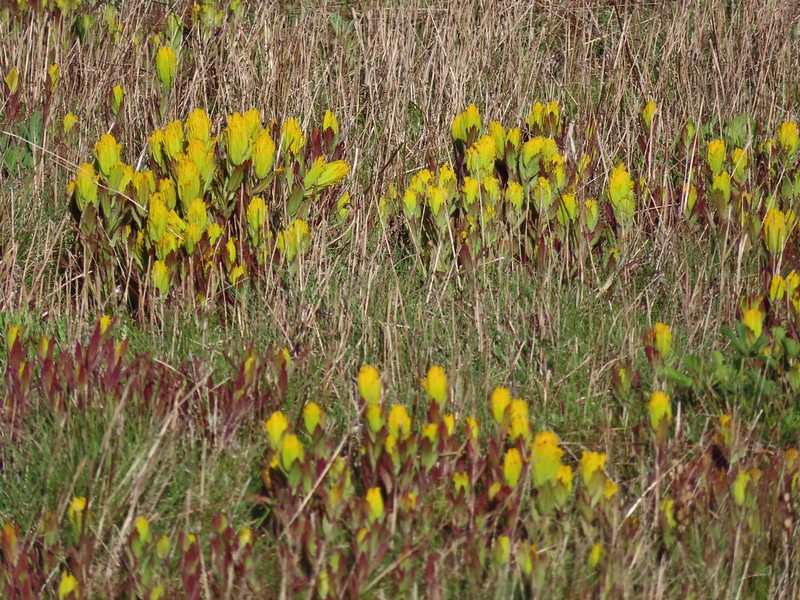
IMG_2051

IMG_2047

IMG_2058

Instead of heading for the barn and the Cheadle Marsh Trail which we had used on our 2020 visit I went right following a roadbed to Bruce Road across from the Field 12 Overlook.
IMG_2068Looking back at Pigeon Butte and the Cheadle Barn

IMG_2066Western bluebird

IMG_2070Bruce Rd and a sign for the overlook.

IMG_2071Swallows at the overlook

IMG_2075Mary’s Peak and Pigeon Butte from the overlook.
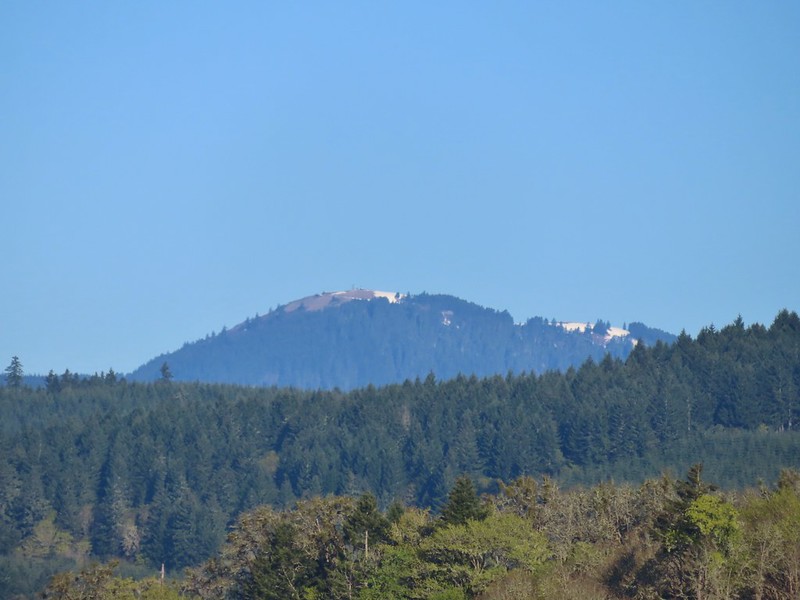
IMG_2076Mary’s Peak (post)

I then walked west on Bruce Road to the trailhead for the Beaver Pond and Cattail Pond Trails passing the Mitigation Wetland along the way. I paused at the wetland to watch a great blue heron and egret along with a number of ducks in.
IMG_2083Ground squirrel on Bruce Rd.

IMG_2080Sparrows

IMG_2085Western bluebird

IMG_2088Mitigation Wetland

IMG_2094

IMG_2103Egret

IMG_2098heron flying by the egret

IMG_2125Northern shoveler

IMG_2126Green winged teals

IMG_2129Trailhead off of Bruce Road

I turned off of Bruce Road at the trailhead and followed the grassy track to a fork where I veered left on the Beaver Pond Trail. This trail led briefly through the woods before arriving at the Beaver Pond where I startled a heron and a few ducks but an egret and a few other ducks stuck around.
IMG_2132Ground squirrel

IMG_2136Entering the woods

IMG_2142Giant white wakerobin

IMG_2144Fairybells

IMG_2162Startled heron

IMG_2169Egret and a cinnamon teal pair and maybe an American wigeon
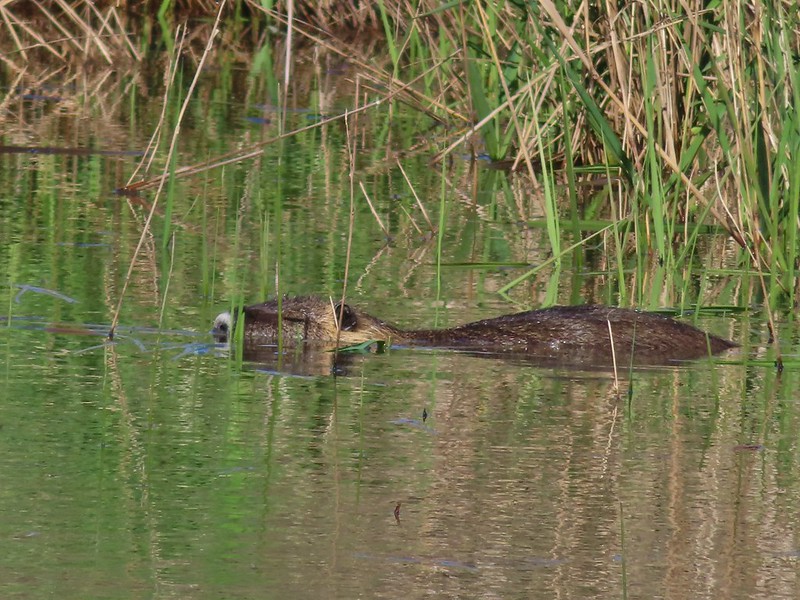
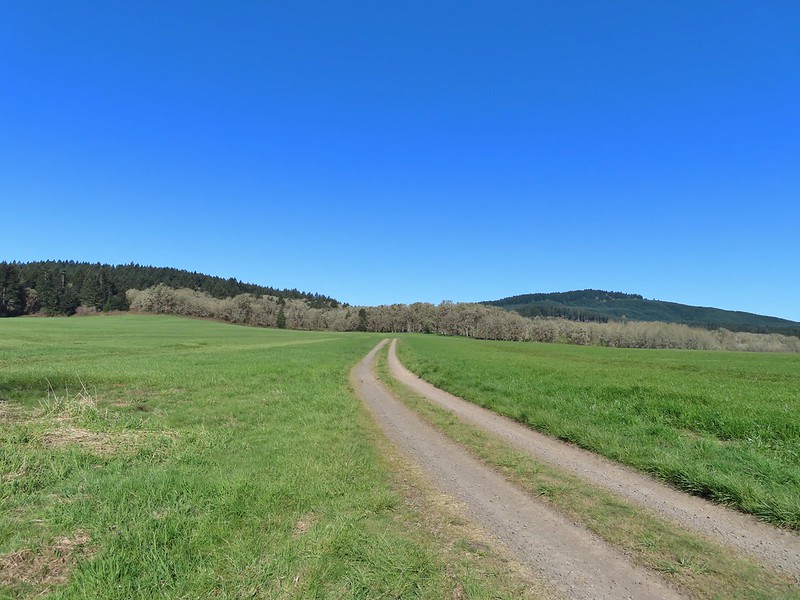
As I was watching the egret I noticed something else in the water but I wasn’t sure if it was an animal or a log/rock in disguise. Even with binoculars I could decide but after looking at the pictures it was in fact a nutria that appeared to be napping.
IMG_2165

The egret finally flew off and I continued on to a junction just beyond the pond where I turned left heading slightly uphill toward the Refuge Headquarters and the Mill Hill Loop.
IMG_2178

IMG_2181Candyflower

At a signed 4-way junction I followed a pointer for the Mill Hill Trail to the left but not before I checked out a patch of pink along the trail straight ahead.
IMG_2186

IMG_2188The pink turned out to be shooting stars.

I hiked the Mill Hill Loop (which led back to the junction right past the shooting stars) and then turned left on the Intertie Trail. The Mill Hill Loop was full of surprises with a number of different wildflowers blooming and a turtle sighting. The turtle was on a log in a wetland quite a bit below a bench along the trail and I only spotted it with the help of the binoculars but that counts.
IMG_2196Iris

IMG_2201Bleeding heart

IMG_2220One of many fairy slippers

IMG_2214

IMG_2218It took some work to get the camera to stop focusing on the brush in the foreground.
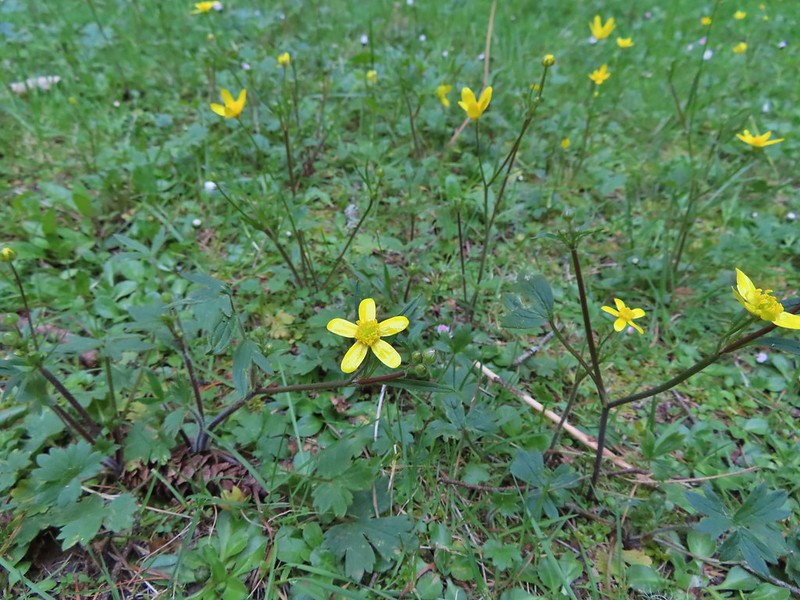
IMG_2230Buttercups

IMG_2232Violets

IMG_2238Fawn lilies

IMG_2244Back at the junction and onto the Intertie Trail

I followed the Intertie Trail to the Woodpecker Loop ignoring side trails to the Refuge Headquarters.
IMG_2245

IMG_2247

IMG_2256Service berry

IMG_2257The Woodpecker Loop

I turned left opting to head uphill on a slightly longer route back to my car so that I could check out the view from a hilltop viewing structure.
IMG_2259Norther flicker along the Woodpecker Loop
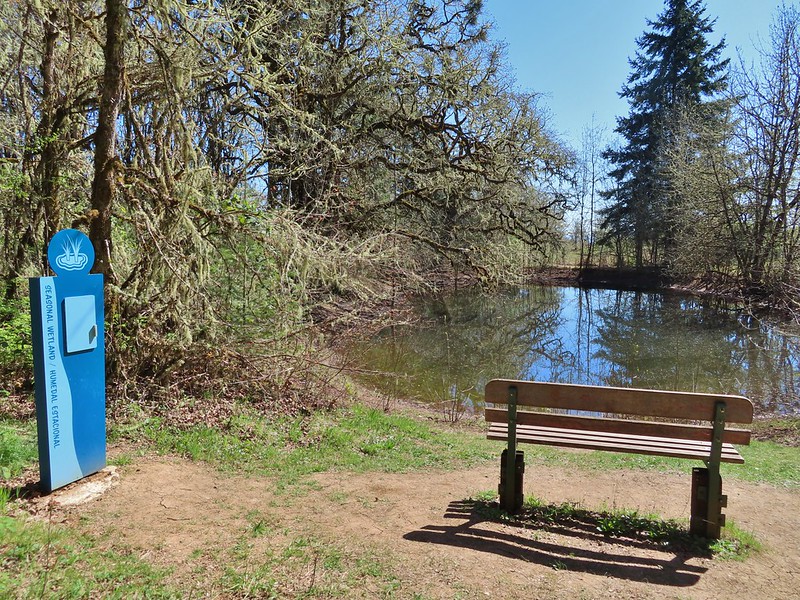
IMG_2263Amphibian pond and interpretive kiosk.

IMG_2267Viewing structure

IMG_2270

IMG_2272Mt. Jefferson

IMG_2273The Three Sisters

I watched a pair of raptors chase each other around but couldn’t get a clear enough view to tell what kind they were (maybe Cooper’s hawks?).
IMG_2277

IMG_2279This was the best shot I could get at 40x zoom with the sun in front of me.

After accepting that a clearer picture wasn’t possible I left the shelter and hiked downhill to my waiting car. While I only passed two other hikers on the trails there were a number of folks at the trailhead either just arriving or getting ready to leave. My loop with the mile detour up and down Pigeon Butte came in at 11.3 miles. The great thing about Finley is the diversity it offers with forest, woodlands, marshes and fields each supporting different plants and wildlife. The possibility of long, medium and short hikes is also nice. The one drawback is that there is a lot of poison oak in the area but they keep the trails wide enough that it really isn’t much of a problem.

Happy Trails!

Flickr: Finley Wildlife Refuge Loop

Categories
Hiking Oregon Oregon Coast Southern Coast

Siltcoos River, Siltcoos Lake & Honeyman State Park – 12/08/18

The first week of December greeted us with some beautiful weather. Unfortunately the forecast called for the arrival of rain Friday evening and we were unable to get time off of work during the week to take advantage of the sunny conditions.  We kept our eyes on the forecast though and by Friday there was a window of time Saturday morning where it looked like it might be dry along the coast south of Florence so we made a last minute call to take our final outing of the year.

Our plan was to end the year much as it started (post), with a three stop day along the Oregon Coast.  For this trip we’d picked three hikes just south of Florence, OR in the Oregon Dunes National Recreation Area.  Our first stop was at the Stagecoach Trailhead, eight miles south of Florence, in the Siltcoos Area.

Stagecoach Trailhead

Map at the Stagecoach Trailhead

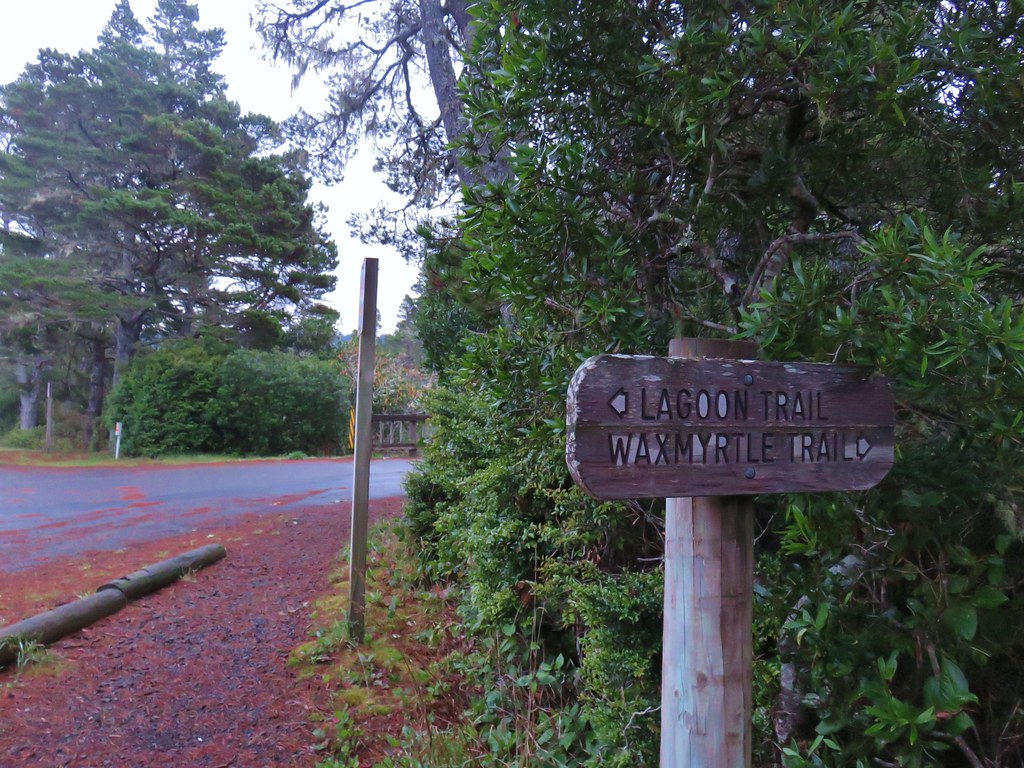
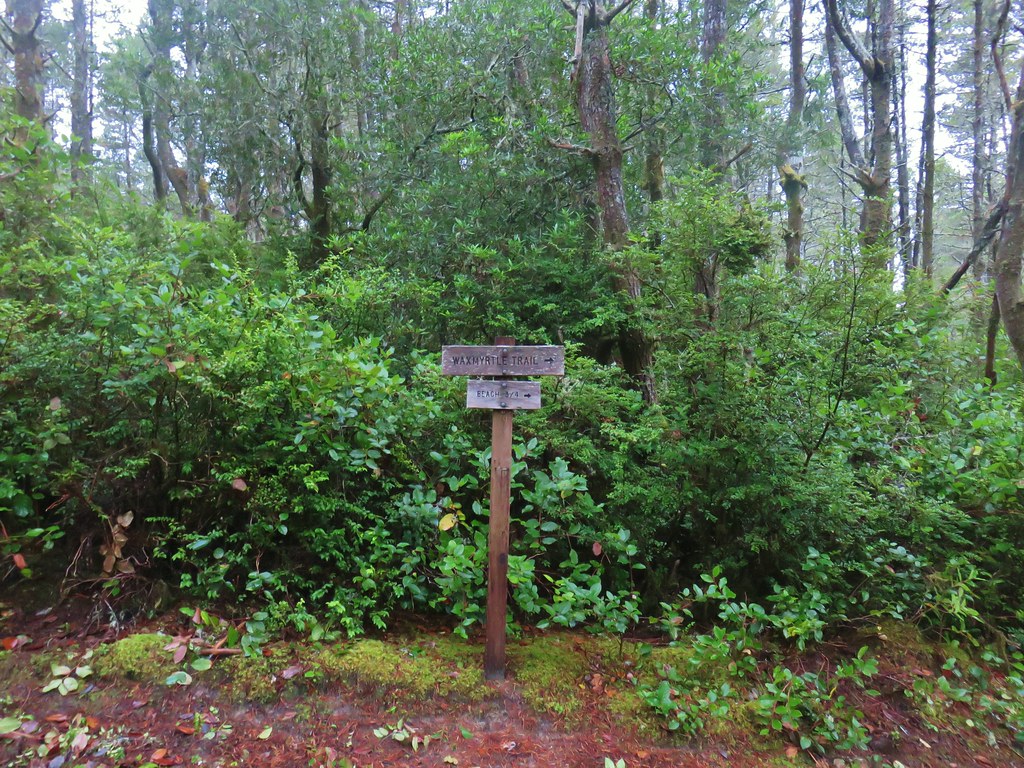
From the trailhead we followed signs for the Waxmyrtle Trail which led us across the Siltcoos River on bridge on the entrance road to the Waxmyrtle Campground.
Waxmyrtle Trail sign

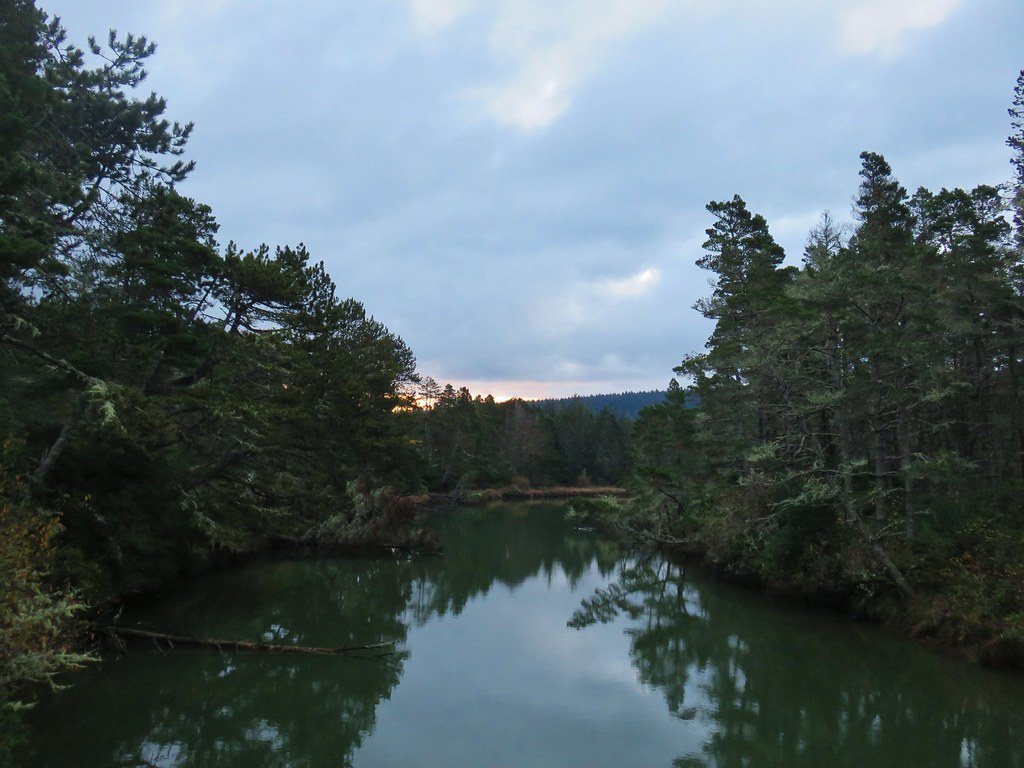
Siltcoos River

Once across the bridge we turned right along the river bank on the Waxmyrtle Trail.
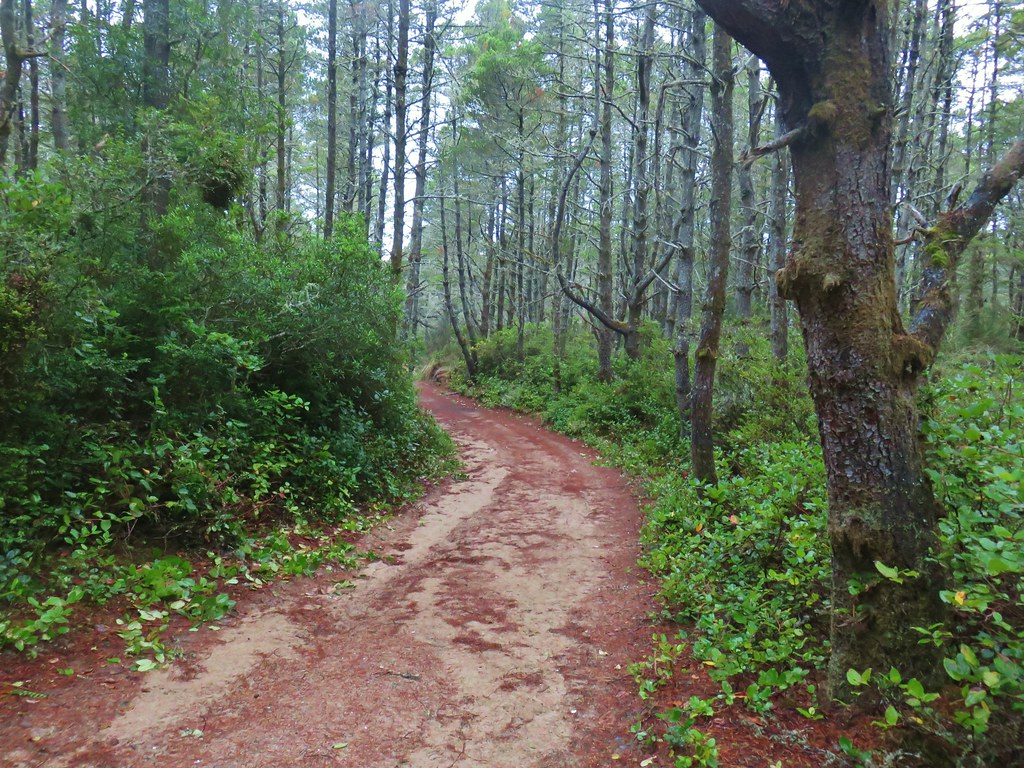
Waxmyrtle Trail

Siltcoos River

It was a mostly cloudy morning, but it was dry and there was a least some breaks which gave us hope that it would turn out to be a nice day after all.
Siltcoos River

Our guidebook had mentioned that this area was one of the best areas for bird watching in the State. Although we didn’t see a large number of birds on this morning we did spot a few along the estuary here.
EgretEgret

Great blue heronGreat blue heron

Common mergansersCommon mergansers

BuffleheadBufflehead
A little under a half mile from the bridge we came to an old fork in the trail. The right hand fork had been a seasonal trail sticking closer to the river, but it has been closed due to erosion.
Closed portion of trail along the Siltcoos River

We stayed left and shortly arrived at a sandy road leading between the campground and the beach. A sign here pointed right for the continuation of the Waxmyrtle Trail.
Sign for the Waxmyrtle Trail

Waxmyrtle Trail

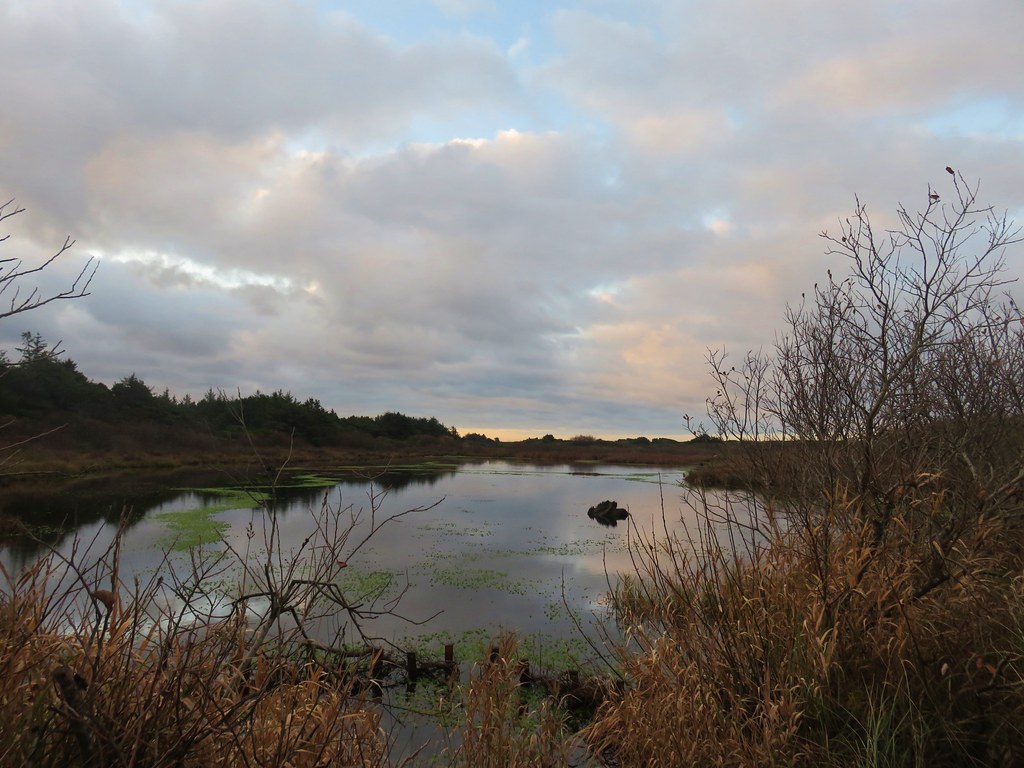
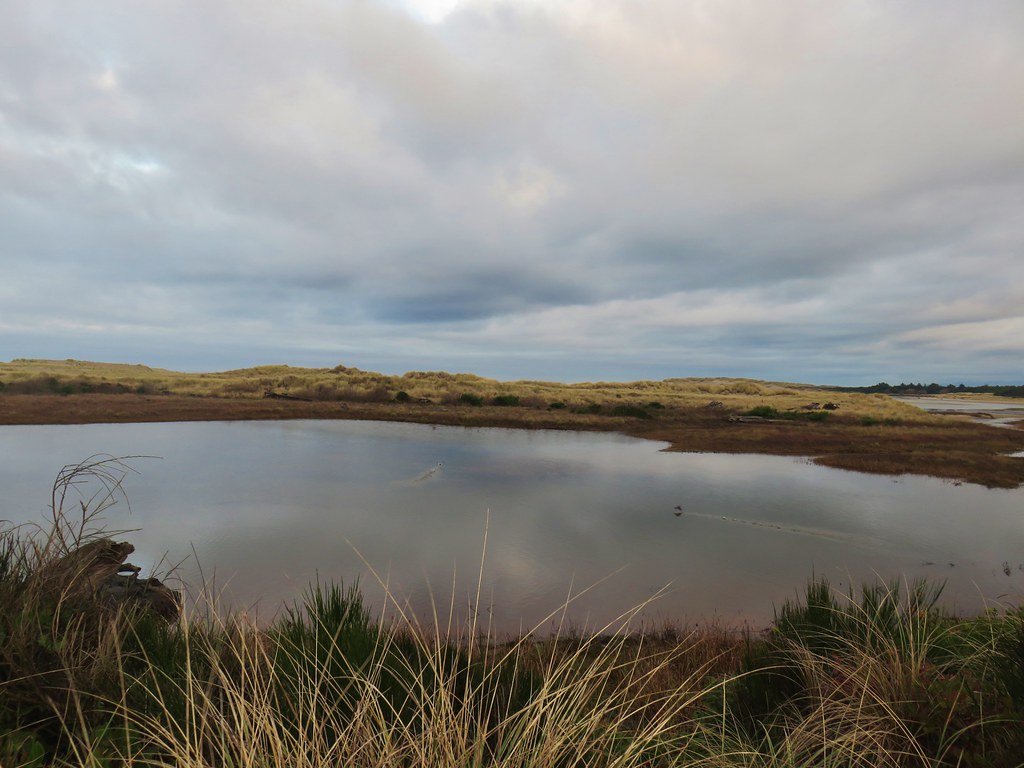
We followed this sandy track 3/4 of a mile to Waxmyrtle Beach. Along the way we passed through Waxmyrtle Marsh where the morning colors reflected off the still waters on either side of the trail.
Waxmyrtle Trail

Interpretive sign for the Waxmyrtle Marsh

Waxmyrtle Marsh

Waxmyrtle Marsh

Waxmyrtle Marsh

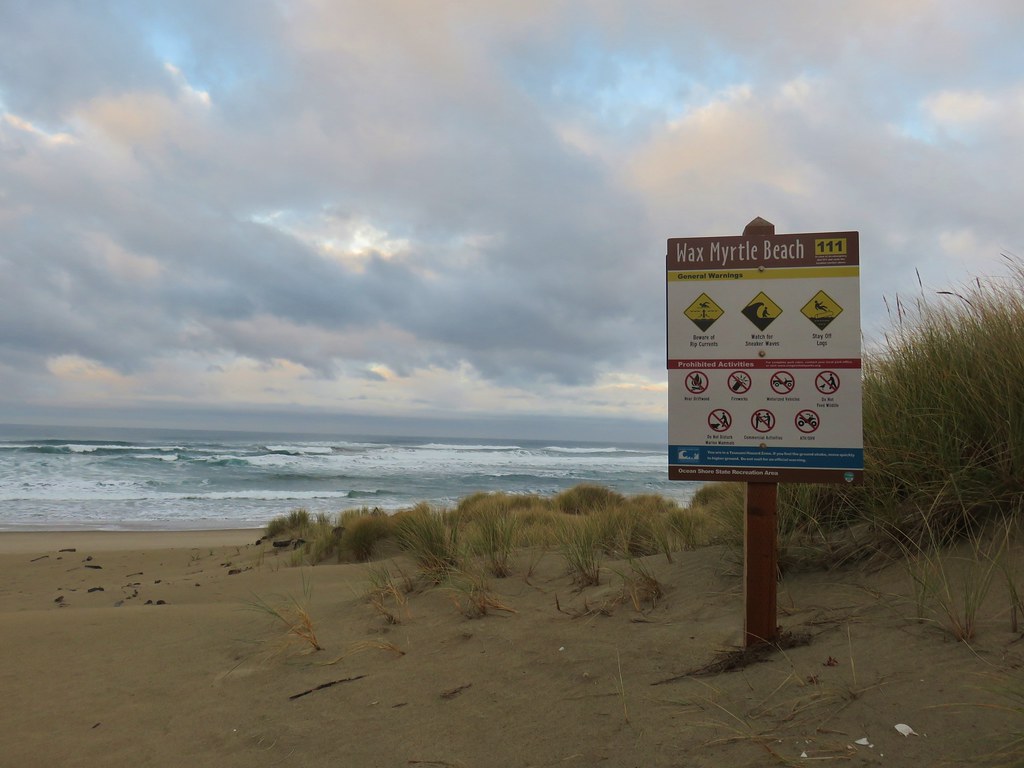
Waxmyrtle Beach

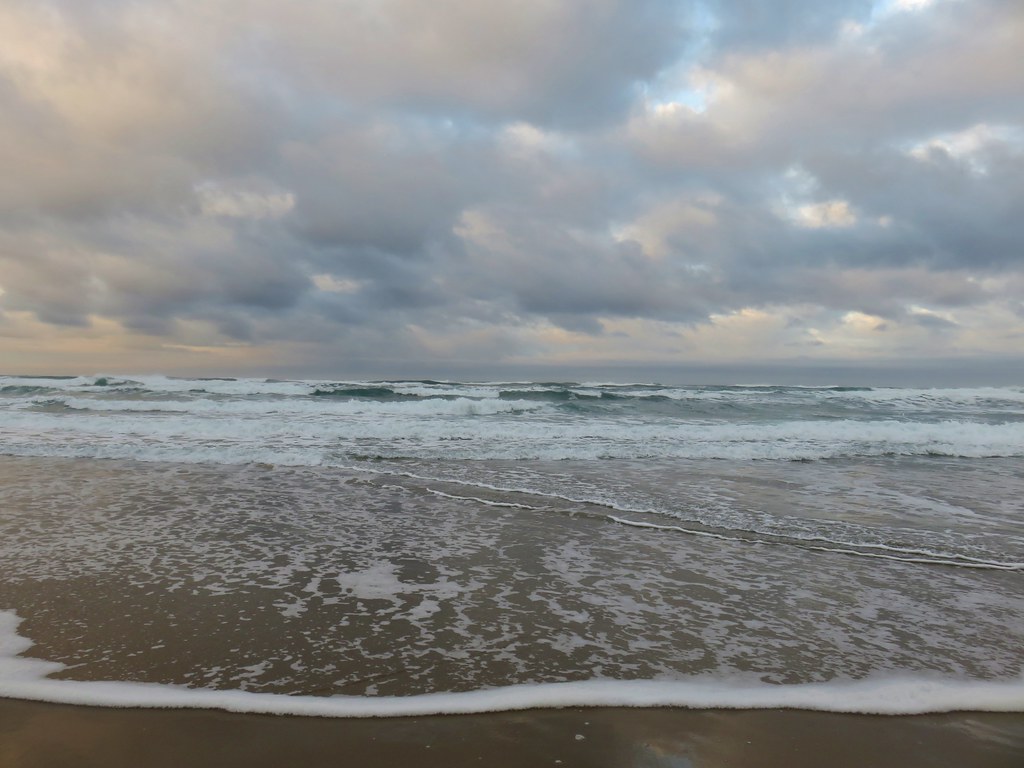
For a longer hike here we could have walked along the beach, but with two other stops ahead of us we simply stopped for a moment to enjoy the Pacific Ocean. It was a perfect morning for a visit, the temperature was in the upper 40’s, there was no breeze at all, and the sky above seemed to compliment the waves below.
Waxmyrtle Beach

Pacific Ocean at Wax Myrtle Beach

Pacific Ocean

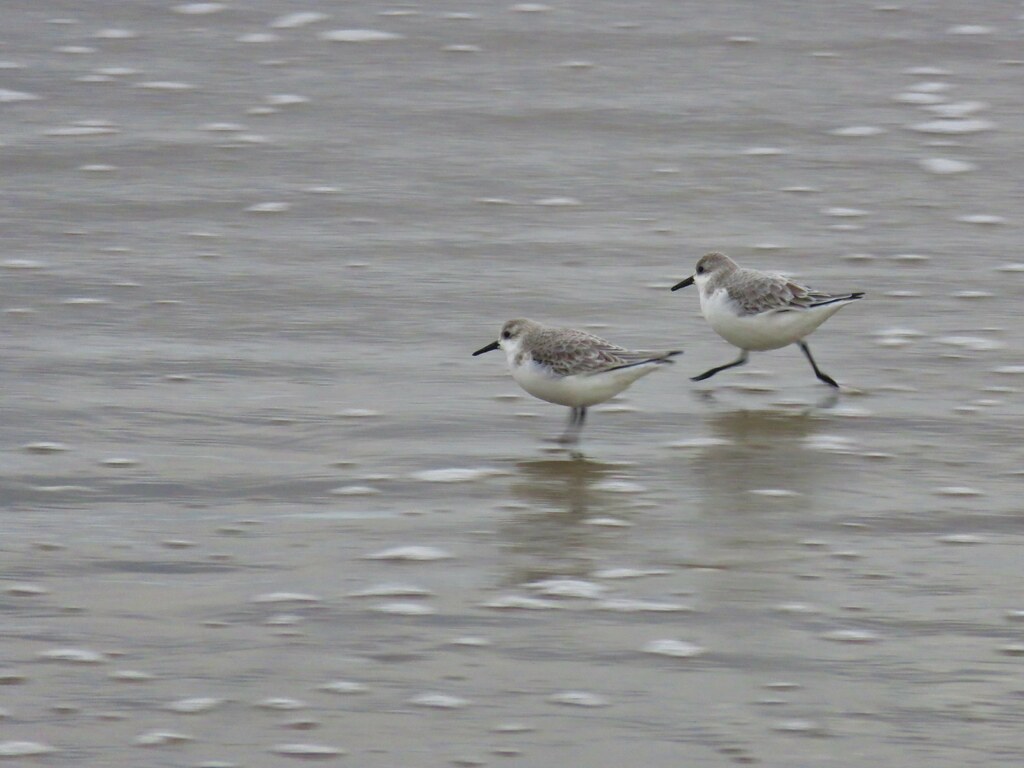
Sanderlings

After enjoying a peaceful moment on the beach we headed back the way we’d come, careful to not step on any of the numerous rough skinned newts that were out and about.
Tiny rough skinned newt

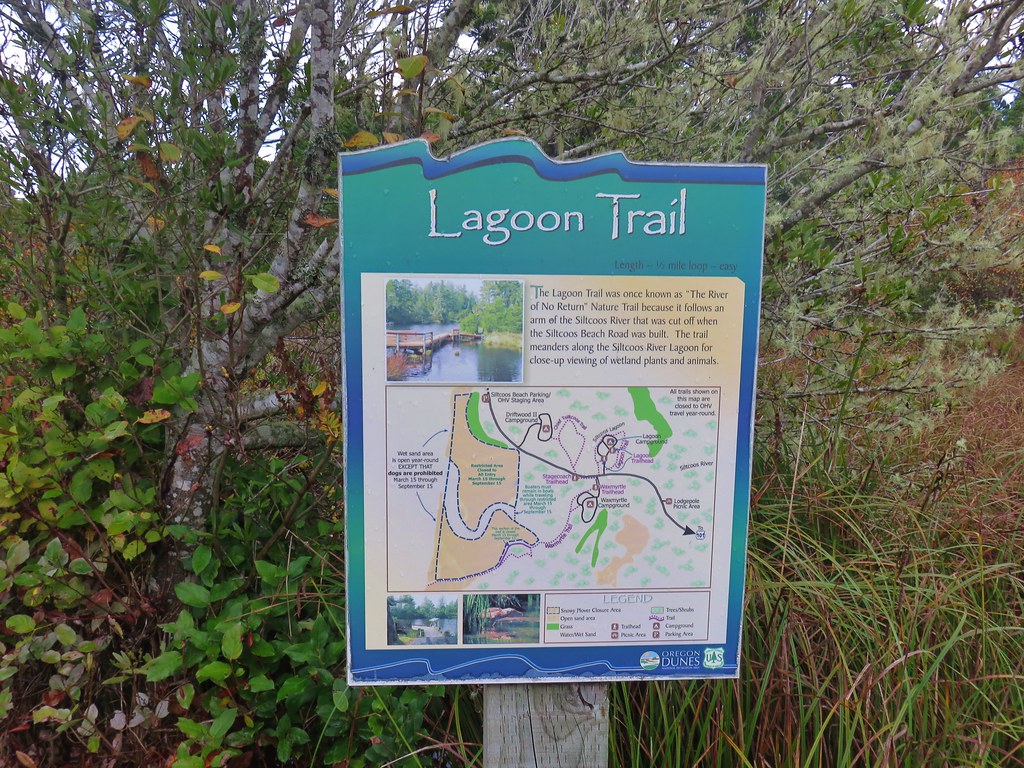
After recrossing the Siltcoos River and before returning to the Stagecoach Trailhead we crossed the main road to take the .7 mile Lagoon Trail.
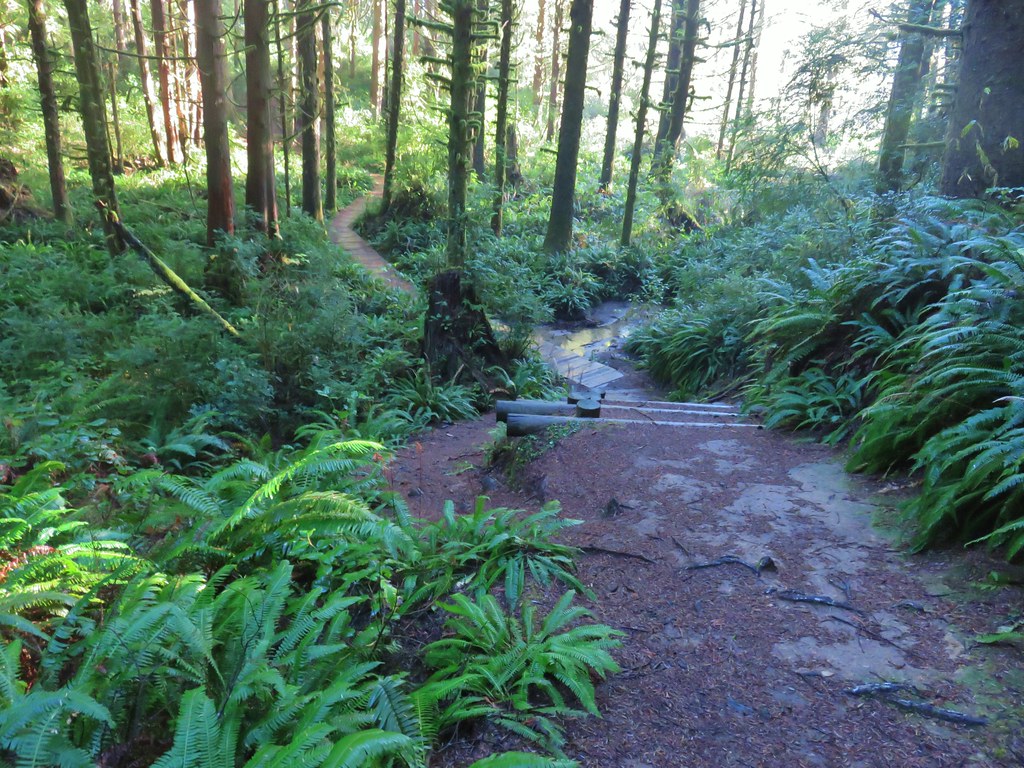
Lagoon Trail

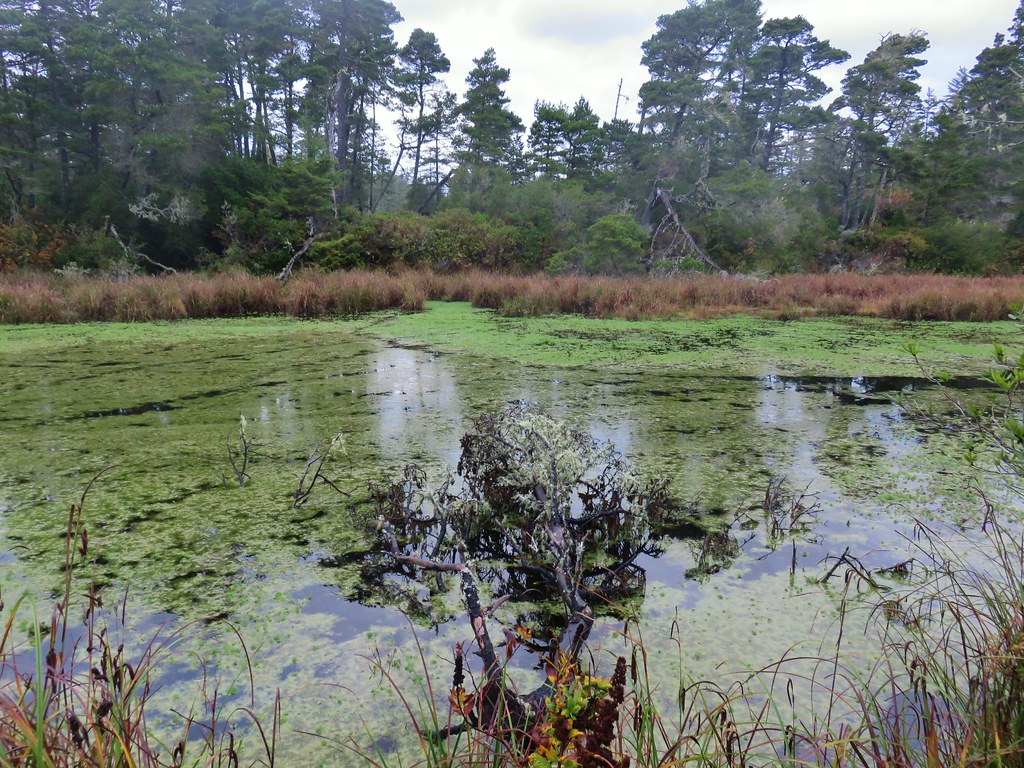
On the far side of a boardwalk the Lagoon Trail began a .7 mile loop around a campground in the middle of the Siltcoos Lagoon.
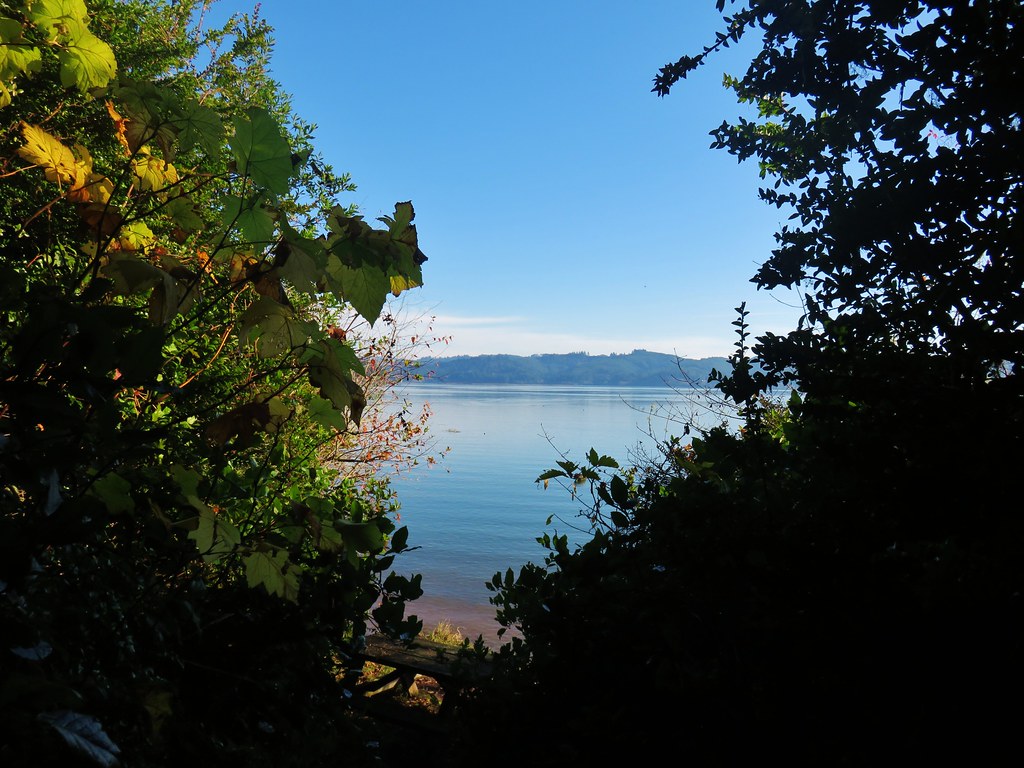
Lagoon Trail map

Siltcoos Lagoon

Siltcoos Lagoon

Interpretive sign along the Siltcoos Lagoon

Siltcoos Lagoon

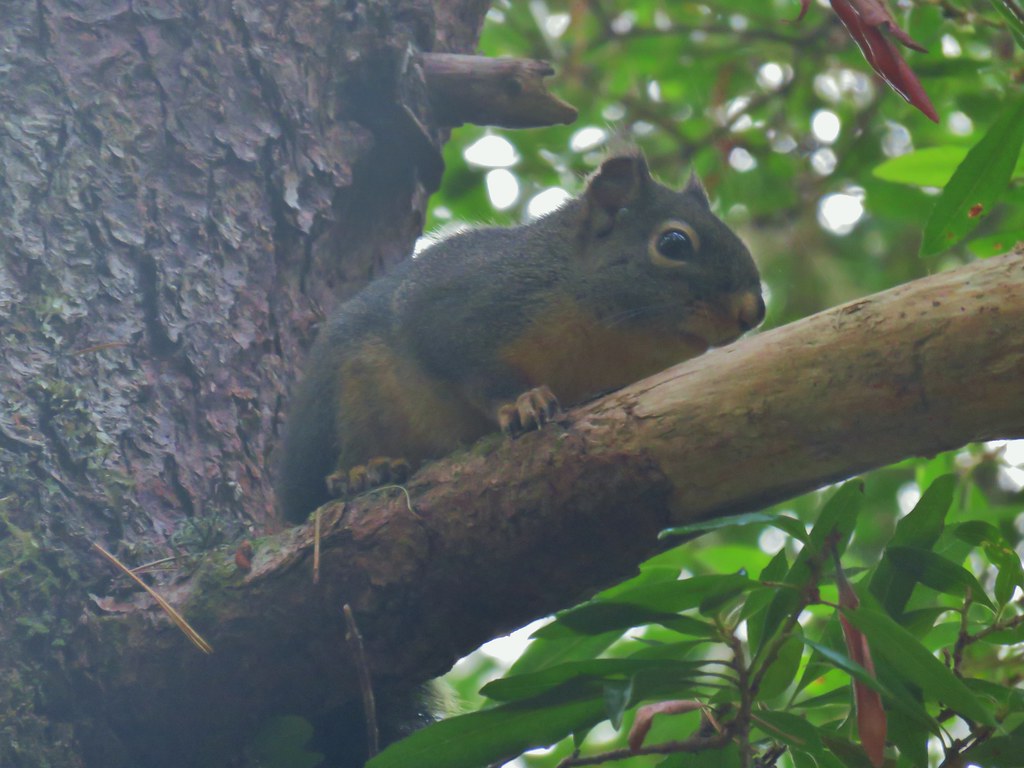
Squirrel

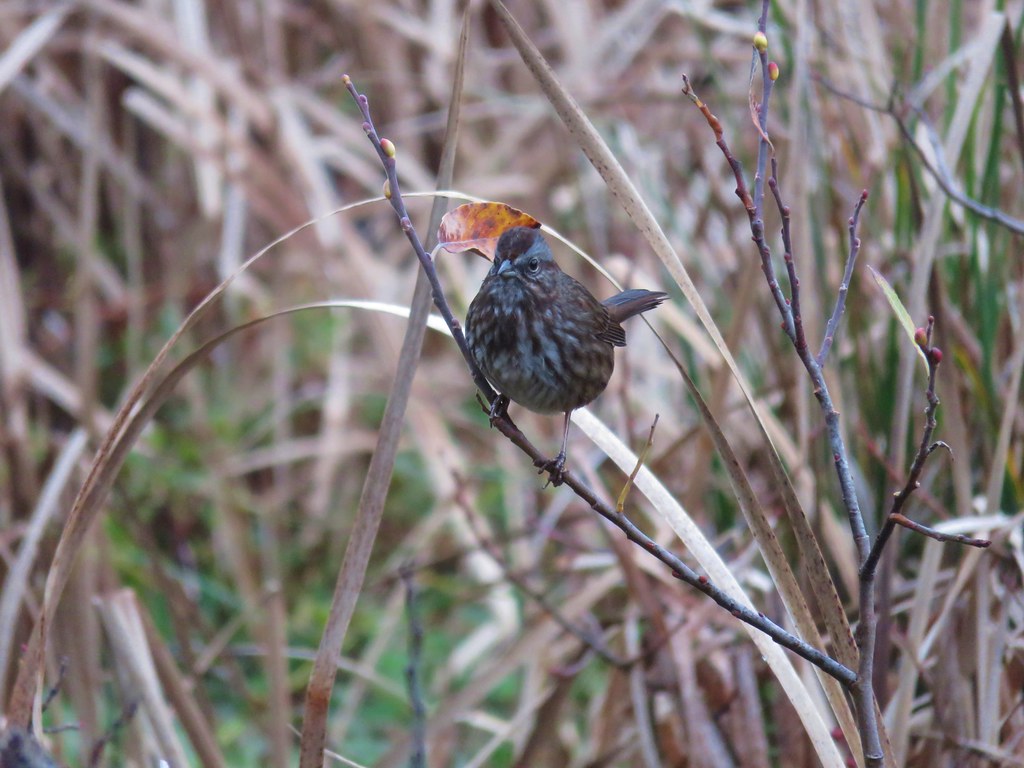
Sparrow

After finishing the loop we returned to our car. The hike here had only been 3.3 miles but had offered a nice variety of scenery and wildlife. We drove back to Highway 101 from the trailhead and crossed directly over it to reach the Siltcoos Lake Trailhead.
Siltcoos Lake Trailhead

The Siltcoos Lake Trail with a .9 mile climb inland through a second growth forest to the start of a loop.
Siltcoos Lake Trail

Siuslaw forest along the Siltcoos Lake Trail

Siltcoos Lake Trail

Siltcoos Lake Trail

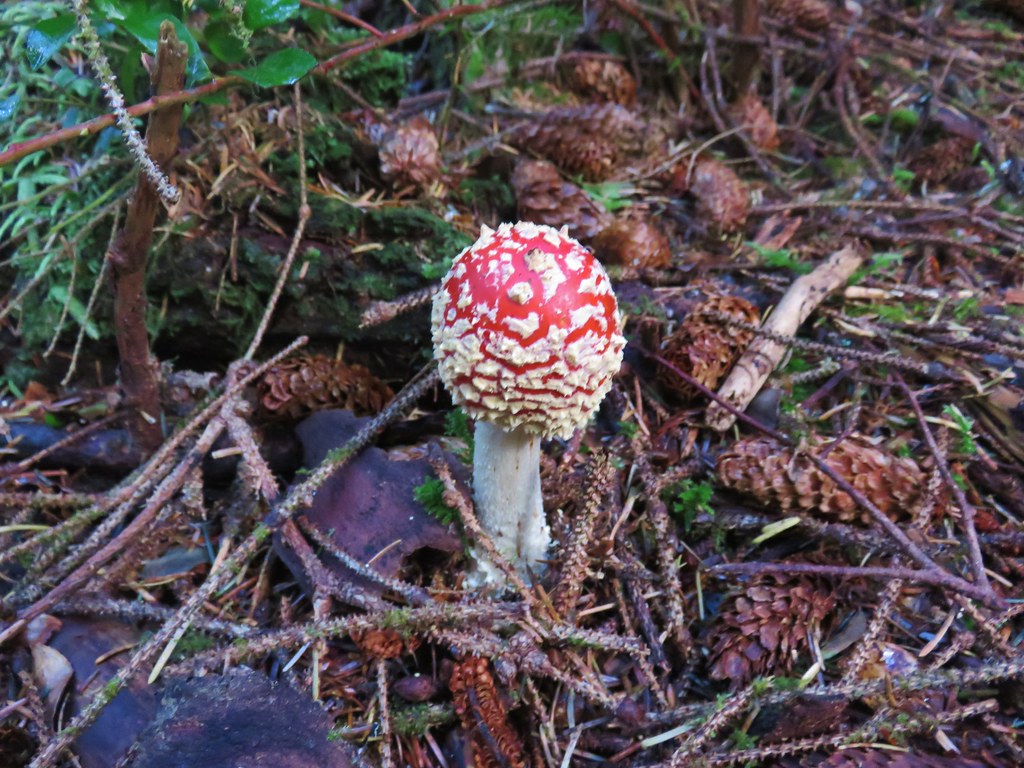
A wide variety of mushrooms grew along the forest floor where there were also more newts to watch out for.
Mushrooms

Mushrooms

Mushroom along the Siltcoos Lake Trail

Mushroom along the Siltcoos Lake Trail

Rough skinned newt next to an upturned mushroom

We turned right at the start of the loop and followed the trail a little over three quarters of a mile to another junction.
Sunbeams in the forest along the Siltcoos Lake Trail

Siltcoos Lake Trail

We had lost nearly all the elevation we had gained and the trail to right continued downhill for another quarter mile to South Camp, a tent site along the lake shore.
Siltcoos Lake

Siltcoos Lake

The lake was very pretty and full of birds but the nearly constant sound of gunfire took a little away from the enjoyment.
Birds on Siltcoos Lake

Birds on Siltcoos Lake

We climbed back up to the Sitlcoos Lake Trail and continued a half mile on the loop which dropped to a small creek crossing before arriving at a sign for the tent sites at North Camp where we again turned right and visited the lake shore.
Siltcoos Lake Trail

Siltcoos Lake

American coot

Birds taking flight from Siltcoos Lake

Following paths north along the shore led us past all the sites and back to the Siltcoos Lake Trail.
Sunbeams in the Siuslaw National Forest

Siltcoos Lake Trail

Just under a mile and a quarter from North Camp we finished the loop and then returned the .9 miles to the trailhead to complete the 4.4 mile hike.

Next we drove north on Highway 101 just over 4.5 miles to signs for Jessie M. Honeyman State Park where we turned east on Canary Road. We followed this road for a half mile before turning right into the East Woahink Day Use Area.

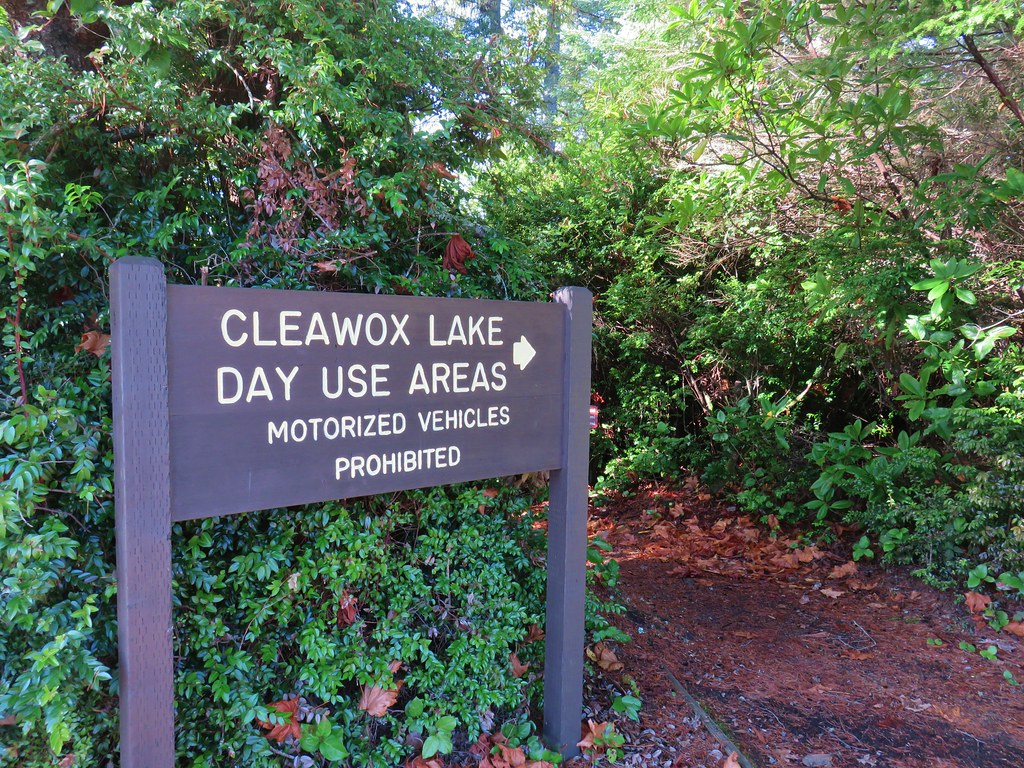
After parking in the large parking area we walked back toward the entrance to a large sign for Cleawox Lake Day Use Areas.
Trail from the East Woahink Lake picnic area

This path led briefly through a forest before joining Canary Road to cross a portion of the lake.
Trail between Woahink and Cleawox Lake

Woahink Lake

After passing over the water along the road the trail dipped back into the forest and immediately forked. The right hand fork led directly into the West Woahink Day Use Area while the left fork (which we took) looped around the day use area along the lake shore passing picnic tables and a small beach.
Beach along Woahink Lake

Woahink Lake

On the far side of the West Woahink Day Use Area we once again found ourselves on the shoulder of Canary Road passing over more of the lake. The trail again veered away from the somewhat busy road and we followed pointers for Cleawox Lake to a paved bike path leading over Highway 101.
Trail between Woahink and Cleawox Lake

Trail between Woahink and Cleawox Lake

Path over Highway 101 in Jesse M. Honeyman State Park

Rough skinned newts had become the theme for the day and even the bike path was not free of them.
Rough skinned newt

Shortly after crossing over the highway we turned right off the bike path at a trail sign.
Trail between Woahink and Cleawox Lake

This path led downhill past a small stone structure and across a couple of paved roads before reaching Cleawox Lake.
Stone structer in Jessie M. Honeyman State Park

Trail between Woahink and Cleawox Lake

Cleawox Lake

On the far side of lake was the day use area complete with a very nice bathhouse. We turned right at the lake and made our way around the water to the bathhouse and swimming area.
Cleawox Lake

Bathhouse at Cleawox Lake

Cleawox Lake

We could imagine that this would be a very busy place at other times of the year but on the second weekend in December there were only a few other people that we could even see and they were all across the water in other areas. We found a dry bench and sat a for a bit listening to a sparrow sing.
Sparrow

As we started to head back an Anna’s hummingbird zoomed by and landed in a nearby tree.
Anna's hummingbird

Anna's hummingbird

We passed by the trail that we had come down to the lake on and continued along the water to a large parking area on the opposite side of the bathhouse.
Cleawox Lake

At the end of the parking lot a path led to a dune along the lake, but before we headed out onto the sand we took a very short side trip on the signed Nature Trail to visit Lily Lake.
Nature Trail

Lily LakeLily Lake

After seeing the small lake we headed up the sand dune overlooking Cleawox Lake.
Dunes Trail

Dune in Jessie M. Honeyman State Park

Cleawox Lake

We climbed to the top of the dune and surveyed the surrounding area.
Dune in Jessie M. Honeyman State Park

Cleawox Lake

Pacific Ocean from a dune in Jessie M. Honeyman State ParkThe Pacific Ocean from the dune.
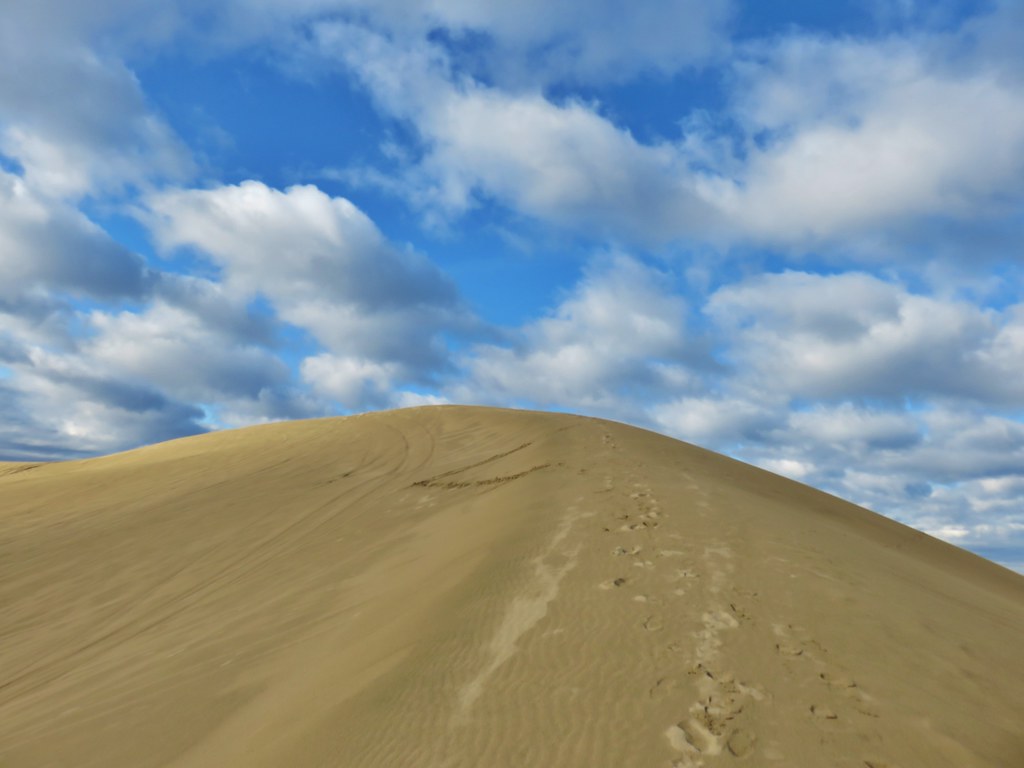
To the south we could see our goal, the largest sand dune (at least in that area) in Jessie M. Honeyman State Park.

Jessie M. Honeyman State Park

It was a half mile of sandy up and down walking between the two dunes.
Trail through the dunes at Jessie M. Honeyman State Park

Dune Trail

After a nearly 150′ climb we arrived at the top of the dune and its 360 degree view.
View from the tallest dune in Jessie M. Honeyman State Park

View from the tallest dune in Jessie M. Honeyman State Park

View from the tallest dune in Jessie M. Honeyman State Park

View from the tallest dune in Jessie M. Honeyman State Park

Although off road vehicles are allowed in much of the park this dune (and our route to and from it) are off limits. After soaking in the view (and watching a couple of motorcycles in the distance) we followed footprints steeply downhill to the east.
Path down the dune

Dune in Jessie M. Honeyman State Park

After a short stint through trees we followed tracks around a sandy bowl reentering the trees just above the park’s campground.
Dune in Jessie M. Honeyman State Park

Once in the campground we headed north following the paved roads to Loop “B”.
Campground in Jessie M. Honeyman State Park

We turned east along the northern end of Loop B which brought us to the bike path that we had crossed Highway 101 on earlier.
Trail to East Woahink Lake Day Use Area

We followed path back up and over Highway 101 and returned to the East Woahink Lake Day Use Area. The path was full of birds now, mostly robins but we also spotted a nice spotted towhee.
Robins

Spotted towhee

The only thing we did differently on the way back was that we went through the West Woahink Day Use Area instead of around it which allowed us to use the facilities there before our drive home. This was our longest hike of the day at 5.2 miles bringing the days total to 12.9.

We had been all prepared for wet and rainy weather, but instead we had a nearly perfect day for hiking at the coast. Happy Trails!

Flickr: Siltcoos River, Siltcoos Lake, & Honeyman State Park

Categories
Central Oregon Hiking Klamath Falls Oregon

Link River Nature Trail

Two weeks after a last minute hiking trip to the Klamath Falls area we had a different reason to head back down to that city, my Aunt LaVonne and Uncle Ron’s 50th wedding anniversary. The celebration wouldn’t be starting until the afternoon, so before the festivities began we took a short hike with our son Dominique along the Link River Nature Trail.

After being chauffeured to the trailhead by my parents (who did their own shorter version of the hike) we set off along the trail which was actually a closed roadbed behind a chain link gate.

IMG_4590

The road paralleled the river which flows between Upper Klamath Lake and Lake Ewauna.

IMG_4594

From the very start the trail lived up to being called a nature trail as a number of different birds could be seen in and around the water.

IMG_4598

IMG_4600

IMG_4611

IMG_4612

At the .4 mile mark we passed the dam that created the lake behind it.

IMG_4616

Just beyond the dam the trail crosses a canal on bridge.

IMG_4621

At the half mile mark we left the roadbed at a post for Klamath Falls and made our way to the river just downstream from the small cascades.

IMG_4622

IMG_4629

IMG_4627

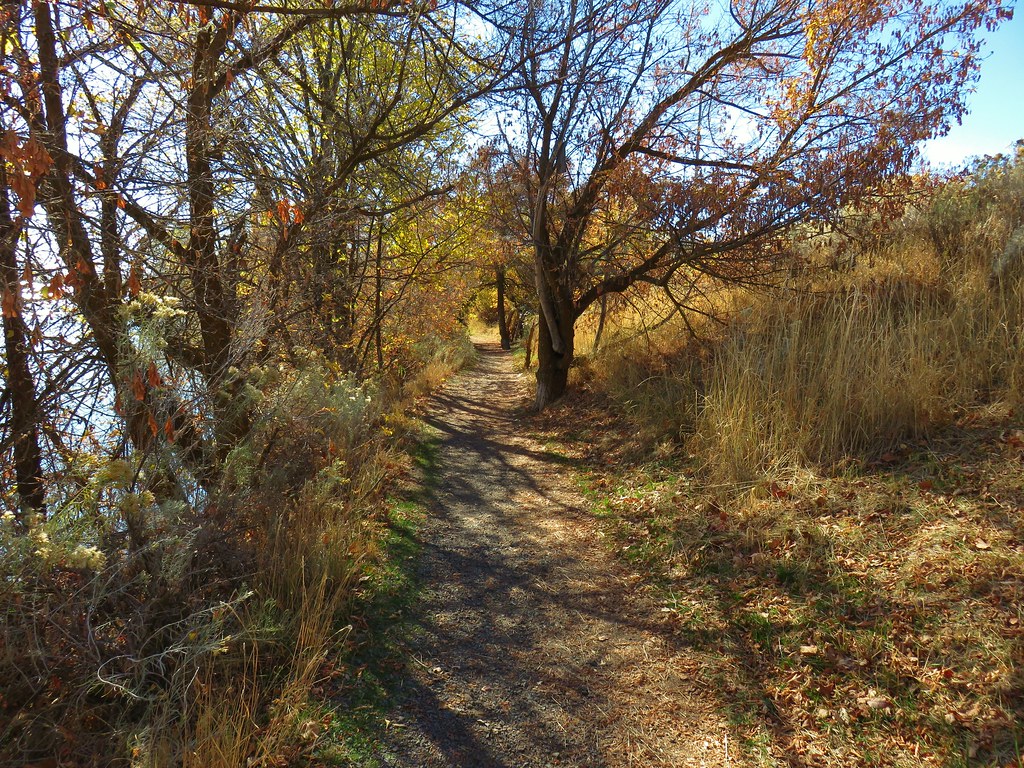
After visiting the falls we returned to the trail and continued to follow the river toward Lake Ewauna through a desert canyon where there were plenty more birds.

IMG_4639

IMG_4636Coots

IMG_4642Scrub jay

IMG_4663White pelican, coots, and a cormorant

IMG_4655White pelican

IMG_4668Coots

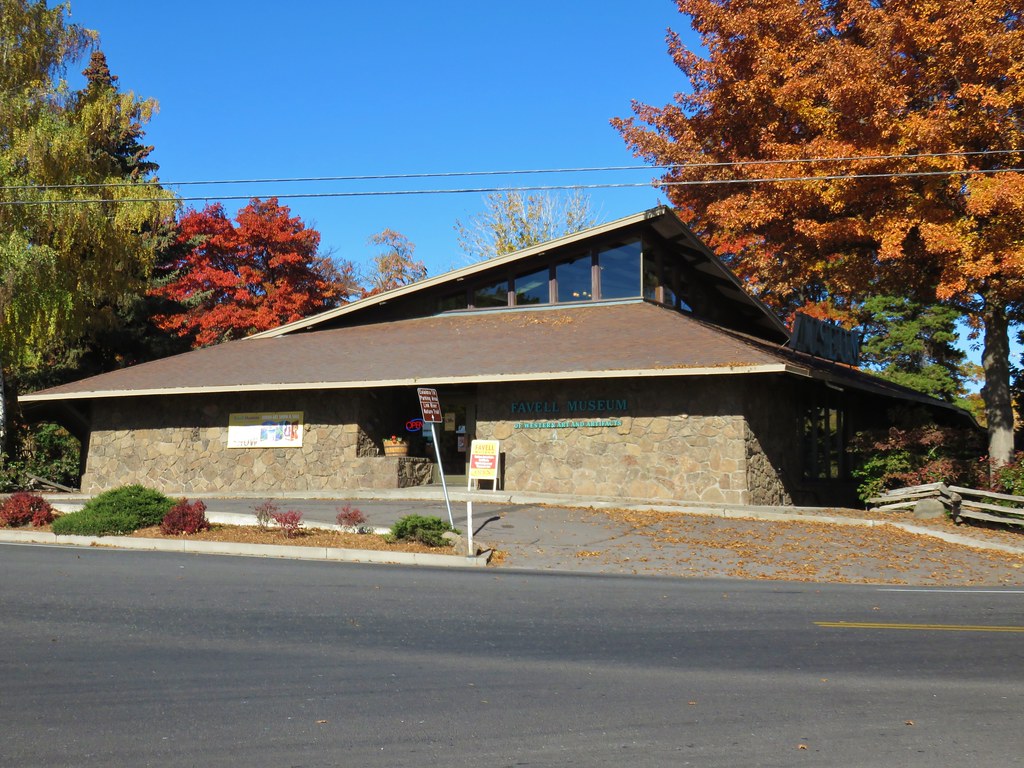
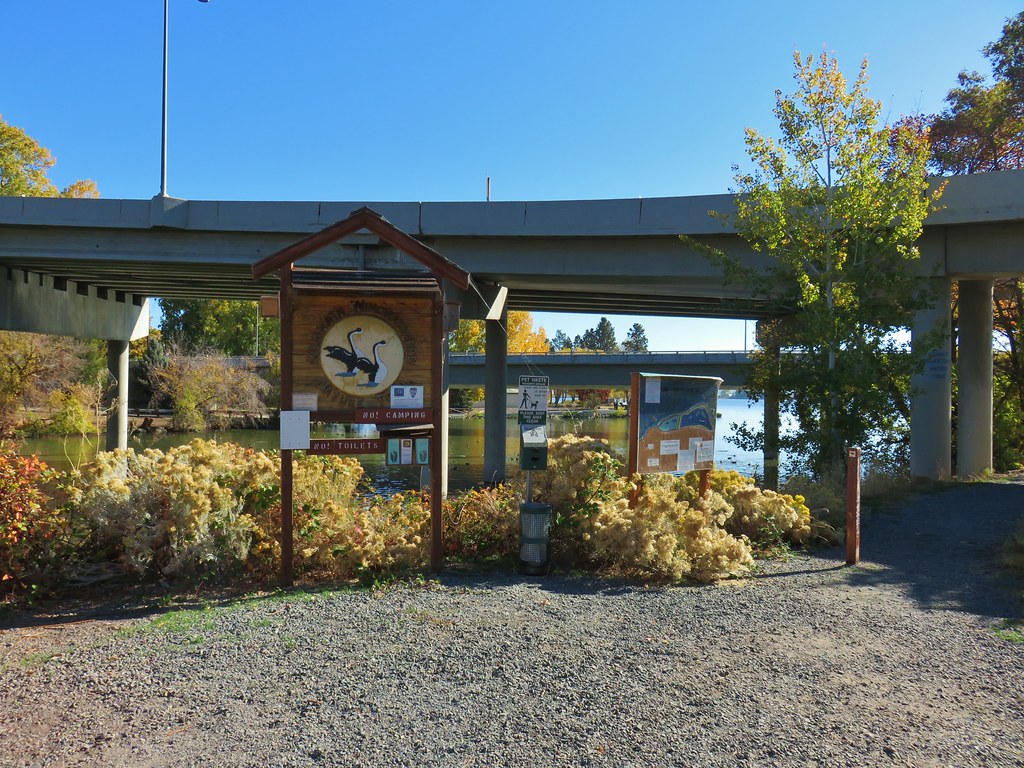
After one and three quarters of a mile we arrived at the southern end of this section of trail at w parking lot near a power station. Here we crossed Main Street near the Flavell Museum and then also crossed Highway 39 at a crosswalk into a small parking area for the Klamath Wingwatchers Nature Trail.

IMG_4672

IMG_4673

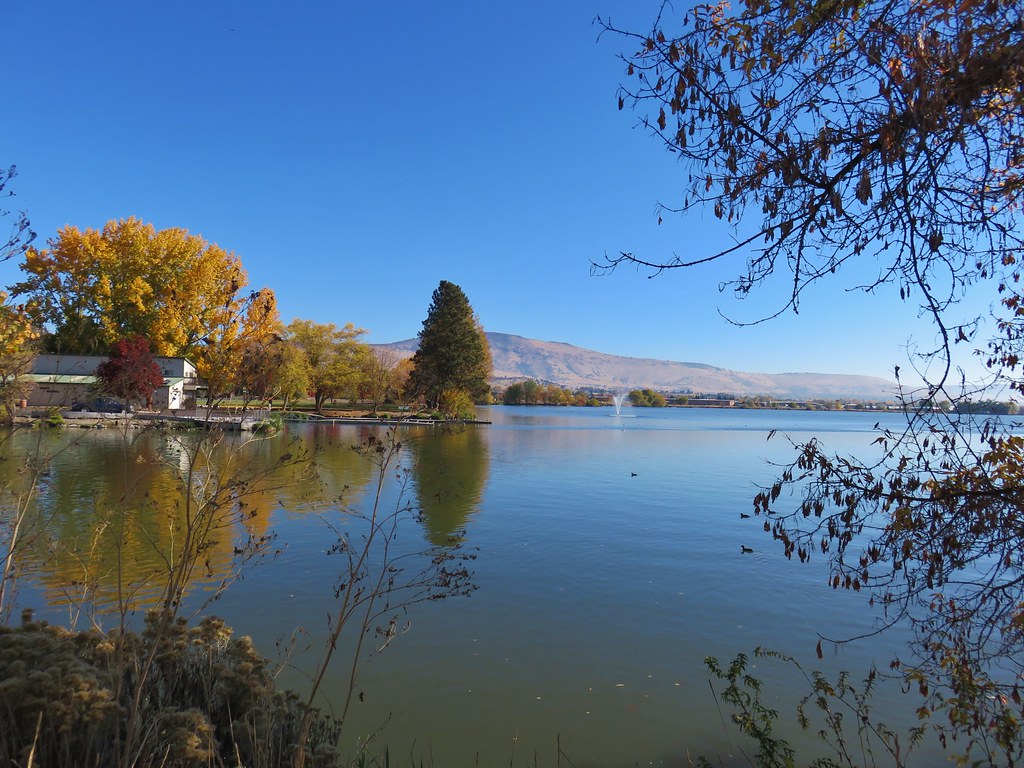
This trail passed underneath Highway 97 and brought us to Lake Ewauna.

IMG_4684

IMG_4677

The trail itself wasn’t much to write home about as it passed between the lake and the busy highway, but the number and variety of birds made up for the traffic.

IMG_4686

IMG_4680

IMG_4690

IMG_4694

IMG_4695

IMG_4699

After about a quarter mile on this trail we came to a fork signed “Loop B”.

IMG_4698

This was the beginning of a .8 mile loop around a couple of old mill ponds. We decided to go around the ponds counter-clockwise so we stayed right. We saw birds everywhere – in the ponds, on the lake, and in the sky.

IMG_4713Mallards and other birds

IMG_4706Canada geese

IMG_4702Pelicans in flight

IMG_4710Great blue heron among others

IMG_4719Northern shoveler

IMG_4721Horned grebes

After completing the loop we headed back, recrossed the roads, and returned to the trailhead along Lakeshore Drive. We spotted several additional types of birds that we hadn’t seen earlier and many that we had.

IMG_4729Northern flicker

IMG_4739More pelicans

IMG_4746Another jay

IMG_4750Great blue heron on the rocks

IMG_4731Common merganser

IMG_4762Hooded mergansers (in the foreground)

IMG_4757Egret

IMG_4759Western grebe
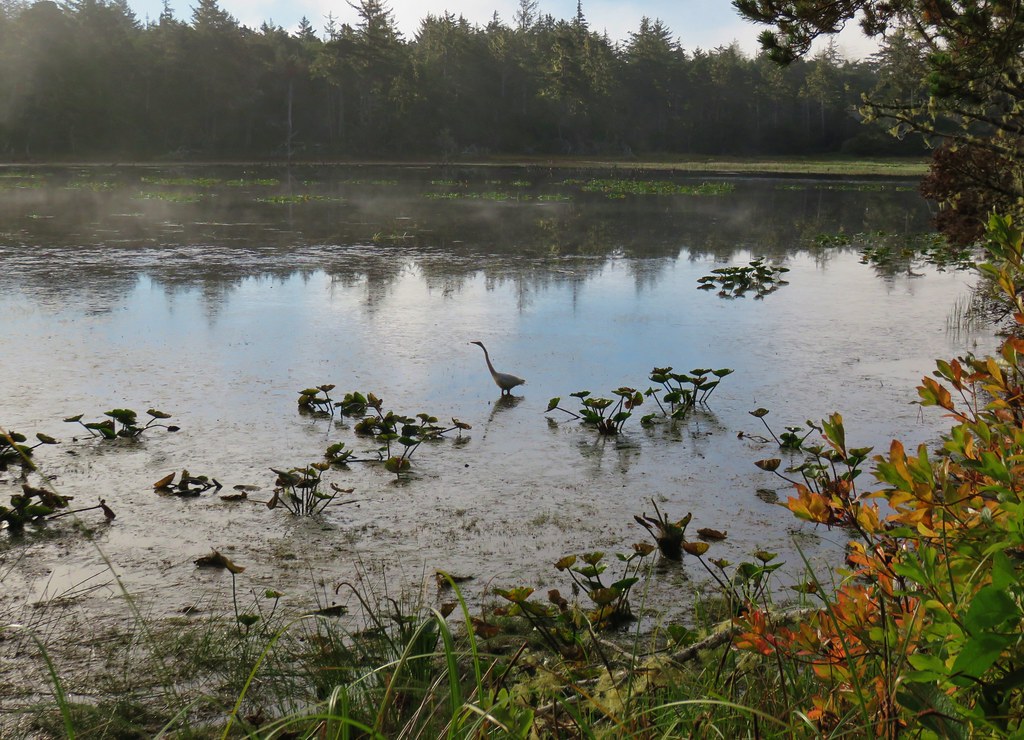
In addition to all the birds we did see two garter snakes slither into the grass and my parents spotted a muskrat and a deer on their hike. For a short, in town hike it had provided a lot of wildlife over the 5 mile round trip.

We spent the afternoon at the anniversary party with a whole different type of wildlife :). Happy Trails!

Flick: Link River Nature Trail

Categories
Hiking Oregon Oregon Coast Southern Coast

New River and Bandon Islands

We had changed our mini-vacation plans from a four day backpacking loop around and up Diamond Peak to four days of hiking on the Oregon Coast due to the possibility of wet weather. Wet weather isn’t typically a big deal at the coast and drying off in a motel room is a lot more convenient than trying to keep your backpacking gear dry for multiple days. When we had looked at the forecast for Bandon the best looking day weather wise had been Friday with a forecast of mostly sunny and no chance of showers. We planned a pair of hikes for that day, first at the New River Recreation Area and then a walk along the beach starting at the Bandon South Jetty Park.

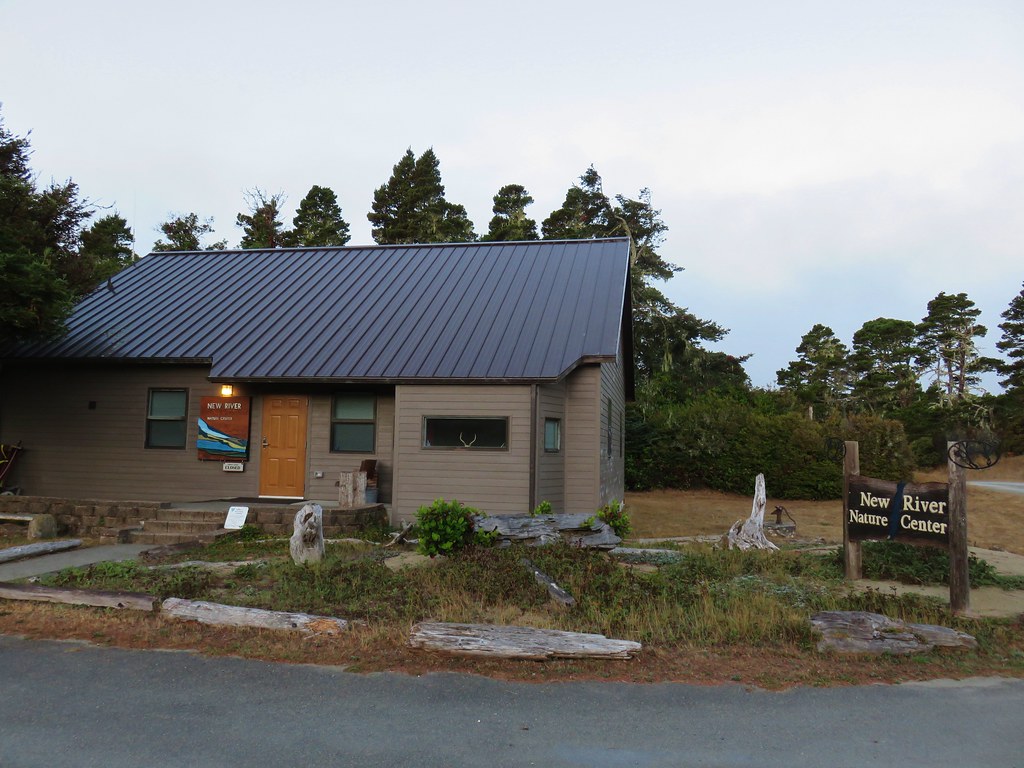
The BLM managed New River Recreation Area is located eight miles south of Bandon on Croft Lake Road. We parked near the New River Nature Center which hadn’t opened yet for the day.

IMG_2509

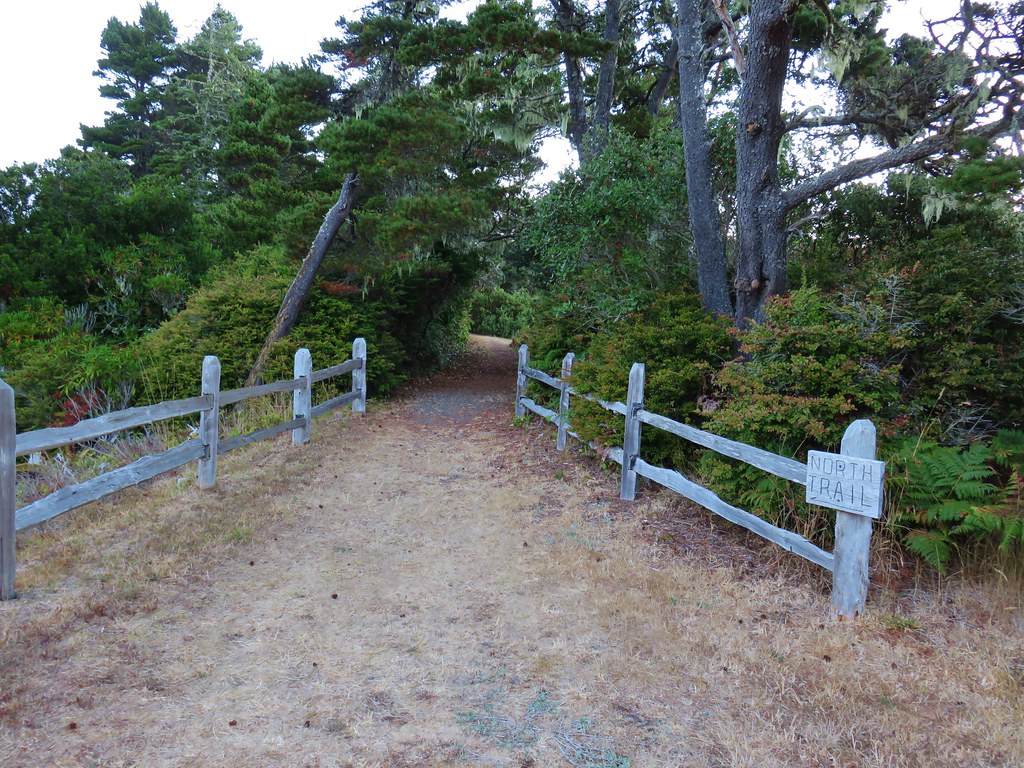
We headed north from the parking area onto the signed North Trail.

IMG_2512

A little over a quarter mile along this forested path we came to a junction with the Ridge Trail.

IMG_2515

IMG_2516

We turned right onto this trail which made a .4 mile horseshoe along the top of an old dune now covered in vegetation including some madrone trees.

IMG_2517

At a bench at the end of the Ridge Trail we turned right onto the Huckleberry Hill Trail (If we had gone straight at the North/Ridge Trail junction we would have wound up here in less than a tenth of a mile.)

IMG_2522

We followed the Huckleberry Hill trail .4 miles down an increasingly sandy track to the Ocean View Trail where we turned left (the only choice).

IMG_2523

IMG_2524

Huckleberries along the Huckleberry Hill Trail

IMG_2527

IMG_2528

IMG_2529

After just 430′ on the Ocean View Trail we took a signed spur trail to the right to a viewpoint.

IMG_2531

We arrived at the New River in less than 100 yards. The Ocean was barely visible on the other side of a low rise on the beach between the river and the Pacific.

IMG_2532

IMG_2536

IMG_2537

We returned to the main trail and continued an additional .2 miles before arriving at the New River Boat Ramp.

IMG_2541

It was a little foggy but we could see quite a few Canada geese and an egret in the river.

IMG_2543

IMG_2548

IMG_2544

From the boat ramp we followed the road for .2 miles to the Muddy Lake Trail.

IMG_2555

IMG_2556

Two tenths of a mile from the road we turned right on the .1 mile New River Spur Trail.

IMG_2558

IMG_2559

Instead of burning off we noticed that the fog was getting thicker when we arrived back at the river.

IMG_2560

IMG_2564

Canada geese

We headed back to the Muddy Lake Trail which we followed for about 110 yards, crossing over a boardwalk, to a very short spur trail leading to a bird blind at Muddy Lake.

IMG_2566

IMG_2569

We were fortunate enough to have a couple of different birds hunting their morning meal near the blind.

IMG_2601

IMG_2573

IMG_2581

IMG_2595

The egret seemed to be having quite a bit of success.
IMG_2584

IMG_2585

IMG_2586

After watching the birds from the blind we continued on. A little over a quarter mile from the blind we came to another trail junction.

IMG_2604

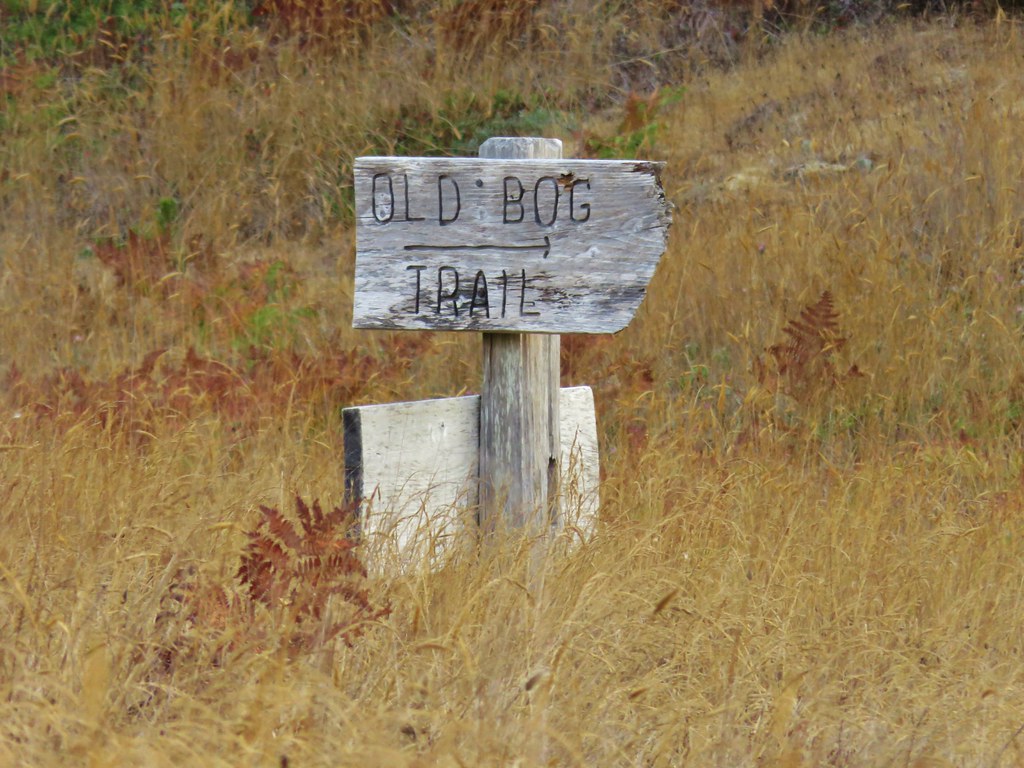
This first junction wasn’t signed but just over the small hill was a signed junction letting us know that this was the Old Bog Trail.

IMG_2605

IMG_2606

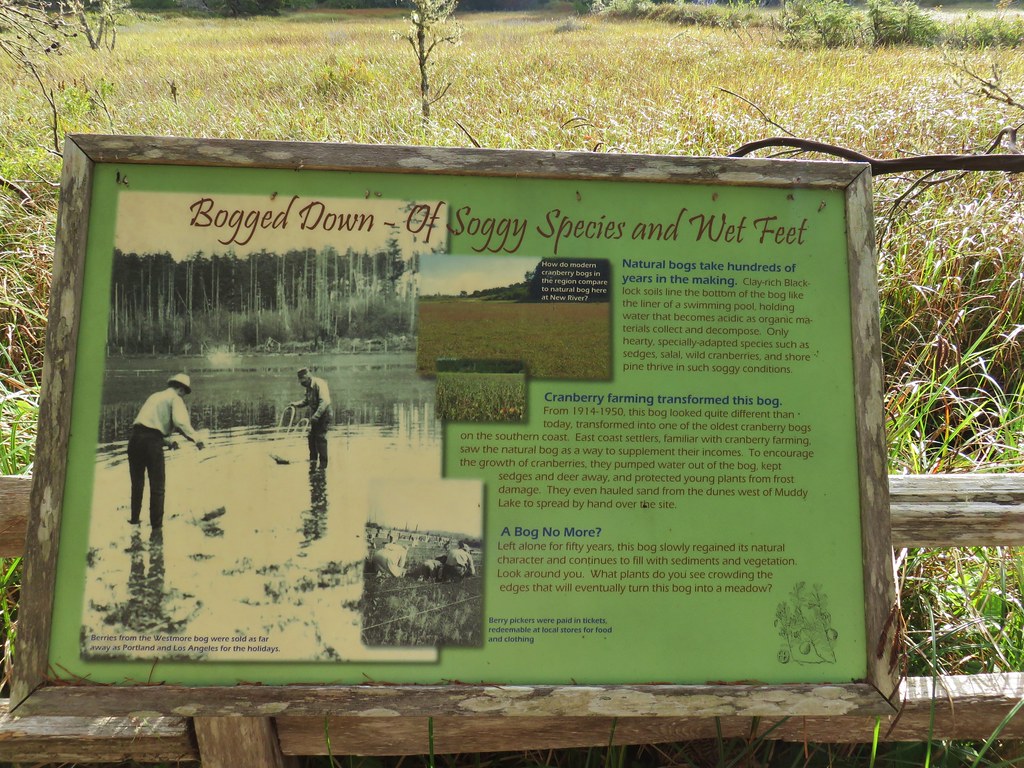
This .3 mile trail climbed up and over an old dune to the site of an old cranberry bog.

IMG_2607

IMG_2609

IMG_2610

After reading the history of the bog we returned to the Muddy Lake Trail and followed it another .2 miles back to the New River Nature Center. Even with all the side trips this was only a 3.6 mile hike making it a good option for the kiddos.

We drove back north to Bandon and used the GPS to guide us through town to the Bandon South Jetty Park located at the end of Lincoln Ave. SW across the Coquille River from the Coquille River Lighthouse.

IMG_2615

IMG_2616

We headed down to the beach just south of the jetty. There was a little bit of blue sky to the north and inland to the east.

IMG_2622

IMG_2621

That was not the case however to the south where we were headed.

IMG_2623

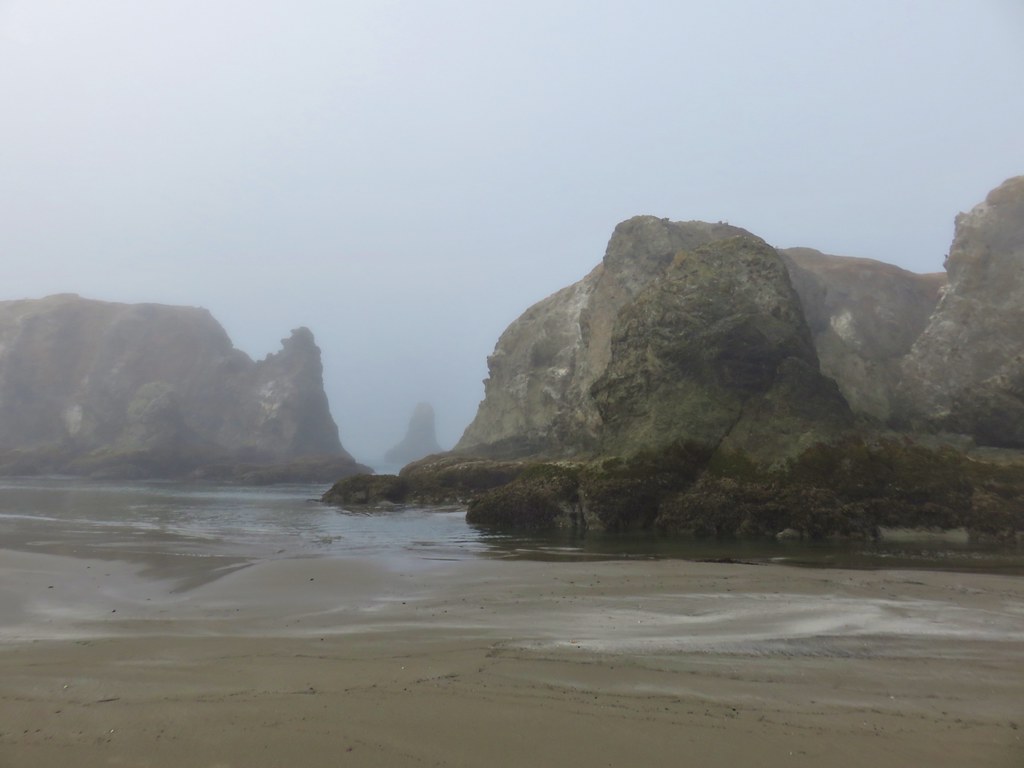
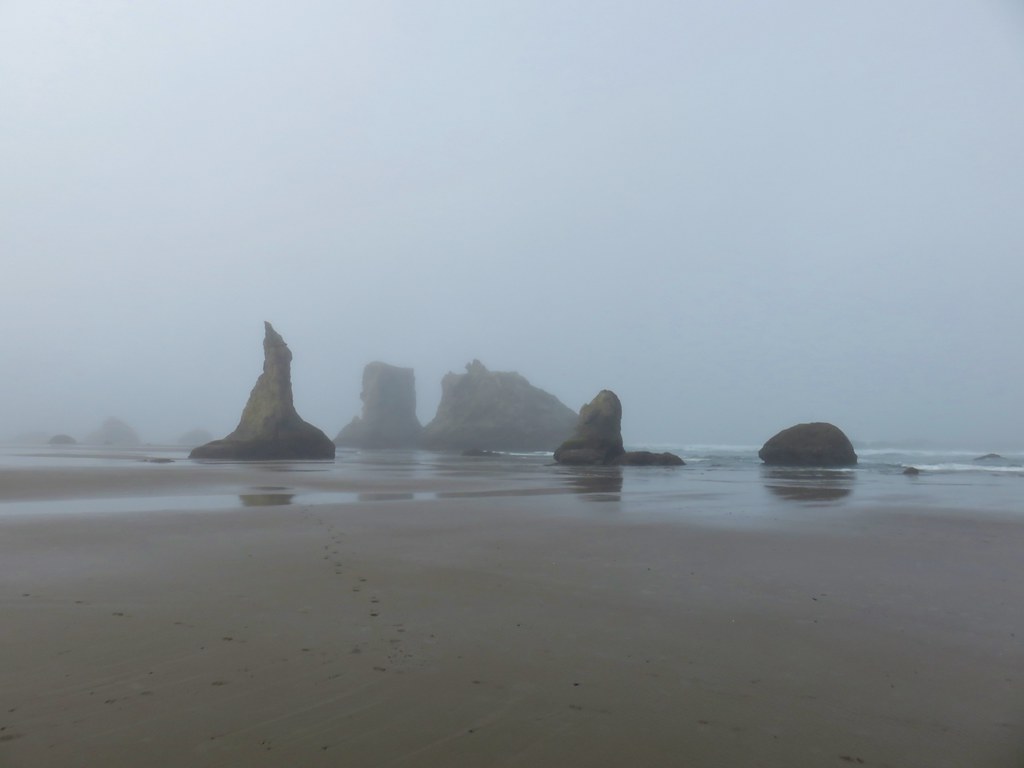
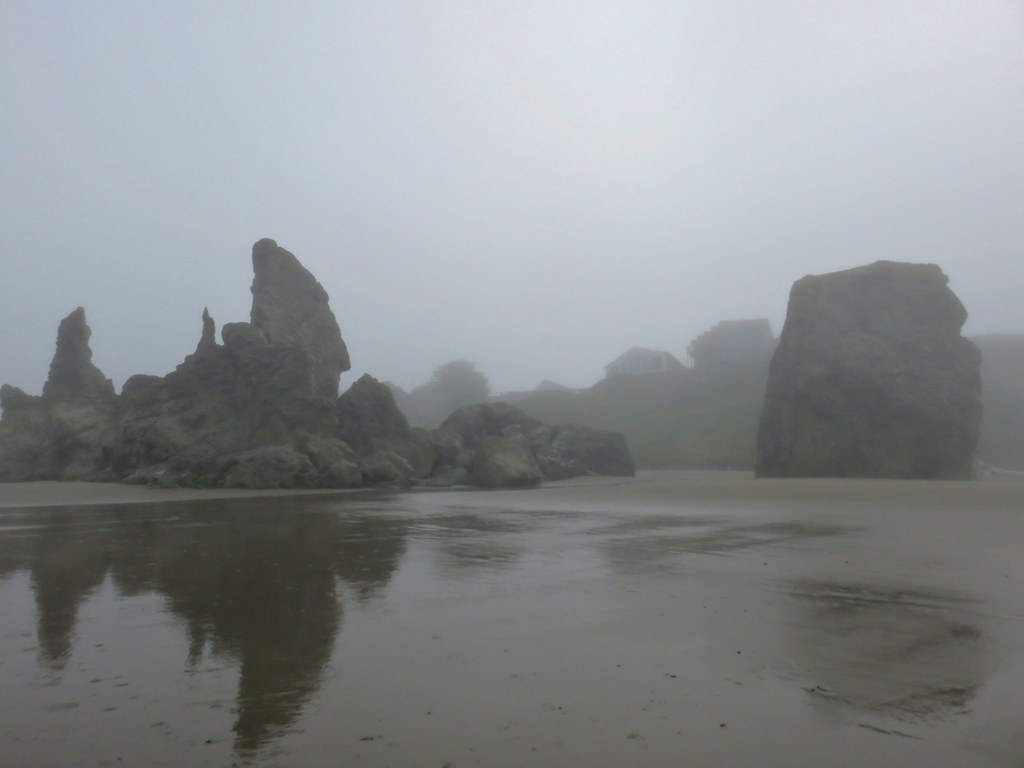
We would be passing by a series of ocean rocks and islands along a three and a half mile stretch of beach from the jetty to Devils Kitchen. We headed into the fog hoping that it would indeed burn off as the day progressed. In the meantime the tide was out allowing us to get a closer look at some of the rocks. Please note that climbing on any of the rocks and tidepooling is banned so keep your distance and use your binoculars or camera’s zoom.

IMG_2626

IMG_2628

IMG_2632

IMG_2633

IMG_2644

IMG_2642

IMG_2663

IMG_2662

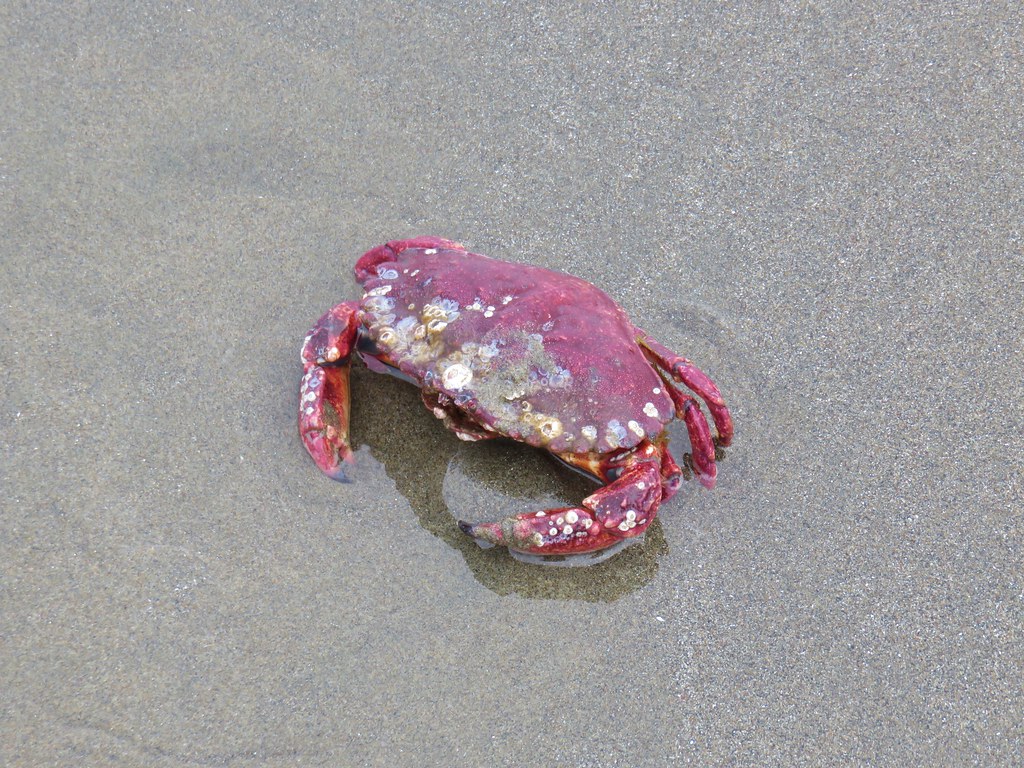
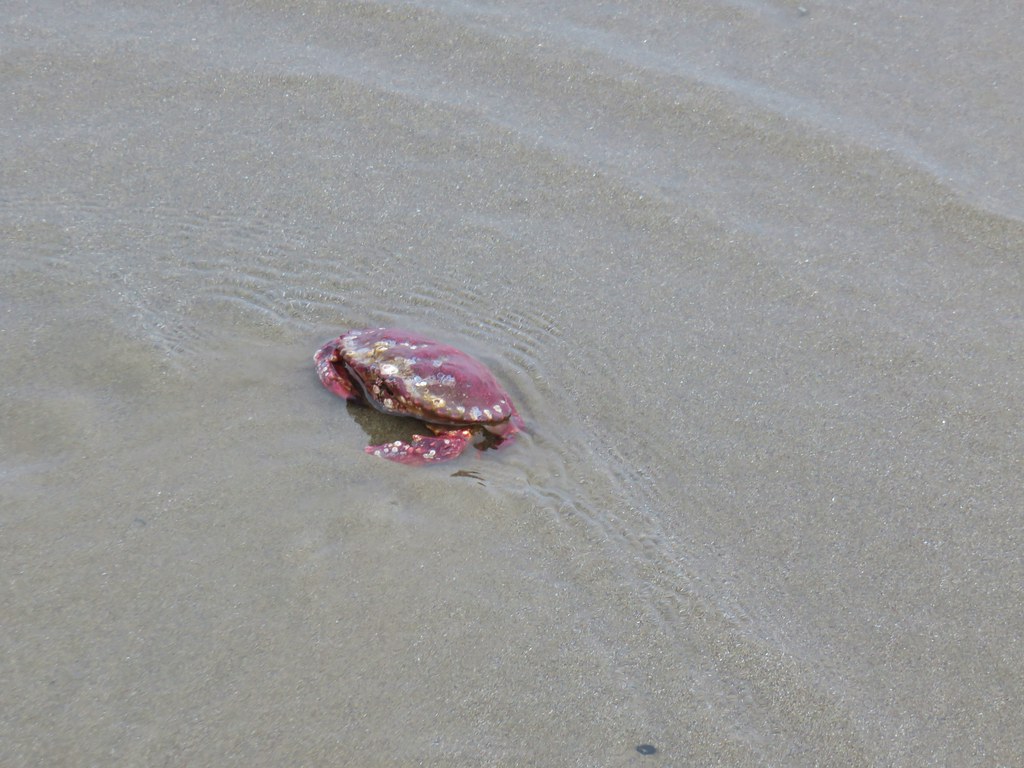
We got to see an actual live crab dig itself back into the sand.

IMG_2649

IMG_2652

IMG_2654

IMG_2672

IMG_2671

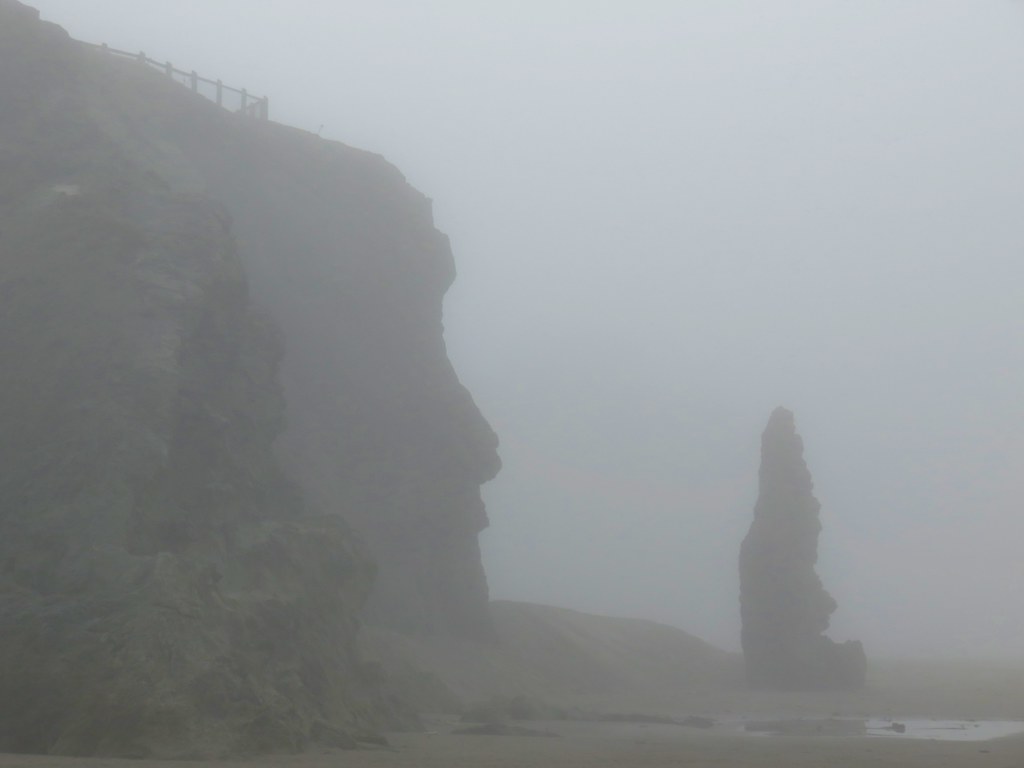
The rocky islands were neat but with the fog limiting visibility they weren’t as impressive as they should have been. For one thing we could only see the ones close by and couldn’t get a feel for just how many and how big they were.

IMG_2667

IMG_2682

IMG_2691

Near the two mile mark below the Face Rock State Scenic Viewpoint there were a few sea caves present at Grave Point.

IMG_2698

IMG_2700

IMG_2701

IMG_2705

IMG_2713

IMG_2759

Beyond Grave Point the number of sea stacks and islands dwindled as the beach flattened out. In the next 1.9 miles we crossed Johnson Creek and passed Fish Rock before arriving at Crooked Creek and Devils Kitchen.

IMG_2720

IMG_2725

IMG_2726

Fish Rock aka Haystack Rock

IMG_2734

Devils Kitchen

We climbed up to the Devils Kitchen parking lot.

IMG_2737

We made use of a bench at a viewpoint above Devils Kitchen where we had a snack and took a break.

IMG_2745

IMG_2743

IMG_2749

IMG_2750

We were still hoping that the fog would burn off as promised as we headed back along the beach but alas it was not to be.

IMG_2762

By the time we’d gotten back to the car we had decided that we would be trying this hike again the next time we were in the area. We have a few more hikes left to complete between Bandon and Coos Bay and the Bandon Islands will be a part of that trip.

After cleaning up in the motel we walked across Highway 101 into Bandon’s Old Town and did a little shopping. They were having a farmers market where we came away with a few goodies. After a hitting the farmers market and a few of the shops we stopped into Bandon Brewing for a beer and an appetizer, at least that had been the plan. We ordered the small Spinach Artichoke Stix from the bradsticks section of the menu. We had expected a few breadsticks with some dip, but it turned out to be more like a pizza and was quite a bit larger than we’d anticipated. That wasn’t a bad thing as they were delicious and we had no problem finishing them off. It ended up being our dinner which was fine because we had also picked up some pastries from Pastries and Pizzas which was located dangerously close to our motel.

The pastries hit the spot that night and we went to bed satisfied and ready for another day of hiking on Saturday. Happy Trails!

Flickr: New River and Bandon Islands

Categories
Central Coast Hiking Oregon Oregon Coast Trip report

South Beach and Depoe Bay

On the way to our annual family reunion near Gleneden Beach we made several stops to check out short trails in the Newport and Depoe Bay areas. For our first stop we parked next to the Hatfield Marine Science Center and took the paved Yaquina Bay Estuary Trail from the east end of the parking lot.
IMG_9689

We were hoping to see some wildlife along the half mile trail and we weren’t disappointed. Just from the parking lot there were many birds visible.
IMG_9679

IMG_9687

IMG_9741

There was also a snake sunning itself at the beginning of the path.
IMG_9693

IMG_9694

We followed the path along the estuary to its other end near the Oregon Coast Aquarium.
IMG_9702

The final stretch of trail was across a boardwalk.
IMG_9728

IMG_9736View from the boardwalk

We were impressed by the number of herons and egrets in the bay.
IMG_9710

IMG_9717

IMG_9721

IMG_9709

In addition to the the herons, egrets, and numerous seagulls there were many other birds in the area, most of which didn’t want to stop for pictures.
IMG_9737

IMG_9739

After returning to our car we drove to Highway 101 and headed south to the signed entrance of South Beach State Park. Here we parked at the Day Use Area and hiked past the restrooms over the foredune to the ocean.
IMG_9742

IMG_9743

IMG_9744

We turned right and headed north along the beach toward the south jetty about a mile away.
IMG_9747

IMG_9749

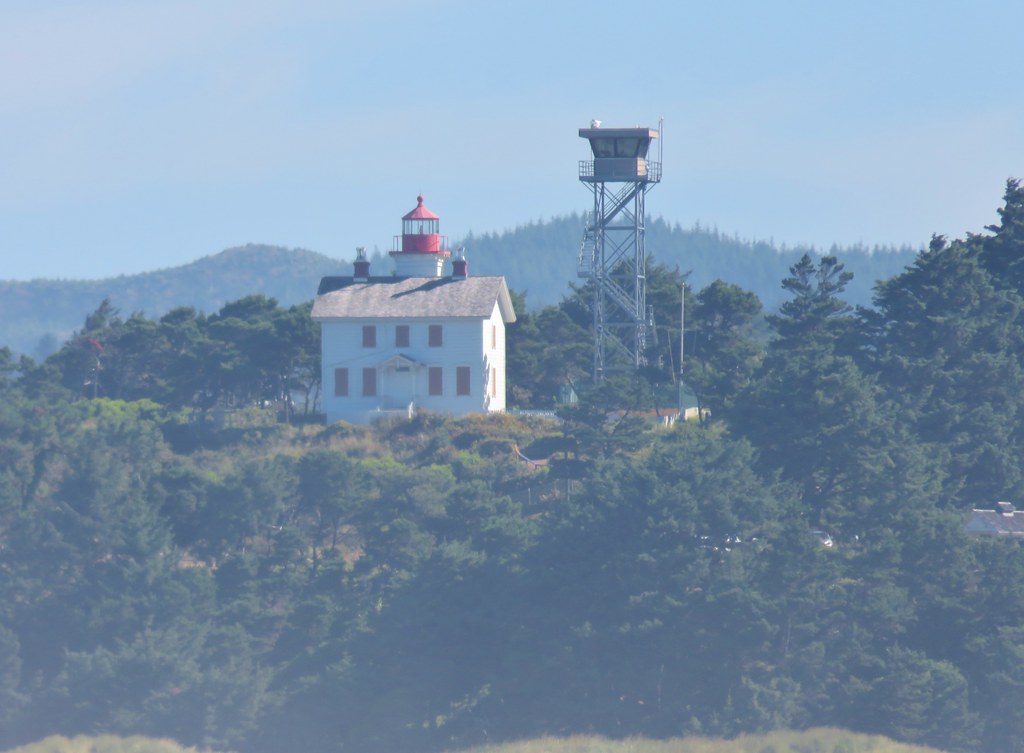
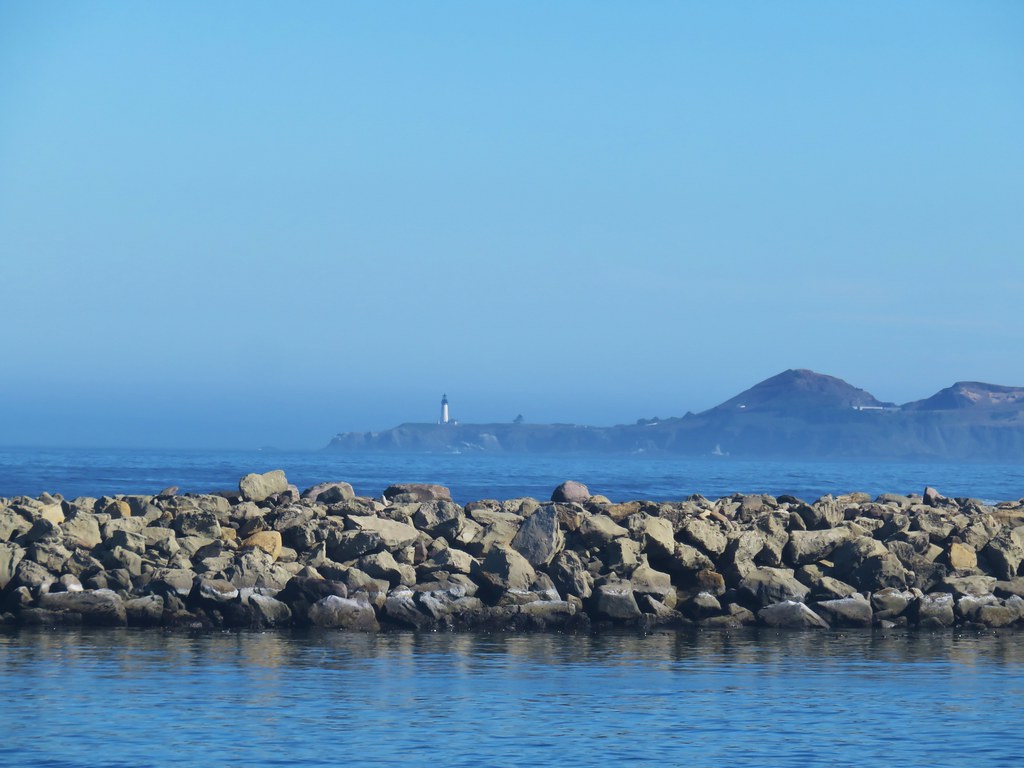
From the jetty we could see a pair of lighthouses, the Yaquina Bay and Yaquina Head Lighthouses. They had been the stops on our way to the reunion in 2017 (post).
IMG_9755

IMG_9753

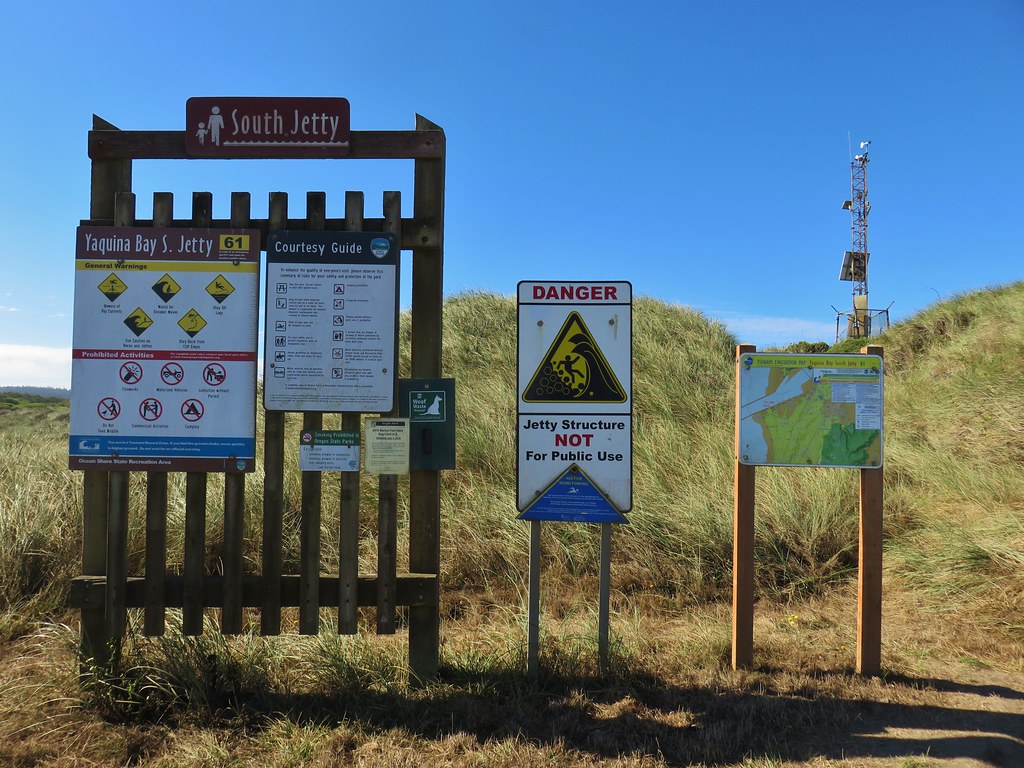
We turned inland at the jetty continuing for just over a quarter of a mile to the South Jetty parking area.
IMG_9752

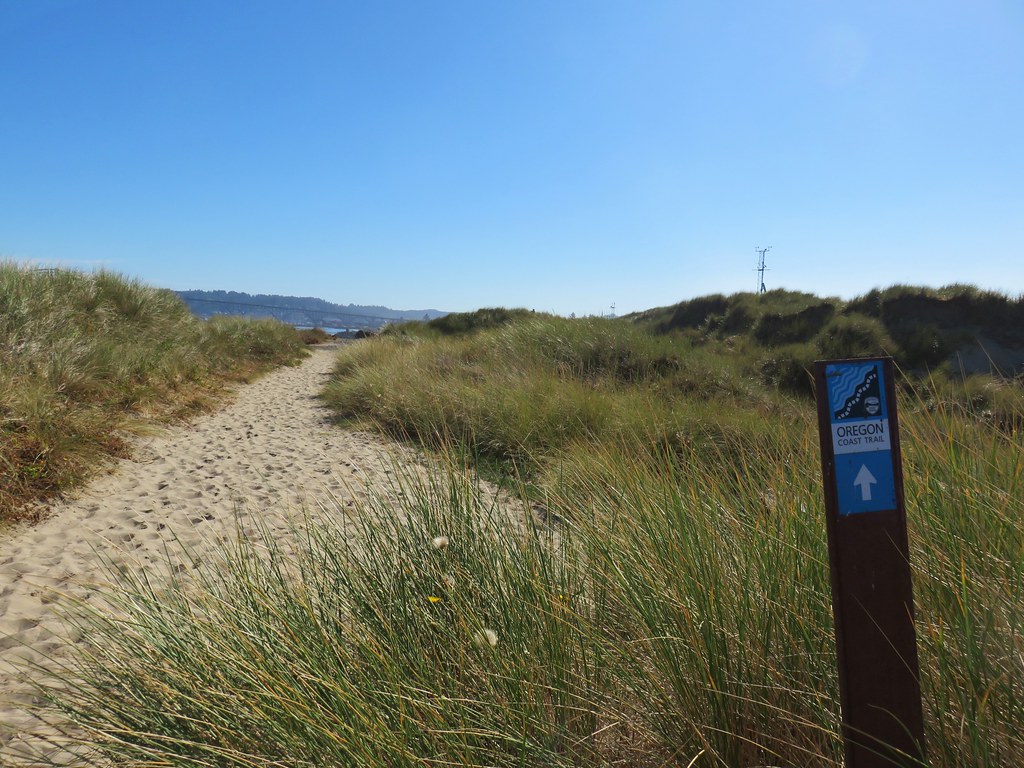
IMG_9758Part of the Oregon Coast Trail

IMG_9768

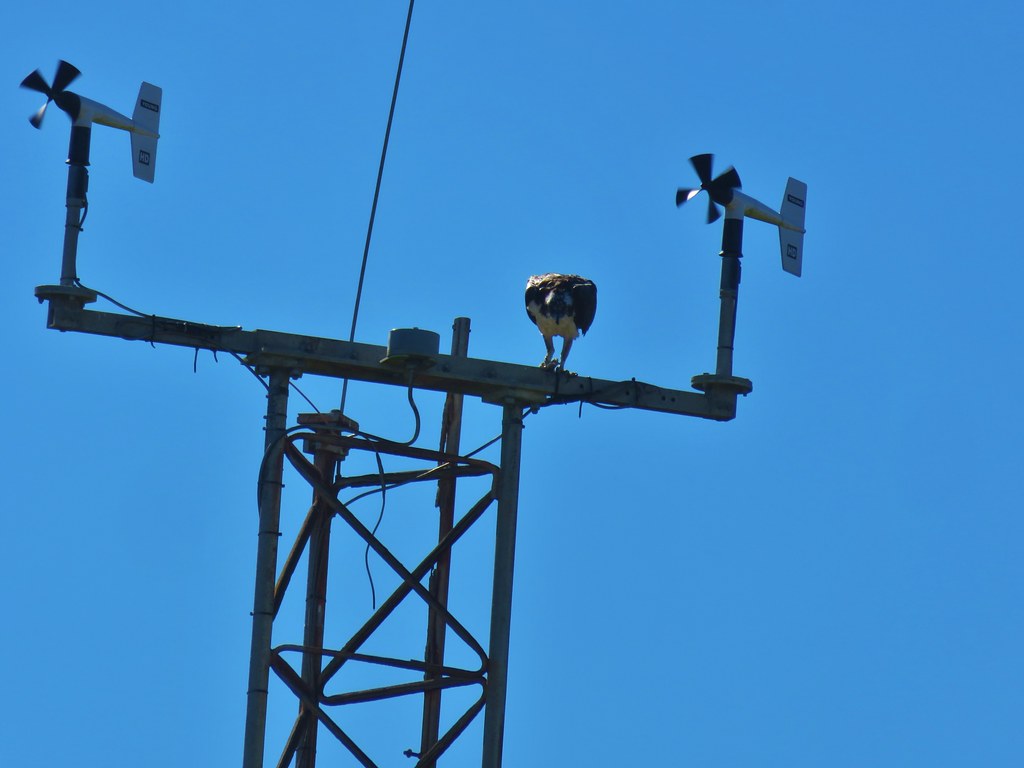
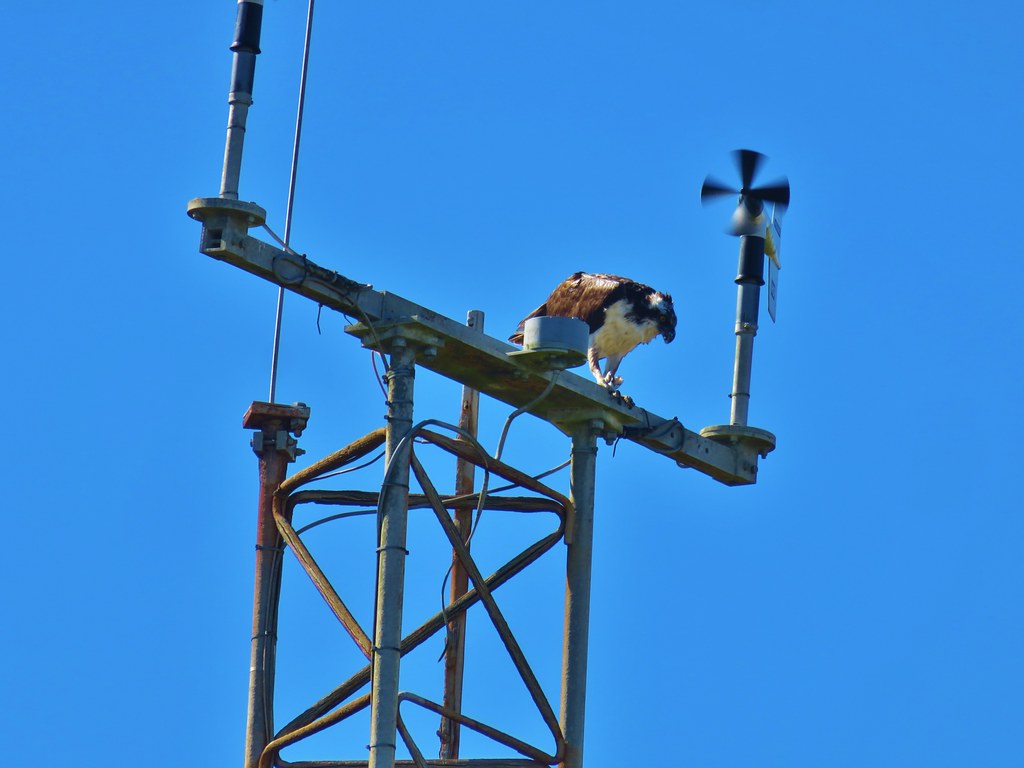
An osprey was busy eating its catch on a nearby tower.
IMG_9762

IMG_9767

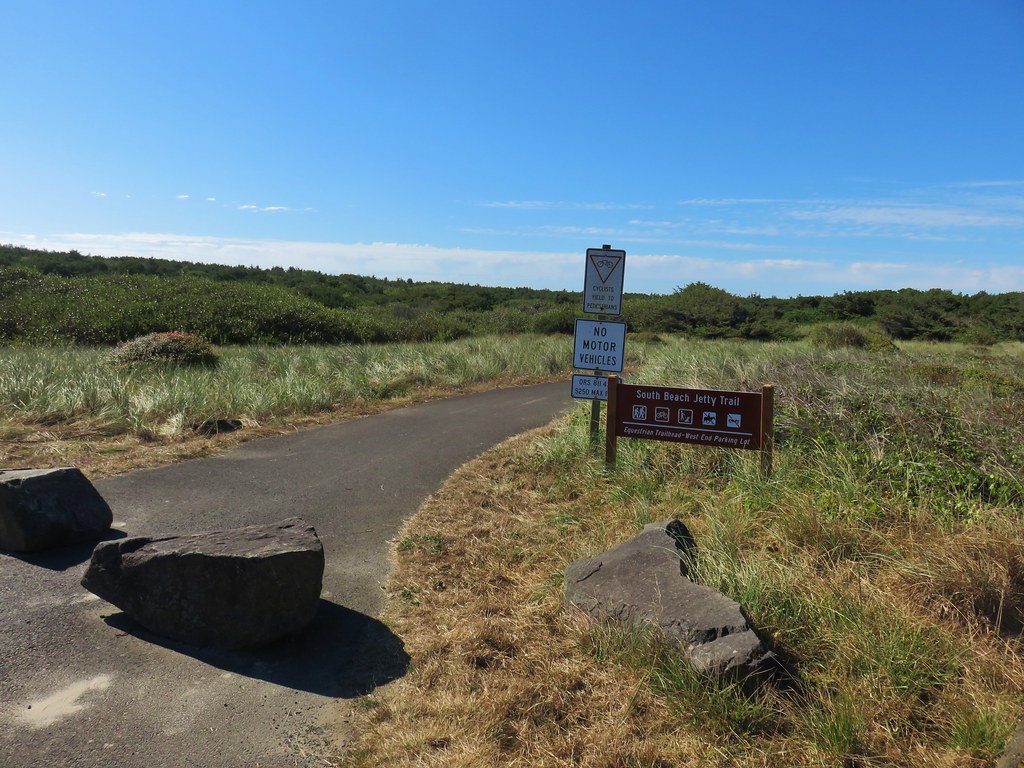
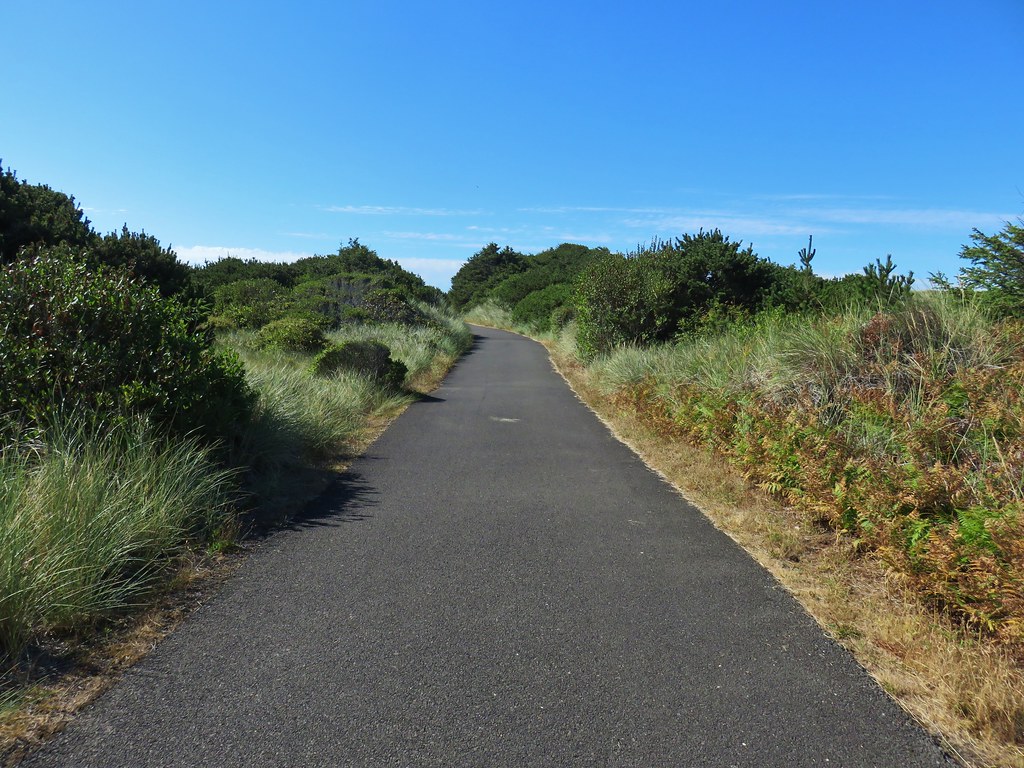
From the South Jetty parking area we took the paved South Beach Jetty Trail back to the South Beach State Park Day Use Area for a two and a quarter mile loop.
IMG_9772

IMG_9773

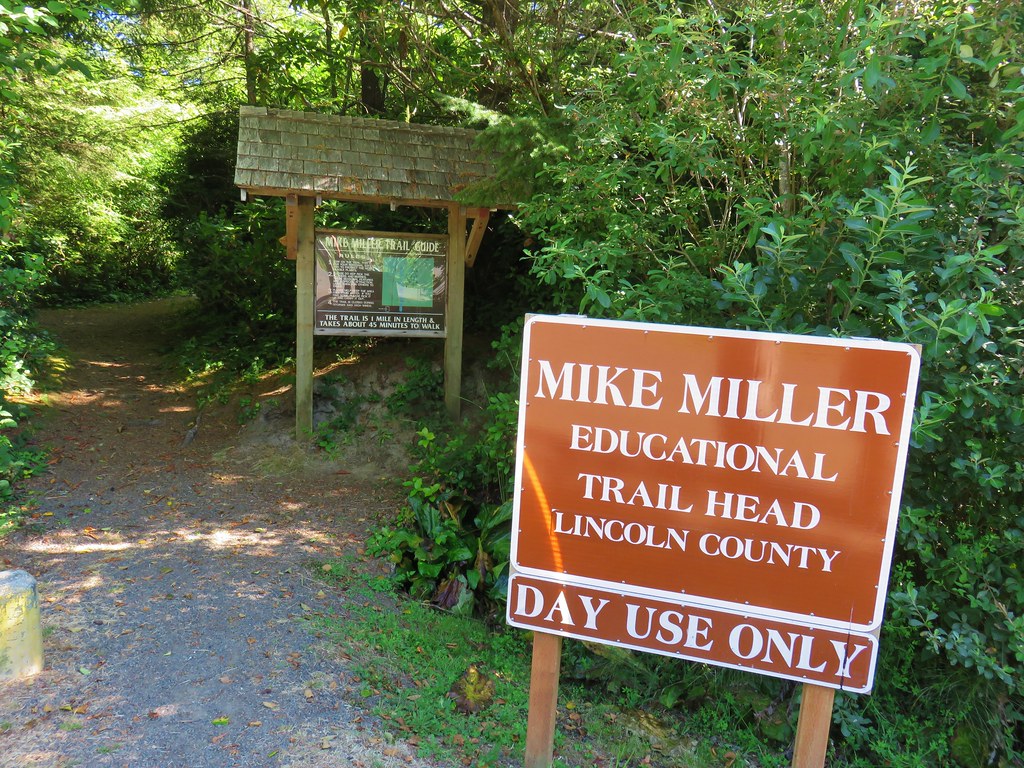
Our next stop was the Mike Miller Trail which is located on the east side of Highway 101 along SE 50th Street which was just two tenths of a mile north of the South Beach State Park entrance. We parked along the shoulder of 50th St. near the start of the trail.
IMG_9775

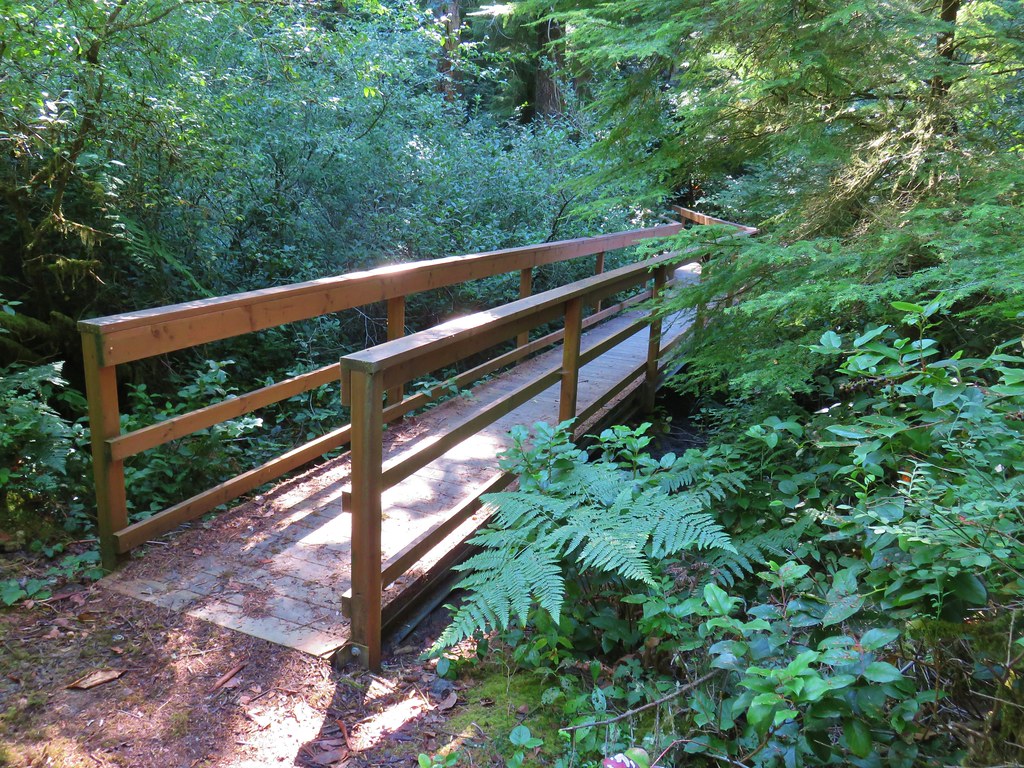
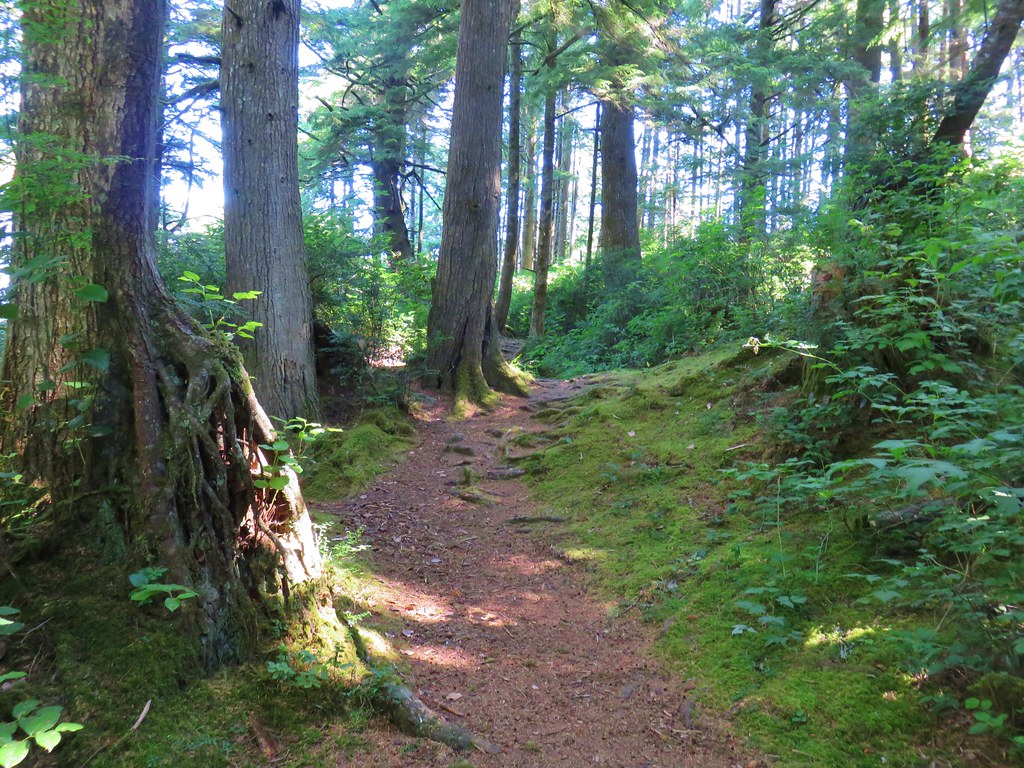
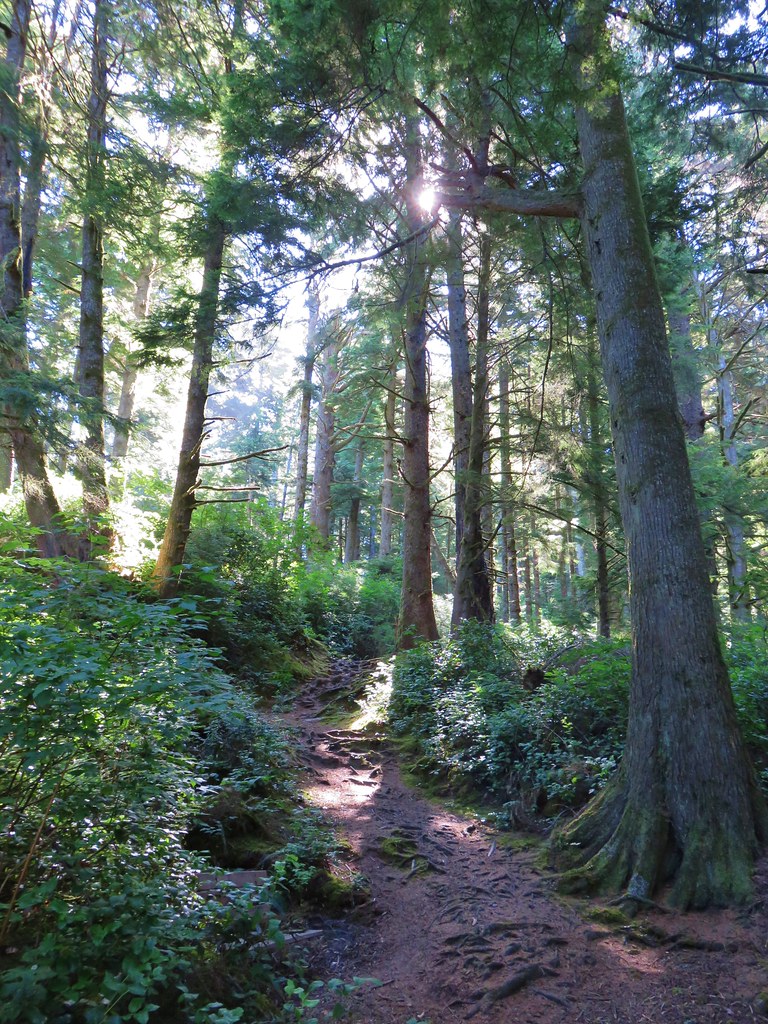
They were out of trail guides at the trailhead so we weren’t able to follow along with the numbered stops along the 1-mile loop but we did get to see some nice coastal old-growth trees along the way. We followed signs for the Mike Miller Trail which crossed a marshy pond twice on footbridges.
IMG_9781

IMG_9782

IMG_9785

IMG_9786One of several benches along the trail.
IMG_9792

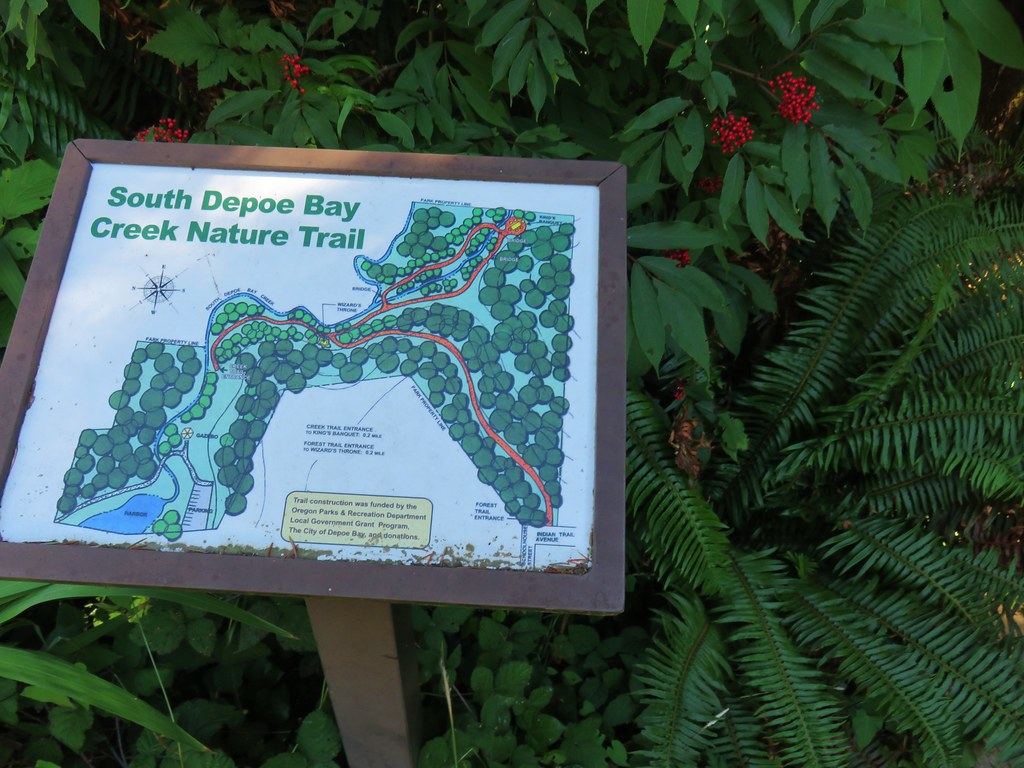
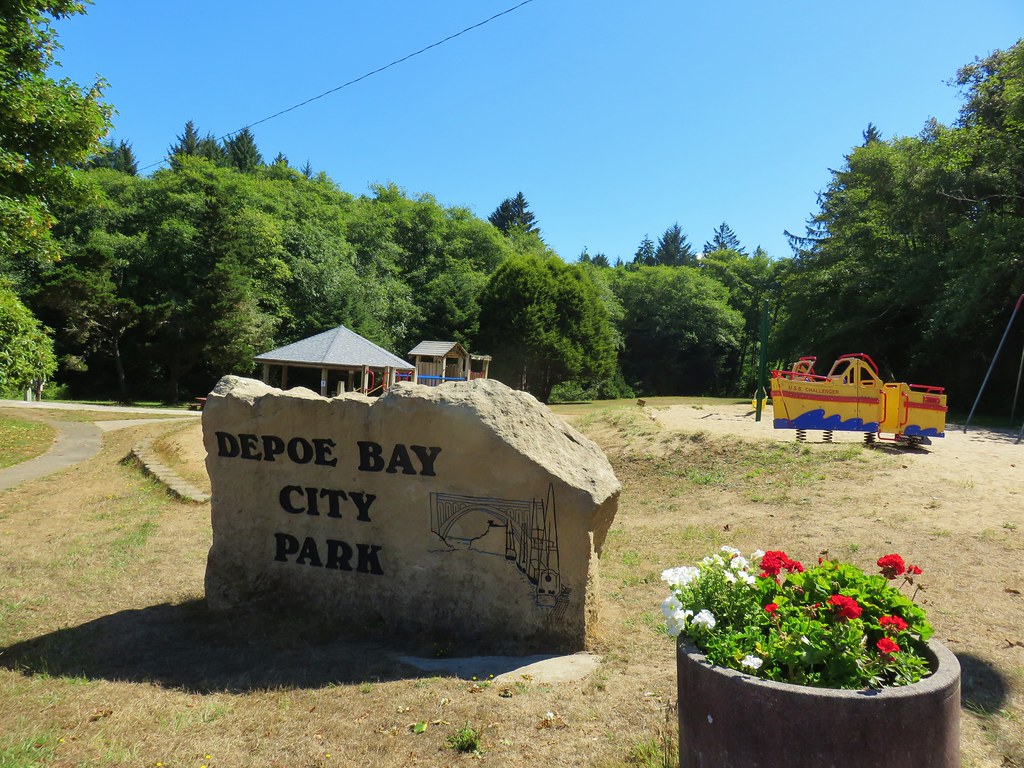
From the Mike Miller Trail we returned to Highway 101 and drove north through Newport toward Depot Bay. We turned inland on Schoolhouse Street just south of Depoe Bay at a Shell Station. We immediately forked left and drove downhill toward the bay following City Park signs. After parking we headed into the park where we followed signs for the South Depoe Bay Creek Nature Trail.
IMG_9795

IMG_9796

The forested path followed South Depoe Bay Creek for a quarter of a mile to a footbridge where a .3 mile loop began.
IMG_9798

IMG_9799

IMG_9802

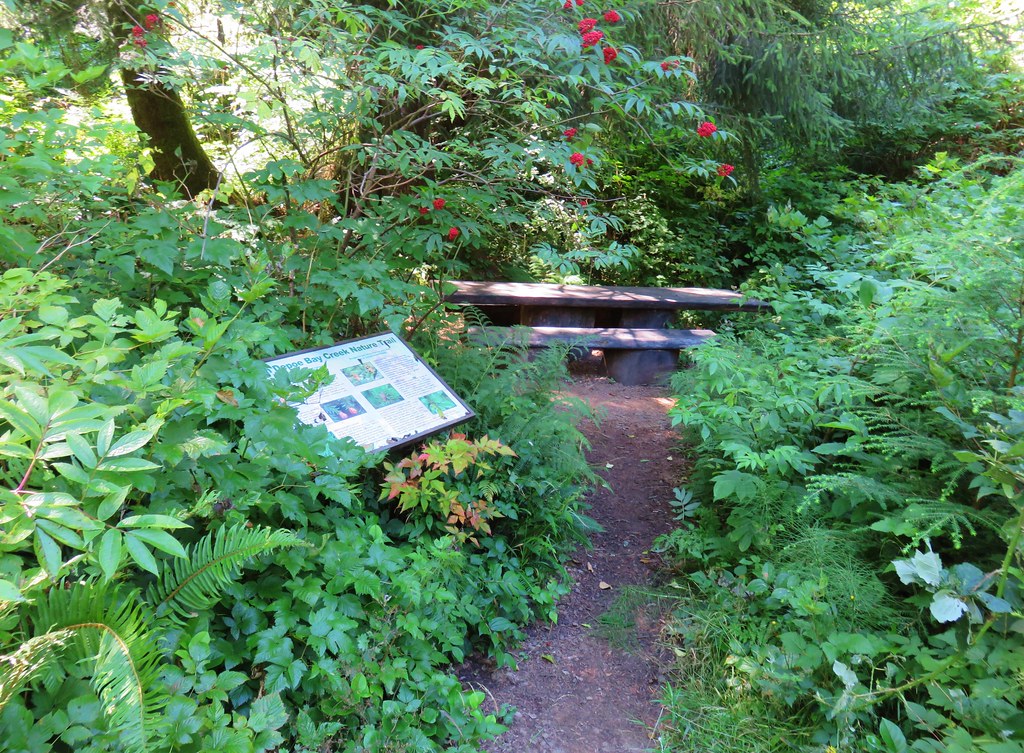
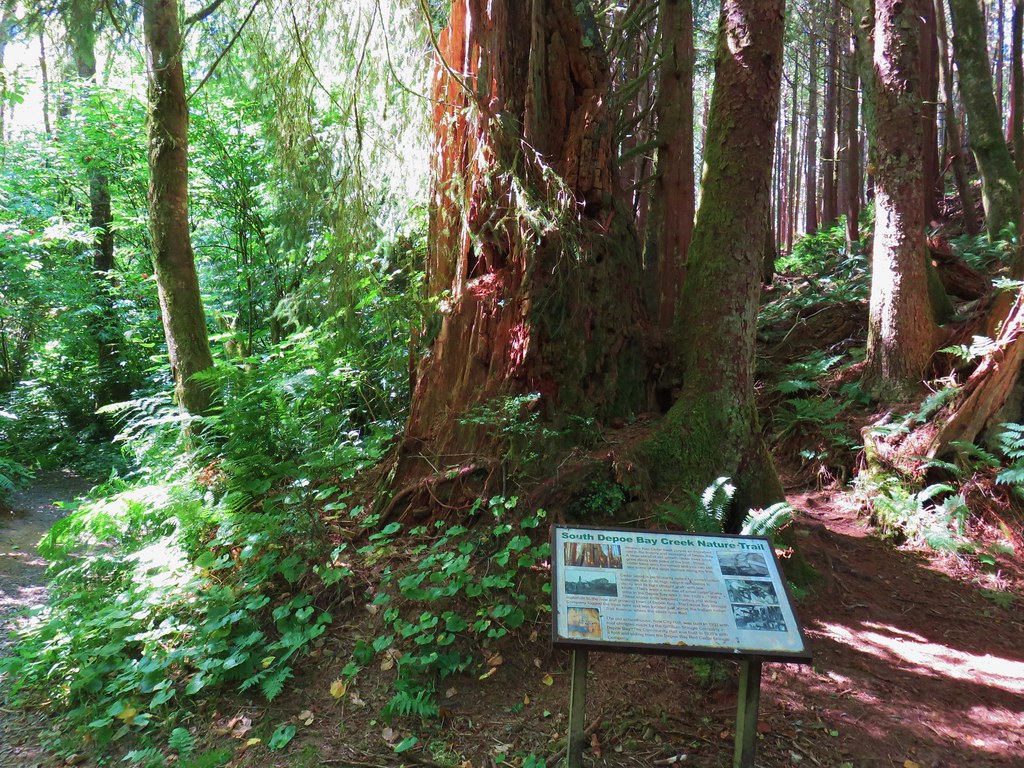
We crossed the creek and stayed left on the main trail at junctions. The trail passed a huge, hollow old stump with two trees growing off of it.
IMG_9804

A second nearby stump was covered in green foliage.
IMG_9806

The trail recrossed the still creek and passed a rather large picnic table before completing the loop.
IMG_9807

IMG_9808

A short distance prior to the start of the loop we had passed a fork where the right hand path led uphill.
IMG_9801

On our way back we turned uphill on that trail and climbed through the trees to Indian Trail Avenue.
IMG_9809

IMG_9811

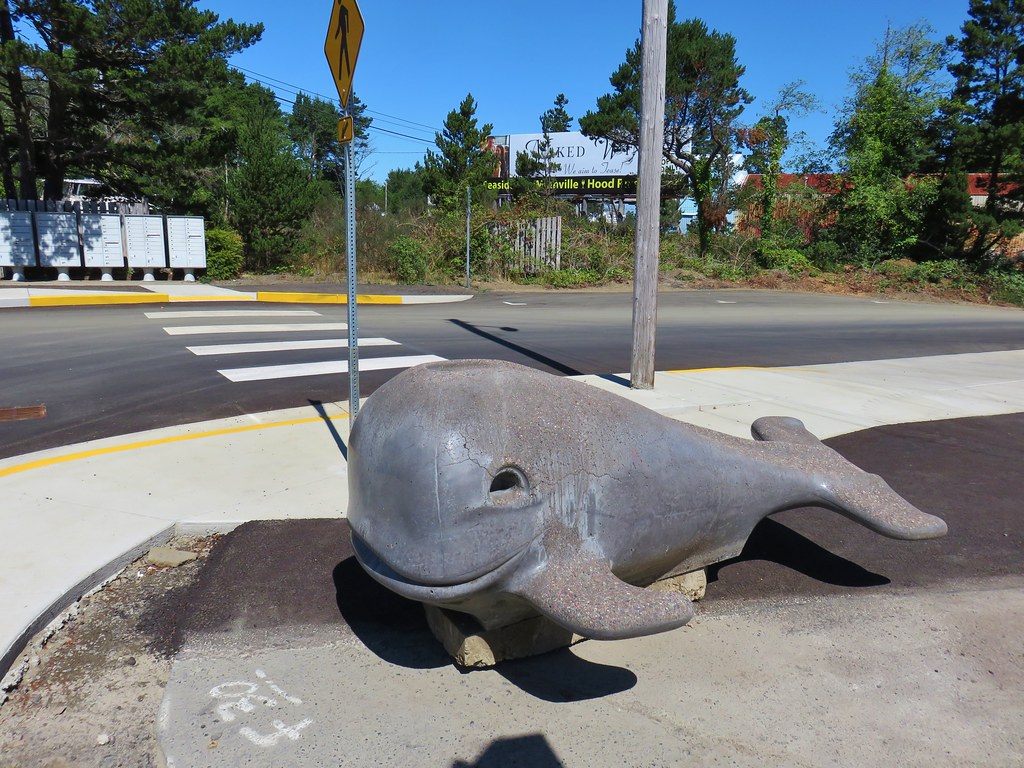
We followed this road down to the Shell Station along Highway 101 passing a little whale statue/slide.
IMG_9812

We then followed the highway north into Depoe Bay.
IMG_9813

IMG_9814

IMG_9815

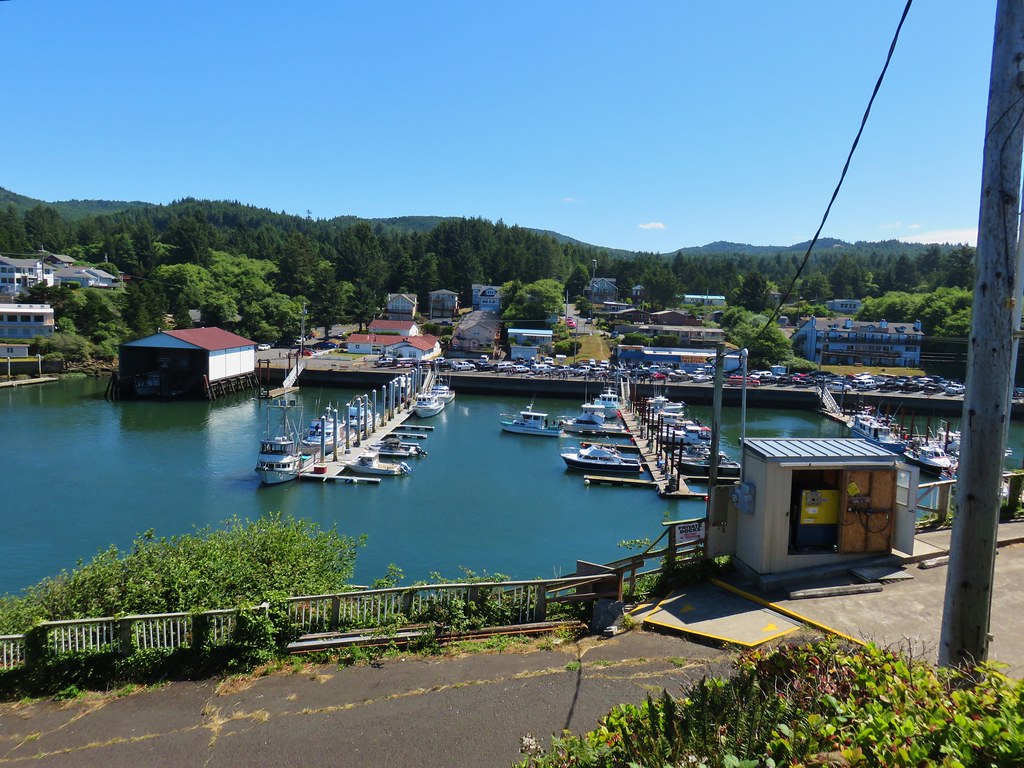
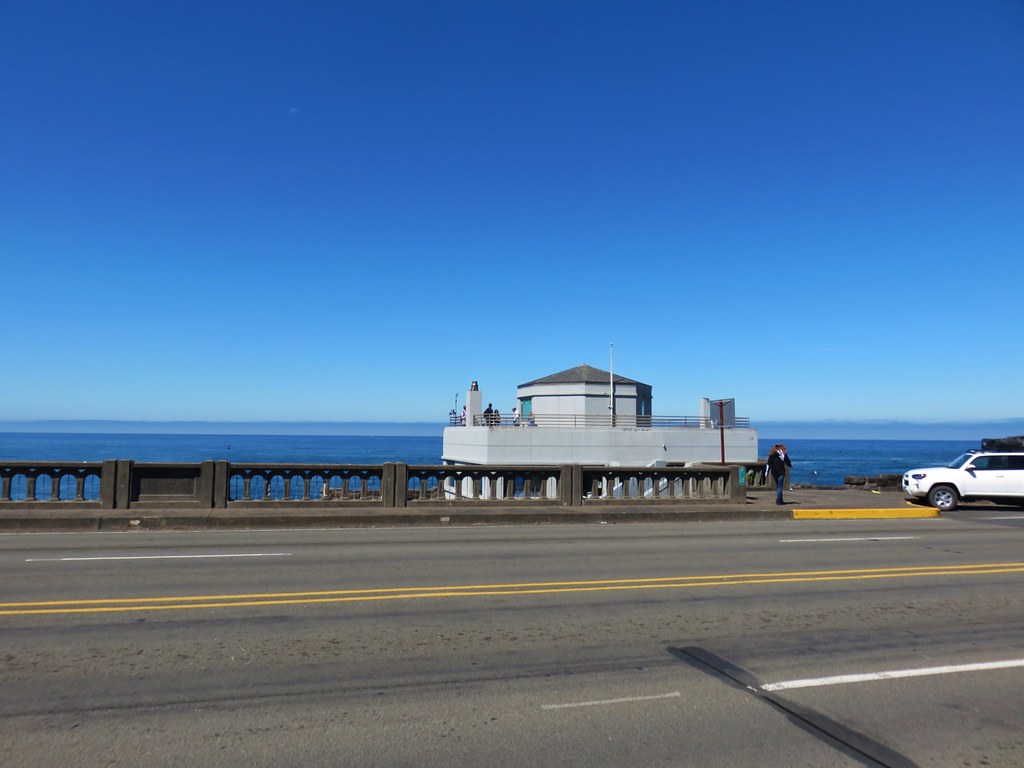
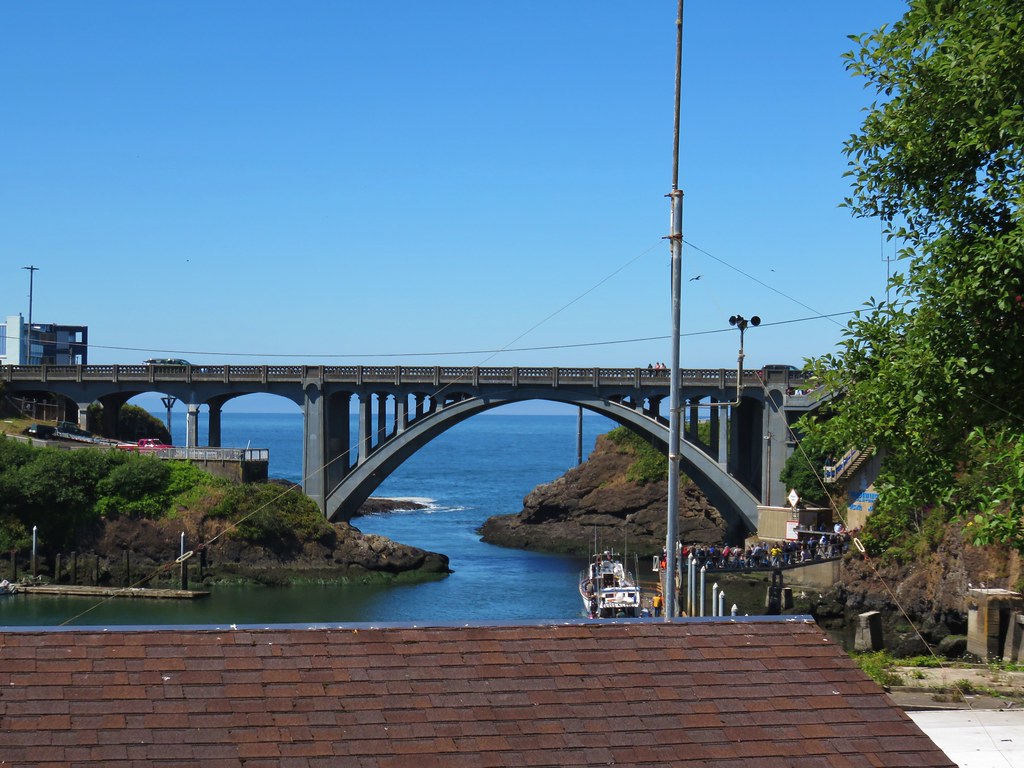
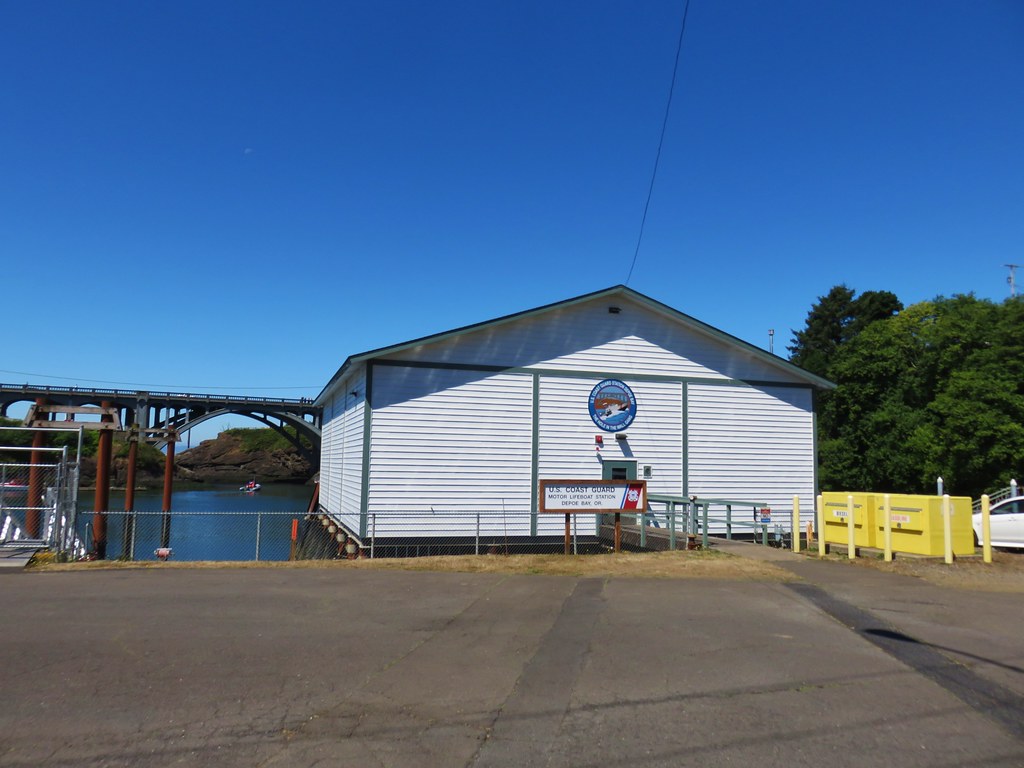
We could have crossed the highway and visited the Whale Watching Center or browsed the local shops, but we didn’t want to be late for the reunion so we simply turned right onto Bay St. after crossing over the highway bridge following it around the bay to the Coast Guard boathouse.
IMG_9816Whale Watching Center

IMG_9817

IMG_9819

We continued along the bay until we reached a wide footbridge across South Depoe Bay Creek back to the city park.
IMG_9821

IMG_9822

This wound up being a 1.7 mile round trip bringing our total mileage for day to a grand total of 6 miles. It was a nice variety of trails and a good way to work up an appetite before the reunion. Happy Trails!

Flickr: South Beach and Depot Bay Trails