After a week of hiking in the John Day area we had stopped in Bend on our way home Friday to visit Heather’s parents. Saturday morning we headed to Salem but stopped first for a short hike to Pika and Fir Lakes in the Willamette National Forest. The hike starts at the Pika-Fir Trailhead which is currently one of the trailheads in the Central Cascades that does not require any Central Cascades Wilderness Permits as the trail and lakes are outside of the Mt. Jefferson Wilderness. (You would however need an overnight permit if you were try continue off trail into the wilderness to stay overnight.)
We picked this trail because it was on our way back to Salem, we hadn’t been here before, and it was nice and short. The trail itself is about a mile long passing Pika Lake and ending at Fir Lake and after averaging just over 12 miles a hike for the previous five days a short hike sounded nice. We were also in a bit of a hurry to get home to see our cat Hazel who we were going to have to say goodbye to soon (post).
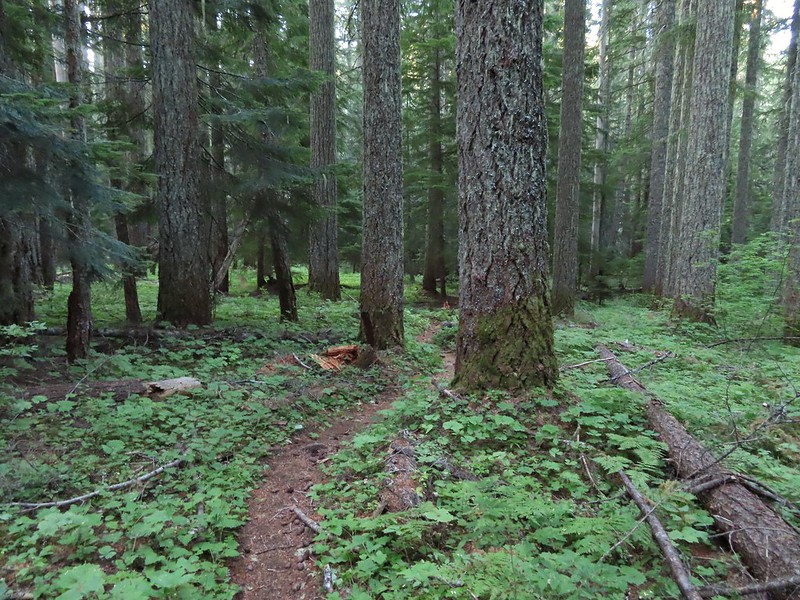
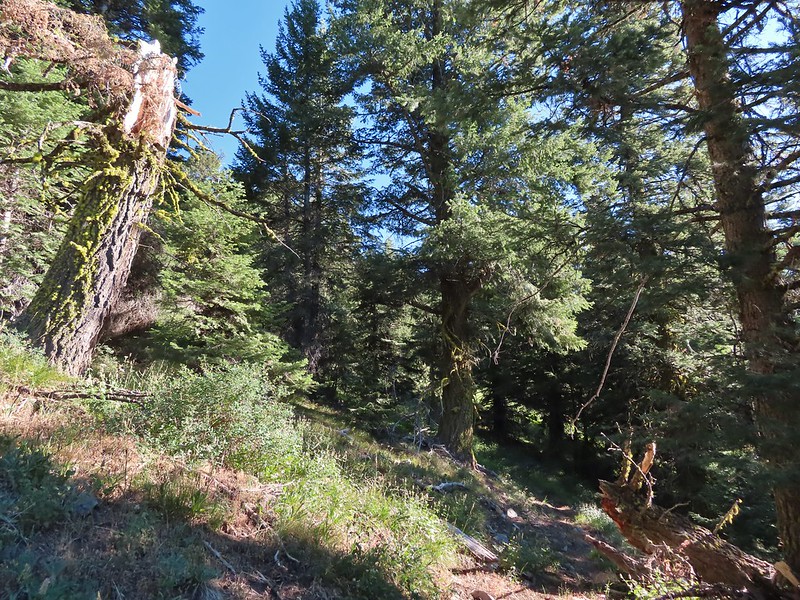
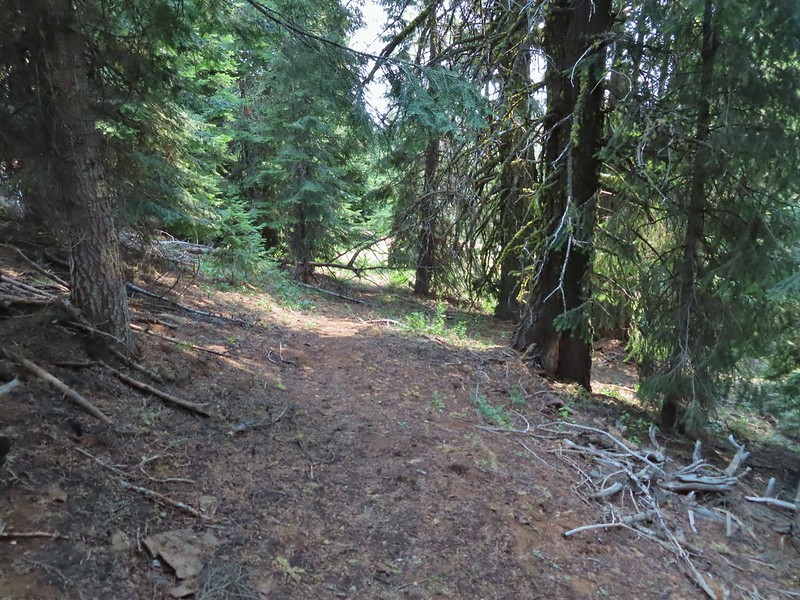
The trail passed through a nice green forest with some bigger trees, a very different sight than the hikes we’d taken in Central Oregon that week.
A little bit of up and down brought us to Pika Lake in just half a mile.
We walked a short way around the SE side of the little lake before returning to the trail and continuing to Fir Lake which was just 0.4 miles away.
Unnamed lakelet/pond between Pika and Fir Lakes.
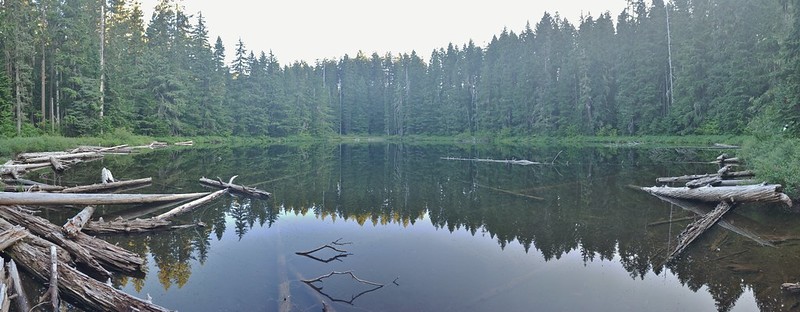
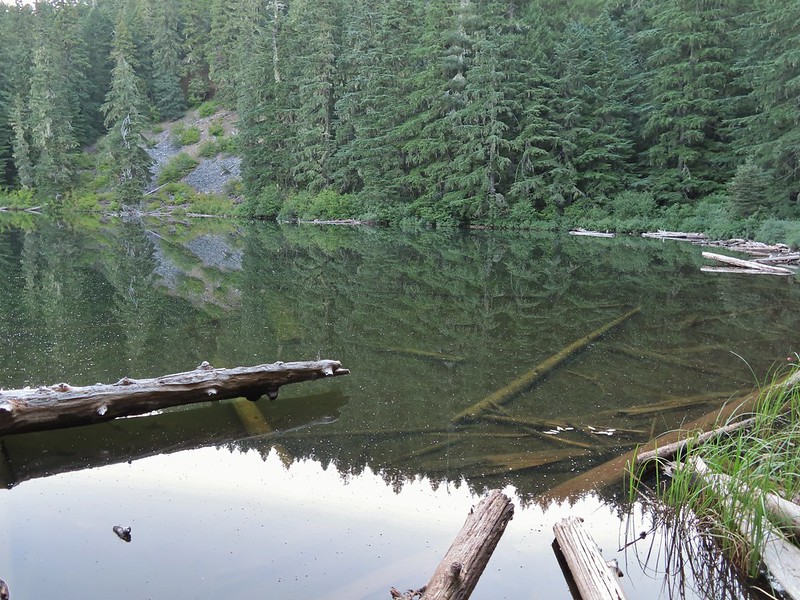
Fir Lake
Goldeneyes
We again explored a little of the lake shore before turning around and returning to the car.
This was a quick hike which we managed to make 2.5 miles by exploring some of the lake shores. There were several camp sites at the lakes which would be good options for folks with young kids for some early backpacking trips. Track for Pika & Fir Lakes
With our hikes now completed we drove home to spend the rest of the weekend with Hazelnut before having to say our final goodbyes. It was a bitter sweet ending to what was otherwise a good vacation. Happy Trails!
Our time in John Day had come to an end and it was time to start our journey back to Salem. We were planning on visiting Heather’s parents in Bend for the night but of course we had a hike planned on the way. The hike to Fields Peak and McClellan Mountain in the Aldrich Mountains was another hike that was previously featured in William L. Sullivan’s “100 Hikes/Travel Guide Easter Oregon” but had been moved to the back of the book in his most recent 3rd edition. We began the hike at the McClellan Mountain Trailhead after a rough final 1.2 miles of driving (high clearance vehicles recommended). The bright spot of the drive was spotting a bobcat in the road.
While the route to Fields Peak is open to OHVs the McClellan Mountain Trail, which splits off to the east after 1.5 miles is not.
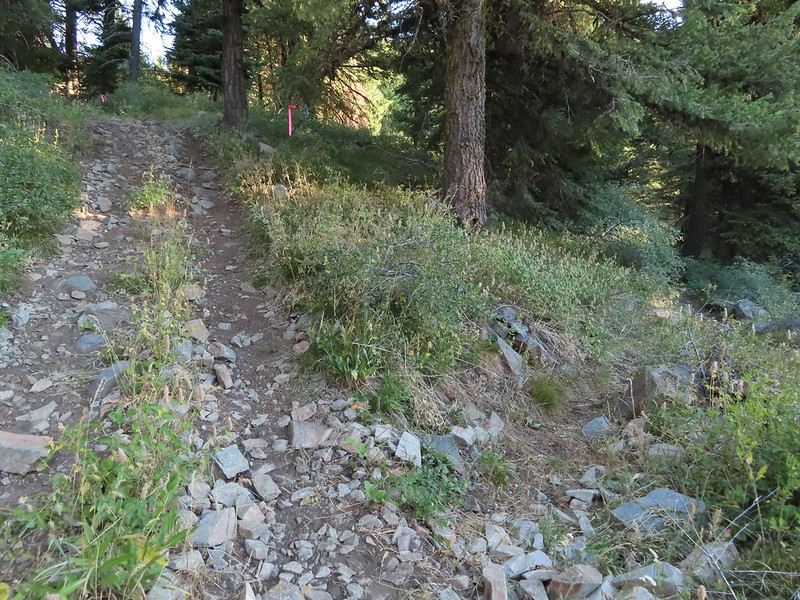
The trail/OHV track begins through a barbed wire fence and heads steeply uphill, at times, 0.7 miles to a saddle.
A lone interpretive sign near the beginning of the trail.
The saddle
Sullivan mentioned that bitterroot bloomed on the ridge to the right but it was too late in the year to see any of them but I wandered out along the ridge a short distance anyway having reached the saddle ahead of Heather.
Fields Peak from the saddle.
Heather arriving at the saddle.
We had gained a little over 700′ in the first section and now the trail would gain nearly another 600′ in the 0.8 miles to the trail junction. A rare level section.
Scarlet gilia in the middle of the OHV track.
Nearing the trail junction.
The McClellan Mountain Trail to the right.
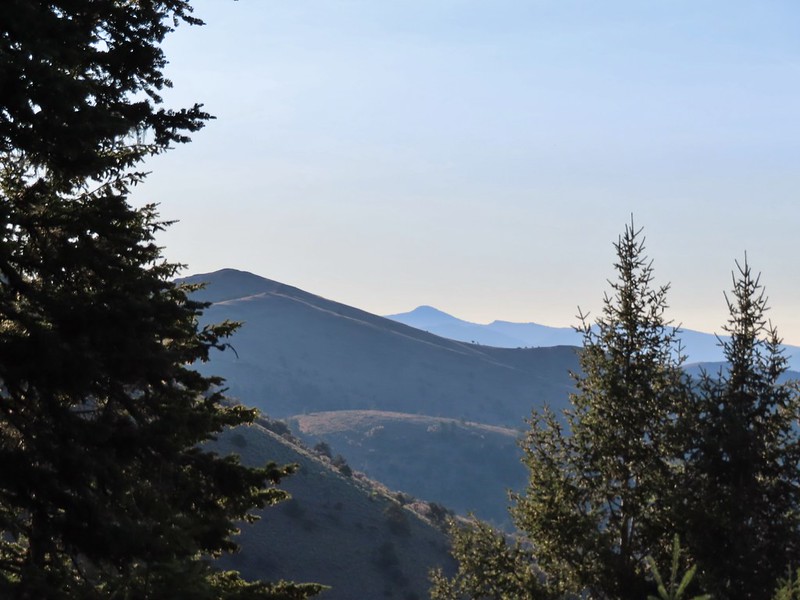
We ignored the McClellan Mountain Trail for now and climbed another 0.8 miles gaining 700 plus more feet to the 7362′ summit of Fields Peak. The meadows along the track were way past bloom but it was evident that earlier in the year there would have been quite the wildflower display. A peak east to McClellan Mountain and the more distant Strawberry Mountain (post).
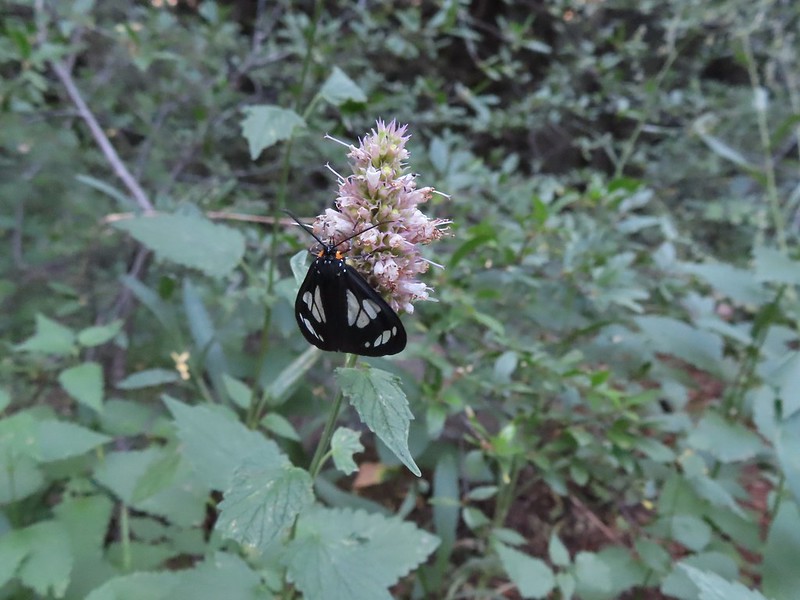
We saw a number of these moths sleeping on the hyssop.
Hyssop and sunflowers
Paintbrush
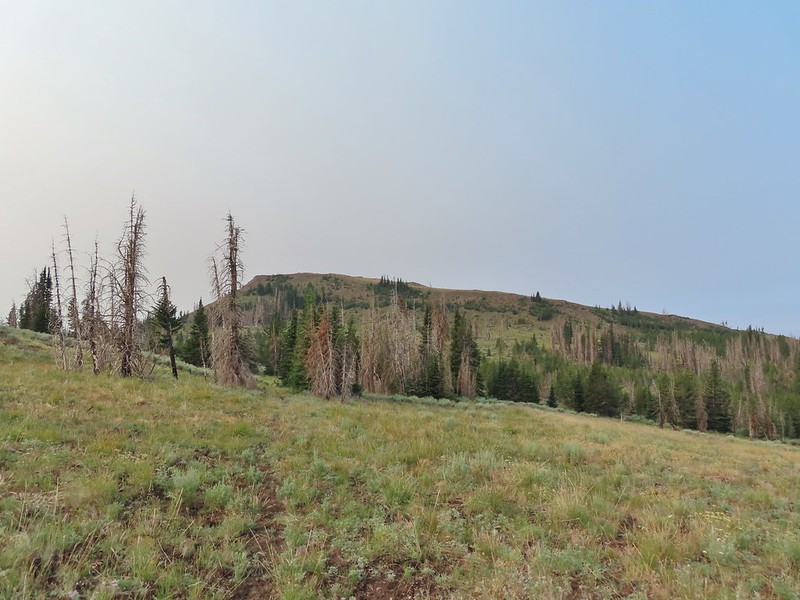
Looking up Fields Peak.
Mountain coyote mint
Shadow of Fields Peak
Buckwheat
A few trees near the top.
Final steep pitch to the summit.
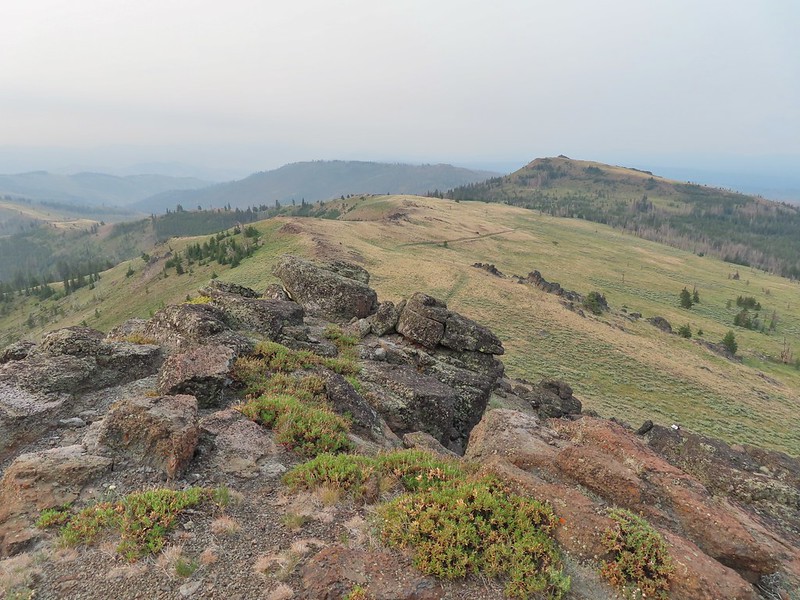
View west, Aldrich Mountain is the high point to the near right.
It was another nice morning with relatively clear skies given the fires that were (and still are) raging in Oregon. View north
McClellan Mountain and the Strawberry Mountain Range to the east.
Logan Valley to the SE.
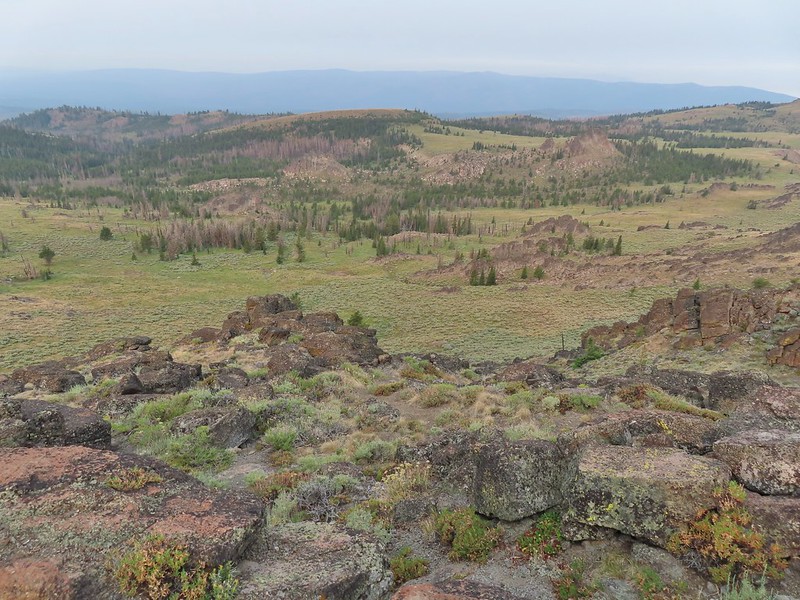
The view south.
We had a nice break and then headed back down. On the way several grouse startled us when they flew out of the trees as a group of raucous Clark’s nutcracker watched from the tree tops.
More moths
When we reached the junction with the McClellan Mountain Trail we turned left.
Aside from being a little crowded with brush the trail was in relatively good condition with just a couple of downed trees that were easily navigated.
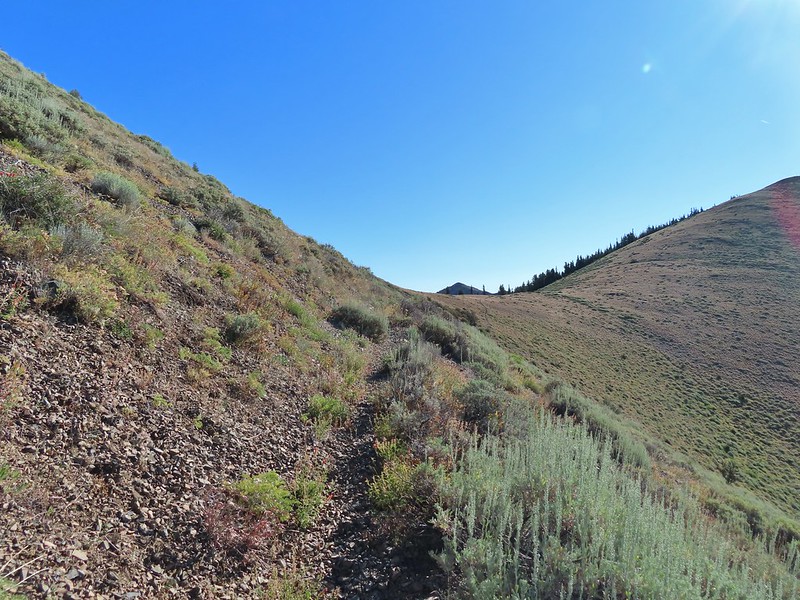
Over the next 2.2 miles the trail slowly lost elevation as it alternated between south and north facing hillsides via four saddles, the first of which we arrived at after 0.5 miles. Hillside above the trail.
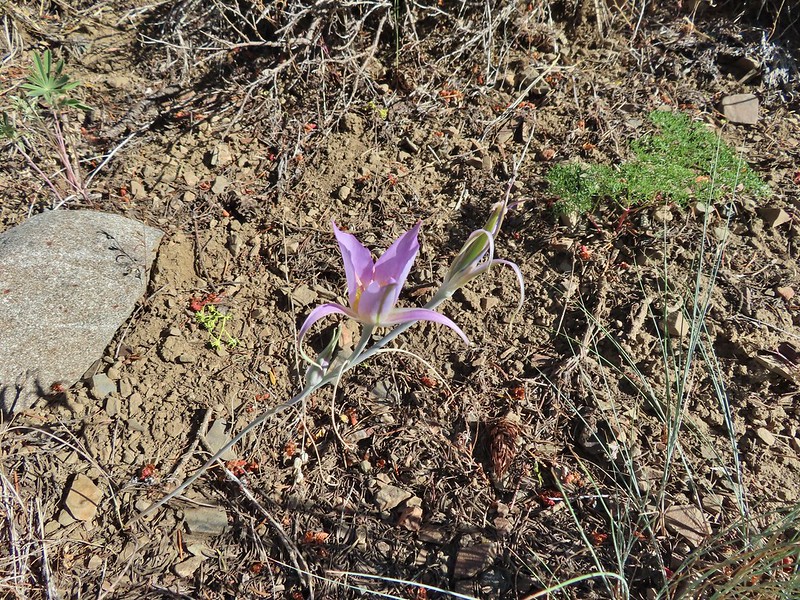
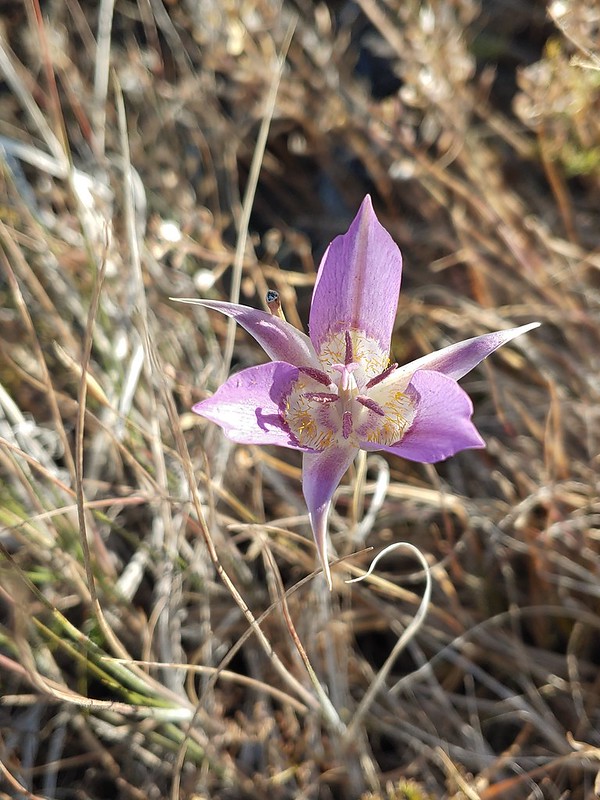
Sagebrush mariposa lily
Approaching the saddle where we would cross the the north side of the hill ahead.
The first saddle with Moon Mountain behind.
Looking back along the trail.
Looking back from the saddle.
The north side had a few more trees.
Looking back toward Fields Peak
We passed through a rocky section near the second saddle.
In another half mile we found ourselves passing through the second saddle and back on the south side of the ridge. McClellan Mountain from the second saddle.
Yet another half mile of trail brought us to the third saddle. Sullivan calls this phlox saddle and there was indeed a lot of phlox present it but had been a long time since it bloomed and all of the plants were now brown and dried. Approaching the third saddle.
The trail was again on the north facing side as it passed over a ridge leading out to Moon Mountain. Moon Mountain
Fields Peak (center).
McClellan Mountain as we approached the fourth saddle.
As the trail descended to the fourth saddle it disappeared in the sagebrush meadow.
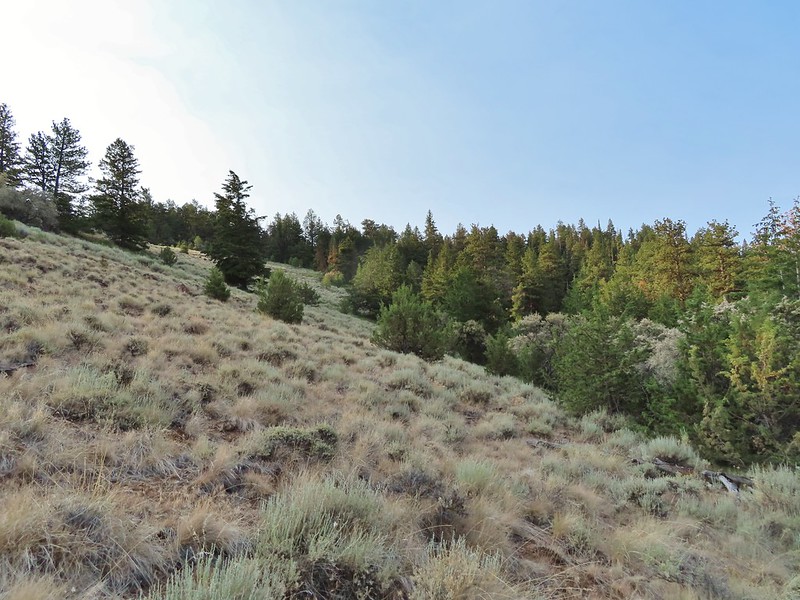
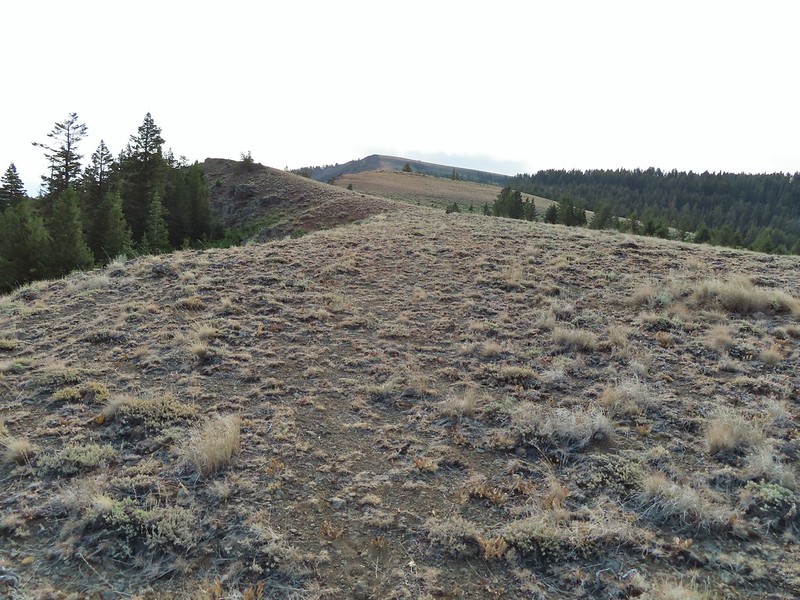
The good news was this fourth saddle was where the off trail route to the top of McClellan Mountain started so we simply made our way through the sagebrush to the gentlest looking slope and started up the mountain. Sullivan showed it being 1.2 miles and just under 700′ up to the 7043′ summit. Looking back you can sort of make out the trail angling down the near hillside.
Looking up McClellan Mountain.
Earlier in the hike I had mentioned to Heather that the only real disappointment of the trip had been the lack of large wildlife (aside from the dozens of deer and lone bobcat we spotted on our drives). As we crested the first hill on our way up McClellan Mountain though we spotted a line of ungulates crossing the hillside far above us. They were far enough away that I couldn’t tell for sure if they were elk or deer but once again the zoom on our camera helped solve the mystery. In the middle of the center hill to the left of the tree in the foreground is the line of what turned out to be 5 bull elk.
Blurry due to the elk moving and the deep zoom.
Four of the bulls stopped to look back at us.
The fifth and largest bull on top of the ridge waiting for the rest.
After watching the elk disappear over the hillside we continued on. As far as off trail hikes go this was nice and straight forward, not ever too steep, and the vegetation wasn’t too tall or thick.
An old fence line on the hill.
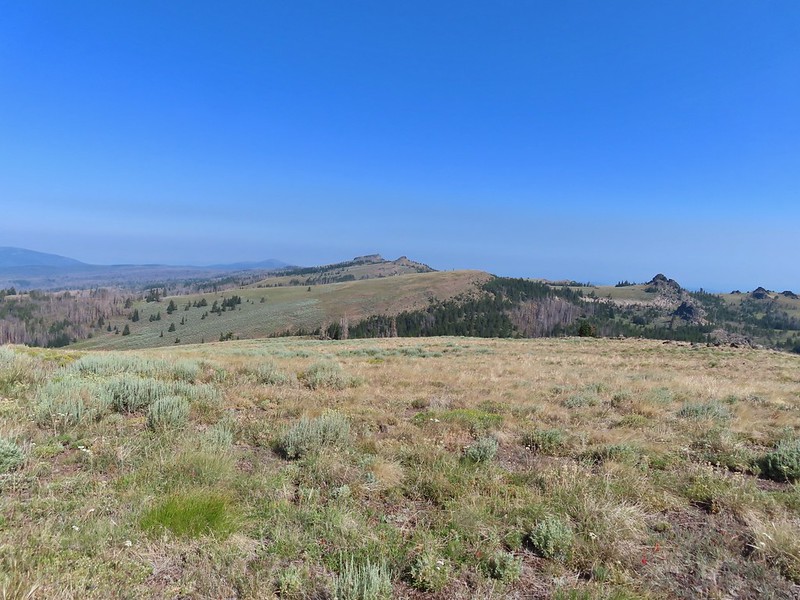
Fields Peak on the left, an unnamed peak in the center and Moon Mountain on the right.
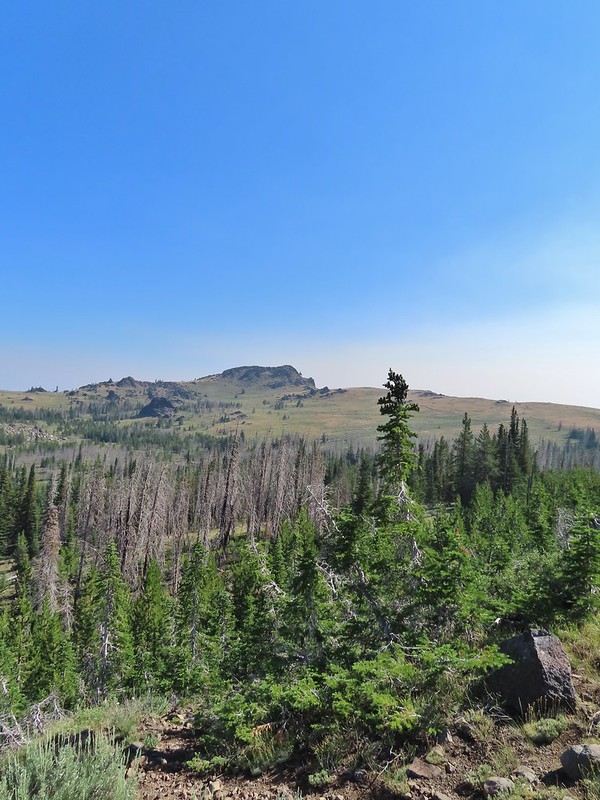
False summit (there’s always at least one). After some debate we went to the left of the rock outcrop which worked out well.
Passing the rock outcrop.
Almost there.
The Greenhorn Mountains, Elkhorns, Dixie Butte and the Strawberry Mountains from left to right in the distance.
Looking back at Fields Peak
The John Day River Valley.
Logan Valley
Company at the summit.
We took another nice break at the summit before heading back the way we’d come. On the return trip we had an encounter with what we believe was our first ruffed grouse. Passing back through Phlox Saddle.
A better look at the rocky section of trail.
Mountain coyote mint, one of only a couple with this coloration on the stems.
Butterfly and a beetle.
Sagebrush mariposa lily
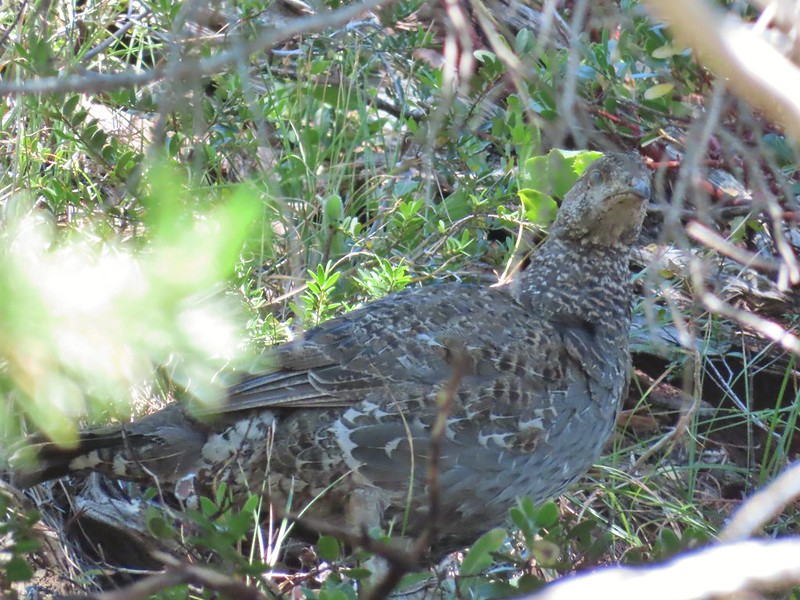
Ruffed grouse
A final look at McClellan Mountain.
For the second day in a row our hike came in at 12.3 miles, this time with approximately 3200′ of elevation gain.
Fields Peak Track
In our five days of hiking in the area we passed a single hiker (with dogs), something that is unheard of even on weekdays on the western side of the State. We were a little concerned about ticks but we only saw two, Heather had one on her hand the first night on the Rock Creek Trail and she had a second on her tights at the end of the Canyon Mountain hike but neither had bitten her. It had been an enjoyable trip but it was time to head home. We drove to Bend and had a nice visit with Heather’s parents before leaving early the next morning for one final short hike. Happy Trails!
For our fourth day of vacation we had planned another of Sullivan’s featured hikes, this time the Canyon Mountain Trail in the Strawberry Mountain Wilderness. Sullivan suggests two possible turn around points, for a moderate 6.6 mile hike Dog Creek and a more difficult 11.8 mile hike Dean Creek. We had originally planned on the more difficult option but were having second thoughts after reading the Forest Service information for the the Canyon Mountain Trailhead which noted that the final couple of miles of road were not maintained by the Forest Service and they recommend 4×4 vehicles only during dry months of the year. Sullivan simply described the road as “very steep and bumpy at times!”. We had prepared ourselves to have to park at one of the many dirt (OHV) spurs before reaching the trailhead thus adding a few miles to our hike in which case Dog Creek might need to be our turnaround. The road was indeed steep and bumpy but our Rav4 managed to make it 2.2 miles to a saddle where the road worsened even further. We decided to park along a spur road at the saddle and walk the final 1/4 mile of road to the trailhead. I had started up to the left at the saddle but it was steep with gullies and some debris so we carefully turned around and parked below.
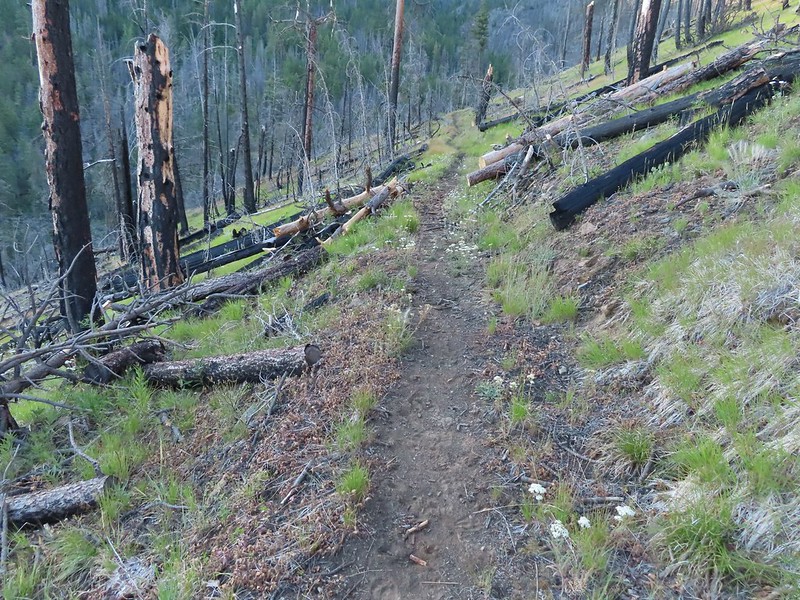
Little Canyon Mountain from the saddle. A wildfire burned the area in 2015 and the trail up to Dog Creek.
The actual trailhead.
A short distance up the trail we entered the Strawberry Mountain Wilderness.
The Canyon Mountain Trail doesn’t climb Canyon Mountain but rather traverses the hillsides below its namesake. There were however views of said mountain as we came around the first ridge end of the hike.
This was the least hazy morning of our trip so far but we were heading toward the rising Sun so visibility still wasn’t all that great. Little Pine Creek flowed down this valley below Canyon Mountain.
It looked like the wildflower display was probably pretty good earlier in the year but most of them were past now. We did see a fair number of late bloomers though. Yarrow along the trail.
Fireweed
Paintbrush
Approximately 1.5 miles from the trailhead we arrived at Little Pine Creek at a switchback.
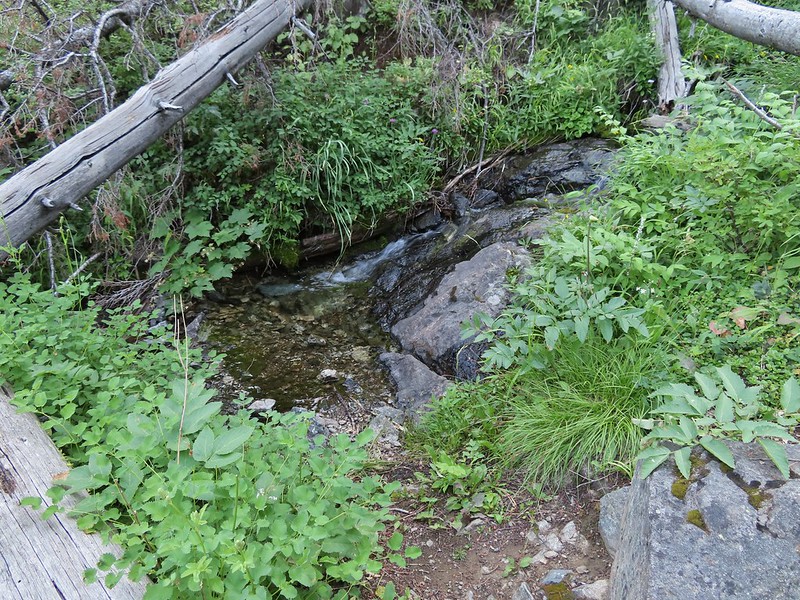
A tenth of a mile beyond the switchback (and after switching back once more) we crossed Little Pine Creek but not before stopping to sample some raspberries. Paintbrush and pearly everlasting
Raspberries
We don’t recall seeing a penstemon with leaves like this before.
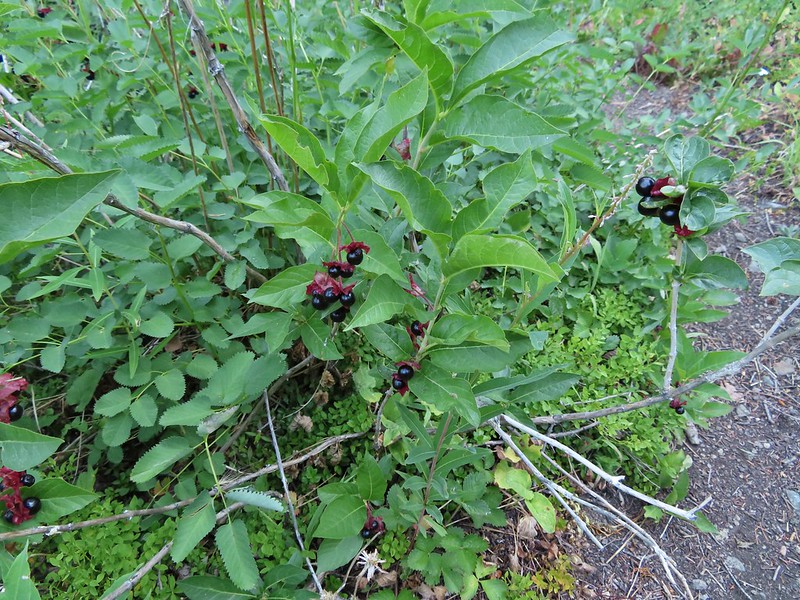
Twinberry (we did NOT sample)
Sitka burnett (white)
Little Pine Creek at the crossing.
The trail then gradually climbed through the forest to a viewpoint at a ridge end in what was now a dry meadow dotted with sagebrush mariposa lilies.
Prince’s pine
Mountain death camas
Fringed grass of parnassus
John Day below.
Little Canyon Mountain behind the ridge we’d come around earlier.
The Aldrich Mountains to the west, our destination for the next day’s hike.
Canyon Mountain
One of the sagebrush mariposa lilies.
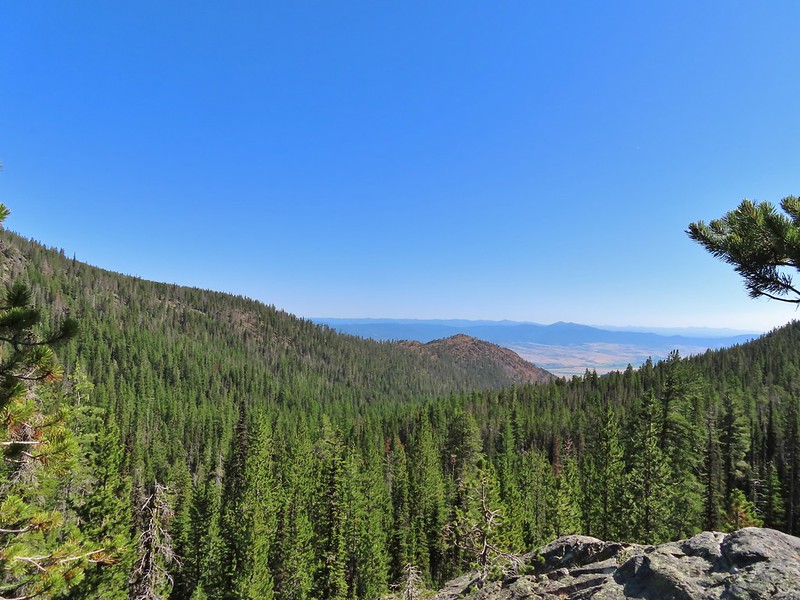
Dixie Butte and the Greenhorn Mountains to the NE
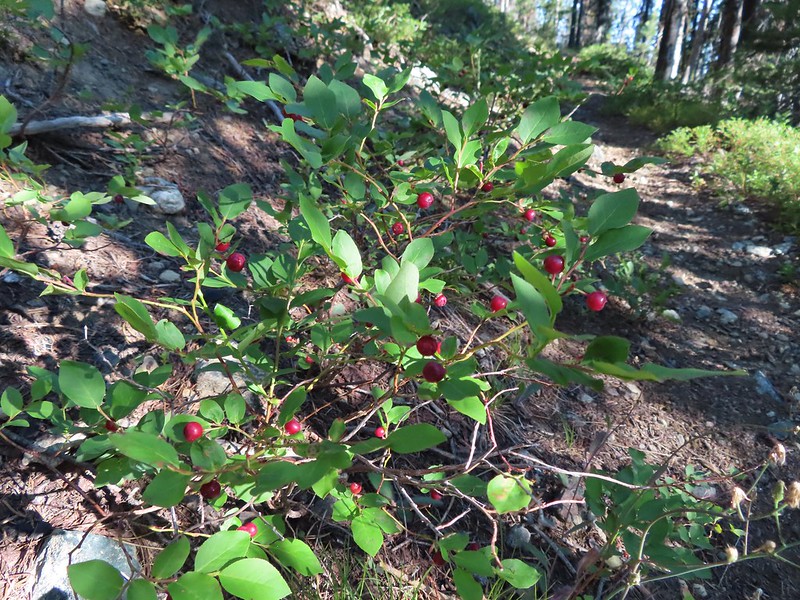
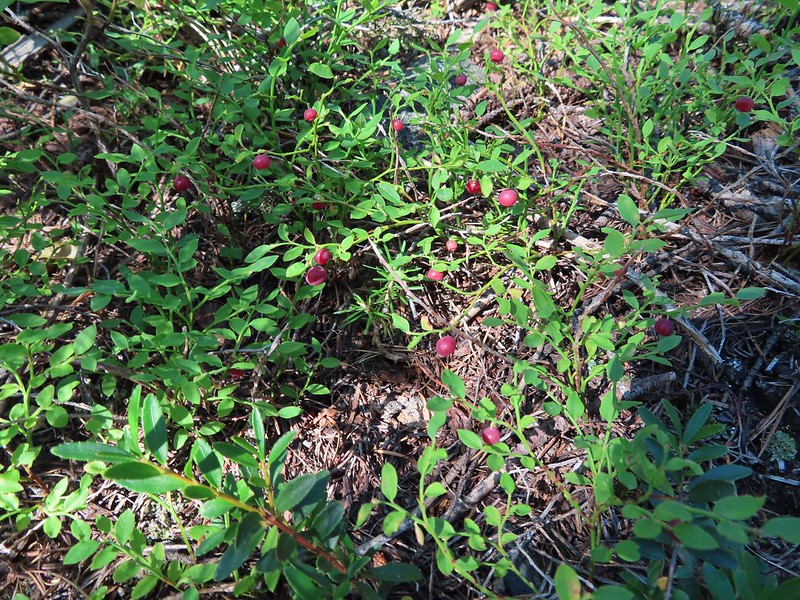
After wrapping around the ridge the trail reentered the forest once again and descend gradually to Dog Creek, 1.7 miles from the Little Pine Creek crossing. Berries were the highlight at Dog Creek with three different types of ripe blue/huckleberries to pick from.
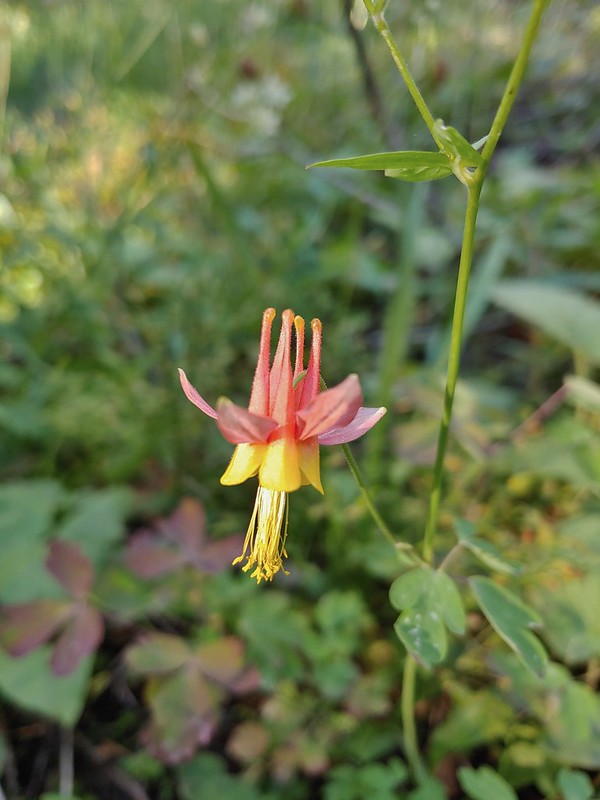
Columbine
Swamp onion
Flowers at Dog Creek
Twinflower
Since we’d manage to drive almost to the trailhead we decide to continue on to Dean Creek which was another 2.2 miles away. The distance was mostly due to having to swing out and around the rocky ridge separating the two creek drainage’s. There was a lot of elk sign along this section of the trail.
A lot of sign.
Looking back toward Canyon Mountain.
The trail crossed over the ridge in a saddle with quite a bit of mountain coyote mint.
Green Mountain on the left and Canyon Mountain on the right.
A smaller raptor, it wouldn’t look at us so I’m not sure what type it was.
Butterflies on western snakeroot. Side note we didn’t see a single snake or lizard all week which was really surprising to us.
We did however see quite a few grouse.
The trail got a little brushy nearing Dean Creek.
There wasn’t much water in Dean Creek but there was enough for a small cascade.
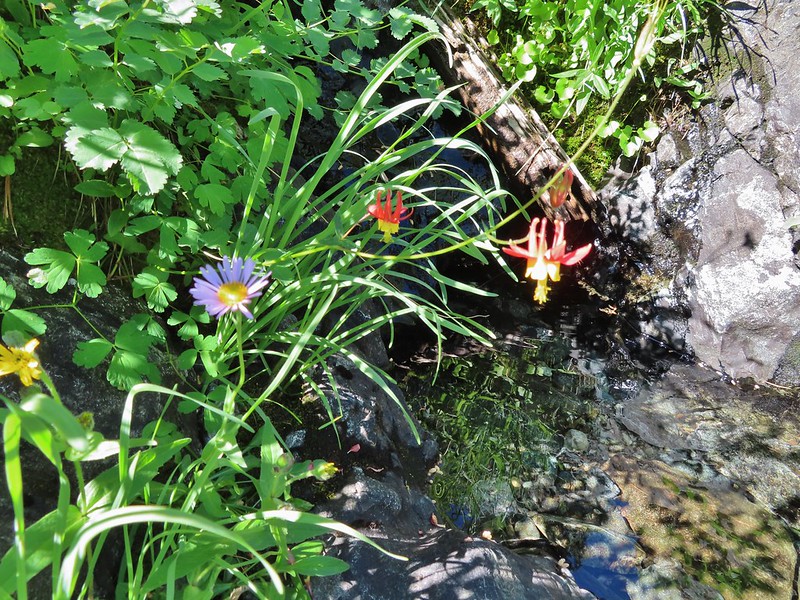
Wildflowers next to a small pool.
Dean Creek
Butterfly near the pool.
We sat in a nearby campsite to soak in the views as we took a short break. Canyon Mountain
Dixie Butte with the Greenhorns on the left and the Elkhorns (post) on the right.
After our break we returned the way we’d come, watching as always for wildlife and any flowers we’d missed on our fist pass (also ripe berries). Cones
Lousewort
Pearly everlasting, yellow flowers, and fireweed.
An eagle?
More cones
Dragon fly
A sulphur butterfly
California tortoiseshell
Grouse
Maiden fly
Skipper
Woodpecker
Northern flicker
Mountain bluebird
We put the car in low and drove back down the steep road until we made it to pavement then returned to John Day for one final night. This was probably our favorite hike of the trip because it felt the most like being in the mountains even though we were at higher elevations on Spanish Peak, in the Monument Rock Wilderness and the next day in the Aldrich Mountains. With the little extra road walk we came in at 12.3 miles and about 1850′ of elevation gain. Happy Trails!
We were finally down to our last Oregon Wilderness area to visit, the Monument Rock Wilderness (post). The 20,210 acre wilderness is located in the southern Blue Mountains a little over an hour east of John Day. We’d spent the night in John Day and woke to find that it had rained overnight but we hadn’t heard any thunder so we were optimistic that no new lighting caused fires would be springing up. We had two hikes in the wilderness planned for the day with the first being a hike to the wilderness’s namesake, Monument Rock.
Our starting point for the hike to Monument Rock was the Table Rock Trailhead. The final 3.8 miles to this trailhead require slow driving and a high clearance vehicle.
The trailhead is at this hairpin curve below Table Rock. The road continues another 0.8 miles to the staffed Table Rock Lookout but reportedly worsens which is hard to imagine is possible.
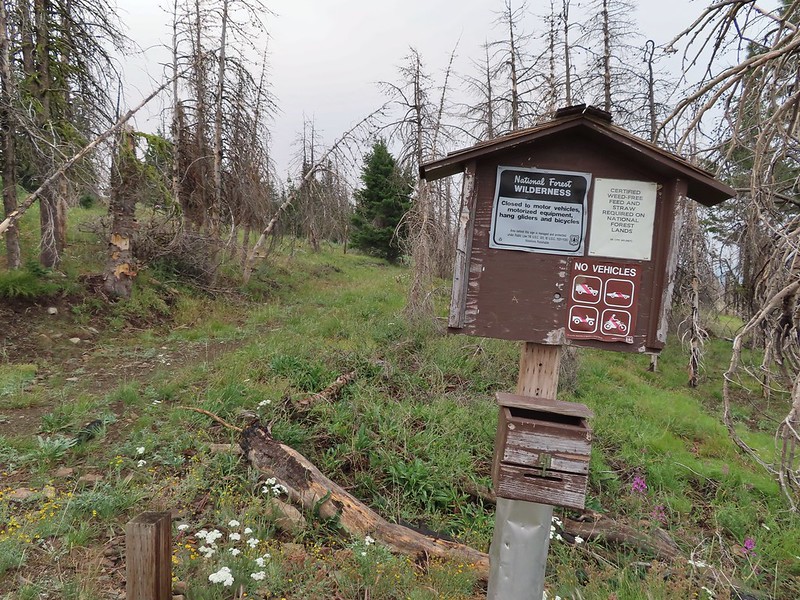
The trail quickly crossed the wilderness boundary on an old roadbed completing our goal of hiking in all of Oregon’s 46 wilderness areas open to human visitors.
First time seeing a wilderness sign quite like this.
There was quite a bit of smoke in the sky this morning even though we still weren’t really smelling it.
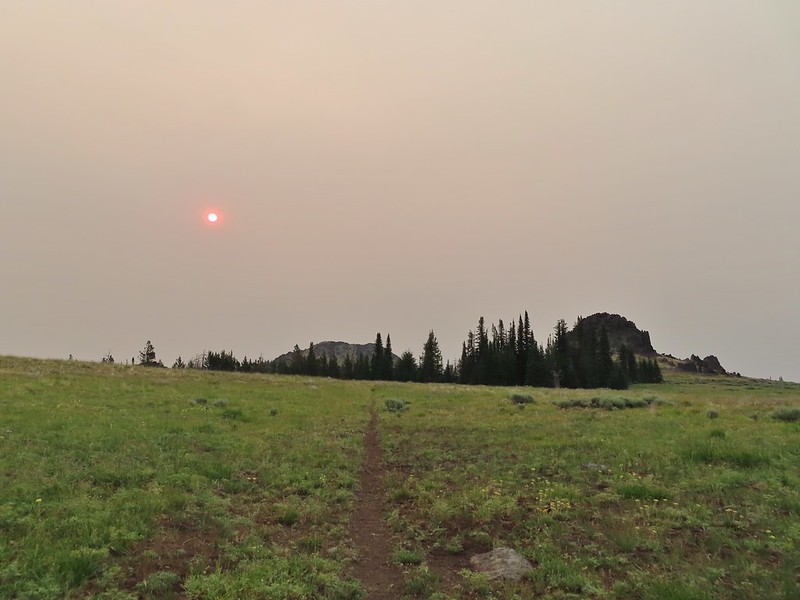
A red Sun behind the smoke, presumably mostly from the 400,000 plus acre Bootleg Fire east of Klamath Falls in south central Oregon.
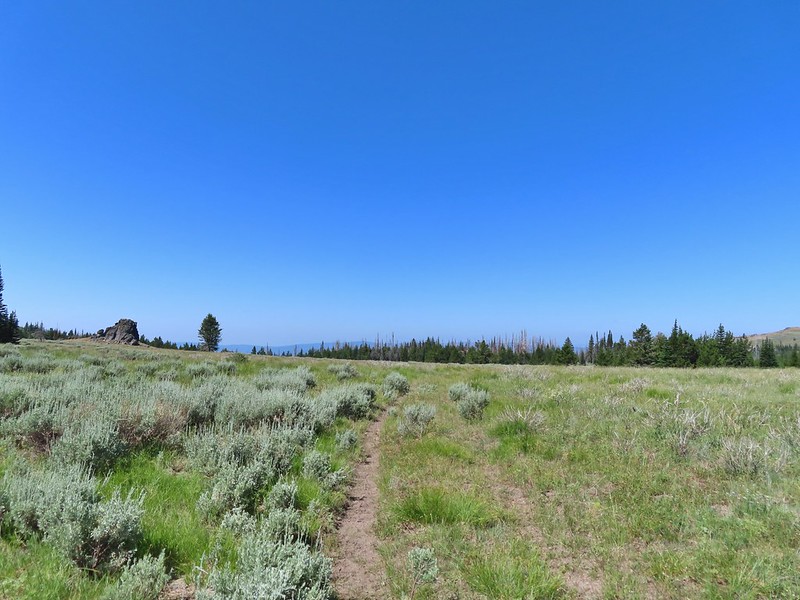
We followed the old road bed through sagebrush and occasional stand of trees for a total of 1.7 miles to a post. There was a nice amount of red paintbrush blooming amid the sage and lots of interesting rock formations along the way.
Clark’s nutcracker
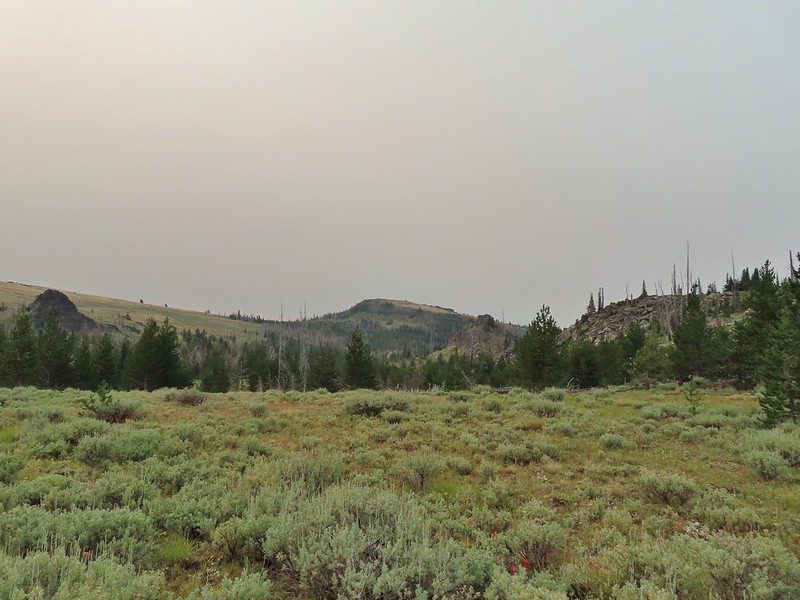
Monument Rock in the distance.
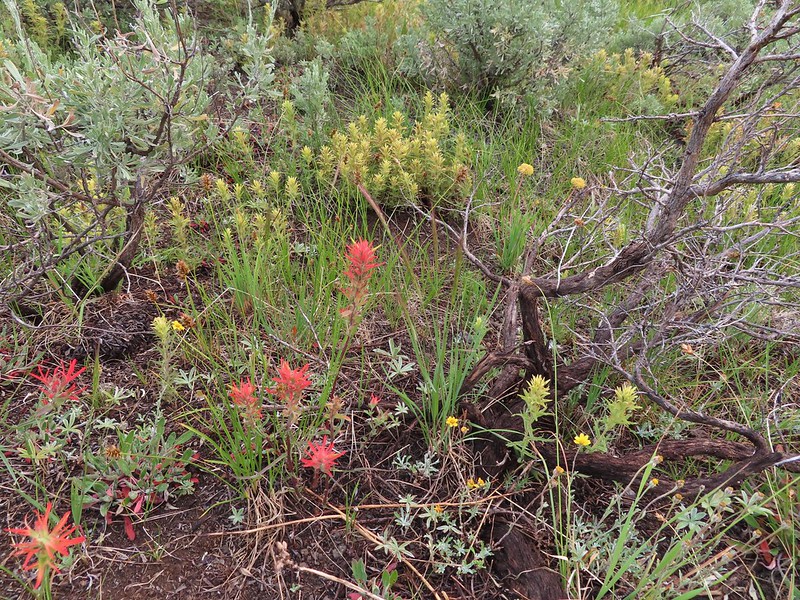
Paintbrush in the sagebrush.
Ground squirrel
There was a fair amount of this green paintbrush too.
We believe this post (not the 1.7 mile post) marked a side trail to Rock Spring but we didn’t see any tread in the area to know for sure.
Bullrun Rock dead ahead.
Table Rock in the distance.
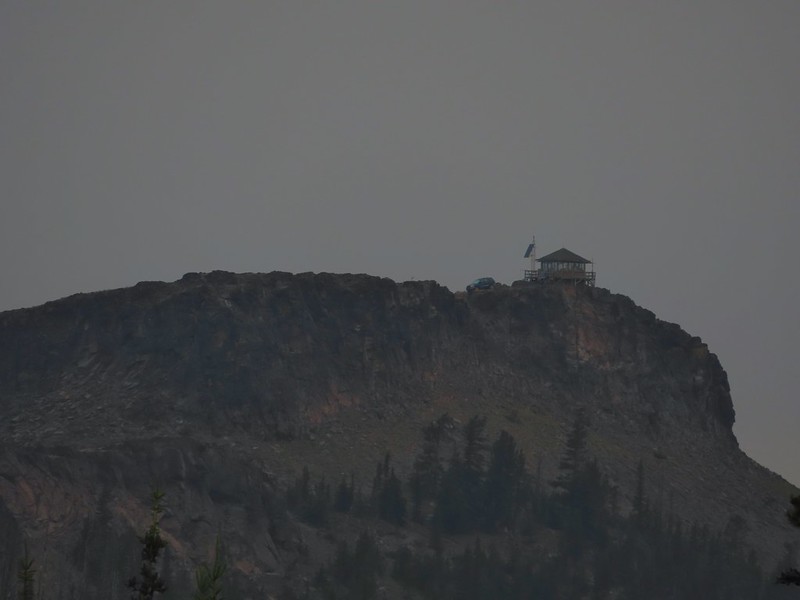
The Table Rock Lookout.
Two kinds of paint.
Bullrun Rock below the Sun.
Monument Rock again.
Old man’s whiskers
A checkermallow
We passed this sign for the Amelia Trail along the way but again didn’t see any trace of tread for it.
Grazing cattle near the post.
The post with Monument Rock in the background.
We made a sharp left turn following an old jeep track uphill toward Bullrun Rock.
In a little under a half mile we were at the base of the rock near a fence.
I believe that is Ironside Mountain.
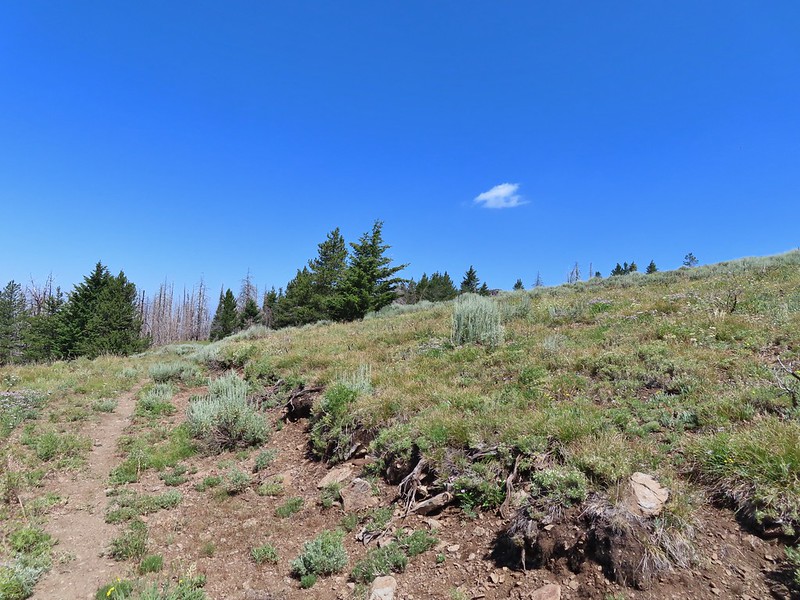
We then scramble up the side of Bullrun Rock to the 7873′ summit.
The jeep track and Monument Rock.
Table Rock
Looking down into the Monument Rock Wilderness
After enjoying the view we climbed down and returned to the post which we then continued past through an old fence and onward toward Monument Rock.
Woodpecker
Mountain bluebird
The old road bed wasn’t much more than a cattle trail now but we followed it for approximately 0.2 miles to what was shown on our GPS units as a sharp turn to the right. Sullivan indicated that there was a small cairn in this area marking the start of the route to Monument Rock. We didn’t notice any cairns but comparing the map on our GPS to the one in his guidebook led us to believe this was the correct spot so we followed an elk/cow path to the left but it was leading us too much to the east so we struck off cross country toward the flank of Monument Rock.
Looking back toward Bullrun Rock.
The initial climb up was a little steeper than we’d expected which led us to believe we may have not been quite where Sullivan would have had us go up, but we managed to make it up to a broad ridge where we then headed uphill through sagebrush. Table Rock from where we gained the ridge.
Heading up.
Soon the large rock cairn atop Monument Rock was visible (the cairn was likely constructed by Basque shepherds or possibly gold miners long ago).
We made our way over to the andesite outcrop and climbed up to the cairn and took a break. Me making my way up to the cairn.
Bullrun Rock from the cairn.
Table Rock from the cairn.
The Monument Rock Wilderness.
The haze had cleared up somewhat by this point giving us blue sky at least overhead as we began our hike back. The cairn on Monument Rock from below.
We decided to try a slightly different route back down hoping that we could follow the ridge further down and pick up what was showing on our GPS units as a trail below following South Bullrun Creek. Sullivan’s map showed the first part of the trail from the turn where we’d left the road bed extending 0.3 miles to a spring but the Garmins showed the trail then continuing south. Our thought was that if a trail had at one time been down there it was likely built on a less steep grade than the side we’d scrambled up. Heading downhill.
Heather spotted this sheep moth.
When we came to what appeared to be an old jeep track or path of some sort we turned right (north) and followed it down a short but still steep hill.
The path leading downhill.
The trail that was shown on the GPS dropped over 150′ from where we were, presumably down to the spring, but that was about 120′ more than we needed to lose so when the hillside leveled out a bit we made a hard right turn and made our way back to the track we’d taken earlier. We arrived below the point where we’d scrambled up and then headed back to the old road bed. Once we rediscovered the road we followed it back past the post and to the trailhead. Table Rock in the distance with Bullrun Rock on the right.
Robin
Quite a bit of a difference from the morning.
The hike here came in at an even 7 miles with just under 900′ of elevation gain.
Our track for Monument Rock
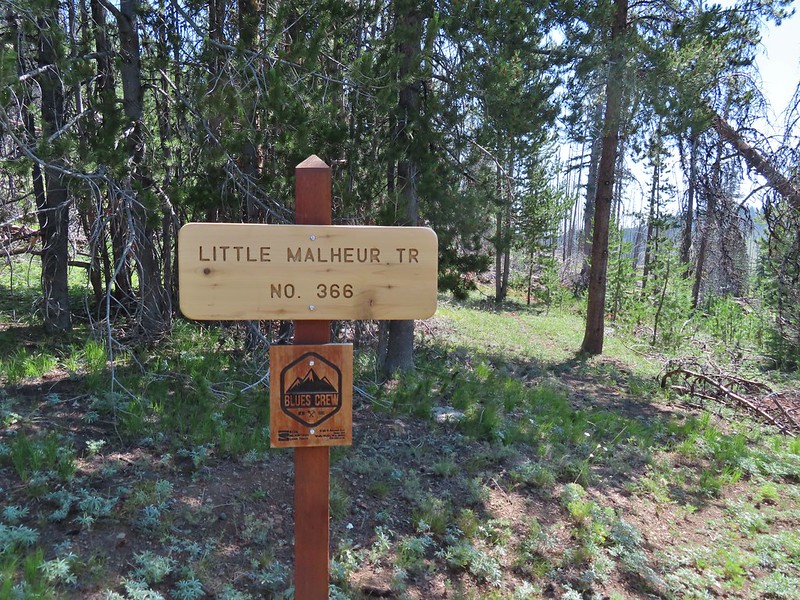
We had a little left in our legs after the Monument Rock hike so after navigating the rough 3.8 miles back to the Elk Flat Springs Campground we continued another 3/4 of a mile on Forest Road 1370 to the North Little Malheur Trailhead. The Little Malheur River had been one of Sullivan’s featured hikes in previous editions of his Eastern Oregon book but repeated fires and lack of maintenance have relegated it to a back of the book entry. We had decided to check it out to see what the trail condition was and to hopefully make it to the Little Malheur River which was approximately 2.2 miles from the trailhead.
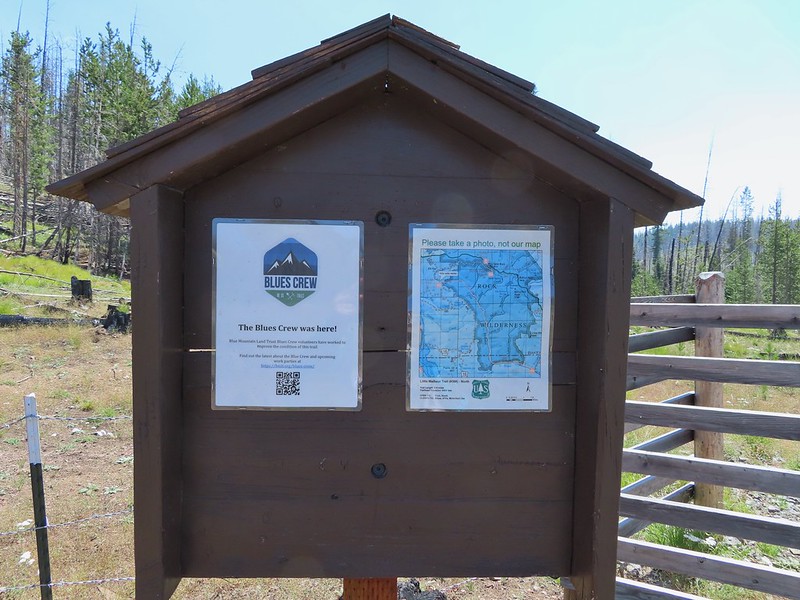
We were encouraged to find signs at the trailhead showing that the Blues Crew had done some work on the trail.
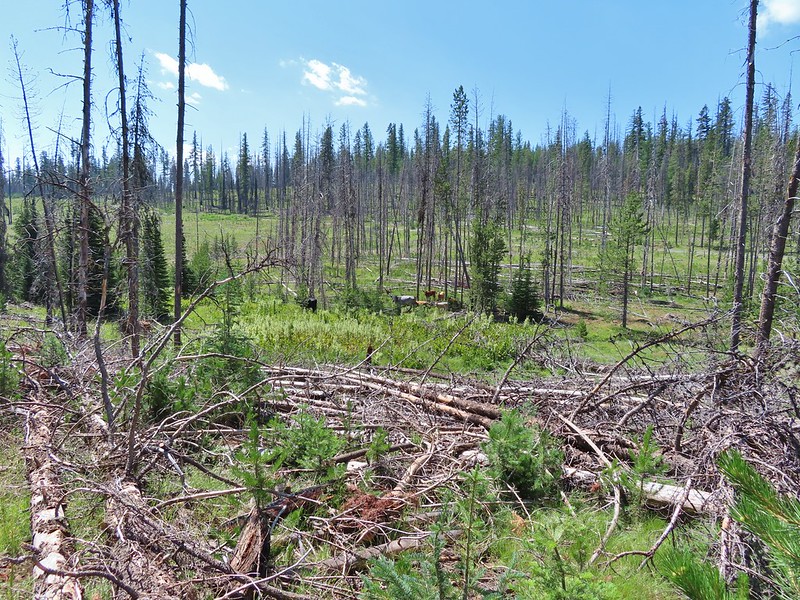
We were less excited that a cow crew was currently present.
In true cow fashion instead of just letting us pass by above them on the trail they ran uphill onto the trail and the for the next couple of miles we occasionally caught up to them and they would run off along the trail again kicking up dust and leaving cow pie mines along the path but I digress. Getting back to the hike, the trail was faint but flagging and a few rock cairns assisted in keeping it found (along with the cows).
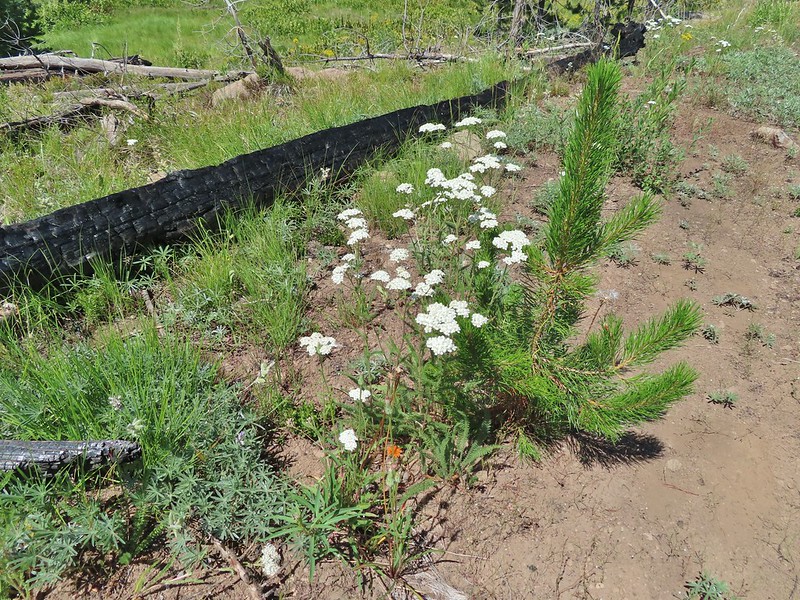
Yarrow and an orange agoseris.
Wilderness sign marking the boundary of the Monument Rock Wilderness.
Table Rock from the trail.
Elk Flat Creek.
An orange flag to the right ahead.
The trail following Elk Flat Creek.
A few areas of green trees remained.
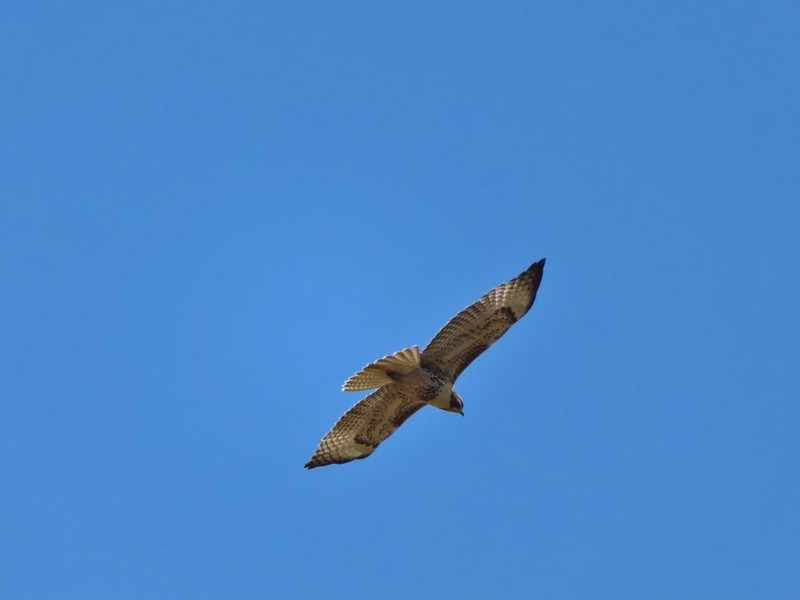
We were entertained by a large number of hawks in the area.
Unnamed stream shortly before reaching the Little Malheur River.
Monkshood along the stream.
It appeared that quite a few trees survived along the Little Malheur.
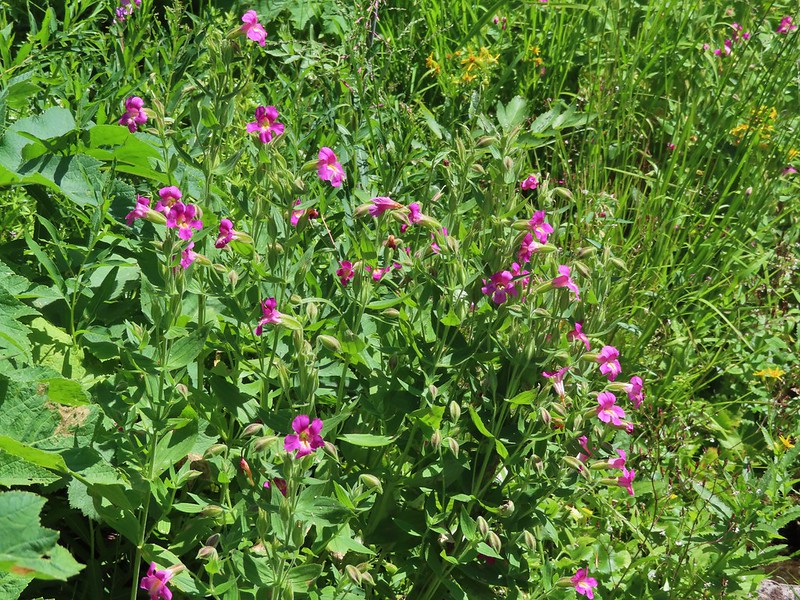
The trail crossing the Little Malheur River. We were especially excited to see a lot of nice pink monkeyflower along the banks.
We reached the river which wasn’t much more than a creek here, but it was a pretty setting. Wildflowers and green vegetation hosted a number of butterflies.
Pearly everlasting
After a nice relaxing break along the river we returned the way we’d come. In theory the trail extends another 5 miles to the south trailhead crossing the river 7 times along the way but we had gone far enough for today. It was nice not to be following the cattle on the way back. Ground squirrel
Either a big ground squirrel or a small marmot.
Another hawk.
Fluffy clouds forming over the Monument Rock Wilderness.
Our hike here, which included just a bit of wandering, came in at 4.8 miles giving us 11.8 for the day.
Our track for the Little Malheur River
It had been a good ending to our quest to visit all of Oregon’s designated wilderness areas and we celebrated with an early dinner at 1188 Brewing in John day before turning in early so that we could get up in the morning and head into the Strawberry Mountain Wilderness. Happy Trails!
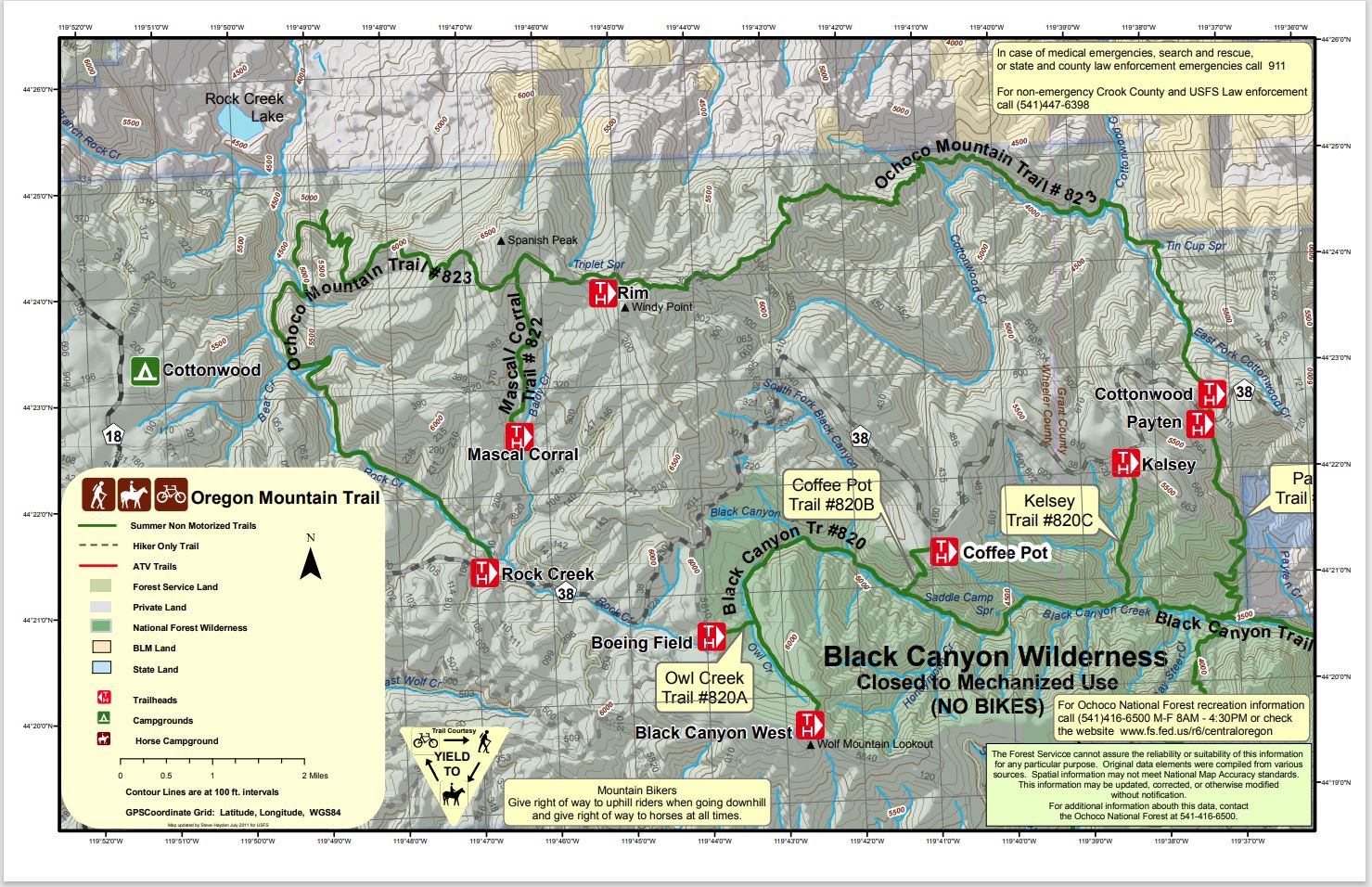
After spending the night camped near First Creek along the Rock Creek/Ochoco Mountain Trail we got an early (6:30am) start to hopefully climb up the 2000 plus feet to the summit of Spanish Peak before the day got too hot. According to Sullivan’s map (which matched the Forest Service’s map) it was 5.3 miles to the summit.
Forest Service Map
Just 0.2 miles from where we had made our makeshift campsite we came to an established campsite in a saddle near where the Ochoco Mountain Trail supposedly turned uphill to start the climb. Continuing along the Waterman Ditch.
If this trail sign was marking a junction it wasn’t clear where the other trail was.
Campsite at the saddle.
There was no clear tread other than the continuation of the Rock Creek Trail to the north where it ends at the National Forest Boundary in another mile. There was however a sign for the “Rim Trail” on a tree uphill from the trail. The Rim Trail sign on a tree trunk.
We headed uphill to the sign and picked up what appeared to be a rough trail but it also looked like it could have been an elk trail.
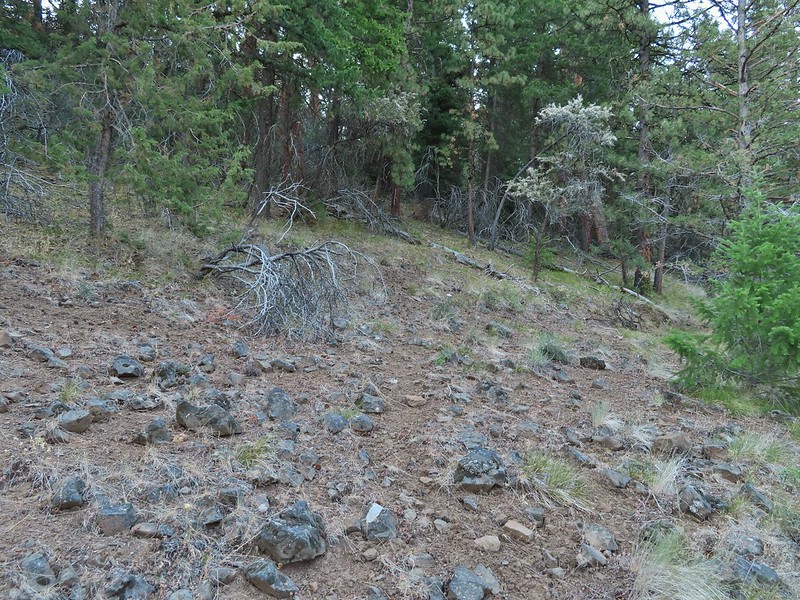
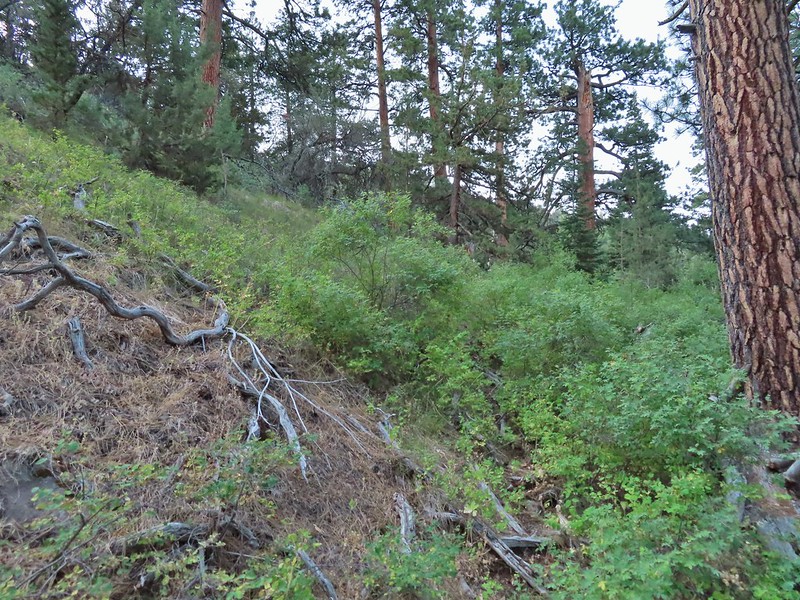
We tried our best to follow it uphill but there were no blazes, flagging, or cut logs to indicate that it really was an actual trail and in less than a half mile we lost it in brush.
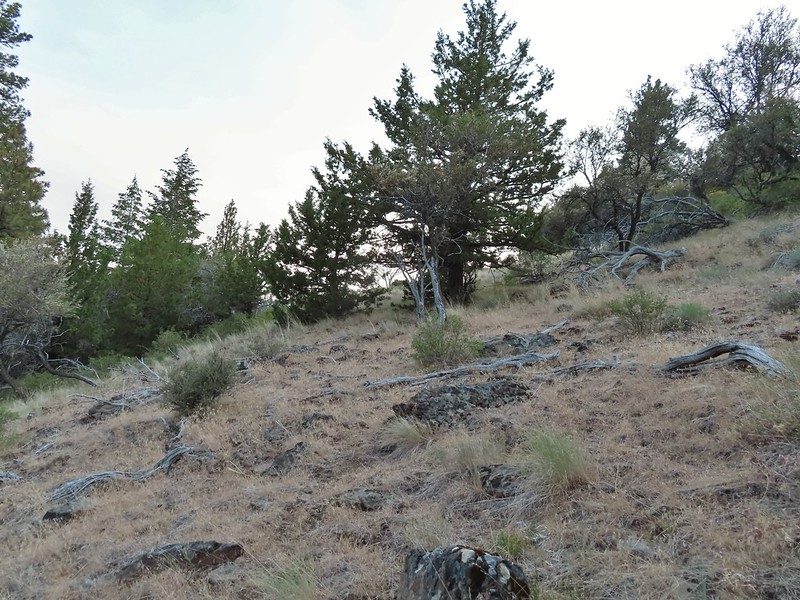
The hike had suddenly become an off-trail adventure. Between the Sullivan’s and the Forest Service map we knew the general route that the trail supposedly took so we did our best to recreate it at first. That meant a series of switchbacks up a steep hillside through a sagebrush meadow above First Creek.
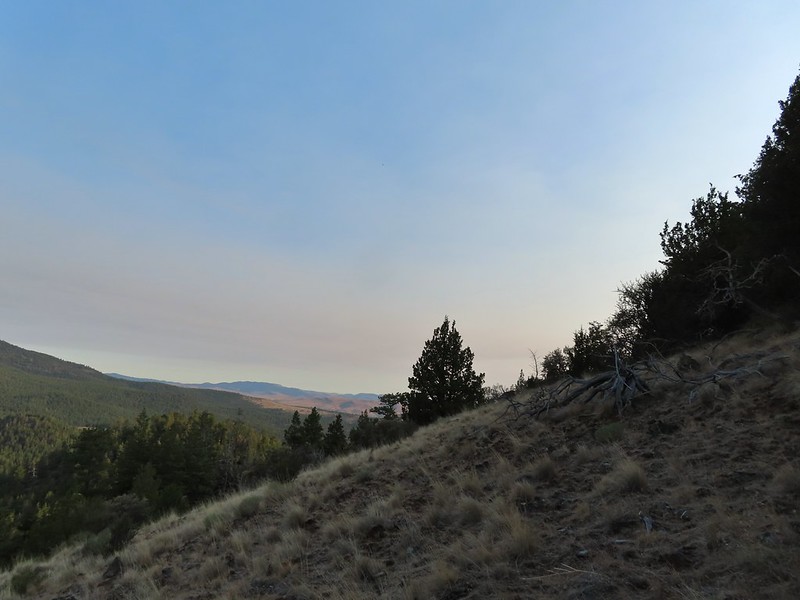
The trail then supposedly wrapped around the ridge between First and Second Creeks arriving at a rock cairn along a rim 2.5 miles from the saddle. We thought that we might rediscover the tread as we switchbacked up, but we did not. As we compared the maps with our GPS we noticed that we weren’t that far below the top of the ridge and that it might be possible to simply climb over the ridge taking a more direct route to the rim cairn. We decided that was our safest bet as we weren’t sure if we would find the trail wrapping around the ridge and even if we did a large downed tree in the wrong spot could make it impassable. We followed game trails through a small stand of trees into more sagebrush on top of the ridge.
Rock Creek Lake
Gaining the ridge.
We found the trail again on top of the ridge and were soon following rock cairns to the rim.
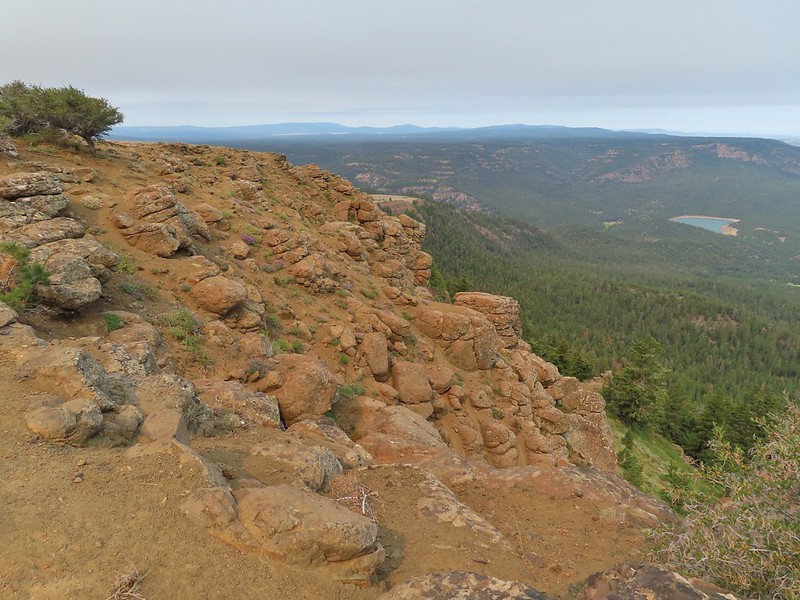
View from the rim.
Spanish Peak
A local
The trail was easy to follow along the rim but soon it came into some trees (and past a few wildflowers) where it appeared maintenance hadn’t been performed for a bit. Astter
Some sort of delphinium I think.
Downed trees across the trail ahead.
Interestingly camouflaged beetle on the upper onion.
Lupine
A checkermallow
Some more downed trees that we had to go around.
We briefly left the trees and were back to cairns in the sagebrush but soon reentered the trees and encountered more obstacles.
After passing through a couple of meadows we came to a rocky hillside below Spanish Peak where we left the trail and headed uphill following a few scattered cairns along what was shown on the GPS as the “Mascall Jeep Track”.
We left the trail here, note the small cairn on the left.
Heading uphill.
Scarlet gilia
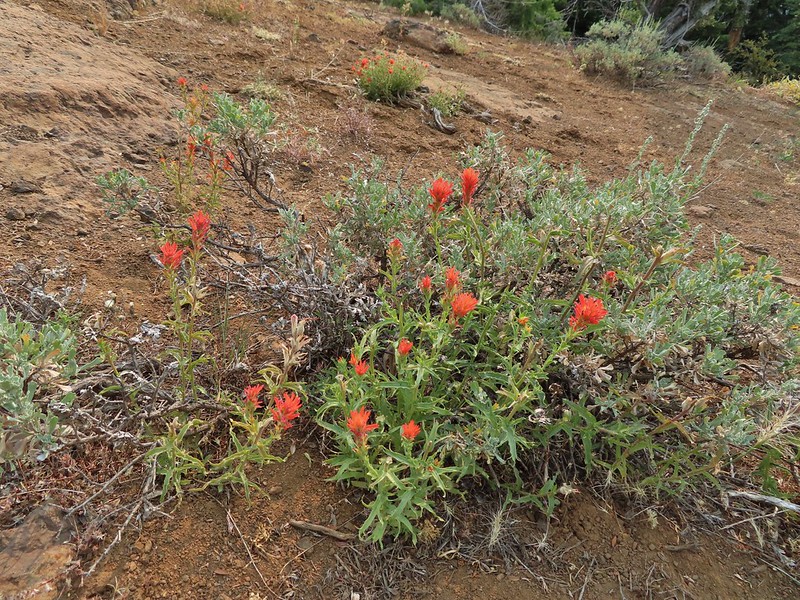
Paintbrush
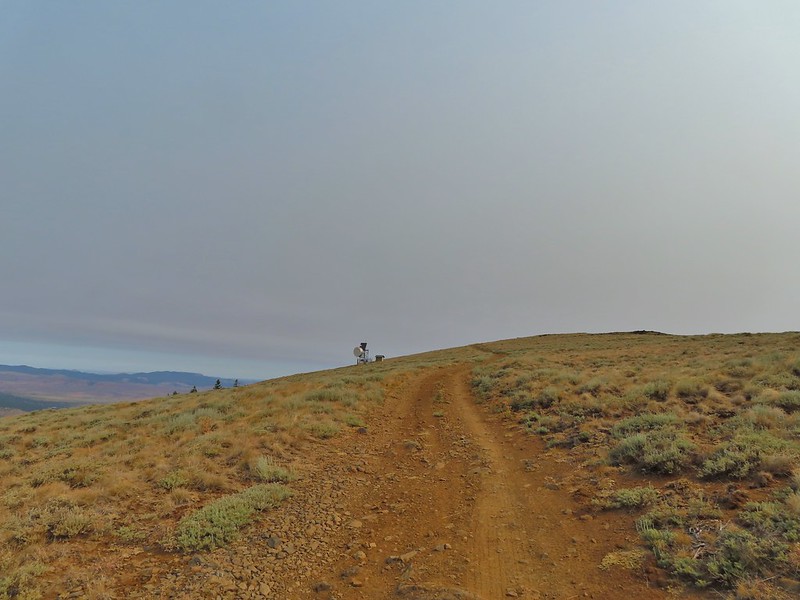
After a third of a mile we came to Spanish Peak Road, a dirt track to the radio tower and former lookout site atop Spanish Peak. //embedr.flickr.com/assets/client-code.js
We turned left on the road and followed it another 0.3 miles up to the summit.
The site of the former lookout.
The view was impacted by the “widespread haze” that had been forecasted but we could still make out quite a bit (and at least it didn’t smell smokey). Looking out toward the John Day River valley.
SE to Windy Point.
West to Rock Creek Lake and on the horizon the flat topped Lookout Mountain (post) and pointier Round Mountain (post) in the Ochocos.
NE to the John Day River Valley.
Lookout and Round Mountain and the rim that we had hiked up below Spanish Peak.
The Pisgah Lookout on the far side of the Bridge Creek Wilderness (post).
A hazy Mount Hood to the NW.
After taking a break at the summit we returned down the road to the jeep track and followed it back down to the Ochoco Mountain Trail where we turned left into some trees.
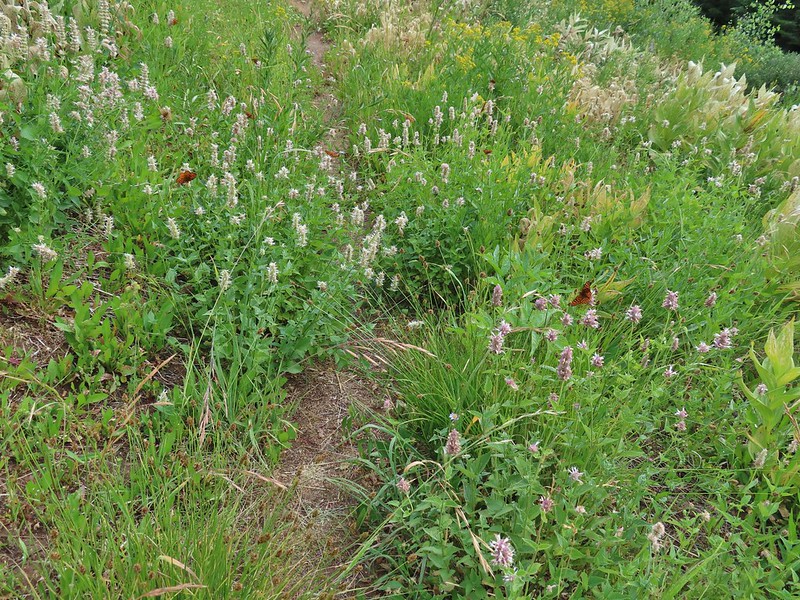
We passed through a meadow filled with fritiallry butterflies who were loving the remaining hyssop blossoms.
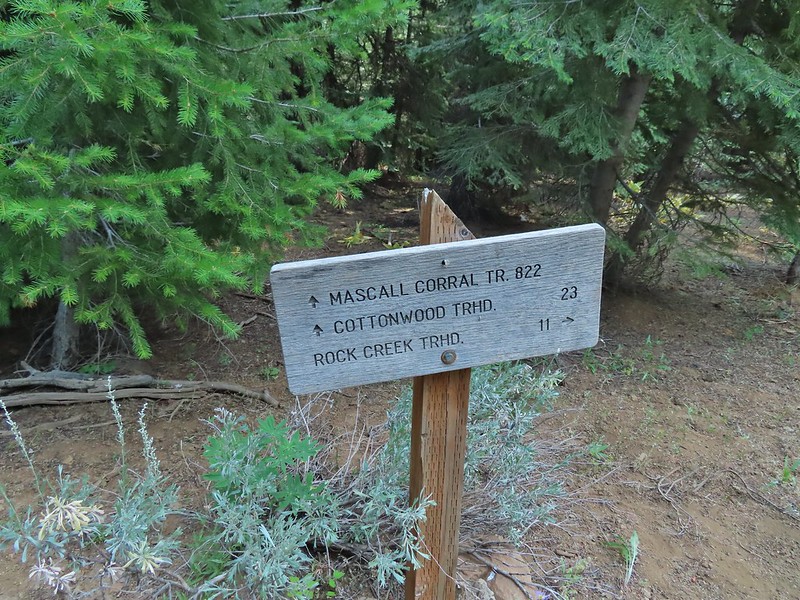
After 0.3 miles back on the Ochoco Mountain Trail we came to a signed junction with the Mascall Corral Trail.
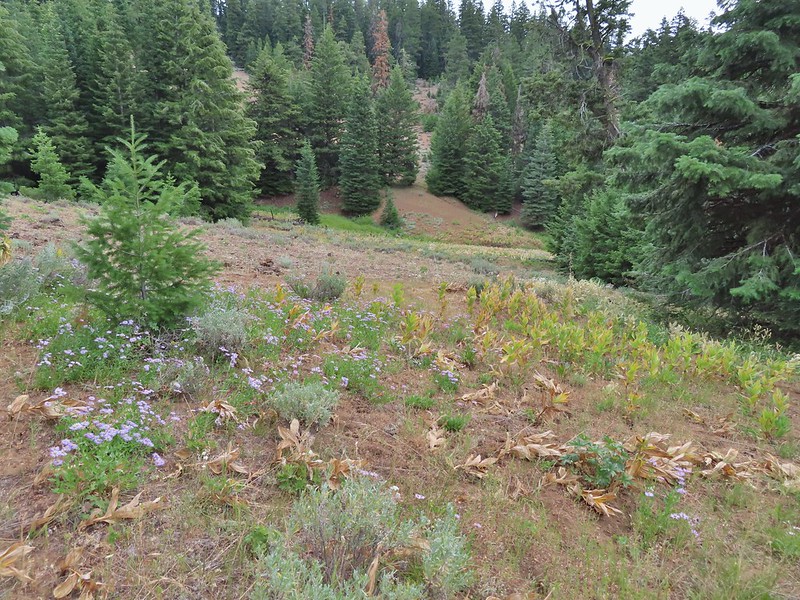
Here we made a hard right and headed steeply downhill along the Baldy Creek drainage.
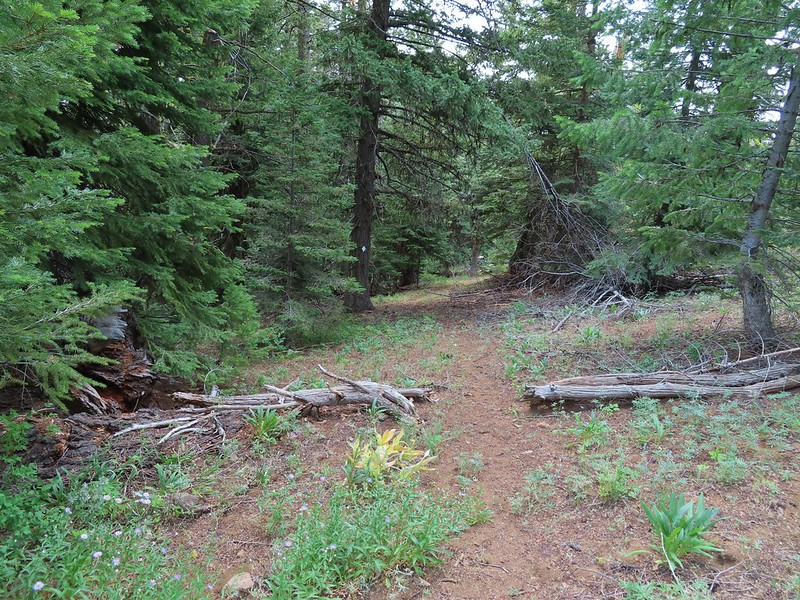
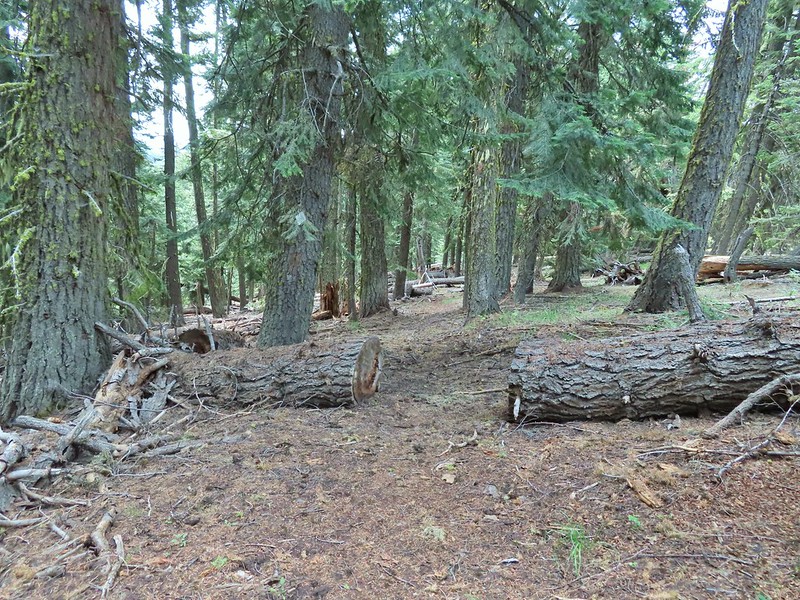
This trail was in a little better shape having seen some maintenance.
Baldy Creek was on our left.
The trail soon followed old roadbeds, including another section of the Mascall Jeep Track and just under three miles from the junction arrived at the Mascall Corrals Trailhead
Red-tailed hawk
Western tanager
Arriving at the trailhead.
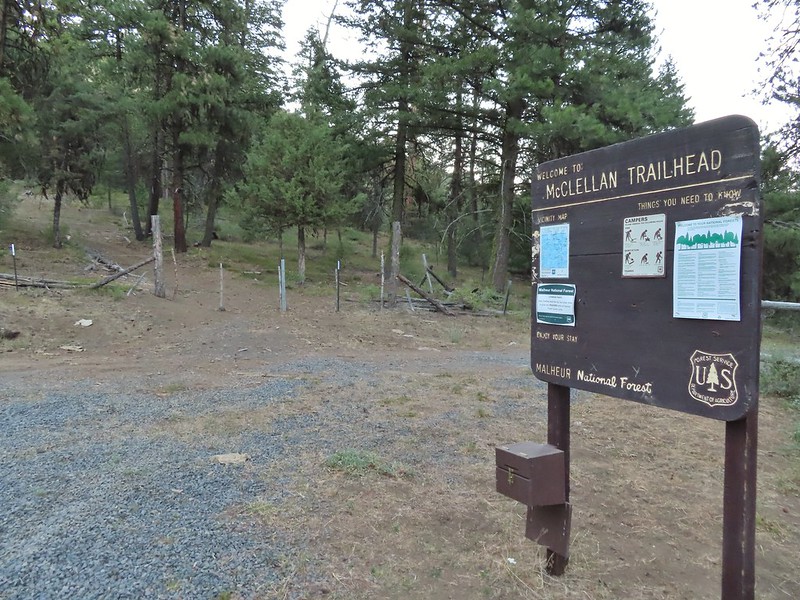
Signage at the trailhead.
From this trailhead we turned right and followed Forest Road 3820 one and a quarter miles (some of which was disappointingly uphill) to Arvid Nelson Road where we turned right for another 0.8 miles to the Rock Creek Trailhead and our waiting car. Baldy Creek below FR 3820.
A sulphur butterfly of some sort.
A watermellon or June bug as we called them growing up.
FR 3820 meeting Arvid Nelson Road.
Spanish Peak from Arvid Nelson Road.
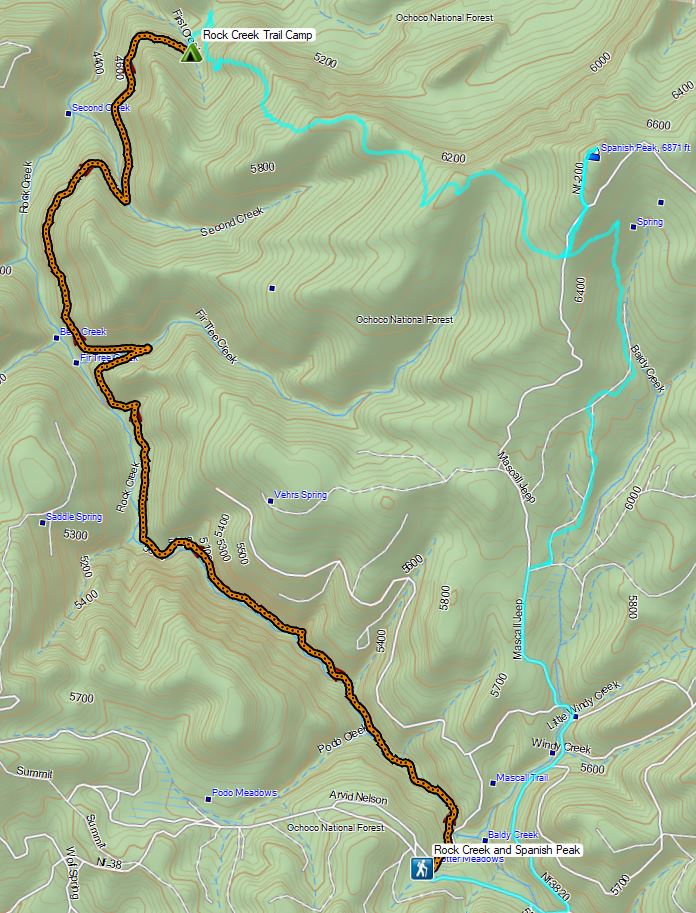
This was an 11.5 mile hike with almost 2500′ of elevation gain. The off-trail scramble above First Creek had made the hike a lot more difficult than planned, made more so by having our full backpacks instead of a lighter day pack, but it had been fun (mostly) and despite the haze we had decent views on the day.
Our track in orange
From the Rock Creek Trailhead we drove to Highway 26 then headed east to John Day where we checked into the Dreamers Lodge then had a nice dinner at the Outpost Pizza Pub & Grill before turning in for the night. Happy Trails!
**Note the 2024 Rail Ridge Fire burned over the Black Canyon Wilderness.**
Every year we pick our vacation time in January/February (due to work) so we never know what the conditions will be when we choose. We had a week scheduled in July for a trip to the John Day area in hopes to make further headway on the 100 featured hikes in Sullivan’s “100 Hikes/Travel Guide Eastern Oregon” (post) and to complete our goal of visiting all of Oregon’s designated wilderness areas (minus the two that are closed to human visitors) (post).
With severe drought conditions present all of the West and multiple wildfires burning in Oregon we kept an eye on the forecast and made daily checks with the relevant National Forests to make sure the hikes that we had planned remained open. While all of the trails were open a red flag warning for possible scattered thunderstorms Monday and Tuesday for the Blue Mountains had us a little concerned. The forecast also called for “wide spread haze” every day but fortunately not for “smoke” which meant we’d probably not have much in the way of views on the trip. We could deal with the haze, it was the possibility of new lightning caused fires that could quickly end our trip and our two days of hiking (Monday & Tuesday) involved our first overnight backpacking trip of the year.
Monday we left Salem and drove to the Boeing Field Trailhead, the first of two stops in the eastern portion of the Ochoco Mountains.
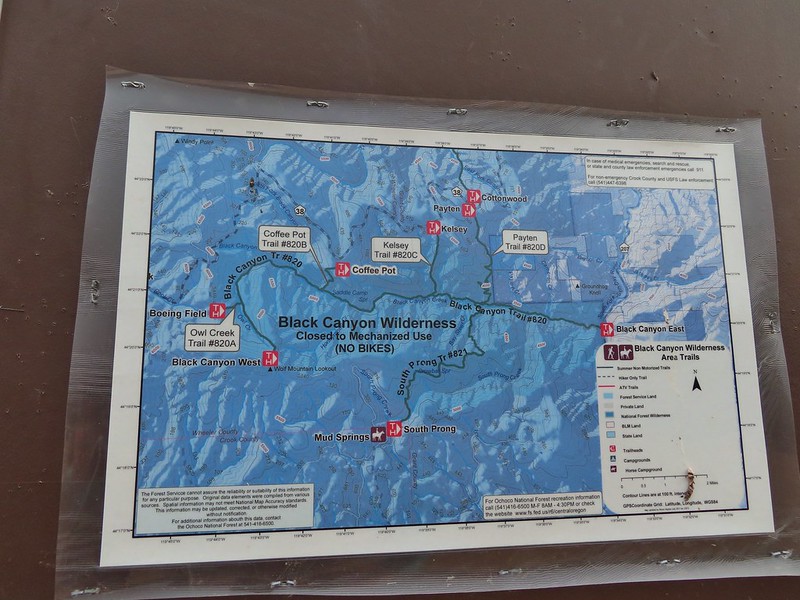
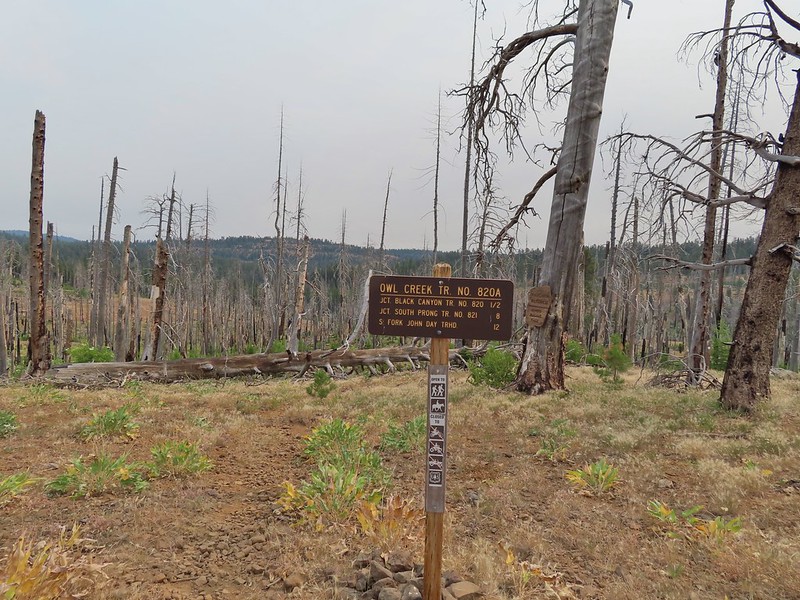
This trailhead, named in honor of a B-18 bomber that crashed nearby during a WWII training flight killing all four crew members, provides access to the Black Canyon Wilderness via the Owl Creek Trail.
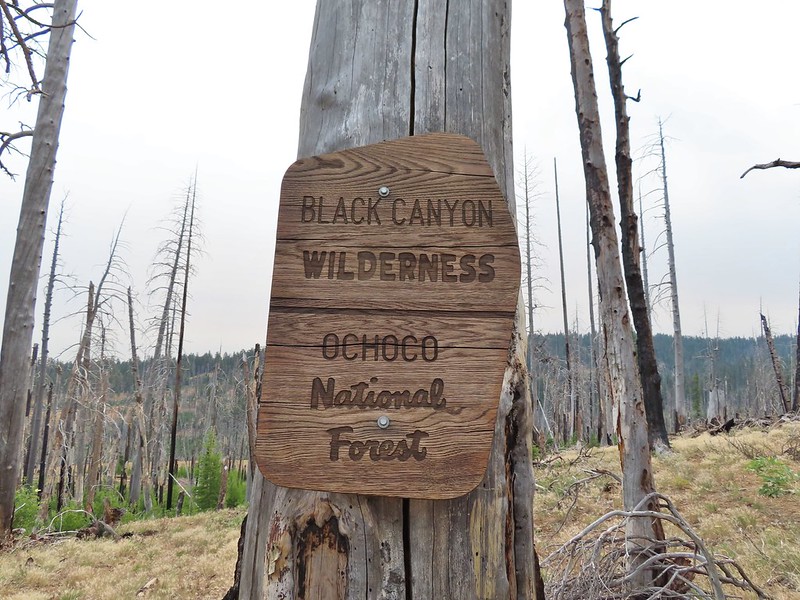
We headed down the Owl Creek Trail and quickly entered our 45th Oregon wilderness area.
We descended to the nearly dry bed of Owl Creek in the scar of a 2008 wildfire and in a half mile reached the Black Canyon Trail.
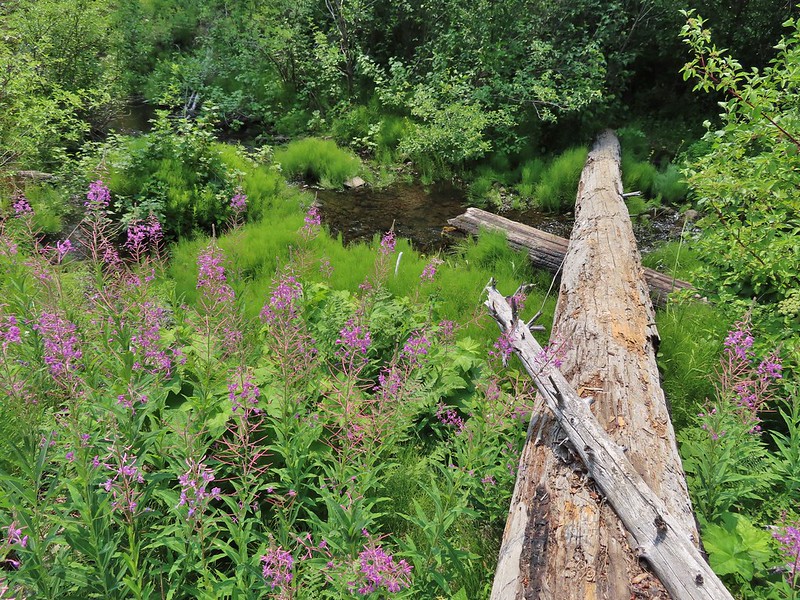
Aster, paintbrush, and fireweed.
Fireweed, aster, and pearly everlasting.
Clouds and smoke mixing in the sky made it hard to tell if any thunderstorms might be developing.
We never heard any thunder but we did briefly get sprinkled on.
Ground squirrel.
Columbine
Fritillary butterfly
Black Canyon Trail junction.
We turned left onto the Black Canyon Trail and followed it down into Black Canyon along Owl Creek soon leaving the fire scar behind.
Owl Creek crossing approximately 1.5 miles from the junction.
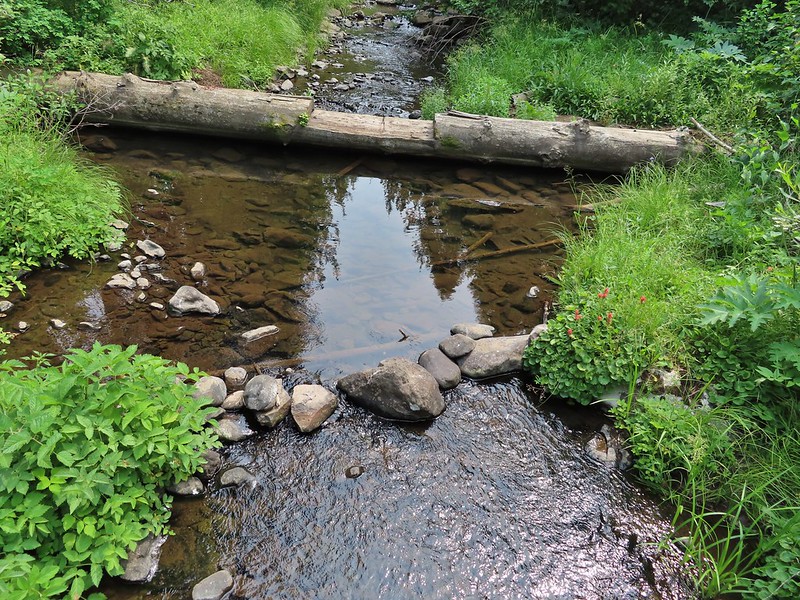
In another half mile we arrived at Black Canyon Creek which we easily crossed on small logs.
Fish in Black Canyon Creek
We were seeing a lot of mountain lady slipper orchids but unfortunately they were all past.
Three quarters of a mile after crossing Black Canyon Creek we passed the Coffee Pot Trail and soon entered another fire scar, this one from 2002.
Western Tanager
Just under 4 miles into the hike we came to the second crossing of Black Canyon Creek and our turnaround point for the day.
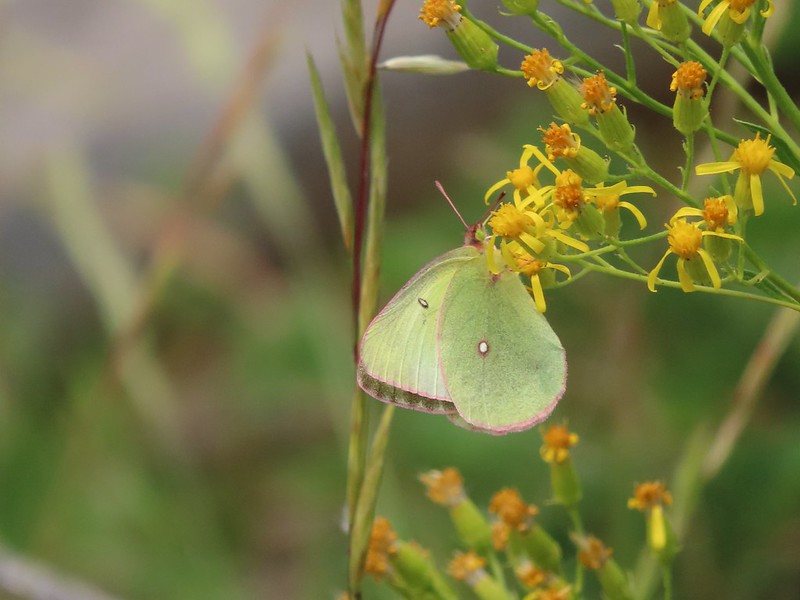
California tortioseshell
Western Jacob’s ladder
Black Canyon Creek
After a short break on a log spanning the creek we headed back to the car stopping occasionally along the way to watch pollinators busy at work.
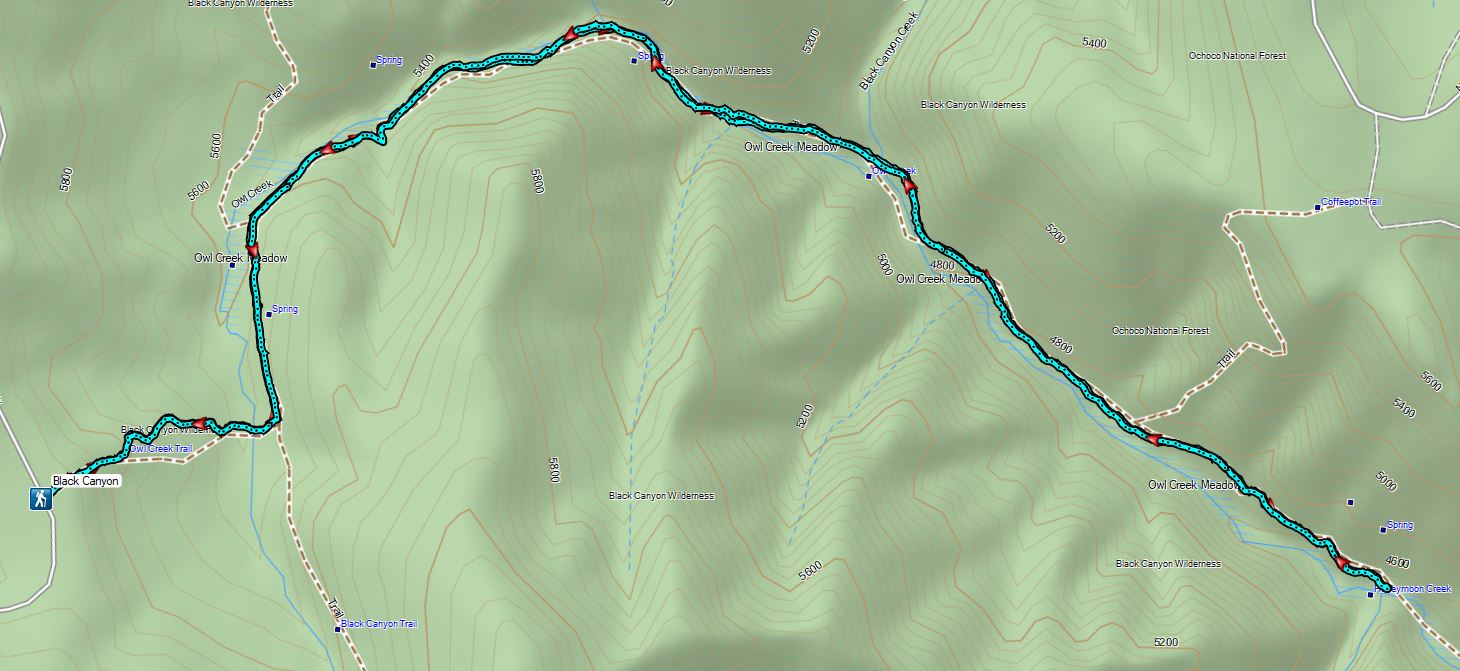
This was an eight mile out and back with almost 1600′ of elevation gain, mostly on the way back.
Black Canyon Track
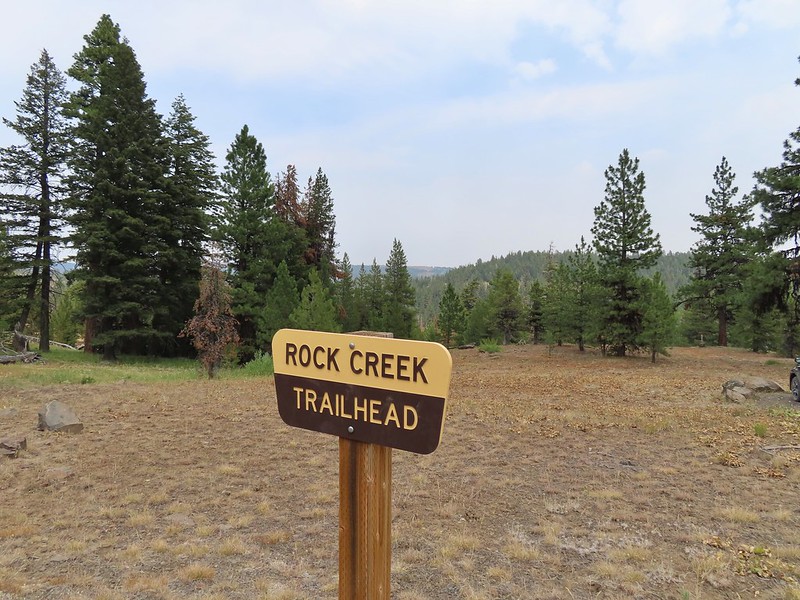
From Boeing Field we drove back the way we’d come 4.3 miles to the Rock Creek Trailhead.
Here we threw on our full backpacks as our plan was to camp somewhere along Rock Creek and then return on a loop the next day by hiking up to Spanish Peak the next day following the route of the Ochoco Mountain Trail and Mascall Corral Trail.
Forest Service Map
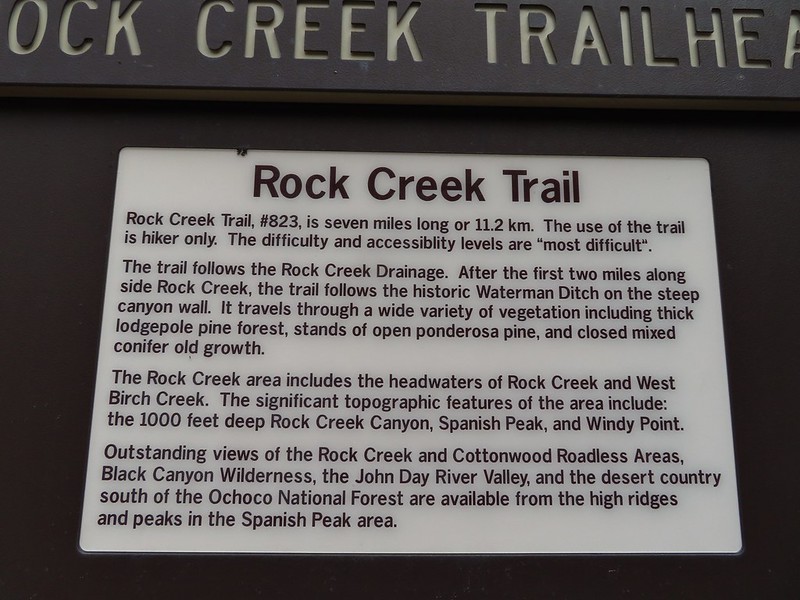
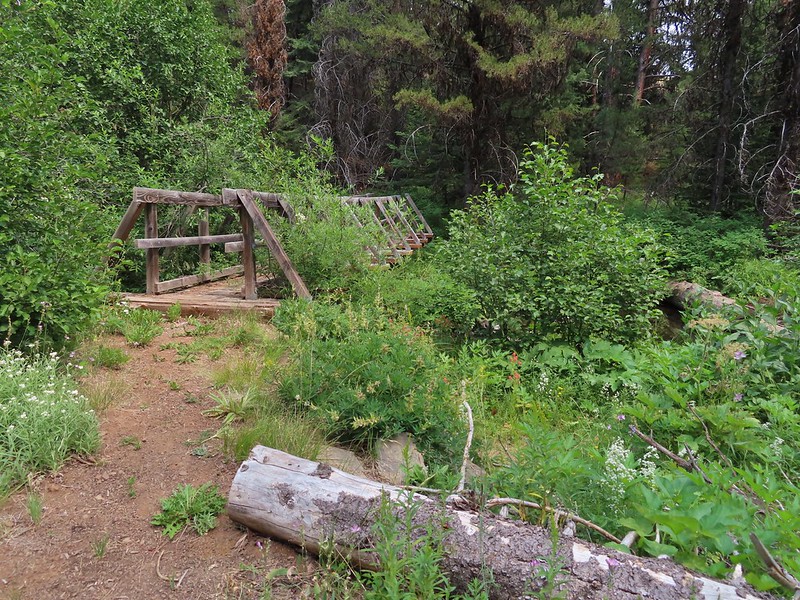
From the trailhead the trail descended to Rock Creek crossing it on a nice footbridge.
The number of insects on the blossoms and their size differences were fascinating.
The trail then followed along Rock Creek for a bit before the creek began descending more steeply than the trail. At the 2.4 mile mark we arrived at a sign announcing the Waterman Ditch.
Snacks
Lorquin’s adrmiral
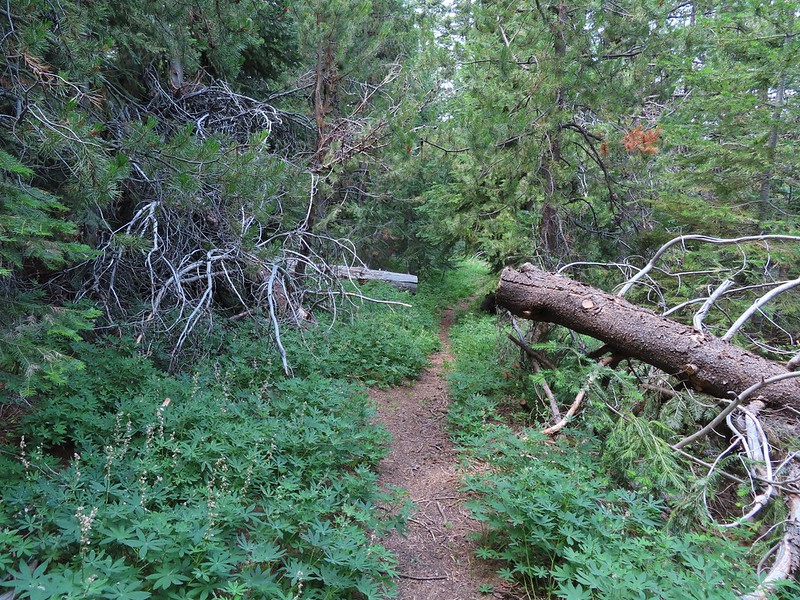
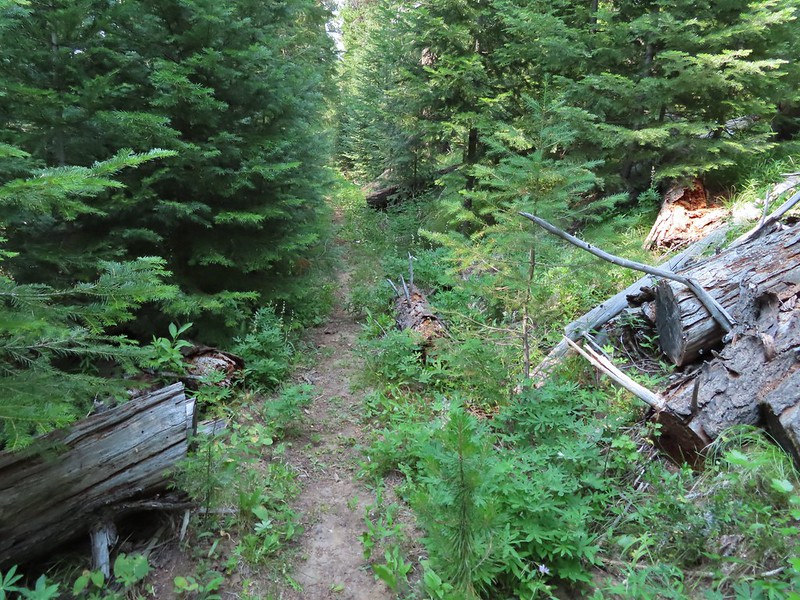
A little light on the tread in this section.
The trail then followed the old ditch passing the remains of a cabin next to Fir Tree Creek in 1.4 miles.
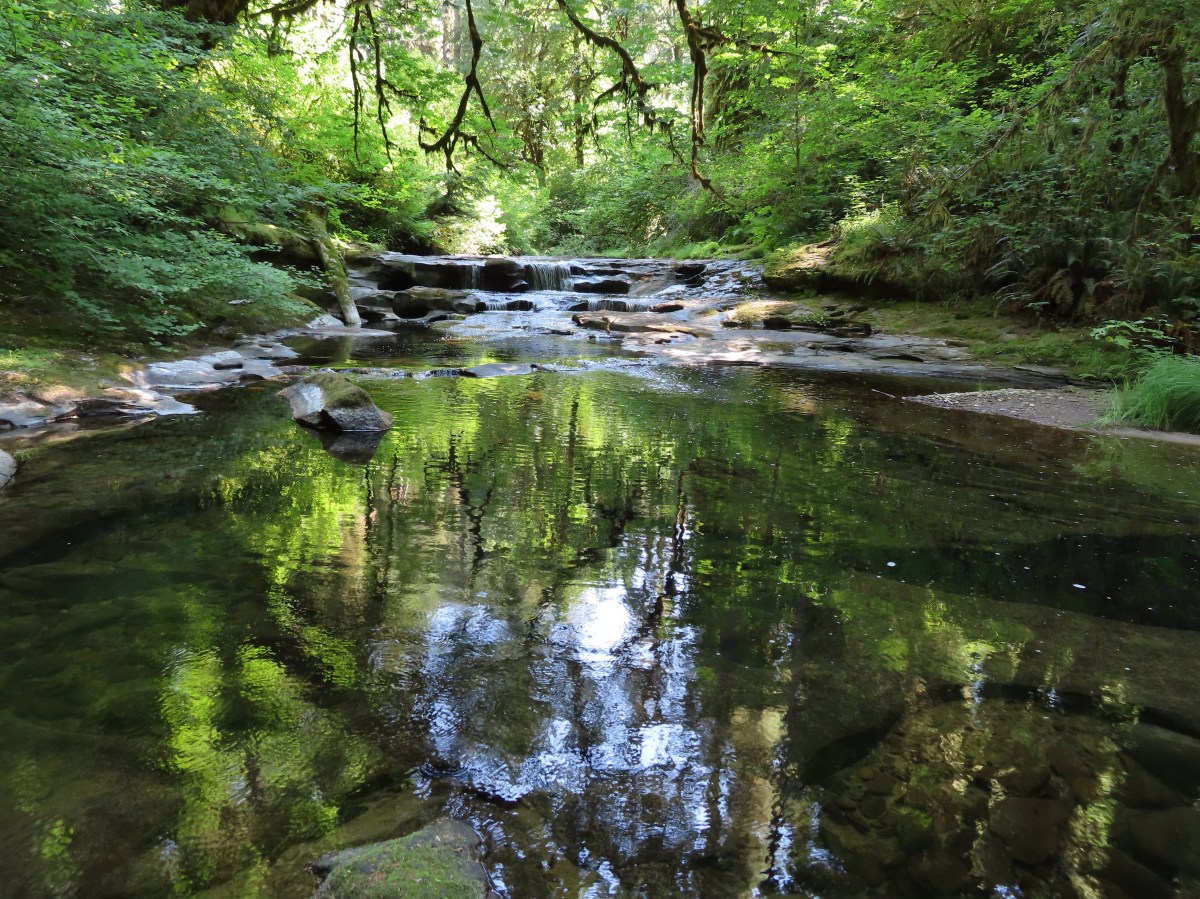
Fir Tree Creek
Butterflies on coneflower
The cabin ruins.
We continued on heading for Second Creek which was just over 1.5 miles beyond Fir Tree Creek where we hoped we might find a spot to camp or at least refill our water supply.
Coming around a ridge end toward Second Creek.
Monkshood at Second Creek
This little guy oversaw our water pumping.
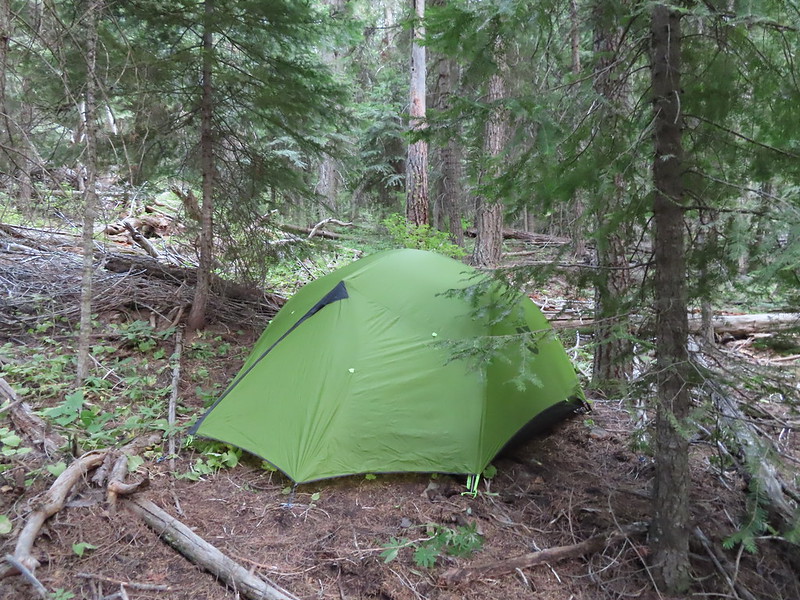
There wasn’t a lot of water in Second Creek and the crossing where the most obvious spot to get water was had a whole lot of yellow jackets flying around. We had to do a little hunting up and down the creek in thick vegetation to find a pool deep enough for our pump but finally managed to. What we couldn’t find was a place for our tent or a spot to cook dinner away from the yellow jackets and mosquitos so after getting water we reluctantly continued hiking. After nearly 1.5 more miles we arrived at First Creek where there was almost no water but there was a suitable spot for a tent.
It had been a long day with this hike coming in a little over 7 miles making it a 15+ mile day for us.
Rock Creek Track (orange)
It was also a warm evening and we had the rainfly on due to the slight chance of rain which made it even warmer. It did finally cool off enough overnight to warrant pulling our sleeping bag/quilt over us and we managed to get some sleep. I woke up once when something fairly big cracked it’s way through the trees below our camp and a couple more times when a pair of nearby owls were trading hoots. It was a more difficult start to our trip then we had anticipated but a good day none the less. Happy Trails!
In 2019 Congress designated the 31,107 acre Devil’s Staircase Wilderness adding another Oregon wilderness area for us to visit in order for us to reach our goal of visiting each of the State’s wilderness areas open to the general public (post). (The Three Arch Rocks and Oregon Islands wilderness areas managed by the Fish & Wildlife service are closed to the general public.) The Devil’s Staircase Wilderness is managed jointly by the Bureau of Land Management (east side) and the Siuslaw National Forest. The area is named after a cascade/waterfall on Wassen Creek known as The Devil’s Staircase.
There are no official trails in this wilderness area and everything we’d read from the Forest Service, BLM, Oregon Wild, Oregonhikers.org and William L. Sullivan’s “Atlas of Oregon Wilderness” described the area as having steep terrain, dense vegetation and unstable soils. Because of this we are not going to go into much detail of our visit, these descriptions are accurate and our outing was one of the most difficult we’ve undertaken to date. If you do decide to visit bring a map and compass (and the skills to use them) and be prepared to crawl, scoot and probably swear at least once. Also make sure you give yourself plenty of time or plan on spending the night. We came out muddy, bruised and a little bloodied. Our dream was to actually reach the Devil’s Staircase but realistically we didn’t expect to be able too. Wilderness boundary
Varied thrush
Blackberries, we found a couple of ripe ones later as well as ripe salmonberries, thimbleberries, and red huckleberries.
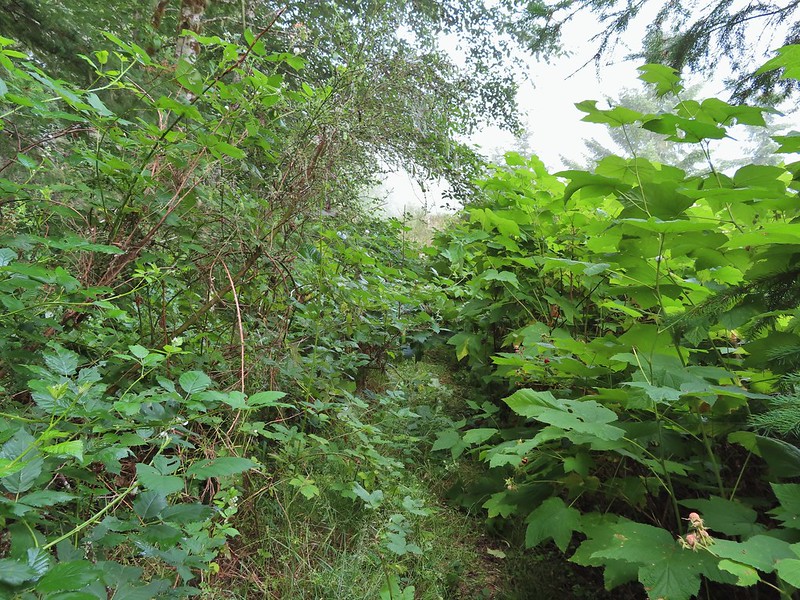
There was a lot of Himalayan blackberry to get through which caused many a scratch.
Salamander, possibly a Dunn’s.
Snail on a fern.
A few rhododendron were still blooming.
Huckleberries
This was the only open spot the whole day. There were some thistle and yarrow blooming here along with a bit of poison oak.
Bees sleeping on thistle.
Yarrow
The rhododendron was often so tall we could walk through them.
The morning fog burned off by 9:30am.
Wild cucumber (coastal manroot)
Monkeyflower
Although this picture doesn’t really convey it this section of exposed wet rock was at a fairly steep angle and was quite the challenging both coming and going.
A lot of planning and a little luck allowed us to actually reach Wassen Creek at the staircase (Bruce you had the right idea) but we didn’t wind up seeing it from the bottom. We reached it at it’s upper end and were unsure if we’d be able to get back up if we climbed all the way down to the bottom. After watching a video on YouTube and seeing them go down where we had been thinking we still weren’t convinced that we wouldn’t have been stuck on a ledge.
An ouzel
This was the ledge that we decided to not drop down off of.
That pool is said to be approximately 20′ deep!
We checked the little pools for rough skinned newts and this one had four and a crawdad.
The other factor for not attempting to go down was the presence of a couple who had backpacked in and were camped on the gravel below the staircase. We think they came in from the same place we did but aren’t 100% sure. In any case neither of us could imagine hauling full packs in and out of this area. After a nice long break we began the arduous hike back.
A chickadee came to check on me as I was catching my breath under a rhododendron.
We didn’t see any large animals but signs of their presence abounded.
Thimbleberries
Salmonberries
Swallowtail on a blackberry blossom.
The hike took us almost 8 hours and according to my GPS was 7.7 miles long although Heather’s only showed 6.7 miles. (Might be the first time ever where hers was less for essentially the same hike.) With the dense trees and deep canyon I’m sure they are both a bit off but around 7 miles is probably accurate. On a typical hike we average around 2mph with a moving speed between 2 1/4 and 3mph. This was about half of those speeds. The elevation gain, which was mostly on the way back, was in the neighborhood of 2000′.
We now have just 2 remaining wilderness areas in Oregon to visit, Black Canyon and Monument Rock. If our plans aren’t derailed by wildfires we should be done by the end of Summer. Happy Trails!
For the Fourth of July we typically pick a hike in the Old Cascades but this year we aimed higher and headed for the Three Sisters Wilderness in the High Cascades. We had two stops planned, a short hike on the Rainbow Falls Trail to the viewpoint of distant Rainbow Falls and a longer hike on the Foley Ridge Trail to Substitute Point. We stopped first at the Rainbow Falls Trailhead since it is right off Foley Ridge Road (FR 2643) on the way to the Foley Ridge Trailhead. Neither of these trailheads currently require a Central Cascades Wilderness Permit for day hikes (you are required to fill out a free self-issued permit at each TH though).
The first half mile of the trail follows an old road bed to a former trailhead.
We continued along the trail entering the Three Sisters Wilderness before turning along the edge of the steep hillside high above Separation Creek (post)
One of two phantom orchids we saw along the trail.
Newish looking wilderness sign.
Maples overhanging the trail.
Madrone trunks
A little under 1.5 miles from the TH we arrived at a rock fin where a short scramble led to a view of distant Rainbow Falls. It was just after 8am which wasn’t an ideal time due to the falls being to the east with the Sun directly behind and still low in the sky. It’s a pretty narrow scramble so probably not for kids or those uncomfortable with heights.
A lone madrone at the end of the fin.
Looking toward the falls. (The North Sister is back there too but not visible due to the lighting.)
Rainbow Falls on Rainbow Creek
The best I could do with the lighting.
Looking up Separation Creek.
Looking back up along the rocks.
A use trail continued toward the falls, but as far as I know it’s not possible to reach them or to get a better view so we returned the way we’d come. From the Rainbow Falls Trailhead we then drove another 5 miles up FR 2643 to its end at the Foley Ridge Trailhead.
The 8 mile long Foley Ridge Trail begins at the trailhead and leads into the Three Sisters Wilderness were it eventually ends at the Pacific Crest Trail. We had been on the upper end of the trail twice, once on a backpacking trip around the South Sister (post) and the other another backpacking trip where we explored some of the areas waterfalls (post). Today’s plan was to hike the first 4.5 or so miles of the trail to the Substitute Point Trail and then follow that 0.7 mile trail to a former lookout site atop Substitute Point. We were looking forward to the view atop the point but also interested to see what the area looked like after being hit hard by wildfires in 2017.
The first mile and half of the trail was unaffected by the fire and hosted a few blooming rhododendron and other woodland flowers.
Pink pyrola
Crossing of Gold Creek which was nearly dry but it hosted a fair number of mosquitos.
Columbine, bunchberry, and wild roses.
An anemone with some bunchberries
Entering the Three Sisters Wilderness
Queen’s cup
Beargrass
Candy sticks
Rhododendron
Pacific coralroot
We soon found ourselves in the fire scar which at least lessened the number of mosquitos greatly.
The 2017 Separation Fire was started by lighting in August along with dozens of others. The fire became part of the Horse Creek Complex which burned something in the neighborhood of 30,000 acres. It was the same year as the Eagle Creek and Whitewater fires making 2017 a really bad year for great hiking areas. Nearly four years later signs of the slow recovery could be seen in the form of wildflowers and small trees. Washington lily
Lupine
Squirrel
Tiger lily
The trail briefly entered an area of older trees that had fared a little better during the fire.
Twinflower
Leaving the green trees behind.
The trail climbed gently which allowed us to fully appreciate the wildlife and wildflowers, in particular some really impressive Washington lilies. Washington lilies
They smell as good as they look too!
This one was a monster.
Chest high
Crab spider on the lower left petal.
Penstemon
Earlier in the week I had been reading that the blossoms turn pink after being pollinated.
Clodius parnassian
Pretty moth
Penstemon
Woodpecker
Pond along the trail.
Water lilies
The trail began to level off as it passed between Proxy Point on the left and Substitute Point on the right. With the trees being burnt we had a good view of the rocky Proxy Point but the angle of the hillside below Substitute Point kept it hidden. Also visible was The Husband further ahead to the East. Looking toward Proxy Point
The Husband, South Sister, and the shoulder of Substitute Point.
Frog along the trail.
The trail curved around the base of Substitute Point where we got a view of Three Fingered Jack and Mt. Jefferson. Proxy Point, Scott Mountain (post), Three Fingered Jack and Mt. Jefferson
Bleeding heart
We came to the junction with the Substitute Point on its NE side. The Husband from the junction.
The Substitute Point Trail didn’t appear to have been maintained, possibly since the fire, but it was easy enough to follow as it headed uphill.
This was sort of a mean trick, the trail entered these green trees then almost immediately switched back into the burn.
Phlox
The climb wasn’t particularly steep until the end as it approached the rocky spire where a lookout once sat. As we approached it was hard to believe there was a trail to the top.
There was in fact a nice trail that wound up the west side, although a single downed tree did require a hands and knees crawl along the way.
The Little Brother and North & Middle Sister behind The Husband with South Sister to the right.
The trail leading up.
The view at the top was at the same time spectacular and sad. We could see that much of the area that we’d explored on our previous backpacking trips had been burned badly by the fires. The summit of Substitute Point
Scott Mountain, Three Fingered Jack, Mt. Jefferson, Mt. Washington, and Belknap Crater (post).
Three Fingered Jack, Mt. Jefferson and Mt. Washington
We took a nice long break at the top watching butterflies soar around us. A swallowtail and two whites (maybe clodius parnassians) in flight.
After our break we headed back. We’d had the hike to ourselves but were now passing a handful of hikers heading up the trail. We stopped a few times to watch butterflies (in hopes they would land) and to smell the occasional lily. Clodius parnassian in a blossom.
Moth and a parnassian.
The hike here came to 10.3 miles with 2000′ of relatively gentle elevation gain. With the 2.8 miles we did at Rainbow Falls it came to a 13.1 mile day and a great way to spend the 4th of July.
Track for Substitute Point
While we were sorry to see how badly much of the area was burned it was encouraging to see the trails were in relatively good shape and that there was new growth coming. We fear that hiking in recently burned forest is only going to become more common in the years to come but hike we will. Happy Trails!
For the Fourth of July weekend we had originally planned on a trip to Central Oregon but the drought conditions that were exasperated by the recent heat wave had us reconsidering not being home to guard against rogue illegal fireworks (a house in our neighborhood lost a fence and tree last year on the 4th). Our decision was made final when, following the heat wave, mostly dry thunder storms passed over the Ochoco Mountains where some of our hikes were planned. Lighting caused fires have kept firefighters busy since then as the race to contain the fires that are still cropping up from that storm system. We turned to Plan B, which was in part a modified Plan A, and spent the weekend hiking in the Central Cascades. On Saturday we stuck to our originally planned hike to Berley and Santiam Lakes but instead of continuing on to Bend afterward we drove back home.
This hike is covered in Matt Reeder’s “101 Hikes in the Majestic Mount Jefferson Region” and provided us an opportunity to revisit some places as well as discover some new ones. The hike starts at the Pacific Crest Trailhead along Highway 20 at Santiam Pass.
For now this is one of the trailheads where a Central Cascade Wilderness Day Use Permit is not required but a NW Forest Pass ($5/day or $30/annual) is, as well as completing a free self-issue permit. Note that for overnight trips a Central Cascade Wilderness Permit is needed for any visits to the Mt. Jefferson, Three Sisters or Mt. Washington Wilderness areas.
We had started another hike here in October of 2012 when we hiked to the base of Three Fingered Jack then returned on a loop past Martin, Booth, and Square Lakes (post). We were interested to not only see the area during a different season but also to see what had changed in nearly 9 years. This was particularly interesting to us due to the area having been burned badly in the 2003 B&B Complex and this would give us an idea of how the forest was recovering. Given the huge swaths that were burned in the September 2020 wildfires this might give us a small frame of reference for what to expect for some of the areas. The first thing that we noticed was that post fire trees seemed larger than we remembered which was confirmed by comparing some pictures of the Pacific Crest Trail junction with the Old Summit Trail 0.2 miles from the trailhead. Trail sign at the junction on 10/13/2012.
Trail sign at the junction on 07/03/2021.
What we didn’t really notice though was just how many of the snags were now missing. Entering the Mt. Jefferson Wilderness in 2012 (0.3 miles from the TH).
Entering the wilderness in 2021.
We followed the PCT a total of 1.2 miles to a junction with the Santiam Lake Trail. The view to the south was as spectacular as we had remembered with several Cascade Mountains in view along with several distinctive lesser peaks. Cache Mountain, Black Crater (post), Tam McArthur Rim & Broken Top (post), North & Middle Sister, Mt. Washington, and Hayrick Butte (flat top on the right).
To the north the top of Three Fingered Jack was occasionally visible.
There were a few more flowers in bloom now than there had been in October. A thistle
Penstemon
Bleeding heart
Pussytoes
California stickseed
Another penstemon
Shortly after passing a small unnamed lake we arrived at the junction.
Mountain bluebird by the lake.
We turned left onto the Santiam Lake Trail at the junction striking off on new to us trail. The Santiam Lake Trail headed slightly downhill to the north passing a series of small ponds/lakes before making a sweeping turn to the west then meeting up with the now abandoned Santiam Lodge Trail (coming uphill on the left) one mile from the PCT.
There was a good amount of scarlet gilia blooming along this section of trail.
Three Fingered Jack
One of the ponds.
Queen’s cup
Another pond with Maxwell Butte (post) behind to the right.
Unnamed lake along the trail with Maxwell Butte behind.
Lupine
Dark-eyed junco
Sub-alpine mariposa lilies
Woodpecker
The view south.
Seasonal pond
A half mile beyond the abandoned trail (there was part of a sign still hanging, partially hidden on a tree) we came to an unsigned fork.
We admittedly hadn’t read Matt’s hike description recently and had conveniently forgotten that there were no maintained trails to the Berley Lakes and this unmarked fork was where he would have had us turn. It wasn’t shown on the GPS map and since we hadn’t bothered to re-familiarize ourselves with the hike we continued on the Santiam Lake Trail but were still looking for the trail to Berley Lakes.
We crossed the nearly dry bed of Lost Lake Creek (There was enough water around to host a healthy population of mosquitos though.) and continued through a meadow filled with lupine into some unburned forest.
Beargrass
The combined presence of the trees and more water in Lost Lake Creek (which the trail was now following) was a perfect recipe for even more mosquitos. We hustled along as quickly a possible to try and keep as much of our own blood as possible.
Recent snow melt is another recipe for mosquitos.
Another creek crossing.
Shooting star
Mountain heather. Typically if we see this blooming we expect there to be mosquitos.
Fortunately the creek soon faded out in an open rocky landscape where the heat of the sun kept the buggers away and we were able to slow down a bit.
A sulphur
Alpine false dandelion
One of several snow patches at the tree line.
Nearing the end of the opening.
More snow in the trees.
A checkerspot
By the time we’d reached the open area it was obvious we had missed our turn and should have taken the fork we’d seen since we were now past the Berley Lakes. That was fine though as the original plan had been to visit those lakes first and hook up with the Santiam Lake Trail beyond Lower Berley Lake then continue on to Santiam Lake and return via the Santiam Lake Trail. Our new plan was to visit Santiam Lake then find the route to Lower Berley Lake, visit it, then check out Upper Berley Lake and return to the Santiam Lake Trail at the fork. Beyond the open plain the trail began a 250′ descent through more unburned forest to Santiam Lake.
Trees & melting snow = more mosquitos.
Not Santiam Lake but a very pretty unnamed lake just to the left of the trail approximately 0.4 miles from Santiam Lake.
Not sure what type this is but the orange on the wing was pretty.
We turned off the Santiam Lake Trail at a “No Campfires” sign and followed a familiar path down to the lake.
It had been almost 11 years since we visited this lake. On our previous visit we had come up the Santiam Lake Trail from the Duffy Lake Trail (post).
Mt. Jefferson behind Red Butte
Duffy Butte on the left.
Three Fingered Jack
Paintbrush, shooting stars, and buttercups.
We set off to hike around the west side of the lake but we encountered quite a bit of recent blowdown and decided it was a little more trouble than it was worth.
Just one of several large uprooted trees along the shore.
Taking a break along the shore and enjoying the view would have been nice but the mosquitos weren’t interested in letting us sit peacefully so when we came to the third bunch of downed trees we called it good and headed back for the Santiam Lake Trail. We followed it back to the open plain where the mosquitos hadn’t been bad and stopped to study the map in Reeder’s book (still weren’t smart enough to take the time to re-read it though) and we could see that from this end his track showed him heading for Lower Berley Lake just before a topographic feature. We made our way across the plain where butterflies were busy flying from plant to plant.
The “topographic feature” ahead on the right where we planned on turning for Lower Berley Lake.
Mountain heather along the trail, it was warm and sunny enough that the mosquitos weren’t as bad this time by.
Threeleaf lewisia
Getting closer to the hill where we planned on turning.
California tortoiseshell butterflies in the bed of Lost Lake Creek.
Later when we finally did read the hike description Reeder mentioned a cairn marking a user trail but we didn’t notice any cairn (and admittedly may have turned too soon) but we spotted what appeared to be faint tread along a hillside above a dry stream bed and took a right onto it.
The track on the map showed the route on the south side of the lake but this trail was leading to the south side of Lower Berley Lake. It led past a couple of campsites to some rocks above the lake.
Three Fingered Jack from the rocks.
We picked our way down through the rocks to the lake shore and followed a user trail west until more downed tress forced us to climb back up above the rocks.
More tortoiseshells
A butterfly photo bomb
Once we were back above the lake we came across what looked like another user trail leading away from it.
We thought it might be a side trail to Upper Berley Lake so we turned right on it but soon realized that we were following a dry bed instead of a trail.
The bed was popular with the butterflies.
A GPS check showed we were heading too much to the NNE and needed to be NNW so we left the bed and used the GPS units to find Upper Berley Lake, but not before startling a doe. Cross country to Upper Berley Lake, the doe was in this meadow and headed in the direction of the patch of snow at the far end.
Upper Berley Lake
Reeder mentions a view of Three Fingered Jack from this lake as well but we were on the wrong side of it for that. The lake shore where we were was pretty thick with small trees so we would have needed to back track to make our way around for a view but we decided to save that for another time. We took a slightly more direct route back toward Lower Berley Lake and found what seemed to us a bit of a random Day Use Only sign. We wound up finding the same “user trail” and followed it down to the lower lake.
What we could see was a clear trail heading south past the lake. We went down to the lake shore to see if we could pick something up since the track in the book showed it at the SW edge of the lake. We couldn’t make out any clear trail but that could have been because it was covered in butterflies. California tortoiseshell butterflies along Lower Berley Lake.
Three Fingered Jack and about a half dozen butterflies.
We did another comparison of the track in the guidebook and the topographic map on our GPS units and came to the conclusion that we were in the right spot and just needed to hike over a saddle between two hillsides. As we made our way up we found an obvious trail. The hillside on the right was rocky.
The trail dropping down from the saddle with Mt. Washington and the North Sister ahead.
This trail was at times easy to follow and at others non-existent.
Just under three quarters of a mile from Lower Berley Lake we ran into three hikers heading for the lake which we took as a good sign. Just a short distance later we came to the dry channel of Lost Lake Creek.
It was hard to tell where the “trail” crossed or where it was on the far side. Reeder’s track showed the alignment converging with the Santiam Lake Trail at an gradual angle but we could see that we were only about a tenth of a mile from that trail as the crow flies so we abandoned all attempts at following the user trail. We headed straight for the Santiam Lake Trail and found it without much difficulty. Found it!
We were a tenth or two of a mile from the actual junction which wound up working in our favor. We had rejoined the Santiam Lake Trail just north of the seasonal pond where there were now dozens of butterflies hanging out and this time they weren’t all the same types.
We made our way back to the PCT then followed it south back to the trailhead but not before stopping at a viewpoint for one last look at the mountains. Yellow beetle on lupine.
Orange agoseris
Back at the PCT.
Bumble bees on penstemon.
Cicada in the grass.
Black Crater, Broken Top, North & Middle Sister, Mt. Washington, Hayrick Butte, and Hoodoo Butte from the viewpoint.
Three Fingered Jack from the viewpoint.
Track for our 12.9 mile, 1300′ elevation gain hike
After a great day of hiking we spent the evening with my Grandma and parents. It was a great start to the holiday weekend. Happy Trails!
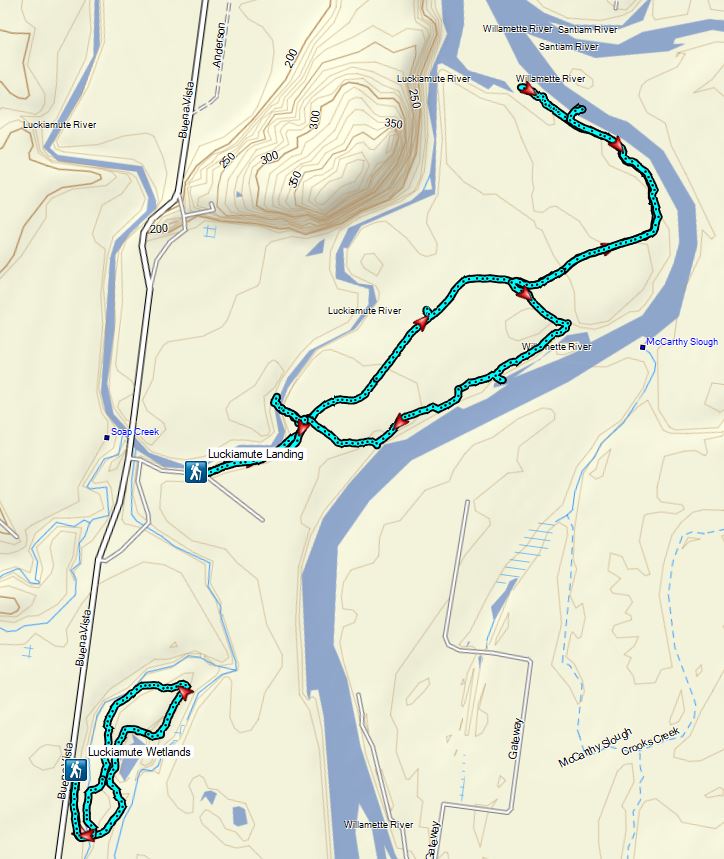
With a record setting heat wave arriving just in time for the weekend we changed our hiking plans and looked for something close to home and on the shorter side so that we could get a hike in before the temperatures got too ridiculous. A pair of hikes at the Luckiamute Landing State Natural Area matched that criteria and would be new hikes to us. A mere 30 minute drive from our house we were able to reach the first of the two trailheads, the Luckiamute Landing Trailhead by 5:15am. (We actually parked in a pullout 0.4 miles from the trailhead which I blame on not being fully awake yet.) Private farm along the entrance road from the pullout we parked at.
Osprey nest above the corn field.
Gated road at the trailhead. There was a second gravel road to the right that was blocked with a log. The gravel road appeared to be fairly new and possibly a reroute of the gated road.
We walked around the gate and followed the dirt road a tenth of a mile to what must have once been the trailhead. The road passed near the Luckiamute River and it looked as though the river had been eroding the the embankment under the road which might explain why the trailhead was moved and the newer gravel road.
The road soon skirted the edge of a large field where a cat was in the middle on a morning hunt.
Extreme zoom on the kitty.
There was also a coyote out in the field but it disappeared into the grasses too quickly for even a poor photo. We continued on toward the Sun that would soon be scorching the Northwest and away from the Moon and the cool of night.
On our right was the open field but on the left was a wall of vegetation including some ripe thimbleberries which are Heather’s favorites. Wild rose
Vetch
Oregon grape
Thimbleberry
A finch appeared to be doing some sort of dance in the road.
A half mile after starting the loop we came to spur trail to the left with a hiker symbol for an interpretive sign. We of course took the bait and followed the path 50 yards to the sign at the end of the spur.
After reading the sign we returned to the loop and continued to the end of the field. We both initially thought that this was the start of an out and back to campsites along the Willamette River and that the loop continued around the field to the right. In fact there was a blue awning set up at the edge of the field in that direction and at least 3 vehicles (not sure why they were there or how they got through the gate). This was not the case and fortunately for us we were planning on doing the out and back which meant we didn’t make the mistake of turning here. The continuation of the loop was actually 0.2 miles further along the road in the forest. The correct right turn for the loop.
We ignored the loop for now continuing on the road through a mixed forest.
Cottonwood on the road.
Red elderberry, a favorite of the birds.
This wren was taking a dirt bath, perhaps an attempt to stay cool?
A lot of invasive daisies in an opening.
Native elegant brodiaea
Egg shell
More ripe berries.
The road curved to the north as it neared the Willamette and led to an open flat with a couple of picnic tables and campsites for boaters traveling the 187 mile long Willamette Water Trail.
Poppies
Mostly non-natives – chicory and clovers.
More non-natives – Moth mullein and cultivated radish
Slug
Douglas spirea (native)
Beyond the campsites a narrow use trail led to a view across the Willamette River to the Santiam River as it joined the Willamette.
The mouth of the Luckiamute on the left was hidden by trees.
I tried following the use trail to the Luckiamute but it ended (or at least my attempt did) in thick vegetation.
We returned to the campsites and followed a path down to the river landing.
To be honest neither of us had heard of the Willamette Water Trail until then but it was interesting to learn of its existence. Willamette River at the landing.
Not sure what type of birds these were.
Bindweed at the landing.
We headed back along the road, which was still busy with wildlife, and then turned left to continue the loop when we reached that junction. Bunny and a bird (not pictured is the chipmunk that raced across the road here).
Slug also “racing” across the road. Speed is relative.
Back on the loop.
Instead of skirting the filed this portion of the loop stayed in the “gallery forest”, a narrow strip of trees that grows along a waterway in an open landscape. (Learned that term from an interpretive sign along this section.)
Near the end of the loop the trail passed back along the field.
White crowned sparrow
Possibly nelson’s checkermallow.
Meadow checkermallow
Completing the loop.
Lupine that is just about finished.
Before we headed back to the car we followed a path on the other side of the road a tenth of a mile to the Luckiamute River. Old bus
Tree frog
Luckiamute River
After visiting this river we hiked back to our car via the newer gravel road. One of the osprey had just left the nest to presumably find some food when it came back into view. Waiting for food.
Our hike here came to 5.5 miles. Had we parked at the actual trailhead and not taken all of the side trails it would have been between 4.5 and 5 miles and if they reopen the road to the old trailhead the hike would be approximately 4 miles.
From the pullout we’d parked in we returned to Buena Vista Road and turned left (south) for a mile to the South Luckiamute Trailhead.
This was supposed to be a 1.1 mile out and back to visit the West Pond where we might just spot a western pond turtle. We followed a gravel path south for 0.2 miles before it turning east at the edge of the park boundary.
An old road bed dipped down to a flower filled field which it skirted eventually curving north and arriving at West Pond after half a mile. (West Pond is an old gravel pit.)
<img src="https://live.staticflickr.com/65535/51272439201_2ff86c4837_c.jpg" width="800" height="600" alt="IMG_9182">
Old farm equipment with poison oak in the background.
One of several birdhouses along the road.
You can go down to the pond at the south end but a couple had just headed down there in front of us so we decided to keep going and possibly visit that spot on the way back. The turtles, if we were to spot any, are primarily located at the northern end of the pond and we had left our binoculars in the cars so spotting them from the southern end wasn’t likely anyway.
North end of the pond.
Except for the southern end the area around the pond is closed for turtle habitat.
There was a good view of the pond from the road at the north end though. Unfortunately we didn’t spot any turtles although there were a couple of disruptions in the water that very well could have been their work. We did however see a few birds. We are both pretty sure a turtle swam off from this area when we came into view.
Spotted towhee
Swallow
The entry on the Oregonhikers.org field guide showed the trail extending a bit to the north of the pond before ending which is why we had planned for a 1.1 mile out and back. The field guide did mention future plans to expand the trail network here though. We continued north along the road which turned into more of a grassy track but it never petered out. Instead it curved west then south wrapping around the field eventually leading back to the roadbed near where it had dropped to the field.
European centaury
Oyster plant
Creeping jenny
Arrowleaf clover
Scrub jay
Corn Chamomile
Northern flicker
Great blue heron
American kestral
After completing this unexpected loop we returned to our car. The hike here came in at 1.9 miles, still short but quite a bit further than the 1.1 miles we expected. We finished just before 9am but it was already in the high-70’s. The plan had worked though, we’d managed to get 7.4 miles of hiking in before 9am and were back home with the A/C on by 9:30am. During our hike we discussed the very real possibility that these types of heat waves will become more and more common in the future and pondered what that would look like. Something to think about and be prepared for but for now we’d had a nice morning on the trails and found a new local option to revisit. Happy Trails!
Top track – Luckiamute Landing Lower track – Luckiamute Wetlands




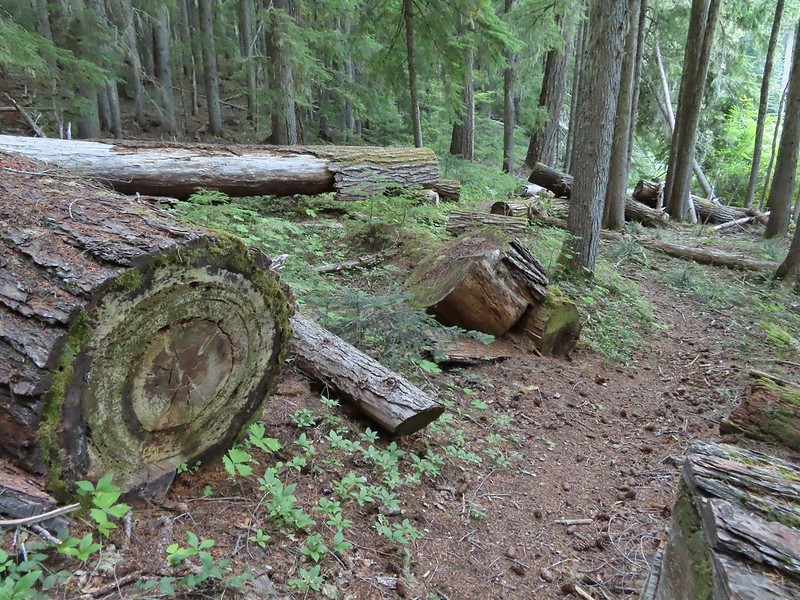
 Unnamed lakelet/pond between Pika and Fir Lakes.
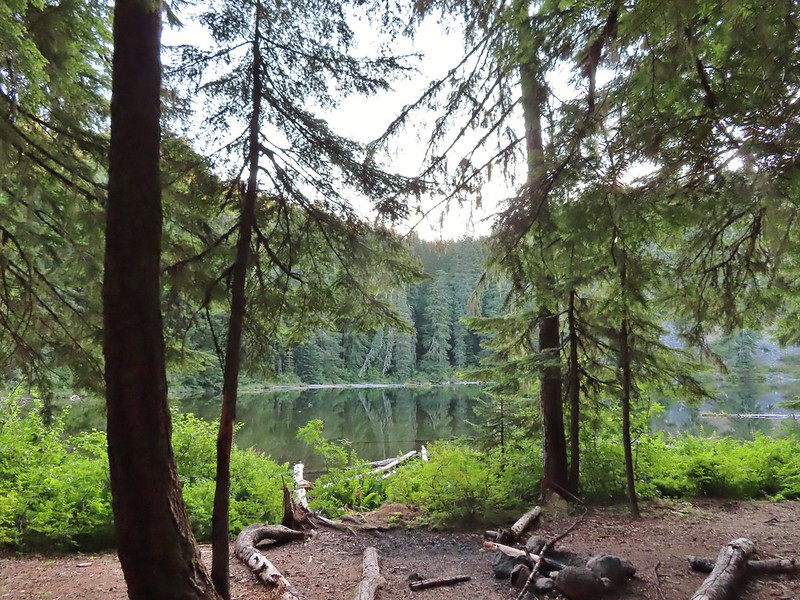 Fir Lake
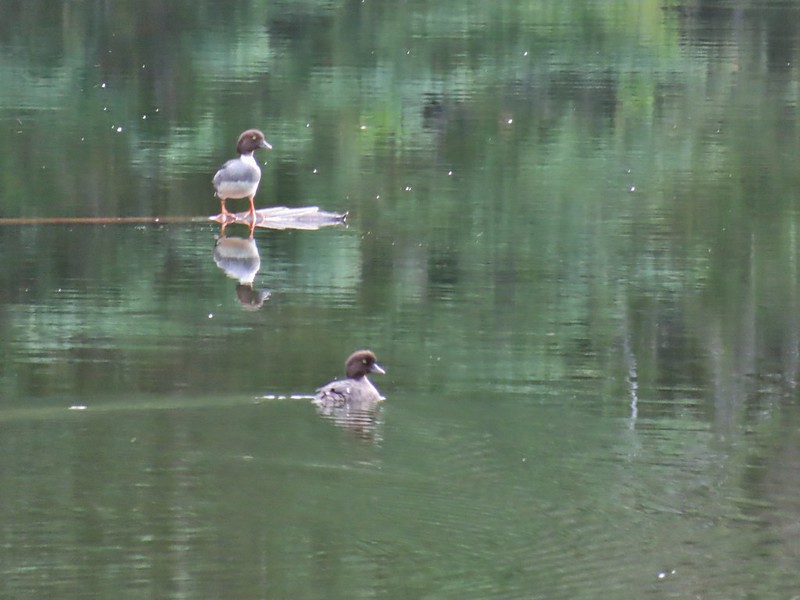 Goldeneyes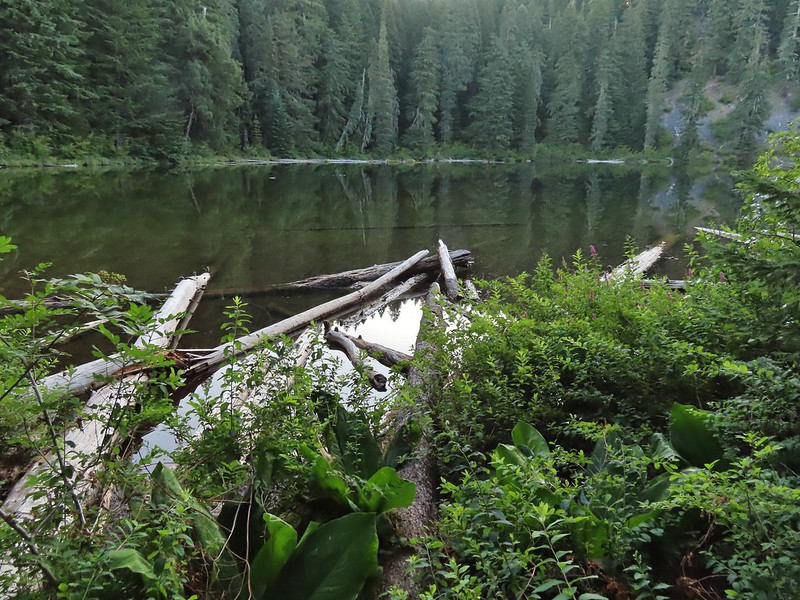





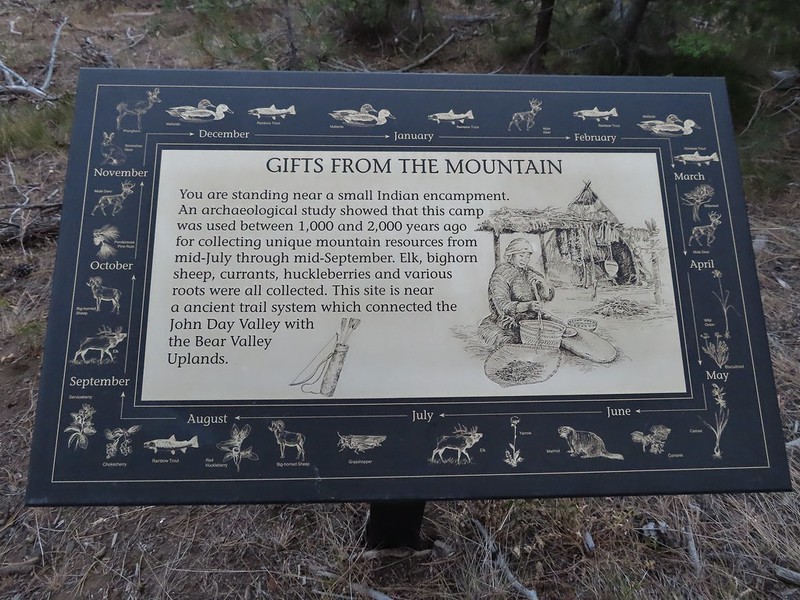 A lone interpretive sign near the beginning of the trail.
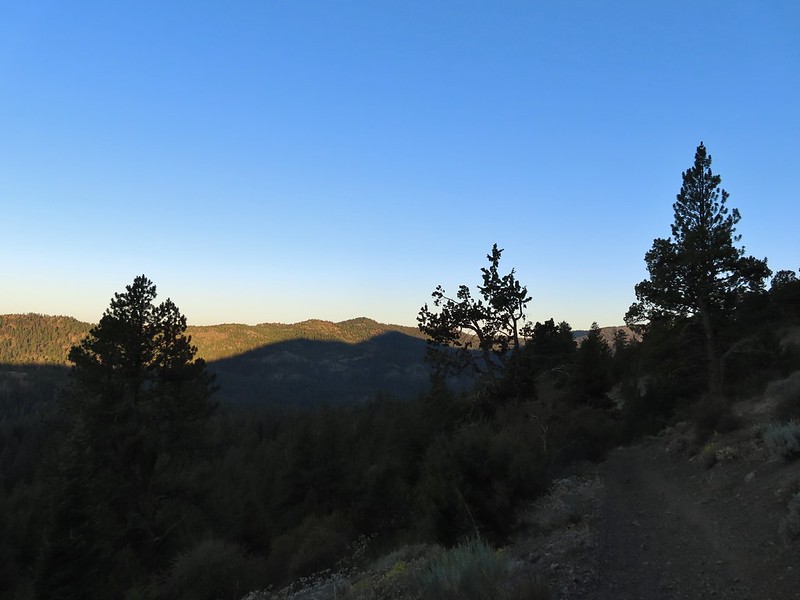
 The saddle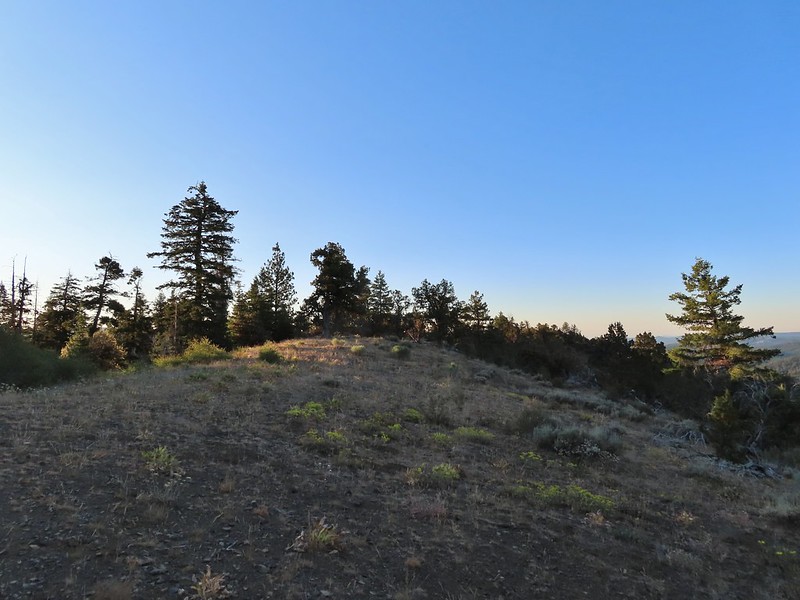
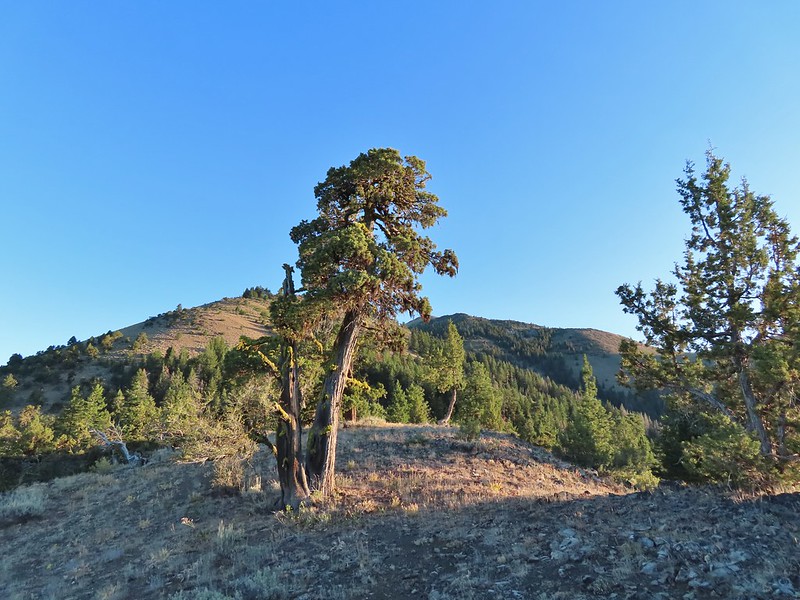 Fields Peak from the saddle.
 Heather arriving at the saddle.
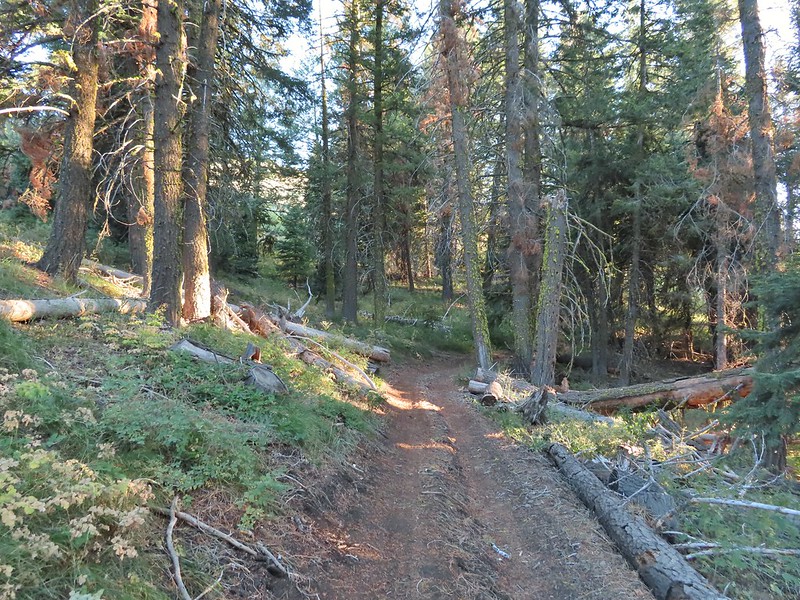 A rare level section.
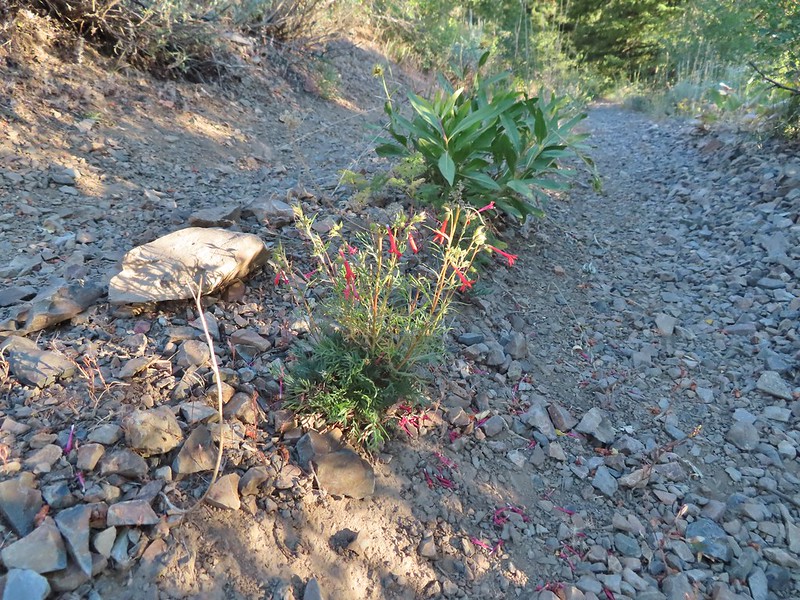 Scarlet gilia in the middle of the OHV track.
 Nearing the trail junction.
 The McClellan Mountain Trail to the right.
 A peak east to McClellan Mountain and the more distant Strawberry Mountain (
 We saw a number of these moths sleeping on the hyssop.
 Hyssop and sunflowers
 Paintbrush
 Looking up Fields Peak.
 Mountain coyote mint
 Shadow of Fields Peak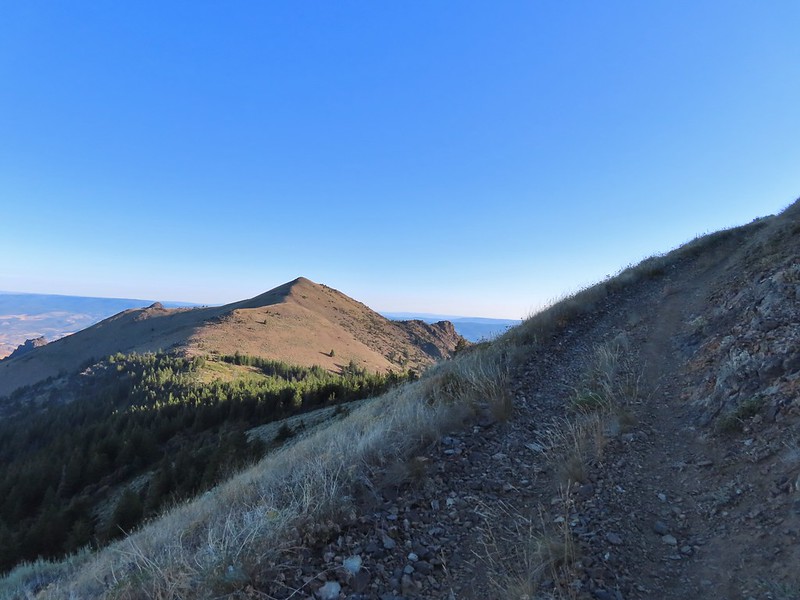
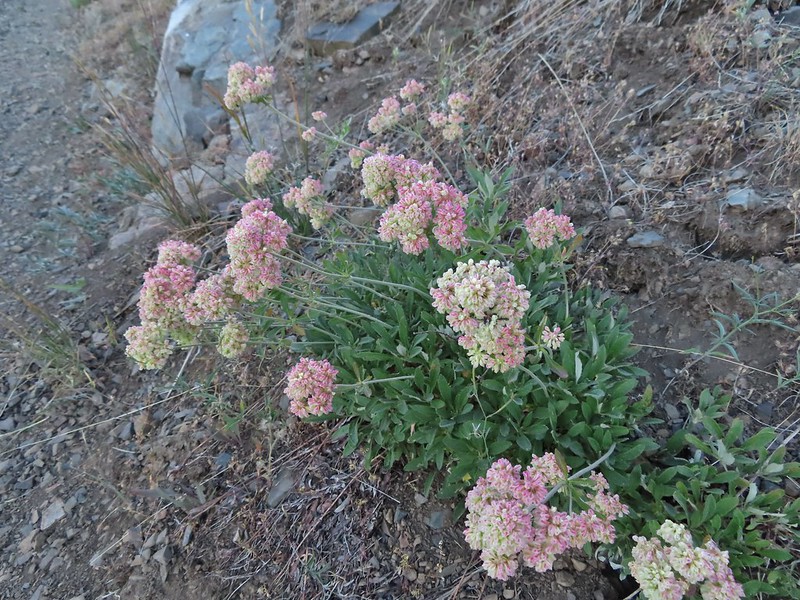 Buckwheat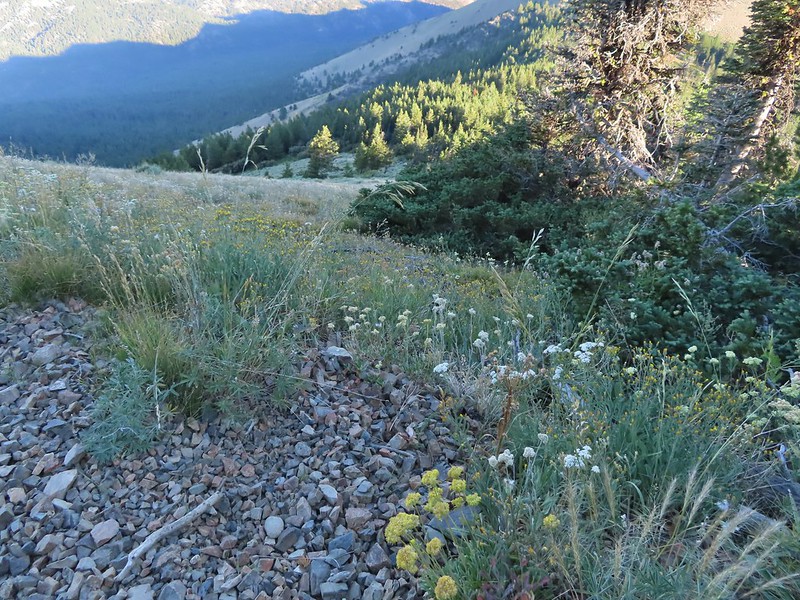
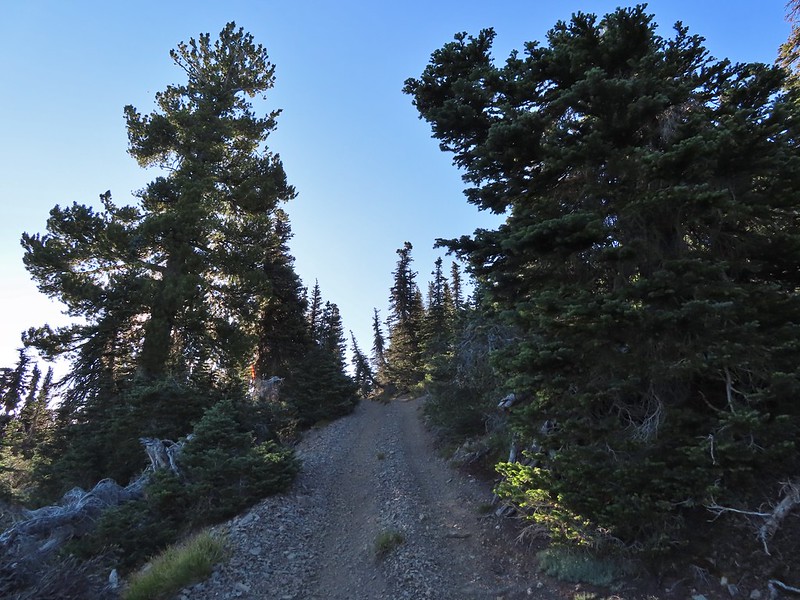 A few trees near the top.
 Final steep pitch to the summit.
 View west, Aldrich Mountain is the high point to the near right.
 View north
 McClellan Mountain and the Strawberry Mountain Range to the east.
 Logan Valley to the SE.
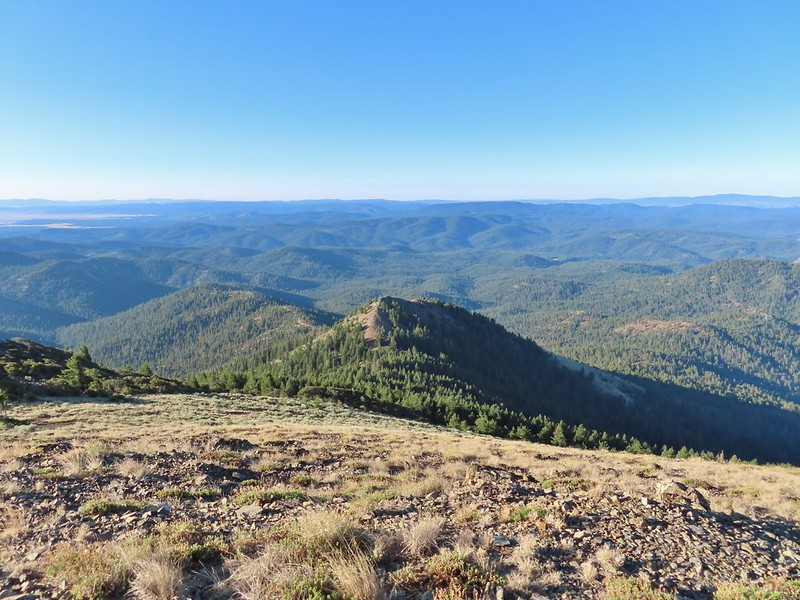 The view south.

 More moths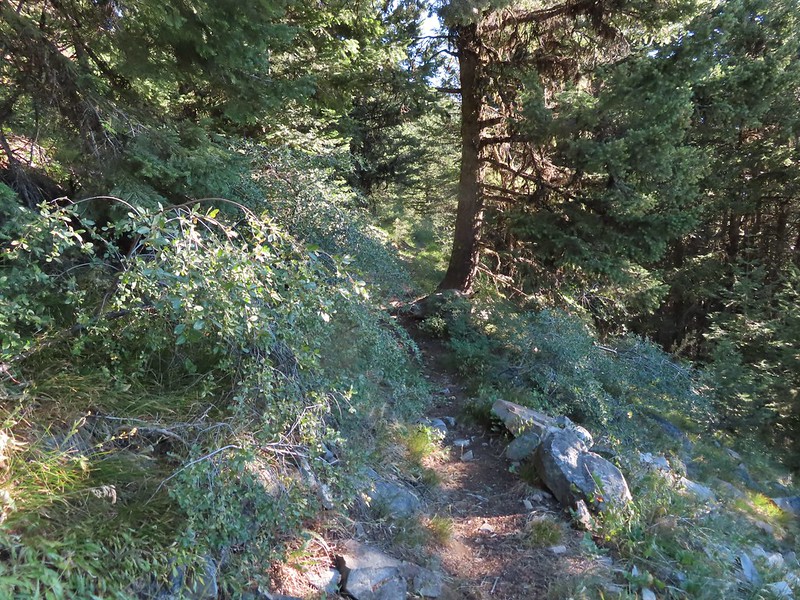
 Hillside above the trail.
 Sagebrush mariposa lily
 Approaching the saddle where we would cross the the north side of the hill ahead.
 The first saddle with Moon Mountain behind.
 Looking back along the trail.
 Looking back from the saddle.
 The north side had a few more trees.
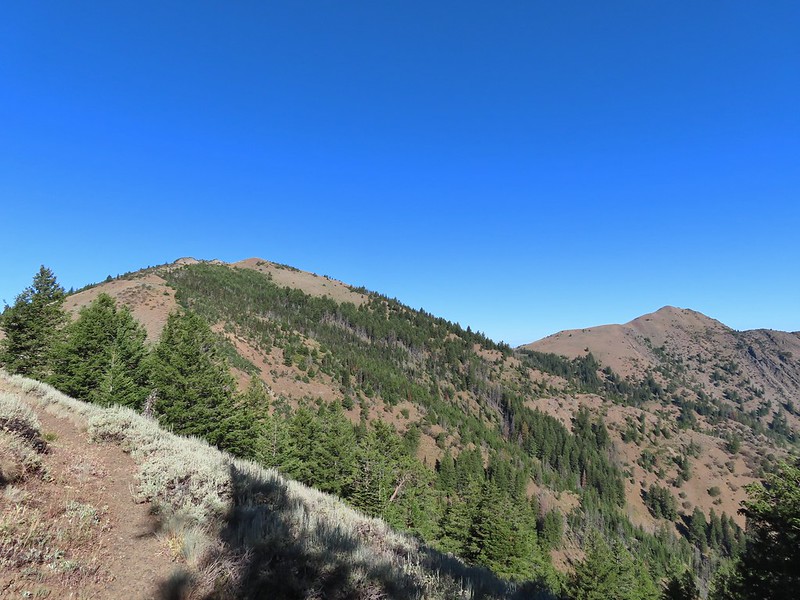 Looking back toward Fields Peak
 We passed through a rocky section near the second saddle.
 McClellan Mountain from the second saddle.
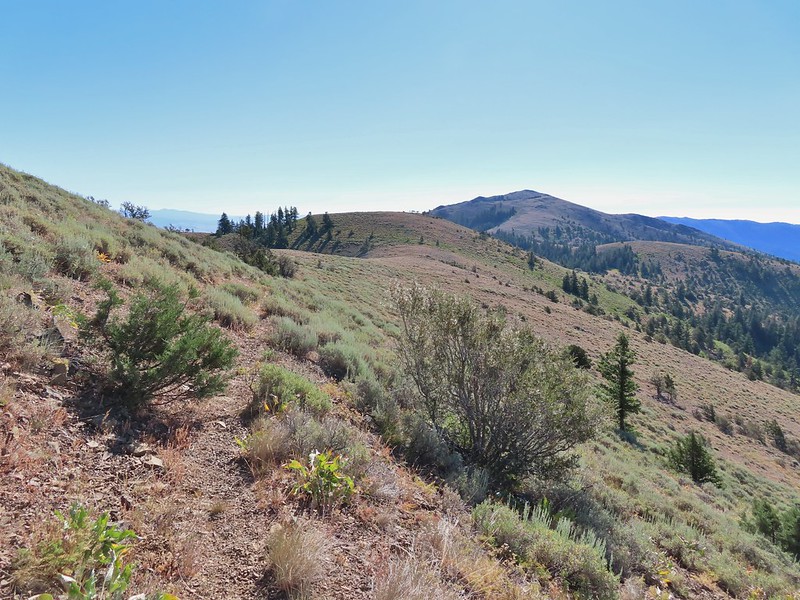 Approaching the third saddle.
 Moon Mountain
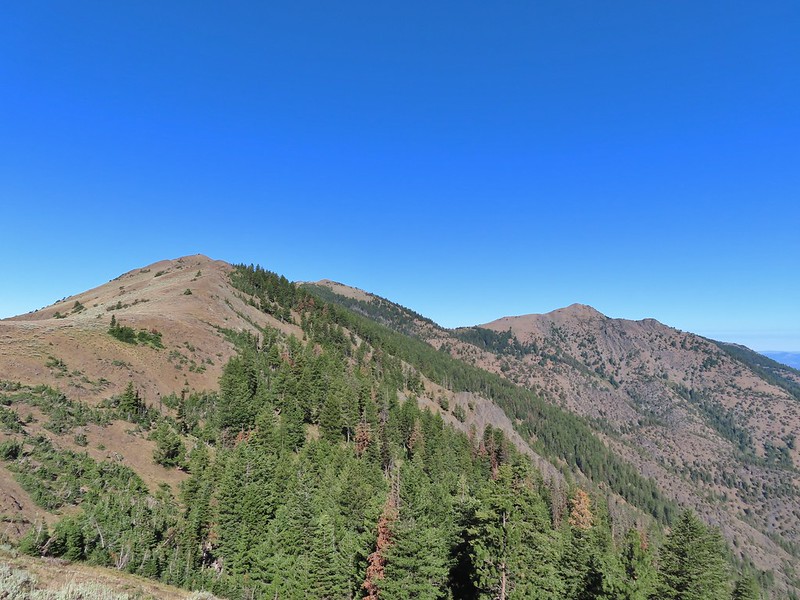 Fields Peak (center).
 McClellan Mountain as we approached the fourth saddle.
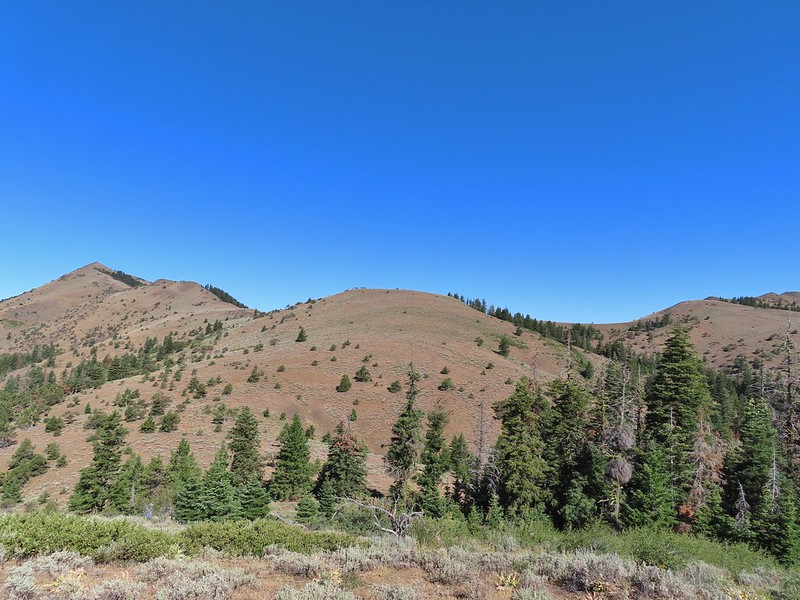 Looking back you can sort of make out the trail angling down the near hillside.
 Looking up McClellan Mountain.
 In the middle of the center hill to the left of the tree in the foreground is the line of what turned out to be 5 bull elk.
 Blurry due to the elk moving and the deep zoom.
 Four of the bulls stopped to look back at us.
 The fifth and largest bull on top of the ridge waiting for the rest.
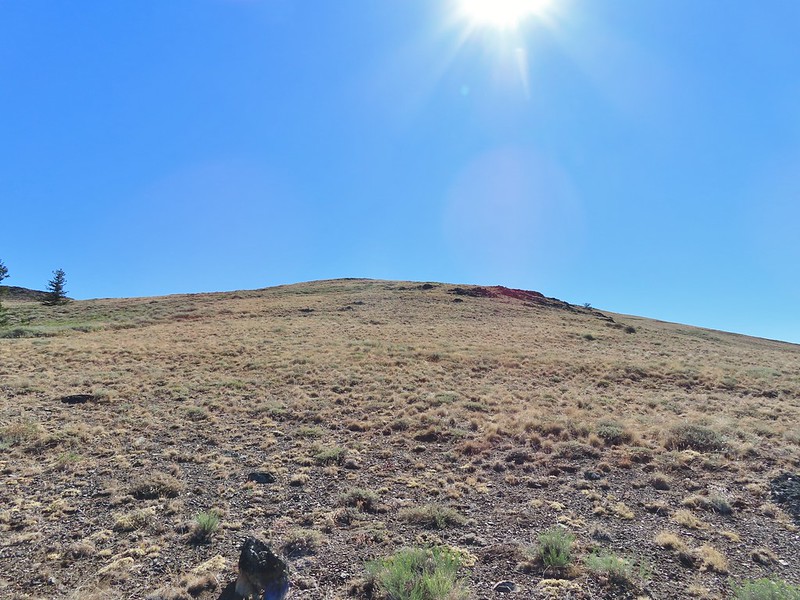
 An old fence line on the hill.
 Fields Peak on the left, an unnamed peak in the center and Moon Mountain on the right.
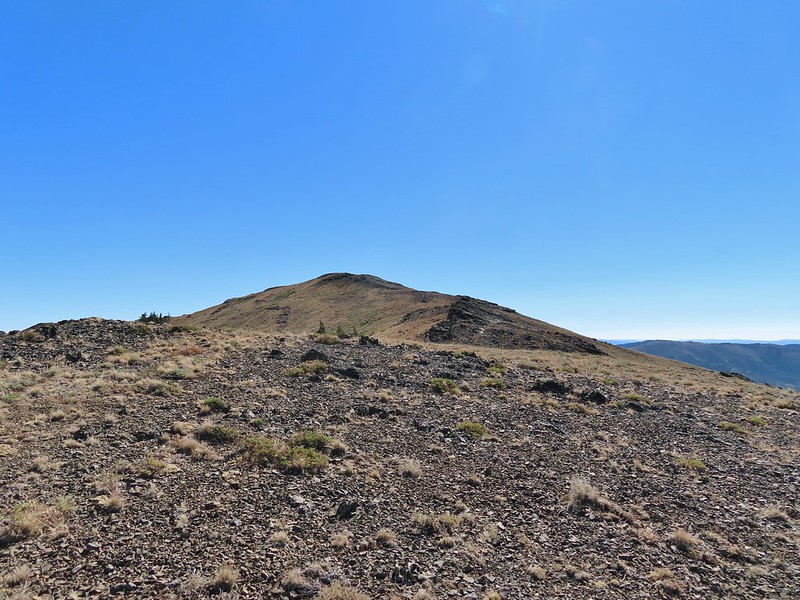 False summit (there’s always at least one). After some debate we went to the left of the rock outcrop which worked out well.
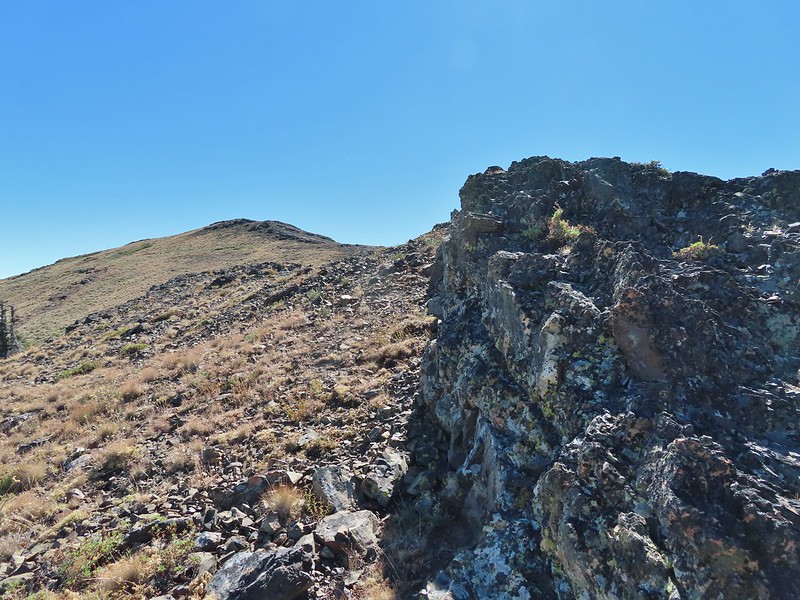 Passing the rock outcrop.
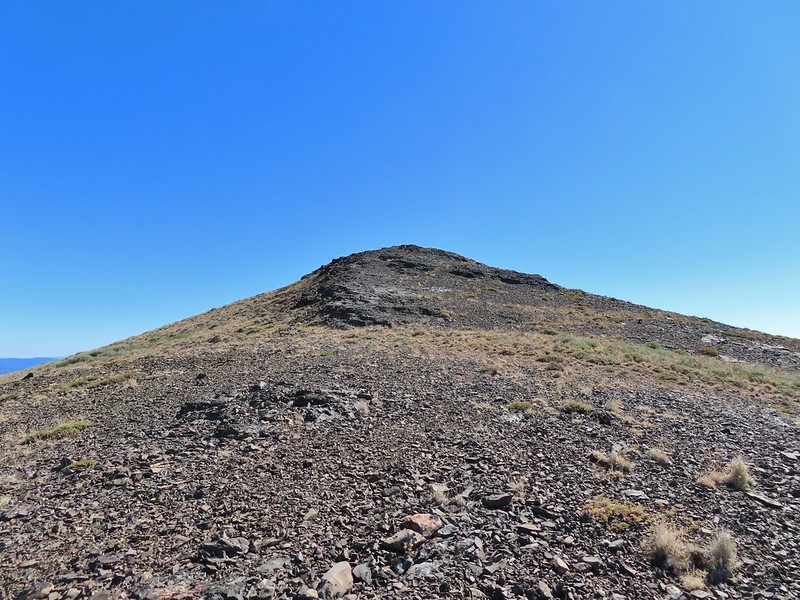 Almost there.
 The Greenhorn Mountains, Elkhorns, Dixie Butte and the Strawberry Mountains from left to right in the distance.
 Looking back at Fields Peak
 The John Day River Valley.
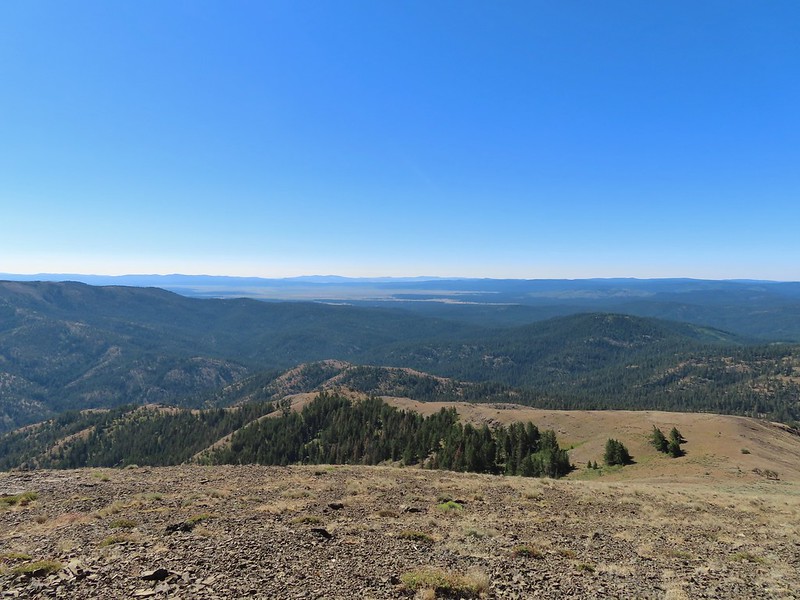 Logan Valley
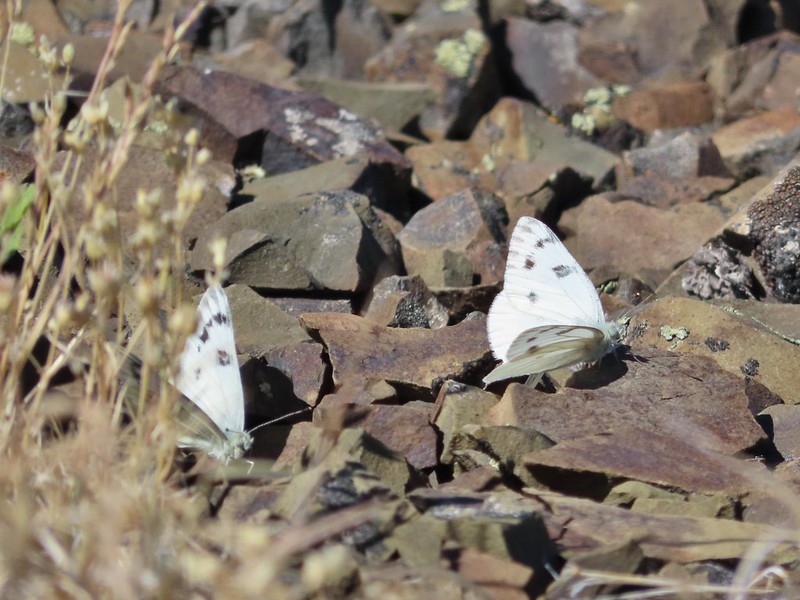 Company at the summit.
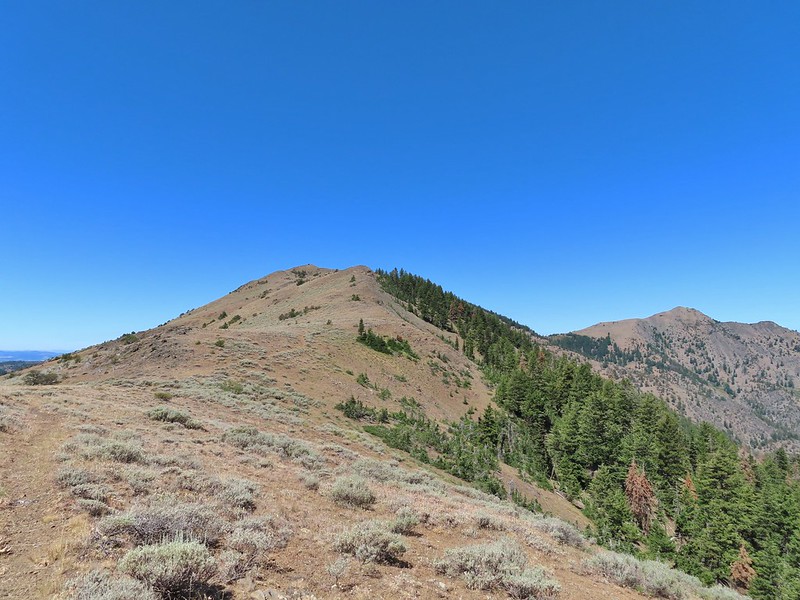 Passing back through Phlox Saddle.
 A better look at the rocky section of trail.
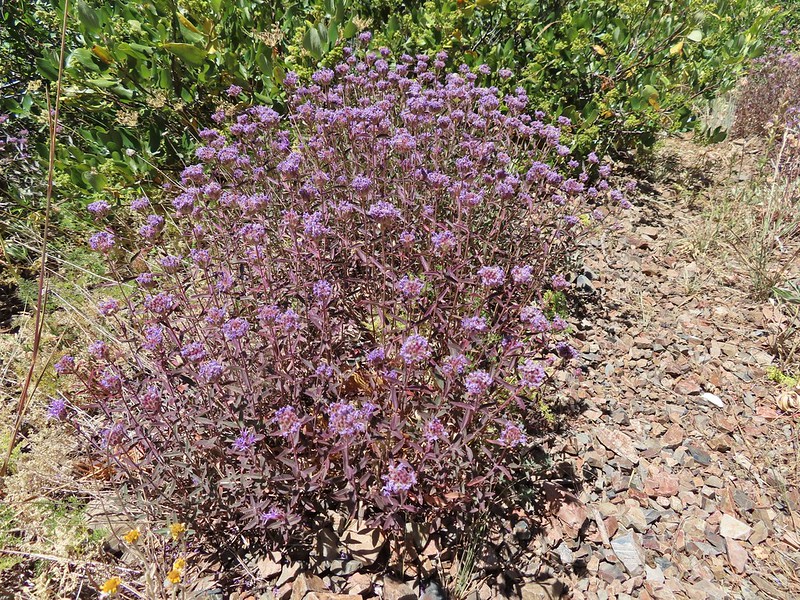 Mountain coyote mint, one of only a couple with this coloration on the stems.
 Butterfly and a beetle.
 Sagebrush mariposa lily
 Ruffed grouse
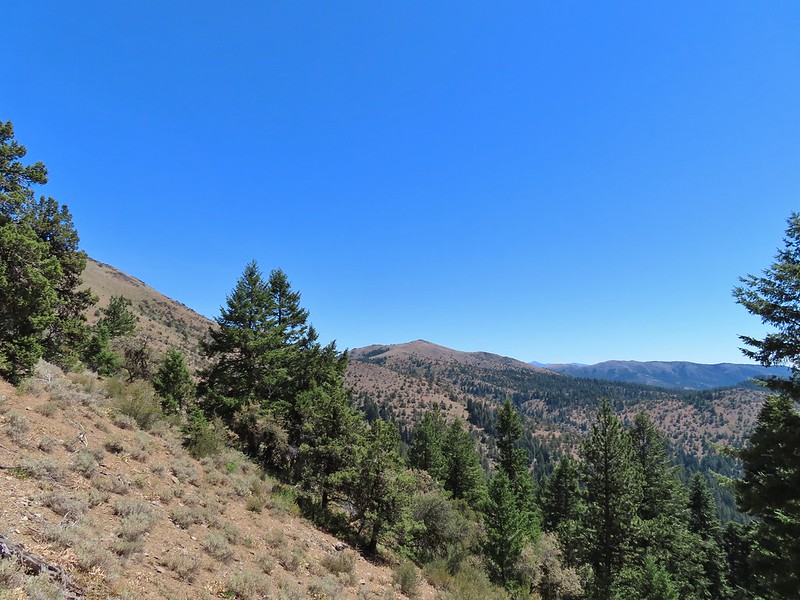 A final look at McClellan Mountain.
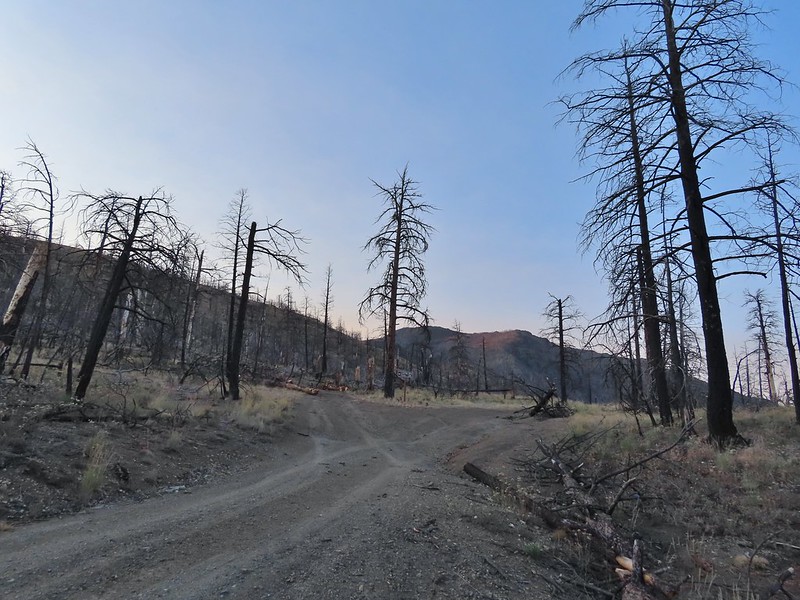 I had started up to the left at the saddle but it was steep with gullies and some debris so we carefully turned around and parked below.
 Little Canyon Mountain from the saddle. A wildfire burned the area in 2015 and the trail up to Dog Creek.
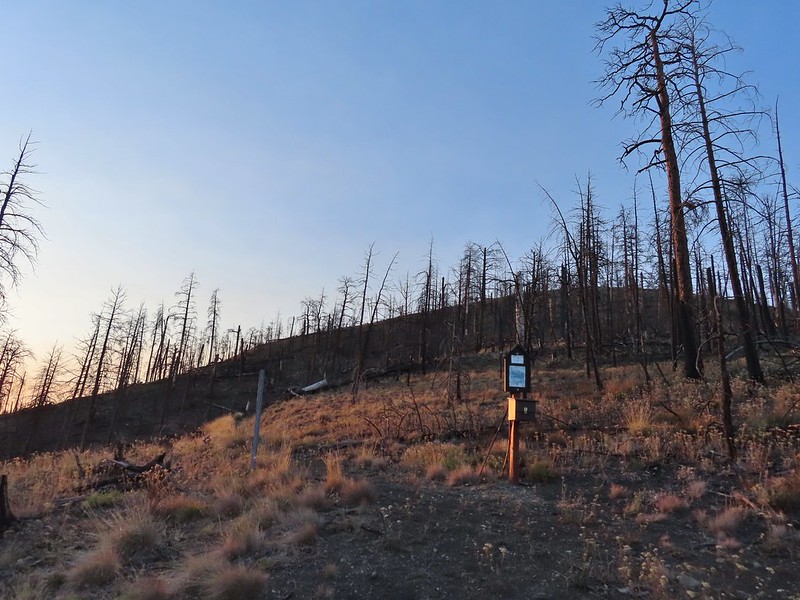 The actual trailhead.
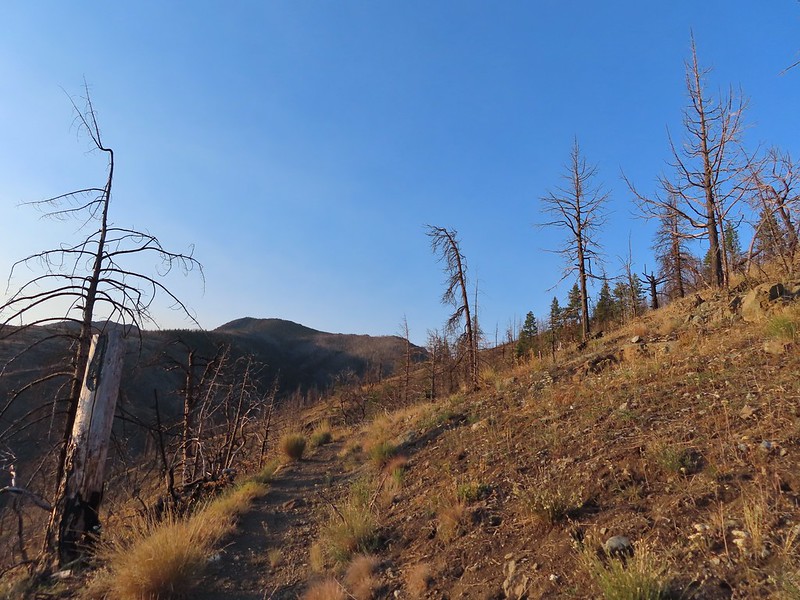
 Little Pine Creek flowed down this valley below Canyon Mountain.
 Yarrow along the trail.
 Fireweed
 Paintbrush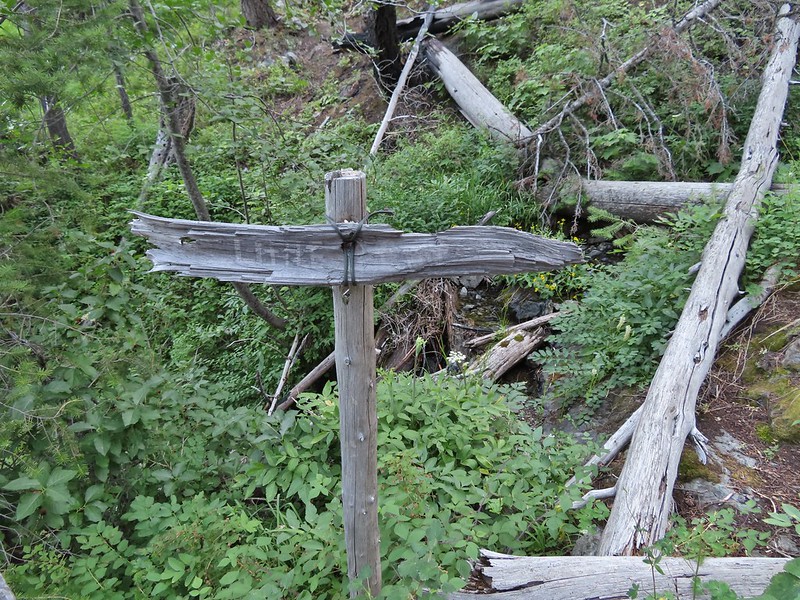
 Paintbrush and pearly everlasting
 Raspberries
 We don’t recall seeing a penstemon with leaves like this before.
 Twinberry (we did NOT sample)
 Sitka burnett (white)
 Little Pine Creek at the crossing.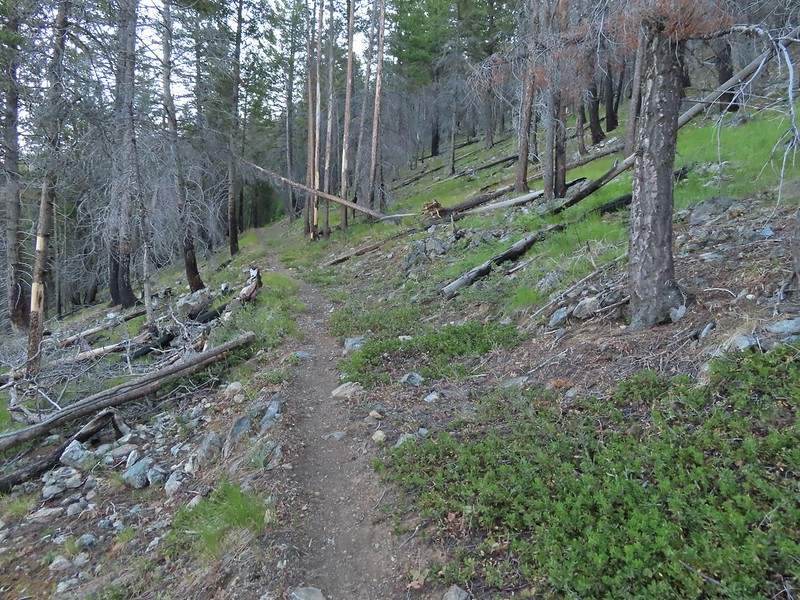
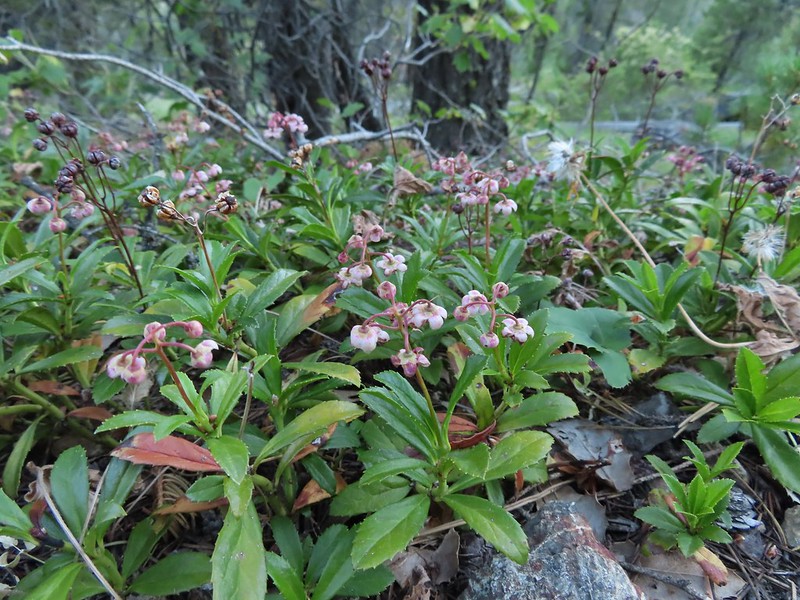 Prince’s pine
 Mountain death camas
 Fringed grass of parnassus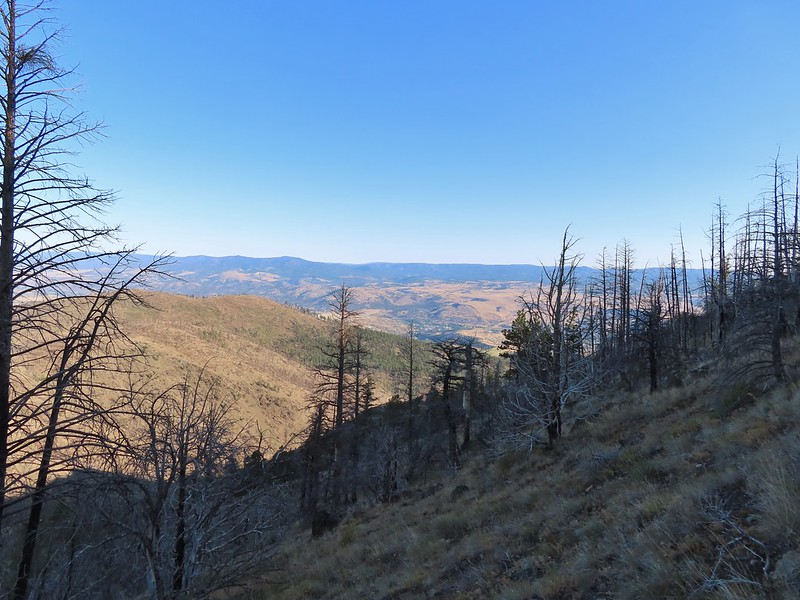
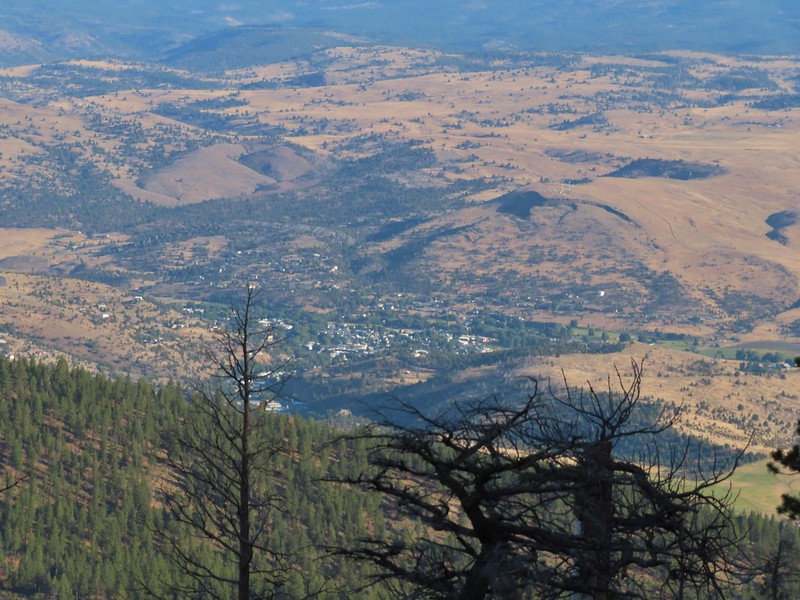 John Day below.
 Little Canyon Mountain behind the ridge we’d come around earlier.
 The Aldrich Mountains to the west, our destination for the next day’s hike.
 Canyon Mountain
 One of the sagebrush mariposa lilies.
 Dixie Butte and the Greenhorn Mountains to the NE
 Columbine
 Swamp onion
 Flowers at Dog Creek
 Twinflower
 There was a lot of elk sign along this section of the trail.
 A lot of sign.
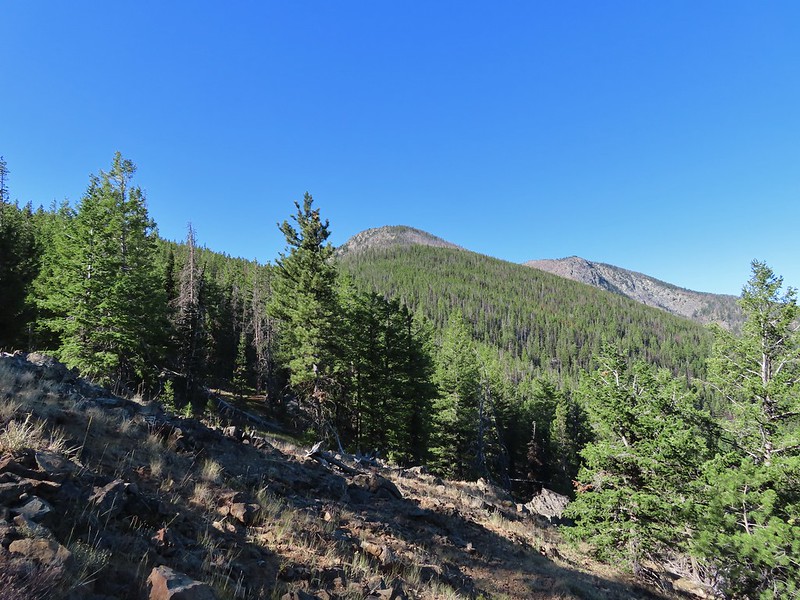 Looking back toward Canyon Mountain.
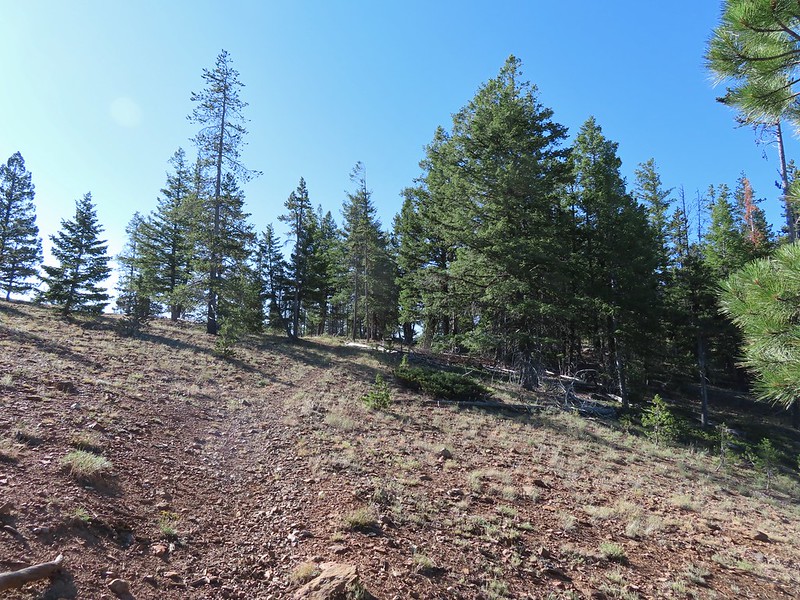 The trail crossed over the ridge in a saddle with quite a bit of mountain coyote mint.
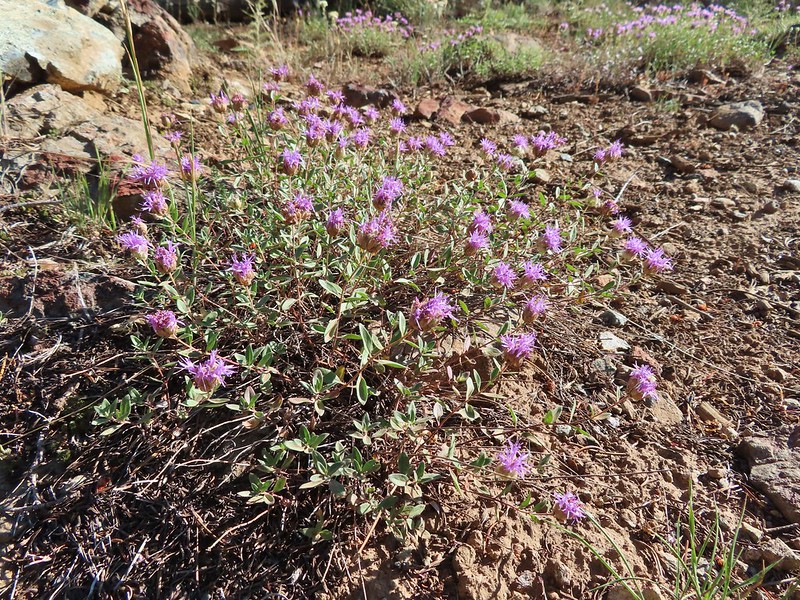 Mountain coyote mint
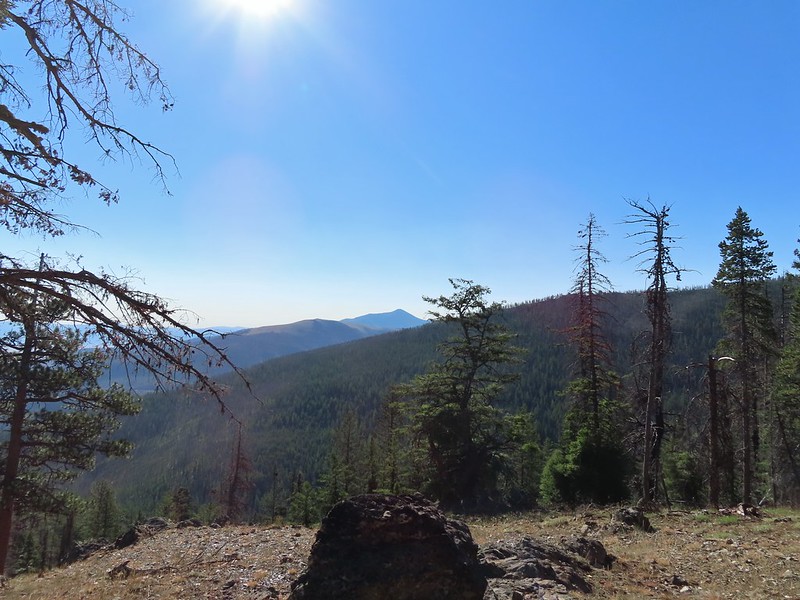 Strawberry Mountain (
 Heading toward Dean Creek now.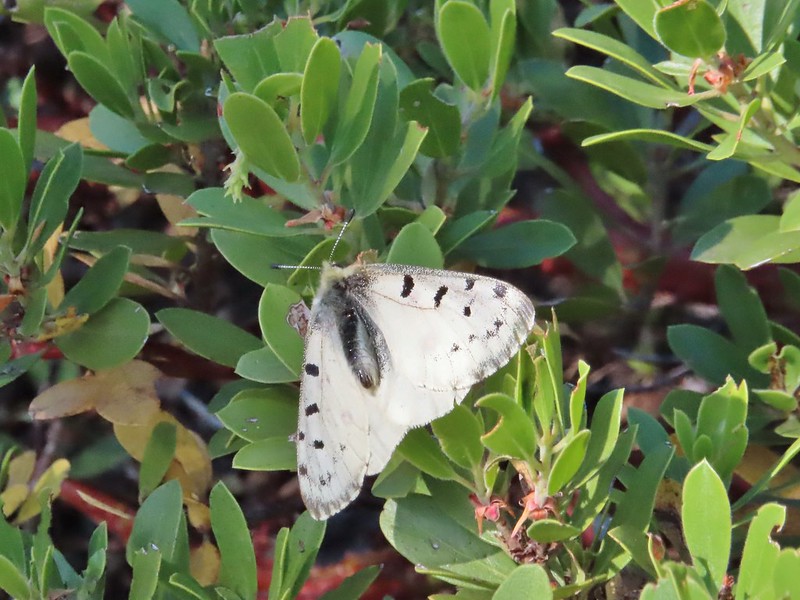
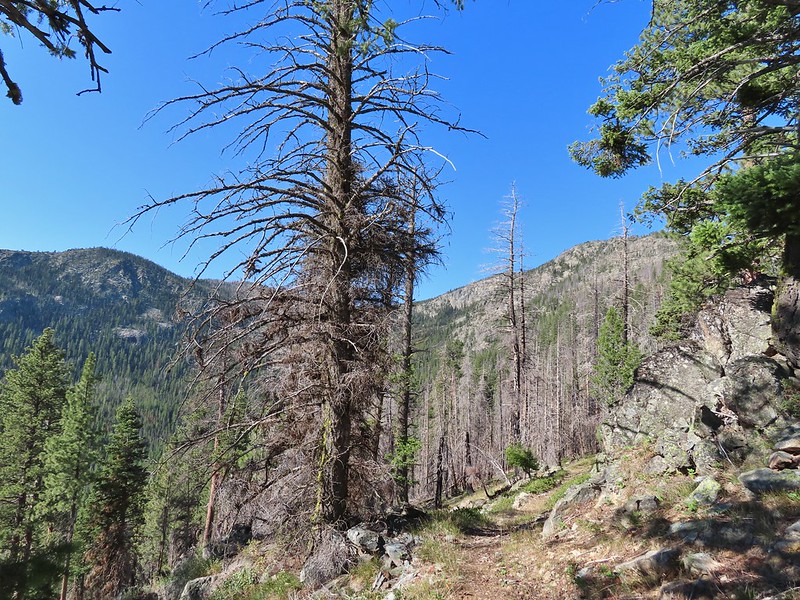 Green Mountain on the left and Canyon Mountain on the right.
 A smaller raptor, it wouldn’t look at us so I’m not sure what type it was.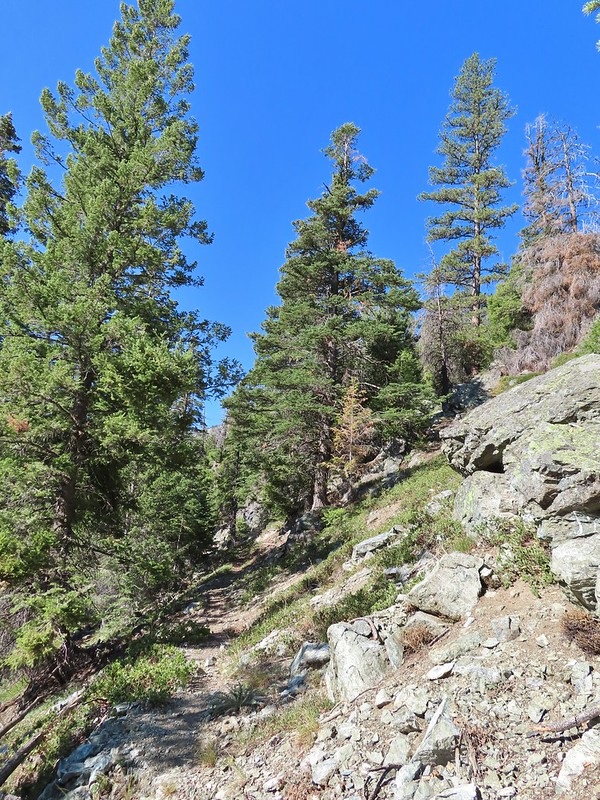
 Butterflies on western snakeroot. Side note we didn’t see a single snake or lizard all week which was really surprising to us.
 We did however see quite a few grouse.
 The trail got a little brushy nearing Dean Creek.
 There wasn’t much water in Dean Creek but there was enough for a small cascade.
  Wildflowers next to a small pool.
 Dean Creek
 Butterfly near the pool.
 Canyon Mountain
 Dixie Butte with the Greenhorns on the left and the Elkhorns (
 Cones
Cones Lousewort
 Pearly everlasting, yellow flowers, and fireweed.
 An eagle?
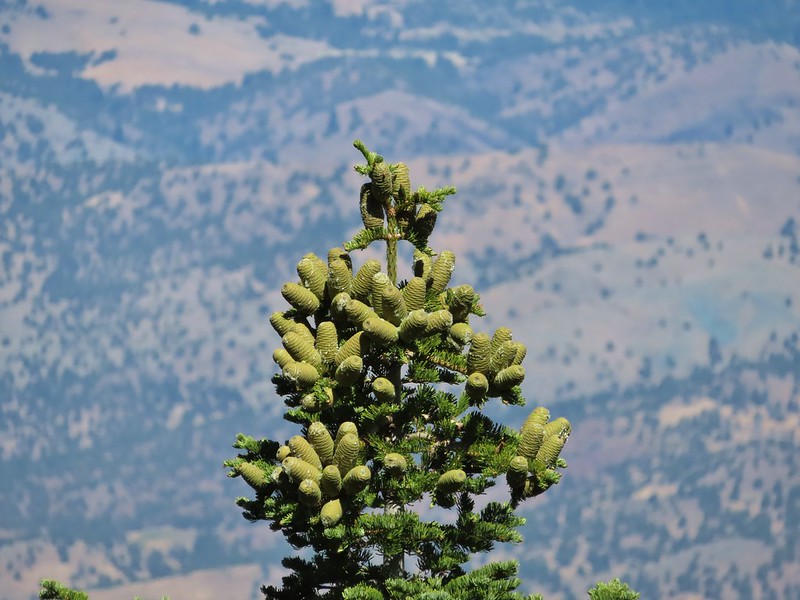 More cones
 Dragon fly
 A sulphur butterfly
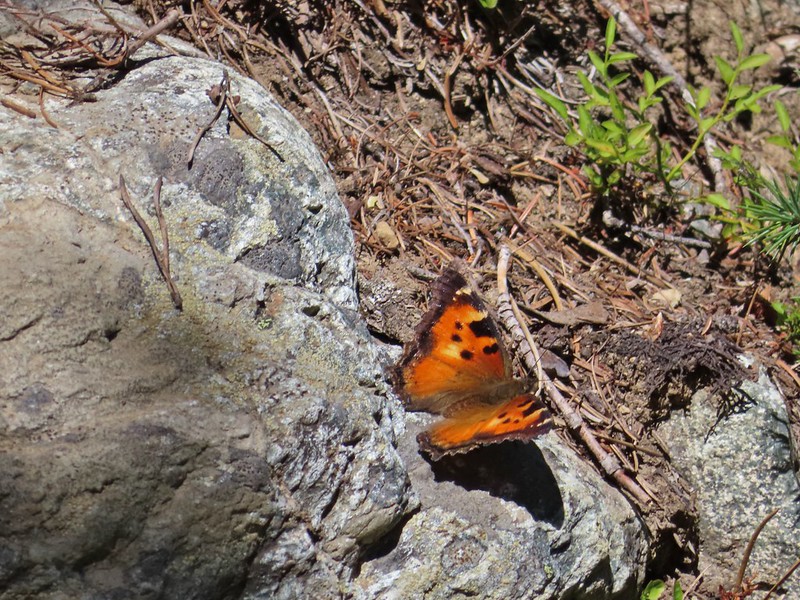 California tortoiseshell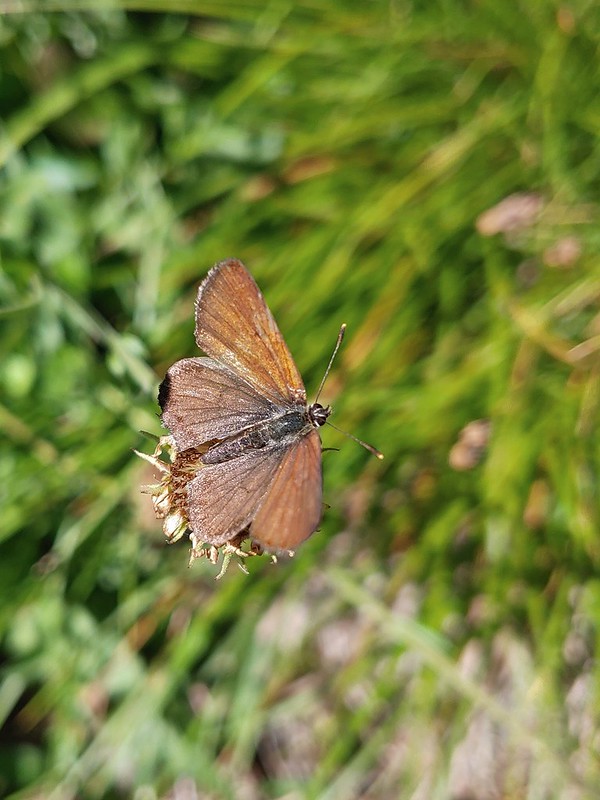
 Grouse
 Maiden fly
 Skipper
 Woodpecker
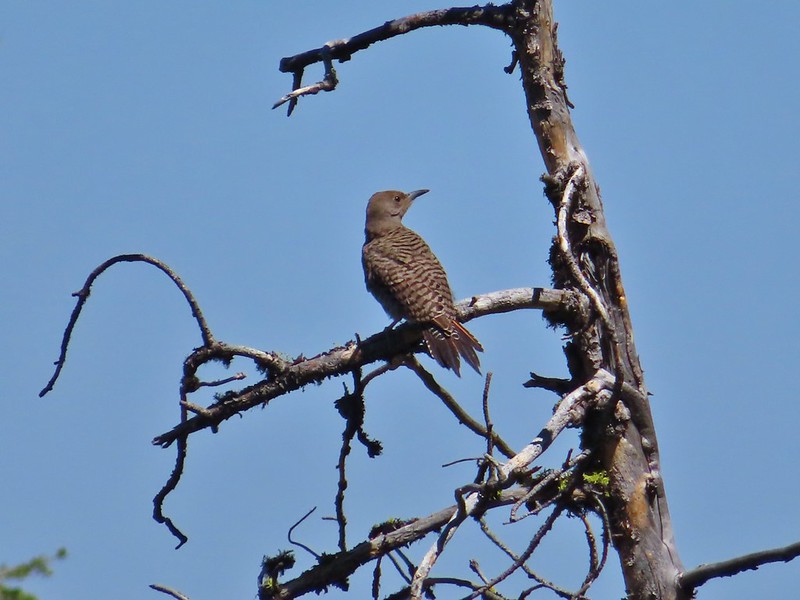 Northern flicker
 Mountain bluebird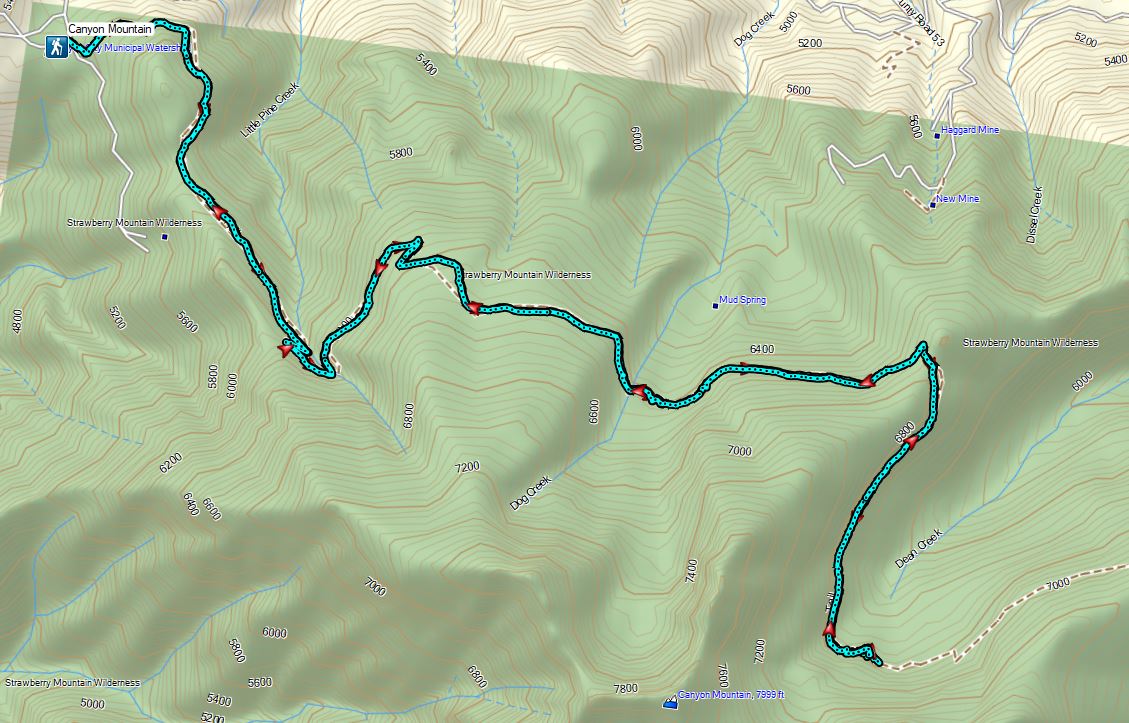
 The trailhead is at this hairpin curve below Table Rock. The road continues another 0.8 miles to the staffed Table Rock Lookout but reportedly worsens which is hard to imagine is possible.
 First time seeing a wilderness sign quite like this.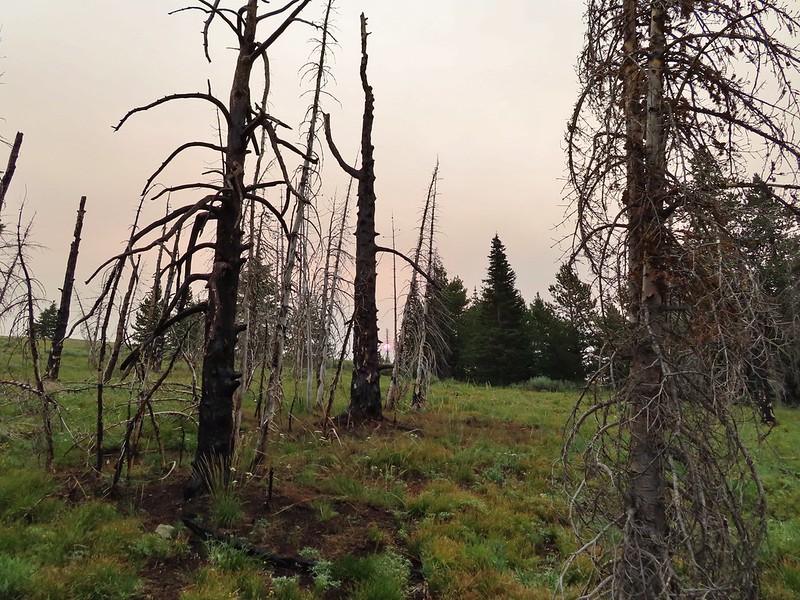
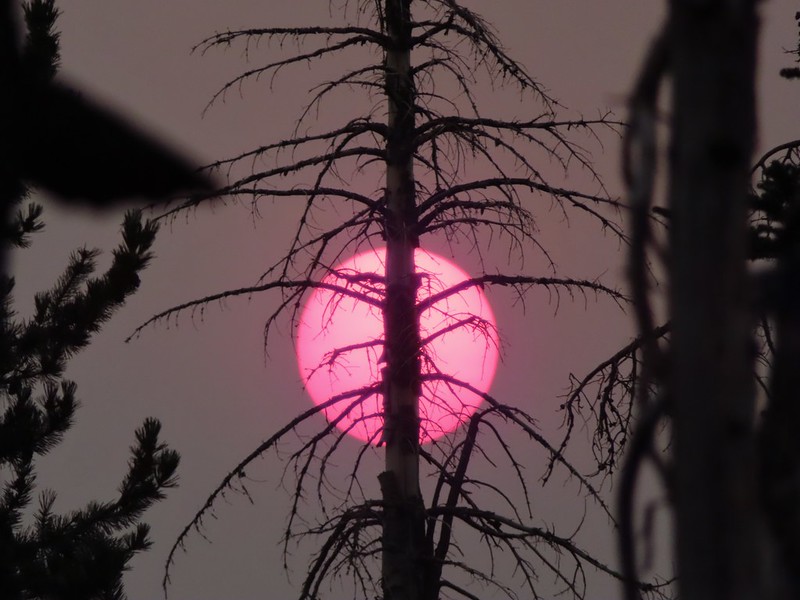 A red Sun behind the smoke, presumably mostly from the 400,000 plus acre Bootleg Fire east of Klamath Falls in south central Oregon.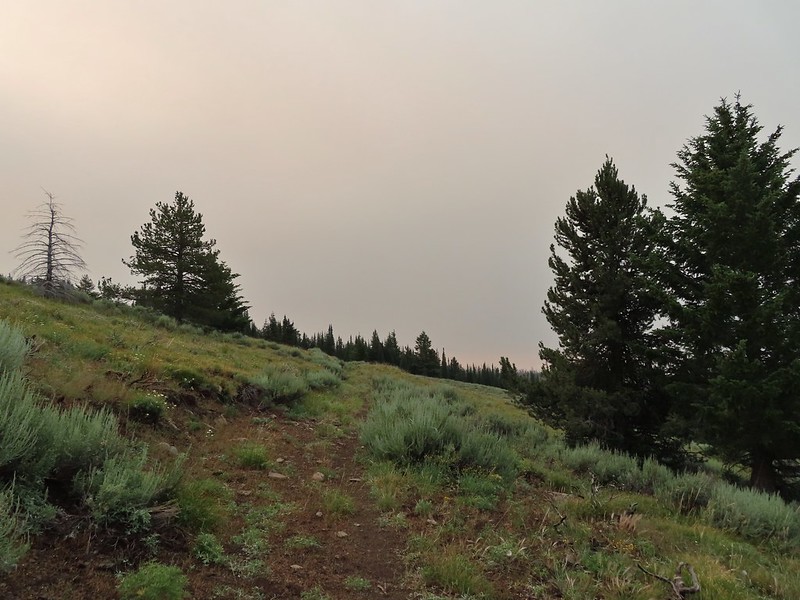
 Clark’s nutcracker
 Monument Rock in the distance.
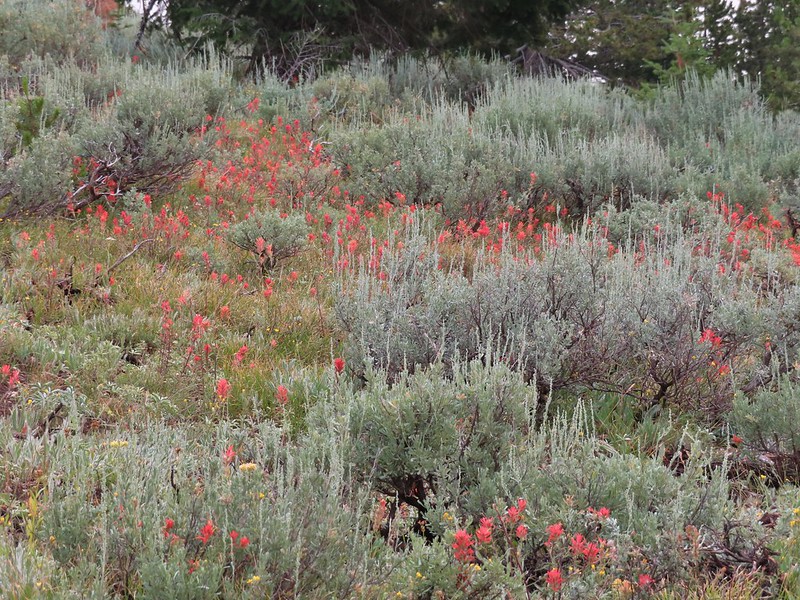 Paintbrush in the sagebrush.
 Ground squirrel
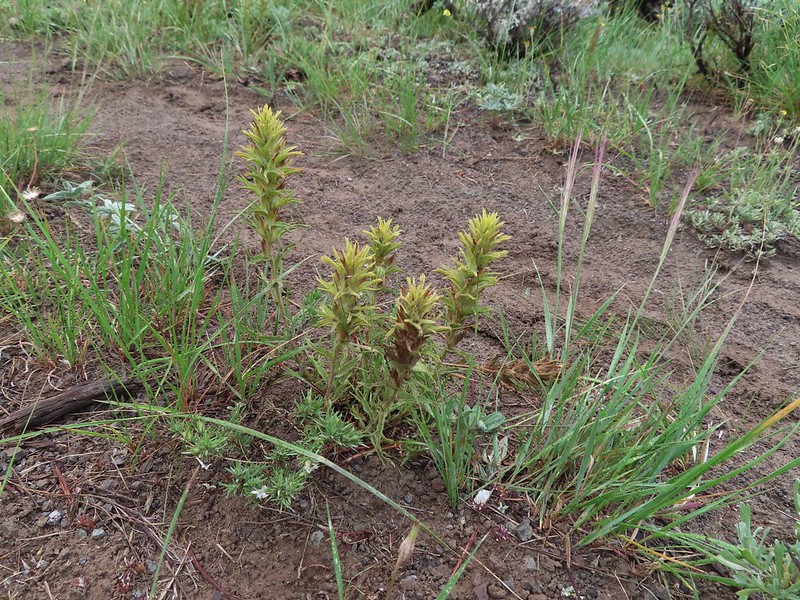 There was a fair amount of this green paintbrush too.
 We believe this post (not the 1.7 mile post) marked a side trail to Rock Spring but we didn’t see any tread in the area to know for sure.
 Bullrun Rock dead ahead.
 Table Rock in the distance.
 The Table Rock Lookout.
 Two kinds of paint.
 Bullrun Rock below the Sun.
 Monument Rock again.
 Old man’s whiskers
 A checkermallow
 We passed this sign for the Amelia Trail along the way but again didn’t see any trace of tread for it.
 Grazing cattle near the post.
 The post with Monument Rock in the background.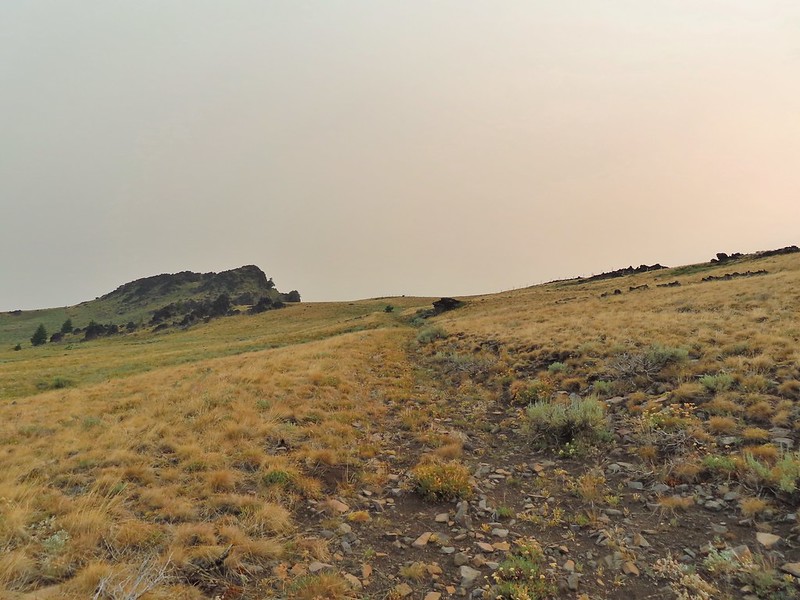

 I believe that is Ironside Mountain.
 The jeep track and Monument Rock.
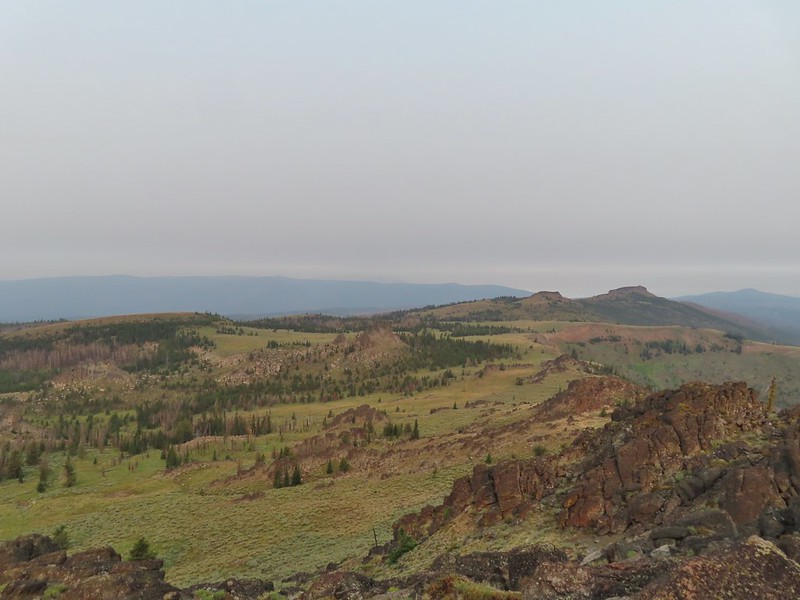 Table Rock
 Looking down into the Monument Rock Wilderness
 Woodpecker
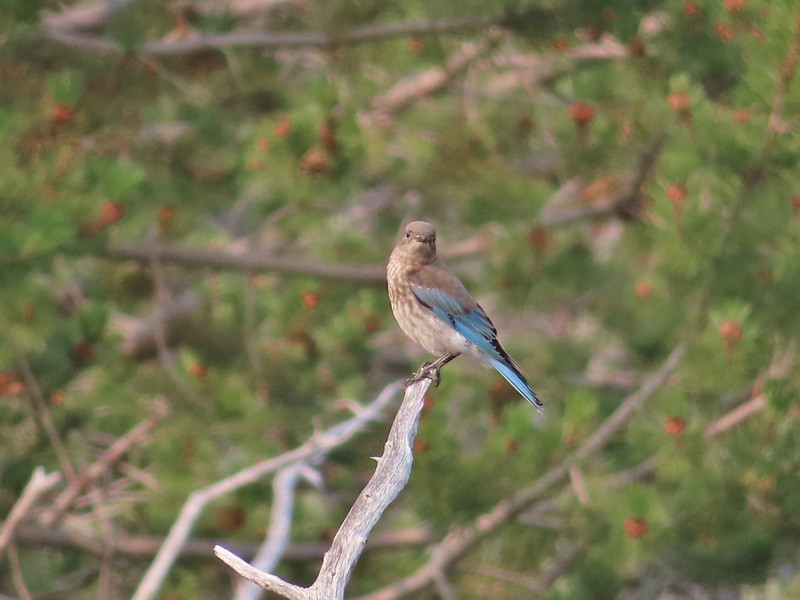 Mountain bluebird
 Looking back toward Bullrun Rock.
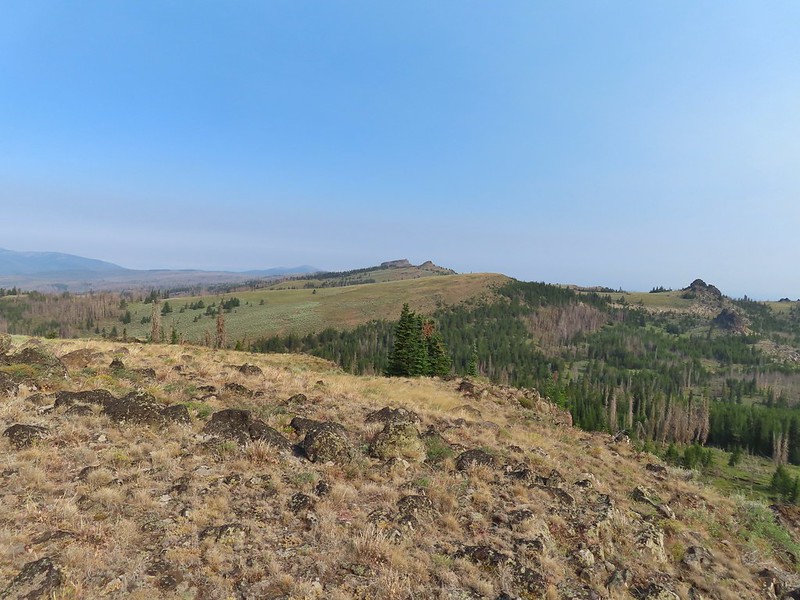 Table Rock from where we gained the ridge.
 Heading up.
 Me making my way up to the cairn.
 Bullrun Rock from the cairn.
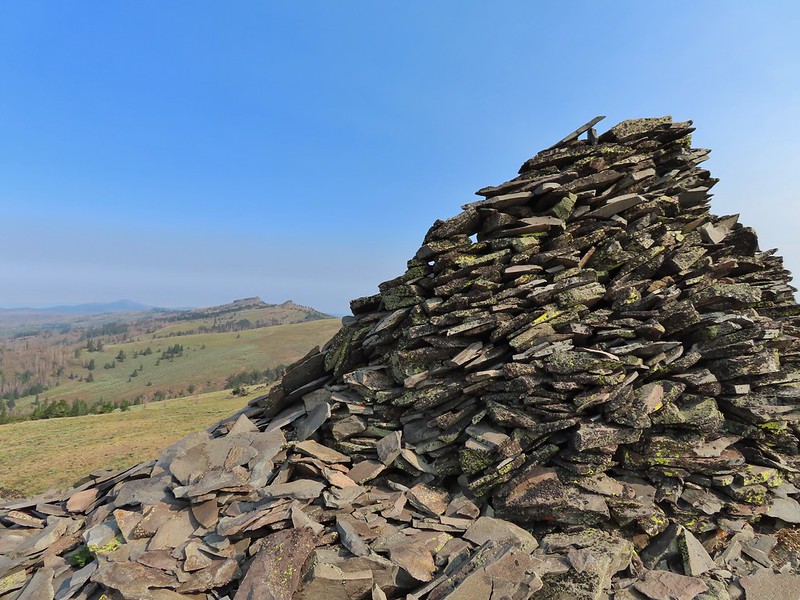 Table Rock from the cairn.
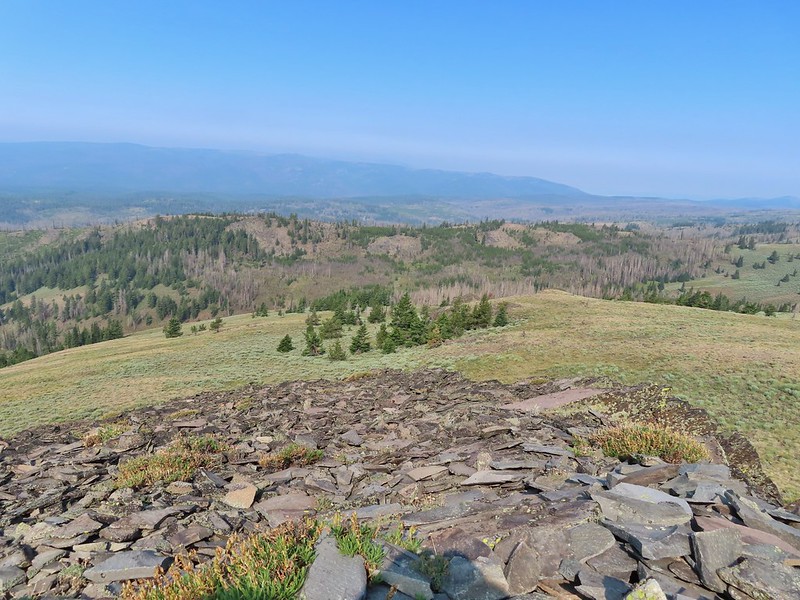 The Monument Rock Wilderness.
 The cairn on Monument Rock from below.
 Heading downhill.
 Heather spotted this sheep moth.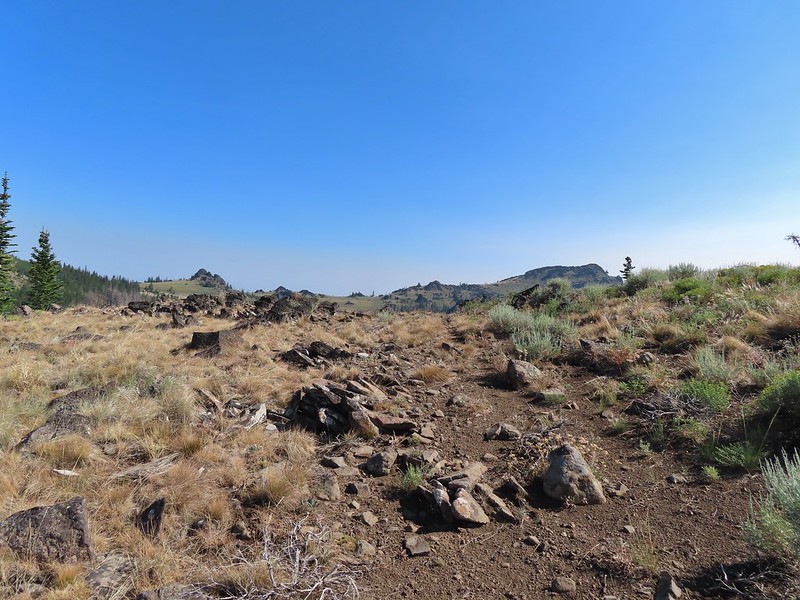
 The path leading downhill.
 Table Rock in the distance with Bullrun Rock on the right.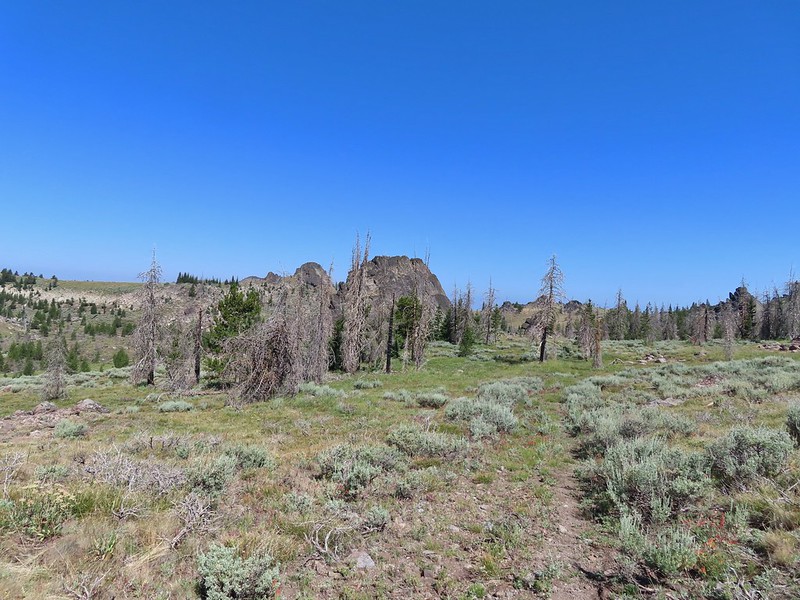



 Robin
Robin Quite a bit of a difference from the morning.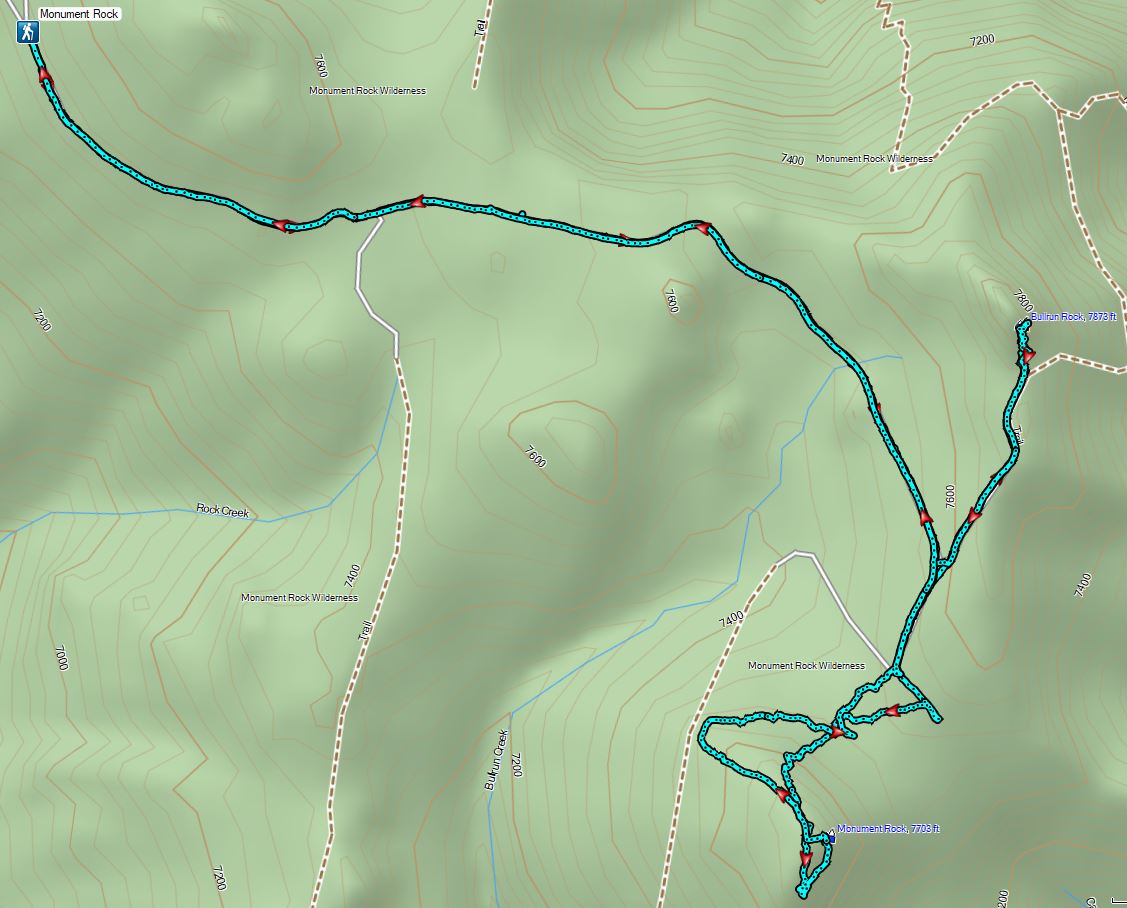



 Yarrow and an orange agoseris.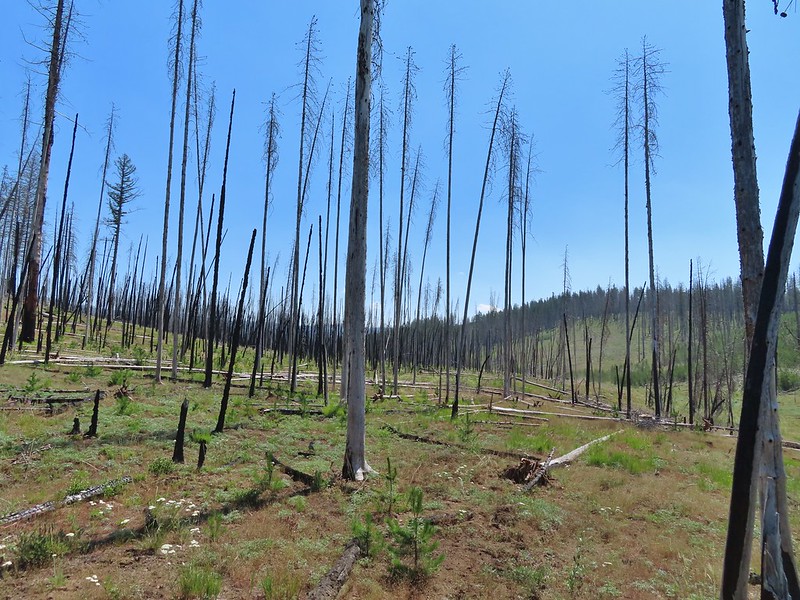
 Wilderness sign marking the boundary of the Monument Rock Wilderness.
 Table Rock from the trail.
 Elk Flat Creek.
 An orange flag to the right ahead.
 The trail following Elk Flat Creek.
 A few areas of green trees remained.


 Unnamed stream shortly before reaching the Little Malheur River.
 Monkshood along the stream.
 It appeared that quite a few trees survived along the Little Malheur.
 The trail crossing the Little Malheur River. We were especially excited to see a lot of nice pink monkeyflower along the banks.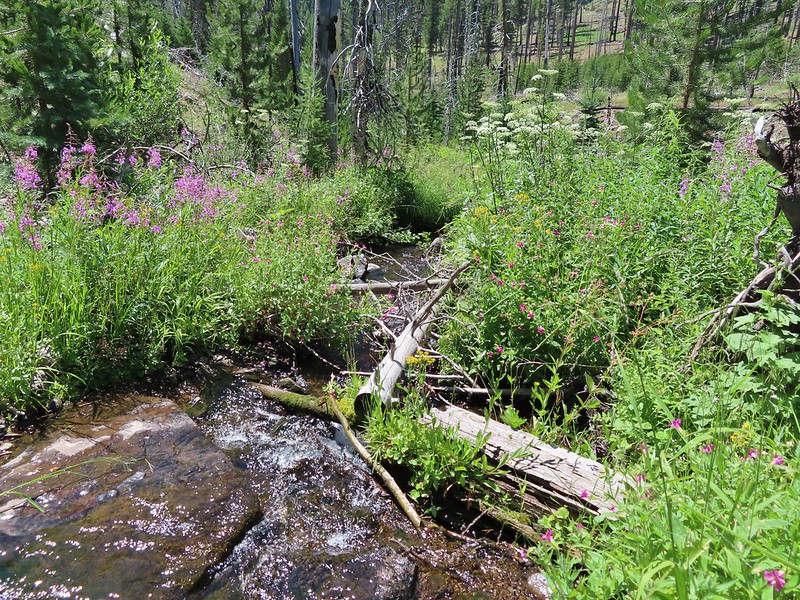



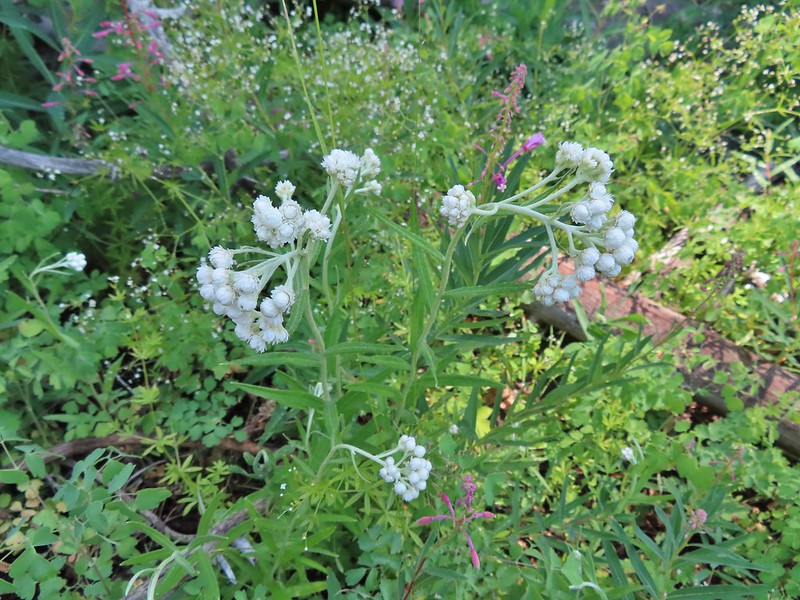 Pearly everlasting
 Ground squirrel
 Either a big ground squirrel or a small marmot.
 Another hawk.
 Fluffy clouds forming over the Monument Rock Wilderness.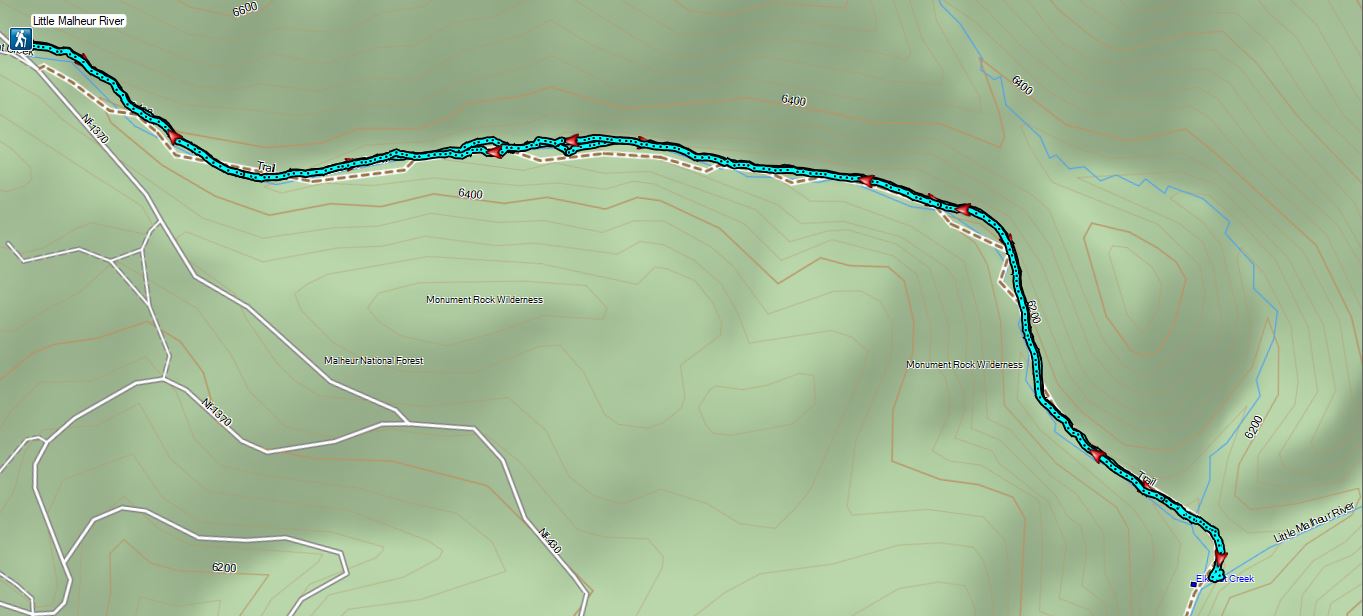
 Continuing along the Waterman Ditch.
 If this trail sign was marking a junction it wasn’t clear where the other trail was.
 Campsite at the saddle.
 The Rim Trail sign on a tree trunk.

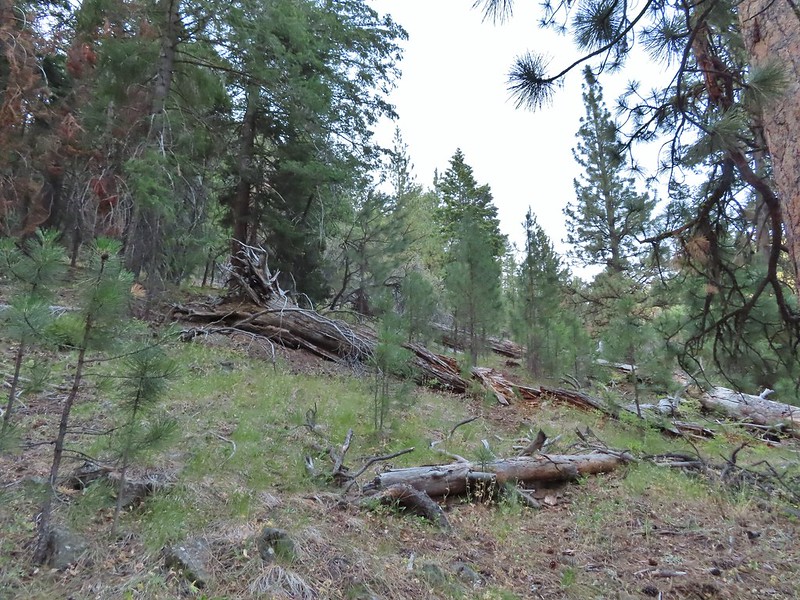



 Rock Creek Lake
 Gaining the ridge.

 View from the rim.
 Spanish Peak
 A local
 Astter
 Some sort of delphinium I think.
 Downed trees across the trail ahead.
 Interestingly camouflaged beetle on the upper onion.
 Lupine
 A checkermallow
 Some more downed trees that we had to go around.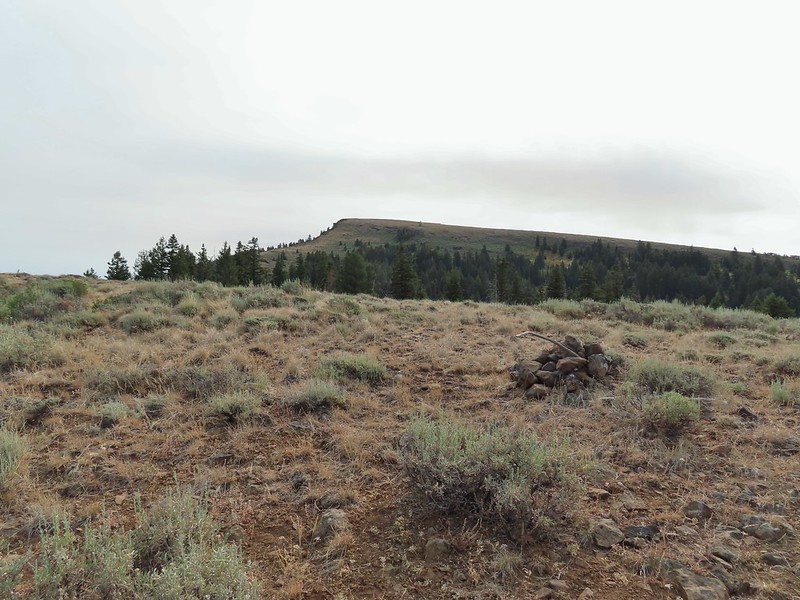


 We left the trail here, note the small cairn on the left.
 Heading uphill.
 Scarlet gilia
 Paintbrush
 The site of the former lookout.
 Looking out toward the John Day River valley.
 SE to Windy Point.
 West to Rock Creek Lake and on the horizon the flat topped Lookout Mountain (
 NE to the John Day River Valley.
 Lookout and Round Mountain and the rim that we had hiked up below Spanish Peak.
 The Pisgah Lookout on the far side of the Bridge Creek Wilderness (
 A hazy Mount Hood to the NW.


 Baldy Creek was on our left.
 Red-tailed hawk
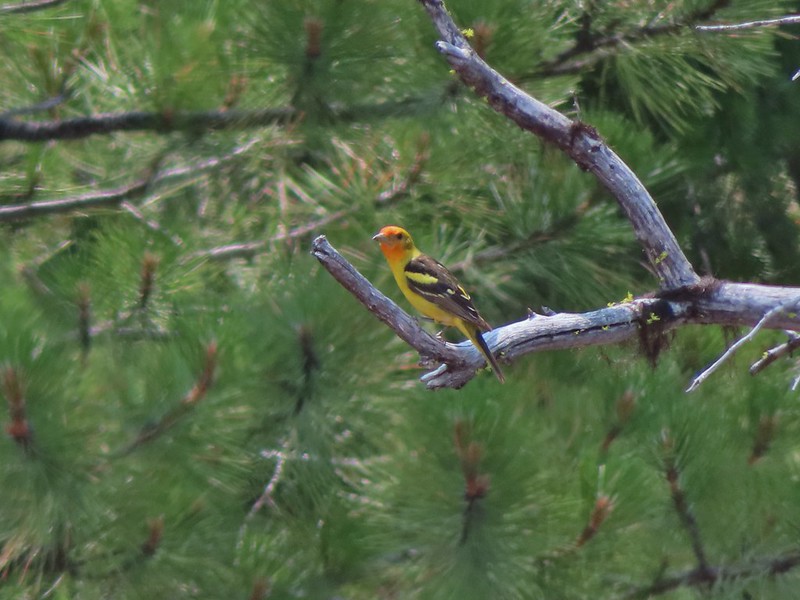 Western tanager
 Arriving at the trailhead.
 Signage at the trailhead.
 Baldy Creek below FR 3820.
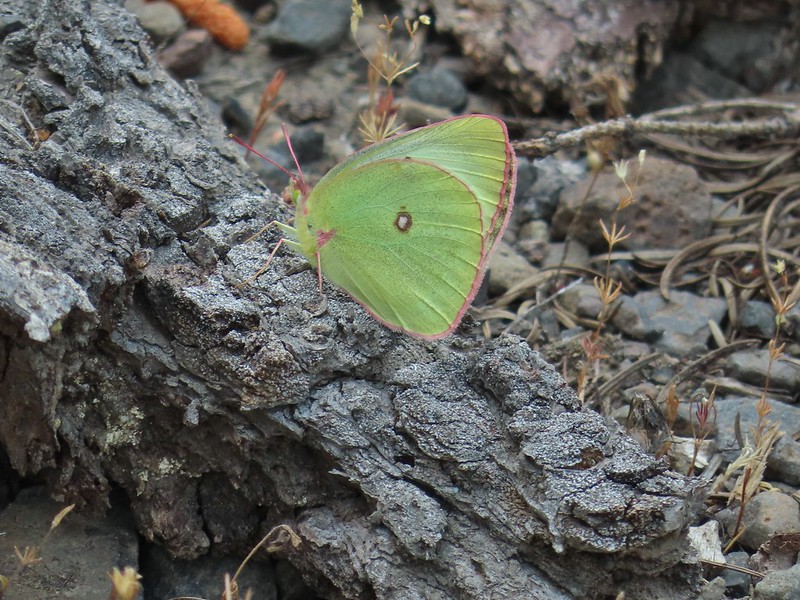 A sulphur butterfly of some sort.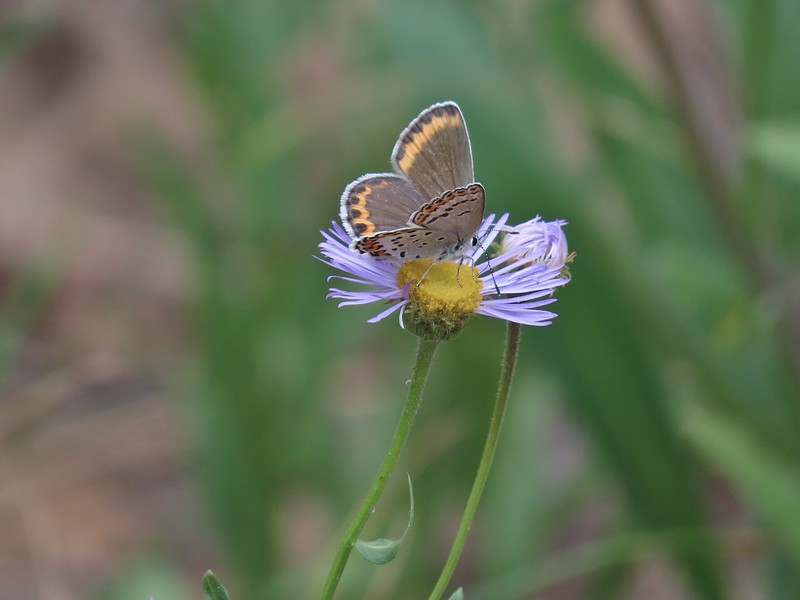
 A watermellon or June bug as we called them growing up.
 FR 3820 meeting Arvid Nelson Road.
 Spanish Peak from Arvid Nelson Road.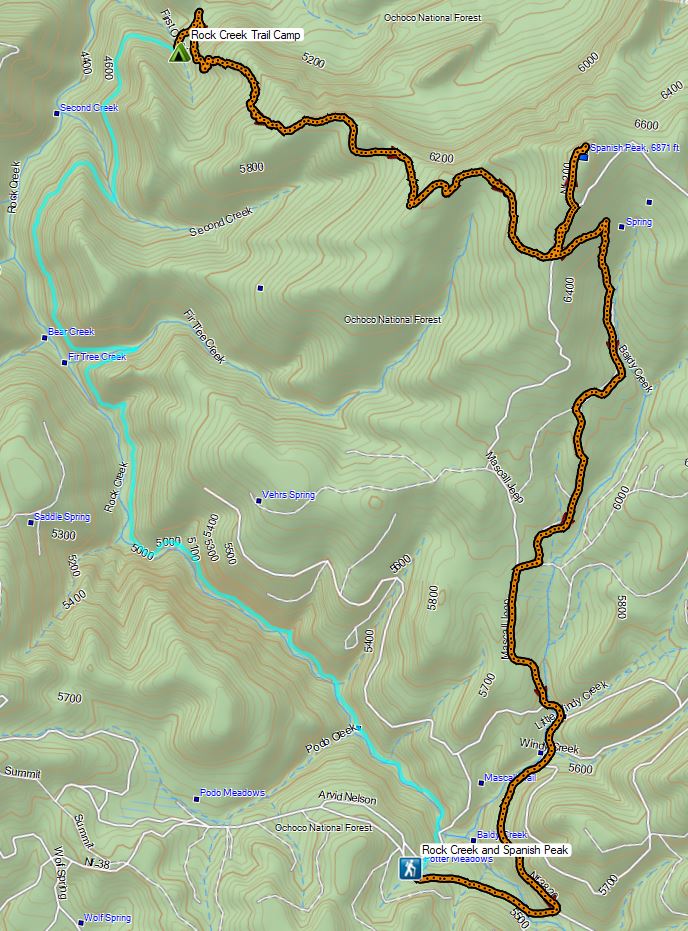


 Aster, paintbrush, and fireweed.
 Fireweed, aster, and pearly everlasting.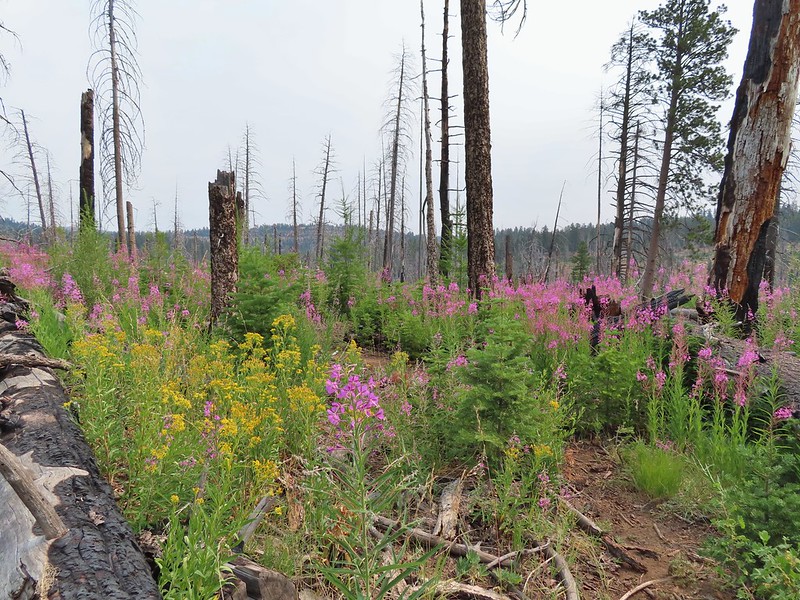
 Clouds and smoke mixing in the sky made it hard to tell if any thunderstorms might be developing.
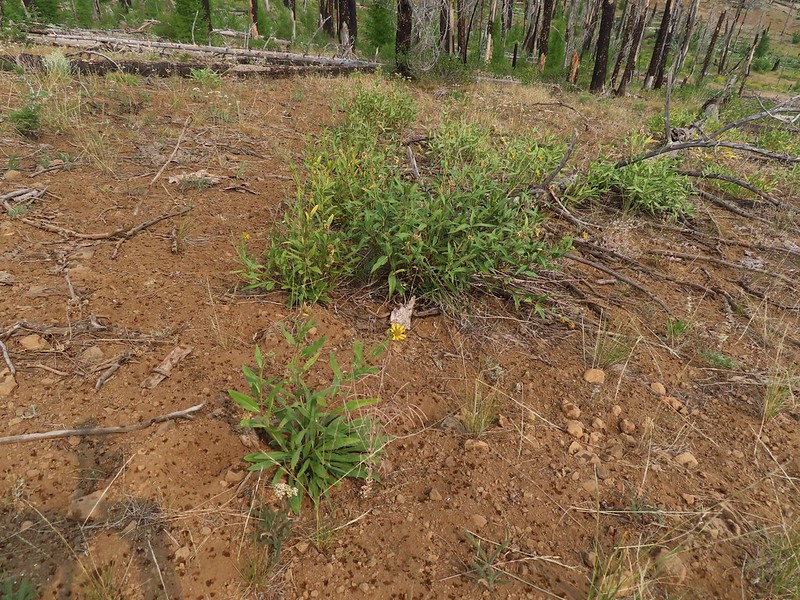 We never heard any thunder but we did briefly get sprinkled on.
 Ground squirrel.
 Columbine
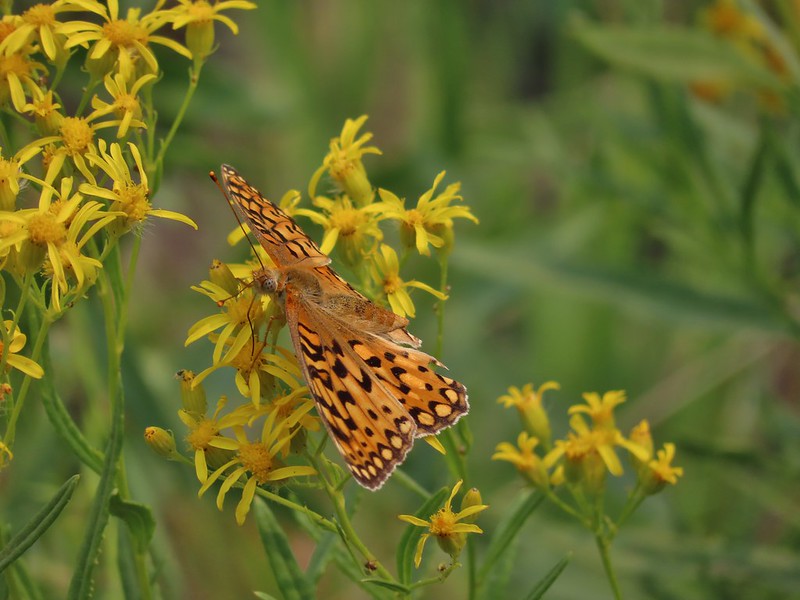 Fritillary butterfly
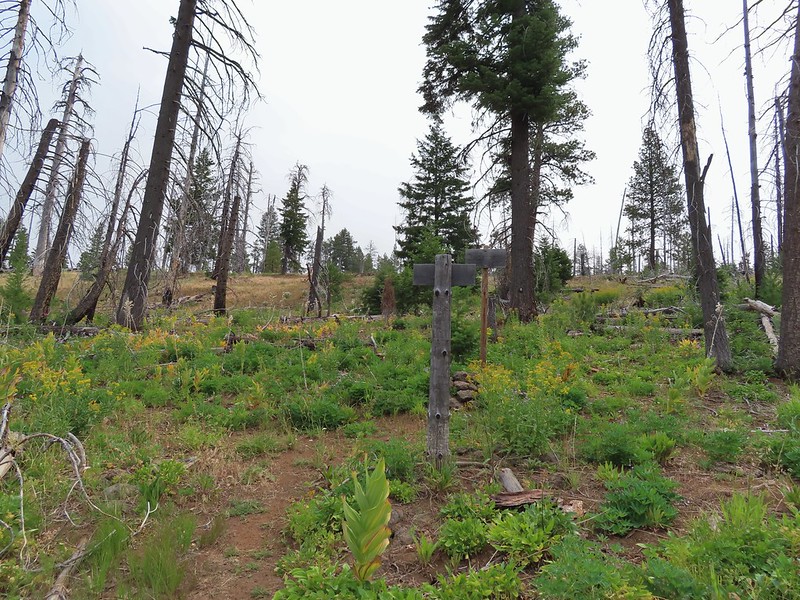 Black Canyon Trail junction.


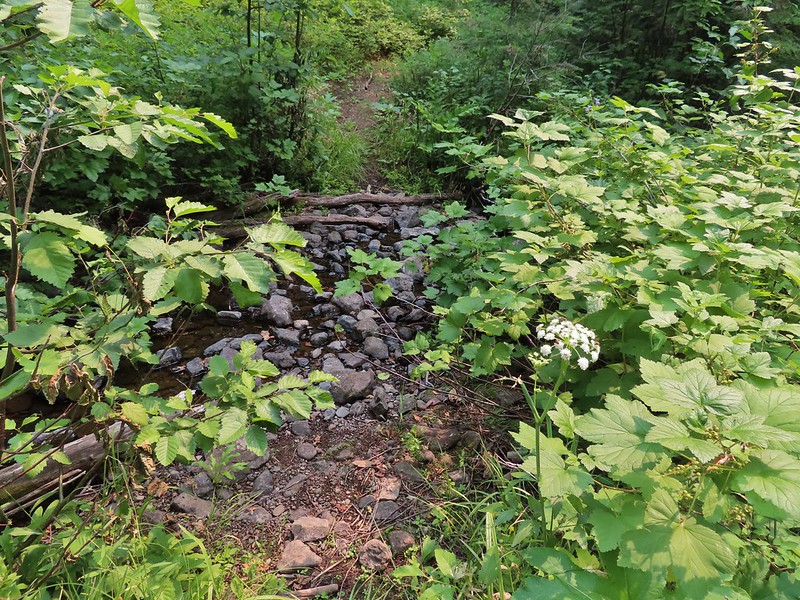 Owl Creek crossing approximately 1.5 miles from the junction.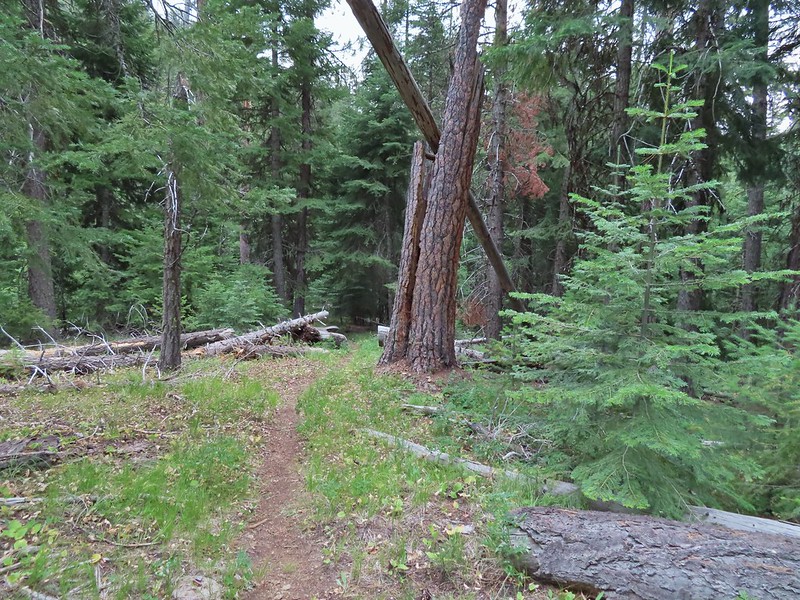


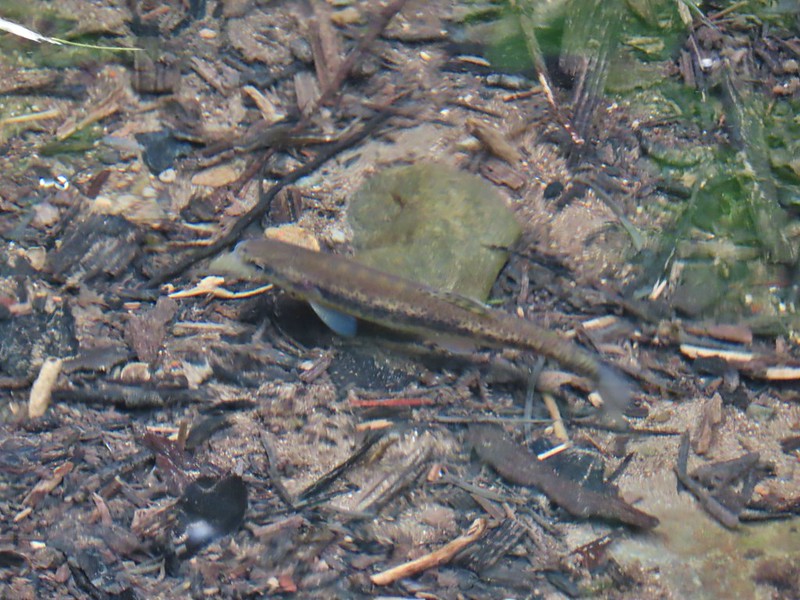 Fish in Black Canyon Creek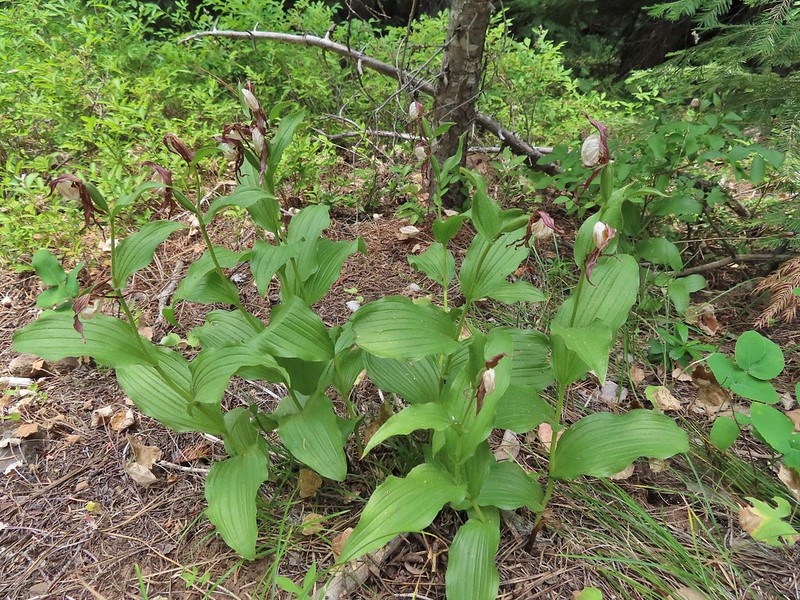


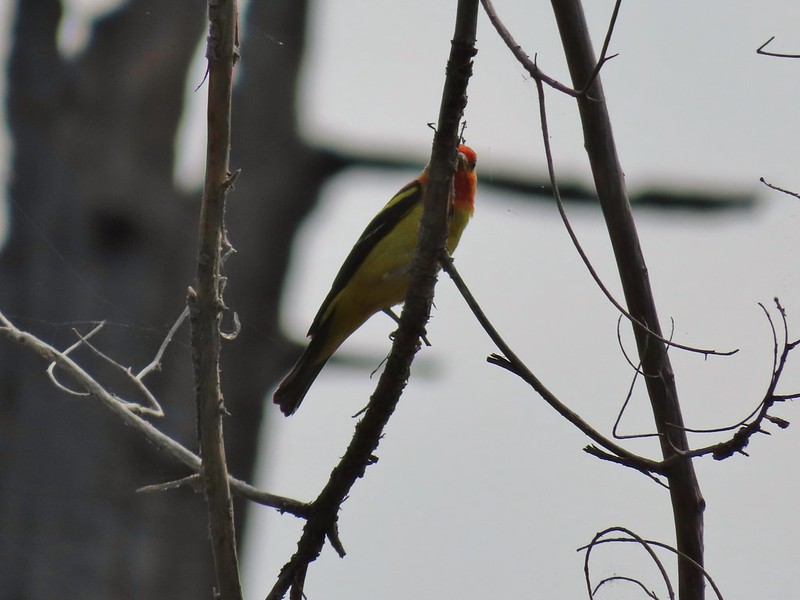 Western Tanager
 California tortioseshell
 Western Jacob’s ladder
 Black Canyon Creek



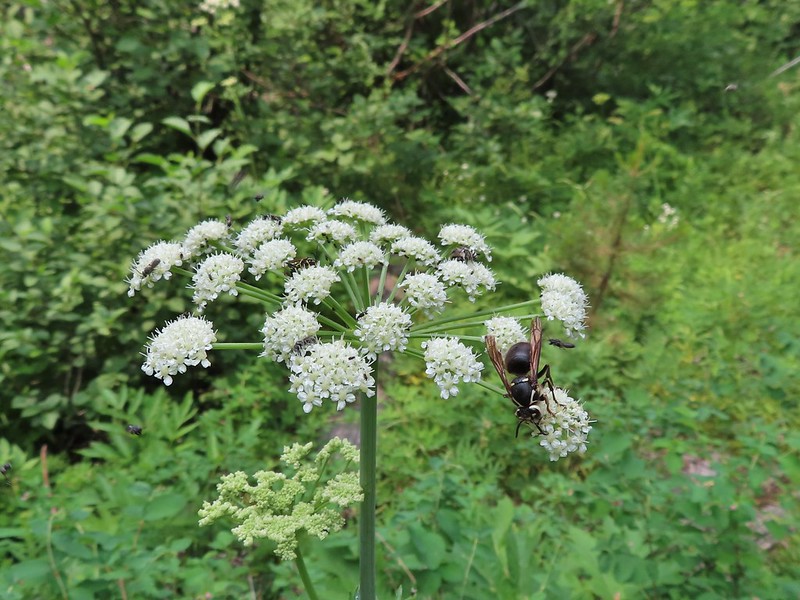 The number of insects on the blossoms and their size differences were fascinating.
 Snacks

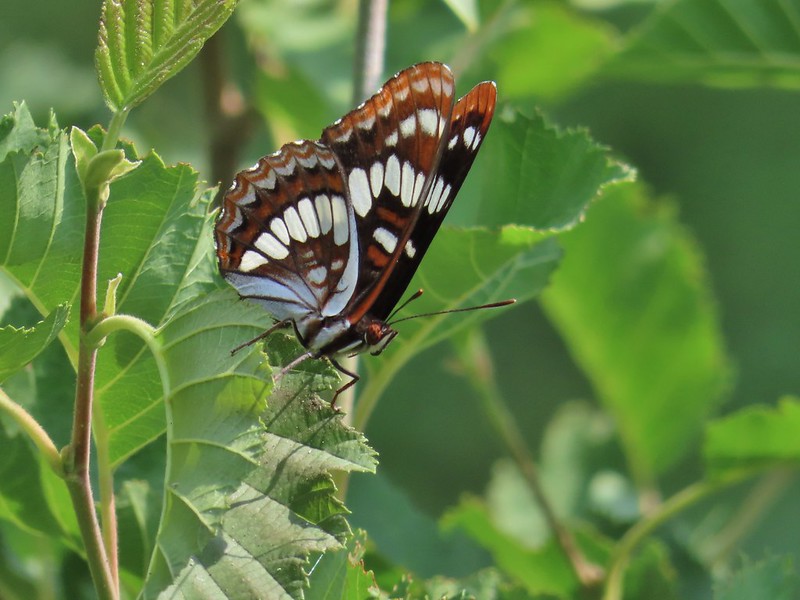 Lorquin’s adrmiral

 A little light on the tread in this section.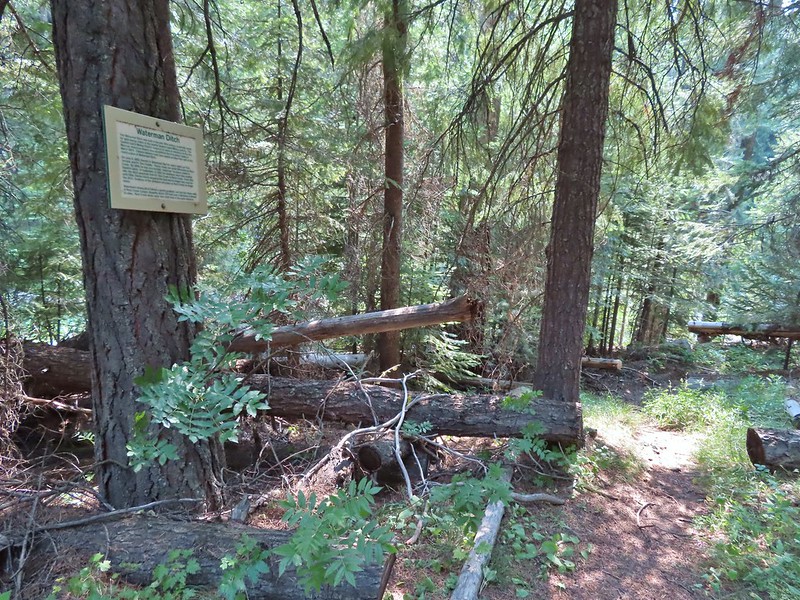



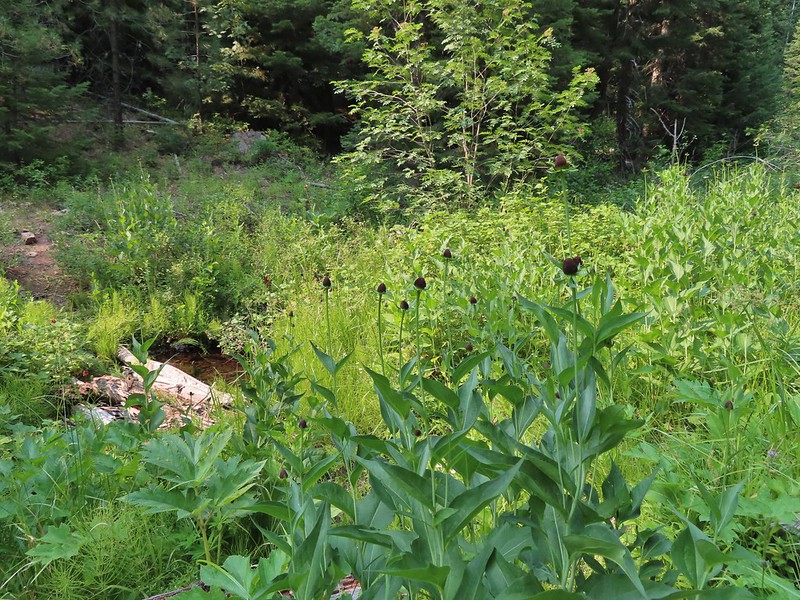 Fir Tree Creek
 Butterflies on coneflower
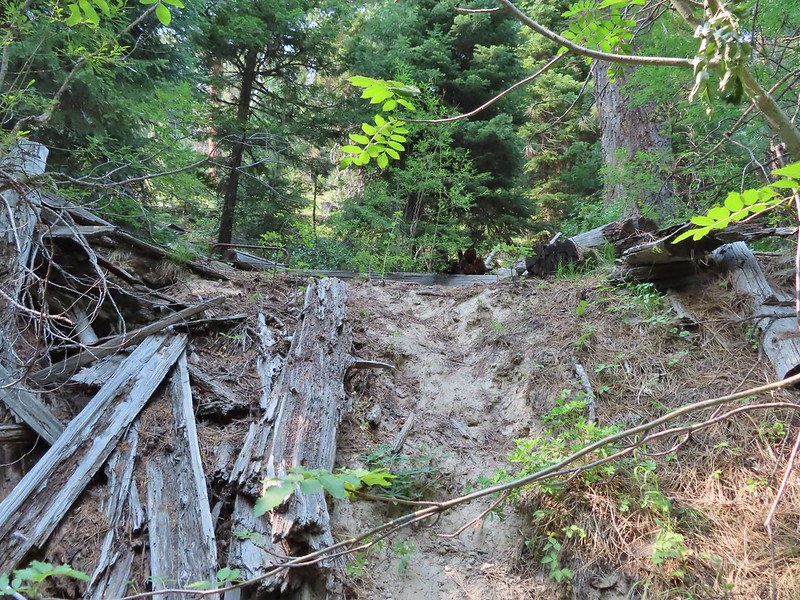 The cabin ruins.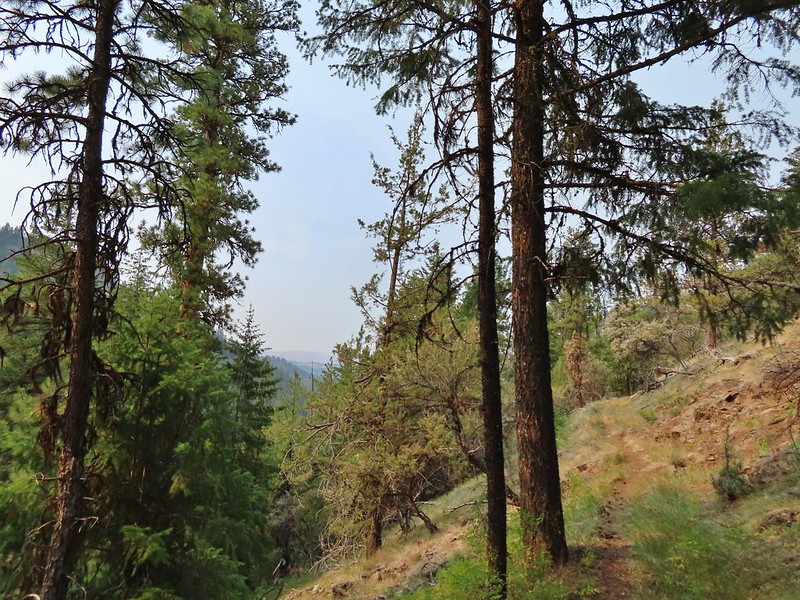
 Coming around a ridge end toward Second Creek.
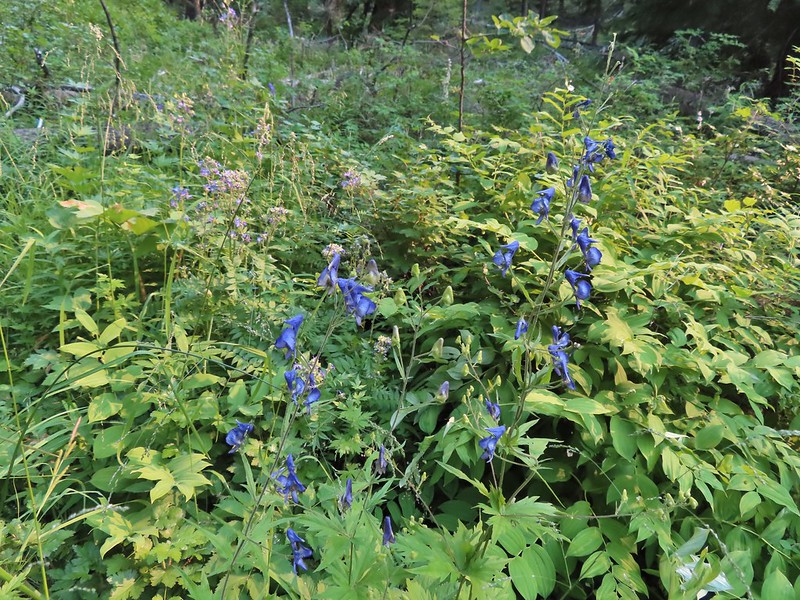 Monkshood at Second Creek
 This little guy oversaw our water pumping.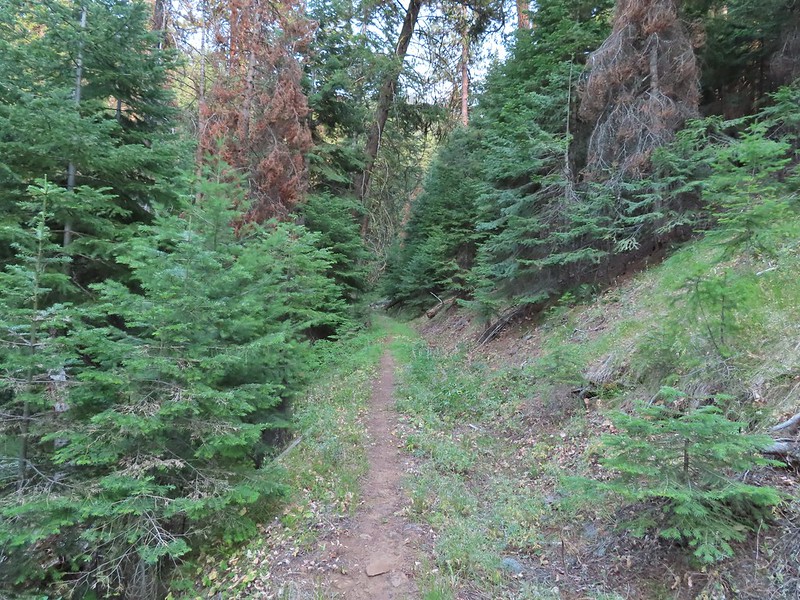
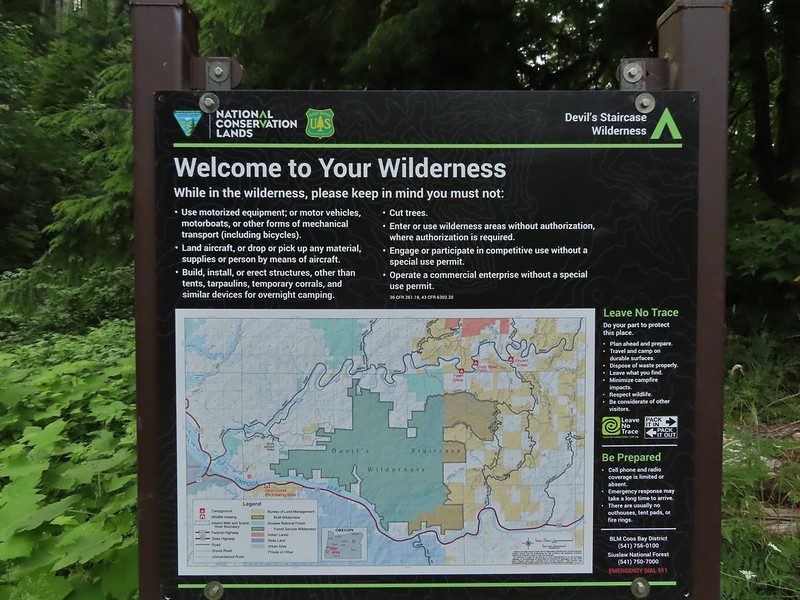

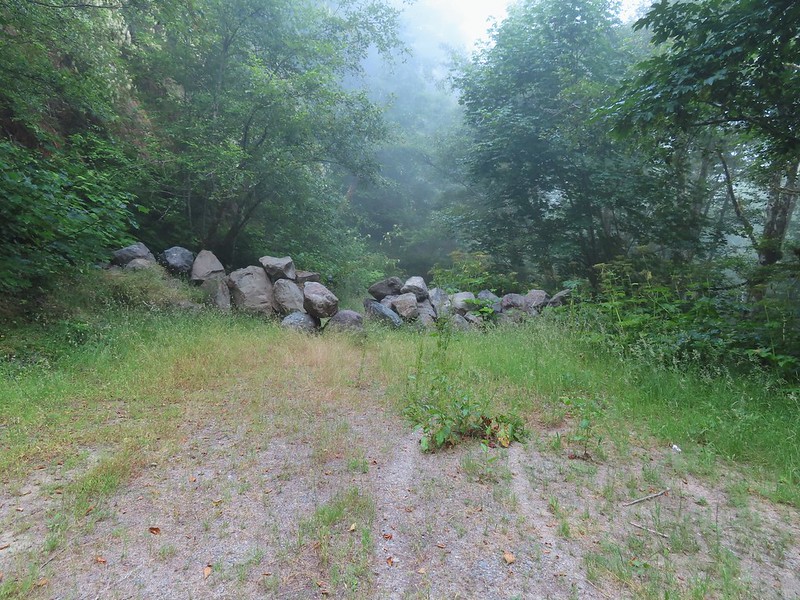 Wilderness boundary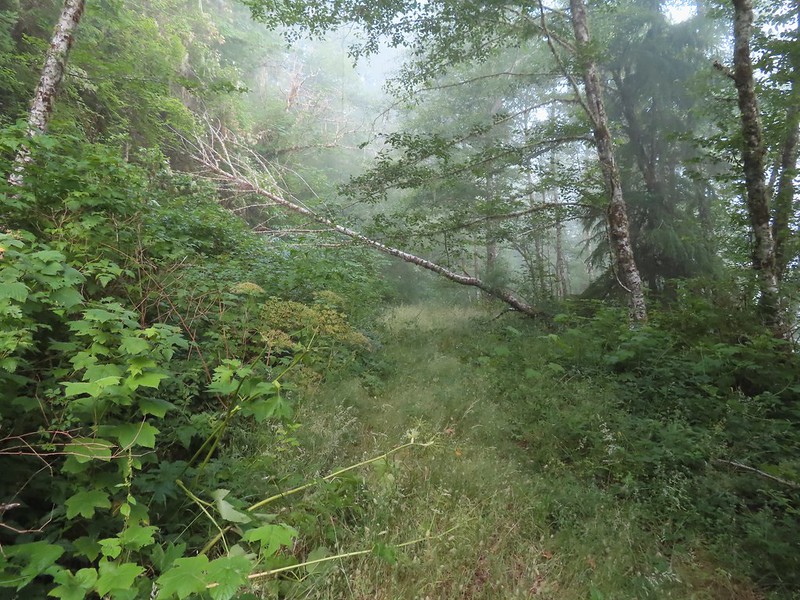
 Varied thrush
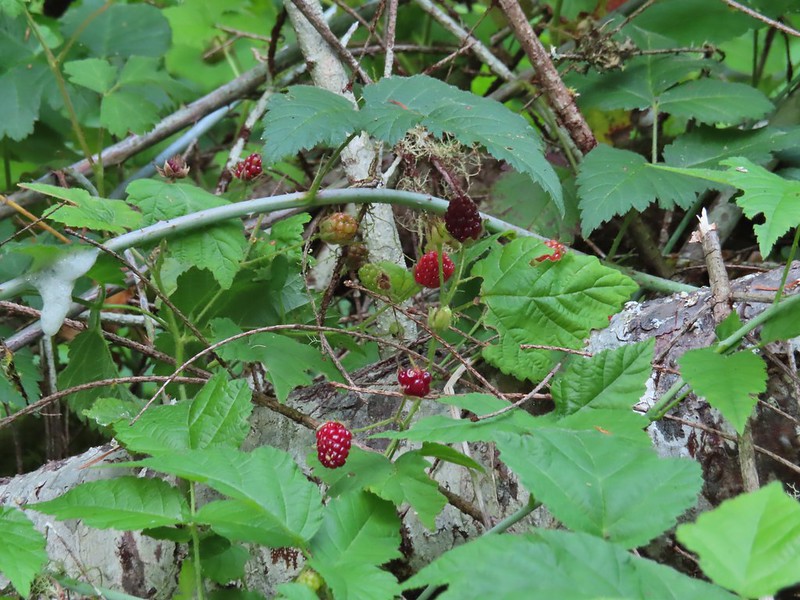 Blackberries, we found a couple of ripe ones later as well as ripe salmonberries, thimbleberries, and red huckleberries.
 There was a lot of Himalayan blackberry to get through which caused many a scratch.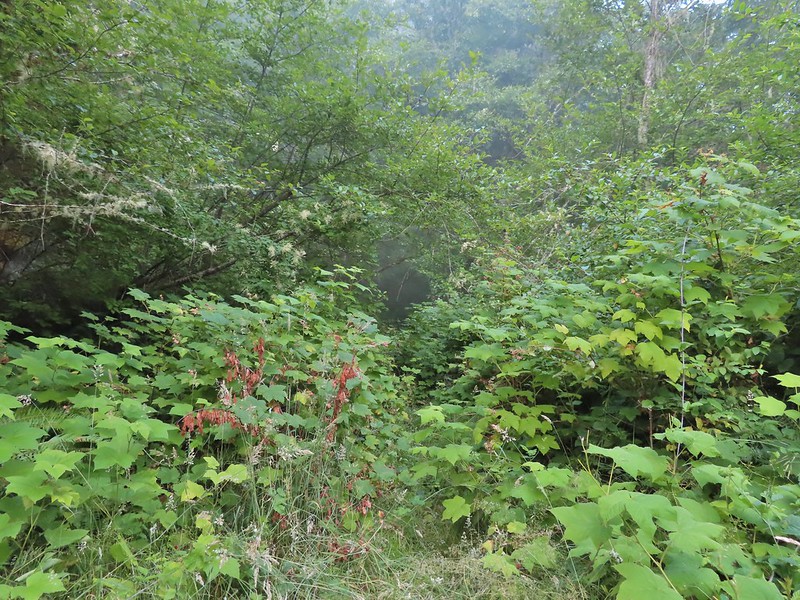

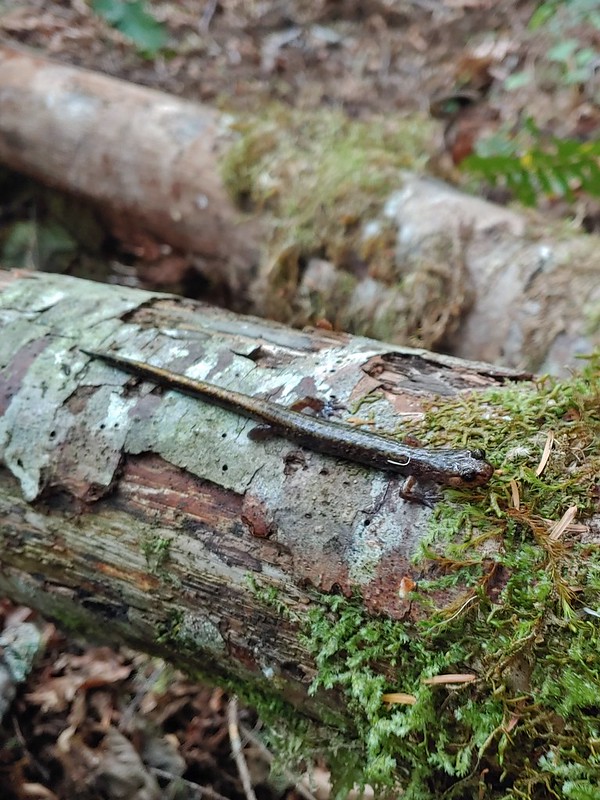 Salamander, possibly a Dunn’s.
 Snail on a fern.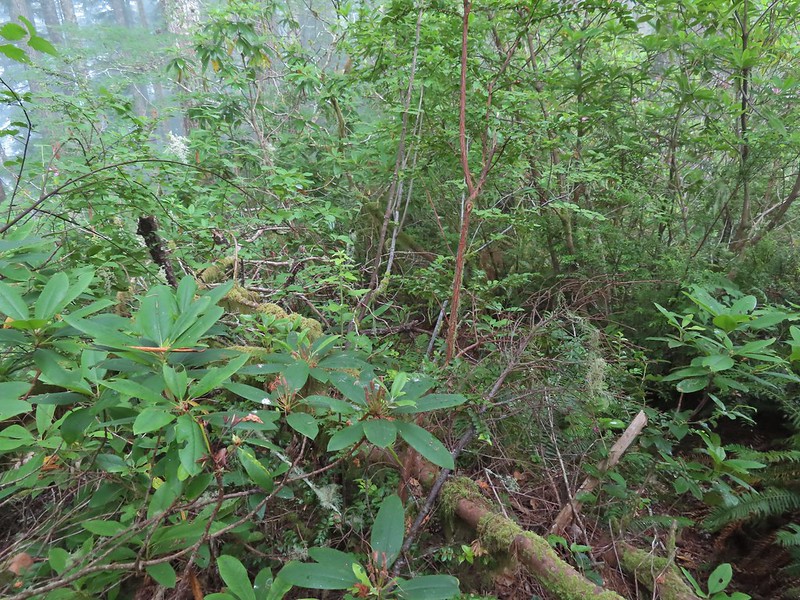
 A few rhododendron were still blooming.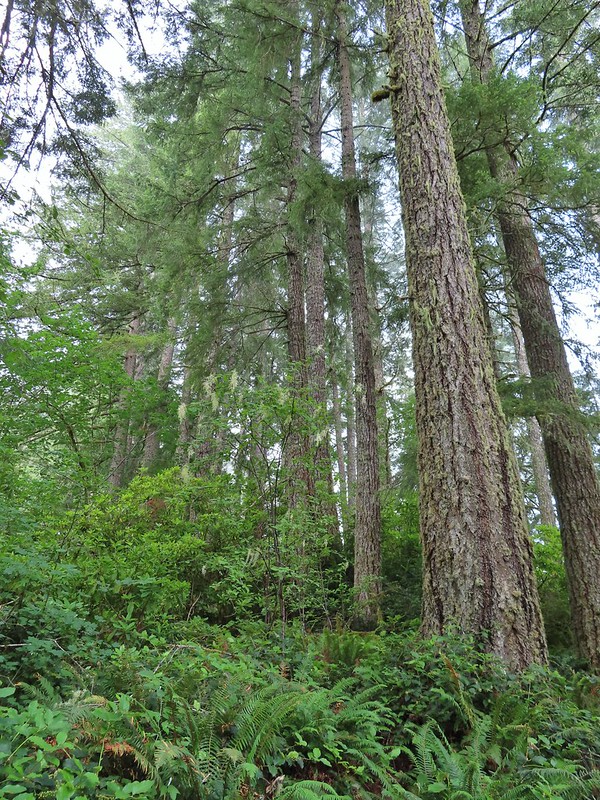
 Huckleberries
 This was the only open spot the whole day. There were some thistle and yarrow blooming here along with a bit of poison oak.
 Bees sleeping on thistle.
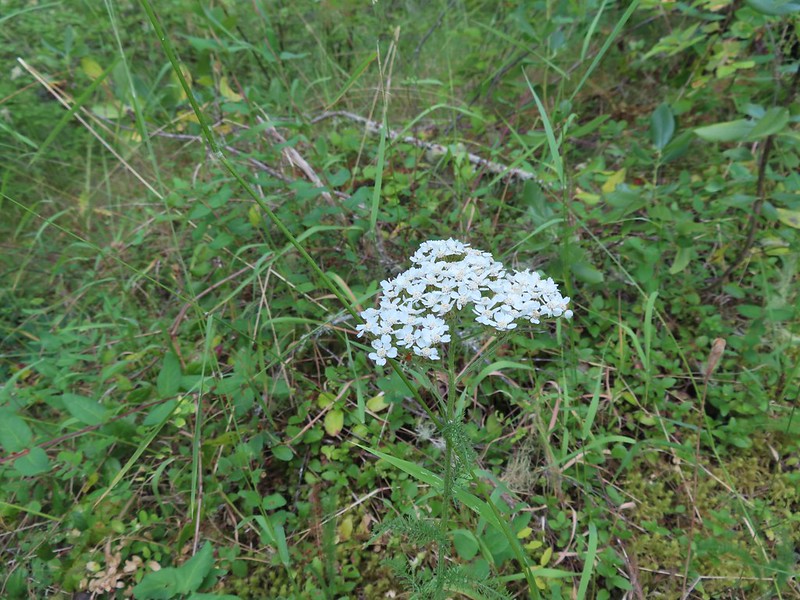 Yarrow

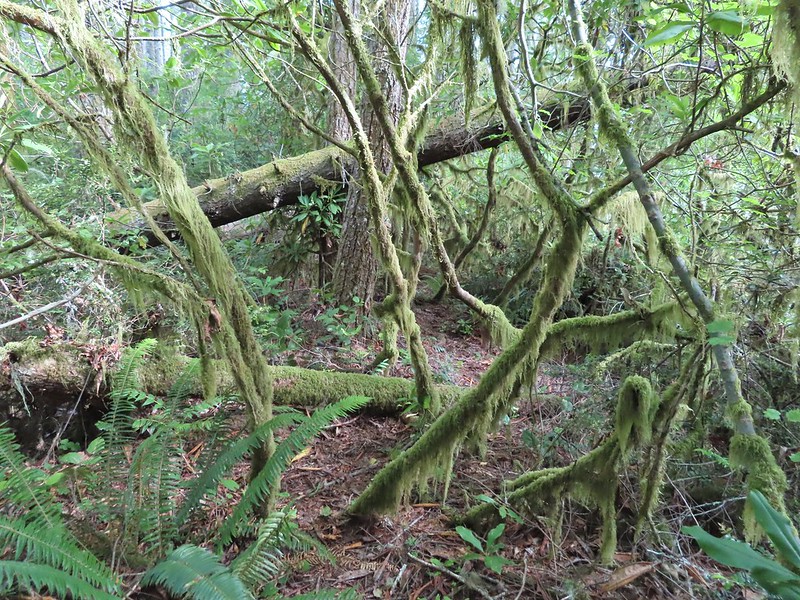 The rhododendron was often so tall we could walk through them.

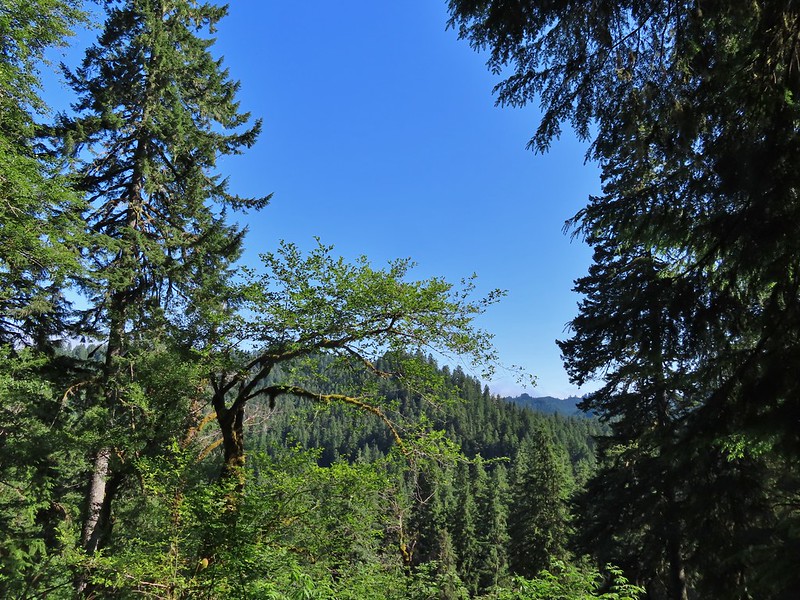 The morning fog burned off by 9:30am.
 Wild cucumber (coastal manroot)
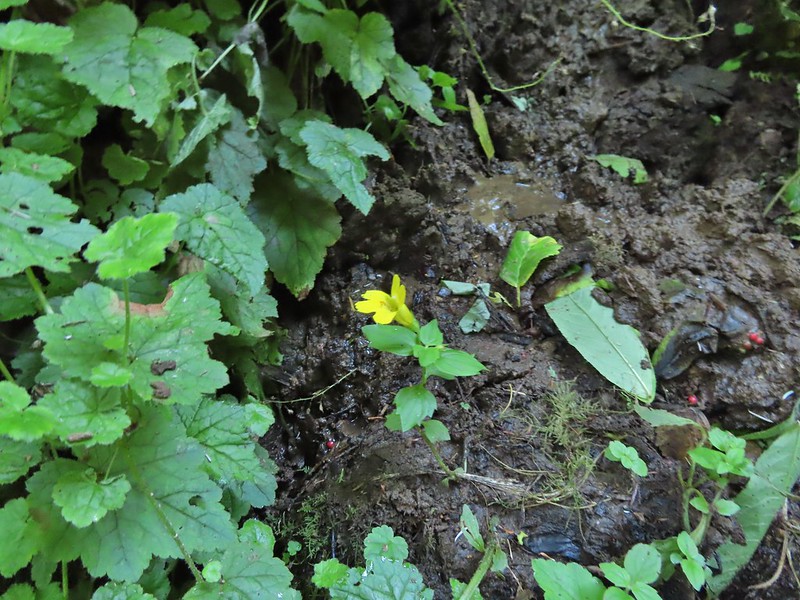 Monkeyflower
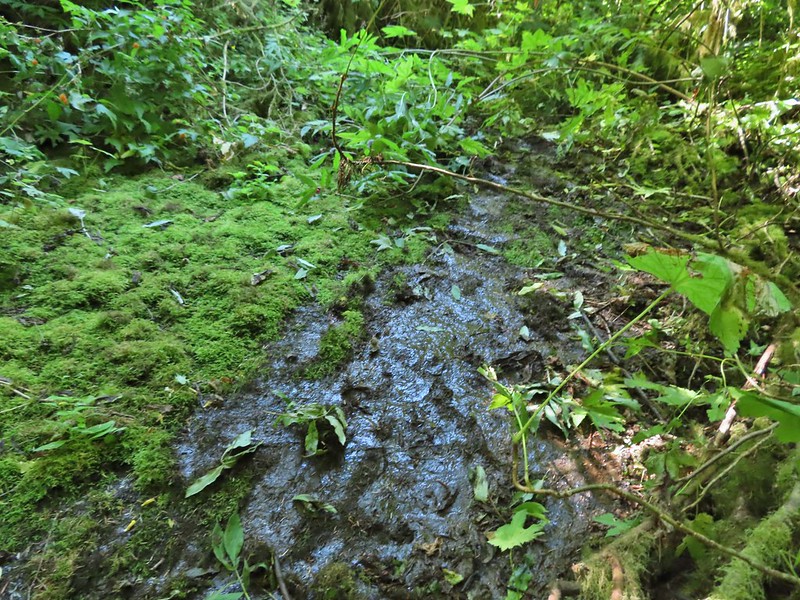 Although this picture doesn’t really convey it this section of exposed wet rock was at a fairly steep angle and was quite the challenging both coming and going.

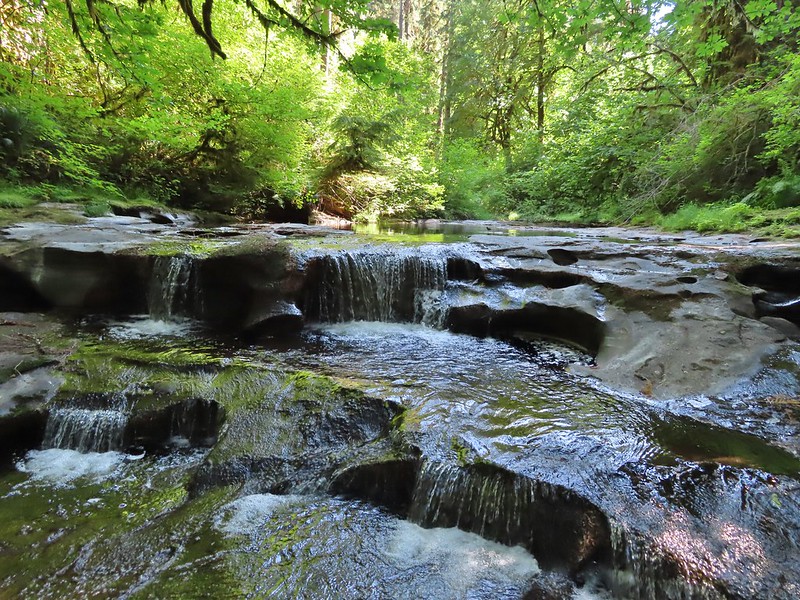
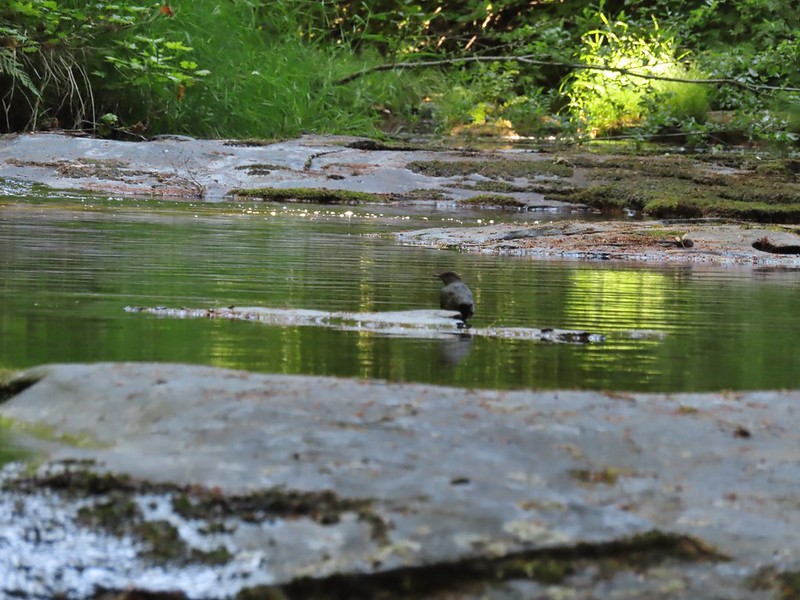 An ouzel
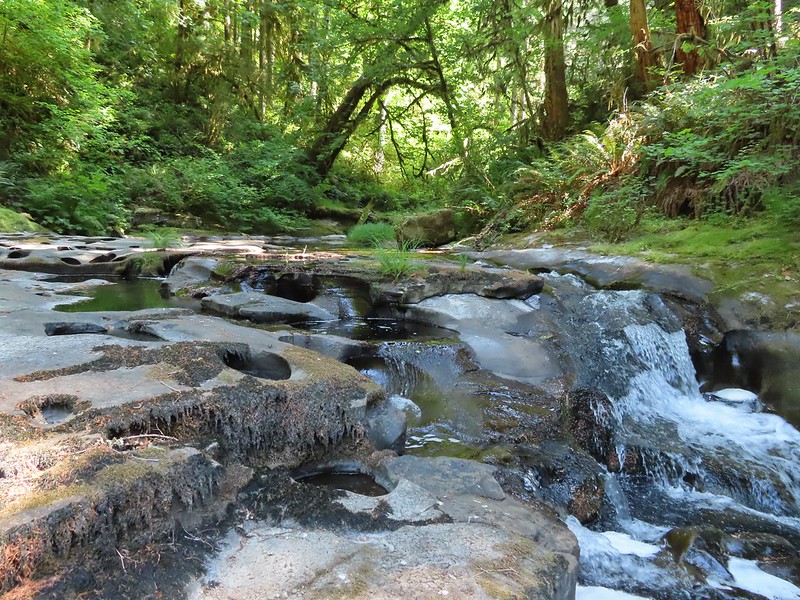
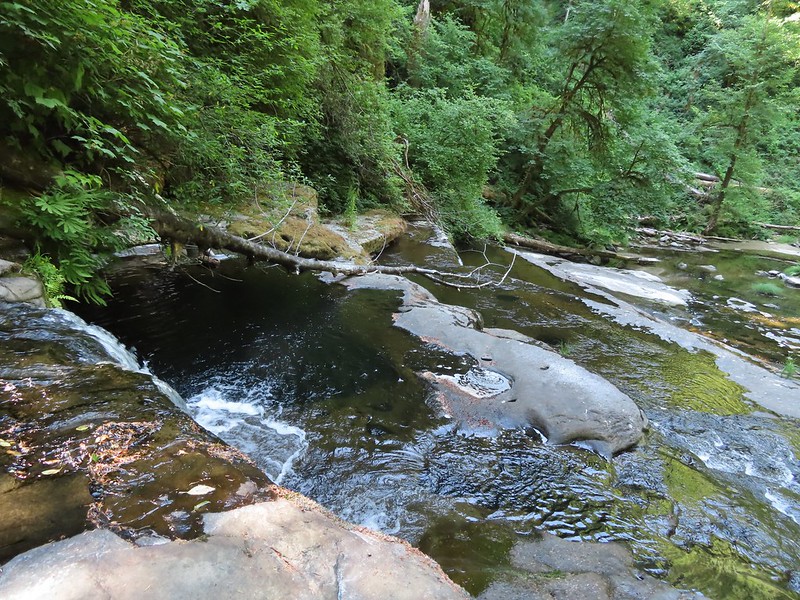 This was the ledge that we decided to not drop down off of.
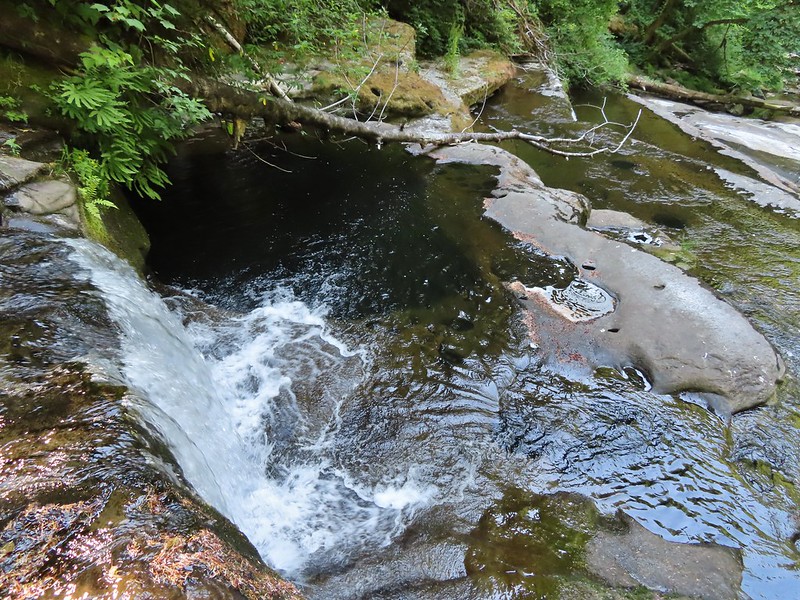 That pool is said to be approximately 20′ deep!
 We checked the little pools for rough skinned newts and this one had four and a crawdad.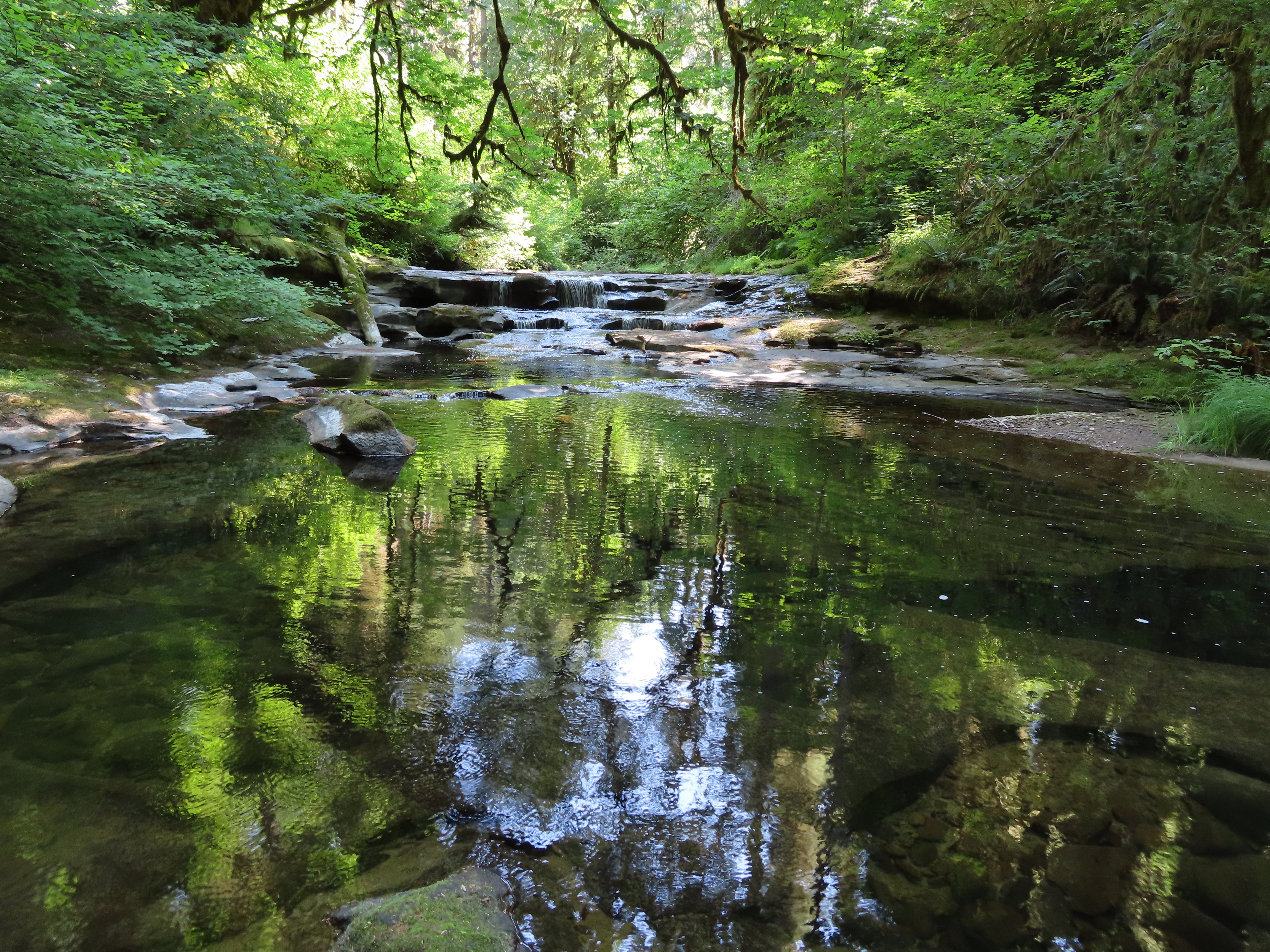


 A chickadee came to check on me as I was catching my breath under a rhododendron.
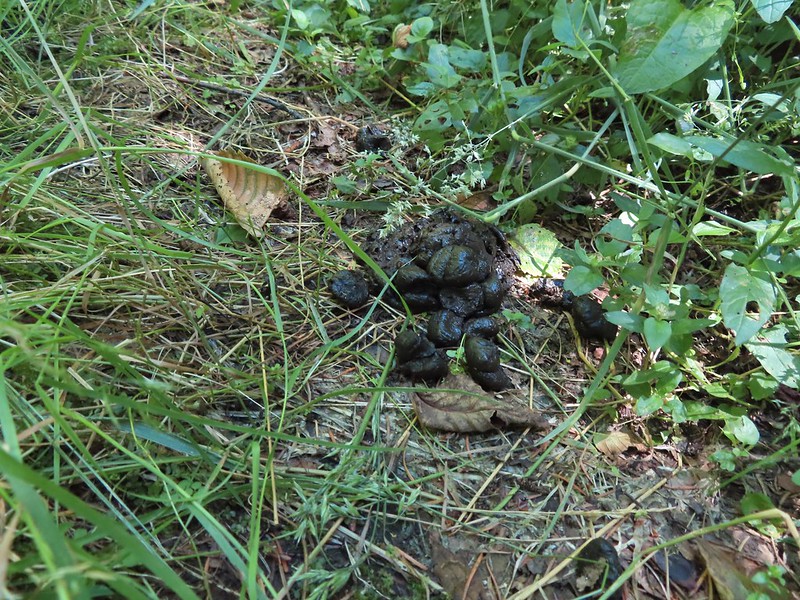
 Thimbleberries
 Salmonberries
 Swallowtail on a blackberry blossom.


 One of two phantom orchids we saw along the trail.
 Newish looking wilderness sign.
 Maples overhanging the trail.
 Madrone trunks
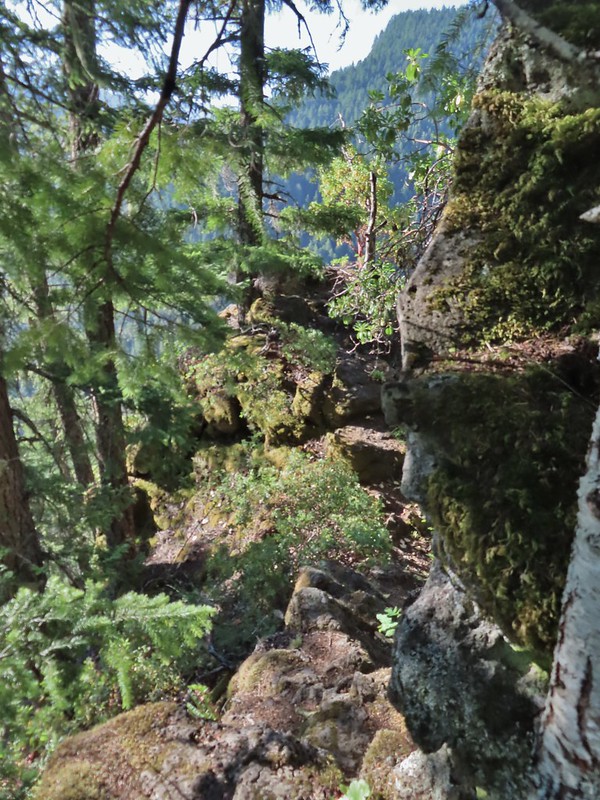 It’s a pretty narrow scramble so probably not for kids or those uncomfortable with heights.
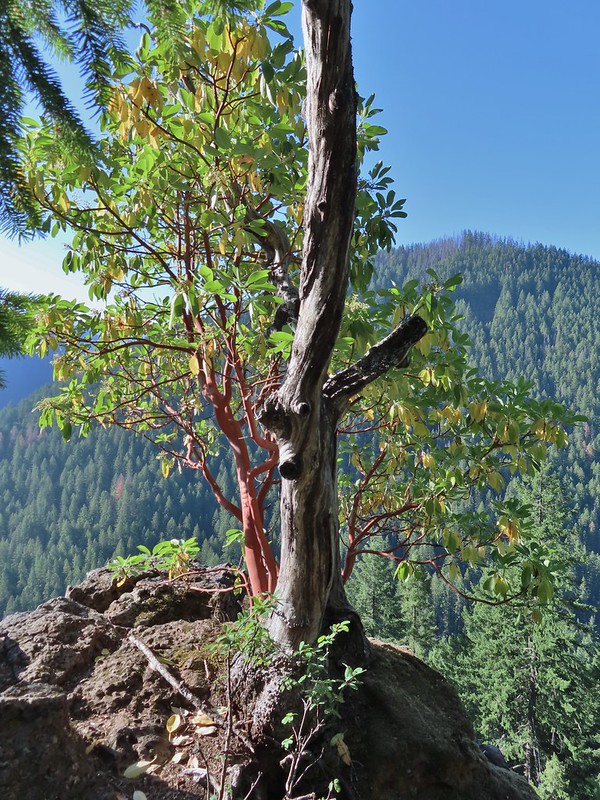 A lone madrone at the end of the fin.
 Looking toward the falls. (The North Sister is back there too but not visible due to the lighting.)
 Rainbow Falls on Rainbow Creek
 The best I could do with the lighting.
 Looking up Separation Creek.
 Looking back up along the rocks.

 Pink pyrola
 Crossing of Gold Creek which was nearly dry but it hosted a fair number of mosquitos.
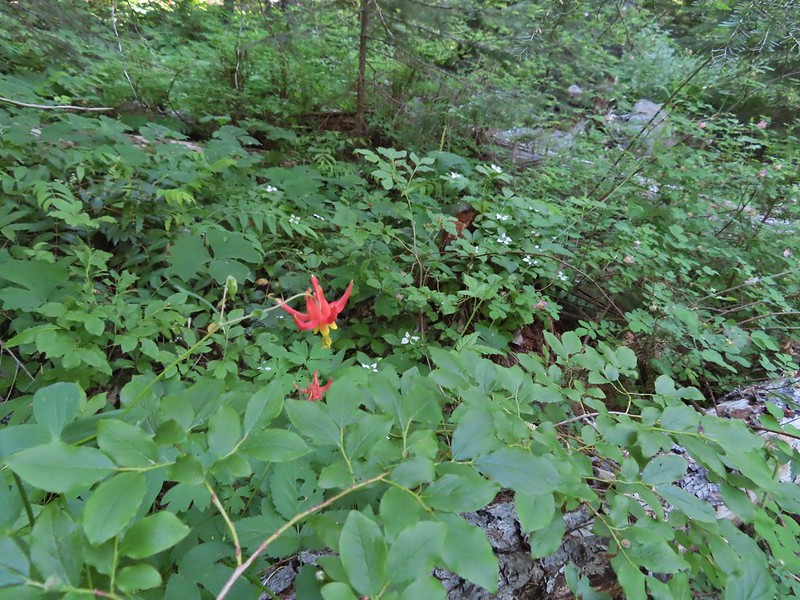 Columbine, bunchberry, and wild roses.
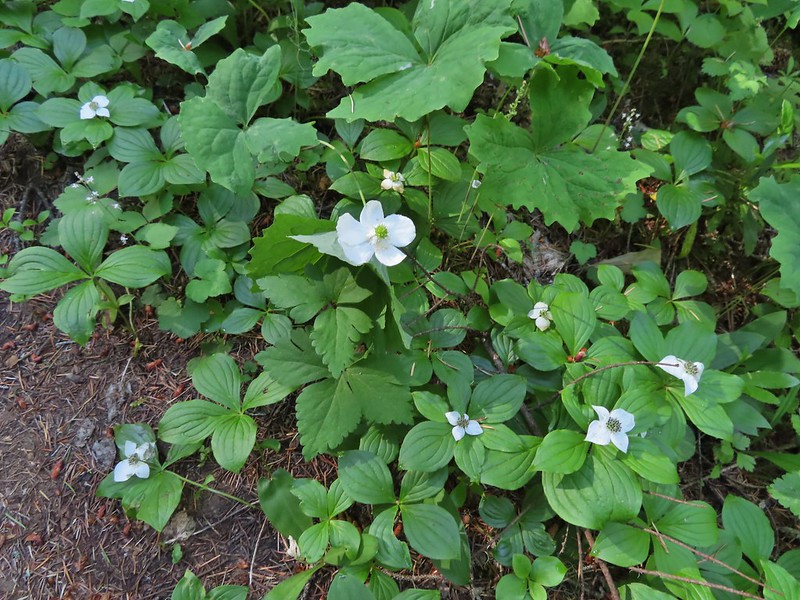 An anemone with some bunchberries
 Entering the Three Sisters Wilderness
 Queen’s cup
 Beargrass
 Candy sticks
 Rhododendron
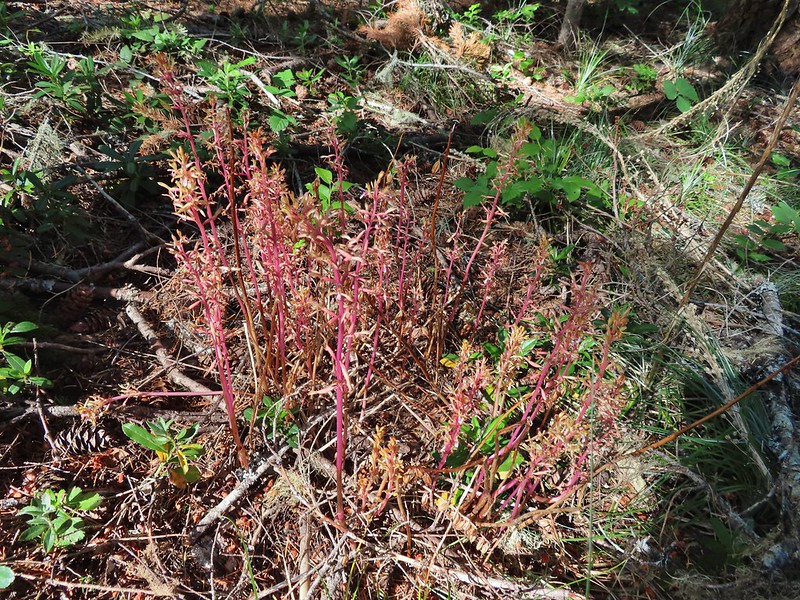 Pacific coralroot
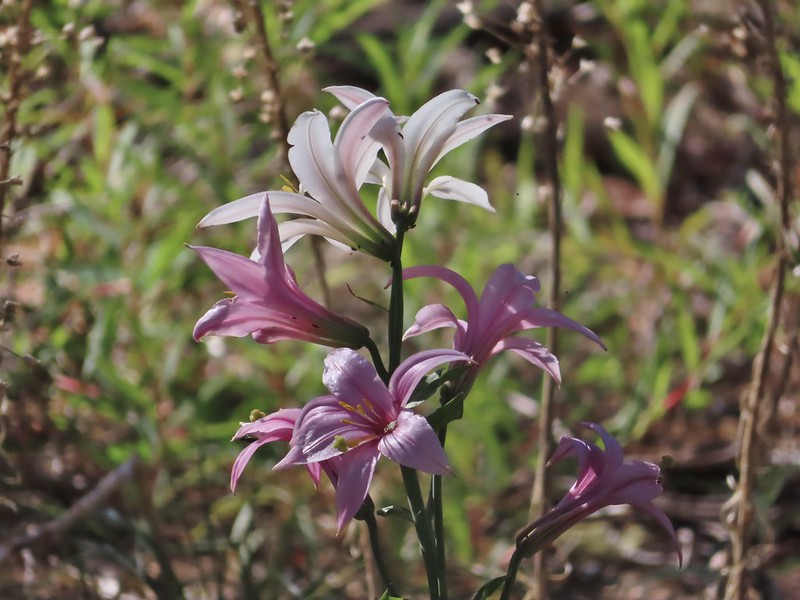 Washington lily
 Lupine
 Squirrel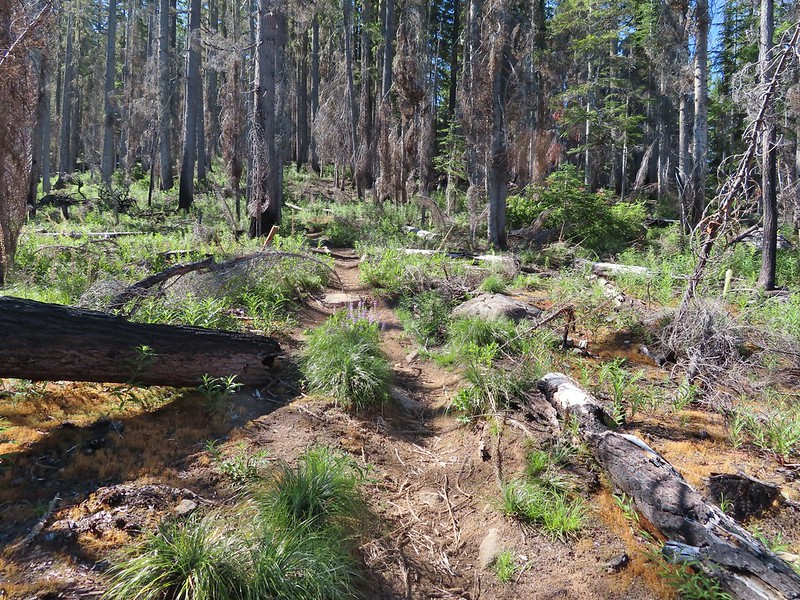
 Tiger lily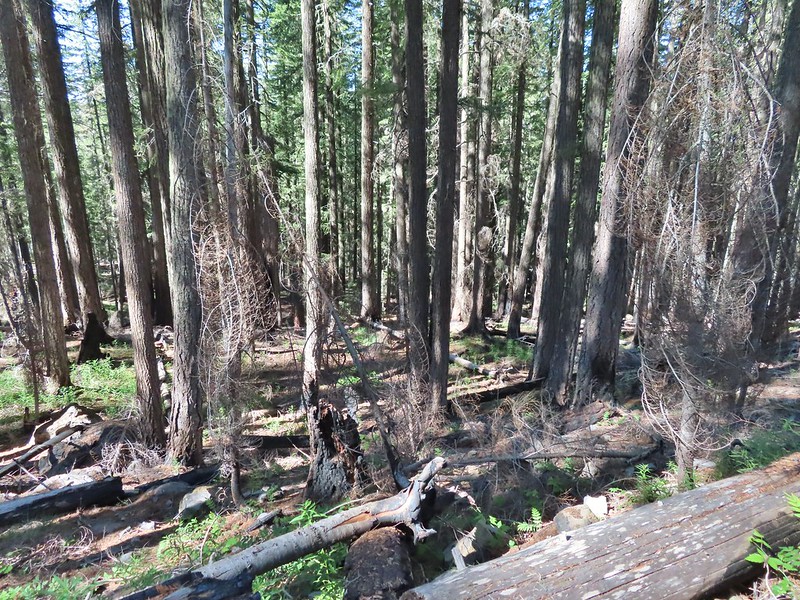
 Twinflower
 Leaving the green trees behind.
 Washington lilies
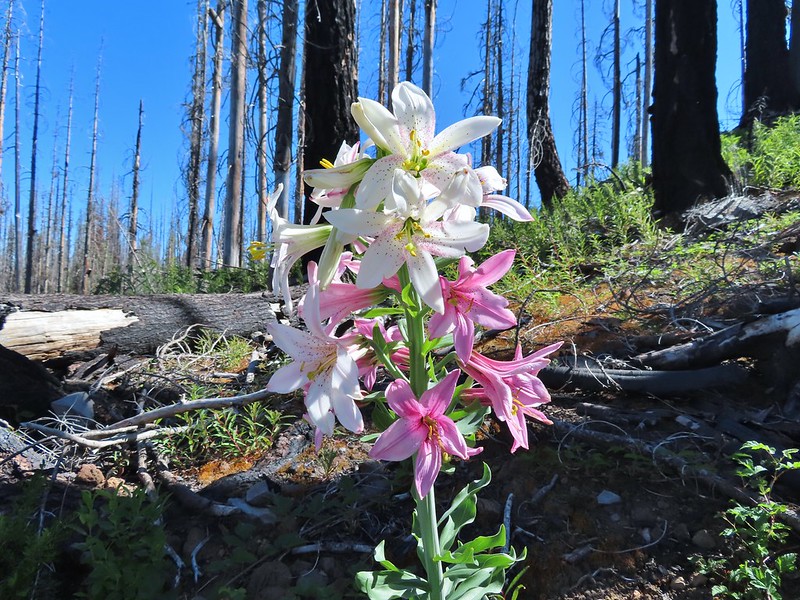 They smell as good as they look too!
 This one was a monster.
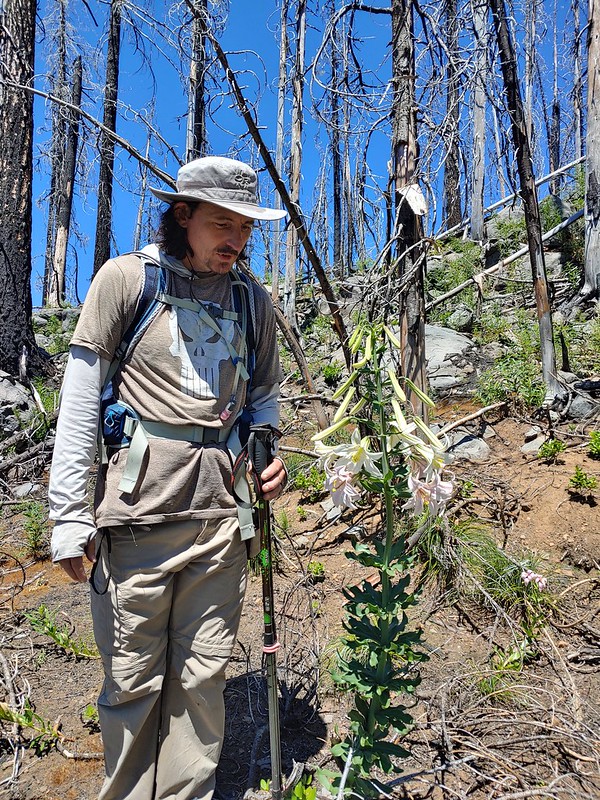 Chest high
 Crab spider on the lower left petal.
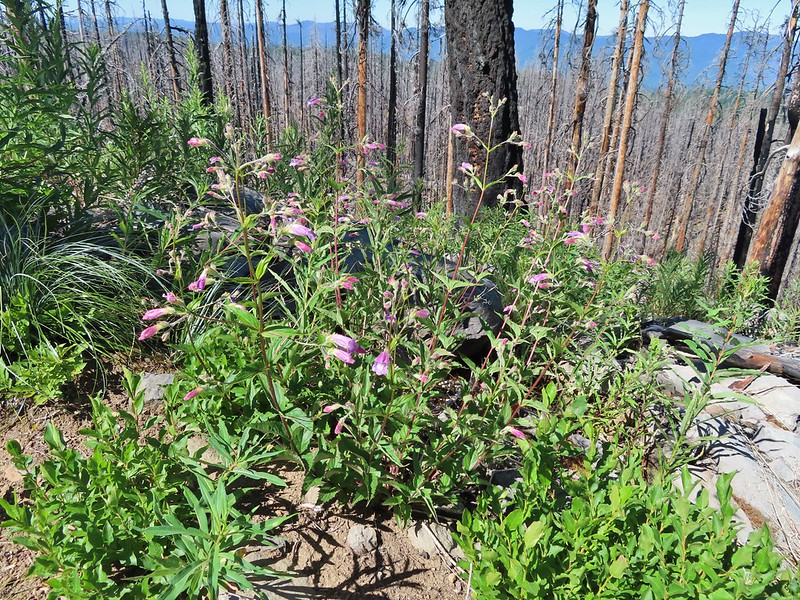 Penstemon
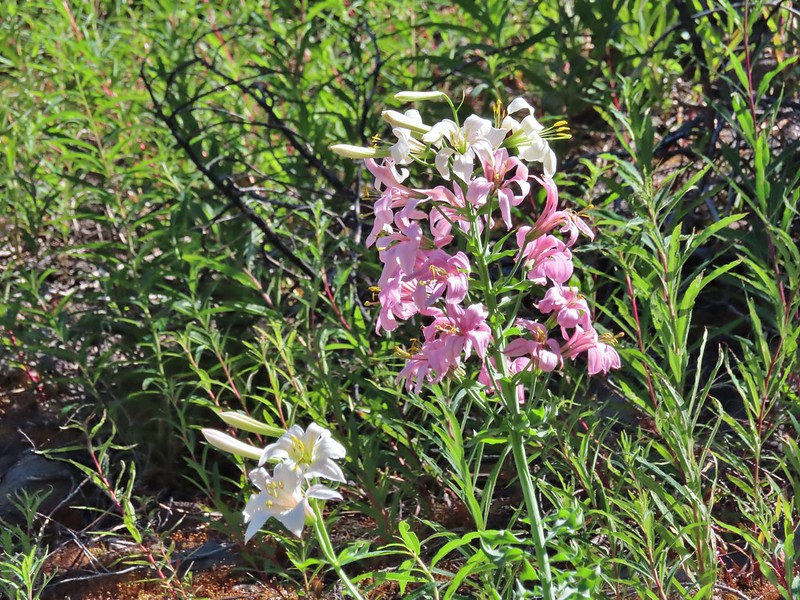 Earlier in the week I had been reading that the blossoms turn pink after being pollinated.
 Clodius parnassian
 Pretty moth
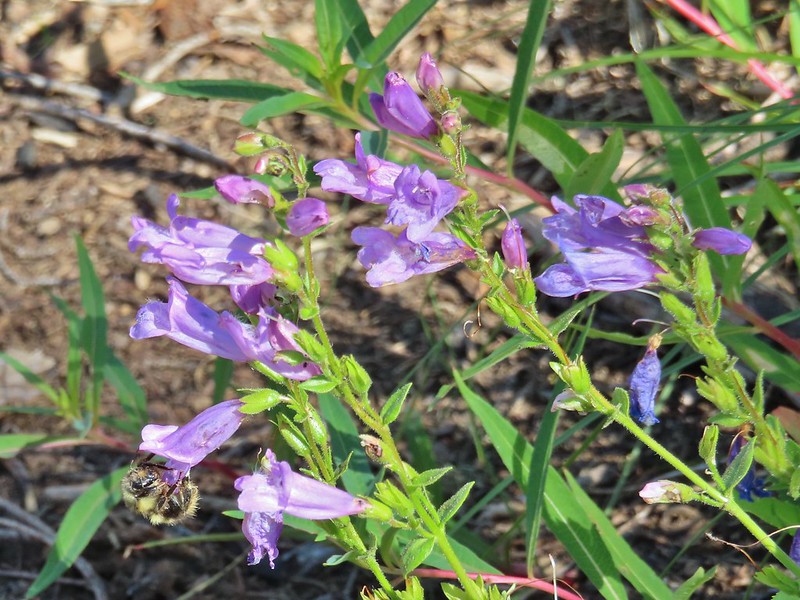 Penstemon
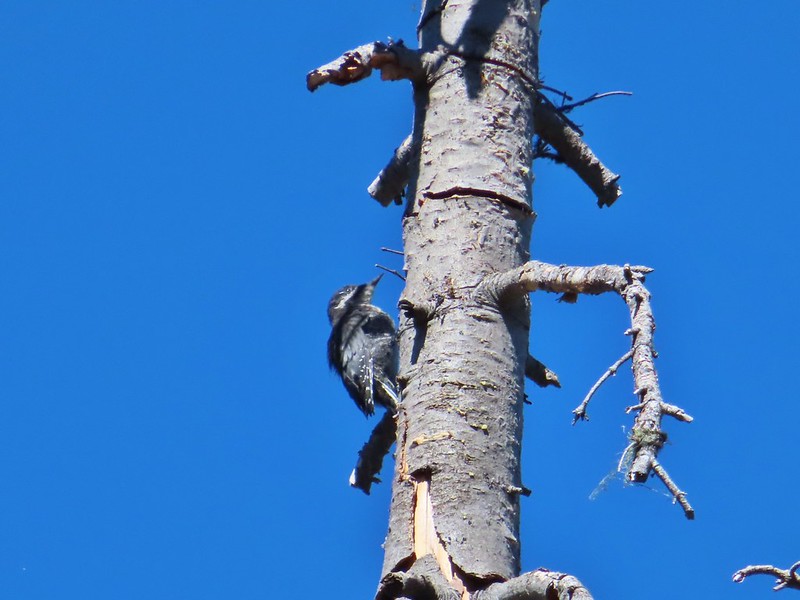 Woodpecker
 Pond along the trail.
 Water lilies
 Looking toward Proxy Point
 The Husband, South Sister, and the shoulder of Substitute Point.
 Frog along the trail.
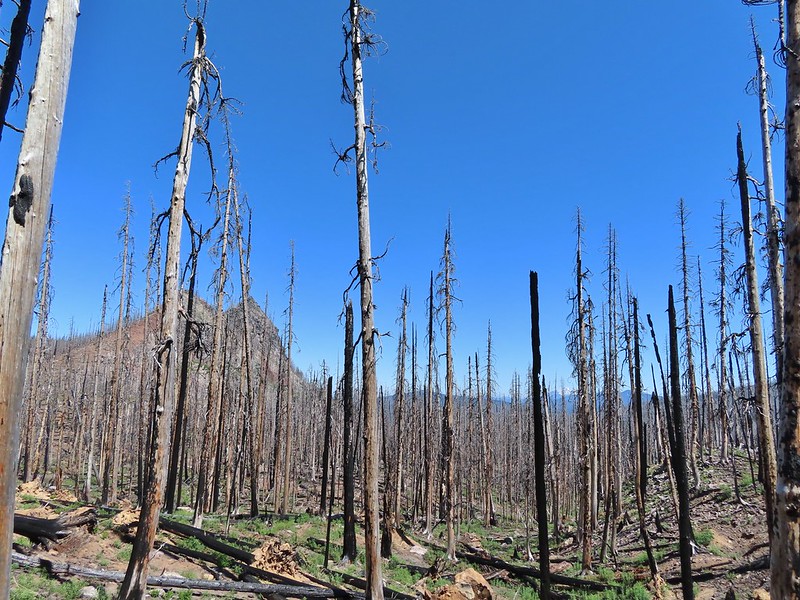 Proxy Point, Scott Mountain (
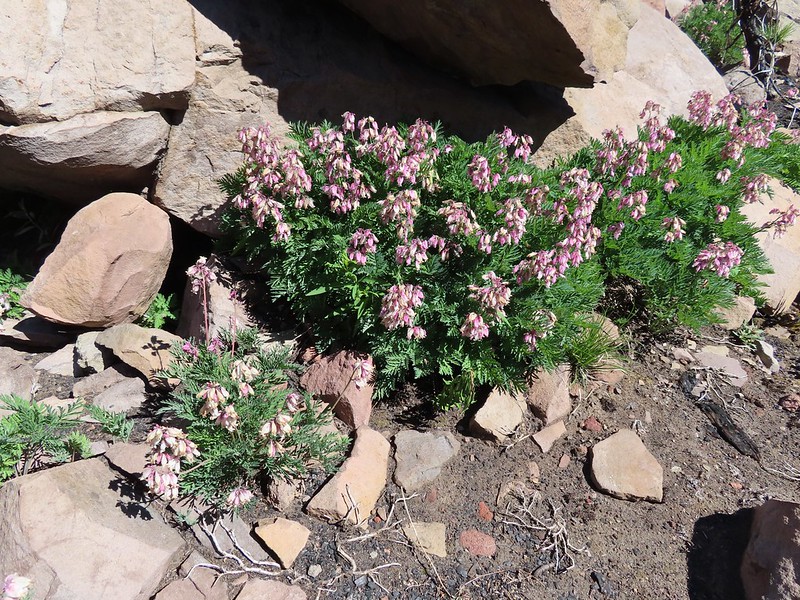 Bleeding heart
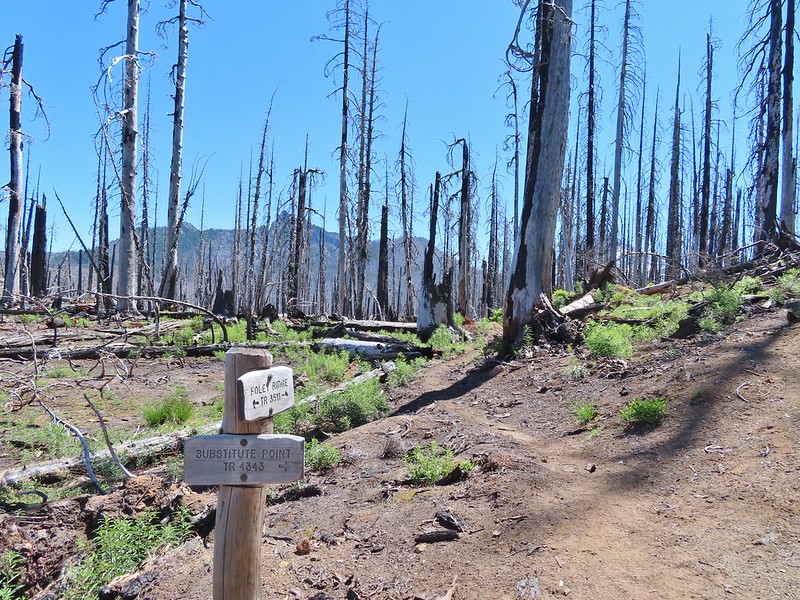 The Husband from the junction.
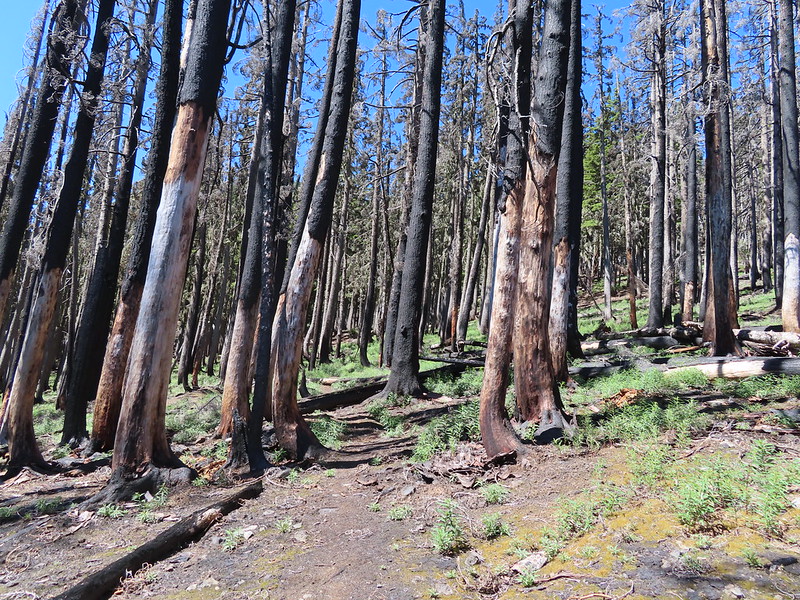
 This was sort of a mean trick, the trail entered these green trees then almost immediately switched back into the burn.
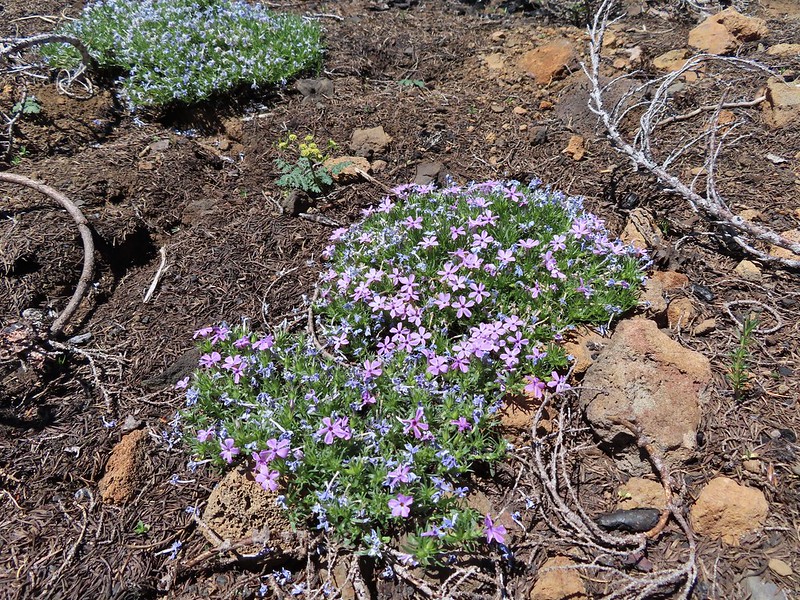 Phlox
Phlox
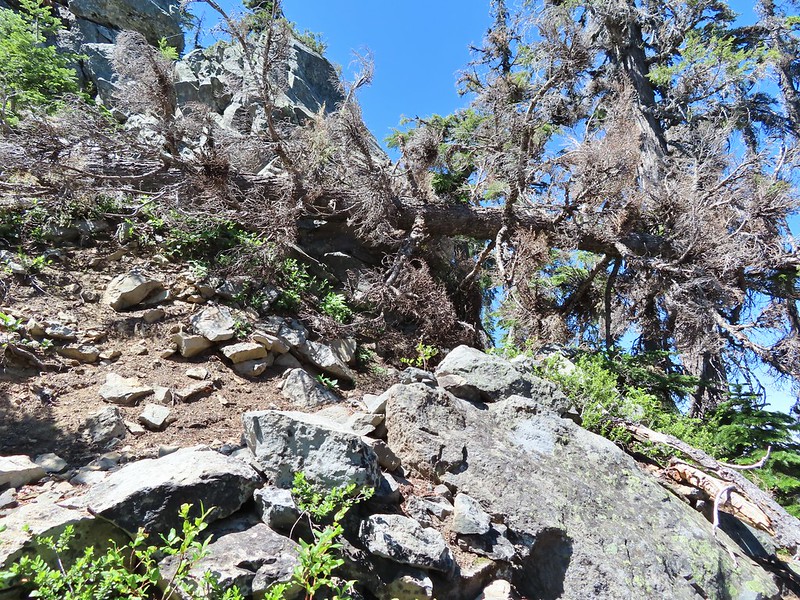
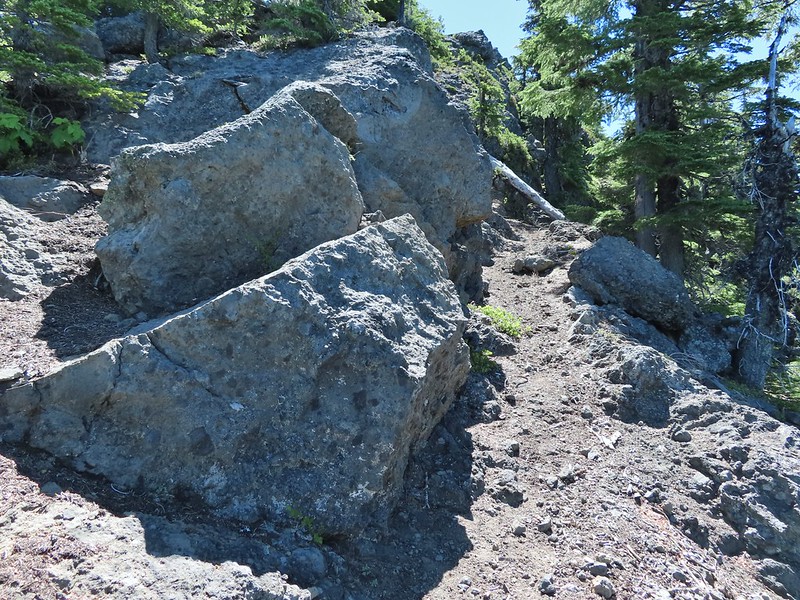
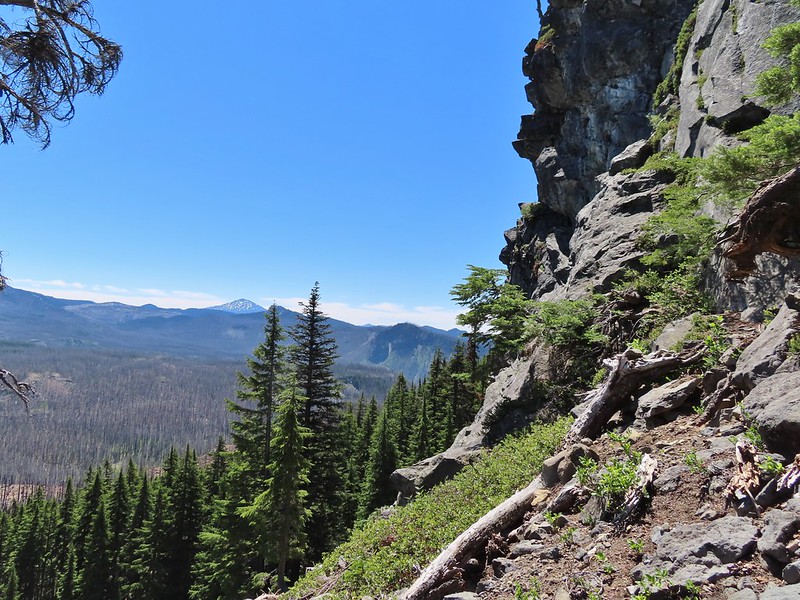 Mt. Bachelor from the trail.
 Proxy Point
 Some unburned forest and a view of Diamond Peak.
 Diamond Peak (
 The Little Brother and North & Middle Sister behind The Husband with South Sister to the right.
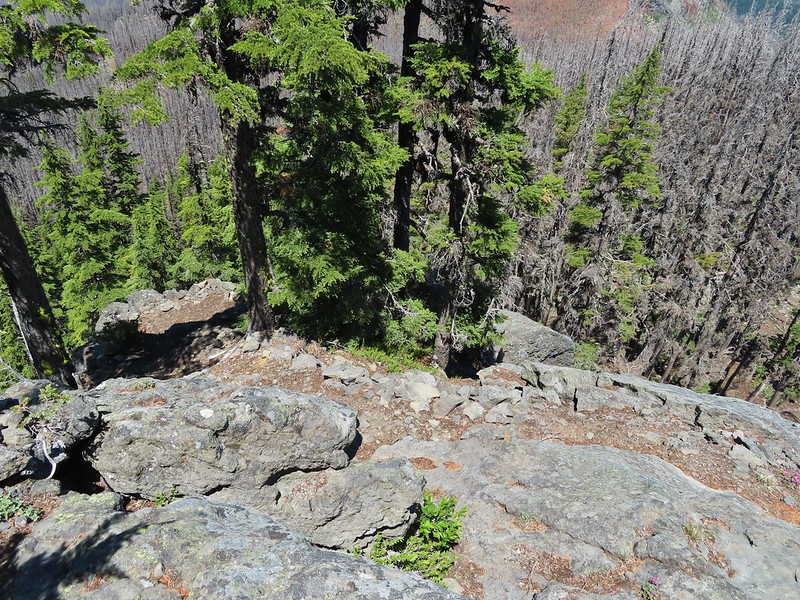 The trail leading up.
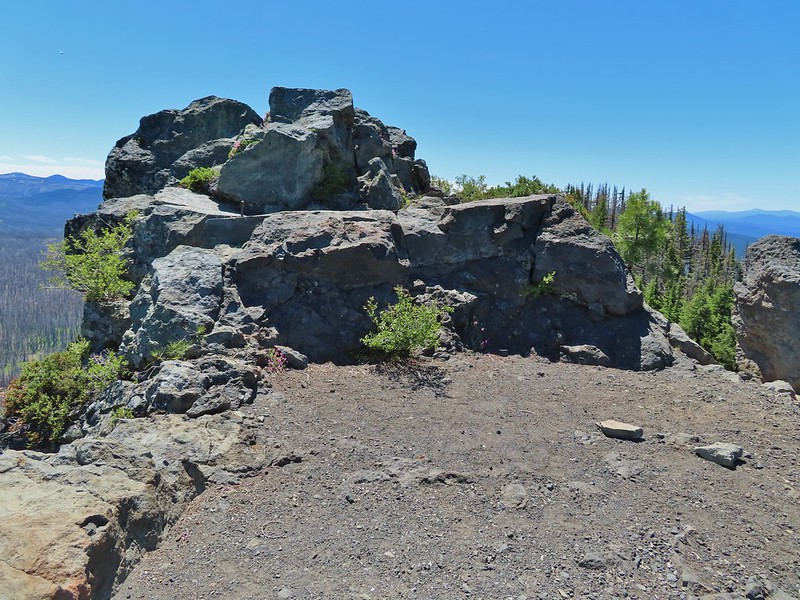 The summit of Substitute Point
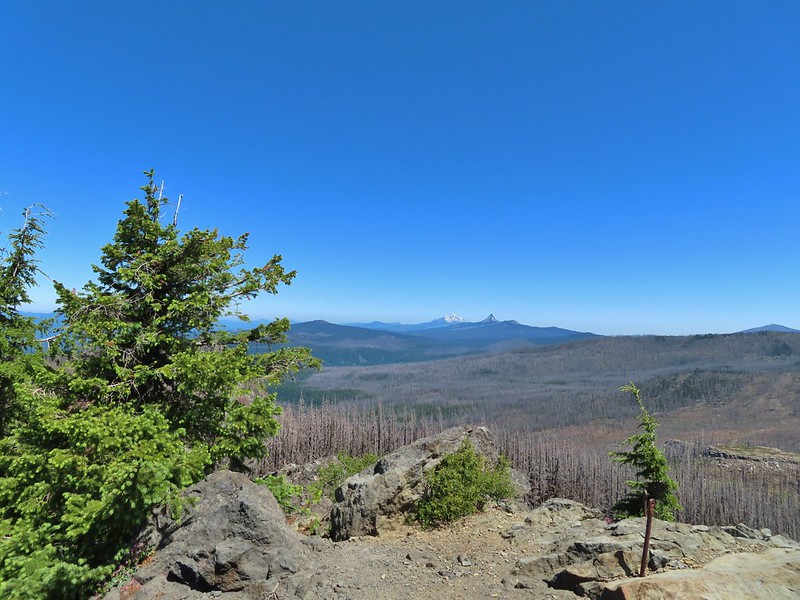 Scott Mountain, Three Fingered Jack, Mt. Jefferson, Mt. Washington, and Belknap Crater (
 Proxy Point and Scott Mountain.
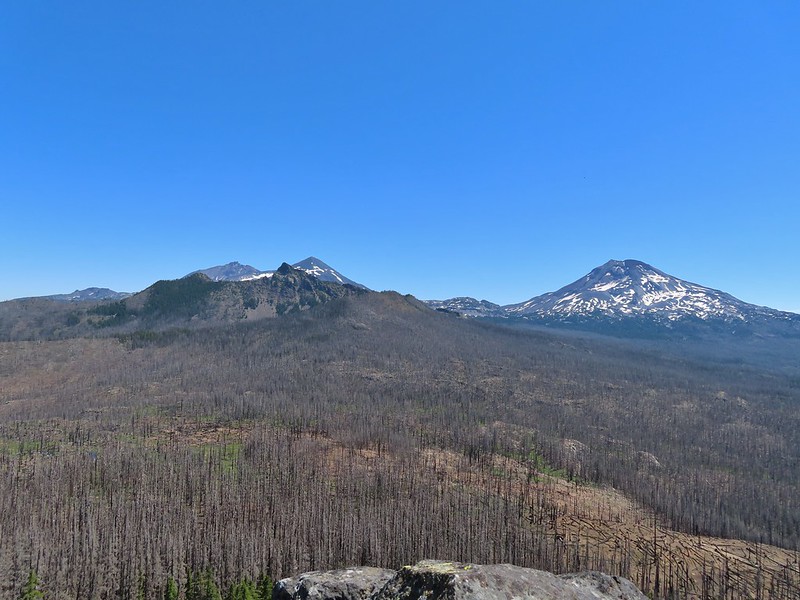 The Three Sisters, Little Brother and The Husband
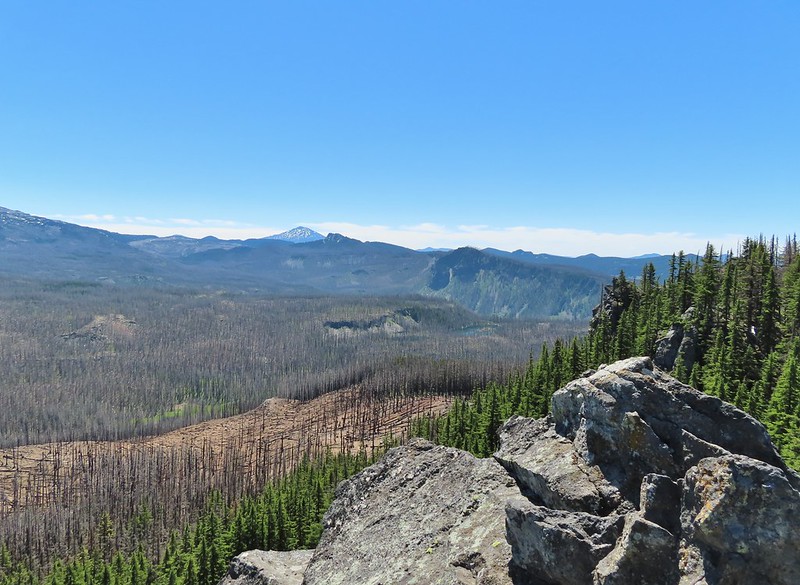 Mt. Bachelor, The Wife, and Sphinx Butte.
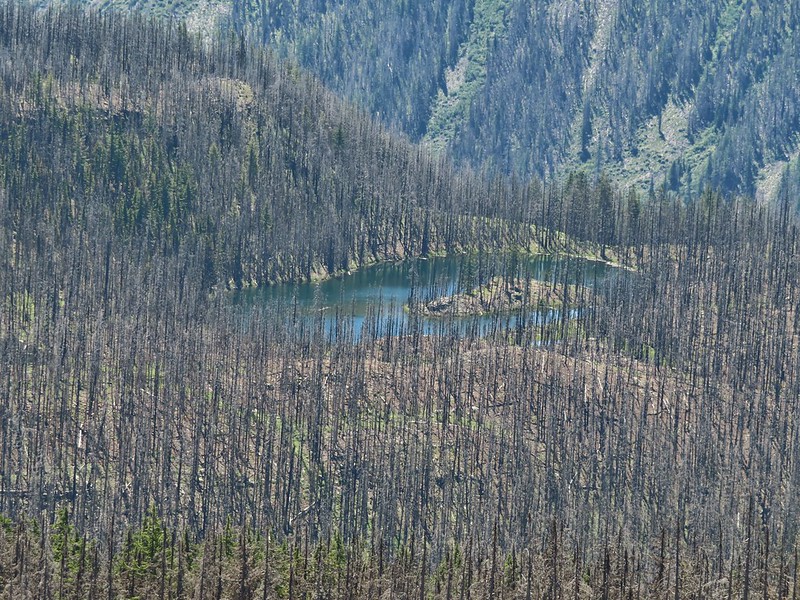 Kidney Lake
 Mt. Bachelor and The Wife
 North and Middle Sister behind The Husband
 Three Fingered Jack, Mt. Jefferson and Mt. Washington
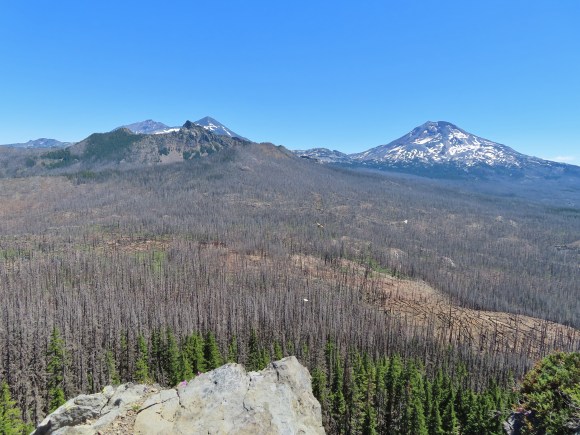 A swallowtail and two whites (maybe clodius parnassians) in flight.
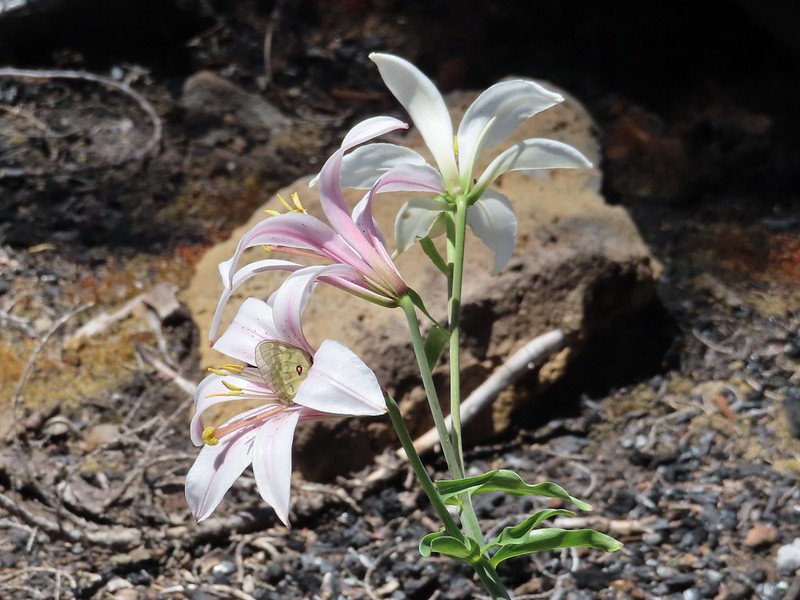 Clodius parnassian in a blossom.
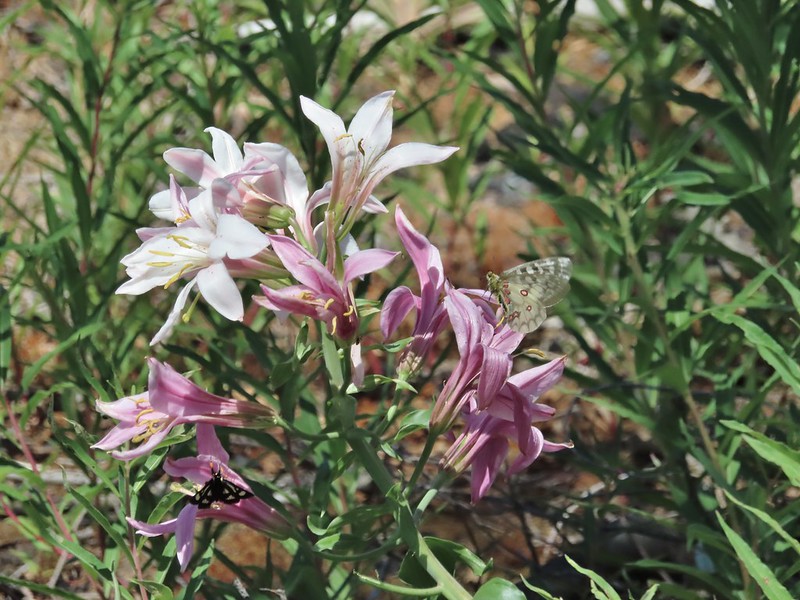 Moth and a parnassian.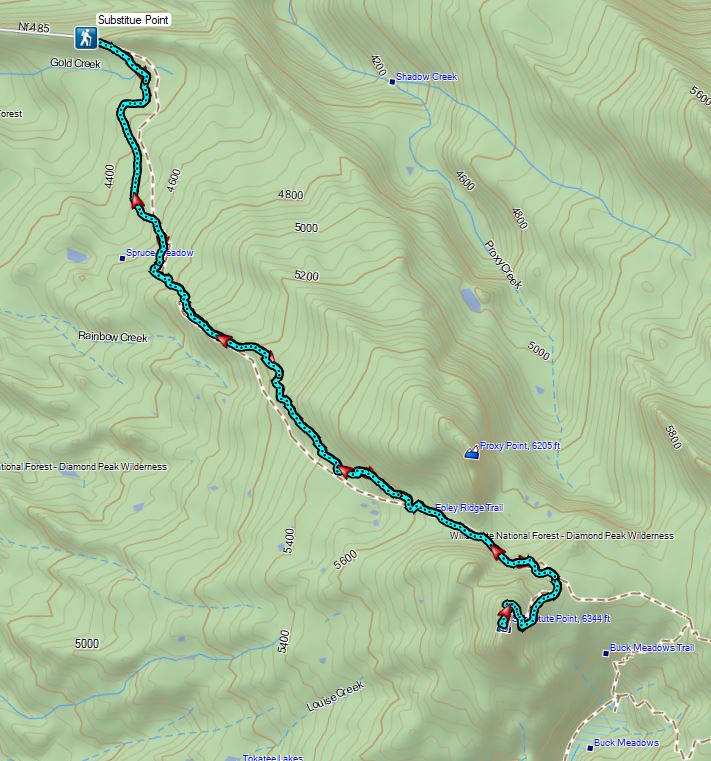


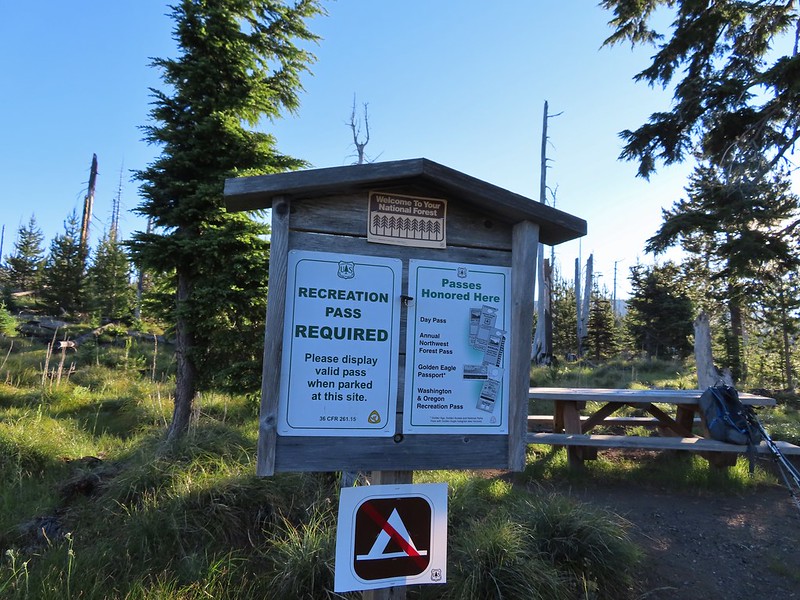
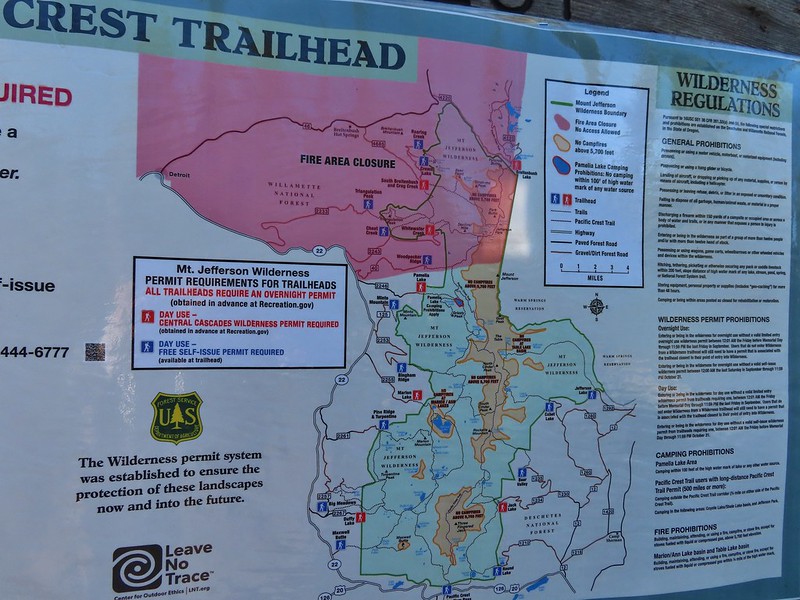
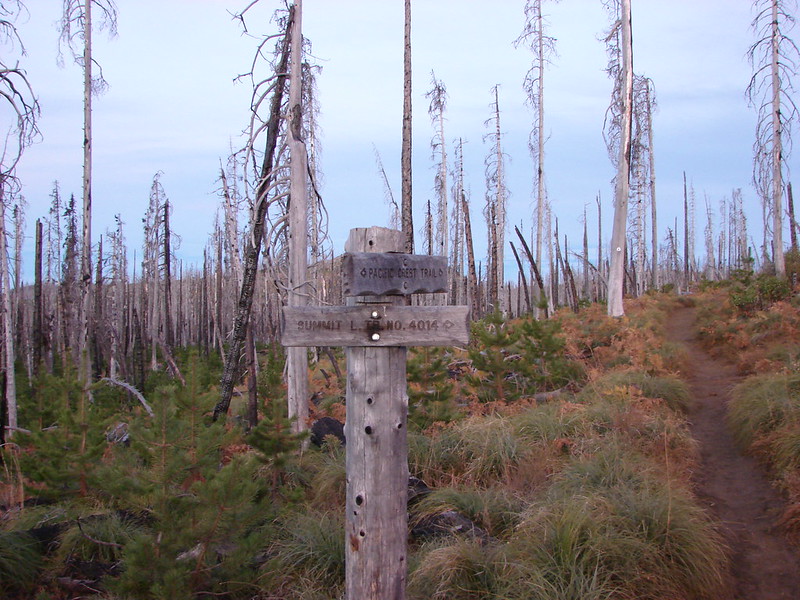 Trail sign at the junction on 10/13/2012.
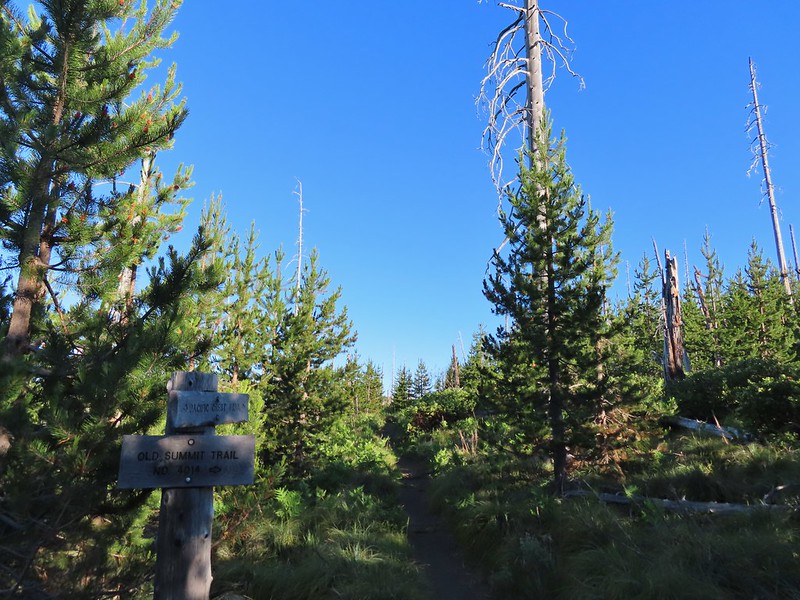 Trail sign at the junction on 07/03/2021.
 Entering the Mt. Jefferson Wilderness in 2012 (0.3 miles from the TH).
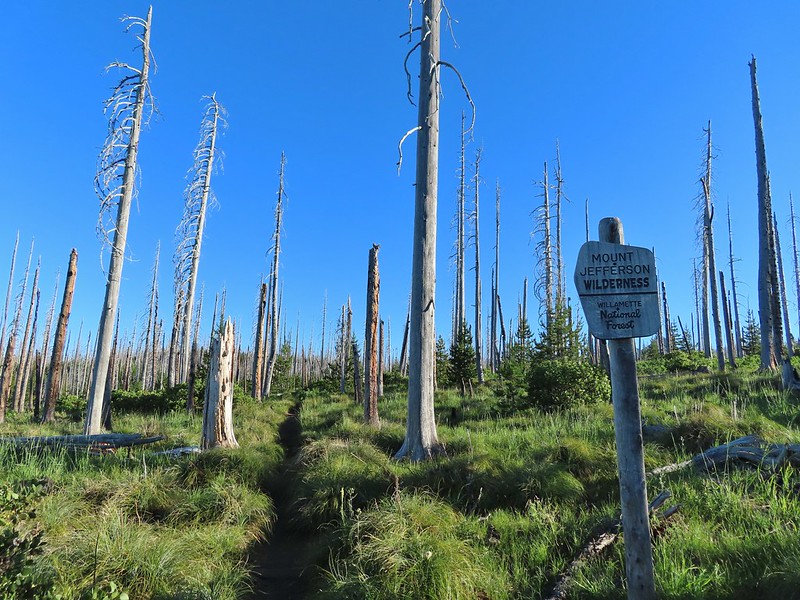 Entering the wilderness in 2021.
 Cache Mountain, Black Crater (post), Tam McArthur Rim & Broken Top (post), North & Middle Sister, Mt. Washington, and Hayrick Butte (flat top on the right).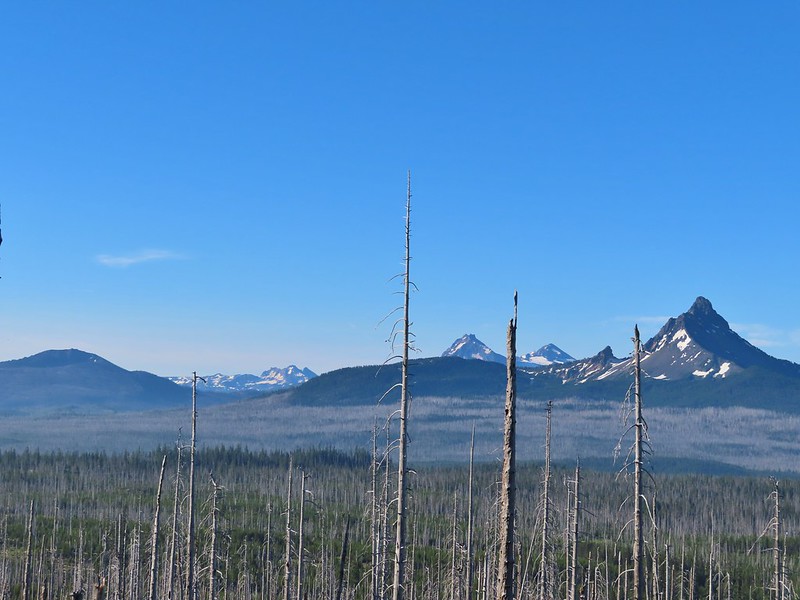

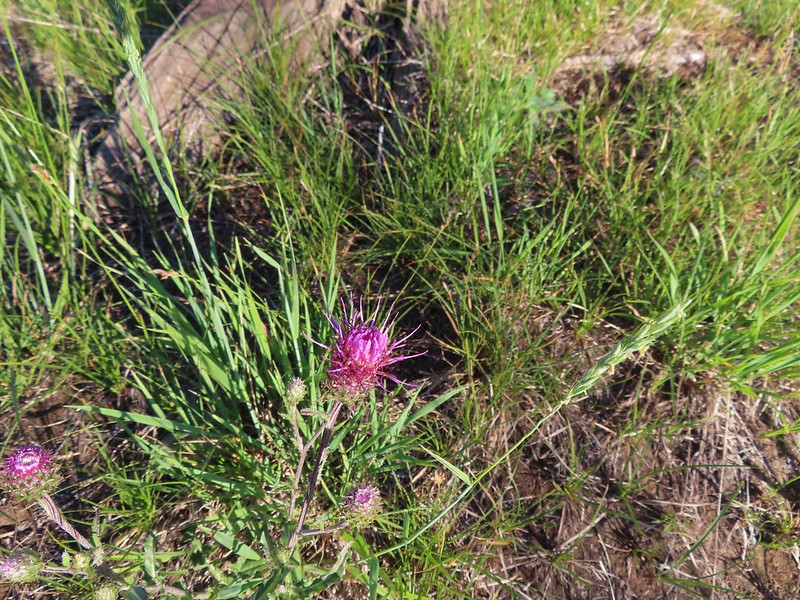 A thistle
 Penstemon
 Bleeding heart
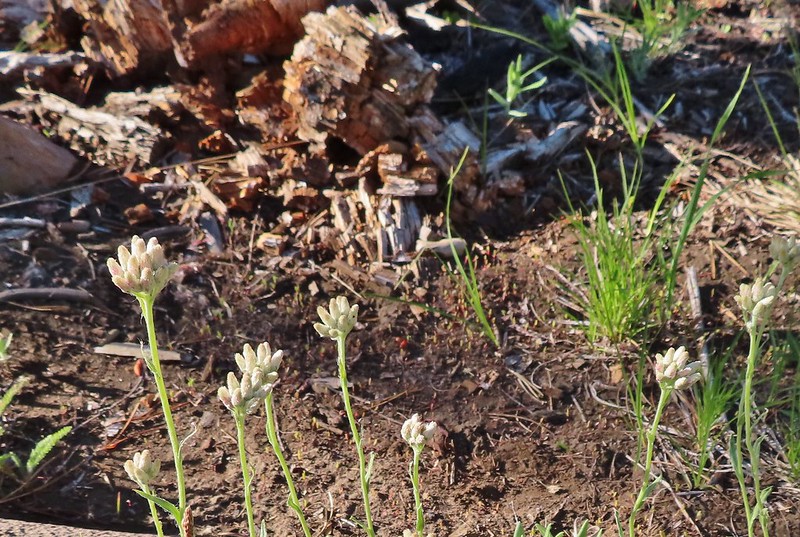 Pussytoes
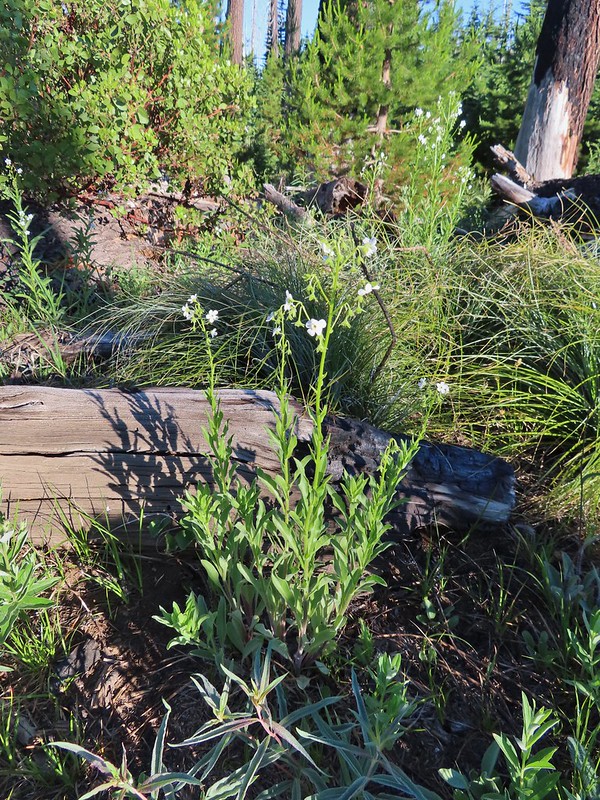 California stickseed
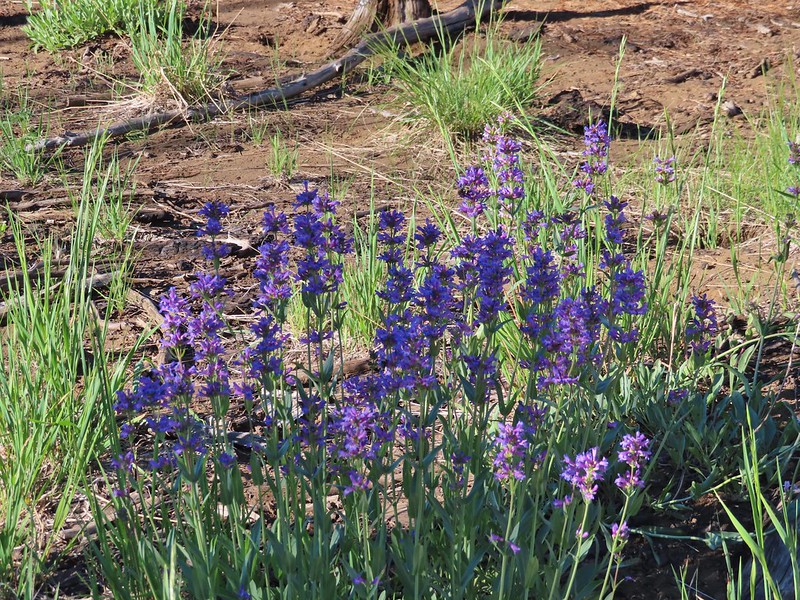 Another penstemon
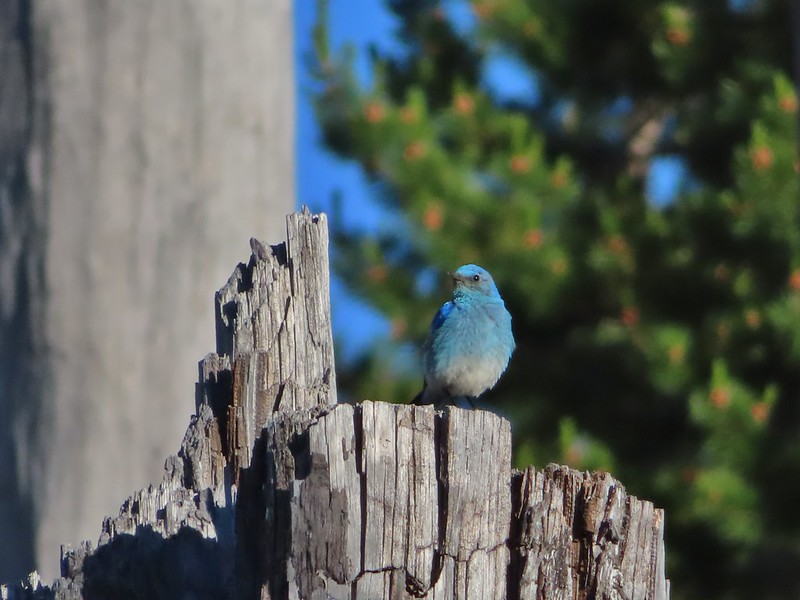 Mountain bluebird by the lake.

 There was a good amount of scarlet gilia blooming along this section of trail.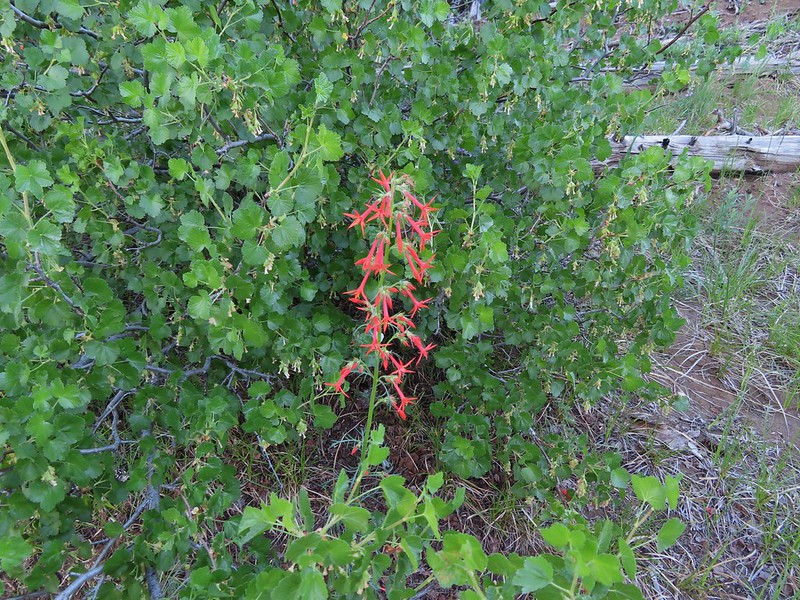
 Three Fingered Jack
 One of the ponds.
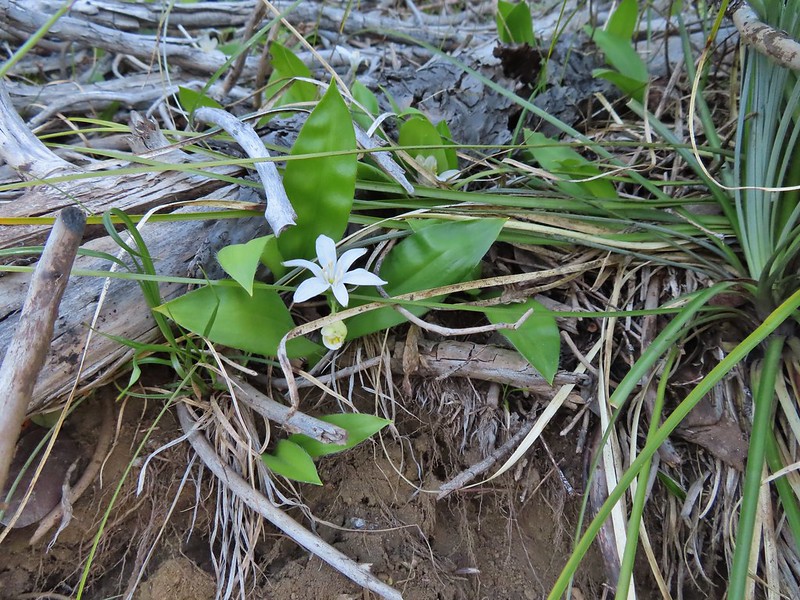 Queen’s cup
 Another pond with Maxwell Butte (
 Unnamed lake along the trail with Maxwell Butte behind.
 Lupine
 Dark-eyed junco
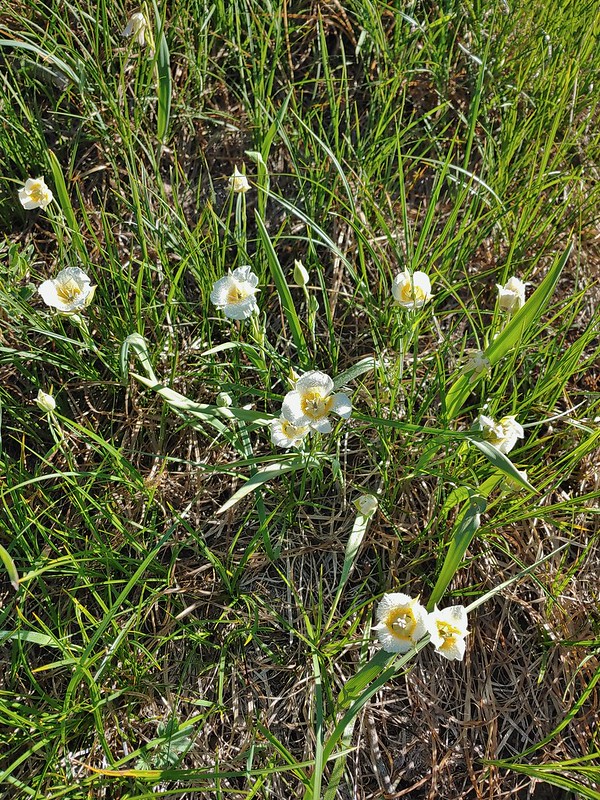 Sub-alpine mariposa lilies
 Woodpecker
 The view south.

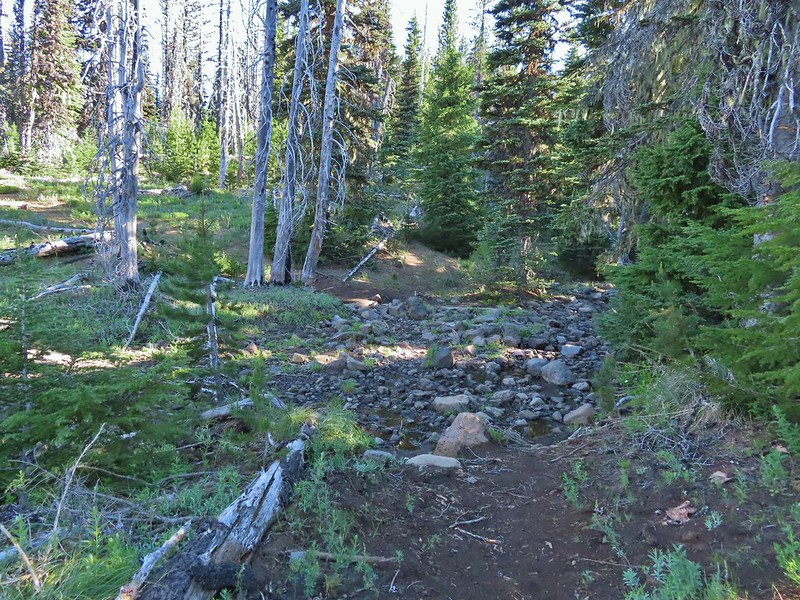
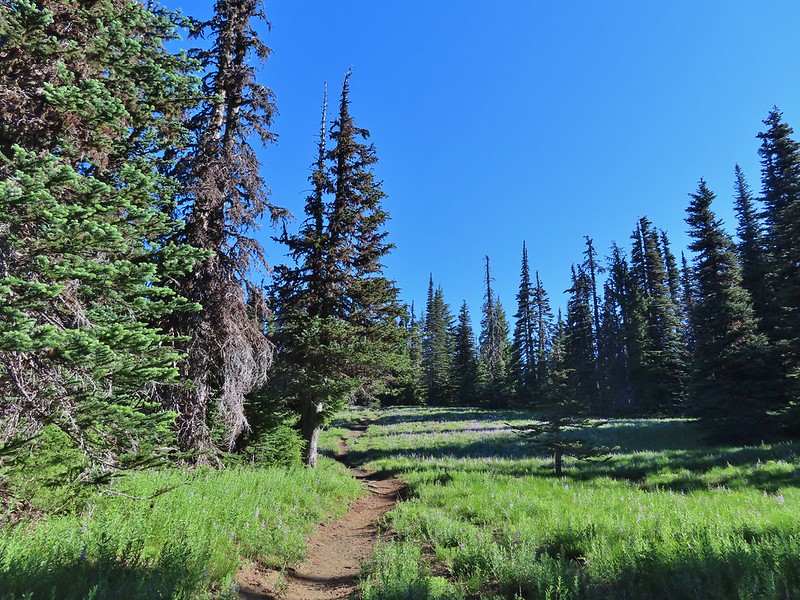


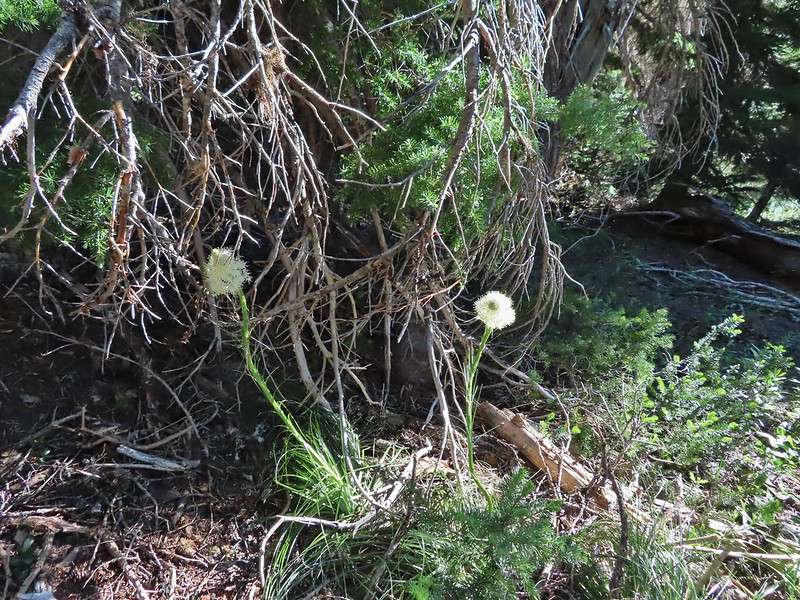 Beargrass
 Recent snow melt is another recipe for mosquitos.
 Another creek crossing.
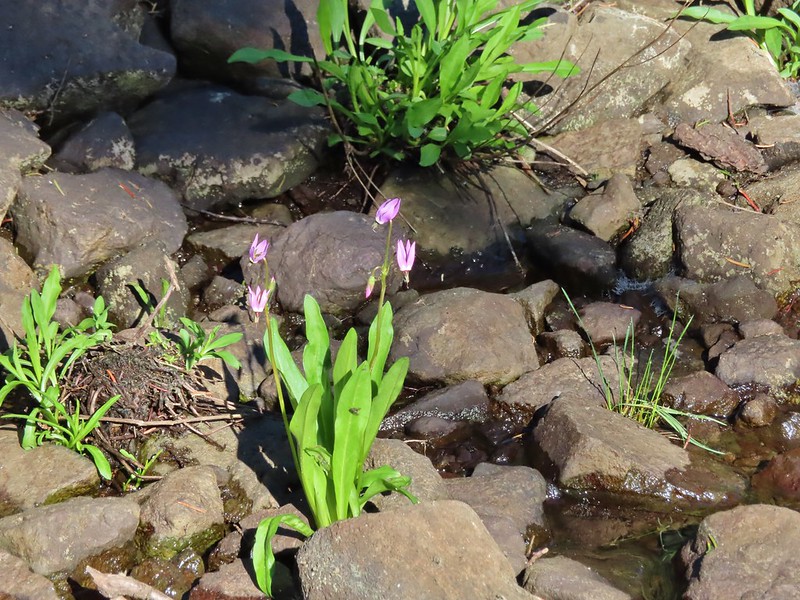 Shooting star
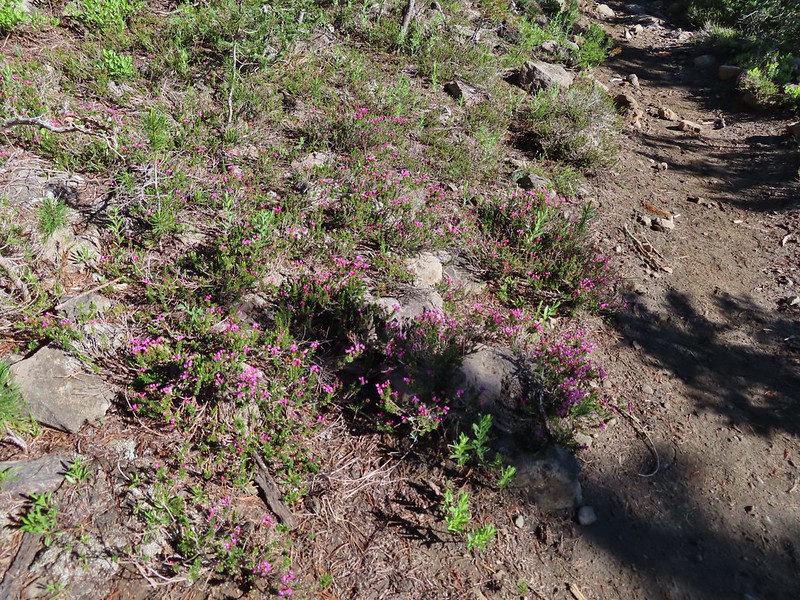 Mountain heather. Typically if we see this blooming we expect there to be mosquitos.
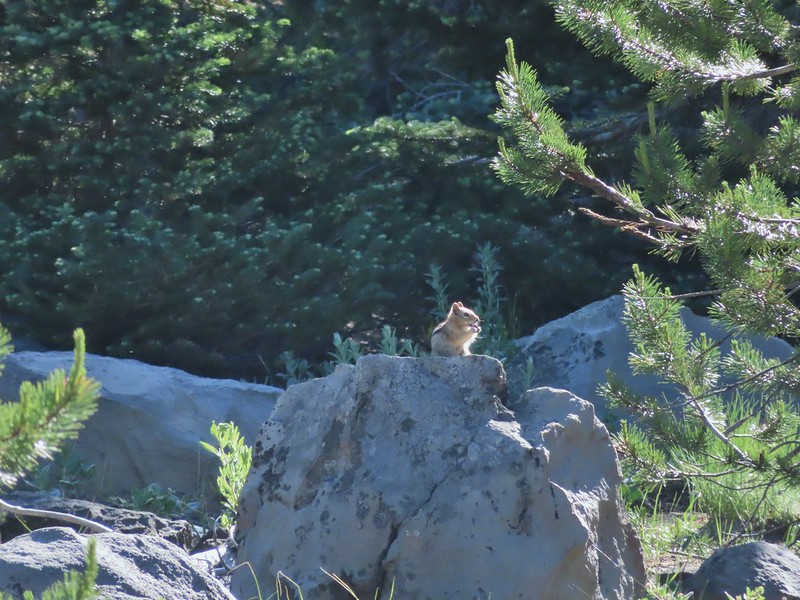
 A sulphur
 Alpine false dandelion
 One of several snow patches at the tree line.
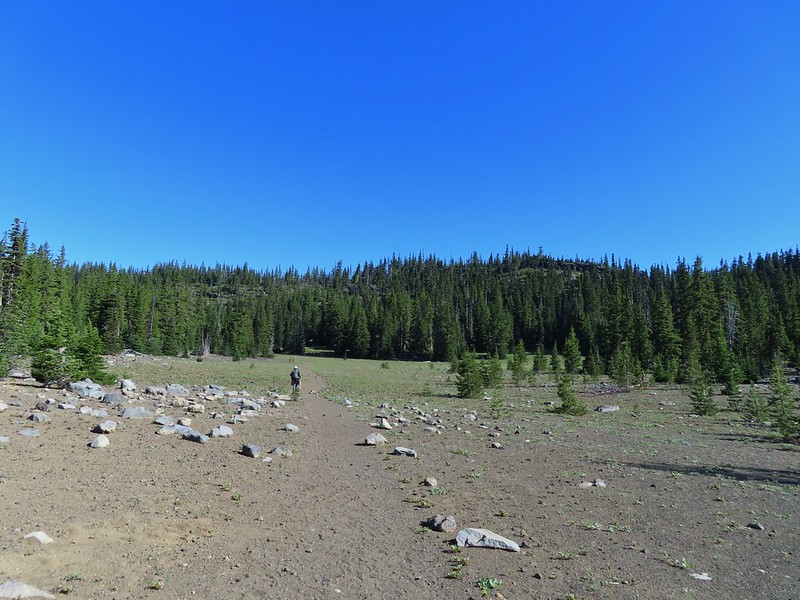 Nearing the end of the opening.
 More snow in the trees.
 A checkerspot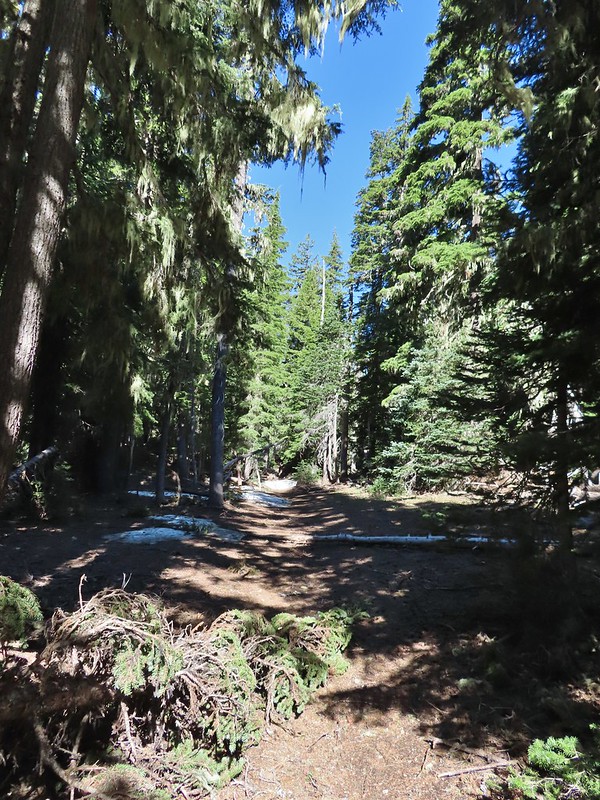
 Trees & melting snow = more mosquitos.
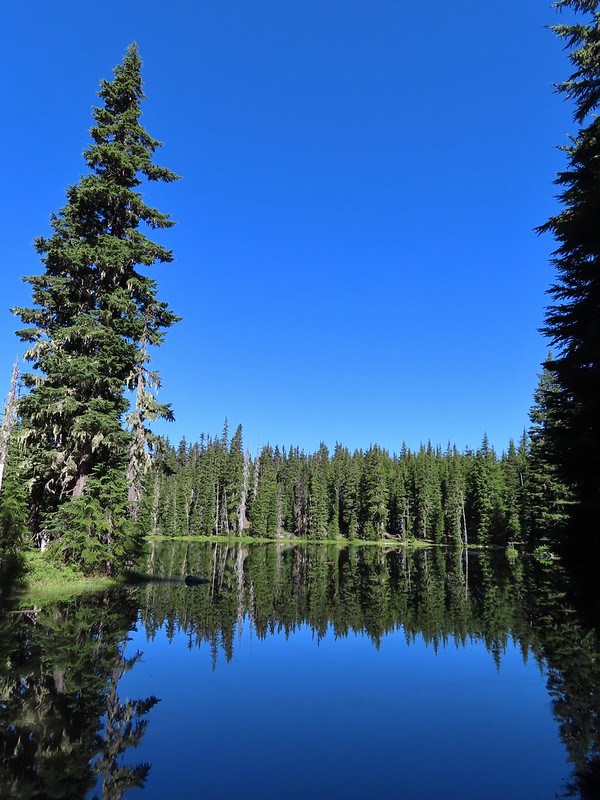 Not Santiam Lake but a very pretty unnamed lake just to the left of the trail approximately 0.4 miles from Santiam Lake.
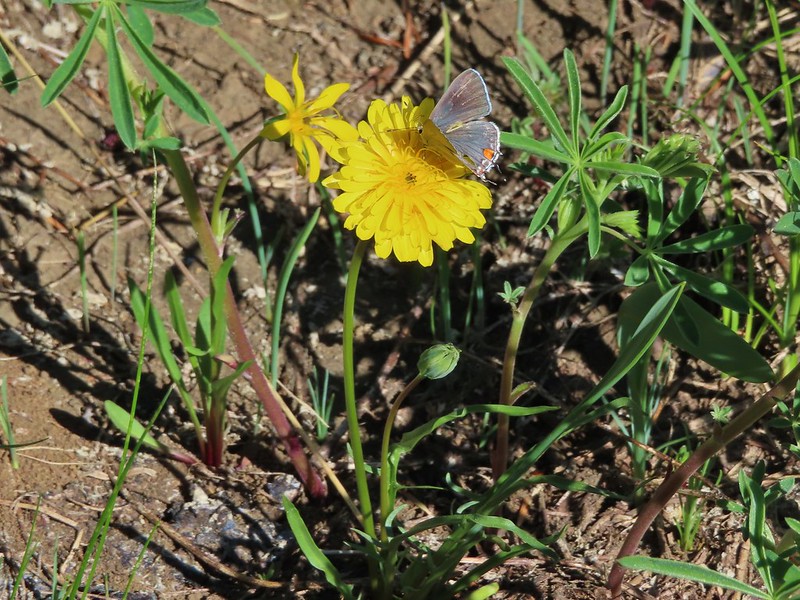 Not sure what type this is but the orange on the wing was pretty.
 Mt. Jefferson behind Red Butte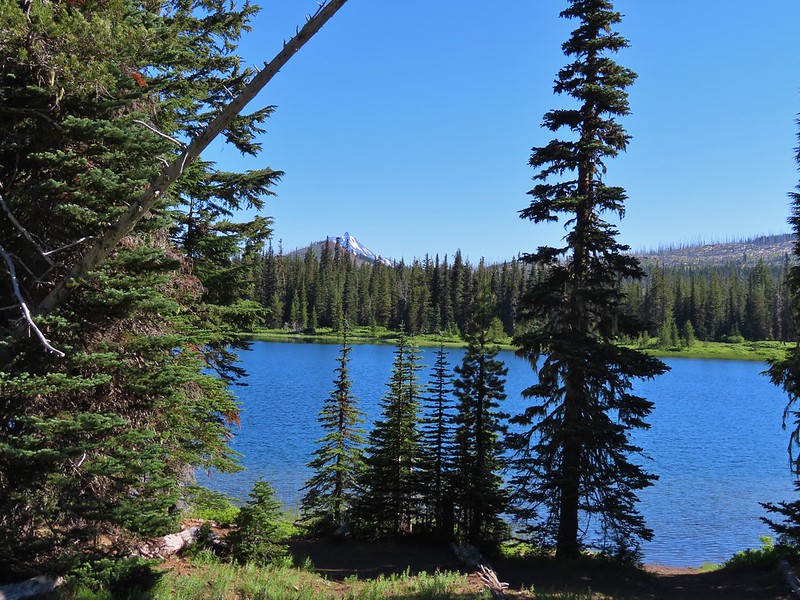
 Duffy Butte on the left.
 Three Fingered Jack
 Paintbrush, shooting stars, and buttercups.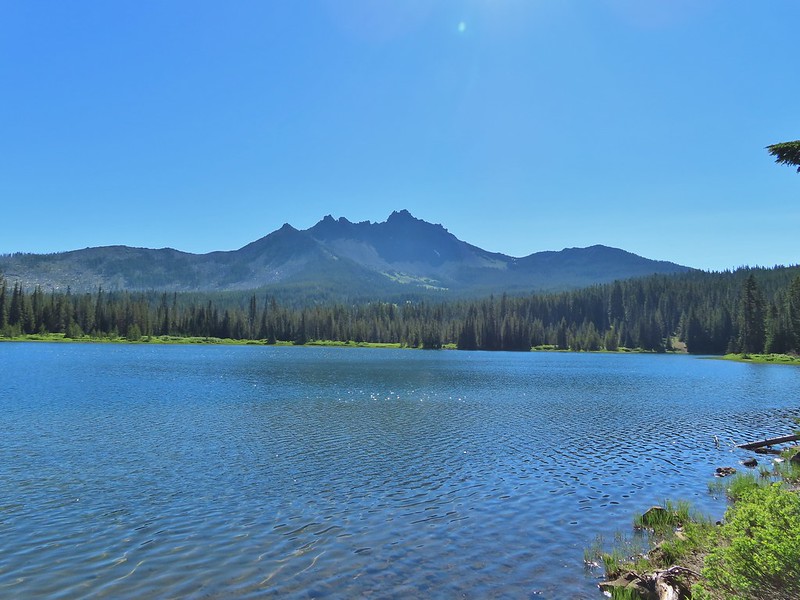
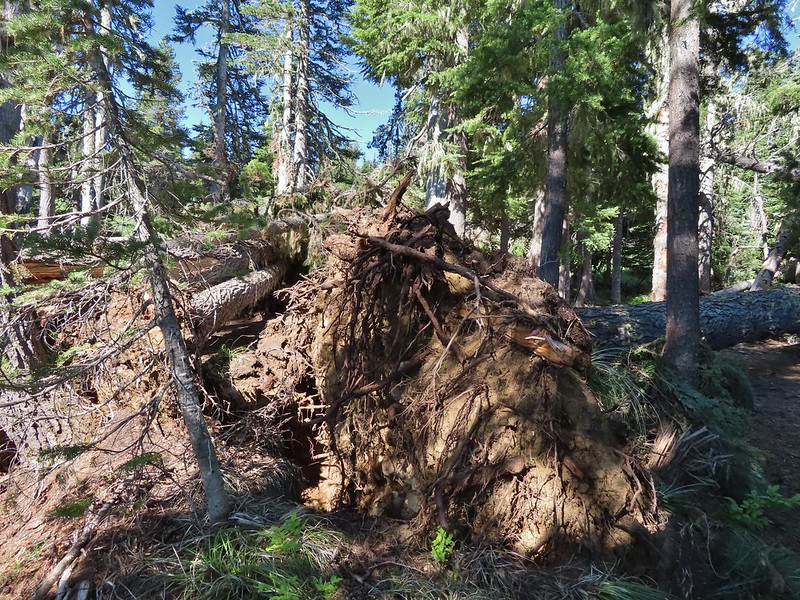 Just one of several large uprooted trees along the shore.
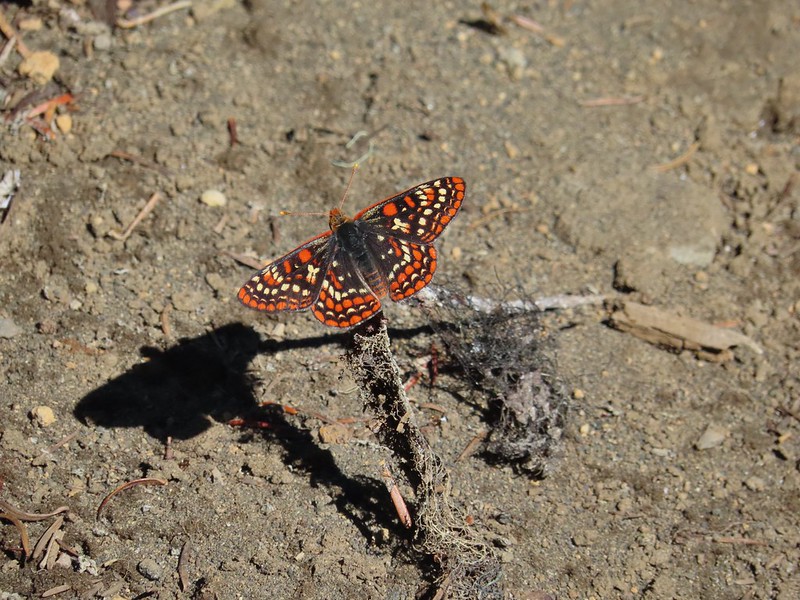

 The “topographic feature” ahead on the right where we planned on turning for Lower Berley Lake.
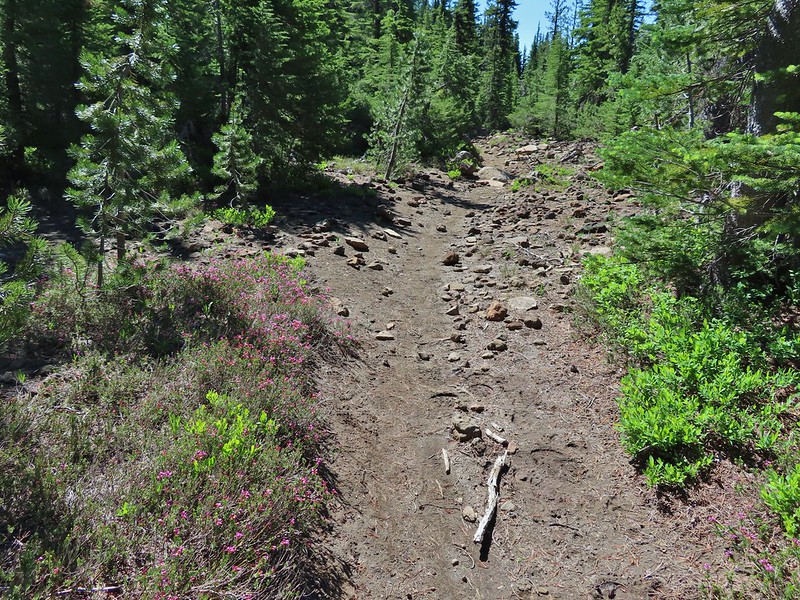 Mountain heather along the trail, it was warm and sunny enough that the mosquitos weren’t as bad this time by.
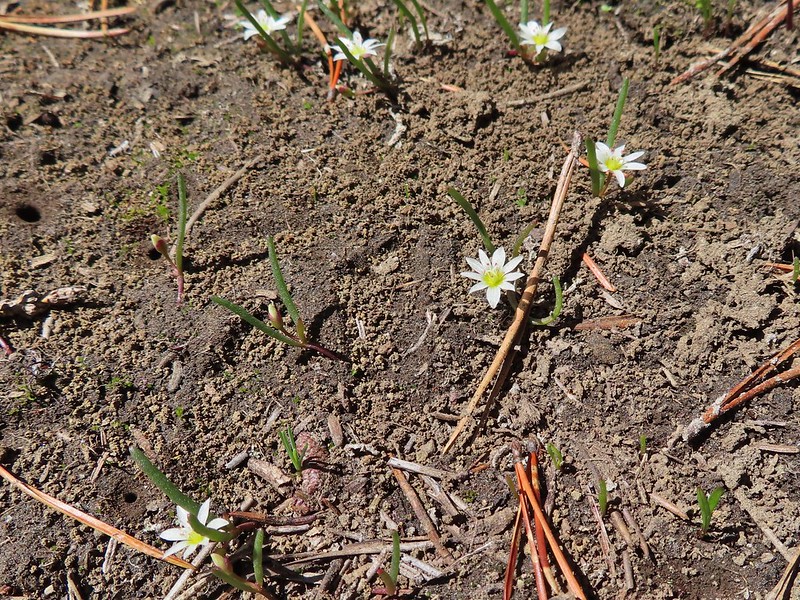 Threeleaf lewisia
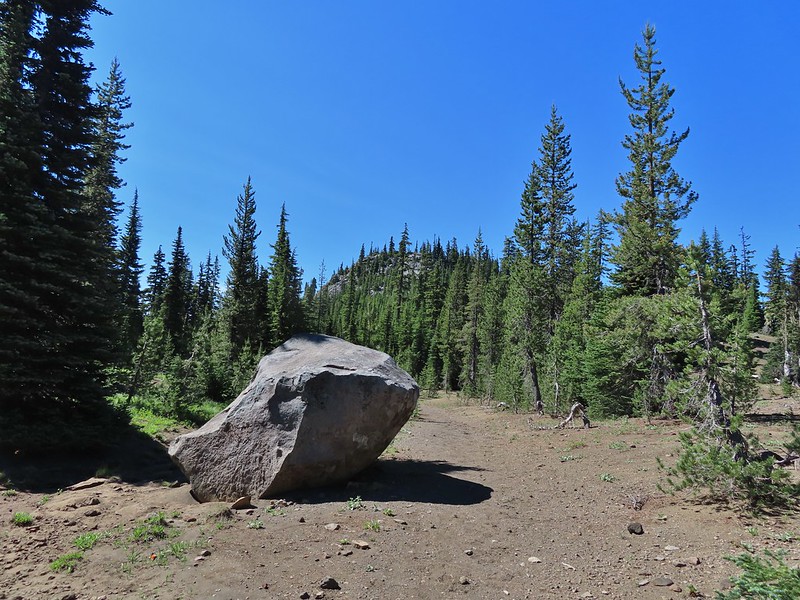 Getting closer to the hill where we planned on turning.
 California tortoiseshell butterflies in the bed of Lost Lake Creek.


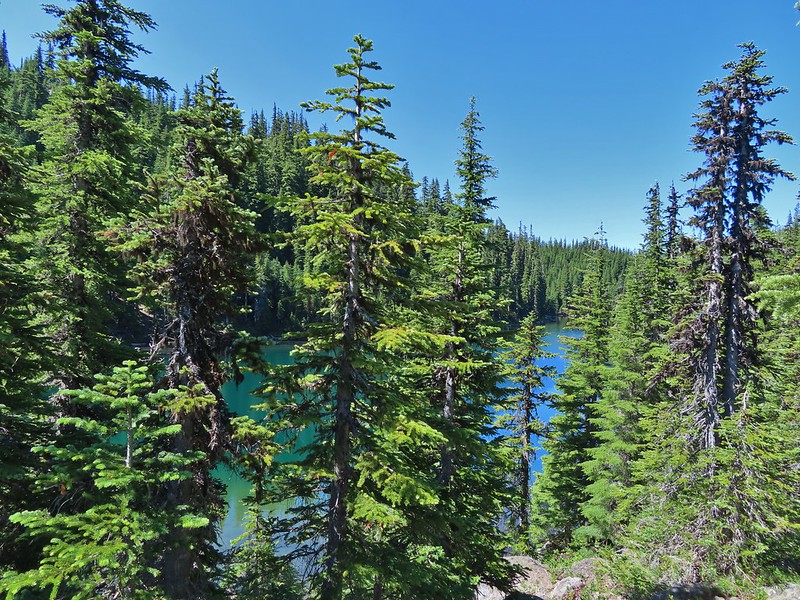
 Three Fingered Jack from the rocks.
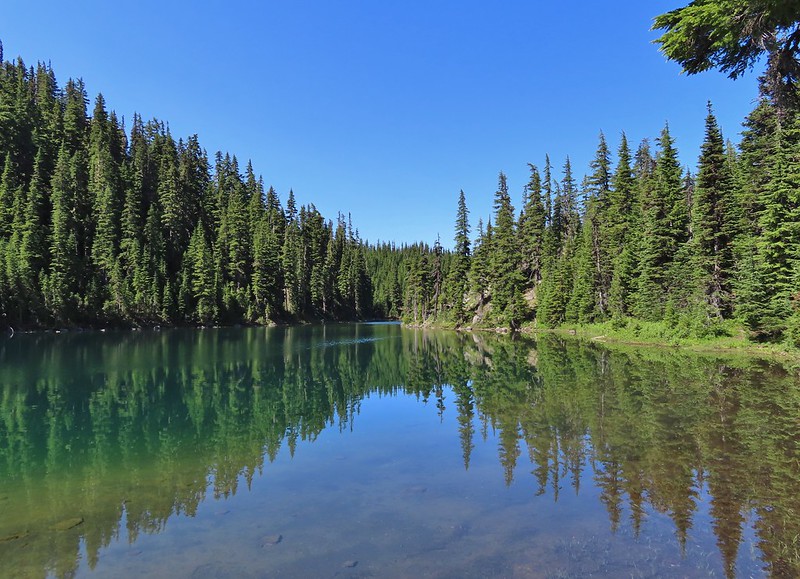
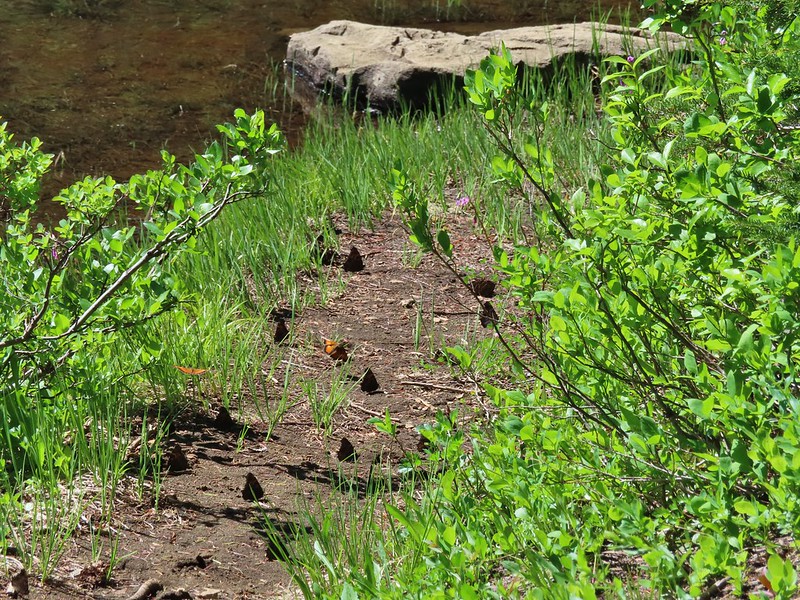 More tortoiseshells
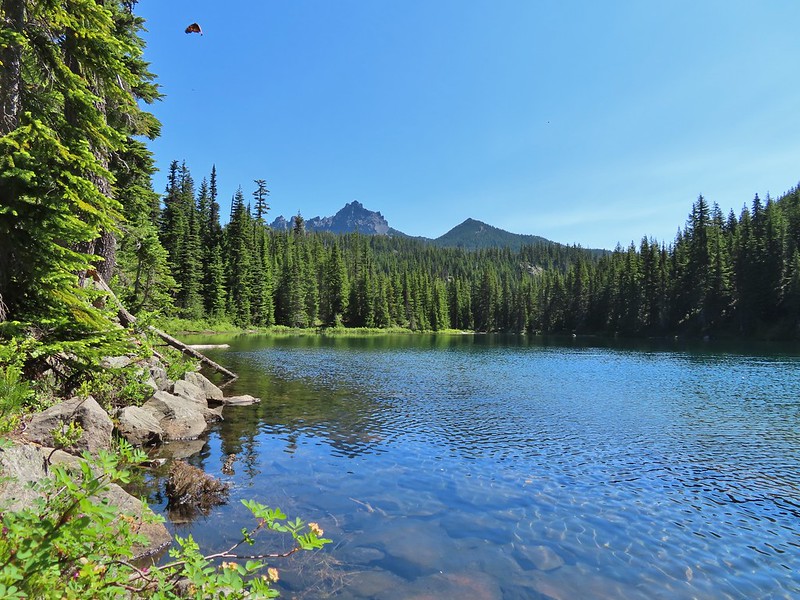 A butterfly photo bomb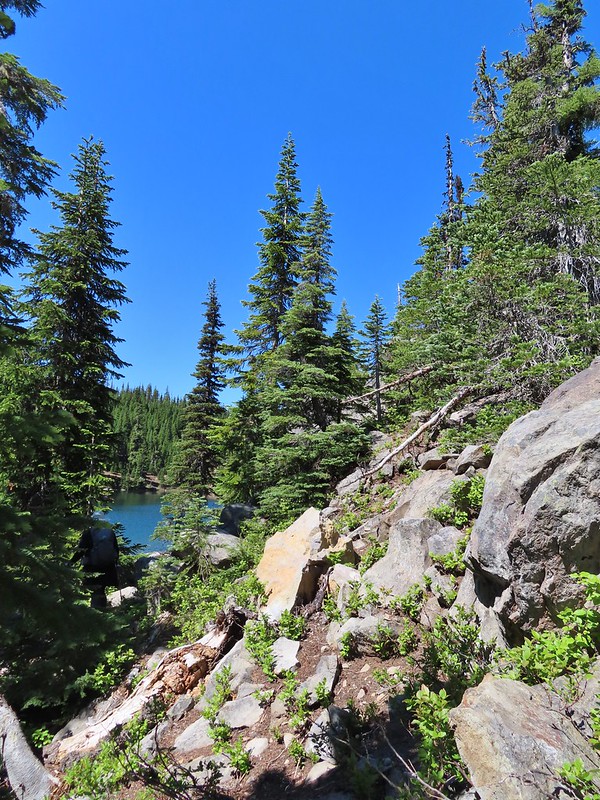


 The bed was popular with the butterflies.
 Cross country to Upper Berley Lake, the doe was in this meadow and headed in the direction of the patch of snow at the far end.
 Upper Berley Lake
 We wound up finding the same “user trail” and followed it down to the lower lake.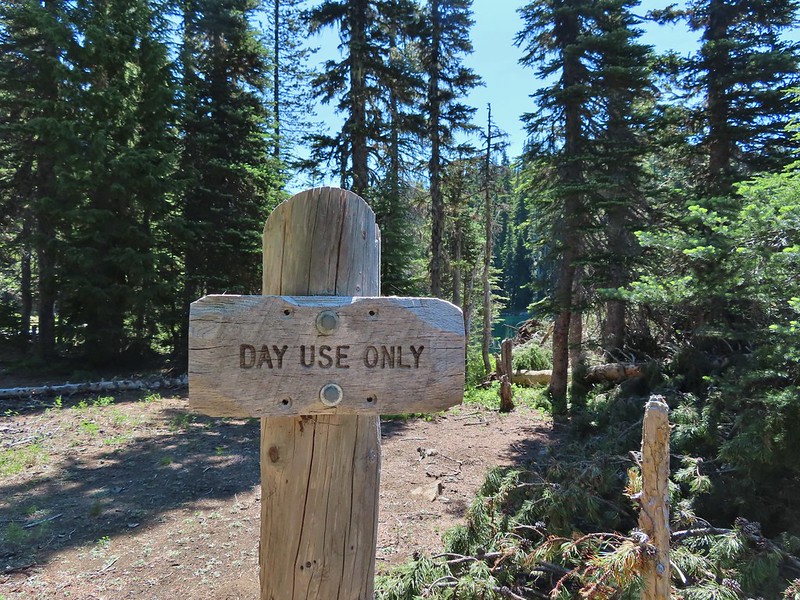
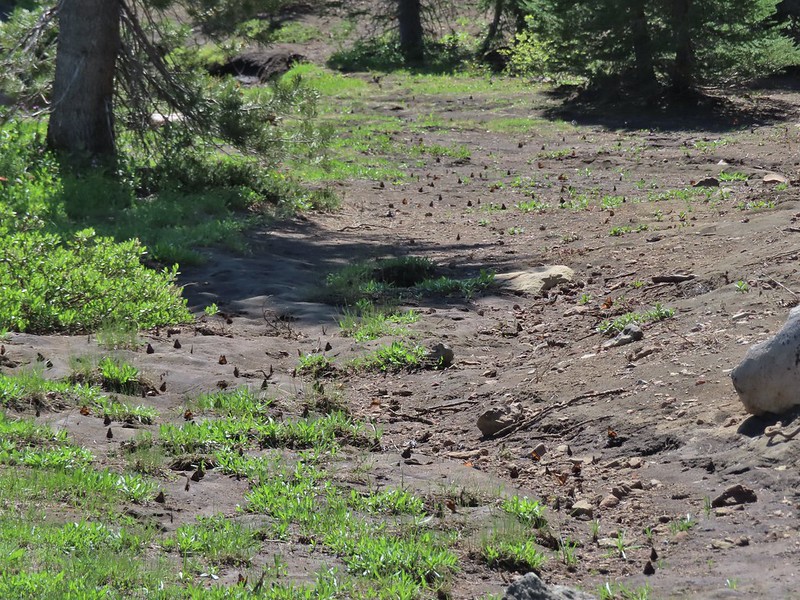 California tortoiseshell butterflies along Lower Berley Lake.
 Three Fingered Jack and about a half dozen butterflies.
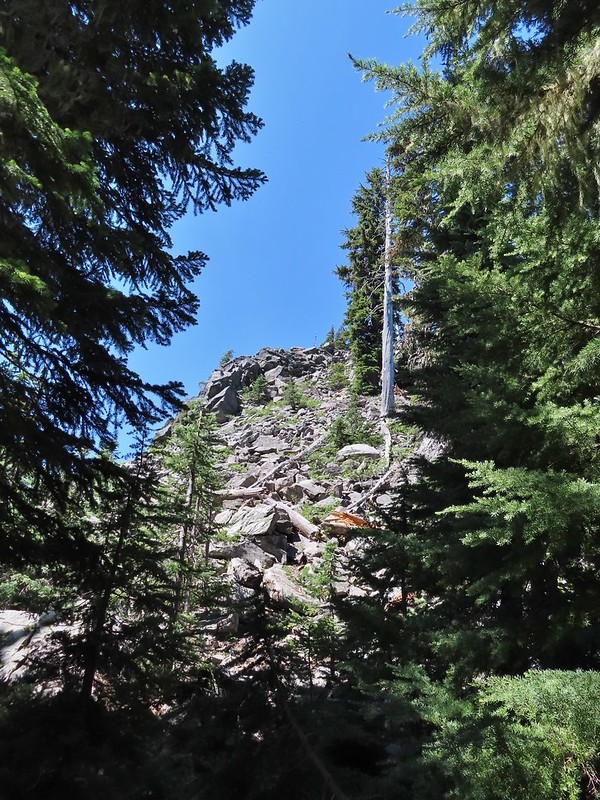 The hillside on the right was rocky.
 The trail dropping down from the saddle with Mt. Washington and the North Sister ahead.

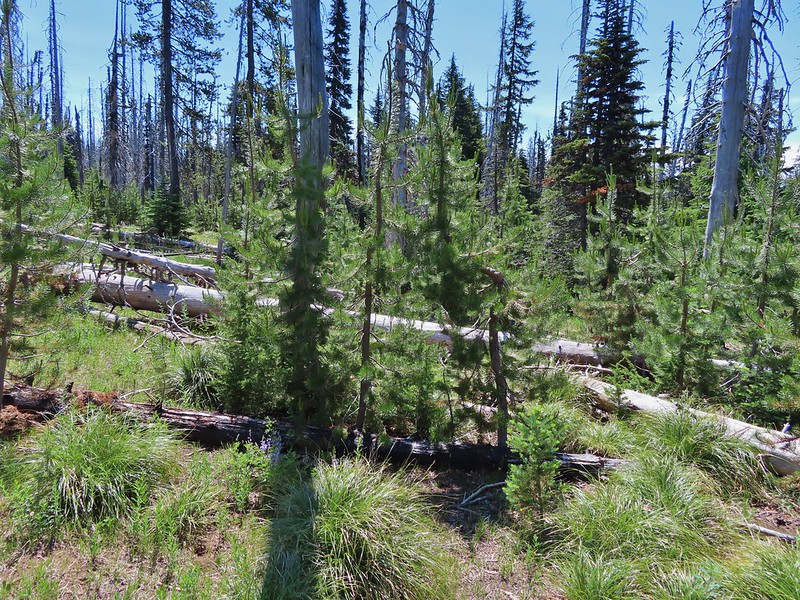
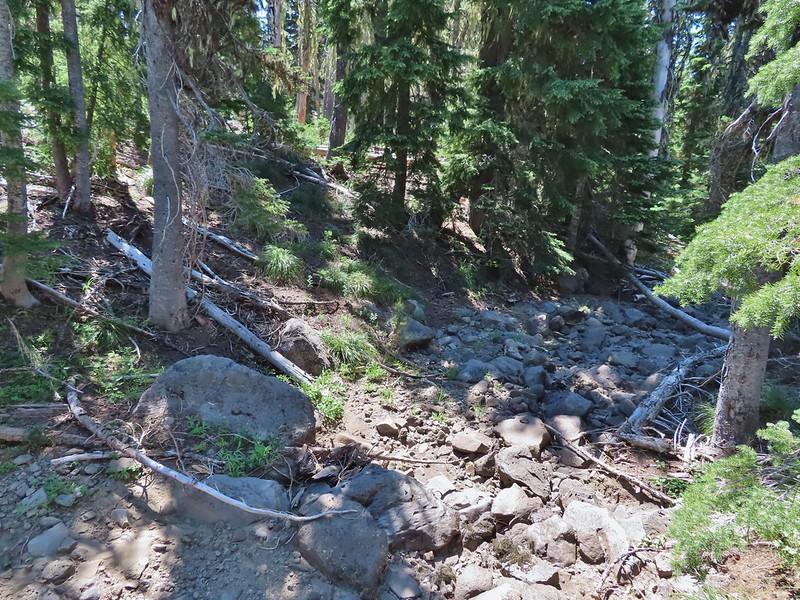
 Found it!


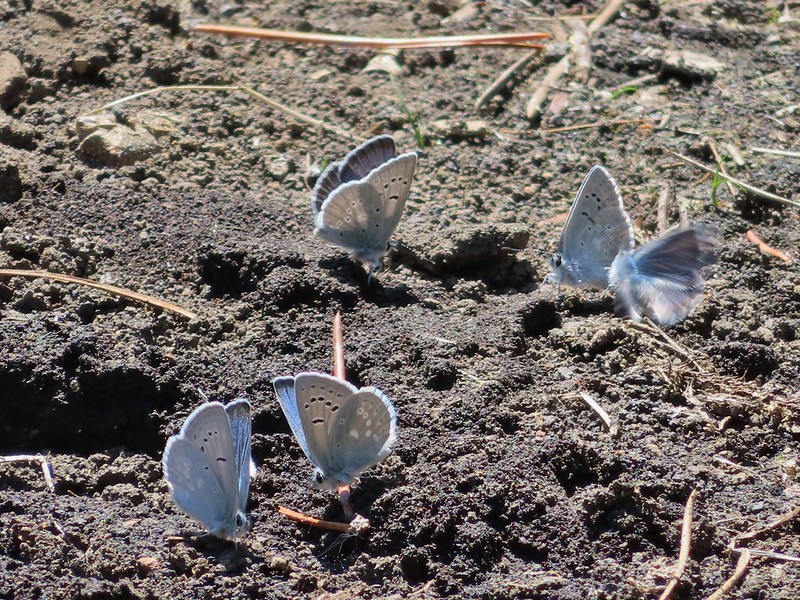
 Yellow beetle on lupine.
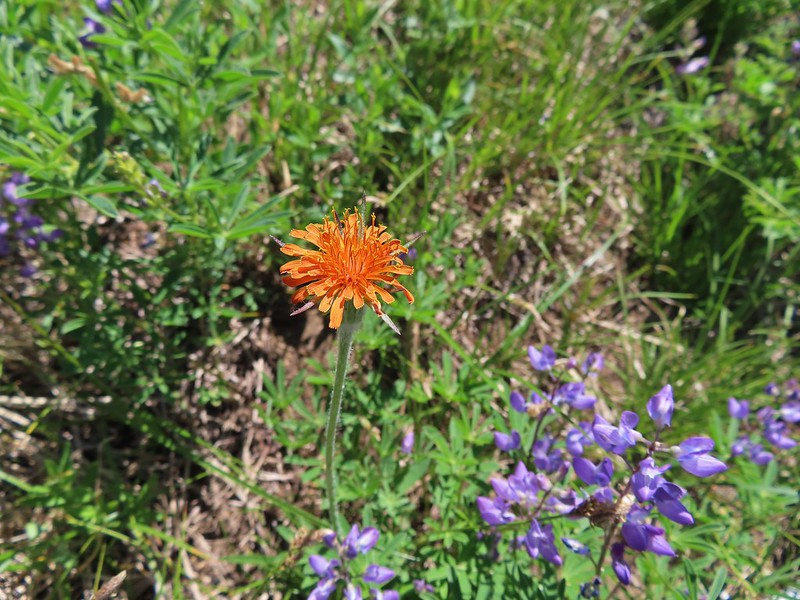 Orange agoseris
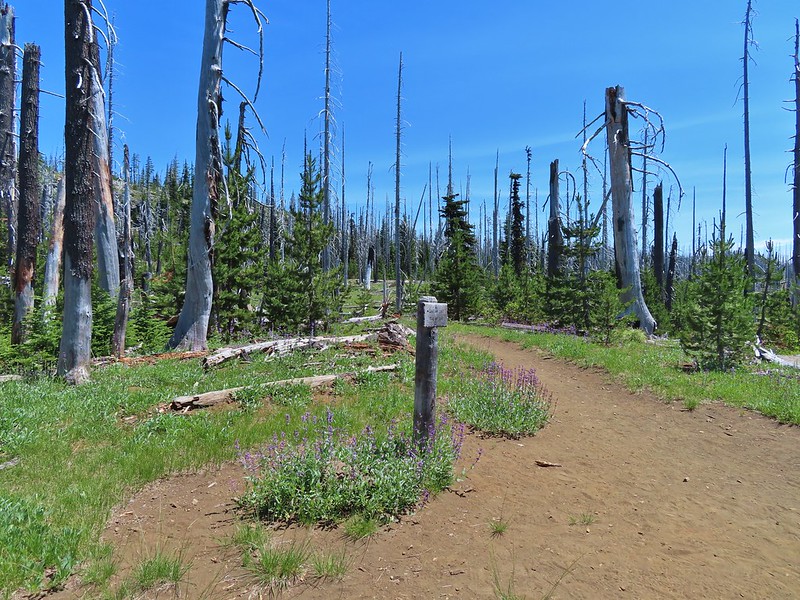 Back at the PCT.
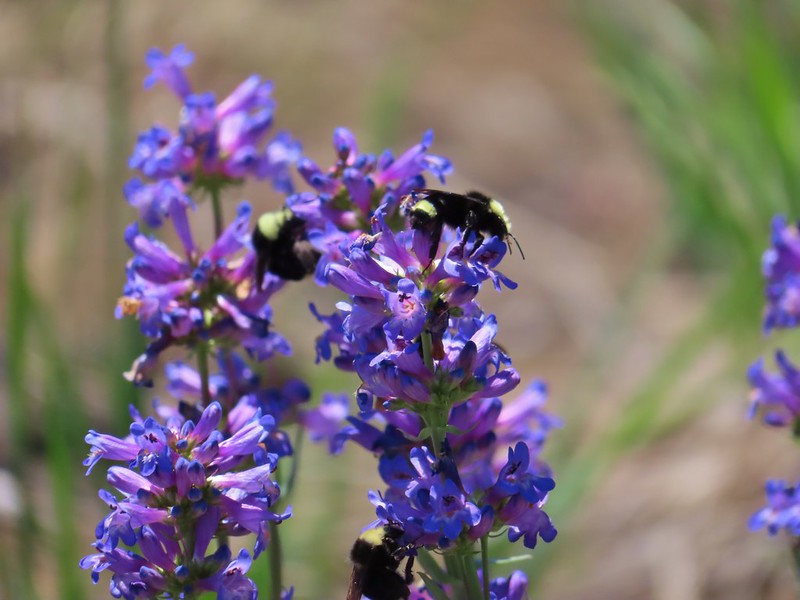 Bumble bees on penstemon.
 Cicada in the grass.
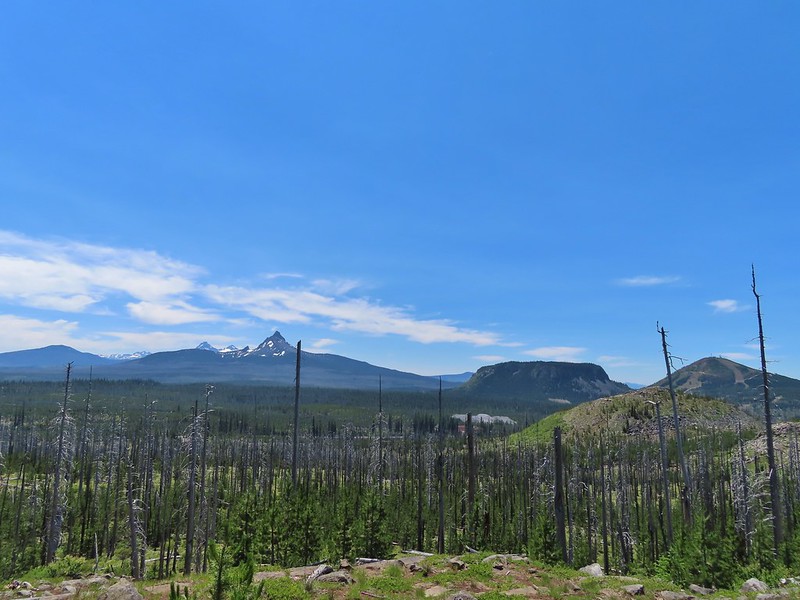 Black Crater, Broken Top, North & Middle Sister, Mt. Washington, Hayrick Butte, and Hoodoo Butte from the viewpoint.

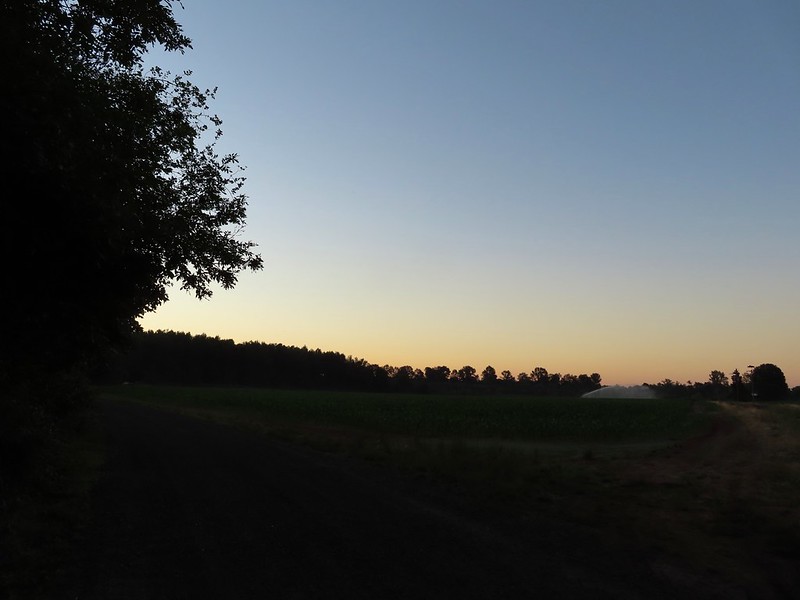 Private farm along the entrance road from the pullout we parked at.
 Osprey nest above the corn field.
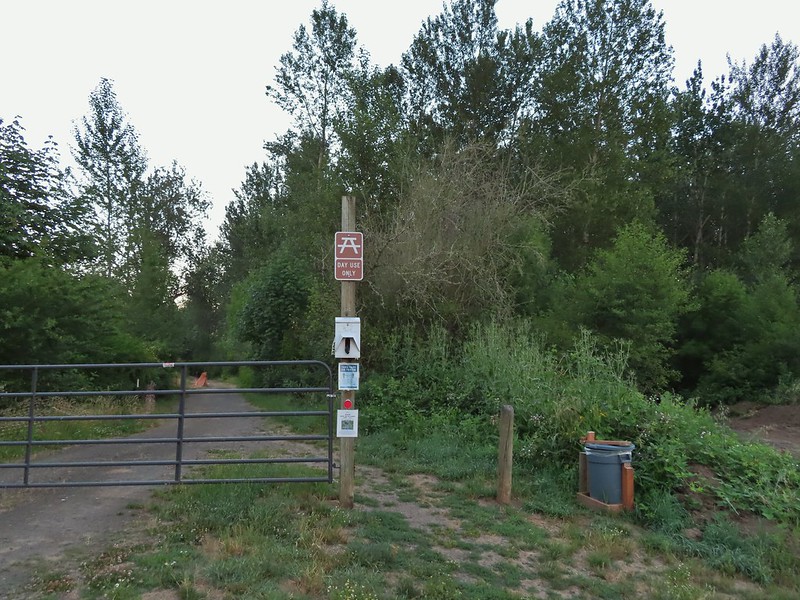 Gated road at the trailhead. There was a second gravel road to the right that was blocked with a log. The gravel road appeared to be fairly new and possibly a reroute of the gated road.
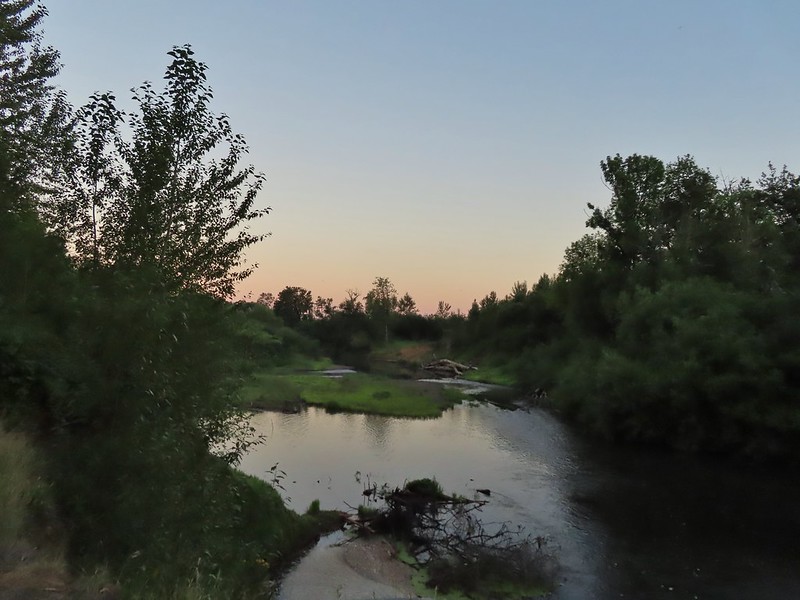

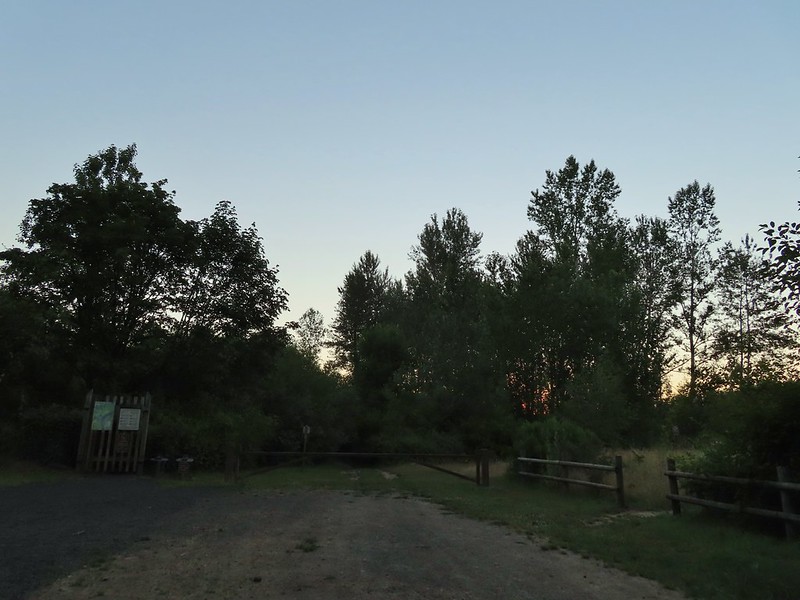 Old trailhead?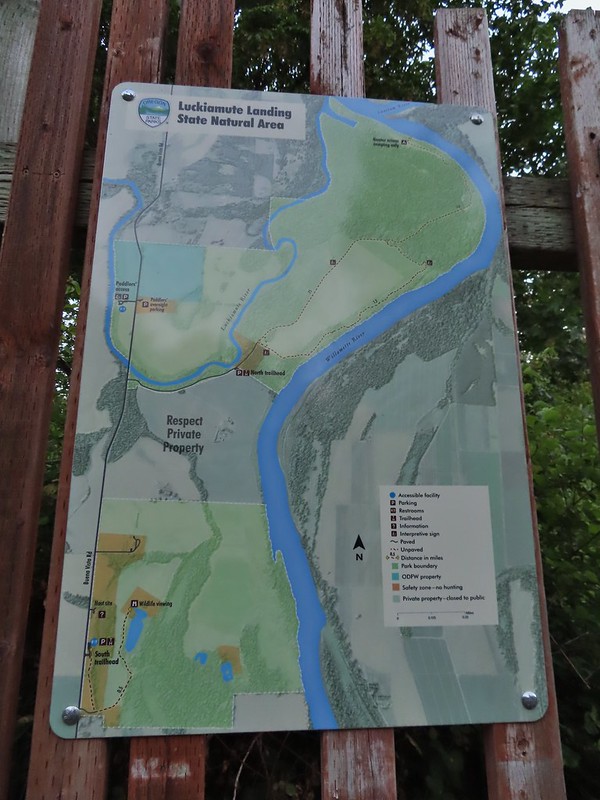

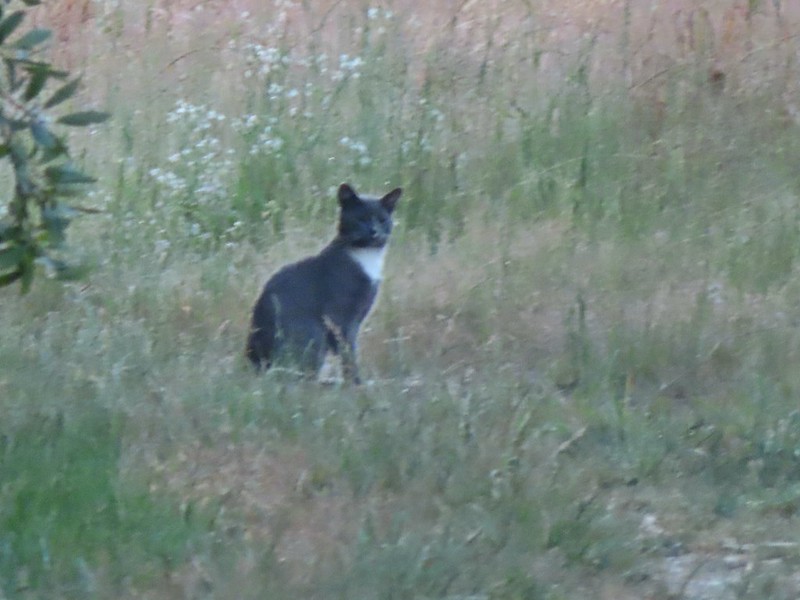 Extreme zoom on the kitty.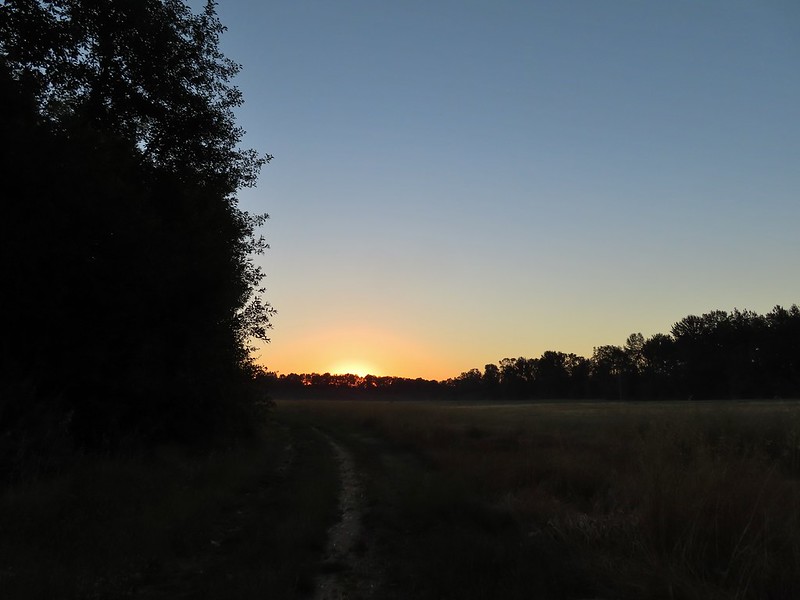


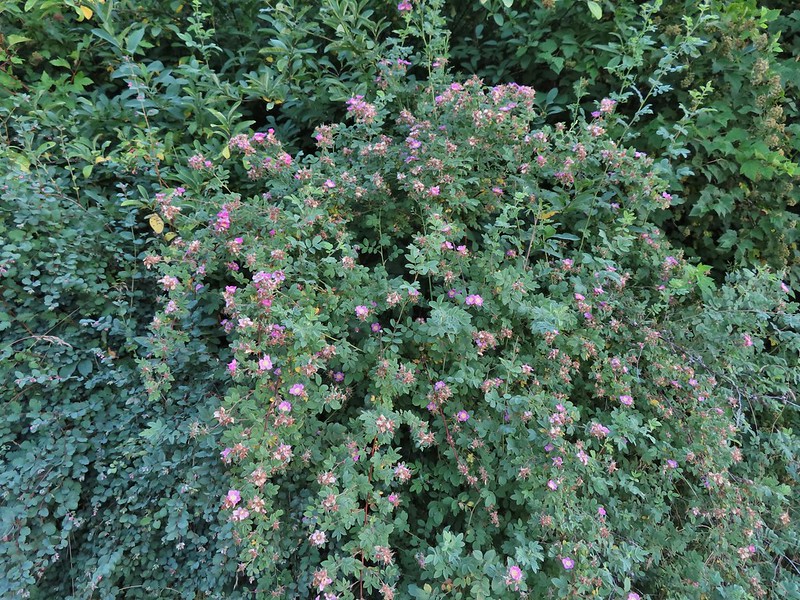 Wild rose
 Vetch
Vetch Oregon grape
 Thimbleberry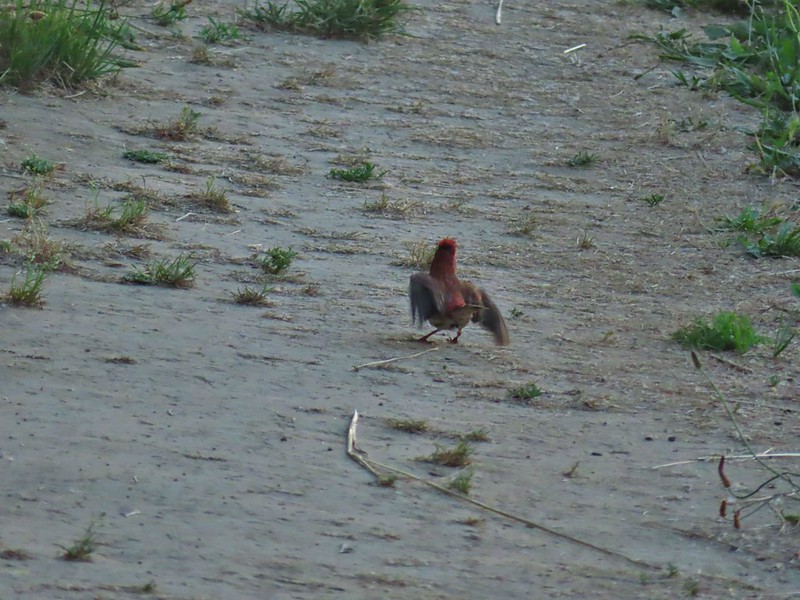


 We both initially thought that this was the start of an out and back to campsites along the Willamette River and that the loop continued around the field to the right. In fact there was a blue awning set up at the edge of the field in that direction and at least 3 vehicles (not sure why they were there or how they got through the gate). This was not the case and fortunately for us we were planning on doing the out and back which meant we didn’t make the mistake of turning here. The continuation of the loop was actually 0.2 miles further along the road in the forest.
 The correct right turn for the loop.
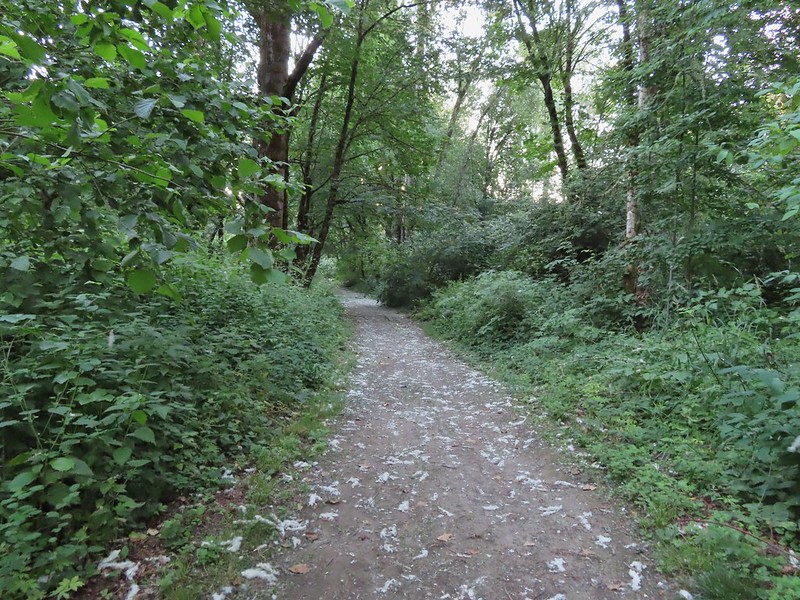 Cottonwood on the road.
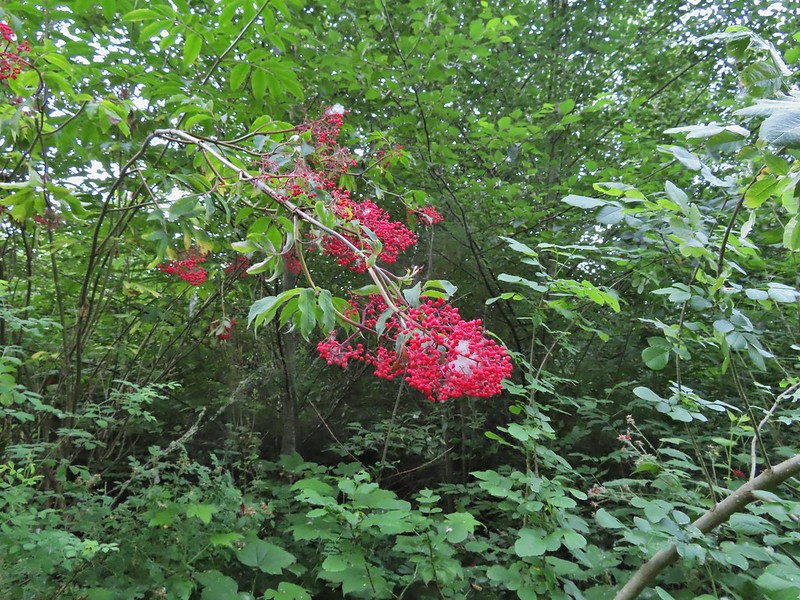 Red elderberry, a favorite of the birds.
 This wren was taking a dirt bath, perhaps an attempt to stay cool?
 A lot of invasive daisies in an opening.
 Native elegant brodiaea
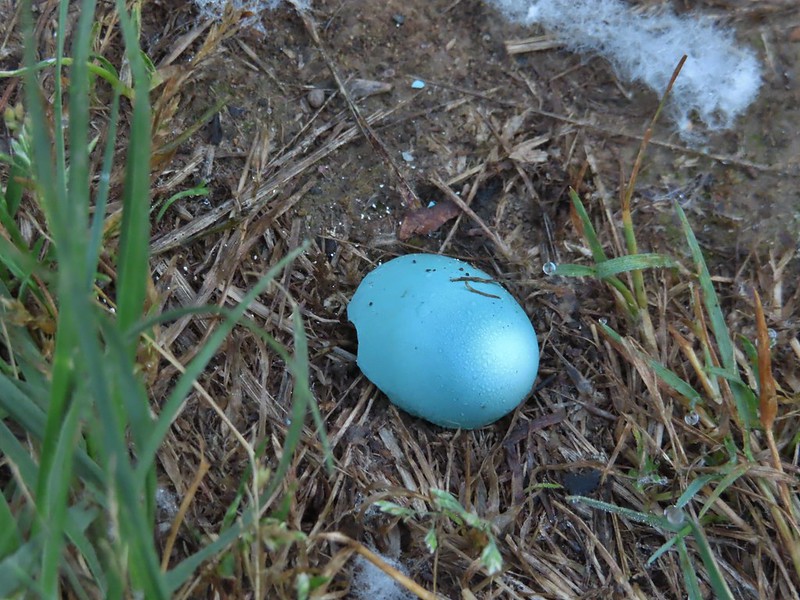 Egg shell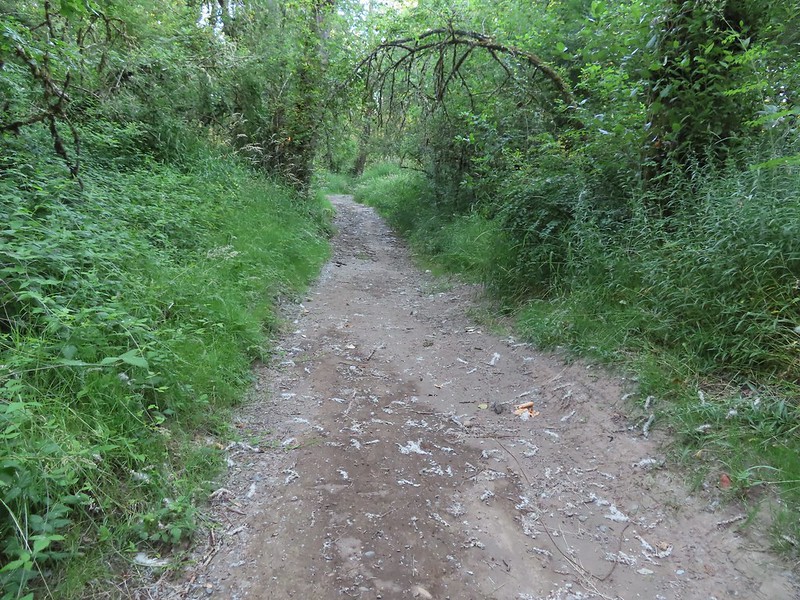
 More ripe berries.
 Poppies
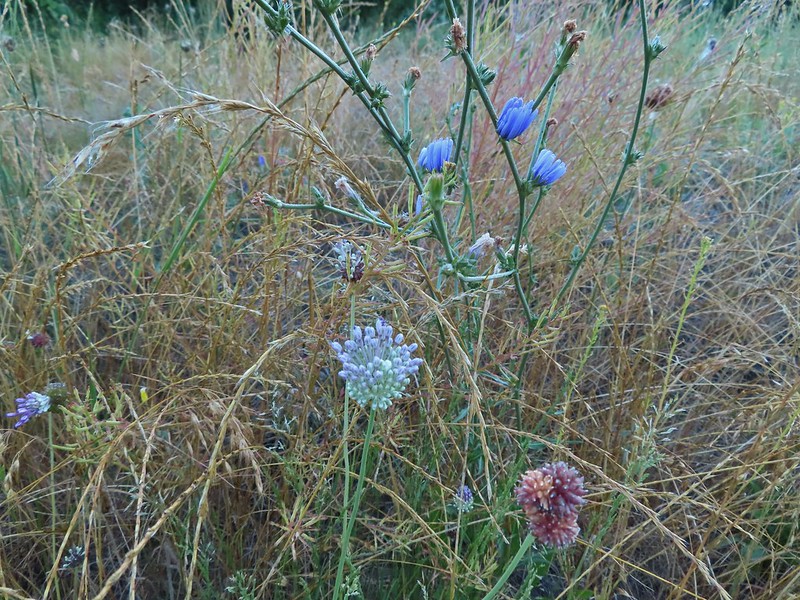 Mostly non-natives – chicory and clovers.
 More non-natives – Moth mullein and cultivated radish
 Slug
Slug Douglas spirea (native)
 The mouth of the Luckiamute on the left was hidden by trees.


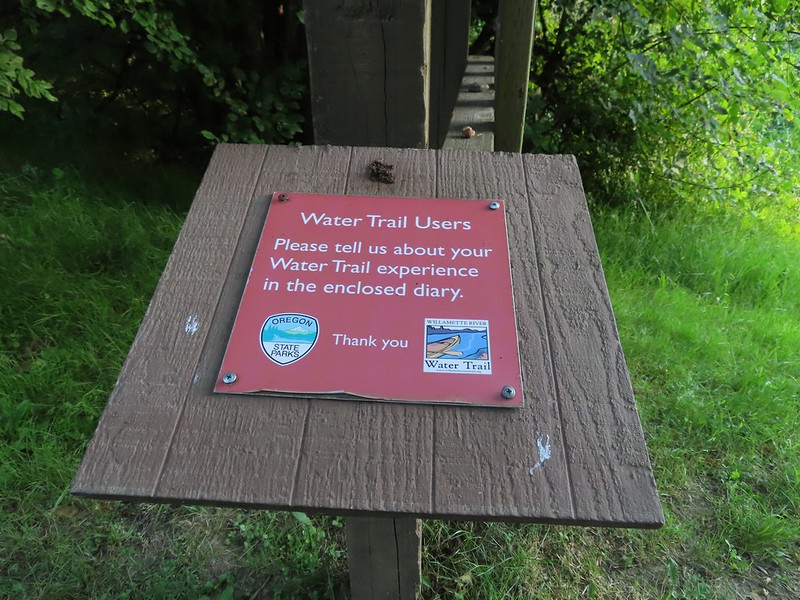

 Willamette River at the landing.
 Not sure what type of birds these were.
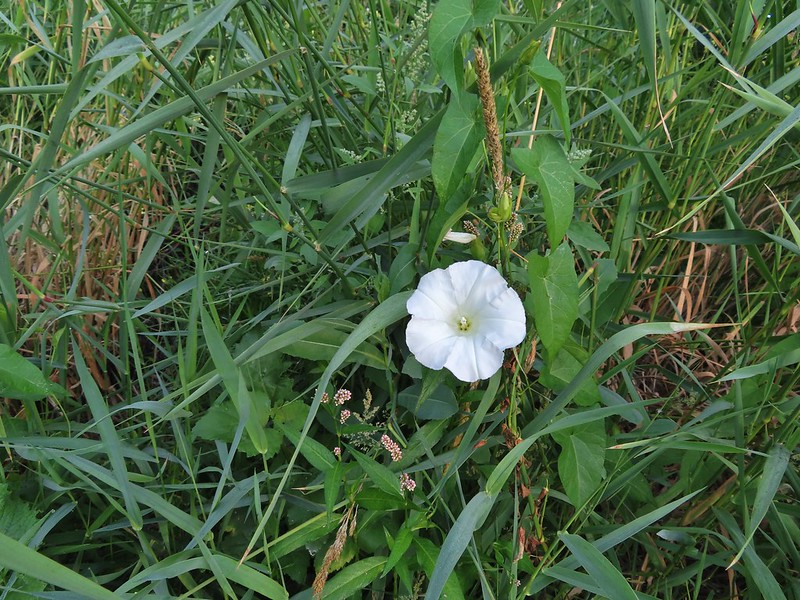 Bindweed at the landing.
 Bunny and a bird (not pictured is the chipmunk that raced across the road here).
 Slug also “racing” across the road. Speed is relative.
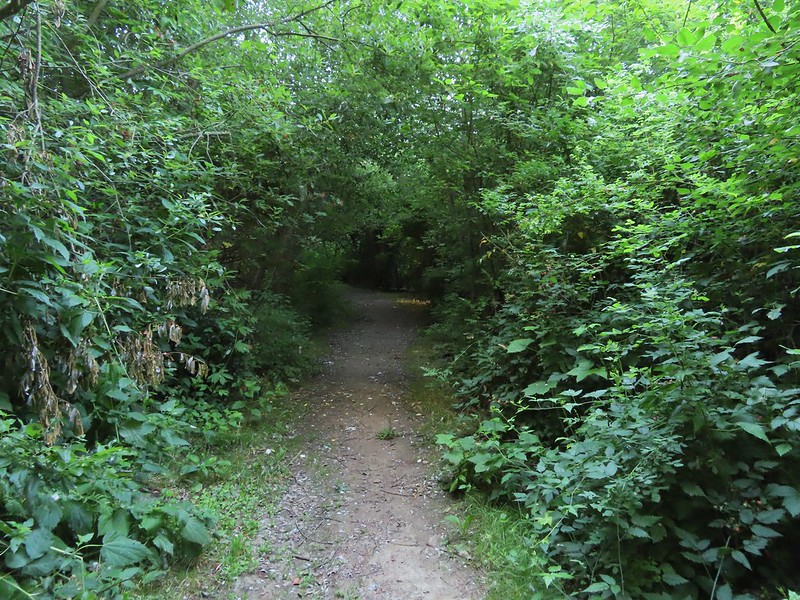 Back on the loop.


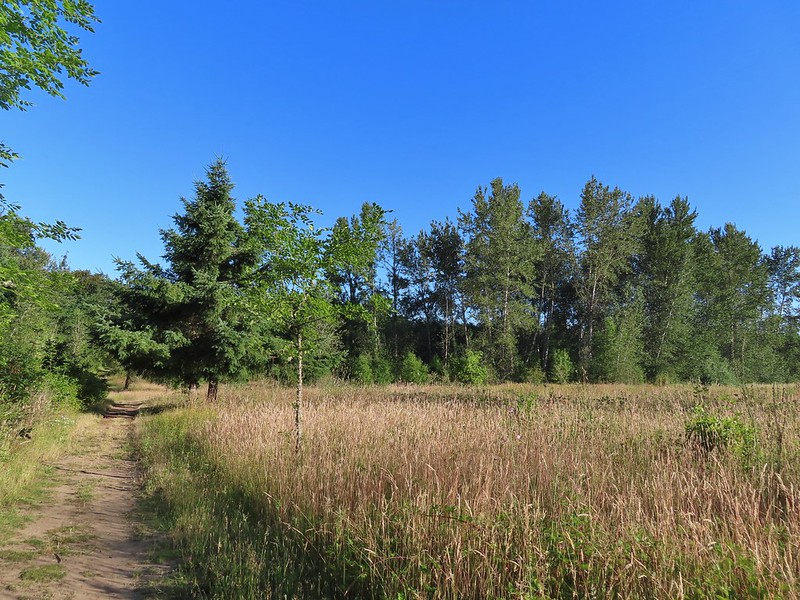 Near the end of the loop the trail passed back along the field.
 White crowned sparrow
 Possibly nelson’s checkermallow.
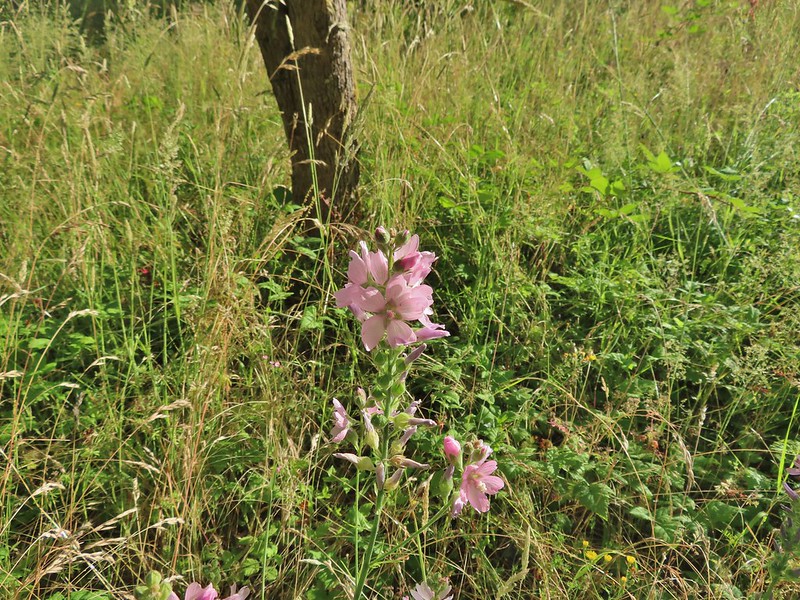 Meadow checkermallow
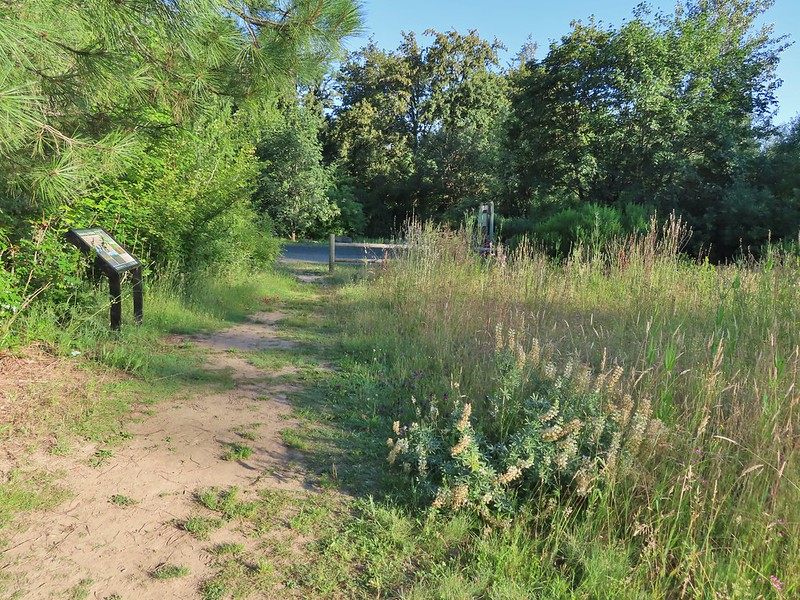 Completing the loop.
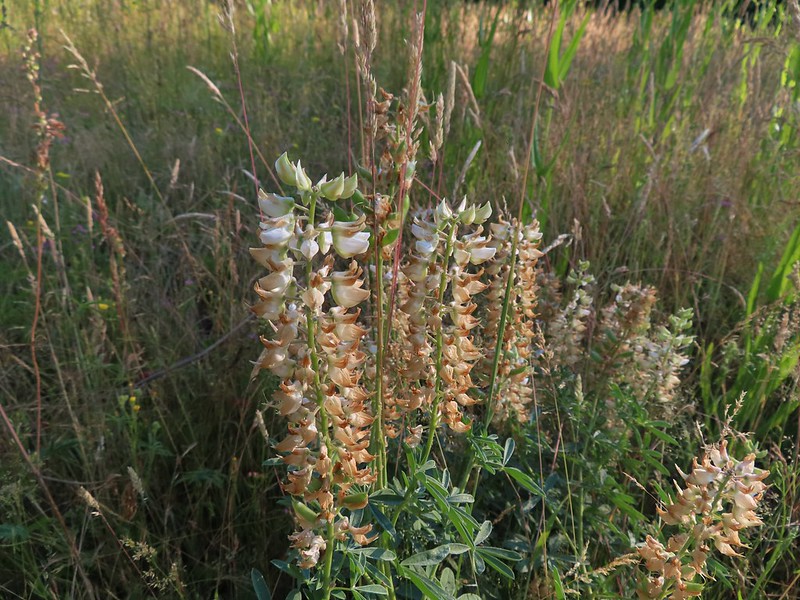 Lupine that is just about finished.
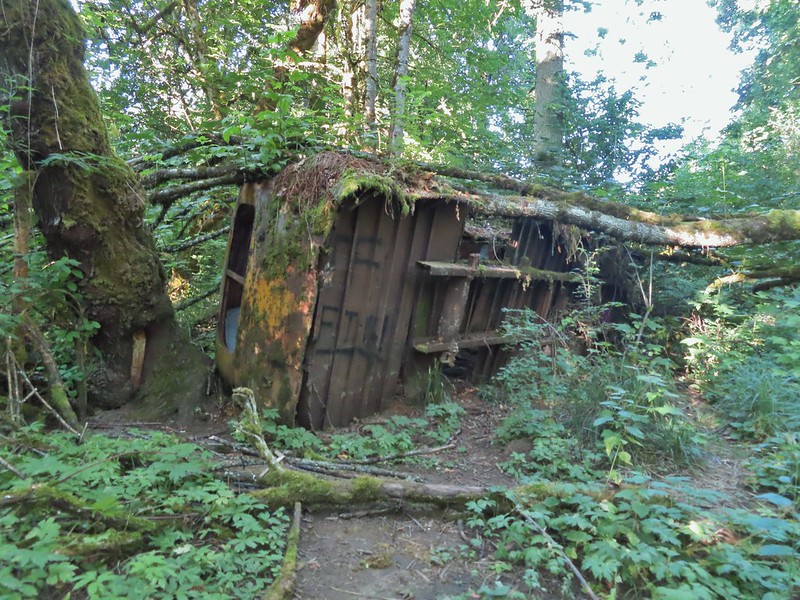 Old bus
 Tree frog
 Luckiamute River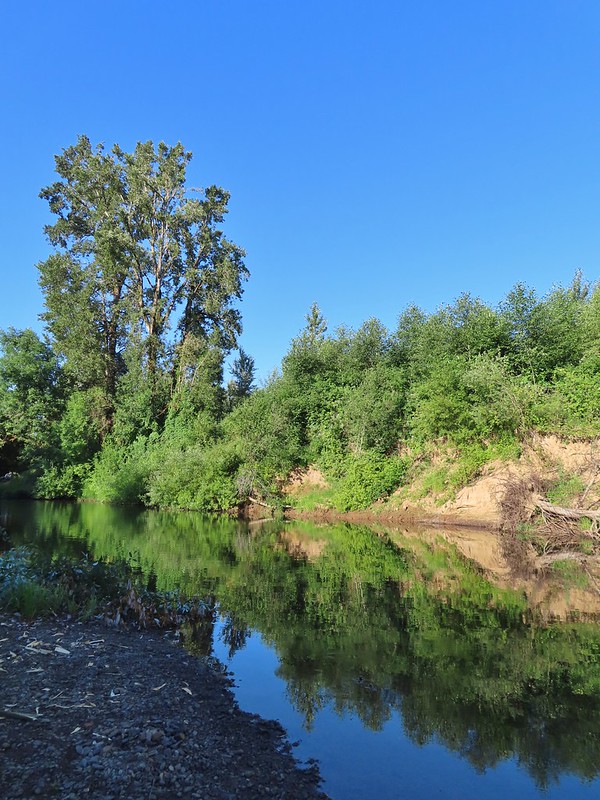
 Waiting for food.

 Old farm equipment with poison oak in the background.
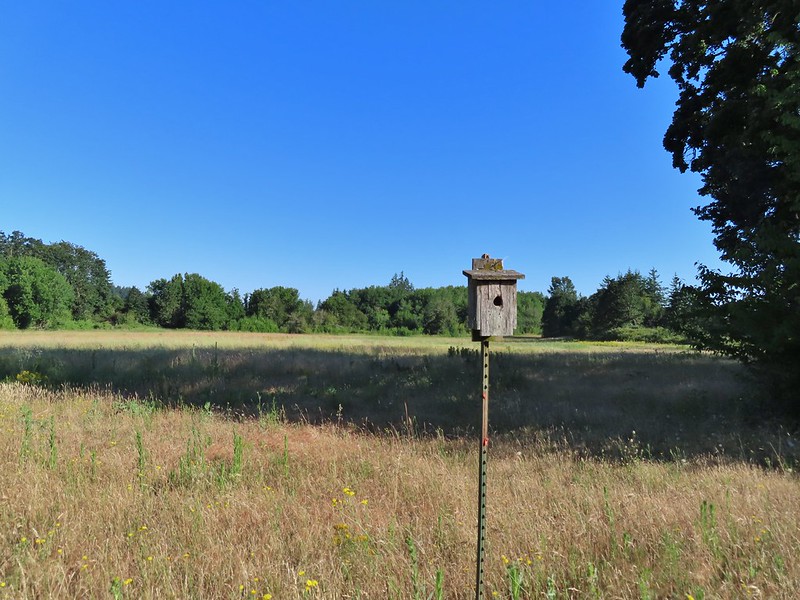 One of several birdhouses along the road.
 North end of the pond.

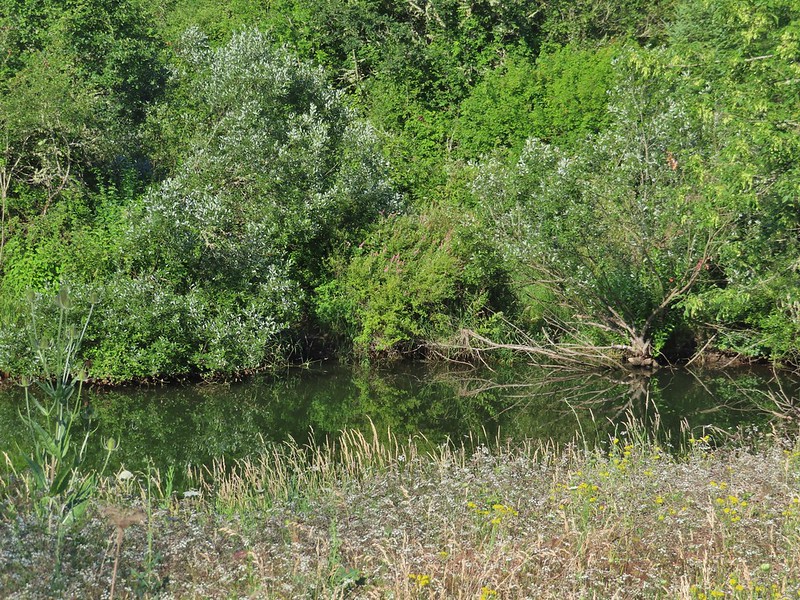 We are both pretty sure a turtle swam off from this area when we came into view.
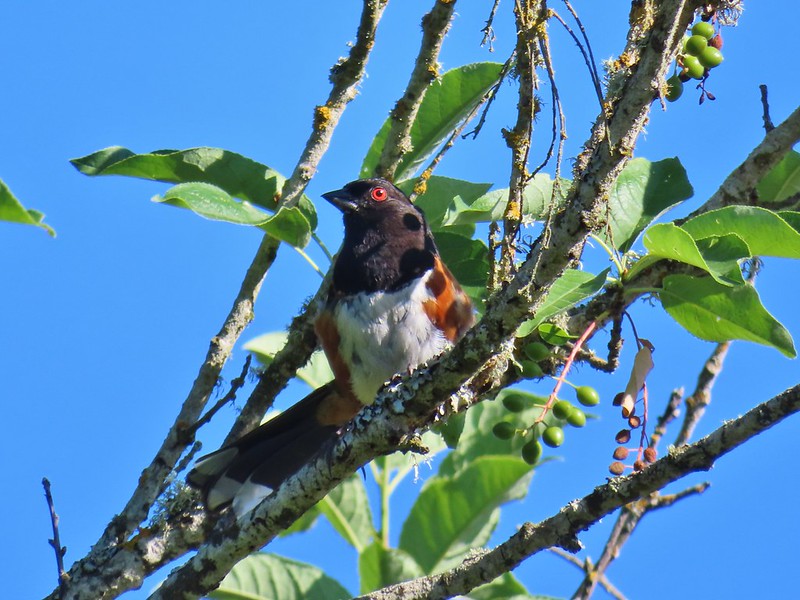 Spotted towhee
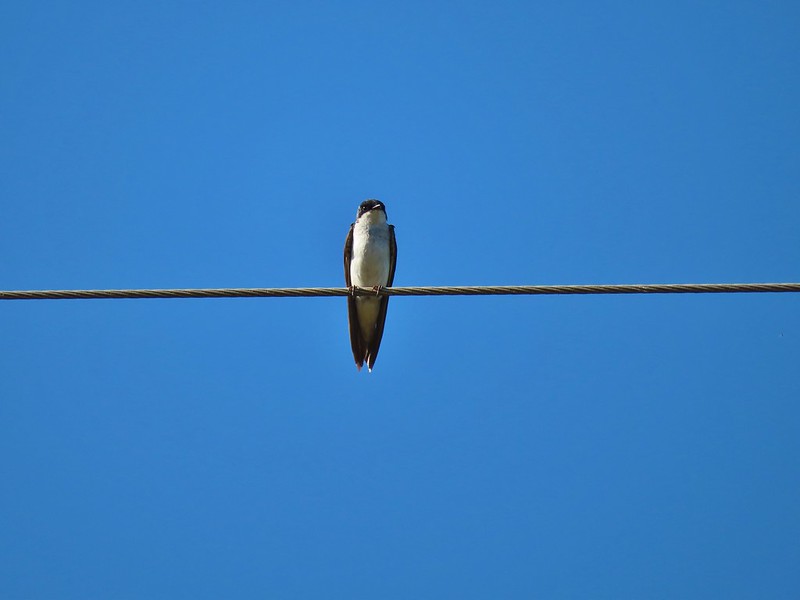 Swallow
 European centaury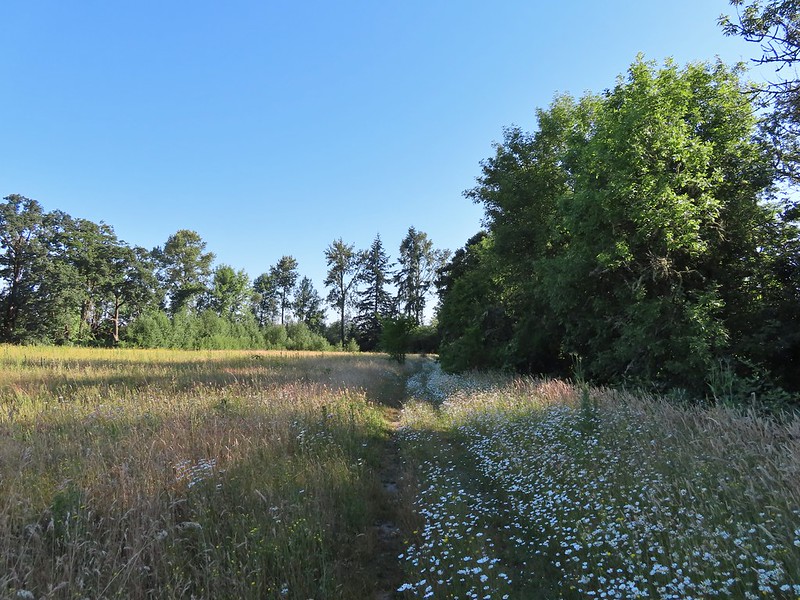

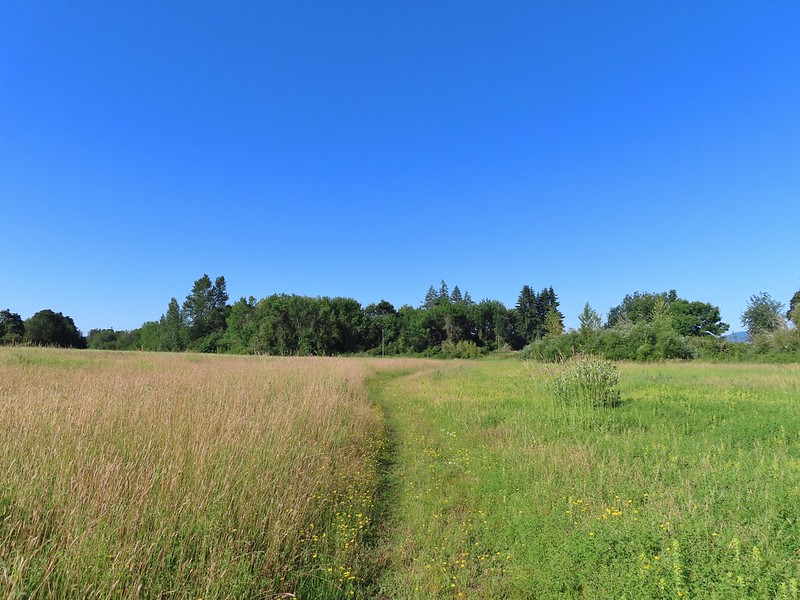
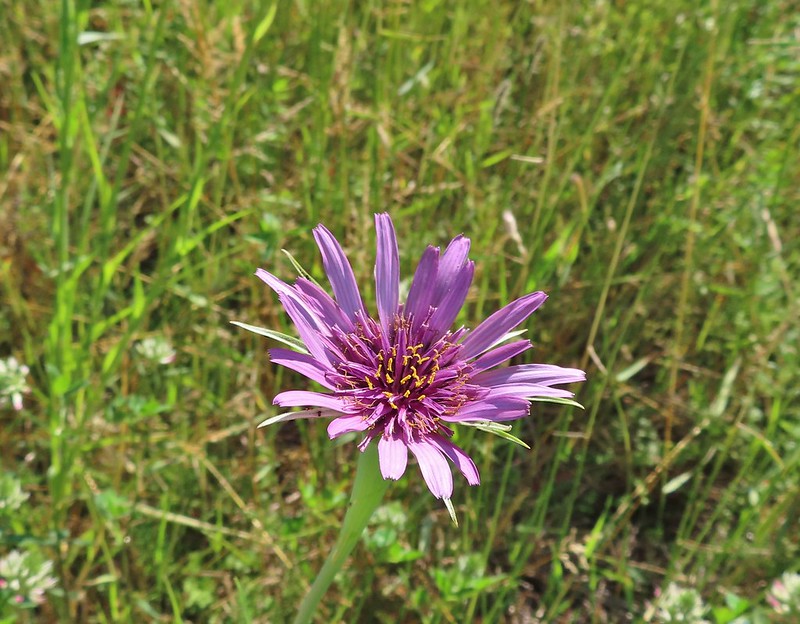 Oyster plant
 Creeping jenny
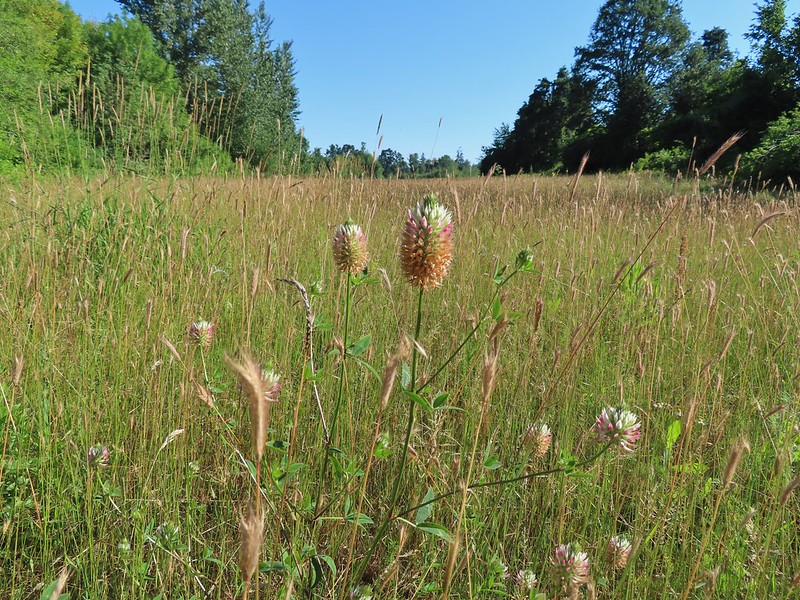 Arrowleaf clover
 Scrub jay
 Corn Chamomile
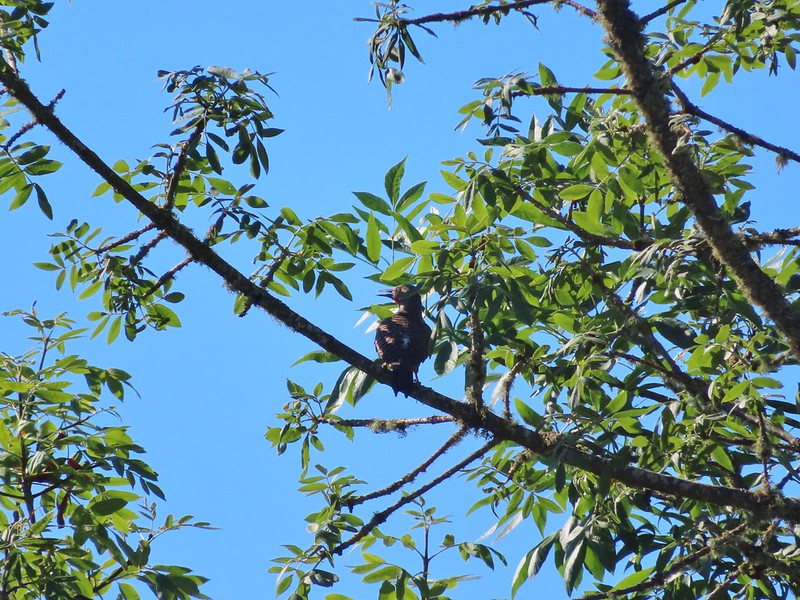 Northern flicker
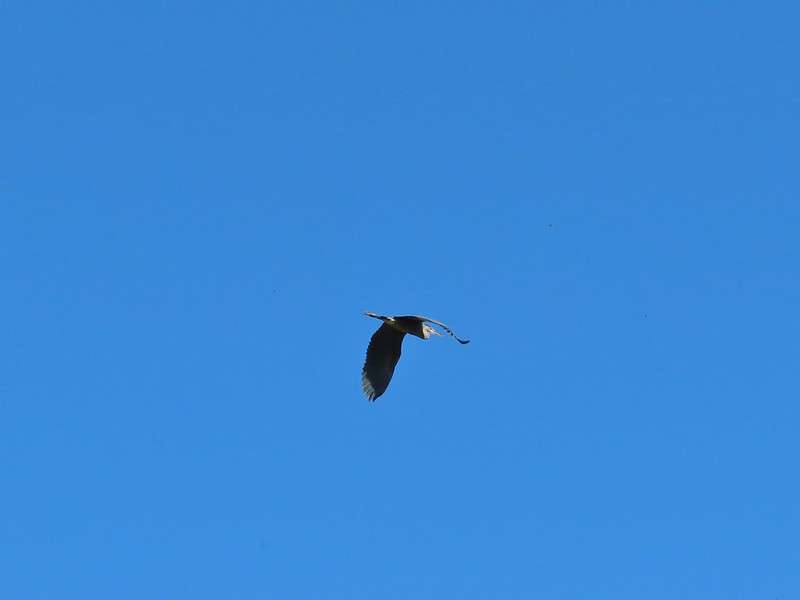 Great blue heron
 American kestral