Categories
Hiking Oregon Portland Trip report Willamette Valley

Camassia Natural Area, Mary S. Young Park, and Tryon Creek State Natural Area

We continue to be impressed by the number and variety of urban hikes in the Portland-metro area. On our most recent outing we visited three more areas near West Linn and Lake Oswego.

We started our day in West Linn at the Camassia Natural Area just before 7am. Our hike started from the trailhead at the end of Walnut Street.

Camassia Natural Area

A few feet from the trailhead is a signboard and the start of a loop.

Camassia Natural Area Trailhead

Camassia Natural Area Map

We picked up a guide brochure and started the loop by heading left (clockwise).

Camassia Natural Area

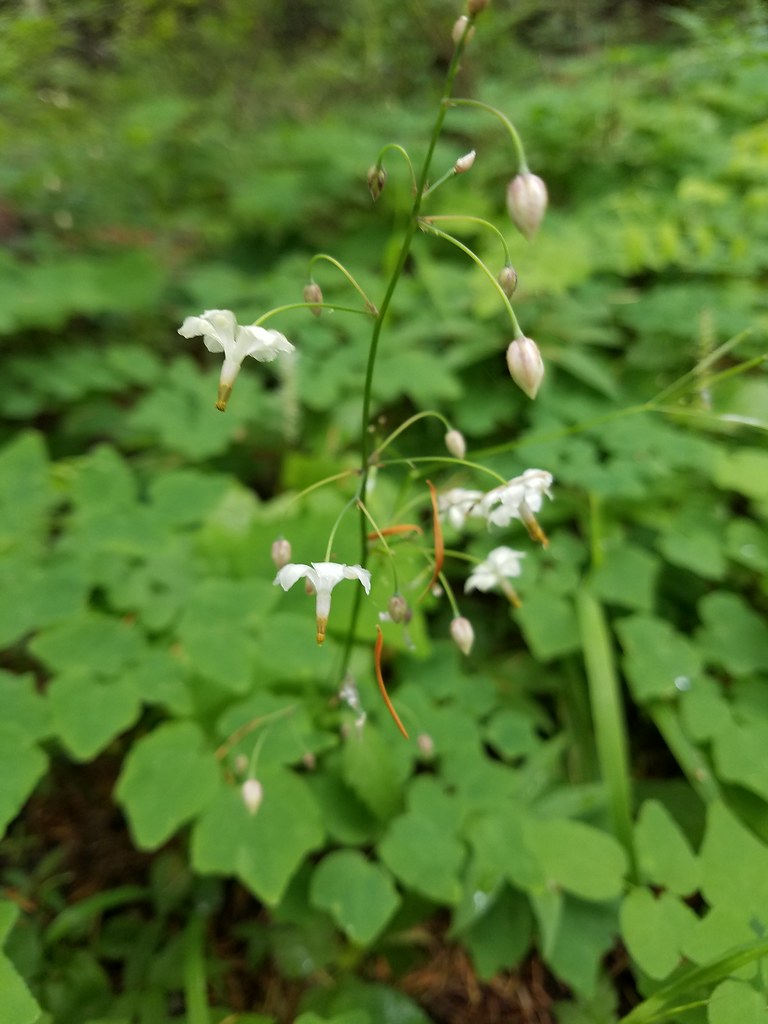
The woodlands here were full of white flowers including trillium, giant fawn lilies, and giant white wakerobin.

Trilium

Giant fawn lilies

Giant white wakerobin

We detoured to the right briefly at a “Pond” sign which led down to a very muddy wet area.

Camassia Natural Area

Pond at Camassia Natural Area

Continuing on the loop the next brief detour was to the left at a pointer for Wilderness Park.

Camassia Natural Area

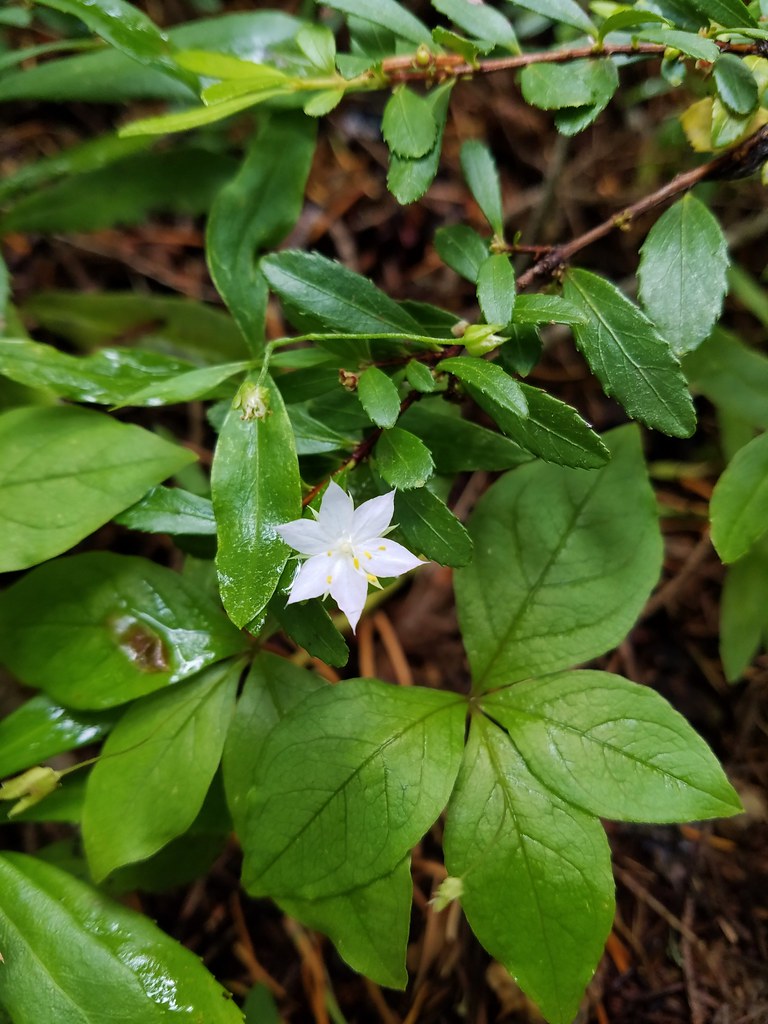
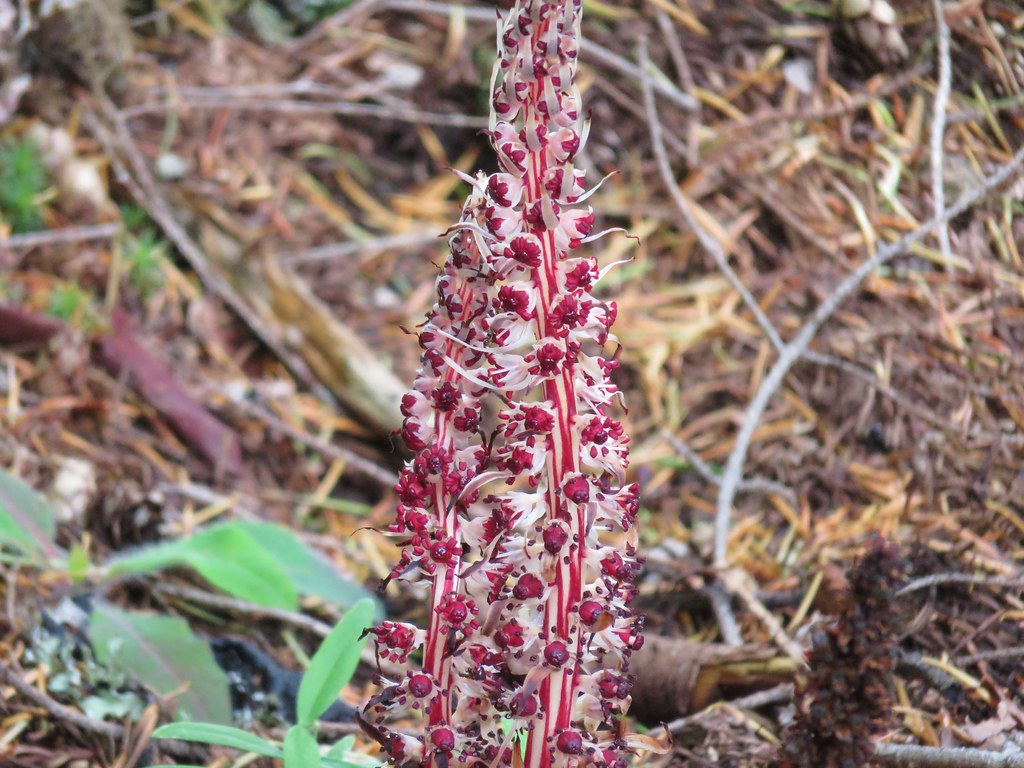
We followed this path a short distance to a small wildflower meadow full of giant blue-eyed mary and rosy plectritis.

Giant blue-eyed mary

Plectritis

As we were returning to the loop trail Heather spotted an animal moving in a meadow below. As we headed toward the meadow on the trail we were excited to find out what was roaming the meadow. As it turned out our first wildlife encounter of the day was a domestic cat.

Camassia Natural Area

Cat at Camassia Natural Area

We were still a week or two early for the bulk of the flowers, especially the camas, but again this meadow had a nice showing of the plectritis and blue-eyed mary.

Camassia Natural Area

Camas and plectritis

One of the few open camas blossoms.

Plectritis

The trail passed through the meadow and into an open oak woodland where we detoured to the right to an overlook of a large pond.

Camassia Natural Area

Pond in Camassia Natural Area

At a “High School” pointer in another meadow we left the loop trail again.

Camassia Natural Area

This path led past some nice flower displays to a marshy wetland.

Wildflowers in Camassia Natural Area

Plectritis and giant blue-eyed mary

Bog in Camassia Natural Area

The Oregonhiker field guide mentions that this wetland is “one the best areas in the northwest to see Great Camas“. We were too early to see much in the way of camas but we did spot a lone stalk blooming near the far end of the wetland.

Giant camas

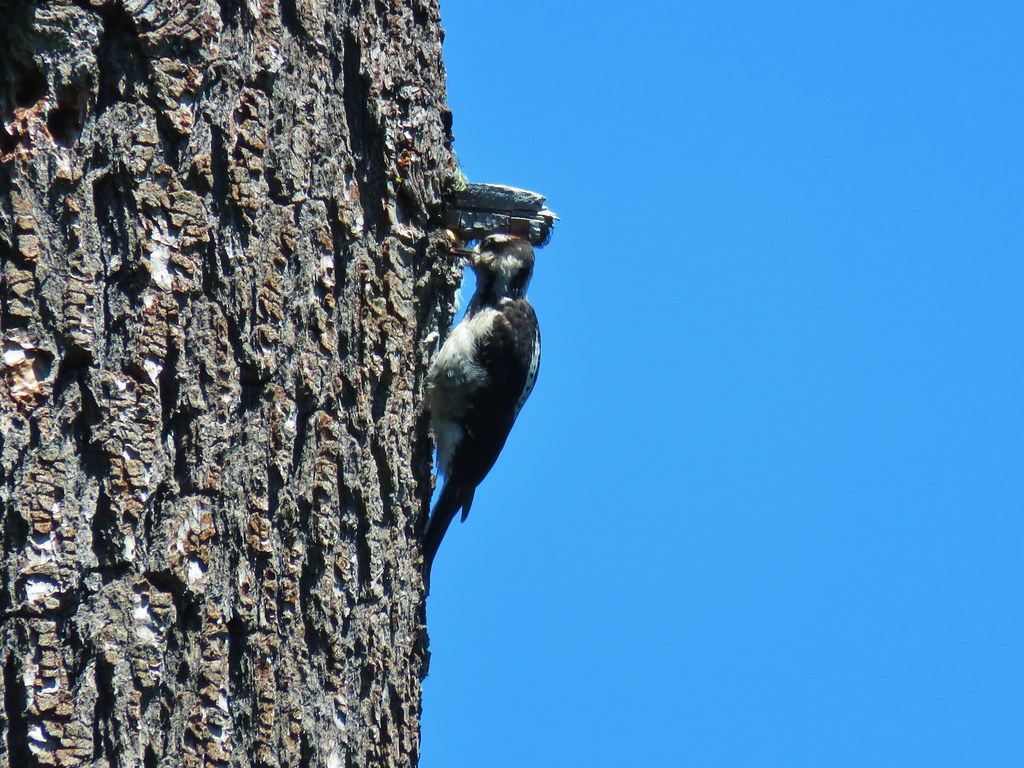
On our way back to the loop trail we spotted a hairy woodpecker working on finding its breakfast.

Hairy woodpecker

The loop trail descended a set up steps and soon entered a rockier meadow with more flowers including some Oregon saxifrage which was still unfolding.

Camassia Natural Area

Camassia Natural Area

Wildflowers in Camassia Natural Area

The trail then led to a viewpoint atop a cliff next to some madrones.

Madrones in Camassia Natural Area

Camassia Natural Area

More wildflowers followed before the trail reentered the woods.

Giant blue-eyed mary

Plectritis meadow

Camassia Natural Area

We passed a point for the Bridge Trail which headed downhill toward the high school parking lot and came to a viewpoint of Mt. Hood. Well what would have been a view of Mt. Hood on a clearer day anyway.

Camassia Natural Area

Looking toward Mt. Hood on a cloudy morning

One final patch of camas awaited before we completed our mile loop here.

Camas

For our next stop we headed north on Highway 43 (Willamete Dr.) to Mary S. Young Park. A joint effort between the city of West Linn and Oregon Parks and Recreation Department the park sits on the bank of the Willamette River and offers many activities. We began our hike from the trailhead at the parking lot at the end of the park entrance road.

Mary S. Young Park Trailhead

There were no brochures available with maps so we took a photo of a map off a signboard near the parking lot which turned out to be extremely helpful due to a serious lack of signage along the trails. We set off on the paved Riverside Loop Trail near the northern end of the parking lot. After a few feet we veered left on a wide unpaved path between picnic tables.
Mary S. Young Park

The woods here were filled with large trillium flowers of varying color.

Trillium

Trillium

Trillium

After crossing over the Trillium Trail we turned right at a T-shaped junction on the Turkey Creek Trail. This trail led downhill to Turkey Creek.

Turkey Creek Trail

Turkey Creek Trail

Turkey Creek Trail

After about a quarter mile the Turkey Creek Trail ended at the paved Riverside Loop Trail where we turned left. We stayed right at a fork and headed downhill to the Cedar Island Trail.

Mary S. Young Park

We veered left onto the muddy Cedar Island Trail even though we knew that the recent heavy rains had swollen the Willamette enough that access to Cedar Island itself would be cut off.

Willamette River

Riverside Loop Trail

Rabbit hopping into the brush on the left side of the Cedar Island Trail

Looking at Cedar Island

Cedar Island

After taking a look at Cedar Island we turned around staying right at junctions to pass around a sewer pump station on the Beaver Trail. At the far end of the station we turned left through a fence and dropped back down to the Riverside Loop Trail.
Fringecup and a couple of bleeding heart were blooming in this area.

Fringecup

Bleeding heart

We headed uphill on the Riverside Loop Trail retracing earlier steps to the junction with the Turkey Creek Trail. We passed that trail and continued uphill on the paved path for approximately 500′ where we veered left to a viewpoint bench overlooking the Willamette.

Mary S. Young Park

Willamette River

This 0.1mi path looped back to the Riverside Loop Trail which we followed uphill past a picnic shelter.

Mary S. Young Park

The path continued to the southern end of the parking lot where we had started. Here we veered left onto the unpaved Heron Creek Loop Trail.

Heron Creek Loop Trail

We followed this trail as it passed the parks ball fields and some busy squirrels.

Mary S. Young Park

Squirrel

At the far end of the fields we spotted only the second pointer we had seen along the trails where we stayed on the Heron Creek Loop Trail as it headed back into the woods.

Heron Creek Loop Trail

Heron Creek Loop Trail

Back in the woods we spotted a pair of woodpeckers in the same area. One appeared to be a hairy woodpecker while the other was a red-breasted sapsucker.

Hairy Woodpecker

Red-breasted sapsucker

Using the picture of the map on Heather’s phone we stuck to the Heron Creek Loop by staying left at junctions and crossing over both the Trillium Trail and the park entrance road. We stayed right at the next junction opting not to take the short Eagle Scout Loop Trail then stayed straight at a junction with the the Railroad Trail. Beyond that junction the Heron Creek Loop Trail soon began a descent to Heron Creek.

Heron Creek Loop Trail

Heron Creek Loop Trail

Heron Creek

After a second descent and climb past a tributary of the creek the trail leveled out again before arriving at the Turkey Creek Trail where we turned left, crossed Turkey Creek and arrived back at the junction where we had turned onto the Turkey Creek Trial earlier in the morning. We then retraced our earlier steps back to the parking area ending a 3 mile hike through the park.

We then headed for our final stop of the day in Lake Oswego at the Tryon Creek State Natural Area. There are several possible trailheads for the park we chose to start at the large parking area near the Nature Center. (Note the Nature Center and Jackson Shelter are currently closed due to construction but the restrooms are open. No reopening date has been set as of the day of this post.)

Tryon Creek State Natural Area

We stopped by the closed Nature Center to pick up a paper map and also consulted the map on a signboard to plot out our hike. The number of trails and multiple junctions allowed for numerous possibilities. We settled on a loop utilizing the North Horse Loop, Lewis & Clark, Middle Creek, Cedar, Red Fox, and Old Main Trails.

Map for Tryon Creek State Natural Area

From the Nature Center we followed a brick path right (north) to another map.

Tryon Creek State Natural Area

We stayed straight for a tenth of a mile passing the Maple Ridge Trail on the left just before a junction with the North Horse Loop.

Tryon Creek State Natural Area

This wide path led through a green forest with violets and trillium.

Tryon Creek State Natural Area

Violets and trillium

After .2 miles we stayed left ignoring the right hand route leading to a bicycle path and then quickly veered right when the North Horse Loop split creating two loop options.

North Horse Loop

This right hand path swung north another .4 miles to a junction with the Lewis and Clark Trail.

North Horse Loop

Lews and Clark Trail

We followed pointers for the Lewis and Clark Trail and Terry Riley Bridge. The trail descended along a hillside above East Fork Tryon Creek to the small suspension bridge which passed over a side stream.

Lewis and Clark Trail

Lewis and Clark Trail

Terry Riley Bridge

Terry Riley Bridge

On our way down we passed a stump hosting a pair of snails. We actually spotted quite a few in the park.

Snails on a stump

Snail

Beyond the suspension bridge .2 miles we rejoined the equestrian trail and crossed over Tryon Creek on High Bridge.

High Bridge

Tryon Creek

The trail split on the far side of High Bridge where we opted to go left on the hiker only Middle Creek Trail.

Tryon Creek State Natural Area

We followed this path for .2 miles across a boardwalk and along Tryon Creek to another trail junction.

Middle Creek Trail

Middle Creek Trail

At this junction we left the Middle Creek Trail crossing over the West Horse Loop and headed up the Cedar Trail.

Cedar Trail

We followed the Cedar Trail through the woods, crossing the West Horse Loop again at the .2 mile mark, then crossing Park Creek on Bunk Bridge, passing a small pond and finally crossing Paget Creek on another bridge before arriving at the Red Fox Trail a mile from the start of the Cedar Trail.

Cedar Trail

Park Creek from Bunk Bridge

Bunk Bridge

looking back at Bunk Bridge

Pond in Tryon Creek State Natural Area

Cedar Trail

Bridge over Paget Creek

Tryon Creek State Natural Area

Red Fox Trail junction.

We turned left onto the Red Fox Trail and in just over a tenth of a mile crossed Tryon Creek on Red Fox Bridge.

Red Fox Bridge

Red Fox Brdige

Tryon Creek

The trail made a brief but steep climb up to a three way junction with the Big Fir and Old Main Trail. We opted for the slightly shorter (but less crowded) Old Main Trail and turned right for .3 miles back to the Nature Center. Our route came in at 3.5 miles.

Although there were a lot of people in the park it never really felt all that crowded which was nice. There are still some trails left too so a return trip may be in order sometime in the future when the Nature Center is back open.

In all we covered 7.5 miles between the three stops and saw quite a few different flowers and a decent amount of wildlife. It had been another nice set of urban hikes. As much as we are looking forward to getting back up into the mountains once the snow melts we’re finding that these types of hikes have a lot to offer. Happy Trails!

Flickr: Camassia Natural Area, Mary S. Young Park, and Tryon Creek

Categories
Columbia River Gorge South Hiking Oregon Trip report

Dry Creek and Pacific Crest Falls

Despite what the weather thinks we are approaching our hiking season which means we will be hitting the trails much more often over the next 6 months. As we work our way into hiking shape we jumped on a chance at a rain free morning and headed to the Columbia River Gorge to check out a pair of waterfalls. Several trails in the gorge remain closed due to fire damage from the 2017 Eagle Creek Fire and others that had been reopened are again closed due to rock fall and slides caused by our recent weather combined with the fire damage. Please remember to check on the current status and conditions of trails before heading out.

Our sights were set on a section of the Pacific Crest Trail from Cascade Locks to Pacific Crest Falls. We had visited Pacific Crest Falls coming from the other side in October of 2015 (post) but at that time of year there wasn’t much water flowing so we thought a return visit was in order, especially after our recent rains.

We began our hike at the Bridge of the Gods Trailhead in Cascade Locks.
Bridge of the Gods Trailhead

From the trailhead we took the Pacific Crest Trail south.
Pacific Crest Trail sign in Cascade Locks

Pacific Crest Trail at Cascade Locks

The PCT briefly follows Harvey Road as it passes under I84 to a second possible trailhead.
Short road stretch on the PCT

Pacific Crest/Gorge Trail

From the Harvey Road Trailhead the PCT climbed gradually through the fire scarred forest. It was encouraging to see that many if not most of the trees along this section had survived. There was also quite a few early Spring flowers blooming.
Pacific Crest Trail in the Eagle Creek Fire scar

Eagle Creek Fire scar along the Pacific Crest Trail

Violets and snow queenSnow queen and violets

TrilliumTrillium

Just under a mile from Harvey Road the PCT once again briefly shared a gravel roadbed as it passed under a set of power lines.
Another short stretch of road along the Pacific Crest Trail

The trail leveled out shortly after passing the power lines and traversed along a sometimes steep hillside for three quarters of a mile to a signed junction near Dry Creek.
Pacific Crest Trail

Forest along the Pacific Crest Trail

Pacific Crest Trail

Dry Creek Falls Trail

Here we detoured away from the PCT and followed the pointer for Dry Creek Falls. This trail followed an old roadbed along Dry Creek just over a quarter of mile to Dry Creek Falls.
Approaching Dry Creek Falls

Dry Creek with Dry Creek Falls in the distance

Dry Creek Falls

Dry Creek Falls

Dry Creek Falls

After a nice little break at the base of the falls we headed back to the PCT where we turned right and crossed Dry Creek on a footbridge.
Footbridge over Dry Creek

Dry Creek

We had been discussing the fact that hikers were starting to post picture of fairy slippers (Calypso bulbosa) one of our favorites. We weren’t sure if any would be blooming yet in this area but we managed to spot a few as we continued south on the PCT.
Fairy slipper

Approximately 1.25 miles from Dry Creek the PCT crossed a talus slope.
Pacific Crest Trail

At the beginning of this section we spotted group of yellow flowers which turned out to be glacier lilies.
Glacier lilies

Glacier lilies

Glacier lilies

This section also provided the best, albeit limited, view across the Columbia River during this hike.
Columbia River

A half mile beyond the talus we passed the Herman Creek Pinnacles. We detoured briefly to get a closer look at the basalt formation and the cute little monkeyflowers blooming amid the rocks.
Herman Creek Pinnacles

Herman Creek Pinnacles

Chickeweed monkeyflower

Chickweed monkeyflower

After exploring the pinnacles we continued on and in less than a quarter mile arrived at Pacific Crest Falls.
Approaching Pacific Crest Falls

Pacific Crest Falls

The amount of water flowing over the falls was noticeably more this time around.
Pacific Crest FallsOctober 2015

Pacific Crest FallsApril 2019

We turned around here and headed back along the PCT to the junction near Dry Creek. Instead of returning to Cascade Locks via the PCT we turned downhill on the old road and followed the creek downhill.
Old roadbed back to Cascade Locks

Dry Creek

Dry Creek

After approximately 1.25 miles we passed some sort of a structure followed by a gate.
Dry Creek Road

Beyond the gate Dry Creek Road was open and well graveled.
Dry Creek Road

After passing a few logging roads and swinging quite a ways east we passed under I84 by turning left on SW Ruckle St which we followed to its end at SW Adams Ave. We turned left on Adams which brought us to a school.
Cascade Locks

We passed behind the school (and library) and made our way to Highway 30 where we turned left again towards the Bridge of the Gods.
Heading through Cascade Locks

Cascade Locks

Bridge of the Gods

We arrived back at our car as the rain was arriving. The hike was approximately 9.5 miles (I had some battery issues with the GPS) with a little under 1000′ of elevation gain. Hiking through Cascade Locks at the end was definitely not the most exciting end to a hike and unless you’re like us and specifically seek out alternate return routes I’d recommend just returning as you came. That being said the upper portion of the road walk along Dry Creek was nice.

I want to take a moment to thank the volunteers that have worked so hard to restore the trails affected by the fire. In particular the PCTA and Trail Keepers of Oregon (TKO) have been hard at work and doing an excellent job. Happy Trails!

Flickr: Dry Creek and Pacific Crest Falls

Categories
Hiking Oregon Portland Salem/Albany Trip report Willamette Valley

Tualatin HIlls Nature Park, Tualatin River NWR, and Willamette Mission State Park

For our March outing we decided to stick relatively close to home and visit three nearby hikeable areas. Our first stop, and furthest from Salem at just under an hour away, was at the Tualatin Hills Nature Park in Beaverton.

We started from the large parking lot at the Tualatin Hills Nature Center on SW Millikan Way.
Tualatin Hills Nature Center

The Nature Center is currently open from 8:30am-5pm M-F and 9am-5pm Sat. & Sun. while the park itself is open everyday from dawn to dusk. We arrived at dawn and set off on the paved Vine Maple Trail between the Nature Center and restrooms.
Vine Maple Trail

We quickly turned right onto the signed Oak Trail which was also paved.
Oak Trail

In a third of a mile we detoured briefly at a sign for the Tadpole Ponds.
Tadpole Pond

Although we didn’t see any tadpoles, or other wildlife here, the sounds of birds had not stopped all morning so we knew there were plenty of animals around. We returned to the Oak Trail which passed by Cattail Marsh on the second of three boardwalks.
Oak Trail

Cattail Marsh

Beyond the marsh we soon came to the third boardwalk which crossed over Cedar Mill Creek.
Boardwalk and viewing platforms along the Oak Trail

Cedar Mill Creek

One of the many birds that we’d been listening to was kind enough to pose for a moment as we stood on the boardwalk.
Sparrow

On the far side of the boardwalk was a trail junction where the Oak Trail veered right to the Merlo Rd/158th Ave Max light rail station. To the left was the Old Wagon Trail, a dirt path closed to bikes.
Old Wagon Trail

We followed this trail through a forest that was starting to show signs of Spring for a third of a mile to a junction with the Mink Path.
Old Wagon Trail

Blossoms along the Old Wagon Trail

Old Wagon Trail

Old Wagon Trail junction with the Mink PathTrail pointer at the Mink Path junction. We appreciated the fact that all of the junctions were signed and those signs were easy to read but placed in such a way that they were unobtrusive.

The Mink Path is a .1 mile connector between the Old Wagon Trail and Vine Maple Trail allowing for a shorter loop back to the Nature Center. We opted to stay on the Old Wagon Trail though and continued to the start of another boardwalk where we stopped so I could try and take a photo of a robin that was hopping around on the trail. As I was working on getting a picture Heather spotted a deer just a bit off the trail.
Deer along the Old Wagon Trail (there really is one out ther)Can you see the deer?

I thought she was seeing things but then I noticed it move.
Doe along the Old Wagon Trail (again it is there)How about now?

She turned and watched us as I attempted to get the camera to focus on her and not the branches in the foreground.
Doe in the Tualatin Hills Nature Park

Not far from the deer we spotted a squirrel trying to become one with a limb.
Squirrel

At a “Y” in the boardwalk we veered left keeping on the Old Wagon Trail until we reached a junction with the Vine Maple Trail a total of .4 miles beyond the Mink Path junction. We turned left onto the Vine Maple Trail and then took a right at a pointer for the Lily Pond.

A short path led down to the pond but before we had reached it a pair of wood ducks took flight and landed in a nearby tree.
Wood Ducks

As we were admiring the wood ducks a pileated woodpecker was busy with its breakfast.
Pileated woodpecker

We eventually made it down to the pond where a few ducks remained in the water including what appeared to be a pair of gadwalls.
Interpretive sign at the Lily Pond

Lily Pond

Gadwalls

There were also signs of beaver activity but we’ve yet to actually see one in the wild.
Beaver work

After visiting the pond we returned to the Vine Maple Trail which was now paved and followed it past its junction with the Mink Path and across Cedar Mill Creek.
Vine Maple Trail

Vine Maple Trail crossing Cedar Mill Creek

Shortly after crossing the creek we faced another choice. The Nature Center lay a third of a mile away via the Vine Maple Trail but more loop options were available by taking the Elliot Path.
Trail sign in the Tualatin Hills Nature Park

We took the .1 mile Elliot Path to a “T” shaped junction with the Big Fir Trail. Here again was a choice. Left headed back toward the Nature Center while right would take us to the Chickadee and Ash Loops and a short spur to Big Pond. We headed right and then turned left onto the spur to Big Pond.
Big Pond

Big Pond

There were plenty of ducks here as well. It appeared that most were mallards and green-winged teals.
Mallard and Green-winged teals

We returned to the Big Fir Trail and continued on crossing Beaverton Creek before arriving at a four way junction.
Beaverton CreekBeaverton Creek

More choices! The Big Fir Trail kept straight while the Chickadee Loop was to the right and the Ash Loop to the left. We began by heading right on the quarter mile Chickadee Loop which had a nice long section of boardwalk.
Chickadee Loop

After the quarter mile we were back at the Big Fir Trail where we turned right briefly before making a left onto the Ash Loop. The Ash Loop passed some wetlands where a pair of Canada Geese were enjoying the morning.
Wetlands along the Ash Loop

Canada geese

After .3 miles on the Ash Loop we found ourselves back at the four way junction where we turned right and recrossed Beaverton Creek and returned to the junction with the Elliot Path. Staying straight on the Big Fir Trail for just .05 miles we then turned right onto the .2 mile Trillium Loop. Oddly we didn’t see many of signs of trilliums along this short loop but we had seen several beginning to bloom along other trails. After completing the Trillium Loop we turned right again onto the Big Fir Trail for another .1 miles to the start of the half mile Ponderosa Loop.

We took the Ponderosa Loop where we spotted more trillium and our first wood violets of the year.
Trillium

Wood violet

At the end of the Ponderosa Loop we were once again turning right onto the Big Fir Trail. This time it was for less than a tenth of mile and then we were back at the Vine Maple Trail. Several spotted towhees and a couple of chickadees were foraging near this junction. The chickadees wouldn’t sit still but the towhees were a little more cooperative.
Spotted towhee

Spotted towhee

A right turn onto the Vine Maple Trail followed by another .2 miles of hiking brought us back to the parking lot at the Nature Center. The total distance for our hike with all the extra loops was still just 4.2 miles. When we had arrived we were only the second car but the lot was now full as it was just a bit after 9am. We had passed the first volunteer led tour as we were finishing up the along the Ponderosa Trail and another group was preparing to set off shortly.

One of the reasons we had chosen to start our day with this hike was that we knew the park would get busy as the morning progressed which isn’t a bad thing but we always prefer to avoid the crowds when possible. It really was a first rate park though so the popularity is warranted.

We left the nature park and headed for our next stop, the Tualatin River National Wildlife Refuge. I’d found this hike in the Oregon Hikers Field Guide and decided to give it a try.

We parked at the Visitor Center along Highway 99W. The majority of hikeable paths in the refuge are closed from October 1st trough April 30th but the one mile River Trail and the very short Ridge Trail are open year round so we made those the target of this visit.
Tualatin River National Wildlife Refuge Trailhead

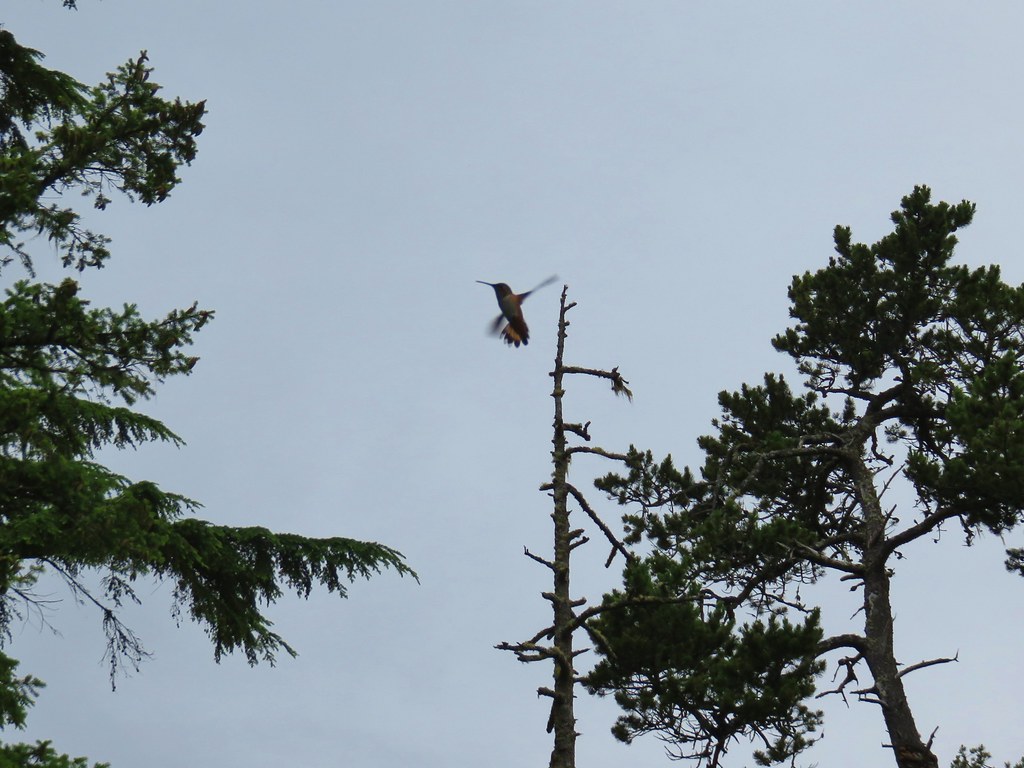
We set off on the River Trail and immediately spotted a hummingbird perched atop a tree.
River Trail

Hummingbird

The trail led downhill between a pair of small ponds.
Tualatin River Natioal Wildlife Refuge

The trail passes through a restored oak savannah before arriving at an observation deck above the Tualatin River a half mile from the parking lot.
River Trail

Viewing Deck along the River Trail

Tualatin River

Beyond the deck the trail continues briefly though the restored savannah before entering a forest.
River Trail

The trail splits in the trees with the Ridge Trail leading left to a viewpoint and the River Trail continuing right to the Wetlands Observation Deck.
River Trail junction with the Ridgetop Trail

We stayed right visiting the observation deck first.
Wetlands observation deck

View from the Wetlands Observation Deck

There were a few geese and ducks visible in the distance and a few robins closer by.
Canada geese in the wetlands

Robin

We returned to the junction with the Ridge Trail and turned right onto it to climb to the viewpoint. The Visitor Center was visible across the refuge and a number of ducks and other birds could be seen in the water below. At least some of the ducks looked to be northern shovelers.
RIdgetop Trail

View from the Ridgetop Overlook

Northern Shovelers

We returned to the parking lot after an easy 2.1 mile hike. We plan on returning in the future when the other trails are open to explore more of the refuge and check out the Visitor Center.

We left the refuge and headed south toward our last stop of the day at Willamette Mission State Park.

The site of the former Willamette Mission the 1600 acre park offers a number of activities besides hiking. The mission was established in 1834 by Rev. Jason Lee and marked the first organized religious enterprise in Oregon.

We had originally intended on a 2.7 mile hike here as described by William L. Sullivan in his “100 Hikes in Northwest Oregon & Southwest Washington” 3rd edition guidebook. Heather had put the book in her pack for the Tualatin Hills Nature Park hike as it was also featured in the guidebook. We hadn’t taken it back out of her pack so we weren’t exactly sure where we were supposed to park for the described hike so after paying the $5 day use fee at the entrance booth we immediately turned right into a parking area with a hiker symbol.

The lot serves as a trailhead for the Willamette Vision Education Trail, which was not where our book called for us to start but we were already parked so we decided to improvise.
Willamette Mission State Park Trailhead

We followed a bark path .1 miles to the start of a loop where we turned right.
Willamette Vision Educational Trail

Interpretive sign along the Willamette Vision Educational Trail

The trail followed a road bed for half a mile around a field before arriving at Mission Lake. Along the way we spotted a coyote that quickly disappeared back into the vegetation.
Mission Lake

A little over a mile from the trailhead we arrived at the nations largest black cottonwood.
Willamette Mission Cottonwood

Interpretive sign for the Willamette Mission Cottonwood

While we were admiring the tree an osprey landed in it and while we were watching the osprey we noticed a squirrel in the upper branches as well.
Osprey in the Willamette Mission Cottonwood

Squirrel in the Willamette Mission Cottonwood

Osprey and a squirrel sharing the Willamette Mission CottonwoodThe osprey and the squirrel (upper right hand corner).

A short distance from the cottonwood the loop crossed the park entrance road. In order to do the hike that we had originally intended to do we turned right and walked along the shoulder of the road for a quarter of a mile to a boat launch and pet exercise area where we picked up the Mission Trail.
Mission Trail

The Mission Trail followed the bank of Mission Lake for .6 miles to the Mission View Site, an observation deck looking across the lake to the site of the former mission.
Mission Trail

Mission Site viewing platform

Marker for the Willamette Mission

The former Mission Site across Mission Lake

We continued on past the Mission Site for another quarter mile before arriving at a the end of the Mission Trail at a paved bike path. We turned right detouring a quarter mile off the loop to visit the Wheatland Ferry crossing on the Willamette River.
Wheatland Ferry

After watching the ferry cross once we headed back along the bike path and followed it along the Willamette River for almost a mile and a half before veering right onto an equestrian trail. Although the bike path paralleled the river there were no real views to speak of due to a strip of trees and vegetation between the path and the water.
Bike path in Willamette Mission State Park

Bike path in Willamette Mission State Park

We opted to follow the multi-use dirt path instead of the paved bike path since pavement seems to be a lot harder on the feet. Despite being a bit muddy in spots the equestrian trail did finally provide a nice view up and down the Willamette.
Equestrian trail in Willamette Mission State Park

Willamette River

Willamette River

Just prior to reaching the high water channel the equestrian trail came near to the bike path. Staying on the equestrian trail would have taken us to the start of a three mile loop with no opportunity to get back to our car so we hopped back onto the bike path here.
Equestrian trail and the bike path in Willamette Mission State Park

We then followed the bike path back to the park entrance road.
Willamette Mission State Park

On our way back to the car we did complete the Willamette Vision Education Trail loop but that final 1.4 mile segment was fairly uneventful. The trail loops around a field with views back toward the center of the park. By that time we were passing the 13 mile mark for the day (we had planned on doing 9.2) and I was more focused on my feet than taking pictures. Not only had we started at the wrong spot but the guidebook would have had us cut out some of the bike path and all of the equestrian trail. Instead of 2.7 miles for this stop we had flipped the numbers and done 7.2.

We enjoyed all three stops but the Tualatin Hills Nature Park was definitely our favorite. With that being said they all would be suitable for hikers of all ages and abilities and each offers something unique. We’re lucky to have so many options within an hour of Salem and there are many more that we have yet to visit. Happy Trails!

Flickr: Tualatin Hills NP, Tualatin River NWR, Willamette Mission SP

Categories
Hiking Oakridge Area Oregon Trip report

South Willamette Trail

A dry forecast and a day off for Presidents Day seemed like a perfect excuse to get our February hike in.  For this outing we’d picked the South Willamette Trail. This was yet another trail we had yet to hike and this seemed like a good time of the year to do so because the trail lacks any highlights or views that would be impacted by inclement weather.

The South Willamette Trail is basically a five mile long connector trail between the Hardesty Trailhead and the Eula Ridge Trailhead. We began our hike at the Hardesty Trailhead which had also been the starting point for our Goodman Creek hike (post).

A single trail leaves the trailhead to the left of a large signboard.
Hardesty Trailhead

The trail is actually the Hardesty Trail which gains over 3000′ in five miles to the old lookout site atop Hardesty Mountain. Unless you’re looking for a training hike the old lookout site is now view less. For a slightly shorter and more scenic hike to that location start at the Mount June Trailhead instead as we did in 2013 (post).

Back to our current hike now. We followed the Hardesty Trail for .2 miles to the Goodman Creek Trail junction.
Hardesty Trail

Junction with the Goodman Creek Trail

We stayed left continuing on the Hardesty Trail for another four tenths of a mile to the start of the South Willamette Trail.
Hardesty Trail

Hardesty Trail junction with the South Willamette Trail

We stayed left again leaving the wider tread of the Hardesty Trail behind for the narrower but not overgrown South Willamette Trail.
South Willamette Trail

This trail runs parallel to Highway 58 but due to the presence of some private land holdings it bends back away from the highway which kept the noise down for much of the hike. There are not any views to speak of along the trail and although it crossed several creeks there are no waterfalls either. The trail simply passes through some different types of forest on its way from one end to the other. A half mile from the Hardesty Trail a nice footbridge brought us over an unnamed seasonal creek.
South Willamette Trail

A half mile later we were crossing another unnamed creek.
South Willamette Trail

This was followed by a footbridge over Crale Creek just a tenth of a mile later and a log crossing of another stream just beyond that.
South Willamette Trail

Crossing Crale Creek

The trail then made a slight climb to cross Crale Creek Road.
South Willamette Trail crossing Crale Creek Road

The trail climbed steadily for the next 1.75 miles gaining approximately 400′ to reach its high point at an elevation just over 1400′. There was just a little left over snow scattered about along the way.
A bit of snow along the South Willamette Trail

The Sun was shining overhead as we began to descend to a footbridge over Harper Creek.
Sun behind trees in the Willamette National Forest

Footbridge over Harper Creek

From there we climbed up and around a ridge gaining 280′ in half a mile before dropping again, this time to a bridge less crossing of North Creek.
North Creek

There was just enough water to prevent a dry rock hop across the creek and a pair of logs downstream were too slick and angled to be worth risking so we decided to make North Creek our impromptu turn around. We were only about a tenth of a mile from the Eula Ridge Trailhead so we had covered most of the trail and I had especially been struggling all morning.

We returned the way we’d come listening to the birds and watching for the small purple blossoms of snow queen.
WrenWren signing along the trail

Snow queen

I had had a sore throat when I’d woken up and by the time we made it back to the car I was chilled. I spent the rest of the day and the next in bed ill which actually made me feel a little better about having struggled so much on a 10.8 mile 1600′ elevation gain hike.

The South Willamette Trail is definitely not a big reward hike, there are no views to speak of and aside from the few small creeks no real attractions along the way other than a nice green forest. That being said it was a good moderate winter hike and it’s open all year save for the worst storms. Happy Trails!

Flickr: South Willamette Trail

Categories
Coastal Range Hiking Oregon Trip report

Gales Creek Trail

A day off of work for New Years and a clear weather forecast = our first hike of 2019. Our trail of choice was the Gales Creek Trail in the Tillamook State Forest. We began our hike at the Gales Creek Trailhead, the same trailhead that we used in 2015 for a hike to nearby University Falls (post).

We began this hike as we had on our previous visit by following the Gales Creek Trail west from the parking area.
IMG_5410

The first .8 miles to the Storey Burn Trail was a repeat of 2015 as we crossed Low Divide Creek on a footbridge and arrived at the trail junction.
IMG_5415

IMG_5417

Unlike last time when we turned left onto the Storey Burn Trail this time we turned right sticking to the Gales Creek Trail which paralleled Gales Creek.
IMG_5421

It was a chilly morning, about 28 degrees, and there was a fair amount of frost on the ground and plants. In addition to the typical frost we see on a chilly morning, we had been noticing white clumps here and there. The clumps looked like they could be garbage at first glance but it wasn’t. Other thoughts were fur but we couldn’t think of any animals in the area with white fur or something from a tree but it wasn’t the right time of year for things like cottonwood. Our next guess was a little closer with a fungus but upon closer inspection we determined it was some sort of fine ice/frost.
IMG_5423

IMG_5452

It was very interesting. The scarcity of the clumps told us that there must be some set of conditions to create these frost clumps and spent much of the hike marveling at the designs. Thanks to the help of some fellow hikers over at Oregonhikers.org we later learned that this type of frost is the result of a fungus inside certain rotting wood that leaves water and carbon dioxide behind as the wood decays. The CO2 forces the water out of the wood through tiny holes and when the temperature is just a bit below freezing creates the frost “hairs” . Here is a post describing the phenomena in more detail and a article on BBC – Earth with a time lapse video of the frost forming.

The Gales Creek Trail stuck fairly close to the creek, sometimes rising a bit above it as it passed through the forest and crossed several streams that would likely have been dry in the summer months.
IMG_5425

IMG_5427

IMG_5432

IMG_5433

A mile and a half from the Storey Burn Trail junction we did come to a dry creek bed, but a flash of water back in the trees looked like it might be a decent waterfall. The terrain looked like it might make for a reasonable off-trail jaunt and the fact that there was no water down at the trail but there was some further up made us curious so we decided to head uphill. After about a quarter mile climb over and around downed trees we found ourselves looking at a nice 20′ or so waterfall. The terrain narrowed enough that we couldn’t get right up to the falls but it was still a nice view (although not the best lighting for photos).
IMG_5437

IMG_5448

IMG_5450The route we came up.

After admiring the falls we returned to the trail and continued west toward the Bell Camp Trailhead.
IMG_5453A short section of railroad grade.

More creek crossings followed, some trickier than others, but we managed to keep our feet fairly dry using rocks or logs.
IMG_5454

A total of 2.25 miles from the junction we arrived at stand of alders as the site of good sized slide that occurred in 2007.
IMG_5457

IMG_5459

IMG_5461

Just over a mile from the alder stand we came to the trickiest crossing of the day. There appeared to be two options across, a lone rock barely sticking out of the water and a pile of slick looking logs. Due to the direction we were heading the rock was too far to reach so we opted for the logs. Some carefully placed steps got us across dry.
IMG_5471The logs we came across.

IMG_5472The rock after having crossed.

On the way back I opted to attempt a jump from the rock. It worked but after watching Heather recross fairly easily on the logs my 46 year old body thought that would have been a better choice.
IMG_5508Heather finishing her crossing on the way back.

Beyond this crossing the trail turned inland away from Gales Creek a bit. Slides apparently forced the trail to be rerouted at some point because a footbridge could still be seen through the trees closer to Gales Creek.
IMG_5507

We passed a very small cascade along this section and then approximately 1.75 miles from the tricky creek crossing arrived at our turn around point, a 25′ waterfall right along the trail.
IMG_5473

IMG_5483

IMG_5486

We took a break at the falls and as we studied the falls the light moved enough to create a small rainbow.
IMG_5499

IMG_5500

We returned the way we’d come. The sun was shining but it was still chilly as we made our way back.
IMG_5511

IMG_5516

IMG_5464

We didn’t see much wildlife, just a handful of birds, and being the middle of winter no wildflowers but there were a few mushrooms to enjoy.
IMG_5467

IMG_5469

IMG_5523

With the half mile side trip the hike wound up being just under 12.5 miles with approximately 1500′ of elevation gain. It was a nice start to a new year of hiking. Happy Trails!

Flickr: Gales Creek Trail

Categories
Hiking Oregon Portland Trip report Willamette Valley

Forest Park – Wildwood Trail & Leif Erikson Drive Loop

Heather and I recently celebrated our 23rd anniversary with a morning hike in Portland’s Forest Park followed by dinner at Sisters Irish Bistro in Salem.

We started our hike at the Germantown Road Trailhead where the Wildwood Trail crosses the road.
Wildwood Trail at Germantown Road Trailhead

We chose this loop due to the presence of some low clouds. This section of trail didn’t offer the mountain views that some others do so we thought it was a good day for it. From the parking area we headed south on the Wildwood Trail which briefly climbed before leveling out on a hillside.
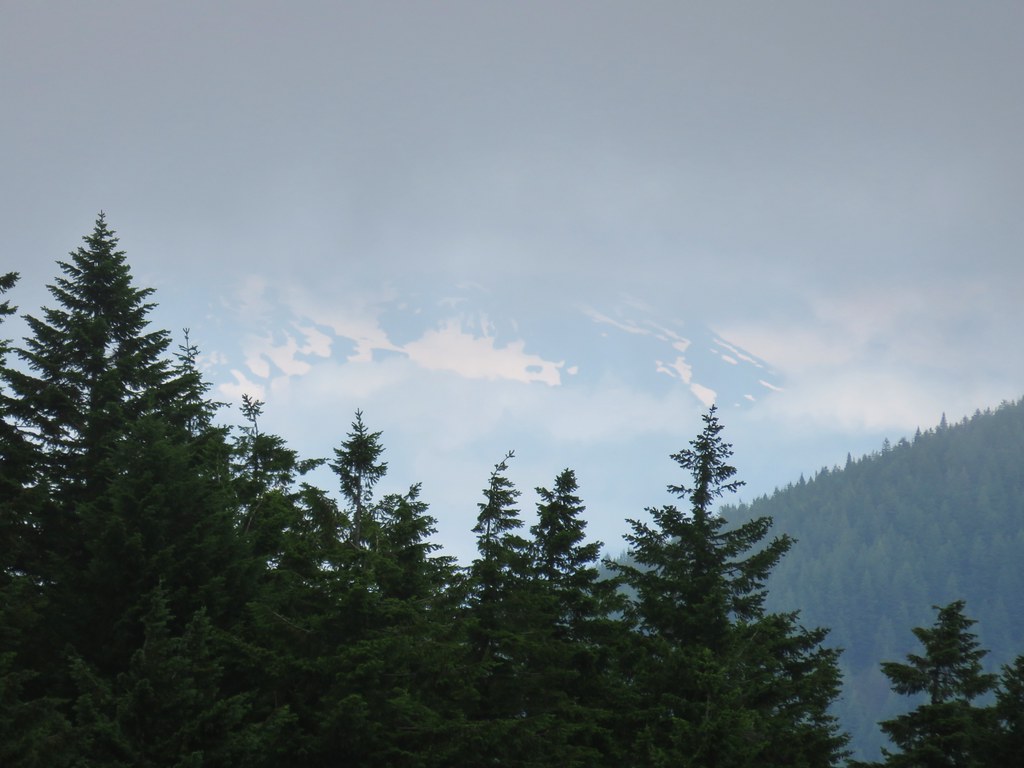
Wildwood Trail

Wildwood Trail

We followed the Wildwood Trail for a little over four and a quarter miles through the foggy forest. Junctions were well marked along the way with maps located at several of them.
Forest Park from the Wildwood Trail

Wildwood Trail junction with the Waterline TrailWaterline Trail junction

Wildwood Trail

Wildwood TrailMap at the Springville Road junction.

Wildwood Trail

Wildwood Trail

Wildwood Trail junction with the Ridge TrailRidge Trail junction

Wildwood Trail

We turned off of the Wildwood Trail at Fire Lane 7A which we followed downhill less than a quarter mile to a pointer for Leif Erikson Drive.
Wildwood Trail junction with Fire Lane 7A

Fire Lane 7A

Tie trail to Leif Erikson Dr.

A short path led fairly steeply down to the closed road where we turned left.
Leif Erikson Drive

Leif Erikson Drive

After one and a quarter mile on the road we came to the remains of an old building on the left.
Remains of an old building along Leif Erikson Drive

Remains of an old building along Leif Erikson Drive

A little over three miles after turning onto Leif Erikson Drive we arrived at another small parking lot along Germantown Road.
Leif Erikson Drive Trailhead along Germantown Road

Signboard for Leif Erikson Drive at Germantown Road

From this trailhead we followed the Cannon Trail uphill for a third of a mile back to the Germantown Road Trailhead and the Wildwood Trail.
Cannon Trail

Cannon Trail

Our loop was approximately 8.4 miles long with about 500′ of total elevation gain. It had been a good day for this particular hike and although we saw quite a few other people it never felt overly crowded. Shorter (or longer) loops could be done using the numerous other trails in the area.

Dinner at Sisters Irish Bistro was a perfect way to end our anniversary celebration, the food was excellent and so was the relaxing atmosphere. Happy Trails!

Flickr: Forest Park

Categories
Central Coast Hiking Oregon Oregon Coast Trip report

Amanda’s Trail to Cape Perpetua

As we approached the final hike of our official “hiking season” (May through October) we were playing a game of cat and mouse with the weather forecast. Our original plan had been a visit to Wahtum Lake between the Columbia Gorge and Mt. Hood but on Wednesday the forecast for Saturday was rain there so we began to look elsewhere. Our November hike (we try and do one a hike month in our “off-season”) was going to be a visit to Cape Perpetua via Amanda’s Trail so we checked the forecast for that area and it simply called for mostly cloudy conditions. We checked again on Thursday and the forecast for these locations had basically swapped and now Wahtum Lake looked better. Another check Friday night called for rain in both areas (more at Wahtum Lake) so we decided to check again in the morning before deciding where we would end up. The forecast the next morning was still calling for rain at both locations but not starting until 11am. With less precipitation expected at Cape Perpetua and views being less of a concern there we headed to Yachats on the Oregon Coast.

At the southern end of Yachats, after crossing over the Yachats River, we turned right on Ocean View Road which leads to the Yachats Ocean Road State Natural Site. The road passes along the natural site where there are several pullouts before looping back to Highway 101. We parked at a small dirt pullout near the southern end of the natural site and took our time getting going because we’d arrived a little before sunrise.
IMG_4765

Luckily there was a decent amount of light being provided by the Moon so it didn’t take long before we headed further south along Ocean View Road to a post marking the Oregon Coast Trail (OCT).
IMG_4769

We followed the posts south which brought us to the shoulder of Highway 101.
IMG_4772

A little under a quarter mile beyond the first OCT post the trail crossed over the highway at Windy Way Street. We then climbed a bit away from the highway before dropping back down to a driveway for a bed and breakfast.
IMG_4774

IMG_4775

IMG_4777

The first sign that this section of the OCT is Amanda’s Trail came on the far side of the B&B when the trail reentered the forest.
IMG_4780

The trail once again climbed away from the highway as it rounded a hillside with a few ocean views.
IMG_4783

IMG_4785

Approximately a half mile from the bed and breakfast we came to a statue of two bears representing an Alsea Indian myth that bears dance when the salmon come. Norman Kittle, whose name is on the statue, along with his wife Joanne were the first private landowners to donate a trail easement in the State of Oregon.
IMG_4796

Beyond the bear statue the trail began a slight decent, crossing a gravel road, before arriving at the small grotto with Amanda’s Statue ( a quarter mile from the bears).
IMG_4798

IMG_4803

IMG_4808

Interpretive signs here told of the blind woman’s forced march to the reservation.
IMG_4807

IMG_4806

The present statue is not the original statue as it and a nearby footbridge were washed away in a 2016 flood. The current statue is one of two others completed by the same artist and was provided by its owners when the original statue was lost. This version was placed a bit higher to avoid any subsequent floods. Other precautions to protect the statue have been taken as well.
IMG_4802

After visiting the statue we continued on across the replaced footbridge.
IMG_4810

Beyond the creek the trail climbed nearly 750′ as it turned inland up a forested ridge.
IMG_4814

IMG_4816

A mile from the bridge we had left the ridge and traversed around a marshy area near the head of North Cape Creek.
IMG_4818

After a little additional climbing on the other side of the creek the trail began to descend along this ridge toward the ocean. A mile and a quarter from North Cape Creek we arrived at a signed junction.
IMG_4826

Here we stayed right following pointers for the Stone Shelter on what was now the Whispering Spruce Trail.
IMG_4827

We had visited the shelter in 2013 (post) on what was part of the first outing featured in this blog.

A little less than a quarter mile from the junction we arrived at the shelter.
IMG_4829

It was a surprisingly nice morning considering the forecast and we were happy to have a good view from the shelter.
IMG_4831

IMG_4838

IMG_4835

After a brief rest we continued on passing another viewpoint before reaching a junction with the St. Perpetua Trail.
IMG_4841

IMG_4843

I mentioned that we had visited the stone shelter in 2013 but that had not been our first visit to the Cape Perpetua Scenic Area. In 2010 we had stopped here to visit the tide pools on the way home from a hike in the Drift Creek Wilderness (post). One thing we had not seen on either of our previous trips was the Giant Spruce, a nearly 600 year old State Heritage Tree.

With that goal in mind we took the St. Perpetua Trail downhill toward the Cape Perpetua Campground.
IMG_4846

Shortly after crossing Overlook Road, which leads to a trailhead along the Whispering Spruce Loop, we arrived at the campground entrance road.
IMG_4849

IMG_4848

IMG_4851

Behind the restrooms the trail continues across Cape Creek.
IMG_4852

IMG_4855

On the far side of the creek we turned left on the Giant Spruce Trail.
IMG_4856

This trail followed the creek upstream for .8 miles to the 185′ high tree with a trunk circumference of 40′.
IMG_4862

IMG_4865

IMG_4866

IMG_4870

We are always awestruck when we visit any of the giant old trees in person. It’s nearly impossible to capture just how huge they really are in photos. In addition to their size their age always forces us to pause and try and picture the timeline of their growth. This tree would have likely been a sapling at the same time Christopher Columbus was lost looking for a route to Asia.

After visiting the tree we returned to the junction near the footbridge at the campground. The weather was holding nicely so we decided to check out the Spouting Horn and Devil’s Churn areas. We followed the Giant Spruce Trail .2 miles to the visitors center where we picked up the Captain Cooks Trails.
IMG_4879

We followed this paved trail under Highway 101 to a viewpoint.
IMG_4881

IMG_4884

From the viewpoint the Captain Cook Trail went left making a loop with views of the Spouting Horn and Thor’s Well while the Trail of Restless Waters was to the right leading to Devil’s Churn. We decided to visit them in the opposite order of our 2010 visit and went right first. This trail briefly followed the shoulder of the highway past a small parking area and vista before dropping toward the ocean.
IMG_4886

IMG_4887

IMG_4888

IMG_4890

We crossed over Cape Creek and then followed the trail, keeping left at junctions, to a staircase down to Devil’s Churn.
IMG_4891

IMG_4894

IMG_4897

IMG_4898

IMG_4900

There was some decent wave action going on and we watched if for awhile.
IMG_4906

IMG_4908

IMG_4911

The crashing waves didn’t seem to bother a lone cormorant that was hunting for food in the churn.
IMG_4937

Speaking of food after we climbed back up the stairs we continued on a loop above Devil’s Churn to the Devil’s Churn Day Use Area where we wound up buying a lemon muffin from the concession stand there.
IMG_4940

After splitting the muffin we completed the loop and returned to the Captain Cook Trail.
IMG_4943

We stayed left at a fork in order to complete the loop clockwise.
IMG_4944

IMG_4945

The tide had been out far enough on our previous visit that the Spouting Horn had not been spouting but today was different.
IMG_4946

IMG_4948

We also hadn’t even noticed Thor’s Well that day but this time we knew what we were looking for and the Ocean was more cooperative.
IMG_4975

IMG_4991

IMG_4992

IMG_4967

IMG_4968

It was a bit of a zoo with people in the area though so we didn’t stay long and were soon heading back up the St. Perpetua Trail and past the shelter where the view had become much cloudier.
IMG_5007

IMG_5022

IMG_5021

The rain mostly held off as we made the two and a quarter mile horseshoe through the forest along the ridges above North Cape Creek between the shelter and Amanda’s Statue.
IMG_5030

By the time we reached the grotto, where we encountered a Boy Scout Troop, a steady light rain was falling. The rain continued to pick up as we made our way back to the Highway 101 crossing south of Yachats.
IMG_5048

IMG_5051

Overall it had been an excellent day, the rain had held off long enough for us to get some nice views and stay relatively dry without having to put on our rain gear. We got to finish up the trails in the Cape Perpetua Scenic Area and had unintentionally timed it better for the Spouting Horn and Thor’s Well. Oh and we also had that delicious lemon muffin mid-hike so yeah it was a pretty good way to end our 2018 hiking season. We do plan on getting a couple more hikes in this year but from November through April we drop down to just one outing (or so) a month. Happy Trails!

Flickr: Amanda’s Trail to Cape Perpetua

Categories
Hiking Indian Heaven Trip report Washington Washington Cascades

Falls Creek Falls and Indian Racetrack

One week after spending a day hiking in California at the Lava Beds National Monument (post) we visited our neighbor to the north, Washington. On our itinerary for the day were a pair of hikes north of Carson, WA. We started with a visit to Falls Creek Falls.

We parked at the trailhead at the end of Forest Road 57 where only one other car occupied the large parking area at 7:15am. The dim morning light coupled with some low clouds made it hard to capture the fall colors with the camera but our eyes had no problems appreciating them as we set off on the trail.
IMG_4324

We quickly passed a trail on the left which would be part of the loop we were planning on doing here and stayed straight toward the falls.
IMG_4331

At the .4 mile mark we arrived at a short suspension bridge over Falls Creek.
IMG_4339

IMG_4340

IMG_4342

Beyond the bridge the trail climbed gradually for a mile to a junction. Along the way there were several views of the creek.
IMG_4345

IMG_4348

IMG_4350

IMG_4354

IMG_4357

At the junction we stayed right and continued to gradually climb for another .3 miles to three tiered Falls Creek Falls. The first views are of the upper and middle tiers through some trees.
IMG_4366

IMG_4368

The lower tier comes into view near the end of the trail at which point most of the upper tier is lost due to the angle.
IMG_4391

IMG_4388

We spent a few chilly minutes admiring the falls before heading back to the junction.
IMG_4393

Here we veered uphill to the right climbing fairly steeply for about two tenths of a mile to the Falls Creek Trail.
IMG_4395

IMG_4396

Before continuing on the loop we turned right on the Falls Creek Trail to visit a viewpoint or two above the falls. After .6 miles on this fairly level trail we spotted a side trail heading out to the first viewpoint. We started to head out this spur but then noticed a tent set up there (we found the owners of the other car) so we continued another quarter mile to the second viewpoint.
IMG_4403

IMG_4404

The view from the top was just out over the valley, but a steep scramble trail led down to the top of the falls from here. We checked to see if the ground seemed muddy or slick, but it turned out to be in good shape so we made our way down to the creek just above the falls.
IMG_4412

IMG_4408

From the viewpoint we returned to the loop and continued down the Falls Creek Trail 1.7 miles to another bridge over Falls Creek which we hadn’t seen since the viewpoint. Despite the creek not being visible from the trail the scenery was not lacking due to the surrounding forest and fall colors.
IMG_4415

IMG_4423

IMG_4426

IMG_4427

At the far side of the bridge we turned left for a little over half a mile completing the loop and returning to our car, and a much fuller parking lot.
IMG_4429

IMG_4432

After the 6.3 mile hike here we were ready for the second hike of the day to the Indian Heaven Wilderness and Red Mountain. We drove back toward Carson and eventually (after missing the turn the first time) turned east on Warren Gap Road (Road 405) at a pointer for the Panther Creek Campground. We followed this road for a little under two miles to Forest Road 65 where we turned left for 8 miles, passing the parking area for Panther Creek Falls (post) along the way, to a junction with FR 60. We turned right here and followed this road for two miles to the Pacific Crest Trail and a small campground.
IMG_4434

IMG_4436

We followed the PCT north climbing gradually through the forest which looked quite different from the forest along Falls Creek just a few miles away.
IMG_4440

IMG_4445

A little over 1.75 miles from the trailhead we passed one of the small Sheep Lakes.
IMG_4449

IMG_4451

A quarter mile later we entered the Indian Heaven Wilderness.
IMG_4456

Although there wasn’t as much fall color along this trail as there had been along the trails at Fall Creek there was some and there were also some interesting mushrooms to be seen.
IMG_4461

IMG_4469This may named be Green Lake

IMG_4442

IMG_4453

IMG_4464

IMG_4473

As we hiked through a meadow we spotted the lookout tower on Red Mountain to the SW which was to be one of our stops on the hike.
IMG_4478

IMG_4480

We turned left off of the PCT 1.2 miles after entering the wilderness at a sign for Indian Racetrack.
IMG_4483

IMG_4485

This trail led a half mile through the forest to the large meadows at Indian Racetrack where up until 1928 tribes indeed raced horses.
IMG_4489

IMG_4493

IMG_4498

IMG_4501

We turned left in the middle of the meadows toward a trail sign for the Indian Racetrack Trail.
IMG_4502

IMG_4503

This trail climbed for .8 miles, steeply at times, to a road on the shoulder of Red Mountain. An opening just above a saddle along the way provided a nice view of Mt. Adams to the NE.
IMG_4506

IMG_4516

IMG_4513

IMG_4523

We followed the road uphill for .3 miles to the lookout gaining views of Mt. St. Helens and Mt. Rainier along the way.
IMG_4528

IMG_4532

IMG_4537

IMG_4542Lemei Rock and Mt. Adams

Near the lookout Mt. Hood and Mt. Jefferson could be seen to the south in Oregon.
IMG_4543

IMG_4544

We took a nice long break at the summit gazing at Washington’s trio of volcanoes and talking with a fellow hiker from Vancouver who had tried to reach the lookout earlier in the year but had been turned back by snow.
IMG_4555_stitch

IMG_4575Mt. St. Helens

IMG_4581Mt. Rainier

IMG_4569Mt. Adams

From the lookout we headed back down the road and followed it all the way back down to FR 60 a total of 3.4 miles from the tower.
IMG_4583

We were a half mile from the Pacfic Crest Trail so we road walked, uphill, back to our car. In hindsight it might have been nicer to do the loop in reverse in order to start with the road walks and finish the hike with a gradual descent. Either way it was a great hike, but we had been expecting it to be a 7.5 mile loop based on our guidebook, but our GPS (and our legs) put it at 9.2 miles. Happy Trails!

Flickr: Falls Creek Falls and Indian Racetrack

Categories
High Cascades Hiking Oregon Sky Lakes/Mountain Lakes Area Trip report

Fish Lake and Lake of the Woods

Sunday of Columbus Day Weekend was the only day of the four where the forecast in the Cascade Mountains looked promising so on that morning we headed west from Klamath Falls on Highway 140 to visit a pair of lakes near Mt. McLoughlin.

The skies over Klamtah were pretty much clear as was the case for most of the drive, but as we crossed over the Cascade Crest we found ourselves in a fog bank. We turned off the highway at sign for the North Fork Campground between mileposts 28 and 29. We parked at a small trailhead parking area a half mile down this road on the left.

It was a chilly morning in the fog as we set off on the Fish Lake Trail, but it wasn’t raining.
IMG_4025

The trail began by passing through a nice fir forest with occasional views of North Fork Little Butte Creek.
IMG_4029

IMG_4031

IMG_4033

IMG_4041

After .6 miles we came to a signed spur trail which we followed 100 yards to the Fish Lake Dam.
IMG_4042

IMG_4043

IMG_4044

For the better part of the next mile the Fish Lake Trail veered away from the water as it curved around some private summer homes.
IMG_4048

IMG_4049

When the trail did make it to the lake there wasn’t much to see due to the fog.
IMG_4057

The trail stuck closer to the lake shore for the next .8 miles before arriving at Doe Point and the Doe Point Campground. As we made our way around Doe Point the fog began to lift revealing some of the blue sky we had seen on our morning drive.
IMG_4059

A quarter mile after rounding Doe Point we arrived at the Fish Lake Campground and boat ramp where a variety of woodland animals were busy harvesting chinkapin.
IMG_4068Stellar’s jay

IMG_4069Chipmunk

IMG_4072Golden-mantled ground squirrel

Our guidebook suggested turning around at the Fish Lake Resort, but we wound up losing the trail near the picnic shelter and decided not to try and walk through the campground to find the continuation of the trail and turned around.
IMG_4077

It was a different hike on the way back as the fog had entirely lifted from the lake and was breaking up overhead.
IMG_4081

By the time we were hiking back along the creek the sky was a beautiful blue.
IMG_4091

Typically having a hike only clear up near the end is a bit of a bummer, but we had another hike to go and with the clear skies we knew we should have a good view of Mt. McLoughlin from Lake of the Woods.

From the Fish Lake Trailhead we drove back east on Highway 140 to a sign for Fish Lake. We turned right at the sign and followed this road for a mile and a half to the Dead Indian Memorial Highway where we turned right again. The suggested starting point for this hike in our guidebook was at the Sunset Campground which was a mile down this highway. When we arrived at the entrance road we found it was gated so we turned around and wound up parking at the Rainbow Bay Picnic Area near the Lake of the Woods Resort after obtaining a $6 parking pass.
IMG_4097

From the parking lot we headed SE along the lake shore around Rainbow Bay where some ducks were enjoying the wonderful weather.
IMG_4099

IMG_4102

IMG_4104

IMG_4107

The first mountain to come into view was Brown Mountain across the lake.
IMG_4106

Shortly after rounding the bay we arrived at the Sunset Campground where we did indeed have a nice view of Mt. McLoughlin. The mountain was sporting a dusting of new snow at its summit.
IMG_4108

IMG_4109

IMG_4121

We could picture the route up to the summit that we’d taken a couple of years before (post).
IMG_4123

Satisfied with our view we turned around and headed back toward the Rainbow Bay parking area. We weren’t done hiking though and we veered behind the parking lot on the Sunset Trail toward the Aspen Point Campground.
IMG_4124

At a three way junction we turned right onto the Family Trail Loop.
IMG_4128

The Family Trail Loop crossed the paved road we’d been on earlier after a tenth of a mile.
IMG_4130

Just after crossing the road the Mountain Lakes Trail split off to the right while we stayed left.
IMG_4133

Several interpretive signs were set up along this trail.
<IMG_4135

IMG_4134

IMG_4138

IMG_4141

We stayed left ignoring a tie trail that would have looped us back to the Mountian Lakes Trail junction and arrived at the Great Meadow .6 miles from the road crossing.
IMG_4145

IMG_4149

IMG_4152

At a junction with the High Lakes Trail at the Great Meadow we turned left skirting the meadow in the forest for .7 miles to another road crossing across from the Aspen Point Campground.
IMG_4160

IMG_4162

At a junction on the other side of the road we went right keeping on the High Lakes Trail which led around Lake of the Woods to the NW. This section of trail passed some golden aspen trees and a leaf covered slough where ducks, geese, and a heron were spending their Sunday.
IMG_4163

IMG_4182

IMG_4181

IMG_4183

IMG_4209

We followed this trail past an old Forest Service complex and planned on turning around at the guidebooks suggested location, a small canoe launch.
IMG_4188

IMG_4189

The canoe launch wasn’t much, but there was a nice view of some of the peaks in the Mountain Lakes Wilderness (post) across the water.
IMG_4189

A solitary duck was swimming around in the launch and it apparently expected us to have some food because she came right up to us.
IMG_4194

IMG_4198

We did our best to explain that we don’t feed the wild animals and she waddled back to the water. At that point Heather asked about something on a plank in the water that I had originally thought was another duck but then decided it was just a rock set on the wood. She had taken it for something inanimate as well but then thought she saw it move. Upon closer inspection we discovered that it was a muskrat (initially we thought nutria but it was cuter than that invasive species).
IMG_4202

IMG_4205

It wasn’t particularly concerned by us but eventually it disappeared into the water. Then a dragon fly showed up and hovered over the water just below me.
IMG_4207

After our unique little interaction with nature it was time to start back. We returned to the Aspen Point Campground and followed paths near the lake shore back to the Lake of The Woods Resort.
IMG_4221

IMG_4215

IMG_4218

IMG_4228

IMG_4229

Our hike here was 6.3 miles long while the hike at Fish Lake had been 7 miles giving us a nice 13.3 mile day. After the cold, foggy start the day had turned out beautiful. We would be heading home the next morning (with a stop along the way of course) and this was a perfect way to end our time in the Klamath Falls area. Happy Trails!

Flickr: Fish Lake and Lake of the Woods

Categories
California Hiking Trip report

Lava Beds National Monument

**Note the 2020 Caldwell Fire burned a portion of the Schonchin Butte hike and the 2021 Antelope Fire burned the area around Whitney BUtte.**

We spent the second day of our Klamath Falls trip in California visiting the Lava Beds National Monument. It had started raining Friday afternoon and continued overnight, but by morning the clouds were beginning to break up leaving scattered showers to make their way across the landscape. This made for some dramatic scenery on our drive from Klamath Falls to the National Monument, especially along Tule Lake. We took advantage of a couple of the numerous pullouts that are part of the Tule Lake National Wildlife Refuge to admire the colorful sky and numerous waterfowl on the lake.
IMG_3534

IMG_3539

IMG_3542

IMG_3547

IMG_3545

IMG_3550

The fee booth (currently $20/per car) was closed at the north entrance of the Monument so we had to drive to the Visitor Center to obtain a pass which was 9.7 miles away.
IMG_3553

IMG_3555

It was a little before 8am and the Visitor Center didn’t open until 9am but we were able to pay with a fee envelope. What we couldn’t do was obtain a cave permit though, which are required to visit any of the area caves. The threat of White Nose Syndrome has made screening by Park Rangers necessary. We’d need to come back for that but in the meantime we headed back north to the Black Crater Trailhead.
IMG_3559

From this trailhead there were two destinations, Black Crater and an overlook of the Thomas-Wright battlefield.
IMG_3560

IMG_3563

Each destination shares the first tenth of a mile of trail. The overnight rain had brought out the sweet smell of sagebrush to which Heather pointed out that smell is one thing that you can’t capture in photos.
IMG_3564

We decided to visit Black Crater first and took the right hand fork when the trail split.
IMG_3567

This trail passed over a lava flow arriving at the start of a short .3 mile loop that climbed up and around part of the splatter cone. We took notice of a peak to the NW that appeared to have a cloud stuck to its summit. It turned out to be Mount Dome, and for much of the rest of the day we kept watch on this peak to see if it would ever be cloud free.
IMG_3574

IMG_3575Tule Lake

IMG_3577

IMG_3583

Although not nearly as large, Black Crater did remind us a little of Coffee Pot Crater which we’d visited in June (post).

After completing the loop we headed for the battlefield. It was just over a mile from the fork to the viewpoint and the trail spent this time passing volcanic formations and a few lingering wildflowers.
IMG_3600

IMG_3601

IMG_3602

IMG_3599

IMG_3605

IMG_3608

IMG_3612

The Thomas-Wright battle took place on April 26, 1873 when an Army patrol was defeated by the Modocs.
IMG_3614

IMG_3615

After reading up on the battle we headed back to the trailhead and drove back to the now open Visitor Center. We spent some time looking at the displays inside before obtaining our cave permit. We hung the permit in our car and headed for Mushpot Cave. After initially starting to drive Cave Loop Road we realized that Mushpot Cave was actually right next to the Visitor Center so we turned around and parked back once again at the center.

At the far end of the center we spotted the sign for the cave.
IMG_3619

A .2 mile paved path led to the entrance of the lava tube.
IMG_3620

IMG_3622

IMG_3624

This is the only lighted cave in the Monument and also featured a paved path lined with interpretive signs.
IMG_3625

IMG_3634

IMG_3631

IMG_3648

IMG_3643

The lava tube is 770′ in length and does have a spot or two where we needed to duck under the low ceiling. We exited the cave and returned to our car. Since we were only there for the day we skipped the rest of the caves along the loop (a few were closed for bat mating season). Instead we drove north, once again, from the Visitor Center to a sign for Skull Cave where we turned right. After a mile we pulled into a small trailhead parking area for Symbol Bridge and Big Painted Cave.
IMG_3657

The short trail here passes several collapsed sections of a lava tube and offers a good view of Schonchin Butte.
IMG_3661

We turned left at a sign for Big Painted Cave.
IMG_3664

The signed cave entrance was only about 100′ along the spur trail.
IMG_3668

IMG_3669

More of an overhang than a cave, a path led down to the entrance.
IMG_3670

IMG_3671

We honestly couldn’t make out any of the pictographs, the colored rocks made it difficult to tell what was natural and what wasn’t. It’s been a common theme for us when visiting pictograph sites.

We returned to the main trail and continued the short distance to Symbol Bridge.
IMG_3679

IMG_3680

IMG_3681

Again a short path led down to the cave entrance, but this time the pictographs were clearly evident.
IMG_3689

IMG_3691

IMG_3694

IMG_3705

IMG_3707

We headed back to the car happy to have finally been able to make out some drawings. After completing the two mile hike we continued driving north to a sign for Merrill Cave where we turned left for almost a mile to the shared Whitney Butte and Merrill Cave Trailhead.
IMG_3711

IMG_3712

Up until this point we had been following the recommended hikes in William L. Sullivan’s “100 Hikes/Travel Guide Eastern Oregon” 3rd edition, but these were from Bubba Suess’s “Hiking Northern California” book.
We started with the short path to Merrill Cave. An interpretive sign at the entrance told a familiar story, warming temperatures have led to the loss of ice in this cave like many others. 😦
IMG_3715

We descended the metal staircase and followed a metal walkway through the cave.
IMG_3717

IMG_3719

Near its end there was a metal ladder dropping down into an opening.
IMG_3720

The rails actually did have a little ice on them as we climbed down into the lower chamber where the path quickly ended.
IMG_3721

IMG_3725

We climbed back out of the cave and then started down the Whitney Butte Trail. One exciting prospect of the Whitney Butte Trail was that it would take us into the Lava Beds Wilderness.
IMG_3729

IMG_3733

This was by far the longest hike we’d tackle on the day but was still just a little under 7 miles round trip. The Whitney Butte Trail began by passing through open sagebrush then skirted around an old lava flow.
IMG_3734

IMG_3737

IMG_3738

For much of the hike out, Mount Dome lay almost straight ahead and it was still holding onto its cloud cover. The trails namesake, Whitney Butte, stayed hidden for the first mile and a half before revealing itself to the left of the trail.
IMG_3740Whitney Butte to the left and Mount Dome to the right.

Approximately 2.2 miles into the hike we passed a trail signed for Gold Digger Road.
IMG_3744

The clouds had actually increased a bit during the day and we were feeling occasional rain drops which weren’t a big deal, but the cloud cover did put a hamper on the views. Many lower buttes were visible but the higher peaks were hidden.
IMG_3745

As we passed by Whitney Butte we began scouting out a route down. Our plan was to follow a suggested off trail visit to the top of the butte described in the guidebook. The most gently sloping ridge appeared to come down the eastern side of the butte.
IMG_3745

We stayed on the Whitney Butte Trail until it ended at the Callahan Lava Flow.
IMG_3753

IMG_3754

From the lava we turned left and headed up Whitney Butte.
IMG_3756

It was a relatively easy scramble which provided some nice views despite not being able to see Mt. Shasta or Mt. McLoughlin due to the cloud cover. On the other hand Mount Dome finally broke free of the last of its clouds.
IMG_3759

IMG_3774

IMG_3773

IMG_3767

In addition to the views we spotted some wildlife.
IMG_3761

IMG_3765

IMG_3784

IMG_3781

On top of the butte we stayed left around a pair of craters and attempted to descend on the ridge we’d picked out on the way by.
IMG_3792

We actually overshot it a bit but still had no problem coming down the old cinder cone and reconnecting with the Whitney Butte Trail. The clouds were now breaking up again as we headed back to the trailhead. Our next destination, Schonchin Butte, was visible for most of the hike back.
IMG_3793

IMG_3794

After finishing the hike we once again drove a short distance north to a signed gravel road for Schonchin Butte. After a mile of good gravel we parked at the trailhead and started up the Schonchin Butte Trail.
IMG_3797

The trail was well graded and the views were great making the climb feel fairly easy.
IMG_3802Tule Lake

IMG_3805Whitney Butte and Mount Dome

After .6 miles the trail split allowing for a loop around the crater and past the Schonchin Butte Lookout.
IMG_3808

IMG_3816

As we made our way around the loop we got a view down to the Symbol Bridge Trail.
IMG_3827

IMG_3828

The lookout tower was perched on lava rocks that looked like bricks.
IMG_3830

IMG_3847

Along the deck were identifiers for the area landmarks, some visible and some not.
IMG_3840

IMG_3841

After identifying the landmarks that were visible we completed the loop and returned to our car. From Schonchin Butte we drove back to the fee booth at the northern park entrance and turned right onto Rim Road for 3.2 miles to a signed pullout for Captain Jack’s Stronghold.
IMG_3851

Here two loops (short and long) explore the area where a small force of Modoc held out against the U.S. Army in 1872-73.
IMG_3852

We unfortunately did not grab a trail guide for the interpretive trail which we greatly regretted. After climbing a small hill a trail sign pointed out the shared beginning of both loops.
IMG_3855

The trail led through lava formations with narrow passages and small caves. Numbered signs along the way marked items that we could have read about if we had grabbed a guide.
IMG_3859

IMG_3860

IMG_3864

IMG_3866

IMG_3871

IMG_3879

At the .3 mile mark the loops split with the shorter return route to the right and the longer loop to the left. We went left.
IMG_3881

IMG_3882

IMG_3883

IMG_3889

IMG_3907

The long loop was a mile and a half versus a half mile for the short loop option. The extra mile was well worth it even without the companion trail guide. Near the end of the loop we spotted a pair of deer munching on some leaves.
IMG_3915

IMG_3925

We had one final stop planned before leaving the Monument for good so when we got back to our car we continued east on what became County Road 120 following signs for Petroglyph Point. Along the way we briefly reentered the Tule Lake National Wildlife Refuge where we wound up stopping again to gawk at the wildlife.
IMG_3930

IMG_3928

IMG_3942

IMG_3936

We left County Road 120 when prompted by the signage and soon found ourselves pulling into a large parking area near the base of Petroglyph Point.
IMG_3950

Here we walked along a fence (to protect the thousands of petroglyphs)for .3 miles marveling at all the designs.
IMG_3955

IMG_3954

IMG_3969

IMG_3979

IMG_3987

IMG_3990

IMG_4005

IMG_4011

The cliffs above were fairly impressive on their own.
IMG_3959

IMG_3994

After spending quite a while contemplating the art we headed back to Klamath Falls. It was a full day for sure having spent over 10 hours in the Monument and logging around 16.5 miles but well worth the time and effort. Even with all of that there is still much left there to explore on our next visit. Happy Trails!

Flickr: Lava Beds National Monument