For the second day of our backpacking trip we had originally planned on hiking up to Bear Lake from our campsite at Eagle Creek Meadow then returning to camp to pack up and move closer to the Bench Trail. After reestablishing camp we would then take the Bench Trail up to Arrow Lake in the afternoon/evening. We had spotted a couple of workable campsites on our way by the day before (post), but Heather had already decided by the end of that day that she would be skipping the out-and-back to Arrow Lake due to the heat.
As we set off for Bear Lake at 6:15am I was still considering attempting to reach Arrow Lake. It had actually been cool enough at camp that morning for me to put on my beanie and thicker gloves.

 Doe on the other side of Eagle Creek.
From our campsite we made our way to the Lookingglass Trail and the ford of Eagle Creek. We’d seen some hikers crossing the ford the day before. They had all used their water shoes for the ford and Heather planned on doing the same. I don’t have a pair myself, so I had the choice of fording in my trail runners or making an attempt to cross on logs/rocks. I chose to try and keep my feet dry.
 I started out on the small logs shown here.
Somehow I managed to make it across and after Heather changed into her hiking boots we started uphill.

We made it approximately 100 yards before realizing that I had left my car key and wallet in the tent and Heather had left her phone. I turned around and headed back to retrieve the forgotten items. After two more dry crossings I caught back up to Heather and we continued uphill toward a junction with the Bear Lake Trail.
 Here comes the Sun.
 Shade for us for now though.
 The junction up ahead.
 We arrived at the junction roughly three quarters of a mile and 650′ up from camp.
We turned onto the Bear Lake Trail which continued to climb but more gradually. After another third of a mile we took a side trail toward Culver Lake. The first trail we tried led to a marsh where a doe was having her breakfast.

 Not many mushrooms of fungi along the trails but we spotted a few along this trail.
 Globe penstemon


The lake proved unreachable from this first trail so we returned to the Bear Lake Trail and quickly found another side trail which did lead to Culver Lake.
 Cairn marking the trail to Culver Lake.


 Snow patch along Culver Lake.

We took a break at the lake. It was already getting warm and I finally decided that I was not going to be attempting the 2000′ climb to Arrow Lake later in the day. It was not necessary in order for us to check off any featured hikes and I didn’t want to risk overexerting myself when we had three more lakes to visit over the next couple of days. Our new plan was to return to camp after visiting Bear Lake, pack up and hike out, then drive to the West Eagle Meadows Trailhead. There we could either camp at the West Eagle Meadow Campground, or hike in 3ish miles and hope to find a suitable campsite. We would make our choice later on when we had a better idea of how we were feeling.
After admiring the lake we returned to the Bear Lake Trail which gained another 200 plus feet before dropping to Bear Lake after half a mile.

 Needle Point from the trail.
 Nuttall’s linanthus
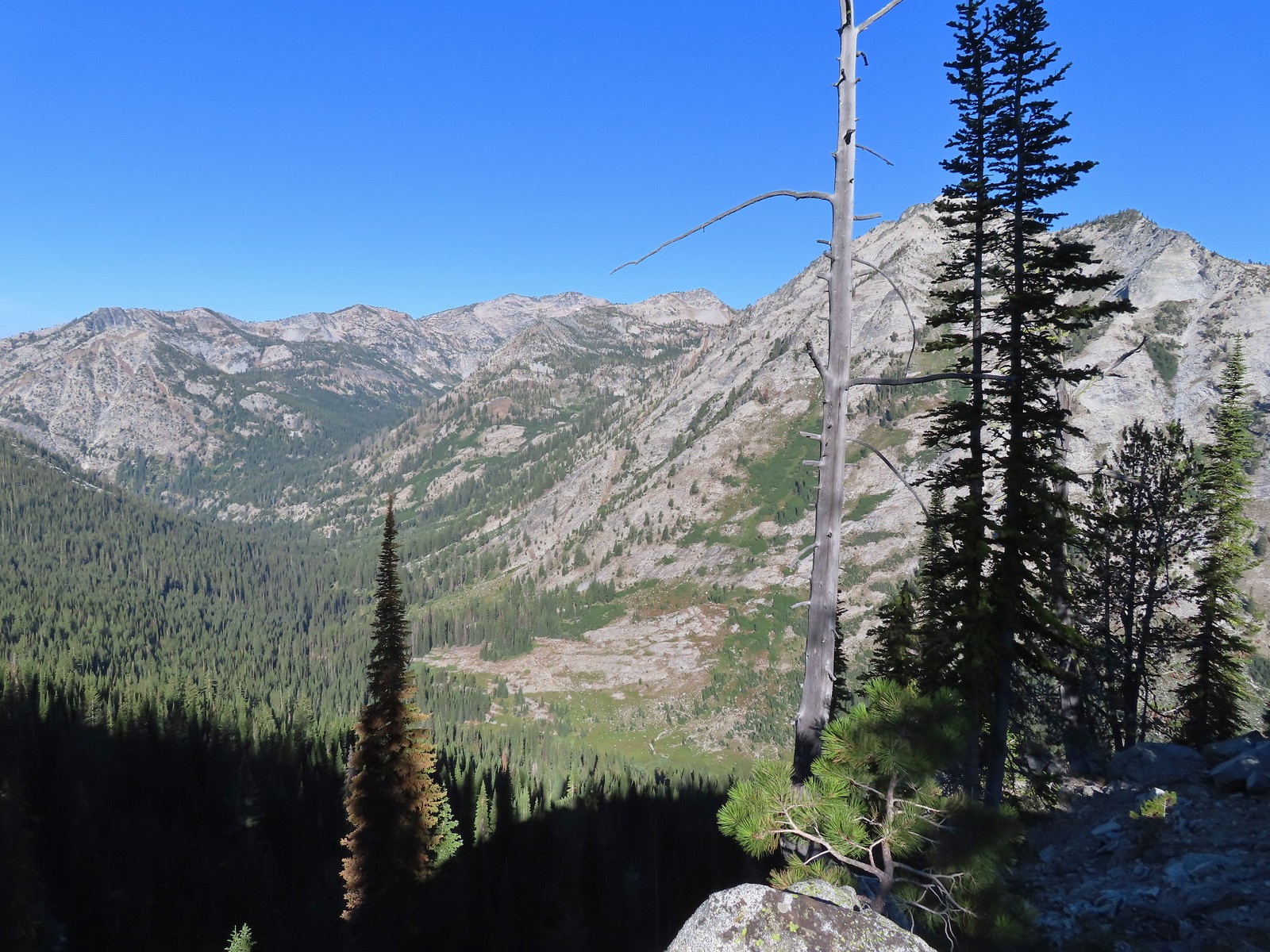 Arrow Lake is somewhere up in the mountains on the other side of the valley.
 View down the Eagle Creek Valley.
 Rock Creek Butte in the Elkhorns (post).
 Heading down.
 Bear Lake
We made our way a little way around Bear Lake to see it from some different angles.
 Mountain heather.
 Cusick’s speedwell

 Aster and swamp onion
 Arnica and possibly alpine leafybract aster.
 A bunch of globe penstemon.
 Meadow at the eastern end of Bear Lake.
 Needle Point from Bear Lake.
We scrambled up some granite to a viewpoint above the lake.
 Looking toward Eagle Lake in the basin behind and right of Needle Point.
 Eagle Creek is down there somewhere.
 Eagle Creek Meadow. The Main Eagle Trail can be seen crossing the granite slope at the far end of the meadow.
We headed back down toward camp prepared to pack up and hike out.

 Allum root
 White mariposa lily
 The Sun had reached the valley by the time we were nearing Eagle Creek.
 The Eagle Creek crossing going the other direction. I’m happy (and amazed) to report that I managed a fourth dry crossing.
We packed up camp and replenished our water supply before setting off for the trailhead. It was roughly 4.5 miles back to the car where the temperature was (according to the car) 91 degrees.
 Lupin along Eagle Creek where we topped off our water.
 Hummingbird Mountain
 Mountain coyote mint
 Falls on the far side of the valley. Probably the outlet creek of Lookingglass Lake.
 Nearing the Bench Trail junction.
 Copper Creek Falls from the trail.
 Small cascade along the trail.
 Wallflower, this was the only one we spotted all trip.
 Damaged footbridge over Eagle Creek.
 Buck crossing the trail.

 Swallowtail on nettle-leaf giant hyssop.
 Bridge over Eagle Creek.
I arrived at the large bridge over Eagle Creek first and decided to bushwack up the creek a short distance to what turned out to be a really nice waterfall.


 Back at the Main Eagle Trailhead.
It was 2pm when we arrived back at the car and headed for the West Eagle Meadows Trailhead. Sullivan had mentioned that the final 3.2 miles were bumpy and very slow, but it appeared that the Forest Service had been working on it and we only had a few smaller sections of rough 10mph road.
It felt every bit of 91 when we arrived at the trailhead where we searched for shaded places to sit.

We had decided not to spend the night in the campground but rather to make the 3ish mile hike to a crossing of West Eagle Creek where we hoped we’d find a campsite. Our latest version of the plan for the rest of our trip was to cut it a day short. Hiking in the 3ish miles now would leave a challenging out-and-back to Tombstone Lake for Wednesday then a 9.5-mile out-and-back to Echo and Traverse Lakes on Thursday which could be combined with the 3ish-mile hike back to the trailhead on Thursday allowing us to hopefully get home sometime Thursday evening.
We stuck around the trailhead long enough to cook an early dinner then set off a little after 4:30pm in search of a campsite.
 West Eagle Trail
The West Eagle Trail passed a series of walk-in tent campsites along West Eagle Meadows before entering the forest.
 One of the campsites.
 Mule Peak behind to the right and Wolf Point furthest back center.
 Nettle-leaf giant hyssop
 Painted lady on the hyssop.
 Frittilary butterfly
 Approaching the trees.
 The decommissioned Fake Creek Trail to the right at the 0.6-mile mark.
 Fake Creek crossing.

 Squirrel
 Unnamed creek crossing.
 Lewis monkeyflower
 Entering the Eagle Cap Wilderness at West Eagle Creek.
 West Eagle Creek Crossing. I almost made it across this one dry footed too but one of the rocks on the far side was unstable causing me to drag my right toe in the creek.
 Trail maintenance.
Beyond the creek crossing the trail passed through a series of small meadows as it climbed to the second crossing of West Eagle Creek.

 Coneflower

 Reentering the trees after passing through a meadow.
 West Eagle Creek
 Another small meadow.
 West Eagle Creek near the second crossing.
We were starting to worry that we might not find a decent camp site but there was one workable site on the near side of the creek. I took my pack off there and crossed the creek to see if there was anything better on the far side and was happy to find a very nice established site not far up the trail.

The campsite was approximately 2.5-miles from the trailhead which would add about a mile to each of the remaining days, but we could tell by the topo maps that there wasn’t likely to be another suitable campsite. We were also pooped and had no desire to hike any further with our full packs. It was close to 6:30pm by the time we had camp set up then we refilled our water once again before heading to bed.
The hike to Bear Lake and back to the Main Eagle Trailhead had been 9.3-miles with 1250′ of elevation gain and we wound up doing close to another 3-miles and 580′ of elevation gain from the West Eagle Meadows Trailhead by the time we were done for the day.

The plan for the next day was still a bit up in the air. I knew I would be heading for Tombstone Lake, but Heather was deciding between heading toward Tombstone Lake or Echo and Traverse Lakes. The hike to Tombstone Lake required approximately 3000′ of cumulative elevation gain (2200′ if she turned back at the pass above the lake), while the hike to Traverse Lake gained about half as much elevation and was nearly 3.5-miles shorter. She would decide in the morning based on how she felt after another night’s sleep. Happy Trails!
Flickr: Bear Lake


 The trail briefly followed an old roadbed.
 Log bridge over Boulder Creek.


 Sierra larkspur
 Paintbrush lined trail
 We were in the shade for most of the morning.
 Entering the Eagle Cap Wilderness.
 We had to leave the trail to get a view of the falls which we could hear from the trail.

 Buckwheat and nettle-leaf giant hyssop
 At the 2.7-mile mark the trail again crossed Eagle Creek, this time on a damaged footbridge.
 Part of the falls were visible from the trail.
 Copper Creek Falls
 Penstemon
 Fringed grass of parnassus and some fading arnica.
 Flowers below the falls.
 The Bench Trail is ahead on the left of the Main Eagle Trail.
 View up the valley.
 Looking back at the hillside the Bench Trail climbs to Heart and Arrow Lakes.
 Looking across the valley.
 There was quite a bit of western snakeroot along the trail.
 Scarlet gilia
 Hummingbird Mountain
 Granite hillside and peaks above the trail.
 Trail signs at the Lookingglass Lake/Main Eagle Trail junction.
 Needle Point on the left from Eagle Creek Meadow.
 Hummingbird Mountain from the campsite.
 Eagle Creek near camp.
 Lewis monkeyflower

 Columbian ground squirrel
 Pearly everlasting and Scouler’s St. John’s wort.
 White mariposa lilies
 White mariposa lilies
 Orange agoseris
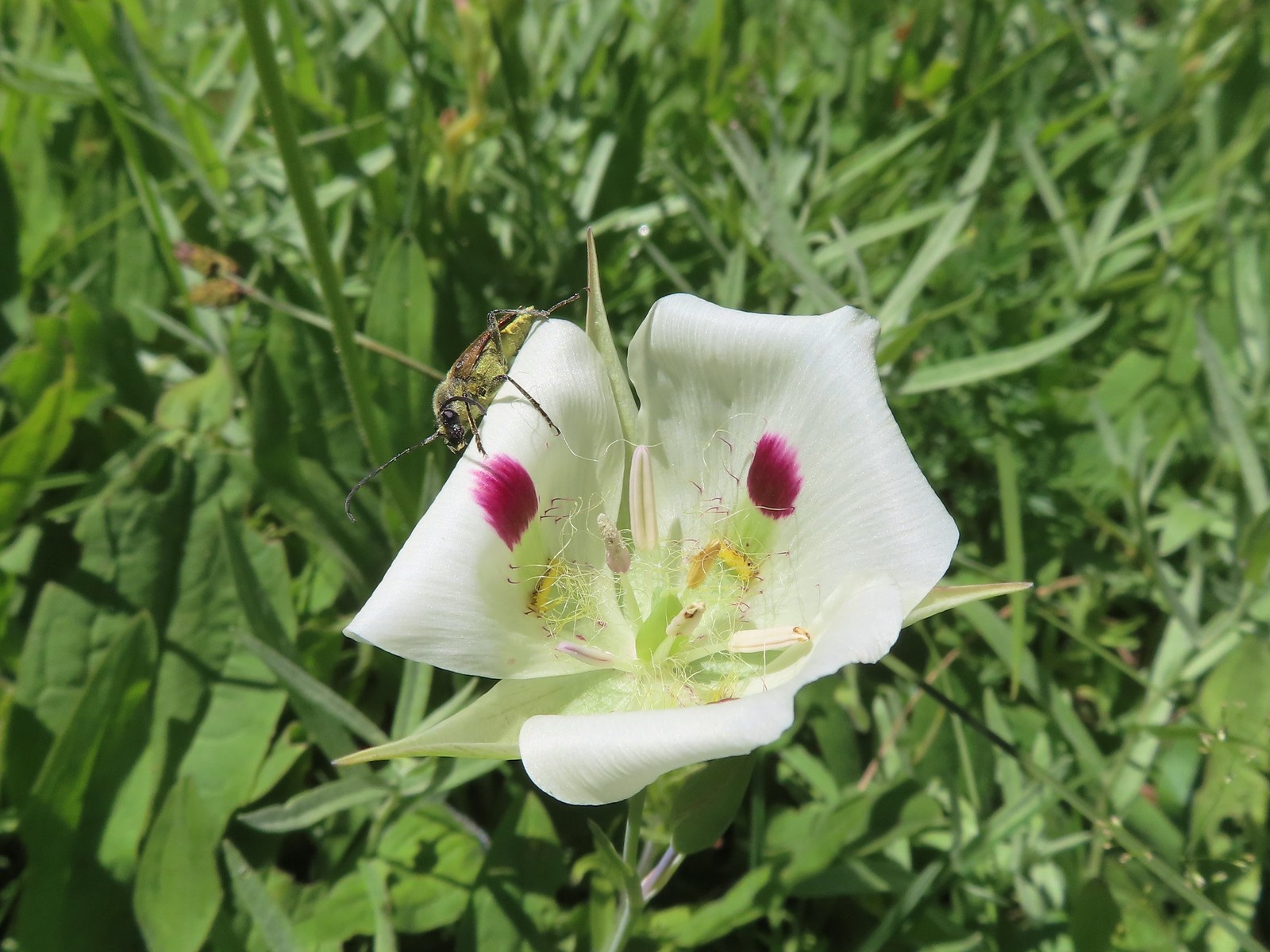 Beetle on a white mariposa lily
 Hillside along the trail.
 Butterfly (Boisduval’s blue?) on pearly everlasting.
 Monkshood
 Heading toward Needle Point.
 One of the switchbacks.
 This junction was just under 2-miles from the Lookingglass Lake Trail junction.
 Wildflowers along the trail.
 Looking back down the valley.
 Hawk
Hawk Fireweed along the trail.
 Shrubby cinquefoil and paintbrush
 Wildfire smoke creating a slight haze of the valley.
 Granite near Eagle Lake.
 Eagle Lake
 Eagle Creek flowing below the dam at Eagle Lake.


 Paintbrush
 While sitting in the shade we spotted a herd of elk on the hillside across the valley.
 Blurry photos due to the distance but it was fun to watch them.

 Golden-mantled ground squirrel
 Shade!
 American saw-wort
 Fawns
Fawns Our campsite in the trees from the Main Eagle Trail.


 Hoary aster
 The interpretive center on Flagstaff Hill.


 Map near the wagon.


 Registration box and signboard at the Mt. Hood Wilderness boundary.
 There were a few downed trees but nothing too difficult to navigate.
 The brush was mostly huckleberry bushes.
 Trail side snacks.
 McGee Creek Trail junction with the Timberline Trail.
 Blowdown from the September 2020 storms that also flamed the destructive wildfires across the state. For more information on the storms impact on Mt. Hood check out this Wy’East Blog
  Looking through the trees at one of the areas that suffered severe blowdown.
 It was a cloudy day. We got sprinkled on briefly a couple of times.
 Fireweed
 Pinedrop
 Avalanche lilies
 Paintbrush
 Valerian, spirea, and paintbrush
 Gentians
 Yellow monkeyflower
 A tributary of McGee Creek.
 Spirea along the Timberline Trail.
 Shooting star
 Pink monkeyflower
 Fleabane
 Beargrass
 False hellebore
 Partridge foot
 Lupine
 Lewis monkeyflower along a tributary of McGee Creek.
 Beardstongue
 Lousewort
 Dry pond surrounded by beargrass.
 The idiots camped in the meadow. There is even an arrow on the “Do not camp in meadow” sign pointing at the meadow. Please DON’T be these people.
 The second pond still had some water in it.
 Junction with the Mazama Trail (
 The butterflies weren’t out today but the bees were.
 The clouds just wouldn’t quite raise enough.
 Mountain heather
 Lupine and paintbrush
 Beargrass along the Timberline Trail.
 Paintbrush, partridge foot and lupine
 Signpost for the McNeil Point Trail.

 We’d never seen a paint colored like this before.


 Western pasque flower
 Lupine and two types of monkeyflower


 Pikas spend the Summer gathering greens for the rest of the year when they remain in their homes under the snows.

 Mountain heather and paintbrush.
 Saxifrage
 A variety of flowers.
 Avalanche lilies
 Sub-alpine fleabane
 Western pasque flowers
 Doe that was as surprised as we were when we spotted each other.

 Lewis monkeyflower
 The righthand fork.
 View from the plateau.
 Some low clouds to the East.
 Dwarf lupine
 A hiker on the righthand fork headed for the McNeil Point Shelter.

 Caves below the Sandy Glacier.
 Bluebells of Scotland
 The shelter below to the right.
 Muddy Fork
 Goldenrod
 With the clouds the view wouldn’t have been great from the ridge on this day.


 Patches of blowdown along Bald Mountain Ridge.

 Columbine
 Valerian
 Paintbrush and bistort
 Aster
Aster Chipmunk snacking on huckleberries.
 Meadow near the Timberline Trail.
 Arriving back at the Timberline Trail.
 Every once in awhile the trail was clear of other users.
 We’re always drawn to this rock fin above the Muddy Fork.
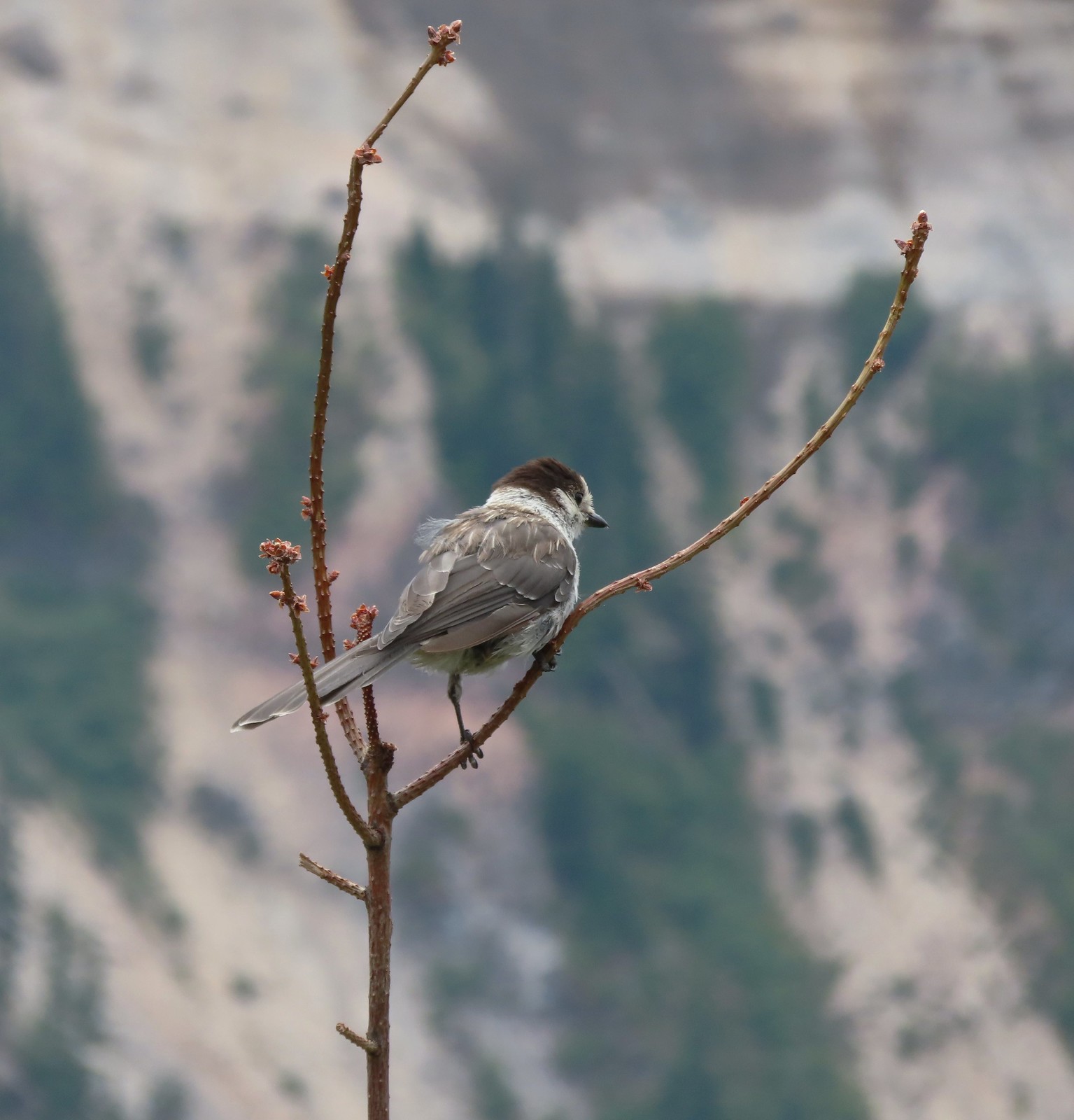 Canada jay
 McGee Creek Trail junction.
 Bunchberry
 Is that sunlight?
 While the clouds never lifted from Mt. Hood we did experience a window of blue sky near the end of our hike.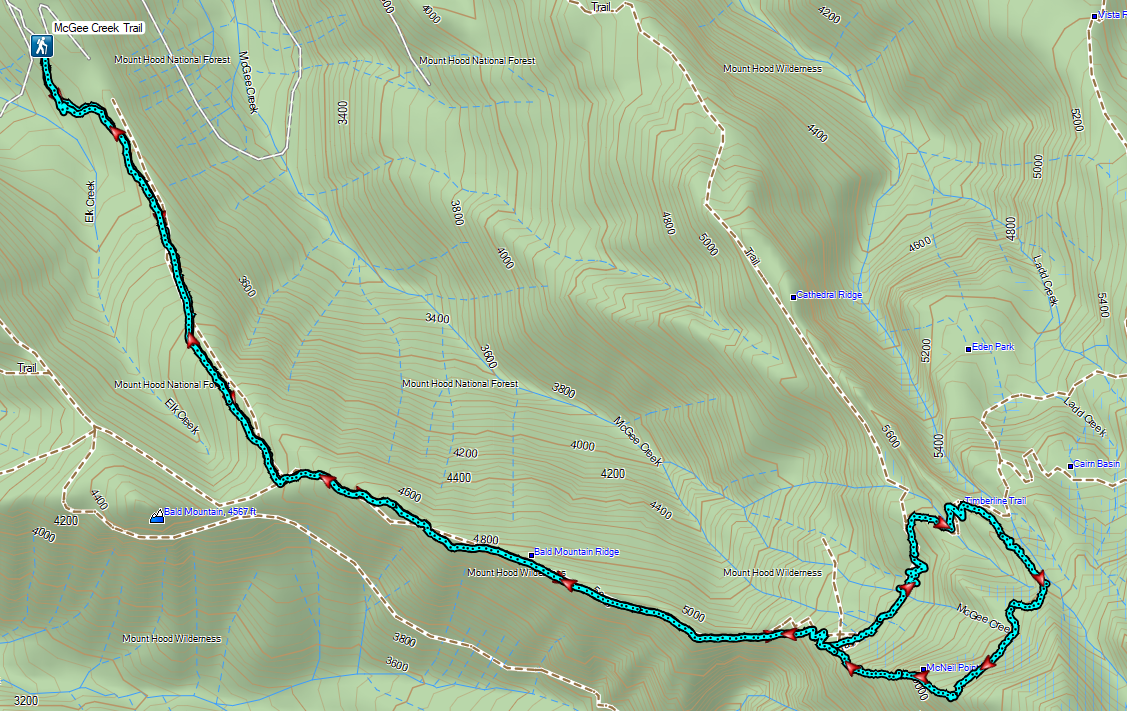
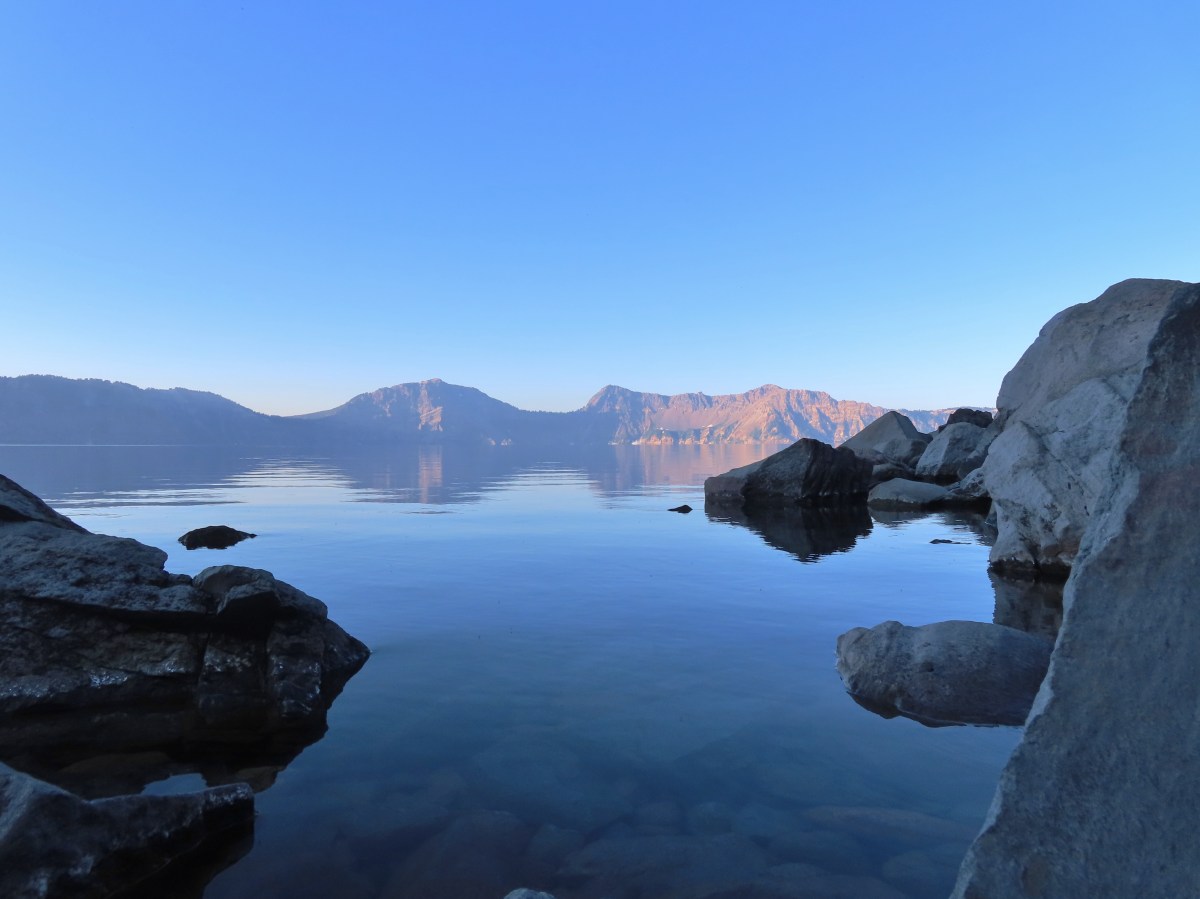
 Sunrise behind Llao Rock on the way to the trailhead.
 Crater Lake at sunrise.
 Mt. Bailey, Diamond Peak, and Mt. Thielsen behind Red Cone.
 Cowhorn Mountain (

 Mt. Scott (

 Dutton Cliffs, Sun Notch (
 Looking down at the turnaround point.
 Wouldn’t want a rock like this to come down on you.
 Breakfast time.
 There were “no stopping” signs at areas where the danger of rock fall was the greatest.
 One of the tour boats.

 Looking back at the dock area.
 Couldn’t get an actual fish in a photo but I barely missed this one.
 The dock at Cleetwood Cove.
 Not a hiker or fisherman.
 Llao Rock from East Rim Drive.


 Bog Orchid
 Bistort and monkeyflower

 Some sort of orchid?
 Yellow monkeyflower
 Monkshood


 Bistort
 Not sure if this is a robin or ?
 Crater Lake Lodge

 Garfield Peak from behind the lodge.
 The Watchman and Hillman Peak
 Golden-mantled ground squirrel with a mouth full.


 Mt. McLoughlin (
 Mt. McLoughlin
 Union Peak
 Paintbrush
 Reservoir structure (built 1931).
 Mt. Bailey (
 Mt. Bailey
 Deer below the trail.
 Western pasque flowers
 Arnica
 One of several patches of snow at the higher elevations.
 Crater Lake Lodge below to the left.
 Mt. Scott (
 Clark’s nutcracker
 Buckwheat
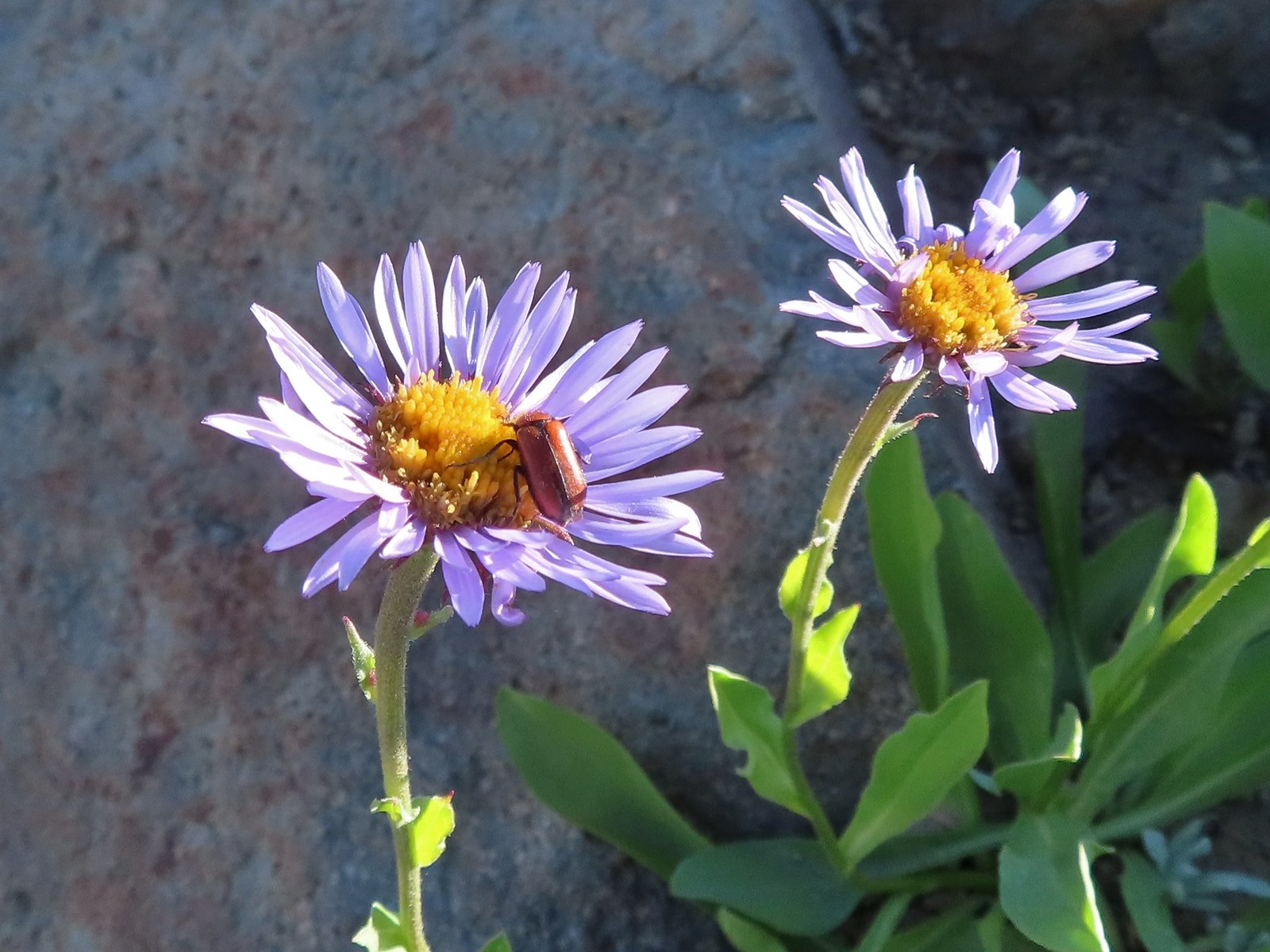 Beetle on sub-alpine fleabane.
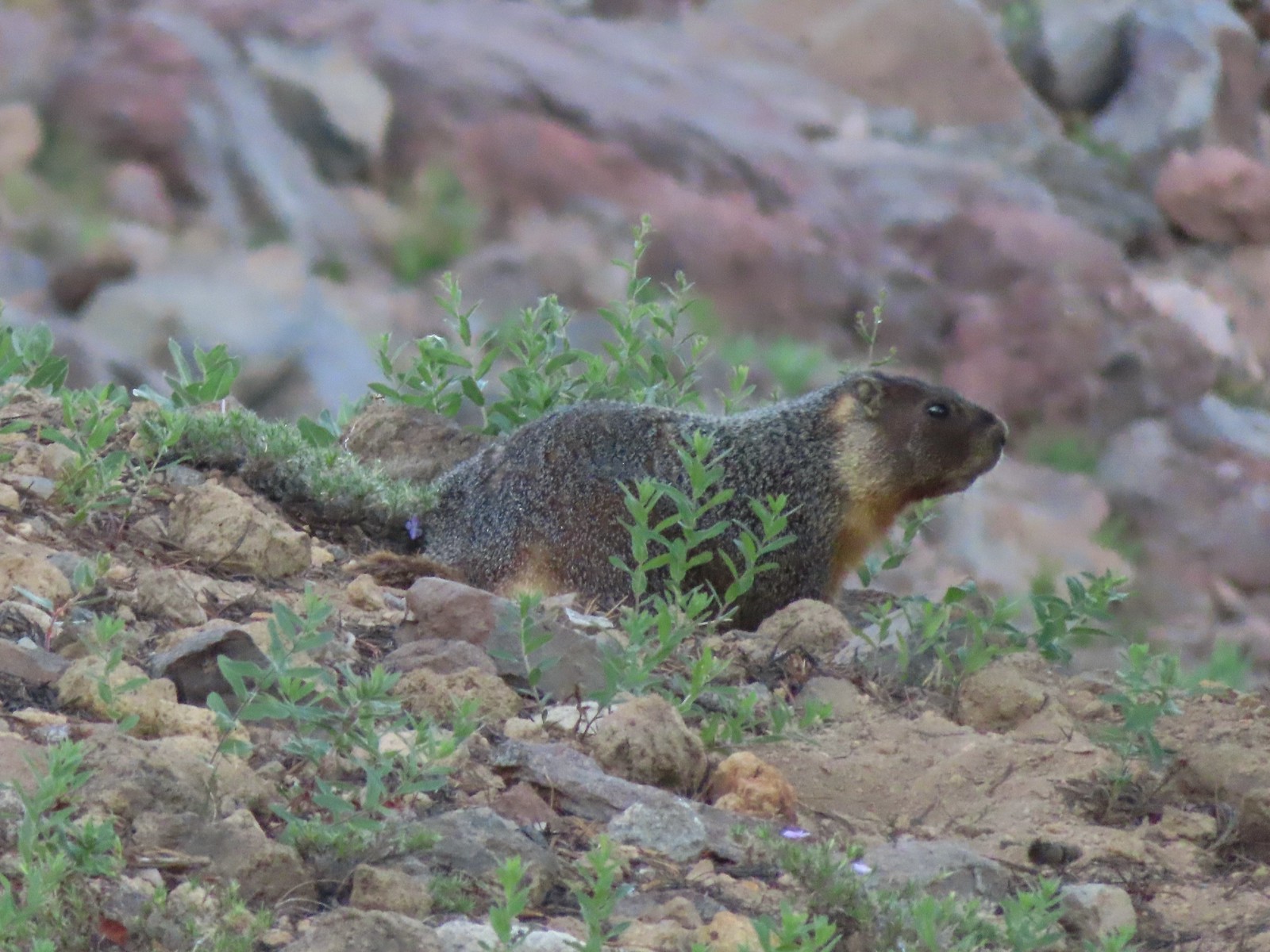 Yellow-bellied marmot
 Bench below the summit of Garfield Peak.
 Partridge foot
 Applegate Peak to the left and Crater Peak (
 Arriving at the summit.
 Mt. Scott above the Phantom Ship.

 It was a bit hard to make out but Mt. Shasta was visible to the south.
 Cowhorn Mountain (
 Crater Lake from the summit of Garfield Peak.
 Blurry photo due to the sheer distance away it was but it looked big.
 Union Peak behind a marmot.
 Penstemon
 Painted lady
 There were a lot of marmots out.
 Paintbrush, phlox and buckwheat.
 Stonecrop, paintbrush and pearly everlasting.
 The clear blue water of the deepest lake in the United States.
 Yellow-rumped warbler

 False hellebore
 Viewpoint and The Watchman from the trailhead.
 Western pasque flowers above Crater Lake.
 Hillman Peak ahead.


 Lounging on a rock.
 Shasta knotweed
 Rim Drive below the Rim Trail.
 Mt. Bailey and Diamond Peak with Diamond Lake (
 Red Cone with Sawtooth Mountain (
 Silvery Raillardella
 Snow patch on Hillman Peak.
 Penstemon
 Llao Rock
 It took us a moment to notice the two deer ahead along the tree line.
 We spotted the doe but she also had a pair of fawns nearby that bounded off.
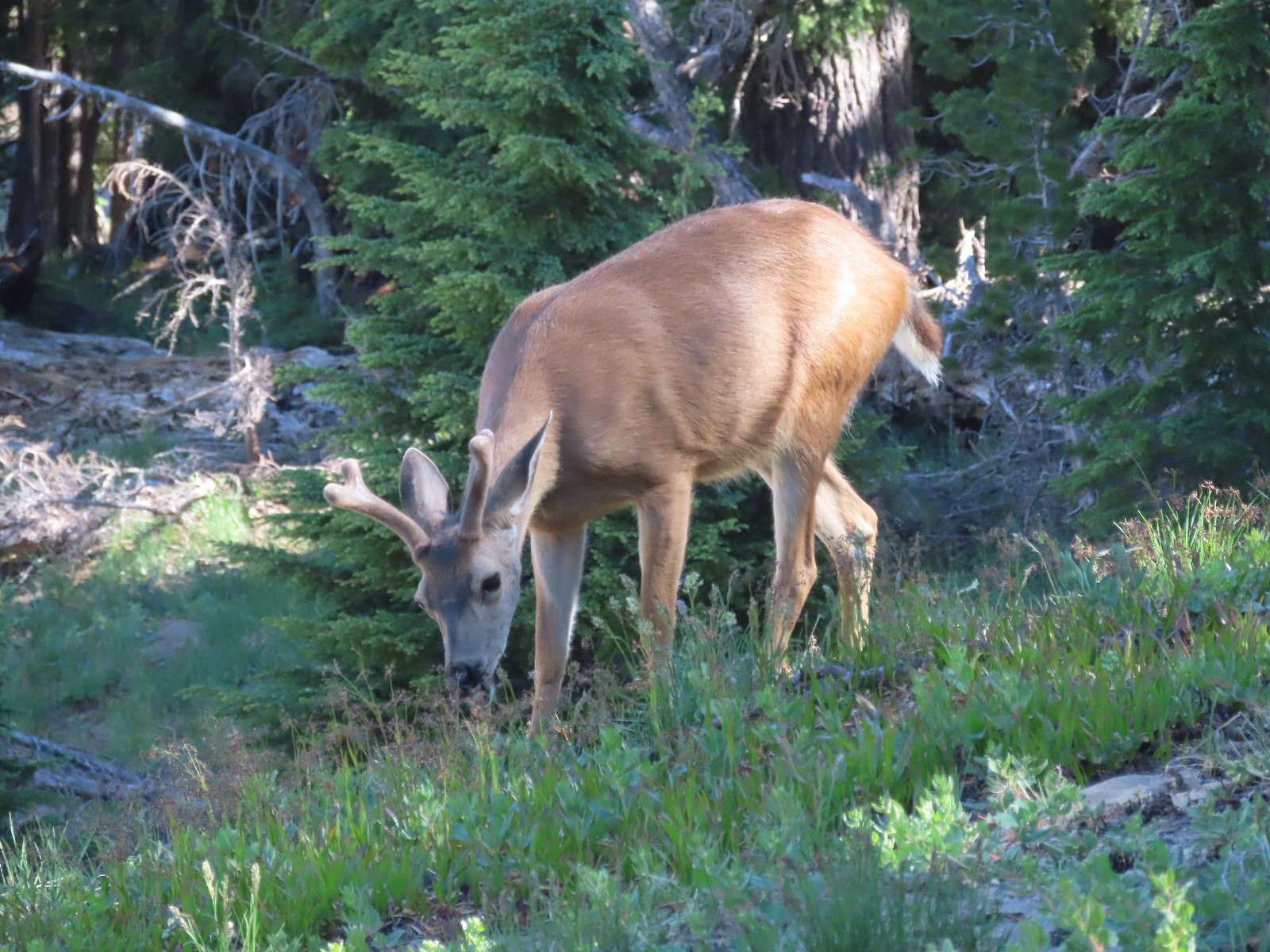 This buck had zero concern with us as we passed by.
 Phlox
Phlox Dwarf lupine
 Devil’s Backbone with Mt. Scott behind.
 Wizard Island
 Devil’s Backbone
 Hillman Peak from Devil’s Backbone.
 Garfield Peak across Crater Lake.

 Saxifrage
 The Watchman
 If I stand perfectly still, they won’t see me.
 Hillman Peak and Llao Rock from the viewpoint at The Watchman Trailhead.
 Rock formations below Hillman Peak.
 Godfrey Glen Trailhead
 The ADA accessible trail made for a nice easy walk.
 Super-heated volcanic gas fused ash creating these pinnacles.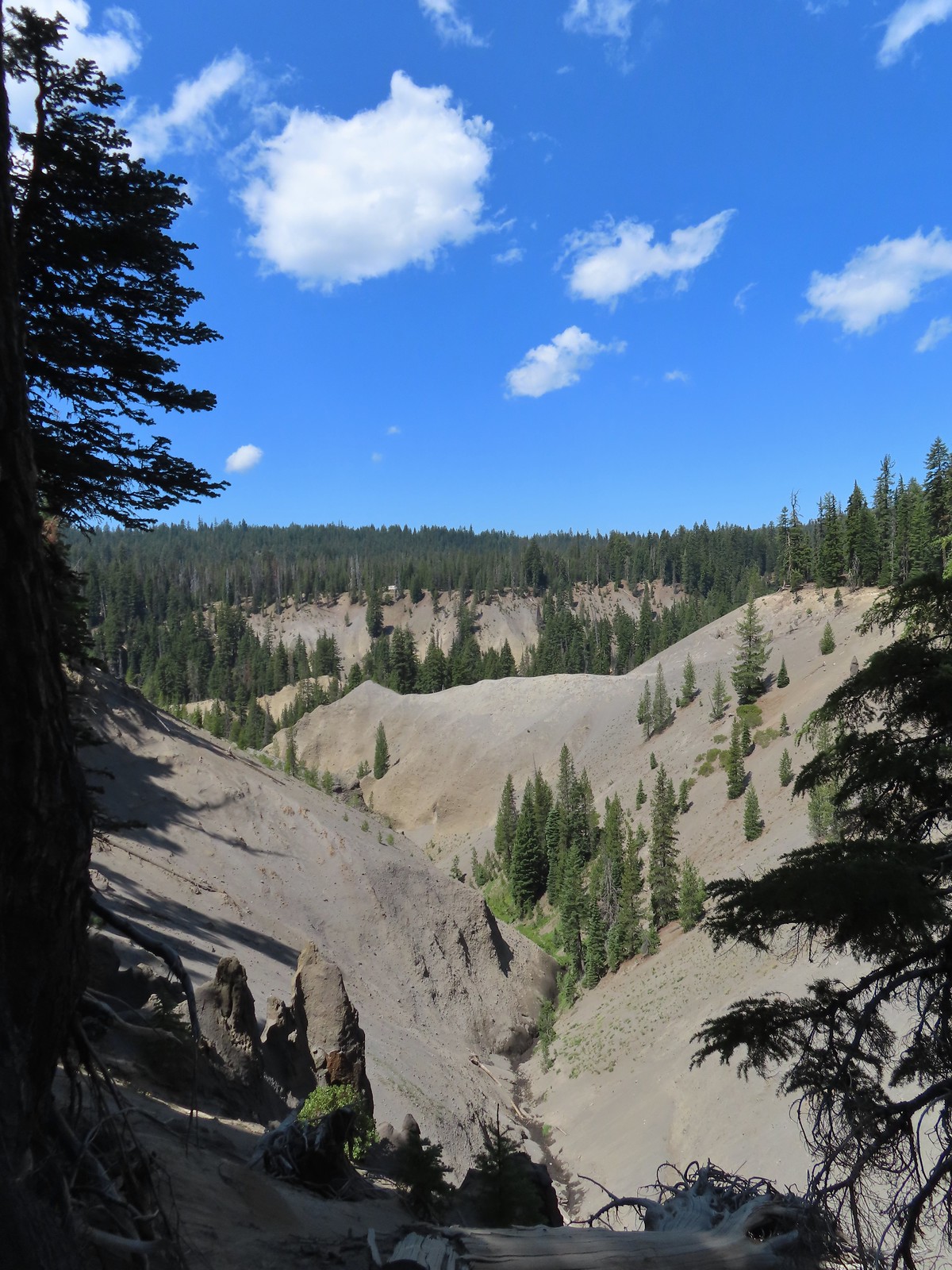

 First viewpoint of Godfrey Glen above Munson Creek.
 Godfrey Glen
 Another viewpoint.
 We could hear Munson Creek but it wasn’t visible in the canyon below.
 One waterfall.
 Another waterfall in the canyon.
 The end of the loop.
 Sinnott Memorial Overlook on the rim to the left.
 View from the overlook.
 Mt. Scott and Garfield Peak from the overlook.
 These numbers blew our minds.

 Swallowtail and a painted lady on penstemon.


 There were pikas out there in the rocks but we only heard them this time.
 We did spot this western tanager though.
 Pink monkeyflowers. One of our favorite wildflowers.
 The trail climbed gradually along Sand Creek before rounding a corner to a view of Plaikni Falls.
 Paintbrush and columbine along with lupine and groundsel.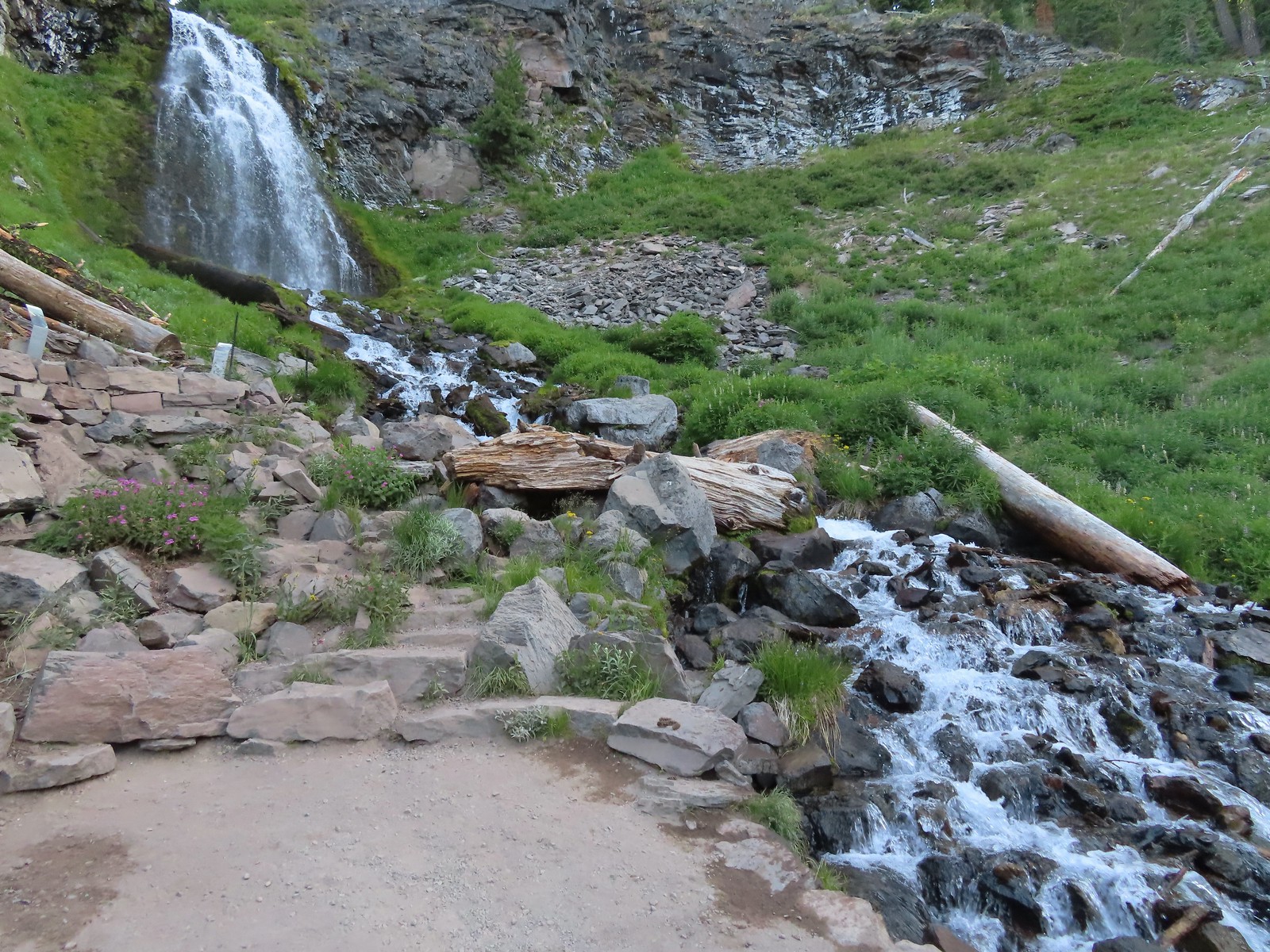

 Hummingbird visiting a paintbrush.
 Monkshood
 Yellow monkeyflower
 Applegate Peak from the Sun Notch Trailhead.

 There is a nice green meadow in the center of the loop.

 The Phantom Ship.
 Diamond Peak (
 The Watchman (

 Garfield Peak, The Watchman, and Hillman Peak.
 Heading back down to the start of the loop.
 Marmot

 Vidae Creek
 East Rim Drive was up above the trail.
 Crater Peak through the trees on the left.
 Paintbrush
 Stonecrop
 Setting off on the broad ridge.

 There was a very short steep climb to reach this small meadow with a view ahead to Crater Peak.
 Female western tanager
 Looking up Crater Peak.
 Little prince’s pine
 Union Peak (
 Mt. McLoughlin (
 Mt. McLoughlin behind Lee & Devil’s Peaks.
 Mt. Shasta was visible, barely, through wildfire smoke.
 Arriving at the crater.
 Scarlet gilia lining the trail around the crater.
 The Watchman to the left and Garfield Peak.
 Applegate Peak and Mt. Thielsen
 View south to Mt. McLoughlin with the Goose Nest to the closer to the right.
 Dutton Cliffs and Mt. Scott (
 Pussytoes
 The peaks around Crater Lake.
 Paintbrush
 Western pasque flowers
 Klamath Basin with haze from (most likely) the Golden Fire near Bonanza.
 The Rabbitt Ears and Hershberger Mountain (


 Signboard at the loop.
 Crater Peak from the trail.
 Ash pinnacles
 Getting ready to drop into the canyon.
 The trail had been closed for hazard tree removal and we could see that there had been some big trees that had to be cleared.
 Wildflowers in the meadows below.
 Annie Creek


 Monkeyflower and lupine
 Final pitch to end the loop.
 The Annie Creek Restaurant.


 Arriving at the highway.
 Trail on the far side of Hwy 62.

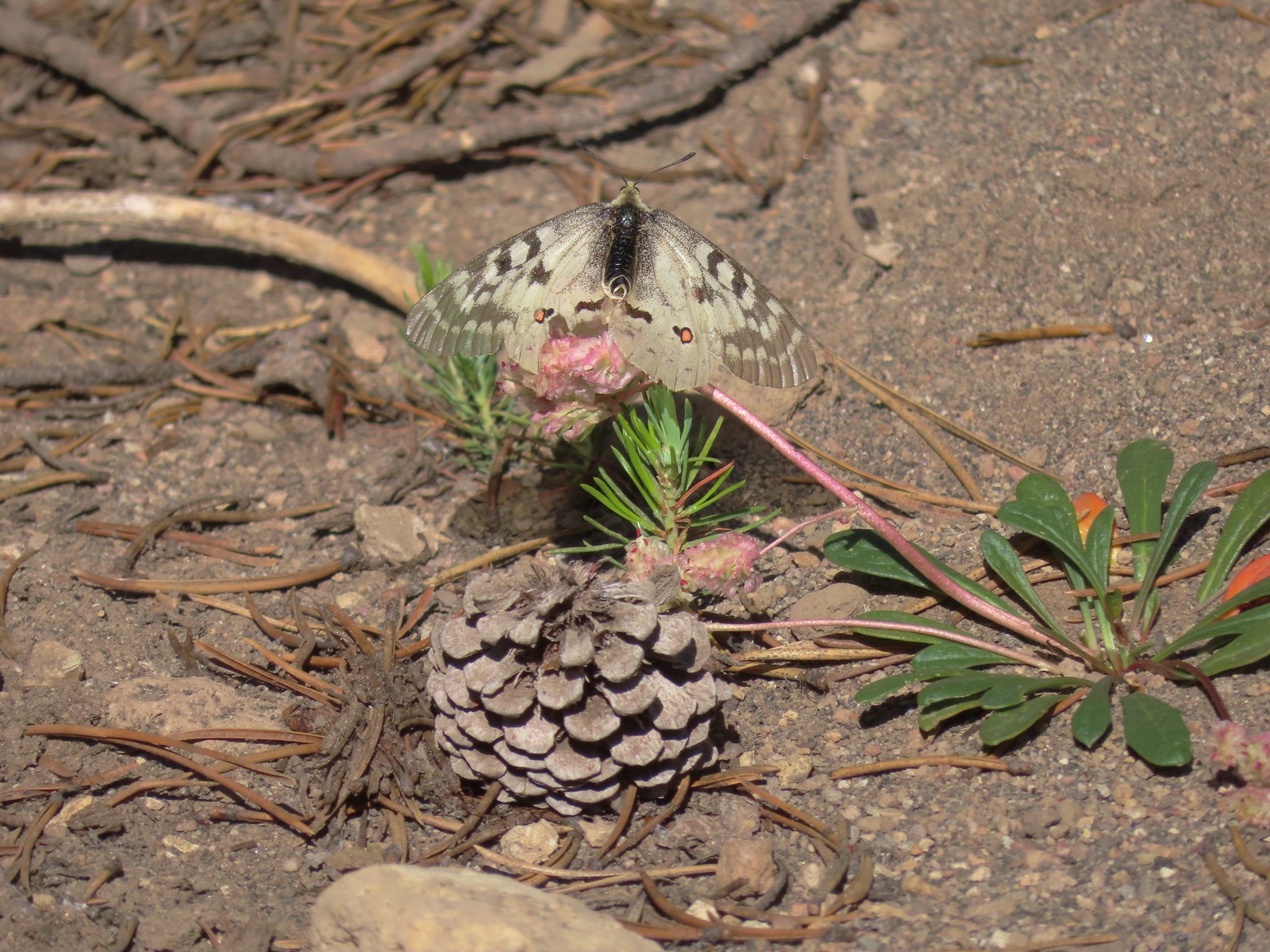 Clodius parnassian on a pussy paw.
 Much of the trail followed an old roadbed.
 PCT junction.
 Butterfly on the Crater Lake PCT register. While I was working on getting the butterfly photo a northbound thru hiker arrived. He mentioned not having had a shower in 10 days and being really excited to reach

 Older cut logs helped us locate the trail at times.
 Union Peak from the trail (
 It took a second to find the tread in this meadow.
 Once we found it though it was easy to follow.
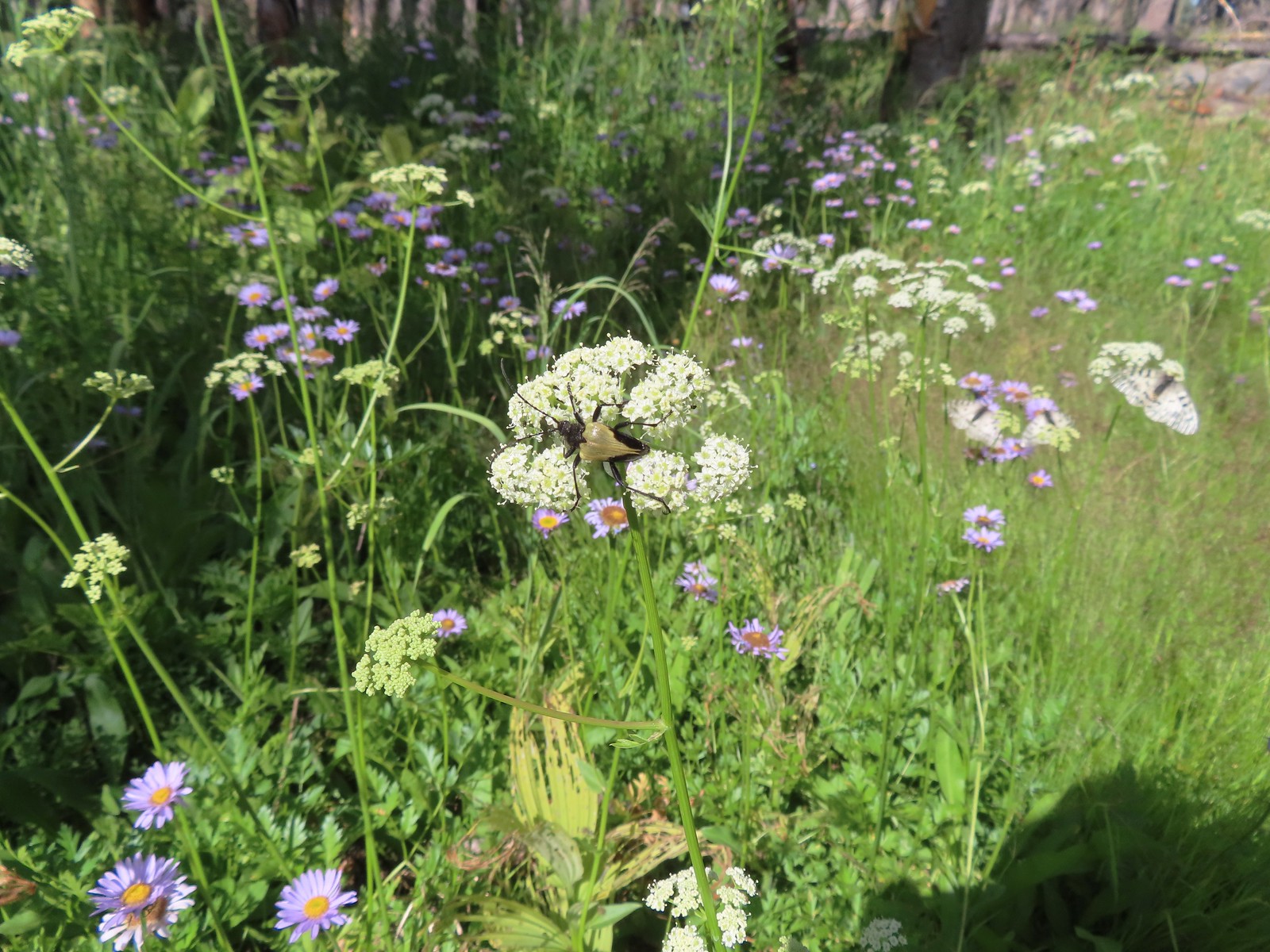 Big beetle. There are also three clodius parnassian butterflies behind to the right.
 Typical trail conditions. I spent a good deal of time removing limbs from the larger trees and pulled some of the smaller ones off the trail.
 Doe below the trail.
 More messy trail.
 There was one small stand of unburned forest which provided a brief break from the blowdown.
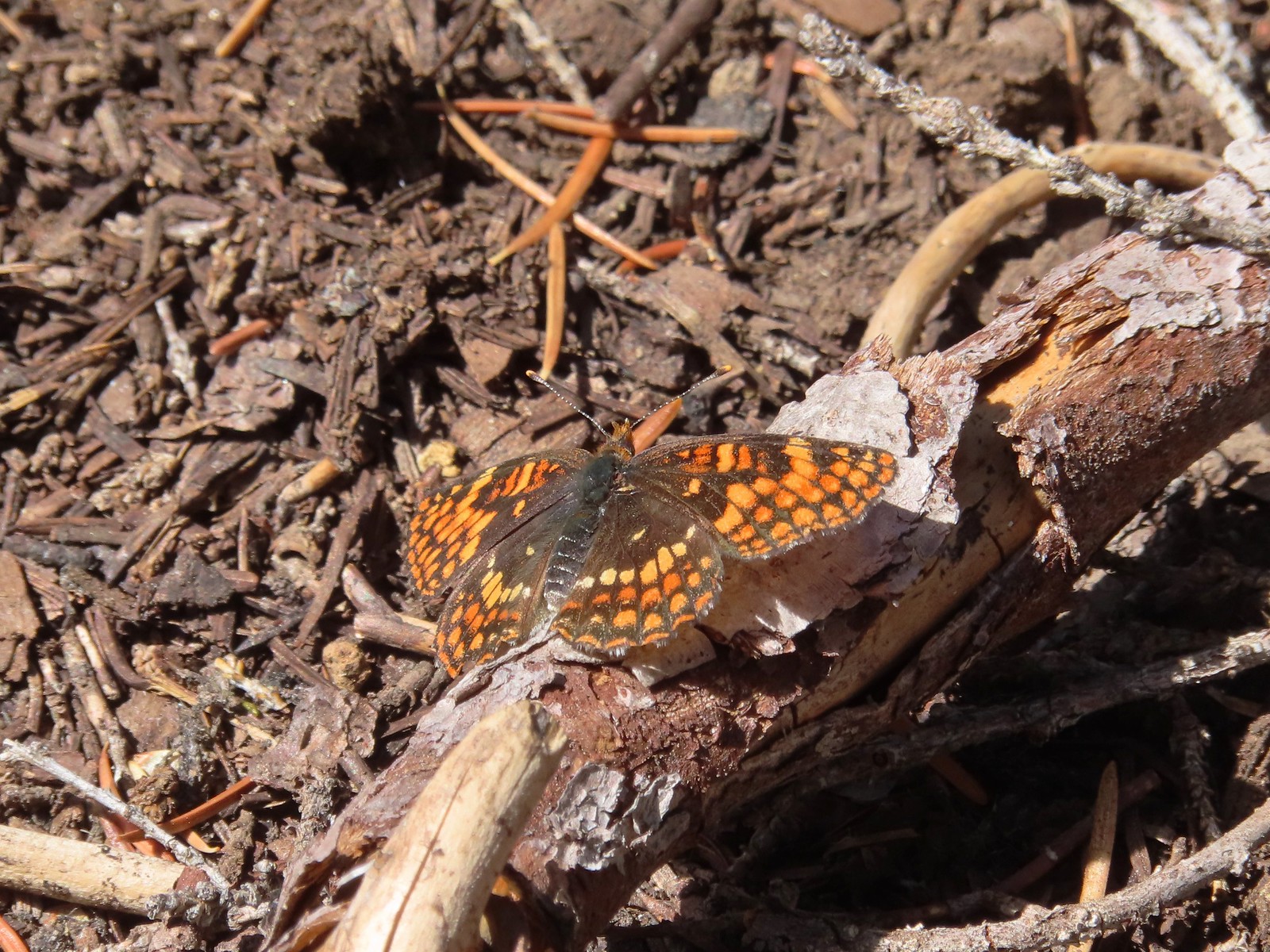 Checkerspot butterfly
 Mylitta crescent and a hoary comma on spreading dogbane.
 Paintbrush
 I believe that is Tom Mountain and Jerry Mountain.
 Bald Top to the right.
 Skipper
 Mt. McLoughlin
 Lorquin’s admiral
 This was the worst of the obstacles.
 We hadn’t seen a blue diamond since before the PCT but near the SW corner of the Park boundary we spotted a couple.
 Post ahead marking the boundary. The trail passed through a narrow gap here where the blowdown was heavy.


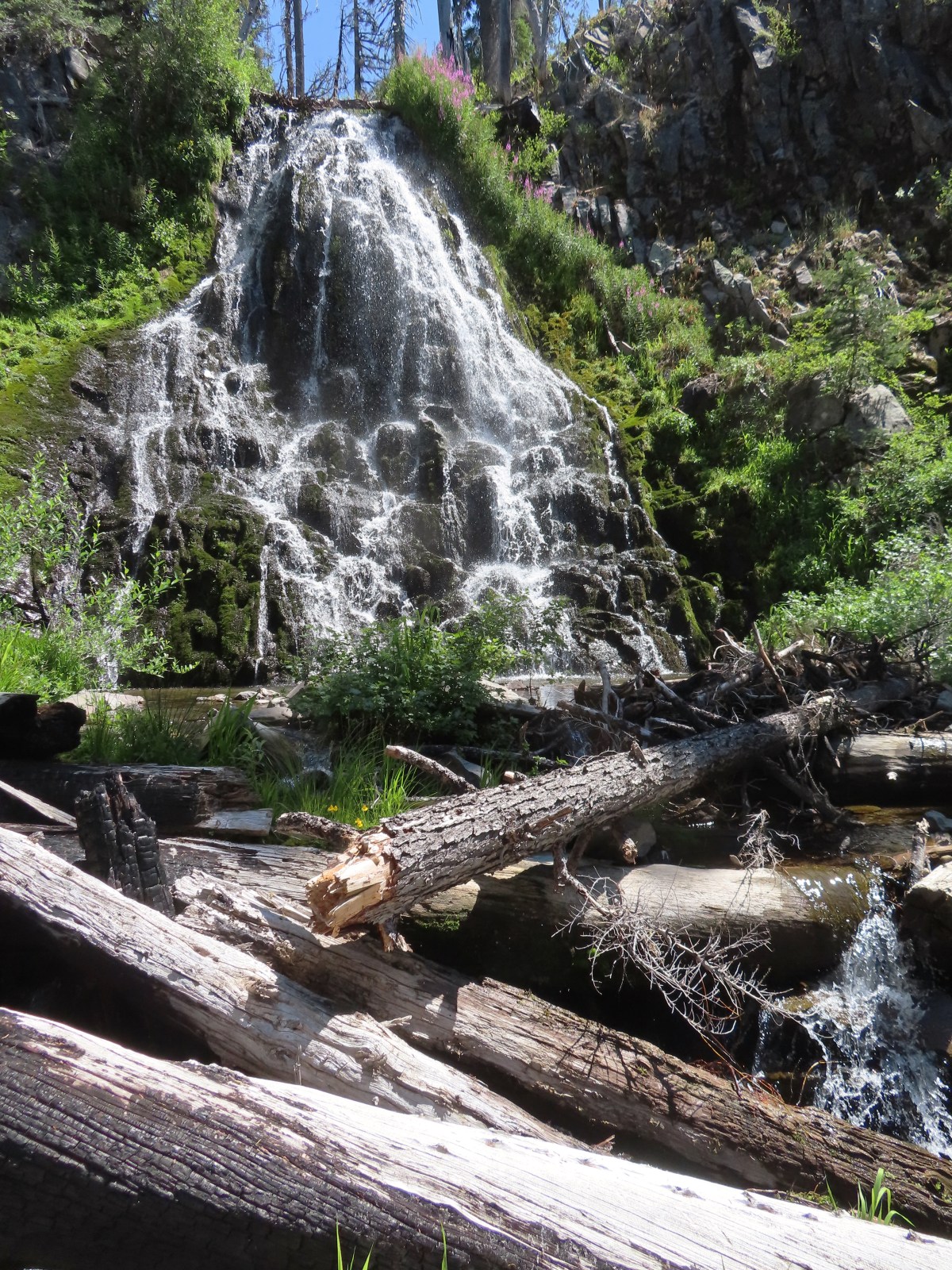
 Arnica below the falls and fireweed above the falls added some nice color to the scene.
 One-sided wintergreen


 Small falls on Red Blanket Creek.
 Pink monkeyflower
 I’d lost the trail here but headed for the patch of bright orange wildflowers to see what they were.


 Red Blanket Falls
 View down Red Blanket Creek
 A spring fed waterfall along Red Blanket Creek below the falls.
 A second and third tier of Red Blanket Falls just below the upper fall. I wasn’t able to get a clearer view of these two drops. I hiked a short distance down the creek but decided the poor trail conditions and loss of elevation weren’t worth going further down the trail with no guarantee of a better view.
 The three drops of Red Blanket Falls
 One more of Red Blanket Falls.
 Another little cascade.

 Along this rock outcrop I found switchbacks that I’d missed on the way to the falls.
 This might be a black backed woodpecker.
 This cairn was new to me as well. At this point I was quite a bit below our track from the morning and I was afraid that I might pass Heather without knowing it if she was sticking to the earlier route.
 Hummingbird
 Goose egg on the left.
 Painted lady
 A checkerspot and a copper on sub-alpine fleabane.
 Arriving back at the PCT. We again crossed paths with a thru hiker on the way to Mazama Village.
 Pussypaws
 Dwarf lupine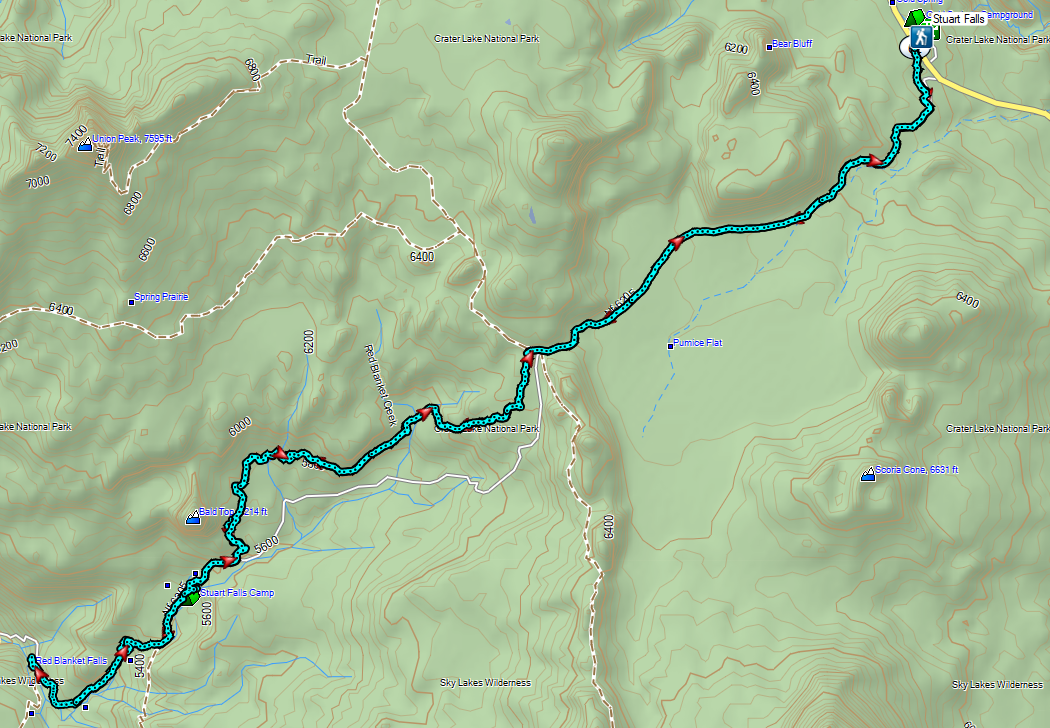
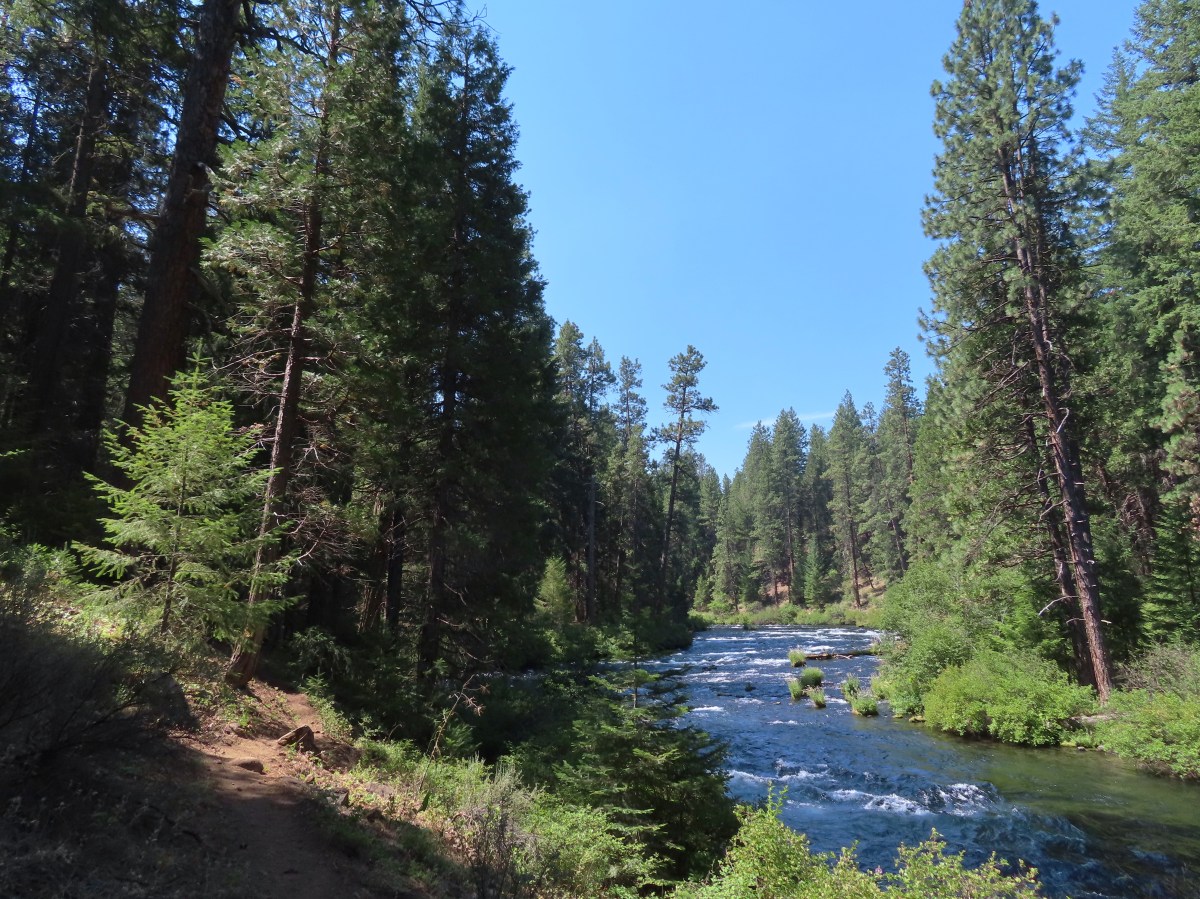


 The sign is visible from the campground road.


 Common mergansers
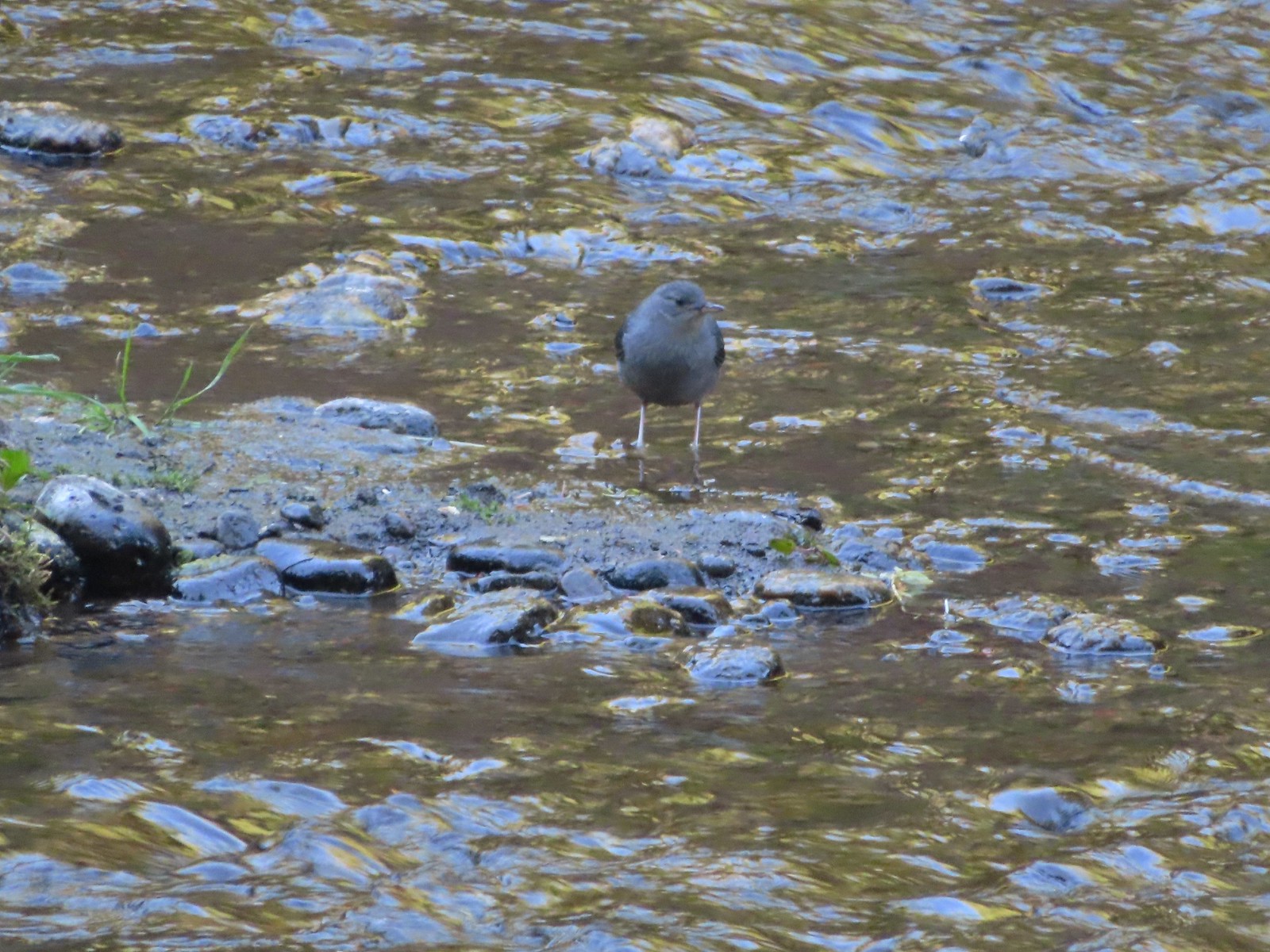 Ouzel
Ouzel Goldenrod
 Passing some of the campsites.
 The Candle Creek Campground across the Metolius.
 We actually went left below the stump here but, on the way back wound up coming downhill by the stump.
 More campsites.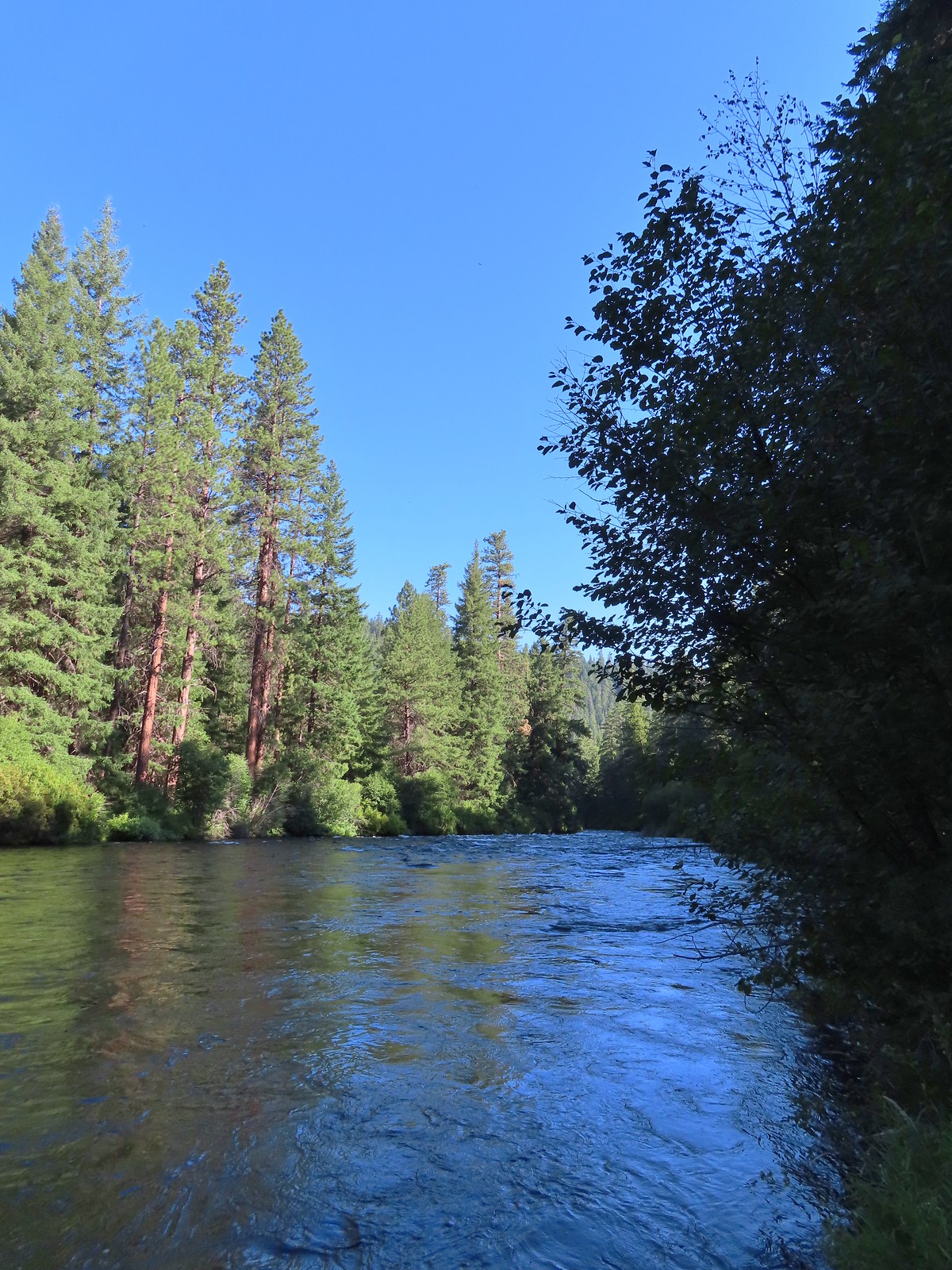
 As we got further from the campground we encountered more and more brushy sections.
 Another section with an increased number of obstacles.
 Getting a bit brushier.
 We left the river for the road at this bend.
 Heading up to the road.
 The use trail from the road.
 We wondered what this post signified.
 They were way past blooming but there were several mountain lady slippers along the road.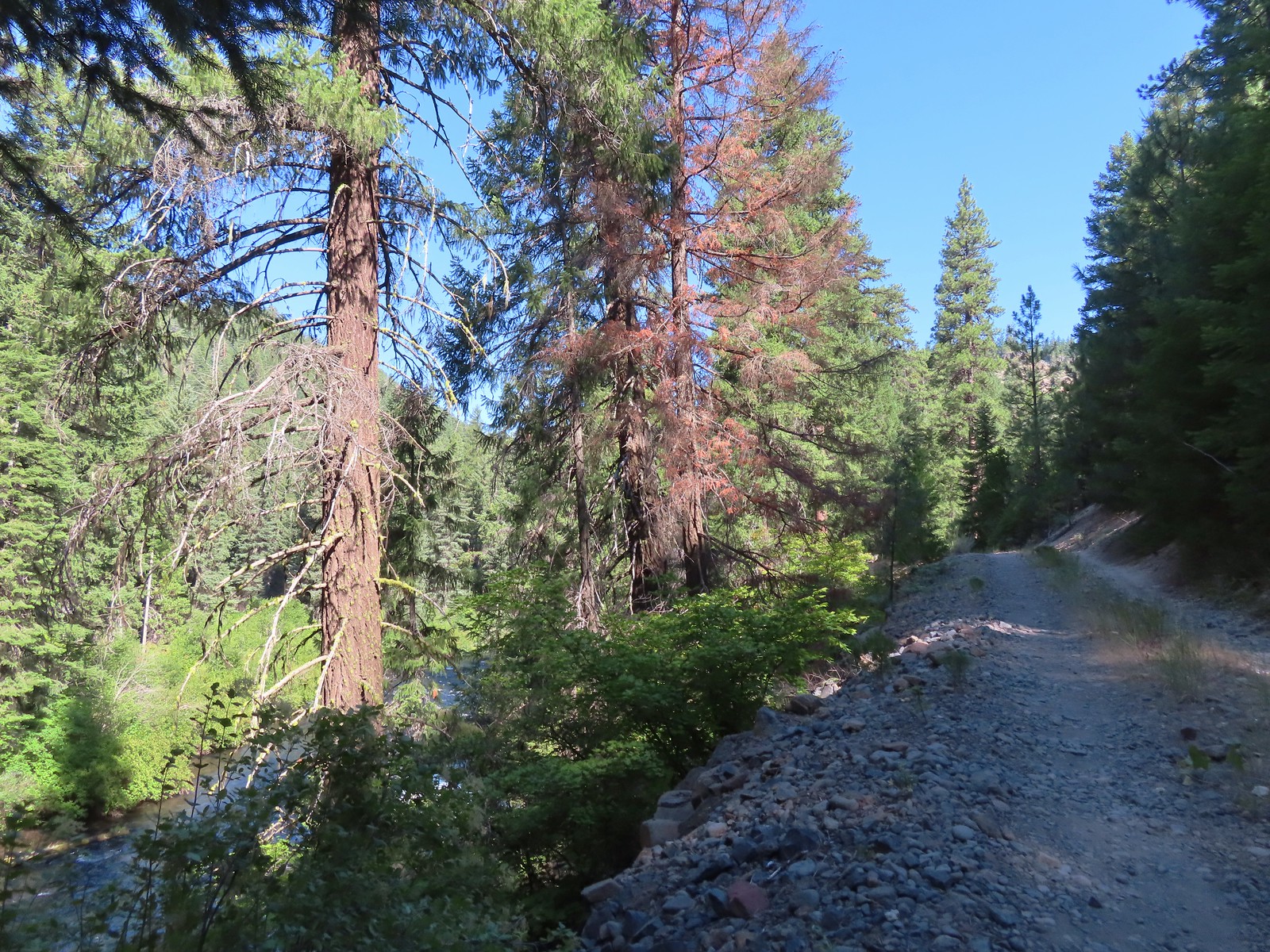
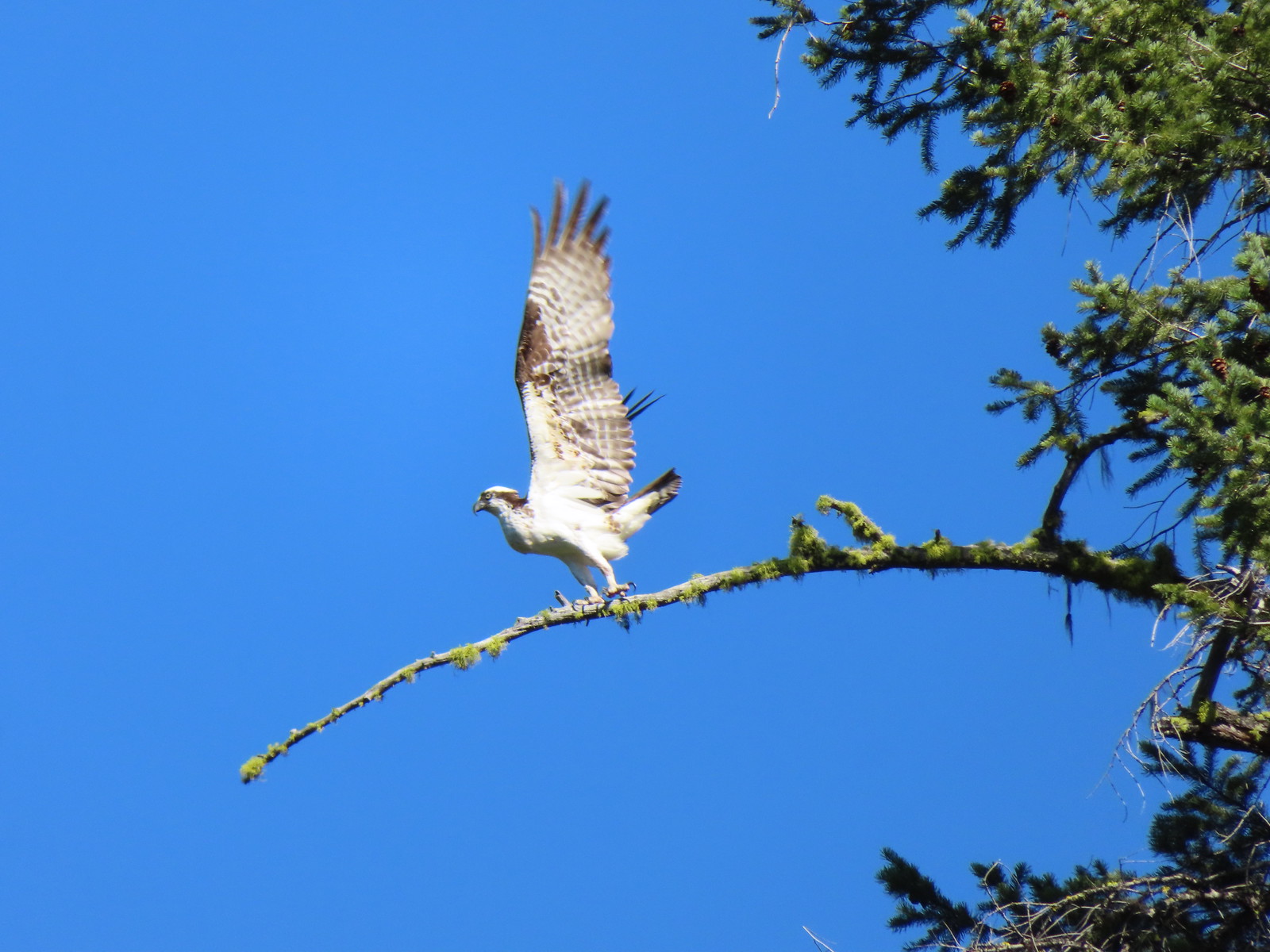
 Osprey nest
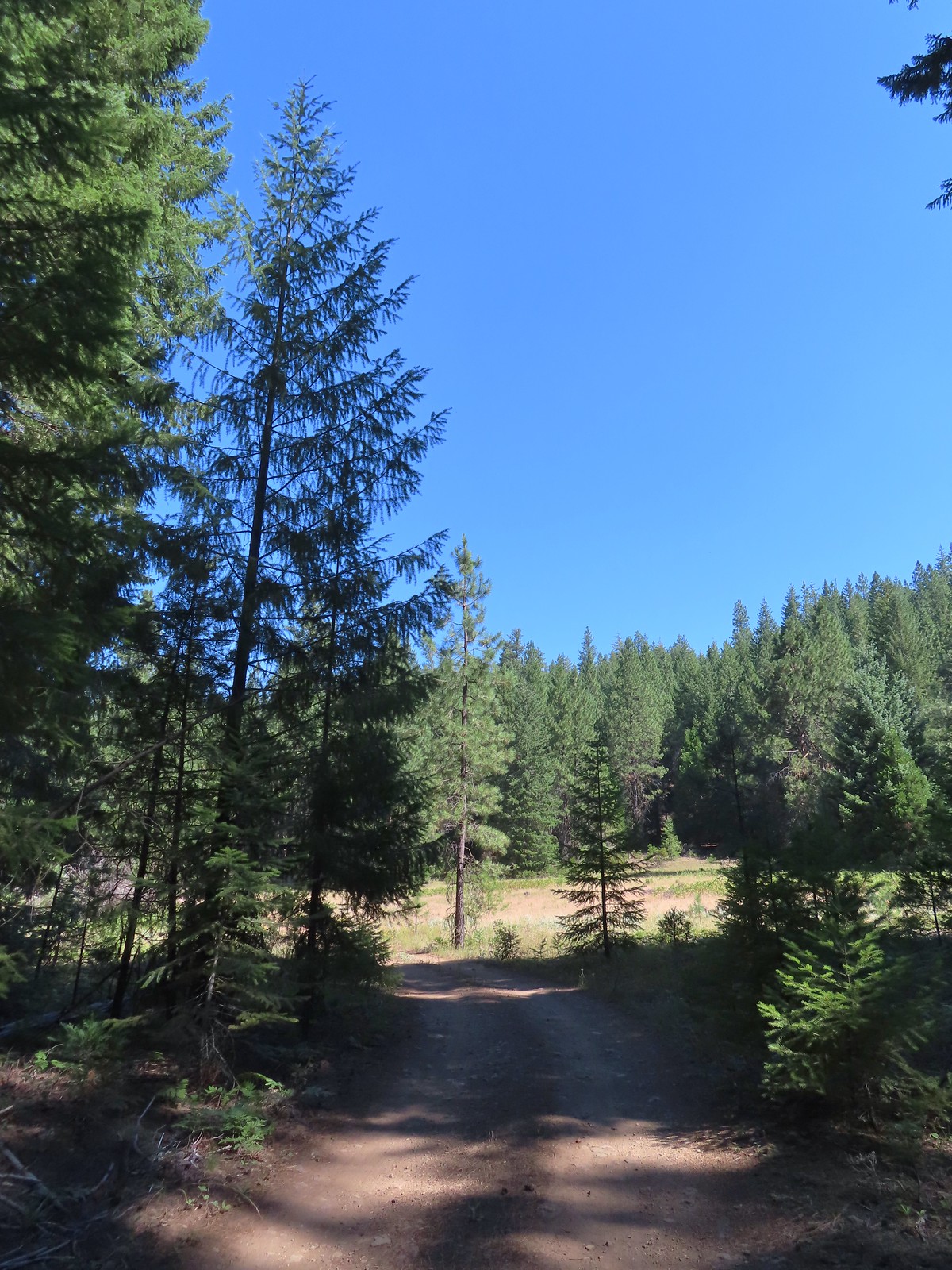
 Rock spire on lower section of Green Ridge. There are several interesting rock features higher up on the northern end of Green Ridge that were not visible from the road.
 Orchid
 Scarlet gilia
 Some of the private cabins from the road.


 A couple more cabins.
 The end of the private land.
 The clear water allows for nice views of the rocks making up the riverbed.
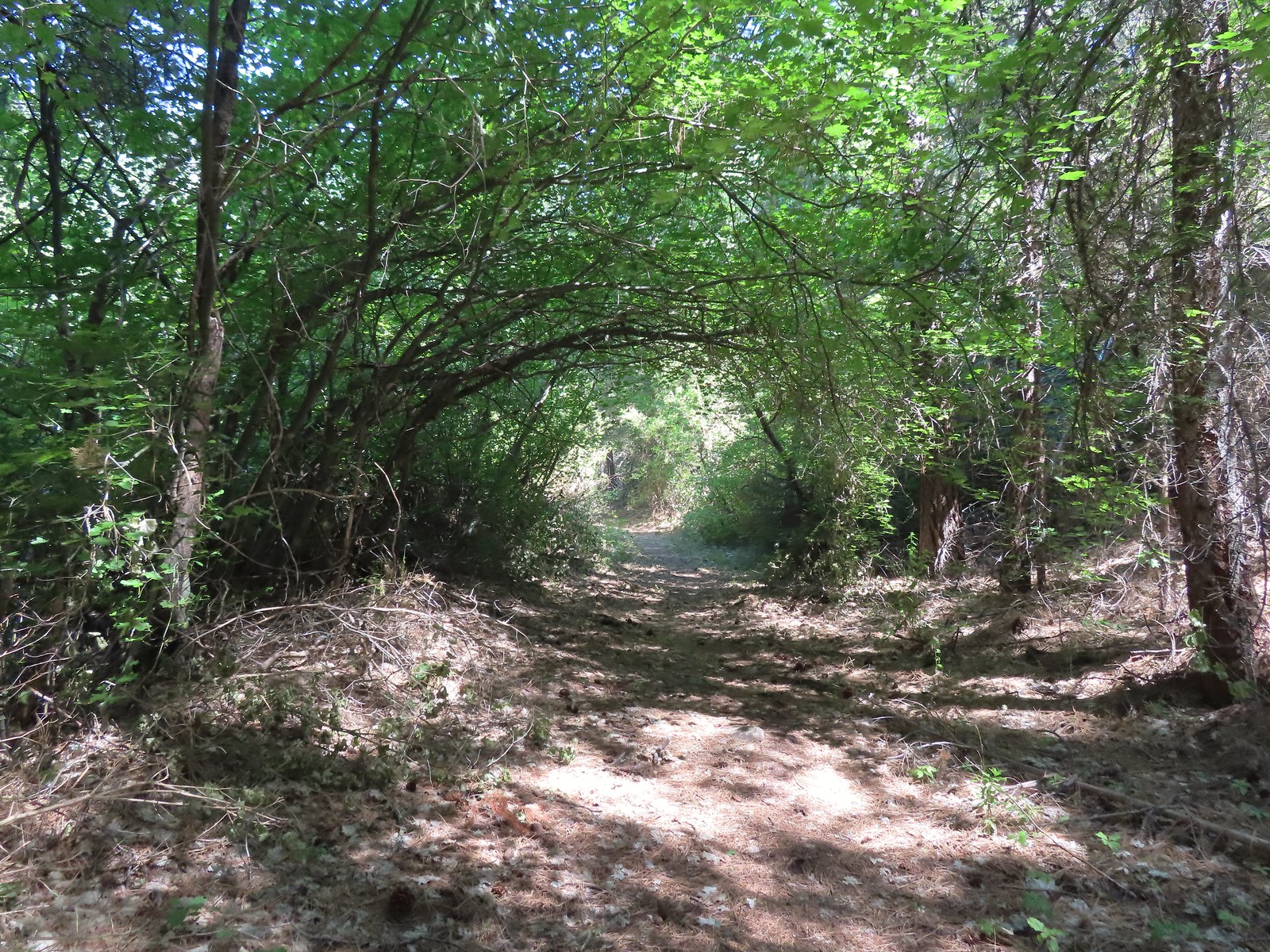
 Even though it had received maintenance the road was not in good enough condition for larger vehicles.

 Pink monkeyflower

 Lorquin’s admiral
 The forest opened up near the end of the road where we set up camp.
 Campsite
 Yellow monkeyflower
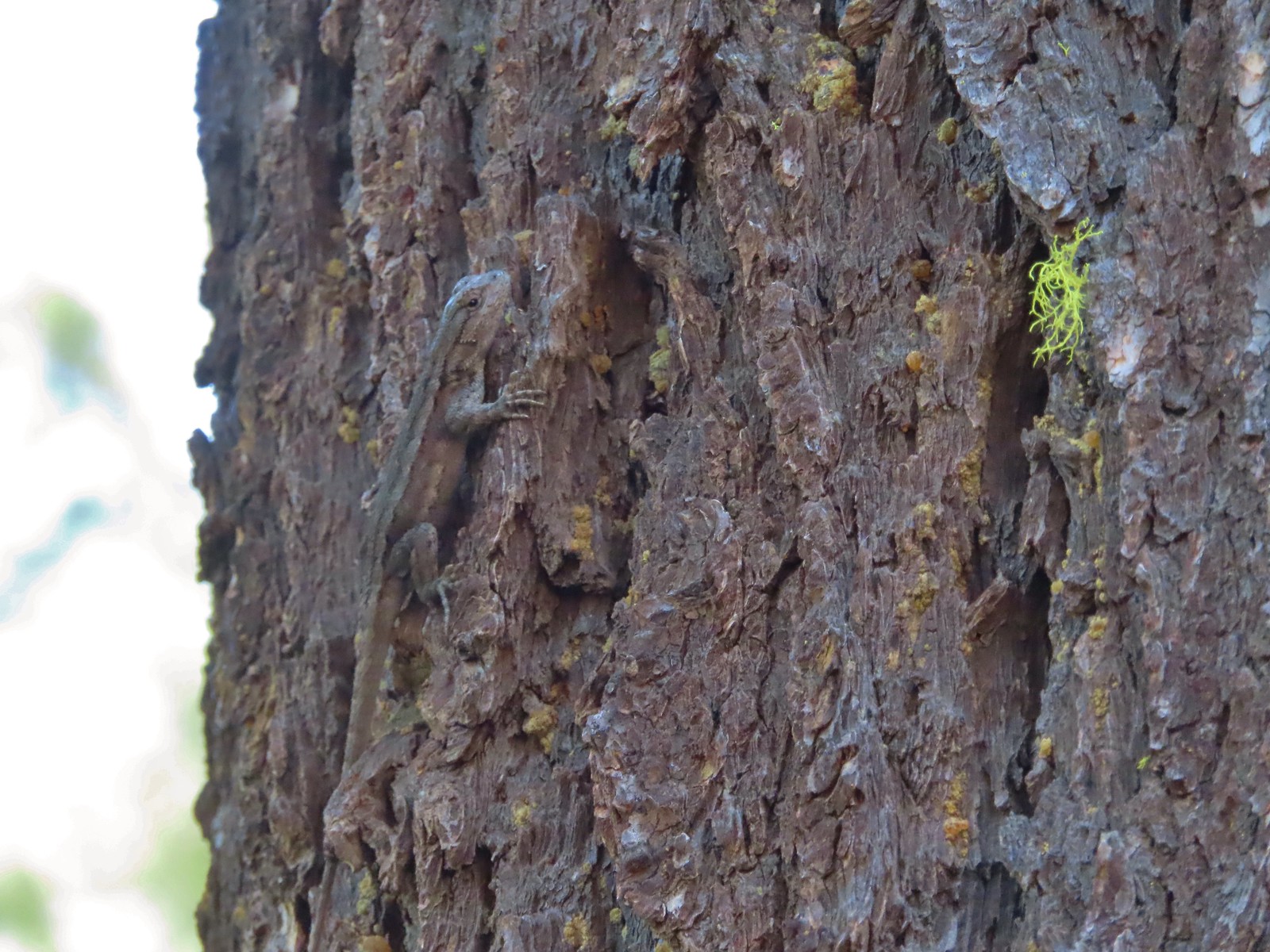 Lizard hanging out near the campsite.

 Grouse
 The answer to the questions is yes bears do.
 The Metolius through the trees.
 Sagebrush mariposa lily. There also tire tracks in the trail behind.
 Recent brushing had been performed through this area.
 Looking up the end of Green Ridge.
 This large tree had been cut fairly recently.
 Flagging marking a reroute around a downed tree.
 Starting to get brushy.
 View across the river to the Warm Springs Indian Reservation.
 Flowers along the Metolius.
 The Whitewater River was behind the rock formation on the far side. The Whitewater River begins at the Whitewater Glacier on Mt. Jefferson and flows roughly 7.5 miles through the Warm Springs Reservation to the Metolius.
 More clear water.
 Fireweed
 Thimbleberries provided us with a few after dinner snacks.
 Hedgenettle
 The Shut-In Trail traveled right along the riverbank at times.
 There was a small set of boards nailed together to assist with crossing the sketchiest part, but they were just lying on the hillside and not anchored in any way.
 The Shut-In Trail from CR-64.
 CR-64
CR-64
 Frog on a skunk cabbage leaf. There were a few wet areas along the Shut-In Trail which meant a few mosquitos were present.
 The Sun going down as we approached camp.
 Pinedrops
 Squirrel
 Bee sleeping on thistle.
 Large boykinia
 We t
We t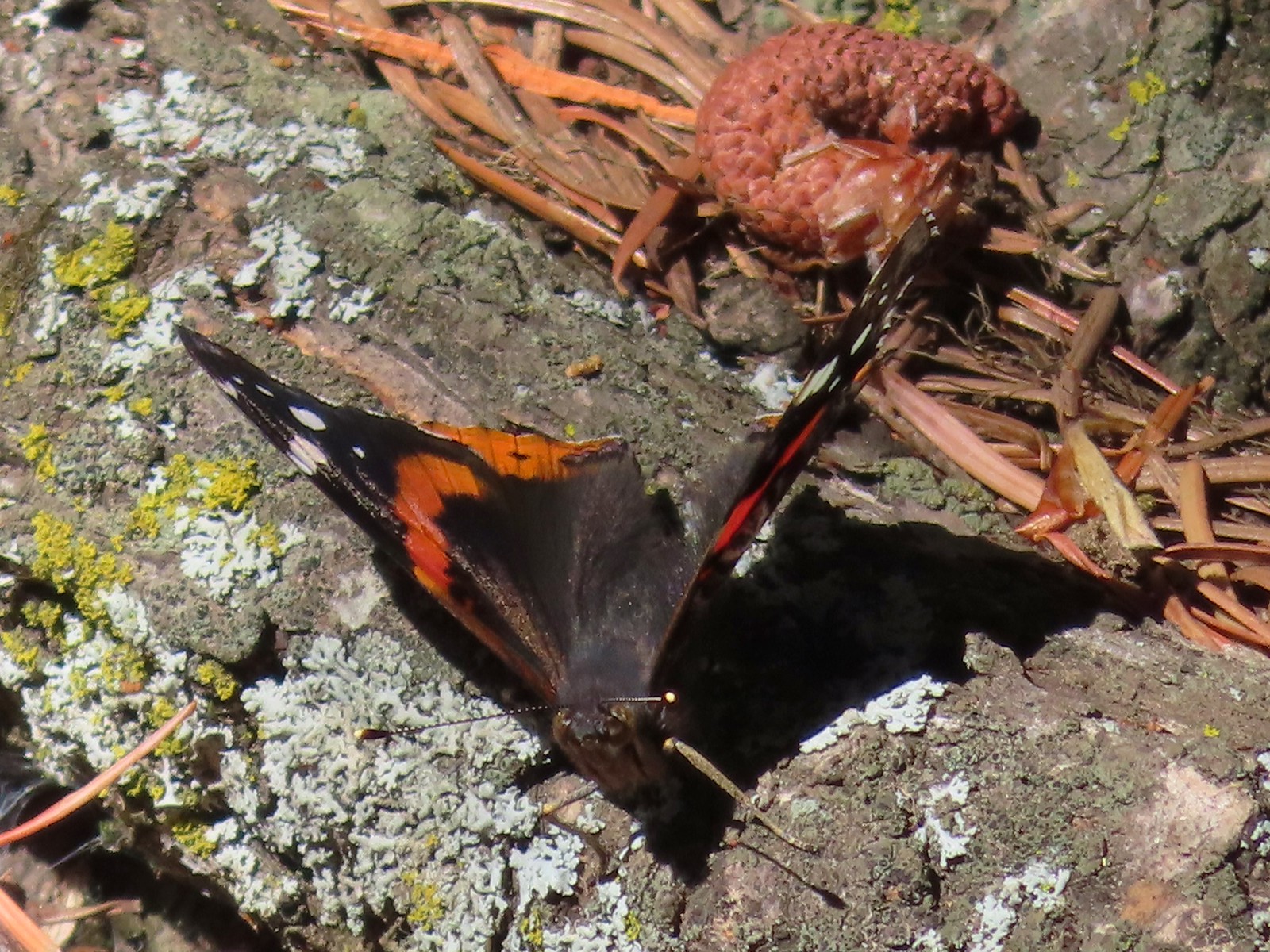 Red admiral. As far as I know this is the first one of this species of butterfly that we’d seen.
 Common wood nymph
 Across from the Candle Creek Campground.
 Green Ridge through some smoke. A couple of new fires, one on the Warm Springs Reservation and one East of Eugene had started over the weekend.
 Love the colors of the Metolius.
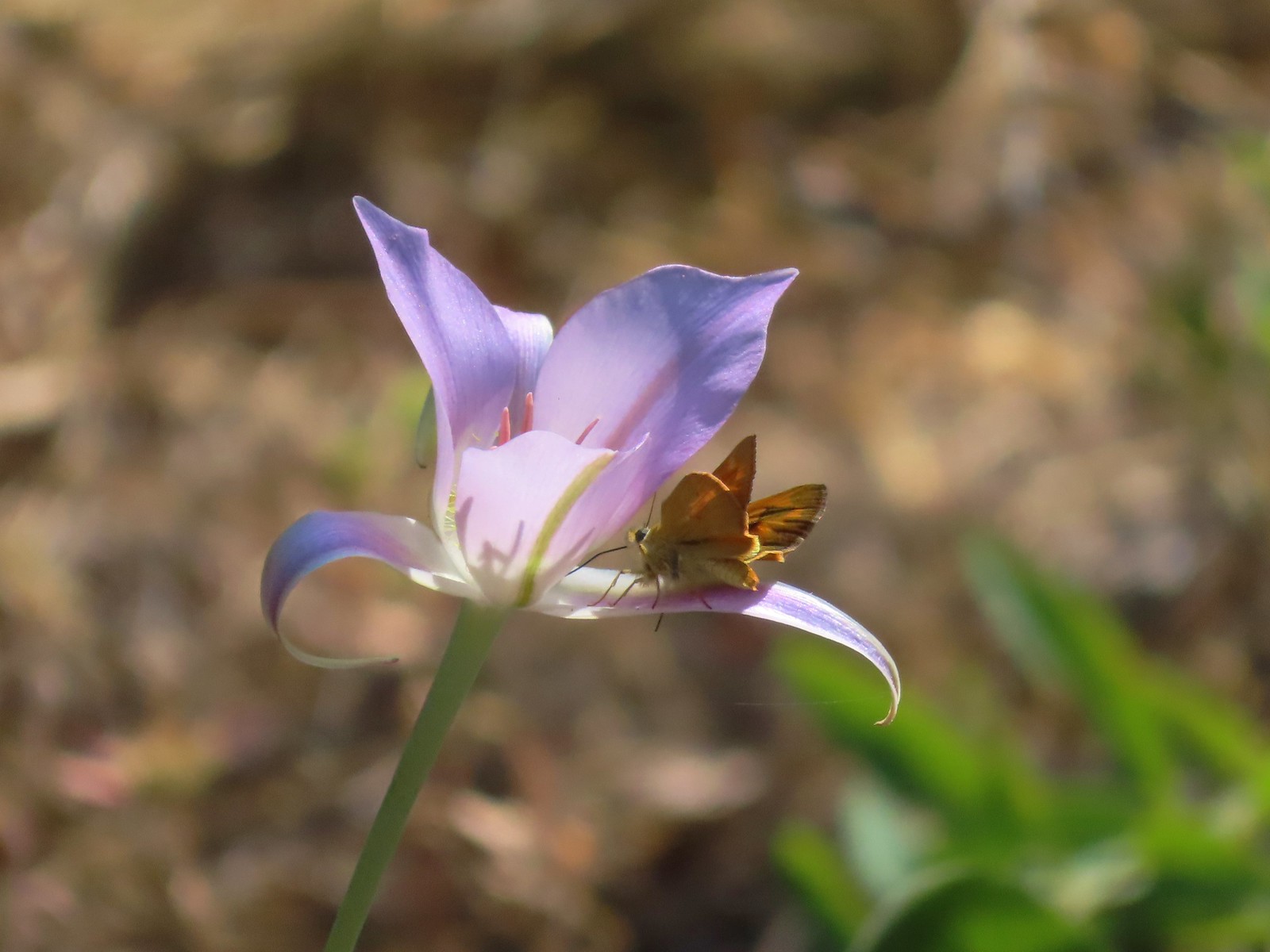 Skipper on a mariposa lily.
 Lower Bridge Campground is ahead to the left in the trees.
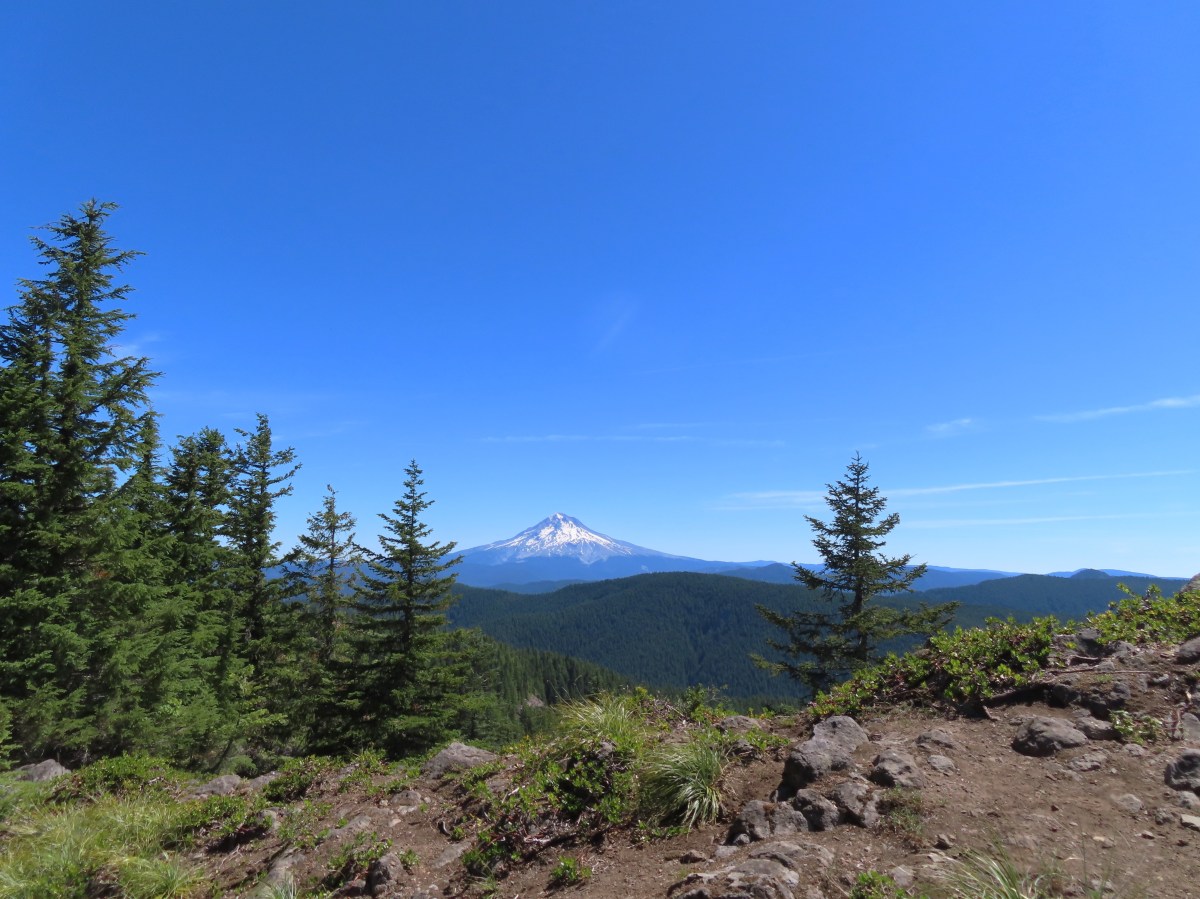

 Rhododendron at the trailhead.
 Eagle Creek Cutoff Trail on the left just before the first steep climb.
 Salmon-Huckleberry Wilderness sign. I would be in and out of the wilderness several times on my route.
 Pictures rarely capture the actual steepness of the trails but the third of a mile past this trail sign had me wondering if I was going to be able to complete my planned hike.
 Starting the descent to the saddle.
 The
The  Coral fungus
 The Old Baldy Trail turns left here while the Tumala Mountain Trail continues straight.
 A small unreadable sign was the only identifier for the continuation of the Old Baldy Trail. I was a little concerned seeing blowdown on this trail from the junction but as it turned out the trail was in good shape and the trees that were down were easily stepped over.
 One of four switchbacks in the first 0.3-miles.
 Cat’s ear lily
 Cascade lily
 Oregon sunshine
 Larkspur & ?
 Paintbrush
 Bunchberry, not sure what is causing the white at the end of the leaves. I’d never noticed that before.
 Lupine
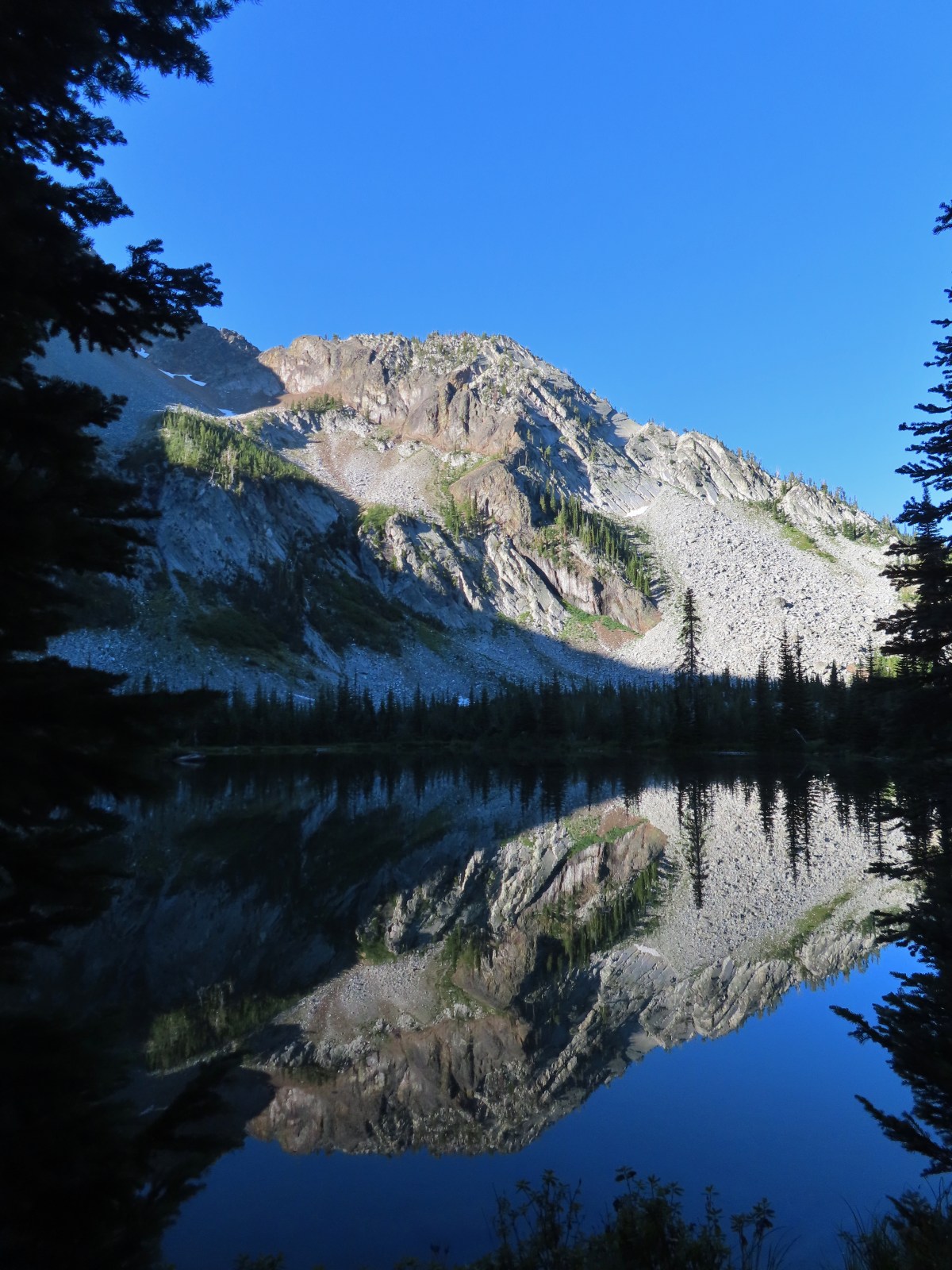
 View at the scree slope
 I’m pretty sure there were at least three pikas down there somewhere.
 Tumala Mountain in the center.
 From left to right is East Mountain, Thunder Mountain (
 Little prince’s pine
 Cascade lilies, a few lupine and a paintbrush.
 Carolina bugbane and foam flower.
 Spur trail from the Twin Springs Trailhead (Old Baldy East) on the right.

 Part of the foundation at the former guard station site.
 The old road.


 Not a big beargrass year but there was a few blooming along the trail.
 I went up this trail to find it just immediately dropped back down to the Plaza Trail.
 The correct spur to Sheepshead Rock.
 Mt. Hood
 Mt. Adams and Mt. Hood
 Some light scrambling brought me to the top of the rock.
 Mt. St. Helens, Goat Rocks, and Mt. Adams in the distance. The high point to the left along the forested ridge is Wildcat Mountain (
 Mt. St. Helens
 Goat Rocks and Mt. Adams
 Mt. Hood with the South Fork Salmon River valley below.
 Orange agoseris
 Oregon sunshine and yarrow
 Saxifrage
 Penstemon
 Bluebells of Scotland

 Valerian
 Moth on an arnica.
 The Plaza Lake Trail sign on the left.
 View from one of the switchbacks.
 Pacific coralroot
 Bunchberry with the more familiar all green leaves.
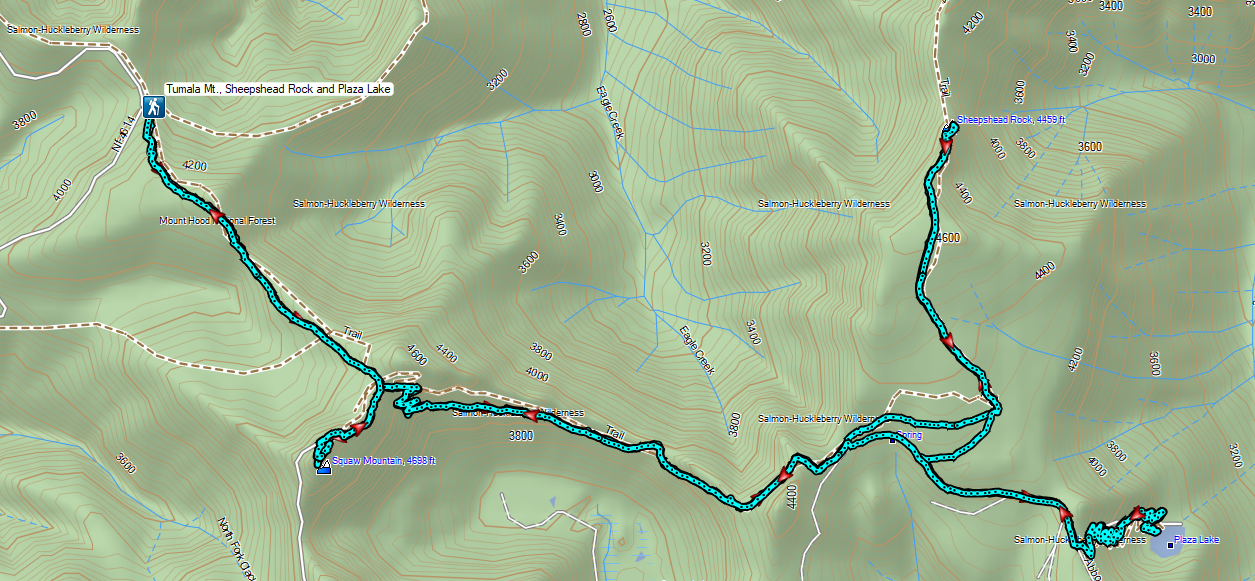
 Plaza Lake below from the trail.
 Twin flower
 There were some nice big trees along the trail.

 Looking up from the lakeshore.


 I’d missed Mt. Hood on the way down.
 Mt. Hood
 Anemones
 Spirea and lupine
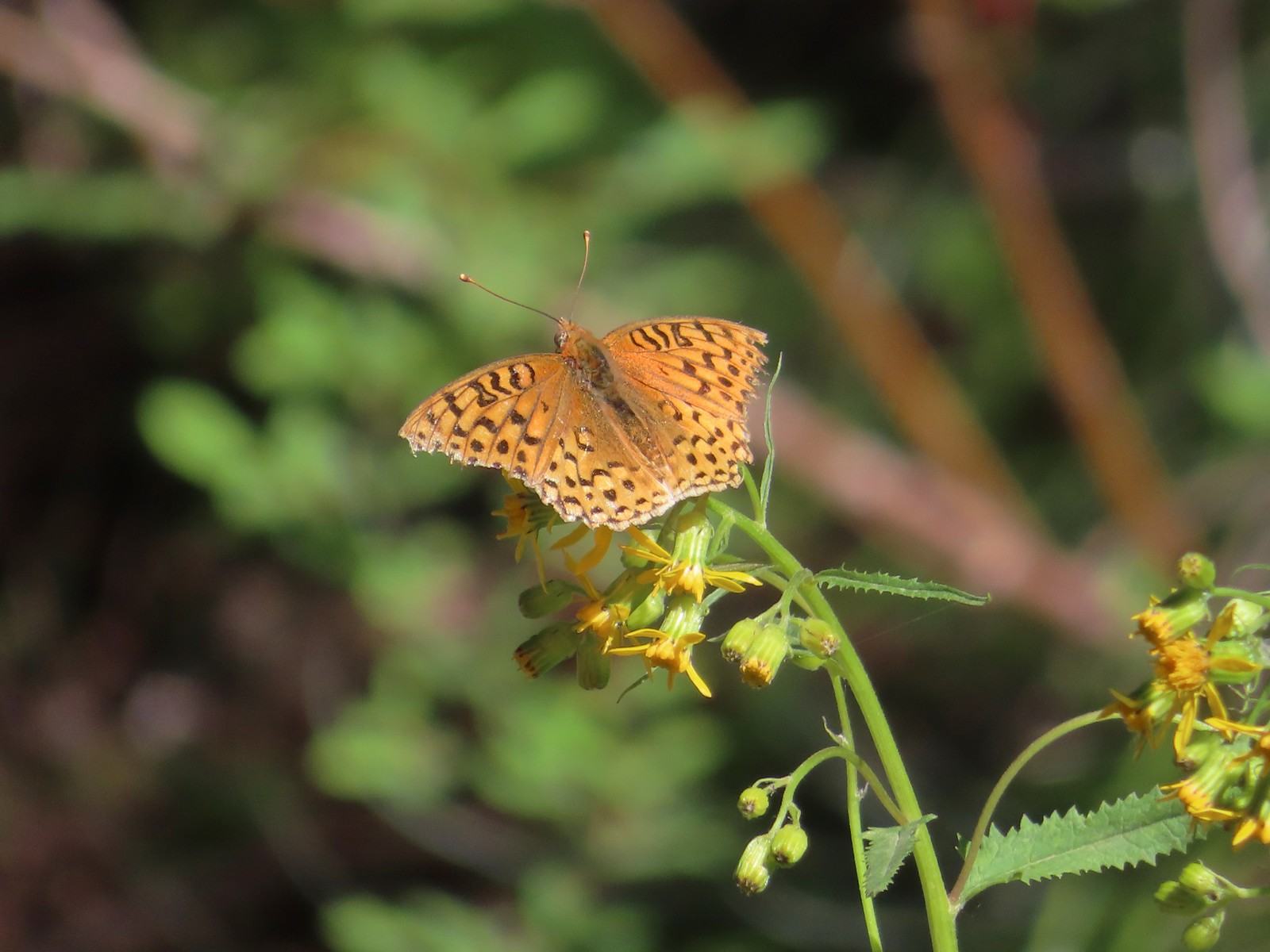 A fritillary butterfly.
 The former Twin Springs Campground was near the trailhead on the opposite side of FR 4610.
 The Twin Springs Trailhead.
 Old Baldy Trailhead sign at the Twin Springs Trailhead.
 Salmon-Huckleberry Wilderness sign (straight ahead) at the Old Bald/Plaza Trail junction.
 I stopped again at the scree slope to look for pikas. All was quiet as they apparently had retreated underground to avoid the heat, but with more light in the valley below I could make out a green meadow in the trees.
 Columbine along the trail.
 Grey jay
 Back at the Tumala Mountain Trail junction.
 My first view of Mt. Jefferson on the day.
 Mt. Jefferson
 A yet to blossom rhododendron.
 Fading lousewort and valerian.
 A blooming rohdodendron.
 Mt. Hood. The scree slope is also visible through the trees on the hillside to the lower right.
 Mt. Jefferson in the distance.
 Mt. Jefferson
 Three Fingered Jack and the Three Sisters
 More Cascade lilies.
 Mt. St. Helens in the distance.
 Mt. St. Helens
 A better view of the scree field and the meadows below Tumala Mountain.
 Penstemon and lupine.
 Passing the Fanton Trail junction on the way back.
 Looking at the final climb of the day from the saddle.