Categories
Hiking Mt. Hood Area Oregon

Dog River Trail

A bit of potentially wet weather had us looking for a hike that had the potential to be dry and not too dependent on having a view.  We, of course, also preferred it to be a new hike.  We turned to Matt Reeder’s 2nd edition of “Off the Beaten Trail” for inspiration.  A recent addition to our collection of guidebooks, “Off the Beaten Trail” features 50 hikes plus 5 bonus hikes within a two and half hour drive of downtown Portland.  While a number of the hikes are also mentioned in Sullivan’s “100 Hikes” guidebooks (our usual go-to source) they are typically additional hikes from the back of the books so they lack in-depth detail.  There are also several hikes that don’t appear in Sullivan’s books.

We chose the Dog River Trail (Reeder’s Hike #30) due to its location and a favorable looking forecast. According to NOAA there was a 30% chance of showers after 11am and being located on the east side of Mt. Hood often meant less cloud cover. After driving through a few showers in the Columbia Gorge we did indeed find some blue sky near Hood River and the views of Mt. Hood were perfect as we drove south on Highway 35.

The Dog River Trail
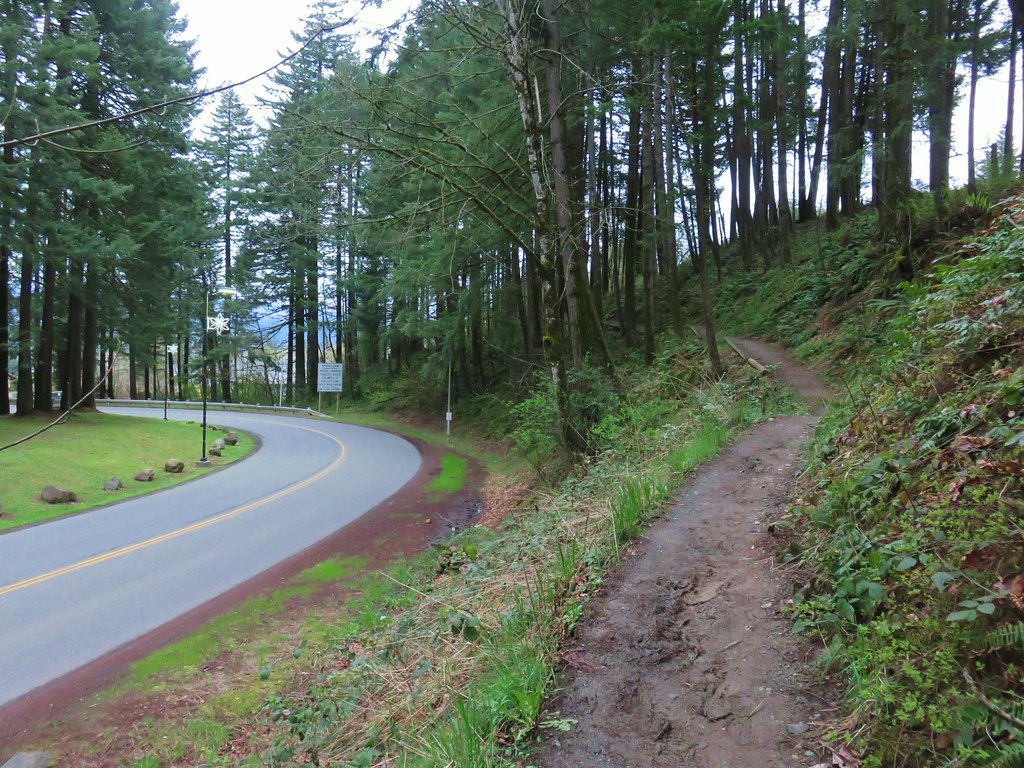
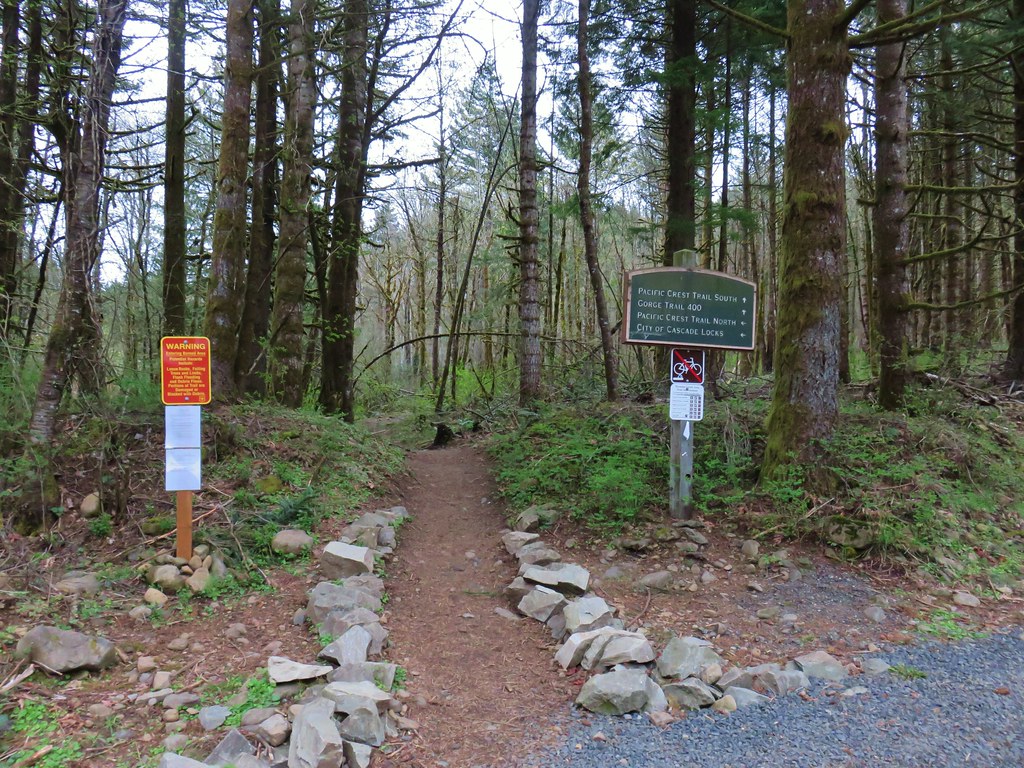
begins at the Dog River Trailhead along the eastern shoulder of Highway 35 18.2 miles south of Hood River (20 miles north of the junction with Highway 26).
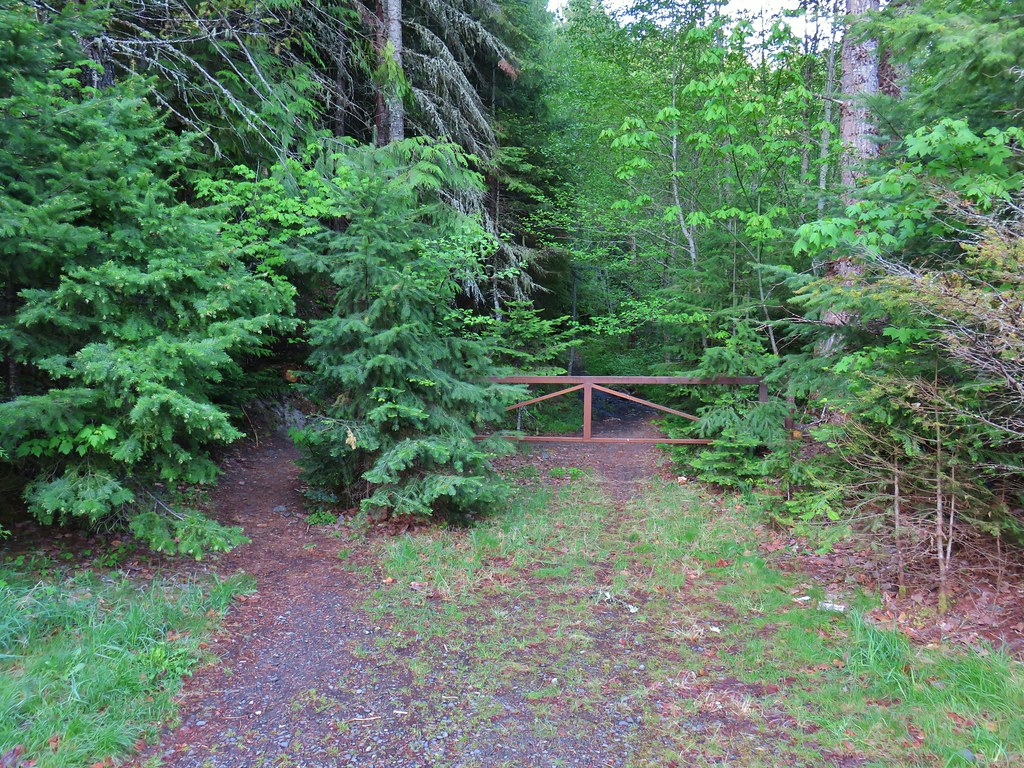
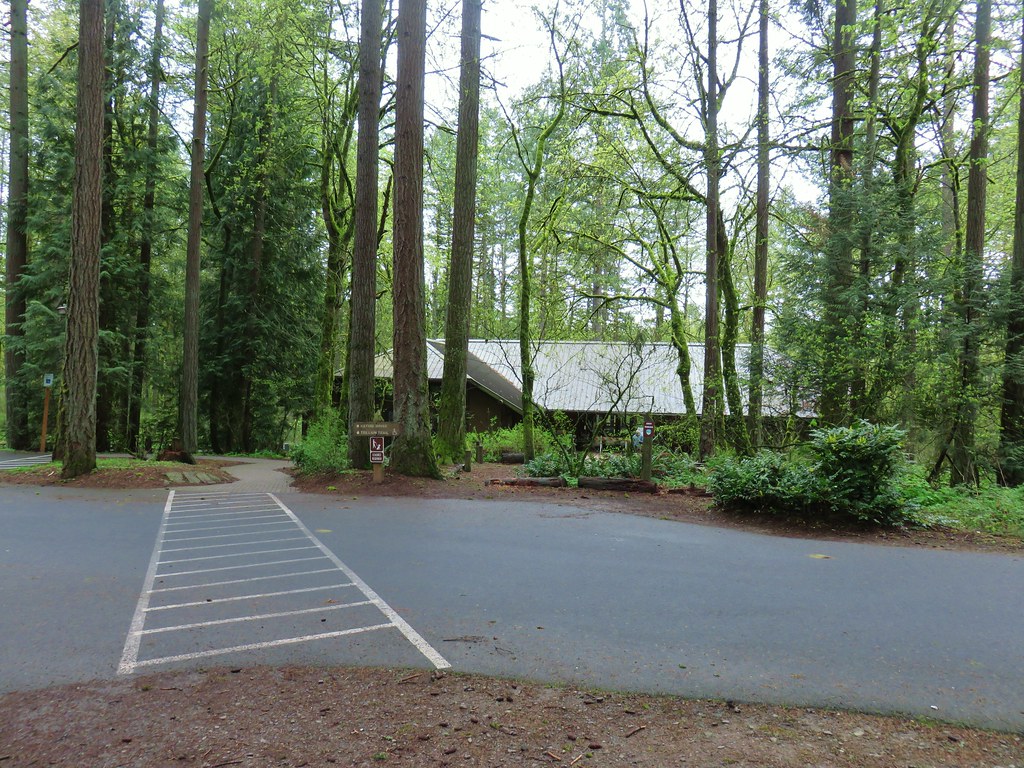
Dog River Trailhead

The most common users of this trail are mountain bikers, a group of which have adopted the trail.
Plaque at the Dog River Trailhead

The trail starts off at an elevation just over 2100′ and climbs steadily nearly 5.5 miles to its end at a three way junction with the Zigzag and Surveyor’s Ridge Trails.

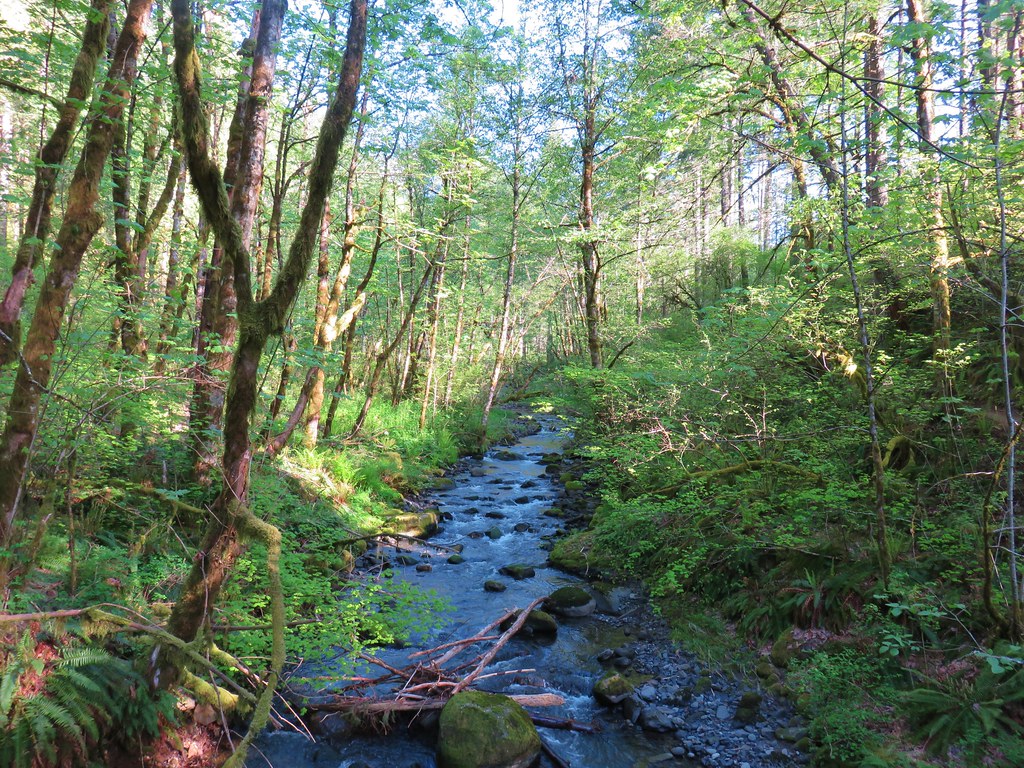
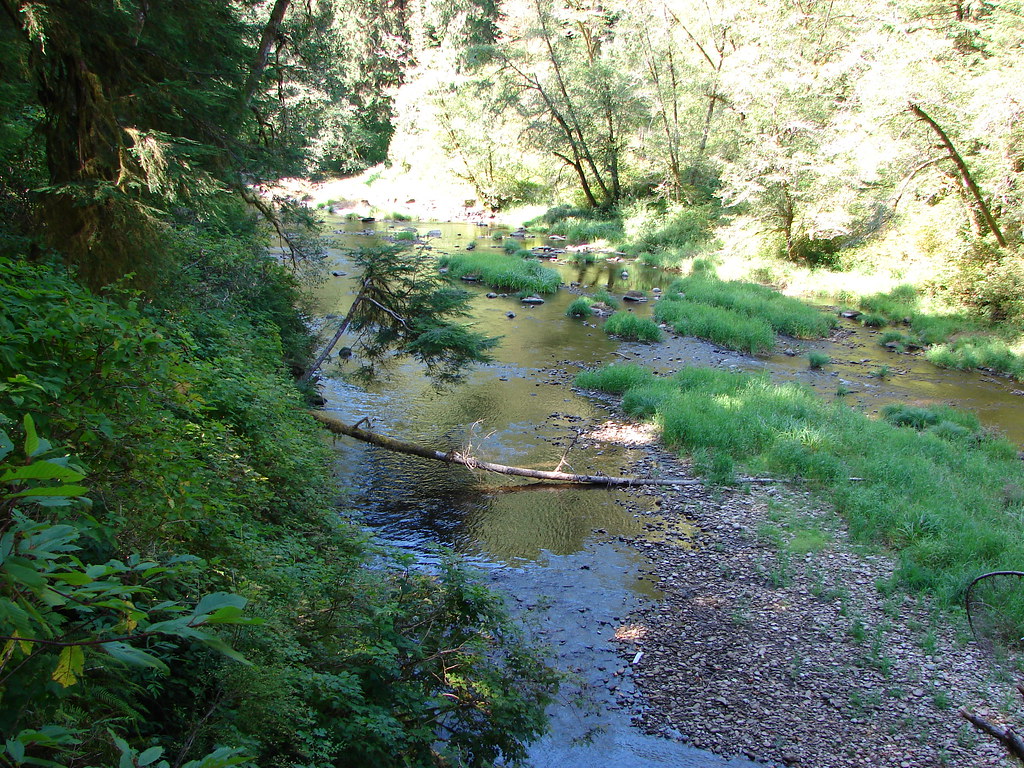
Just beyond the gate at the trailhead the trail passes very close to the Dog River.
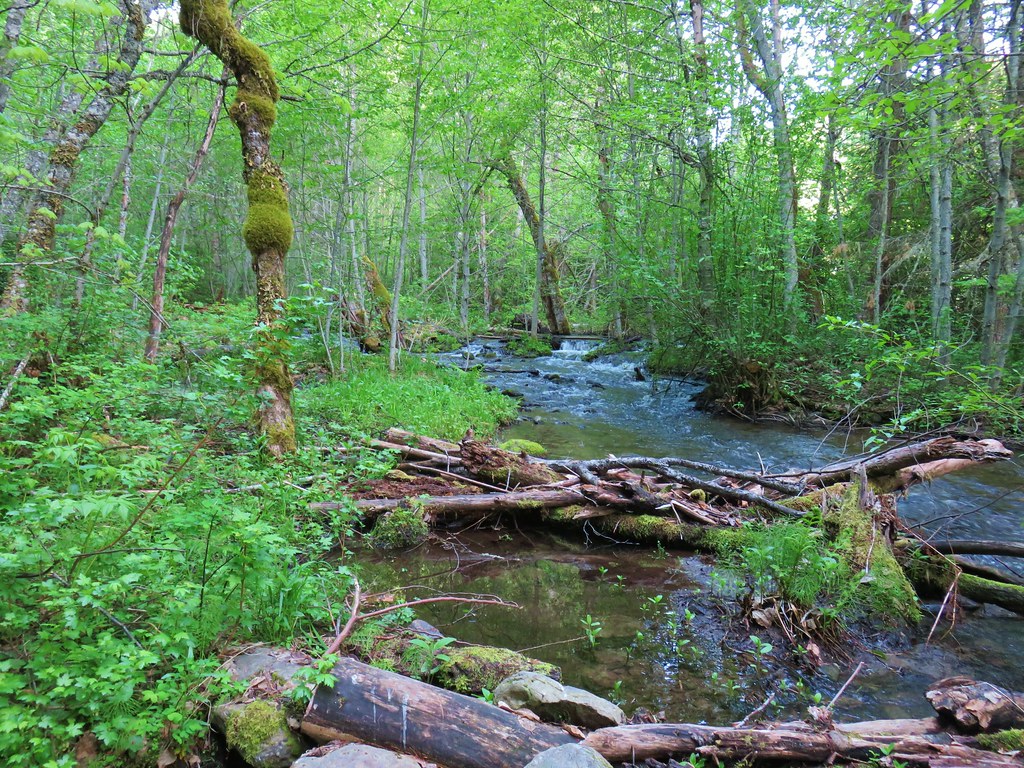
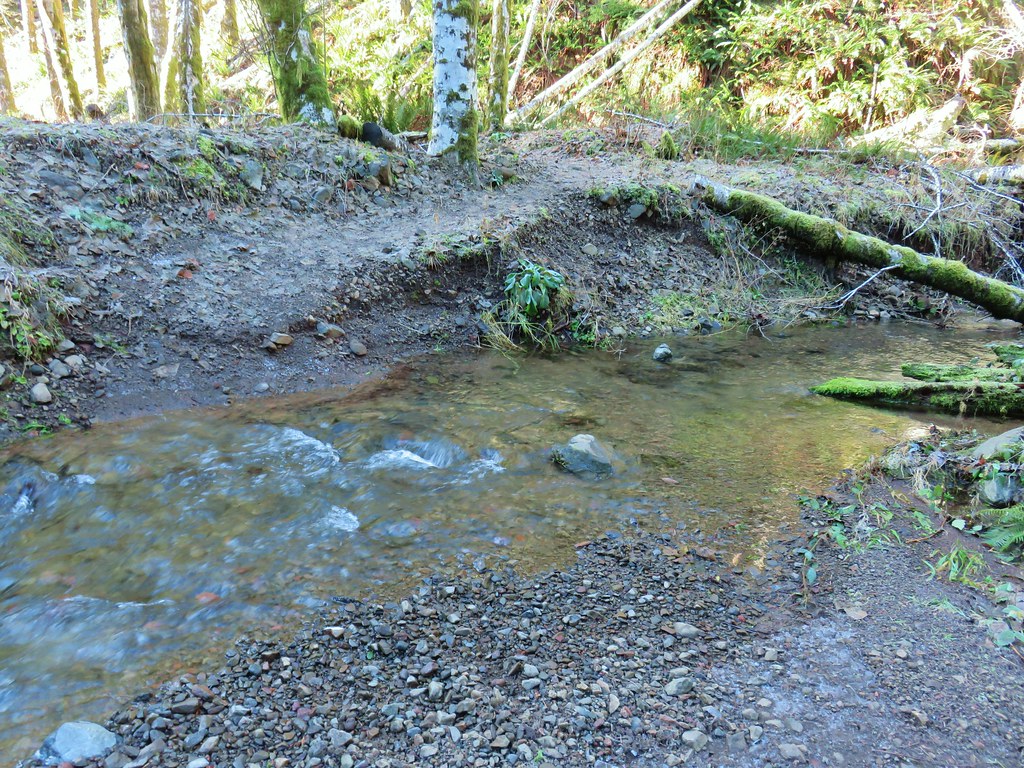
Dog River

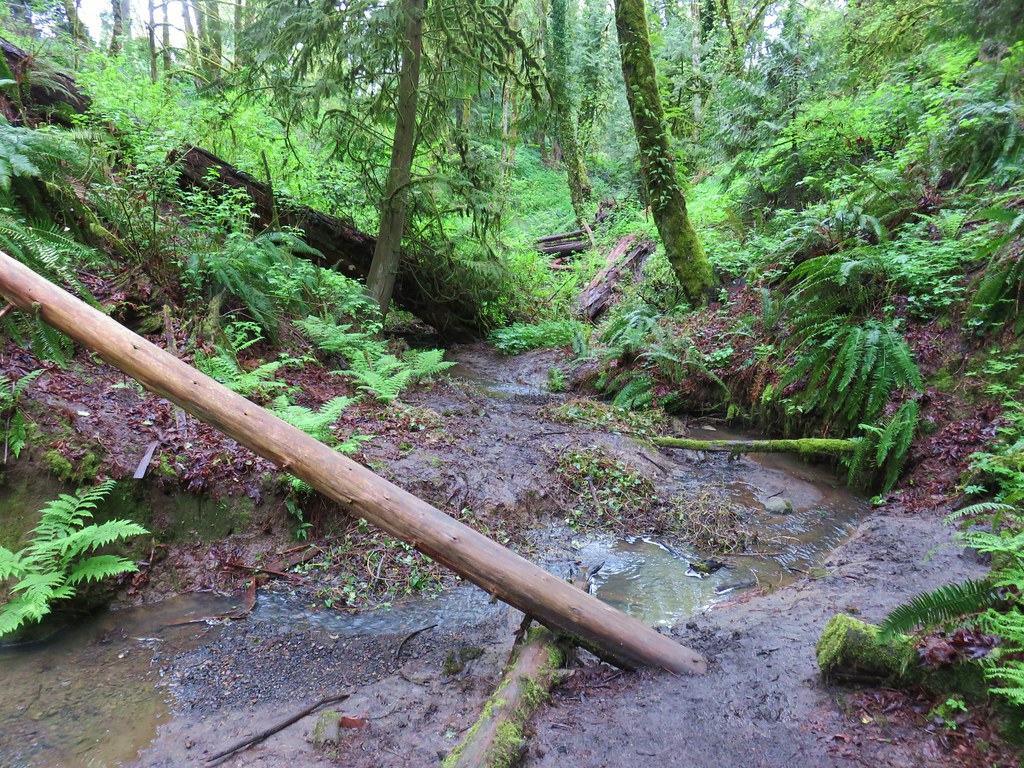
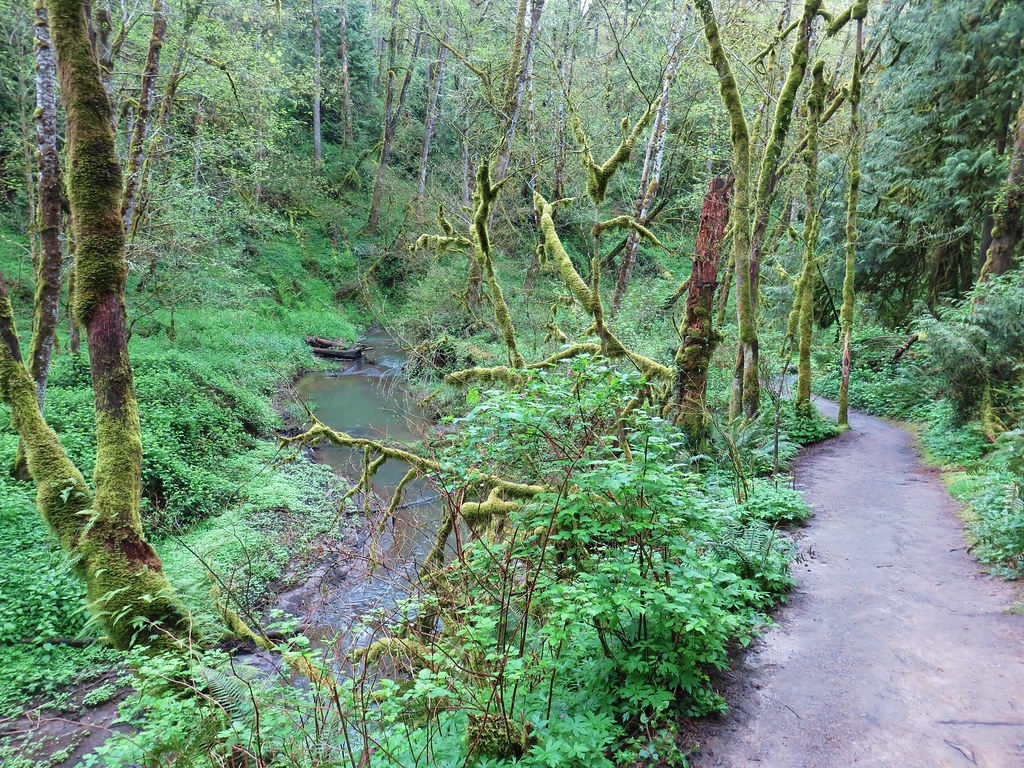
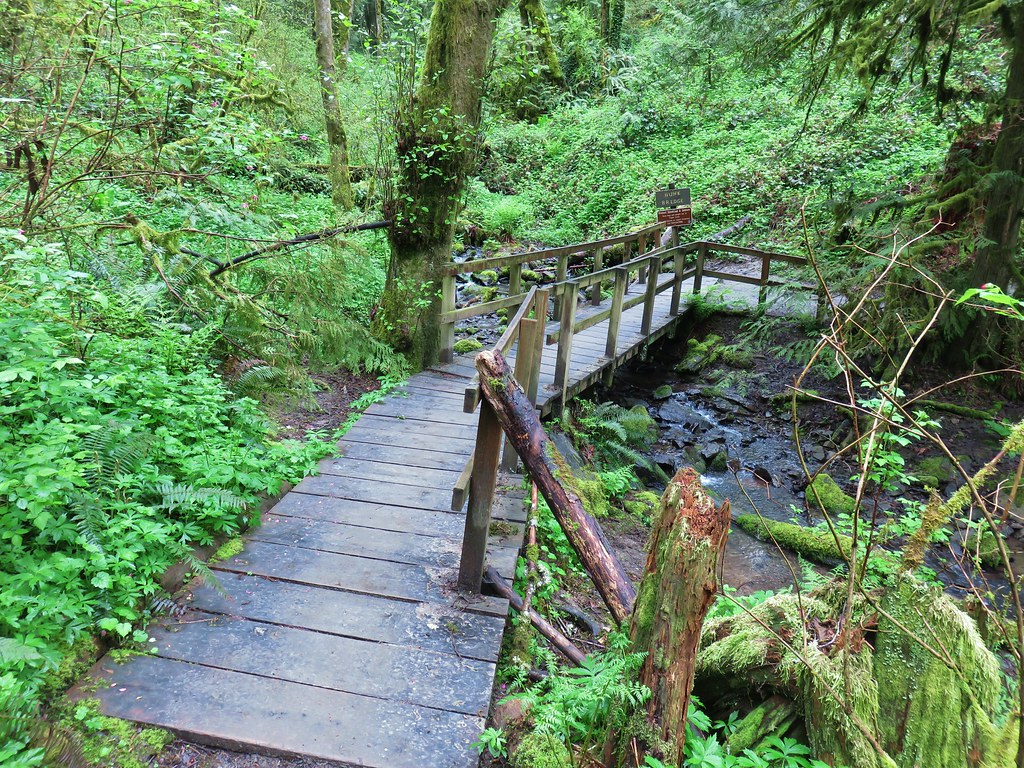
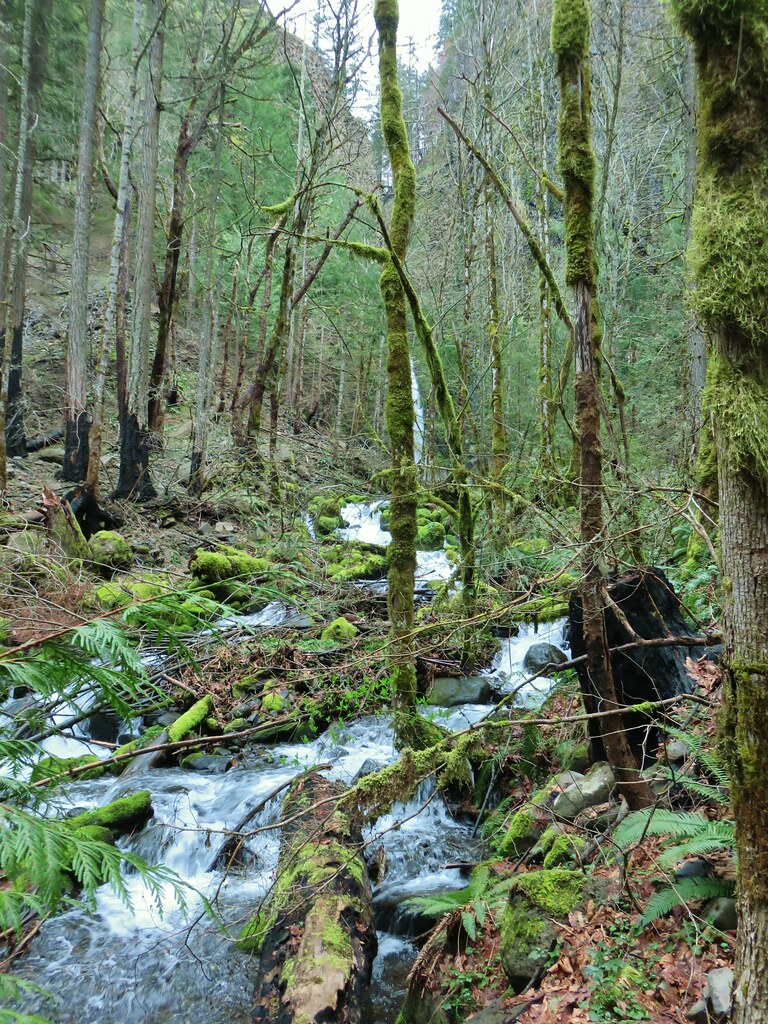
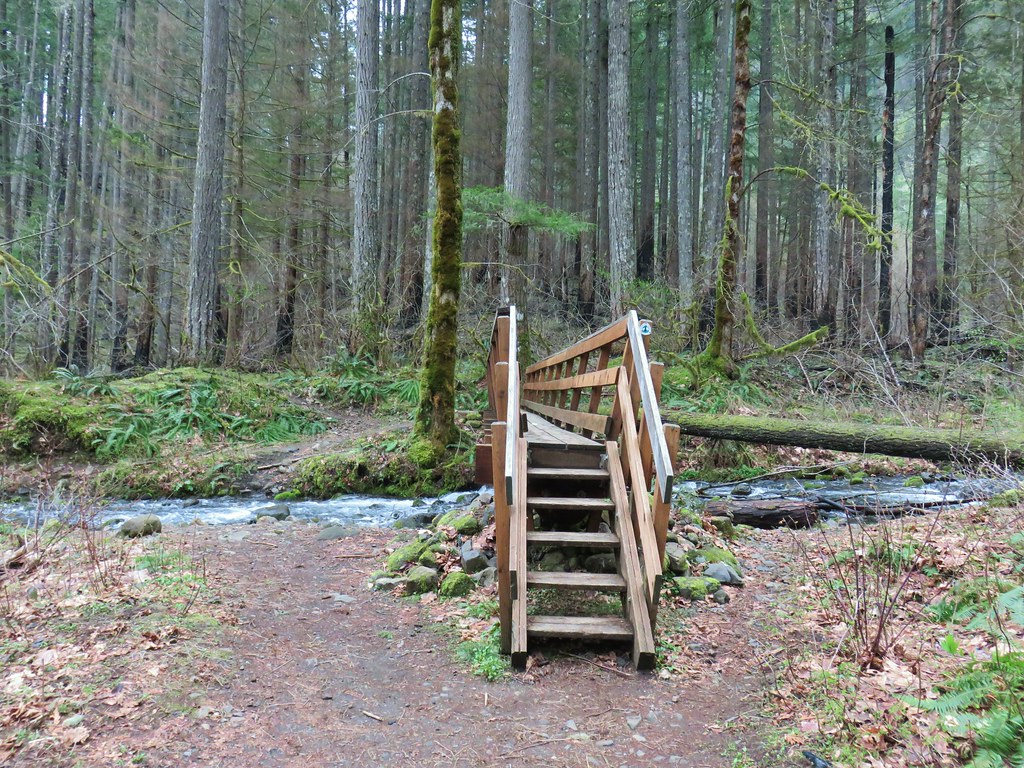
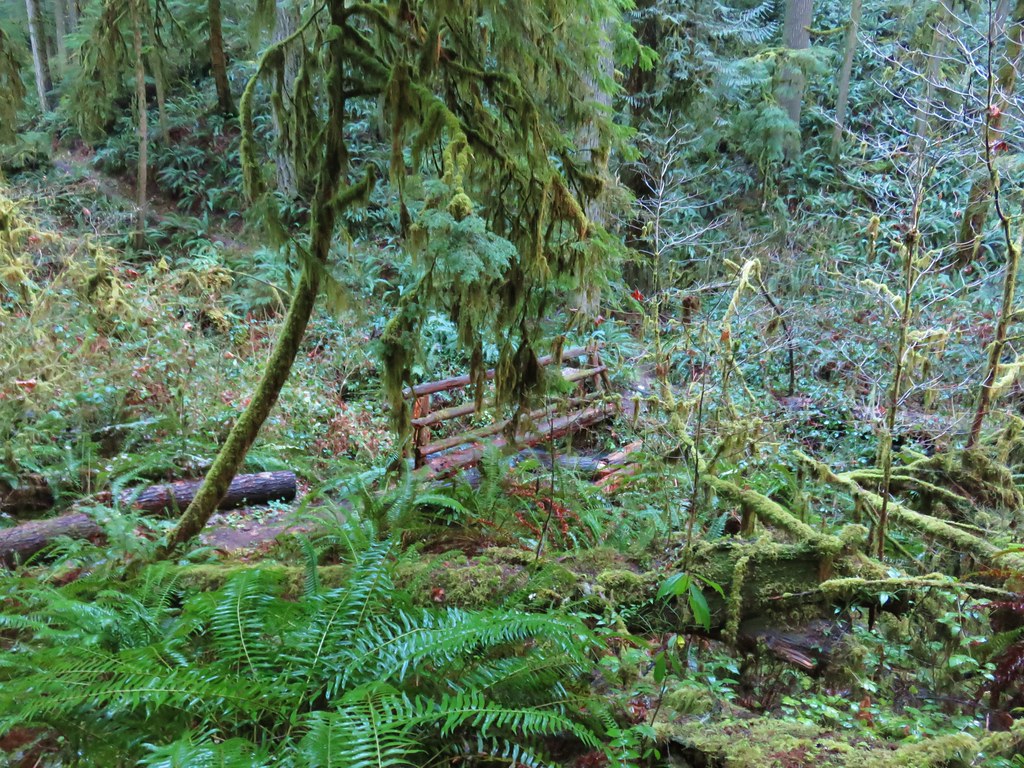
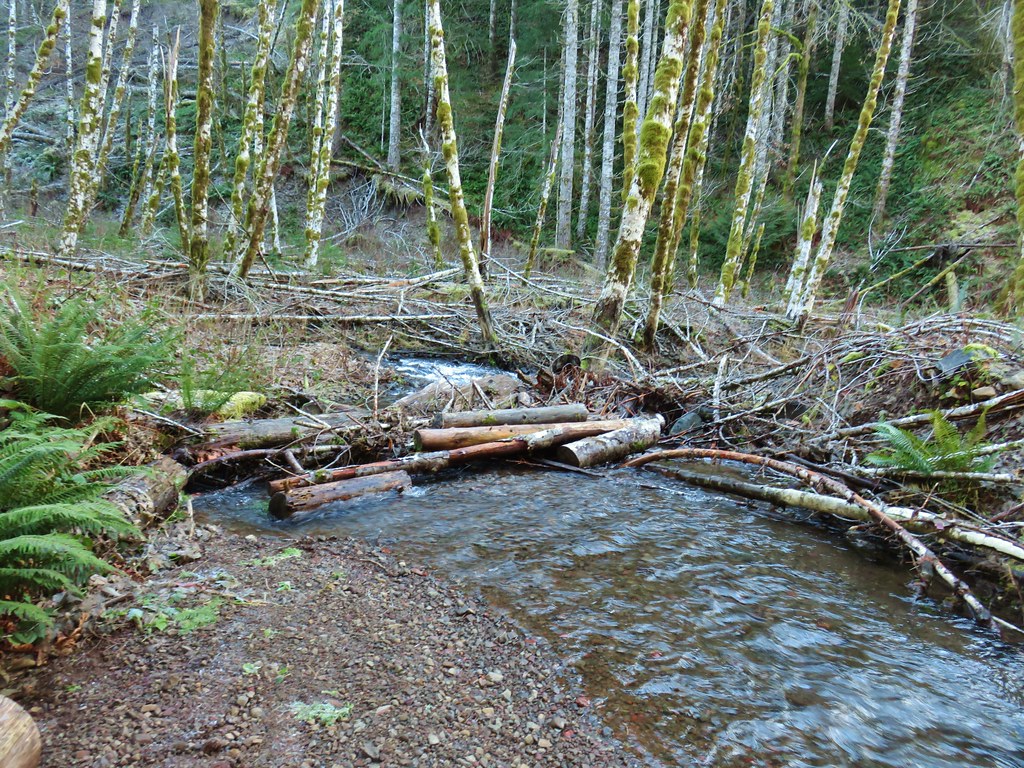
We quickly lost sight of the river as we climbed along a hillside to a footbridge over Puppy Creek.
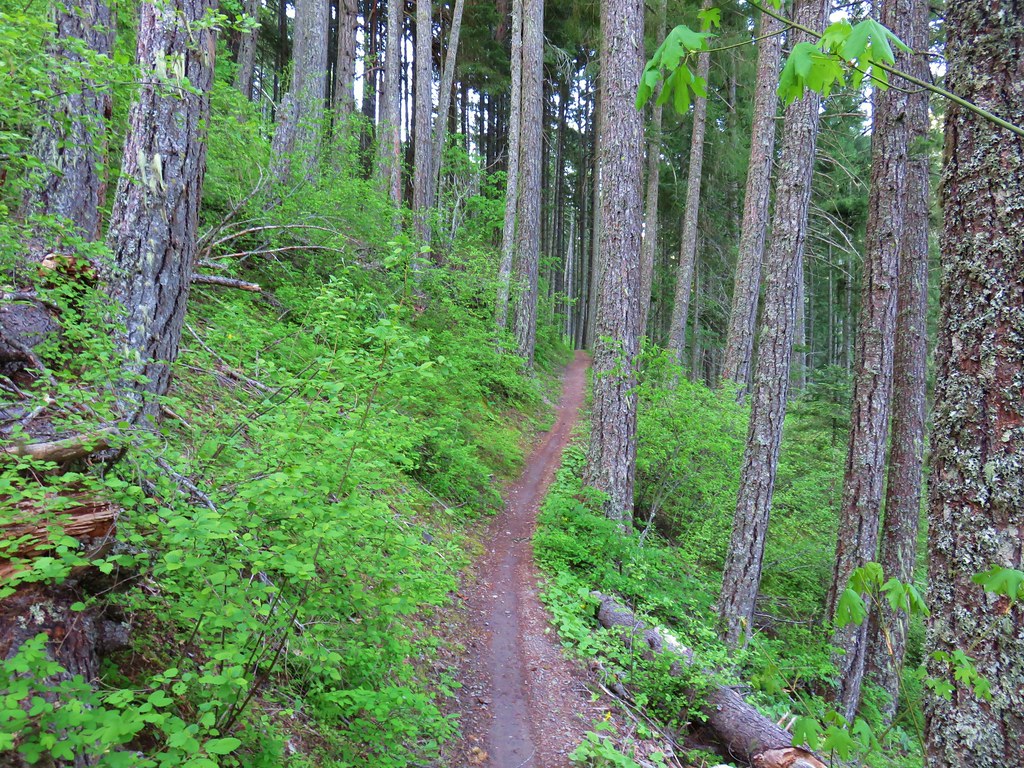
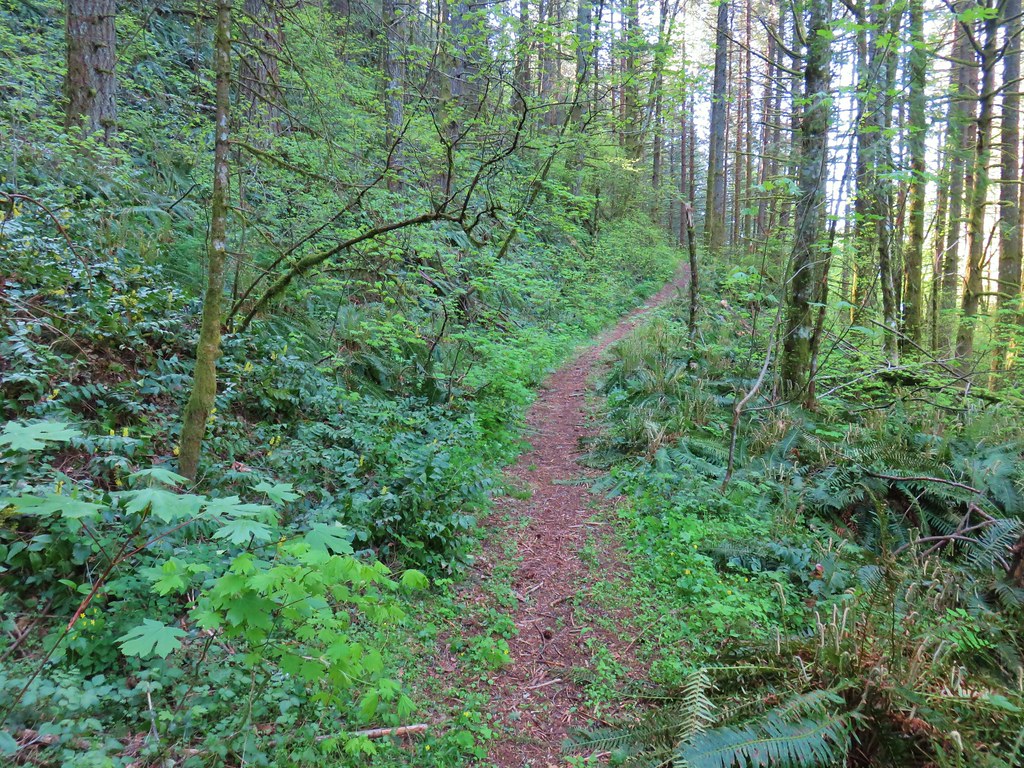
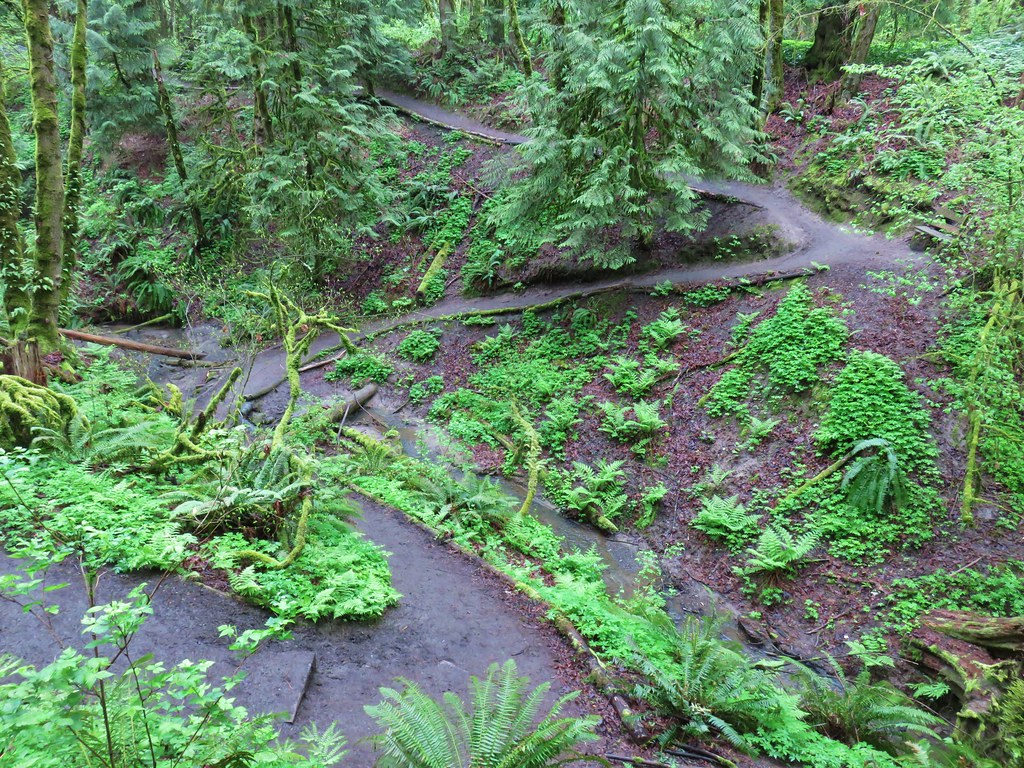
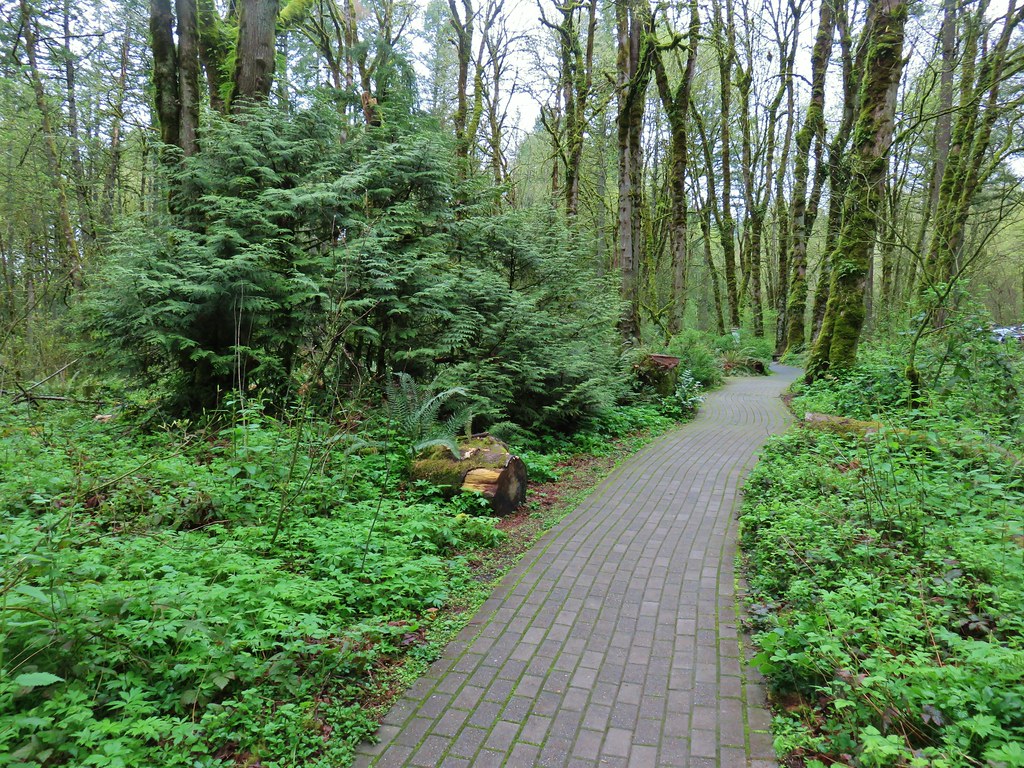
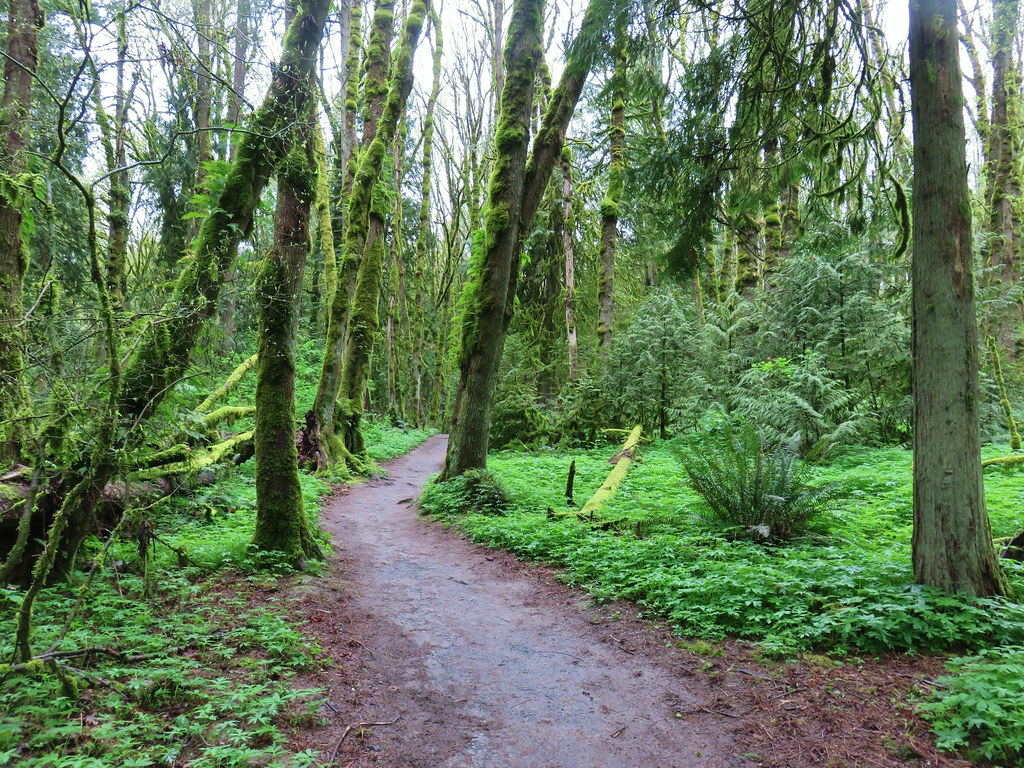
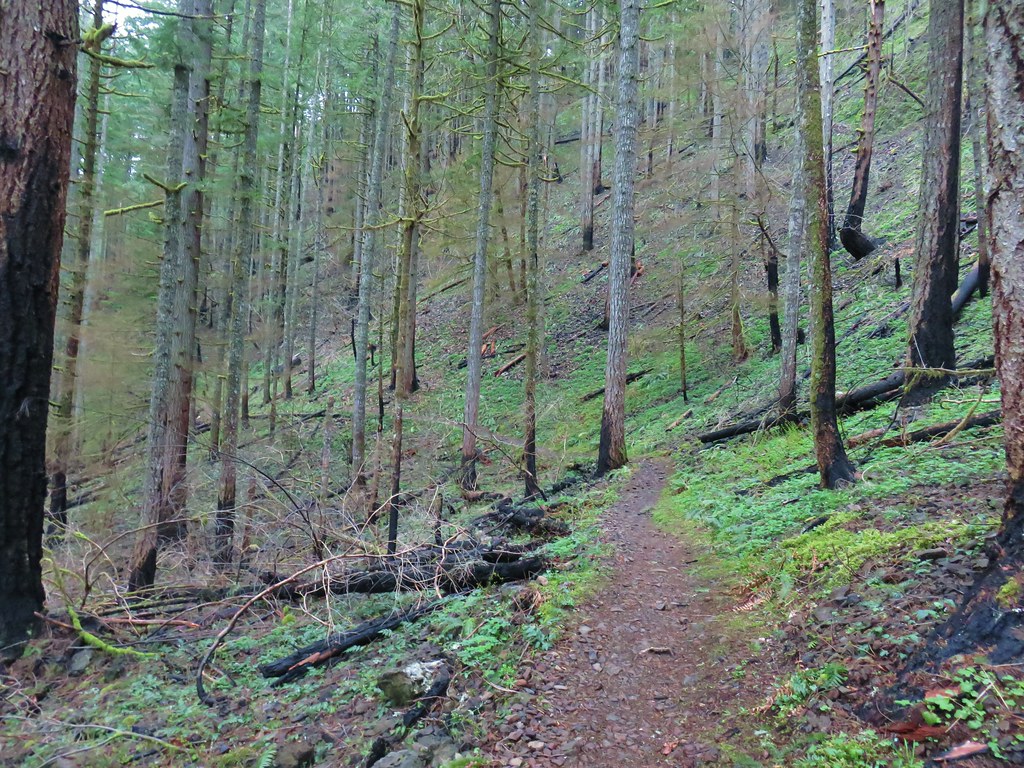
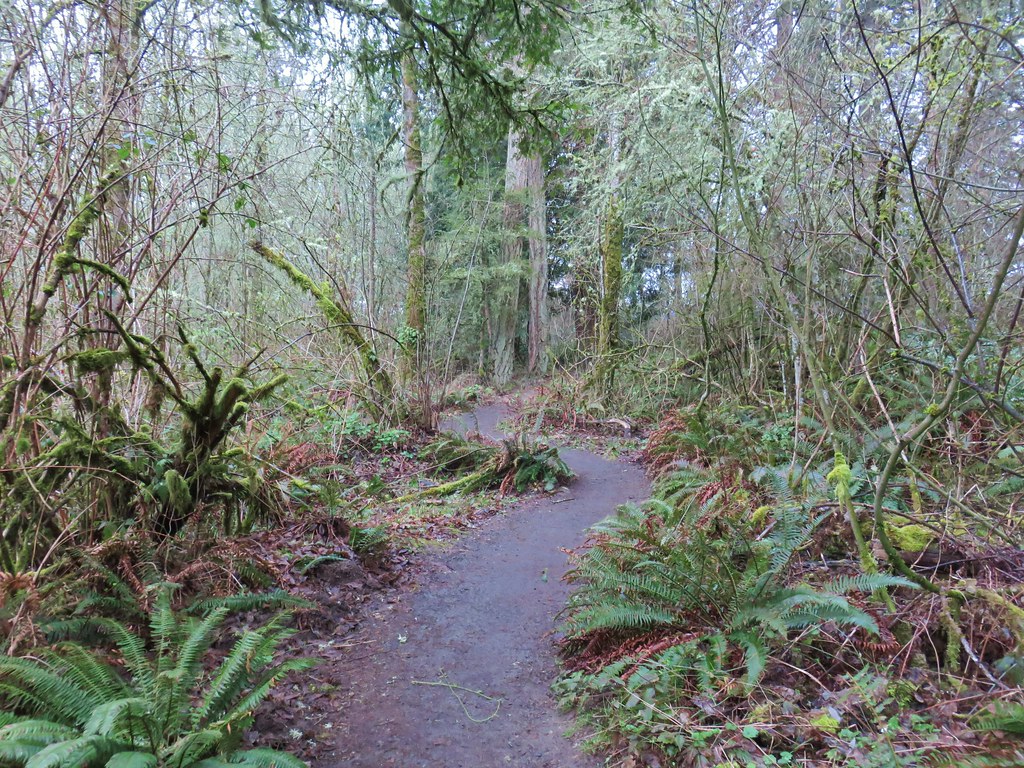
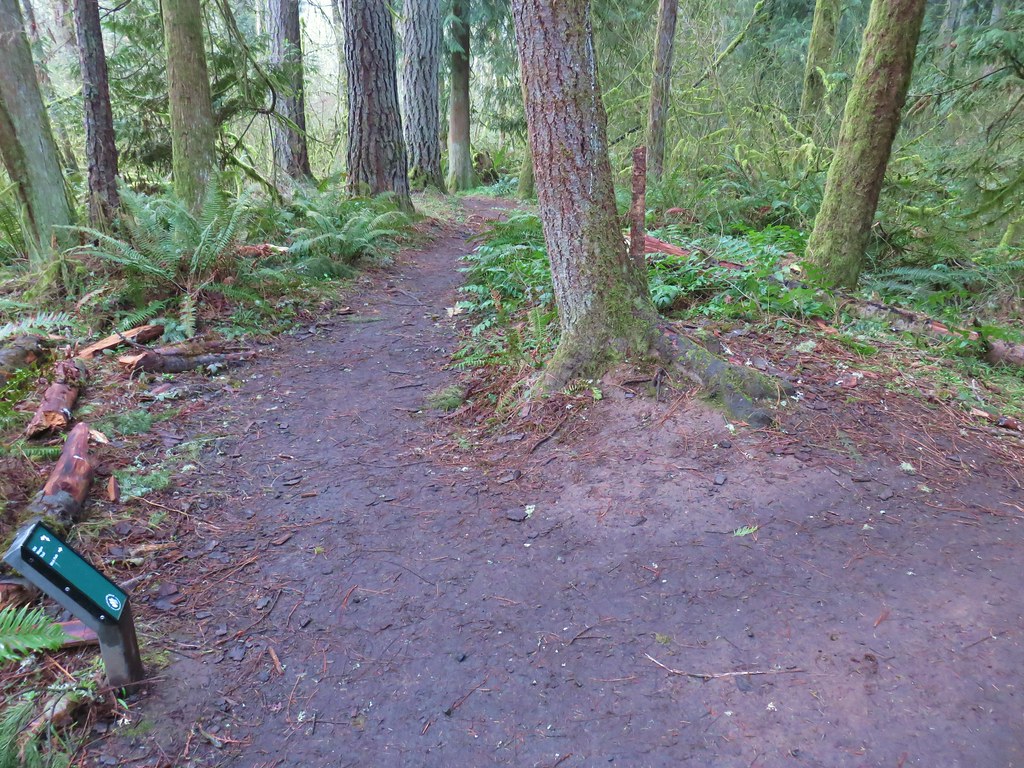
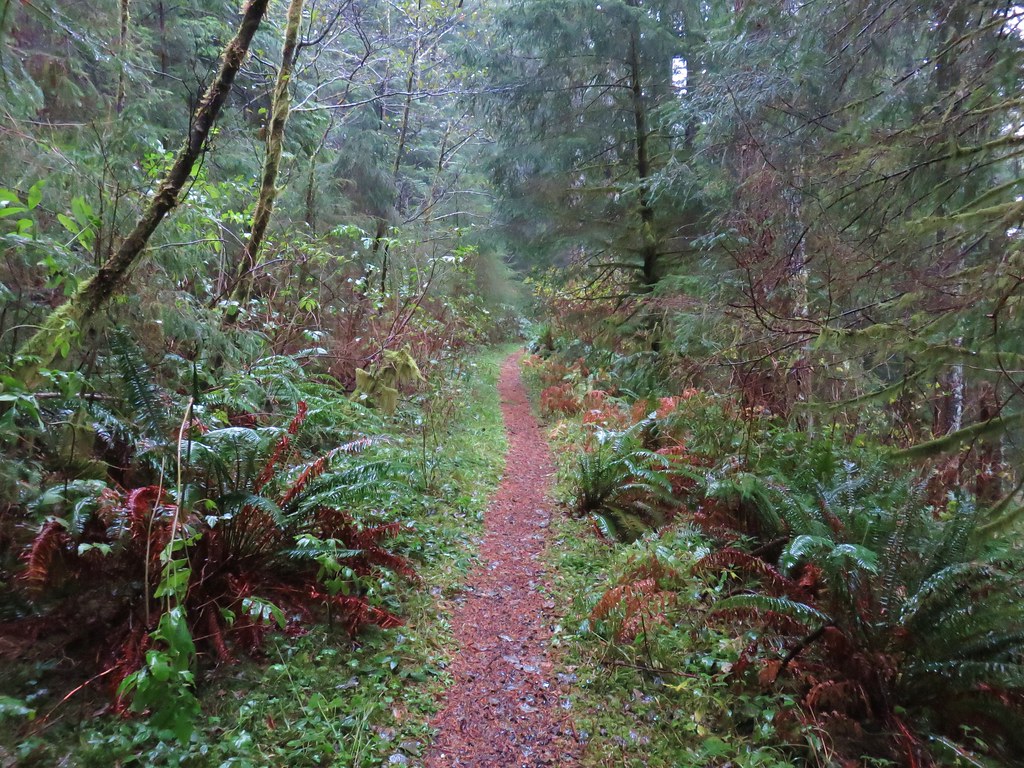
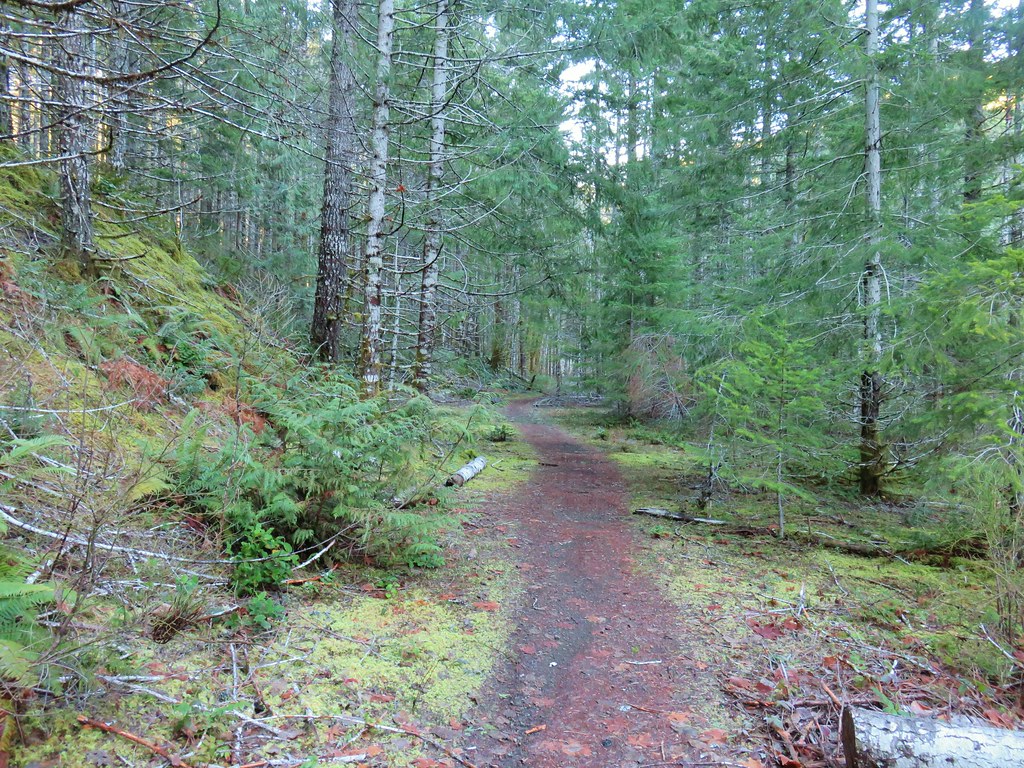
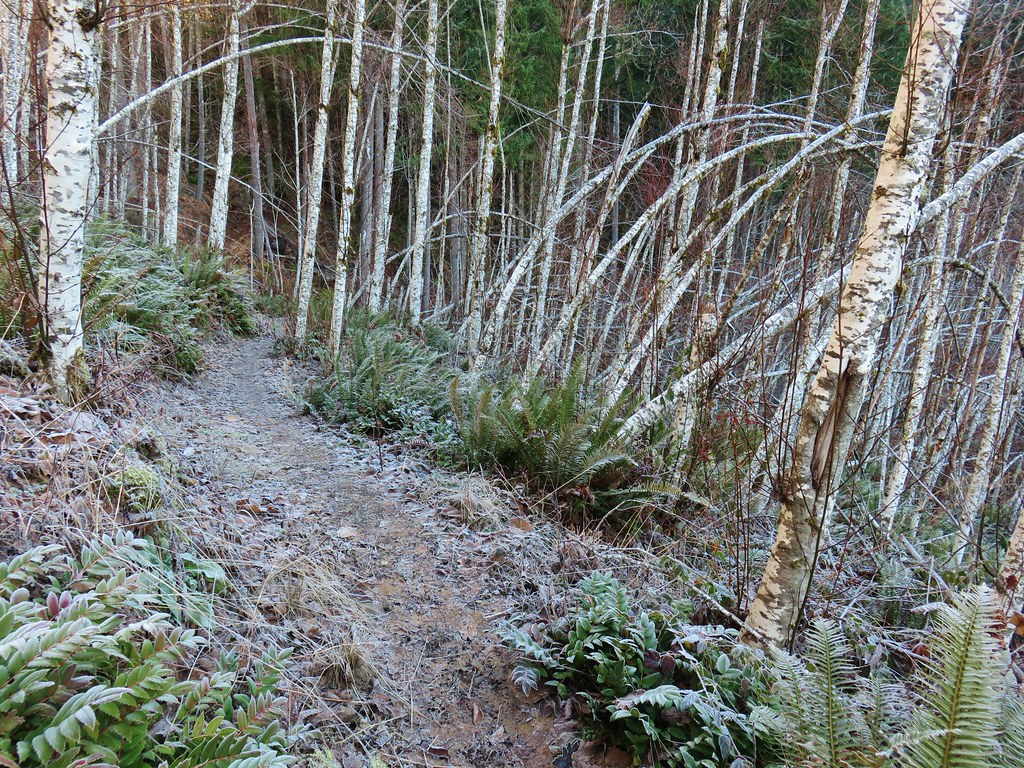
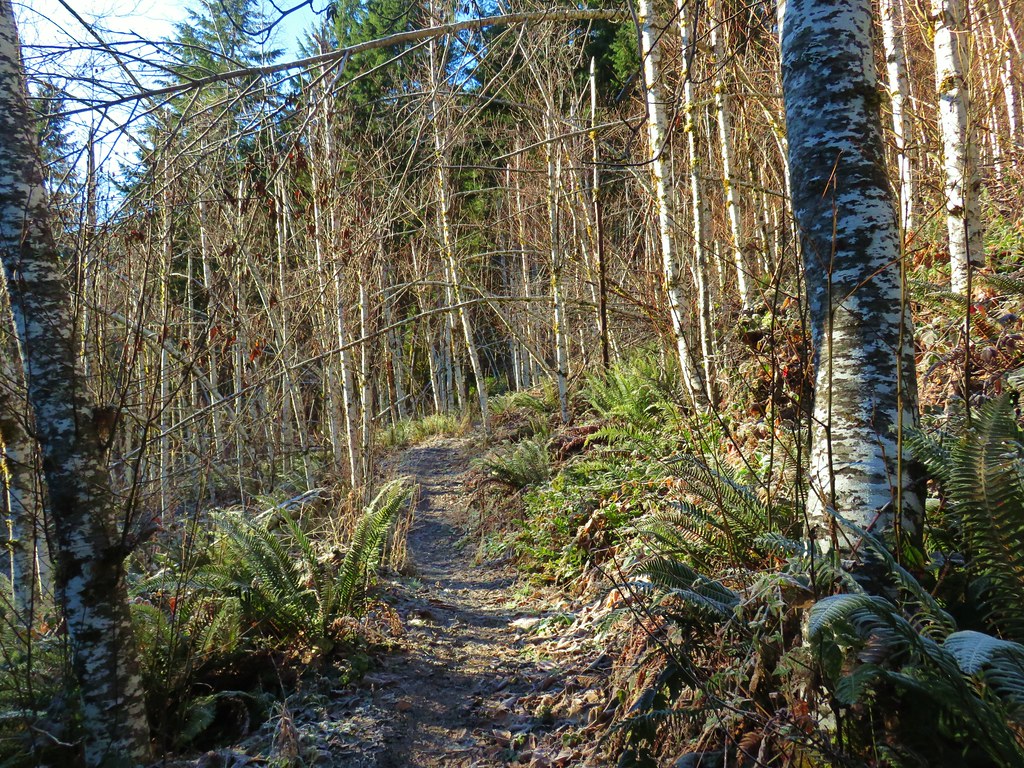
Dog River Trail

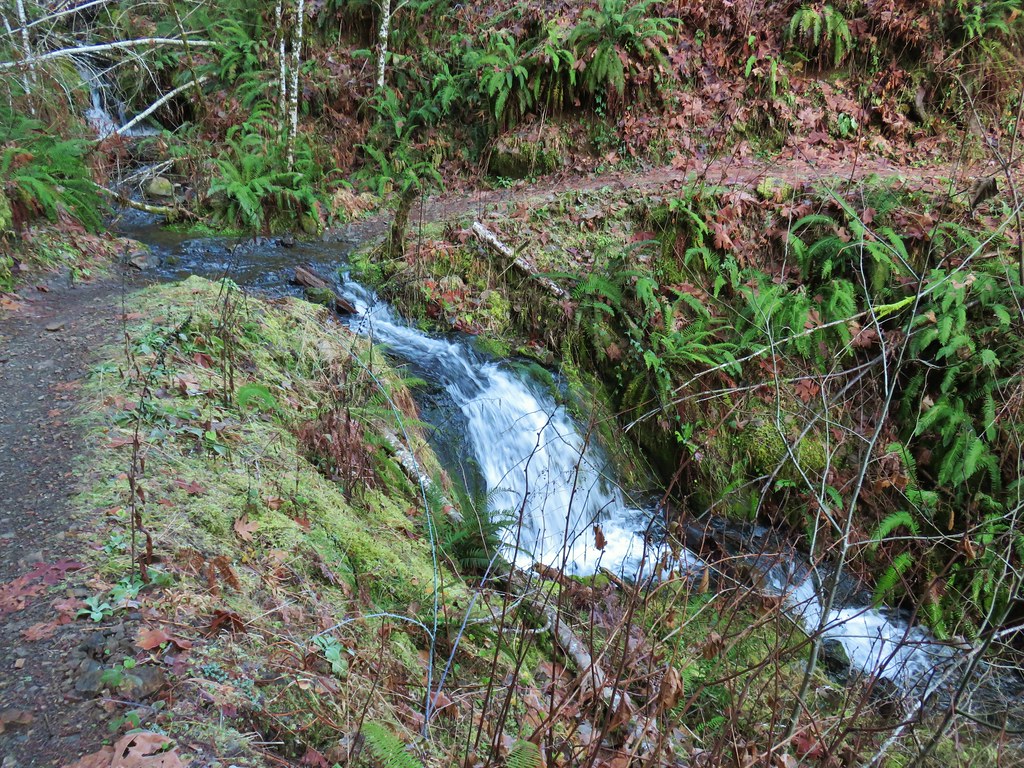
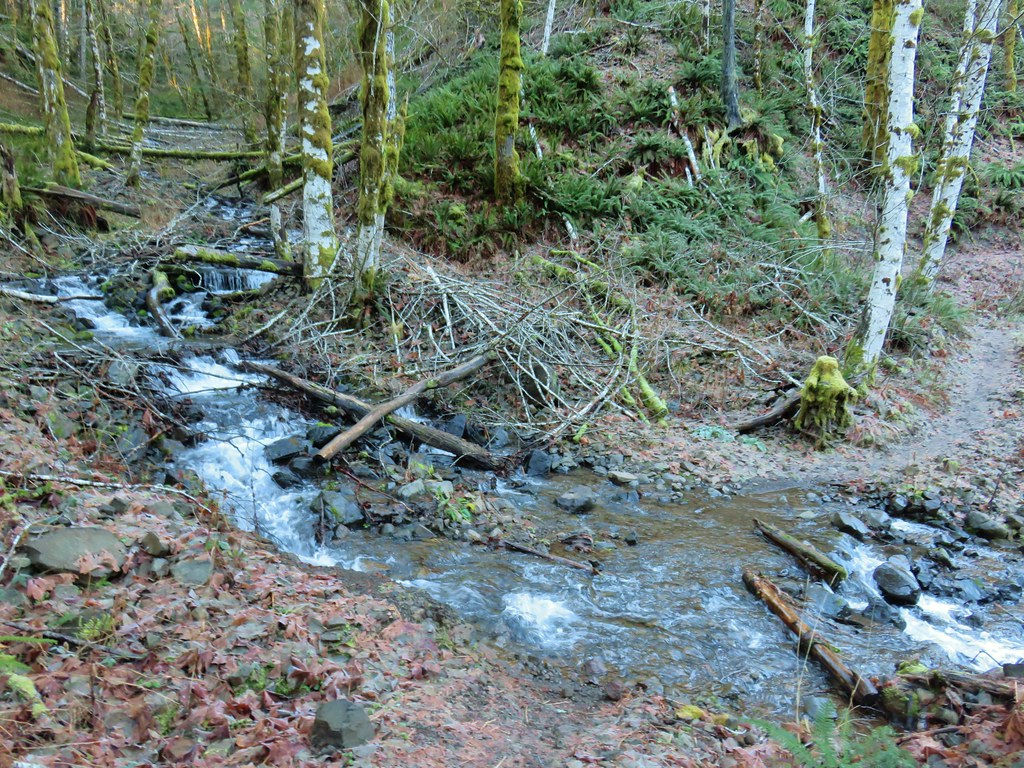
Puppy Creek

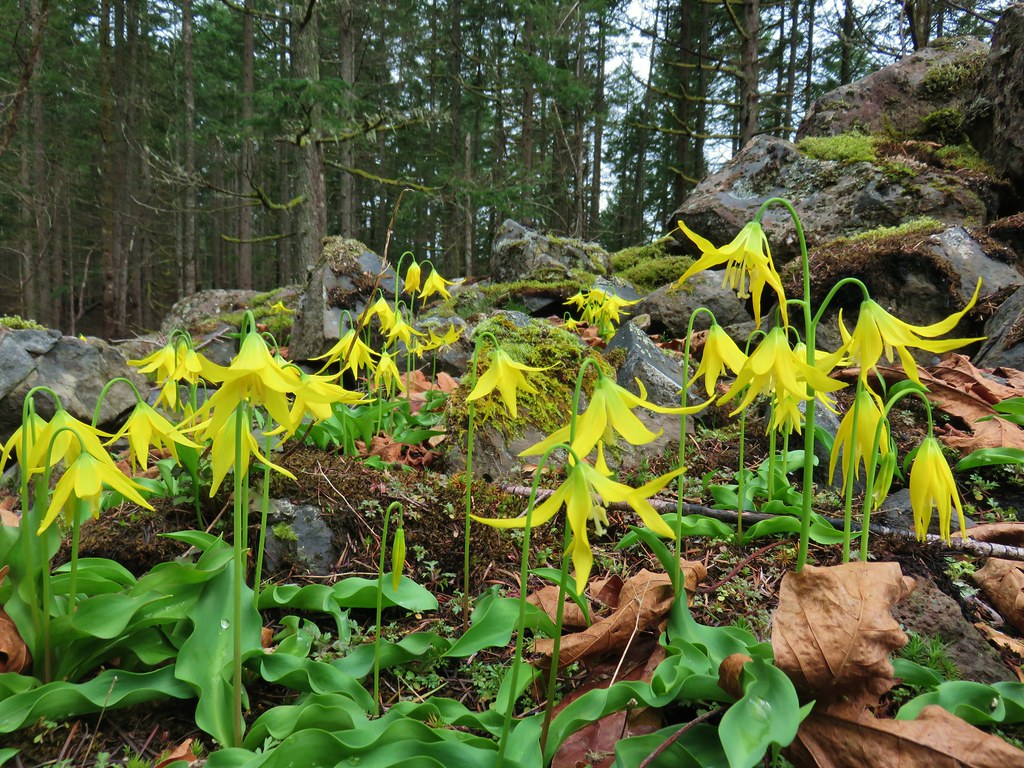
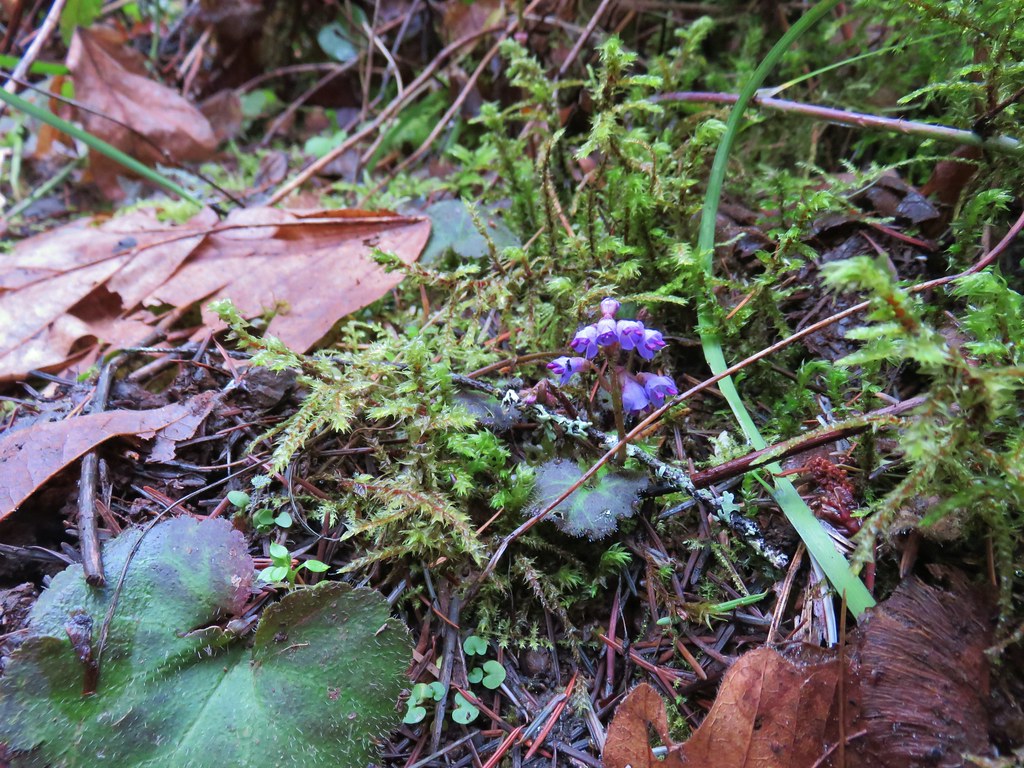
The next 1.8 miles was a gradual climb past a variety of wildflowers before dropping slightly to the Dog River.
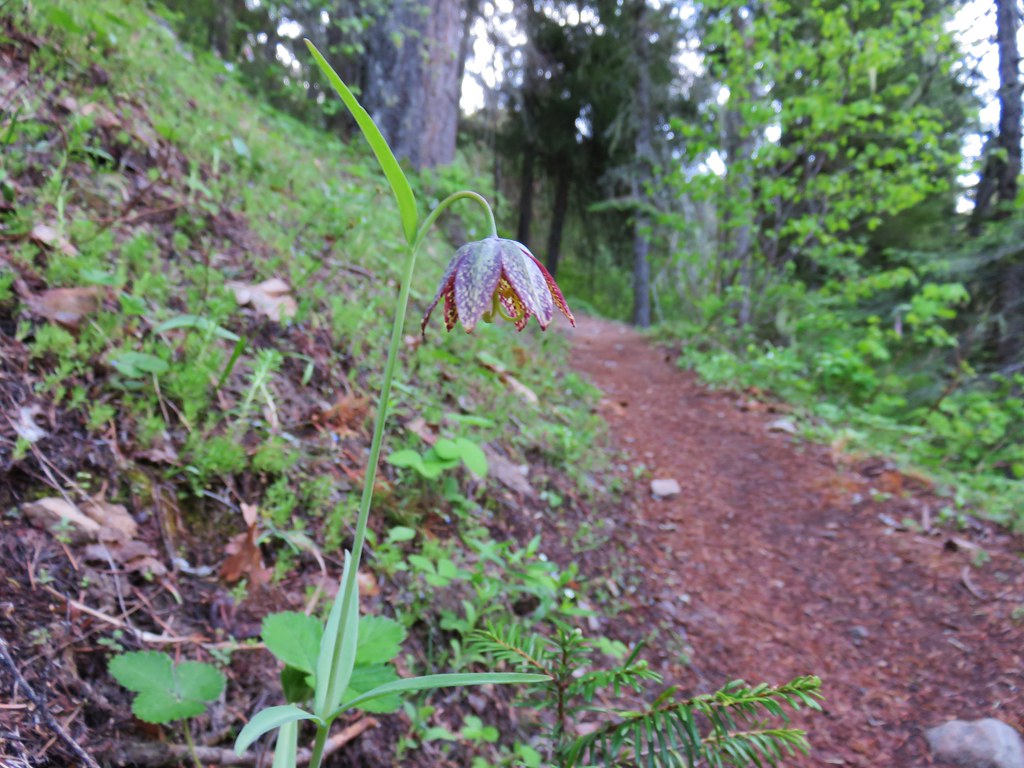
Chocolate LilyChocolate lily

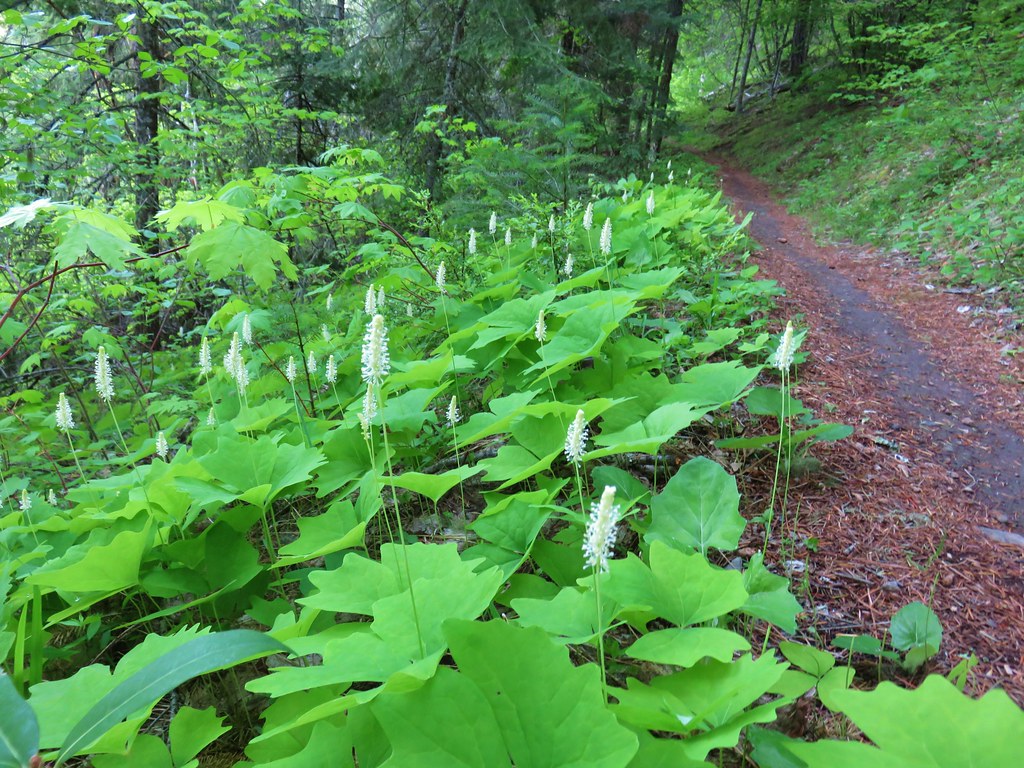
Vanilla leaf along the Dog River TrailVanilla leaf

AnemoneColumbia windflower (anemone)

Red flowering currantRed flowering currant

Ball-head waterleafBall-head waterleaf

Dogwood and a crab spiderDogwood (and a crab spider)

ArnicaArnica

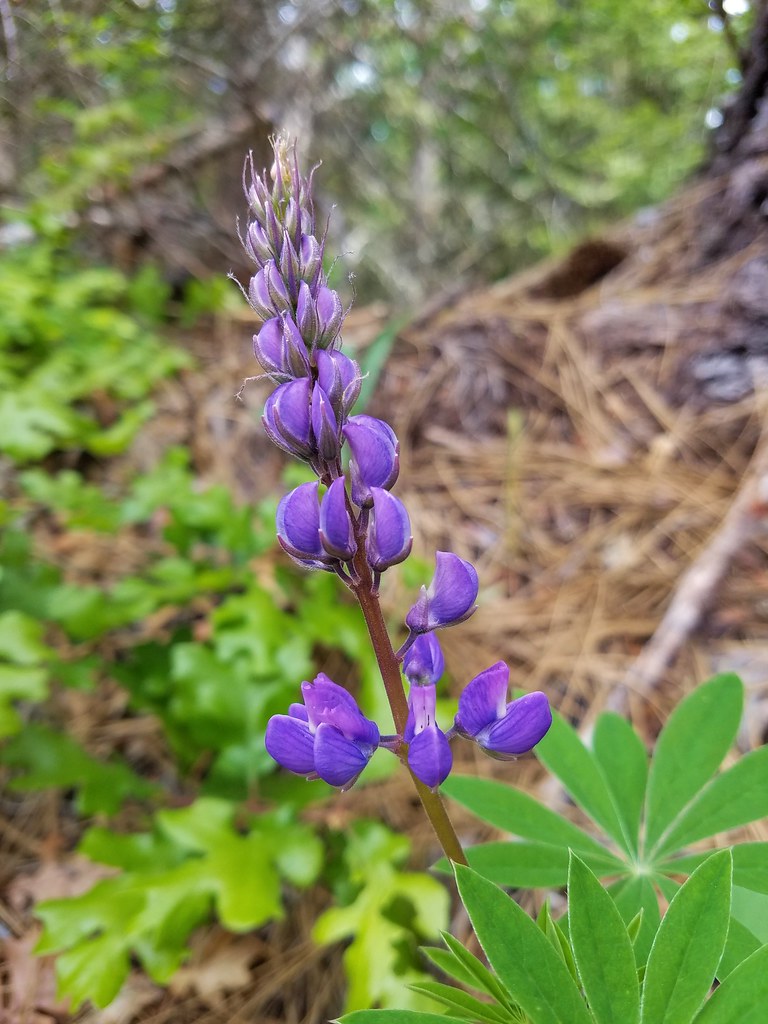
LupineLupine

Lupine starting to budLupine yet to bloom

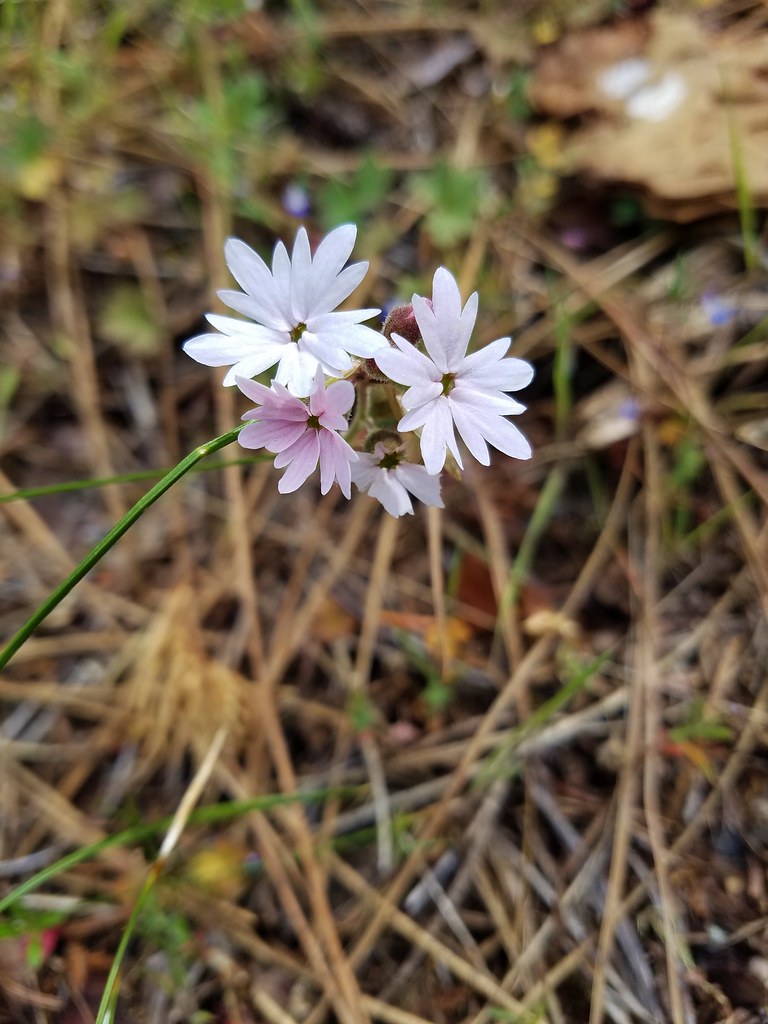
Woodland starsWoodland stars

Larkspur and biscuitrootLarkspur with biscuitroot in the background

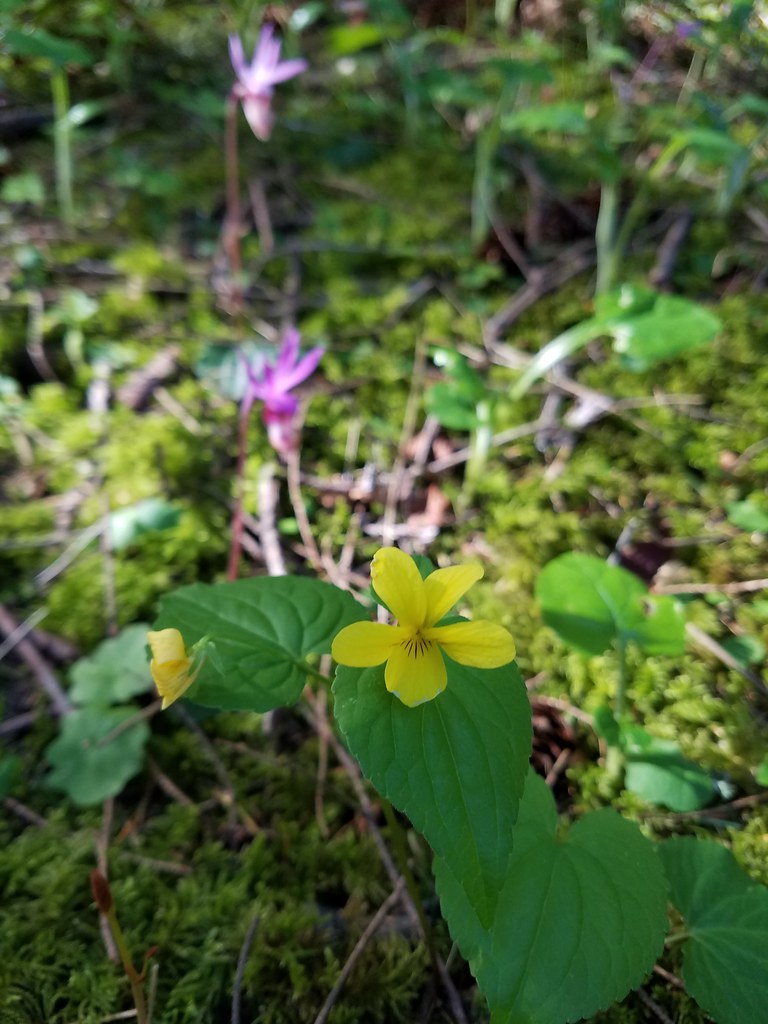
Fairy slippersFairy slippers

PaintbrushIndian paintbrush

Popcorn flowerPopcorn flower

SandwortSandwort

sticky blue-eyed marySticky blue-eyed mary

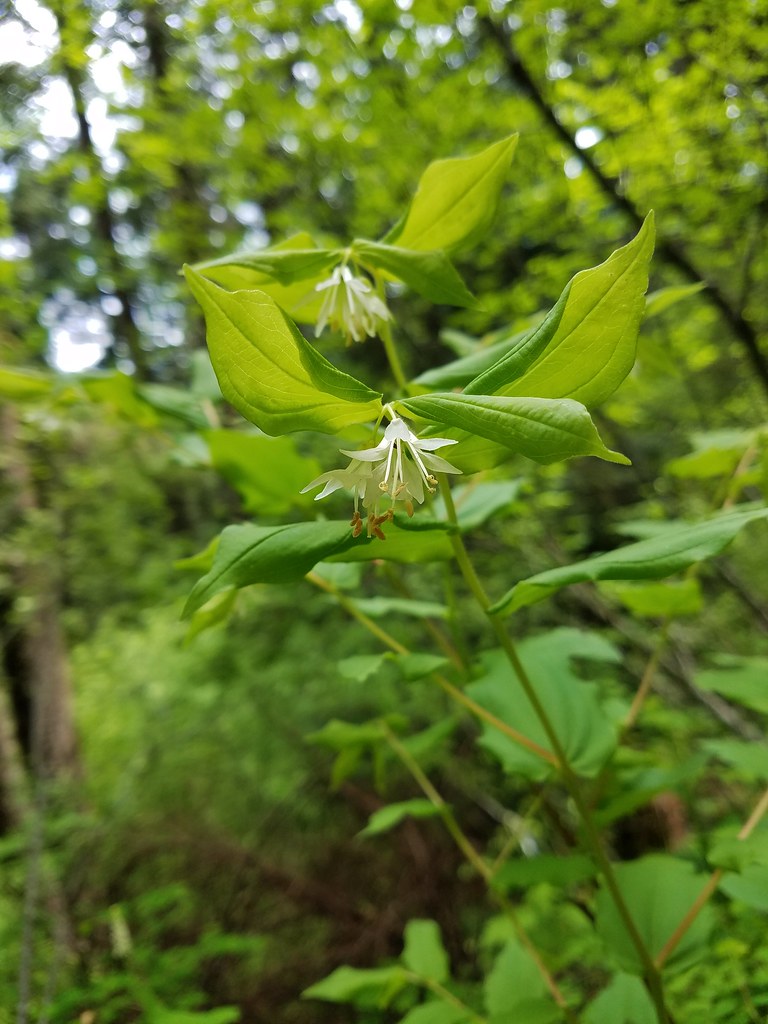
Fairy bellsHooker’s fairy bells

Solomon's sealSolomon’s seal

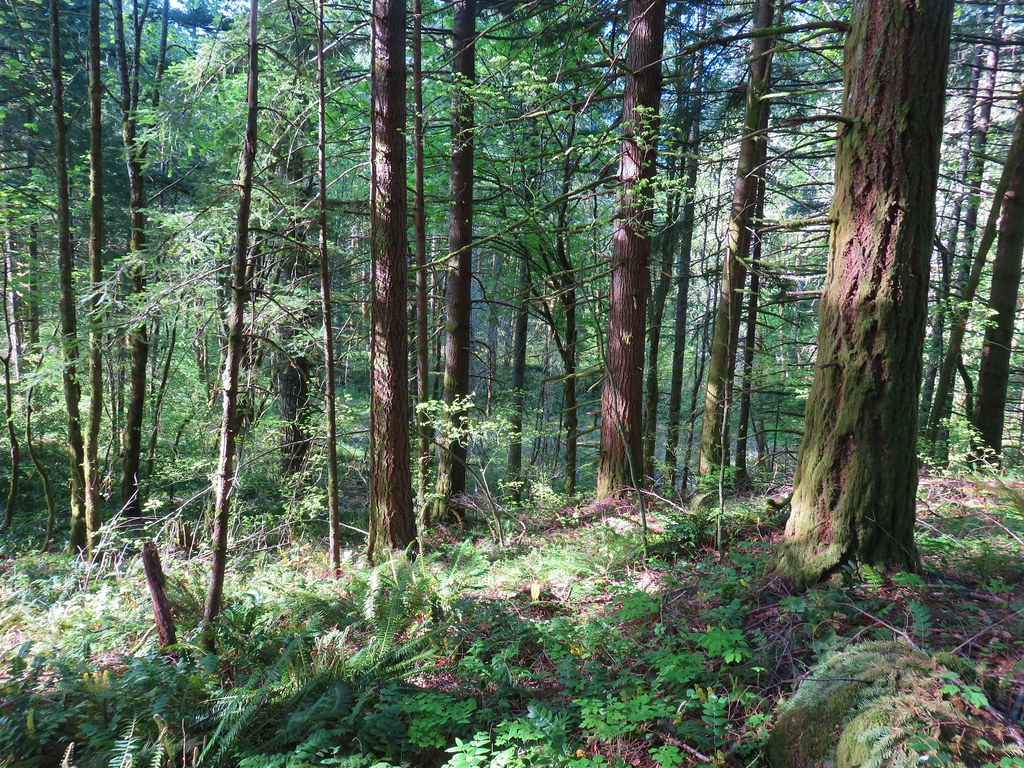
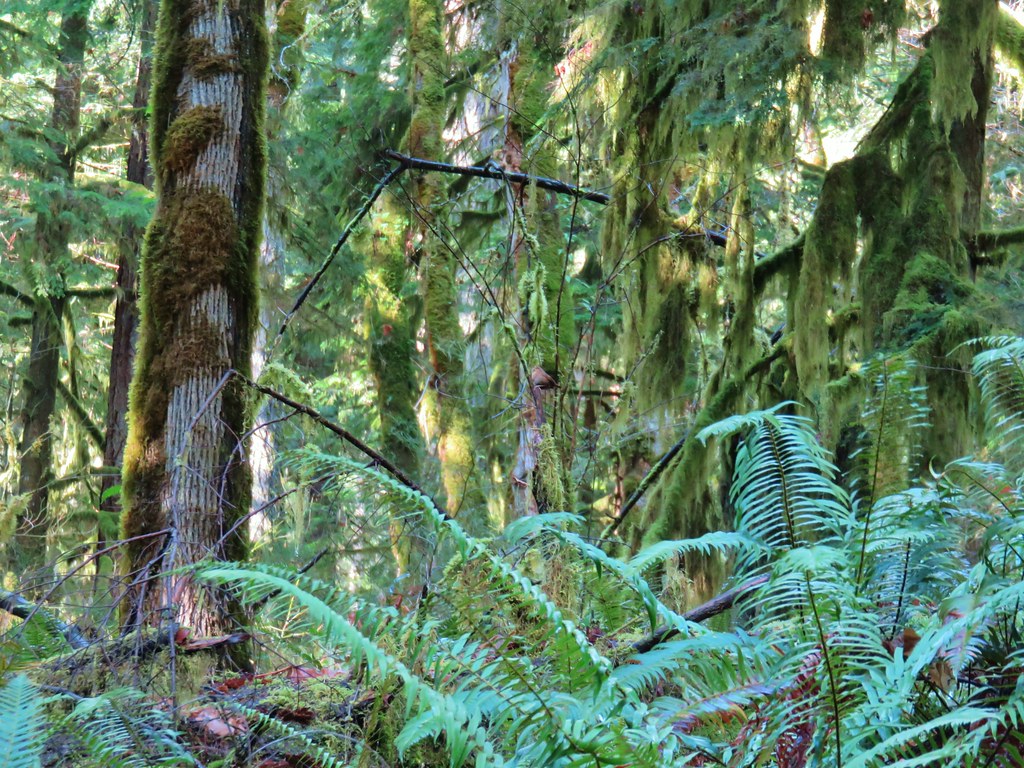
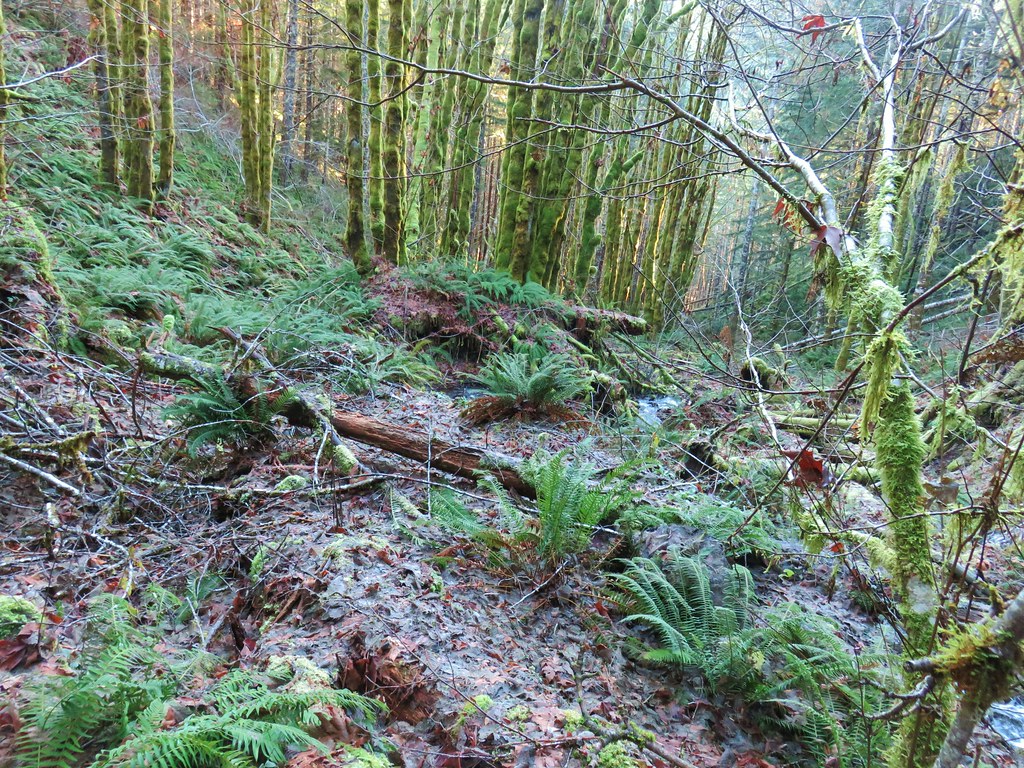
One of the reasons for the variety of flowers was the variety of forest types along this stretch.
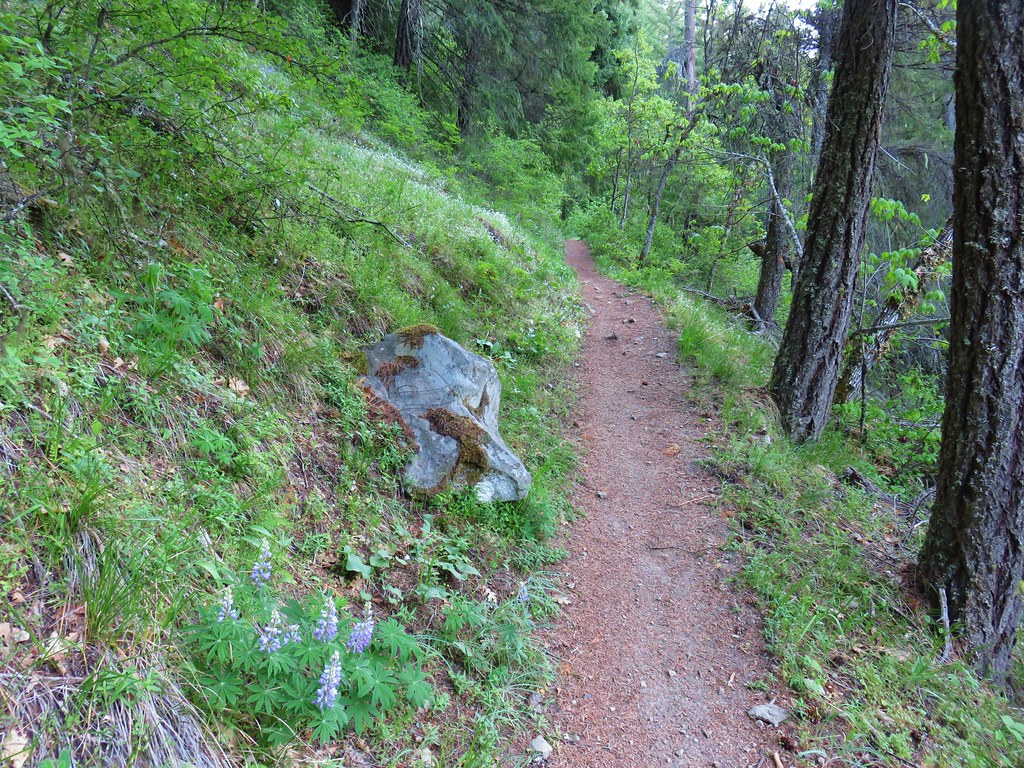
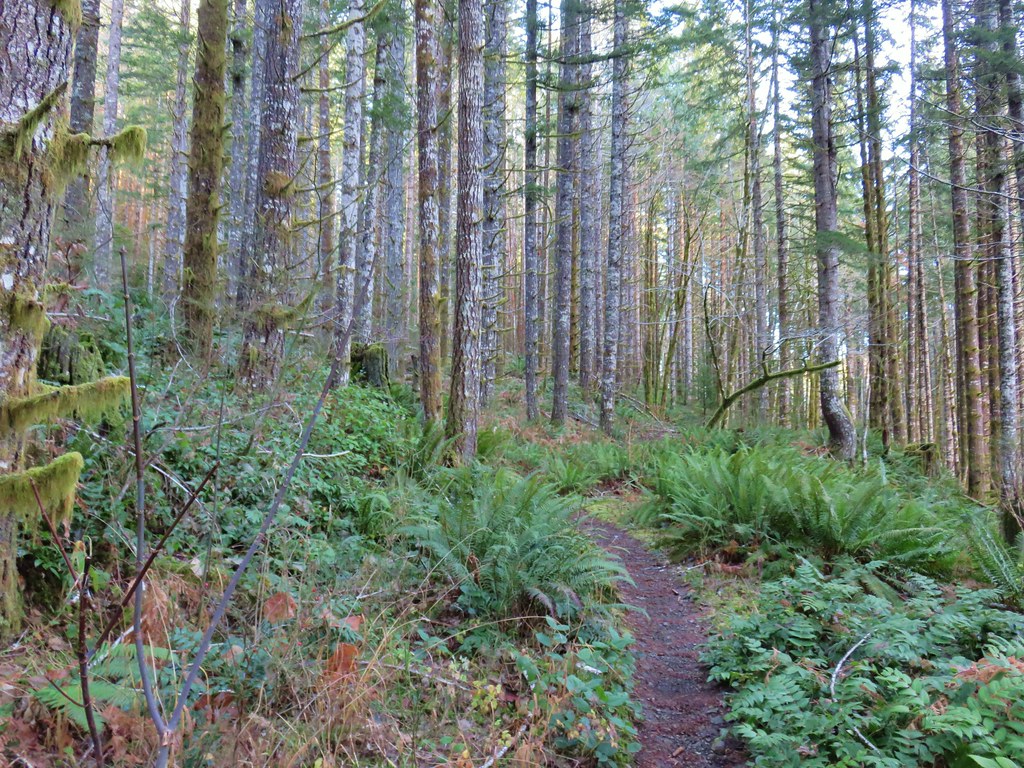
Dog River Trail

Dog River Trail

Dog River Trail

Dog River Trail

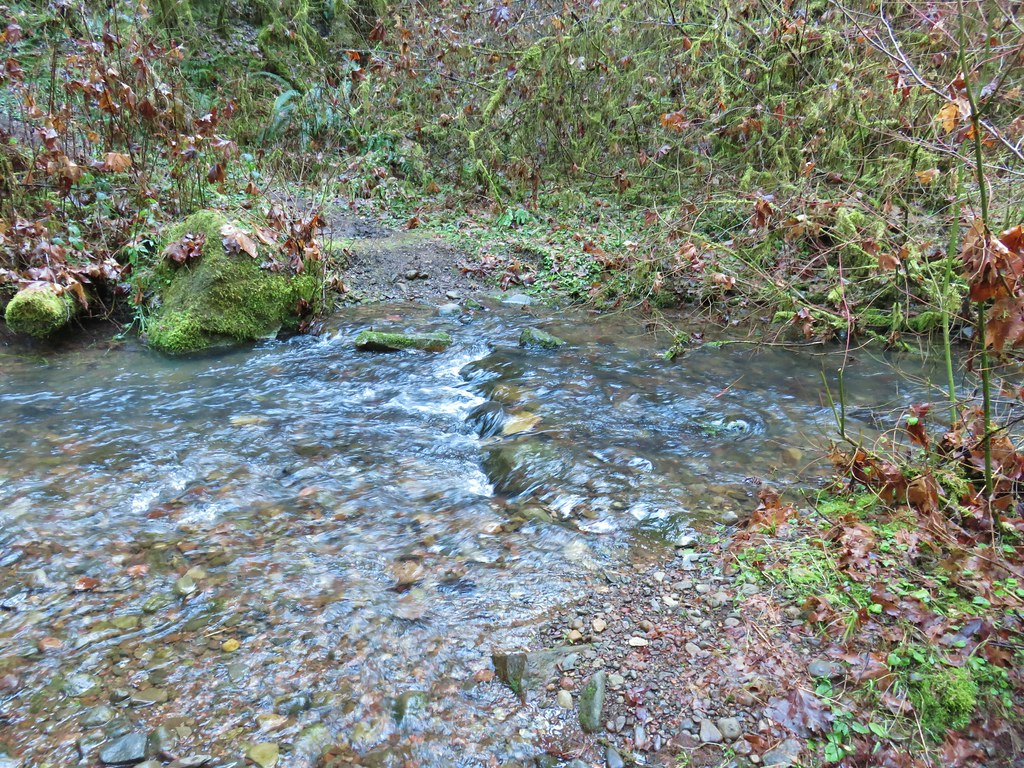
Another footbridge led us across the Dog River.
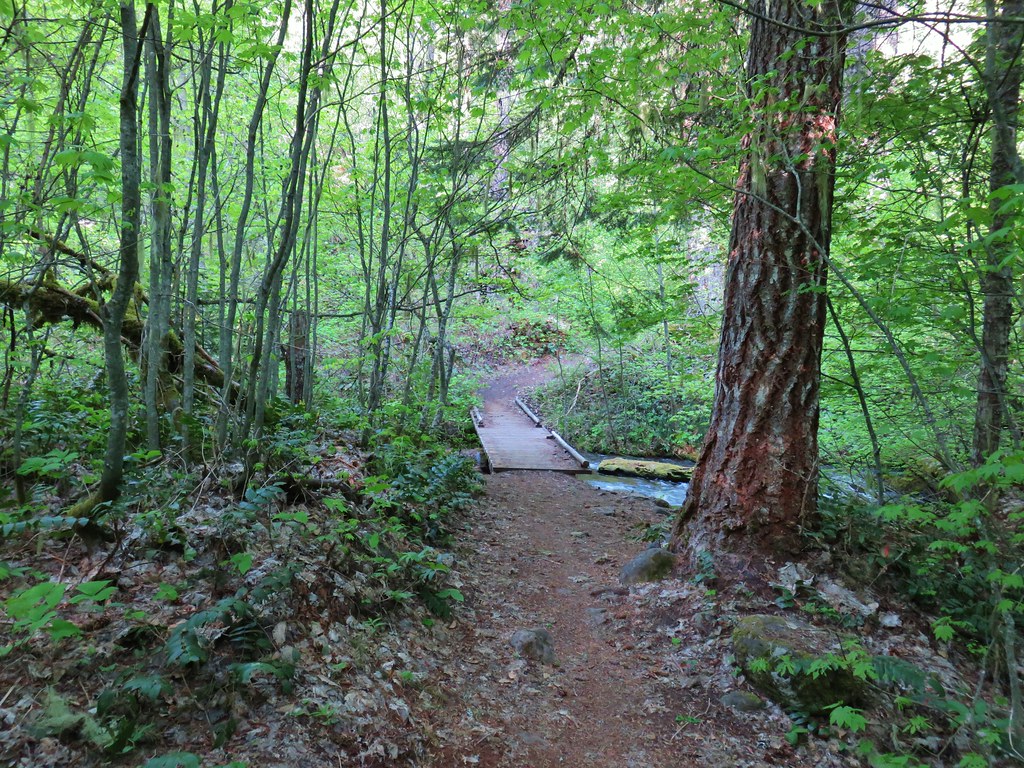
Dog River Trail

Dog River

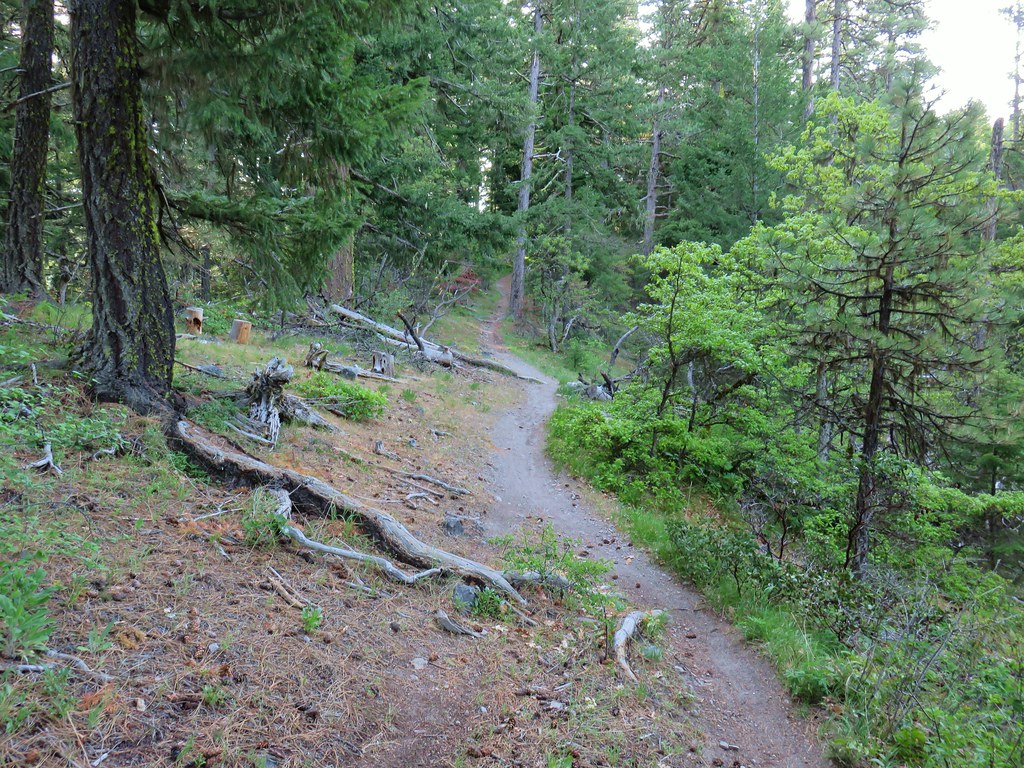
Beyond the Dog River the trail climbed to a saddle and crossed over a ridge.
Dog River Trail

Dog River Trail

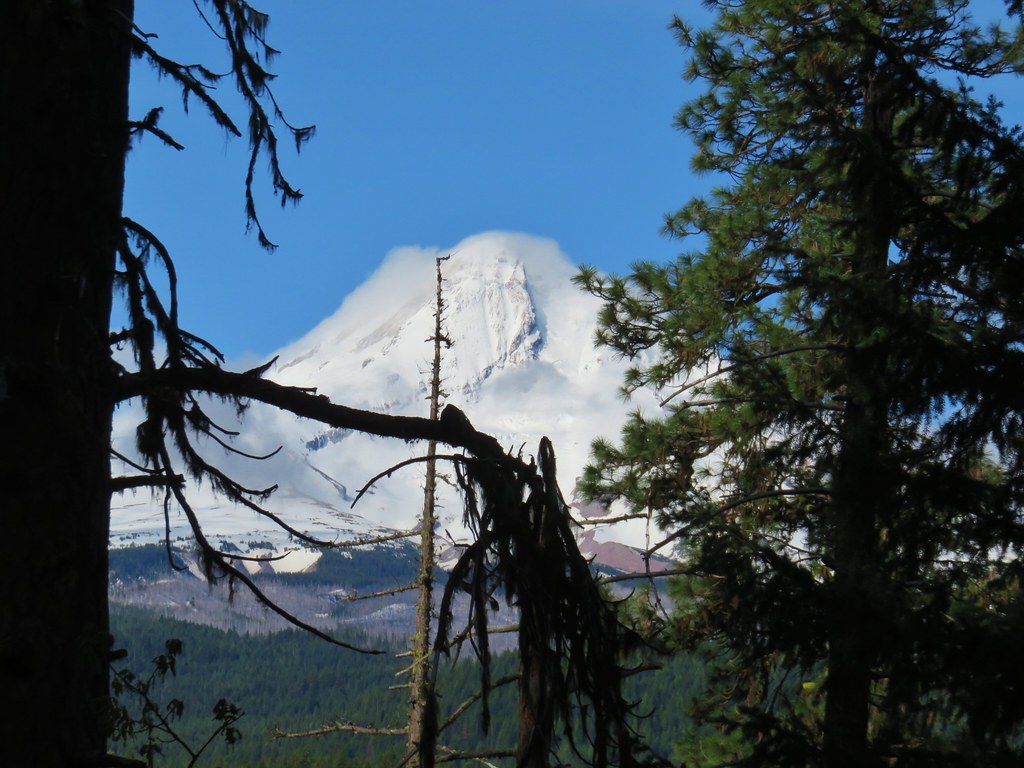
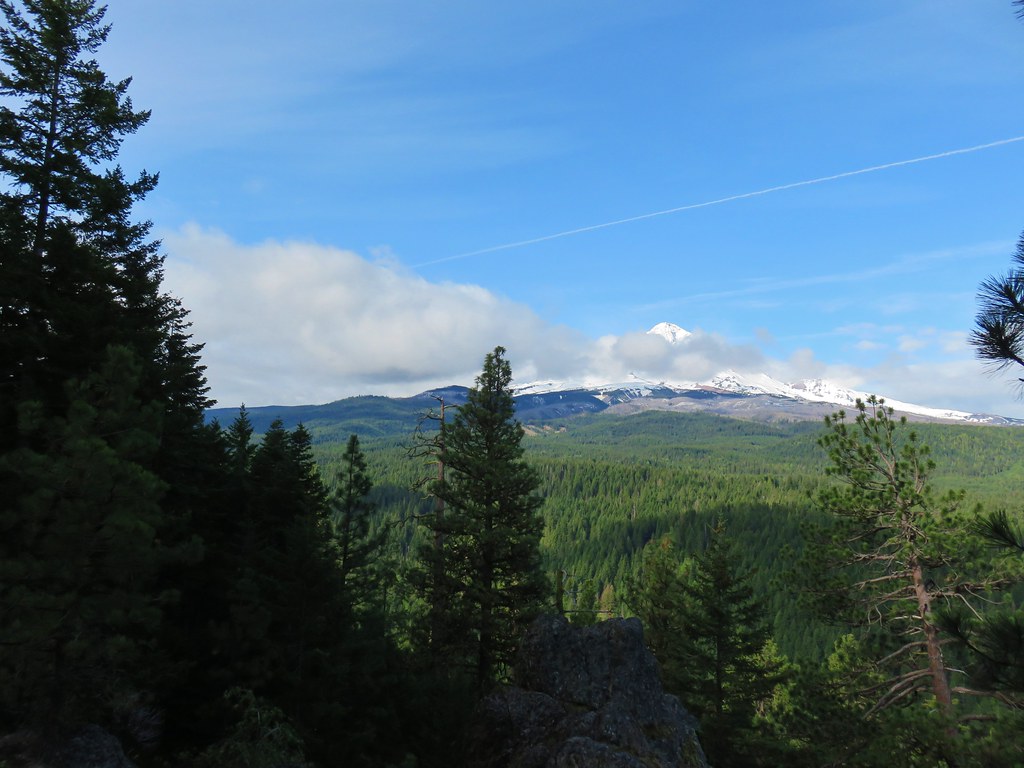
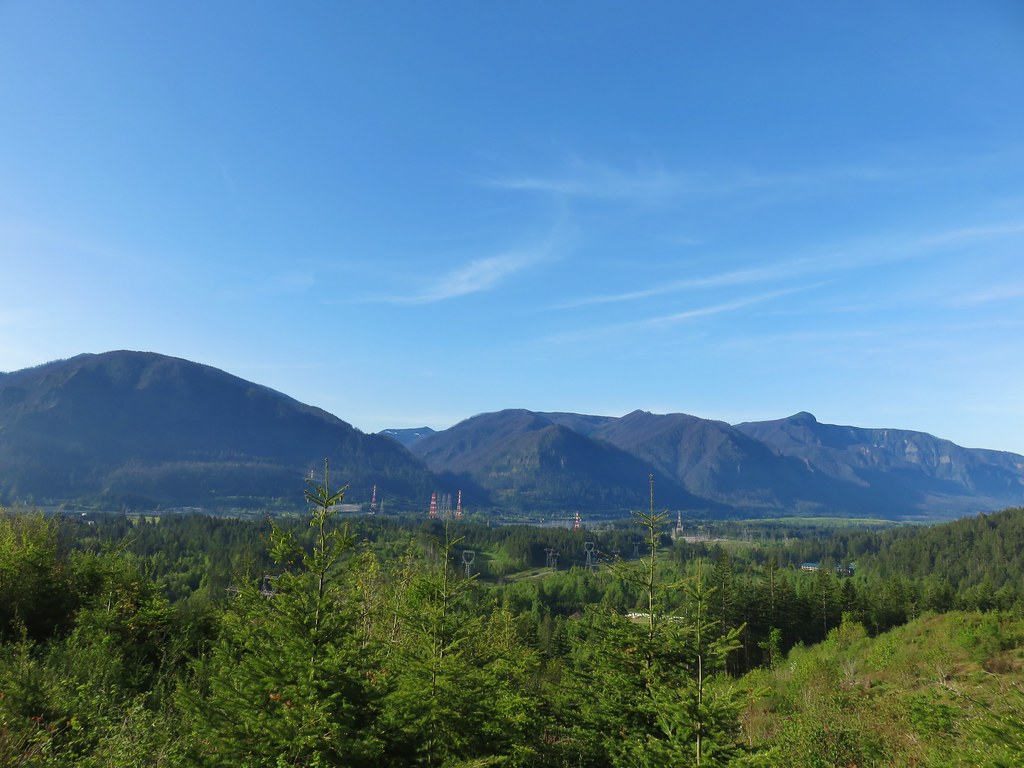
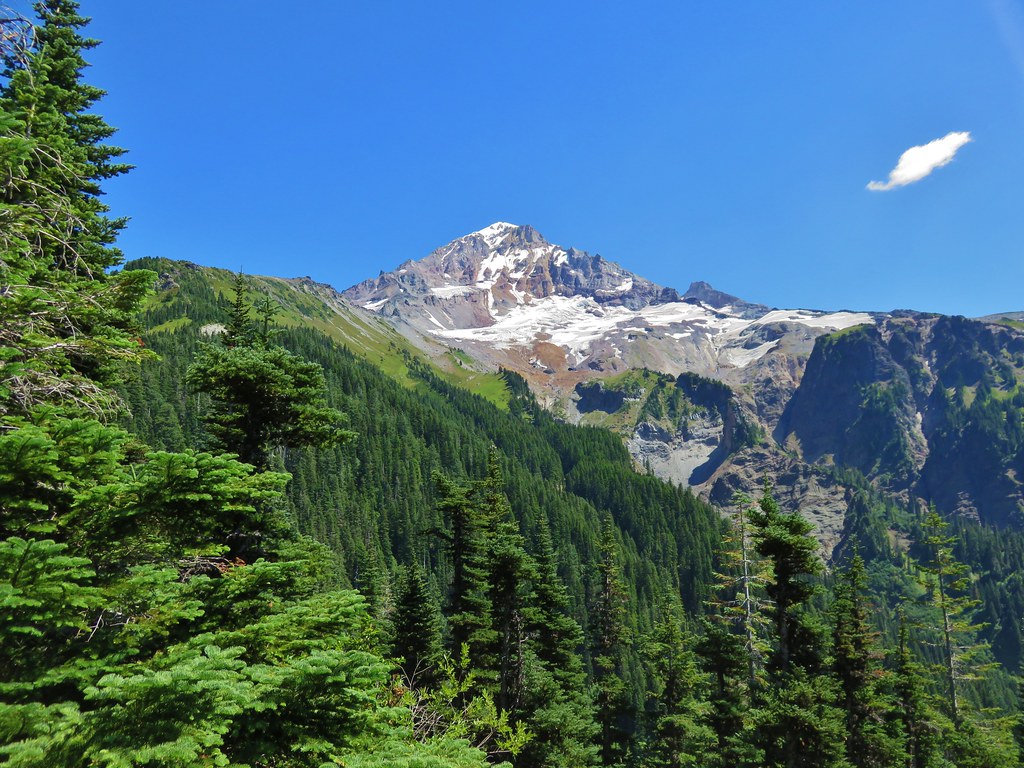
We were now on the west facing side of the ridge and had our first looks at Mt. Hood. Initially the mountain is only visible through the trees but 1.3 miles from the Dog River crossing we came to a rocky viewpoint. From the time we had last seen the mountain driving to the trailhead a line of clouds had begun to make there way in between.
Mt. Hood from the Dog River Trail

Mt. Hood

Mt. Hood

Mt. Hood

Mt. Hood from the Dog River Trail

Mt. Hood

Considering we had started the day thinking we would be lucky to see even part of the mountain this was a pretty nice treat, but after having an unobstructed view during the drive the clouds were a minor disappointment. While the view was impressive it would have been spectacular minus the clouds in front.

In addition to the view there were a couple of other types of flowers to be seen at the viewpoint.
PenstemonPenstemon

PhloxPhlox

Reeder has this viewpoint be the turn around point in the guidebook making for a 6.6 mile out and back. He also describe a couple of options to extend the hike which of course interested us (okay mostly me). We continued on from the viewpoint promptly crossing over the ridge again. From this side we could now see Mt. Adams through the trees to the north. A bonus volcano sighting.
Mt. Adams

Mt. Adams

A series of switchbacks brought us back over the west facing side of the ridge and up a short, steep, rocky section of trail.
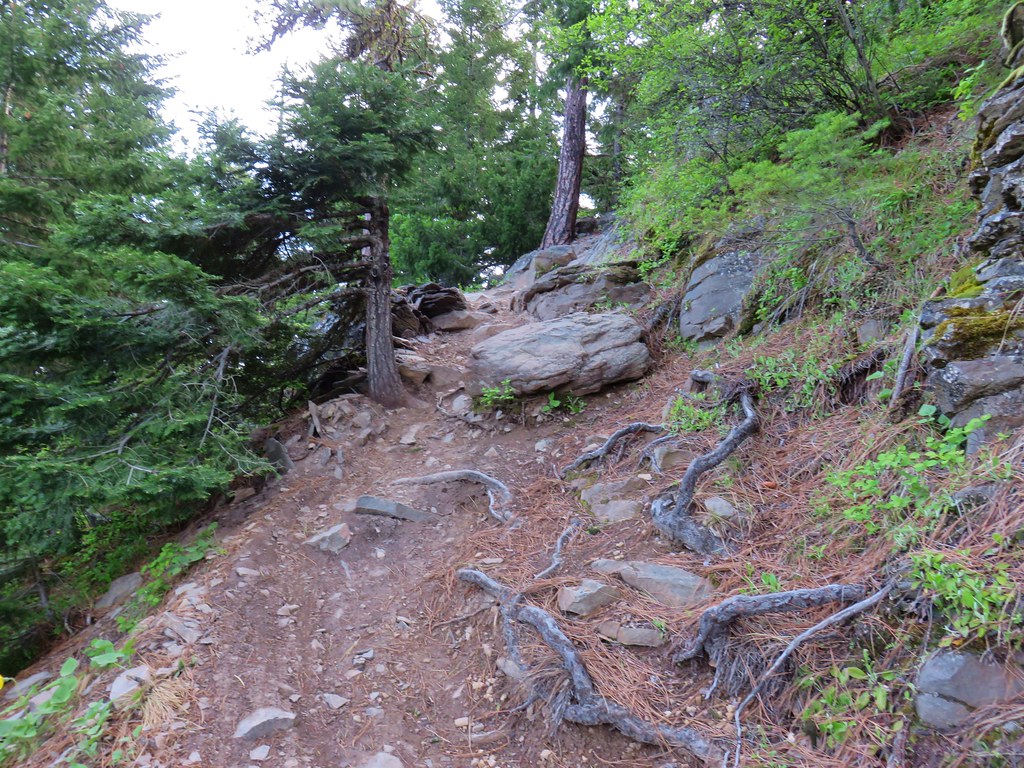
Dog River Trail

We began watching for any signs of an old road bed on top the ridge above the trail. The plan we had settled on to extend the hike was to hopefully use a forest road shown on the map to make the hike a lollipop by taking the Surveyor’s Ridge Trail to the forest service road. Approximately 100 yards from the end of the switchbacks we spotted a promising looking unmarked spur trail heading uphill to our left.
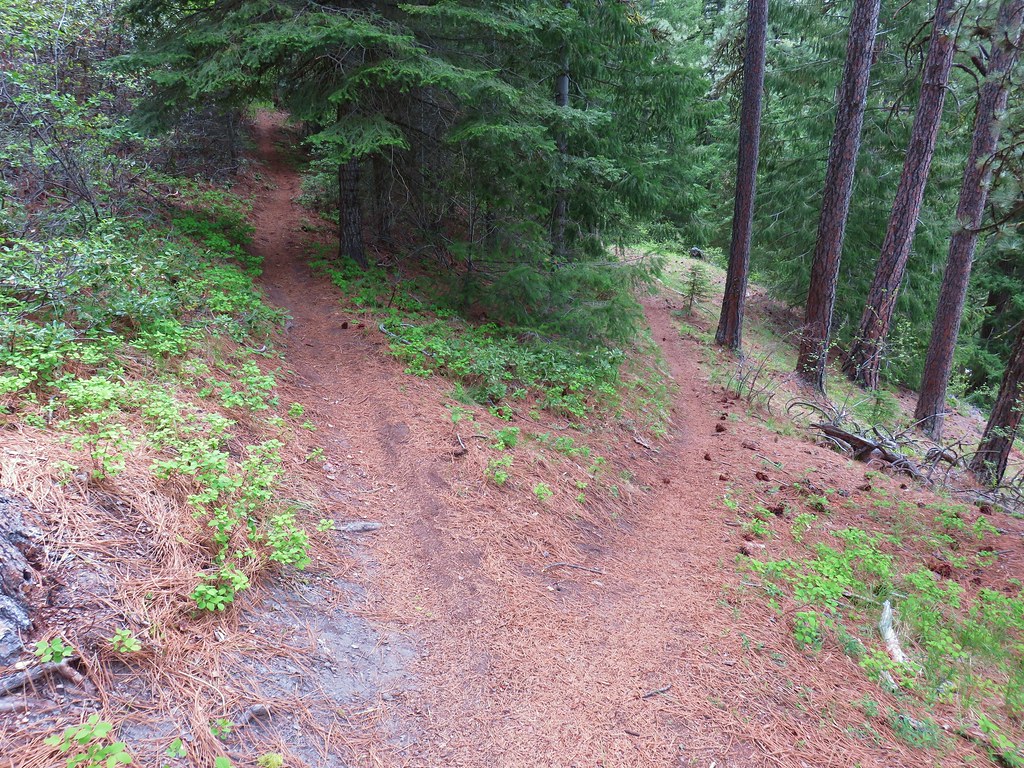
Dog River Trail on the right with a spur to FR 620 on the left

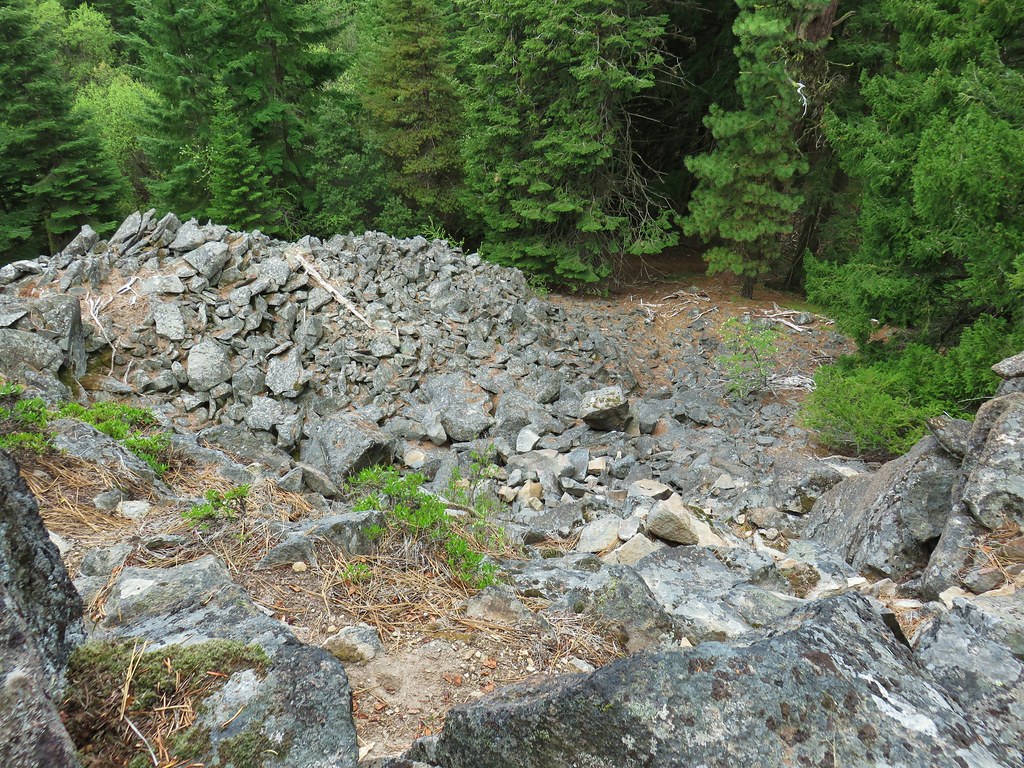
We marked that spot on our GPS and continued on the Dog River Trail which had leveled out a bit passing another viewpoint that Reeder has marked on his map as “Ponderosa Point”. The view here would have also been impressive but we arrived in conjunction with enough clouds to cover the upper 3/4ths of the mountain. A talus slope nearby was more impressive at that point and we wondered if any pika lived there.
Talus field along the Dog River Trail

We didn’t see or hear any and continued on. The trail began to descend slightly passing through some nice forest. We kept our eyes out for flowers and any other interesting sights.
Dog River Trail

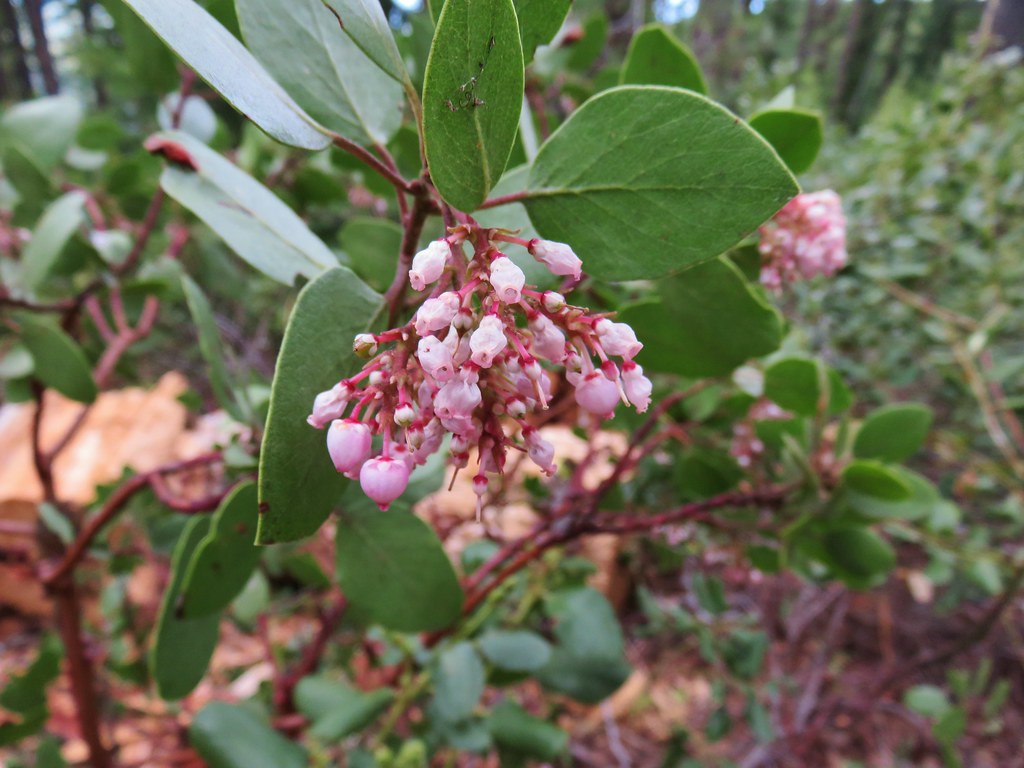
ManzanitaManzanita

CurrantA currant

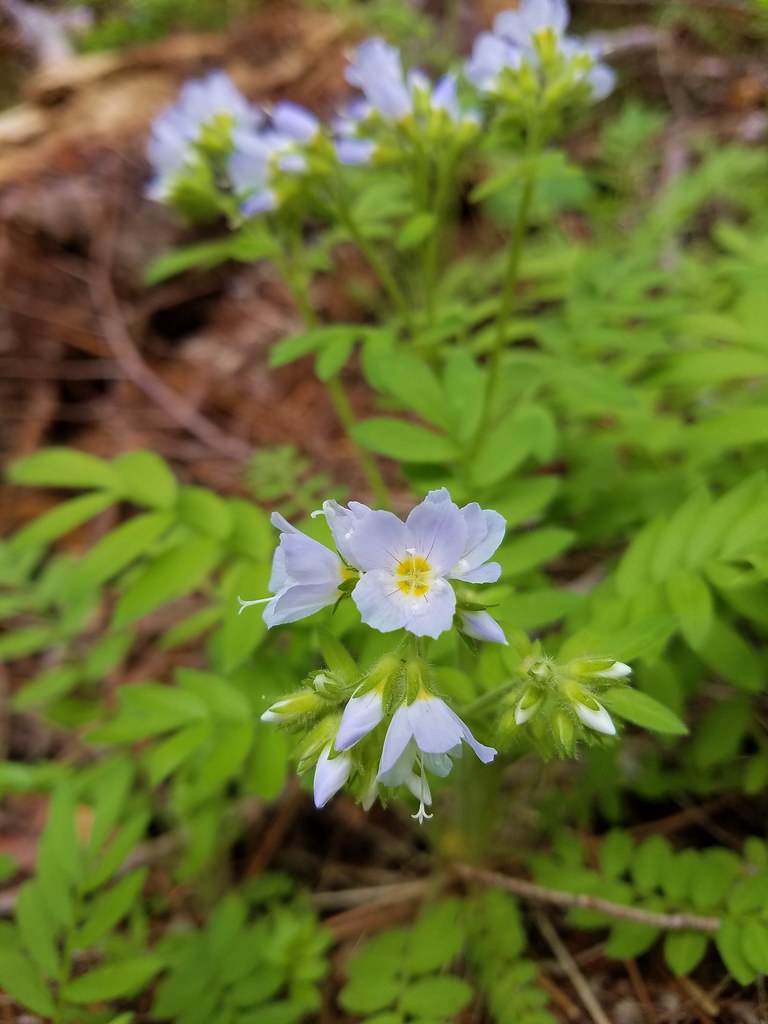
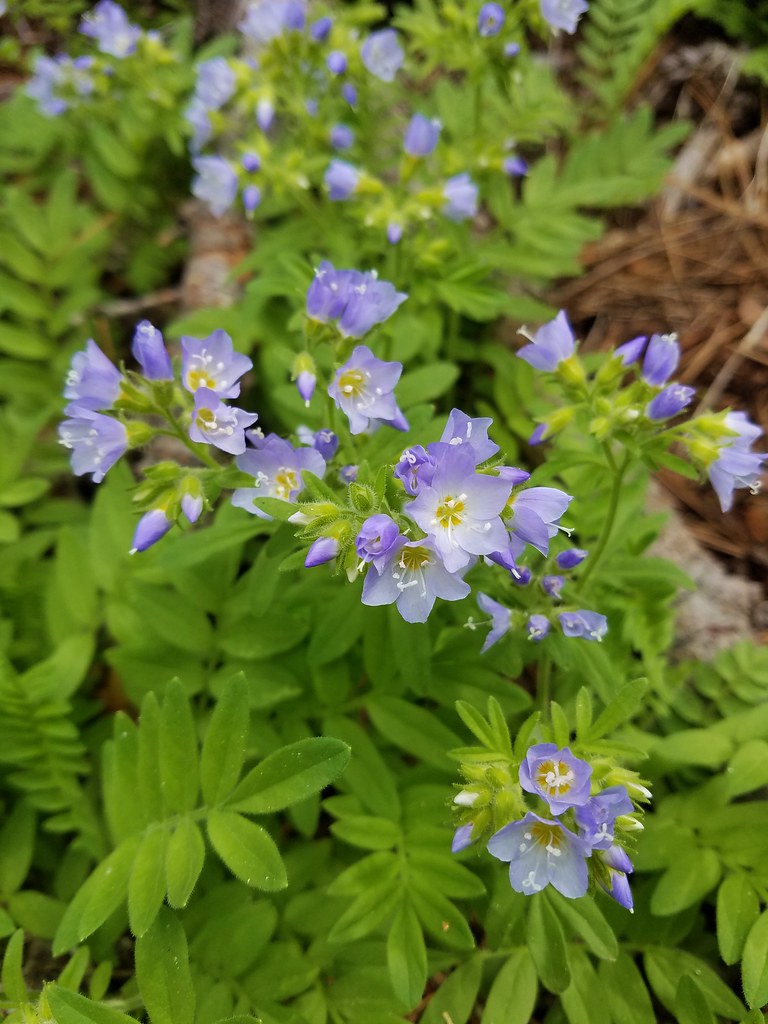
Jacob's ladderJacob’s ladder

Something has been busyPopular tree

There were a few openings toward Mt. Hood but the clouds were keeping most of it covered. We did get a nice look at Polallie Creek Falls though.
Polallie Creek Falls

We had been watching for wildlife too but aside from a few birds and a couple of millipedes all we saw was a slug on one of several small bridges over wet spots.
Slug on a footbridge

Slug

When we arrived at the junction with the Zigzag and Surveyor’s Ridge Trails we noticed a fourth trail signed “Viewpoint”.
Viewpoint at the Dog River Trail and Zig Zag Trail jct

This short trail led briefly downhill to a view north of Highway 35 and the East Fork Hood River (Mt. Hood was still hiding).
Highay 35 and the East Fork Hood River

After checking out the viewpoint we returned to the junction and turned onto the Surveyor’s Ridge Trail.
Surveyor's Ridge Trail sign

The Surveryor’s Ridge Trail climbed gently through the forest for nearly a mile before arriving at Forest Road 620 and Dufur Mill Road (Forest Road 44).
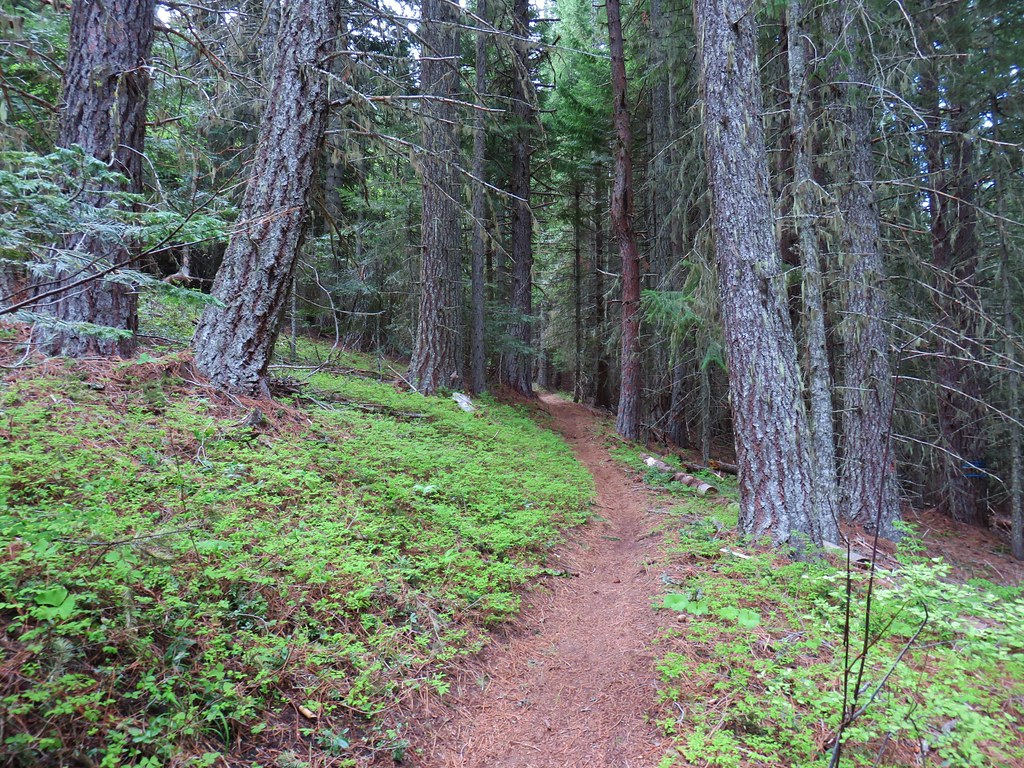
Surveyor's Ridge Trail

Trillium

Jacob's ladderThere was quite a bit of Jacob’s ladder along this stretch of trail.

Oregon anemoneOregon anemone

Forest Road 620Forest Road 620.

There was a single truck parked here and an outhouse. Along the shoulder of Dufur Mill Road there was also a small patch of snow. We had wondered if there was any remaining at this elevation (4240′). We turned left and headed north along FR 620 where we soon found a few more patches of lingering snow.
Snow along Forest Road 620

Forest Road 620

It was a pleasant but uneventful road walk. We followed the road downhill ignoring two forks to the left followed by an overgrown fork to the right.
Forest Road 620

After entering an area that had been clearcut sometime in the past Heather spotted a sign post off to our right (approximately 1.75mi along FR 620). I went to investigate.
Wy'East Middle School sign amid trees planted by the 1994 8th grade class

Just in case anyone from the Wy’East Middle School 1994 8th grade class is wondering here are the trees that were near the sign.
Trees planted by the 1994 8th grade class of Wy'East Middle School

Shortly after finding the sign the road finished bending to the west and we began heading toward the Dog River Trail. The road then turned northward again along the ridge above the Dog River Trail. There were a couple of viewpoints along this stretch including one at the top of the talus slope we had scanned for pikas earlier that day.
Mt. Hood behind some cloudsA still cloudy Mt. Hood

Dog River Trail below the talus slopeLooking down the talus slope with the Dog River Trail visible between the trees to the right.

The road bed had been steadily narrowing the further we went.
Forest Road 620

After a little over 2.5 miles on the road we passed a promising view of Mt. Adams if not for the clouds that had now overtaken it as well. We settled for a nice view of Bald Mountain which we had hiked in 2017 (post) and is accessible via the Surveyor’s Ridge Trail.
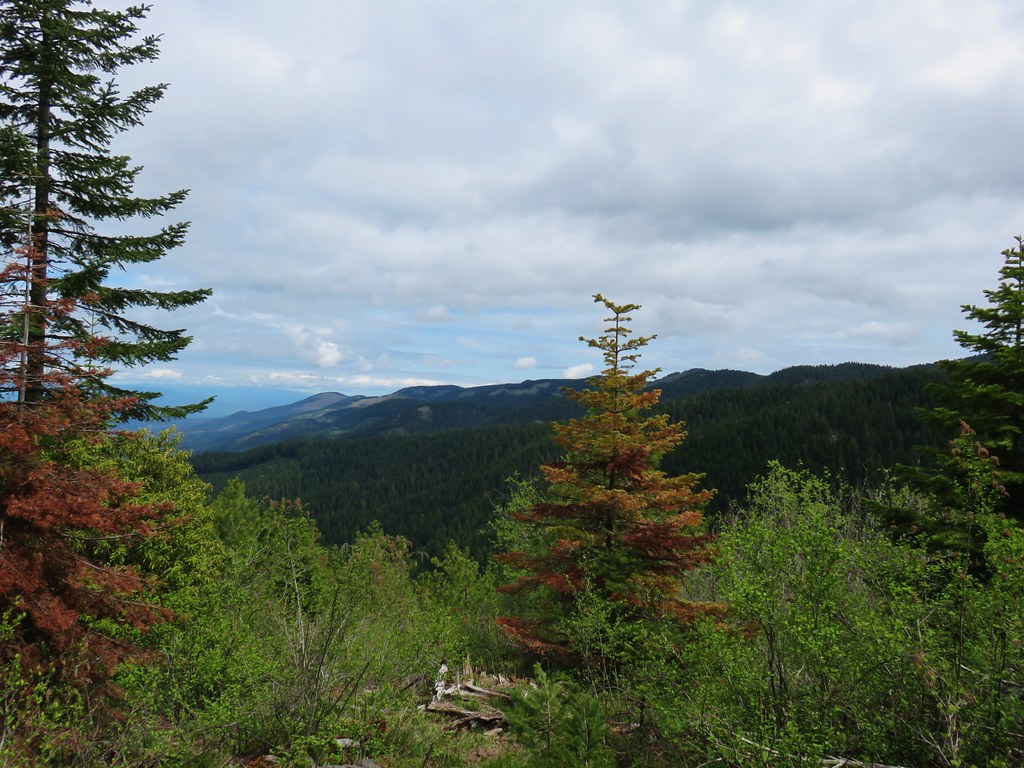
Bald Butte in the distance

Bald Butte

Not far from that viewpoint the old roadbed ended and we found ourselves on a short section of trail connecting us back to the Dog River Trail.
Trail connecting Forest Road 620 to the Dog River Trail

We had indeed come out via the spur trail we had marked that morning. The stretch between the Surveyor’s Ridge Trail and Dog River Trail was 2.75 miles and we were now just over 3.5 miles from the Dog River Trailhead. We had seen the first other people of the day from the viewpoint atop the talus slope when a pair of trail runners went by down on the Dog River Trail. Now that it was later we encountered a few mountain bikers on our way back but it was far from busy. We stopped at the first viewpoint again to say goodbye to the mountain. The clouds had changed again and now they were just covering the very top portion.
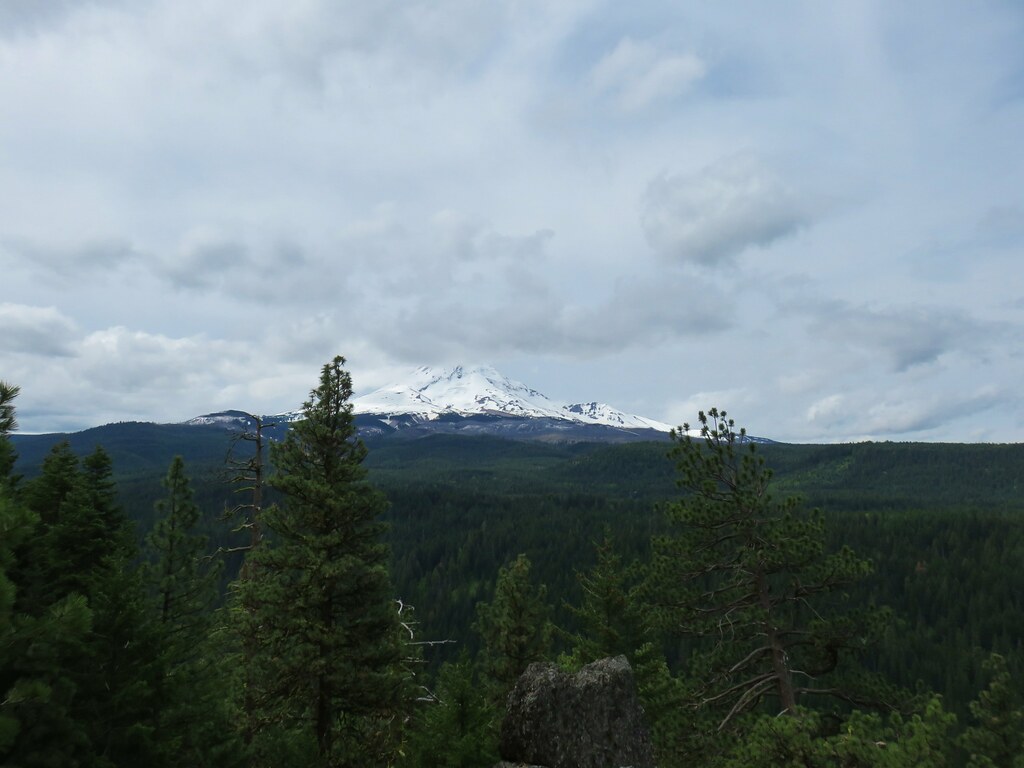
Mt. Hood behind some clouds

This gave us a nice look at Barrett Spur.
Barrett Spur

We also had a good view of the Eliot Glacier.
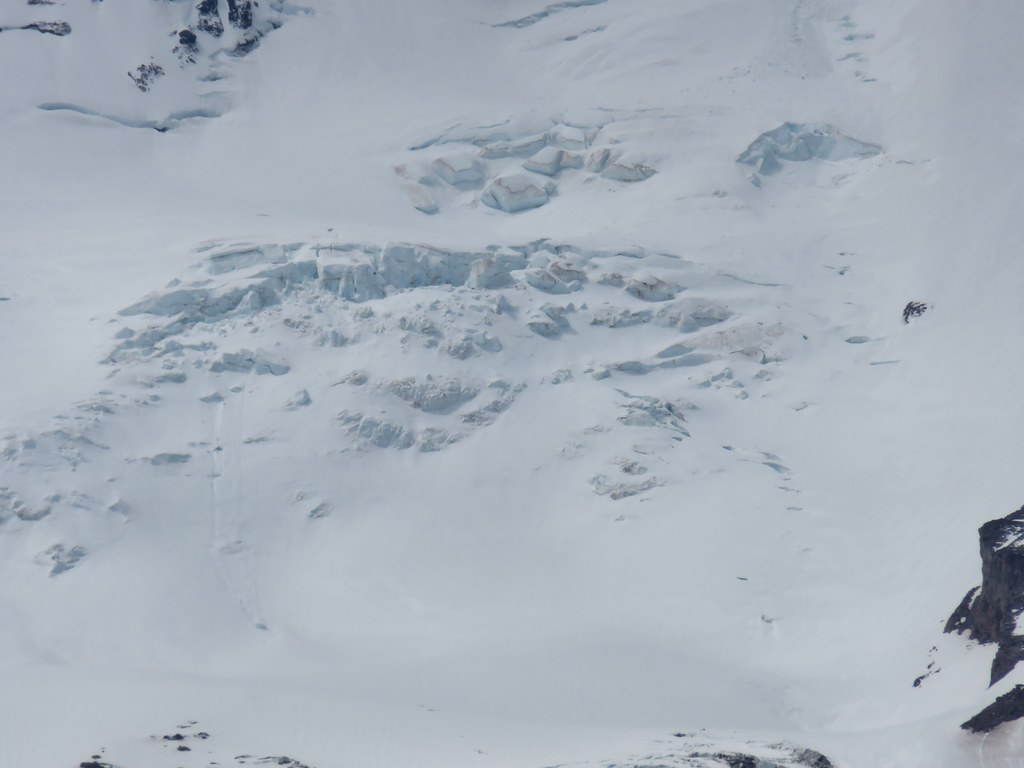
Elliot Glacier on Mt. Hood

Our lollipop came in at 13.3 miles with approximately 2500′ of cumulative elevation gain. The showers never developed and we got to see a lot more of the mountains than we had honestly expected. The variety of wildflowers was good and there looked to be plenty more getting ready to bloom in the next week or two. It certainly felt off the beaten trail but it was definitely worth the visit. Happy Trails!

Flickr: Dog River Trail

Categories
Hiking Oregon Portland Trip report Willamette Valley

Three Hikes on Sauvie Island

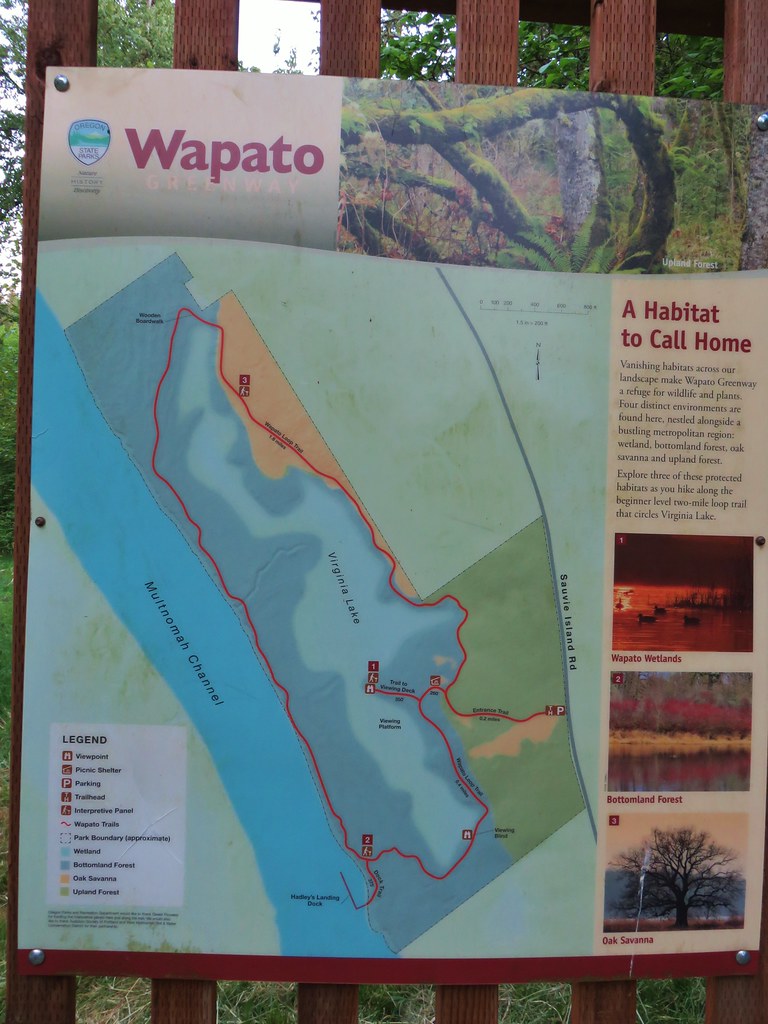
Our latest outing was a three stop trip to Sauvie Island in the Columbia River. After purchasing our $10/day parking permit online from the Oregon Department of Fish and Wildlife we headed for our fist stop at the Wapato State Greenway.
IMG_6537

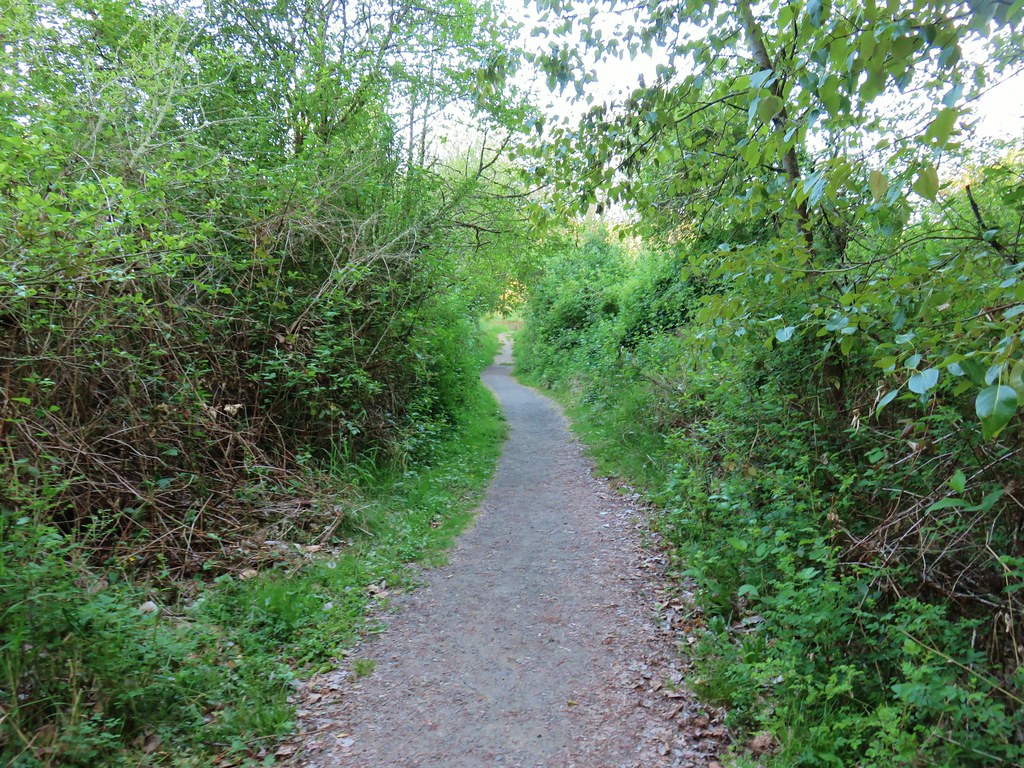
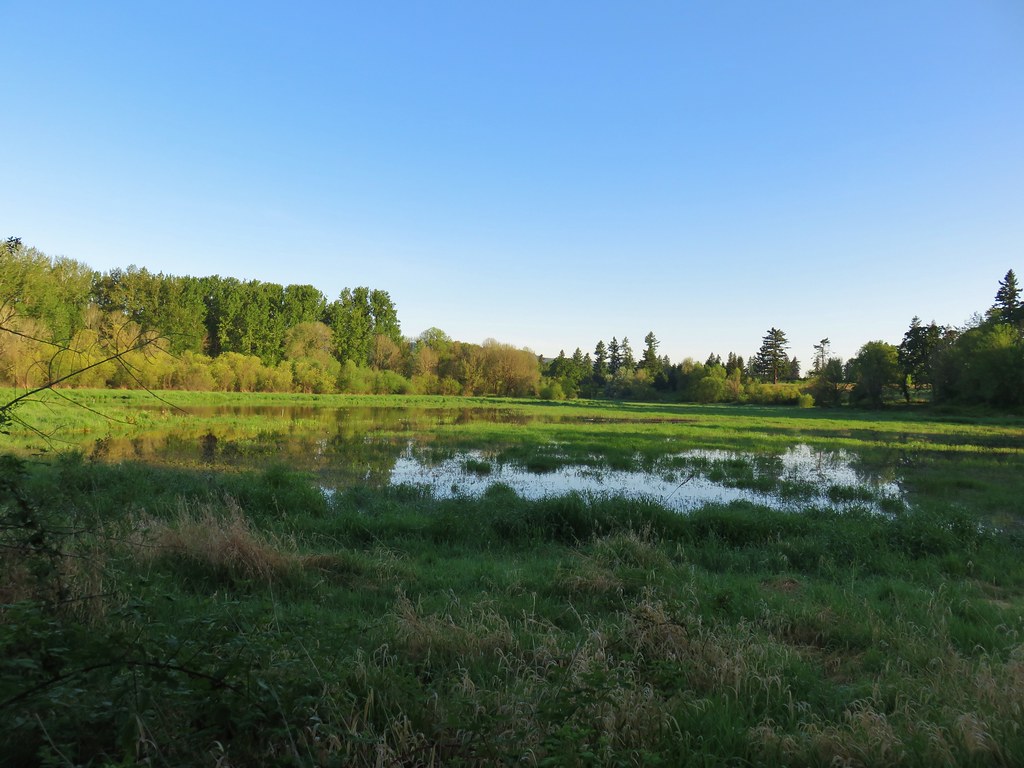
Here a short loop trail passes around Virginia Lake and along the Multnomah Channel.
IMG_6539

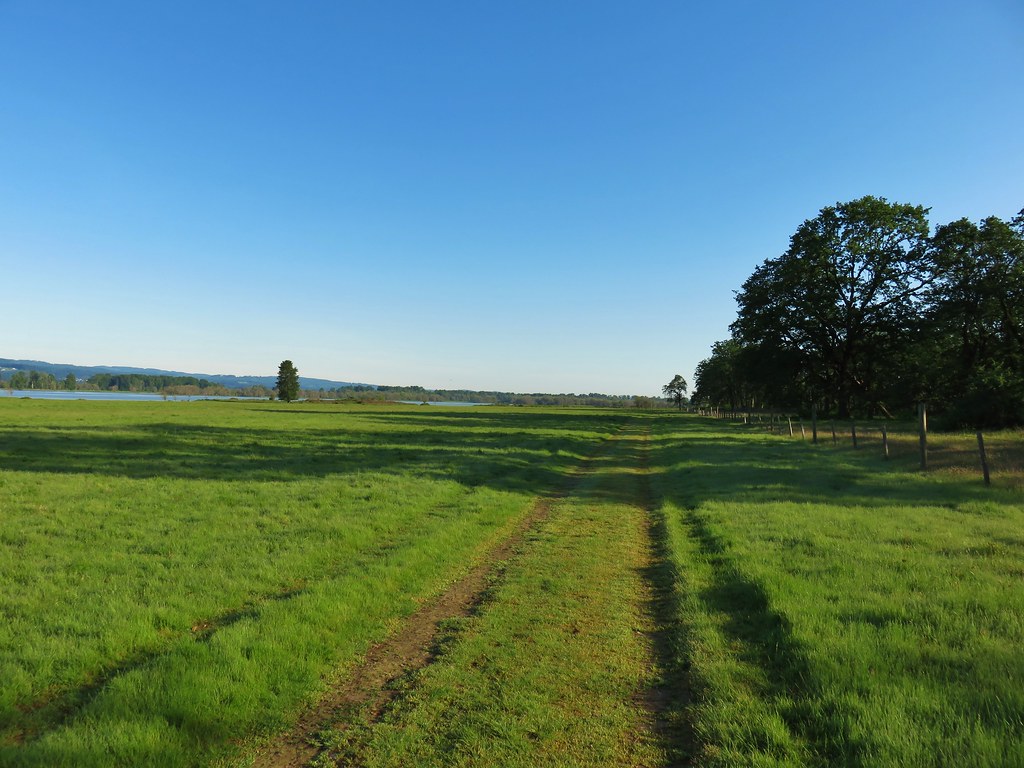
We set off on the entrance trail which quickly split (not shown on the map). We veered left on a mowed path through some grass.
IMG_6542

Our plan had been to visit the viewing platform first thing but this left fork was not the true entrance trail and we wound up joining the loop trail a tenth of a mile south of the side trail to the platform.
IMG_6543

We turned left onto the loop trail deciding to visit the platform near the end of our hike instead.
IMG_6544

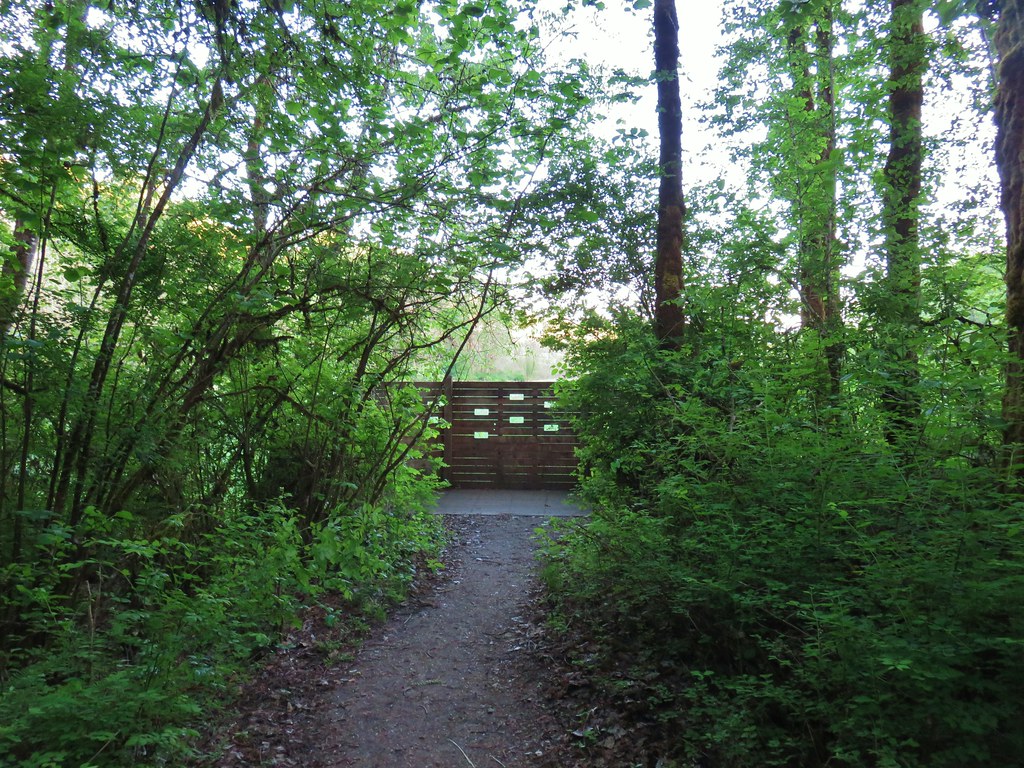
We passed a view of Virginia Lake and arrived at a viewing blind after a tenth of a mile.
IMG_6546

IMG_6547

Other than the occasional red-winged blackbird sighting we didn’t see anything from the blind on this morning. We continued on the loop ignoring a spur trail to Hadley’s Landing Dock just before arriving at the Multnomah Channel.
Multnomah Channel

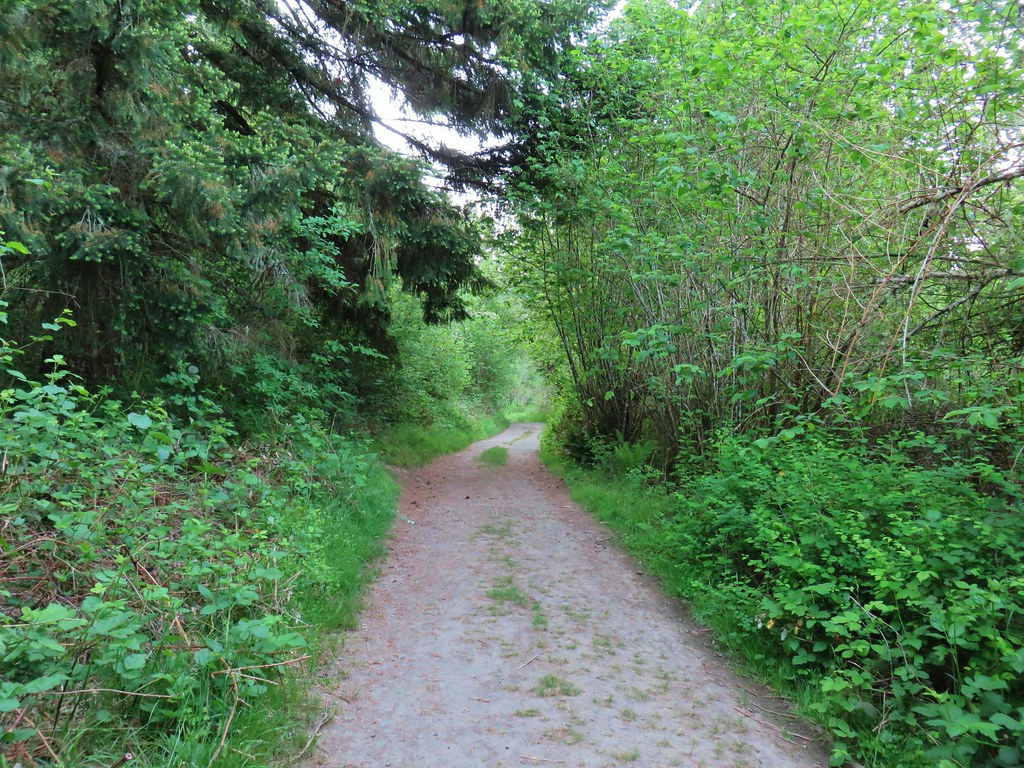
The trail passed through woods with occasional openings to grassy meadows. There were a few woodland flowers here and there but the most interesting thing was the wildlife. We saw a lot of birds and couple of shy rabbits. Most of the birds were busy foraging in the bushes or flitting from tree to tree so we didn’t have a lot of luck with pictures. We did appreciate the many songs they were singing as they made their morning rounds.
IMG_6553

IMG_6557

IMG_6562

IMG_6571

IMG_6573

IMG_6574

IMG_6569Black-headed grosbeak

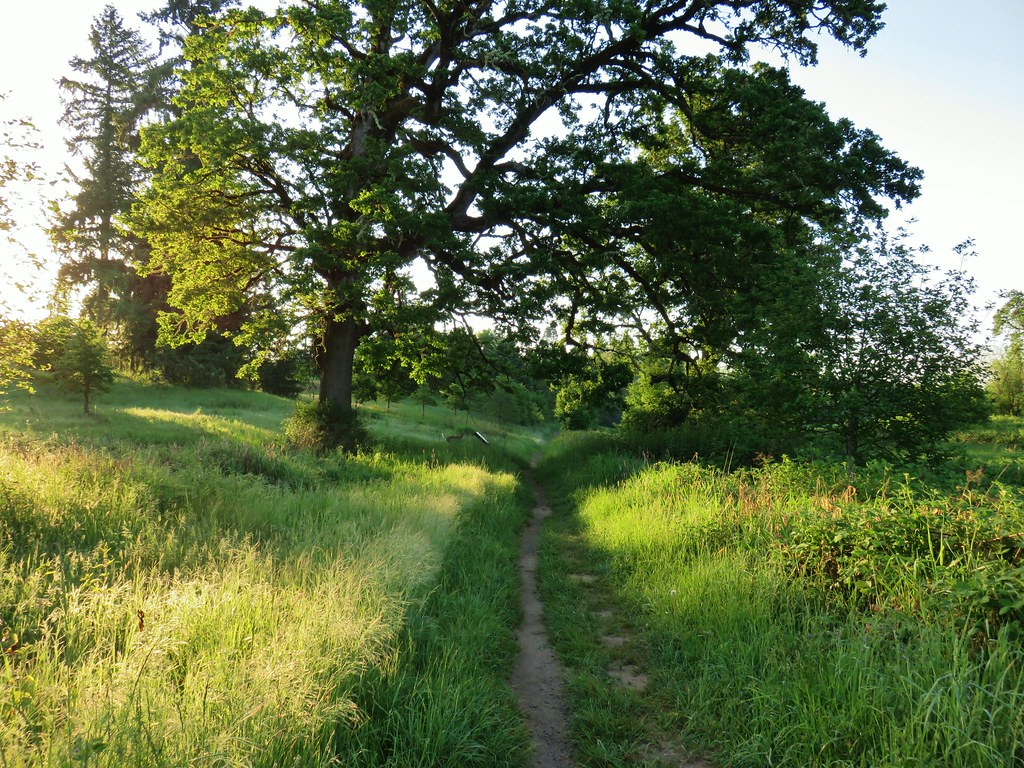
We also spotted what we at first identified as a pair of deer under a large oak.
IMG_6575

IMG_6577

As we watched them disappear into the brush we kept noticing more deer and ended up counting five of them.

After passing the picnic shelter we turned right down the side trial to the viewing platfrom.
IMG_6586

IMG_6587

IMG_6588

We had more luck with the wildlife from this viewpoint spotting a couple of different types of ducks, a great blue heron, and a pied-billed grebes.

IMG_6593

IMG_6595Mallards with a great blue heron in the distance.
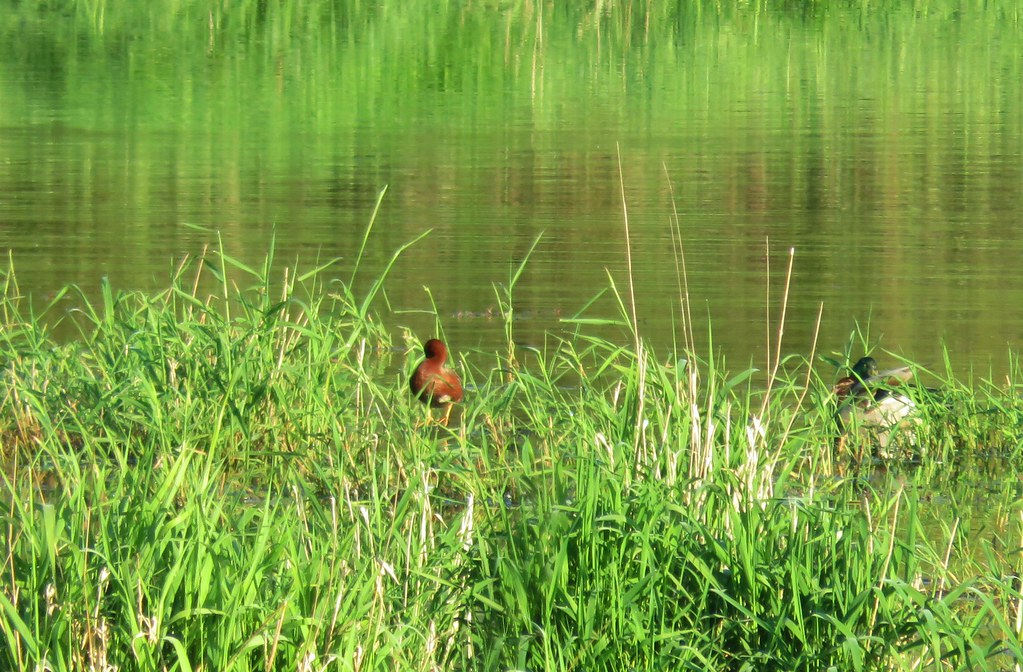
IMG_6608Cinnamon teal and a mallard

IMG_6604Pied-billed grebe

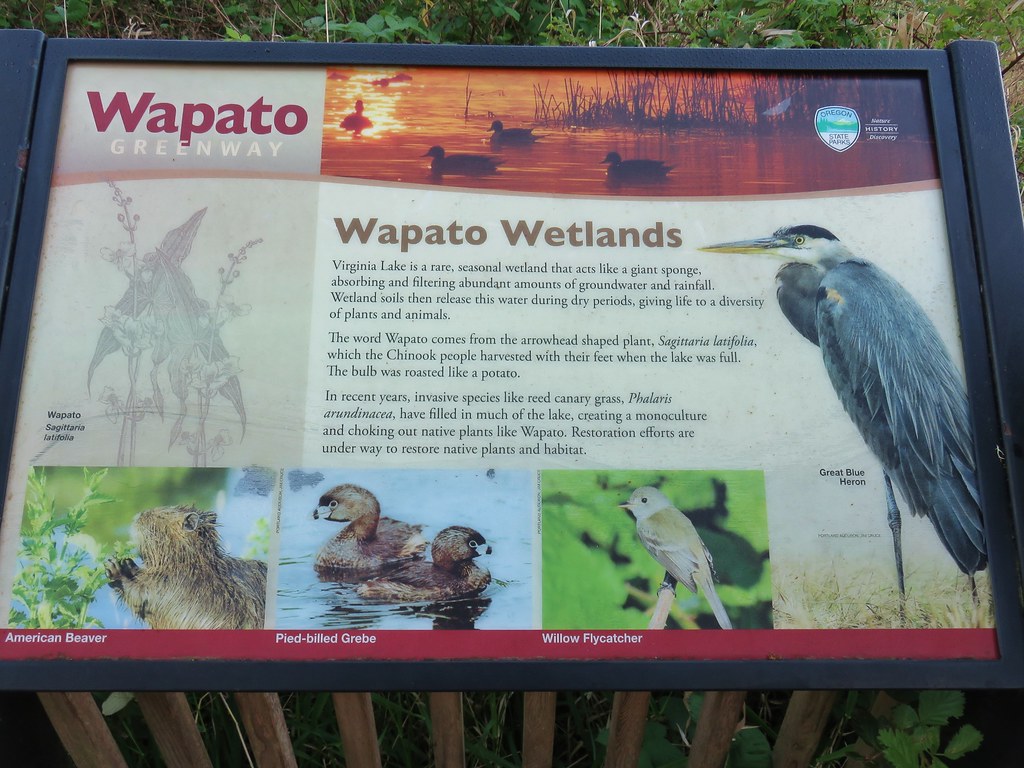
We had never heard of a pied-billed grebe and were wondering what it was. Then we took the time to read the interpretive sign at the platform.
IMG_6611

After leaving the platform we headed back to the car. Along the way we spotted another new bird to us. A Black-throated Gray Warbler. She was hopping around on the trail gathering something for a nest it appeared so the photos are a bit blurry.
IMG_6619

IMG_6626

Our second stop was at Oak Island,technically a peninsula. It is part of the Sauvie Island Wildlife Area and only open to hikers from April 16 through the end of September.
From the parking area a mowed path leads past a large signboard for .3 miles to the start of a loop.
IMG_6627

IMG_6629

The rabbits were a little less shy here.
IMG_6634

We had a few cattle cross our path prior to reaching the start of the loop as well.
IMG_6638

We actually missed the start of the loop which was marked by a post with a hiker symbol on it.
IMG_6639

We stayed straight on the obvious track past this sign as the path leading right was so faint we hadn’t noticed it. Continuing in this clockwise direction the trail leads through open grass with Steelman Lake to the west.
IMG_6640

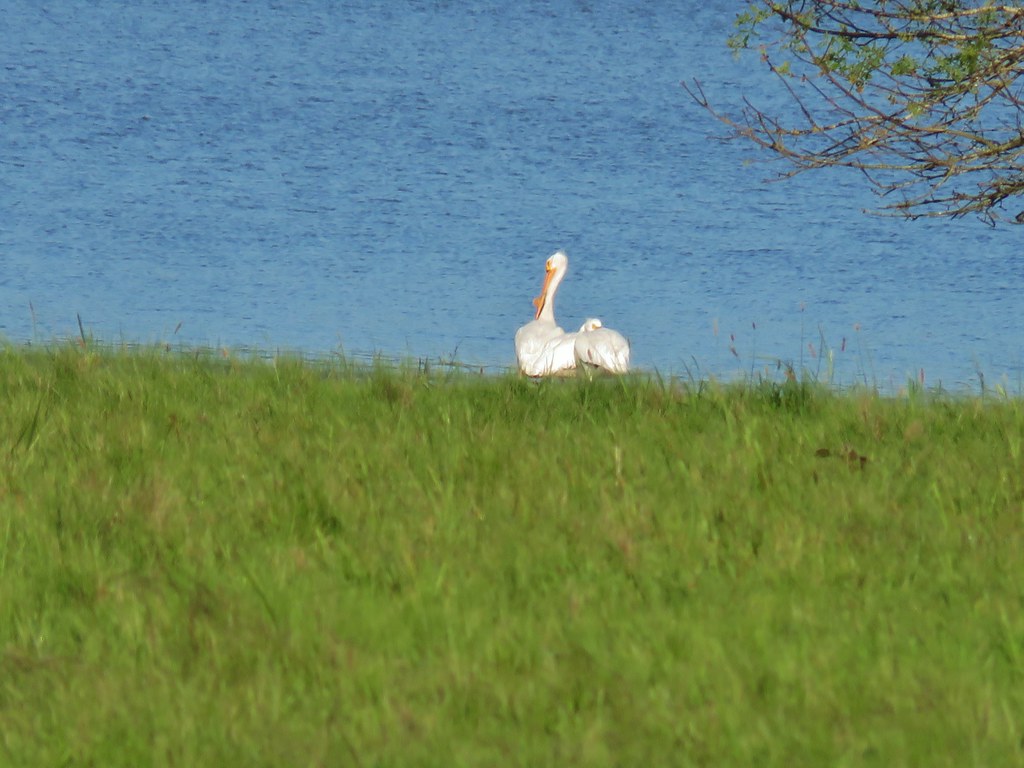
A number of great blue herons could be seen flying over the water and along the lakes shore we spotted a pair of white pelicans and a family of Canada geese.
IMG_6643

IMG_6645

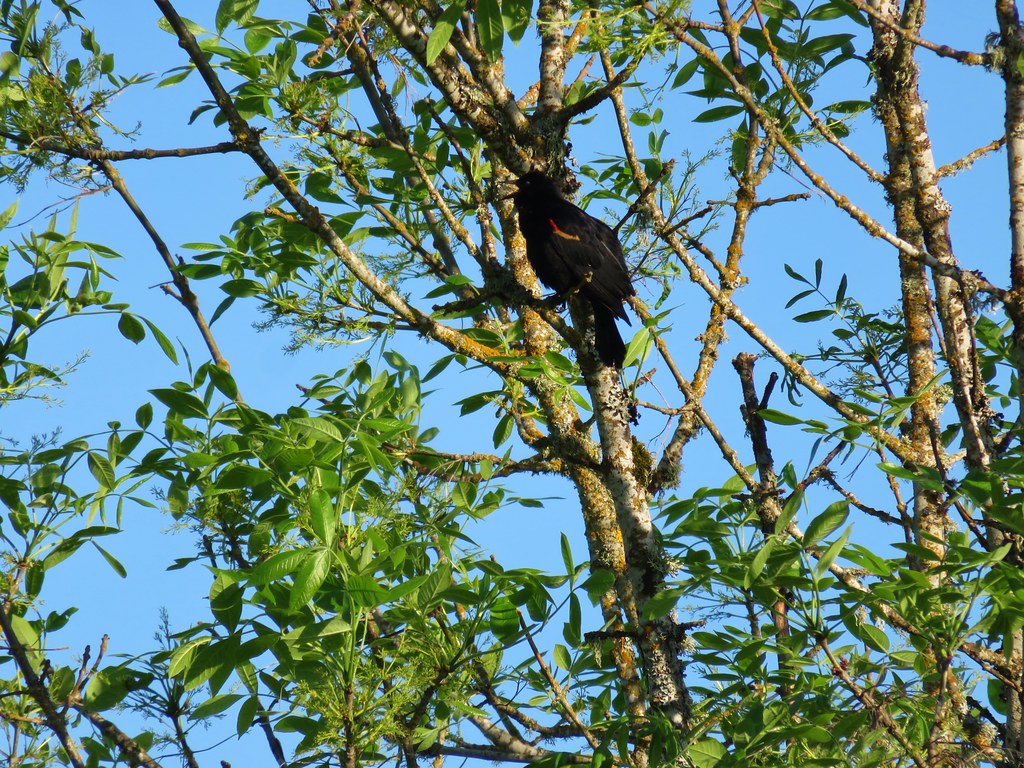
The distinctive call of red-winged blackbirds was prevalent.
IMG_6647

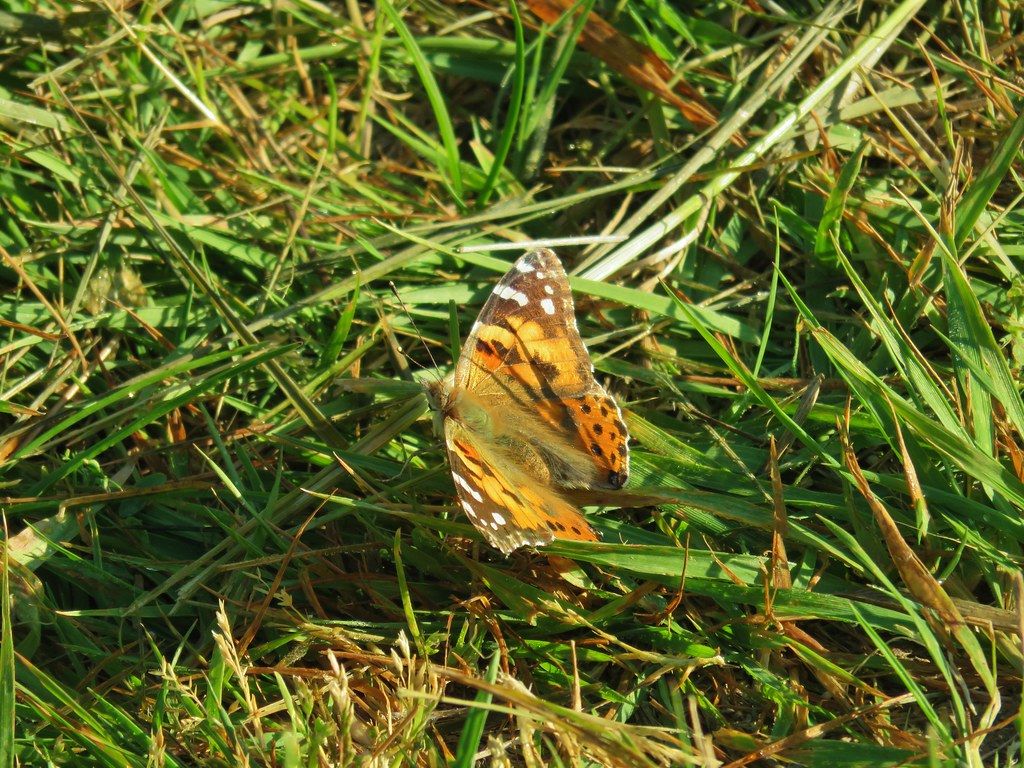
After passing through a gate the grass grew taller and the trail began to turn away from Steelman Lake. Here there were many butterflies and a few blooming camas.
Nature Trial at Oak IslandLooking back at the gate.

IMG_6658

IMG_6653

IMG_6655

Just before turning south near Sturgeon Lake a .1 mile spur path to the left led to the narrows, a narrow channel connecting Steelman and Sturgeon Lakes.
IMG_6661Looking toward Steelman Lake from the Narrows.

IMG_6662The Narrows. Another lake, Mud Lake, is on the other side of the trees.
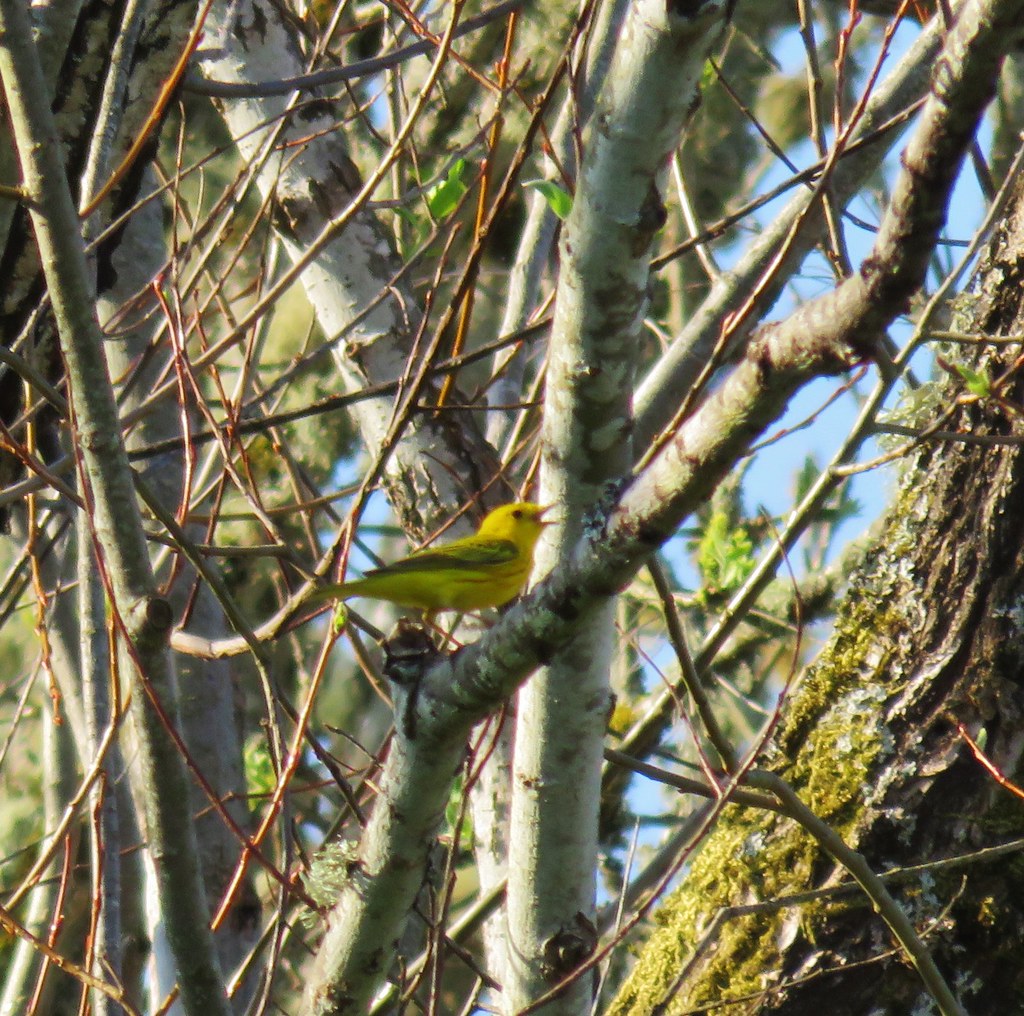
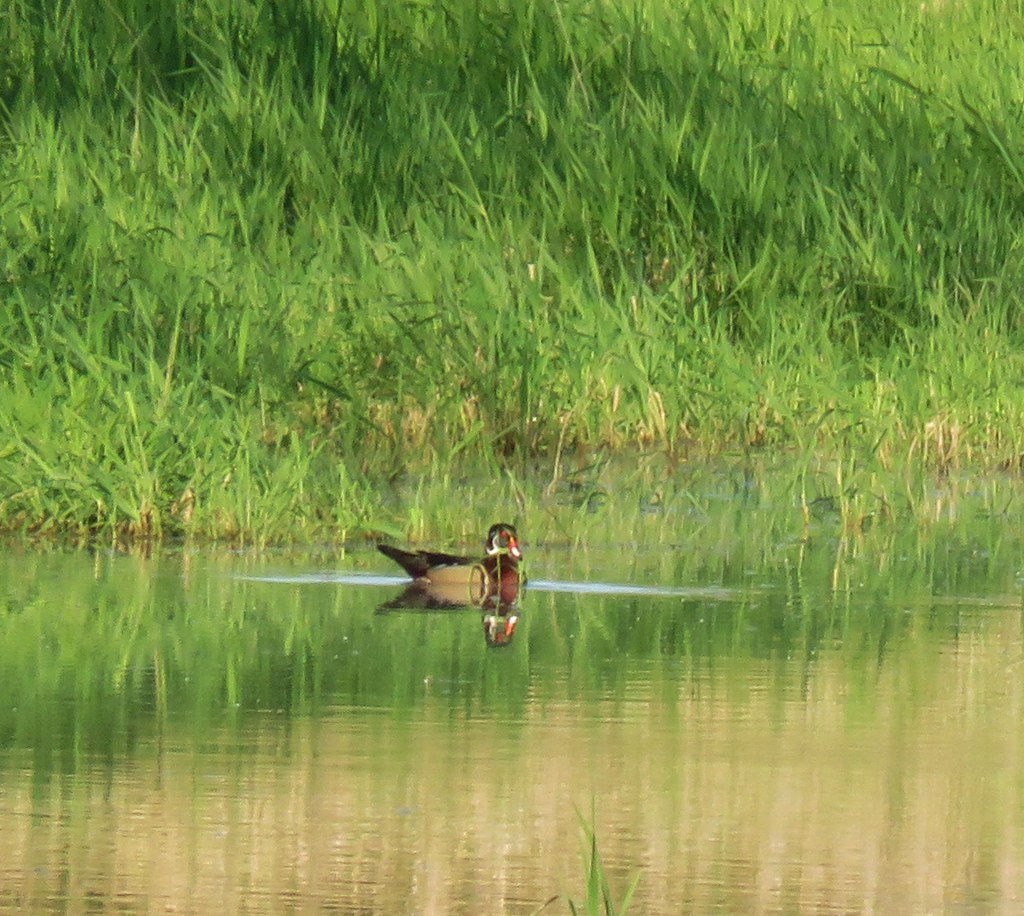
As we were returning to the loop we spotted a pretty yellow warbler and a wood duck.
IMG_6667

IMG_6669

Shortly after rejoining the loop Heather spotted a path down to a small beach along Sturgeon Lake where both Mt. St. Helens and Mt. Adams were visible but due to the lighting very hard to make out.
IMG_6671Mt. Adams (it is really there)

IMG_6676Mt. St. Helens

We had been similarly unsuccessful at getting a picture of Mt. Hood earlier from the Narrows. We finished up the loop and returned to our car ready to head to our final stop at the Warrior Point Trailhead. A coyote raced across the road near the parking are for the clothing optional Collin’s Beach. We’re not sure what it had been up to but it looked like it thought it was being chased. We had some fun imagining it had tried to run off with someones clothes.

After that excitement we parked at the trailhead and before setting off walked down the the sandy beach along the Columbia River.
IMG_6690

IMG_6692

As we began hiking a bald eagle flew overhead.
IMG_6694

The trail had occasional views of the River as well as Mt. St. Helens which was now a little easier to make out.
IMG_6703

IMG_6699Mt. St. Helens and an Osprey nest.

Our visit to the Island had already been on of the most diverse for birds and the Warrior Rock Lighthouse Trail just added to this. After the bald eagle and osprey we spotted a pair of American goldfinches.
IMG_6705Female

IMG_6712Male

These were followed by a Bullock’s Oriole and a yellow throated warbler.
IMG_6734

IMG_6742

The trail itself varied as it spent some time in the woods, some along the river, and other passing through tall grass.
IMG_6727

IMG_6729

IMG_6747

Considering the combination of grass, nearby water, and warm sunshine it seemed like the perfect conditions for snakes but we only spotted one.
IMG_6748

IMG_6752

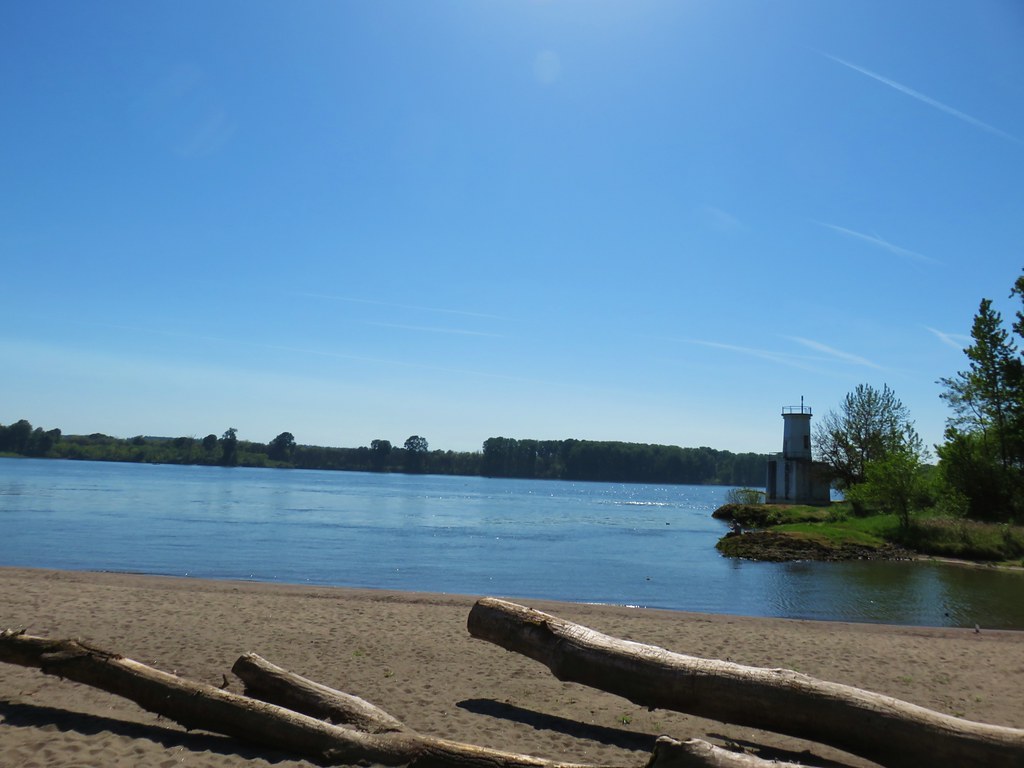
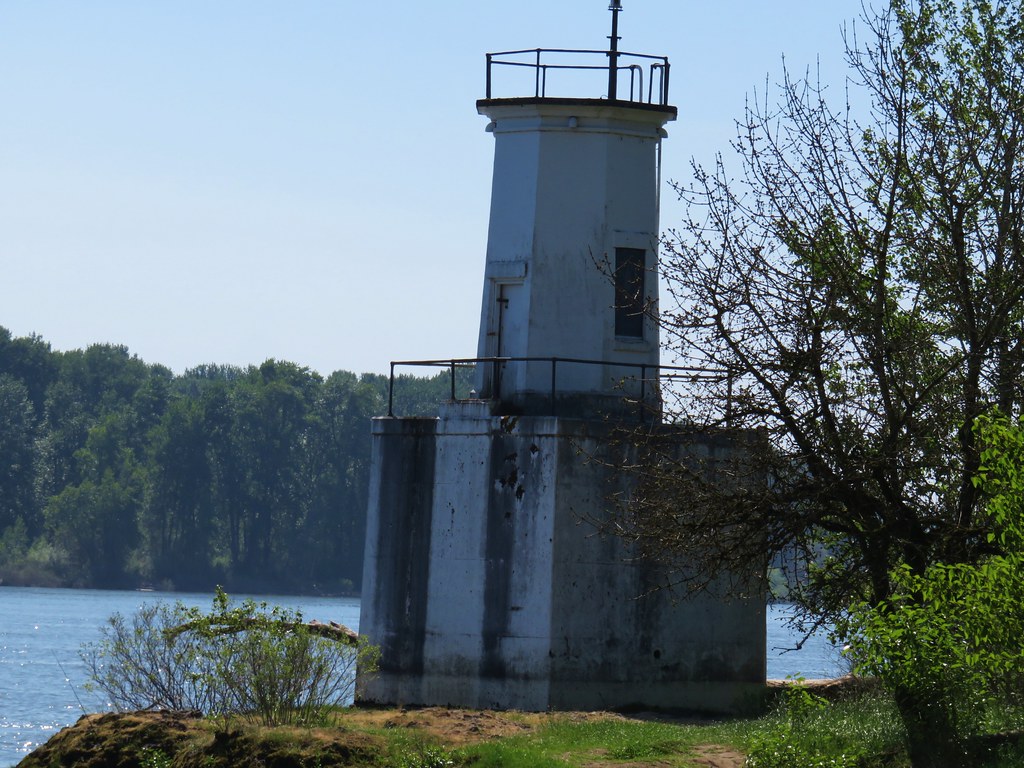
After three miles we arrived at a sandy beach near the Warrior Rock Lighthouse

IMG_6753Mt. St. Helens again.

IMG_6754

IMG_6755

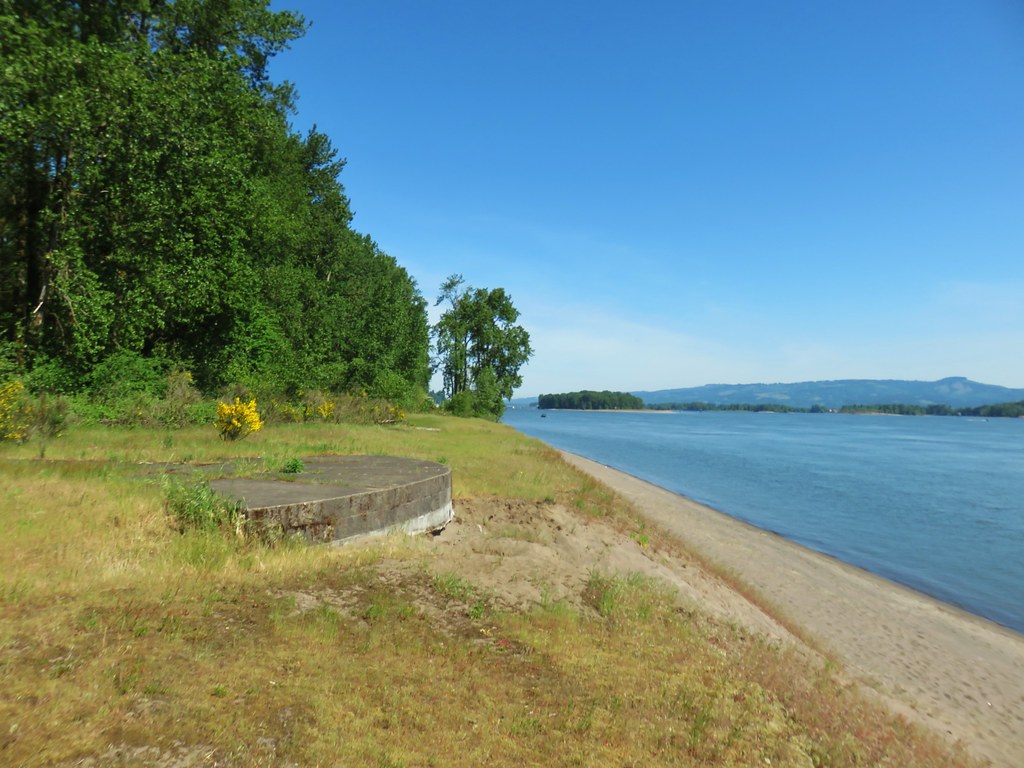
After a short rest on the beach we continued north on the sand to an old concrete gun mount.
IMG_6756

IMG_6759

This is where things got a little interesting. Our guidebook said to turn inland here on a small access road to a T-shaped junction. The map accompanying the description on Oregonhikers.org appeared to show the track continuing north from this point along the river. We couldn’t see any sign of the small access road so we continued north along the beach until it was no longer possible. We faced the choice of backtracking or following a faint path inland to try and connect to an old road bed that would take us to Warrior Point. We headed inland.
IMG_6763

There was a faint path, we’re guessing it was more of a game trail than anything but it wouldn’t have been too hard to follow except for all the blackberry bushes. We managed to push through what turned out to only be a tenth of a mile to arrive at the grassy road bed.
IMG_6768

A brief detour right led us to a viewpoint at Warrior Point of the town of St. Helens.
IMG_6765

IMG_67671905 Columbia County Courthouse

We followed the old road bed back from Warrior Point for a half mile where it met the Warrior Point Trail near the beach at the lighthouse.
IMG_6769

We had only seen a handful of other hikers all day but on the way back to the car (it was only now a little after 11am) we passed a number of people heading toward the lighthouse. We were once again thankful to have gotten an early start.

Our distances for the day were 2.6 miles at Wapato Greenway, 3.3 miles at Oak Island, and 7.3 miles at Warrior Point for a total of 13.2. It had been a great day for wildlife and another enjoyable set of hikes in the Portland area. Happy Trails!

Flickr: Sauvie Island Hikes

Categories
Columbia Gorge North Hiking Trip report Washington

Greenleaf Creek

With the arrival of May we officially started our hiking season by making an attempt to reach Greenleaf Falls. We knew it was a long shot given the little bit of information shown online, but the hike to Greenleaf Creek was a featured hike in the 2018 4th edition of William L. Sullivan’s “100 Hikes/Travel Guide Northwest Oregon and Southwest Washington”. We would at least be getting one step closer to our goal of completing all 500 of his featured hikes (post).

We began our hike from the Bonneville Trailhead which is located on the Washington side of the Columbia River near Bonneville Dam.
IMG_6294

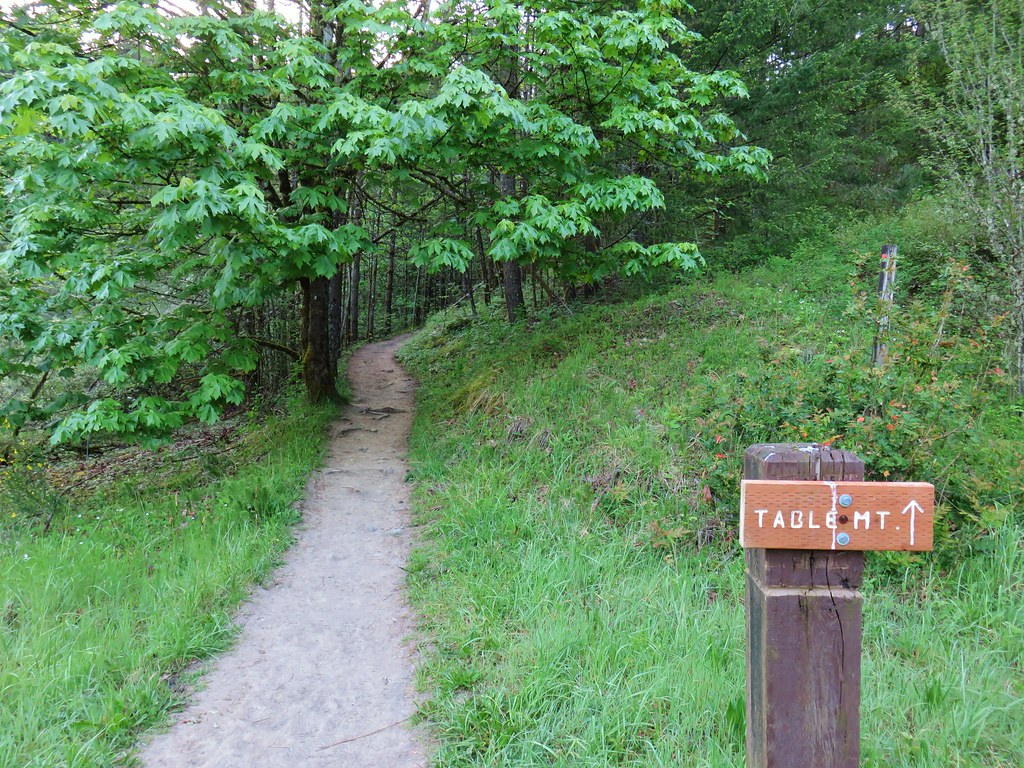
From the picnic area we followed a gravel path to a pointer for Table Mountain.
IMG_6298

IMG_6299

We’d been to Table Mountain twice, in 2013 via a now closed trailhead at the former Bonneville Hot Springs resort and in 2017 from the north via Three Corner Rock.

We followed the Tamanous Trail a little over half a mile through the woods to its end at the Pacific Crest Trail.
IMG_6308Oregon grape

IMG_6302Dogwood

IMG_6307Large solomonseal

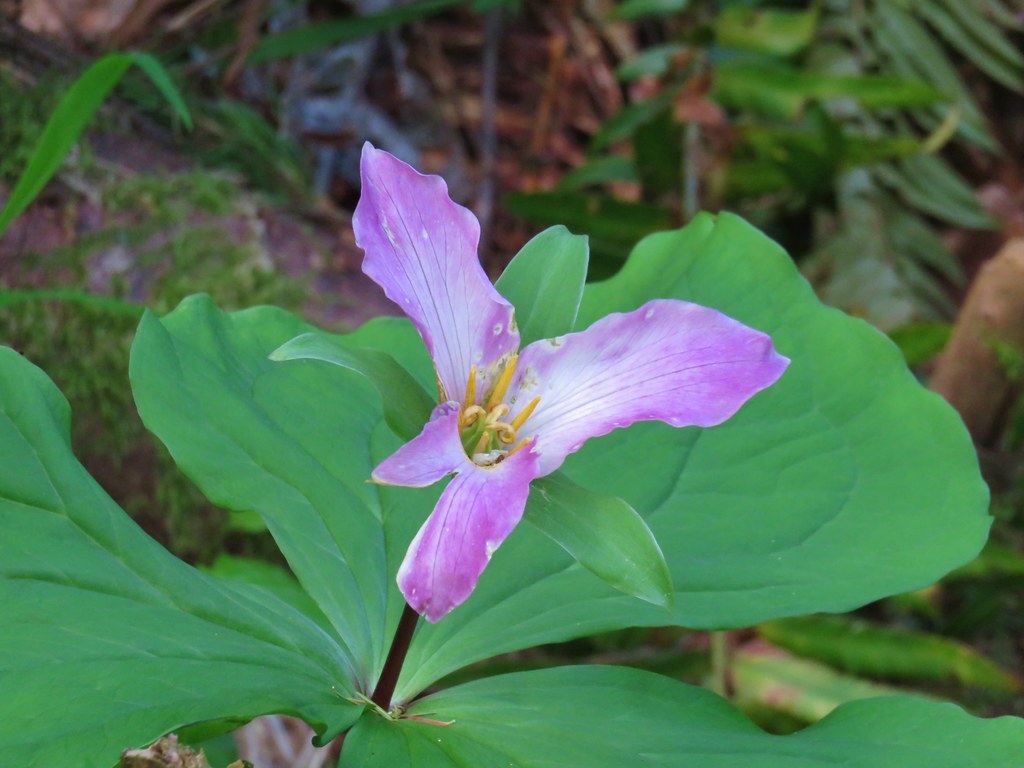
IMG_6311Trillium

IMG_6310

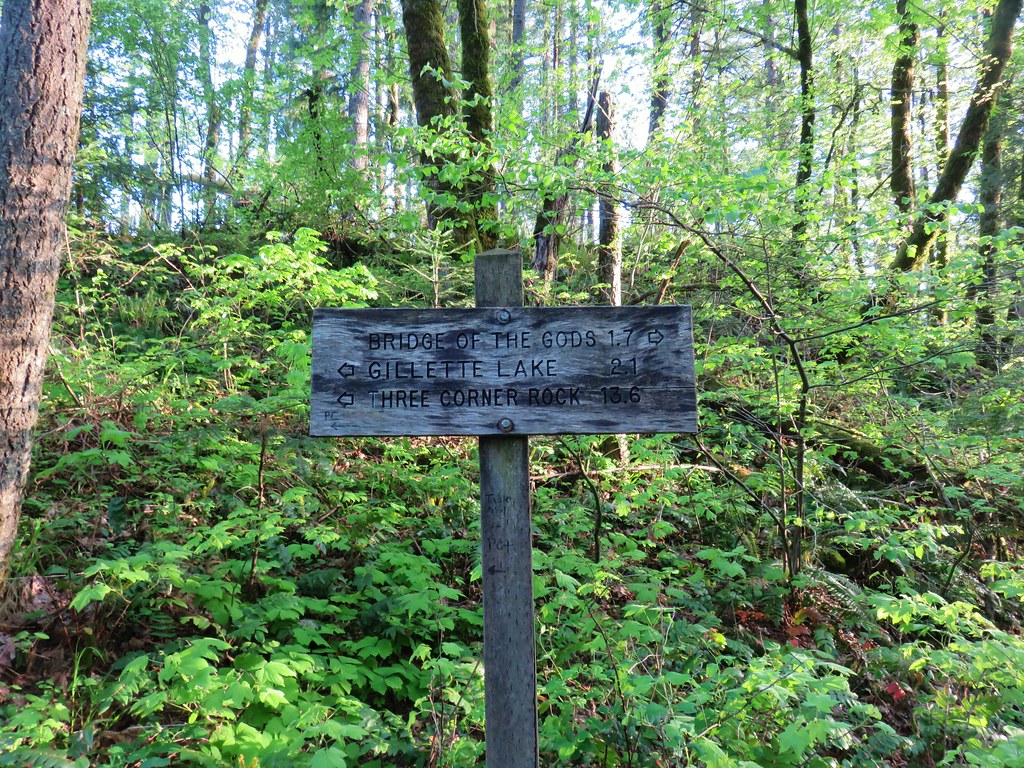
At the junction we turned left following pointers for Gillette Lake and Three Corner Rock.
IMG_6313

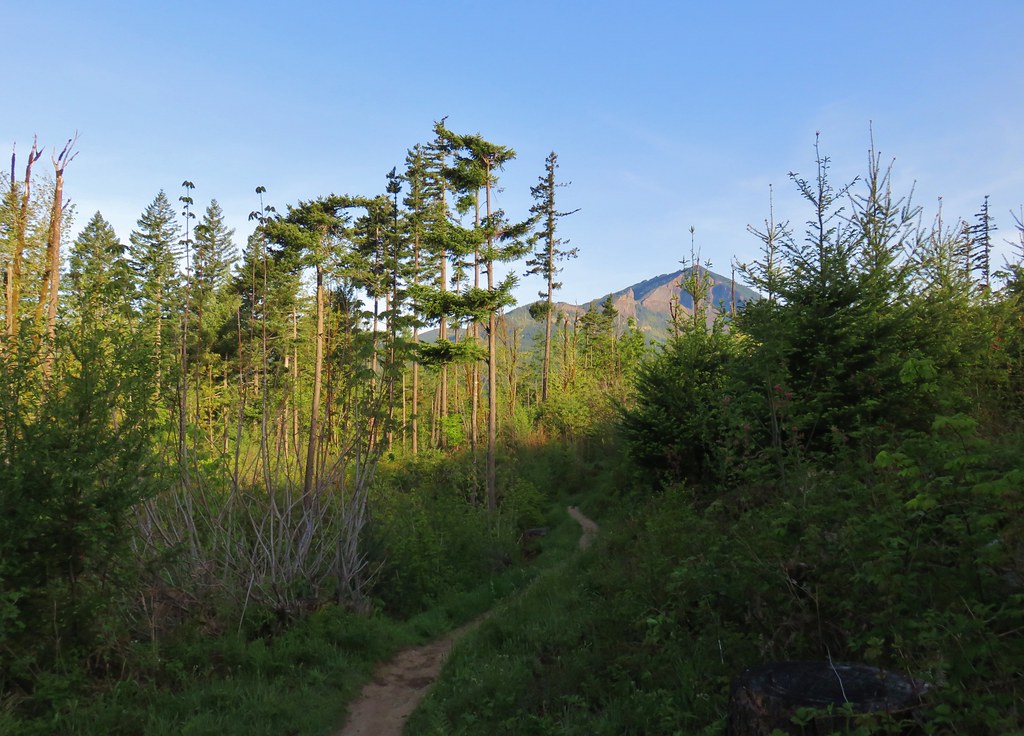
The PCT soon entered a series of clearcuts which provided some views of Table Mountain and a good amount of trail side poison oak.
IMG_6316

IMG_6326

IMG_6503

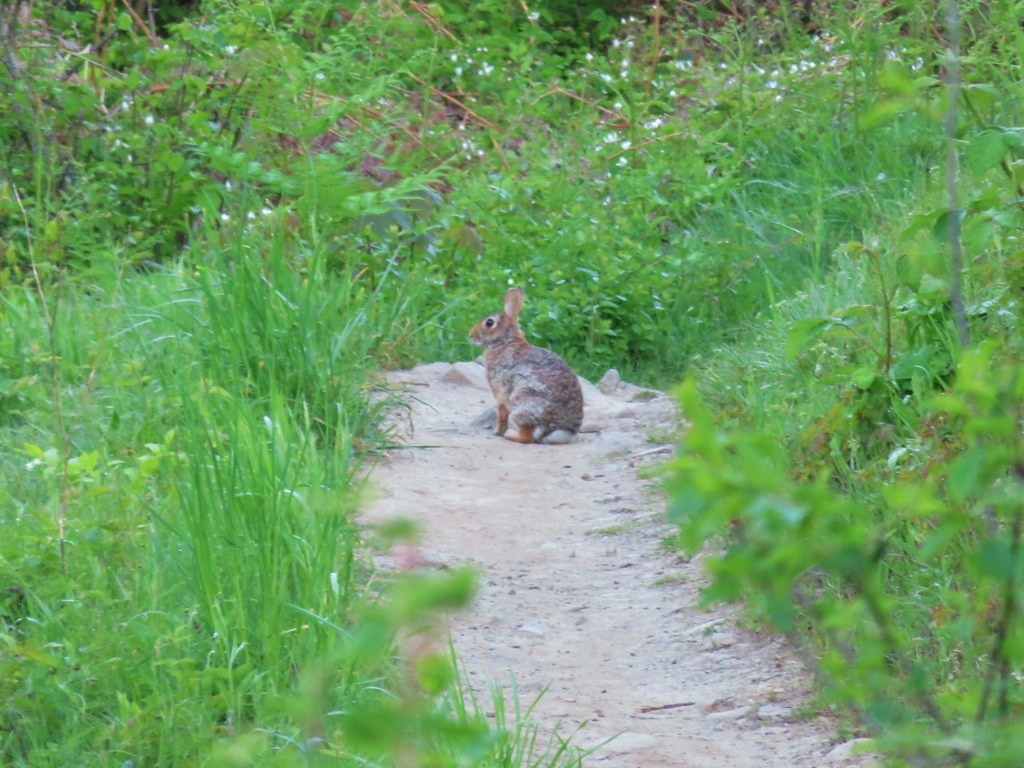
This area seemed popular with rabbits.
IMG_6319

IMG_6324

The PCT did a little climbing through the clearcuts which revealed a brief glimpse of Mt. Hood to the south.
IMG_6334

IMG_6335

Nearly 2 miles on the PCT brought us to a ridge where Gillette Lake was visible below.
IMG_6336

We followed the wide trail down passing by the lake and crossing the inlet creek on a footbridge.
IMG_6339Hamilton Mountain (post) to the left and Sacagawea and Pappose Rocks to the right beyond the lake.

IMG_6509Sacagawea and Pappose Rocks

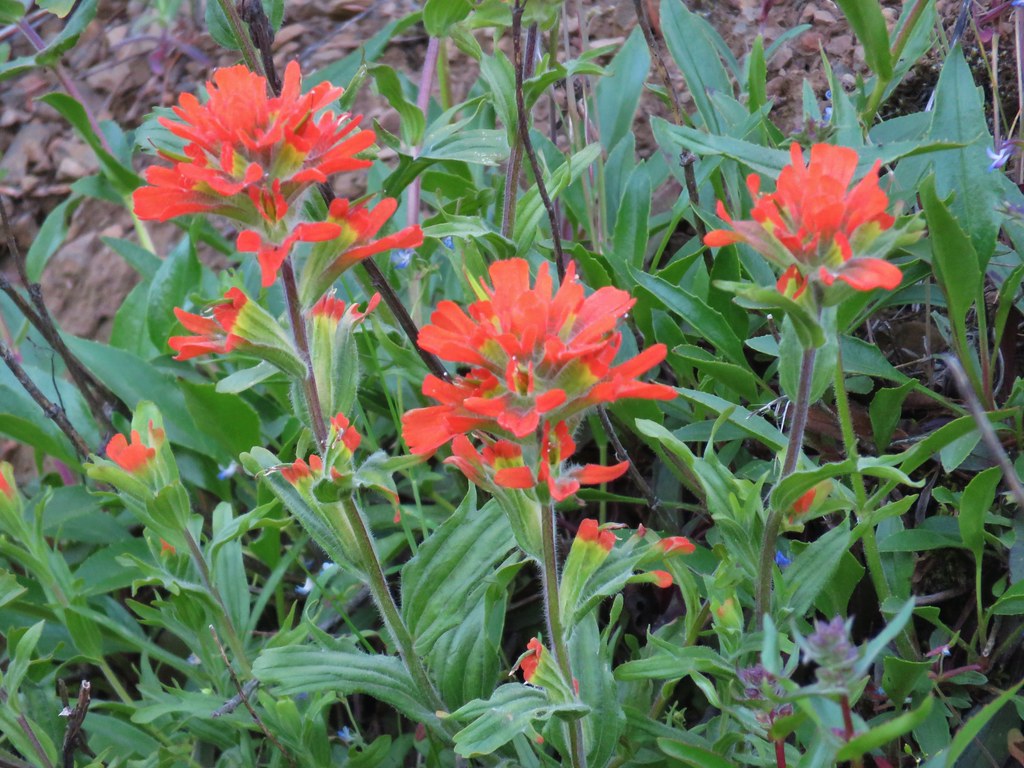
IMG_6342Indian paintbrush

IMG_6349

IMG_6351

Beyond Gillette Lake the PCT climbed gradually for a half mile through more clearcuts before passing a brushy unnamed lake.
IMG_6353Bonneville Dam on the Columbia River. Nesmith Point (post) is the rounded high point to the right on the Oregon side.

IMG_6356Unnamed lake through the trees.

After passing the lake the trail dropped to a bridged crossing of Greenleaf Creek then climbed via a series of switchbacks to Greenleaf Overlook.
IMG_6358

IMG_6360

IMG_6487View east from Greenleaf Overlook with Dog Mountain (post) in the distance.

There was a nice little patch of chocolate lilies near the viewpoint.
IMG_6363

20190504_123918

We continued past the overlook through the forest approximately half a mile to a four way junction (Two miles from the Greenleaf Creek crossing).
IMG_6370

IMG_6366Bleeding heart

IMG_6368Vanilla leaf

At the junction the left hand trail led to Carpenter Lake while the PCT continued uphill toward Table Mountain. We turned right onto the unsigned Two Chiefs Trail.
IMG_6371

IMG_6372

One of the nice things about this trail was the lack of poison oak which we seemed to have finally left behind. The trail climbed through the forest gaining 500′ over the next couple of miles.
IMG_6373

20190504_091212Wood violet

20190504_091234Fairy slipper

IMG_6385Trillium

After approximately 2.25 miles the trail emerged from the tress at a massive talus field made up of rocks from Table Mountain.
IMG_6387

IMG_6395_stitchThe Two Chiefs on the left and Table Mountain on the right.
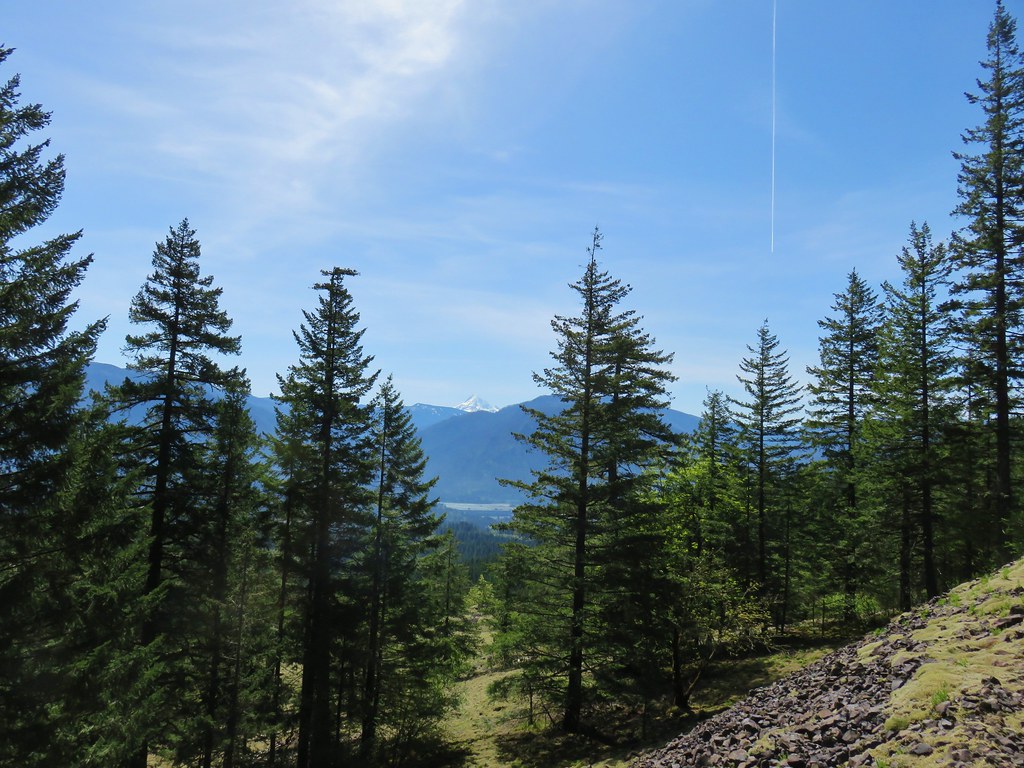
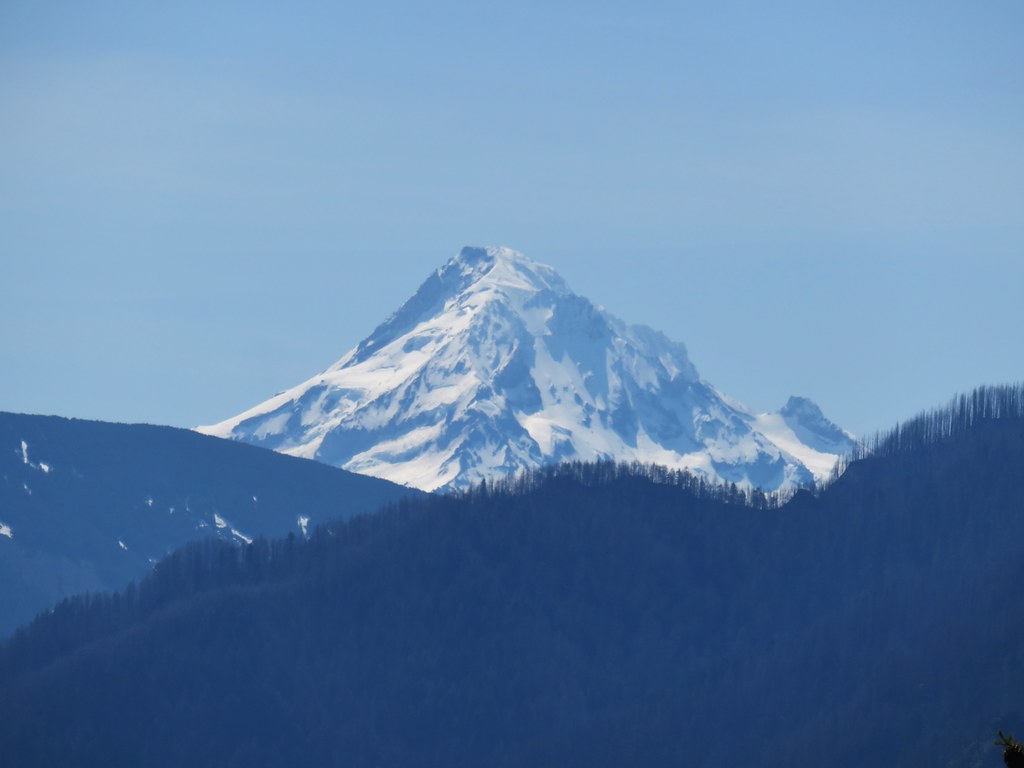
From the open talus area we had another view of Mt. Hood which was a bit better given the higher elevation than our earlier view.
IMG_6467

IMG_6469

A half mile after entering the talus section we arrived at Greenleaf Creek.
IMG_6416

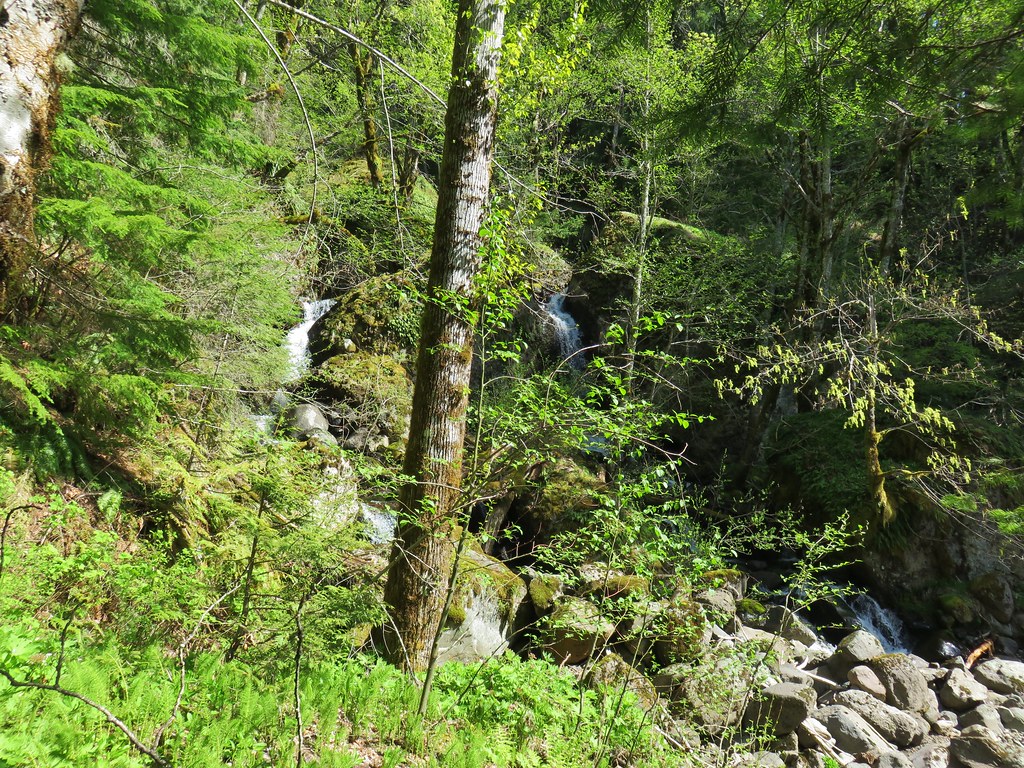
Greenleaf Falls consists of a series of drops, some of which were visible from the trail.
IMG_6466

20190504_110326Left side

20190504_110520Right side

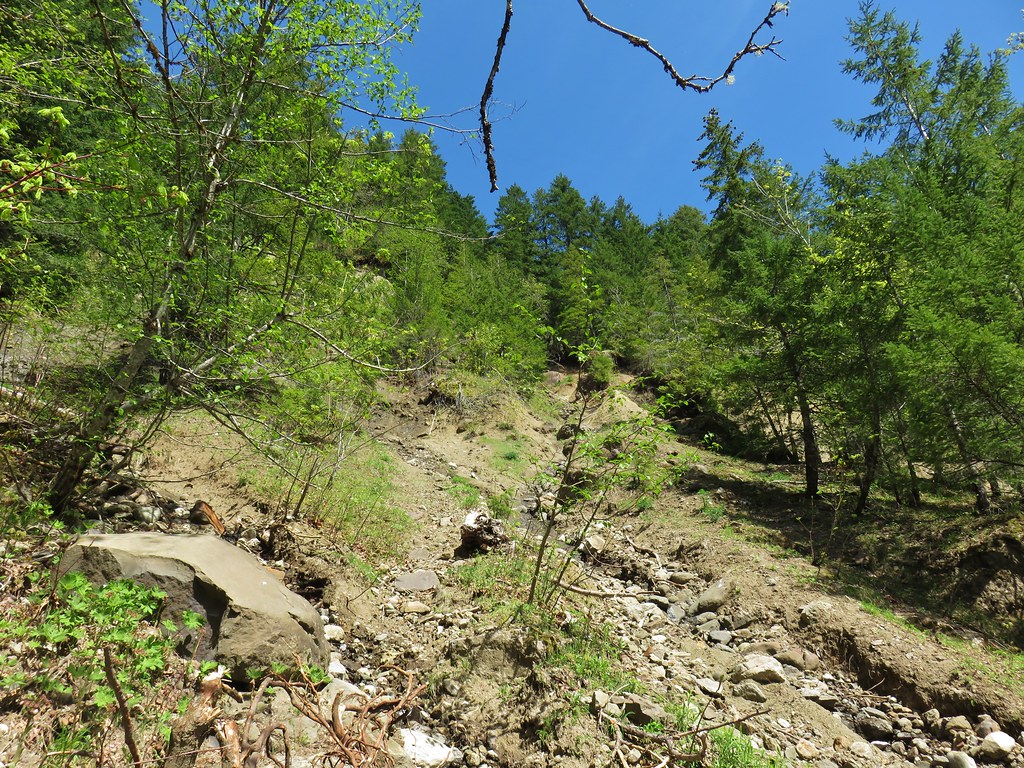
After admiring these lower cascades we decided to go ahead and attempt to reach the upper tiers. I hadn’t seen an actual GPS track or route up to the falls but had seen a 2015 video which showed that this was not going to be easy if it was even still possible. Seasonal rains have caused repeated mud slides and left the steep hillside gouged with channels filled with loose rock.
IMG_6435

We picked what appeared to be the most reasonable route and started picking our way uphill. We managed to get about two tenths of a mile uphill from the trail before deciding that there was no remotely safe way to even attempt continuing. I had gotten a little higher than Heather having had her stop while I attempted to see if there was any viable route to continue on. From what we can tell from the maps I was just below the upper falls, but it may have well have been 100 miles. We did however get over to a couple of views of other smaller tiers of the falls.
IMG_6434The highest tier that I was able to see.

IMG_6432A middle section of Greenleaf Falls

IMG_6430Cascades along Greenleaf Falls just above the ones visible from the trail.

We’d given it a shot and I probably got a little too far up the hill. I had to use my hands a lot and spent a decent amount of time crawling to get back down to where I had left Heather. Luckily I was able to make it back down. Ironically I wound up falling near the end of our descent on what appeared to be nearly level ground when a rock rolled out from beneath my heal. A scrapped elbow and palm where the only results though.

As we were making our way back down Heather spotted a frog which we named kamikaze frog due to it launching itself downhill and landing upside down in the rocks a couple of times.
IMG_6444

IMG_6450

We were both concerned about possibly knocking a rock loose which might hit the frog since he was in the same channel as we were and kept hopping down ahead of us. Thankfully we were able to hop out of that channel and go around it before anything bad happened.

In addition to the frog I had seen a small garter snake while I was searching for a route up and Heather had seen some sort of lizard in the talus slope earlier. As we passed back by the talus we kept our eyes open but didn’t see another lizard or snake.

We did however see a western fence lizard back at Greenleaf Overlook.
IMG_6486

The rest of the hike back was fairly uneventful other than having to check for poison oak every time we stepped aside to let other hikers pass. Heather did manage to get a neat picture of a blue copper butterfly in flight while she was taking some photos of flowers.
20190504_124036Snow queen

20190504_124117Wild strawberry

20190504_135949Butterfly landing on leafy pea
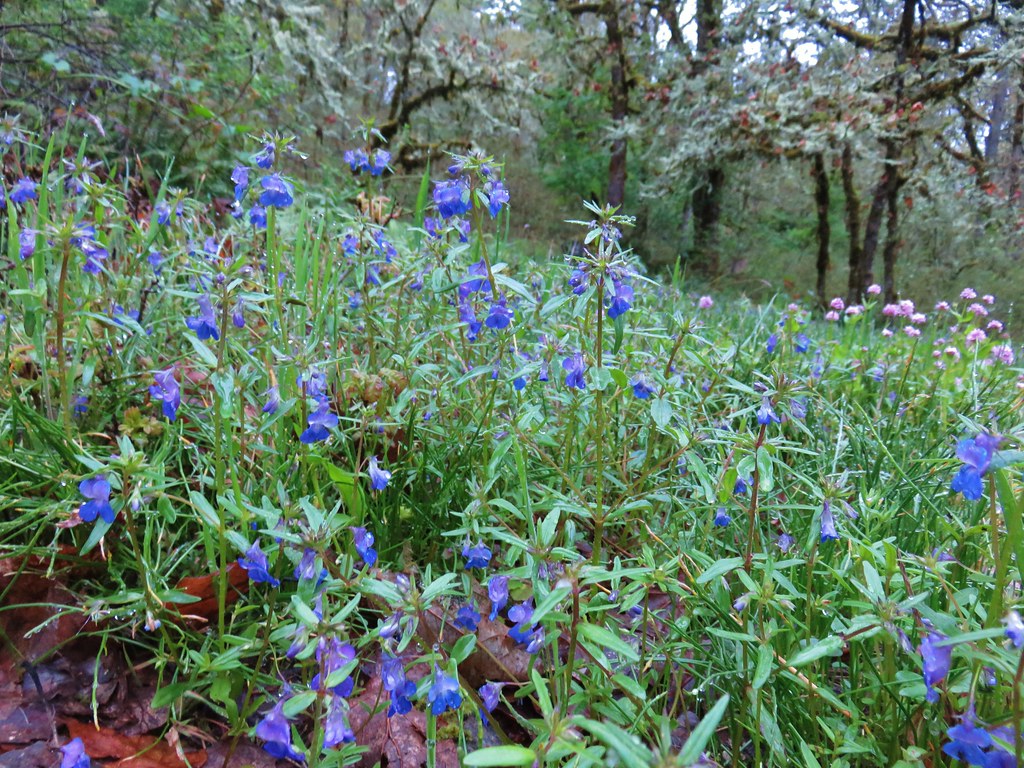
We were a little fatigued when we finally made it back to the car. The GPS clocked in at 15.4 miles for the day. That distance combined with the extra work of trying to climb up the steep, loose hillside next to Greenleaf Creek was a lot for a hike this early in our season but it had been a beautiful day. Happy Trails!

Flickr: Greenleaf Creek

Categories
Hiking Oregon Portland Trip report Willamette Valley

Camassia Natural Area, Mary S. Young Park, and Tryon Creek State Natural Area

We continue to be impressed by the number and variety of urban hikes in the Portland-metro area. On our most recent outing we visited three more areas near West Linn and Lake Oswego.

We started our day in West Linn at the Camassia Natural Area just before 7am. Our hike started from the trailhead at the end of Walnut Street.
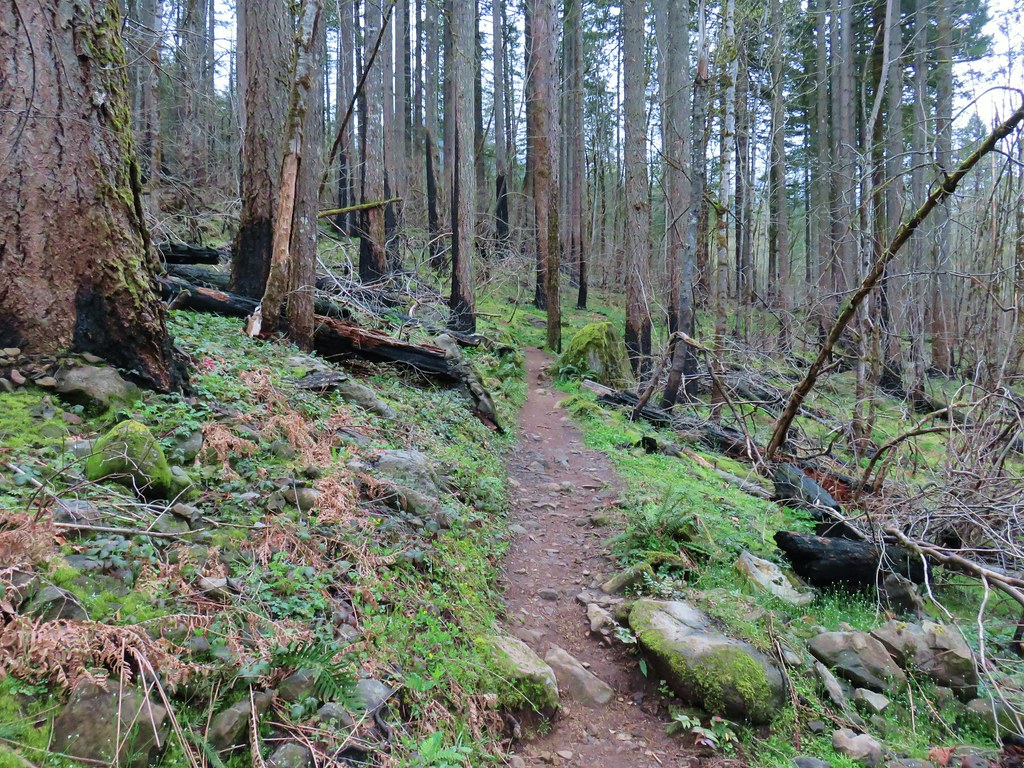
Camassia Natural Area
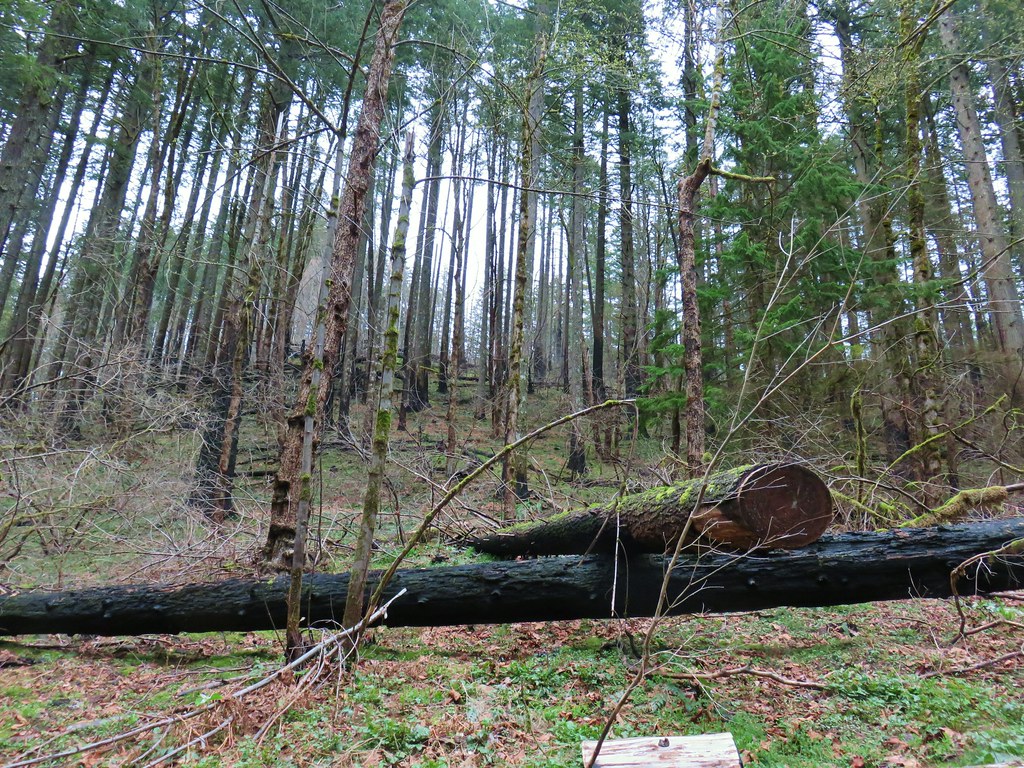
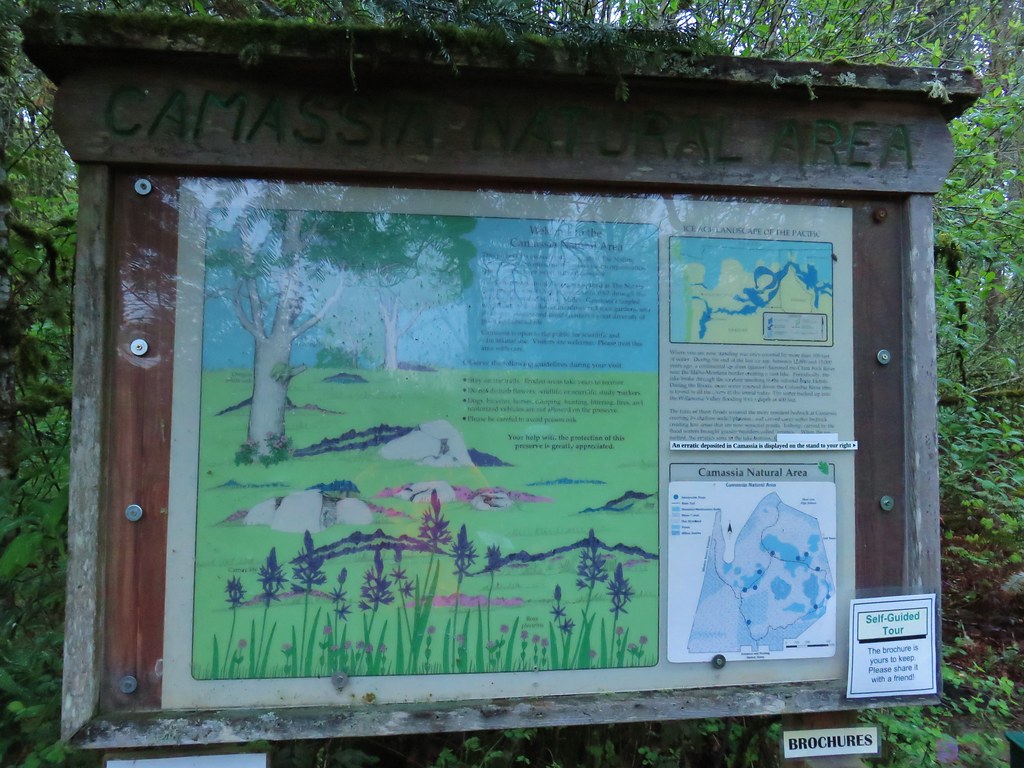
A few feet from the trailhead is a signboard and the start of a loop.

Camassia Natural Area Trailhead

Camassia Natural Area Map

We picked up a guide brochure and started the loop by heading left (clockwise).

Camassia Natural Area

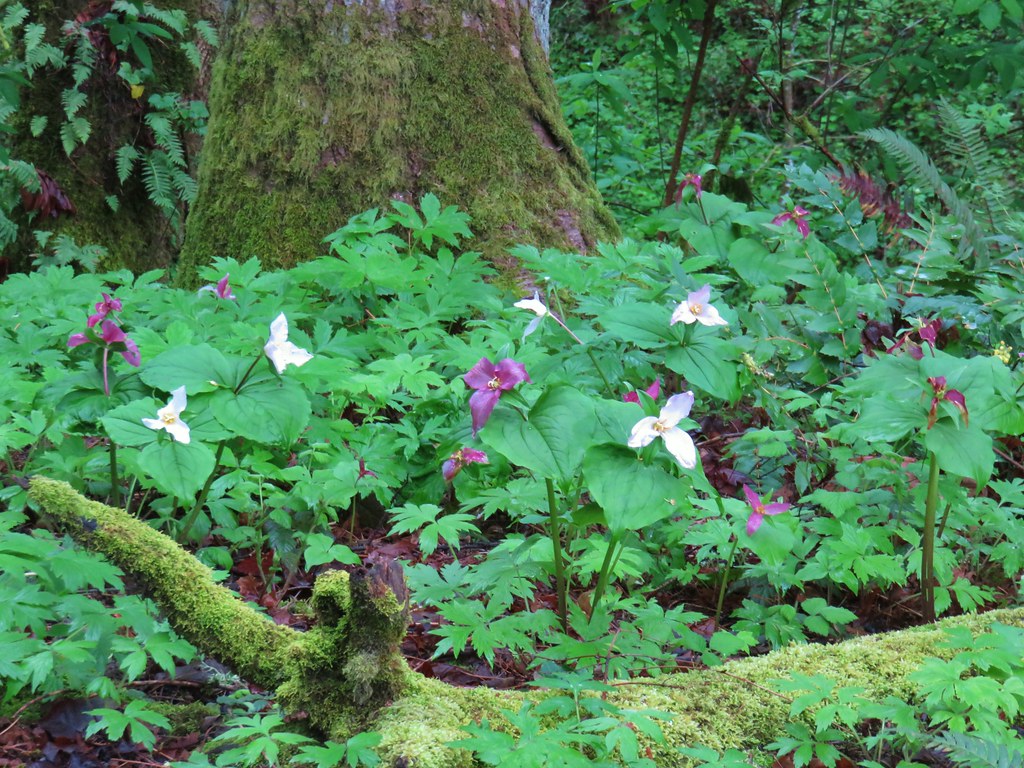
The woodlands here were full of white flowers including trillium, giant fawn lilies, and giant white wakerobin.

Trilium

Giant fawn lilies

Giant white wakerobin

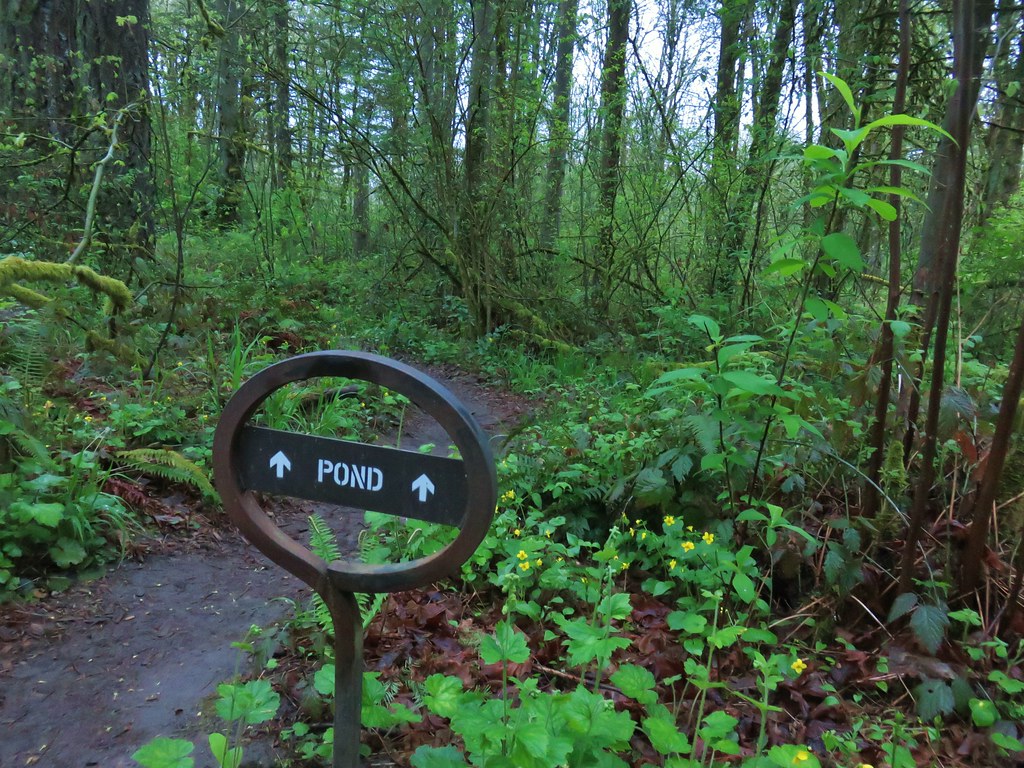
We detoured to the right briefly at a “Pond” sign which led down to a very muddy wet area.

Camassia Natural Area

Pond at Camassia Natural Area

Continuing on the loop the next brief detour was to the left at a pointer for Wilderness Park.

Camassia Natural Area

We followed this path a short distance to a small wildflower meadow full of giant blue-eyed mary and rosy plectritis.

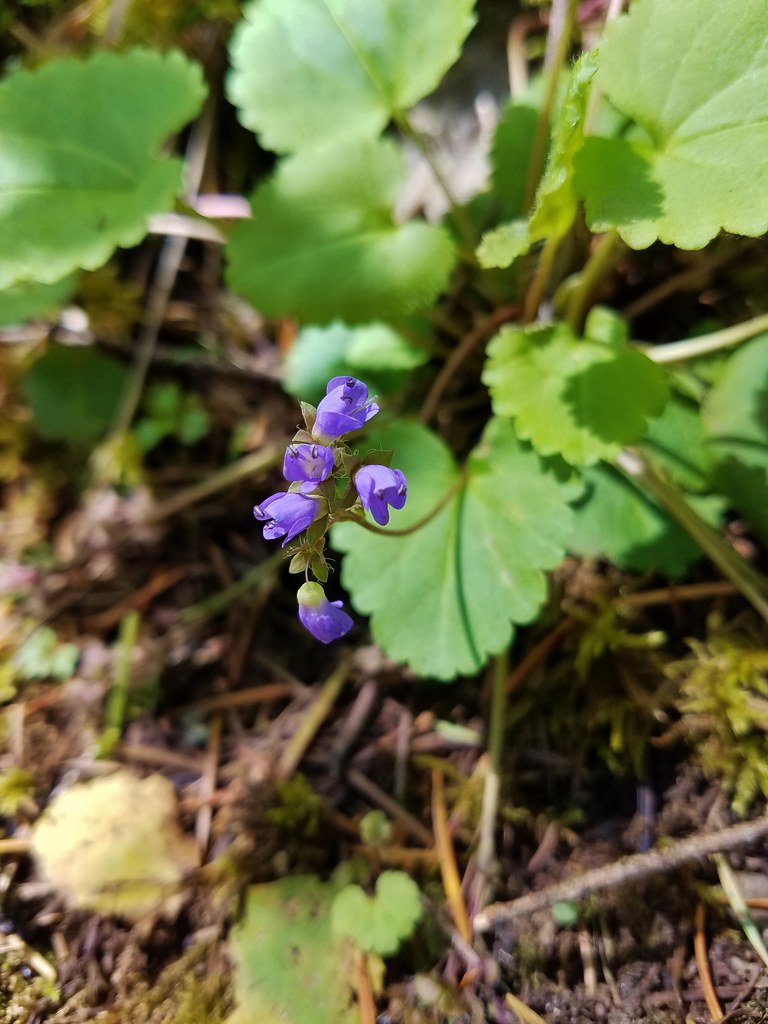
Giant blue-eyed mary

Plectritis

As we were returning to the loop trail Heather spotted an animal moving in a meadow below. As we headed toward the meadow on the trail we were excited to find out what was roaming the meadow. As it turned out our first wildlife encounter of the day was a domestic cat.

Camassia Natural Area

Cat at Camassia Natural Area

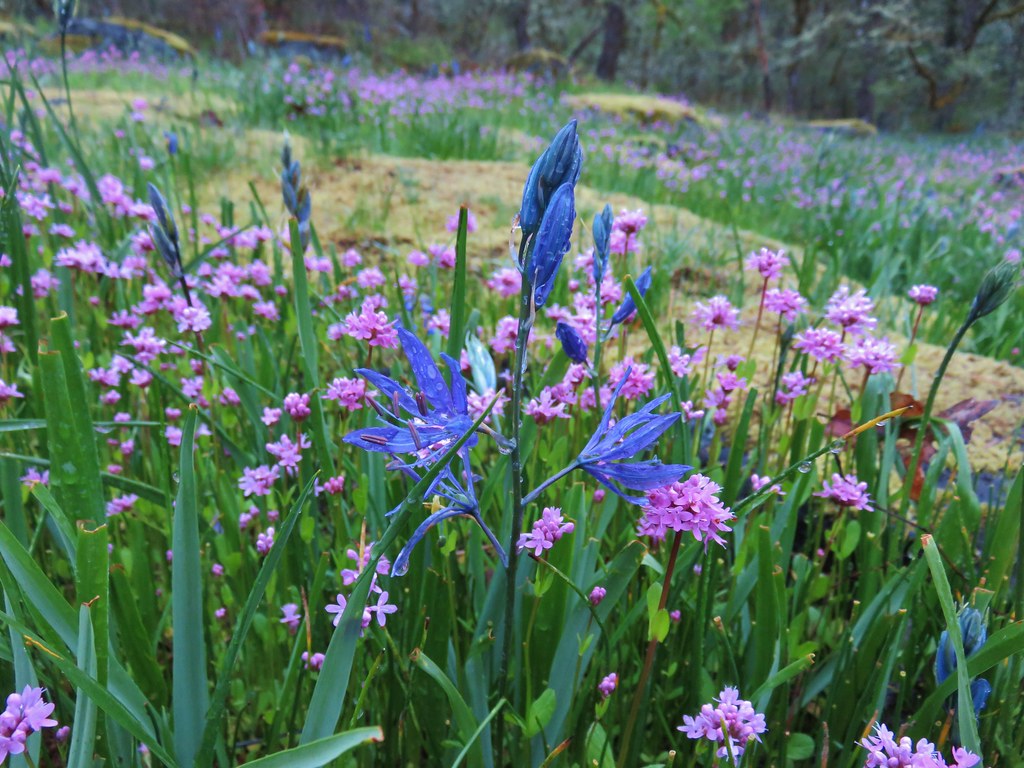
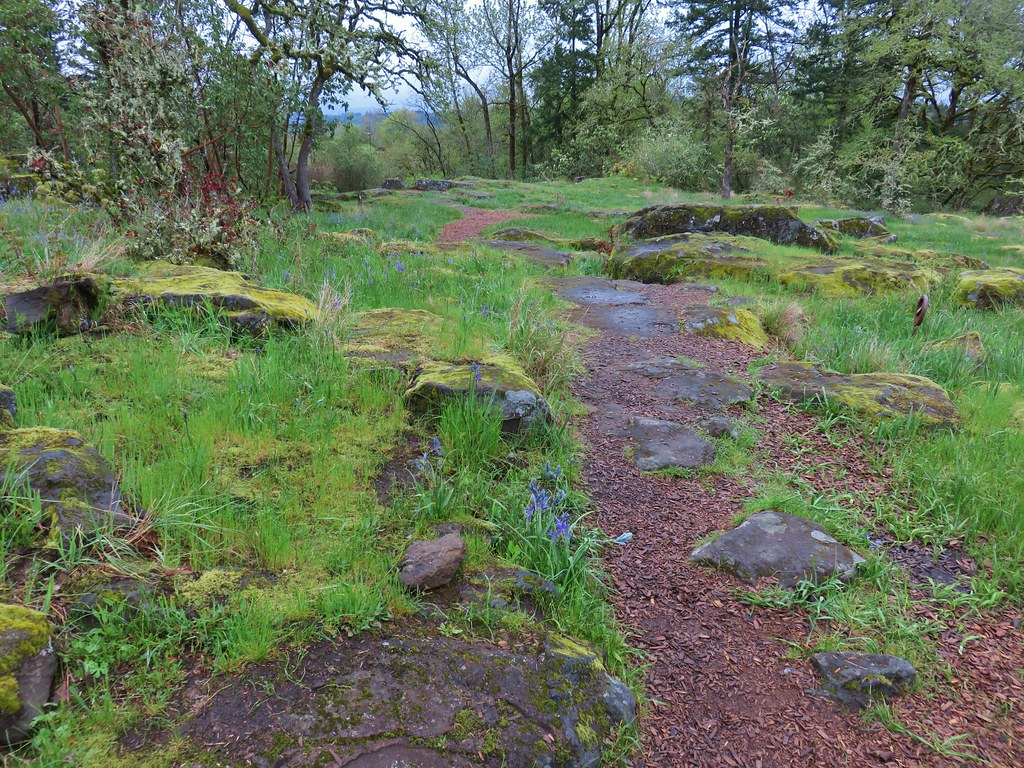
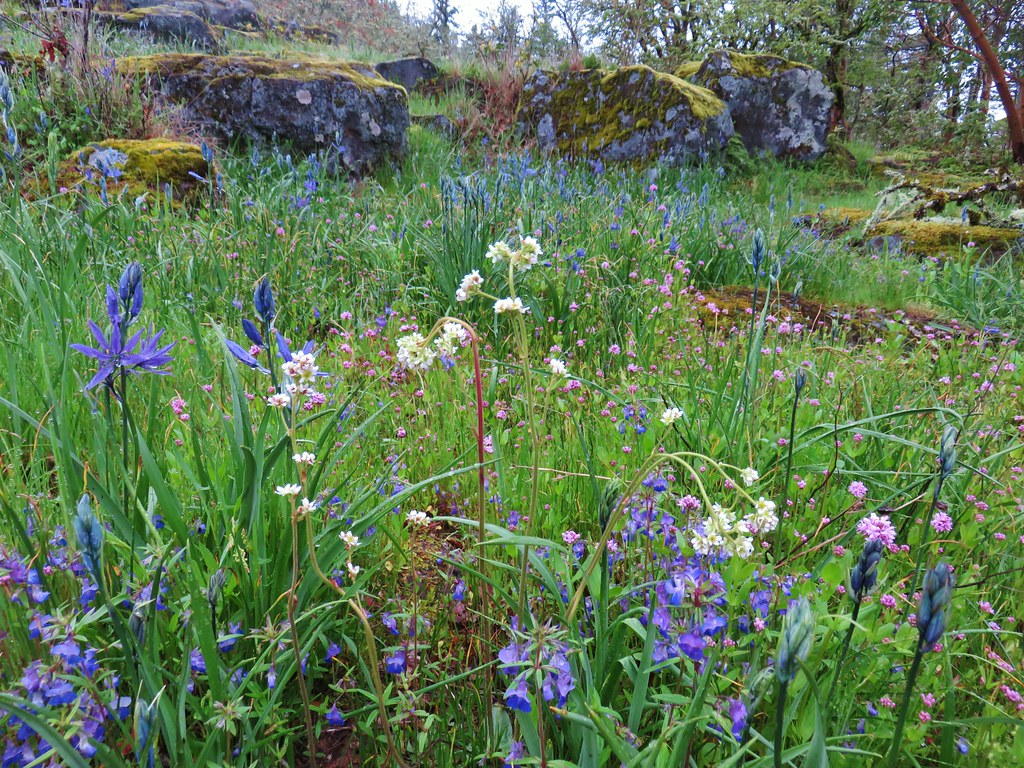
We were still a week or two early for the bulk of the flowers, especially the camas, but again this meadow had a nice showing of the plectritis and blue-eyed mary.

Camassia Natural Area

Camas and plectritis

One of the few open camas blossoms.

Plectritis

The trail passed through the meadow and into an open oak woodland where we detoured to the right to an overlook of a large pond.

Camassia Natural Area

Pond in Camassia Natural Area

At a “High School” pointer in another meadow we left the loop trail again.

Camassia Natural Area

This path led past some nice flower displays to a marshy wetland.

Wildflowers in Camassia Natural Area

Plectritis and giant blue-eyed mary

Bog in Camassia Natural Area

The Oregonhiker field guide mentions that this wetland is “one the best areas in the northwest to see Great Camas“. We were too early to see much in the way of camas but we did spot a lone stalk blooming near the far end of the wetland.

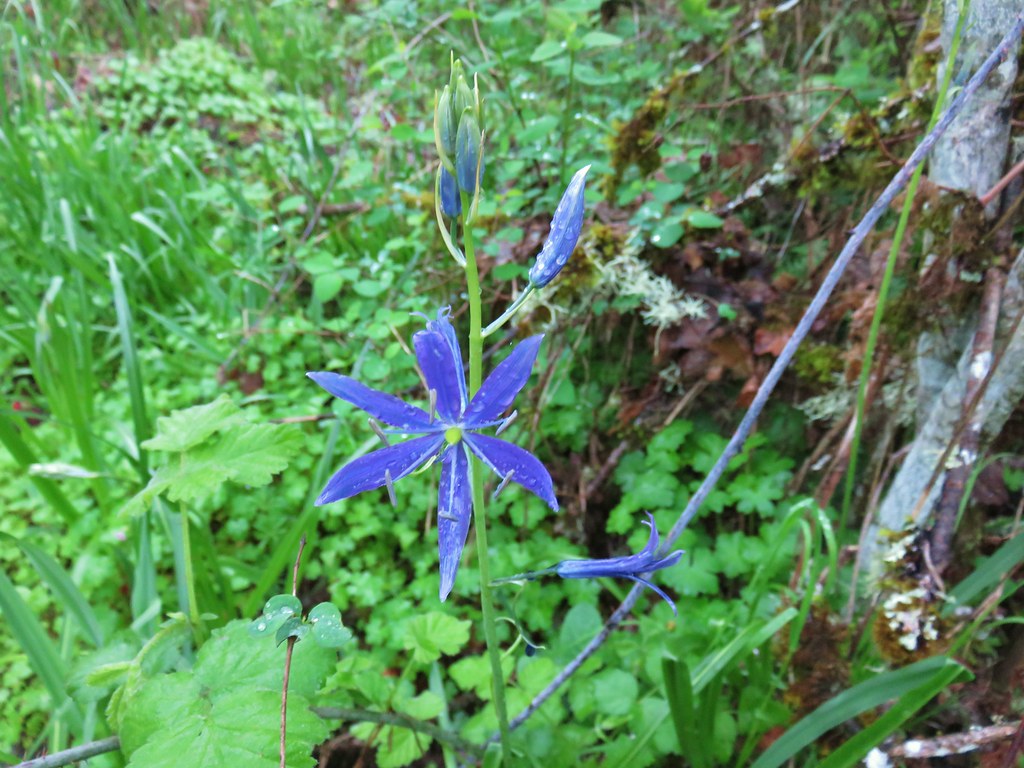
Giant camas

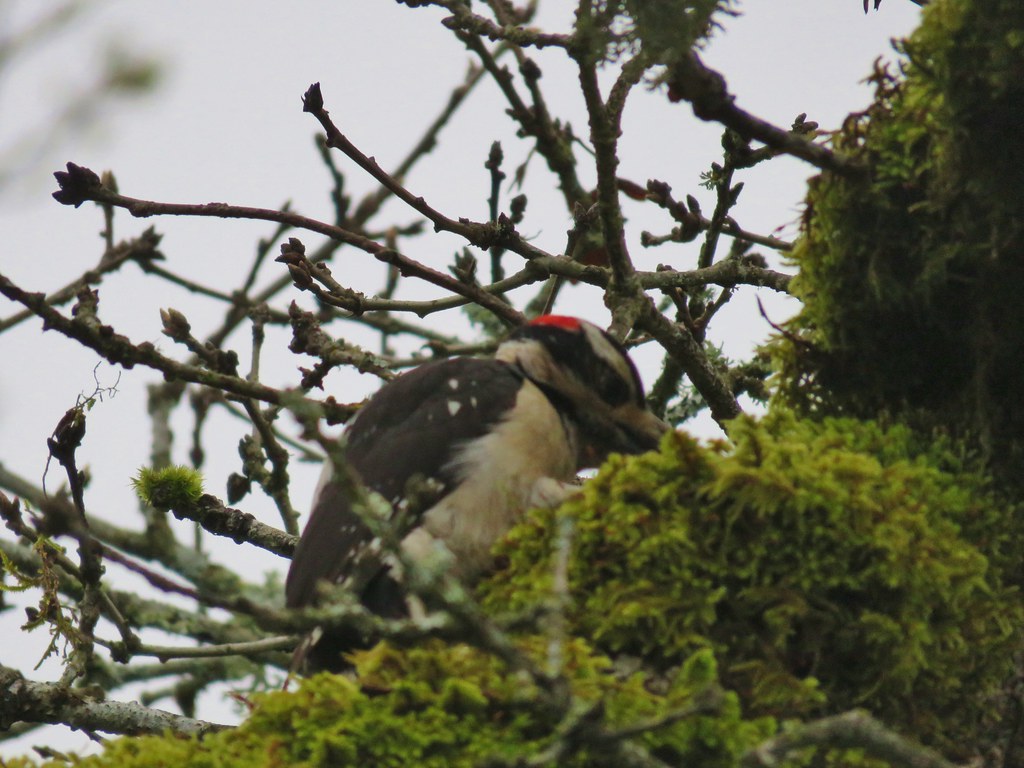
On our way back to the loop trail we spotted a hairy woodpecker working on finding its breakfast.

Hairy woodpecker

The loop trail descended a set up steps and soon entered a rockier meadow with more flowers including some Oregon saxifrage which was still unfolding.

Camassia Natural Area

Camassia Natural Area

Wildflowers in Camassia Natural Area

The trail then led to a viewpoint atop a cliff next to some madrones.

Madrones in Camassia Natural Area

Camassia Natural Area

More wildflowers followed before the trail reentered the woods.

Giant blue-eyed mary

Plectritis meadow

Camassia Natural Area

We passed a point for the Bridge Trail which headed downhill toward the high school parking lot and came to a viewpoint of Mt. Hood. Well what would have been a view of Mt. Hood on a clearer day anyway.

Camassia Natural Area

Looking toward Mt. Hood on a cloudy morning

One final patch of camas awaited before we completed our mile loop here.

Camas

For our next stop we headed north on Highway 43 (Willamete Dr.) to Mary S. Young Park. A joint effort between the city of West Linn and Oregon Parks and Recreation Department the park sits on the bank of the Willamette River and offers many activities. We began our hike from the trailhead at the parking lot at the end of the park entrance road.

Mary S. Young Park Trailhead

There were no brochures available with maps so we took a photo of a map off a signboard near the parking lot which turned out to be extremely helpful due to a serious lack of signage along the trails. We set off on the paved Riverside Loop Trail near the northern end of the parking lot. After a few feet we veered left on a wide unpaved path between picnic tables.
Mary S. Young Park

The woods here were filled with large trillium flowers of varying color.

Trillium

Trillium

Trillium

After crossing over the Trillium Trail we turned right at a T-shaped junction on the Turkey Creek Trail. This trail led downhill to Turkey Creek.

Turkey Creek Trail

Turkey Creek Trail

Turkey Creek Trail

After about a quarter mile the Turkey Creek Trail ended at the paved Riverside Loop Trail where we turned left. We stayed right at a fork and headed downhill to the Cedar Island Trail.

Mary S. Young Park

We veered left onto the muddy Cedar Island Trail even though we knew that the recent heavy rains had swollen the Willamette enough that access to Cedar Island itself would be cut off.

Willamette River

Riverside Loop Trail

Rabbit hopping into the brush on the left side of the Cedar Island Trail

Looking at Cedar Island

Cedar Island

After taking a look at Cedar Island we turned around staying right at junctions to pass around a sewer pump station on the Beaver Trail. At the far end of the station we turned left through a fence and dropped back down to the Riverside Loop Trail.
Fringecup and a couple of bleeding heart were blooming in this area.

Fringecup

Bleeding heart

We headed uphill on the Riverside Loop Trail retracing earlier steps to the junction with the Turkey Creek Trail. We passed that trail and continued uphill on the paved path for approximately 500′ where we veered left to a viewpoint bench overlooking the Willamette.

Mary S. Young Park

Willamette River

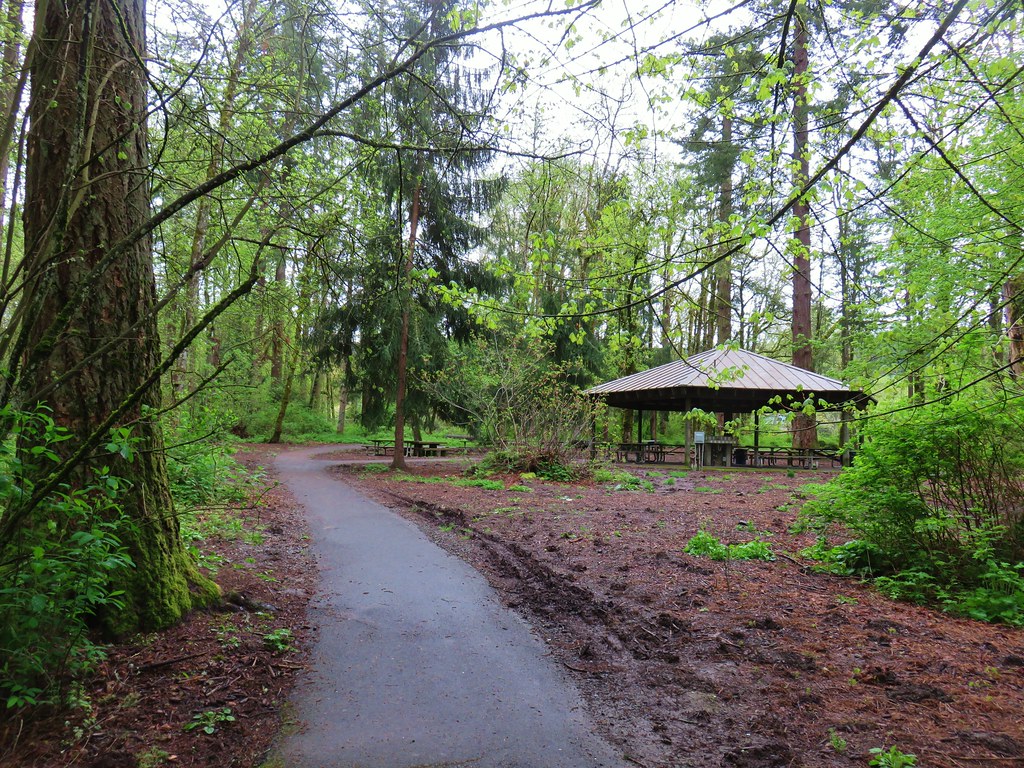
This 0.1mi path looped back to the Riverside Loop Trail which we followed uphill past a picnic shelter.

Mary S. Young Park

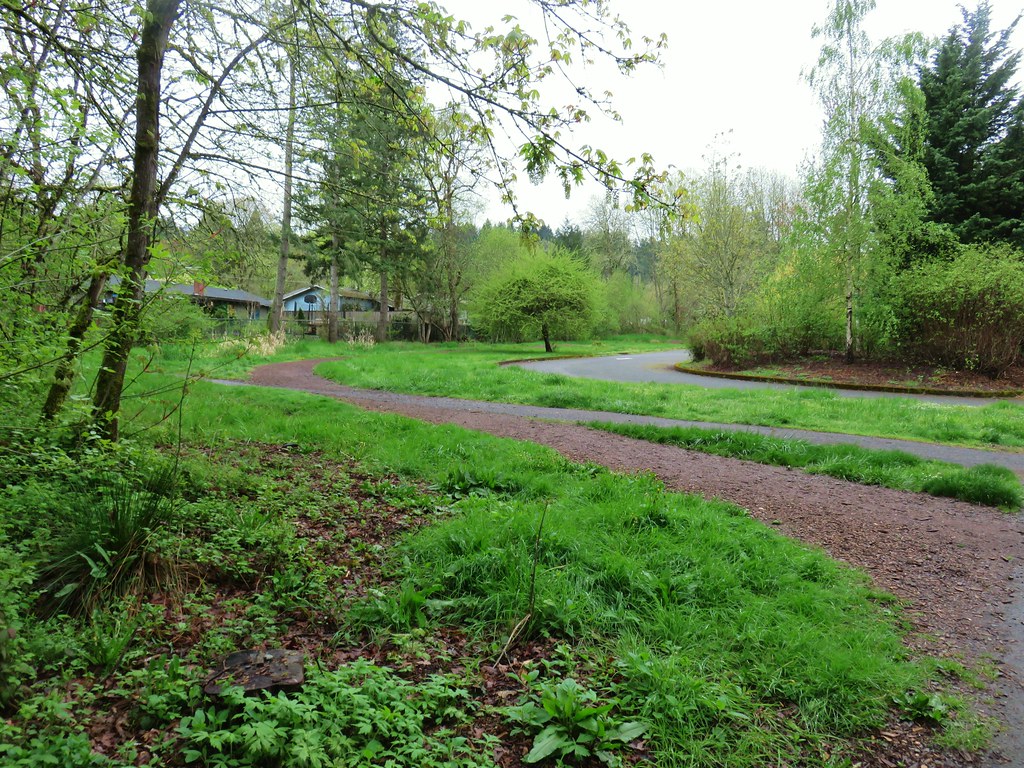
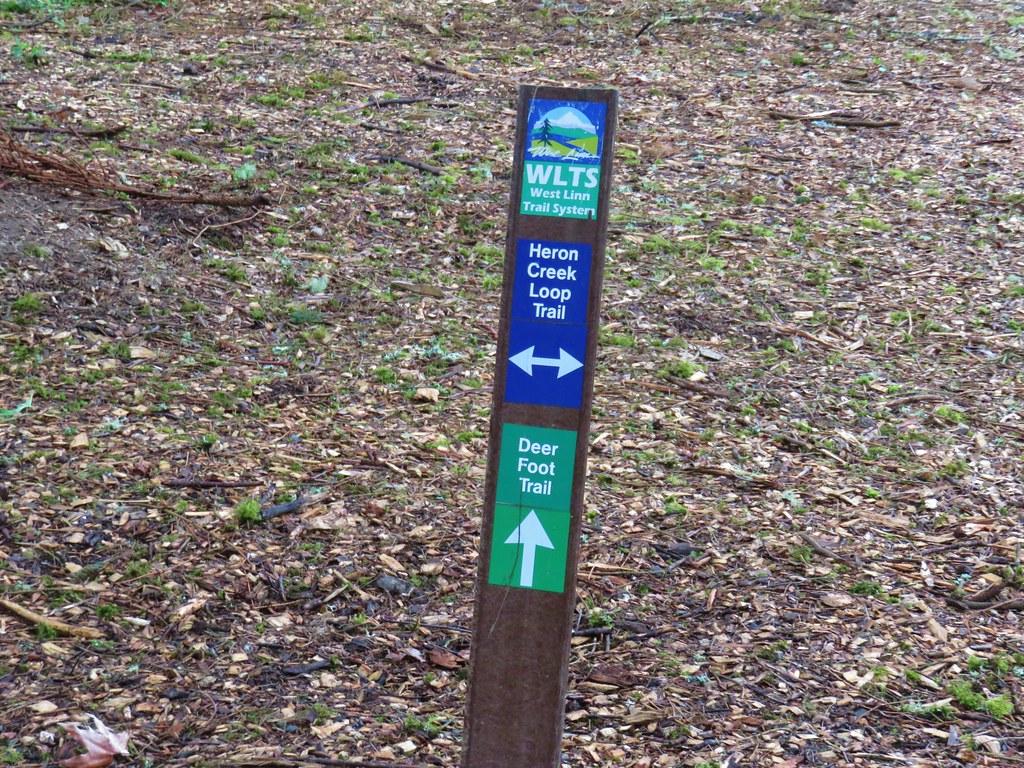
The path continued to the southern end of the parking lot where we had started. Here we veered left onto the unpaved Heron Creek Loop Trail.

Heron Creek Loop Trail

We followed this trail as it passed the parks ball fields and some busy squirrels.

Mary S. Young Park

Squirrel

At the far end of the fields we spotted only the second pointer we had seen along the trails where we stayed on the Heron Creek Loop Trail as it headed back into the woods.

Heron Creek Loop Trail

Heron Creek Loop Trail

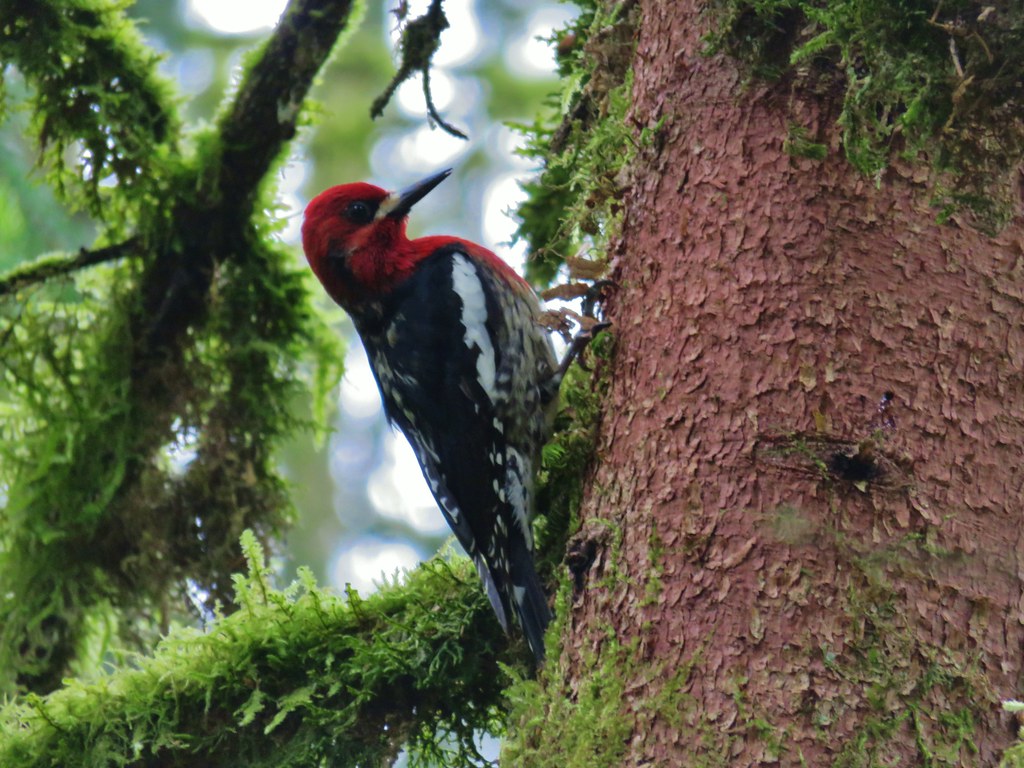
Back in the woods we spotted a pair of woodpeckers in the same area. One appeared to be a hairy woodpecker while the other was a red-breasted sapsucker.

Hairy Woodpecker

Red-breasted sapsucker

Using the picture of the map on Heather’s phone we stuck to the Heron Creek Loop by staying left at junctions and crossing over both the Trillium Trail and the park entrance road. We stayed right at the next junction opting not to take the short Eagle Scout Loop Trail then stayed straight at a junction with the the Railroad Trail. Beyond that junction the Heron Creek Loop Trail soon began a descent to Heron Creek.

Heron Creek Loop Trail

Heron Creek Loop Trail

Heron Creek

After a second descent and climb past a tributary of the creek the trail leveled out again before arriving at the Turkey Creek Trail where we turned left, crossed Turkey Creek and arrived back at the junction where we had turned onto the Turkey Creek Trial earlier in the morning. We then retraced our earlier steps back to the parking area ending a 3 mile hike through the park.

We then headed for our final stop of the day in Lake Oswego at the Tryon Creek State Natural Area. There are several possible trailheads for the park we chose to start at the large parking area near the Nature Center. (Note the Nature Center and Jackson Shelter are currently closed due to construction but the restrooms are open. No reopening date has been set as of the day of this post.)

Tryon Creek State Natural Area

We stopped by the closed Nature Center to pick up a paper map and also consulted the map on a signboard to plot out our hike. The number of trails and multiple junctions allowed for numerous possibilities. We settled on a loop utilizing the North Horse Loop, Lewis & Clark, Middle Creek, Cedar, Red Fox, and Old Main Trails.

Map for Tryon Creek State Natural Area

From the Nature Center we followed a brick path right (north) to another map.

Tryon Creek State Natural Area

We stayed straight for a tenth of a mile passing the Maple Ridge Trail on the left just before a junction with the North Horse Loop.

Tryon Creek State Natural Area

This wide path led through a green forest with violets and trillium.

Tryon Creek State Natural Area

Violets and trillium

After .2 miles we stayed left ignoring the right hand route leading to a bicycle path and then quickly veered right when the North Horse Loop split creating two loop options.

North Horse Loop

This right hand path swung north another .4 miles to a junction with the Lewis and Clark Trail.

North Horse Loop

Lews and Clark Trail

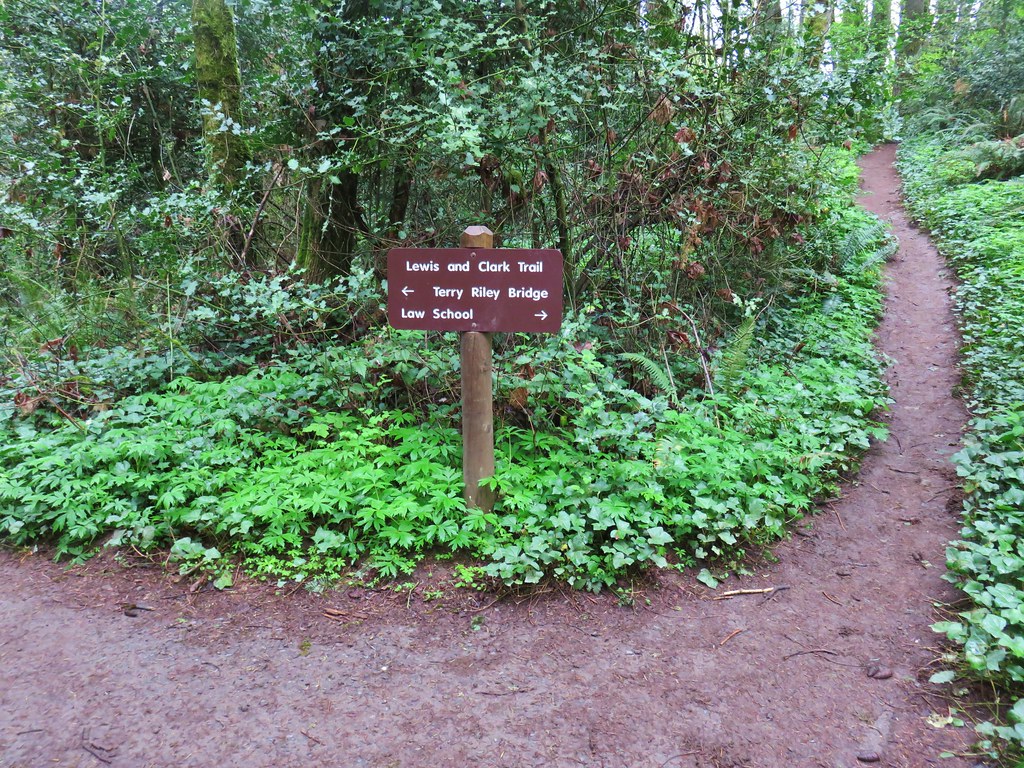
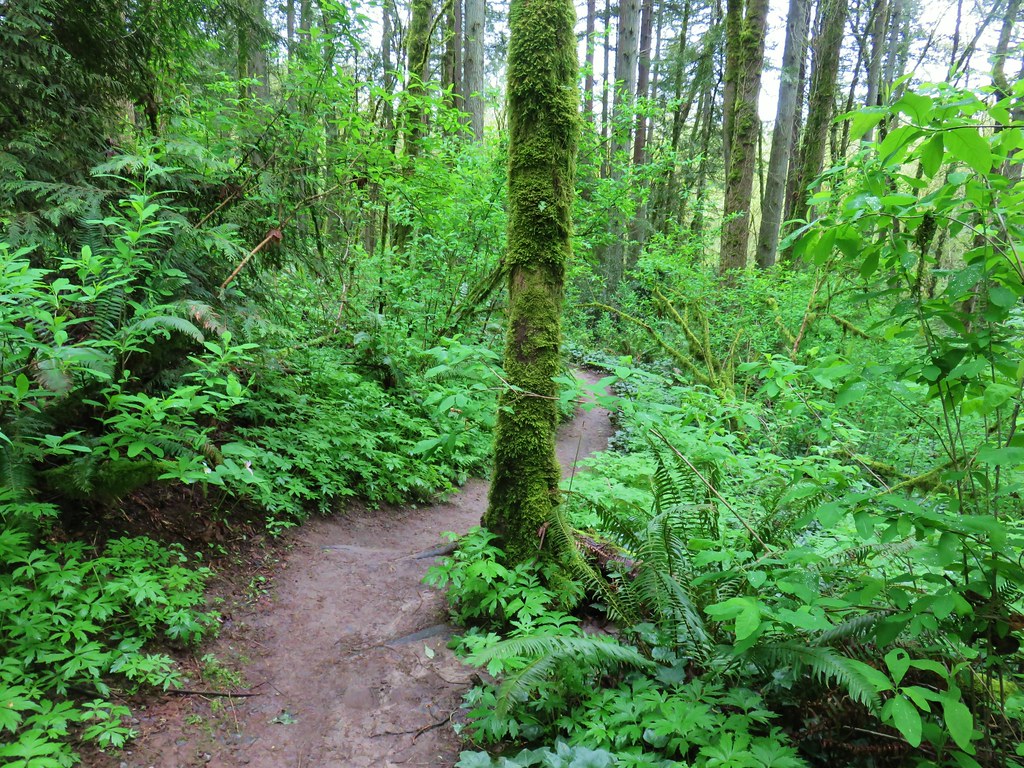
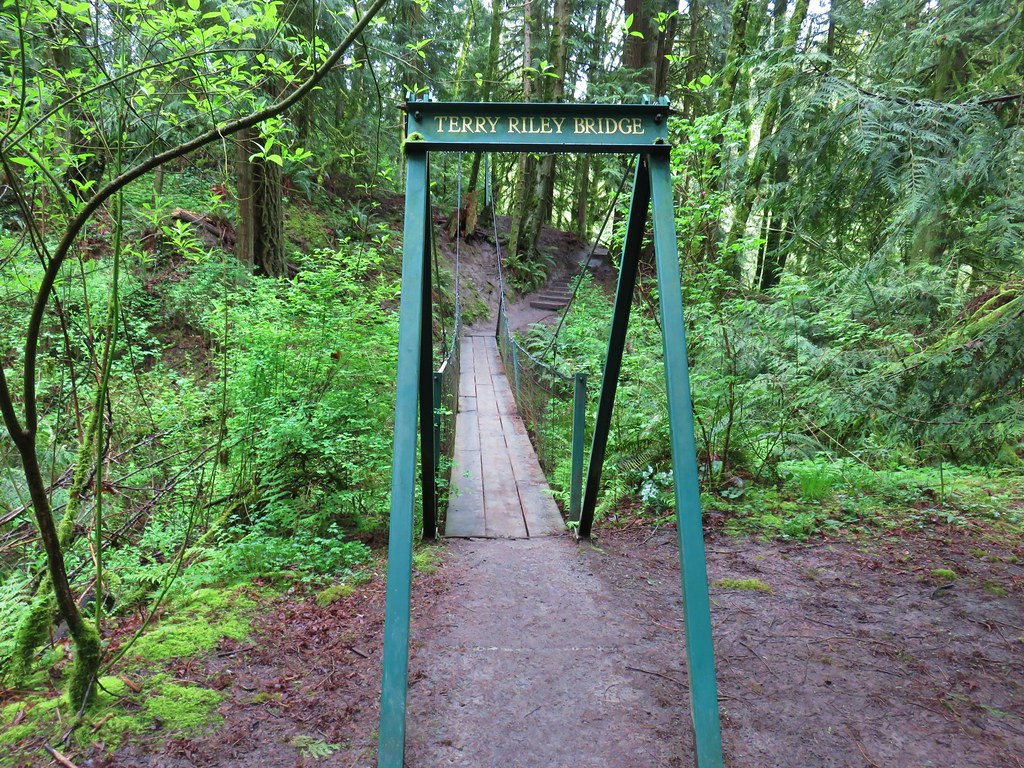
We followed pointers for the Lewis and Clark Trail and Terry Riley Bridge. The trail descended along a hillside above East Fork Tryon Creek to the small suspension bridge which passed over a side stream.

Lewis and Clark Trail

Lewis and Clark Trail

Terry Riley Bridge

Terry Riley Bridge

On our way down we passed a stump hosting a pair of snails. We actually spotted quite a few in the park.

Snails on a stump

Snail

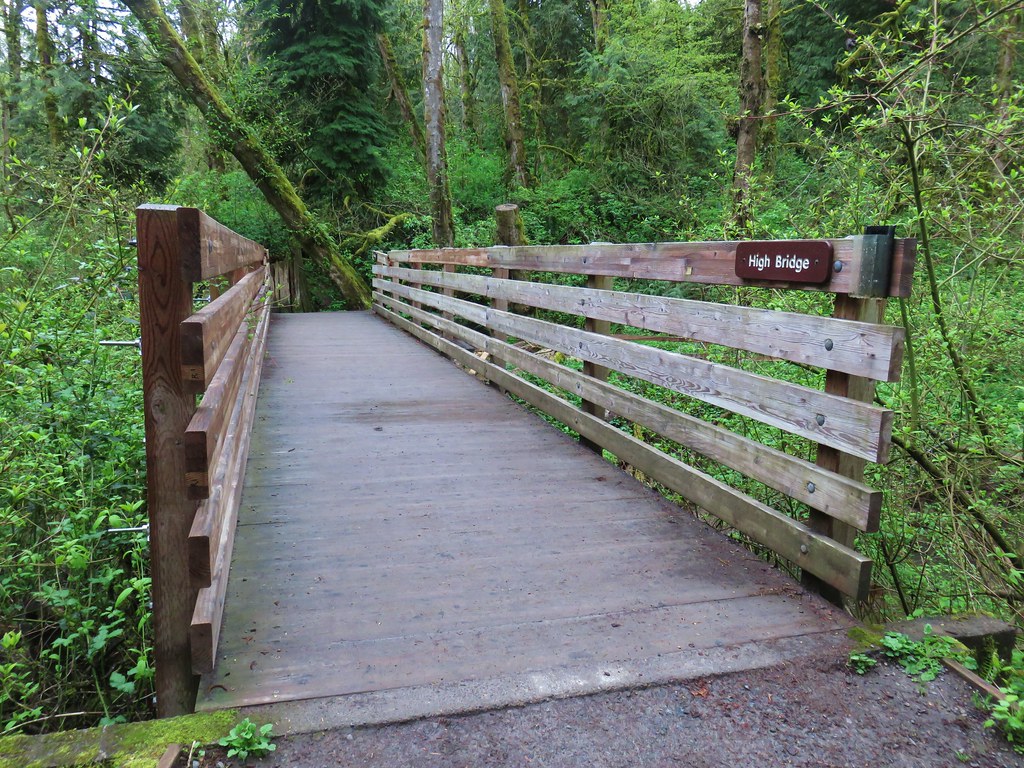
Beyond the suspension bridge .2 miles we rejoined the equestrian trail and crossed over Tryon Creek on High Bridge.

High Bridge

Tryon Creek

The trail split on the far side of High Bridge where we opted to go left on the hiker only Middle Creek Trail.

Tryon Creek State Natural Area

We followed this path for .2 miles across a boardwalk and along Tryon Creek to another trail junction.

Middle Creek Trail

Middle Creek Trail

At this junction we left the Middle Creek Trail crossing over the West Horse Loop and headed up the Cedar Trail.

Cedar Trail

We followed the Cedar Trail through the woods, crossing the West Horse Loop again at the .2 mile mark, then crossing Park Creek on Bunk Bridge, passing a small pond and finally crossing Paget Creek on another bridge before arriving at the Red Fox Trail a mile from the start of the Cedar Trail.

Cedar Trail

Park Creek from Bunk Bridge

Bunk Bridge

looking back at Bunk Bridge

Pond in Tryon Creek State Natural Area

Cedar Trail

Bridge over Paget Creek

Tryon Creek State Natural Area

Red Fox Trail junction.

We turned left onto the Red Fox Trail and in just over a tenth of a mile crossed Tryon Creek on Red Fox Bridge.

Red Fox Bridge

Red Fox Brdige

Tryon Creek

The trail made a brief but steep climb up to a three way junction with the Big Fir and Old Main Trail. We opted for the slightly shorter (but less crowded) Old Main Trail and turned right for .3 miles back to the Nature Center. Our route came in at 3.5 miles.

Although there were a lot of people in the park it never really felt all that crowded which was nice. There are still some trails left too so a return trip may be in order sometime in the future when the Nature Center is back open.

In all we covered 7.5 miles between the three stops and saw quite a few different flowers and a decent amount of wildlife. It had been another nice set of urban hikes. As much as we are looking forward to getting back up into the mountains once the snow melts we’re finding that these types of hikes have a lot to offer. Happy Trails!

Flickr: Camassia Natural Area, Mary S. Young Park, and Tryon Creek

Categories
Columbia River Gorge South Hiking Oregon Trip report

Dry Creek and Pacific Crest Falls

Despite what the weather thinks we are approaching our hiking season which means we will be hitting the trails much more often over the next 6 months. As we work our way into hiking shape we jumped on a chance at a rain free morning and headed to the Columbia River Gorge to check out a pair of waterfalls. Several trails in the gorge remain closed due to fire damage from the 2017 Eagle Creek Fire and others that had been reopened are again closed due to rock fall and slides caused by our recent weather combined with the fire damage. Please remember to check on the current status and conditions of trails before heading out.

Our sights were set on a section of the Pacific Crest Trail from Cascade Locks to Pacific Crest Falls. We had visited Pacific Crest Falls coming from the other side in October of 2015 (post) but at that time of year there wasn’t much water flowing so we thought a return visit was in order, especially after our recent rains.

We began our hike at the Bridge of the Gods Trailhead in Cascade Locks.
Bridge of the Gods Trailhead

From the trailhead we took the Pacific Crest Trail south.
Pacific Crest Trail sign in Cascade Locks

Pacific Crest Trail at Cascade Locks

The PCT briefly follows Harvey Road as it passes under I84 to a second possible trailhead.
Short road stretch on the PCT

Pacific Crest/Gorge Trail

From the Harvey Road Trailhead the PCT climbed gradually through the fire scarred forest. It was encouraging to see that many if not most of the trees along this section had survived. There was also quite a few early Spring flowers blooming.
Pacific Crest Trail in the Eagle Creek Fire scar

Eagle Creek Fire scar along the Pacific Crest Trail

Violets and snow queenSnow queen and violets

TrilliumTrillium

Just under a mile from Harvey Road the PCT once again briefly shared a gravel roadbed as it passed under a set of power lines.
Another short stretch of road along the Pacific Crest Trail

The trail leveled out shortly after passing the power lines and traversed along a sometimes steep hillside for three quarters of a mile to a signed junction near Dry Creek.
Pacific Crest Trail

Forest along the Pacific Crest Trail

Pacific Crest Trail

Dry Creek Falls Trail

Here we detoured away from the PCT and followed the pointer for Dry Creek Falls. This trail followed an old roadbed along Dry Creek just over a quarter of mile to Dry Creek Falls.
Approaching Dry Creek Falls

Dry Creek with Dry Creek Falls in the distance

Dry Creek Falls

Dry Creek Falls

Dry Creek Falls

After a nice little break at the base of the falls we headed back to the PCT where we turned right and crossed Dry Creek on a footbridge.
Footbridge over Dry Creek

Dry Creek

We had been discussing the fact that hikers were starting to post picture of fairy slippers (Calypso bulbosa) one of our favorites. We weren’t sure if any would be blooming yet in this area but we managed to spot a few as we continued south on the PCT.
Fairy slipper

Approximately 1.25 miles from Dry Creek the PCT crossed a talus slope.
Pacific Crest Trail

At the beginning of this section we spotted group of yellow flowers which turned out to be glacier lilies.
Glacier lilies

Glacier lilies

Glacier lilies

This section also provided the best, albeit limited, view across the Columbia River during this hike.
Columbia River

A half mile beyond the talus we passed the Herman Creek Pinnacles. We detoured briefly to get a closer look at the basalt formation and the cute little monkeyflowers blooming amid the rocks.
Herman Creek Pinnacles

Herman Creek Pinnacles

Chickeweed monkeyflower

Chickweed monkeyflower

After exploring the pinnacles we continued on and in less than a quarter mile arrived at Pacific Crest Falls.
Approaching Pacific Crest Falls

Pacific Crest Falls

The amount of water flowing over the falls was noticeably more this time around.
Pacific Crest FallsOctober 2015

Pacific Crest FallsApril 2019

We turned around here and headed back along the PCT to the junction near Dry Creek. Instead of returning to Cascade Locks via the PCT we turned downhill on the old road and followed the creek downhill.
Old roadbed back to Cascade Locks

Dry Creek

Dry Creek

After approximately 1.25 miles we passed some sort of a structure followed by a gate.
Dry Creek Road

Beyond the gate Dry Creek Road was open and well graveled.
Dry Creek Road

After passing a few logging roads and swinging quite a ways east we passed under I84 by turning left on SW Ruckle St which we followed to its end at SW Adams Ave. We turned left on Adams which brought us to a school.
Cascade Locks

We passed behind the school (and library) and made our way to Highway 30 where we turned left again towards the Bridge of the Gods.
Heading through Cascade Locks

Cascade Locks

Bridge of the Gods

We arrived back at our car as the rain was arriving. The hike was approximately 9.5 miles (I had some battery issues with the GPS) with a little under 1000′ of elevation gain. Hiking through Cascade Locks at the end was definitely not the most exciting end to a hike and unless you’re like us and specifically seek out alternate return routes I’d recommend just returning as you came. That being said the upper portion of the road walk along Dry Creek was nice.

I want to take a moment to thank the volunteers that have worked so hard to restore the trails affected by the fire. In particular the PCTA and Trail Keepers of Oregon (TKO) have been hard at work and doing an excellent job. Happy Trails!

Flickr: Dry Creek and Pacific Crest Falls

Categories
Hiking Oregon Portland Salem/Albany Trip report Willamette Valley

Tualatin HIlls Nature Park, Tualatin River NWR, and Willamette Mission State Park

For our March outing we decided to stick relatively close to home and visit three nearby hikeable areas. Our first stop, and furthest from Salem at just under an hour away, was at the Tualatin Hills Nature Park in Beaverton.

We started from the large parking lot at the Tualatin Hills Nature Center on SW Millikan Way.
Tualatin Hills Nature Center

The Nature Center is currently open from 8:30am-5pm M-F and 9am-5pm Sat. & Sun. while the park itself is open everyday from dawn to dusk. We arrived at dawn and set off on the paved Vine Maple Trail between the Nature Center and restrooms.
Vine Maple Trail

We quickly turned right onto the signed Oak Trail which was also paved.
Oak Trail

In a third of a mile we detoured briefly at a sign for the Tadpole Ponds.
Tadpole Pond

Although we didn’t see any tadpoles, or other wildlife here, the sounds of birds had not stopped all morning so we knew there were plenty of animals around. We returned to the Oak Trail which passed by Cattail Marsh on the second of three boardwalks.
Oak Trail

Cattail Marsh

Beyond the marsh we soon came to the third boardwalk which crossed over Cedar Mill Creek.
Boardwalk and viewing platforms along the Oak Trail

Cedar Mill Creek

One of the many birds that we’d been listening to was kind enough to pose for a moment as we stood on the boardwalk.
Sparrow

On the far side of the boardwalk was a trail junction where the Oak Trail veered right to the Merlo Rd/158th Ave Max light rail station. To the left was the Old Wagon Trail, a dirt path closed to bikes.
Old Wagon Trail

We followed this trail through a forest that was starting to show signs of Spring for a third of a mile to a junction with the Mink Path.
Old Wagon Trail

Blossoms along the Old Wagon Trail

Old Wagon Trail

Old Wagon Trail junction with the Mink PathTrail pointer at the Mink Path junction. We appreciated the fact that all of the junctions were signed and those signs were easy to read but placed in such a way that they were unobtrusive.
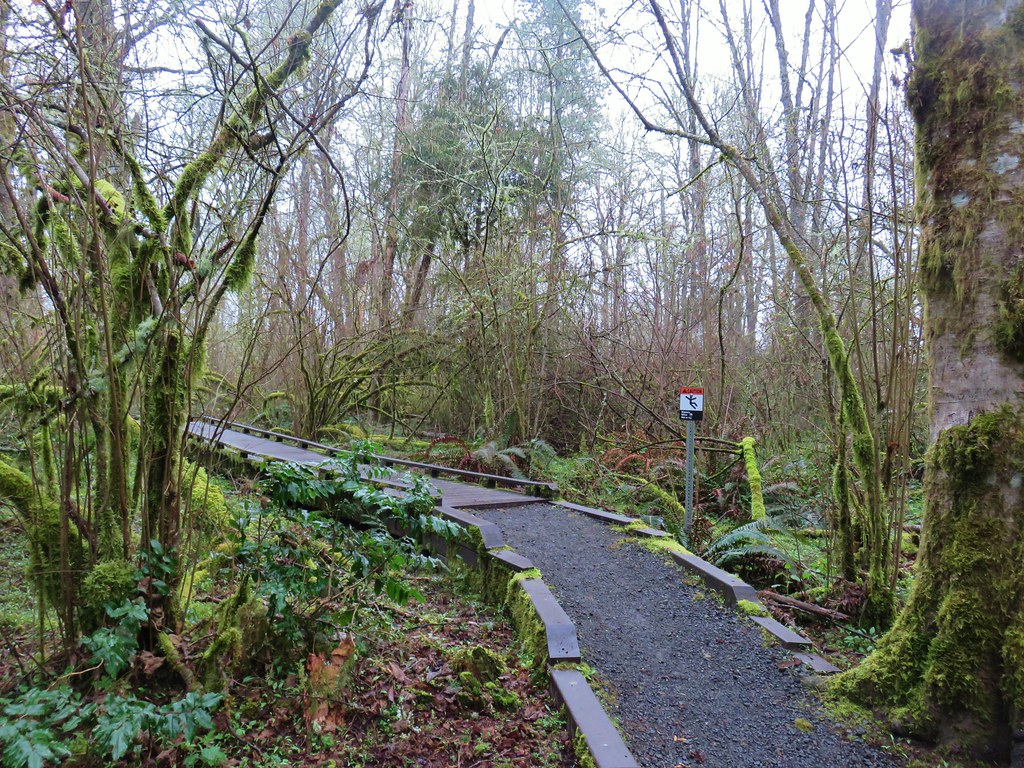
The Mink Path is a .1 mile connector between the Old Wagon Trail and Vine Maple Trail allowing for a shorter loop back to the Nature Center. We opted to stay on the Old Wagon Trail though and continued to the start of another boardwalk where we stopped so I could try and take a photo of a robin that was hopping around on the trail. As I was working on getting a picture Heather spotted a deer just a bit off the trail.
Deer along the Old Wagon Trail (there really is one out ther)Can you see the deer?

I thought she was seeing things but then I noticed it move.
Doe along the Old Wagon Trail (again it is there)How about now?

She turned and watched us as I attempted to get the camera to focus on her and not the branches in the foreground.
Doe in the Tualatin Hills Nature Park

Not far from the deer we spotted a squirrel trying to become one with a limb.
Squirrel

At a “Y” in the boardwalk we veered left keeping on the Old Wagon Trail until we reached a junction with the Vine Maple Trail a total of .4 miles beyond the Mink Path junction. We turned left onto the Vine Maple Trail and then took a right at a pointer for the Lily Pond.

A short path led down to the pond but before we had reached it a pair of wood ducks took flight and landed in a nearby tree.
Wood Ducks

As we were admiring the wood ducks a pileated woodpecker was busy with its breakfast.
Pileated woodpecker

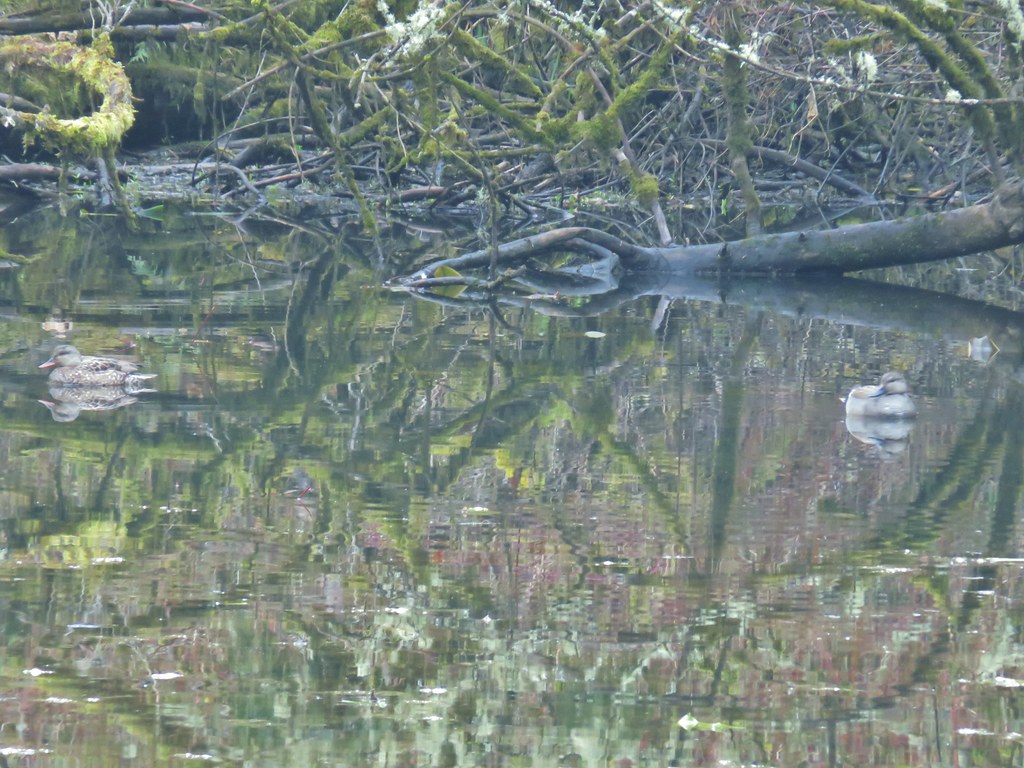
We eventually made it down to the pond where a few ducks remained in the water including what appeared to be a pair of gadwalls.
Interpretive sign at the Lily Pond

Lily Pond

Gadwalls

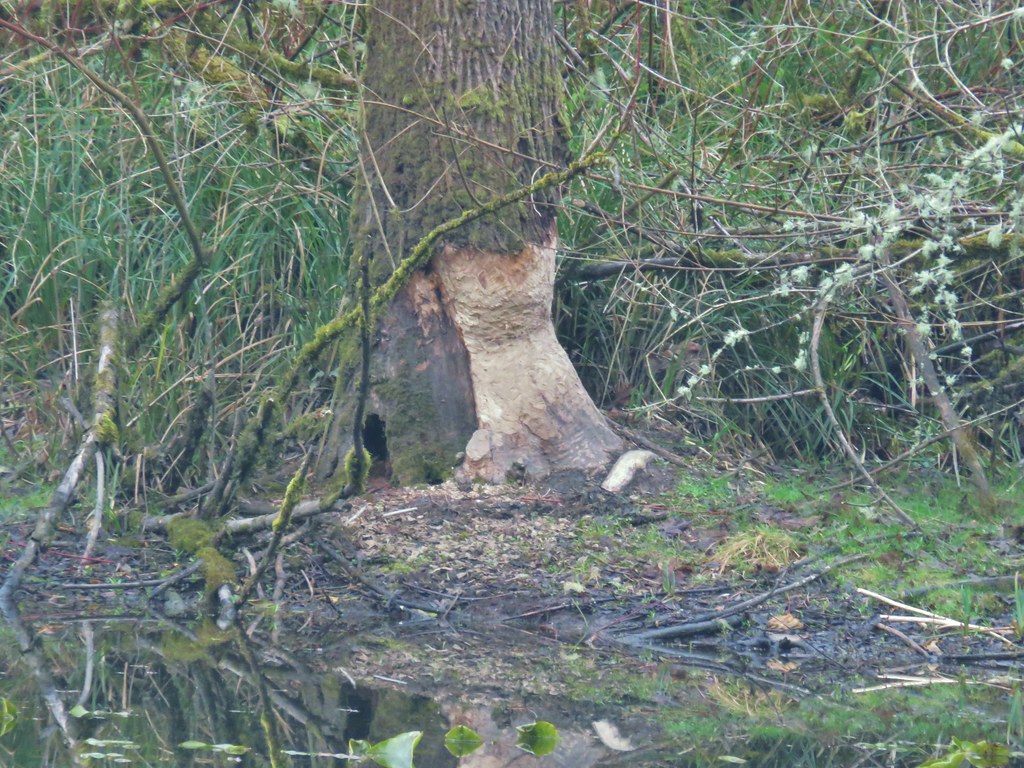
There were also signs of beaver activity but we’ve yet to actually see one in the wild.
Beaver work

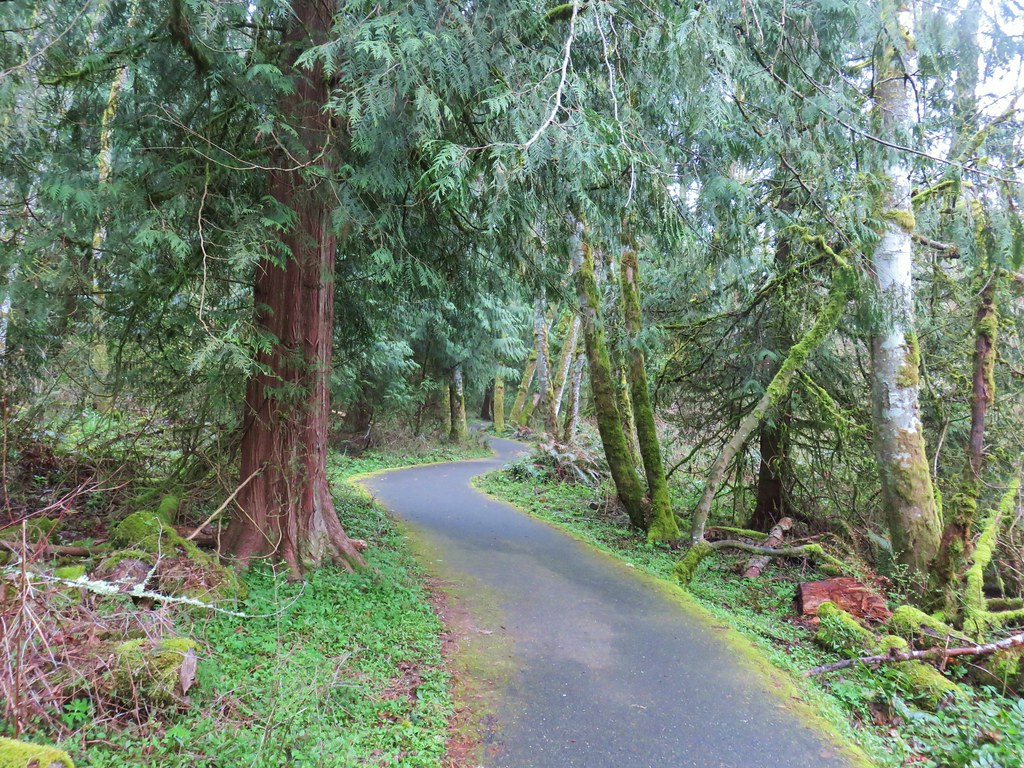
After visiting the pond we returned to the Vine Maple Trail which was now paved and followed it past its junction with the Mink Path and across Cedar Mill Creek.
Vine Maple Trail

Vine Maple Trail crossing Cedar Mill Creek

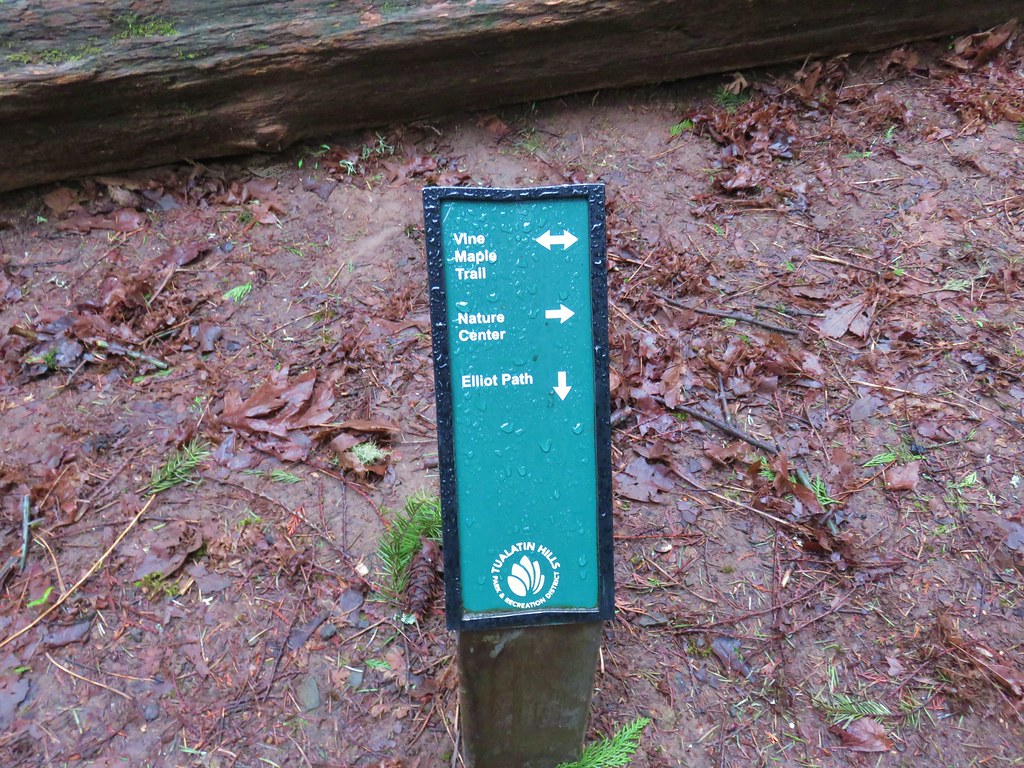
Shortly after crossing the creek we faced another choice. The Nature Center lay a third of a mile away via the Vine Maple Trail but more loop options were available by taking the Elliot Path.
Trail sign in the Tualatin Hills Nature Park

We took the .1 mile Elliot Path to a “T” shaped junction with the Big Fir Trail. Here again was a choice. Left headed back toward the Nature Center while right would take us to the Chickadee and Ash Loops and a short spur to Big Pond. We headed right and then turned left onto the spur to Big Pond.
Big Pond

Big Pond

There were plenty of ducks here as well. It appeared that most were mallards and green-winged teals.
Mallard and Green-winged teals

We returned to the Big Fir Trail and continued on crossing Beaverton Creek before arriving at a four way junction.
Beaverton CreekBeaverton Creek

More choices! The Big Fir Trail kept straight while the Chickadee Loop was to the right and the Ash Loop to the left. We began by heading right on the quarter mile Chickadee Loop which had a nice long section of boardwalk.
Chickadee Loop

After the quarter mile we were back at the Big Fir Trail where we turned right briefly before making a left onto the Ash Loop. The Ash Loop passed some wetlands where a pair of Canada Geese were enjoying the morning.
Wetlands along the Ash Loop

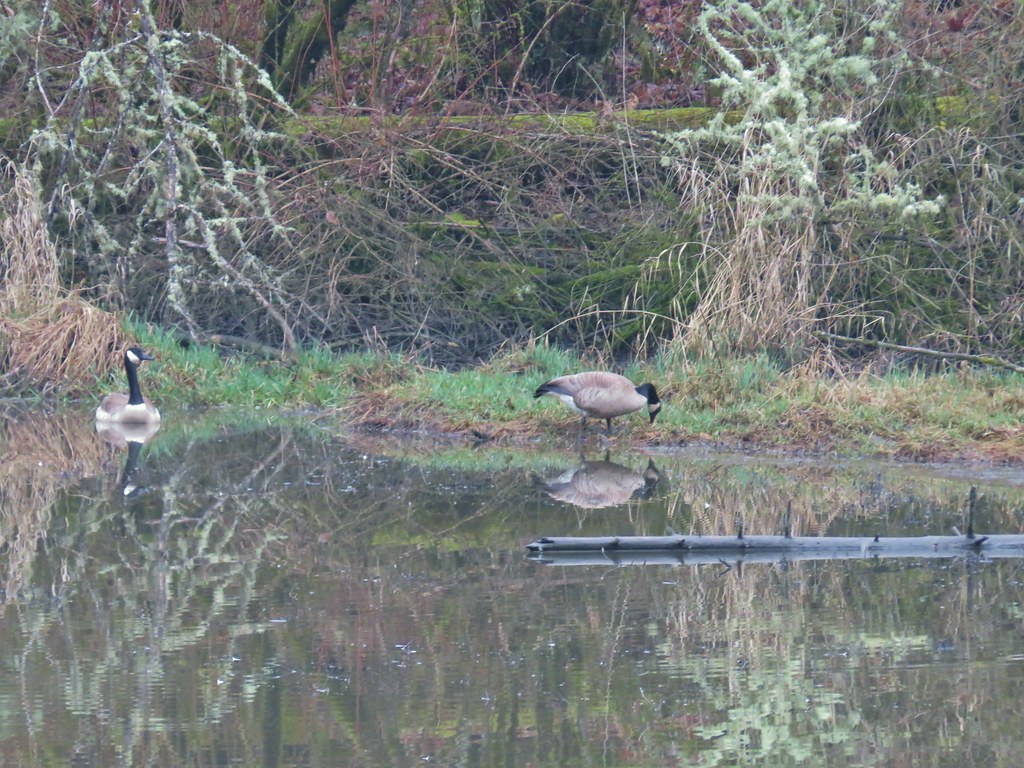
Canada geese

After .3 miles on the Ash Loop we found ourselves back at the four way junction where we turned right and recrossed Beaverton Creek and returned to the junction with the Elliot Path. Staying straight on the Big Fir Trail for just .05 miles we then turned right onto the .2 mile Trillium Loop. Oddly we didn’t see many of signs of trilliums along this short loop but we had seen several beginning to bloom along other trails. After completing the Trillium Loop we turned right again onto the Big Fir Trail for another .1 miles to the start of the half mile Ponderosa Loop.
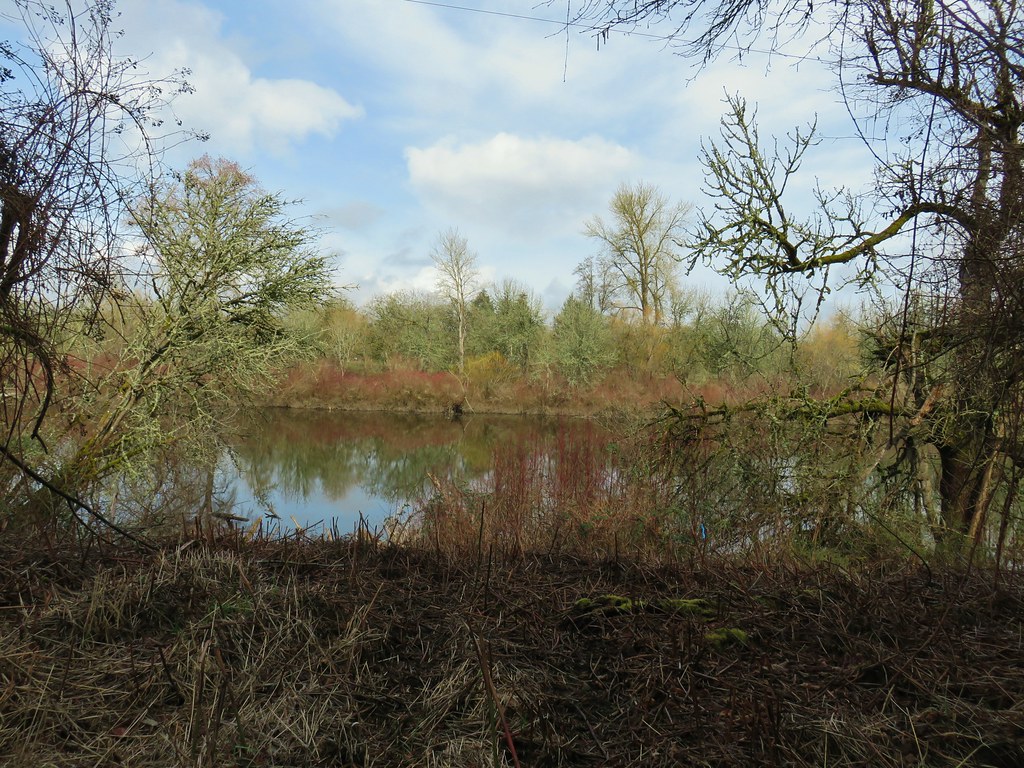
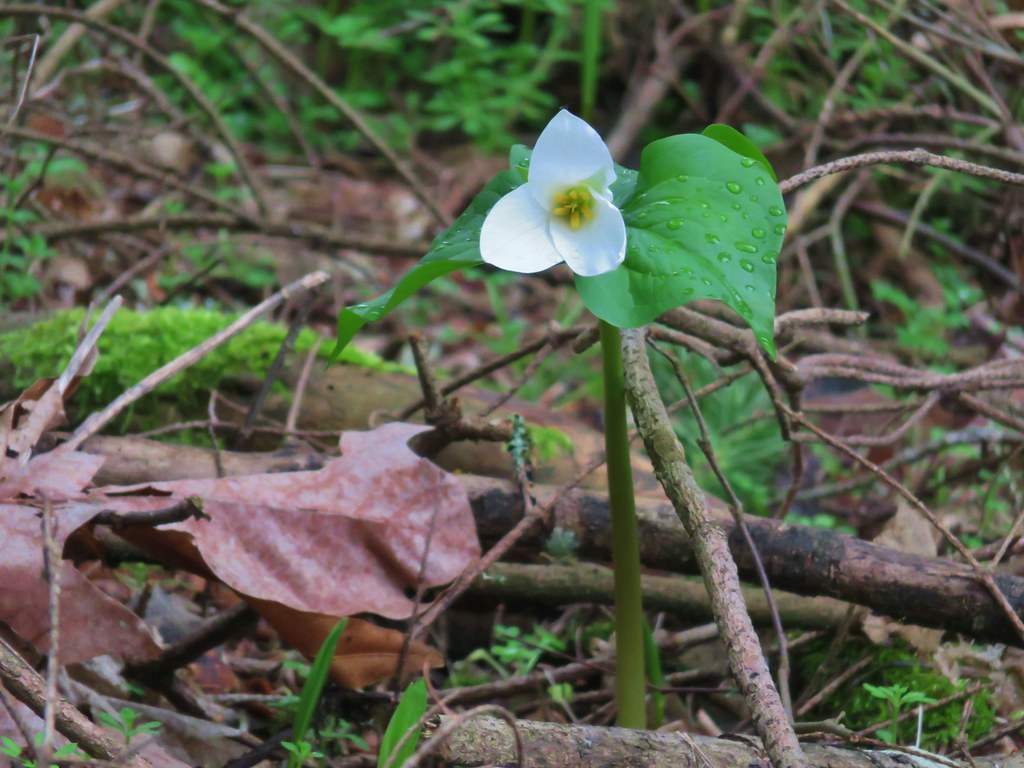
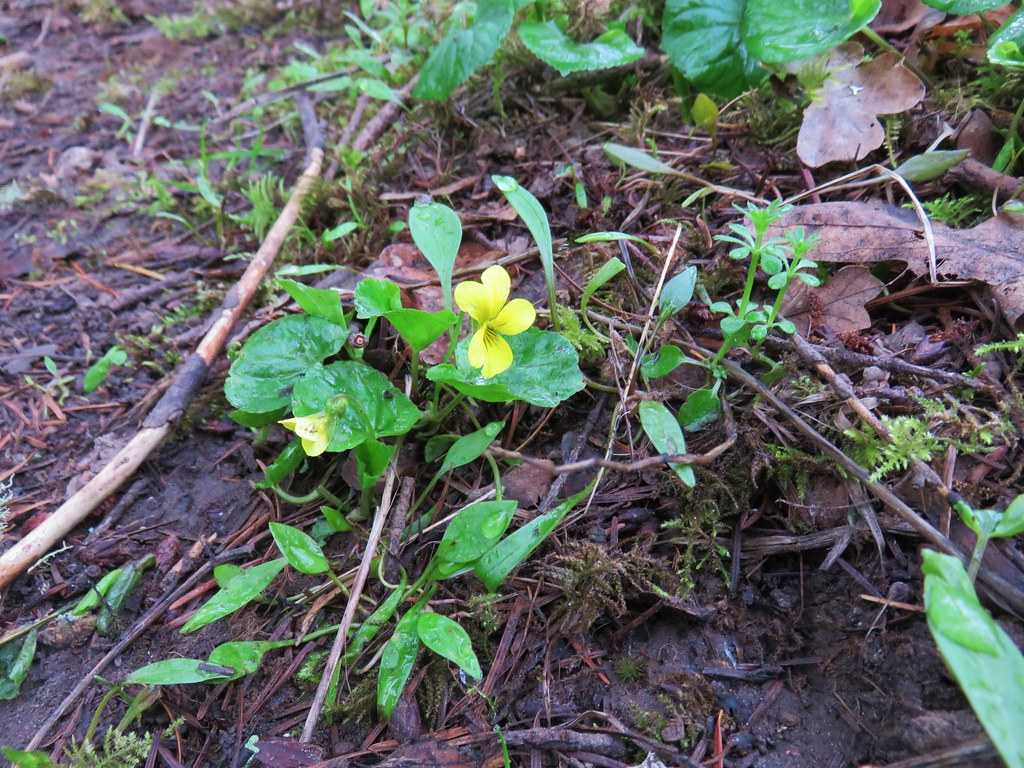
We took the Ponderosa Loop where we spotted more trillium and our first wood violets of the year.
Trillium

Wood violet

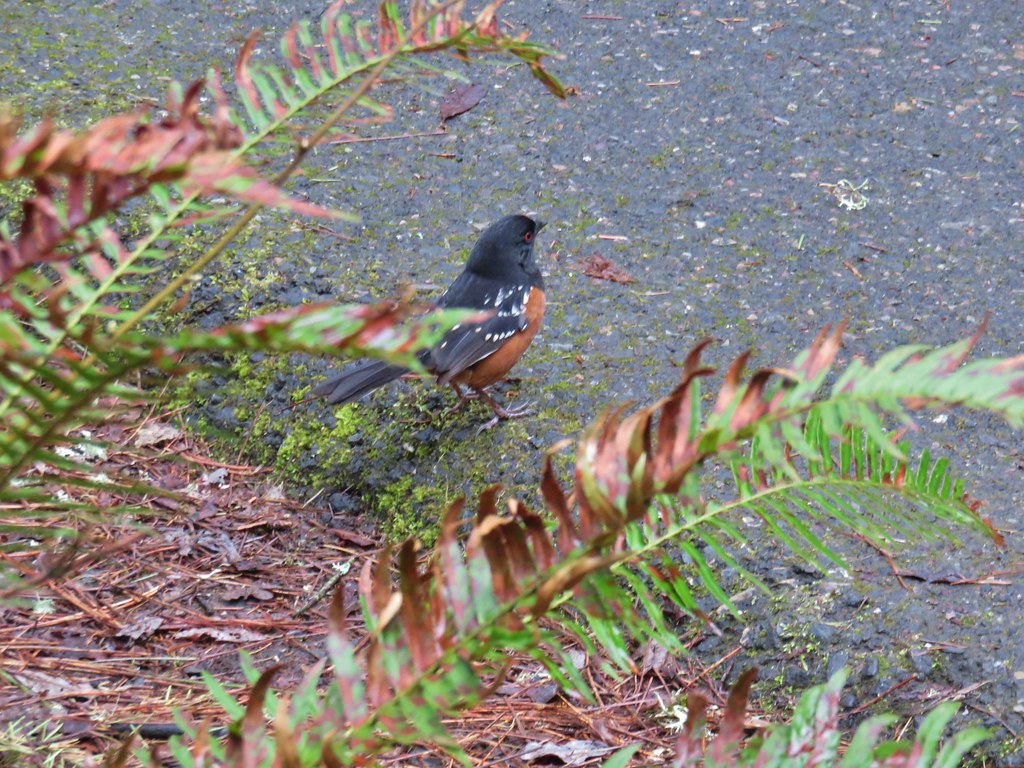
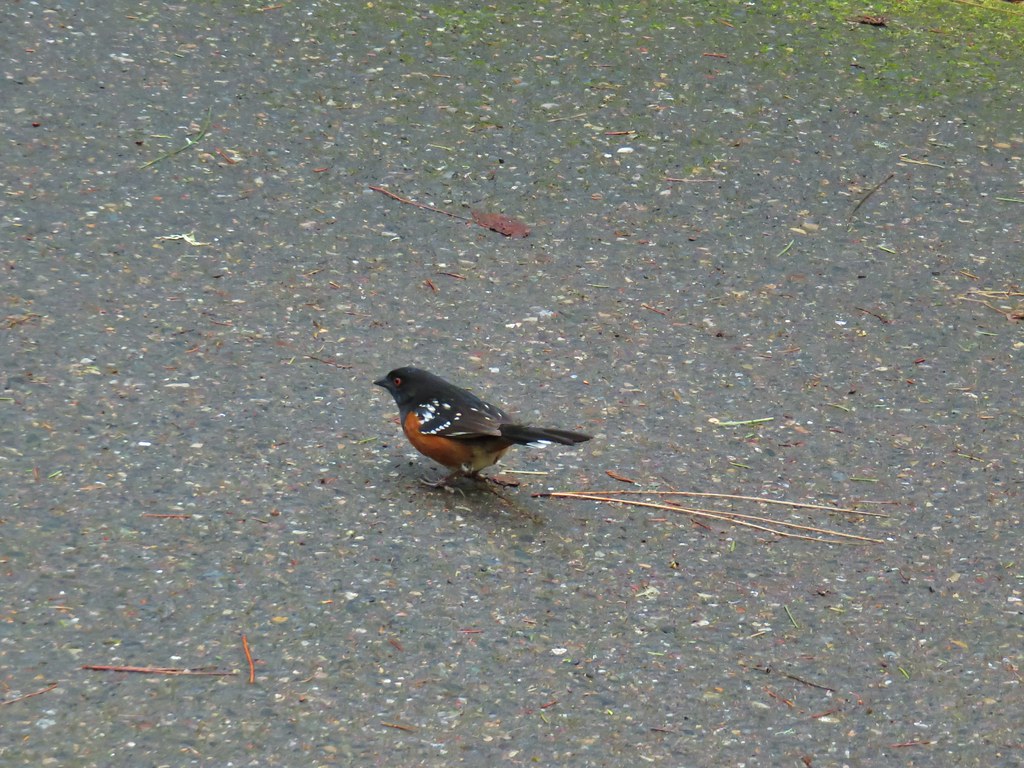
At the end of the Ponderosa Loop we were once again turning right onto the Big Fir Trail. This time it was for less than a tenth of mile and then we were back at the Vine Maple Trail. Several spotted towhees and a couple of chickadees were foraging near this junction. The chickadees wouldn’t sit still but the towhees were a little more cooperative.
Spotted towhee

Spotted towhee

A right turn onto the Vine Maple Trail followed by another .2 miles of hiking brought us back to the parking lot at the Nature Center. The total distance for our hike with all the extra loops was still just 4.2 miles. When we had arrived we were only the second car but the lot was now full as it was just a bit after 9am. We had passed the first volunteer led tour as we were finishing up the along the Ponderosa Trail and another group was preparing to set off shortly.

One of the reasons we had chosen to start our day with this hike was that we knew the park would get busy as the morning progressed which isn’t a bad thing but we always prefer to avoid the crowds when possible. It really was a first rate park though so the popularity is warranted.

We left the nature park and headed for our next stop, the Tualatin River National Wildlife Refuge. I’d found this hike in the Oregon Hikers Field Guide and decided to give it a try.

We parked at the Visitor Center along Highway 99W. The majority of hikeable paths in the refuge are closed from October 1st trough April 30th but the one mile River Trail and the very short Ridge Trail are open year round so we made those the target of this visit.
Tualatin River National Wildlife Refuge Trailhead

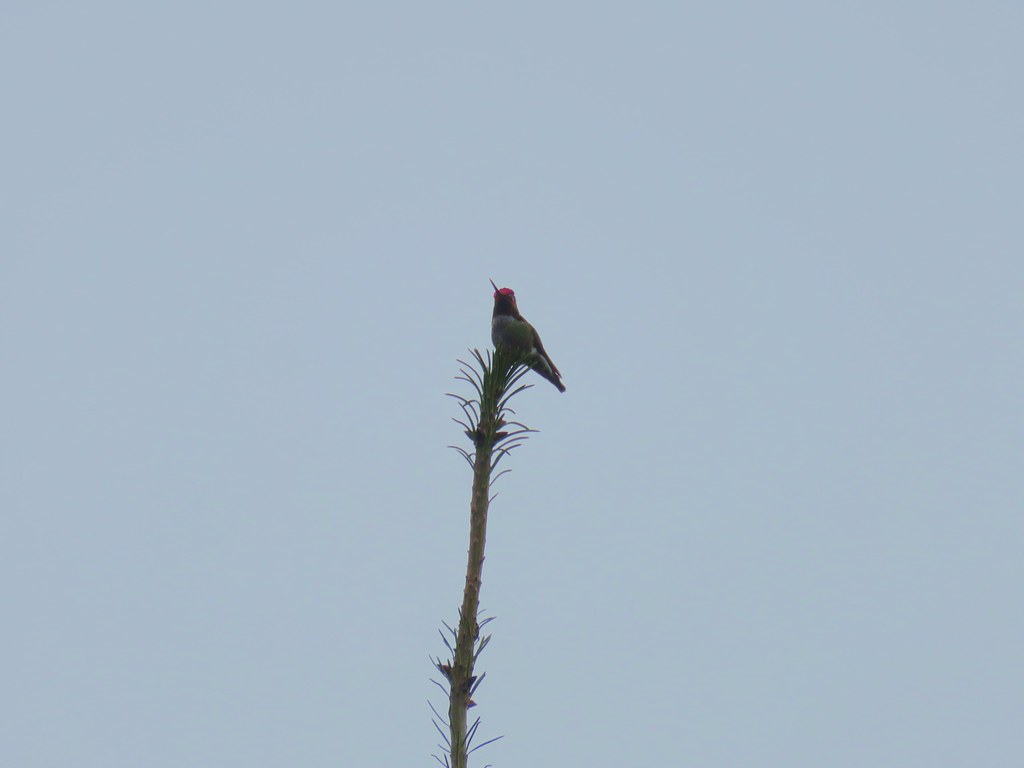
We set off on the River Trail and immediately spotted a hummingbird perched atop a tree.
River Trail

Hummingbird

The trail led downhill between a pair of small ponds.
Tualatin River Natioal Wildlife Refuge

The trail passes through a restored oak savannah before arriving at an observation deck above the Tualatin River a half mile from the parking lot.
River Trail

Viewing Deck along the River Trail

Tualatin River

Beyond the deck the trail continues briefly though the restored savannah before entering a forest.
River Trail

The trail splits in the trees with the Ridge Trail leading left to a viewpoint and the River Trail continuing right to the Wetlands Observation Deck.
River Trail junction with the Ridgetop Trail

We stayed right visiting the observation deck first.
Wetlands observation deck

View from the Wetlands Observation Deck

There were a few geese and ducks visible in the distance and a few robins closer by.
Canada geese in the wetlands

Robin

We returned to the junction with the Ridge Trail and turned right onto it to climb to the viewpoint. The Visitor Center was visible across the refuge and a number of ducks and other birds could be seen in the water below. At least some of the ducks looked to be northern shovelers.
RIdgetop Trail

View from the Ridgetop Overlook

Northern Shovelers

We returned to the parking lot after an easy 2.1 mile hike. We plan on returning in the future when the other trails are open to explore more of the refuge and check out the Visitor Center.

We left the refuge and headed south toward our last stop of the day at Willamette Mission State Park.

The site of the former Willamette Mission the 1600 acre park offers a number of activities besides hiking. The mission was established in 1834 by Rev. Jason Lee and marked the first organized religious enterprise in Oregon.

We had originally intended on a 2.7 mile hike here as described by William L. Sullivan in his “100 Hikes in Northwest Oregon & Southwest Washington” 3rd edition guidebook. Heather had put the book in her pack for the Tualatin Hills Nature Park hike as it was also featured in the guidebook. We hadn’t taken it back out of her pack so we weren’t exactly sure where we were supposed to park for the described hike so after paying the $5 day use fee at the entrance booth we immediately turned right into a parking area with a hiker symbol.

The lot serves as a trailhead for the Willamette Vision Education Trail, which was not where our book called for us to start but we were already parked so we decided to improvise.
Willamette Mission State Park Trailhead

We followed a bark path .1 miles to the start of a loop where we turned right.
Willamette Vision Educational Trail

Interpretive sign along the Willamette Vision Educational Trail

The trail followed a road bed for half a mile around a field before arriving at Mission Lake. Along the way we spotted a coyote that quickly disappeared back into the vegetation.
Mission Lake

A little over a mile from the trailhead we arrived at the nations largest black cottonwood.
Willamette Mission Cottonwood

Interpretive sign for the Willamette Mission Cottonwood

While we were admiring the tree an osprey landed in it and while we were watching the osprey we noticed a squirrel in the upper branches as well.
Osprey in the Willamette Mission Cottonwood

Squirrel in the Willamette Mission Cottonwood

Osprey and a squirrel sharing the Willamette Mission CottonwoodThe osprey and the squirrel (upper right hand corner).
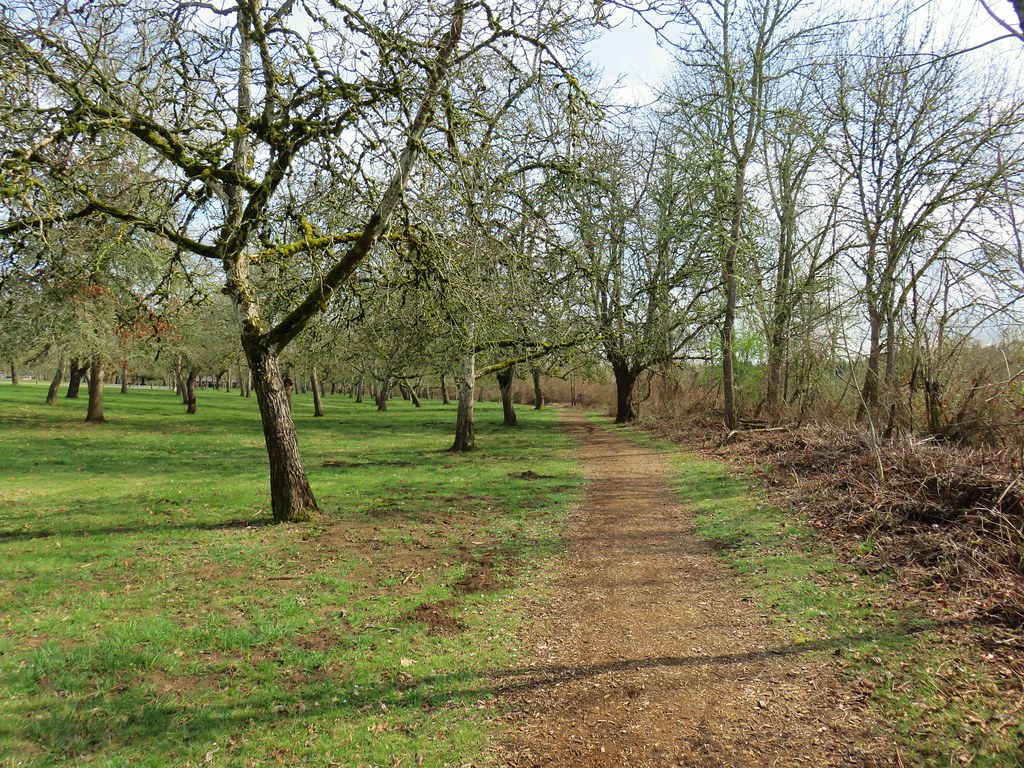
A short distance from the cottonwood the loop crossed the park entrance road. In order to do the hike that we had originally intended to do we turned right and walked along the shoulder of the road for a quarter of a mile to a boat launch and pet exercise area where we picked up the Mission Trail.
Mission Trail

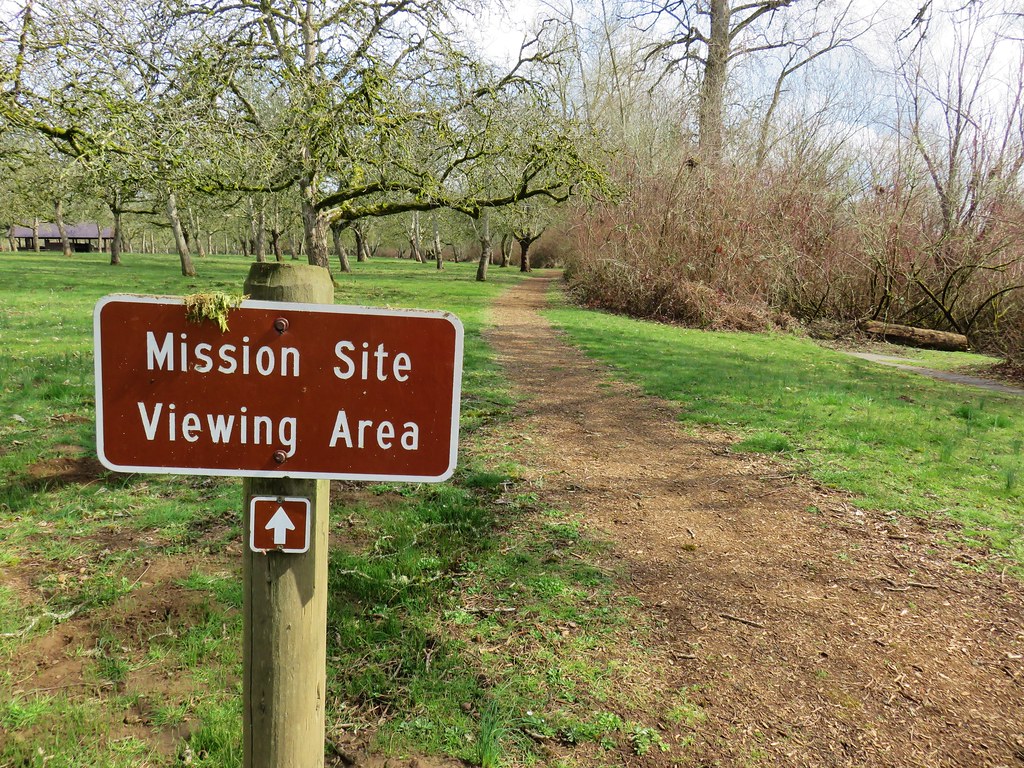
The Mission Trail followed the bank of Mission Lake for .6 miles to the Mission View Site, an observation deck looking across the lake to the site of the former mission.
Mission Trail

Mission Site viewing platform

Marker for the Willamette Mission

The former Mission Site across Mission Lake

We continued on past the Mission Site for another quarter mile before arriving at a the end of the Mission Trail at a paved bike path. We turned right detouring a quarter mile off the loop to visit the Wheatland Ferry crossing on the Willamette River.
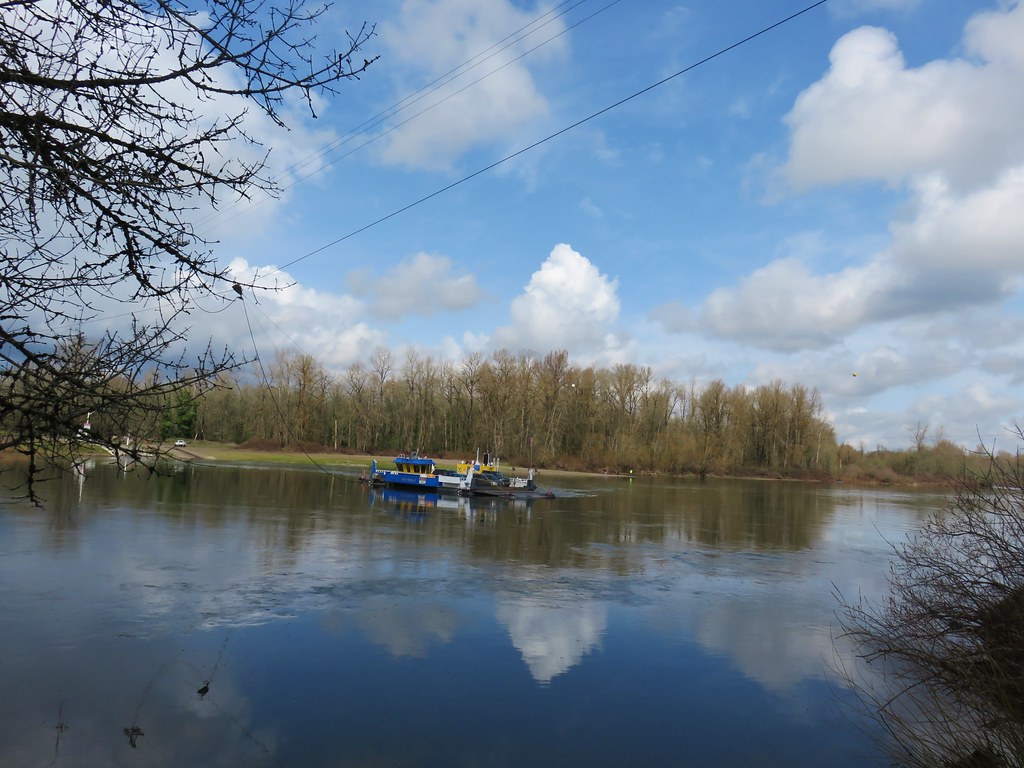
Wheatland Ferry

After watching the ferry cross once we headed back along the bike path and followed it along the Willamette River for almost a mile and a half before veering right onto an equestrian trail. Although the bike path paralleled the river there were no real views to speak of due to a strip of trees and vegetation between the path and the water.
Bike path in Willamette Mission State Park

Bike path in Willamette Mission State Park

We opted to follow the multi-use dirt path instead of the paved bike path since pavement seems to be a lot harder on the feet. Despite being a bit muddy in spots the equestrian trail did finally provide a nice view up and down the Willamette.
Equestrian trail in Willamette Mission State Park

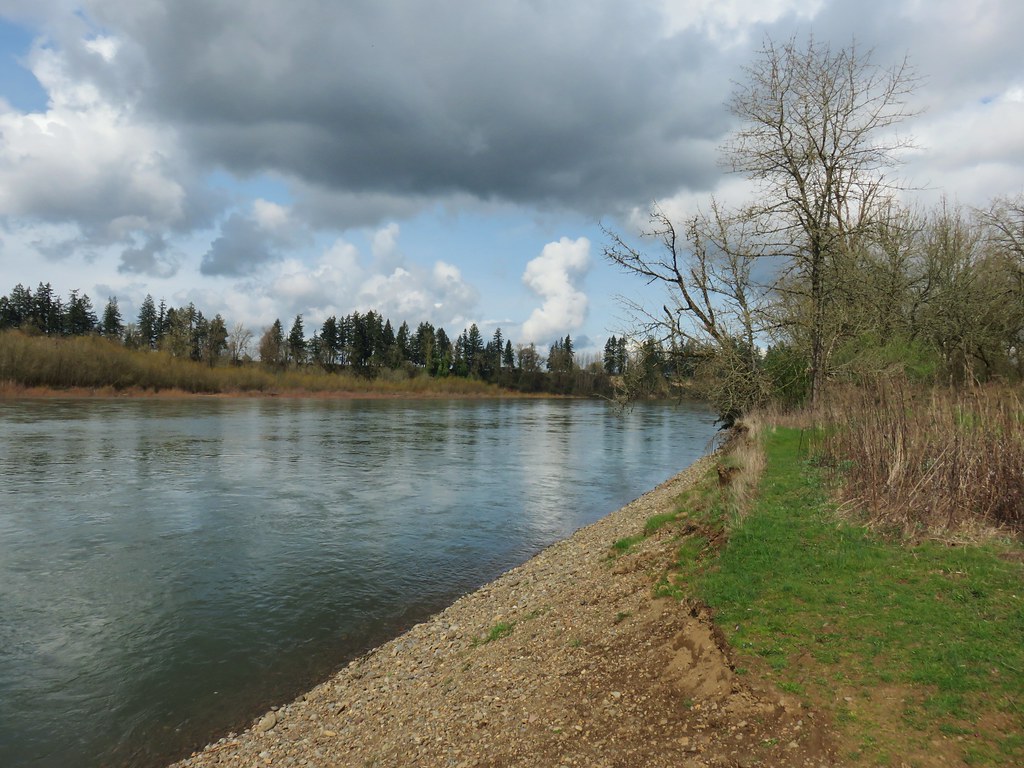
Willamette River

Willamette River

Just prior to reaching the high water channel the equestrian trail came near to the bike path. Staying on the equestrian trail would have taken us to the start of a three mile loop with no opportunity to get back to our car so we hopped back onto the bike path here.
Equestrian trail and the bike path in Willamette Mission State Park

We then followed the bike path back to the park entrance road.
Willamette Mission State Park

On our way back to the car we did complete the Willamette Vision Education Trail loop but that final 1.4 mile segment was fairly uneventful. The trail loops around a field with views back toward the center of the park. By that time we were passing the 13 mile mark for the day (we had planned on doing 9.2) and I was more focused on my feet than taking pictures. Not only had we started at the wrong spot but the guidebook would have had us cut out some of the bike path and all of the equestrian trail. Instead of 2.7 miles for this stop we had flipped the numbers and done 7.2.

We enjoyed all three stops but the Tualatin Hills Nature Park was definitely our favorite. With that being said they all would be suitable for hikers of all ages and abilities and each offers something unique. We’re lucky to have so many options within an hour of Salem and there are many more that we have yet to visit. Happy Trails!

Flickr: Tualatin Hills NP, Tualatin River NWR, Willamette Mission SP

Categories
Hiking Oakridge Area Oregon Trip report

South Willamette Trail

A dry forecast and a day off for Presidents Day seemed like a perfect excuse to get our February hike in.  For this outing we’d picked the South Willamette Trail. This was yet another trail we had yet to hike and this seemed like a good time of the year to do so because the trail lacks any highlights or views that would be impacted by inclement weather.

The South Willamette Trail is basically a five mile long connector trail between the Hardesty Trailhead and the Eula Ridge Trailhead. We began our hike at the Hardesty Trailhead which had also been the starting point for our Goodman Creek hike (post).

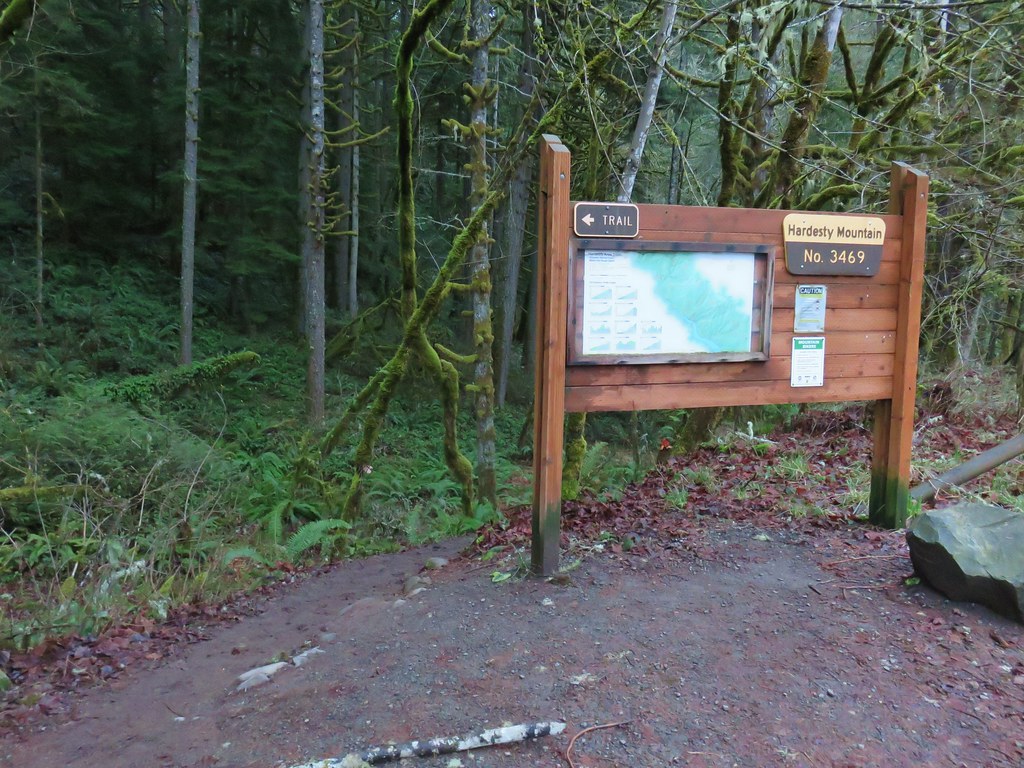
A single trail leaves the trailhead to the left of a large signboard.
Hardesty Trailhead

The trail is actually the Hardesty Trail which gains over 3000′ in five miles to the old lookout site atop Hardesty Mountain. Unless you’re looking for a training hike the old lookout site is now view less. For a slightly shorter and more scenic hike to that location start at the Mount June Trailhead instead as we did in 2013 (post).

Back to our current hike now. We followed the Hardesty Trail for .2 miles to the Goodman Creek Trail junction.
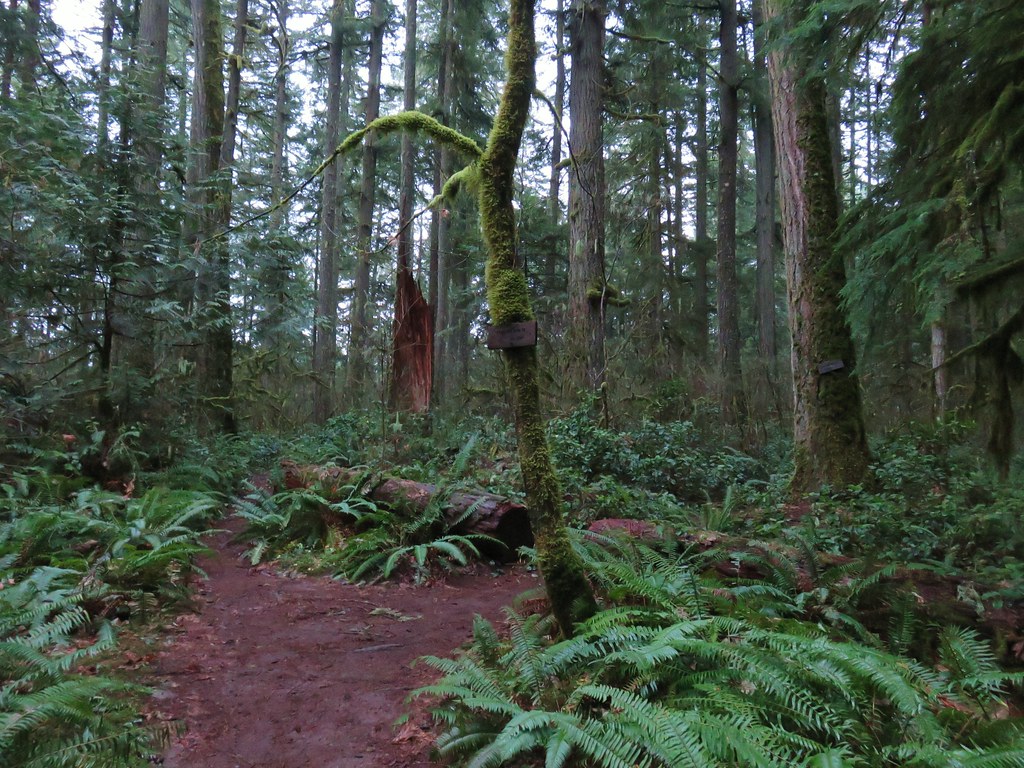
Hardesty Trail

Junction with the Goodman Creek Trail

We stayed left continuing on the Hardesty Trail for another four tenths of a mile to the start of the South Willamette Trail.
Hardesty Trail

Hardesty Trail junction with the South Willamette Trail

We stayed left again leaving the wider tread of the Hardesty Trail behind for the narrower but not overgrown South Willamette Trail.
South Willamette Trail

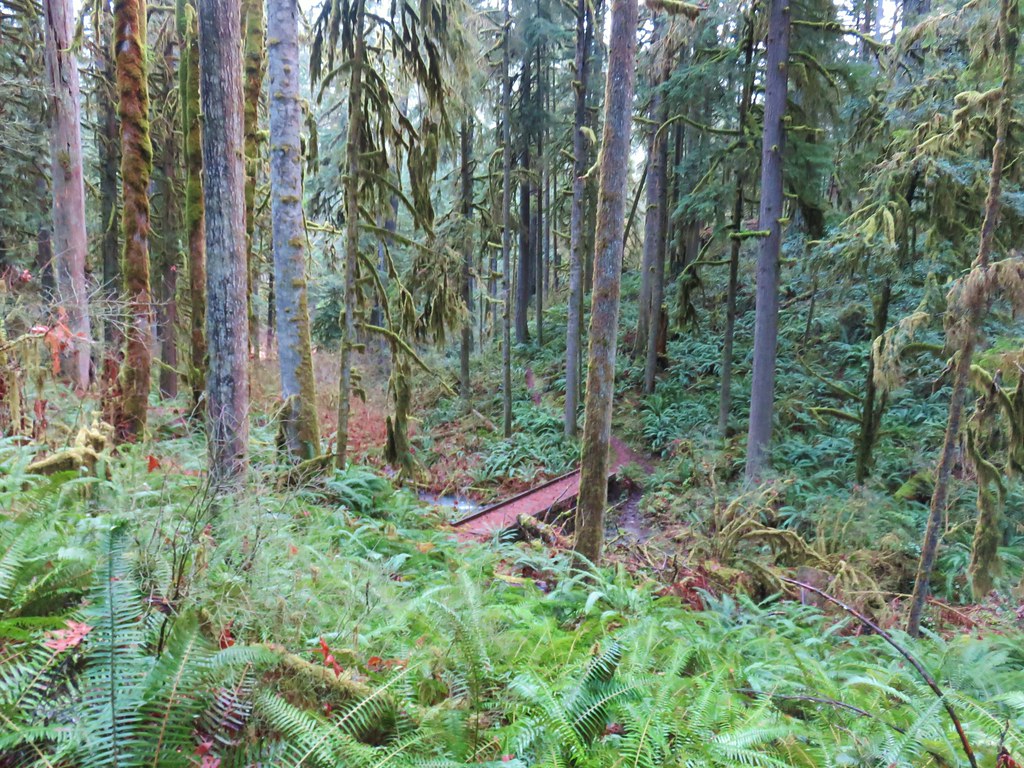
This trail runs parallel to Highway 58 but due to the presence of some private land holdings it bends back away from the highway which kept the noise down for much of the hike. There are not any views to speak of along the trail and although it crossed several creeks there are no waterfalls either. The trail simply passes through some different types of forest on its way from one end to the other. A half mile from the Hardesty Trail a nice footbridge brought us over an unnamed seasonal creek.
South Willamette Trail

A half mile later we were crossing another unnamed creek.
South Willamette Trail

This was followed by a footbridge over Crale Creek just a tenth of a mile later and a log crossing of another stream just beyond that.
South Willamette Trail

Crossing Crale Creek

The trail then made a slight climb to cross Crale Creek Road.
South Willamette Trail crossing Crale Creek Road

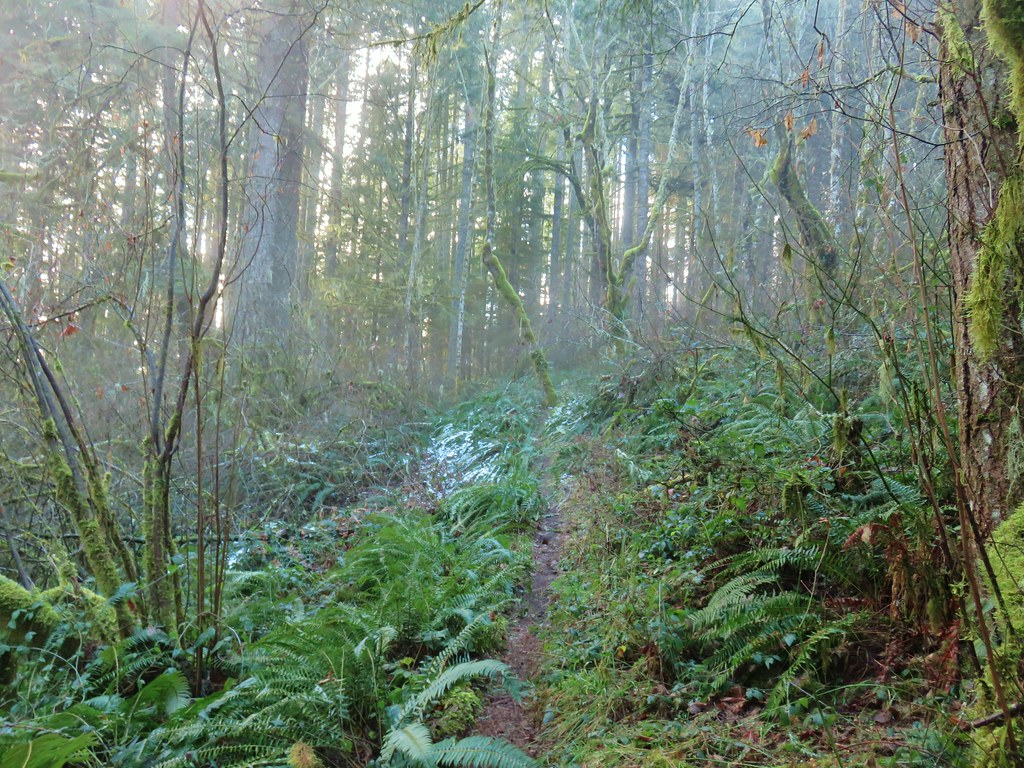
The trail climbed steadily for the next 1.75 miles gaining approximately 400′ to reach its high point at an elevation just over 1400′. There was just a little left over snow scattered about along the way.
A bit of snow along the South Willamette Trail

The Sun was shining overhead as we began to descend to a footbridge over Harper Creek.
Sun behind trees in the Willamette National Forest

Footbridge over Harper Creek

From there we climbed up and around a ridge gaining 280′ in half a mile before dropping again, this time to a bridge less crossing of North Creek.
North Creek

There was just enough water to prevent a dry rock hop across the creek and a pair of logs downstream were too slick and angled to be worth risking so we decided to make North Creek our impromptu turn around. We were only about a tenth of a mile from the Eula Ridge Trailhead so we had covered most of the trail and I had especially been struggling all morning.

We returned the way we’d come listening to the birds and watching for the small purple blossoms of snow queen.
WrenWren signing along the trail

Snow queen

I had had a sore throat when I’d woken up and by the time we made it back to the car I was chilled. I spent the rest of the day and the next in bed ill which actually made me feel a little better about having struggled so much on a 10.8 mile 1600′ elevation gain hike.

The South Willamette Trail is definitely not a big reward hike, there are no views to speak of and aside from the few small creeks no real attractions along the way other than a nice green forest. That being said it was a good moderate winter hike and it’s open all year save for the worst storms. Happy Trails!

Flickr: South Willamette Trail

Categories
Hiking Uncategorized

Progress Report – Oregon Wilderness Areas

In our last post we wrote about our ambitious (possibly overly so) goal of completing 500 “featured” hikes in William L. Sullivan’s guidebooks. The topic of this post is another one of our goals, visiting all 45 of Oregon’s accessible designated wilderness areas (Three Arch Rocks and Oregon Islands are off limits to all visitors). This goal should be quite a bit easier to accomplish given the much smaller number of needed hikes and the fact that the wilderness areas aren’t changing every few years. (There is legislation pending that would create the Devil’s Staircase Wilderness in the coast range between Reedsport and Eugene.)

The inspiration for this goal came from a fellow hiker and blogger over at Boots on the Trail. This smaller goal fit well into our 500 featured hikes goal too as thirty nine of the wilderness areas are destinations of at least one of the featured hikes. The remaining six: Copper-Salmon, Lower White River, Rock Creek, Cummins Creek, Bridge Creek, and Grassy Knob were still included in the books but as additional hikes in the back. Between the hike descriptions in the guidebooks and Boots on the Trail’s trip reports we’ve had plenty of information to work with.

This was an appealing goal too. Wilderness areas are dear to our hearts and home to many of our favorite places. These areas are the least affected by humans and we feel best reflect God’s work as Creator. To me they are akin to a museum showcasing His finest artistry. Just as we would in a museum we admire and enjoy the wilderness but we do our best not to affect it meaning adhering whenever possible to Leave No Trace principles.

We have made pretty good progress on this goal so far and as of 12/31/18 we had visited 38 of the 45 accessible areas (and seen the other two from the beach). We’re currently on track to have visited them all by the end of 2020.

Below is a chronological list of the wilderness areas we’ve been to (or seen) as well as any subsequent year(s) we’ve visited with some links to selected trip reports.

Opal Creek – 2009, 10, 11, 12, 14, 18

Battle Ax CreekBattle Ax Creek – 2014

Mt. Jefferson – 2010, 11, 12, 13, 14, 15, 16, 18

Mt. Jeffferson from Russell LakeMt. Jefferson from Russell Lake – 2016

Drift Creek – 2010

Drift CreekDrift Creek – 2010

Mt. Washington – 2011, 12, 14, 15, 16, 17

Mt. Washington and Mt. Jefferson from the Pacific Crest TrailMt. Washington from the Pacific Crest Trail – 2015
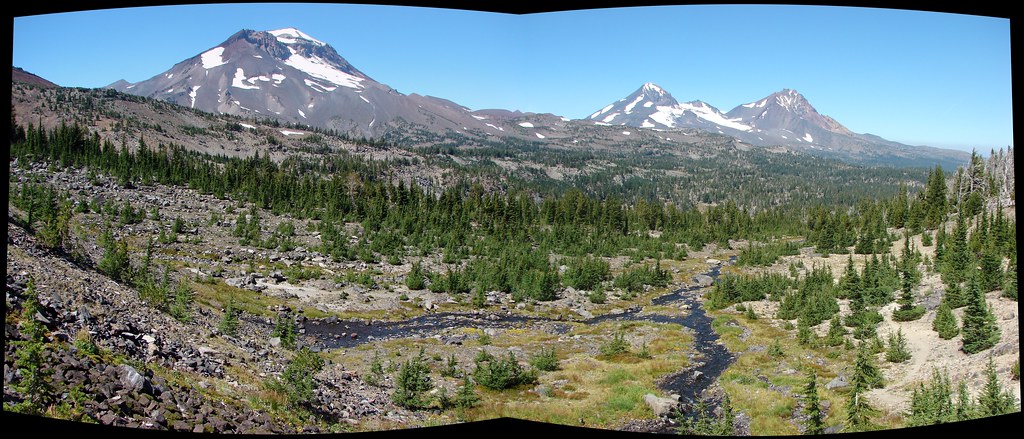
Three Sisters – 2011, 12, 13, 14, 15, 16, 17

The Three Sisters from the edge of the plateauThe Three Sisters – 2014

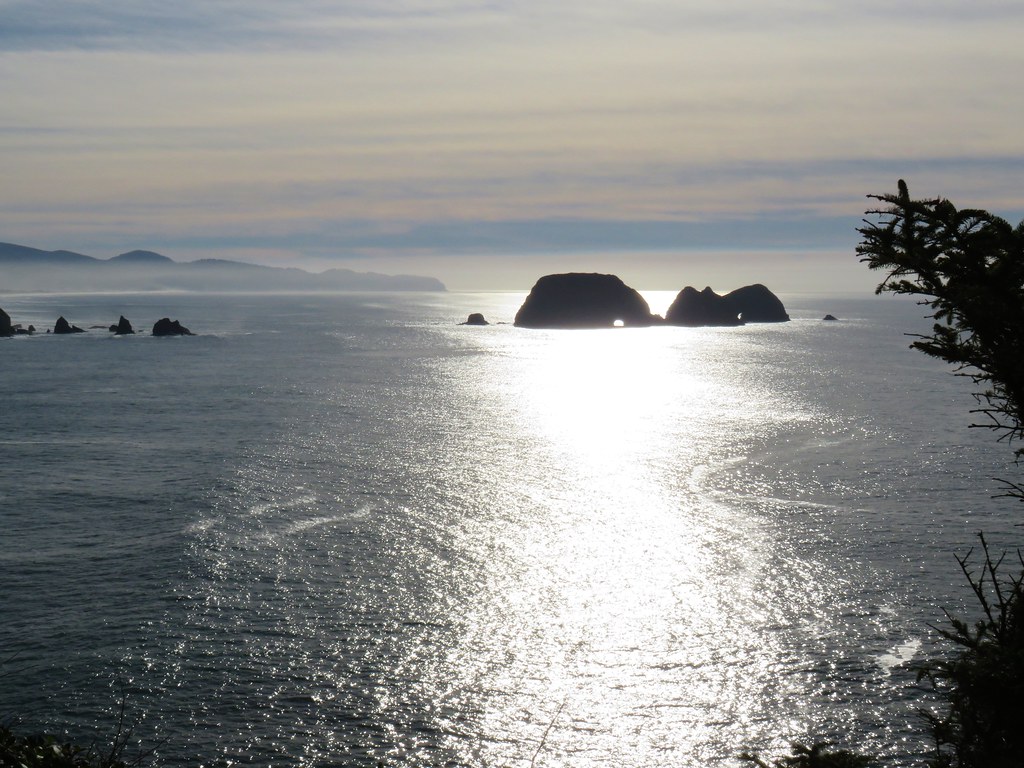
Three Arch Rocks – 2011, 18

Three Arch Rocks WildernessThree Arch Rocks from Cape Meares – 2018
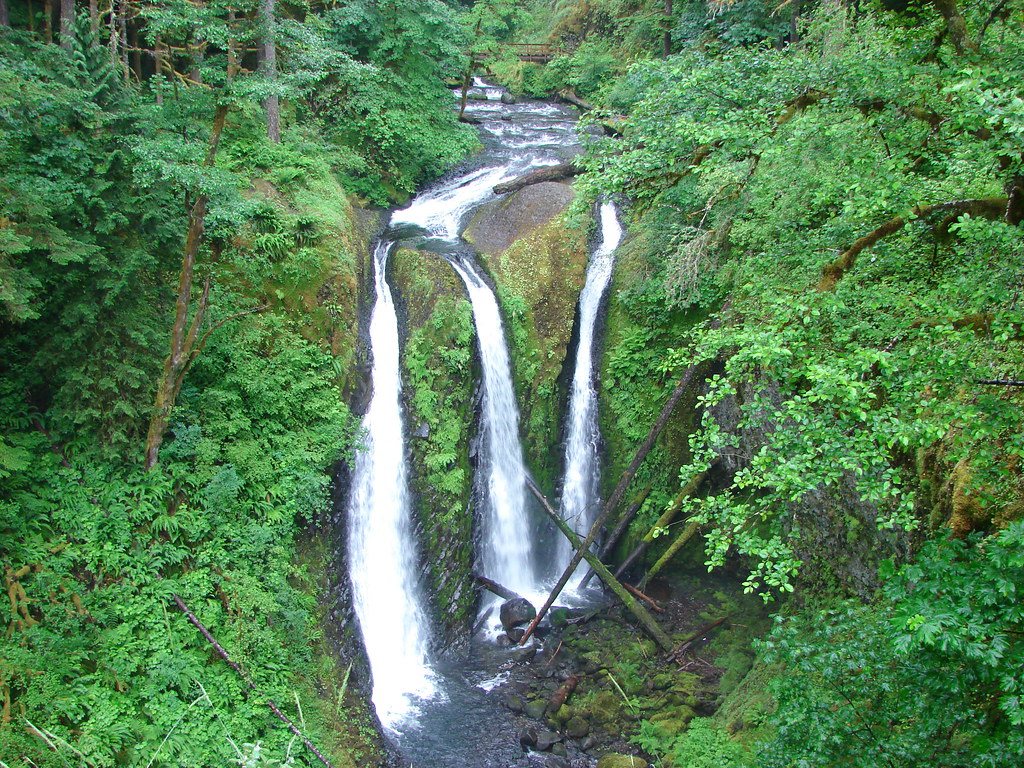
Mark O. Hatfield – 2012, 14, 15, 16

Triple FallsTriple Falls – 2012

Mt. Hood – 2012, 13, 14, 15, 16, 17

Mt. Hood from the Timberline TrailMt. Hood – 2015

Oregon Islands – 2012, 13, 14, 15, 16, 17, 18

Bandon IslandsBandon Islands – 2018

Mill Creek – 2012

Twin PillarsTwin Pillars – 2011

Mt. Thielsen – 2012, 14

Howlock Mountain and Mt. ThielsenHowlock Mountain and Mt. Thielsen – 2014
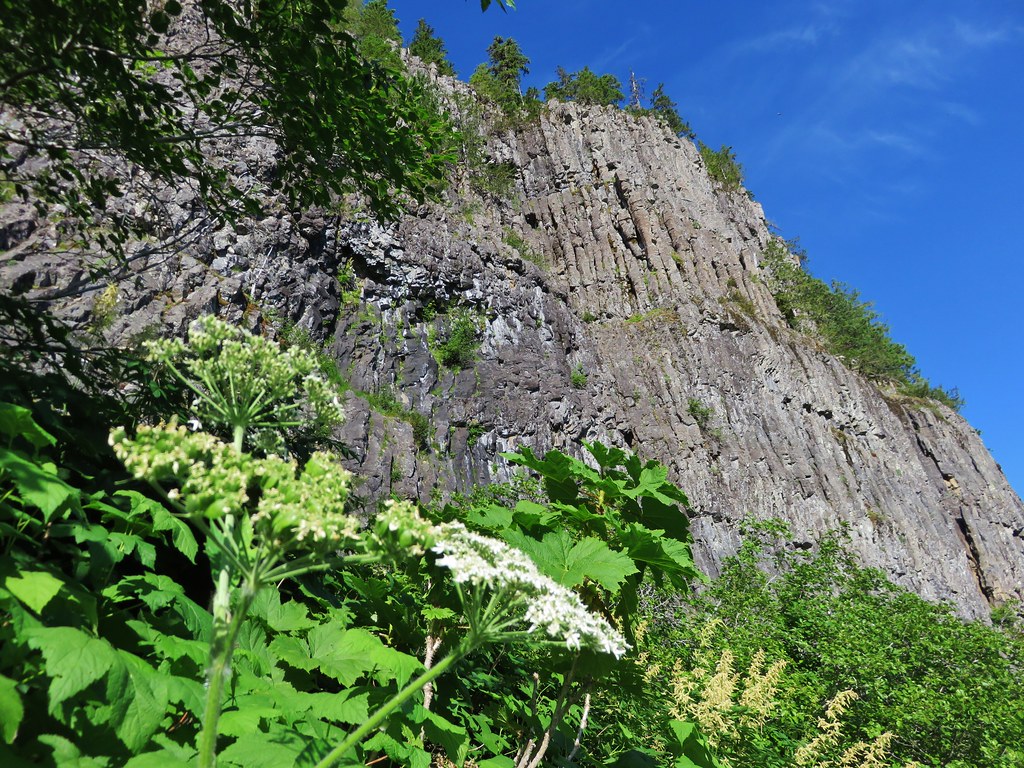
Table Rock – 2012, 15

Table RockTable Rock – 2015

Salmon-Huckleberry – 2013, 14, 15, 17, 18

Frustration FallsFrustration Falls – 2018

Diamond Peak – 2013, 14, 18

Small waterfall on Trapper CreekTrapper Creek – 2014

Waldo Lake – 2013, 15, 18

Waldo LakeView from Fuji Mountain – 2013

Roaring River – 2013

Serene LakeSerene Lake – 2013

Badger Creek – 2014

Badger Creek WildernessBadger Creek Wilderness – 2014

Middle Santiam – 2014

Donaca LakeDonaca Lake – 2014

Bull of the Woods – 2014, 15, 18

Emerald Pool on Elk Lake CreekEmerald Pool – 2018

Soda Mountain – 2015, 17

Looking west from Boccard PointView from Boccard Point – 2015

Red Buttes – 2015

Red Buttes, Kangaroo Mountain and Rattlesnake MountainRed Buttes – 2015

Oregon Badlands – 2016

View from Flatiron RockOregon Badlands Wilderness – 2016

Kalmiopsis – 2016

Vulcan Lake below Vulcan PeakVulcan Lake – 2016

Menagerie – 2016

Rooster Rock from a viewpoint in the Menagerie WildernessRooster Rock – 2016

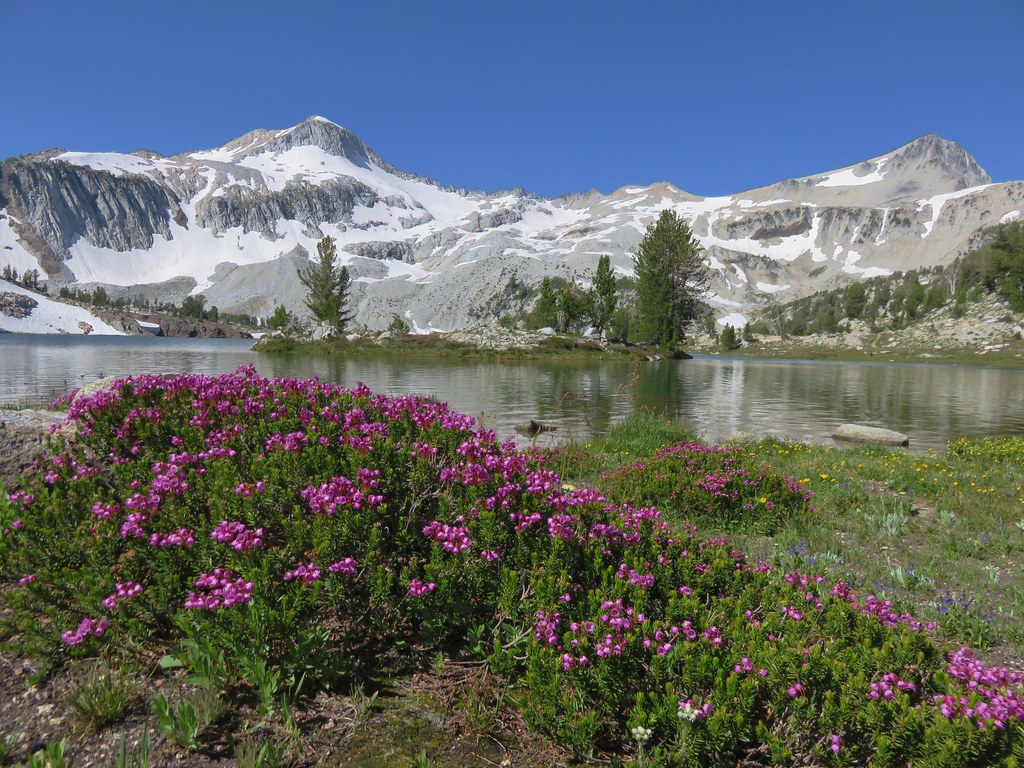
Eagle Cap – 2016

Glacier LakeGlacier Lake – 2016

Mountain Lakes – 2016

Mt. McLoughlin, Whiteface Peak, Pelican Butte, and Mount Harriman from Aspen ButteView from Aspen Butte – 2016

Sky Lakes – 2016

Mt. McLoughlin from Freye LakeMt. McLoughlin from Freye Lake – 2016

Lower White River – 2016

White RiverWhite River – 2016

Rock Creek – 2017

Rock CreekRock Creek – 2017

Spring Basin – 2017

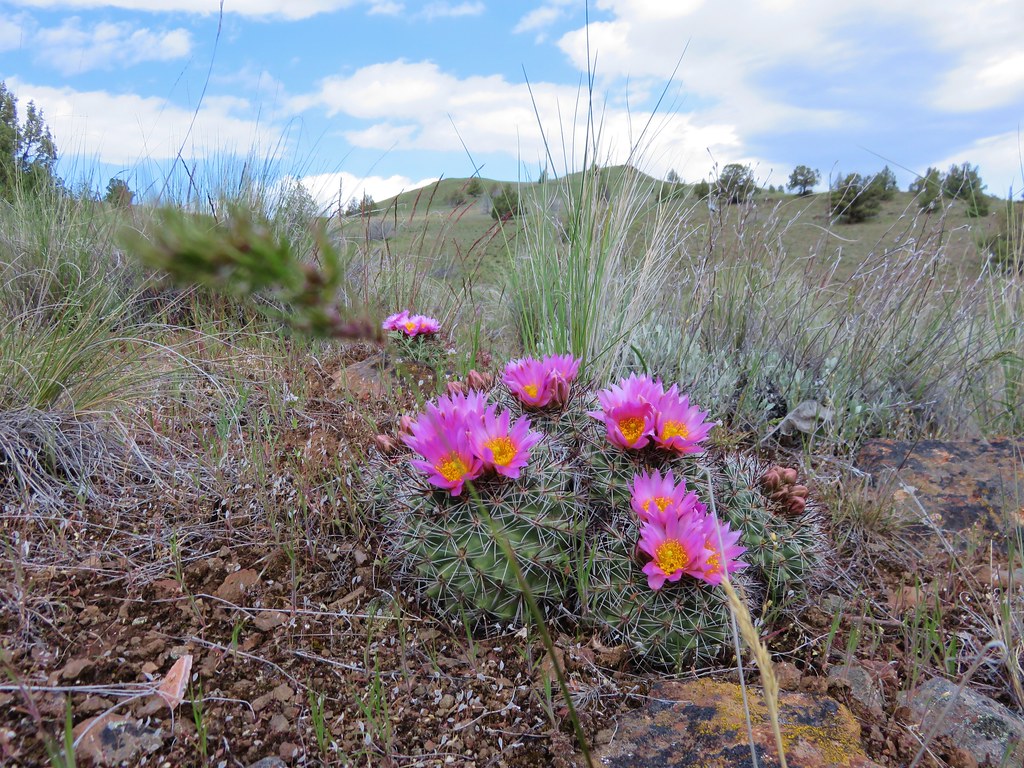
Hedgehog cactusHedgehog Cactus – 2017

Bridge Creek – 2017

View to the north from the Bridge Creek WildernessBridge Creek Wilderness – 2017

Wild-Rogue – 2017

Hanging RockHanging Rock – 2017

Grassy Knob – 2017

View from Grassy KnobView from Grassy Knob – 2017

Clackamas – 2017

Big BottomBig Bottom – 2017

North Fork John Day – 2017, 18

Baldy LakeBaldy Lake – 2017

Cummins Creek – 2017

Cummins Ridge TrailCummins Ridge Trail – 2017

Rogue-Umpqua Divide – 2018

Hummingbird MeadowsHummingbird Meadows – 2018

Steens Mountain – 2018

View from the Pike Creek TrailView along the Pine Creek Trail – 2018

Strawberry Mountain – 2018

Slide LakeSlide Lake – 2018

Copper-Salmon – 2018

Barklow Mountain TrailBarklow Mountain Trail – 2018
The remaining areas and year of our planned visit looks like this:

2019 – Hells Canyon, North Fork Umatilla, Wenaha-Tucannon
2020 – Boulder Creek, Black Canyon, Monument Rock, Gearhart Mountain

If the Devil’s Staircase is added in the meantime we will do our best to work that in (it is currently on our list of hikes but not until 2023. For more information on Oregon’s wilderness areas visit Wilderness.net here.

Happy Trails!

Categories
Hiking Uncategorized

Progress Report – 500 “Featured” Hikes

As we mentioned in our 2018 year end wrap-up post one of our long term hiking goals is to complete 500 “featured” hikes from William L. Sullivan’s “100 hikes” guidebook series. Sullivan has broken Oregon into five regions, the Coast & Coast range, Northwest Oregon, the Central Oregon Cascades, Southern Oregon, and Eastern Oregon. Each of the five books contains detailed information on 100 “featured” hikes in that area as well as 50 to over 100 listings of additional hikes. Although his focus is on Oregon there are hikes in Washington (coast and northwest), California (coast and southern), and one short hike in Idaho at Hells Canyon Dam in the eastern book.
49848366_2314161458868300_543836137773334528_n

When we first decided to give hiking a try we picked up a single book (not by Sullivan) containing 280 hikes covering the entire State. Each hike contained just enough detail to let you know what you needed to know to get to the trail and get going. What it lacked was detailed information about the hike itself and any type of visual reference to assist with understanding the intended route. Due to the fact that the entries encompassed the entire State the number of hikes near us was somewhat limited. We used it for a couple of hikes then began looking for other options and that’s when we discovered Sullivan’s books.

Our first purchases were the coastal and central cascades books in 2010. Many of the hikes in these books were within an hour and half or less drive from Salem. We fell in love with the detailed descriptions that Sullivan provided and the hand drawn maps that went with each featured hike. Having the visual aid to refer to when reading the descriptions made things much easier for novice hikers like us to navigate the trails. In 2012 we added his books for the other three regions and soon after made it a goal to take at least one hike from each book every year.

We also had decided that we wanted to avoid doing the same trails over and over again and instead wanted to focus on visiting as many different places as possible. As time passed I began to toy with the idea of trying to finish all 100 featured hikes from the central cascades book. The hikes from that book were the closest to us and thus were nearly all within range for day-hikes. Thoughts then turned to the possibility of also completing the NW and maybe even the coast book, but with hikes as far away as the the redwoods in California that would require some extra time and planning.

After a couple of off-seasons of planning the next years hikes I started looking ahead to subsequent years. I had begun grouping the hikes that were too far way for day trips into possible long weekends or vacations. The thought of possibly doing all 500 featured hikes began to take hold and by the end of 2016 I had a preliminary outline that included them all. During our 2017-2018 off season I took the outline and completed a full 10 year schedule that incorporated all of the remaining featured hikes as well as some new ones from other sources and some of our favorites so far. With that initial schedule we would finally achieve our goal in 2027.

I have continued to rearrange the schedule and have since managed to bring the completion date up to September, 2025. Still a long ways off but closer. We are hoping to have the NW and Central Cascade books finished by the end of 2021 and the Coast by the end of 2022. With some luck the Southern book will follow in 2023 leaving the eastern book, and more specifically the numerous hikes in the Wallowa Mountains for last.

There are a couple of issues that we are dealing with. One is never knowing until the time comes if the hikes we are planning will be accessible or if weather, forest fires, or some other unforeseen obstacle will deny us a visit. Mount Ireland in the Blue Mountains near Sumpter is a great example. Snow kept us from this hike in 2017 when we spent a vacation in Sumpter (post) so we put it on the schedule again in conjunction with a backpacking trip in the Elkhorns in 2018. A lightning storm canceled that plan (post) and so now it has been add as stop on the way to Hells Canyon in 2022.

An even more complicated issue with this particular goal is that Sullivan regularly updated his books, releasing new editions every 5 or so years which inevitably contain a different 100 featured hikes. In between editions there are often reprints where there can also be changes to the featured hikes. This happens for numerous reasons such as forest fires burning over the area, landslides closing trails, access being cut off by private land owners, or he simply found what he felt was a more worthy featured hike. These changes have left us questioning exactly how to measure our goal. We know it is to do “500 featured hikes” but what 500?

The answer isn’t all that simple. For instance attempting to finish all 100 hikes from the 2011 third edition of “100 Hikes in Northwest Oregon & Southwest Washington” would mean hiking Mt. Mitchell (hike 21) but a private timber company closed access to the trail several years ago and the hike is no longer a featured hike in Sullivan’s books.

Looking to the most recent version of the books is also problematic, especially in regards to the southern and eastern books where the addition of a single hike in a remote area that we had already been to would require another long trip for that lone hike.

One possible way around this is to count any hike from an area that is/was a featured hike in any of the versions of the book. We are reluctant to do this though for two reasons. First there are a small number of hikes that have been featured hikes at one time in both the central and eastern books, so those could be double counted. If not then we’d have to decide which area to place them in. The biggest reason that we hesitate to go this route though is admittedly a bit shallow. It would most likely mean not having a single book that we could point to and say we had been on each of the featured hikes in it.

In the end I think we will wind up attempting to complete any single version of each area. It may be the most current or the oldest we own, or possibly something in between. Currently we are operating based on the most recent versions that we own save for the NW. The books we are currently using are:
“100 Hikes/Travel Guide Oregon Coast & Coast Range” Fourth Edition 2016
“100 Hikes in the Central Oregon Cascades” Fourth Edition 2012
“100 Hikes/Travel Guide Southern Oregon & Norther California” Fourth Edition 2017
“100 Hikes/Travel Guide Eastern Oregon” Third Edition 2015

For “100 Hikes in Northwest Oregon & Southwest Washington” we still only have the 2011 third edition but plan on picking up a new edition this April and are basing our progress off of the featured hikes to be contained in it.

With those books as the basis we currently stand at having done at least part of 335 of the 500 featured hikes. A caveat here is that for some of the hikes we have only completed a portion of the hike Sullivan describes either due to a trail being impassable (Lower Rogue River in 2017) or because we’ve combined more than one hike in a longer trip. In the case of the latter we are visiting most of the highlights but aren’t taking the same trail to them as described in the book.

A breakdown of the 335 hikes we’ve checked off is below.

Coast 89/100
Central 81/100
NW 72/100
Southern 42/100
Eastern 51/100

If we were to look at our earlier editions of the Central and NW books those numbers would jump to 84 & 78 respectively but as was mentioned before there are hikes in those that may no longer be possible.

Lastly applying the “featured hike in any version” criteria would put the total number at 365* with the coast and central regions at 93 apiece, NW at 81, southern at 45, and eastern at 53. *This includes a double counting of 5 featured hikes that moved between the eastern and central books so the number really should be 360.

No matter what criteria we apply we still have a couple of years to go before we finish anything so we have some time to mull it over. We’d be interested to hear from others which way they would go or if there is another idea out there we haven’t thought of yet so please comment below.

The one thing that we do know is that we can’t finish anything without visiting more trails. Our 2019 list includes 32 more featured hikes, 8 each from the NW and central books, 4 from the southern, and 12 from the eastern. We could fit a few more in, but finishing the 500 isn’t our only goal. Another goal is continuing to visit different areas in the Pacific Northwest so there are trips to places like the South Warner Wilderness in California, and North Cascades National Park in Washington sprinkled throughout the schedule. The possibilities seem just about endless.

Happy Trails!

Categories
Coastal Range Hiking Oregon Trip report

Gales Creek Trail

A day off of work for New Years and a clear weather forecast = our first hike of 2019. Our trail of choice was the Gales Creek Trail in the Tillamook State Forest. We began our hike at the Gales Creek Trailhead, the same trailhead that we used in 2015 for a hike to nearby University Falls (post).

We began this hike as we had on our previous visit by following the Gales Creek Trail west from the parking area.
IMG_5410

The first .8 miles to the Storey Burn Trail was a repeat of 2015 as we crossed Low Divide Creek on a footbridge and arrived at the trail junction.
IMG_5415

IMG_5417

Unlike last time when we turned left onto the Storey Burn Trail this time we turned right sticking to the Gales Creek Trail which paralleled Gales Creek.
IMG_5421

It was a chilly morning, about 28 degrees, and there was a fair amount of frost on the ground and plants. In addition to the typical frost we see on a chilly morning, we had been noticing white clumps here and there. The clumps looked like they could be garbage at first glance but it wasn’t. Other thoughts were fur but we couldn’t think of any animals in the area with white fur or something from a tree but it wasn’t the right time of year for things like cottonwood. Our next guess was a little closer with a fungus but upon closer inspection we determined it was some sort of fine ice/frost.
IMG_5423

IMG_5452

It was very interesting. The scarcity of the clumps told us that there must be some set of conditions to create these frost clumps and spent much of the hike marveling at the designs. Thanks to the help of some fellow hikers over at Oregonhikers.org we later learned that this type of frost is the result of a fungus inside certain rotting wood that leaves water and carbon dioxide behind as the wood decays. The CO2 forces the water out of the wood through tiny holes and when the temperature is just a bit below freezing creates the frost “hairs” . Here is a post describing the phenomena in more detail and a article on BBC – Earth with a time lapse video of the frost forming.

The Gales Creek Trail stuck fairly close to the creek, sometimes rising a bit above it as it passed through the forest and crossed several streams that would likely have been dry in the summer months.
IMG_5425

IMG_5427

IMG_5432

IMG_5433

A mile and a half from the Storey Burn Trail junction we did come to a dry creek bed, but a flash of water back in the trees looked like it might be a decent waterfall. The terrain looked like it might make for a reasonable off-trail jaunt and the fact that there was no water down at the trail but there was some further up made us curious so we decided to head uphill. After about a quarter mile climb over and around downed trees we found ourselves looking at a nice 20′ or so waterfall. The terrain narrowed enough that we couldn’t get right up to the falls but it was still a nice view (although not the best lighting for photos).
IMG_5437

IMG_5448

IMG_5450The route we came up.

After admiring the falls we returned to the trail and continued west toward the Bell Camp Trailhead.
IMG_5453A short section of railroad grade.

More creek crossings followed, some trickier than others, but we managed to keep our feet fairly dry using rocks or logs.
IMG_5454

A total of 2.25 miles from the junction we arrived at stand of alders as the site of good sized slide that occurred in 2007.
IMG_5457

IMG_5459

IMG_5461

Just over a mile from the alder stand we came to the trickiest crossing of the day. There appeared to be two options across, a lone rock barely sticking out of the water and a pile of slick looking logs. Due to the direction we were heading the rock was too far to reach so we opted for the logs. Some carefully placed steps got us across dry.
IMG_5471The logs we came across.

IMG_5472The rock after having crossed.

On the way back I opted to attempt a jump from the rock. It worked but after watching Heather recross fairly easily on the logs my 46 year old body thought that would have been a better choice.
IMG_5508Heather finishing her crossing on the way back.
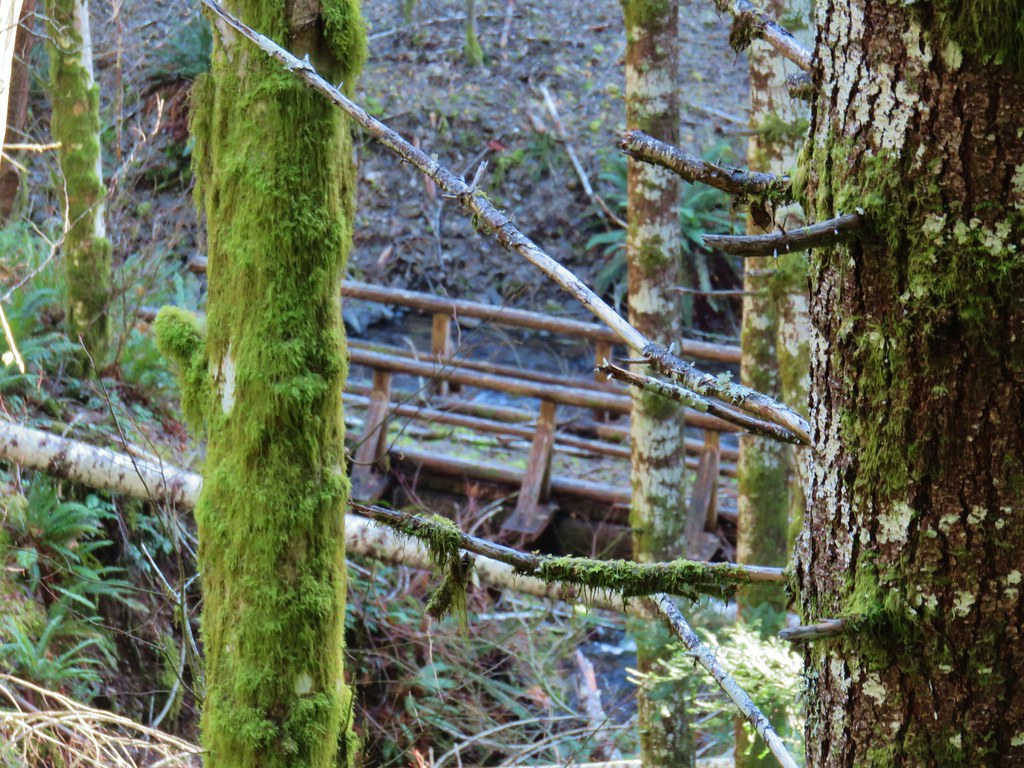
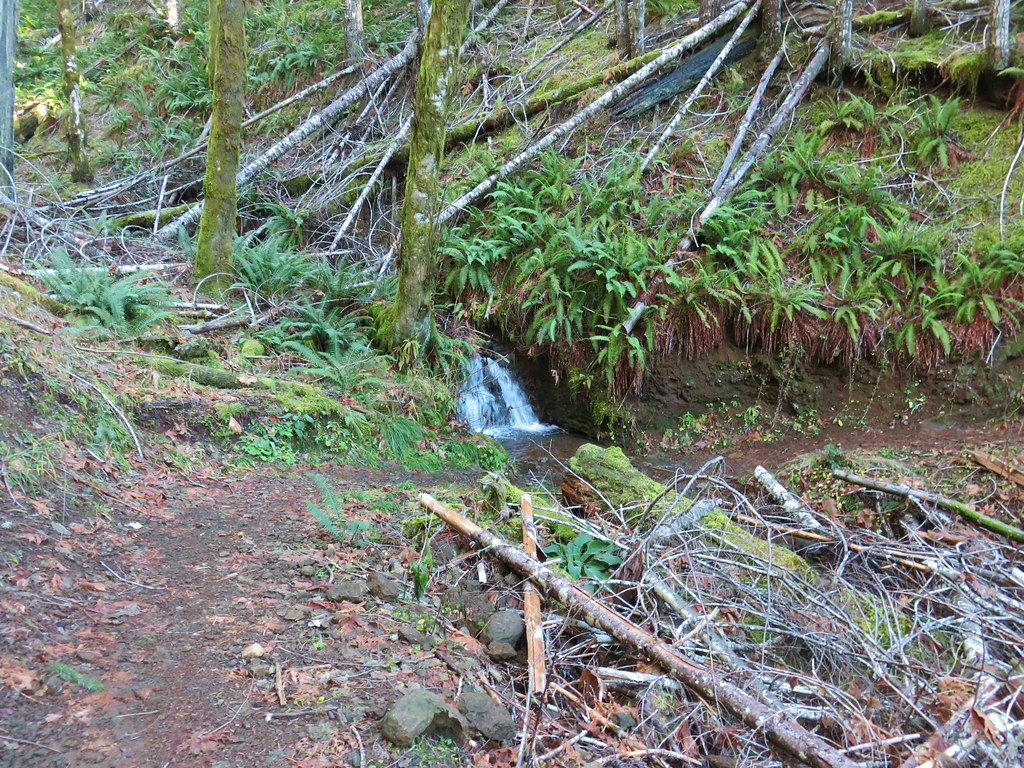
Beyond this crossing the trail turned inland away from Gales Creek a bit. Slides apparently forced the trail to be rerouted at some point because a footbridge could still be seen through the trees closer to Gales Creek.
IMG_5507

We passed a very small cascade along this section and then approximately 1.75 miles from the tricky creek crossing arrived at our turn around point, a 25′ waterfall right along the trail.
IMG_5473

IMG_5483

IMG_5486

We took a break at the falls and as we studied the falls the light moved enough to create a small rainbow.
IMG_5499

IMG_5500

We returned the way we’d come. The sun was shining but it was still chilly as we made our way back.
IMG_5511

IMG_5516

IMG_5464

We didn’t see much wildlife, just a handful of birds, and being the middle of winter no wildflowers but there were a few mushrooms to enjoy.
IMG_5467

IMG_5469

IMG_5523

With the half mile side trip the hike wound up being just under 12.5 miles with approximately 1500′ of elevation gain. It was a nice start to a new year of hiking. Happy Trails!

Flickr: Gales Creek Trail