Categories
Columbia Gorge North Hiking Trip report Washington

Lower Archer Falls, Wind Mt., Sams-Walker, & Doetsch Ranch – 4/13/2024

Our first April outing was a trip to the Washington side of the Columbia River Gorge to check out four short hikes. These were all new hikes for us located within 23-miles of each other.

We began our day with me realizing that I hadn’t made sure that our NW Forest Pass was in the car since one was needed for two of our planned stops. This despite thinking that I needed to do that several times over the previous several days, including the day before when I was putting the Washington Discovery Pass we needed for Doetsch Ranch in the glovebox. Fortunately we were only in downtown Salem so we weren’t too far from home. Unfortunately the pass wasn’t in the other car or any of the places that I could think (at 5am) of where I might have put it. I decided it would probably quicker and much less stressful to purchase an ePass online for the day and look for the missing annual pass later.

Once we had our pass situation straightened out we drove to our first stop at the St. Cloud Day Use Area.
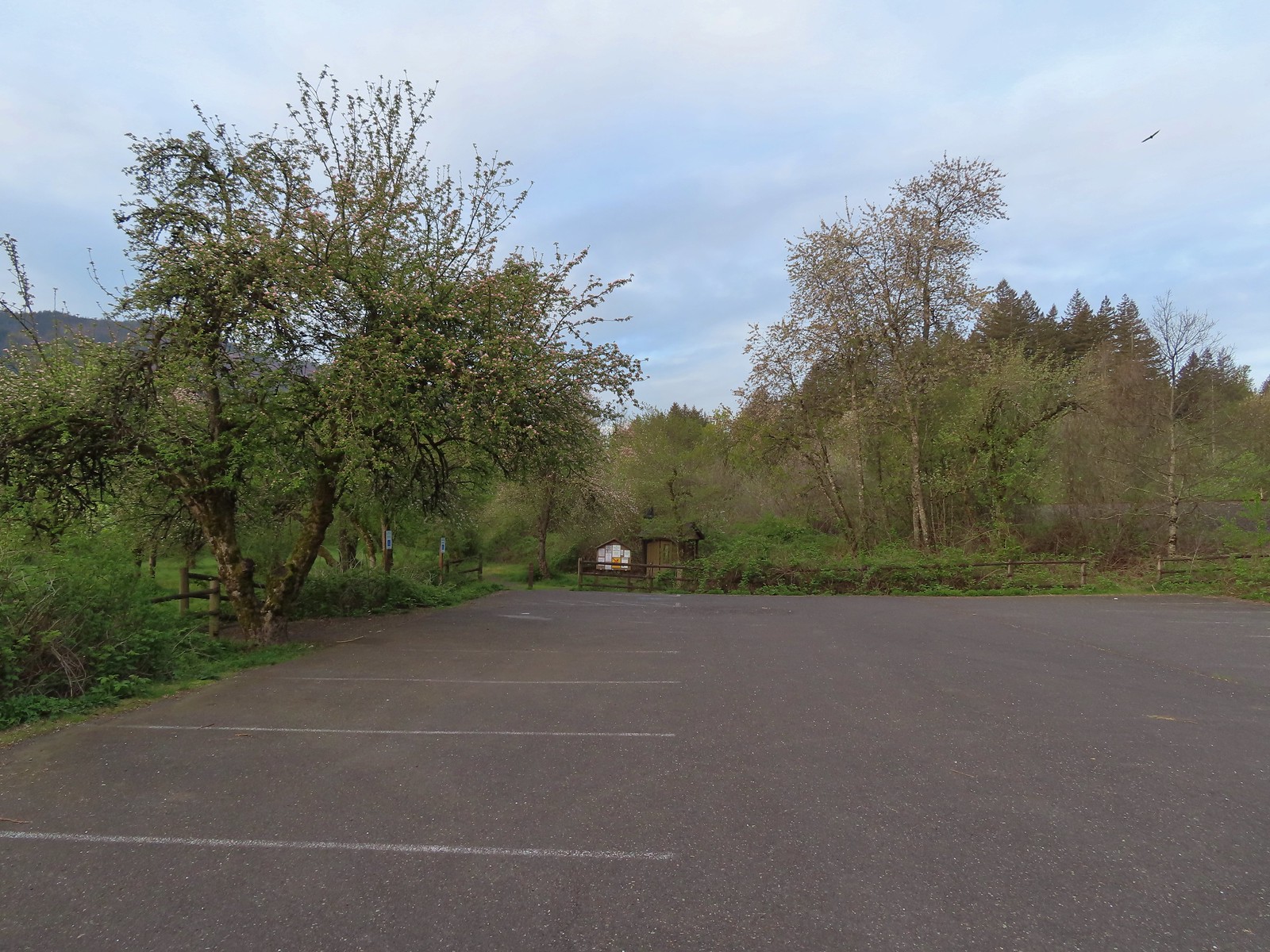
St. Cloud Trailhead

The day use area has picnic tables, a 1-mile loop trail, and a vault toilet (thus the need for a NW Forest Pass). Before exploring the day use area though we wanted to check out nearby Lower Archer Falls. To reach the trail to the falls we walked back to Hwy 14 and crossed to an unsigned trail that lead into overgrown woods. The need to cross the highway was the deciding factor on us starting our day here. We figured that there would be less traffic before 8am than there would be later in the day.
Trail to Lower Archer Falls across Highway 14 from the St. Cloud Day Use AreaThe brown strip in the grass near the center of the photo is the trail.

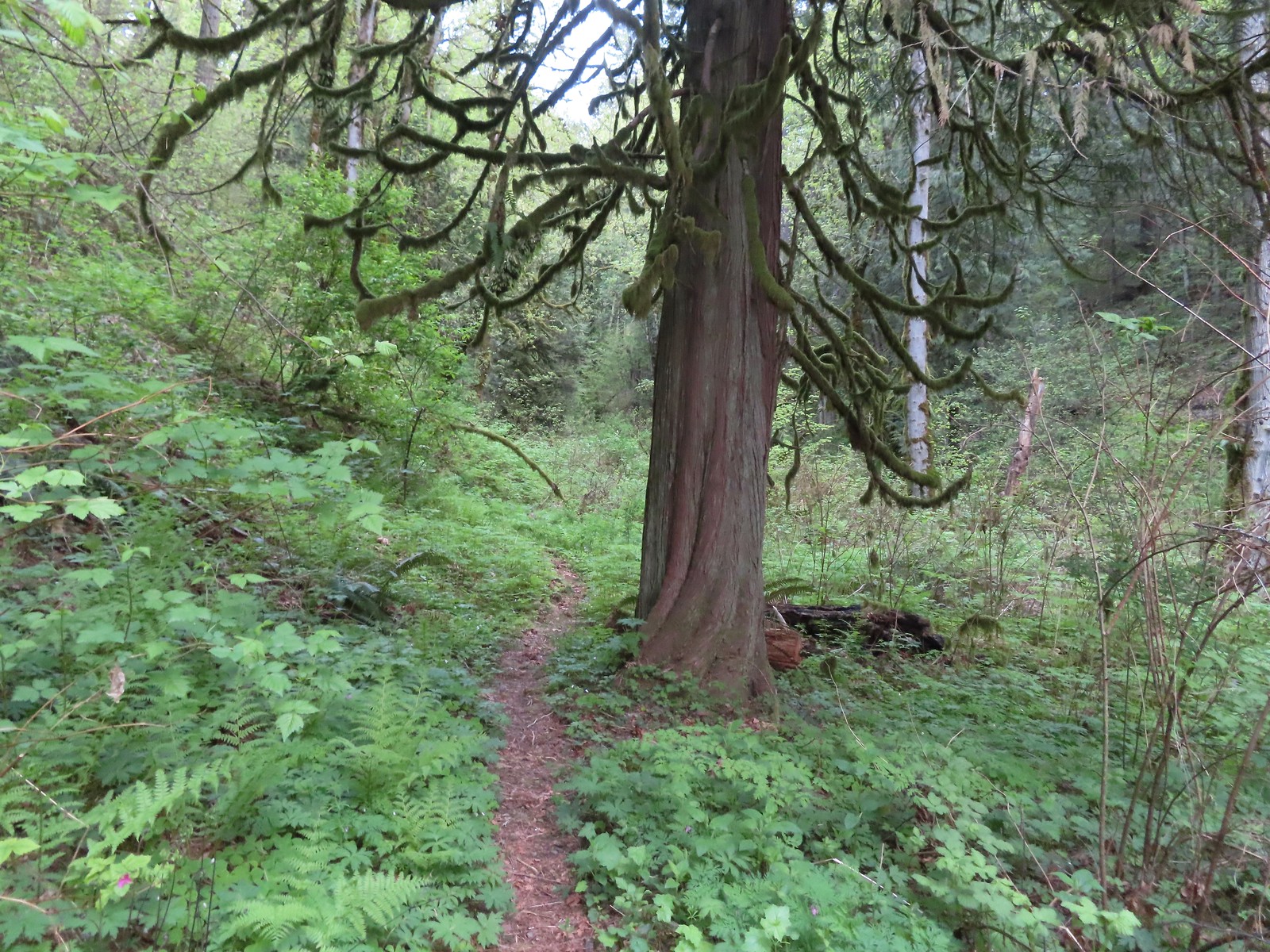
Trail to Lower Archer FallsThe trail entering the woods.

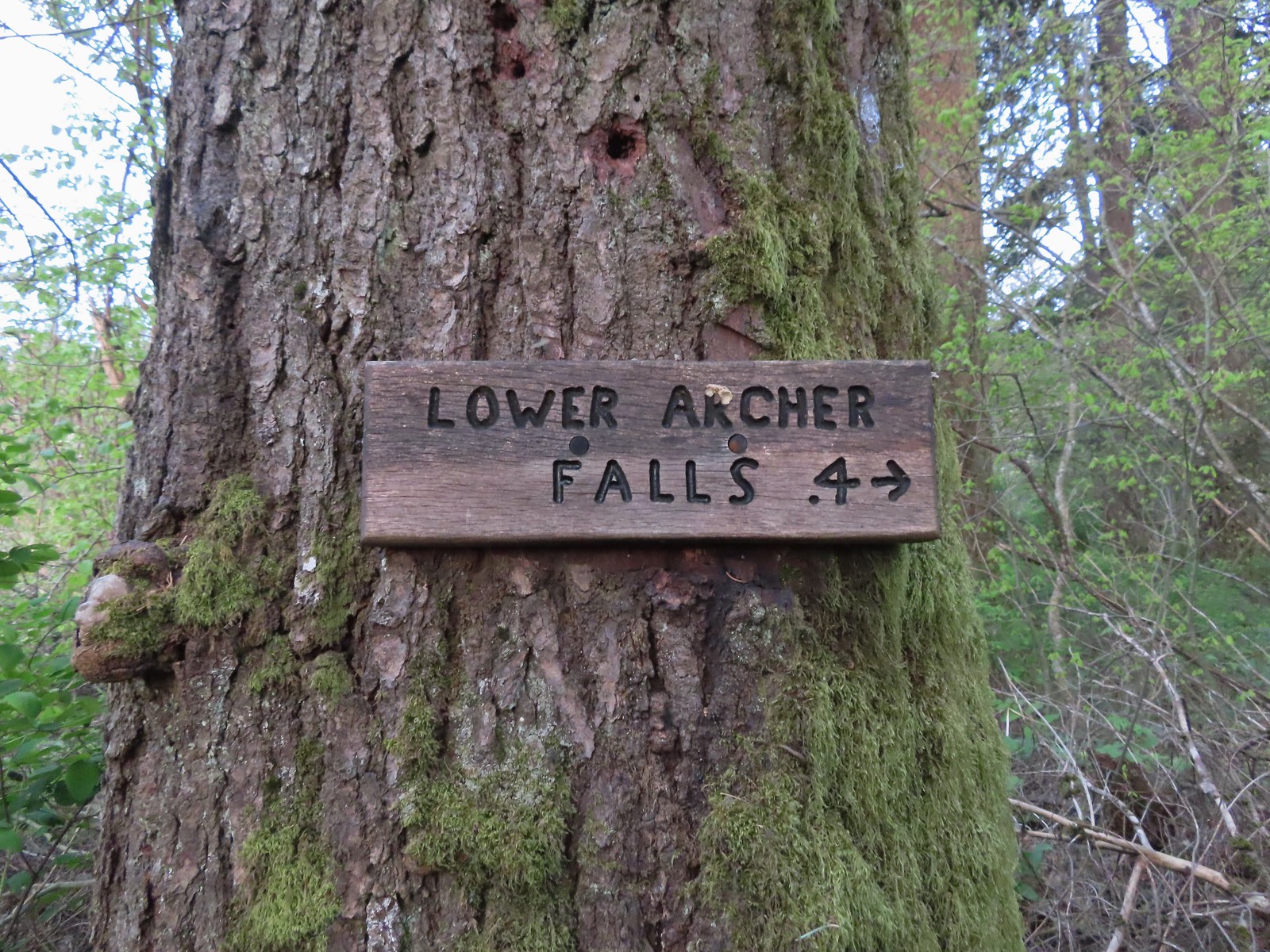
Sign for Lower Archer FallsPointer for Lower Archer Falls.

The user-maintained trail was in pretty good shape up until just before the falls where a small slide has done a bit of damage and just beyond that one of the make shift bridges seemed a little sketchy.
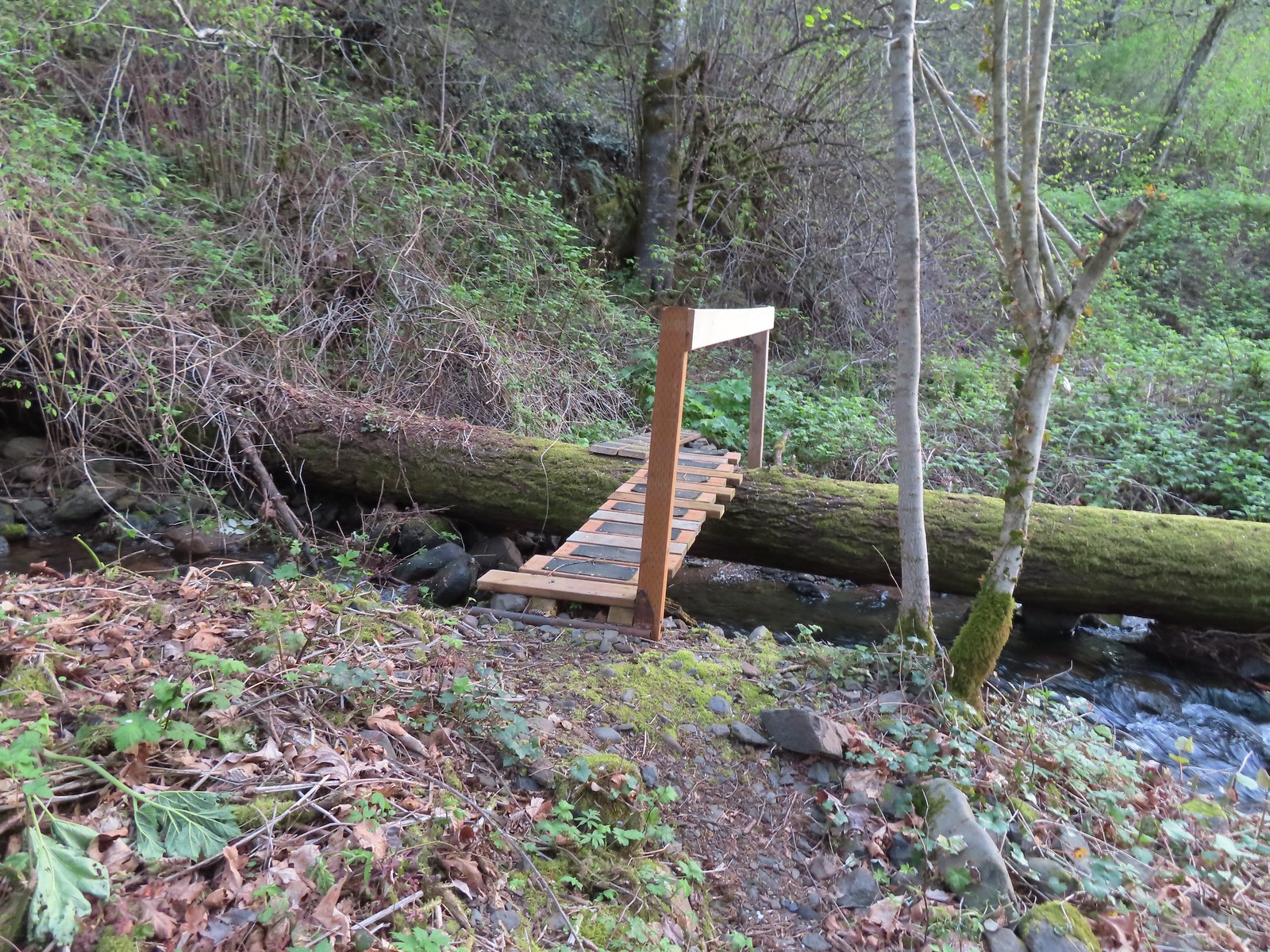
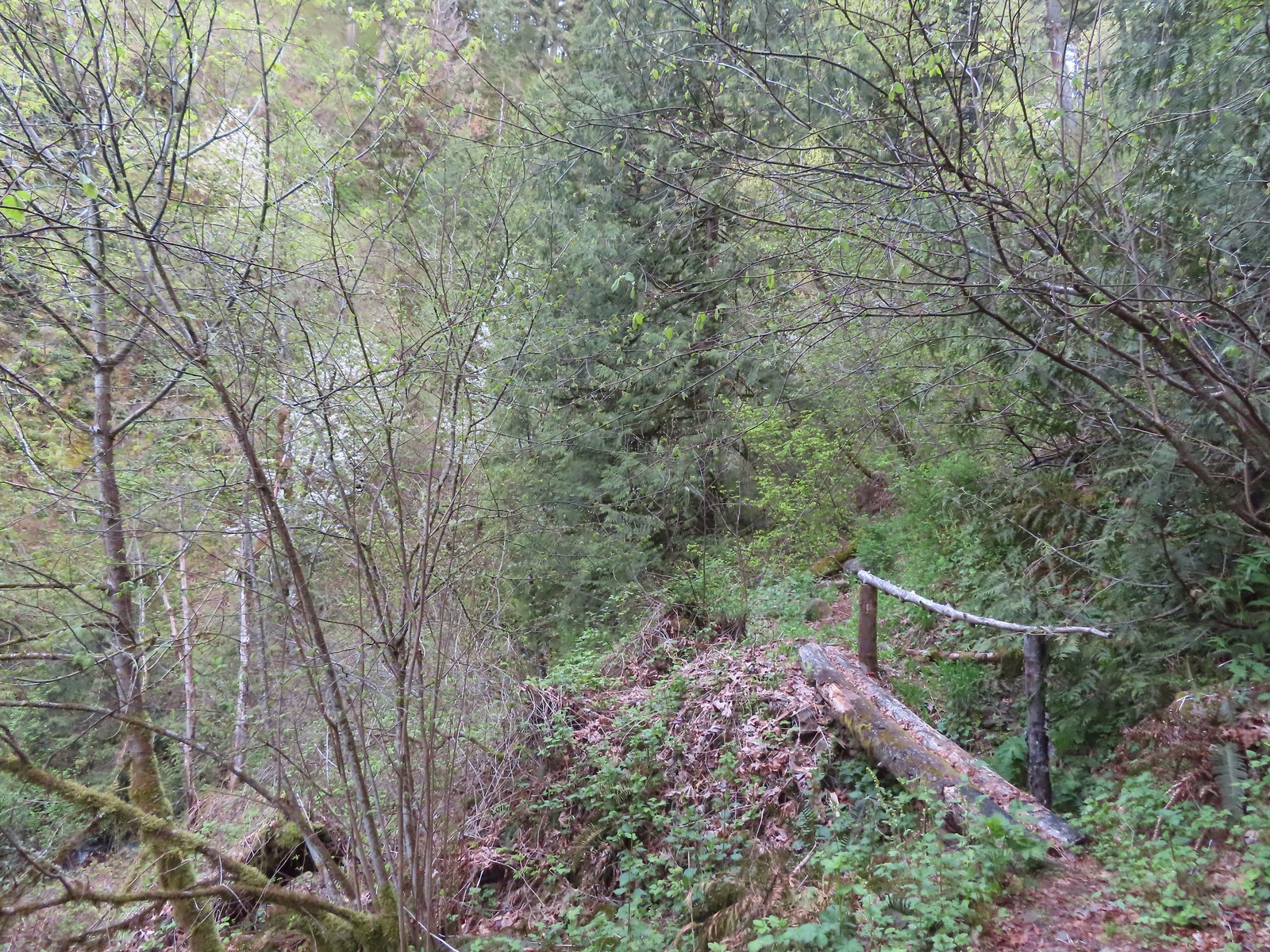
Trail to Lower Archer Falls crossing Gable CreekBridges over Gable Creek.

Trail to Lower Archer Falls

Trail to Lower Archer Falls

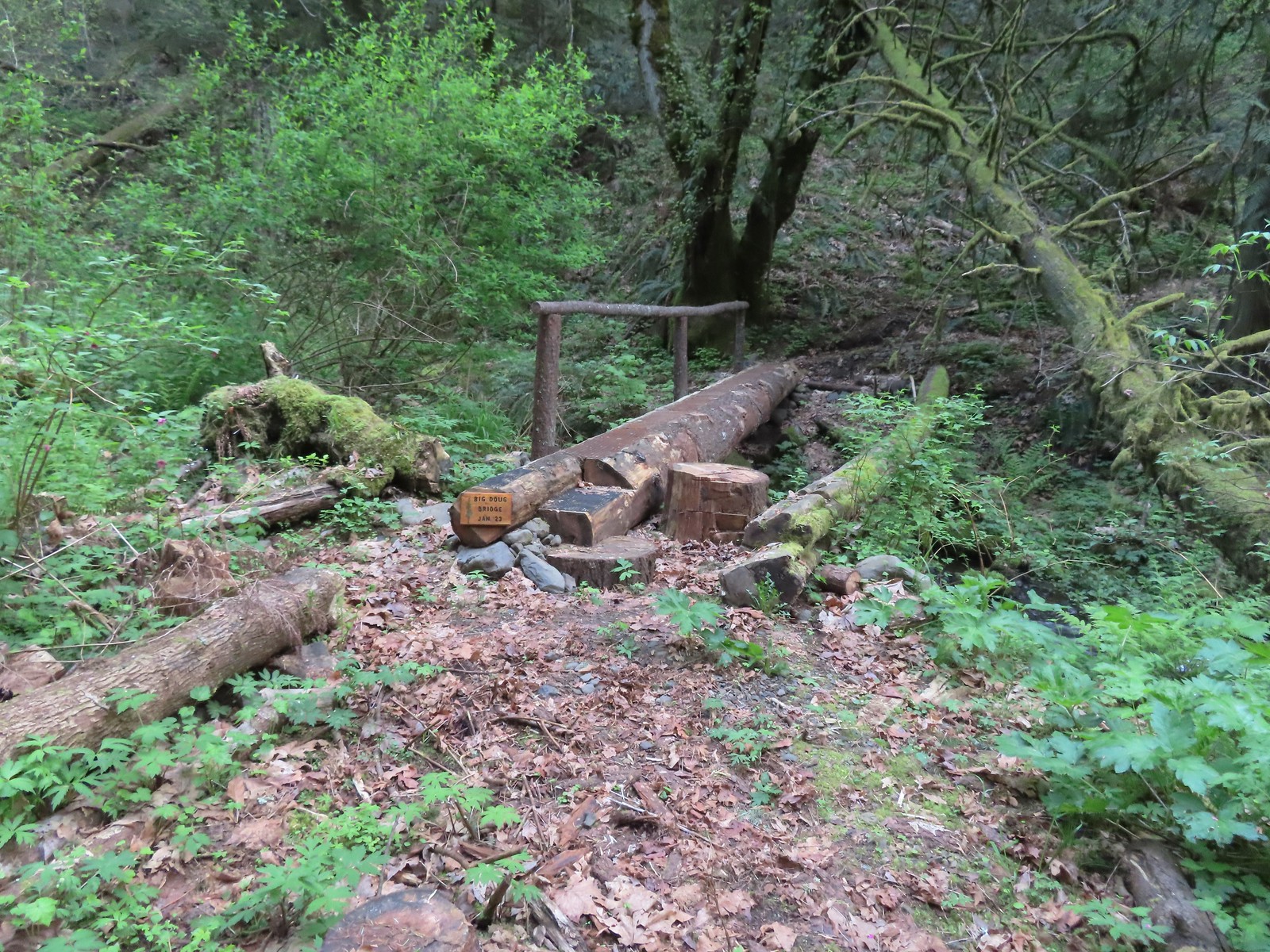
Big Doug Bridge over Archer CreekBig Doug Bridge (Jan 23) over Archer Creek.

Archer CreekArcher Creek

Archer CreekAfter crossing the creek the trail did a short climb gaining approximately 150′ of elevation.

Trillium along the trail to Lower Archer FallsTrillium along the trail.

Trail to Lower Archer FallsOne of several of these style bridges on the way to the falls.
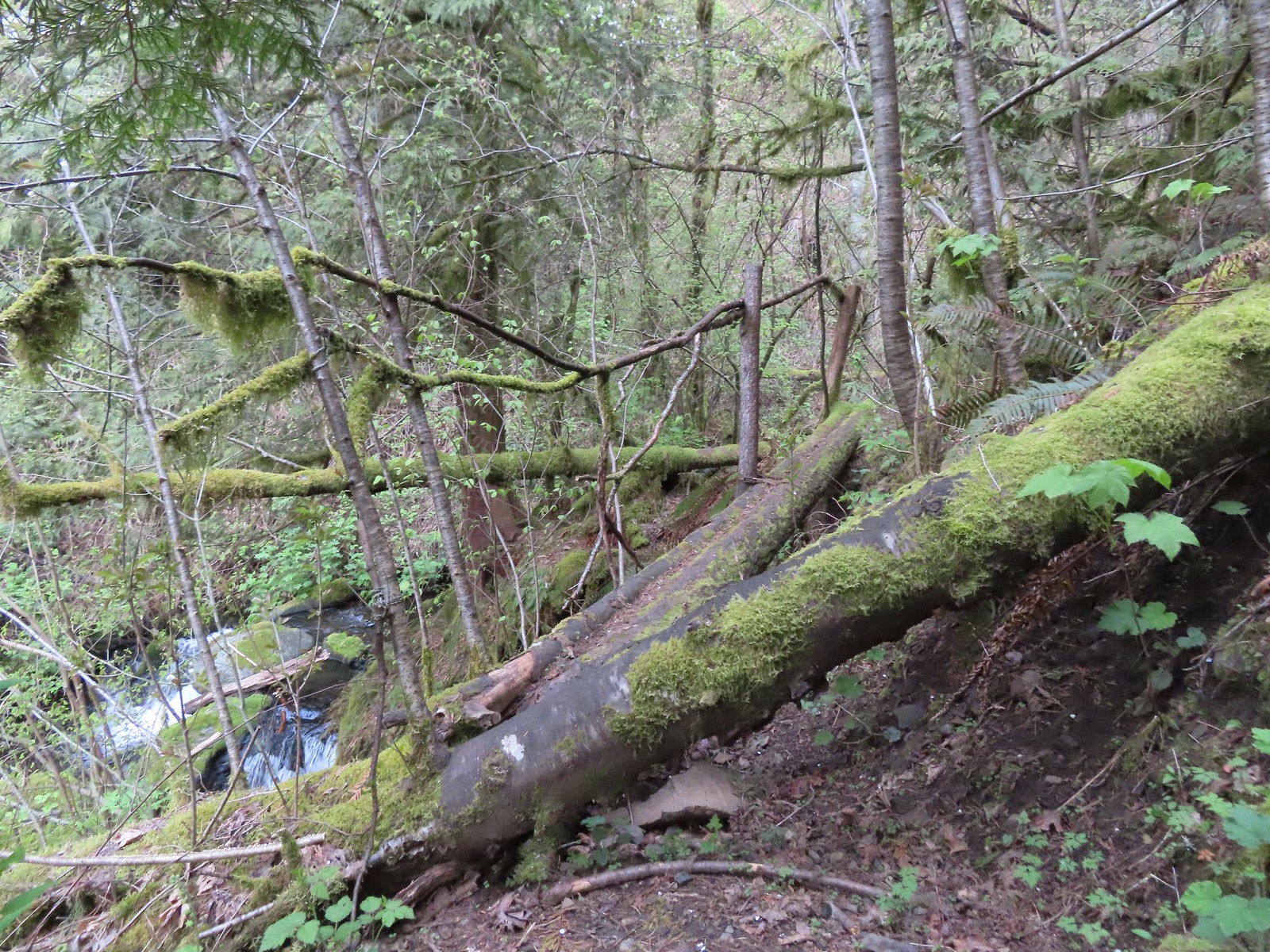
Trail to Lower Archer FallsThe “sketchy” bridge. It felt pretty solid underfoot, but the rail seemed ornamental only.

Trail to Lower Archer FallsThe final footbridge before the falls.

Lower Archer Falls

The trail extends beyond the falls climbing to a junction with the Archer Mountain Trail, but that route is reportedly less maintained with blackberry, poison oak, and nettles crowding the trail at times. We weren’t interested in that much adventure today so after enjoying the falls we headed back stopping along the way to admire the Spring wildflowers.
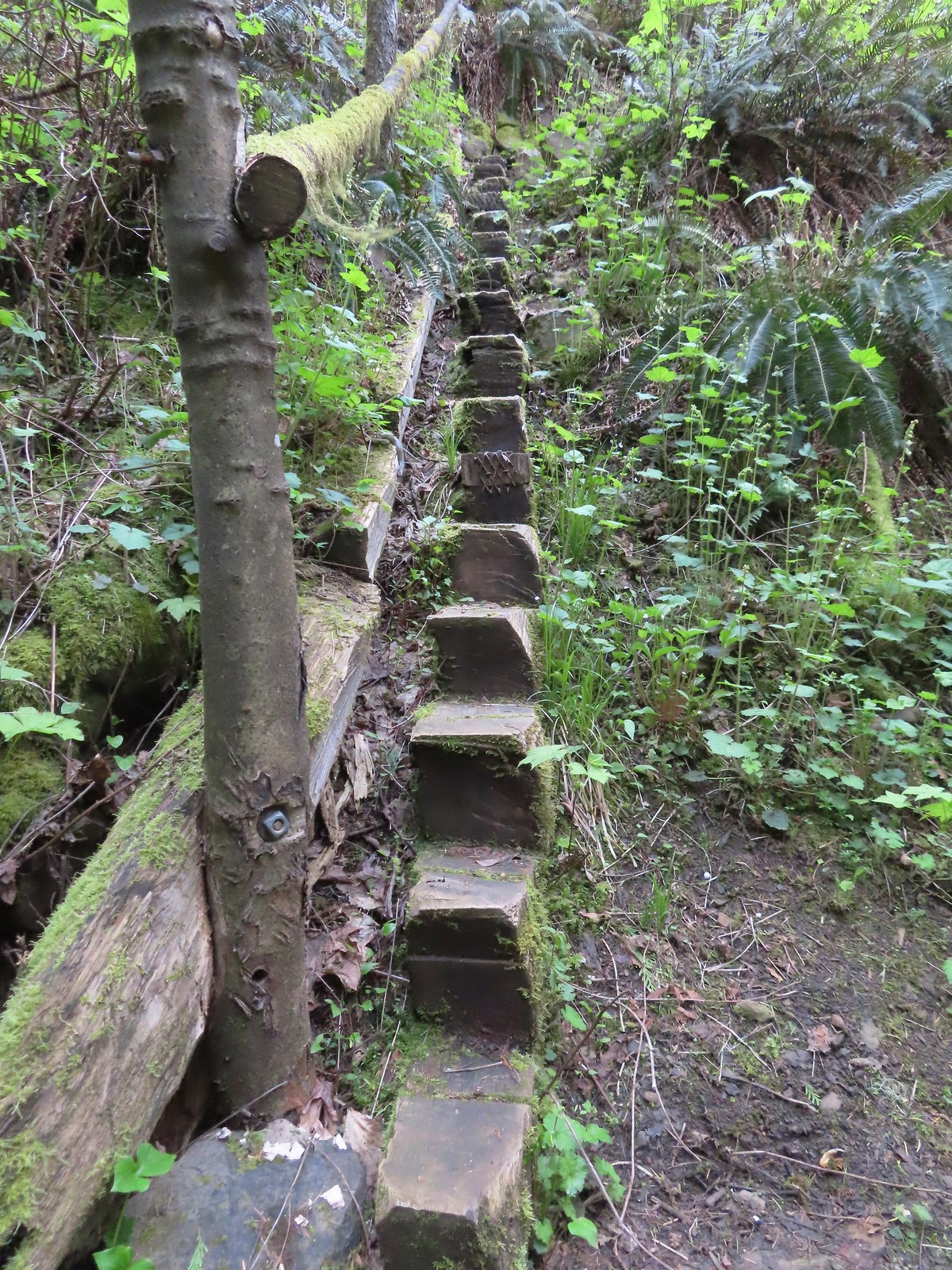
Steps at Lower Archer FallsSteps leading up from Lower Archer Falls.
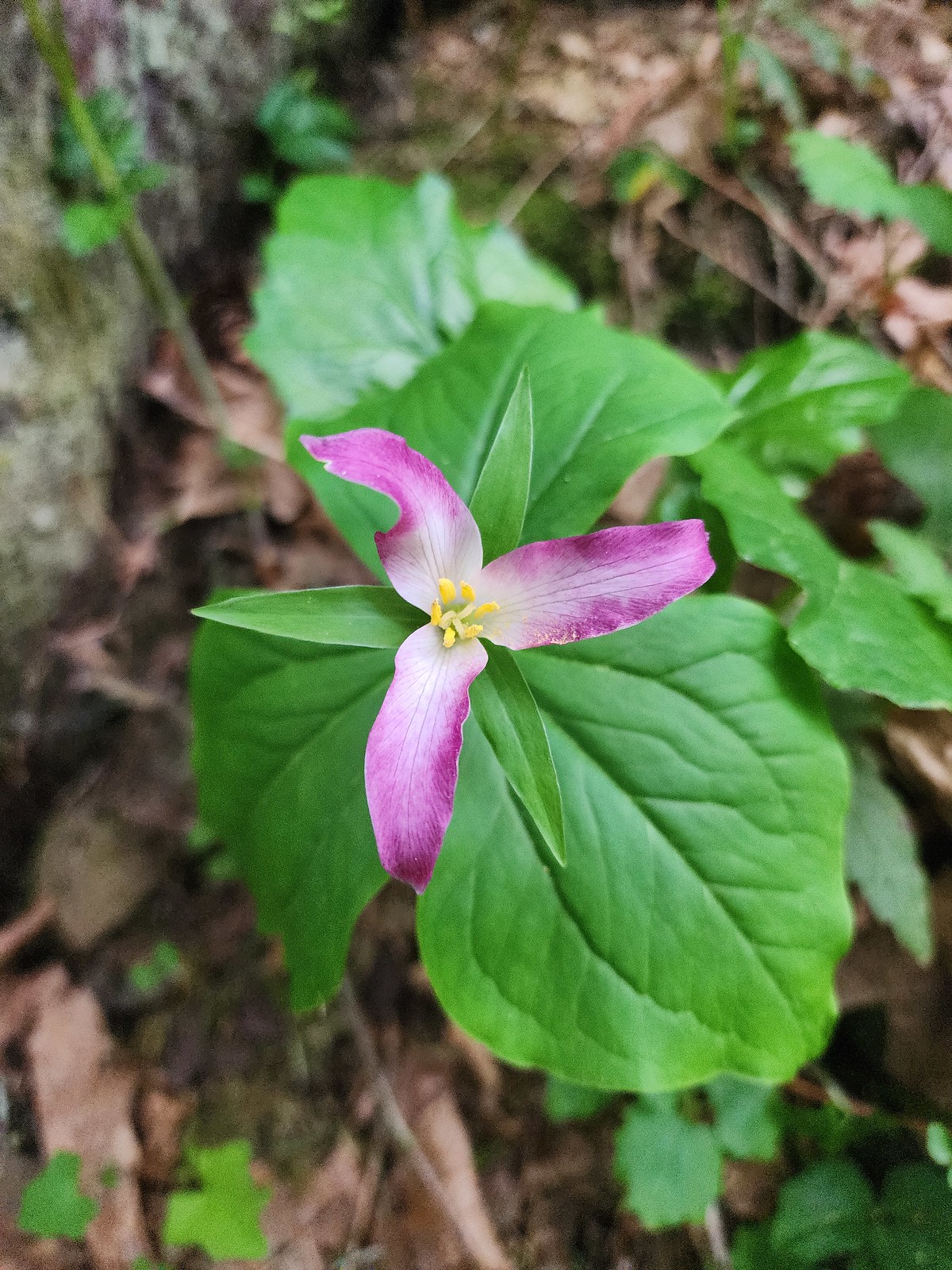
TrilliumTrillium

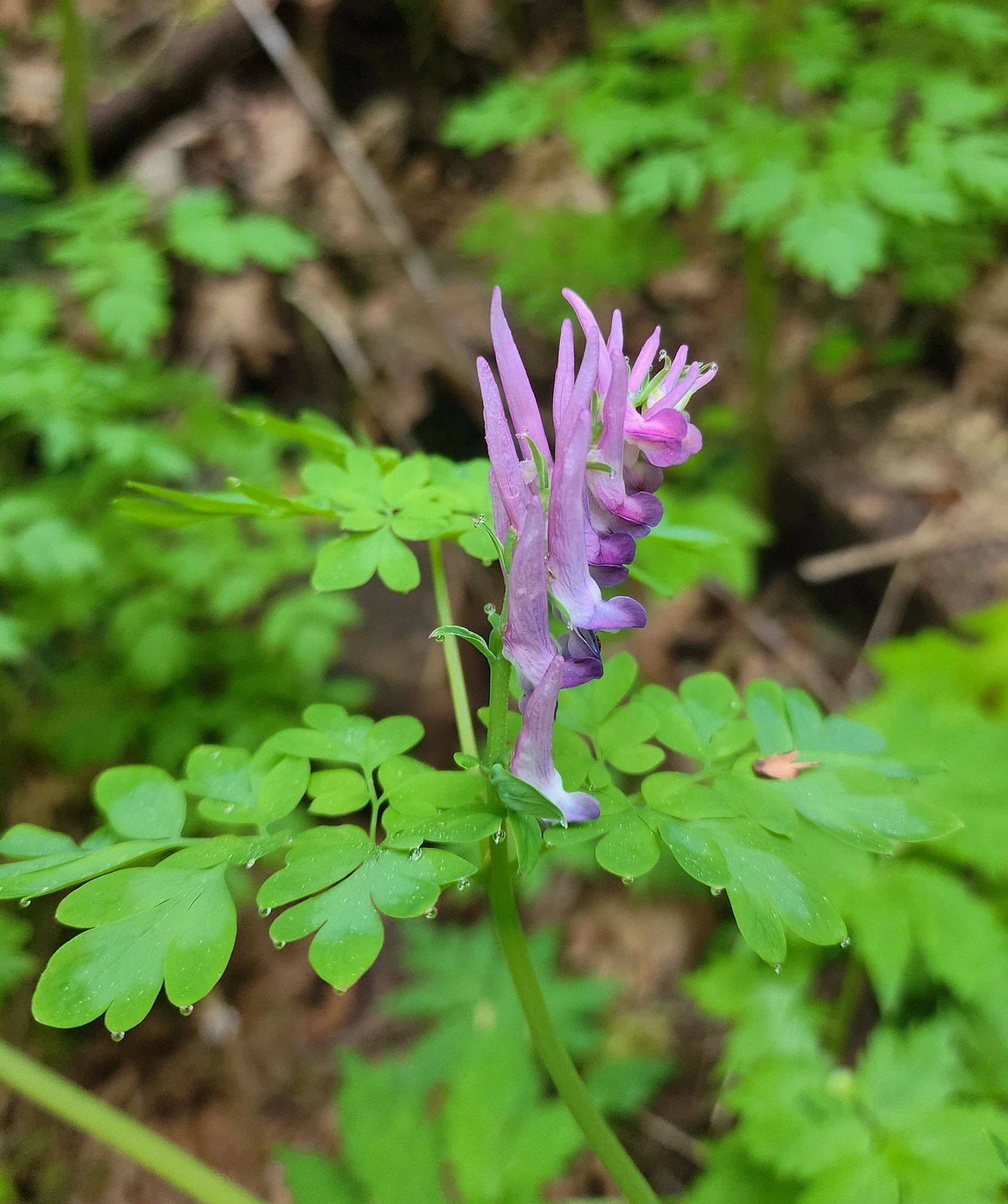
Scouler's corydalisScouler’s corydalis

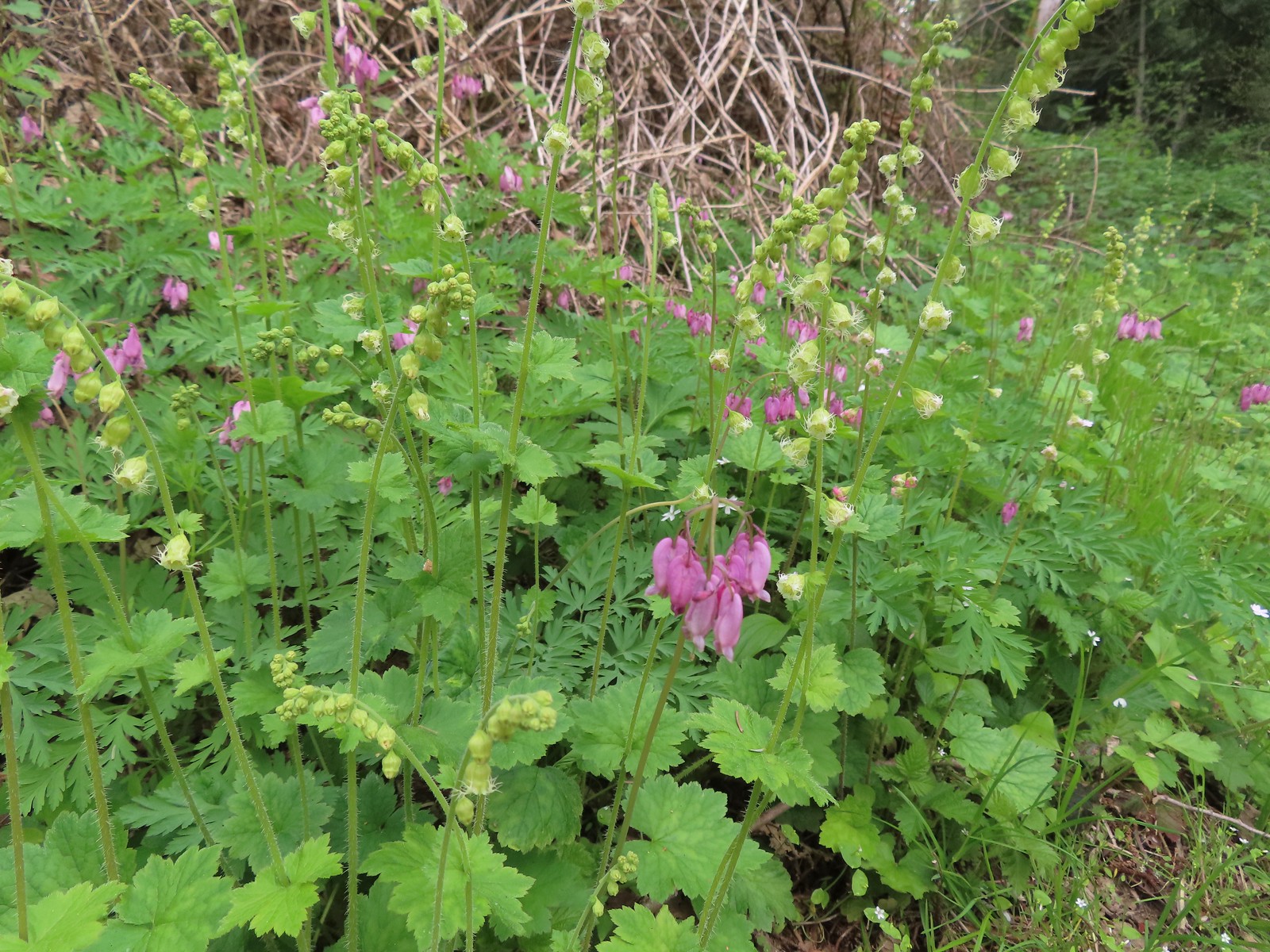
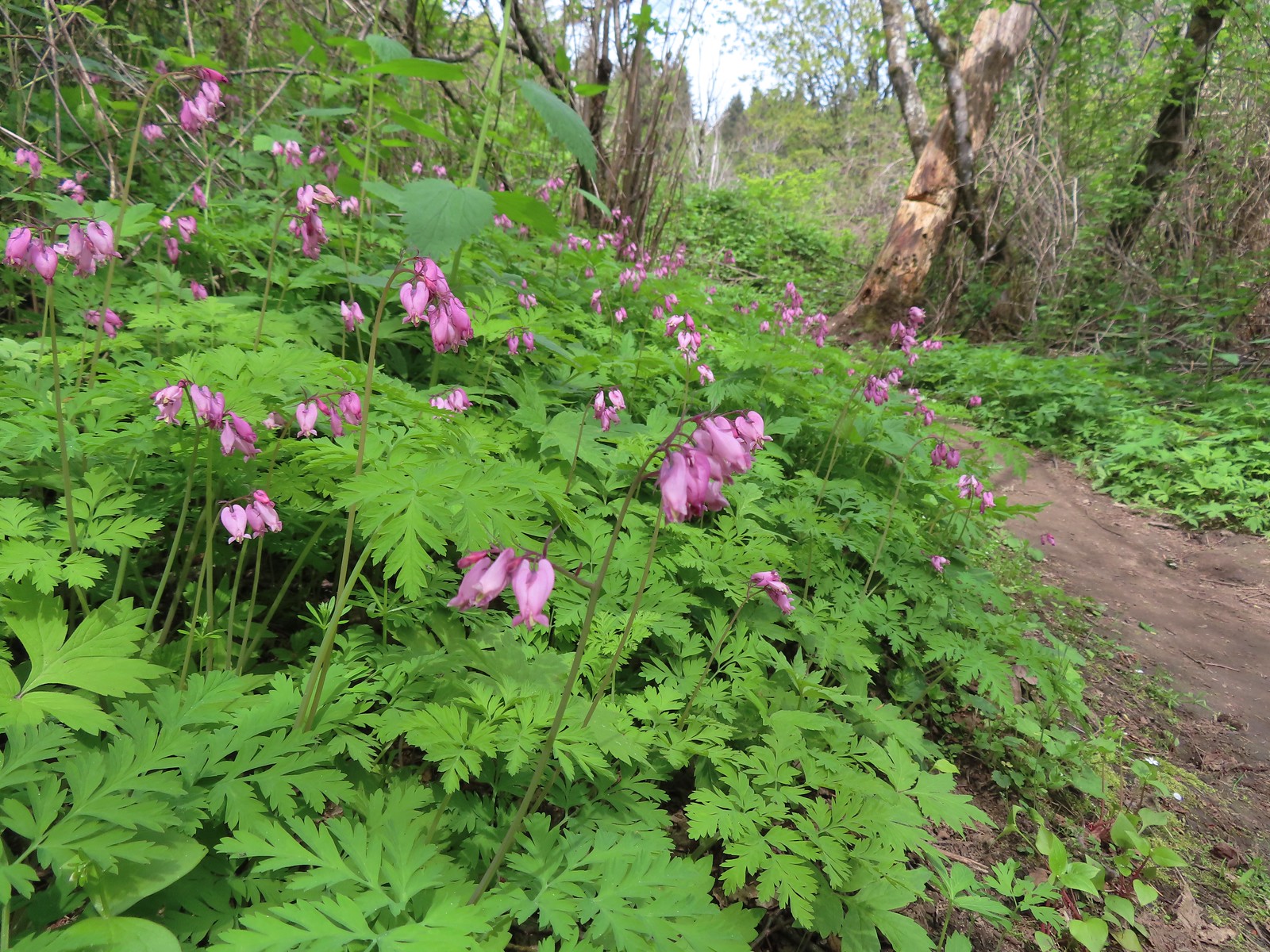
Bleeding heartBleeding heart

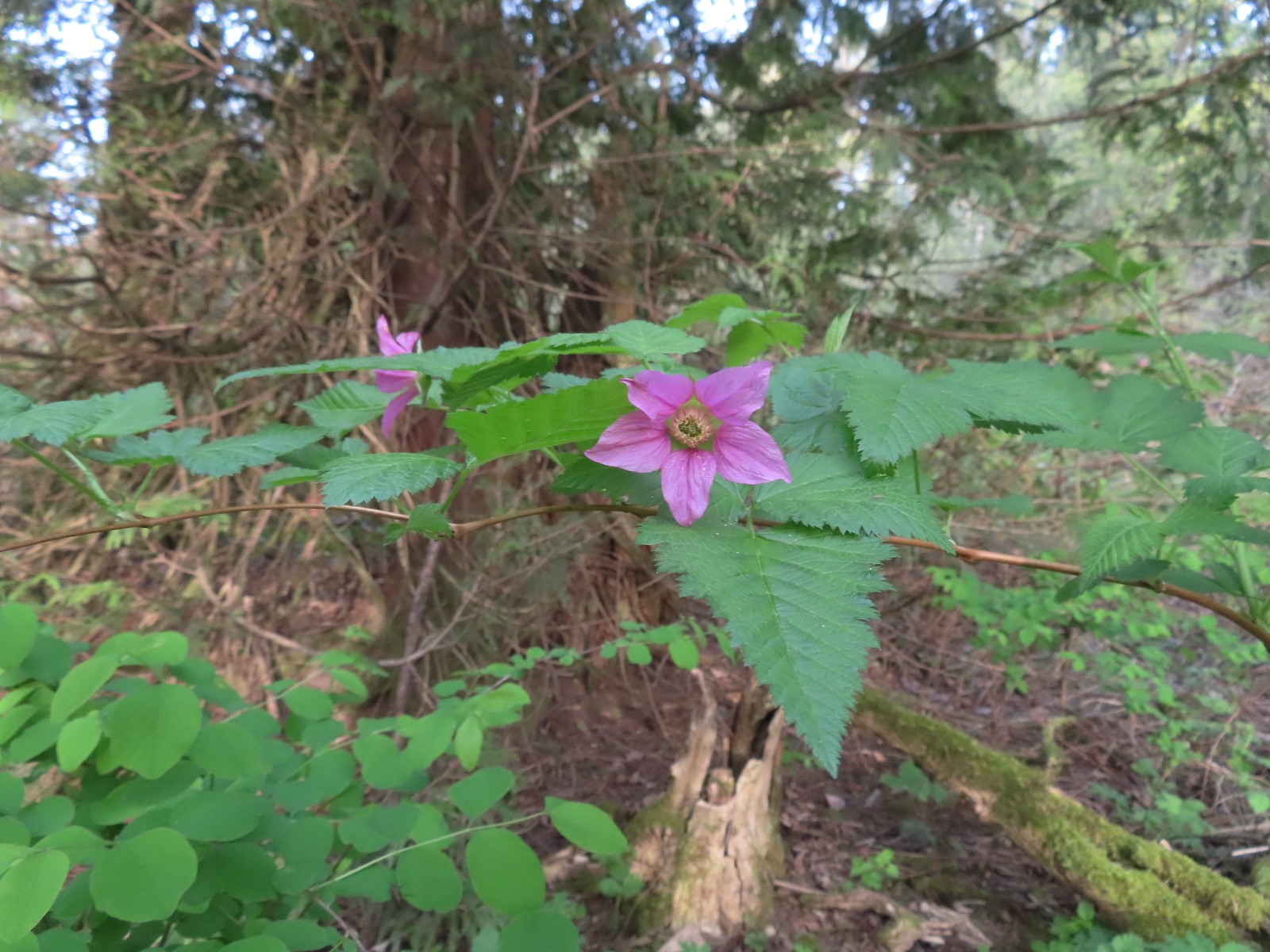
Salmon berrySalmonberry

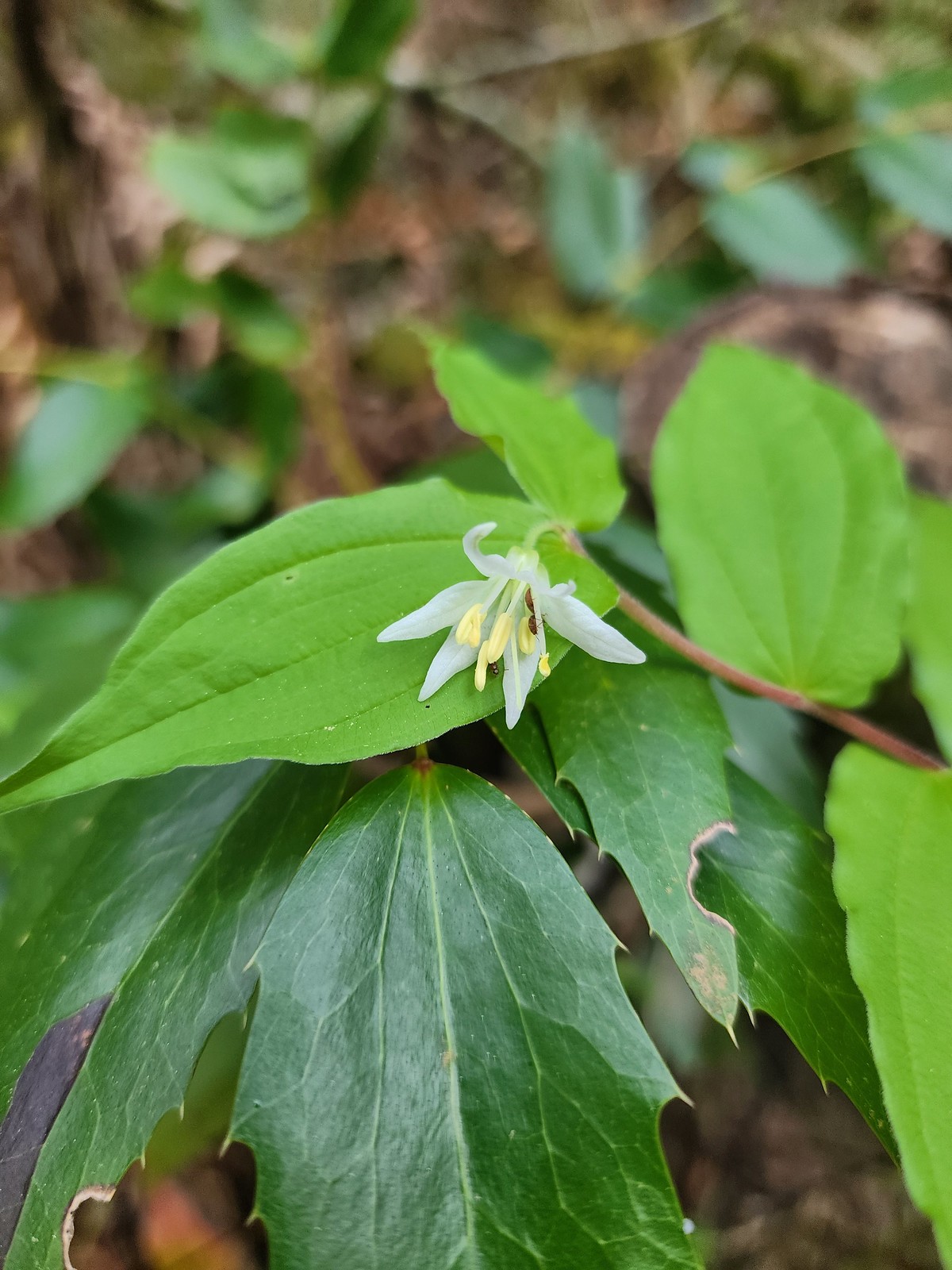
Fairy bellFairy bell

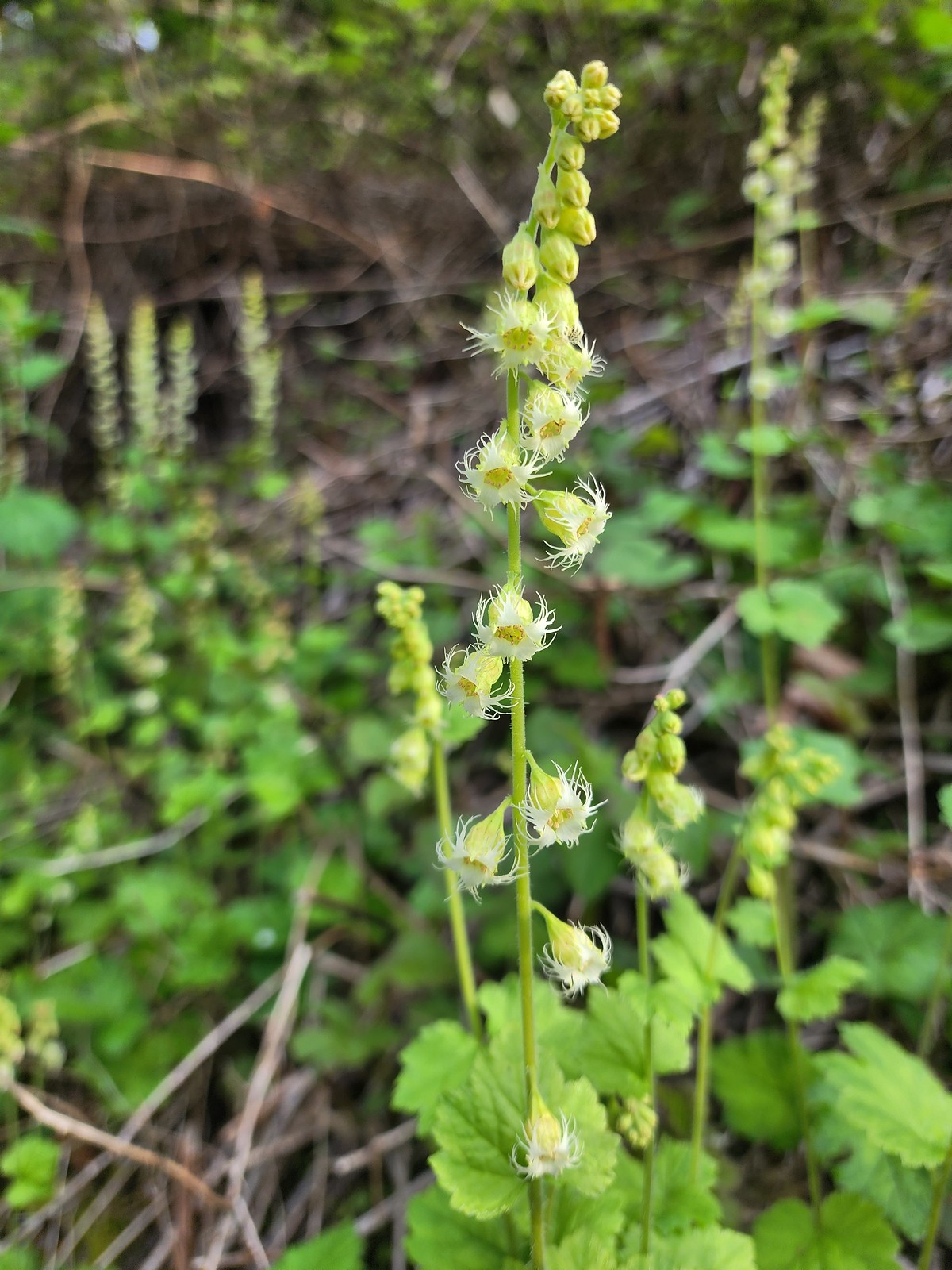
FringecupFringecup

After successfully recrossing the highway we hiked the mile long St. Cloud Loop.
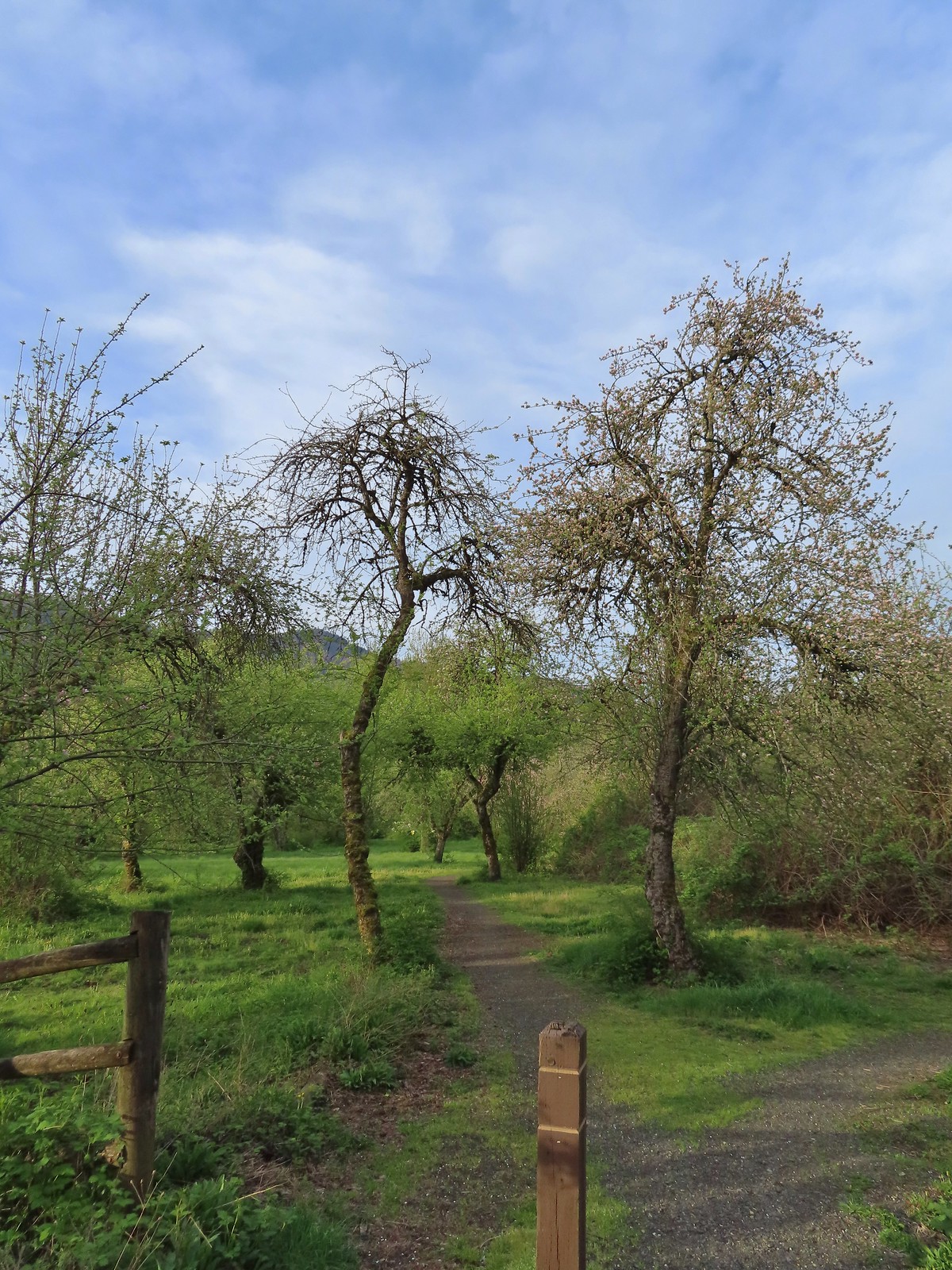
St. Cloud TrailThe start of the loop.

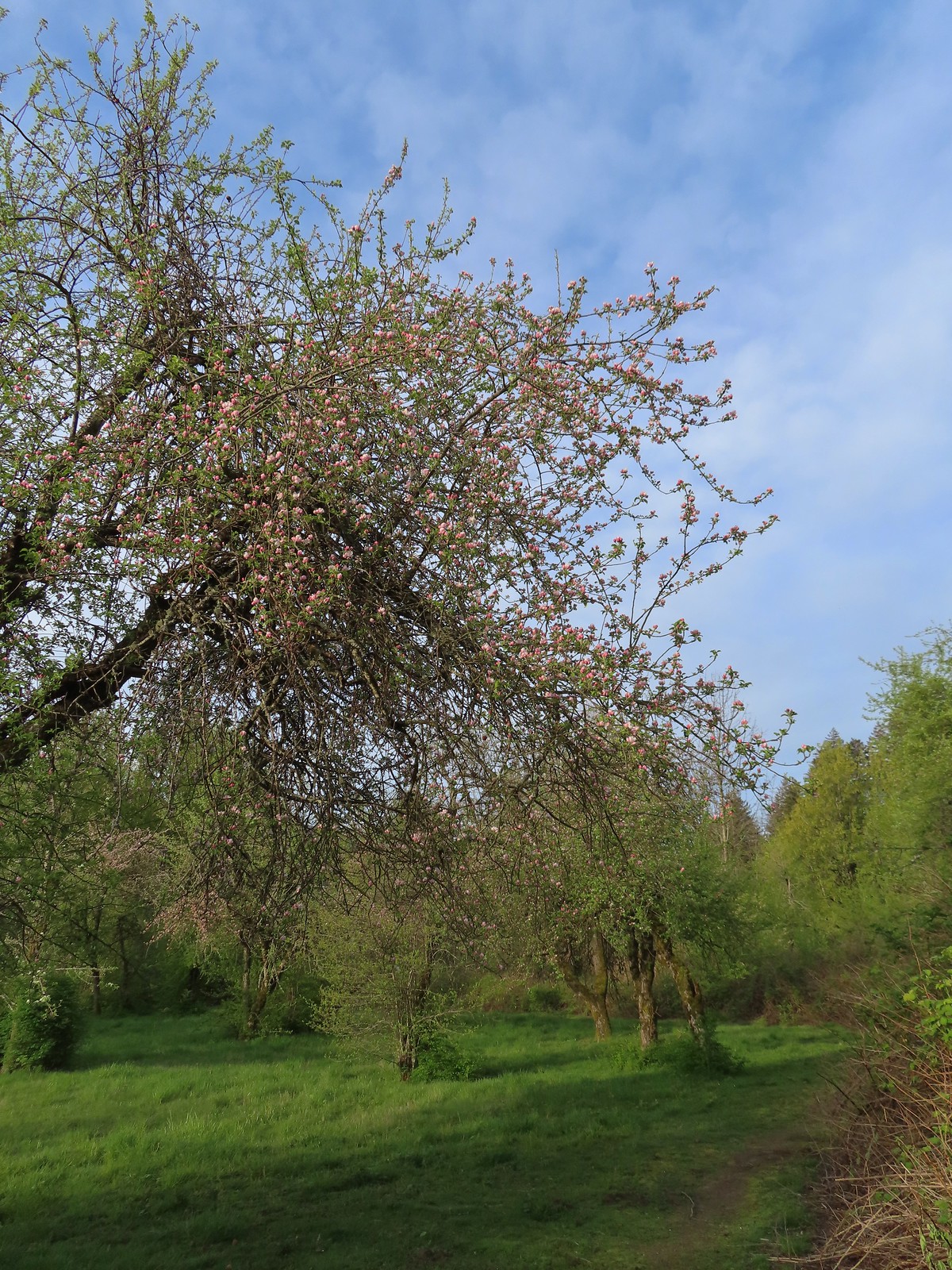
Apple trees along the St. Cloud TrailThe trail loops around a former apple orchard.
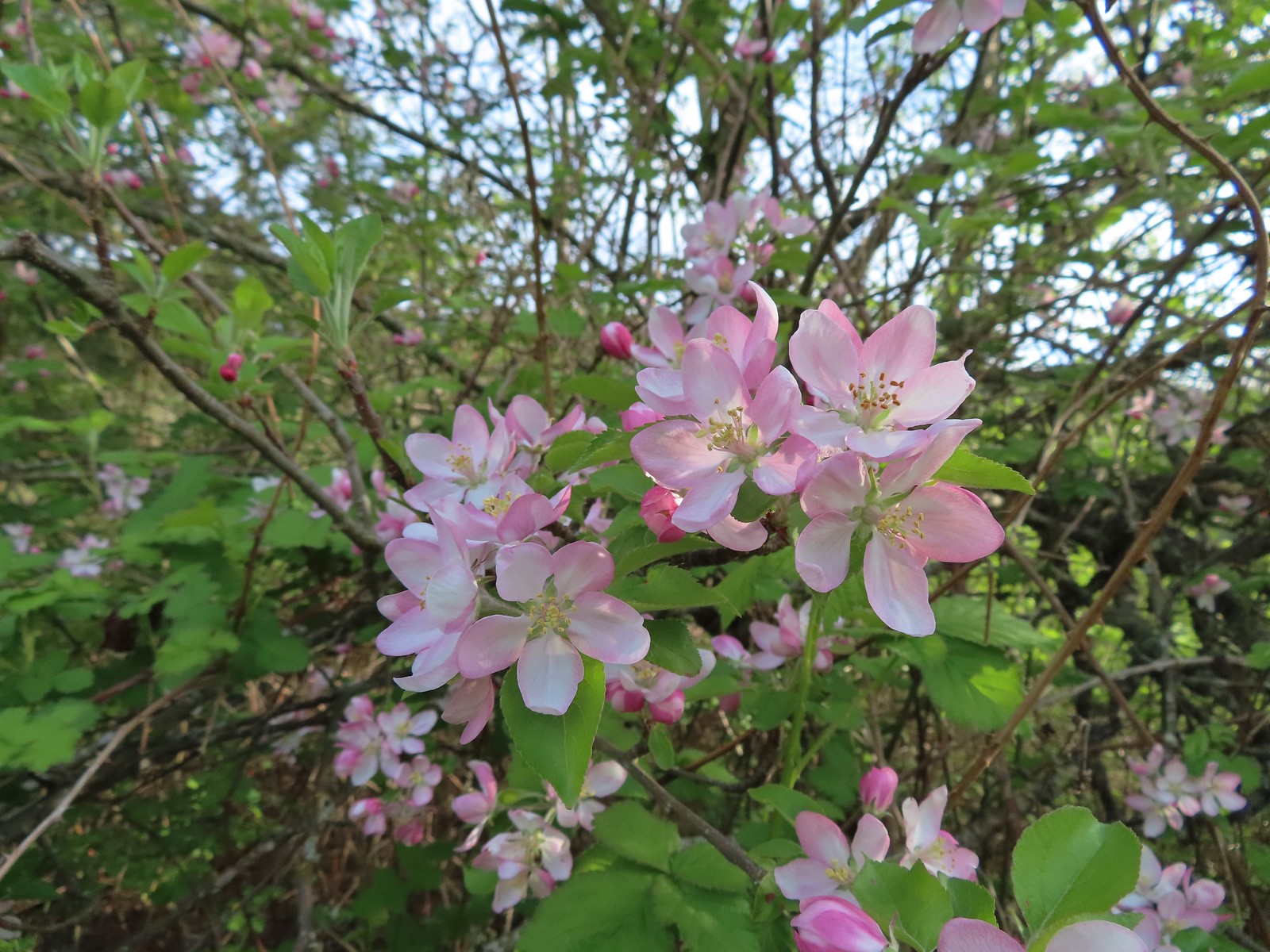
Apple blossomsApple blossoms

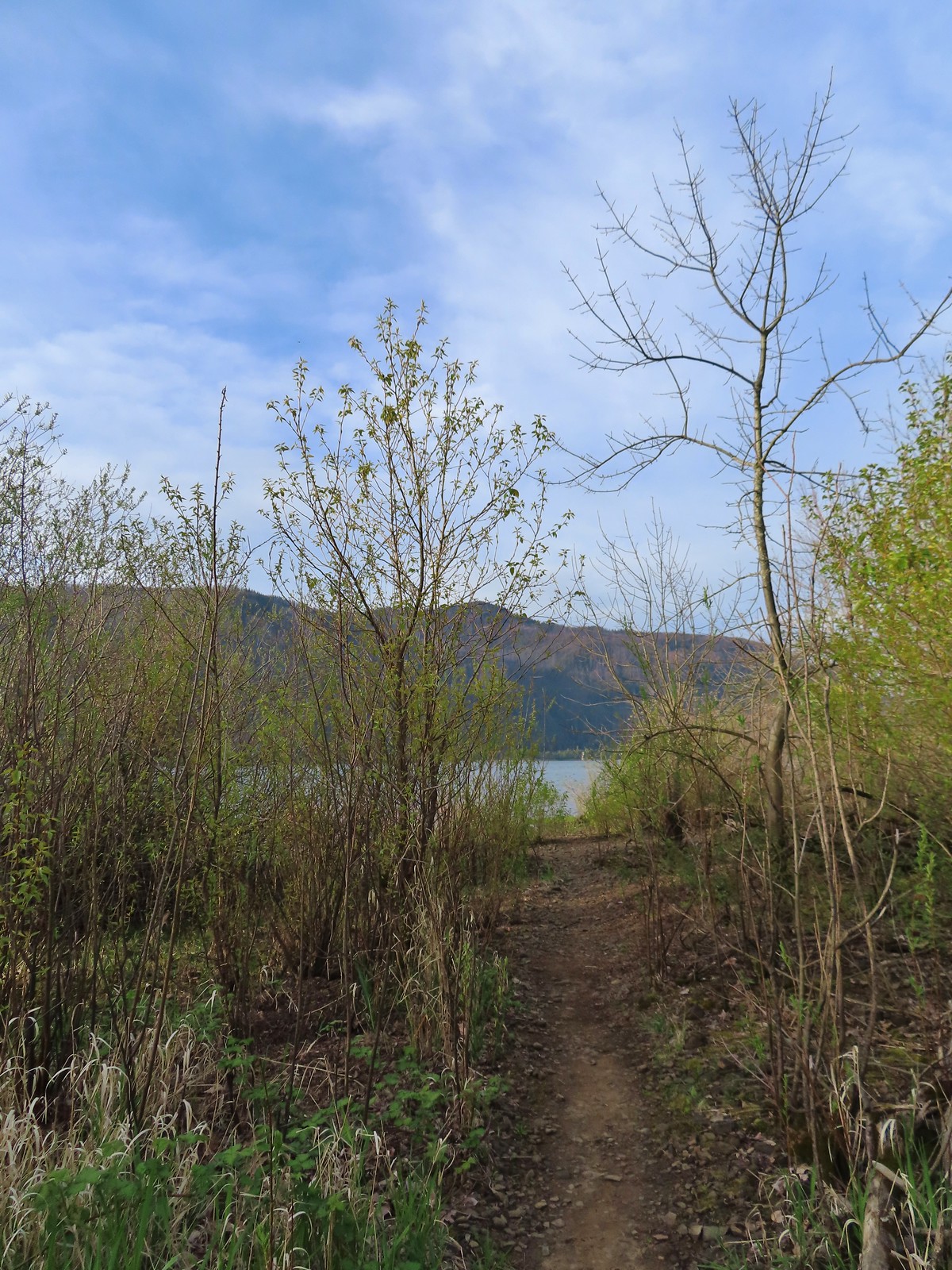
Spur trail to the Columbia RiverA spur trail leading down to the Columbia River.
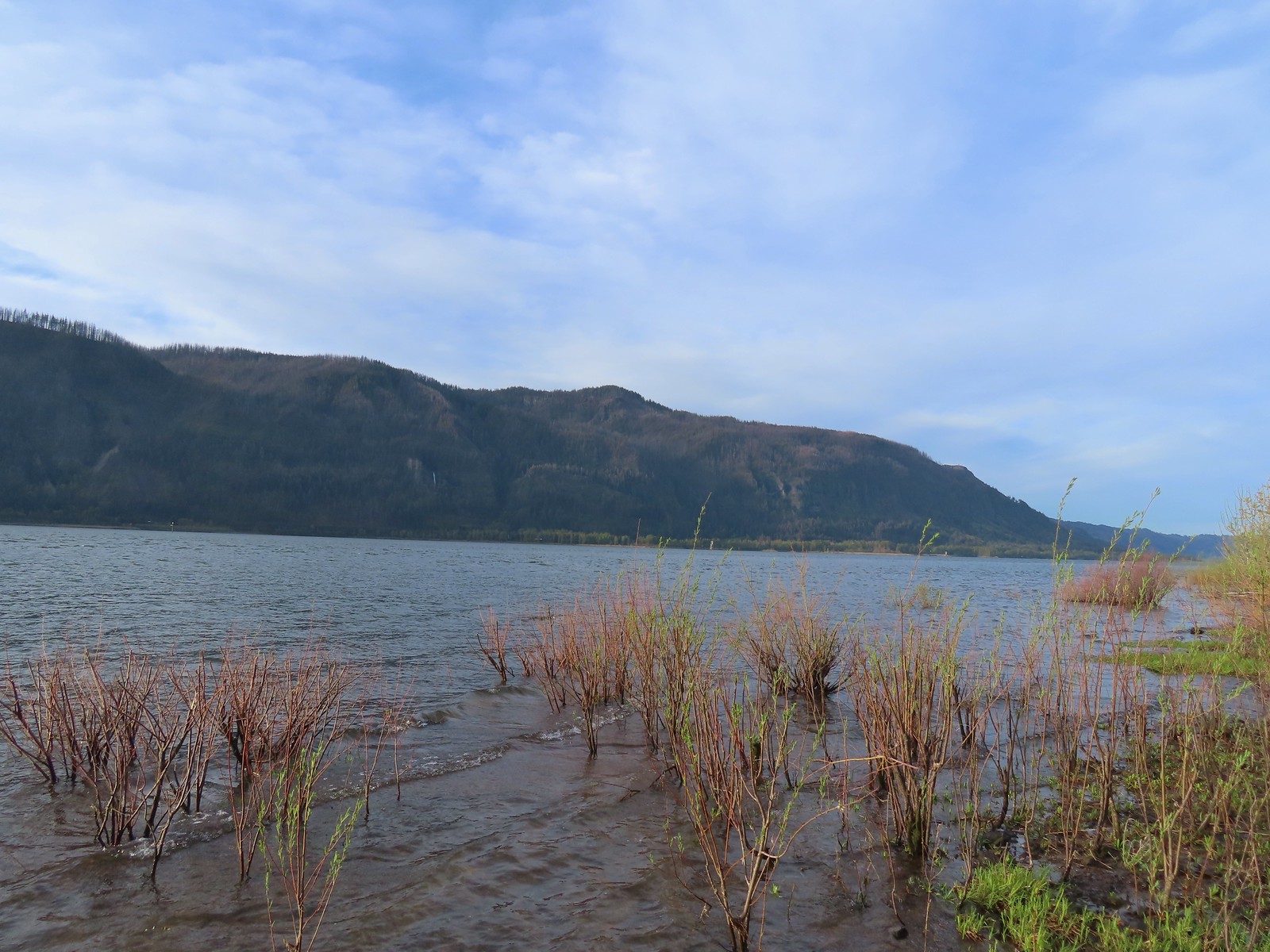
Devil's Rest and Multnomah Falls across the Columbia RiverDevil’s Rest and Multnomah Falls (post)
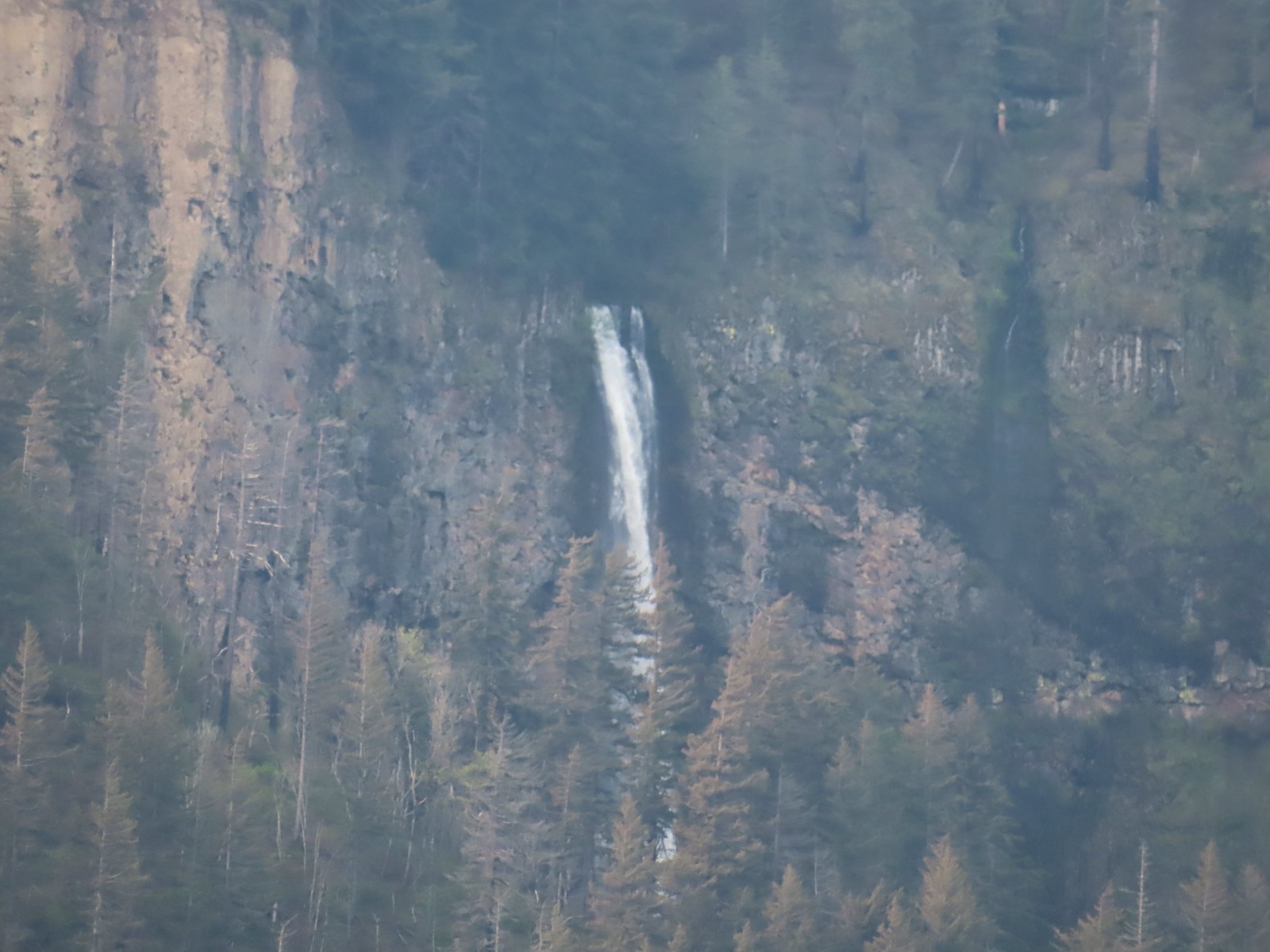
Multnomah FallsMultnomah Falls

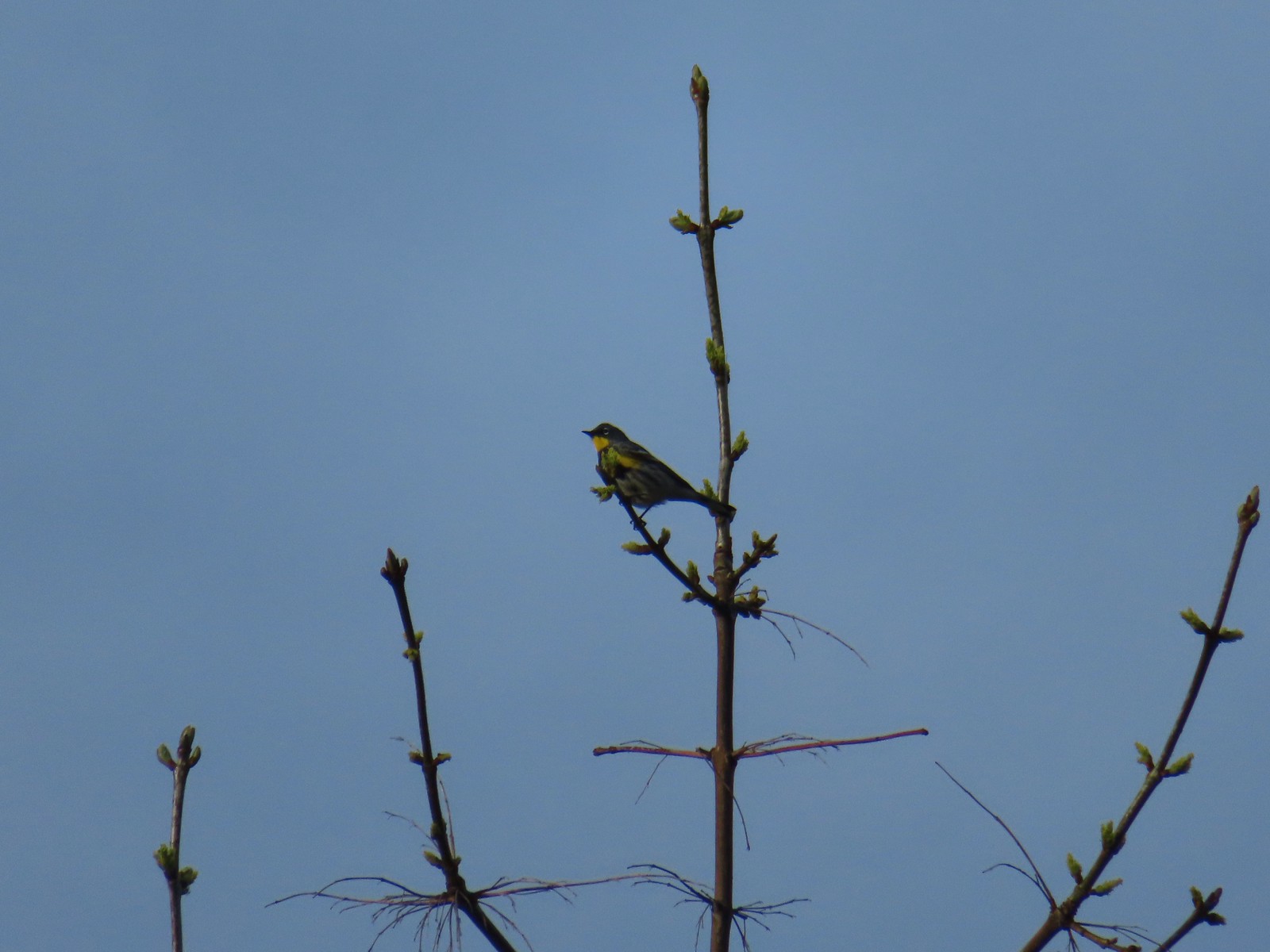
Yellow-rumped warblerYellow-rumped warbler.

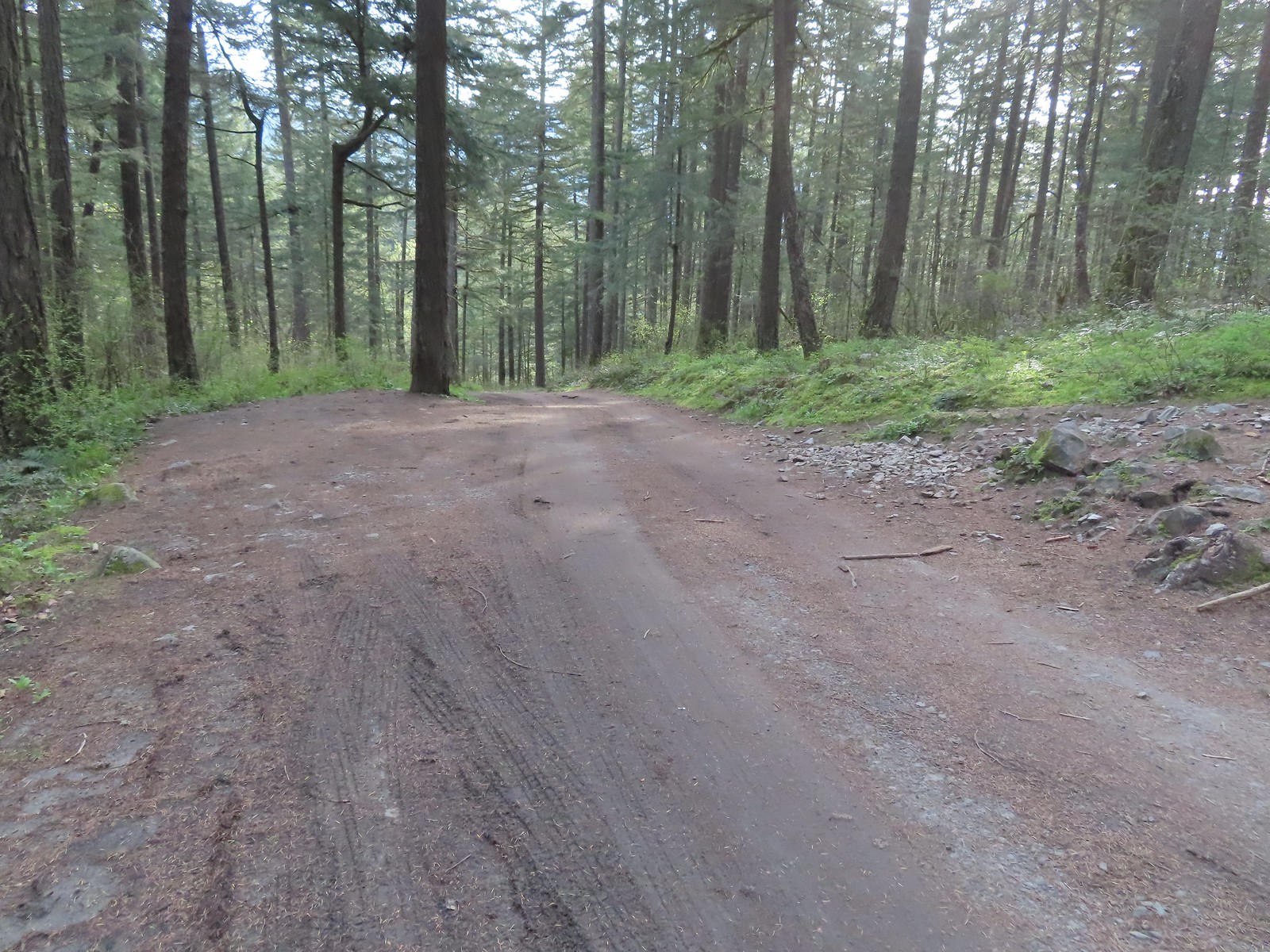
The St. Cloud Day Use Area was the westernmost stop of our day, and from there we headed for the easternmost stop at the Wind Mountain Trailhead. The trailhead is approximately a tenth of a mile downhill beyond a quarry. We parked at the quarry where two other vehicles were parked instead of continuing down the narrow, steep, slightly rutted road.
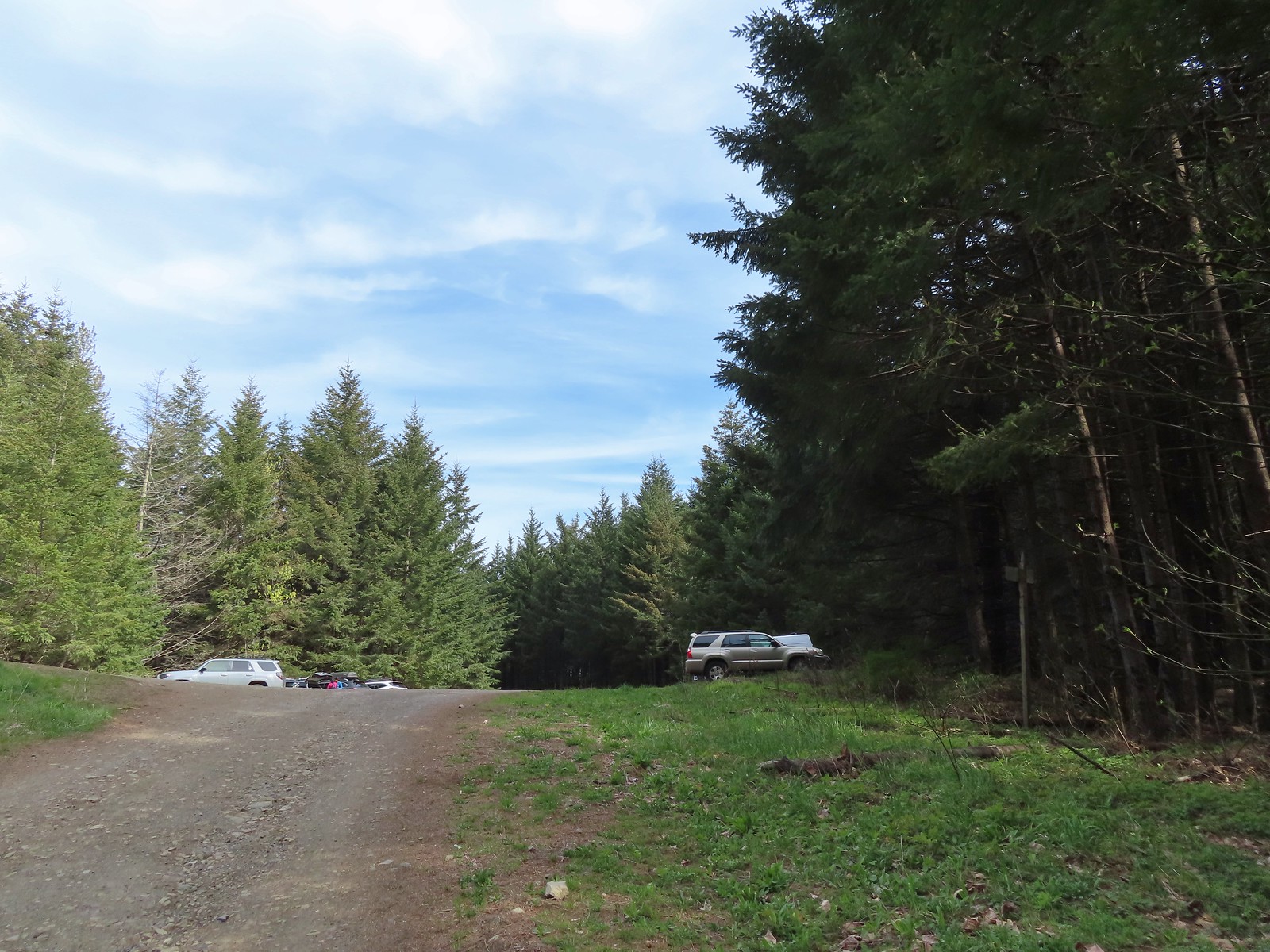
Quarry before the Wind Mountain TrailheadThe quarry later in the morning.

Wind Mountain TrailheadPullout at the actual trailhead.

Wind Mountain TrailThe Wind Mountain Trail at the trailhead.

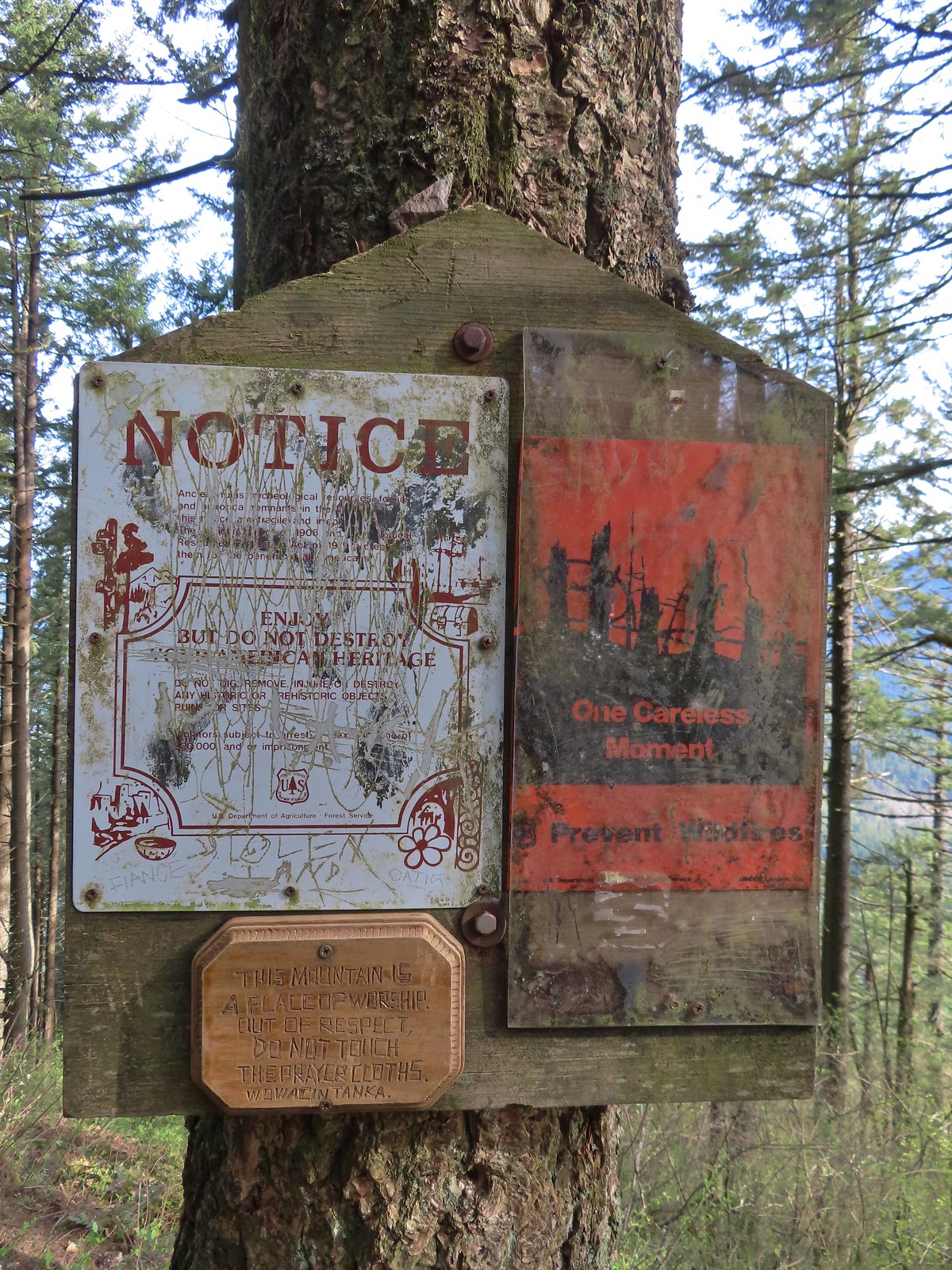
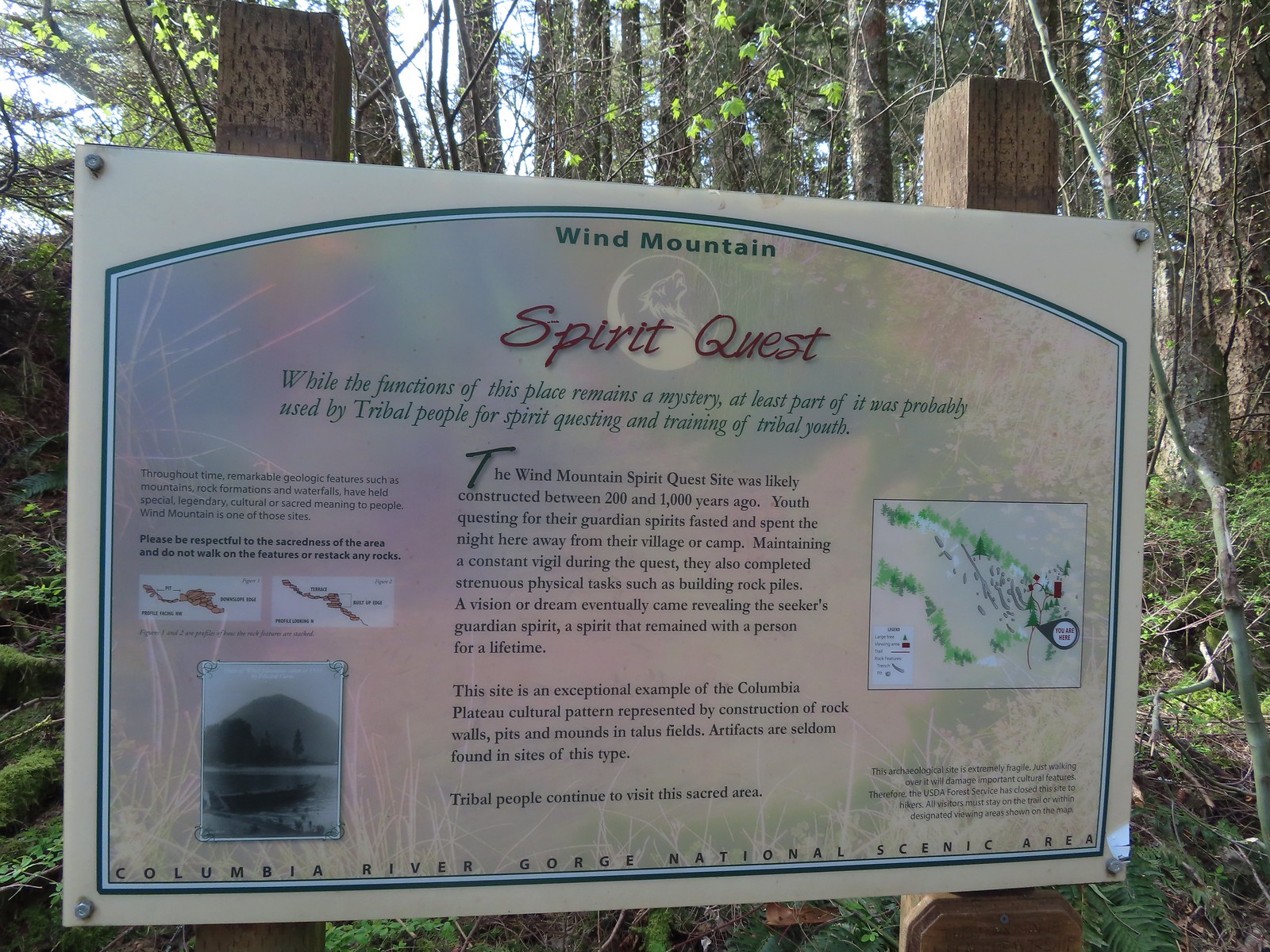
The Wind Mountain Trail gains over 1100′ in just over a mile as it climbs to the summit of Wind Mountain. The mountain’s summit is sacred to the area’s Native American tribes and signs near the summit show the areas where hikers are allowed to be.

The climb was a good workout. While the trail didn’t appear to be all that steep our legs reminded us that it was.
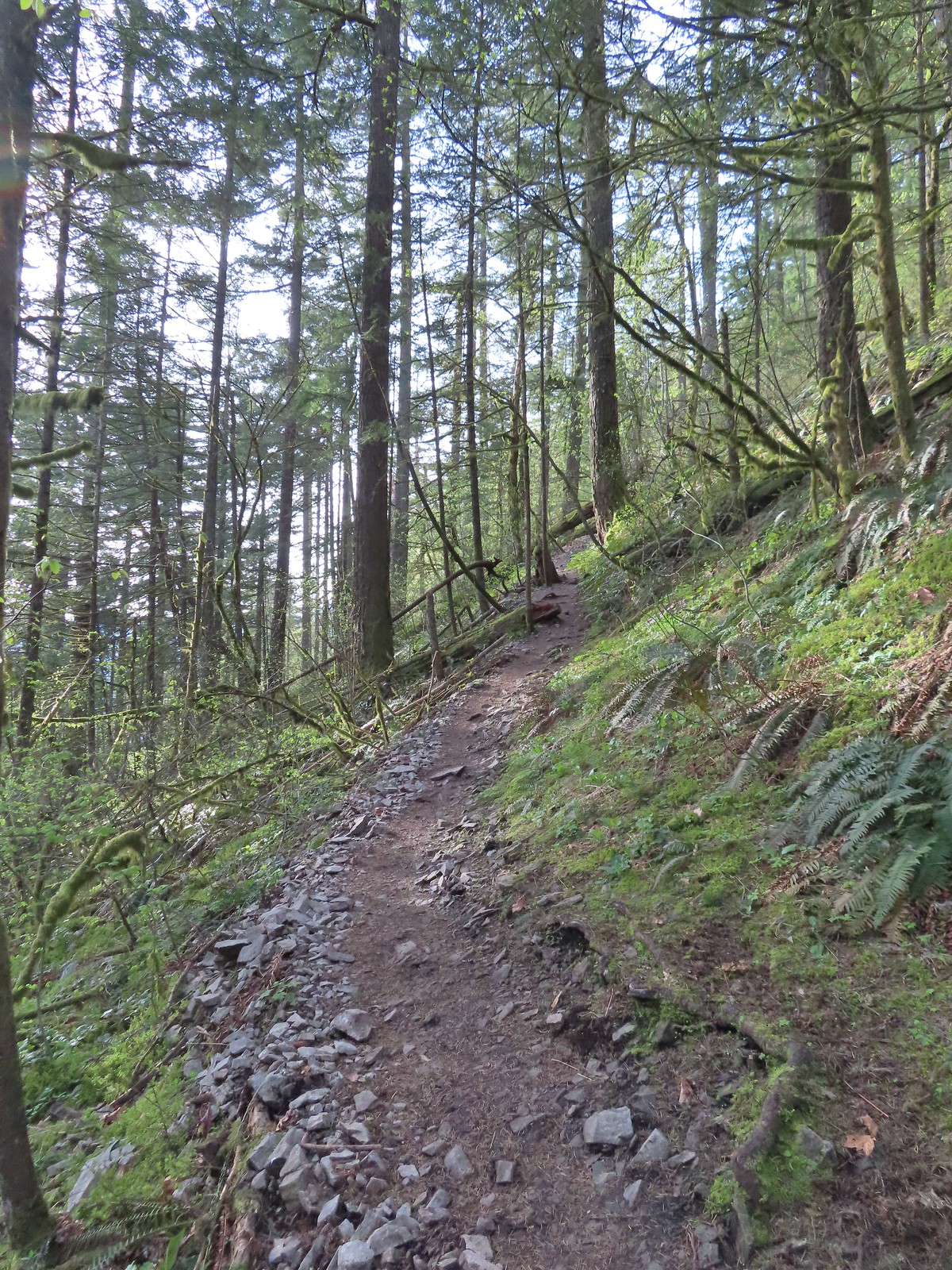
Wind Mountain Trail

There was a nice variety of wildflowers on display and at the 0.4-mile mark we came to a spur trail leading out to a rock outcrop.
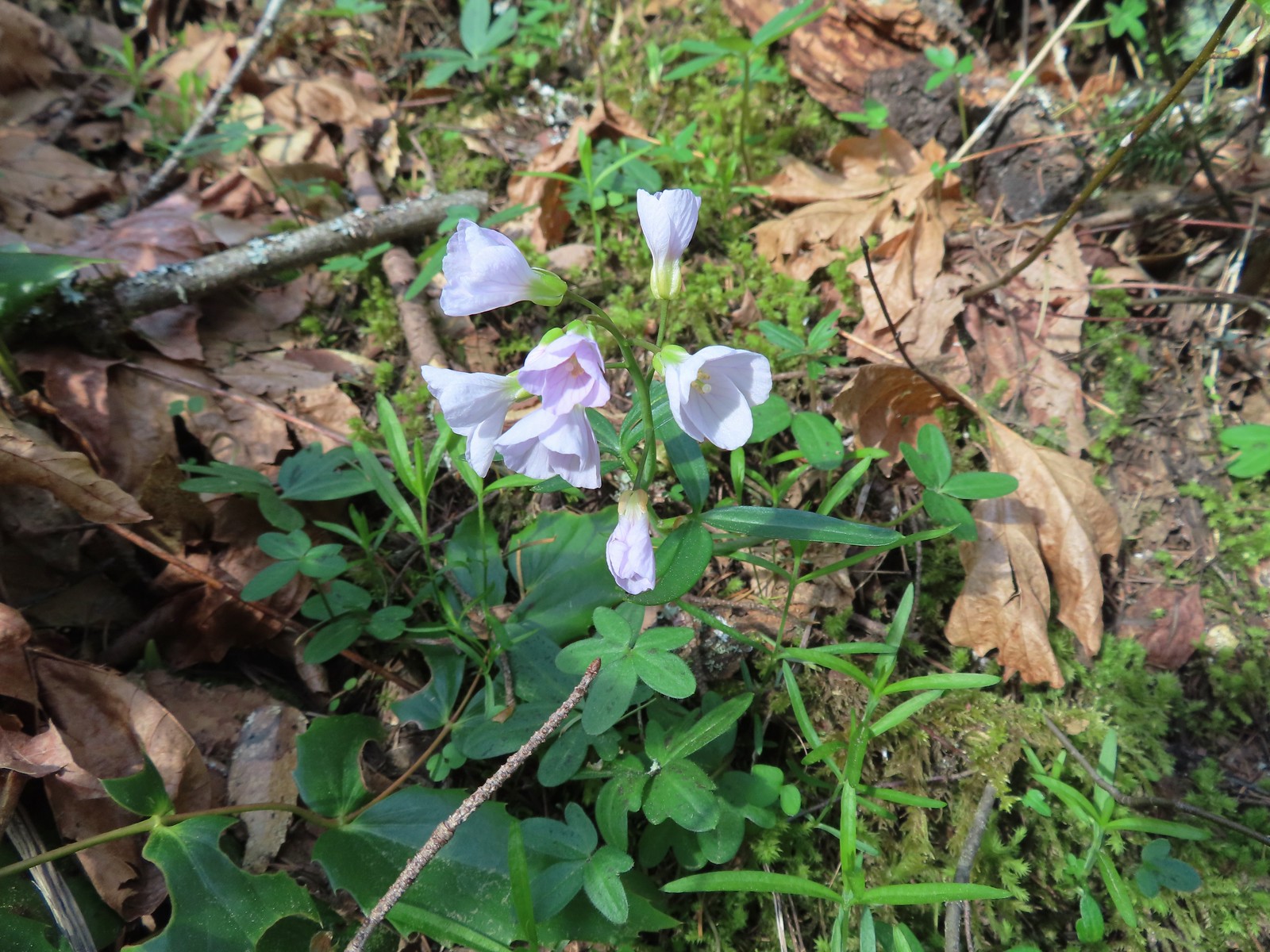
ToothwortSlender toothwort

TrilliumTrillium

Red flowering currantRed flowering currant

Red flowering currantClose up of red flowering currant

Pioneer violetPioneer violet

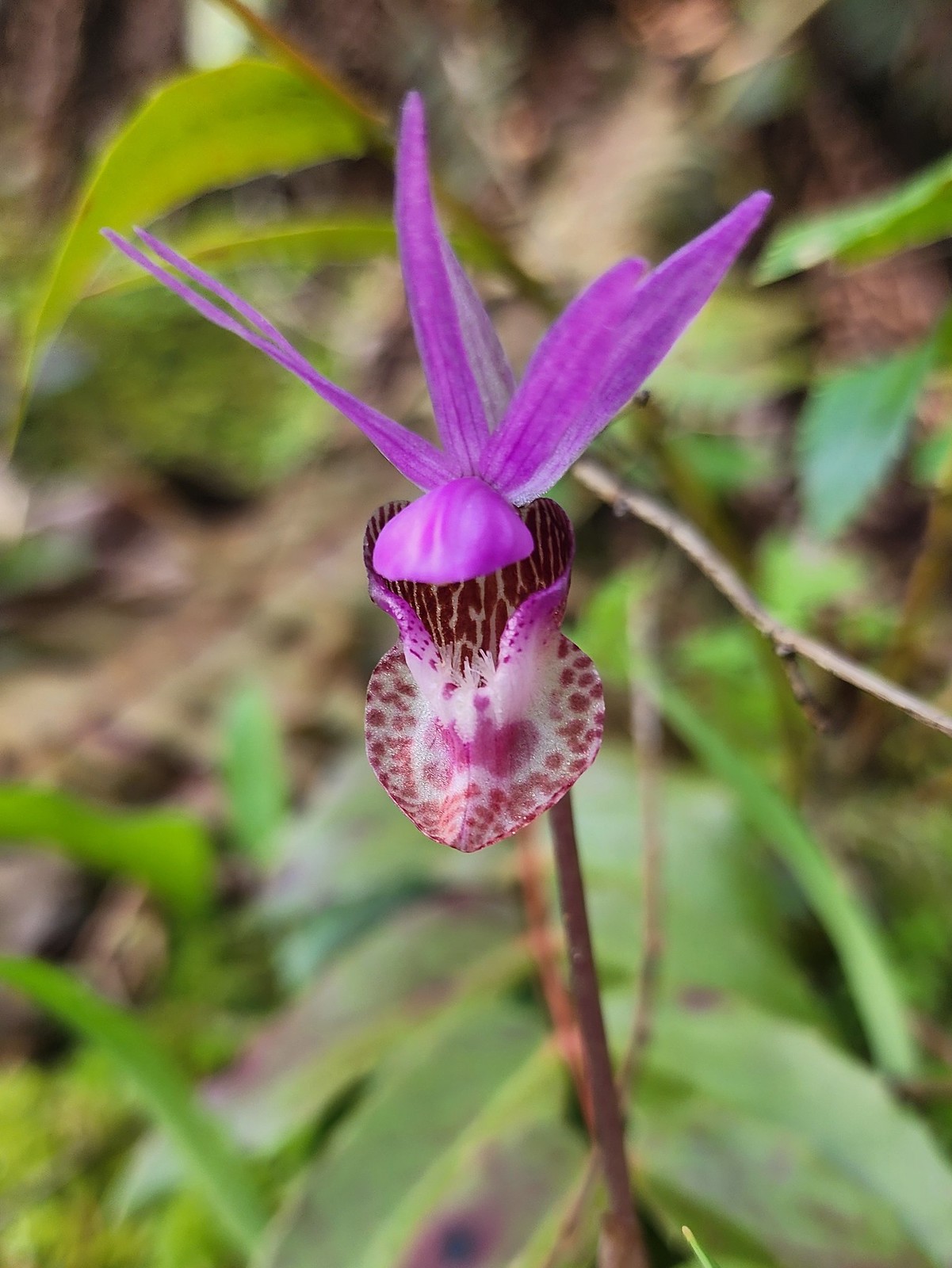
Fairy slipperFairy slipper

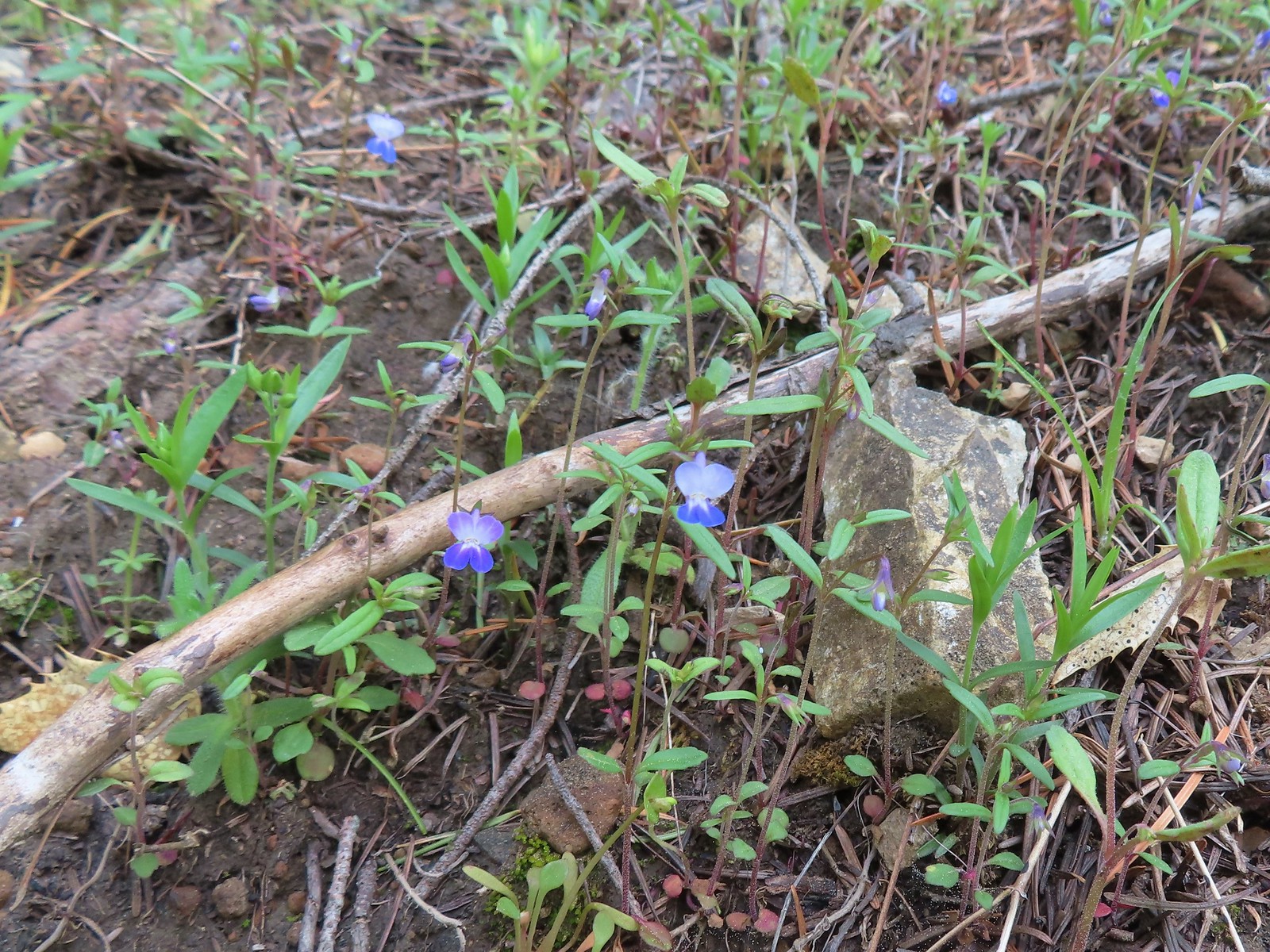
Blue-eyed MaryBlue-eyed Mary

Spur to a viewpoint along the Wind Mountain TrailThe spur trail down to the outcrop.

The spur trail was steep a little sketchy in spots so Heather opted to skip the viewpoint while I carefully made my way down.
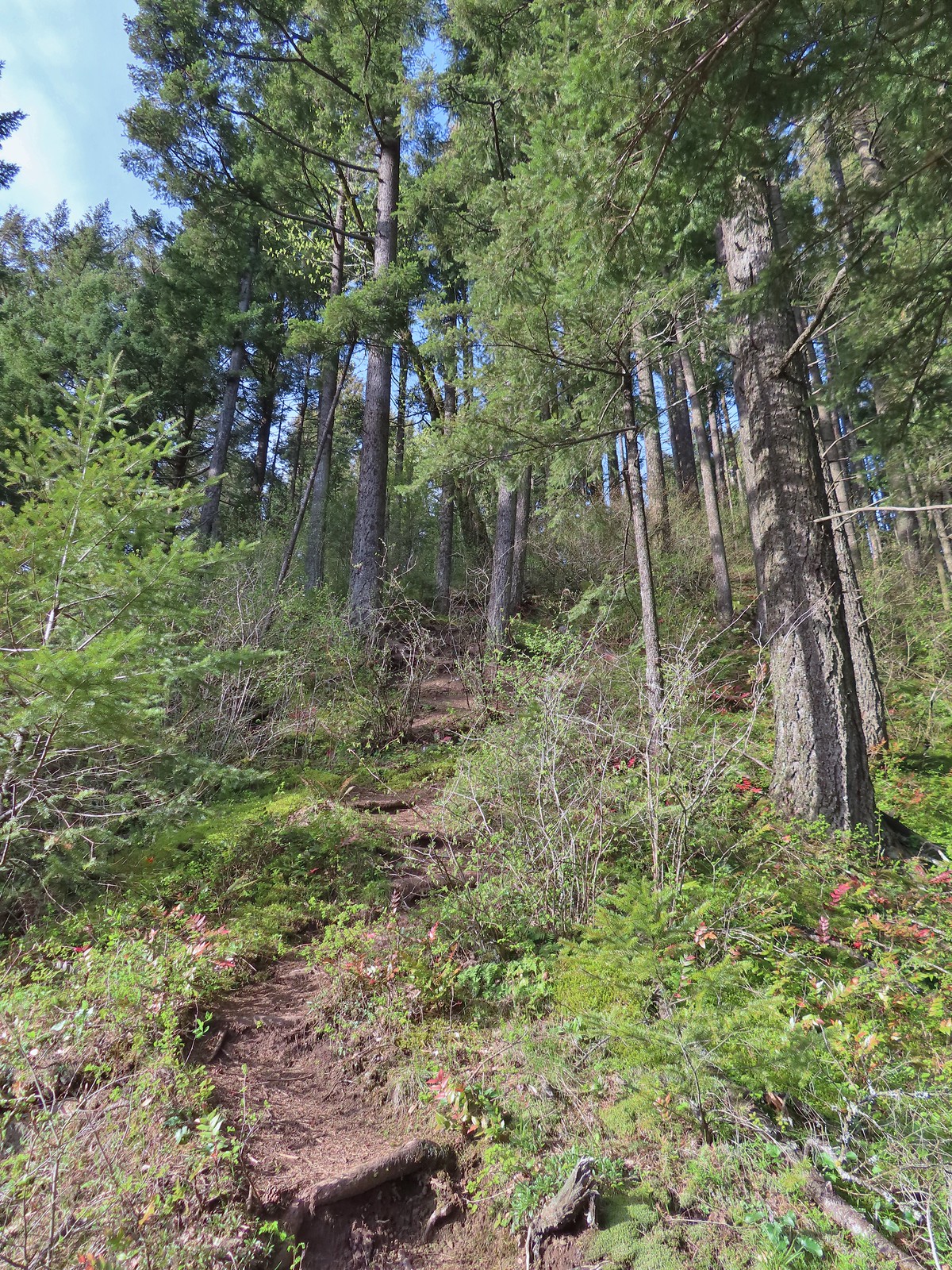
Viewpoint spur trailLooking back up the spur trail.

Service berryServiceberry

Overlook just off the Wind Mountain TrailAugspurger Mountain (post) from the outcrop.
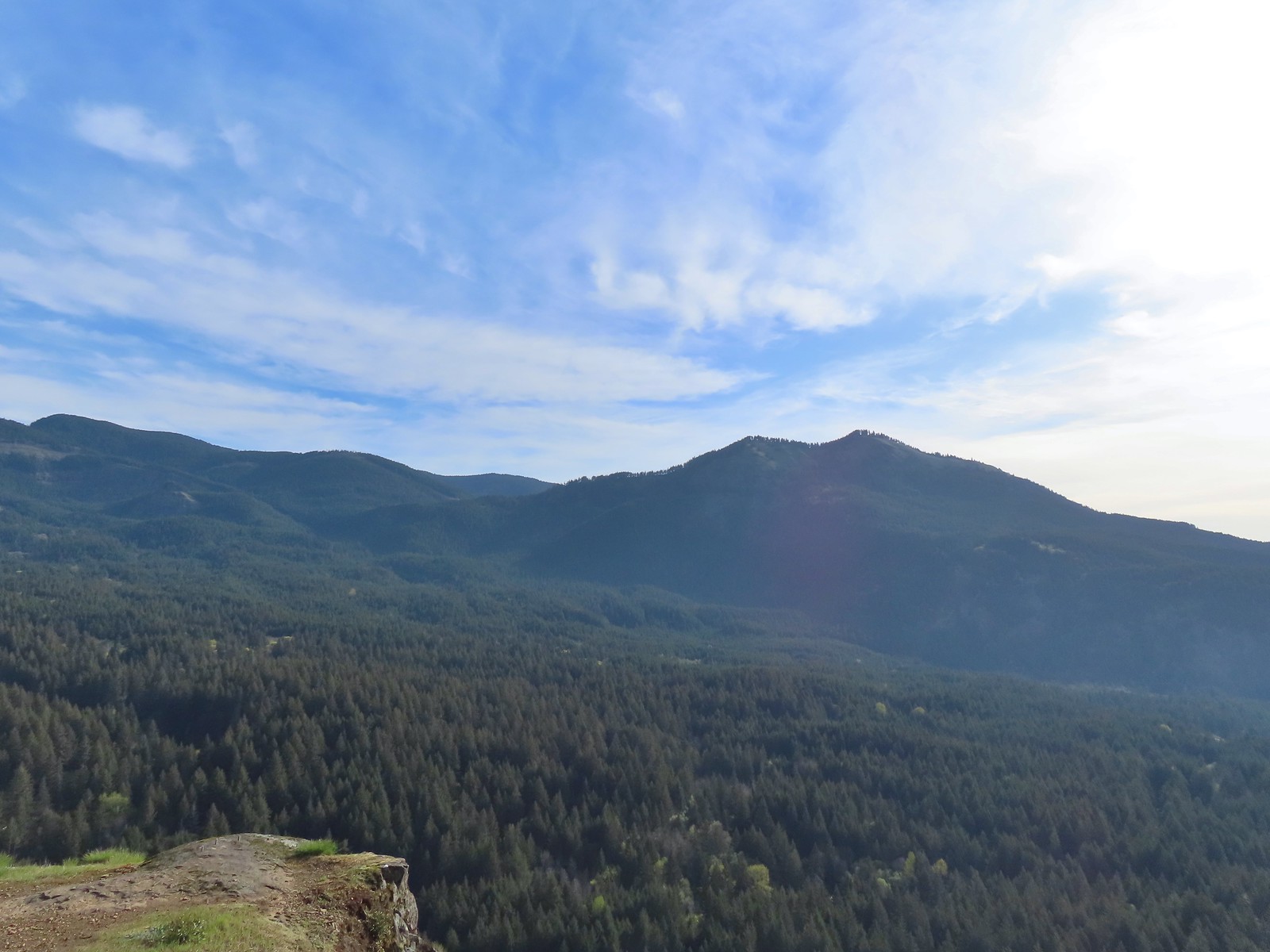
Dog MountainDog Mountain (post)

After taking in the view I returned to the trail and continued uphill.
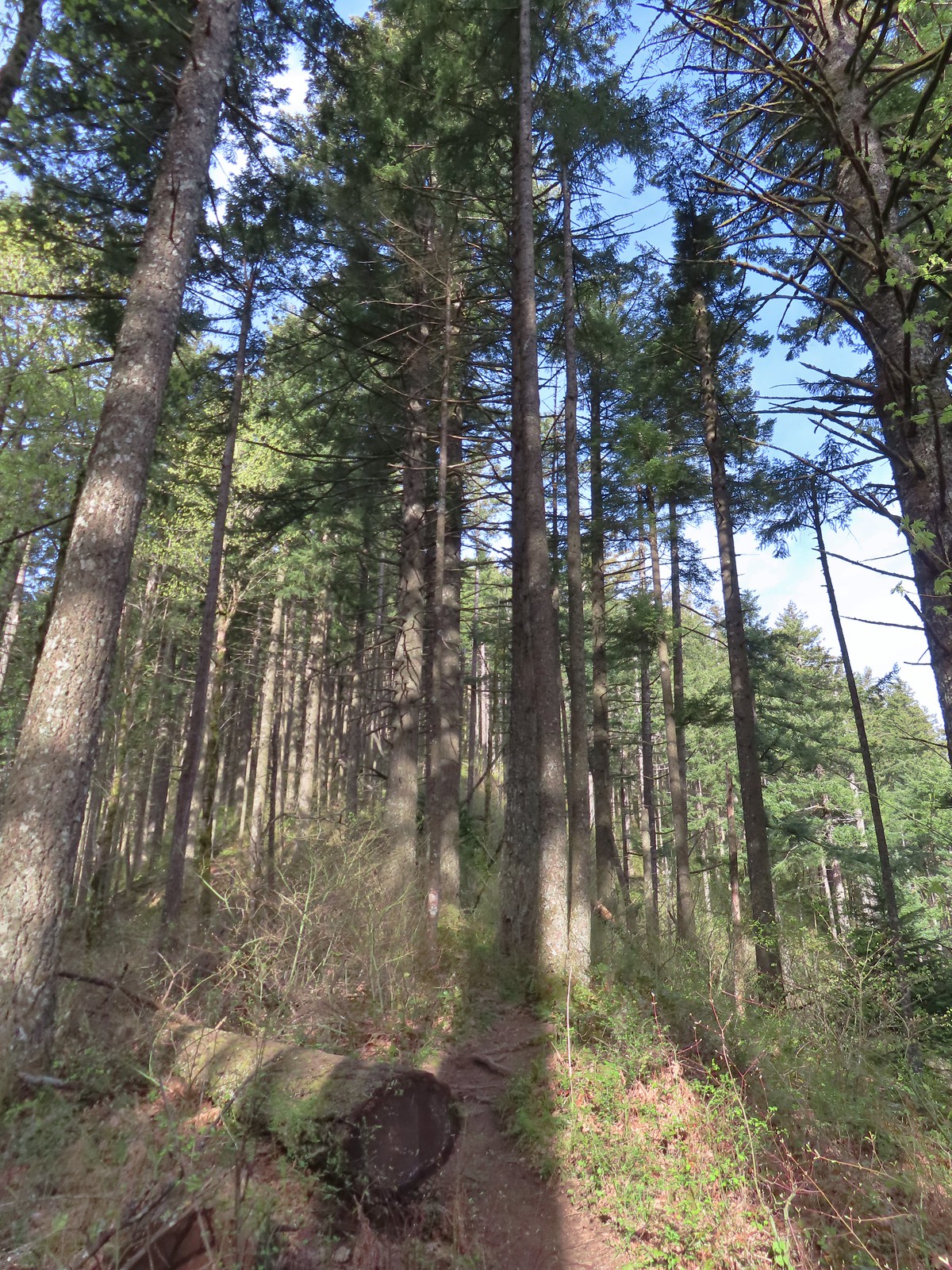
Wind Mountain Trail

Largeleaf sandwortLargeleaf sandwort

Wind Mountain TrailTalus slope on Wind Mountain.

Slender toothwort along the Wind Mountain TrailSlender toothwort along the trail.

Sign along the Wind Mountain TrailOne of the signs near the summit.

Interpretive sign on Wind MountainInterpretive sign with a map of the areas open to hikers.
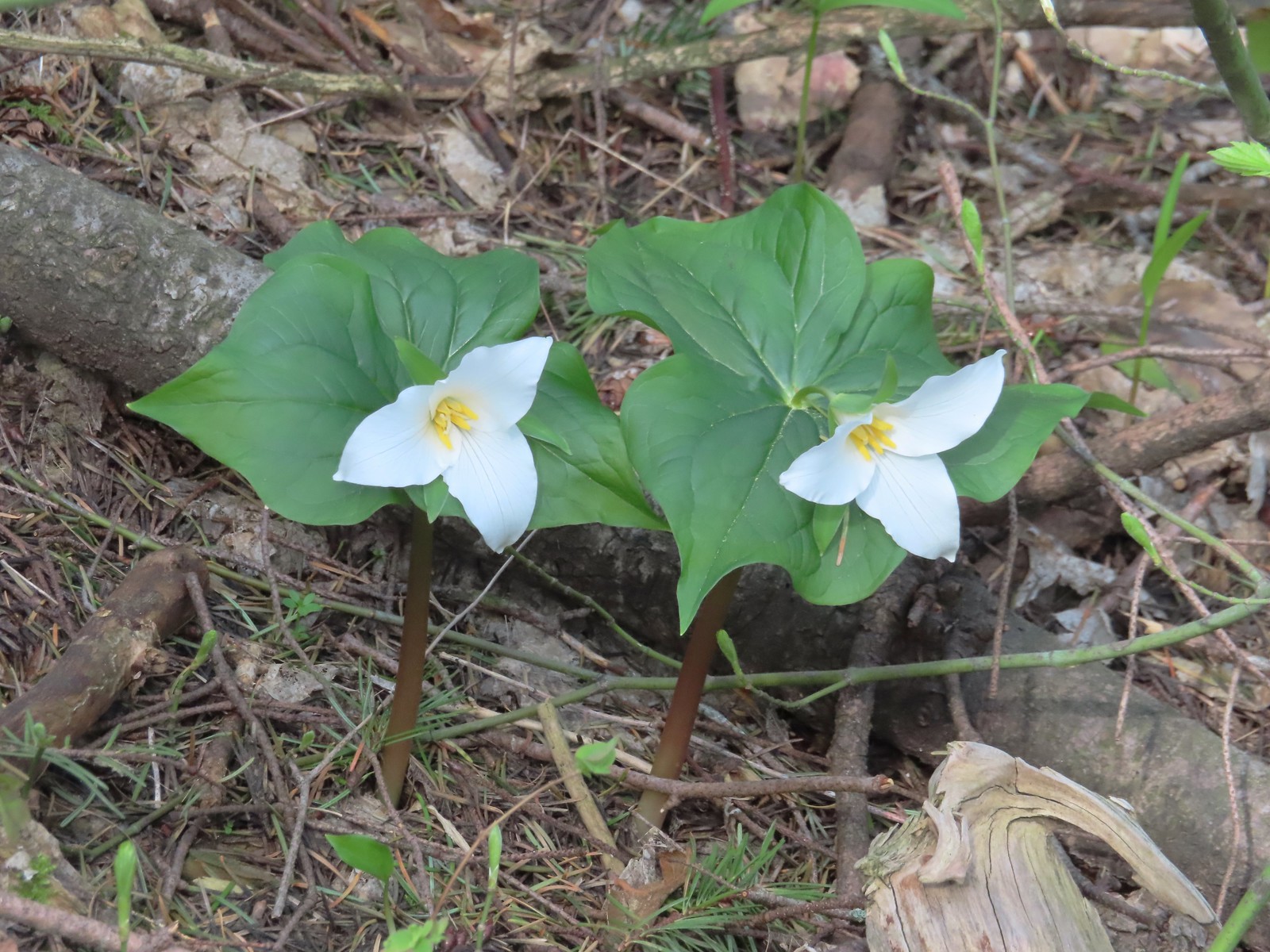
TrilliumsTrillium

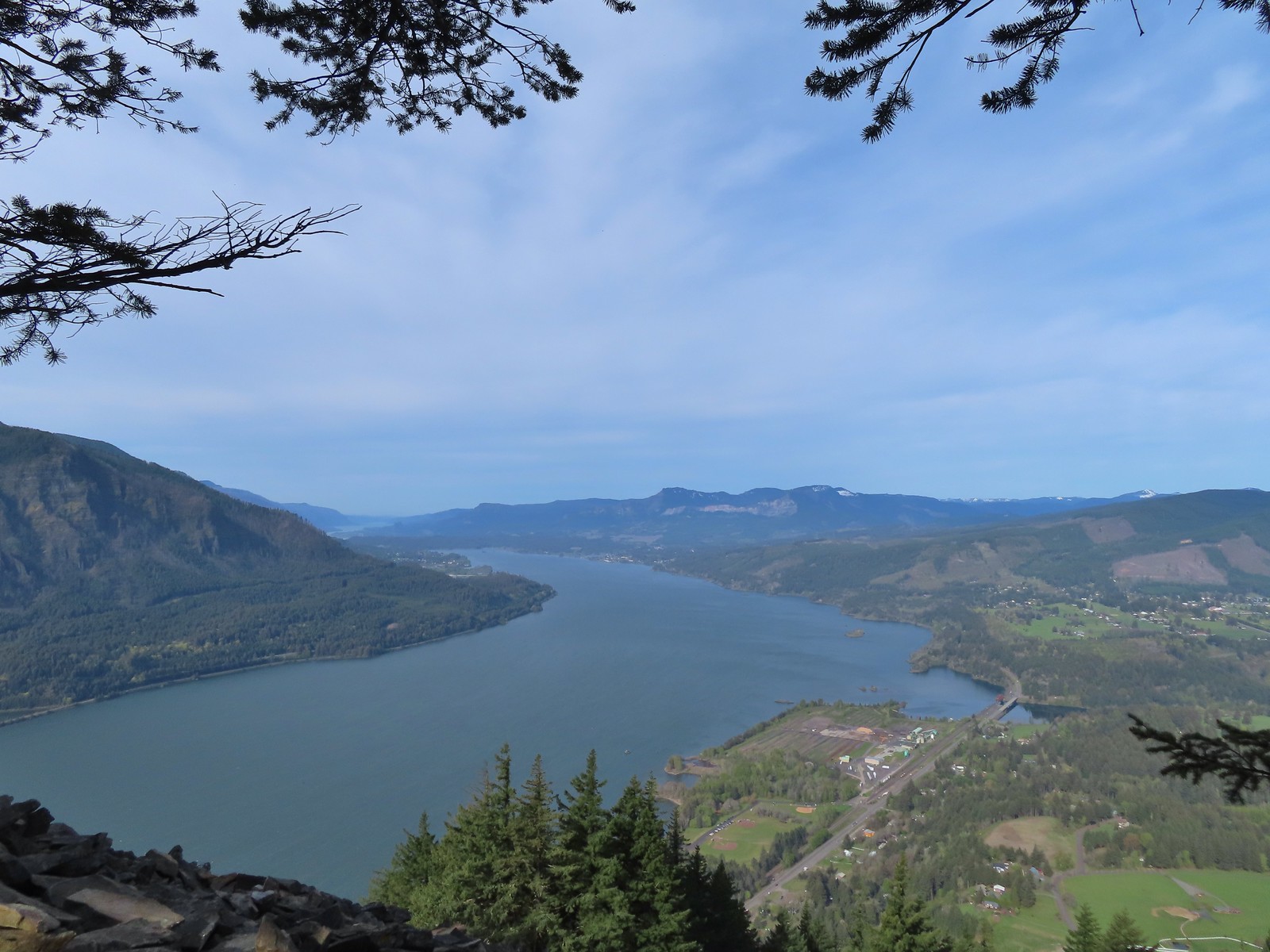
Columbia River from Wind MountainView west down the Columbia River. Hamilton Mountain (post), Table Mountain (post), and Greenleaf Peak (post) from L to R in the center.
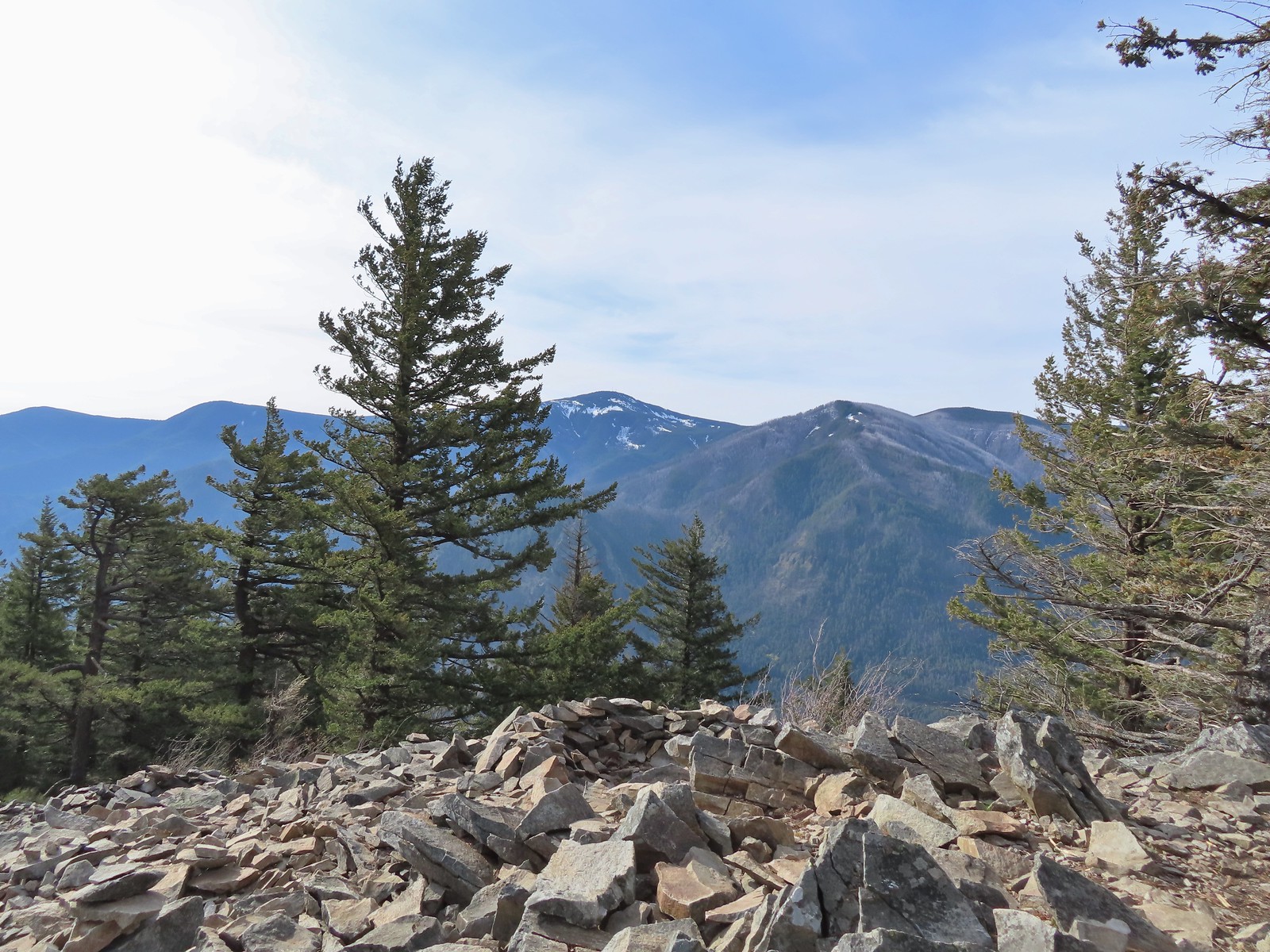
Mt. Defiance from Wind MountainMt. Defiance (post) from the summit.

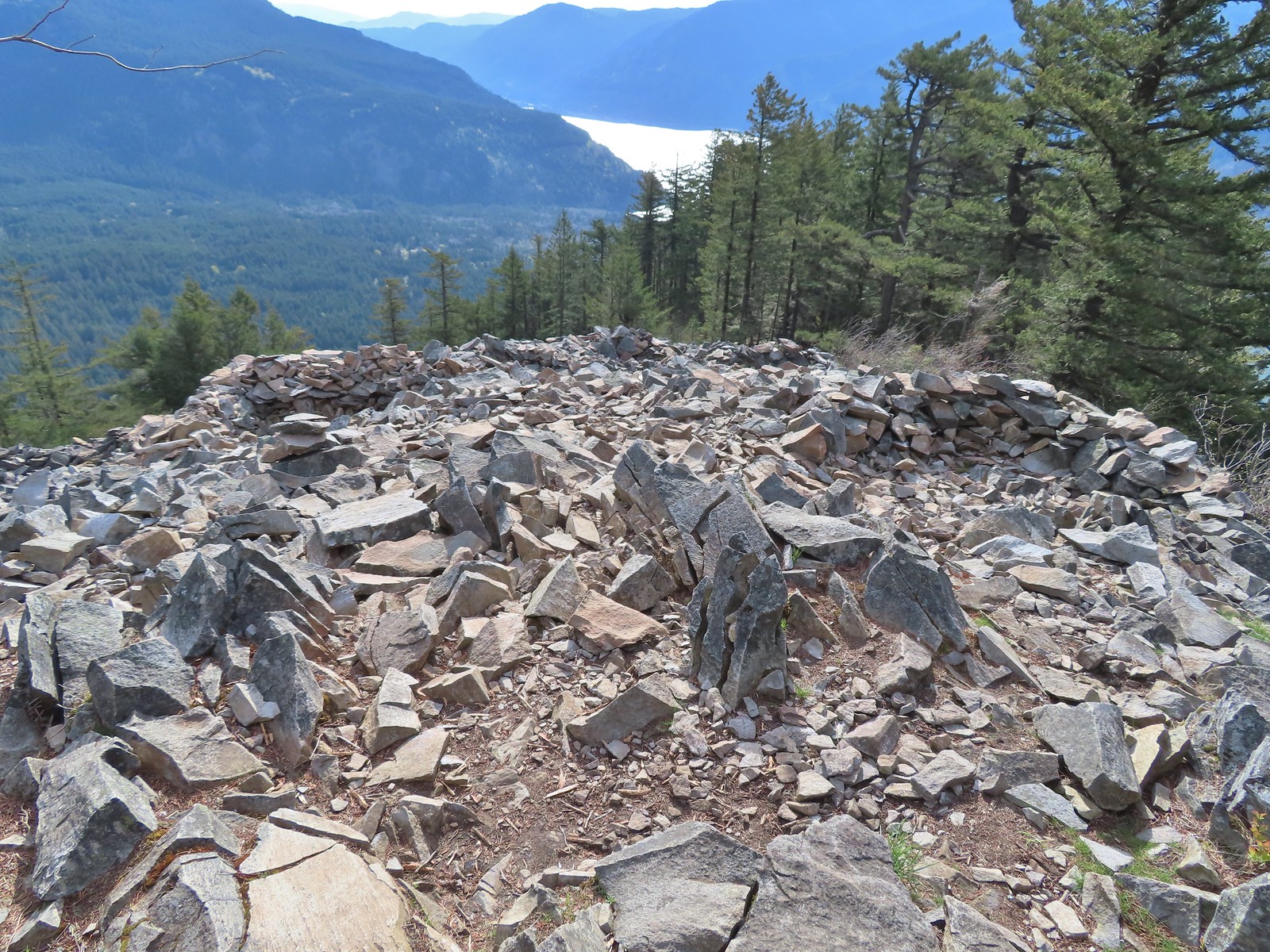
Vision quest pits on Wind MountainVision quest pits on Wind Mountain.

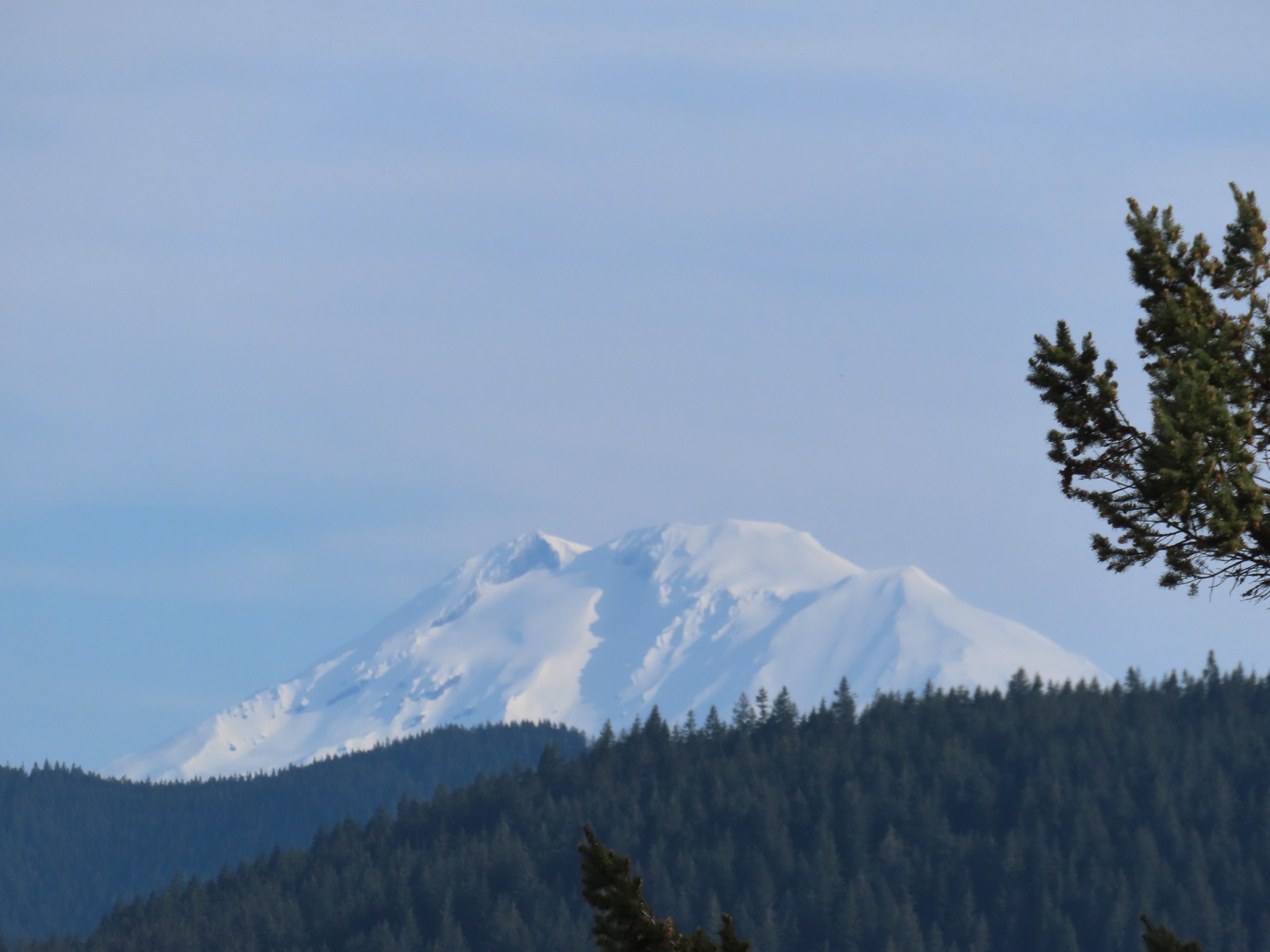
Mt. Adams from Wind MountainMt. Adams beyond Augspurger Mountain.

Mt. AdamsMt. Adams

View across the Columbia River from Wind MountainLooking across the Columbia River.

There was a nice breeze at the summit, and we took a well-earned break before heading down. Up till that point we’d only seen five other hikers all morning, but now that it was later we found ourselves stepping aside regularly to let the uphill traffic pass. From the quarry we headed back West to our next stop at the Sams-Walker Day Use Area.

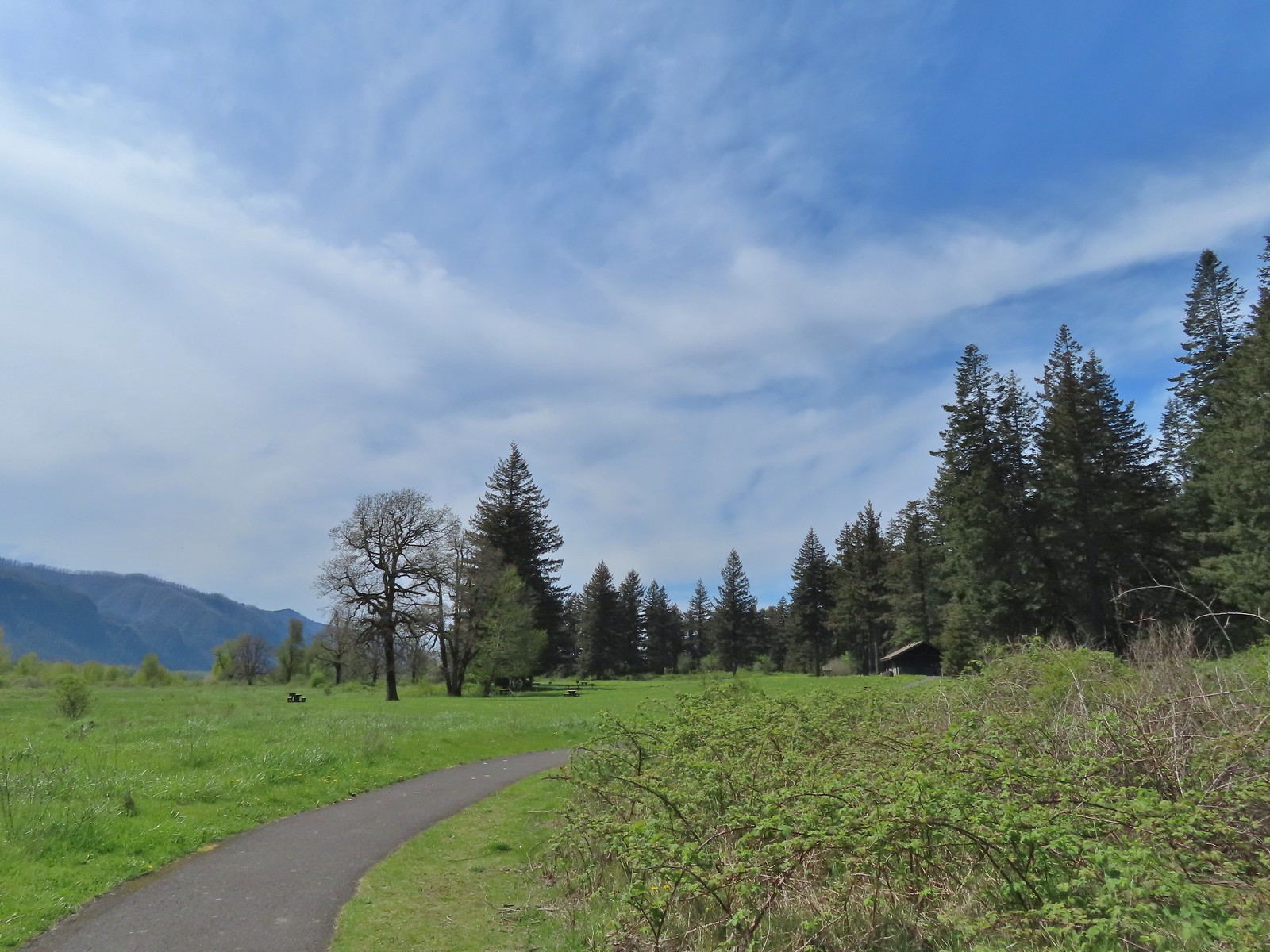
Similar to the St. Cloud Day Use Area the area is a former homestead with picnic tables, a 1.1-mile loop trail, and vault toilet. We were surprised to find the small parking lot here almost entirely full. As it turned out group from the Friends of the Columbia River Gorge were out doing some planting.

We were able to park along the edge of the trailhead entrance and set off on the loop.
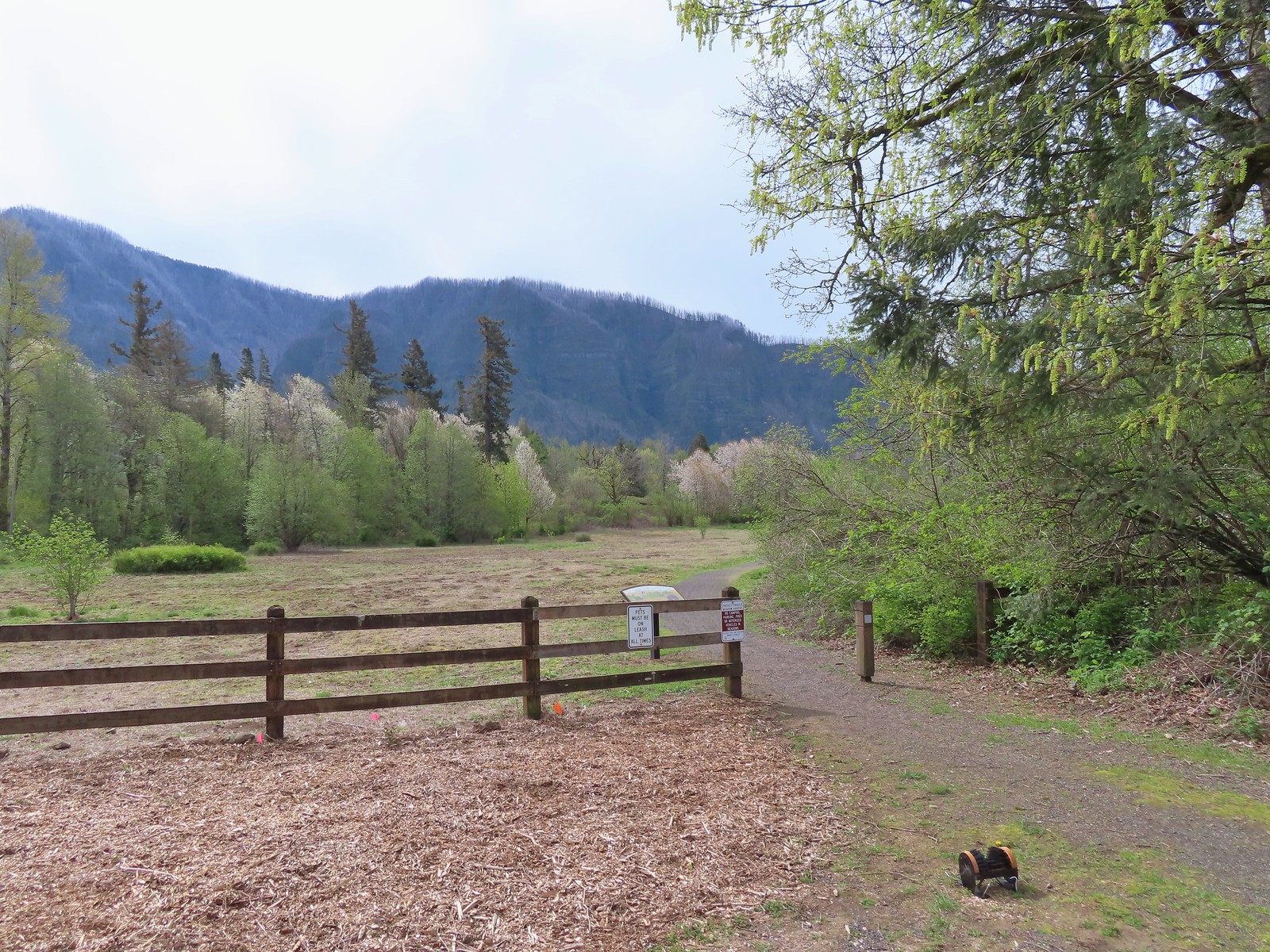
Sams-Walker Day Use Area

There are a couple of loop options here, but no maps to assist with navigation. We had our GPS map and a map from the Oregon Hikers Field Guide, but it turns out they are both outdated so when we veered right at the first split we planned on hiking the outer loop counterclockwise.
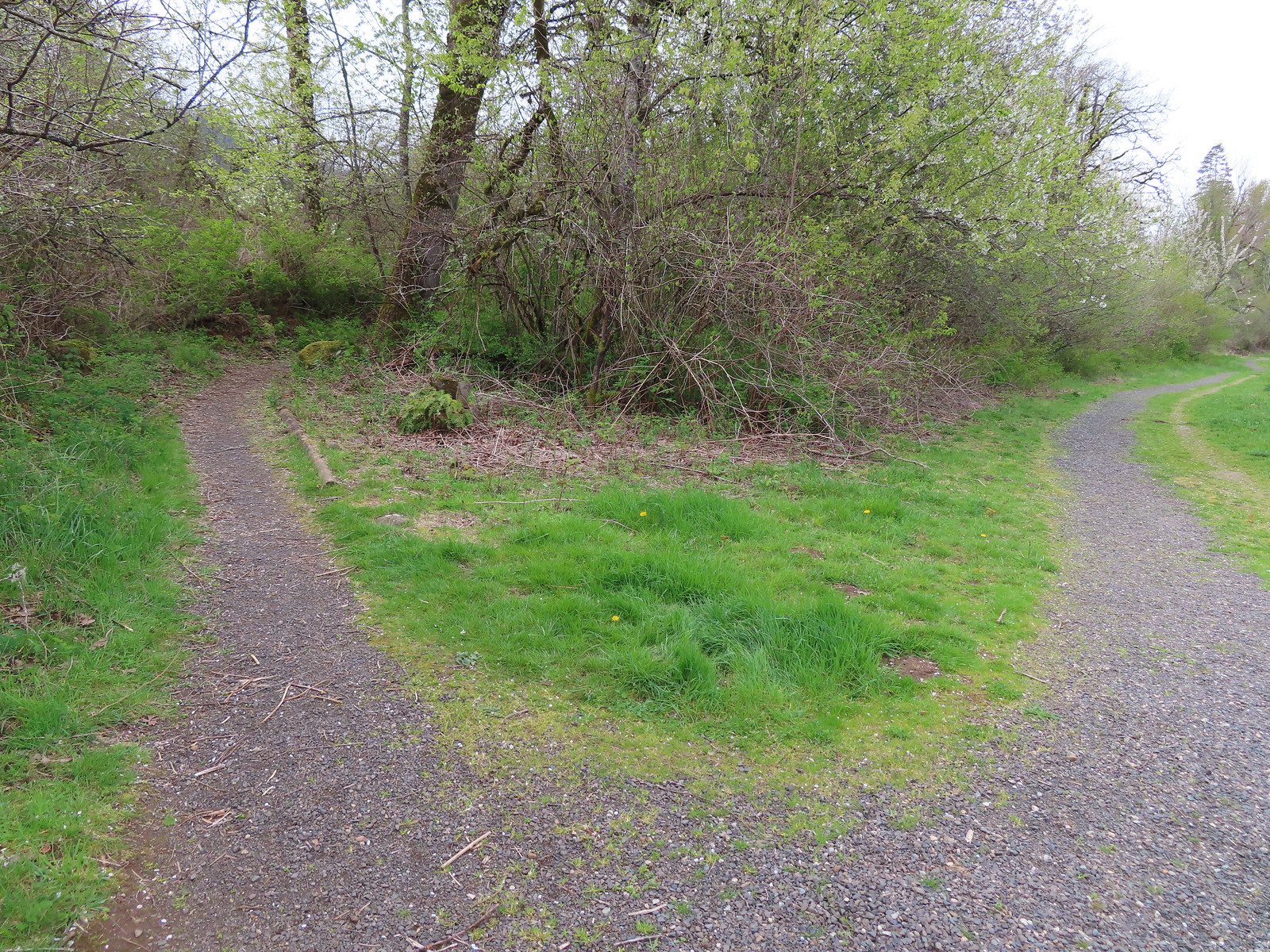
Trails at Sams-Walker Day Use AreaThe first split where we went right.

A tenth of a mile later we came to another split which managed to confuse us based on the maps we had available.
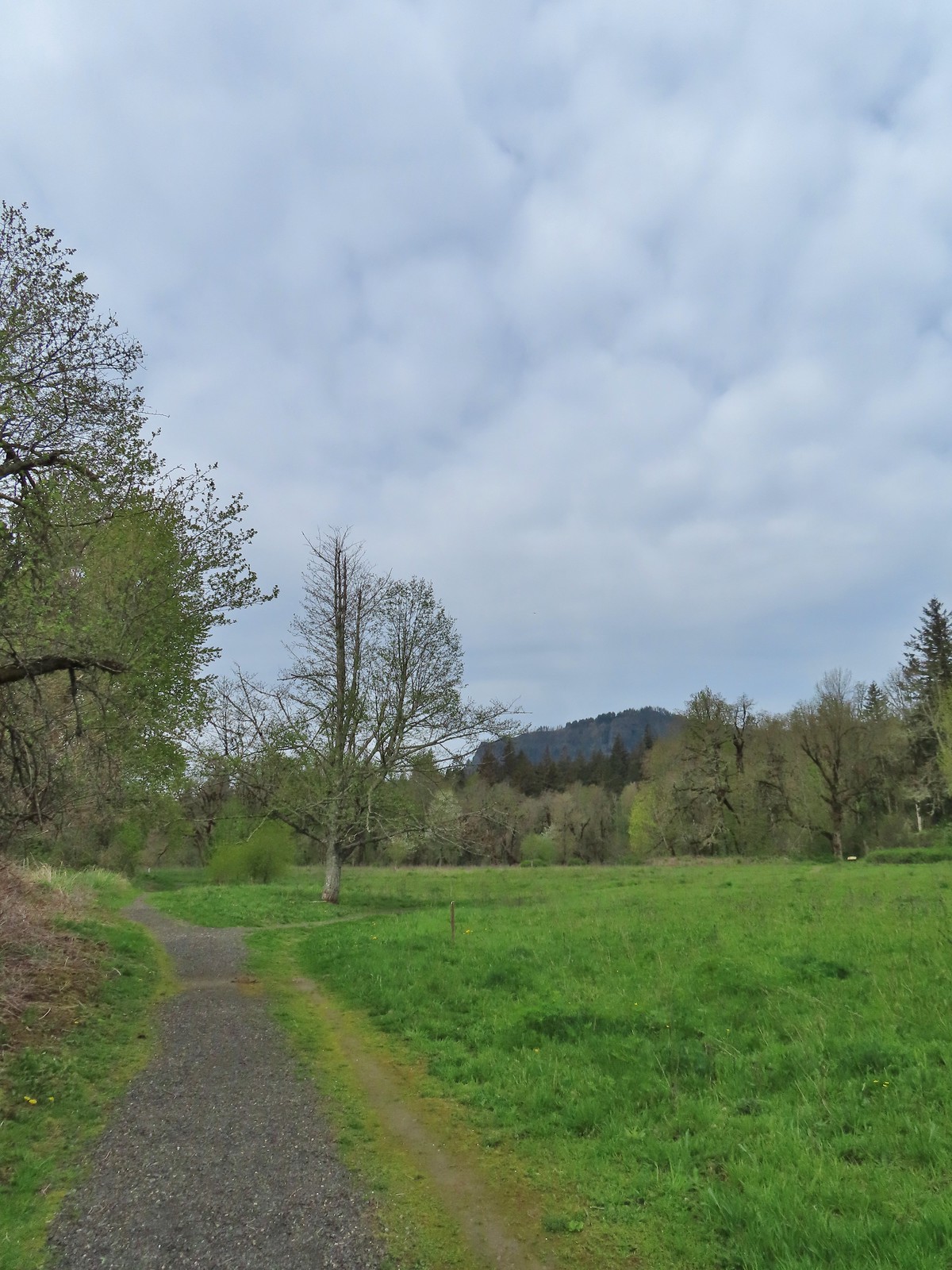
Trail at Sams-Walker Day Use AreaTo continue on the counterclockwise loop we should have turned right at the junction ahead.

We veered left thinking that the righthand trail was a connector passing through the middle of the day use area. In another tenth of a mile though we arrived at “T” junction where we realized that the left at the first junction was the outer loop going in a clockwise rotation.
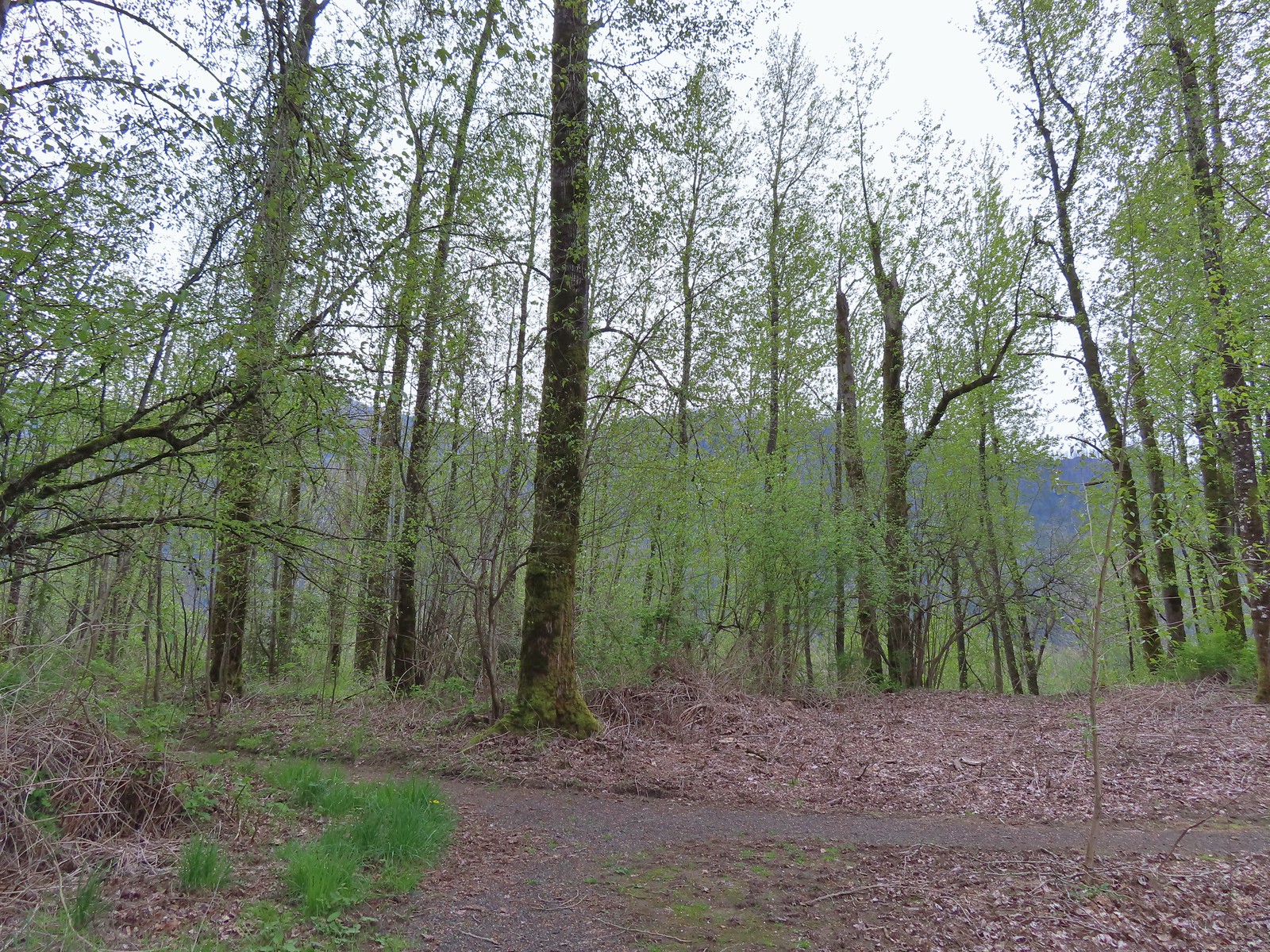
Trails at Sams-Walker Day Use AreaWe turned right at the junction now doing the loop clockwise.
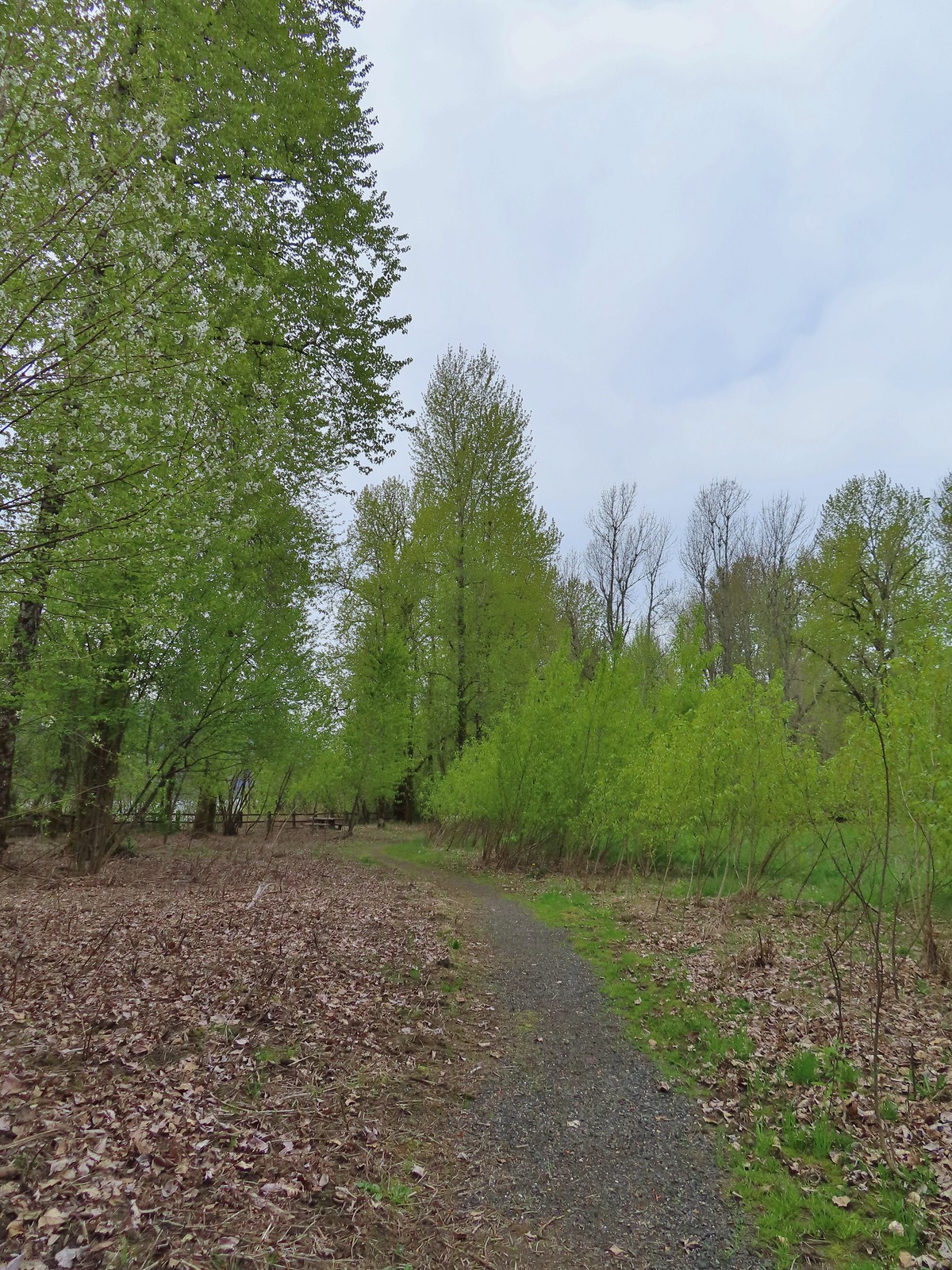
Sams-Walker Day Use AreaComing up on one of the picnic tables along the loop.

Columbia River from Sams-Walker Day Use AreaThe Columbia River from the picnic table.
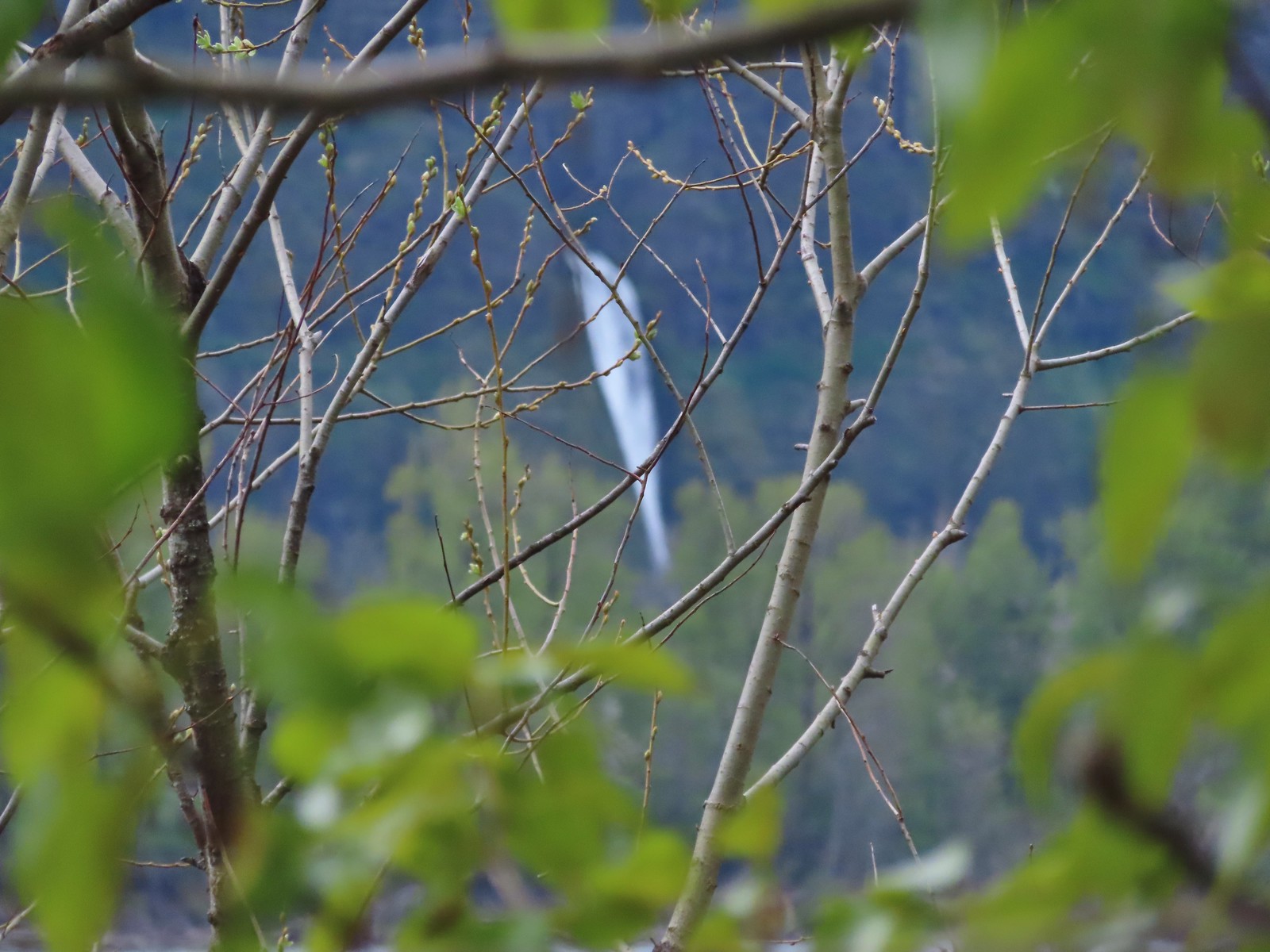
Horsetail FallsHorsetail Falls (post) from the picnic table.

We continued on loop which eventually passed through a cedar grove before bringing us back to the second junction we’d passed.
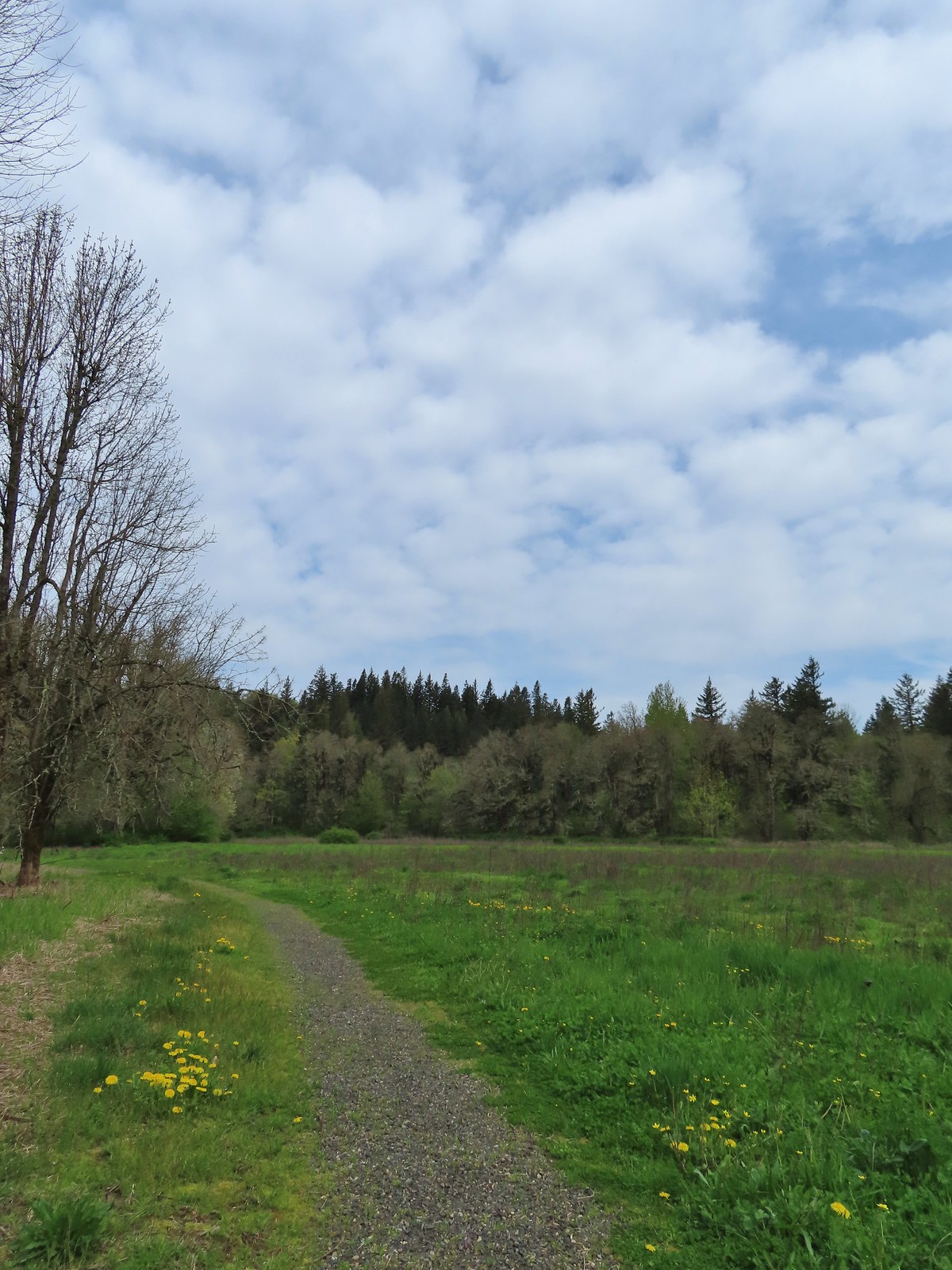
Sams-Walker Day Use Area

Chipping sparrowChipping sparrow

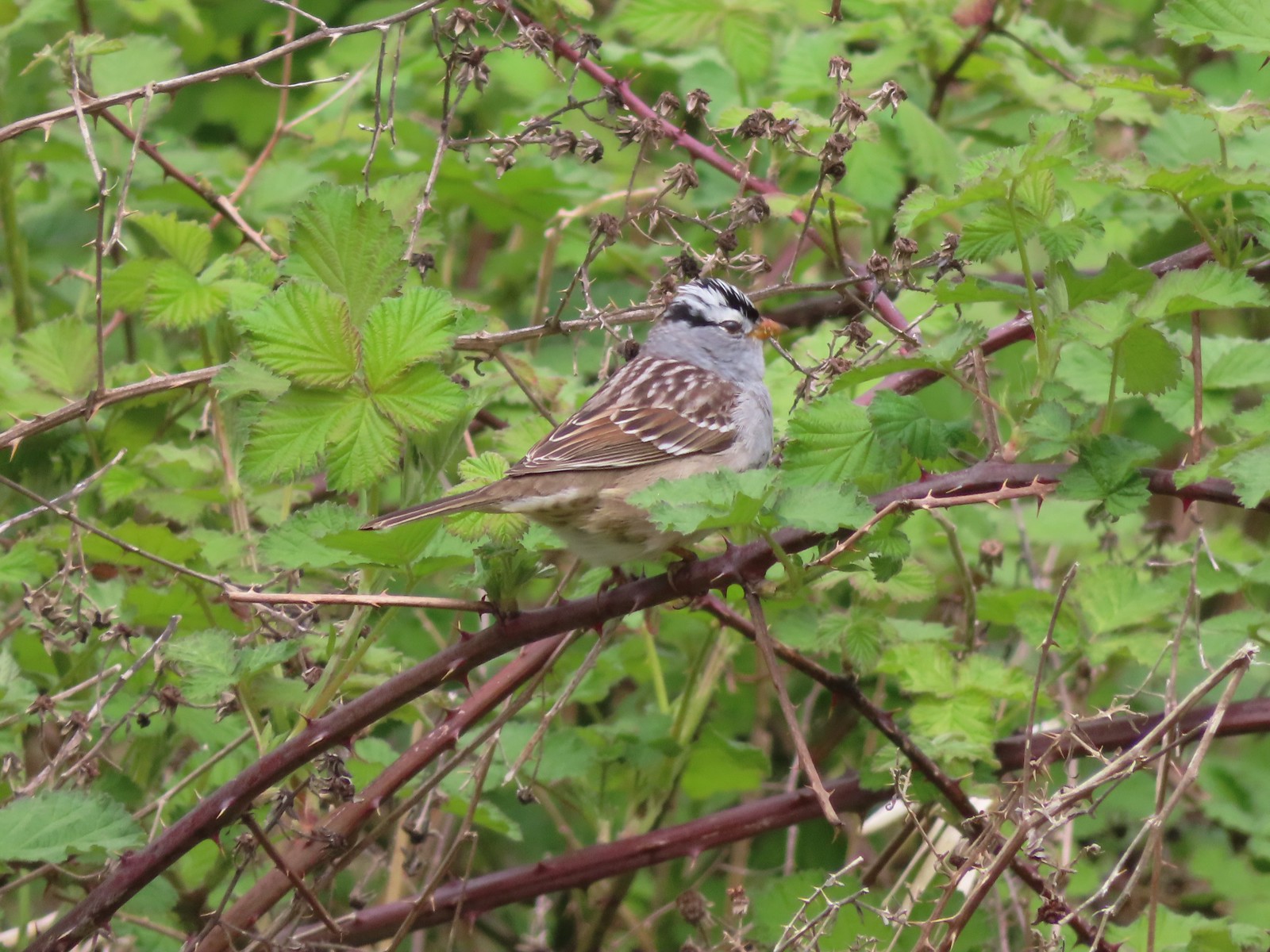
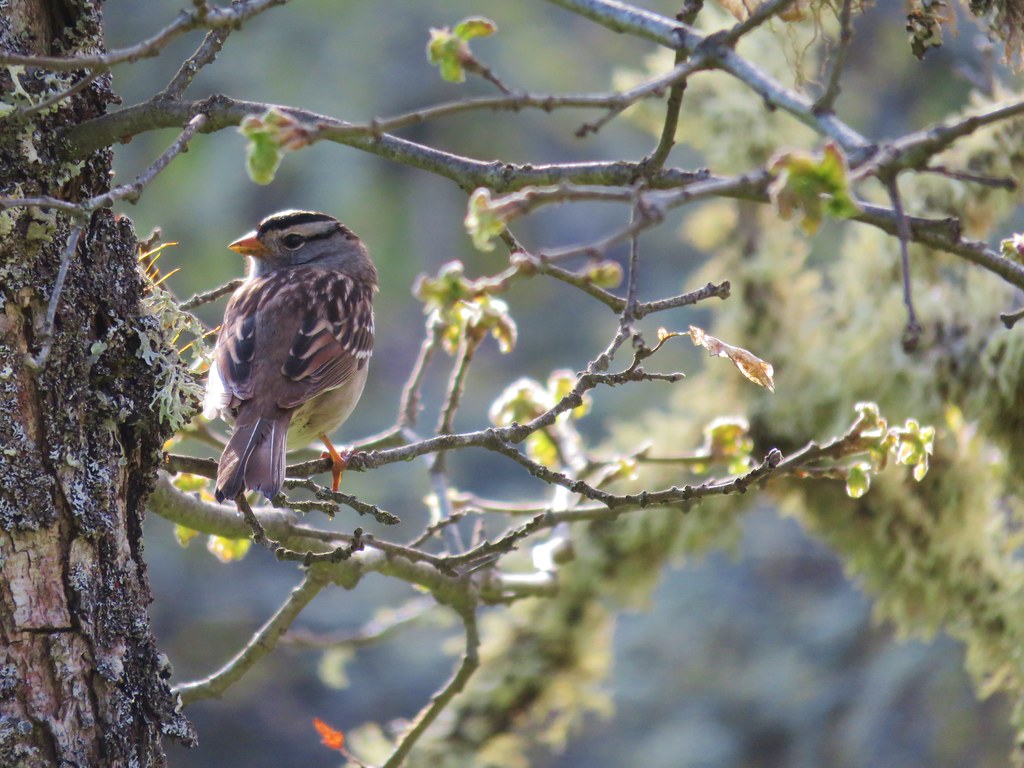
White-crowned sparrowWhite-crowned sparrow

Fringecup and bleeding heartBleeding heart and fringecup

Cedar grove at Sams-Walker Day Use AreaThe cedar grove

Sams-Walker Day Use AreaCompleting the first loop.

When we got back to the second junction we decided to go right and then take a left at the third junction to hike the portion of the outer loop that we’d missed. It was along this quarter mile section that we passed the group from Friends of the Columbia Gorge.
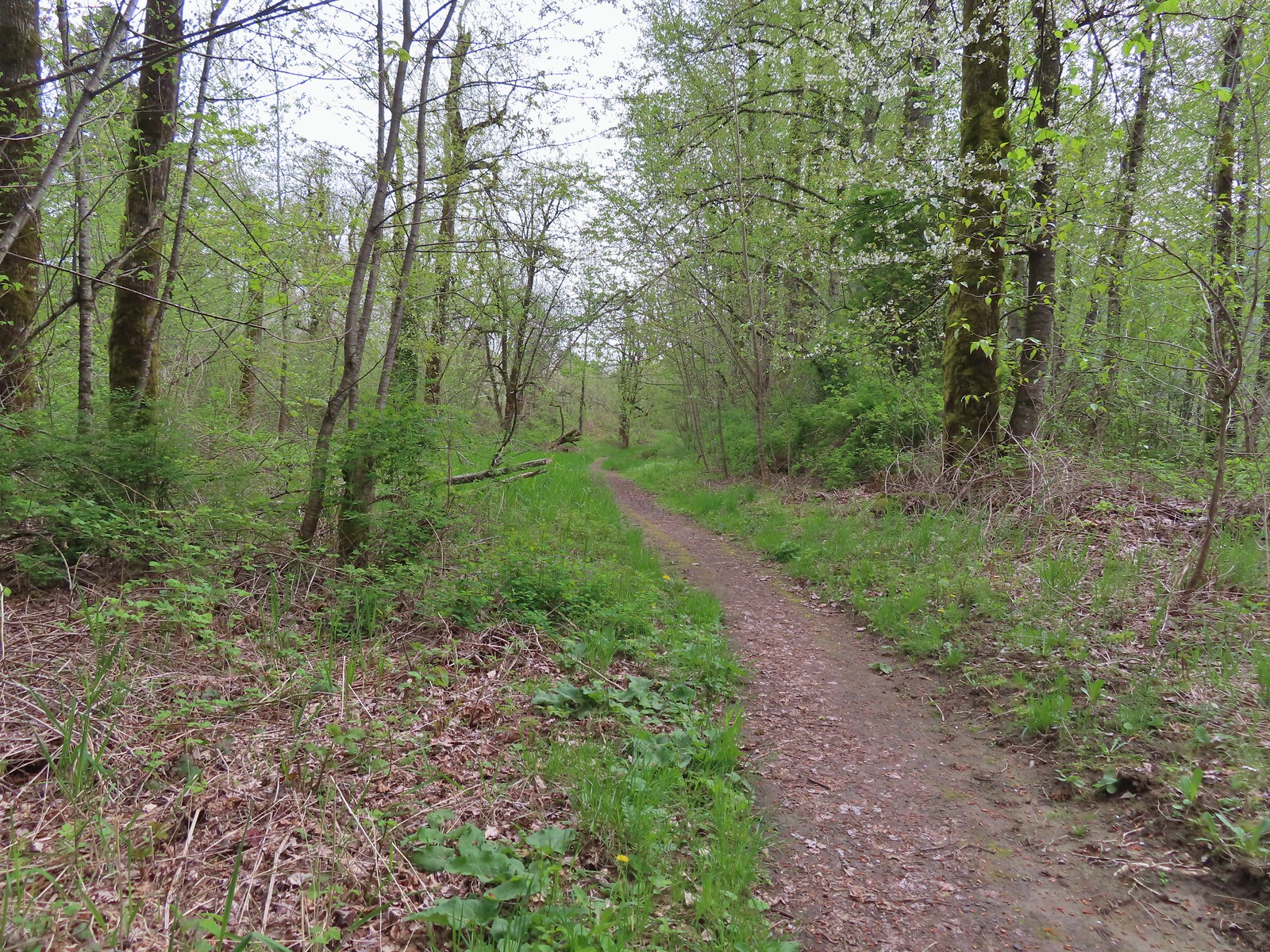
Sams-Walker Day Use Area

Spider on perriwinkleSpider on perriwinkle

After hiking all the trails here we returned to Highway 14 and drove 2 miles back to the east to turn into the Doetsch Ranch Day Use area of Beacon Rock State Park.
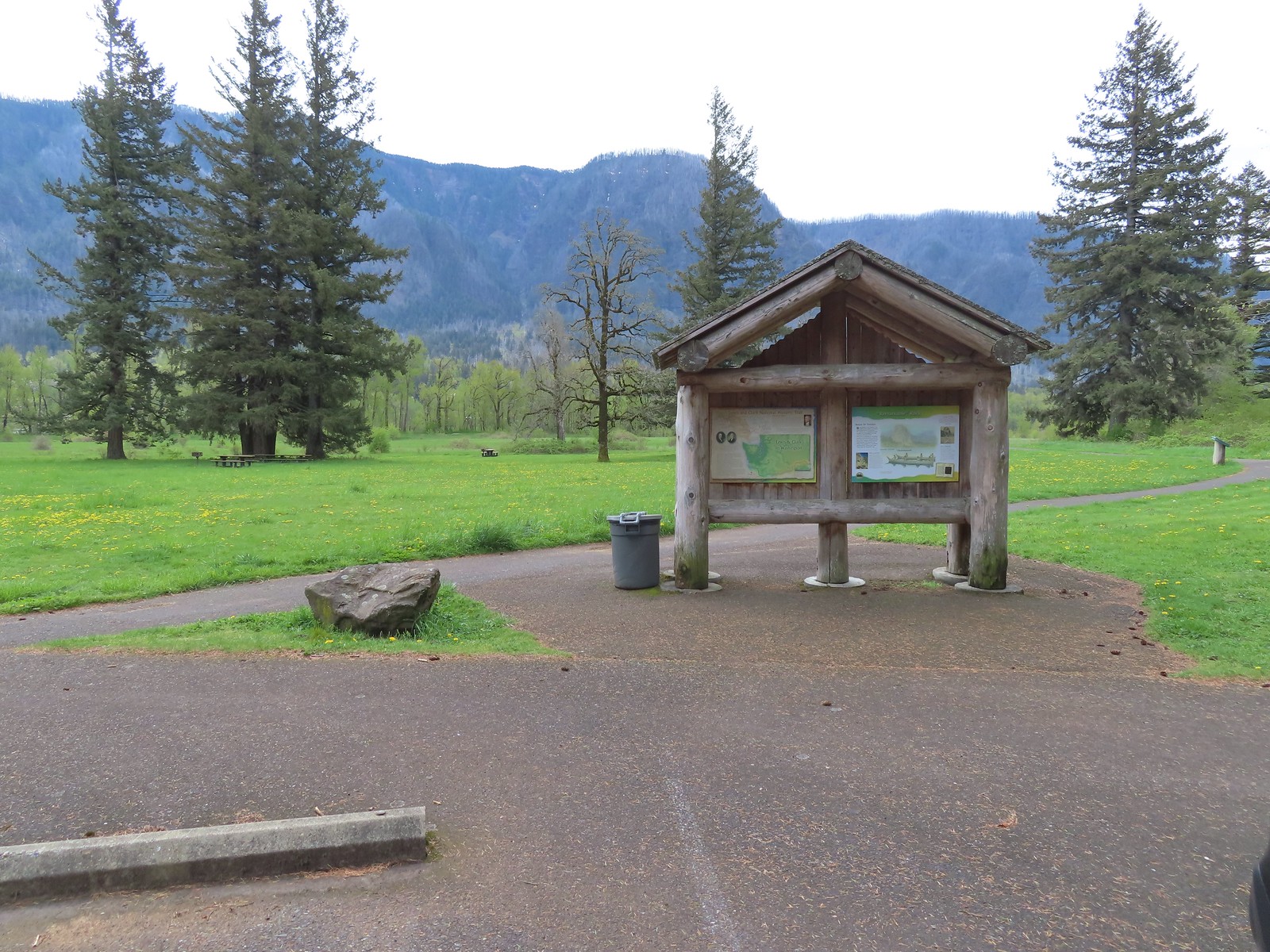
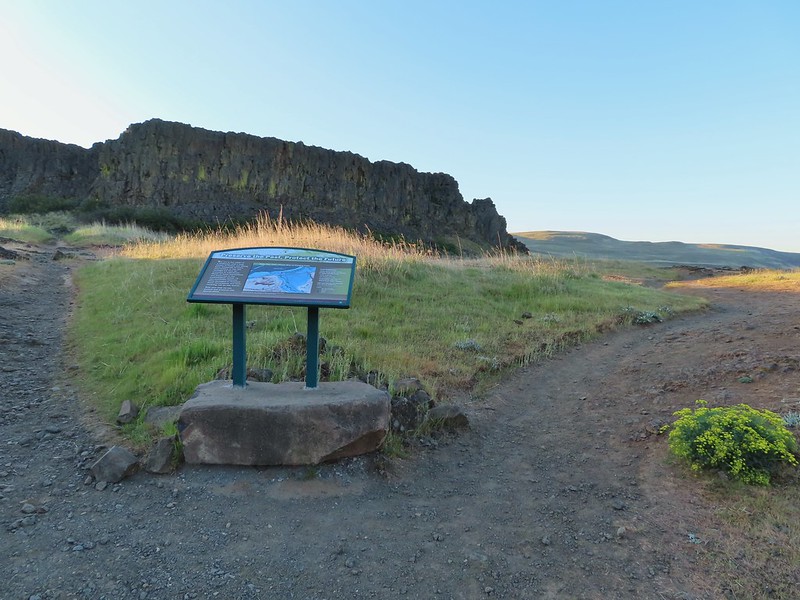
Doetsch Ranch Day Use Area, Beacon Rock State ParkKiosk at Doetsch Ranch.

A 1.1-mile paved loop circles the picnic area. We set off counterclockwise from the kiosk following the paved path for a little over 3/4 of a mile to another parking area along Beacon Rock Moorage Road.
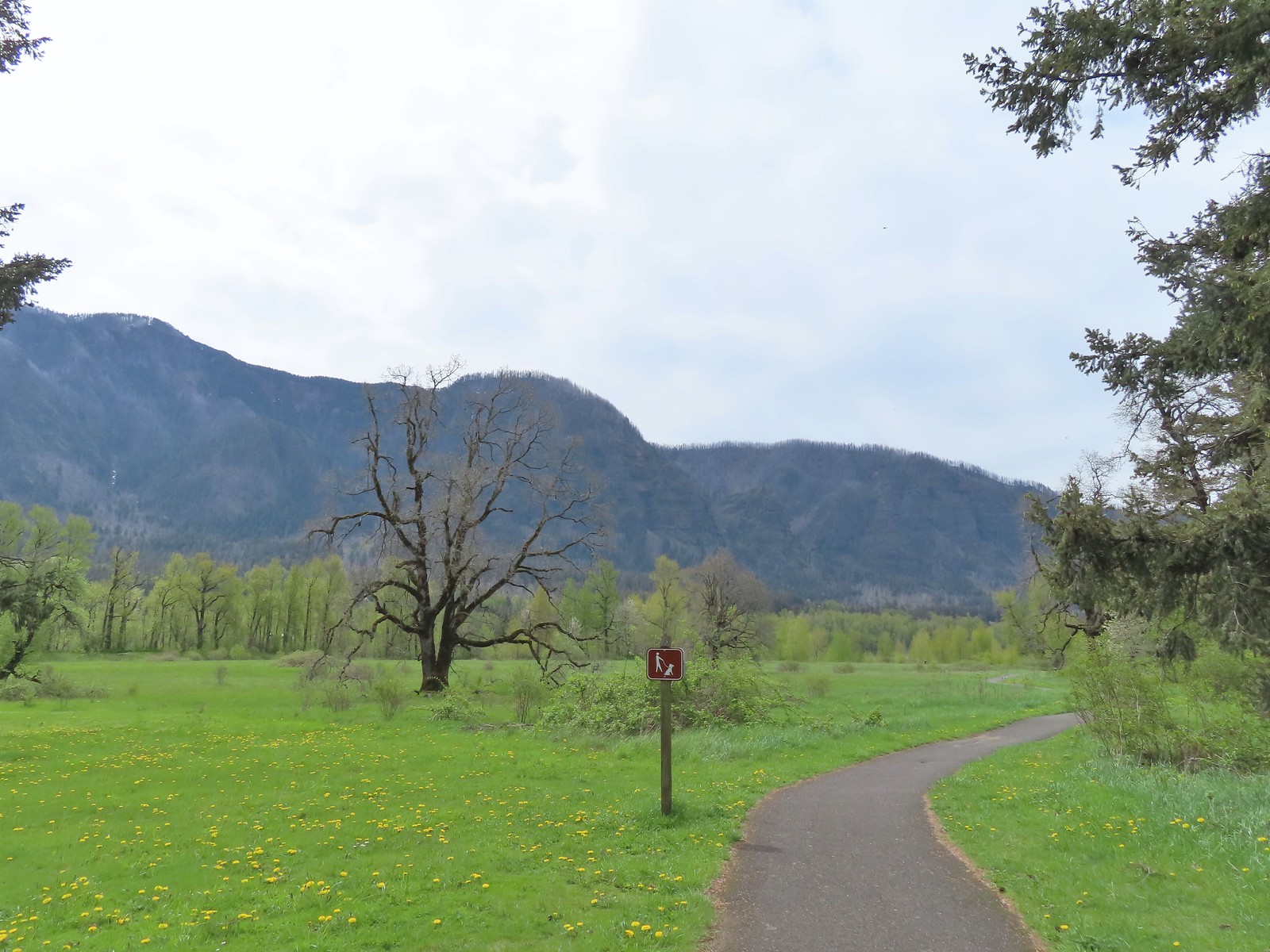
Doestch Ranch Day Use Area

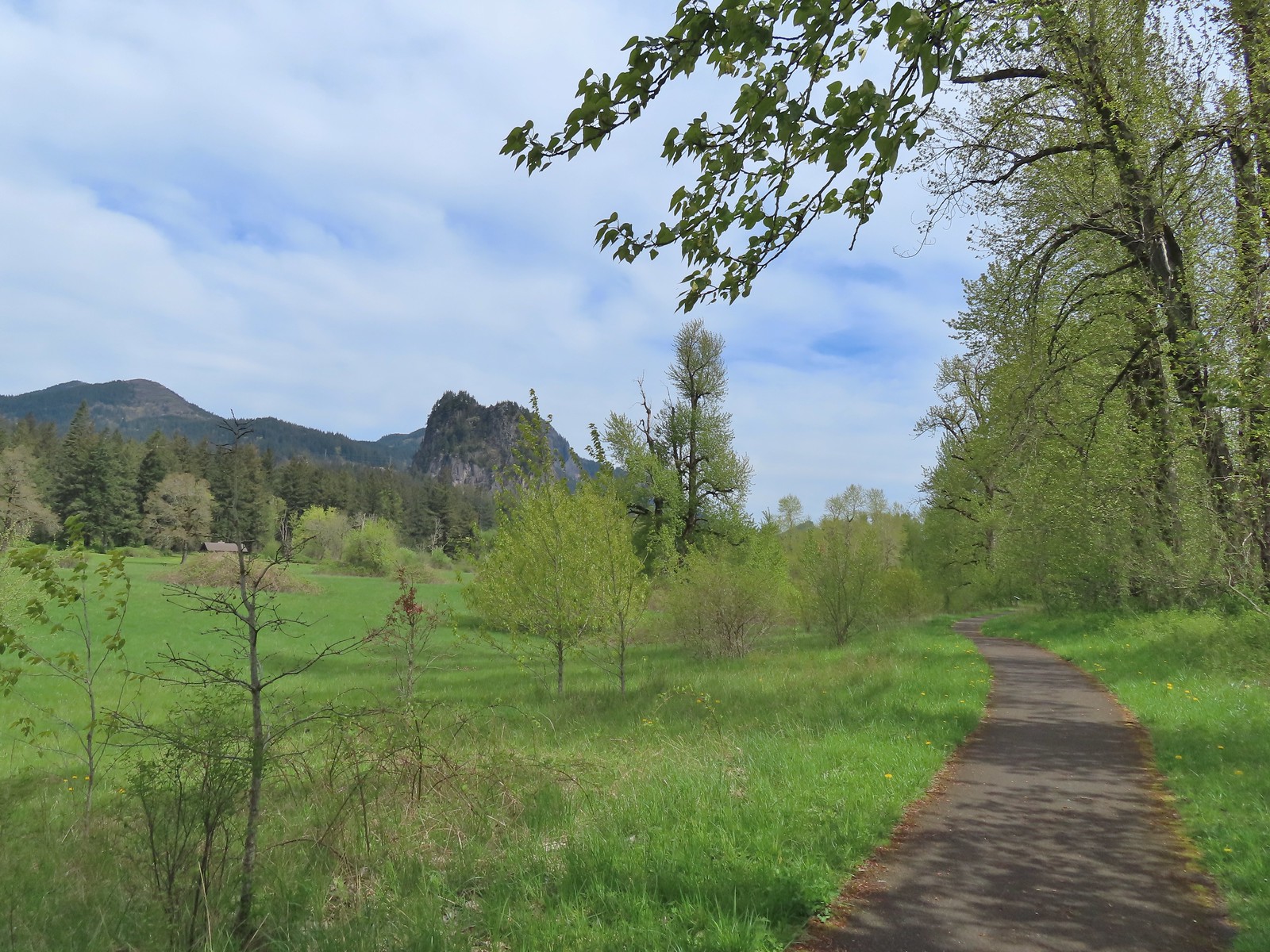
Doestch Ranch Day Use AreaBeacon Rock (post) from the trail.

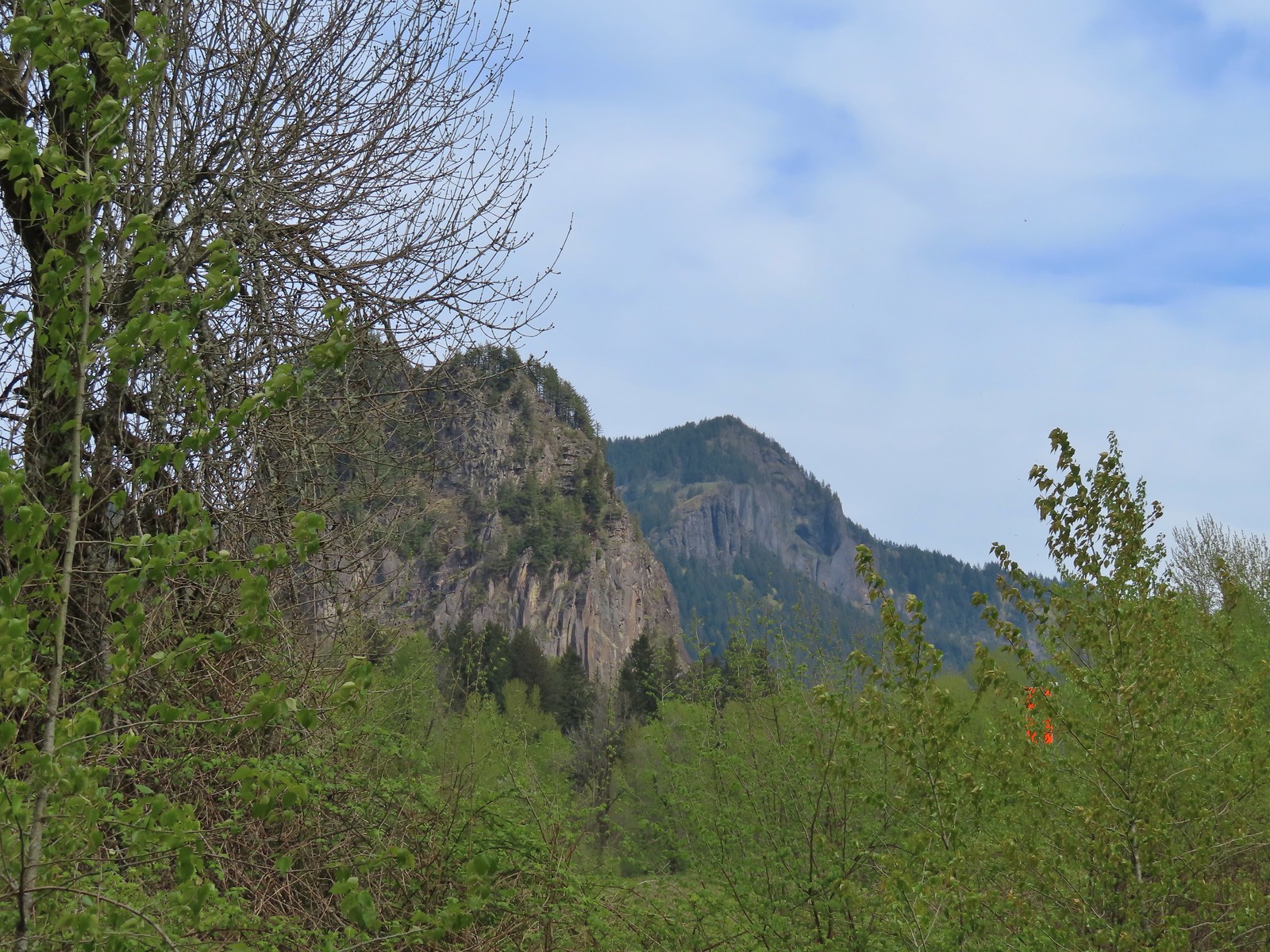
Beacon Rock and Hamilton MountainBeacon Rock and Hamilton Mountain.

Doestch Ranch Day Use AreaComing up on the other parking area.

We left the loop at the road and followed the road down to the river. Next we walked up the road passing under railroad tracks to find the start of the 0.75-mile River to Rock Trail.
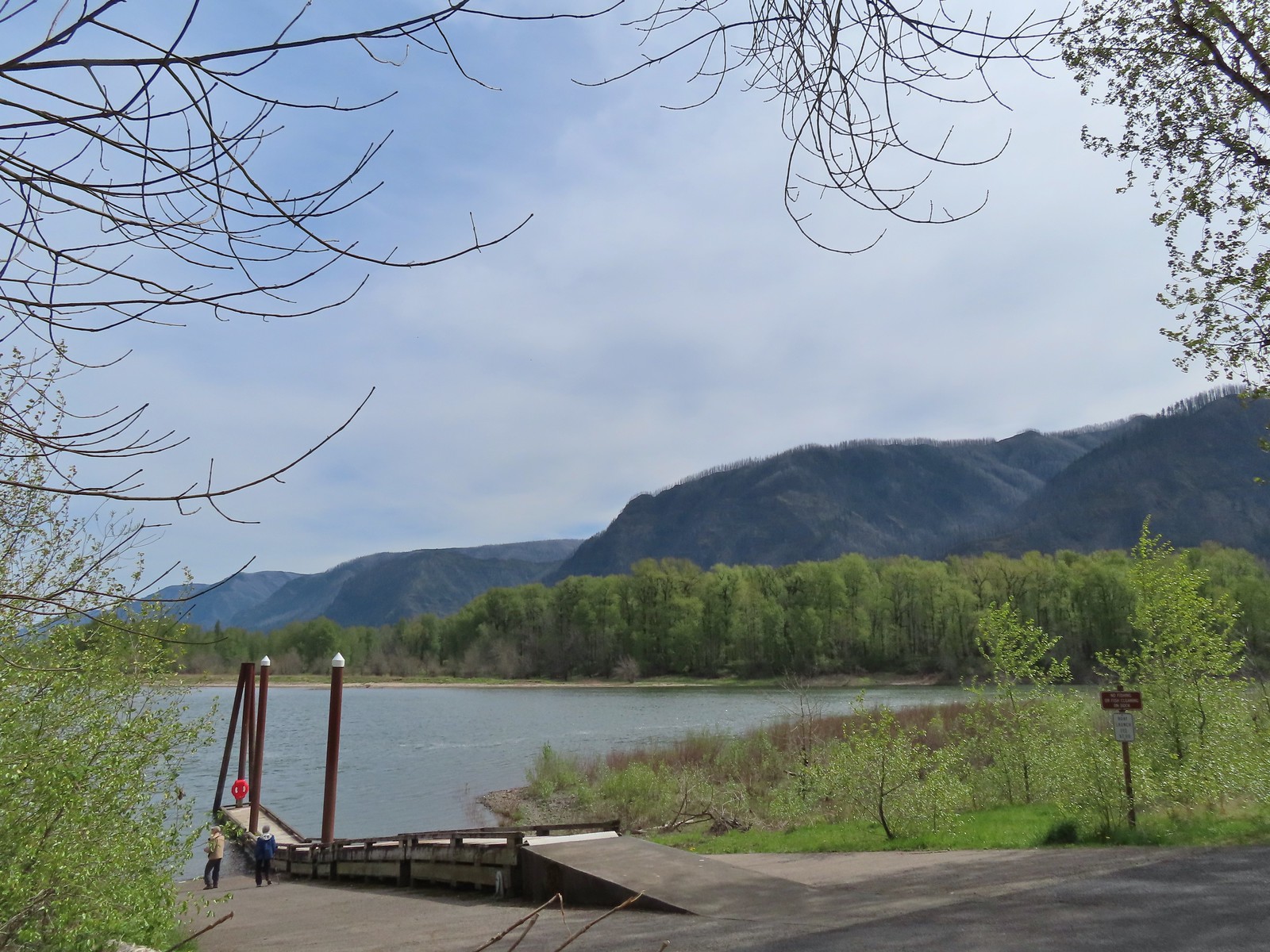
Columbia River

Beacon Rock and Hamilton Mountain

River to Rock Trail

Woodward CreekWoodward Creek

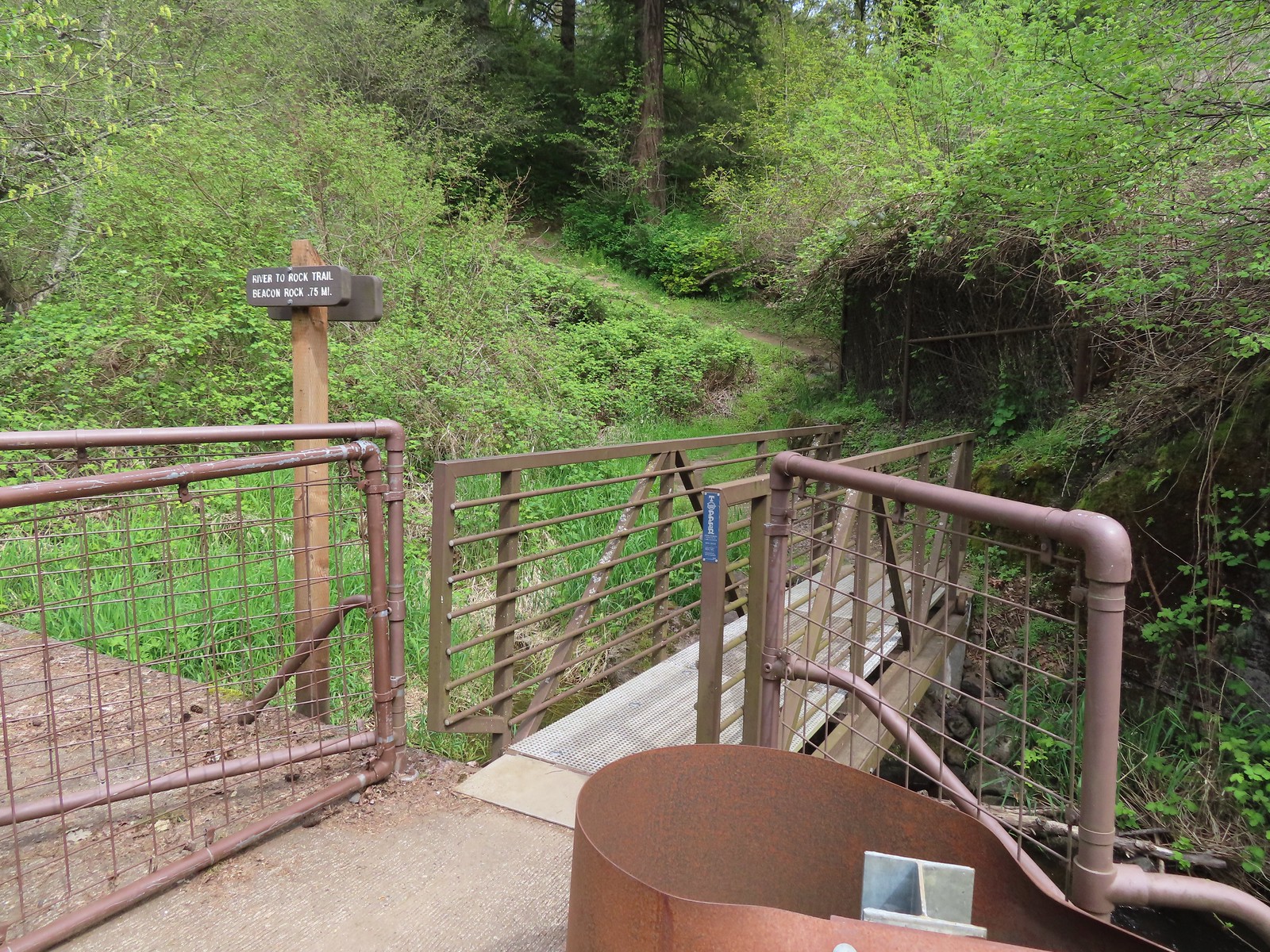
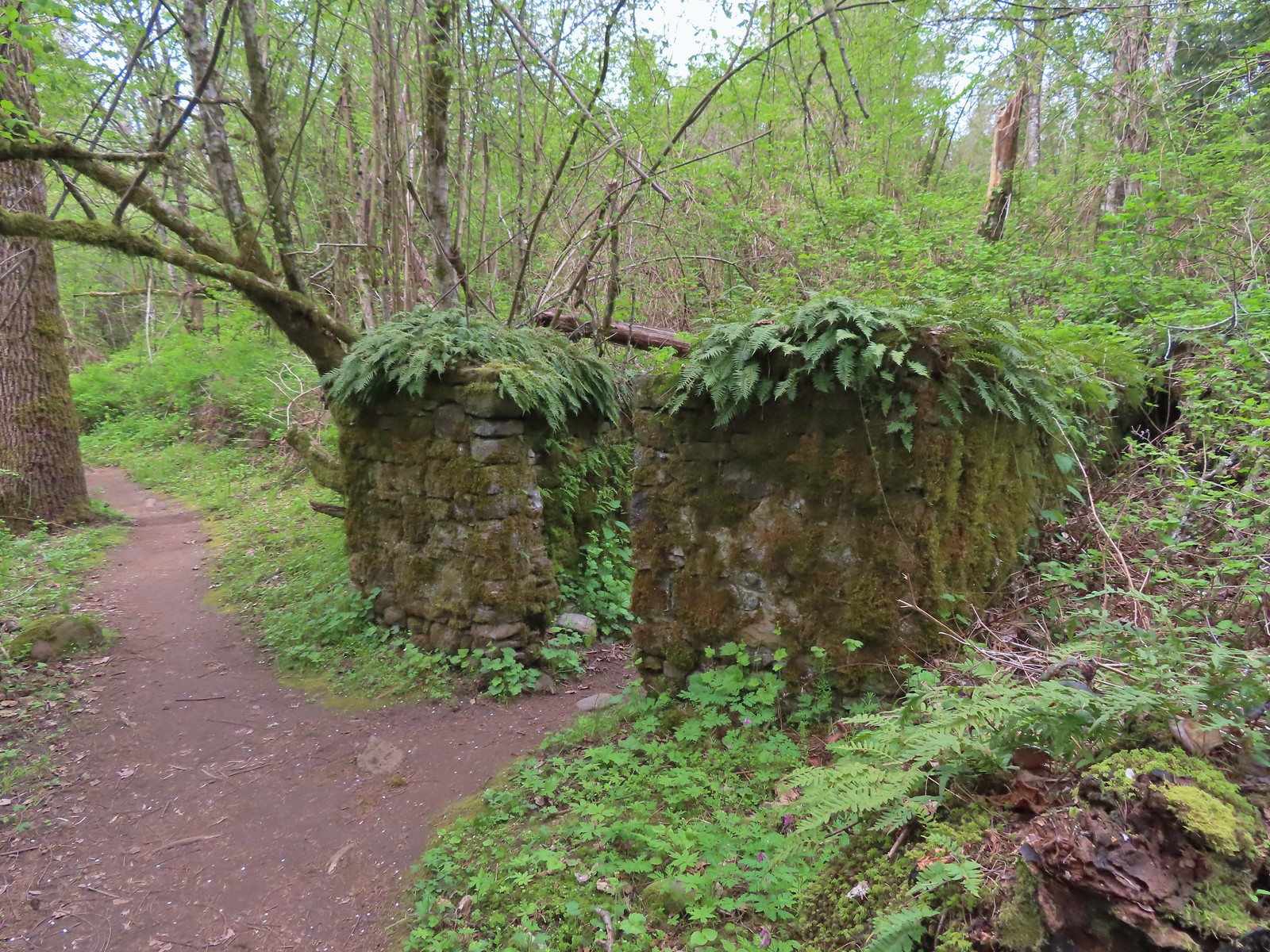
This trail climbs over 250′ before dropping to the River to Rock Trailhead. Along the way the trail passes around Riddle Lake and an old stone structure along with many wildflowers.
Fairy bells, vine maple, and fringecupFairy bells, vine maple, and fringecup

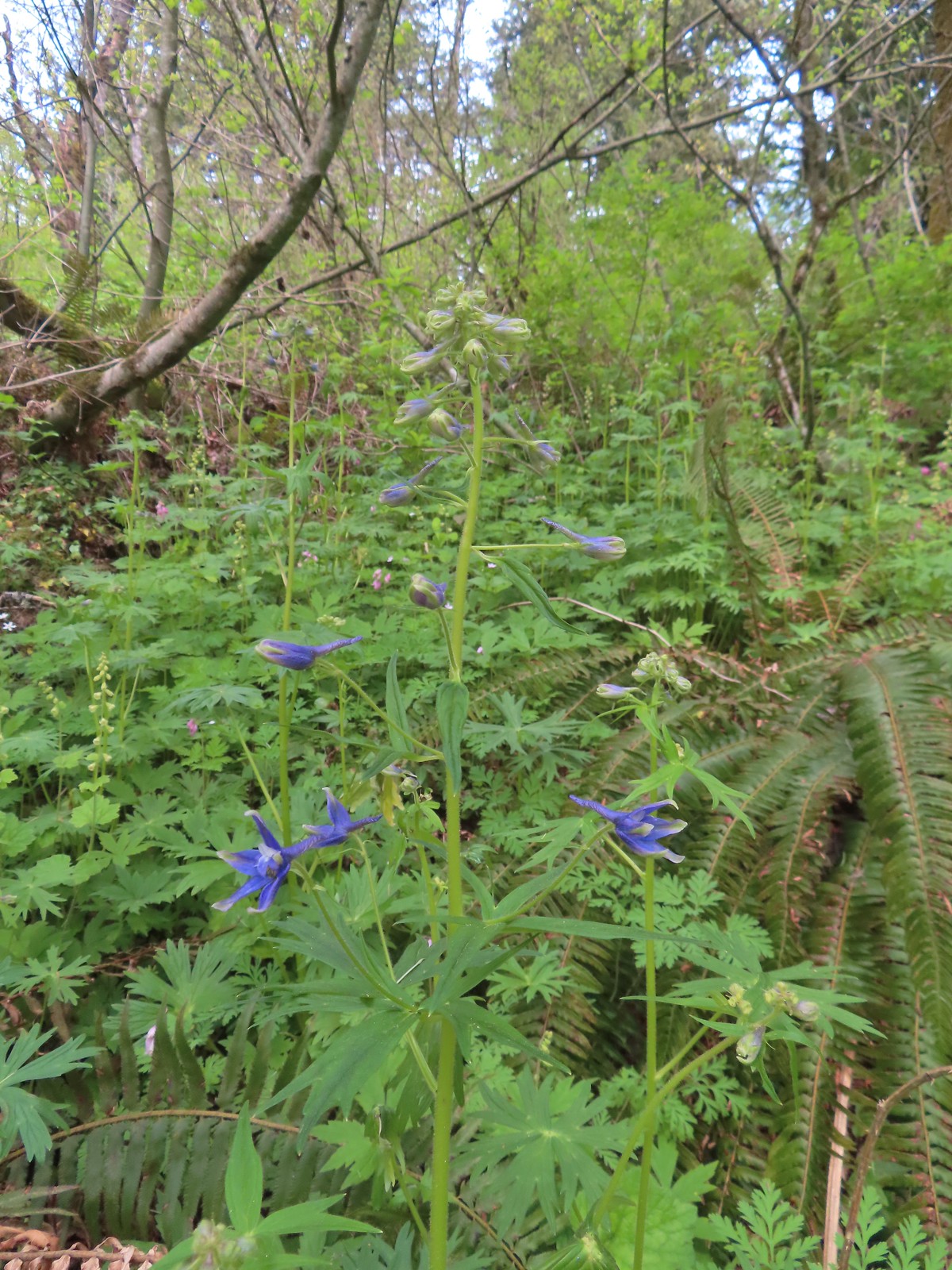
Columbian larkspurColumbian larkspur

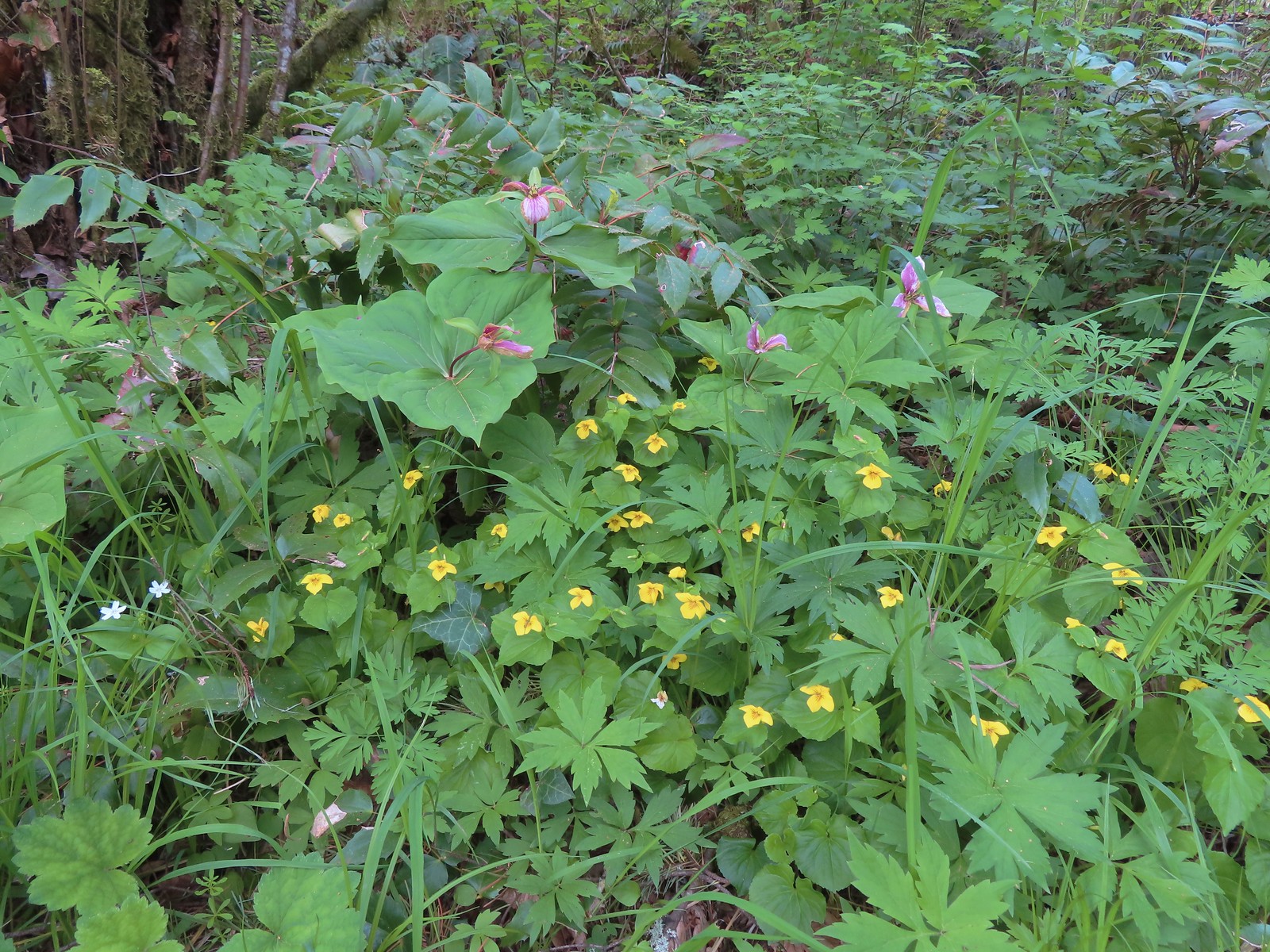
Wildflowers along the River to Rock TrailTrillium and voilets

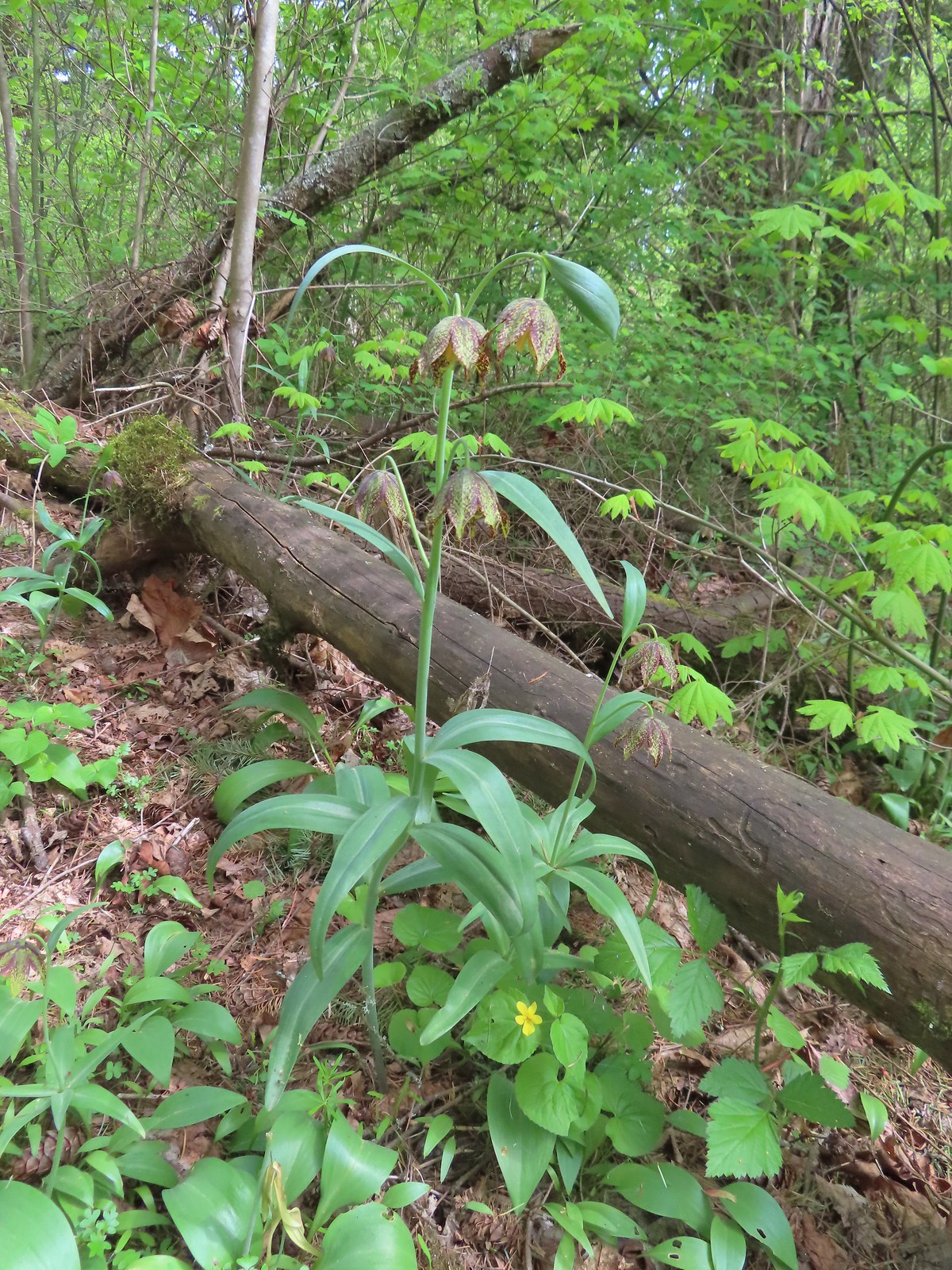
Checker (chocolate) liliesChecker (chocolate) lilies

Stone shed along the River to Rock Trail

Beacon Rock from the River to Rock Trail

Bleeding heartsBleeding heart

Checker (chocolate) liliesThis was just one part of the best display of chocolate lilies we’d ever seen.
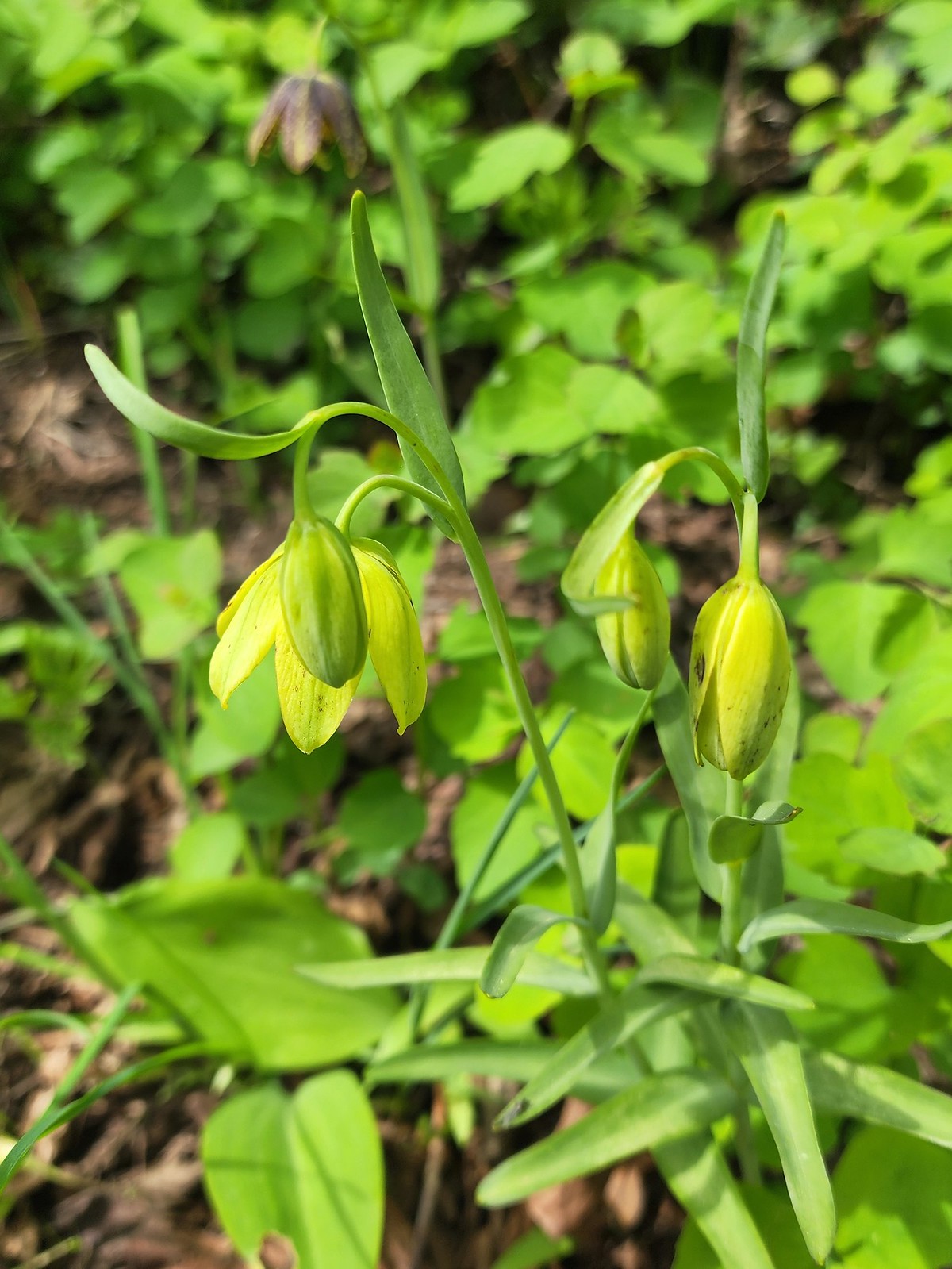
Checker (chocolate) liliesThere were a couple of lilies with this coloration which was new to us.
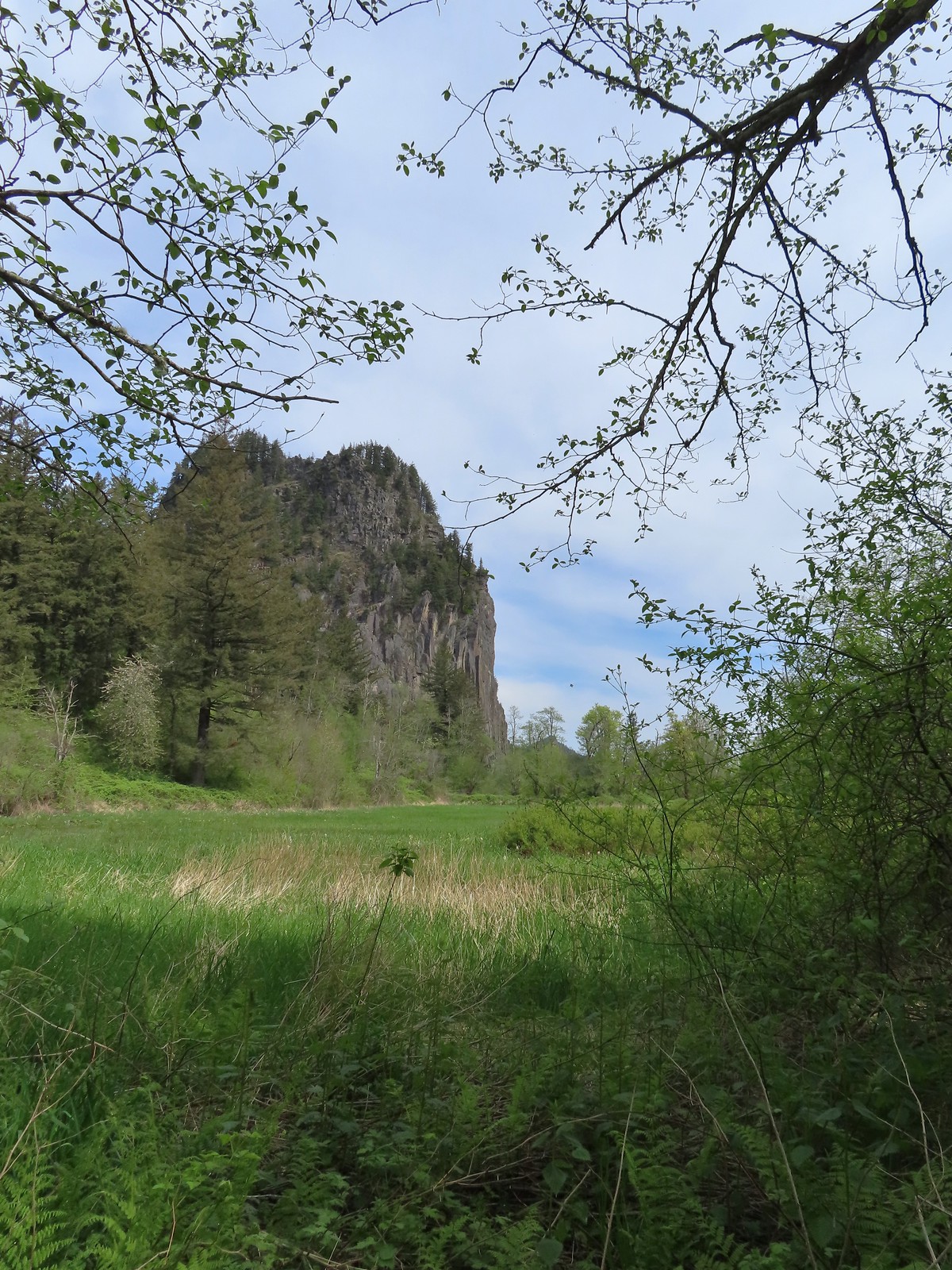
Beacon Rock beyond Riddle LakeRiddle Lake

River to Rock TrailDropping down to the River to Rock Trailhead.

River to Rock TrailLooking back up the River to Rock Trail.

We hadn’t planned on re-hiking Beacon Rock and the steady stream of people we could see from the trail going up and down the stairs reenforced that choice. We returned the way we’d come and then completed the paved loop at Doetsch Ranch to finish off our day.
Checker (chocolate) lilies along the River to Rock TrailPassing back by the large patch of chocolate lilies.

Echo azureOur first butterfly of 2024, an echo azure.
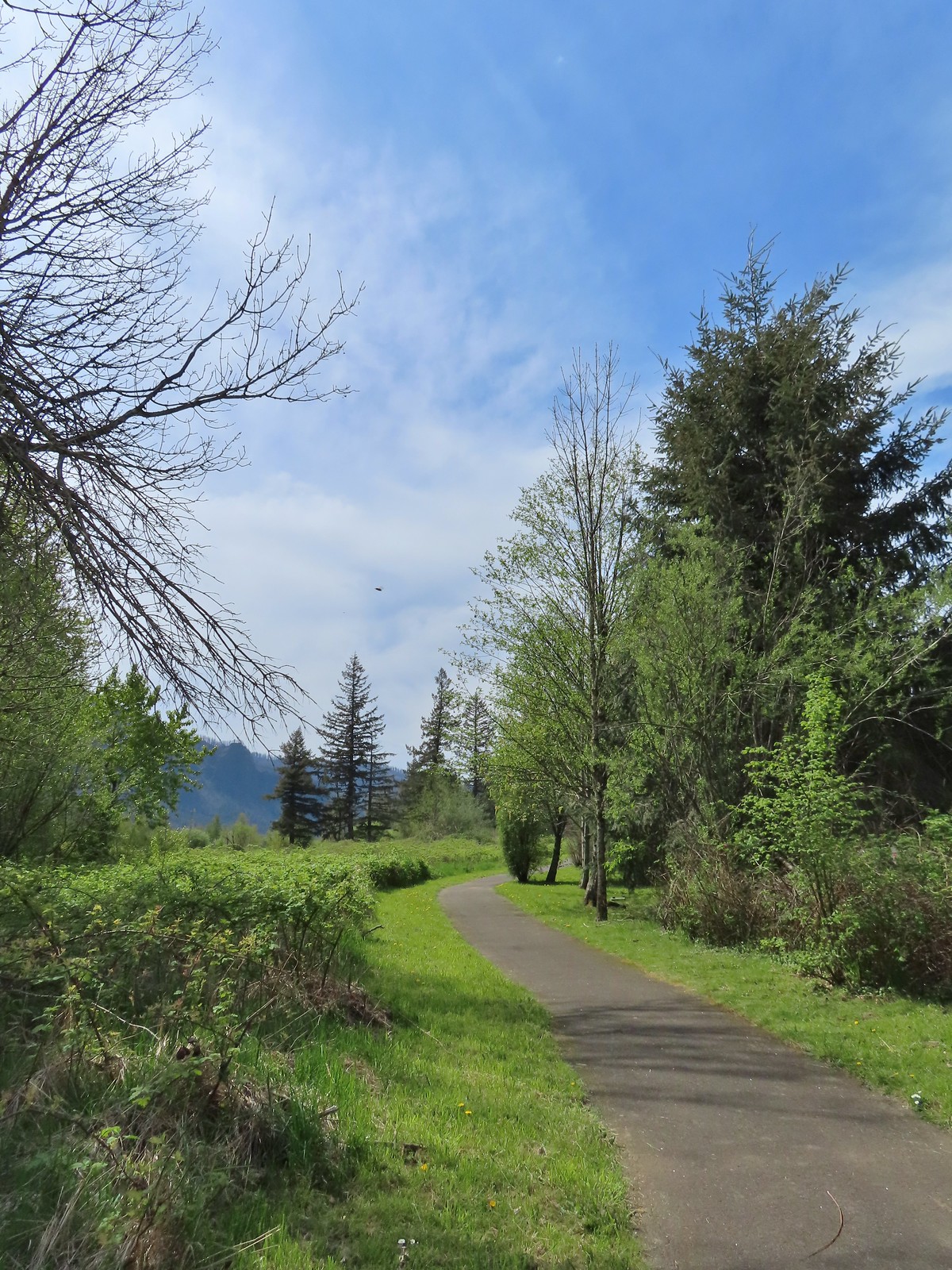
Doetsch Ranch Trail

Doetsch Ranch TrailCompleting the loop.

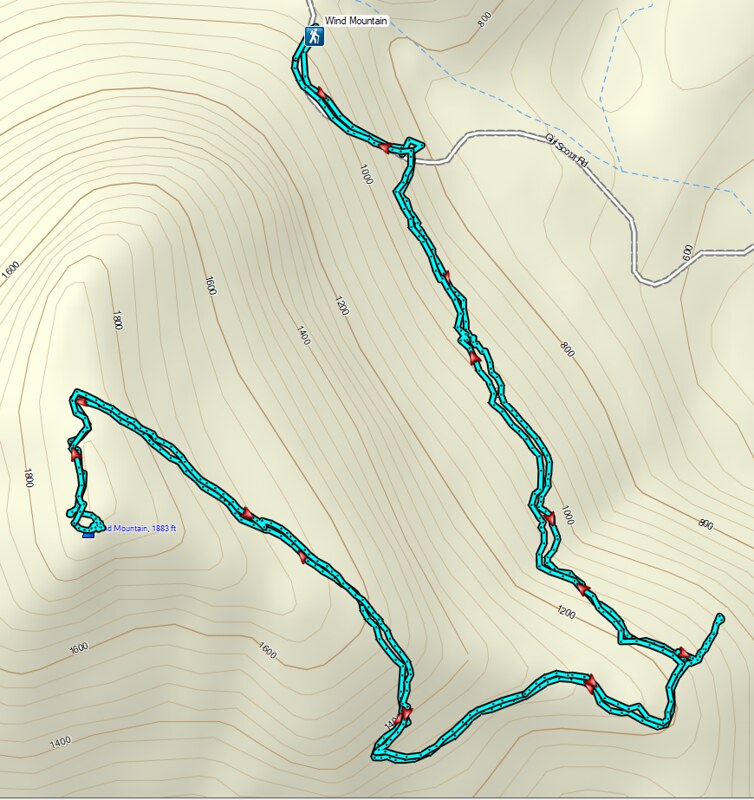
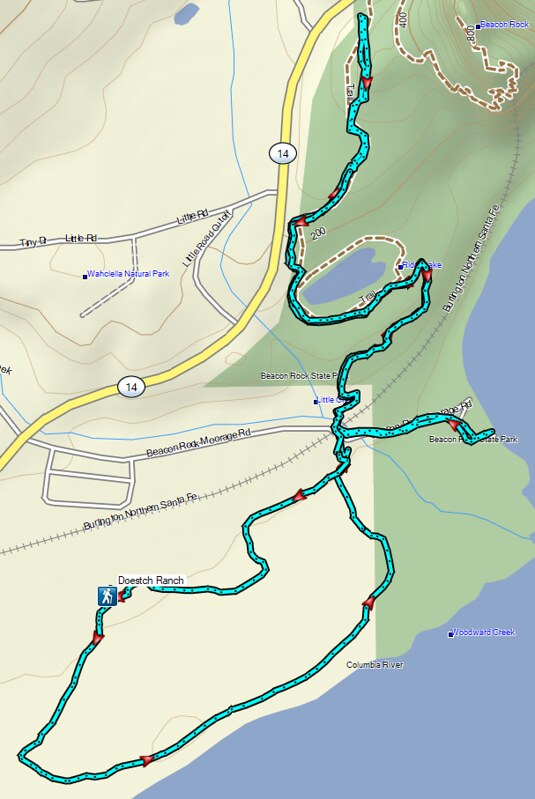
Our mileage for the day came to 9.2 with 1.6 coming at each Sams-Walker and St. Cloud, 2.7 at Wind Mountain, and 3.3 at Doestch Ranch. The elevation total was a nearly 1700′ with nearly 1200′ coming at Wind Mountain, 185′ at St. Cloud, and 270′ on the River to Rock Trail.
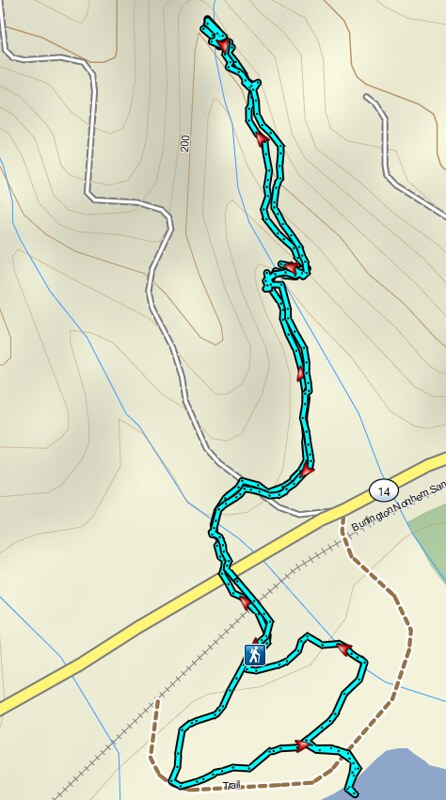
Screenshot 2024-04-14 122143St. Cloud and Lower Archer Falls

Screenshot 2024-04-14 122029Wind Mountain

Screenshot 2024-04-14 122458Sams-Walker

Screenshot 2024-04-14 121925 Doetsch Ranch

While none of the hikes were long enough to justify the 1:30 to 2hr drive from Salem combining them made for a more than worthy outing. When we got home it took me all of 5 minutes to remember where our annual forest pass was. I’d put in a shoebox on the work bench in our garage. Apparently 5am brain isn’t up to par with 3pm brain. Happy Trails!

Flickr: St. Cloud, Wind Mt. Sams-Walker, & Doetsch Ranch

Categories
Blue Mountains - North Hiking Oregon Trip report

Hat Rock State Park to McNary Beach – 06/11/2023

We used our second extended vacation of the year to continue our quest to complete 100 featured hikes from William L. Sullivan’s “100 Hikes/Travel Guide Eastern Oregon” edition 3rd edtion (post). Heading into 2023 we had done 79 out of the 100 featured hikes and had planned to check off five more on this trip to Enterprise, OR. On the way to Enterprise, a 7 1/2-hour drive from Salem, we stopped at Hat Rock State Park. We had originally planned for this stop to be a quick leg stretcher and just hike the mile loop passing Hat Rock, but a couple of late changes to our planned hikes for the remainder of the week reduced our milage so we extended our visit by hiking the Lewis and Clark Commemorative Trail to McNary Beach. This was not one of Sullivan’s featured hikes but the Lewis and Clark Trail is covered in his additional hikes under the Columbia River Railroad.

There are several large parking areas in the park and we wound up parking near the picnic area.
IMG_9599

We took a paved trail on the opposite side of the parking lot from the picnic area which climbed up to another parking lot and trailhead.
IMG_9600

IMG_9788The parking area at the trailhead.

IMG_9601Signboards at the trailhead.

IMG_9607Trail map.

We headed counterclockwise on the loop which quickly brought us to Hat Rock.
IMG_9608

IMG_9611

The basalt feature is part of the Columbia Basalt eruptions, a series of lava flows that left basalt a mile thick in some places.
IMG_9613

We continued on the loop detouring to a bench overlooking a pond.
IMG_9621

Beyond the viewpoint the trail descended to a junction along the pond. Here we turned right which took us across a footbridge to a boat ramp.
IMG_9625

IMG_9626

IMG_9629Lake Wallula from the footbridge.

We crossed the parking lot at the boat ramp to a continuation of the trail which led uphill to the Lewis and Clark Commemorative Trail.
IMG_9633

Eastern kingbirdEastern kingbird near the boat ramp.

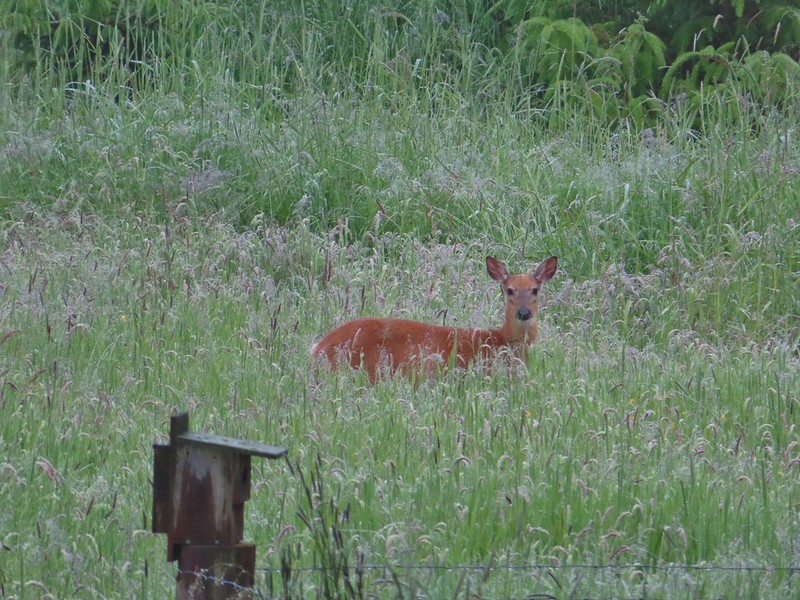
IMG_9643Post ahead marking the junction with the Lewis and Clark Trail. There is also a deer below the cliffs ahead.

IMG_9645Zooming in on the doe.

We turned right on the Lewis and Clark Trail. The former railroad grade follows the shore of Lake Wallula on the Columbia River. The lake is created by the McNary Dam which was visible near the western end of the trail near McNary Beach.
IMG_9648

IMG_9651Lake Wallula

We followed the trail a total of 4.8 miles to McNary Beach where we took a short break at a shaded picnic table. While the scenery didn’t change much the views were good and there were lots of birds along the way filling the air with their songs.
IMG_9655Raven with an egg it had snatched from some other bird.

IMG_9658Broad-leaved pepperweed (invasive)

IMG_9661Initially there were some houses on the left, but they gave way to the Wanaket Wildlife Area.

IMG_9665Most of the balsamroot was long past done but a few late blooms remained.

IMG_9666Dove

IMG_9667A fleabane

IMG_9670

SwallowSwallow

IMG_9674Patterns on Lake Wallula

IMG_9675Western meadowlark signing from atop the cliffs.

IMG_9681Sign for the Wanaket Wildlife Area

Lark sparrowLark sparrow

IMG_9694Box Canyon

IMG_9700There were a couple of small hills but over all very little elevation gain.

IMG_9701Another western meadowlark.

IMG_9706Cormorant

IMG_9723

IMG_9721Mallard

IMG_9729Showy milkweed and a bunch of bees.

IMG_9734Trail sign near McNary Beach

IMG_9736Our rest stop.

We returned to Hat Rock State Park the way we’d come.
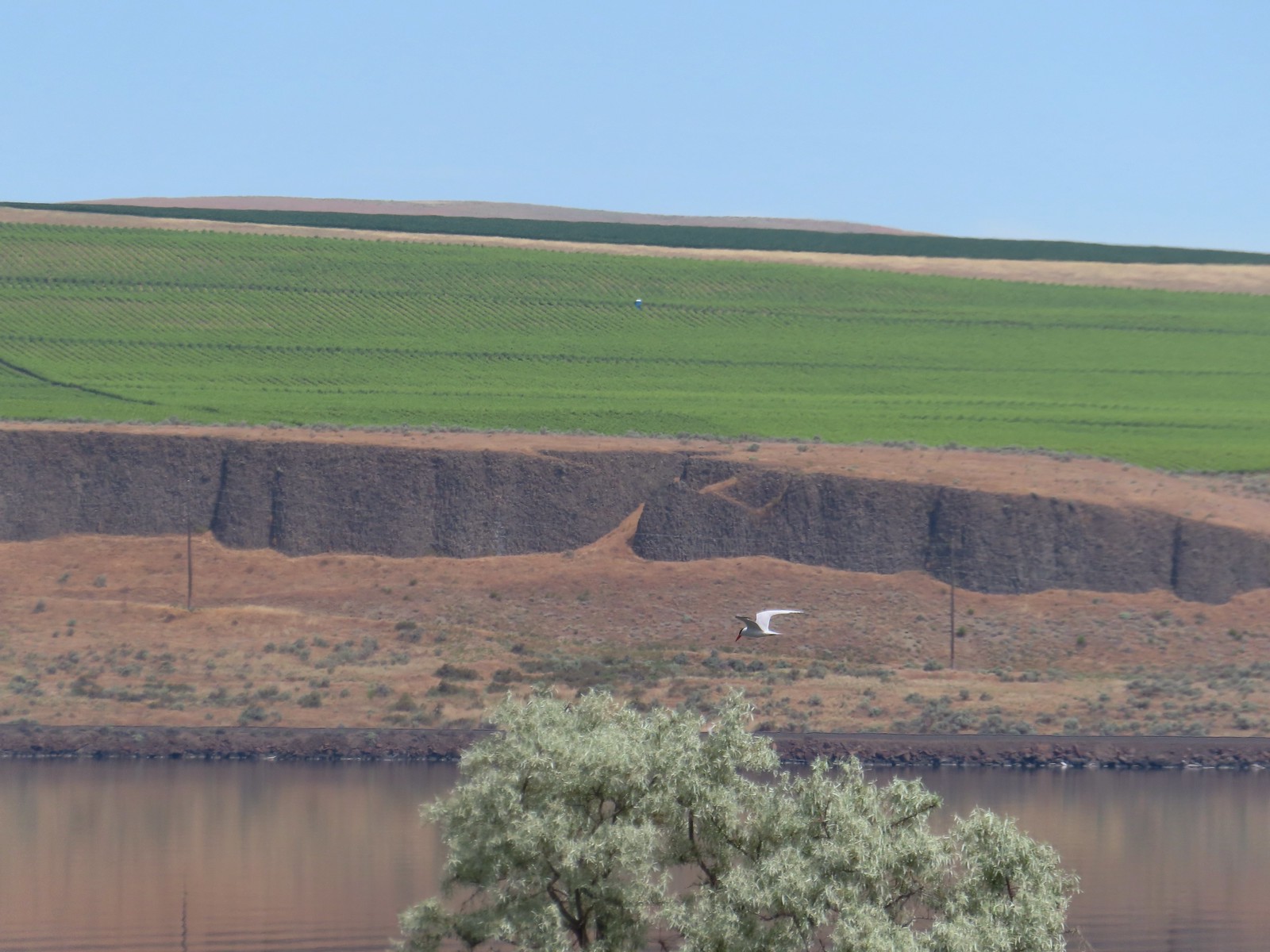
Caspian ternCaspian tern

IMG_9746Hawk

Gray hairstreakGray hairstreak on tall tumblemustard

IMG_9766

Becker's whiteBecker’s white also on tall tumblemustard.

IMG_9775Boat Rock to the left and behind Hat Rock from the Lewis and Clark Trail.

We recrossed the footbridge and followed the path along the pond to complete the loop back to the picnic area.
IMG_9777

IMG_9779

IMG_9782One of these is not like the others.

IMG_9785

We ate lunch at a table in the picnic area before getting back in the car and driving to Enterprise. Our hike here came in at 10.9 miles with approximately 200′ of elevation gain.

The trail is mostly exposed to the Sun so it got a little warm but overall it was a pleasant hike. We only saw a hand full of others on the trails but there were plenty of people at Hat Rock Park itself and a fair number at McNary Beach. This was a good kick-off hike for our trip and we looked forward to more eastern Oregon scenery to come.

Two days after our visit (Tuesday 6/13) the Hat Rock Fire started near the SE corner of the park at the Highway 730/Highway 37 junction. Fortunately the fire spread away from the park. The fire is now 100% contained but it grew to over 16,800 acres before containment occurred. Happy (fire free) Trails!

Flickr: Hat Rock State Park

Categories
Columbia Gorge North Hiking Trip report Washington

Steigerwald Lake National Wildlife Refuge – 05/20/2023

For the second week in a row, we turned to a National Wildlife Refuge System as a hiking destination. The U.S. Fish and Wildlife Service currently manages 568 wildlife refuges throughout the United States with the primary statutory purpose being the conservation of native species. Where and when appropriate the refuges offer access to the public for activities such as photography, wildlife viewing, hunting, fishing, paddling, and of course hiking. We have really come to enjoy our visits the various refuges, so we were looking forward to exploring a new one to us, the Steigerwald Lake National Wildlife Refuge.

Situated just East of Washougal Washington along the Columbia River, Steigerwald Lake is part of the Ridgefield National Wildlife Complex. In addition to Steigerwald Lake the complex also includes the Franz Lake, Pierce, and Ridgefield refuges. Of those Ridgefield (post) is the only one we’d previously visited. We had hoped to visit this refuge a couple of years ago, but the refuge was undergoing an extensive restoration that kept it closed until May of last year. The refuge hosts roughly 5-miles of crushed gravel trails. Two of the trails, the Mountain View and the Refuge River, are open all year. A third trail, the Wildlife Art Trail, is partially closed October 1st through April 30th. The Refuge River Trail is open to pedestrians, bicycles, jogging, horseback riding, and leashed dogs which is rare for a refuge while the other trails are hiker (pedestrian) only. To use the Refuge River Trail joggers, cyclists, equestrians and leashed dogs enter the refuge from the West via the Captain William Clark Park Trail by either starting at Steamboat Landing or Captain William Clark Park.

Our plan was to start at the refuge trailhead and hike the trails then then take the Captain William Clark Park Trail to Steamboat Landing and back. We opted for this approach because online information showed 7am and 8am as the opening times for Captain William Clark Park and Steamboat Landing respectively while the refuge website reported that it’s gate opened at 5:30am and we’d be arriving shortly after six.
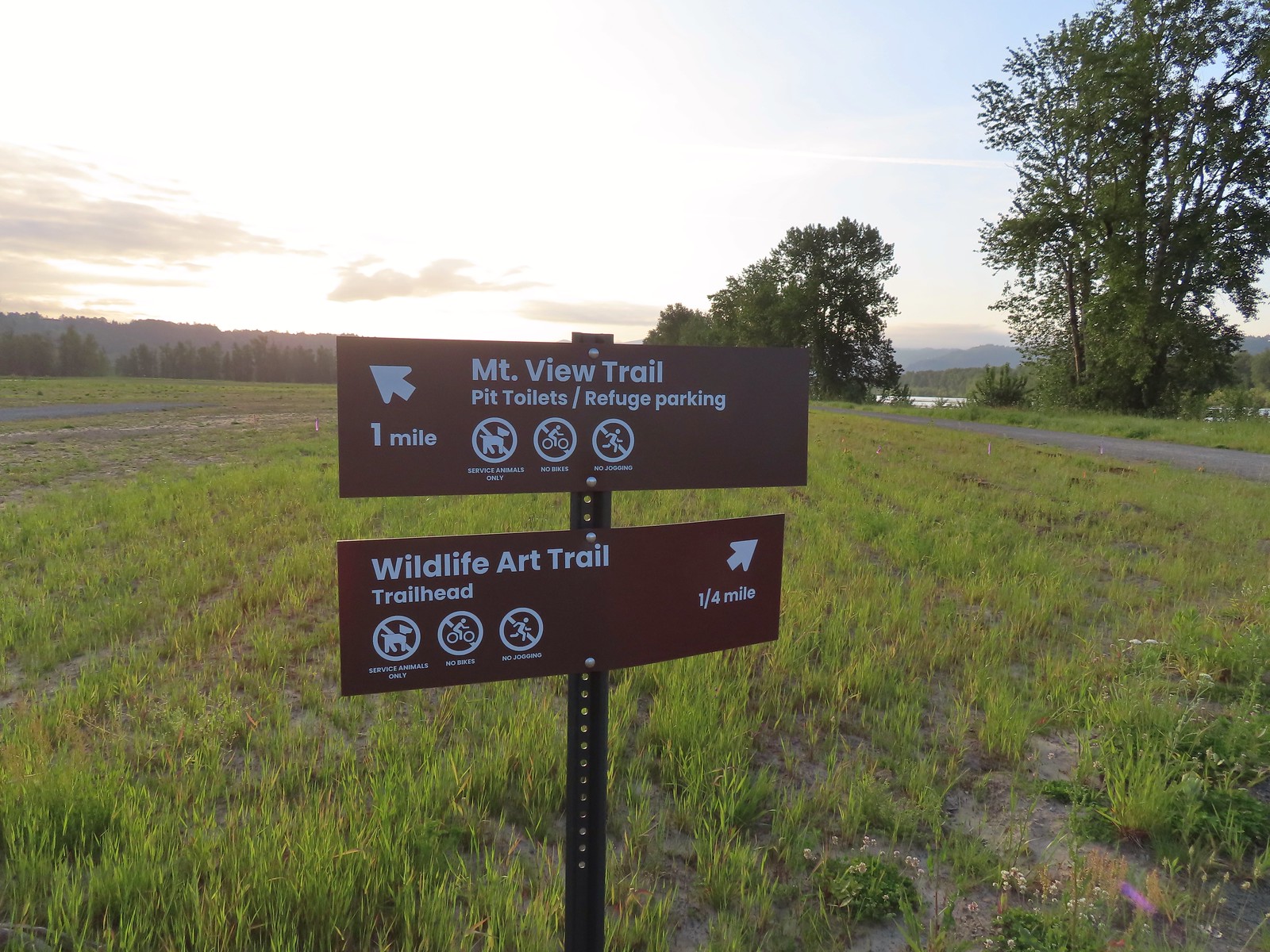
IMG_8000The Mountain View Trail is named so because of the view of Mt. Hood, which on this morning was hiding behind the clouds on the left side of the photo.
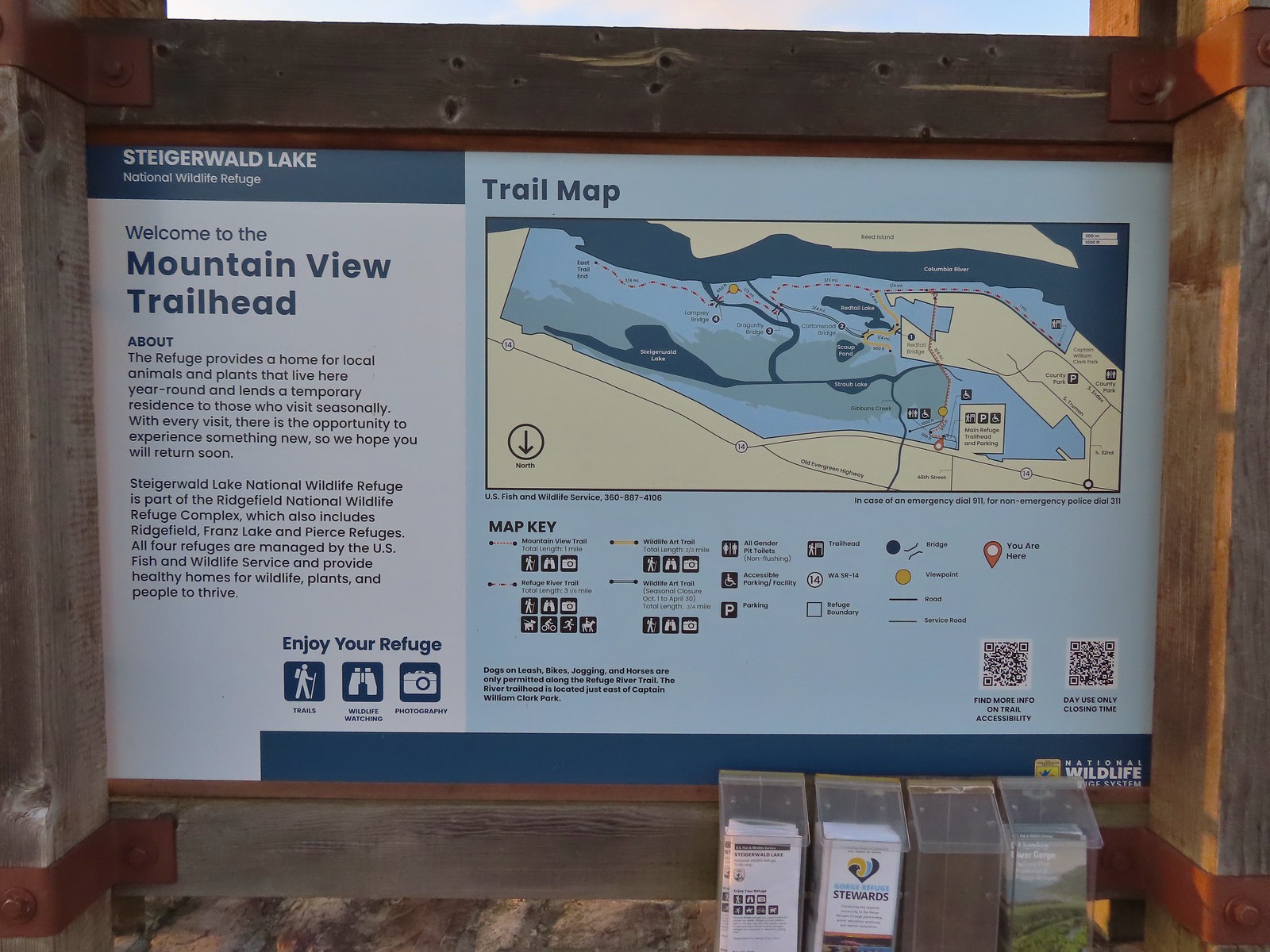
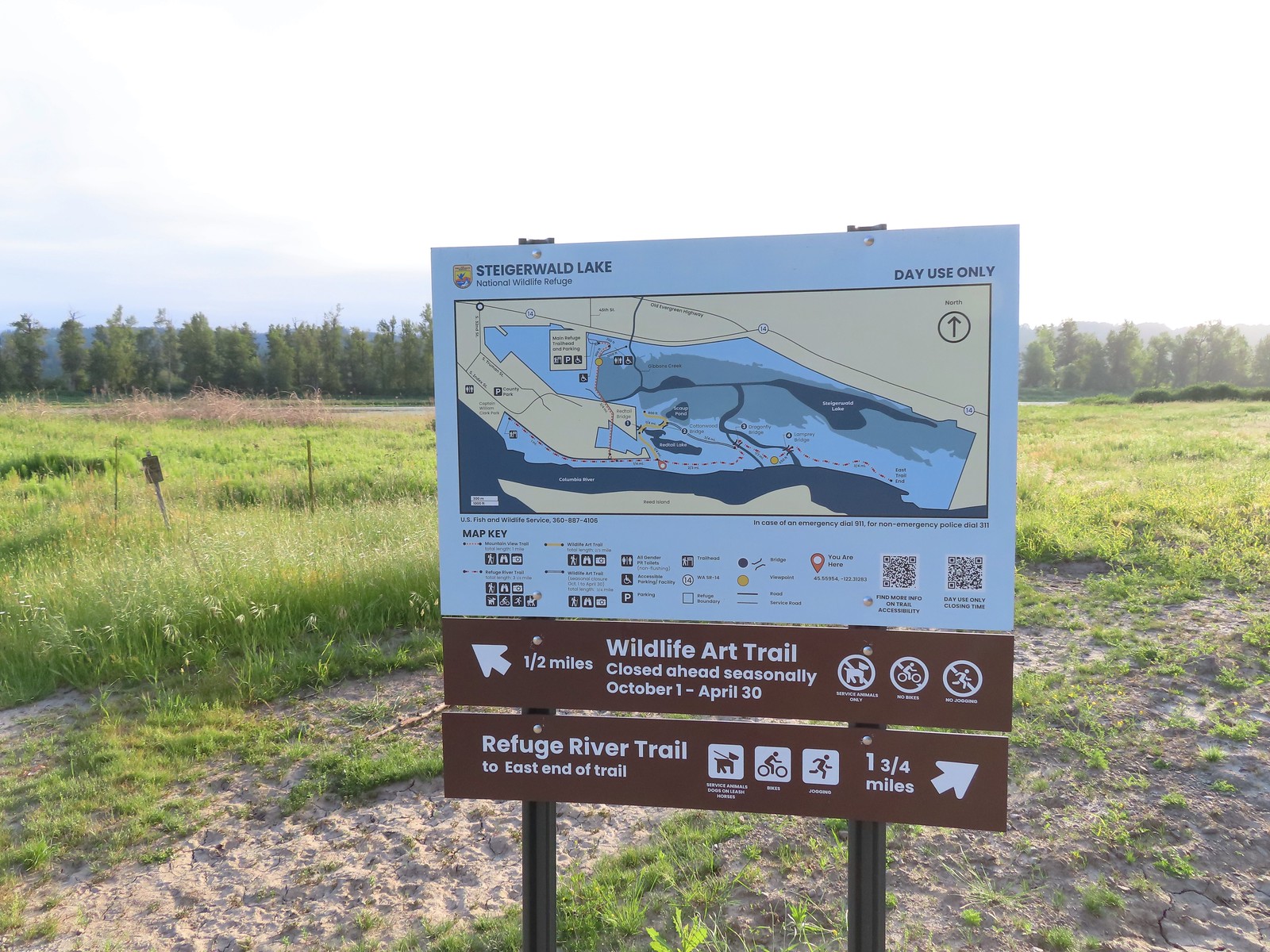
IMG_8001Map and information at the trailhead.

We followed the wide gravel trail as it climbed atop a levee separating the wetlands to the east from industrial lands to the West.
IMG_8005

IMG_8011View to the East.

IMG_8009Looking West toward Washougal.

We followed the trail atop the levee watching on both sides for wildlife.
IMG_8013

DSCN3604Mallards

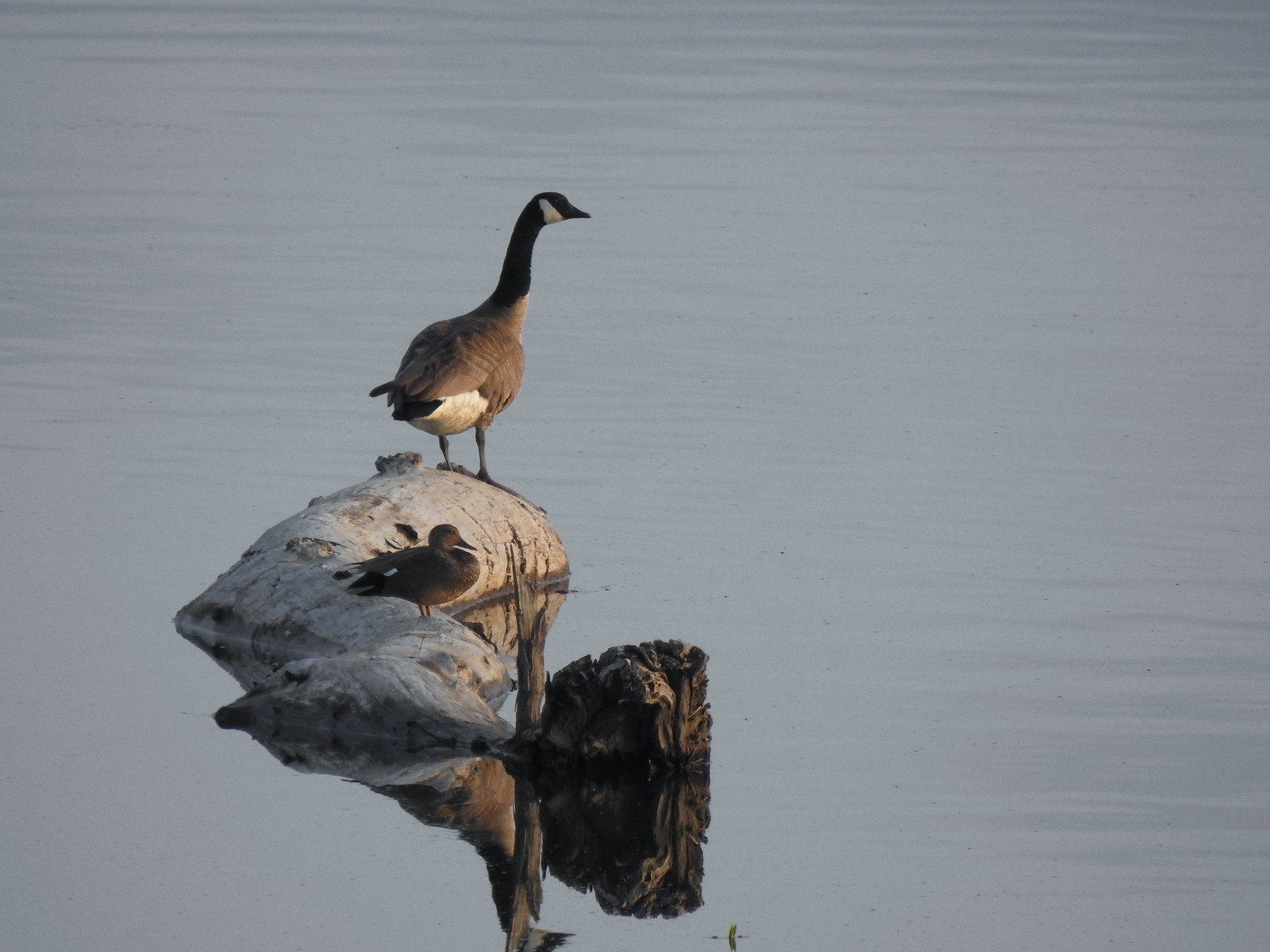
DSCN3626A duck and a goose sharing a log.

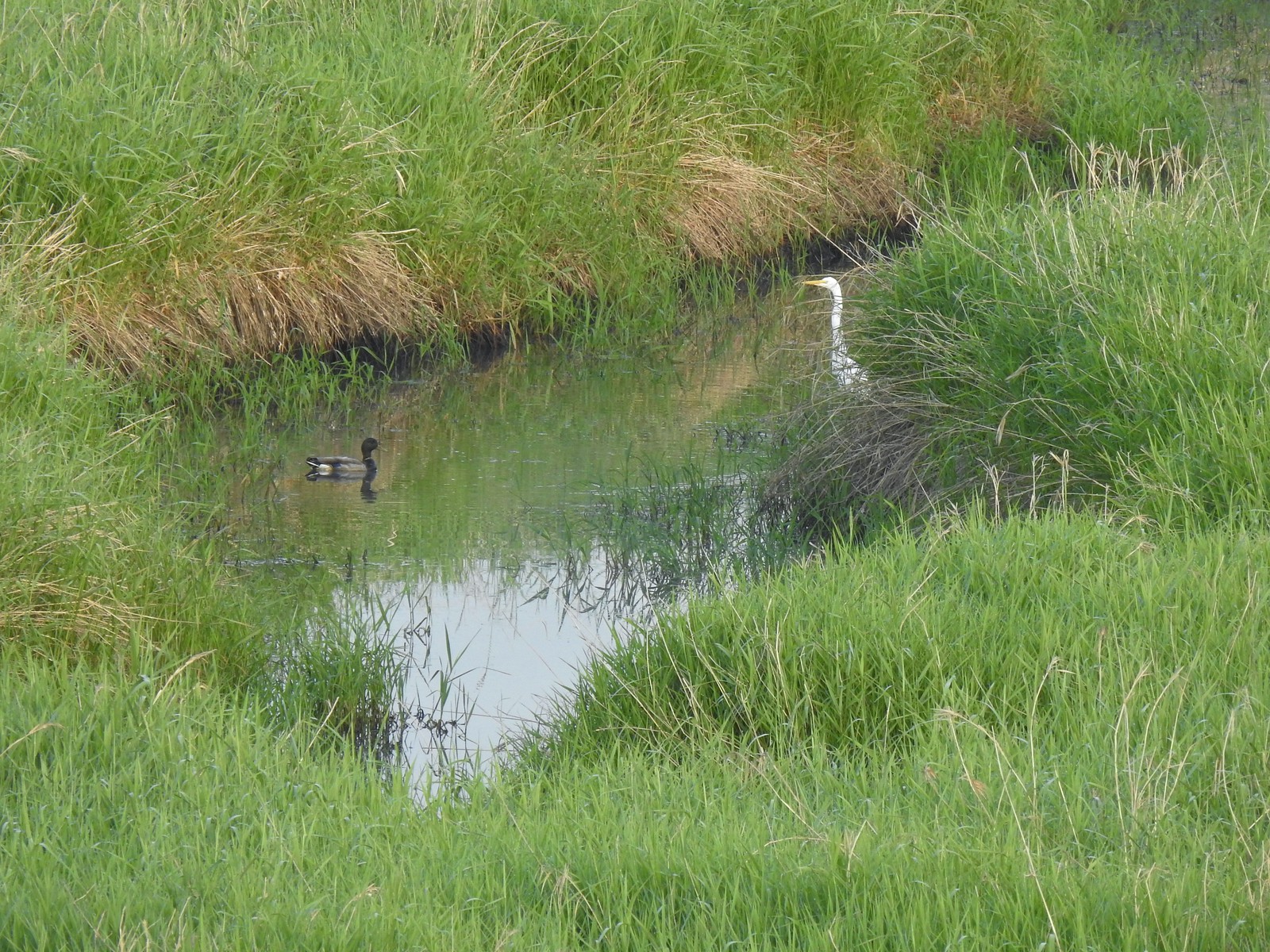
DSCN3611A mallard and an egret in a channel to the West.
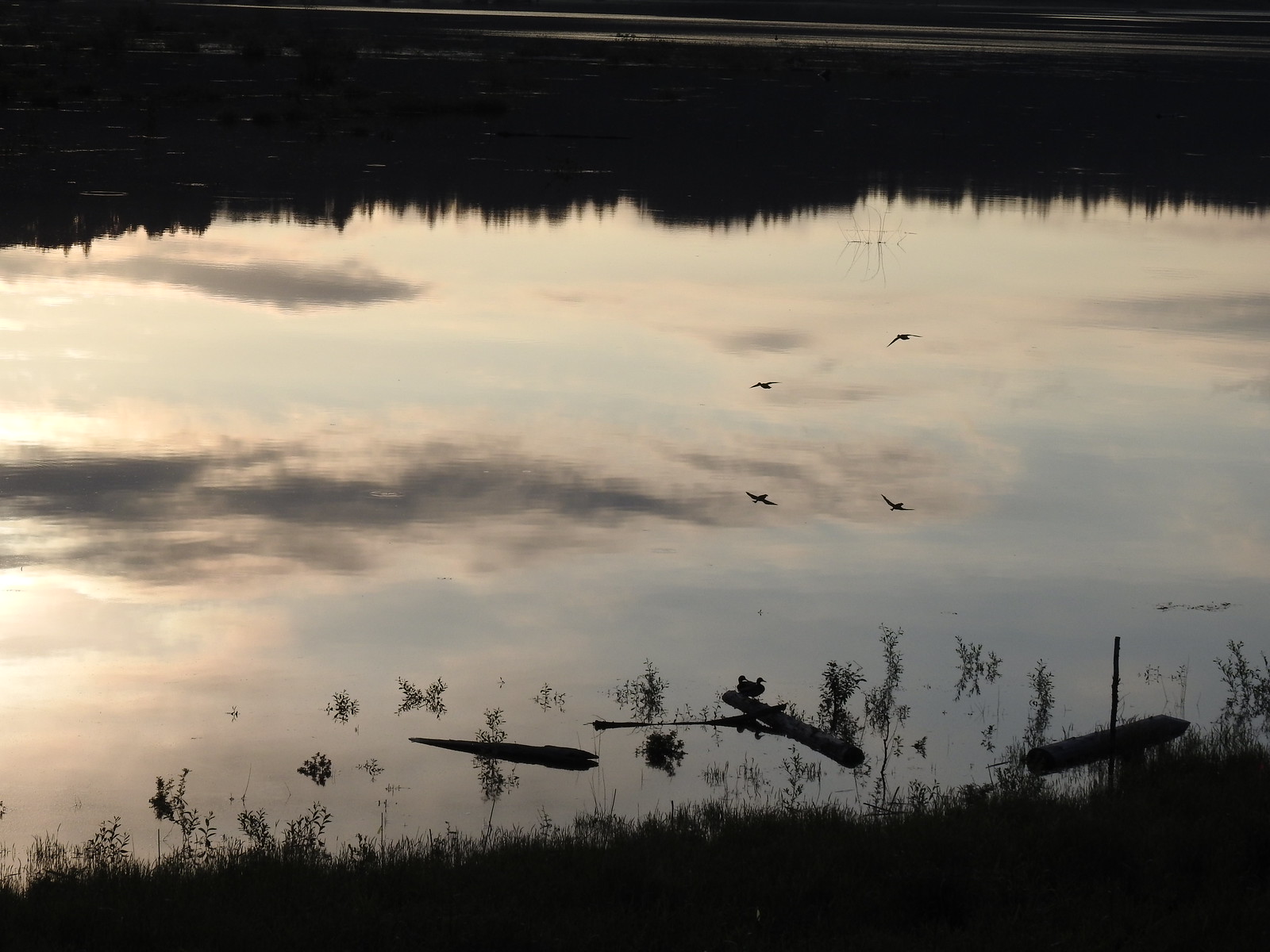
DSCN3607Ducks flying over the wetlands casting clear reflections.

DSCN3620Water dripping from a mallards bill.

IMG_8019

DSCN3631One of several rabbits we spotted to the West.
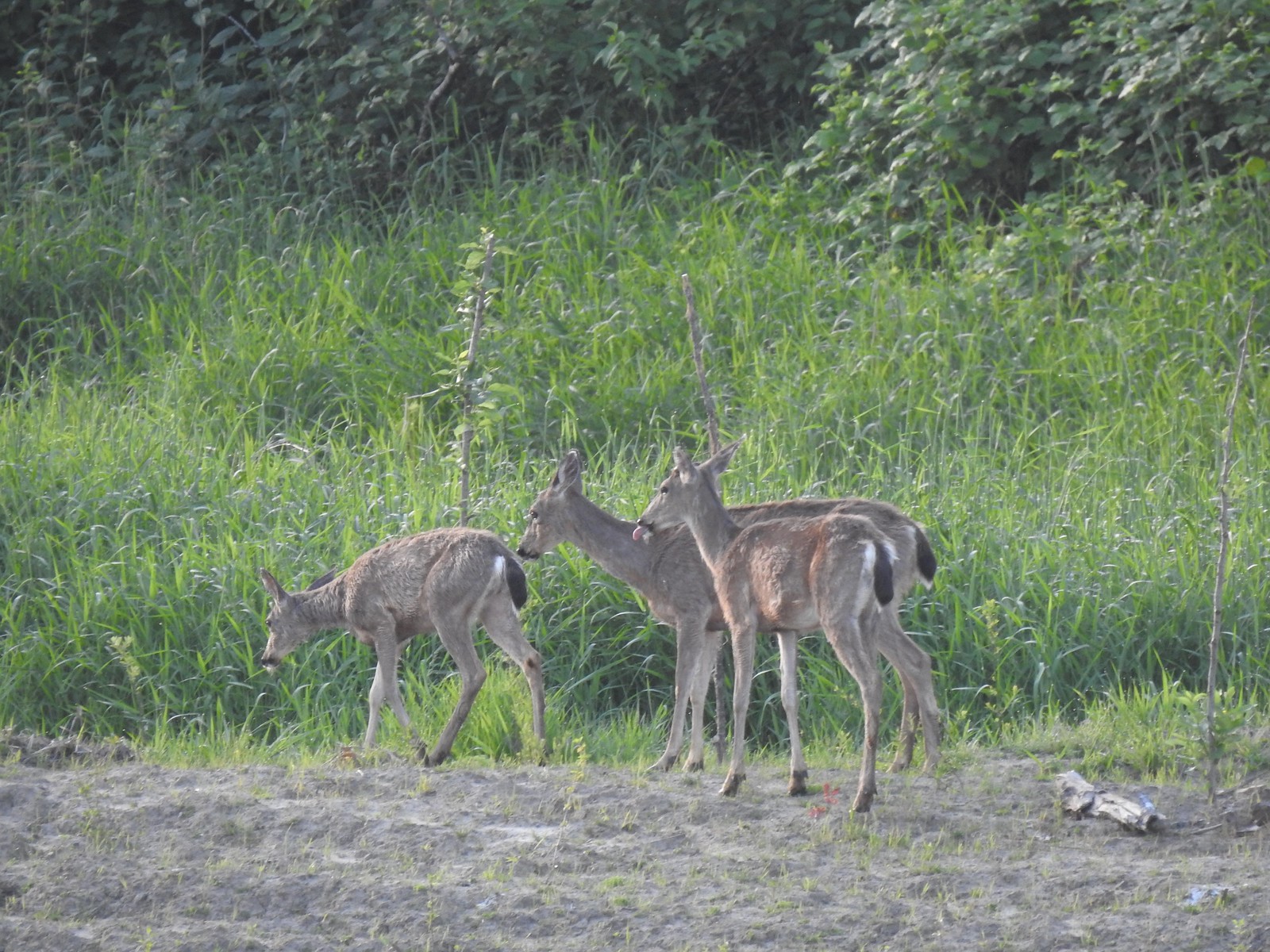
DSCN3635Deer across the wetlands. (The young buck may have been sticking his tongue out at us.)

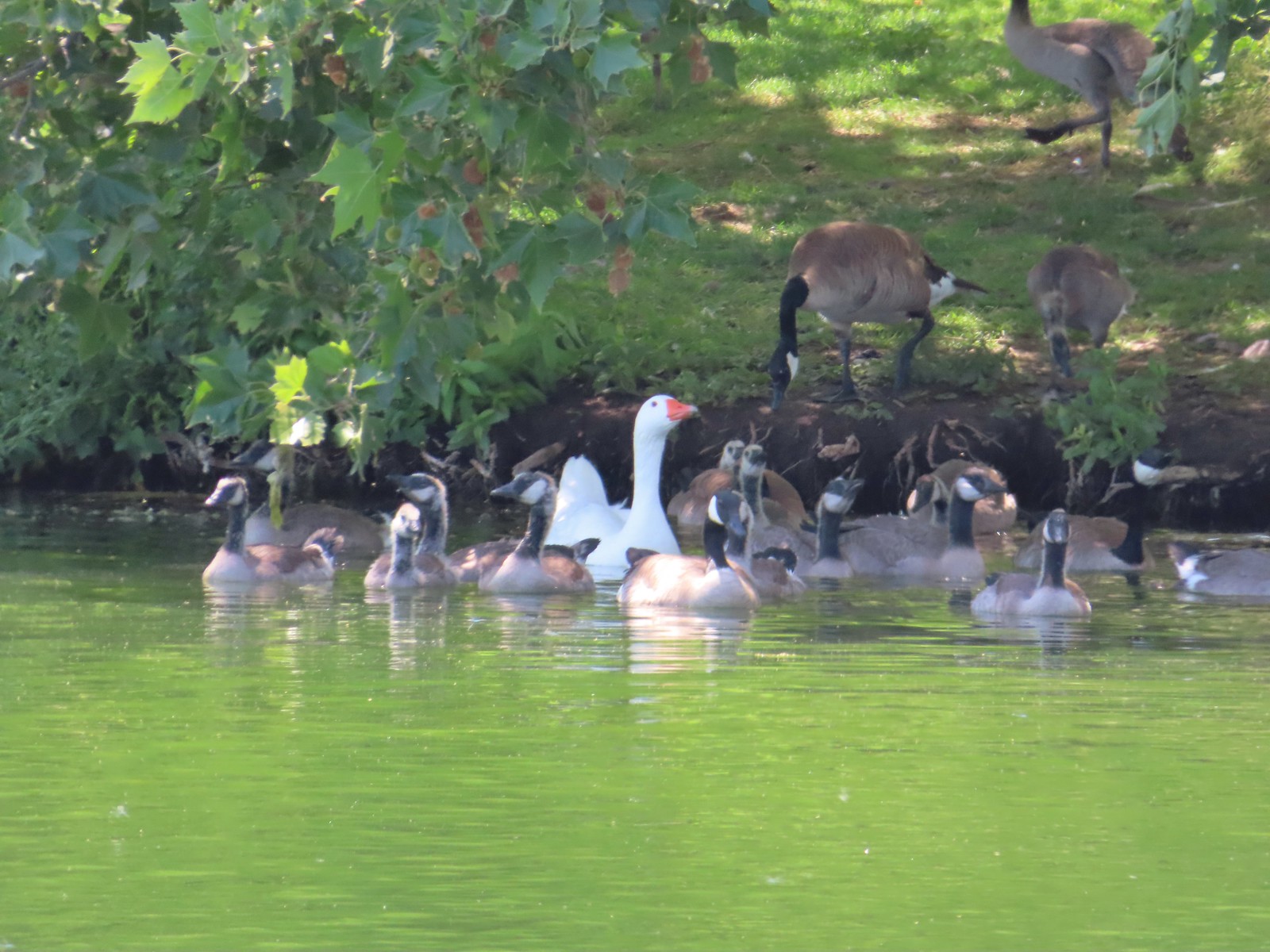
DSCN3643Families of geese.

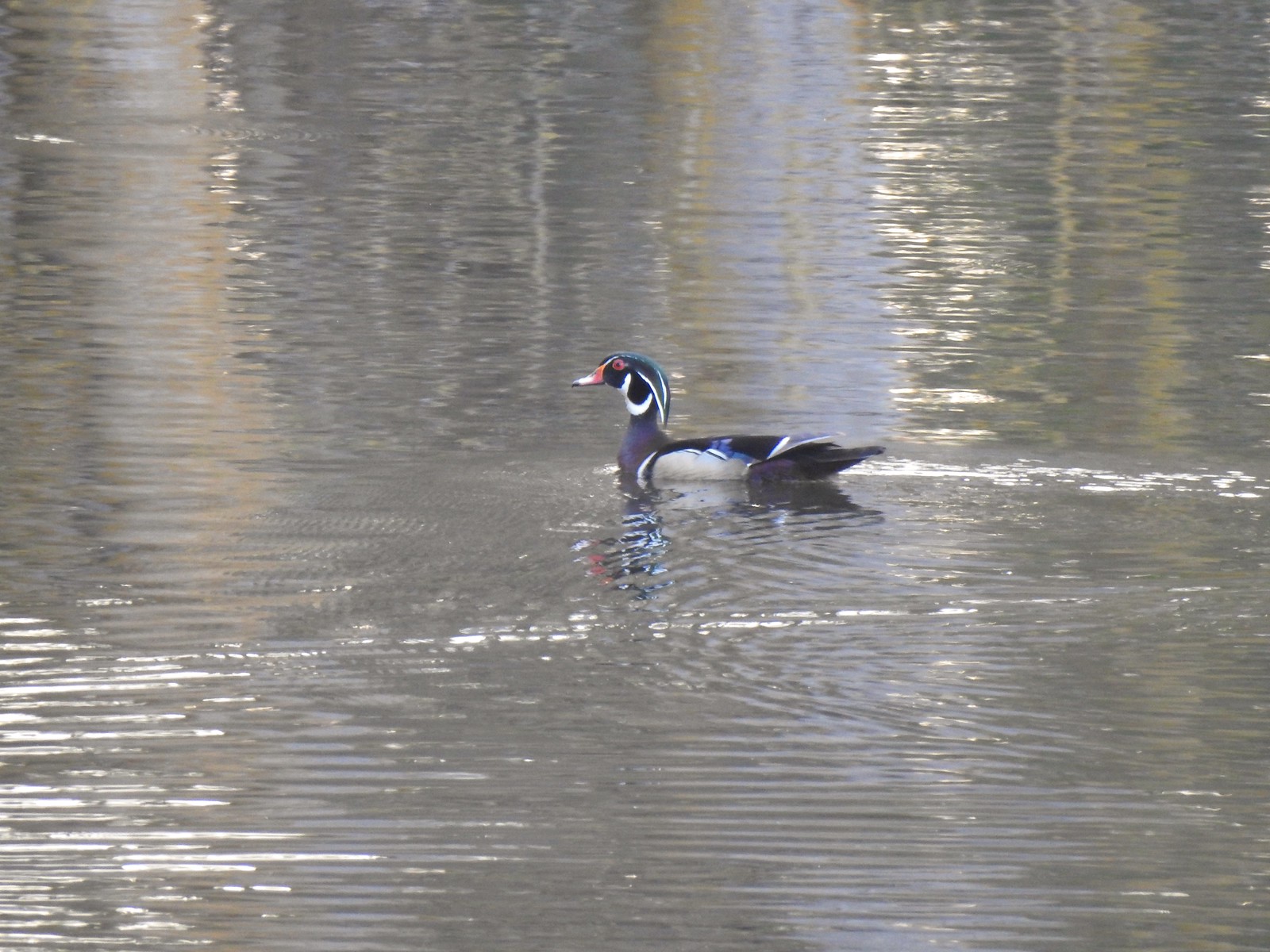
DSCN3648Wood duck mallard

When the trail split just prior to reaching the Refuge River Trail we stayed left.
IMG_8024

DSCN3652

IMG_8026Trail sign at the junction with the Refuge River Trail.

We turned left onto the Refuge River Trail following it for 0.3-miles to the Wildlife Art Trail where we again turned left.
DSCN3660Sparrow

IMG_8032

DSCN3667Coming in for a landing.

IMG_8033

IMG_8034Red Tail Lake to the right of the Wildlife Art Trail.
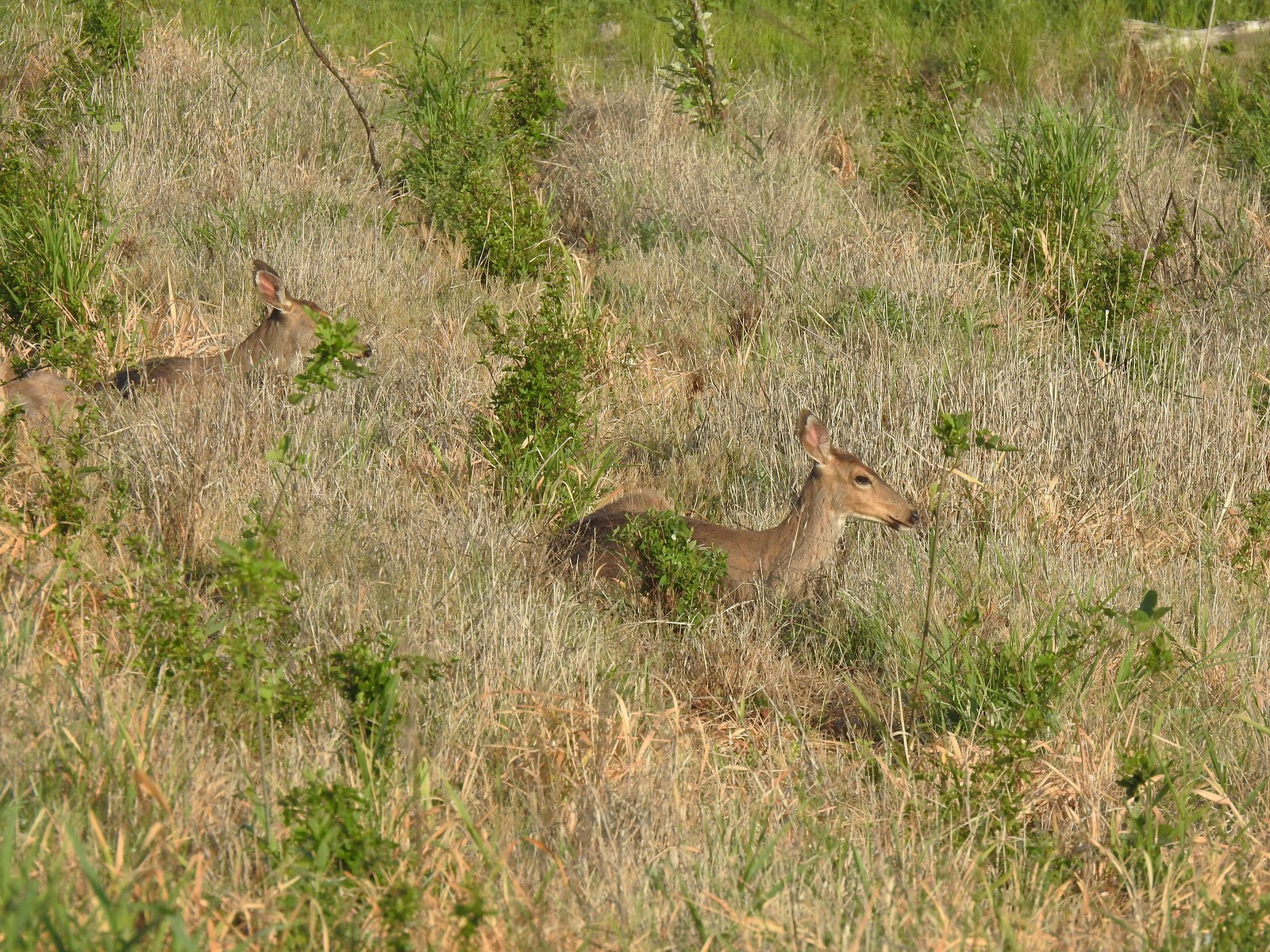
DSCN3678Pretty sure these are the same three we saw from the Mountain View Trail.

DSCN3685This deer laying along the shore of Red Tail Lake was new though.
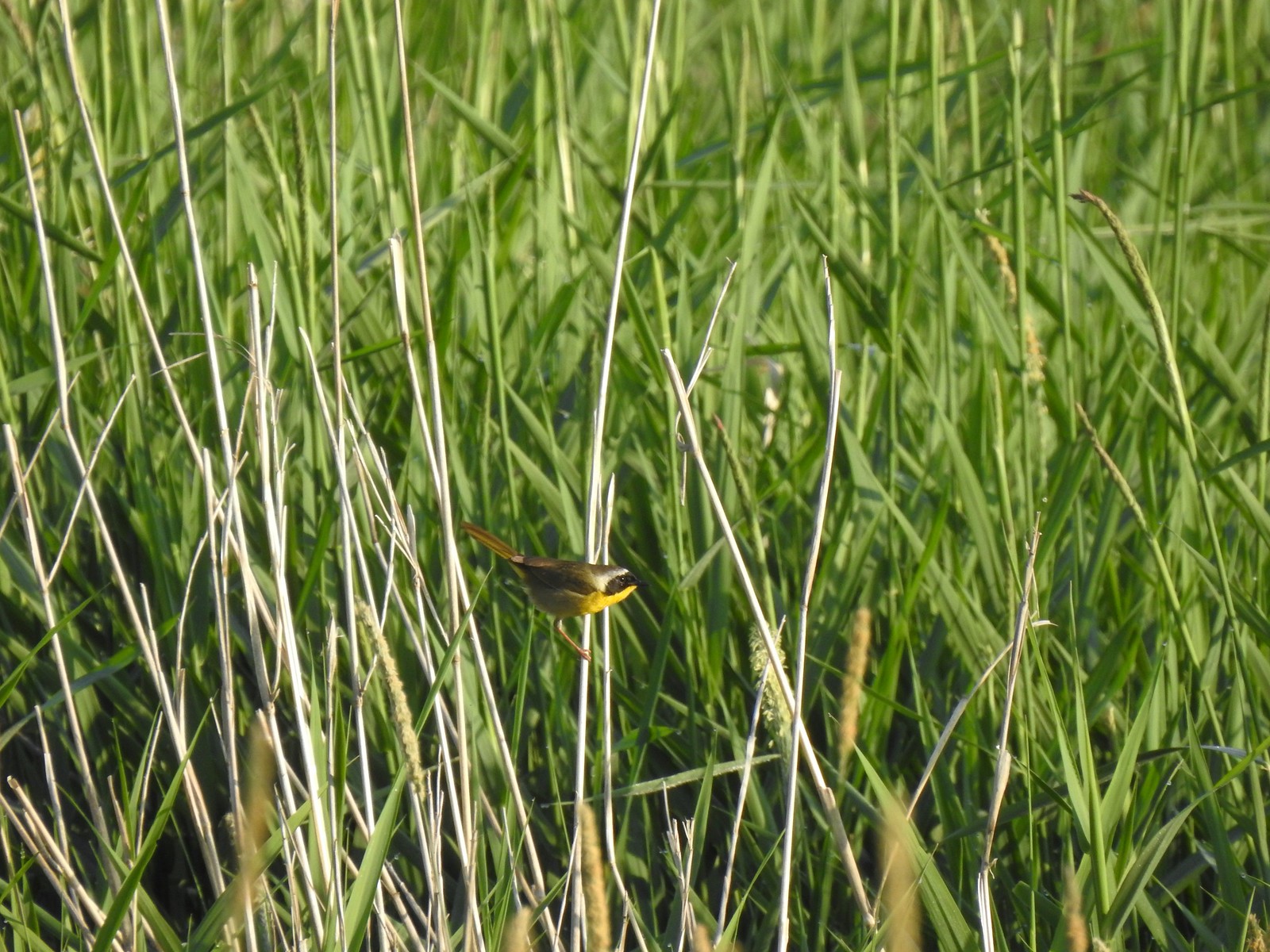
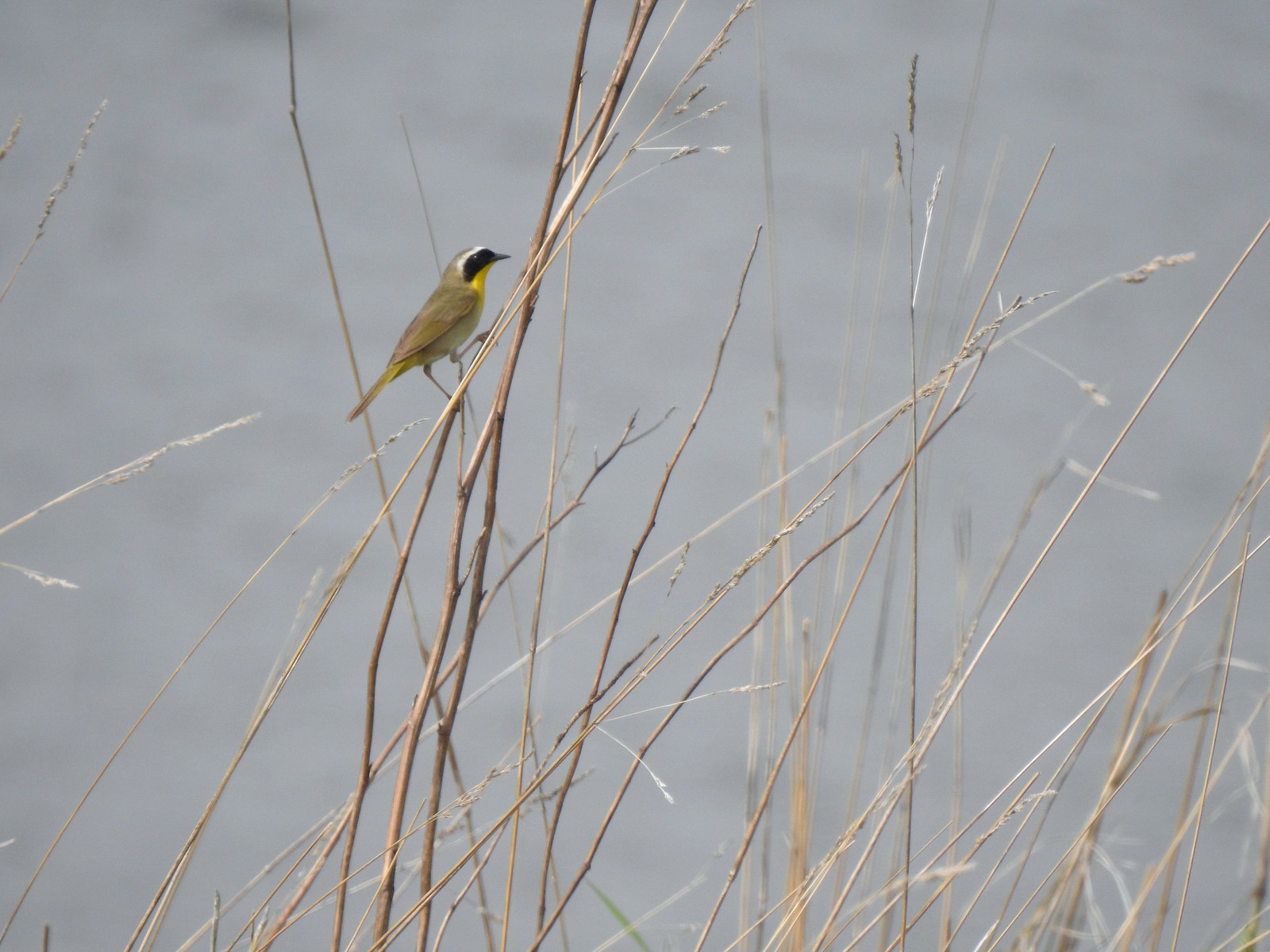
DSCN3675Common yellow throat

DSCN3676One of many great blue herons that we watched fly overhead throughout the day.

IMG_8042The Wildlife Art Trail passing around Redtail Lake.

IMG_8045Gibbons Creek is in that grass somewhere with at least one deer.

DSCN3692

DSCN3698Killdeer along Redtail Lake.

DSCN3700Turns out the deer laying on the lake shore wasn’t alone.

IMG_8044Roses

DSCN3705Purple martins

IMG_8046Just beyond the Cottonwood Bridge the trail forks. To the right is the seasonal section of the loop open May 1st through September 30th. The left-hand fork dead-ends in a tenth of a mile overlooking the wetlands.
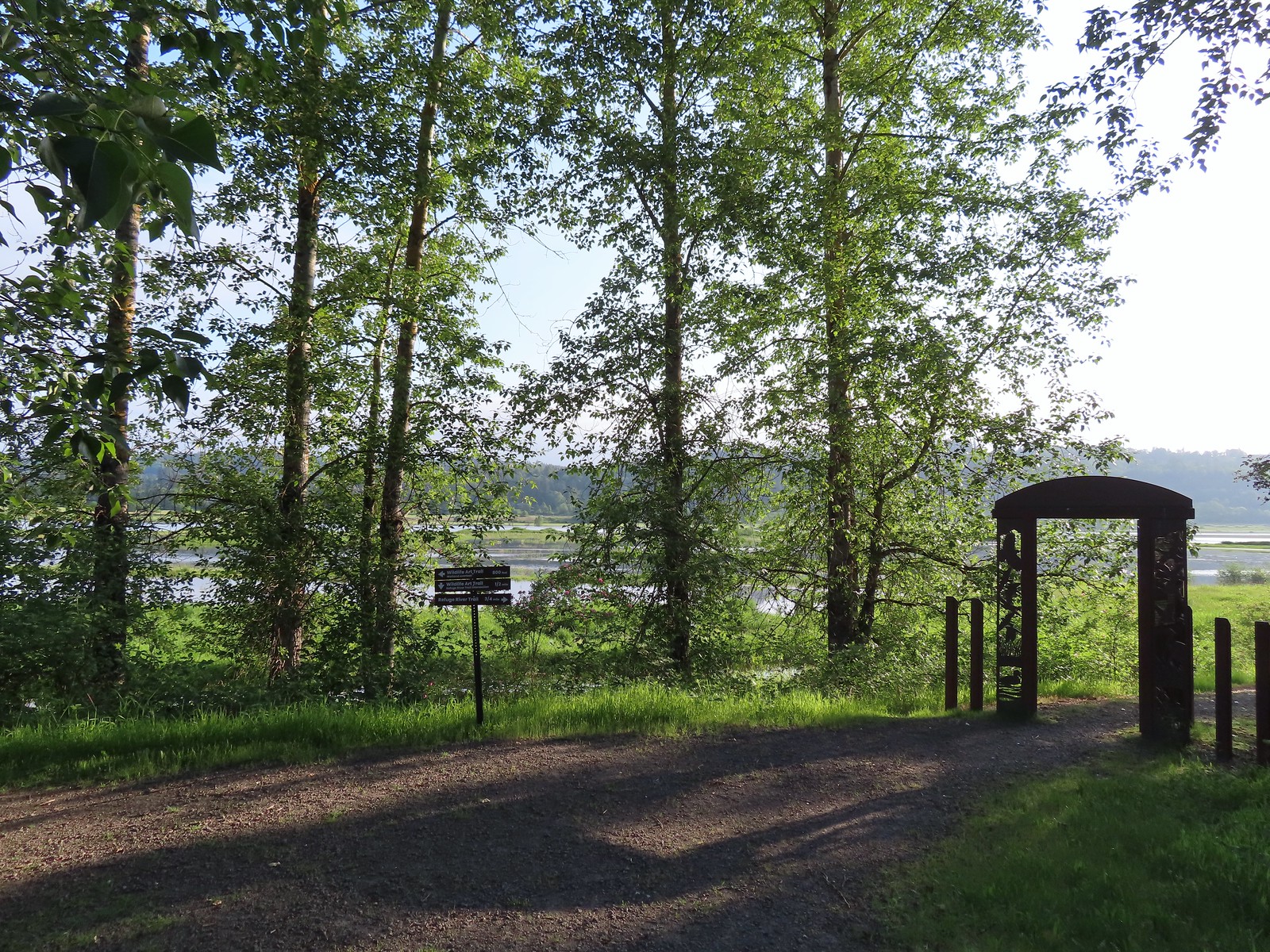
IMG_8050We headed left to the overlook before continuing on the loop.
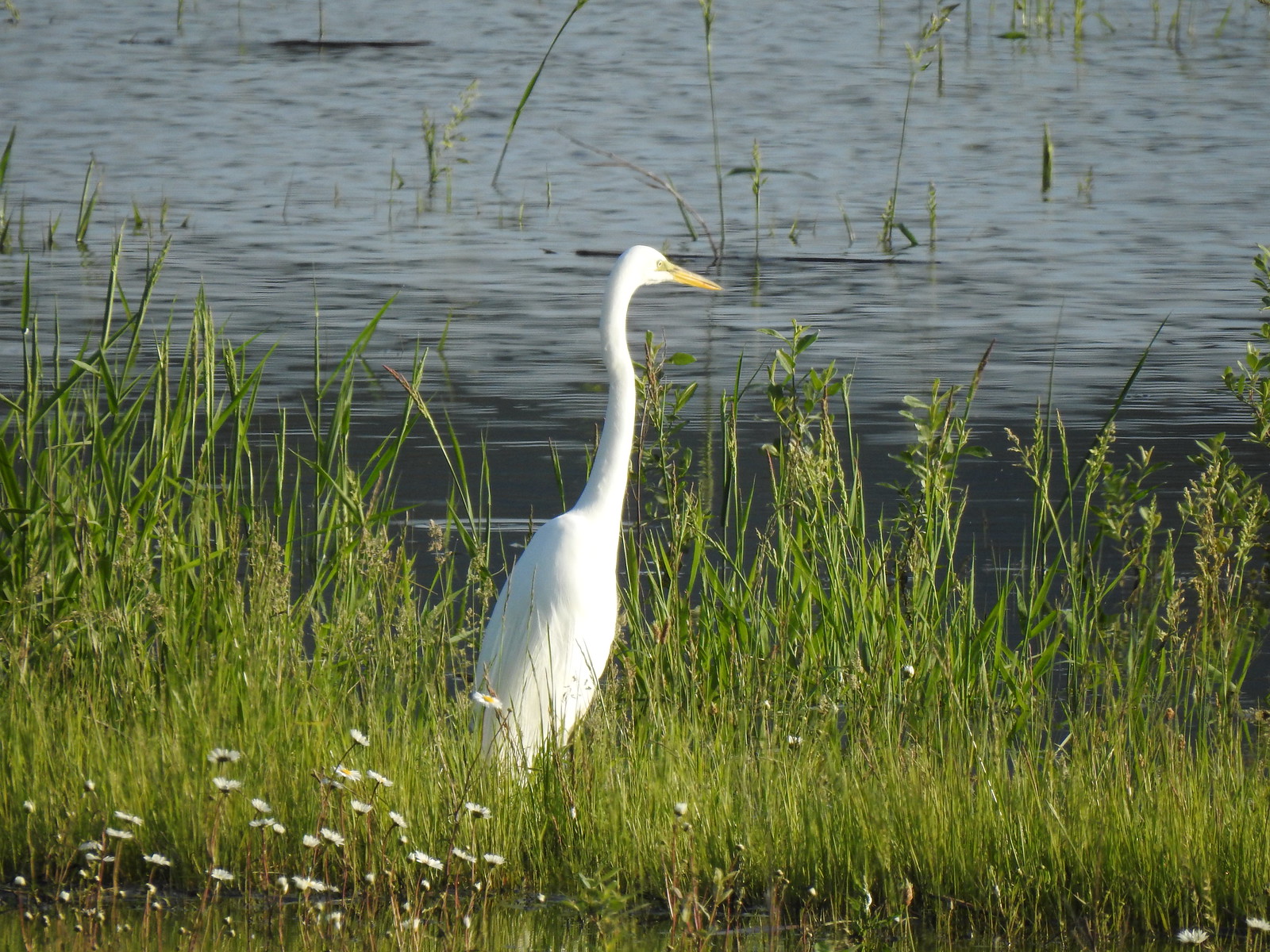
DSCN3713Egret at Scaup Pond.

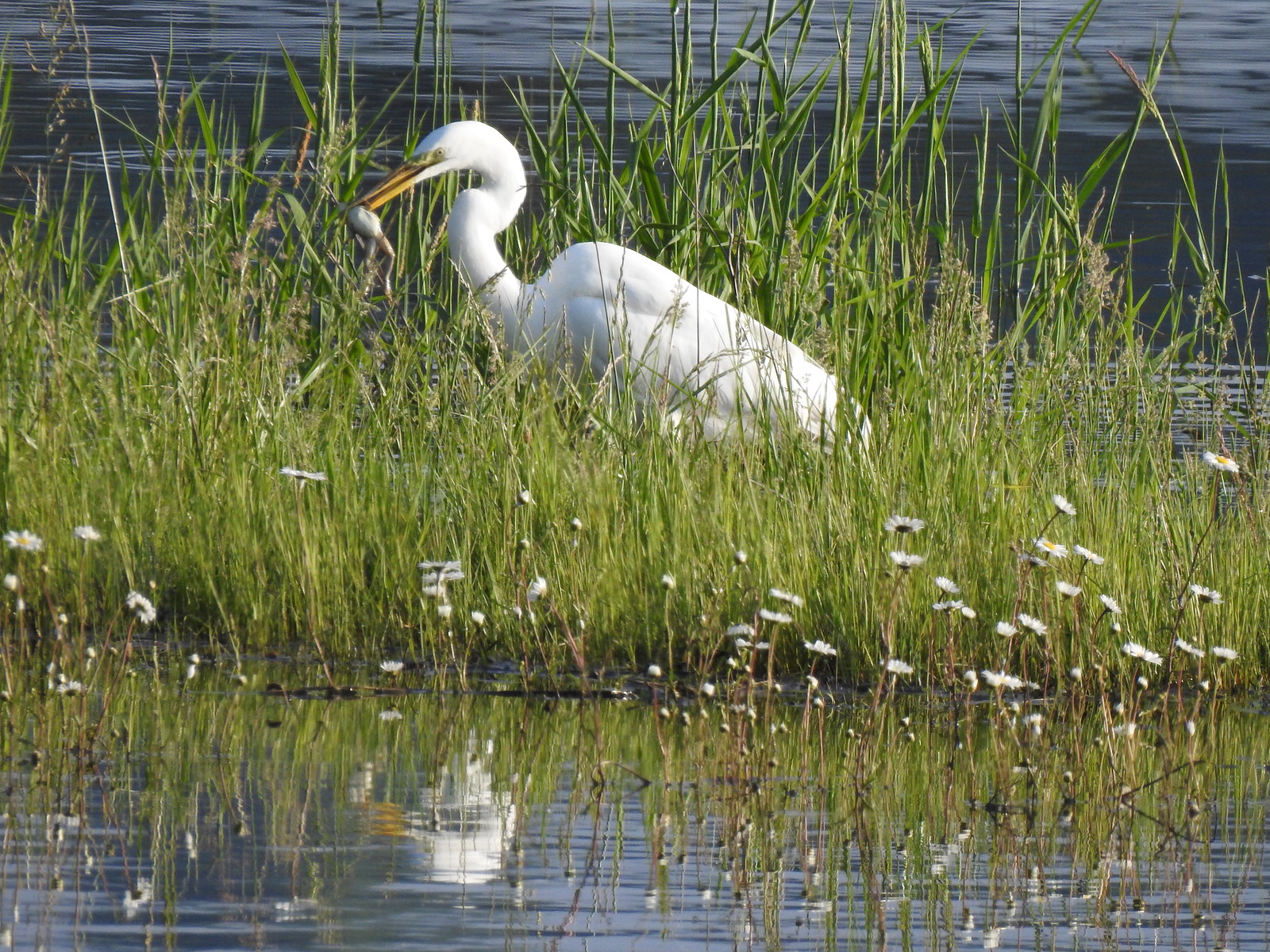
DSCN3717Egret with a frog meal.

IMG_8051

IMG_8052Mushrooms

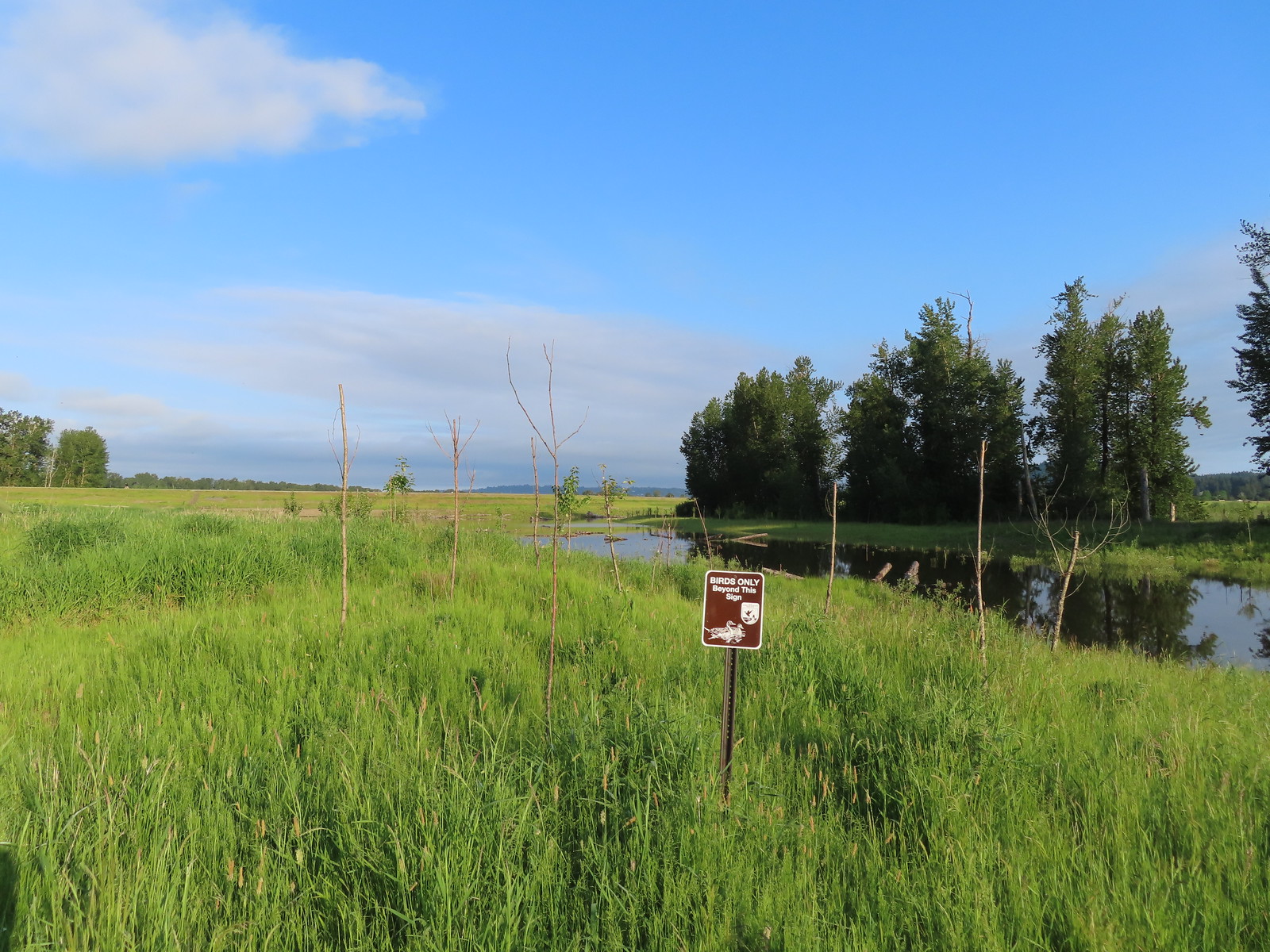
IMG_8054We got a kick out of the “Birds Only Beyond This Sign”.
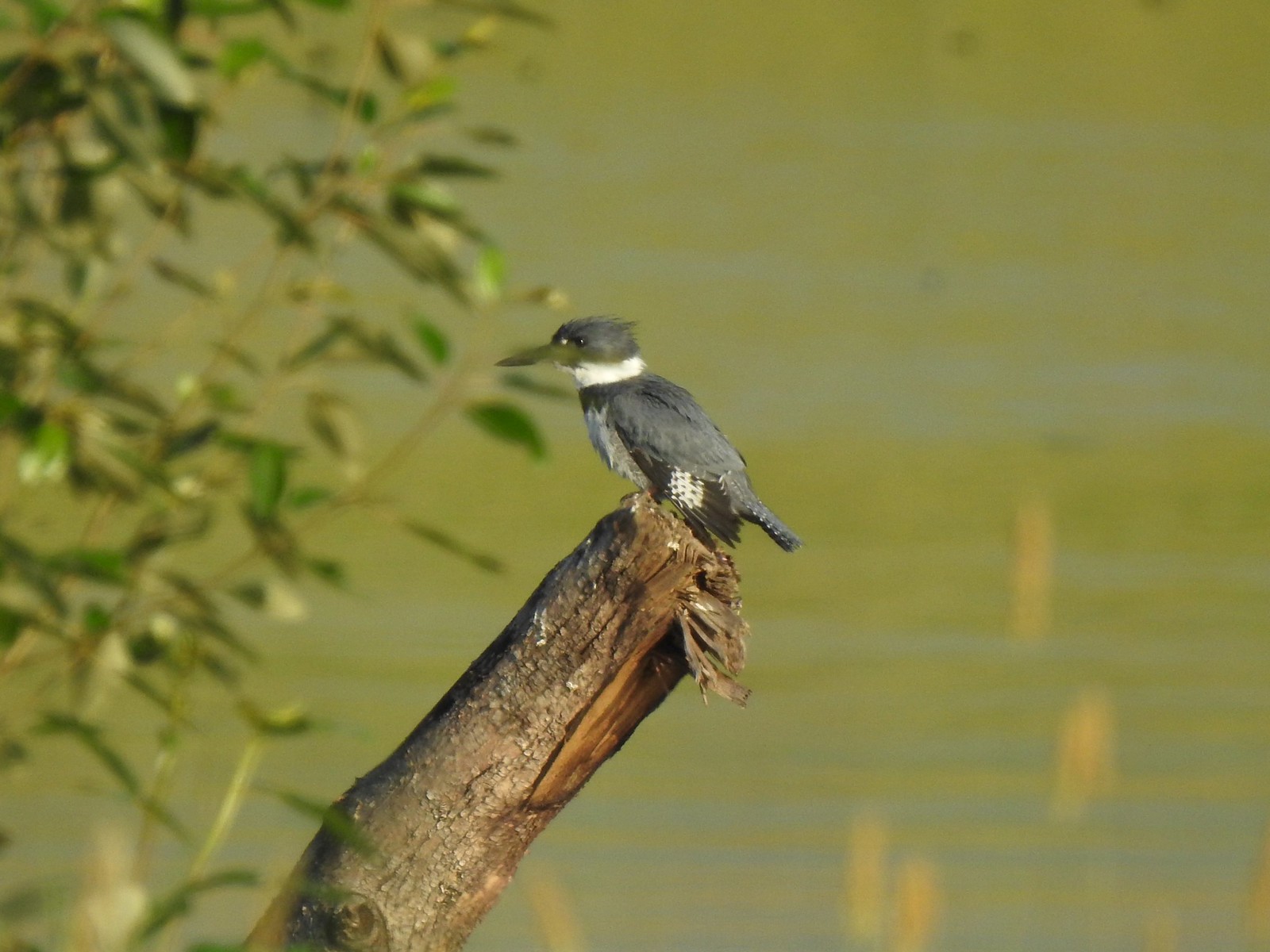
DSCN3727Kingfisher

I had been watching a kingfisher as we arrived at the overlook and after it flew off I turned to my right and thought that there was a bittern standing just a few yards away. Then my eyes adjusted and I realized it was one of the art pieces and I’d been fooled.
IMG_8055We’ve only seen two bitterns on our hikes and both times we only spotted them as they flew off from the grassy cover that they’d been hiding in so I was pretty disappointed when I realized I’d been duped, but kudos to the artist because it looked real at first glance to me.

We returned to the loop and passed through the seasonal gate.
IMG_8056

The wetlands were pretty full of water to our left but between the trail and the water was a fair number of bushes and grass which was apparently popular with the deer.
IMG_8057

DSCN3740You have something in your teeth.

DSCN3741Spotted towhee

DSCN3742At least two deer in the grass.

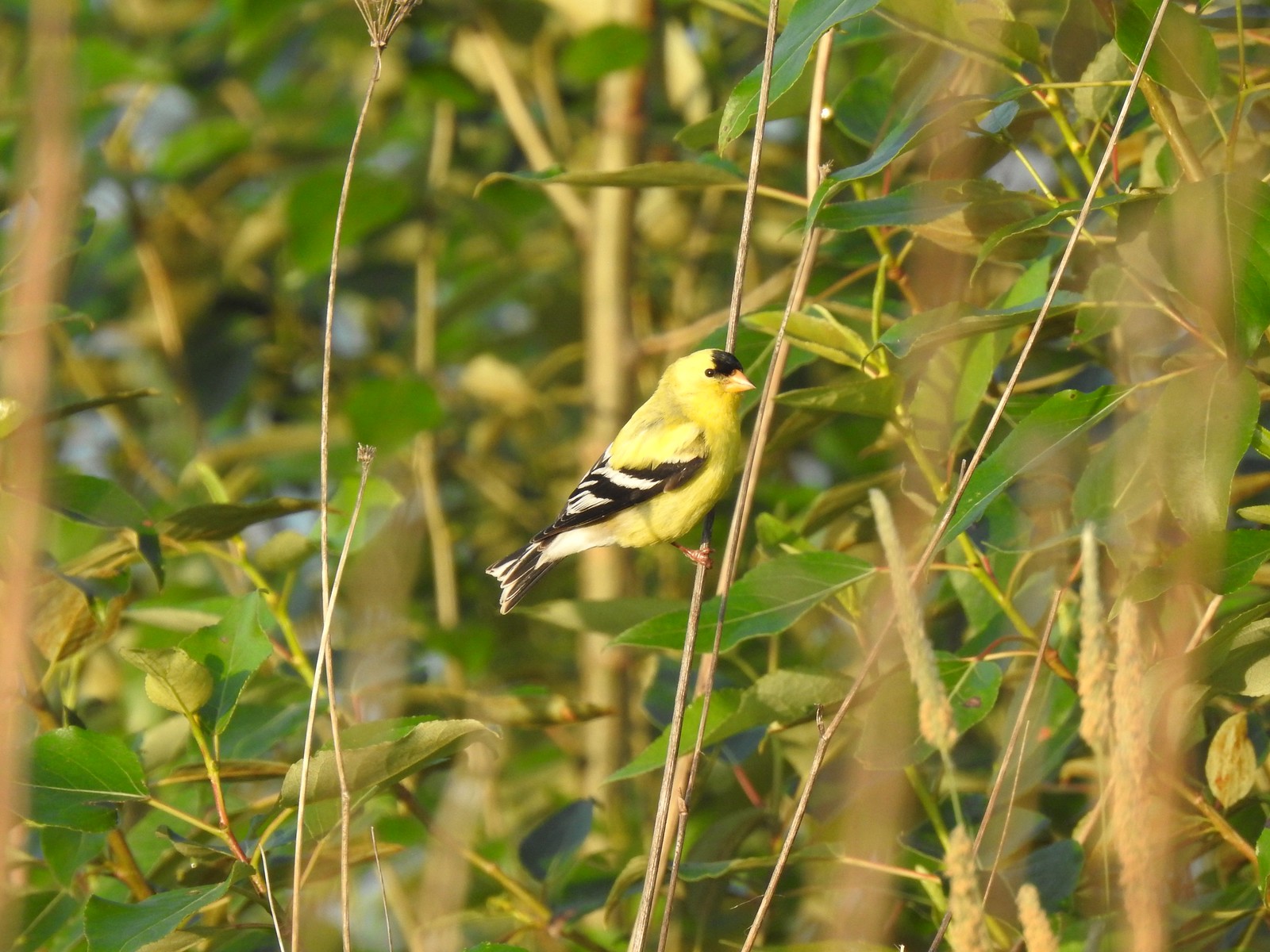
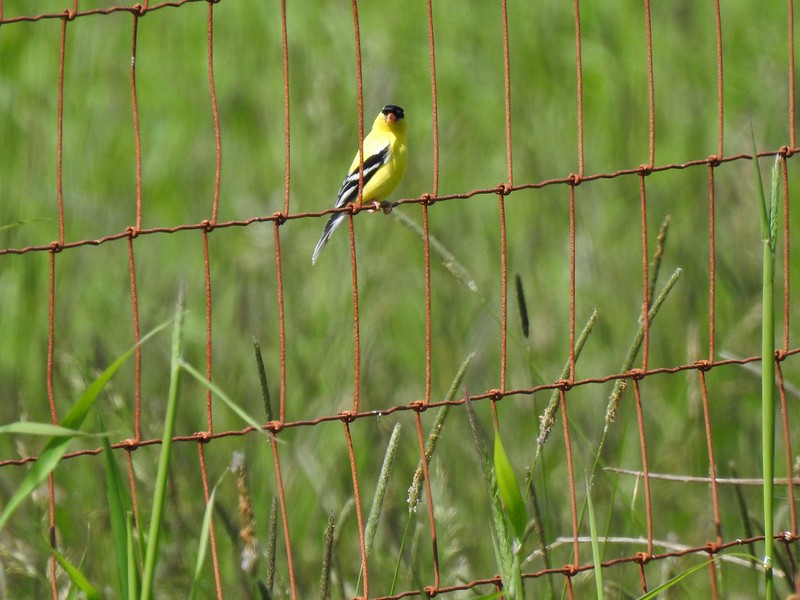
DSCN3747Another American goldfinch.

We left the seasonal section of trail near the junction with Refuge River Trail where we again turned left, promptly crossing a creek on Dragonfly Bridge.
IMG_8066

IMG_8067

IMG_8068

DSCN3752Spotted sandpiper

We followed this trail to its end at the refuge boundary.
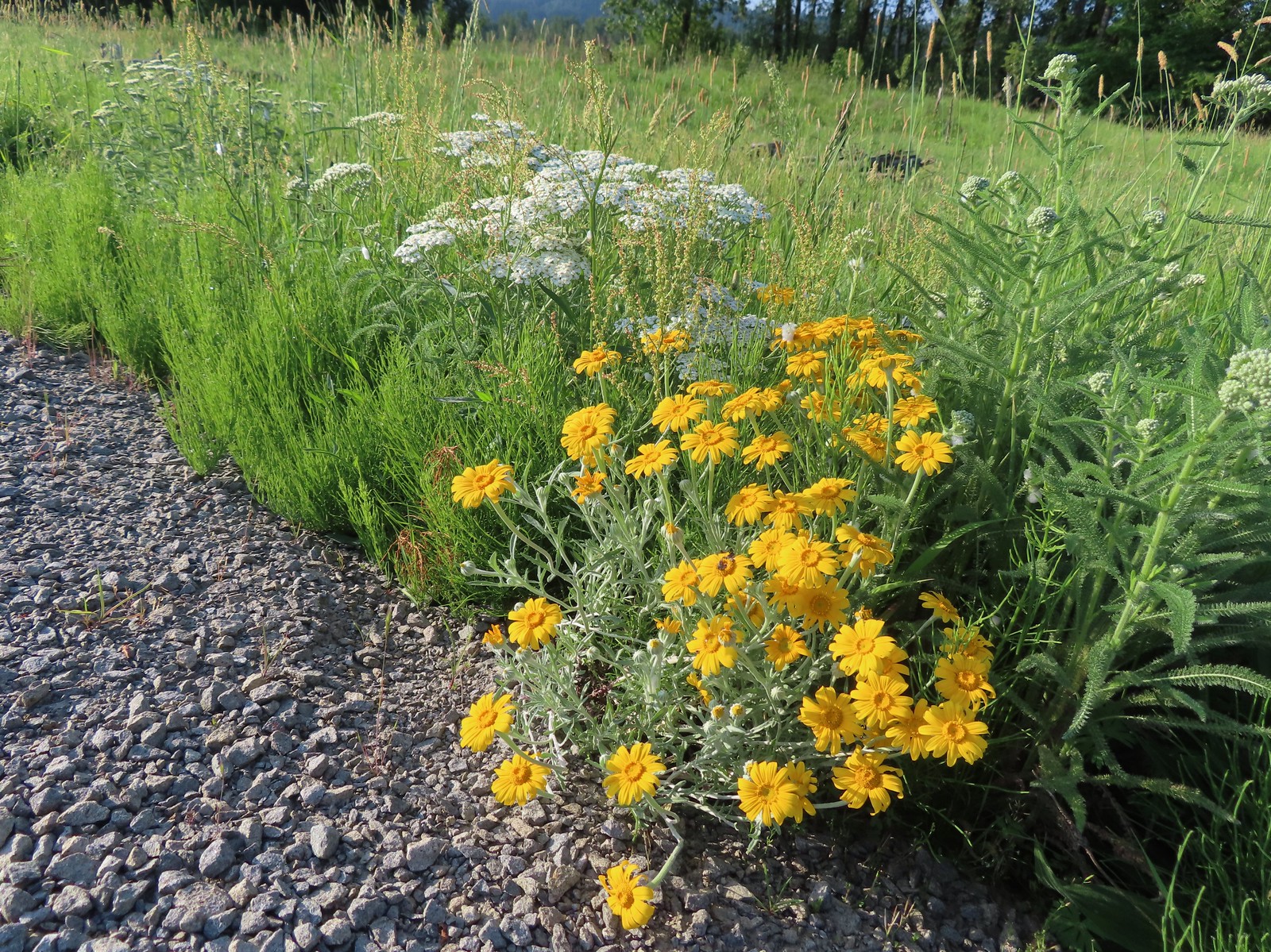
IMG_8071Oregon sunshine and yarrow

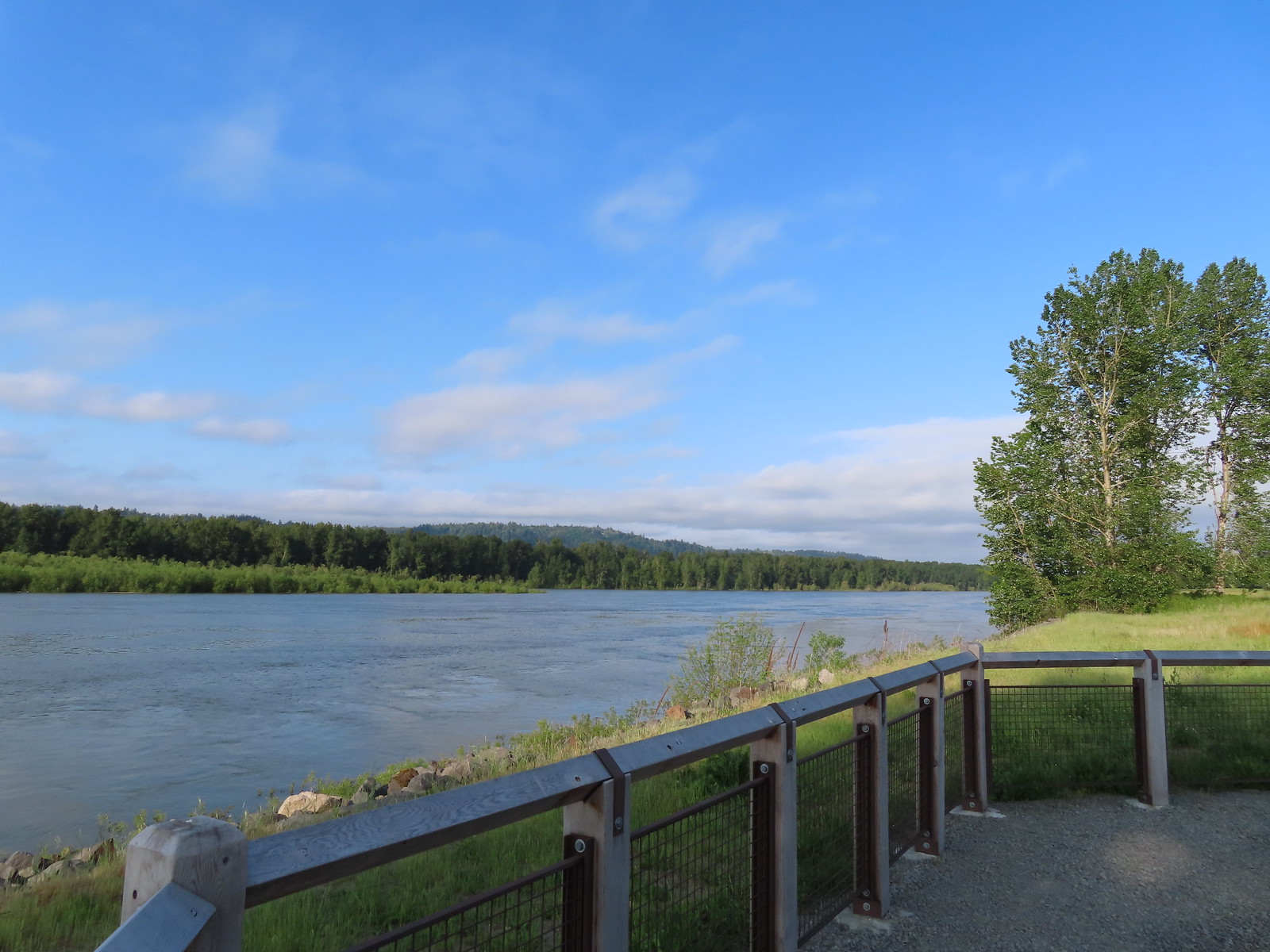
IMG_8072The Columbia River ahead.

IMG_8075Viewpoint along the Columbia River.

IMG_8078Approaching the Lampray Brdige.

IMG_8081Looking back from across the bridge there was a bald eagle in the dead snag along the river.
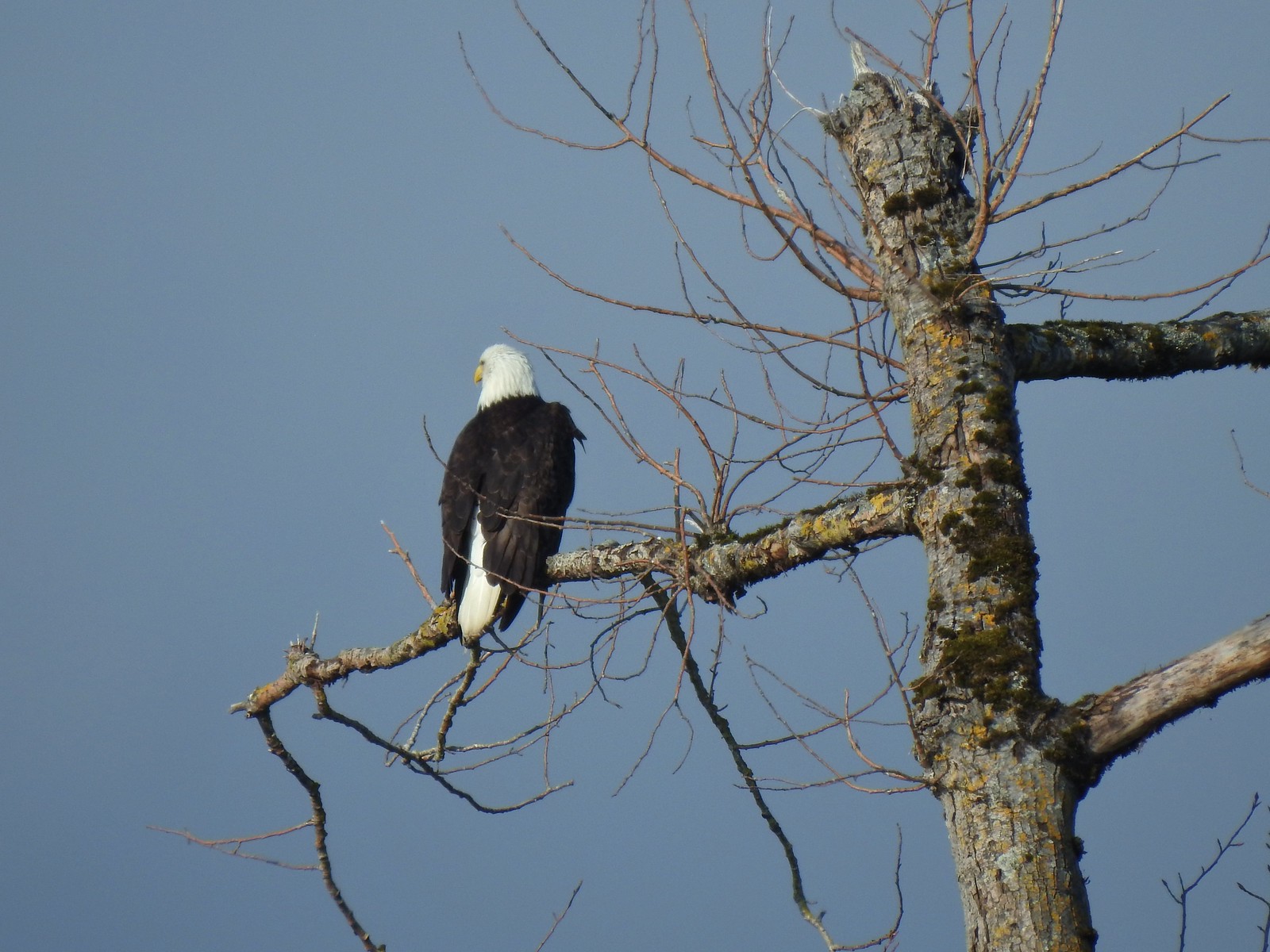
DSCN3760

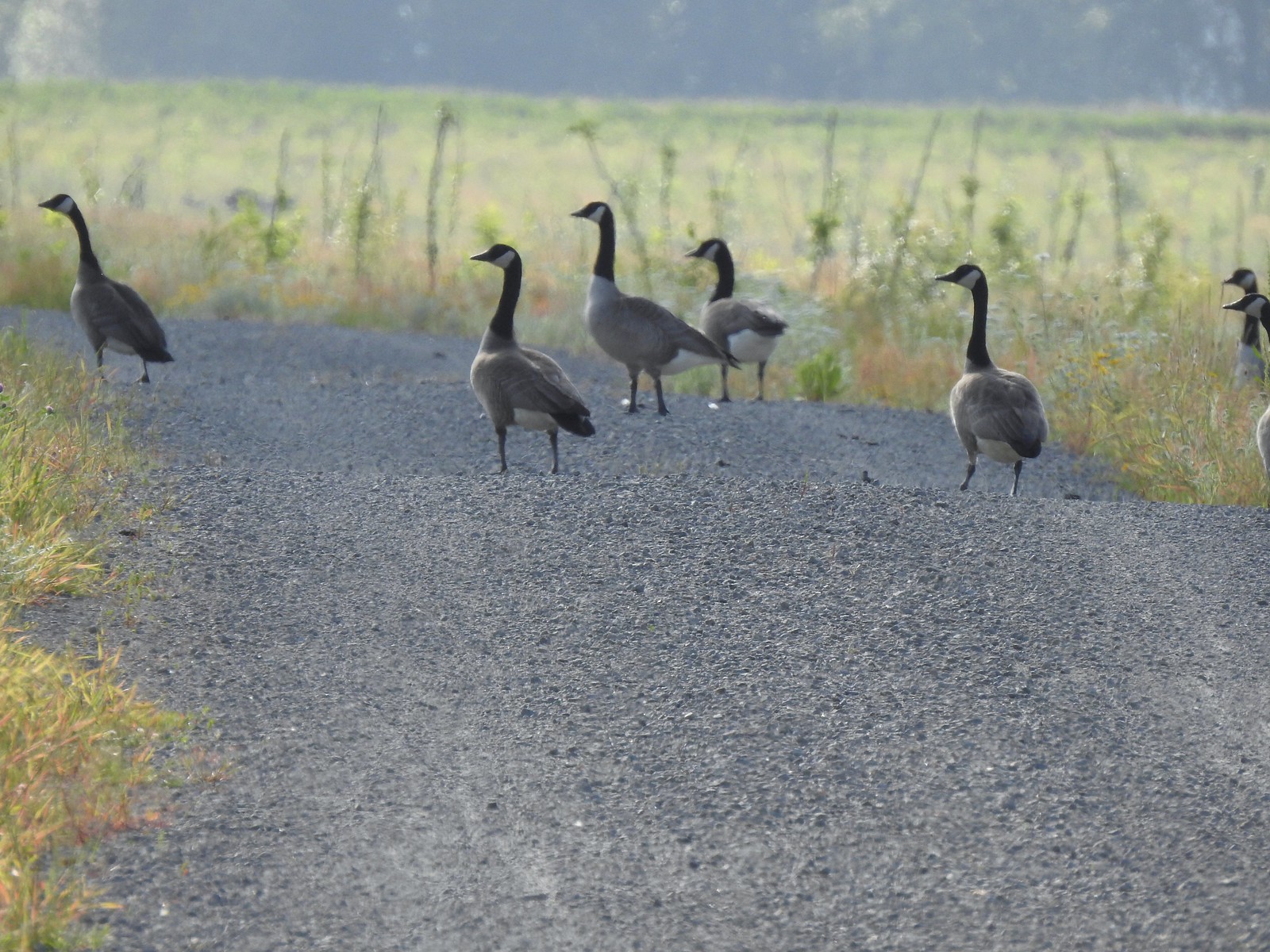
DSCN3762There were lots of geese along this section of trail.

IMG_8084Red clover in some Oregon sunshine

DSCN3763Another spotted sandpiper

DSCN3767Steigerwald Lake in the distance with a family of geese and crow on a log in the near channel.

IMG_8089End of the trail.

IMG_8090It was about 8:15am when we turned around and it was already feeling fairly warm, but there was relief on the way in the form of some clouds coming in from the Pacific.

DSCN3778Savannah sparrow

IMG_8091Here come the clouds.

DSCN3780Double the eagles.

DSCN3782For the second week in a row we got to watch an American Kestral on the hunt.

IMG_8093Arriving back at the Dragon Fly Bridge and the junction with the Wildlife Art Trail.
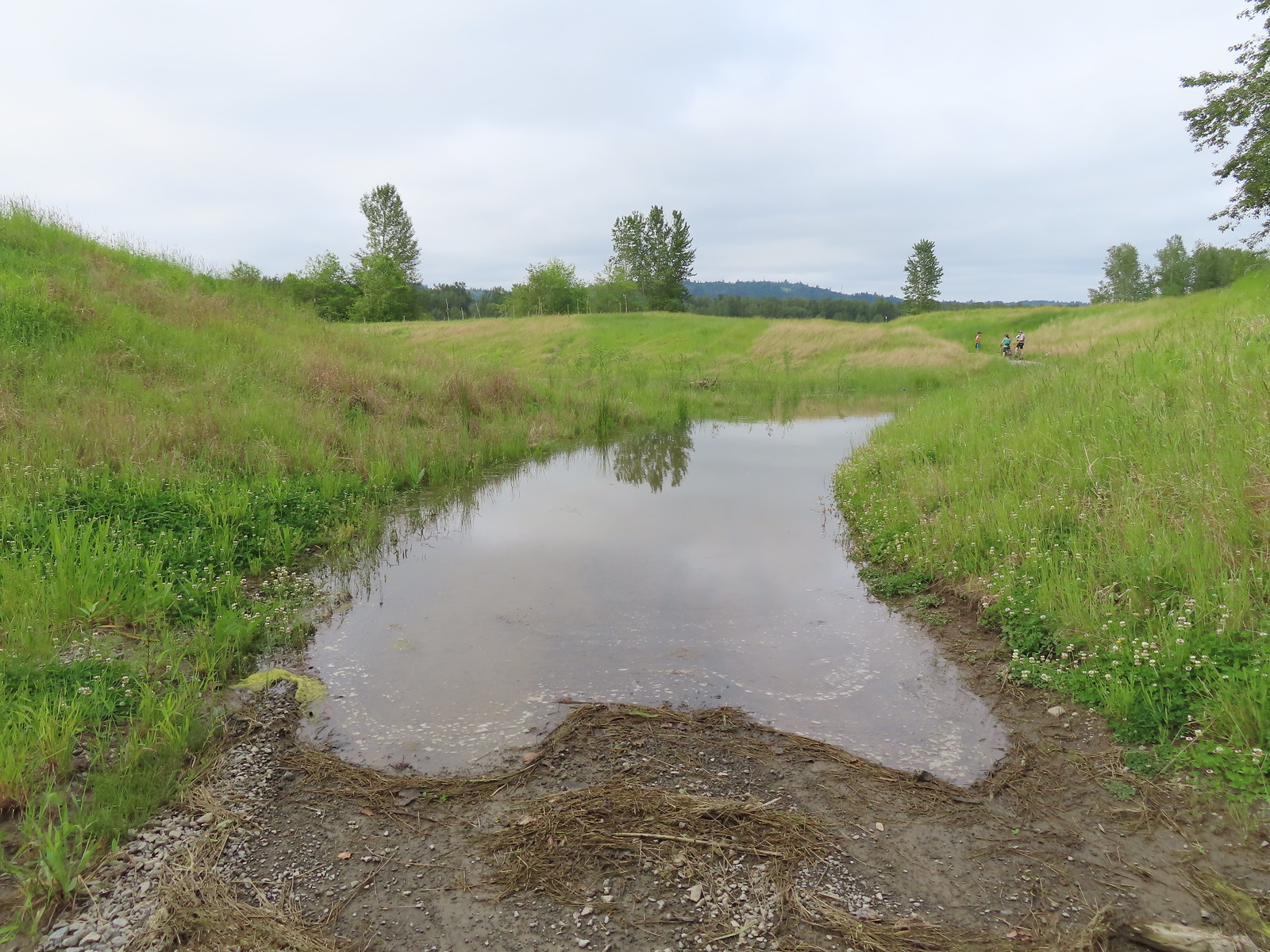
We had planned on following the Refuge River Trail all the way to the western end of the refuge but just 500′ beyond the trail junction we rounded a corner to find the trail flooded.
IMG_8094

Since neither of us was interested in finding out how deep the water was we turned around and simply took the Wildlife Art Trail back.
IMG_8095

DSCN3787Red tailed hawk

DSCN3798Geese nesting atop a snag.

DSCN3796More deer in the grass along Gibbons Creek.

DSCN3803Egret at Redtail Lake.

DSCN3811Great blue heron at Redtail Lake.

We followed the Refuge River Trail back past the junction with the Mountain View Trail and continued West.
IMG_8102

DSCN3828Purple martins

DSCN3819When the light catches the feathers right it’s obvious where the purple martin’s name comes from.
DSCN3827Common yellowthroat

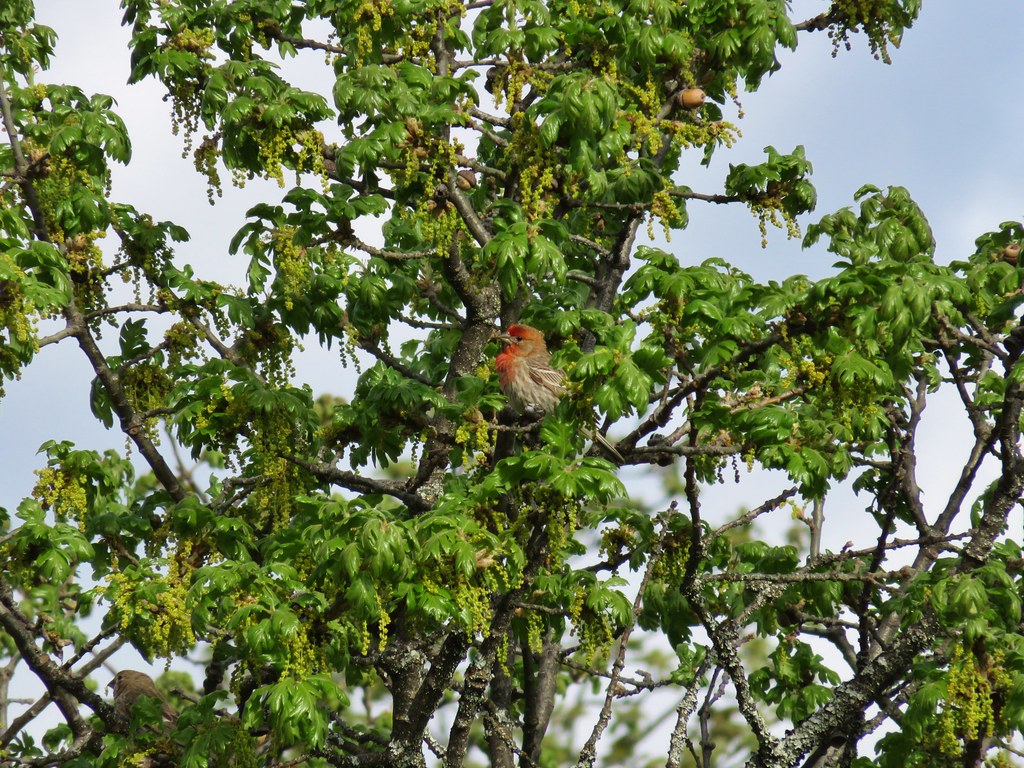
DSCN3833House finch

IMG_8106A mile from the Mountain View Trail we arrived at the refuge boundary with Captain William Clark Park.
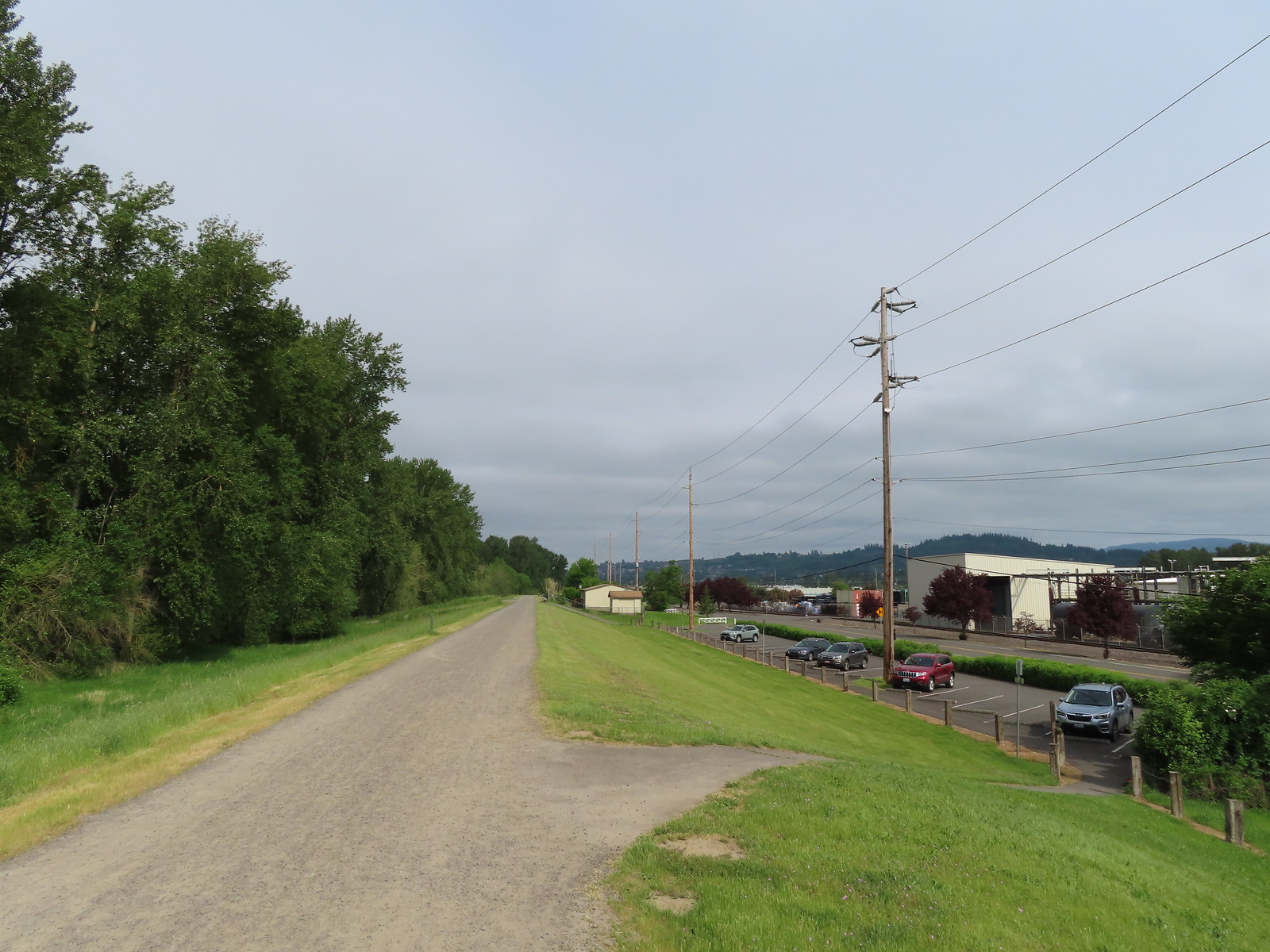
IMG_8107The trail follows a dike to Steamboat Landing.
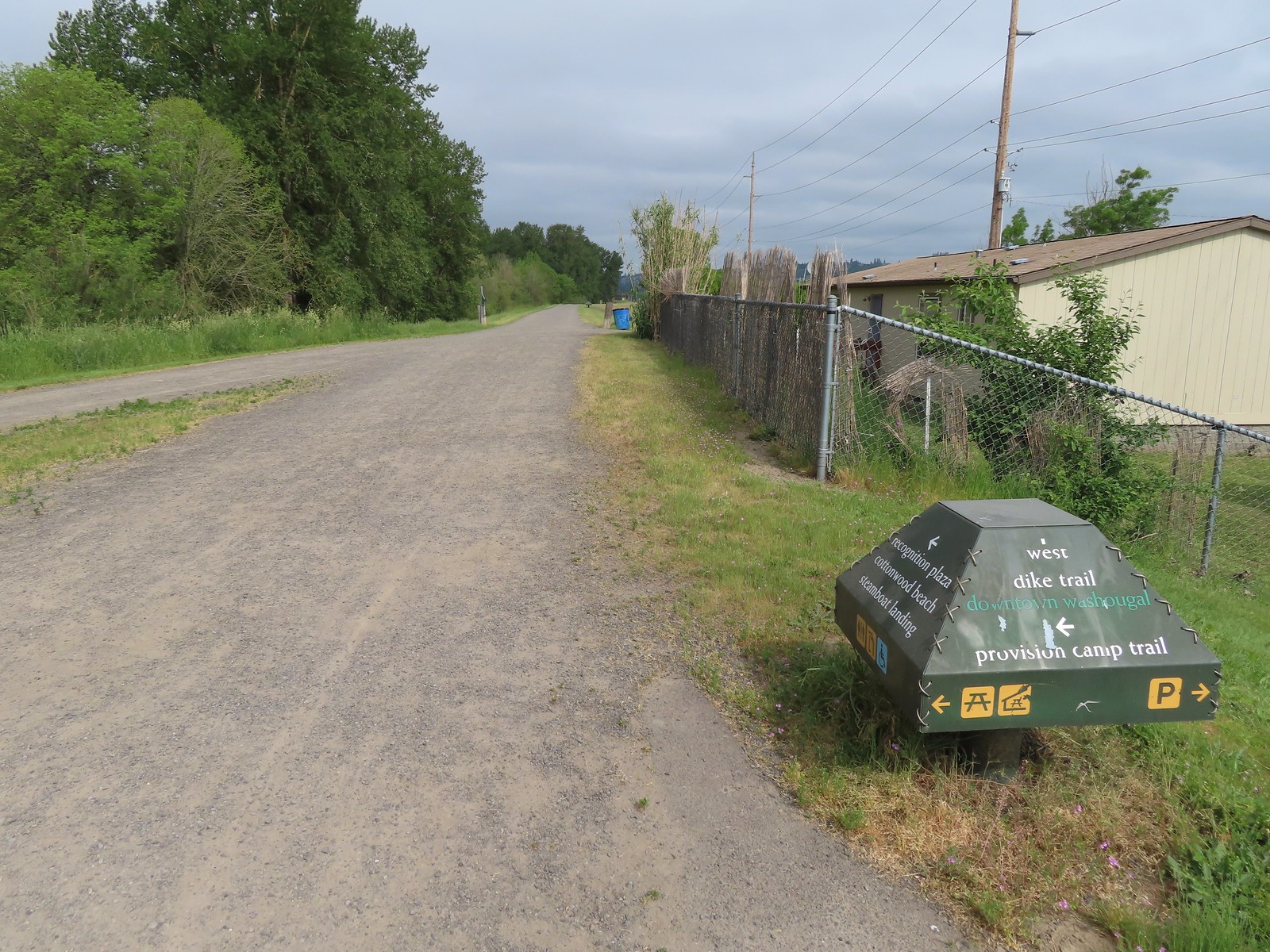
The main attraction at Captain William Clark Park is Cottonwood Beach where in 1806 Lewis & Clark established a camp while they secured provisions for the return trip through the Columbia River Gorge. The Provision Camp Trail leads down to the beach and picnic area.
IMG_8108

IMG_8109The Provision Camp Trail

While there had been quite a few people on the Captain William Clark Park Trail there were just a few people in this area.
IMG_8112

IMG_8114

While the beach is extremely popular in the Summer and especially on weekends it became evident why we weren’t seeing folks today when we reached the “beach access”.
IMG_8115

DSCN3835Northern flicker

Having the beach be underwater was fine with us, it meant fewer people, but the water level became an issue when the Provision Camp Trail turned back inland toward the dike to complete its loop.
IMG_8117Flooded trail ahead.

With the loop cut off we went back the way we’d come and returned to the dike where we turned left to continue on to Steamboat Landing.
DSCN3844Black headed grosbeak

DSCN3850Osprey

IMG_8119Back on the dike.

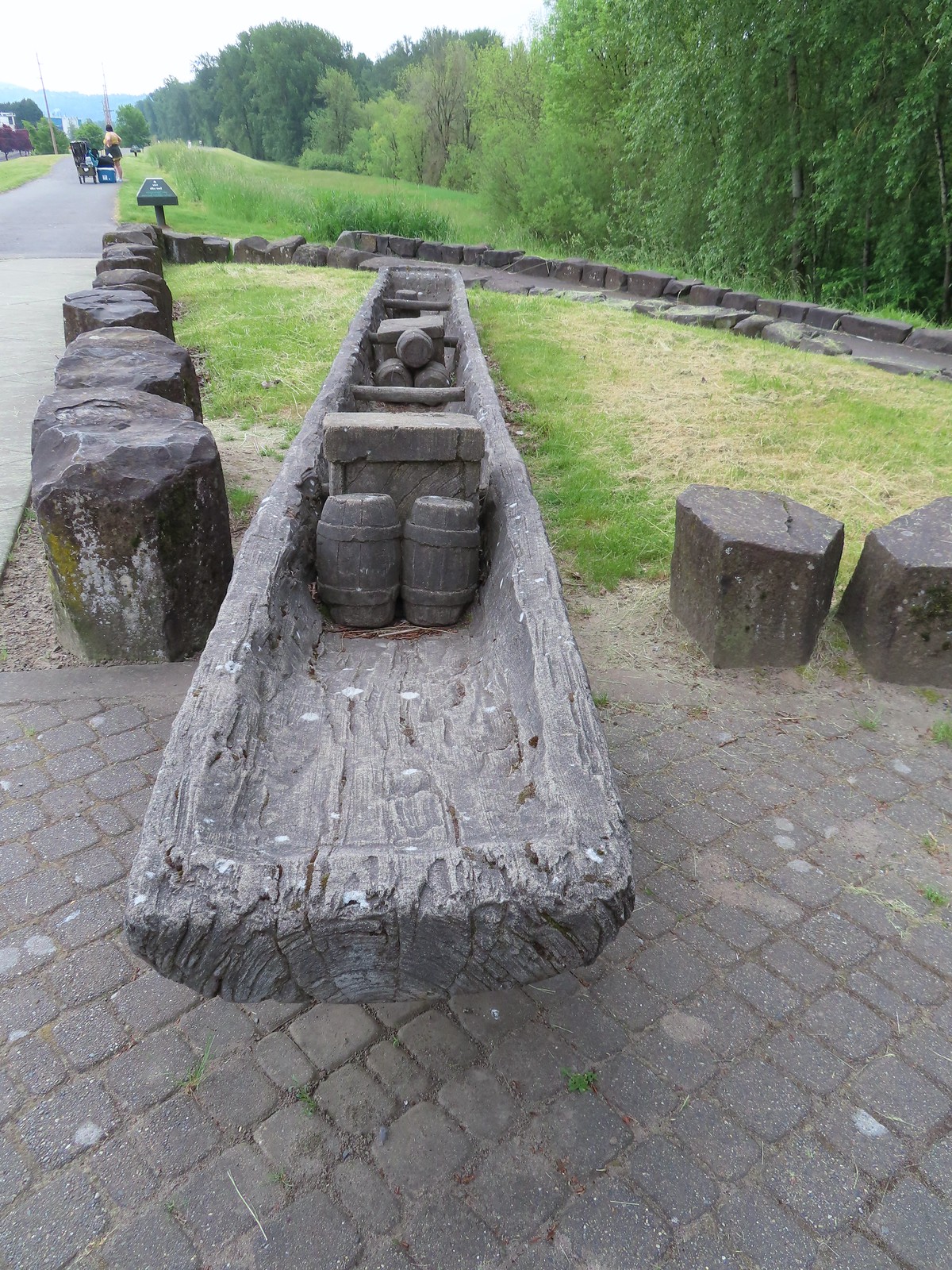
At the other end of the Provision Camp Trail was an interpretive display with replica canoes.
IMG_8120

IMG_8122

IMG_8124

IMG_8123The flooded section of trail from above.

It was another mile from the interpretive display to Steamboat Landing. The trail was pretty busy, and we were now in the city, but we were still managing to see a good deal of wildlife.
IMG_8129

DSCN3856Turtles!

DSCN3864Another turtle

IMG_8134

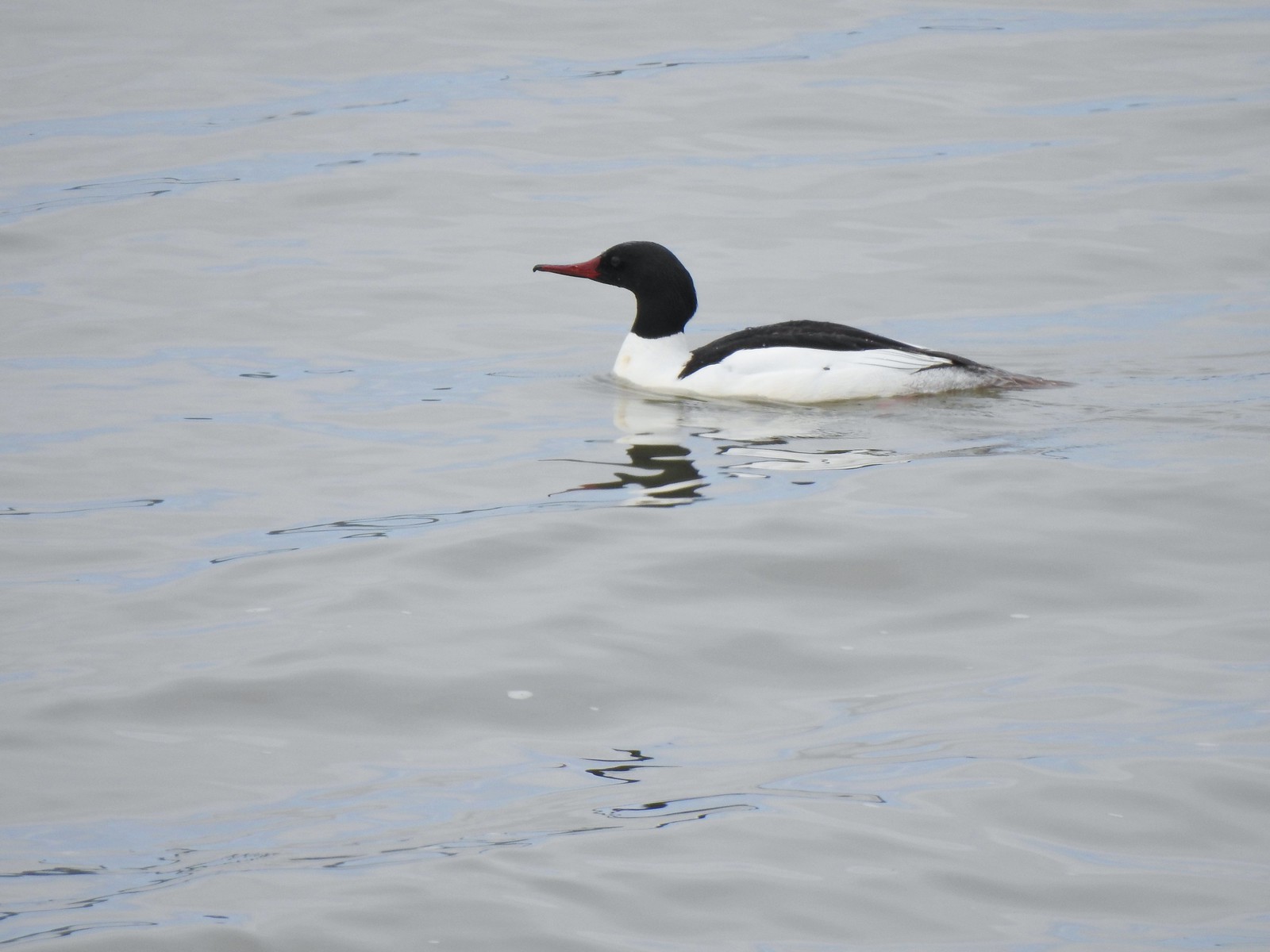
DSCN3870Common merganser

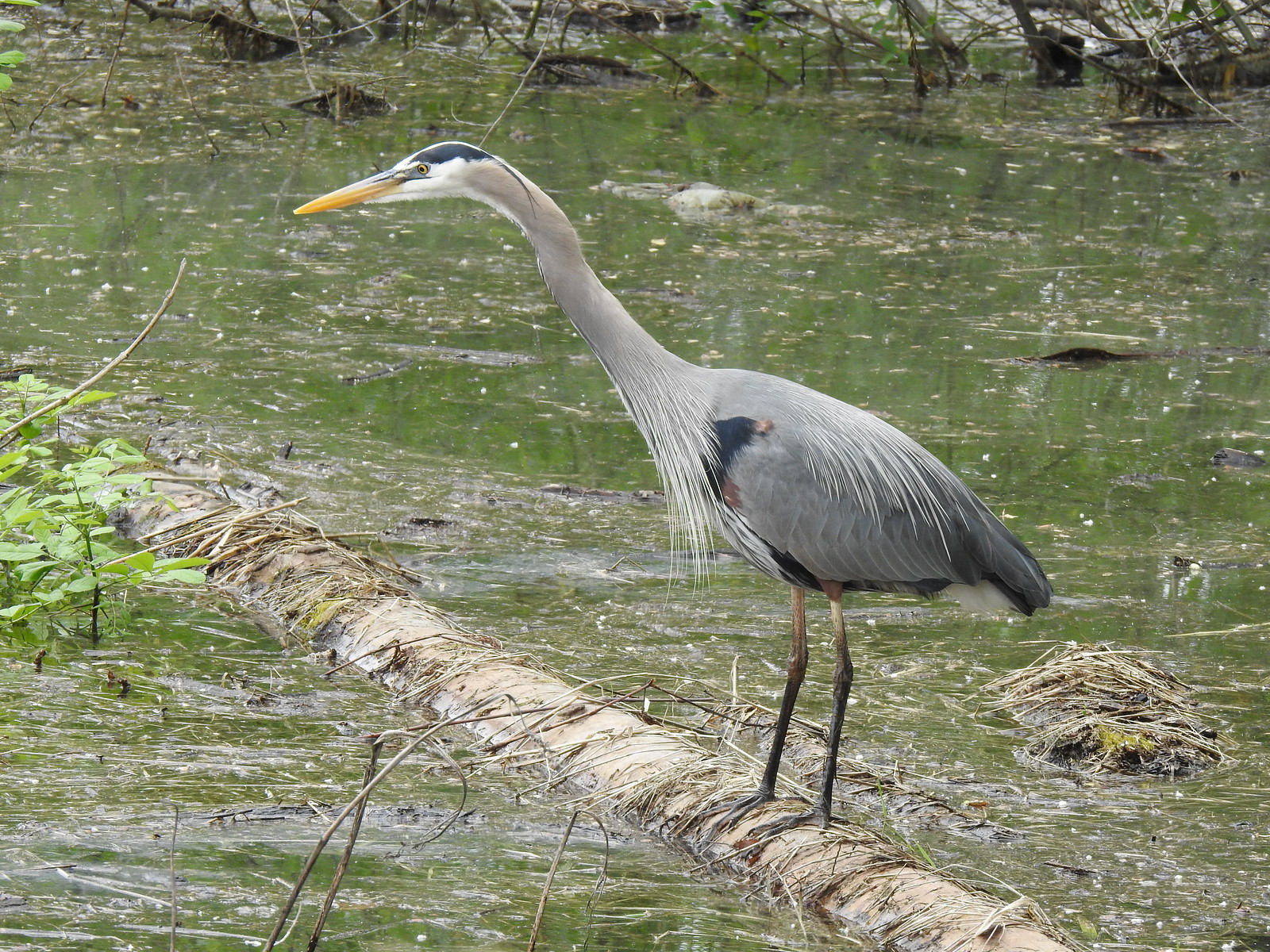
DSCN3891Great blue heron

IMG_8140Steamboat Landing

At Steamboat Landing we turned down to a viewpoint along a fishing dock.
IMG_8144

After a brief break we headed back.
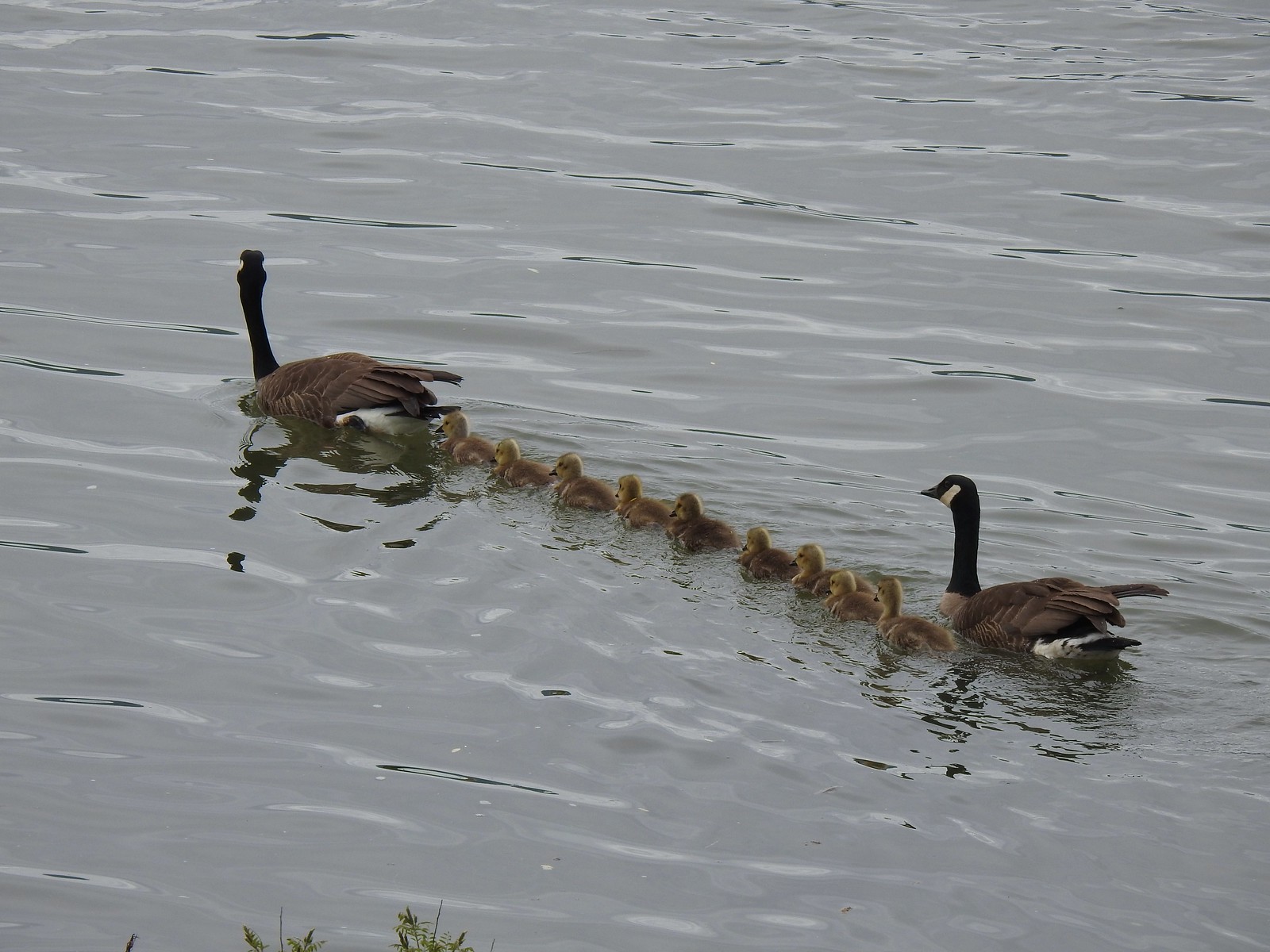
DSCN3898A family of geese out for a float.

While it had clouded up overhead the morning clouds that had blocked any view of Mt. Hood had given way. Unfortunately, there was enough haze in the air to essentially wash the mountain out.
IMG_8153The large “hump” ahead is Larch Mountain (post). Mt. Hood is a little further to Larch’s right.

IMG_8152Grainy proof of Mt. Hood’s existence.

IMG_8159Silver Star Mountain (post) to the North.

We turned left onto the Mountain View Trail and headed back to the trailhead feeling really good about the amount of wildlife we’d seen although I was still a bit bummed about being fooled by the bittern art. As we neared the end of the wetlands that changed as a pair of bitterns got into a dispute over territory. The victor landed along the water below the levee.
IMG_8163

DSCN3915The American bittern in the grass.

I had the chance to take way too many pictures as the bittern posed for the people on the levee.
DSCN3930

DSCN3932

It was an exciting ending to a great wildlife hike. We made our way down to the now nearly full trailhead. Happy Trails!
IMG_8174We’d been the first car in the lot that morning.

Having to retrace our steps a couple of times due to flooded trails put our hike at 12.4 miles for the day with minimal elevation gain.

Full album (Flickr): Steigerwald Lake Wildlife Refuge

Categories
Columbia River Gorge South Hiking Oregon Trip report

Multnomah Falls to Larch Mountain – 10/10/2022

With Heather still sidelined with a bum knee and a Monday holiday that most of the rest of Oregon didn’t have off I decided to tackle the climb from Multnomah Falls to Larch Mountain. Starting at the Multnomah Falls Trailhead the hike to Sherrard Point is roughly 14.5 miles out-and-back with just over 4000′ of elevation gain. If I was feeling up to it, my plan was to extend the hike just a bit by detouring on the way back to visit Fairy and Wahkeena Falls adding another 1.7 miles and 500′ of elevation to the days total.

We had hiked to Multnomah Falls on a big loop in 2012 starting at Oneonta Trailhead (post), Larch Mountain in 2020 from Road 315 Trailhead (post), and Wahkeena Falls in 2013 from the Angels Rest Trailhead (post). Even though we had visited all of these main attractions before, this route would provide several miles of trail that I had yet to be on. Two of those trips also occurred prior to the 2017 Eagle Creek Fire which burned most of the forest along the lower portion of this hike.

I arrived at the Multnomah Falls parking lot a little before 7am and was pleased to find that I was just the fourth car.
IMG_3027

It was still a bit before sunrise but there was enough light once I had gotten everything together to set off towards the falls.
IMG_3028

The lack of light did nothing for my point and shoot camera but that was a small price to pay to have the falls to myself (save for a few staff preparing the grounds for the day).
IMG_3032

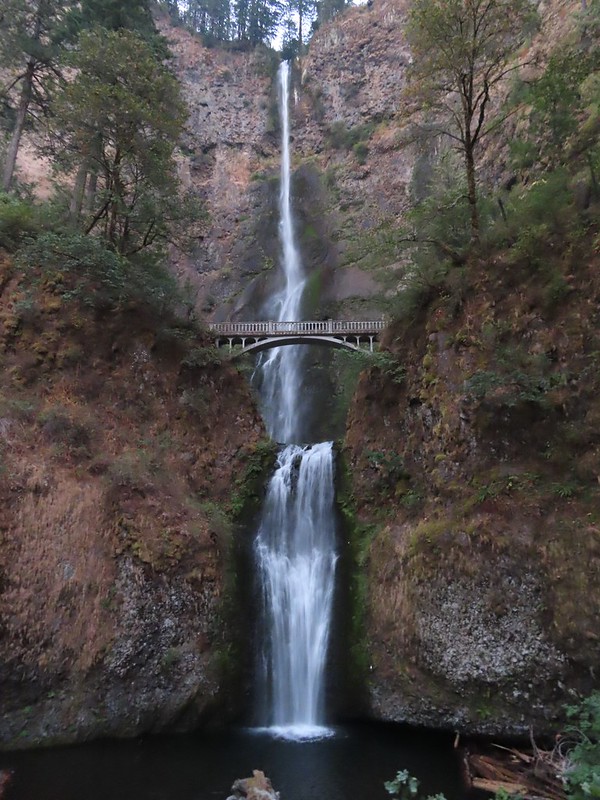
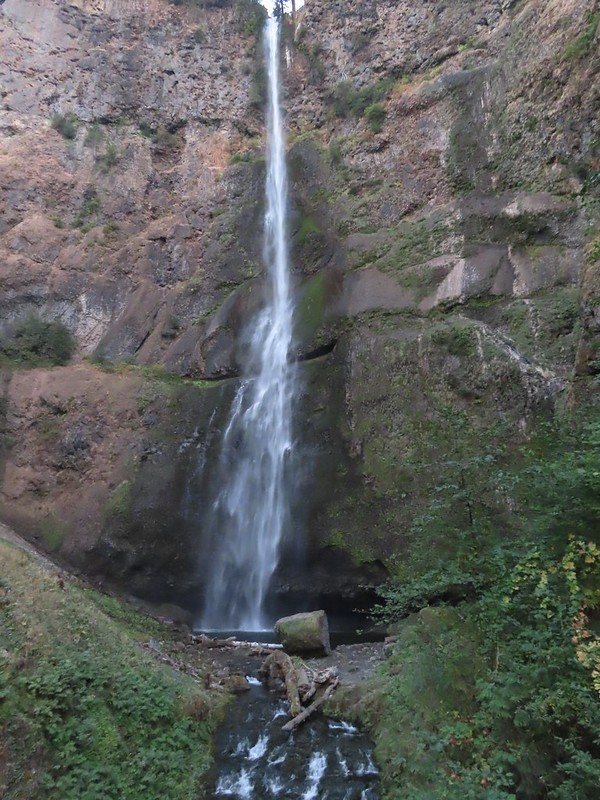
IMG_3043Multnomah Falls

IMG_3046

IMG_3049The Benson Bridge.

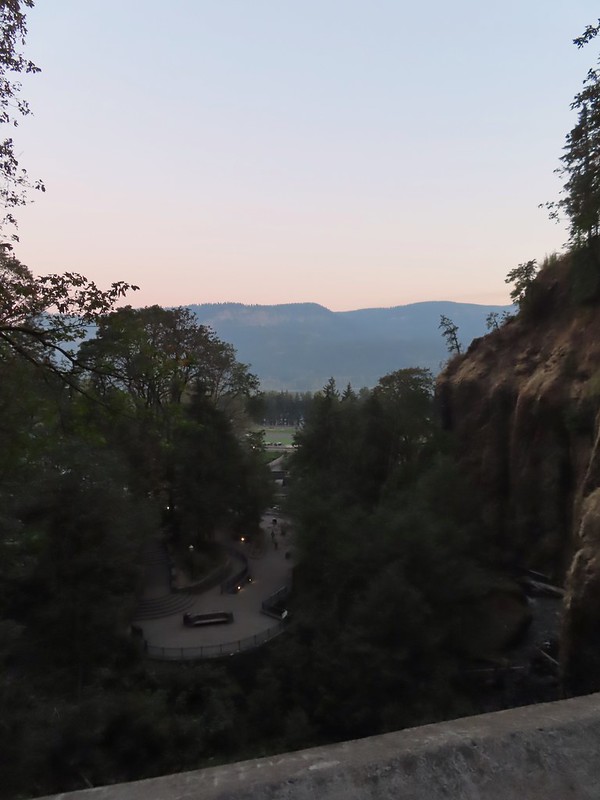
IMG_3051View from the bridge.

IMG_3052Multnomah Falls from the bridge.

Beyond the bridge the paved trail climbs steeply via 11 switchbacks. (I’m pretty sure they squeezed a very short 12th in there.)
IMG_3067

IMG_3065The Moon beyond the Columbia River and Multnomah Falls Lodge.

IMG_3063

IMG_3068Beacon Rock (post) to the east on the Washington side of the Columbia.

IMG_3069

IMG_3072The second switchback.

IMG_3073Another view of the falls. I passed a pair of hikers along this stretch then didn’t see another person for another couple of hours.

After climbing above the falls via the switchbacks I took my first detour to visit the Multnomah Falls Viewpoint.
IMG_3078

IMG_3079Viewpoint trail.

This trail descends a tenth a mile to a viewpoint above the falls.
IMG_3081

IMG_3083

IMG_3084Small fall just upstream from Multnomah Falls.

IMG_3085Cape Horn (post) to the right across the Columbia.

I returned to the Larch Mountain Trail and continued towards Larch Mountain. After a brief descent to cross Multnomah Creek the trail began a long gradual climb along the creek.
IMG_3087Bridge over Multnomah Creek.

IMG_3091

IMG_3092Approaching Middle Dutchman Falls.

IMG_3095Middle Dutchman Falls

IMG_3097

IMG_3098Upper Dutchman Falls

IMG_3102Dutchman Tunnel

IMG_3106Wiesendanger Falls is located just beyond Dutchman Tunnel.
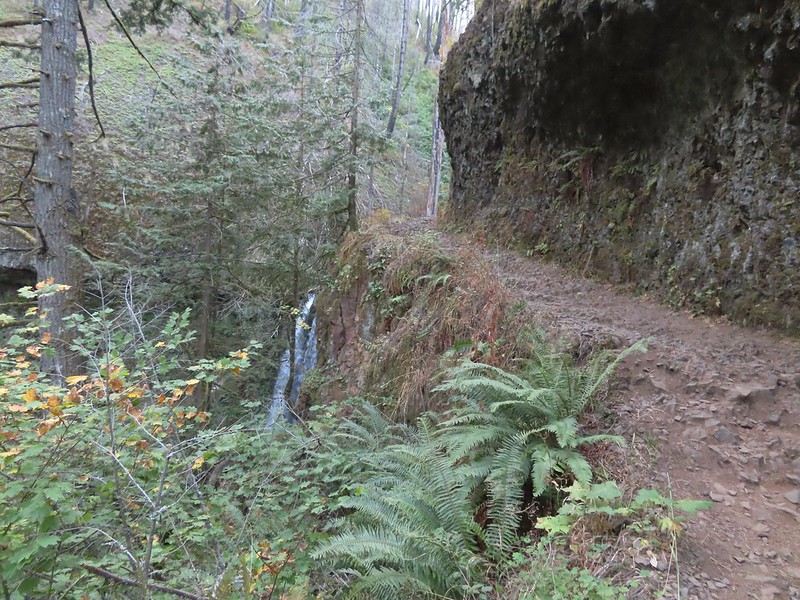
IMG_3110A short distance beyond Wiesendanger Falls is Ecola Falls.
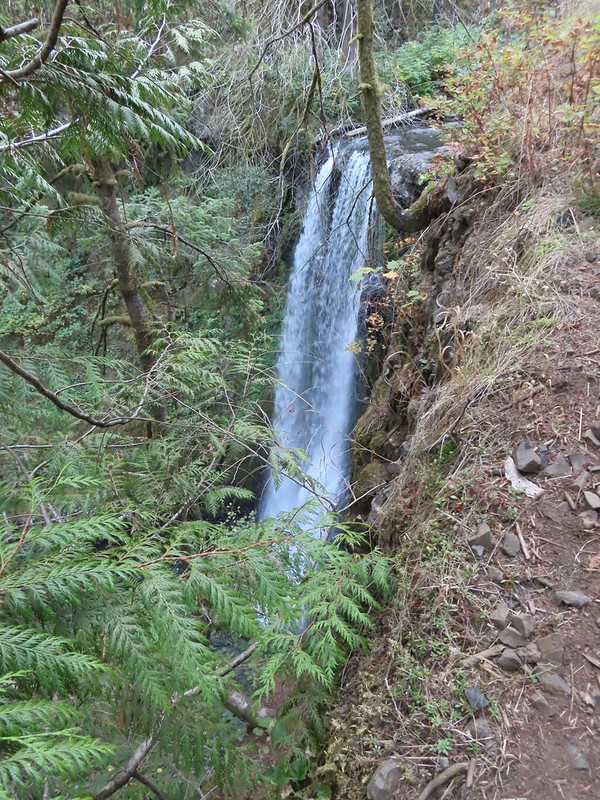
IMG_3111Ecola Falls

A quarter mile beyond Ecola Falls (and 2 miles from the trailhead) I arrived at the Wahkeena Trail junction.
IMG_3118

IMG_3119

IMG_3120Good signage at nearly all trail junctions, especially those closest to the trailheads.

I stayed on the Larch Mountain Trail which crossed the creek on a newer (2018) steel bridge that replaced the one burnt in the Eagle Creek Fire.
IMG_3124

IMG_3126Looking down the creek at sunlight starting to hit the hillside.

IMG_3129A few bleeding heart were still in bloom.
IMG_3131

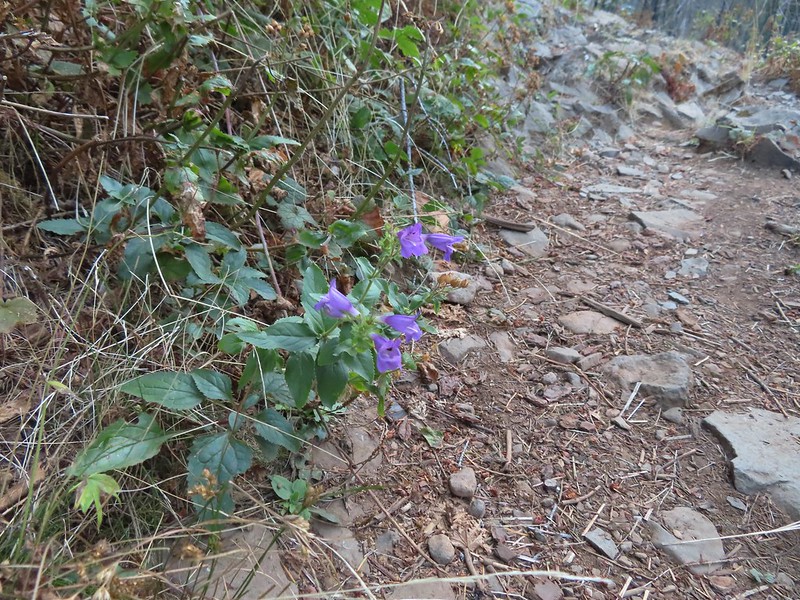
IMG_3132Penstemon

IMG_3136This section is flooded in late Winter/Spring. The signed High Water Trail leads up and around it for those high water times.
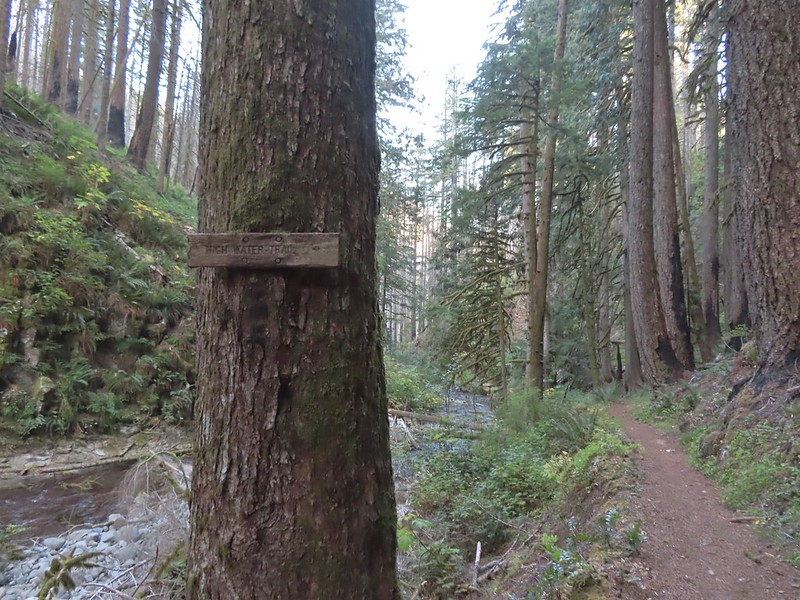
IMG_3138Sign for the High Water Trail at its southern end.

IMG_3139The southern end of the High Water Trail heading uphill to the right.
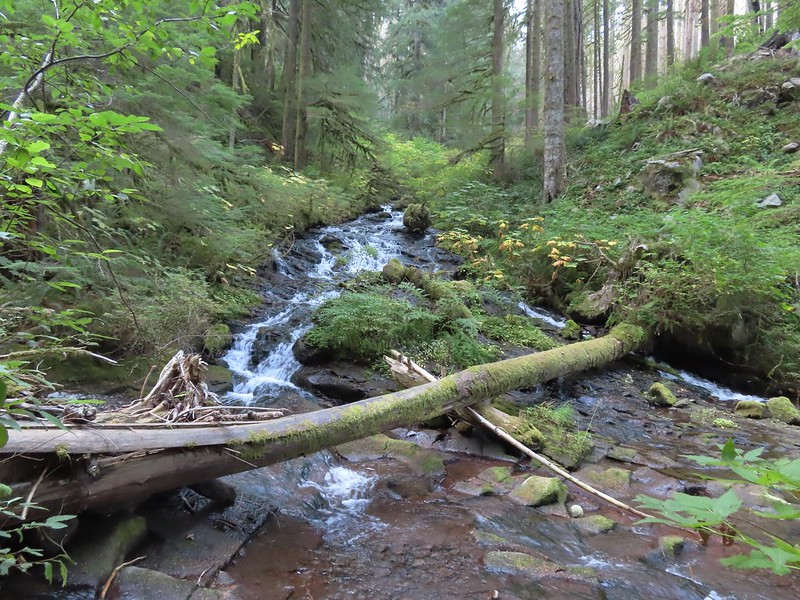
IMG_3140

IMG_3141I couldn’t find a name for this creek but it had a good flow, in fact it was more water than what was in Multnomah Creek upstream from their confluence.
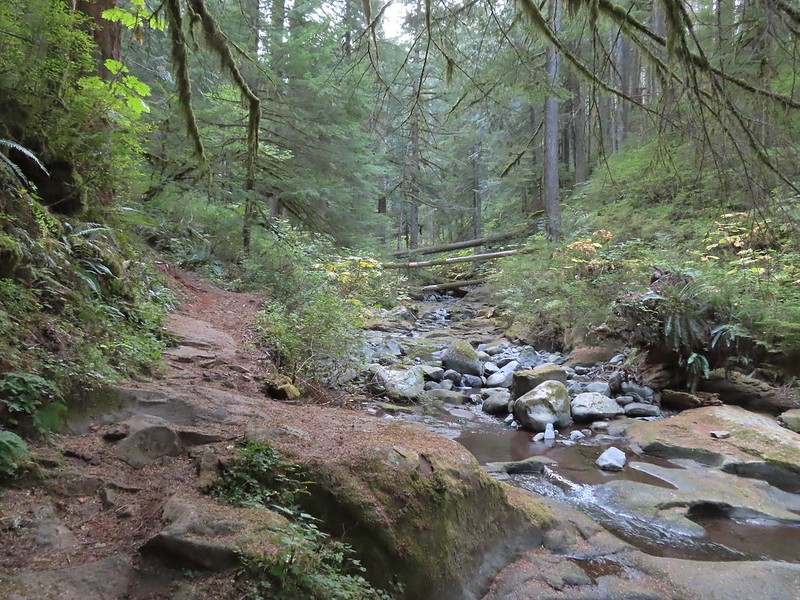
IMG_3144Multnomah Creek upstream from the unnamed creek.
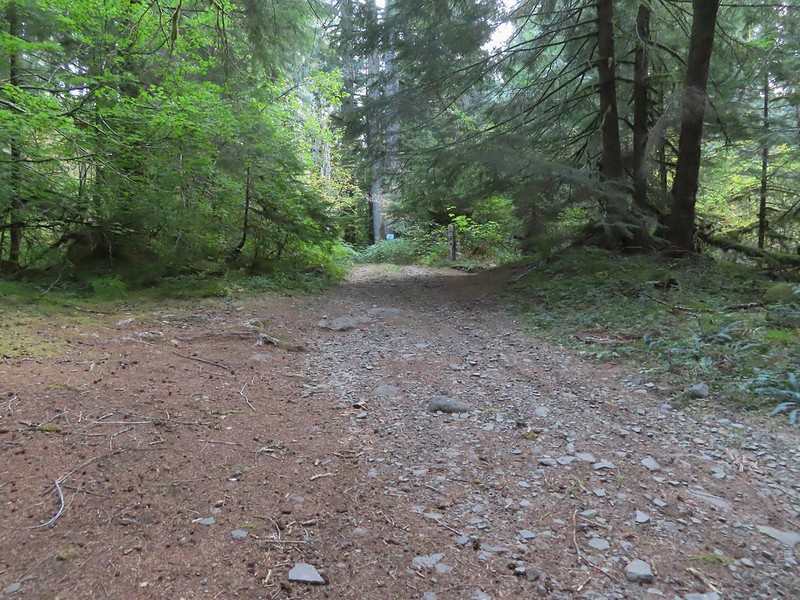
One point two miles from the Wahkeena Trail junction I came to the Multnomah Basin Road where the Larch Mountain Trail jogged slightly left before continuing on and entering the Mark O. Hatfield Wilderness.
IMG_3147

IMG_3148

IMG_3150

IMG_3152

The forest around the wilderness boundary had mostly been spared by the fire but I quickly reentered the burn before arriving at a junction with the Franklin Ridge Trail.
IMG_3154Reentering the fire scar.

IMG_3155The Franklin Ridge Trail on the left.

A tenth of a mile from the junction the trail crossed the nearly dry East Fork Multnomah Creek on a small footbridge.
IMG_3159

IMG_3160

The trail continued briefly through a patch of green trees up a ridge between the East and West Forks of the creek then reentered the fire scar. Four tenths of a mile from the East Fork crossing I came to a second footbridge, this one crossing the West Fork.
IMG_3165

IMG_3166

Beyond this second footbridge the trail crossed a large scree field where I was taunted by the distinctive “meep” of pikas. They were seemingly all around but I wasn’t ever able to spot any of the little rock rabbits this time.
IMG_3170

IMG_3171Maple changing colors

IMG_3172I’m sure there is at least one pika in this photo somewhere.

IMG_3174Looking back toward Franklin Ridge.

A short distance beyond the scree field the trail left the fire scar for good arriving at a junction with the Multnomah Creek Way Trail 1.8 miles from the Multnomah Basin Road crossing.
IMG_3177

IMG_3180Arriving at the junction.

I stayed left at this junction on the Larch Mountain Trail and climbed 0.4 more miles to a road crossing of gated FR 315 (Where we had started our previous Larch Mountain hike).
IMG_3183

IMG_3186

I crossed the road and continued climbing. The trail steepened noticeably at first but quickly relented and resumed a more gradual grade.
IMG_3187

IMG_3191

IMG_3192I was hoping for less smoke in the air but these sunbeams told me that there was still a fair amount lingering around much as it had been for the last several days.
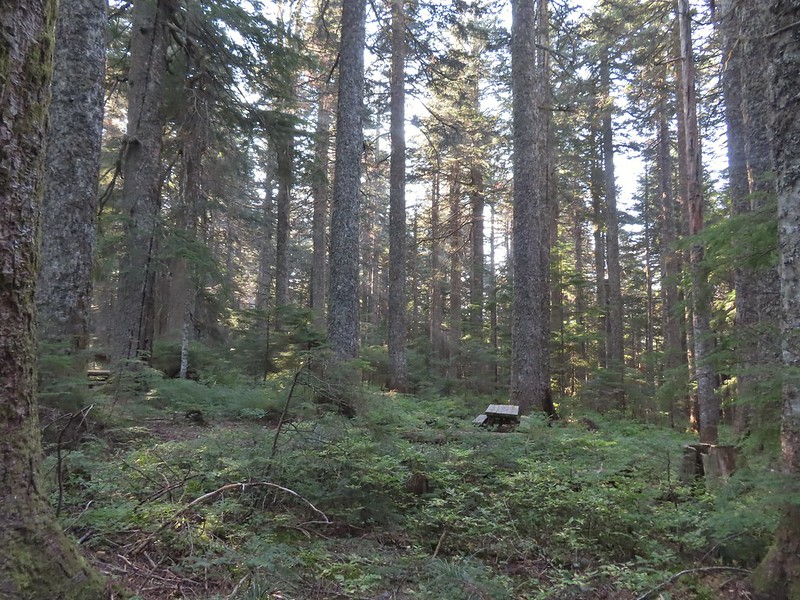
IMG_3194After 1.25 miles I passed a pair of old campsites with picnic tables on the right. I stayed right at an unsigned junction with a trail that led uphill to the left. We had come down that way on our previous trip skipping a short section of the actual Larch Mountain Trail.

Another quarter mile brought me to the Larch Mountain Trailhead
IMG_3198There were four cars at this trailhead.

I’d passed one person with a dog followed by a pair of ladies with another dog between FR 315 and the trailhead. I turned onto the paved Sherrard Point Trail expecting to see the other car owners along this 0.3 mile path but was pleasantly surprised to find that I had Sherrard Point all to myself.
IMG_3200Vine maple near the Sherrard Point Trail.
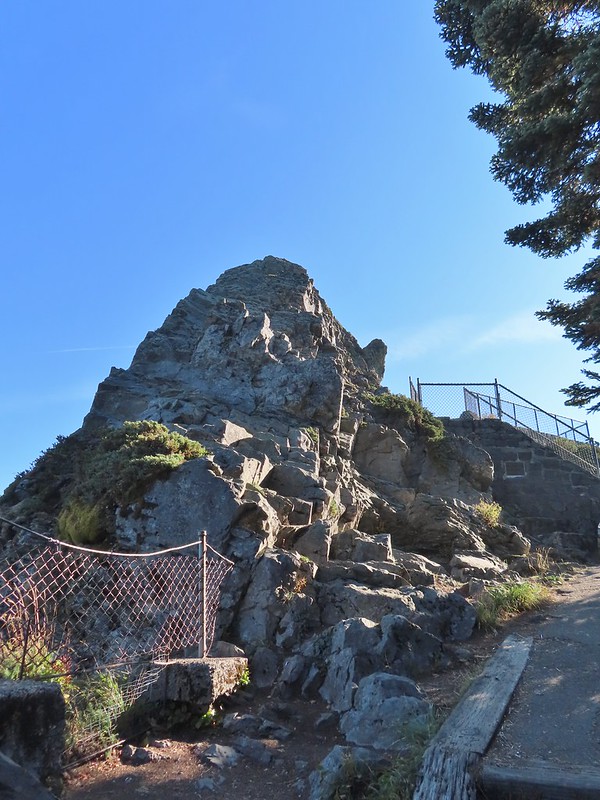
IMG_3203

IMG_3212

One of the factors that had led me to choose this hike for the day was due to the forecast calling for clear sky at this viewpoint whereas the other hikes I had considered were expected to have widespread haze. Technically I think the forecast was correct because if I looked straight up it looked like a blue bird day. Looking out was a different story though with smoke in every direction.
IMG_3232

IMG_3215

IMG_3221Mt. St. Helens in the smoke to the left and Mt. Adams a bit above it to the right.

IMG_3218Mt. Hood

IMG_3208Mt. Adams

IMG_3228Mt. St. Helens

IMG_3229Silver Star Mountain (post)

Unbeknownst to me at the time a new fire, the Nakia Creek Fire, had started near the Larch Mountain in Clark County, WA to the SW of Silver Star less than 24 hours earlier contributing to the smokey conditions.

It wasn’t the view I’d hoped for but it was something, at least I could see parts of several mountains. I didn’t spend much time at the viewpoint given the conditions and made my way back to the old picnic tables by crossing over Larch Mountain. I took a short break at one of the tables to drink a Gatorade I had been hauling around and put on a clean pair of socks for my return hike.
IMG_3230Heading down.

From the picnic table I returned to the way I’d come up to the Wahkeena Trail junction. Up to that point I had only encountered a total of eight other hikers. I had however seen dozens of woolly caterpillars.
IMG_3240

IMG_3243

IMG_3245

IMG_3169

I heard fewer pikas on my way back through the scree field but saw the same number, zero. There was an encounter with a squirrel that came crashing through the brush, jumped across the trail, and climbed a snag so that it could give me a scolding.
IMG_3249

IMG_3250

IMG_3266Lots of fungi on this tree.

IMG_3270

IMG_3273Hedgenettle

IMG_3278Ouzel

The solitude that I had been enjoying ended abruptly at the Wahkeena Trail junction where a number of hikers could be seen heading uphill on the trail ahead and a group was effectively blocking the trail at the junction as they attempted to make sense of the trail signs.
IMG_3283

I tried to align my photos with the hikers ahead passing behind trees.

I had made the decision to take the longer way back past Wahkeena Falls since I had been making good time and I was still feeling pretty energetic. I hadn’t really paid attention to the fact that the Wahkeena Trail gains over 300′ in the first mile as it traverses up the hillside to a junction on a ridge top.
IMG_3284Looking back down at Multnomah Creek.

IMG_3285

IMG_3288Cape Horn again across the Columbia.

IMG_3289

IMG_3291I couldn’t recall seeing these before on a hike, not this color anyway.

IMG_3295The Devil’s Rest Trail on the left at the ridge top.
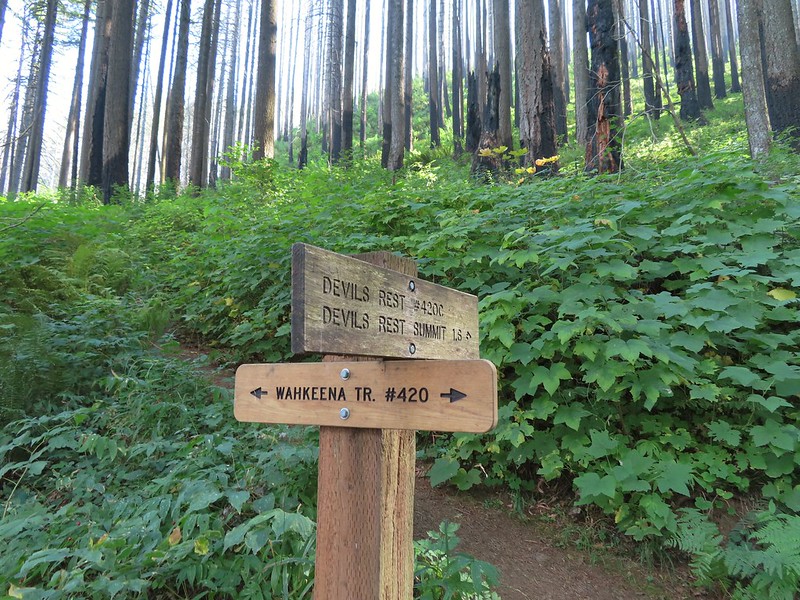
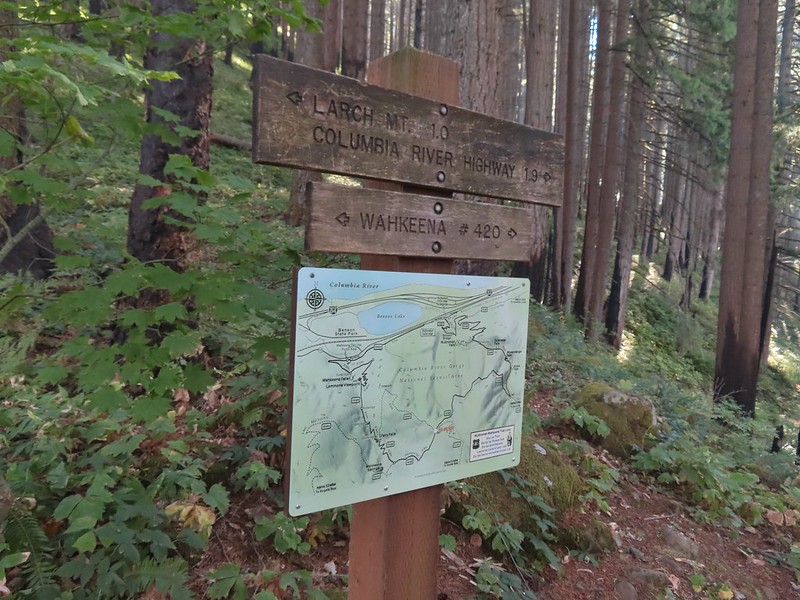
IMG_3296

I wound up getting distracted by the different hikers coming and going atop the ridge and turned right onto the Vista Point Trail instead of staying straight on the Wahkeena Trail which had been my planned route. In the end I was glad I did. It was only about a tenth of a mile longer to take this detour which was a bit overgrown but it also passed a viewpoint that I detoured out to.
IMG_3297I should have followed the Wahkeena Trail Pointer here.
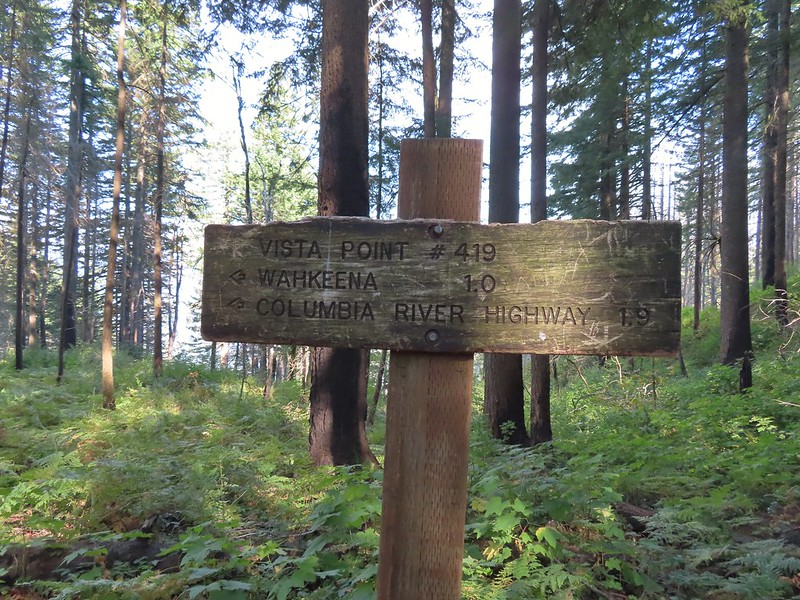
IMG_3298Instead I followed the pointer for Wahkeena 1.0.

IMG_3301Vista Point Trail

IMG_3304

IMG_3306

IMG_3307

I could see my car in the parking lot from the viewpoint.

IMG_3309There is the trail I had intended to be coming down arriving at the junction with the other end of the Vista Point Trail.

The Vista Point Trail was in pretty good shape (other than the overgrowth) save for the final 10-20 feet which was now part of a stream bed. The combination of slick wet rocks and it being downhill made for a tricky descent to the junction.
IMG_3316Looking back at the Vista Point Trail from the junction.
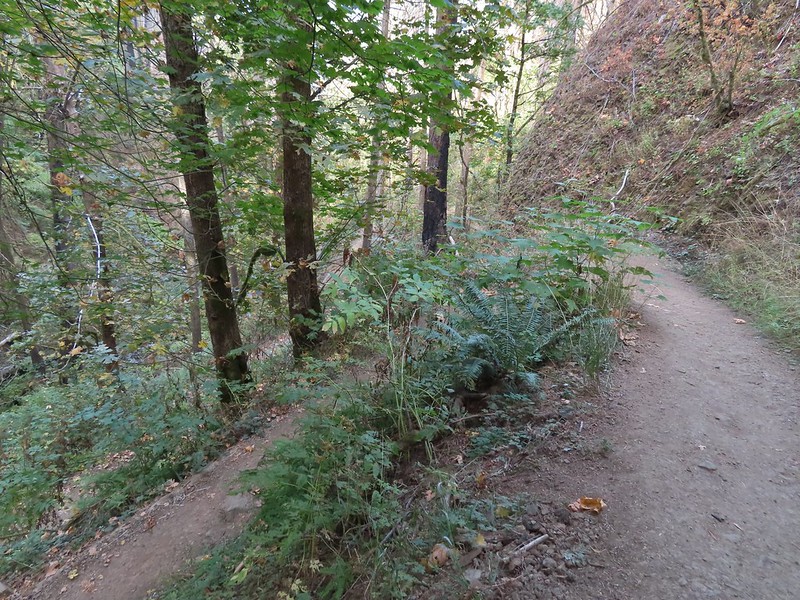
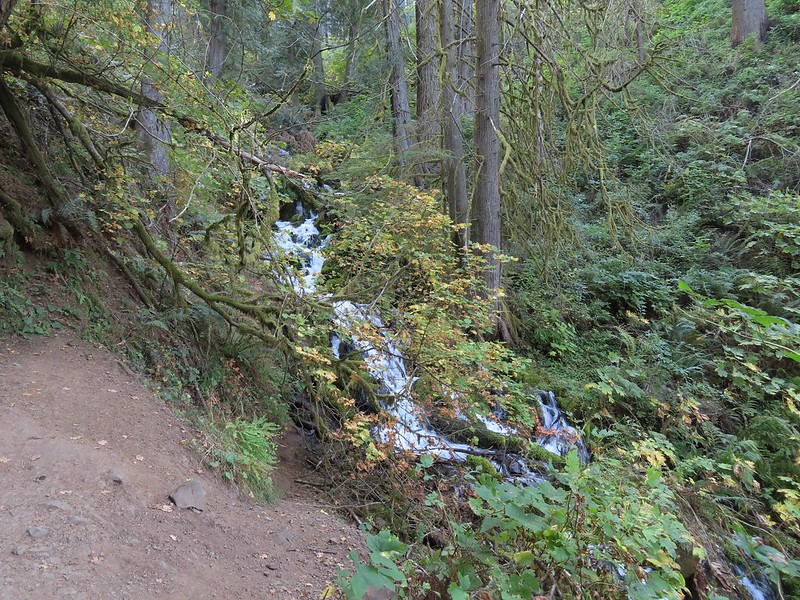
After successfully navigating the wet rocks I turned down the Wahkeena Trail. I immediately was glad that I’d chosen to come this way as I had forgotten how scenic Wahkeena Creek is flowing through the narrow gorge. Even after the fire it was still beautiful.
IMG_3320Lots of tight switchbacks to get down the gorge.
IMG_3321

IMG_3324Fairy Falls

IMG_3326Fairy Falls

IMG_3328

IMG_3330

IMG_3332Looking out across the Columbia River.

IMG_3333

IMG_3335

IMG_3339

IMG_3342

IMG_3344

A half mile down this trail I took a short detour to Lemmons Viewpoint.
IMG_3347

IMG_3348Cape Horn (again)

IMG_3352The Wahkeena Trail from Lemmons Viewpoint.

Another half mile descent brought me to the base of Wahkeena Falls where I was happy to find only a small number of other hikers.
IMG_3354The poison oak was really colorful.

IMG_3355Approaching Wahkeena Falls.

IMG_3357Wahkeena Falls

IMG_3360Wahkeena Falls.

IMG_3362Looking back at Wahkeena Falls.

There were plenty of folks at the trailhead as I passed by before hopping onto the Multnomah Falls Return Trail.
IMG_3363

IMG_3367

IMG_3370One last look at Wahkeena Falls through the trees.

IMG_3372

It was roughly half a mile back to the now busy lodge at Multnomah Falls and another tenth or so to my car.
IMG_3376

IMG_3378A line of cars on Historic Highway 30 in front of the lodge.

IMG_3381

IMG_3383

This hike came to 16.2 miles with around 4500′ of elevation gain. A tough but scenic outing with highlights at the start, mid-point, and end to help take the mind off the body.

I was on my way home at 1:45pm and looking forward to spending some time with our new kittens. After losing Buddy in 2020 (post) and Hazel in 2021 (post) we’d been cat-less for over a year. With Heather unable to hike it seemed to the perfect time to open our home up again and on Monday the 3rd Heather picked up Merry and Pippin from the Humane Society.
20221005_114540Merry (black) is 3 mos. and Pippin is 2 mos. Both boys from separate litters.

20221007_120622

They have been keeping us plenty busy. Merry is a snuggler while Pippin is a ball of chaotic energy until he runs out, then he likes to snuggle too. Happy Trails!

Flickr: Multnomah Falls to Larch Mountain

Categories
SW Washington SW Washington Coast Trip report Washington

Julia Butler Hansen Refuge for the Columbian White-Tailed Deer – 06/11/2022

Another rainy weekend was in the forecast which had us questioning whether or not it was worth heading out. Our original plan had involved a hike with mountain views so we wanted to save that for a day with a clearer forecast. This had us looking for something that wasn’t view dependent. The Julia Butler Hansen Refuge a.k.a the Columbian White-Tailed Deer Refuge fit that bill and was on our schedule during the month of June in 2025. I had it penciled in for June due to one of the trails in the refuge, the Center Road Trail, only being open to hiking from June through September. While a refuge hike is typically okay on a rainy overcast day it had poured Friday and we were expecting Saturday to be similar and weren’t keen on driving over two hours to be drenched for an entire 12 mile hike. Friday evening we had all but decided to take the weekend off but just to be sure I pulled up the NOAA forecast for the refuge. To our surprise there was just a 10% chance of showers in the morning followed by partly sunny skies and a high in the low 60s. That sold us and we got our packs ready for a 5am departure the next morning.

After a brief conversation with a very friendly Washington State Trooper (I completely missed a 45mph sign and was given a warning) we pulled into the refuge HQ (open Mon-Fri 7:30am – 4pm). We had gotten the hike for this idea from the “more hikes” section of Sullivan’s “100 Hikes/Travel Guide Oregon Coast & Coast Range” guidebook as well as an entry in the Oregon Hikers Field Guide describes a 6.1 mile loop, which for reasons that will become evident later, is no longer possible. (I have contacted both with updated information.)
IMG_2435

IMG_2437

IMG_2440A damp and cloudy morning.

IMG_2445Swallow

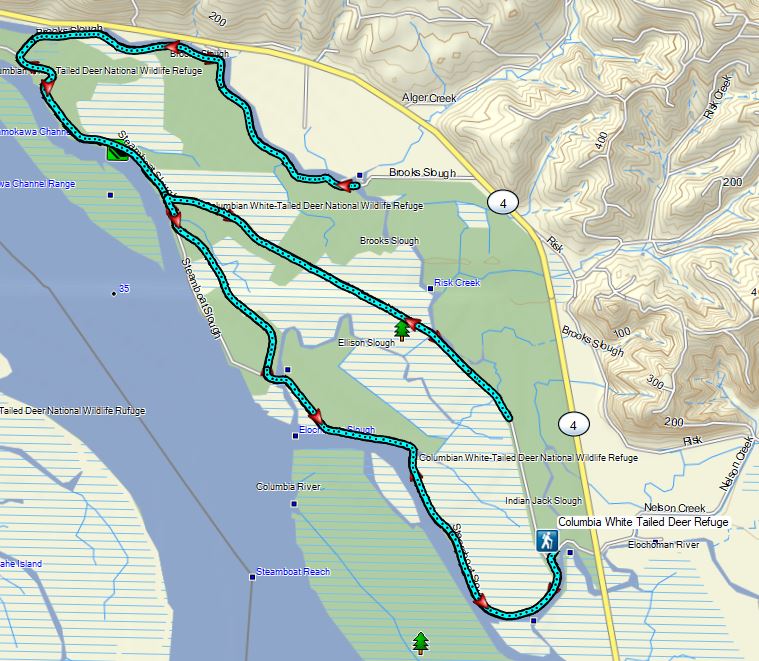
Our plan had been to to the described loop but after reaching the far end of the loop we were going to do an out-and-back along Steamboat and Brooks Slough Roads to add a little hiking time since a six mile loop would likely violate our rule of not having our driving time be greater than our hiking time on day trips. From the HQ we walked out of the parking lot onto Steamboat Slough Road and turned right crossing Indian Jack Slough. The loop description was to then turn right through a gate into the refuge shed/garage yard.
IMG_2441Indian Jack Slough and the garage from Refuge HQ.
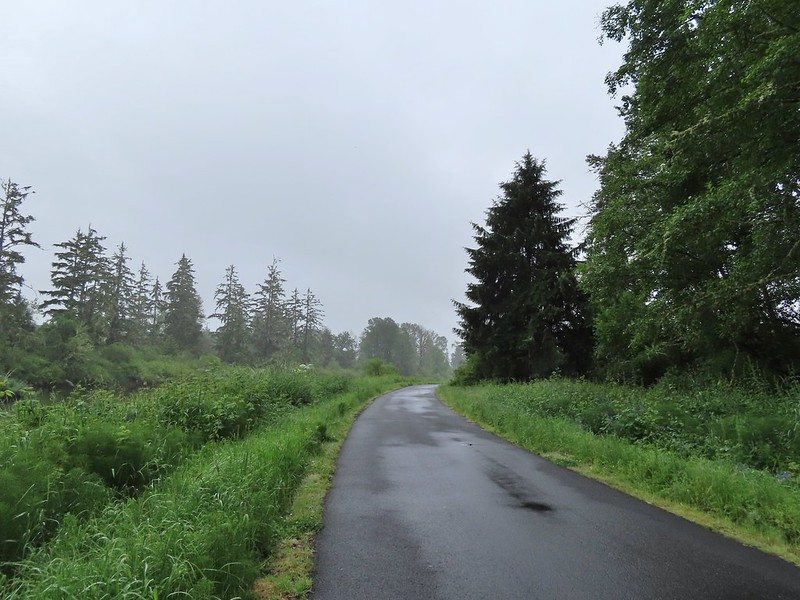
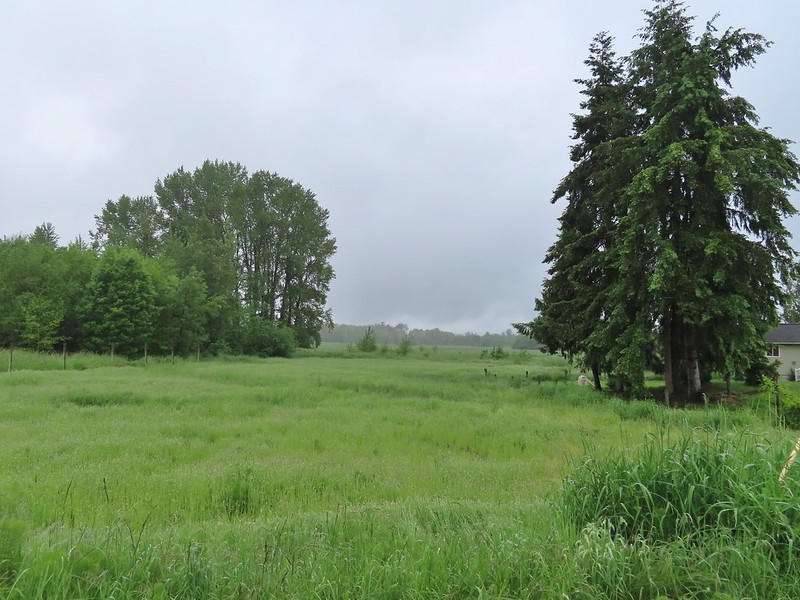
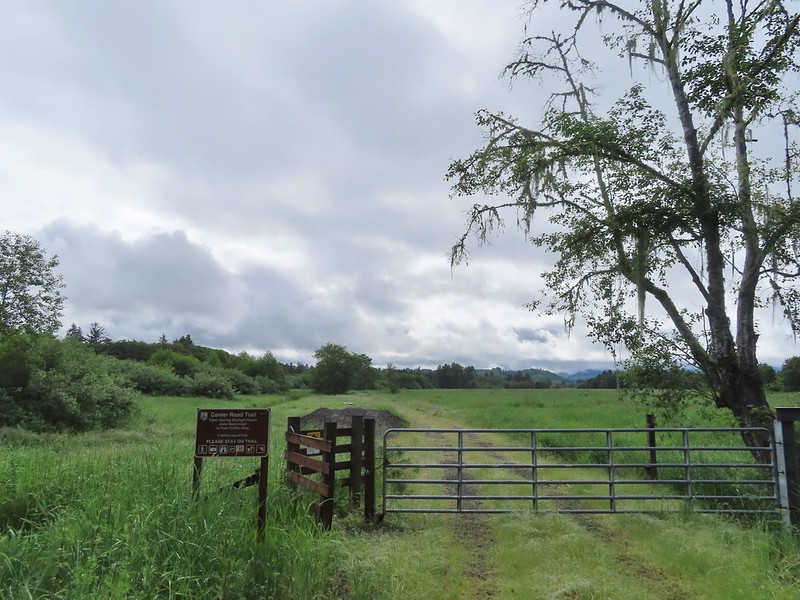
The gate, including a secondary pedestrian gate were padlocked and there were “Area Closed” signs on the driveway gate. This was a bit unexpected, but shouldn’t have been if we’d have read the Refuge website more closely. What we discovered after our hike was that at some point a 0.3 section of Center Road, from Steamboat Slough Road west, had been closed to the public making the loop impossible and leaving the Center Road Trail as a 5 mile round trip out-and-back. At this point though we weren’t sure what was going on so we decided to simply head out Steamboat Slough Road and were prepared to skip Center Road and make the hike a simple out-and-back.
IMG_2454

Beyond the shed/garage there was a living quarters and just beyond that we spotted the first Columbian White-tailed deer of the day.
IMG_2458

IMG_2459

We followed this road for 2.3 miles to the start of the White-tail Trail. It is possible to drive to this trail and park at the nearby dead end of Steamboat Slough Road.
IMG_2465Elochoman Slough

IMG_2473The first of many bald eagles we spotted (atop the dead tree across the slough).
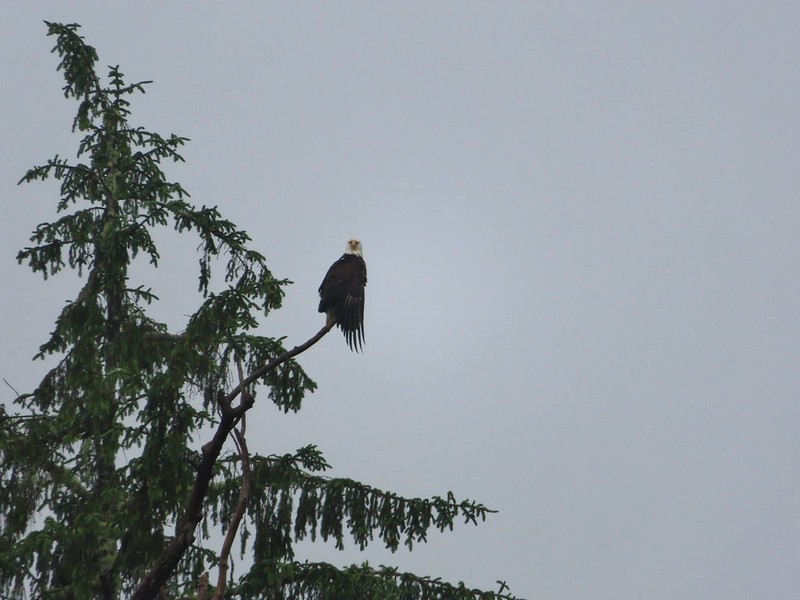
IMG_2489Working on drying out.

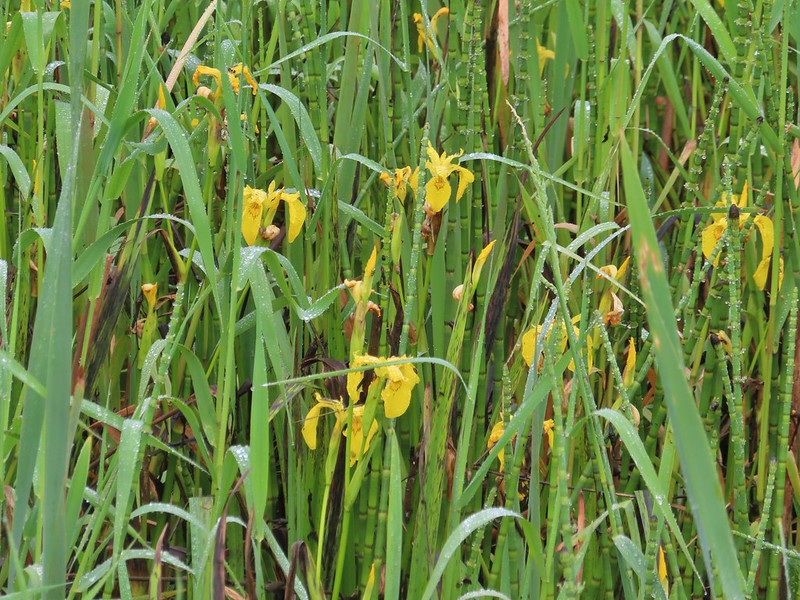
IMG_2475Lots of non-native yellow flag iris in the area.

IMG_2494Little birds such as this sparrow were everywhere but rarely sat still.

IMG_2501A different eagle waiting to dry.

IMG_2503There are at least 5 birds in the tree including four goldfinches.
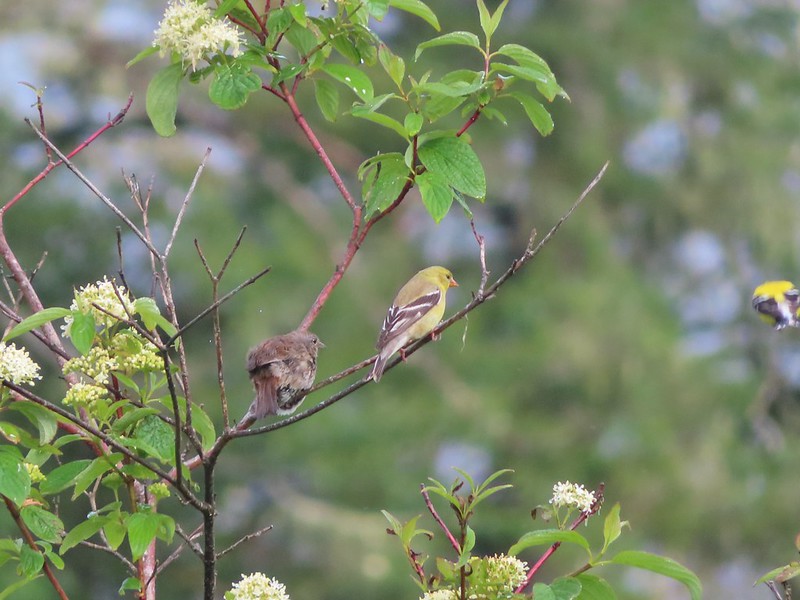
IMG_2507A male goldfinch takes off.

IMG_2513The morning clouds were starting to break up as forecasted.
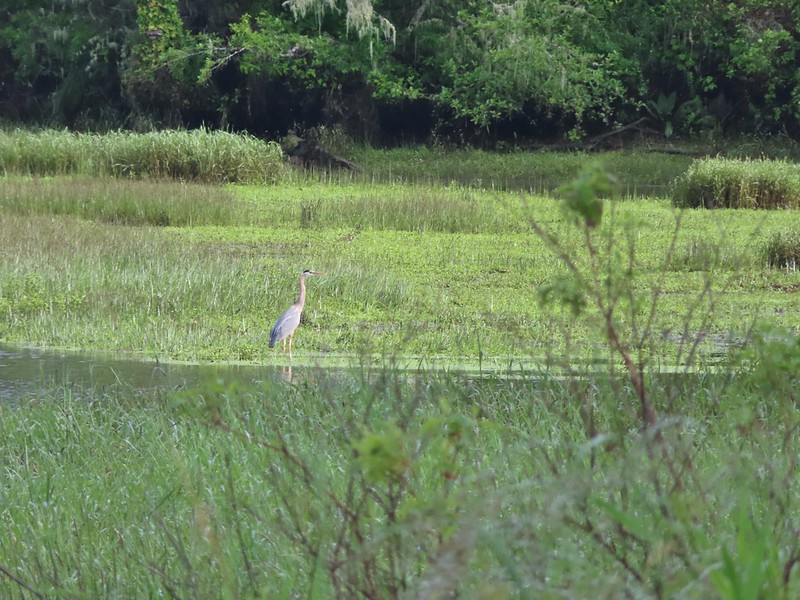
IMG_2516One of many great blue herons.

IMG_2528

IMG_2536

IMG_2539A male wood duck.

IMG_2545Another great blue heron with the female wood duck on the log below.

IMG_2548The first of several osprey.

IMG_2552Cattle in a field along the road.

IMG_2557Geese

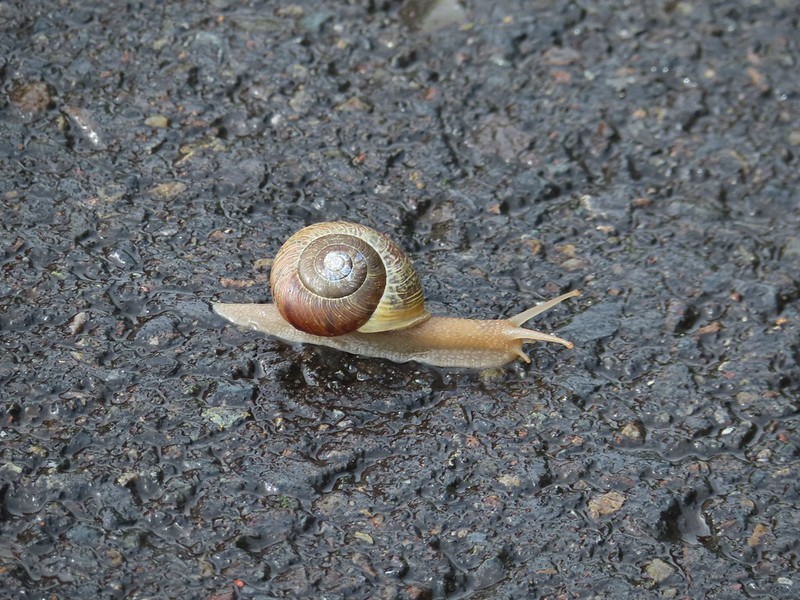
IMG_2565Snail crossing the road.

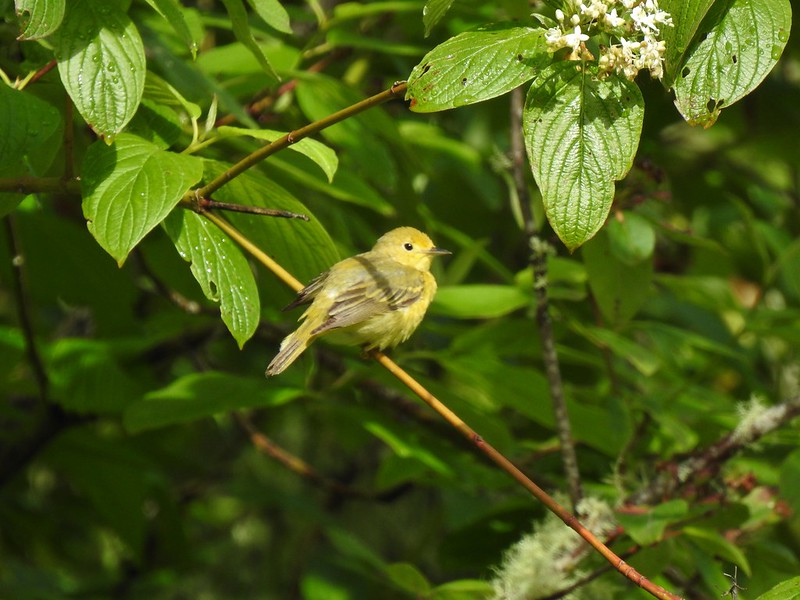
IMG_2572Maybe a yellow warbler. I had to use the digital zoom to get between the branches so it’s not the clearest photo.
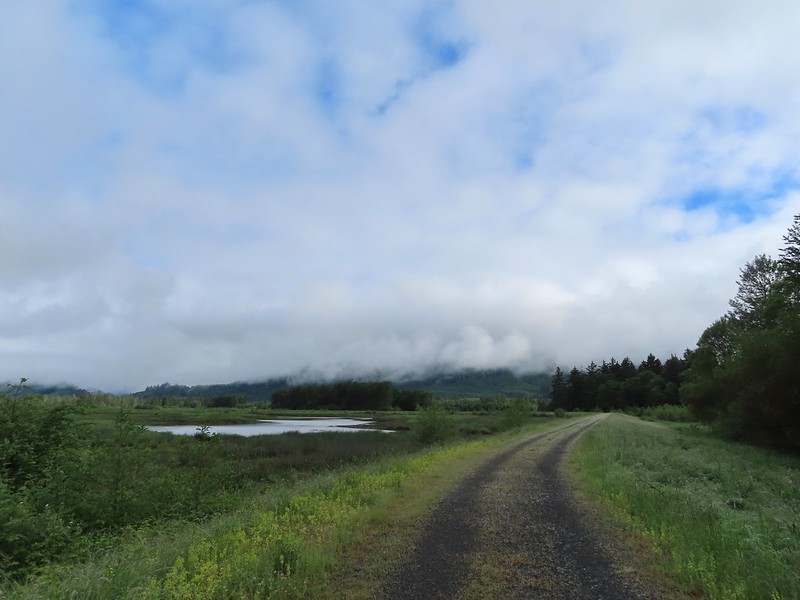
The start of the mile long White-tail trail which travels along a setback levee.
IMG_2579

IMG_2582

IMG_2586There was a pole with a bunch of bird nests hung from it near the start of the trail. We’d never seen one like it before.
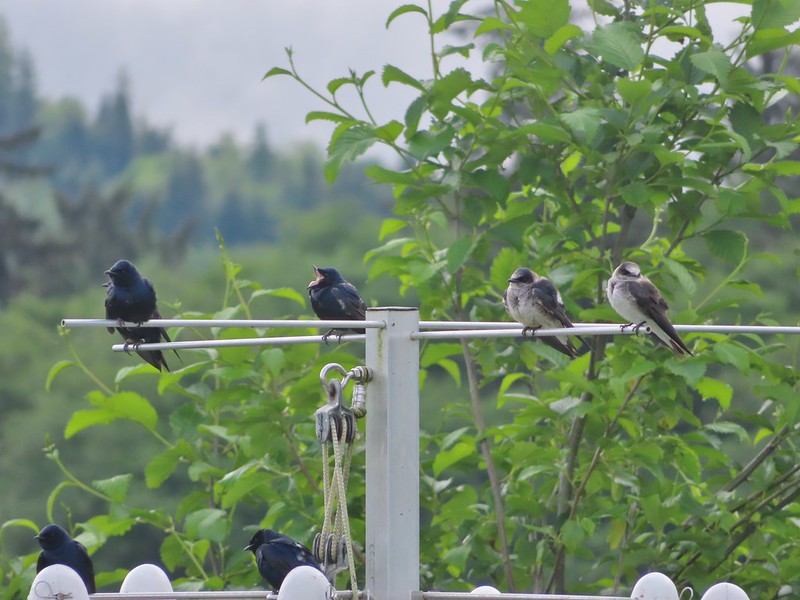
IMG_2587

It turned out to be nests for purple martins, a bird that as far as we know we hadn’t seen before.
IMG_2588

DSCN1586Bald eagle in the same area.

IMG_2597Slug on lupine

IMG_2600A different type of lupine.

IMG_2603

IMG_2605Lupine, daisies and yellow gland-weed.

20220611_085803

20220611_090020Bumble bee needing to dry out.

We spotted more white-tailed deer along the levee, a pair of young bucks.
IMG_2609

DSCN1617

DSCN1631

DSCN1653A look at the white tail. He gave us a better look but in that one he was also doing his business so we stuck with this uncentered, slightly blurry version.
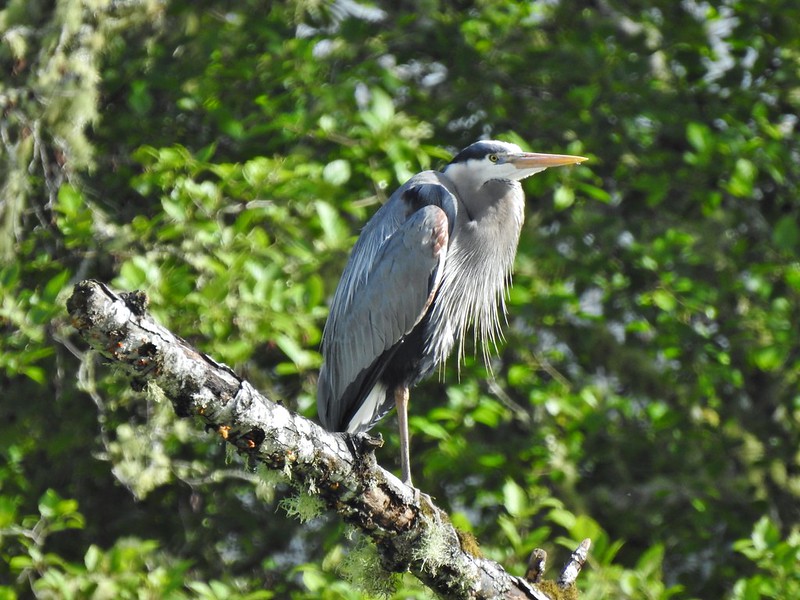
There was also a great blue heron sitting in a nearby snag.
DSCN1634

DSCN1647

While we were keeping an eye on the bucks and the heron to the inland side of the levee there were geese, ducks, and various small birds all around us.
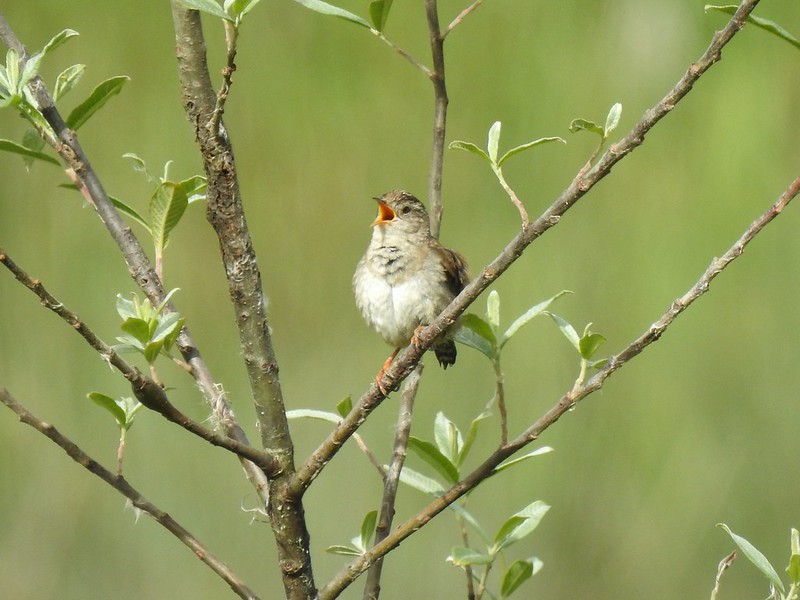
DSCN1612Guessing marsh wren.

DSCN1637Ducks

DSCN1644Goose with goslings.

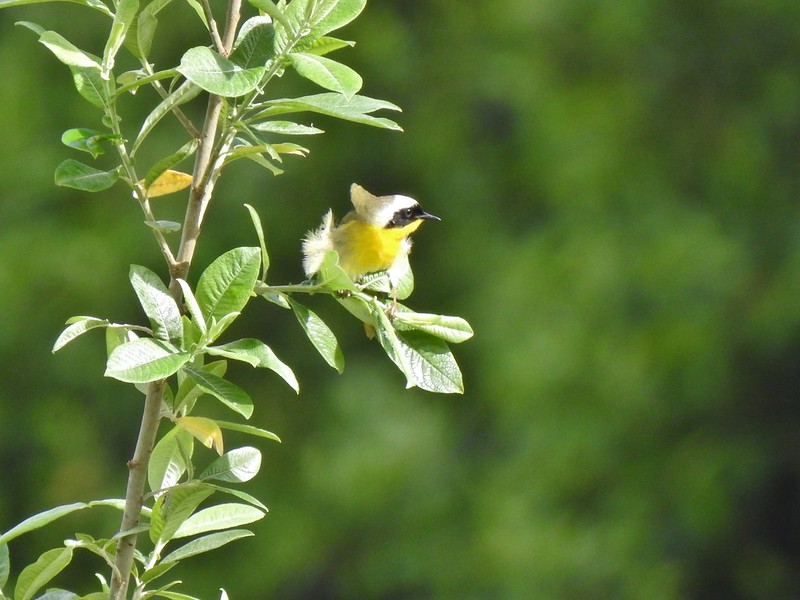
DSCN1651Common yellow throat.

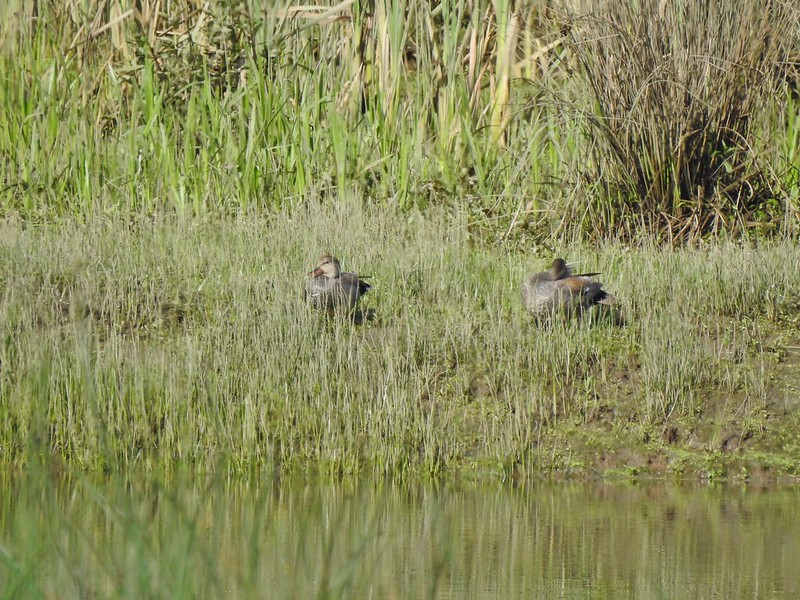
DSCN1660Male gadwall?

We eventually tore ourselves away from the wildlife bonanza and continued on.
IMG_2613

DSCN1666There was pretty much non-stop bird song throughout the day.

IMG_2616Traffic on the Columbia River.

DSCN1668The Santa Maria on the Columbia.

DSCN1671Female brown-headed cowbird?

IMG_2619Flowers along the levee.

DSCN1676American robin

DSCN1677Red-winged blackbird chasing a heron.

When we reached the end of the White-tail Trail we turned right onto Steamboat Slough Road. You can also park near this end of the trail but you must come from the west as Steamboat Slough Road is missing a section (which is why you hike on the levee).
IMG_2621

DSCN1685

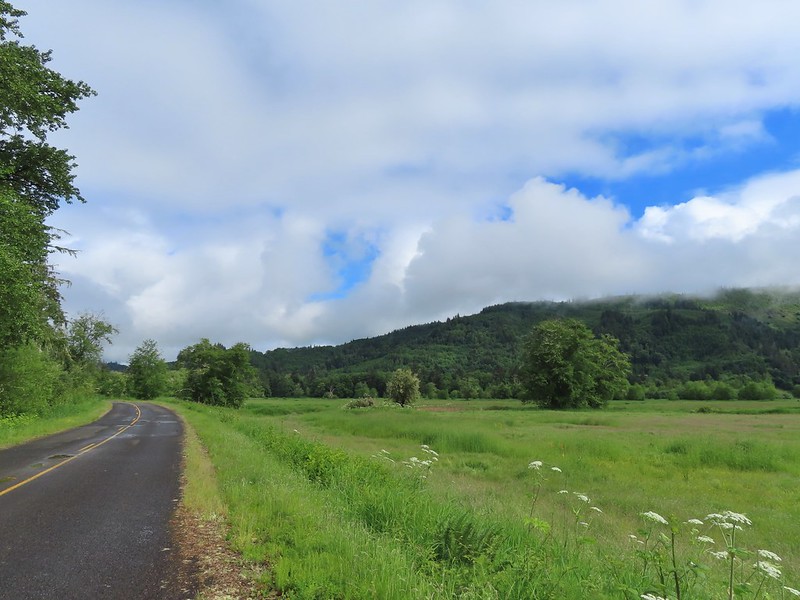
We followed this two-lane version of the road for approximately 1.25 miles to a fork and turned right on Brooks Slough Road. After just 0.2 miles we passed the western end of the Center Road Trail. This end was clearly open. We talked ourselves into believing that either we missed where we were actually supposed to go or that they just hadn’t unlocked the gate yet since we were still unaware of the updated rules for the trail and decided that we would take this trail on our way back and we could do the loop after all.
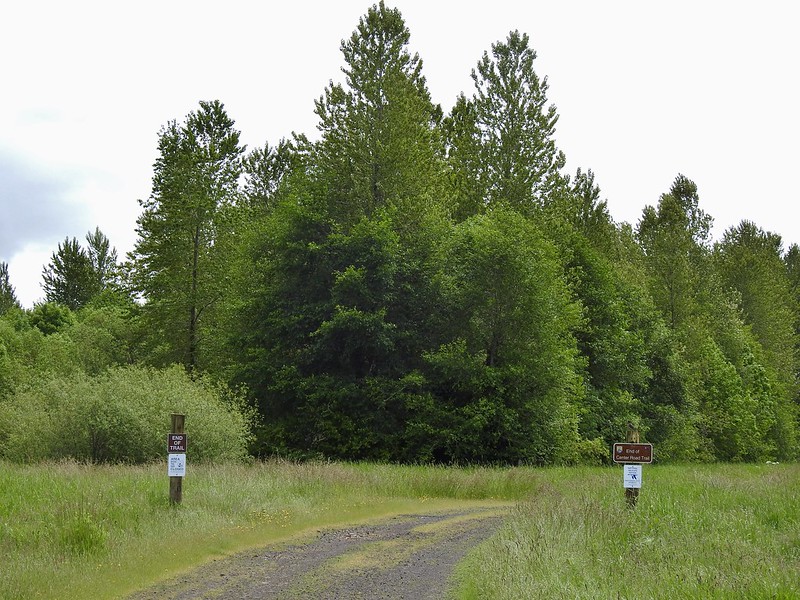
IMG_2625 Note the sign does not indicate that you cannot reach the HQ from the road, it simply says it is 5 miles round trip. Online it adds that hikers must exit the trail the way they entered.
IMG_2628

IMG_2630Roses along the road.

DSCN1699Muskrat

DSCN1694Warbler

DSCN1716Osprey

IMG_2634Brooks Slough Road junction.

We turned right and followed this narrow one-lane road along Brooks Slough. For the first mile it ran parallel to Highway 4 then it veered away becoming a quieter walk.
IMG_2637

IMG_2645Another eagle sitting near the top of the first tall tree on the far side of the slough.

DSCN1729

IMG_2647Interesting shrub along the road.

IMG_2649The partly sunny skies had indeed materialized.
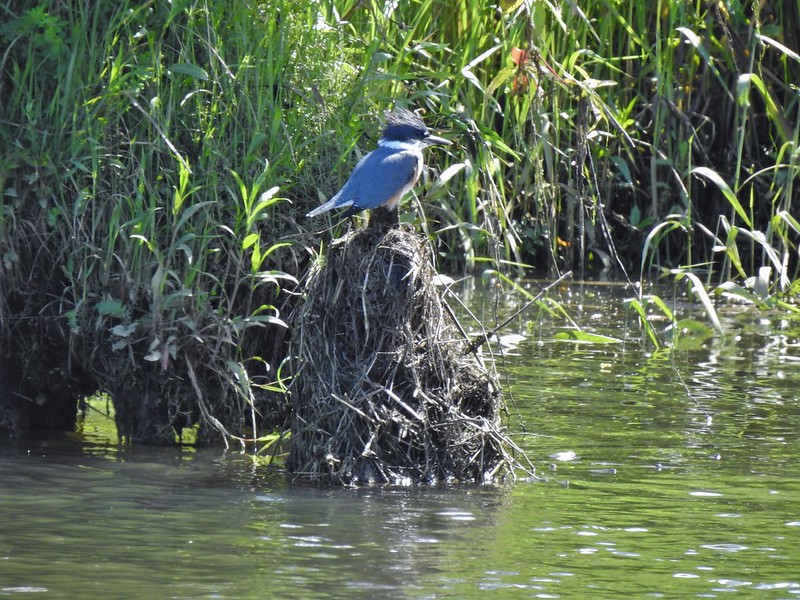
DSCN1748Kingfisher

DSCN1751California scrub jay

DSCN1755White pelicans

IMG_2653

IMG_2654Some sort of ornamental shrub/tree but it had cool flowers.

DSCN1771Turkey vulture

DSCN1786Couldn’t tell what type of ducks they were.
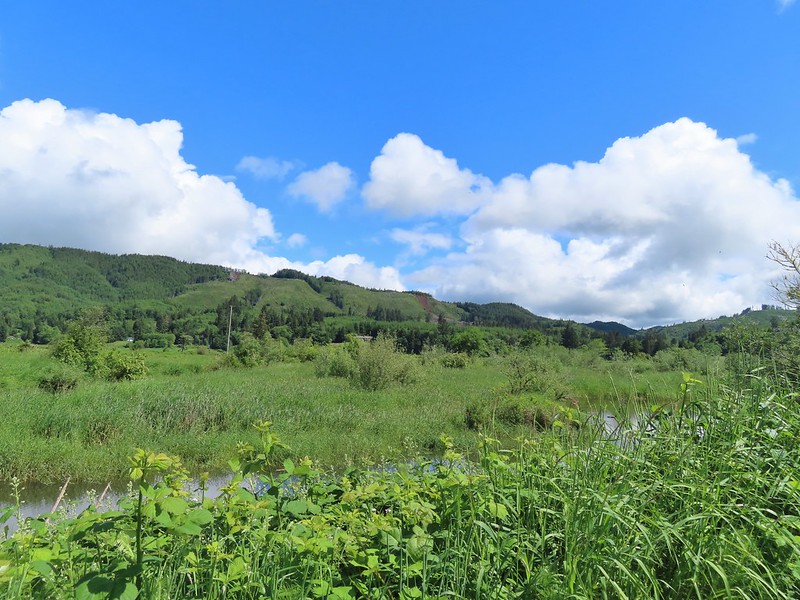
We followed the road for approximately 2 miles to what was shown on the GPS as Alger Creek.
IMG_2660Alger Creek somewhere in the grass flowing into Brooks Slough.

IMG_2661Pond on the other side of the road.

DSCN1788Black pheobe?

After a short break we headed back. It was actually starting to feel warm now but we distracted ourselves with even more wildlife.
IMG_2665

DSCN1798Red-tailed hawk

DSCN1803American goldfinch

DSCN1815Swallowtail

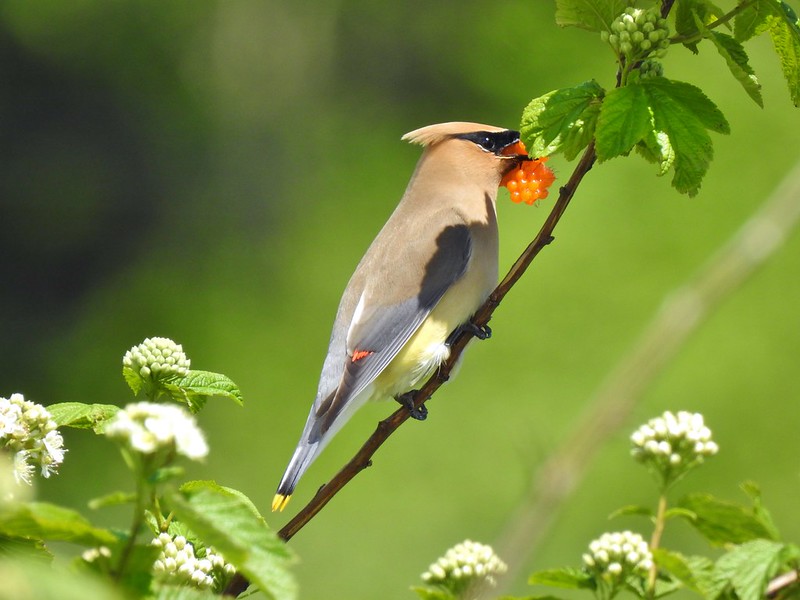
DSCN1825Cedar waxwing with a salmonberry.

DSCN1847

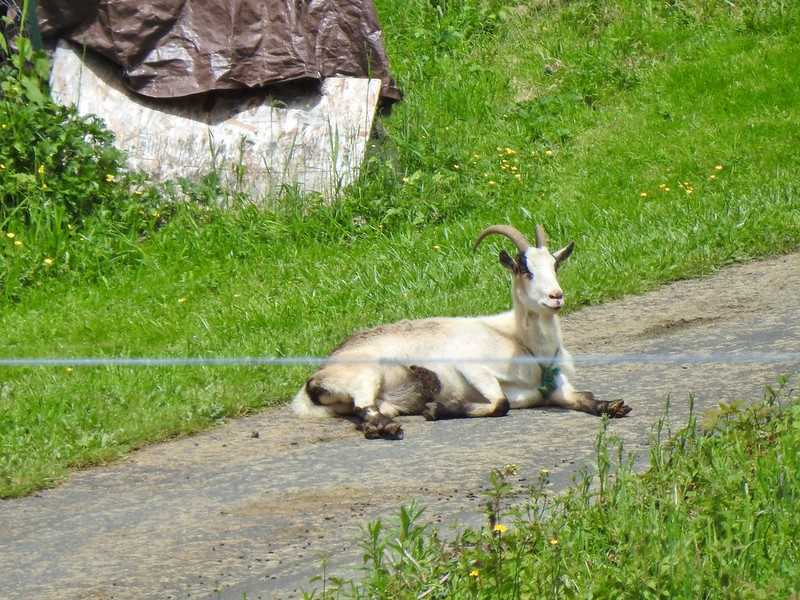
DSCN1850Goat lounging in a driveway across the highway. There had actually been a black goat in nearly the same spot on our first pass.

IMG_2669Caterpillar

When we got back to Center Road we reread the signage and stuck to our plan to try and complete the loop.
IMG_2675

We had been discussing all the different wildlife that we’d seen already and I mentioned that the only thing missing was a turtle. Not long after starting down Center Road I noticed something brown (that didn’t look like a cow) in the distance near the tree line. As I was staring at it a large set of antlers raised from the grass and I realized it was a bull elk.
DSCN1886The elk is in the center of the photo near the tree line.
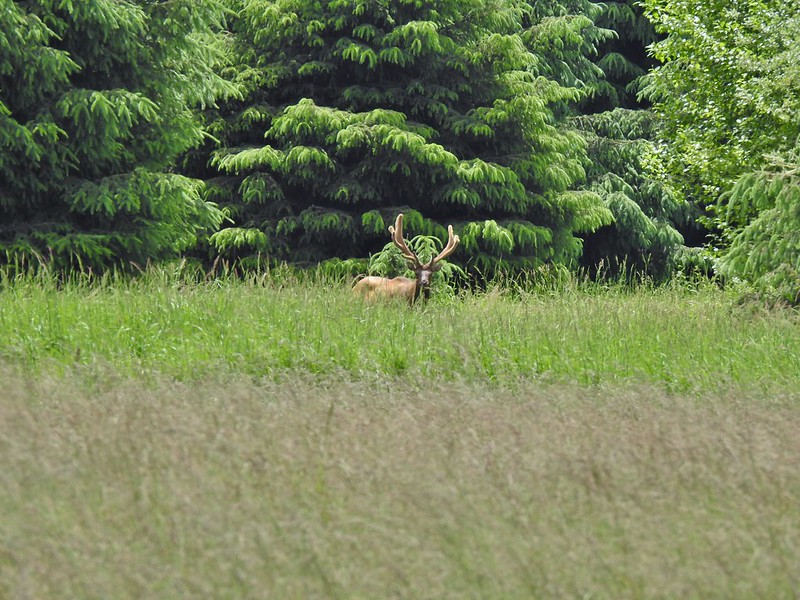
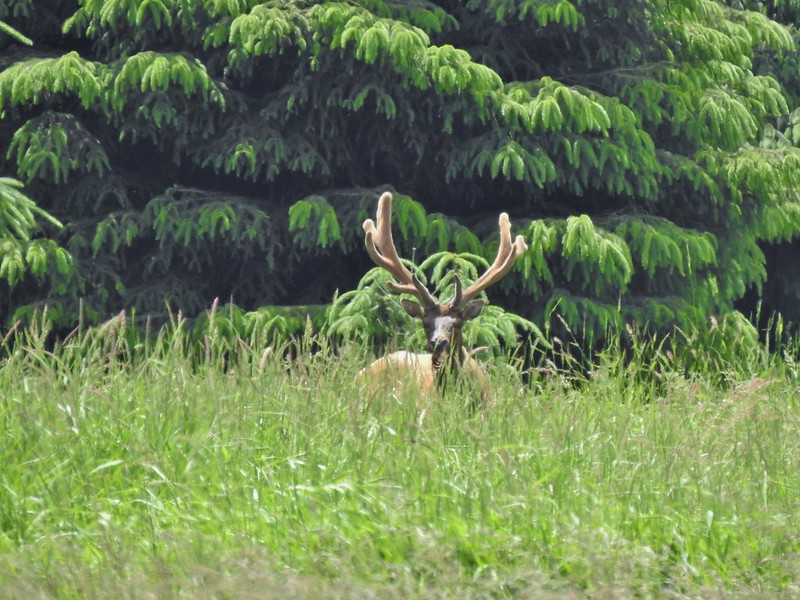
DSCN1877

DSCN1887

We watched him as he munched on grass for quite a while before moving on. At that point I said something to the effect of forgetting about the turtle because that was better. It wasn’t too much longer before we came to some more wetlands. Lo and behold there was a turtle.
IMG_2686

DSCN1896

Many pictures followed before resuming our hike.
IMG_2697

Heather spotted a pair of egrets in a distant tree which proved impossible to get a decent picture of.
DSCN1910Here is a not so decent picture of the egrets.

We also startled up a pair of American bitterns.
DSCN1912One of the bitterns in flight.

After 2 miles we spotted a set of posts with signs where we finally understood that the Center Road Trail no longer runs the entire length of the roadbed now.
DSCN1920

DSCN1918

We were less than half a mile from the HQ which was visible from where we were but we obeyed the signs and turned around. It would have been about a perfect distance for us as we were at the 12.1 mile mark when we had gotten to the closed area. Now we had to backtrack two miles on Center Road before the mile long White-tail Trail and the 2.3 mile road walk back to the HQ parking lot. Not only was this a lot longer than we’d planned but the surface had been mostly paved and what wasn’t paved was packed gravel road beds so our feet were really protesting as we retraced our steps.
IMG_2704

DSCN1924Heather spotted this garter snake along Center Road. Another animal to add to the days list.
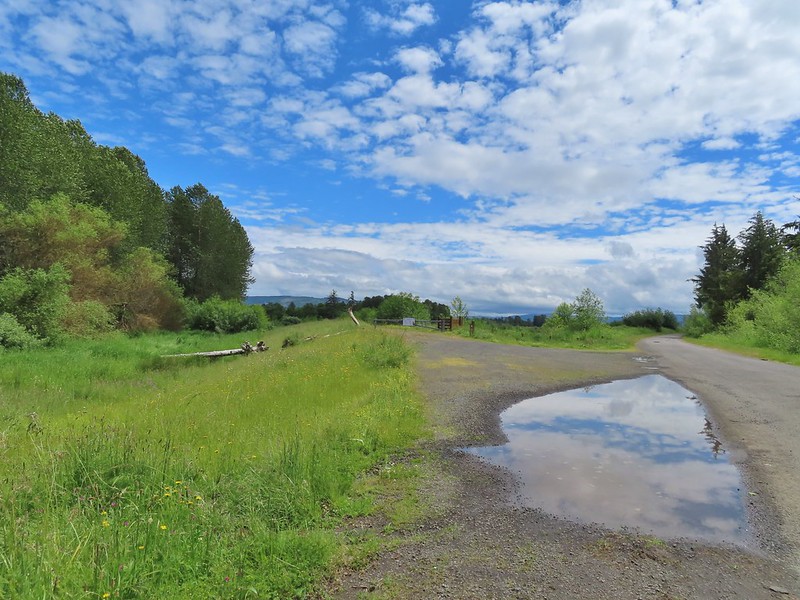
IMG_2708Back at the White-tail Trail.

IMG_2711It had cooled down again which provided some relief as we trudged back.

DSCN1929A second turtle

DSCN1931Mallards

DSCN1933

IMG_2714Way more water in the afternoon.

DSCN1940Another kingfisher. It was in the same tree as the heron had been earlier that morning when we were watching the bucks.

DSCN1941Family swim

IMG_2719By Steamboat Slough Road we had all kinds of blisters/hotspots on our feet.

IMG_2725Arriving back at the refuge HQ.

I got to the car first, changed shoes and drove back to pick up Heather who was only about a quarter mile behind me. My GPS read 17.5 miles of almost entirely flat hiking.

Fortunately I had thought to bring my parents camera which has more powerful zoom than my point and shoot and also our binoculars which Heather had been using since there was so much wildlife to be seen. We encountered a couple of other hikers on the White-tail Trail as well as a pair of cyclists and several cars along the various roads but for the most part it was a fairly peaceful (long) hike. The one thing we kept coming back to was that if we hadn’t done the hike the we did we wouldn’t have seen some of the wildlife that we encountered. Was it worth the blisters though? You betcha – Happy Trails!

Flickr: Columbia White-tailed Deer Refuge

Categories
Columbia Gorge North Hiking Washington

Columbia Hills State Park – 4/17/2021

We joined the masses of people heading to the eastern end of the Columbia River Gorge to catch the wildflower display which may be brief this year due to a combination of a lack of moisture and higher than normal (what is normal anymore?) temperatures. While we try to avoid crowds the hikes in Columbia Hills State Park are a featured hike in William L. Sullivan’s “100 Hikes/Travel Guide Eastern Oregon” (Hike #2 in the 3rd edition) and one that Heather had missed out on in 2015 when I was joined by my parents (post). Knowing that word was out on social media that the bloom was on, we left even a little earlier than typical in hopes of minimizing the number of encounters with others. We followed the same order that I had done the hikes in during my first visit stopping first at the Horsethief Butte Trailhead.
IMG_2484Mt. Hood from the trailhead.

We followed the trail .3 miles to a junction where, unlike the first visit, we went right first following the trail around to the south side of Horsethief Butte where a fence announced the area beyond was closed.
IMG_2487

IMG_2491

IMG_2502

IMG_2496Death camas

IMG_2575Western stoneseed

20210417_065844Fiddleneck

IMG_2522Large-flower tritelia

IMG_2528Mt. Hood beyond Horsethief Lake

IMG_2534Standing at the fence looking east.

IMG_2531Wren

IMG_2535Horsethief Butte

IMG_2544Lupine

We then walked back about a quarter of a mile to a sign at an opening in the rock formation.
IMG_2510

Here we turned and headed up into the rocks.
IMG_2551

IMG_2560

IMG_2563

There is an optional side trail to a viewpoint inside the formation but we wanted to save the time and get to our second stop sooner rather than later. We had been the only car at the trailhead but half an hour later there were another half dozen cars (mostly rock climbers) with more arriving.
IMG_2571

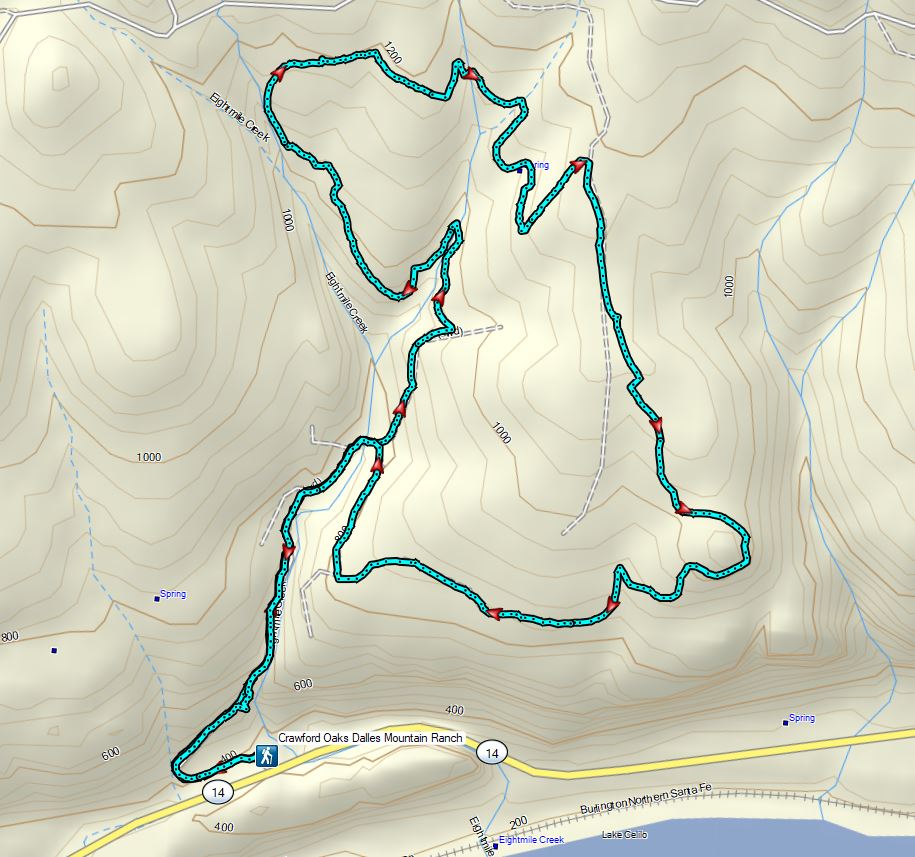
We descended from Horsethief Butte and after a short detour due to a wrong turn at a junction we arrived back at our and drove east on SR 14 for 0.7 miles to the Crawford Oaks Trailhead. While the trailhead opened in May of 2014 my parents I had not parked here opting instead to park at the Dalles Mountain Ranch making this a primarily new hike for me too.
IMG_2580

There was a small handful of cars here but not bad (it was a different story later). We followed the Entry (Access) Road Trail uphill form the parking lot past the Ice Aged Floods Viewpoint.
IMG_2587Horsethief Butte and Mt. Hood from the viewpoint.
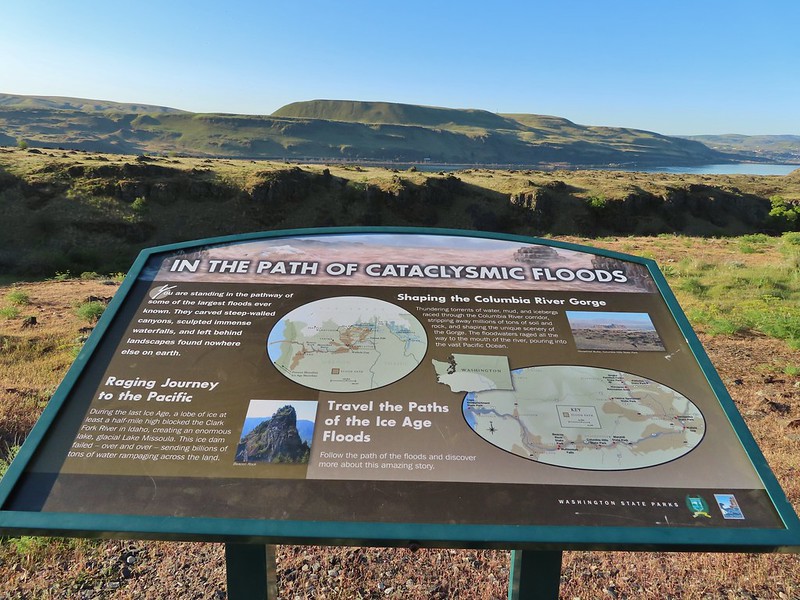
IMG_2588

After a 180 degree turn the Entry Road approached Eightmile Creek near Eightmile Creek Falls.
IMG_2602

IMG_2605Purple cushion fleabane

IMG_2608Balsamroot

The road turned uphill along the creek where several Lewis’s woodpeckers were flying from oak to oak.
IMG_2612

IMG_2614

IMG_2624

IMG_2627

IMG_2630Western bluebird

We followed the road down and across Eightmile Creek to an interpretive sign at a junction.
IMG_2643

IMG_2642Ground squirrel

IMG_2648

This was the start of a couple different loop options. We chose to take the left fork which was the Military Road Trail. Going this direction is the shortest route to the Crawford Ranch Complex plus it would mean that we would be heading toward Mt. Hood as we looped around on the Vista Loop Trail (the right hand fork here). The Military Road Trail climbed away from the creek reaching another junction after .3 miles. Here we forked left again leaving the Military Road for the Eightmile Trail. (Sticking to the Military Road would have led us to the Vista Loop Trail in .4 miles.)
IMG_2649

IMG_2656

IMG_2666Lupine, balsamroot and parsley

IMG_2668The Crawford Ranch Complex ahead to the left.

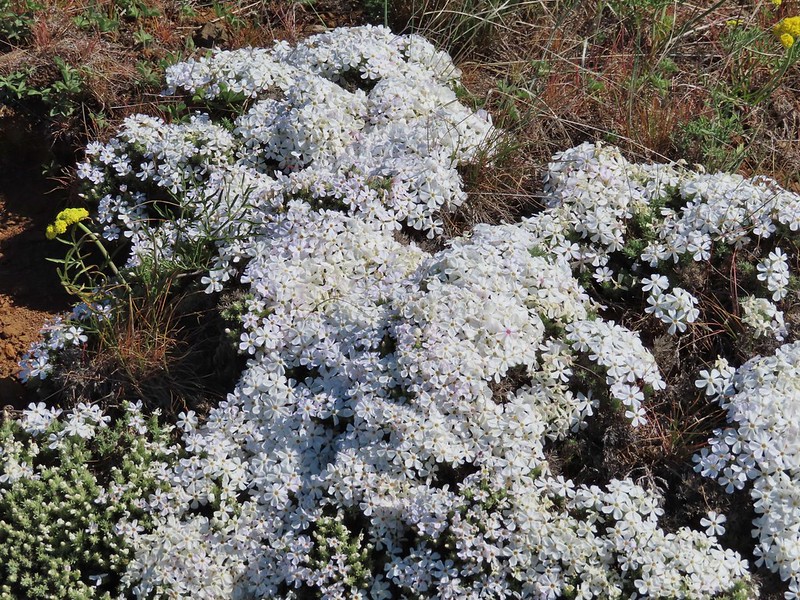
IMG_2674Phlox

IMG_2677

The Eightmile trail dropped to cross a smaller stream before finally returning to Eightmile Creek near a fence line.
IMG_2681

IMG_2701

IMG_2702

IMG_2707

IMG_2709

IMG_2718

IMG_2730

IMG_2744Approaching the fence line.

While there was a bit of a break in the flowers at this fence line there was no shortage of birds.
IMG_2747

IMG_2751Yellow-rumped warbler

IMG_2753Back of a scrub jay

IMG_2761

The trail then veered away from the creek and came to another junction after passing through a fence. The flowers here were spectacular and both Mt. Hood and Mt. Jefferson were visible.
IMG_2767

IMG_2768

IMG_2770

IMG_2778

IMG_2779Mt. Hood

IMG_2764Mt. Jefferson

At the junction we went right on the Ranch Route Trail eschewing a visit to what looked like a very busy Crawford Ranch Complex. The Ranch Route meandered for 1.4 miles through the flowered covered hillsides before arriving at a junction with the Vista Loop and Military Road Trails.
IMG_2790

IMG_2796

IMG_2800

IMG_2801

IMG_2809

IMG_2823Yakima milk-vetch

IMG_2827

IMG_2828

IMG_2845

We turned left on the Vista Loop Trail following it a total of 1.8 miles back to the the junction near Eightmile Creek.
IMG_2860The Columbia River, Horsethief Butte, and Mt. Hood

IMG_2863Death camas

IMG_2872Large head clover

IMG_2893Approaching the junction.

We followed the Entry/Access Road back down to the now packed trailhead.
IMG_2896Hawk watching all the hikers.

IMG_2898A different hawk? watching the goings on.

IMG_2908Western fence lizard watching everything.

IMG_2899Poppy, manroot, and red-stemmed storksbill
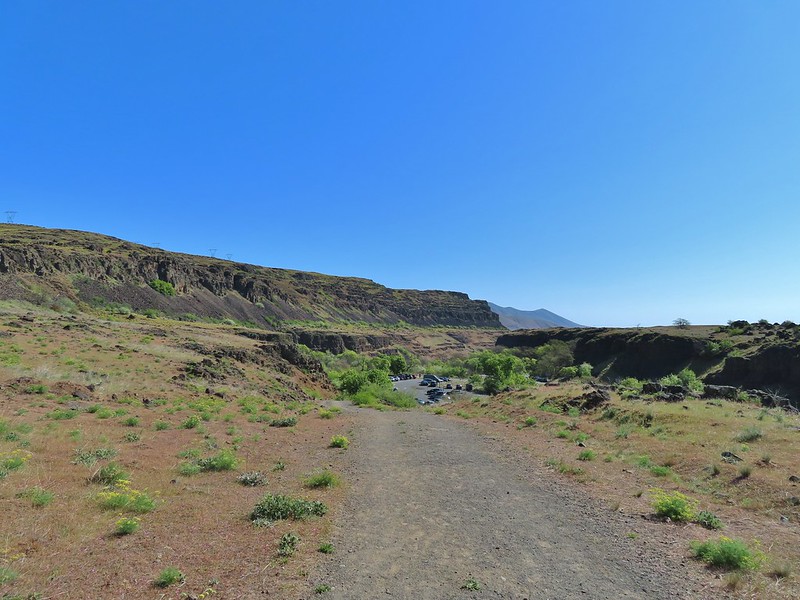
IMG_2913The crowded trailhead

This stop clocked in at 6.9 miles and 900′ of elevation gain.

We opened up a spot here and drove west on SR-14 to Dalles Mountain Road where we turned north (right) and drove 3.5 miles to a fork near the Crawford Ranch Complex. Here we turned left heading uphill for another 1.4 miles (passing a number of hikers walking up along the road) to the Stacker Butte Trailhead. There were a fair number of cars but a few spots were open.
IMG_2916

IMG_2915While both were part of the Crawford Ranch, Stacker Butte is not part of the Columbia Hills State Park but is part of the Columbia Hills Natural Area Preserve.
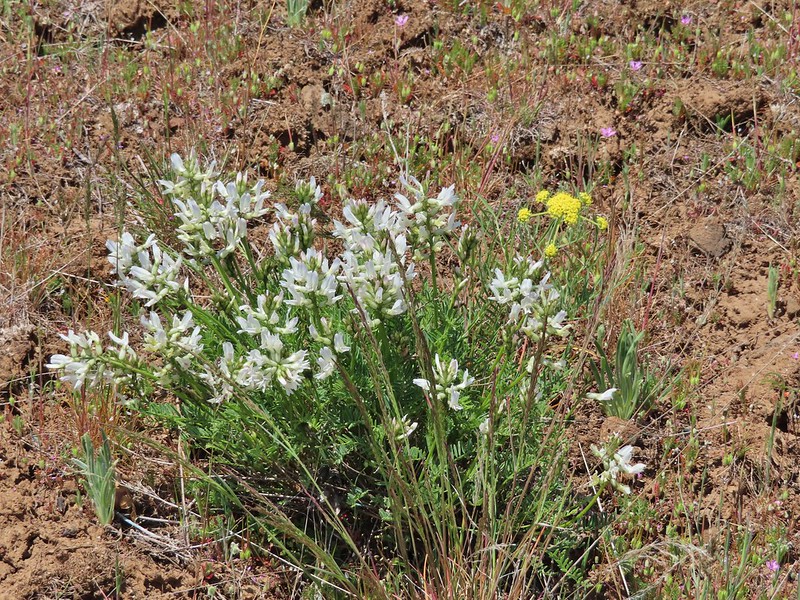
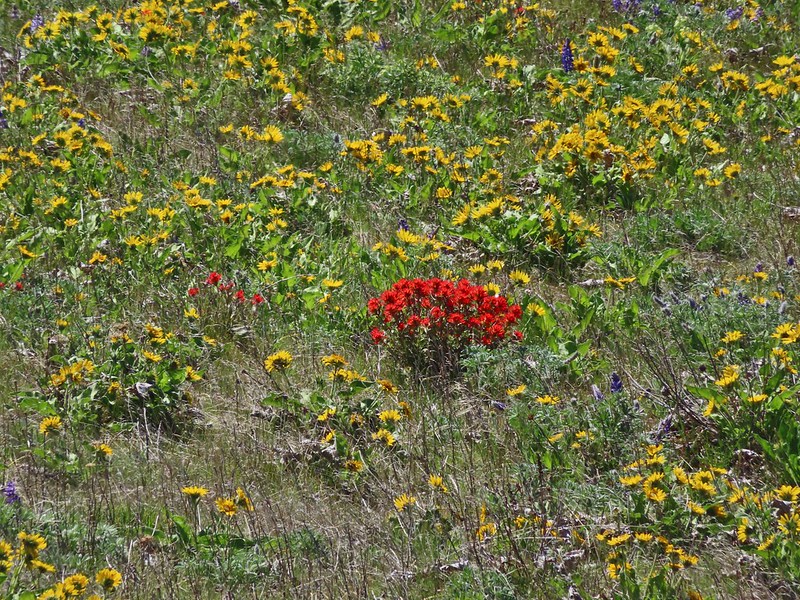
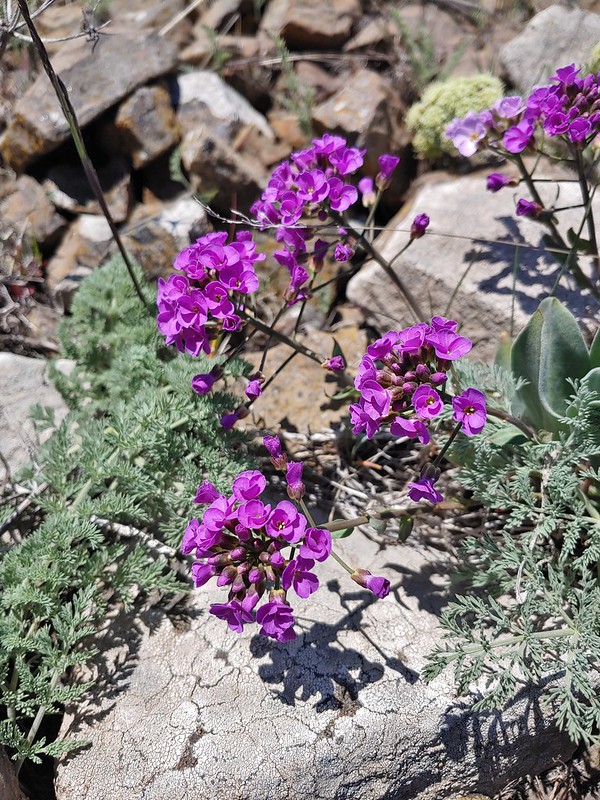
The hike here is pretty straight forward following the gravel road approximately 2.6 miles to some towers on the 3220′ summit of the butte. The flowers were thickest along the lower section of the hike with some that we had not seen down lower including paintbrush, daggerpod and some sicklepod rockcress.
IMG_2928

IMG_3116Yakima milk-vetch

IMG_2935Paintbrush amid the balsamroot.

IMG_2939

IMG_2951Phlox

IMG_2960

IMG_2961Big-seed biscuitroot

IMG_2977Sicklepod rockcress

20210417_122704

IMG_2990Sagebrush false dandelions

20210417_121519Daggerpod

IMG_3044Daggerpod

IMG_3021Slender toothwort?

IMG_3022Shooting stars in front of a little blue-eyed Mary
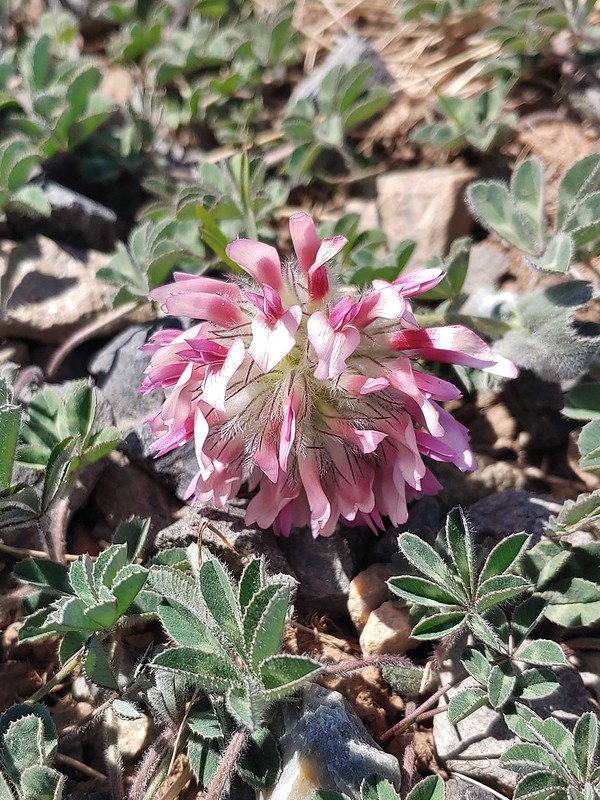
20210417_122308Large head clover

IMG_3031Popcorn flower

IMG_3024Larkspur

20210417_131353Woodland stars

At the summit we were treated to a clear view of Mt. Adams, Mt. Rainier, and Goat Rocks to the north.

IMG_3000Mt. Adams

IMG_3004Mt. Rainier

IMG_3011Goat Rocks

After a little rest on top we headed down admiring the flowers along the way and watching for wildlife too.
IMG_3051Swallowtail

IMG_3058Western fence lizards

IMG_3111White crowned sparrow

IMG_3113Another sparrow

IMG_3100Mt. Jefferson and Mt. Hood as we neared the trailhead.
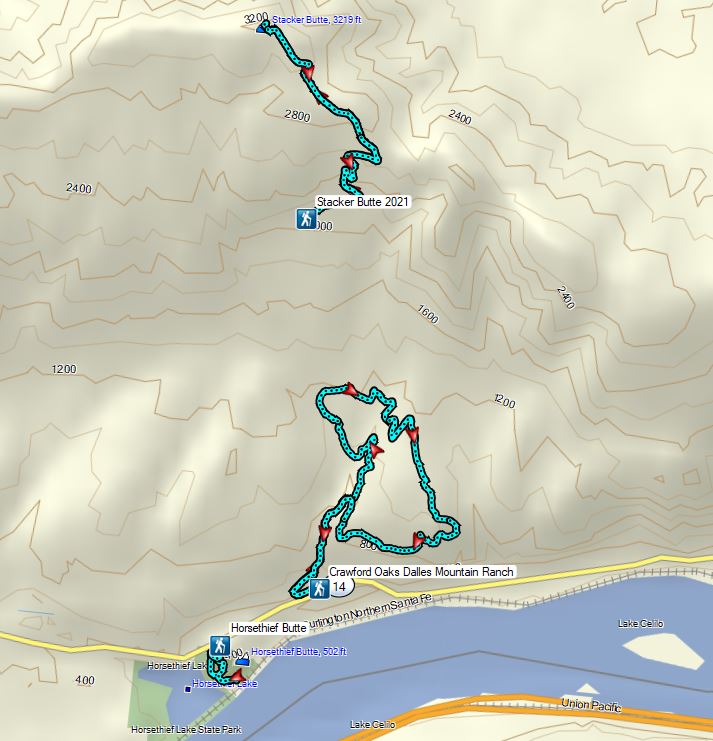
The three hikes came to a combined 13.2 miles and 2240′ of elevation gain which is why we didn’t just hike up the road from the ranch complex. It’s a little too early in the season for a 16 mile, 3000′ hiking day. Maybe in a couple more months. Happy Trails!

All three tracks for the day.
Categories
Hiking Oregon Portland Trip report Willamette Valley

Three Hikes on Sauvie Island

Our latest outing was a three stop trip to Sauvie Island in the Columbia River. After purchasing our $10/day parking permit online from the Oregon Department of Fish and Wildlife we headed for our fist stop at the Wapato State Greenway.
IMG_6537

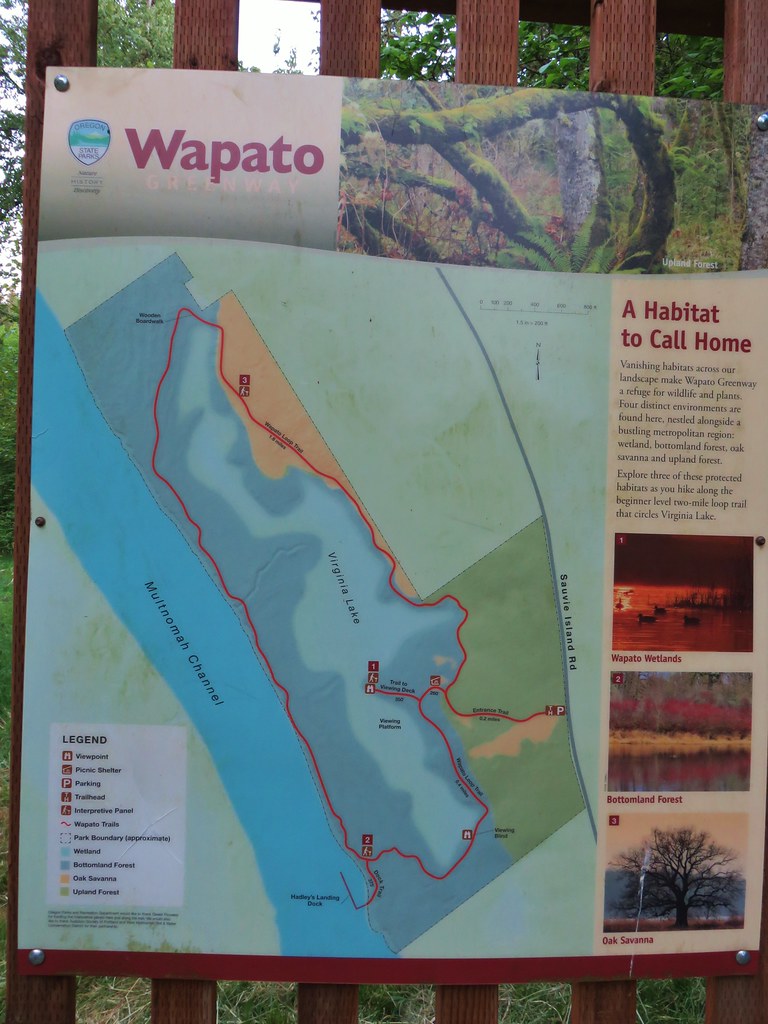
Here a short loop trail passes around Virginia Lake and along the Multnomah Channel.
IMG_6539

We set off on the entrance trail which quickly split (not shown on the map). We veered left on a mowed path through some grass.
IMG_6542

Our plan had been to visit the viewing platform first thing but this left fork was not the true entrance trail and we wound up joining the loop trail a tenth of a mile south of the side trail to the platform.
IMG_6543

We turned left onto the loop trail deciding to visit the platform near the end of our hike instead.
IMG_6544

We passed a view of Virginia Lake and arrived at a viewing blind after a tenth of a mile.
IMG_6546

IMG_6547

Other than the occasional red-winged blackbird sighting we didn’t see anything from the blind on this morning. We continued on the loop ignoring a spur trail to Hadley’s Landing Dock just before arriving at the Multnomah Channel.
Multnomah Channel

The trail passed through woods with occasional openings to grassy meadows. There were a few woodland flowers here and there but the most interesting thing was the wildlife. We saw a lot of birds and couple of shy rabbits. Most of the birds were busy foraging in the bushes or flitting from tree to tree so we didn’t have a lot of luck with pictures. We did appreciate the many songs they were singing as they made their morning rounds.
IMG_6553

IMG_6557

IMG_6562

IMG_6571

IMG_6573

IMG_6574

IMG_6569Black-headed grosbeak

We also spotted what we at first identified as a pair of deer under a large oak.
IMG_6575

IMG_6577

As we watched them disappear into the brush we kept noticing more deer and ended up counting five of them.

After passing the picnic shelter we turned right down the side trial to the viewing platfrom.
IMG_6586

IMG_6587

IMG_6588

We had more luck with the wildlife from this viewpoint spotting a couple of different types of ducks, a great blue heron, and a pied-billed grebes.

IMG_6593

IMG_6595Mallards with a great blue heron in the distance.
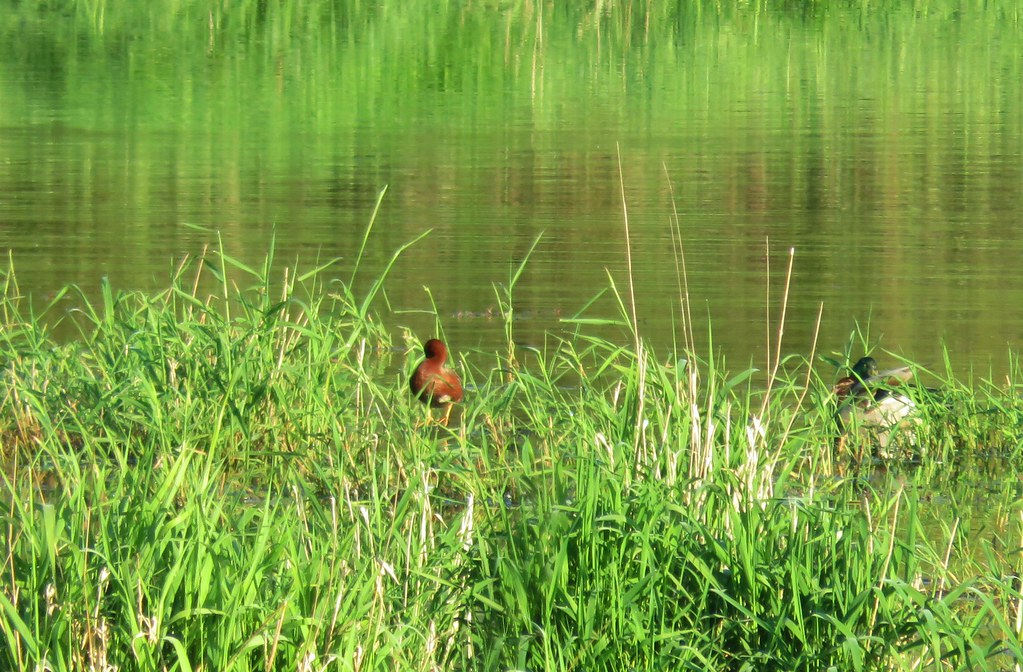
IMG_6608Cinnamon teal and a mallard

IMG_6604Pied-billed grebe

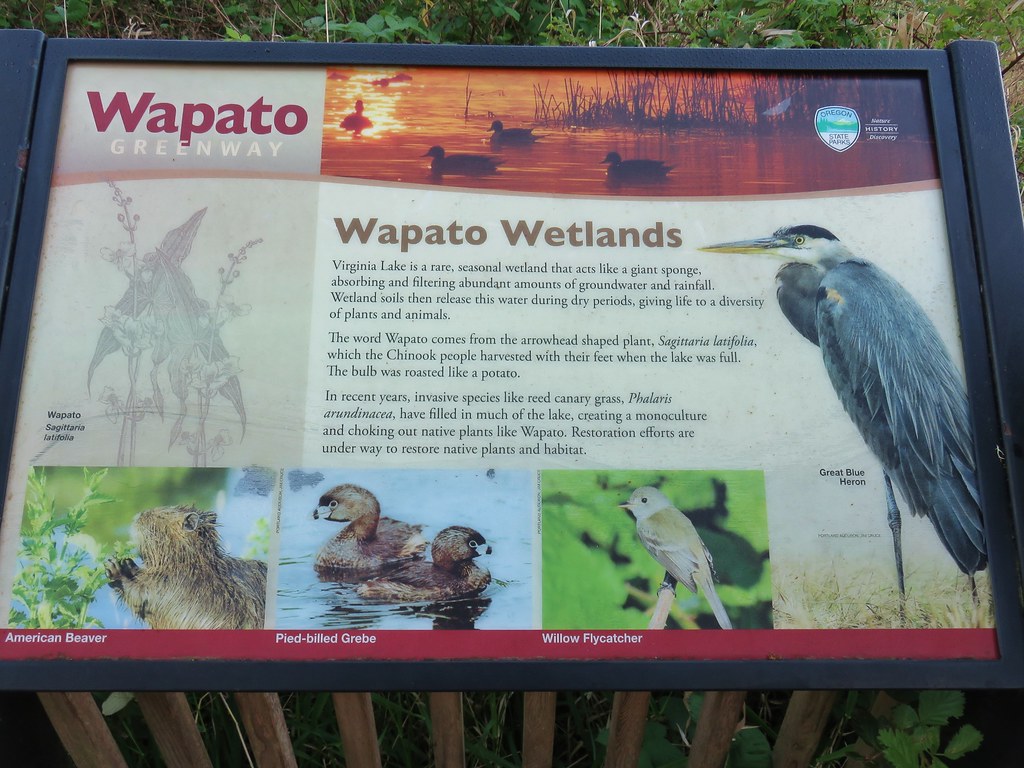
We had never heard of a pied-billed grebe and were wondering what it was. Then we took the time to read the interpretive sign at the platform.
IMG_6611

After leaving the platform we headed back to the car. Along the way we spotted another new bird to us. A Black-throated Gray Warbler. She was hopping around on the trail gathering something for a nest it appeared so the photos are a bit blurry.
IMG_6619

IMG_6626

Our second stop was at Oak Island,technically a peninsula. It is part of the Sauvie Island Wildlife Area and only open to hikers from April 16 through the end of September.
From the parking area a mowed path leads past a large signboard for .3 miles to the start of a loop.
IMG_6627

IMG_6629

The rabbits were a little less shy here.
IMG_6634

We had a few cattle cross our path prior to reaching the start of the loop as well.
IMG_6638

We actually missed the start of the loop which was marked by a post with a hiker symbol on it.
IMG_6639

We stayed straight on the obvious track past this sign as the path leading right was so faint we hadn’t noticed it. Continuing in this clockwise direction the trail leads through open grass with Steelman Lake to the west.
IMG_6640

A number of great blue herons could be seen flying over the water and along the lakes shore we spotted a pair of white pelicans and a family of Canada geese.
IMG_6643

IMG_6645

The distinctive call of red-winged blackbirds was prevalent.
IMG_6647

After passing through a gate the grass grew taller and the trail began to turn away from Steelman Lake. Here there were many butterflies and a few blooming camas.
Nature Trial at Oak IslandLooking back at the gate.

IMG_6658

IMG_6653

IMG_6655

Just before turning south near Sturgeon Lake a .1 mile spur path to the left led to the narrows, a narrow channel connecting Steelman and Sturgeon Lakes.
IMG_6661Looking toward Steelman Lake from the Narrows.

IMG_6662The Narrows. Another lake, Mud Lake, is on the other side of the trees.
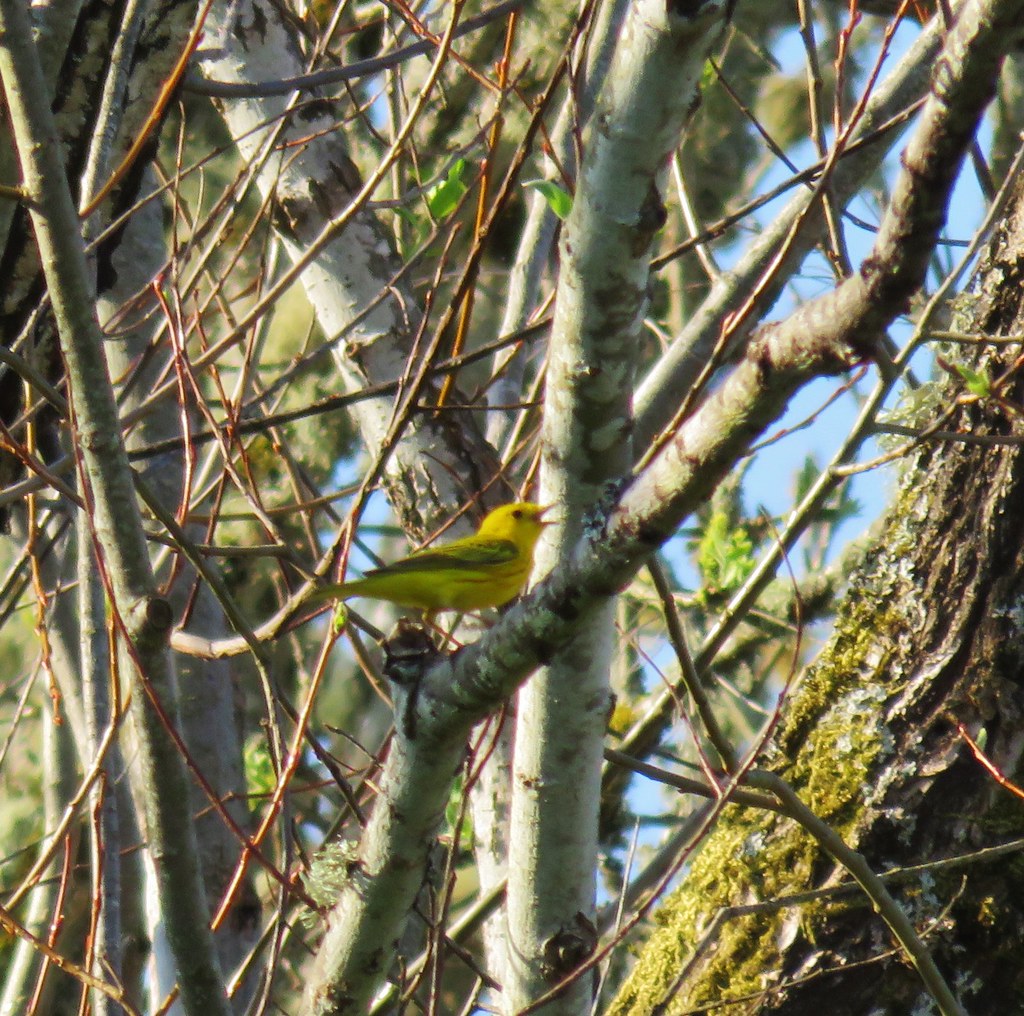
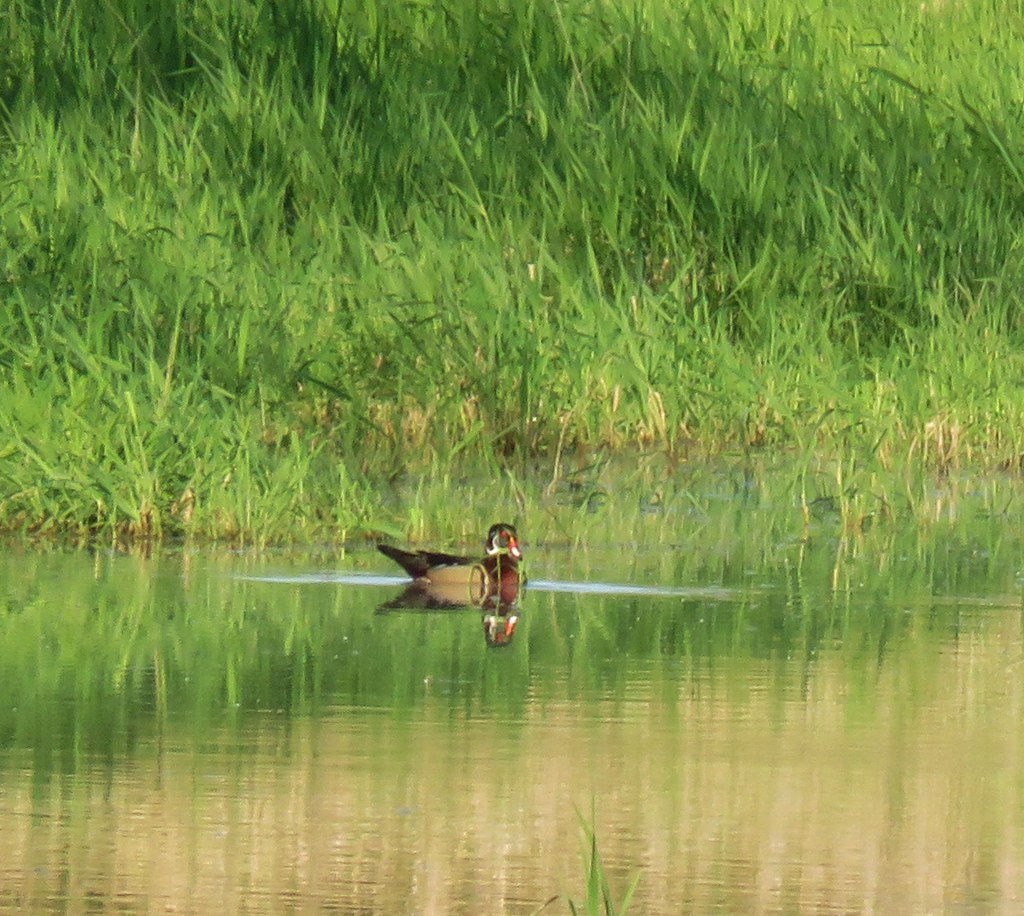
As we were returning to the loop we spotted a pretty yellow warbler and a wood duck.
IMG_6667

IMG_6669

Shortly after rejoining the loop Heather spotted a path down to a small beach along Sturgeon Lake where both Mt. St. Helens and Mt. Adams were visible but due to the lighting very hard to make out.
IMG_6671Mt. Adams (it is really there)

IMG_6676Mt. St. Helens

We had been similarly unsuccessful at getting a picture of Mt. Hood earlier from the Narrows. We finished up the loop and returned to our car ready to head to our final stop at the Warrior Point Trailhead. A coyote raced across the road near the parking are for the clothing optional Collin’s Beach. We’re not sure what it had been up to but it looked like it thought it was being chased. We had some fun imagining it had tried to run off with someones clothes.

After that excitement we parked at the trailhead and before setting off walked down the the sandy beach along the Columbia River.
IMG_6690

IMG_6692

As we began hiking a bald eagle flew overhead.
IMG_6694

The trail had occasional views of the River as well as Mt. St. Helens which was now a little easier to make out.
IMG_6703

IMG_6699Mt. St. Helens and an Osprey nest.

Our visit to the Island had already been on of the most diverse for birds and the Warrior Rock Lighthouse Trail just added to this. After the bald eagle and osprey we spotted a pair of American goldfinches.
IMG_6705Female

IMG_6712Male

These were followed by a Bullock’s Oriole and a yellow throated warbler.
IMG_6734

IMG_6742

The trail itself varied as it spent some time in the woods, some along the river, and other passing through tall grass.
IMG_6727

IMG_6729

IMG_6747

Considering the combination of grass, nearby water, and warm sunshine it seemed like the perfect conditions for snakes but we only spotted one.
IMG_6748

IMG_6752

After three miles we arrived at a sandy beach near the Warrior Rock Lighthouse

IMG_6753Mt. St. Helens again.

IMG_6754

IMG_6755

After a short rest on the beach we continued north on the sand to an old concrete gun mount.
IMG_6756

IMG_6759

This is where things got a little interesting. Our guidebook said to turn inland here on a small access road to a T-shaped junction. The map accompanying the description on Oregonhikers.org appeared to show the track continuing north from this point along the river. We couldn’t see any sign of the small access road so we continued north along the beach until it was no longer possible. We faced the choice of backtracking or following a faint path inland to try and connect to an old road bed that would take us to Warrior Point. We headed inland.
IMG_6763

There was a faint path, we’re guessing it was more of a game trail than anything but it wouldn’t have been too hard to follow except for all the blackberry bushes. We managed to push through what turned out to only be a tenth of a mile to arrive at the grassy road bed.
IMG_6768

A brief detour right led us to a viewpoint at Warrior Point of the town of St. Helens.
IMG_6765

IMG_67671905 Columbia County Courthouse

We followed the old road bed back from Warrior Point for a half mile where it met the Warrior Point Trail near the beach at the lighthouse.
IMG_6769

We had only seen a handful of other hikers all day but on the way back to the car (it was only now a little after 11am) we passed a number of people heading toward the lighthouse. We were once again thankful to have gotten an early start.

Our distances for the day were 2.6 miles at Wapato Greenway, 3.3 miles at Oak Island, and 7.3 miles at Warrior Point for a total of 13.2. It had been a great day for wildlife and another enjoyable set of hikes in the Portland area. Happy Trails!

Flickr: Sauvie Island Hikes

Categories
Columbia River Gorge South Hiking Oregon Trip report

Lower Deschutes River – SE Oregon Vacation Day 1

It’s been awhile since our last post but we have a good excuse, we were busy hiking. Eight straight days of hiking in fact. 😊

For the last two years we’ve had plans to visit SE Oregon in May but each time our vacation week arrived so did rain in the forecast. Since May wasn’t working out we decided to give June a try. A dry Spring had things looking promising but a system moved in at the end of the week prior to our leaving that had us a little worried. There was rain in the Willamette Valley (and snow in Cascades) but our destinations looked like they would escape mostly dry. At least dry enough that we could rearrange a few of our planned hikes to let things dry a bit before attempting the drives that would be impassible if wet.

Before we could even attempt those hikes we had to get to SE Oregon. Conventional wisdom would have had us driving through Bend via Santiam Pass but we aren’t conventional. First the Sisters Rodeo was happening which meant even more traffic than usual in that little town. More importantly we wanted to squeeze a hike in on the way to Bend were we planned to stay with Heather’s parents again.

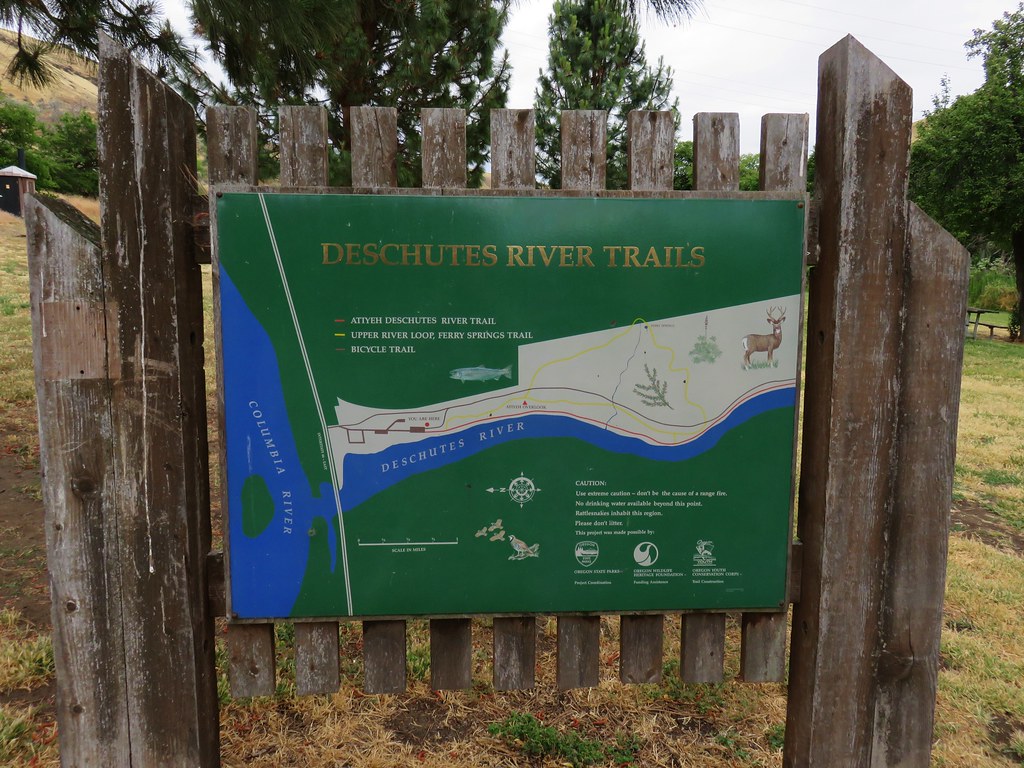
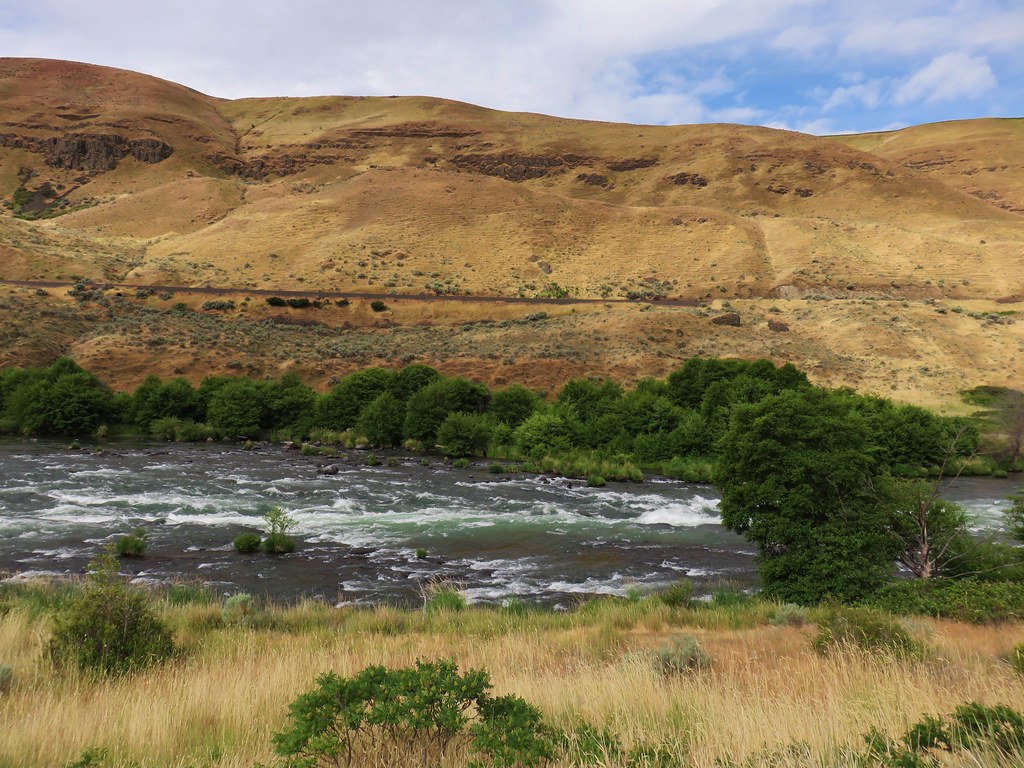
Following up on our recent hike along the Deschutes River at Macks Canyon (post) we decided to kick off our eight days of hiking at the Deschutes River Recreation Area near the mouth of the river. From Salem we drove north to Portland and took Interstate 84 ten miles east of The Dalles to the park. It seems a bit odd to kick off a SE Oregon vacation with a hike near the northern border of the State, but it’s a hike we hadn’t done yet and it was sort of on the way.

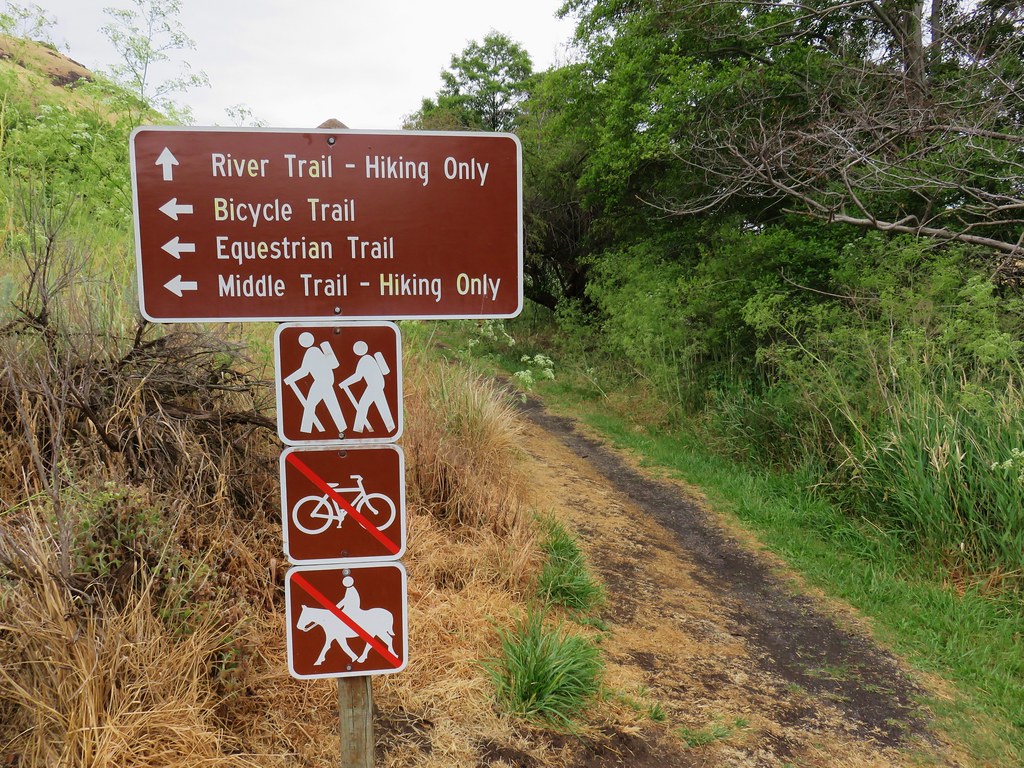
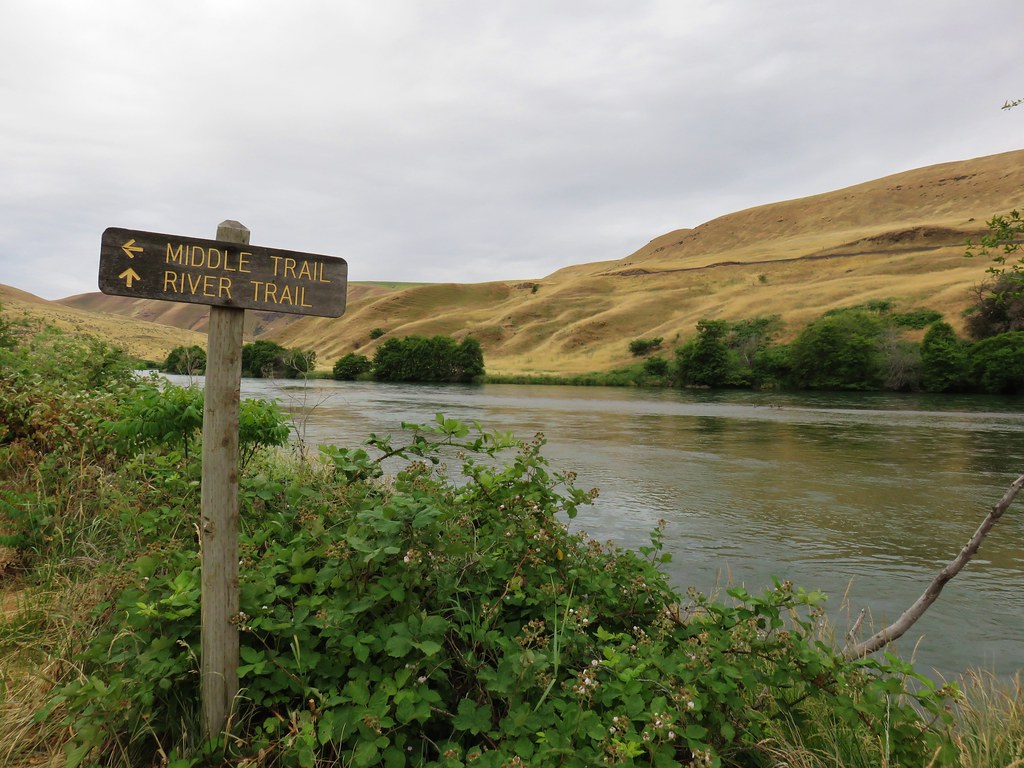
We parked at the end of the park and walked across a grassy area to a trail sign at the far end where we followed a pointer for the River Trail.
IMG_5089

IMG_5100

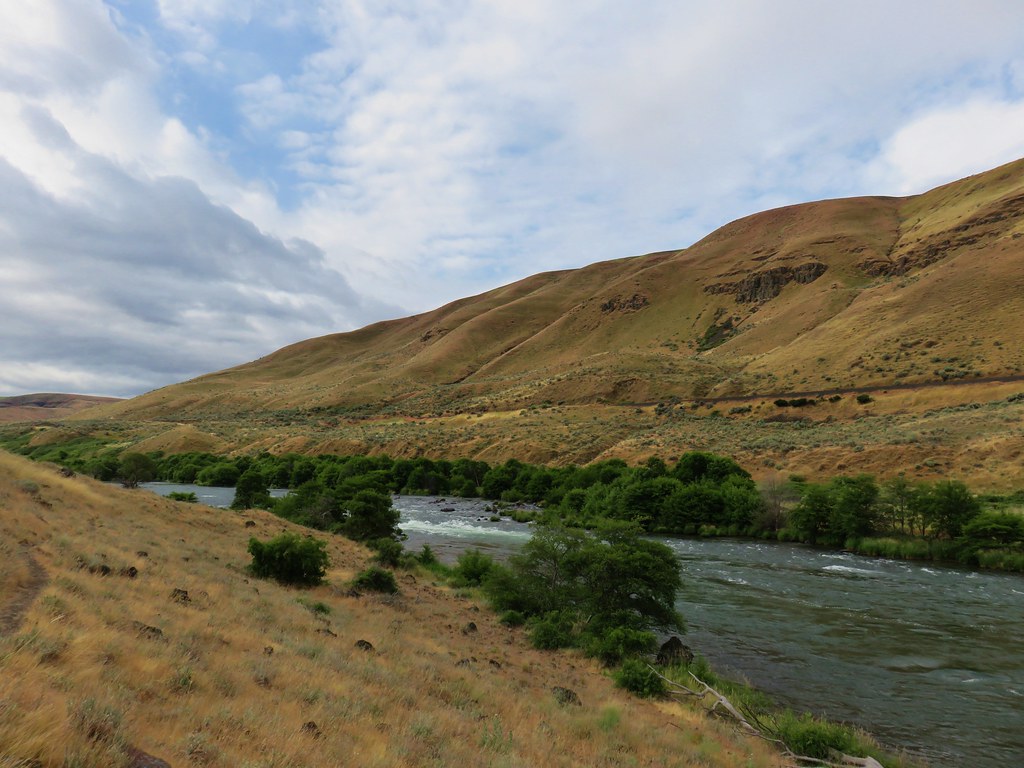
Unlike the trail at Macks Canyon, the River Trail stayed close to the water.
IMG_5108

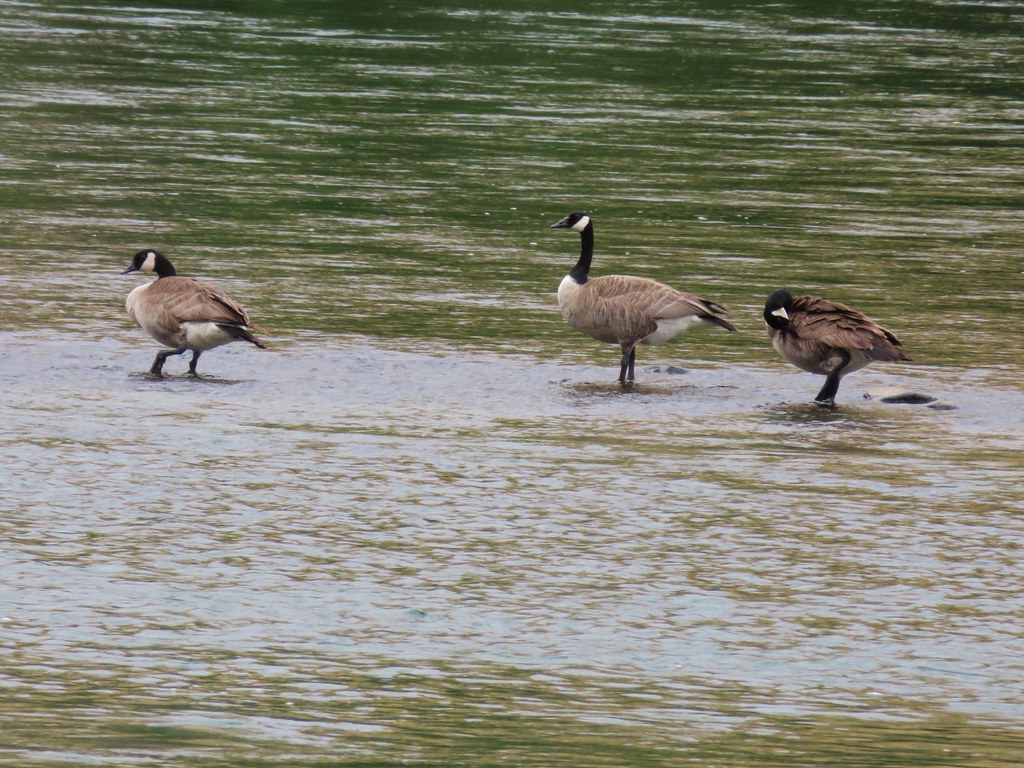
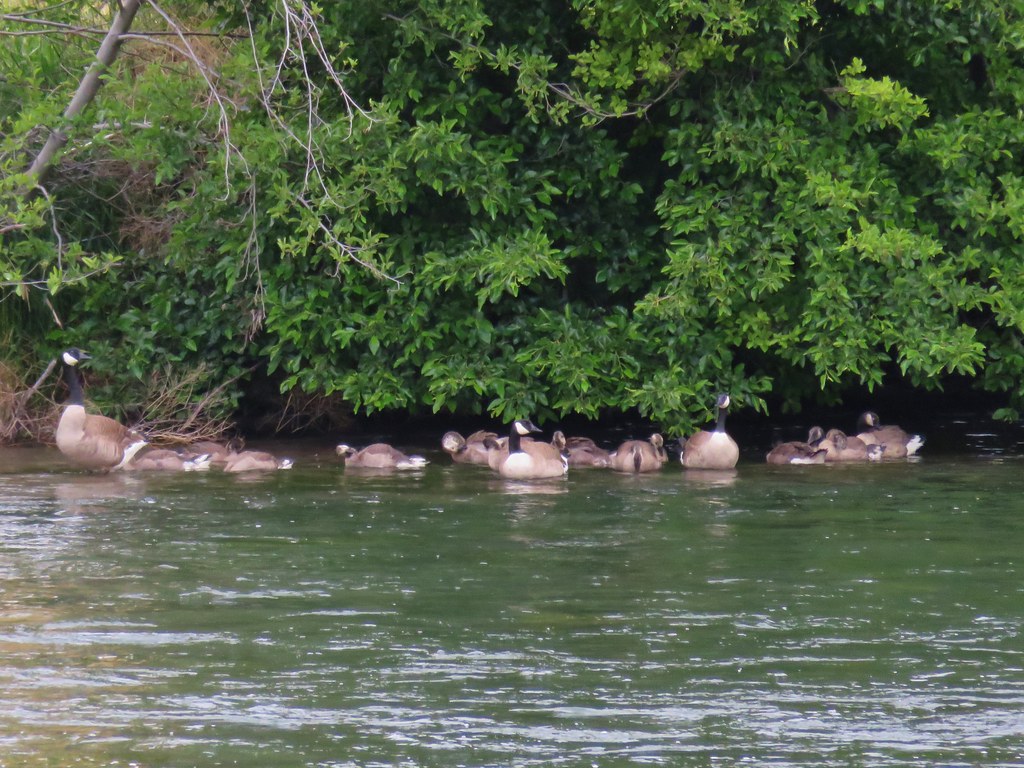
We stayed right at junctions sticking to the River Trail where we passed several groups of Canada geese.
IMG_5116

IMG_5118

IMG_5121

The trail did climb away from the river to cross over a rocky area at the 1.5 mile mark.
IMG_5133

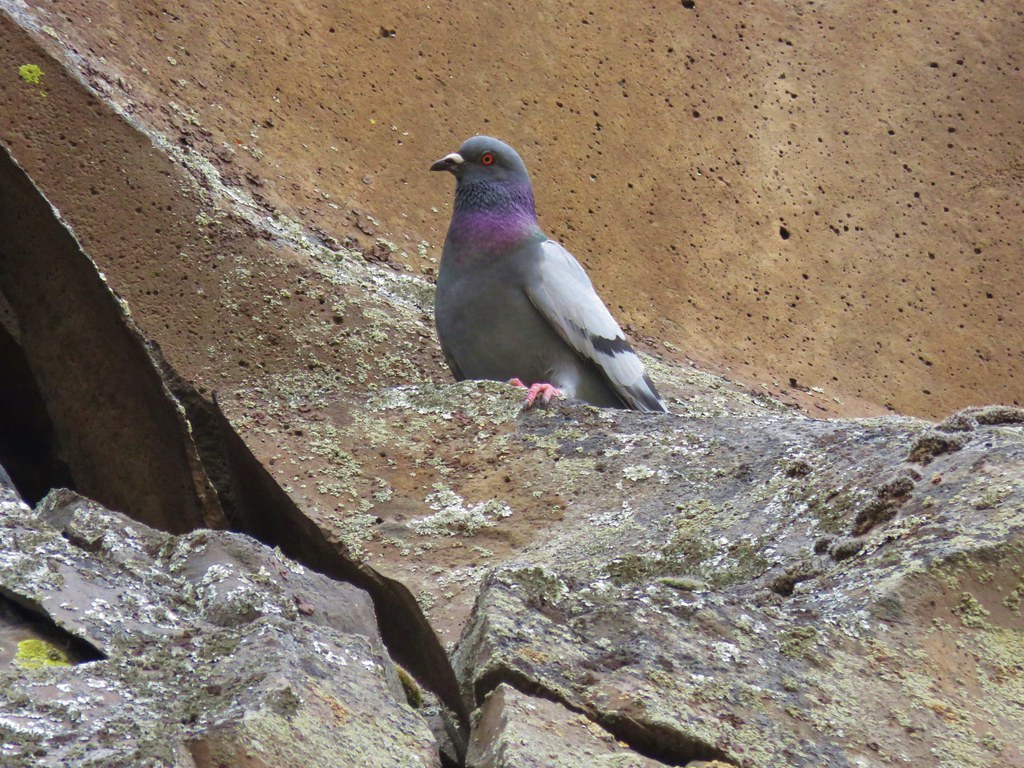
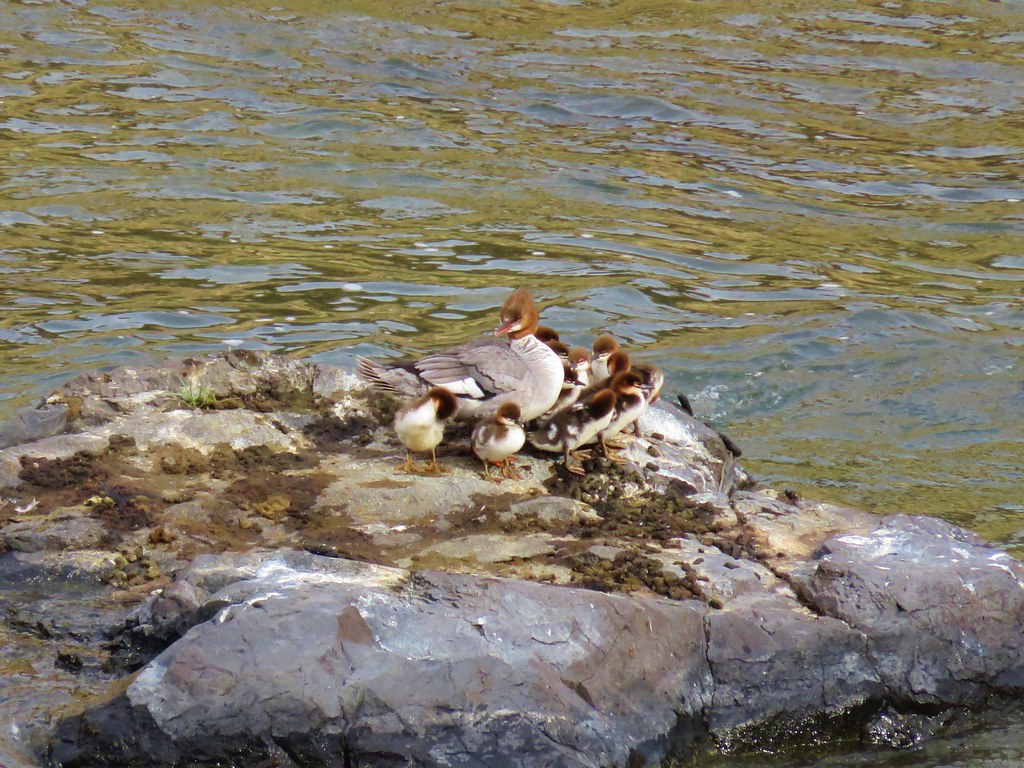
Pigeons kept an eye on us as we passed the rocky cliffs and a family of mergansers sat on a rock in the river below.
IMG_5136

IMG_5138

IMG_5142

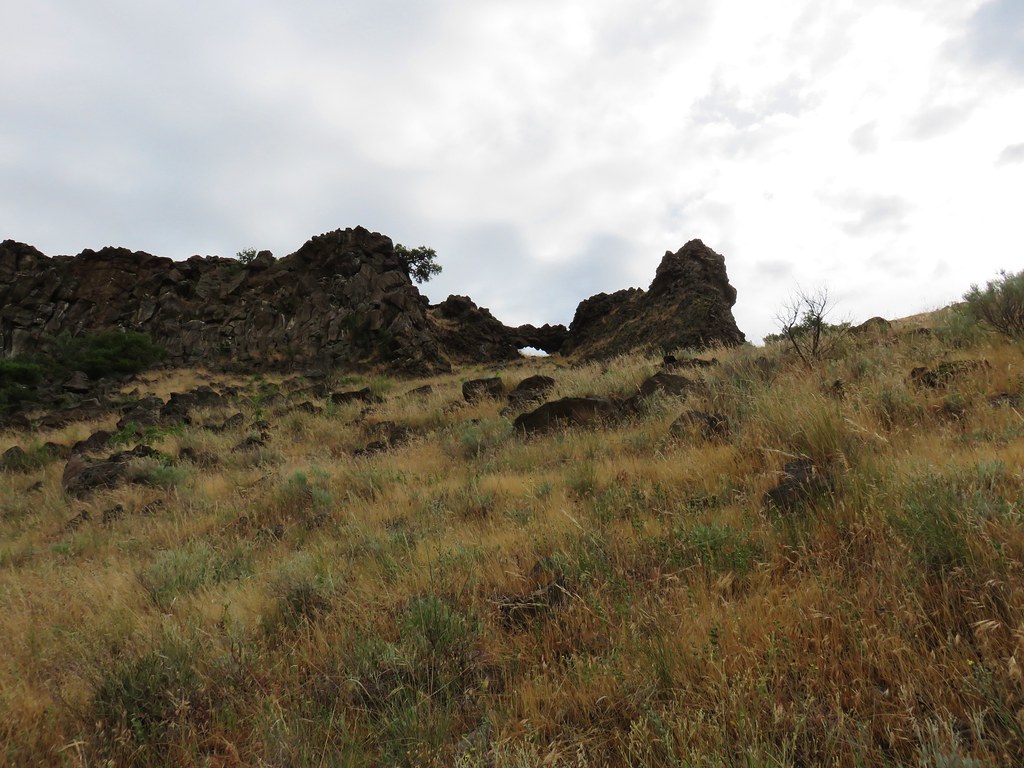
The trail improved again beyond the rocks and it passed below a rock arch.
IMG_5147

A short distance beyond the arch we passed Rattlesnake Rapids.
IMG_5149

IMG_5152

Up to this point we’d seen a few flowers and an interesting dragon fly.
IMG_5155

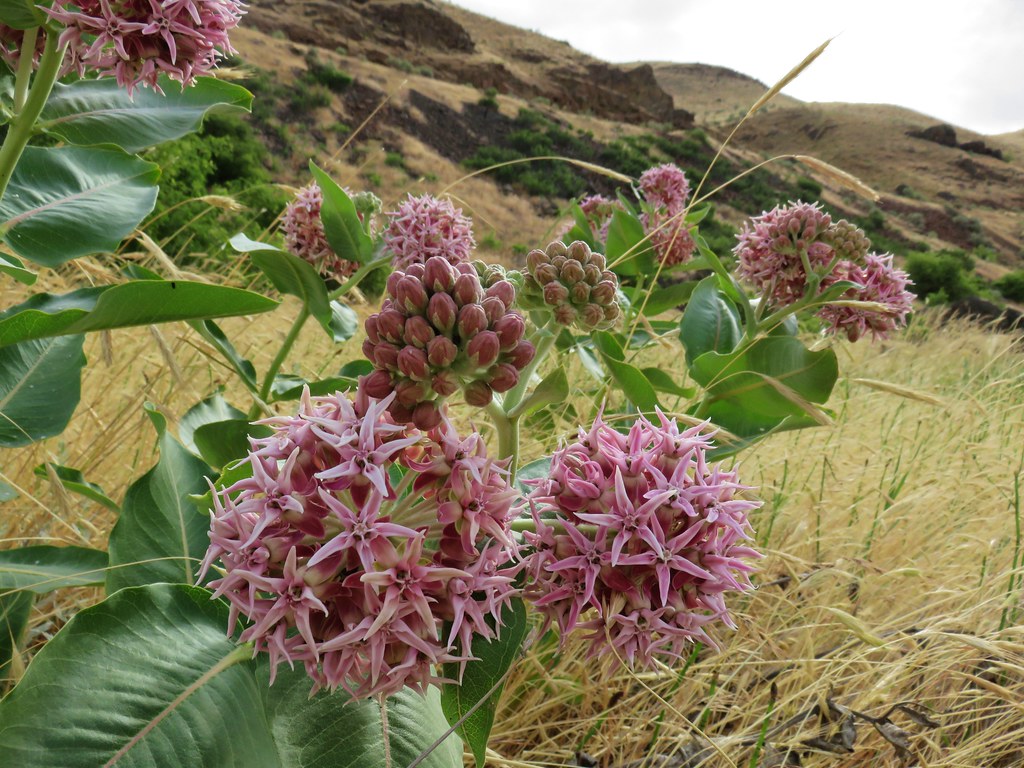
Showy MilkweedShowy milkweed

IMG_5168Chicory

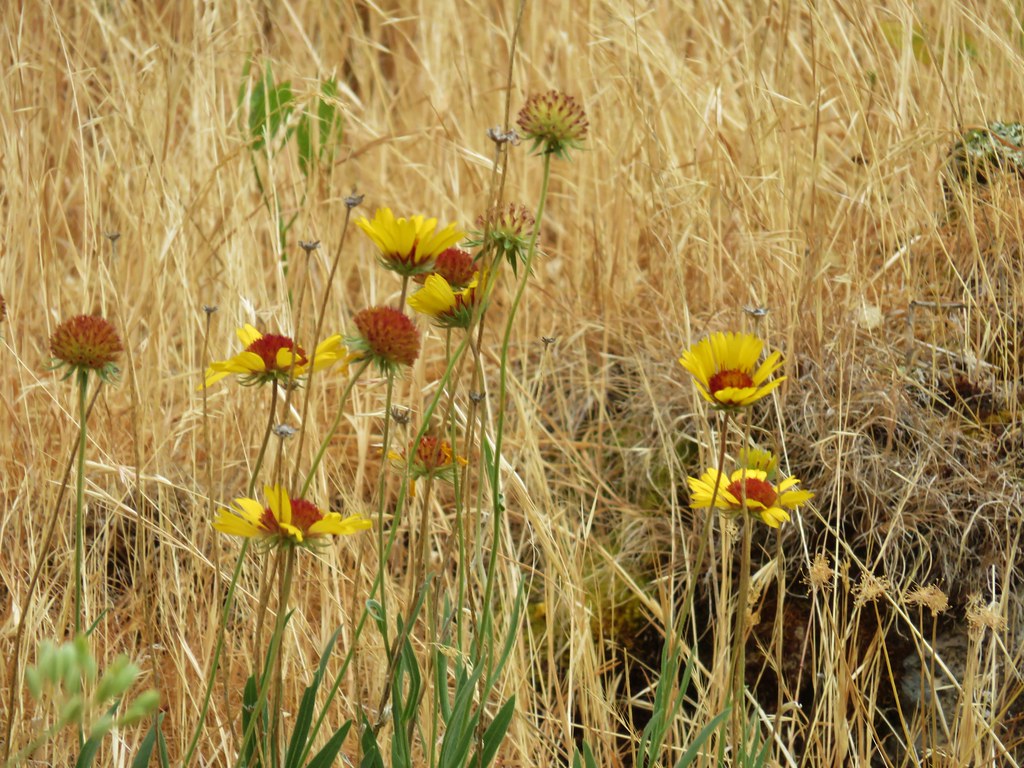
IMG_5134Blanket flower
IMG_5172

After 3 miles on the River Trail we passed by a 10 acre wheat field.
IMG_5174

At the far end of the wheat field we followed an old dirt roadbed uphill to a gravel road where we turned right, crossed small Gordon Creek and veered right again on another dirt roadbed down to a primitive camp site.
IMG_5176

IMG_5181

After checking out a small beach where one could wade in the river we headed back to the gravel road.
IMG_5183

IMG_5186

The road led up to the same old railroad grade that we had followed on our hike at Macks Canyon.
IMG_5189

Here the grade is in good shape and used by bicyclists as well as hikers.
IMG_5197

We followed the old railroad grade for a mile and a half from the primitive camp to a signboard.
IMG_5211

The unmarked Ferry Springs Trail led off to the right a little before the sign and use paths to the left of the sign led to a view of the rock arch from above.
IMG_5213

After checking out the arch we took the Ferry Springs Trail uphill.
IMG_5216

This trail gained nearly 500′ as it climbed up and then traversed the hillside above the Deschutes River.
IMG_5226

As we gained elevation we also gained more wildflowers, primarily yellow blanket flower and purple lupine.
IMG_5228

IMG_5231

IMG_5248

IMG_5249

Just over three quarters of a mile along this trail we came to Ferry Springs where we crossed a brushy creek.
IMG_5251

IMG_5256

A lizard greeted us on the far side of the creek.
IMG_5259

The trail then passed a less than informative sign and passed through an old fence.
IMG_5265

IMG_5266

Beyond the fence the trail began to descend back down toward the river. From here we had a good view of the river’s confluence with the Columbia.
IMG_5277

Near the end, the trail follows a section of the Oregon Trail.
IMG_5281

After almost 1.75 miles on the Ferry Springs Trail we arrived back at the railroad grade. Here we had the choice of following it back to the parking area or continuing on hiker only trails. We opted for the hiker trail and flowed a pointer on the far side of the bike path.
IMG_5286

This trail traversed the hillside between the River Trail and the bike path and brought us back to the start of the River Trail in just under three quarters of a mile.
IMG_5288

IMG_5290

The hike came in just over 8 miles which was a nice way to start a week of hiking. It had been pretty windy (not unusual for the area) but the rain had stayed to the west which we took as an encouraging sign for the rest of our trip. We left the Deschutes and headed east to Biggs Junction where we took Highway 97 south to Bend and had a nice visit with Heather’s parents before heading further east (and south) for more adventures. Happy Trails!

Flickr: Lower Deschutes River

Categories
Columbia River Gorge South Hiking Oregon Trip report

Memaloose Hills & Wygant Viewpoint

We officially kicked off our 2018 hiking season with a pair of hikes toward the eastern end of the Columbia River Gorge. We started our day off by driving east of Mosier on I84 and parking at the Memaloose Rest Area. At the western end of the rest area a gated service road serves as the trailhead.
IMG_2440

We followed the forested old road uphill past some old structures.
IMG_2444

IMG_2445

IMG_2448Arnica

20180428_070754Fairy slippers

As we climbed the forest began to give way to an oak grassland.
IMG_2455

IMG_2457

IMG_2460

The old road passed by the Memaloose Pinnacles, a group of basalt towers.
IMG_2473

Just over a half mile from the rest area the trail left the old road. Here a small viewpoint looked across the Columbia River to the Coyote Wall/Catherine Creek (2016 trip report) areas of Washington.
IMG_2483

We turned uphill to the left climbing up toward the Memaloose Overlook.
IMG_2485

IMG_2496

Our pace was slowed as we searched the grassland for different wildflowers. It felt good to get reacquainted with our old friends some of which we hadn’t seen in quite some time.
20180428_072117Paintbrush

20180428_072134Desert parsley

20180428_071825Larkspur

20180428_072234Vetch

20180428_072416Lupine

IMG_2502Broomrape

20180428_072846Shooting star

20180428_072906Manroot

We arrived at the overlook a mere .8 miles from the rest area.
IMG_2508

IMG_2509

The overlook is along Highway 30 which makes it a possible alternate trailhead.

IMG_2515

IMG_2517

There was a large patch of fiddleneck near the overlook.
20180428_073421

20180428_073259

After admiring the view from the overlook we crossed the highway and continued uphill.
IMG_2527

The flower show not only continued but it picked up as we climbed.
IMG_2543Prairie star

IMG_2548Balsamroot
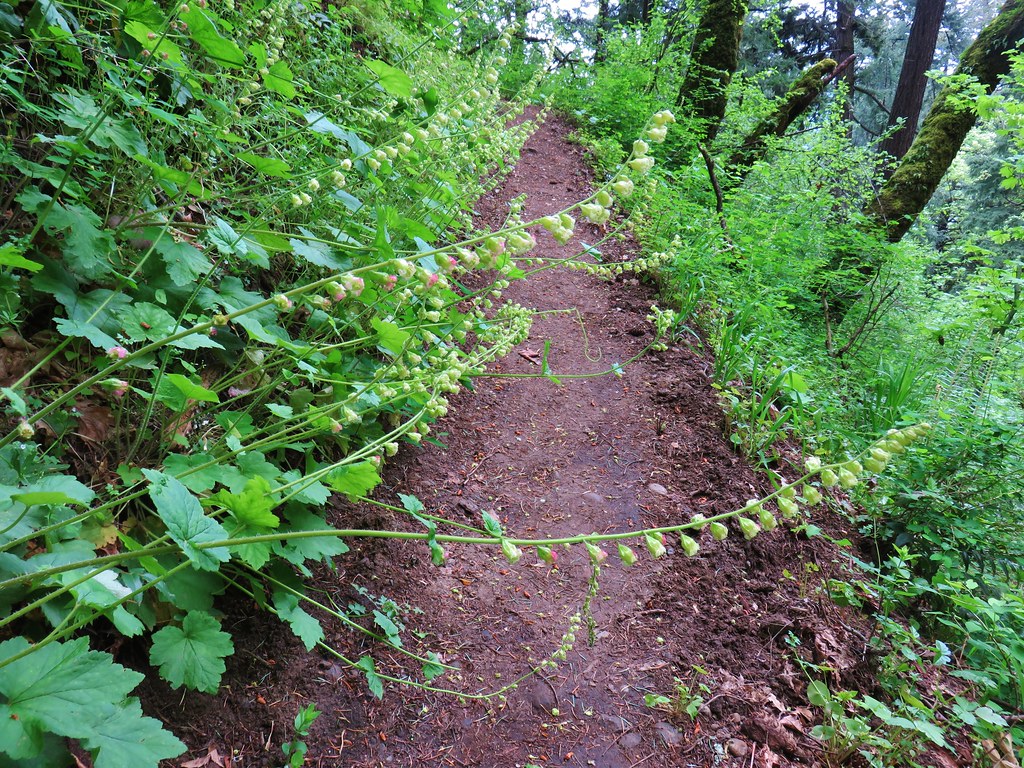
Even some of the seed heads were photogenic.
20180428_073806

The forecast had called for a chance of showers but the showers weren’t materializing and instead we got some nice sun breaks.
IMG_2556

With all the flowers we had been discussing there were some we had yet to spot. One such flower was the chocolate lily which we suddenly began seeing with some frequency.
IMG_2569

IMG_2689

The star of the hike though was the balsamroot which was thick in areas.
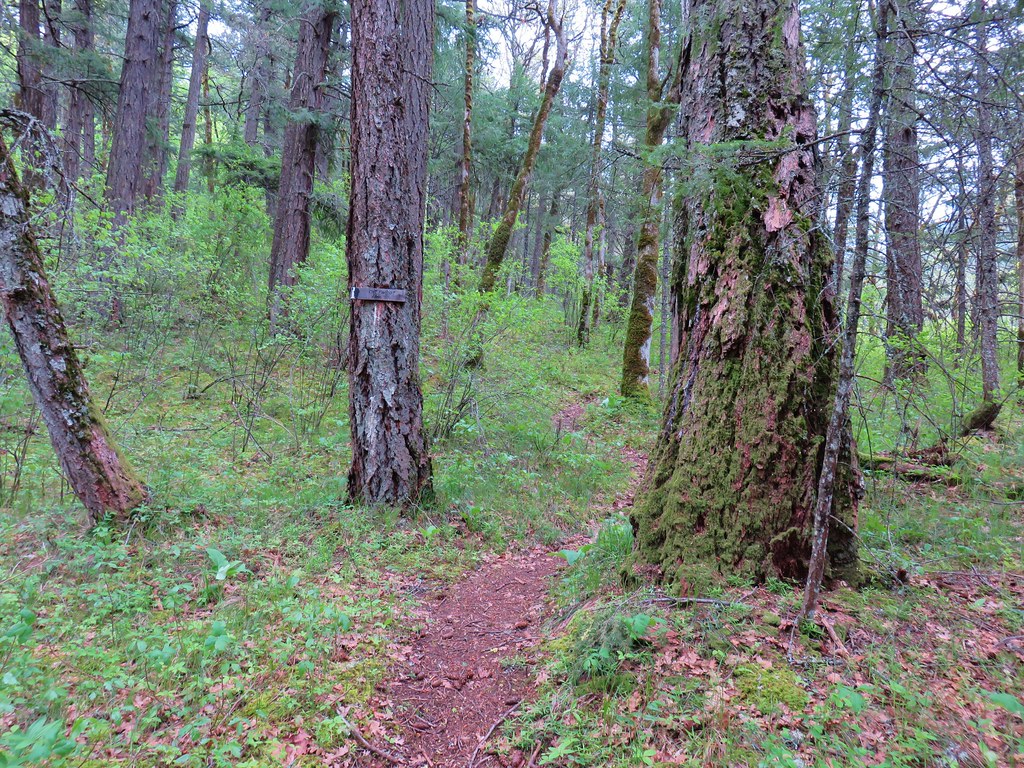
IMG_2577

IMG_2579

IMG_2587

The trail crossed a small stream which we hopped across.
IMG_2596

IMG_2600

Not far from the stream crossing was a four-way junction. The right hand path would have eventually led to the top of 957′ Chatfield Hill which on a clearer day would have offered views of Mt. Adams and Mt. Hood along with wildflower meadows. The left hand path would have led to nowhere in particular. We went straight and headed up 822′ Marsh Hill.
IMG_2610

As we began our climb a pair of hawks flew overhead engaged in an aerial duel. I did my best to capture some of it but it’s not easy with a point and shoot camera.
IMG_2611

IMG_2615

IMG_2617

IMG_2620

Much of Marsh Hill was covered in yellow balsamroot with purple lupine and white large-flowerd triteleia scattered about.
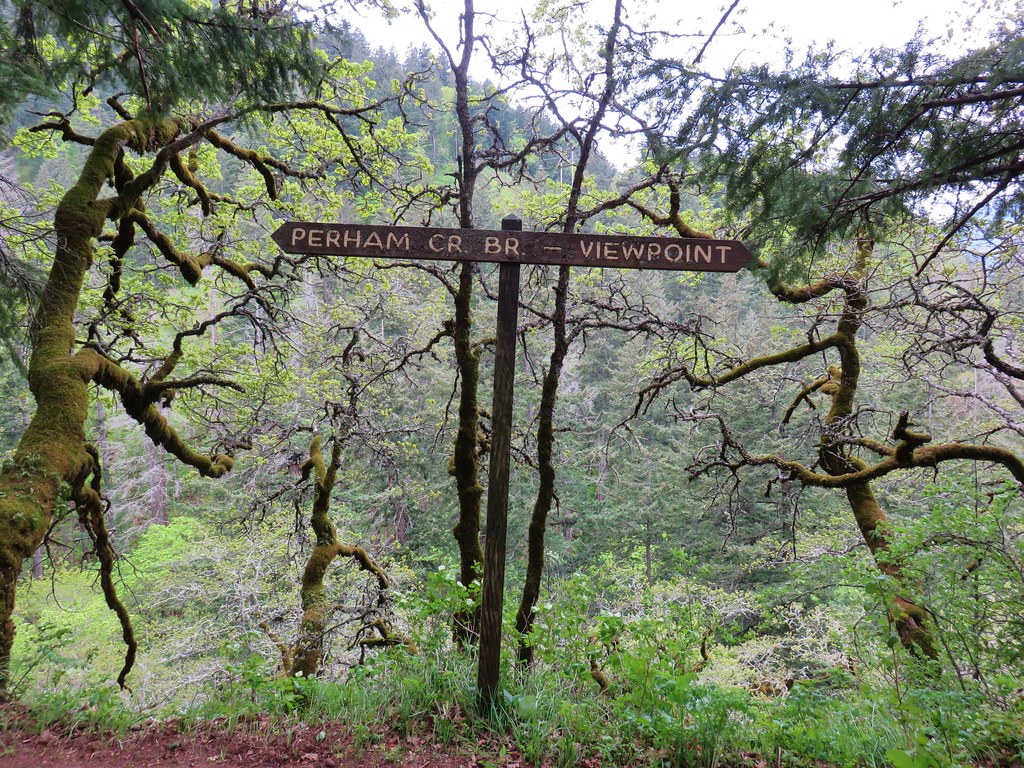
IMG_2635

IMG_2684

IMG_2632

IMG_2640

From the hill we could make out part of Mt. Hood to the south through the clouds.
IMG_2637

IMG_2642

To the east the grassy southern slope of Tom McCall Point (2015 trip report) was easy to identify.
IMG_2643

The green hillsides of the Washington side of the gorge rose above the blue waters of the Columbia River to the north.
IMG_2658

To the west was nearby Chatfield Hill.
IMG_2675

We stuck around on the summit for awhile hoping that there would be enough of a break in the clouds for Mt. Hood to pop out but it soon became clear that wasn’t going to happen. We decided to save Chatfield Hill for another year given the clouds weren’t going to let the mountains come out and play. We returned the way we’d come. We only saw a few other hikers, no rattlesnakes (they are prevalent here), didn’t notice any ticks, and stayed out of the poison oak.In addition to the dueling hawks we did see countless smaller birds.
IMG_2591

IMG_2692

This first hike came in just under 4 miles which is why we’d had a second stop planned. That next stop was at the Mitchell Point Trailhead. The order in which we chose to do these hikes proved inconvenient from a driving perspective as both trailheads are only accessible by eastbound traffic on I84. In addition neither trailhead provides access to westbound I84 so in order to reach the Mitchell Point Trailhead from the rest area we headed east on the interstate to the Rowena exit (76) where we could get back onto the interstate headed west. We then had to drive by Mitchell Point to the Viento State Park exit (56) where we again exited the interstate only to immediately return heading in the other direction. After driving up and down I84 we arrived at the trailhead right around 10am.
IMG_2708

There are a couple of trails that start from the Mitchell Point Trailhead. The Mitchell Point Trail climbs to the top of Mitchell Point in just over a mile and the Wygant Trail which leads to the top of Wygant Peak. Our trail for this visit was the Wygant Trail although our goal was not the view-less peak itself which is 4.2 miles from the trailhead. We were headed for the last good viewpoint along the trail which was only approximately 3 miles up the trail.

The Wygant Trail is located to the west of the parking area and begins along an abandoned section of the Historic Columbia River Highway.
IMG_2710

IMG_2714

We followed an old road bed for a quarter mile then followed a trail sign when the road veered left.
IMG_2716

We soon rejoined the road for another half mile before turning left at another sign.
IMG_2732

The Trailkeepers of Oregon have been working on this trail which was one of the earlier trails to reopen after the 2017 Eagle Creek Fire. The fire didn’t reach this particular trail but it had been closed none the less. A work party from TKO had been out the day before working on the trail and their efforts did not go unnoticed.
IMG_2733

There is a lot of poison oak along the majority of the trial so a big thank you to the volunteers that have been clearing the brush. The difference between the sections that they had worked and those that had not was huge.

After a mile we spotted a sign for the abandoned Chetwoot Loop to the left of the trail.
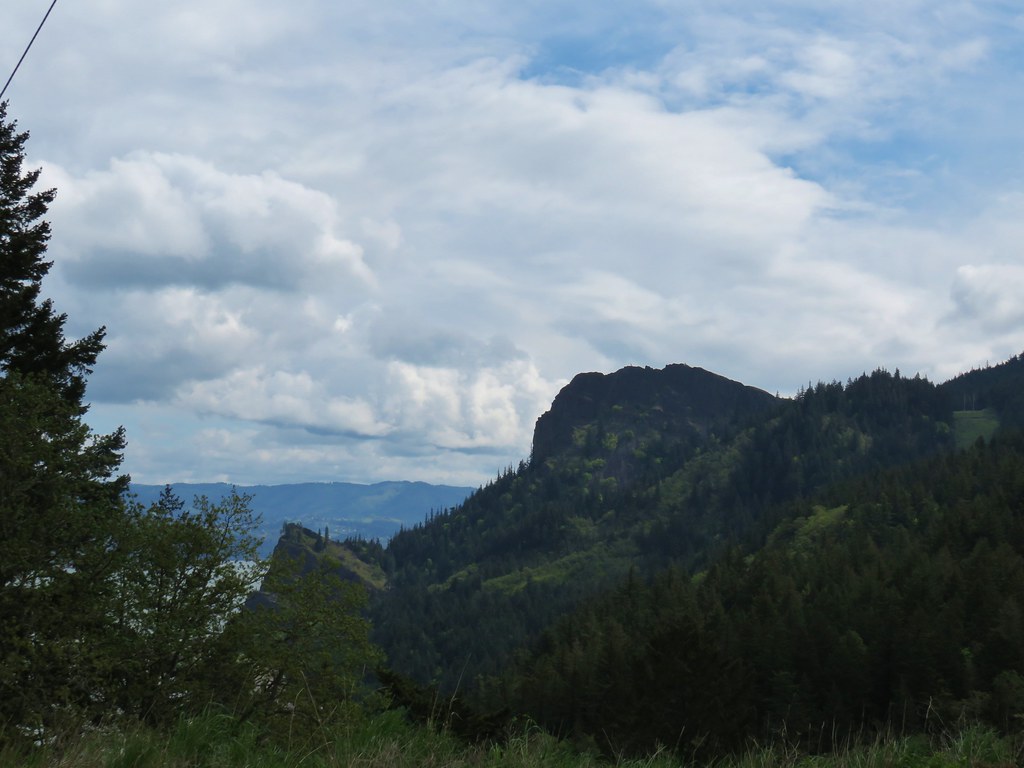
IMG_2742

Soon after the sign for the Chetwoot Loop we arrived a ridge above Perham Creek.
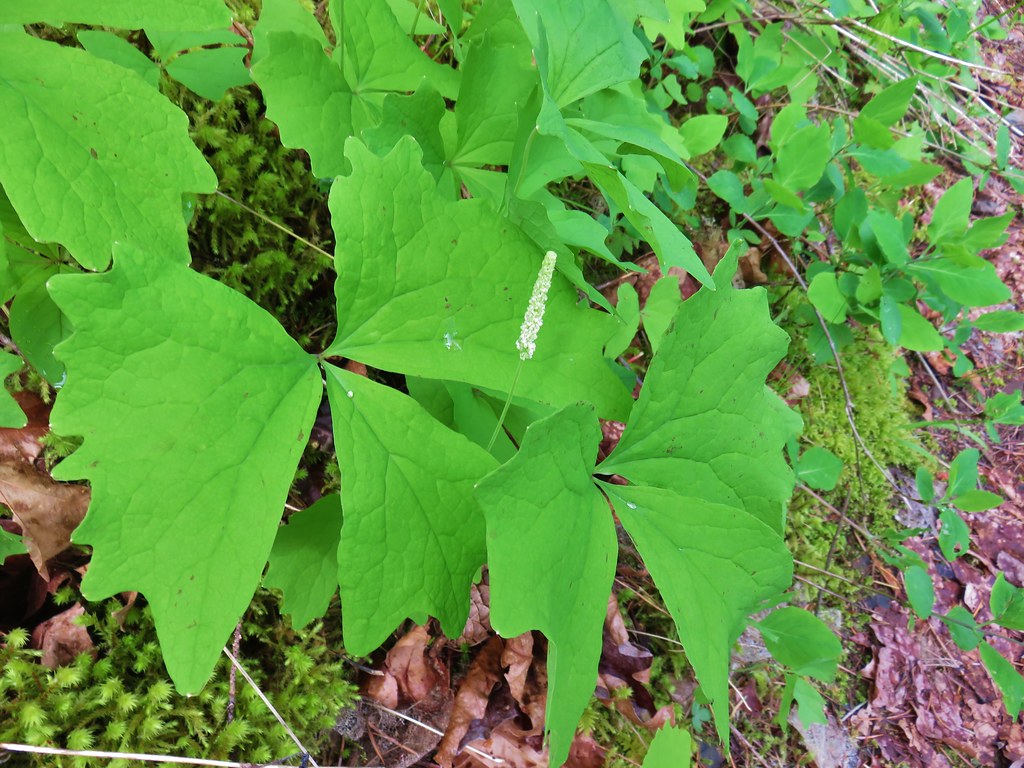
IMG_2744

We chose not to follow the viewpoint sign here due to the amount of poison oak seemingly lining the trail in that direction so we turned left and headed down to Perham Creek. A footbridge had spanned the creek up until 2016 when a slide washed it out.
IMG_2753

Interestingly it didn’t appear that it was the creek that did the bridge in but rather a slide down a small gully on the east side of the creek.
IMG_2757

A decent sized log served as an adequate replacement for the bridge allowing us to cross dry footed.
IMG_2756

The trail then climbed away from the creek, at times fairly steeply. As we passed through a brushy clearing we spotted a spotted towhee.
IMG_2768

We continued on watching closely for the ever present poison oak arriving at a lower viewpoint after a little over a mile and a half. Here we had a nice view of Mitchell Point to the east.
IMG_2773

Despite this not being a wildflower hike like our previous stop there were some flowers present, including varieties we hadn’t see in the Memaloose Hills.
IMG_2783Vanilla Leaf

IMG_2784Valerian

IMG_2787Ballhead waterleaf

IMG_2807Trillium

At the 2.5 mile mark a side trail led to a middle viewpoint.
IMG_2794

IMG_2802

IMG_2803Dog Mountain

This viewpoint was covered in pink plectritis.
IMG_2798

Just uphill from this viewpoint we passed the upper junction with the Chetwoot Loop Trail.
IMG_2814

From the junction it was just another .6 miles to our goal at the upper viewpoint. It was pretty good climb during which we passed the only other hiker we’d see on this trail. This section of trail had not been cleared yet and was somewhat crowded by the poison oak. I also had picked up a couple ticks which were flicked off. The good news was another TKO work party was planned for the following Friday.
IMG_2822

The upper viewpoint had a nice view west down the Columbia River and of Wind and Dog Mountain (2016 trip report) on the Washington side of the gorge.
IMG_2829

We were a bit surprised to see what appeared to be a grass widow blooming at the viewpoint.
IMG_2827

There was also a couple of clumps of phlox present.
IMG_2828

We headed back down to the trailhead dodging the poison oak and keeping an eye out for any more ticks (one did manage to make it all they back home with us before being apprehended). We had briefly considered doing the Mitchell Point Trail before we’d started on the Wygant Trail but that idea had completely left the building by the time we arrived back at the trailhead.
IMG_2834

We have plans for that trail at a future date. We did however walk over to the Mitchell Point Overlook before heading home where the forested top of Wygant Peak could be seen to the west.
IMG_2836

IMG_2838

It was a nice way to start our season. A total of 10.2 miles hiked with a decent, but not insane, amount of climbing to get us started. The views and the wildflowers had been good and aside from a couple of sprinkles while on the Wygant Trail the weather had exceeded our expectations. The difference in the terrain and vegetation between these two hikes was also enjoyable given that they are less than miles apart as the crow flies. Happy Trails!

Flickr: Memaloose Hills & Wygant Viewpoint

Categories
Hiking Northern Coast Oregon Oregon Coast Trip report

Astoria and Fort Stevens State Park

We continued our year of shuffling hikes on our latest mini-vacation.  The string of wildfires starting in  Northern California in the Klamath Mountains and continuing along the Cascade Range north to the Canadian Border had us looking for a last minute location for 4 days of hiking. We turned to the coast hoping to escape any possibly smokey conditions and wound up deciding on checking out the northern most part of the Oregon Coast as well as our first foray along the Washington Coast line.

We booked a room in Gearhart, OR and I began putting an itinerary together. We are still plodding along in our attempt to hike all of the featured hikes in Sullivan’s 100 Hikes guidebooks and there were several in the area we’d yet to tackle. I managed to fit eight of his featured hikes into the four days and even threw in an additional stop at Fort Columbia on our third day.

We set our sights on three of the hikes for our first day starting with a relatively short loop around Clatsop Spit. The spit is located inside Fort Stevens State Park at the mouth of the Columbia River and is the northern terminus for the Oregon Coast Trail.

As we were driving to the spit along Jetty Road we spotted some elk and had to stop for a couple of photos.
IMG_8042

IMG_8043

IMG_8041

Once we had parked at the large parking area at the spit we checked out the view from the South Jetty observation platform.
IMG_8046

IMG_8048

IMG_8049

We then headed west beside the jetty toward the Pacific.
IMG_8051

IMG_8054

We then turned north along the beach heading towards the Columbia River where we could see plenty of traffic on the water.
IMG_8061

IMG_8063

IMG_8056

We turned inland at the river we had a view of the distant Megler Bridge.
IMG_8067

We passed a host of people fishing along the shore but didn’t see anyone having any luck.
IMG_8078

We looped around a peninsula near Jetty Lagoon and located the wildlife viewing bunker near the park’s Parking Lot D.
IMG_8082

IMG_8083

IMG_8084view from the bunker.
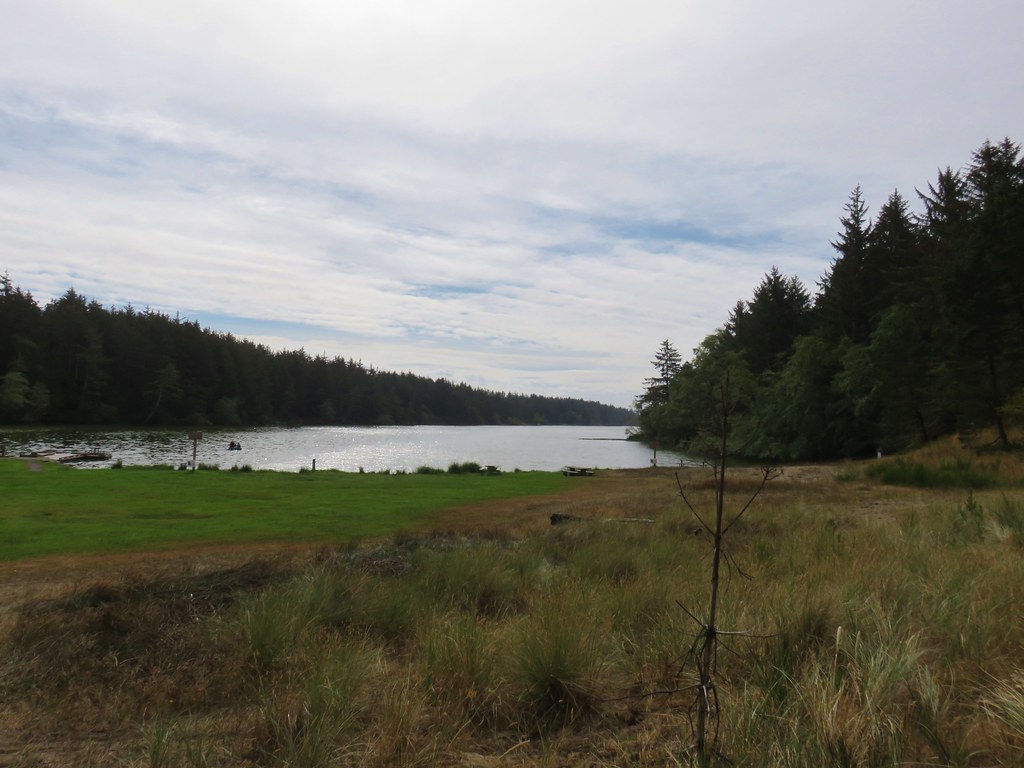
We crossed a footbridge to the parking lot and then had a 1.1 mile road walk back to the spit parking lot.
IMG_8086

We drove back along Jetty Road and parked in a signed lot for Battery Russell.
IMG_8094

We took a set of stairs up to the concrete bunker.
IMG_8095

IMG_8100

IMG_8102

For forty years (1904-44) the battery guarded the Columbia River from enemy attacks. We spent quite a while exploring the old bunker. The history made it neat but too many video games and horror movies kept us imagining what might be hiding in the dark corners of the rooms.
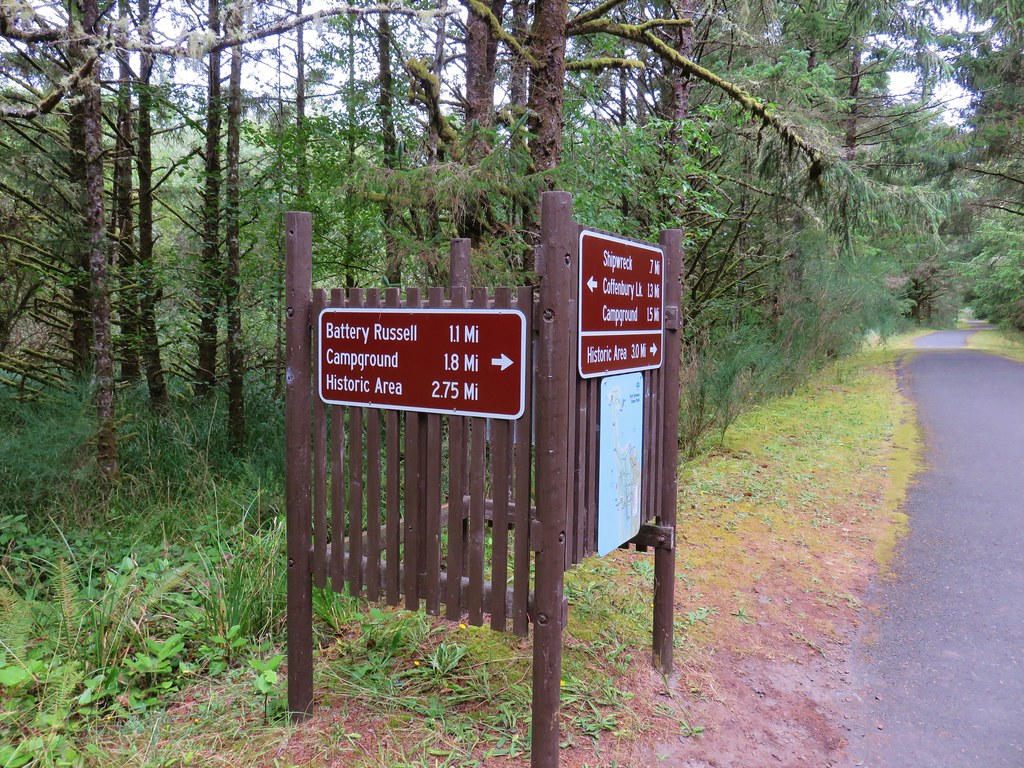
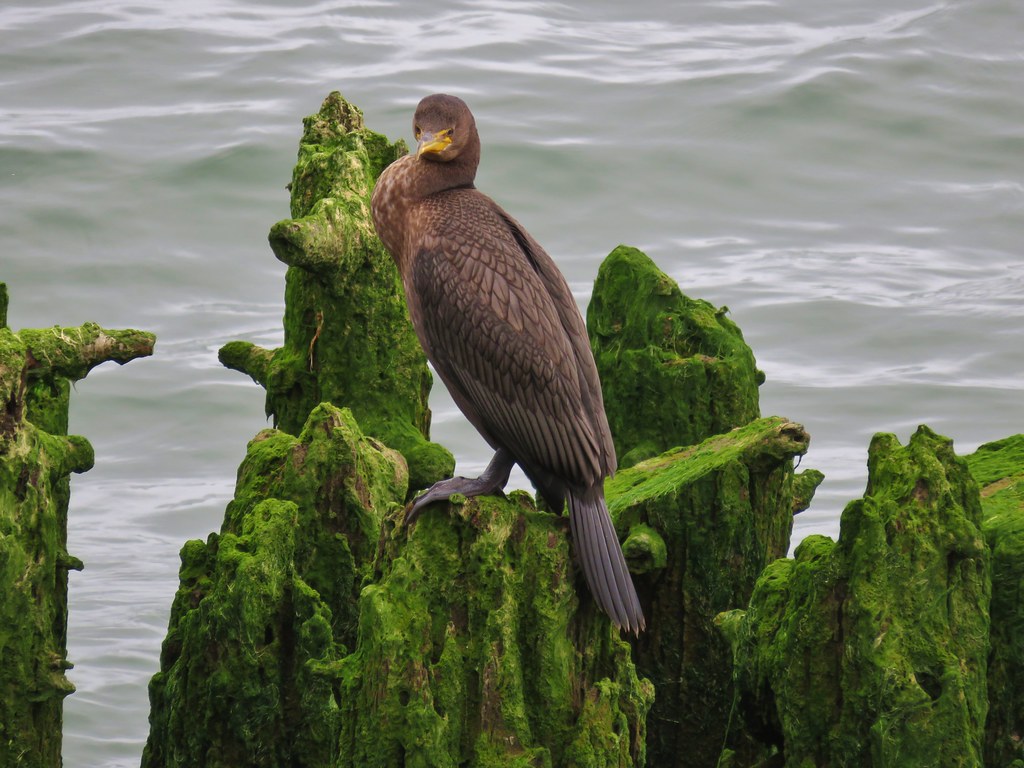
IMG_8104

IMG_8108

IMG_8111

IMG_8114

IMG_8116

IMG_8119

IMG_8117

We followed a path at the far end of the bunker toward Coffenbury Lake.
IMG_8122

The path passed another set of old buildings.
IMG_8123

IMG_8124

IMG_8125

IMG_8126

We continued on this path a total of 1.25 miles to a signed junction where we followed a pointer to the lake.
IMG_8127

IMG_8129

IMG_8132

We headed around the lake counter-clockwise on a nice trail.
IMG_8134

IMG_8135

IMG_8137

IMG_8139

IMG_8140

IMG_8144

After completing the 2 mile loop around the lake we followed “Shipwreck” pointers for 3/4 of a mile to the beach and the remains of the Peter Iredale which ran aground in 1906.
IMG_8148

IMG_8149

IMG_8152

IMG_8156

We backtracked from the beach a short distance and turned left on a paved path at a pointer for Battery Russell (among other possible destinations).
IMG_8158

We followed this path for a little over half a mile before turning right at another pointer for Battery Russell.
IMG_8159

IMG_8160

We followed this 1.1 mile paved path back to the parking lot.
IMG_8162

The total distance of the Clatsop Spit hike had been 5 miles and this hike came in just under 7.5 miles. Twelve and a half miles is pretty good for a day, but due to our typical early start we were done with these two hikes before 1pm. Our check-in time wasn’t until four so we still had a few hours to kill.

We had been prepared for that and headed north from Fort Stevens to Astoria where we parked at the Columbia River Maritime Museum
IMG_8163

IMG_8164

From the museum parking lot we headed west following the Riverfront Trolley line.
IMG_8169

Seabirds lined the waterfront and we also heard some sea lions but never saw any.
IMG_8166

IMG_8167

IMG_8173

We more or less stuck to Sullivan’s described route (Hike #4 in the 4th edition of “100 Hikes/Travel Guide Oregon Coast & Coast Range) following the the trolley line to 6th St. then turning inland for three blocks before taking a left on Commercial St. After a block on Commercial St. we turned right on 7th for two blocks passing the Oregon Film Museum and the Flavel House.
IMG_8192

IMG_8190

IMG_8187

IMG_8182

We walked around the Flavel House and headed downhill on 8th St. turning right when we arrived back at Commercial St. We turned right several blocks later on 12th Street and right again a block later on Duane St. passing a Chinese Garden.
IMG_8194

IMG_8195

IMG_8197

IMG_8199

We continued zig-zagging through town passing numerous historic homes, churches, and other buildings. One home that stood out was an old run down home that had the quintessential haunted house look.
IMG_8201

We also passed Fort Astoria on the corner of 15th and Exchange.
IMG_8205

By the time we were done we wandered around town for a total of 3 miles.
Astoria

One of the landmarks not on the route was the Astoria Column. It was visible from the waterfront rising above the city. It was one of the times the 30x zoom on the camera came in handy.
IMG_8178

We still arrived a little early at our hotel but luckily our room was ready. We had a nice view south to Tillamook Head.
IMG_8208

It had actually rained lightly on us in Astoria which was a wonderful change of pace. The sun went down behind the clouds that evening ending the first day of what was shaping up to be an interesting vacation.
IMG_8209

Happy Trails!

Flickr: Astoria & Fort Stevens