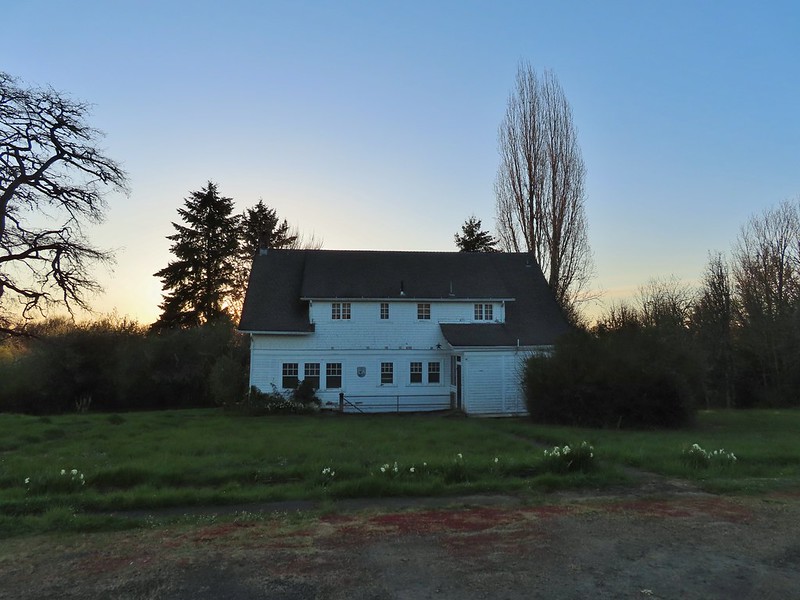
After a night in John Day we headed south for a day hike on the Malheur River Trail. The trail starts at Malheur Ford Trailhead where Forest Road 1651 actually does ford the river.
The Malheur, a designated Wild and Scenic River, is fed from the Strawberry Mountain Wilderness (post). The trail is 7.6 miles long running from the ford to another trailhead at Hog Flat. For our hike we planned on hiking around 6.5 miles of the trail at which point the trail would be starting the steep climb away from the river to Hog Flat. It was a pleasantly cool morning as we set off on the trail. Despite the Forest Service indicating that the trail had not been maintained it was in good shape with just a couple of trees to step over/around. Bench near the trailhead.
Lupine along the trail.
There was plenty of river access along the way.
Currant
Paintbrush and lupine along the trail.
Geraniums
Ponderosa pines
Mile markers were present (at least to mile 6) although we missed 3 & 5 on the way out. We managed to spot them on the way back though. There did seem to be a bit of a discrepancy regarding the first mile as there were two trees sporting “1”s. First 1
Second 1
A little past the mile 1 markers the trail descended to Miller Creek where just a little water was present but it was enough to host a number of flowers.
Camas
Balsamroot, columbine, geraniums and paintbrush.
The trail did several more ups and downs sometimes rising above the river and other times dropping down to flats along it. A rocky viewpoint just before the 2 mile mark was fairly impressive.
Photo from the afternoon on the way back.
Photo from the afternoon on the way back.
Tree marking mile 2.
Typical “obstacles” that were present along the trail.
Columbine
Cusick’s sunflower?
Balsamroot or mule’s ears?
Woodland stars
Mile 4
Right around mile five (which we missed the marker for) was a riverside meadow of wildflowers.
Salsify and geraniums
Sticky cinquefoil
Swallowtail on scarlet gilia
Geranium
Some sort of copper butterfly
A checkerspot
Iris
Balsamroot (or mule’s ears)
A fleabane
A different type of fleabane.
Larkspur
Rosy pussytoes
After hanging out in the meadow watching the butterflies for awhile we continued on.
Hog Flat is up on top of the hillside.
Mile 6 markers.
Cracked egg in the trail.
We passed this cairn around the 6.5 mile mark.
We turned around here shortly after passing the cairn. It appeared the trail was beginning it’s climb and we took the cairn and downed tree as signs that it was time to turn around. We did just that and headed back keeping our eyes open for the mile 3 and 5 markers. A fritillary butterfly on an iris.
Found 5
This was a particularly tricky little muddy spot to stay dry crossing.
And there’s “3”.
Immature bald eagle. We saw it on the way out in the same area but couldn’t get a photo. This time it flew right by me, and I think it was giving me the stink eye.
Back at the trailhead.
This was a 13.5 mile out and back with a few hundred feet of elevation gain spread over the various ups and downs along the way. There were plenty of views of the river and a nice variety of wildflowers and wildlife making this a nice river hike. Happy Trails!
As we continue to explore the trails in the Pacific Northwest we are working on completing a number of “goals”, one of which is having hiked in each of Oregon’s 36 counties. We began the year missing just two, Gilliam and Umatilla. We checked Gilliam off our list over Memorial Day weekend with a hike at Cottonwood Canyon State Park (post) leaving just Umatilla County. One of our other goals is to hike in the 46 Oregon wilderness areas open to visitors (post). (Oregon Islands and Three Arch Rocks off the Oregon Coast are off limits.) We began the year with just four wilderness areas left to visit; Black Canyon, Devil’s Staircase, Monument Rock, and North Fork Umatilla. We used a week of vacation to finish the county hikes, visit the North Fork Umatilla Wilderness, and check off three more featured hikes in one of William L. Sullivan’s guidebooks, this time his “100 Hikes/Travel Guide Eastern Oregon” (3rd edition). Our long term goal is to complete the 100 featured hikes from at least one edition of each of Sullivan’s five guidebooks; Oregon Coast, NW Oregon & SW Washington, Southern Oregon & Northern California, Central Oregon Cascades, and Eastern Oregon (post).
We started our week off by driving to Pendleton stopping along the way at the Cold Springs Wildlife Refuge near Hermiston, OR. This stop came about while I was looking for hikes in areas around Oregon where we hadn’t hiked yet. At four hours from Salem the short Memorial Marsh Trail system looked like a good leg stretcher on our way to Pendleton and it would be our first hike in Umatilla County. We parked at the trailhead for the Memorial Marsh Unit at the east end of an access road.
Map from the refuge brochure. We parked at the arrow.
The brochure, which is available online and at the trailhead, is dated 2014. We didn’t realize that when we grabbed one to use as our map. What we should have done is paid more attention to the laminated map posted on the trailhead signboard.
The brochure map shows a total of three loops (see above). There is a triangular loop from the parking area, and two loops around marshes. The laminated map however only shows the triangular loop. While the brochure indicates that there are loops around both the Lower Pond and the Upper Pond the other map did not. Having missed that detail we set off with a plan of staying left at junctions to complete the non-existent loops. The trail led us through a sagebrush landscape similar to what we had seen at the nearby Umatilla Wildlife Refuge (not in Umatilla County) in 2019 (post).
Yarrow
Caterpillar
After .3 miles the dirt trail met a gravel roadbed at the Lower Pond.
Looking right down the roadbed which would lead back to the parking area.
We weren’t off to a great start as we were already confused at the roadbed. We weren’t sure exactly where we were on the brochure map and spent some time debating on which direction we should go. Before we figured that out though Heather realized that we’d left her GPS unit sitting on top of the car so she headed back to retrieve that and I wandered to the right up the road a ways where it became clear that it was going to lead back to the trailhead which let me know that it was part of the triangular loop. Ducks in the Lower Pond
Showy milkweed
A lone phlox blossom
Having retrieved the Garmin and figured out where we were we headed left from the dirt trail along the gravel road which curved around the Lower Pond.
Female red-winged blackbirds
Blue-winged teal and a black-necked stilt.
Black-necked stilt
Red-winged blackbird
White pelican
Cinnamon teal
When we came to a “Y” junction in the road we went left.
This road led between the hidden Cold Springs Reservoir on the left and the Middle Pond on the right. We spooked a couple of deer along this stretch but they both vanished in the sagebrush before I had time to retrieve the camera.
Middle Pond
We ignored a side road on the left for hunting blind 5 and then again forked left when the road split at the Upper Pond. Spur road to hunting blind 5. The blinds were well signed but not marked on the brochure map. The laminated map at the trailhead though did show the blinds which would have also been very helpful.
Upper Pond
Upper Pond
Yellow headed blackbirds
We wrapped around the pond to the edge of the refuge where we were carefully watched by a herd of cows on the other side of a barbed wire fence. The gravel road eventually gave way to a cut grassy track near blind 1b and then vanished altogether. Not going to be making a loop around the Upper Pond.
A little confused we turned around and passed the equally confused looking cows. We backtracked to the fork between the Middle and Upper Ponds and went left thinking that maybe we had misread the map and this was the loop.
Killdeer
This roadbed began to loop around the Upper Pond before petering out near blind 8 (again all of this would have been clear had we used the laminated map). The saving grace here was we got to see an owl fly out of the trees along the pond (no time for a photo though) and we saw another deer which I did manage to get a picture of.
Once again we found ourselves back tracking. Having not yet learned our lesson when we made it back to the split between the Middle and Lower Ponds we once again attempted a loop and headed between them. Great blue heron
Lazuli bunting
The road had turned into a grassy track before ending in some sagebrush where a faint trail? could be seen.
We did pass at least one sign facing the other direction which indicated that at least at one time this had been a loop but it was now very overgrown.
We passed blinds 7 and 7b which were also quite overgrown and in the process I manged to pick up at least a half dozen unwelcome guests in the form of ticks.
When we finally made it back to the gravel road we stopped for a tick check to try and make sure there were no stowaways left and then followed the roadbed .3 miles back to the trailhead. I wound up doing 4.4 miles here (Heather wound up with ) which was quite a bit more than we had planned due to the backtracking for the GPS unit and the non-existent loop around the Upper Pond.
We almost managed a loop around the Upper Pond
Before we started our drive to Pendleton we did attempted another full tick check. Despite stripping and attempting to look under any flap on our clothing we somehow missed two of the little blood suckers. One we spotted crawling up my pant leg before we started driving which we quickly dispatched of but the second appeared on my knee while we were on Interstate 84. Heather attempted to get it into a container since there was nowhere for me to pull over at that moment but instead of going into the container it wound up on the floor and vanished (at least for the time being). For the rest of the drive we were on high alert watching for it to reappear.
We still had a second hike to do so after filling our gas tank (and searching in vain for the missing tick) we drove past Pendleton to a temporary trailhead along Bingham Springs Road (National Forest Road 32).
Severe flooding in February of 2020 washed out roads and trails in the area and work is still being done to repair the damage. We had actually planned on doing this trip in 2020 before the flooding (and COVID) and at that time were planning on camping at the Umatilla Forks Campground since our next three hikes all began within a half mile of the campground. Since that option was off the table staying in Pendleton (just 31 miles from the temporary trailhead) made the most sense.
After searching again for our missing tick we set off on the closed road which we followed for 1.2 miles to a fork at the far end of the campground where we turned up FR 045 for another 0.2 miles to a trailhead sign. The road walk wasn’t all that bad as it followed the Umatilla River the whole way.
This was a popular spot with the butterflies, particularly swallowtails.
Swallowtails
Swallowtails
Lorquin’s admiral
A tortoiseshell
Dragon fly watching the butterflies
Approximately 3/4 of a mile from the gate we passed a sign for the North Fork Umatilla Trail which was our destination for the next day.
Just beyond the sign we crossed the North Fork Umatilla River.
Ouzel
FR 045 on the left.
Another gathering of butterflies
Three trails start at this trailhead, the Ninemile Ridge, Buck Creek, and Buck Mountain Trails.
Today’s plan was the Ninemile Ridge Trail. In the original plan this was the shortest of the three hikes with Sullivan listing it as a 7.2 mile out and back. Adding the road walk was going to add close to 3 miles round trip but the road walk was necessary for the other two hikes as well. We weren’t sure though how much of the trail we were going to be able to hike. While the Umatilla Forest Service listed all the trails in the area as open the most recent updates from late May 2021 indicated that only parts of the trails had been maintained since the flood damage. In the case of the Ninemile Ridge Trail the webpage stated that as of 5/20/21 the trail had not been logged out.
We headed uphill from the signboard a tenth of a mile to a 4-way junction.
Here the Ninemile Ridge Trail headed uphill to the left while the Buck Creek Trail was straight ahead and the Buck Mountain Trail was to the right. We turned uphill onto the Ninemile Ridge Trail and soon entered the North Fork Umatilla Wilderness for the first time.
It was evident fairly early on that some maintenance had been done since the last update on the webpage.
The trail climbed steeply through the forest at first but soon the trees gave way to open hillsides.
Grouse
Buckwheat
Ragged robin (Clarkia pulchella)
Lingering snow in the distance.
While manny of the flowers were well past there were quite a few ragged robins blooming and few other flowers at the lower elevations. Ragged robins
Paintbrush
Yarrow
Bettles and a crab spider on rose
As the trail traversed up the hillside it passed through some forested gullies where some maintenance had been done to remove the worst obstacles while those that were more easily navigable were left for later.
Arnica
As we climbed the views kept getting better.
You might be able to make out the trail continuing up the far hillside. Now on the far hillside heading for that small tree on the ridge end.
Looking back along the trail and at Ninemile Ridge.
Near the 2.25 mile mark from the trailhead signboard (3.6 from the temporary trailhead) we reached the ridge end and turned up Ninemile Ridge. South Fork Umatilla River from near the ridge end.
Heading up to the ridge top.
Gaining the ridge and a view ahead of what’s to come.
From the turn at the ridge end it was another 1.8 miles to a cairn at the high point of Ninemile Ridge. The trail gained over 950′ in this stretch, often times in very steep sections. The steepness combined with the heat (it was a warm day) made for a challenging climb.
Balsamroot
Large-flower triteleia
A penstemon
Paintbrush and prairie smoke
Death camas
Turkey vulture checking to see if we were dead yet.
Ravens also interested in our carcasses.
An allium
There was a 20% chance of showers according to NOAA so these clouds forming weren’t a surprise.
A flat stretch along the ridge before another steep climb.
Buckwheat and Large-flower triteleia
Bush penstemon
The trail was actually down to the left but the ridge seemed like it would take less climbing.
Ball head sandwort?
Lupine
Paintbrush along the final climb.
A parsley and naked broomrape
Larkspur
Rosy pussytoes
The trail became suddenly overgrown near the high point and I left the trail and headed uphill cross-country to a cairn near the top. Cairn on the right.
Heather had stopped a couple of climbs back under a tree unsure if she was going to attempt reaching the top or not. I wasn’t alone at the cairn though as I made friends with a local lizard.
Clouds starting to pass over.
High Ridge Lookout to the left
High Ridge Lookout
Looking back down Ninemile Ridge
I spotted Heather making her way up the trail again so I waited at the cairn for a while. Heather making her way up.
I had just started down thinking that she may have balked at the final steep climb when I met her just below the start of the off trail climb to the cairn so back up we went. I was looking for more flowers to document. Blue-eyed Mary and elegant mariposa lily
Slender phlox
A phacelia
Hoary balsamroot (most of it was way past)
Phlox
After a nice rest at the cairn we headed down under increasingly cloudy skies.
Spotted coralroot
Honeysuckle
A welcome. albeit brief, shower passed overhead as we were in one of the small forested sections of the trail.
Arnica and small flower miterwort
Twinflower
We were nearly out of water by the time we reached the road walk and wound up getting more from the Umatilla River before continuing on to our car. We had originally planned on a 9 to 10 mile day which we then had bumped up to 11 to 12 due to the road walk but the hike at Ninemile Ridge came in at 10.9 miles for me (I added a 1/4 mile coming down from the cairn to find Heather and go back up).
My track at Ninemile Ridge
Add the 4.4 miles from the Cold Springs Wildlife Refuge and it came to a 15.3 mile day with 2200′ of elevation gain. It was also a lot later than we’d expected. We didn’t get back to the car until after 6:30pm (having left Salem at 5:00am) and it was close to 7:30pm when we finally checked into the Rugged Country Lodge in Pendleton. We did however finally find that missing tick. At some point, despite all our searching, it managed to get onto Heather’s back. I used our tick key to remove it and we kept it in a plastic container just in case but it couldn’t have been on there too long given the number of times we checked for it.
Despite that and a couple of other misadventures it was a good but tiring start to six straight days of hiking. Happy Trails!
**In 2025 the Alder Springs Fire burned over the Alder Springs Trail and the Flat Fire burned over the Whychus Canyon Preserve.**
For Memorial Day weekend this year we headed to Bend to visit Heather’s family and of course do some hiking. Having finally reached our goal of completing all 100 featured hikes in William L. Sullivan’s “100 Hikes/Travel Guide Central Oregon Cascades” 4th edition last year (post) we kicked off this trip with a stop at a the Whychus Canyon Preserve, which was a new featured hike in his 5th edition.
The 930 acre preserve is owned and managed by the Deschutes Land Trust who have established over 7 miles of hiker only (dogs on leash) trails open to the public. The focus here is conservation so respecting the rules and Leaving No Trace is imperative (as it always should be) in order to keep the access open. We arrived at the trailhead a little after 7am on Saturday morning to find the parking area empty. Kiosk and bench at the trailhead.
A map at the kiosk shows that there are a number of loops possible here and we decided to deviate slightly from the route described by Sullivan.
From the kiosk we followed a pointer for the Rim & Creek Trails onto a dirt path.
The trail led slightly downhill, through a red gate and after just 0.2 miles arrived a “T” shaped junction with the Rim Trail where Sullivan has you turn right. We opted for a slightly longer loop and turned left instead. Tent caterpillars (and the red gate)
As we followed the Rim Trail west along the canyon we began to get some good mountain views. Mt. Washington and Black Butte (post)
Broken Top, The Three Sisters, Black Crater (post), Little Belknap & Belknap Crater (post), and Mt. Washington.
After 0.4 miles the trail made a 180 degree turn dropping further into the canyon.
Whychus Creek was hidden by trees for the most part.
While there weren’t a lot of wildflowers a number of different types were present. Balsamroot
Lupine
Paintbrush
A Penstemon
Western stoneseed
Sedum leibergii -Leiberg’s Stonecrop
Spreading stickseed
Western wallflower
In addition to the various flowers we spotted some varied wildlife as well. Magpie playing hard to get.
Spotted towhee
Black-headed grossbeak
Ochre ringlet
Pair of bucks in Whychus Creek
This is a good time to mention how much I appreciate the zoom on my Canon XS740HS. While I often look at other peoples photos and wish mine were as crisp/clear the compact size and low price (compared to even low end DSLR cameras) of the little point and shoot has worked well enough. Those two bucks are a good example as we spotted them from here.
Approximately 0.6 miles from the big turn we arrived at a signed junction. Uphill led back to the trailhead (where we would have come down following Sullivan’s directions) while the Creek Trail headed downhill to the left.
We turned downhill and switchbacked downhill for 0.2 miles to Whychus Creek.
We followed along the creek on this trail for 1.5 miles, ignoring a steep trail to the right at the 0.8 mile mark. The sounds of the creek combined with the songs of birds made for a relaxing stroll through the canyon.
Chokecherry
Star-flower false solomonseal
Trail junction at the 0.8 mile mark.
Spider on a wallflower.
Lewis flax
Heuchera cylindrica -roundleaf allumroot
At the 1.5 mile mark the trail turned uphill away from the creek and made a turn back toward the trailhead.
The trail climbed for 0.4 miles before leveling out near a rock outcrop where a side trail to the right led to a viewpoint.
Oregon sunshine
Buckwheat and penstemon
Sign post for the viewpoint.
Heading for the rock outcrop/viewpoint.
Middle and North Sister with Whychus Creek below.
Two tenths of a mile beyond the viewpoint we passed the upper end of the cutoff trail coming up from the Creek Trail.
We were now on the Meadow Trail which we followed for 1.5 miles (ignoring a signed trail to the left at the 0.5 mile mark). We were still spotting different flowers and wildlife on this stretch. A monkeyflower
Sand lilies
Trail sign in the distance for spur trail to the Santiam Wagon Road.
Death camas
Sagebrush false dandelions
Pinion jay
Mountain bluebird pair
Mourning dove
unidentified little songbird.
Lizard
Second type of lizard
Showy townsendia
Just before reaching the trailhead the trail joined the Santiam Wagon Road at an interpretive sign.
This wasn’t the first time we’d been on this historic 400 mile route between the Willamette Valley and Eastern Oregon (House Rock, Iron Mountain, Fish Lake, Sand Mountain , ) but it did mark the eastern most portion we’d been on.
We turned right on the Wagon Road for a few steps and were back at the trailhead where there was now a second car. We were surprised there weren’t more considering how nice a hike it had been. We logged just a little over 5 miles on our GPS and were now ready to head to our second stop of the day at the Alder Springs Trailhead.
Whychus Canyon Track
This was another chance to visit Whychus Creek but unlike Whychus Canyon we had done the hike at Alder Springs before (post). That hike had been almost 10 years prior having taken place on 8/3/2011. Two things stand out about that first visit. Most notably we only did the Alder Springs hike because our Plan A, Benson Lake/Scott Mountain Loop, was still under too much snow (also the mosquitos were horrendous). It has been quite some time since there has been that much snow that late in the year, yes climate change is real. Secondly it was a really nice hike but August probably wasn’t the best month for it. It’s been on my list of hikes to revisit at a different (better) time of the year. The road to the trailhead is seasonally closed (typically 12/1-3/31) so April or May seemed the best time to catch wildflowers and cooler temperatures.
Another difference between Whychus Canyon and Alder Springs is the access road. While the former is almost entirely paved with a short stretch of good gravel the latter is not far removed from a 4×4 jeep track. Rocks, washouts, and dried mud holes await for most of the final 4.7 miles to the rather larger parking area which we were surprised to find nearly full at 10:15am. At first we couldn’t figure out why there were so many cars SUVs and trucks here while it was just us and one other car at the preserve then it hit us, you can camp here. That realization came from overhearing a large group saying something about having to make two trips down and “the beer”. Looking back up the dirt access road to the North Sister, Mt. Washington and Black Butte The trailhead signboard.
This time we didn’t take the side trip down the 0.4 mile Old Bridge Trail but otherwise it was the same route as we had taken nearly 10 years before. The big difference was the number of wildflowers in bloom and the number of people we encountered, mostly on the way back to the car. The scenery was stunning and the ford at the 1.5 mile mark refreshing. Buckwheat
Rough eyelashweed
Yarrow
Fiddleneck
Largeflower hawksbeard
Purple cushion fleabane
Oregon sunshine
Blue mountain prairie clover
Lewis flax
Lupine
Bearded hawksbeard
Haven’t id this one yet.
The Three Sisters, Belknap Crater and Mt. Washington with some dancing clouds.
Whychus Creek Canyon
Love the different rock formations in the canyon.
Catchfly
Balsamroot
Paintbrush
Pretty sure this side creek was dry on our previous visit.
Whychus Creek at the ford.
We’ll get into a little more of the history of Whychus Creek when we cover our Memorial Day hike but we noted that the water level seemed about the same as it had on our previous crossing and that the water was surprisingly warm given the source of the creek is the glaciers and snowfields of Broken Top and the Three Sisters. After a bit of thinking it dawned on us that higher up near Sisters water is diverted to irrigation ditches and other uses.
Alder Springs
Columbine
A clarkia, possibly Lassen
Threadleaf phacelia
Unknown
Creek dogwood and a beetle covered in pollen
Grand Colloma
Deadly nightshade
Rose with crab spider
Veatch’s blazingstar
Dragon fly
We took a break at the end of the trail along the Deschutes River before hiking back just as we had done on the previous visit.
Confluence of the Deschutes (left) and Whychus Creek (right).
Butterflies and birds were out in force on the hike back. Bald eagle
Cedar hairstreak
Turkey vulture
Mountain chickadee
The hike here came in at 6.4 miles and 650′ of elevation gain giving us a little over 11.5 miles and 1120′ of climbing so far on the day.
Track for Alder Springs
We had one more quick stop planned for the day. Our first hike had been on Deschutes Land Trust land and the second in the Crooked River National Grassland managed by the Ochoco National Forest and our final stop at the Huntington Wagon Road was on BLM land. The hike here was of particular interest to me as the trailhead is only 2 miles from where I lived from 2nd grade until leaving home for college and yet I had no idea it was there. The BLM has created a 1.2 mile long interpretive trail along a section of a route that was built to haul supplies from The Dalles to build Fort Klamath. Trailhead on McGrath Road.
There is a lot to see along the trail as far as scenery goes. It’s mostly sagebrush and juniper with some lava formations mixed in. The history is what makes this hike interesting, and the dozens of lizards scurrying about. A 300+ year old juniper named an Oregon Heritage Tree
Sagebrush, juniper and lava – my childhood 🙂
Tree blaze
Buckwheat
Ruts along the wagon road.
Skipper on Showy townsendia.
Post marking the relic fence line and turnaround point.
An old fence post and barbed wire.
Junipers are some interesting trees, they come in all shapes and sizes.
Track for the Huntington Wagon Road
In total we hiked 14 miles with 1150′ of elevation gain. We got to see two sections of Whychus Creek and Canyon as well as parts of two historic Wagon Roads. We ended the day by enjoying some homemade lasagna at Heather’s parents place. Not a bad way to start a holiday weekend. Happy Trails!
For the first time in 2021 we were forced to change plans having to delay our hike at the Ridgefiled Wildlife Refuge until the Kiwa trail reopens. (Nesting sandhill cranes have temporarily closed access as of this writing.) Since Ridgefield was out we looked at our schedule late May 2022 and decided to move up a hike on the Surveryor’s Ridge Trail. We had previously hiked portions of the 16.4 mile long trail as part of our Bald Butte (post) and Dog River Trail (post) hikes. For this visit we planned on hiking the center section of trail to visit Shellrock Mountain and Yellowjacket Point.
There are several possible trailheads for the Surveyor’s Ridge Trail and the Oregon Hikers Field Guide suggests starting at the Shellrock Mountain Trailhead for a 7.9 mile hike. We decided to be a bit different though and chose to park further south along the Forest Road 17 in a large gravel pullout at a spur road on the left. (Coming from FR 44/Dufur Road it is 1.4 miles after turning off of Brooks Meadow Road.) Mt. Hood partly obscured by clouds from the parking area.
There were three reasons we chose this starting point. First it meant 2.5 miles less driving on gravel roads. Second if you’re visiting both Shellrock Mountain and Yellowjacket Point from the Shellrock Mountain Trailhead you wind up going to one then back past the trailhead to the other because the trailhead is in between the two. The final reason was this way we would get to experience more of the trail (although the tradeoff is an extra 5 miles of hiking round trip).
We followed the spur road downhill just over a hundred yards to the Surveyor’s Ridge Trail crossing. The signpost is laying on the ground.
We weren’t really sure what to expect out of the trail. It is popular with mountain bikers (we saw maybe a dozen or so on the day) so it is well maintained but we weren’t sure what kind of views it might offer except for at Shellrock Mountain and Yellowjacket Point.
We were pleasantly surprised when just a third of a mile in we came to an opening with a view of Mt. Hood to the west.
The forecast for the day was mostly sunny skies in the morning with a 20% chance of showers developing after Noon. Our drive to the trailhead had been through low clouds/fog with no view of Mt. Hood to speak of so even seeing this much of the mountain was exciting plus a nice lenticular cloud was developing up top.
Over the next two and a quarter miles the trail passed through alternating forest types and several more views of Mt. Hood (and one of Mt. St. Helens). While no snow remained, much of the vegetation was in its early stages although a variety wildflowers were blooming. Manzanita
Lupine
Mt. Hood again.
Jacob’s ladder
Red-flowering currant
Trillium (can you spot the crab spider?)
Sticky currant
Western larch tree and red-flowering currant on the left.
Larks spur and blue-eyed Mary
Columbine well before blooming.
Anemone
Largeleaf sandwort
Vanilla leaf getting ready to bloom.
Arnica
False solomons seal starting to bloom.
Star-flower false solomons seal prior to blooming.
Just to the south of Shellrock Mountain there is a signed spur to the left for “Shellrock Mountain” which does not go to Shellrock Mountain but rather ends after few hundred feet in a small meadow below the mountain. Despite knowing this we ventured out to the meadow just to check it out.
First paintbrush of the day spotted in the little meadow.
The route to the 4449’summit lays .2 miles further north at the crest of the trail where a rough unsigned user trail veers uphill. User trail to the left.
The faint trail was fairly well flagged and easy enough to follow through the vegetation to the open rocky slope of Shellrock Mountain.
Once we were out in the open we simply headed uphill to the summit where a lookout once sat. The three-hundred and sixty degree view includes Mt. Adams and Mt. Rainier in addition to Mt. Hood and Mt. St. Helens.
Shellrock Badlands Basin, an eroded volcanic formation.
View east into Central Oregon.
Mt. Hood
Mill Creek Buttes with Lookout Mountain and Gunsight Butte (post) behind to the right.
Buckwheat
Bird below Shellrock Mountain.
We took a nice long break at the summit before descending back to the Surveyor’s Ridge Trail where we continued north.
A whole lot of trillium.
Fairy slippers
Approximately .4 miles from the user trail we arrived at the Shellrock Mountain Trailhead.
Sign at the trailhead.
Continuing beyond the trailhead the Surveyor’s Ridge Trail passed above the Shellrock Badlands Basin with views back to Shellrock Mountain and eventually Mt. Hood again.
parsley and popcorn flower.
Lupine
Over the course of the morning the cloud situation improved substantially, enough that when we arrived at a viewpoint 3/4 of a mile from the Shellrock Mountain Trailhead most of the sky around Mt. Hood was blue.
While Mt. Hood wore a lenticular cloud for a hat, my hat wore an inch worm.
I frequently have insects hitching rides, so often that we joke about me being an Uber for bugs.
Beyond this latest viewpoint the trail began a gradual climb to the former site of the Rim Rock Fire Lookout (approx 1.75 miles from the Shellrock Mountain Trailhead). Rock out cropping in the Rim Rock section of trail.
Tailed kittentails
Western tanager female
Western tanager male
View from a rocky viewpoint just before crossing from the east side of the ridge back to the top.
Phlox
When the trail regained the ridge crest we took a user trail to a viewpoint where Mt. Hood once again dominated the view.
Hood River Valley
Interestingly the improved visibility of Mt. Hood had been countered by a loss of visibility of the Washington Cascades. Clouds encroaching on Mt. Adams.
Mt. St. Helens
Another unmarked side trail led to the former lookout site.
The other viewpoint had a better view.
Three tenths of a mile from the lookout site we crossed an old roadbed then crossed a second in another .3 miles. The first roadbed crossing.
Violets
There was a profusion of Red-flowering currant in between the road crossings.
Trail signs at the second road crossing.
Coralroot sprouting
Four tenths of a mile beyond the second road crossing we thought we had reached Yellowjacket Point when we arrived at an open hillside where we followed a faint path out to some rocks.
Balsamroot and paintbrush
Desert parsley
Western stoneseed
Wildflowers on the hillside.
After another long break (and removing two ticks from my pant legs) we started to head back. Something just didn’t seem right though so we checked our location on the GPS and discovered that we hadn’t quite gotten to Yellowjacket Point yet. We turned around and hiked an additional 0.1 miles to a junction where we turned left. Sign at the junction.
Spur trail to Yellowjacket Point.
We arrived at Yellowjacket Point a tenth of a mile later.
No yellowjackets, just a robin.
Having finally reached Yellowjacket point we could head back. As usual we kept our eyes open for anything we missed on our first pass. Things like this gooseberry shrub.
Chipmunk
Townsend’s solitare?
The biggest story on our hike back was the deterioration of the view of Mt. Hood. NOAA had not been wrong about the chance of showers in the afternoon and we watched as the clouds moved in. By the time we had arrived back at the car it had indeed started to sprinkle ever so lightly. 12:40pm
12:50pm
1:00pm
1:30pm
2:04pm
Returning to the parking area at 2:11pm
The 12.9 mile hike came with approximately 1800′ of elevation gain. We were really impressed with the variety of scenery and the views on this hike. Despite being a multi-use trail we didn’t see that many other users; a few trail runners, a couple of hikers, and a dozen or so mountain bikers. All in all a great day in the forest. Happy Trails!
For the third hike in a row we found ourselves headed to Washington. Our destination this time was Beacon Rock State Park for a hike to Hardy Ridge. We’d been to the park twice before with Hamilton Mountain being our goal each time (on our second visit we also hiked up Beacon Rock (post)). For each of our hikes to Hamilton Mountain we had started at the Hamilton Mountain Trailhead but for today’s hike we parked at the Equestrian Trailhead.
There is a gated road and a trail that begin at the far end of the parking area which meet after a few hundred feet. Equestrian Trail at the trailhead.
On the old roadbed/Equestrian Trail.
We followed the Equestrian Trail uphill through the forest and past a number of wildflowers for 1.2 miles to a 4-way junction. Vanilla leaf
Fairy bells
Violets
Star-flowered false solomon seal
Youth-on-age
Possibly a cinquefoil
Thimbleberry
Fringecup
At the 4-way jct the Equestrian Trial continued straight with the West Hardy Trail to the left and Lower Loop Trail to the right.
We turned left on the West Hardy Trail which followed an overgrown road bed along the west flank of Hardy Ridge. A brief appearance of blue sky gave us a moment of hope that the mostly cloudy forecast might have been wrong but the blue was quickly replaced with gray clouds.
Salmonberry
False solomon seal
Bleeding heart
Here come the clouds.
After 1.3 miles on the West Hardy Trail we turned right onto the Hardy Ridge Trail.
This hiker only trail climbed approximately 800′ in 0.8 miles to a junction at a saddle on Hardy Ridge.
At the junction we turned left onto a well worn trail (not shown on maps) that led north along Hardy Ridge. This trail followed the spine of the ridge 0.8 miles to the ridge’s highest point at an elevation a little under 3000′. On a clear day Mt. Hood and the tops of Mt. Adams and Mt. Rainier would have been visible from the high point, but on this day the sights were limited to the various flowers blooming along the ridge. As we approached the high point we were greeted with a few snowflakes.
Glacier lily
Trilliums
Glacier lilies along the trail.
Another hiker caught up to us at this rock field not far from the high point. It looked like the trail was going across the rocks for a bit and she decided to turn around but after just a few feet the trail resumed behind a bush.
Phlox
Paintbrush and glacier lilies.
The high point.
Glacier lilies at the high point.
We didn’t stay long at the top, while we were fortunate to not be dealing with any of the winds the Columbia Gorge is known for it was chilly (as evidenced by the snowflakes) so we headed back down. Along the way we met a spotted towhee that wasn’t the least bit bothered by the weather.
As we made our way down the clouds began to lift a bit and by the time we were approaching the junction we were under them which gave us a nice view of Hamilton Mountain.
Hamilton Mountain (high point to the right) and the Columbia River.
Bonneville Dam and the Hamilton Mountain Trail crossing The Saddle.
Upper McCord Creek Falls (post-partially closed due to fire damage as of writing)
The only snowy peak we could see though was Larch Mountain (post) to the SW.
When we reached the junction we turned left onto the East Hardy Trail and began a mile long descent to another junction.
Squirrel
Snail
At this 3-way junction we faced a choice. Most descriptions of the Hardy Ridge Loop (including Sullivan’s) would have sent us straight on the East Hardy Trail for 0.8 miles to the Equestrian Trail then right on that trail 1.7 miles back to the trailhead for an 8.5 mile hike. We opted to extend our hike by turning left instead on the Bridge Trail.
Bleeding heart along a little stream.
False lily-of-the-valley getting ready to bloom.
Possibly a Dictyoptera aurora (Golden net-winged beetle)
A little over three quarters of a mile we arrived at the trail’s namesake bridge over Hardy Creek.
After crossing the creek the trail climbed for a tenth of a mile to the Upper Hardy Trail (another old roadbed).
Here again we could have shortened our hike by turning right following a pointer for the Equestrian Trail but we wanted to revisit The Saddle north of Hamilton Mountain. We turned left on the Upper Hardy Trail climbing approximately 300′ in 0.6 miles to yet another junction.
Hardy Ridge from the Upper Hardy Trail.
We once again faced a choice at this junction. The left fork would have been slightly longer by leading us around the back side of a knoll and making a 180 degree turn following the east side of the ridge toward The Saddle.
We turned right opting for the slightly shorter route to The Saddle.
Coltsfoot
Just under three quarters of a mile after turning right we were rejoined by the the left hand fork of the Upper Hardy Trail. Southern junction of the two forks of the Upper Hardy Trail.
The Upper Hardy Trail then descended for .2 miles to The Saddle and a junction with the Hamilton Mountain Trail.
Hikers coming down from Hamilton Mountain.
For the first time on this hike were at a familiar spot. We turned right onto the Equestrian Trail following it for 150 yards to a sign for Dons Cutoff Trail.
On both of our previous visits we had stayed on the Equestrian Trail following it downhill for a mile to a 3-way junction at Hardy Creek. This time we took Dons Cutoff which would bring us to the same junction in just a tenth of a mile more. Dons Cutoff headed steeply downhill arriving at the Upper Hardy Trail after half a mile.
Dons Cutoff Trail nearing the Upper Hardy Trail.
We turned left on the old roadbed following the Upper Hardy Trail for .4 miles to a junction with the Equestrian Trail and then arrived at Hardy Creek after another tenth of a mile. Upper Hardy Trail
Equestrian Trail
Hardy Creek
We crossed Hardy Creek on the Equestrian Trail following it for a half mile to the 4-way junction.
Had we opted for the described hike we would have arrived at this junction on the East Hardy Trail. We faced another choice here, keep on the Equestrian Trail for 1.7 miles or turn left onto the Lower Loop Trail and add approximately 0.4 miles to the hike. You guessed it we turned left and took the Lower Loop Trail which popped us out onto the Equestrian Trail at the 4-way junction where we had turned up the West Hardy Trail that morning.
We turned left and followed the Equestrian Trail downhill for the final 1.2 miles of what turned out to be 13 mile hike that gained approximately 2700′ of elevation. Slugs were out in force along the final stretch including a number of small black specimens.
Spotted this guy while I was photographing the slug above. Not sure if it’s a crane fly or ?
There are some hikes where missing out on the mountain views is a real bummer but this wasn’t one of those for us. It was just a great day in the forest with flowers, creeks, critters, and a good deal of solitude despite the park being popular. The number of trails and options provided in the park allow for people to spread out a bit with Hamilton Mountain being the busiest area which we pretty much avoided (other than The Saddle) on this day. Happy Trails!
UPDATE: AS OF MARCH 2022 ACCESS TO GRAYBACK MOUNTAIN HAS BEEN CLOSED BY THE PRIVATE LANDOWNERS. PLEASE RESPECT THEIR DESCION.
We kicked off our official 2021 hiking season with a bit of an obscure hike from Matt Reeder’s “Off the Beaten Trail” (2nd edition) guidebook. The hike to the summit of Grayback Mountain is a gated dirt road walk through mostly private lands to a view of Mt. Adams, Mt. Rainier and Goat Rocks. Because the road to the summit passes through private land it is important to respect the landowners rights, Leave No Trace and be aware that access could be closed at anytime. The hike starts on Washington Department of Natural Resources Land (A Discover Pass is required to park) at a parking area at a gate.
To reach the trailhead we took Washington Highway 142 north from Lyle, WA 23.3 miles to a junction with the Glenwood-Goldendale Road where we turned left for an additional 5.6 miles to an unmarked junction with Grayback Road on the right. (The road crests just beyond this junction and begins to descend into the Klickitat River Canyon.) We followed Grayback Road for 0.6 miles to the parking area at the end of a meadow. Looking back toward the meadow.
After checking out the various wildflowers around the trailhead we set off past the gate on Grayback Road. Western white groundsel
Showy phlox
Larkspur
Mahala Mat (Prostrate ceanothus)
We then just followed this road for 5.6 miles to a radio tower atop Grayback Mountain. There were several junctions with other roads along the way but by keeping more or less straight and uphill it was easy enough to follow the correct road.
Ranging in elevation from just over 2000′ to approximately 3700′ the scenery varied from oak and ponderosa pines interspersed with meadows to mixed conifers and then to open hillsides filled with wildflowers (mostly parsleys). The views were spectacular and we were fortunate to not only have relatively clear skies but little wind making our time at the summit quite pleasant. We saw no other people during the hike and I don’t think a minute went by that we didn’t hear at least one bird signing. Butterflies came out later in the morning and I spent much of the return hike trying to catch them at rest for pictures. Showy phlox among the oaks.
Serviceberry
Sparrow
Oregon grape
Strawberry
Arnica
Grayback Mountain from Grayback Road. The first 2.5 miles of the hike only gained 400′ while the next 3.1 gained 1400′.
The real climb started at about the 4 mile mark at a junction below Grayback Mountain.
Sagebrush false dandelion
Climbing up Grayback Mountain
Red breasted nuthatch
First view of Mt. Hood since the trailhead.
Mt. Hood
Buckwheat
Mt. Hood beyond the Klickitat River Canyon
Turkey vulture
Entering the meadows on Grayback Mountain.
Approaching the first view of Mt. Adams.
Mt. Adams
Mt. Adams, Mt. Rainier and Goat Rocks
Mt. Rainier and Goat Rocks
In the meadows.
A balsamroot surrounded by parsley.
Indra swallowtail
Western meadowlark in a patch of Columbia desert parsley.
Radio equipment atop Grayback Mountain with Mt. Adams beyond.
Mt. Hood (we could just barely make out the top of Mt. Jefferson too.) from the summit.
The Klickitat River
Mt. Adams, Mt. Rainier and Goat Rocks
Mt. Adams
Mt. Rainier and Goat Rocks (the Klickitat River originates from Goat Rocks.)
Daggerpod
Obligatory survey marker photo.
Looking east across the summit to the long ridge of Indian Rock. The boundary of the Yakima Indian Reservation is just on the north side of the summit.
A few gold stars still had petals.
A hairstreak but I’m not sure which type.
At least 4 ants on a large head clover.
Looking back south down Grayback Mountain.
There was a lot of white-stemmed frasera in the area but this was the closest one to blooming (and it’s a ways off).
Maybe a brown elfin. I couldn’t get a clear picture of this one.
Erynnis propertius – Propertius Duskywing (aka Western Oak Dustywing). There were lots of these duskywings flying about, it turns out that oaks are their host plants.
Another Erynnis propertius
Juba skippers caught in the act.
Anise swallowtail coming in for a landing on showy phlox.
Alligator lizard on a log.
Western fence lizard
I believe these to be Mylitta crescents.
After our relatively crowded previous outing at Columbia Hills State Park (post) the hike to Grayback Mountain was a welcome dose of solitude. While the flower display wasn’t as plentiful here it was still nice and there appeared to be plenty more to come. The view from the summit was worth the visit on its own and the near constant bird song made for a perfect soundtrack for the day. Happy Trails!
We joined the masses of people heading to the eastern end of the Columbia River Gorge to catch the wildflower display which may be brief this year due to a combination of a lack of moisture and higher than normal (what is normal anymore?) temperatures. While we try to avoid crowds the hikes in Columbia Hills State Park are a featured hike in William L. Sullivan’s “100 Hikes/Travel Guide Eastern Oregon” (Hike #2 in the 3rd edition) and one that Heather had missed out on in 2015 when I was joined by my parents (post). Knowing that word was out on social media that the bloom was on, we left even a little earlier than typical in hopes of minimizing the number of encounters with others. We followed the same order that I had done the hikes in during my first visit stopping first at the Horsethief Butte Trailhead. Mt. Hood from the trailhead.
We followed the trail .3 miles to a junction where, unlike the first visit, we went right first following the trail around to the south side of Horsethief Butte where a fence announced the area beyond was closed.
Death camas
Western stoneseed
Fiddleneck
Large-flower tritelia
Mt. Hood beyond Horsethief Lake
Standing at the fence looking east.
Wren
Horsethief Butte
Lupine
We then walked back about a quarter of a mile to a sign at an opening in the rock formation.
Here we turned and headed up into the rocks.
There is an optional side trail to a viewpoint inside the formation but we wanted to save the time and get to our second stop sooner rather than later. We had been the only car at the trailhead but half an hour later there were another half dozen cars (mostly rock climbers) with more arriving.
We descended from Horsethief Butte and after a short detour due to a wrong turn at a junction we arrived back at our and drove east on SR 14 for 0.7 miles to the Crawford Oaks Trailhead. While the trailhead opened in May of 2014 my parents I had not parked here opting instead to park at the Dalles Mountain Ranch making this a primarily new hike for me too.
There was a small handful of cars here but not bad (it was a different story later). We followed the Entry (Access) Road Trail uphill form the parking lot past the Ice Aged Floods Viewpoint. Horsethief Butte and Mt. Hood from the viewpoint.
After a 180 degree turn the Entry Road approached Eightmile Creek near Eightmile Creek Falls.
Purple cushion fleabane
Balsamroot
The road turned uphill along the creek where several Lewis’s woodpeckers were flying from oak to oak.
Western bluebird
We followed the road down and across Eightmile Creek to an interpretive sign at a junction.
Ground squirrel
This was the start of a couple different loop options. We chose to take the left fork which was the Military Road Trail. Going this direction is the shortest route to the Crawford Ranch Complex plus it would mean that we would be heading toward Mt. Hood as we looped around on the Vista Loop Trail (the right hand fork here). The Military Road Trail climbed away from the creek reaching another junction after .3 miles. Here we forked left again leaving the Military Road for the Eightmile Trail. (Sticking to the Military Road would have led us to the Vista Loop Trail in .4 miles.)
Lupine, balsamroot and parsley
The Crawford Ranch Complex ahead to the left.
Phlox
The Eightmile trail dropped to cross a smaller stream before finally returning to Eightmile Creek near a fence line.
Approaching the fence line.
While there was a bit of a break in the flowers at this fence line there was no shortage of birds.
Yellow-rumped warbler
Back of a scrub jay
The trail then veered away from the creek and came to another junction after passing through a fence. The flowers here were spectacular and both Mt. Hood and Mt. Jefferson were visible.
Mt. Hood
Mt. Jefferson
At the junction we went right on the Ranch Route Trail eschewing a visit to what looked like a very busy Crawford Ranch Complex. The Ranch Route meandered for 1.4 miles through the flowered covered hillsides before arriving at a junction with the Vista Loop and Military Road Trails.
Yakima milk-vetch
We turned left on the Vista Loop Trail following it a total of 1.8 miles back to the the junction near Eightmile Creek. The Columbia River, Horsethief Butte, and Mt. Hood
Death camas
Large head clover
Approaching the junction.
We followed the Entry/Access Road back down to the now packed trailhead. Hawk watching all the hikers.
A different hawk? watching the goings on.
Western fence lizard watching everything.
Poppy, manroot, and red-stemmed storksbill
The crowded trailhead
This stop clocked in at 6.9 miles and 900′ of elevation gain.
We opened up a spot here and drove west on SR-14 to Dalles Mountain Road where we turned north (right) and drove 3.5 miles to a fork near the Crawford Ranch Complex. Here we turned left heading uphill for another 1.4 miles (passing a number of hikers walking up along the road) to the Stacker Butte Trailhead. There were a fair number of cars but a few spots were open.
While both were part of the Crawford Ranch, Stacker Butte is not part of the Columbia Hills State Park but is part of the Columbia Hills Natural Area Preserve.
The hike here is pretty straight forward following the gravel road approximately 2.6 miles to some towers on the 3220′ summit of the butte. The flowers were thickest along the lower section of the hike with some that we had not seen down lower including paintbrush, daggerpod and some sicklepod rockcress.
Yakima milk-vetch
Paintbrush amid the balsamroot.
Phlox
Big-seed biscuitroot
Sicklepod rockcress
Sagebrush false dandelions
Daggerpod
Daggerpod
Slender toothwort?
Shooting stars in front of a little blue-eyed Mary
Large head clover
Popcorn flower
Larkspur
Woodland stars
At the summit we were treated to a clear view of Mt. Adams, Mt. Rainier, and Goat Rocks to the north.
Mt. Adams
Mt. Rainier
Goat Rocks
After a little rest on top we headed down admiring the flowers along the way and watching for wildlife too. Swallowtail
Western fence lizards
White crowned sparrow
Another sparrow
Mt. Jefferson and Mt. Hood as we neared the trailhead.
The three hikes came to a combined 13.2 miles and 2240′ of elevation gain which is why we didn’t just hike up the road from the ranch complex. It’s a little too early in the season for a 16 mile, 3000′ hiking day. Maybe in a couple more months. Happy Trails!
A day after visiting the Ankeny National Wildlife Refuge (post) I headed out to the William L. Finely National Wildlife Refuge for another attempt at spotting wildlife. Heather once again was working so I was on my own again. We had done two previous hikes here, one in 2017 visiting the Cabell Marsh and hiking the Woodpecker and Mill Hill Loops and the other in 2020 starting near Pigeon Butte. My plan was to combine most of those two hikes and add a few new short stretches to make a big loop through the refuge starting from the Woodpecker Loop Trailhead. One item to note is that some of the refuge is closed from November 1st through March 31st making this loop impossible during the seasonal closure.
The refuge is open from dawn to dusk and I arrived at the trailhead just as the Sun was beginning to rise behind Mt. Jefferson.
From the Woodpecker Loop Trailhead I walked down to the refuge road and followed it to the left back to the Cabell Barn then turned right on a road at a season trail sign for the Cabell Marsh Overlook. I followed the roadbed to the Cabell Lodge and past the overlook down to Cabell Marsh. Mt. Hood from the refuge road
Cabell Marsh (the marsh had been drained when we visited in 2020)
I slowly walked along the dike at the marsh using binoculars to try and identify how many different ducks were out on the water. Norther shovelers
American coots
Ring-necked ducks
Buffleheads
Black pheobe
American wigeons
Cabell Marsh
Canada geese
Wood duck, ring-necked ducks and a pied billed grebe
More northern shovelers
Ring-necked ducks
Green winged teal
Robin
At a junction on the SW end of the Marsh I stayed left following a roadbed past a huge flock of geese and some ponds to a junction with the Pigeon Butte Trail.
Killdeer
Red-winged blackbird
Junction with the Pigeon Butte Trail (grassy track heading uphill)
Originally I had planned on skipping the half mile trail to the top of Pigeon Butte but it was a beautiful morning and it had been too cloudy to see much on our hike in 2020 so I turned uphill an tagged the summit before returning to my originally planned loop. Tortoiseshell butterfly
Spotted towhee serenade
Bewick’s wren
Madrone
Mourning dove
Camas blooming near the summit
View from Pigeon Butte
Scrub jay spotted on the way down.
One of the “blue” butterflies, maybe a silvery blue
Acorn woodpecker
When I got back down to the junction I continued south on the Pigeon Butte Trail to a junction at a pond below Cheadle Barn. Looking back at Pigeon Butte, the yellow paintbrush was starting its bloom on the hillside.
Instead of heading for the barn and the Cheadle Marsh Trail which we had used on our 2020 visit I went right following a roadbed to Bruce Road across from the Field 12 Overlook. Looking back at Pigeon Butte and the Cheadle Barn
I then walked west on Bruce Road to the trailhead for the Beaver Pond and Cattail Pond Trails passing the Mitigation Wetland along the way. I paused at the wetland to watch a great blue heron and egret along with a number of ducks in. Ground squirrel on Bruce Rd.
Sparrows
Western bluebird
Mitigation Wetland
Egret
heron flying by the egret
Northern shoveler
Green winged teals
Trailhead off of Bruce Road
I turned off of Bruce Road at the trailhead and followed the grassy track to a fork where I veered left on the Beaver Pond Trail. This trail led briefly through the woods before arriving at the Beaver Pond where I startled a heron and a few ducks but an egret and a few other ducks stuck around. Ground squirrel
Entering the woods
Giant white wakerobin
Fairybells
Startled heron
Egret and a cinnamon teal pair and maybe an American wigeon
As I was watching the egret I noticed something else in the water but I wasn’t sure if it was an animal or a log/rock in disguise. Even with binoculars I could decide but after looking at the pictures it was in fact a nutria that appeared to be napping.
The egret finally flew off and I continued on to a junction just beyond the pond where I turned left heading slightly uphill toward the Refuge Headquarters and the Mill Hill Loop.
Candyflower
At a signed 4-way junction I followed a pointer for the Mill Hill Trail to the left but not before I checked out a patch of pink along the trail straight ahead.
The pink turned out to be shooting stars.
I hiked the Mill Hill Loop (which led back to the junction right past the shooting stars) and then turned left on the Intertie Trail. The Mill Hill Loop was full of surprises with a number of different wildflowers blooming and a turtle sighting. The turtle was on a log in a wetland quite a bit below a bench along the trail and I only spotted it with the help of the binoculars but that counts. Iris
Bleeding heart
One of many fairy slippers
It took some work to get the camera to stop focusing on the brush in the foreground.
Buttercups
Violets
Fawn lilies
Back at the junction and onto the Intertie Trail
I followed the Intertie Trail to the Woodpecker Loop ignoring side trails to the Refuge Headquarters.
Service berry
The Woodpecker Loop
I turned left opting to head uphill on a slightly longer route back to my car so that I could check out the view from a hilltop viewing structure. Norther flicker along the Woodpecker Loop
Amphibian pond and interpretive kiosk.
Viewing structure
Mt. Jefferson
The Three Sisters
I watched a pair of raptors chase each other around but couldn’t get a clear enough view to tell what kind they were (maybe Cooper’s hawks?).
This was the best shot I could get at 40x zoom with the sun in front of me.
After accepting that a clearer picture wasn’t possible I left the shelter and hiked downhill to my waiting car. While I only passed two other hikers on the trails there were a number of folks at the trailhead either just arriving or getting ready to leave. My loop with the mile detour up and down Pigeon Butte came in at 11.3 miles. The great thing about Finley is the diversity it offers with forest, woodlands, marshes and fields each supporting different plants and wildlife. The possibility of long, medium and short hikes is also nice. The one drawback is that there is a lot of poison oak in the area but they keep the trails wide enough that it really isn’t much of a problem.
**Note – In 2025 the Rowena Fire burned over Sevenmile Hill.**
We normally only do one hike a month from November through April but a forecast of sunny skies and highs in the low to mid 60’s combined with a chance to see some early wildflowers was enough to break that rule and head to the eastern end of the Columbia River Gorge. The first wildflowers (usually grass widows and/or parsleys) can show up as early as January in areas such as Catherine Creek (post) with things really picking up by late March and running through early June in the upper meadow of Dog Mountain (post). We had previously been to Catherine Creek (along with Coyote Wall), the Tom McCall Preserve (post), Columbia Hills State Park (post), Memaloose Hills (post) and Swale Canyon (post) so for this outing we decided to check out the Lyle Cherry Orchard and Sevenmile Hill.
Before we got to those wildflower hikes we planned a quick stop at the Mitchell Point Trailhead to make the 1.1 mile climb up to the top of the point. We had actually stopped here in 2018 (after our Memaloose Hills hike) to take the Wygant Trail up to a viewpoint. Originally my plan had been to do these three hikes in a different order starting at the Lyle Cherry Orchard and ending with Mitchell Point but after looking at the plan a little more I realized that it had two flaws. First the exit to the Mitchell Point Trail is only accessible from the eastbound lanes of I-84 and there is no westbound access to I-84 from the trailhead either. (I had made this mistake with the outing in 2018 leading to some extra driving.) The second issue had to do with crowds and our never ending attempt to avoid them. Leaving Mitchell Point as the last hike might have meant dealing with some crowds whereas we didn’t expect Sevenmile Hill to be busy. Our plan seemed to be working pretty well as we were the first car at the Mitchell Point Trailhead.
We headed to the left of the signboard to the Mitchell Point Trail which began climbing almost immediately.
The trail switchbacked up a forested hillside with a few blooming toothworts. Bench at a switchback.
We then crossed a talus slope beneath Mitchell Point where lots of tiny blue-eyed Mary grew amid the rocks.
Reroute below Mitchell Point
Mushrooms’ and some sedums.
Views to the west along the Columbia River opened up as we climbed.
The trail briefly reentered the forest and climbed to a set of power lines and an accompanying road.
The trail never quite reached the road instead turning east then north as it headed out toward Mitchell Point.
Houndstongue
We followed the trail out onto Mitchell Points Ridge which was dotted with wildflowers including a lot of bright grass widows.
Grass Widows
Woodland stars
Yellow bell lily
Desert parsley and woodland stars
A saxifrage
Gold stars and woodland stars
In addition to the wildflowers the view from Mitchell Point was impressive. Looking west
North across the Columbia River into Washington
East
In typical Gorge fashion it was a bit windy (a theme that would continue throughout the day) which didn’t seem to bother the birds. Looks like moss for a nest maybe?
We returned the way we’d come arriving back at the trailhead to find we were still the only people there, but we weren’t alone.
Turkeys on the Wygant Trail
At just over 2 miles round trip the hike to Mitchell Point made for a nice short hike but it comes at a price gaining over a thousand feet on the way up. From this trailhead we continued east to Hood River where we paid the $2 toll to cross the bridge into Washington. We continued east on SR 14 through the town of Lyle then parked at a gravel pullout on the left hand side of the road just beyond a tunnel. This was the unsigned trailhead for the Lyle Cherry Orchard Hike. There were maybe a half dozen or so cars here already which we were pleased with given the large number of cars we already passed by at the Coyote Wall and Catherine Creek Trailheads (and it wasn’t even 8:45 yet). The unsigned trail starts near the eastern end of the parking area and passing along a rock wall through oak trees with lots of poison oak.
Red leaves of poison oak behind a death camas
More poison oak behind a waterleaf
Poison oak around some balsamroot
A short distance up the trail there is a nice map and trails signboard announcing the start of land owned by the Friends of the Columbia Gorge.
From the signboard the trail continues to climb through the rock and oaks to a plateau where the poison oak is briefly left behind.
Fiddleneck
Desert parsley
Manroot
Lots of death camas blooming on the plateau.
We followed the trail as it headed gradually uphill toward a second plateau.
Looking up at the cliffs above.
Balsamroot blooming below the rim.
At a fork in the trail we detoured left for a view of the Columbia River.
We returned to the main trail which began to climb the hillside below the rim. While it was still a couple of weeks from prime wildflower season here there was a good balsamroot display along with a few other flowers in bloom. Balsamroot
Woodland stars with some lupine leaves
Columbia desert parsley
A biscuitroot
Balsamroot
Balsamroot
The trail leveled out again after reaching the rim of the upper plateau where it also reentered an oak woodland. View west (With a snow capped Mt. Defiance (post) in the distance.)
Amid the oaks were some additional types of flowers. Larkspur
Buttercups
Glacier lilies
Yellow bell lily, woodland stars, grass widows and shooting stars.
Yellow bell lilies
Toothwort
Sagebrush false dandelions
Tortoiseshell butterfly
Just under 2.5 miles from the trailhead we came to a junction which is the start of a short loop. We stayed left arriving at an old road bed a short distance later where we turned right and soon entered the site of the old orchard. Nearly all the cherry trees are gone and the few that remain only have a few branches that continue to bloom and we were too early for those.
The trail looped through the now open meadow with views east of the Columbia River.
A short spur trail on the SW part of the loop led to a viewpoint to the west.
Tom McCall Point and the Rowena Plateau with Mt. Defiance in the distance.
After checking out the view we completed the loop and headed back the way we’d come. We had only encountered a couple of other hikers up to this point (we’d seen more from afar) but the return trip was a different story. There was a lot of mask donning and stepping aside on the way back to the trailhead. Hikers on the trailhead and below.
One bit of excitement on the return trip was spotting a couple of orange-tip butterflies. We rarely see these pretty butterflies and it’s even rarer that I manage to get any kind of picture. Just my third photo of an orange-tip.
The hike here for us came to 5.5 miles with another 1200′ of elevation gain giving us over 2200′ for the day so far. The parking area was now a full two rows of cars with more arriving (it was between 11:30 & 12:00). We quickly packed up and opened a spot for someone else and once again headed east on SR 14. We re-crossed the Columbia River on Highway 197 into The Dalles and took I-84 west for 5 miles following the Oregon Hikers directions to the Sevenmile Hill Trailhead
We weren’t sure how popular this hike is given that there are no official trails. That question, at least for this time of the year, was answered when we pulled into the empty gravel pullout.
Our plan was to follow the entry in the Oregon Hikers Field Guide (description). The area consists of Forest Service land surrounded by private holdings (note the no trespassing sign across the road in the photo above).
We headed uphill and left, away from the blocked road passing a gravel pit on our left.
We were supposed to reach a knoll with a small windbreak made out of erratics (rocks from the Rocky Mountains deposited by the Missoula Floods). The first knoll we climbed had some erratics but no windbreak. Mt. Hood and Columbia desert parsley from the first knoll we tried.
Top of knoll #1.
A lone balsamroot blossom.
We weren’t sure if this was the right knoll or not but we did know from the map in the field guide that we should continue uphill and to the left. We kept climbing up the grassy hillside and reached the top of another knoll where we did indeed find a small windbreak.
From the knoll we followed a faint grassy track past a spring to a stand of oak trees. The path leading past the spring to the oaks.
The spring
There was a fence on the hillside at the oak trees. We got a bit confused here reading the hike description. It reads “Head up gradually to your left, reaching a draw. Walk across the broken fence line here and cross a small bench. Continue hiking up to your left. At some point, you should see the southwest boundary corner of the property and a fence line ahead.” We had not noticed another fence line and this fence was broken here with no signs so we continued on the faint path. That was a mistake and the fence we passed through was the boundary. When we reached a small crest where we could see everything ahead of us there was no other fence in sight.
We quickly turned and began heading uphill to the NE to relocate the fence line and get ourselves on the correct side (Our apologies to whomever that land belongs too). Back on the right side
Now we were back on course and followed the fence line uphill. While the wildflowers here would have been better from mid to late April there were a few splashes of color here and there.
Balsamroot surrounded by some little white flowers.
Lupine thinking about blooming.
Larkspur
Yellow bell lilies
We deviated from the description as we neared the top of the hill electing not to follow the fence through a stand of oak trees, where the guide indicates there is a profusion of poison oak, opting instead to pass through the oaks lower on the hillside.
We didn’t notice any poison oak here.
On the far side of the oaks we turned almost directly uphill reaching a viewpoint where Mt. Adams rose to the north beyond the Columbia River.
A grass widow at the viewpoint.
Mt. Adams
Mt. Hood over the oak stand.
We turned right along the rim following deer and elk trails through the oaks and past more viewpoints.
From a grassy rise along the ridge we could see a faint path leading into another stand of trees where we could also make out the fence line marking the eastern boundary of the Forest Service Land.
We headed downhill and followed the path to the fence line and then followed it down. The Dalles beyond the fence line.
Heading down the fence line.
As we lost elevation we began to see quite a few more flowers. It seemed that the flowers at this eastern end were ahead of those to the west. Large head clover
A lupine with blossoms.
Hillside covered in Columbia desert parsley
Our car had been joined by one other. (middle left of photo)
Gooseberry Creek
We turned away from the fence on an old farm road following it back to the road near the trailhead by the “No Trespassing” signs.
This loop came in at 4.3 miles according to my GPS and was at least 1250′ of elevation gain which was made more difficult by the cross country terrain. There was little to no level footing for the vast majority of this hike and coming after we had already hiked 7.6 miles and gained 2200′ it really tired us out. That being said it was a great day to be out. One thing to note is that all three hikes are in located in tick country (we were lucky enough not to pick up any) and both Sevenmile Hill and Lyle Cherry Orchard are in rattlesnake country (again didn’t see any). Happy Trails and stay safe out there!
While 2020 was a pretty good year for wildflowers we stuck relatively close to home save for a July trip to Lakeview and a couple of visits to the Rogue-Umpqua Divide Wilderness. That meant we didn’t get to many areas where the wildflowers are much different from what we see most years so we didn’t see many new types. Nevertheless we saw a wide variety of flowers throughout the year and some very colorful displays. We also took more urban hikes so some of the flowers weren’t native wildflowers.
Once again the first flowers we encountered were on our February hike.
Violet
Manzanita
Skunk cabbage
Violet
Purple deadnettle
Blossoms on a tree
Red flowering currant
Western service berry
California poppy
A checkermallow
Perriwinkle
Cultivated radish
Vetch
Annual honest
Giant white wakerobbin
Camas
Cow parsnip
Flowering bush as Basket Slough Wildlife Refuge
Red clover
Iris
Columbine
Indian plum
Tolmie’s mariposa lily
Thin-leaf pea
Giant blue-eyed Mary
Golden paintbrush
Plectritis
Meadow death camas
Purple sanicle
A mustard
Star flowered solomseal
Starflower
Yellowleaf iris
Valerian
Spotted coralroot
Thimbleberry
Hookedspur violet
Fairy slipper
Dogwood
Buck Brush
Fairybells
Showy phlox
Honeysuckle
A pea and poison oak
Yout-on-age
Monkey flower
Snow queen
Pale falx
Wild ginger
Oregon grape
Candy flower
Striped coralroot
Bleeding heart
Strawberry
Maple
Coastal manroot
Popcorn flower?
Variable collomia
Western yellow oxalis
Salmonberry
Pacific waterleaf
Queen’s cup
Western buttercups
Foam flower
Chocolate lillies
Vanilla leaf
Arnica
Stonecrop
Tall bluebells
Anemone
Oregon geranium
Vetch and daisies
Common St. John’s wort
Douglas spirea
Lupine
Ookow
Yellow glandweed
Fringecup
Wild rose
Inside out flower
Largeleaf sandwort
False solomonseal
Baneberry
<Sourgrass
Beargrass
Rhododendron
Subalpine mariposa lily
Trillium
Larkspur
Woodland stars
Royal Jacob’s ladder
Nightblooming false bindweed
Alpine pennycress
Twinflower
Oregon sunshine
Bunchberry
Mountain ash
Raceme pussytoes
Phlox
Paintbrush
Rusty saxifrage
A penstemon
Salal
A pyrola
Tiger lily
Gold threads
Self heal
Bachelor button
A willowherb?
A pea
Pink honeysuckle
A brodeia
Scarlet pimpernel
A poppy
Foxglove
Hedgenettle
A phacelia
Blackberry
Lupine
Petunia
Western meadow-rue
Shooting stars and western buttercups
Elephants head
Pacific coralroot
Musk monkeyflower
Bastard toadflax
Yarrow
A penstemon
Silverleaf phacelia
Washington lily
A buckwheat
Pinedrops
Balsamroot
Western hound’s tongue
Diamond clarkia
California stickseed
Scarlet gilia
Salsify
Sticky cinquefoil
Gooseberry
A thistle
A buckwheat
Blue-eyed Mary
Fawn lily
Sandwort
Olympic onion
A phlox
False sunflower
Bistort and paintbrush
Wallflower
A penstemon
Phantom orchid
A penstemon
A buckwheat
Tall buckwheat
Daisies
Streambank globe mallow
Pussytoes
Tapertip onion
White stemmed frasera
Prince’s pine
Goats beard
Sugarstick
A saxifrage
A lousewort
Pinesap
A stonecrop
Clarkia
Blue-head gilia
Cone flower
A currant
Large boykinia
Bog orchid
Old man’s whiskers aka prairie smoke
A paintbrush
Sticky chickweed
Nettle-leaf giant hyssop
California corn lily
Musk thistle
A checkermallow
Grand collomia
Rosy pussytoes
Scouler’s woollyweed?
An orobanche
Slender cinquefoil
Nuttal’s linanthus
Orange agoseris
Smooth stem blazing star
Rough eyelashweed
A weed
White water buttercups
Sagebrush mariposa lily
Tansyleaf evening primrose
Dustymaidens
A horkelia
An aster?
An orobanche
A paintbrush
Mountain coyote mint
Rabbitbrush
Spreading dogbane
Monkshood
Catchfly
Pussypaws
Swamp onion
A penstemon
A thistle
Common mullen
Beardtongue
Wintergreen
Monkeyflower
A lousewort
Lousewort and lupine
Mountain heather
White mountain heahter
False hellebore
Violets
Groundsel
A fleabane
A spirea
Gentian
A willowherb
Cutleaf daisy
Dwarf alpinegold
Jacob’s ladder
Fireweed
Monkeyflower
Pearly everlasting
Drummond’s anemone
Ghost pipe
Common madia
Goldenrod
Owl’s clover
I’ve made my best effort to roughly identify the flowers that I could. Any help or corrections are more than welcome. Happy Trails!

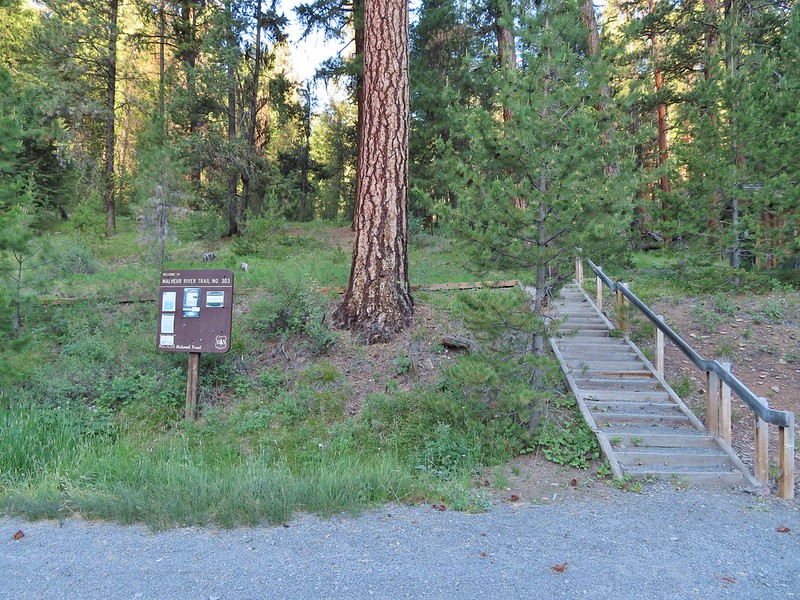
 Bench near the trailhead.
 Lupine along the trail.
 There was plenty of river access along the way.
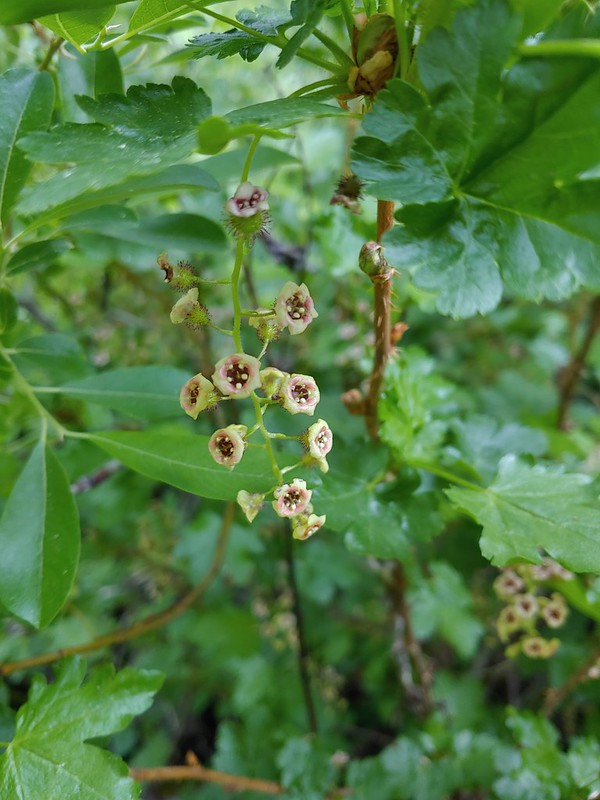 Currant
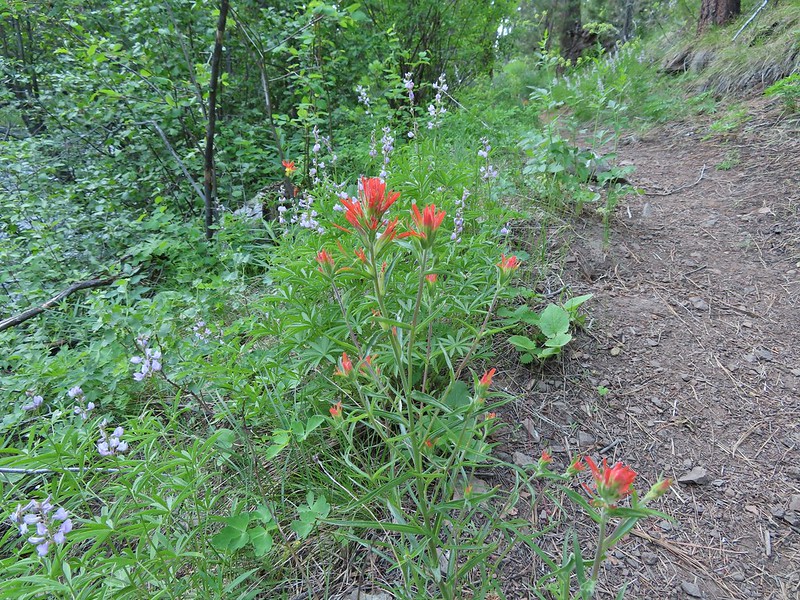 Paintbrush and lupine along the trail.
 Geraniums
 Ponderosa pines
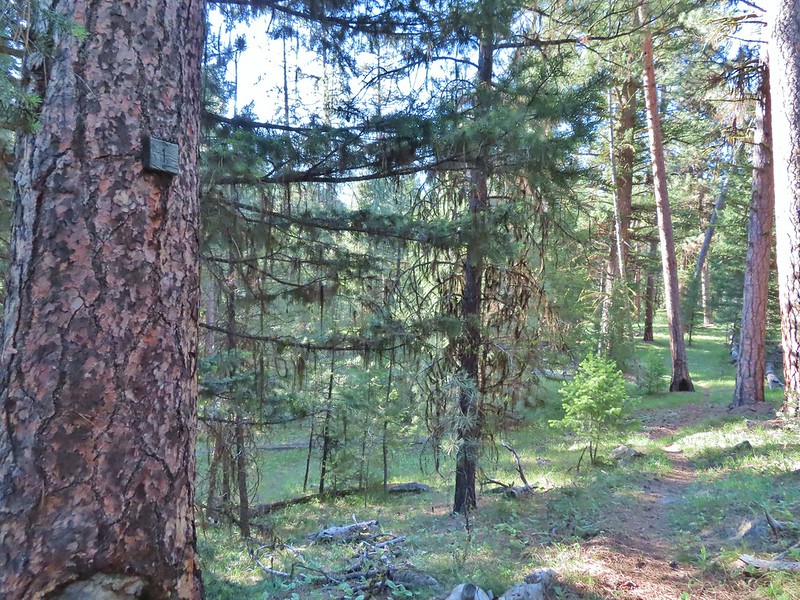 First 1
 Second 1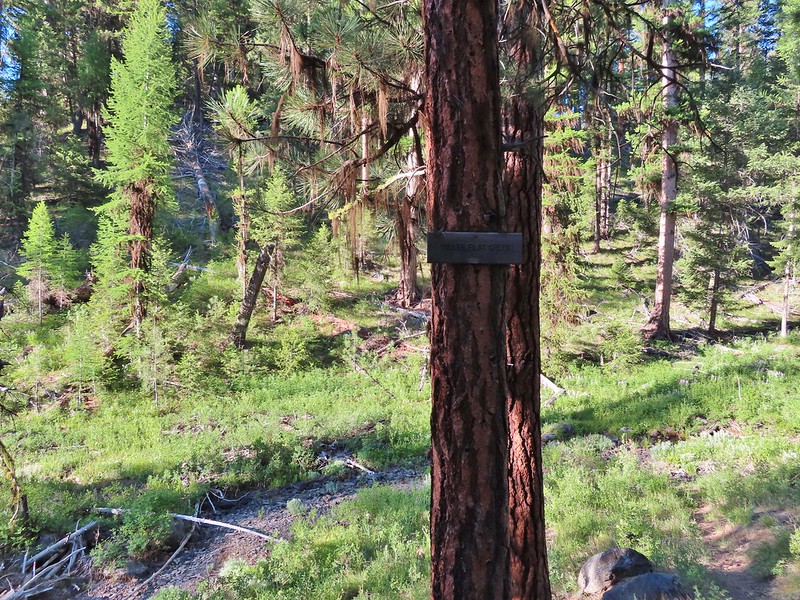
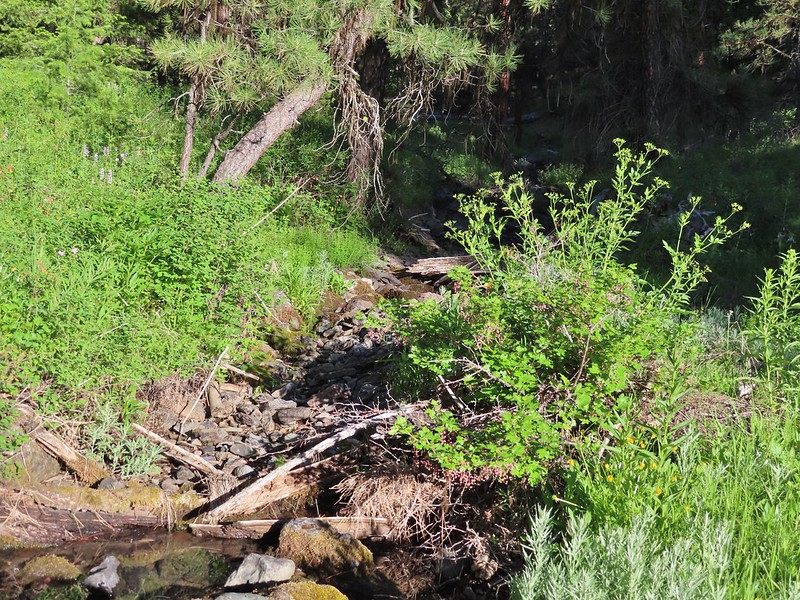
 Camas
Camas Balsamroot, columbine, geraniums and paintbrush.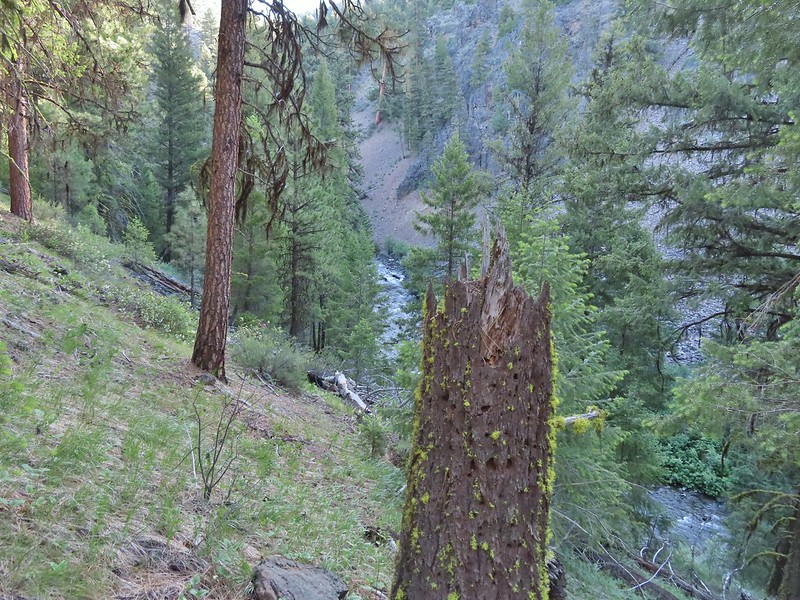
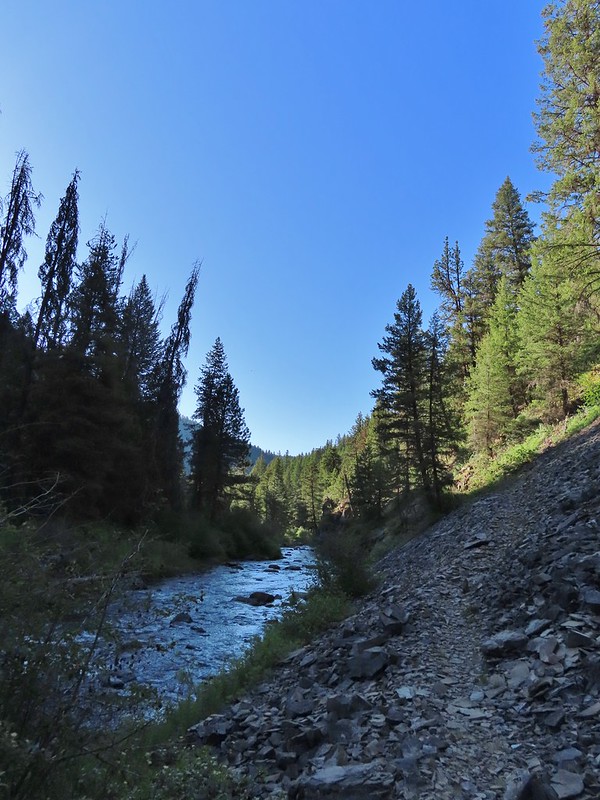
 Photo from the afternoon on the way back.
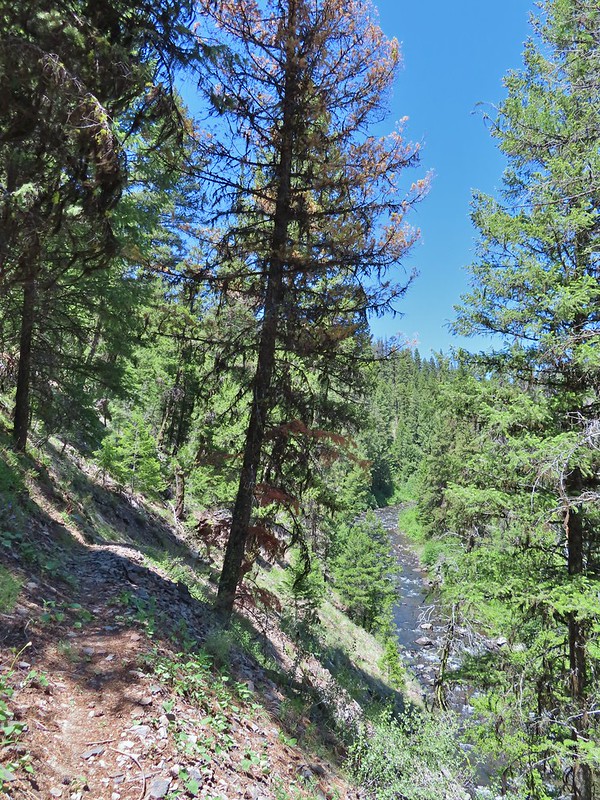 Photo from the afternoon on the way back.
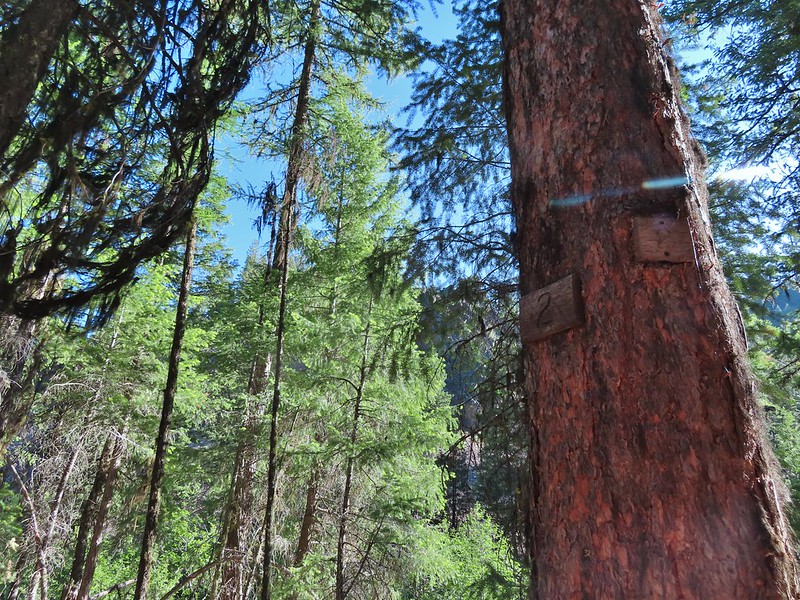 Tree marking mile 2.
 Typical “obstacles” that were present along the trail.
 Columbine
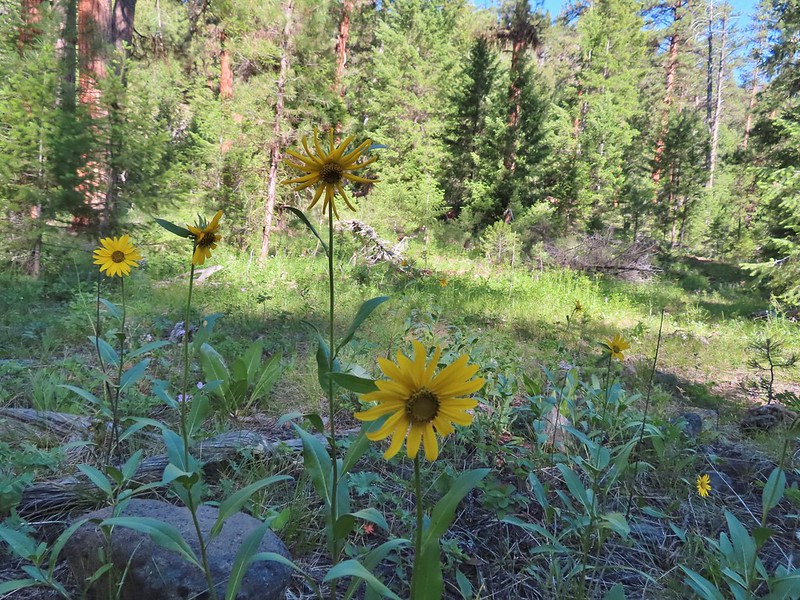 Cusick’s sunflower?
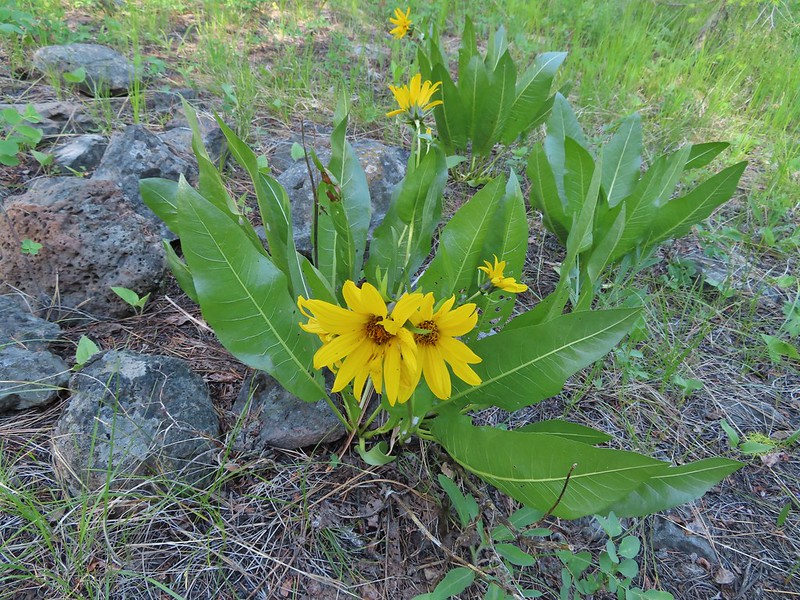 Balsamroot or mule’s ears?
 Woodland stars
 Mile 4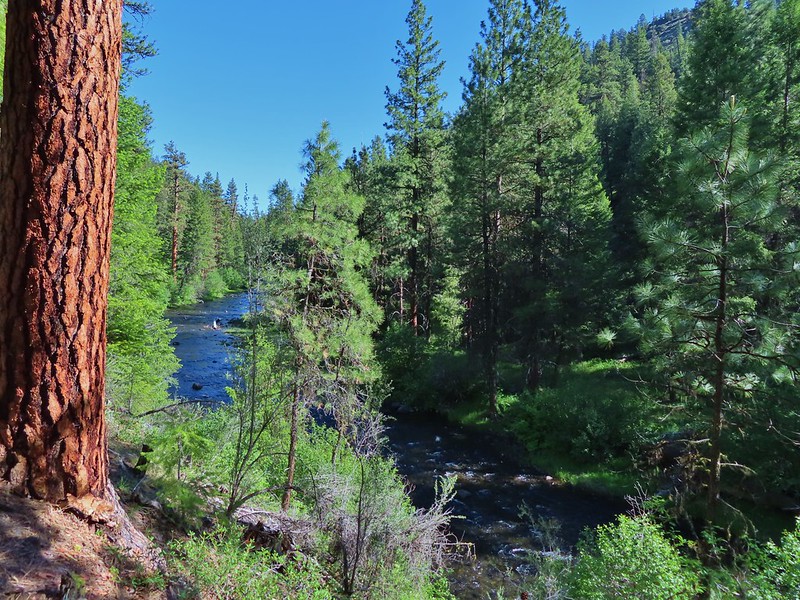

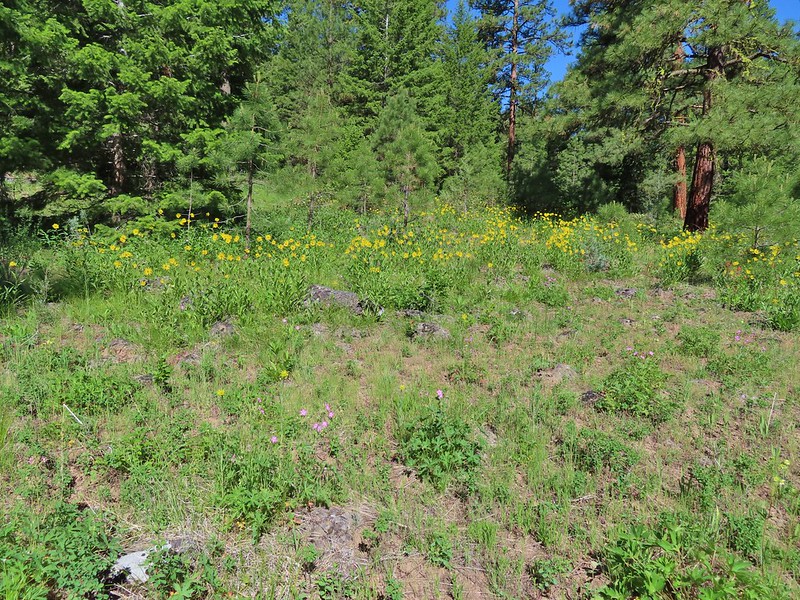
 Salsify and geraniums
 Sticky cinquefoil
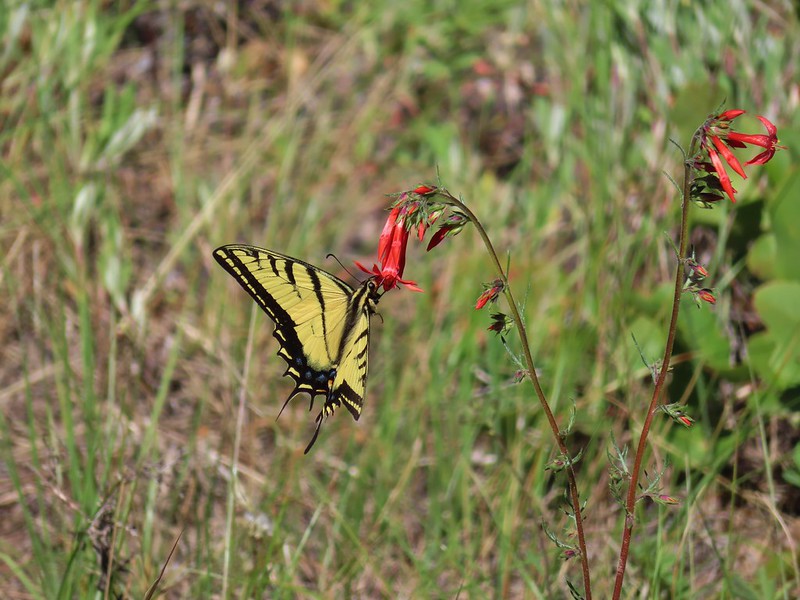 Swallowtail on scarlet gilia
 Geranium
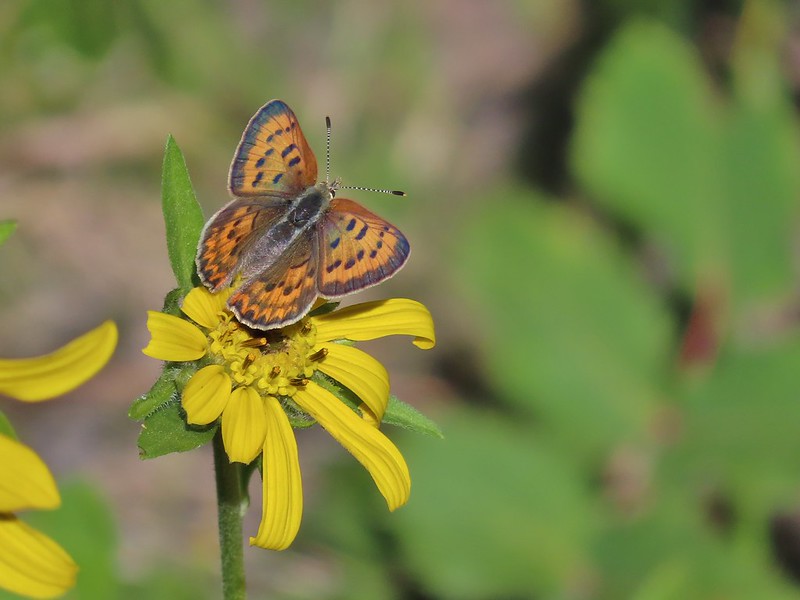 Some sort of copper butterfly
 A checkerspot
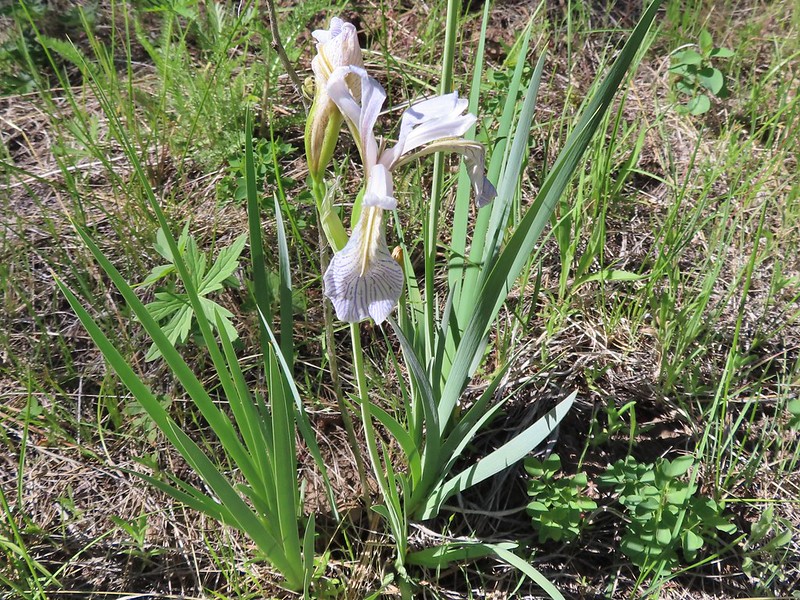 Iris
Iris Balsamroot (or mule’s ears)
 A fleabane
 A different type of fleabane.
 Larkspur
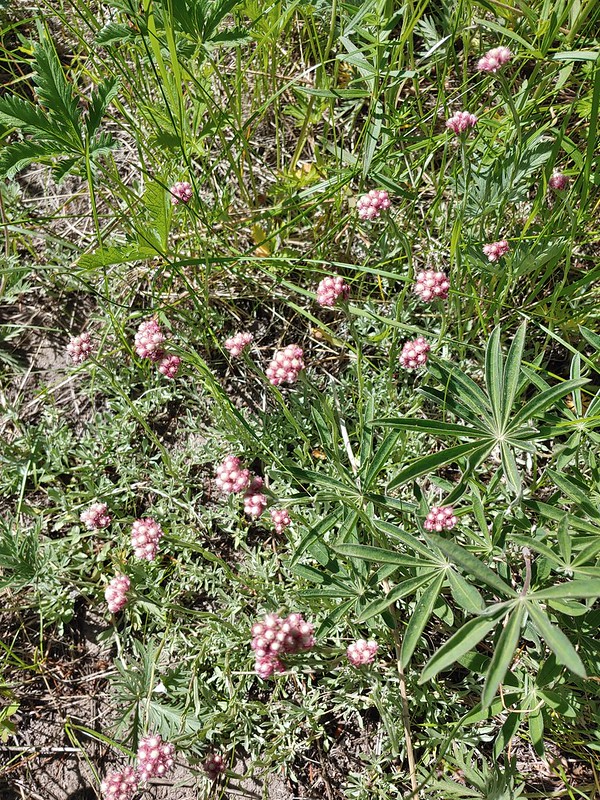 Rosy pussytoes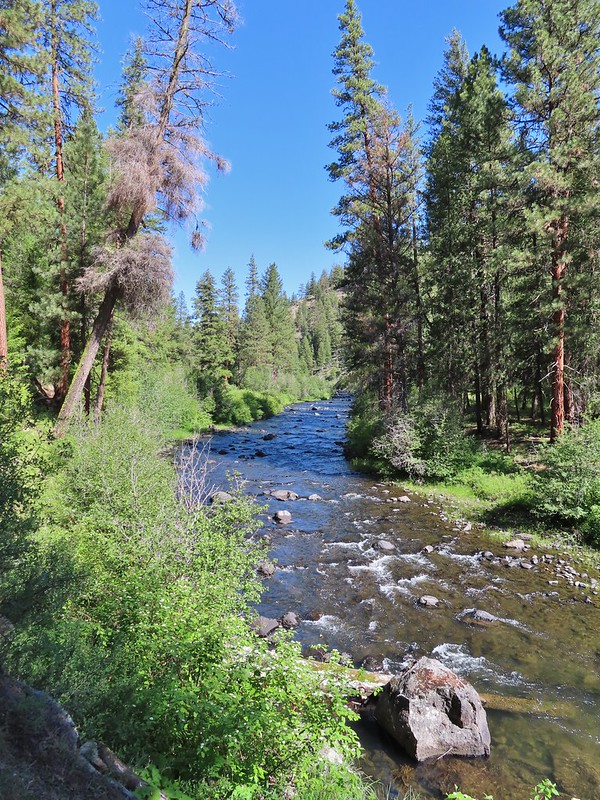
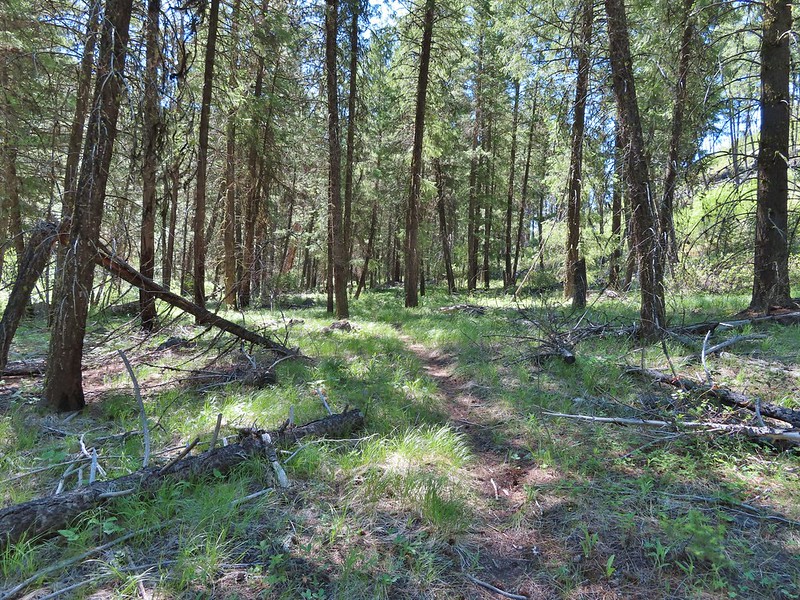
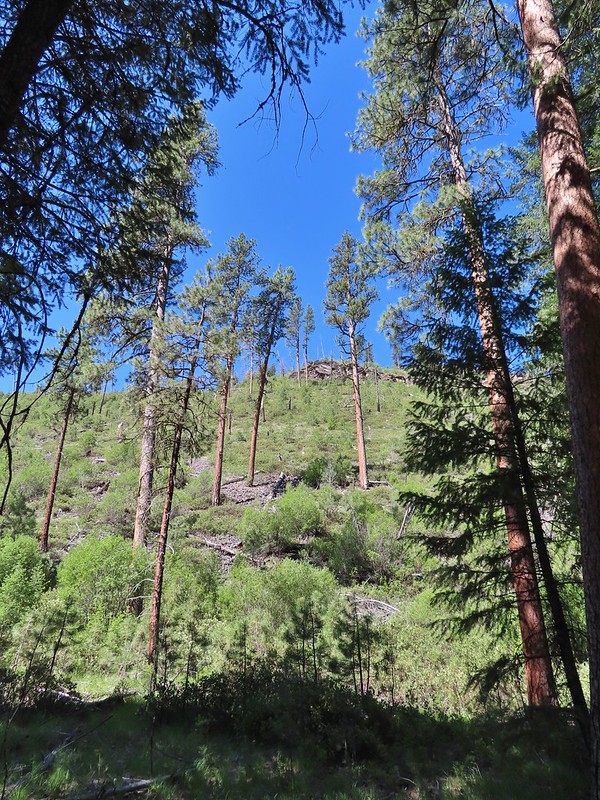 Hog Flat is up on top of the hillside.
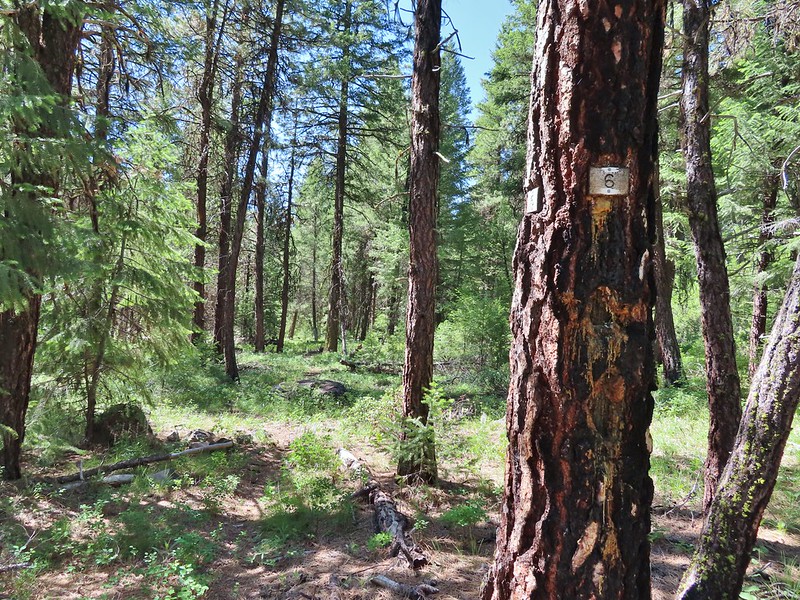 Mile 6 markers.
 Cracked egg in the trail.
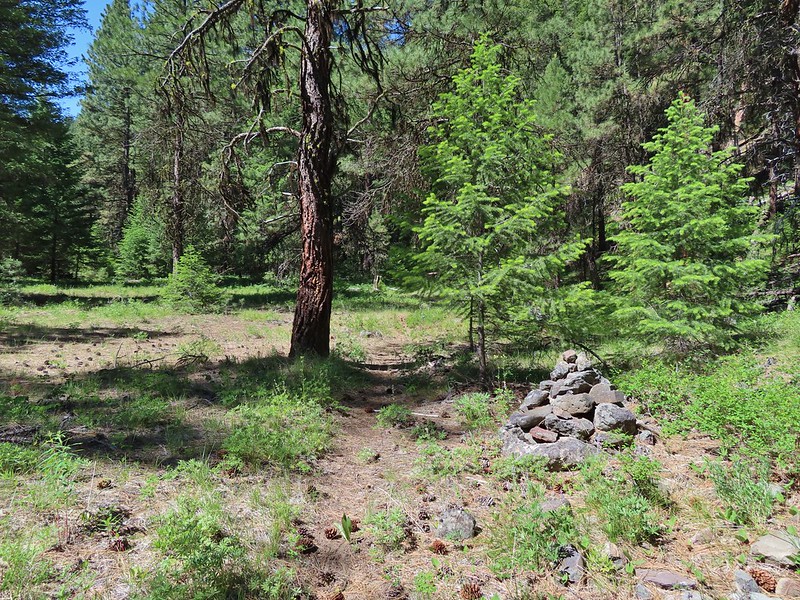 We passed this cairn around the 6.5 mile mark.
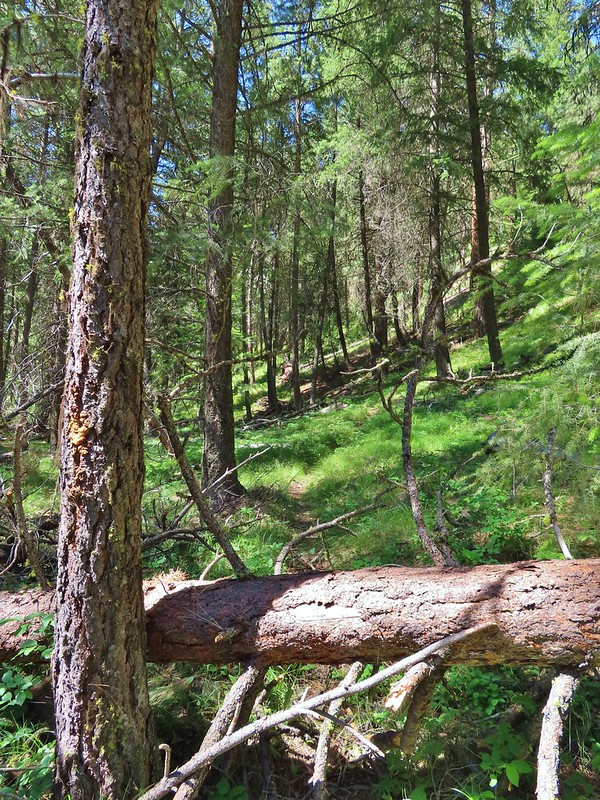 We turned around here shortly after passing the cairn. It appeared the trail was beginning it’s climb and we took the cairn and downed tree as signs that it was time to turn around. We did just that and headed back keeping our eyes open for the mile 3 and 5 markers.
 A fritillary butterfly on an iris.
 Found 5
 This was a particularly tricky little muddy spot to stay dry crossing.
 And there’s “3”.
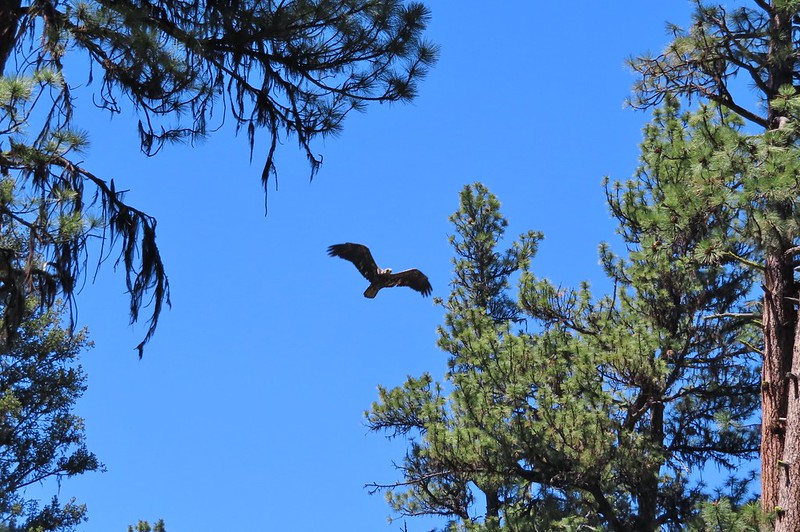 Immature bald eagle. We saw it on the way out in the same area but couldn’t get a photo. This time it flew right by me, and I think it was giving me the stink eye.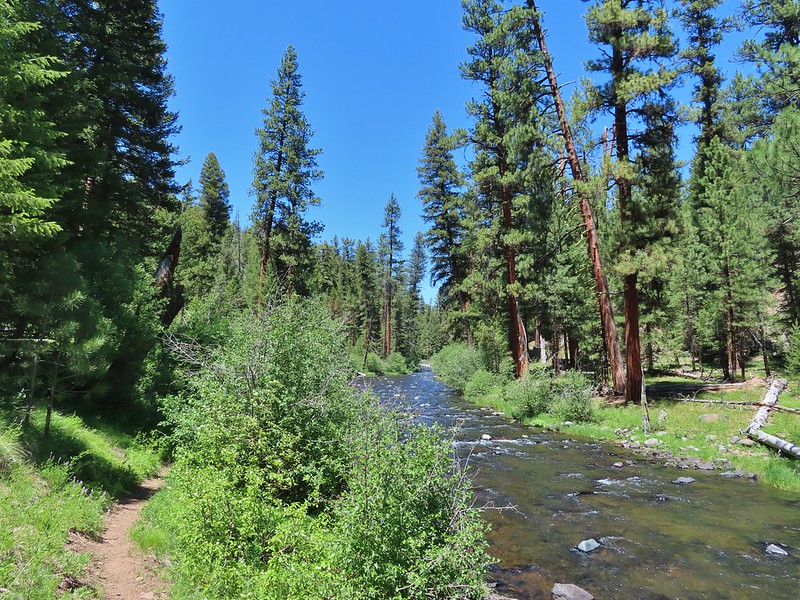
 Back at the trailhead.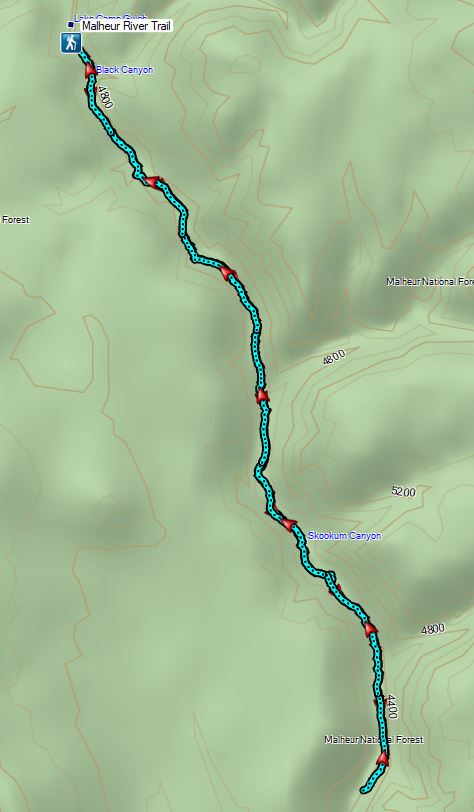


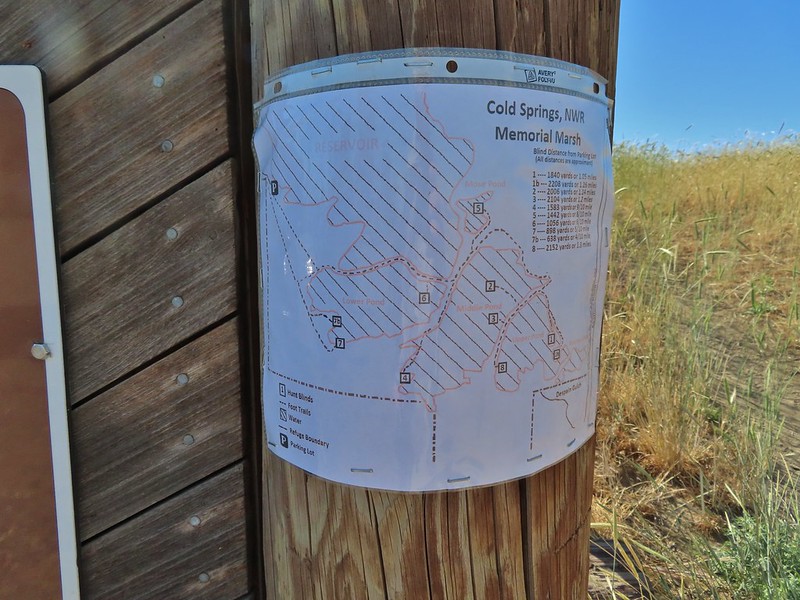

 Yarrow
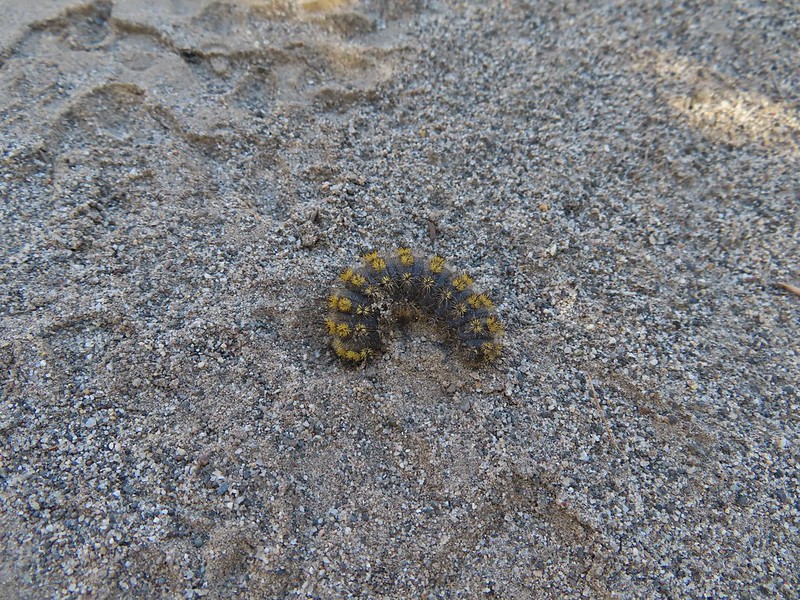 Caterpillar
 Looking right down the roadbed which would lead back to the parking area.
 Ducks in the Lower Pond
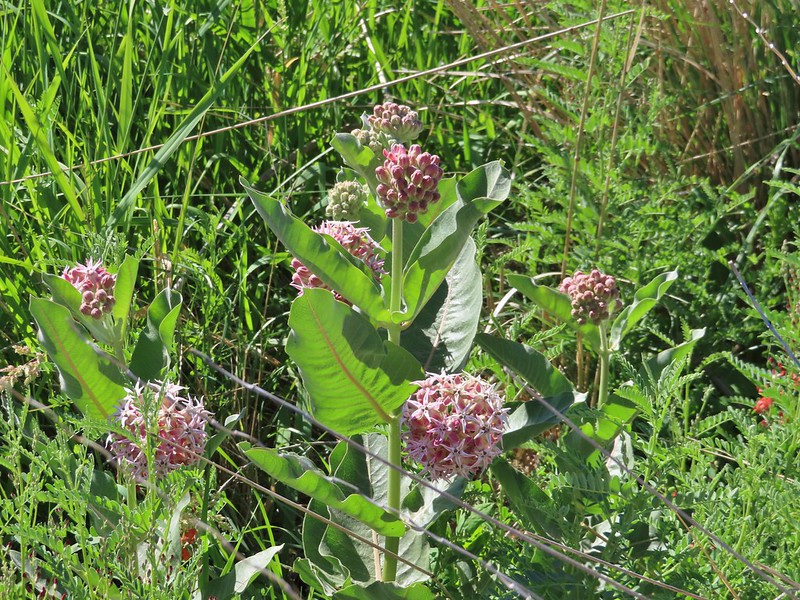 Showy milkweed
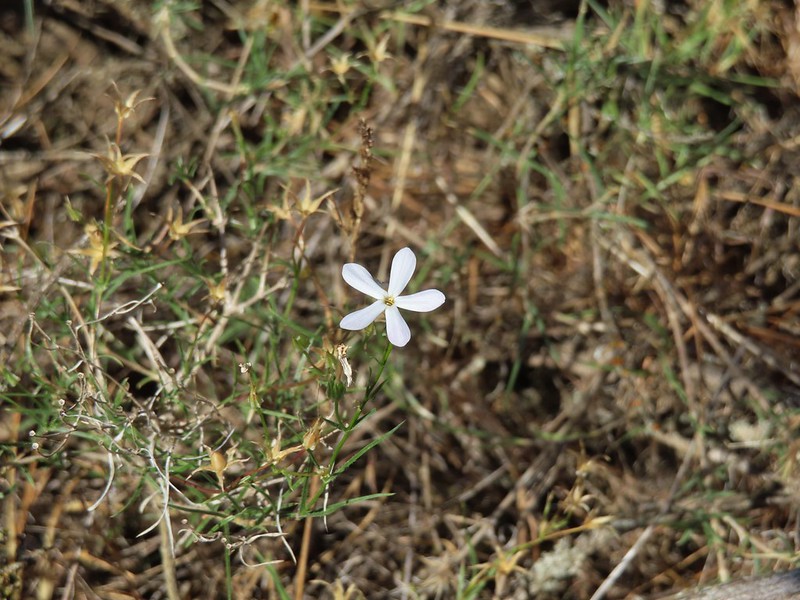 A lone phlox blossom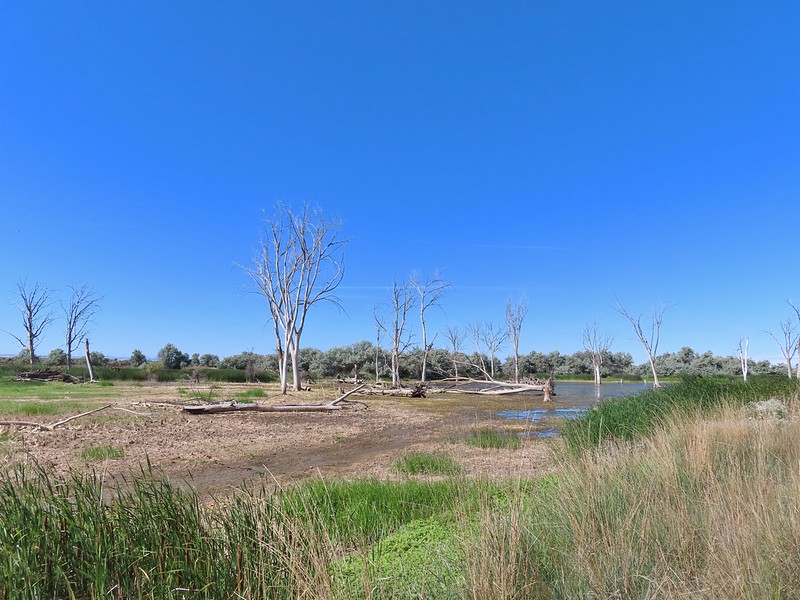
 Female red-winged blackbirds
 Blue-winged teal and a black-necked stilt.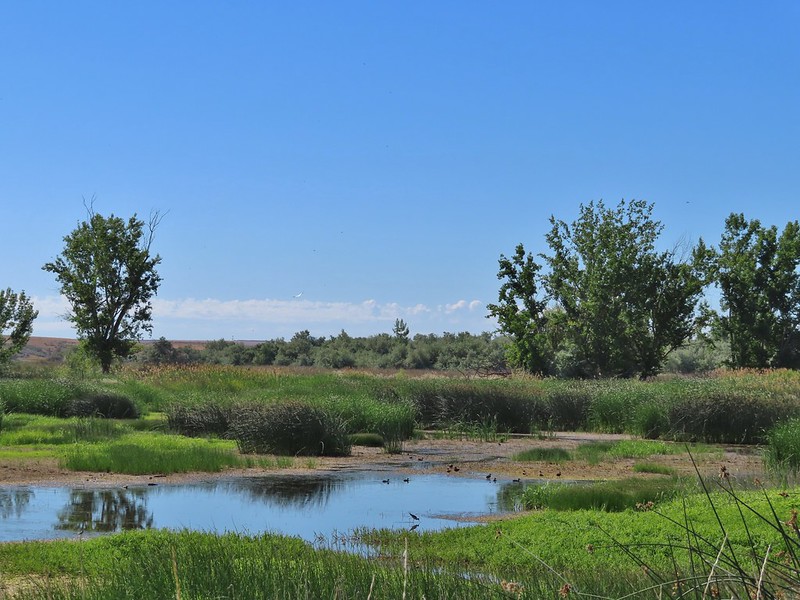
 Black-necked stilt
 Red-winged blackbird
 White pelican
 Cinnamon teal

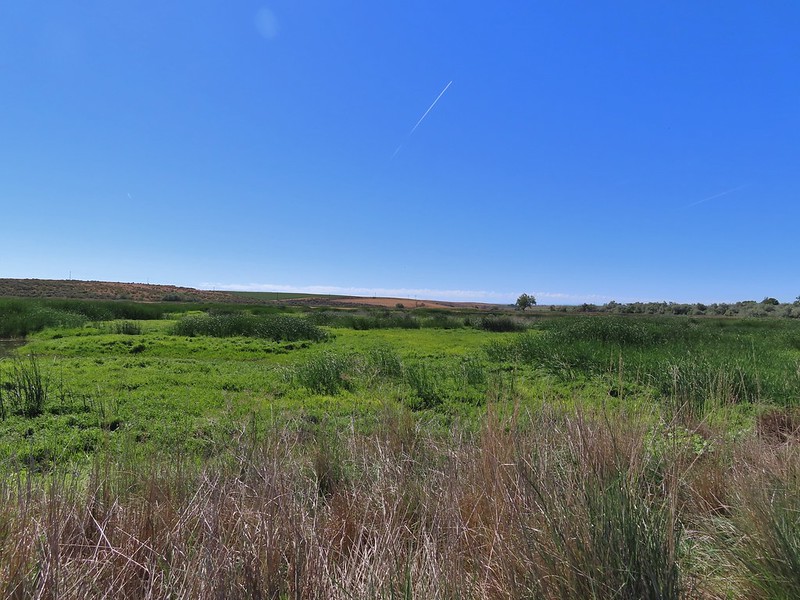 Middle Pond
 Spur road to hunting blind 5. The blinds were well signed but not marked on the brochure map. The laminated map at the trailhead though did show the blinds which would have also been very helpful.
 Upper Pond
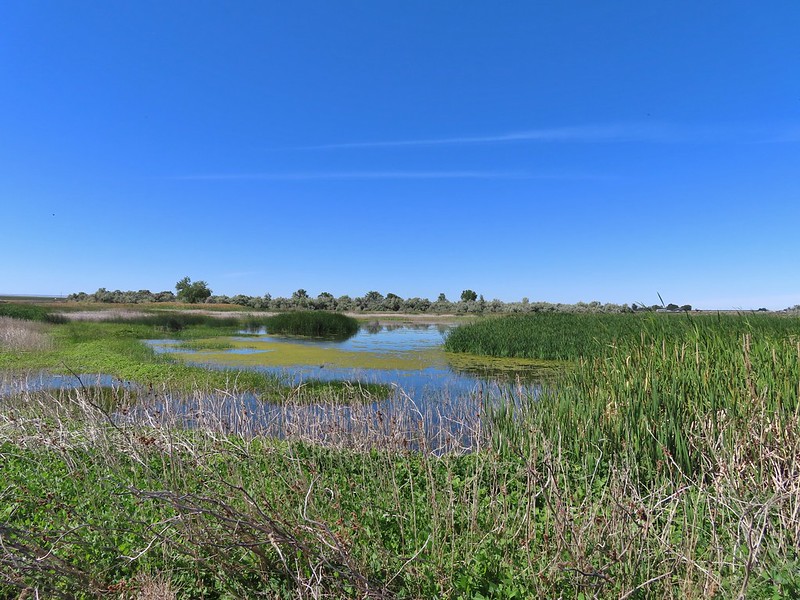 Upper Pond
 Yellow headed blackbirds
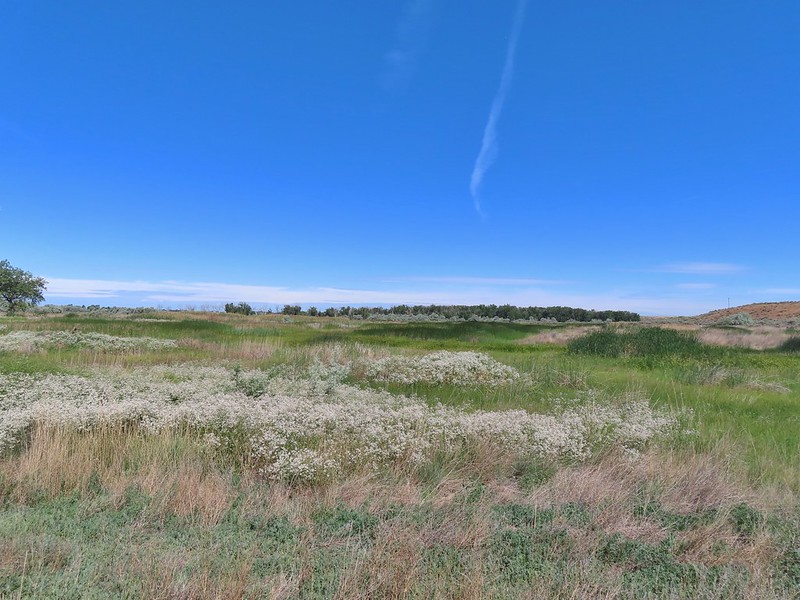 Not going to be making a loop around the Upper Pond.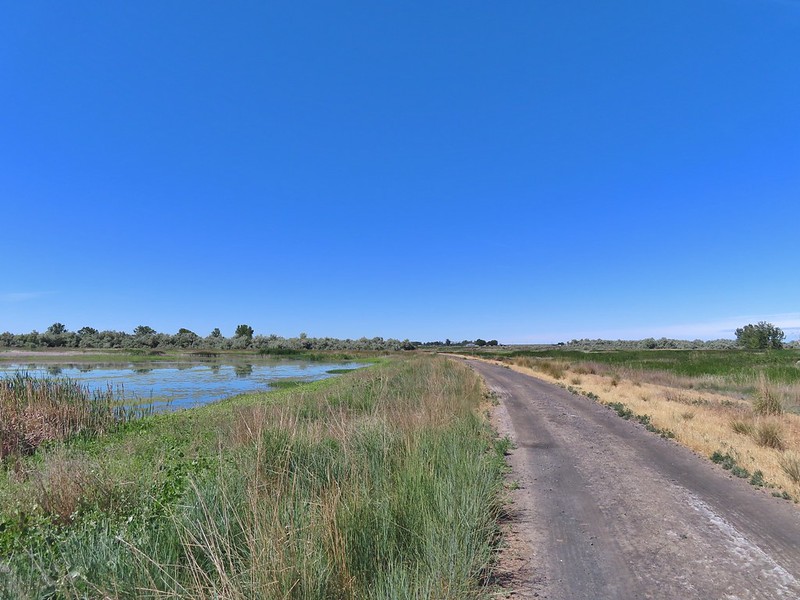
 Killdeer
 Great blue heron
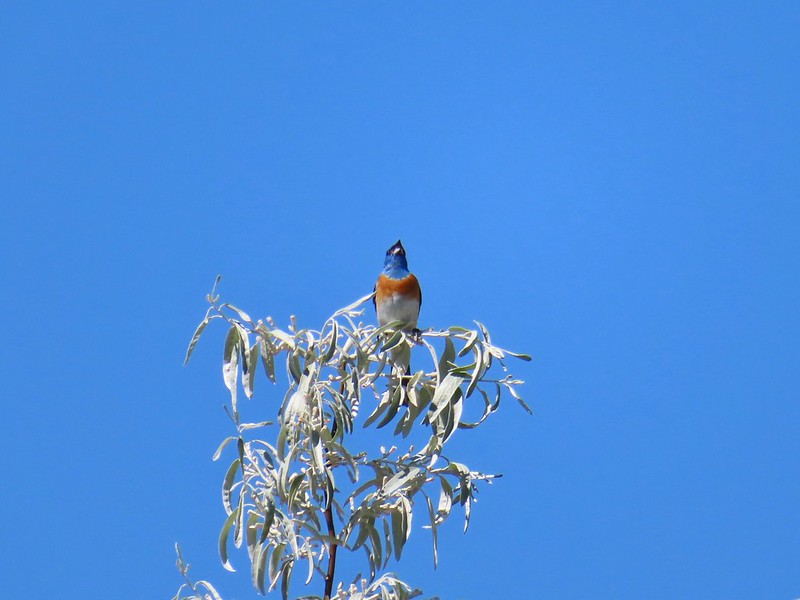 Lazuli bunting


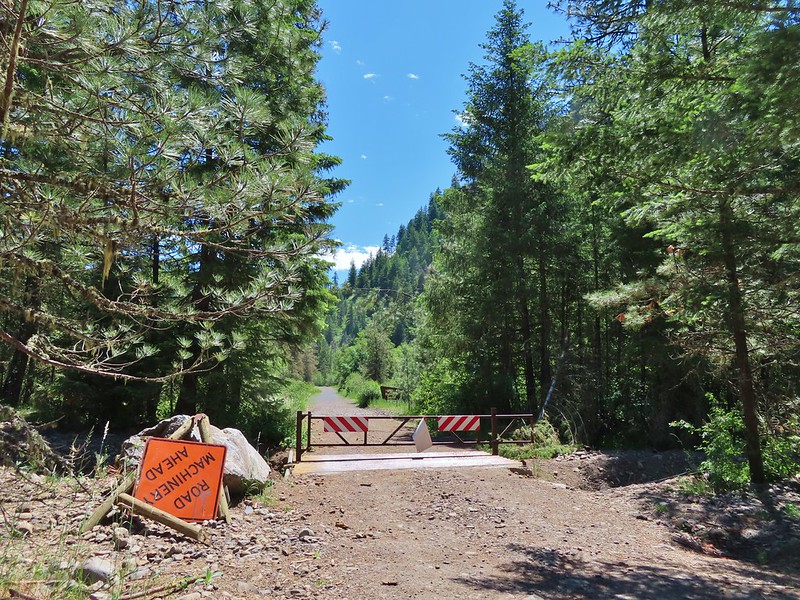
 The road walk wasn’t all that bad as it followed the Umatilla River the whole way.
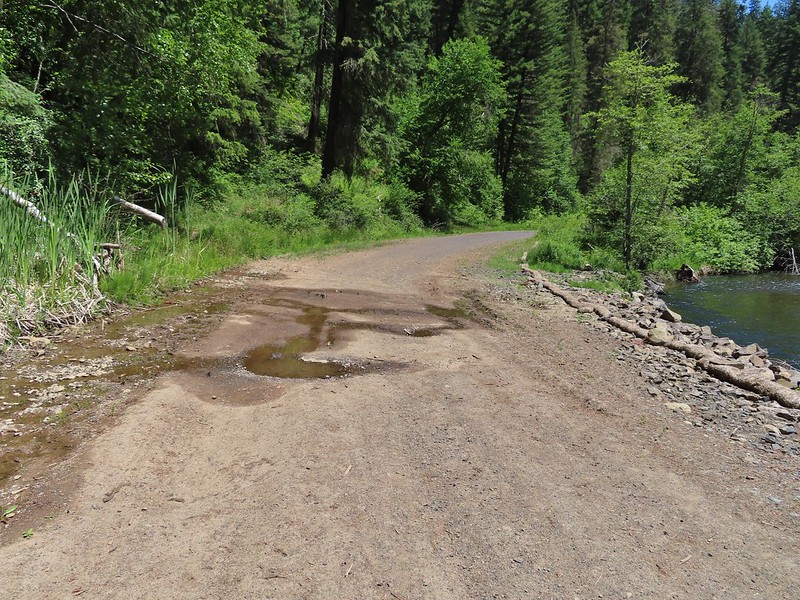 This was a popular spot with the butterflies, particularly swallowtails.
 Swallowtails
 Swallowtails
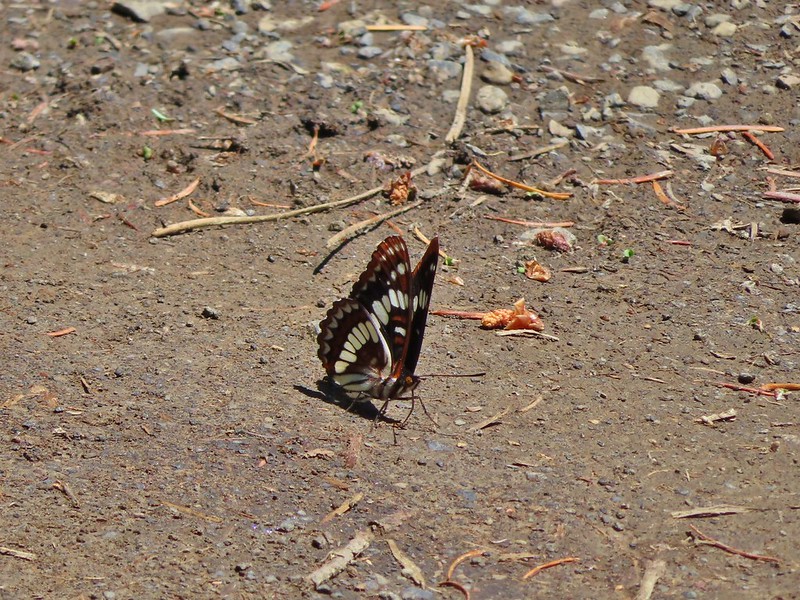 Lorquin’s admiral
 A tortoiseshell
 Dragon fly watching the butterflies
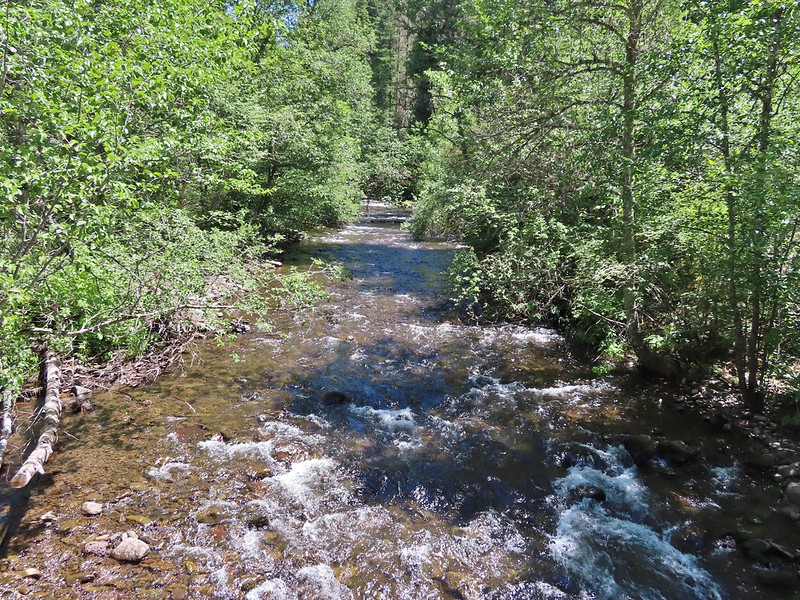 Just beyond the sign we crossed the North Fork Umatilla River.
 Ouzel
Ouzel FR 045 on the left.
 Another gathering of butterflies
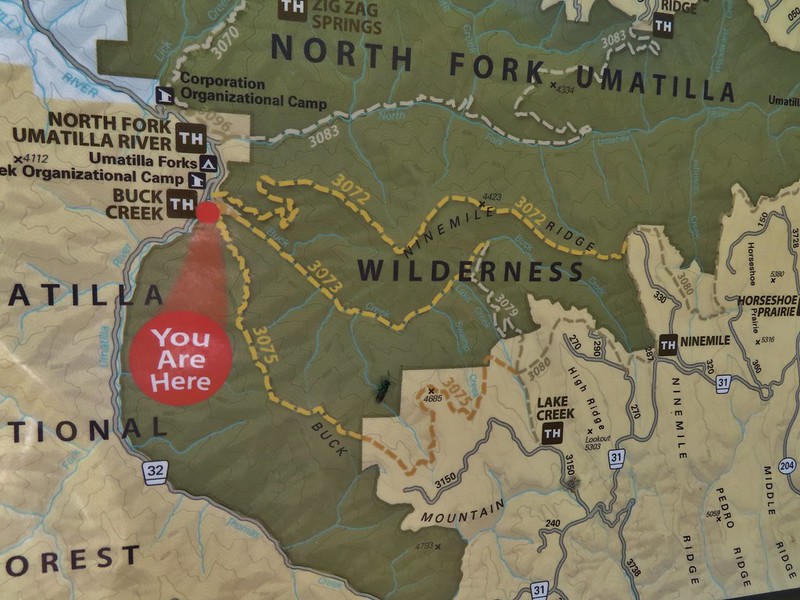


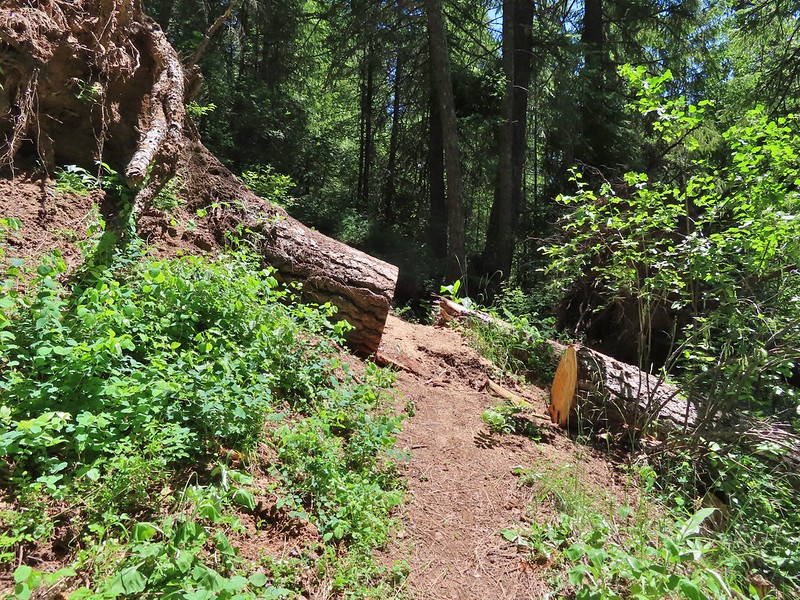


 Grouse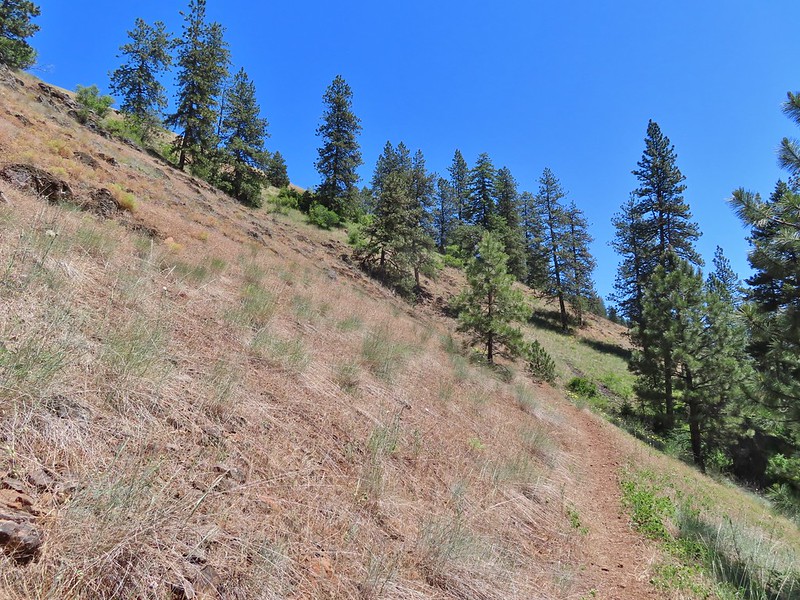
 Buckwheat
 Ragged robin (Clarkia pulchella)
 Lingering snow in the distance.
 Ragged robins
 Paintbrush
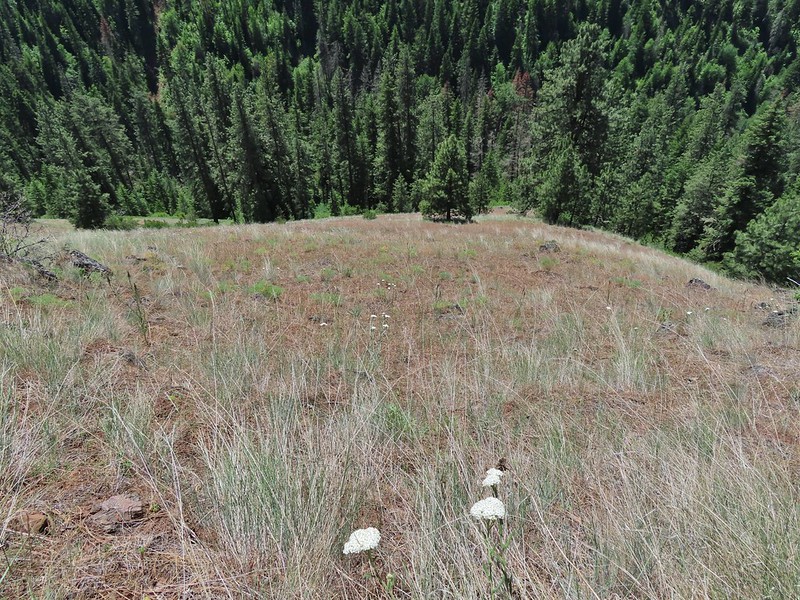 Yarrow
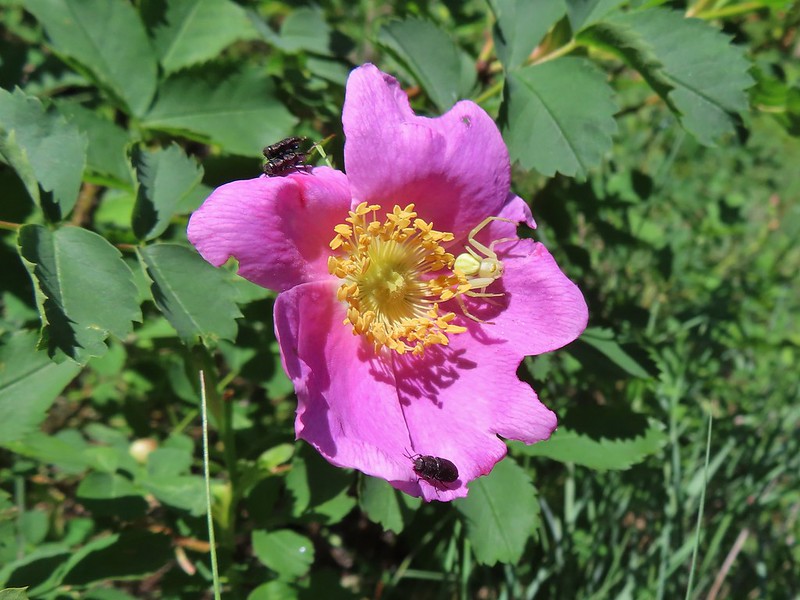 Bettles and a crab spider on rose
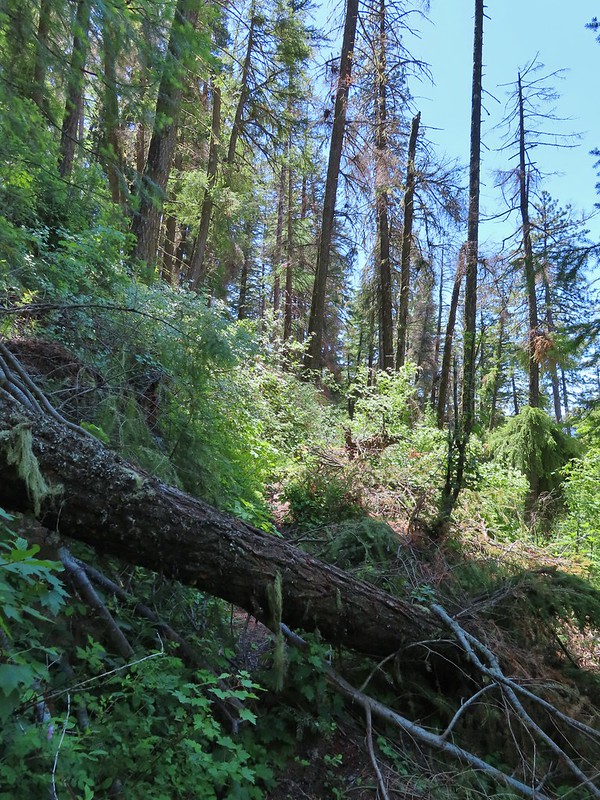
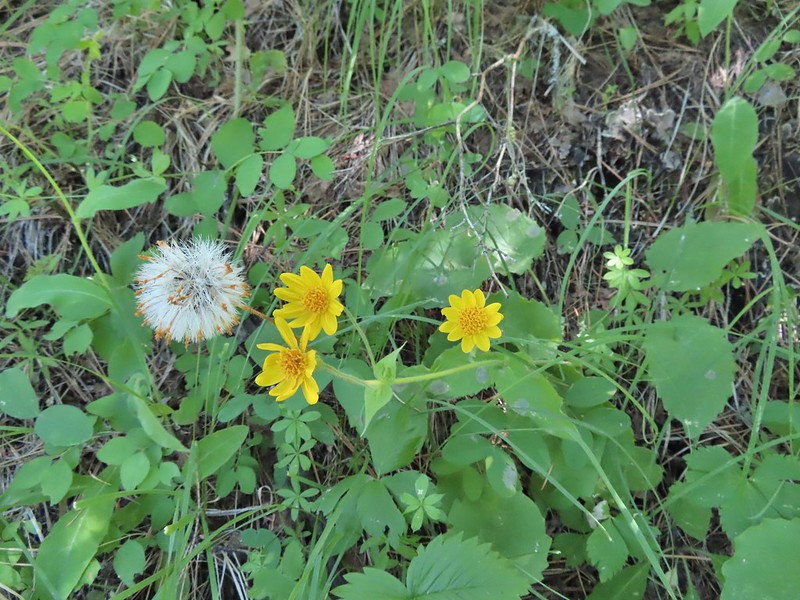 Arnica
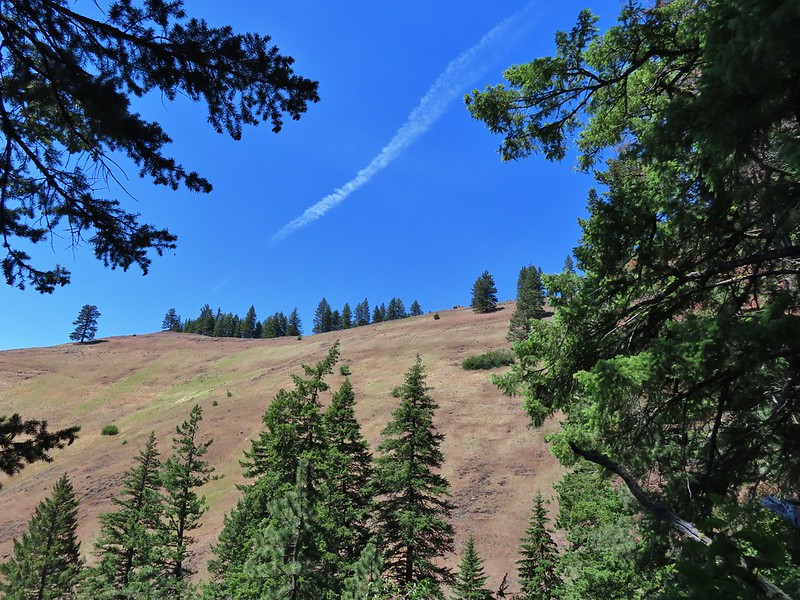 You might be able to make out the trail continuing up the far hillside.
 Now on the far hillside heading for that small tree on the ridge end.
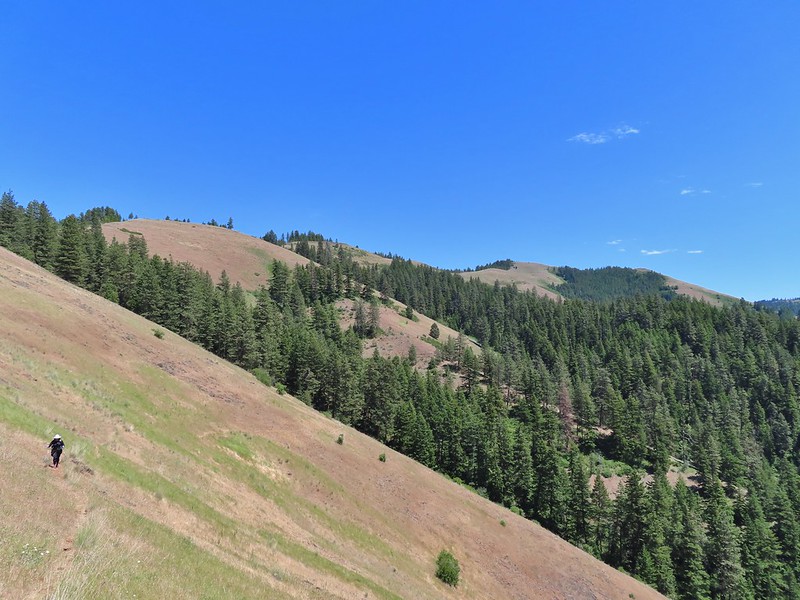 Looking back along the trail and at Ninemile Ridge.
 South Fork Umatilla River from near the ridge end.
 Heading up to the ridge top.
 Gaining the ridge and a view ahead of what’s to come.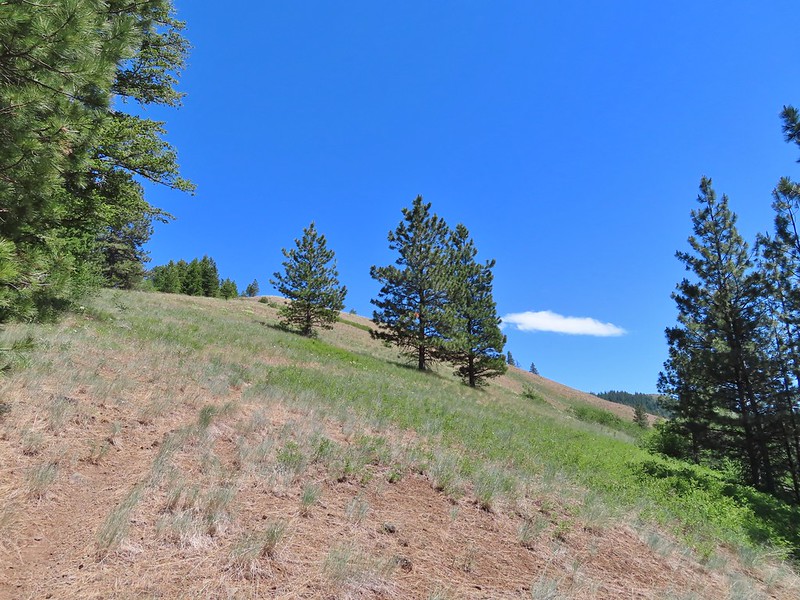
 Balsamroot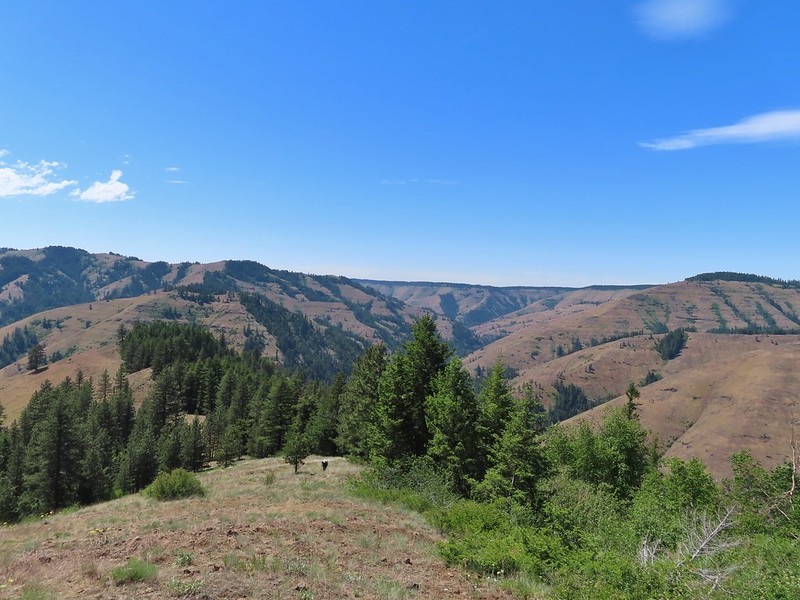
 Large-flower triteleia
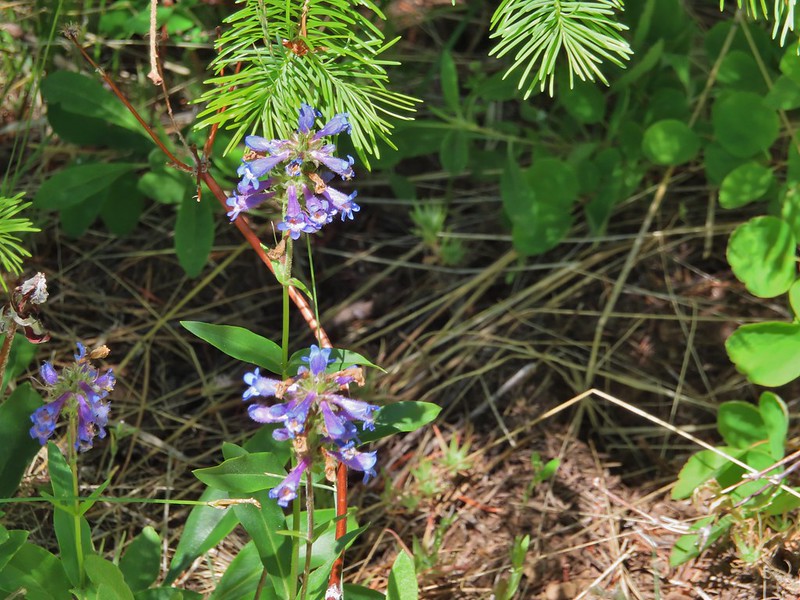 A penstemon
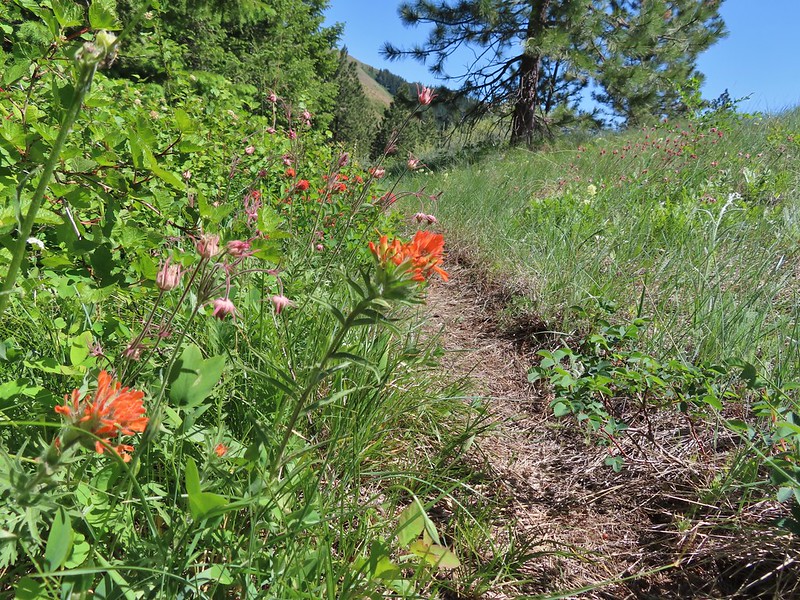 Paintbrush and prairie smoke
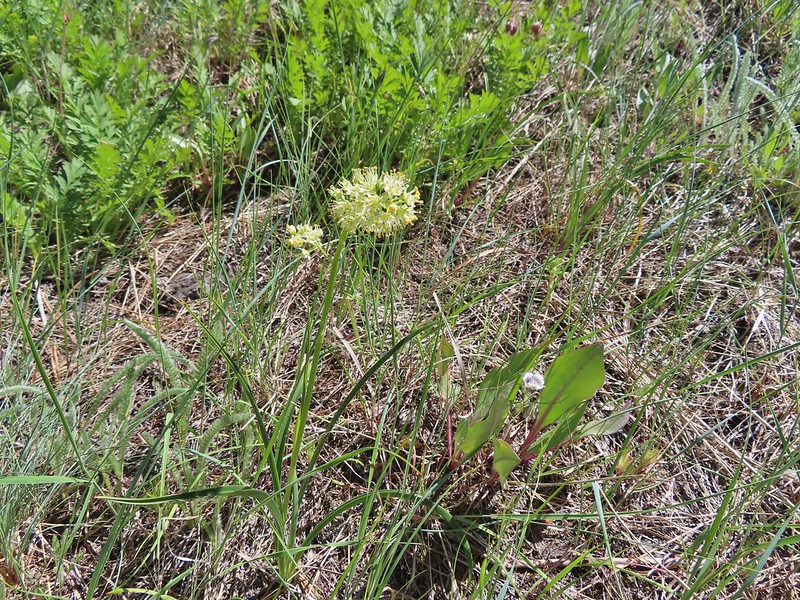 Death camas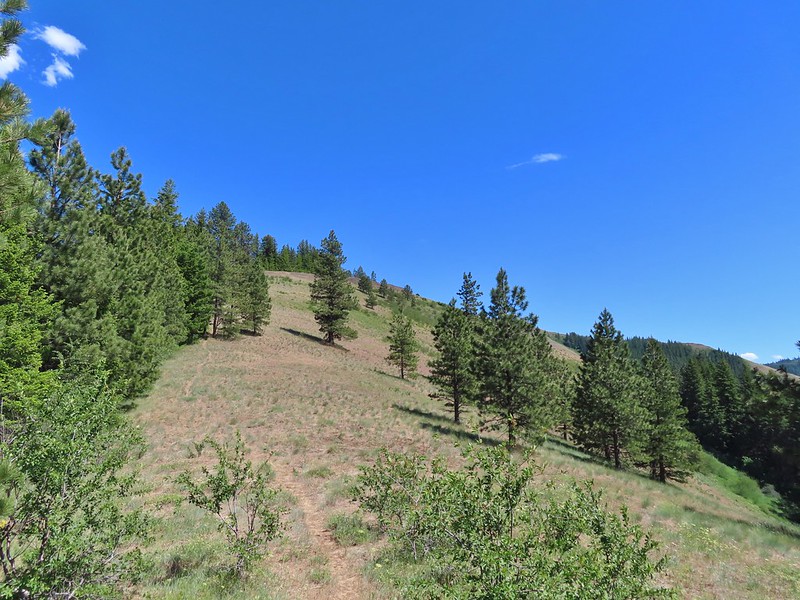
 Turkey vulture checking to see if we were dead yet.
 Ravens also interested in our carcasses.
 An allium
 There was a 20% chance of showers according to NOAA so these clouds forming weren’t a surprise.
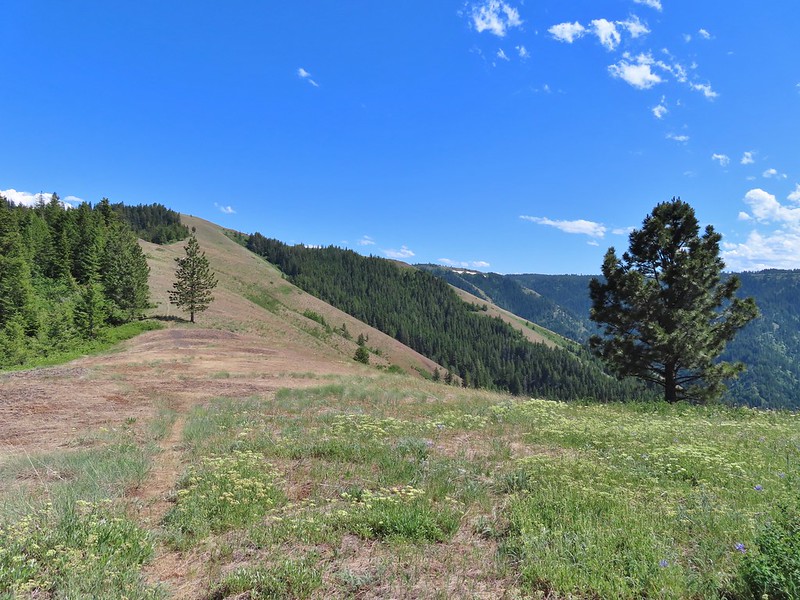 A flat stretch along the ridge before another steep climb.
 Buckwheat and Large-flower triteleia
 Bush penstemon
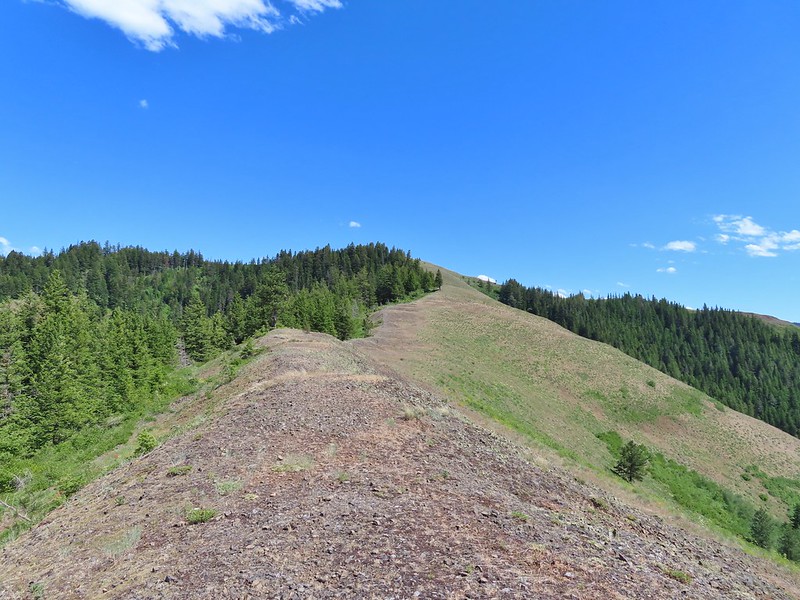 The trail was actually down to the left but the ridge seemed like it would take less climbing.
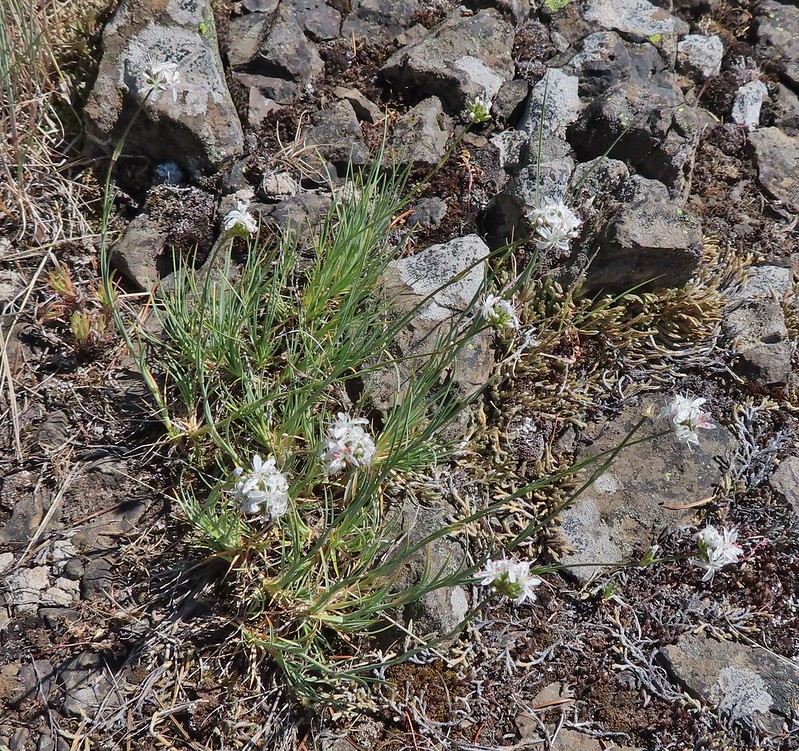 Ball head sandwort?
 Lupine
 Paintbrush along the final climb.
 A parsley and naked broomrape
 Larkspur
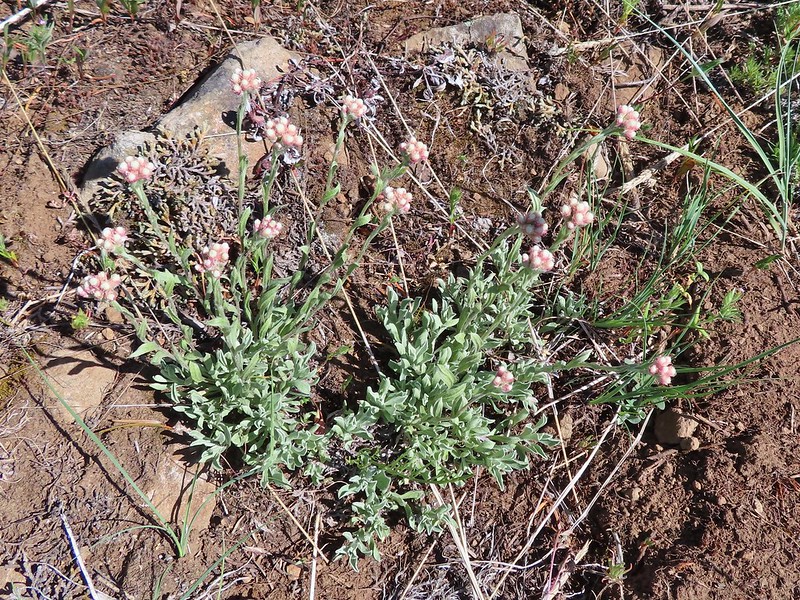 Rosy pussytoes
 Cairn on the right.
 Clouds starting to pass over.
 High Ridge Lookout to the left
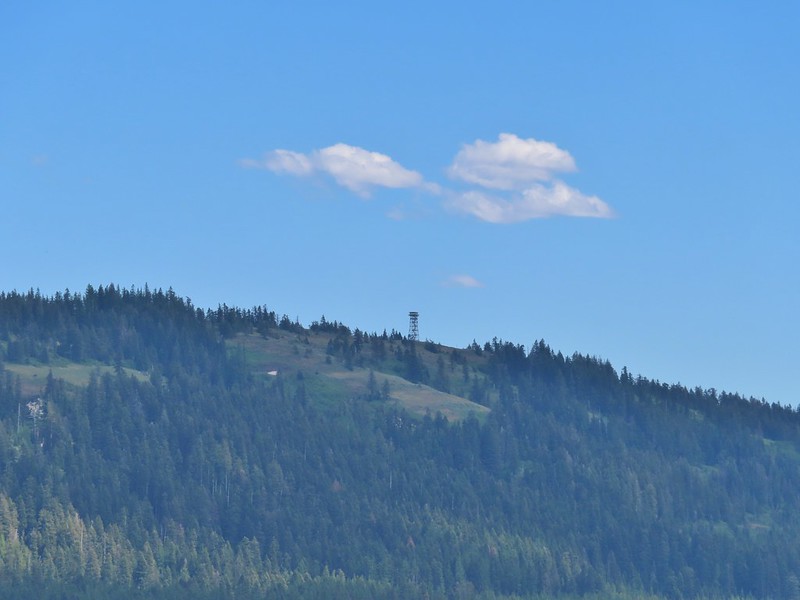 High Ridge Lookout
 Looking back down Ninemile Ridge
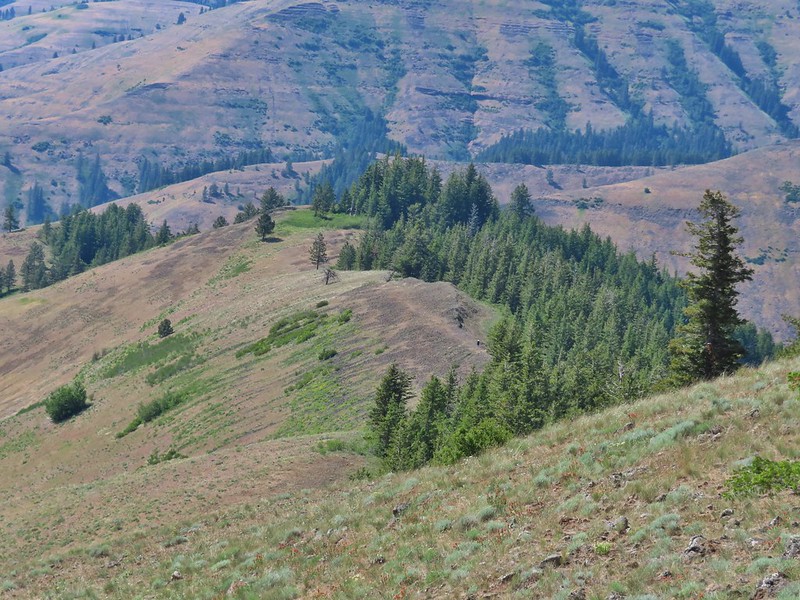 Heather making her way up.
 Blue-eyed Mary and elegant mariposa lily
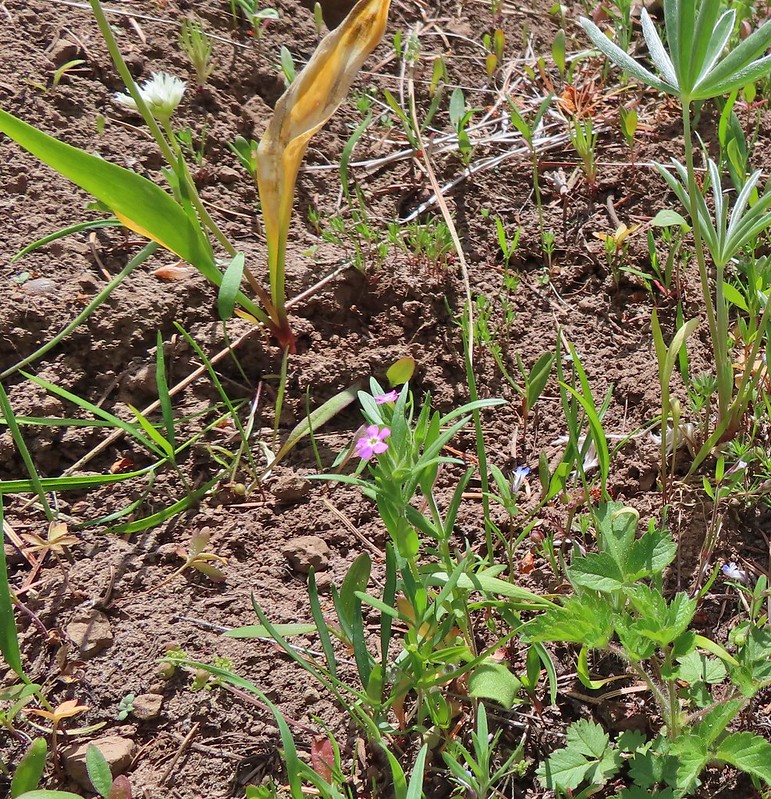 Slender phlox
 A phacelia
 Hoary balsamroot (most of it was way past)
 Phlox
Phlox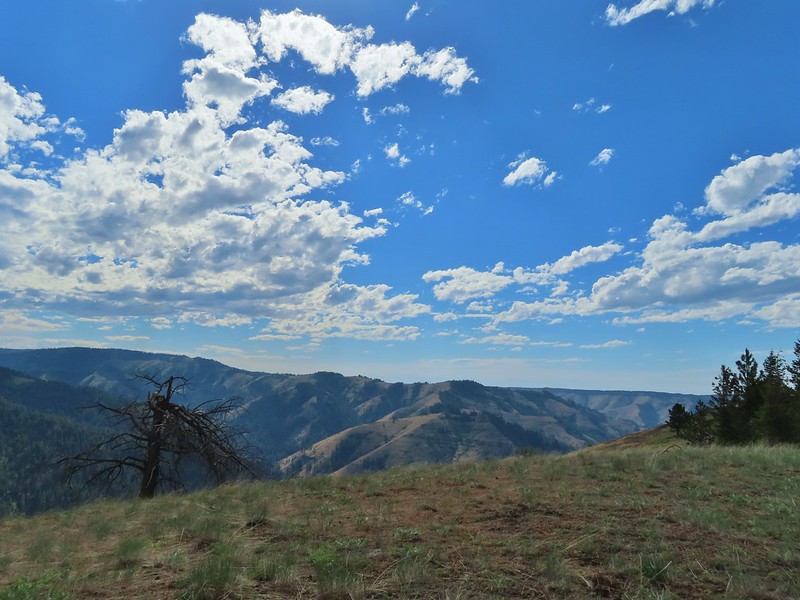

 Spotted coralroot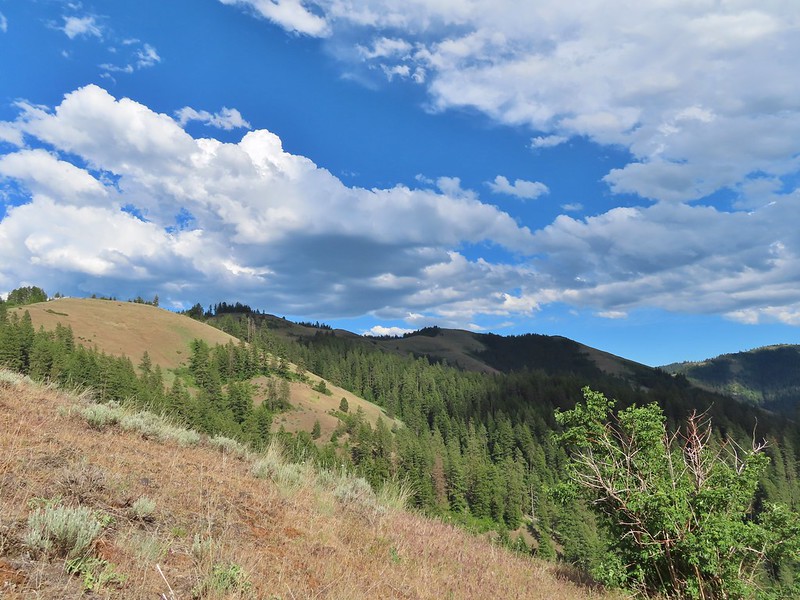
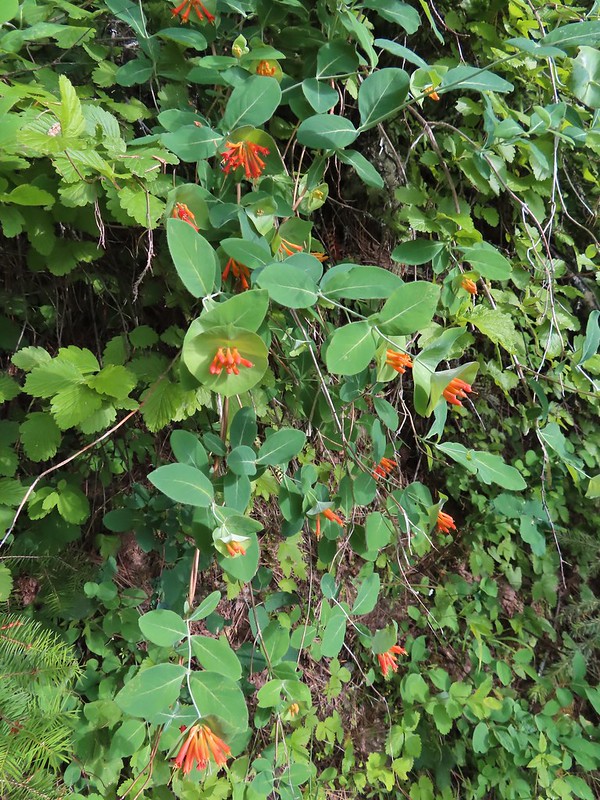 Honeysuckle
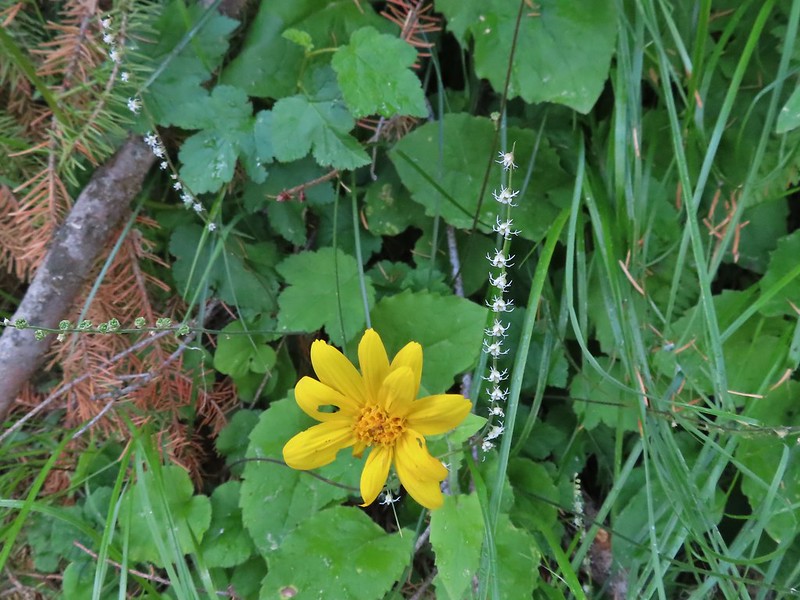 Arnica and small flower miterwort
 Twinflower
 Kiosk and bench at the trailhead.
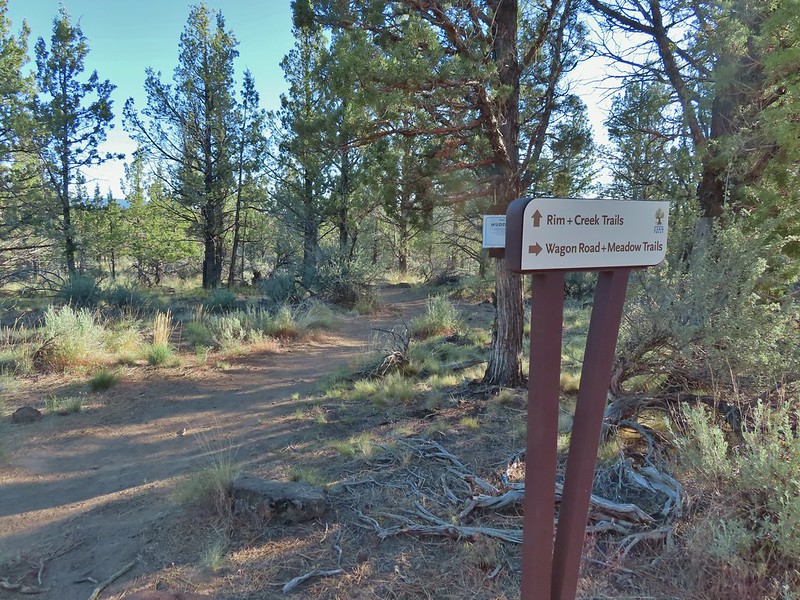
 Tent caterpillars (and the red gate)
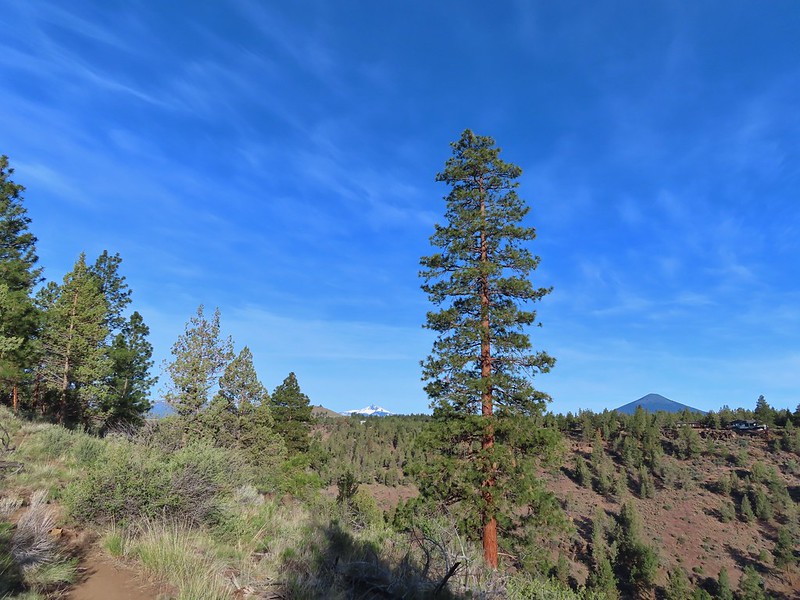 Mt. Washington and Black Butte (
 Broken Top, The Three Sisters, Black Crater (
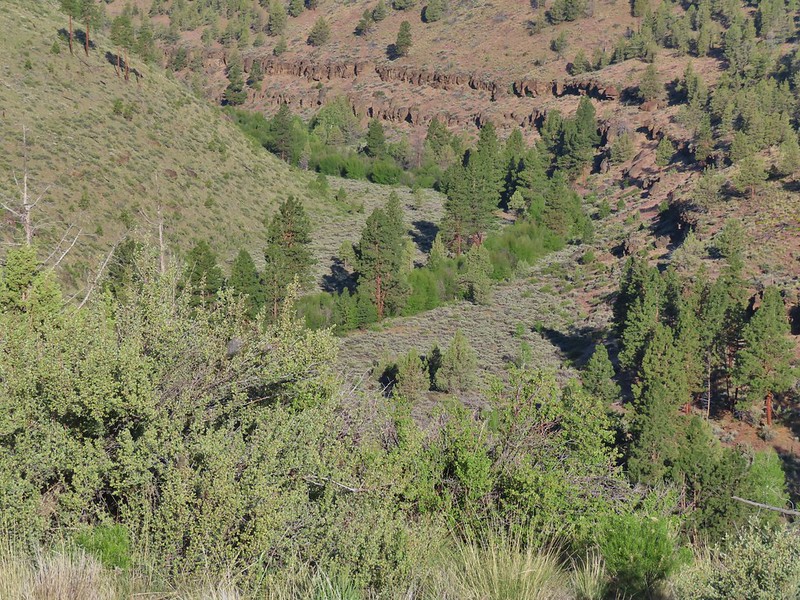 Whychus Creek was hidden by trees for the most part.
 Balsamroot
 Lupine
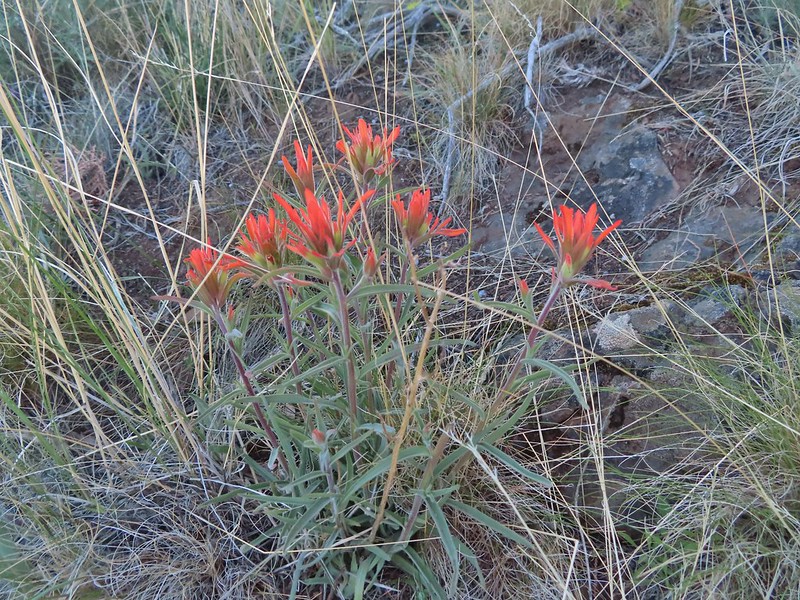 Paintbrush
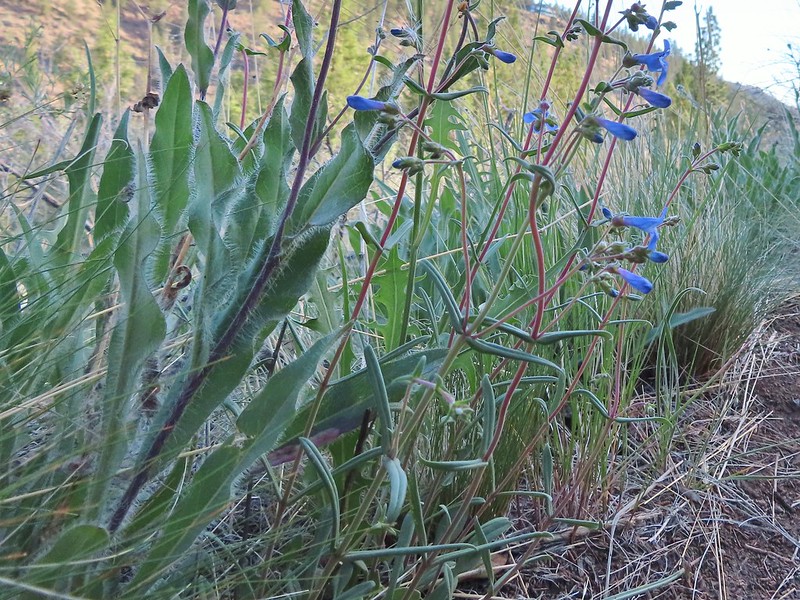 A Penstemon
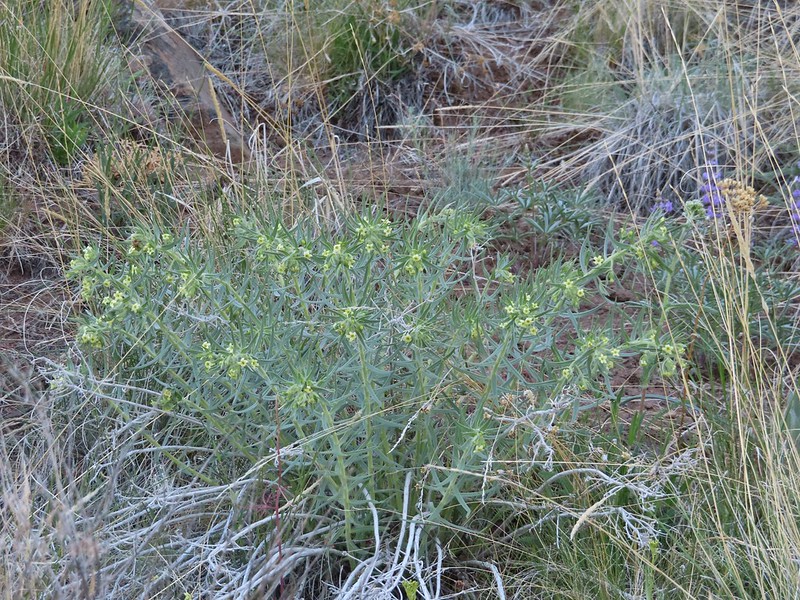 Western stoneseed
 Sedum leibergii -Leiberg’s Stonecrop
 Spreading stickseed
 Western wallflower
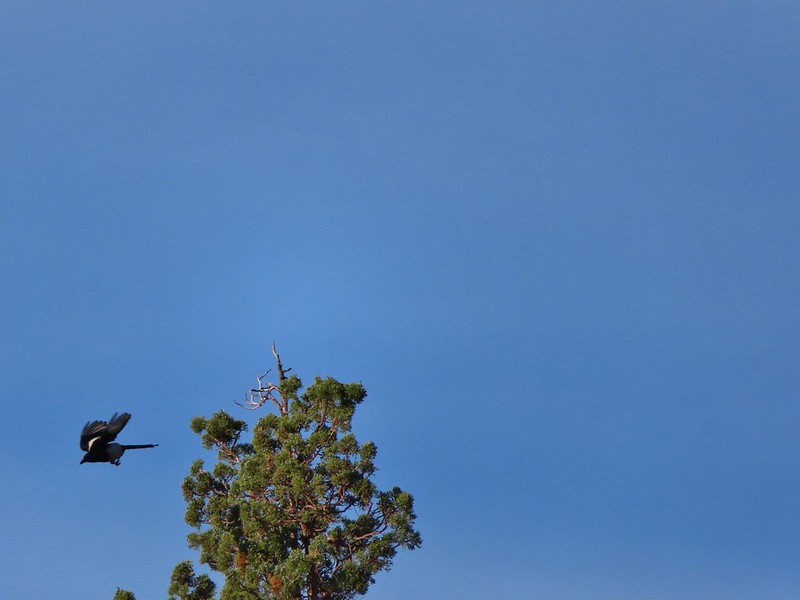 Magpie playing hard to get.
 Spotted towhee
 Black-headed grossbeak
 Ochre ringlet
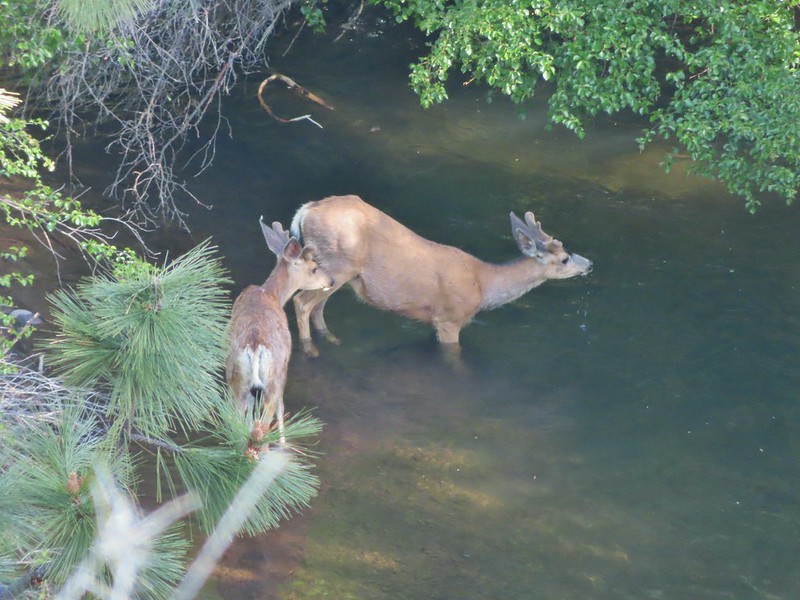 Pair of bucks in Whychus Creek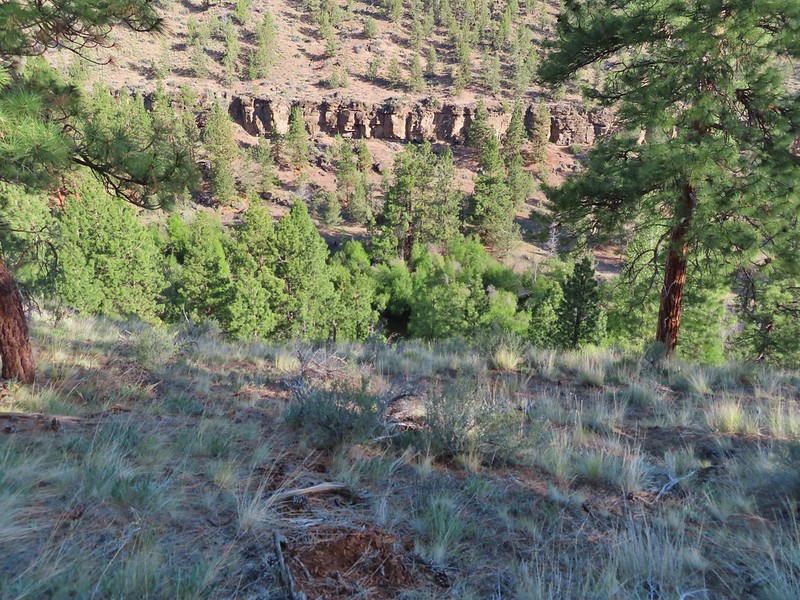
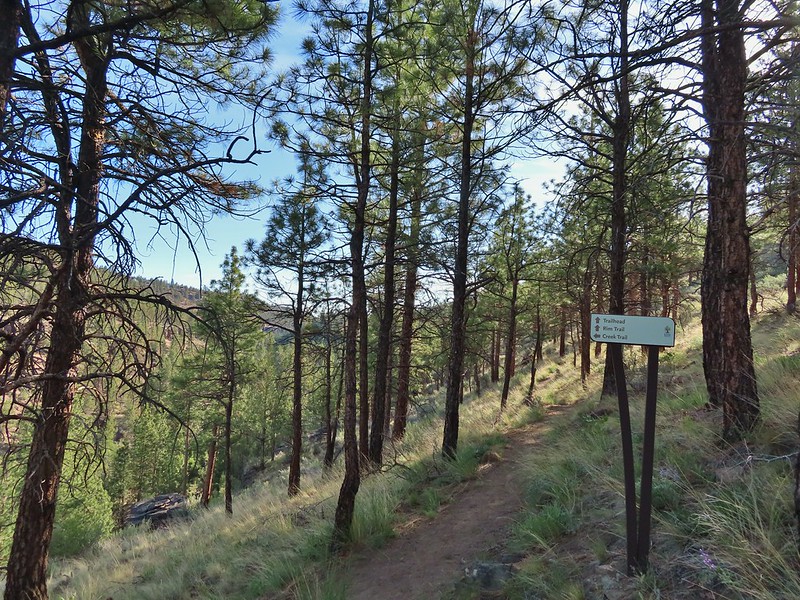
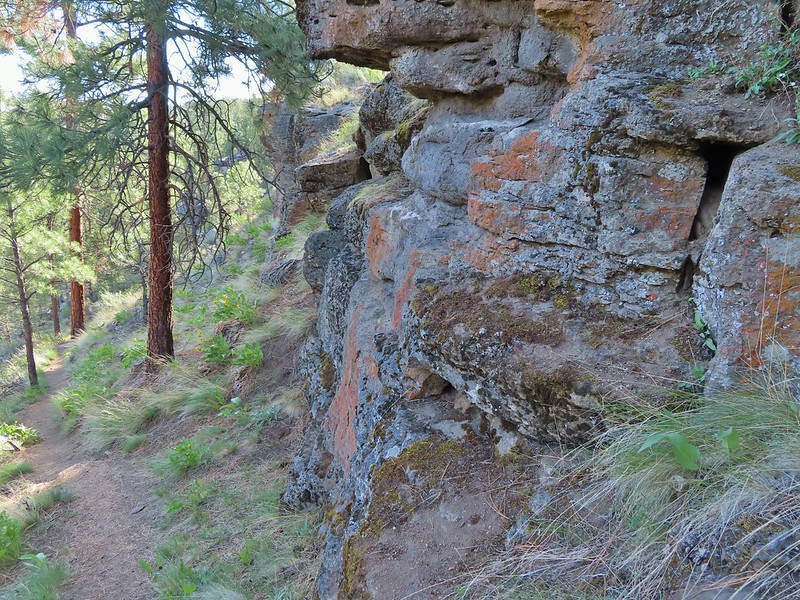

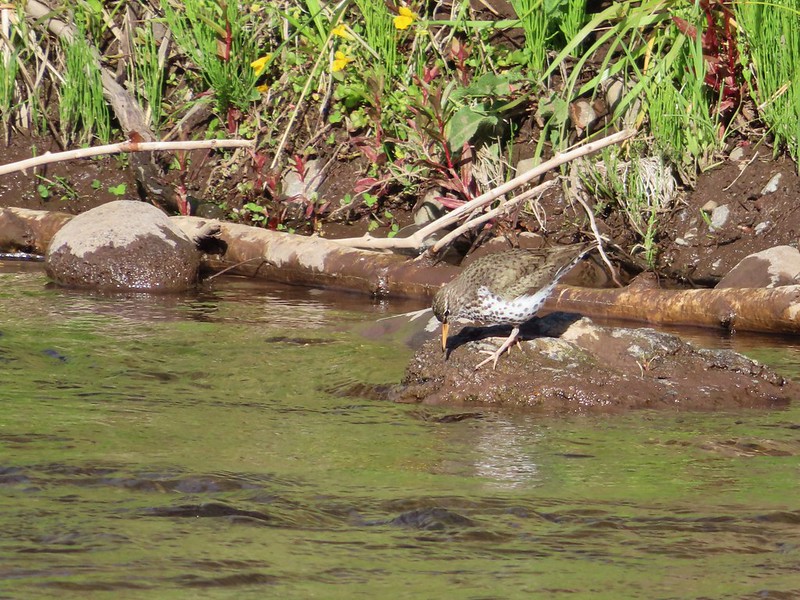

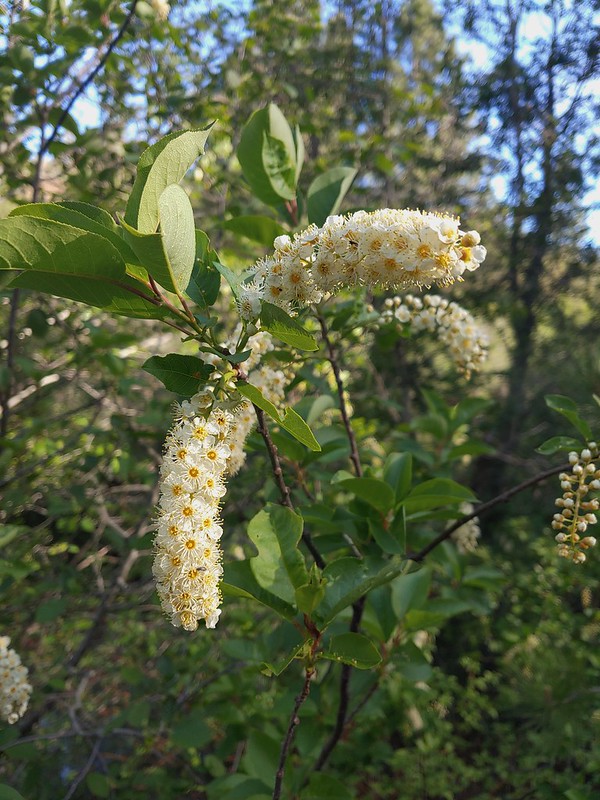 Chokecherry
 Star-flower false solomonseal
 Trail junction at the 0.8 mile mark.
 Spider on a wallflower.
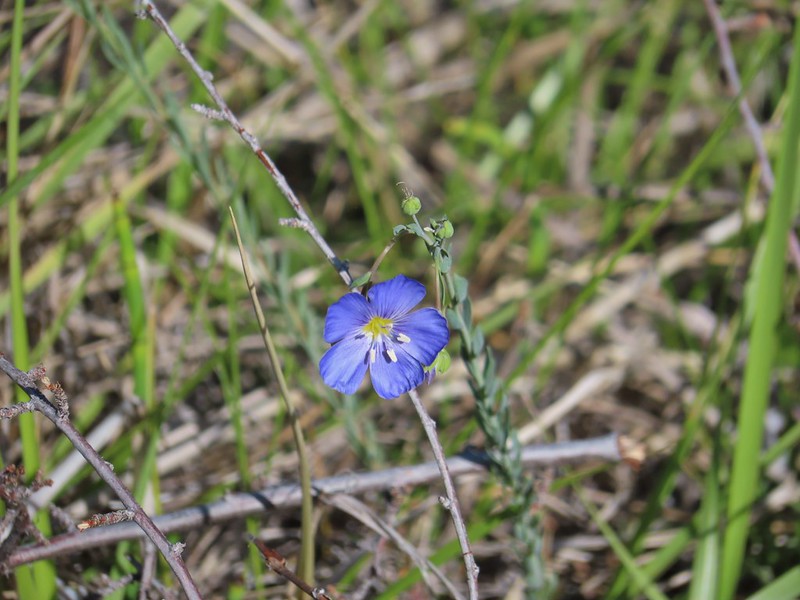 Lewis flax
 Heuchera cylindrica -roundleaf allumroot

 Oregon sunshine
 Buckwheat and penstemon
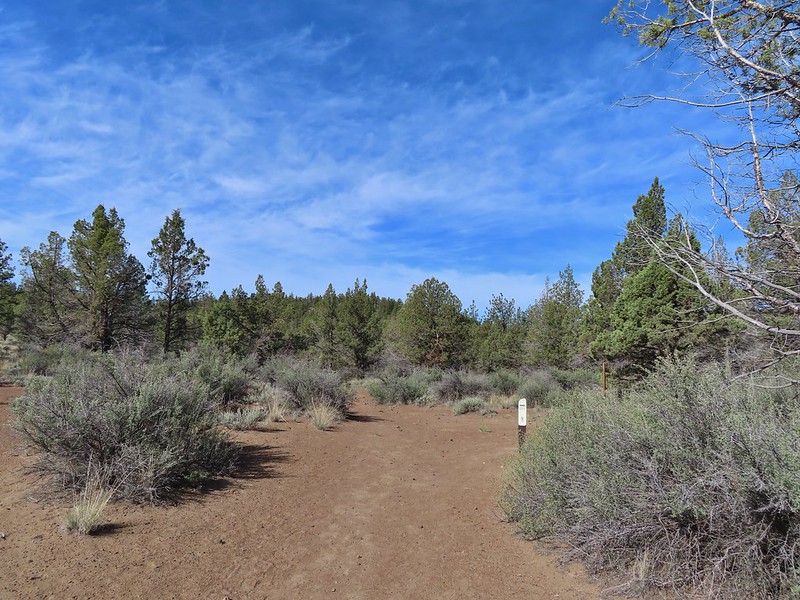 Sign post for the viewpoint.
 Heading for the rock outcrop/viewpoint.
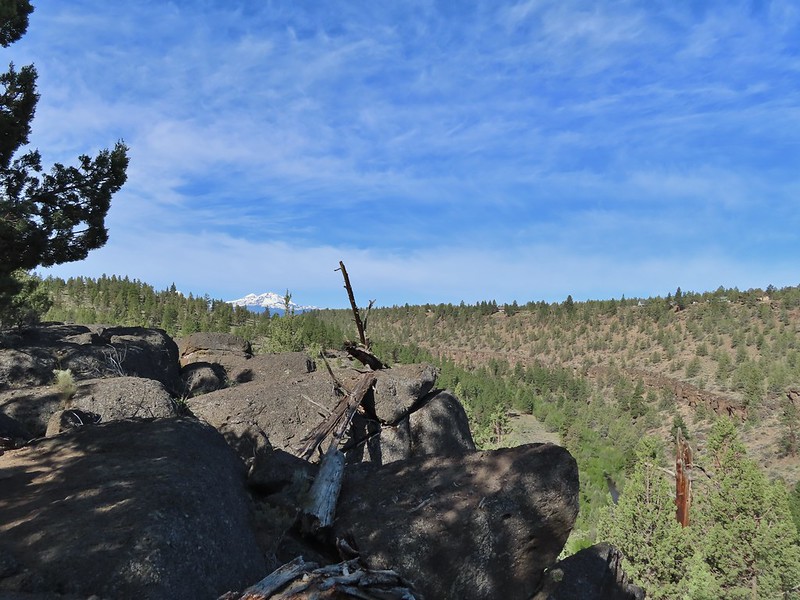 Middle and North Sister with Whychus Creek below.
 A monkeyflower
 Sand lilies
 Trail sign in the distance for spur trail to the Santiam Wagon Road.
 Death camas
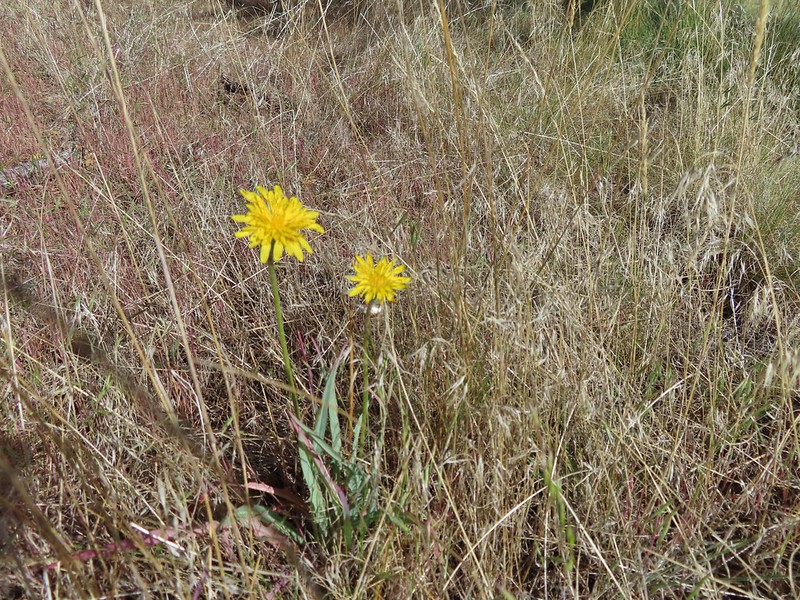 Sagebrush false dandelions
 Pinion jay
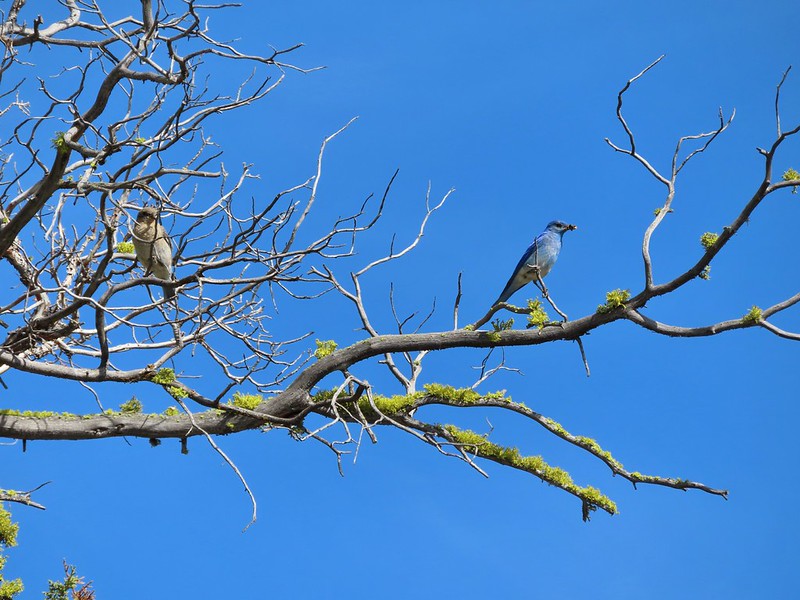 Mountain bluebird pair
 Mourning dove
 unidentified little songbird.
 Lizard
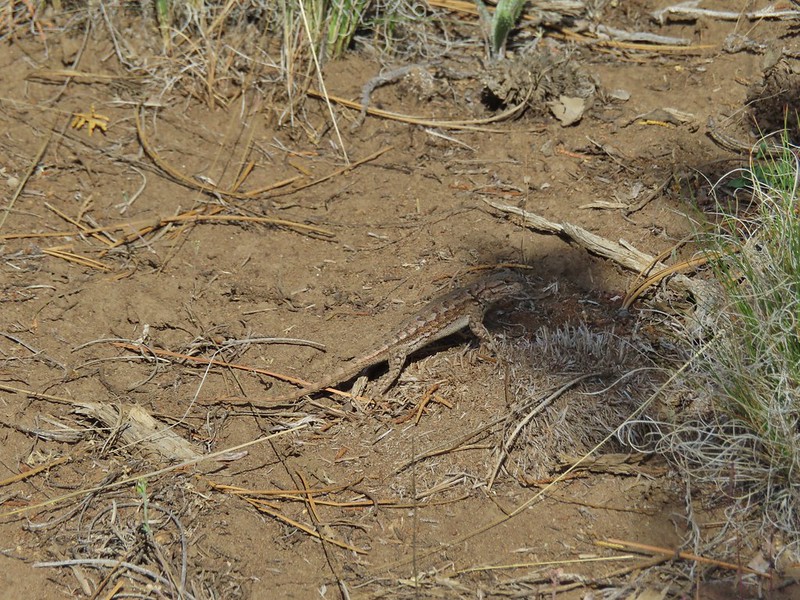 Second type of lizard
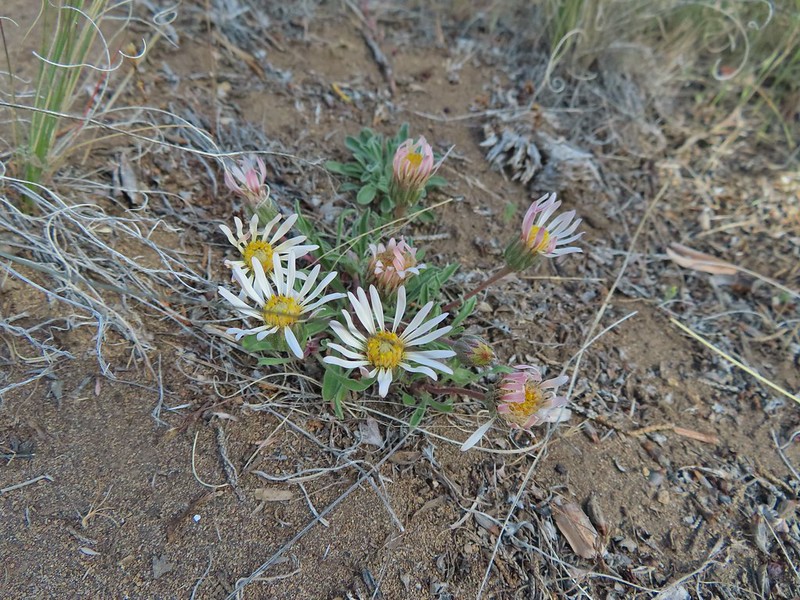 Showy townsendia

 Looking back up the dirt access road to the North Sister, Mt. Washington and Black Butte
 The trailhead signboard.
 Buckwheat
 Rough eyelashweed
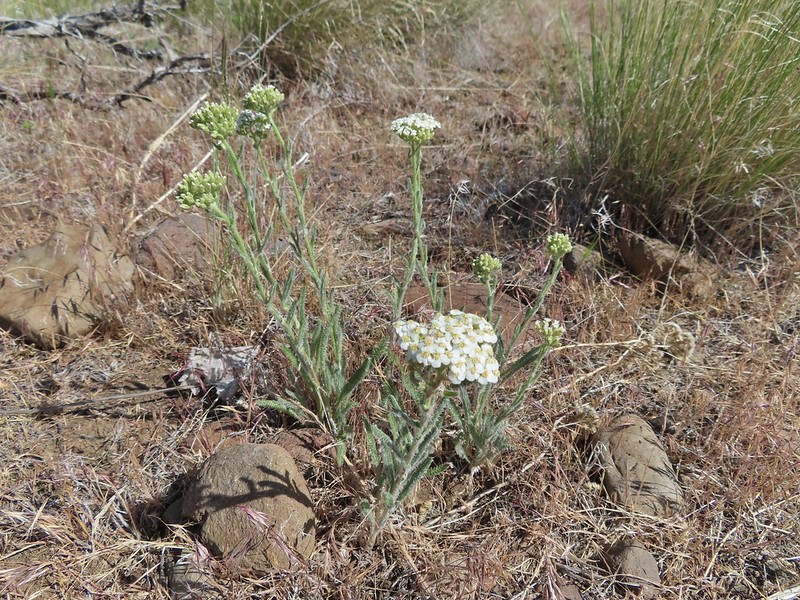 Yarrow
 Fiddleneck
 Largeflower hawksbeard
 Purple cushion fleabane
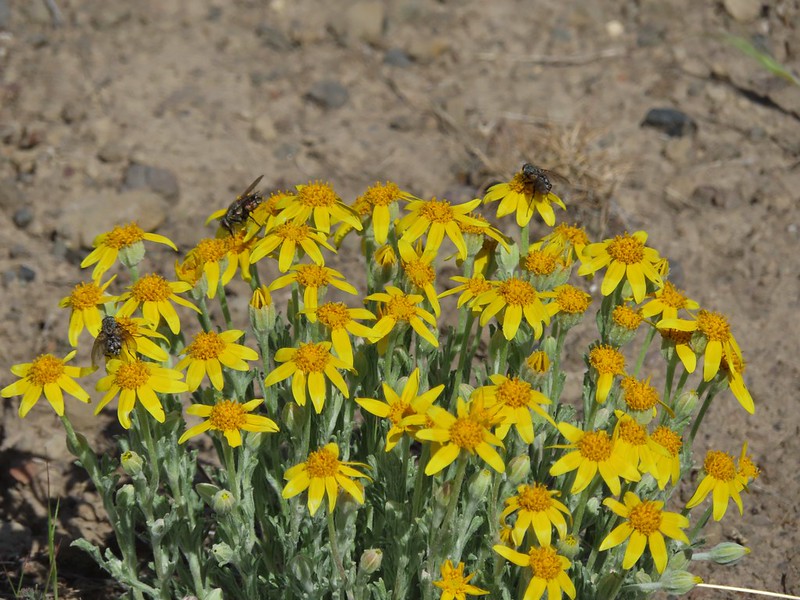 Oregon sunshine
 Blue mountain prairie clover
 Lewis flax
 Lupine
 Bearded hawksbeard
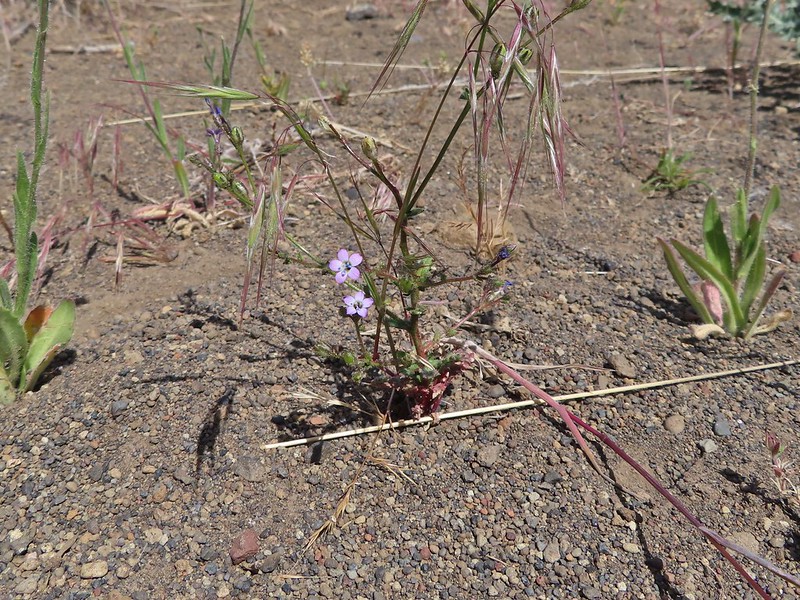 Haven’t id this one yet.
 The Three Sisters, Belknap Crater and Mt. Washington with some dancing clouds.
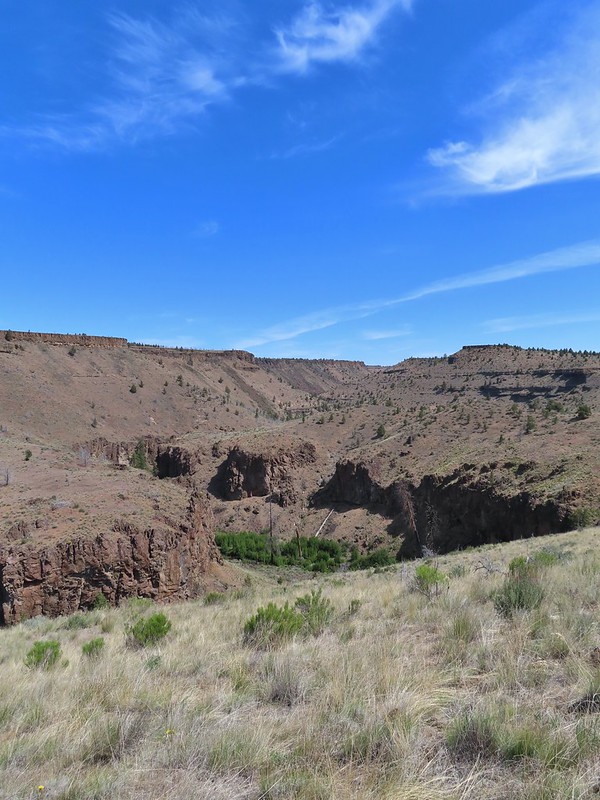 Whychus Creek Canyon
 Love the different rock formations in the canyon.
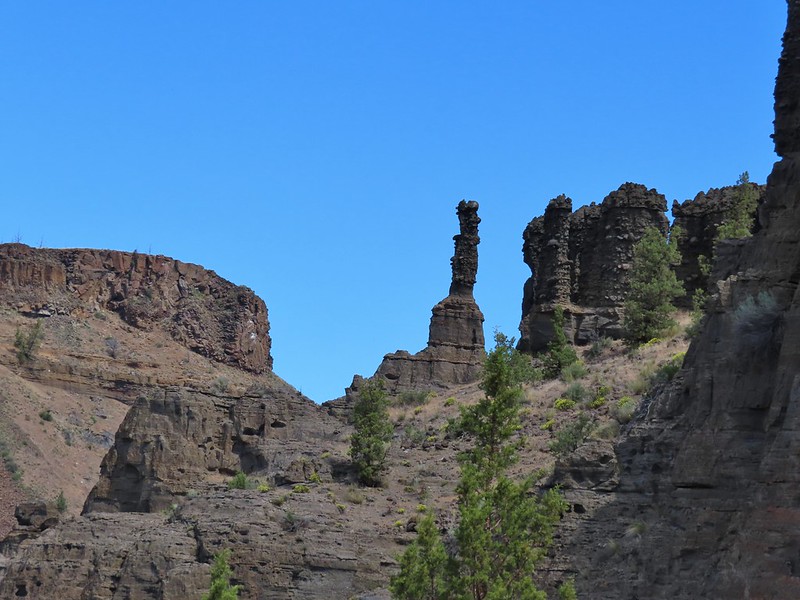
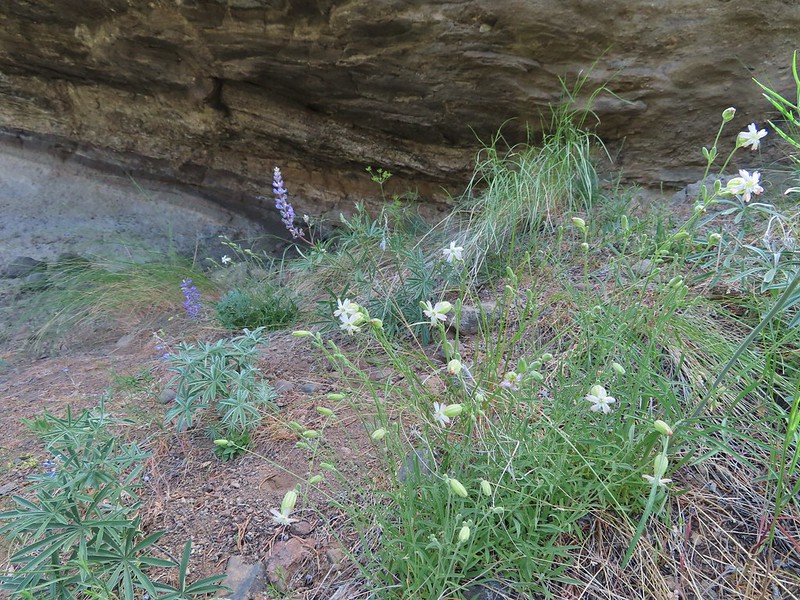 Catchfly
 Balsamroot
 Paintbrush
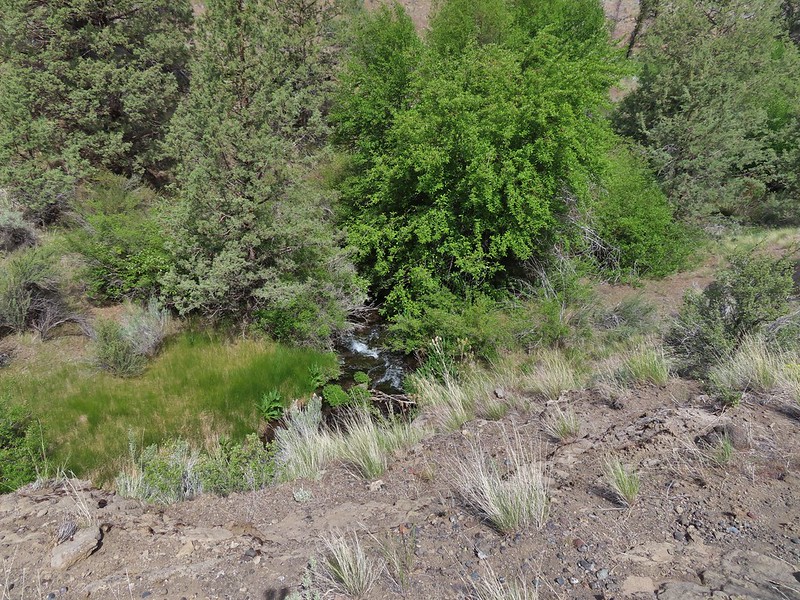 Pretty sure this side creek was dry on our previous visit.
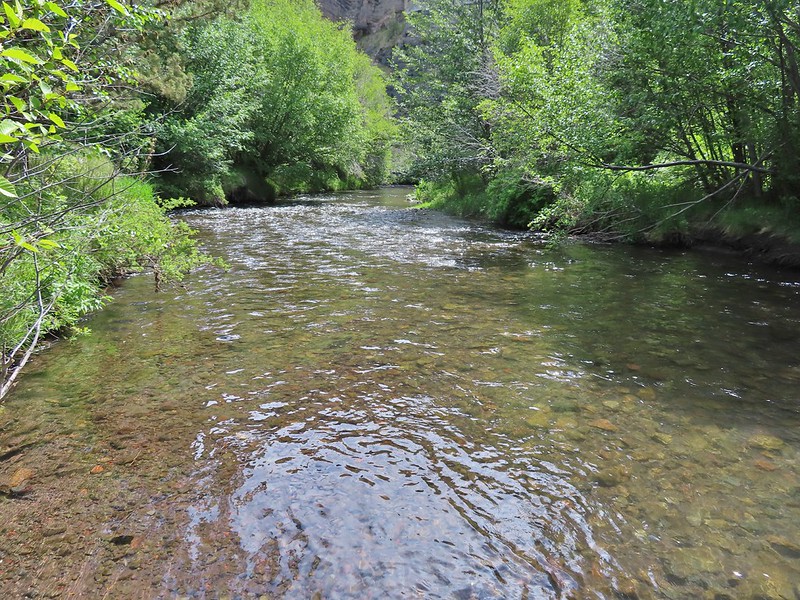 Whychus Creek at the ford.
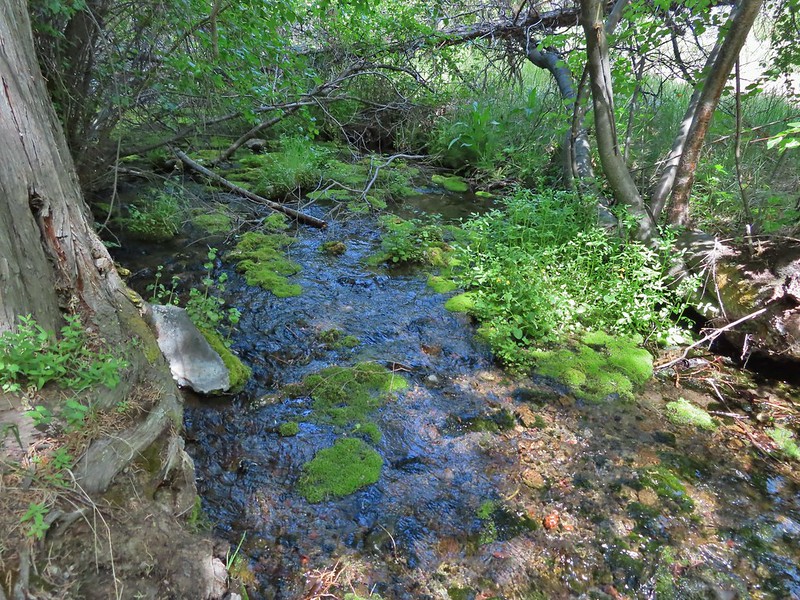 Alder Springs
 Columbine
 A clarkia, possibly Lassen
 Threadleaf phacelia
 Unknown

 Creek dogwood and a beetle covered in pollen
 Grand Colloma
 Deadly nightshade
 Rose with crab spider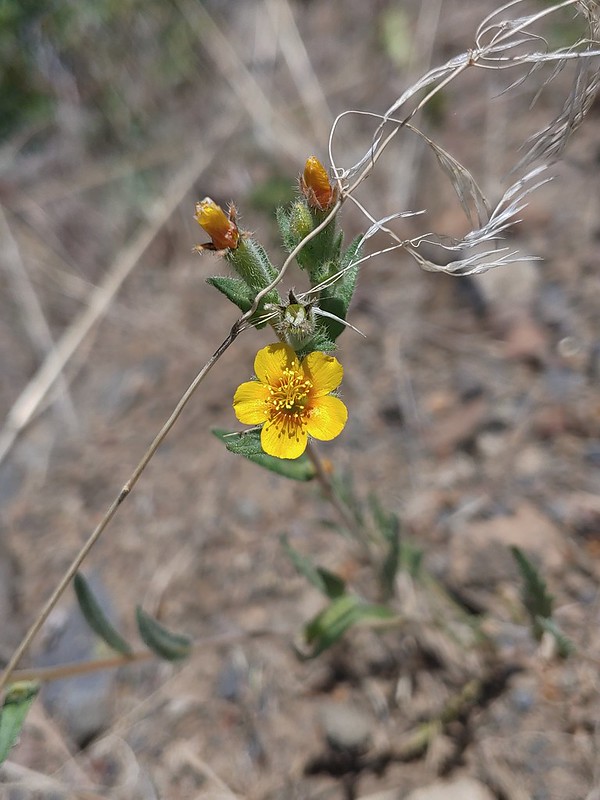


 Dragon fly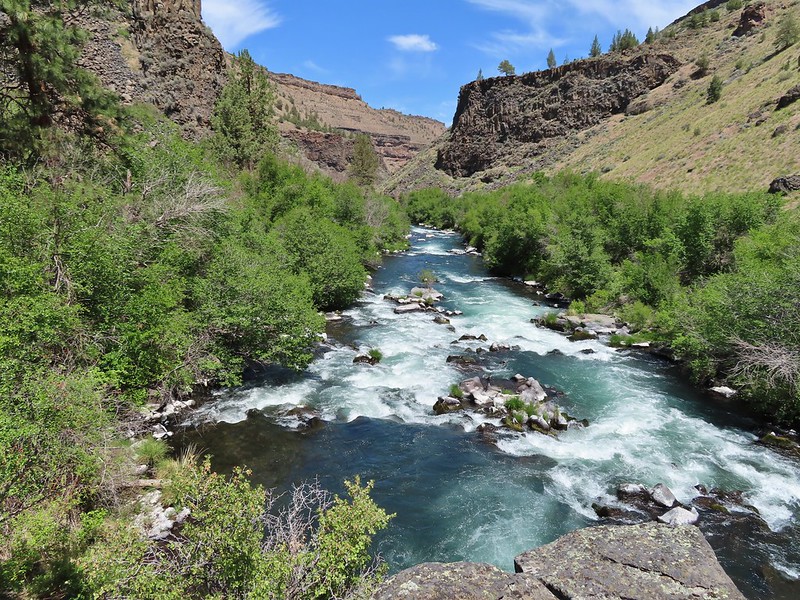
 Confluence of the Deschutes (left) and Whychus Creek (right).
 Bald eagle

 Cedar hairstreak
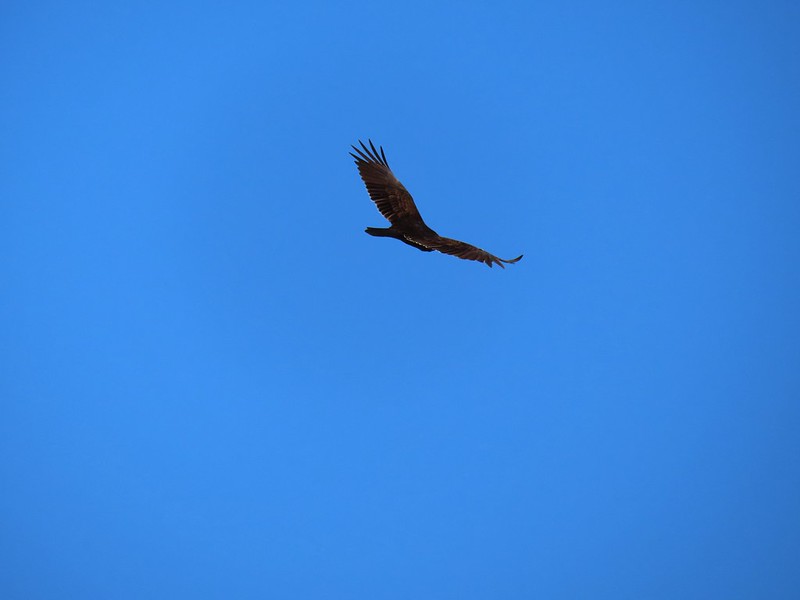 Turkey vulture
 Mountain chickadee
 Trailhead on McGrath Road.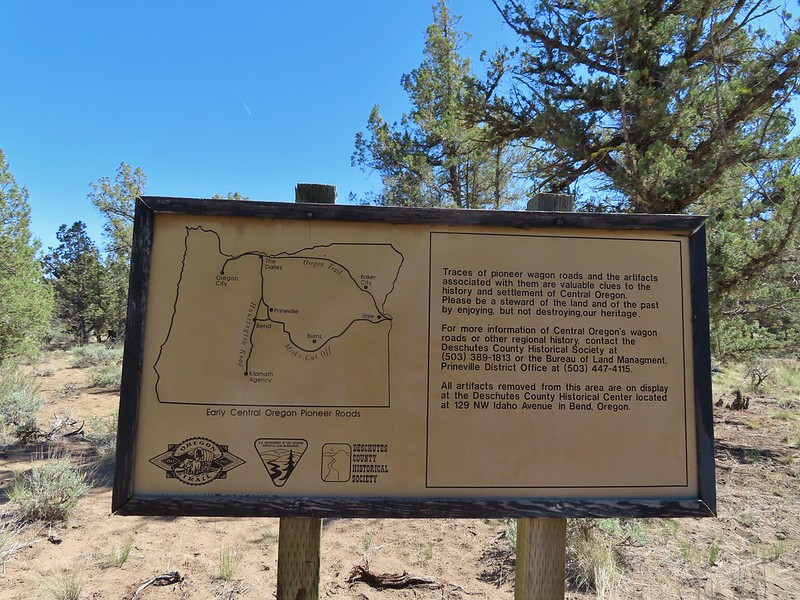
 A 300+ year old juniper named an Oregon Heritage Tree
 Sagebrush, juniper and lava – my childhood 🙂
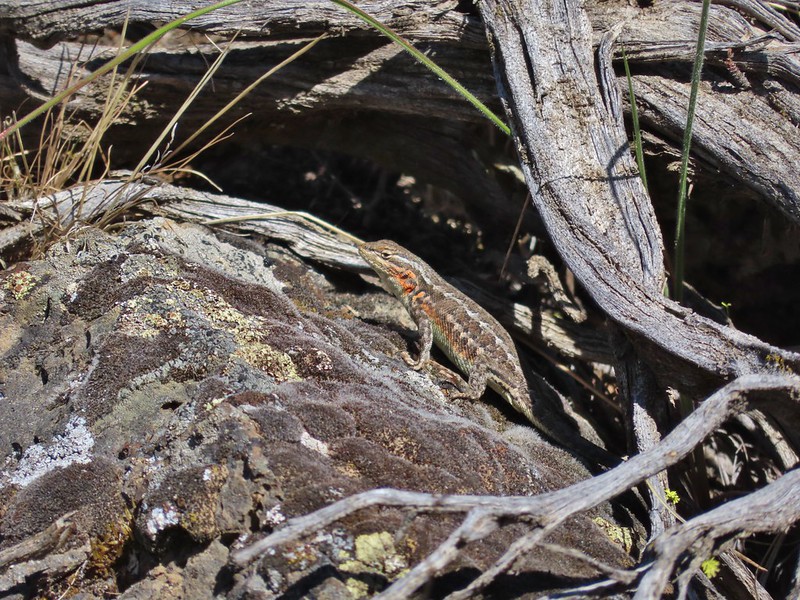
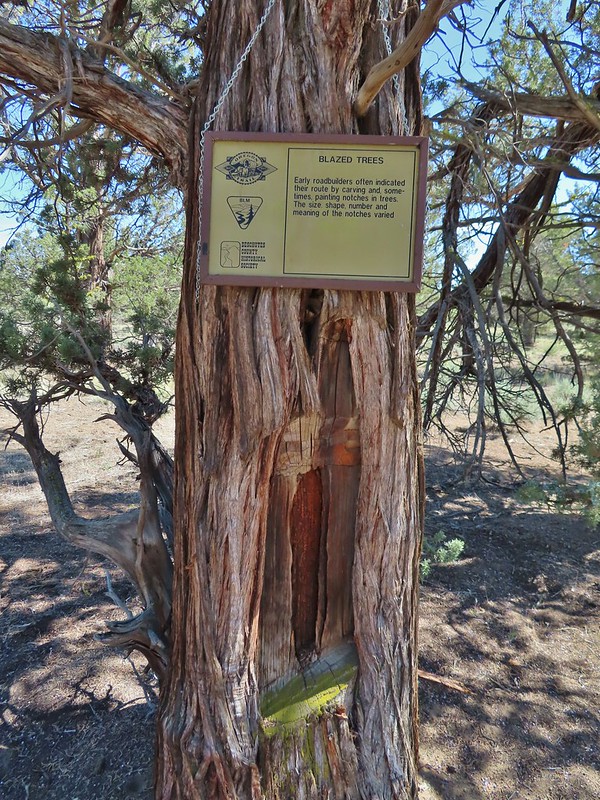 Tree blaze
 Buckwheat
 Ruts along the wagon road.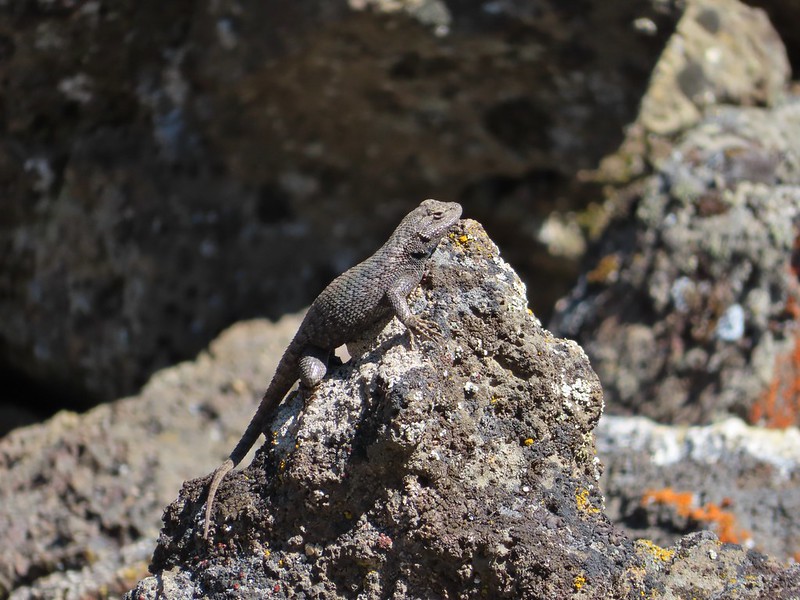
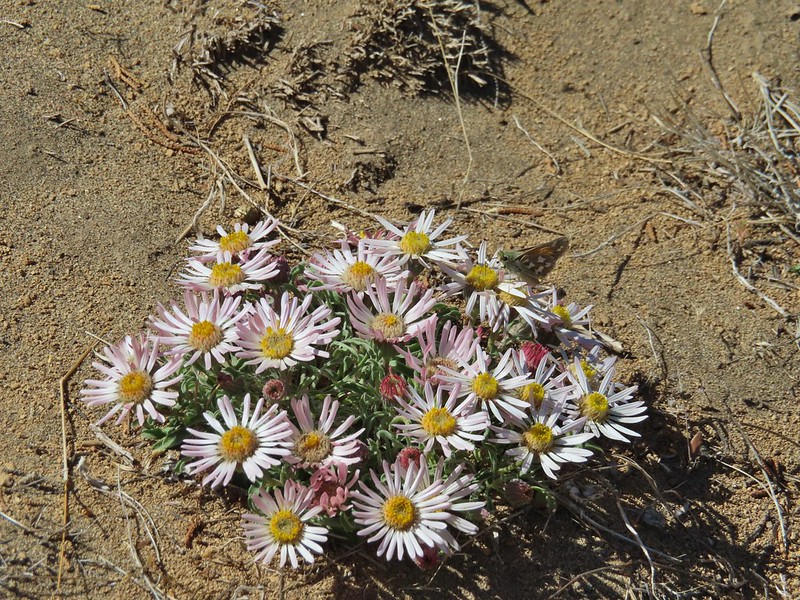 Skipper on Showy townsendia.
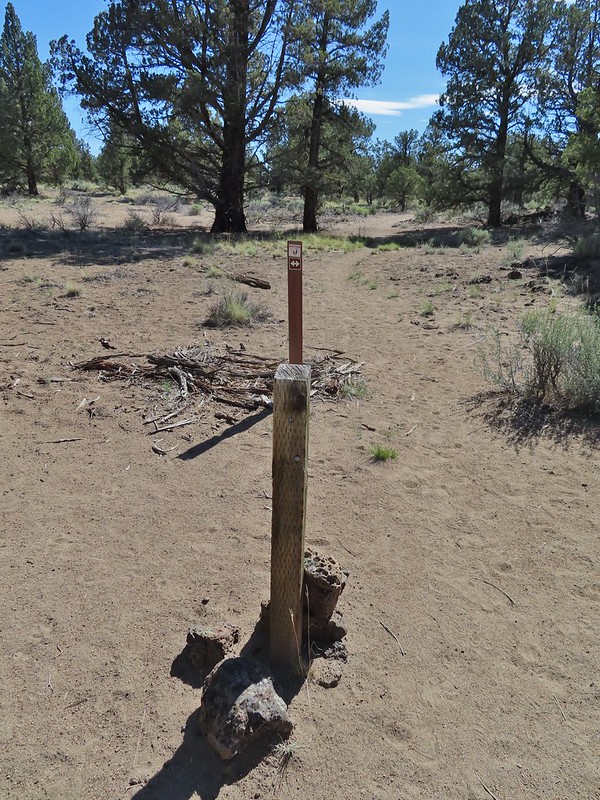 Post marking the relic fence line and turnaround point.
 An old fence post and barbed wire.
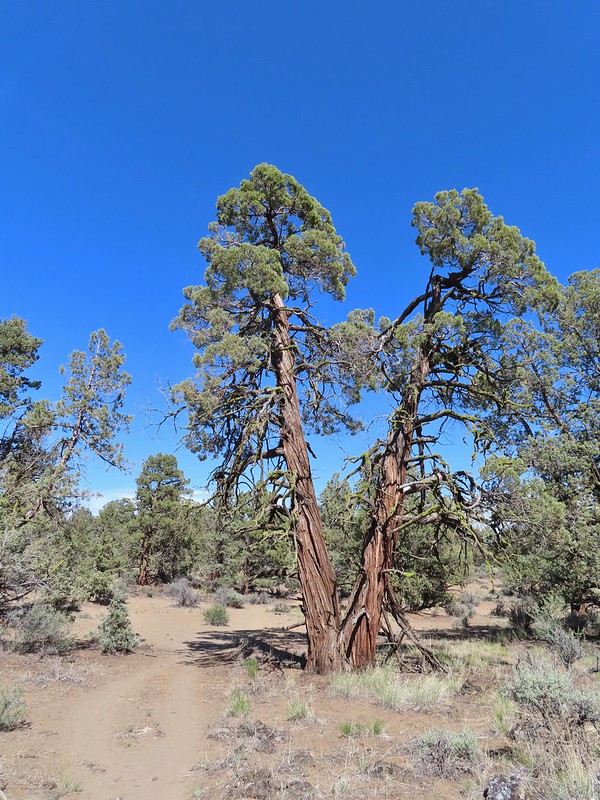 Junipers are some interesting trees, they come in all shapes and sizes.

 Mt. Hood partly obscured by clouds from the parking area.

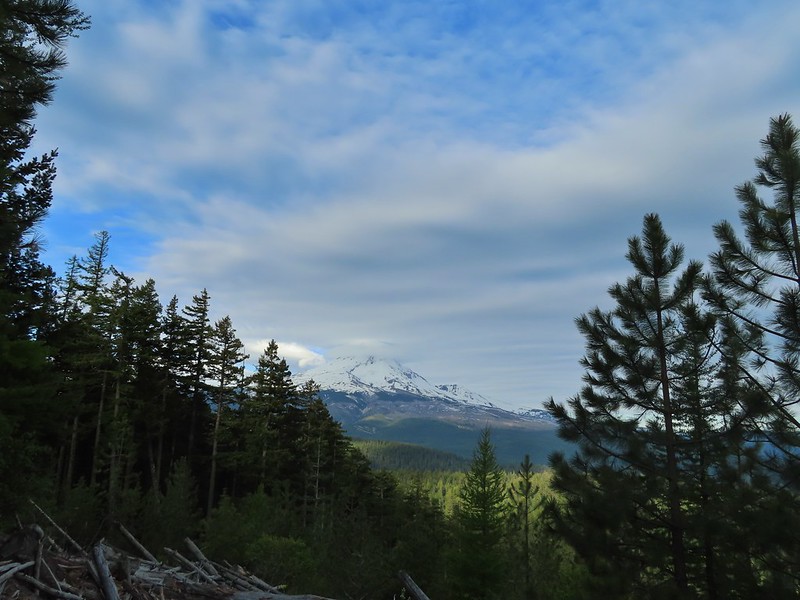
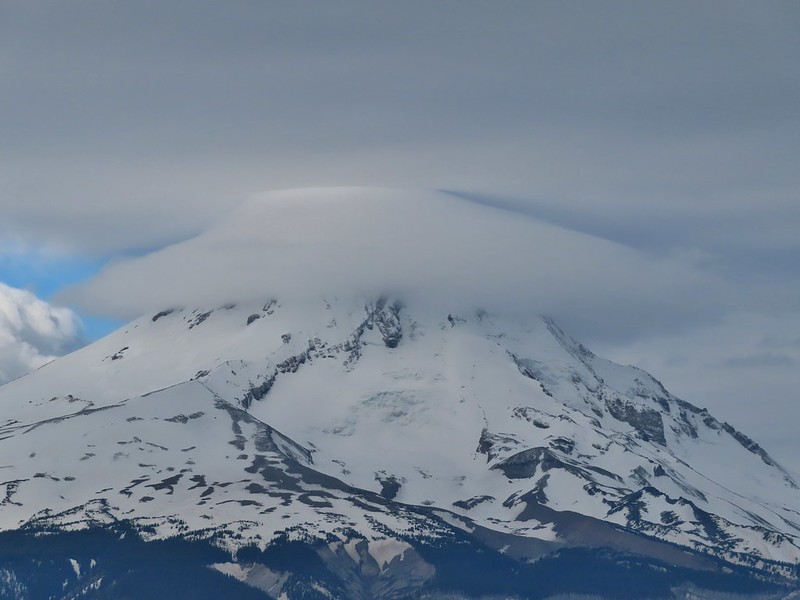
 Manzanita
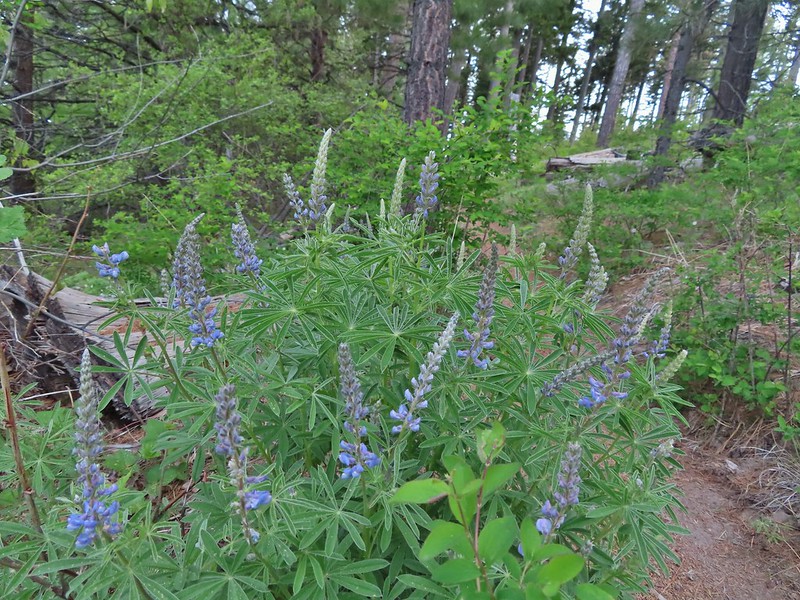 Lupine
 Mt. Hood again.
 Jacob’s ladder
 Red-flowering currant
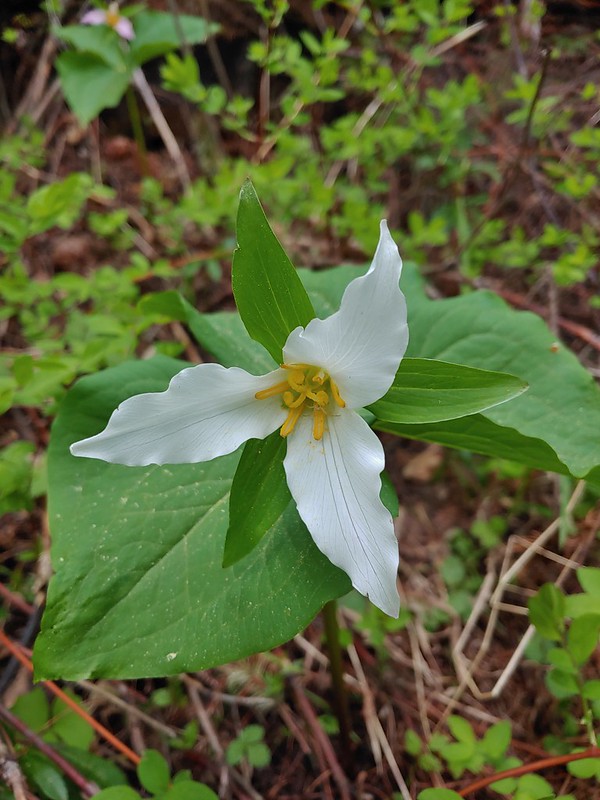 Trillium (can you spot the crab spider?)
 Sticky currant
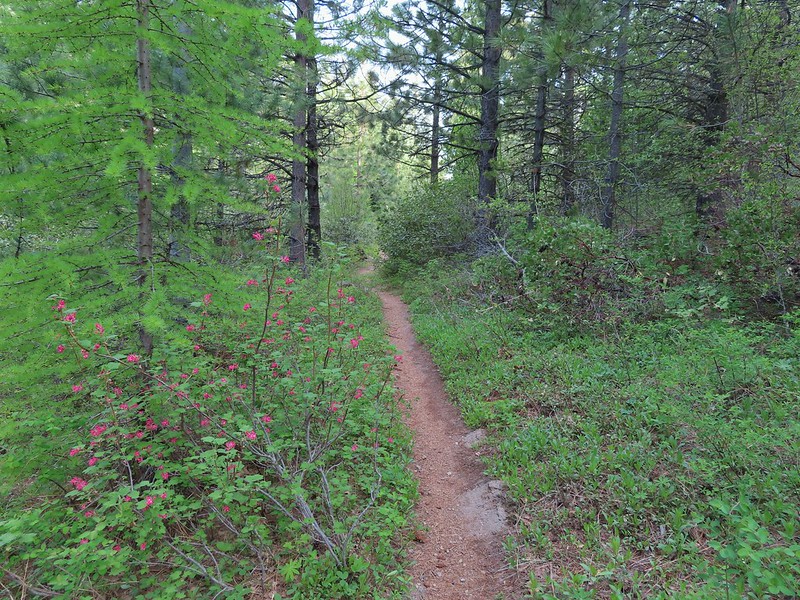 Western larch tree and red-flowering currant on the left.
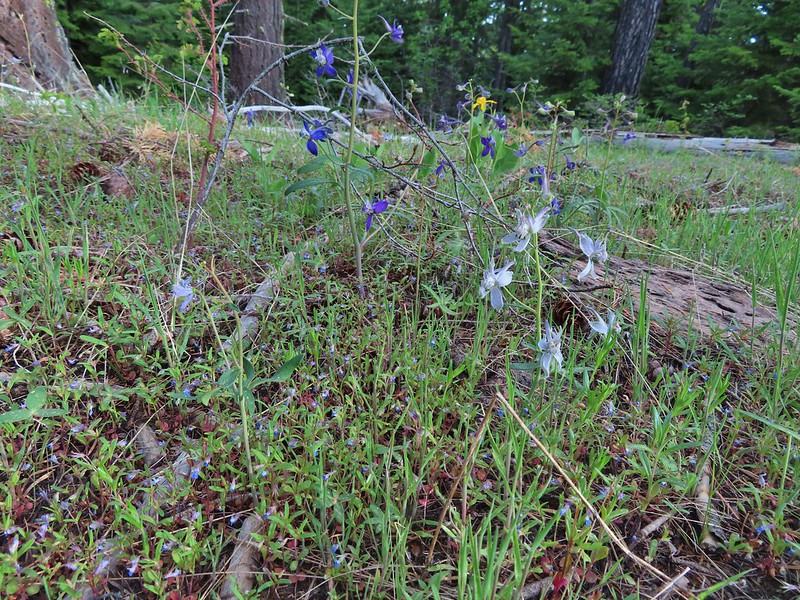 Larks spur and blue-eyed Mary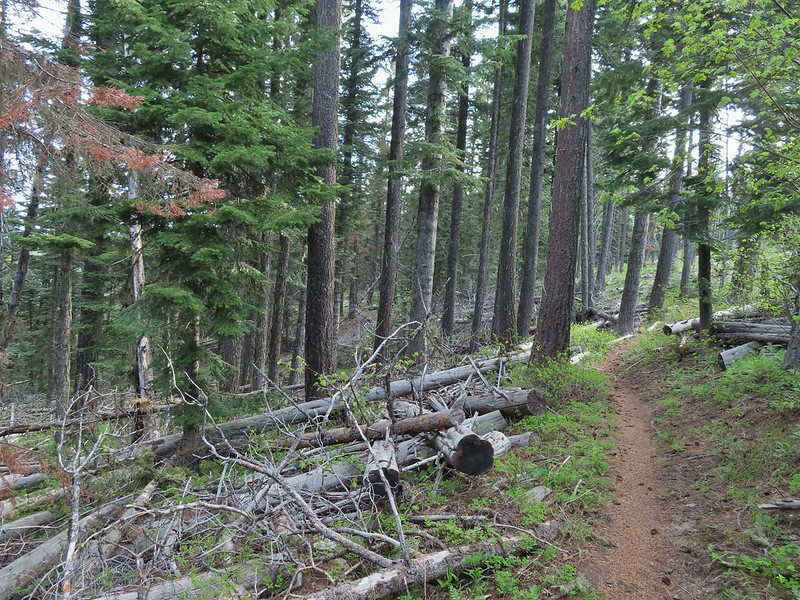
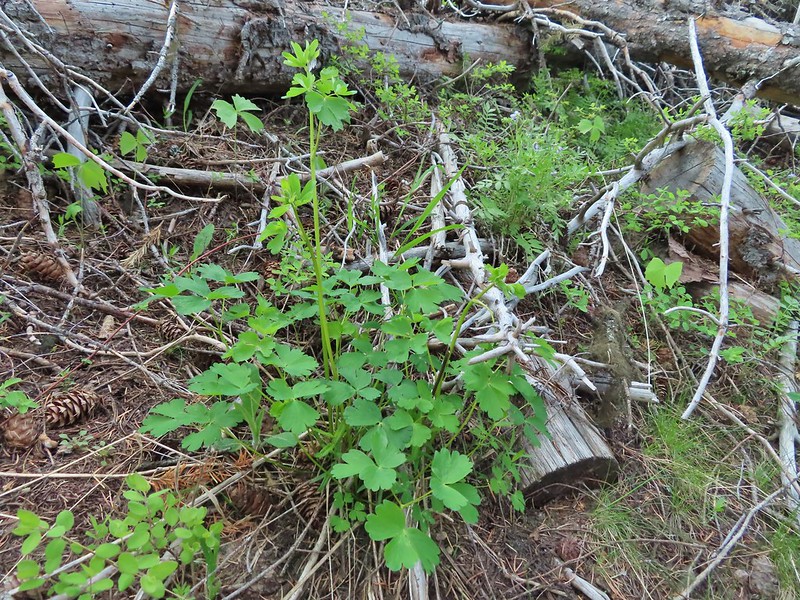 Columbine well before blooming.
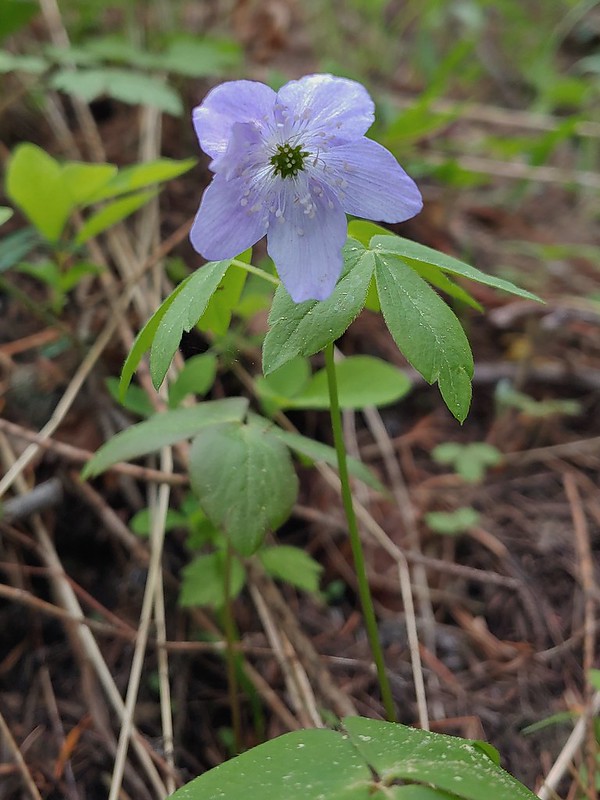 Anemone
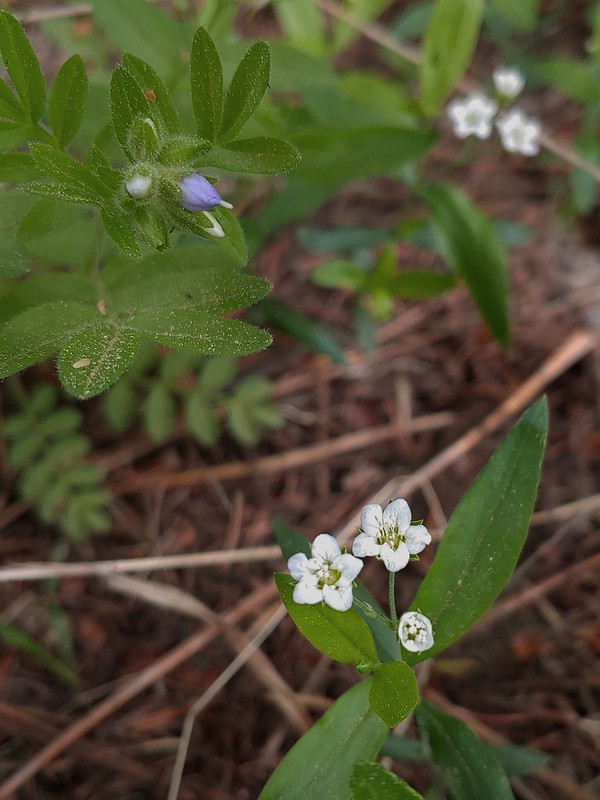 Largeleaf sandwort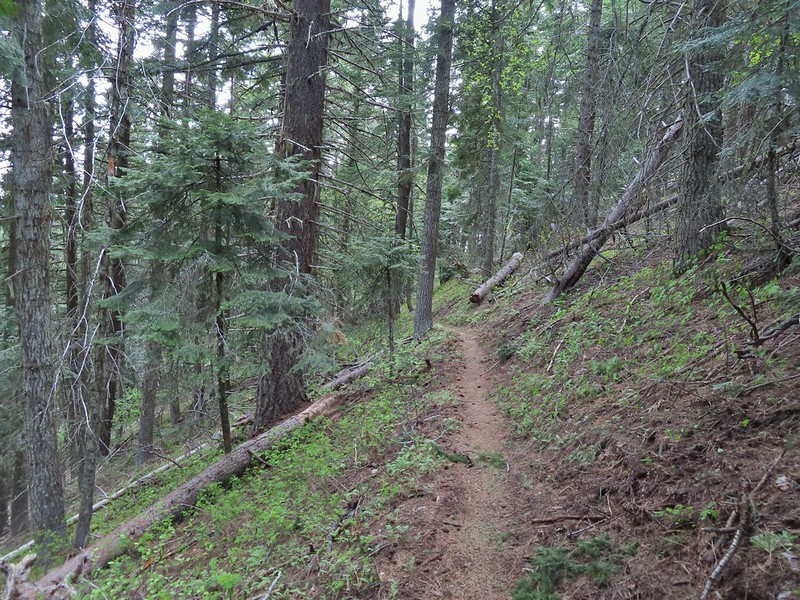
 Vanilla leaf getting ready to bloom.
 Arnica
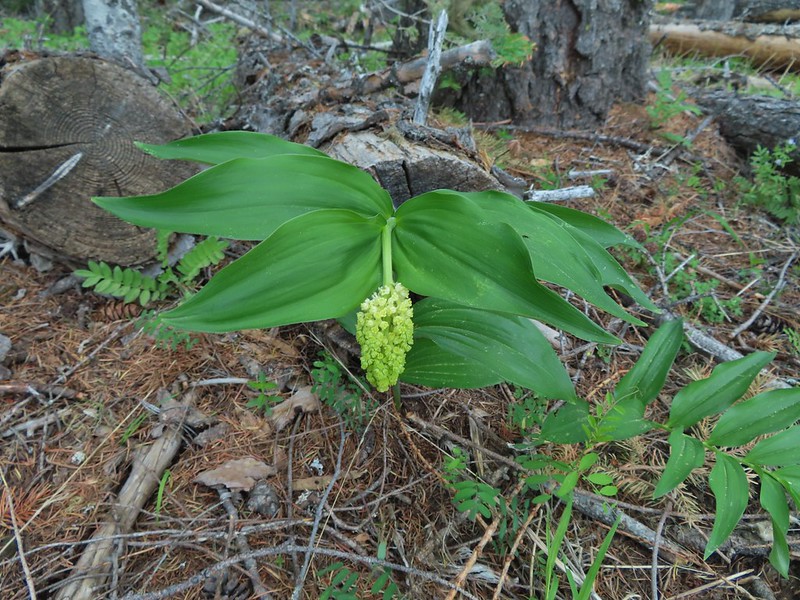 False solomons seal starting to bloom.
 Star-flower false solomons seal prior to blooming.
 Ballhead waterleaf
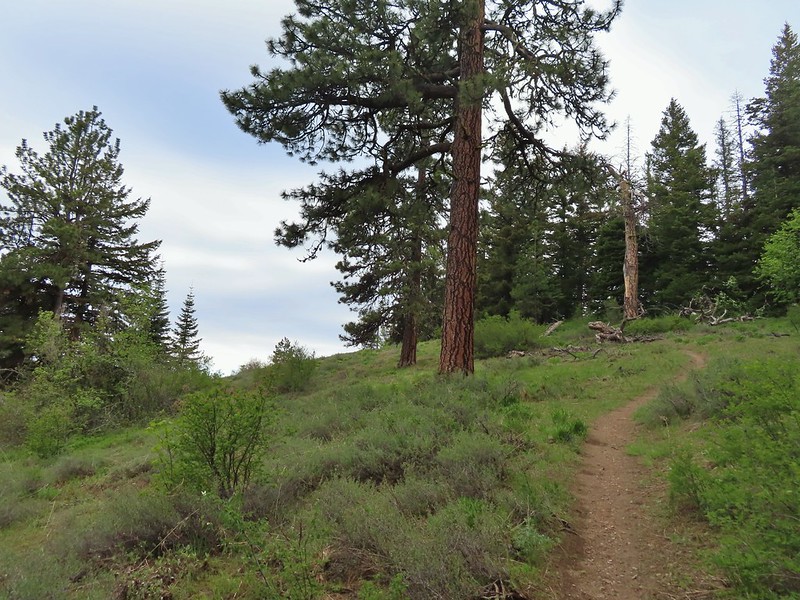 Ponderosa
 Scarlet gilia not yet in bloom.
 Balsamroot
 Hood River Valley and Mt. St. Helens
 Mt. St. Helens
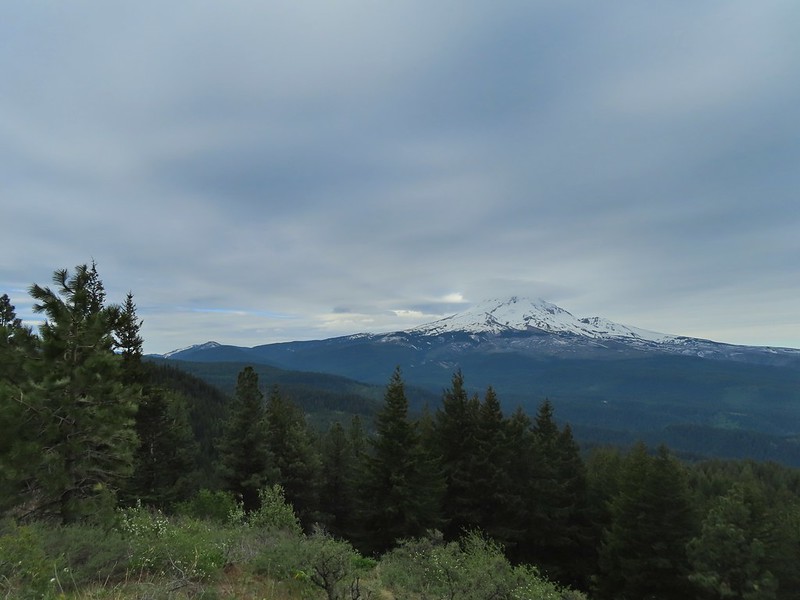 Mt. Hood
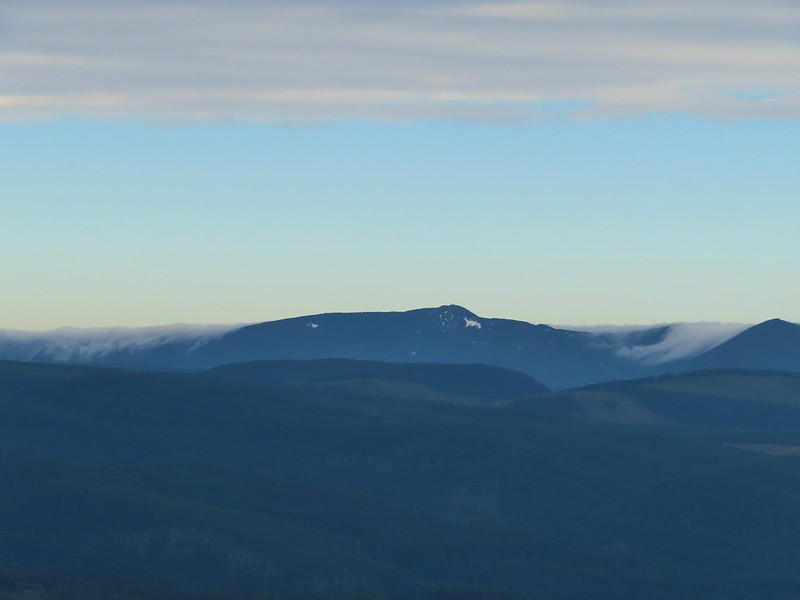 Indian Mountain (
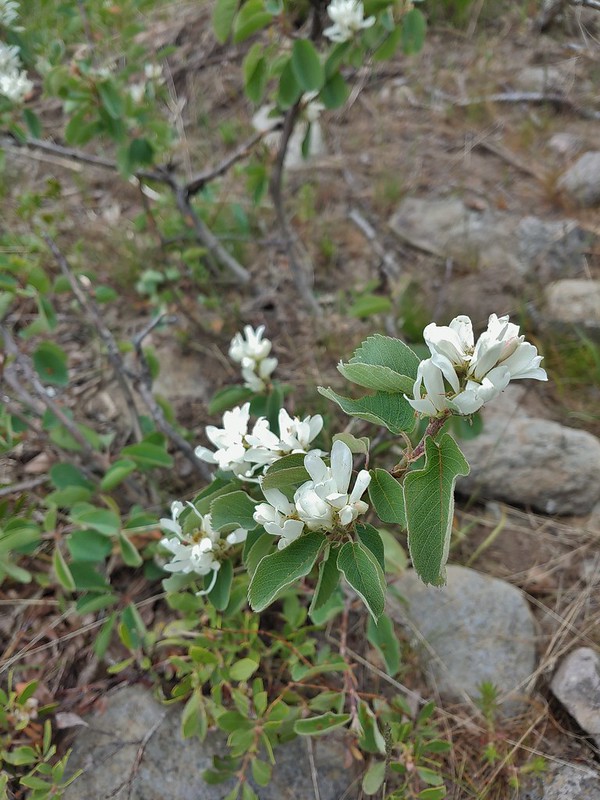 Western serviceberry
 Fairy bells
 Glacier lily
 Shellrock Mountain from the trail.

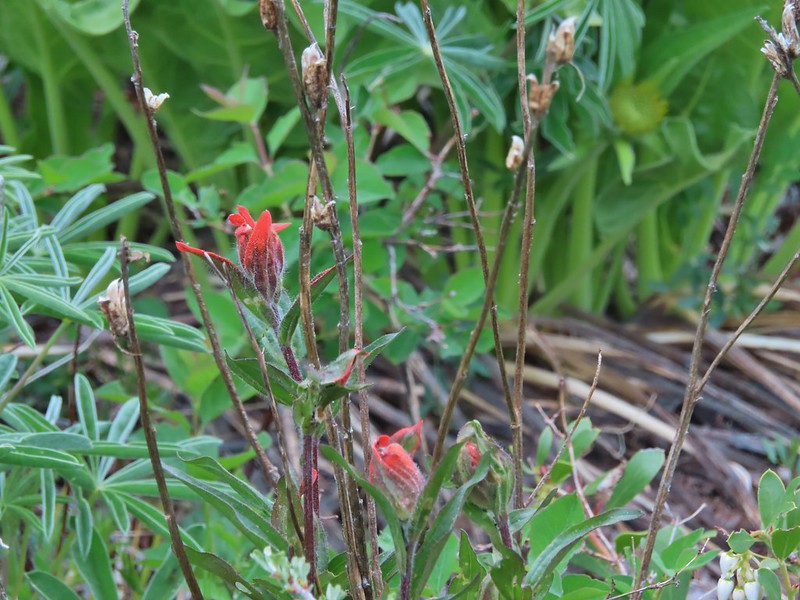 First paintbrush of the day spotted in the little meadow.
 User trail to the left.


 Shellrock Badlands Basin, an eroded volcanic formation.
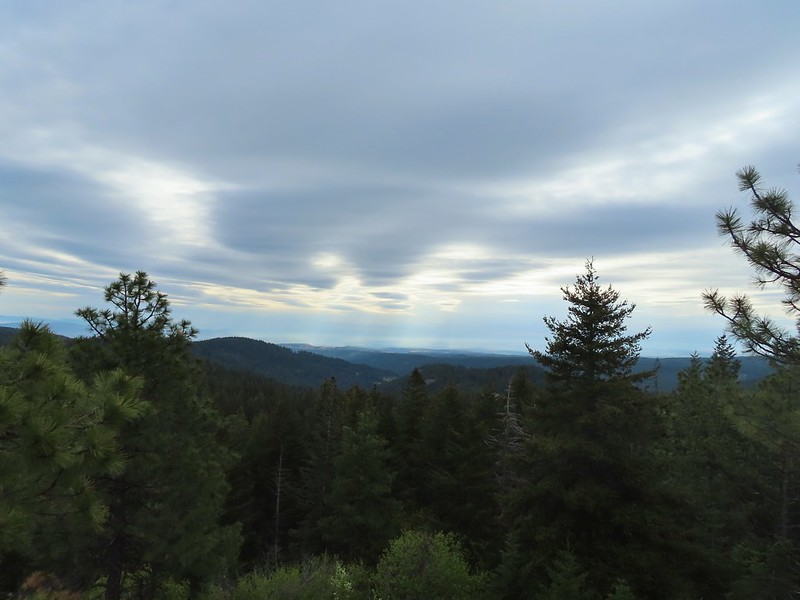 View east into Central Oregon.
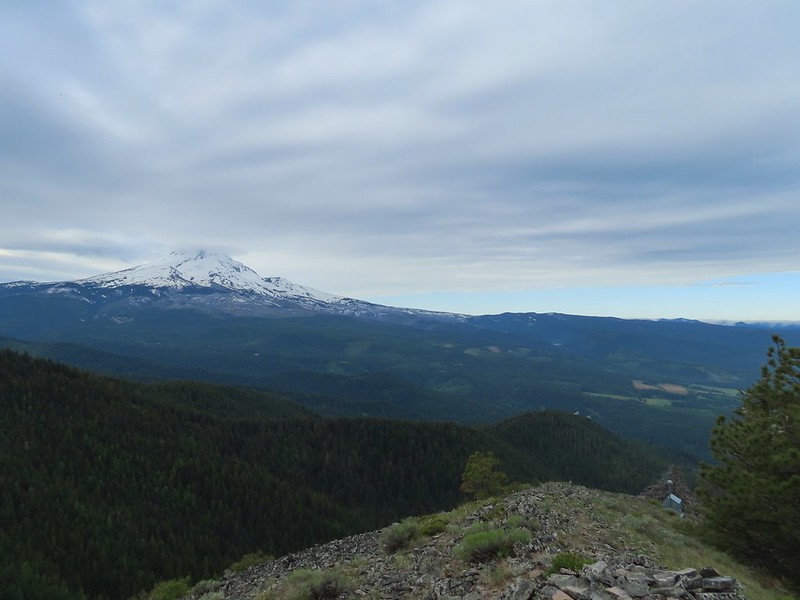 Mt. Hood
 Mill Creek Buttes with Lookout Mountain and Gunsight Butte (
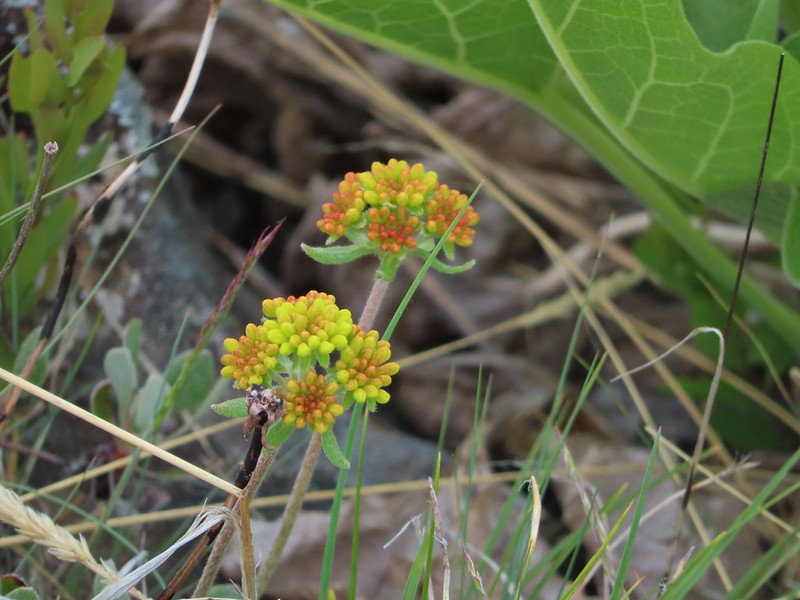 Buckwheat
 Bird below Shellrock Mountain.
 A whole lot of trillium.
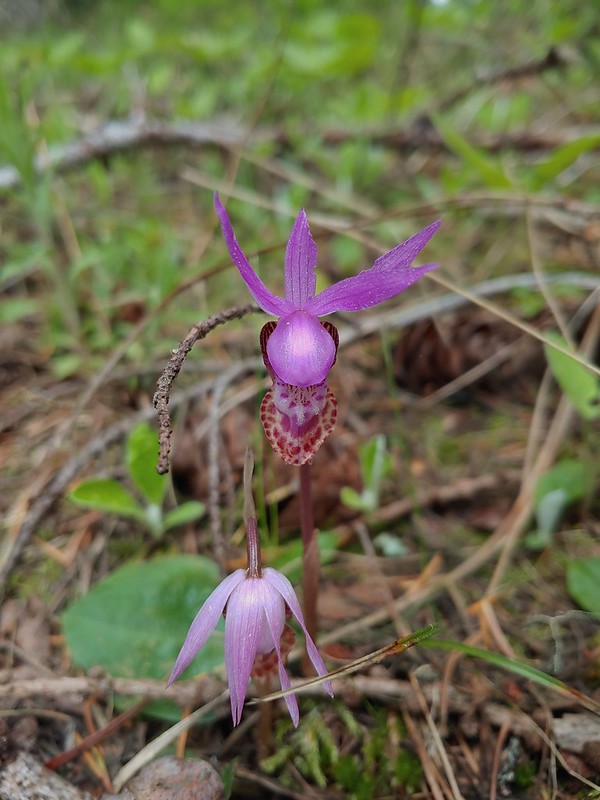 Fairy slippers
 Sign at the trailhead.


 parsley and popcorn flower.
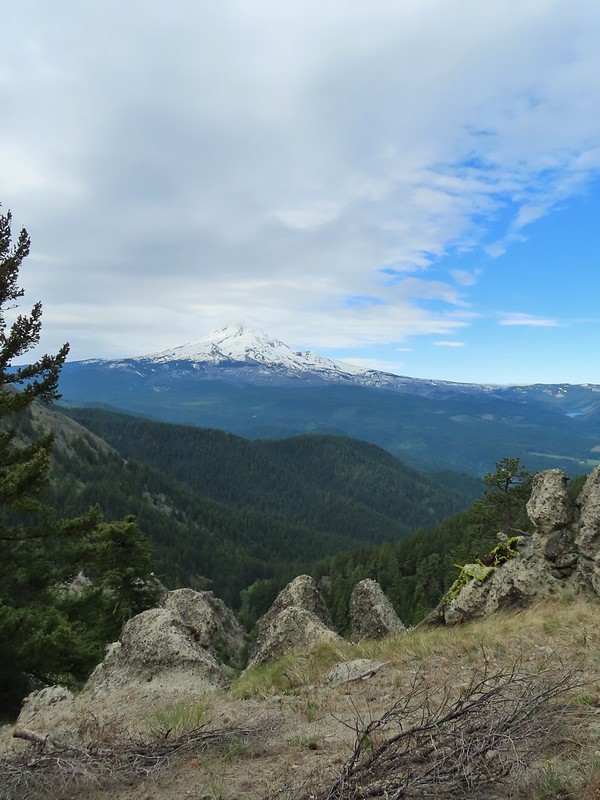

 Lupine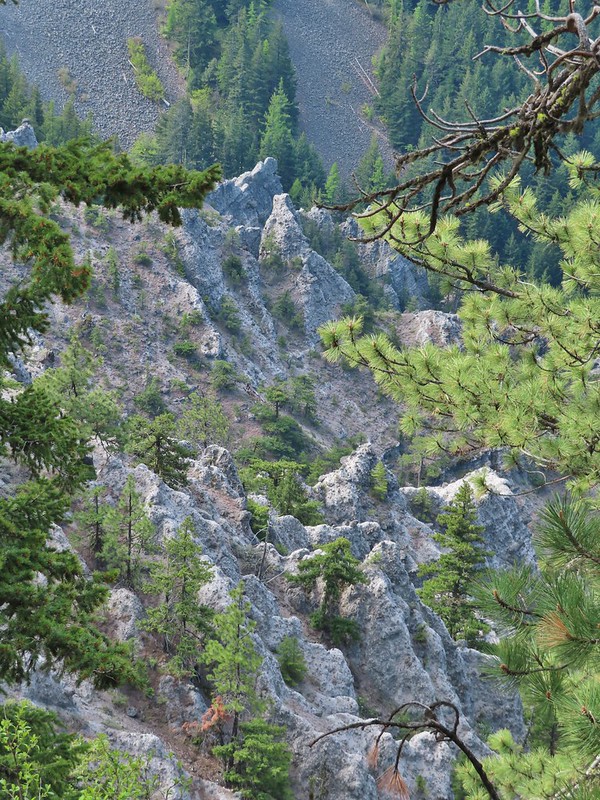


 I frequently have insects hitching rides, so often that we joke about me being an Uber for bugs.
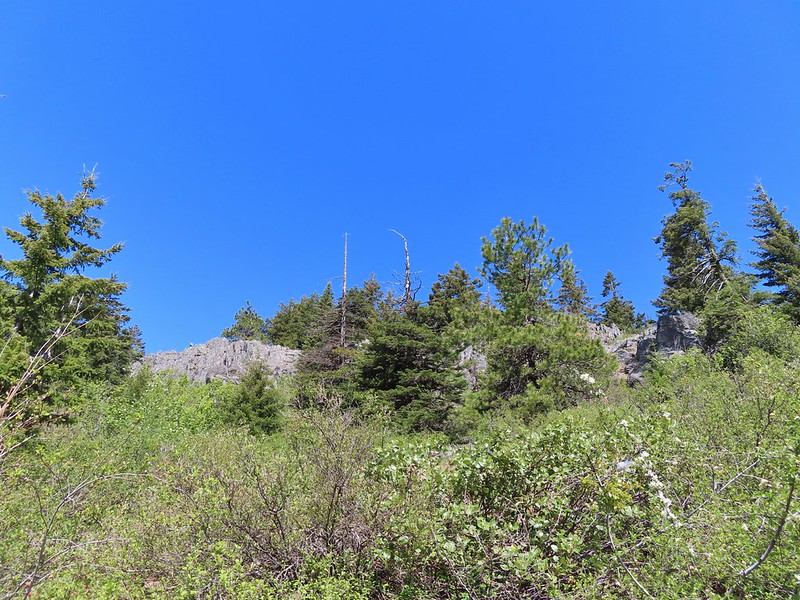 Rock out cropping in the Rim Rock section of trail.
 Tailed kittentails
 Western tanager female
 Western tanager male
 View from a rocky viewpoint just before crossing from the east side of the ridge back to the top.
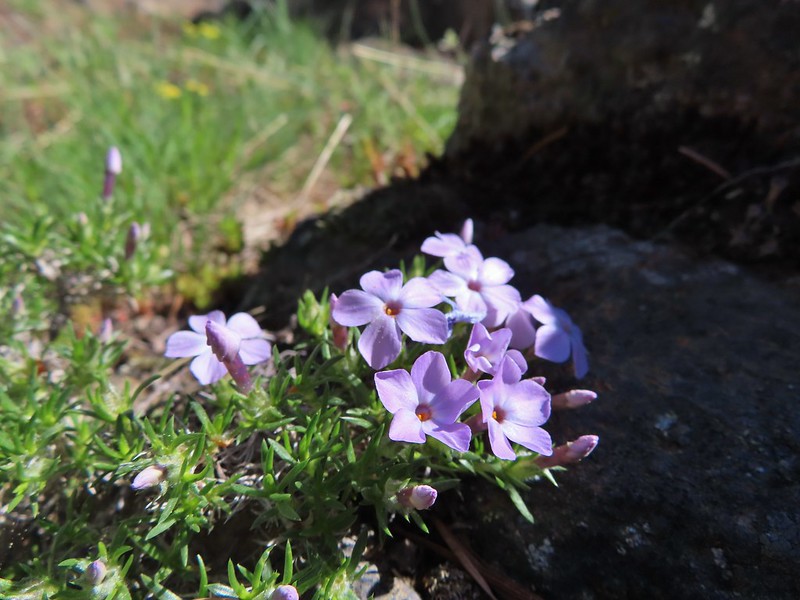 Phlox
Phlox


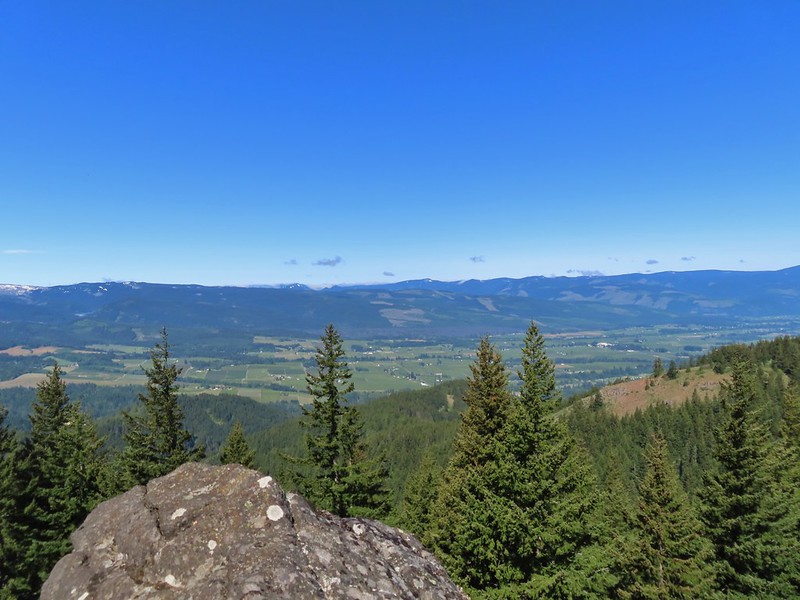 Hood River Valley
 Clouds encroaching on Mt. Adams.
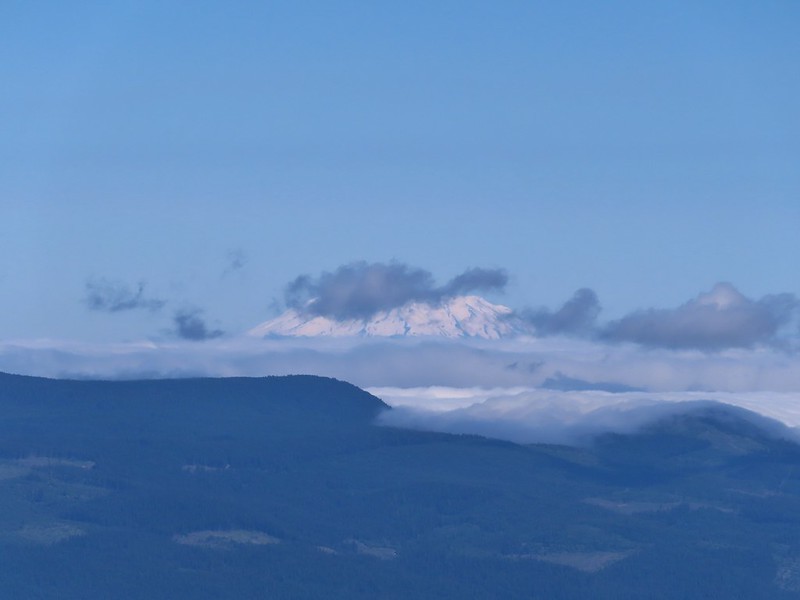 Mt. St. Helens
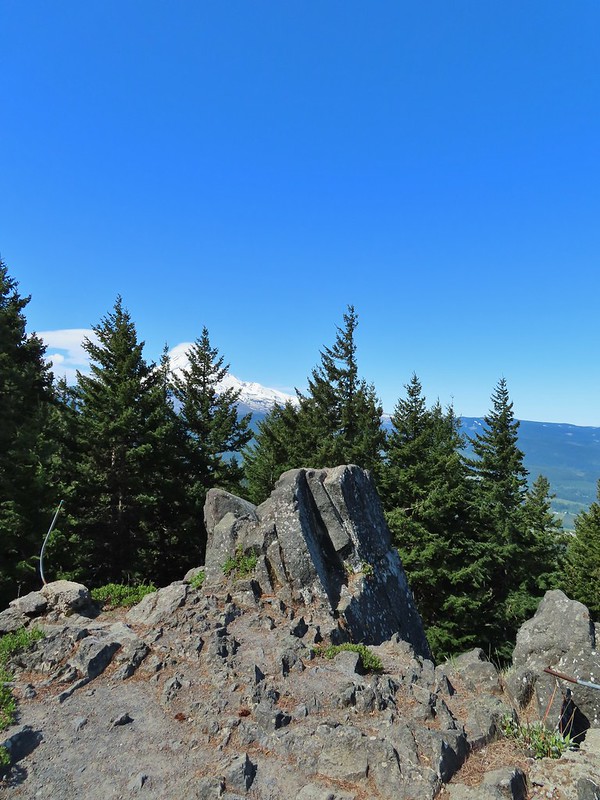 The other viewpoint had a better view.
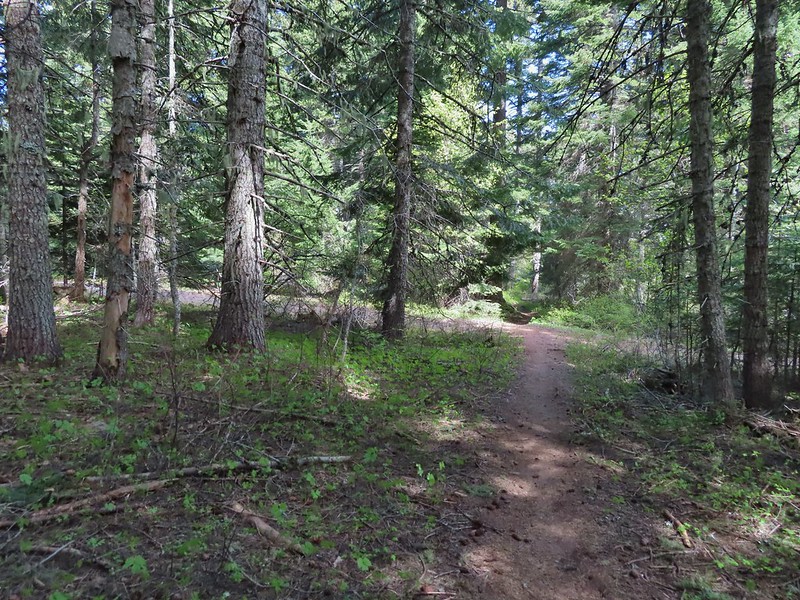 The first roadbed crossing.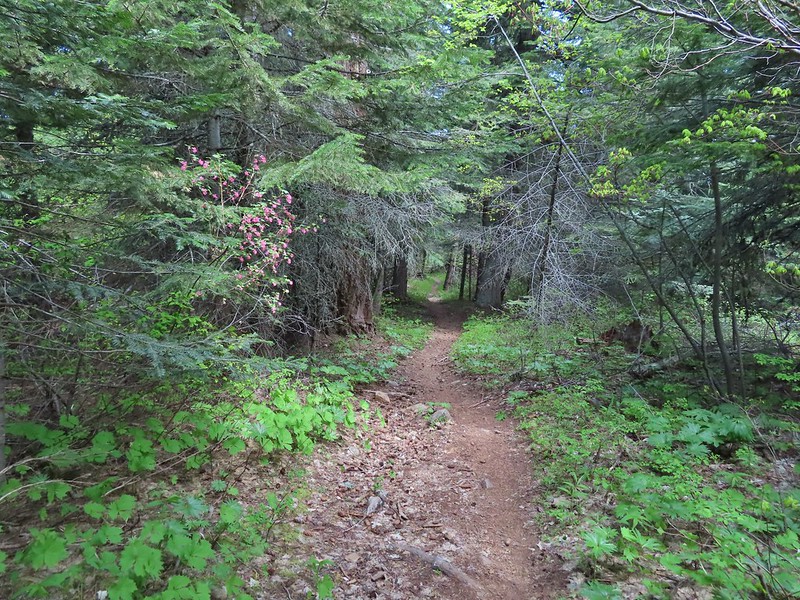
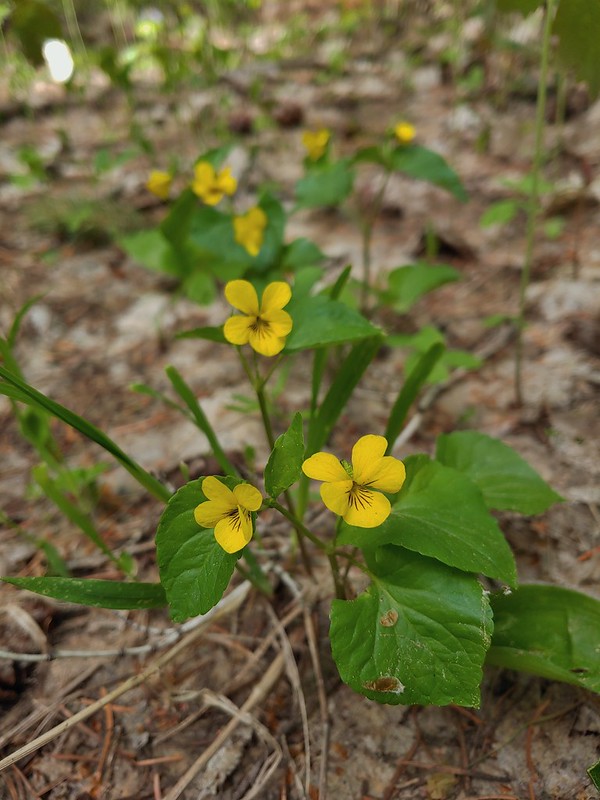 Violets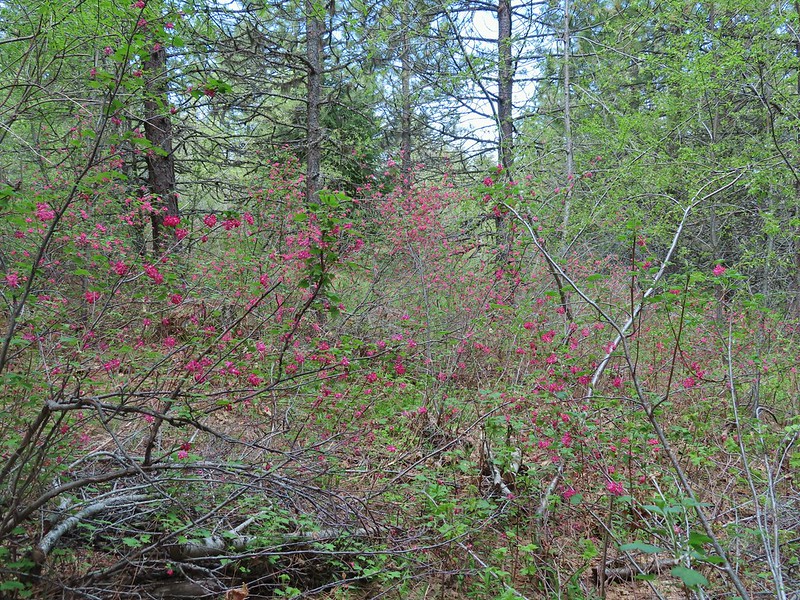
 Trail signs at the second road crossing.
 Coralroot sprouting
 Balsamroot and paintbrush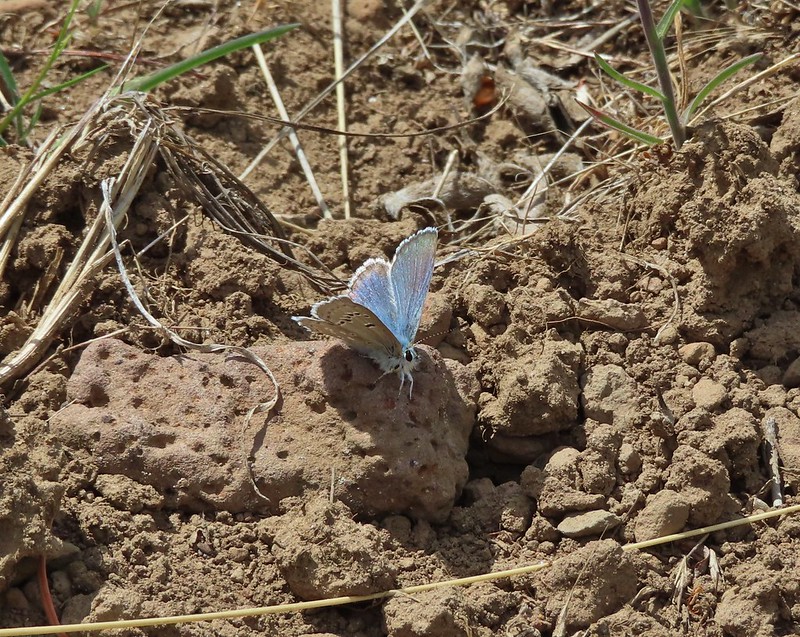

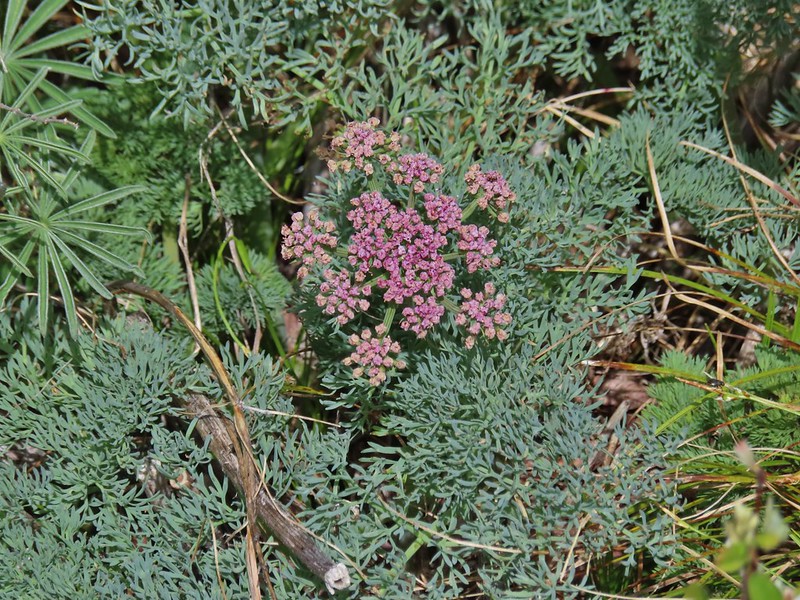 Desert parsley
 Western stoneseed
 Wildflowers on the hillside.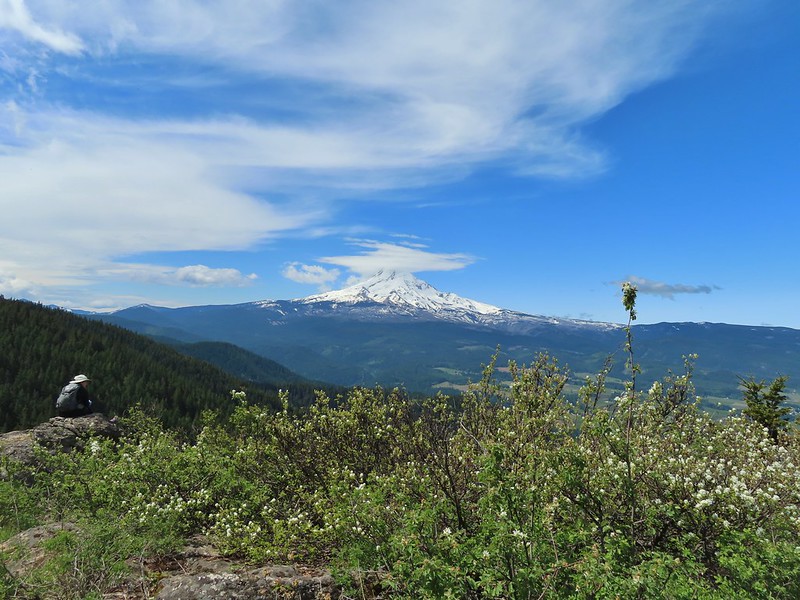
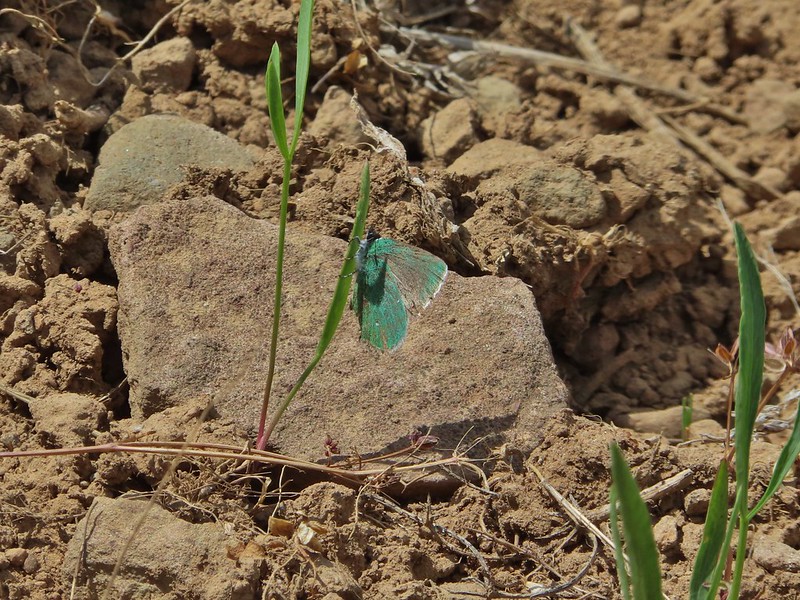
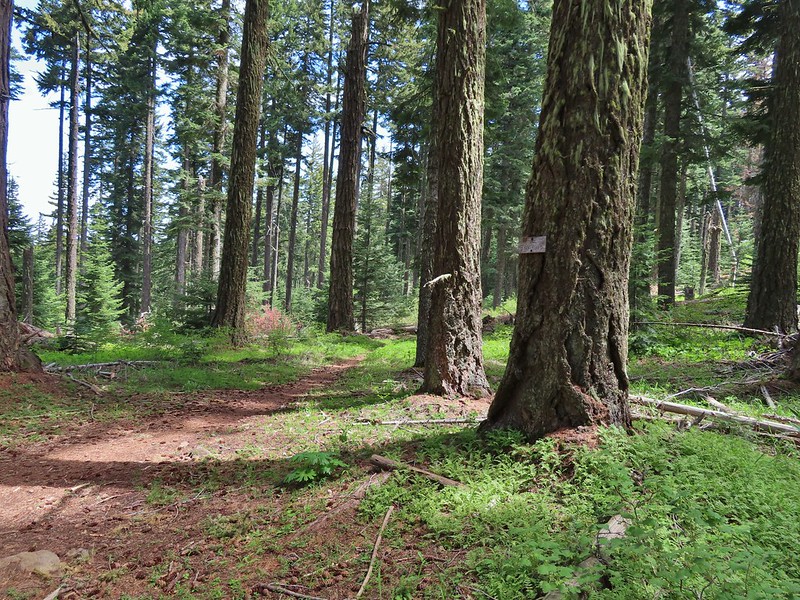 Sign at the junction.
 Spur trail to Yellowjacket Point.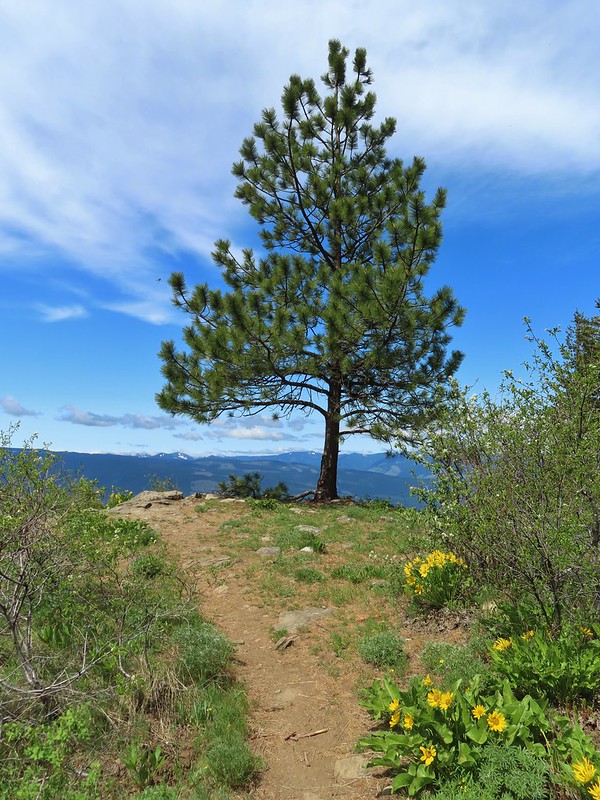
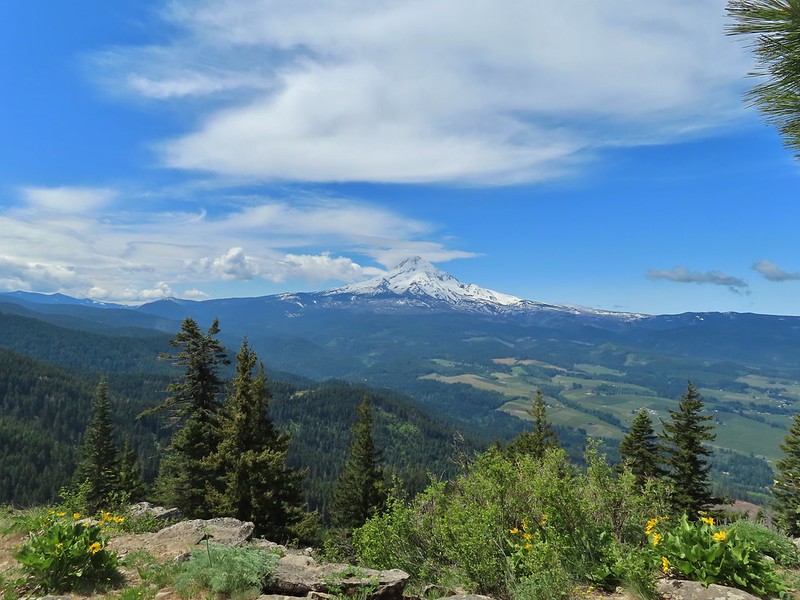
 No yellowjackets, just a robin.
 Things like this gooseberry shrub.
 Chipmunk
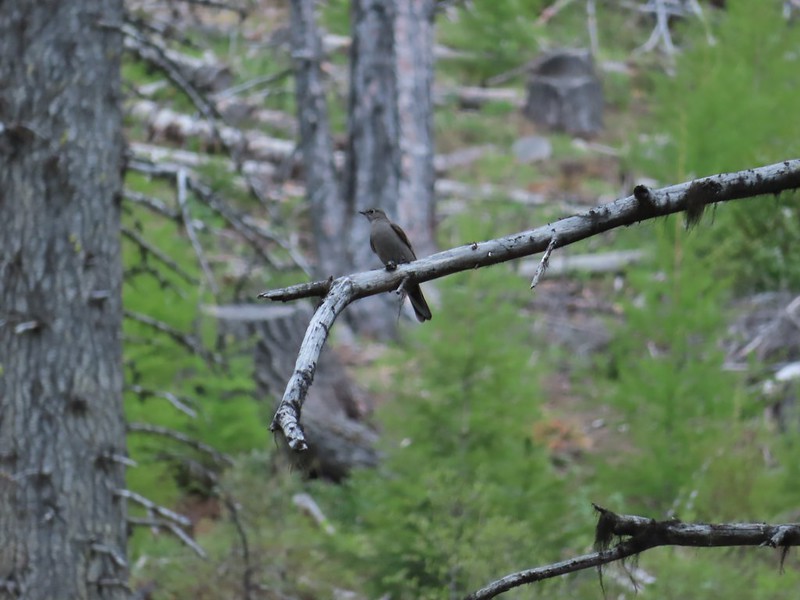 Townsend’s solitare?
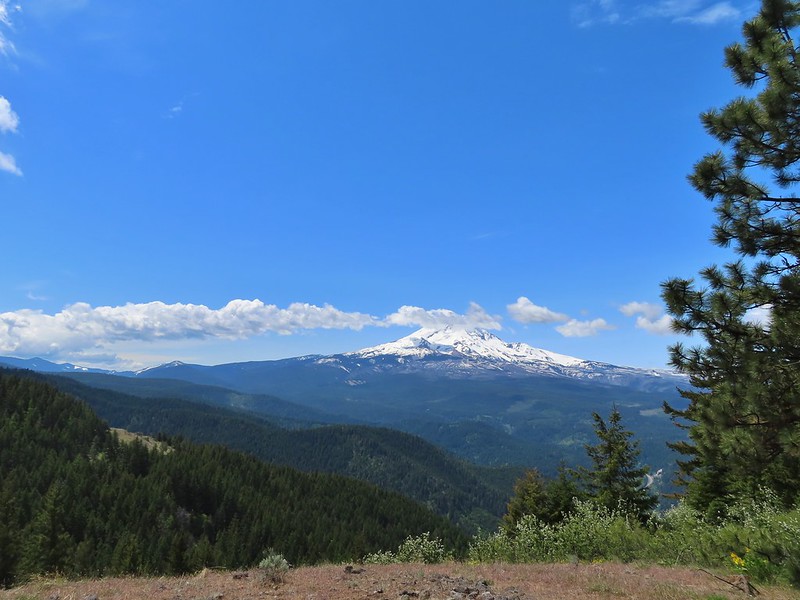 12:40pm
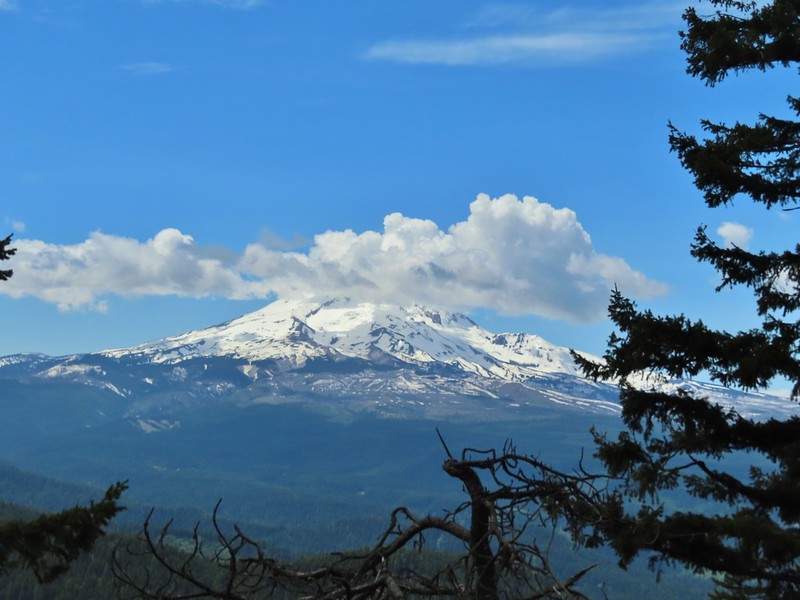 12:50pm
 1:00pm
 1:30pm
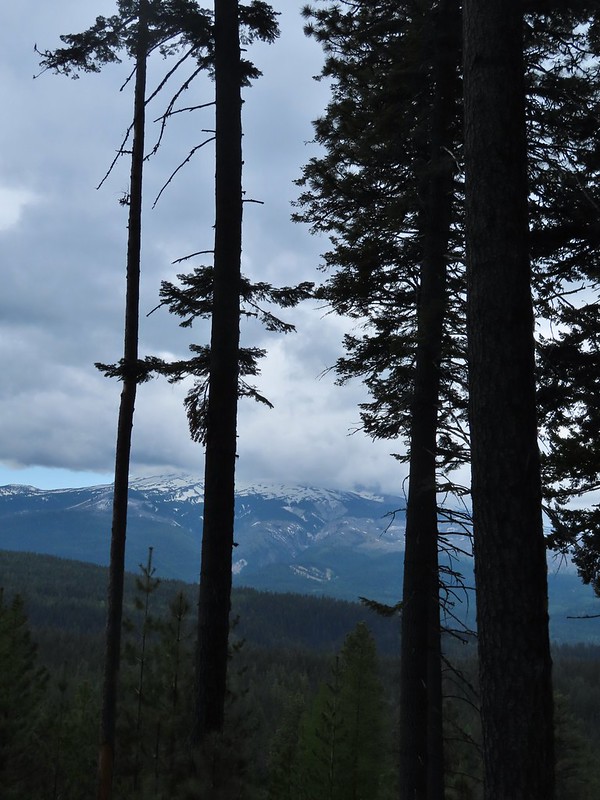 2:04pm
 Returning to the parking area at 2:11pm
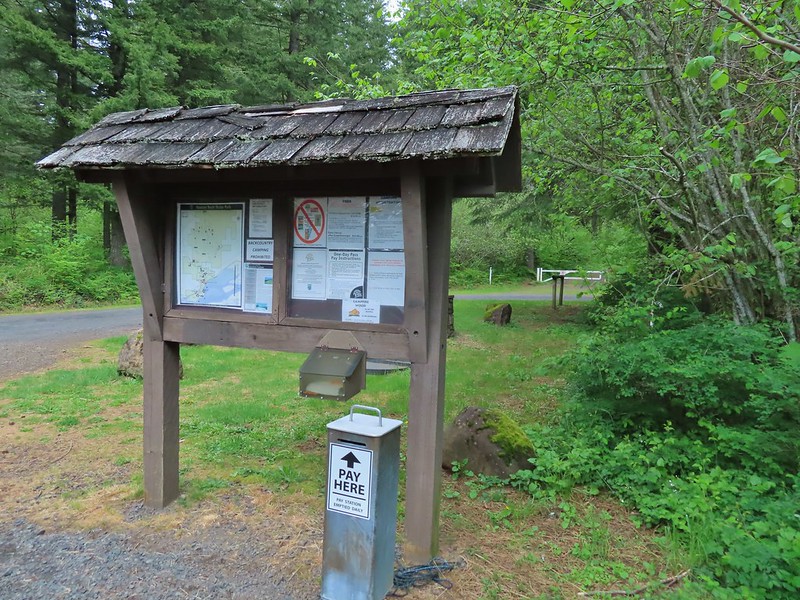
 Equestrian Trail at the trailhead.
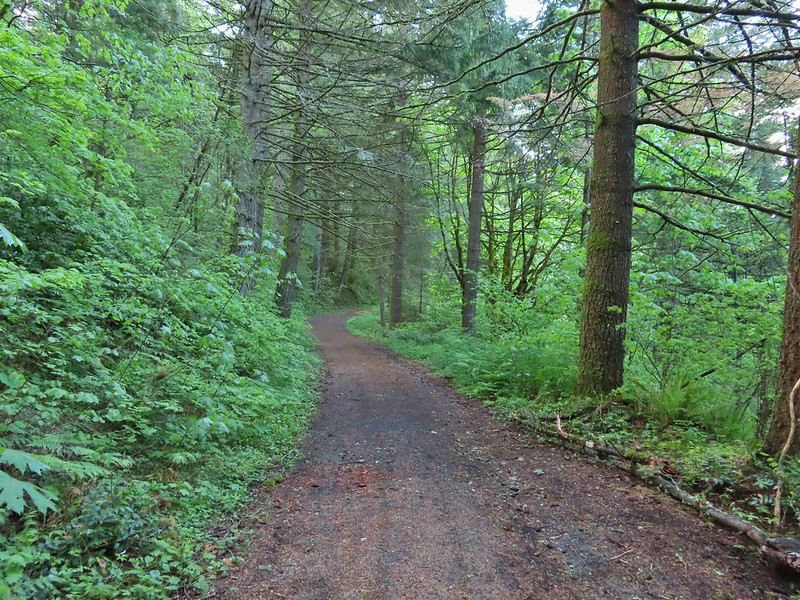 On the old roadbed/Equestrian Trail.
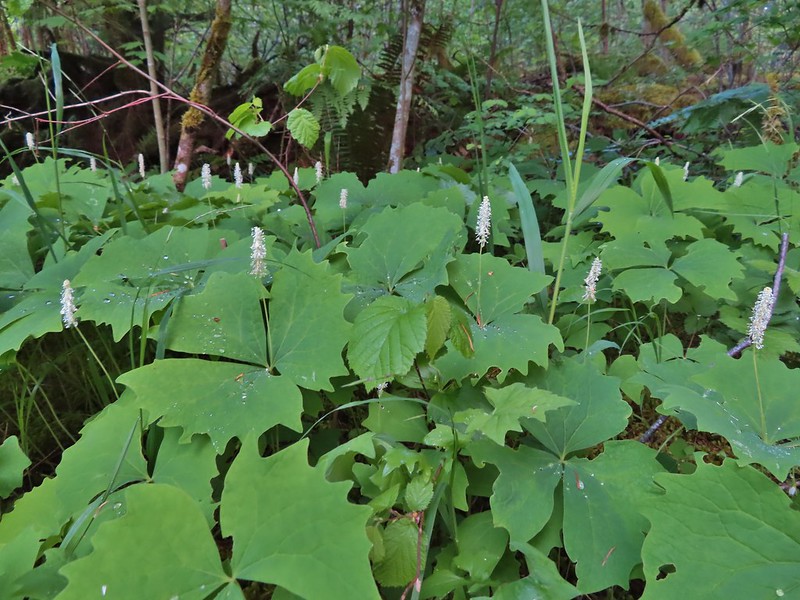 Vanilla leaf
 Fairy bells
 Violets
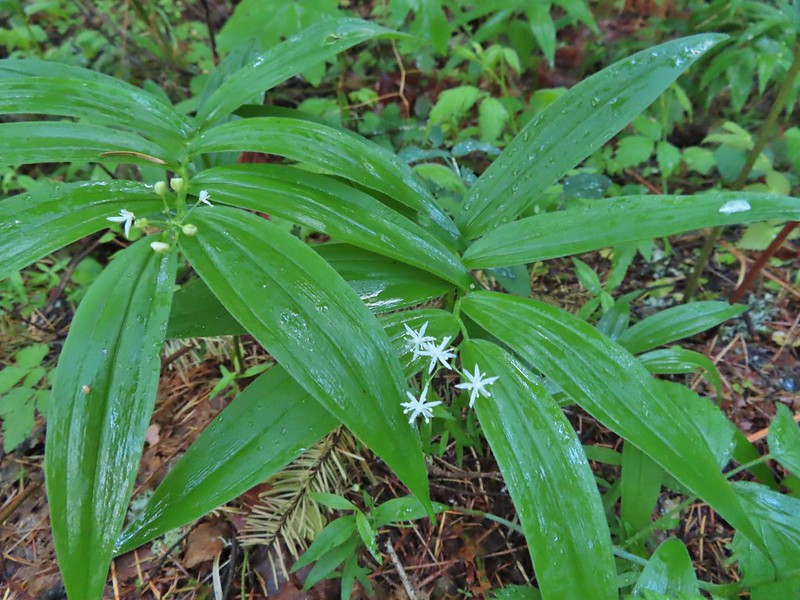 Star-flowered false solomon seal
 Youth-on-age
 Possibly a cinquefoil
 Thimbleberry
 Fringecup
 At the 4-way jct the Equestrian Trial continued straight with the West Hardy Trail to the left and Lower Loop Trail to the right.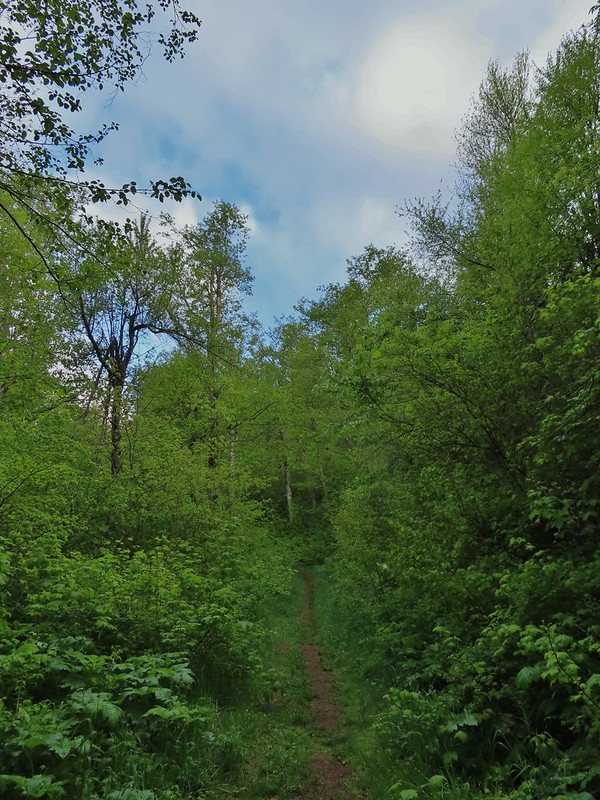

 Salmonberry
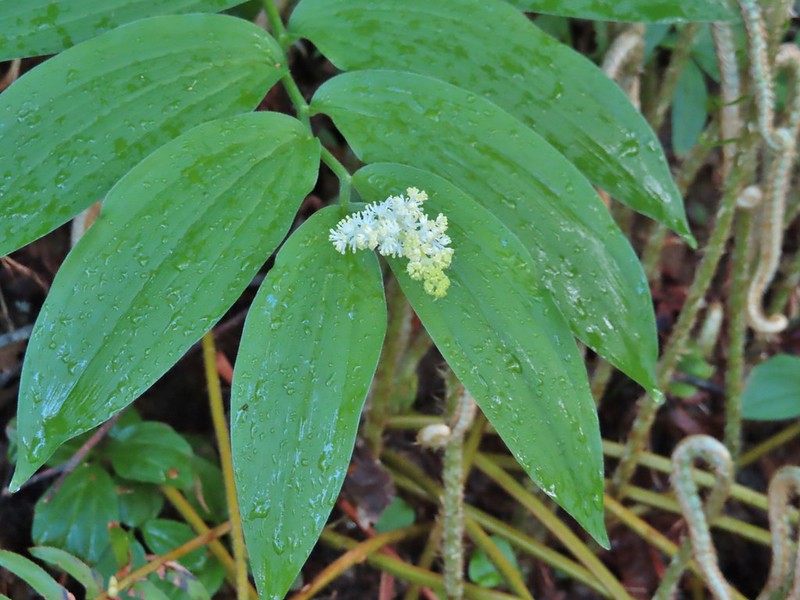 False solomon seal
 Bleeding heart
 Here come the clouds.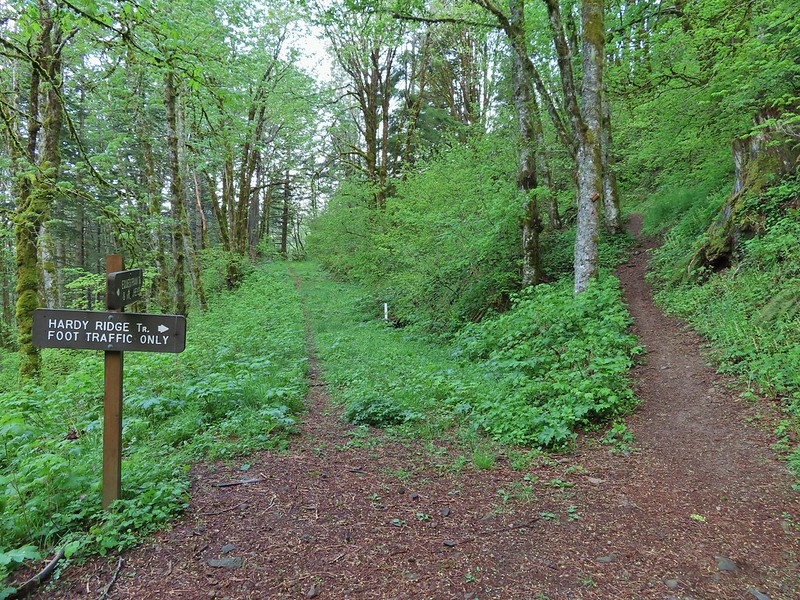

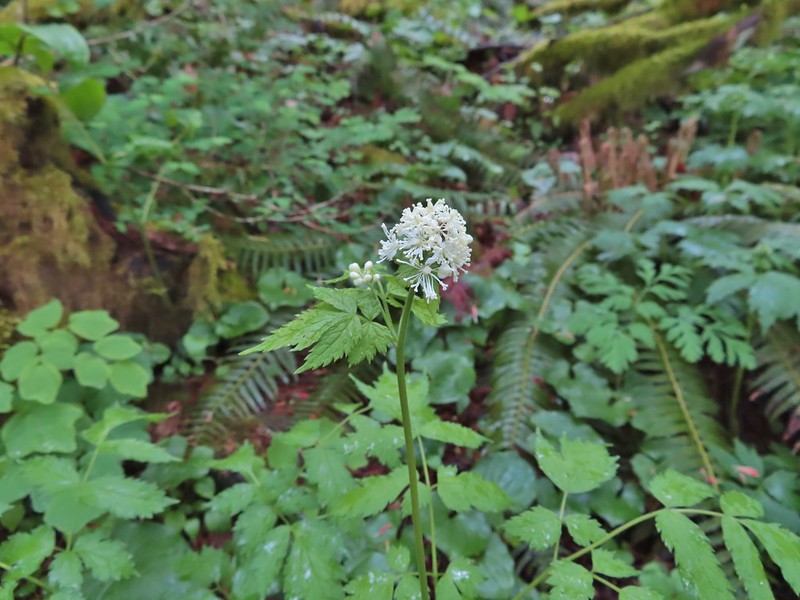 Baneberry
 Trillium
 Paintbrush
 Red flowering currant
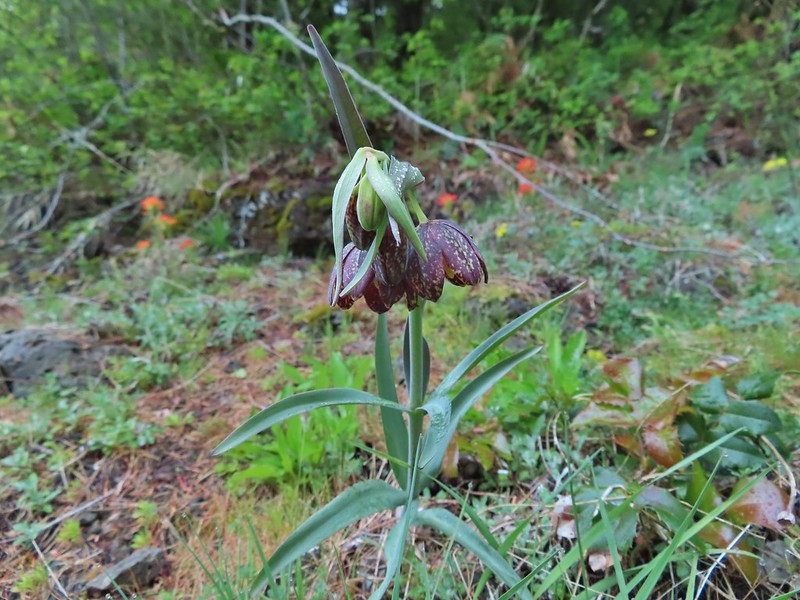 Chocolate lily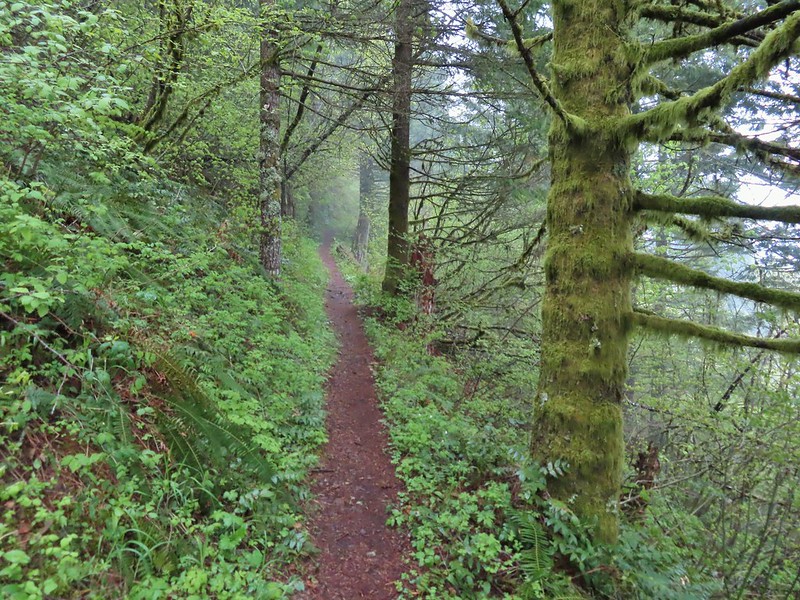
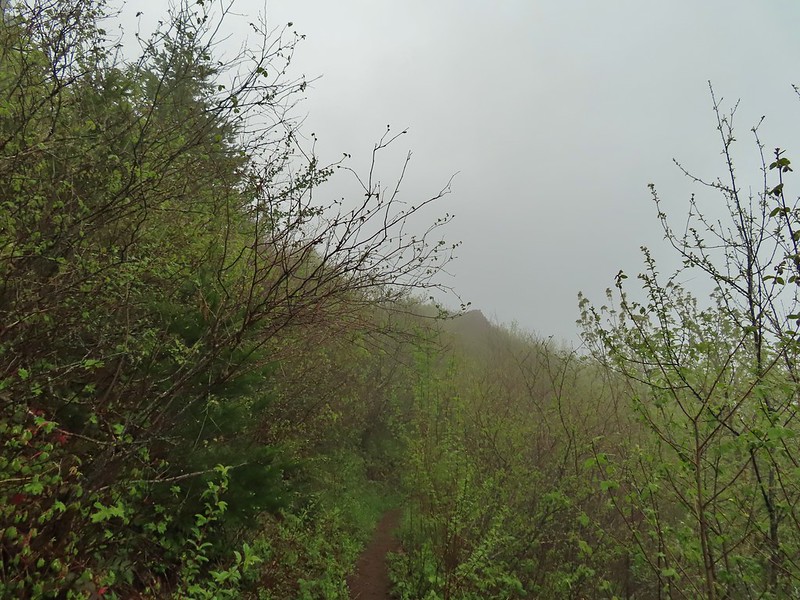
 Anemones
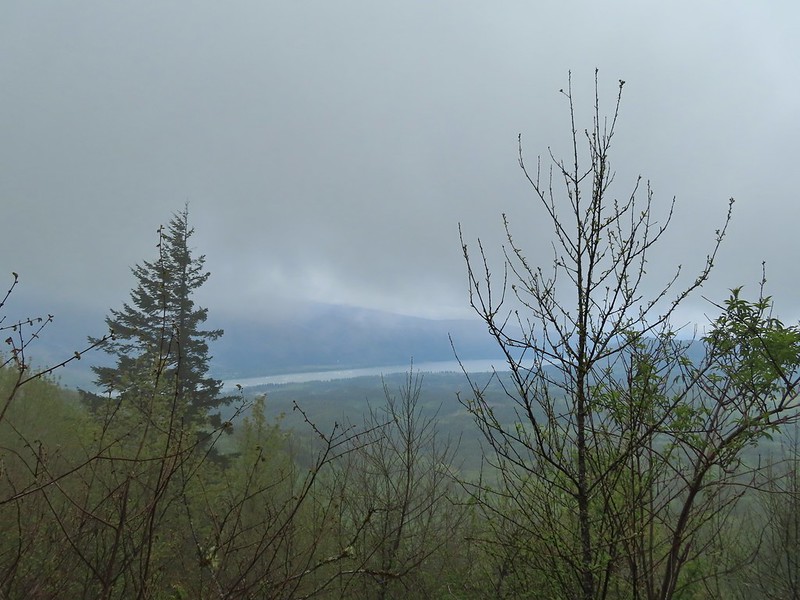 Looking across the Columbia River into Oregon.
 Horsetail Falls (
 Field chickweed and Oregon grape
 Junction at the saddle.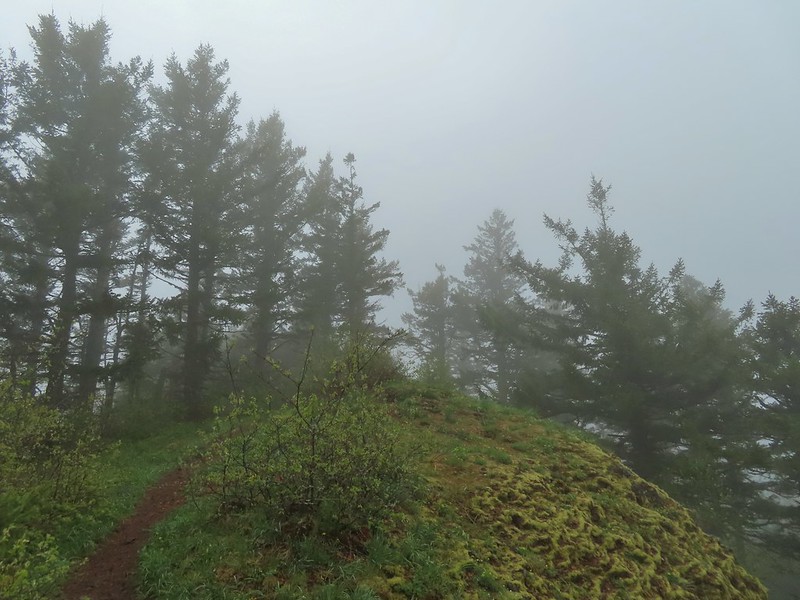
 Glacier lily
 Trilliums
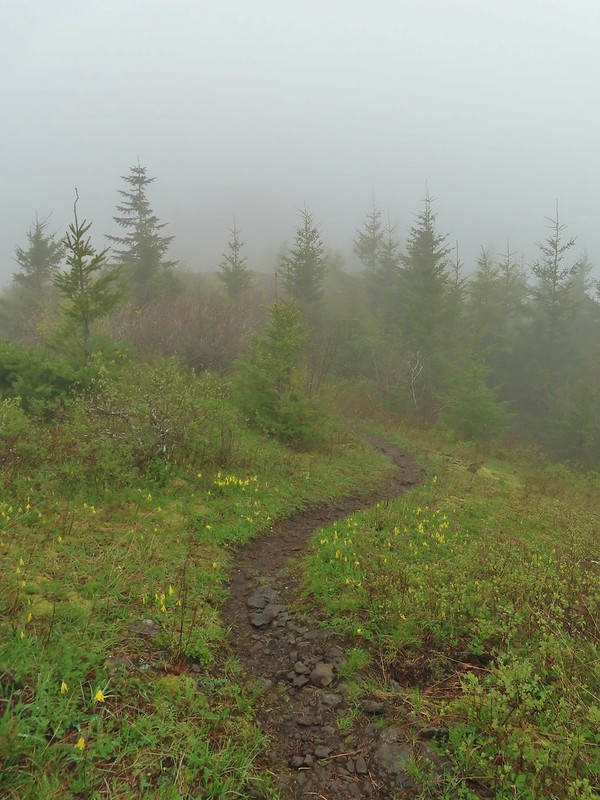 Glacier lilies along the trail.
 Another hiker caught up to us at this rock field not far from the high point. It looked like the trail was going across the rocks for a bit and she decided to turn around but after just a few feet the trail resumed behind a bush.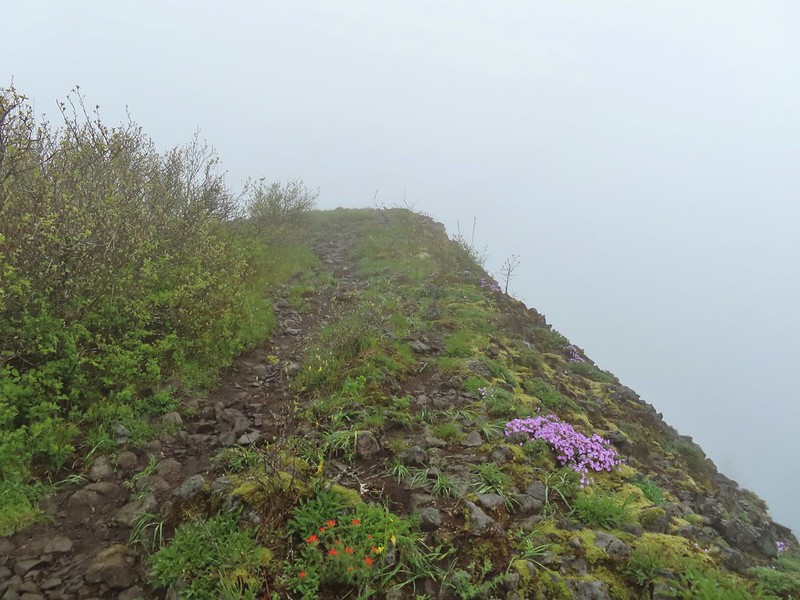
 Phlox
Phlox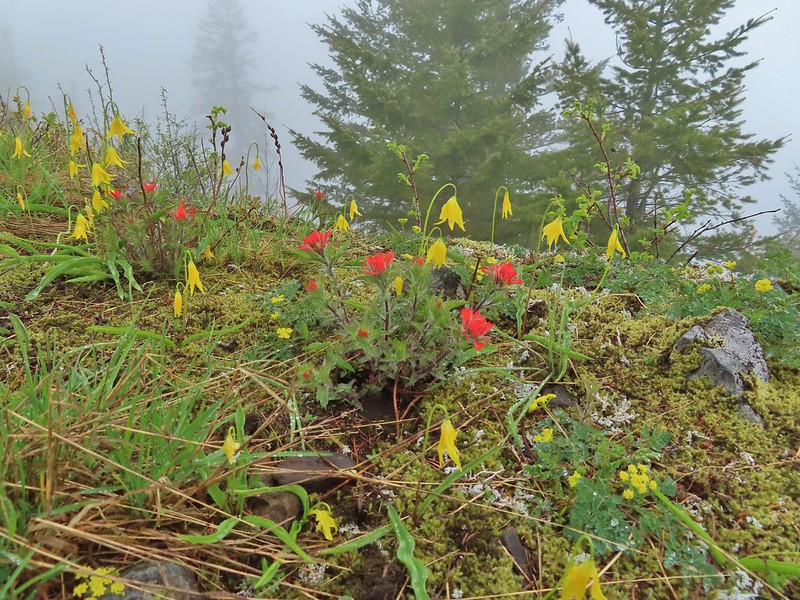 Paintbrush and glacier lilies.
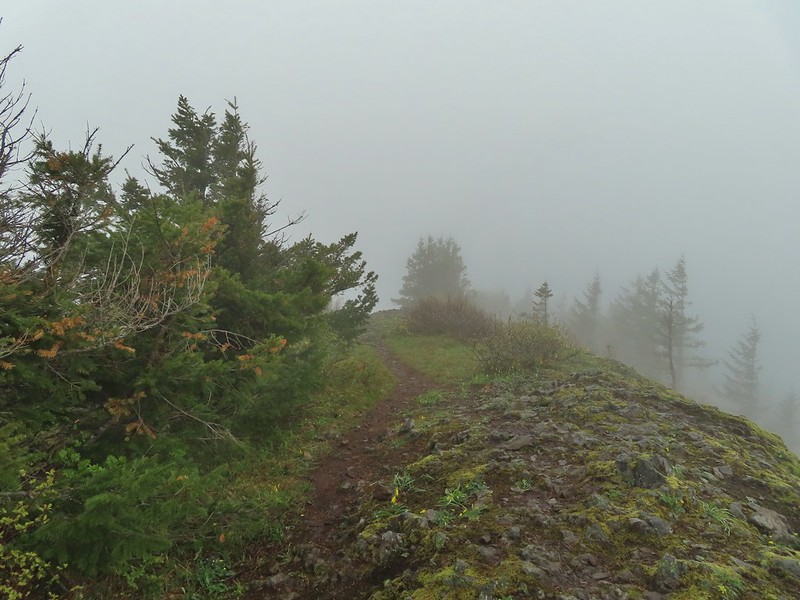 The high point.
 Glacier lilies at the high point.

 Hamilton Mountain (high point to the right) and the Columbia River.
 Bonneville Dam and the Hamilton Mountain Trail crossing The Saddle.
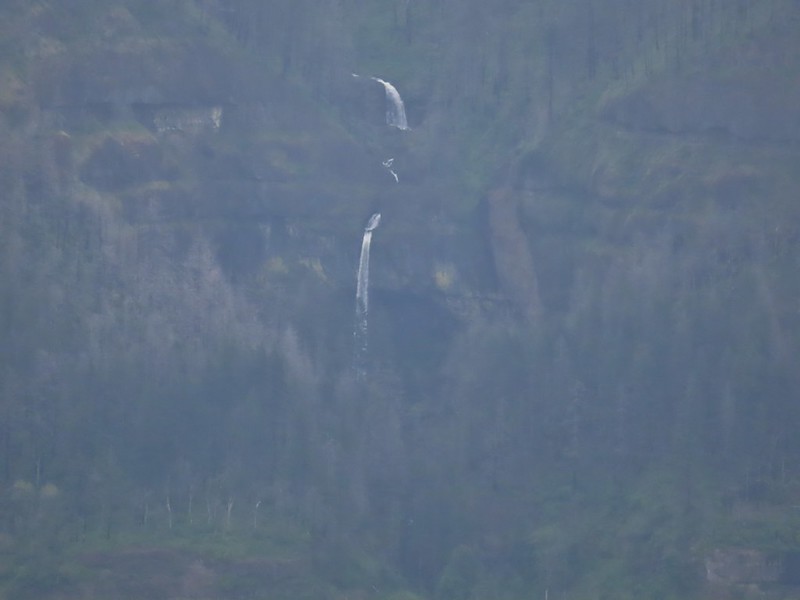 Upper McCord Creek Falls (
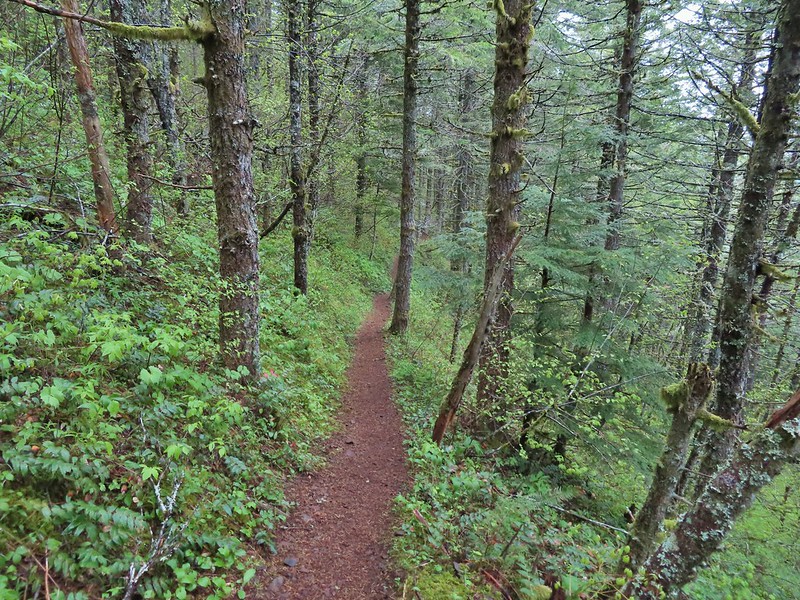
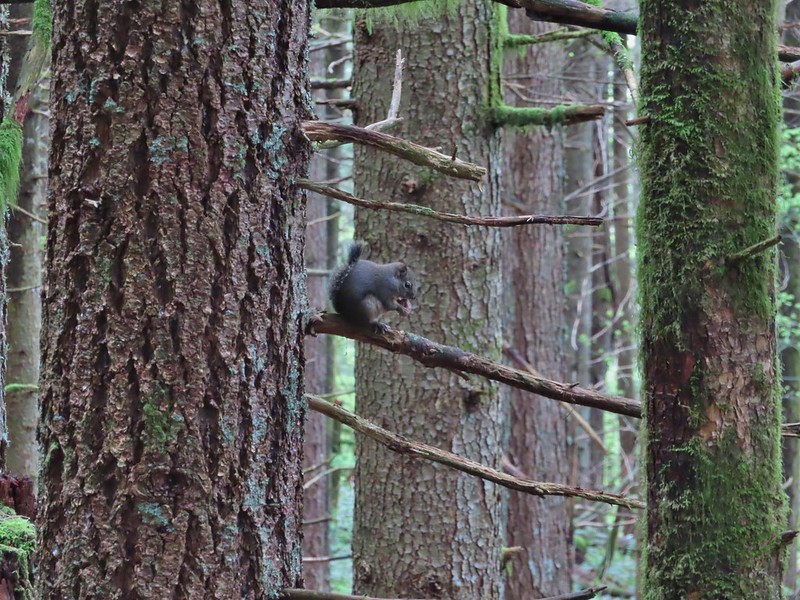 Squirrel
 Snail
Snail

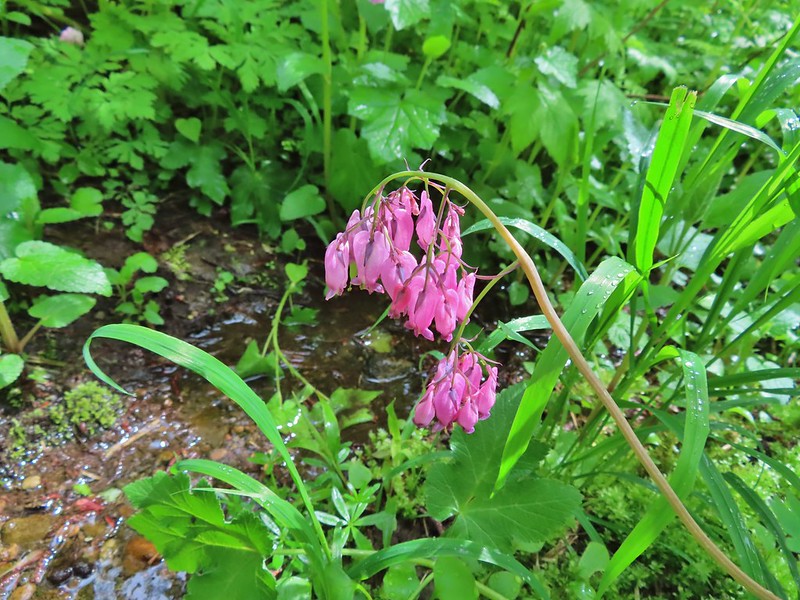 Bleeding heart along a little stream.
 False lily-of-the-valley getting ready to bloom.
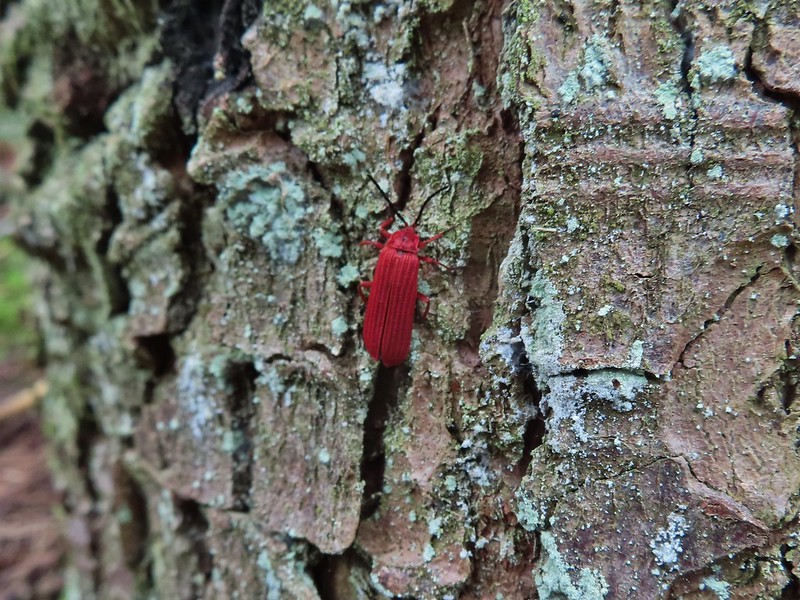 Possibly a Dictyoptera aurora (Golden net-winged beetle)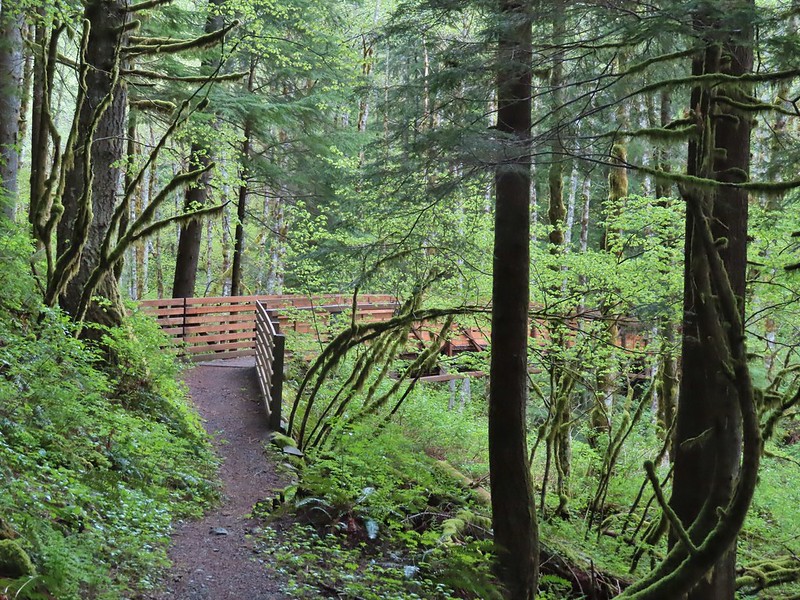
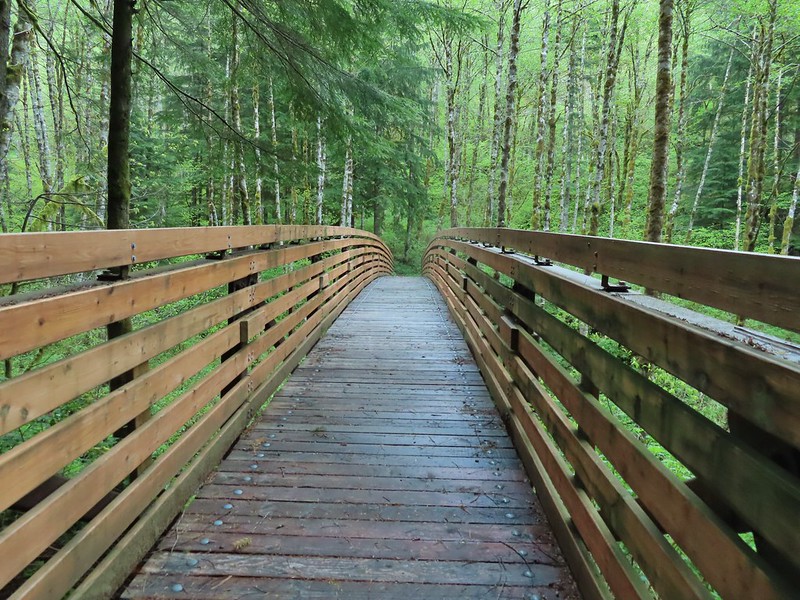

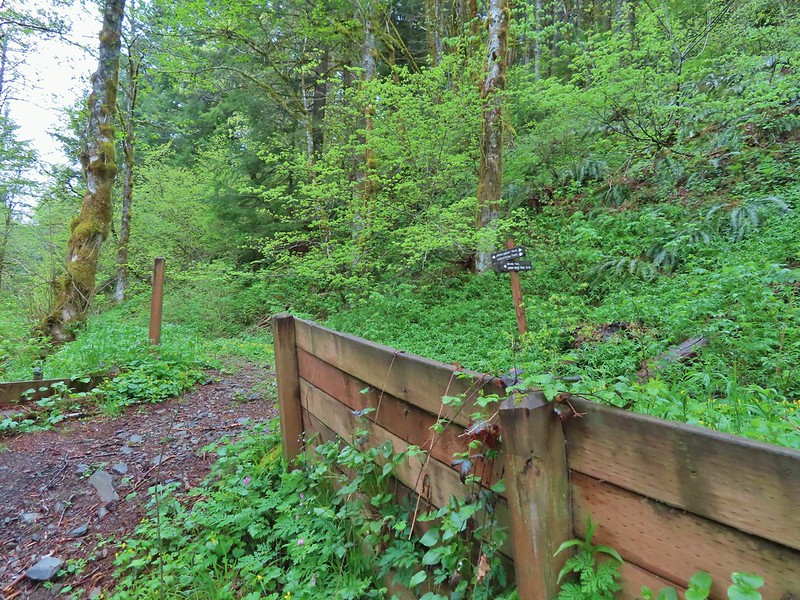

 Hardy Ridge from the Upper Hardy Trail.
 The left fork would have been slightly longer by leading us around the back side of a knoll and making a 180 degree turn following the east side of the ridge toward The Saddle.
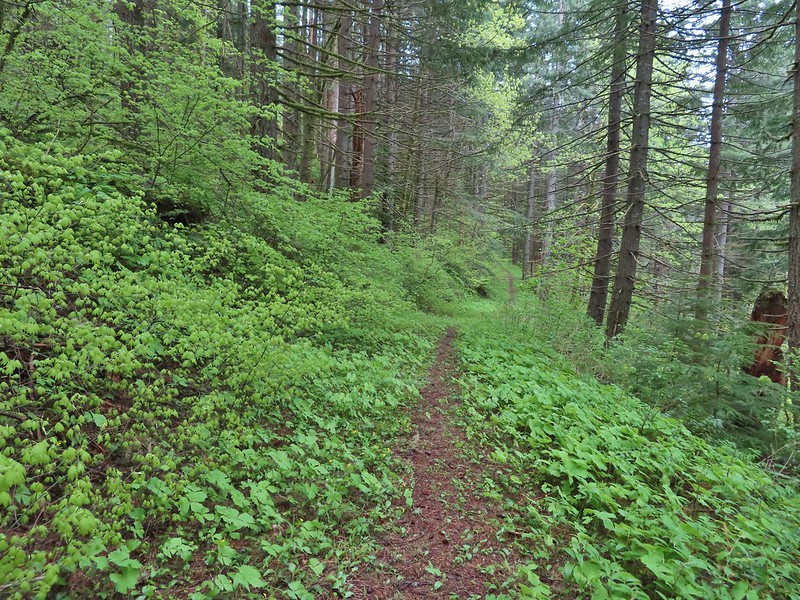 We turned right opting for the slightly shorter route to The Saddle.
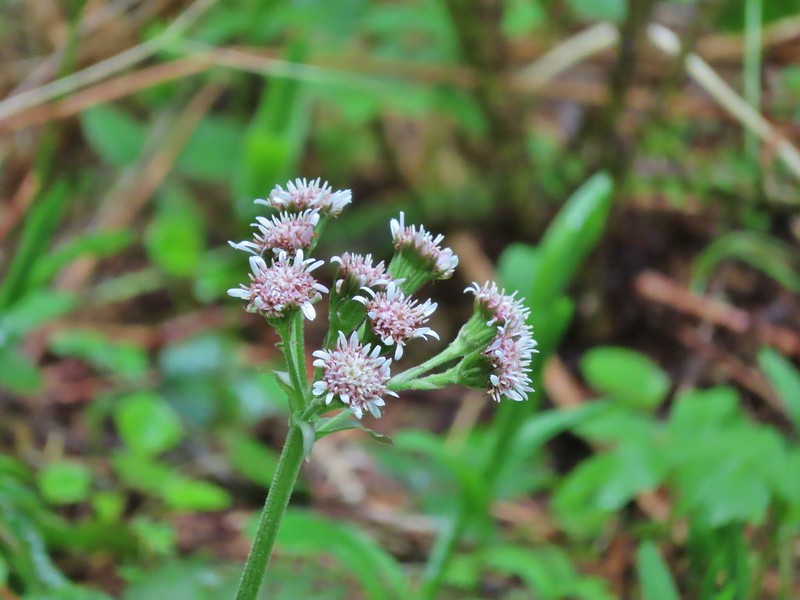 Coltsfoot
 Southern junction of the two forks of the Upper Hardy Trail.
 Hikers coming down from Hamilton Mountain.
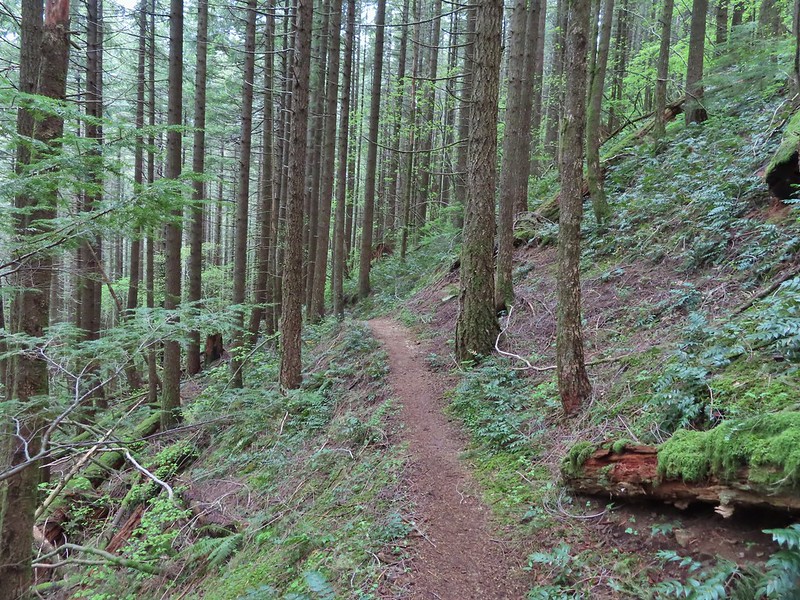
 Dons Cutoff Trail nearing the Upper Hardy Trail.
 Upper Hardy Trail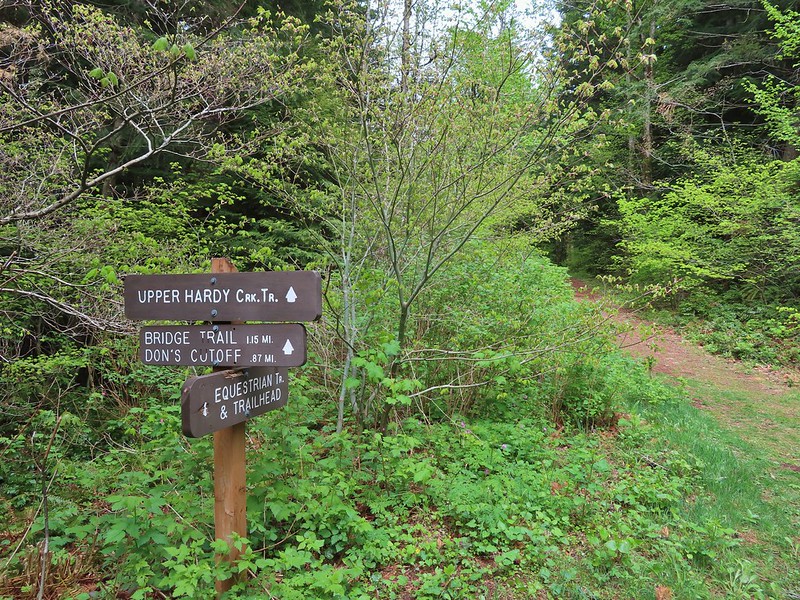
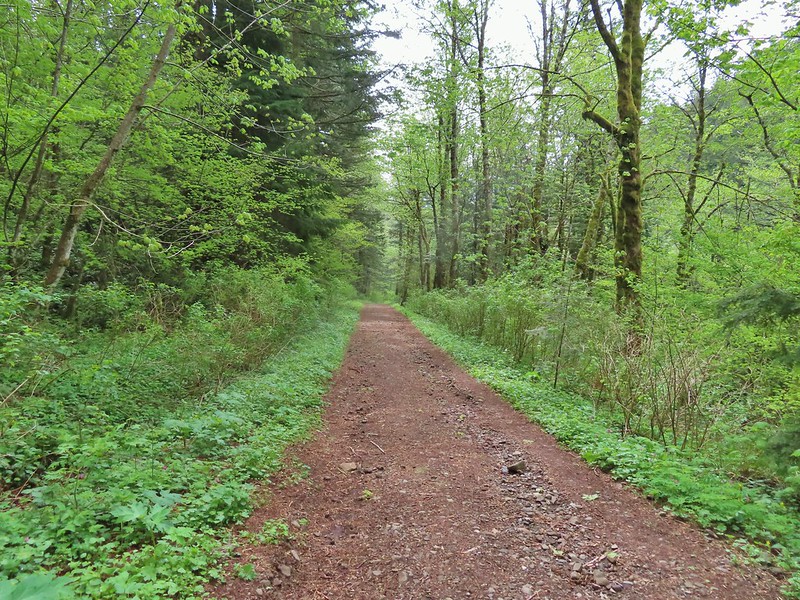 Equestrian Trail
 Hardy Creek
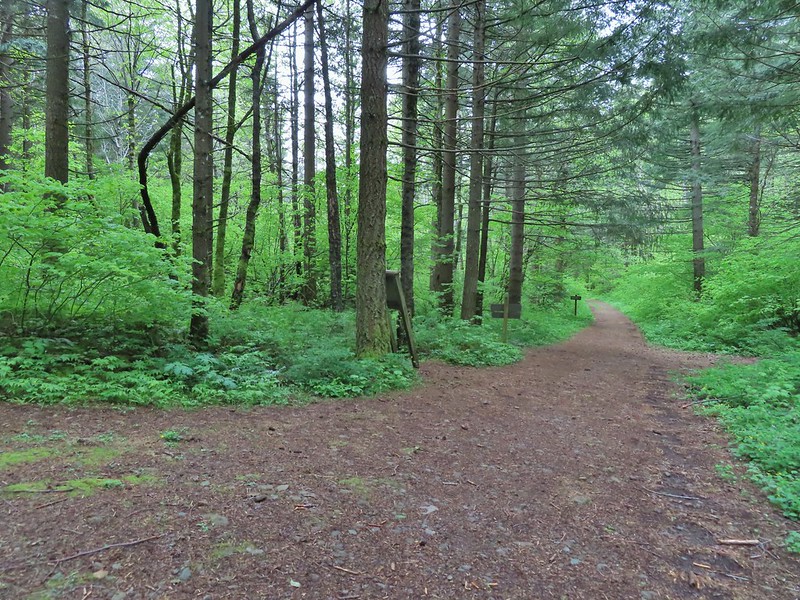

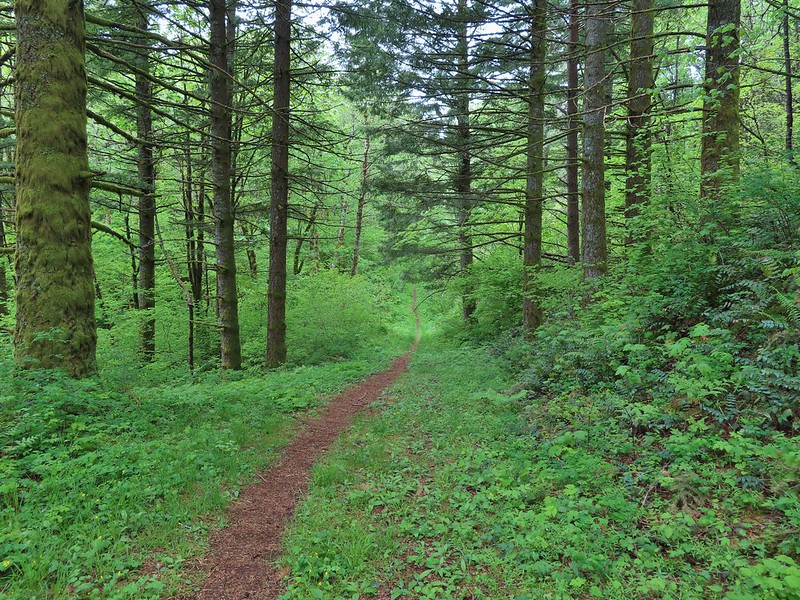


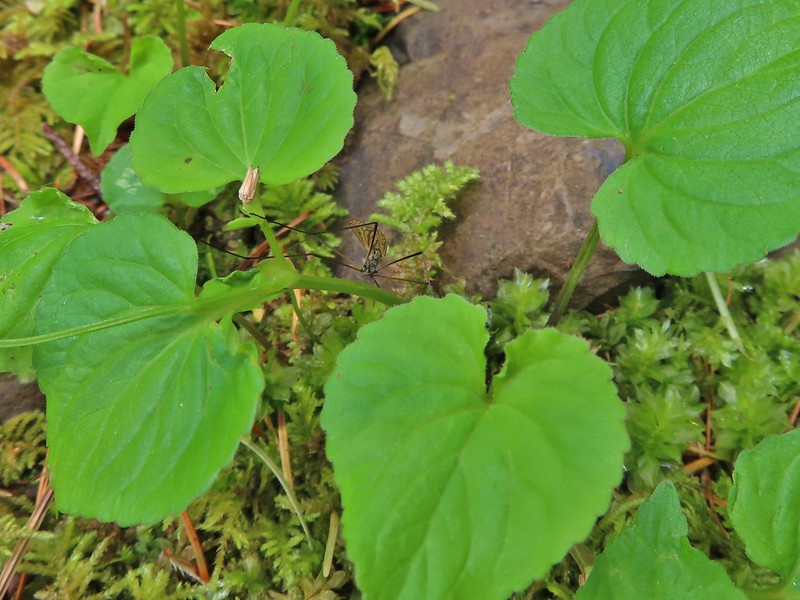 Spotted this guy while I was photographing the slug above. Not sure if it’s a crane fly or ?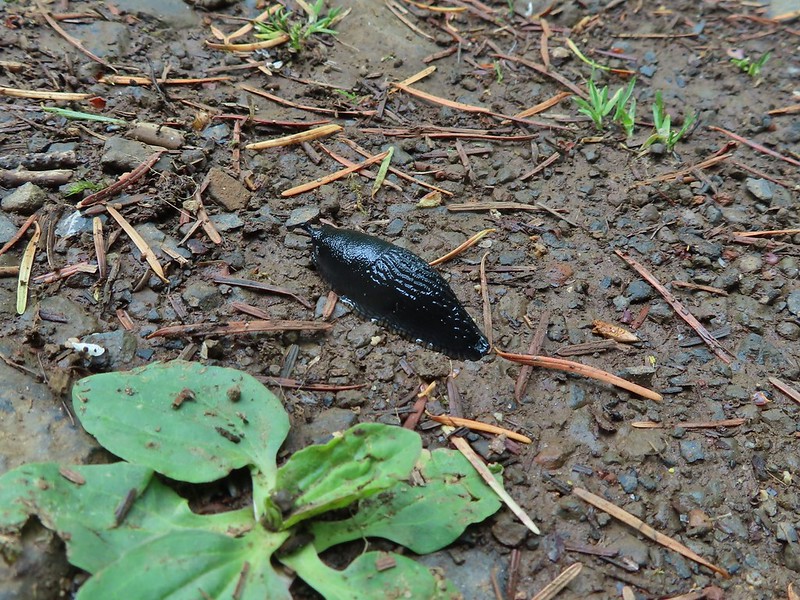
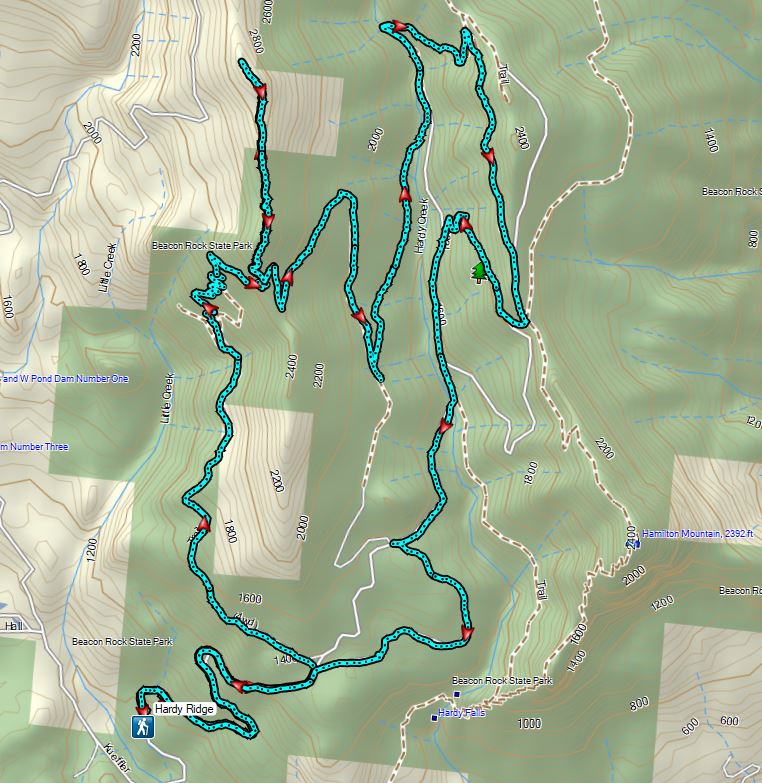
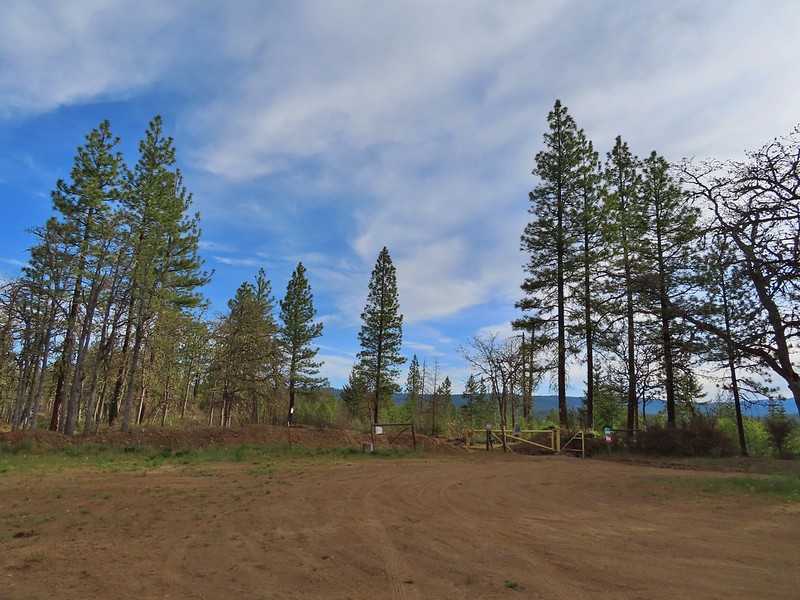
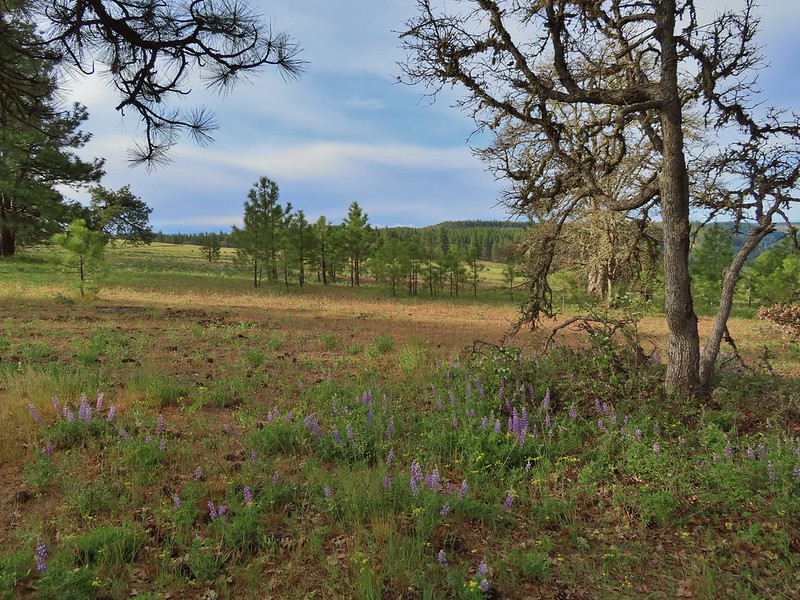 Looking back toward the meadow.
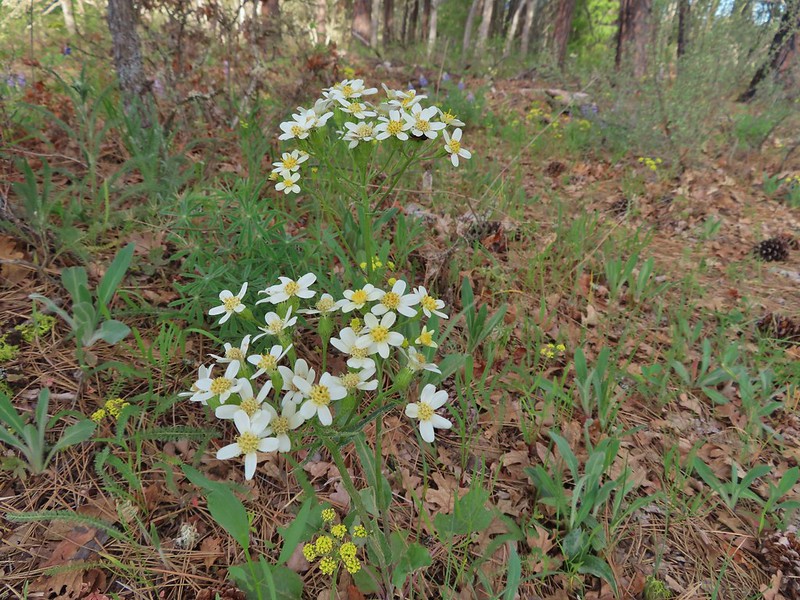 Western white groundsel
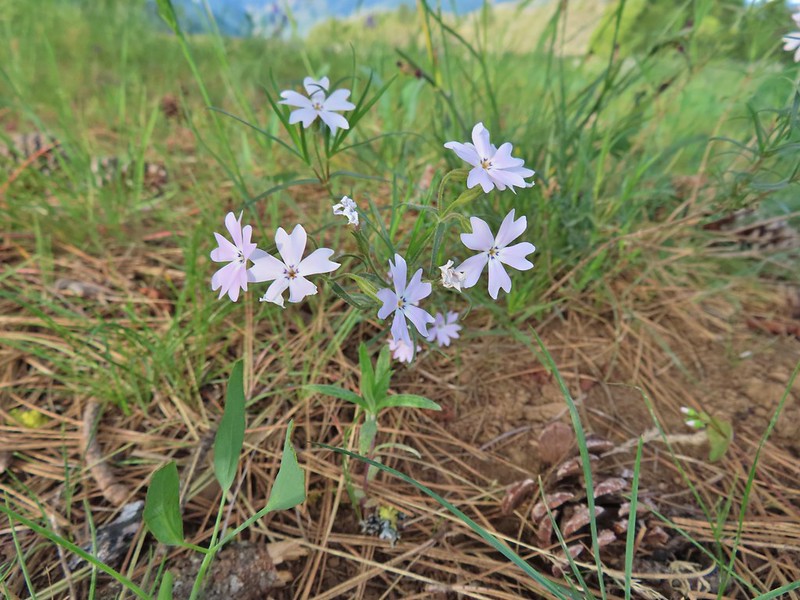 Showy phlox
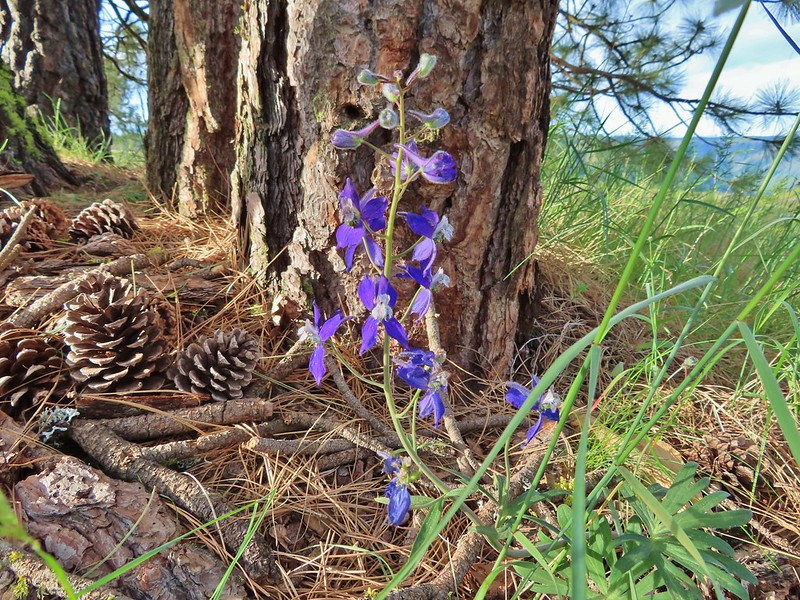 Larkspur
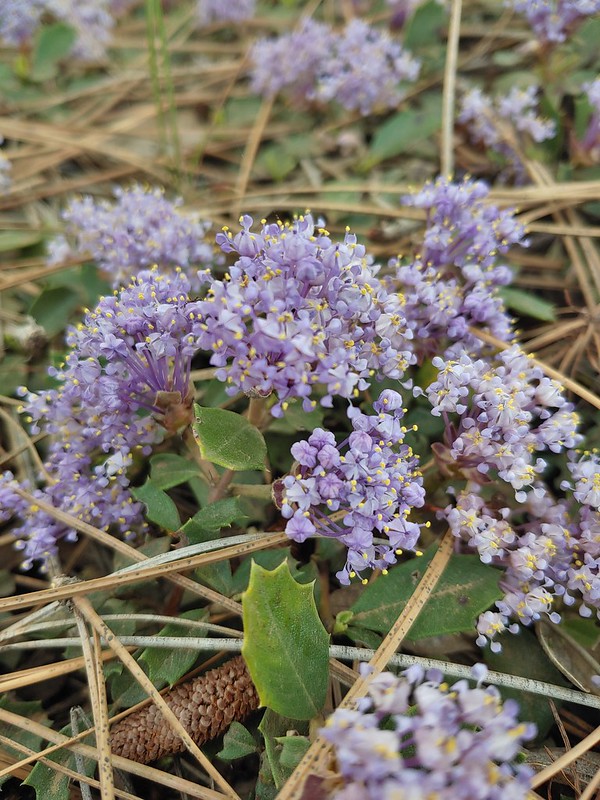 Mahala Mat (Prostrate ceanothus)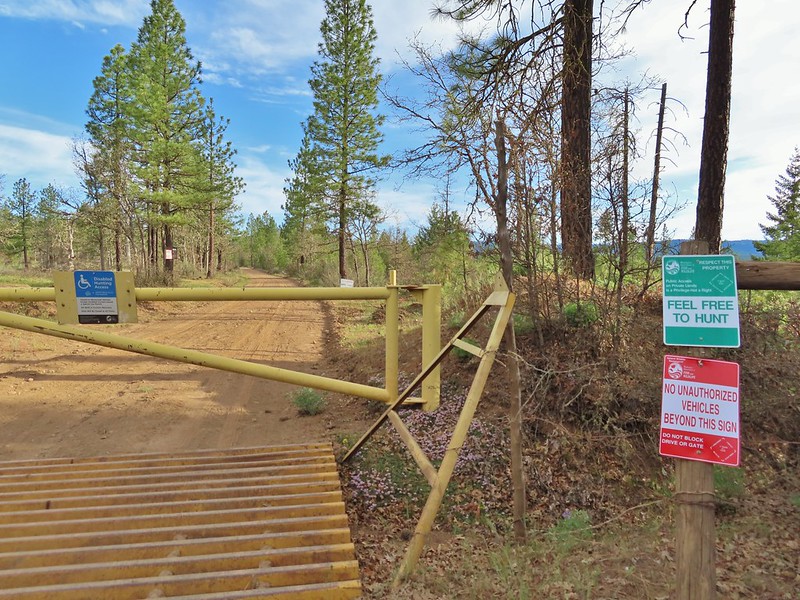

 Showy phlox among the oaks.
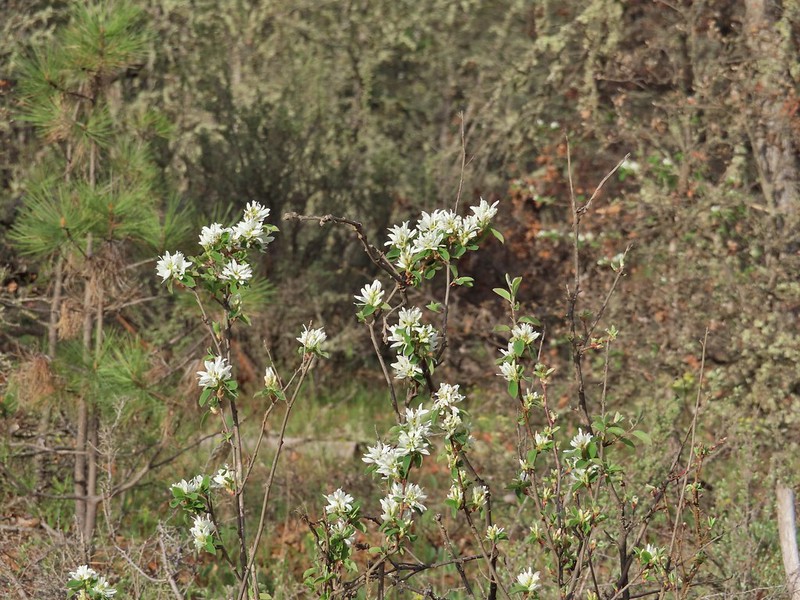 Serviceberry
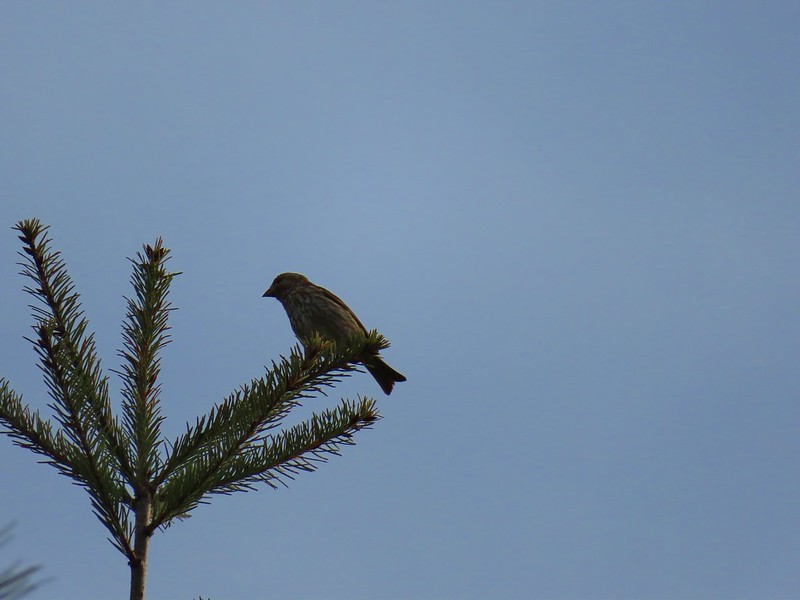 Sparrow
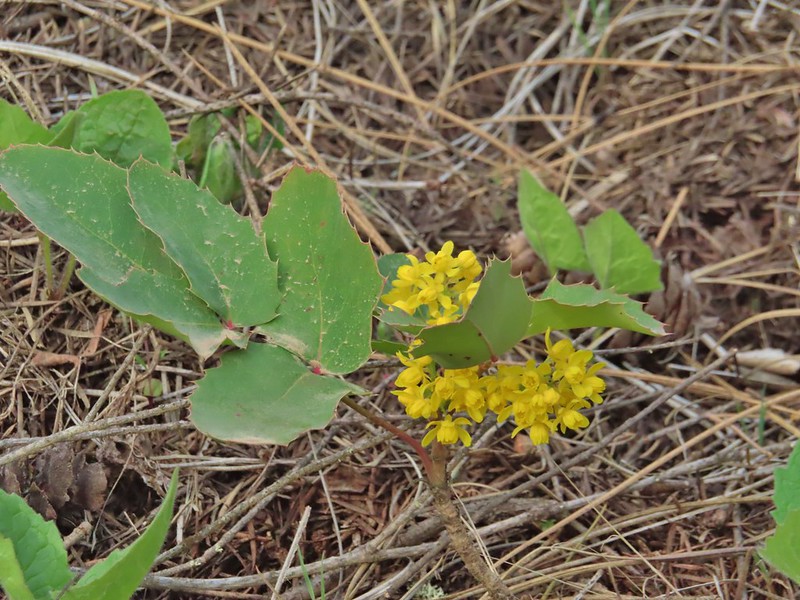 Oregon grape
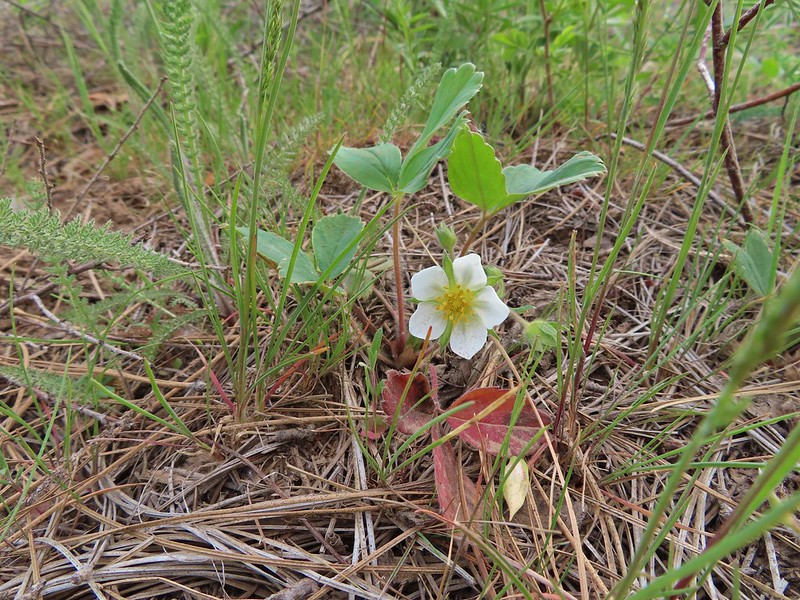 Strawberry
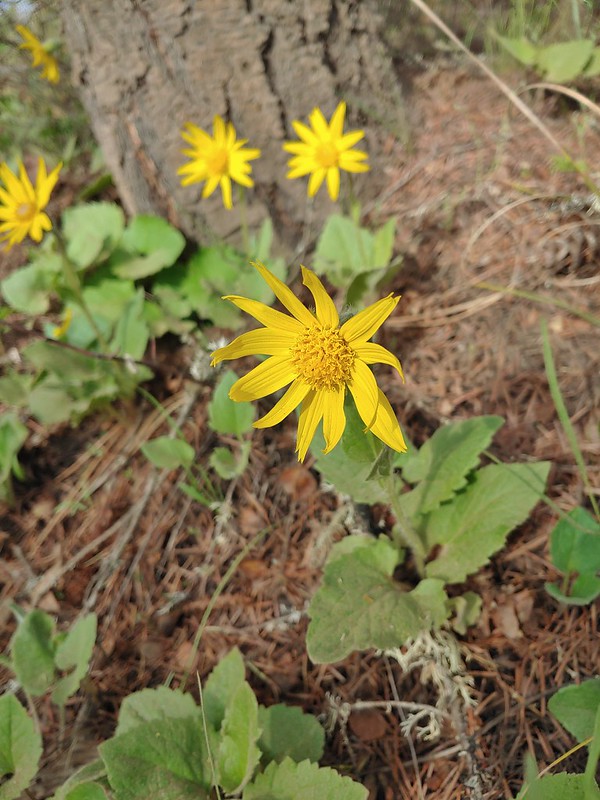 Arnica
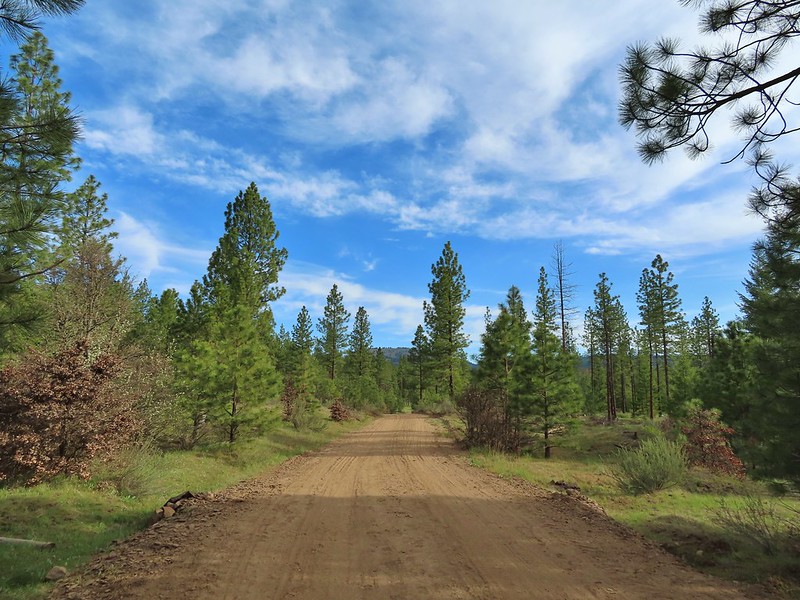 Grayback Mountain from Grayback Road. The first 2.5 miles of the hike only gained 400′ while the next 3.1 gained 1400′.
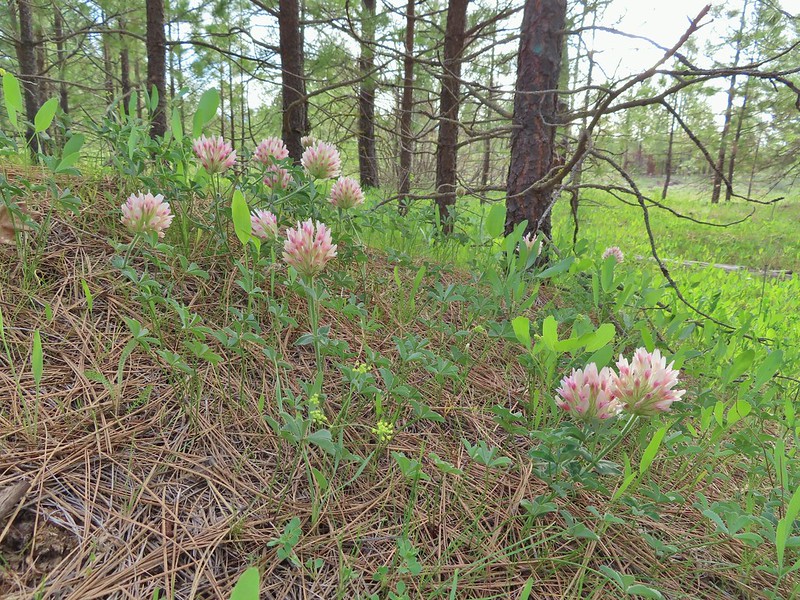 Large head clover
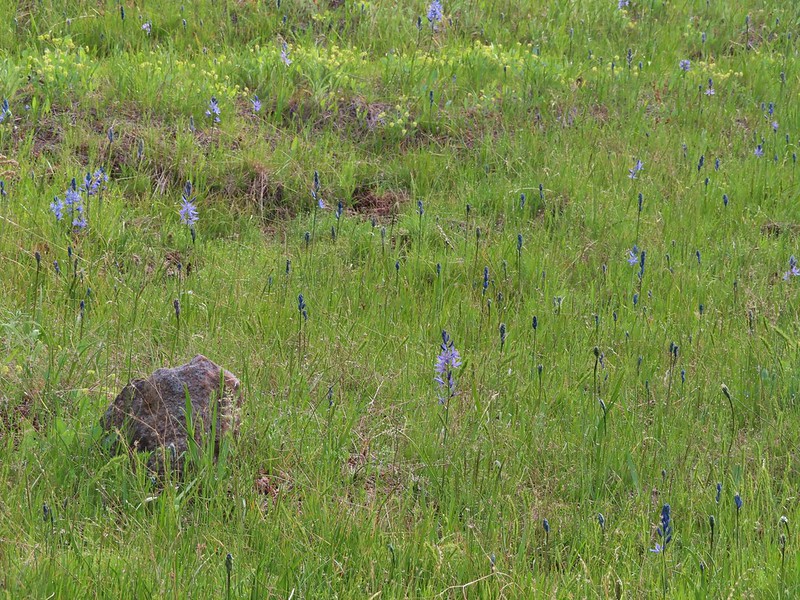 Camas, much of which had yet to bloom.
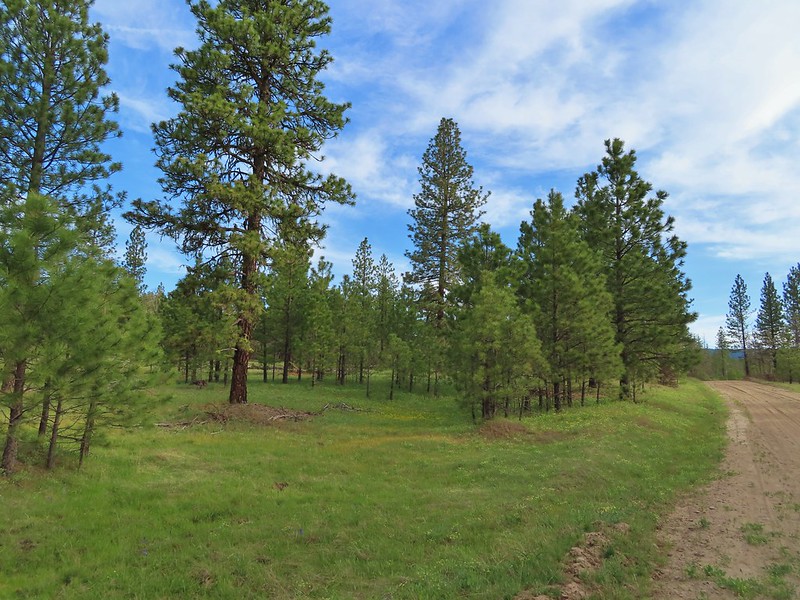 Ponderosa pines along the road.
 Western buttercups
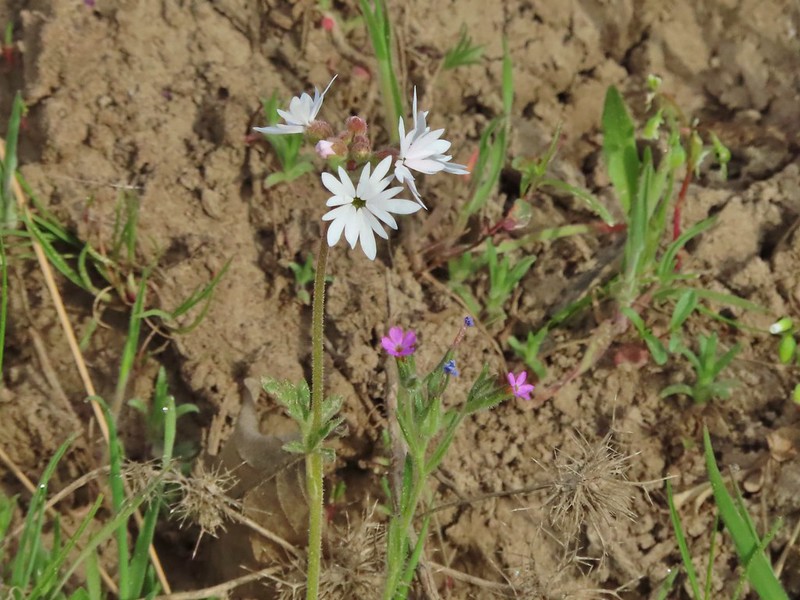 Woodland star and slender phlox
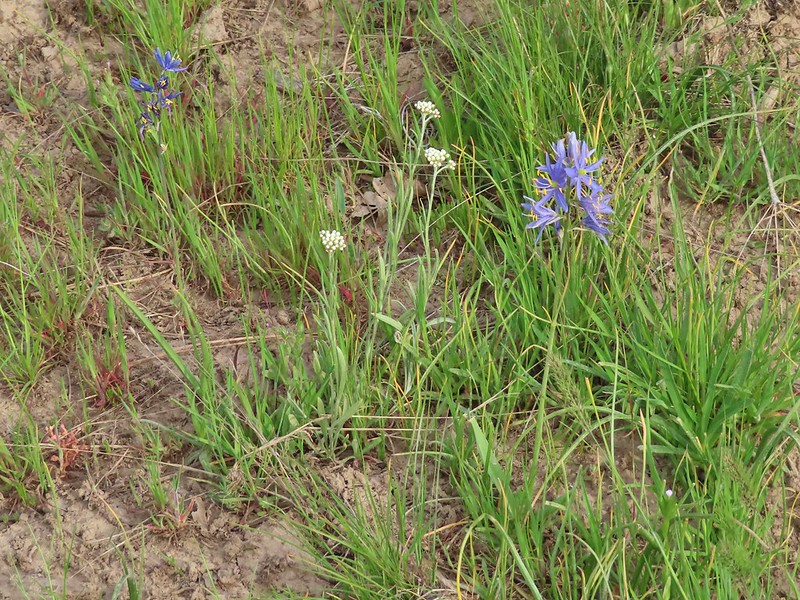 Pussytoes and camas
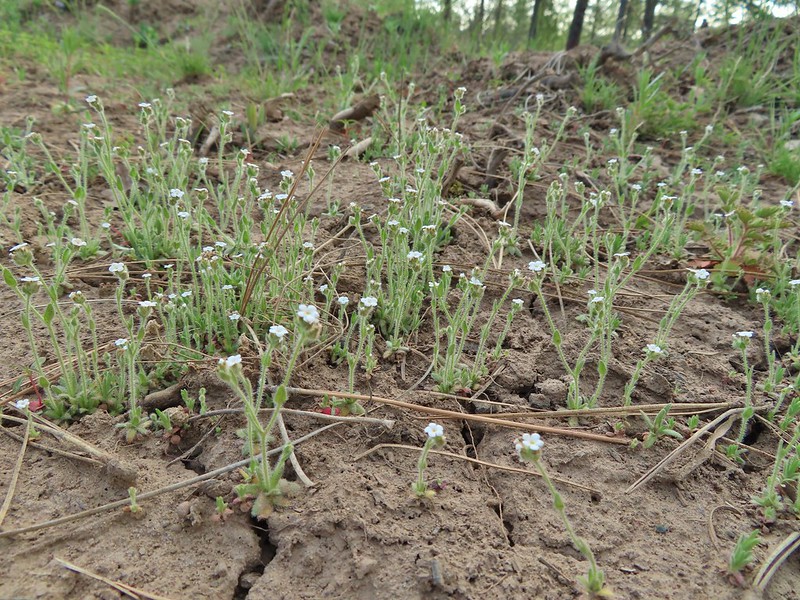 A cryptantha
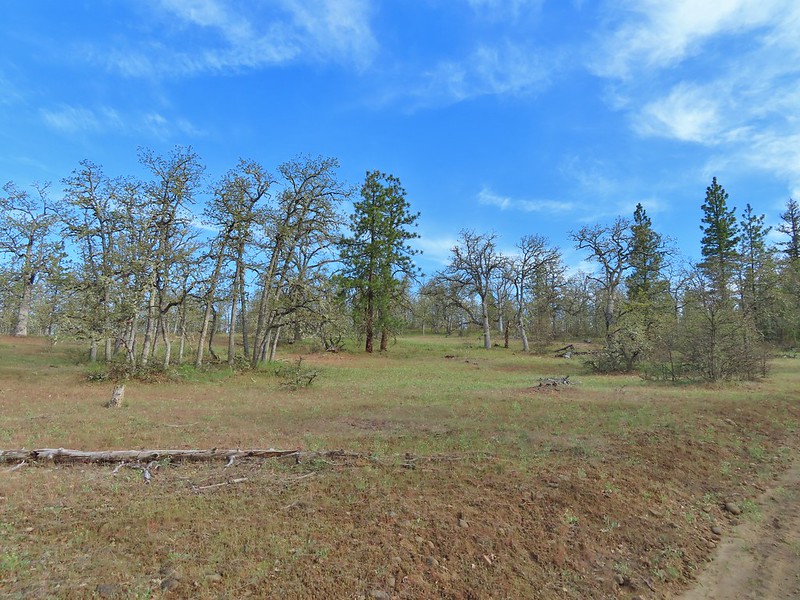 Oaks and ponderosas
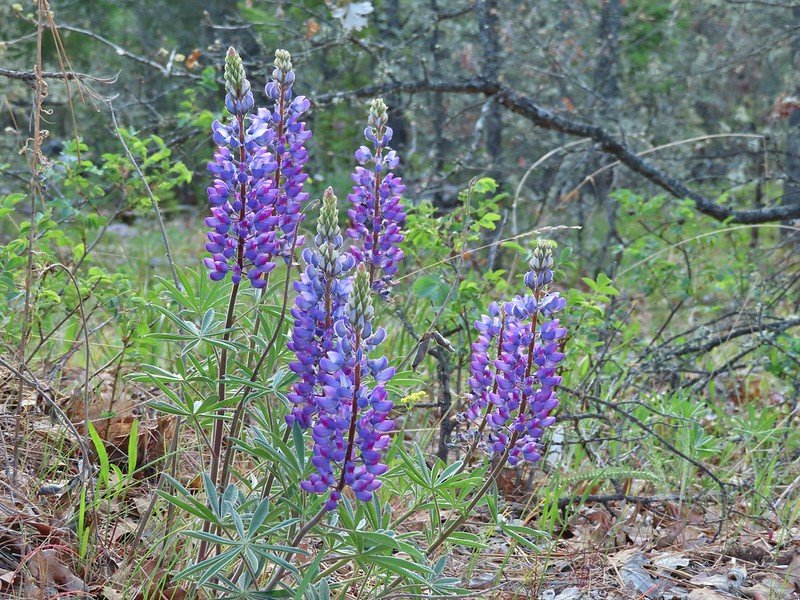 Lupine
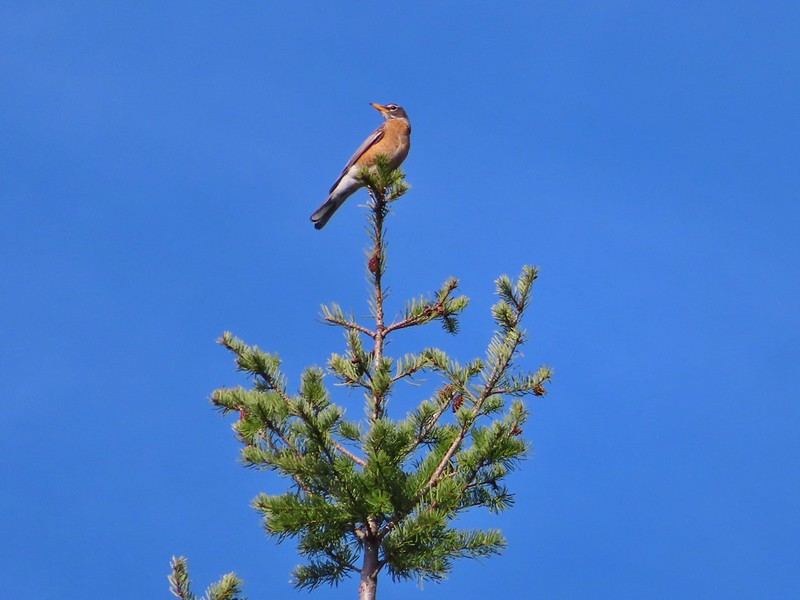 Robin
Robin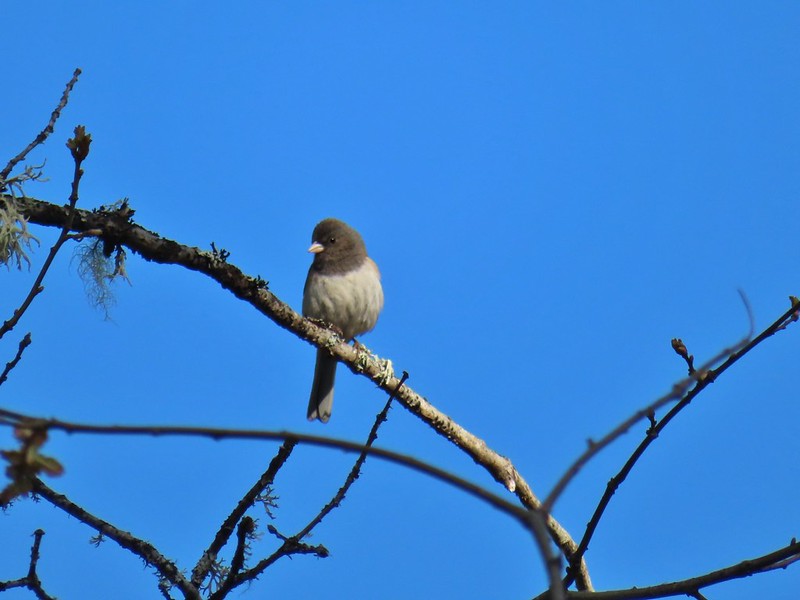 Dark eyed junco
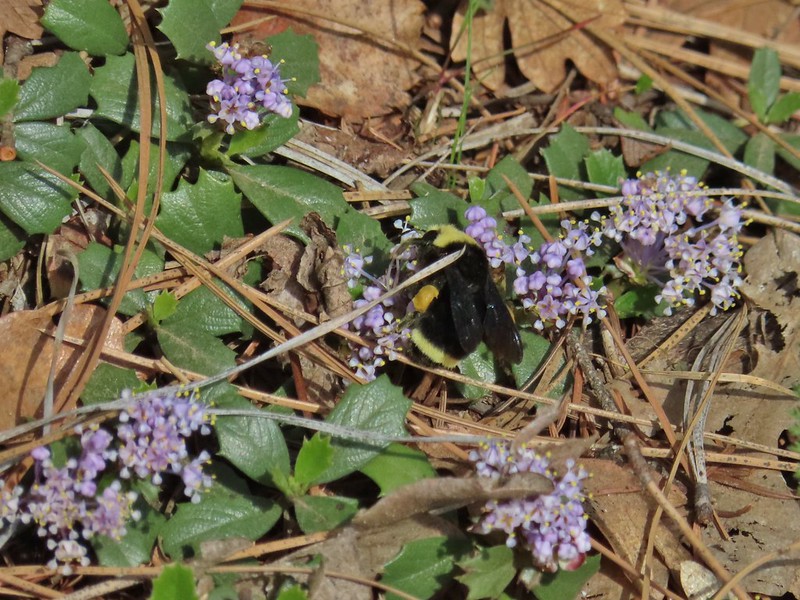 Bumble bee
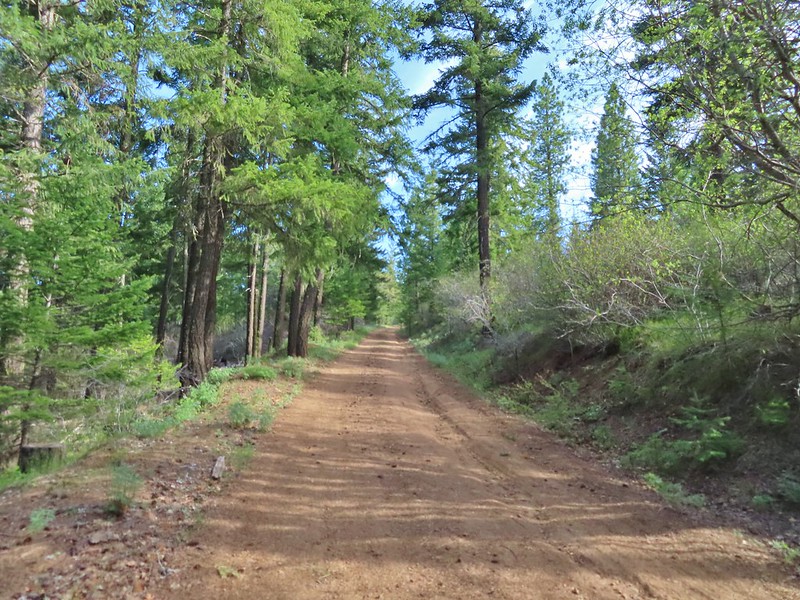 A more forested section of the road.
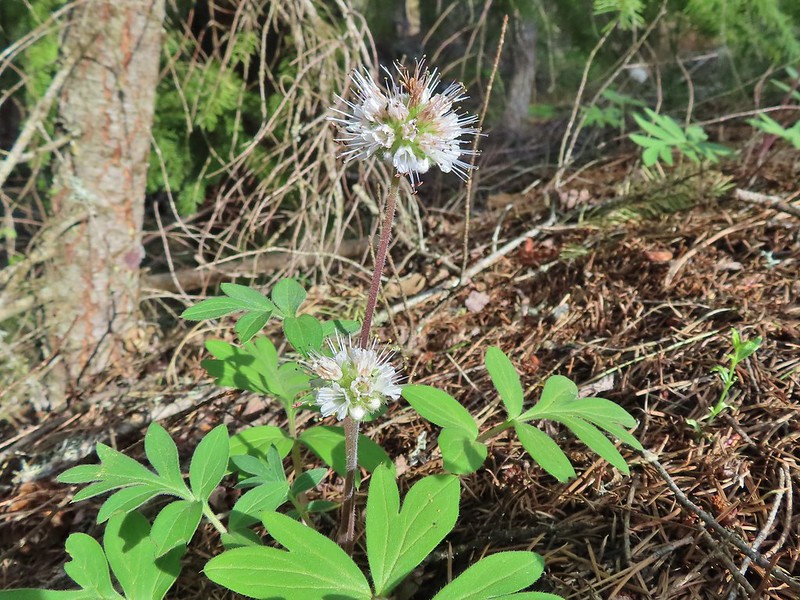 Ball-head waterleaf
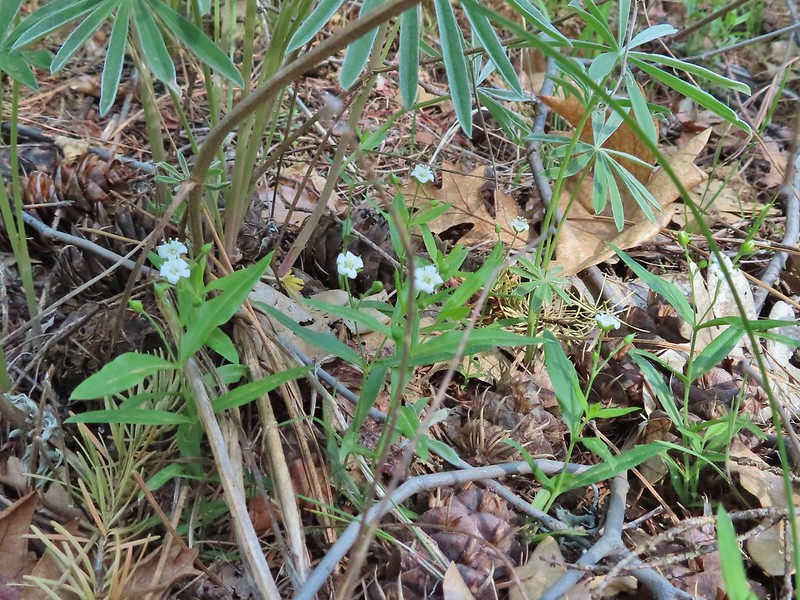 Largeleaf sandwort
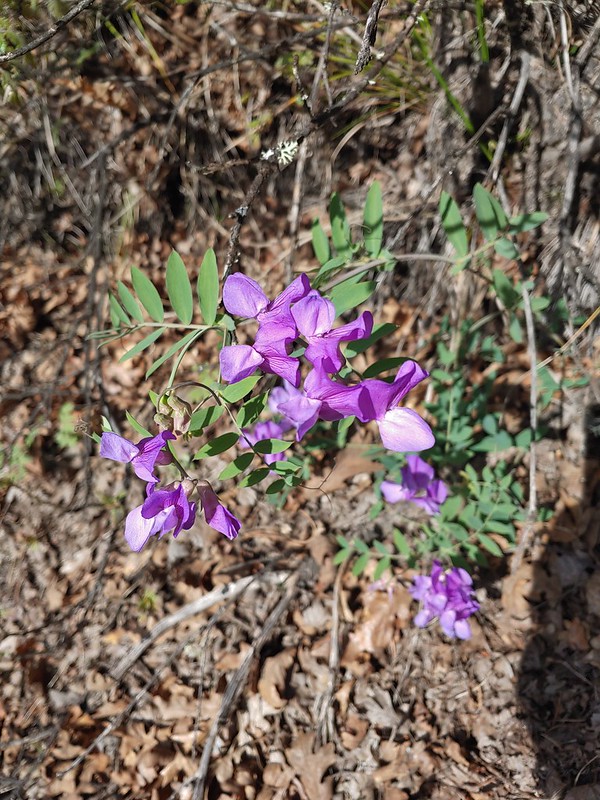 American vetch
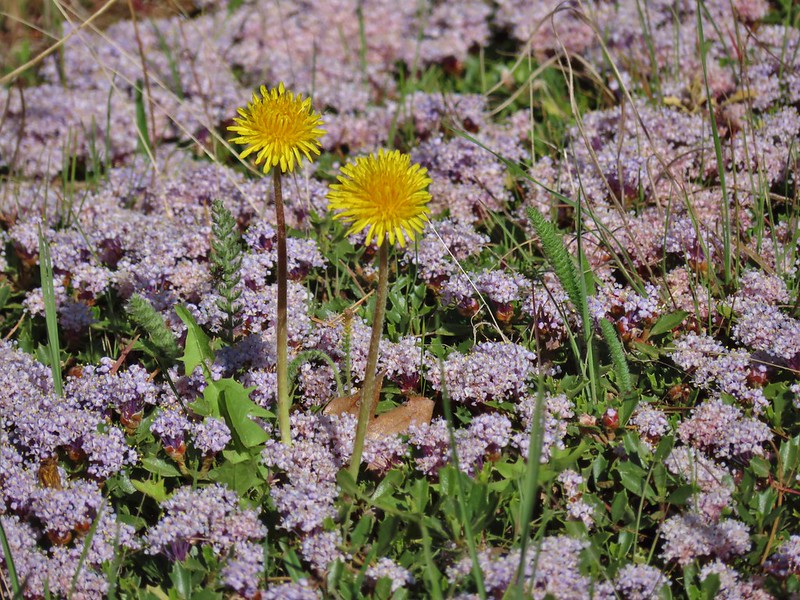 Dandelions in Mahala Mat
 Bitter cherry
 The real climb started at about the 4 mile mark at a junction below Grayback Mountain.
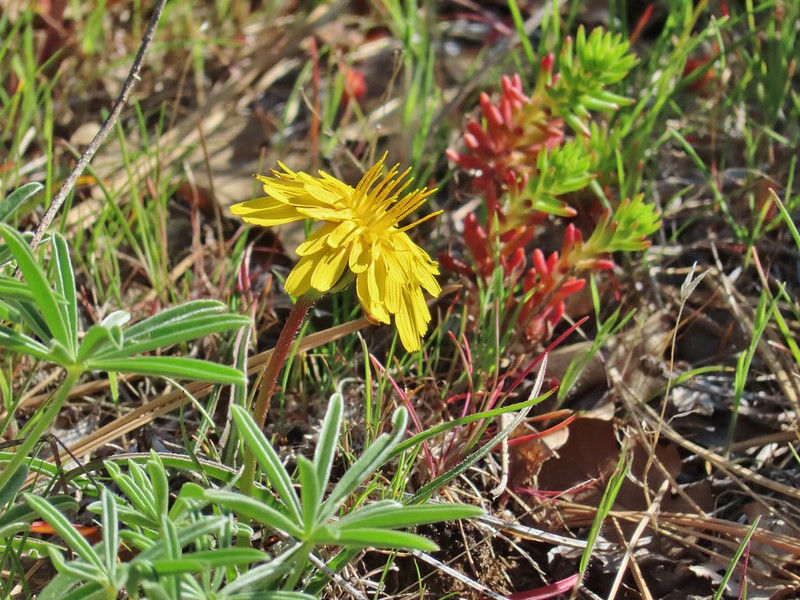 Sagebrush false dandelion
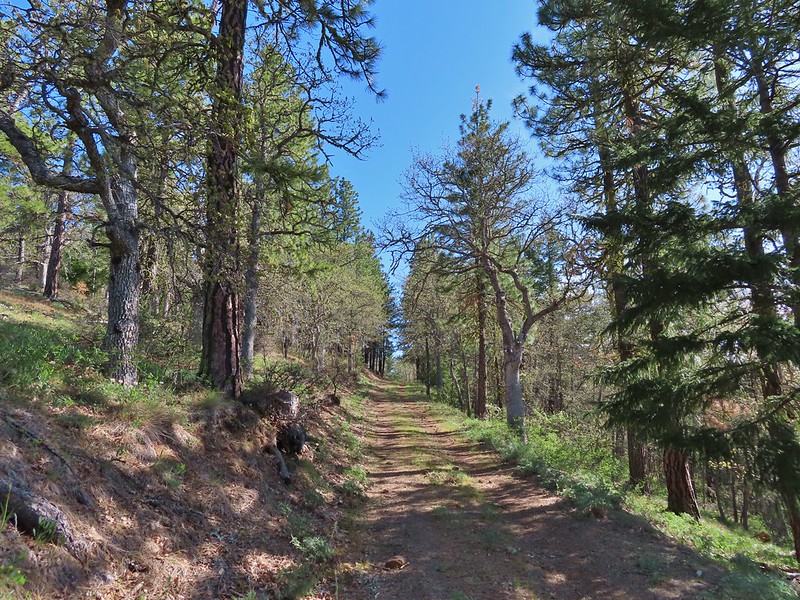 Climbing up Grayback Mountain
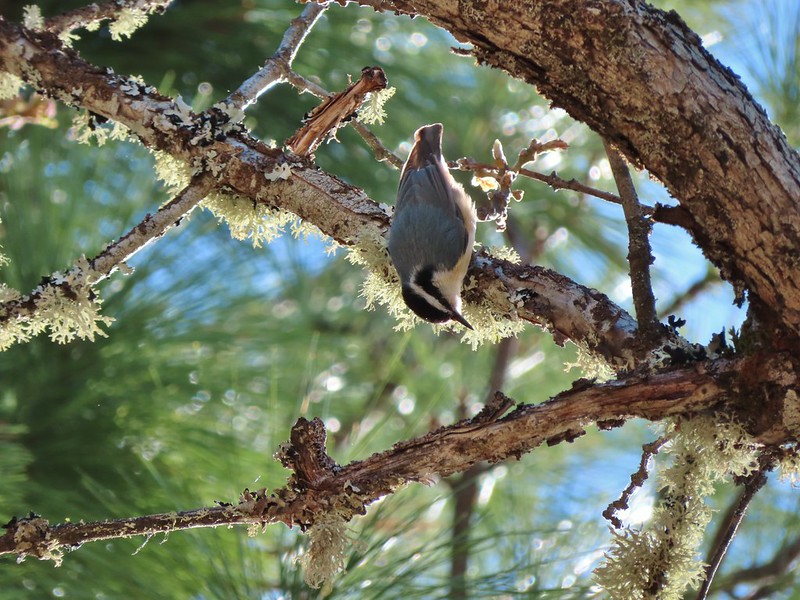 Red breasted nuthatch
 First view of Mt. Hood since the trailhead.
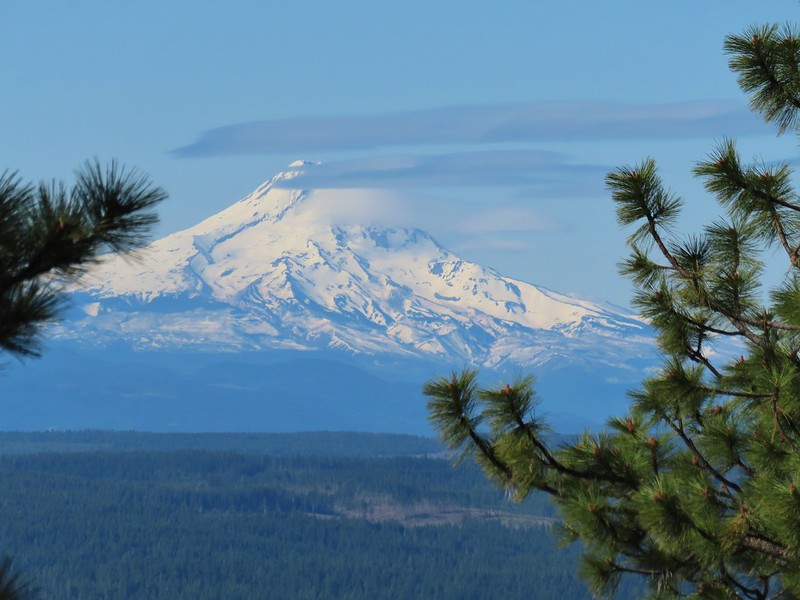 Mt. Hood
 Buckwheat
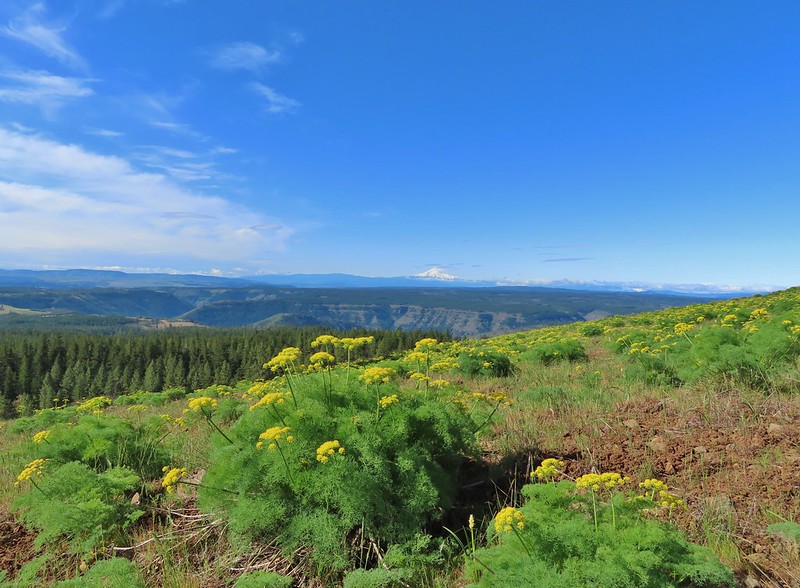 Mt. Hood beyond the Klickitat River Canyon
 Turkey vulture
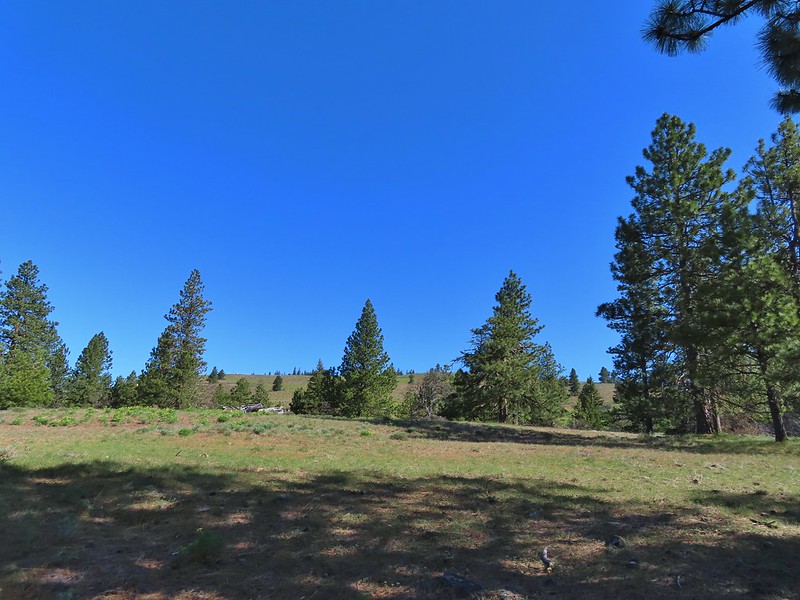 Entering the meadows on Grayback Mountain.
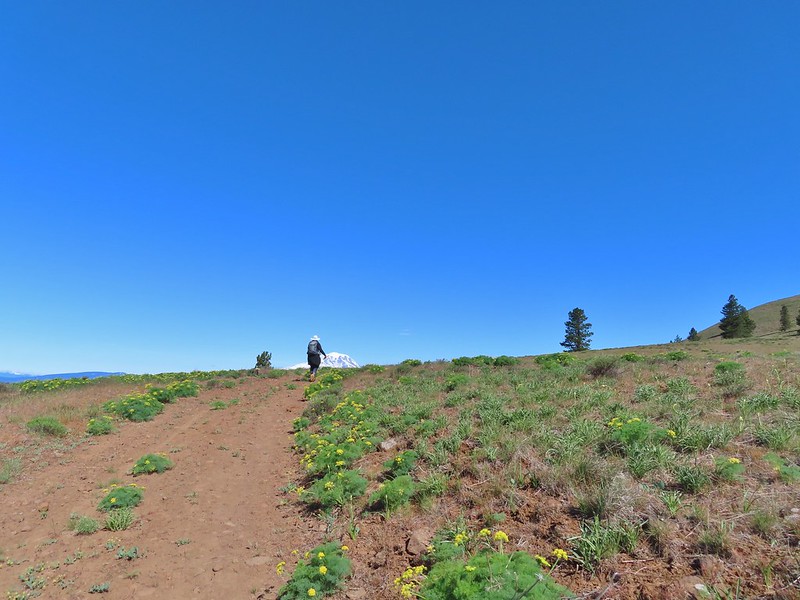 Approaching the first view of Mt. Adams.
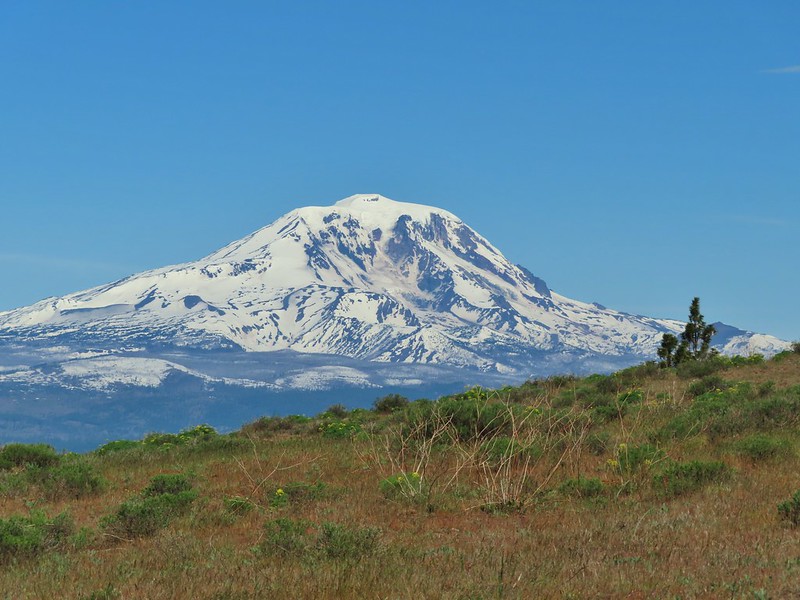 Mt. Adams
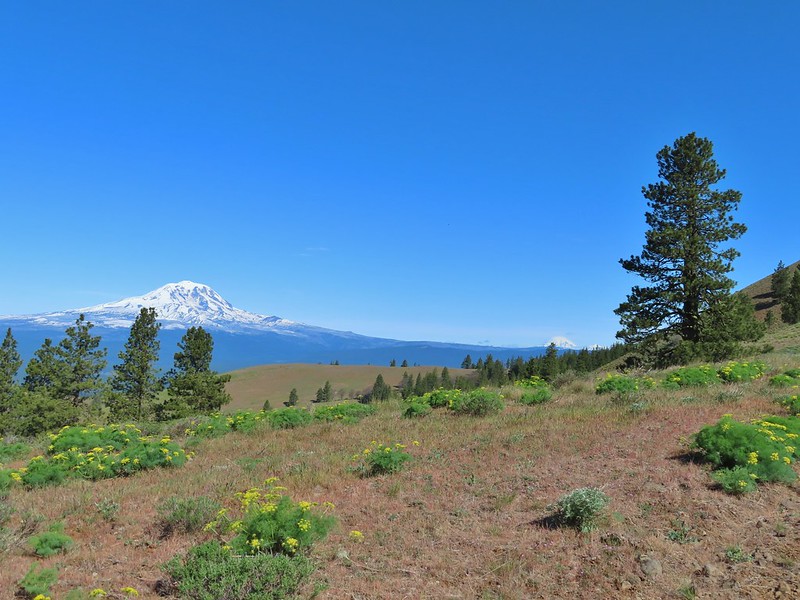 Mt. Adams, Mt. Rainier and Goat Rocks
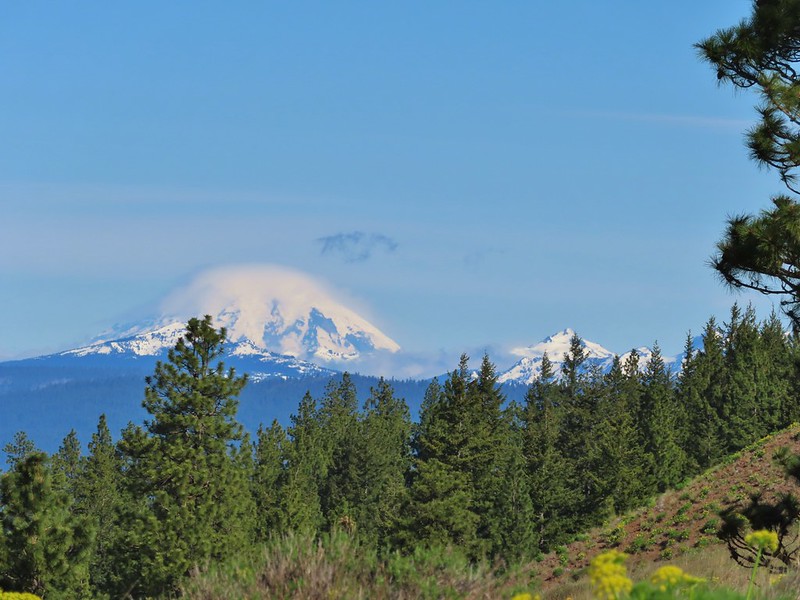 Mt. Rainier and Goat Rocks
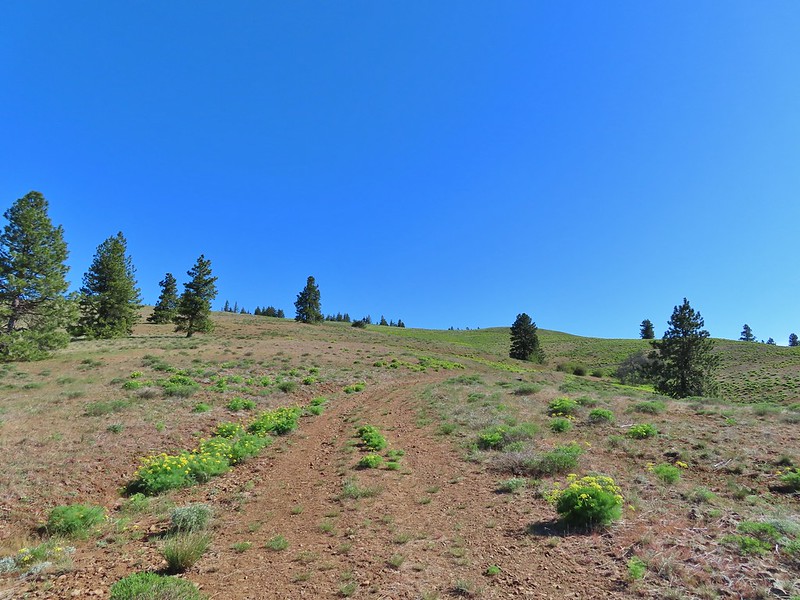 In the meadows.
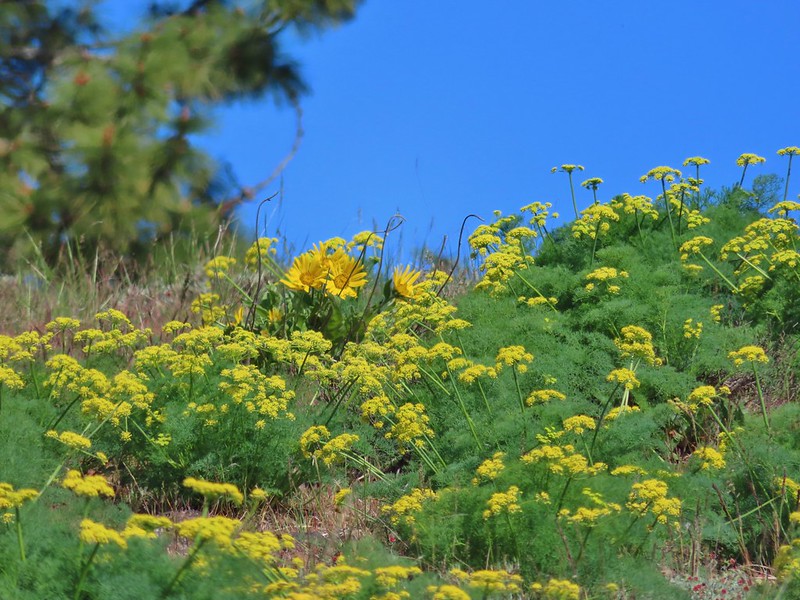 A balsamroot surrounded by parsley.
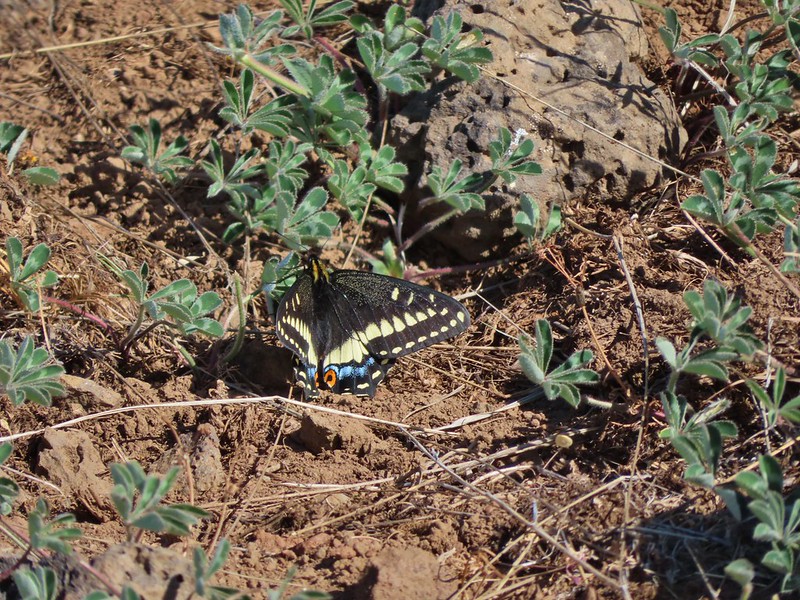 Indra swallowtail
 Western meadowlark in a patch of Columbia desert parsley.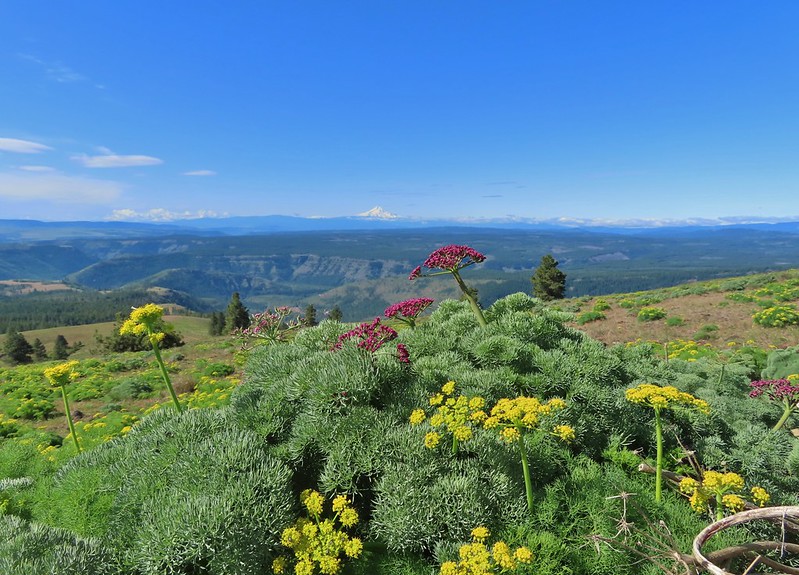
 Radio equipment atop Grayback Mountain with Mt. Adams beyond.
 Mt. Hood (we could just barely make out the top of Mt. Jefferson too.) from the summit.
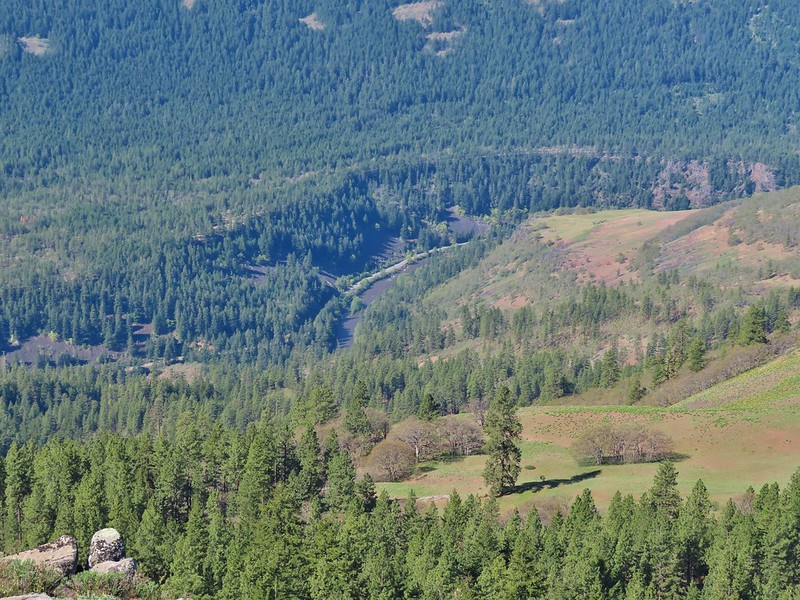 The Klickitat River
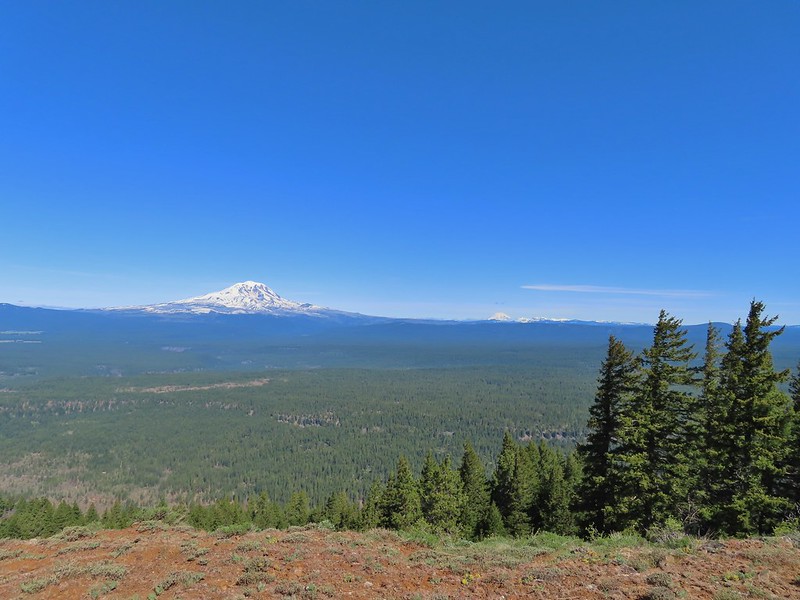 Mt. Adams, Mt. Rainier and Goat Rocks
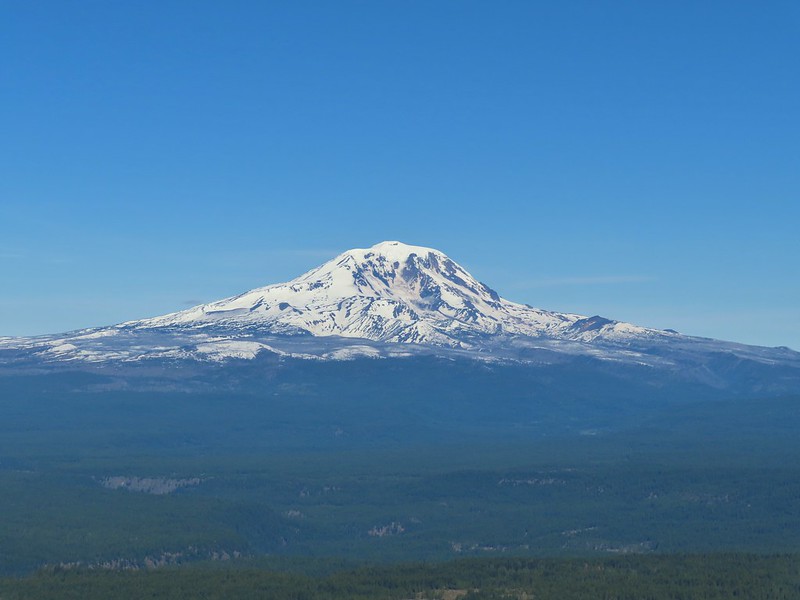 Mt. Adams
 Mt. Rainier and Goat Rocks (the Klickitat River originates from Goat Rocks.)
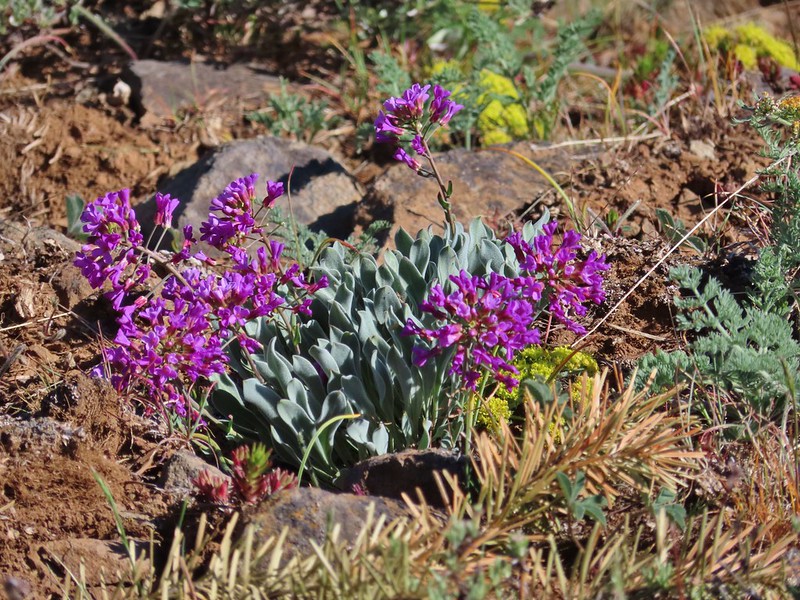 Daggerpod
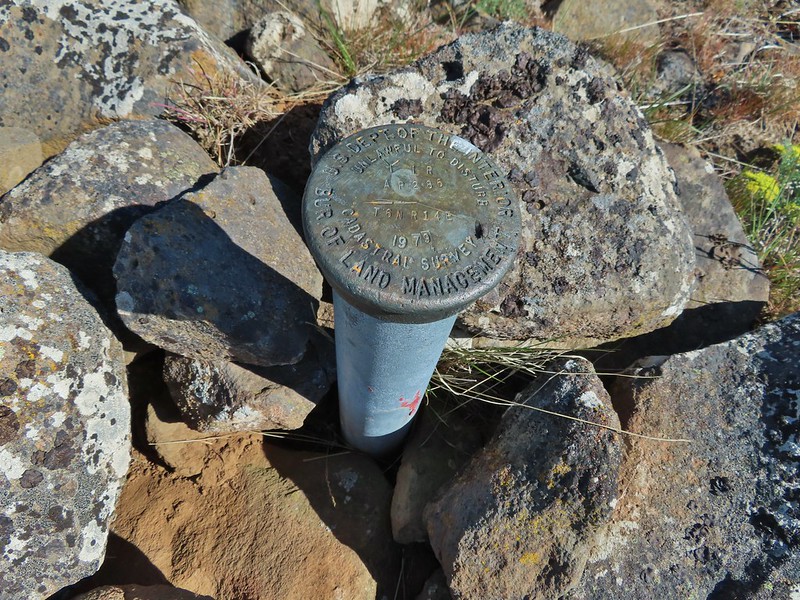 Obligatory survey marker photo.
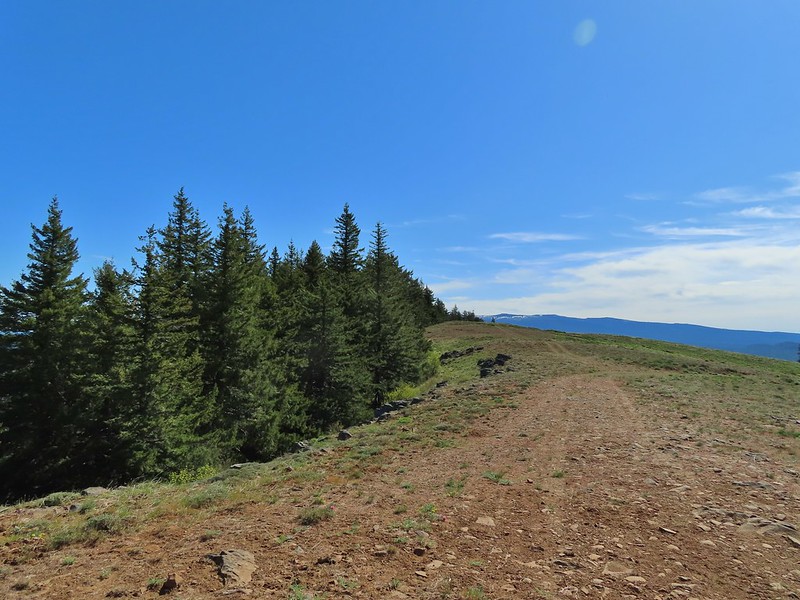 Looking east across the summit to the long ridge of Indian Rock. The boundary of the Yakima Indian Reservation is just on the north side of the summit.
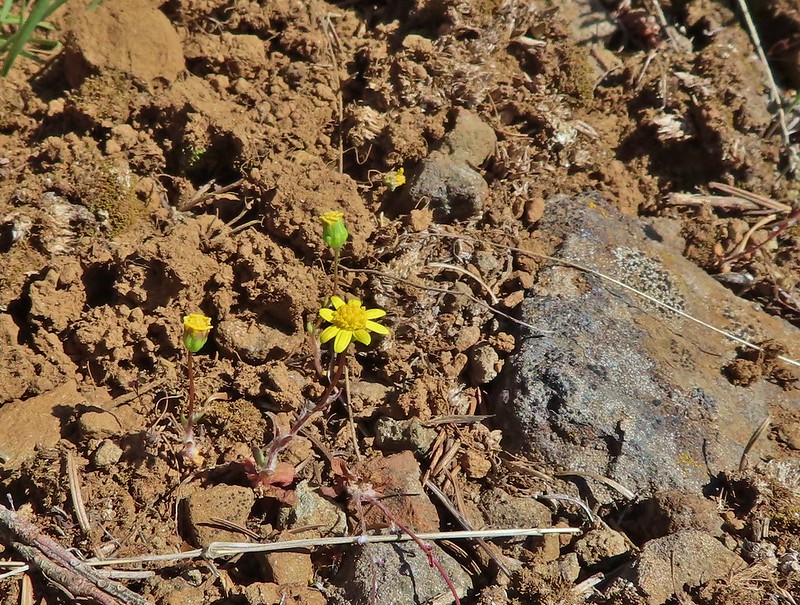 A few gold stars still had petals.
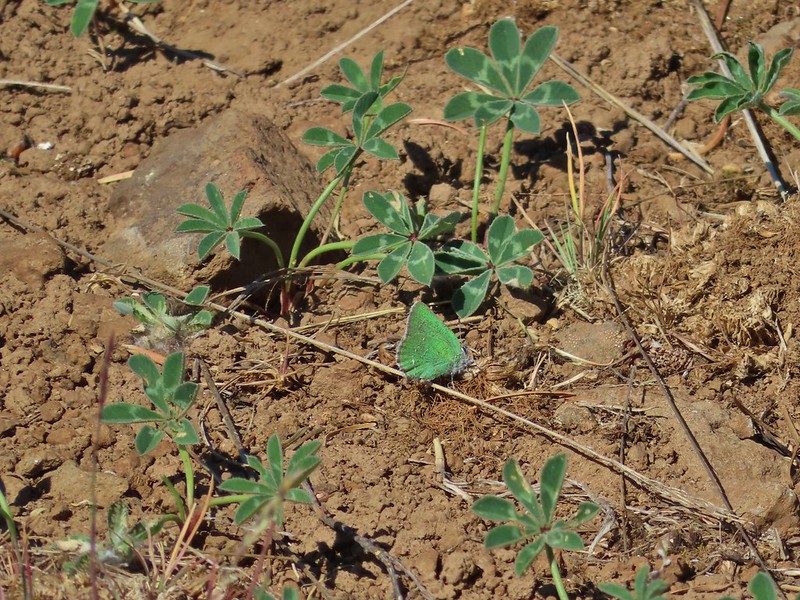 A hairstreak but I’m not sure which type.
 At least 4 ants on a large head clover.
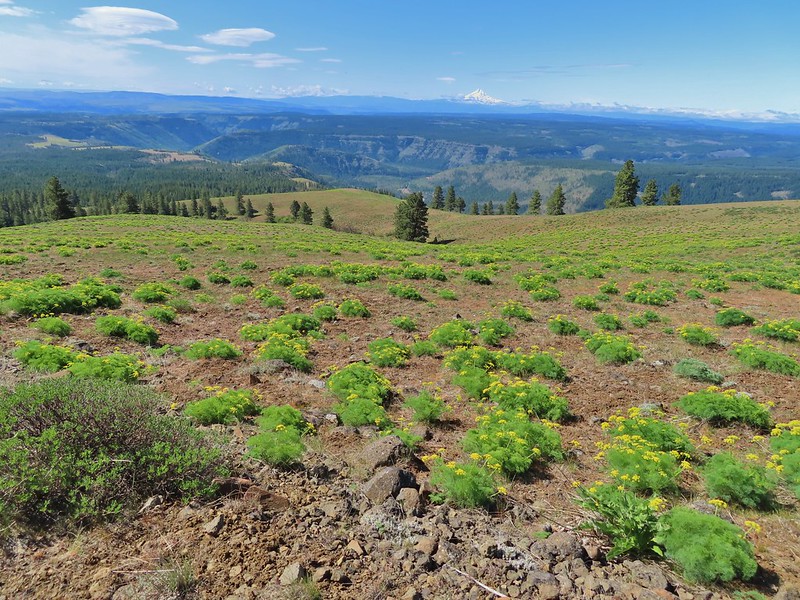 Looking back south down Grayback Mountain.
 There was a lot of white-stemmed frasera in the area but this was the closest one to blooming (and it’s a ways off).
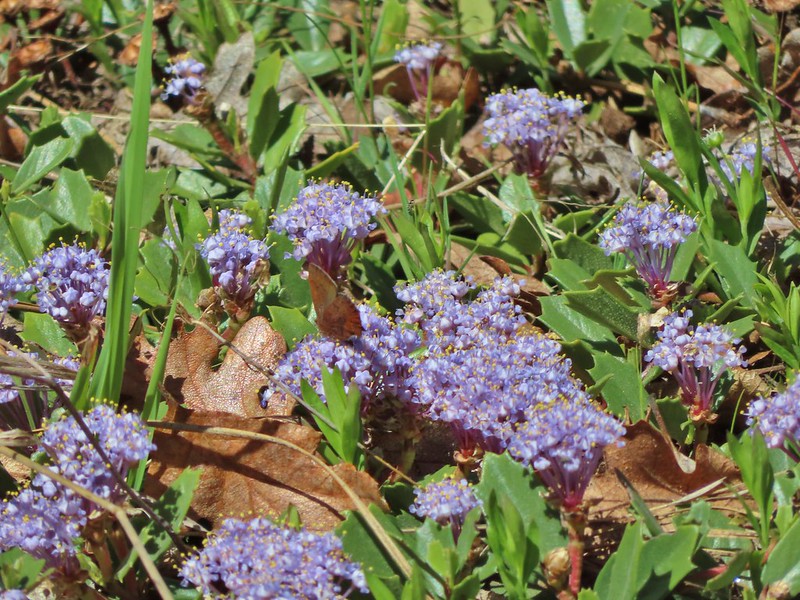 Maybe a brown elfin. I couldn’t get a clear picture of this one.
 Erynnis propertius – Propertius Duskywing (aka Western Oak Dustywing). There were lots of these duskywings flying about, it turns out that oaks are their host plants.
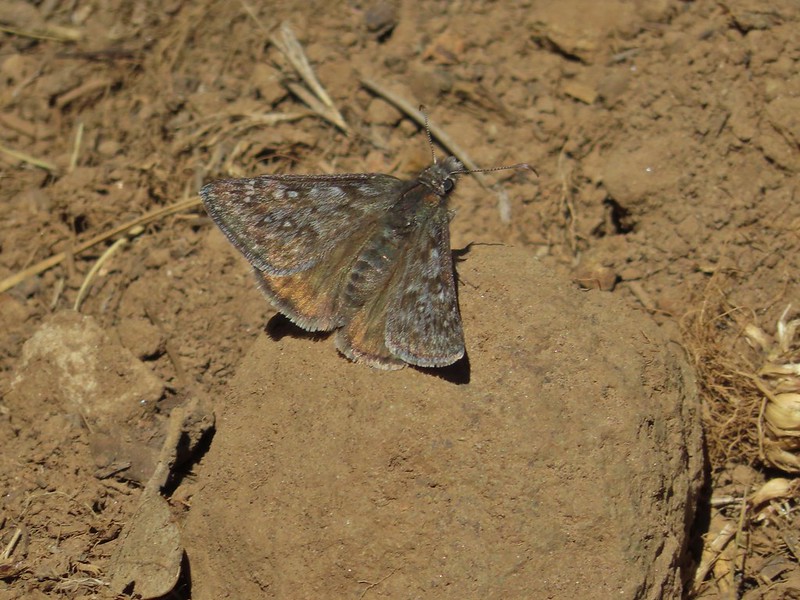 Another Erynnis propertius
 Juba skippers caught in the act.
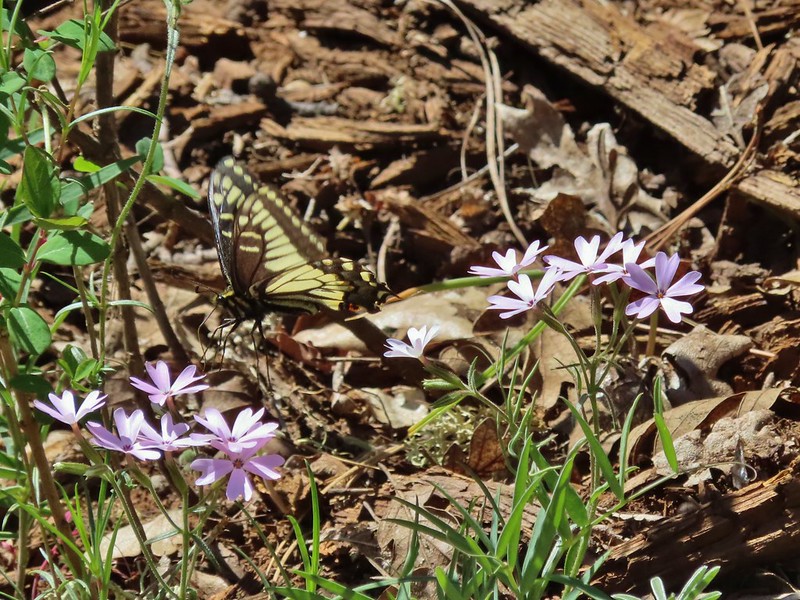 Anise swallowtail coming in for a landing on showy phlox.
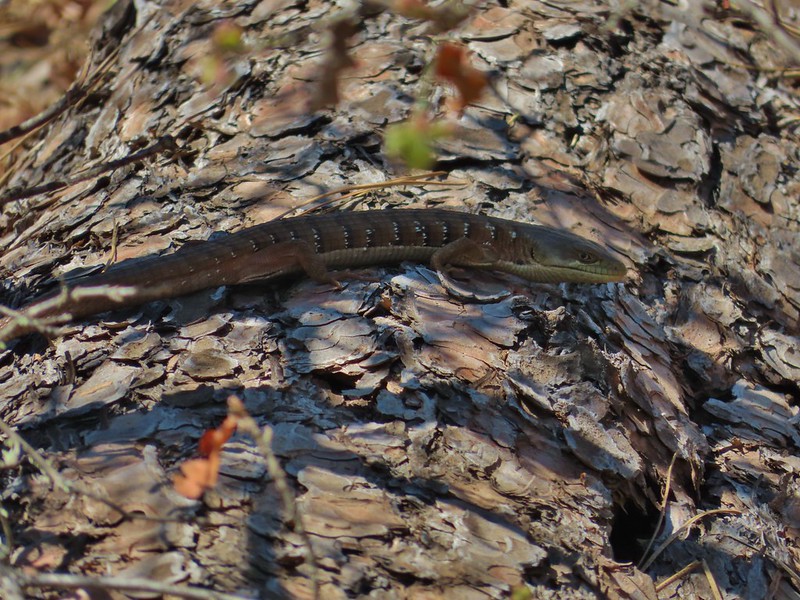 Alligator lizard on a log.
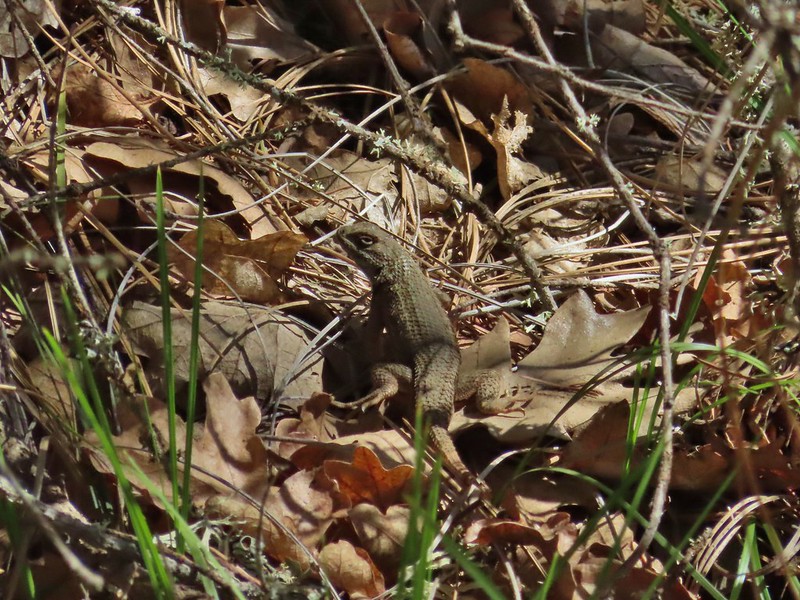 Western fence lizard
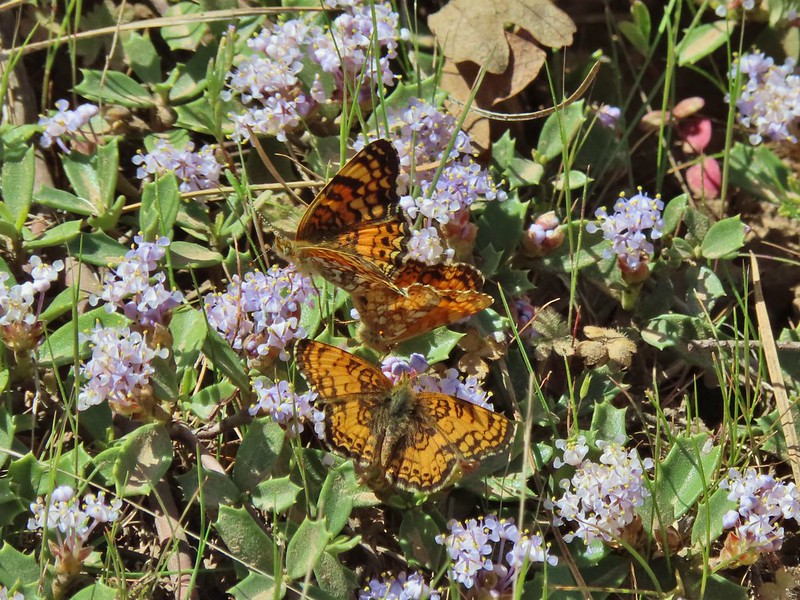 I believe these to be Mylitta crescents.
 Mt. Hood from the trailhead.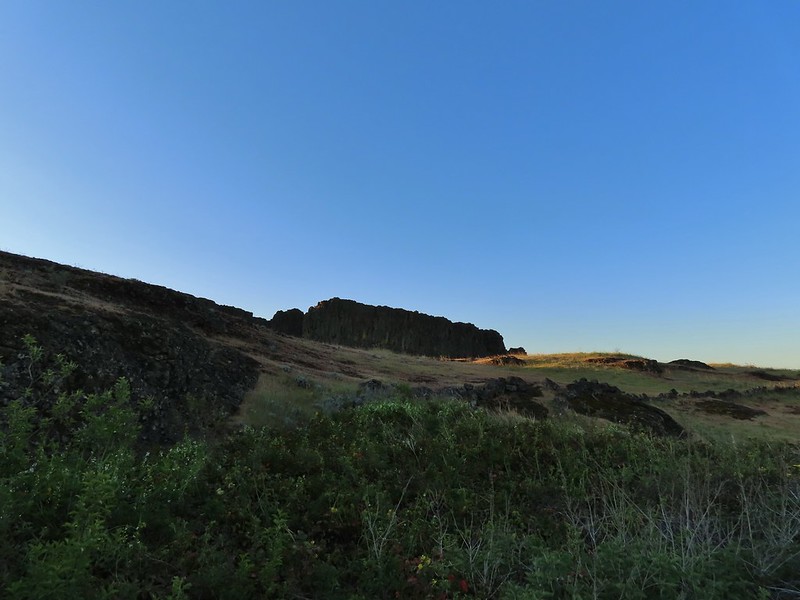
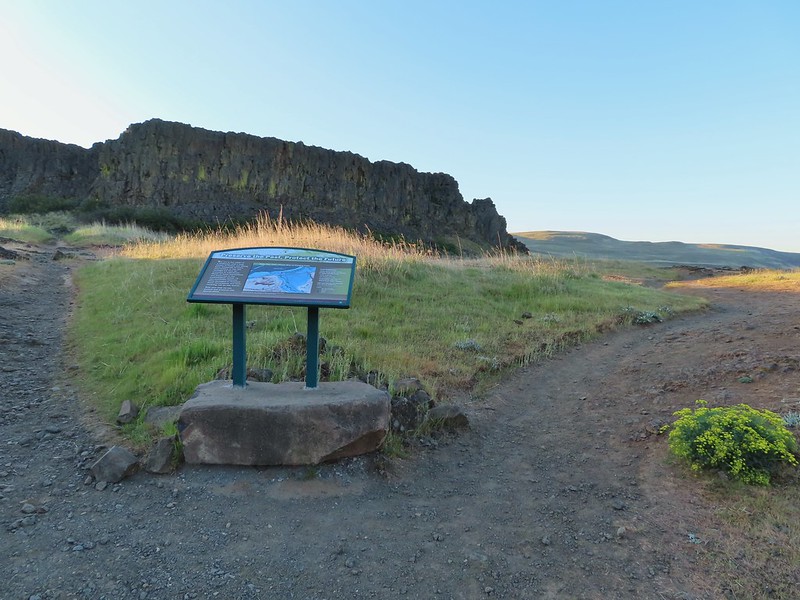
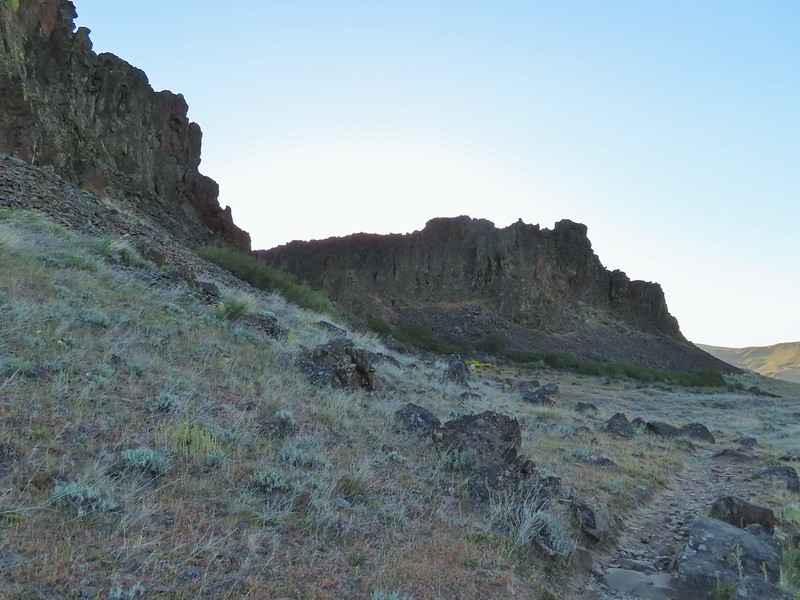
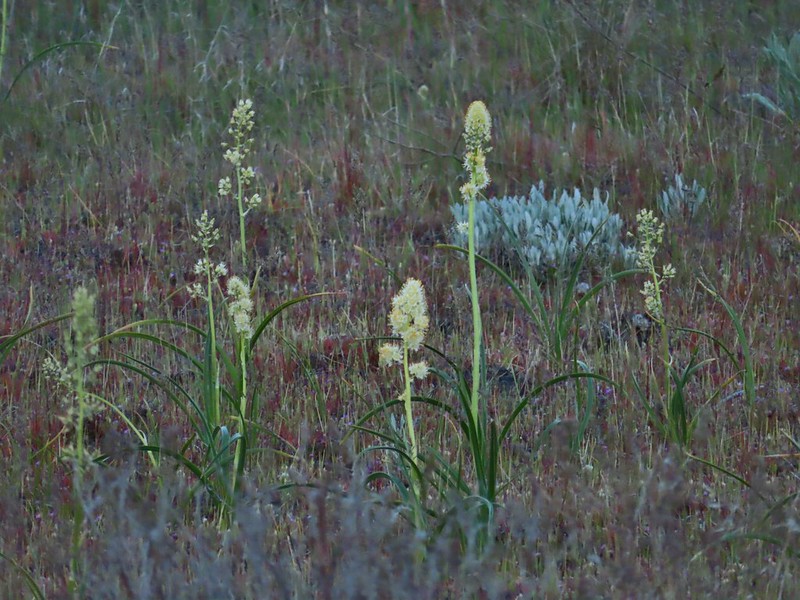 Death camas
 Western stoneseed
 Fiddleneck
 Large-flower tritelia
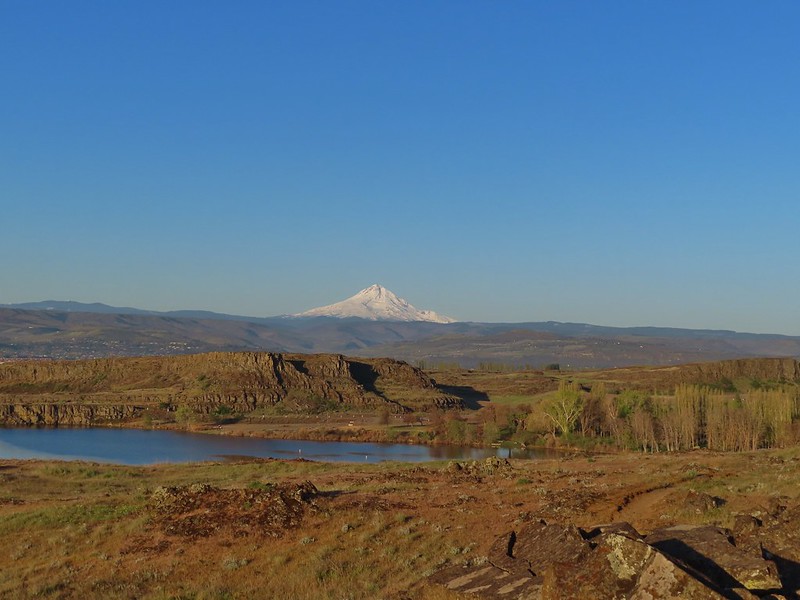 Mt. Hood beyond Horsethief Lake
 Standing at the fence looking east.
 Wren
Wren Horsethief Butte
 Lupine
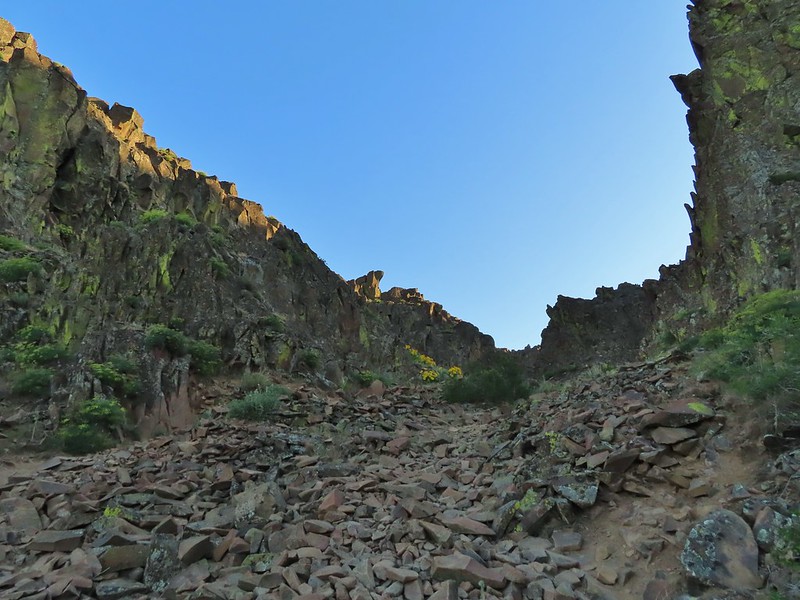


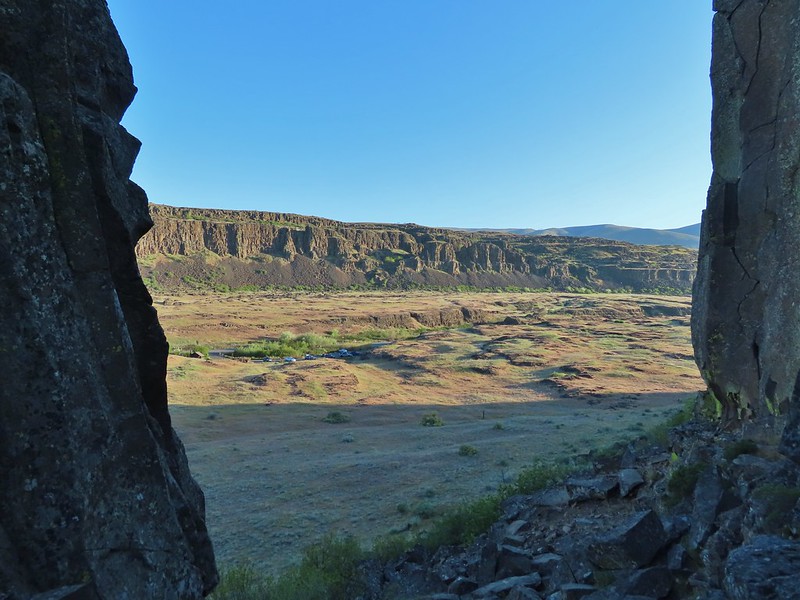

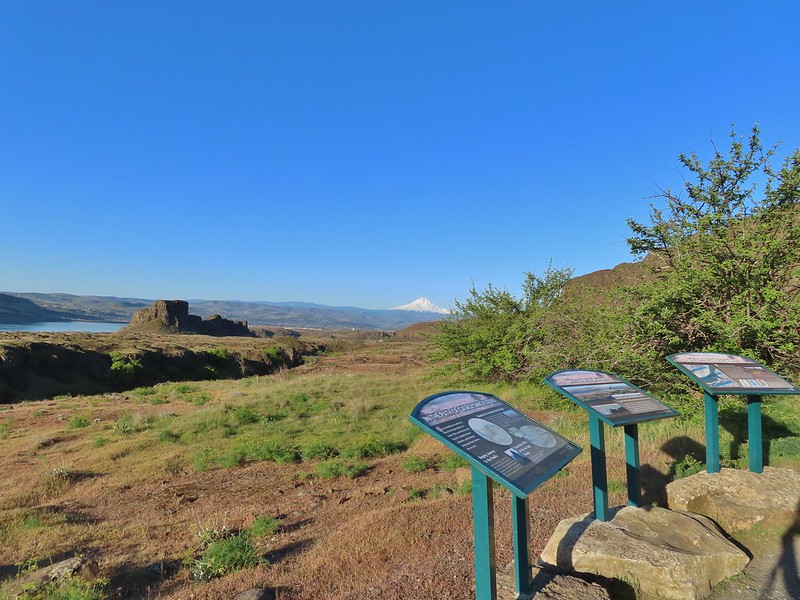 Horsethief Butte and Mt. Hood from the viewpoint.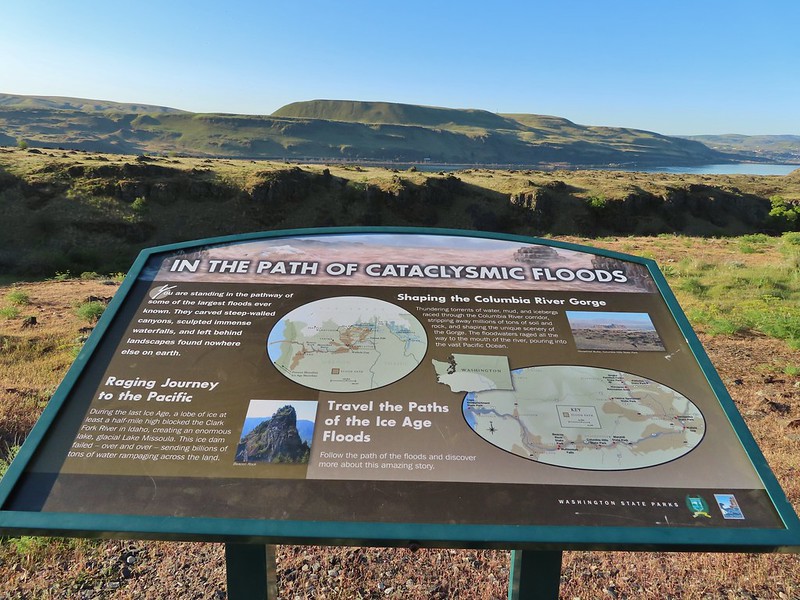

 Purple cushion fleabane
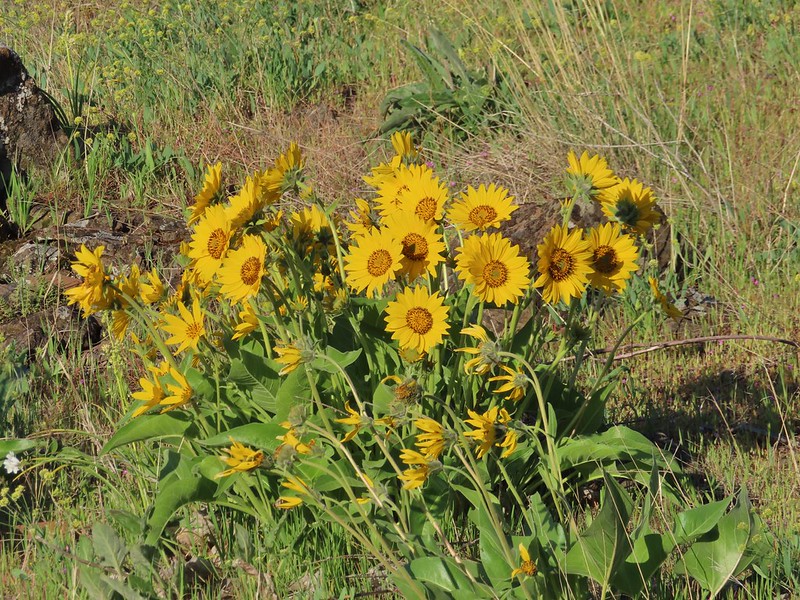 Balsamroot
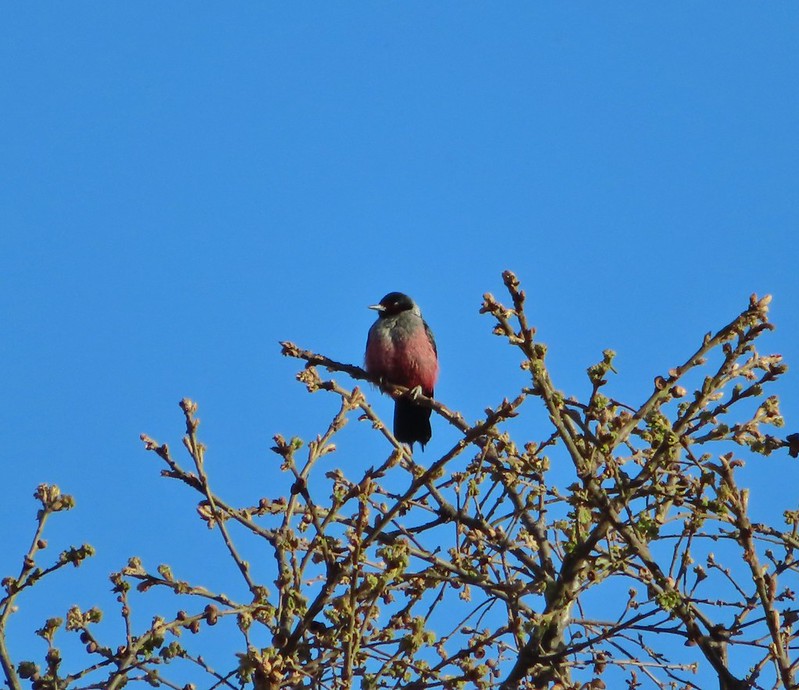

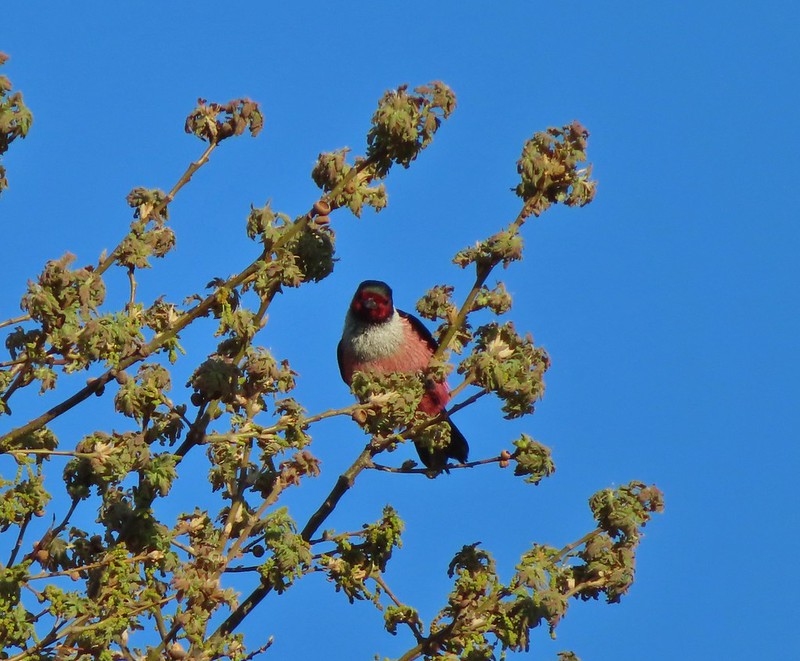
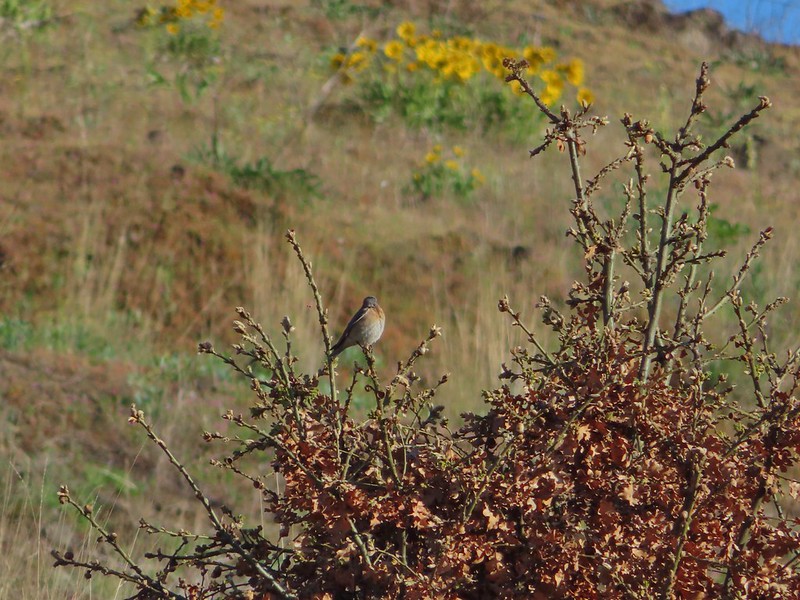 Western bluebird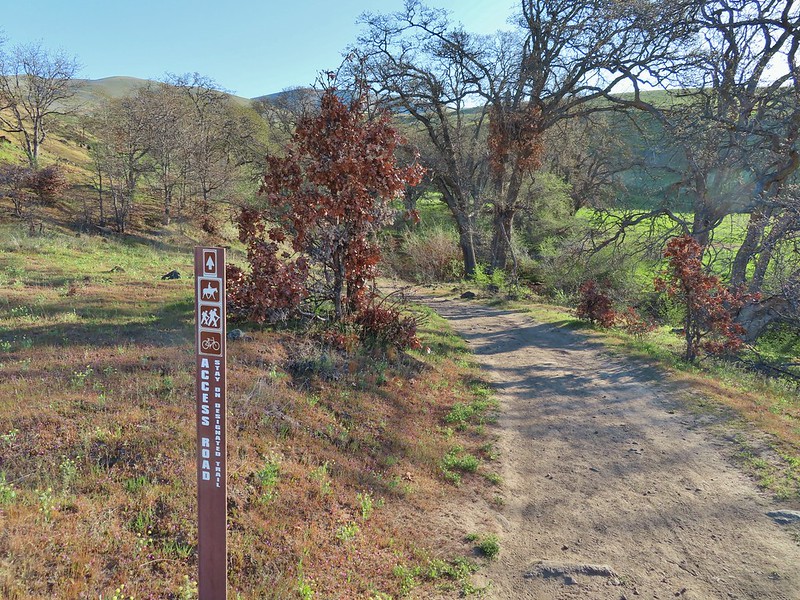
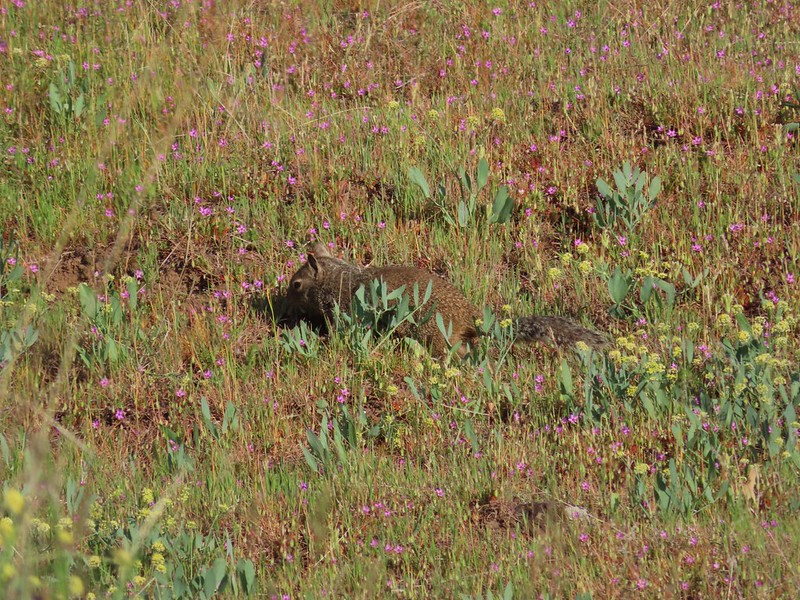 Ground squirrel


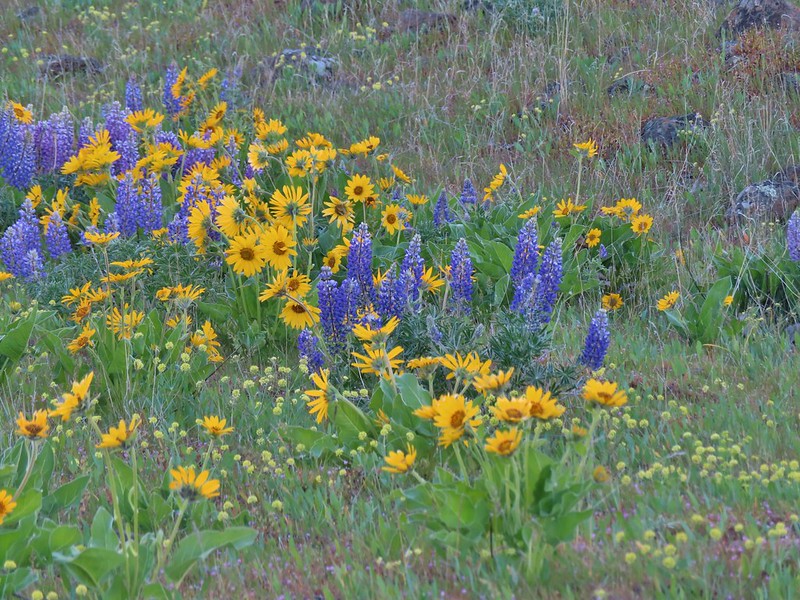 Lupine, balsamroot and parsley
 The Crawford Ranch Complex ahead to the left.
 Phlox
Phlox
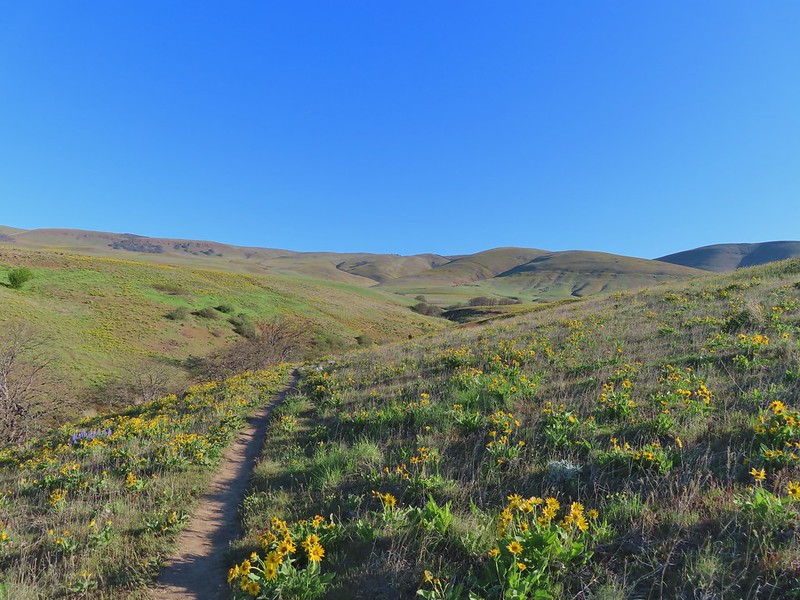


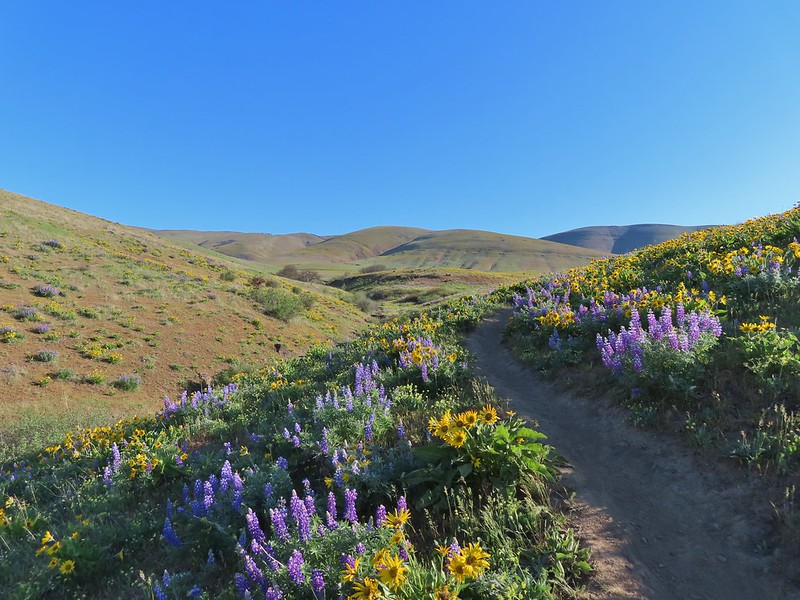


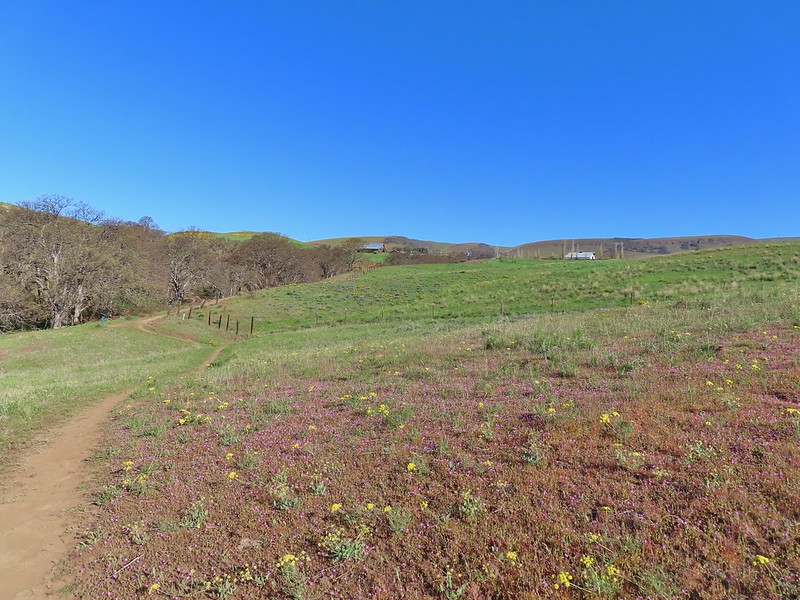 Approaching the fence line.
 Yellow-rumped warbler
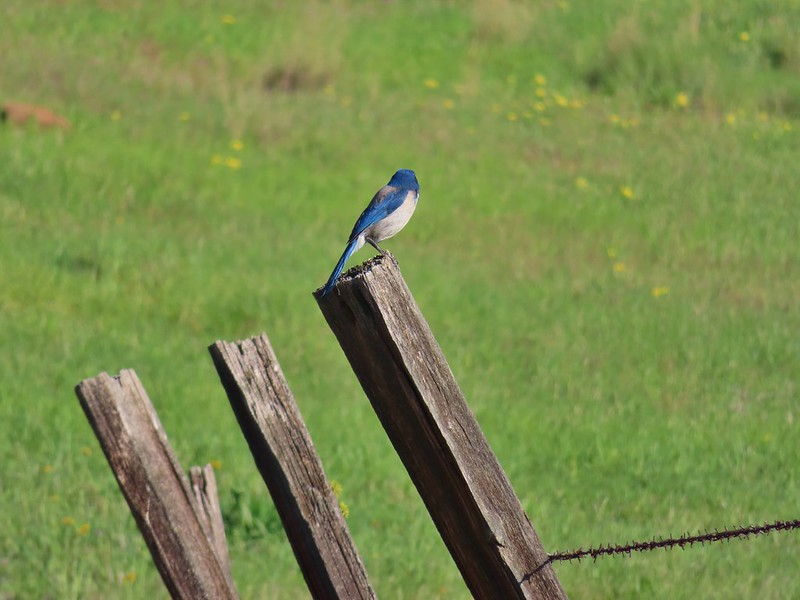 Back of a scrub jay
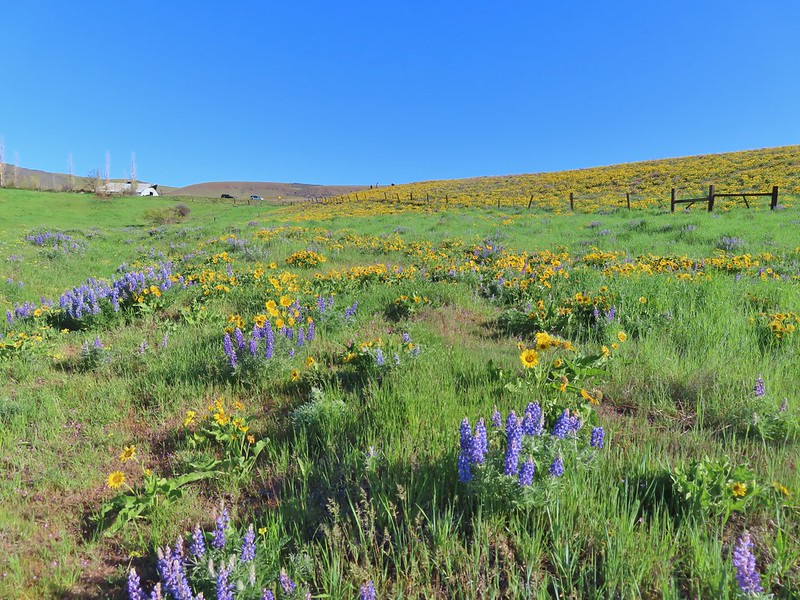
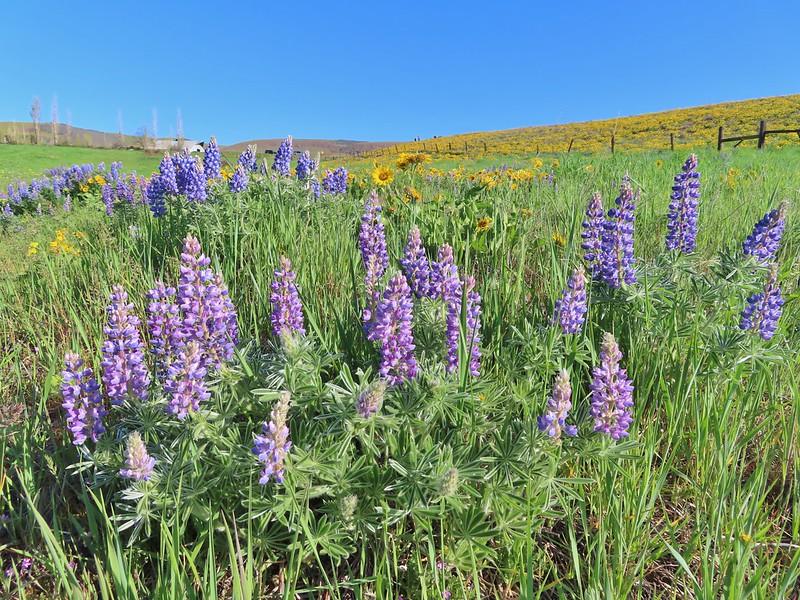


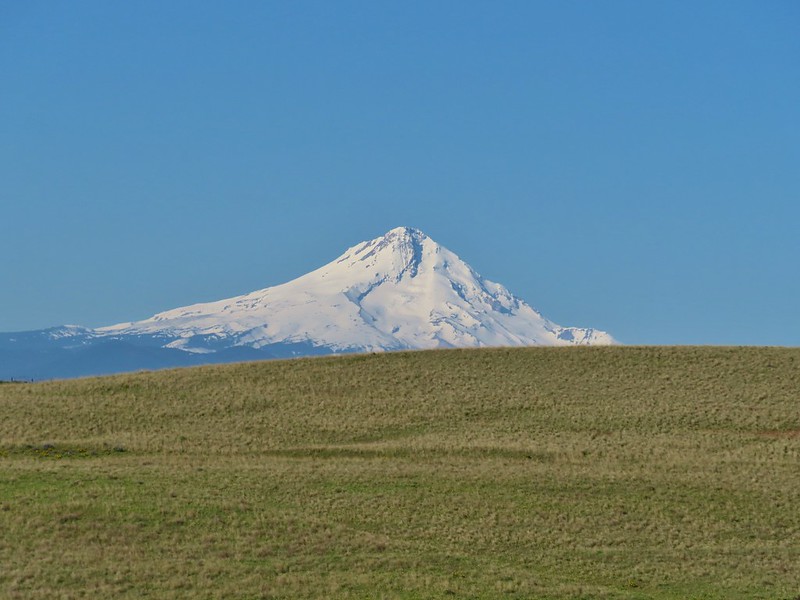 Mt. Hood
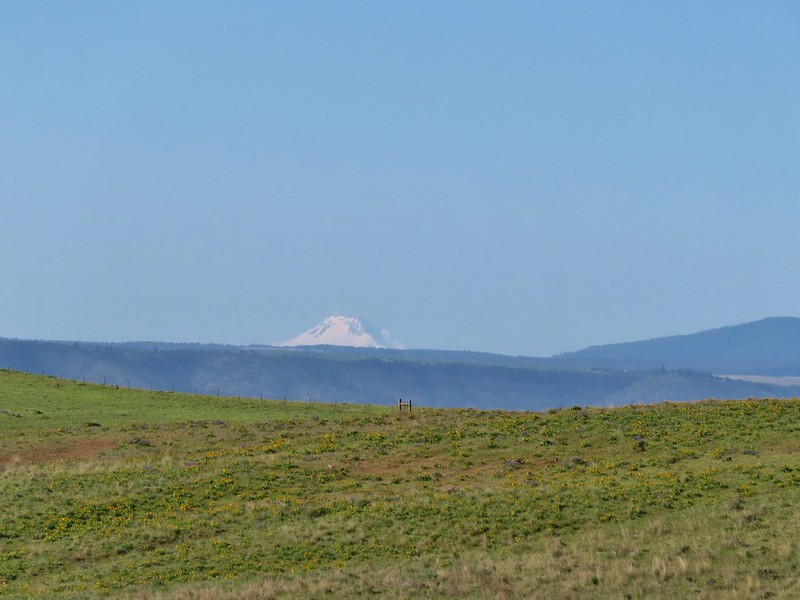 Mt. Jefferson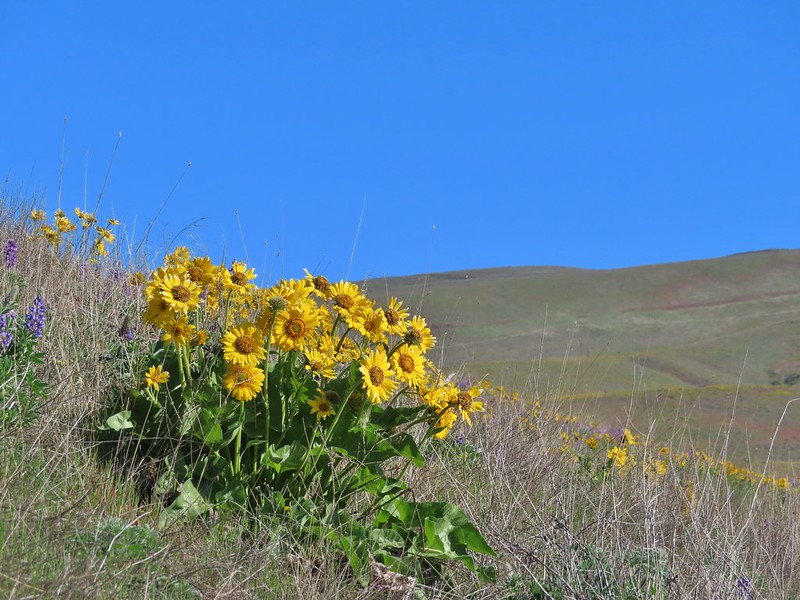

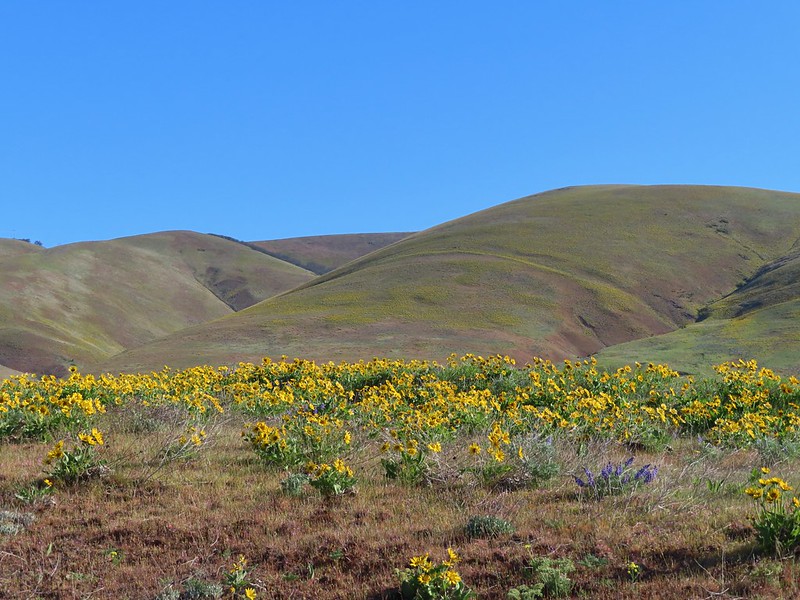


 Yakima milk-vetch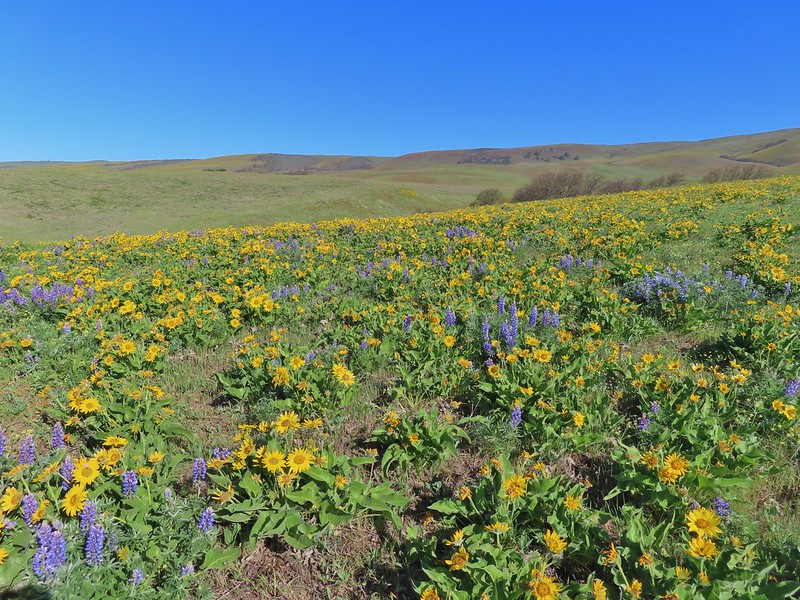


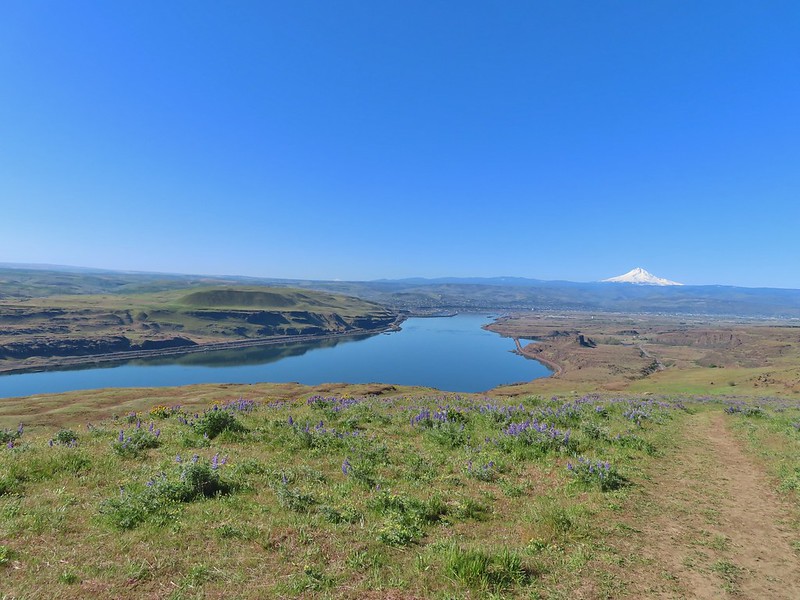 The Columbia River, Horsethief Butte, and Mt. Hood
 Death camas
 Large head clover
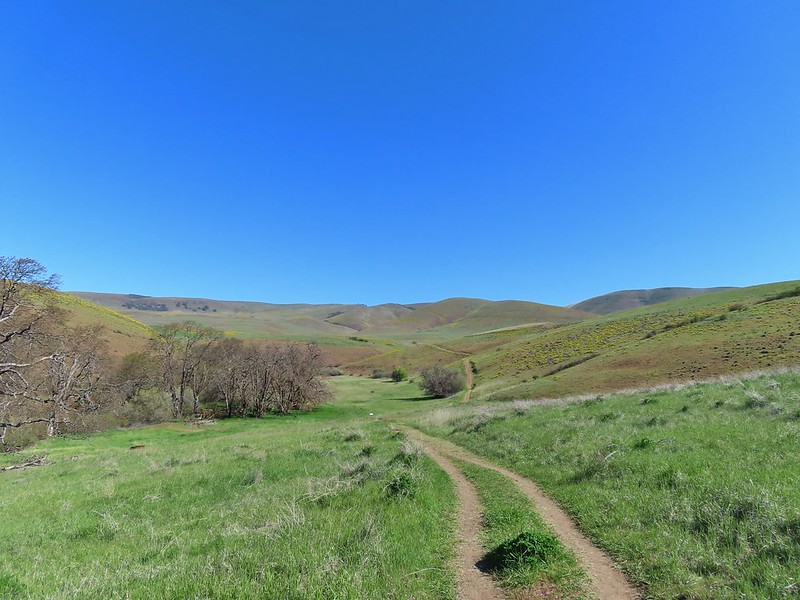 Approaching the junction.
 Hawk watching all the hikers.
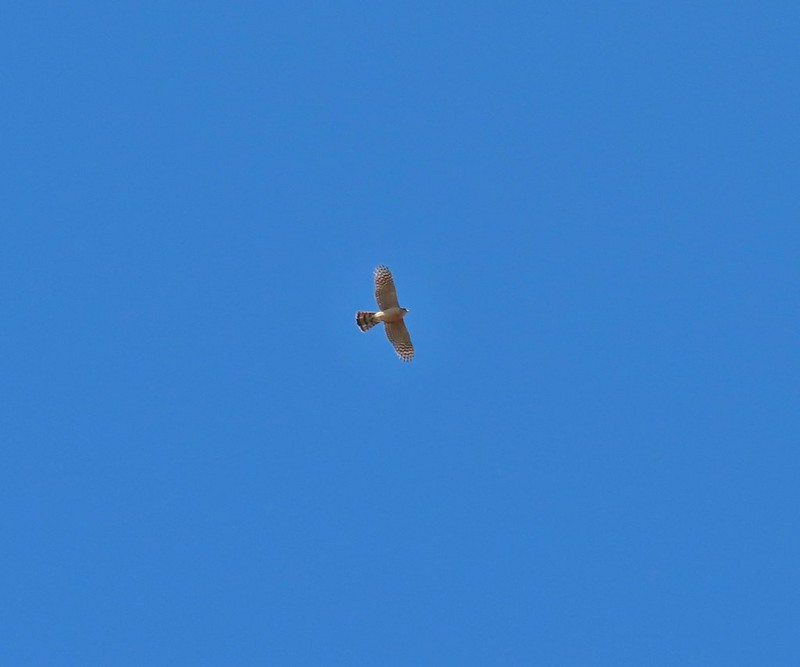 A different hawk? watching the goings on.
 Western fence lizard watching everything.
 Poppy, manroot, and red-stemmed storksbill
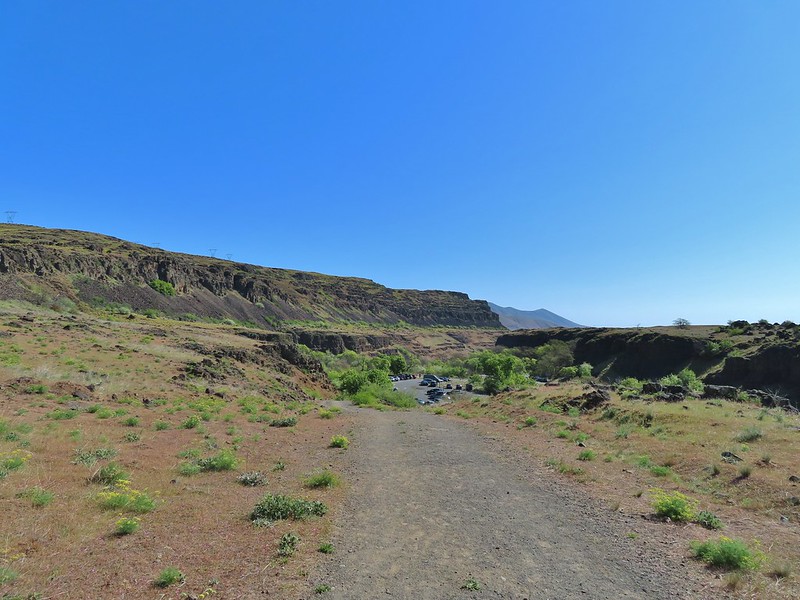 The crowded trailhead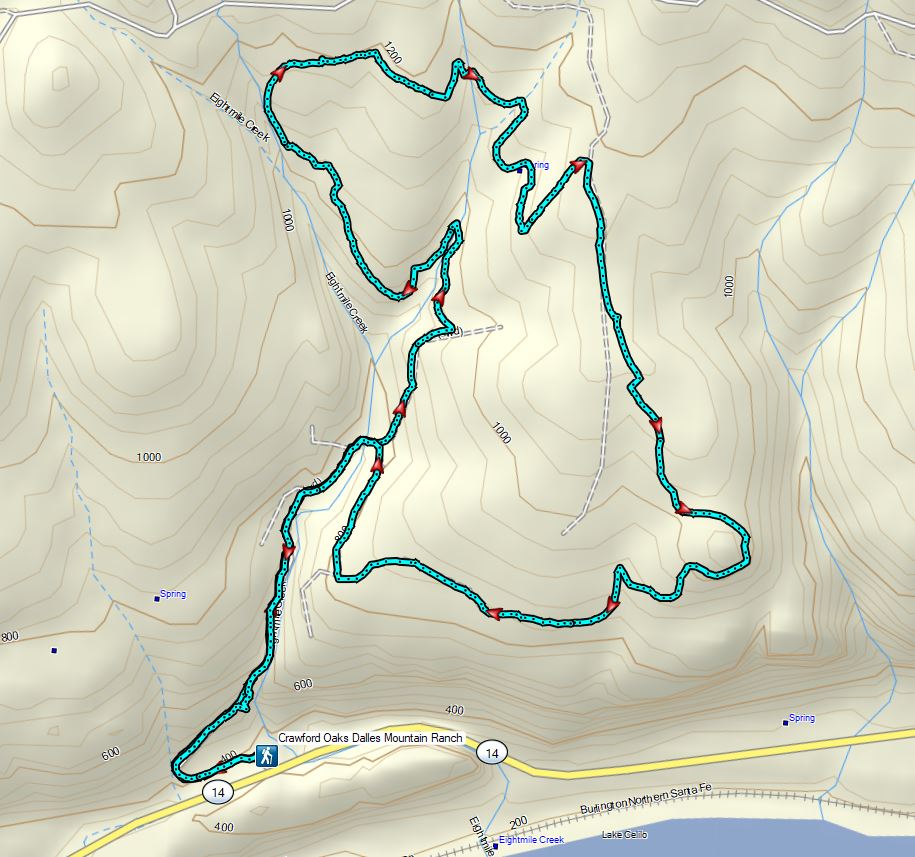

 While both were part of the Crawford Ranch, Stacker Butte is not part of the Columbia Hills State Park but is part of the Columbia Hills Natural Area Preserve.
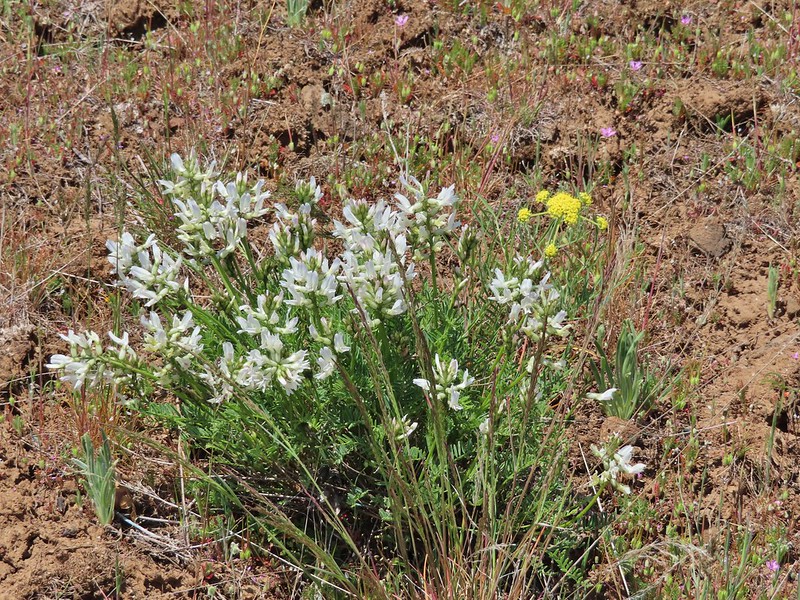 Yakima milk-vetch
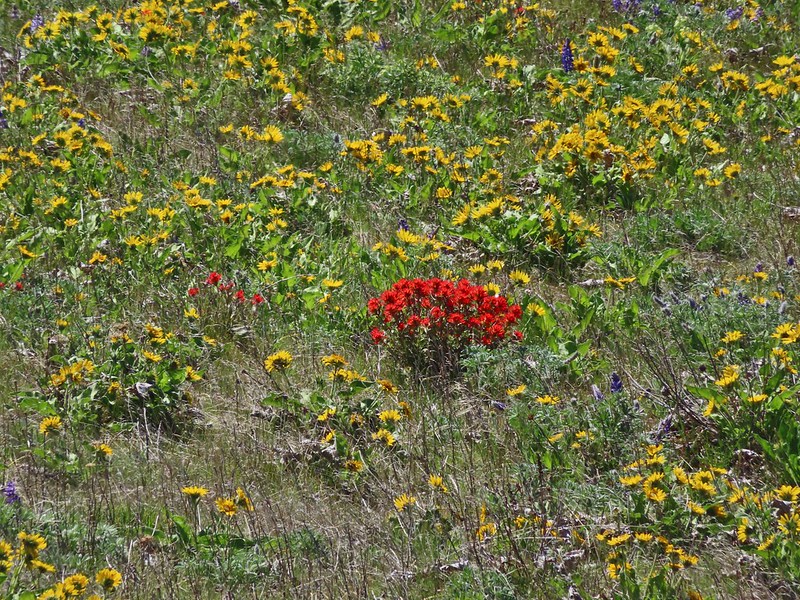 Paintbrush amid the balsamroot.
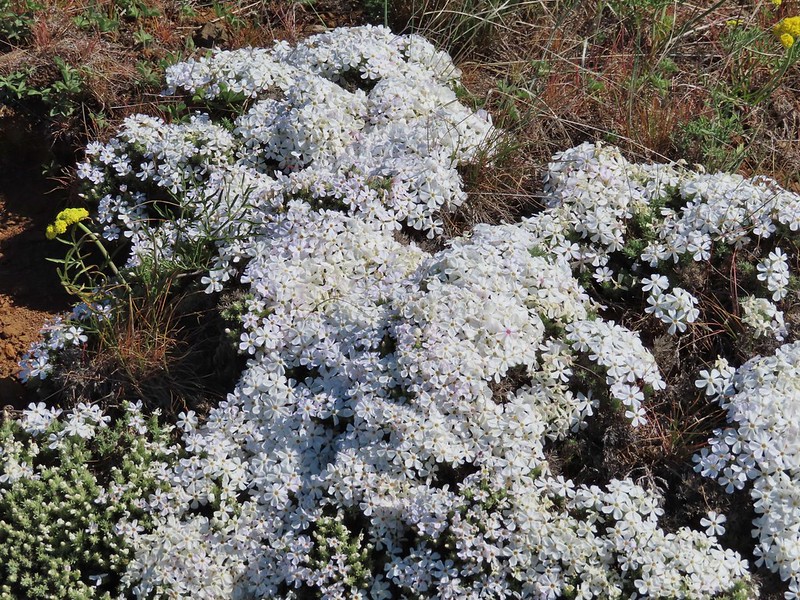 Phlox
Phlox
 Big-seed biscuitroot
 Sicklepod rockcress
 Sagebrush false dandelions
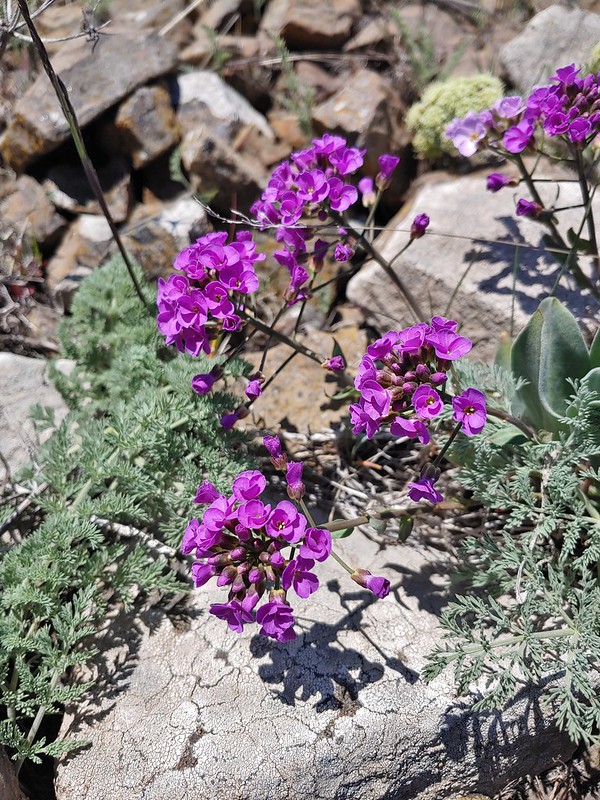 Daggerpod
 Daggerpod
 Slender toothwort?
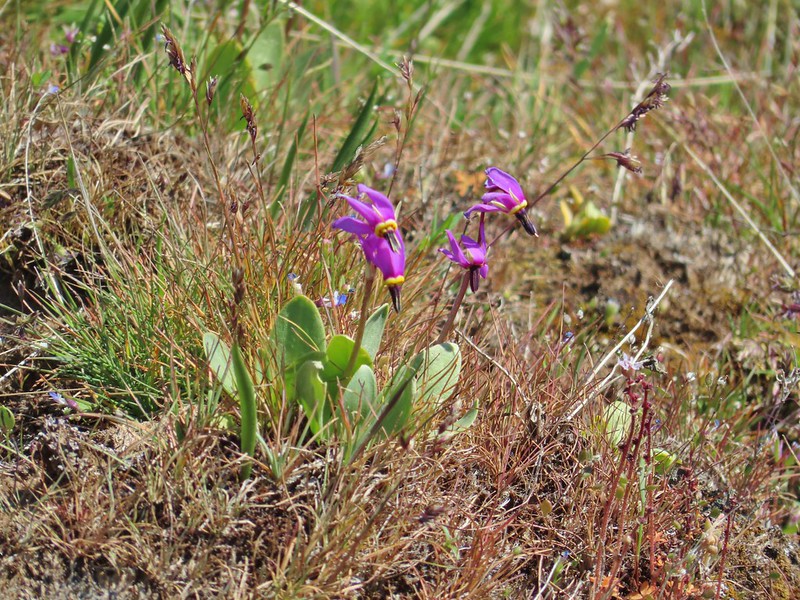 Shooting stars in front of a little blue-eyed Mary
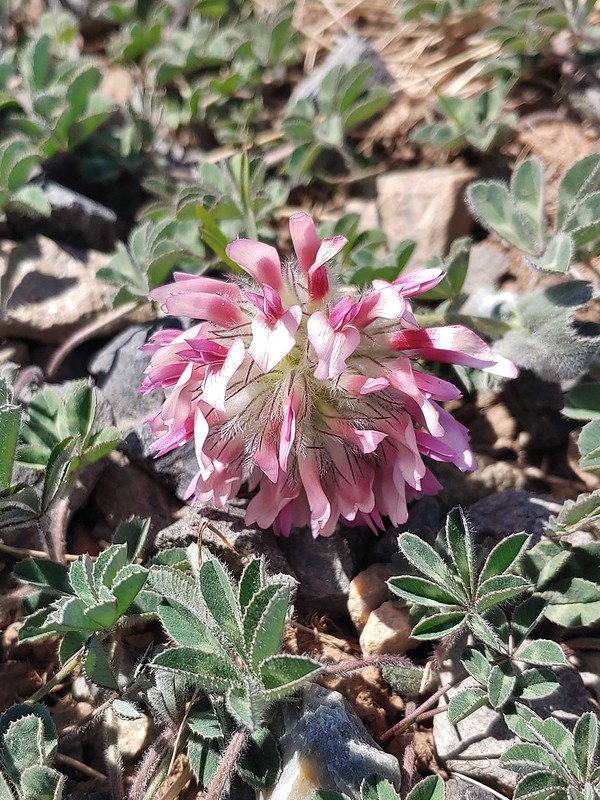 Large head clover
 Popcorn flower
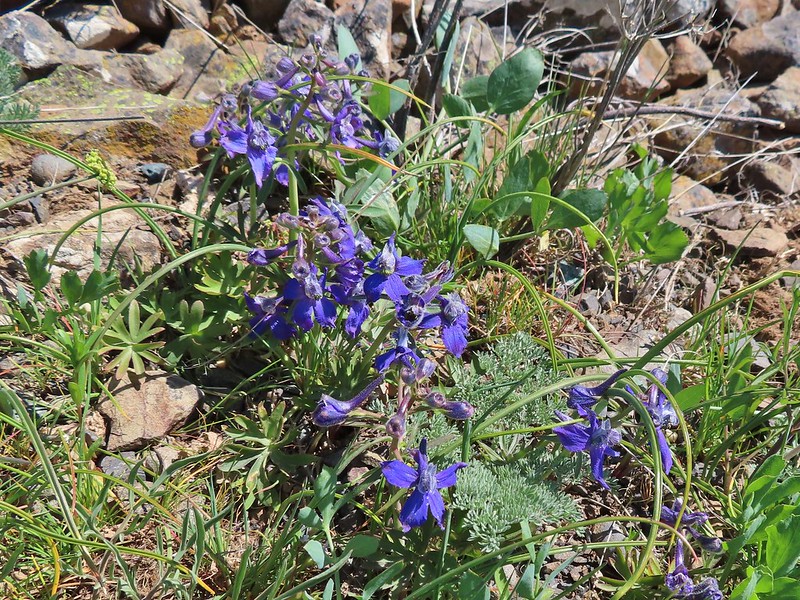 Larkspur
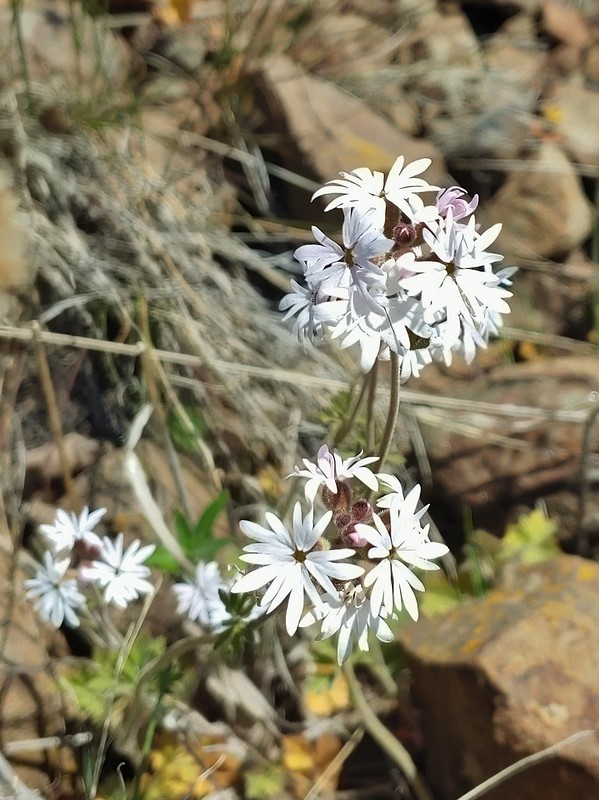 Woodland stars
 Mt. Adams
 Mt. Rainier
 Goat Rocks
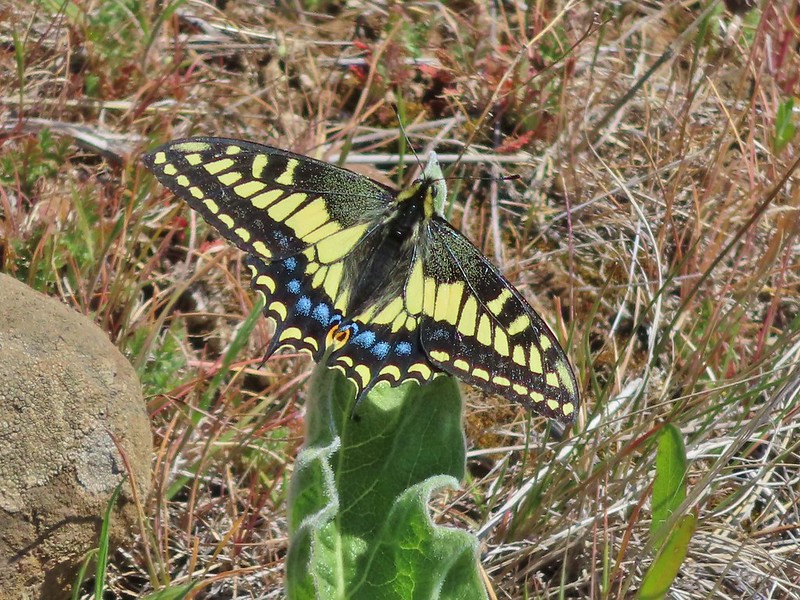 Swallowtail
 Western fence lizards
 White crowned sparrow
 Another sparrow
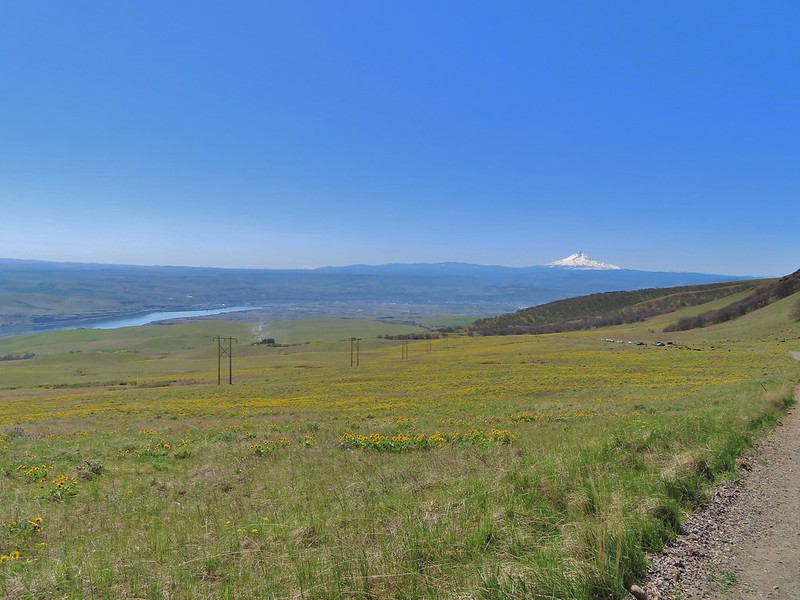 Mt. Jefferson and Mt. Hood as we neared the trailhead.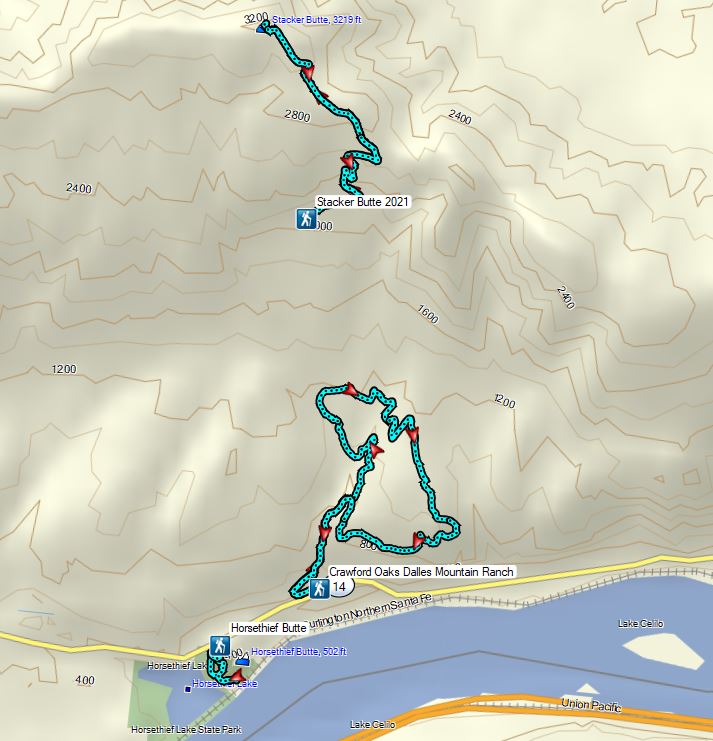


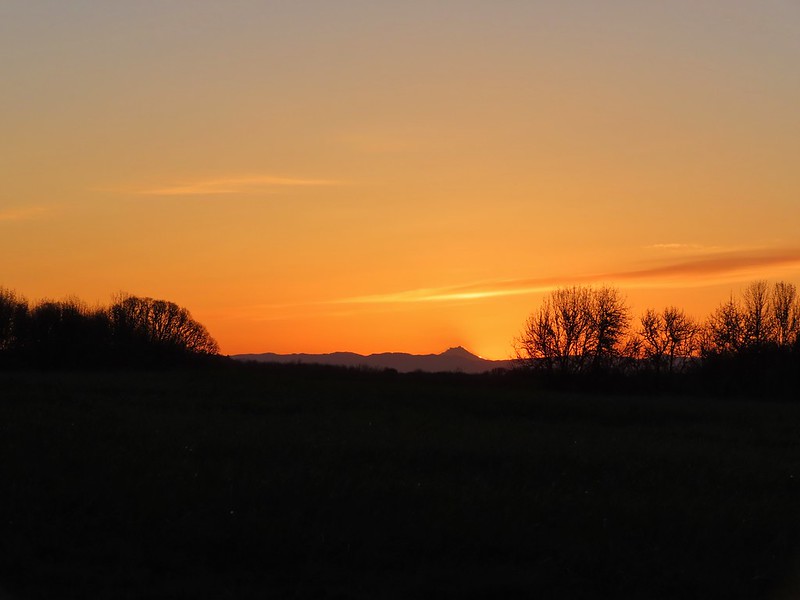
 Mt. Hood from the refuge road
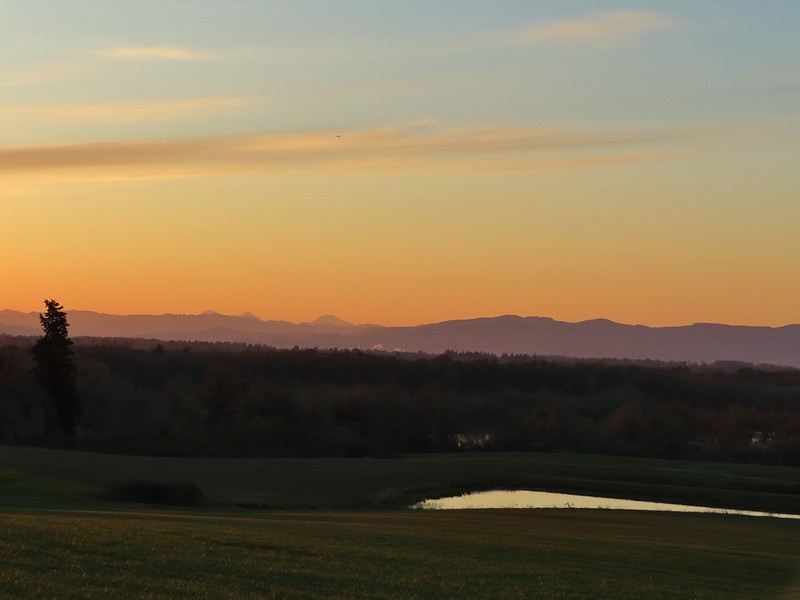 The Three Sisters from the road
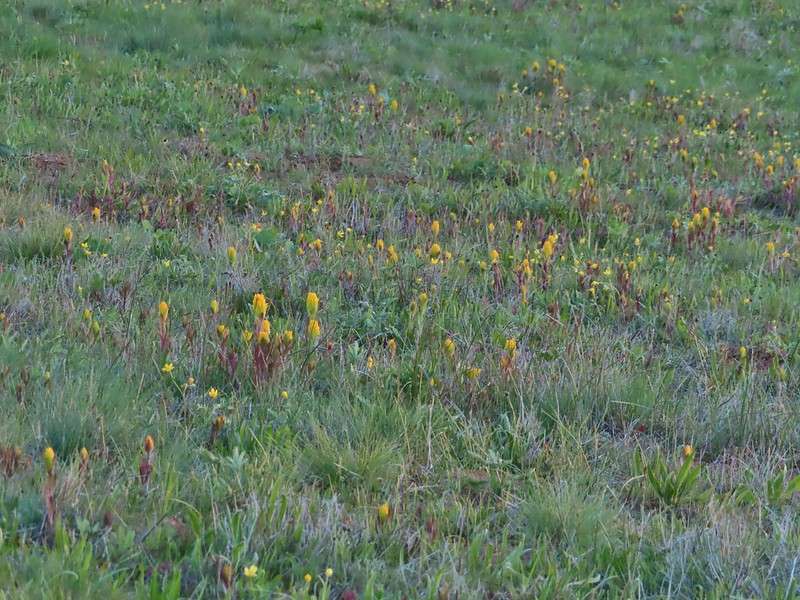 Yellow paintbrush
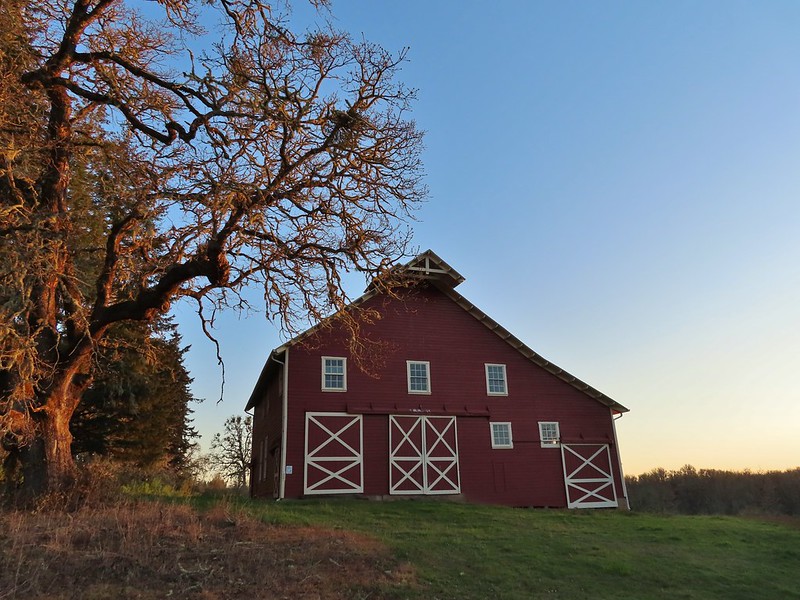 Cabell Barn
 Rabbit at the lodge
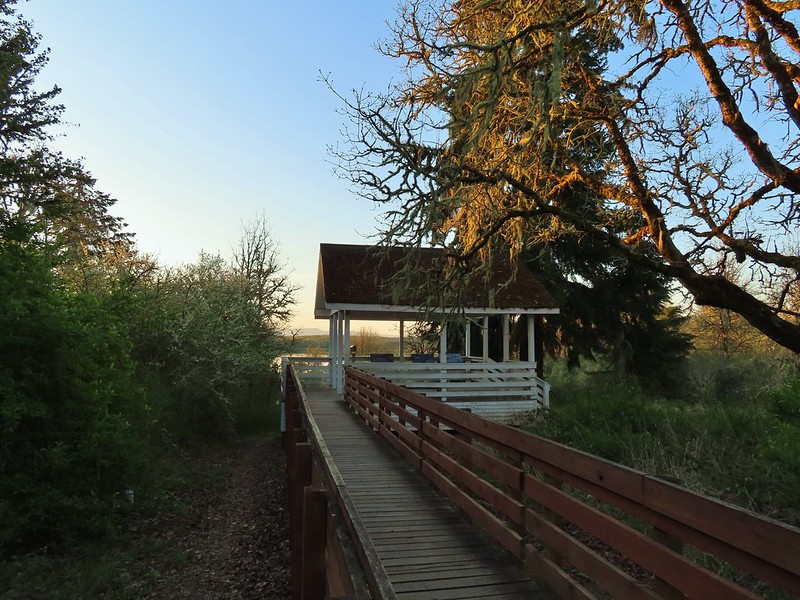 Cabell Marsh Overlook
 White crowned sparrows
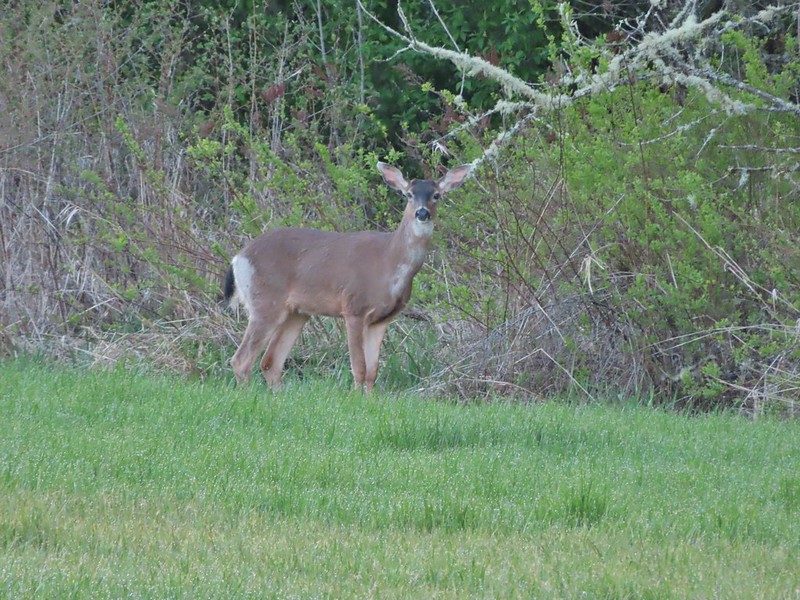 Deer in a field near Cabell Marsh
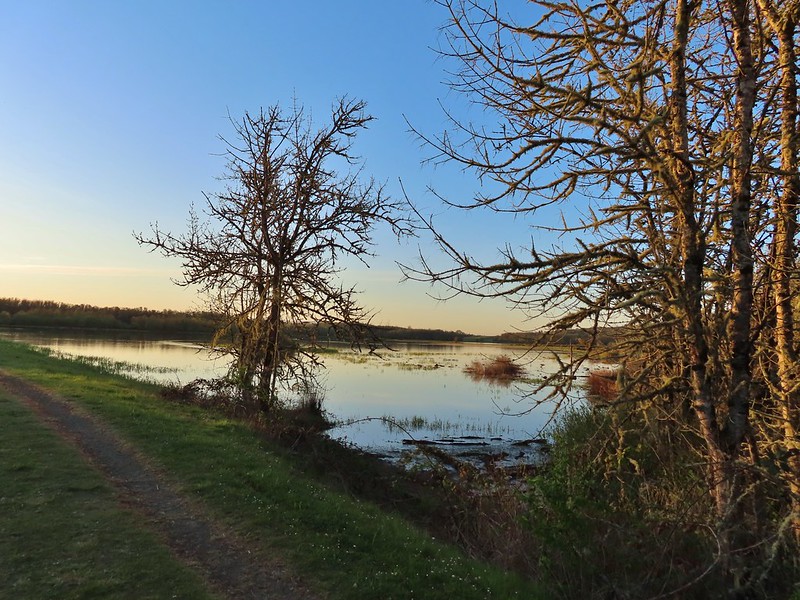 Cabell Marsh (the marsh had been drained when we visited in 2020)
 Norther shovelers
 American coots
 Ring-necked ducks
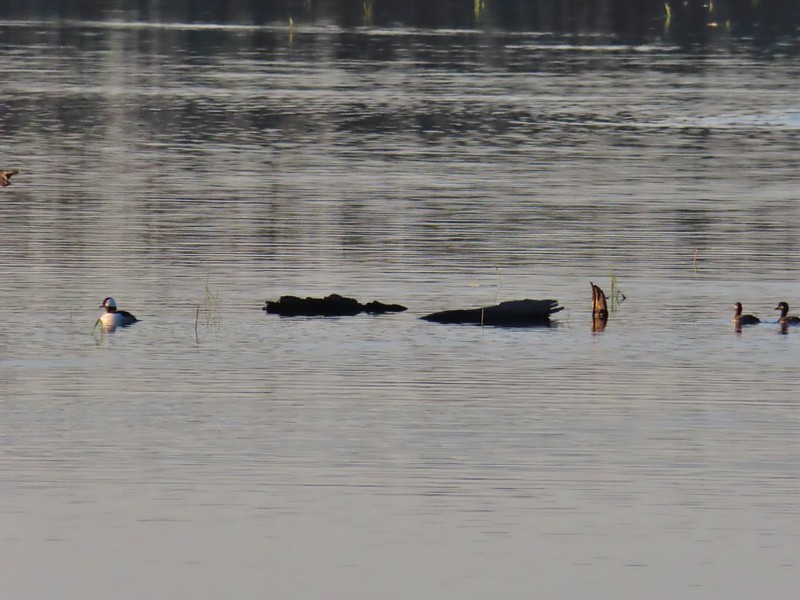 Buffleheads
 Black pheobe
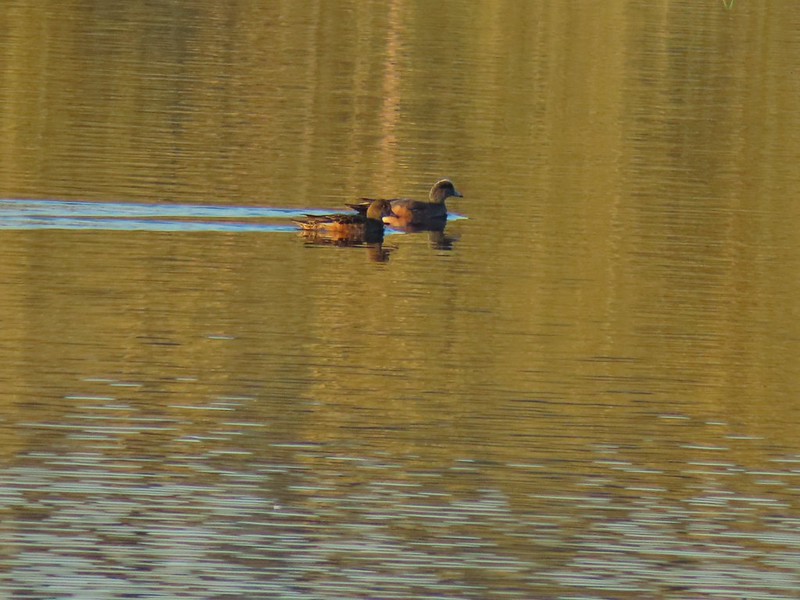 American wigeons
 Cabell Marsh
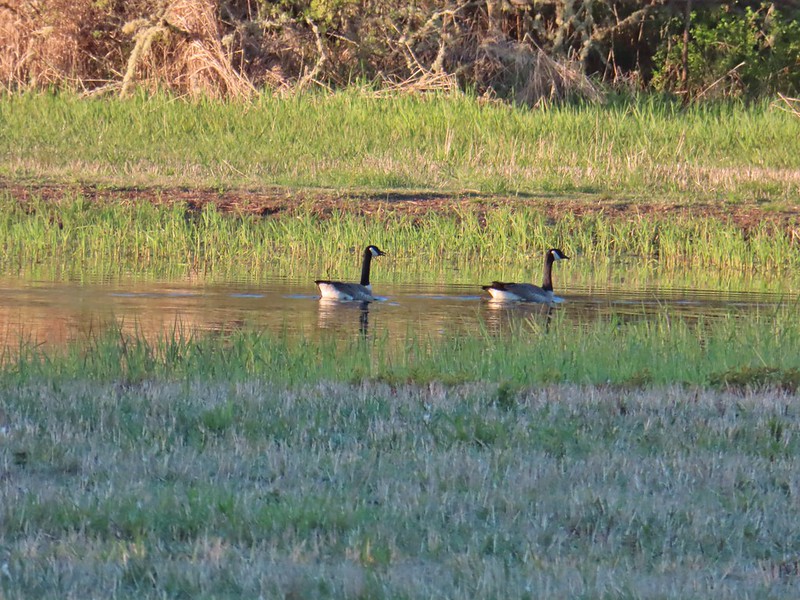 Canada geese
 Wood duck, ring-necked ducks and a pied billed grebe
 More northern shovelers
 Ring-necked ducks
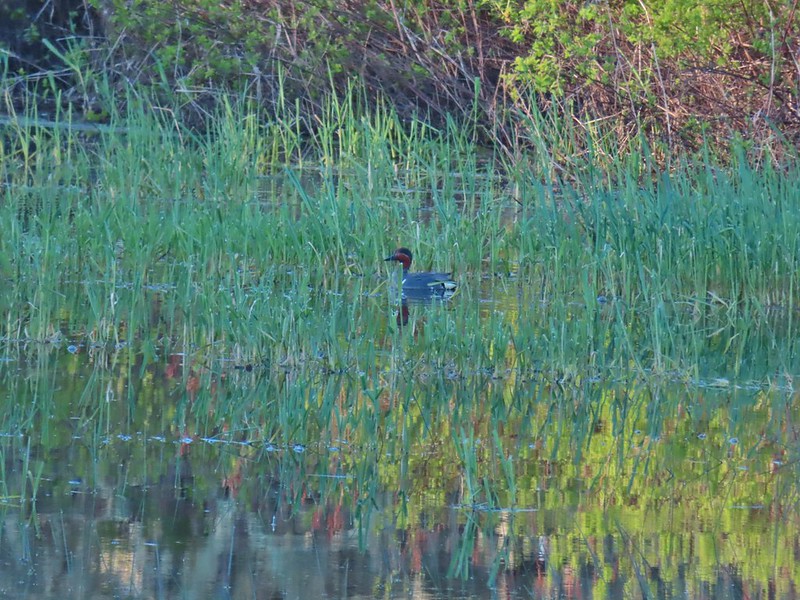 Green winged teal
 Robin
Robin
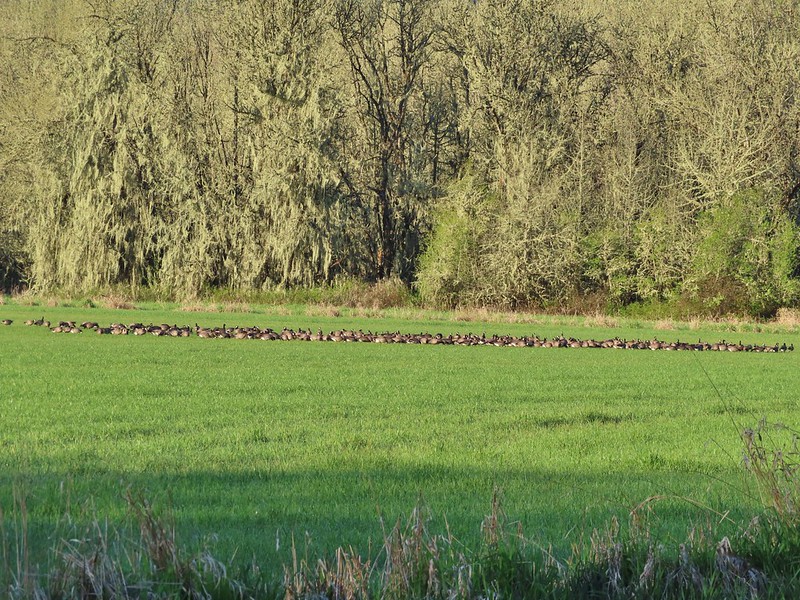

 Killdeer
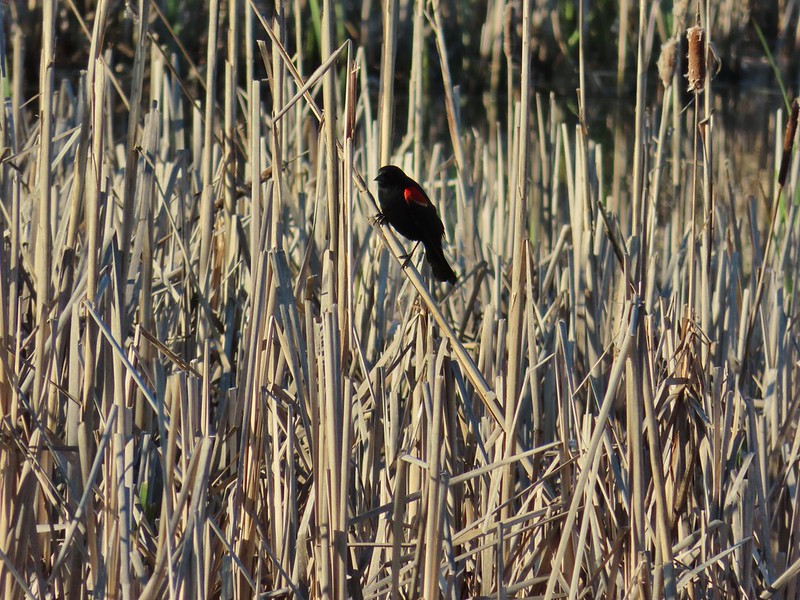 Red-winged blackbird
 Junction with the Pigeon Butte Trail (grassy track heading uphill)
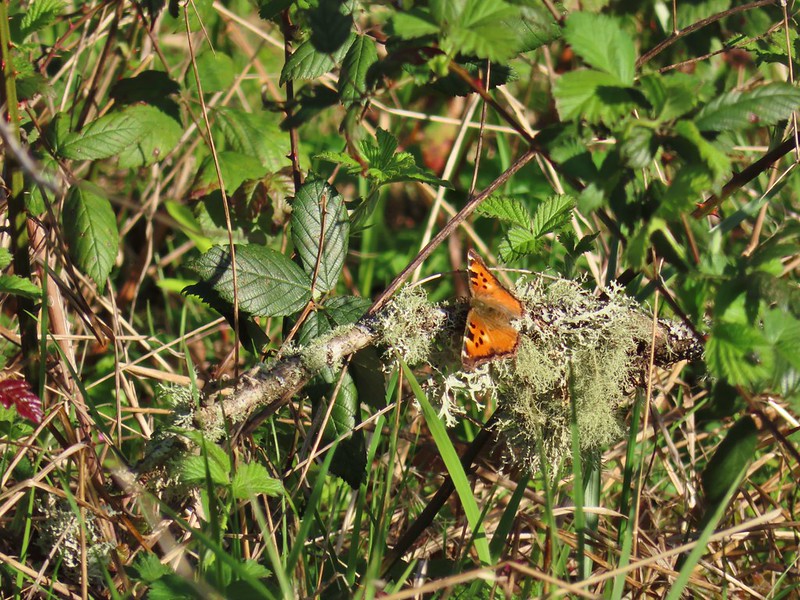 Tortoiseshell butterfly
 Spotted towhee serenade
 Bewick’s wren
 Madrone
 Mourning dove
 Camas blooming near the summit
 View from Pigeon Butte
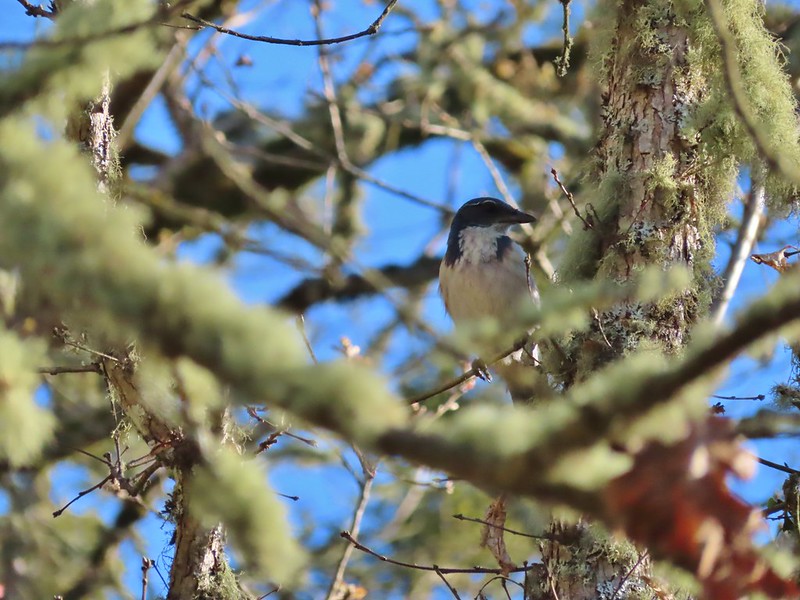 Scrub jay spotted on the way down.
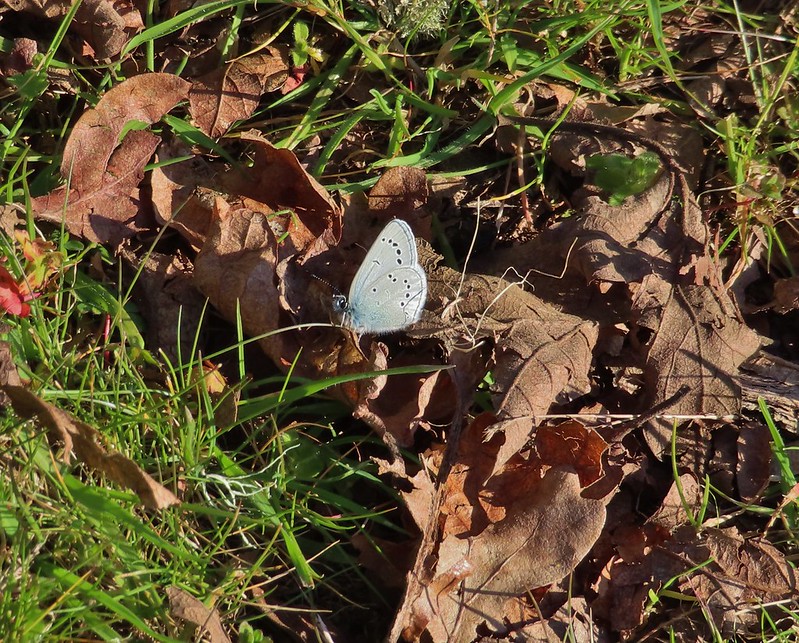 One of the “blue” butterflies, maybe a silvery blue
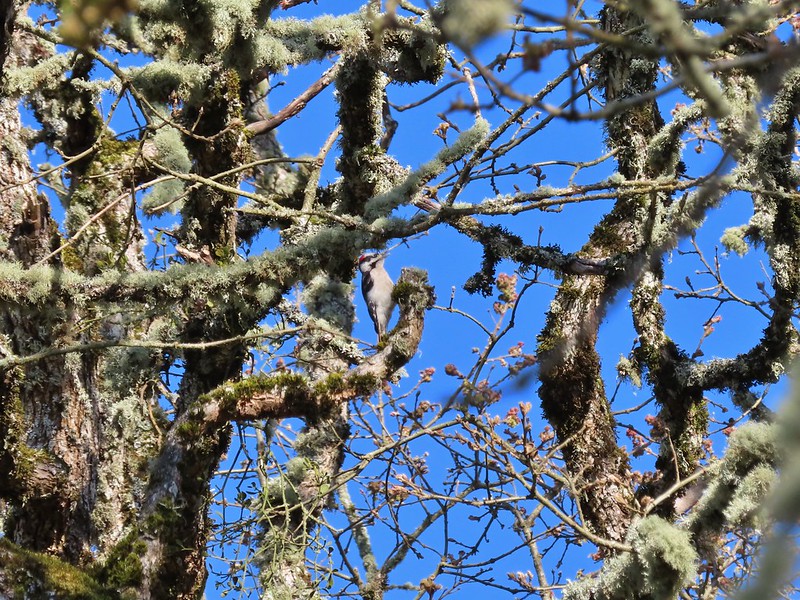 Acorn woodpecker
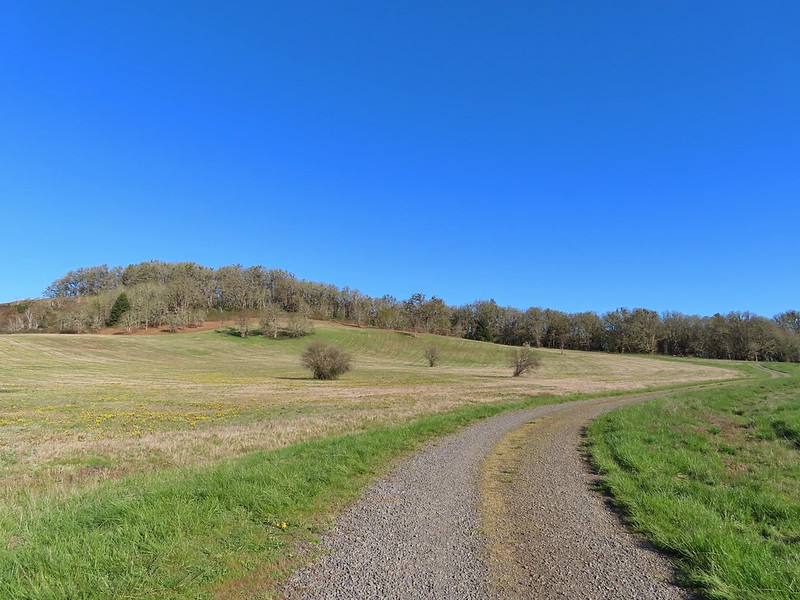 Looking back at Pigeon Butte, the yellow paintbrush was starting its bloom on the hillside.
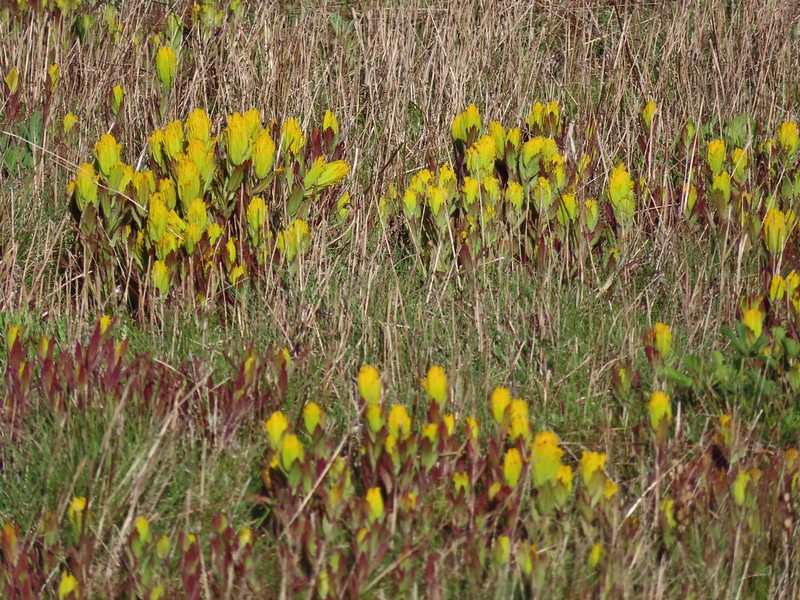

 Looking back at Pigeon Butte and the Cheadle Barn
 Western bluebird
 Bruce Rd and a sign for the overlook.
 Swallows at the overlook
 Mary’s Peak and Pigeon Butte from the overlook.
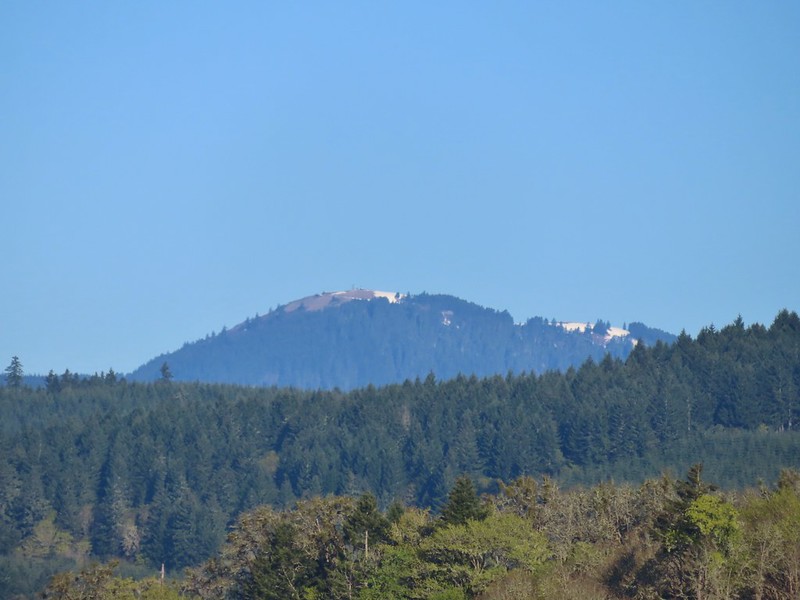 Mary’s Peak (
 Ground squirrel on Bruce Rd.
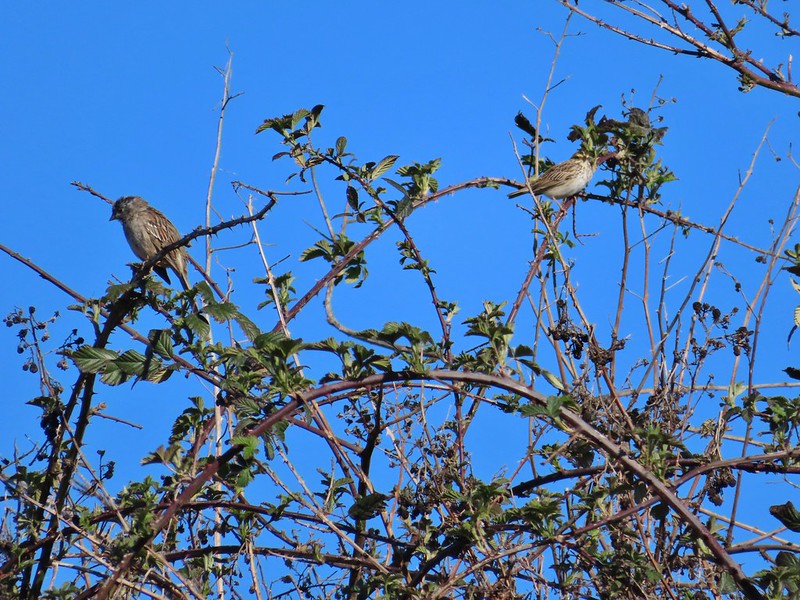 Sparrows
 Western bluebird
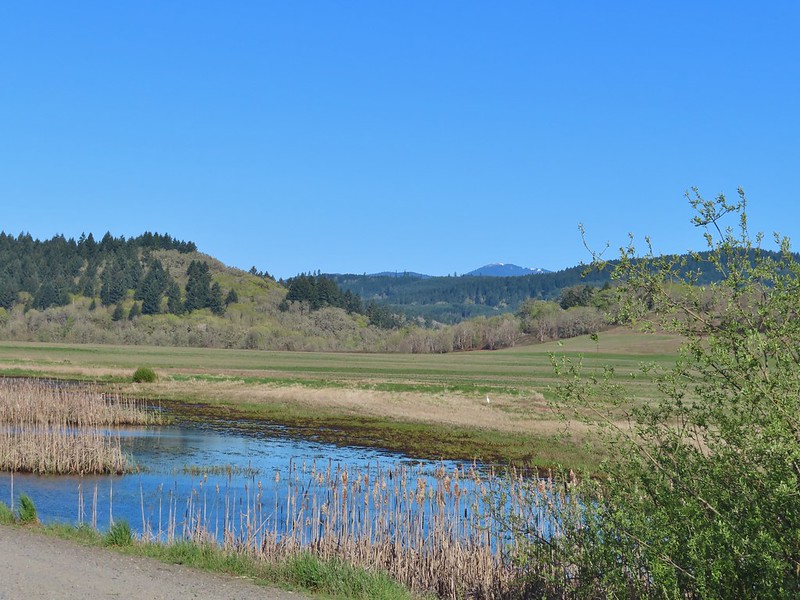 Mitigation Wetland
 Egret
Egret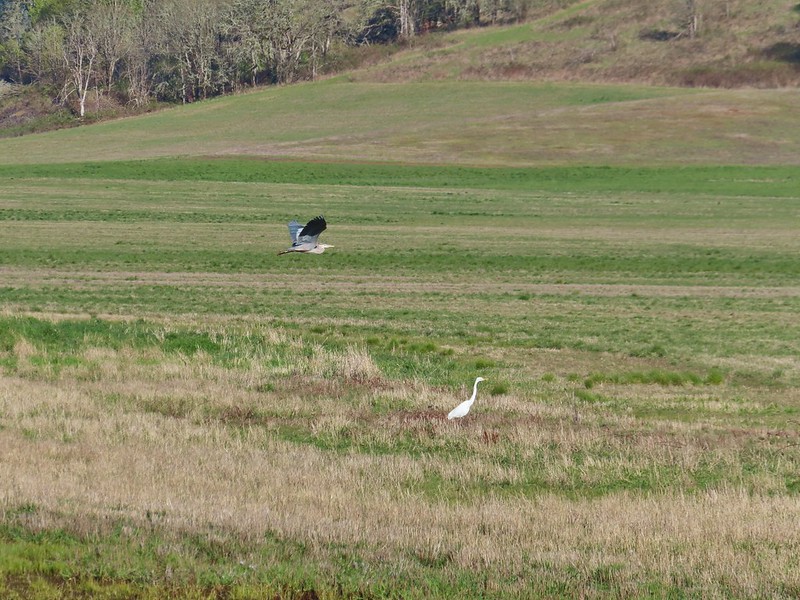 heron flying by the egret
 Northern shoveler
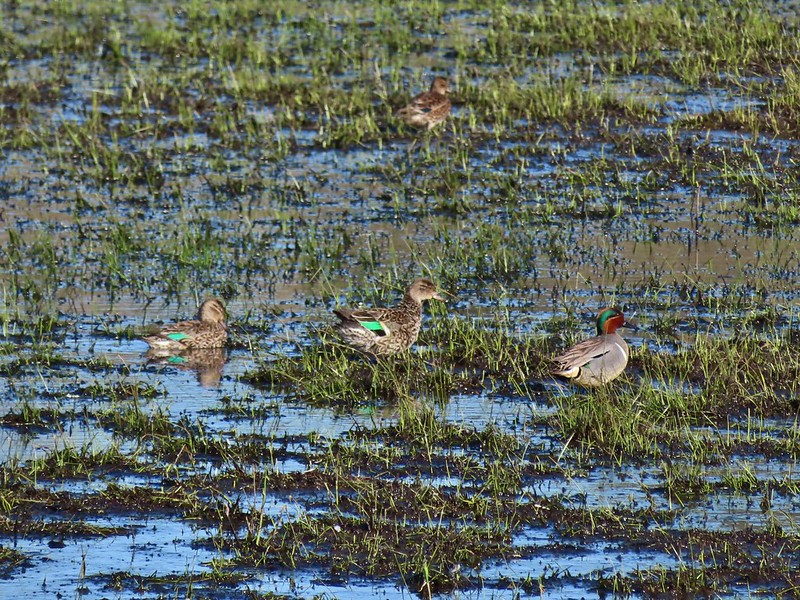 Green winged teals
 Trailhead off of Bruce Road
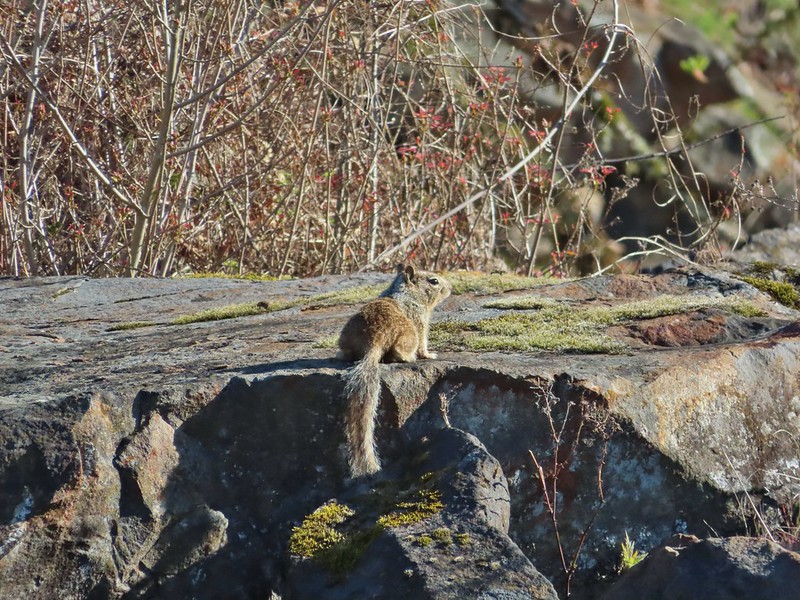 Ground squirrel
 Entering the woods
 Giant white wakerobin
 Fairybells
 Startled heron
 Egret and a cinnamon teal pair and maybe an American wigeon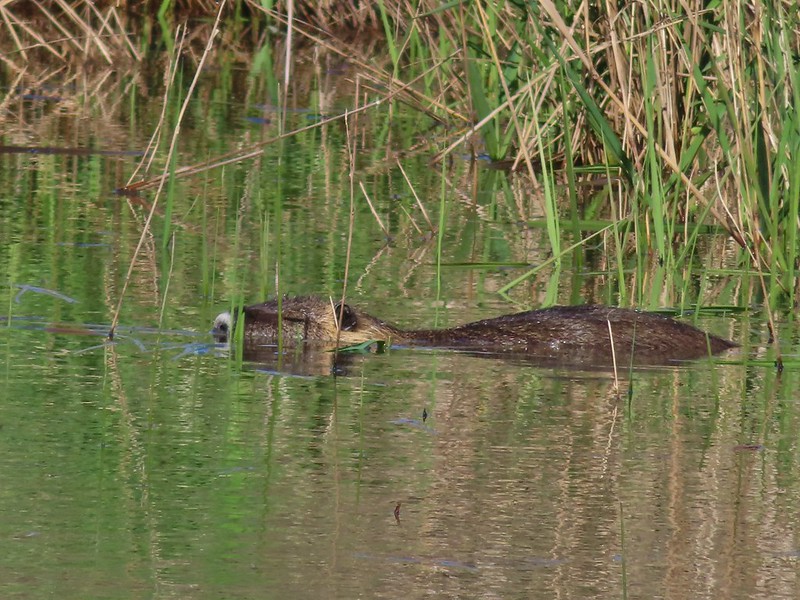
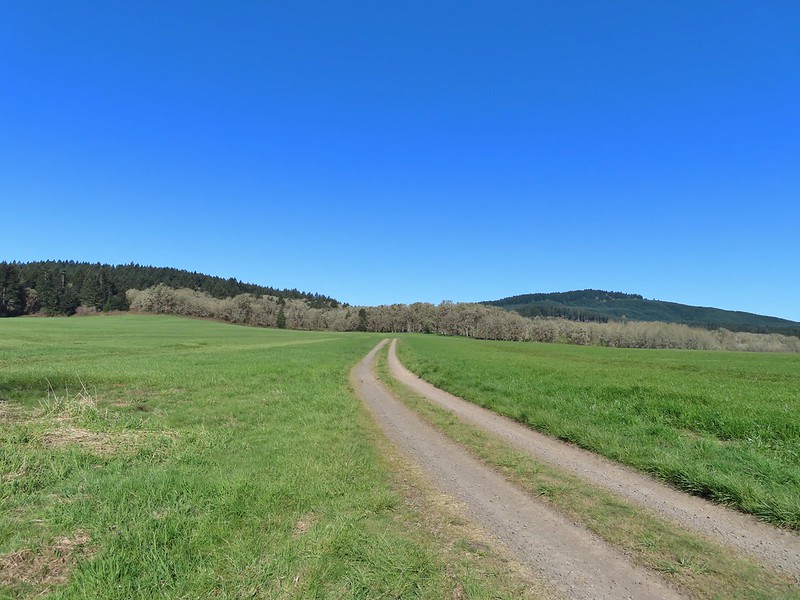
 Candyflower
 The pink turned out to be shooting stars.
 Iris
Iris Bleeding heart
 One of many fairy slippers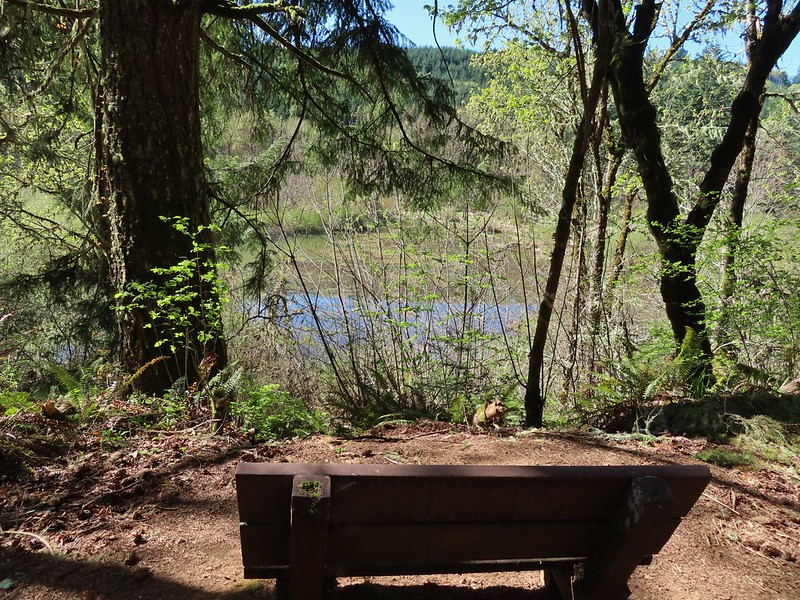
 It took some work to get the camera to stop focusing on the brush in the foreground.
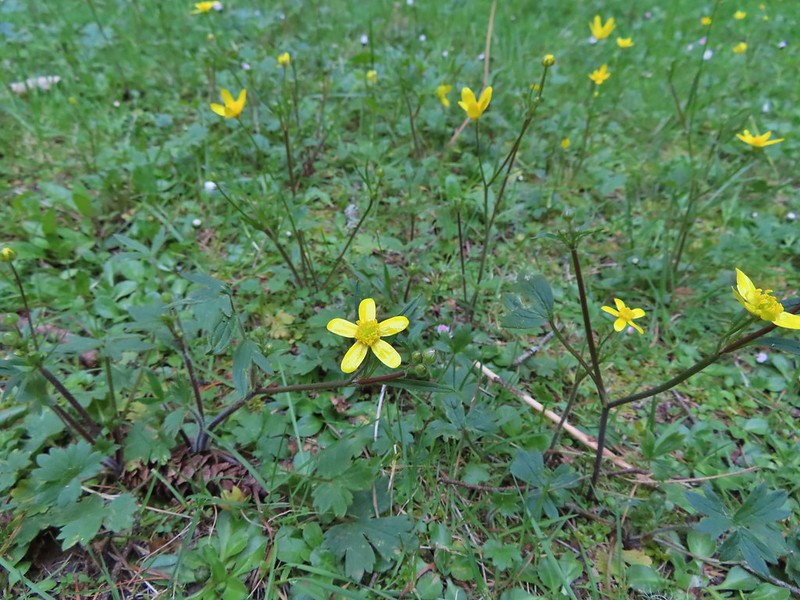 Buttercups
 Violets
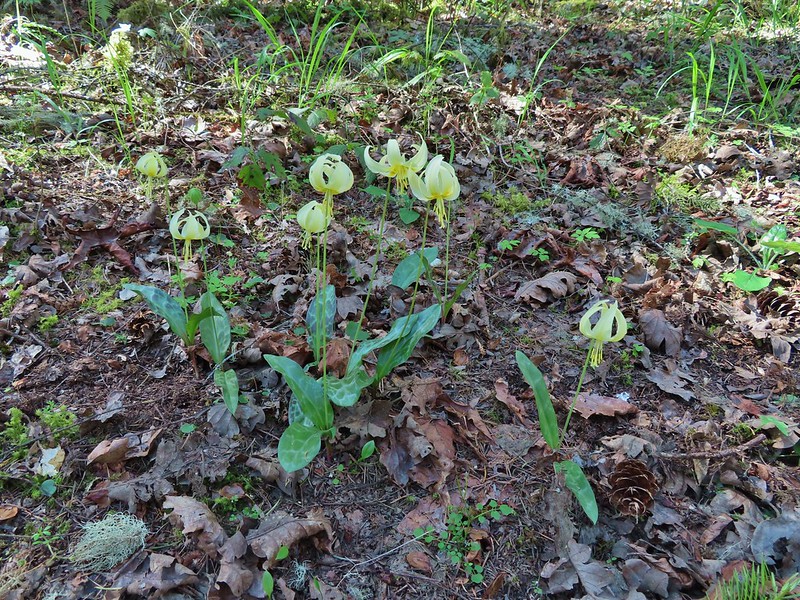 Fawn lilies
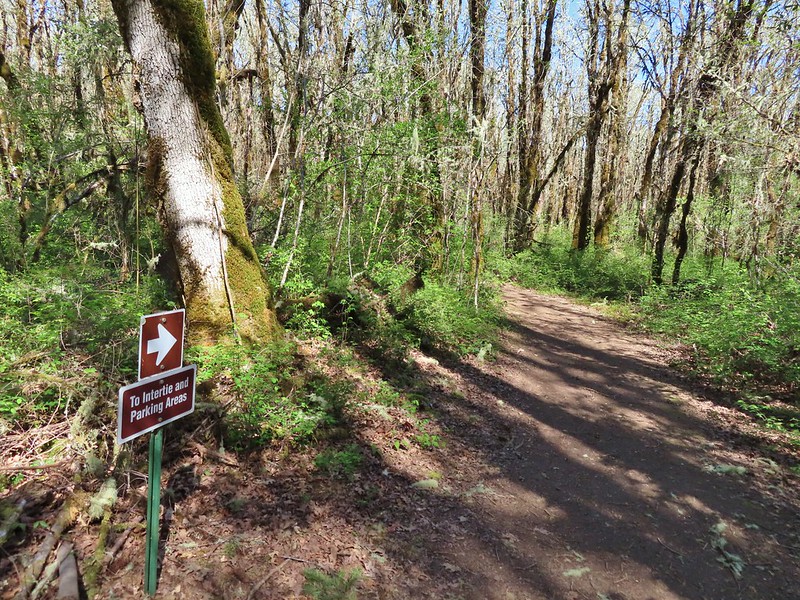 Back at the junction and onto the Intertie Trail

 Service berry
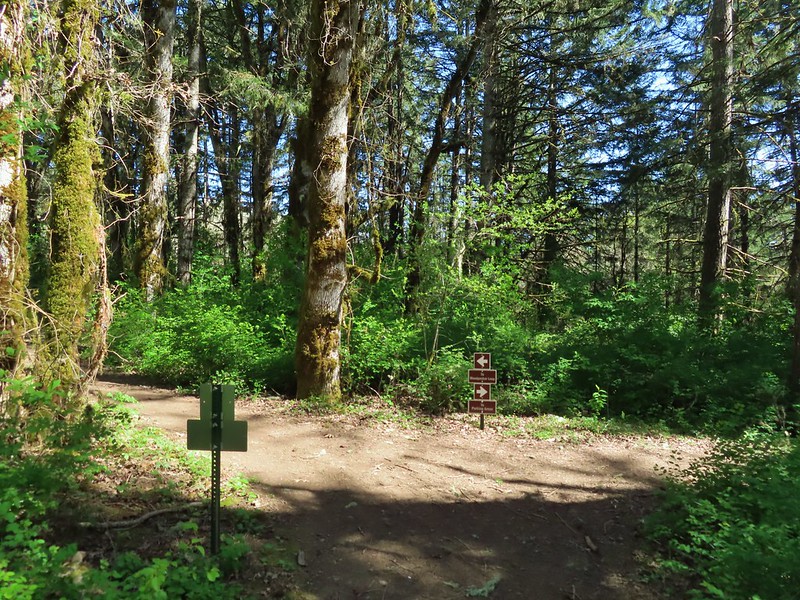 The Woodpecker Loop
 Norther flicker along the Woodpecker Loop
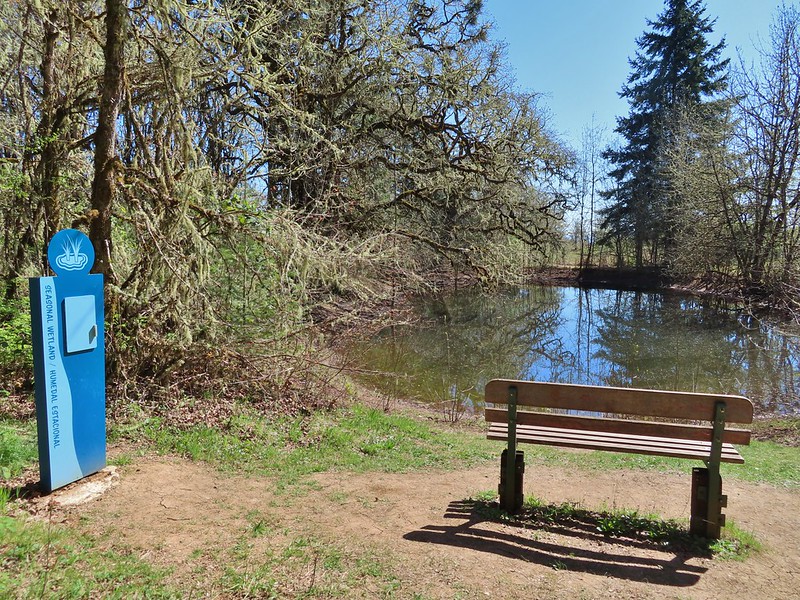 Amphibian pond and interpretive kiosk.
 Viewing structure
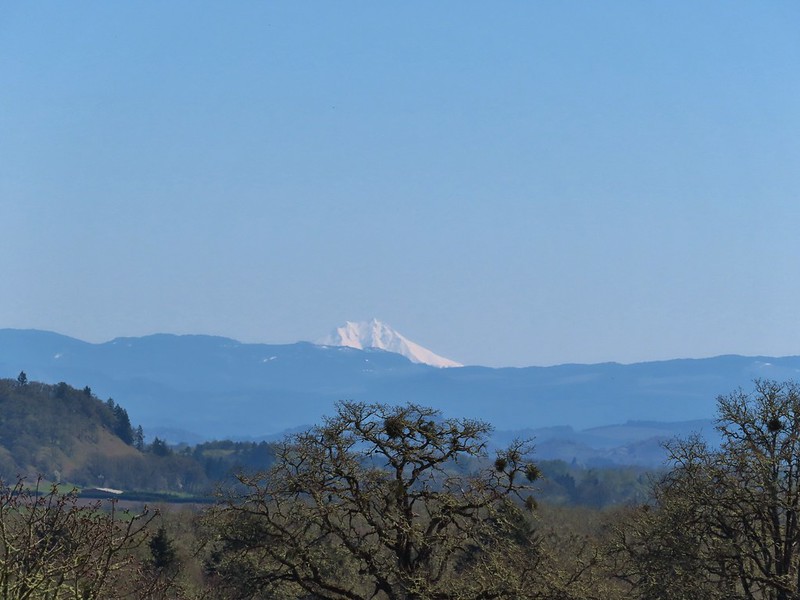 Mt. Jefferson
 The Three Sisters
 This was the best shot I could get at 40x zoom with the sun in front of me.
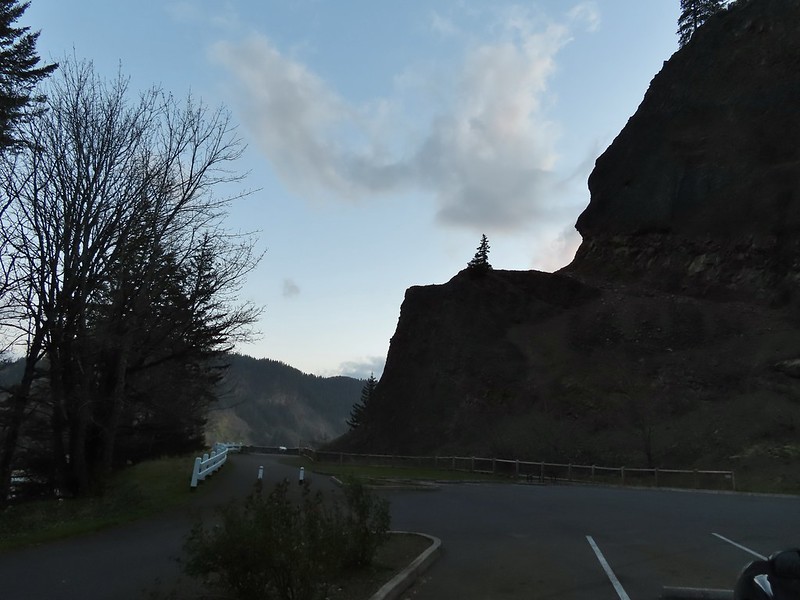

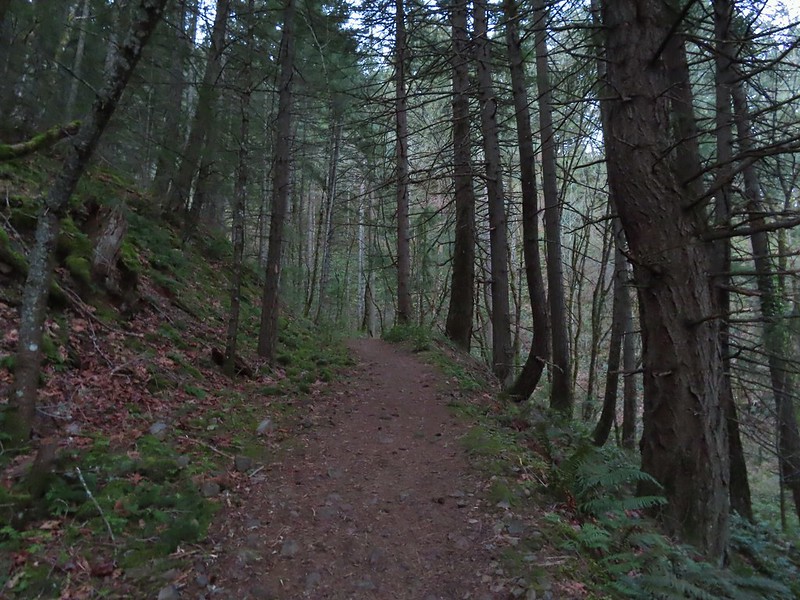
 Bench at a switchback.

 Reroute below Mitchell Point
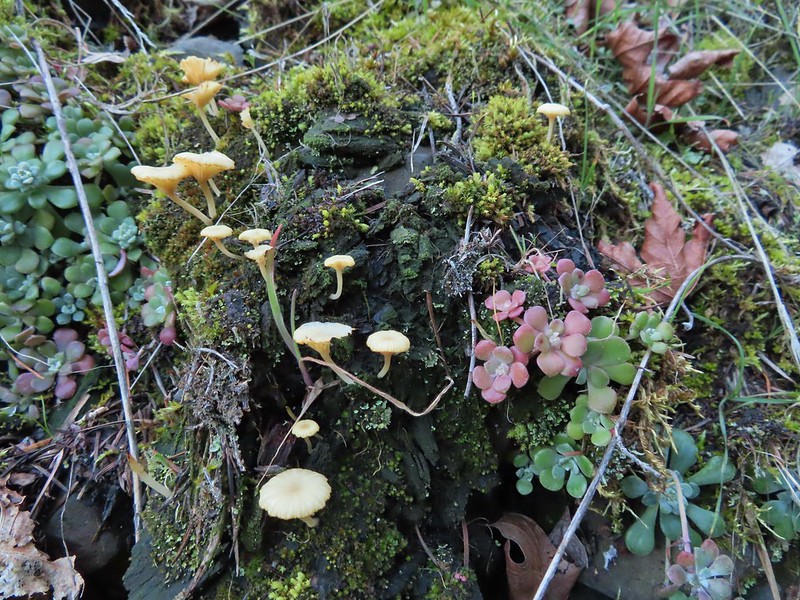 Mushrooms’ and some sedums.

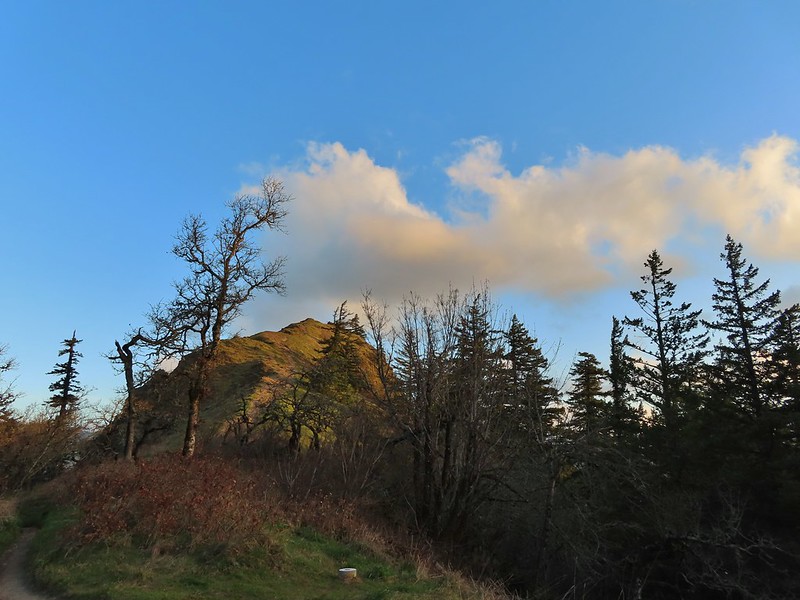
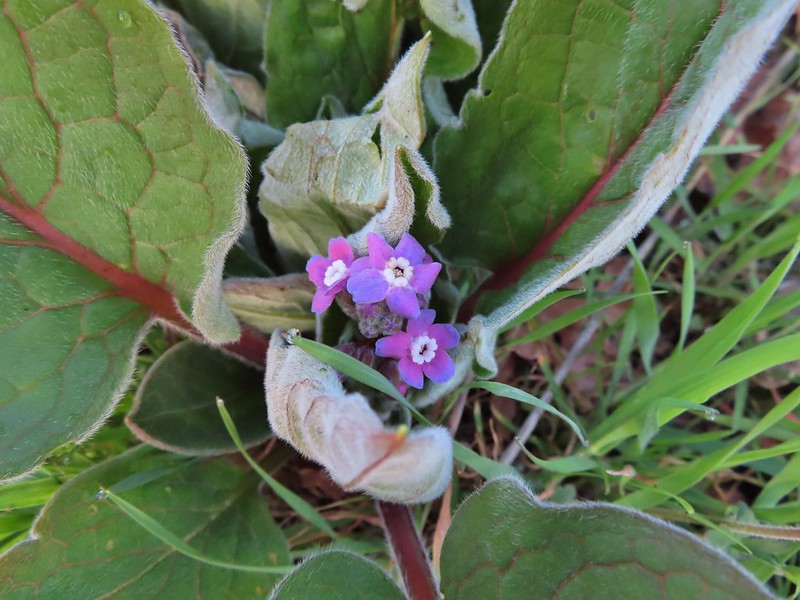 Houndstongue
 Grass Widows
 Woodland stars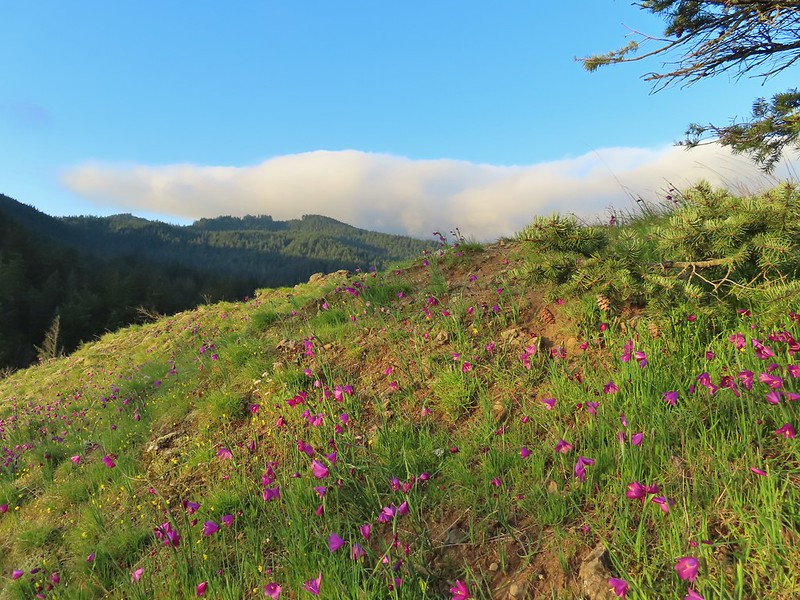
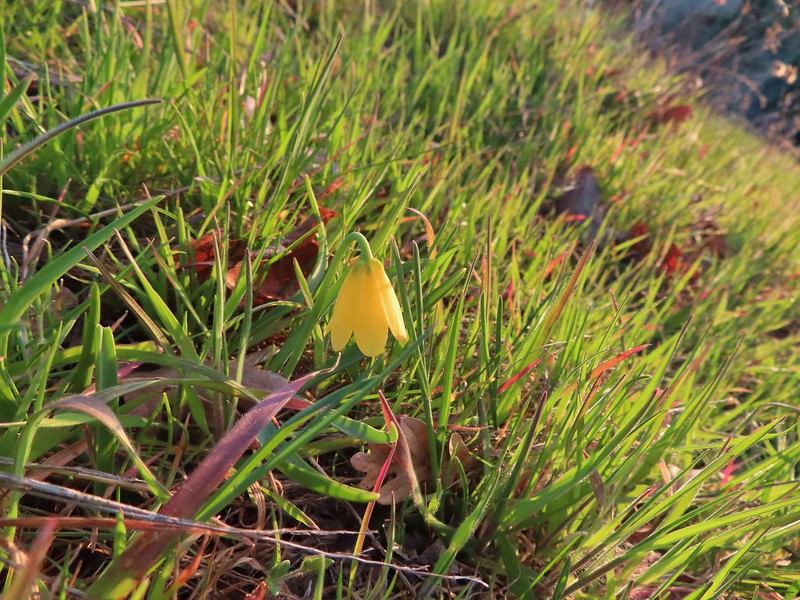 Yellow bell lily
 Desert parsley and woodland stars
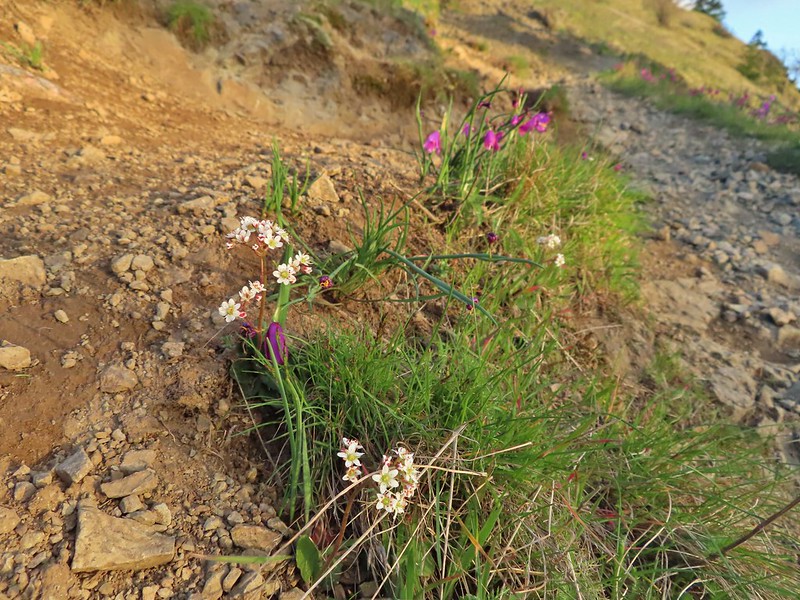 A saxifrage
 Gold stars and woodland stars
 Looking west
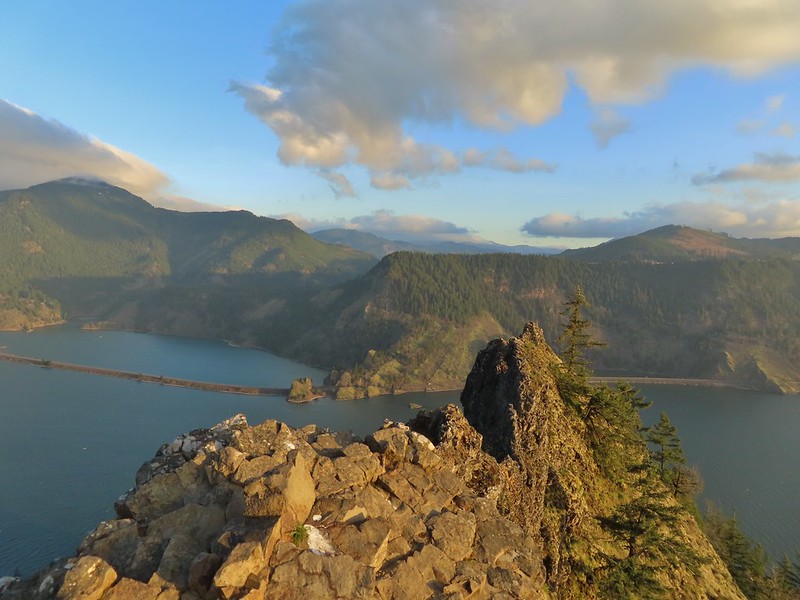 North across the Columbia River into Washington
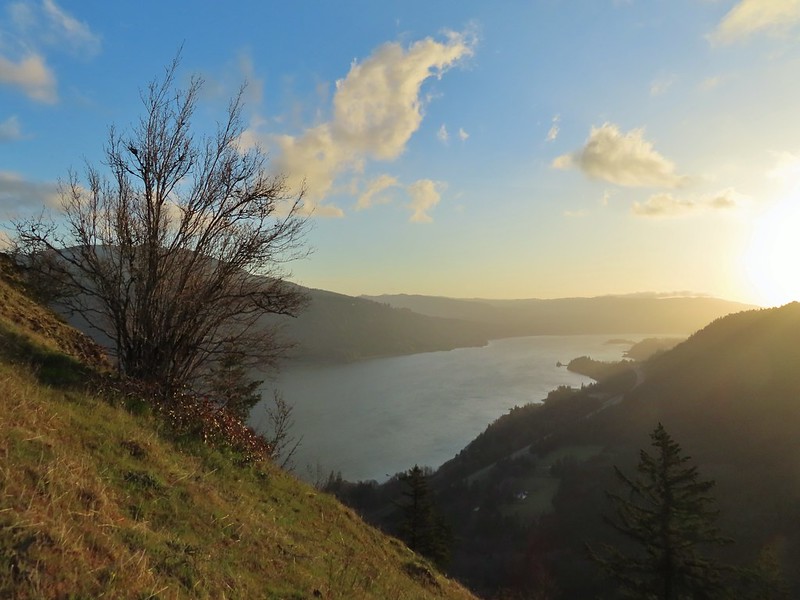 East
East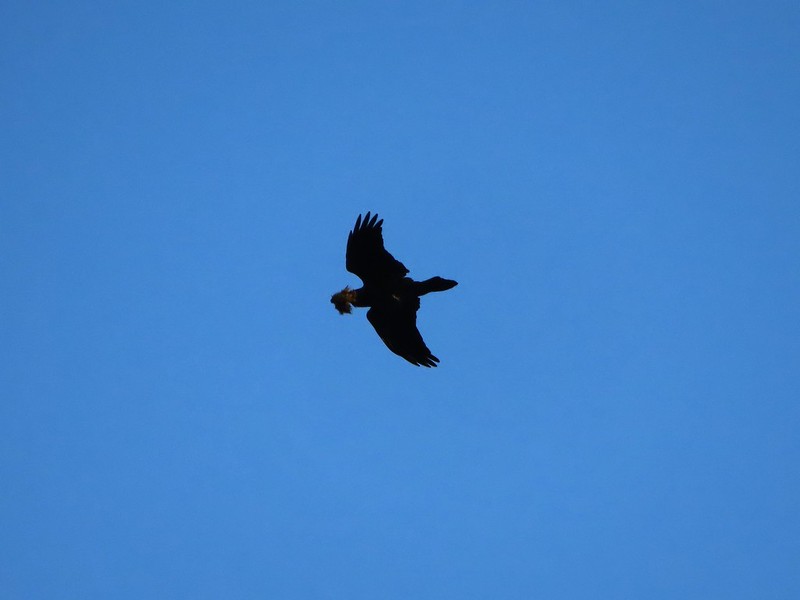 Looks like moss for a nest maybe?
 Turkeys on the Wygant Trail
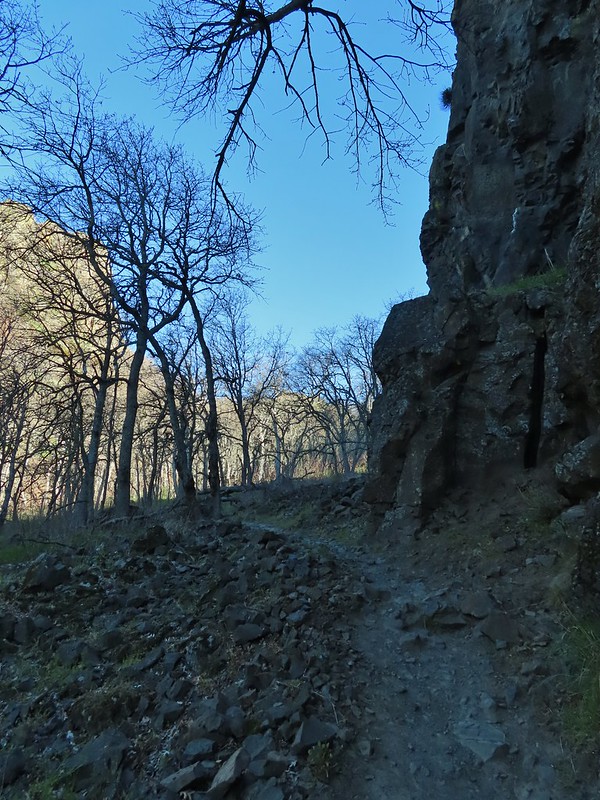
 Red leaves of poison oak behind a death camas
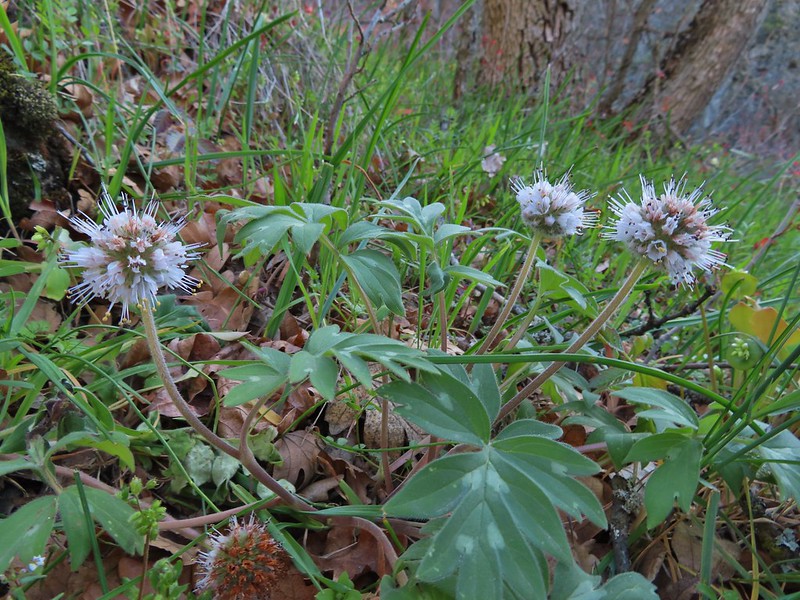 More poison oak behind a waterleaf
 Poison oak around some balsamroot


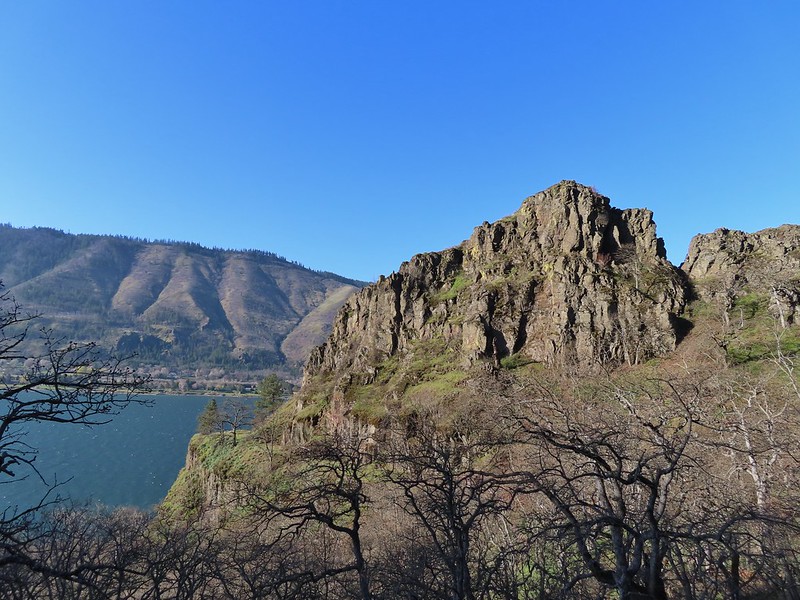
 Fiddleneck
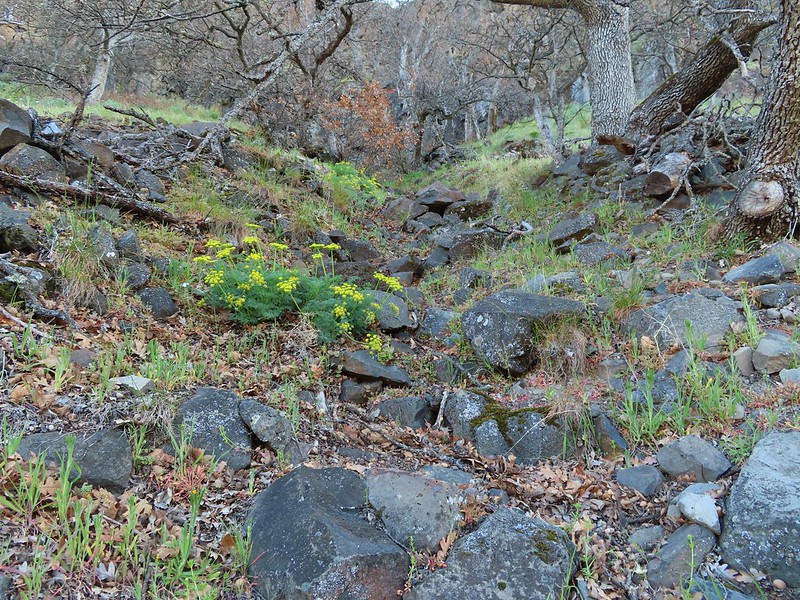 Desert parsley
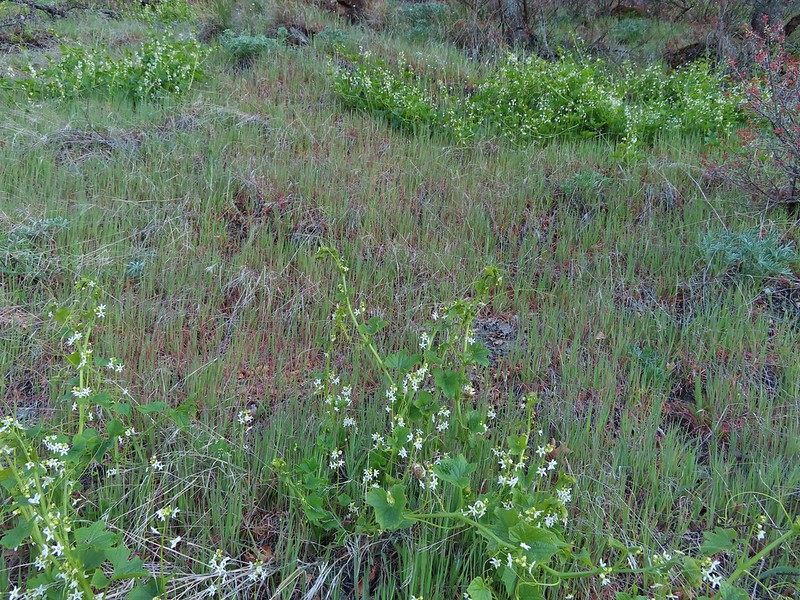 Manroot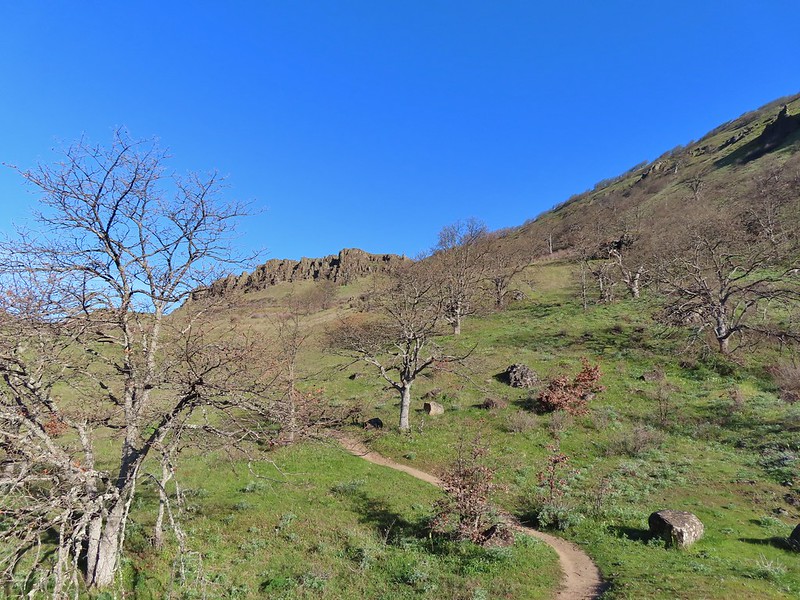
 Lots of death camas blooming on the plateau.
 Looking up at the cliffs above.
 Balsamroot blooming below the rim.

 Balsamroot
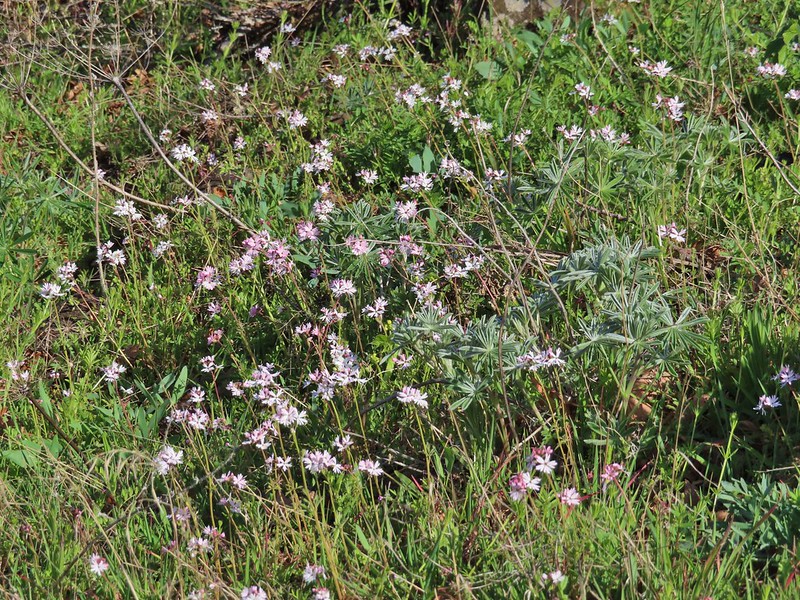 Woodland stars with some lupine leaves
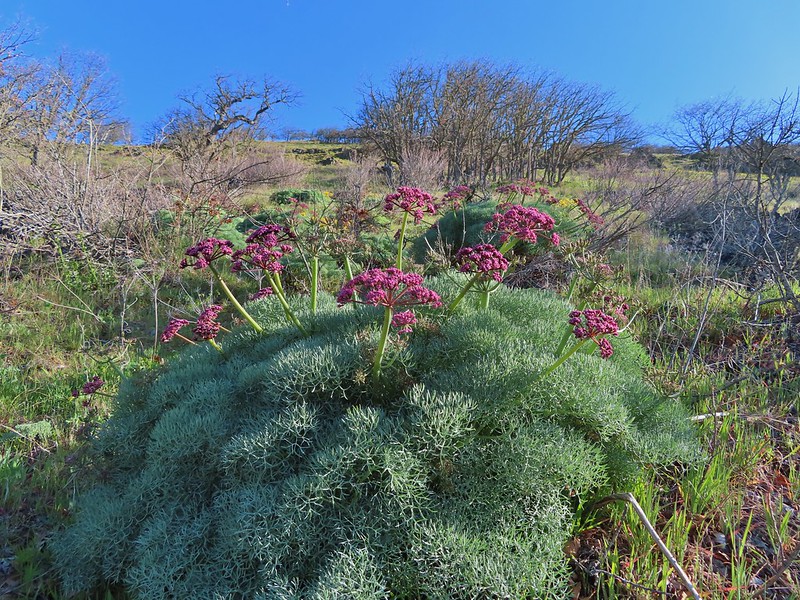 Columbia desert parsley
 A biscuitroot
 Balsamroot
 Balsamroot
 View west (With a snow capped Mt. Defiance (
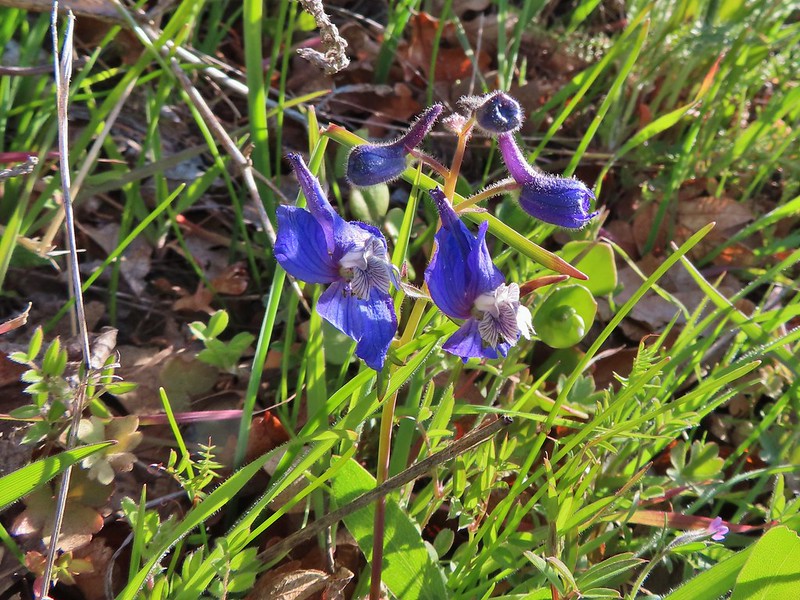 Larkspur
 Buttercups
 Glacier lilies
 Yellow bell lily, woodland stars, grass widows and shooting stars.
 Yellow bell lilies
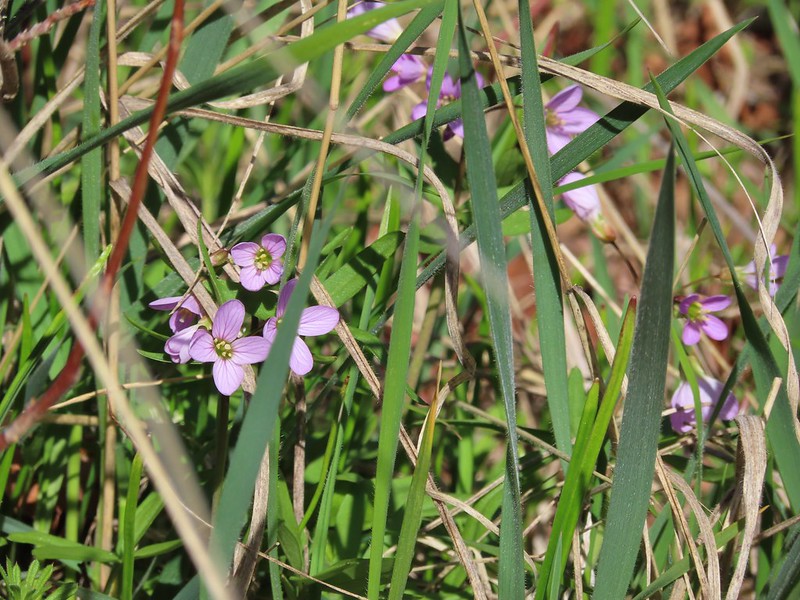 Toothwort
 Sagebrush false dandelions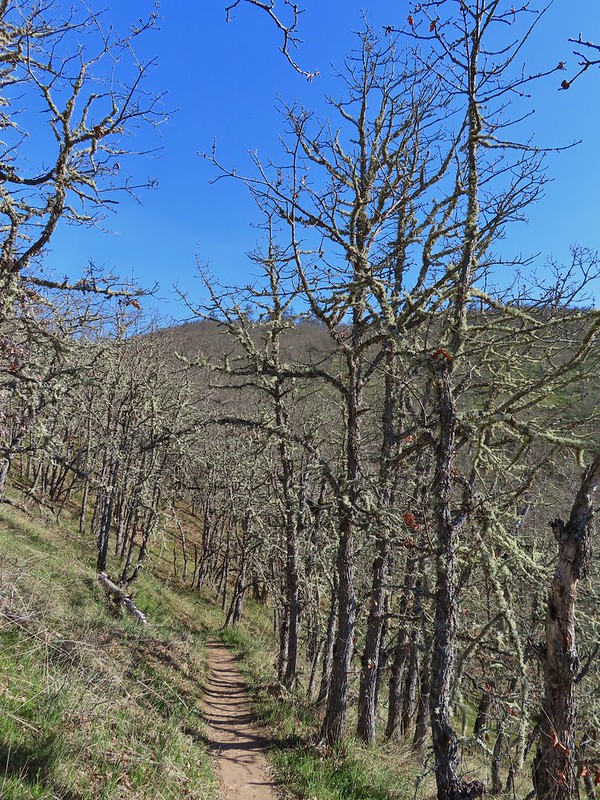
 Tortoiseshell butterfly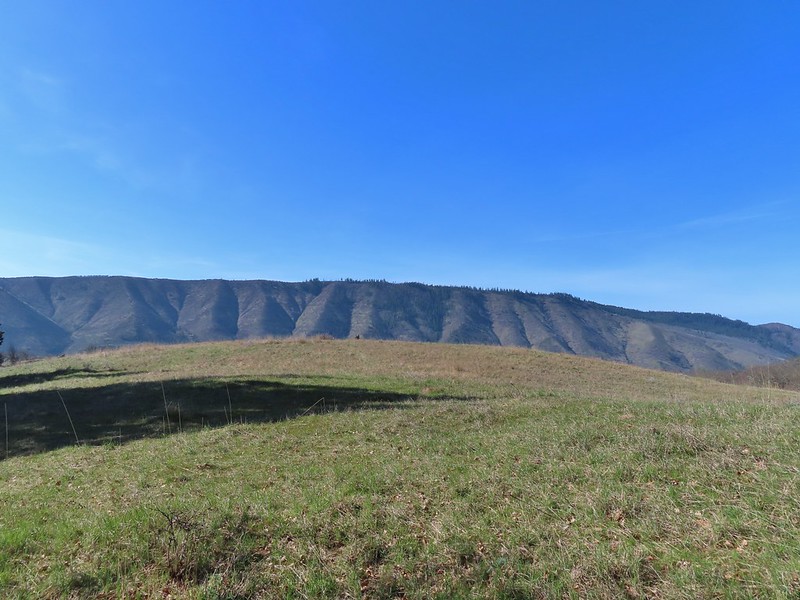


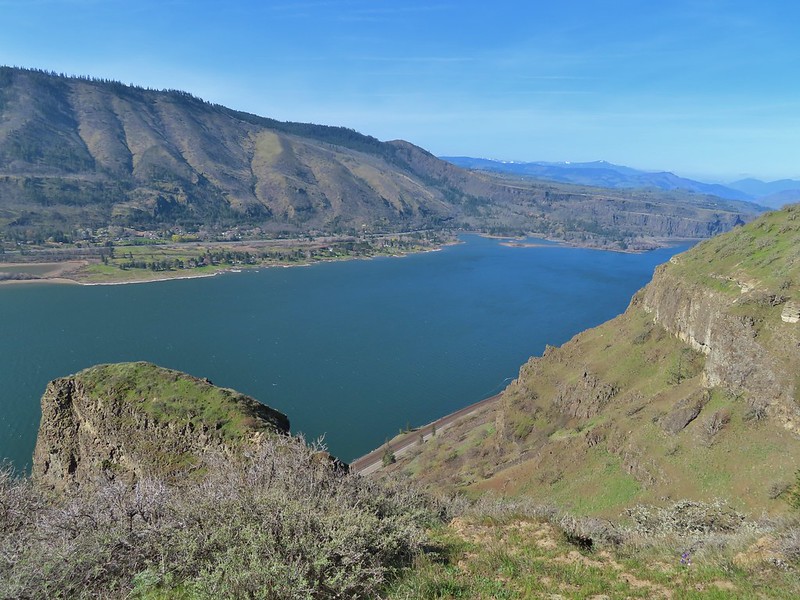 Tom McCall Point and the Rowena Plateau with Mt. Defiance in the distance.
 Hikers on the trailhead and below.
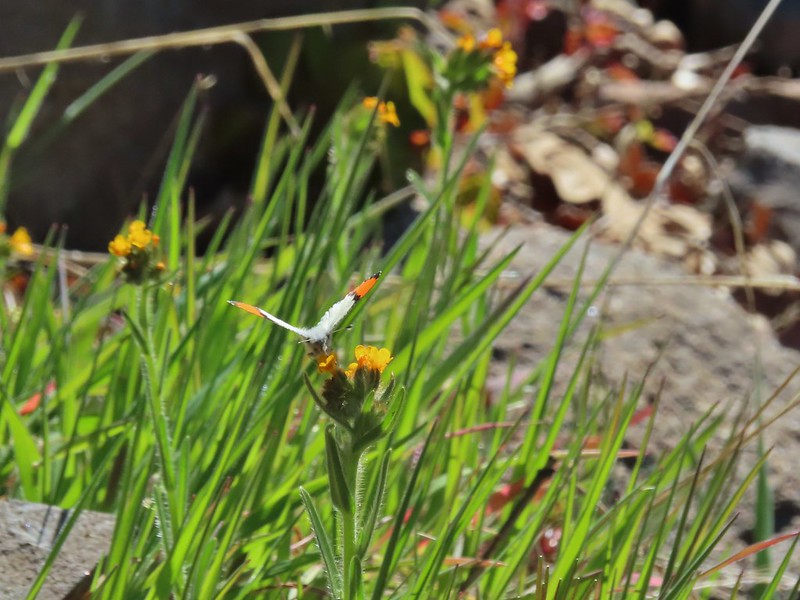 Just my third photo of an orange-tip.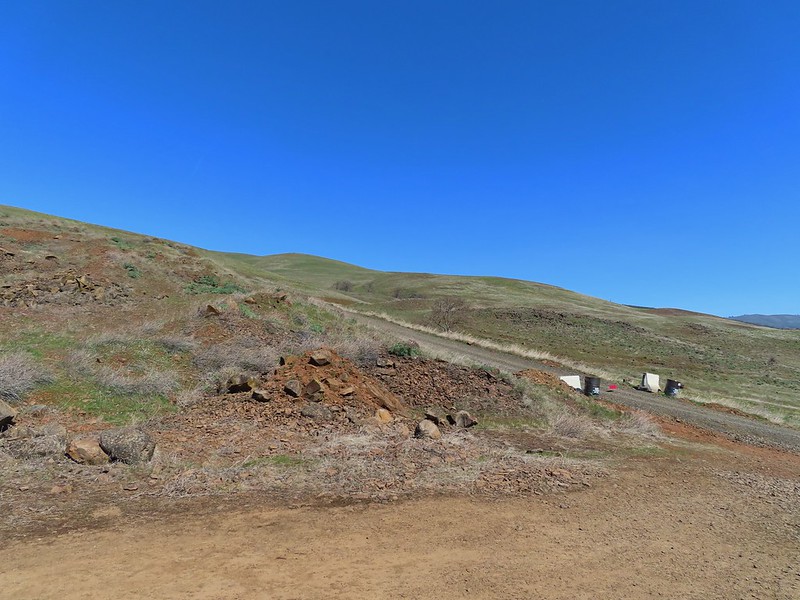
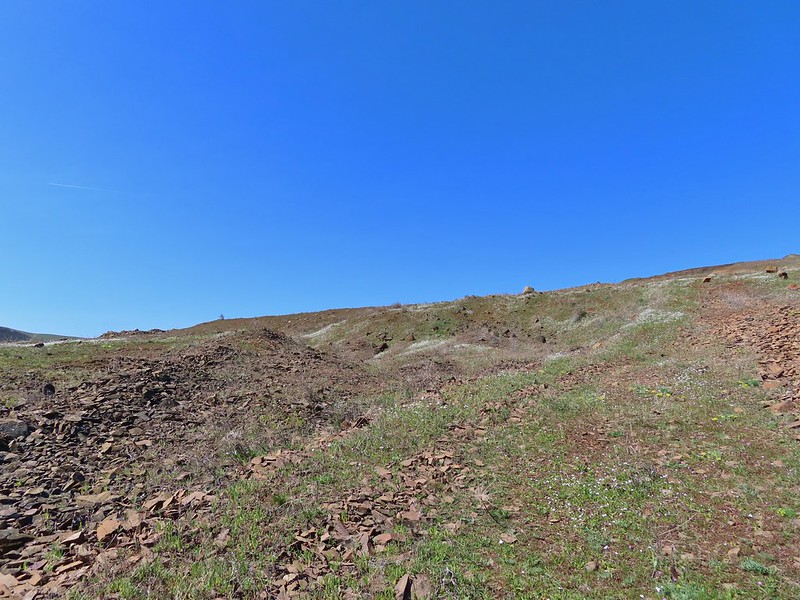
 Mt. Hood and Columbia desert parsley from the first knoll we tried.
 Top of knoll #1.
 A lone balsamroot blossom.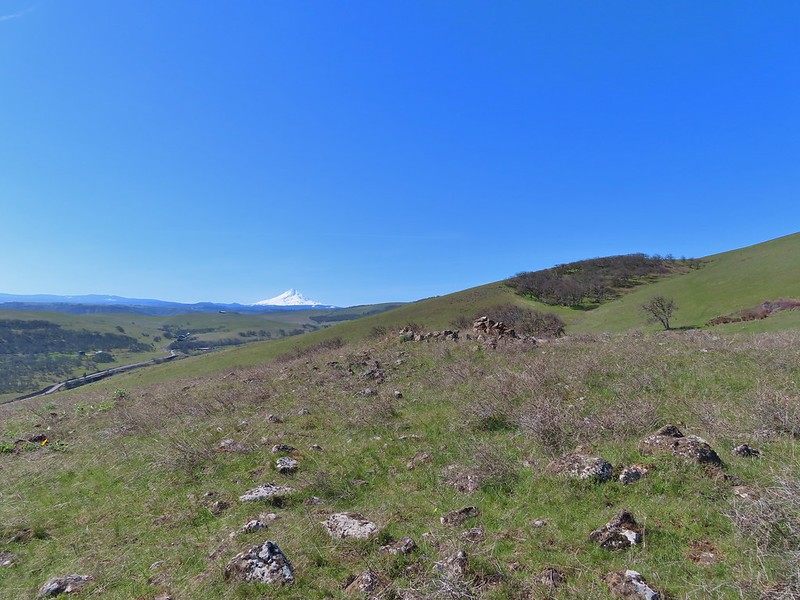
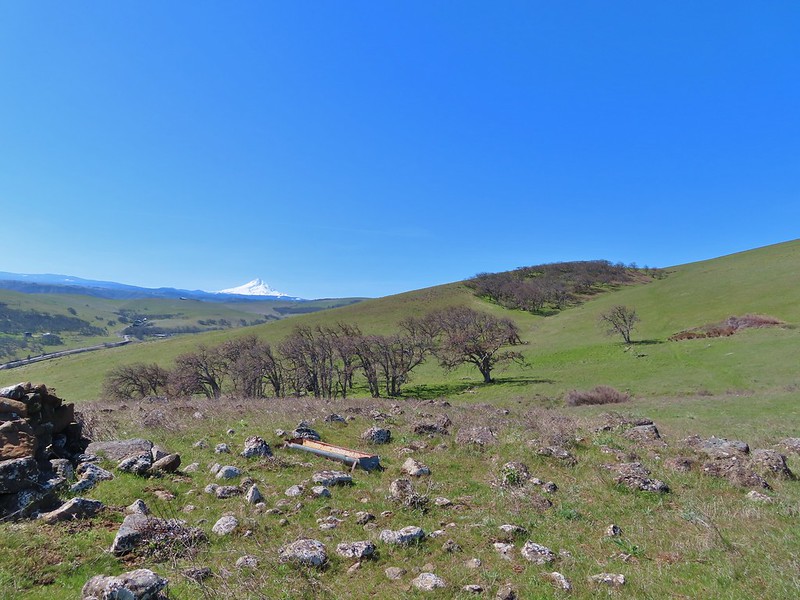
 The path leading past the spring to the oaks.
 The spring
 Back on the right side
 Balsamroot surrounded by some little white flowers.
 Lupine thinking about blooming.
 Larkspur
 Yellow bell lilies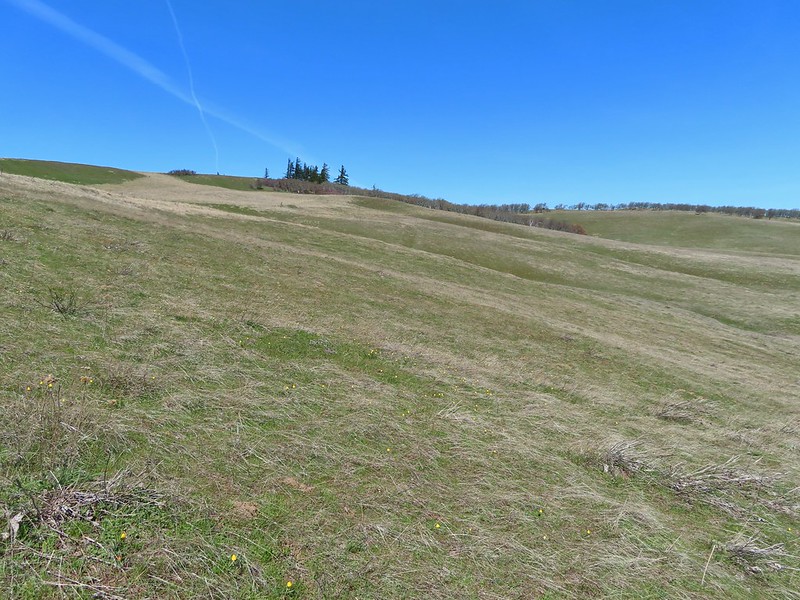
 We didn’t notice any poison oak here.
 A grass widow at the viewpoint.
 Mt. Adams
 Mt. Hood over the oak stand.
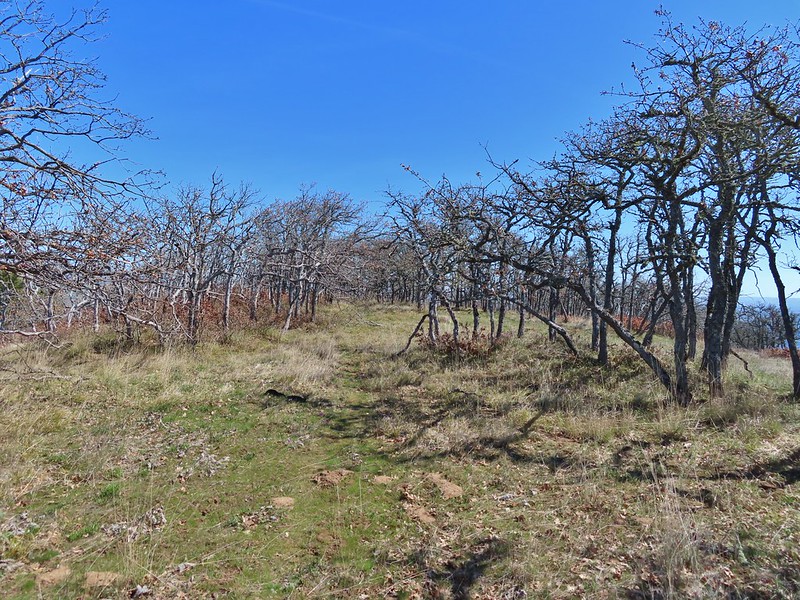


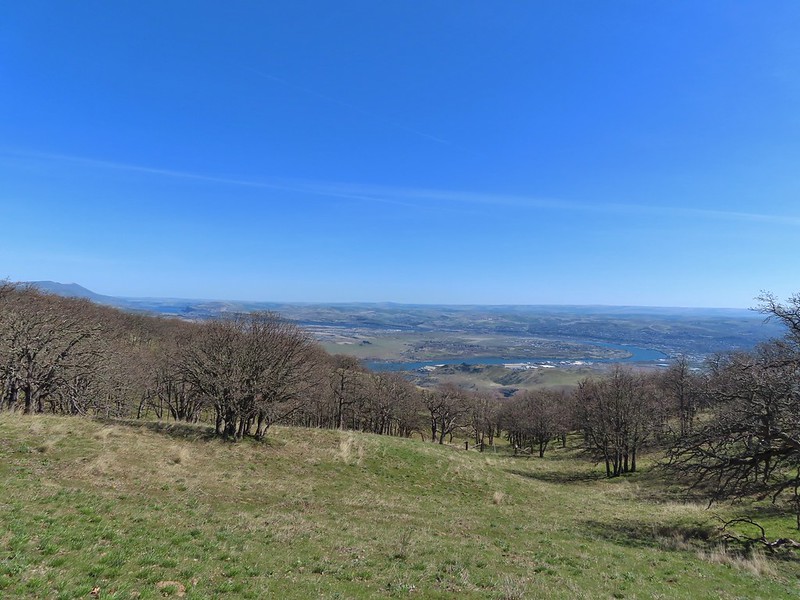 The Dalles beyond the fence line.
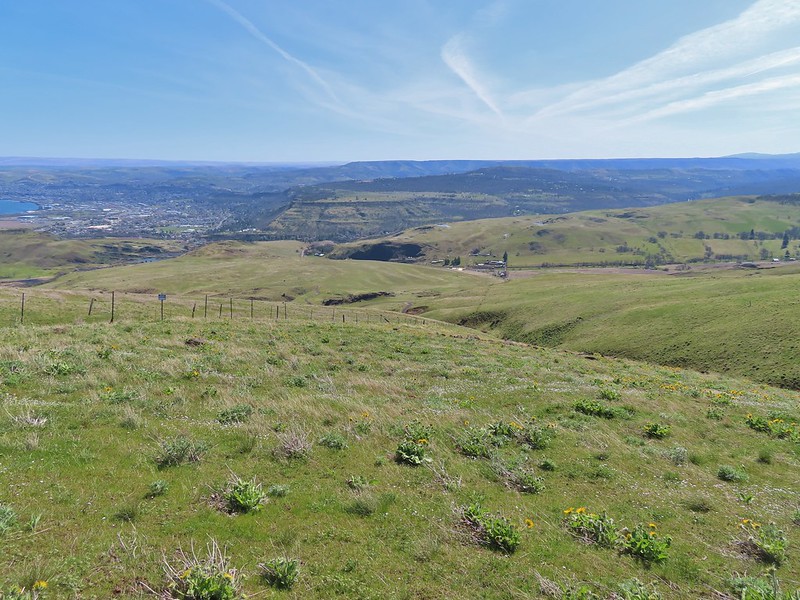 Heading down the fence line.
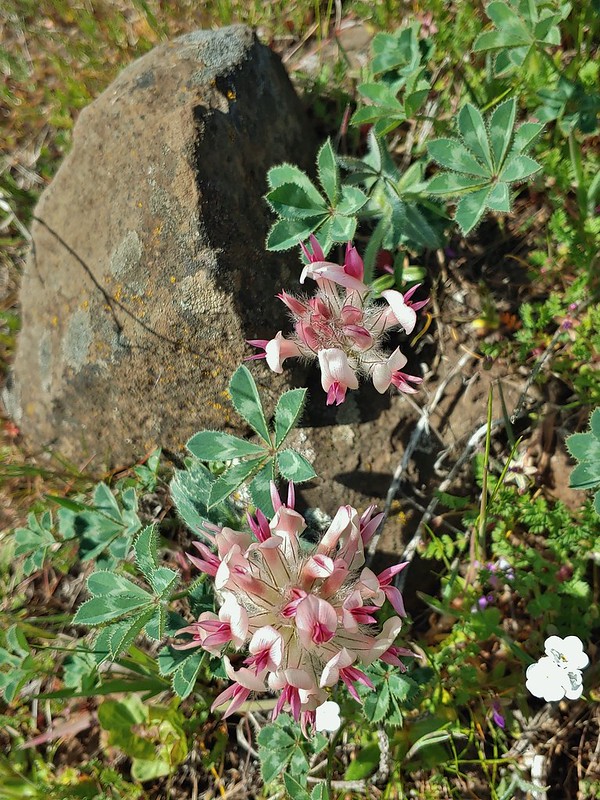 Large head clover
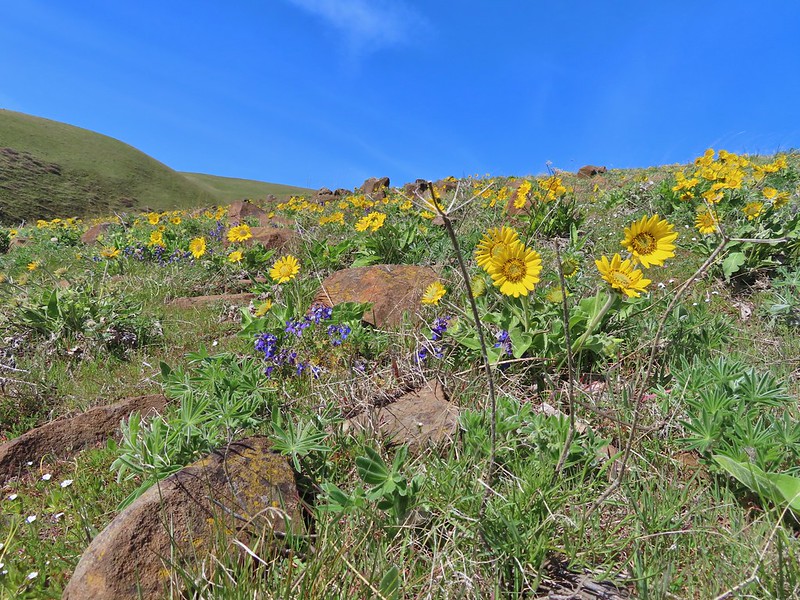
 A lupine with blossoms.
 Hillside covered in Columbia desert parsley
 Our car had been joined by one other. (middle left of photo)
 Gooseberry Creek
 Violet
 Manzanita
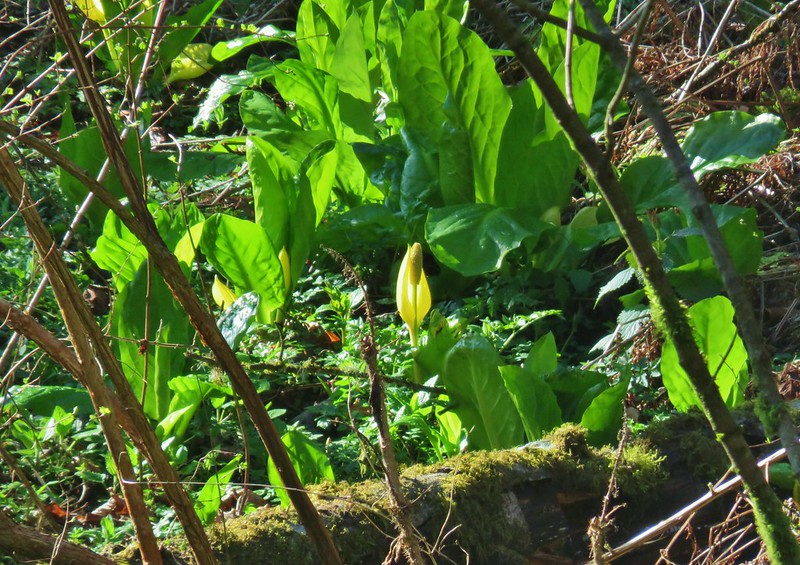 Skunk cabbage
 Violet
 Purple deadnettle
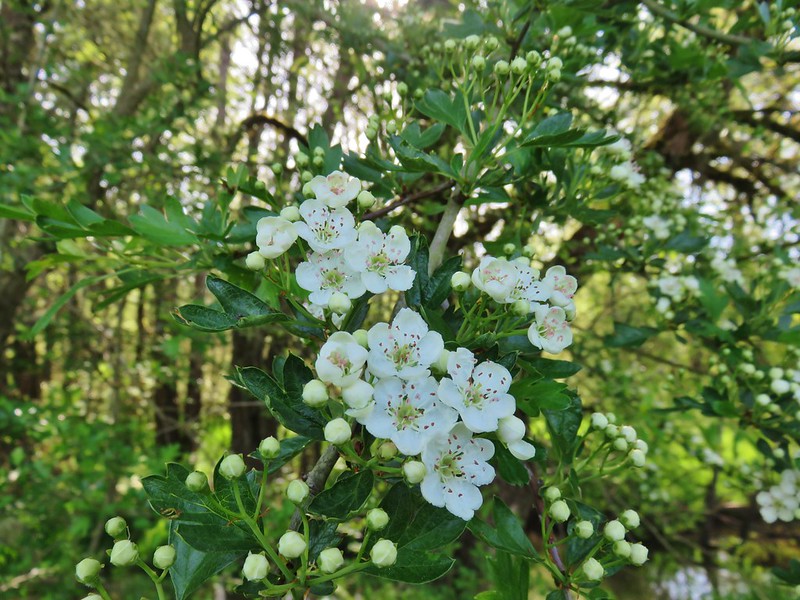 Blossoms on a tree
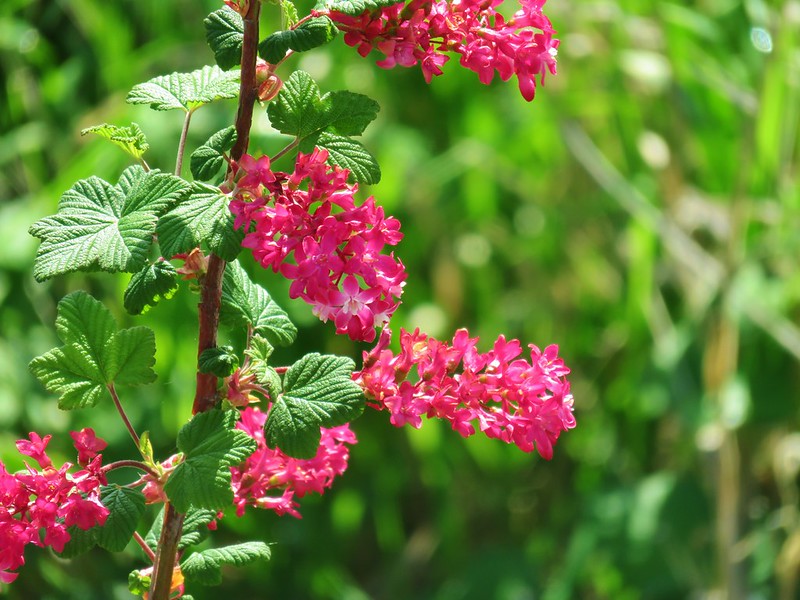 Red flowering currant
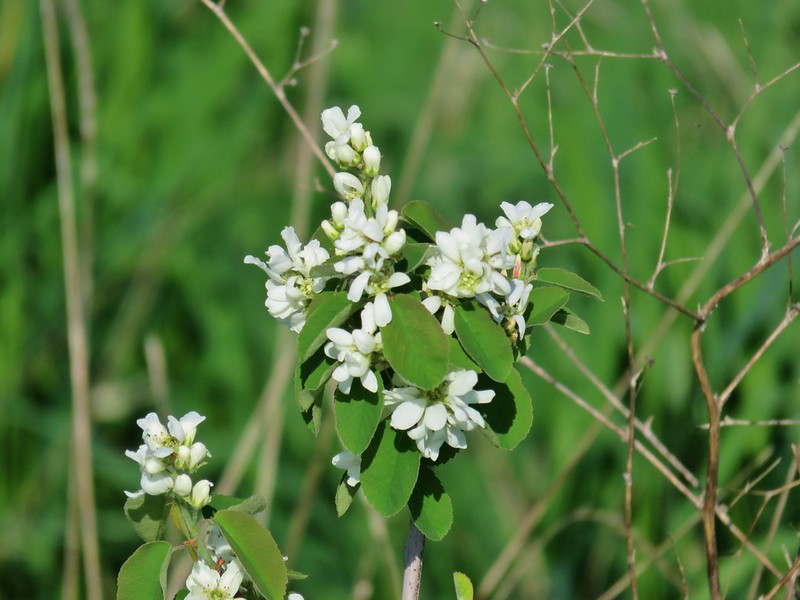 Western service berry
 California poppy
 A checkermallow
 Perriwinkle
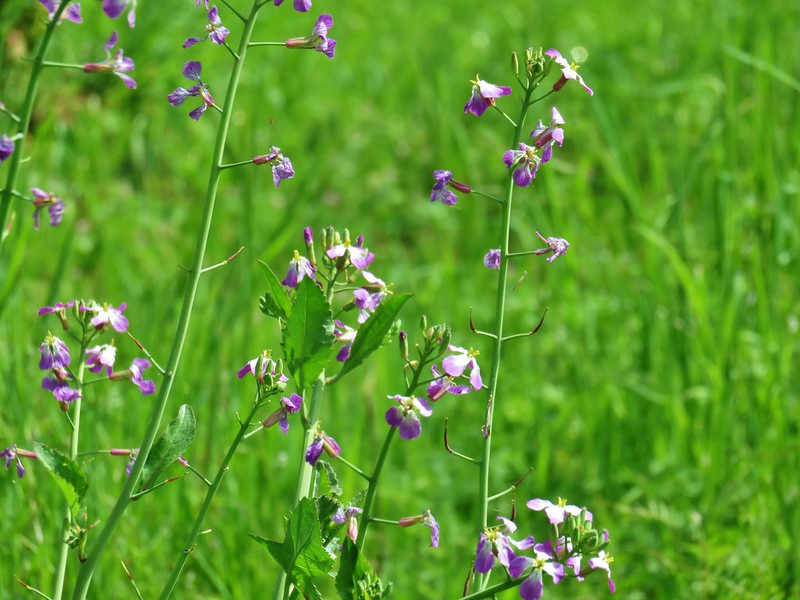 Cultivated radish
 Vetch
Vetch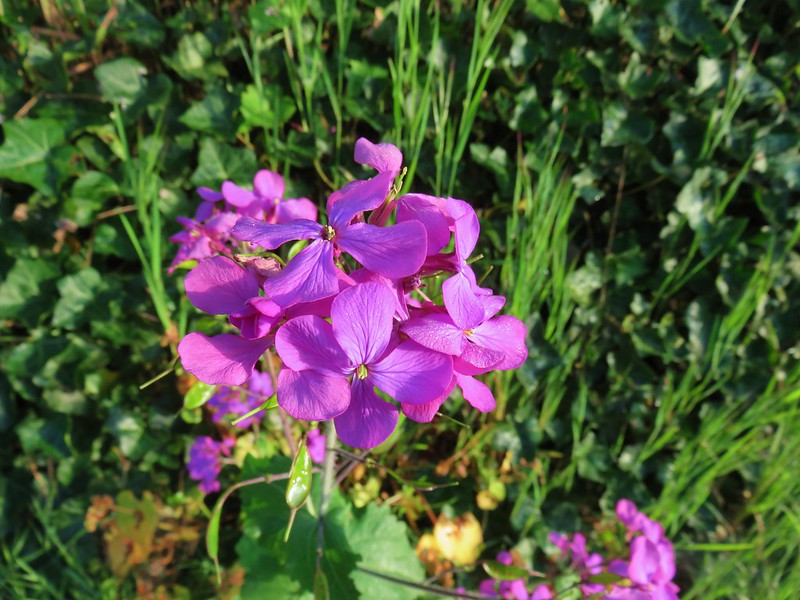 Annual honest
 Giant white wakerobbin
 Camas
Camas Cow parsnip
 Flowering bush as Basket Slough Wildlife Refuge
 Red clover
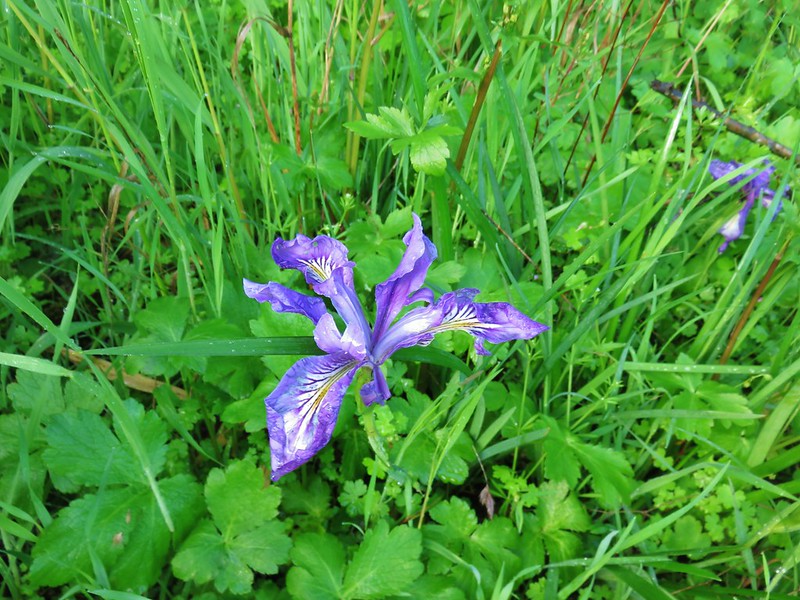 Iris
Iris Columbine
 Indian plum
 Tolmie’s mariposa lily
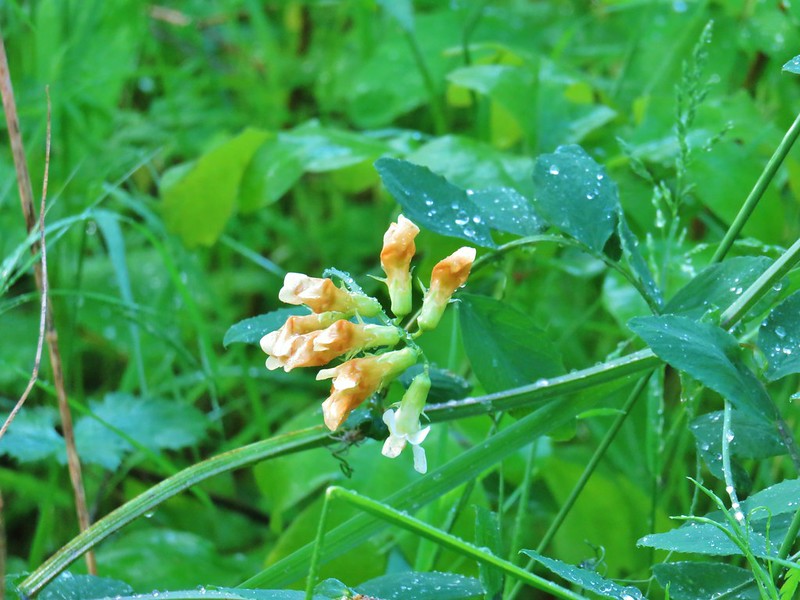 Thin-leaf pea
 Giant blue-eyed Mary
 Golden paintbrush
 Plectritis
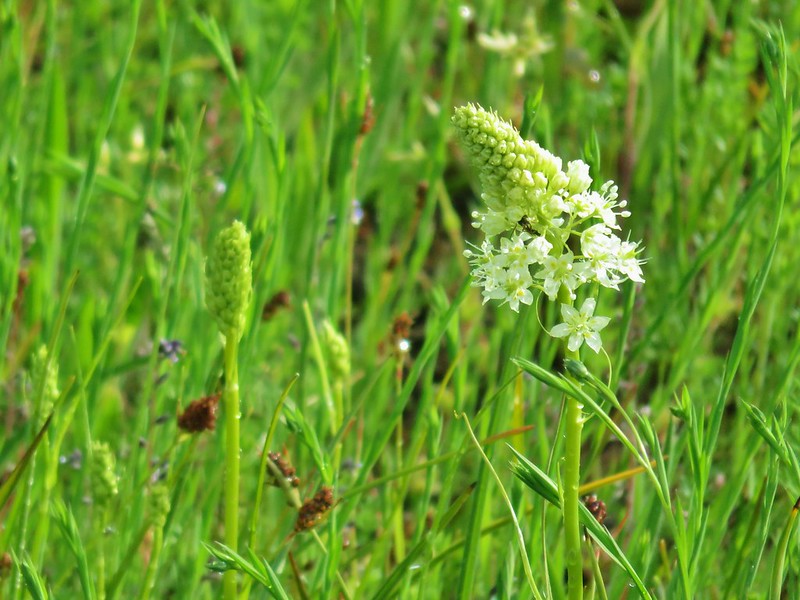 Meadow death camas
 Purple sanicle
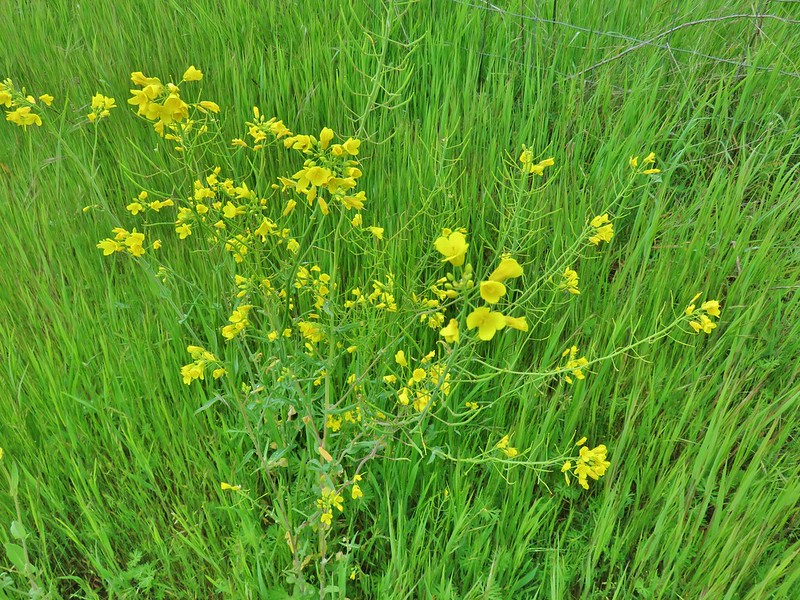 A mustard
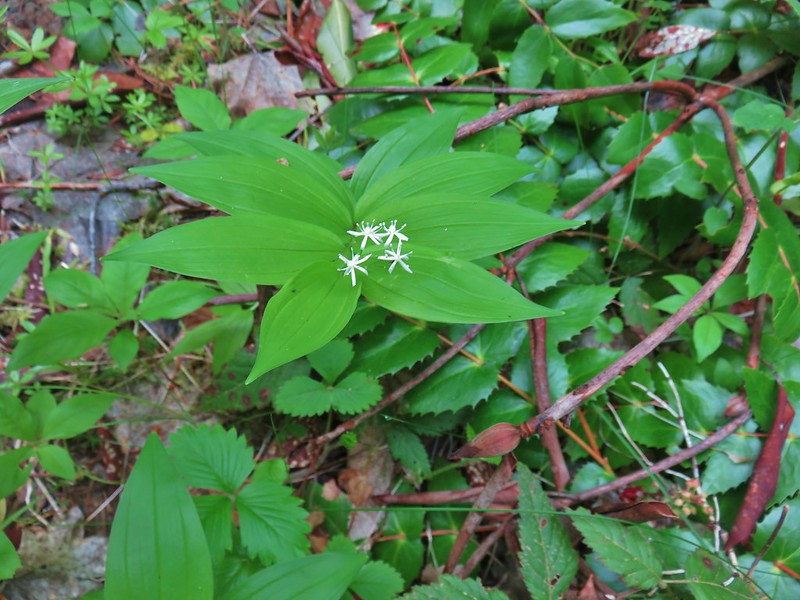 Star flowered solomseal
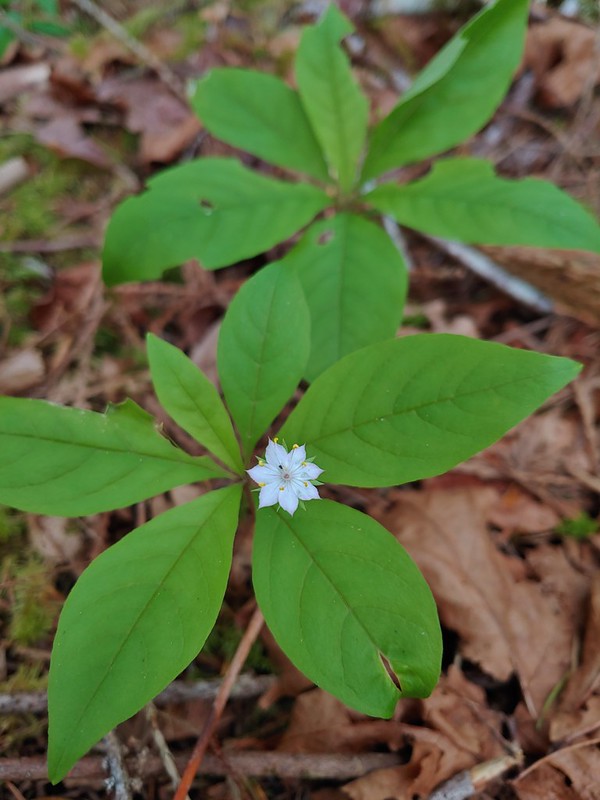 Starflower
 Yellowleaf iris
 Valerian
 Spotted coralroot
 Thimbleberry
 Hookedspur violet
 Fairy slipper
 Dogwood
 Buck Brush
 Fairybells
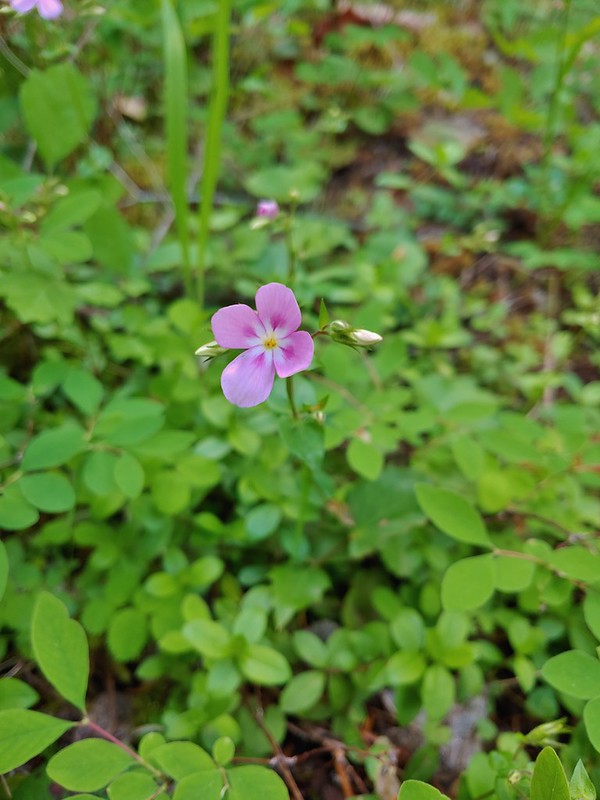 Showy phlox
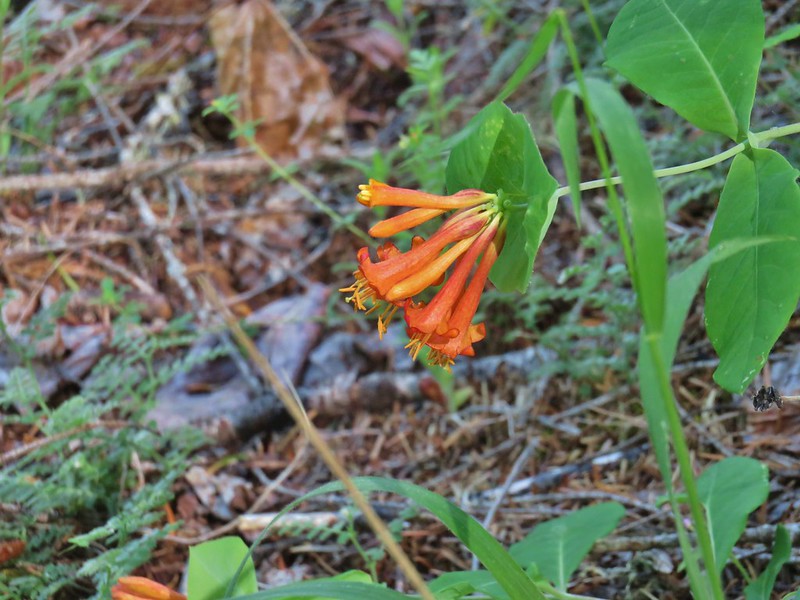 Honeysuckle
 A pea and poison oak
 Yout-on-age
 Monkey flower
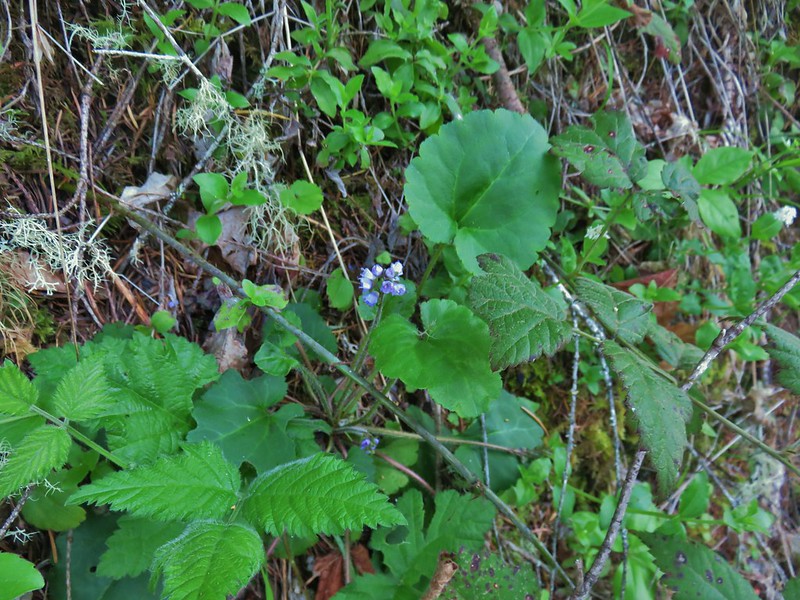 Snow queen
 Pale falx
 Wild ginger
 Oregon grape
 Candy flower
 Striped coralroot
 Bleeding heart
 Strawberry
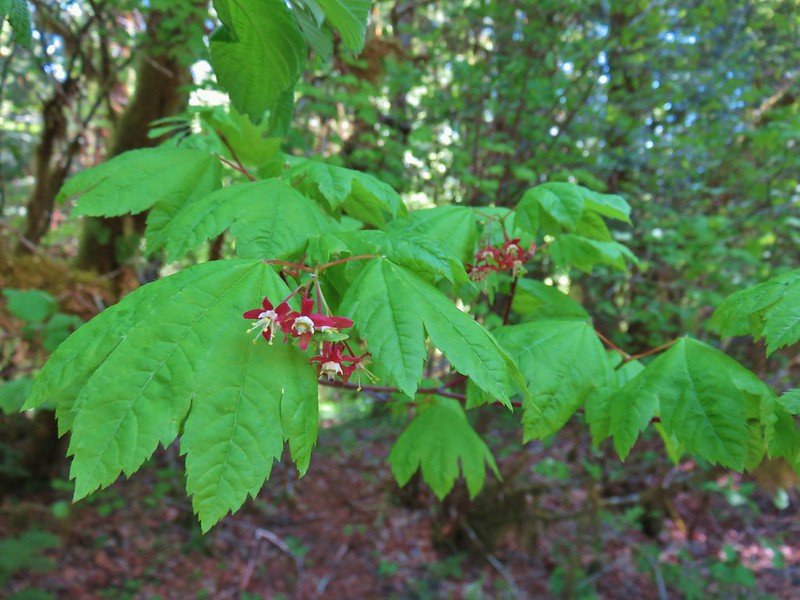 Maple
Maple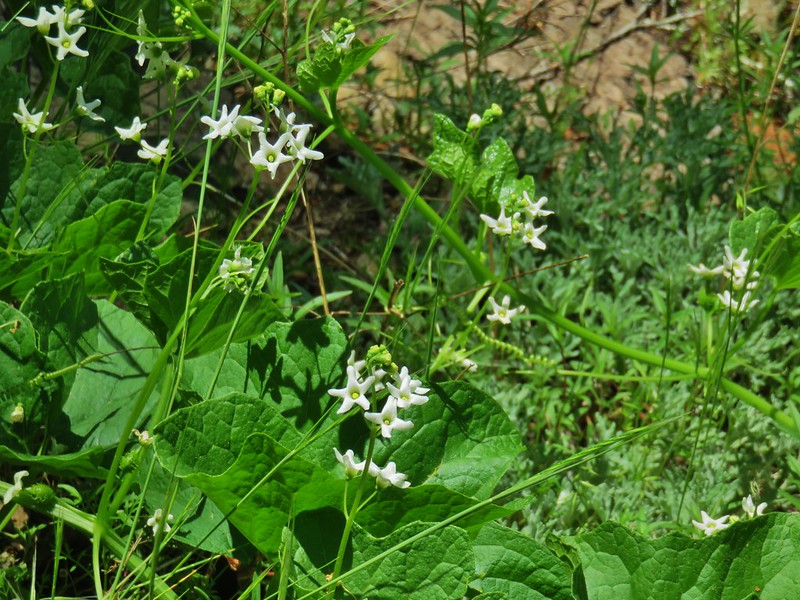 Coastal manroot
 Popcorn flower?
 Variable collomia
 Western yellow oxalis
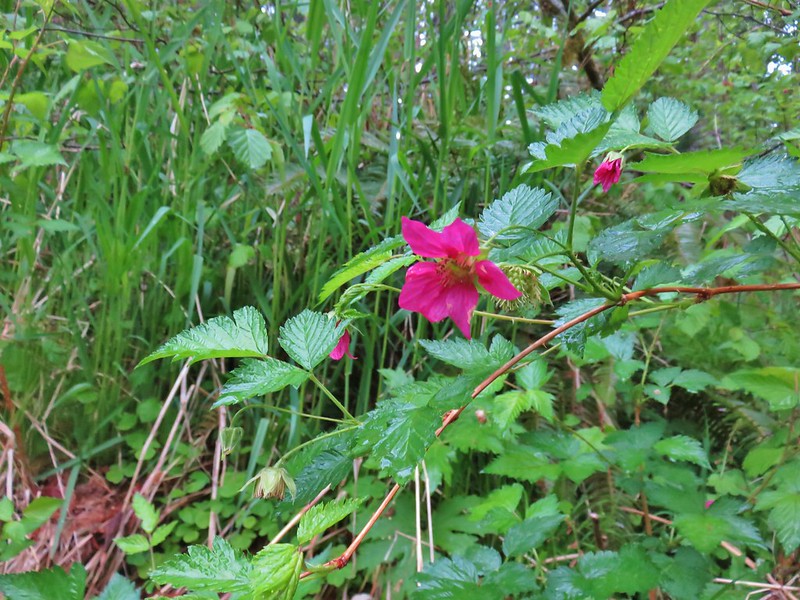 Salmonberry
 Pacific waterleaf
 Queen’s cup
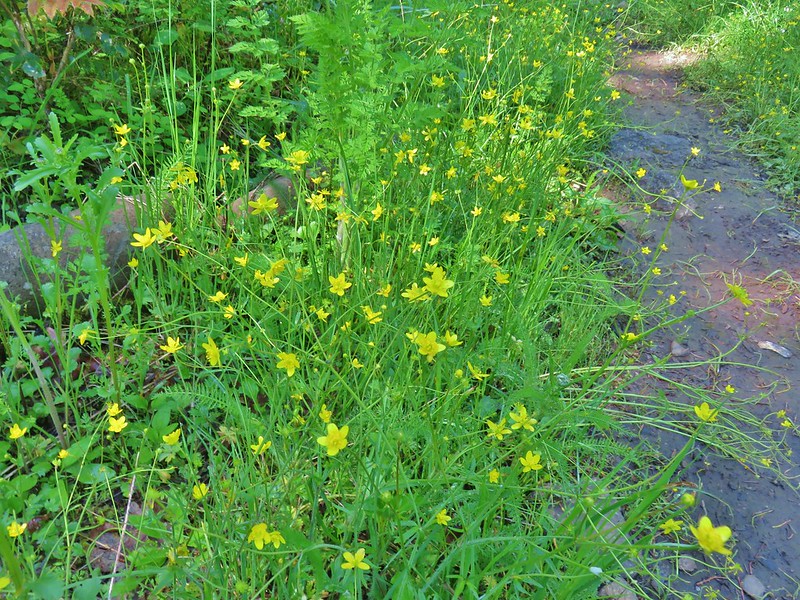 Western buttercups
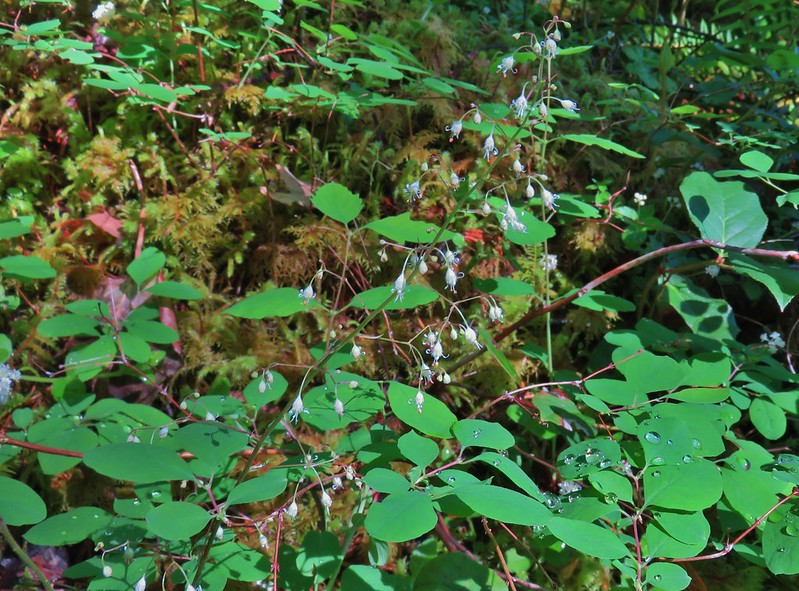 Foam flower
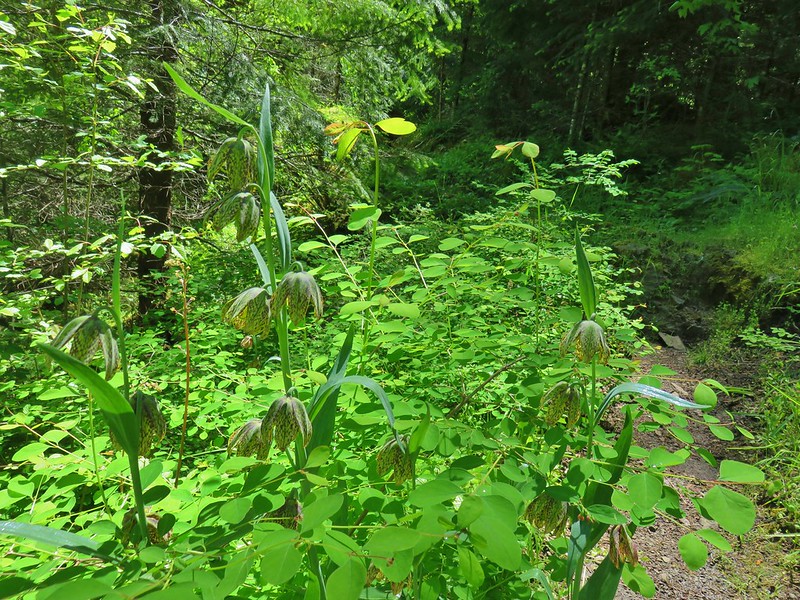 Chocolate lillies
 Vanilla leaf
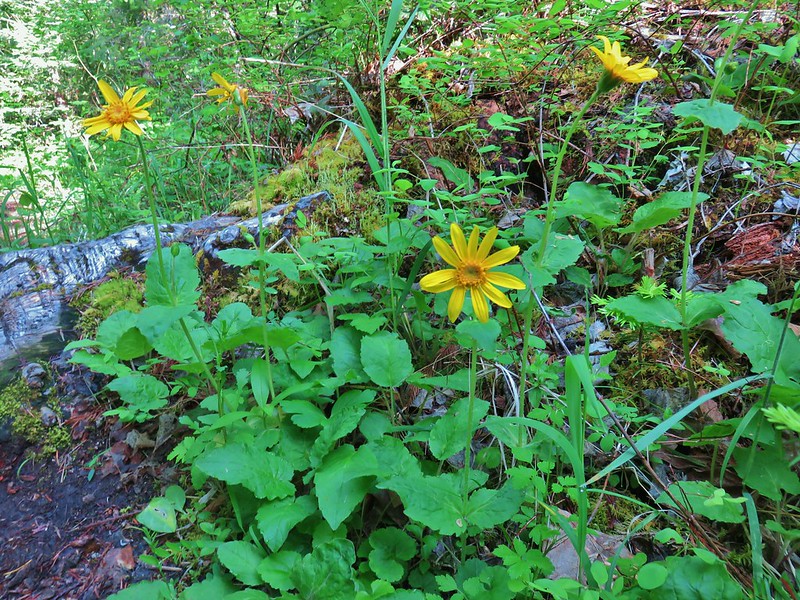 Arnica
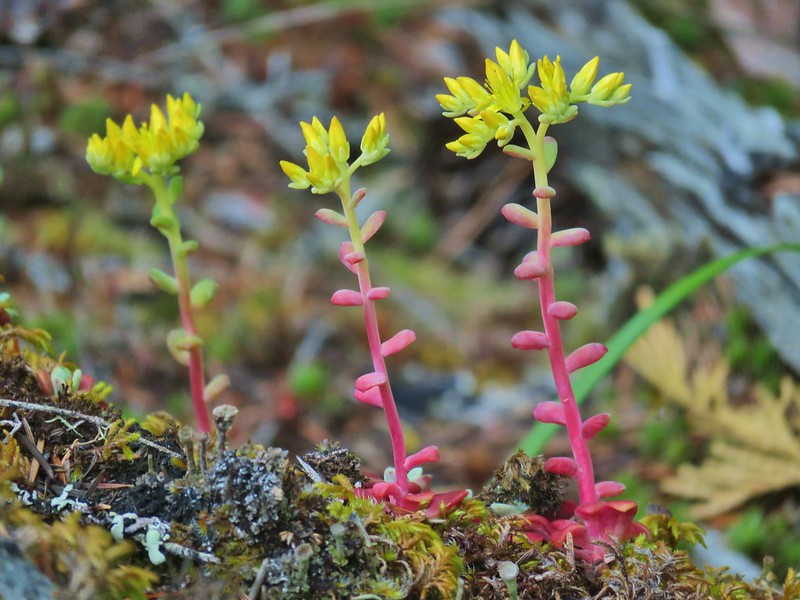 Stonecrop
 Tall bluebells
 Anemone
 Oregon geranium
 Vetch and daisies
 Common St. John’s wort
 Douglas spirea
 Lupine
 Ookow
Ookow Yellow glandweed
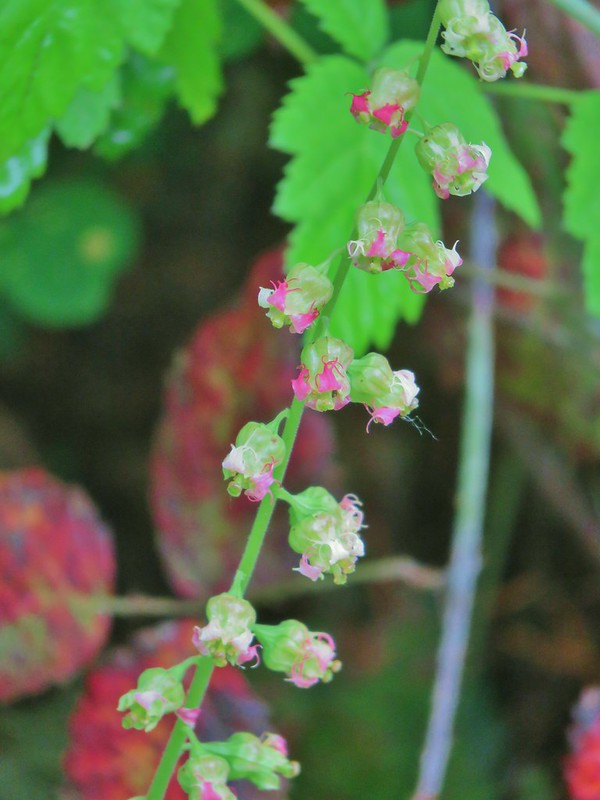 Fringecup
 Wild rose
 Inside out flower
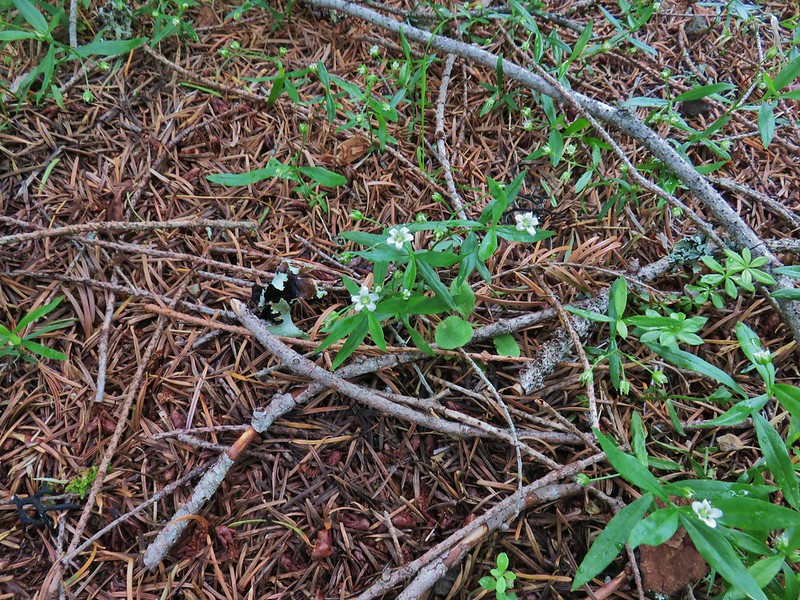 Largeleaf sandwort
 False solomonseal
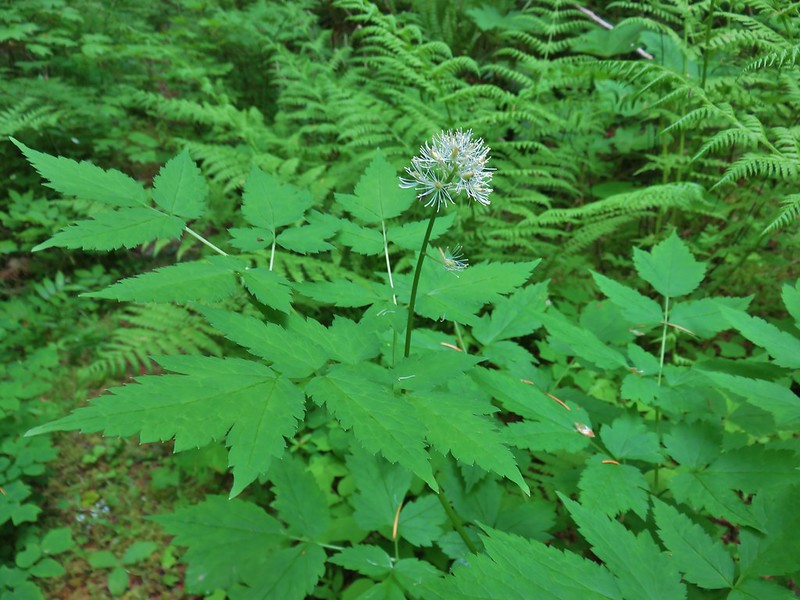 Baneberry
 <Sourgrass
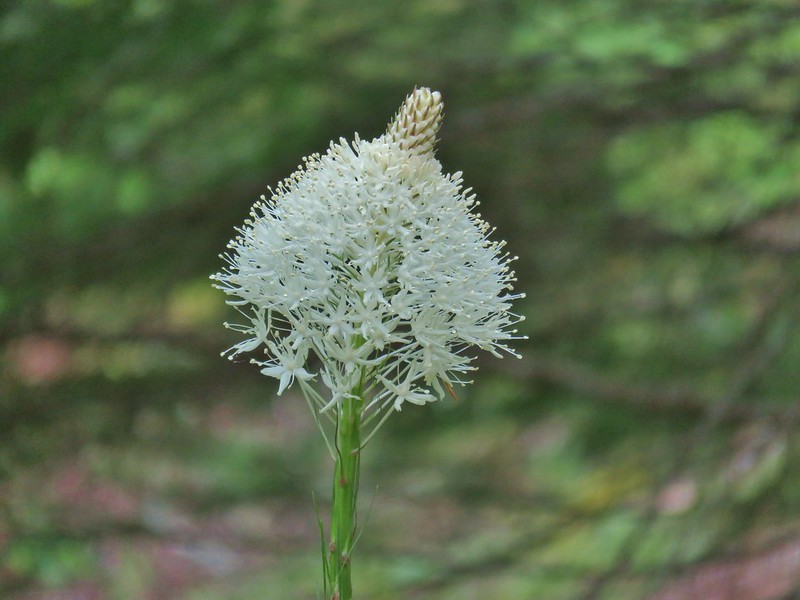 Beargrass
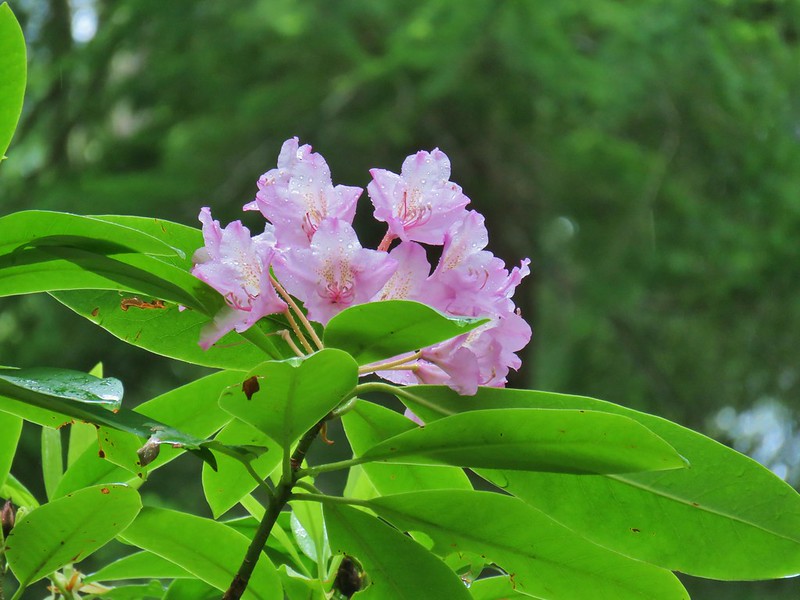 Rhododendron
 Subalpine mariposa lily
 Trillium
 Larkspur
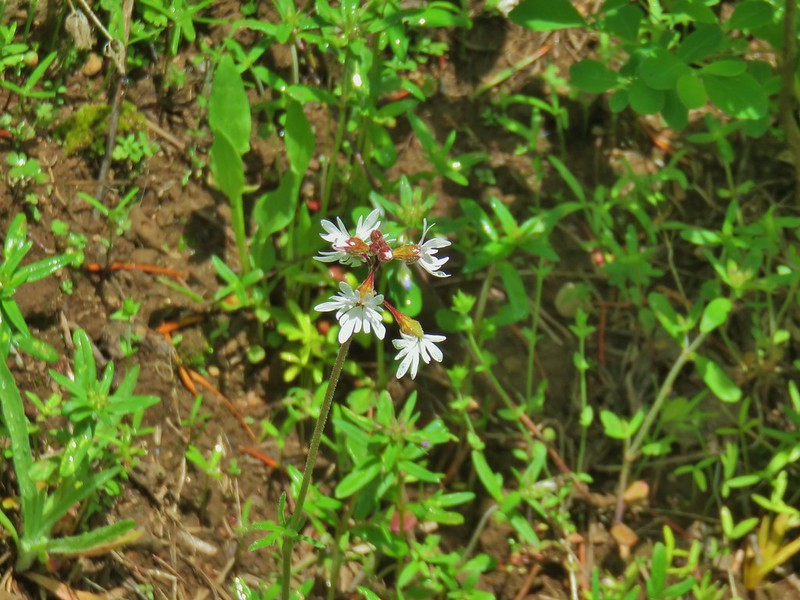 Woodland stars
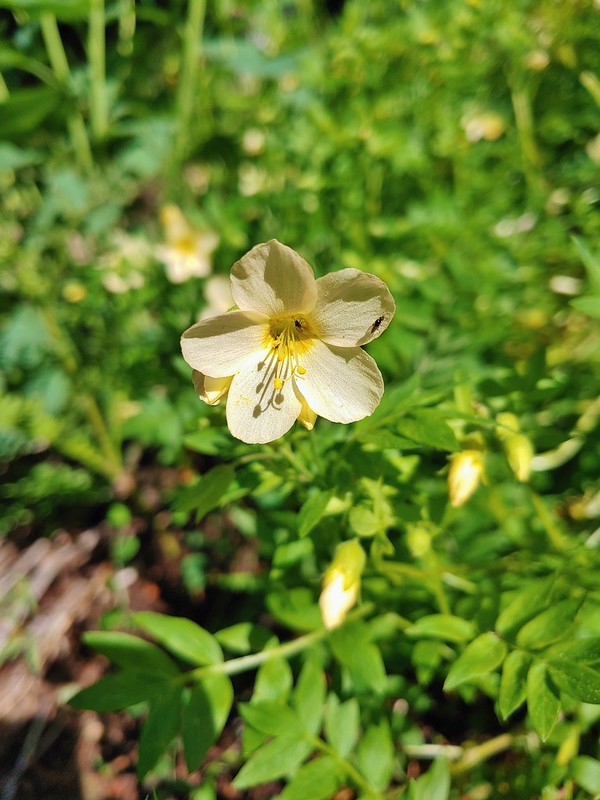 Royal Jacob’s ladder
 Nightblooming false bindweed
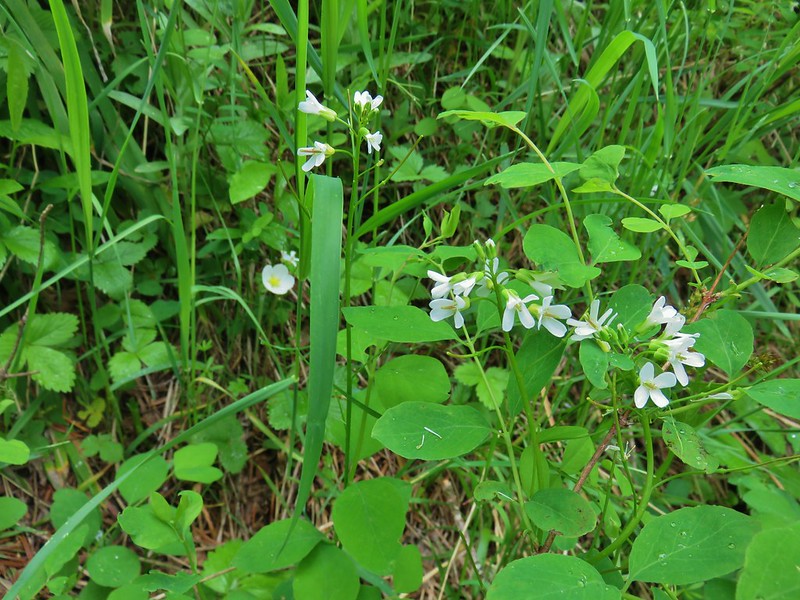 Alpine pennycress
 Twinflower
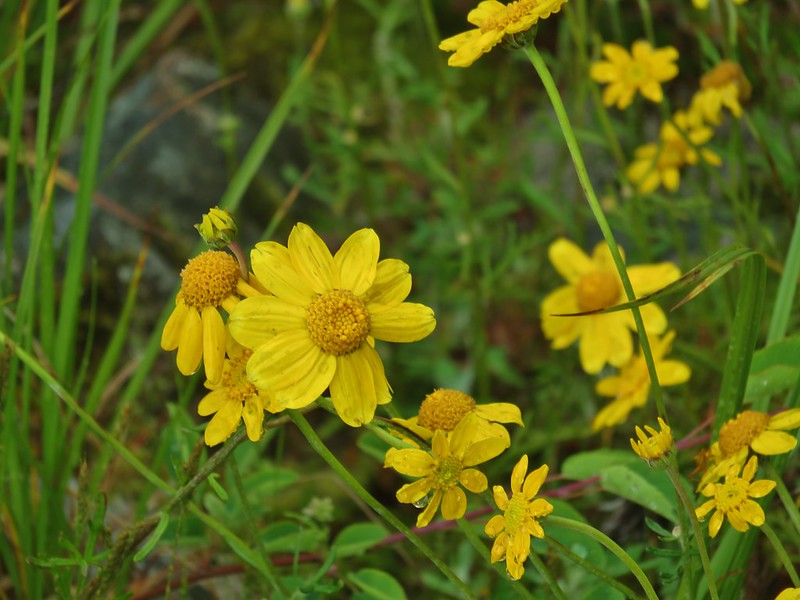 Oregon sunshine
 Bunchberry
 Mountain ash
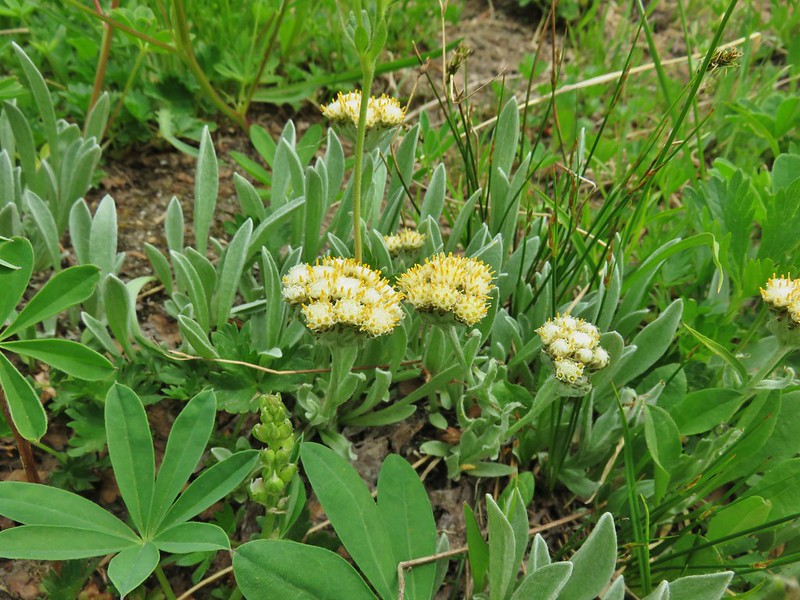 Raceme pussytoes
 Phlox
Phlox Paintbrush
 Rusty saxifrage
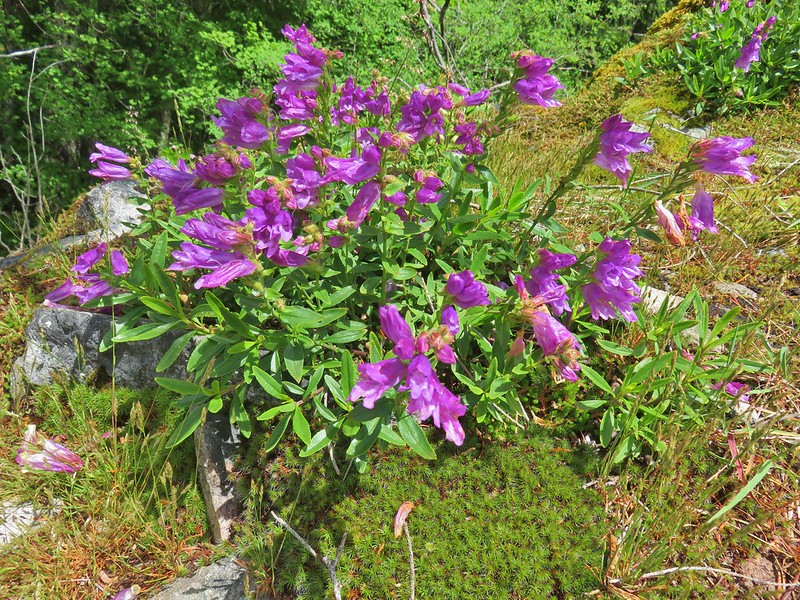 A penstemon
 Salal
Salal A pyrola
 Tiger lily
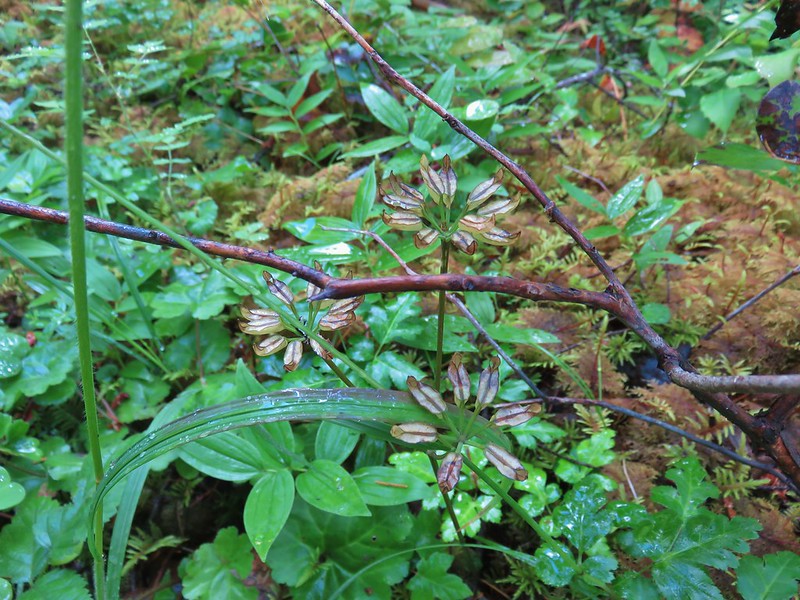 Gold threads
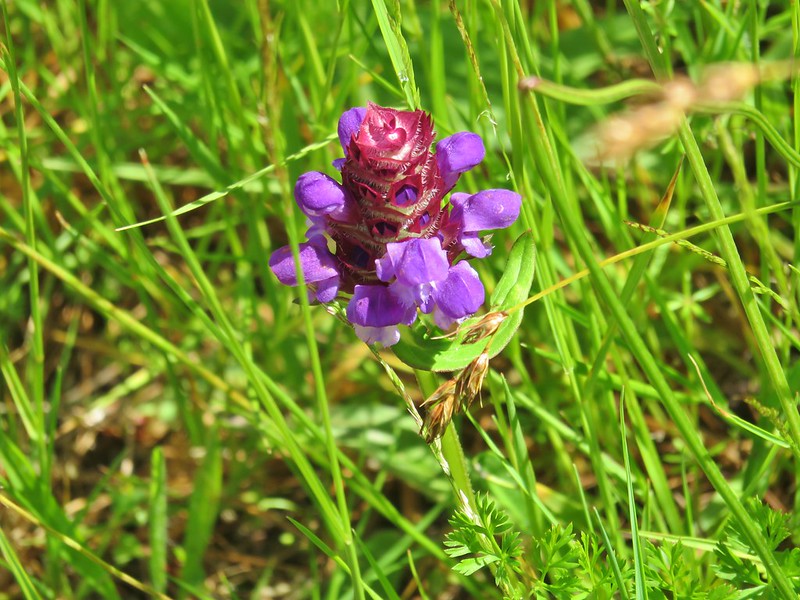 Self heal
 Bachelor button
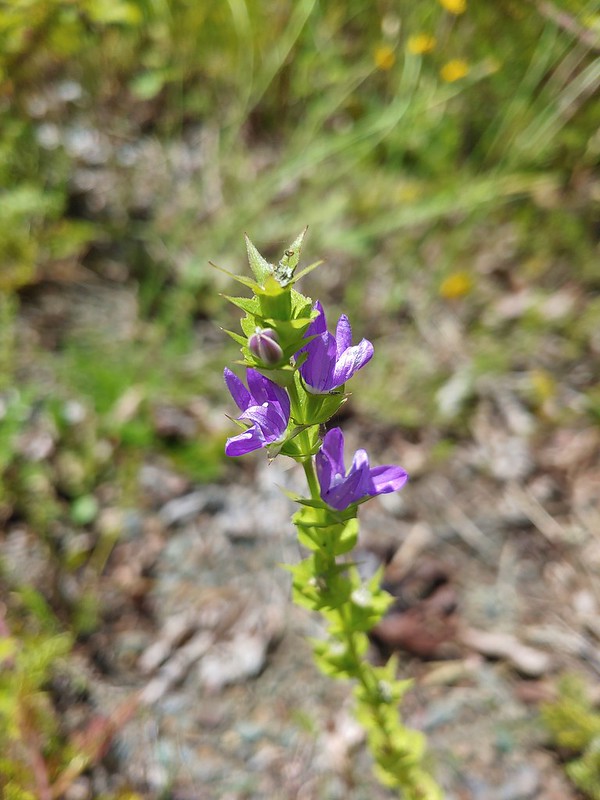 A willowherb?
 A pea
A pea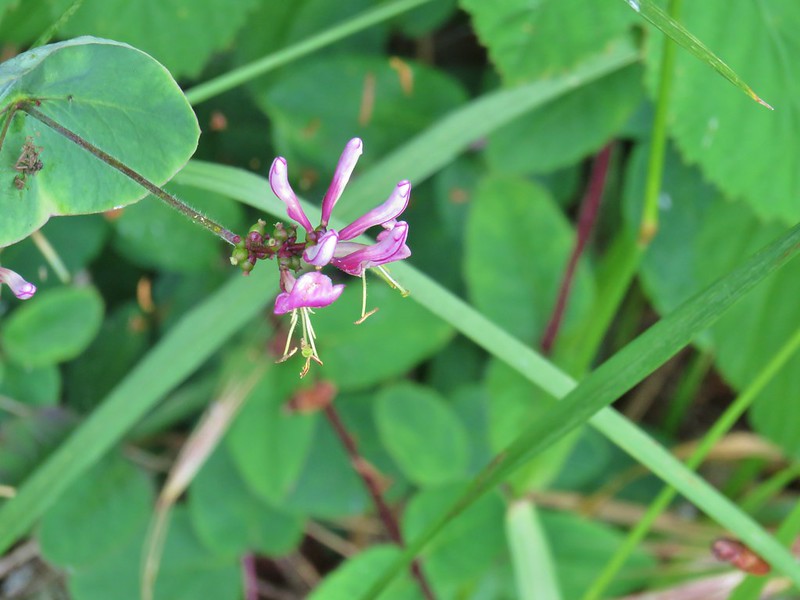 Pink honeysuckle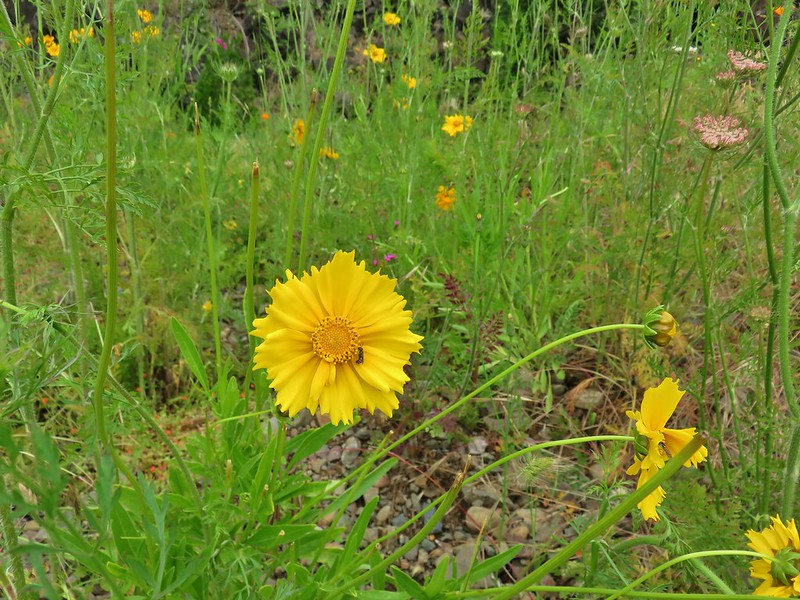
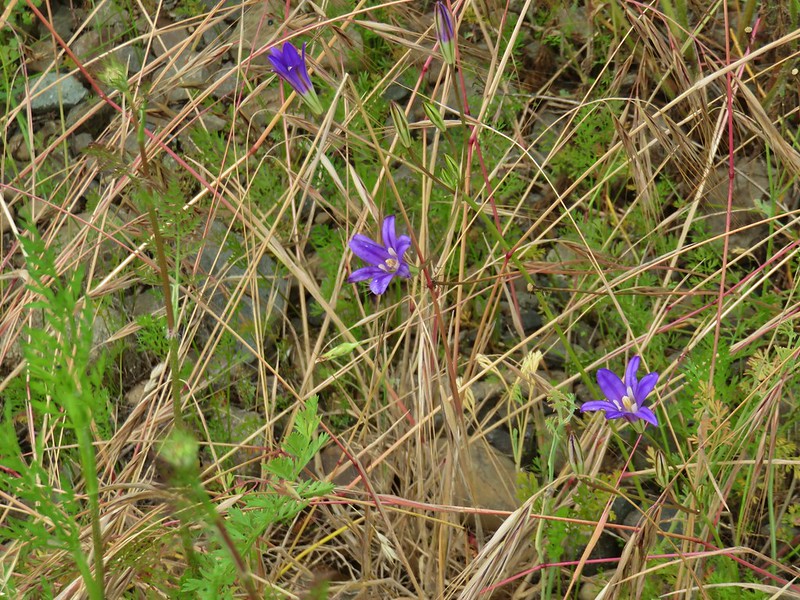 A brodeia
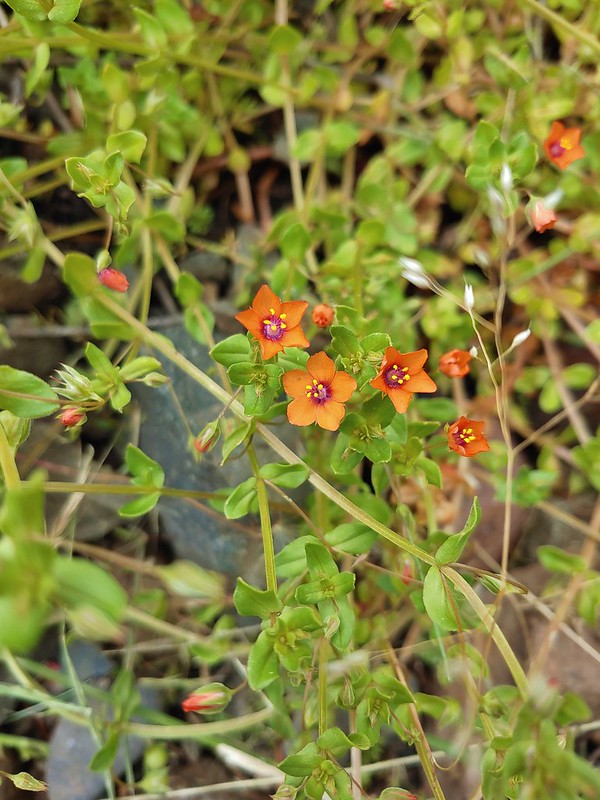 Scarlet pimpernel
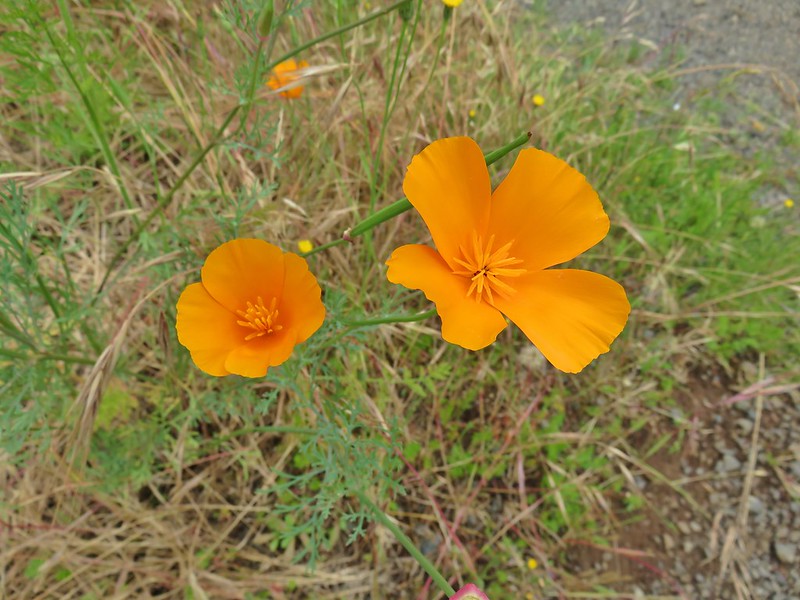 A poppy
 Foxglove
 Hedgenettle
 A phacelia
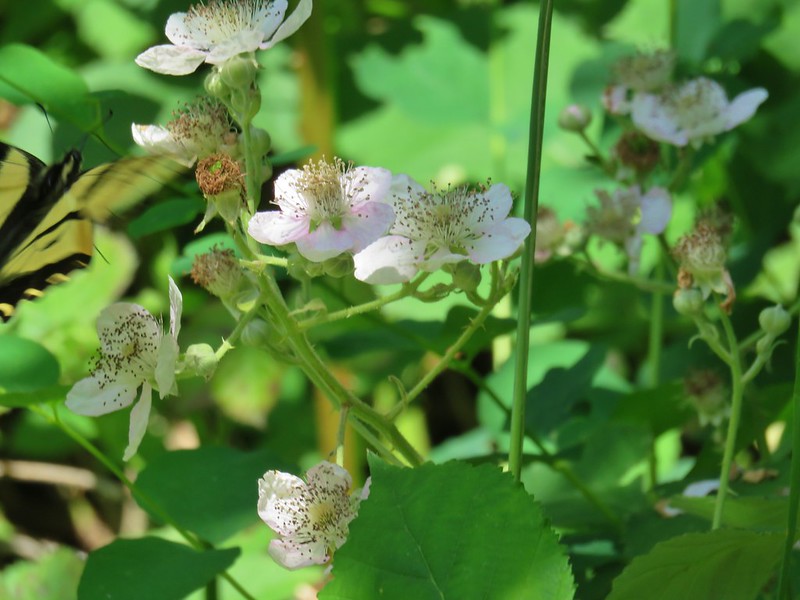 Blackberry
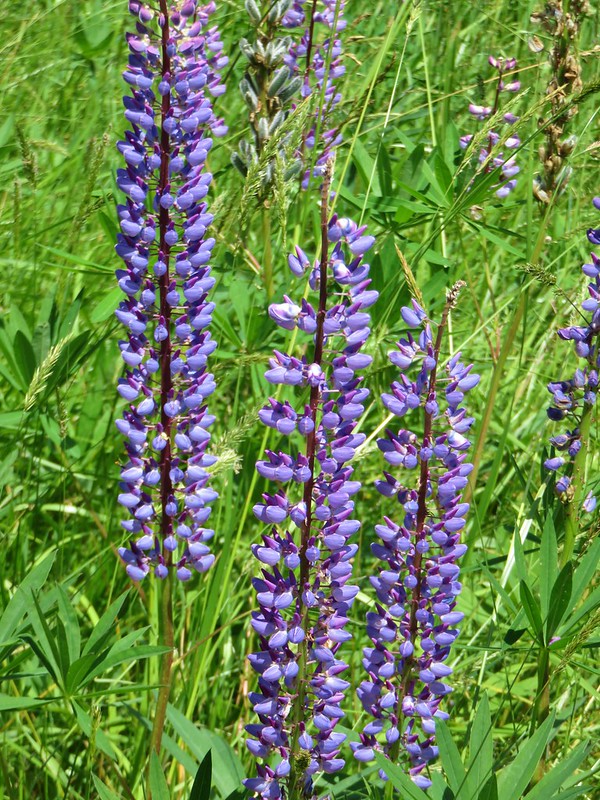 Lupine
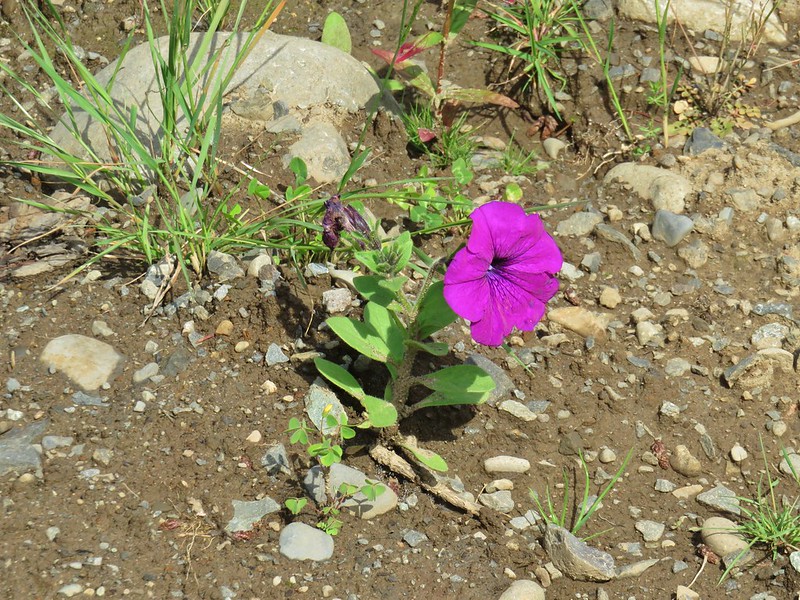 Petunia
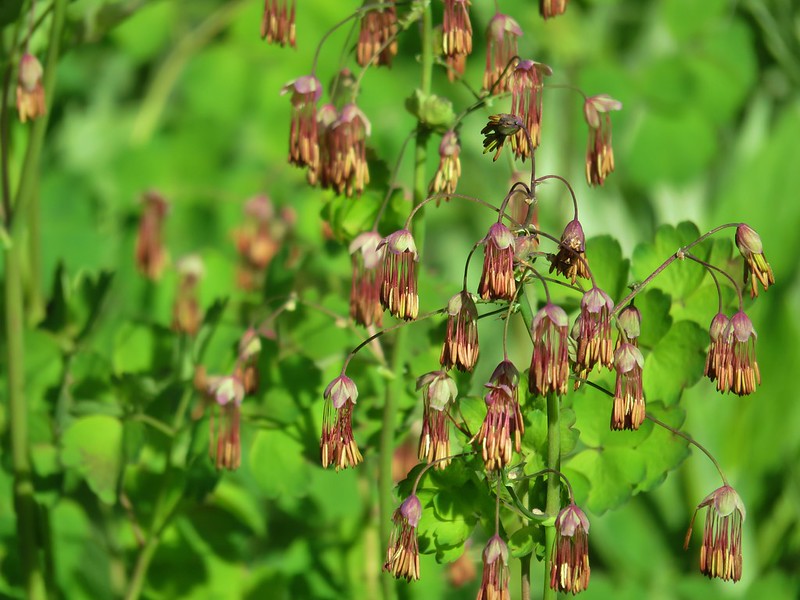 Western meadow-rue
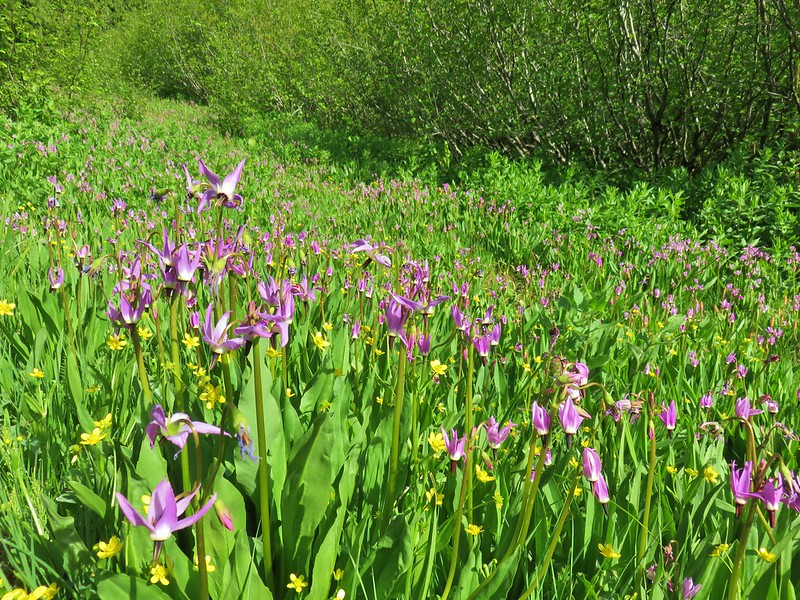 Shooting stars and western buttercups
 Elephants head
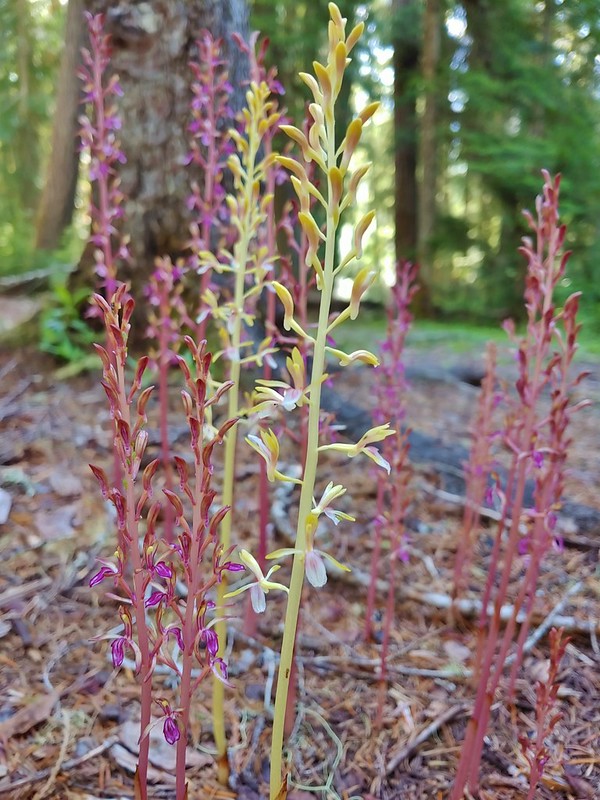 Pacific coralroot
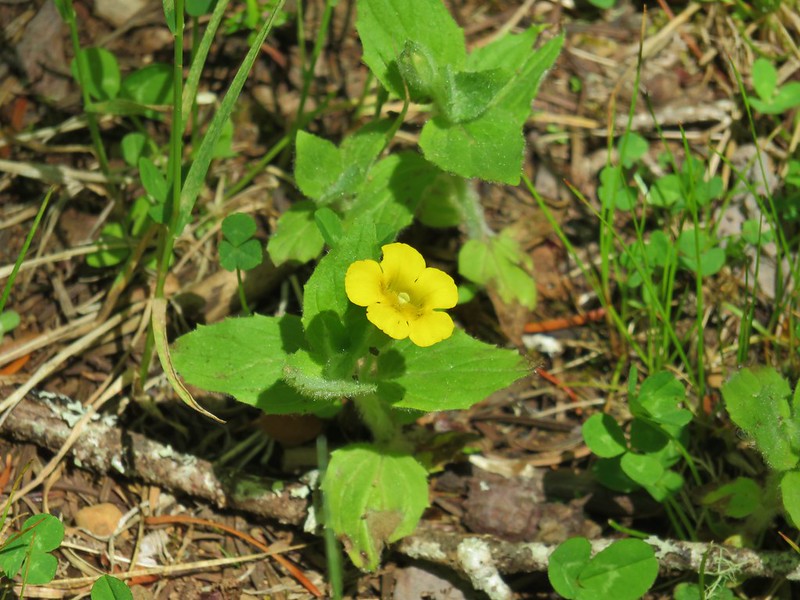 Musk monkeyflower
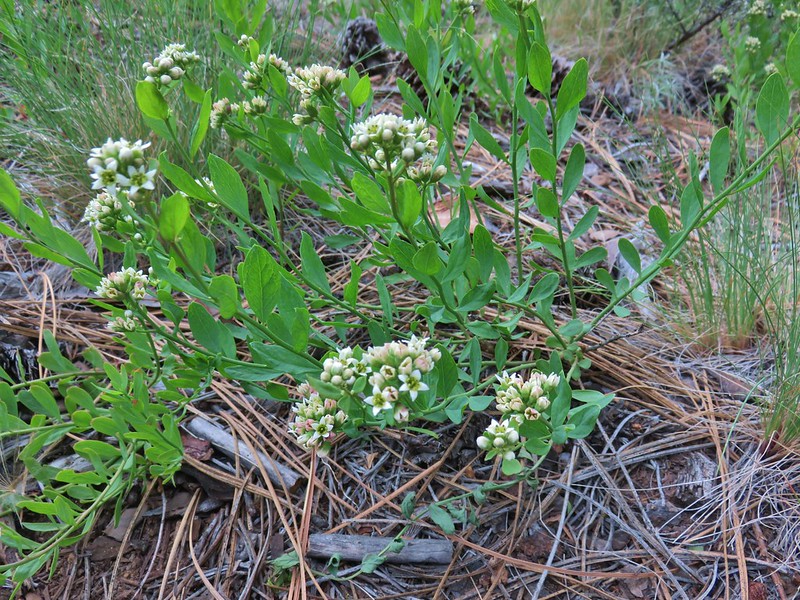 Bastard toadflax
 Yarrow
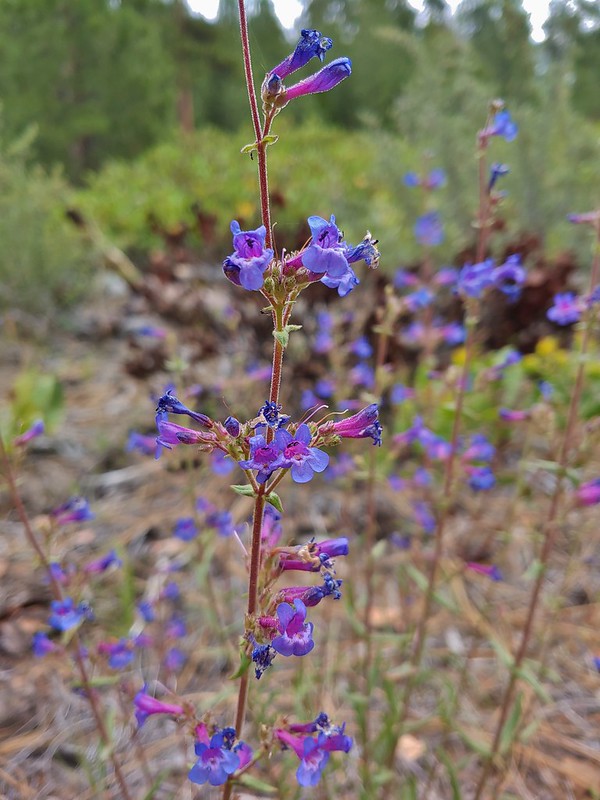 A penstemon
 Silverleaf phacelia
 Washington lily
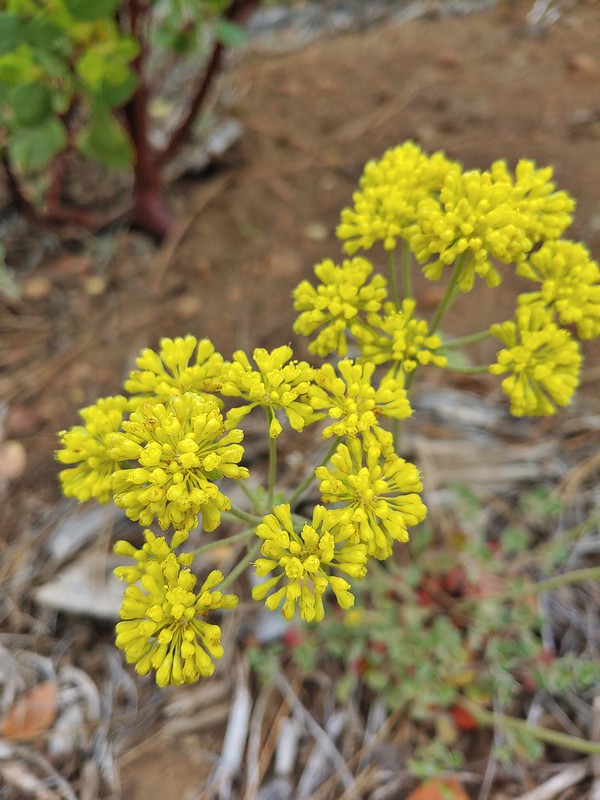 A buckwheat
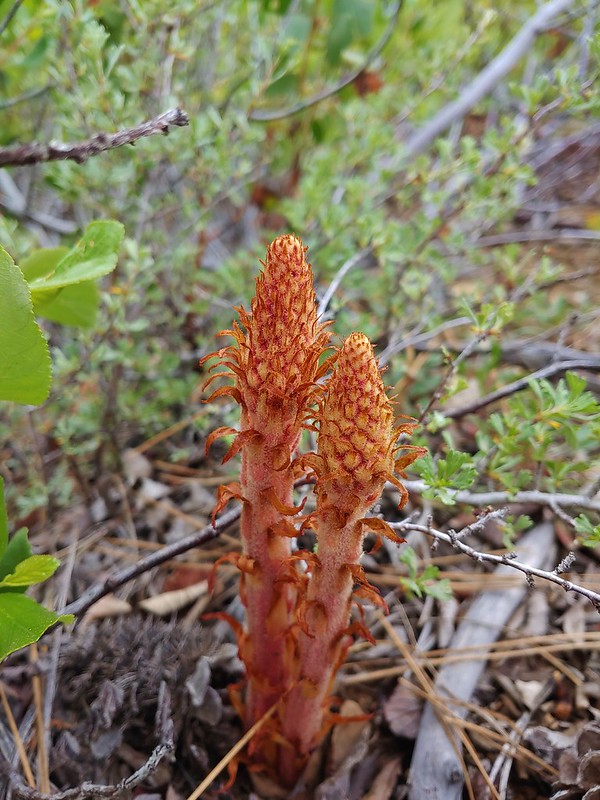 Pinedrops
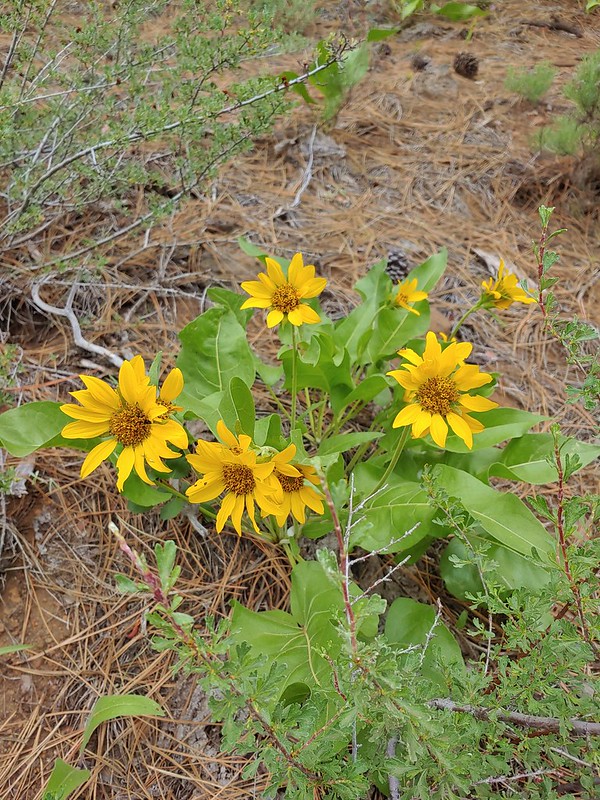 Balsamroot
 Western hound’s tongue
 Diamond clarkia
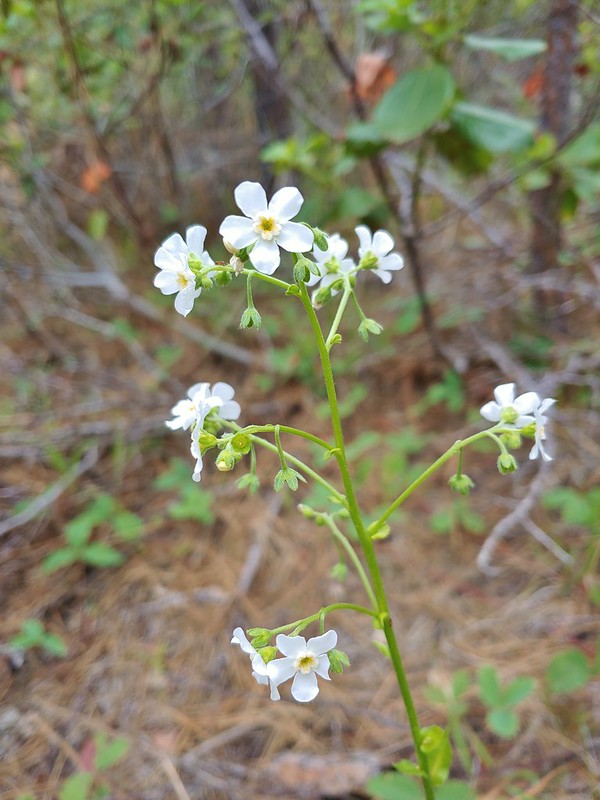 California stickseed
 Scarlet gilia
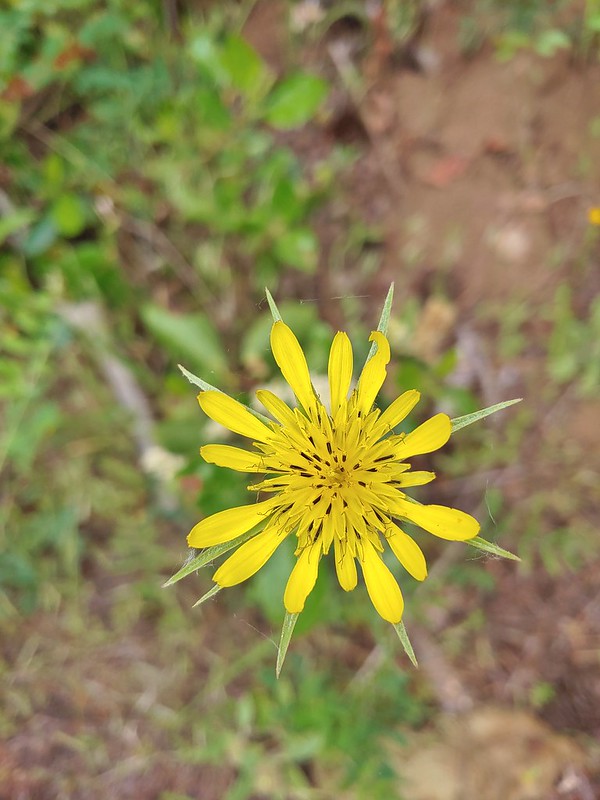 Salsify
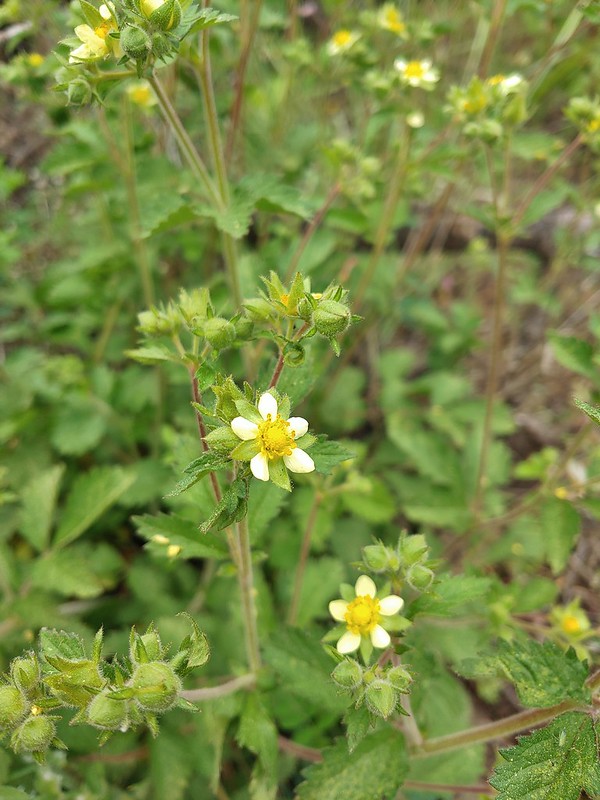 Sticky cinquefoil
 Gooseberry
 A thistle
 A buckwheat
 Blue-eyed Mary
 Fawn lily
 Sandwort
 Olympic onion
 A phlox
 False sunflower
 Bistort and paintbrush
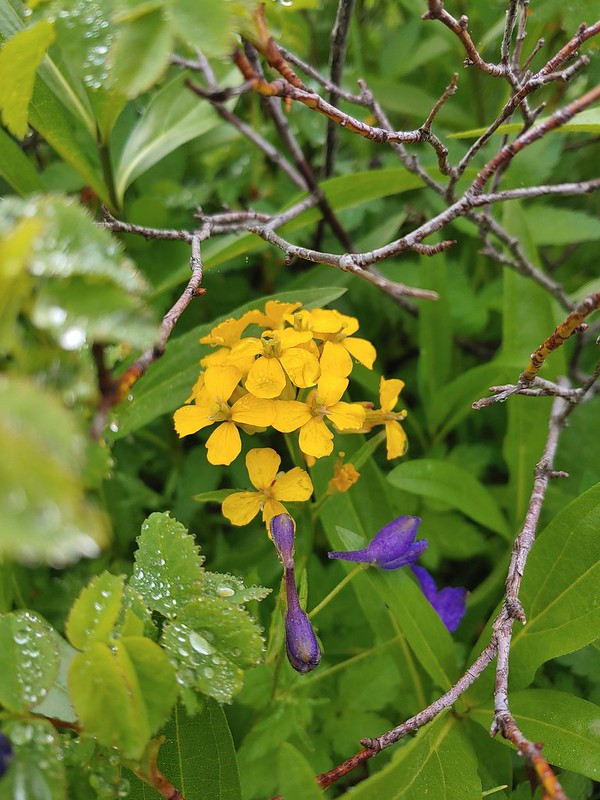 Wallflower
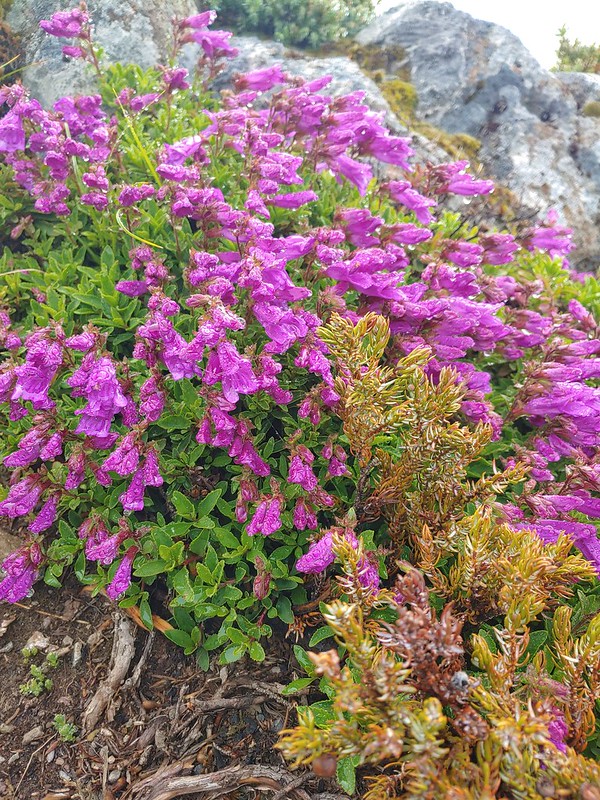 A penstemon
 Phantom orchid
 A penstemon
 A buckwheat
 Tall buckwheat
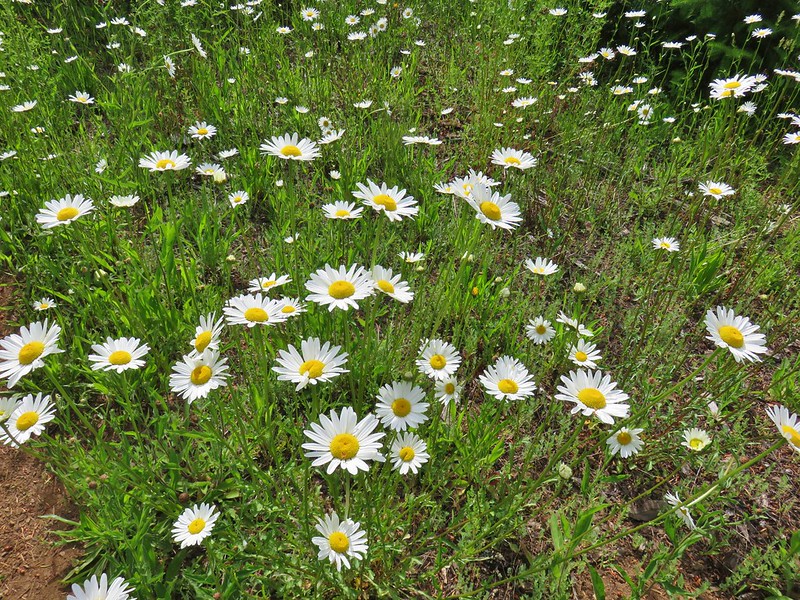 Daisies
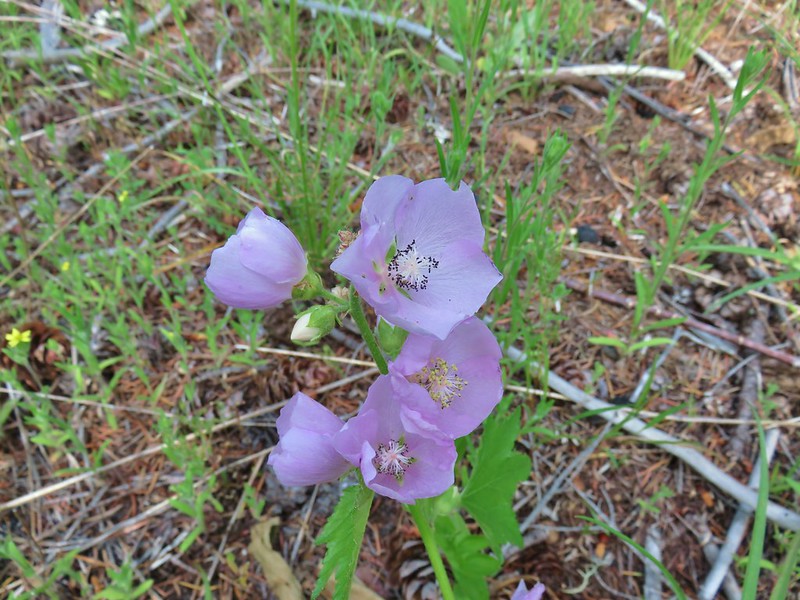 Streambank globe mallow
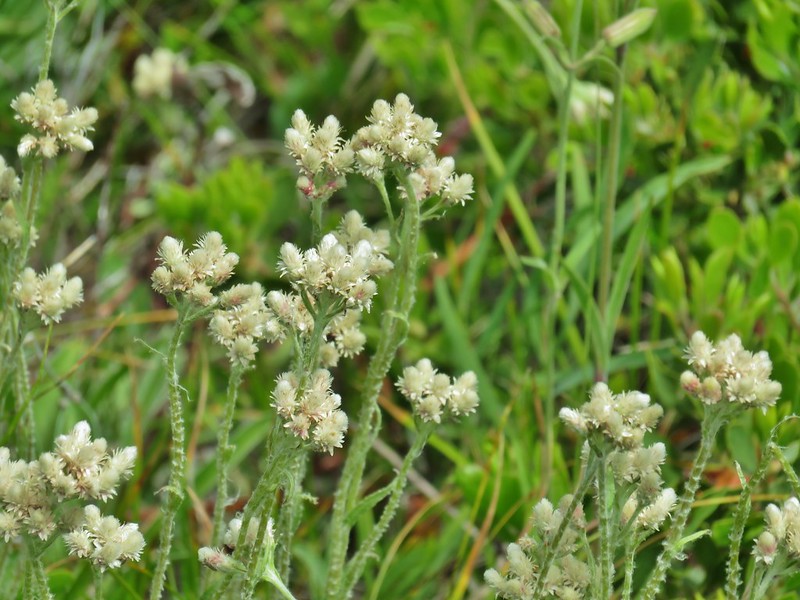 Pussytoes
 Tapertip onion
 White stemmed frasera
 Prince’s pine
 Goats beard
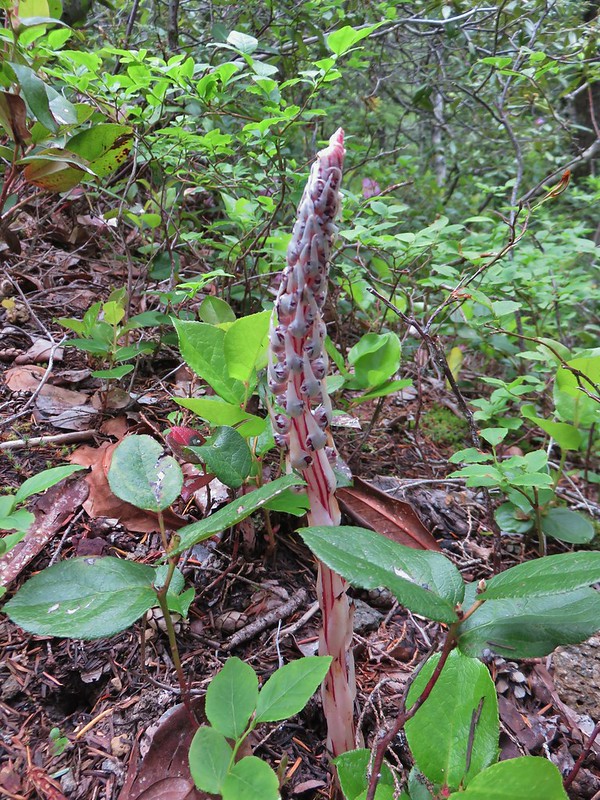 Sugarstick
 A saxifrage
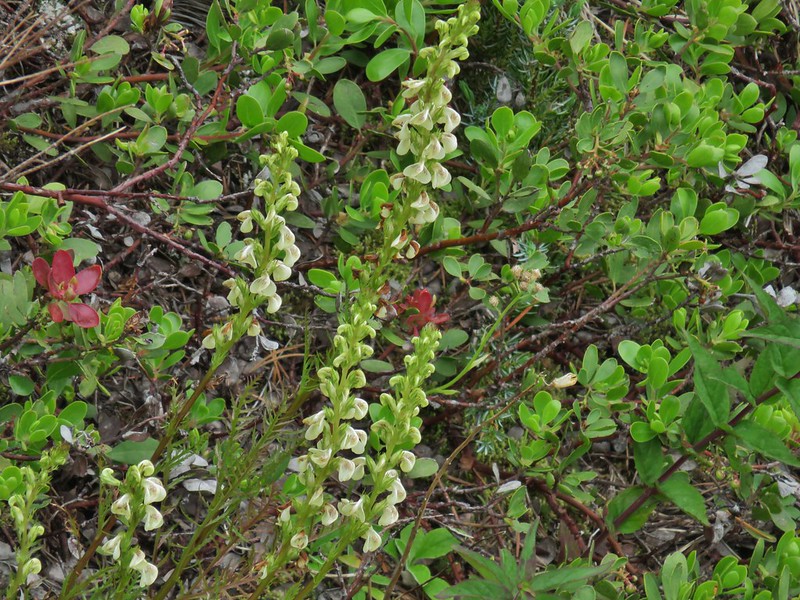 A lousewort
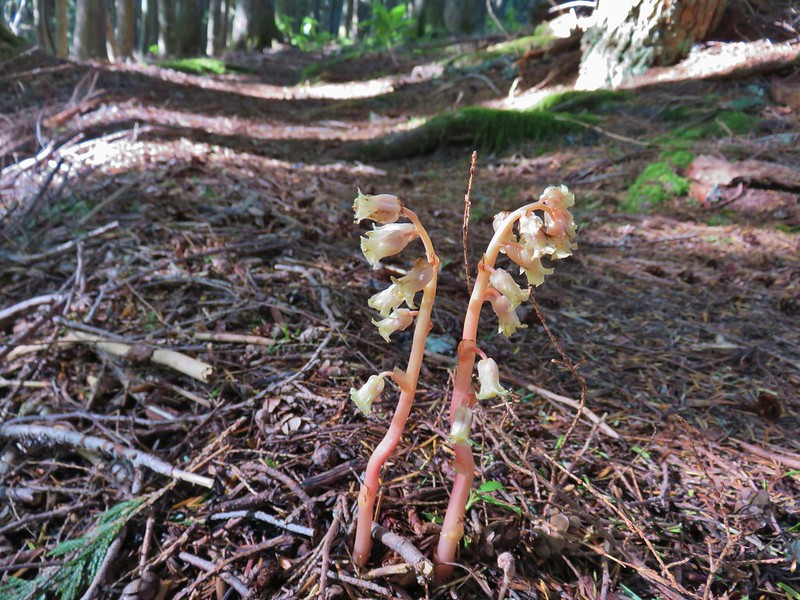 Pinesap
 A stonecrop
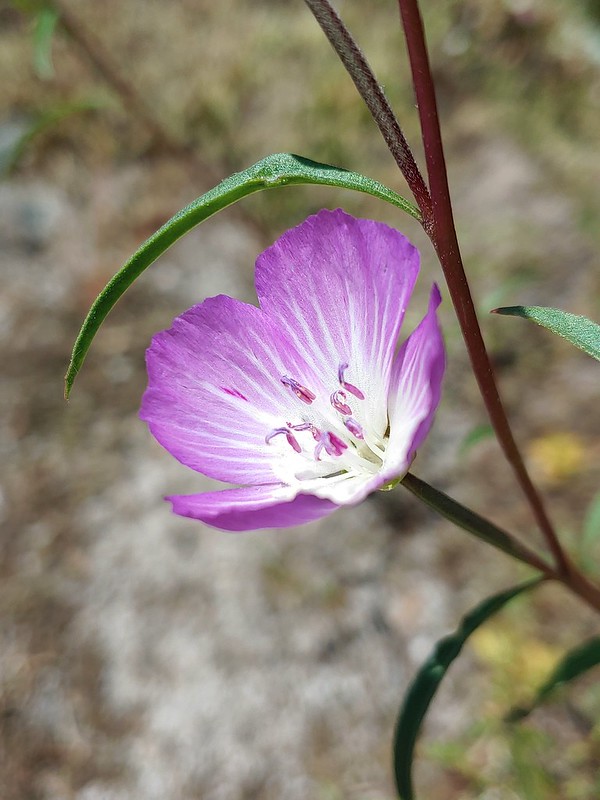 Clarkia
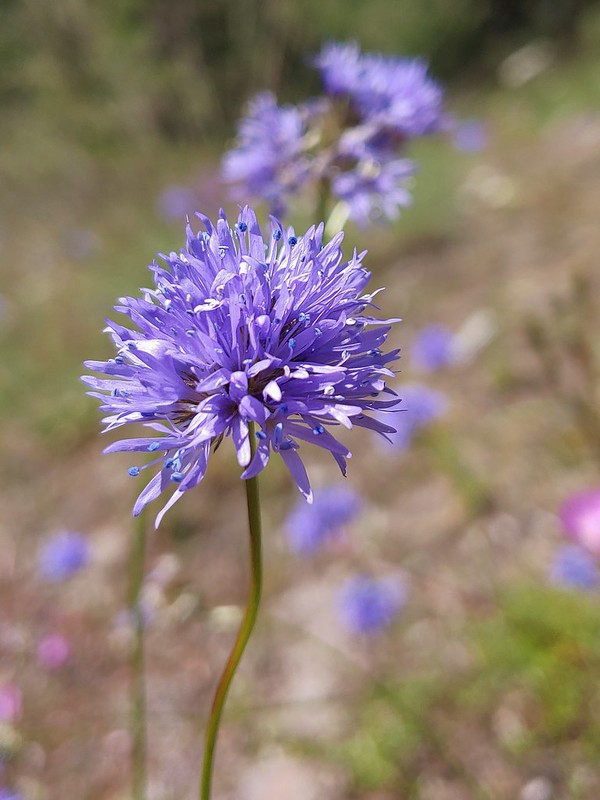 Blue-head gilia
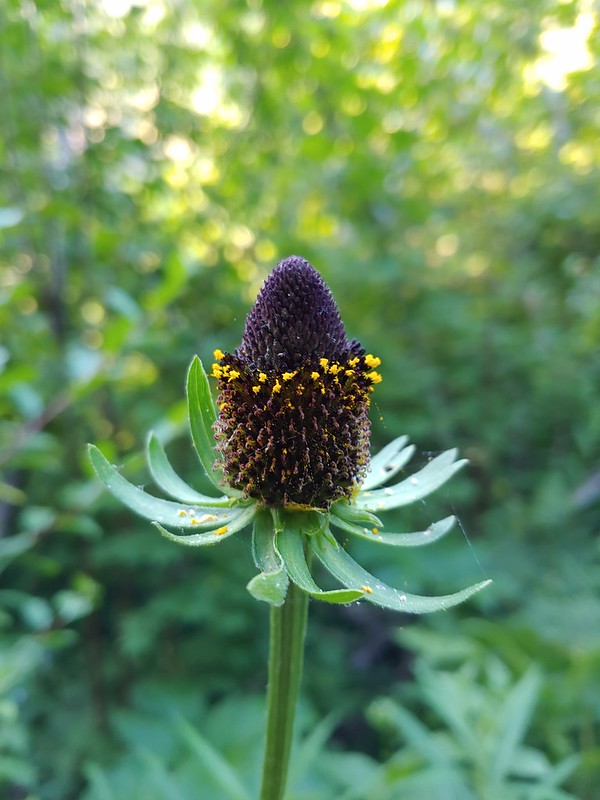 Cone flower
 A currant
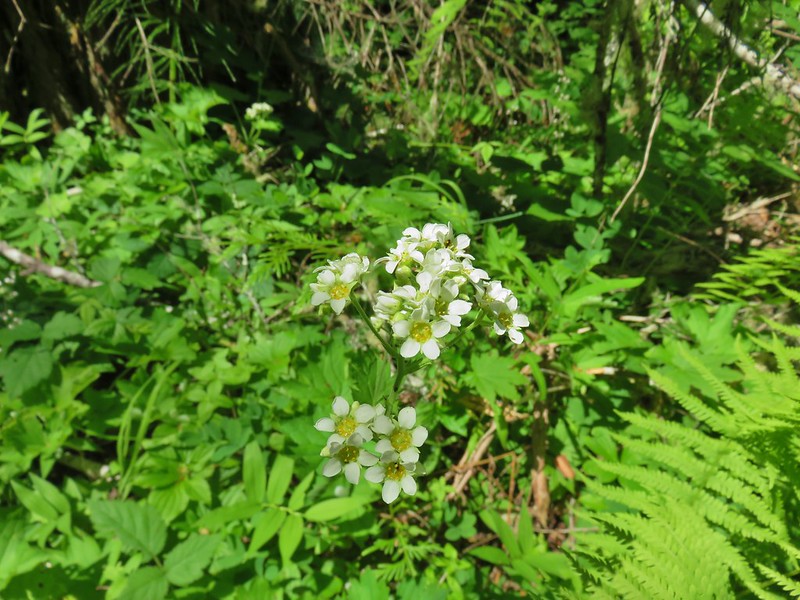 Large boykinia
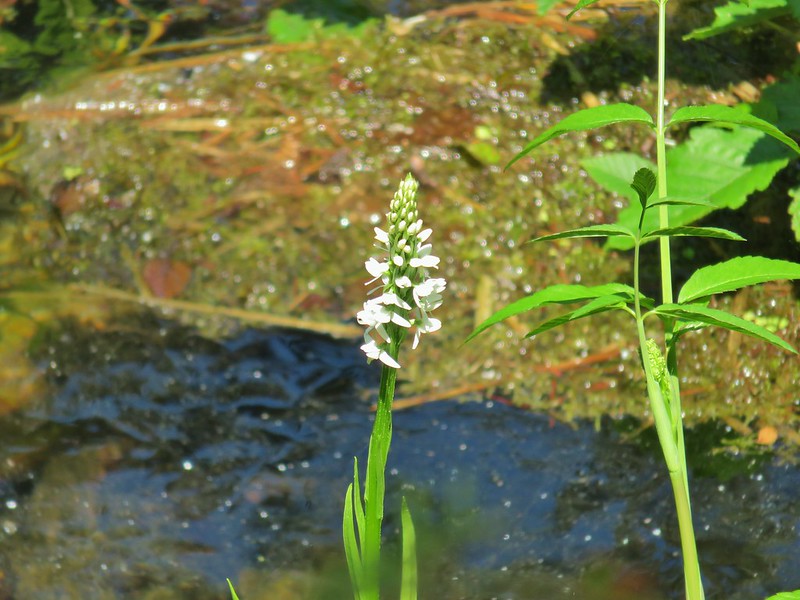 Bog orchid
 Old man’s whiskers aka prairie smoke
 A paintbrush
 Sticky chickweed
 Nettle-leaf giant hyssop
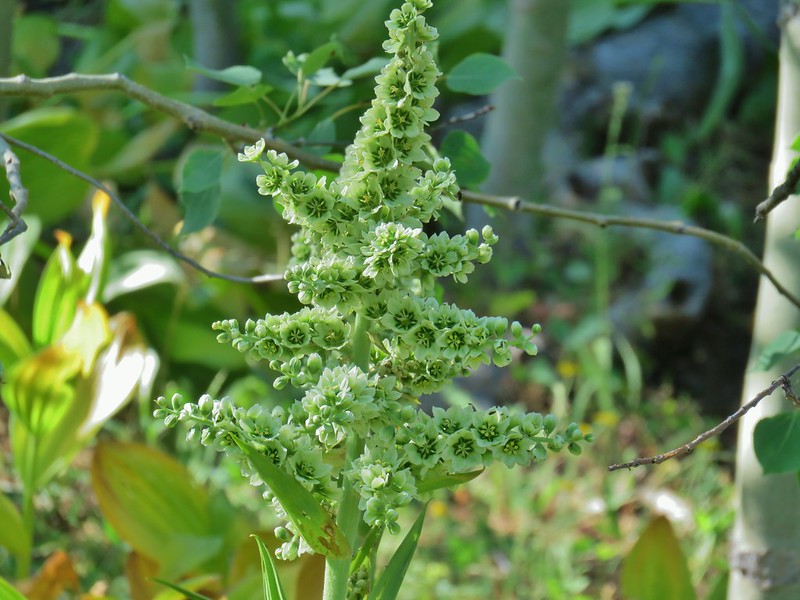 California corn lily
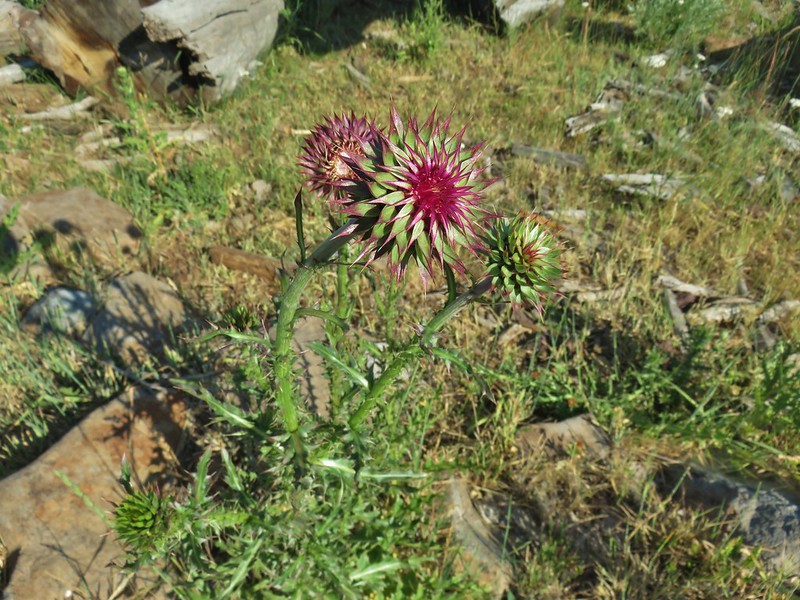 Musk thistle
 A checkermallow
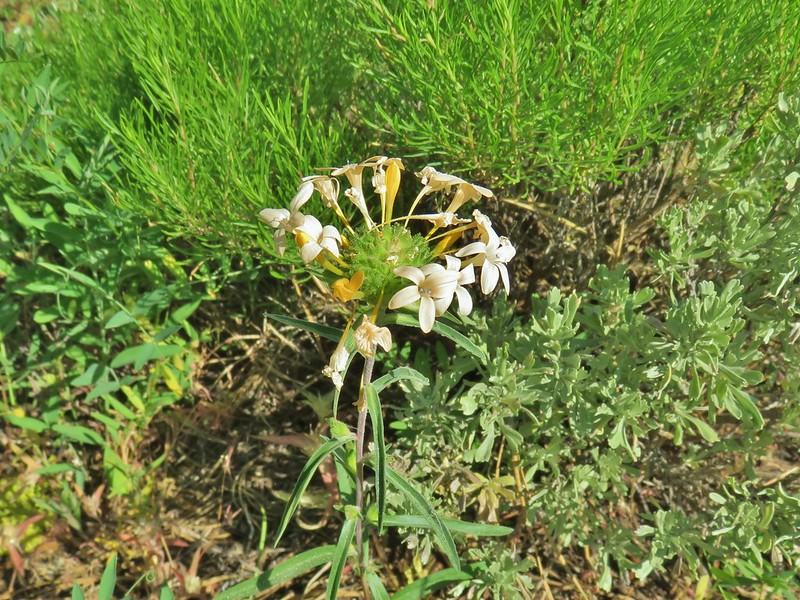 Grand collomia
 Rosy pussytoes
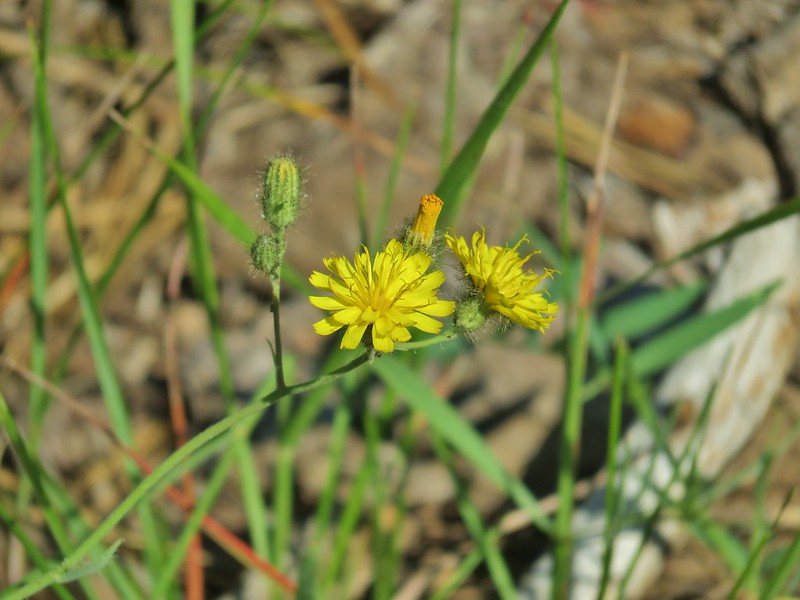 Scouler’s woollyweed?
 An orobanche
 Slender cinquefoil
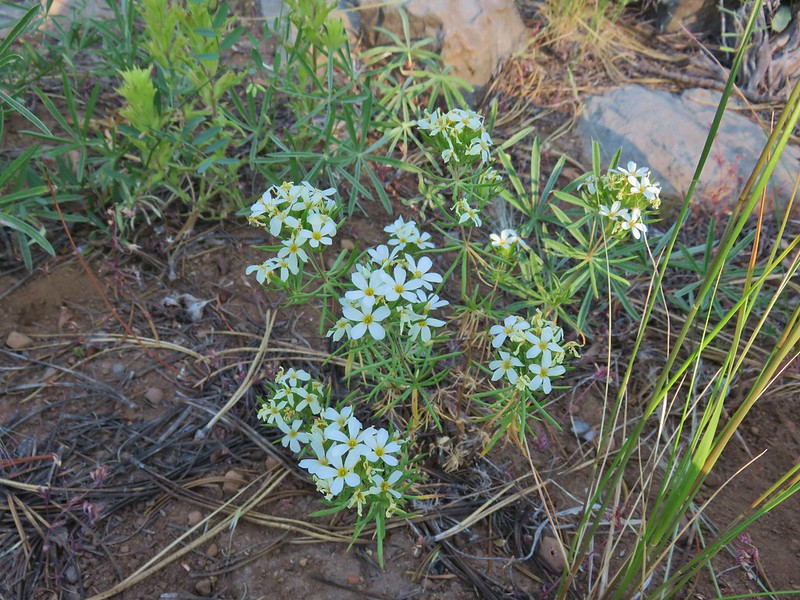 Nuttal’s linanthus
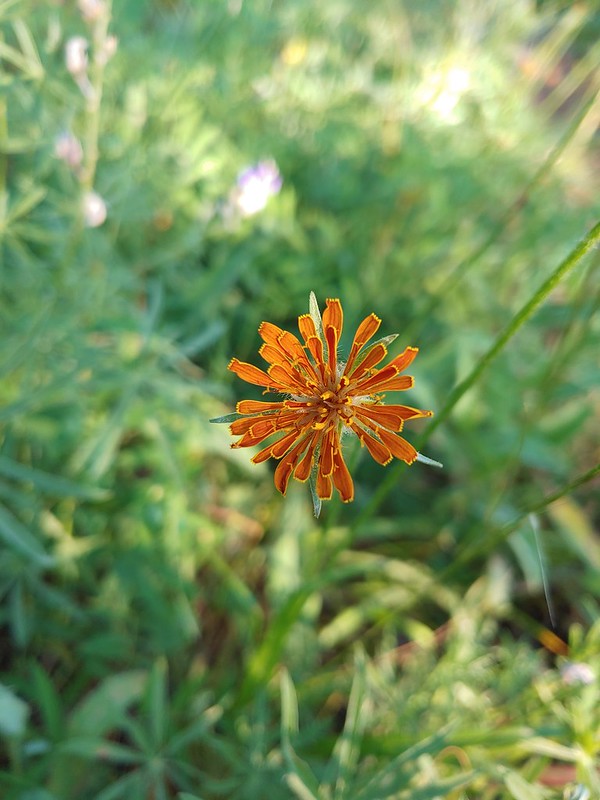 Orange agoseris
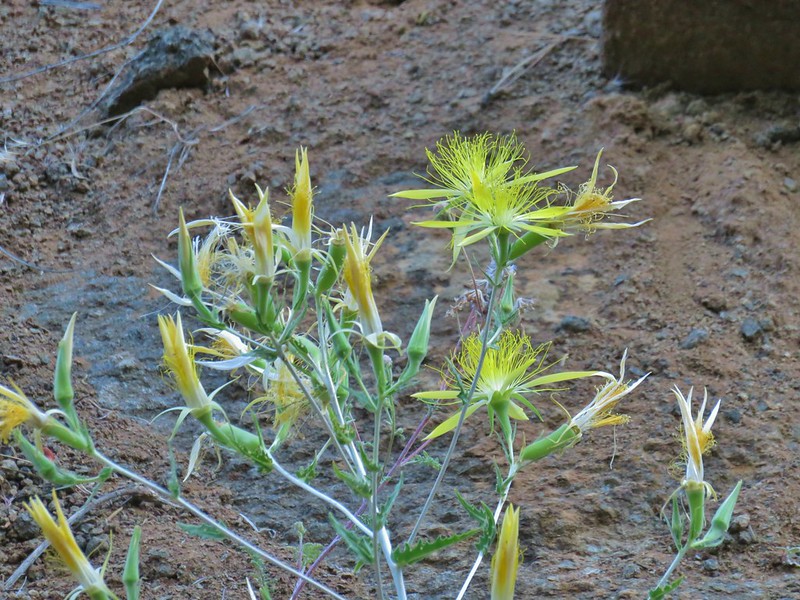 Smooth stem blazing star
 Rough eyelashweed
 A weed
 White water buttercups
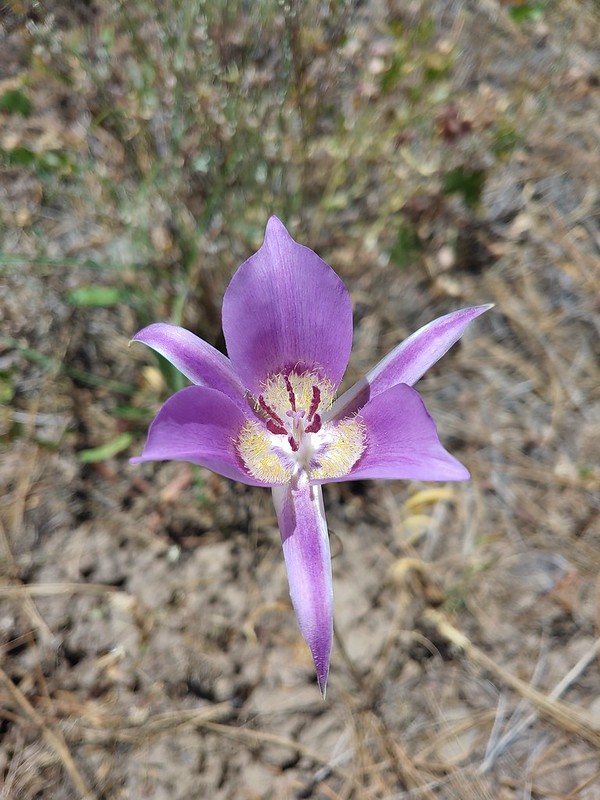 Sagebrush mariposa lily
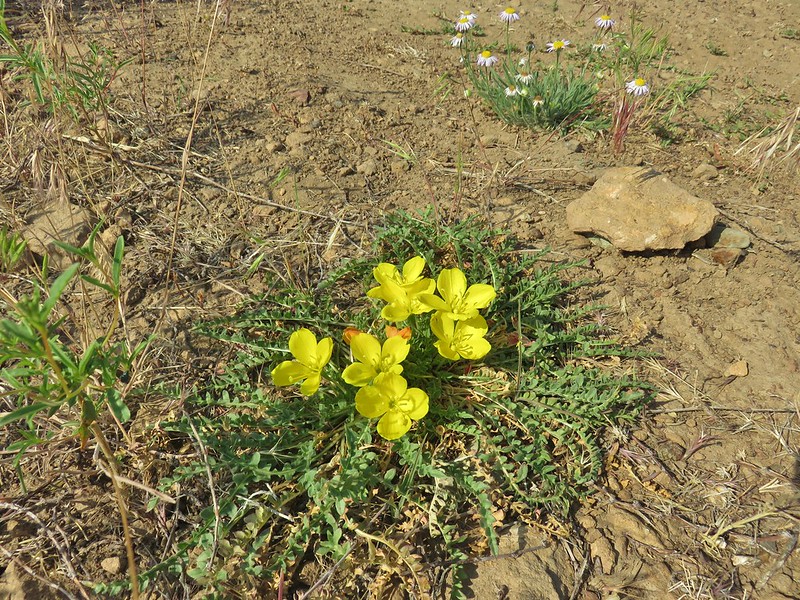 Tansyleaf evening primrose
 Dustymaidens
 A horkelia
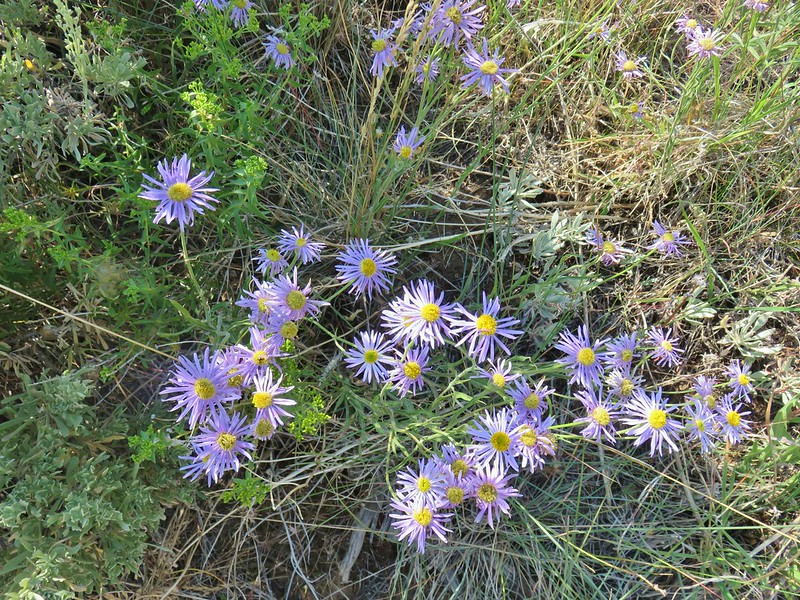 An aster?
 An orobanche
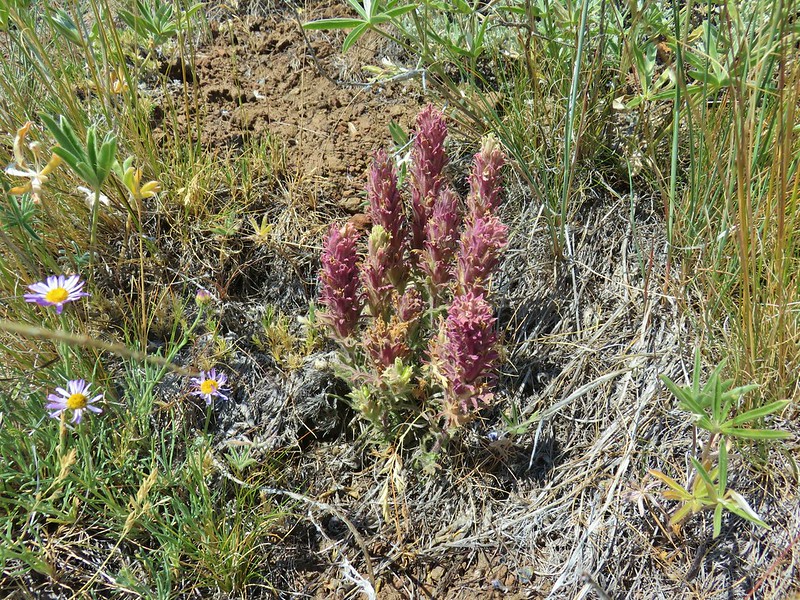 A paintbrush
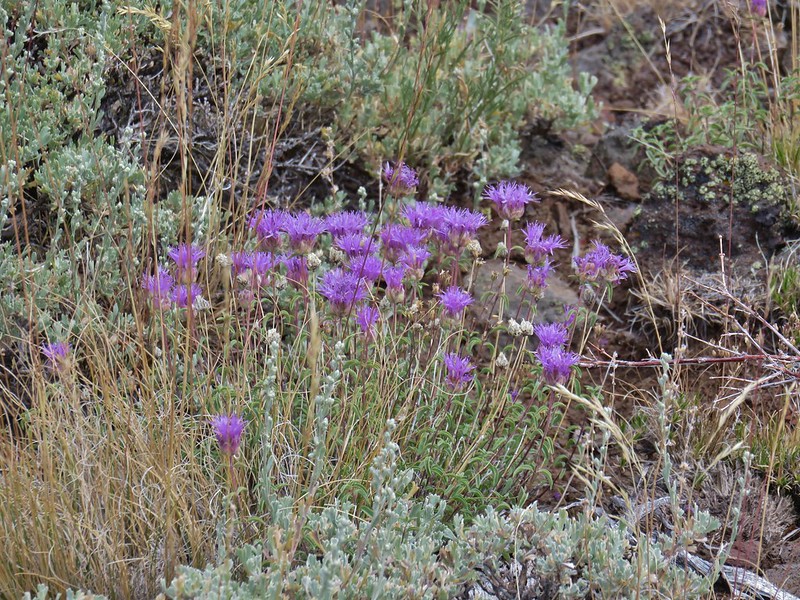 Mountain coyote mint
 Rabbitbrush


 Spreading dogbane
 Monkshood
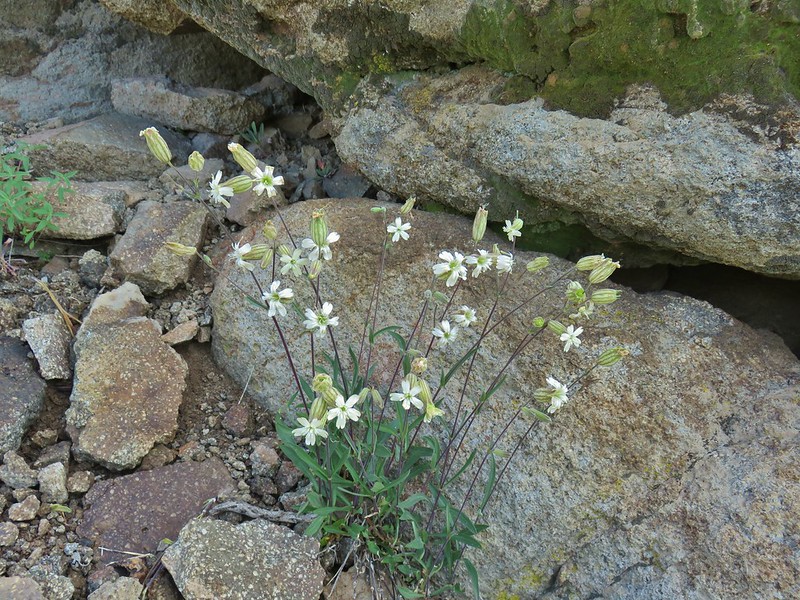 Catchfly
 Pussypaws
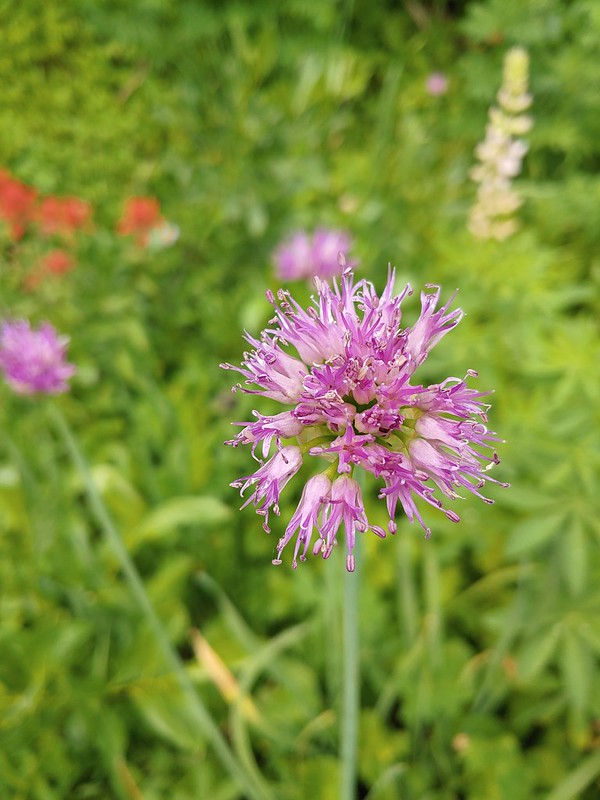 Swamp onion
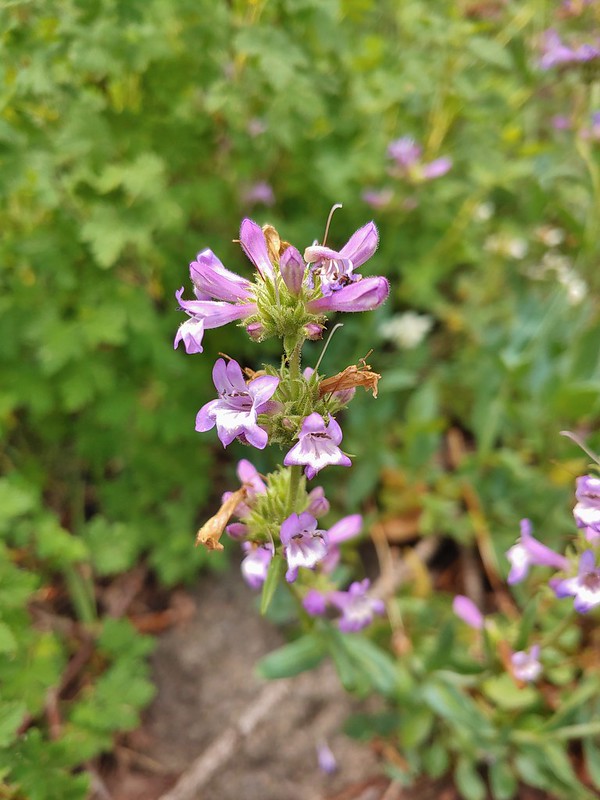 A penstemon
 A thistle
 Common mullen
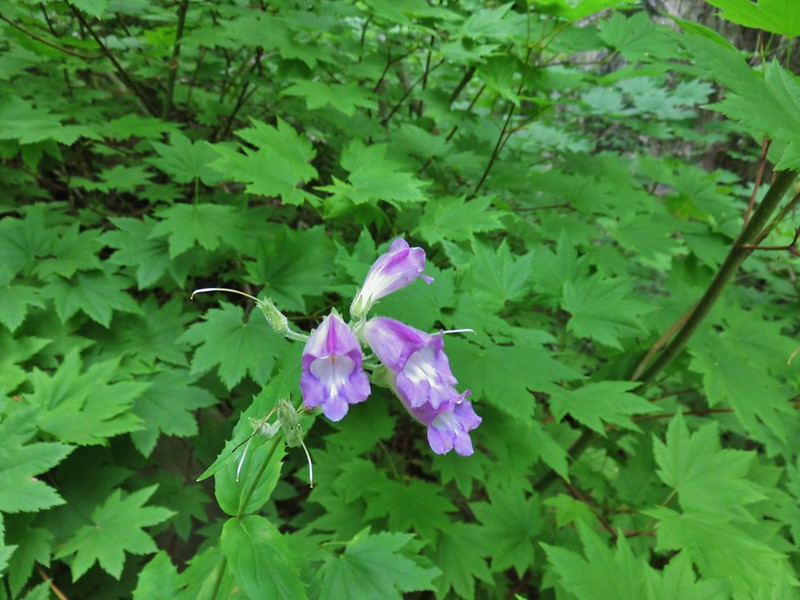 Beardtongue
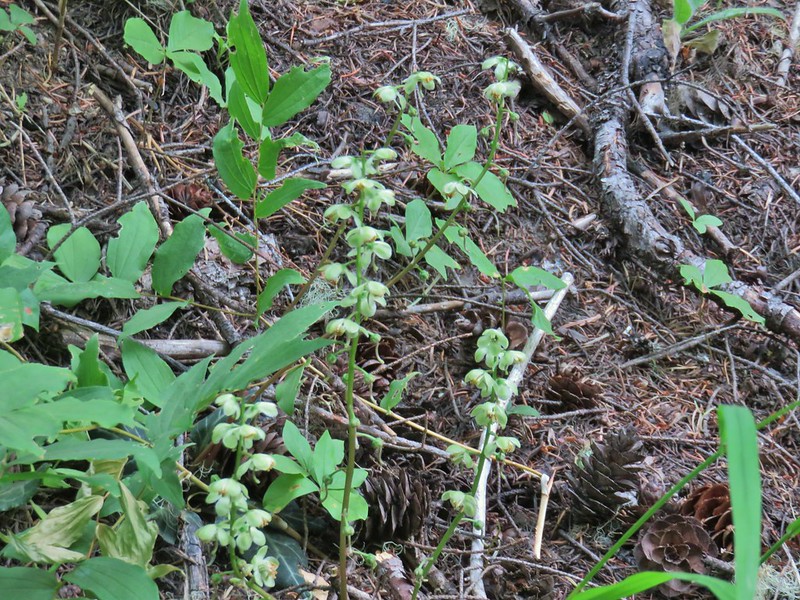 Wintergreen
 Monkeyflower
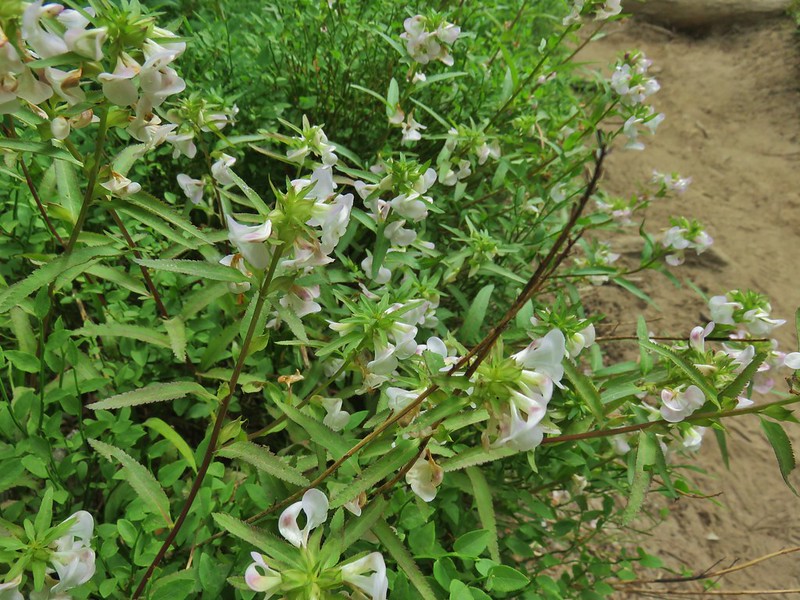 A lousewort
 Lousewort and lupine
 Mountain heather
 White mountain heahter
 False hellebore
 Violets
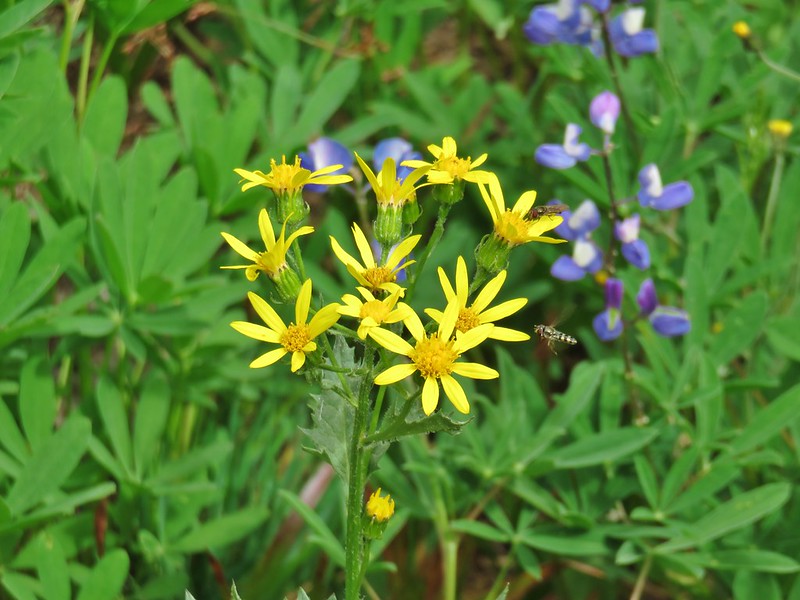 Groundsel
 A fleabane
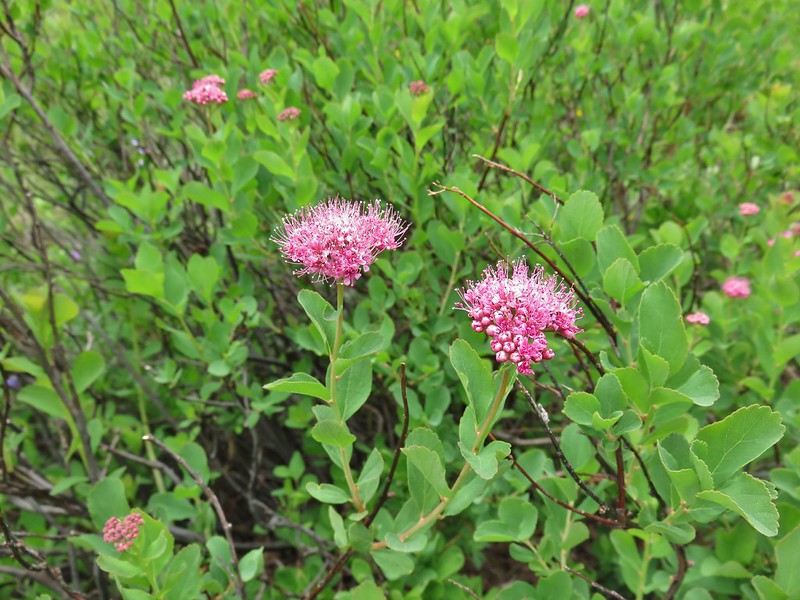 A spirea
 Gentian
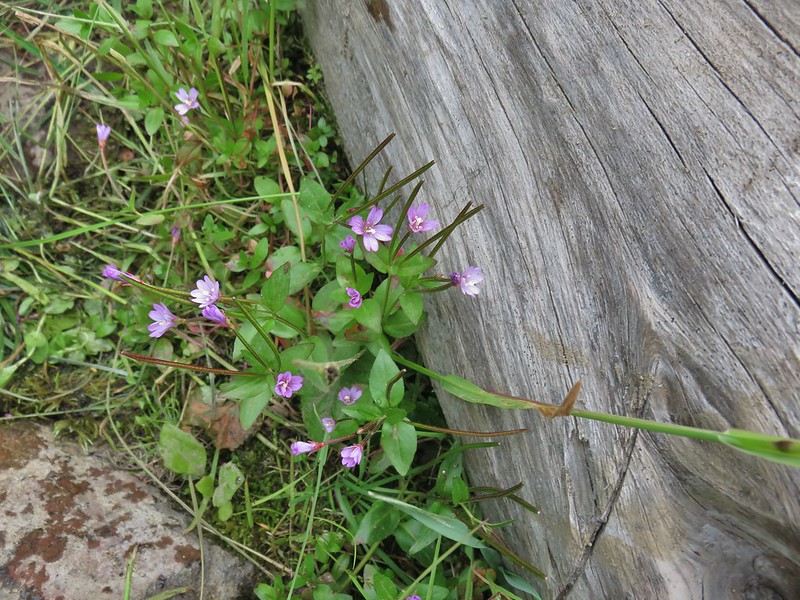 A willowherb
 Cutleaf daisy
 Dwarf alpinegold
 Jacob’s ladder
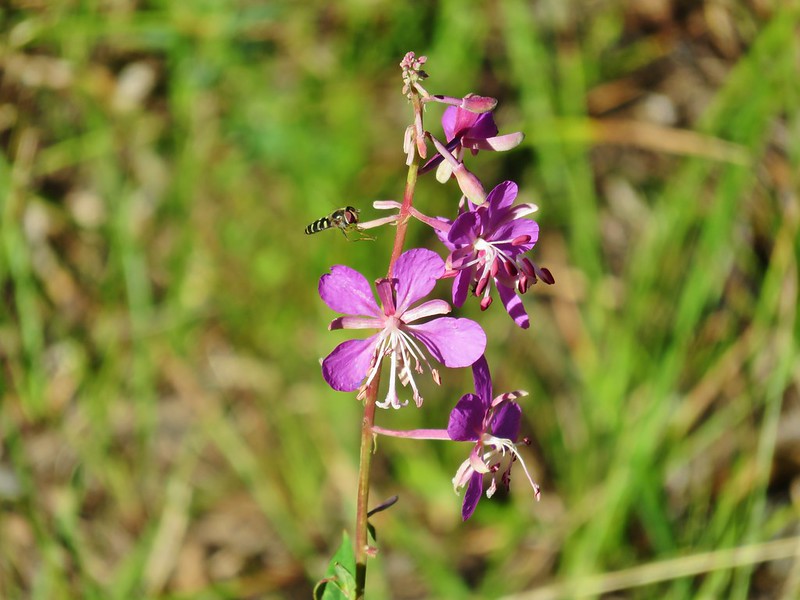 Fireweed
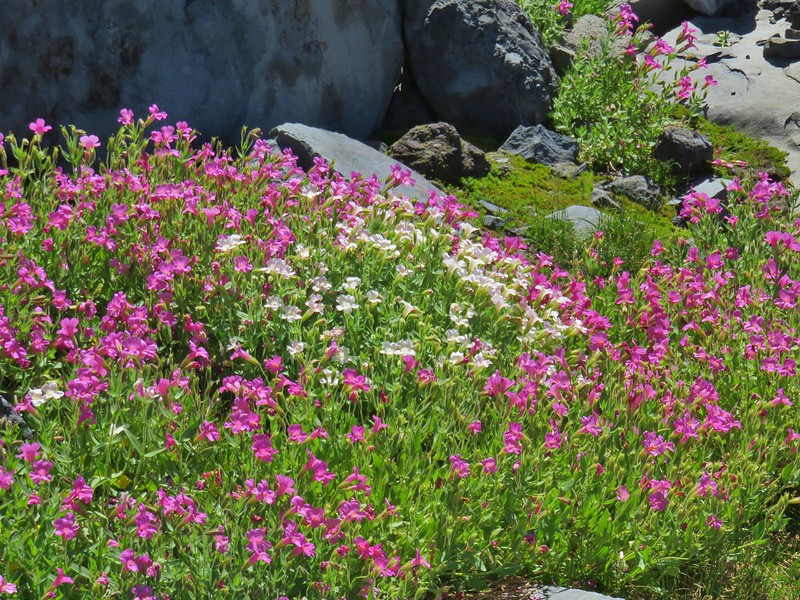 Monkeyflower
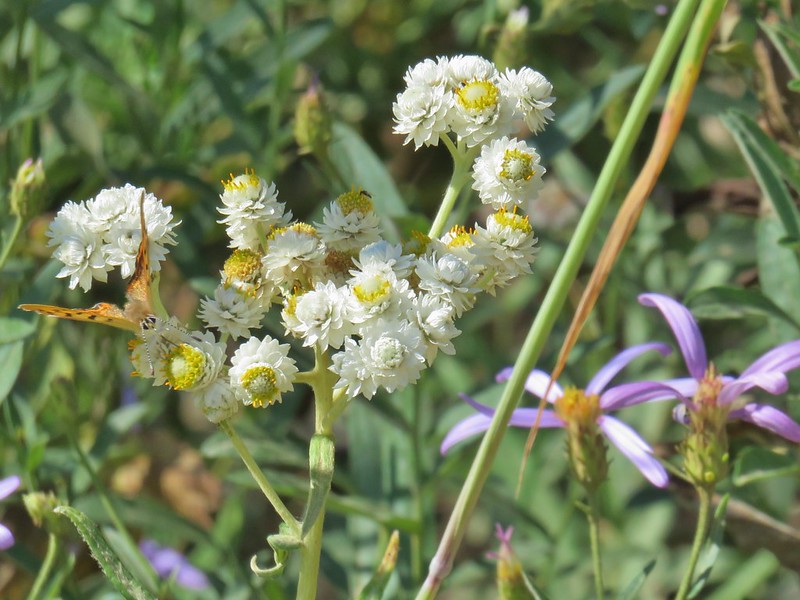 Pearly everlasting
 Drummond’s anemone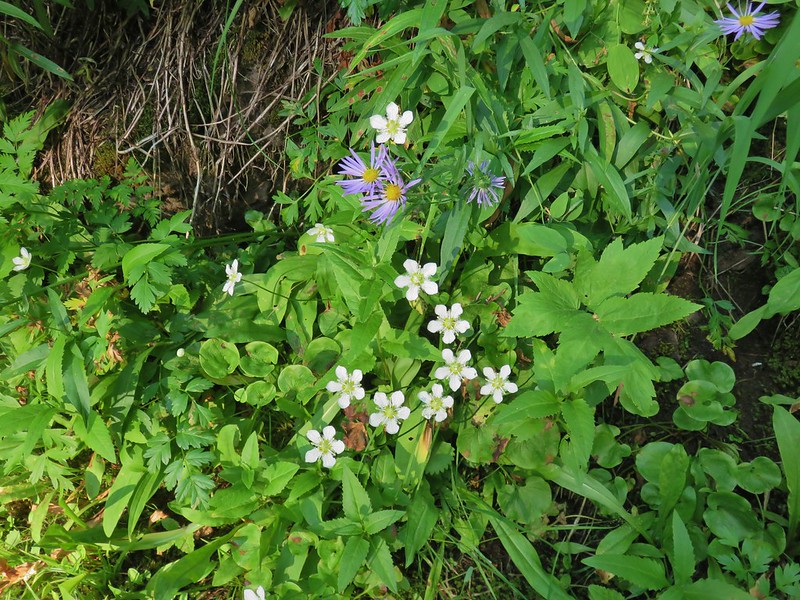
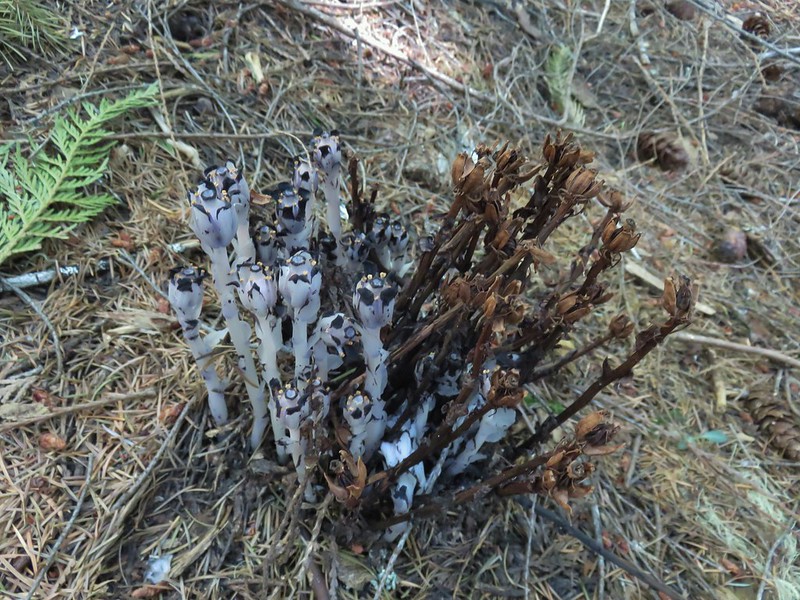 Ghost pipe
 Common madia
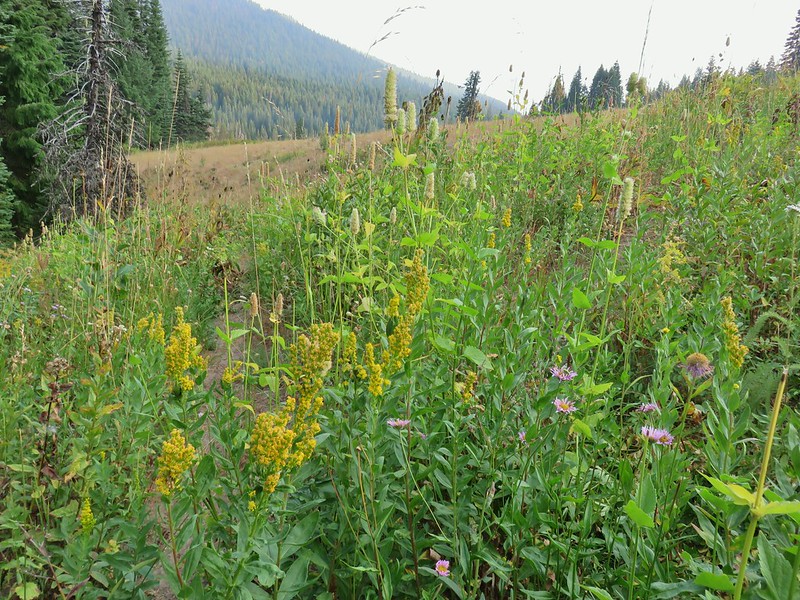 Goldenrod
 Owl’s clover

 wanderingyuncks