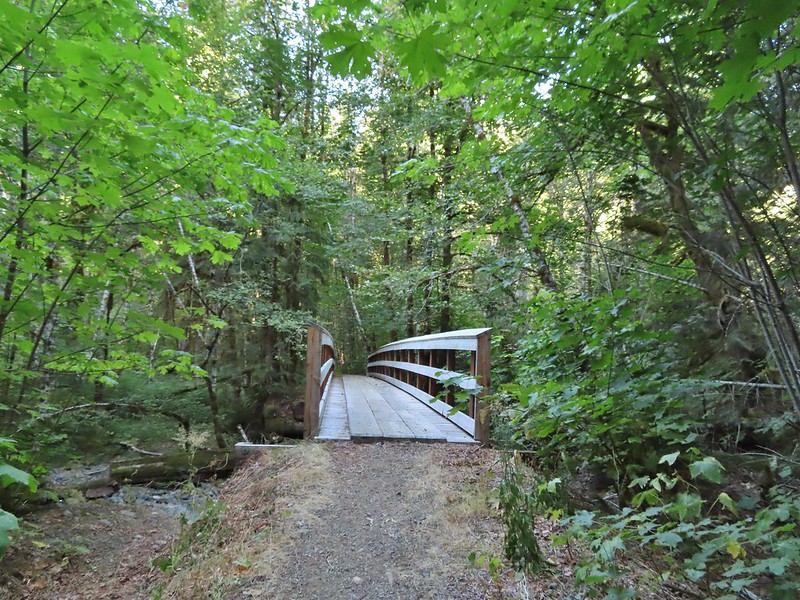
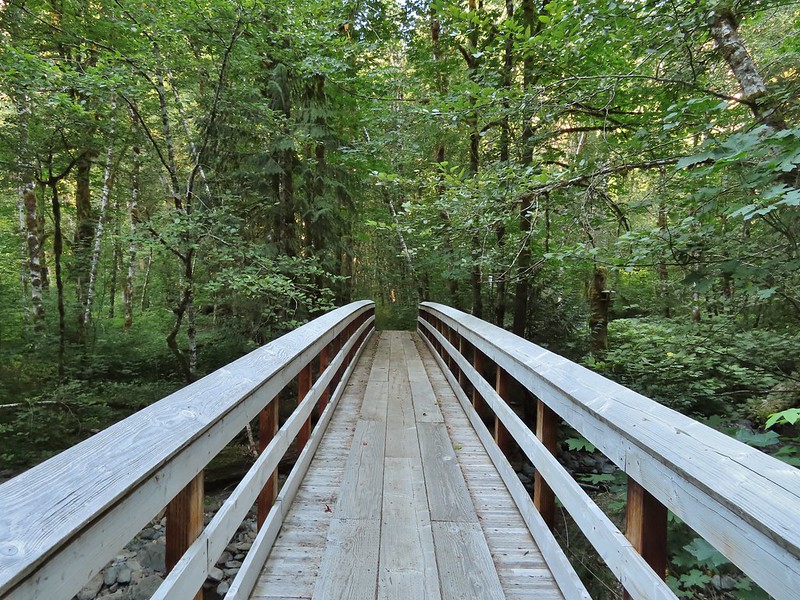
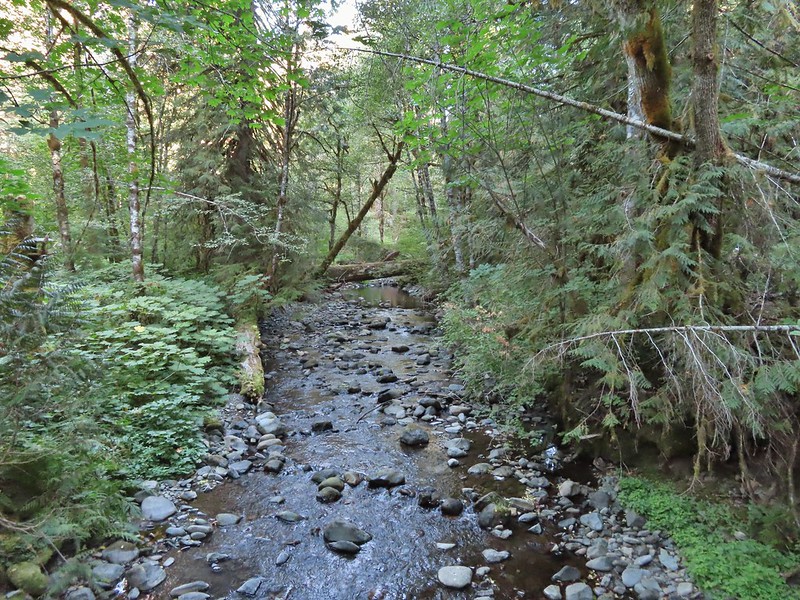
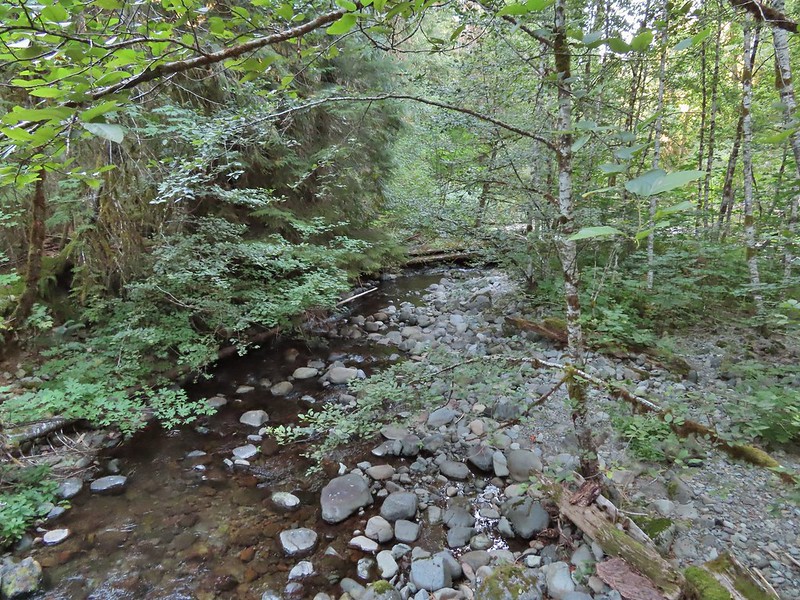
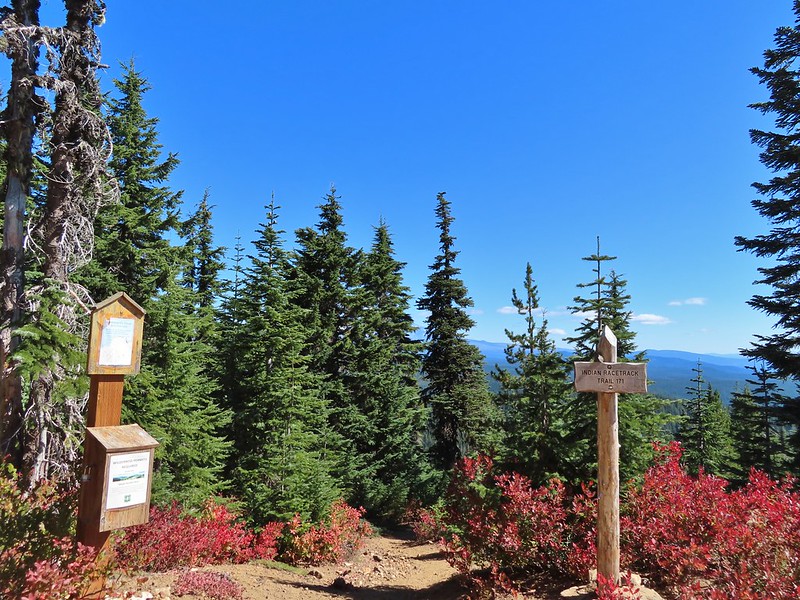
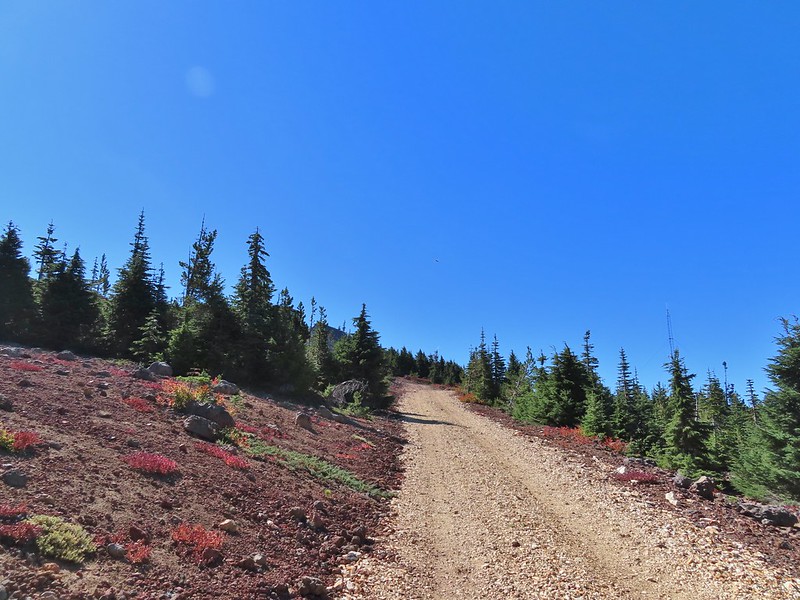
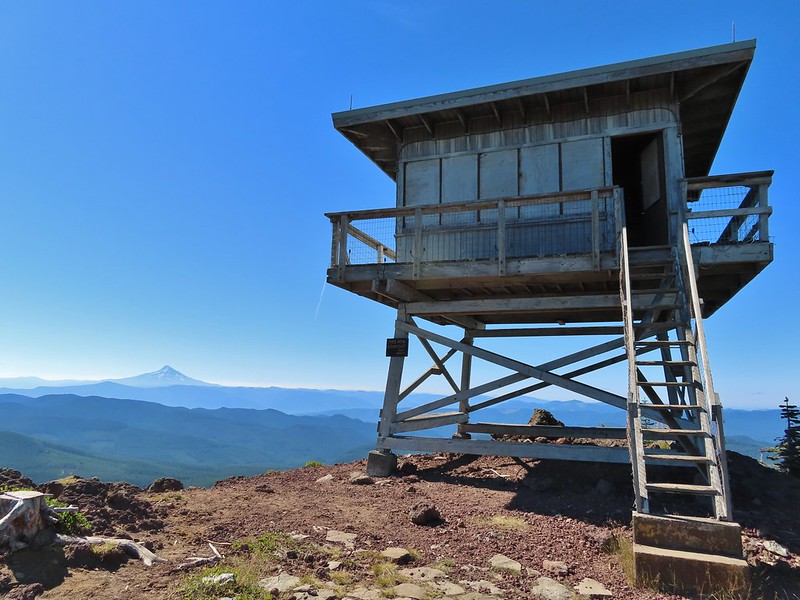
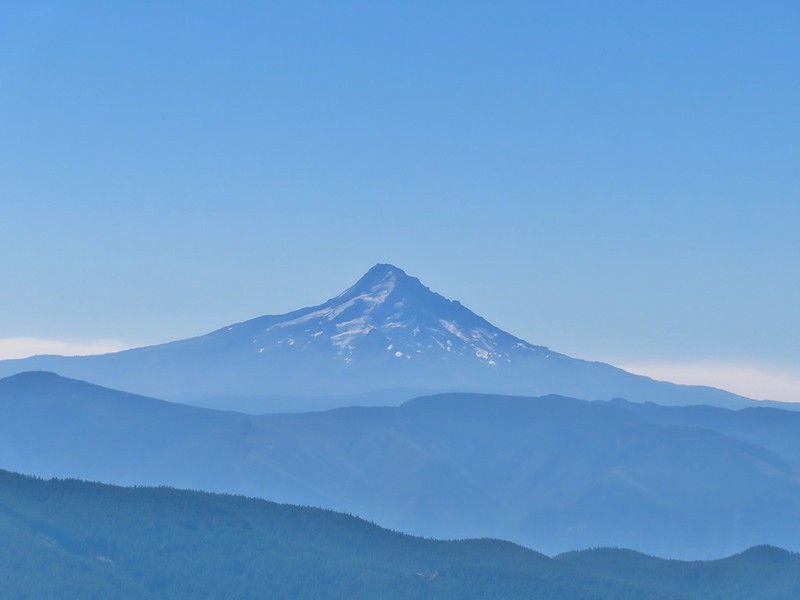
Categories
Corvallis Hiking Oregon Willamette Valley

McDonald-Dunn Forest via Sulphur Springs – 10/02/2021

Sometimes the main purpose of a hike isn’t to see a sight but rather to step away from things and find a peaceful place in nature to reflect. My Grandmother turned 97 on 9/30/21, her last birthday after suffering a massive stroke just days earlier. We were able to drive up to her home in Portland on her birthday to visit and while she couldn’t speak she was able to respond and interact with her family that had gathered. We would be returning on Saturday afternoon to visit again when my Brother and his family arrived from Missouri but that morning we felt like getting outside and taking a nice long walk would be good. Since we were heading to Portland later we wanted a hike that was close to home to cut down on driving time so we decided to revisit the McDonald-Dunn Research Forest near Corvallis, OR.

This would be our fourth hike in McDonald Forest having previously hiked to McCulloch Peak (post), Dimple Hill (post) and Peavy Arboretum (post). Each of those three hike had been entirely unique with no steps retracing an earlier path. They had also mostly avoided the center and northwestern portions of the forest. For this hike we planned on visiting those two areas and had originally hoped to connect all three of our previous hikes. We were only able to connect two of the three though due to an active logging operation which closed a portion of the loop we’d planned.

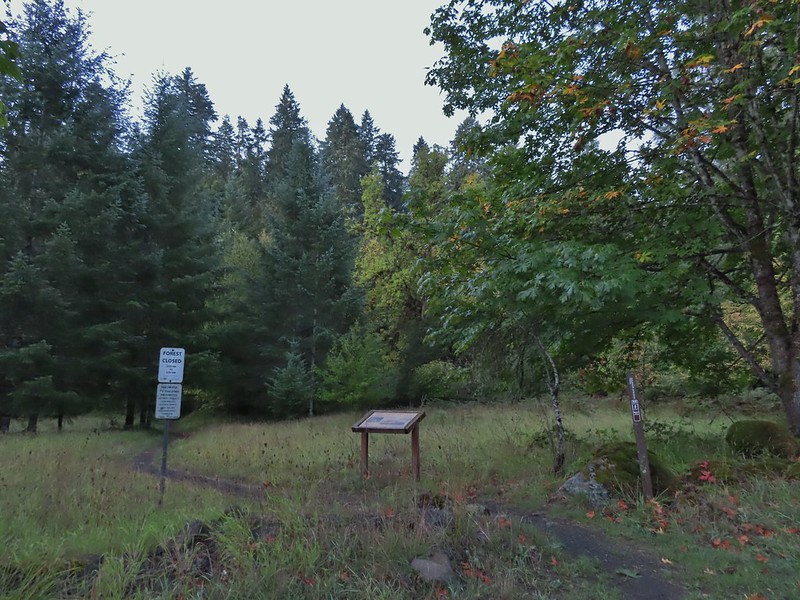
We started our hike at a pullout by the Sulphur Springs Trail along Sulphur Springs Road.
IMG_5530

We visited the springs first by following the Sulphur Springs Trail for a tenth of a mile.
IMG_5532

IMG_5533

IMG_5535Sulphur Springs

IMG_5536Soap Creek near Sulphur Springs.

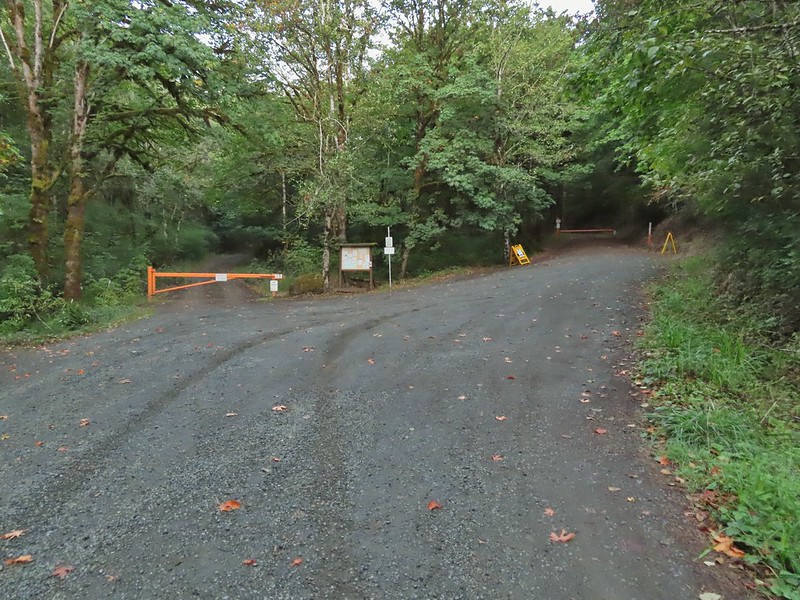
We then returned to Sulphur Springs Road and turned left (west) following it for 0.4 miles through some residences to the Sulphur Springs Road Trailhead.
IMG_5539Sulphur Springs Road from the pullout.
IMG_5540

IMG_5542Sulphur Springs Road Trailhead.

Our plan had been to combine a pair of hikes described in the Oregonhikers.org field guide, the McCulloch Peak Loop Hike and the Sulphur Springs via Alpha Trail Hike by connecting them using the gravel roads in the forest.
IMG_5545

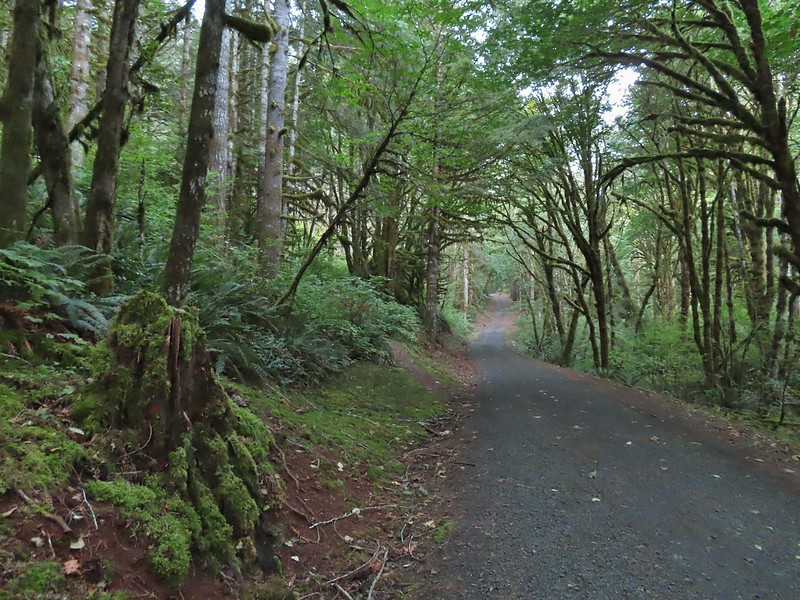
We continued on Sulphur Springs Road (Road 700) past an orange gate to the left of the signboard.
IMG_5547

Approximately 1.5 miles beyond the gate we came to an intersection below a clearcut where pointers in both directions were labeled McCulloch Peak.
IMG_5557

IMG_5558

We followed the Oregonhikers guide and went right on Road 760. We followed this road for 0.4 miles to an the unmarked, unofficial Rocky Road Trail.
IMG_5559We stayed right at this junction with Road 761.

IMG_5561The Rocky Road Trail.

The sheer number of roads and trails (both official and unofficial) makes it really easy to get turned around in the forest so having plenty of maps and a plan handy helps. Roads and trails come and go as the forest is used for research purposes by Oregon State University. The Rocky Road Trail is an unofficial trail that follows an old road bed half a mile uphill before rejoining Road 760.
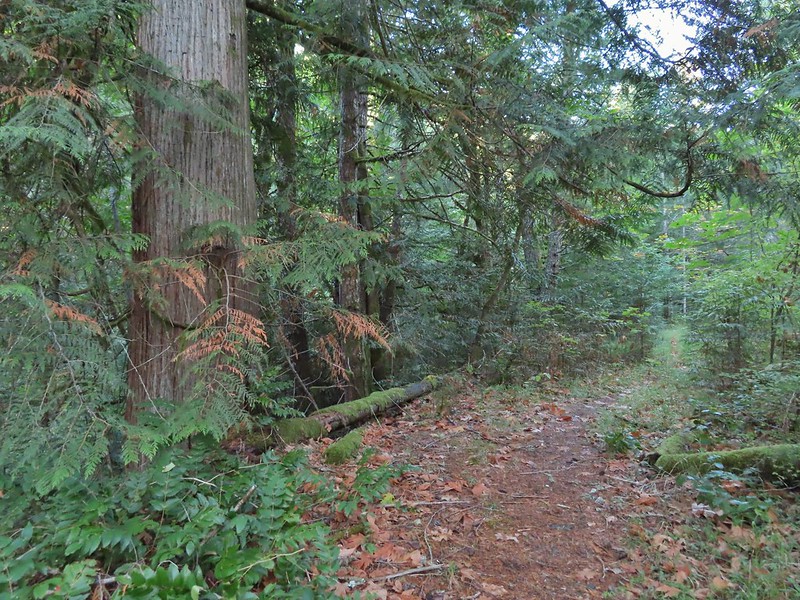
IMG_5564A good sized cedar along the trail.

IMG_5566

IMG_5570Road 760 ahead.

We turned left on Road 760 and followed it for another quarter mile to a junction with Road 700 where we again turned left. Road 700 followed a ridge briefly providing views of the surrounding area then wrapped around a hillside and arriving at a junction with Road 7040 which was the first familiar sight to us.
IMG_5574

IMG_5577

IMG_5580Interesting patchwork of trees. We would have liked to have been able to see when each section had been harvested and replanted.
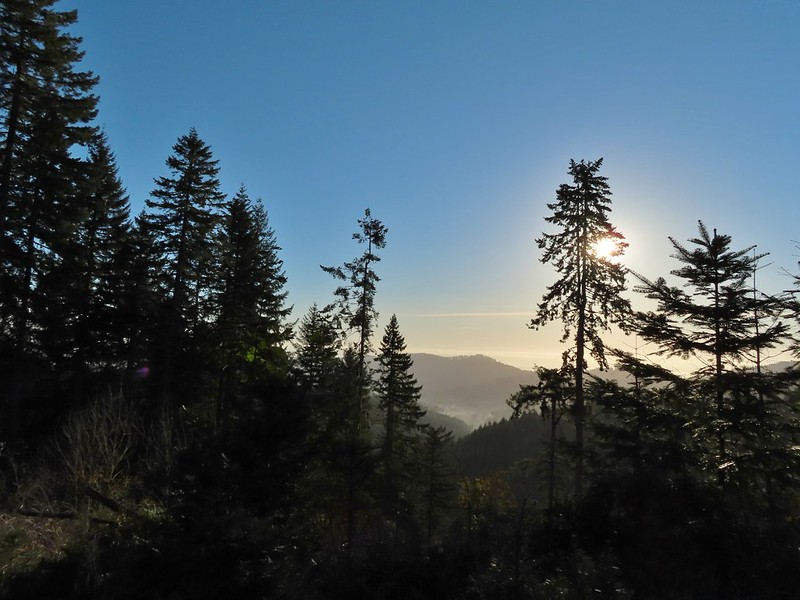
IMG_5583We couldn’t see much to the east due to the Sun’s position.

IMG_5589Mary’s Peak (post)

IMG_5594Road 7040 on the left.

We had returned down Road 7040 as part of our previous hike to McCulloch Peak but now we stuck to Road 700 for another quarter mile to a 4-way junction where we turned right on Raod 790.
IMG_5598Pointer for McCulloch Peak at the junction. We had come up from Road 700 on the right.

IMG_5597The rest of the 4-way junction. After visiting the peak we would head downhill following the pointer for Oak Creek.

We followed Road 790 a half mile to its end at the peak.
IMG_5601

IMG_5602

It was just a little hazy to get much of a view from the peak so we headed back by following an unofficial trail down from the summit to a spur road not shown on the maps which connected to Road 790 a tenth of a mile from the summit.
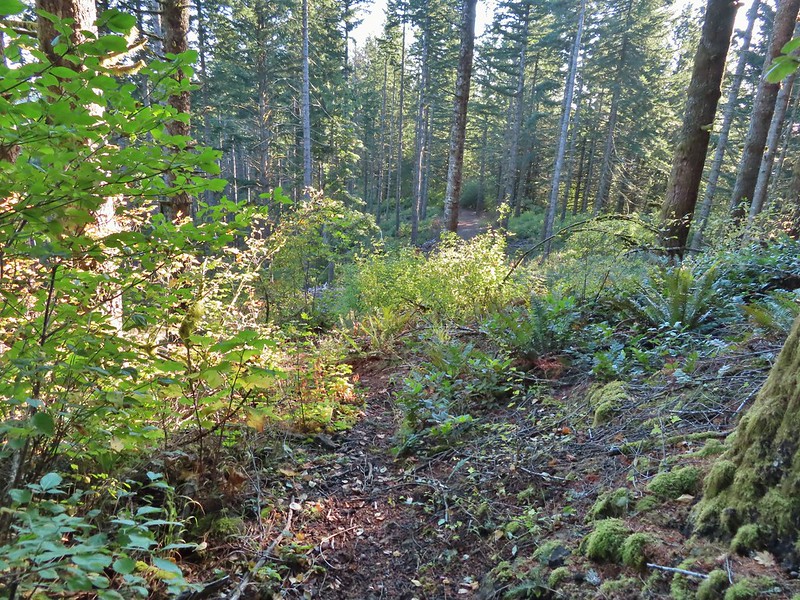
IMG_5606Trail to the spur road.

At the 4-way junction we followed Road 700 downhill for a little over three quarters of a mile to a junction with Road 680.
IMG_5610

IMG_5608

IMG_5614Fading pearly everlasting.

IMG_5615We stayed left here which was the shorter route.

IMG_5617Madrone

IMG_5619Tree island at the junction with Road 680.

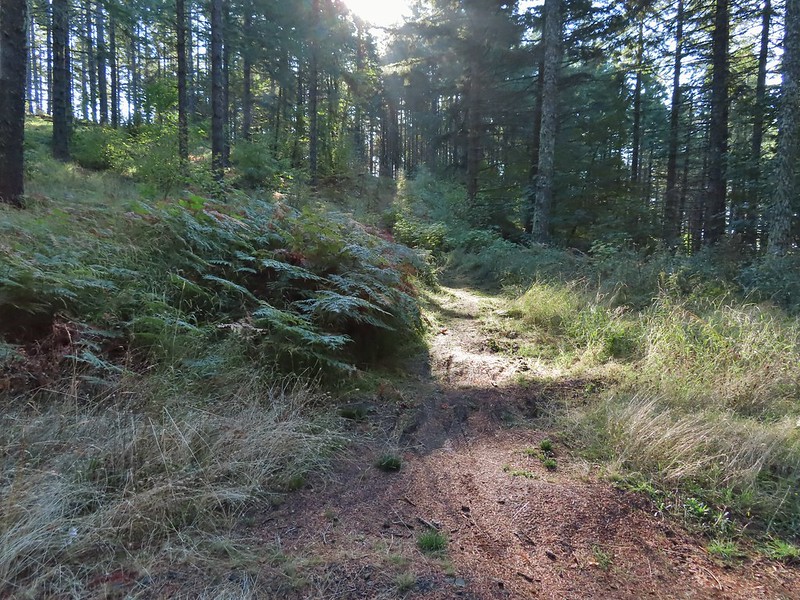
We had originally planned on taking Road 680 from the junction but a short distance up that road there was an unofficial trail showing on the Oregonhikers Field Guide Map which looked like it would cut some distance off our hike. The trail was obvious and had even been recently brushed.
IMG_5621

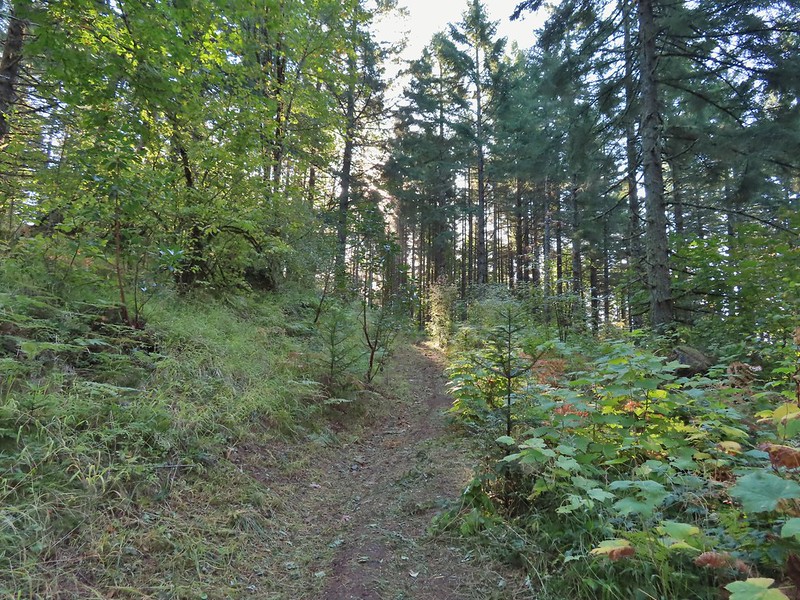
This trail began with a short climb then headed downhill reaching a junction with the Uproute and Extendo Trail near Road 680.
IMG_5623

IMG_5626

IMG_5628

IMG_5629Nearing the trail junction.

IMG_5630Poison oak climbing trees.

IMG_5631Signs for the Uproute and Extendo Trails.

IMG_5633Road 680

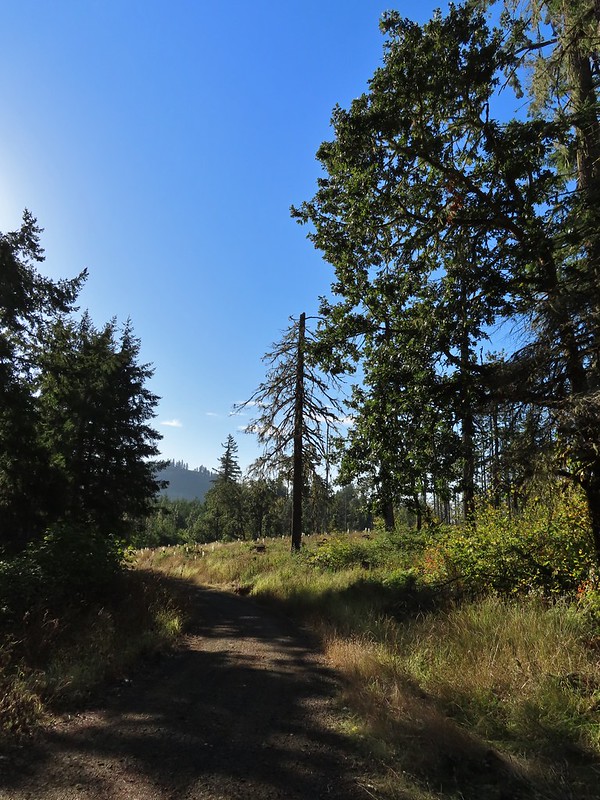
We turned right onto Road 680 and followed it a half mile to a signboard at Road 600.
IMG_5634

IMG_5635

IMG_5638

IMG_5639

IMG_5641

At this signboard was a notice that a portion of Road 600 was closed so we spent some time reviewing the map to come up with an alternate route.
IMG_5643

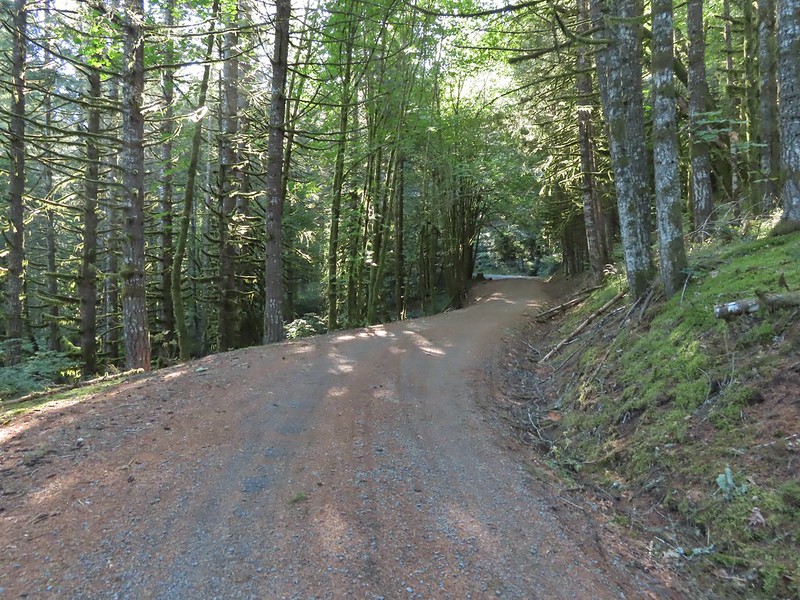
We had planned on following Road 600 all the way to the Ridge Trail at Lewisberg Saddle which we had visited on our Peavy Arboretum hike but the closure was going to force us onto the Bombs Away Trail which would hook up with the Ridge Trail half a mile from Lewisberg Saddle. We didn’t feel like adding another mile to our hike so we would only be connecting two of our three previous hikes this time. We followed Road 600 uphill for a mile and a half to yet another 4-way junction.
IMG_5646

IMG_5647A few larger trees in the forest.

IMG_5652A sea of green grass.

IMG_5653Horsetails

IMG_5654The 4-way junction.

We had been to this junction during our hike to Dimple Hill and hadn’t originally planned on making the 0.4 mile side trip to that viewpoint but with the upcoming detour and a couple of shortcuts we’d already taken we decided to revisit the hill. We turned right on Road 650.
IMG_5655

IMG_5657

After two tenths of a mile we left the road and followed a pointer for Upper Dan’s Trail.
IMG_5658

IMG_5660Summit of Dimple Hill.

IMG_5663

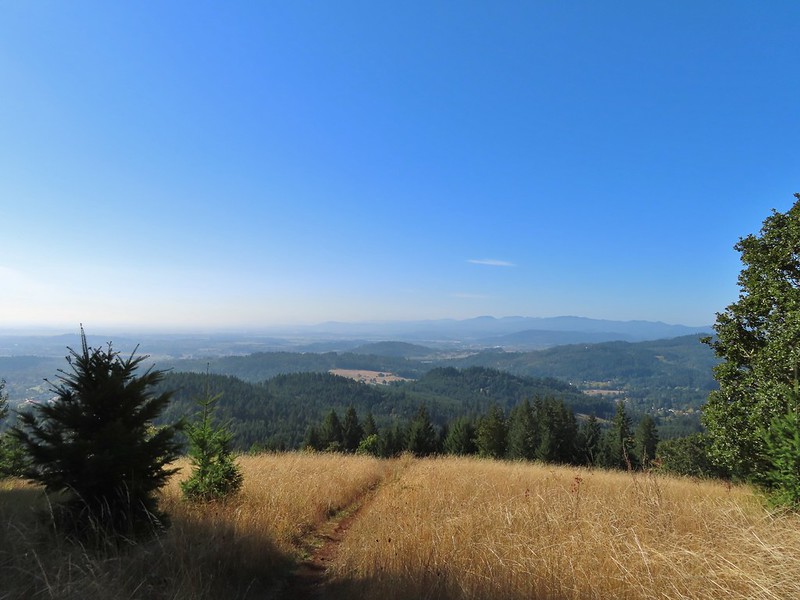
The view here was a bit better than it had been at McCulloch Peak. We could at least see Mary’s Peak by walking just a bit downhill.
IMG_5665

IMG_5666Mary’s Peak

After a short break we followed Road 650 back to the 4-way junction and turned right back onto Road 600. Three quarters of a mile later we arrived at the closure. Along the way the road passed through a clearcut where we could just make out the tops of Mt. Hood, Mt. Jefferson and the Three Sisters.
IMG_5673Approaching the junction on Road 650.

IMG_5675Junco

IMG_5678

IMG_5684Mt. Hood

IMG_5680Mt. Jefferson

IMG_5687The Three Sisters

IMG_5688

We made a hairpin turn at the closure onto the unsigned High Horse Trail.
IMG_5691

Things got a little confusing at this point. The maps on the signboards (we had taken photos with our phones) showed the Bombs Away Trail as a planned trail for 2020. From the placement on the map it appeared that it split off of the High Horse Trail very close to Road 600 but we wound up climbing a series of switchbacks for half a mile before arriving at an unsigned 4-way junction.
IMG_5695

IMG_5697The High Horse Trail and another trail heading uphill at the 4-way junction.

IMG_5698What we assume is the Bombs Away Trail on the left and the High Horse Trail on the right at the 4-way junction.

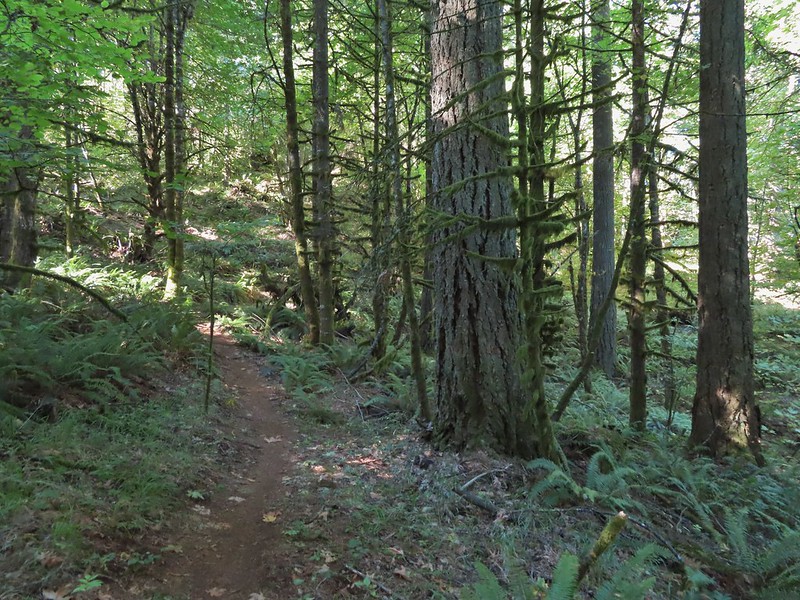
We took the first trail on the right since it was headed in the correct direction hoping it was indeed the Bombs Away Trail. What we found was a braided mess of trails coming and going on each side. We relied on our GPS to make sure we stayed headed in the right direction and after a confusing 0.6 miles we arrived at Road 640.
IMG_5701

IMG_5705

IMG_5706Left or right? More often than not both ended up in the same spot.
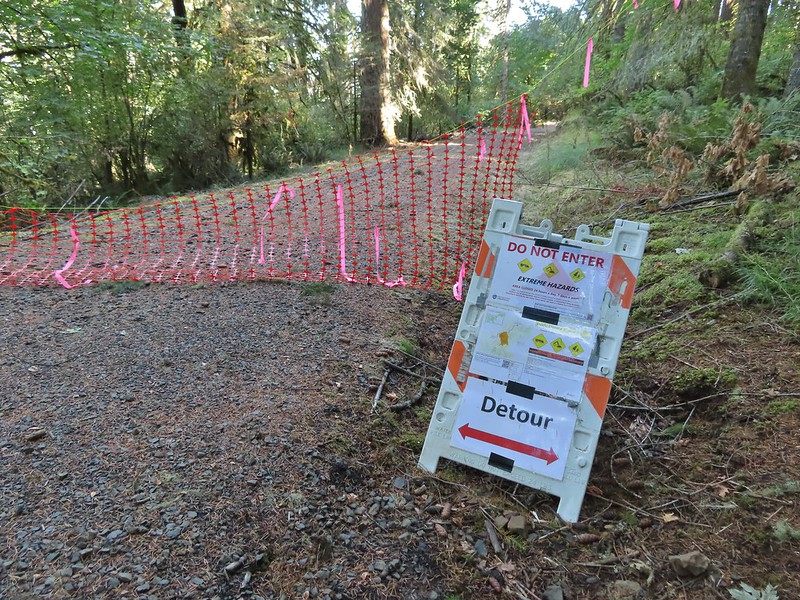
IMG_5709Road 640

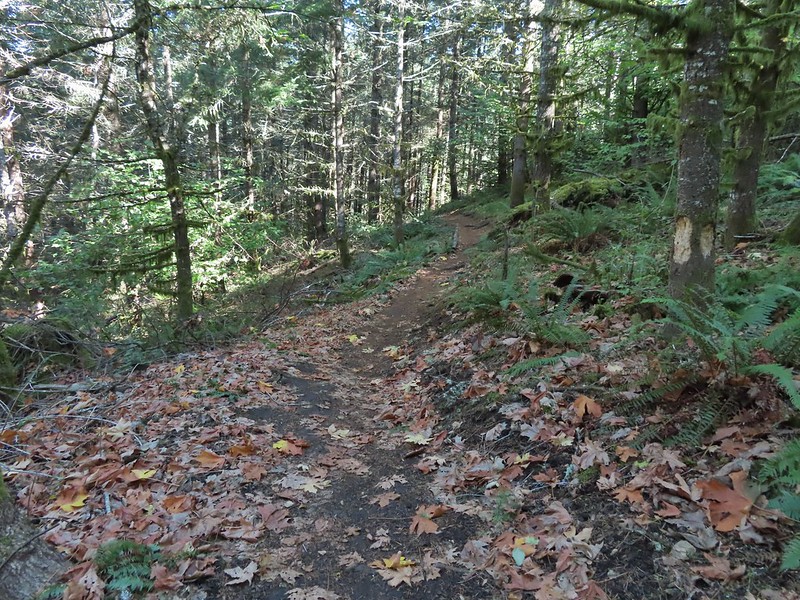
The trail continued on the far side of the road. This stretch was more straight forward ending at Road 620 after 0.4 miles.
IMG_5712

IMG_5714

IMG_5716

On the far side of Road 620 we found the Ridge Trail which we followed for a tenth of a mile to a junction with the Alpha Trail.
IMG_5717

IMG_5721Junction with the Alpha Trail.

We turned left here onto the Alpha Trail.
IMG_5722

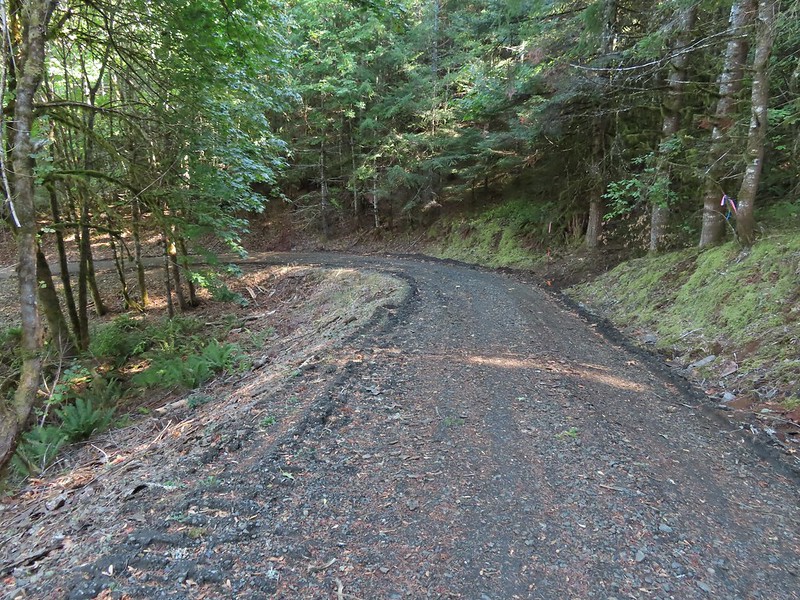
After 0.4 mile the Alpha Trail dropped us out onto Road 810 which we followed downhill 0.6 miles to Road 800.
IMG_5724

IMG_5728

IMG_5730Looking back at the Alpha Trail from Road 810.
IMG_5732

IMG_5734

IMG_5735Road 800 below Road 810.

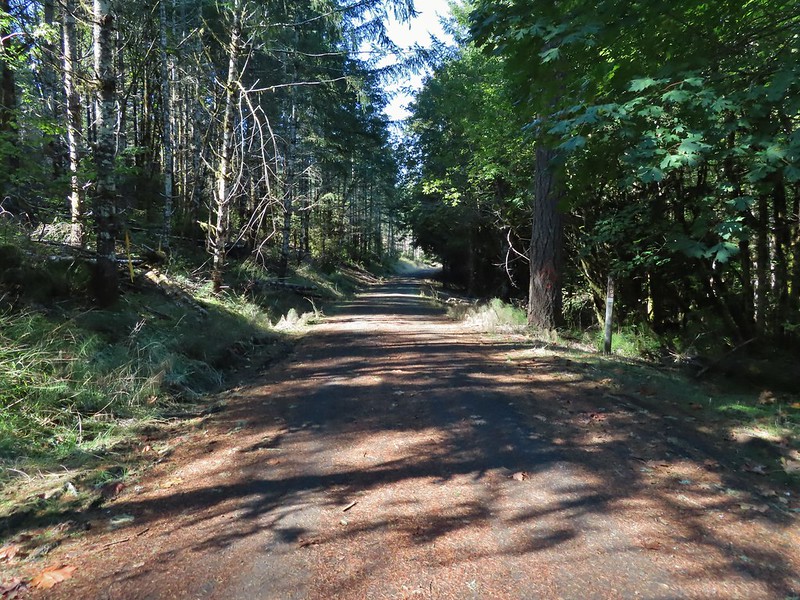
We turned left on Road 800 for three tenths of mile then turned right onto the Baker Creek Trail.
IMG_5738

IMG_5739Baker Creek Trail ahead on the right.

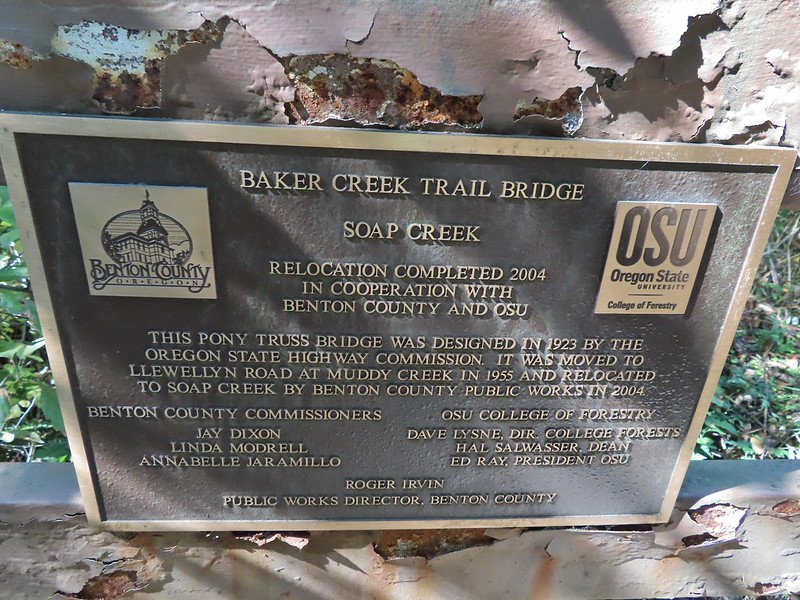
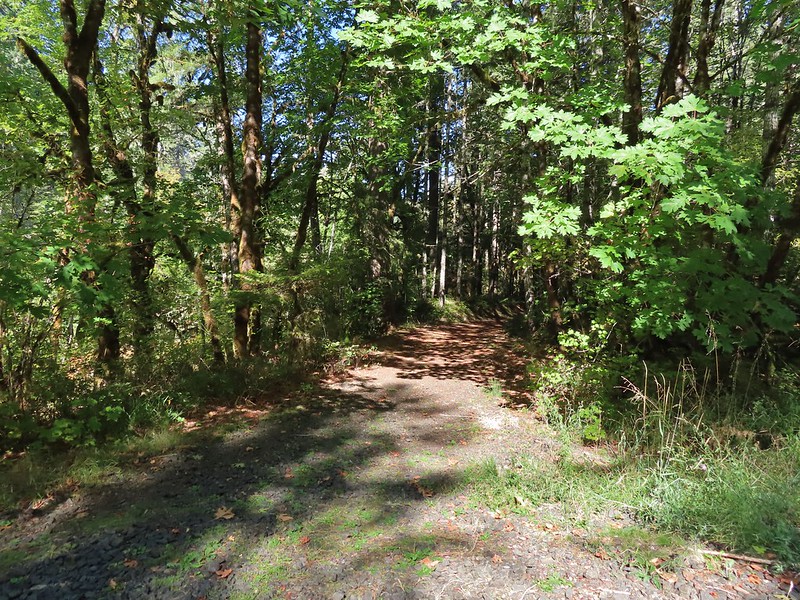
The Baker Creek Trail followed Baker Creek (heard but not seen) for two tenths of mile before crossing Soap Creek on a 1923 Pony Truss Bridge.
IMG_5741

IMG_5744

IMG_5745

IMG_5747

The Baker Creek Trailhead was just on the other side of the bridge as was Sulphur Springs Road. We turned left and walked 100 yards up the road back to our car.

Our 13.1 mile hike with approx 2800′ of elevation gain.

After a brief stop at home to clean up we headed to Portland to say our last goodbyes to Grandma. She always enjoyed hearing about our hikes and looking at the pictures, and she eagerly anticipated the calendar we made each year with them. She passed the following Monday night and is with the Lord now. We’ll think of her often when we’re out exploring. Happy Trails Grandma!

Flickr: McDonald Forest via Sulphur Springs

Categories
Bend/Redmond Central Oregon High Cascades Hiking Oregon Three Sisters Area Trip report

Tumalo Mountain Sunrise Hike – 09/26/2021

After missing a week of hiking due to heavy rains arriving for the one weekend we’d obtained a Central Cascade Wilderness Overnight Permit we were heading to Bend to celebrate Heather’s parents 50th wedding anniversary (congratulations again). That was possibly the first time we were excited to have to cancel our hiking plans as the rain (and snow on the mountains) continues to be greatly needed. Saturday was set aside for the anniversary party but we planned on getting a quick hike in Sunday morning before driving home.

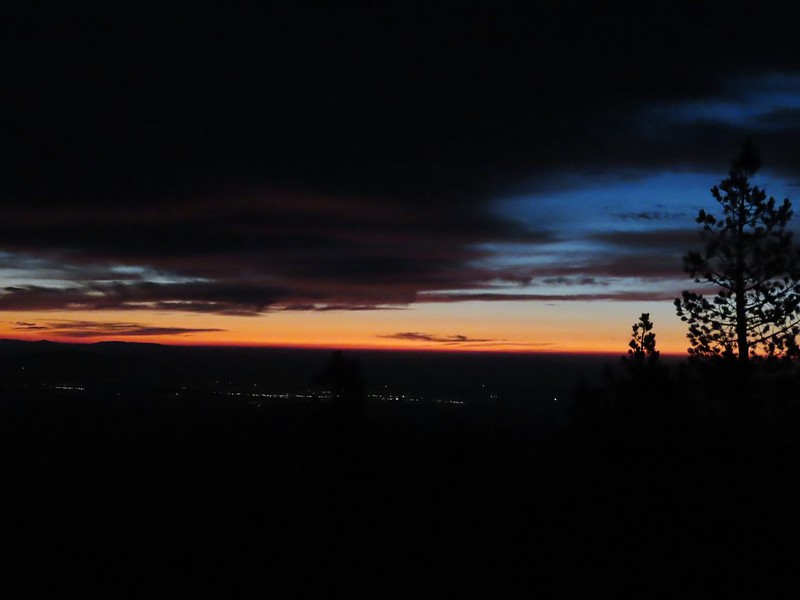
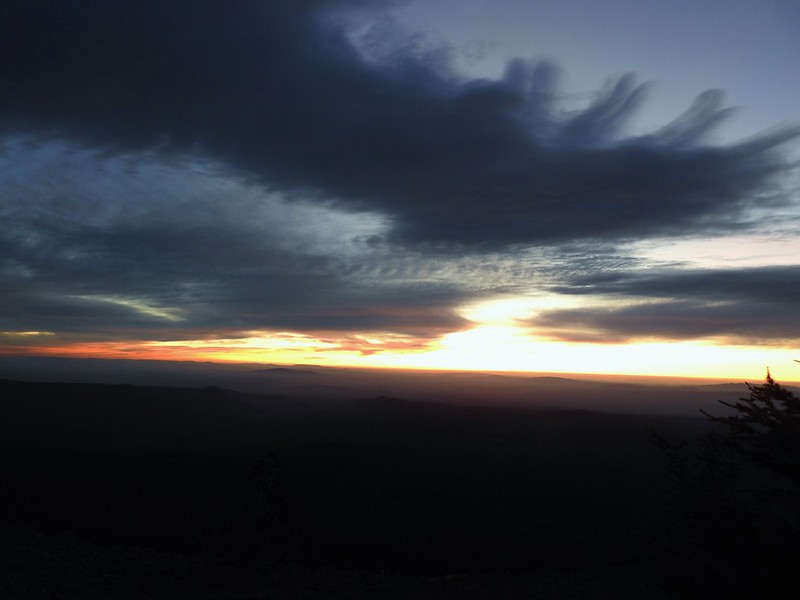
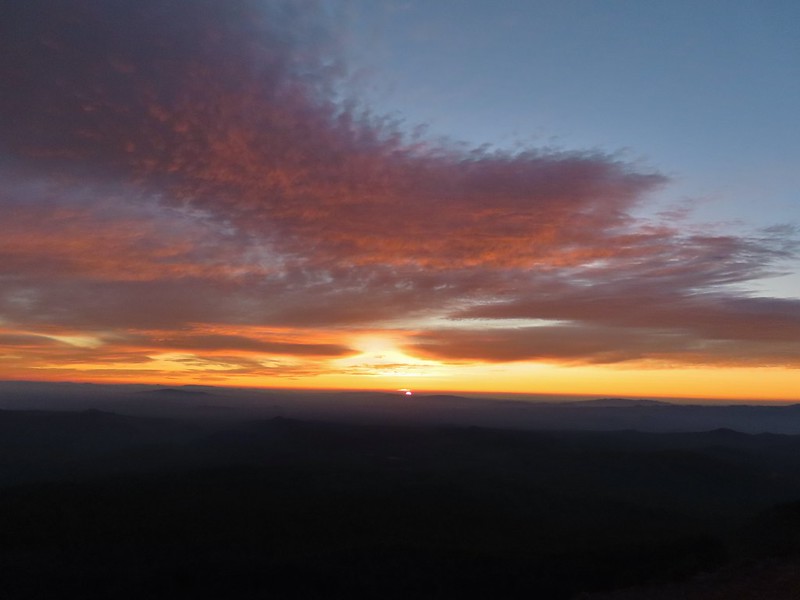
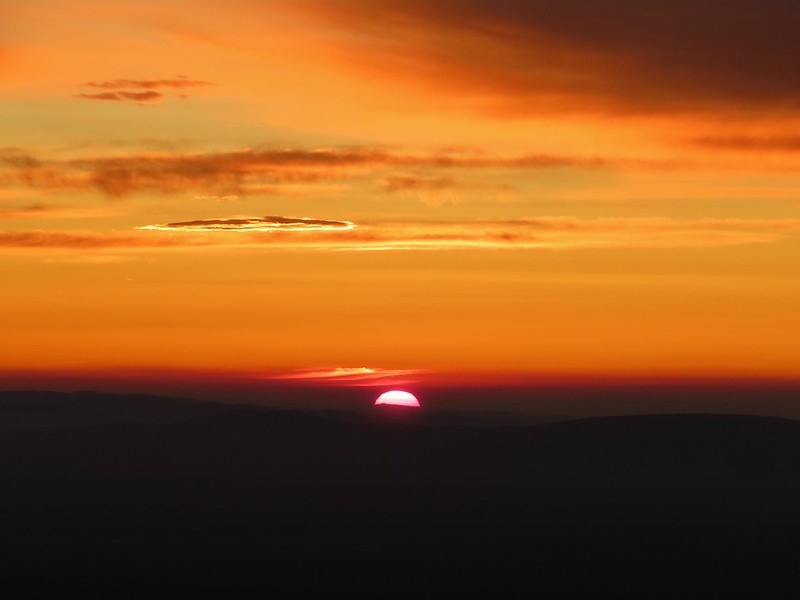
In 2014 we attempted a to catch the sunrise from Tumalo Mountain (post) but were thwarted by low clouds which provided almost zero viability. Nearly seven years later (9/26/21 vs 9/27/14) we returned for another attempt and this time were rewarded with a colorful show. We arrived at the Dutchman Sno-park/Trailhead just after 5am and got ready to head out using our headlamps. Things already looked more promising than on our previous trip as the Moon was visible over Mt. Bachelor.
IMG_5394

IMG_5396

The Tumalo Mountain Trail gains 1425′ in two miles to the site of a former lookout tower. I hustled up to the lookout site as fast as my legs would allow and arrived a little after 6am to catch the first strip of color to the east beyond Bend.
IMG_5406

IMG_5412

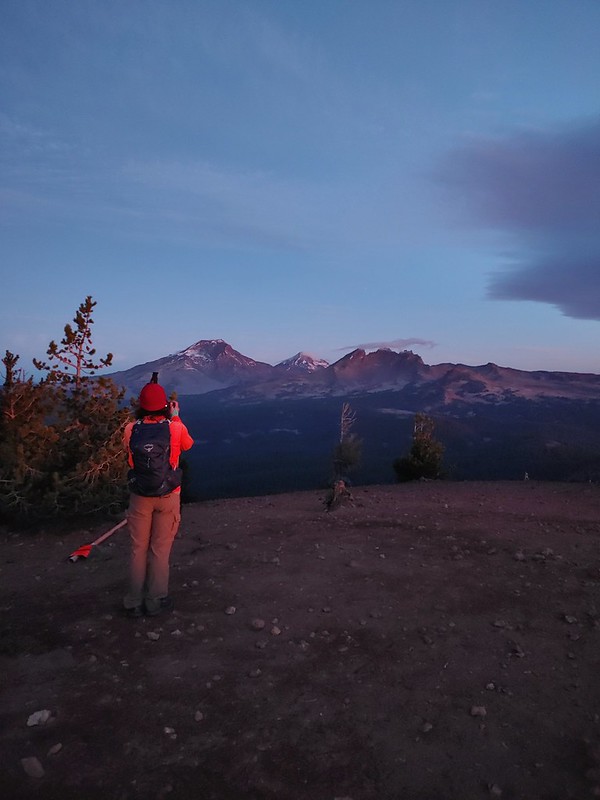
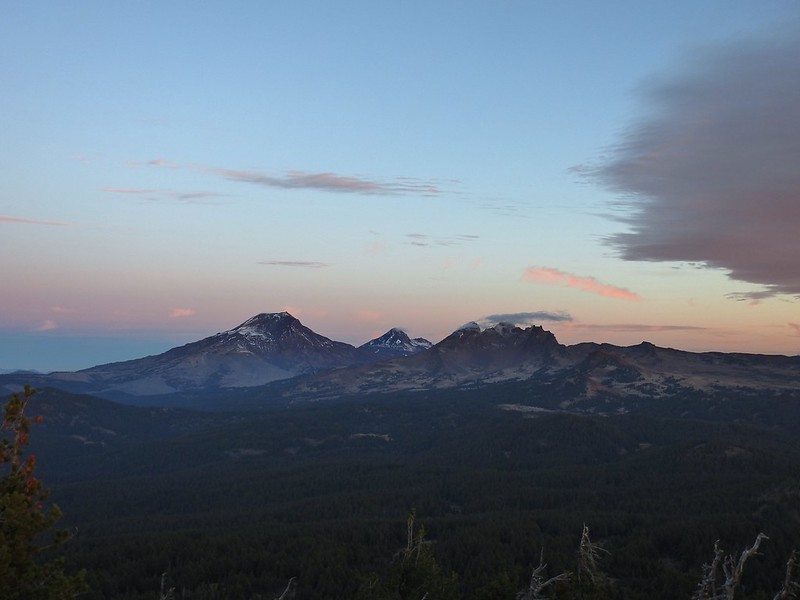
After Heather joined me we continued further along the broad summit to the northern end where the view included Mt. Bachelor to the south and the Three Sisters and Broken Top immediately to the NW.
20210926_062629Mt. Bachelor

20210926_062918The Three Sisters and Broken Top

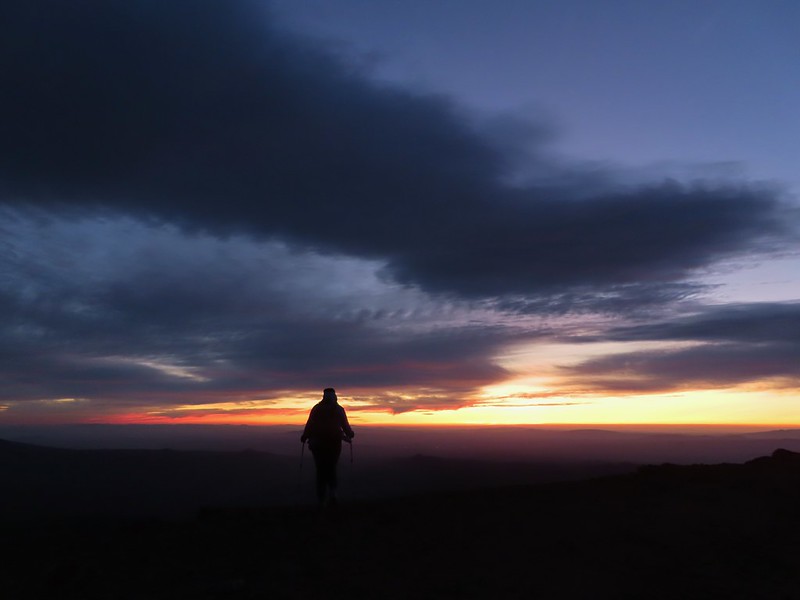
We spent the next half an hour watching the changing light and colors as we waited for the Sun to rise. We had brought an extra camera which I had been using the day before to photograph the anniversary. This proved interesting as each of the cameras we were using captured the sights in their own ways. As I’ve mentioned before I basically have no idea what I’m doing as far as photography and mostly I just rely on getting lucky once in awhile if I take enough photos. My usual camera is a Canon SX740HS, a small point and shoot with 40x optical zoom. Heather was using her phone, an LGE LM-G820, and the other camera, a Nikon Coolpix P900, belongs to my parents.
DSCN1128Mt. Bachelor via the Nikon.

IMG_5444Heather watching the show taken with the Canon.

IMG_5446The Three Sisters with the Canon.

IMG_5450Canon

DSCN1129Nikon

IMG_5455Mt. Bachelor (post) with the Canon.

IMG_5461Canon shortly before the Sun became visible.
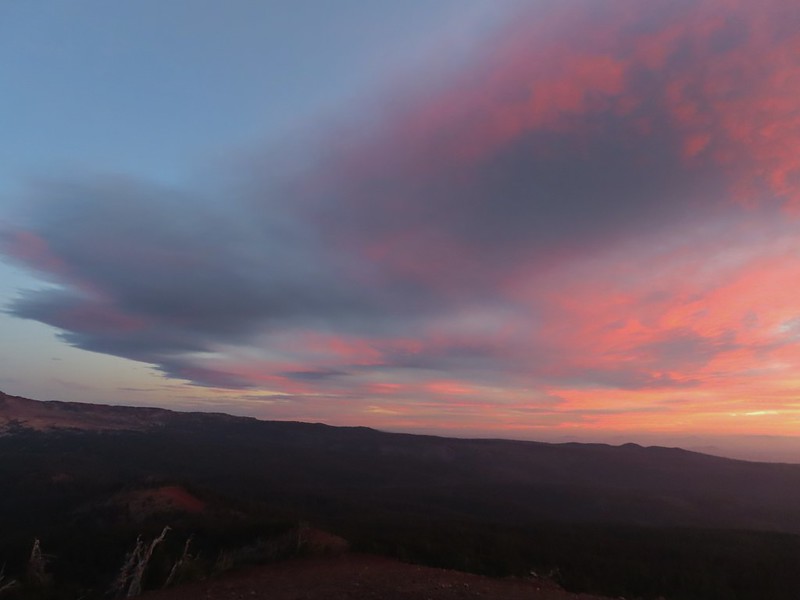
IMG_5462Canon shortly before the Sun became visible.

DSCN1140The Three Sister just before sunrise with the Nikon.

20210926_064832The Three Sister just before sunrise with Heather’s phone.

IMG_5467Canon moments before sunrise. A line of wildfire smoke on the horizon gave it a red tint.

IMG_5469Canon

IMG_5471Canon catching the Sun.

IMG_5473Canon

DSCN1155The Three Sisters and Broken Top (Nikon)

DSCN1157South Sister (post) (Nikon)

DSCN1156Middle and North Sister (Nikon)

DSCN1158Broken Top (post) (Nikon)

IMG_5481Aline glow hitting the mountains. (Canon)

IMG_5478South Sister (Canon)

IMG_5479Middle and North Sister (Canon)

IMG_5480Broken Top (Canon)

IMG_5484Mt. Bachelor (Canon)

We started back down as soon as the sun was up.
IMG_5491

IMG_5497

There were lots of views of Mt. Bachelor on the way down and we could also make out Mt. Thielsen (post) and Mt. Scott (post) further south.

IMG_5503Mt. Scott to the left and Mt. Thielsen to the right.
IMG_5506

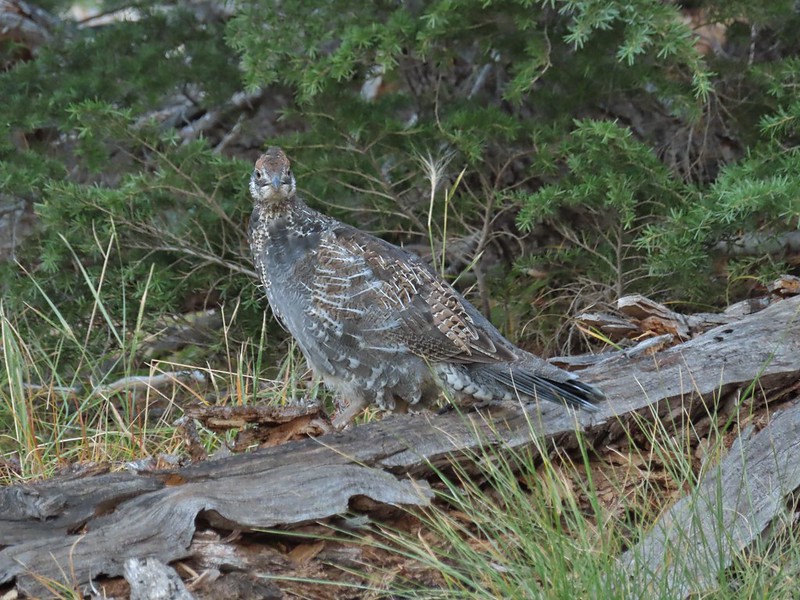
IMG_5519Grouse

IMG_5523Chipmunk

IMG_5528Mt. Bachelor as we arrived back at the snow-park.

We finished our hike just after 7:45am and headed back to Salem. The hike had been everything we could have hoped for. There were just enough clouds in the sky to create some beautiful colors (the lingering smoke even added a bit although we would rather it wasn’t in the air) and the mountains were all clearly visible. My GPS showed a total of 4.7 miles which made sense given it was too cold to simply sit while we waited for the sunrise, spending over half an hour wandering around at the summit.

There were two other groups of hikers watching the sunrise with us and we passed many more as we descended. Tumalo Mountain is a great choice for a short hike with spectacular views. It is also just outside the Three Sisters Wilderness meaning that a Cascade Wilderness Permit is not needed. Happy Trails!

Flickr: Tumalo Mountain

Categories
Columbia River Gorge South Hiking Oregon Trip report

Heritage Landing – 09/13/2021

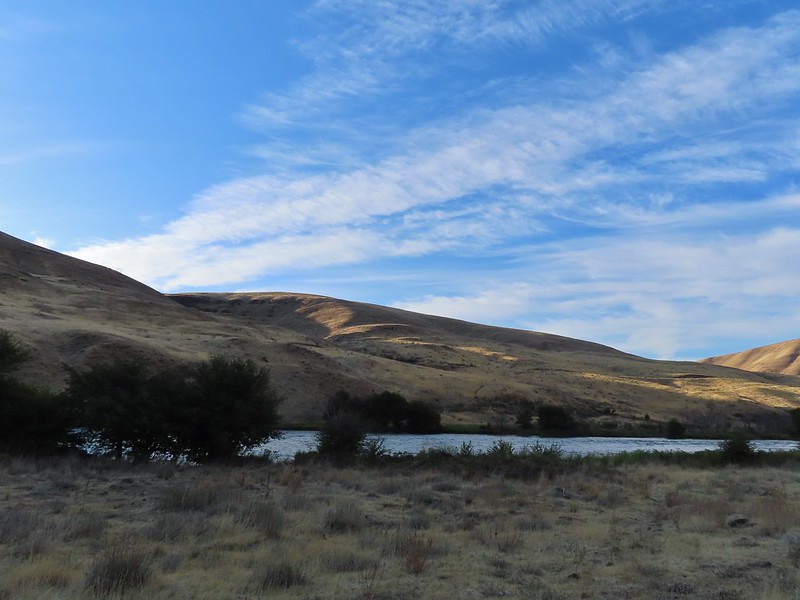
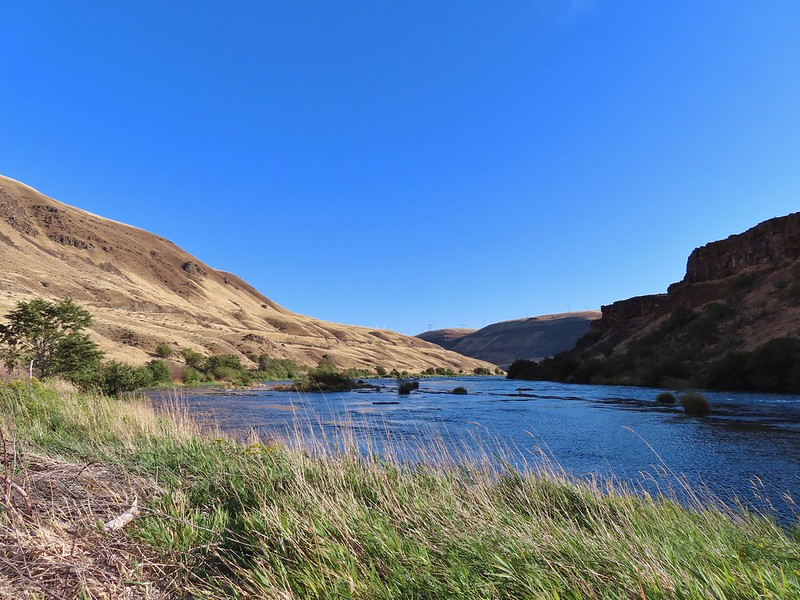
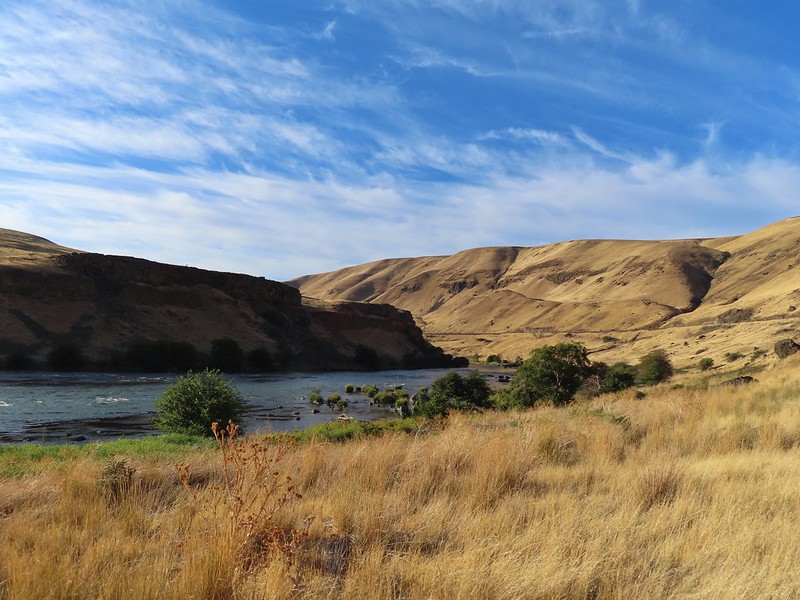
After spending two days hiking in the Blue Mountains NE of Pendleton it was time to head home. We typically look for a short hike that can act as a leg stretcher when we are facing long drives to or from a vacation spot. Driving from Pendleton to Salem meant looking for something along I-84 preferably closer to Pendleton than Salem. Looking through our hiking books gave us the perfect answer, Heritage Landing. The hike along the Deschutes River from Heritage Landing is included in Matt Reeder’s “PDX Hiking 365” guidebook (Hike #9). There is also an entry for the hike on Oregonhikers.com as well. Heritage Landing is primarily used by rafters and fishermen but the fishermen and other users have created a series of trails up river at least as far as Rattlesnake Bend.

We parked in a gravel lot on the left side of the road just uphill from the boat ramp and hiked down past a gate.
IMG_5252

IMG_5253

We followed an old road bed upstream past Moody Rapids. We had hiked the Deschutes River Trail on the other side of the river in 2018 (post)
IMG_5255

IMG_5256Sunlight on Haystack Butte in Washington.

IMG_5260Part of Moody Rapids.

IMG_5258Gum weed

IMG_5262The last petals on a blanket flower.

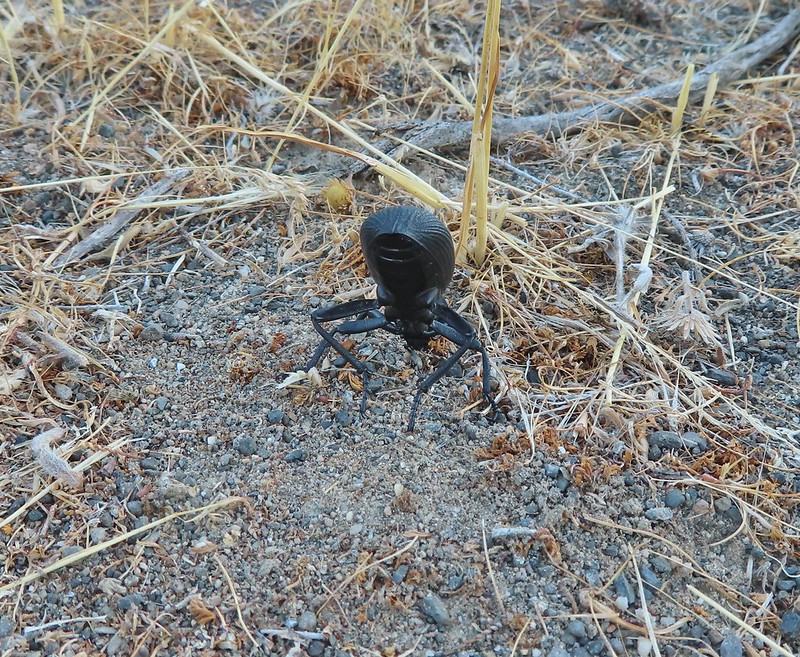
IMG_5265We saw several of these large beetles, all prepared to defend themselves.
IMG_5266

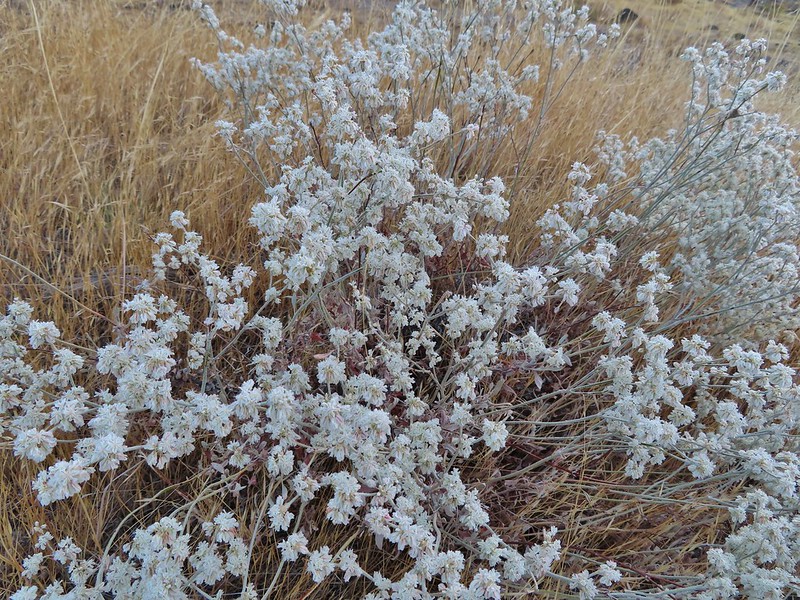
IMG_5267Snow buckwheat

IMG_5275Chicory

IMG_5281Seagull

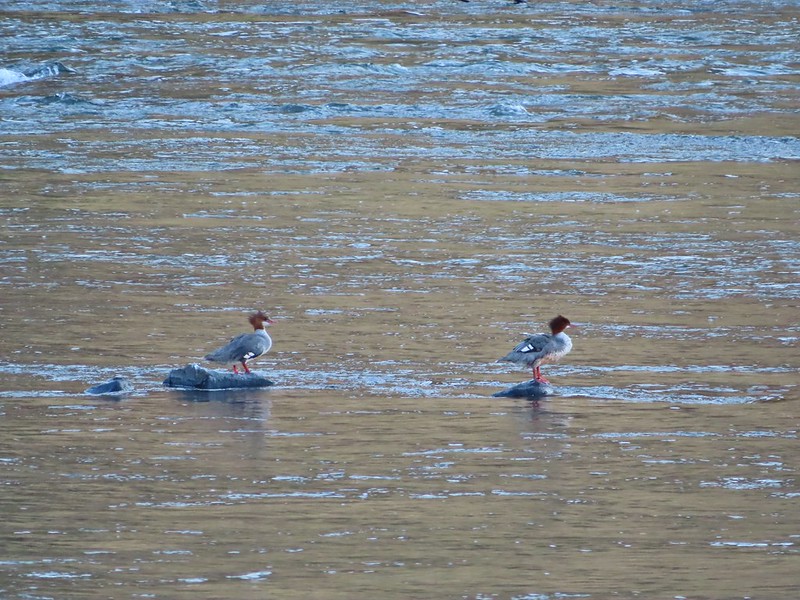
IMG_5282Mergansers

The trail passed by a spring where thick blackberry bushes and other green vegetation hosted a number of small birds (and a few fishermen).

IMG_5285Sparrow

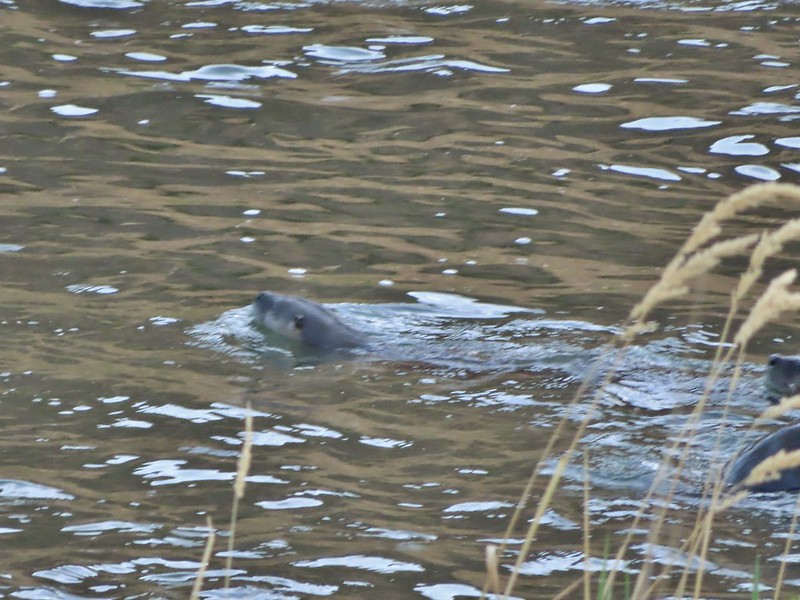
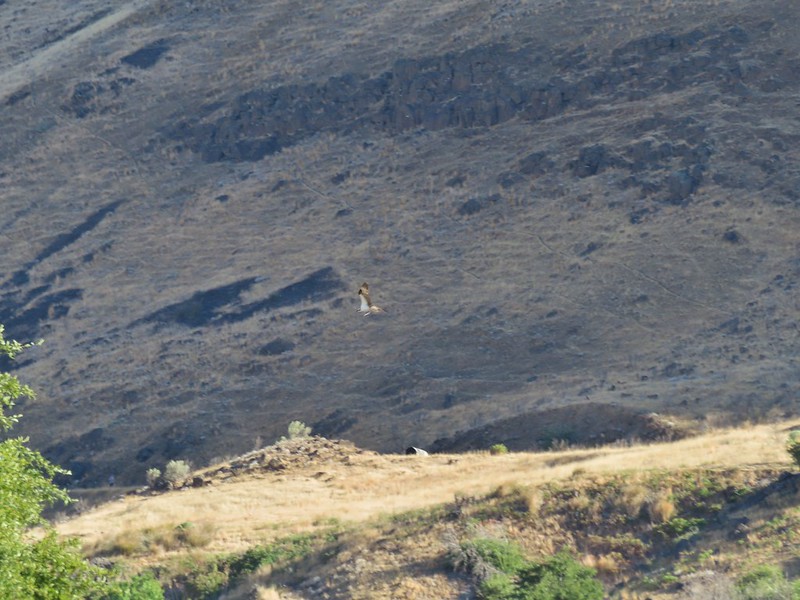
Shortly after passing the spring both Heather and I noticed something that looked out of place down by the water but we both decided it was another fisherman. After a few more steps we realized it was a river otter grooming itself on a small rock or patch of grass. I tried to grab my camera but it somehow knew I wanted a photo and disappeared into the water. The next thing we knew there were three otters swimming with the current and heading downstream but they were close enough to the bank that my camera kept focusing on the grass or limbs between them and us so I still don’t have a decent picutre of an otter. 😦
IMG_5292One blurry otter head and another partial otter on the right.

IMG_5293A bunch of tree branches, oh and an otter in the water.

After the exciting and yet disappointing otter encounter we continued up river. We planned on hiking until either the tread petered out or we reached Rattlesnake Rapids. The tread petered out a little before the rapids but we had a nice view of them from Rattlesnake Bend.
IMG_5295

IMG_5299

IMG_5301

IMG_5302At times there were multiple trails to choose from.
IMG_5307

IMG_5314Rattlesnake Bend is up ahead but we stopped here for a bit to watch a heron getting breakfast.

DSCN0861

DSCN0863

IMG_5320A sparrow, possibly a Savannah sparrow.

IMG_5322The trail climbed higher on the hillside for a bit to avoid some thick vegetation below.

IMG_5330Rattlesnake Bend

IMG_5337Railroad tracks above the trail.

IMG_5338Looking back from Rattlesnake Bend near where we turned around.

IMG_5339Rattlesnake Rapids

On our way back we tried to choose the fishing trails closer to the river.
IMG_5342

IMG_5343Killdeer

IMG_5345An older channel?

IMG_5346

IMG_5347

IMG_5348Had to go back up to avoid the vegetation here.
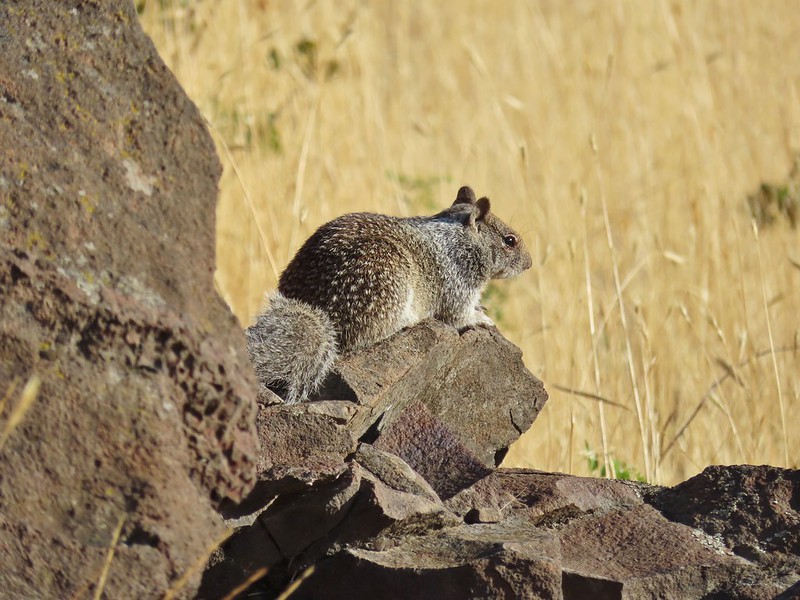
IMG_5350Ground squirrel

IMG_5354Heron flying up river.

IMG_5359Old rock wall along the way.

IMG_5360Typical use trail.

IMG_5363Merganser

IMG_5364Aster

IMG_5365

IMG_5366Osprey showing up the fishermen.

IMG_5370Finch

IMG_5372More birds near the spring.

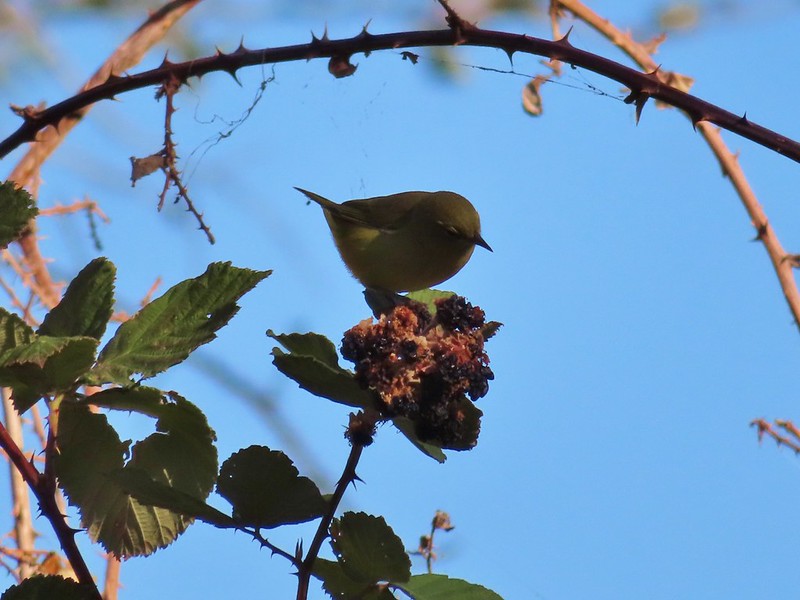
IMG_5373Little yellow birds, maybe warblers?

IMG_5377One of the yellow birds on a blackberry plant.

IMG_5380

IMG_5384Moody Rapids

IMG_5390Haystack Butte

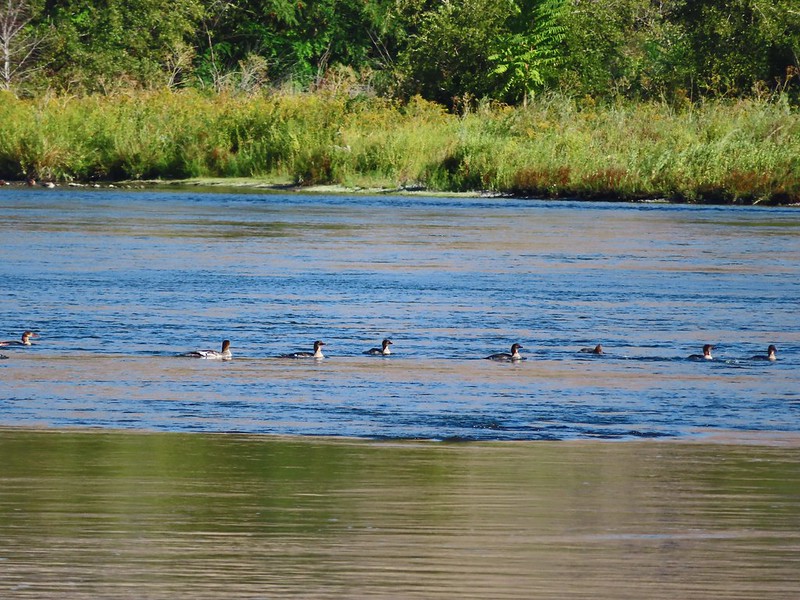
IMG_5391A line of mergansers.

This turned out to be an excellent hike with great scenery and plenty of wildlife (and no rattlesnakes). We got in a little over 4 miles round trip. Reeder listed it as a 3.2 mile out and back while Oregonhikers has it at 3.8 miles but a lot depends on where you turn around and how much back and forth you do down to the river.

Our track for the day.

It hadn’t been the vacation that we’d originally planned but our three days of hiking were beautiful and we were thankful to have been able to enjoy them so much. Happy Trails!

Flickr: Heritage Landing

Categories
Blue Mountains - North Hiking Oregon Trip report

Jubilee Lake and the South Fork Walla Walla River – 09/12/2021

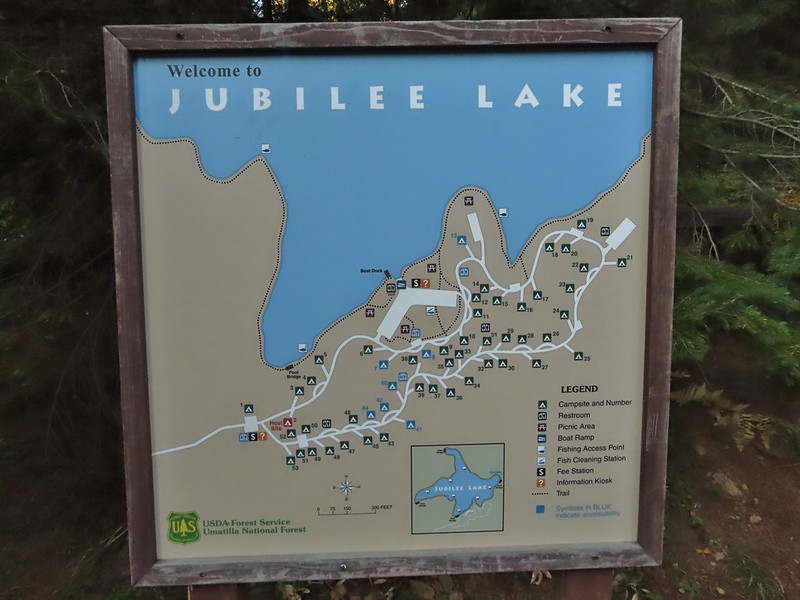
After spending the night in Pendleton we headed back to the same area in the Blue Mountains where we had hiked the day before on the Wenaha River Trail (post). We started our day at the Jubilee Lake Campground. (We had passed the entrance road the day before on our way to the Timothy Springs Trailhead.) An earlier version of this trip had us staying at the campground given the hike here and it’s proximity to the other two trails that made up the trip but sleeping in a comfy bed won out over a tent in a busy campground. After paying the $3 day use fee we parked near the boat ramp where the morning sunlight was just hitting the lake.
IMG_5027

IMG_5028

IMG_5030

The Jubilee Lake Trail loops around the the lake and is one of two hikes Sullivan lists for hike #42 in his “100 Hikes/Travel Guide Eastern Oregon” 3rd edition guidebook. He recommended hiking the loop counter-clockwise so we headed right from the boat ramp past a picnic area and onto a paved trail.
IMG_5034

IMG_5035

From the boat ramp the trail winds around the lake for three quarters of a mile to the lake’s dam which was built in 1968. We passed several picnic tables and viewpoints along this stretch.
IMG_5035

IMG_5037

IMG_5040

IMG_5041

IMG_5044

IMG_5050

IMG_5051

IMG_5059

The trail passed over the dam and continued on the far side switching from paved to dirt tread.
IMG_5060

IMG_5064

IMG_5070

IMG_5071

IMG_5072

IMG_5077This squirrel was making an impressive amount of noise with its mouth full.

IMG_5081Passing around one of the lake’s arms.

IMG_5084One of several bridges over creeks.

IMG_5086_stitch

DSCN0852Mergansers

There were several benches positioned along the trail. We got a kick out of this one which was right next to a nice view of the lake but it was facing directly into some trees.
IMG_5097

IMG_5099The view next to the bench.

20210912_080313_HDRThe view from the bench.

IMG_5100Going around another arm.

20210912_080713A checker-mallow

20210912_080717Aster

IMG_5106Forest as we neared the campground again.
IMG_5110

IMG_5116Arriving back at the ramp.

The loop around the lake came in at just about three miles which we thought was a perfect distance for a hike around a lake. Longer loops around lakes often begin to feel repetitive but this one didn’t. We were also glad we stopped here first as there wasn’t anyone out on the lake while we hiked nor did we pass any other users on the trail (there were a couple of fishermen/hunters behind us at one point). From Jubilee Lake we then drove to our second stop at the Rough Fork Trailhead near Mottet Campground. The final 1.5 miles to this trailhead on FR 6043 were rough and probably only passable with a high clearance vehicle.
IMG_5118

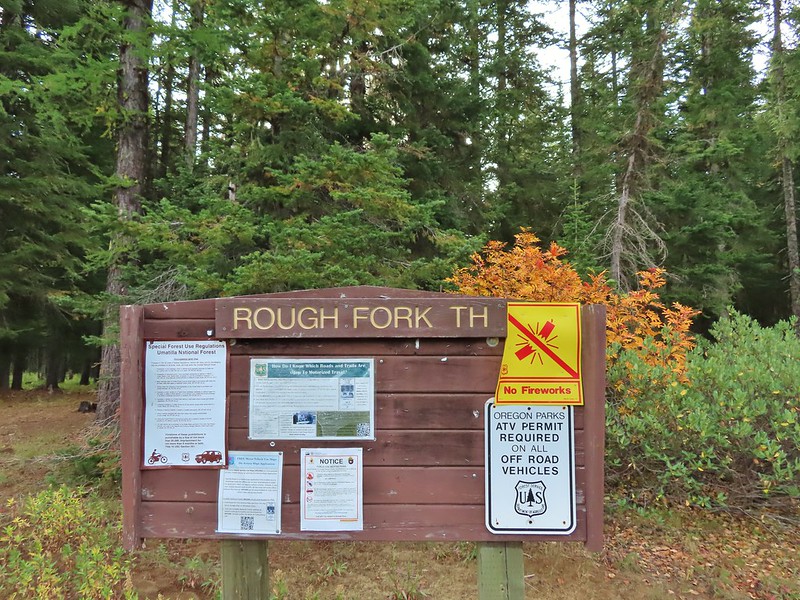
From the trailhead we followed a sign for the Rough Fork Trail.
IMG_5119

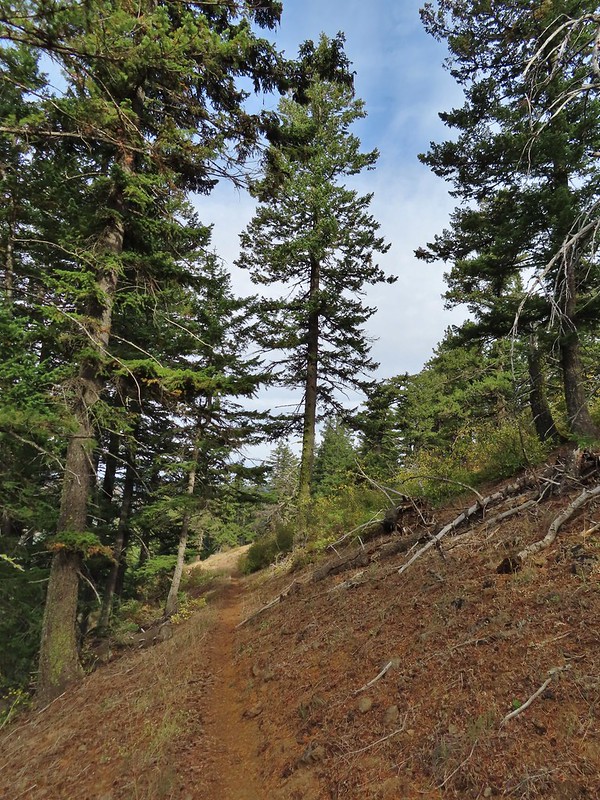
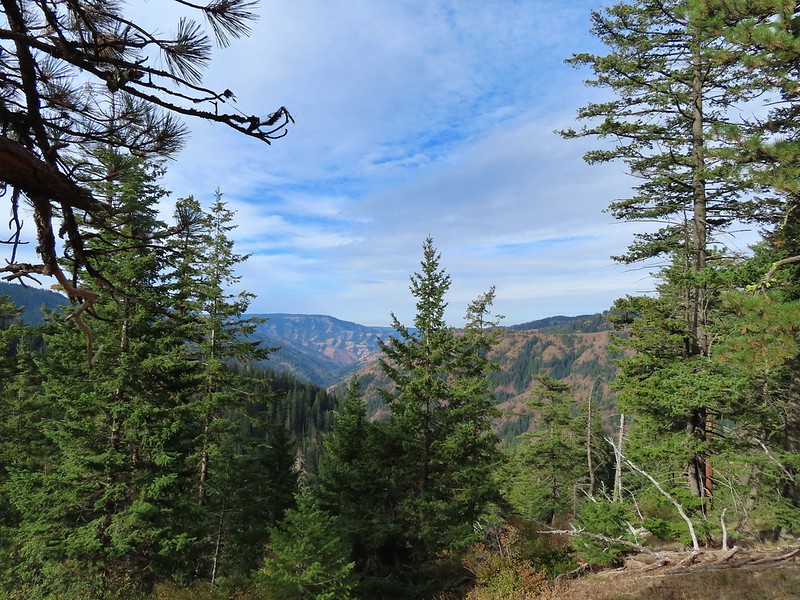
The Rough Fork Trail descends nearly 1900′ in 3.3 miles. Twelve switchbacks allow the grade to never be too steep and there were nice views nearly all the way down to the South Fork Walla Walla River Trail.
IMG_5122The first part of the trail passed through a stand of trees.
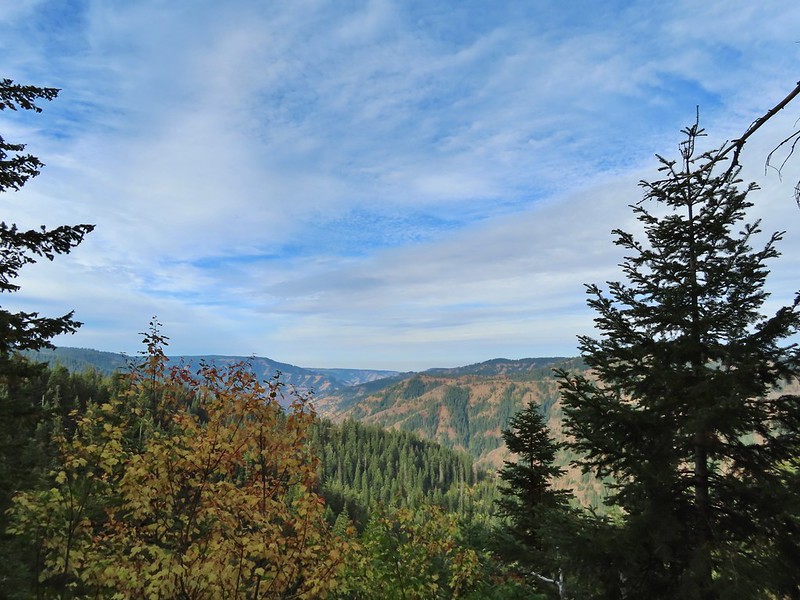
IMG_5125View to the west along the South Fork Walla Walla River canyon.
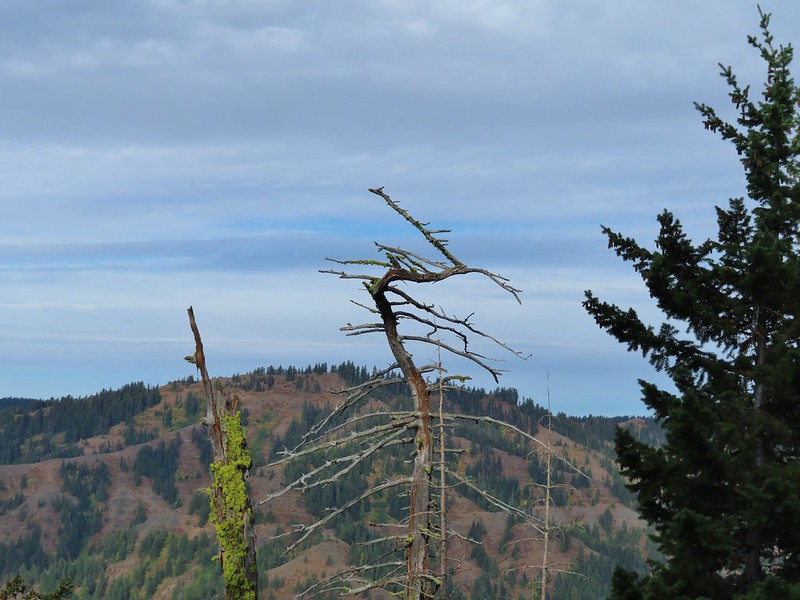
IMG_5128Loved the top of this tree.

IMG_5130

IMG_5133Another view, there was just a hint of smoke in the air giving the hillsides a blue tint which is where the name “Blue Mountains” comes from. Apparently smoke has been a common occurrence here for a long time.
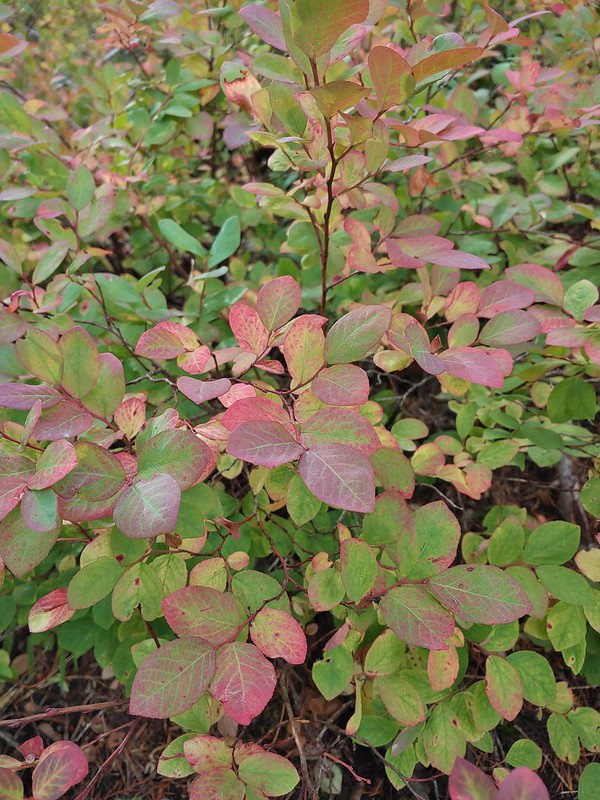
20210912_091153There was a lot more Fall color along this trail.

IMG_5140Paintbrush

IMG_5145Cone flower

IMG_5146

IMG_5147Aster amid some thimbleberry leaves.

IMG_5148Vine maple

IMG_5150

IMG_5173

IMG_5174

IMG_5180Looking down toward the Sheep Creek.

IMG_5189

IMG_5191Finally found the river.

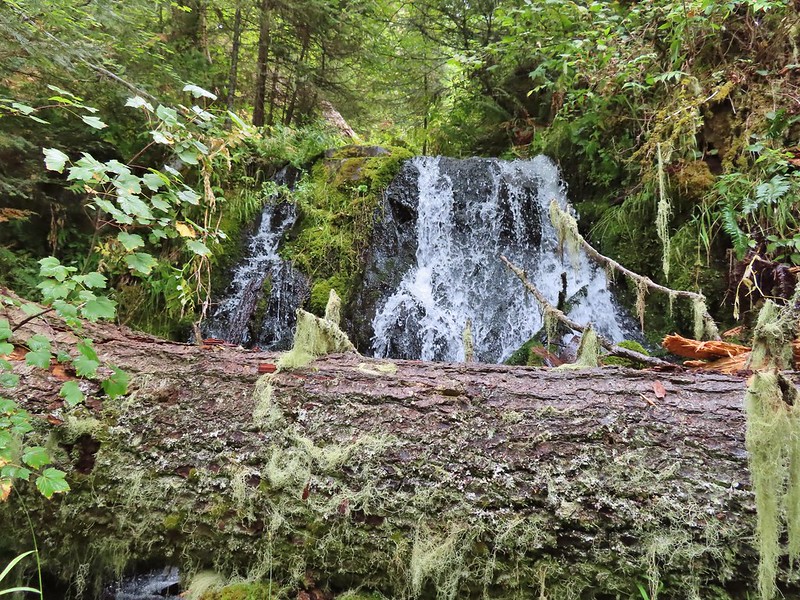
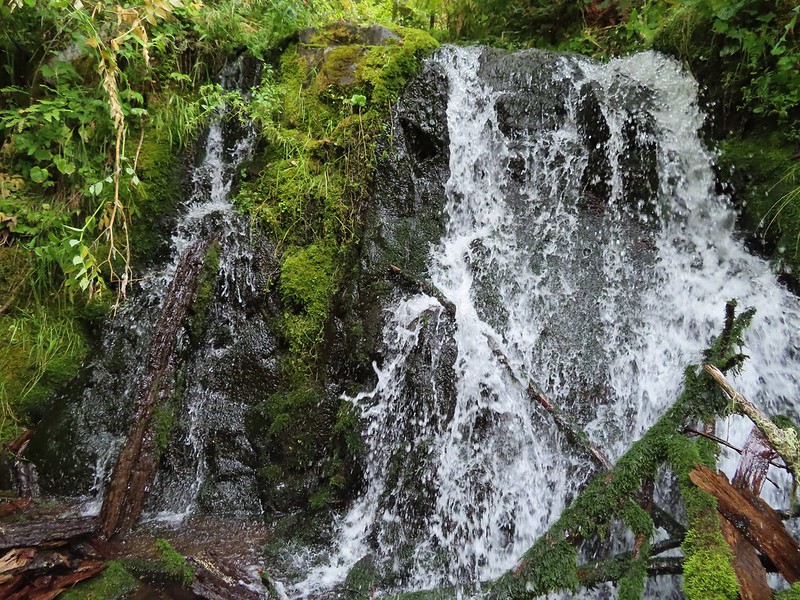
IMG_5193There was a 6 to 8′ waterfall along Sheep Creek but no way to get a clear view of it through the thick vegetation on a steep hillside.

As we neared the river the trail leveled out in a lusher forest.
IMG_5194

IMG_5195

IMG_5196Two types of clover.

IMG_5200Footbridge over the South Fork Walla Walla River.

IMG_5201

IMG_5203

There was a small campsite near the bridge where we took a break and watched an ouzel dip up and down on rocks in the river.
IMG_5219

IMG_5205

DSCN0858

IMG_5210Reser Creek on the left joining the South Fork Walla Walla River just upstream from the bridge.
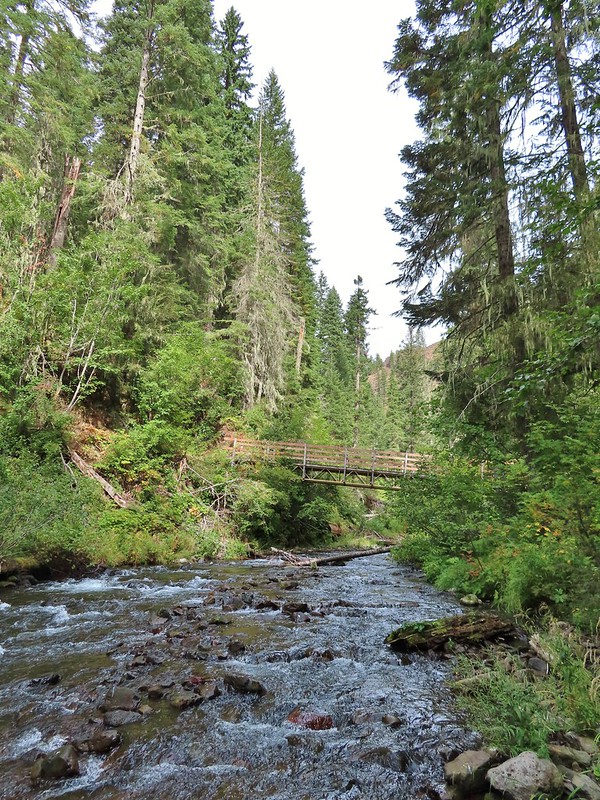
There was another small cascade on Sheep Creek near the river which I was able to reach with a little effort.
IMG_5214There were just enough exposed rocks for me to work my way downstream from the bridge to Sheep Creek.
IMG_5215

IMG_5217

After enjoying the river we headed back up having completed Sullivan’s suggested hike here. We could have continued two more miles downstream to Box Canyon but adding another four miles to our day didn’t seem necessary. The climb up wasn’t as bad as we’d feared. The grade along with a cooling breeze that would come and go helped immensely.
IMG_5222

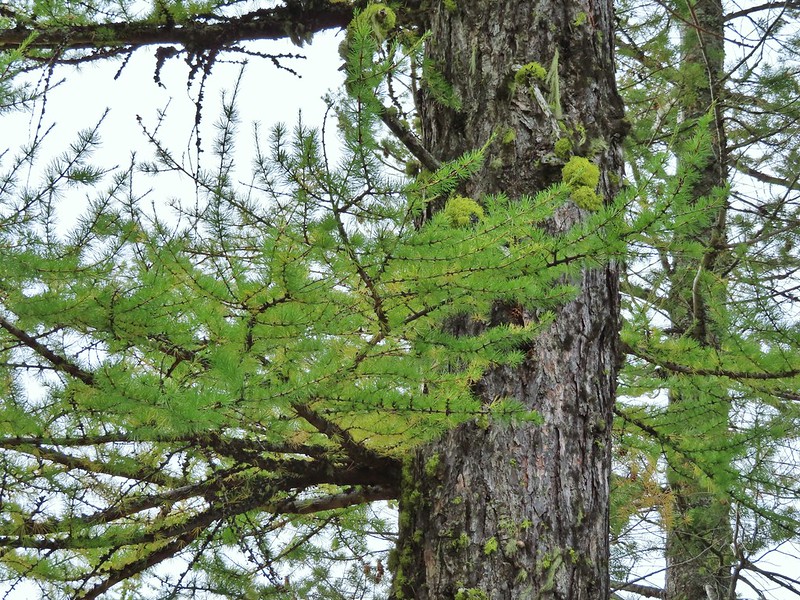
IMG_5224A couple of the larch trees were just starting to turn color for the fall.
IMG_5226

IMG_5237

IMG_5242

IMG_5244A scarlet gilia blossom waiting to fall off.

IMG_5249A final view back over the canyon with the crooked tree.
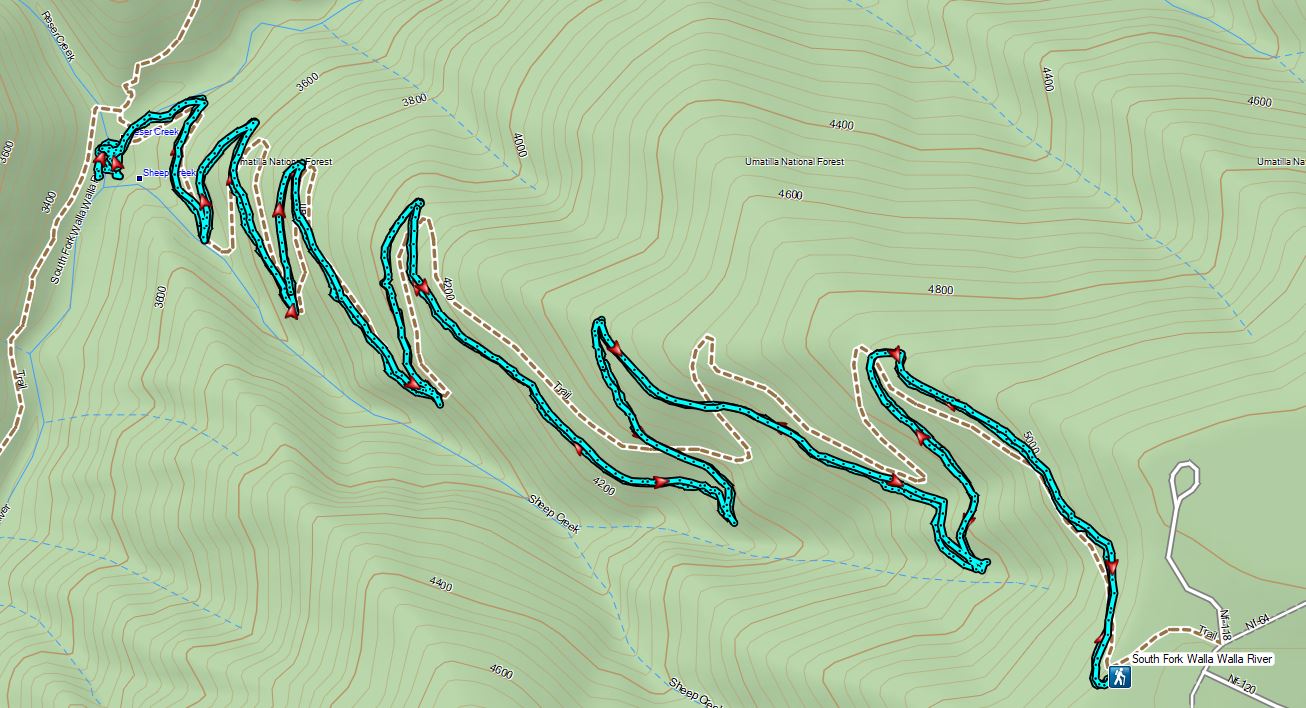
The hike came in at the expected 6.6 miles giving us a total of 9.6 for the day.

Rough Fork Trail track

We were done early enough to spend a relaxing afternoon in Pendleton where we discovered that a lot of the downtown restaurants were closed on Sundays. We wound up eating at Thai Crystal which turned out to be a good choice. These two hikes finished off Sullivan’s featured hikes in the northern Blue Mountains but that doesn’t mean we wont be back. There are more trails in the area and all our hikes there so far have been enjoyable. Happy Trails!

Flickr: Jubliee Lake and the South Fork Walla Walla River

Categories
Blue Mountains - North Hiking Oregon Trip report

Upper Wenaha River – 09/11/2021

For the second year in a row our September vacation plans were disrupted by wildfires. The reality we are facing is that this may well be the norm now and maybe September isn’t the best time to try and take a hiking trip. We’d been avoiding October due to the erratic weather that time of year but it might be time to rethink that. Unlike last September when we scrapped our plans and just stayed home staying inside to avoid the smoke this year we had a viable back up plan. Our original plan was for a long weekend in Union Creek near Crater Lake National Park but that area seemed to be ground zero for unhealthy air quality so we canceled our reservations there and watched the weather and smoke forecast waiting until Friday to make our final decision. A favorable forecast put Pendleton as our first choice but according to the Forest Service website two of the three trails we planned on hiking were showing as closed. The entire Umatilla National Forest had been closed earlier this year due to wildfires but those were either out or mostly contained and the closure area had been greatly reduced. I reached out to the Forest Service and they confirmed that despite what the website said the trails we were planning on hiking were open.

It was a 5 to 5 1/2 hour drive from Salem to the Timothy Springs Trailhead for our first hike of the weekend on the Wenaha River Trail. We had hiked on this trail in 2019 but from the other end near Troy, OR (post). The trail is just under 31.5 miles long but for this hike we planned on following the trail downhill for 4.5 miles to Milk Creek which is Sullivan’s longer option for his featured hike #43 in the 3rd edition “100 Hikes/Travel Guide Eastern Oregon”. We arrived to find the campground at the trailhead full of bow hunters which we had expected this time of year. We parked in a dirt area not far from the historic Timothy Springs Guard Station because the only spot open at the actual trailhead would have meant parking over grass which we didn’t want to do given the fire danger.
IMG_4882The guard station.

IMG_4884The only “parking spot” open near the actual trailhead.

The trail immediately entered the Wenaha-Tucannon Wilderness.
IMG_4885

IMG_4886

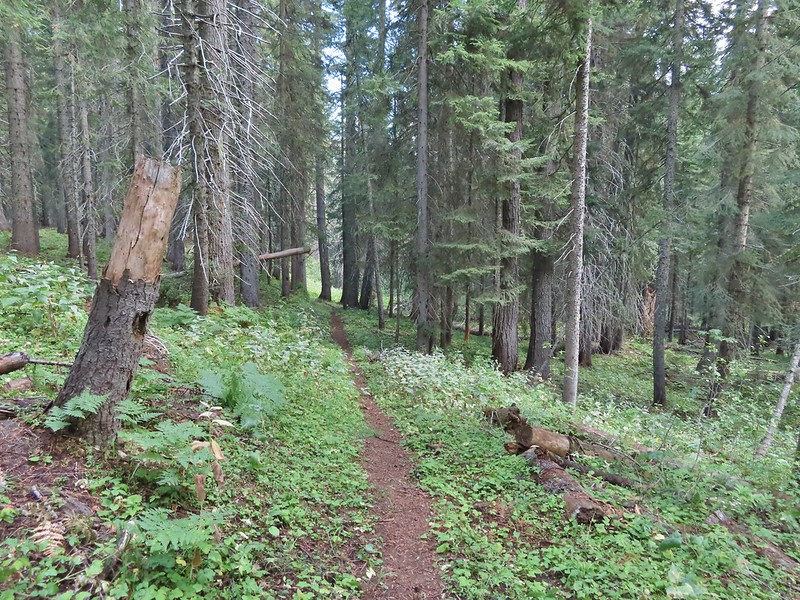
The trail descended gradually through a the forest crossing a couple of small streams before reaching the South Fork Wenaha River at the 2.3 mile mark.
IMG_4889There was a lot of cone flower along the trail.

IMG_4891It had rained the night before but most of the moisture had already dried up or evaporated.

IMG_4898There were just a few flowers hanging on.
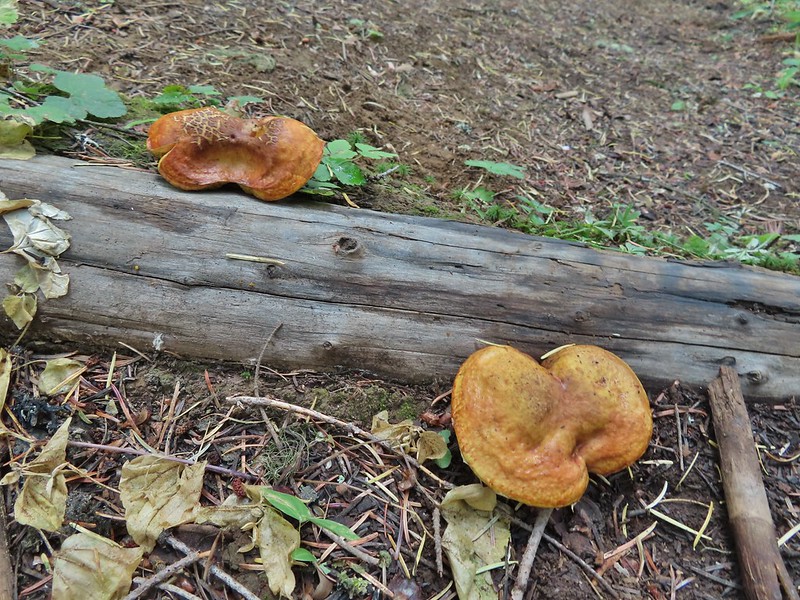
IMG_4899There was also a nice variety of mushrooms.
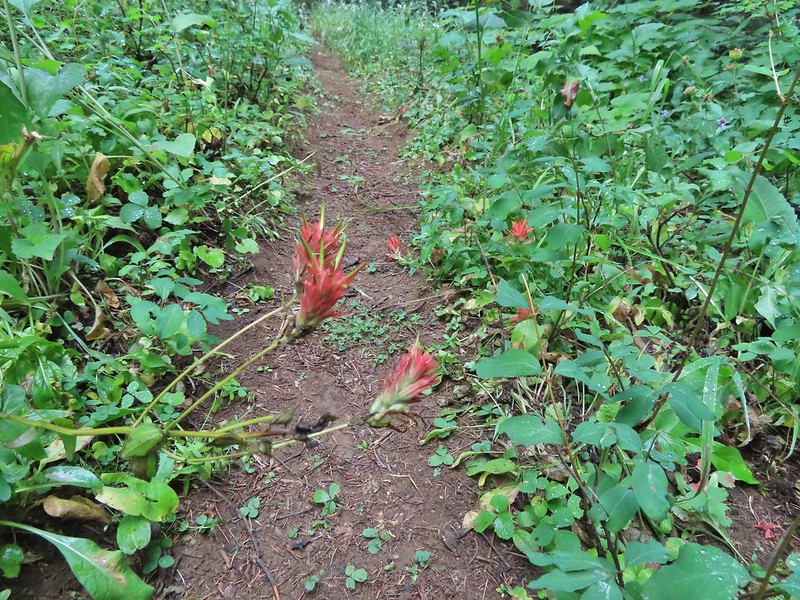
IMG_4900Paintbrush

IMG_4902

IMG_4904

IMG_4905

IMG_4906

IMG_4908One of the small streams.

IMG_4910Self-heal

IMG_4913There weren’t many views along the trail but this one was nice.
IMG_4920

IMG_4921Pearly everlasting

IMG_4923Ghost pipe

IMG_4925This was one of the smallest frogs we’ve seen. When I first saw it jump I mistook it for a grasshopper.

A short distance before reaching the river we passed what Sullivan described as 6′ waterfall. There wasn’t much water flowing this time of year so we had to picture it mostly.
IMG_5001

IMG_5002

IMG_4932South Fork Wenaha River

The river was just wide enough and the logs wet enough that crossing dry wasn’t an option so we forded the river, it was maybe mid-calf at its deepest. A brief climb on the far side quickly put us above the river as the trail traversed a rock hillside.
IMG_4933

IMG_4937

IMG_4939

The views were better along this section as it gradually descended to Milk Creek 2.2 miles beyond the South Fork Wenaha ford.
IMG_4946

IMG_4947

IMG_4949

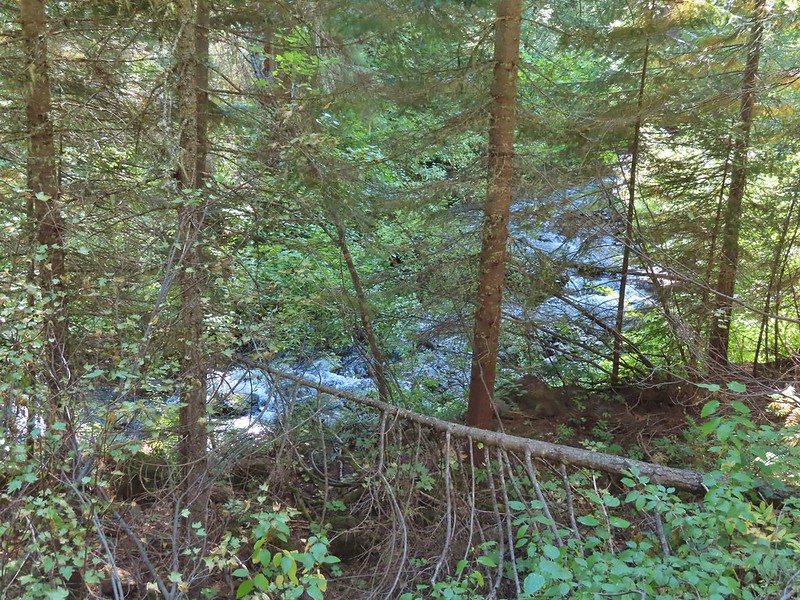
IMG_4953One of two snakes we came across, both the harmless types.
IMG_4955

IMG_4961South Fork Wenaha River

IMG_4965Fall colors along the trail.

IMG_4967

IMG_4968

IMG_4971Milk Creek with the Wenaha River Trail continuing on the far side.

IMG_4972Milk Creek joining the South Fork Wenaha River.

DSCN0844Elderberry near Milk Creek

DSCN0845Snowberry

After a nice break at Milk Creek we began the 1300′ climb back to the trailhead. It was a fairly uneventful return trip but we managed to spot a few flowers and mushrooms along the way that we’d missed on our first pass.
IMG_4983

IMG_4989Might be an aven?

IMG_4992

IMG_5004Coral fungus

IMG_5005

IMG_5014

IMG_5017Aster

20210911_142859

IMG_5022A lone arnica still blooming.
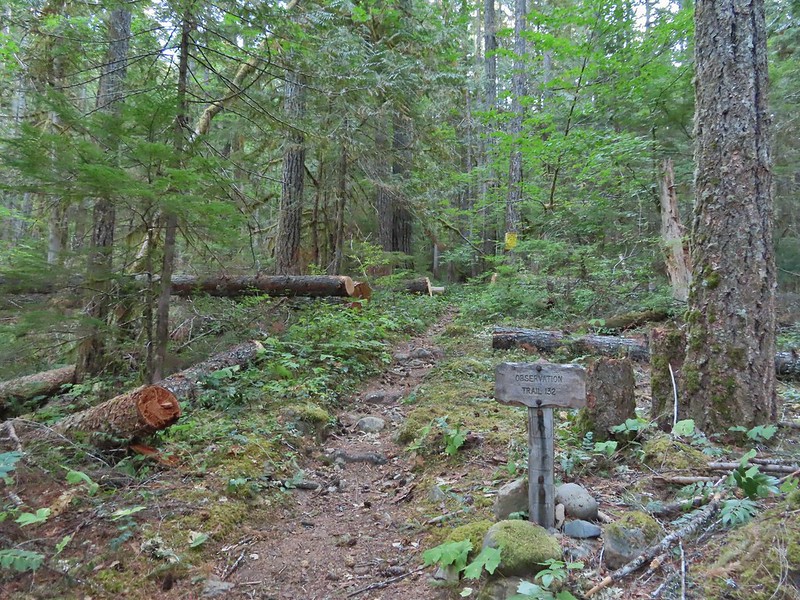
This was a pleasant 9.1 mile hike and despite it being bow hunting season most of the hunters were already back in camp when we arrived so we only saw one group of three people the entire hike.

It was interesting to see the difference in the forest and terrain between the upper and lower ends of the Wenaha River Trail too. We then drove to Pendleton and after a little hiccup in our plans checked into a motel and then went to OMG! Burgers & Brew for dinner. Happy Trails!

Flickr: Upper Wenaha River

Categories
Hiking Trapper Creek Washington Washington Cascades

Soda Peaks Lake – 09/06/2021

For Labor Day we headed back up to Washington where we’d been able to mostly avoid smoke from the numerous wildfires in the West. We’d spent the day before in the Indian Heaven Wilderness (post) and today we were returning to the Trapper Creek Wilderness for the first time since 2013 (post). The wilderness areas are just eight miles apart, separated by the Wind River Highway (and Wind River).

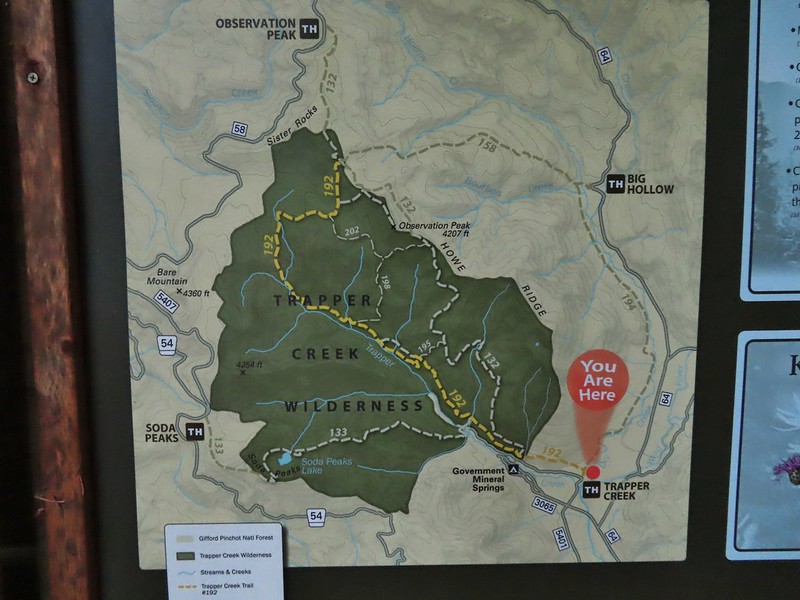
Our planned hike for the day was inspired by a featured hike in Sullivan’s 5th edition of his “100 Hikes/Travel Guide Northwest Oregon & Southwest Washington” book. While Sullivan describes two options for hike #34, Trapper Creek, both were a bit short for us after the 2 hour drive to reach the closest trailhead. His first option is a 3.8 mile out and back to what he calls the “Grove of Giants”, a stand of old growth cedar trees starting at the Trapper Creek Trailhead. His second option (beginning at a different trailhead) is a 5 mile out and back to visit Soda Peaks Lake. Our plan was to park at the Trapper Creek Trailhead and do an out and back hike passing the Grove of Giants, then continuing on the Soda Peaks Lake Trail to Soda Peaks Lake and beyond to a viewpoint on the rim above the lake.

IMG_4713

IMG_4715

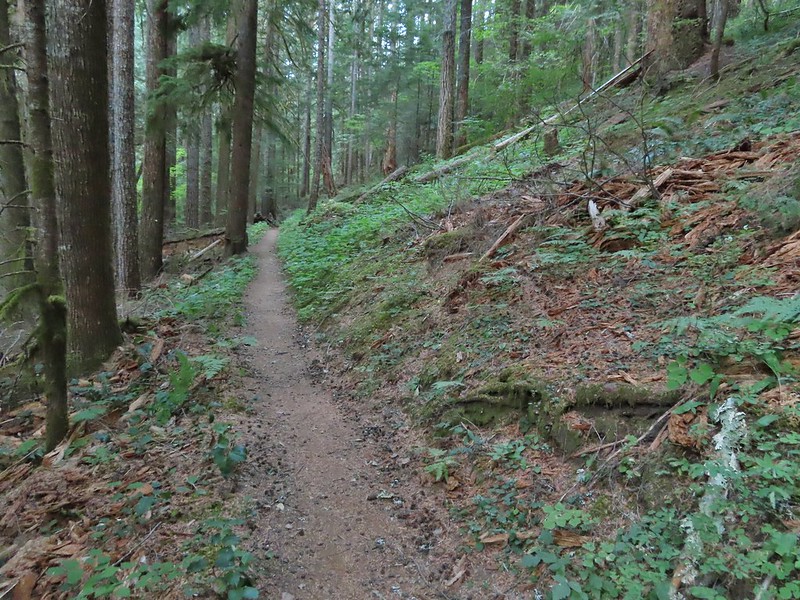
The Trapper Creek Trail started out nearly level which made for a nice warm up before climbing.
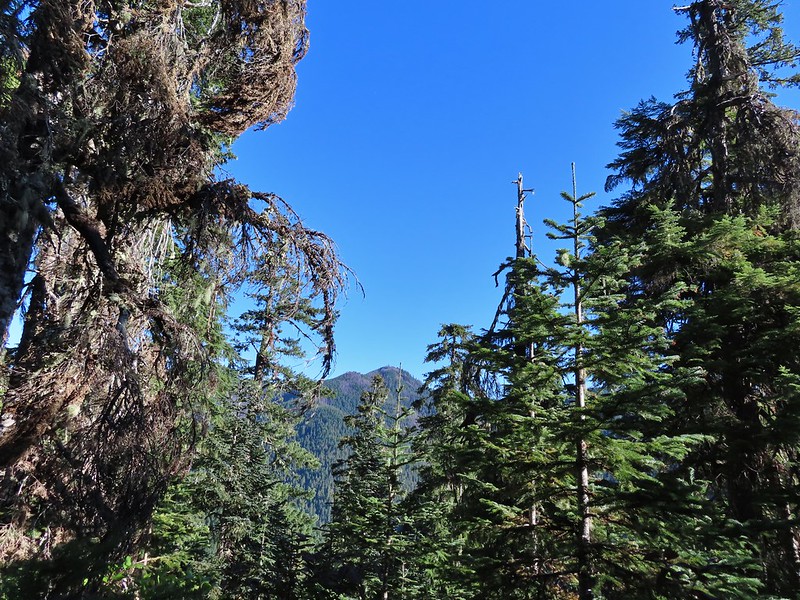
Not far from the trailhead the unsigned Dry Creek Trail joined from the right.

IMG_4720

IMG_4721

Warning sign for burned trees due to the 2020 Big Hollow Fire (there’s that four letter “F” word again). The wilderness had been closed most of the year due to that fire (and some bad winter storms) and was only reopened in August.

The trail climbed gradually along a hillside above Trapper Creek for three quarters of a mile to a 4-way junction with the Observation Trail which we had been on in 2013.

IMG_4724

IMG_4725

IMG_4727

IMG_4728

IMG_4730

IMG_4733

The Observation Trail.

We stayed straight on the Trapper Creek Trail here.

IMG_4732

For the next three quarters of a mile the trail gradually descended to a unnamed creek crossing.

IMG_4740

IMG_4744

IMG_4745

IMG_4746

IMG_4750

On the far side of the creek we turned left onto the Soda Peaks Lake Trail.

IMG_4751

IMG_4752

We followed the creek downhill ignoring a side trail joining from the left and came to a footbridge over Trapper Creek.

IMG_4754

IMG_4756

IMG_4758

Sign at the jct with the side trail joining from some private cabins.

IMG_4759

IMG_4760

IMG_4761

IMG_4762

The trail then passed through a stand of alder before turning left and reaching the Grove of Giants just under half a mile from the Trapper Creek Trail.

IMG_4763

IMG_4764

IMG_4868

One of the big trees was down.

IMG_4768

At the grove the trail made a sharp right turn and began an arduous three mile climb gaining over 2300′ of elevation.

IMG_4866

IMG_4771

Lousewort was just about the only flowers left blooming along the trail.

IMG_4772

IMG_4775

IMG_4780

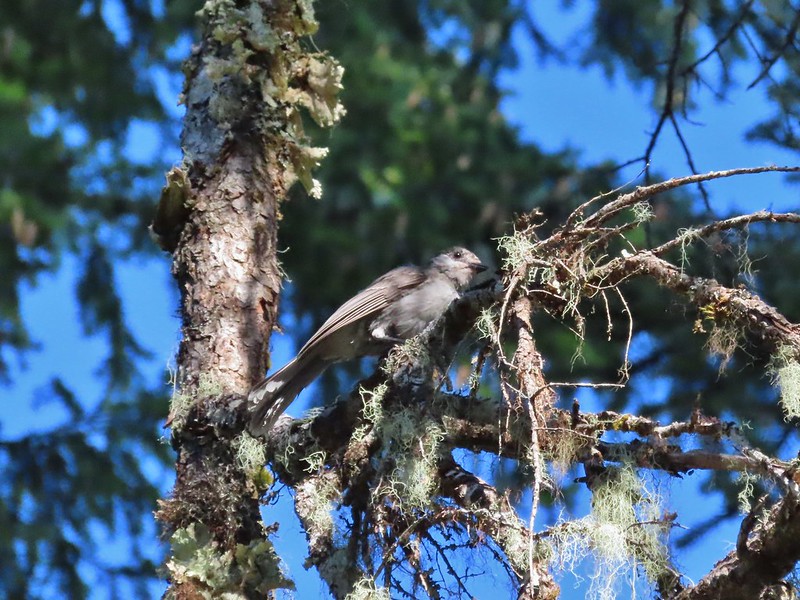
Grey jay

IMG_4785

Observation Peak from the trail.

IMG_4787

IMG_4789

Huckleberry leaves

IMG_4791

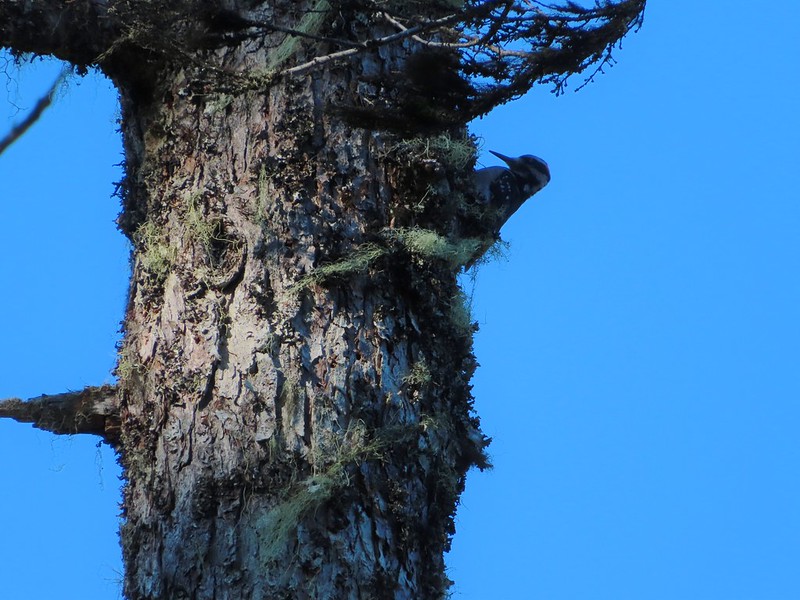
Woodpecker

IMG_4792

There were three short stretches in saddles where the trail briefly leveled out giving us a respite from the climb.

IMG_4793

Fungus amid some bark.

IMG_4795

Big rock outcrop along the trail.

IMG_4797

Mountain ash changing into its Fall colors.

IMG_4799

Mt. Hood from the trail.

IMG_4801

Mt. Hood

IMG_4806

IMG_4807

Red bunchberries and a blue berry from a queen’s cup.

IMG_4810

Mt. St. Helens from the trail.

IMG_4812

Mt. St. Helens

The only real obstacle came about a quarter of a mile from the lake where a large tree trunk blocked the trail. It was too wide to step over and at too steep an angle to climb over.

IMG_4815

The only option was to climb steeply uphill to pass around the top of it.

IMG_4816

IMG_4817

Mt. Adams from the trail.

IMG_4821

Almost to the lake which was busy with folks that most likely took the shorter route in.

IMG_4823

Day use area at Soda Peaks Lake.

IMG_4826

IMG_4824

IMG_4828

I don’t think we’d seen anyone all morning on the trails so the barking dogs and yelling people (maybe they were just talking loud but I wasn’t used to hearing voices) were enough encouragement to move on after a short break. The rim viewpoint that we planned to make our turnaround point was another 1.1 miles and 600′ of climbing away. The trail immediately climbed away from the lake from the day use area.

IMG_4833

It then curved around the north side of the lake passing through several rock fields where we heard a few pikas but were not able to spot any.

IMG_4834

IMG_4835

IMG_4837

Not a pika, but it was a cute chipmunk.

After some gradual climbing the trail got serious and switchbacked steeply to the rim where it turned right following it for 0.2 miles to the viewpoint.

IMG_4838

IMG_4839

IMG_4840

Mt. Rainier

IMG_4842

Mt. Rainier

IMG_4847

The Goat Rocks with a smoke plume rising behind them to the north.

IMG_4843

Mt. Adams with Soda Peaks Lake in the trees below. The row of peaks in between Mt. Adams and the lake is the Indian Heaven Wilderness.

IMG_4854

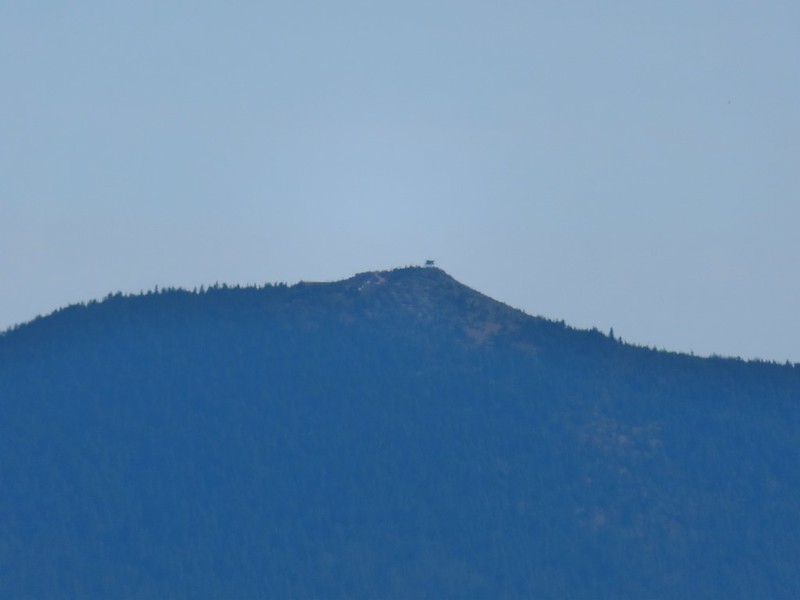
The Red Mountain lookout where we’d been the day before.

There were more people coming down the trail headed for the lake. After a moment admiring the view and catching our breath we also headed back down. We stopped again briefly at the lake then said our goodbyes.

IMG_4857

It was a long descent and our knees were happier once we were back on the Trapper Creek Trail. Heather also suffered a yellow jacket sting on her calf on the way down which wasn’t a nice surprise.

IMG_4861

IMG_4865

Mt. Hood and some vine maples.

IMG_4875

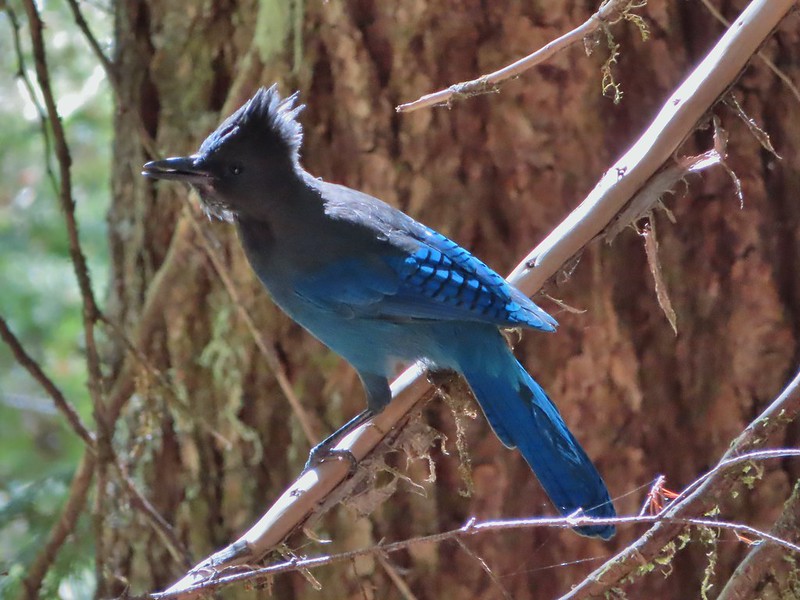
This stellar’s jay almost hit Heather in the head.

IMG_4880

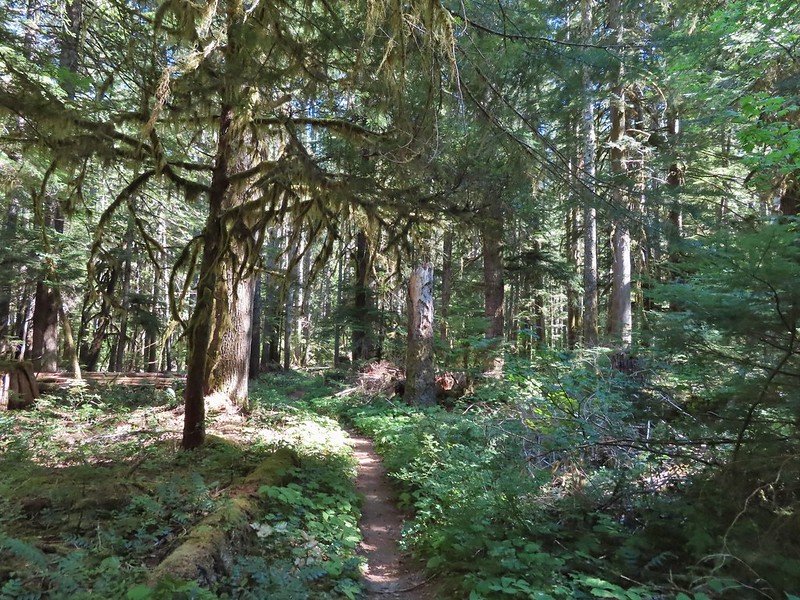
Back on level ground.

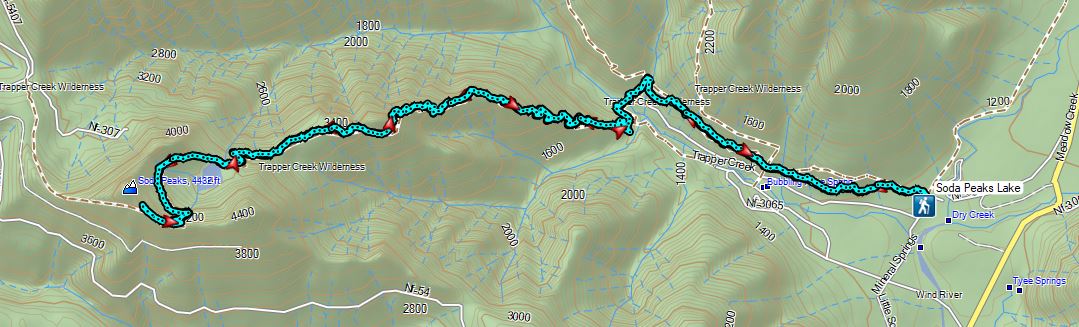
The hike wound up being 12.5 miles with 3800′ of elevation gain. It was in the 80’s when we arrived back at the trailhead and the heat just made the hike a little harder. Nevertheless it was an enjoyable day in the Trapper Creek Wilderness. Happy Trails!

Flickr: Soda Peaks Lake

Categories
Hiking Indian Heaven Trip report Washington Washington Cascades

Indian Racetrack via Falls Creek – 09/05/2021

The horrible wildfire season finally thwarted one of our planned trips when California announced that all National Forests would be closed over Labor Day Weekend (and at least through September 17th). This was at least the third year in a row we had a backpacking trip in the Siskiyou Wilderness planned but either fire or weather has kept those plans from happening each time. Much like last September many of the areas that aren’t on fire are suffering from unhealthy air quality due to the smoke so our options were limited. (How I miss the days of rain being the driving factor on where we were going to hike.) One of the areas that has been less impacted by the smoke has been SW Washington and so we turned to that area once again for a pair of hikes over the holiday weekend. We skipped Saturday as smoke was an issue pretty much everywhere save for the Coast and Coast Range and waited for the next system to push the smoke east (sorry Central Oregon).

For our hike on Sunday we turned to Matt Reeder’s “Off the Beaten Trail” 2nd edition. In his Indian Racetrack and Red Mountain description (hike #15) Reeder describes an alternate loop using the unmaintained Basin Lakes Trail and the Pacific Crest Trail as an alternate to the 7.4 mile out and back that he suggests. We’d been to Indian Racetrack and Red Mountain as part of a diffent loop (post) so this other loop sounded more interesting than the out and back. We figured if the old Basin Lakes Trail was too hard to follow we could simply turn back and still do the out and back as described since it was only 2 miles to the basin then an additional mile up to the Pacific Crest Trail. We started our hike at the Falls Creek Horse Camp. The Falls Creek Trail heads southwest from the horse camp descending to Falls Creek Falls.
IMG_4449

The trail we wanted, the Indian Racetrack Trail, began on the opposite side of Forest Road 65.
IMG_4451There were no signs for the obvious trail.

Once we were on the trail we ignored an unsigned side trail on the right which presumably led down to Falls Creek.
IMG_4452

Approximately 0.2 miles from FR 65 a second trail joined from the left at a wilderness signboard.
IMG_4455

Approximately 120 yards beyond the signboard we arrived at an unsigned fork.
IMG_4457

The Indian Racetrack Trail continued to the right while the abandoned Basin Lake Trail veered left. While the Forest Service no longer maintains the trail (or even lists it on their website) the tread was obvious and based on the number of road apples on the ground it is used fairly regularly by equestrians.
IMG_4458

IMG_4459Entering the Indian Heaven Wilderness

A half a mile up this trail we came to a small meadow where a couple of hikers were camped.
IMG_4469

They warned us that where were quite a few trees down the closer you got to the Basin Lakes but that didn’t dissuade us and we continued on. The trees weren’t much of an issue and in most cases clear paths simply went around them.
IMG_4470

IMG_4473

We crossed a branch of Falls Creek just under a mile along the trail.
IMG_4474

The tread continued to be fairly easy to follow for another half mile and then it vanished, at least from our sight, near a gully.
IMG_4477

IMG_4479

After a few minutes of hunting for it (which included crossing and recrossing the gully) we decided to simply follow the tallest ridge in the direction of the lakes using our GPS and Reeder’s map. A quarter mile later we were looking down at Peggy Lake on our left.
IMG_4481

IMG_4485

We stayed on the ridge above Peggy Lake and turned on the far end made a hard right toward Janet Lake.
IMG_4488Typical vegetation and trees on the ridge.

IMG_4491We rediscovered tread as we dropped to a saddle near Janet Lake.

IMG_4494Sign at the saddle between Peggy and Janet Lakes.

We did walk down to the bank of Janet Lake to admire its reflection.
IMG_4498

IMG_4499

IMG_4500

From Janet Lake it was another 0.1 miles to an unnamed (at least officially) Basin Lake, sometimes on tread and sometimes not.
IMG_4502

IMG_4505

IMG_4509

IMG_4513Sleepy ducks

IMG_4516I believe Oregon Hikers calls this one “Cindy Lake”.

We passed another lake on our left a quarter mile later.
IMG_4525

That was followed by what appeared to be a mostly dry lake bed on the right, now filled with green grass.
IMG_4527

We were now at the eastern end of the basin facing a steep climb up to the Pacific Crest Trail. We needed to gain almost 500′ to reach that trail and at the moment we weren’t sure if there was any tread to follow up.
IMG_4529

We scanned the hillside but couldn’t pick anything out so we put our route finding hats on and identified a small saddle where it looked like a trail would go and headed for it. As we approached we stumbled on tread.
IMG_4533

IMG_4534The small saddle we’d been aiming for.

From there we were able to follow a faint path up and out of the basin.
IMG_4536

IMG_4541

IMG_4543Heather down to the right between a couple of trees.

20210905_090147Me getting close to the top.

IMG_4546The top of the ridge.

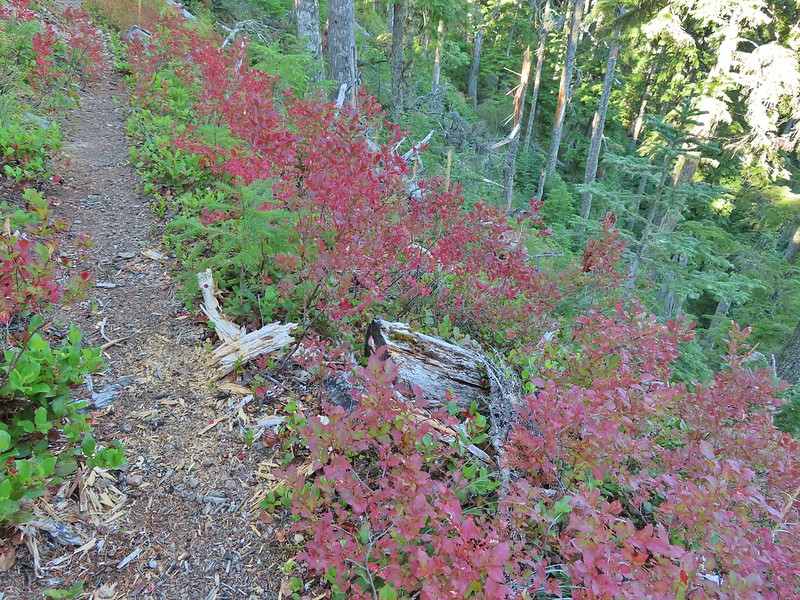
The Pacific Crest Trail runs right along the ridge (despite where it’s shown on Google Maps) and passes over the top of Berry Mountain to the south. After catching our breath we turned right and headed toward Berry Mountain and yet more climbing.
IMG_4549

Fortunately it was the PCT so the climb was relatively gradual as it switchbacked up 170′ in 0.4 miles.
IMG_4551

IMG_4553Mt. Adams in some clouds.

IMG_4556Mt. St. Helens behind a line of clouds.

IMG_4559Gifford Peak (post) behind us.

IMG_4561Chipmunk

IMG_4563

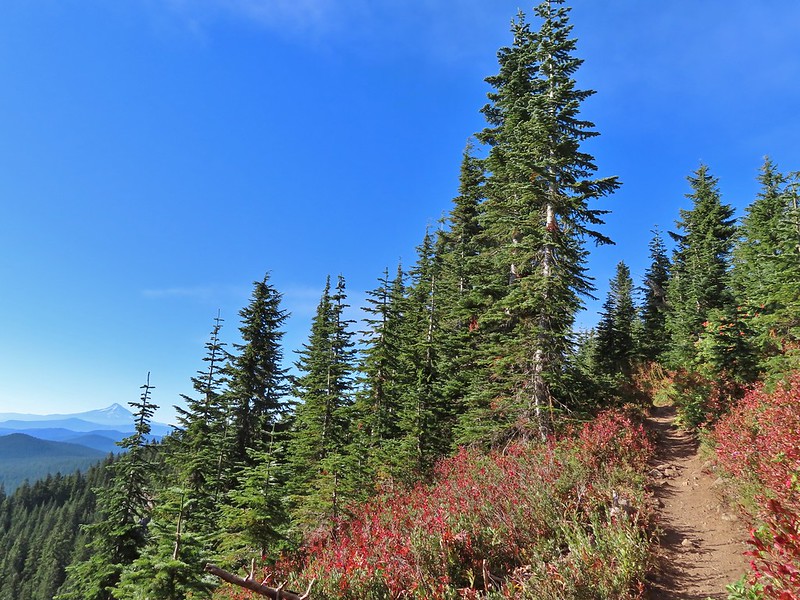
At a switchback a bit below the summit we were treated to a spectacular view of Mt. Hood.
IMG_4565

IMG_4574

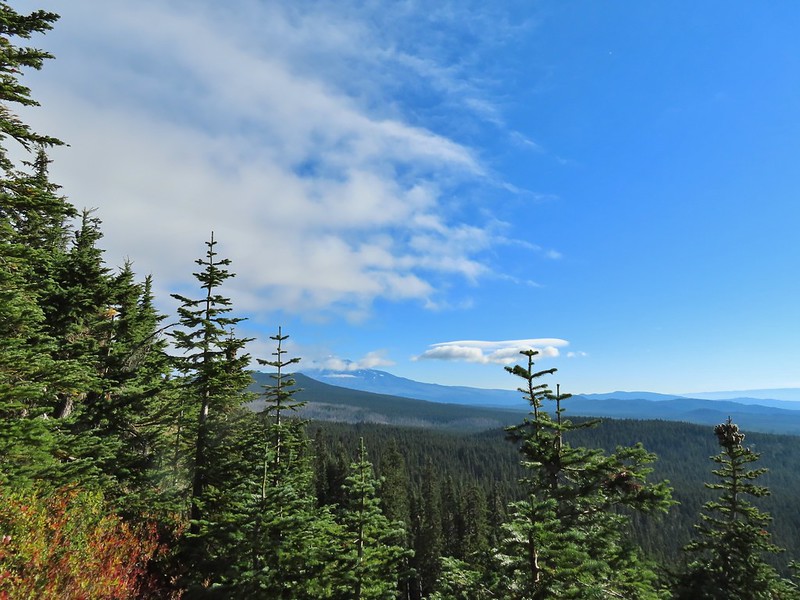
IMG_4568Mt. Jefferson was also visible to the right of Mt. Hood. Unfortunately so was the smoke being produced by the Bull Complex Fire which destroyed the historic Bull of the Woods Lookout (post) on Labor Day 😦 .

"IMG_4572Autumn is on the way, bring on the rain please.
IMG_4583

The PCT stuck to the long summit which would have also provided good views of Mt. Adams and Mt. St. Helens on a clearer day.
IMG_4591Mt. Adams

IMG_4595Looking toward Mt. St. Helens

IMG_4594The peaks in the Trapper Creek Wilderness (post) to the west.
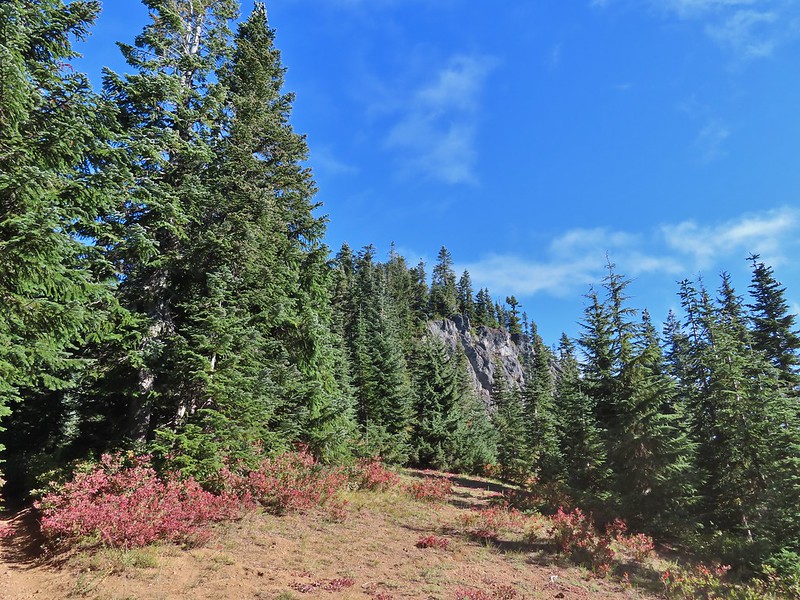
We finally began to descend from Berry Mountain and after 3 miles on the PCT arrived at a signed junction for the Indian Racetrack Shortcut Trail.
IMG_4604Cliffs on Berry Mountain

IMG_4607Mt. Hood as we headed downhill.

IMG_4609Red Mountain and its lookout tower.

IMG_4617This beargrass is way off schedule.

IMG_4619

On our previous hike we’d arrived at this junction from the other direction so when we turned right we one a somewhat familiar trail. After a brief stint in the forest the trail entered larger and larger meadows.
IMG_4622

IMG_4624

After a half mile we arrived at the Indian Racetrack Trail arriving on our right.
IMG_4625

This would be the route back to our car but first we wanted to revisit the lookout on Red Mountain so we continued straight for approximately 50 yards and turned left at a pointer for the Indian Racetrack Trail.
IMG_4629

We followed the trail 0.8 miles to a road and then followed the road another quarter mile to the lookout gaining a total of 700′ along the way.
IMG_4630

IMG_4634Mt. Adams from a viewpoint along the way.
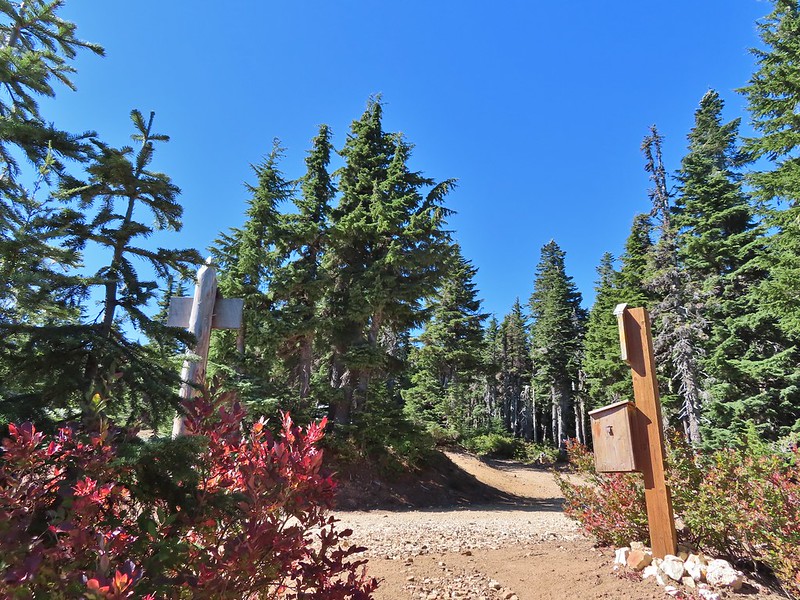
IMG_4632

IMG_4637

IMG_4638

We passed two sets of hikers on their way down, the second of which mentioned having accidentally driven to the lookout. Apparently someone had vandalized the gate which allowed vehicles to drive up the road. Hopefully the Forest Service can get that remedied quickly as Google still shows the Indian Racetrack Trailhead on Red Mountain.
IMG_4640

IMG_4645

IMG_4645

IMG_4648

IMG_4656Not sure if someone forced the door open too or not.

IMG_4652View of Mt. Adams beyond Indian Heaven.

IMG_4657Photo taken from the doorway, it looked like nothing had been vandalized.
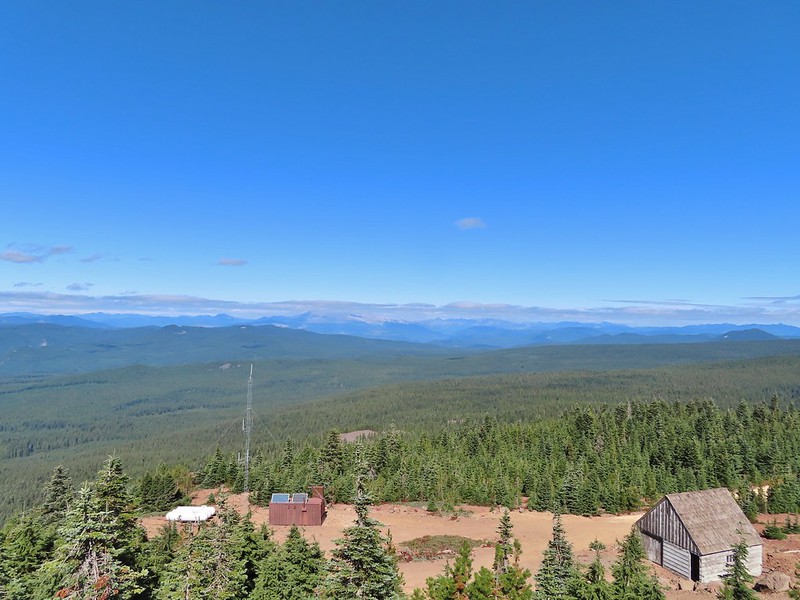
IMG_4658Mt. St. Helens still hiding behind that line of clouds.
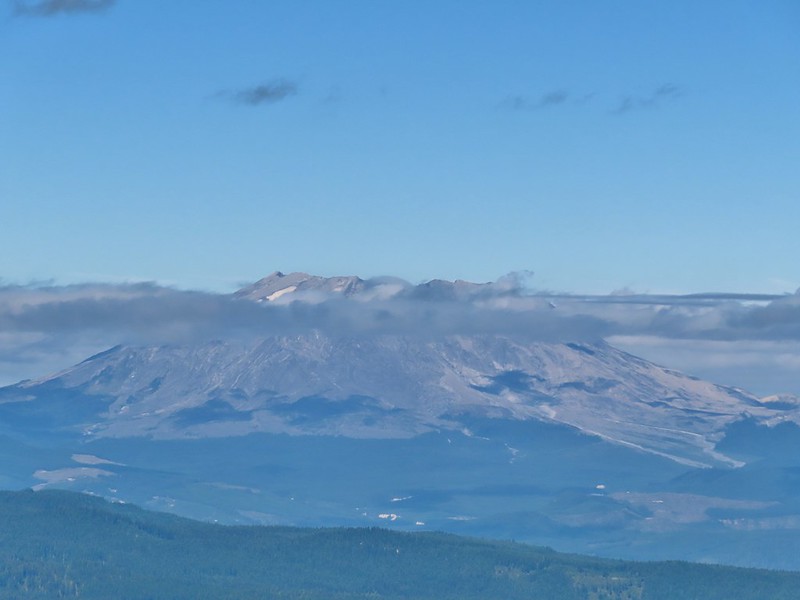
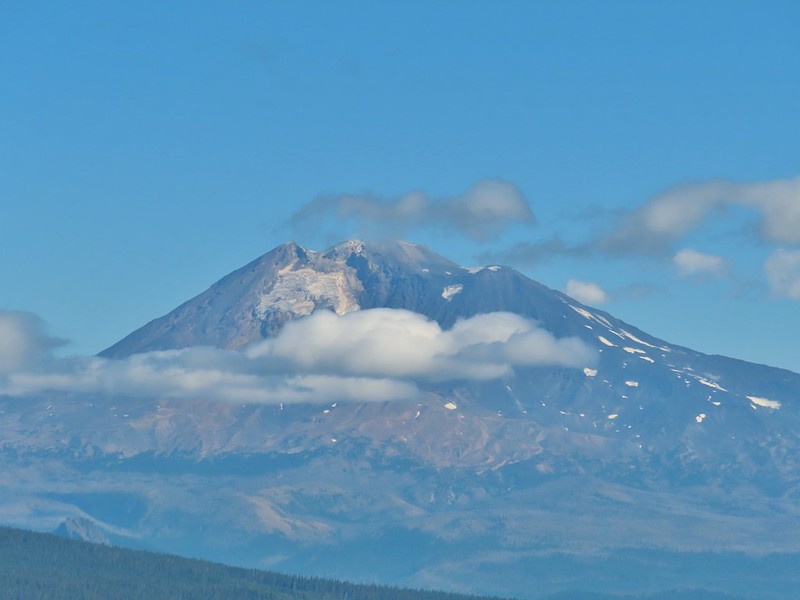
We took a long enough break at the summit to get to a brief glimpse of Mt. St. Helens summit.
IMG_4673

IMG_4675Mt. Adams with a few clouds passing by.

IMG_4671Mt. Hood with smoke from the Bull Complex behind.
We headed back down the Indian Racetrack Trail to Indian Racetrack and then continued on it past Race Track Lake. We passed quite a few hikers on our way down and saw more at Indian Racetrack.
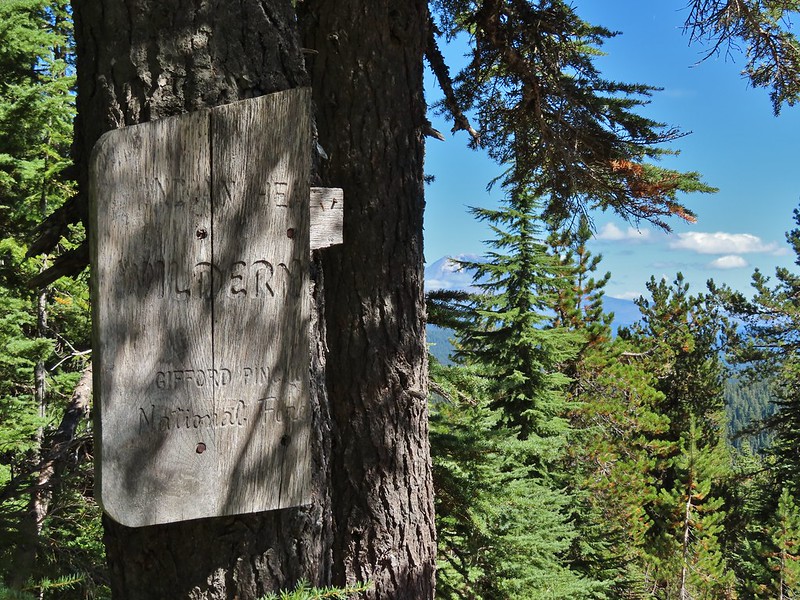
IMG_4681Indian Heaven Wilderness sign on Red Mountain with Mt. Adams in the background.

IMG_4686Race Track Lake on the left.

IMG_4688

IMG_4691

It was 2.3 miles total from the junction back to the Falls Creek Horse Camp. We continued to see more and more hikers and were once again glad we’d gotten an early start allowing us to have the lookout to ourselves.
IMG_4694Hardhack

IMG_4697

IMG_4700Footbridge over Falls Creek.

IMG_4702Falls Creek

IMG_4710Butterfly near Falls Creek.

IMG_4712Sign at the final trail junction near FR 65.

Reeder called this a 12 mile loop but our GPS came in at 11.2 miles which was a nice surprise. Total elevation gained was approximately 2850′. For this loop route finding, map, and navigation skills are highly recommended, otherwise the out and back option still provides a nice hike. Happy Trails!

Orange represents the old Basin Lakes Trail which is not shown on most maps.

Flickr: Indian Racetrack via Falls Creek

Categories
Hiking Mt. St. Helens Trip report Washington Washington Cascades

Norway Pass – 08/29/2021

After spending the night in our tent at Badger Lake (post) Heather’s foot was feeling better enough to give the Norway Pass hike a go. We were up nice and early thanks in part to an owl who visited the lake just before 4am. After a breakfast of Mountain House’s Spicy Southwest Skillet (our current favorite) we packed up and started our hike back to Elk Pass.
IMG_4311The view from the trees surrounding our campsite as we prepared to leave.
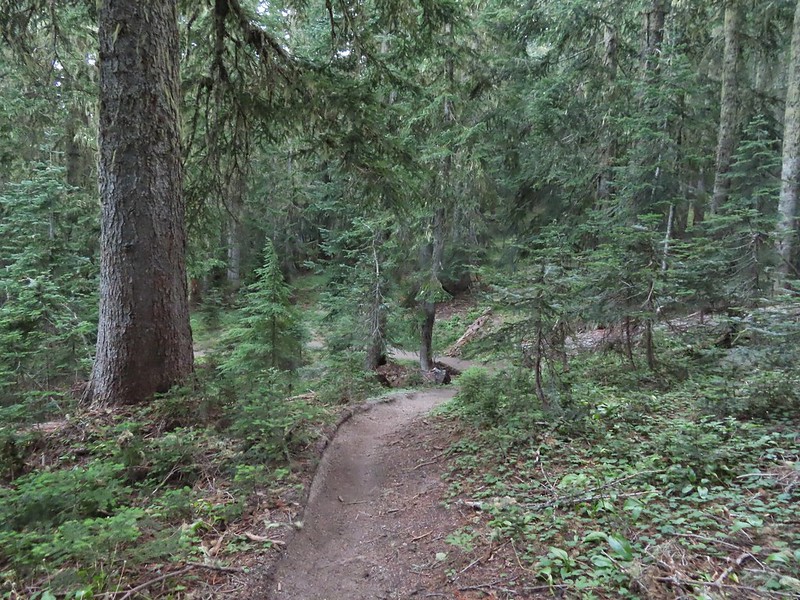
We had decided not to follow the Boundary Trail all the way back to Elk Pass opting to cut over to a forest road after the first two miles near the Mosquito Meadows Trail junction. Sullivan mentions doing this stating that it is “slightly quicker, but a bit tedious”. Our hope was there would be less elevation gain because we’d done a fair amount of up and down on the trail the day before.
IMG_4314

IMG_4316Mt. St. Helens catching some morning light.

IMG_4317

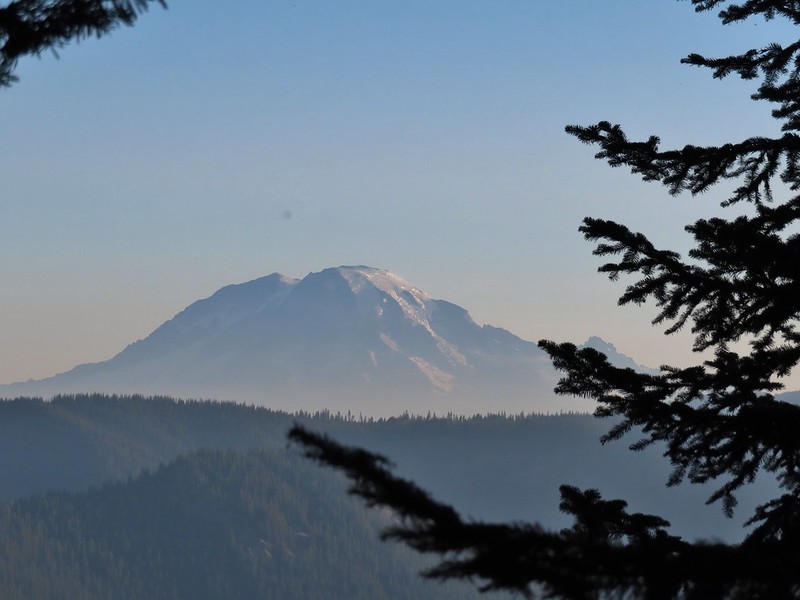
IMG_4318Mt. Rainier without a whole bunch of smoke.
IMG_4319

There were a couple of paths near the trail junction where people had cut over to the old forest service road which was only about 10 yards away (but hidden by trees from the trail). We turned left at the first of the paths and quickly popped out onto the road.
IMG_4322

We turned right on the roadbed and followed it downhill just under half a mile to FR 2551 which is still in use.
IMG_4328

IMG_4331We snagged a few black caps along the road to as a post breakfast snack.

IMG_4333FR 2551

We turned right onto FR 2551 and were pleasantly surprised to find that there was very little elevation change (just a slight gain) over the 1.7 miles back to FR 25.
IMG_4335The very top of Mt. St. Helens from FR 2551.

IMG_4338Sullivan had labeled this stretch with the word slide which had caused a little apprehension in deciding to try this return route but despite the obvious slide(s) that had occurred here the road was in decent shape.
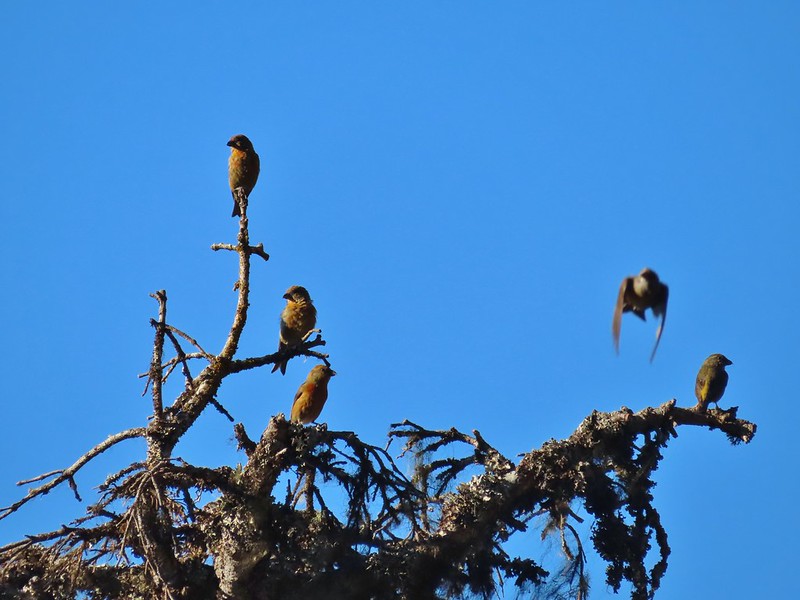
IMG_4339Not sure what kinds of birds were in this tree but there were a lot of them.

IMG_4343FR 25 at the end of a long straight away.

We turned right again at FR 25 walking along the shoulder for 150 yards to the Boundary Trailhead.

IMG_4344The Boundary Trail crosses FR 25 near the road sign ahead. The picture was taken from FR 2551 at FR 25.
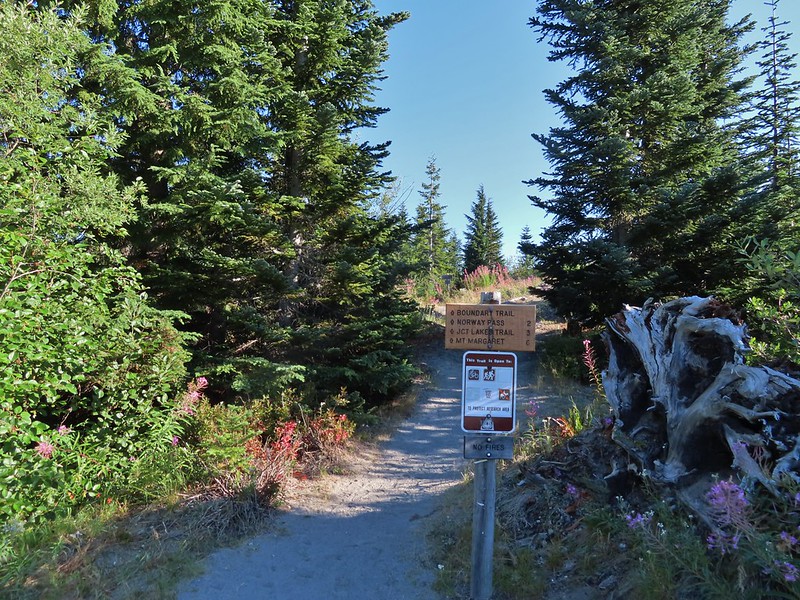
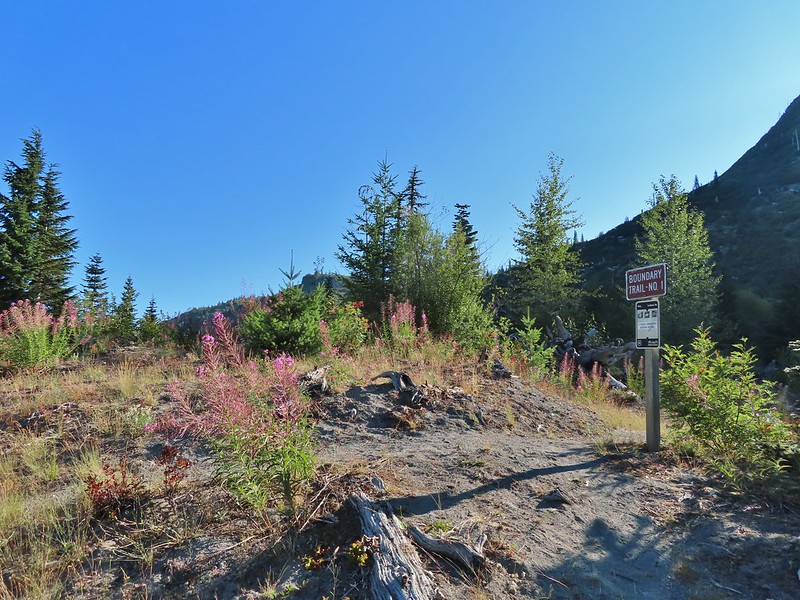
IMG_4345

We pulled our day packs out, refilled our water with some extra we had left in the car and drove north on FR 25 to FR 99 where we turned left heading for the Norway Pass Trailhead. A short connector from the trailhead leads to the Boundary Trail.
IMG_4346

IMG_4348

We turned left at the Boundary Trail and climbed for just over a mile to a signed junction with the Independence Ridge Trail. A couple was taking a break at the junction and another hiker, from the Mt. St. Helens Institute, coming down hill stopped to ask them if they were debating on which way to go. They weren’t and she said good because the Independence Ridge Trail is “dicey”.
IMG_4355

IMG_4357

IMG_4359Paintbrush

IMG_4360Buckwheat

IMG_4361

IMG_4366

IMG_4369We could hear a waterfall in the valley below.

IMG_4368The top of the waterfall.

IMG_4373Penstemon and pearly everlasting.

IMG_4382Looking back over our shoulders to Meta Lake.

IMG_4384Mt. Adams also from over our shoulders.

IMG_4385Aster

IMG_4387

IMG_4388Switchback at the Independence Ridge Trail junction.
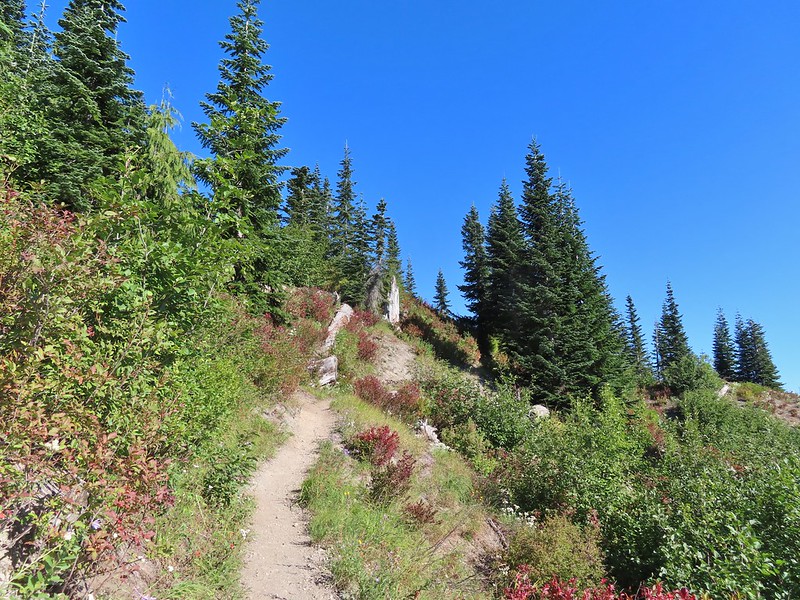
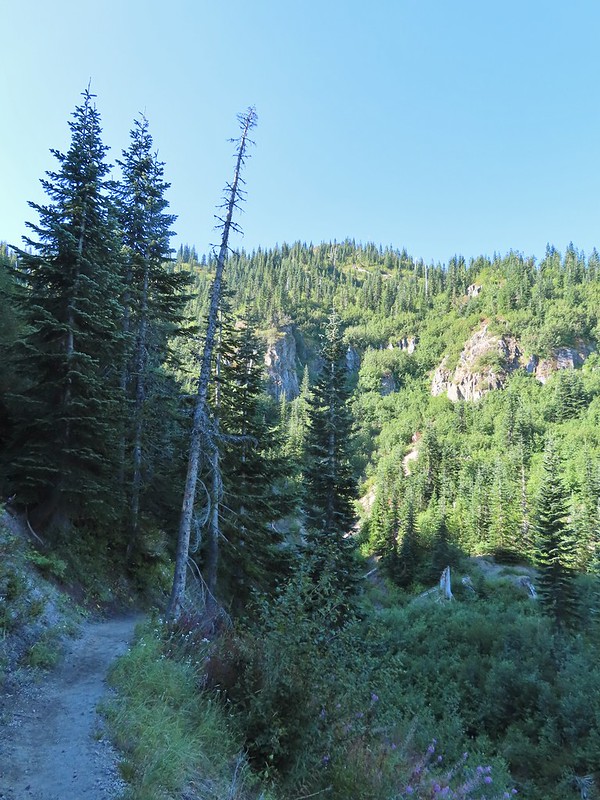
The Boundary Trail climbed less steeply beyond the junction with the exception of an up and down to cross a dry stream bed.
IMG_4390

IMG_4396Heading down to the stream bed.

IMG_4397

IMG_4399Penstemon

IMG_4445Monkeyflower

As the trail made it’s final climb to Norway Pass Mt. Rainier was visible beyond the ridges to the north.
IMG_4400

IMG_4401

IMG_4407Norway Pass (the low saddle to the right) from the trail.

IMG_4408Orange agoseris

IMG_4412Approaching the pass.

IMG_4414

To get a good view of Mt. St. Helens we had to descend on the trail a short distance beyond the pass.
IMG_4431_stitch

IMG_4420

After admiring the view we headed back stopping along the way to debate what these flowers were and whether or not they were non-natives (we believe they probably are).
IMG_4439

IMG_4442

With much of the 2.2 mile return hike being downhill we made good time back to the trailhead where we changed and then started the long drive home.
IMG_4446Mt. Adams and Meta Lake from the trail.

This hike was just 4.4 miles but gained nearly 900′ of elevation making it a good workout with great views.

The hike out of Badger Lake had been 4.2 miles so combined it was an 8.6 mile day. Knowing that we had now hiked at least portions of all 100 featured hikes in another of Sullivan’s books was the icing on the cake of a fun but tiring visit to Mt. St. Helens. Happy Trails!

Flickr: Norway Pass

Categories
Hiking Mt. St. Helens Trip report Washington Washington Cascades

Harmony Falls, Loowit Falls, and Badger Lake – 08/28/2021

After having spent a week in SE Oregon checking off a few of Sullivan’s featured hikes in that region we turned our focus back to the Northwest Oregon/Southwest Washington guidebook where just 3 featured hikes remained. All three hikes were located on the NW side of Mt. St. Helens, a three and a half hour drive from Salem. These last three hikes were a good example of some of the things we’ve had to work out on what counts toward being able to check off a hike. Due to their distance day hikes were out and a limited number of nearby rooms meant we needed to get creative. Our plan was to do portions of all three hikes on Saturday starting at Mt. St. Helens and ending with us backpacking in to Badger Lake and the finishing up on Sunday by driving back to Mt. St. Helens to complete one of the three options Sullivan has for his Spirit Lake hike (4th edition hike #29).

One of the quirks with Sullivan is that while he has the 100 featured hikes he often gives multiple options. Typically the second option is an extension of the shorter option but sometimes the options go in different directions or are even completely different hikes starting at different trailheads. Two of these last three hikes had three options. For Spirit Lake the shortest option, Harmony Falls, started at the Harmony Trailhead while the other two, Norway Pass and Mt. Margaret, began at the Norway Pass Trailhead. We had hiked up Mt. Margaret on a previous trip coming from the other direction (post) so we didn’t feel we needed to do that option but the other two options would be new to us so we planned on doing them both starting with Harmony Falls and saving Norway Pass for Sunday.
IMG_3769

From the Harmony Viewpoint a 1.2 mile trail leads 700′ downhill to Spirit Lake.
IMG_3771

IMG_3770

IMG_3772Mt. St. Helens from the viewpoint.

As has been the case this Summer there was a good deal of haze surrounding us but we had blue(ish) sky overhead. There were also a fair amount of wildflowers blooming, at least compared to what we had seen in SE the previous week.
IMG_3778

IMG_3780

IMG_3782

IMG_3783Pearly everlasting

IMG_3789Penstemon

IMG_3791Paintbrush

IMG_3798Mt. St. Helens

IMG_3801

IMG_3805_stitch

Prior to the 1980 eruption of the mountain Harmony Falls was a 50′ waterfall but most of the falls were buried as was the lodge that sat near the base of the falls. Now there is only a small cascade along the trail.
20210828_084401

20210828_085006Mt. St. Helens and Spirit Lake from the end of the trail.

As we were making our way back we were doing our best to try and identify the various rock formations and peaks across the lake.
IMG_3834Coldwater Peak (post) is easy with the white equipment on top.

IMG_3835The Dome

IMG_3832Mt. Margaret

IMG_3831Mount Teragram

After finishing this 2.4 mile hike we continued driving toward Mt. St. Helens on FR 99 and parked at the Windy Ridge Interpretive Site where the road is gated and only open to research vehicles.
IMG_3845

We were now working on featured hike #28 – Windy Ridge. Again Sullivan had three options, this time all starting from this parking lot. The shortest option was a .2 mile round trip up a steep set of stairs to the Windy Ridge Viewpoint at the northern end of the parking lot (see photo above). We set off across the lot to tackle this one first.
<img src="https://live.staticflickr.com/65535/51413600517_e0b437d3fb_c.jpg&quot; width="800" height="600" alt="IMG_3847">The interpretive site and Spirit Lake.

IMG_3851Mt. St. Helens.

IMG_3854

Aside from a little section near the top the stairs were nicely spaced making the climb better than it looked from the bottom.
IMG_3856

In addition to Mt. St. Helens both Mt. Adams and Mt. Rainier were visible from the viewpoint although on this day the haze was an issue.
IMG_3861Mt. Adams

IMG_3864Mt. Rainier

IMG_3862

The interpretive signs at the viewpoint did a good job of identifying different features that were visible which we appreciated.
IMG_3866

IMG_3872

IMG_3875

IMG_3878The Johnston Ridge Observatory was visible across Spirit Lake on a far hillside.

IMG_3880

IMG_3882It’s often hard to tell if you’re seeing dust from rockfall or steam from one of the vents.

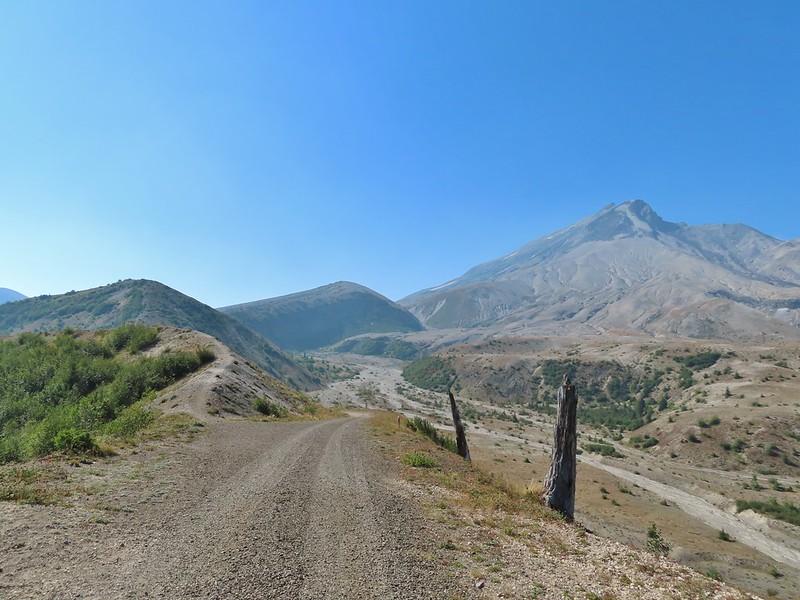
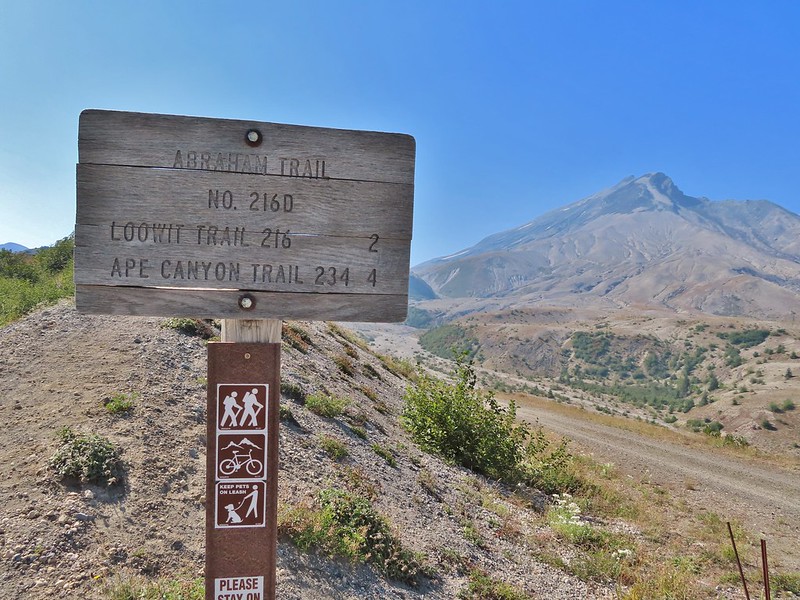
After reading the signs and taking in the views we headed down the stairs and to the other end of the parking area where we walked past the gate and followed FR 99 for 1.8 miles to a sign for the Abraham Trail, the return route for the longer option.
IMG_3883

IMG_3884

IMG_3889

IMG_3895Butterfly on ragwort

IMG_3897Butterfly on pearly everlasting

IMG_3899Lupine in the pearly everlasting

IMG_3904

IMG_3911Golden-mantled ground squirrel

IMG_3913Might be Oregon sunshine

IMG_3915Penstemon

IMG_3919

IMG_3920

The longer option would add approximately 2.2 miles and 500′ to our hike and visit the Plains of Abraham. As with Mt. Margaret we had visited the Plains of Abraham (post) previously so we were going to stick to the shorter option. Beyond the junction with the Abraham Trail FR 99 dropped to a small parking area for research vehicles where two trails began.
IMG_3924

To the left was the Windy Trail and to the right was the Truman Trail. Our plan was to take the Windy Trail and hike a clockwise loop returning on the Truman Trail.
IMG_3926

IMG_3925

We followed the Windy Trail just over a mile to the Loowit Trail where we turned right.
IMG_3928

IMG_3935

IMG_3939

IMG_3942Paintbrush and dwarf lupine

IMG_3943Pearly everlasting

IMG_3945

IMG_3950The Loowit Trail junction.

The Loowit Trail immediately dropped into a gully to cross a small stream.
IMG_3951Spirit Lake from the junction.

IMG_3953In the gully.

IMG_3956

We continued another 0.4 miles before arriving at Big Spring which was a big surprise.
IMG_3958

IMG_3964Another gully to cross.

IMG_3965Big Spring is in the willow thicket.

We knew that there was a spring but more often than not the springs wind up being small trickles or big mud puddles but not Big Spring. This was a good sized stream beginning almost right next to the Loowit Trail.
IMG_3972

IMG_3970The stream flowing over the Loowit Trail.
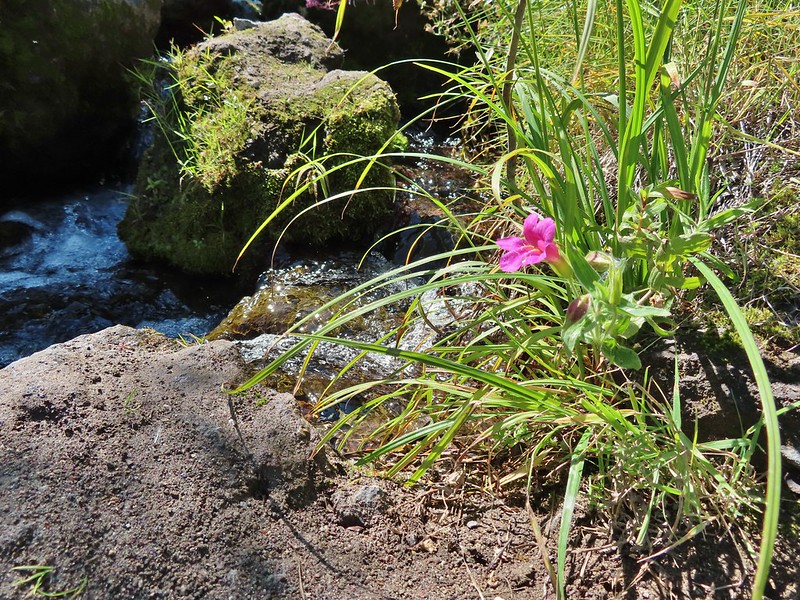
IMG_3974A pink monkeyflower at the spring.

IMG_3977

IMG_3984Looking back at the willows and Big Spring.
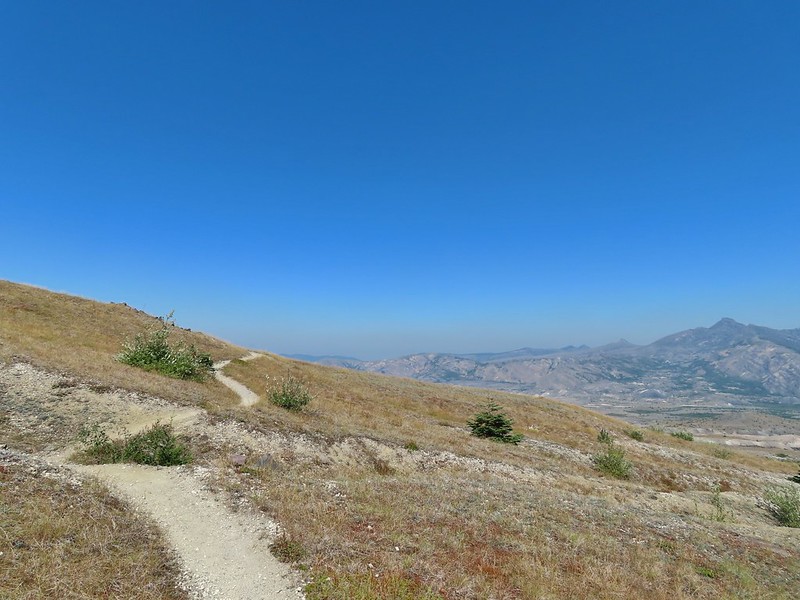
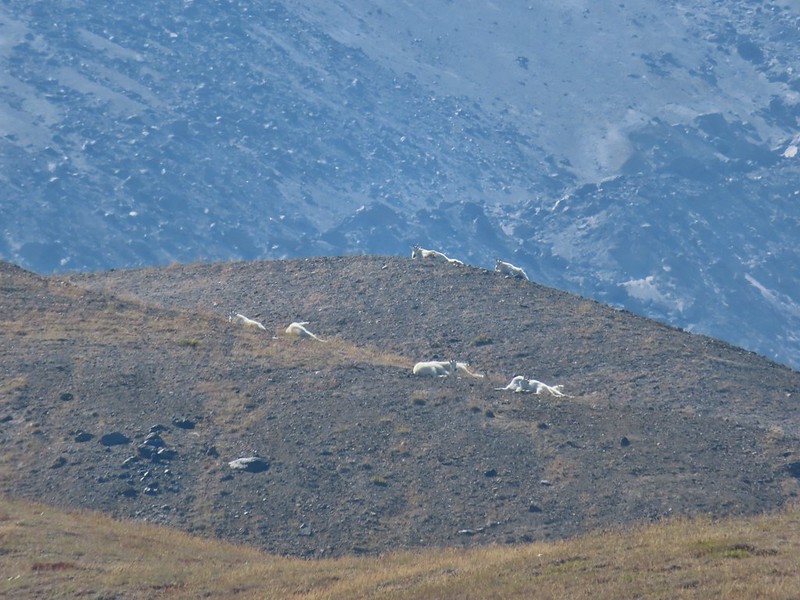
Another half mile of big views and a couple of gully crossings followed Big Spring. We were excited to spot mountain goats lounging on a ridge between the mountain and the trail along this stretch.
IMG_3989Coldwater Peak to the right.

IMG_3992The Sugar Bowl lava dome.

IMG_3996_stitchSpirit Lake from the trail.

IMG_4001The first goats we spotted are on this ridge above the lone tree.
IMG_4004

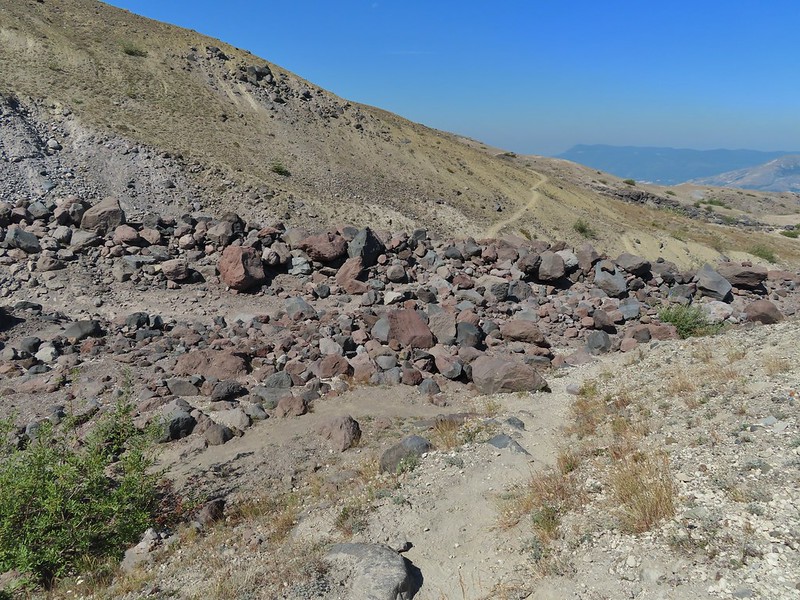
IMG_4010The Loowit Trail crossing two gullies in a short stretch, one red one black.

IMG_4016Dropping into the second gully.

IMG_4019From the second gully we could see quite a few more goats on the ridge.

A half mile from Big Spring we arrived at another trail junction.
IMG_4030Approaching the junction with the side trail to Loowit Falls.

IMG_4031Sign for Loowit Falls.

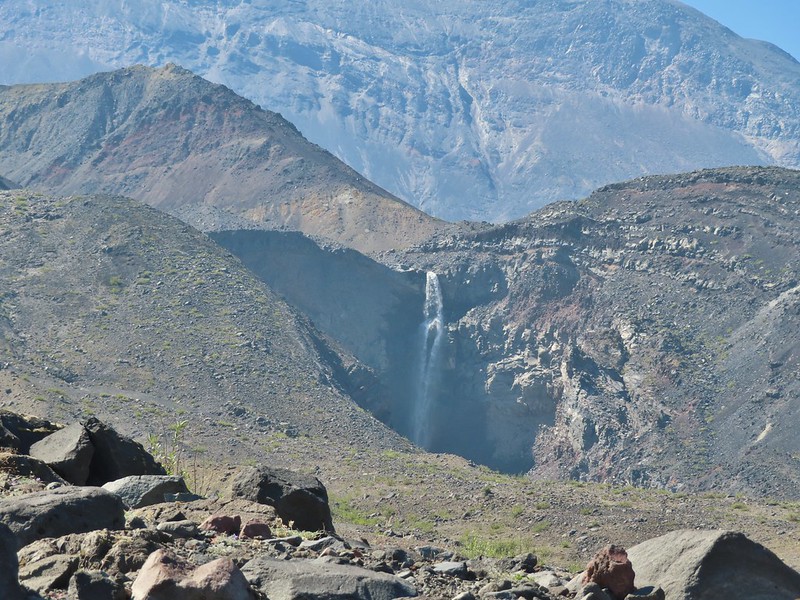
We stayed straight here following the pointer for Loowit Falls for another half mile.
IMG_4039Loowit Falls (right side of the photo) was visible for much of the half mile.
IMG_4041

IMG_4043Looking back at Coldwater Peak and Spirit Lake. (The top of Mt. Rainier is barely visible peaking over the top of the ridges.)

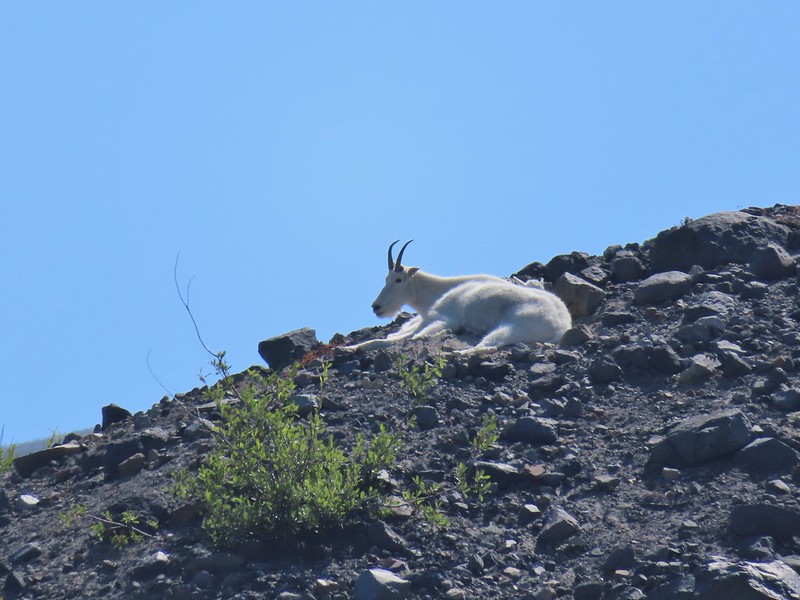
As we neared the falls we noticed another small herd of mountain goats on the hillside.
IMG_4044

IMG_4046

IMG_4056

We could also see the hummocks (post) off in the distance to the NE, pieces of the mountain that slid off during the 1980 eruption and settled in the debris flow creating odd mounds.
IMG_4051

IMG_4053

Loowit Falls looked bigger than I had expected. We took a good break at the viewpoint with a couple of other hikers and a pair of young Forest Service workers.
IMG_4066

IMG_4074

IMG_4070Spirit Lake from the viewpoint.

After our break we returned to the Loowit Trail to continue the loop.
IMG_4092

IMG_4093

IMG_4104Paintbrush

IMG_4105Dwarf lupine

Just under three quarters of a mile from the Loowit Falls Trail junction we arrived at the Willow Springs Trail junction.
IMG_4108

Here we left the Loowit Trail by turning right on the 0.8 mile long Willow Springs Trail.
IMG_4109

IMG_4110Mt. St. Helens from the Willow Springs Trail.

IMG_4122Heading toward Spirit Lake.

The Willow Springs Trail ended at the Truman Trail where we again turned right.
IMG_4124

IMG_4125

We followed the Truman Trail for a mile and a half back to the research vehicle parking area, re-crossing the gullies and streams we had crossed on the Loowit Trail.
IMG_4128

IMG_4135

IMG_4137

IMG_4139The Dome above Spirit Lake

IMG_4146

IMG_4147

IMG_4150Vehicles ahead in the research parking area.
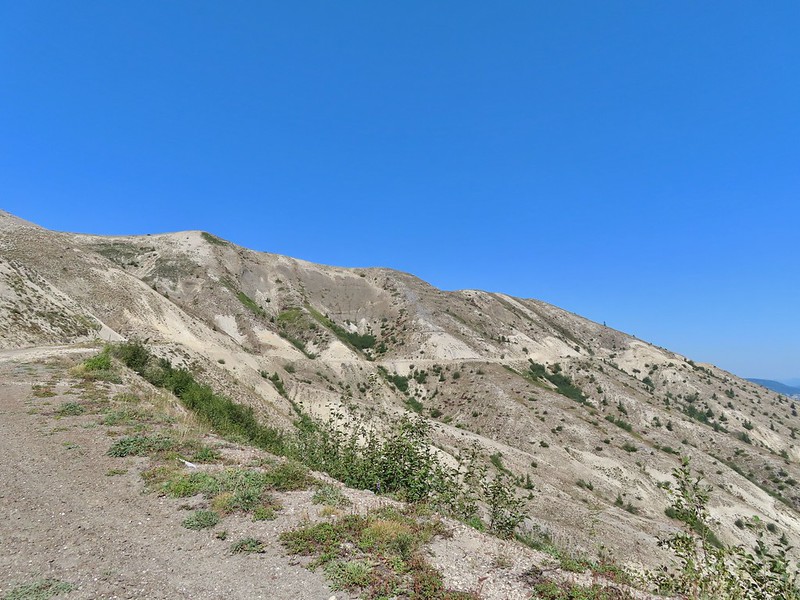
From the parking area we followed FR 99 (mostly uphill until the very end) 1.8 miles back to the Windy Ridge Interpretive Site. The haze was improving as the day wore on and we could now at least make out some snow on Mt. Adams.
IMG_4152

IMG_4155Mt. Adams to the left.

IMG_4160Mt. Adams

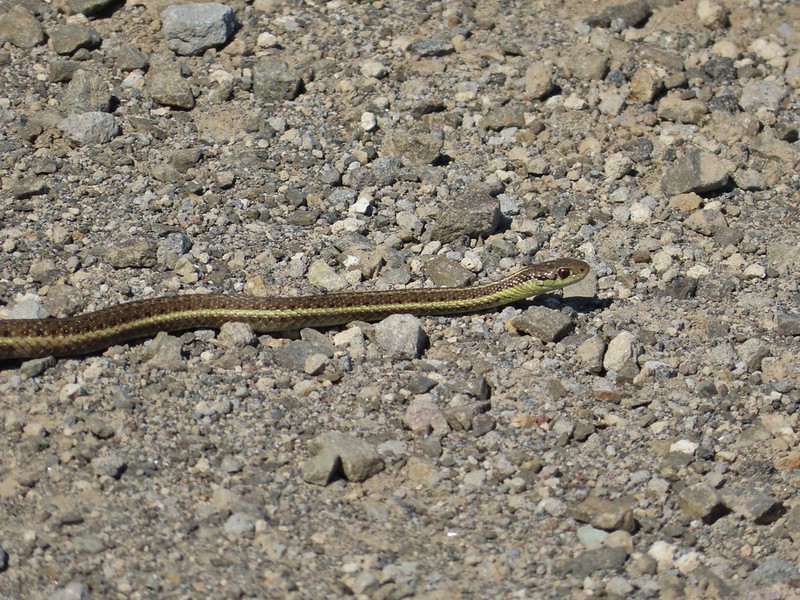
IMG_4165Look out for snakes, not the poisonous kind just don’t want to step on them.
IMG_4166

IMG_4168Some sort of sulphur butterfly on pearly everalsting.
Our 10.7 mile track from the Windy Ridge Interpretive Site

We hopped in the car and drove back to FR 25 where we turned south to reach the Boundary Trailhead at Elk Pass.
IMG_4175

The 53.7 mile long Boundary Trail’s western end is near Norway Pass where we planned on hiking the next day while the eastern end is located at Council Lake near Mt. Adams. The section of the trail that we planned on hiking was a 4.3 mile segment from Elk Pass to Badger Lake. From the signboard at the trailhead a short spur led away from FR 25 into the trees before joining the Boundary Trail.
IMG_4177

IMG_4182

We turned left on the Boundary Trail and promptly arrived at FR 25 which we then crossed.
IMG_4184

IMG_4185

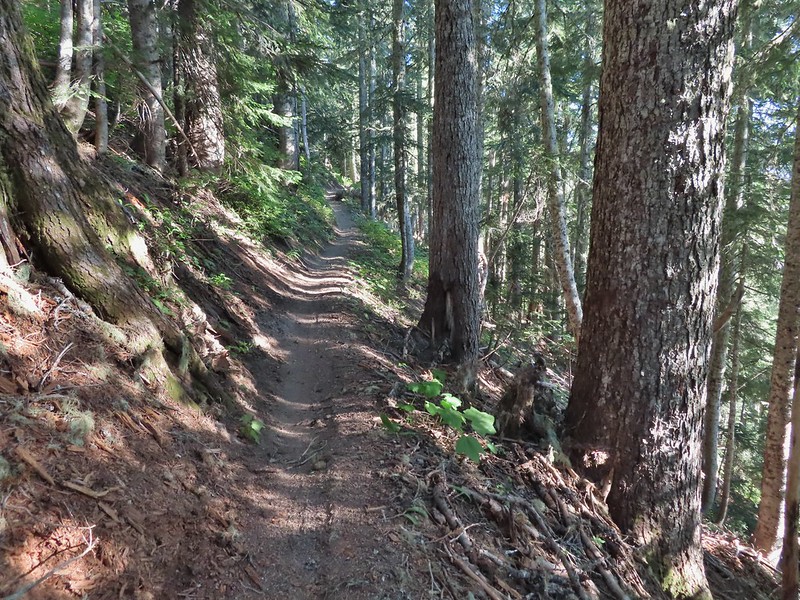
This trail is open to both mountain bikes and motorcycles which probably explains why it was only briefly one of Sullivan’s featured hikes (#30 in his 4th edition). The forest was pretty and quiet (no motorcycles during our visit) but the trail showed a lot of wear from tires.
IMG_4190

IMG_4195

One plus was a good variety of berries along the way and there were a few flowers as well.
IMG_4192Salmonberries

IMG_4196Blueberries

IMG_4210Huckleberries

IMG_4209Mushrooms (the flowers of Fall)

IMG_4215

IMG_4212I was really surprised to still be able to make out the remains of the petals on these trillium.

IMG_4213These bunchberries with a few petals left were near the trillium above.
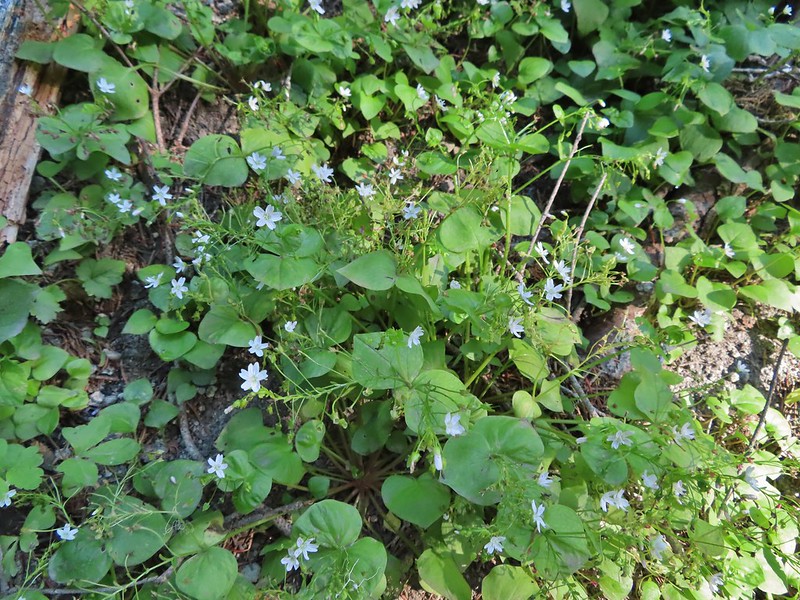
IMG_4193Candyflower

At the 2.3 mile mark we passed the Mosquito Meadows Trail on the left.
IMG_4218

At this junction Heather told me to go on ahead and find a campsite then hike up Badger Peak without her if I wanted. Her plantar fasciitis had flared up on the way back from Loowit Falls and was struggling a bit. We had planned on hiking up to the summit after setting up camp and I didn’t want to wait for morning because the rising Sun would have been directly behind Mt. Adams. (Sullivan’s short option for this hike was to the lake and back while the longer option was to the summit.)

The trail gained a little over 600′ over the next two miles which doesn’t sound like a lot but nearly all the elevation was packed into two short sections of the leg.
IMG_4223

IMG_4225These thimbleberries weren’t ripe but a short distance further were a lot of ripe ones. I thought I might have to hike back and retrieve Heather from them.

IMG_4229A brief glimpse of Mt. Rainier from the ridge the trail was following, it looked like a lot of the smoke had blown away.
IMG_4232

Two miles from the Mosquito Meadows Trail I arrived at a junction with the Badger Peak Trail.
IMG_4237

Before I headed up that trail though I needed to hike on to Badger Lake to find a campsite (and get rid of my full backpack). Beyond this junction the trail passed through a meadow crossing Elk Creek and arriving at the lake on the far side.
IMG_4242

IMG_4240Aster

IMG_4243Elk Creek

IMG_4244Pink monkeyflower along Elk Creek

IMG_4247Lupine

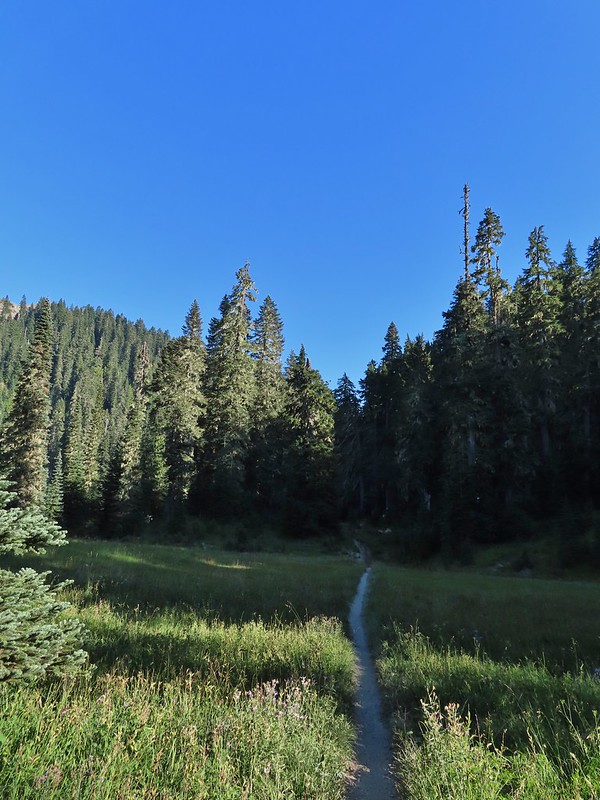
IMG_4248The trail near Badger Lake was particularly torn up and there were several signs posted admonishing motorcyclists to stop driving off trail.
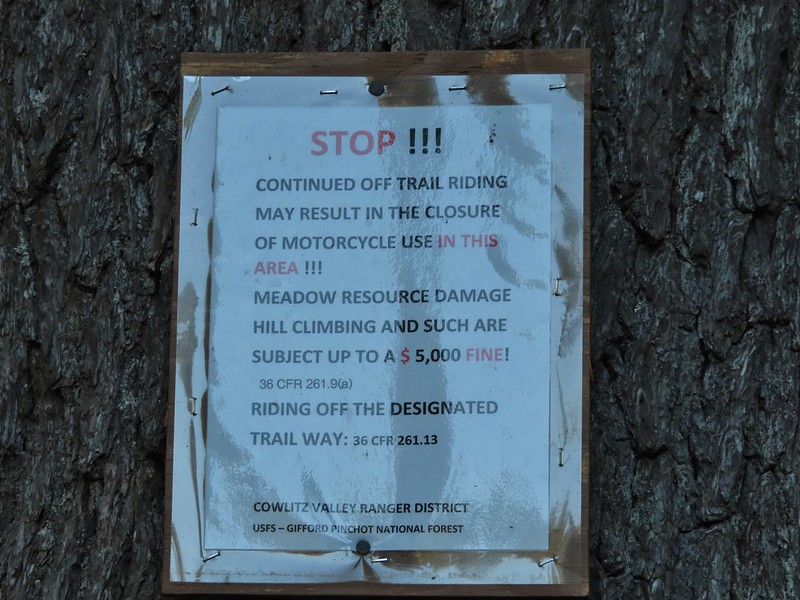
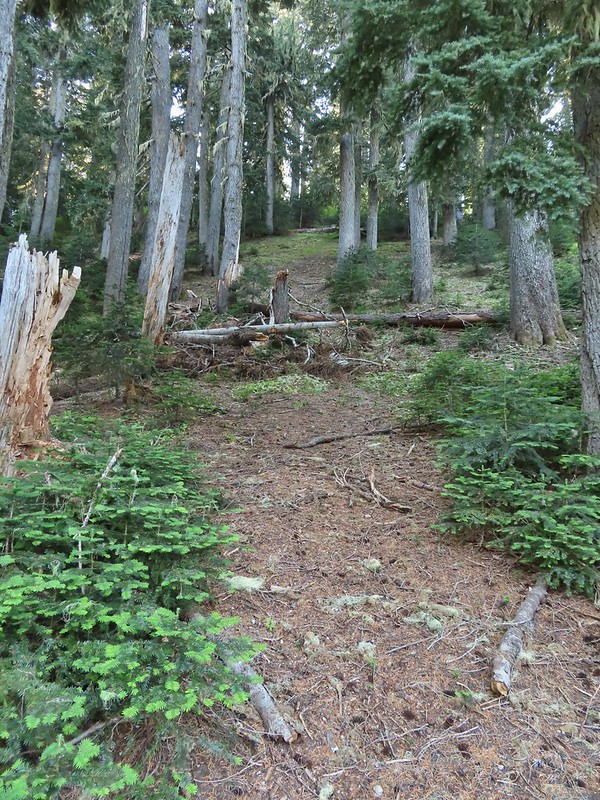
IMG_4249

IMG_4250Torn up hillside near the lake, it only takes one or two idiots to cause a lot of damage (the same goes for hikers/mountain bikers).
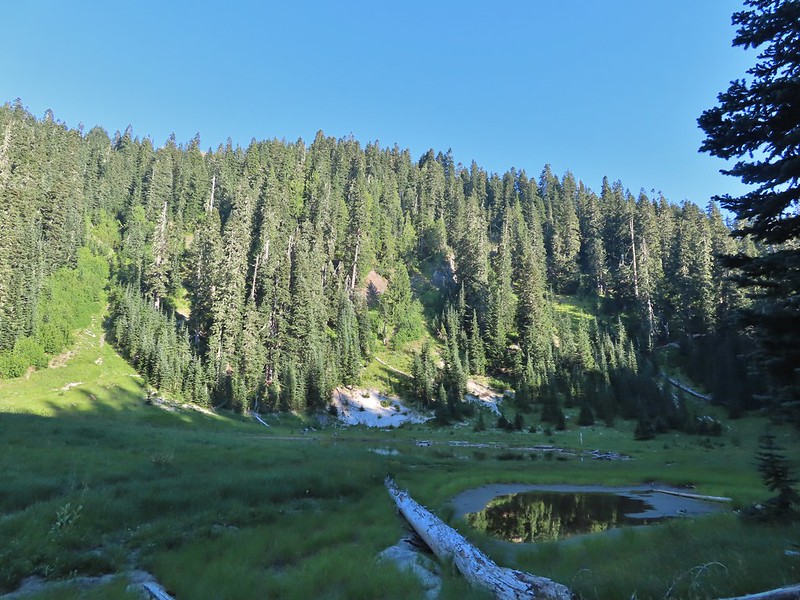
IMG_4251The little puddle in the foreground is not the lake, it is further back.
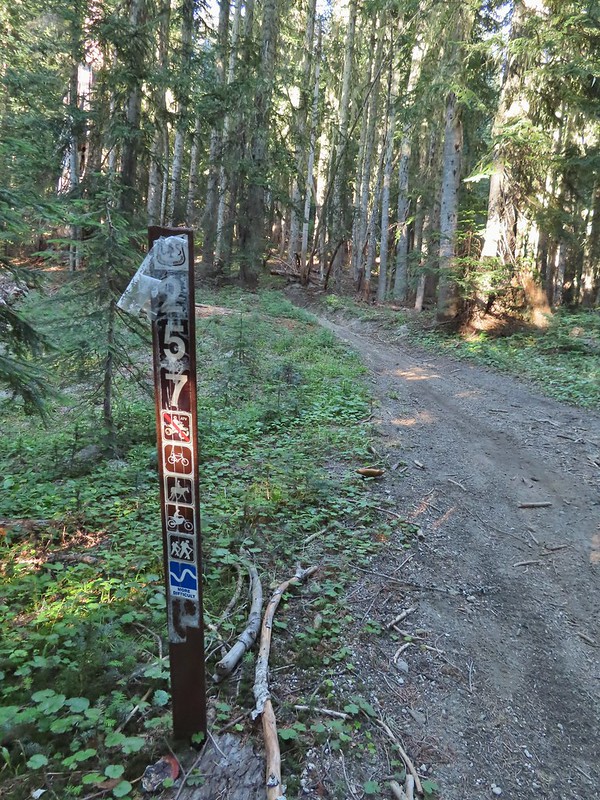
I found a tent site back in the trees near the meadow and dropped my pack off and hung my hunter orange shirt so Heather couldn’t miss it. Then I grabbed my day pack and hiked back to the Badger Peak Trail and headed uphill.
IMG_4256

IMG_4257This mushrooms was at least as wide as a salad plate.

It was 0.8 miles to the summit with 700′ of elevation to gain which meant the trail was pretty steep. In addition the motorcycles had gouged a deep trough in the center of much of the trail which was uncomfortably narrow to walk in. It turned out to be for the best that Heather had decided to skip the summit.
IMG_4259

IMG_4263

IMG_4267

IMG_4266A columbine

IMG_4271

The view was nice though and the sky around Mt. Adams had also cleared up greatly from earlier in the day.
IMG_4276

A hiker from Boise was at the summit when I arrived. She said she had been planning on staying up there until sunset but was having second thoughts due to the chilly breeze and not wanting to have to hike down the trail in the dark. I helped her identify the different mountains as this was her first time to the area. She was on a driving expedition as was thinking of heading to the Olympic Mountains next.
IMG_4277Mt. St. Helens was hard to make out with the combination of haze and Sun position.

IMG_4278Looking south toward Mt. Hood (I could make it out with the naked eye.)

IMG_4281Mt. Hood in the haze.

IMG_4283Mt. Rainier

IMG_4284Mt. Rainier

IMG_4286Mt. Adams

IMG_4293The Goat Rocks were also hard to make out due to the smoke.

IMG_4292Western pasque flowers, aka hippies on a stick, below the summit.

I headed down after a short break and found Heather finishing setting up our tent.
IMG_4295

We took our dinner over near Badger Lake and then turned in for the night. It had been a long day with a lot of hiking. For me it was a 19.4 mile day with approximately 3800′ of elevation gain and Heather was in the 18 mile range with over 3000′, no wonder her plantar acted up.
IMG_4299

IMG_4296

IMG_4305The last of the sunlight hitting Badger Peak.

We hoped her foot would be feel better in the morning so the hike out wasn’t too miserable and so she might be able to do the Norway Pass hike. For now though we just needed to get our sore bodies to let us fall asleep. Happy Trails!

Flickr: Harmony Falls, Windy Ridge, and Badger Lake

Categories
Hiking Oregon SE Oregon Trip report

Pueblo Mountains – 08/20/2021

We had a long day planned for the final day of our trip to SE Oregon. We were starting off by doing Sullivan’s Pueblo Mountains hike (#96 in his “100 Hikes/Travel Guide Eastern Oregon” guidebook and we were going to attempt the long drive back to Salem (a 6 1/2 to 7 hour drive). We were a little nervous about getting to Sullivan’s starting point for his described 7.2 mile hike which follows a portion of the Oregon Desert Trail. He describes the final 2.2 miles of road as a “rocky, bumpy road”..”passable only by high-clearance vehicles”. Given where we were and the tire scare we’d had earlier in the week we decided that adding 4.4 miles of road walk round trip was okay with us so after turning right off of Highway 205 exactly three miles south of Fields we followed a decent gravel road 4.7 miles to a fork where we took the left most track a hundred yards or so to the first decent spot we could pull off and park at.

The Oregon Desert Trail is a 750 mile route doesn’t always follow a trail (or road or other discernible track).
20210819_151044_HDR

The section we would be hiking was guided by rock cairns with a couple of sections of what appeared to be actual tread but may also simply have been game/cattle trails that were going the same way. First we had to get to the start of the hike though so after a moment appreciating the desert sunrise we started up the rocky road.
IMG_3472

IMG_3473The view back along the road to the fork.
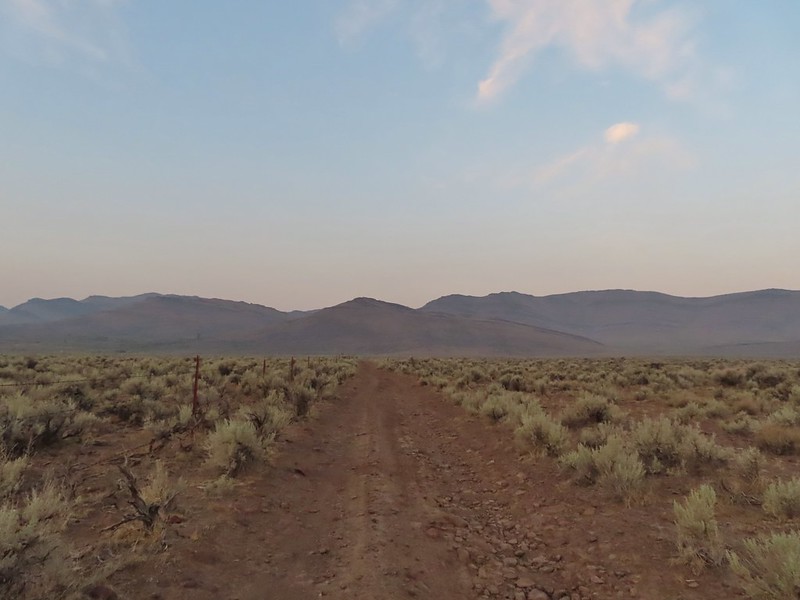
IMG_3475Road walk

IMG_3476Rabbit

There was a bit more smoke/haze on the horizon this morning than there had been for a few days and a red Sun rose in the east.
IMG_3477

IMG_3479

After just under a mile the road made a 90 degree turn at a fence corner then crossed Sesena Creek, which was still flowing.
IMG_3485

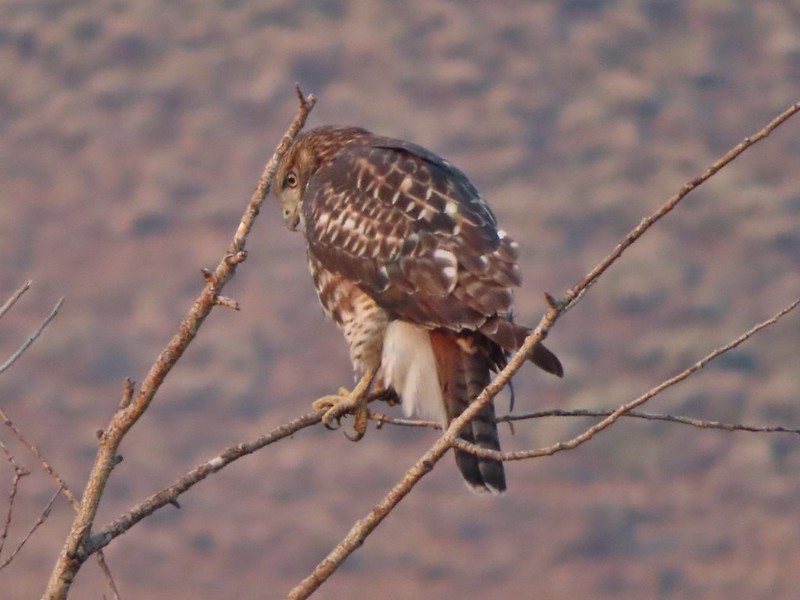
IMG_3495A hawk in a dead tree above the springs feeding Sesena Creek.
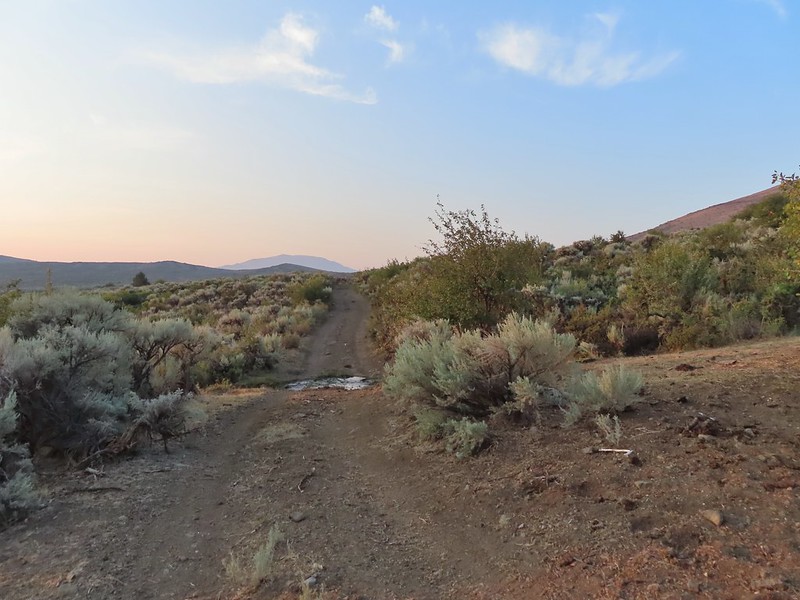
IMG_3501

IMG_3502

IMG_3504This was the only water we’d see all day.

We arrived at the grassy flat Sullivan described as the start of the hike. Sullivan listed 14 cairns along his hike starting with one here at the starting point but the rocks it had been comprised of were spread on the ground. We hoped that wasn’t a sign of things to come.
IMG_3518

IMG_3740The first cairn from later in the day.
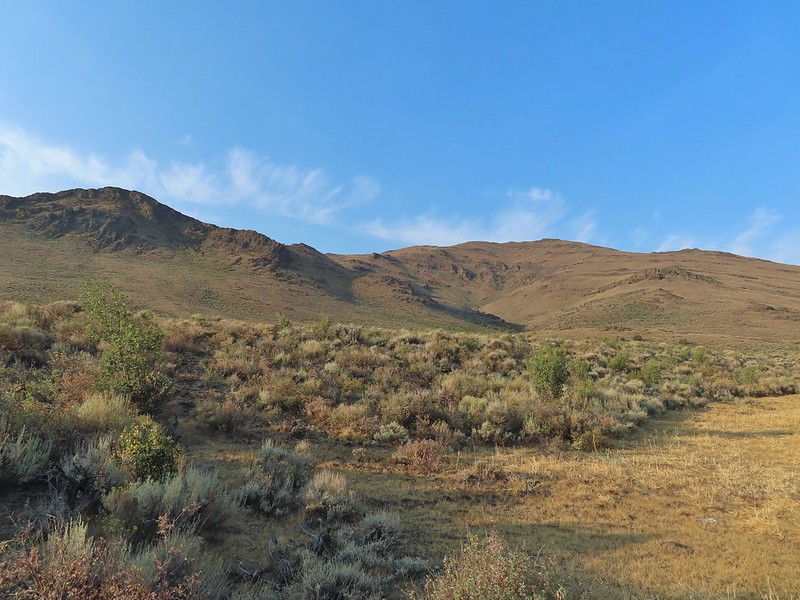
Luckily Sullivan had supplied GPS coordinates both along the drive and for cairns 1, 5, 10, and 14 which I had entered into both our GPS units. From the road at cairn one we followed an old road bed through the sage brush toward the mountains.
IMG_3521

IMG_3539

A little over half a mile along the road brought us to another grassy area, an old cow lick, where we veered left on a trail (cattle?) through the sagebrush.
IMG_3542

We could see the second cairn on a little rise ahead to our right and made our way towards it.
IMG_3545

IMG_3548

IMG_3557

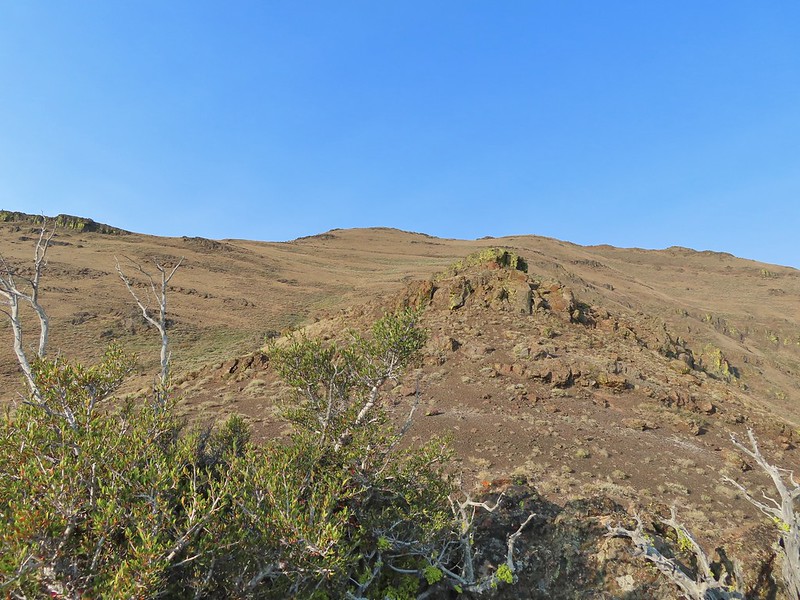
Sullivan’s instructions beyond the cow lick were to “head cross-country up the leftmost branch of the valley and scramble up past a grove of shrub-sized mountain mahogany trees to find cairn #3”. We could see the mahogany trees and using binoculars and the zoom feature on the camera were able to spot what we assume to be cairn #3.
IMG_3560

IMG_3561

From there the climb got steep fast and neither of us are sure we we ever saw cairn #4. Luckily we had the GPS coordinates for #5, which was 0.3 miles from #3, to keep us relatively on track.
IMG_3566View from cairn #3.

IMG_3565Looking back over the mahogany trees, the rise with cairn #2 and the cow lick.

IMG_3567Looking up the steep hillside.

IMG_3572On the climb up to #5.

Cairn #5 was said to be atop a 12′ rock in a saddle. There appeared to be more than one possible saddle though as we climbed and at the angle we were at we couldn’t see any 12′ rocks.
IMG_3573

I picked a saddle to aim for and arrived first but there was no cairn here.
IMG_3579

IMG_3577The view from the saddle.

I climbed up on a the rocks to the west of the saddle to see if I could see cairn #5 which, based on the GPS coordinates would have been a little to the SE and downhill from where I was.
IMG_3582

When Heather arrived we discussed the next stage our hike. Even though we couldn’t see #5 from where we were we could see another cairn atop a cliff on the hillside ahead of us.

We decided to contour up along the hillside heading for that cairn and as we came over a rise we spotted what must have been cairn #5.
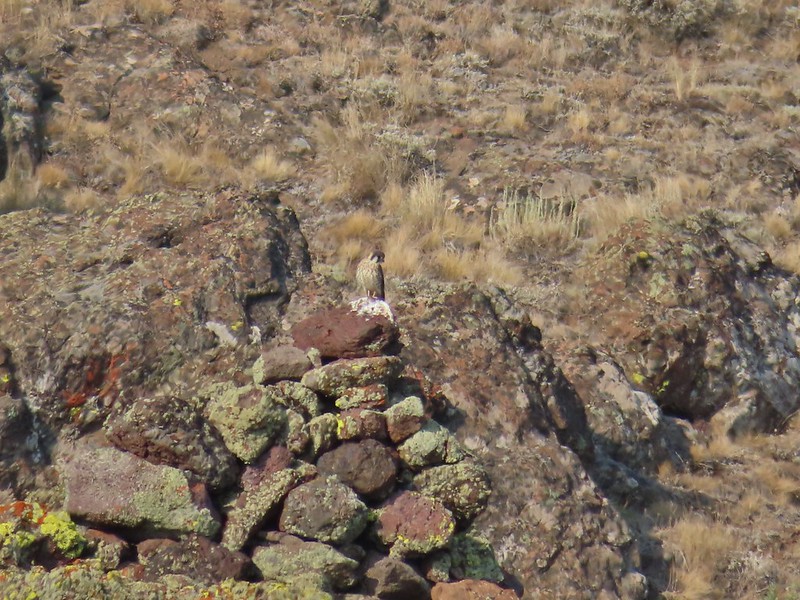
IMG_3585

IMG_3587A kestral on a cairn.

The GPS coordinates were a little off but it fit the description of the fifth cairn pretty well.
IMG_3588

We continued heading uphill toward the cliff with what we believe was cairn #6.
IMG_3590

IMG_3593You can see Heather following me up on this “less” steep section.
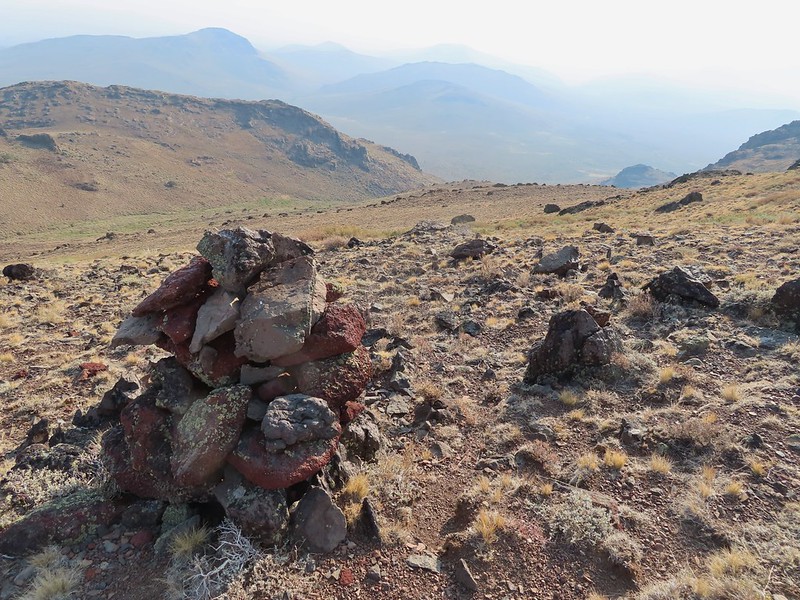
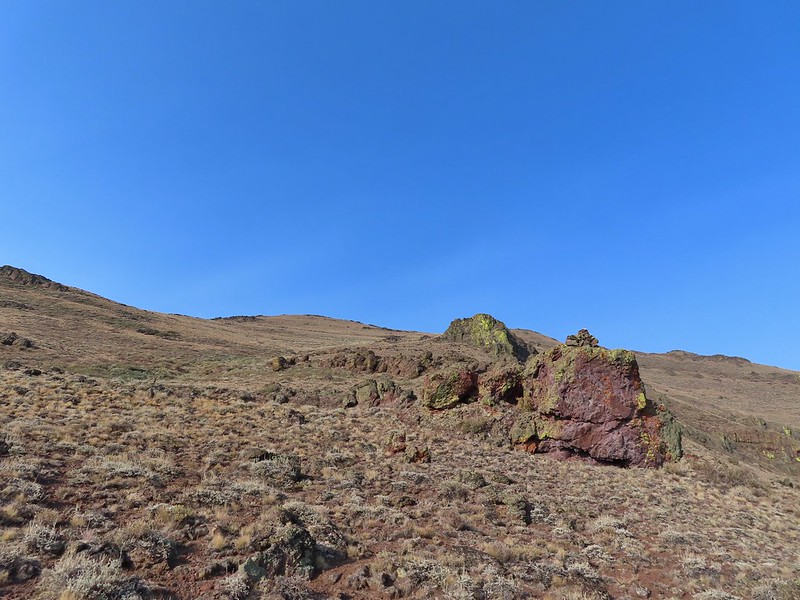
As we neared the cliffs we spotted another cairn which was a lot easier to reach.
IMG_3599

IMG_3601Looking down into the haze in the east.
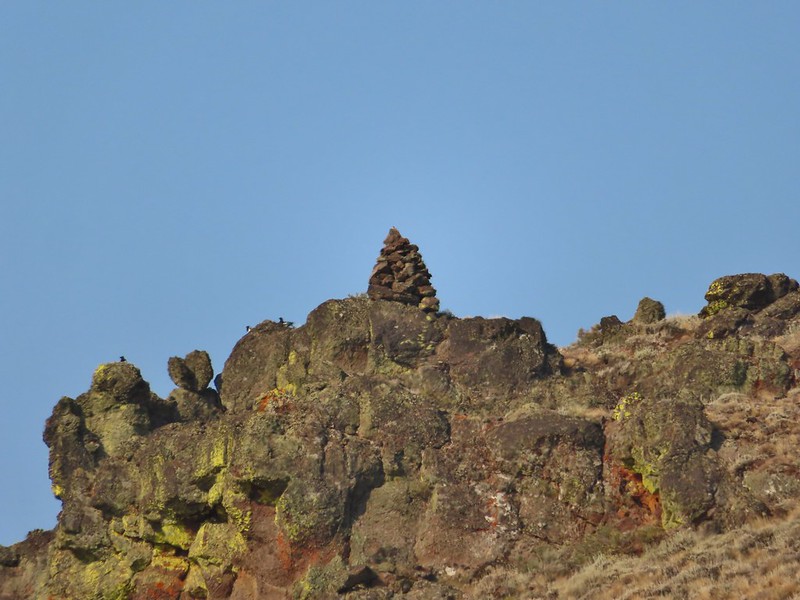
From the cairn with no number we could see another cairn perched atop a rock outcrop which we determined to be #7 since #8 was shown to be at a pass.
IMG_3602

IMG_3603Cairn #7 was being guarded by magpies.

Cairn #7 was uphill more than was necessary to reach the ridge beyond it so instead of heading directly for it we traversed the hillside below it.
IMG_3605View south over the Pueblo Mountains.

IMG_3607Passing below cairn #7 (upper right corner).
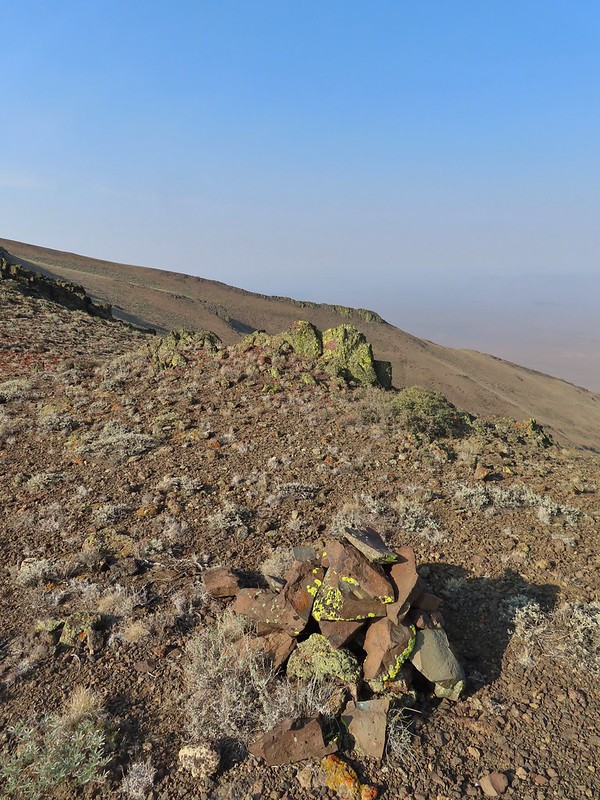
We found cairn #8 at the pass.
IMG_3611

IMG_3610View to the NW from the pass.

IMG_3612Pueblo Mountain (the large rounded peak) from the pass.

Heather was delayed reaching the pass due to spotting a sheep moth.
20210820_084550

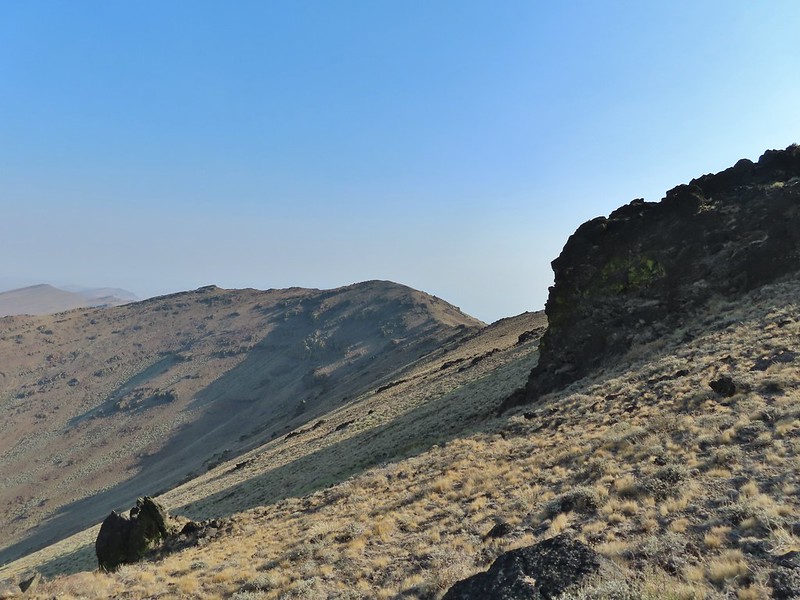
Sullivan’s map was a little confusing from cairn #8 to cairn #9. The sketch appeared to show the route passing behind (on the west side of) a rise to cairns #9 & #10 and then arriving at cairn #11 at another pass. What we found was that it was easier to hike south on the ridge for two tenths of a mile where a much larger rock outcrop forced us off the ridge to the west.
IMG_3613We climbed this rise on the ridge and continued on the top for a bit.
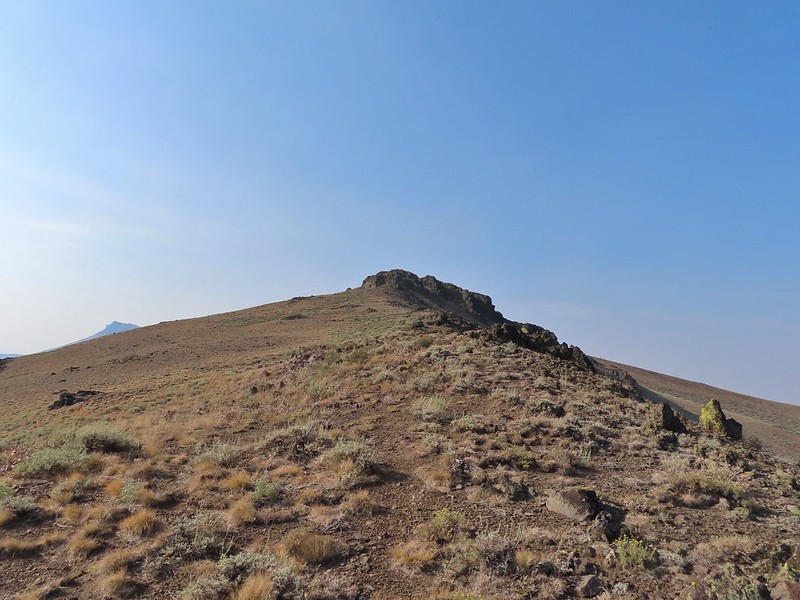
Heather near cairn #8 in the saddle and cairn #7 on the hillside behind.

We didn’t cross over to the west side until we reached a much larger rock formation along the ridge.
IMG_3616Looking at the rocky cliffs that would force us to the west.
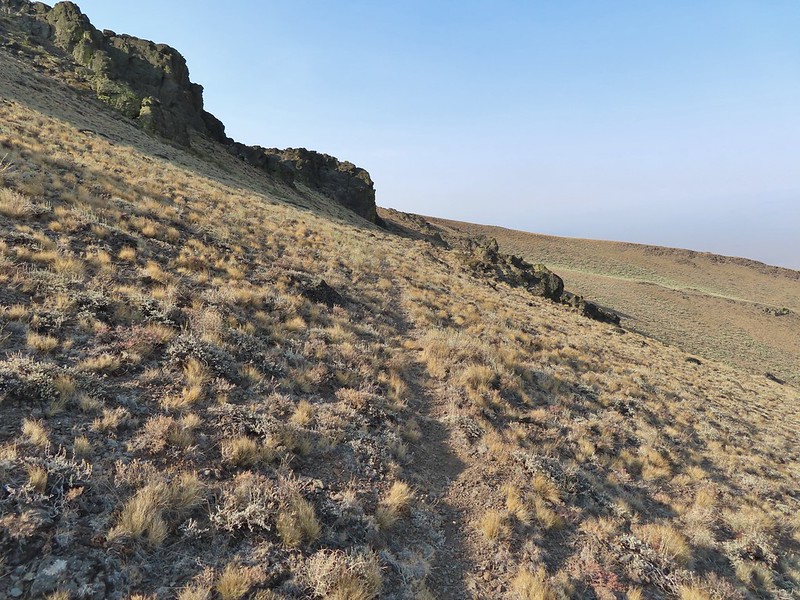
We were starting to notice actual tread along the ridge and when we reached the rocks a clear, albeit thin, trail could be seen traversing the hillside.
IMG_3622

IMG_3627

IMG_3632It’s not a desert trail without bones.

As we approached the other end of the rock outcrop we spied cairn #9 on a hillside.
IMG_3633

IMG_3634Looking back

The tread disappeared in a small draw filled with sagebrush, but a little bushwhacking and a short steep climb got us to the cairn.
IMG_3636The sagebrush draw below (Heather is traversing the hillside.)

IMG_3635Cairn #9 and the view west.

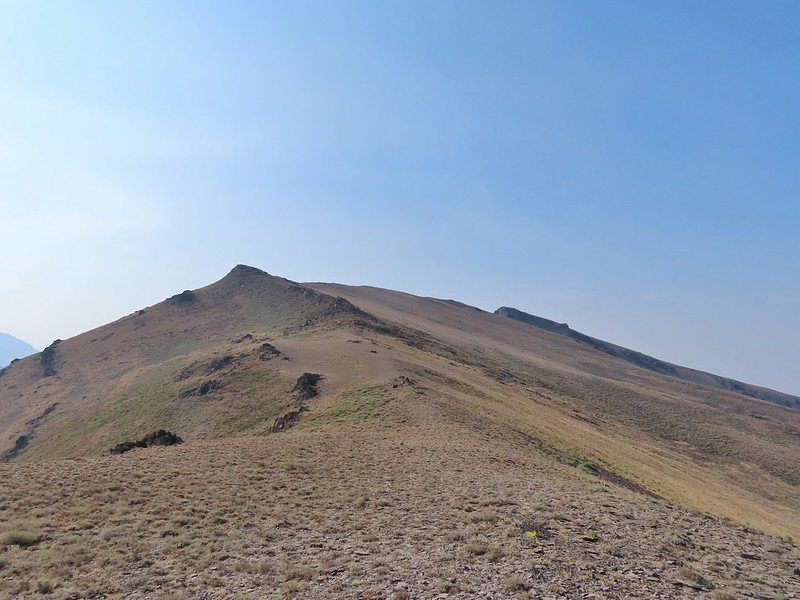
For some reason cairn #10 was ahead and further DOWN the hillside. From cairn #9 we could see our goal for the day ahead, a high point on a ridge above the Oregon Desert Trail before it began a descent that would eventually lead to Denio, Nevada.
IMG_3637The next ridge is where the high point we were planning to turn around at was.
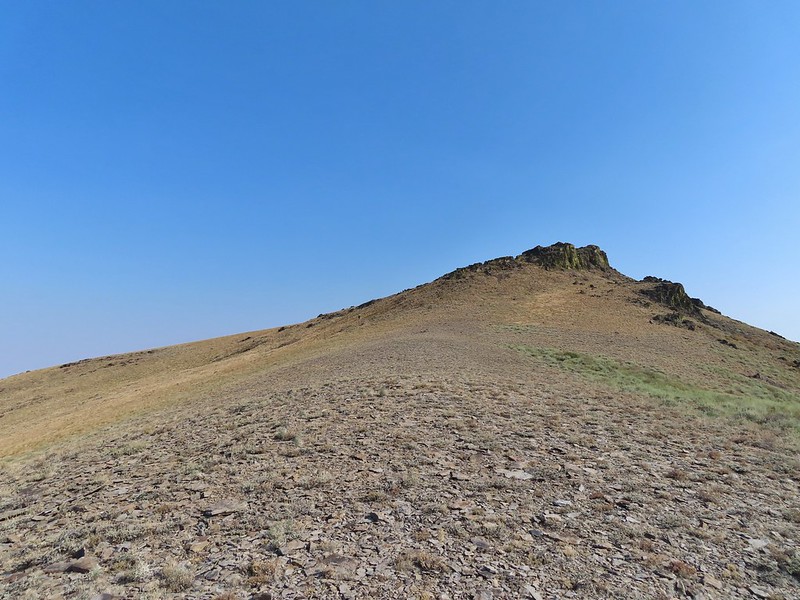
We made our way to the saddle where cairn #11 sat.
IMG_3640Cairn #11 in the saddle along the ridge.
IMG_3642Heather dropping down to the saddle, cairn #10 was out of frame to the left here.

IMG_3646View to the west from the saddle.

From cairn #11 we could see cairn #12 sitting atop an outcrop at the start of the next rocky section.
IMG_3645

IMG_3648Sculpted rock along the ridge.

The small section of hike near cairn #12 was one of the toughest on the day. Large boulders were surrounded by taller and thicker sagebrush than any we’d encountered since the mahogany trees. The easiest route was to boulder hop as directly as possible to the cairn which meant extra climbing but the vegetation was too thick to pass through safely due to hidden holes amid the boulders.
IMG_3650Heather making her way up to #12.

We then followed the rocky ridge until the sagebrush thinned out.
IMG_3652

IMG_3654Thought this might be an arrowhead or at least something that was used for a tool of some sort.

IMG_3655Heather resting by cairn #12 while I scouted the route.

After a false summit we realized that the high point was at the far end of the ridge.
IMG_3656

IMG_3664A hazy Pueblo Mountain (and more of the Pueblo Mts.) from the high point.

IMG_3665Cairn #15 is on a small rock outcrop near the saddle at center.
DSCN0821Cairn #15 (at least we think).

We had a nice break at the summit, and for some reason I felt compelled to trot down and tag cairn #14 only to realize too late that I had to hike back up to the high point.
IMG_3680Cairn #15 below from the cairn #14 coordinates, it appears that cairn #14 may have been at least partially dismantled.

IMG_3683Oh great, more uphill.

It would have been nice to have had a less hazy view but at least we could make a few things out.
DSCN0824

DSCN0819Peaks in the Pueblo Mts. near the Nevada border.

DSCN0829Cairn #12 and the saddle zoomed in.

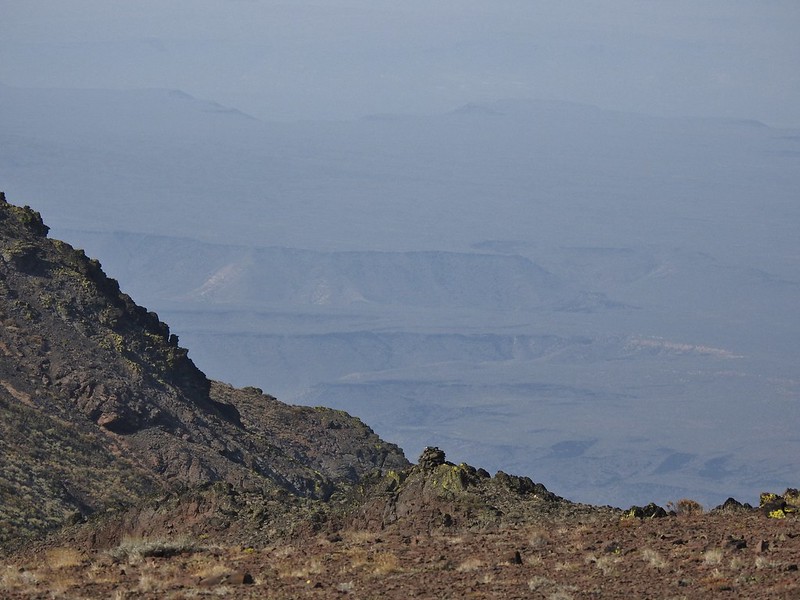
DSCN0838Van Horn Creek is down there somewhere as is Ten Cent Meadows.

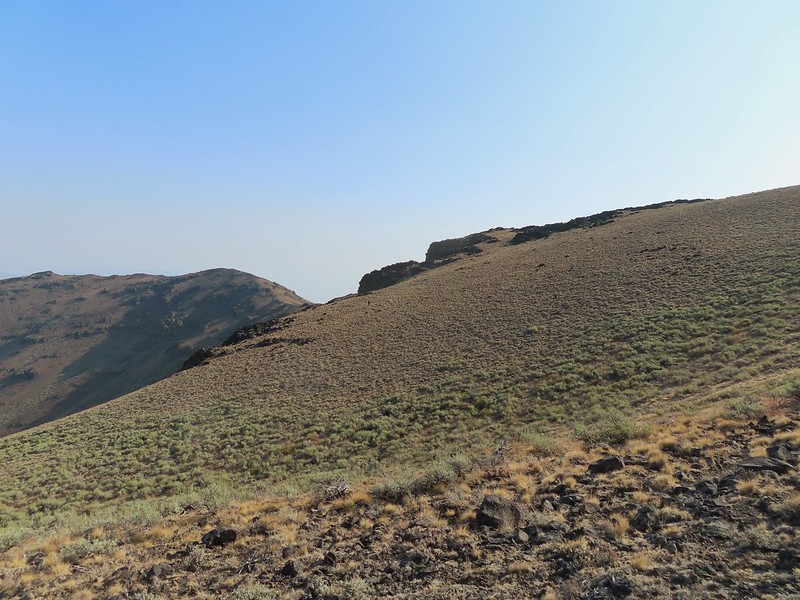
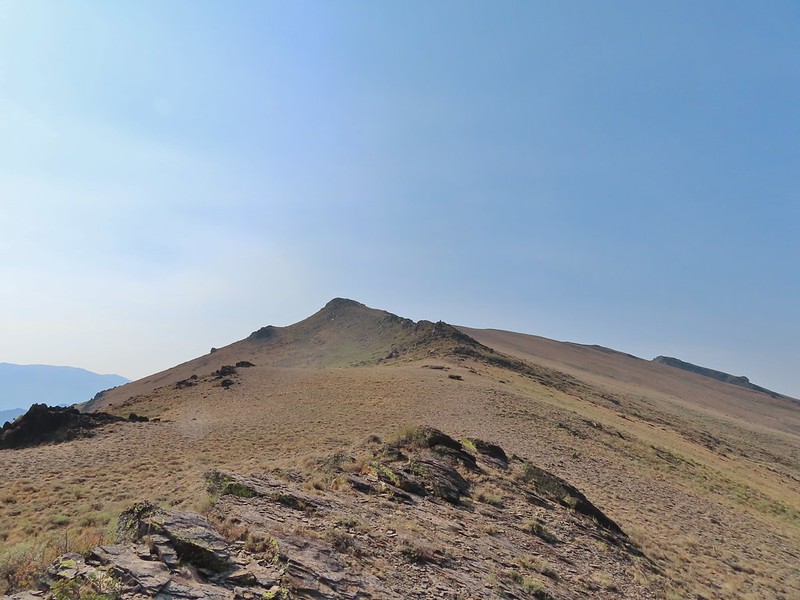
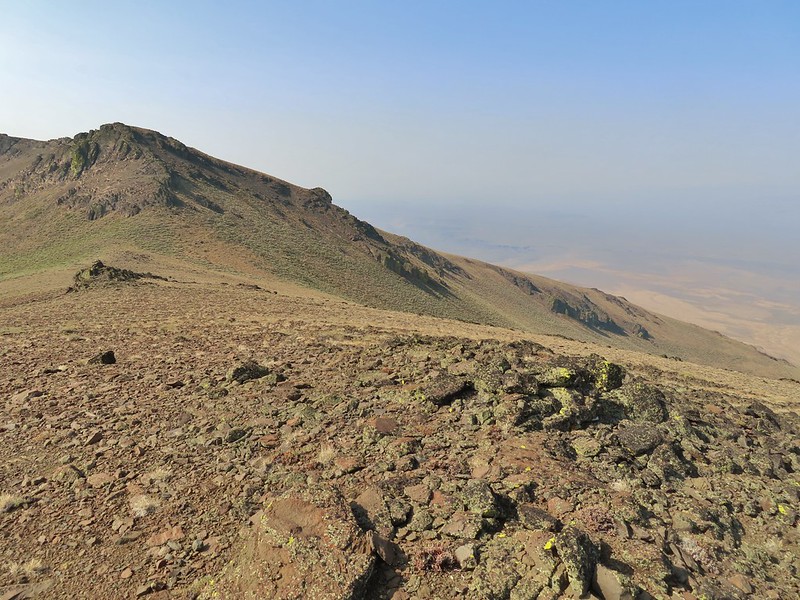
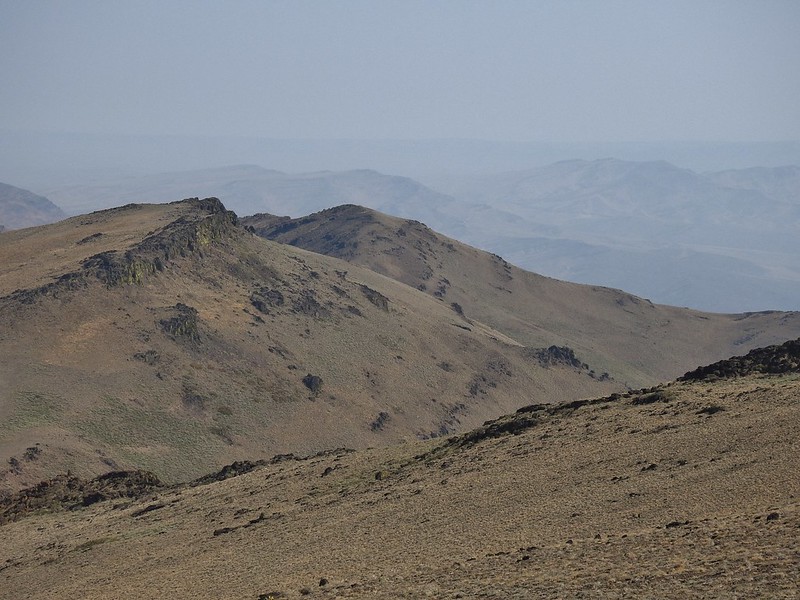
IMG_3672

After resting up we headed back attempting to follow the same route but judging by our track we may have been drinking something other than water up at the high point.
IMG_3696A lupine with a few blossoms left.

IMG_3701Lots of colored lichen on the rocks along the way.

IMG_3707Vertical rocks.

IMG_3713Rounded rocks.

IMG_3724Back to the mahogany trees.

IMG_3729Cairn #2 dead ahead.

IMG_3731Found the cow lick again.

IMG_3735Looking back at the Pueblo Mountains from the road walk.

IMG_3742Trees marking the spring and Sesena Creek.

IMG_3748The southern end of Steens Mountain from the road walk.

IMG_3751Sage grouse hen

The last half mile or so of the road walk provided us with a couple of close encounters with common nighthawks that were resting along the barbed wire fence.
IMG_3760

IMG_3766

We got back to our car just before 1pm and after changing started the long drive to Salem. We got home just before 8pm making for a long but fun day. It had been a really nice vacation despite the hazy conditions for several of the hikes. The temperatures had ranged from hot the first two days to freezing on Wednesday to just about right Tuesday, Thursday and the hike in the Pueblos wasn’t all that warm either. We already have more ideas for hikes and stops in that part of Oregon so we’ll be heading back at some point even though we have finished with the “featured hikes” in the area. Happy Trails!

My mileage for the day came in at 13.3 including a total of 4.2 along the dirt road. Total elevation gain was approximately 2400′.

Our track for the hike. The orange segment is the road walk which was 2.1 miles each way.

Flickr: Pueblo Mountains