Categories
High Cascades Hiking Oregon Three Sisters Area Trip report

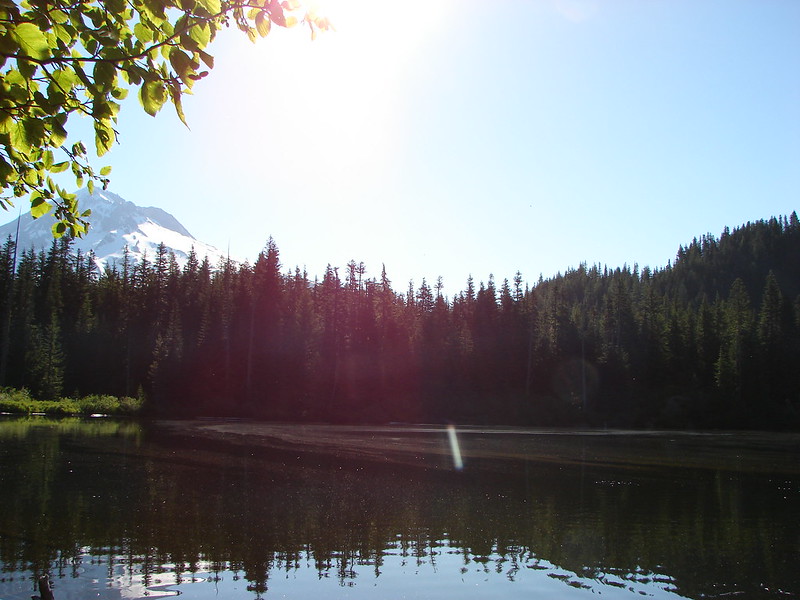
Broken Top – No Name Lake

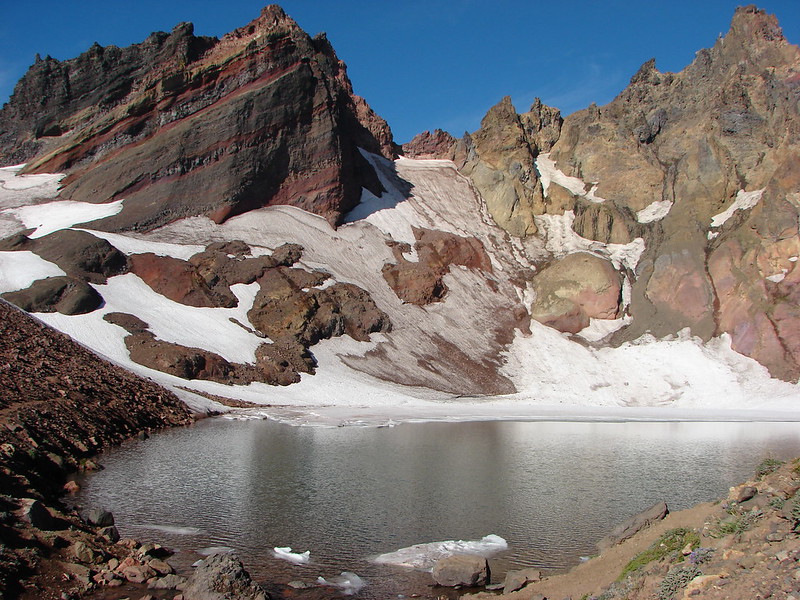
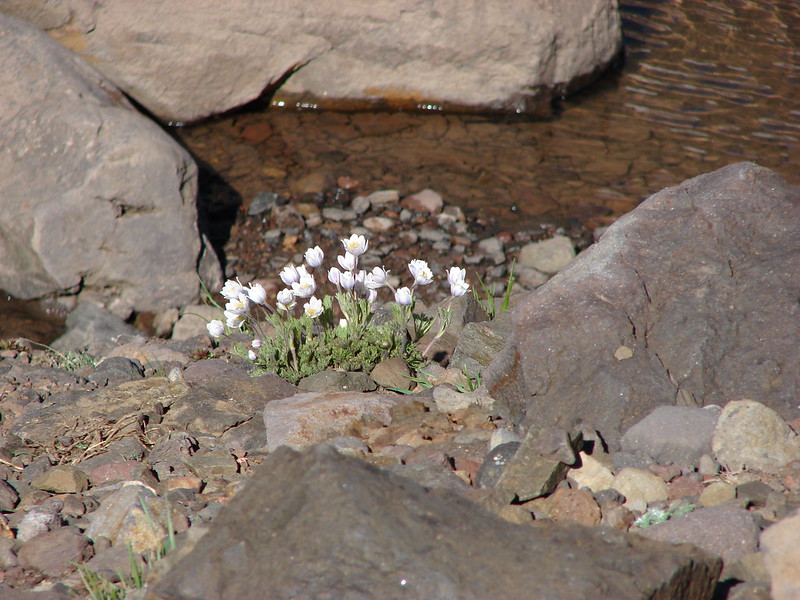
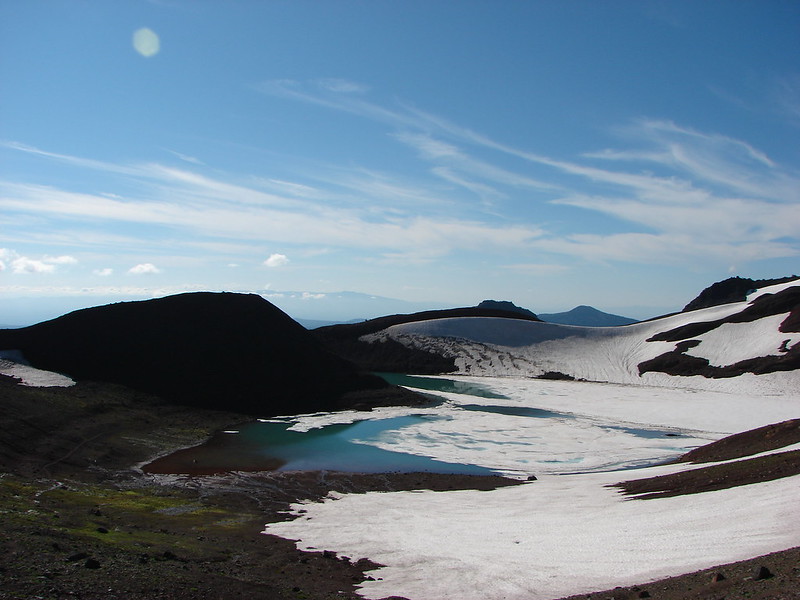
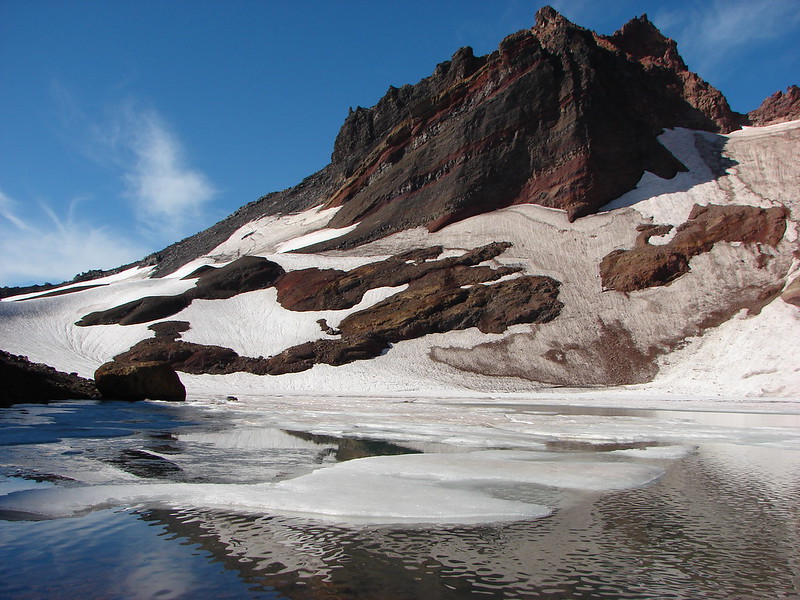
We’re a little behind on our trip reports due to spending too much time hiking 🙂 (If that is possible). After being in Washington for our last couple of trips we headed over to Central Oregon to spend some time in the Three Sisters area. We started off with a day hike to a lake we had really been wanting to visit, a lake with no name but a spectacular view located at 8000′ on the east side of Broken Top.

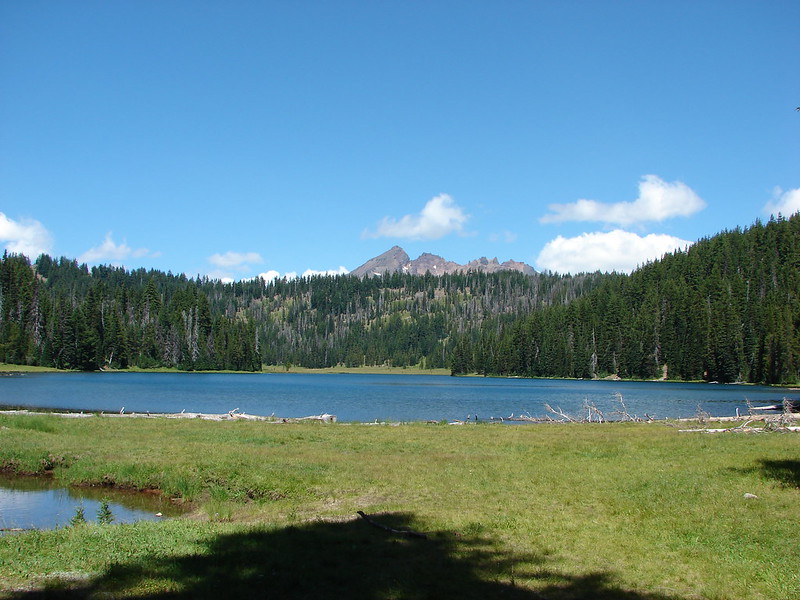
We set off from Todd Lake as the Sun was rising hoping to beat the crowds up to this increasingly popular spot.
DSC04655

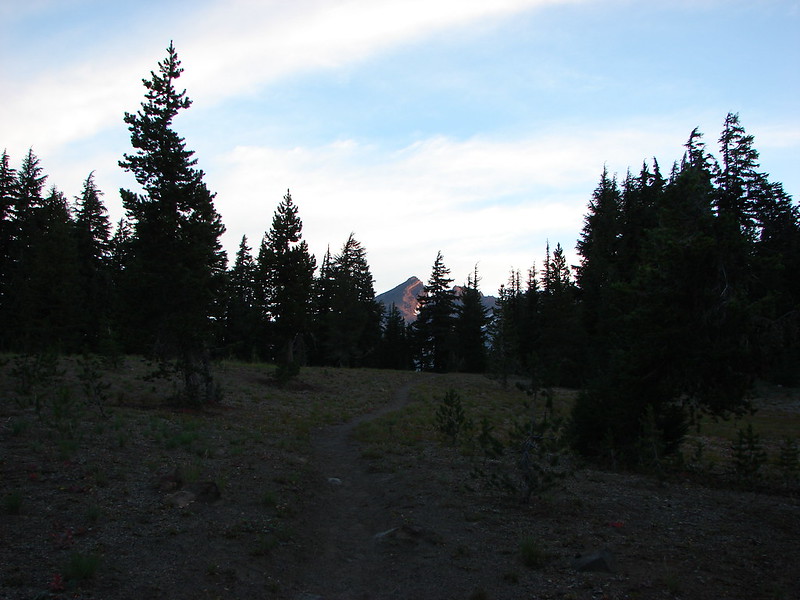
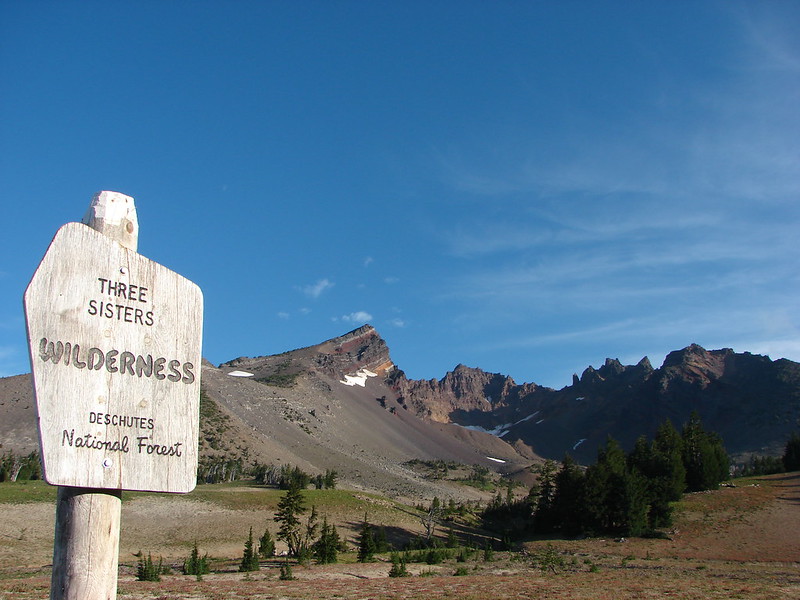
The trail from Todd Lake entered the Three Sisters Wilderness shortly after leaving the lake.
DSC04666

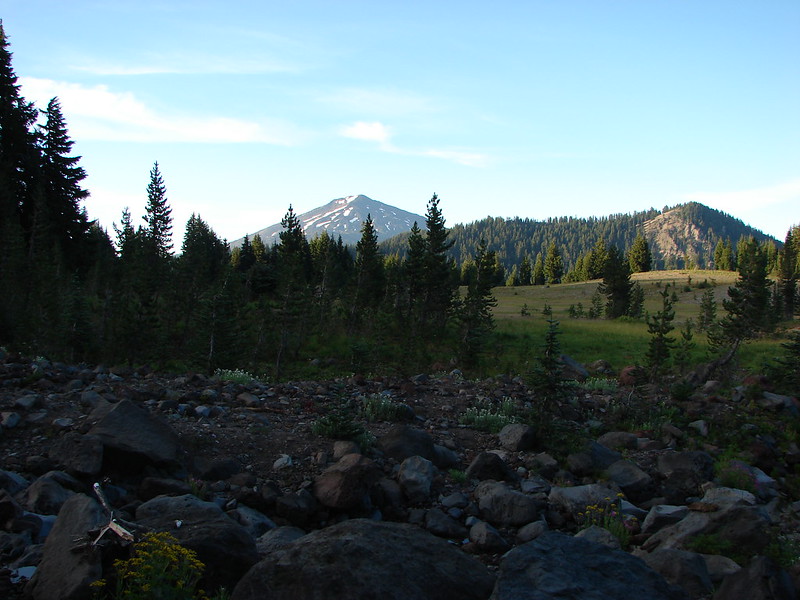
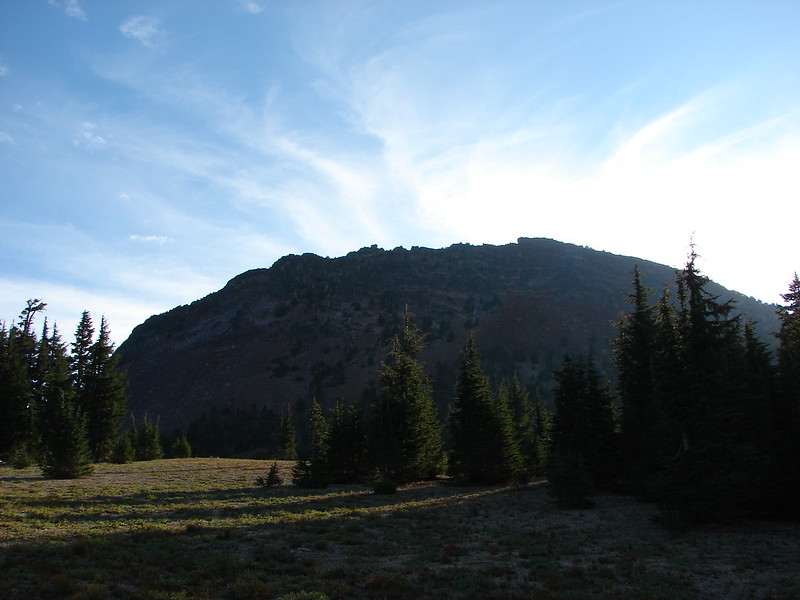
Then Broken Top made an appearance.
DSC04667

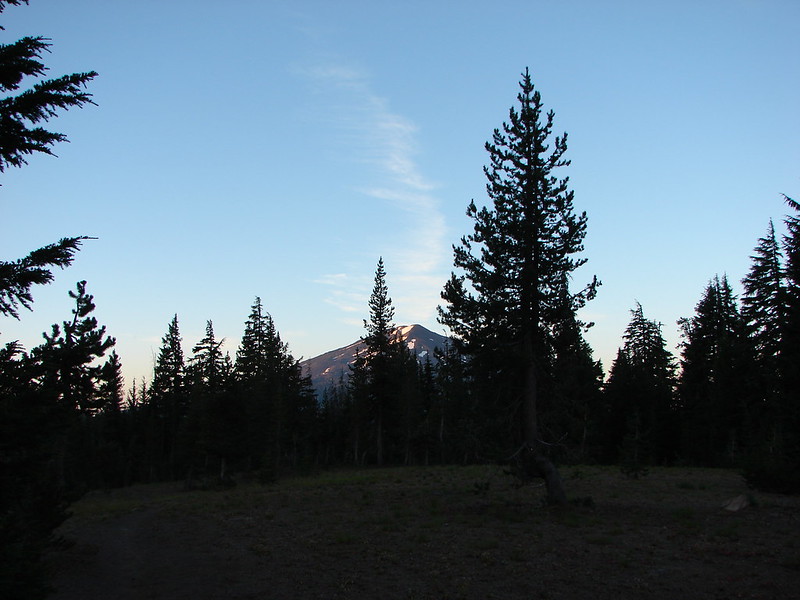
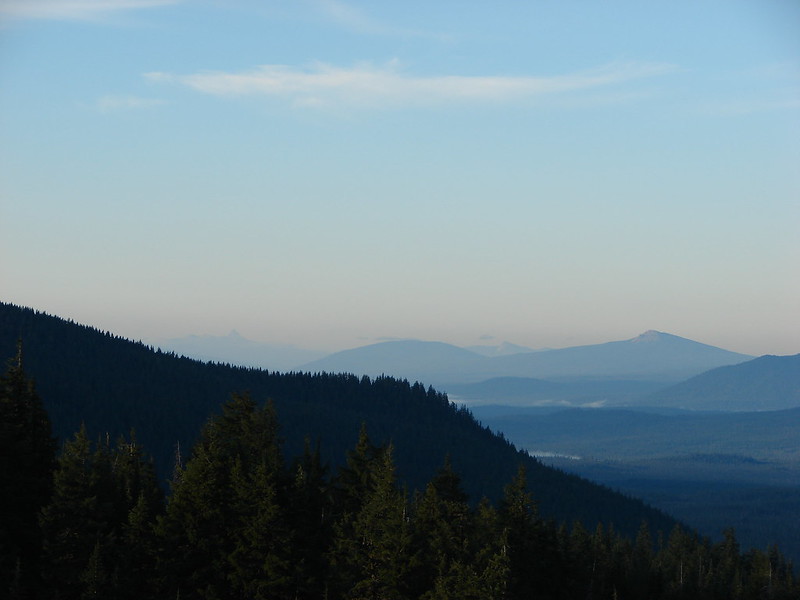
It wasn’t the only Cascade Peak visible from the trail.
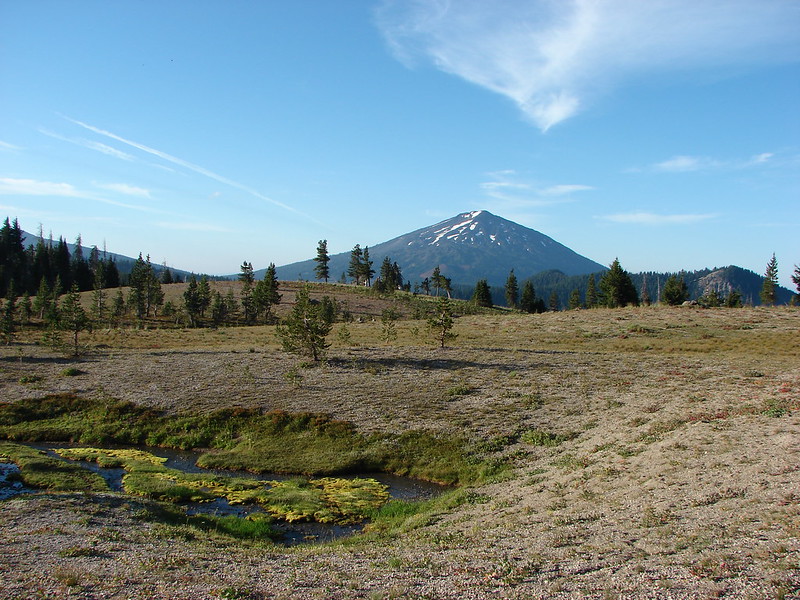
Mt. Bachelor:
DSC04669
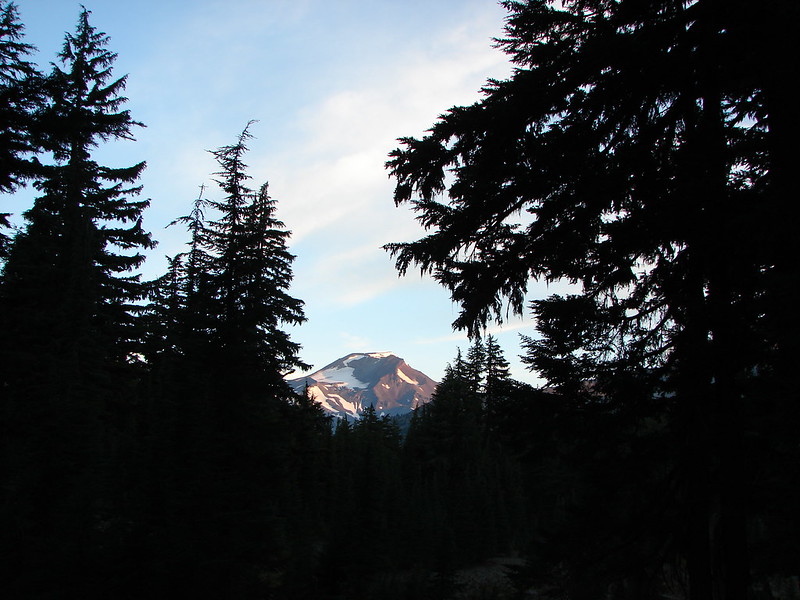
South Sister:
DSC04673

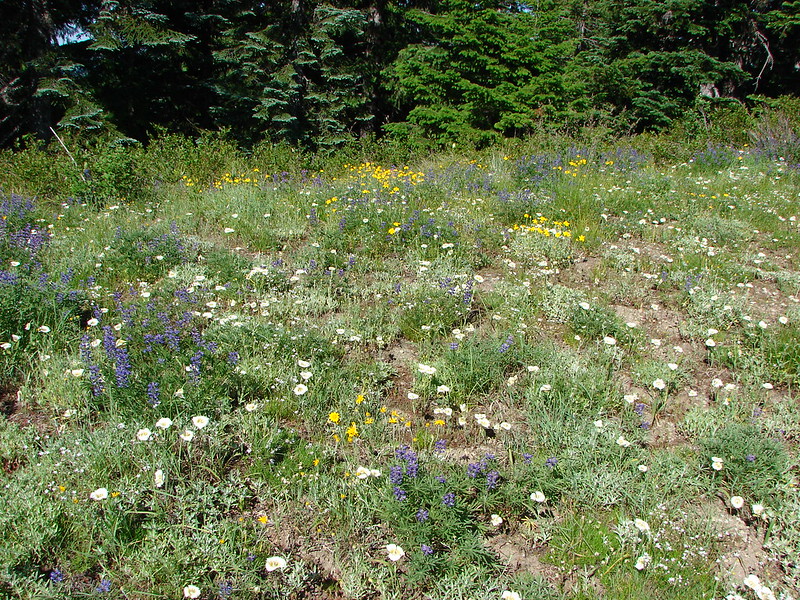
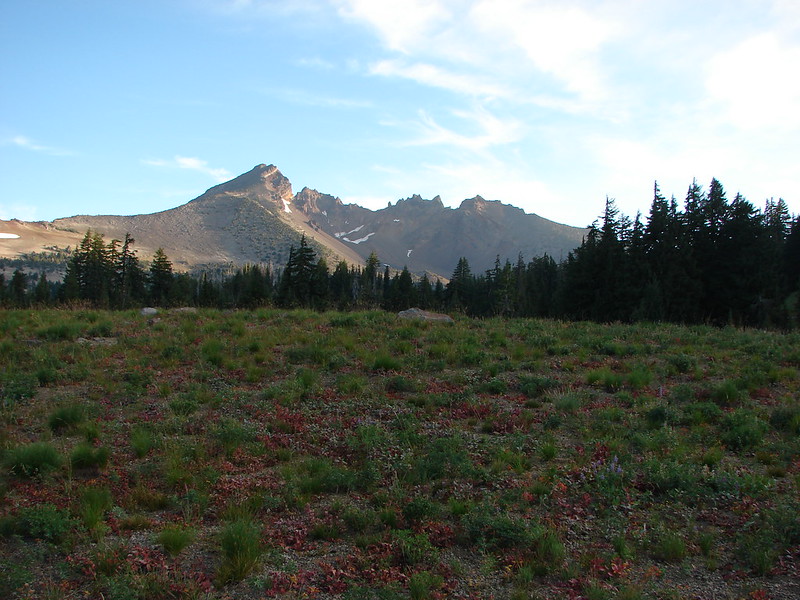
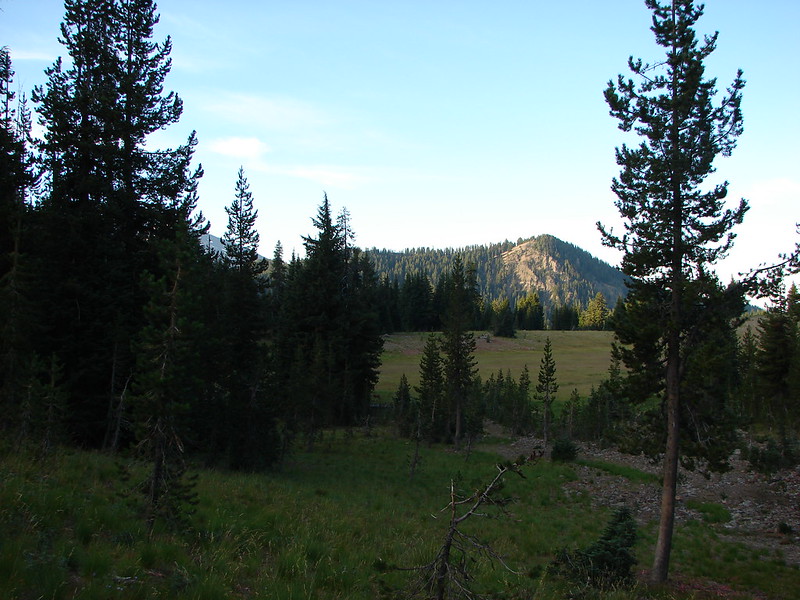
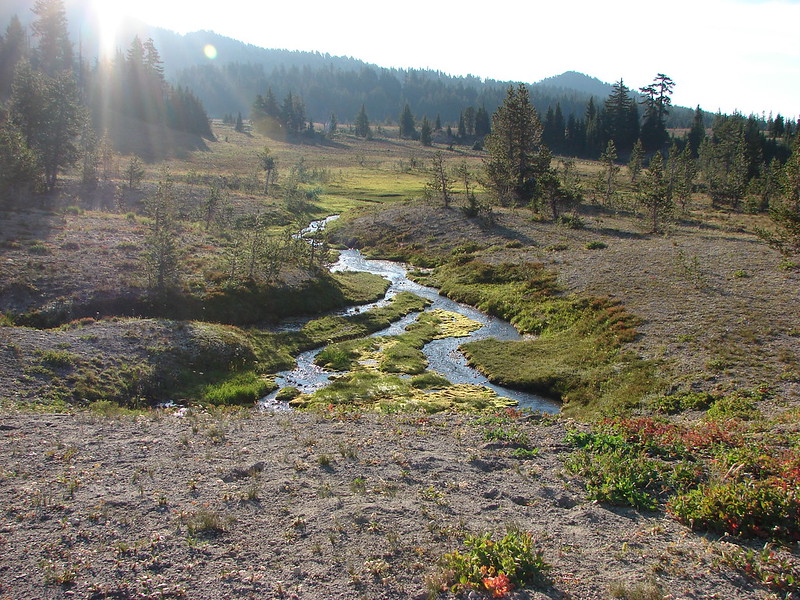
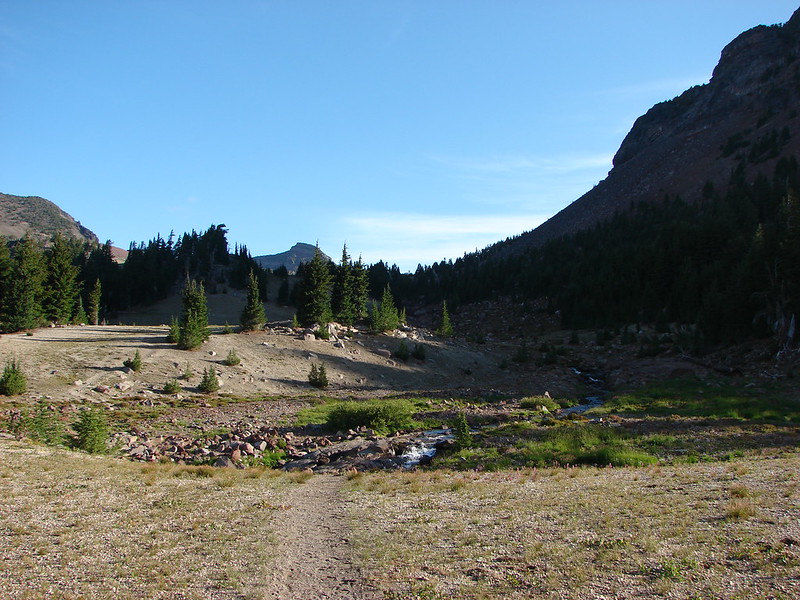
The trail climbed gently as it left the forest and gained better and better views as it passed by and through open meadows.
DSC04690
DSC04695
DSC04694

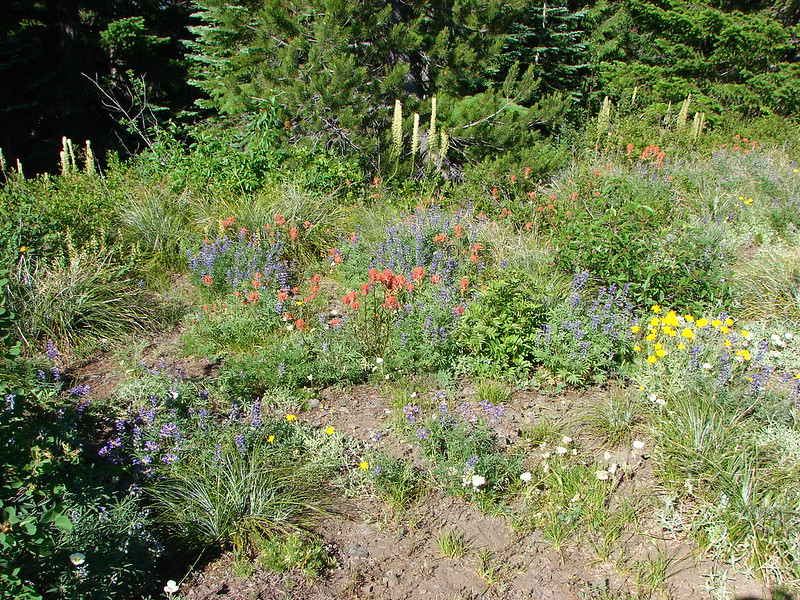
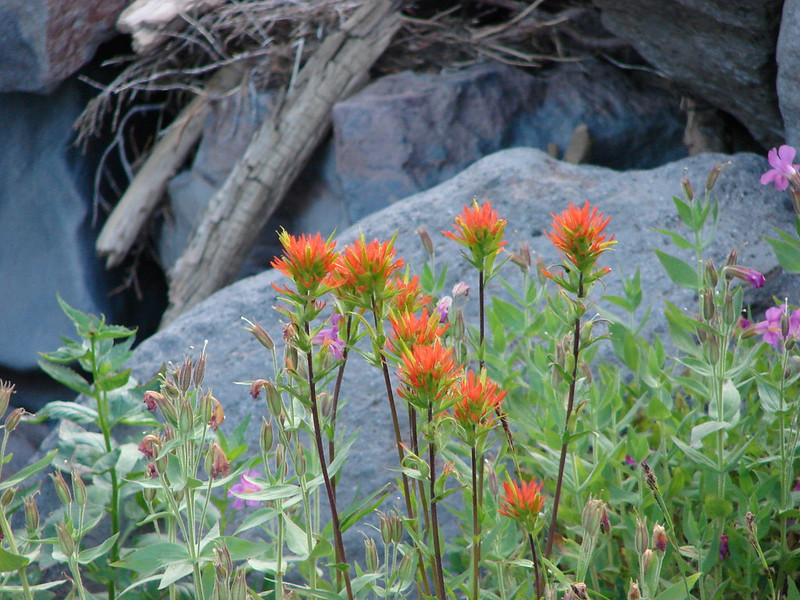
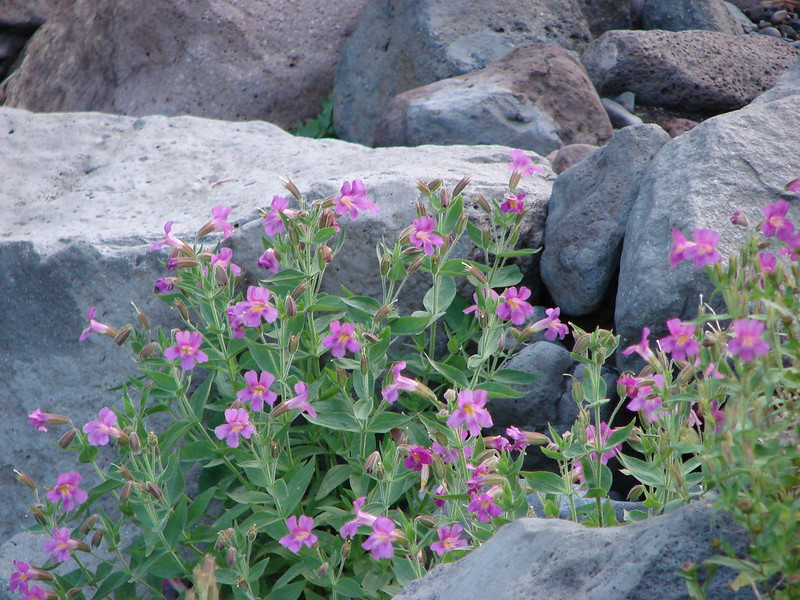
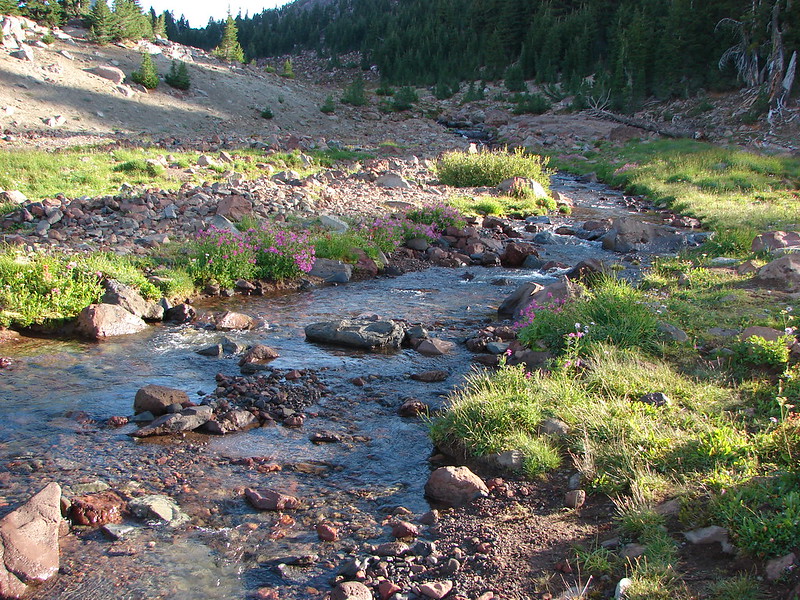
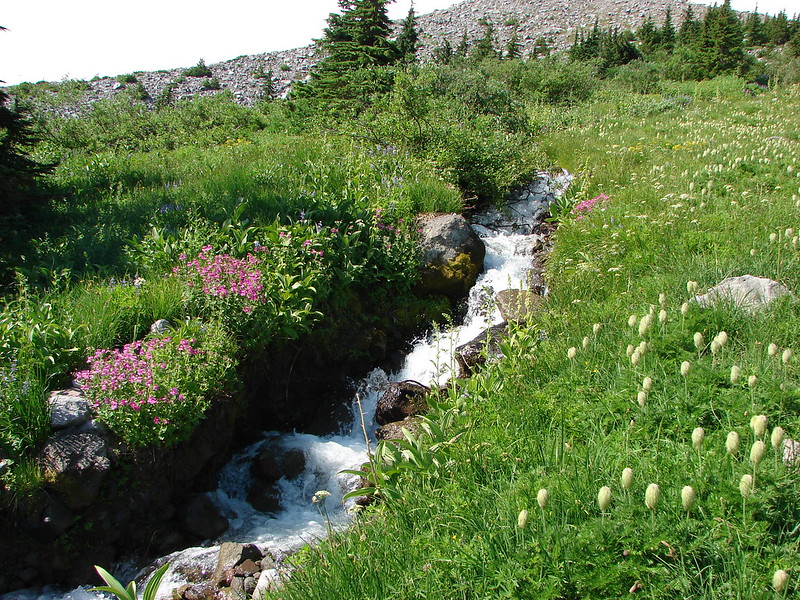
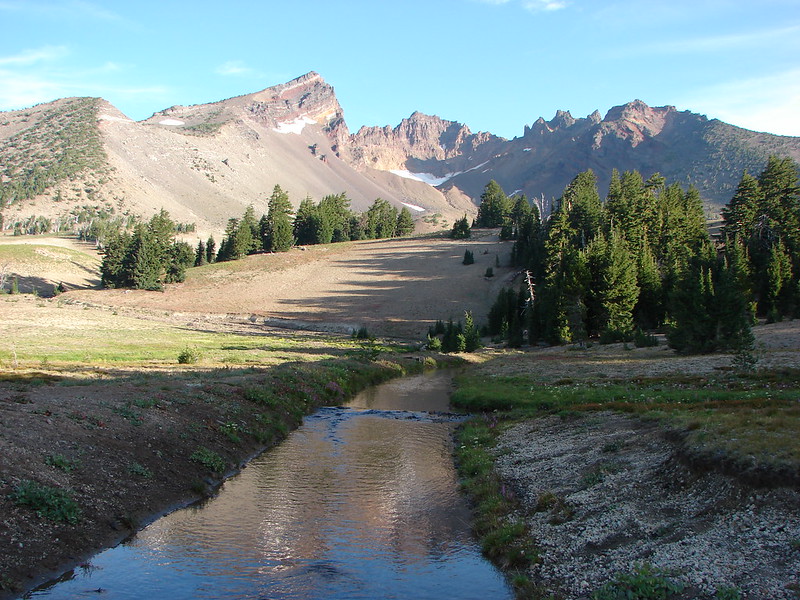
And across wildflower lined streams.
DSC04710
DSC04707
DSC04701
DSC04702

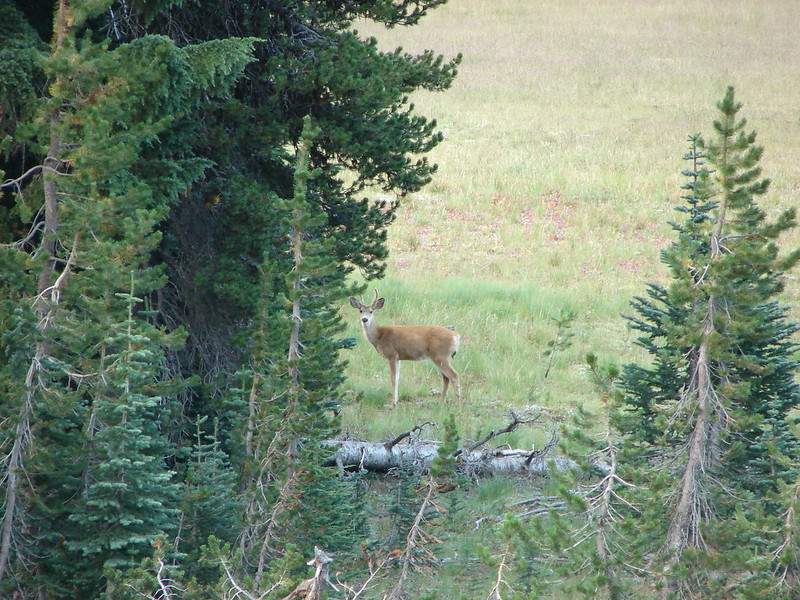
We spotted several deer grazing in the meadows near the junction with the Green Lakes Trail.
DSC04722
DSC04727
DSC04735

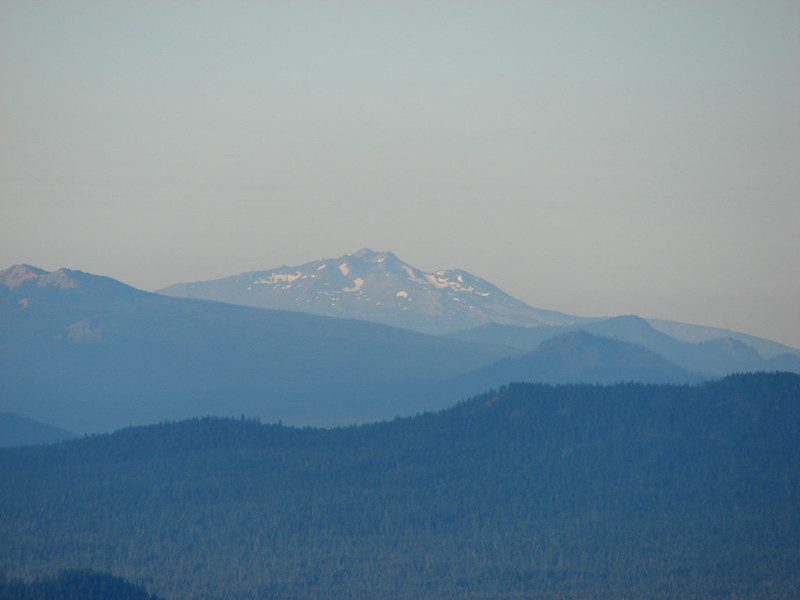
As we gained elevation the views to the south opened up and we could see Diamond Peak, Mt. Thielsen, and Mt. Bailey beyond Mt. Bachelor.
DSC04744
DSC04743
DSC04746

As we worked our way around Broken Top we passed several springs which were the sources of many of the green meadows we’d passed.
DSC04758
DSC04759

It was interesting to note a small section of land that was not included in the Three Sisters Wilderness surrounding Crater Ditch. The ditch channels water from glacial melt-off down into Central Oregon for irrigation purposes and predates the wilderness designation thus remaining outside of the boundary.
DSC04764
DSC04776

After crossing Crater Ditch the trail headed toward Ball Butte and the end of the Green Lakes Trail at road 380.
DSC04779

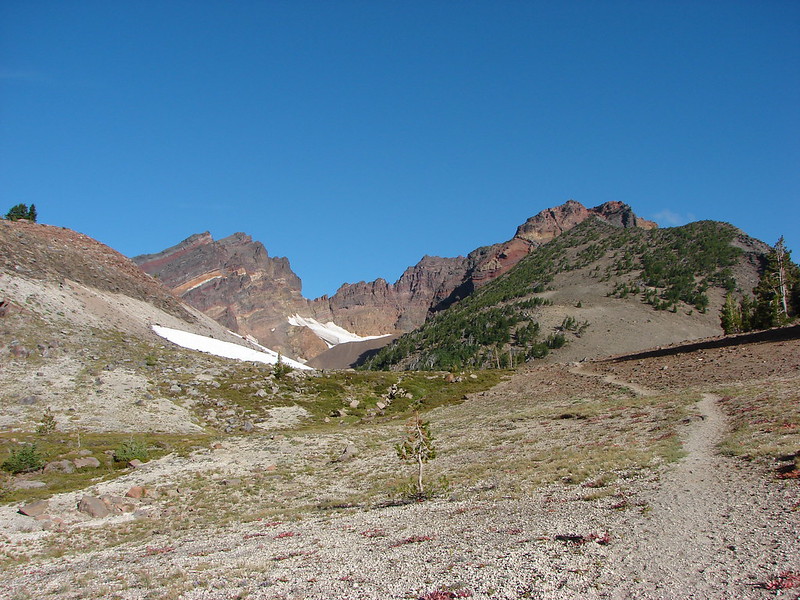
Shortly after crossing a creek an unofficial trail forked to the left heading between Ball Butte and Broken Top with Broken Hand dead ahead.
DSC04784

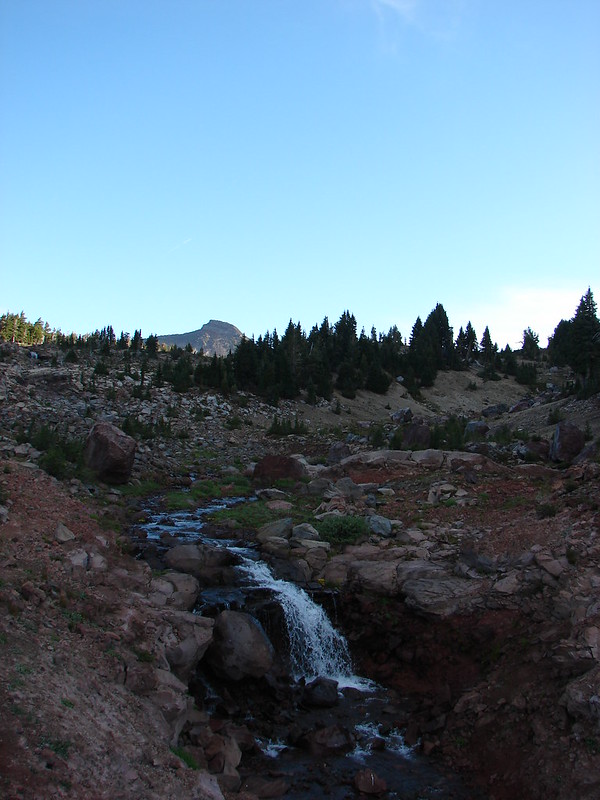
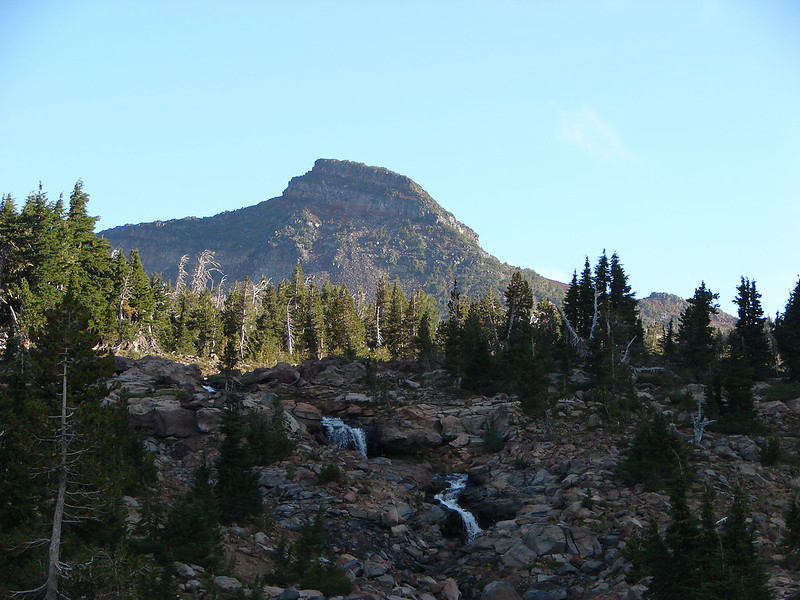
We then recrossed the monkeyflower lined creek and followed it up toward the no name lake passing several small but scenic falls.
DSC04786
DSC04797
DSC04803

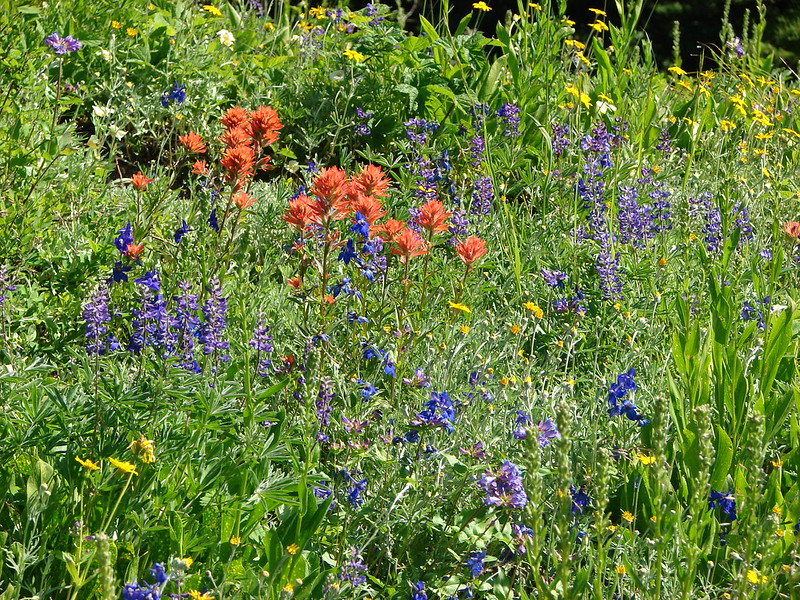
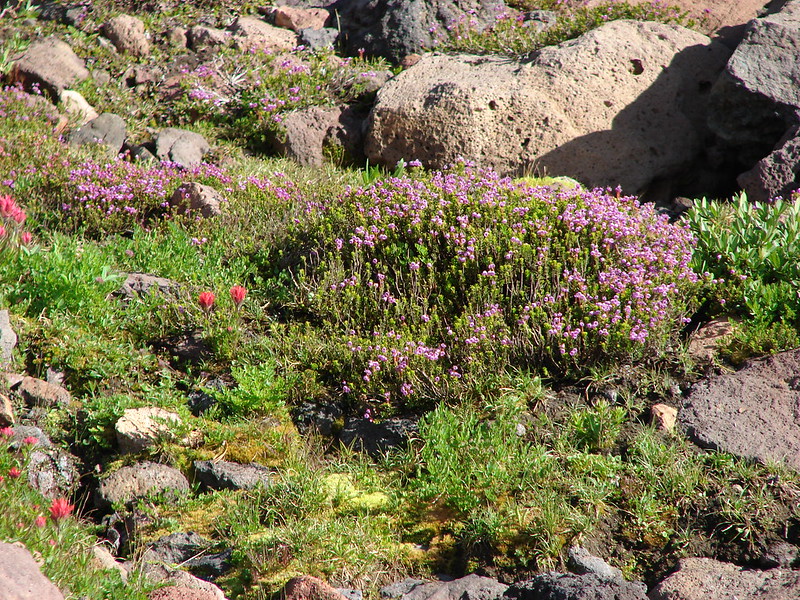
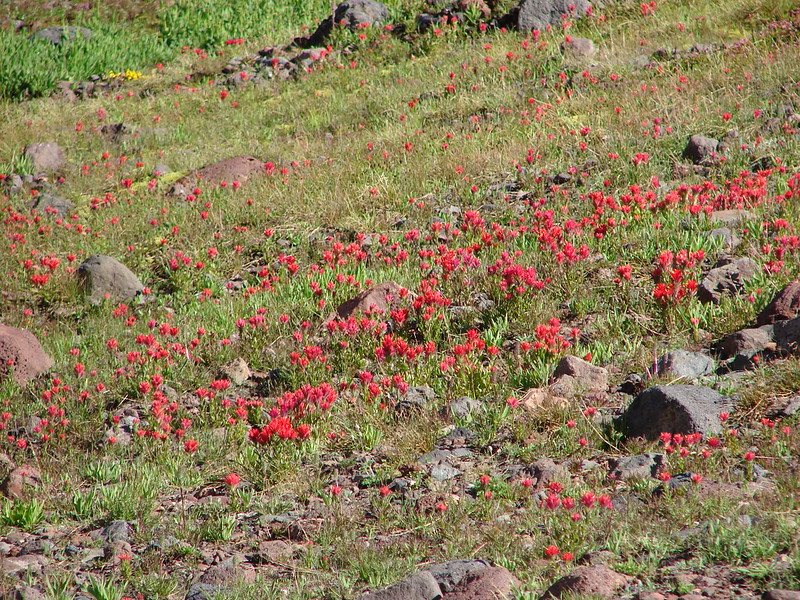
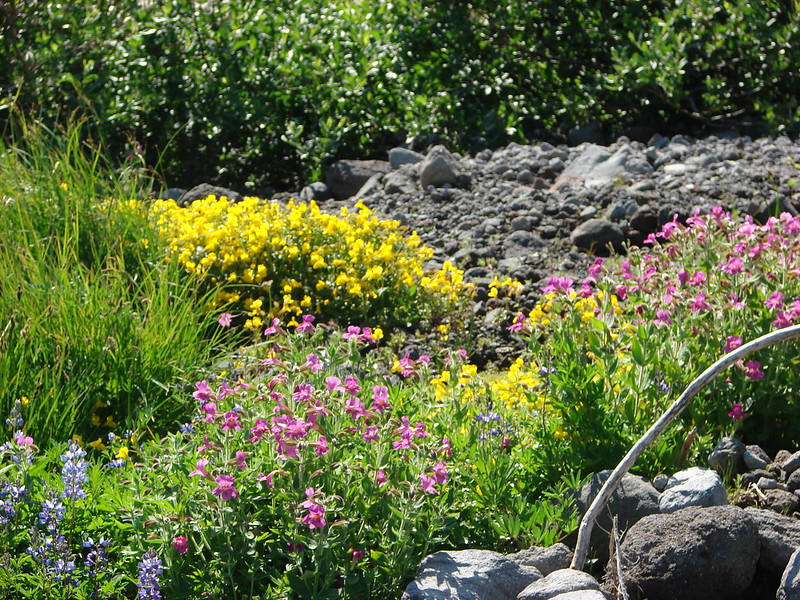
The trail turned toward Broken Top and continued to climb toward the east side of the mountain. An increasing variety of wildflowers could be seen as we got closer to the lake and many birds were flying about chirping happily.
DSC04809
DSC04820
DSC04825
DSC04834
DSC04835

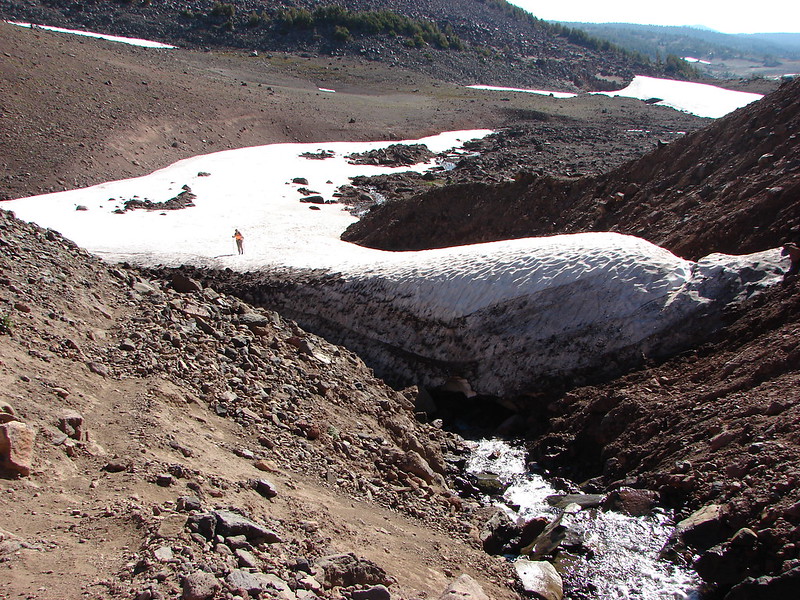
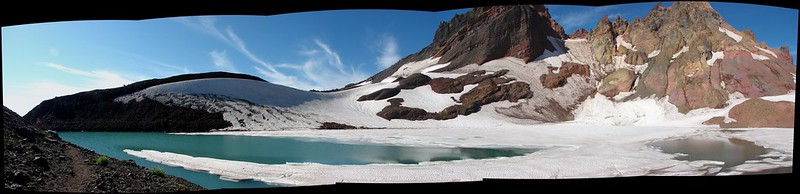
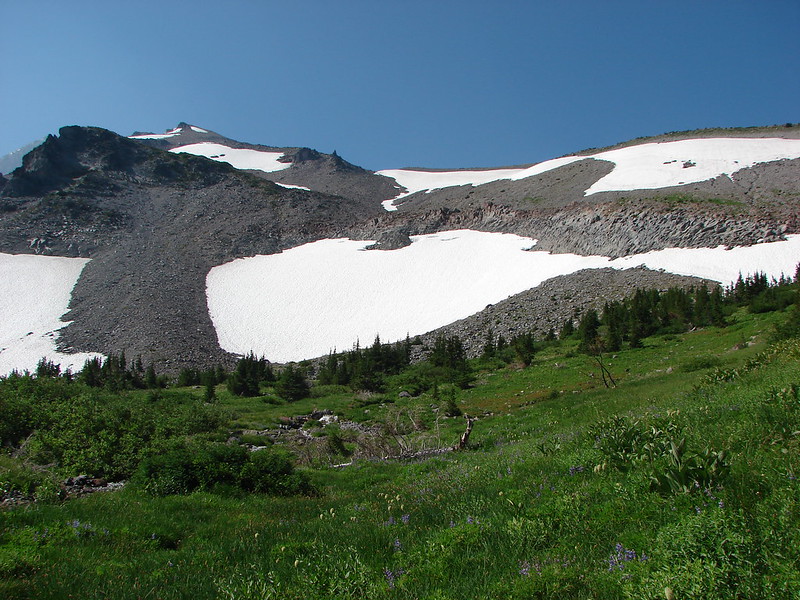
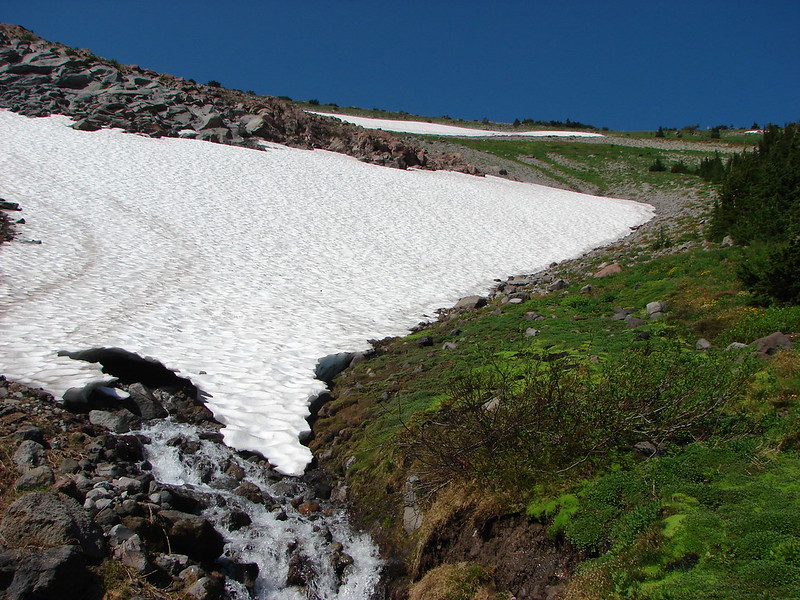
Finally the path reached a snowfield between two moraines. We climbed the snowfield to find no name lake waiting at the base of Broken Top.
DSC04851
DSC04854
DSC04853
DSC04856

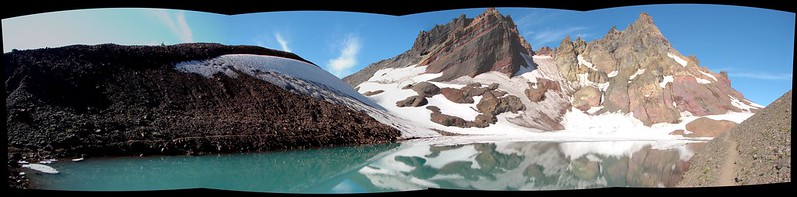
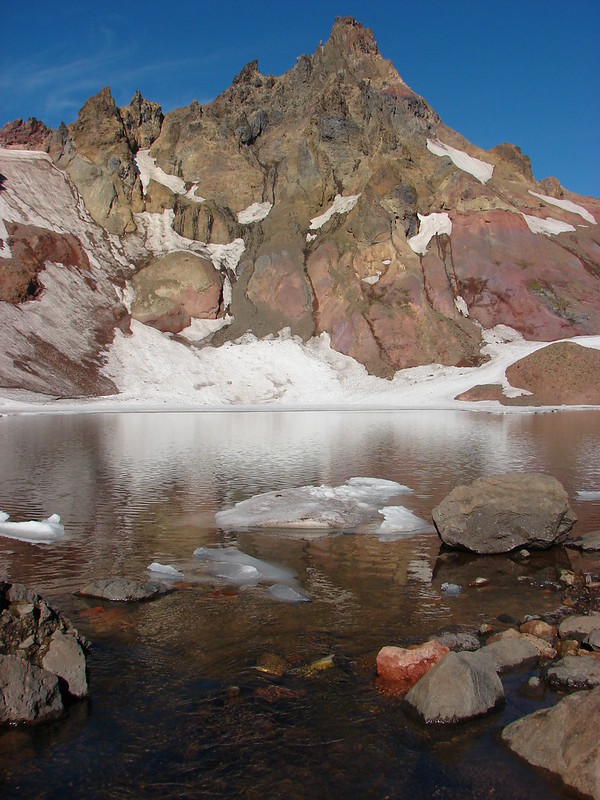
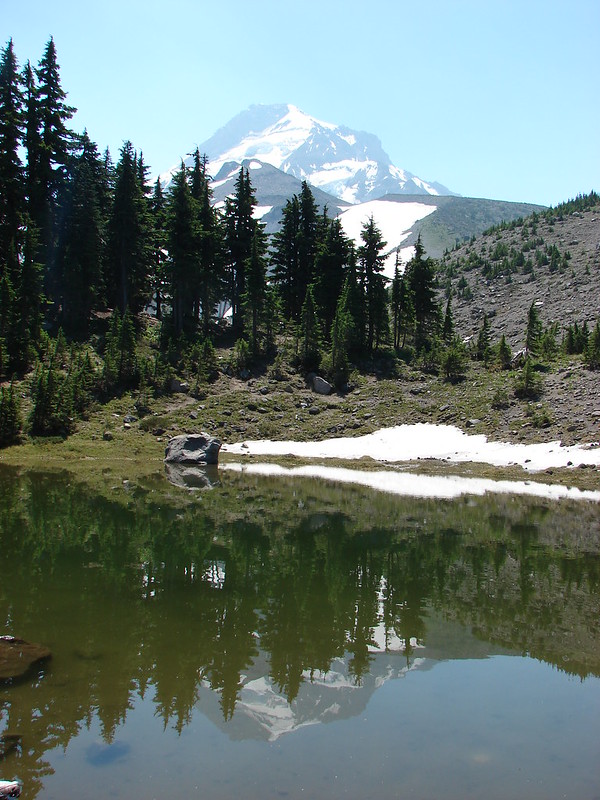
The lake was as beautiful as advertised. The colors of the water and of Broken Top were spectacular.
DSC04880 Stitch
DSC04869
DSC04912
DSC04902 Stitch

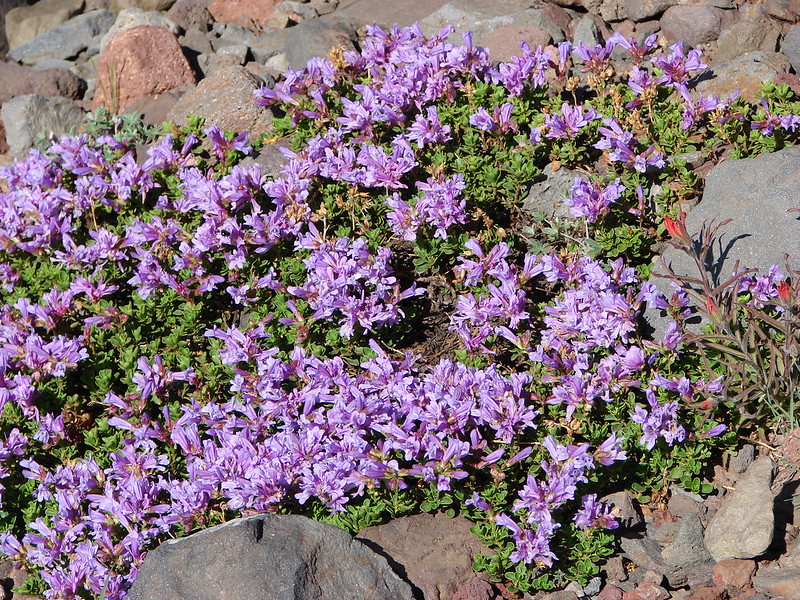
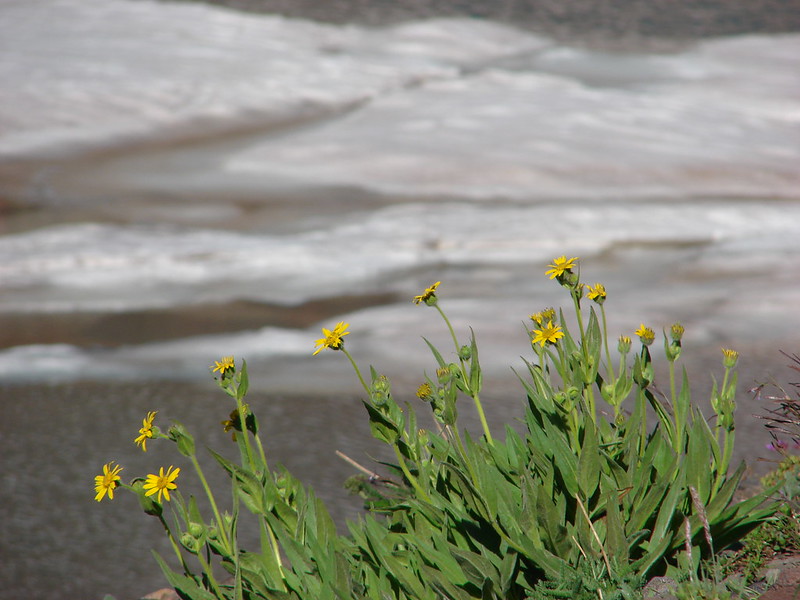
We were surprised by several things. The lake was larger than we had expected and there was a surprising number of flowers growing on the moraines surrounding the lake.
DSC04940
DSC04926
DSC04898
DSC04908

A path around the right side of the lake led to yet more amazing views. Climbing to a viewpoint revealed mountains from Broken Top to a faint Mt. Hood on the horizon with the lake below behind us.
DSC04961 Stitch
DSC04944

There was a single tent high up on the rim overlooking the lake but we didn’t see the owner and had had the lake all to ourselves for awhile before another pair of hikers arrived. On our hike out we passed a number of people heading up the trail and were once again glad we chose to get an early start. There is a shorter route to the lake but it involves what has been described as a terrible access road and it would have meant missing out on some great scenery. When we got back to Todd Lake the parking lot was full but the lake and Broken Top remained a peaceful sight and a great way to kick off a vacation.
DSC05068

Happy Trails!

Flickr: https://www.flickr.com/photos/9319235@N02/sets/72157646779105332/
Facebook: https://www.facebook.com/media/set/?set=a.10204792879248996.1073741902.1448521051&type=1

Categories
High Cascades Hiking Mt. Hood Area Oregon Trip report

Pinnacle Ridge to Elk Cove – Mt. Hood

One of the trails on our backpacking to-do list is the 39.3 Timberline Trail around Mt. Hood. Until we get around to that trip though we settle for small sections at a time. We have managed to cover approximately 25 of those miles now with the most recent mile coming on our visit to Elk Cove and the Coe Branch.

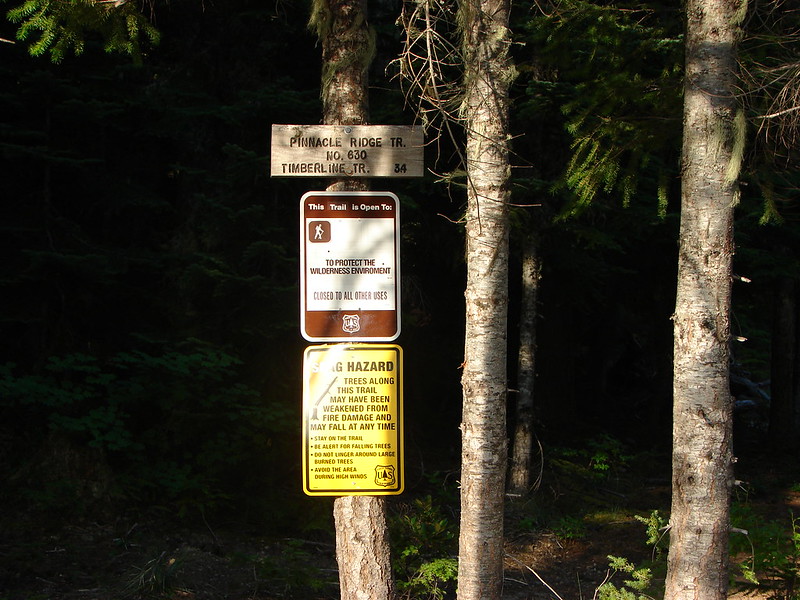
There are a number of trails that lead to the Timberline Trail and for this hike we decided to try the Pinnacle Ridge Trail. This trail climbs just over 2000′ in 3.4 miles to the Timberline Trail between Wy’East Basin and Dollar Lake. http://www.fs.usda.gov/recarea/mthood/recarea/?recid=53270

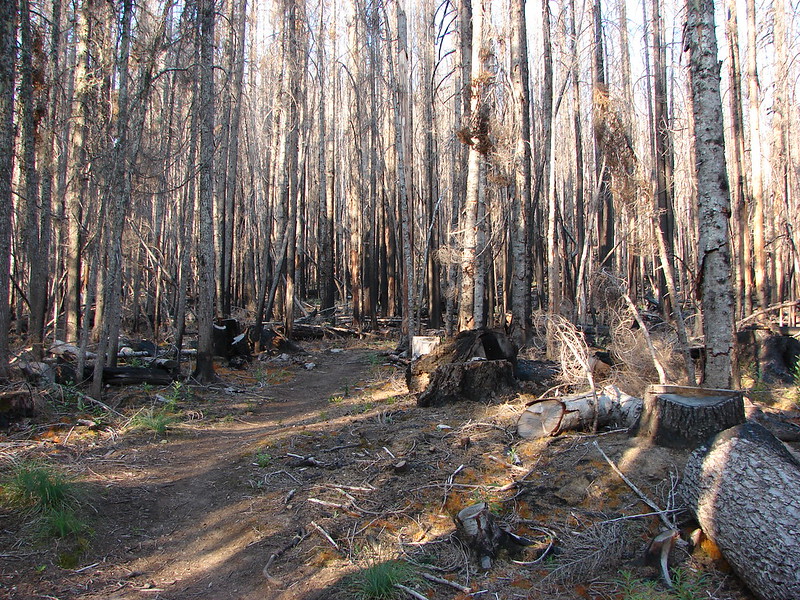
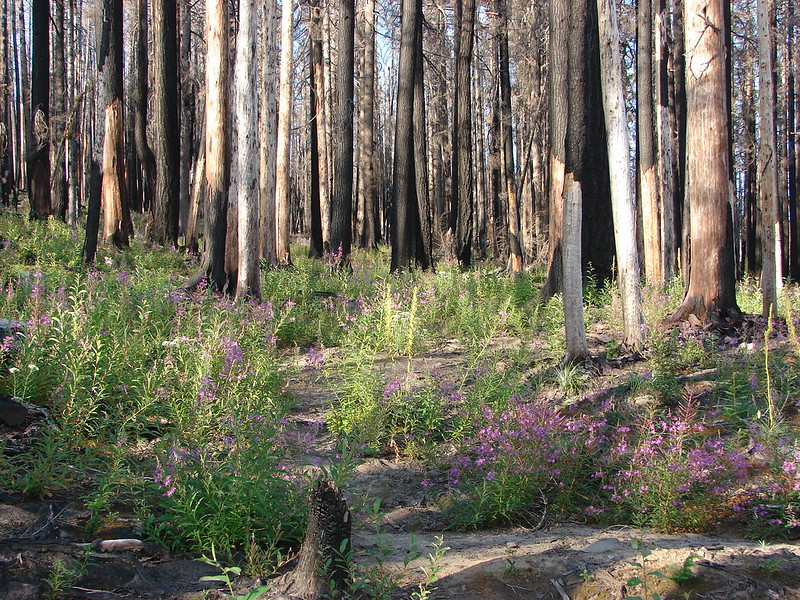
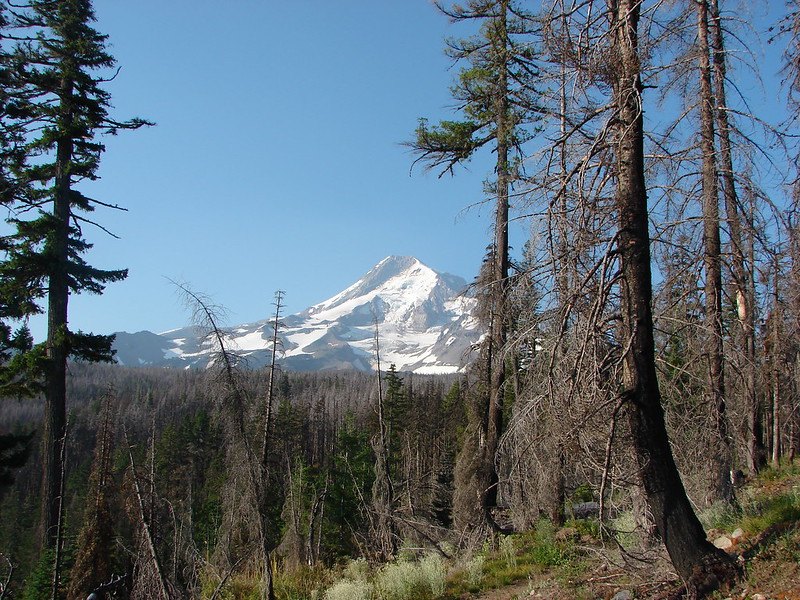
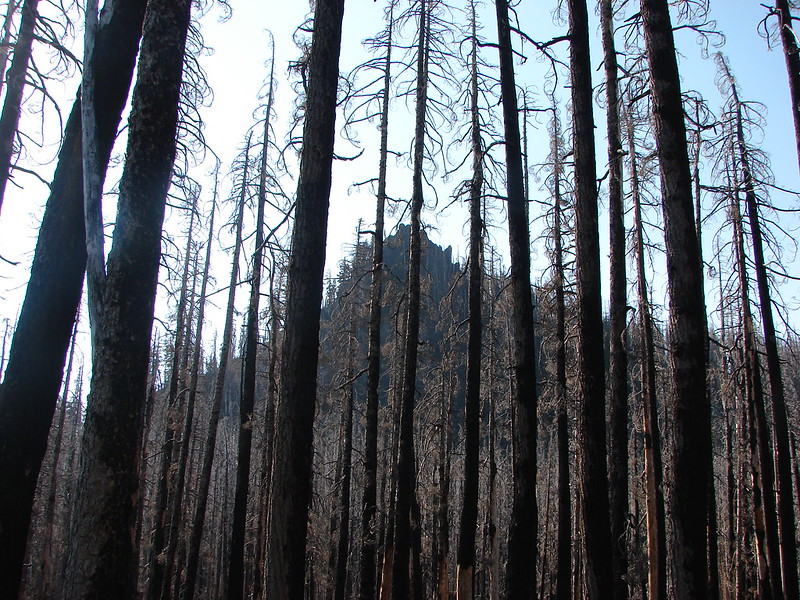
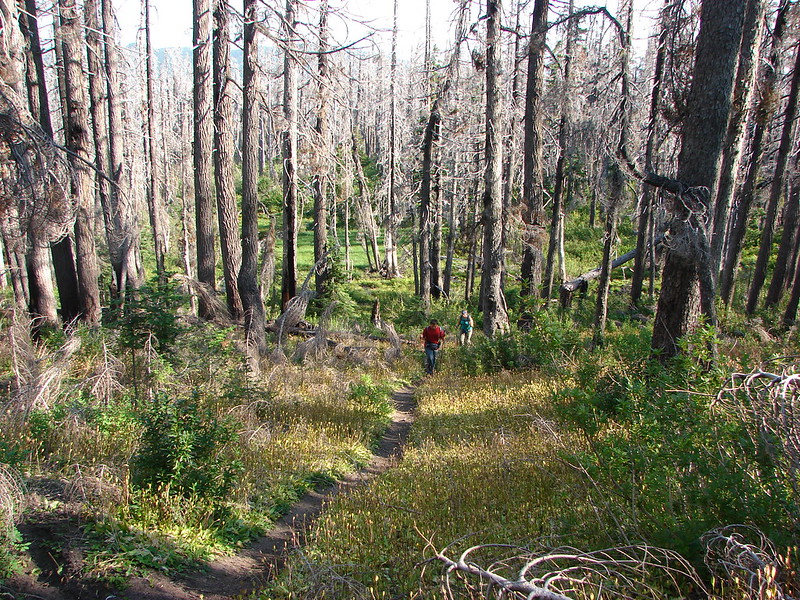
The trail passes through forest burned in the 2011 Dollar Lake Fire. Vegetation is starting to return in some areas but the first section of the trail was still pretty barren.
DSC02056
DSC02058
DSC02066
DSC02063

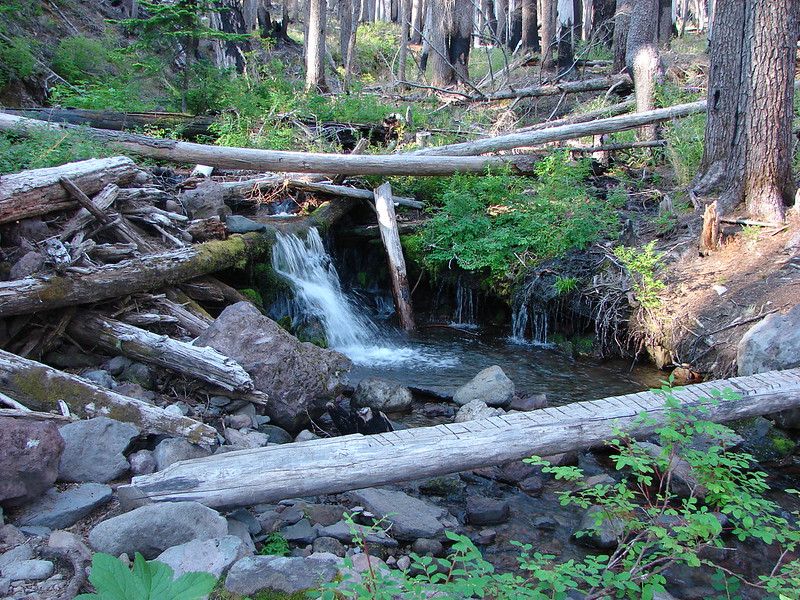
A pleasant surprise was a small stream with a picturesque crossing.
DSC02067
DSC02068

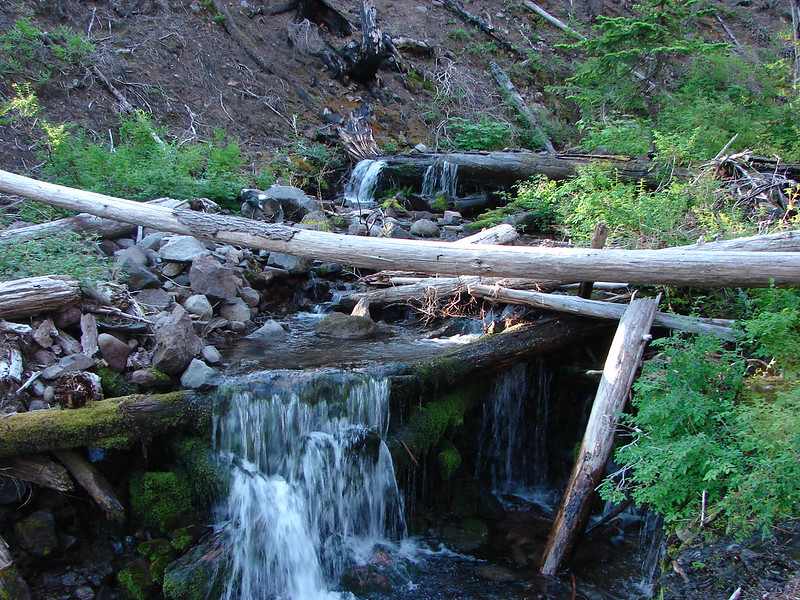
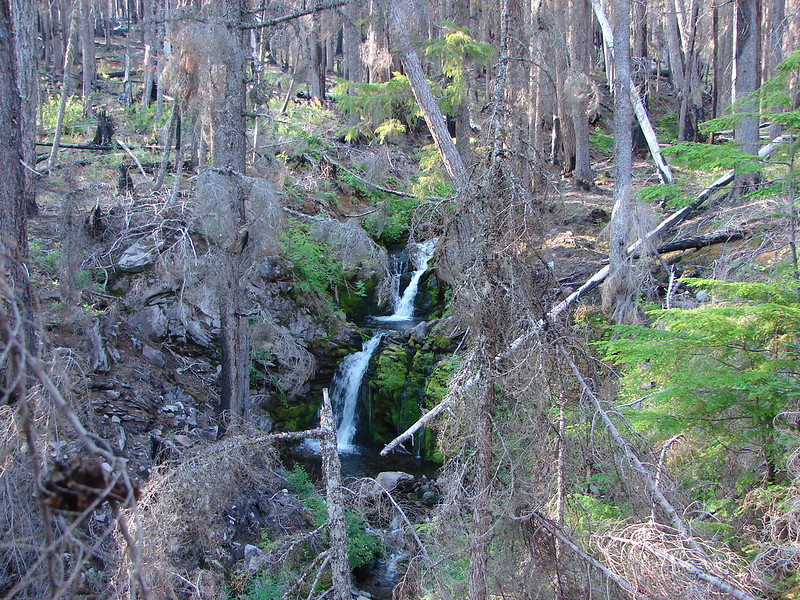
We noticed a possible little waterfall downstream and left the trail to see what we could find. It turned out to be a lovely pair of little falls.
DSC02072

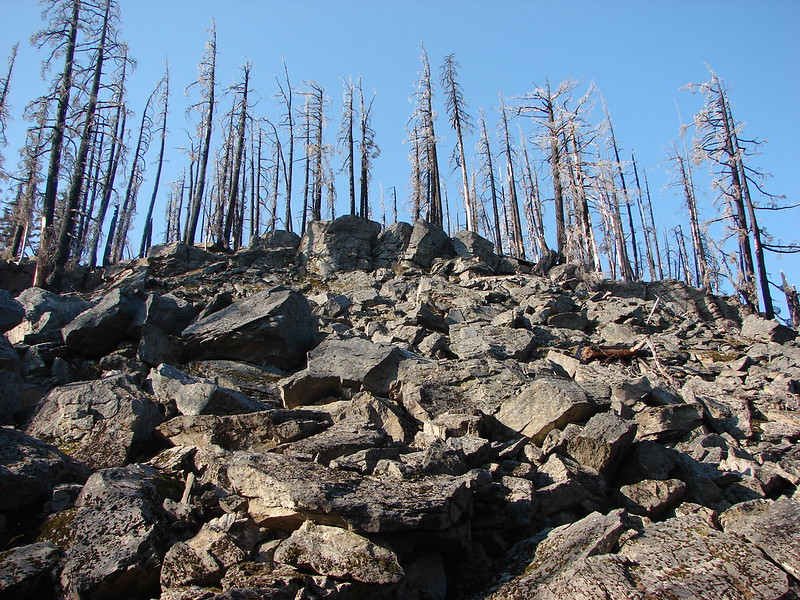
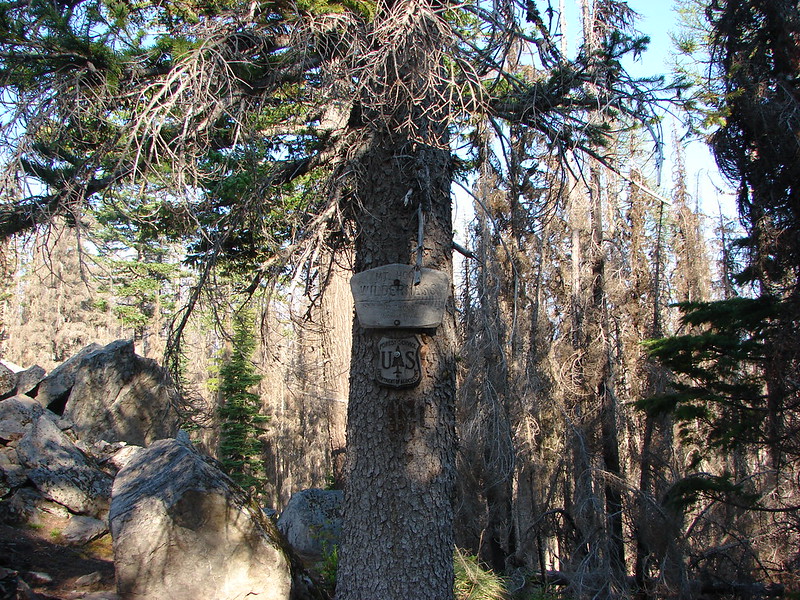
The trail enters the Mt. Hood Wilderness just after passing a small rock slide and shortly after we got our glimpse of The Pinnacle, the rock formation the trail is named after.
DSC02075
DSC02076
DSC02081

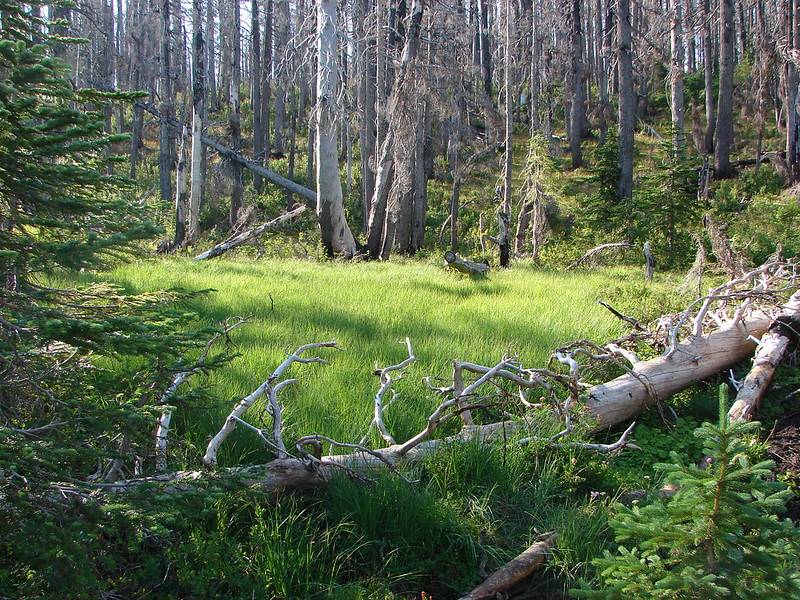
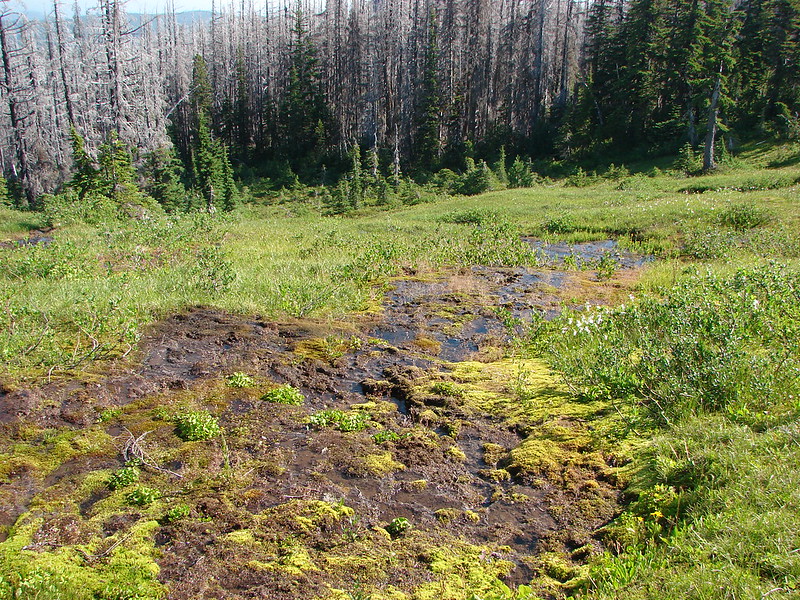
The forest began to get greener as we passed The Pinnacle. The trees had still been burned in the fire but a series of springs and bogs created a green undergrowth.
DSC02088
DSC02089
DSC02090
DSC02098

After making our way around a particularly muddy area we started encountering some unburnt forest. Mountain heather and avalanche lilies greeted us along with some hungry mosquitoes.
DSC02109

The bugs were pretty bad for a short stretch but when we met the Timberline Trail they relented. We had been on this portion of the trail on our trip to Barret Spur last year. https://wanderingyuncks.wordpress.com/2013/08/15/barrett-spur-via-the-mazama-trail/ We retraced our steps from that visit passing the side trail to Dollar Lake and continuing around a ridge end to one of the more impressive views we’ve seen from the Timberline Trail. One minute the mountain is hidden and the next you are staring straight at it.
DSC02138

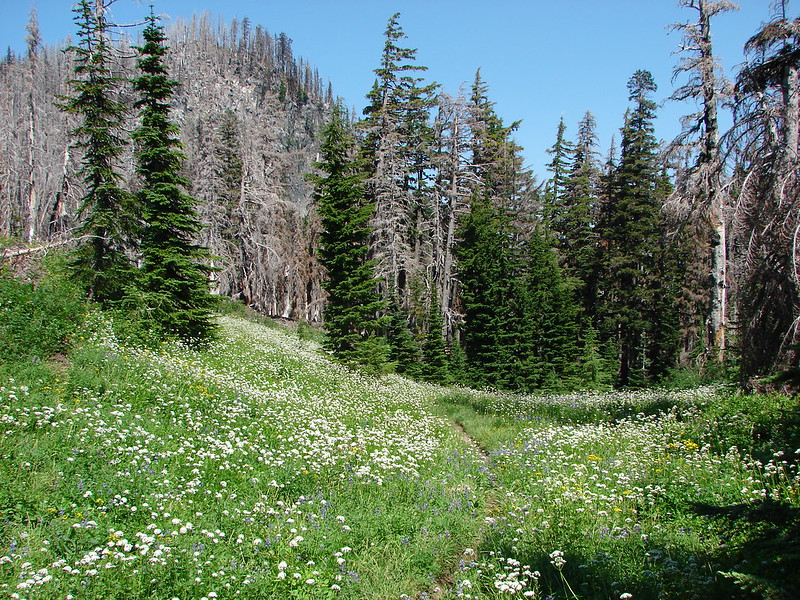
The flower display along this portion of the trail was very impressive.
DSC02148
DSC02155
DSC02169
DSC02158

Melting snow feeds several streams that help keep Elk Cove full of color. The contrast of Mt. Hood looming over the green meadows is breathtaking.
DSC02175
DSC02179

We followed a small trail along the largest creek up through the wildflower filled meadows toward the mountain. The flowers along the creek were especially colorful.
DSC02190
DSC02207
DSC02211
I managed to get up to the snowfield that was feeding the stream. Where the view back down at the meadow was filled with western pasque flowers and paintbrush.
DSC02215
DSC02219
DSC02222

We returned to the Timberline Trail and began to make our way through the rest of Elk Cove. There were several meadows, each with it’s own variety of flowers and view of Mt. Hood.
DSC02243
DSC02245

DSC02249
DSC02253

Our original plan was to continue on the Timberline crossing over the Coe Branch and continuing on to Compass Creek Falls where we would turn around. On the far side of Elk Cove we reentered the trees where there was still an impressive amount of flowers.
DSC02265
DSC02276
DSC02272

As we came around a ridge end we got our first glimpse of the Coe Branch as it flowed down from the Coe Glacier.
DSC02291

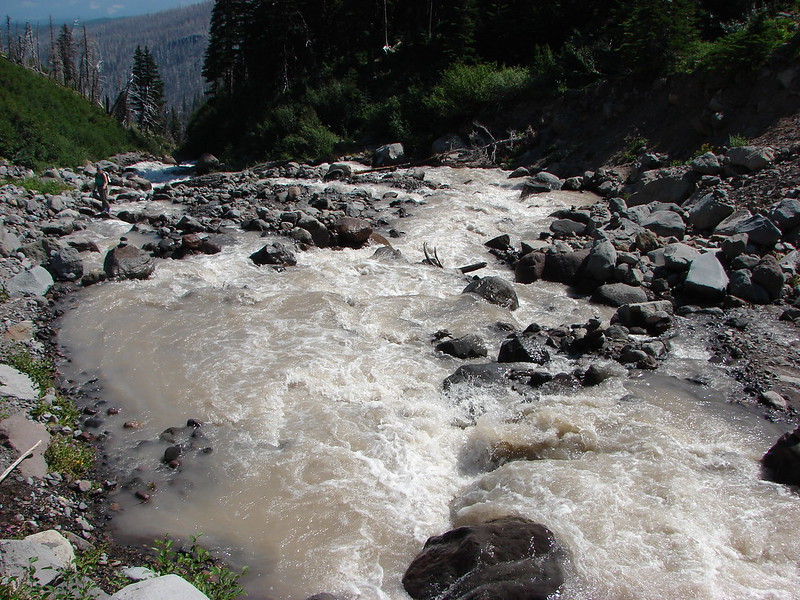
Even from up above we could tell by the sound that the Coe Branch was flowing very swiftly. When we arrived at the water we discovered it was already swollen due to the rapid snow melt caused by a very hot morning. We scanned for a good crossing point and found a couple of possibilities but in the end decided to call it good and make this our turn around point.
DSC02306
DSC02307
DSC02320

Since we hadn’t made it to Compass Creek we did a little exploring down the Elk Cove Trail, another possible route to the Timberline Trail. Camping is prohibited in the meadows of Elk Cove but there were several nice campsites a short distance down this trail that had views and surroundings like this:
DSC02343
DSC02340

After checking out several campsites we headed back up the Timberline Trail and out of Elk Cove. We decided to take the quick .2 mile side trip to visit Dollar Lake at the last minute as we passed by the hard to spot trail.
DSC02386

The return trip from Dollar Lake was pretty uneventful. The mosquitoes had apparently had enough of the heat and left us alone for the most part. We did spot a very focused swallowtail butterfly that didn’t seem to be the least bit concerned with it’s picture being taken.
DSC02417
DSC02424
DSC02427
DSC02431

When we arrived back at the parking area we got one last look at Mt. Hood.
DSC02448
Another day hiking on the Timberline Trail had only reenforced our desire to tackle the whole loop someday. Happy Trails!

flickr: https://www.flickr.com/photos/9319235@N02/sets/72157645744404417/
facebook: https://www.facebook.com/media/set/?set=a.10204606593031957.1073741896.1448521051&type=1

Categories
High Cascades Hiking Mt. Hood Area Oregon Trip report

Burnt Lake to Paradise Park Overnight

Our latest overnight trip brought us to the Mt. Hood Wilderness where we planned to continue honing our backpacking skills. We plotted out a trip that would bring us to some new places as well as some previous favorites. The plan was to start at the northern trail head of the Burnt Lake Trail, pass Burnt Lake and climb up to East Zig Zag Mountain where we would take the Zig Zag Mountain Trail up to the Paradise Park Trail. From there we would head up to Paradise Park and camp somewhere along the Paradise Park Loop Trail near Split Rock. We’d been to East Zig Zag Mountain and Paradise Park in 2012 on separate hikes, but we had come in on different trails for those trips.

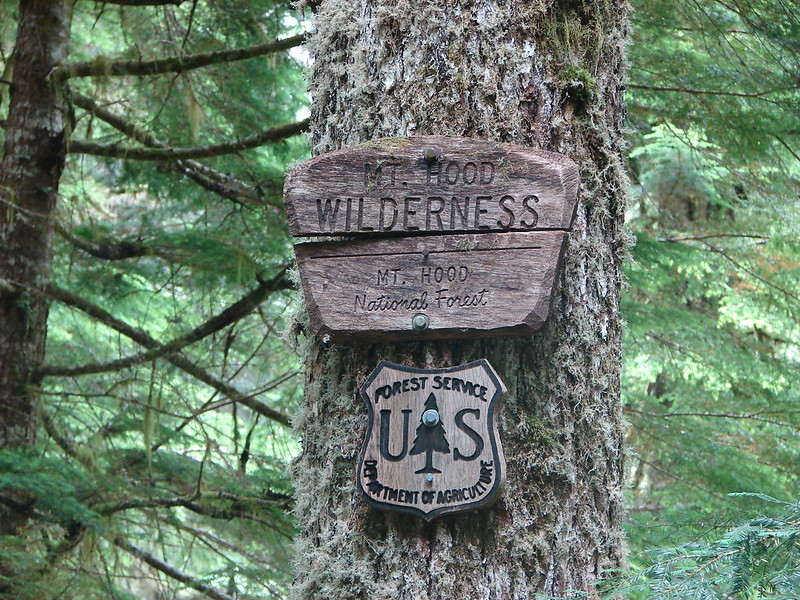
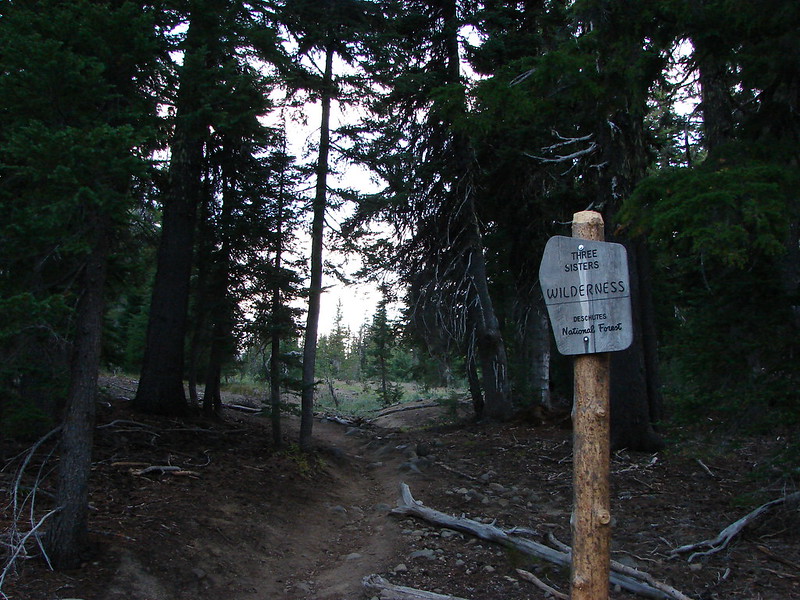
We set off from the Burnt Lake trail head shortly before 7am and quickly entered the Mt. Hood Wilderness.
DSC01348

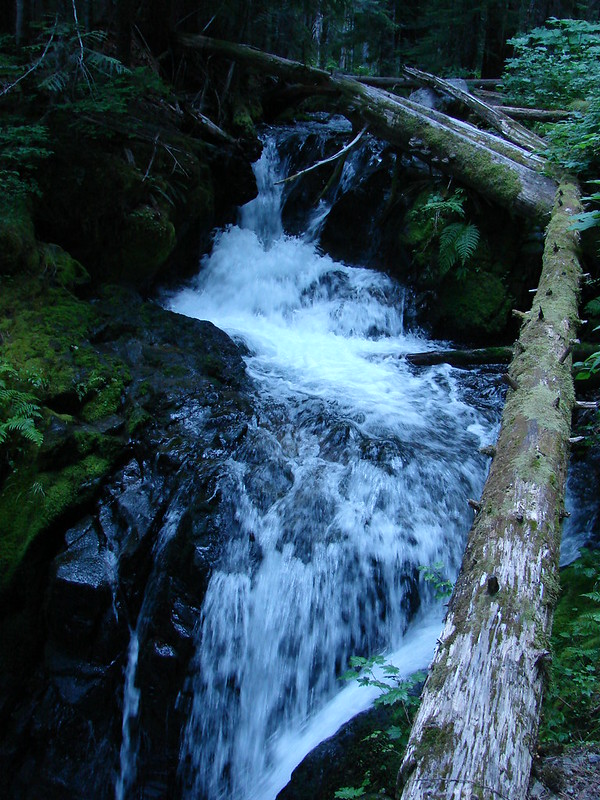
The trail climbed between Burnt Lake Creek and Lost Creek for 1.9 miles before crossing and then recrossing Burnt Lake Creek. Near the 2.5 mile mark an unmarked side trail to the left led downhill to Lost Creek Falls. (Waterfalls on Lost Creek became a theme for this trip.)
DSC00785

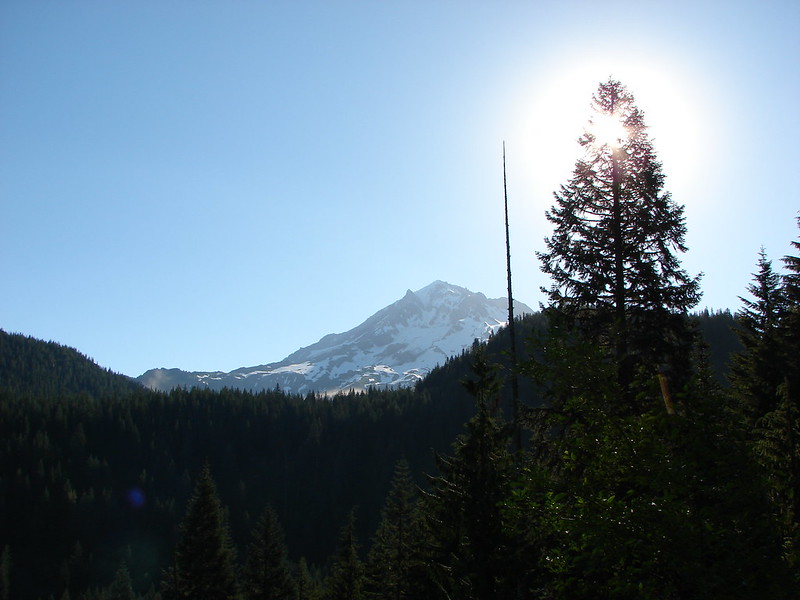
The trail then veered away from Lost Creek and climbed for a mile up to Burnt Lake. Along the way we got our first glimpses of Mt. Hood.
DSC00792

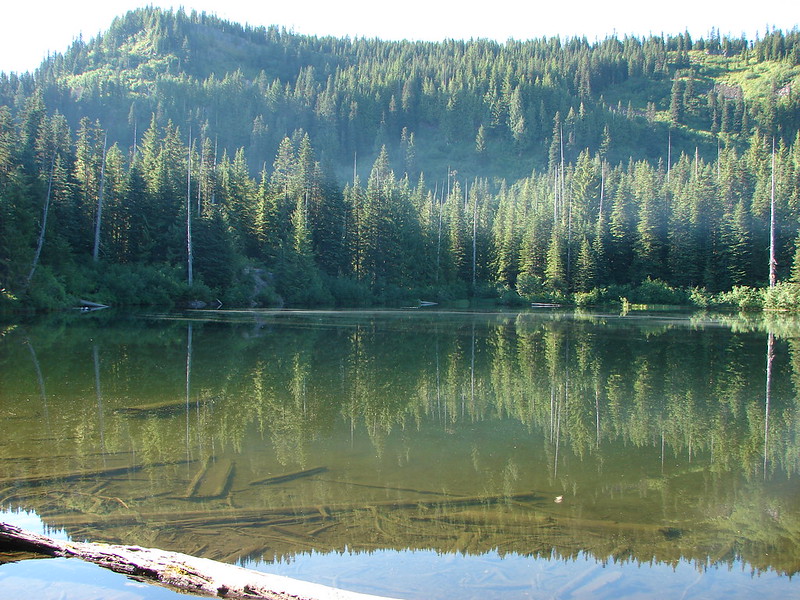
We stopped briefly to check out Burnt Lake but decided to wait until the return trip to locate the best viewpoint of Mt. Hood from the lake shore.
DSC00797
DSC00800

From Burnt Lake the trail climbed up to the Zig Zag Mountain Trail where we took a brief detour to visit the summit of East Zig Zag Mountain. Heather decided to remain amid the wildflowers at the junction with the southern portion of the Burnt Lake Trail while I climbed up to the former lookout site.
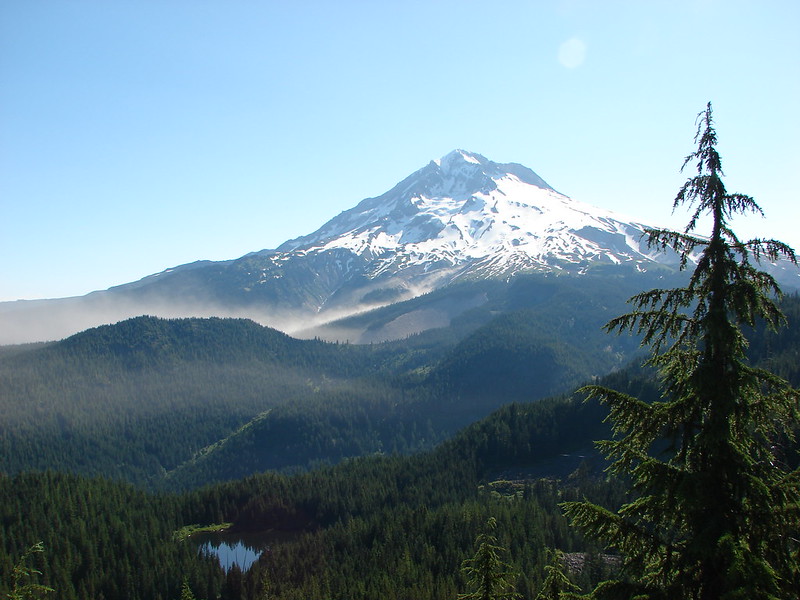
Mt. Hood and Burnt Lake from the south trail junction:
DSC00818

Trail heading up East Zig Zag Mountain:
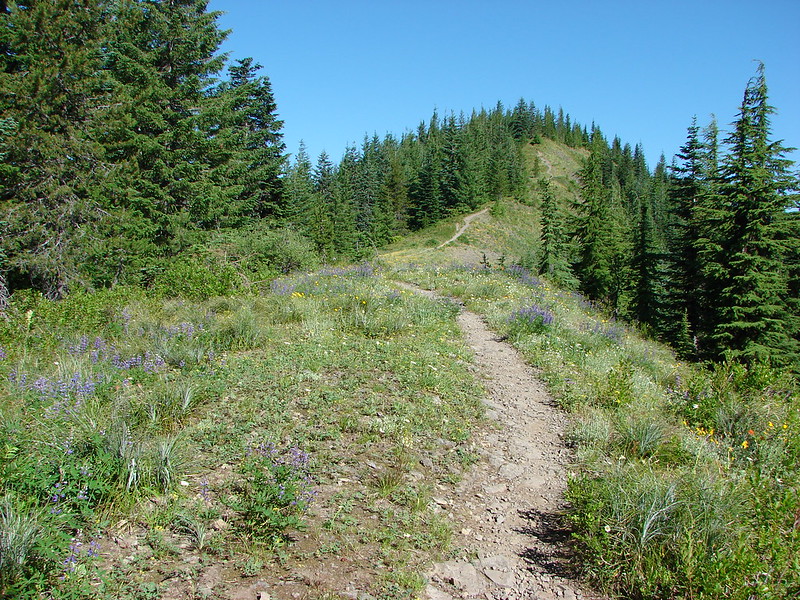
DSC00830

Wildflowers:
DSC00835
DSC00836
DSC00838
DSC00843
DSC00854

Mt. Jefferson:
DSC00856

Mt. Hood:
DSC00859

Butterfly:
DSC00867

Heather waiting at the junction:
DSC00866

After getting my wildflower fix we headed East on the Zig Zag Mountain Trail and began climbing towards Paradise Park. The trail began with a nice gradual ascent through open meadows of beargrass, huckleberry, and other bushes. It was fairly overgrown but easy enough to follow.
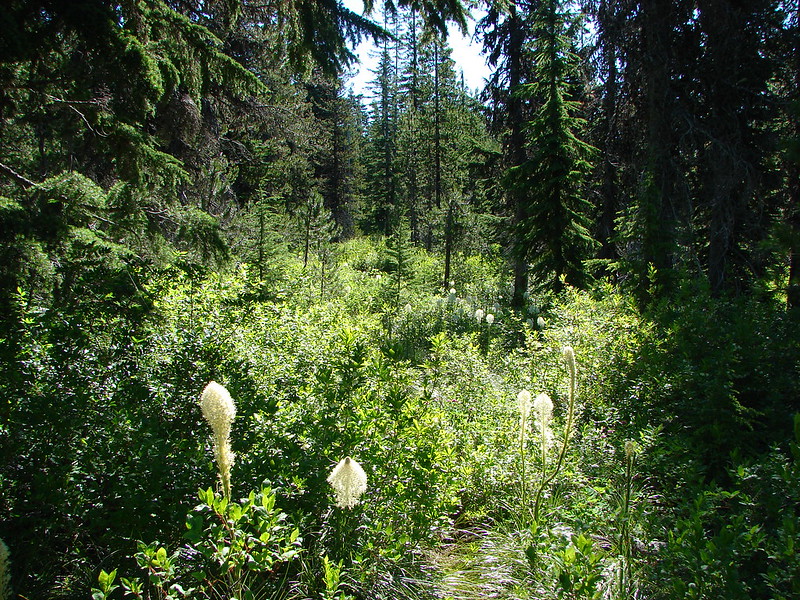
DSC00876

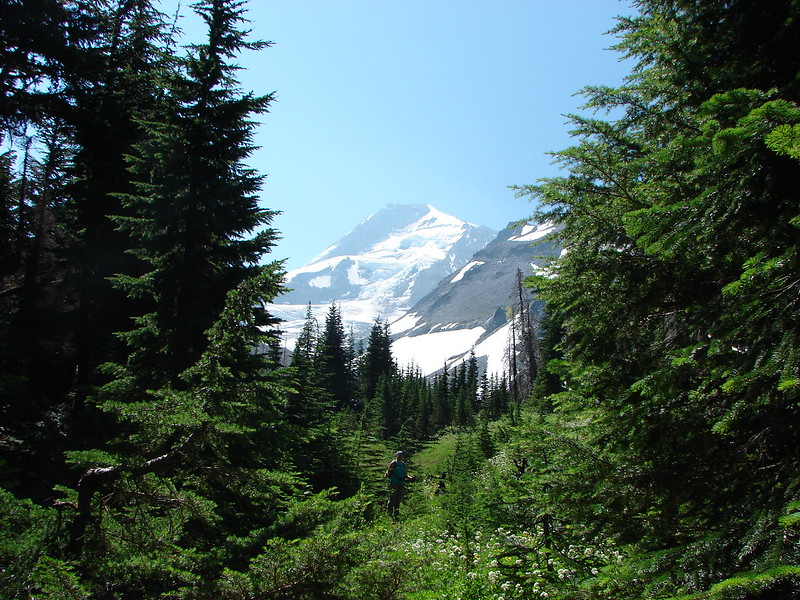
We then came to a forested ridge where the trail suddenly steepened – downhill! We had been at 4600′ when we joined the Zig Zag Mountain Trail and needed to get up to 5800′ in 3.7 miles to reach Paradise Park. Going down meant more climbing on the way up as well as having to climb up on the way back down the following day. There were at least 4 fairly brief but steep descents before we began climbing again. At least were some nice views of the mountain ahead of us and a view of our goal.
Paradise Park is the light green areas just above the tree line:
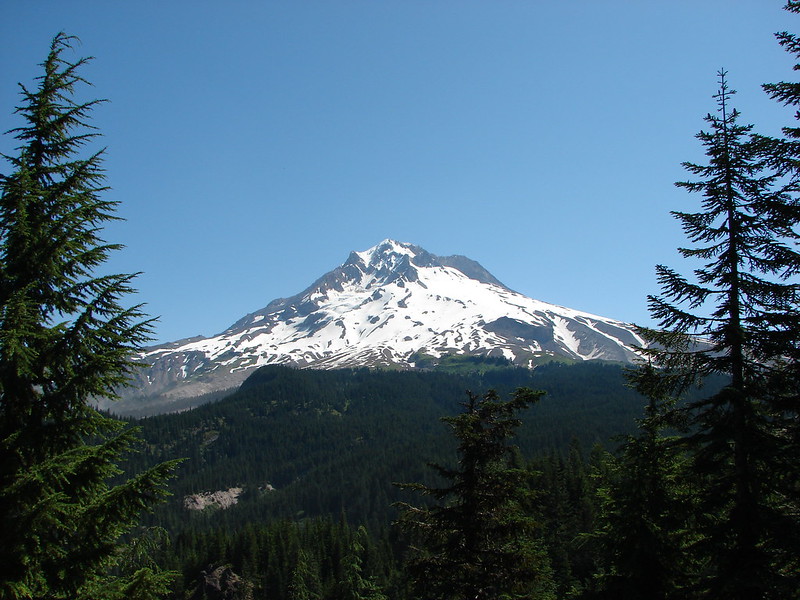
DSC00890
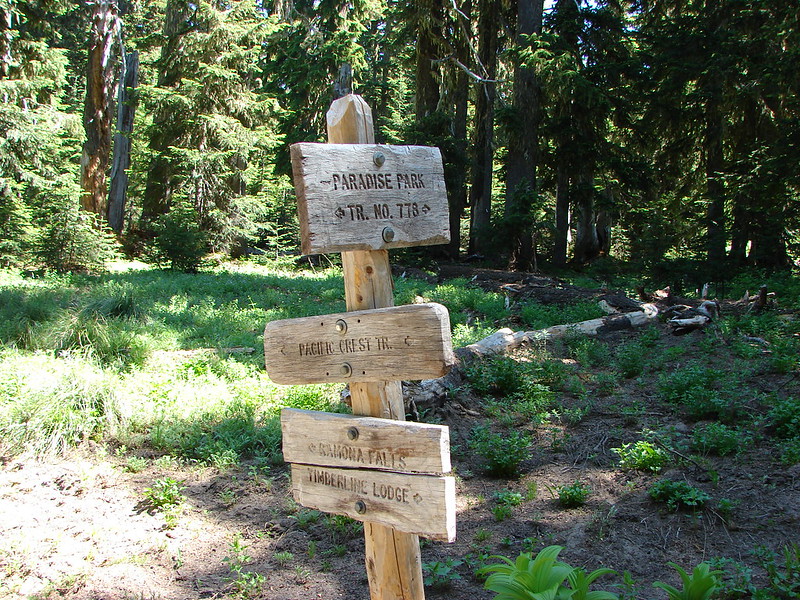
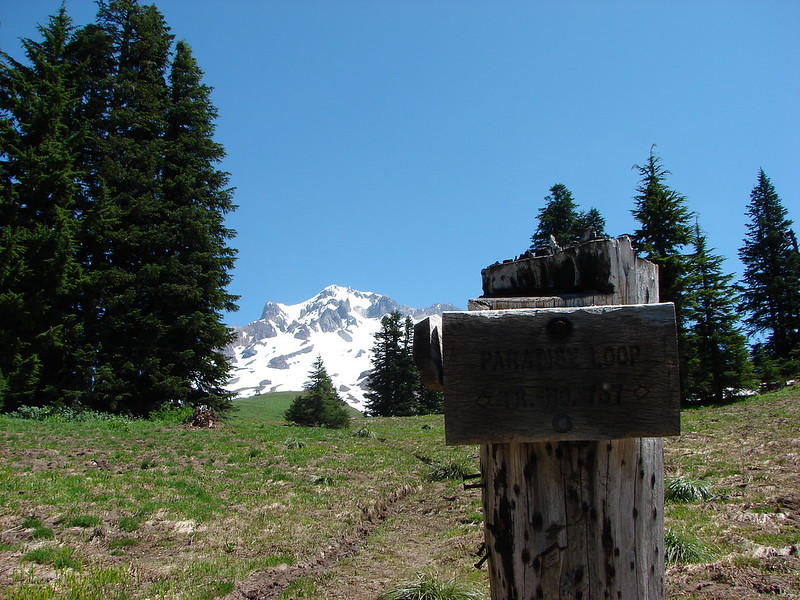
The Paradise Park Loop Trail passed just below the pile of boulders:
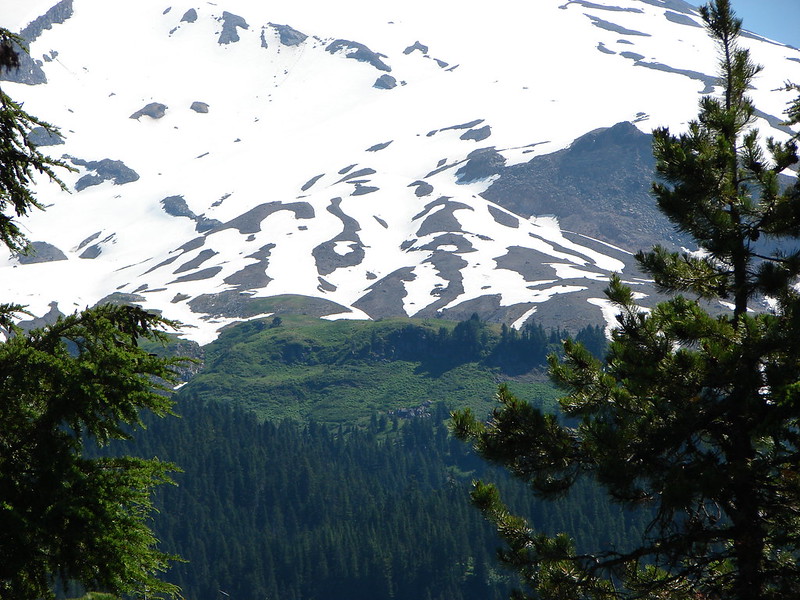
DSC00894

As we neared the Paradise Park Trail Junction we began to see lots of avalanche lilies, a telling sign of recent snow melt, and a few patches of snow still hanging on.
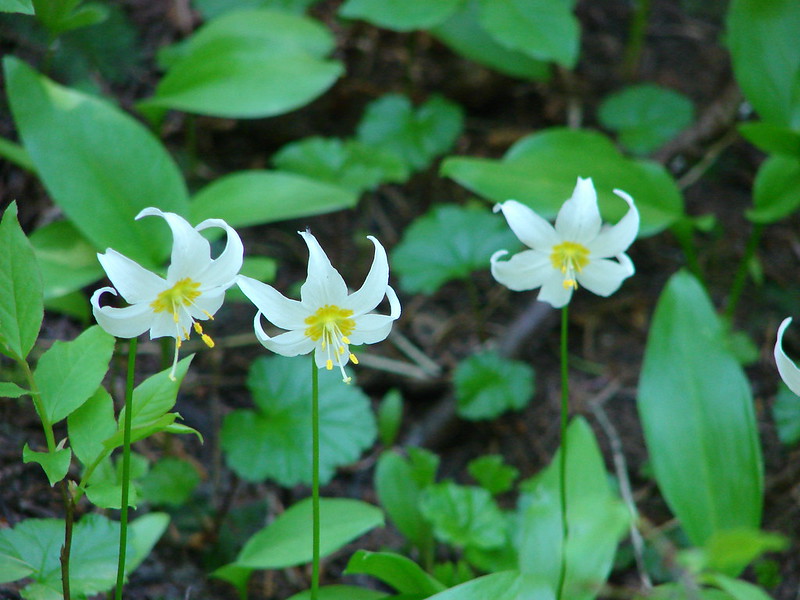
DSC00897
DSC00911
DSC00907

After joining the Paradise Park Trail we passed through several meadows and a nice viewpoint of the Zig Zag River before arriving at the Pacific Crest Trail in a mere .2 miles.
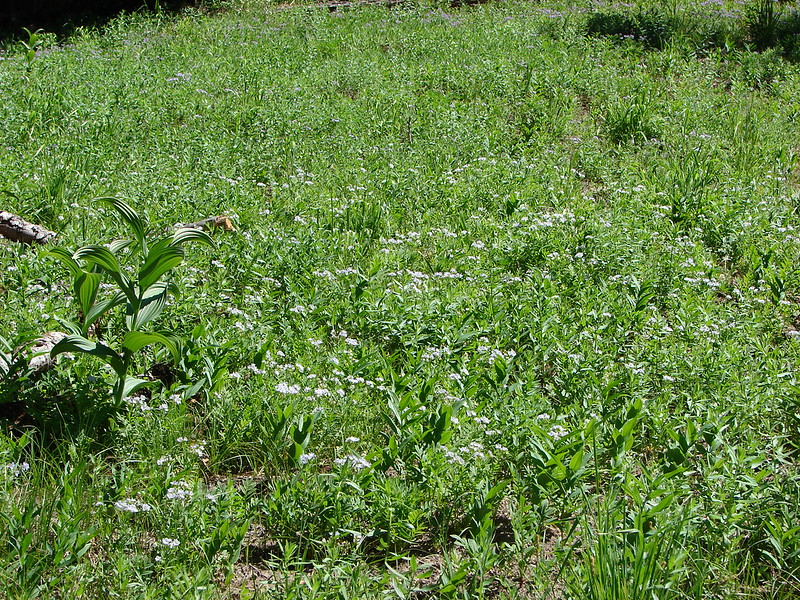
DSC00922
DSC00923
Zig Zag River Canyon and Mississippi Head (the rock outcropping at the center of Mt. Hood):
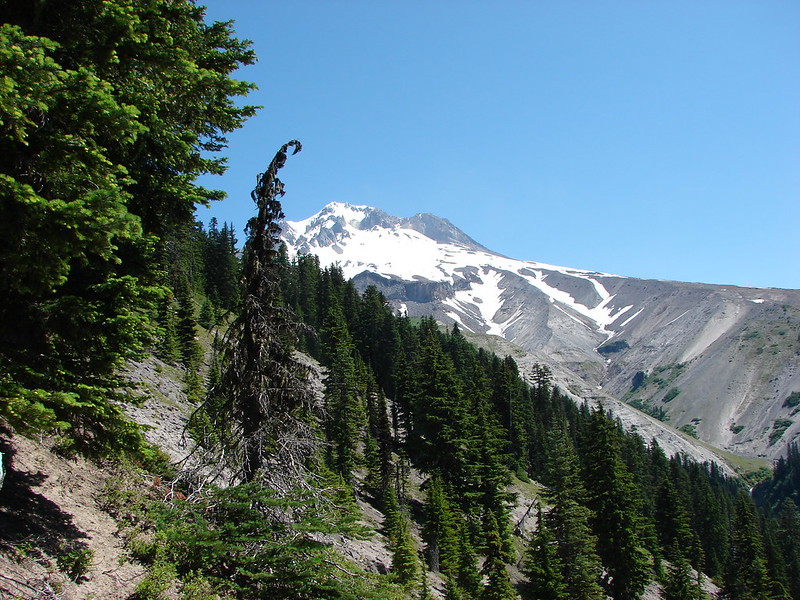
DSC00916
Oh the choices!
DSC00925

We crossed over the the PCT and climbed up to the Paradise Park Loop Trail which was a fairly steep .5 miles and 400′ above us. It was late August when we visited in 2012 and to this day the wildflowers in the meadow at the junction of these two trails remains the best display we’ve seen. There was little indication of the scene to come this trip as the snow was still melting off and only a few early flowers could be found. The view of Mt. Hood was still top notch though.
Late August 2012
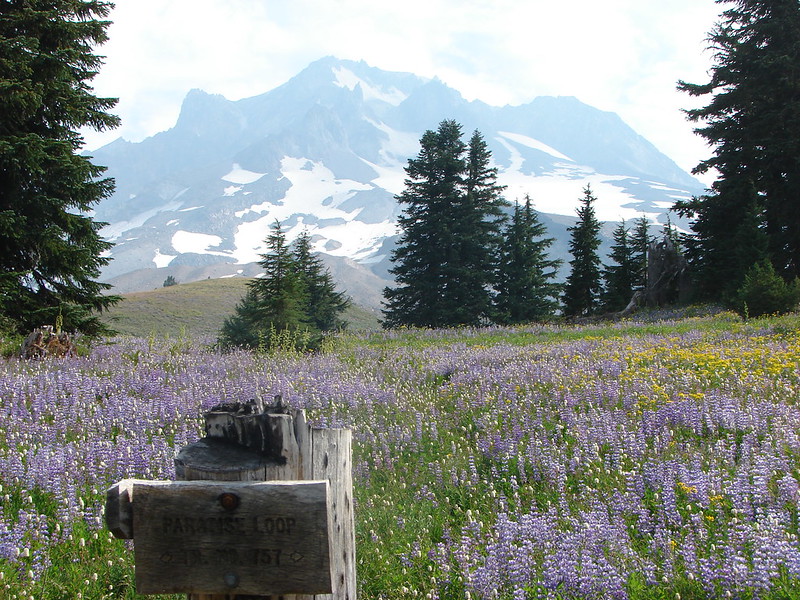
173
Mid July 2014
DSC00935
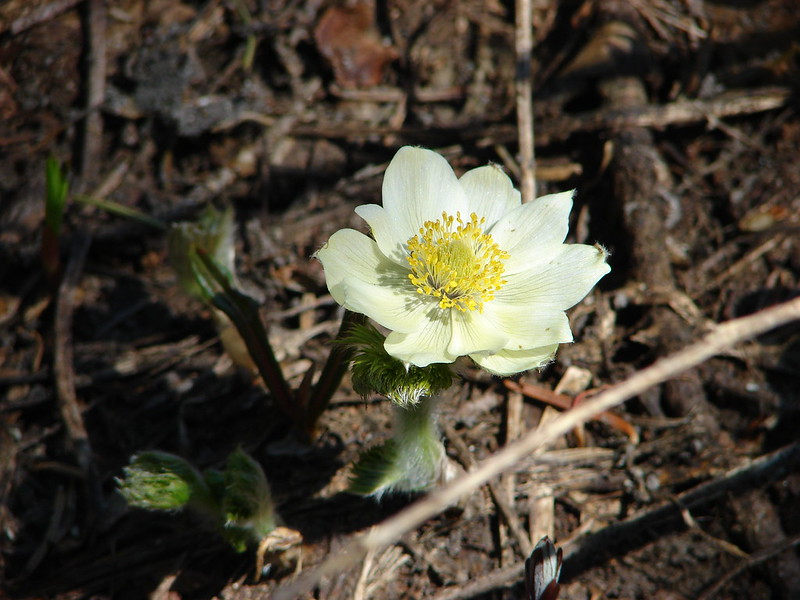
Western Pasque Flower
DSC00932
Avalanche lilies and paint
DSC00939

We headed left at the junction and started looking for our tent site. We passed several good locations but had something specific in mind. We were looking for a site close to a water source, with a good view, but also with some shade as it was quite warm. We made our way North passing the remains of the Paradise Park Shelter, crossing both branches of Lost Creek, and passing Split Rock before we found what we had been looking for.
South Branch Lost Creek crossing
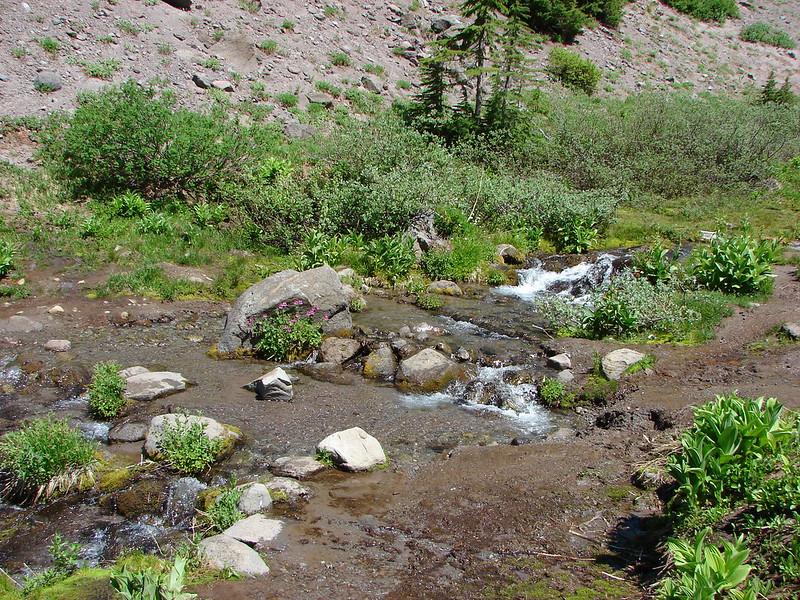
DSC00945
Mt. Hood from the crossing
DSC00950

North Branch Lost Creek crossing – The snow shelf made this one tricky as the creek was flowing under the edge of the snow.
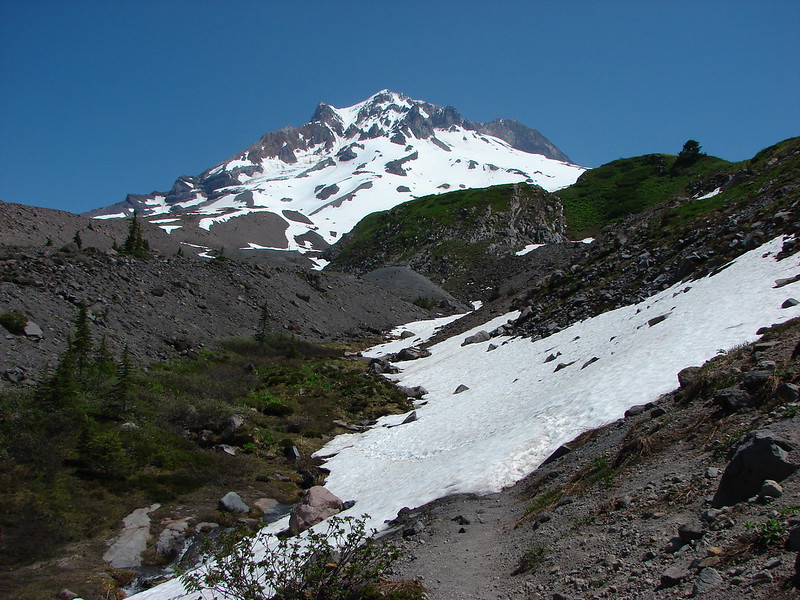
DSC00960
DSC00963

Split Rock
DSC01002

Camp
DSC01000

After setting up camp we spent the rest of the afternoon and evening alternating between exploring the area and relaxing as we waited for sunset.
Mountain heather beginning to bloom
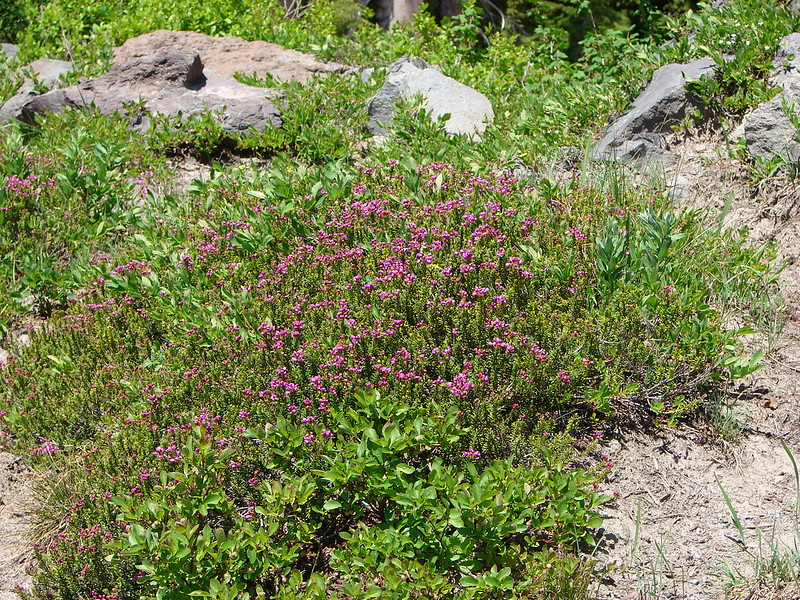
DSC00970

Cinquefoil
DSC00982

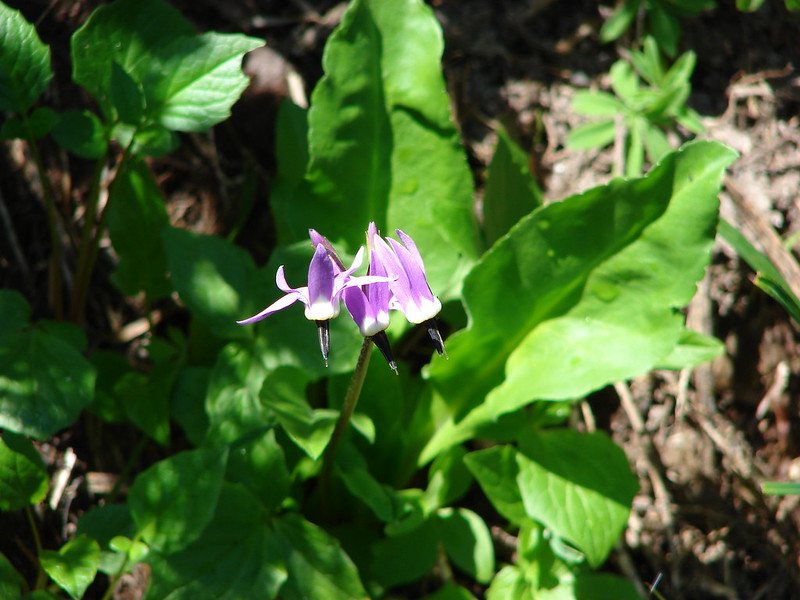
Shooting Star
DSC00989

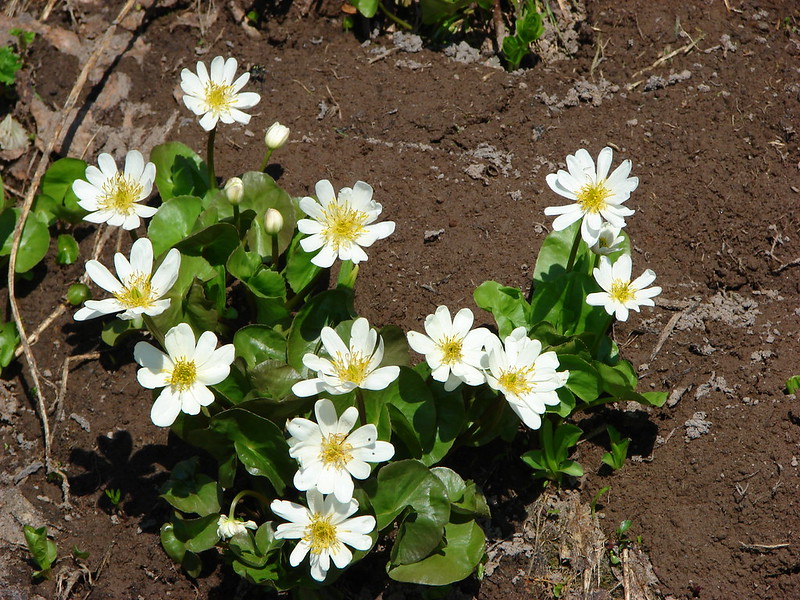
Marsh marigolds
DSC01040

Western pasque flowers
DSC00991
DSC01066

Mt. Jefferson
DSC00972

Mt. St. Helens
DSC00990

East Zig Zag Mountain and some of our route from earlier in the day
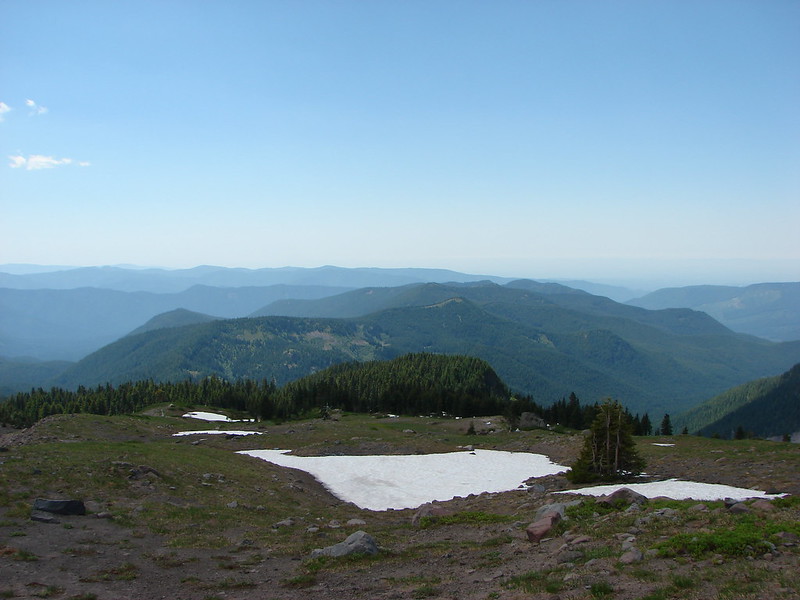
DSC01012

DSC01009
DSC01023

Yocum Ridge on the other side of the Sandy River. The waterfall is on what appears to be an unnamed fork of the Sandy River but I’ve seen it referred to as Paradise Park Creek.
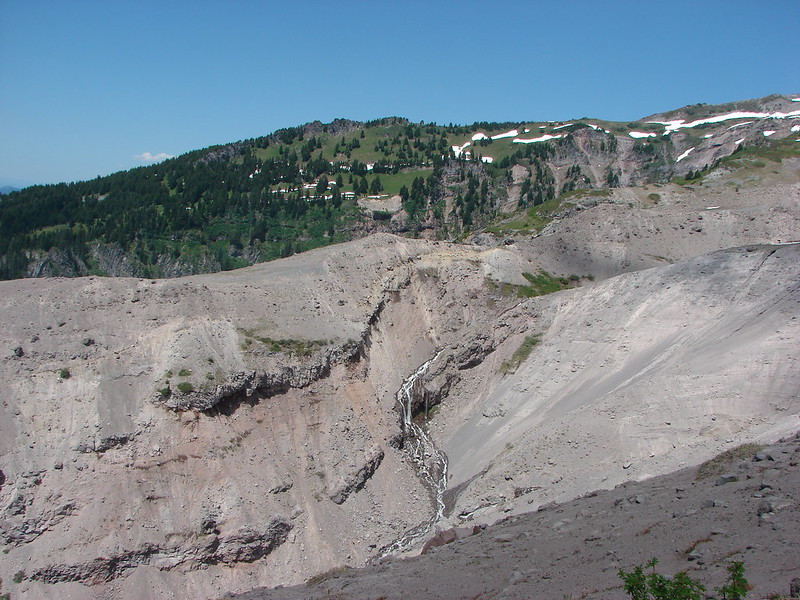
DSC01024

The Sandy River
DSC01031

Waterfall flowing down into Lost Creek
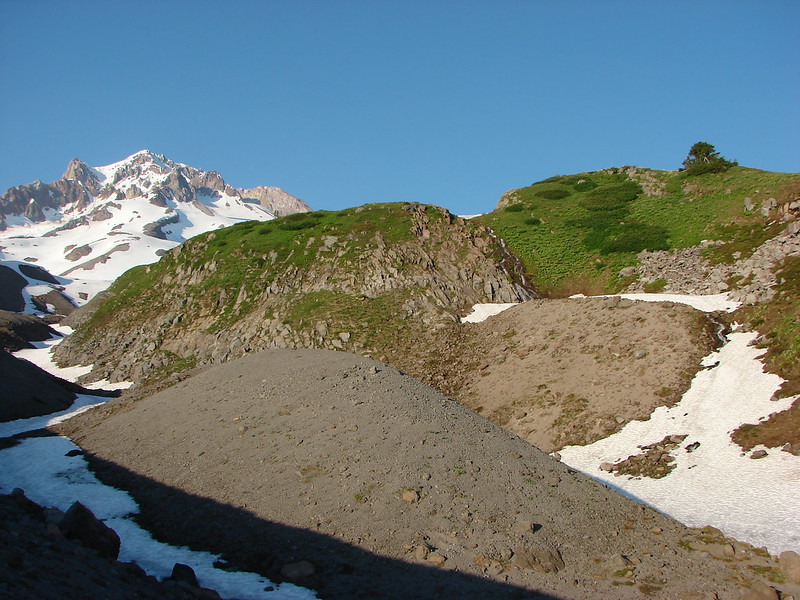
DSC01052
DSC01055

Marmot in the grass near the falls
DSC01061

Our shadows as the Sun was getting lower
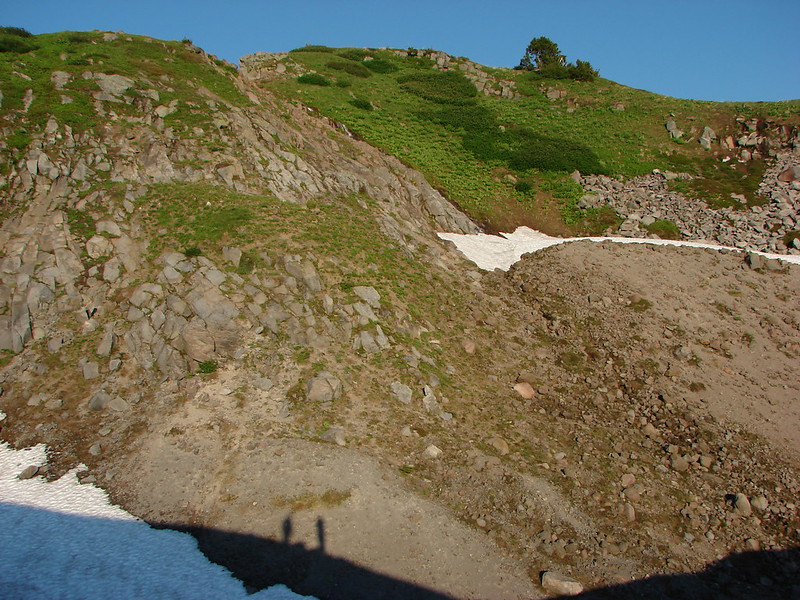
DSC01064

Small waterfall on Lost Creek
DSC01073

Sunset
DSC01082
DSC01090
DSC01104
DSC01124

After watching the Sun go down we turned in. For some reason I wound up awake shortly after 4am so I grabbed the camera again and waited for the sunrise.
The Moon was super bright all night and a few clouds had moved in to the South by the morning
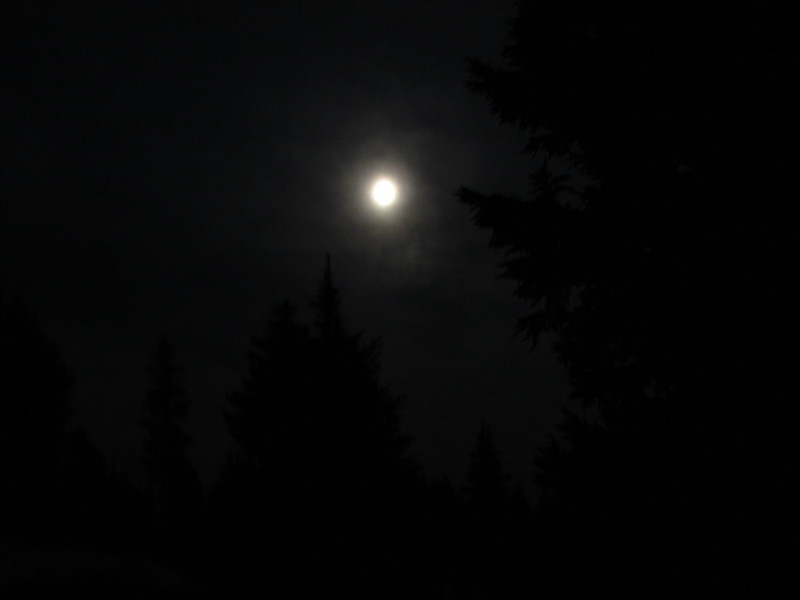
DSC01151

Starting to get some sunlight
DSC01180
DSC01184

Then came the colors
DSC01195
DSC01205
DSC01213
DSC01210DSC01224
DSC01227

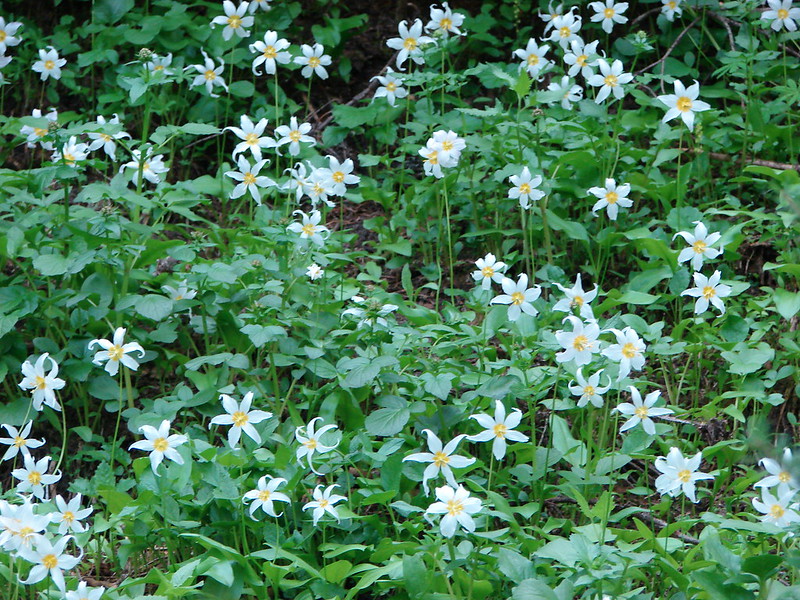
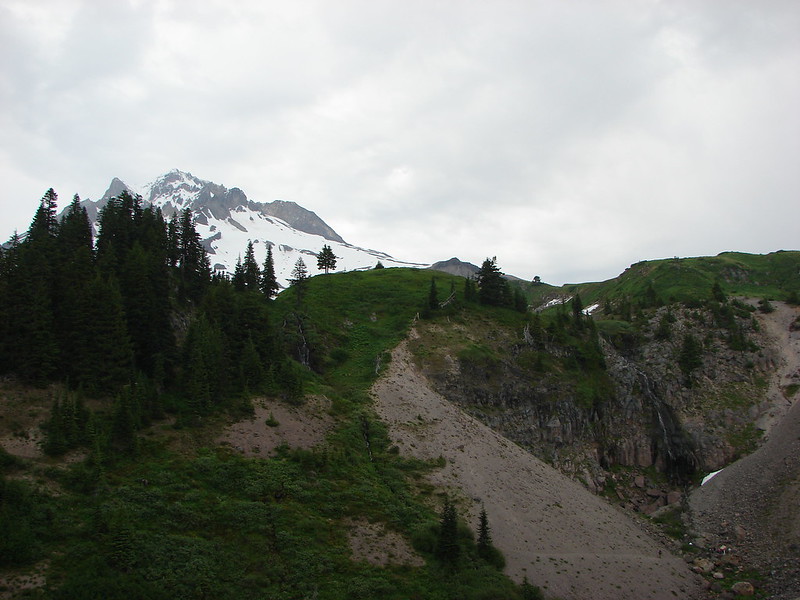
After a breakfast of Mountain House freeze dried scrambled eggs and bacon (yes we managed to use our stove this trip 🙂 ) we packed up camp and began our return trip. We decided to continue on the loop which would bring us back to the PCT which we could then take South back to the Paradise Park Trail junction. This would allow us to visit a few waterfalls on the way back. The first of the falls is on Rushing Water Creek as it comes down from Paradise Park. There was a nice display of wildflowers just before the falls here.
DSC01272
DSC01278
DSC01294
DSC01297

There was a trail crew from the Pacific Crest Trail Association gathered at the base of the falls that was out doing some trail maintenance.
DSC01300

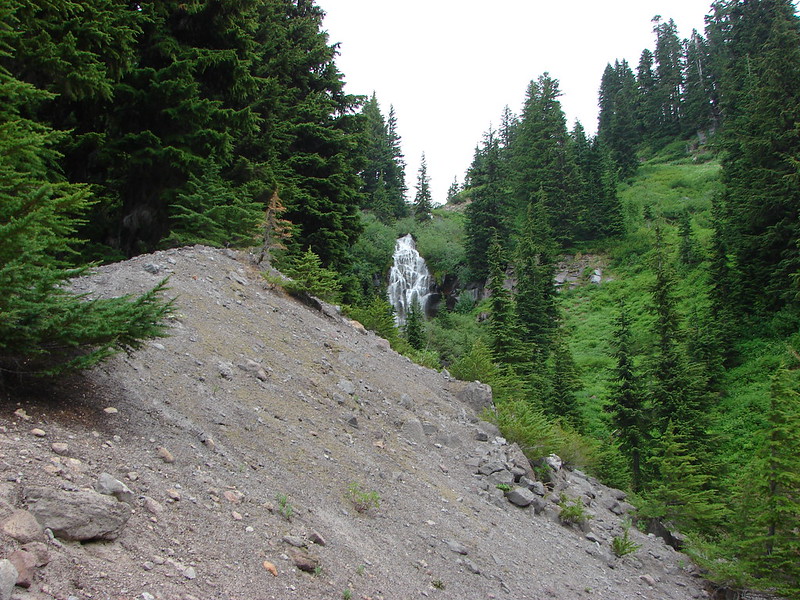
It had clouded up and as we were passing the falls rain began to fall lightly. We decided to stop at the next set of falls to waterproof our sleeping bags just in case it started to rain harder. The next set of falls were on Lost Creek. Both branches come down within a short distance of each other and both in scenic waterfalls.
North Branch Lost Creek
DSC01303
DSC01305

South Branch Lost Creek
DSC01313
DSC01317

It was raining off and on but not very hard but then we began to hear thunder. We picked up our pace as best we could as the thunder became steadier and we started to see the flashes of lighting. We had made it to the Paradise Park Trail and were back on the Zig Zag Mountain Trail when the hike got really interesting. We came around a bend in the trail and less than 20 yards ahead of us was a black bear. We all instantly froze, even the bear for a split second before it turned in bolted back into the forest. All I’d had time to do was say “bear” before it had vanished. I had just put the lens cap back on the camera and tucked it under my shirt to keep the rain off of it so I had no chance at getting a picture. Heather went for the bear spray just to be safe but it was long gone.

We made it back to the steep sections that we were dreading without further incidents. The climb was pretty much as ugly as we’d expected but the rain had let up without ever getting too heavy so we were dry at least. Dry until we reached the overgrown section of trail that is. By the time we emerged from that section we looked and felt like we’d forded a thigh-high creek. 🙂

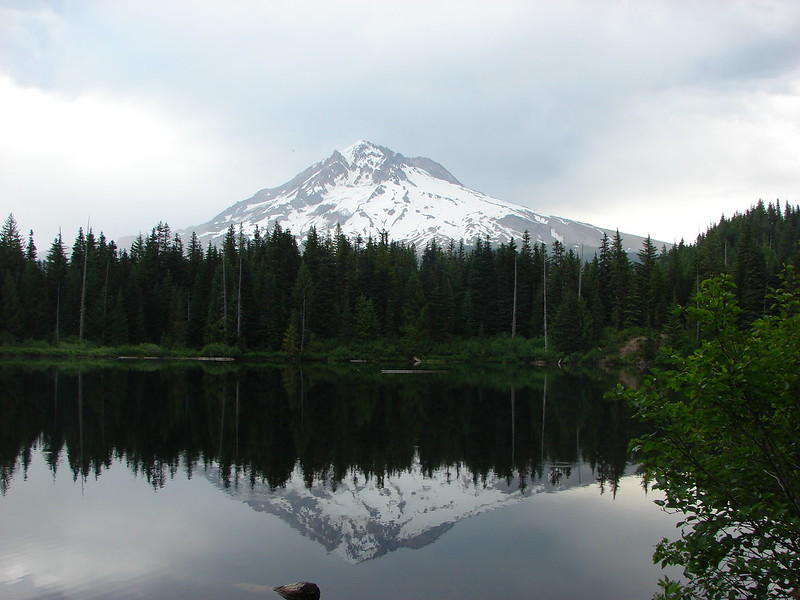
When we got back to Burnt Lake we headed down past campsite C where there is a great view of Mt. Hood from the lake shore.
DSC01337

We ticked off the remaining 3.5 miles at a brisk pace pausing occasionally to sample the salmon and blueberries that were ripening nicely along the trail.
Oval-leaf blueberries
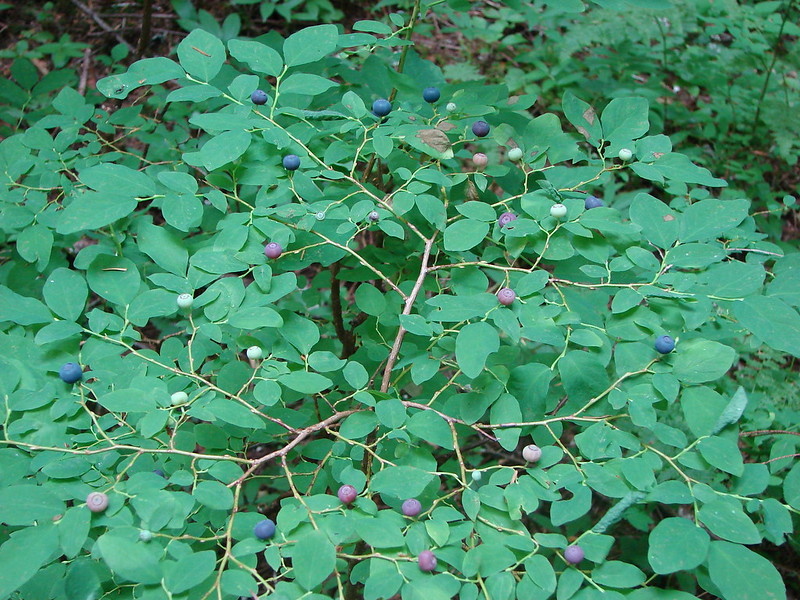
DSC01346

Mt. Hood had delivered another amazing adventure. Happy Trails!

flickr: https://www.flickr.com/photos/9319235@N02/sets/72157645261769389/
Facebook: https://www.facebook.com/media/set/?set=a.10204454188061928.1073741893.1448521051&type=1

Categories
Crater Lake Area High Cascades Hiking Oregon Trip report

Upper Rogue River Trail and Boundary Springs

**Note the 2017 Blanket Creek Fire burned a portion of this hike and the 2024 Middle Fork Fire also burned over Boundary Springs.**

Hike #2 on our mini-vacation was a visit to the Rogue River-Siskiyou National Forest and Crater Lake National Park. The plan was to start at the Mazama Viewpoint on Hwy 230 and first visit Boundary Springs which is where the Rogue River begins. Then we would hike down the Rogue River to Rough Rider Falls. We would have turned around there but my parents decided to come along and start at a different trail head and hike up the Rogue to the falls. They dropped us off at the Mazama Viewpoint before heading down to the lower trail head. This allowed us to continue past Rough Rider Falls and meet them at that spot.

It was a cloudy morning and we’d driven through a little rain/snow mix on the way there. An occasional light rain would continue all day long with a glimpse of blue sky thrown in every now and then. We started off on the Upper Rogue River Trail from the Mazama Viewpoint and followed the trail half a mile to a junction with the Boundary Springs Trail. Shortly after joining this trail we started getting glimpses of the Rogue flowing through the forest.
DSC08143
We crossed the boundary of Crater Lake National Park and continued on toward the springs. The river was increasingly scenic as we went.
DSC08156
DSC08168

Near Boundary Springs was a pretty waterfall:
DSC08174

The river just below the springs:
DSC08186

The largest of the springs:
DSC08190

After poking around the springs we returned to the Upper Rogue River Trail and turned left to head down river to Rough Rider Falls. The trail started out far above the Rogue as it flowed through an interesting canyon.
DSC08227
DSC08249

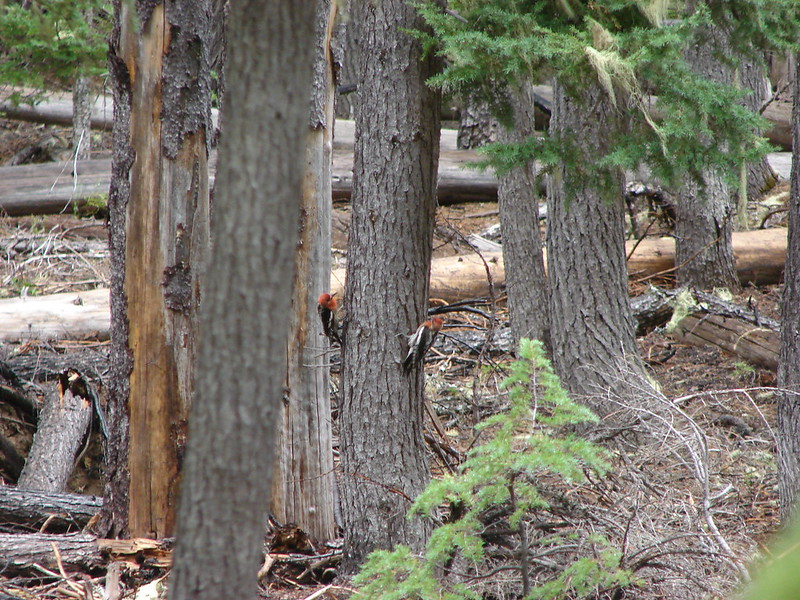
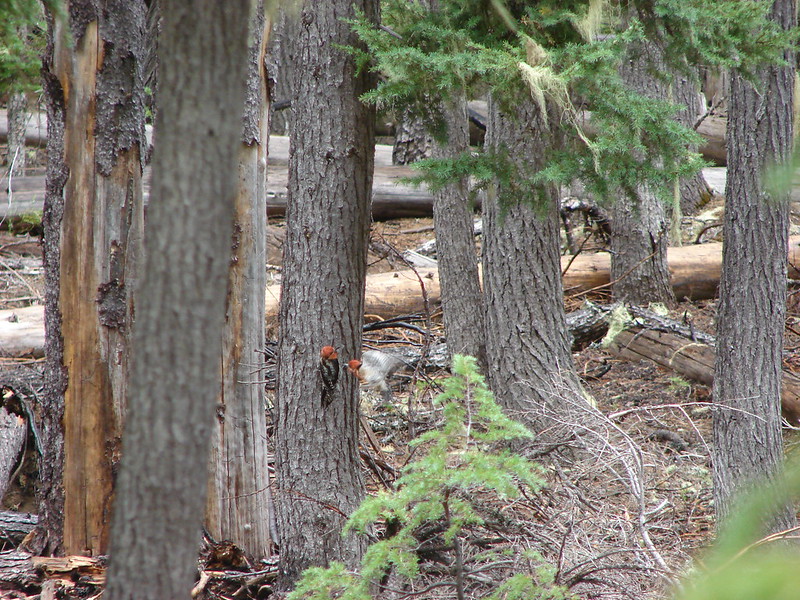
We came upon a couple of deer that were too quick for pictures and a pair of noisy woodpeckers that didn’t seem too pleased with one another.
DSC08253
DSC08254

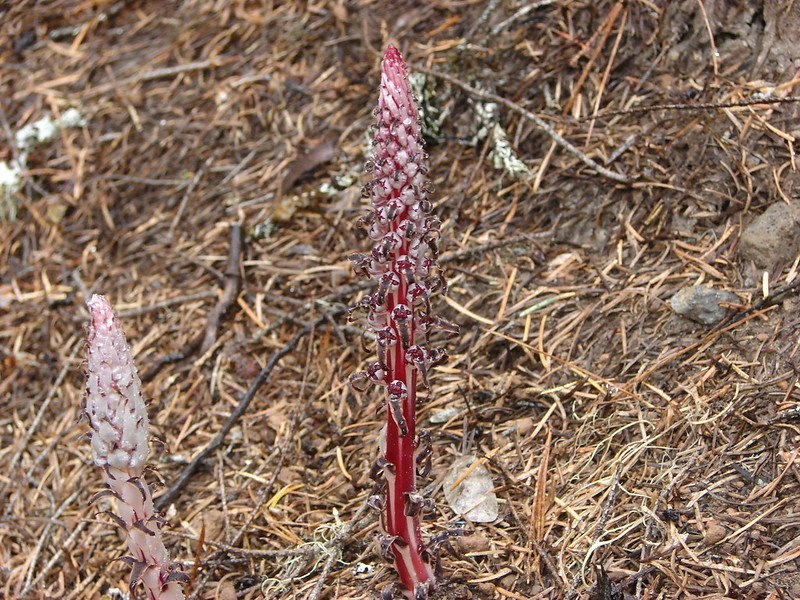
We also saw the best candysticks we’d come across:
DSC08268

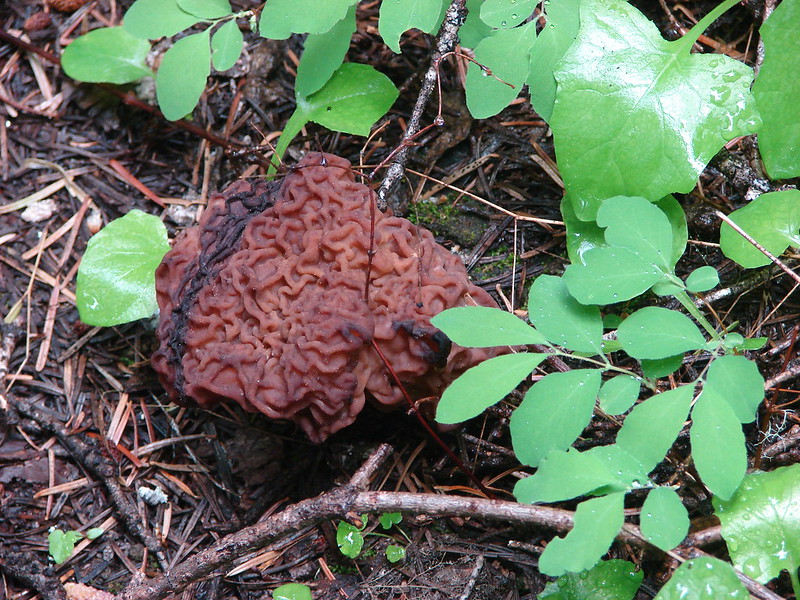
And a strange mushroom thing:
DSC08298

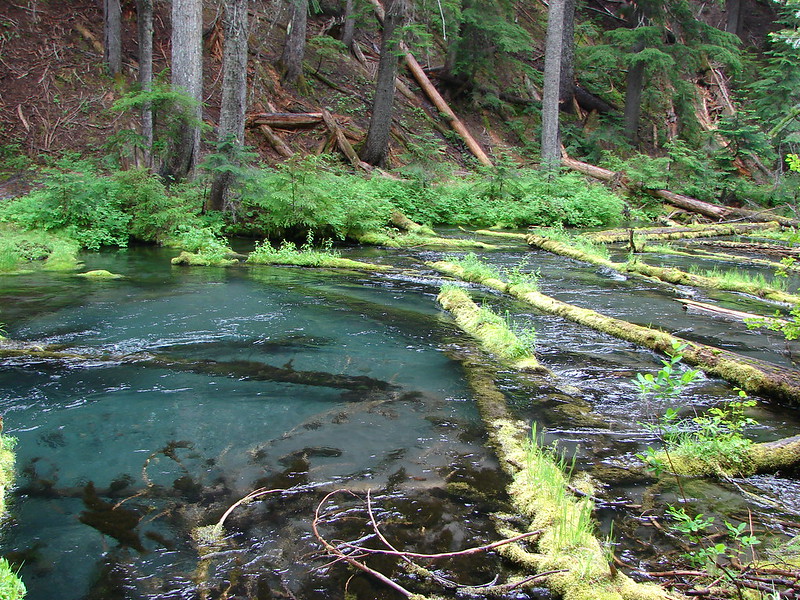
The trail descended back down to the river which was amazingly clear where the water was calm.
DSC08291
DSC08290

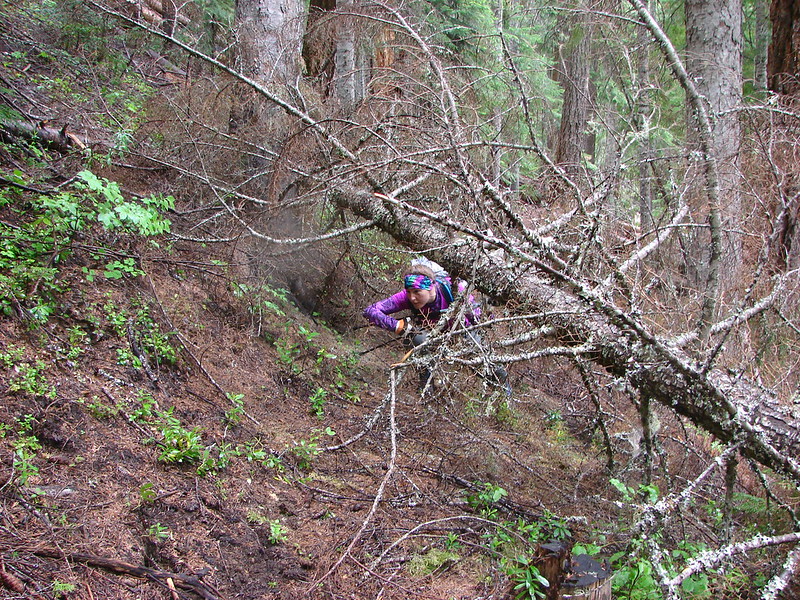
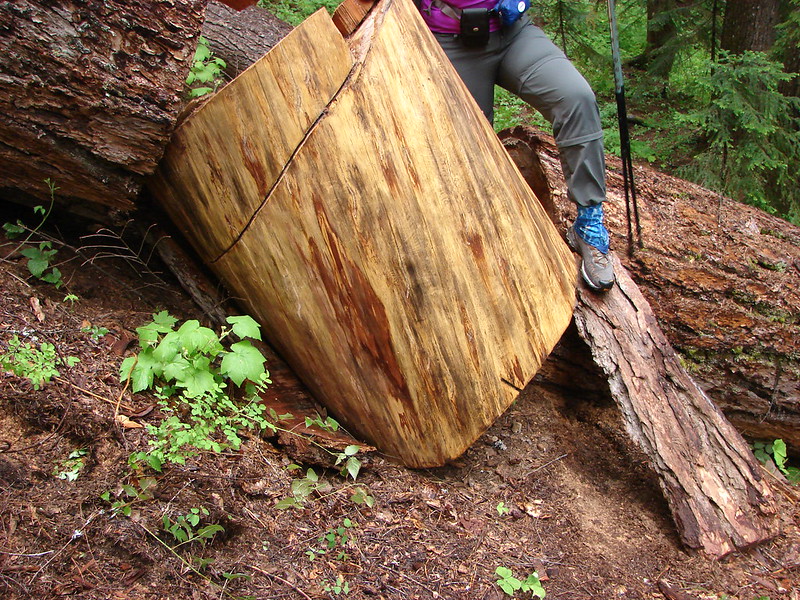
Once the trail lowered into the canyon it became a bit messy. Many downed trees created tricky obstacles and the trail was in need of some maintenance.
DSC08300
DSC08330

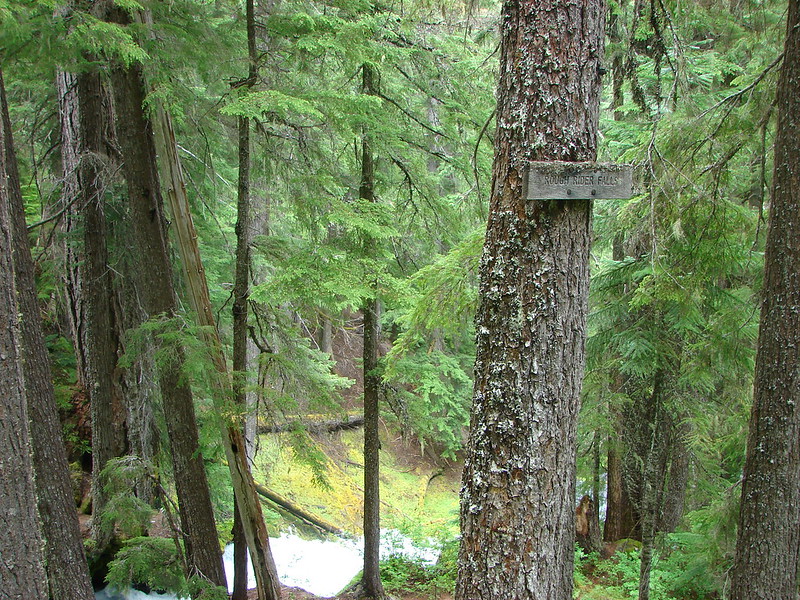
It was 4.2 miles from the Boundary Springs Trail to Rough Rider Falls. A sign above the falls announced them.
DSC08304
DSC08307
DSC08312

It was pretty above the falls but we couldn’t get a good feel for them until we descended below them.
DSC08317
DSC08320

After Rough Rider Falls we passed a pretty little waterfall coming from a hillside into the river.
DSC08325

A little island with whitewater on each side:
DSC08328

And finally an unnamed waterfall:
DSC08344
DSC08346

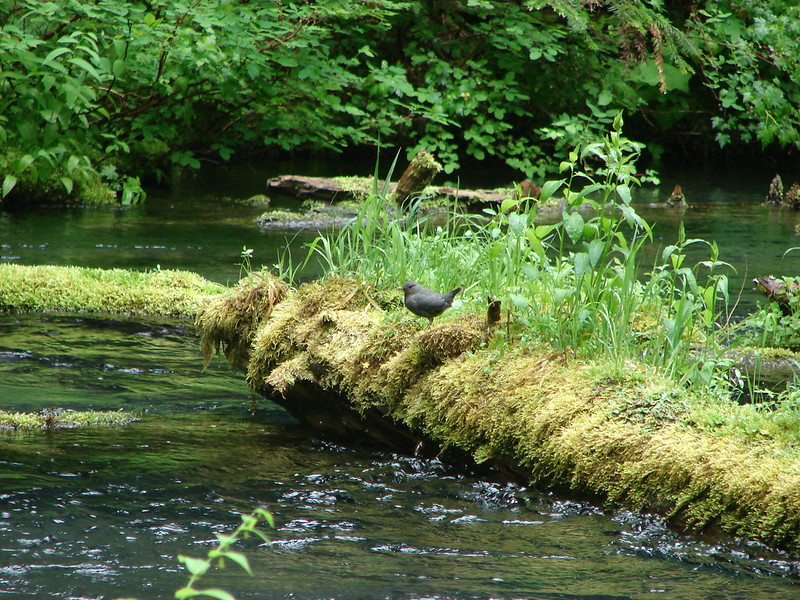
The strangest thing of the hike was the amount of climbing we felt like we did considering we were supposedly traveling downhill with the river. When we arrived at my parents car we discovered that they had just finished about 15 minutes earlier. There were some mosquitoes around the car so we quickly tossed our gear in the back and hopped in. We had hopped to stop by Crater Lake on the way home since Dominique has never seen it and it had been years since my parents had. We were there in 2012 but smoke from a fire had obscured most the views. With the weather flipping between blue sky and rain showers all day we weren’t sure if we would be able to see the lake but my parents had their National Park Pass with them so we decided why not give it a try. As we drove up to the north rim we entered the clouds and some more rain/snow mix. The visibility was worse than our previous visit so I took a couple of pictures to show we were then we turned around and headed home.
DSC08354
<a href="https://www.flickr.com/photos/9319235@N0

We plan on heading back this Fall for another try and maybe then we'll be able to actually see the lake. Happy Trails!

flickr: https://www.flickr.com/photos/9319235@N02/sets/72157645163872924/
Facebook: https://www.facebook.com/media/set/?set=a.10204237288199567.1073741884.1448521051&type=1
Categories
High Cascades Hiking Mt. Hood Area Oregon Trip report

The Other Eagle Creek (Salmon-Huckleberry Wilderness)

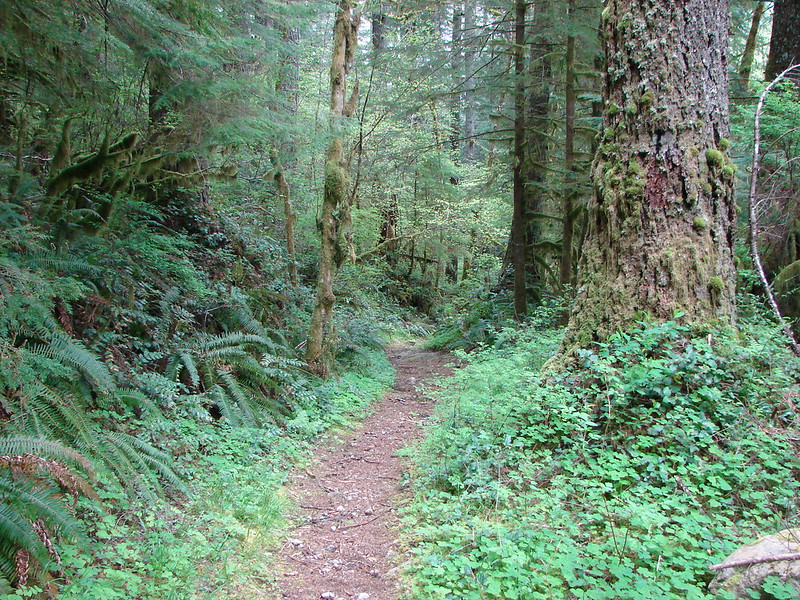
We continued what I have dubbed “Creek Week” by visiting another Eagle Creek the day after our trip to the one in the Columbia Gorge. Even though both creeks share the same name and both are located partially in the Mt. Hood National Forest the similarities end there. This Eagle Creek flows through the old growth forest of the Salmon-Huckleberry Wilderness and is much less visited than the one in the Gorge. There are no dizzying cliffs or giant waterfalls but rather the relaxing sound of running water while you stroll through a lush forest.

It was good that the trail was so relaxing because the drive to it was anything but. The hike was listed as an additional hike in the 2012 edition of William Sullivan’s 100 Hikes in Northwest Oregon & Southwest Washington complete with driving directions. He warned of a confusion of logging roads and he was right. I had also Googled the route and printed out directions from the Forest Service to the trailhead. The road names all matched but each of the directions gave different distances once we got onto SE Harvey Rd. Google said 1.2 miles, the Forest Service 1.8 miles, and Sullivan a more detailed 2.6 miles. Our first mistake was not paying attention to the difference in the distances given followed by not using the odometer as soon as we turned onto Harvey Rd. The area was heavily logged with operations ongoing so there were many side roads and turnoffs and no signs for any type of trail. We drove to the end of what we thought was Harvey Rd. and found a pile of garbage where people had obviously come out to shoot guns (seems to be a favorite pastime in that area) but no sign of a trail. We turned around and headed back the way we’d come looking for any sign of a trail that we might have missed. There were a couple of possibilities but nothing obvious. As we were reading the different instructions we noticed the different mileages which made it more confusing. In the end we decided to drive back to the start of SE Harvey Rd. and use the Odometer. There was nothing at the 1.2 mile mark so the Google instructions were ruled out. At the 1.8 mile mark a gated road led down to the right. The trail description in the book stated that the trail began on an overgrown old road so this had possibilities. I got an idea here and turned on the GPS to see if we were at the trail but when the map came up there was no trail where we were so we hopped in the car and continued to follow Sullivan’s mileage directions. We stopped at one point when we spotted what looked like it might have been an old road with a possible trail leading from it but again using the GPS it was clear that we still had not found the trail. At the 2.4 mile mark we spotted a barricaded road leading down to the right so again we stopped to check it out. This time the GPS showed us on a direct line for the trail and a small path led between the snags blocking the road. There were no signs but this was it.
DSC04775
What we believe happened was the Forest Service stared counting mileage about half a mile after Sullivan started. Then the final approximate quarter mile of Sullivan’s directions had been since blocked by the logging operation because after a brief walk on the road we came to a second small barrier behind which we found an overgrown road such as he had described.
DSC04776

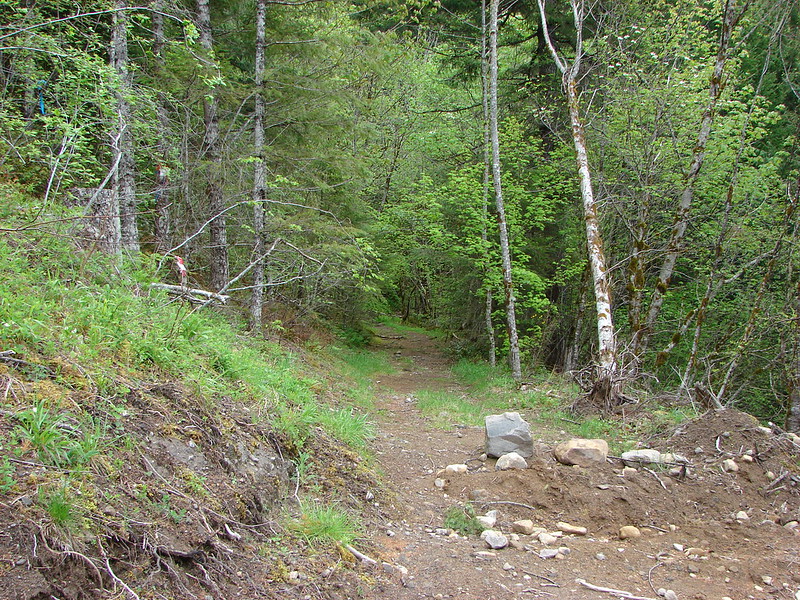
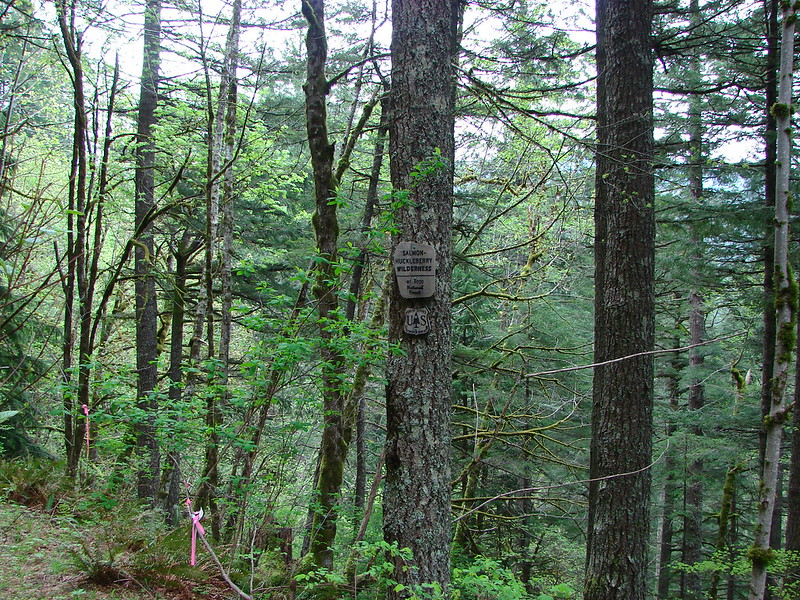
In any event according to the GPS we had found the trail and were on our way down to Eagle Creek. We finally found a sign to confirm what the GPS was telling us. Near the end of the overgrown road there was some flagging and a sign announcing the beginning of the Salmon-Huckleberry Wilderness.
DSC04779

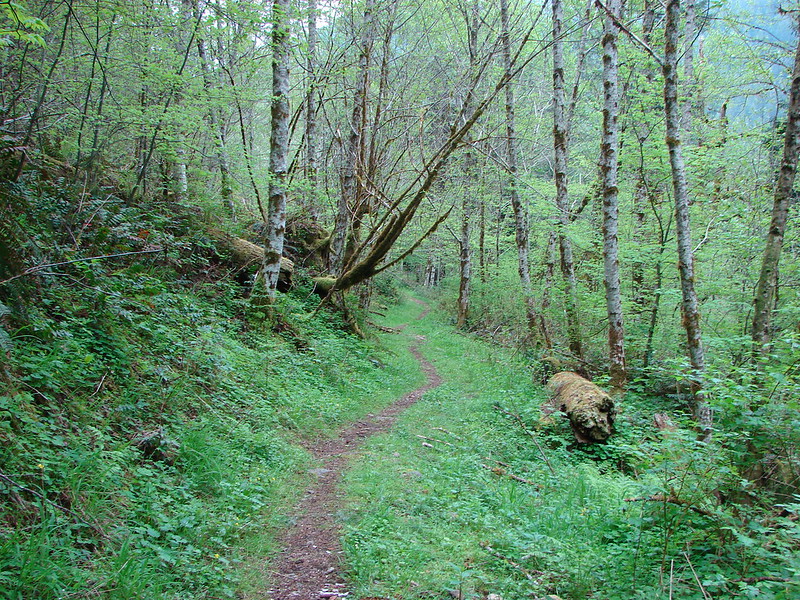
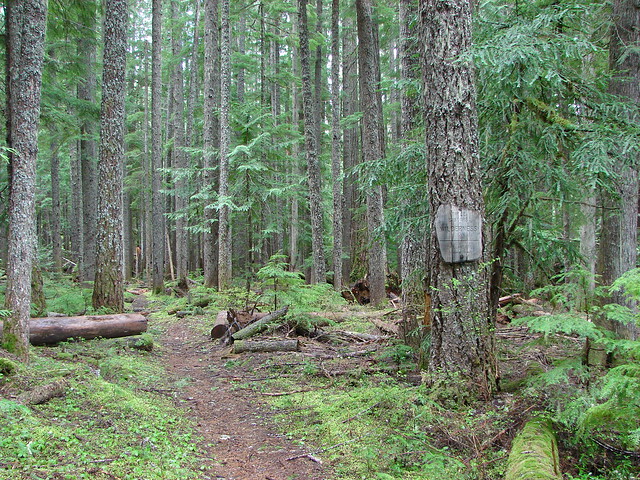
After entering the wilderness the trail looked less and less like an old road until it finally became a full on trail.
DSC04793
DSC04795

We ran across some interesting trees/trunks on the early portion of the trail. One of our favorites was a tree growing on top of an old trunk. You could see the new trees root system running down the length of the old trunk.
DSC04807
Another old trunk had a stream flowing out from under it.
DSC04816

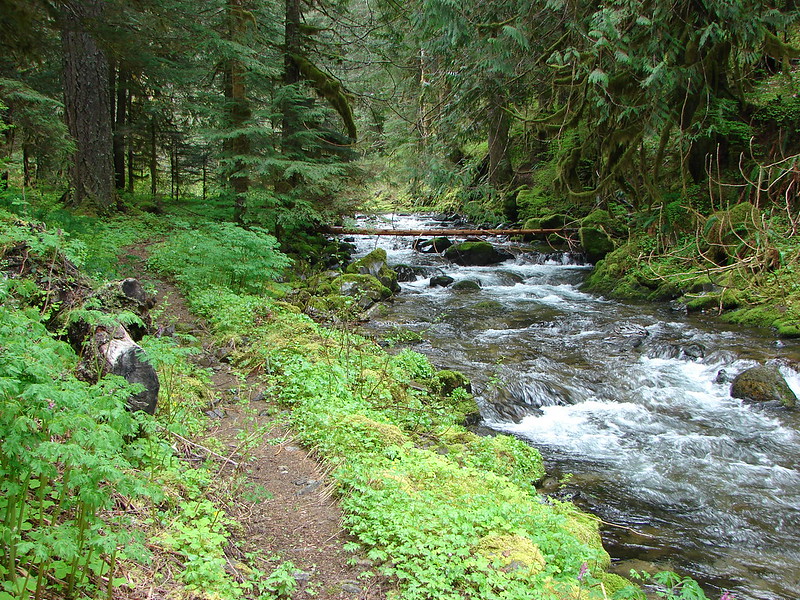
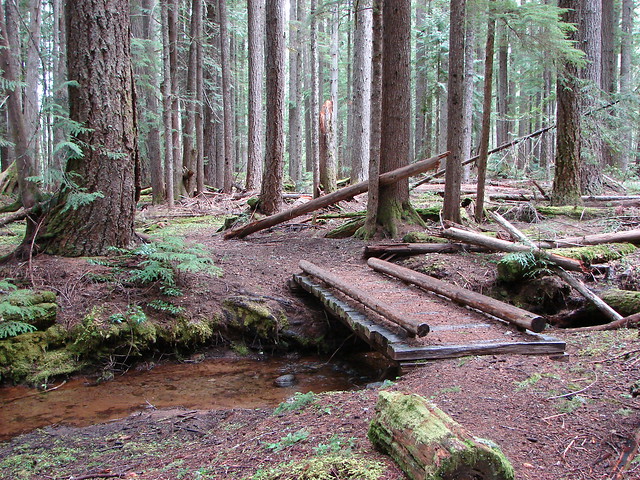
There were many streams and creek to cross along the trail, but only one bridge.
DSC04821
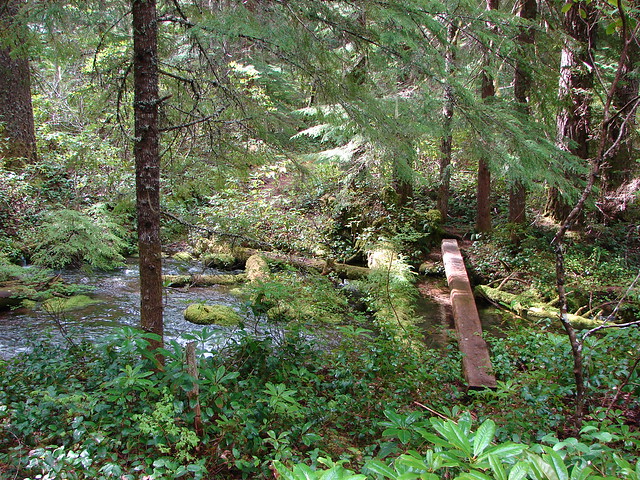
There was no way we were going to keep our feet dry on some the crossing but that was okay with us, the streams just added to the beauty of the forest.
DSC04855
DSC04874

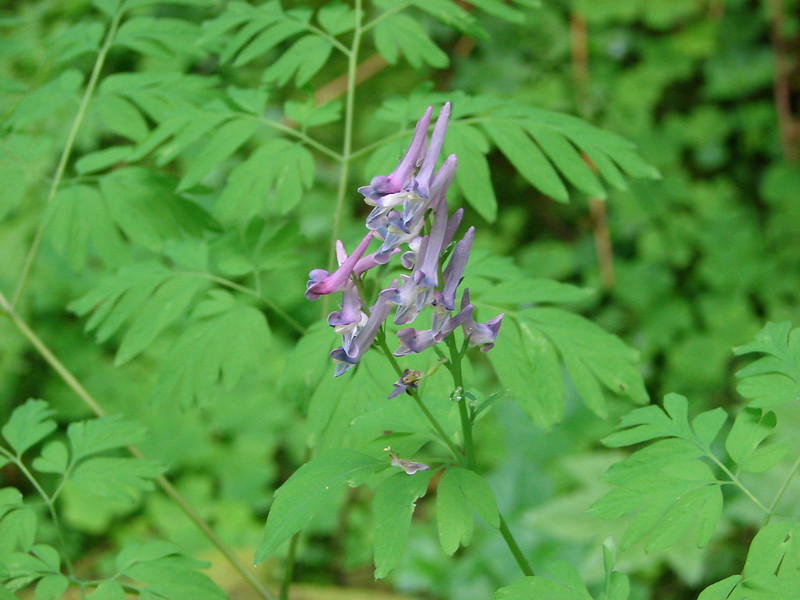
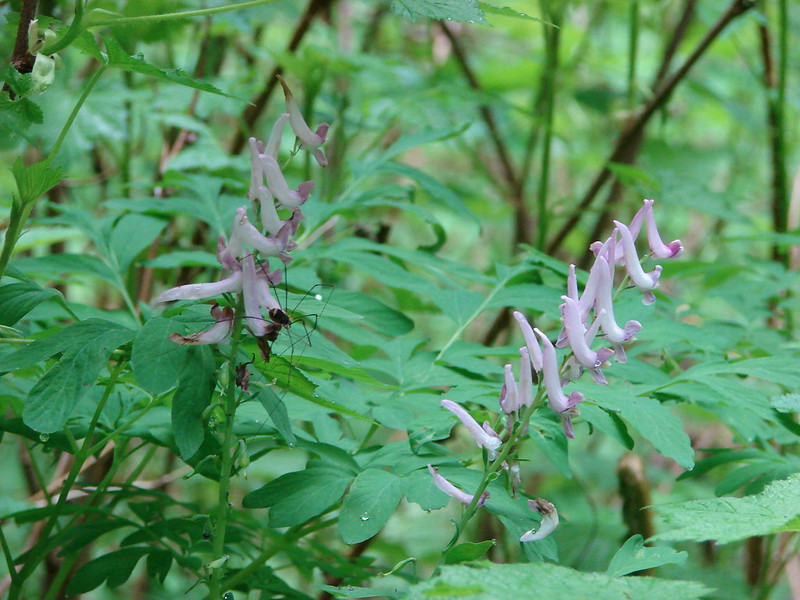
Due to the dense forest there weren’t a large variety of wildflowers but there were some including bleeding heart, wood violets, lots of trillium, and a new one to us scouler’s corydalis.
Bleeding Heart
DSC04800
Wood Violets
DSC04888
Trillium
DSC04907
Scouler’s Cordylis
DSC04858
scouler's corydalis

Open areas where were filled with salmon berry bushes.
DSC04865

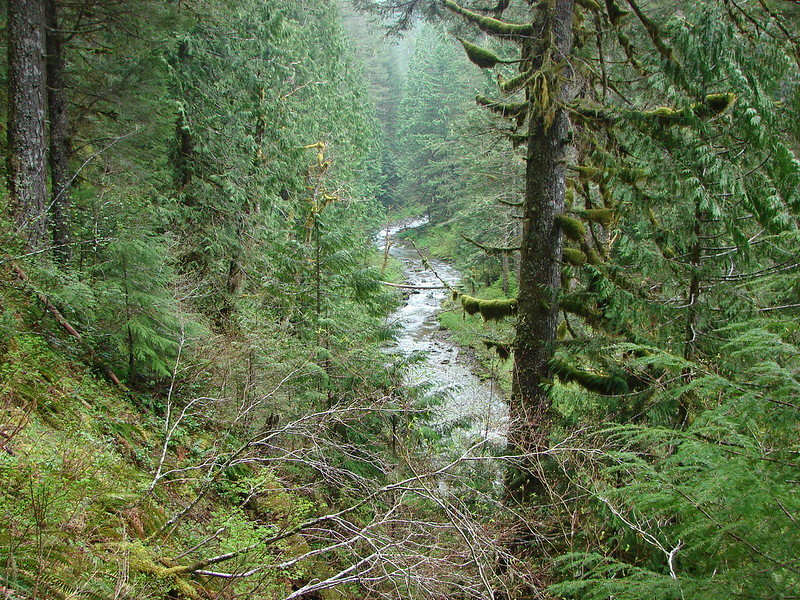
We were up above Eagle Creek at times and then we would be walking next to the water for a bit. It was a decent sized creek lined with lush forests.
Eagle Creek in the Salmon-Huckleberry Wilderness
DSC04902
DSC04921

We didn’t see a lot of wildlife on this hike but I think that was partially due to the lushness of the forest. At one point we startled a deer that was in the creek but all I saw was splashing then a brown and white flash as it ran into the trees. What we did see was an Ouzel, an interesting spider, a couple of newts, and one of our favorite little song birds that I believe is a Pacific Wren.
DSC04915
DSC04847
DSC04862
DSC04831

We turned around when we reached the end of the Eagle Creek Trail. Here it connected to the Eagle Creek Cutoff Trail which fords Eagle Creek before heading up a ridge to the Old Baldy Trail.
DSC04928
The Eagle Creek Cutoff ford
DSC04929

We had a little drizzle from time to time up to this point but as we began our return trip the drizzle turned to a light rain. We made quick work of our return slowing only due to the climb back up the old road. It had been a great hike for relaxing end to our creek streak with. Next up we’re going to attempt to get a view, but in the Pacific Northwest Spring views can be tricky. Until then Happy Trails!

flickr: https://www.flickr.com/photos/9319235@N02/sets/72157644170377089/
facebook: https://www.facebook.com/deryl.yunck/media_set?set=a.10203946548091246.1073741875.1448521051&type=3

Categories
High Cascades Hiking Oregon Three Sisters Area Trip report

Proxy Falls & Separation Lake

They say timing is everything. I don’t know if I’d go that far, but it certainly can make a difference in hiking. The time of day, of week, and of year can greatly impact the experience on any given trail. That was certainly the case on our recent visit to the Three Sister Wilderness. The plan was to hike to Separation Lake and back, a 13.7 mile trek. While I was planning the hike though I got to thinking that the trailhead was awfully close to the Proxy Falls trailhead on the Old McKenzie Highway (Hwy 242). Proxy Falls was a hike that we had been wanting to do at some point, but at only 1.7 miles it didn’t warrant the 2:45 minute drive. It was only about 11 miles from our turnoff on Foley Ridge Road for the Separation Lake Trail though so we decided we’d do the loop there as a warm up for the longer hike.

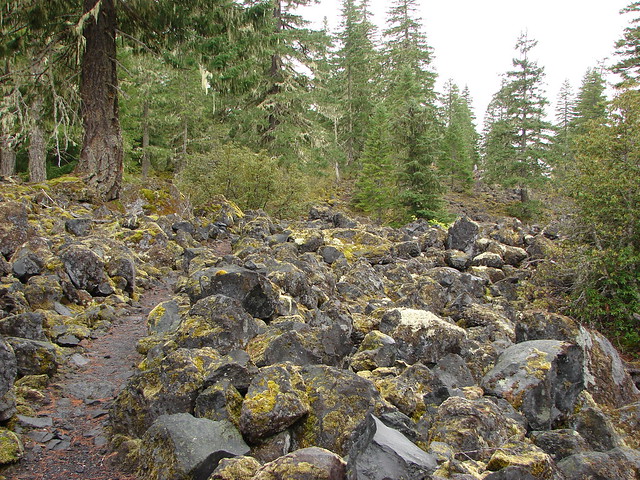
Proxy Falls is a very popular hike. The trailhead is located along the highway, the distance is manageable for hikers of all ages and types, and most importantly the falls are quite impressive. During the summer months the parking spots fill quickly, but on this day we were by ourselves when we arrived at 8am. The old highway is closed during the winter months and doesn’t reopen until June, but just a couple of weeks ago the first snow gate had been opened on the west end allowing access to the trailhead. The Proxy Falls trail loops over a lava field and past the two falls before returning to the highway. The falls are the stars of the show, and being the only ones there we were able to explore and enjoy them all to ourselves.

The lava flow
DSC03469

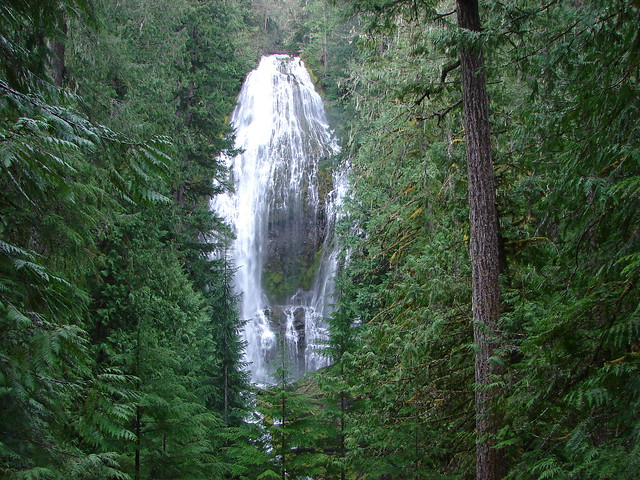
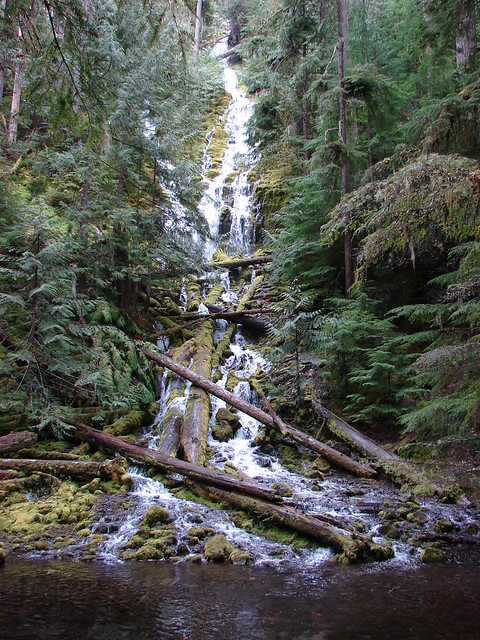
The first fall that you reach is Lower Proxy Falls
Proxy Falls
DSC03487
DSC03491

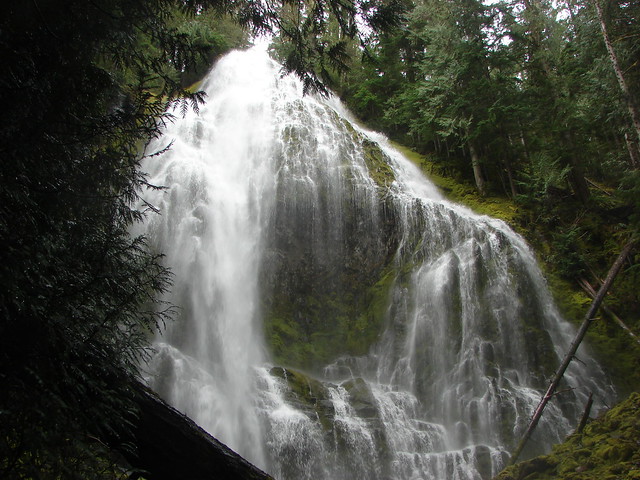
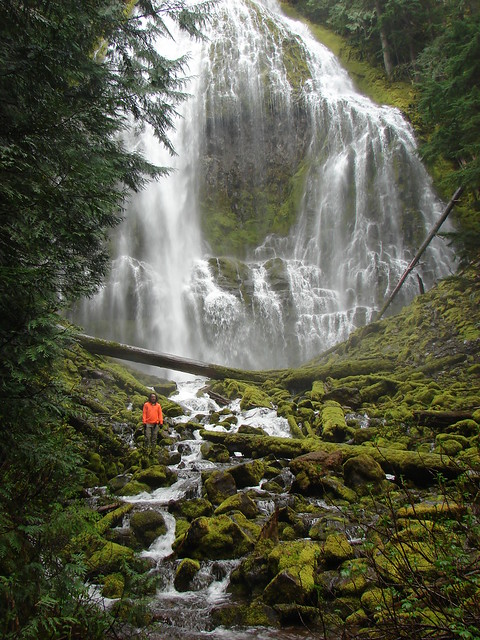
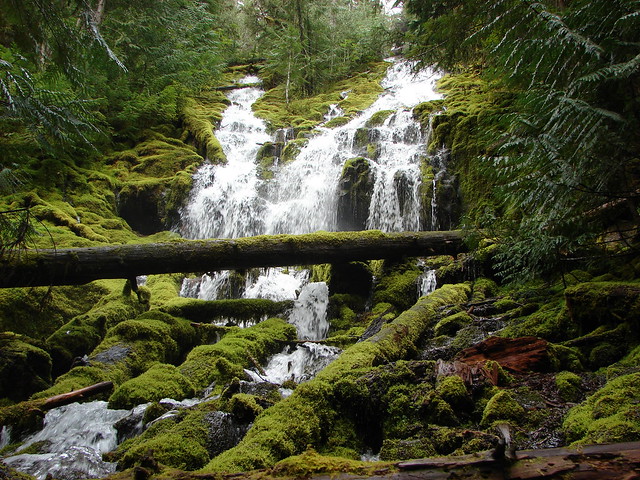
Next up is Upper Proxy Falls. The pool of water at the bottom of the falls flows underground reappearing a few miles away.

Pool beneath Upper Proxy Falls
DSC03515

Upper Proxy Falls
Upper Proxy Falls
DSC03525
Upper Proxy Falls

Our timing was great in this case. The falls were flowing very strongly due to the time of year and we had had a very popular trail all to ourselves :). We hopped back into the car and headed back toward the Separation Lake trail for part two of the days hikes.

Unlike the Proxy Falls trail the trail to Separation Lake is lightly used. We weren’t sure what we would find for conditions as it was unlikely the Forest Service had done any trail maintenance since last year. We were once again the only car at the trailhead which suited us just fine. The trail quickly entered the Three Sisters Wilderness as it headed down toward Separation Creek.
DSC03556

The trail crossed several creeks all of which were easy to manage either on bridges or by rock hopping.
Bridge over Louise Creek
DSC03561

Another creek crossing
DSC03579

One more
DSC03584

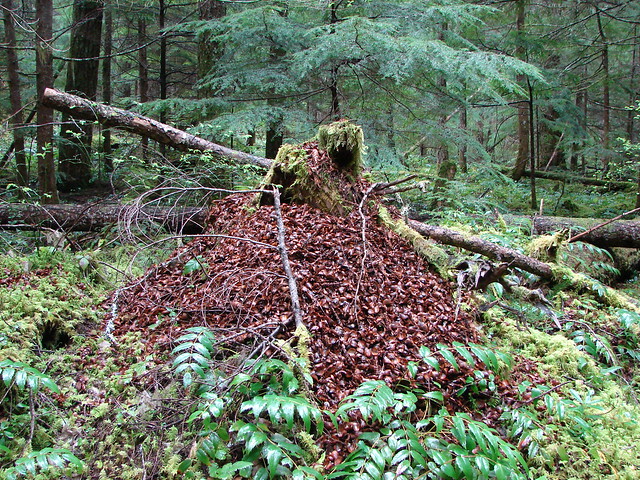
At one point we passed a tree stump littered with pieces of pine and fir cones. We’d never seen such a large pile and kept expecting to see the fattest chipmunk ever nearby.
DSC03591

The path was very brushy in places and our feet and lower legs were soaked as we passed through the damp leaves.
Separation Lake Trail

A number of early flowers were out and many of the bushes and trees were beginning to leaf out.

Vanilla Leaf
DSC03625

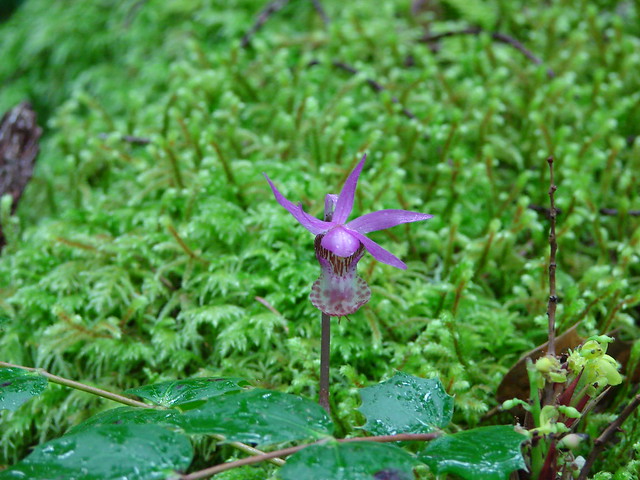
Fairyslipper
DSC03618

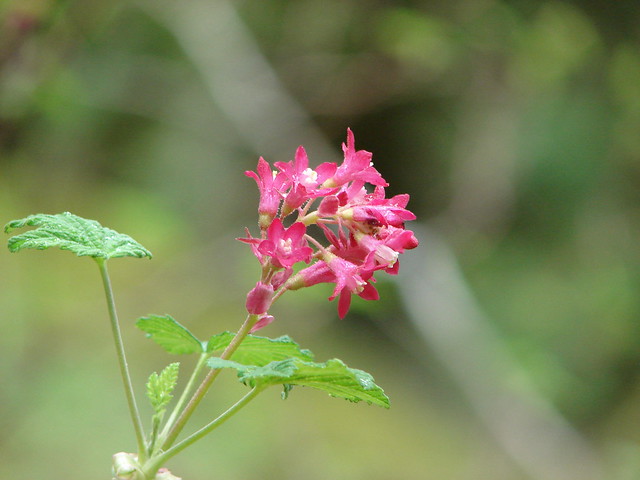
Red Currant
DSC03664

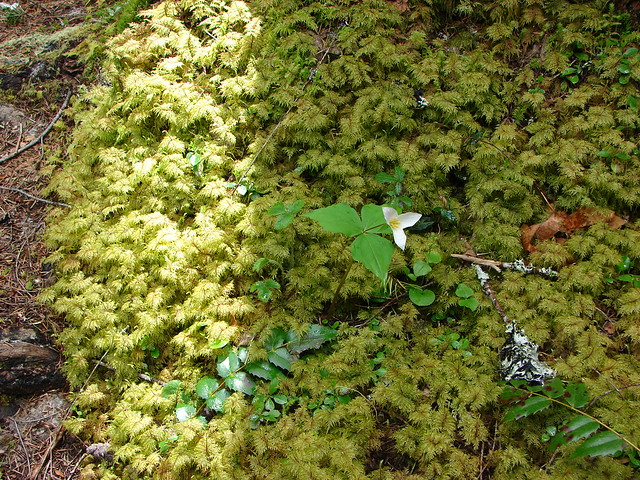
Trillium
DSC03707

Oregon Grape
Oregon Grape

George Creek is the final small creek that the trail crosses before reaching the much larger Separation Creek. This was the most scenic of the smaller creeks at it had a small waterfall at the crossing.
George Creek
DSC03629

After 3.5 miles the trail finally gains a view of Separation Creek. It looked like a river compared to the other creeks we had crossed.
DSC03695
Separation Creek

After following along the creek for 2 miles the trail splits. The Separation Lake Trail crosses Separation Creek on a log bridge while the Separation Creek Trail continues on deeper into the Three Sisters Wilderness. That trail is apparently no longer maintained and closed due to excessive downed trees. We crossed over the creek and continued on toward the lake. Not long after crossing the creek we were greeted by the smell of skunk. It wasn’t actually a skunk but rather a marshy area filled with skunk cabbage.
Separation Creek crossing
DSC03721
Skunk Cabbage
Skunk Cabbage

A little over a mile after crossing the creek the trail reaches Separation Lake. It was a nice little lake with a couple of campsites. We were greeted by the usual birds and chipmunks (and a mosquito or two). We took a break here and had a snack at which point a couple of sets of ducks appeared on the far side of the lake followed by an Osprey who was scoping out the small fish that had been jumping in the lake.
DSC03753
The ducks
DSC03764
The osprey
DSC03770

After the food break we strapped our packs back on and made the return trip back to the car. On our way back we finally ran into the first and only other people we would see – a couple and their dog were headed in to camp. We were pretty tired when we reached the trailhead but it had been a great day of solitude in the wilderness. Happy Trails!

Photos on flickr:https://www.flickr.com/photos/9319235@N02/sets/72157644490517611/
Facebook:https://www.facebook.com/deryl.yunck/media_set?set=a.10203913310380324.1073741872.1448521051&type=3

Categories
High Cascades Hiking Mt. Jefferson Area Oregon Trip report

Red Lake Trail

**Note the 2020 Lionshead Fire burned the area covered by this hike.**

I am a bit behind on our trip reports but that’s because we were busy getting a few more hikes in on our final week of vacation. After our hike on the coast at Pacific City we headed back toward the mountains on Thursday. We had been debating on whether or not to attempt the hike we had planned due to the early snow that had been falling in the Cascades. The planned hike had us starting on the west end of the Red Lake Trail, climbing Potato Butte, continuing on to Top Lake, and then making a small loop past Cigar Lake where we would attempt to climb Double Peaks before returning to the Red Lake Trail and our car.

It was a nice morning as we set off and there were some good Fall colors on display. We climbed for a mile and a half before reaching the trails namesake – Red Lake.
017

Water on the Red Lake Trail
Red Lake
Red Lake

After passing Red Lake the trail then visits three more lakes in the next 1.3 miles. Avrill Lake was up first with a great reflection of Olallie Butte and Twin Peaks.
059

Next up was Wall Lake where we got our first good glimpse of Potato Butte.
072

Finally we came to Sheep Lake where a pair of ducks paddled beneath the reflection of Double Peaks.
086

We took a trail on the eastern end of Sheep Lake that led up to Potato Butte. There were several swollen ponds along this trail and in places standing water obscured the path. We wound up losing the trail at the base of the butte and decided to scramble to the top and hope to pick up the correct trail at the summit.

One of the many swollen ponds along the Potato Butte Trail

We arrived at the summit and easily picked up the official trail. We had a fairly good view of Mt. Hood despite the presence of some clouds and a great view of Olallie Butte.

Mt. Hood from Potato Butte
Olallie Butte from Potato Butte

On the way down on the real trail we got a good look toward Mt. Jefferson which was hiding in the clouds and at Double Peaks. At 5280′ Potato Butte had only small amounts of scattered snow but Double Peaks was clearly snow-covered at its height of 5998′.

Looking toward Mt. Jefferson from Potato Butte
Twin Peaks on the left and Double Peaks on the right from Potato Butte

When we got to the base of the butte we saw the reason for our having lost the trail on the way up. One of the ponds had enveloped the actual trail making it impossible to see. We made our way around the edge of the pond and back to the Red Lake Trail and continued east toward the Pacific Crest Trail which we would use for part of our small loop to Cigar Lake.

The trail passed Fork Lake and several other unnamed ponds/lakes as it slowly climbed toward the PCT. We also began encountering more and more snow as we went.

Pond below Twin Peaks
Increasing amounts of snow

The snow made it possible to see a variety of animal tracks showing us just how many different species that we never see walk these same trails. At the PCT junction we continued on the Red Lake Trail heading down now to Top Lake.

Some of the tracks in the snow
Top Lake
Top Lake
Fall on the shore of Top Lake

At Top Lake we left the Red Lake Trail and skirted the overflowing lake to its south end and climbed back up to the PCT near Cigar Lake.

Double Peaks from Cigar Lake

There was a good amount of snow at Cigar Lake but we decided to see how far up Double Peaks we could make it. We found the marker for the trail easily enough, but between the snow and the extra water around Cigar Lake we were having a hard time determining just where the trail actually was. Luckily for us a deer had left us a set of tracks that we were able to follow that led us across and around the edge of Cigar Lake and to the continuation of the Double Peaks Trail which was just barely identifiable by a slight indentation in the snow.

Snow and water near Cigar Lake
Double Peaks Trail
Double Peaks Trail

Once we found the trail it was like walking through a winter wonderland. The snow was anywhere from a half-inch deep to mid-shin. The snow-covered trees looked ready for Christmas making this one of the most enjoyable stretches of hikes we’d had.

Heather on the Double Peaks Trail
Christmas Trees in October

The trail was fairly steep and we almost lost it near the top when it veered up between some boulders but we managed to follow it all the way to the summit.

The base of Mt. Jefferson from Double Peaks
Evidence of wind and ice
Potato Butte from Double Peaks
Olallie Butte
Olallie Butte
Timber, Olallie, Long, and Monon Lake from Double Peaks

We didn’t get the view of Mt. Jefferson we’d hoped for but the snow more than made up for that. As we started down Double Peaks the day began to warm up and the snow was melting quickly. We did a lot of sliding down the slushy trail before reaching the PCT again and heading back to the Red Lake Trail. We returned the way we’d come only now we had some blue skies and sunlight as we passed the lakes and arrived back at our car. Happy Trails!

Sunlight mushroom
Sunlight mushroom
Twin Peaks from Sheep Lake in the afternoon

Facebook photos: https://www.facebook.com/deryl.yunck/media_set?set=a.10202367670300288.1073741861.1448521051&type=3
Flickr: http://www.flickr.com/photos/9319235@N02/sets/72157636413874236/

Categories
High Cascades Hiking Oregon Trip report Waldo Lake Area

Fuji Mountain

**Note a portion of this hike burned in the 2022 Cedar Creek Fire.**

After a (well timed) scheduled week off we were back on the trails this past weekend. A highly unusual storm had rolled through as September gave way to October. Not only had this storm brought record amounts of precipitation but some of that precipitation fell as snow as low as 4000′. The hike we had planned, Fuji Mountain, topped out at 7144′ so we weren’t sure if it was going to be doable but some warmer weather moved in and we decided to give it a go. If we managed to make it up to the summit we knew the views should be great, and worst case scenario we could just choose a different lower trail in the area.

Fuji Mountain is located in the Waldo Lake Wilderness near Highway 58. A pair of trail heads lead to the summit. From the SW a 1.5 mile option starts on road 5883 making for a nice short hike. We chose to start from road 5897 (Waldo Lake road) to lengthen the hike a bit and visit some of the areas many lakes.

The trail begins just below 5000′ and started out snow free, but that didn’t last for long. We quickly began seeing snow along the trail and then on the trail itself. We followed a single set of hikers prints as we climbed up toward the first of the lakes.
006
They weren’t the only set of prints in the snow. 🙂

Black bear print
Black bear print

It wasn’t long before there was more snow covered trail than not but the snow wasn’t very deep, only on occasion measuring 6″. The trail climbed for about a mile then gently rolled along a plateau dotted with ponds and lakes for another 2.5 miles. Many of these were at least partly frozen making for some pretty scenery.

Half frozen pond
Half frozen pond
Mushrooms under ice
Mushrooms under ice
Birthday Lake
Birthday Lake
Reflections on Birthday Lake

Shortly after crossing the South Waldo Trail the Fuji Mountain Trail began climbing again. In another mile we met up with the trail coming from road 5883 and began the final 1.2 mile climb to the summit. Here there were more hiker tracks in the snow but we only saw one other couple who were on their way down after spending the night on the summit.

As we climbed we began to have views of snowy Diamond Peak and Mt. Thielsen to the south, but these views paled in comparison to what awaited at the summit. When we arrived at the summit a 360 degree view awaited with Waldo Lake and a string of snowy peaks to the north and more mountains to the south. To the east lay Wickiup Reservoir and Odell Lake with distant Paulina Peak and nearby Maiden Peak in between. To the west were the foothills leading to the Willamette Valley.

Waldo Lake and the Cascades
Cowhorn Mountain, Mt. Thielsen, Hillman Peak and Diamond Peak
Looking west along the summit ridge of Fuji Mountain

It was a beautiful day at the summit, sunny and warm with no wind. We took our time eating lunch and enjoying the tranquility before heading back down. On the way out Heather and I decided to take a brief side trip along the South Waldo Trail to the Island Lakes. It was around half a mile to Lower Island Lake with it’s green water and tiny rock island. Just up and across the trail from Lower Island Lake was Upper Island Lake which also had a small rocky island.

Lower Island Lake's island
Lower Island Lake’s island
Lower Island Lake
Lower Island Lake
Upper Island Lake
Upper Island Lake

The warm weather made the return trip pretty slushy as the snow was melting fairly quickly. When we arrived back at the half frozen pond the scene had changed quite a bit.

The no longer half frozen pond

We all really enjoyed being able to take a hike through the snow and it made for a nice change of pace. I don’t know if the early snow is a sign of things to come or just a fluke but it was enjoyable. Happy Trails!

Facebook phots:https://www.facebook.com/deryl.yunck/media_set?set=a.10202338061520087.1073741859.1448521051&type=1
Flickr:http://www.flickr.com/photos/9319235@N02/sets/72157636271711054/

Categories
High Cascades Hiking Mt. Jefferson Area Oregon Trip report

Hunts Cove

There isn’t much like a midweek hike in September, the crowds have thinned out but the weather can still be great. When I was putting together our hiking plans at the beginning of the year one of the hikes I really wanted to do was Hunts Cove. The hike starts at the very popular Pamelia Lake Trail in the Mt. Jefferson Wilderness which is one of only two areas in the Oregon Cascades (not counting Crater Lake NP) that requires you purchase a permit in order to enter them. Due to the popularity I decided to purchase our permit for a weekday after school started to hopefully minimize the number of other people we’d run into.

Having purchased our permit over four months in advance I was gambling on the conditions. Last year we had gotten permits for the other fee area along the Obsidian Trail in the Three Sisters Wilderness, only to spend the entire 18.6 mile hike in wet and view less low clouds. We lucked out this time though. The forecast had started out as cloudy with a chance of rain but by the time the big day arrived the outlook had greatly improved to clear skies and a high in the low 70s. As a bonus the snow level had dropped down to between 6500-7000′ meaning there would likely be some new snow on Mt. Jefferson. As an added bonus a friend of ours, one of Heather’s running buddies, Jessie, was able to get the day off and join us.

We set off on the Pamelia Lake trail in the soft light of morning through a peaceful forest along side Pamelia Creek. Soon we were surrounded by the sound of rushing water with Milk Creek to our left and Pamelia to our right. Milk Creek comes from glaciers up on Mt. Jefferson and evidence of a 2006 mudslide littered the forest floor. Just over 2 miles in on the trail we reached a T shaped junction at the edge of Pamelia Lake. To the right was a 3 mile trail up Grizzly Peak and to the right lay the path to our loop into Hunts Cove and then back on the Pacific Crest Trail. Before turning right though we headed down to the lake for a photo op.

Mt. Jefferson from Pamelia Lake

There was a good deal of wildlife present on the lake. A great blue heron flew from a log in the center of the lake into the far grassy shore and a family of ducks glided silently into the reeds. Several canada geese could be seen at the far end of the lake near the lakes inlet.
030

We made our way around the lake to a second junction. Here we had to decide if we would do the loop clockwise or counterclockwise. We decided to stick to the lake shore and go counterclockwise first to Hunts Cove and then to the PCT. The trail crossed several streams that seemed to be flowing very well given the time of year. We assumed the recent rain/snow had helped rejuvenate them. Our favorite crossing was on a footbridge over a small scenic falls.

Footbridge & falls
Footbridge & falls

The trail began climbing gently as we passed the far end of Pamelia Lake. The path traveled along Hunts Creek, crossed over it, and then climbed up above it on the side of a ridge. As we climbed we began getting glimpses of Mt. Jefferson across the valley with it’s dusting of new snow.
057
At a sharp switchback we could hear what sounded like a waterfall a short distance away so we took a faint side trail in the direction of the sound and discovered a beautiful waterfall on Hunts Creek.
063

Just a short distance from the falls we found the signs marking the trail to Hunts Cove where we took the left fork travelling above a pretty meadow with a view across to the mountain. A half mile later we arrived at the first of the two lakes that call the cove home. Hanks Lake was up first. It was a lovely lake lined with meadows and a view of Mt. Jefferson.

Mt. Jefferson from Hanks Lake

Some of the biggest huckleberries and blueberries we’d seen were growing in large patches around the shore and we stumbled up a pair of sooty grouse in one of the thickets.

Sooty grouse on a downed tree

After a refreshing rest on the shore of Hanks Lake we continued on to Hunts Lake. Although Hunts Lake has no view of Mt. Jefferson it offered it’s own attractions. Heather spotted several fish in the clear water and over the lake loomed Cathedral Rock where we would eventually find the PCT.

Hunts Lake and Cathedral Rocks

We left Hunts Lake and returned to Hanks Lake to begin the real adventure. From Hanks Lake we could have returned to the trail junction and continued 3 miles to the PCT on the official trail or we could look for a former trail that lead from the far end of Hanks Lake up to the PCT shaving off a mile or more from the hike. We opted for the off trail adventure and set off around Hanks Lake in search of the old path. Using a Green Trails map I knew the old trail followed an inlet creek up to the PCT below Cathedral Rocks so we worked our way to an inlet creek and began working our way up along it. The map only showed one creek so despite not being able to find a convincing former trail we sallied forth through the brush.

Inlet creek we followed from Hanks Lake

The map indicated that the trail had eventually crossed the stream and continued on the far side so when I spotted a decent place to cross we hopped over to the other side. We found several sections of what could have once been a trail, but they could have been game trails as well and never saw any blazes or other indications of an official trail. Next we stumbled on a lovely meadow with a small pond in the center. At that point I decided to consult the Garmin. I knew we were headed in the right direction for the PCT but it wasn’t until I looked at the Garmin that I realized we had followed the wrong creek up. The Garmin clearly showed the additional stream that wasn’t on our other maps so that mystery was solved. Now it was a matter of finding the least steep climb up to the PCT. Using the GPS I headed to what looked like the most gradual ascent passing through a pair of small heather meadows.

Heather & Jessie in one of the small meadows

Leaving the second little meadow we climbed one last steep section and suddenly popped out on the PCT. We were probably about a half mile further down the PCT than where I had expected to meet up with it, but that just meant a little shorter hike. After celebrating our find we turned left and headed north. After just a couple hundred yards the PCT dipped a bit and passed right along the edge of the meadow we had just left. That was good for a laugh or two :). This section of the PCT was great as it traveled between Cathedral Rocks on the right and Hunts Cove below to the left. Views extended across Hunts Cove to the far ridge and Three Fingered Jack beyond.

Three Fingered Jack from the PCT


Hanks and Hunts Lakes from the PCT

The PCT then reaches a plateau below Mt. Jefferson that is dotted with lakes and ponds. The first pond we arrived at was a strange red color. As I approached the water a frog swam from the shore and floated in the colored water.
168
Next up was Shale Lake and a wonderful view of the mountain.

Mt. Jefferson from Shale Lake

Shale Lake had some great looking tent sites and next to it was nearly dry Mud Hole Lake. Across the trail lay Coyote Lake and several other small ponds.

Leaving the plateau we began descending down toward Milk Creek with views of Pamelia Lake below. Just before reaching Milk Creek we reached the turn off for the return trail to Pamelia Lake. Before heading back I went down to the Milk Creek crossing to get a picture of Mt. Jefferson.

Mt. Jefferson from Milk Creek

We started smelling smoke while I was getting the picture at Milk Creek and when I turned around the sky behind us was filled with smoke. Then I notice that there was smoke drifting in front of Mt. Jefferson as well. When we got back to Pamelia Lake the scene was quite different than it had been in the morning.

Smoke over Pamelia Lake

Smoke had settled in the valley but we had no idea what the source was. On the way out there was just a bit of smoke in the forest but it didn’t detract from the beauty. Green moss covered much of the ground and dozens of varieties of mushrooms and fungus added character to the view.
227

239

244

246

We had a blast on this hike. For the most part we had the trails to ourselves the whole day and the weather had been perfect. Aside from the bit of smoke at the end of the day (which was apparently due to a controlled burn being done by the Forest Service near Sisters, OR) it couldn’t have been better. We’d knocked out 18.2 miles in just over 9hrs. It was really fun having Jessie join us on the hike. It was great having someone that didn’t even blink at the 5am departure time or the distance/time we were planning on doing. What a way great to spend a Thursday in September 😀 Happy Trails!

Facebook photos:https://www.facebook.com/deryl.yunck/media_set?set=a.10202196386858309.1073741857.1448521051&type=3
Flickr: http://www.flickr.com/photos/9319235@N02/sets/72157635671937895/

Categories
High Cascades Hiking Oregon Trip report Waldo Lake Area

Waldo Mountain Lookout

**Note a portion of this hike burned in the 2022 Cedar Creek Fire.**

There are still several designated wilderness areas close enough for a day hike that we have not yet visited. Wilderness areas by definition are areas “where the earth and its community of life are untrammeled by man, where man himself is a visitor who does not remain.” In his book Listening for Coyote William Sullivan says of wilderness; “We need a place where we do not belong, just as children delight in sneaking into forbidden rooms and attics, for a glimpse of the unknown.” My hope is to eventually visit as many of Oregon’s 46 wilderness areas as possible and our latest hike checked one more off our list.

Our destination was the Waldo Lake Wilderness near Willamette Pass in the central Cascades. Waldo Lake is the second largest natural lake in Oregon and oddly enough is not actually inside the Waldo Lake Wilderness boundary. There are a number of hiking trails to choose from in the area but for our trip we decided on a loop up and over Waldo Mountain with stops at Waldo Lake and the Salmon Lakes. This route would give us a good sample of what this wilderness had to offer.

The trail head parking area was empty when we arrived as it would be when we left. While we were preparing to set off a State Police Truck pulled up asking if we’d seen any other vehicles and what our planned route was. It was the first day of buck season but the trooper didn’t think we’d likely see anyone out on the trails. He was close, on the trail near Waldo Lake we passed a group of three hikers and a little later a single mountain biker and that was it. He wished us a good hike then drove off and as he passed by we noticed the decoy in the bed of the truck presumably to catch illegal road hunters.

The trail quickly entered the wilderness and climbed up Waldo Mountain through a quiet forest. After 3 miles of climbing we suddenly were at the top of the mountain right at the former lookout tower.
022
The forest had limited views to a couple of brief glimpses of Diamond Peak which made the view at the lookout even more satisfying. Mountains and lakes lined the horizon from the NE to the SE starting with Mt. Hood and ending with the summit spire of Mt. Thielsen. Waldo Lake stretched below us to the east with many smaller lakes dotting the forest around it.

The Cascades from Mt. Hood to Mt. Bachelor and Lower Eddeeleo Lake
Waldo Lake
Waldo Lake
Diamond Peak
Diamond Peak

It looked as though some of the higher peaks to the north had received some recent snow including the South Sister which we had climbed about a week before.
Dusting of snow at the top of the South Sister

From the lookout tower we headed down the SE side of Waldo Mountain toward Waldo Lake. More peaceful forest hiking ensued. We spotted dozens of frogs sharing the trail and also ran into some less welcome mosquitoes. After 1.4 downhill miles we came to a junction with the Waldo Meadows trail which we would take to complete the loop, but first we had a lake to visit. We took a right on the Waldo Meadows trail and after 300yds turned left on a trail with a sign pointing toward Waldo Lake. This trail passed by several small ponds and lakes on its way to the Waldo Lake trail, the prettiest being Elbow Lake.

Elbow Lake
Elbow Lake

The Waldo Lake trail circles the 10 square mile lake, but at the junction the water was nowhere to be seen. We turned left and continued around Elbow Lake until we spotted a fairly well-worn side trail heading down toward the lake. This path led down to a secluded cove and nice campsite. We sat on the rocky shore of the lake and had lunch while enjoying the gentle lapping sound of the lake.

Waldo Lake and Maiden Peak

After lunch we returned to the Waldo Meadows trail and continued our loop. Waldo Meadows was full of tall plants but most of the flowers time had come and gone. There were a few coneflowers and a handful of paint and aster on its last legs but it gave us an idea of what it might have looked like earlier in the year.

Some of the few remaining flowers in the meadows.

In the middle of the meadow was another trail junction. To the left just .5 miles away was Upper Salmon Lake and nearby Salmon Creek Falls. True to form we turned left and headed in that direction. 🙂

Upper Salmon Lake turned out to be a gem. A half-dozen tortoise-shell butterflies greeted us at a lakeside campsite while several ducks patrolled the green lake.

Butterfly greeters.
Butterfly greeters.
Ducks on Upper Salmon Lake

Heather and I headed to the grassy shore where she spotted a good-sized toad that just wouldn’t come into the open for a good picture.

We then headed to the lake’s outlet, Salmon Creek, and followed it down to Salmon Creek Falls.

Salmon Creek Falls
Salmon Creek Falls

From the falls we knew we were close to Lower Salmon Lake but hadn’t seen a trail for it so we decided to test our “off trail” skills. Let’s just say they are a work in process, but after some unnecessary travel we managed to find the lake but not much of a view.

We returned to Upper Salmon Lake and collected Dominique who had chosen to stay with the butterflies and headed back to the meadow junction. The return loop passed through several more sections of the meadows before returning to the forest on the side of Waldo Mountain. This nearly 2 mile section had once burned and was now home to thimbleberry patches and deciduous trees. For the first time it really felt like Fall on the trail to me. Leaves slowly drifted down around us and the trail rustled as we walked on the leaves that already covered the path.
171
It was a bittersweet ending for me as I began to come to terms with the realization that the seasons were changing. It had been a beautiful day and a peaceful hike but we were now entering the home stretch of our hiking season. We’ve had a great year so far and hope to end it the same way. Until next time – Happy Trails!