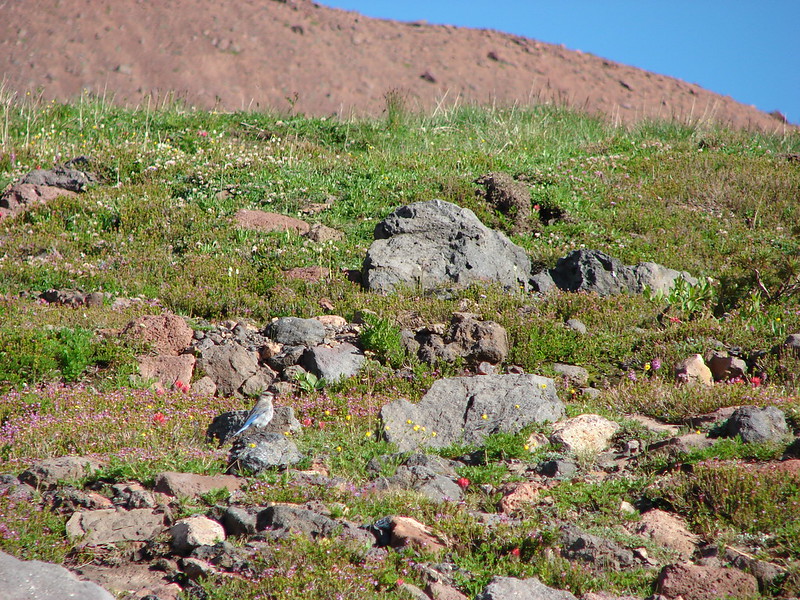
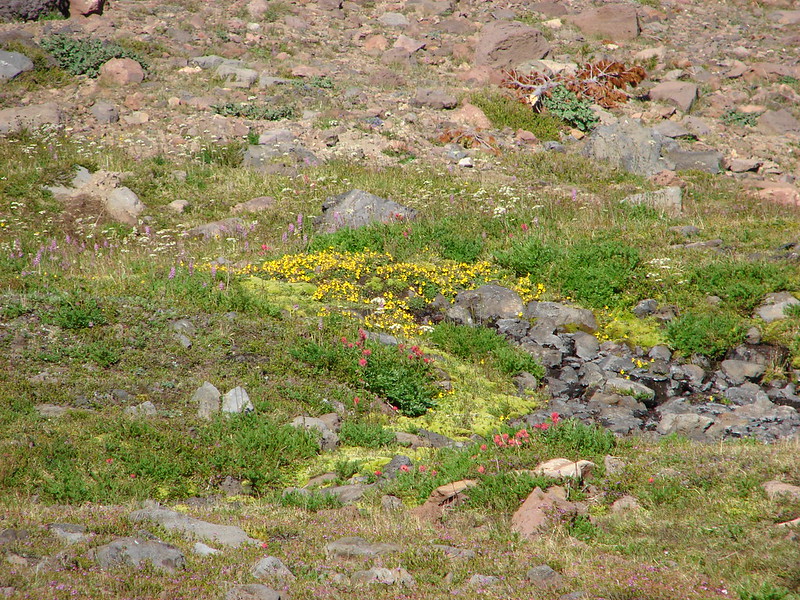
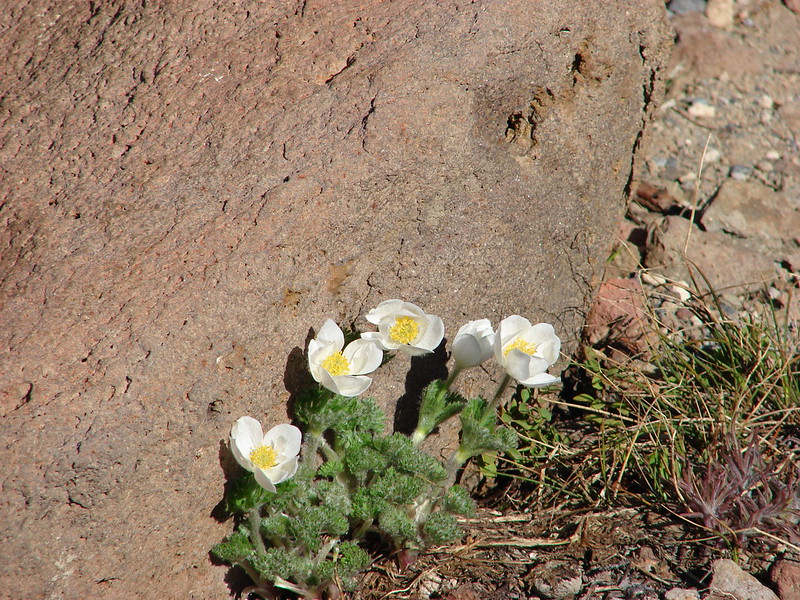
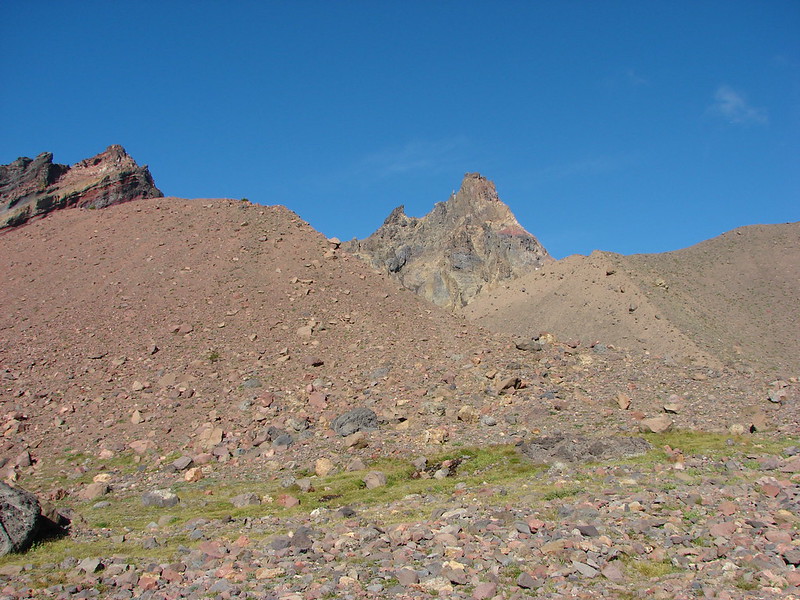
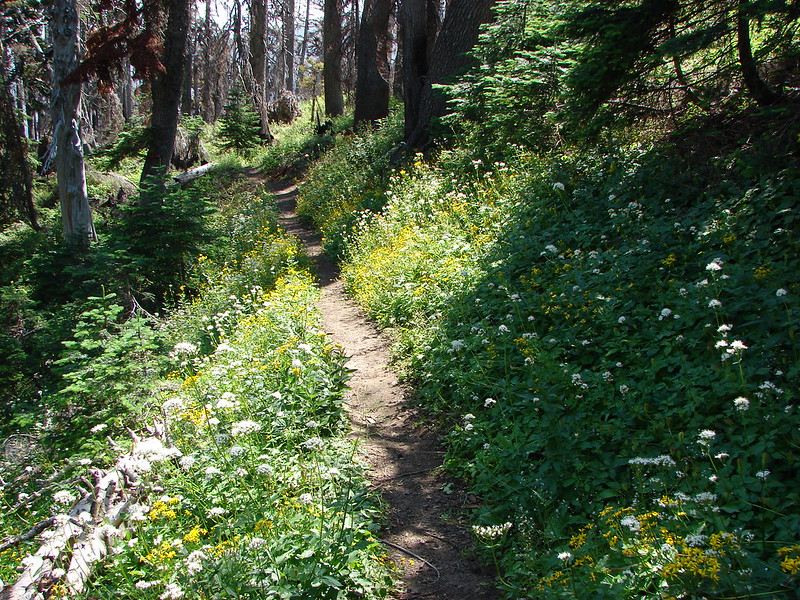
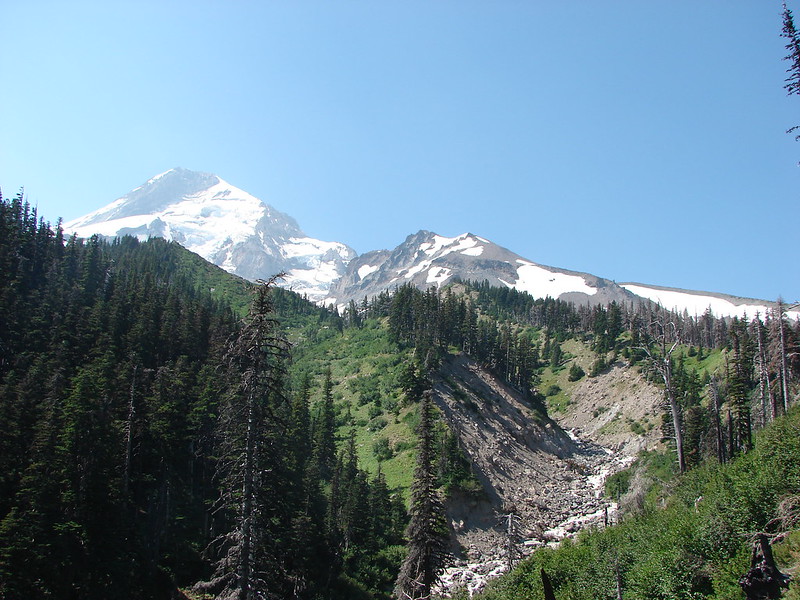
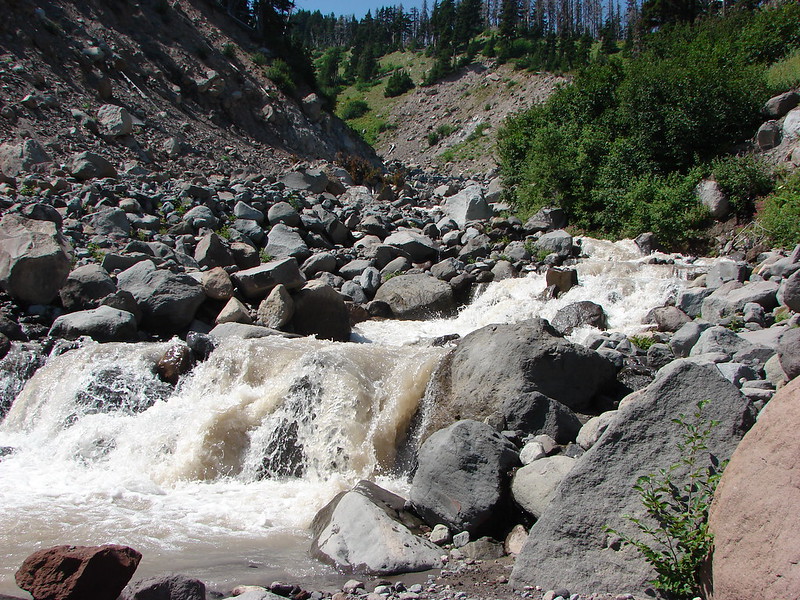
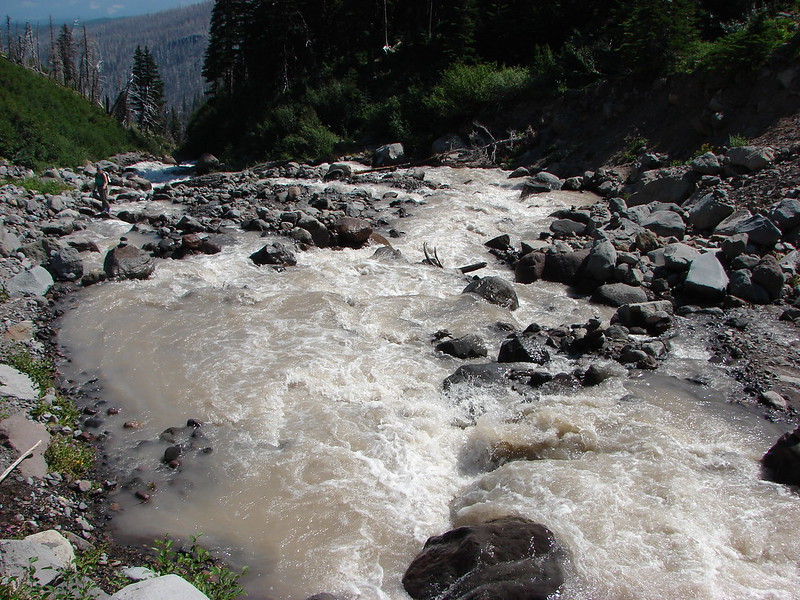
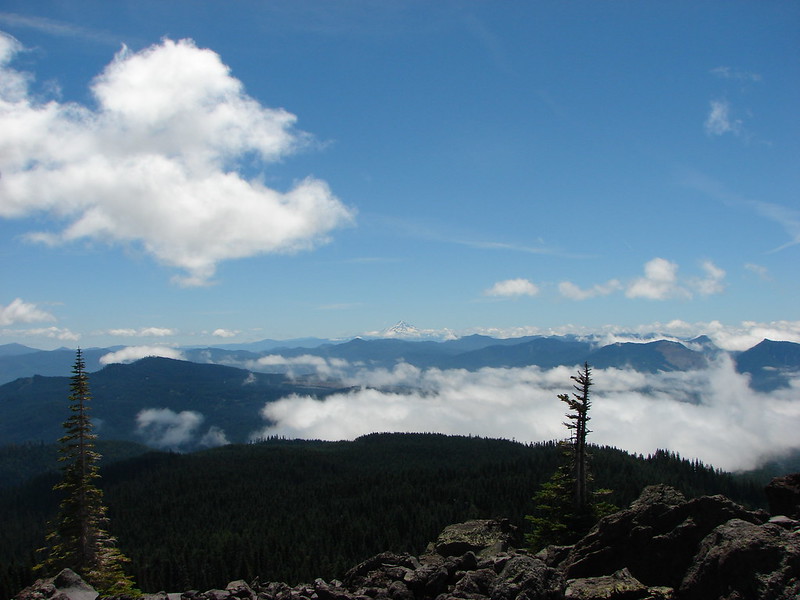
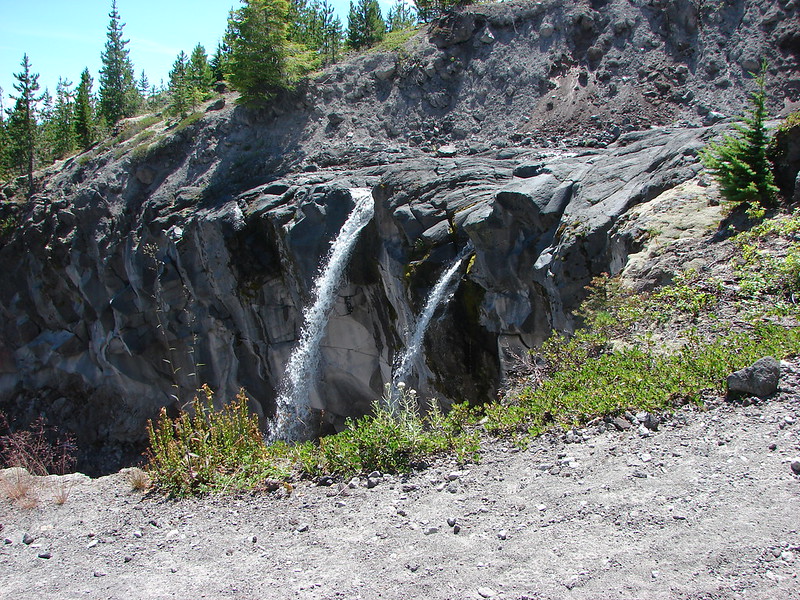
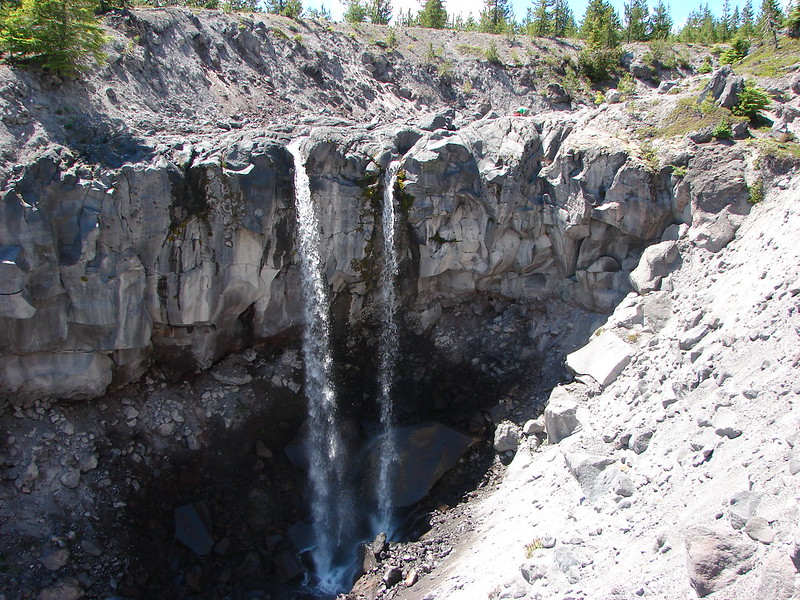
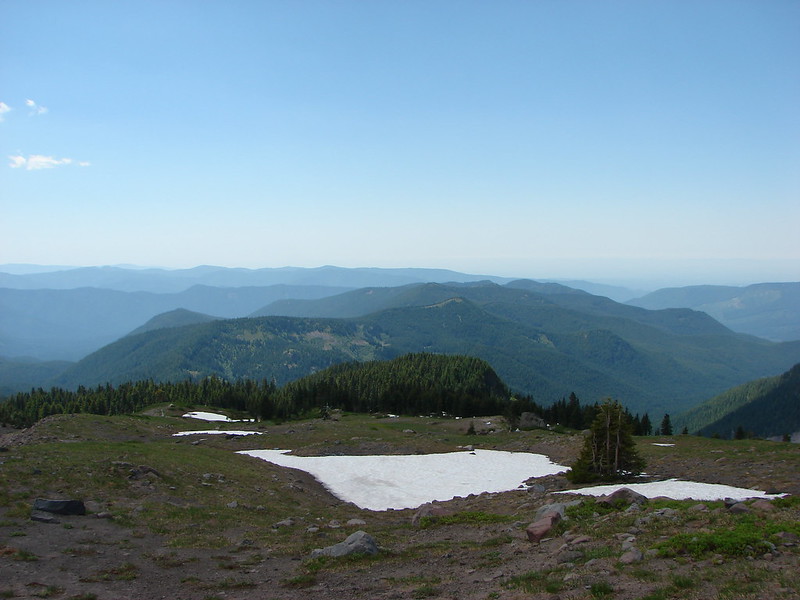
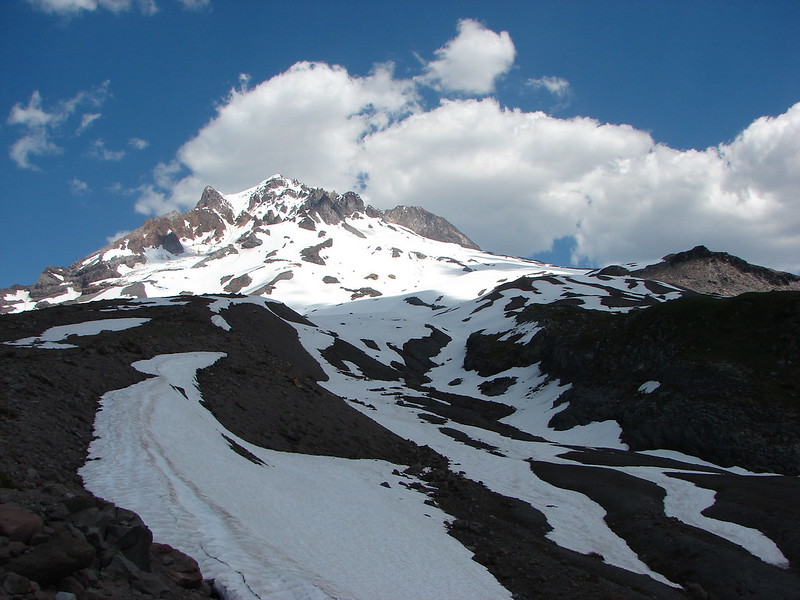
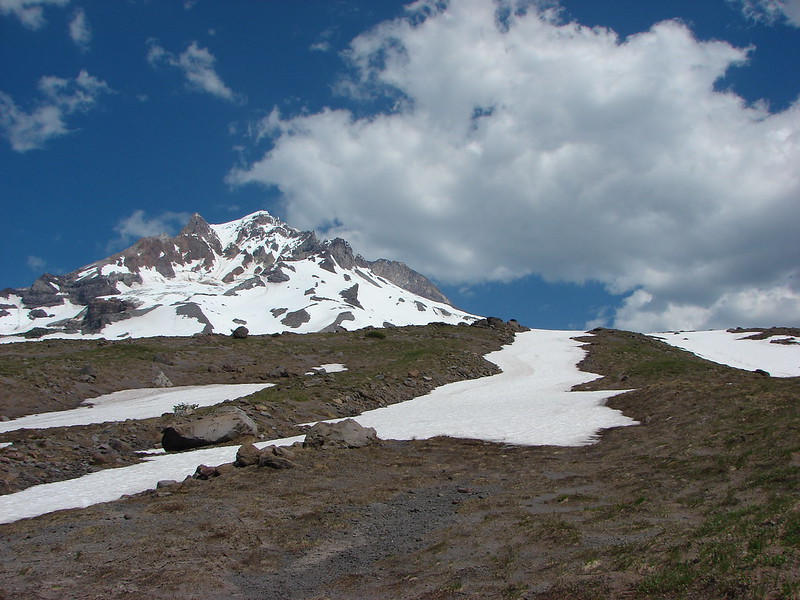
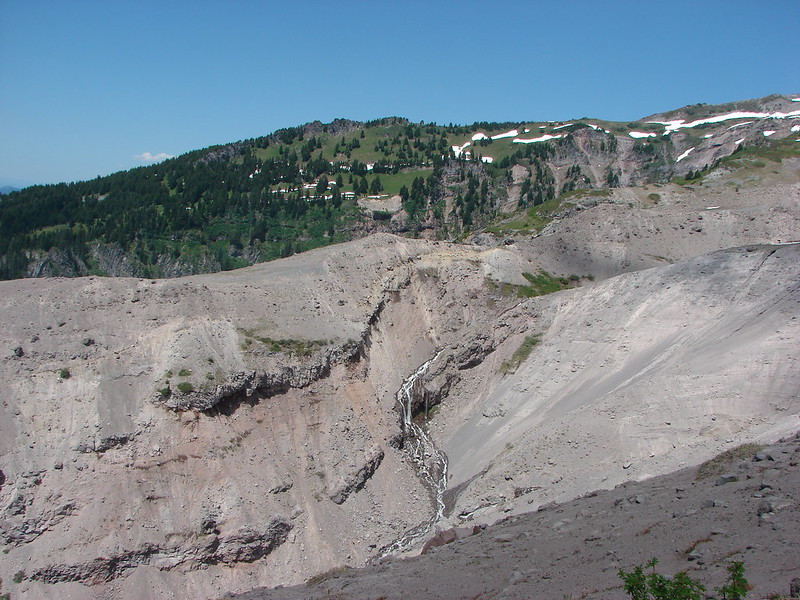
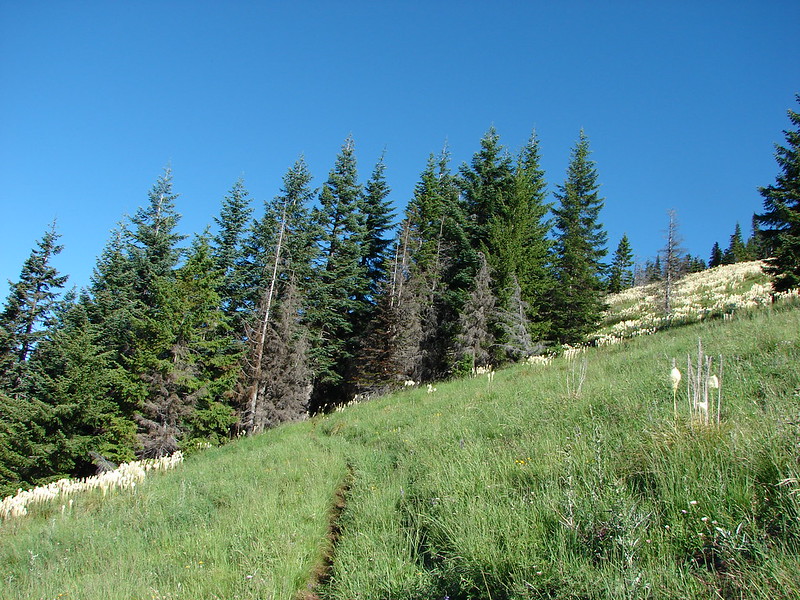
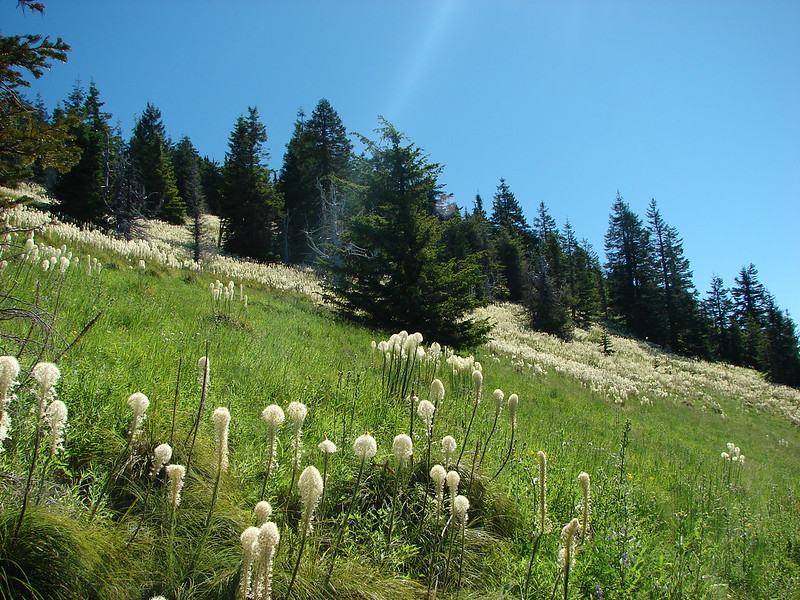
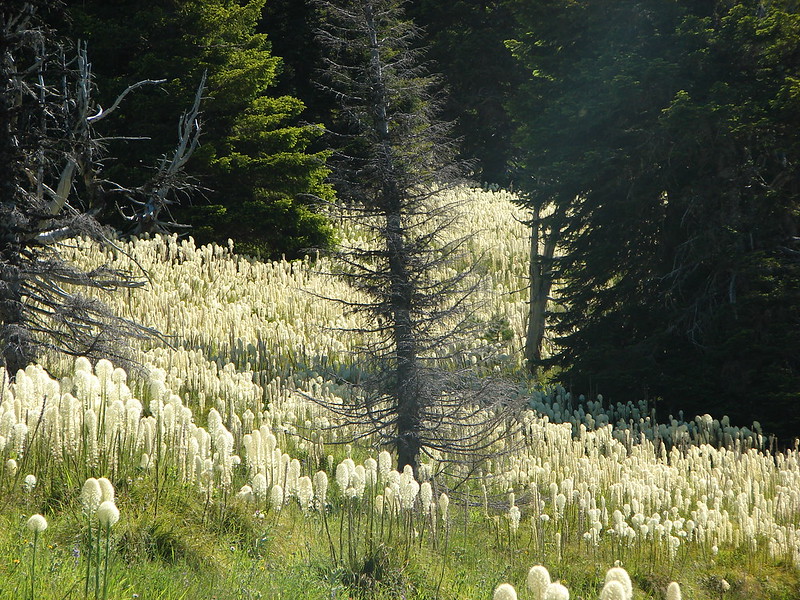
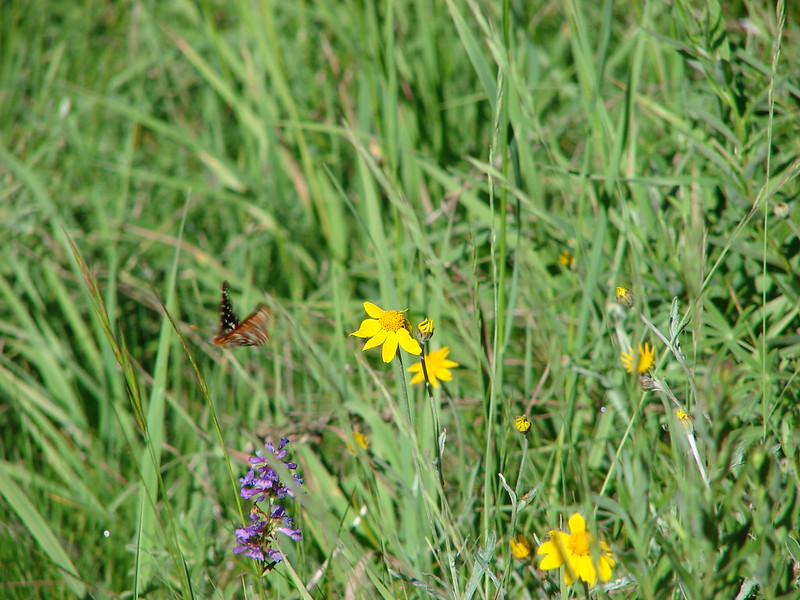
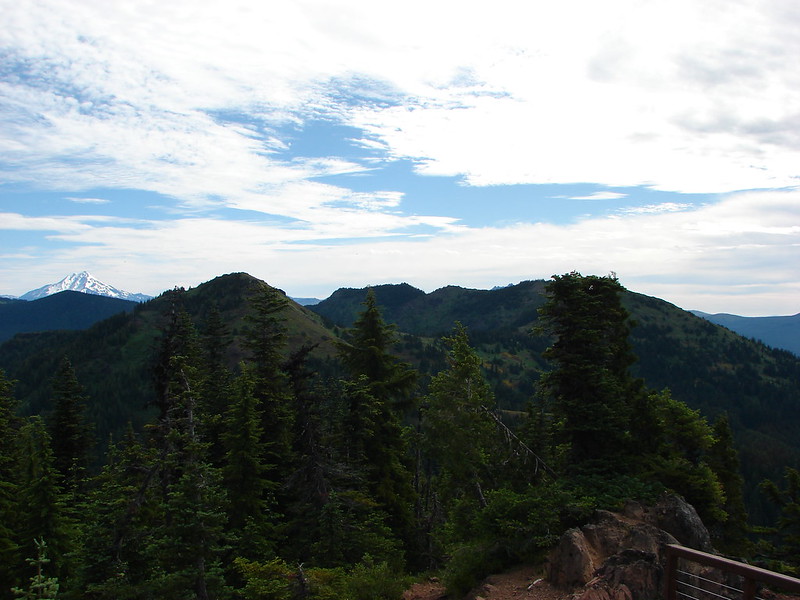
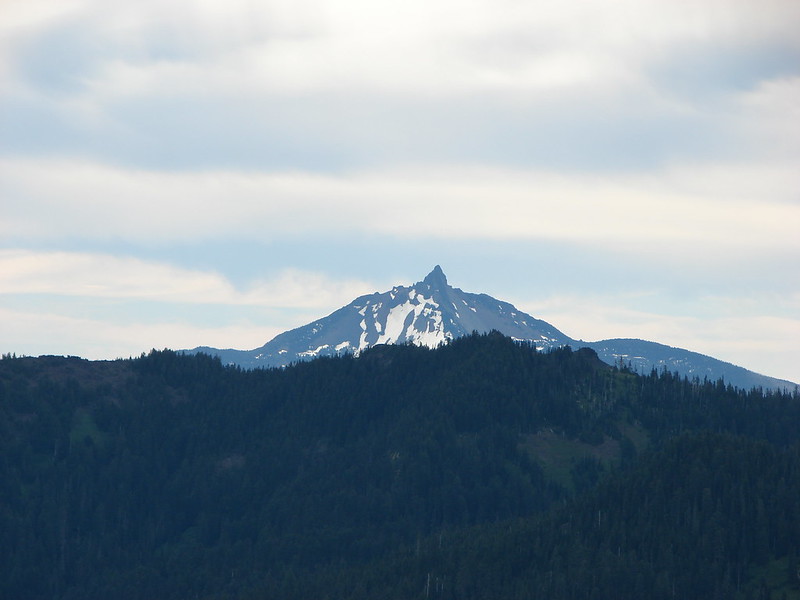
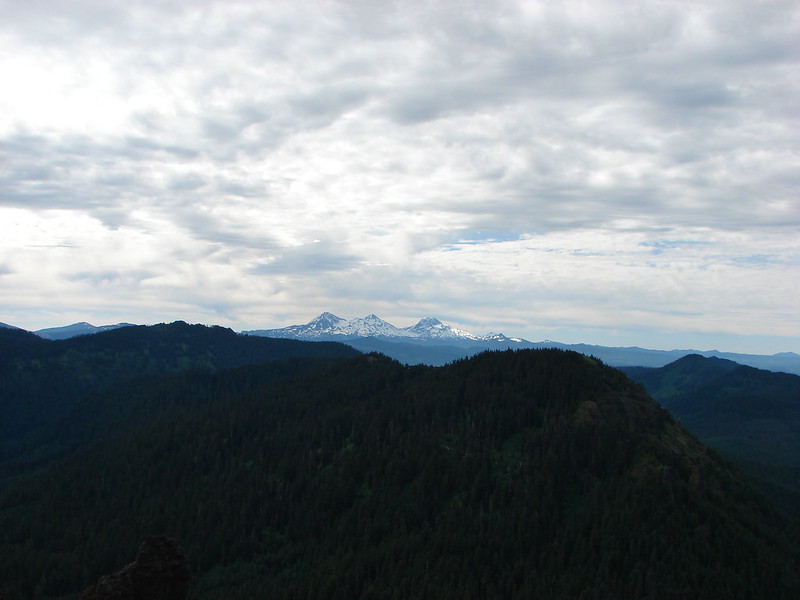
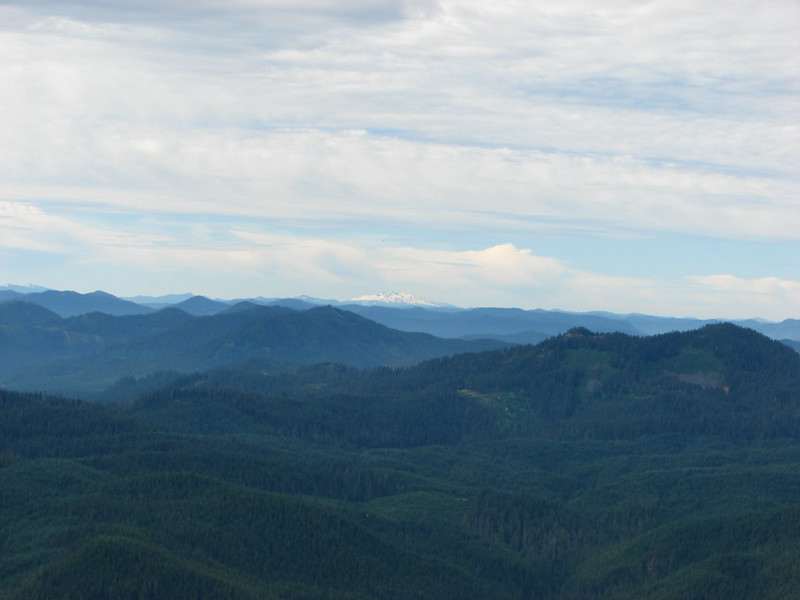
Categories
Goat Rocks Hiking Trip report Washington Washington Cascades

Goat Rocks Wilderness

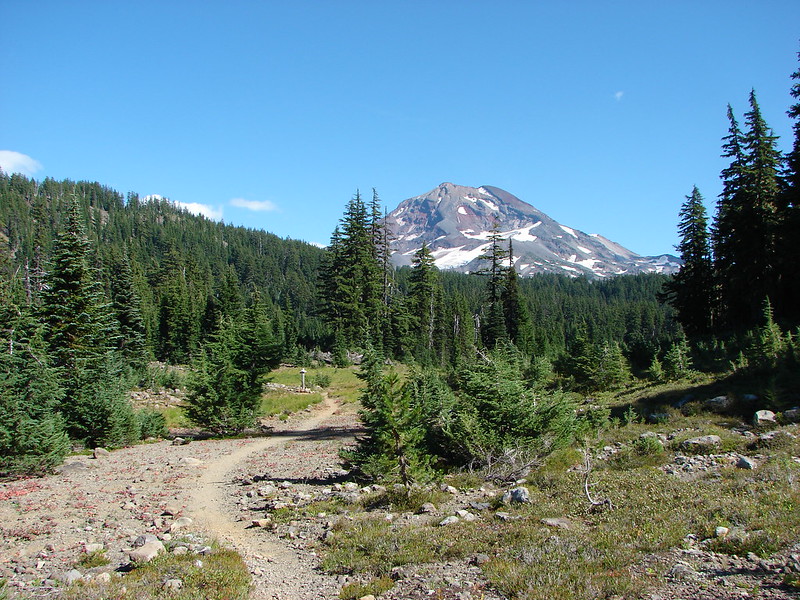
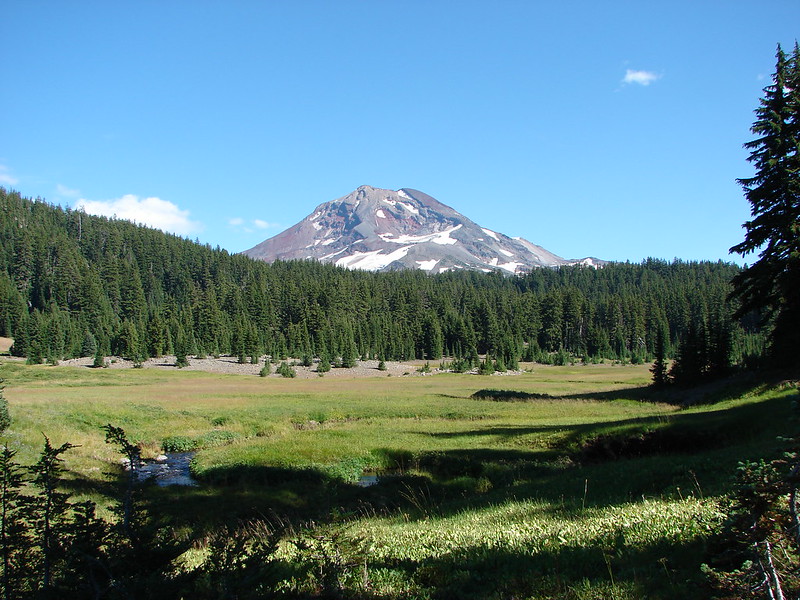
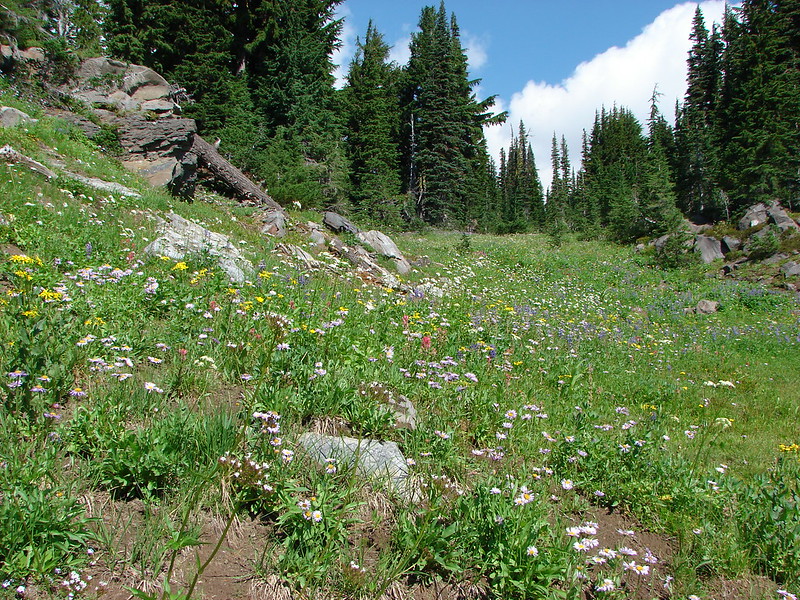
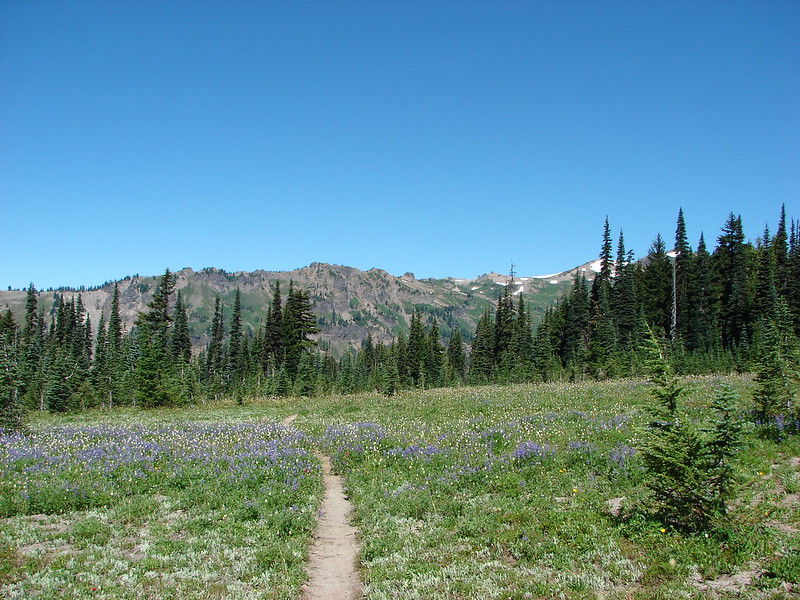
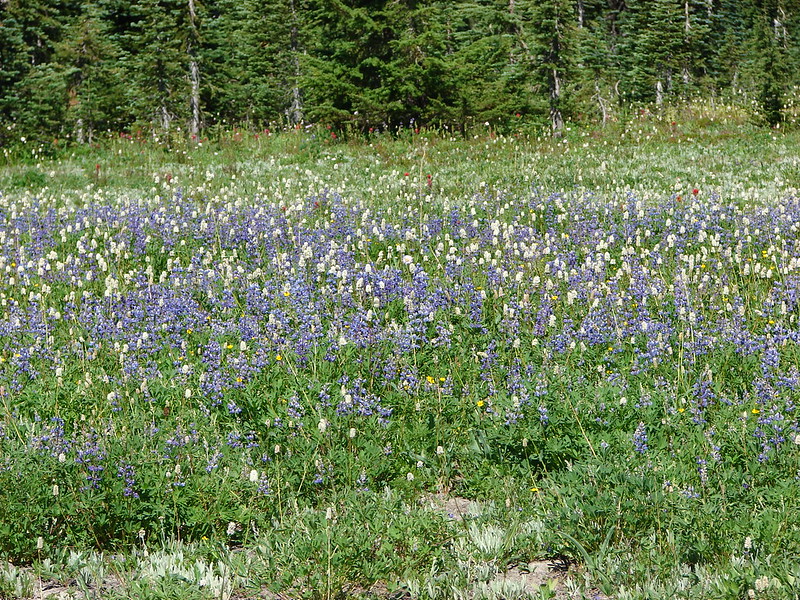
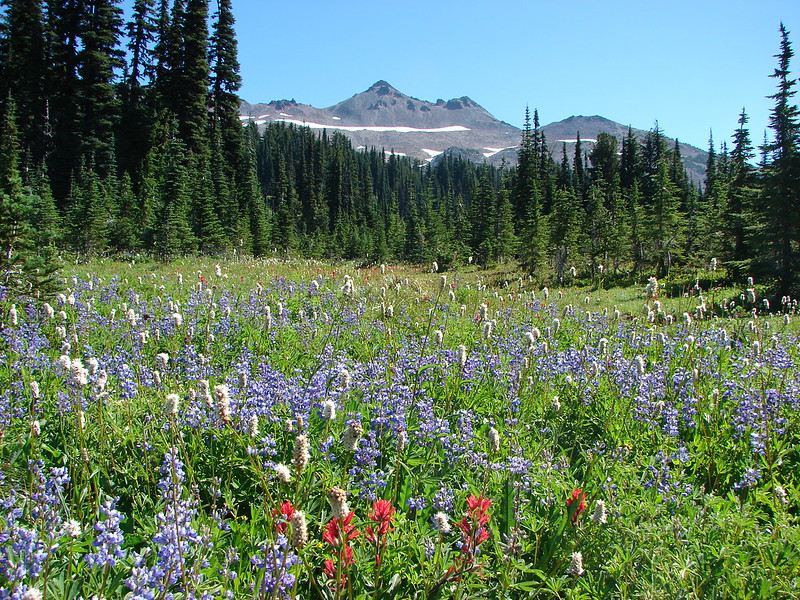
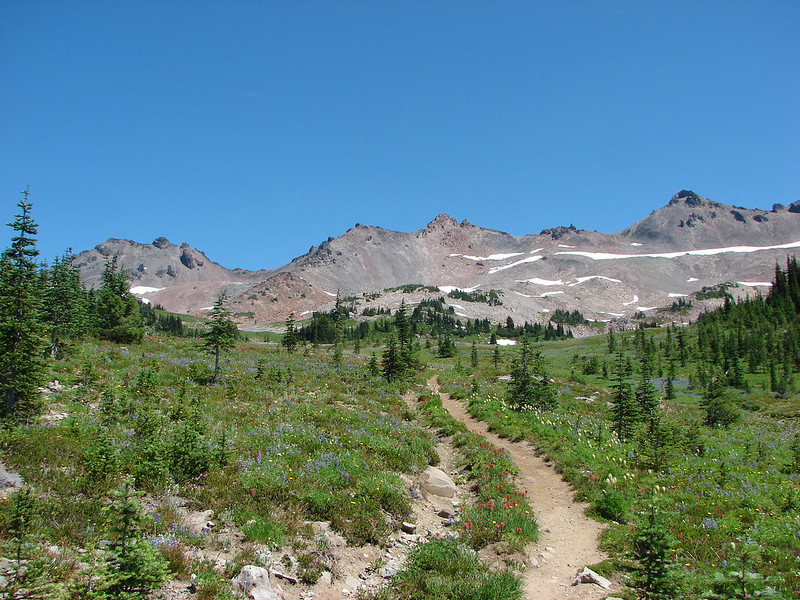
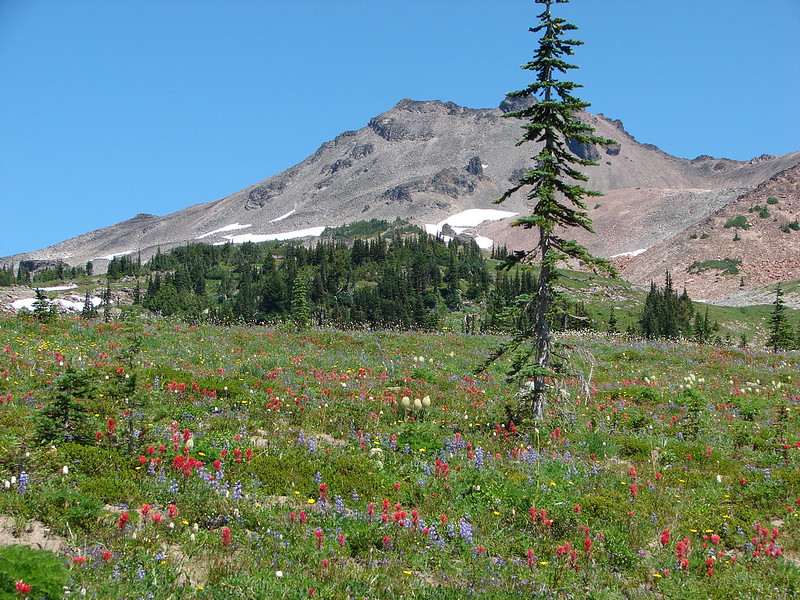
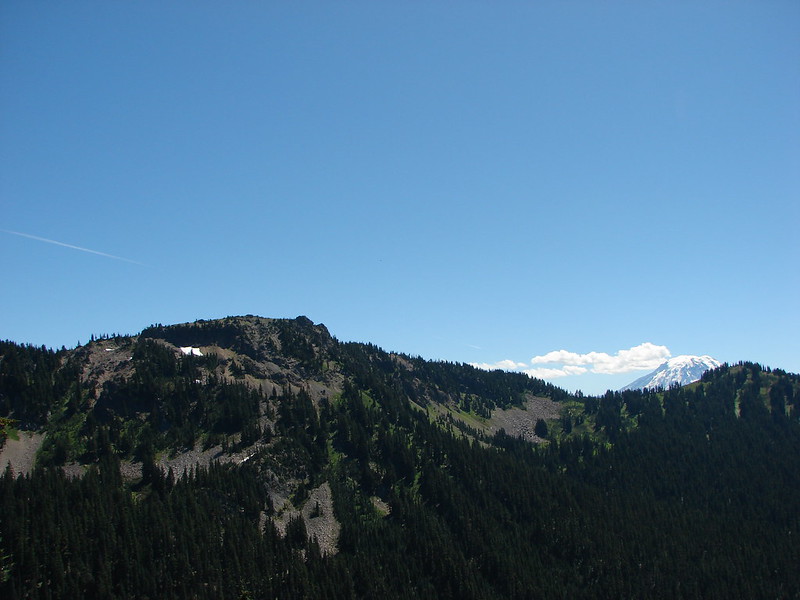
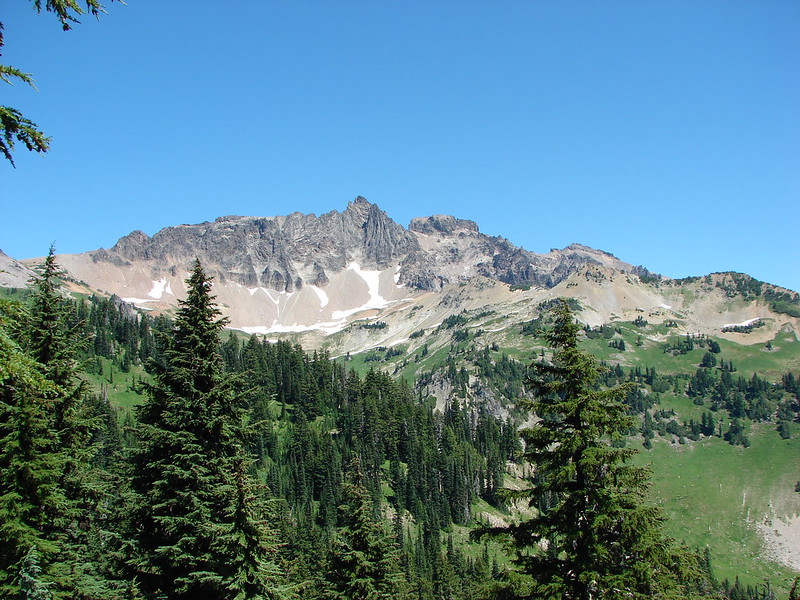
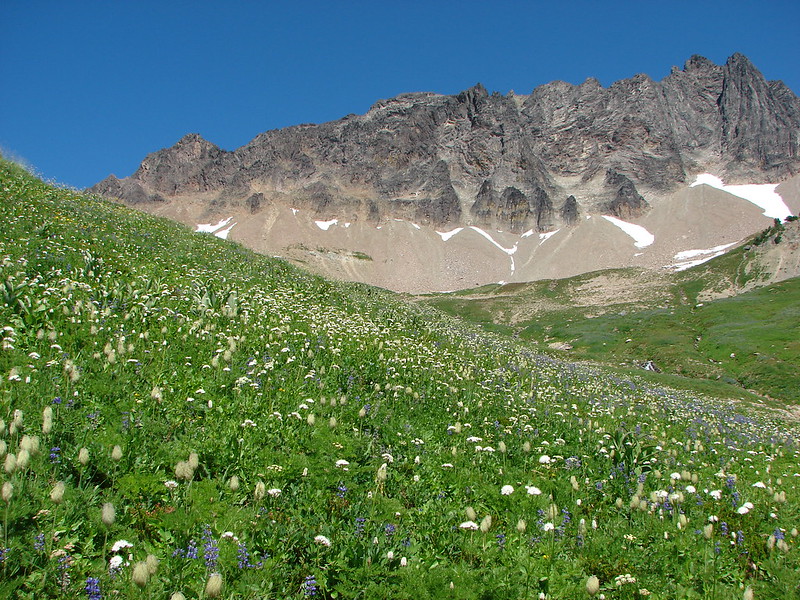
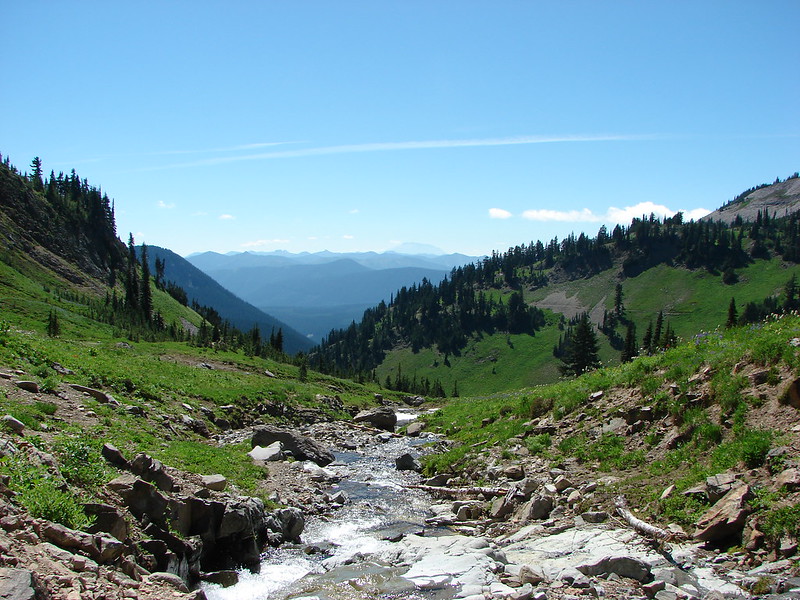
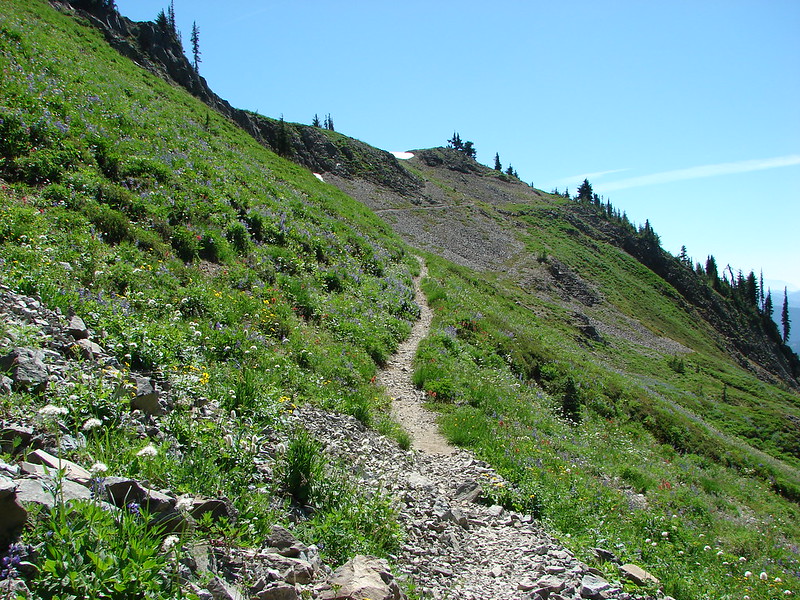
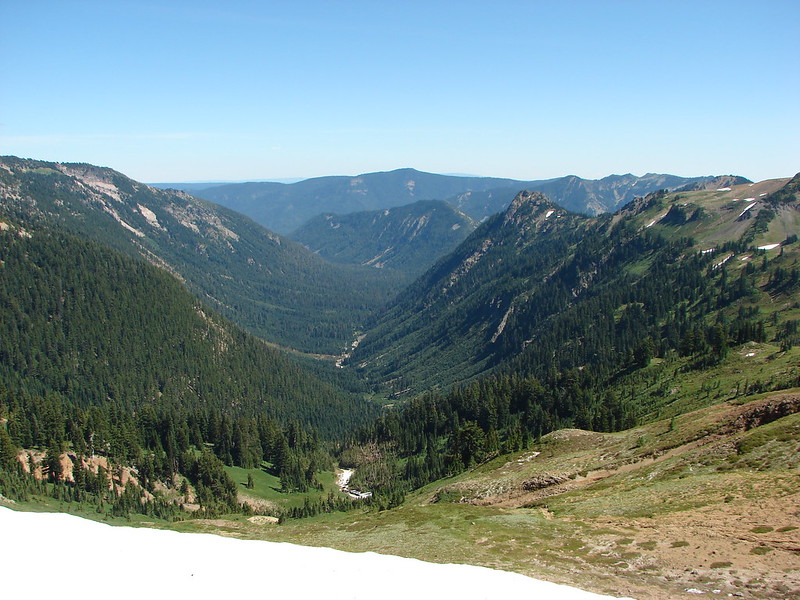
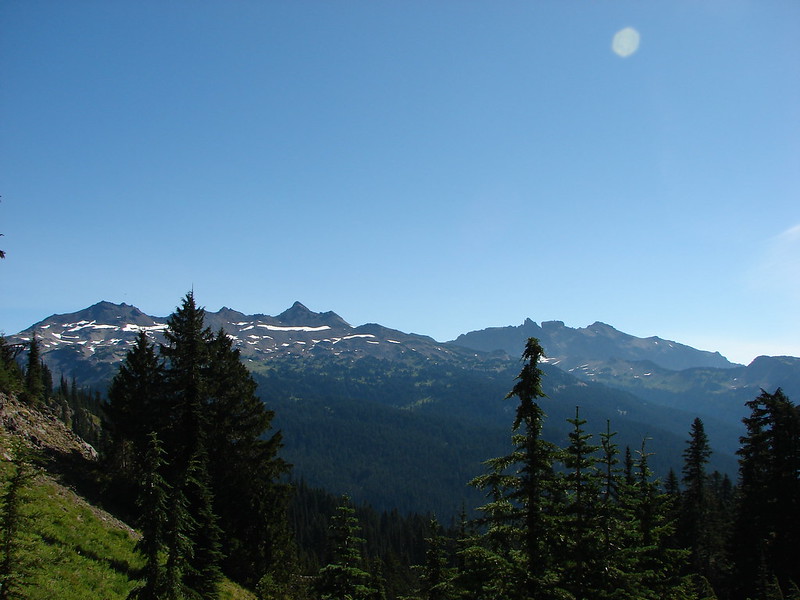
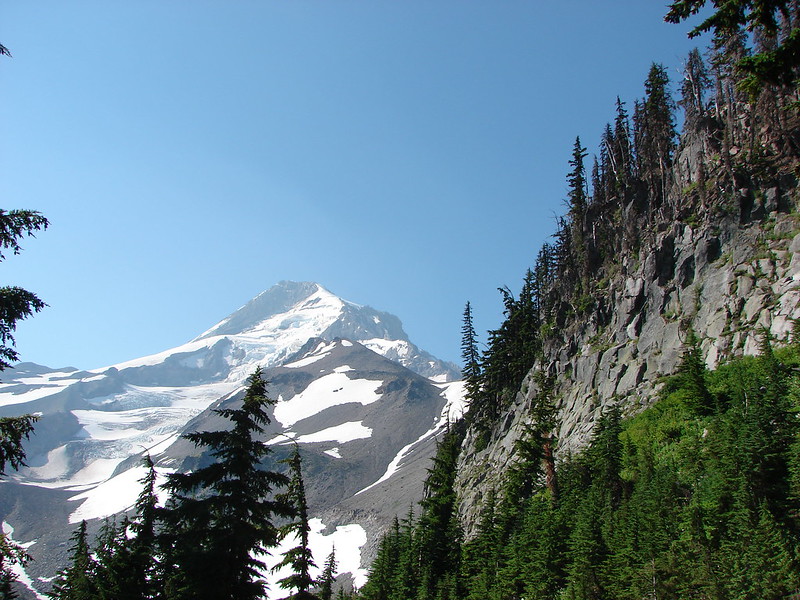
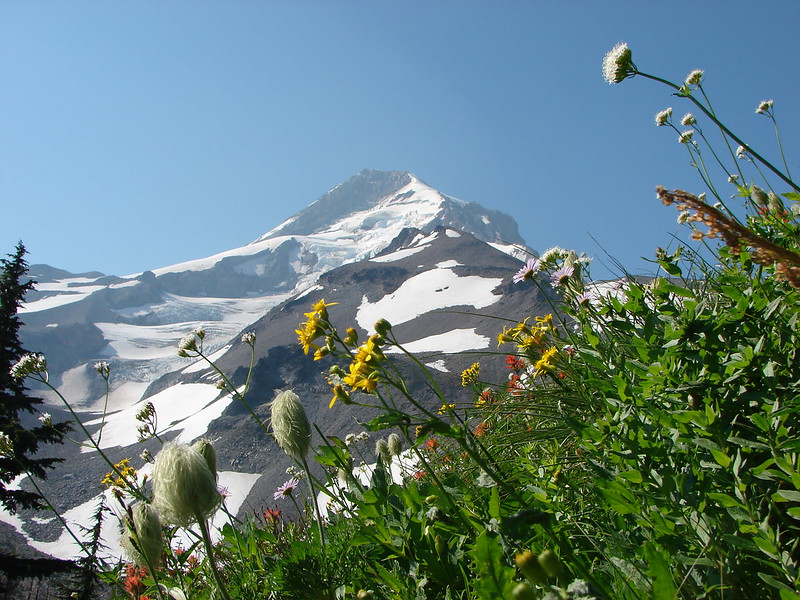
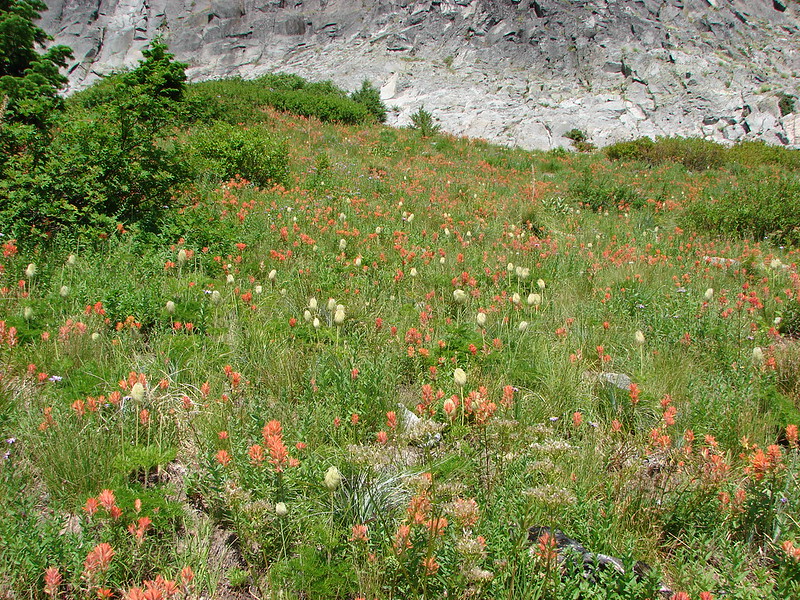
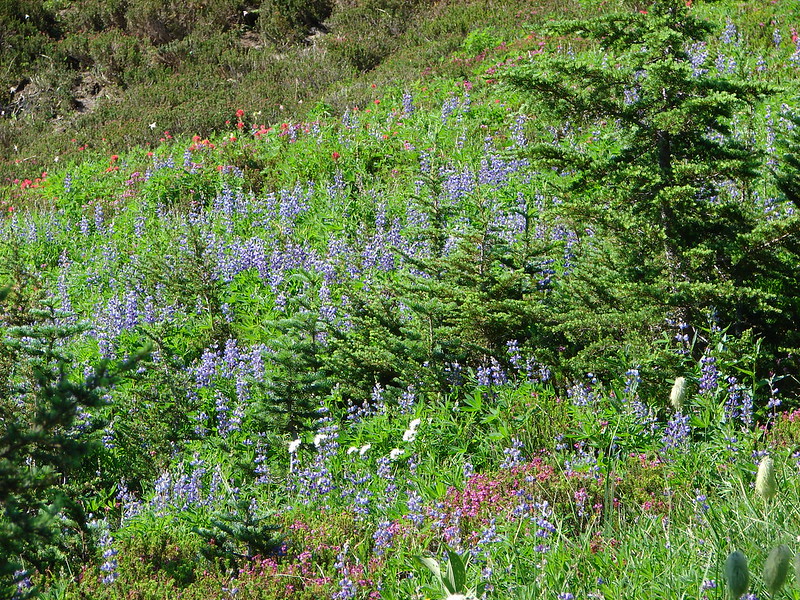
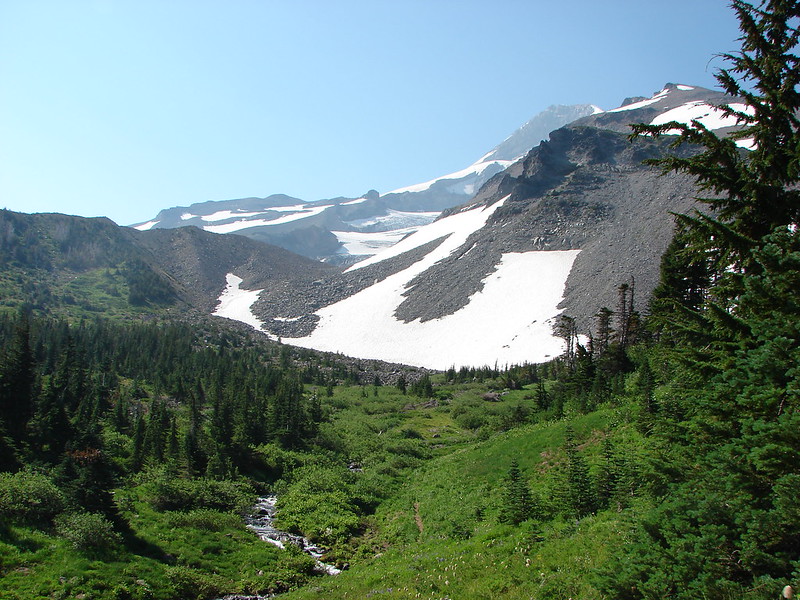
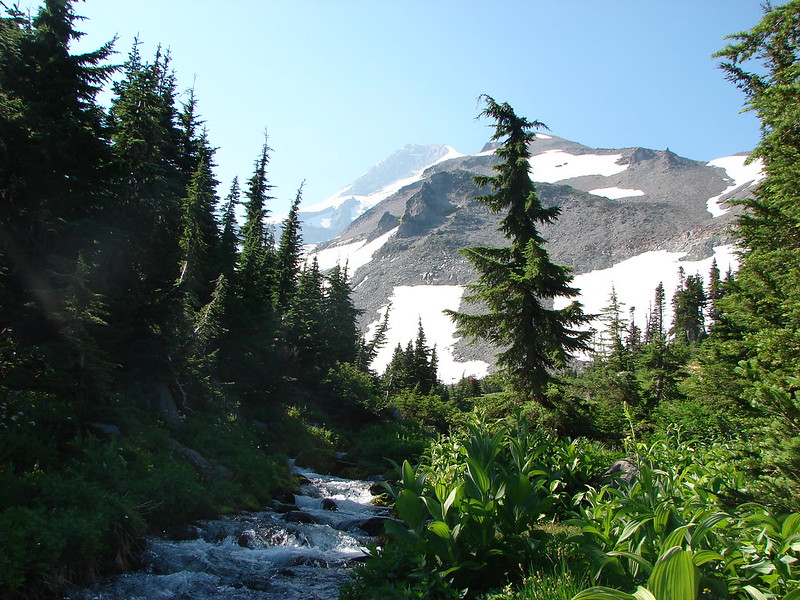
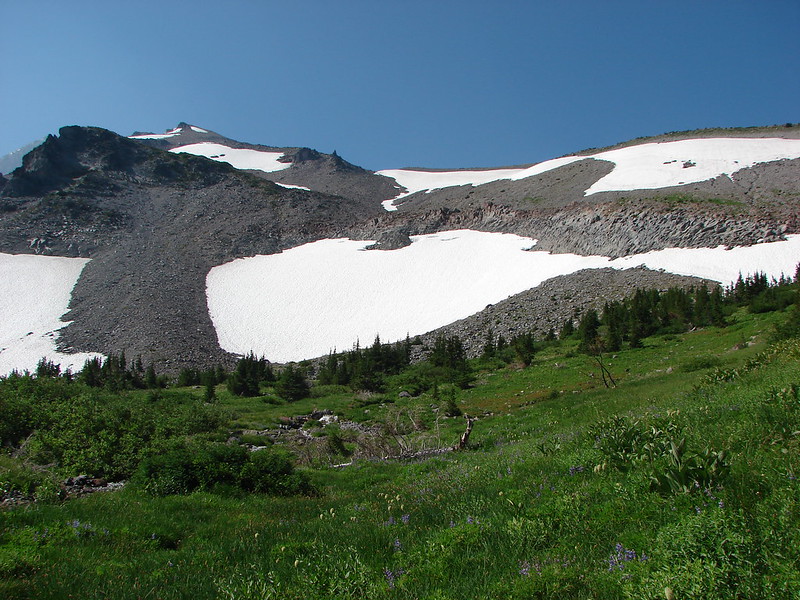
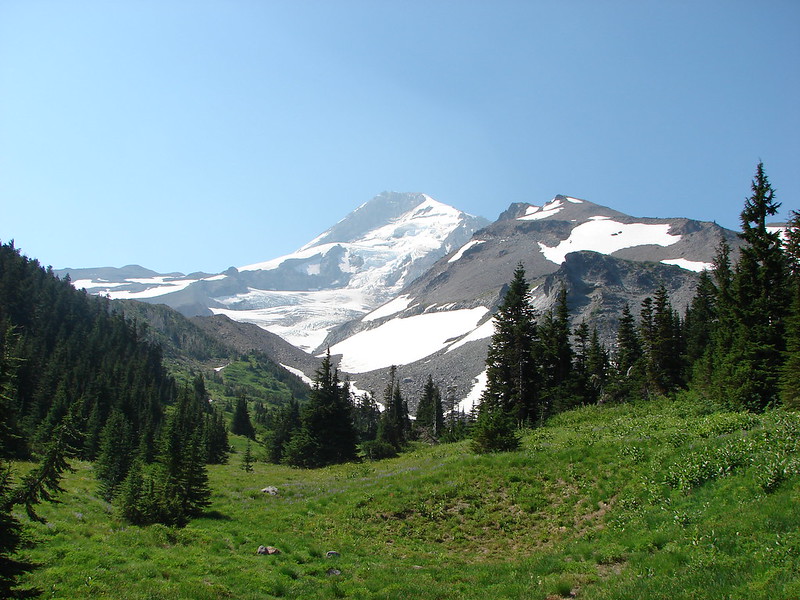
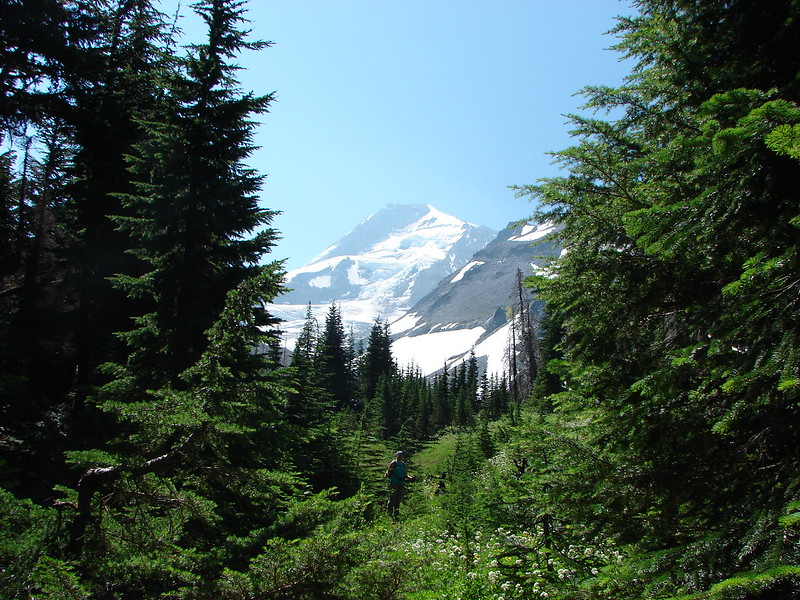
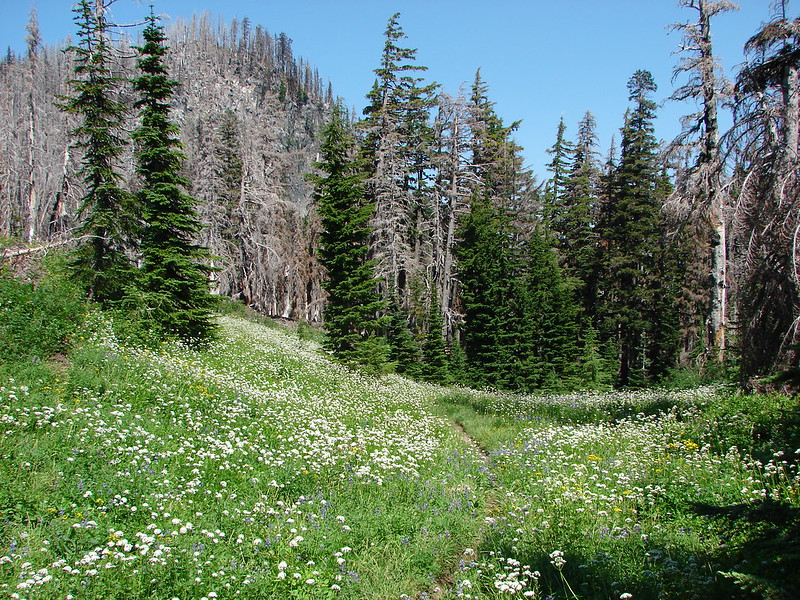
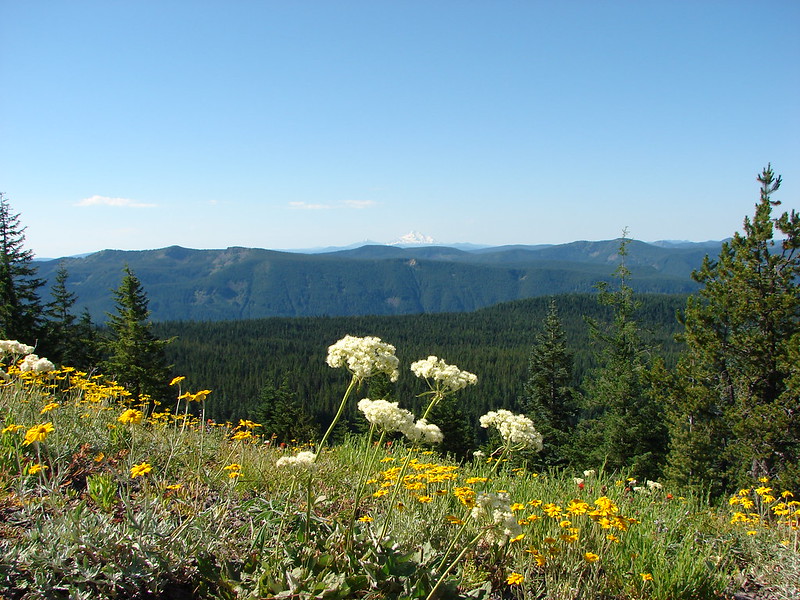
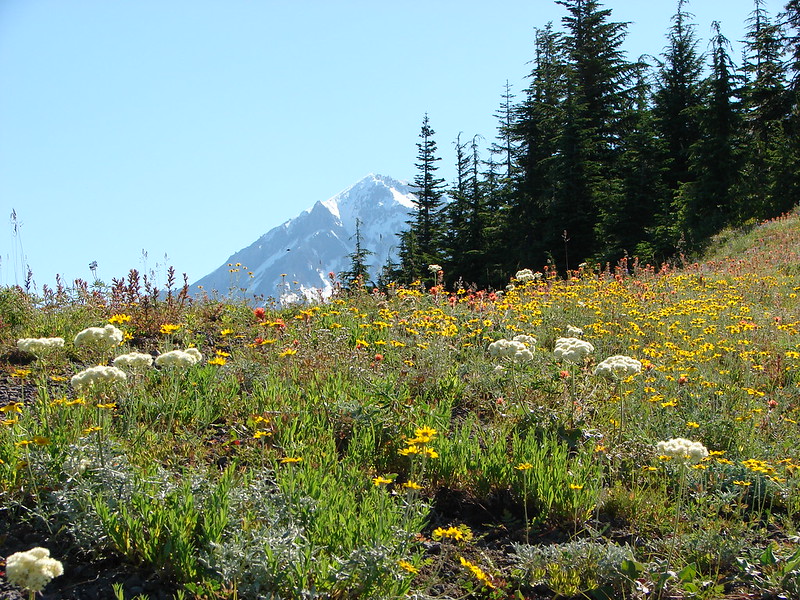
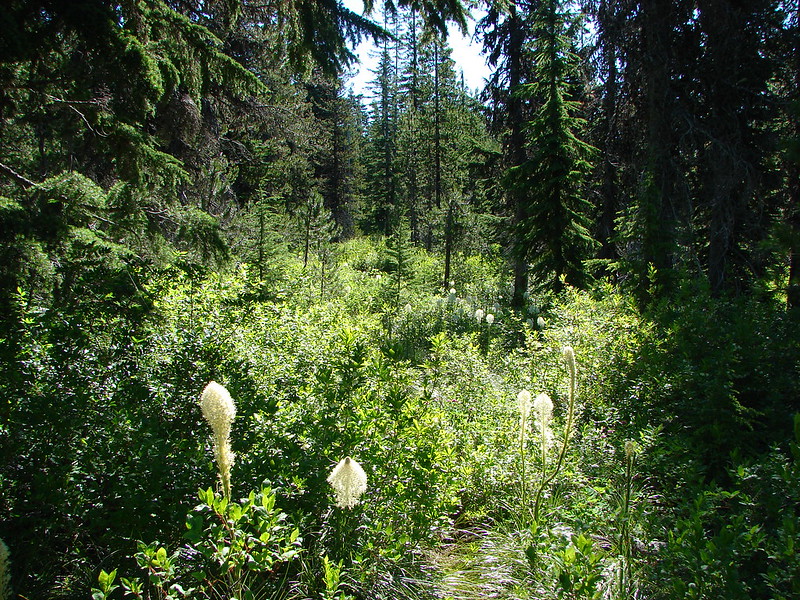
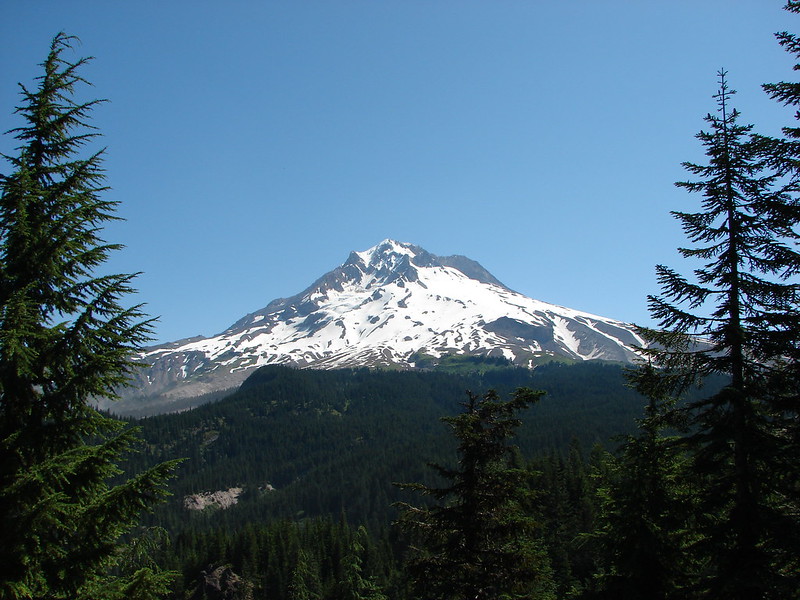
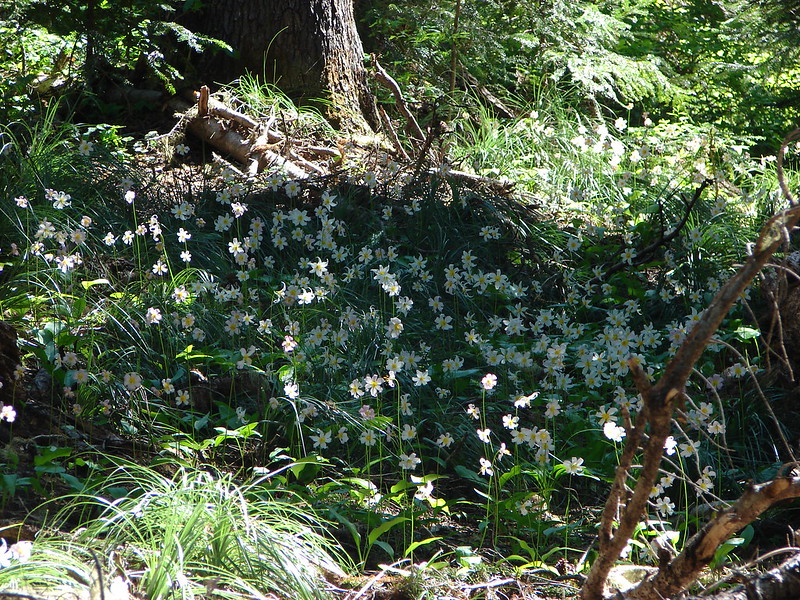
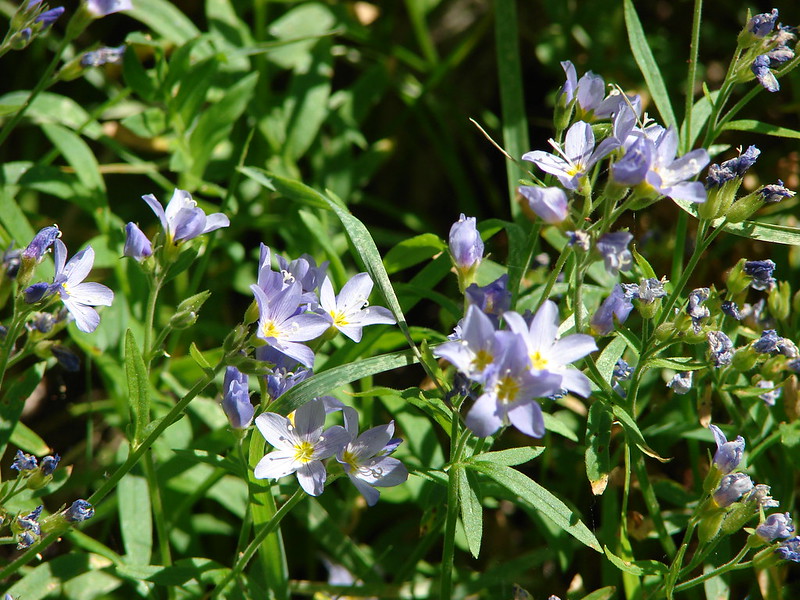
We just returned from our longest backpacking trip to date, a three night, four day stay in the Goat Rocks Wilderness in Washington. What an amazing place. Located between Mt. Adams and Mt. Rainier the Goat Rocks Wilderness sports spectacular views, vast meadows of wildflowers, and plenty of wildlife. A number of trails including the Pacific Crest Trail provide 120 miles of hiking opportunities to explore this special place. Our plan was to establish a base camp at Alpine and then explore in all directions from there.

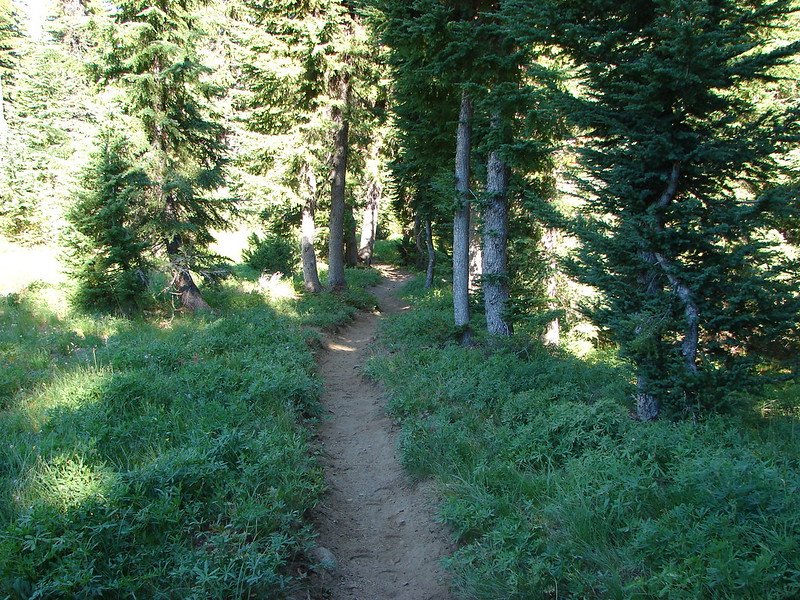
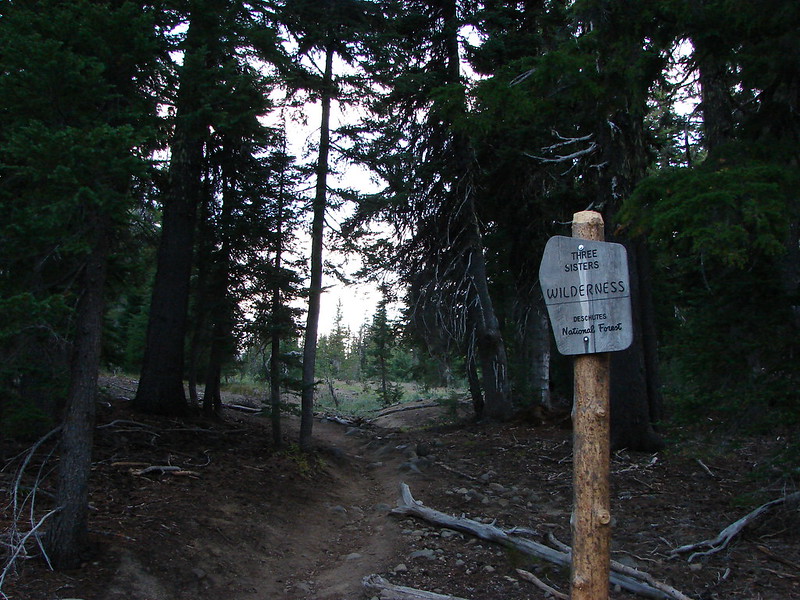
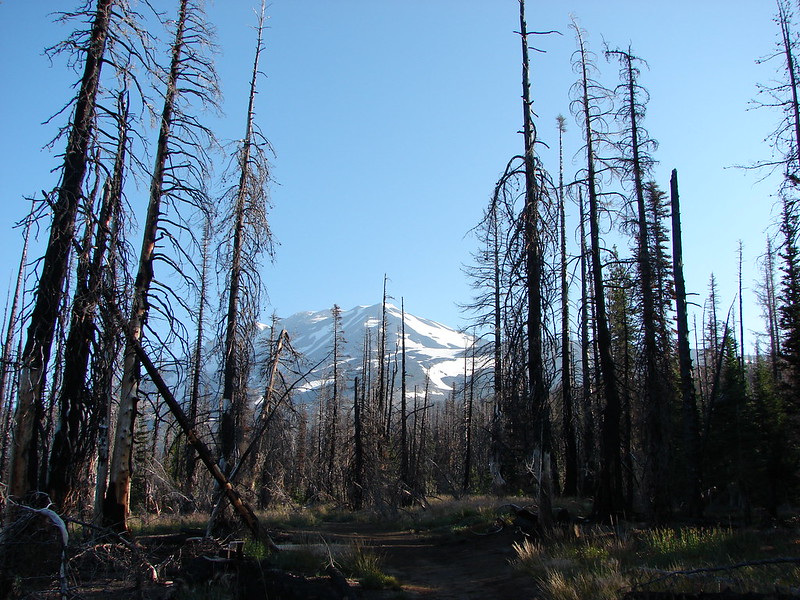
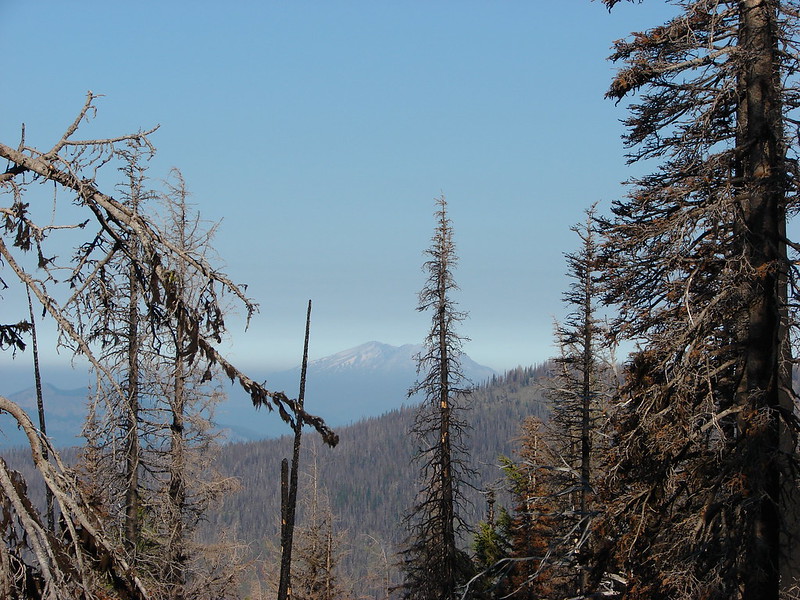
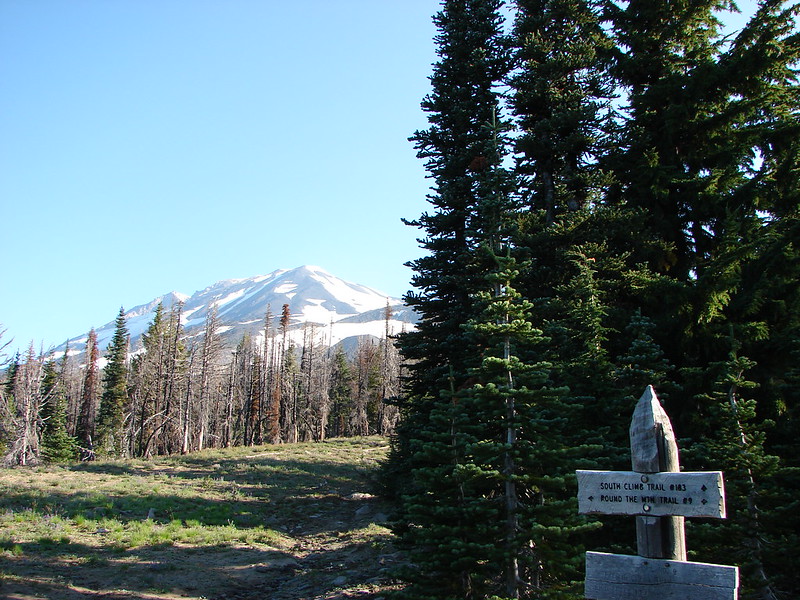
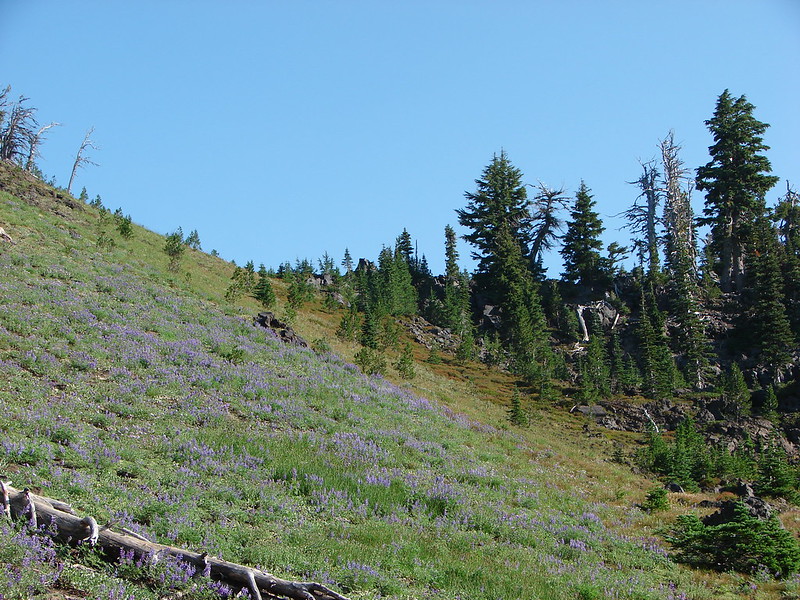
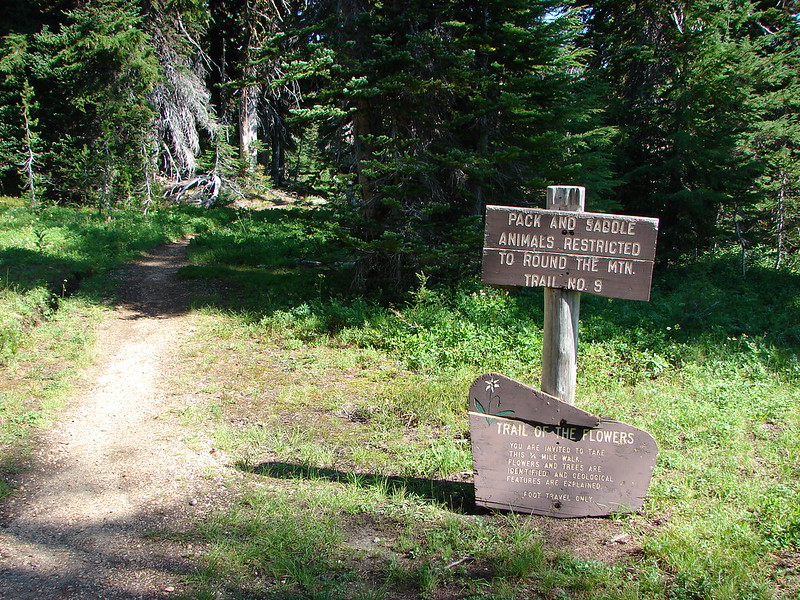
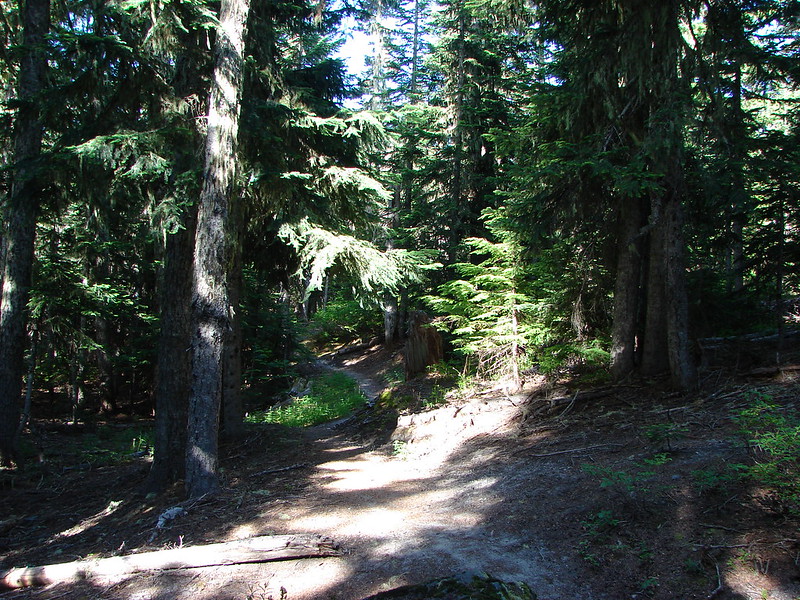
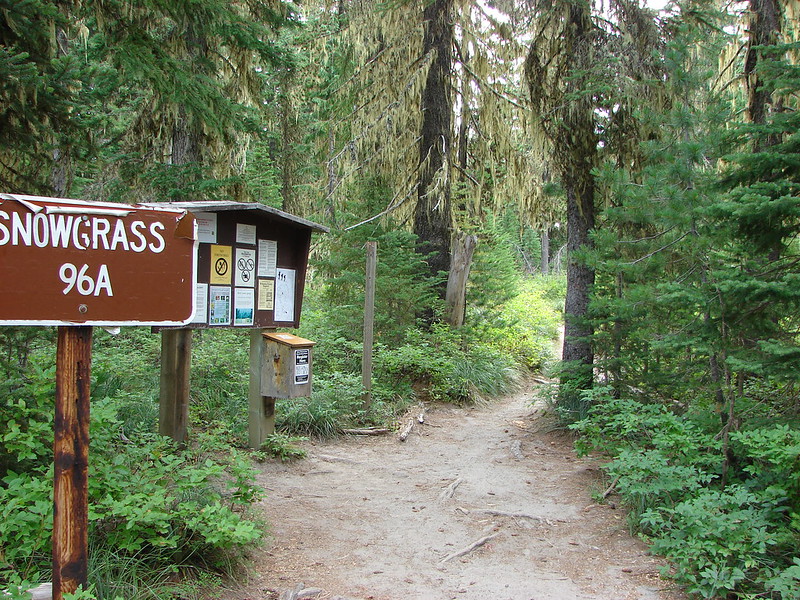
We started our trip at the popular Snowgrass Trailhead and quickly entered the wilderness.

DSC02449

DSC02450

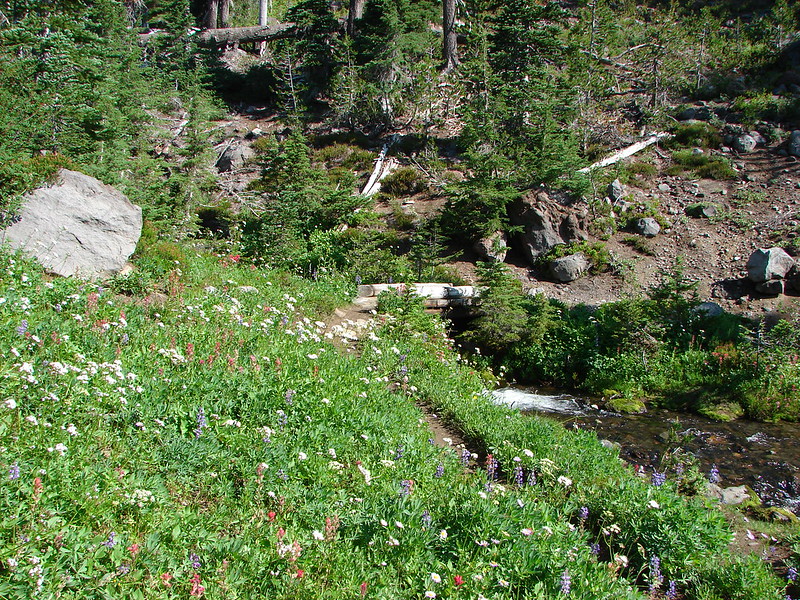
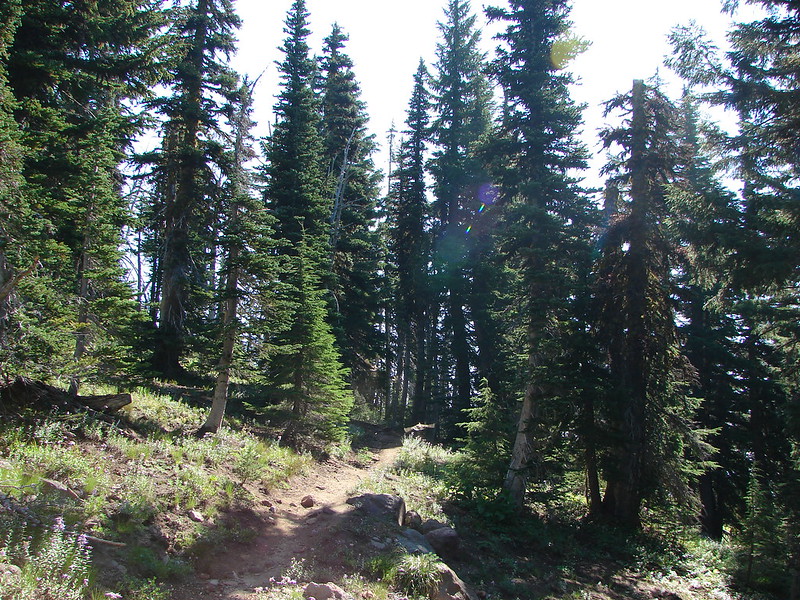
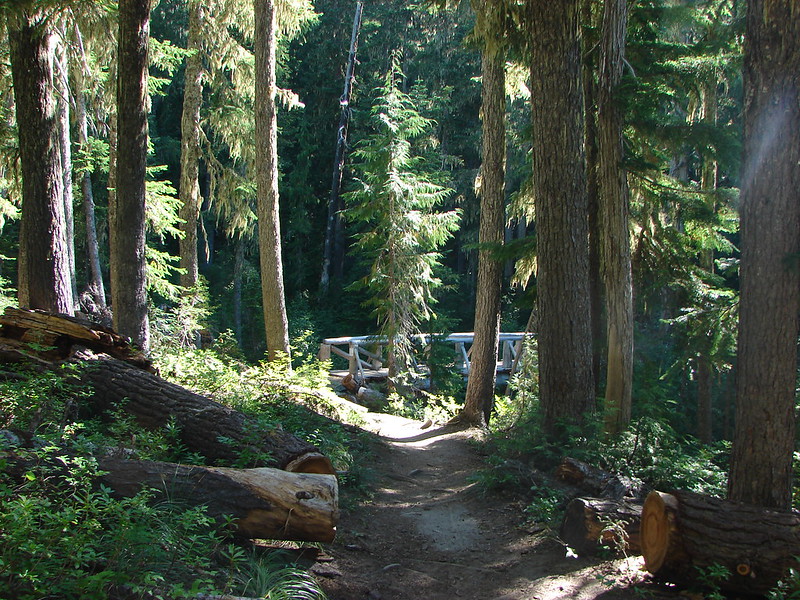
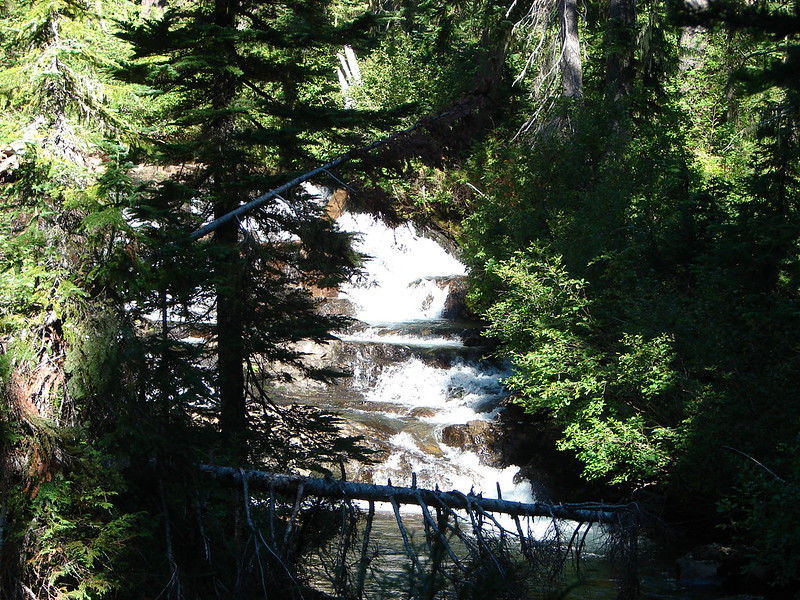
A little over 1.5 miles we crossed Goat Creek on a footbridge.

DSC02466

DSC02469

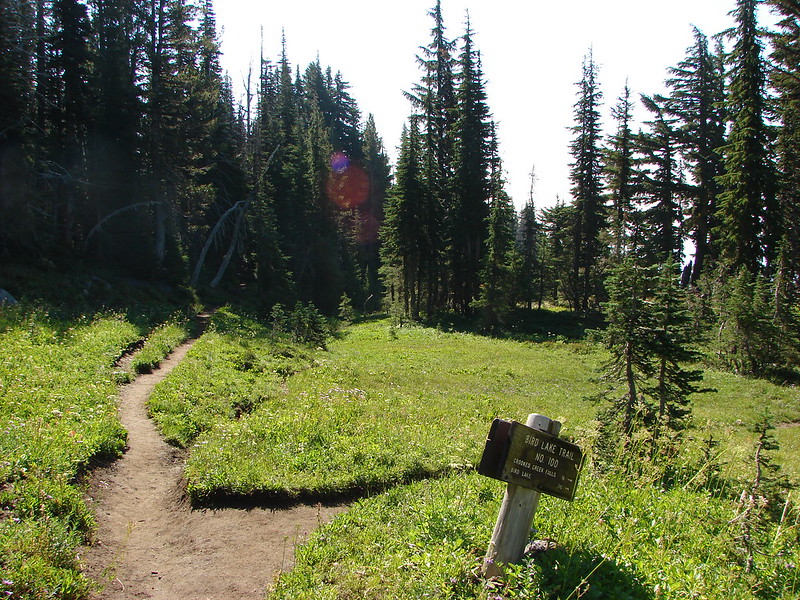
In another 2 miles we came to a trail junction where Bypass Trail 97 split off on its way up to the Pacific Crest Trail. Staying left on the Snowgrass Trail we climbed .7 miles to a trail junction.

DSC02534

DSC02535

DSC02550

DSC02557

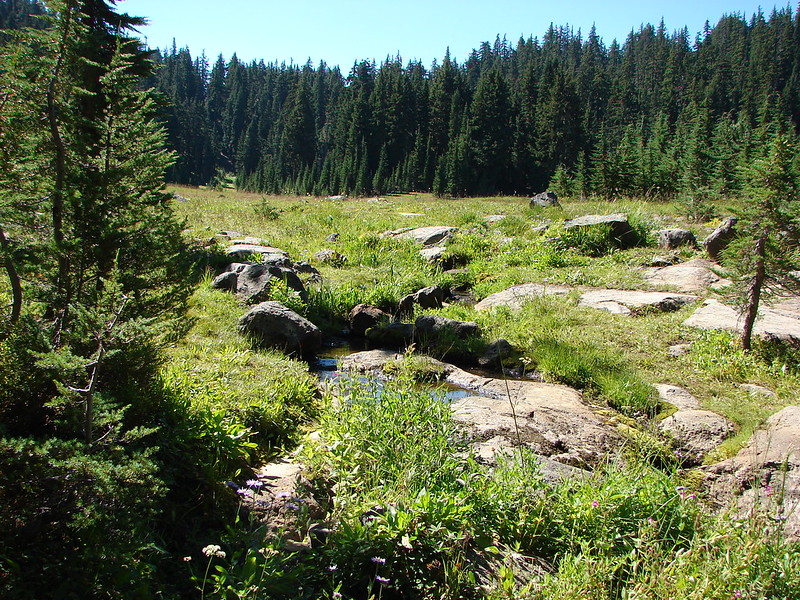
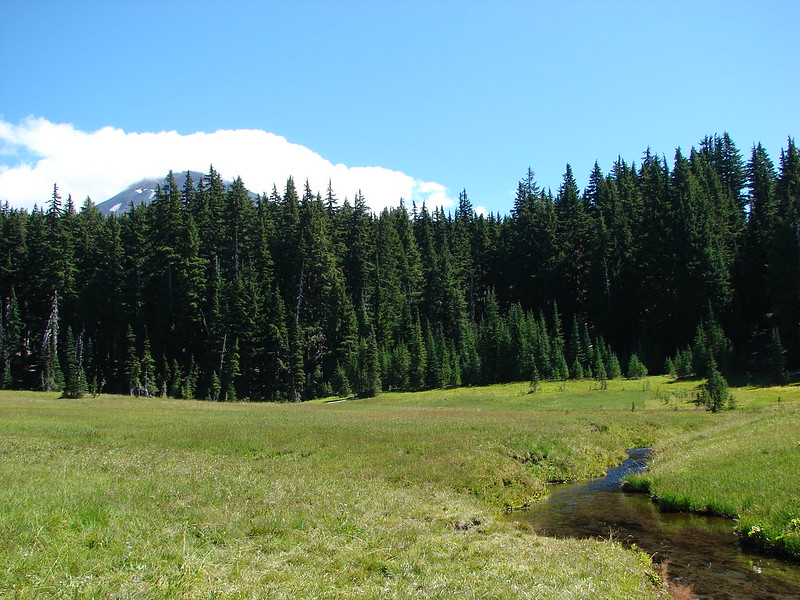
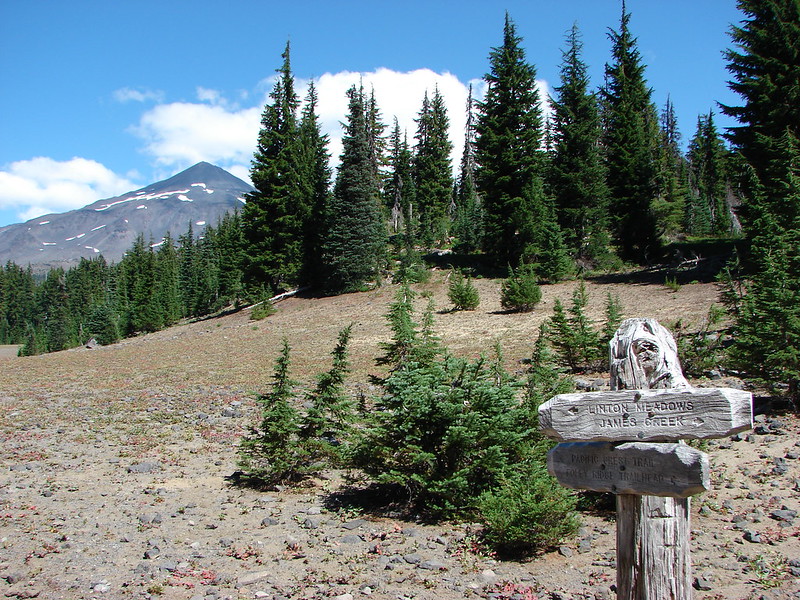
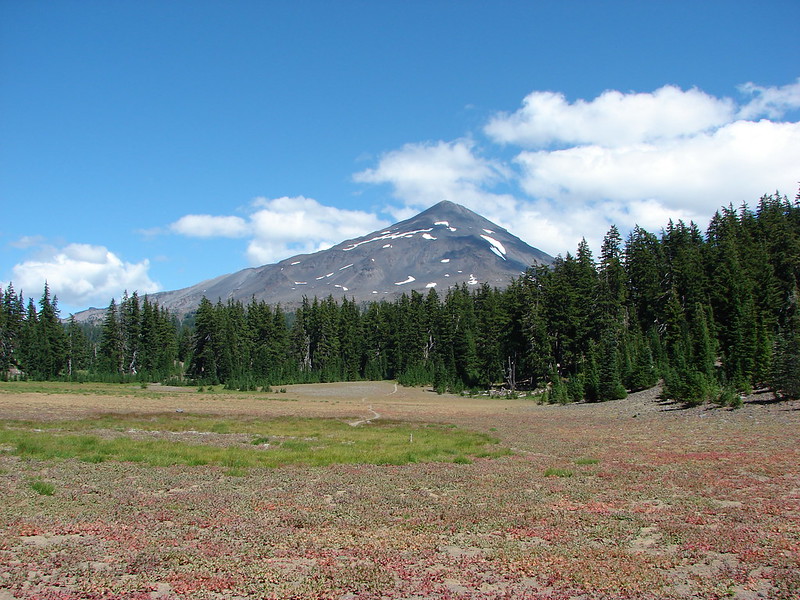
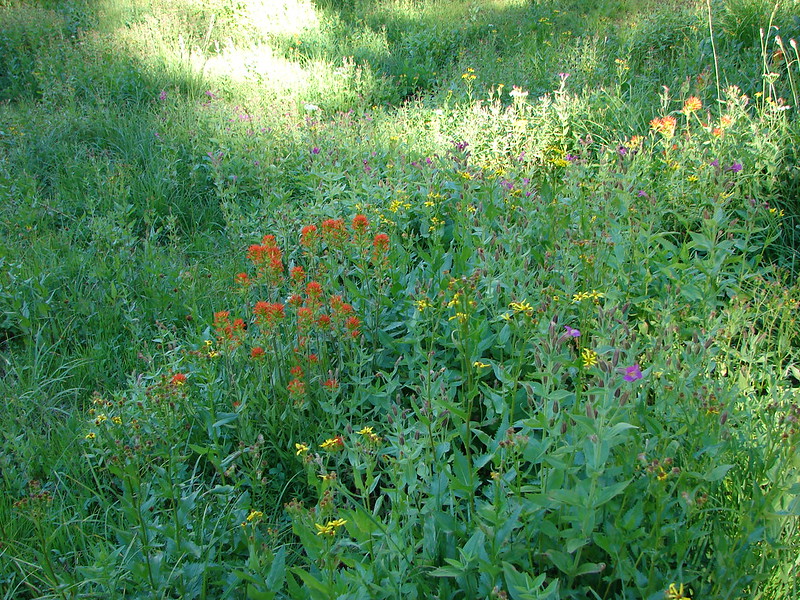
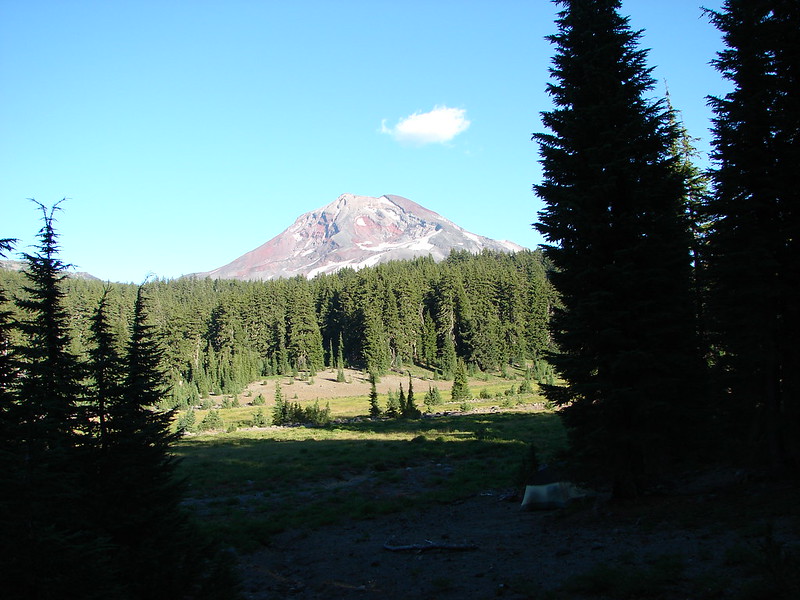
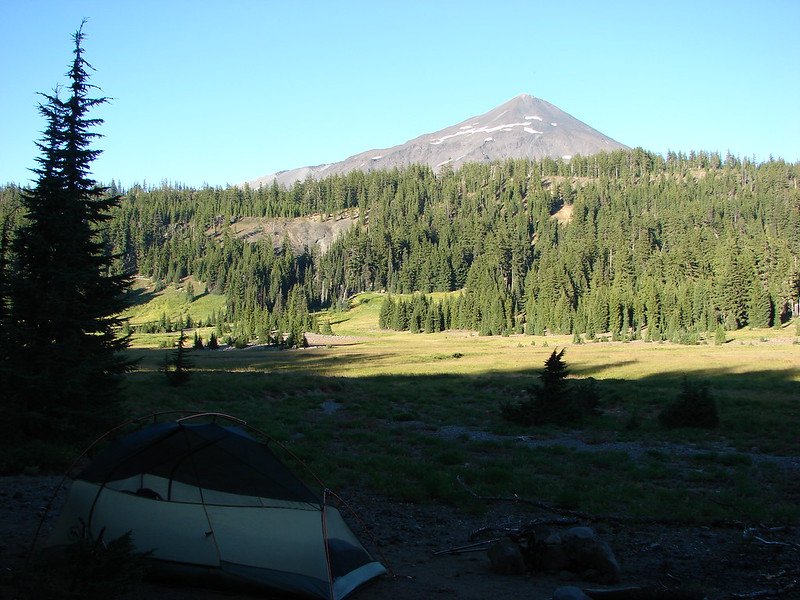
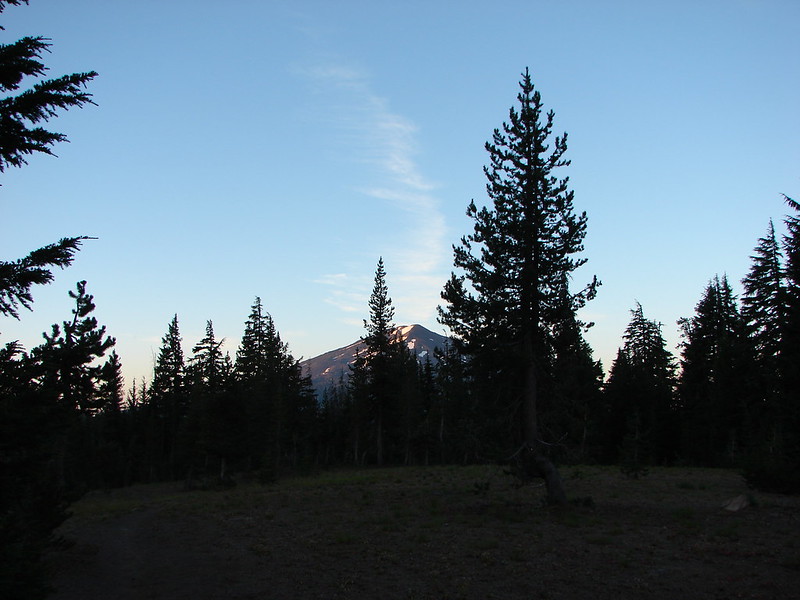
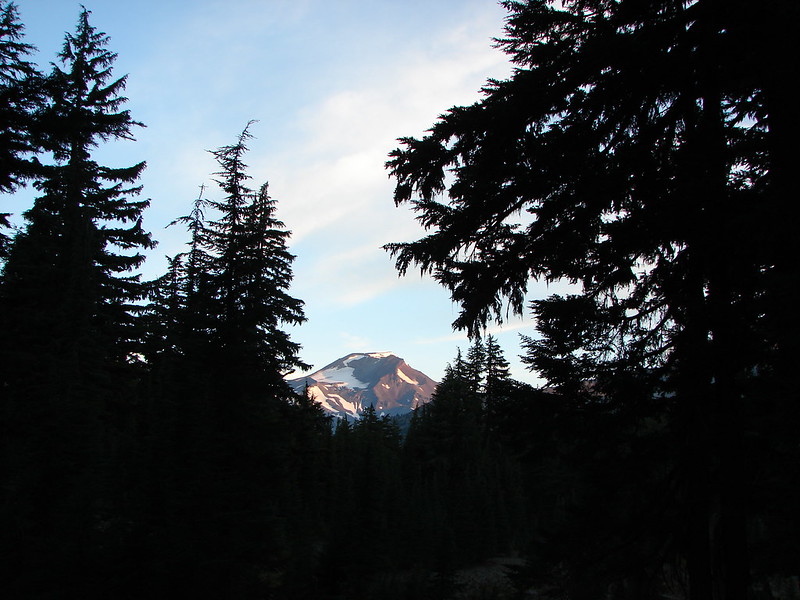
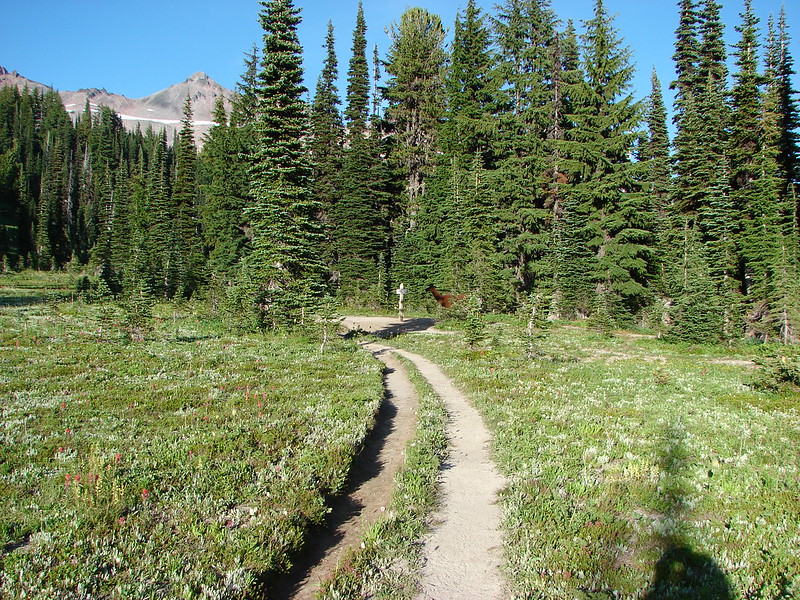
The Lily Basin Trail meets the Snowgrass Trail at this junction amid a wildflower meadow. Just a short distance away was Alpine where we began searching for a tent site. The views and wildflowers at Alpine were simply amazing. We ended up deciding on a small site with a view of Old Snowy Mountain.

DSC02582

DSC02575

DSC02578

DSC02928

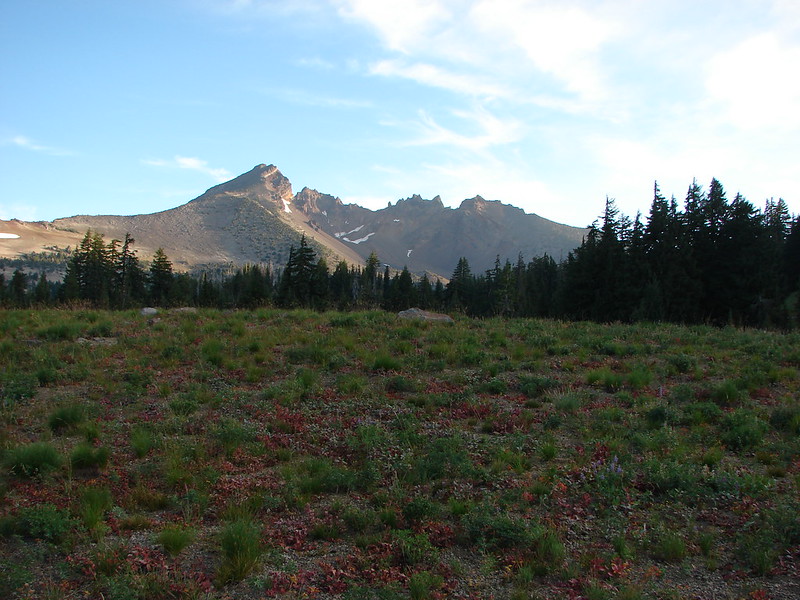
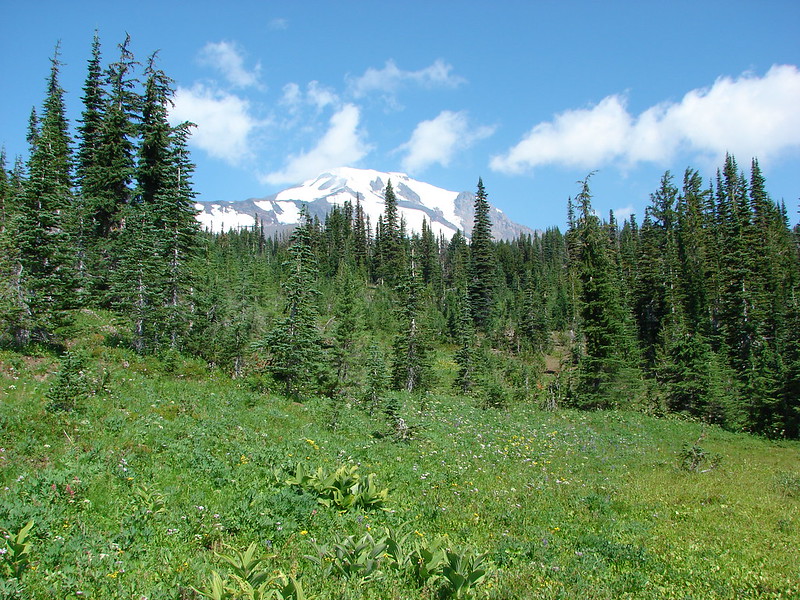
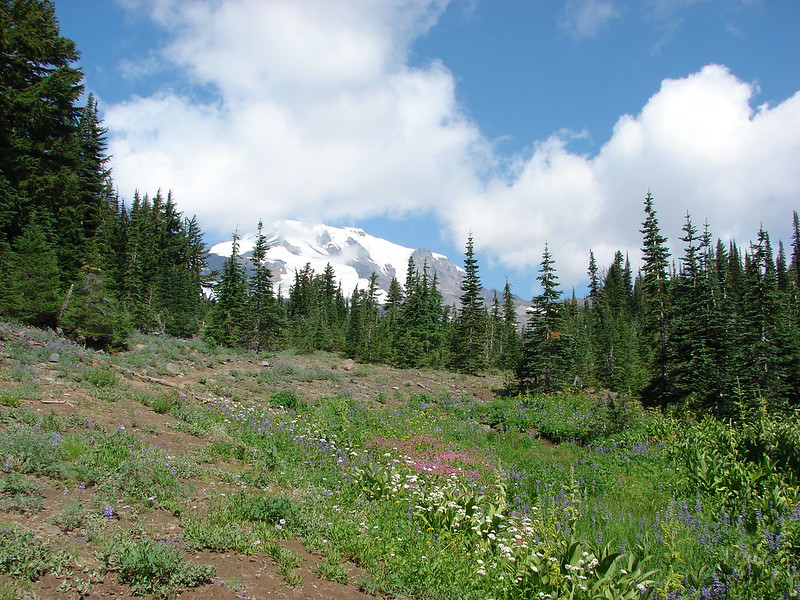
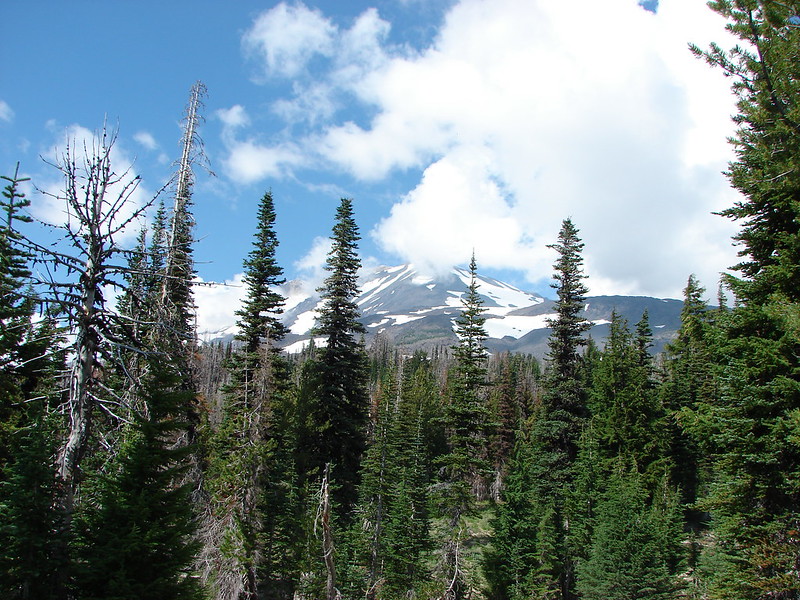
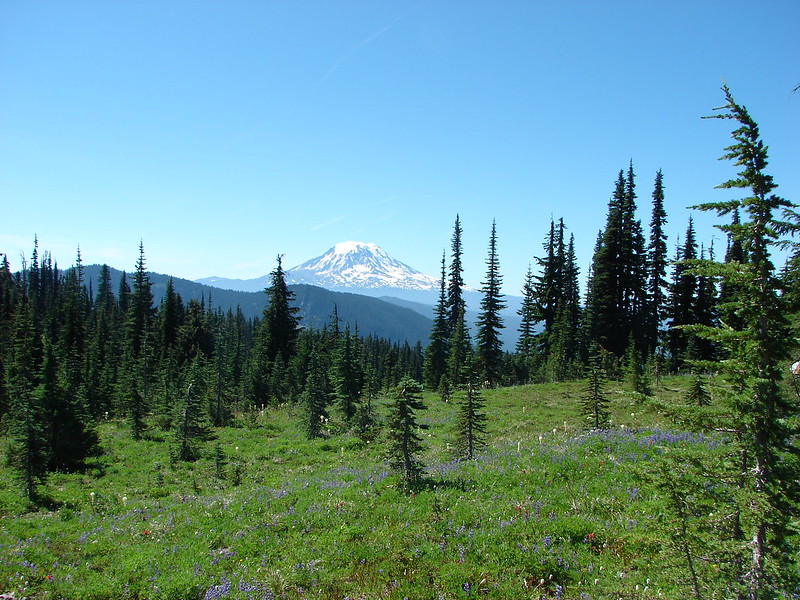
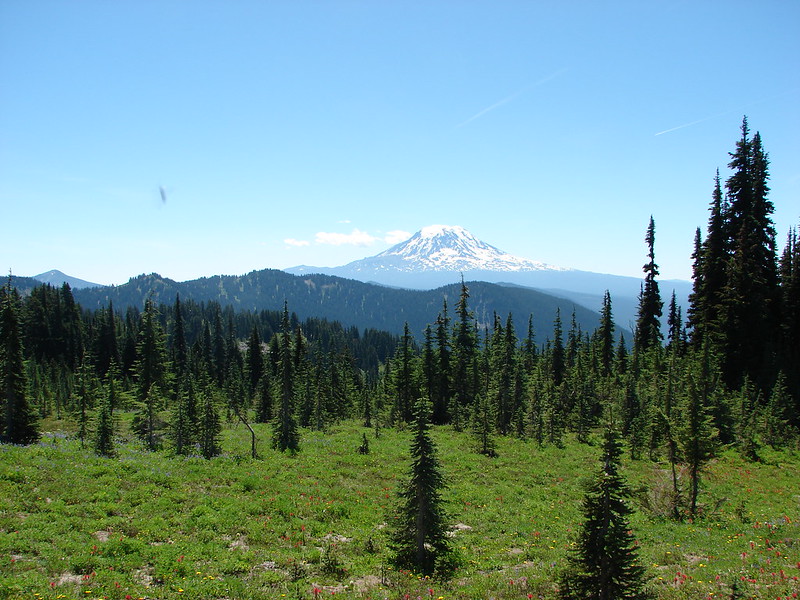
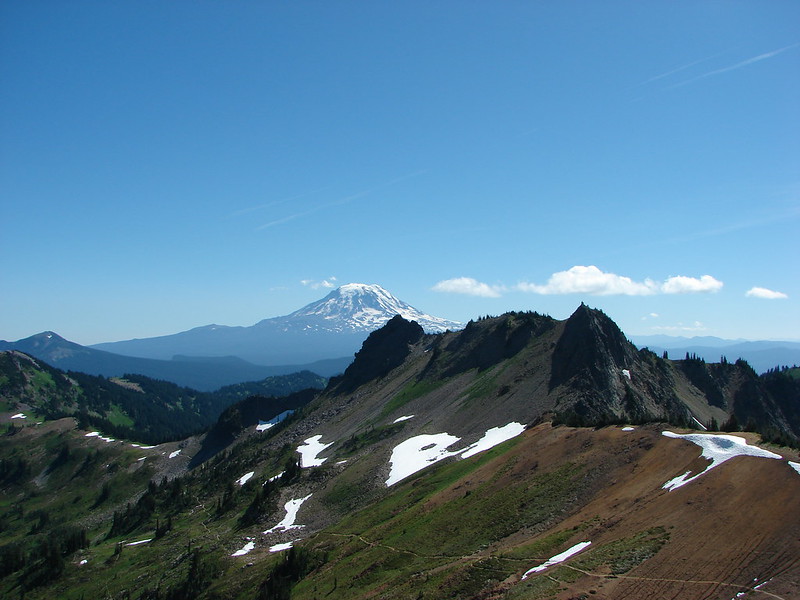
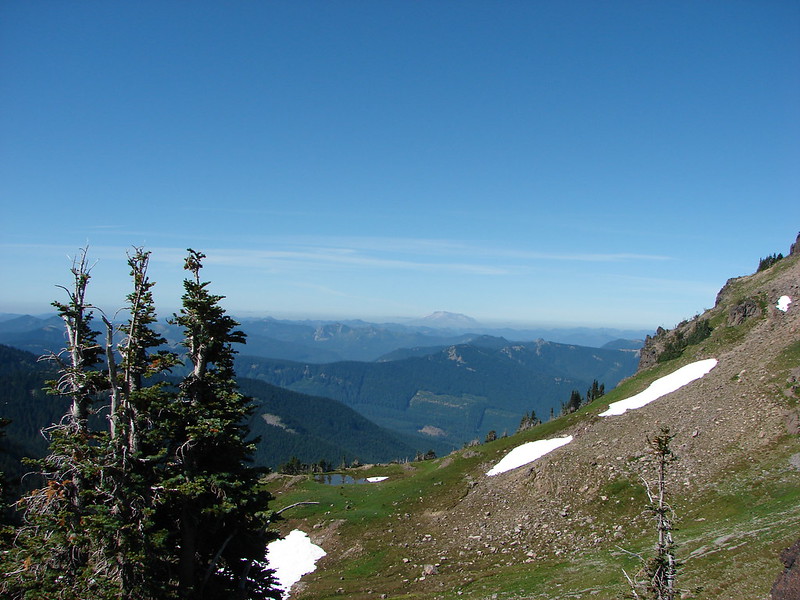
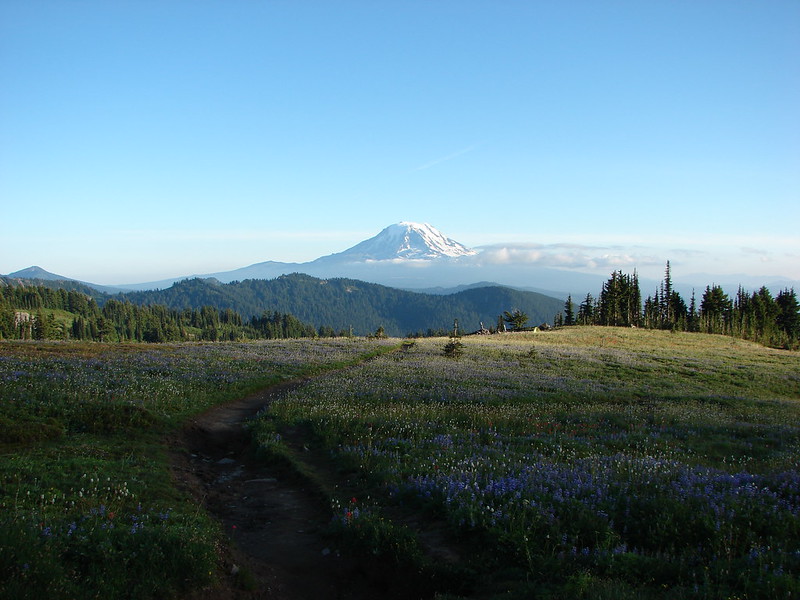
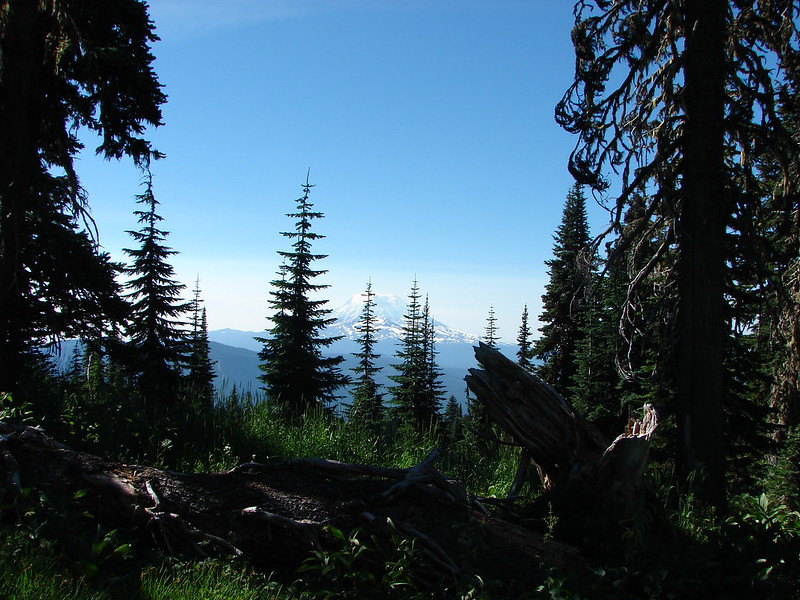
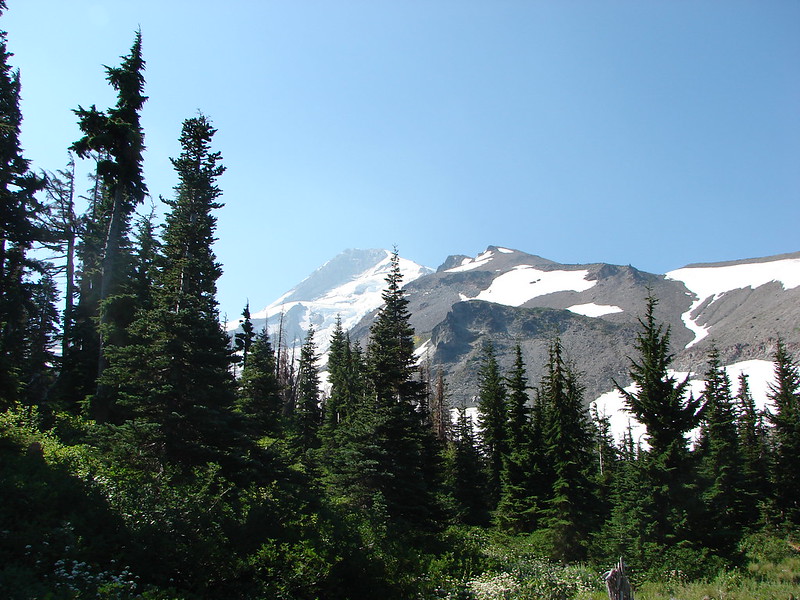
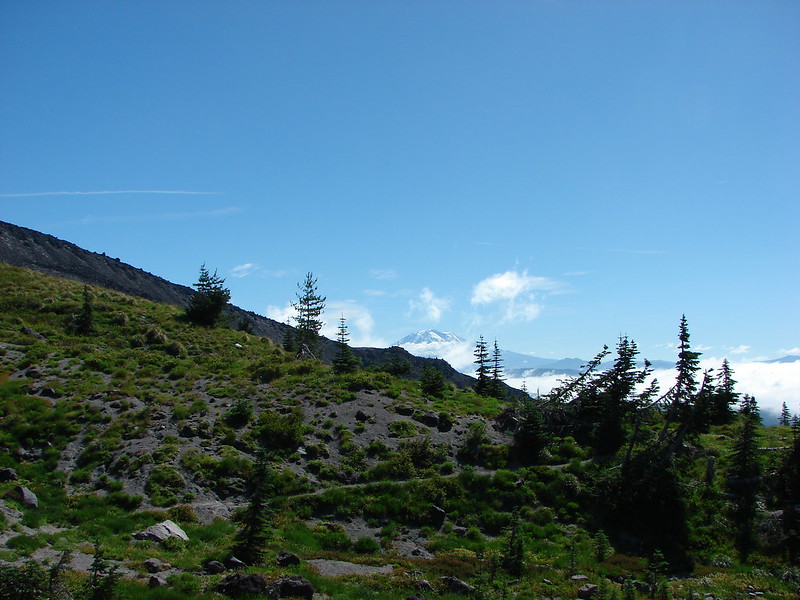
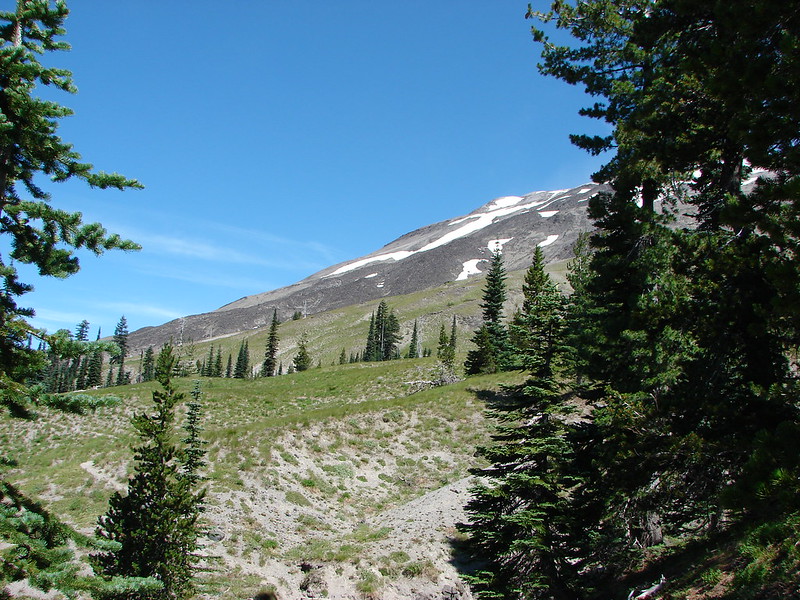
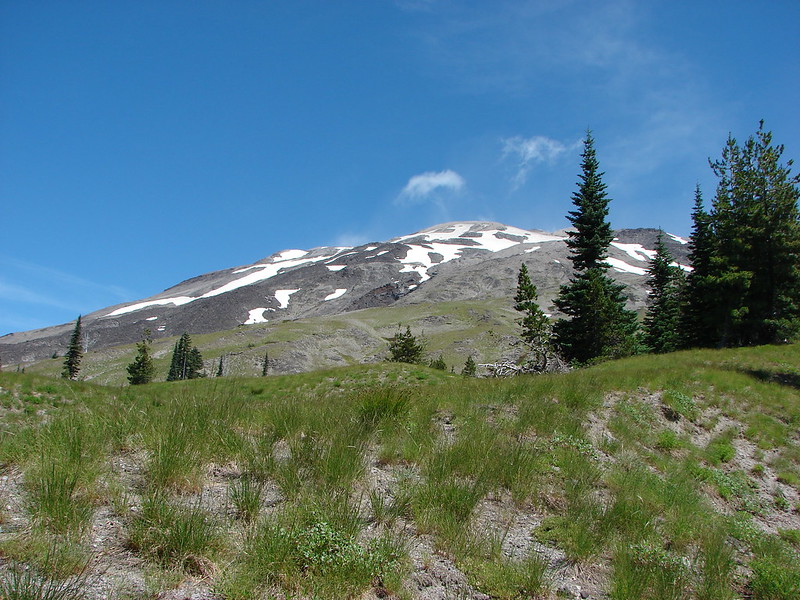
After setting up camp we loaded up our daypacks and headed back to the Snowgrass Trail and climbed to the Pacific Crest Trail. The scenery just kept getting better as we approached the PCT. Mt. Adams was standing tall to the SE, Mt. St. Helens sat in the distance to the SW and Old Snowy Mountain & Ives Peak lay dead ahead.

DSC02641

DSC02664

DSC02642

DSC02647

DSC02668

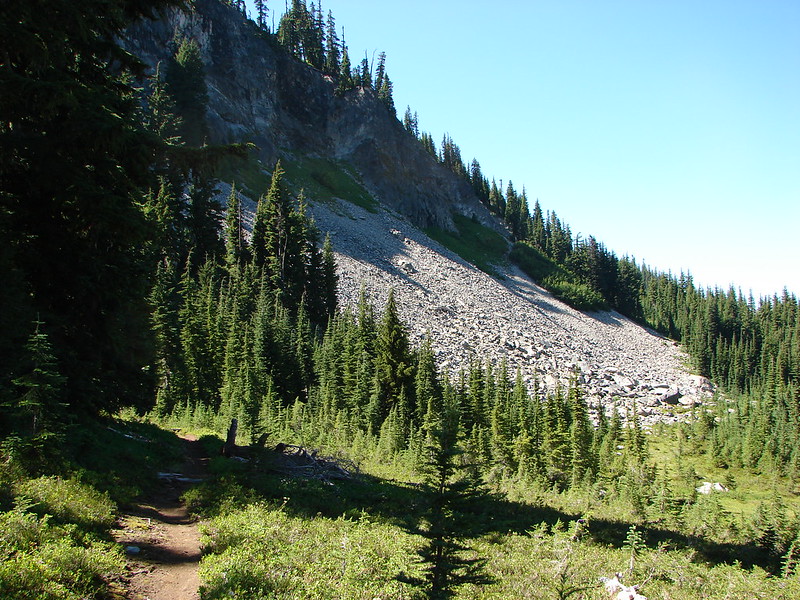
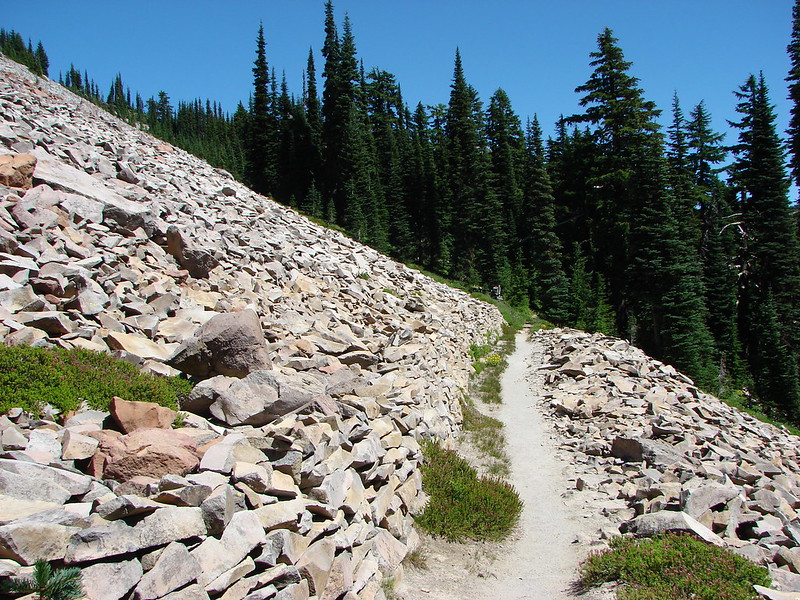
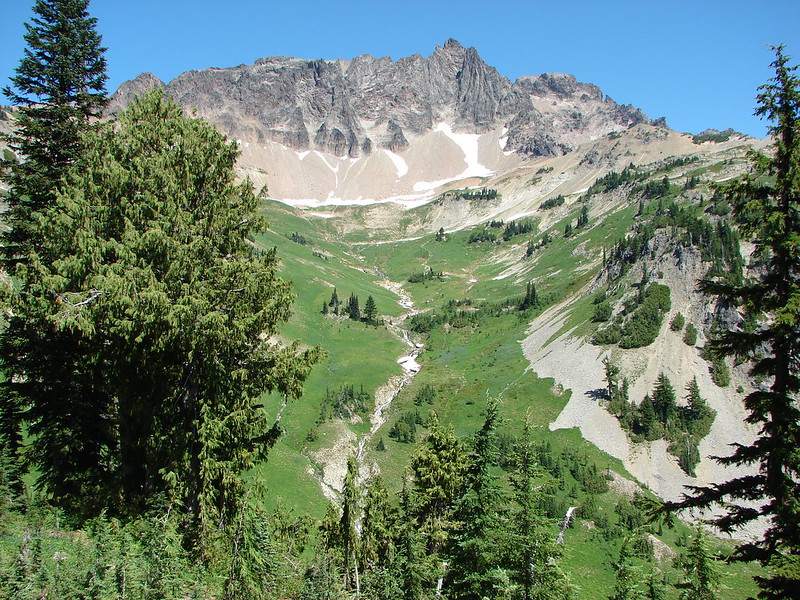
We turned right (south) on the PCT and headed toward the Cispus Basin planning to go as far as Cispus Pass before turning around. After a mile the Bypass Trail 97 joined the PCT which we would take on the way back. After crossing a large rock slide we got our first view across the Cispus Basin to Mt. Adams peaking over the far ridge.

DSC02722

DSC02729

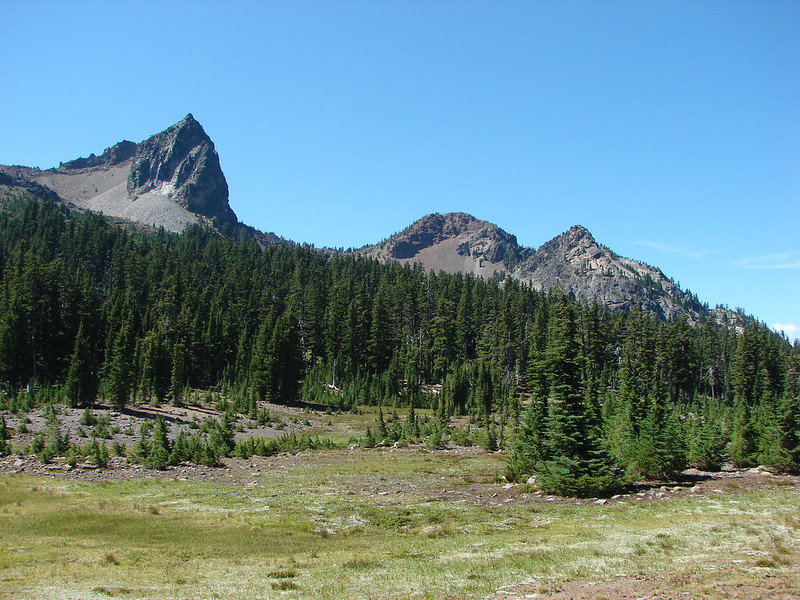
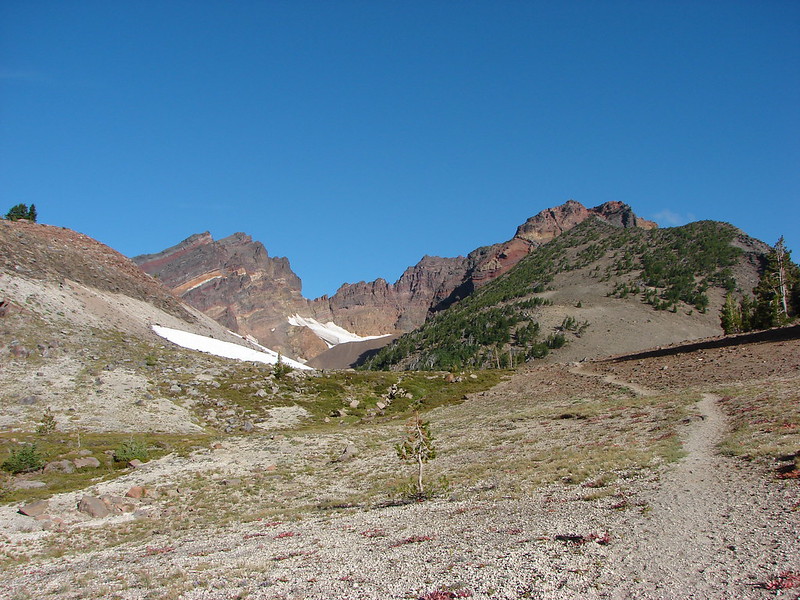
The Cispus River begins at the top of the basin underneath more jagged peaks of the Goat Rocks.

DSC02728

DSC02750

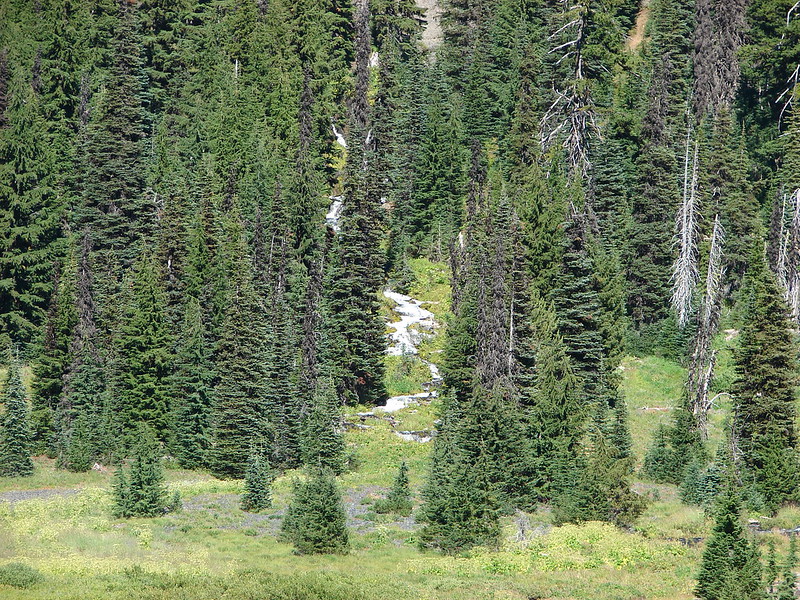
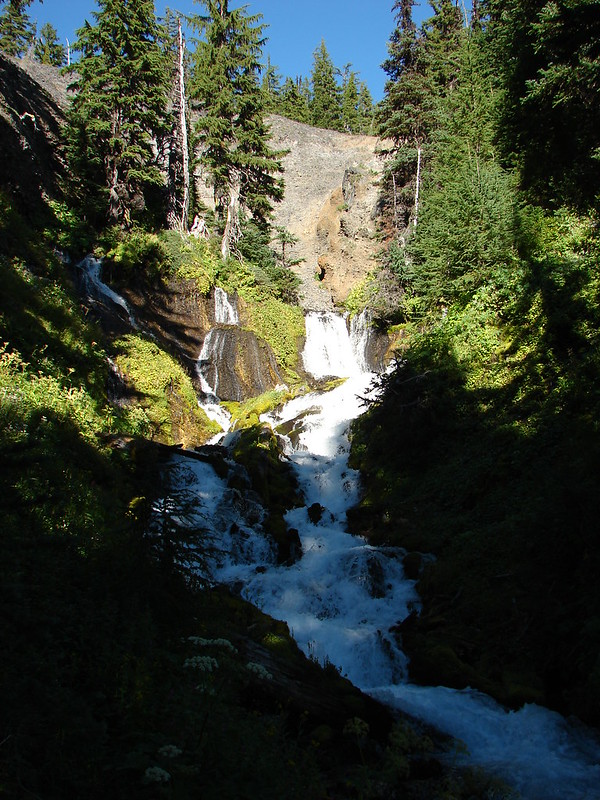
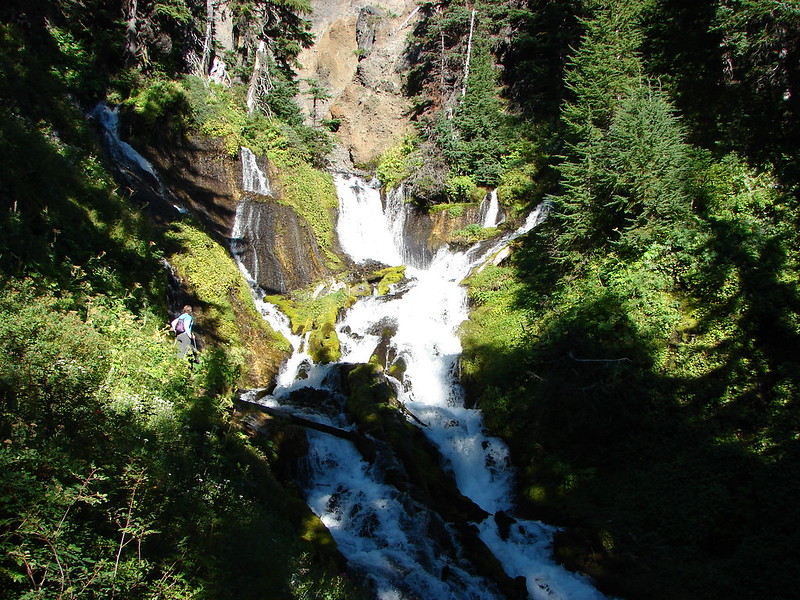
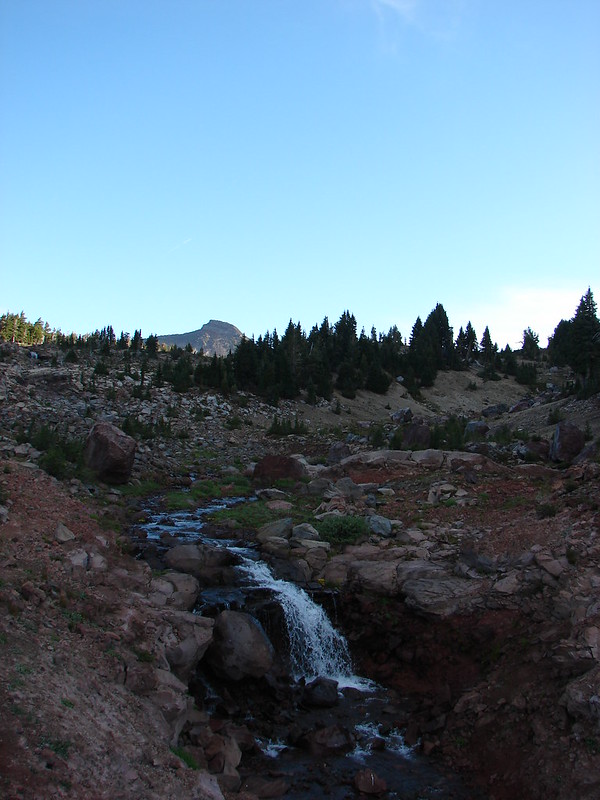
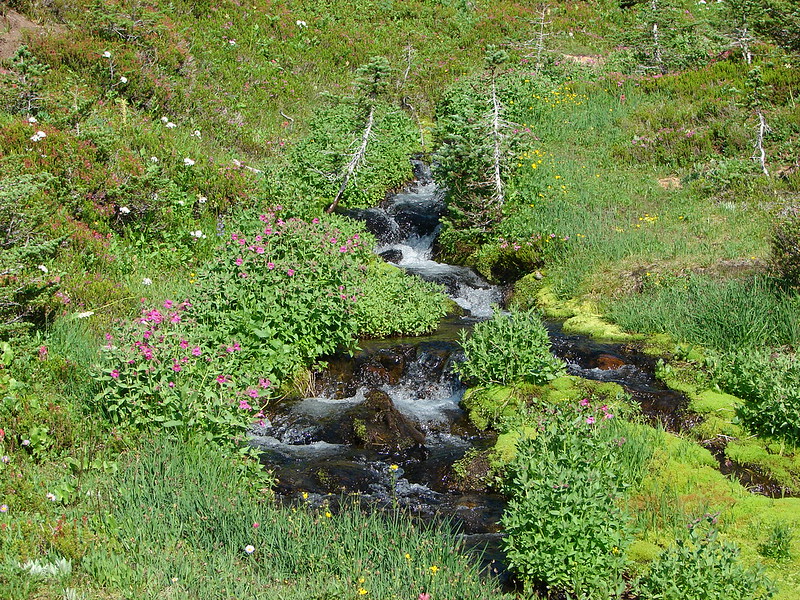
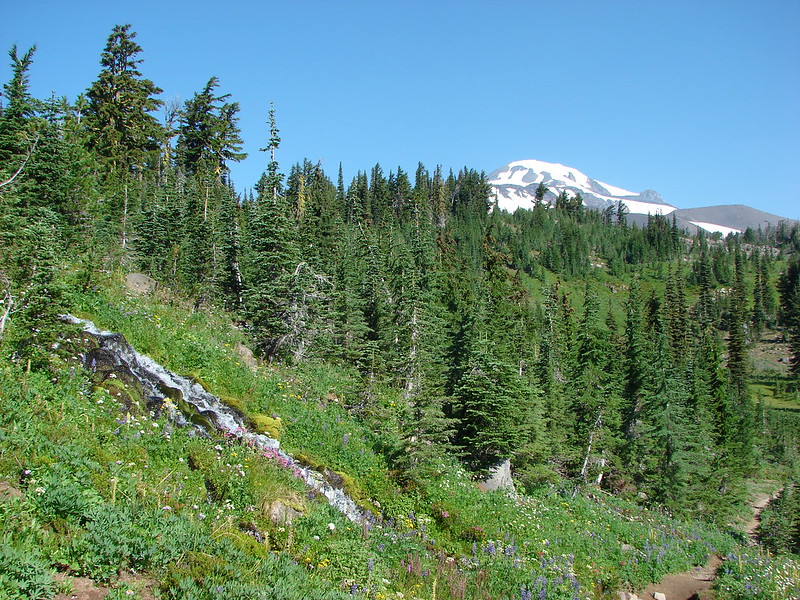
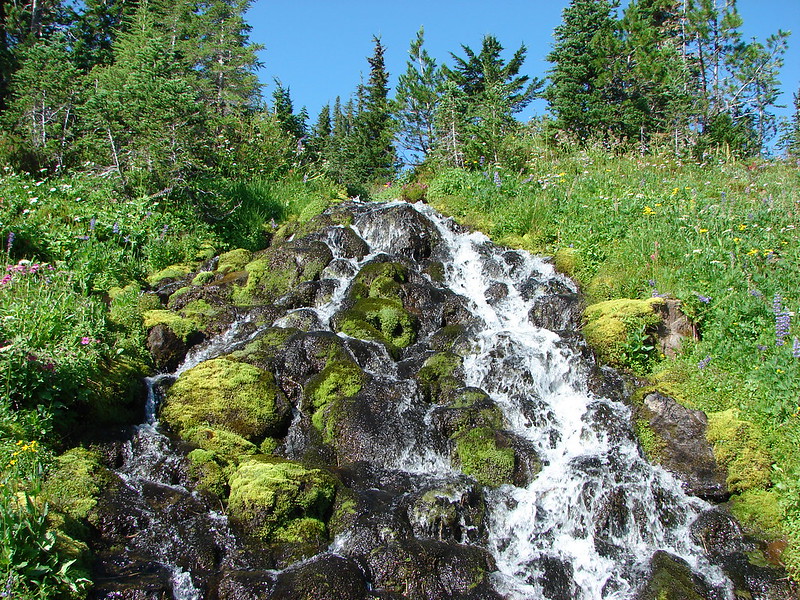
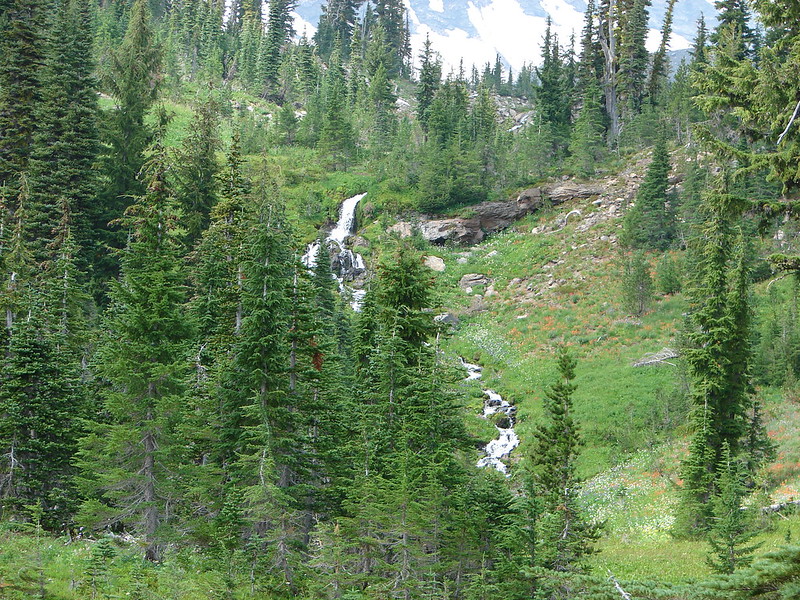
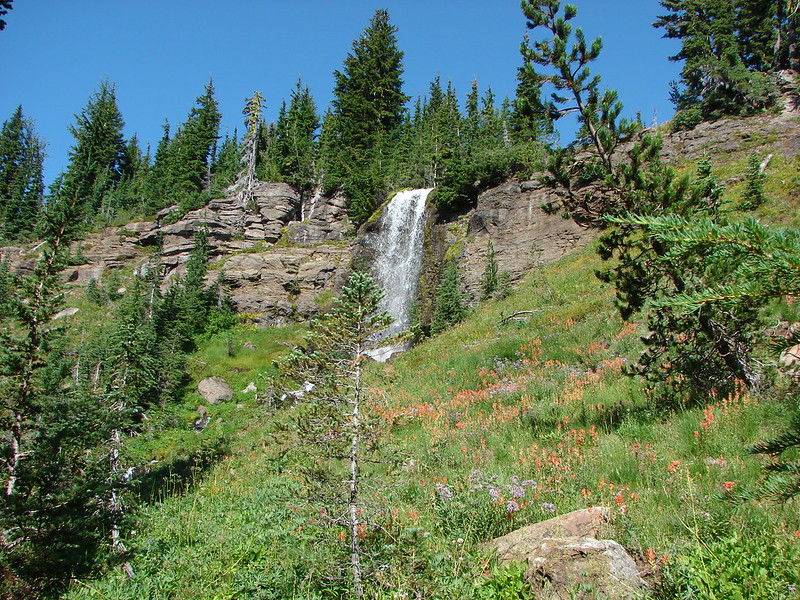
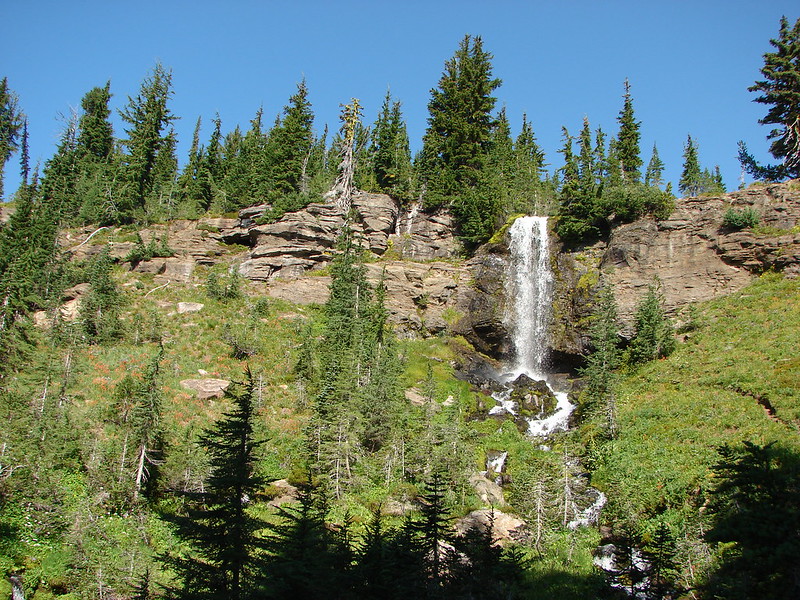
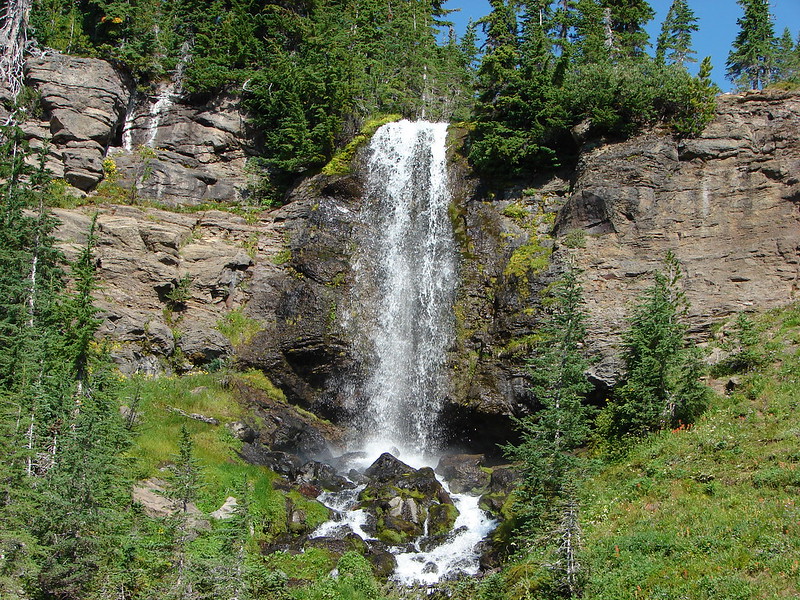
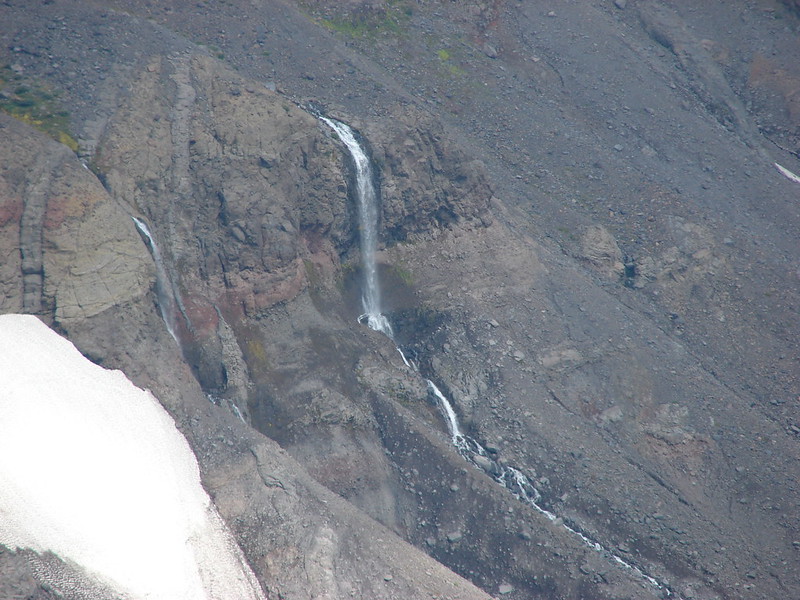
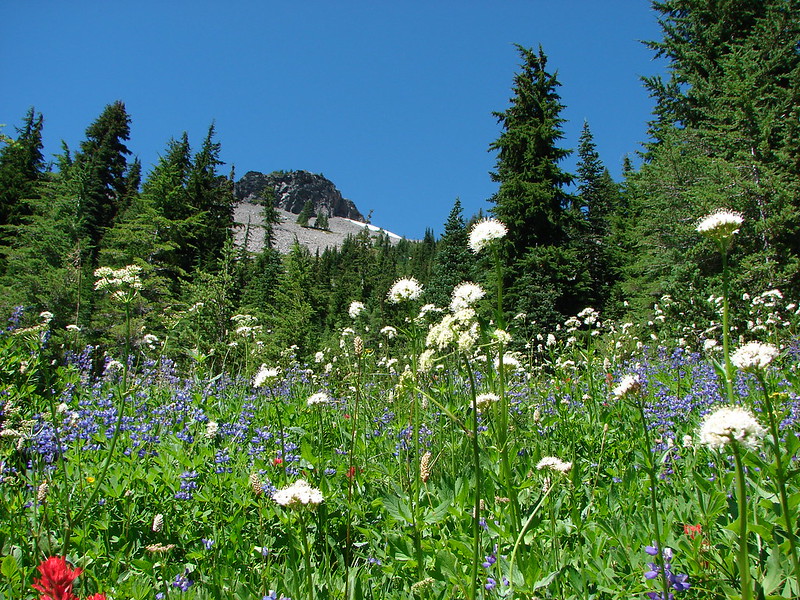
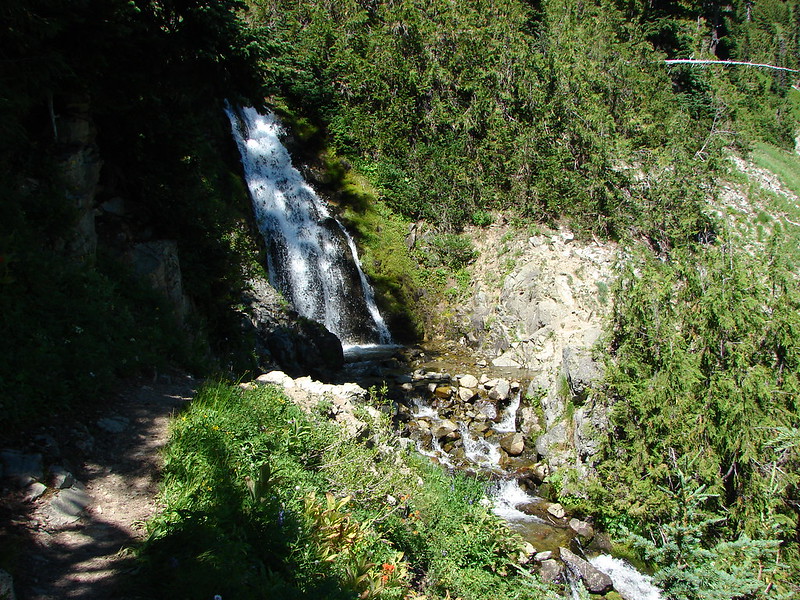
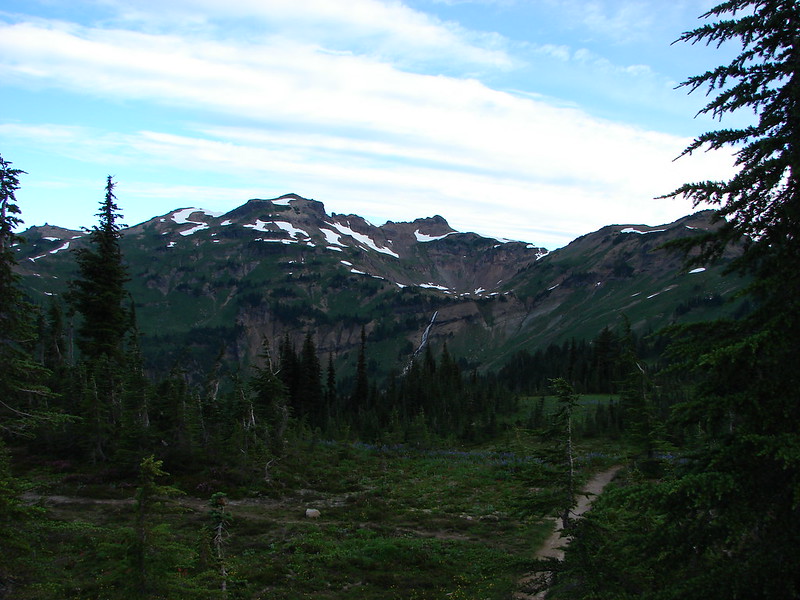
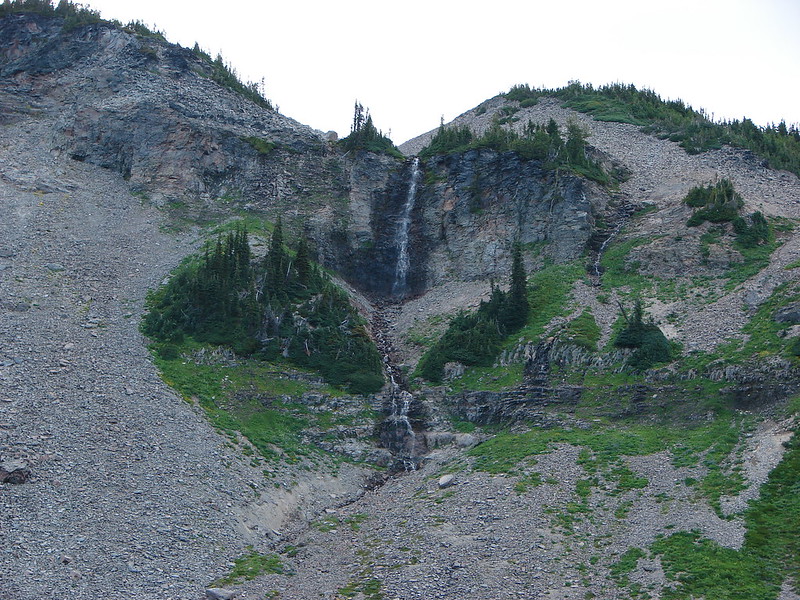
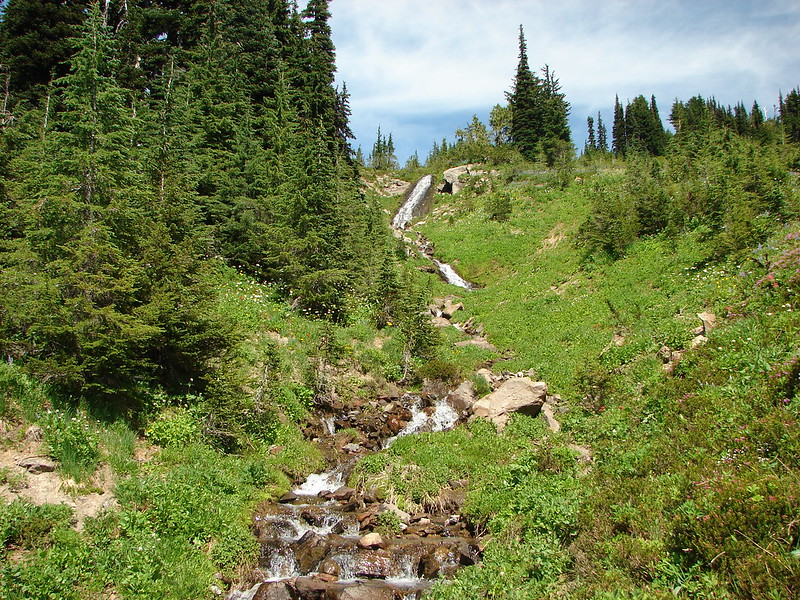
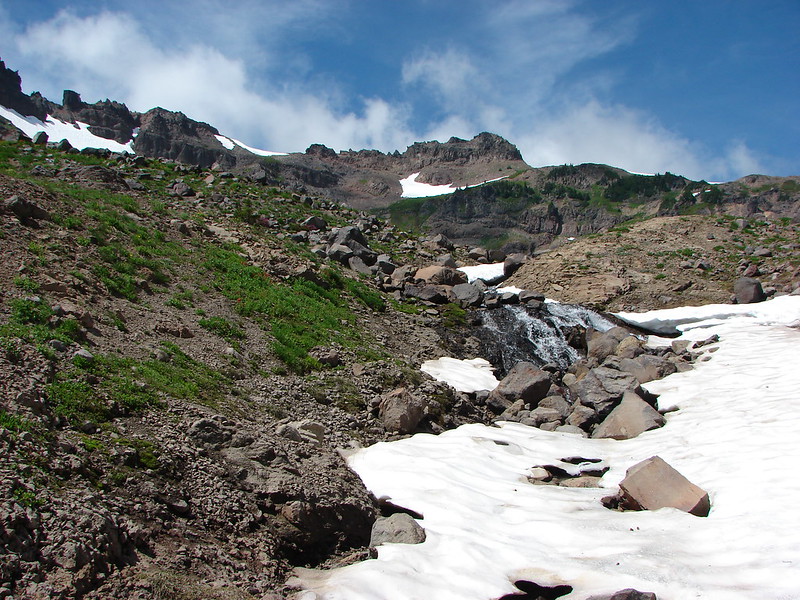
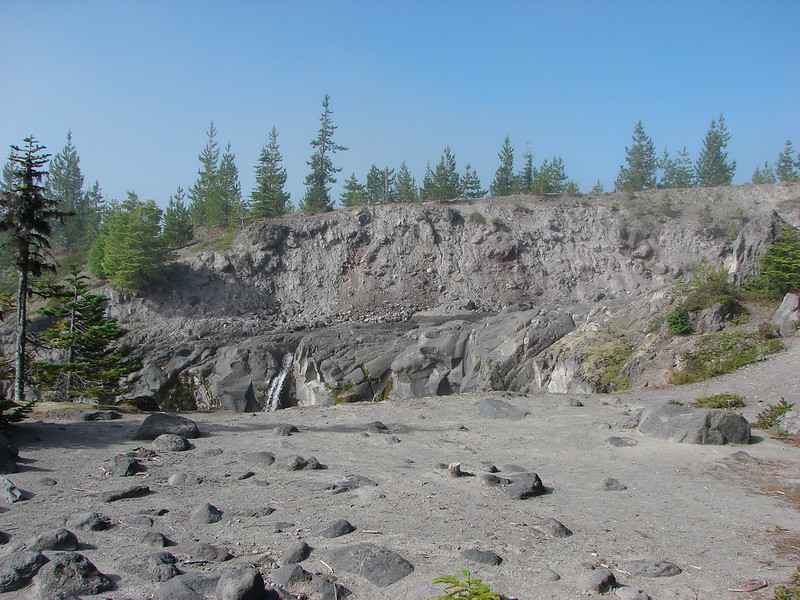
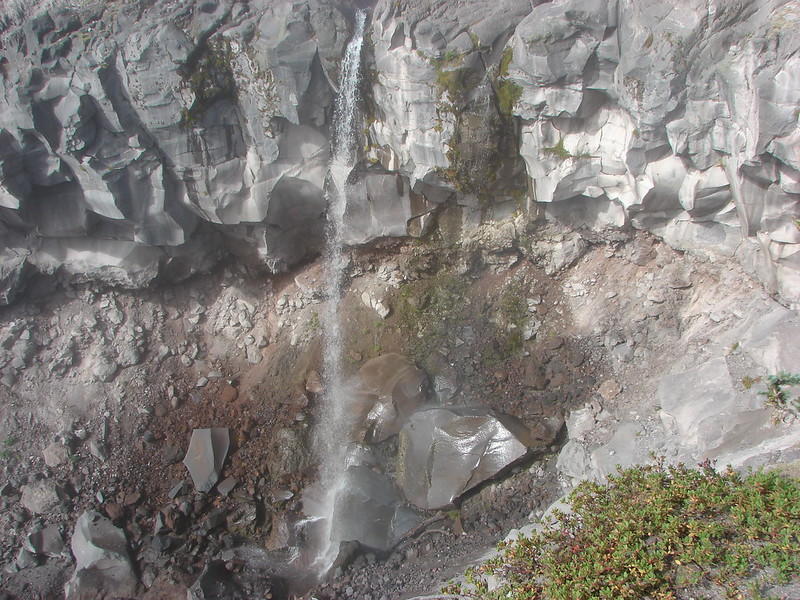
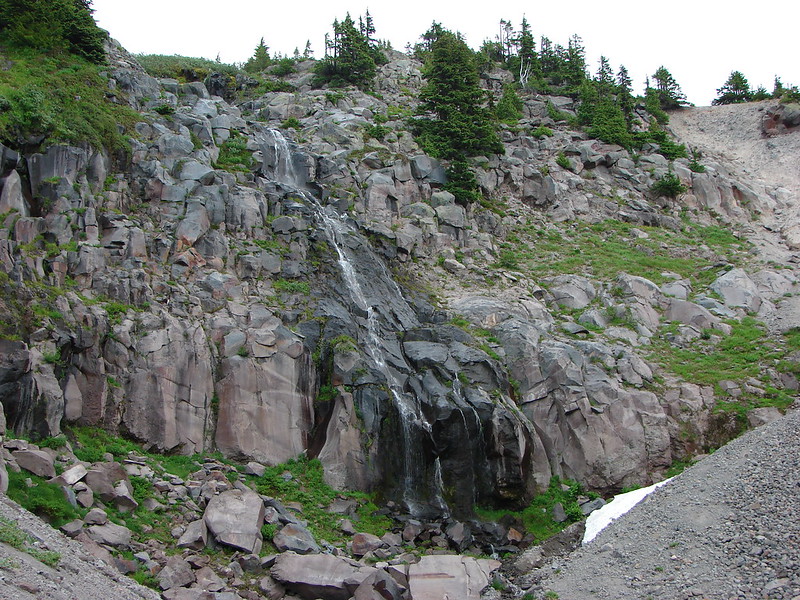
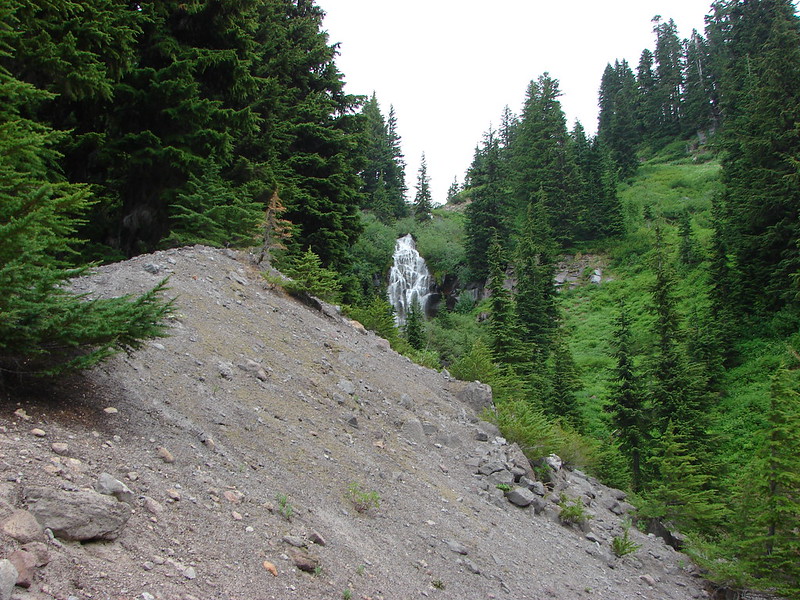
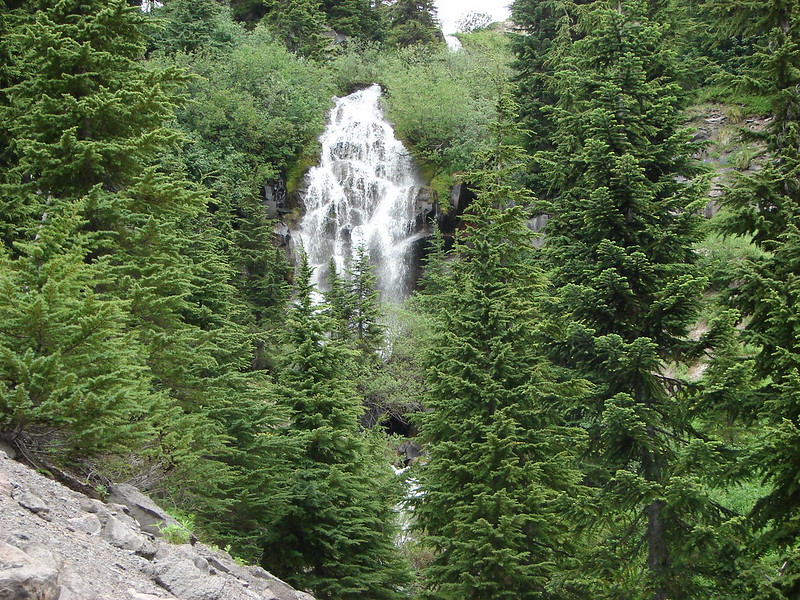
There had been wildflowers all along the trail but as we entered the basin they increased. Adding to the scenery was a waterfall that the PCT passed below.

DSC02740

DSC02757

DSC02786

The trail continued around the basin crossing the Cispus River and then heading up the eastern side of the basin.

DSC02789

DSC02804

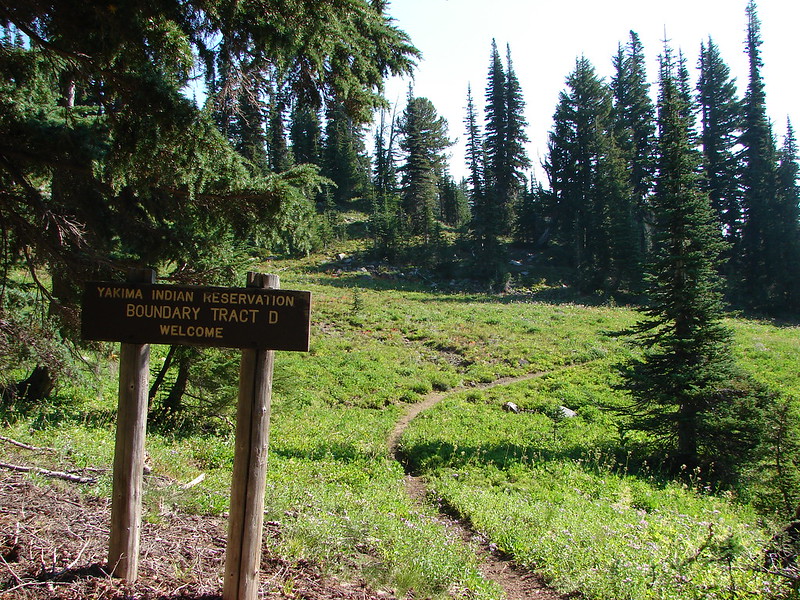
At the top of the ridge was Cispus Pass and the border of the Yakima Indian Reservation. The Klickitat River flowed below and Mt. Adams was again visible to the SE.

DSC02825

DSC02828

DSC02835

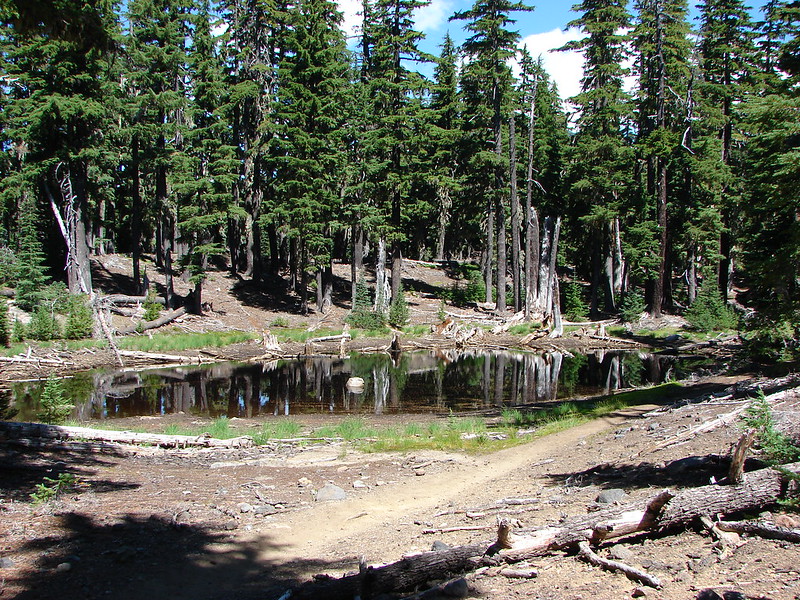
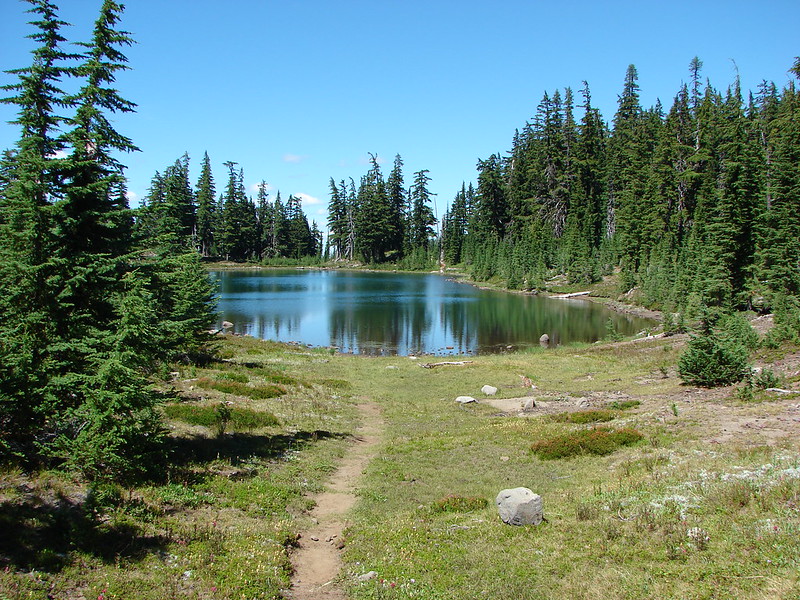
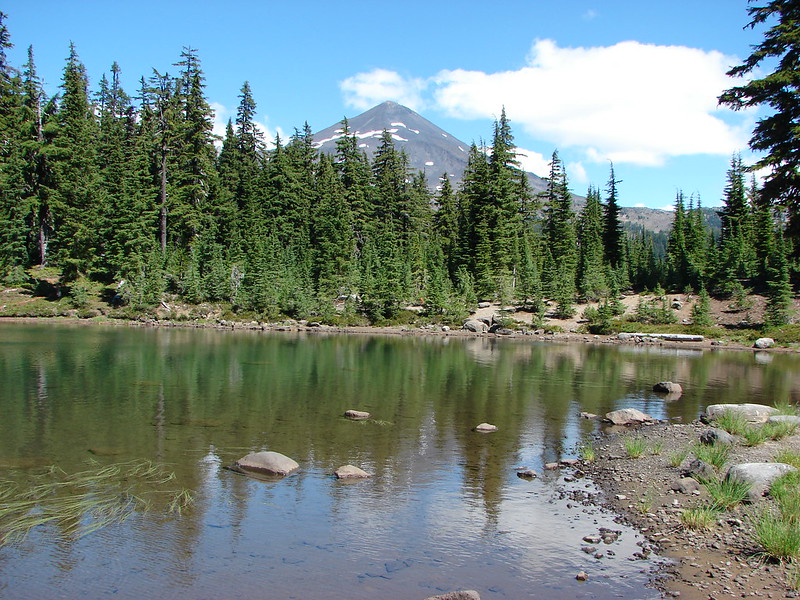
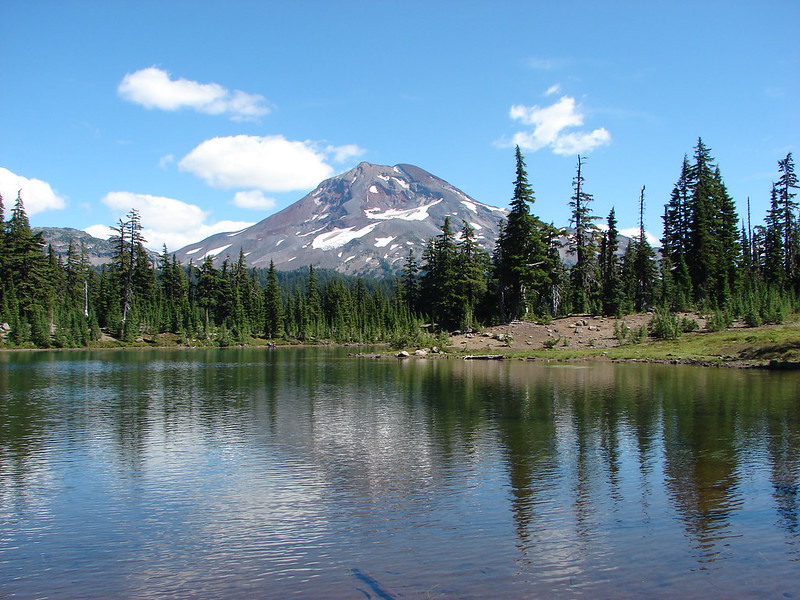
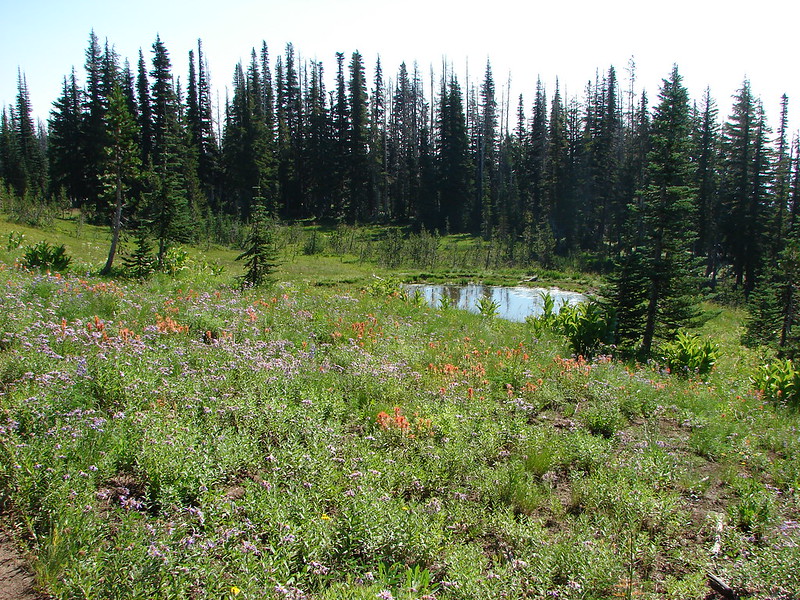
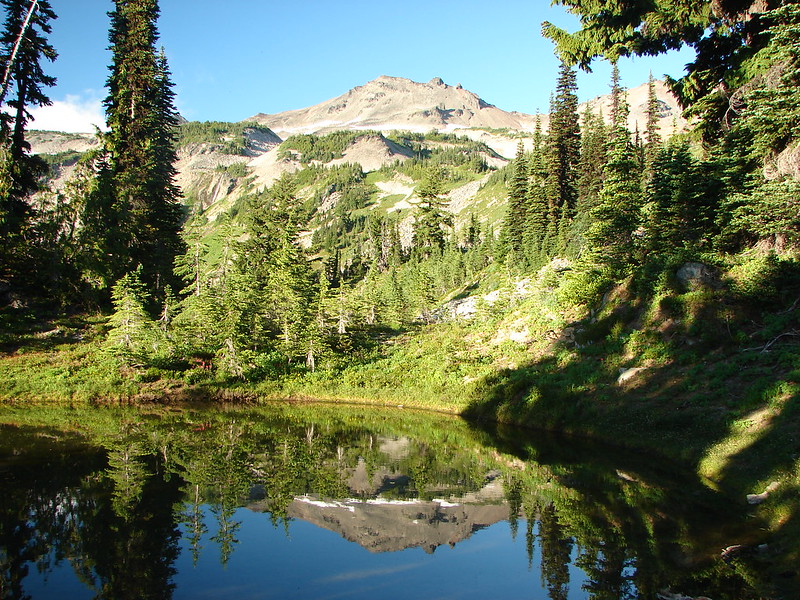
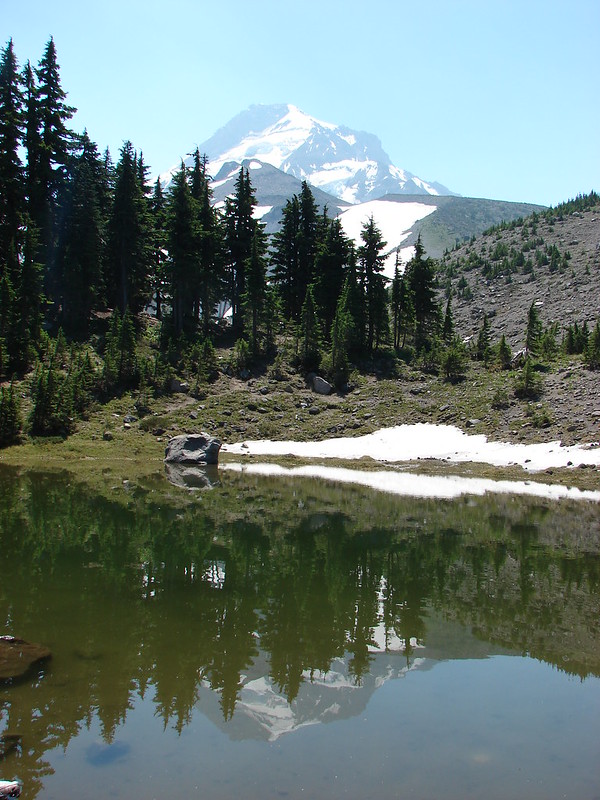
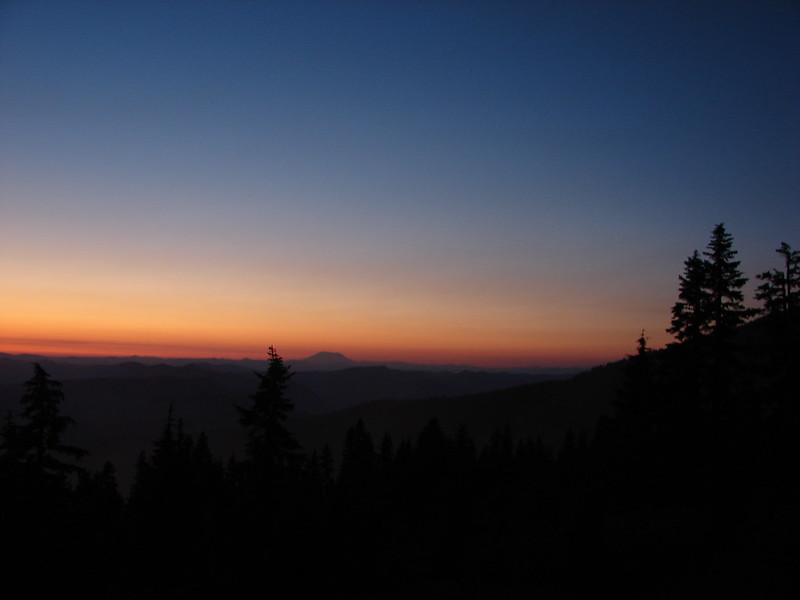
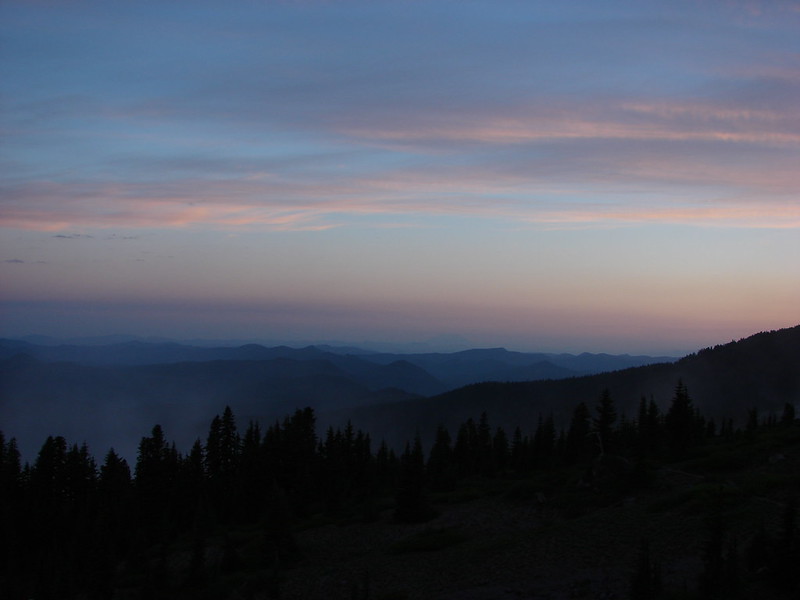
We returned to Alpine via the Bypass Trail 97 and took a short rest before heading back out to catch the sunset. We decided to try heading further out on the Lily Basin Trail since the Sun would be setting over the ridges in that direction. We passed a small pond with a big reflection before finding an unoccupied camp site where we settled in.

DSC02935

DSC02968

DSC02964

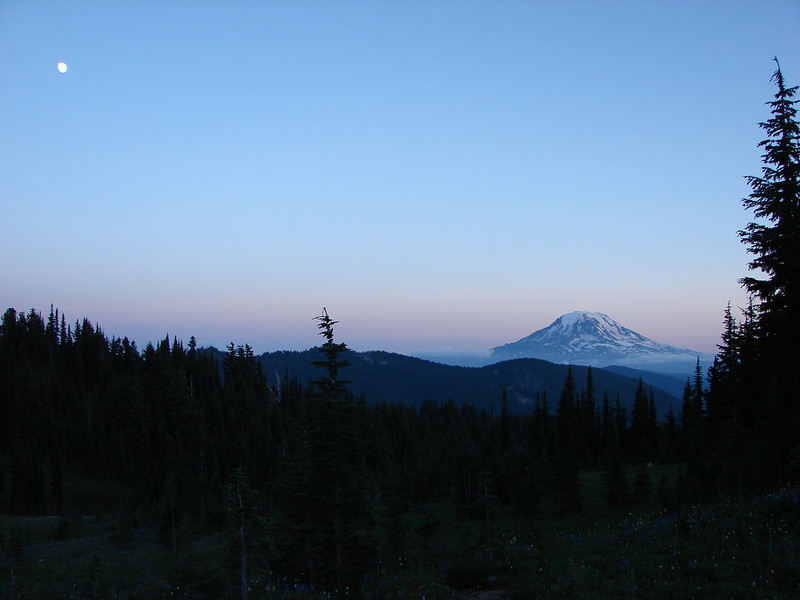
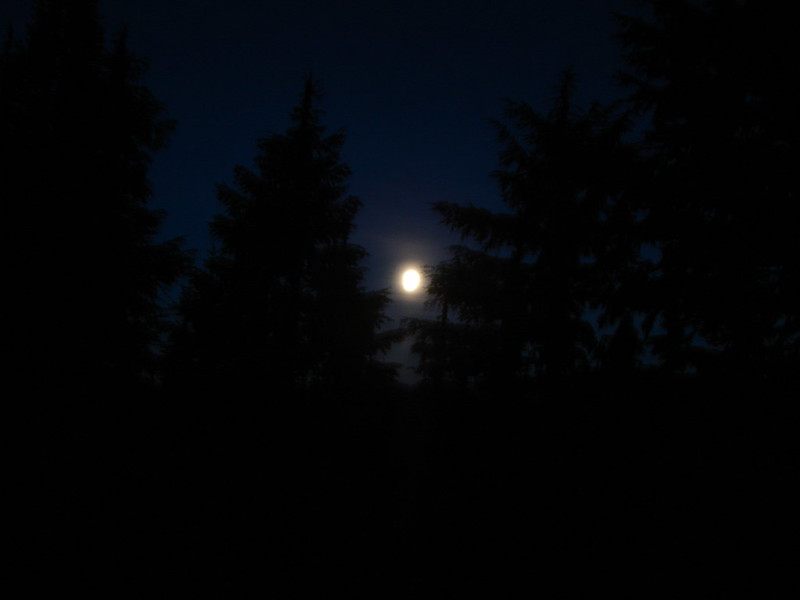
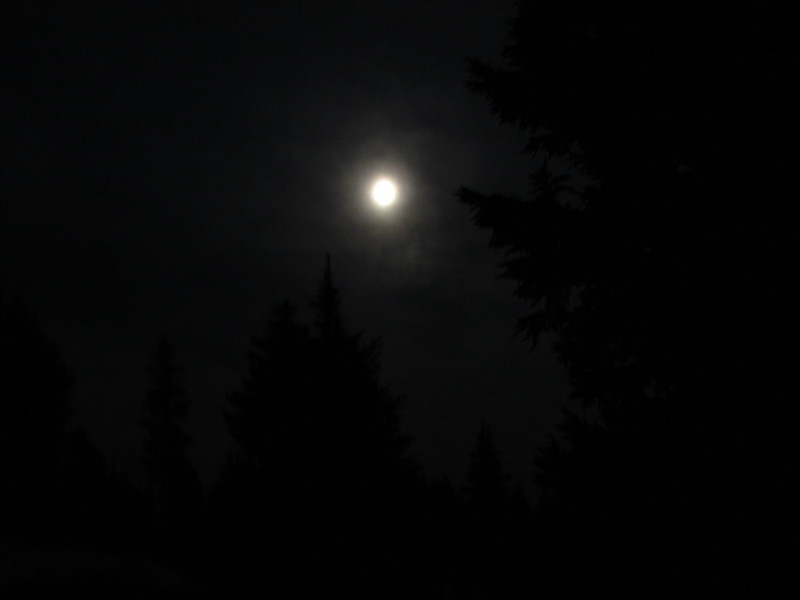
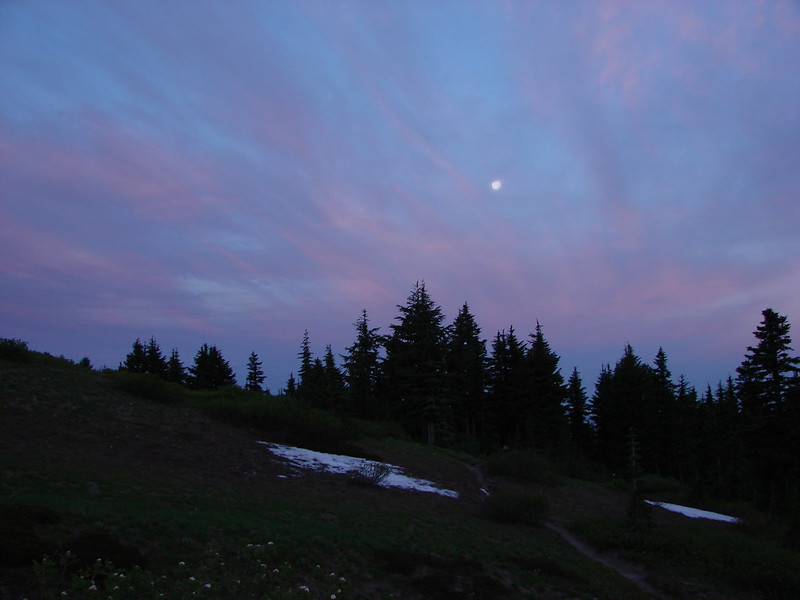
Clouds started to move in and cover some of the higher points though so we headed back toward Alpine to check on Mt. Adams. The Moon had risen over the ridges to the North of Mt. Adams making for a perfect ending to our first day.

DSC03004

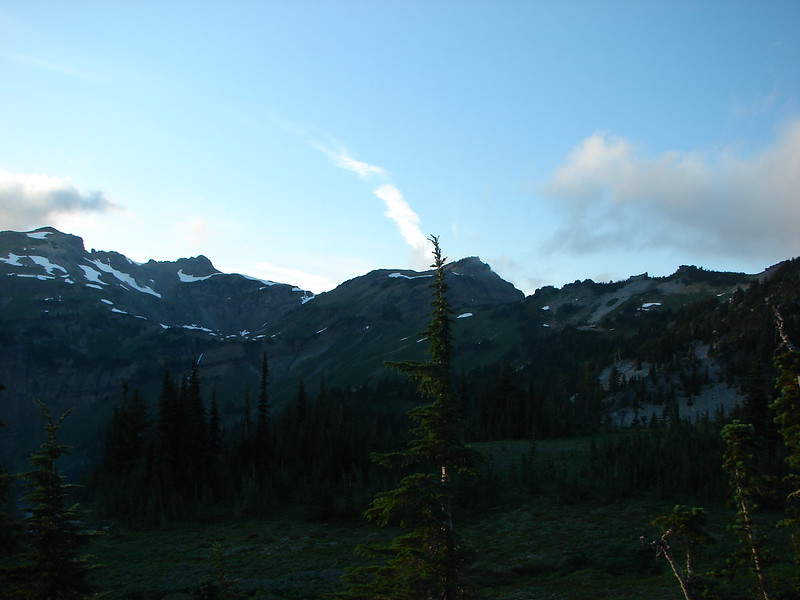
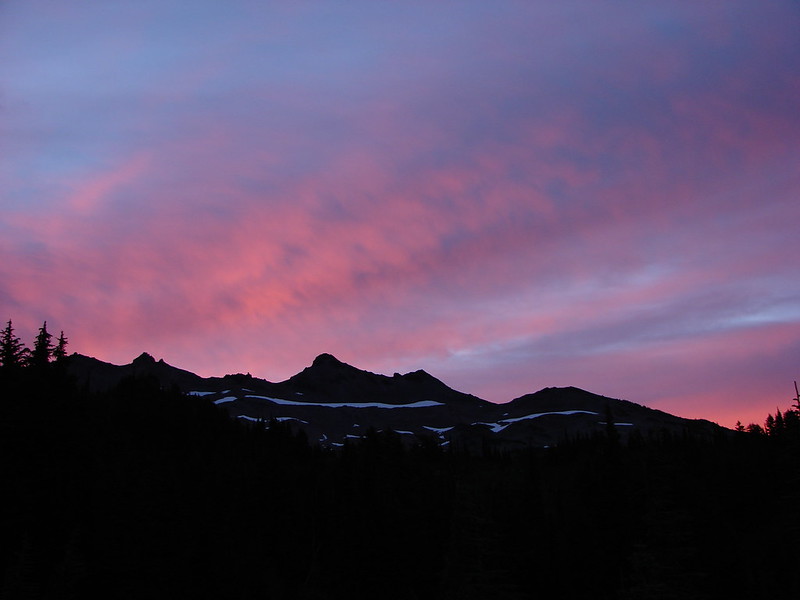
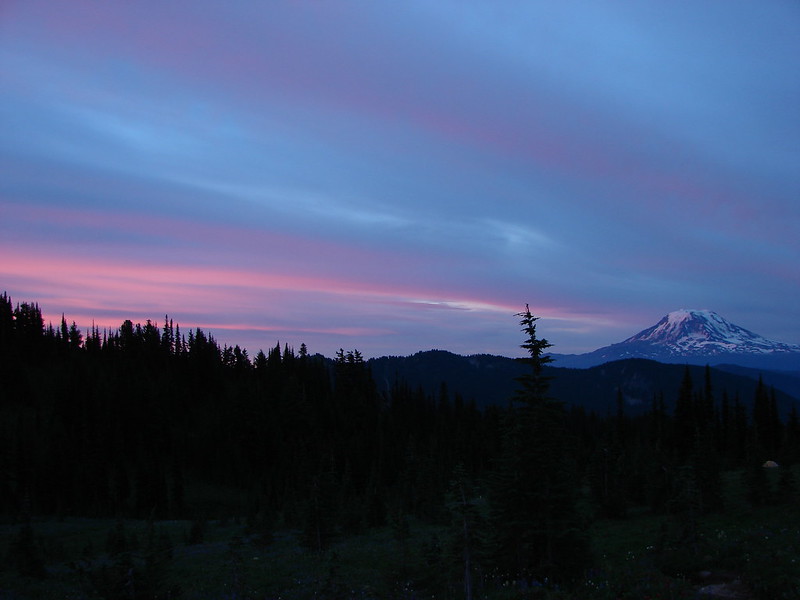
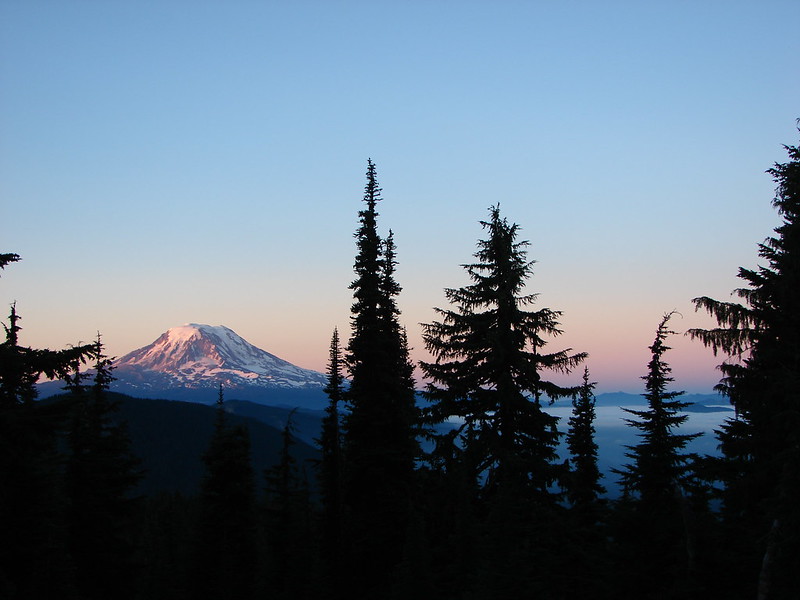
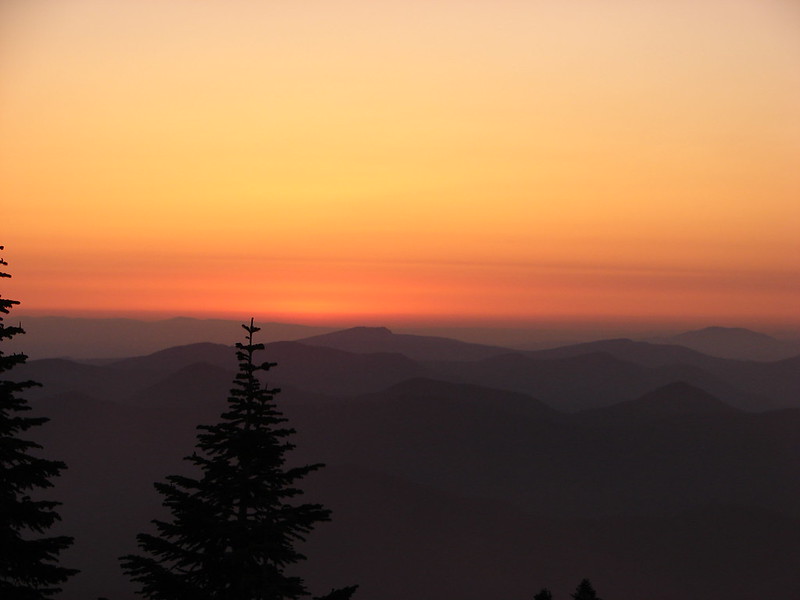
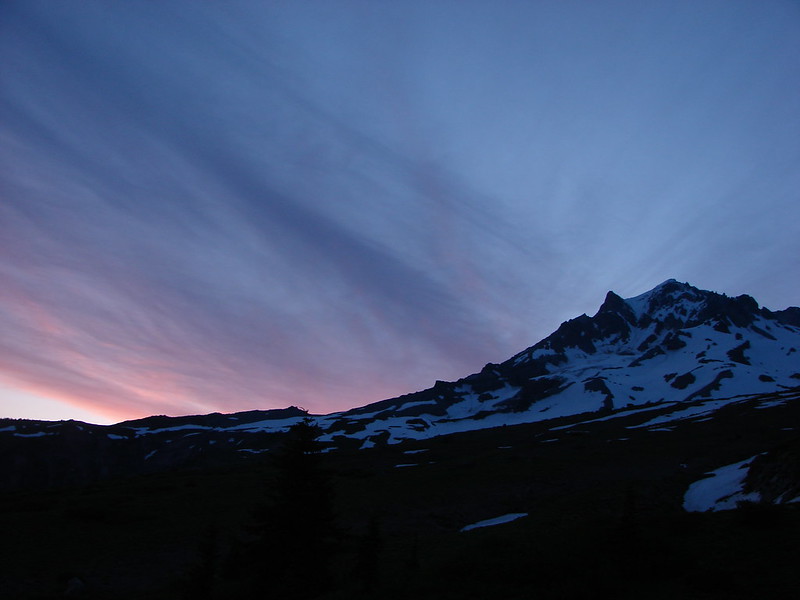
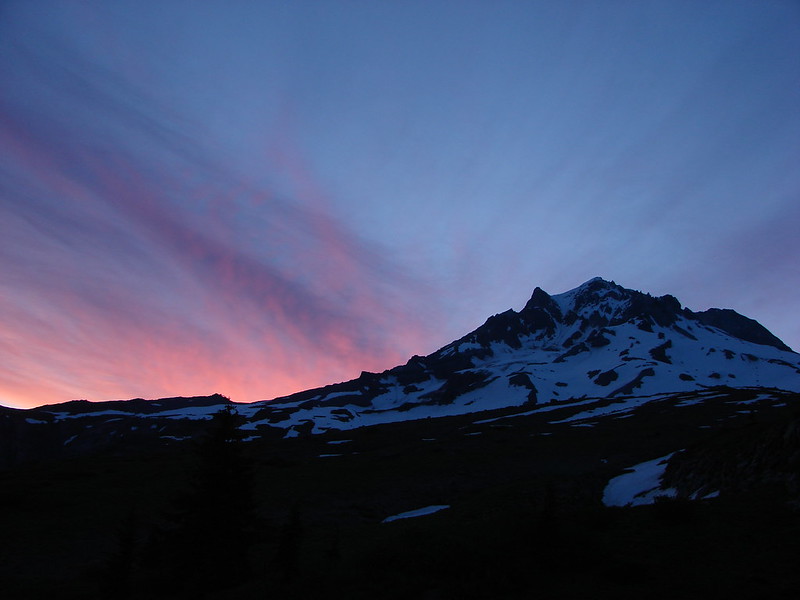
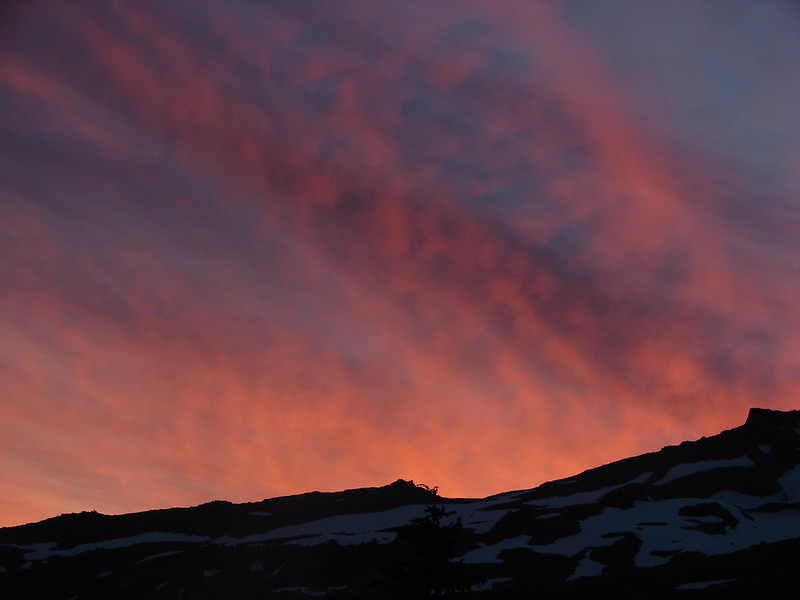
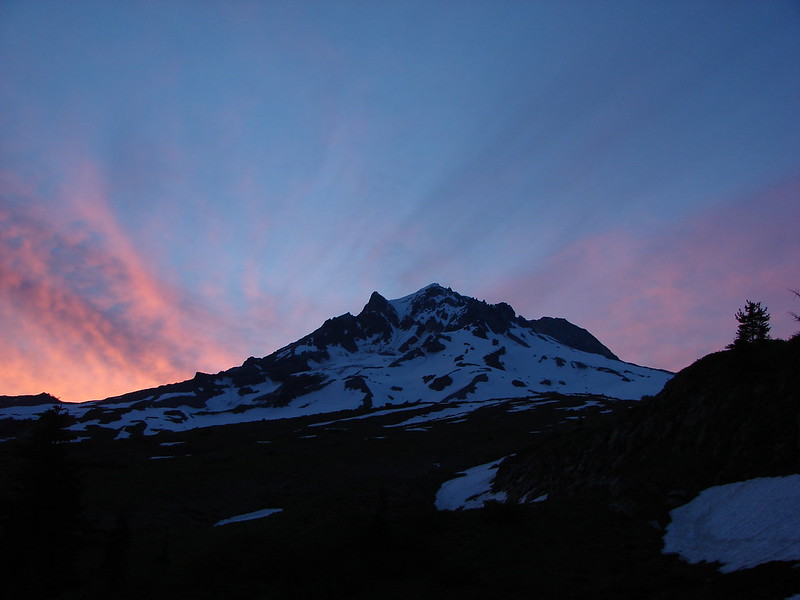
I was up early on day 2 and was able to catch the sunrise which lit up the clouds over Ives Peak and Mt. Adams.

DSC03037

DSC03029

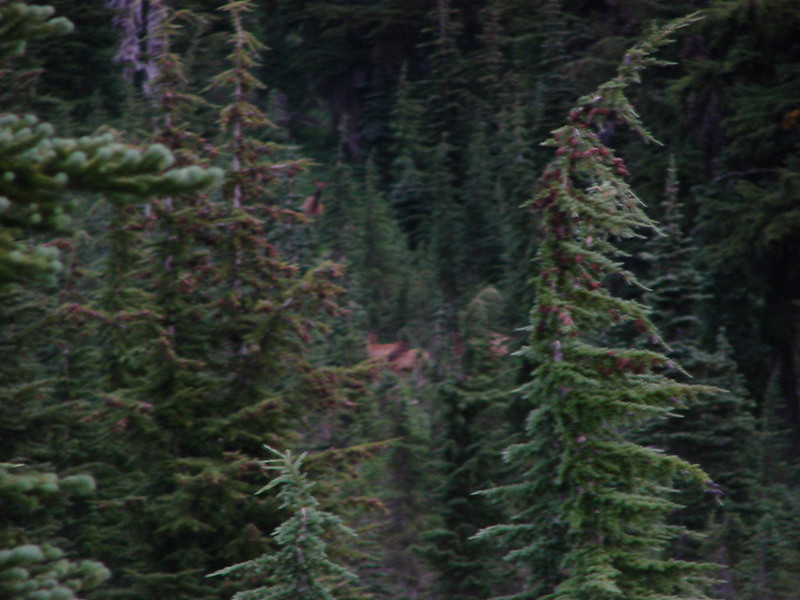
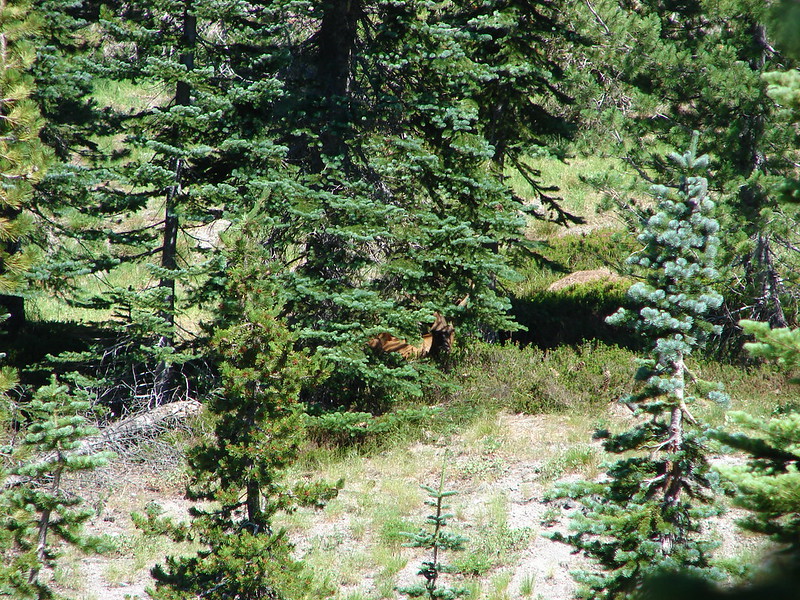
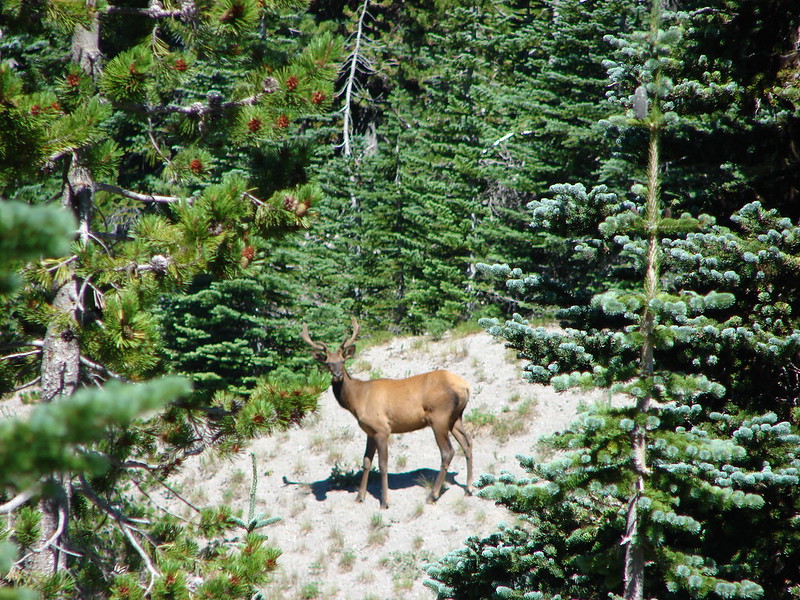
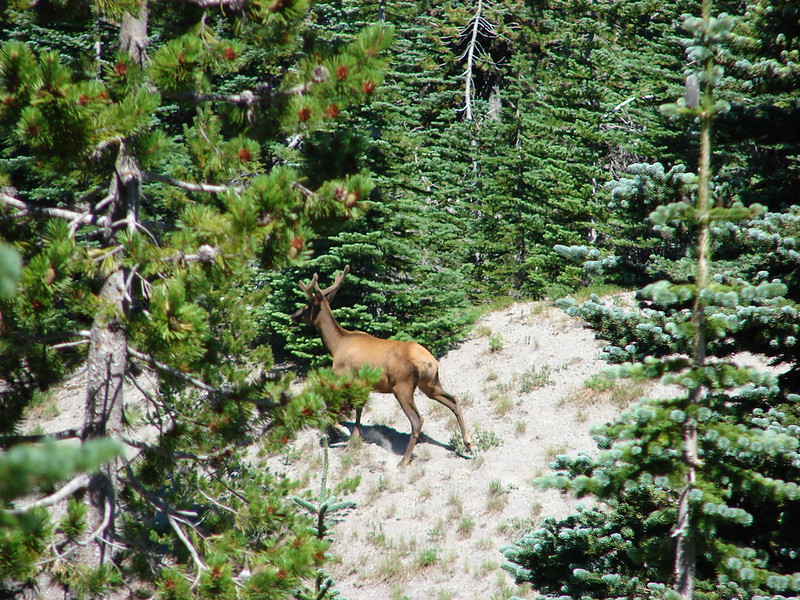
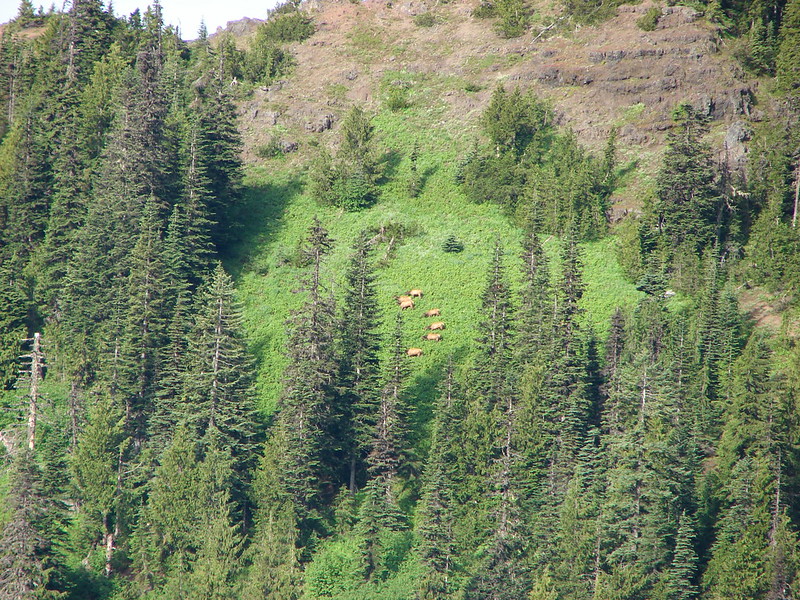
Several elk were passing through the trees on the far side of Alpine but the low amount of light left me with a single picture worthy of a bigfoot sighting. 🙂

DSC03068

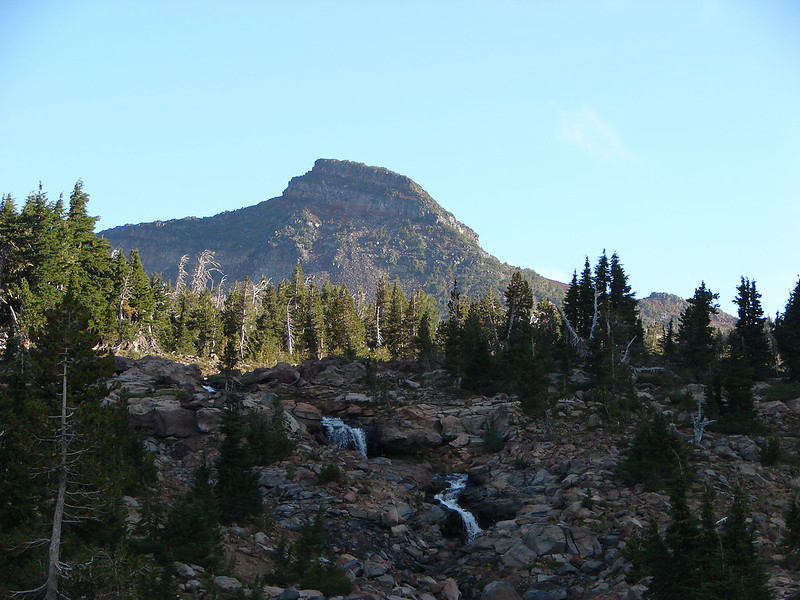
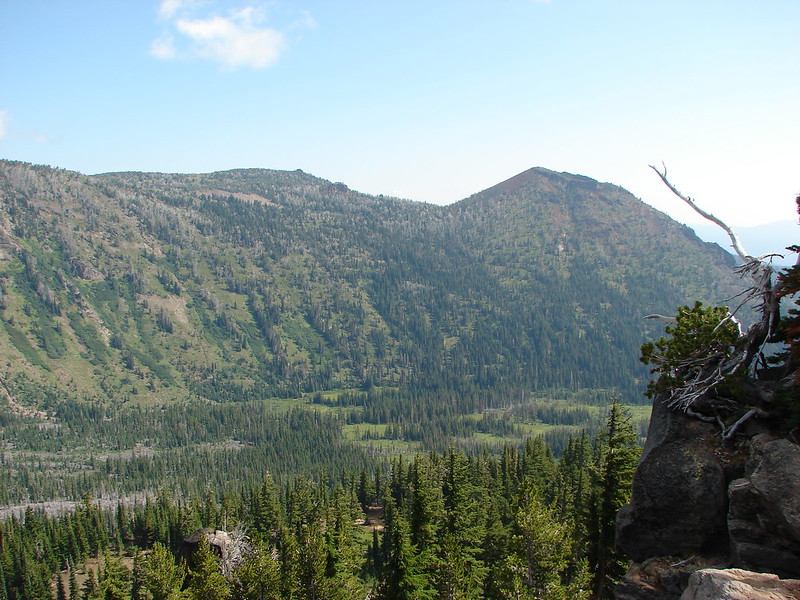
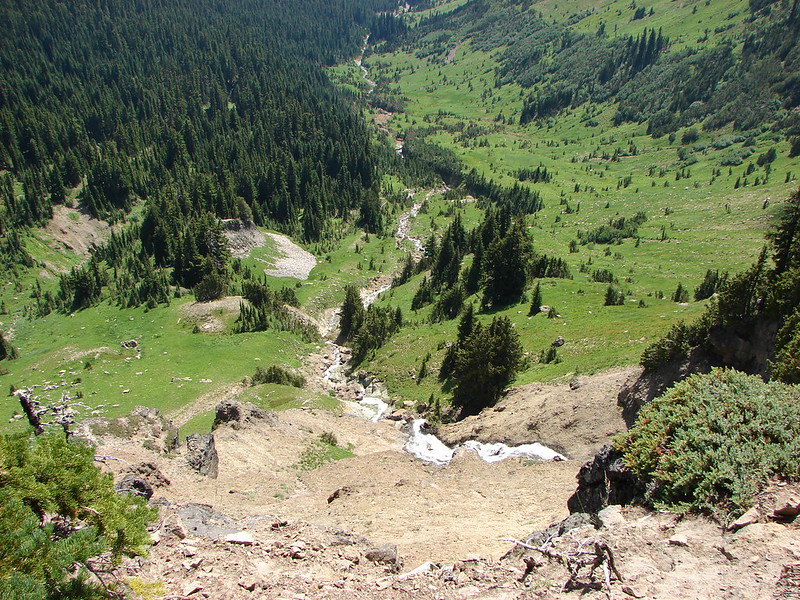
We set off early on the Lily Basin Trail planning on passing Goat Lake then continuing on the trail to Heart Lake with a possible side trip up Hawkeye Point. As we headed in that direction the view of Hawkeye Point and Goat Creek falling from the rocky ledge below Goat Lake was another stunner.

DSC03075

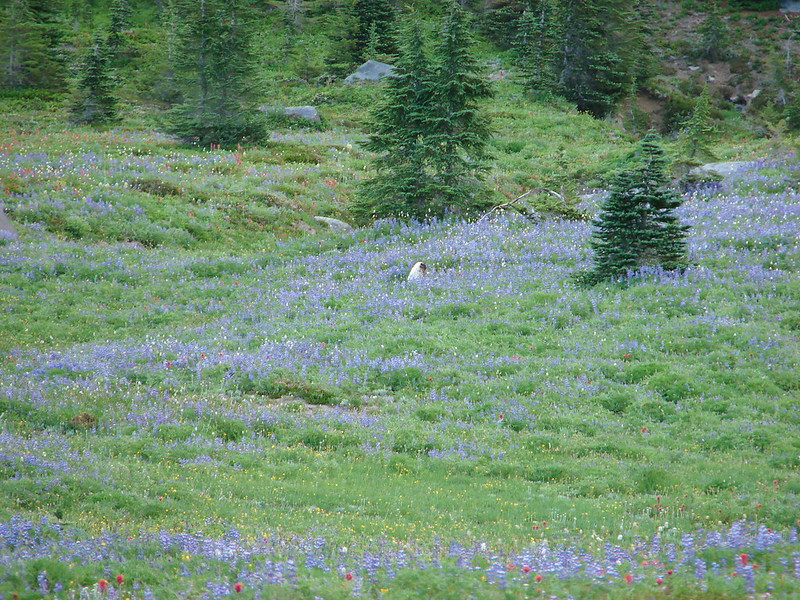
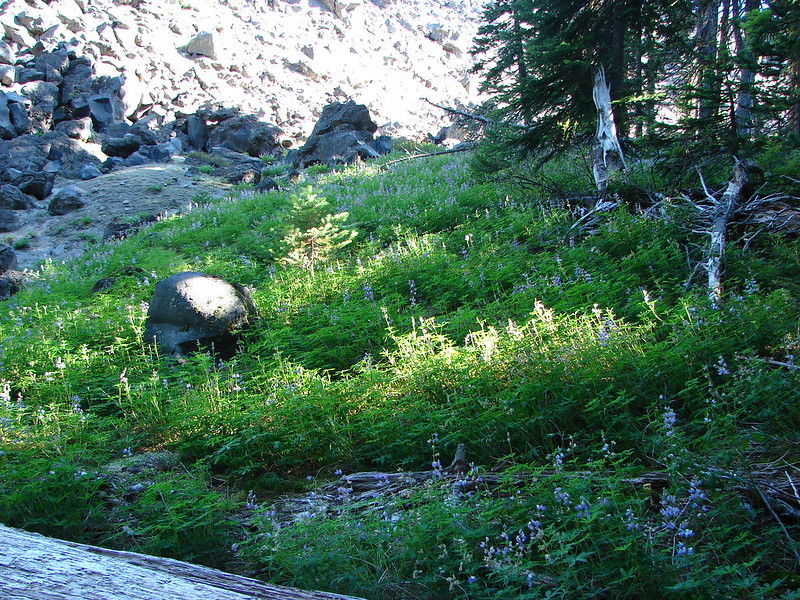
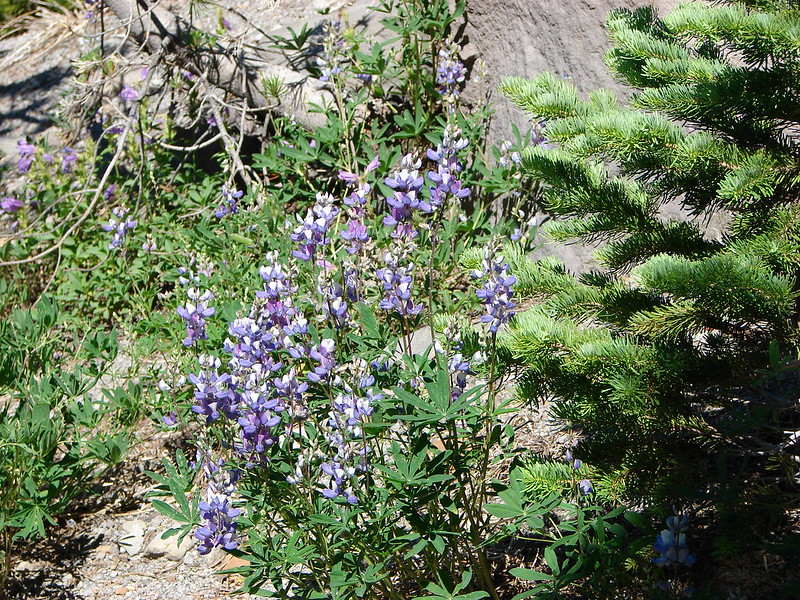
The trail passed through some large wildflower meadows where marmots could be seen scurrying about in the lupine.

DSC03080

DSC03085

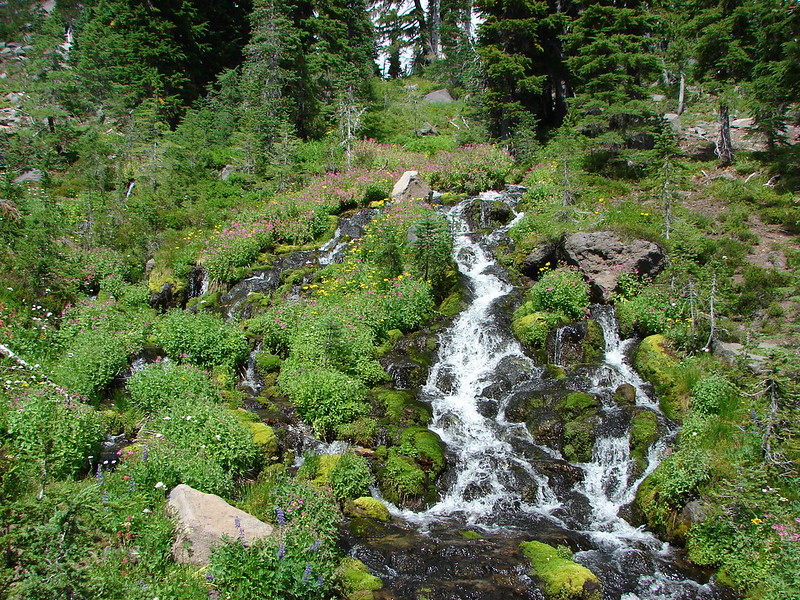
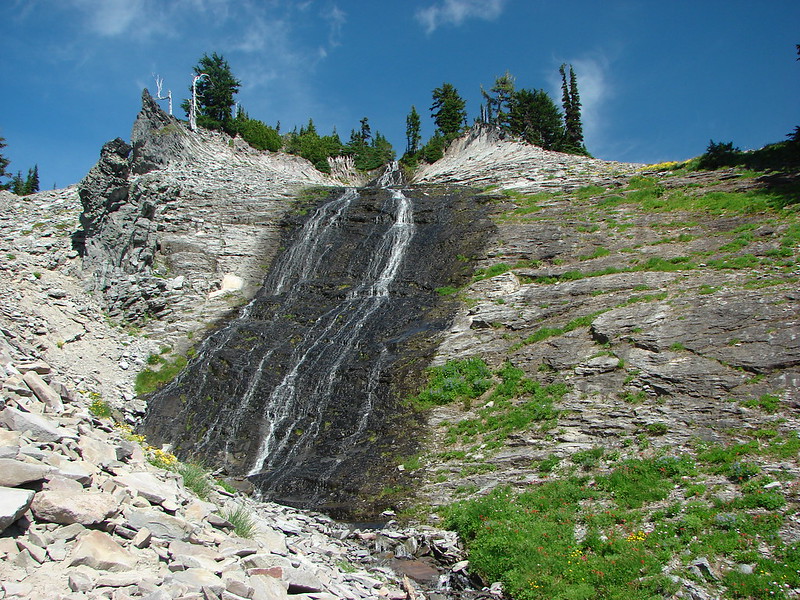
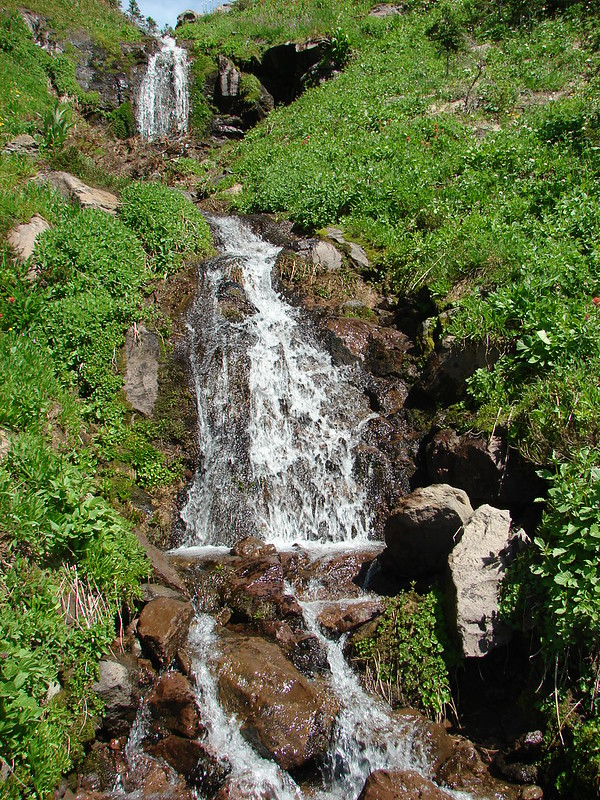
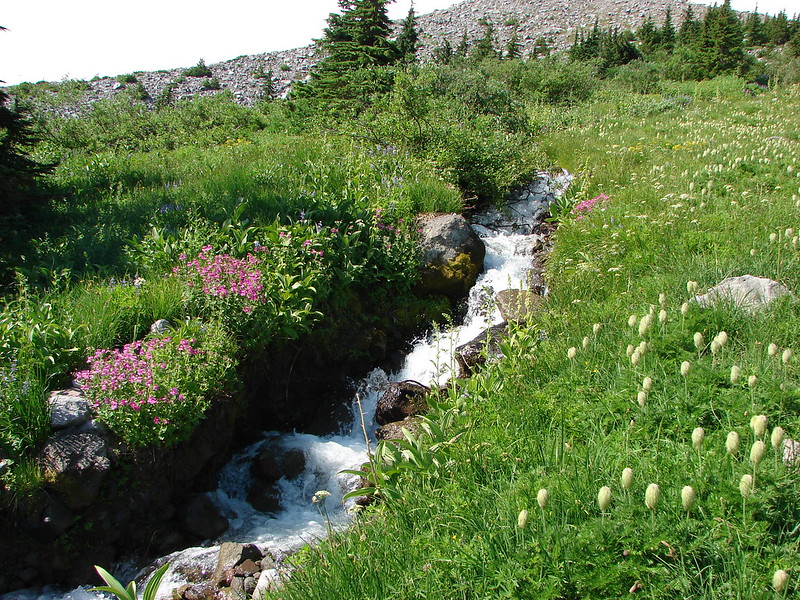
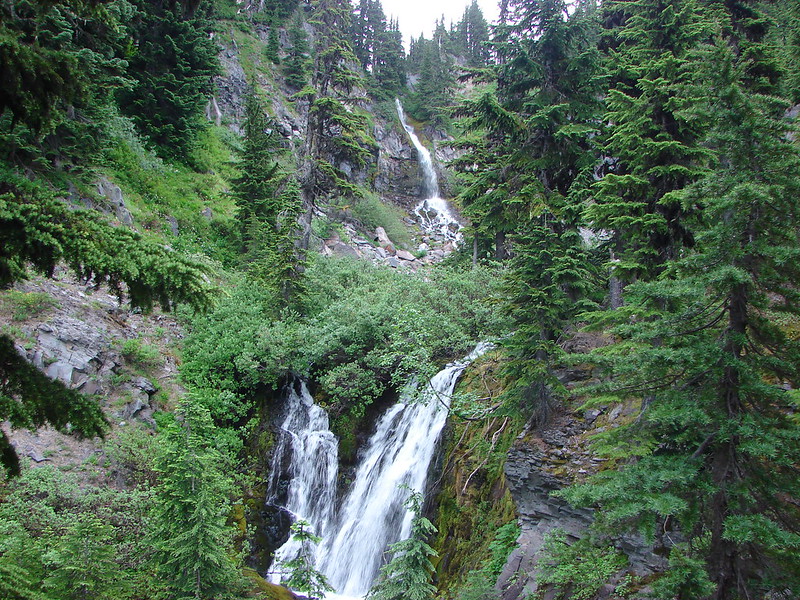
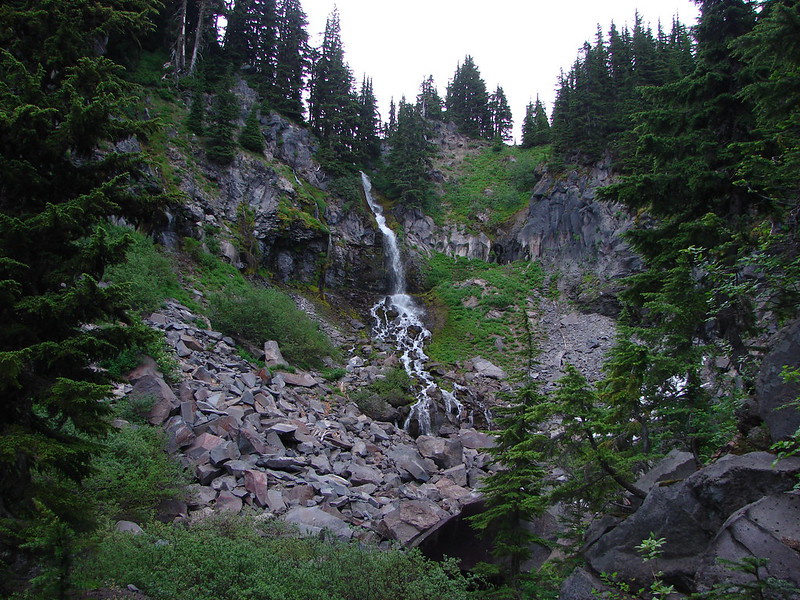
We also passed several waterfalls. The first just disappeared into a rock slide while the second slid down the rocks.

DSC03090

DSC03514

DSC03490

DSC03493

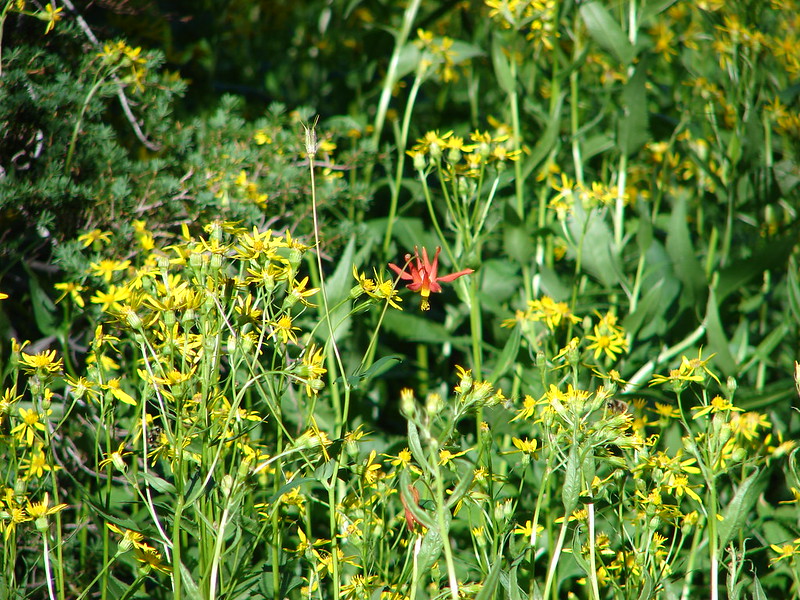
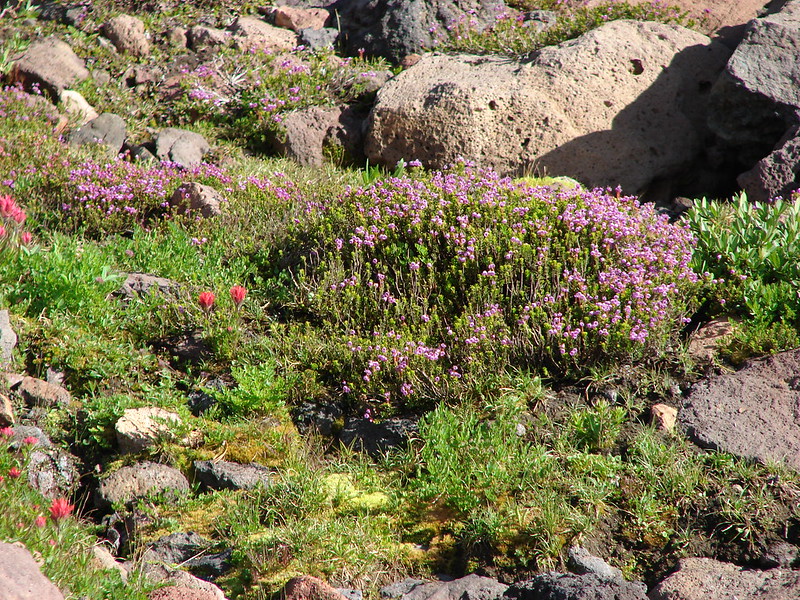
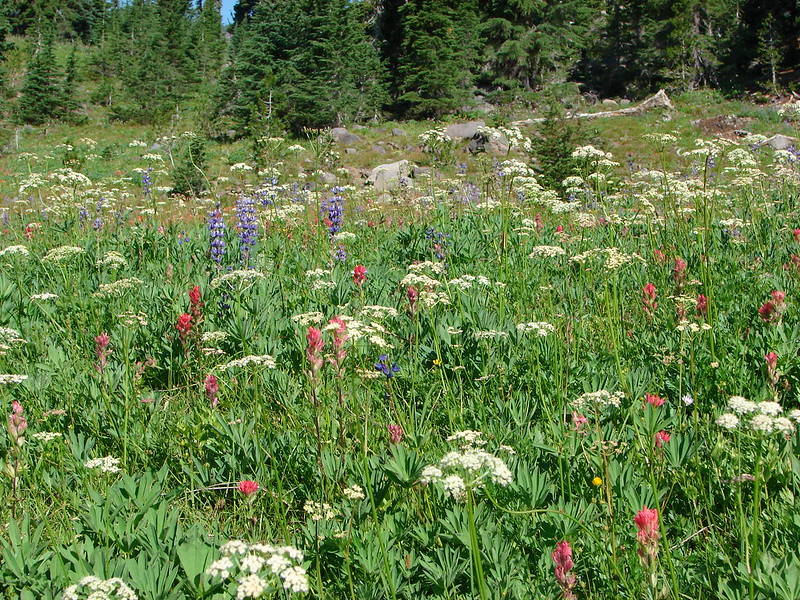
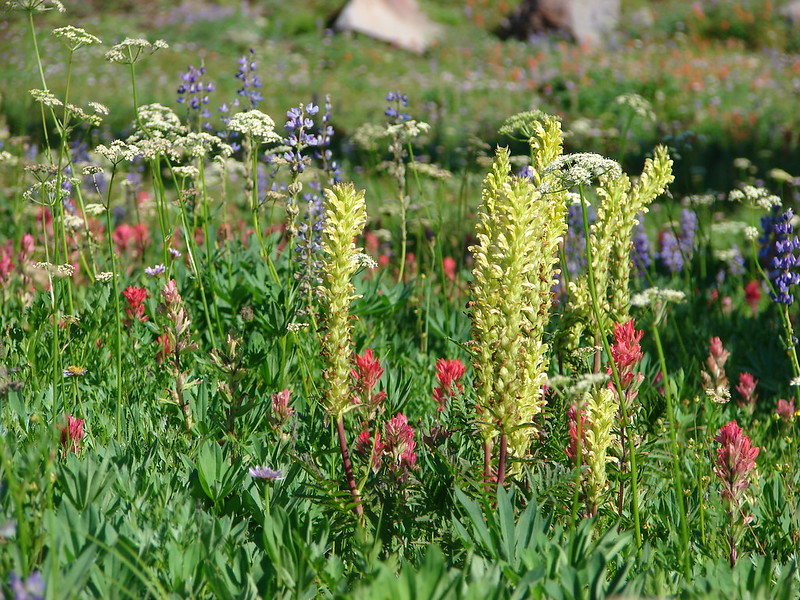
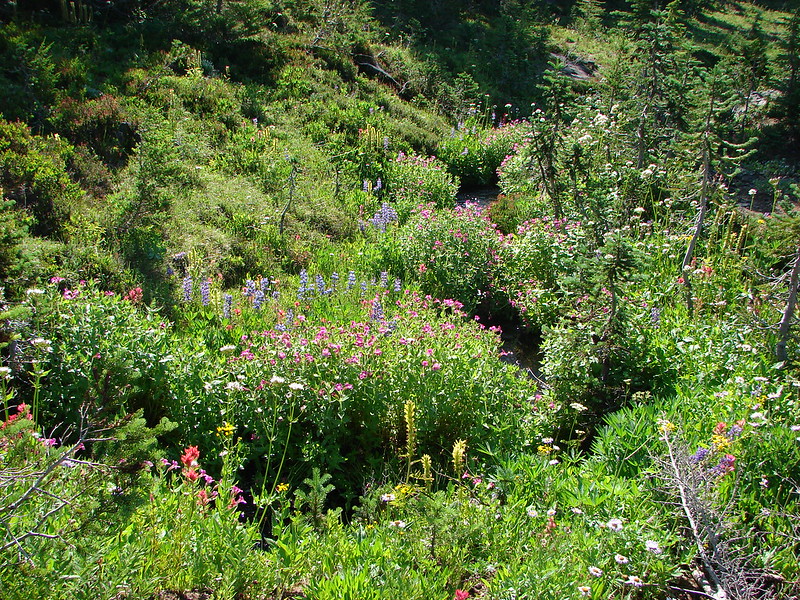
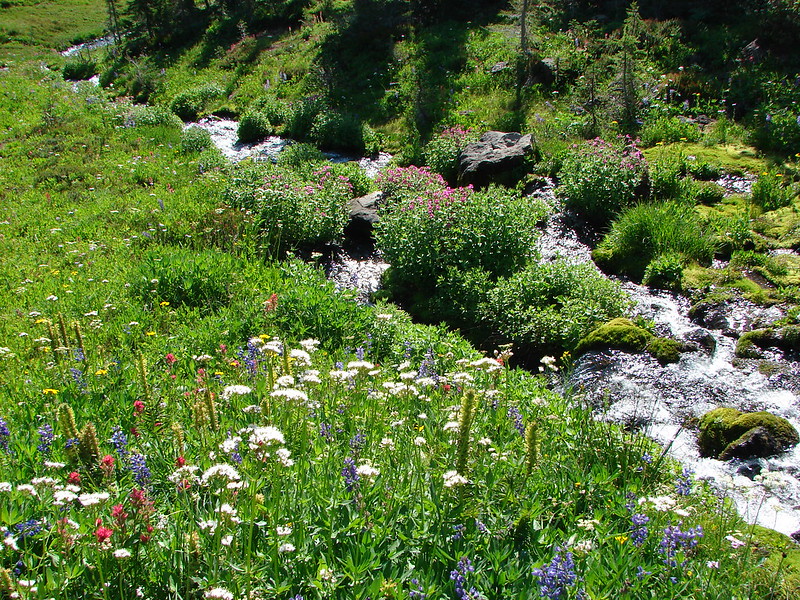
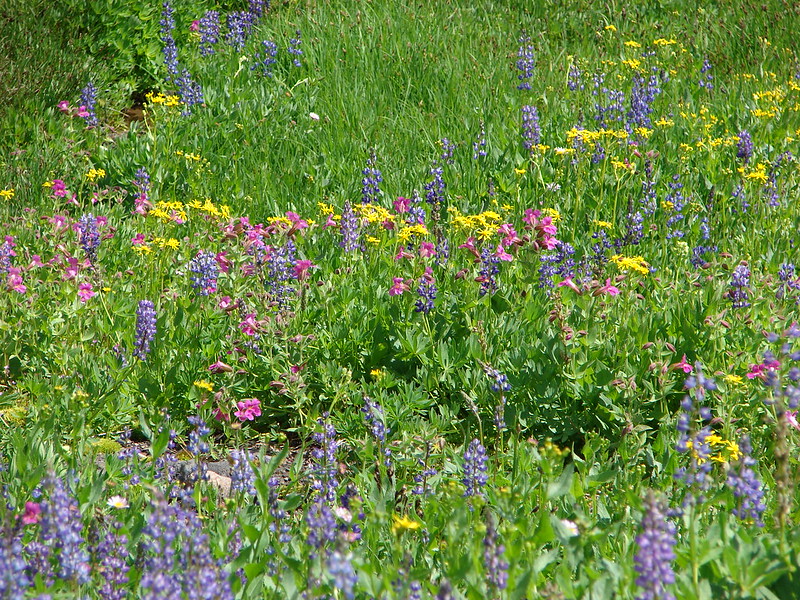
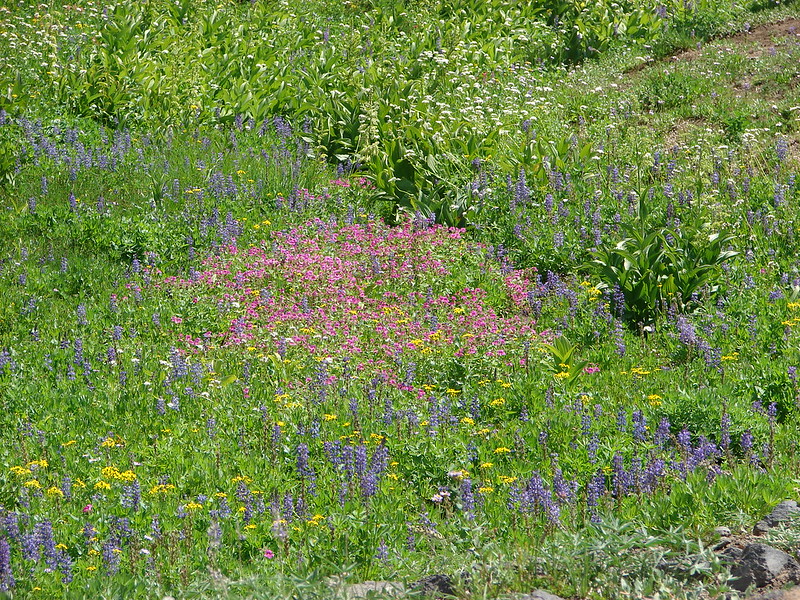
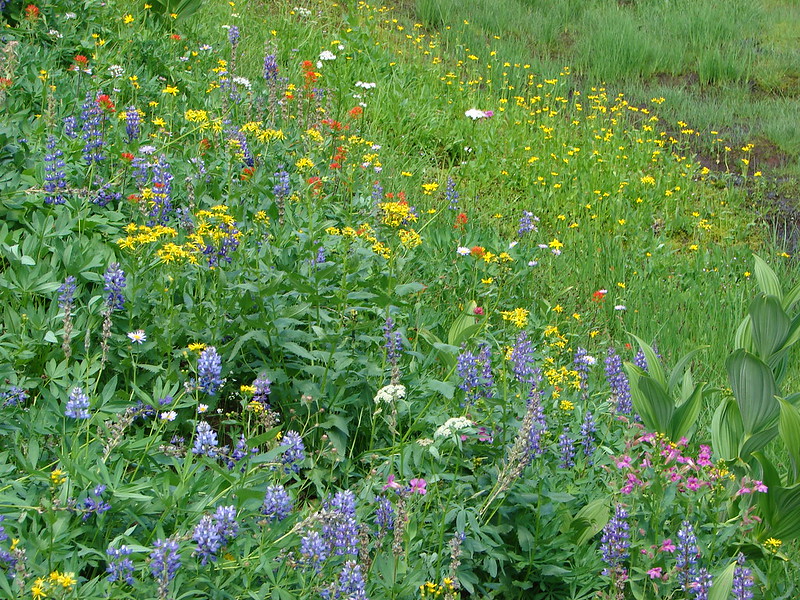
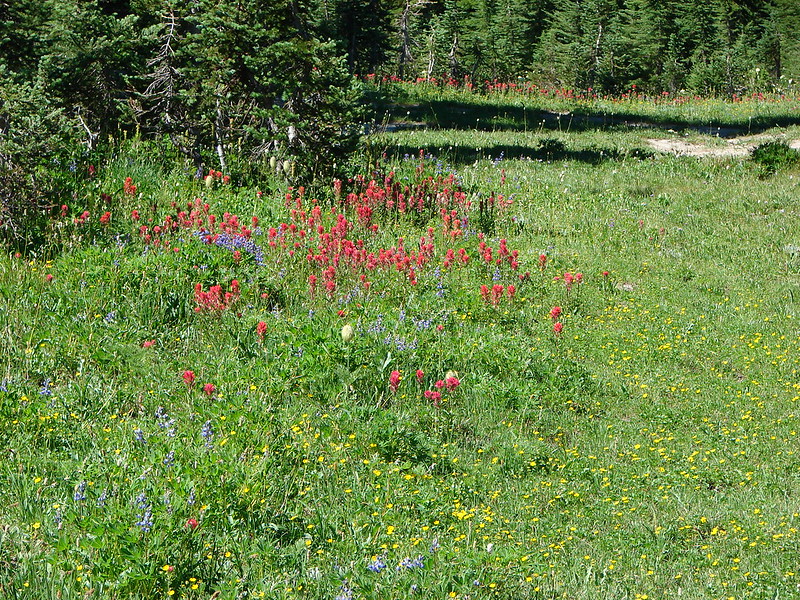
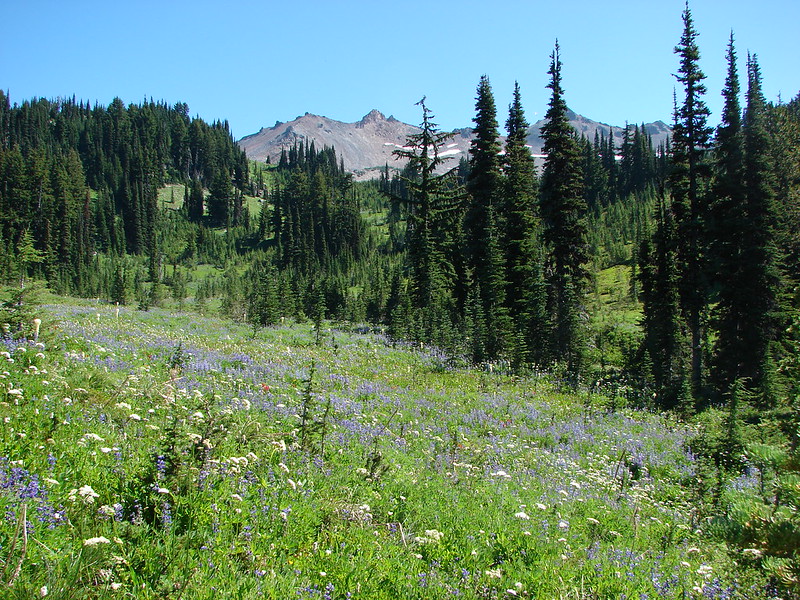
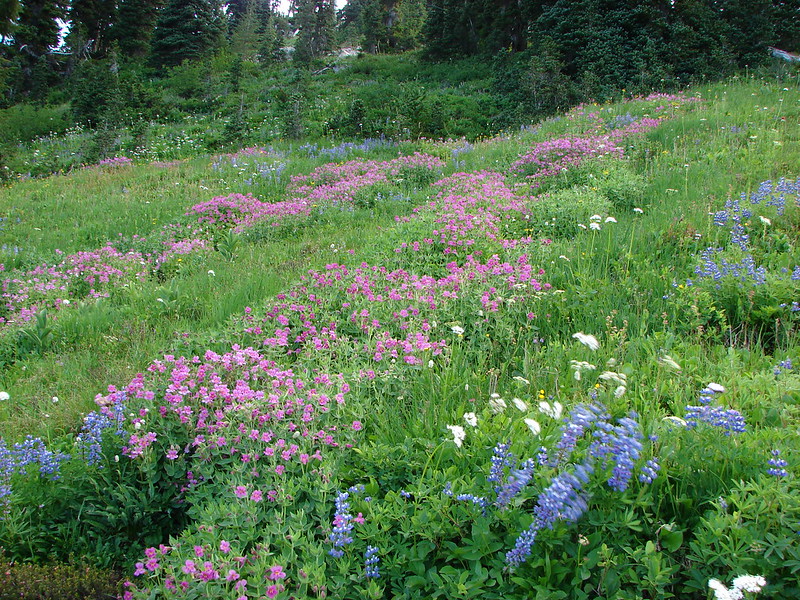
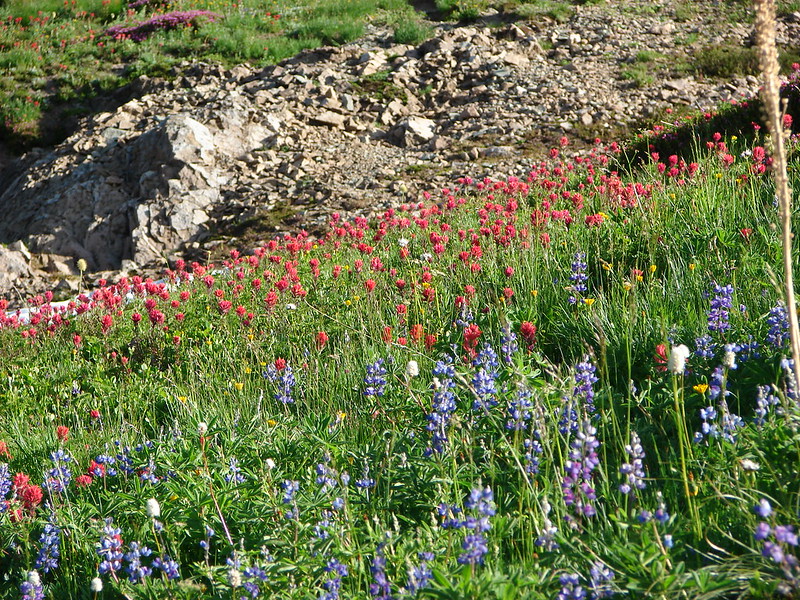
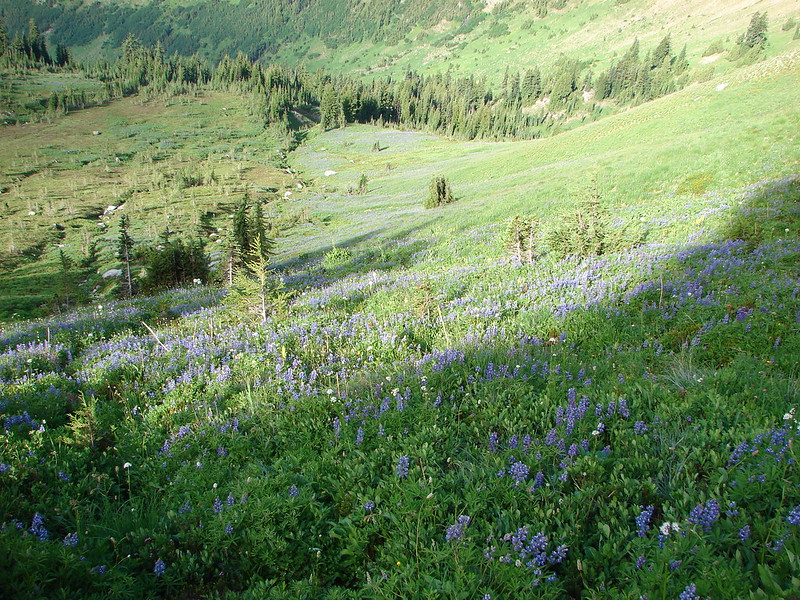
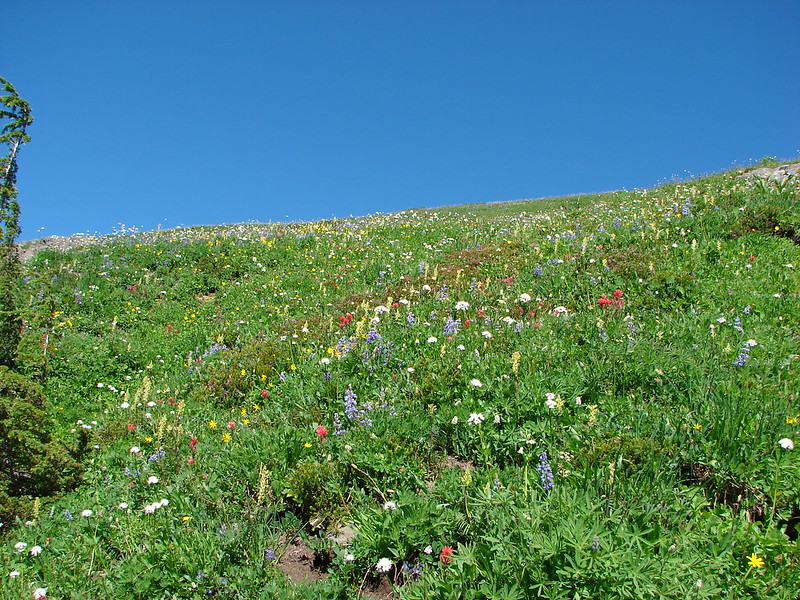
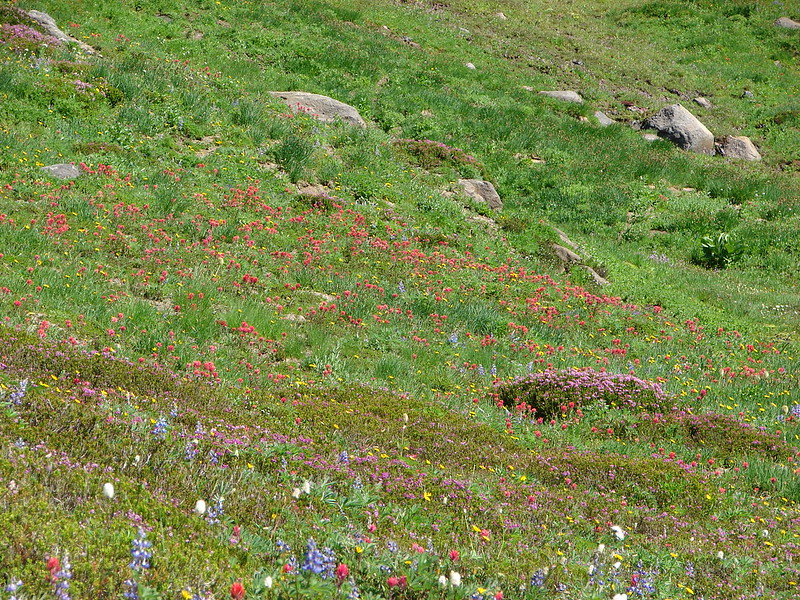
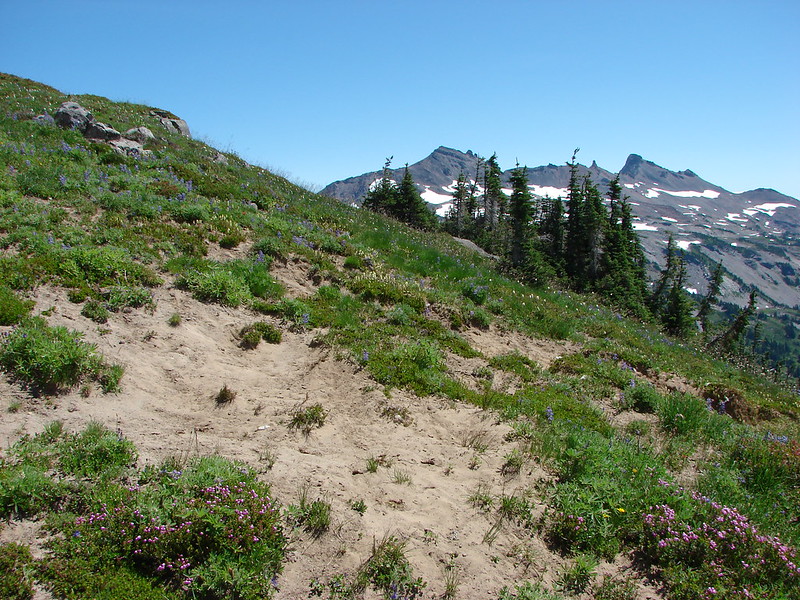
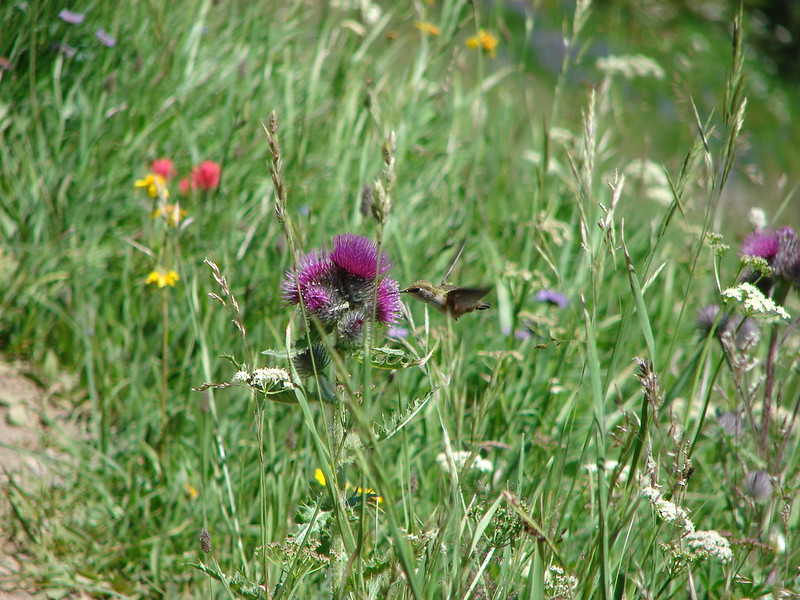
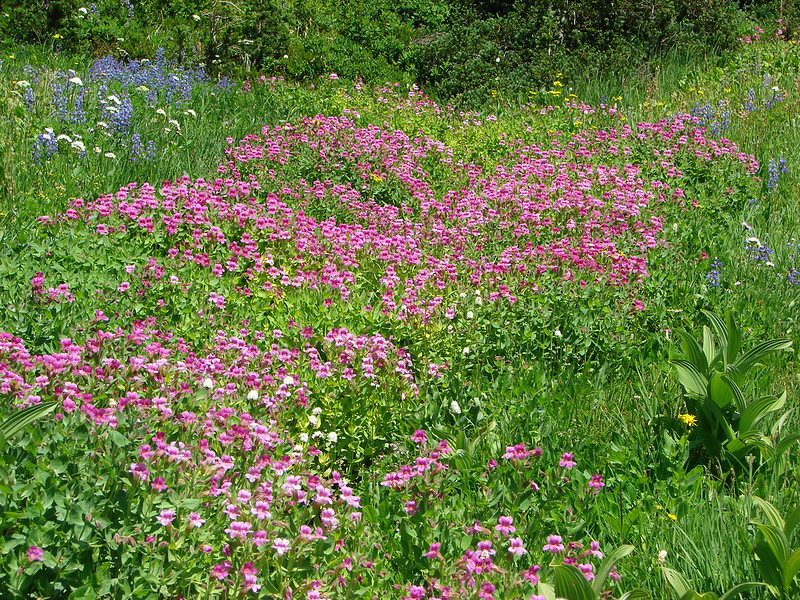
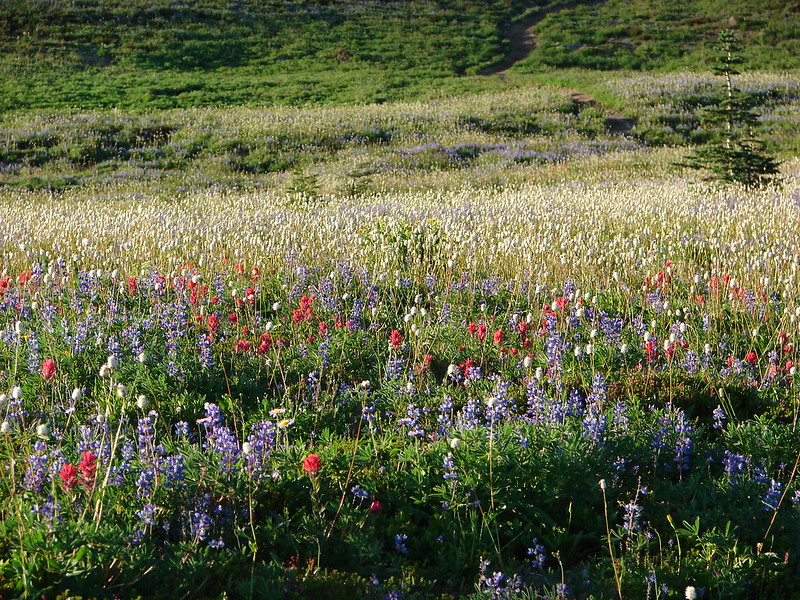
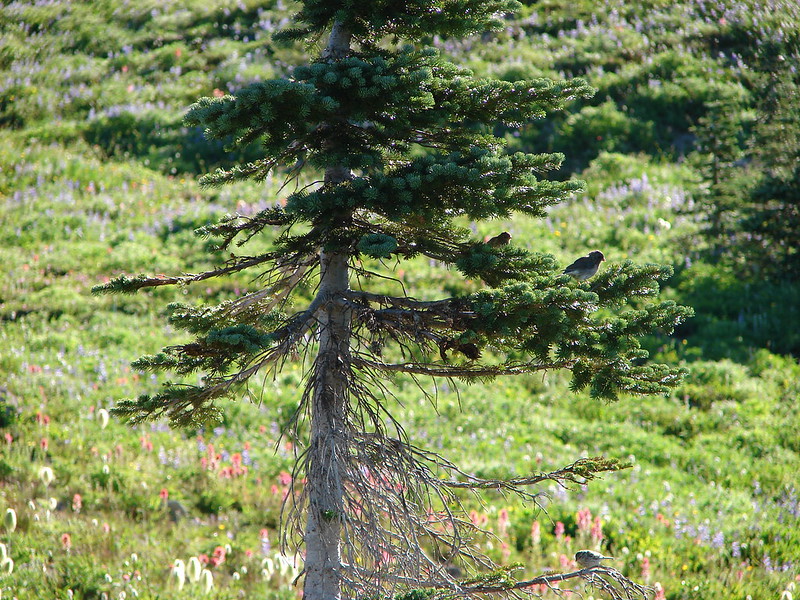
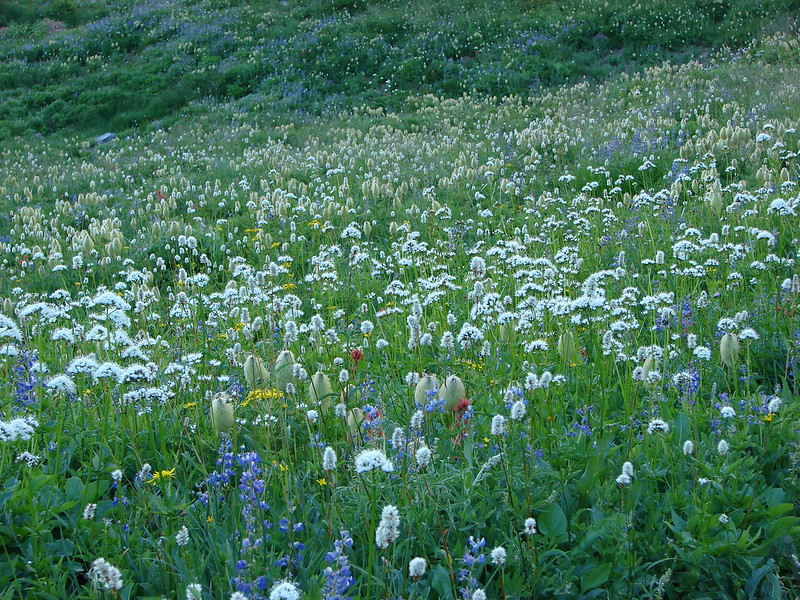
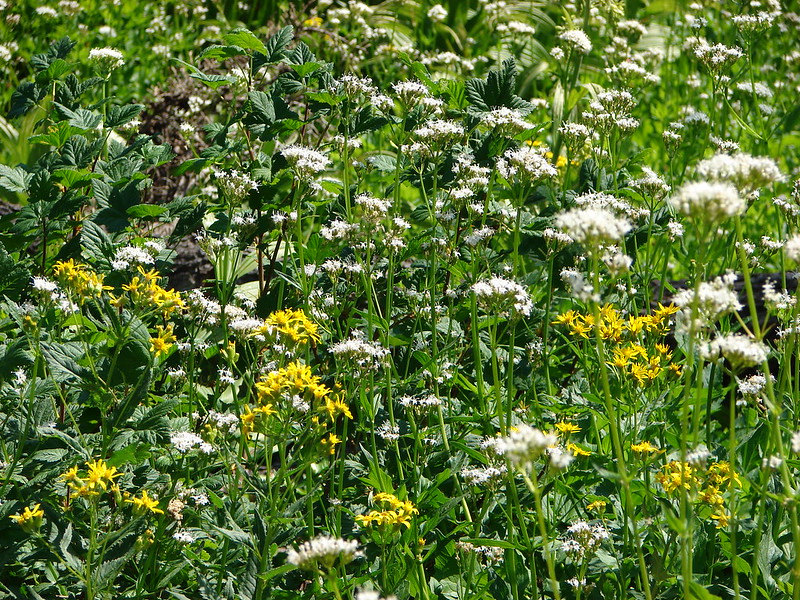
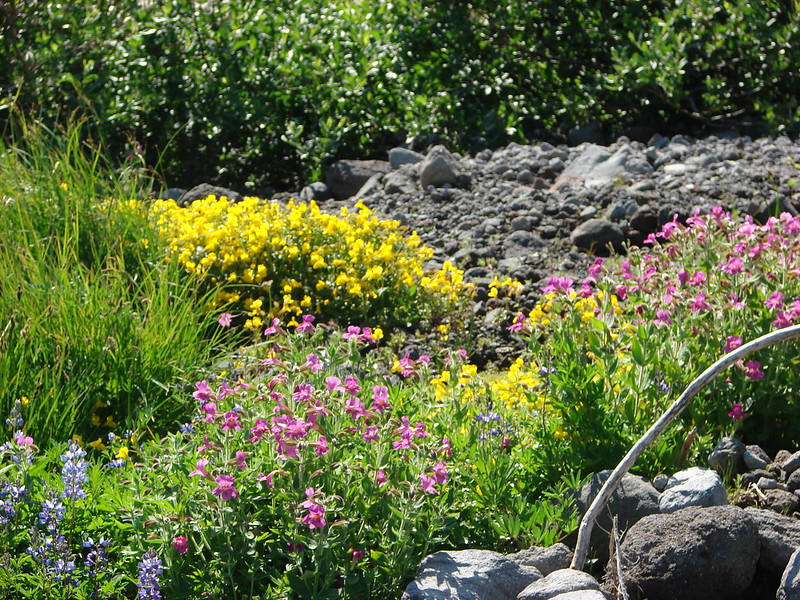
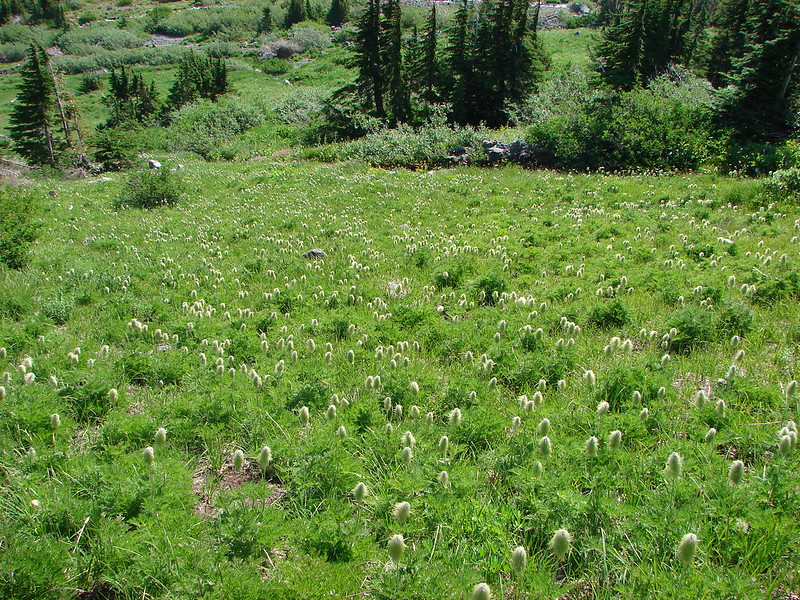
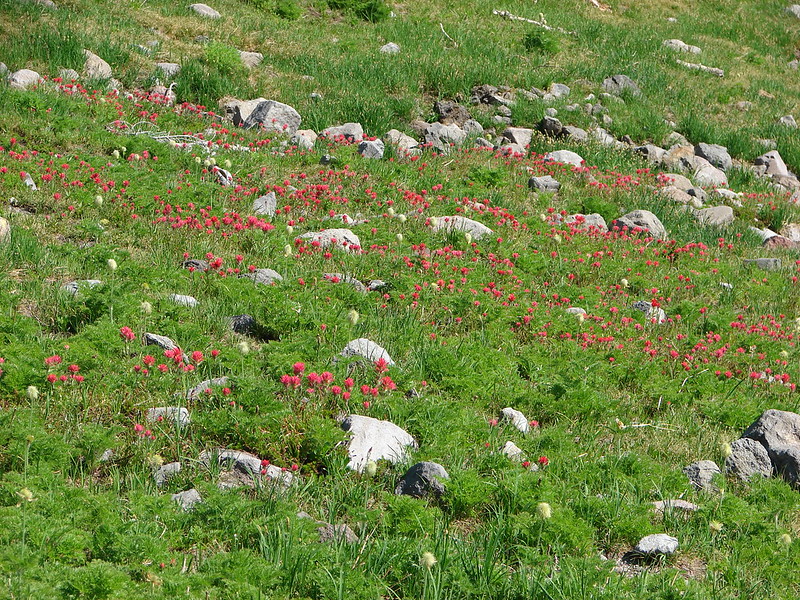
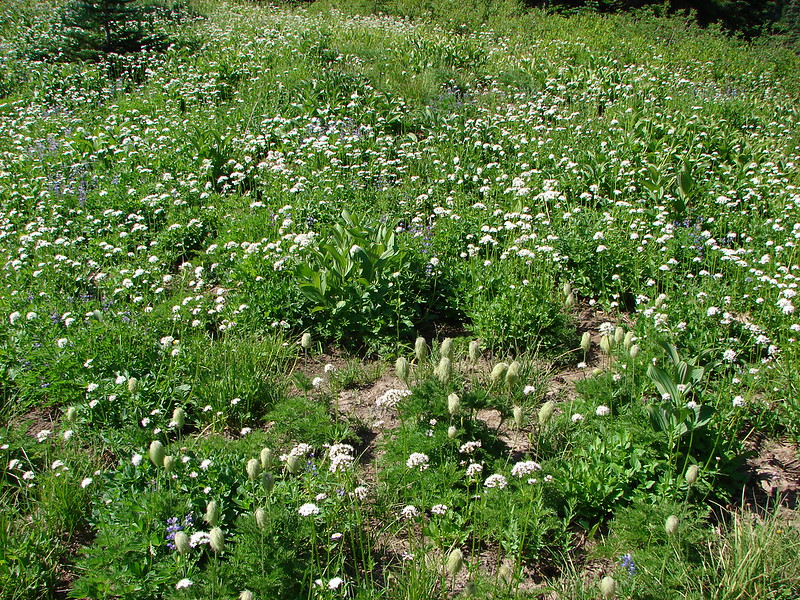
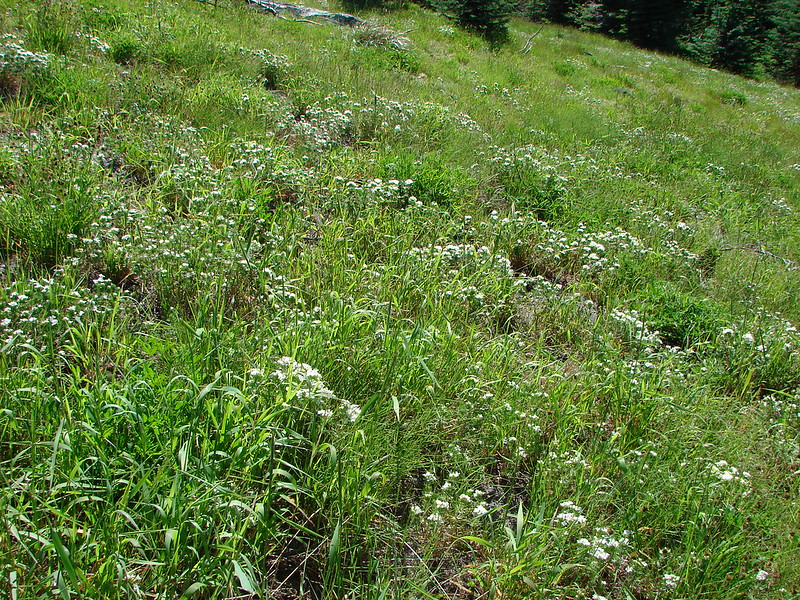
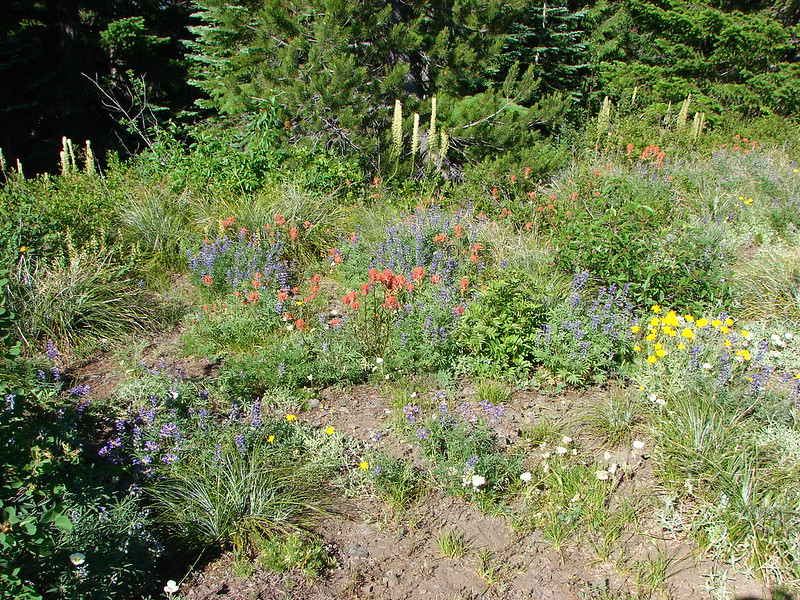
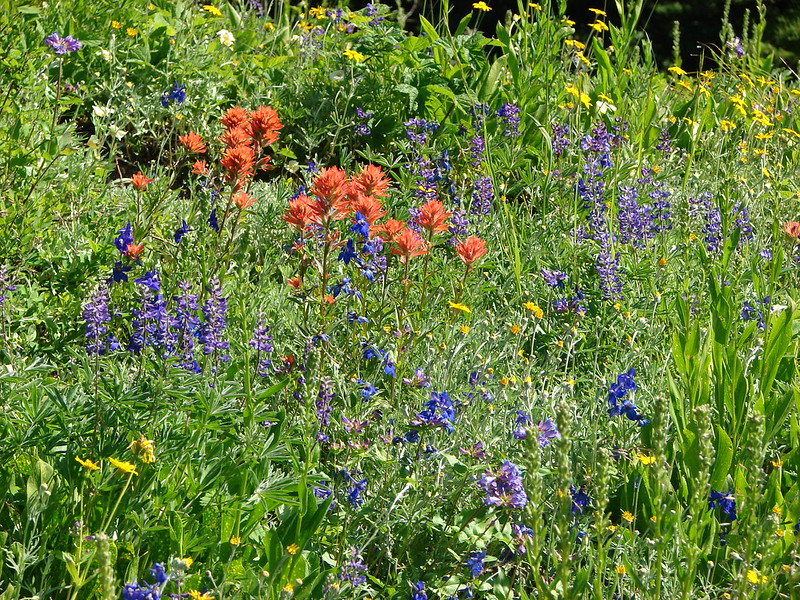
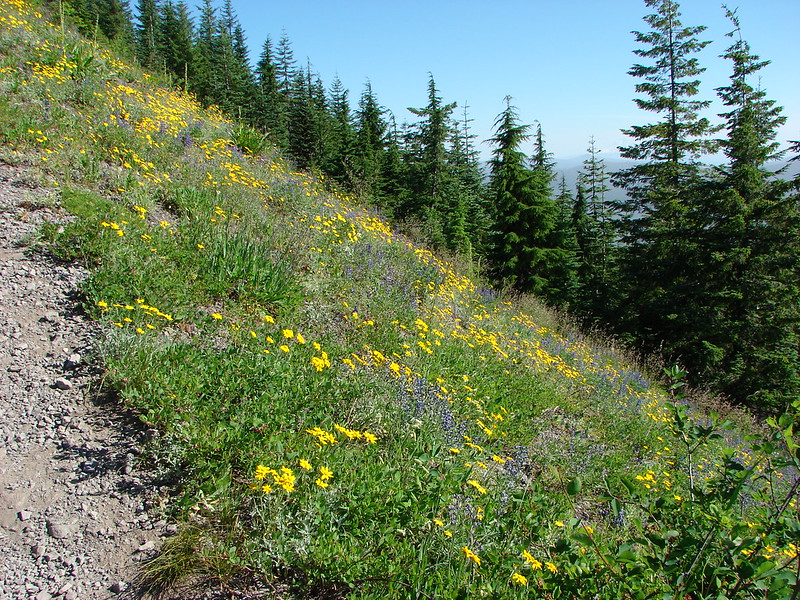
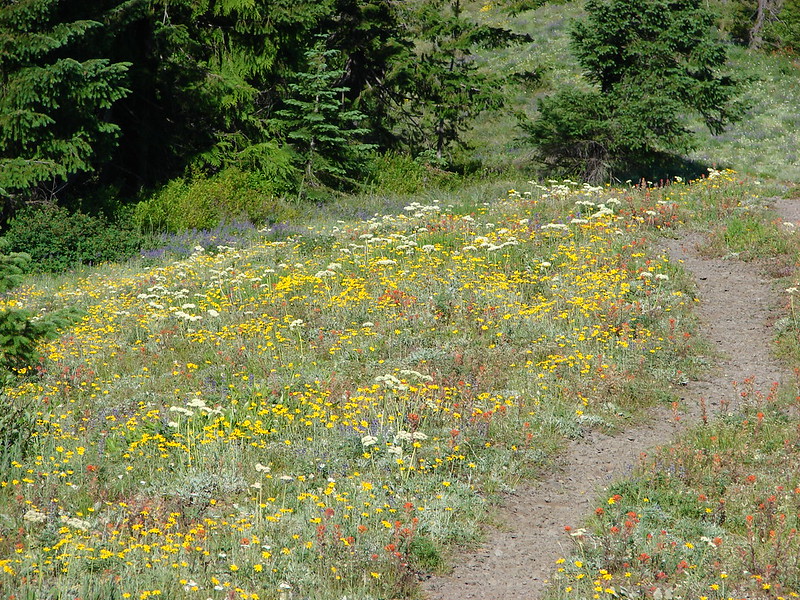
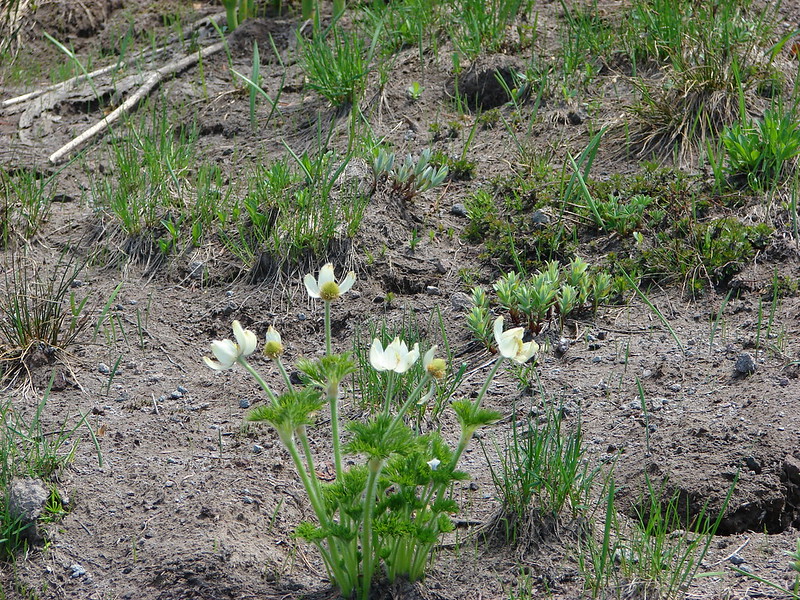
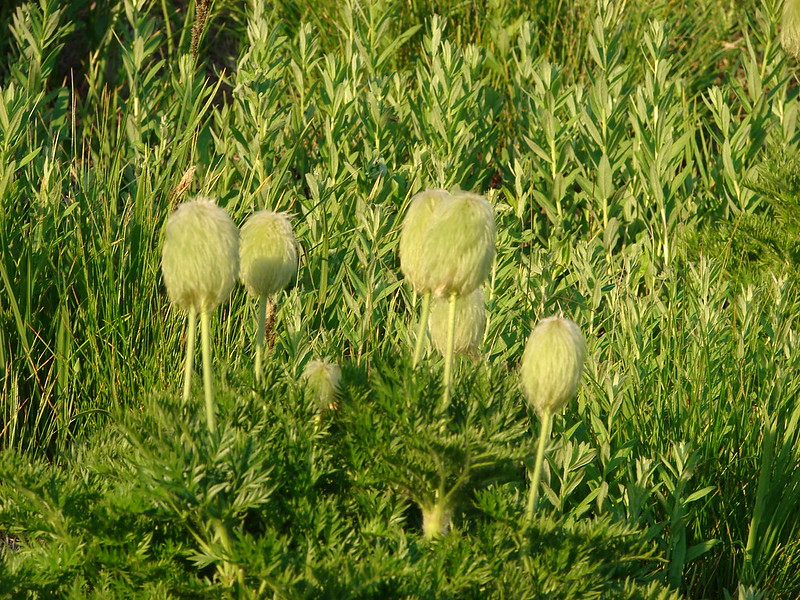
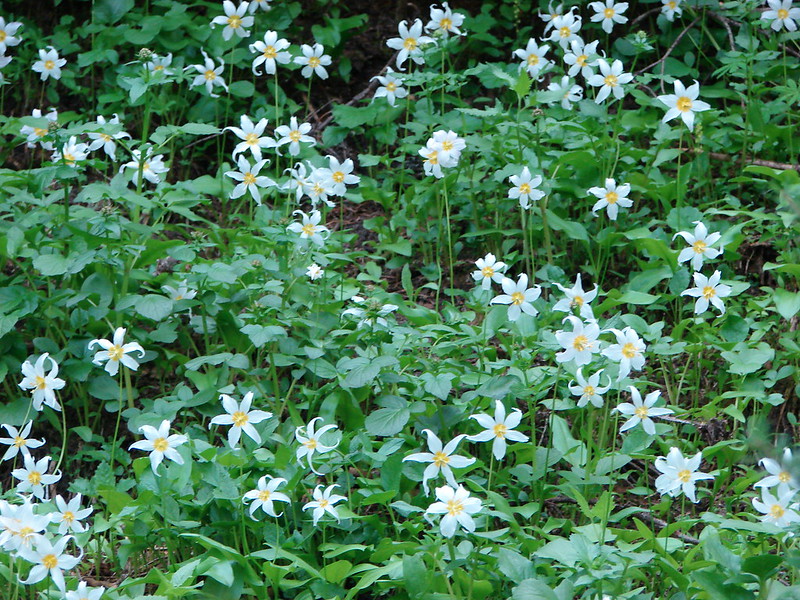
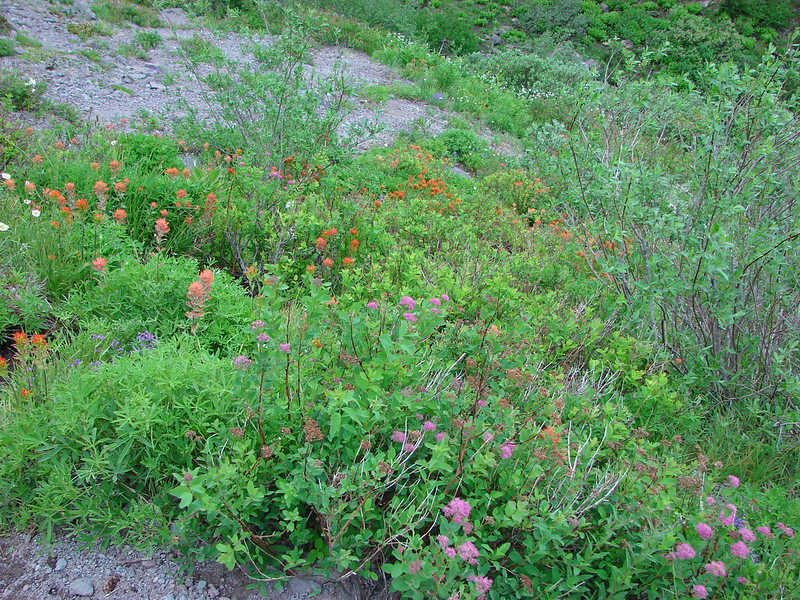
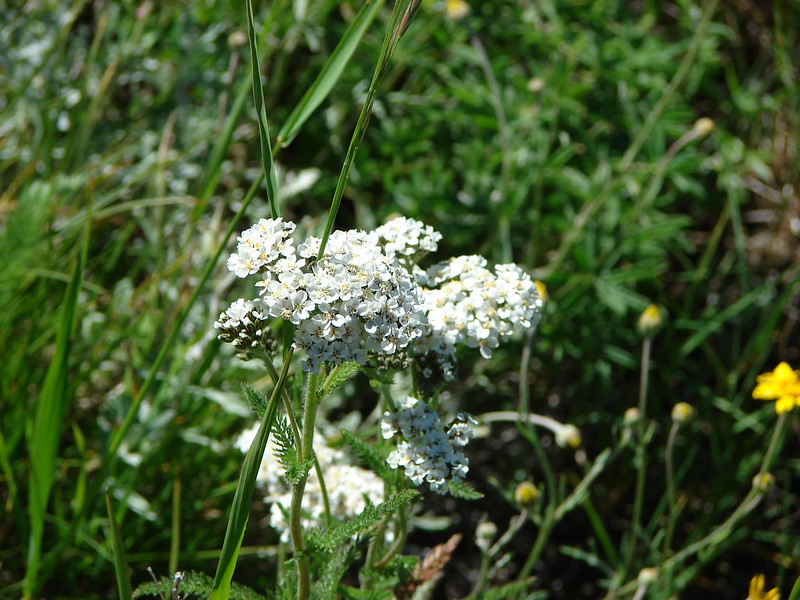
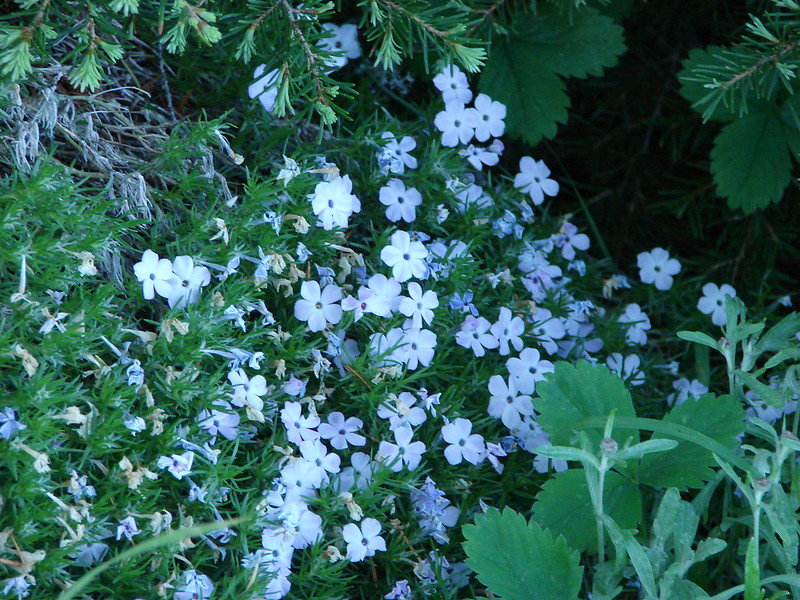
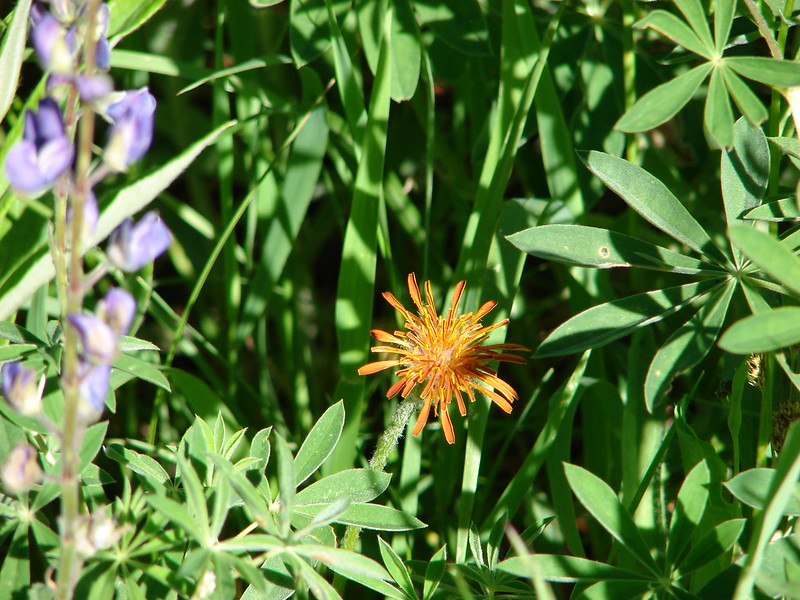
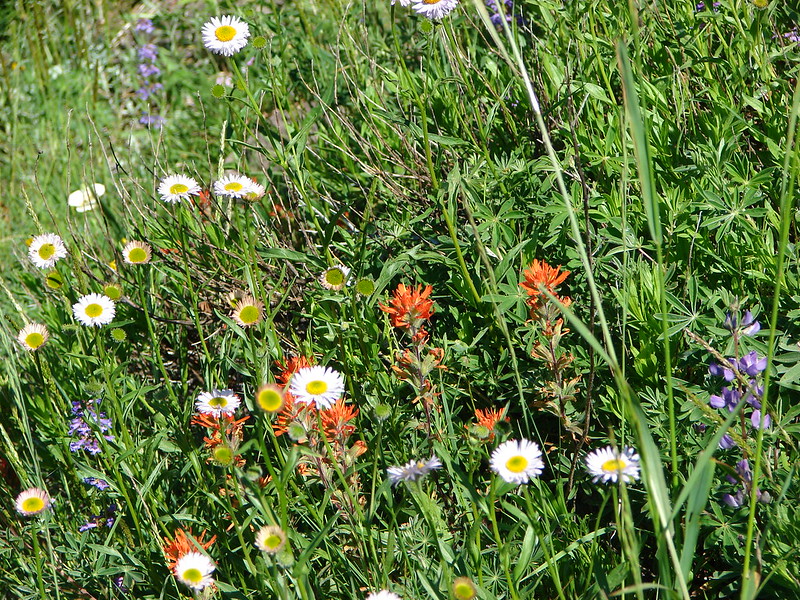
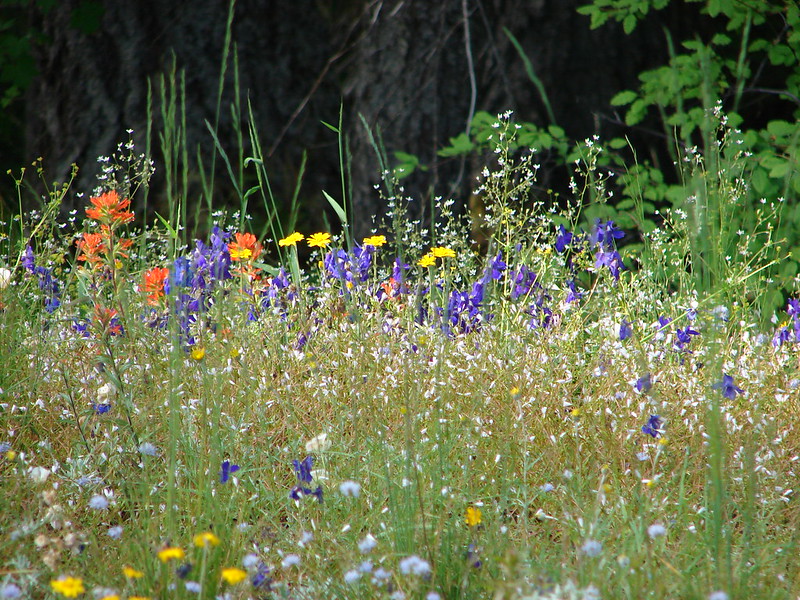
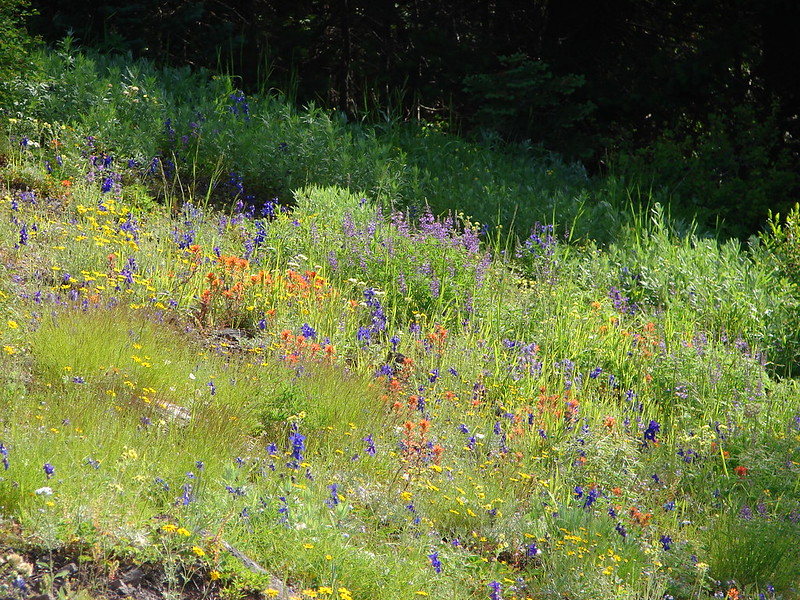
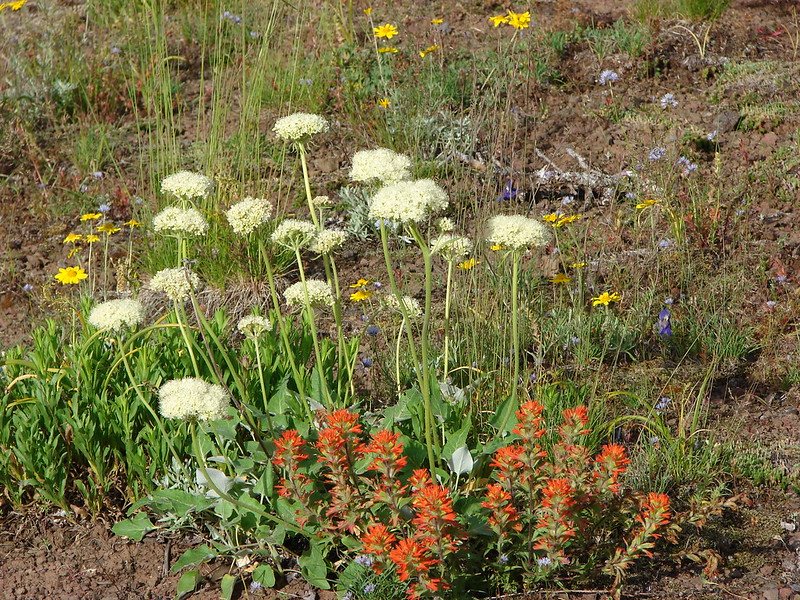
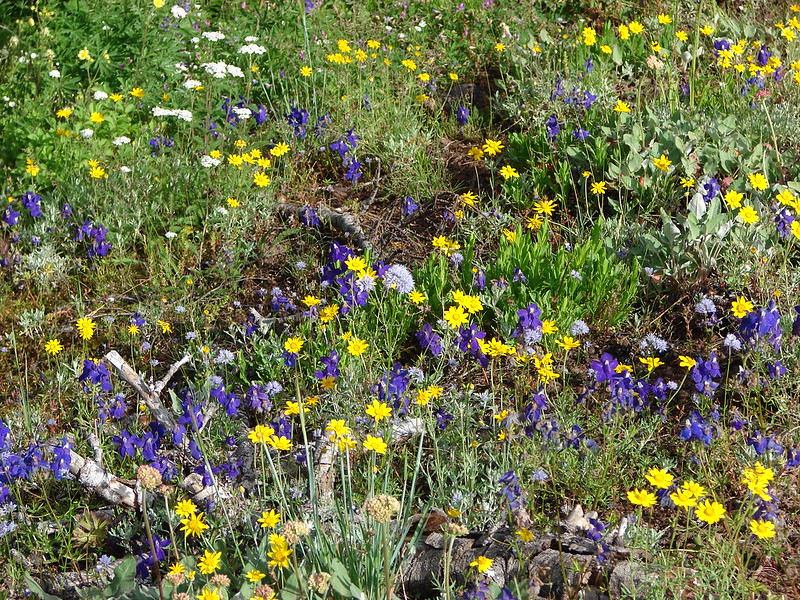
Everything was so impressive but most of all were the wildflowers. The variety and amounts of them were unbelievable. Entire hillsides were covered in colors.

DSC03124

DSC03152

DSC03144

And to top it off Mt. Adams loomed behind us.

DSC03130

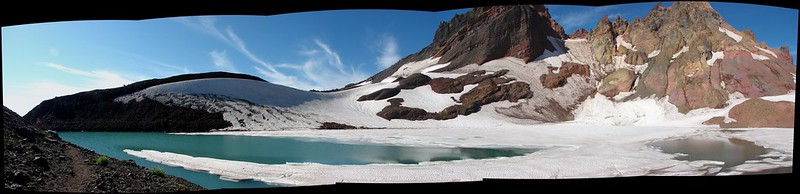
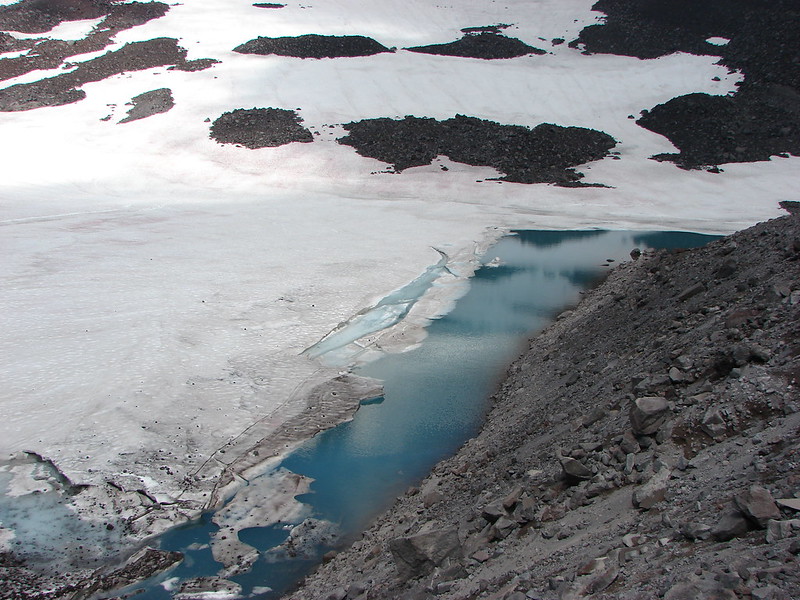
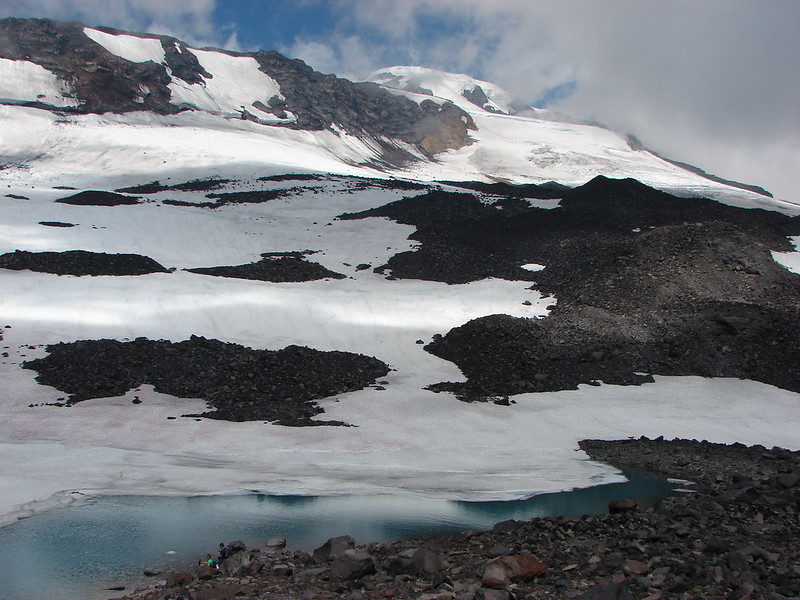
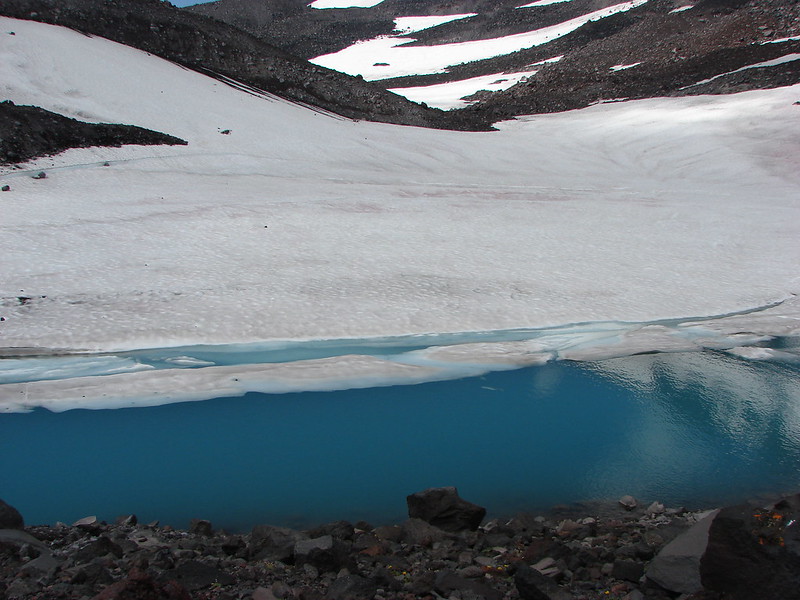
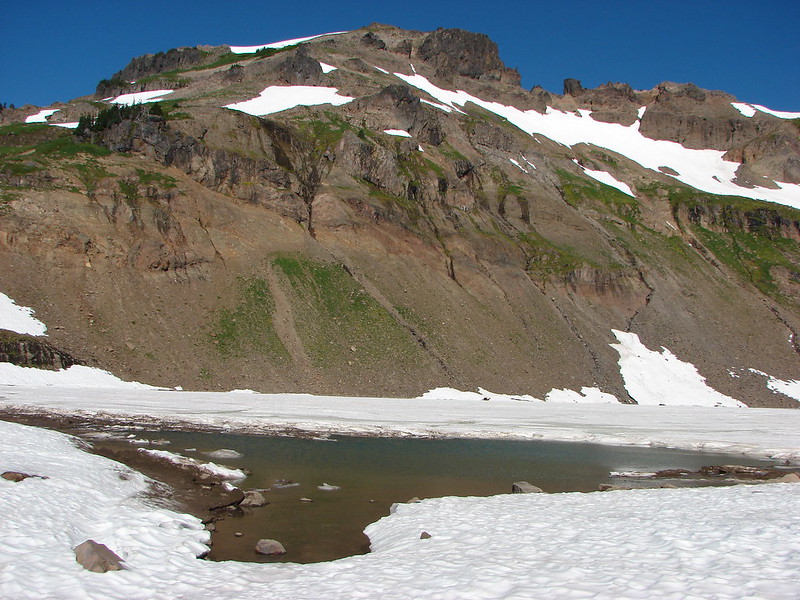
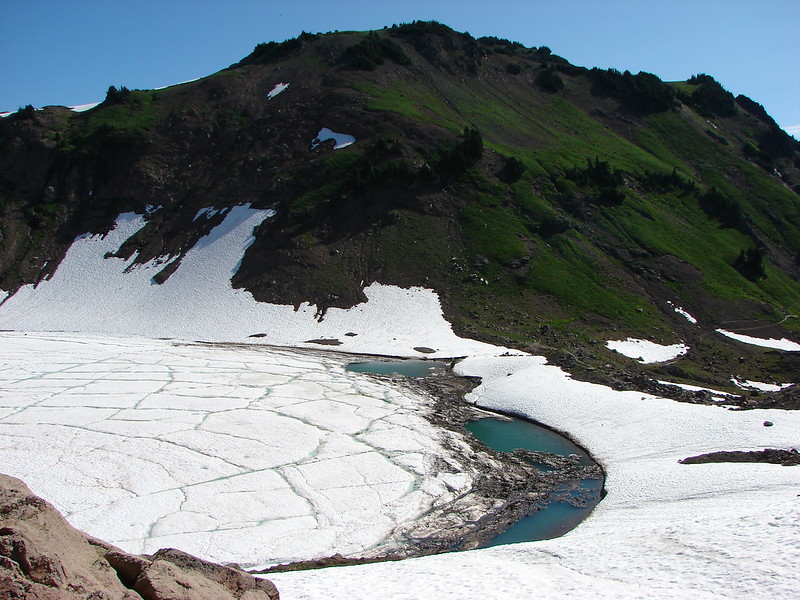
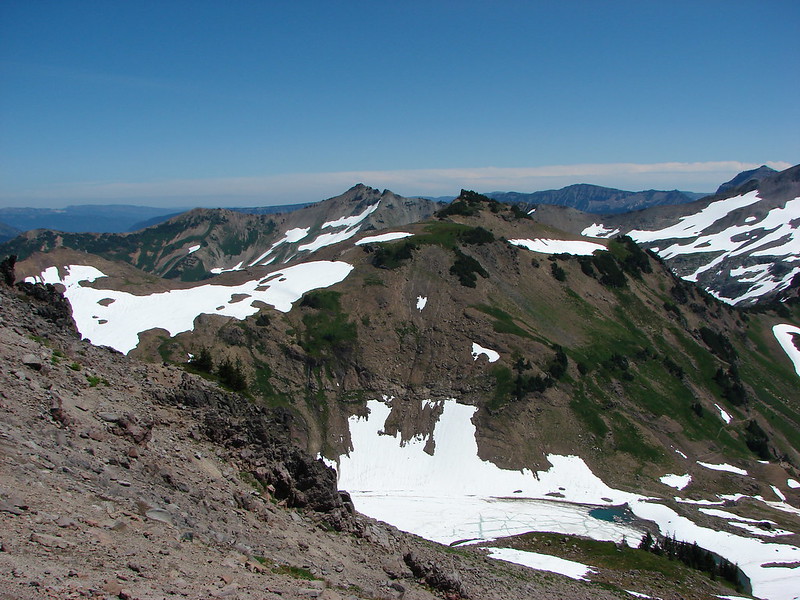
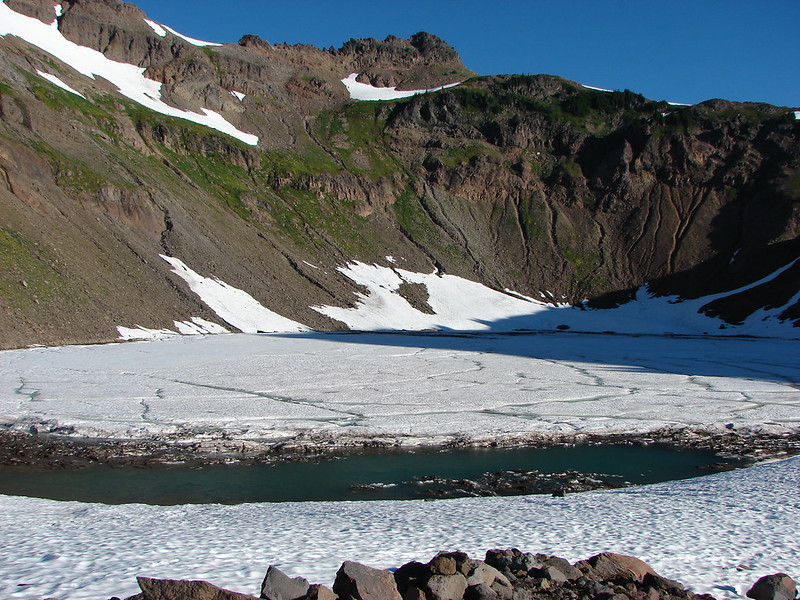
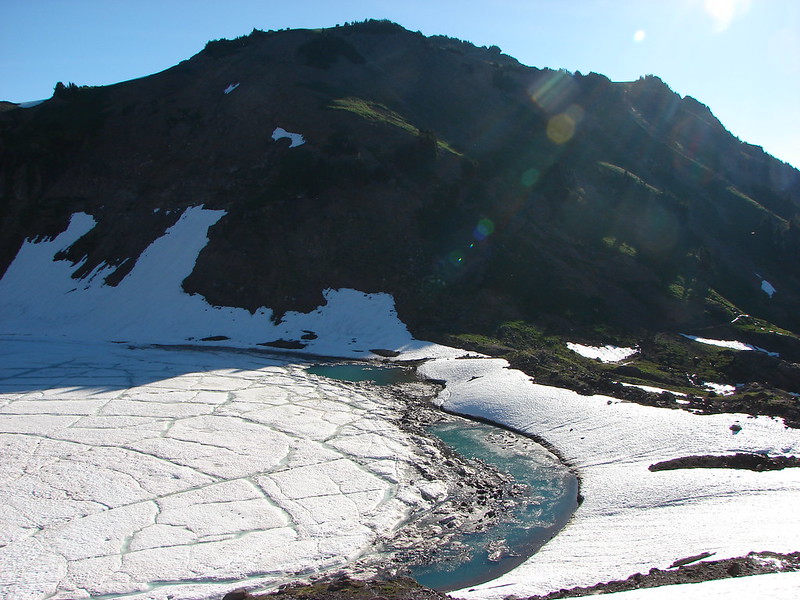
When we arrived at Goat Lake it was mostly frozen as we had expected. The lake rarely ever thaws out completely sitting in a bowl beneath Hawkeyepoint.

DSC03168

DSC03191

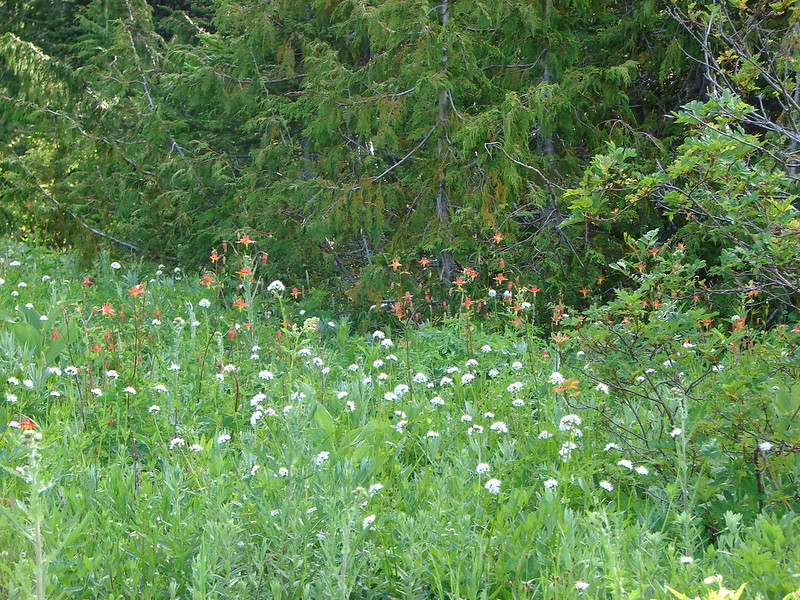
From the lake the trail climbed to a ridge crest junction with the Goat Ridge Trail. Again the wildflowers were profuse.

DSC03232

DSC03227

DSC03230

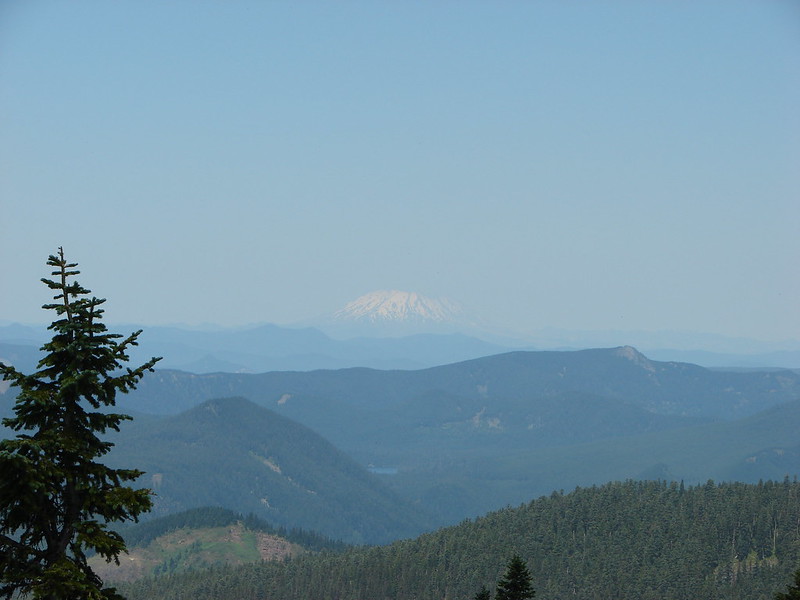
When we reached the junction Mt. St. Helens came into view beyond the Jordan Basin.

DSC03244

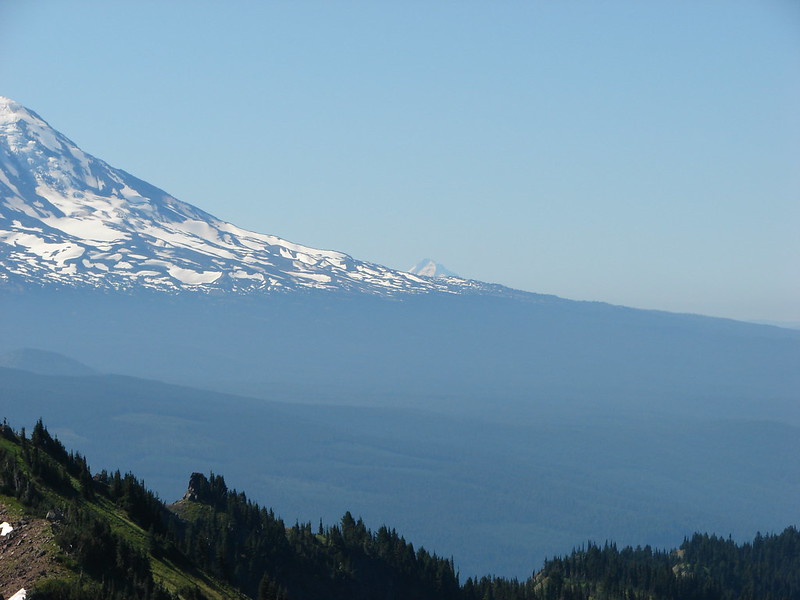
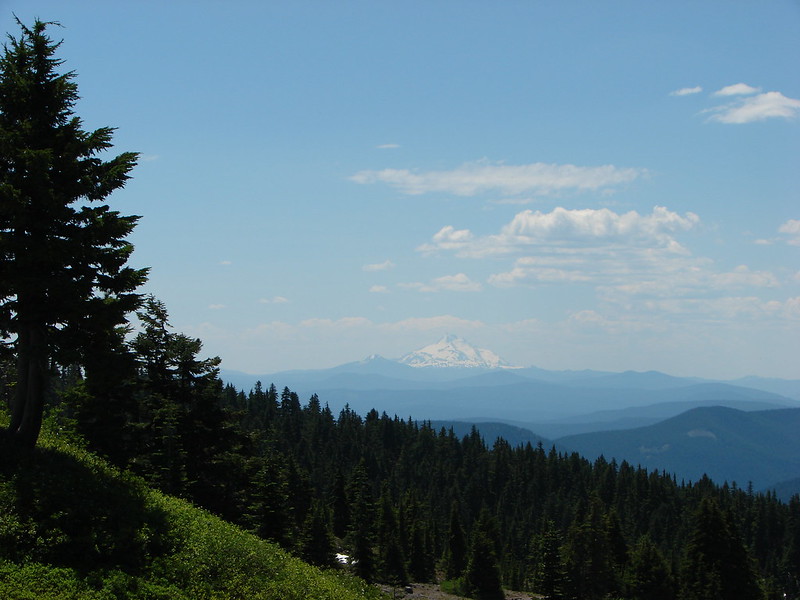
We left the Lily Basin Trail to attempt to climb Hawkeye Point. As we climbed the tip of Mt. Hood could be seen over the shoulder of Mt. Adams.

DSC03266

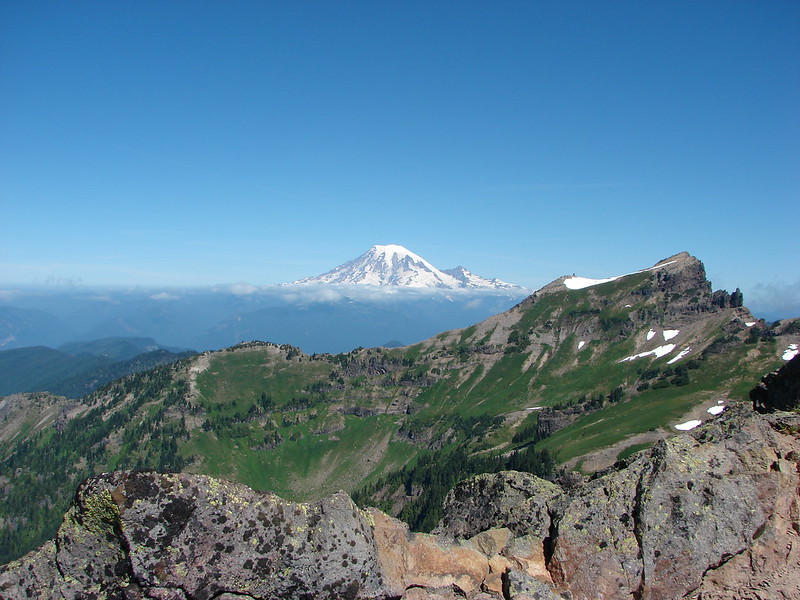
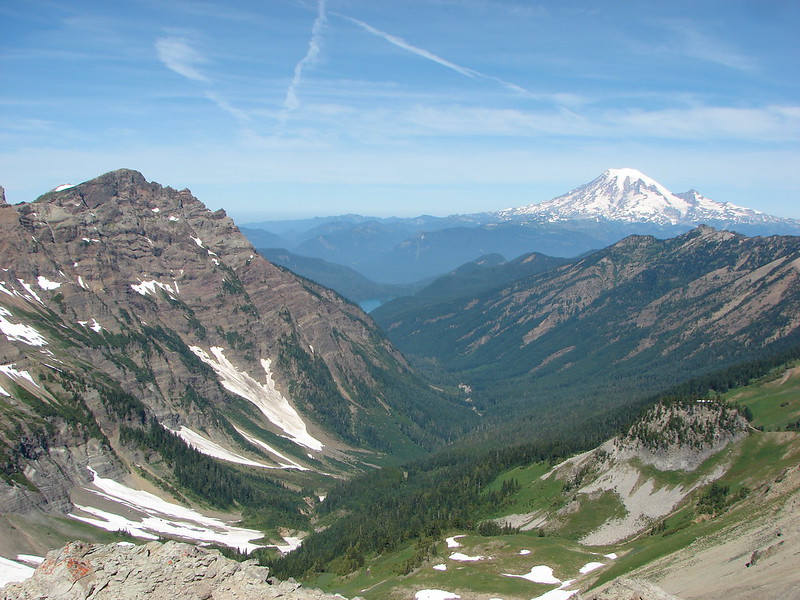
Then came Mt. Rainier beyond Johnson Peak.

DSC03268

We followed a clear path to a rocky knob where we discovered a large snowfield lying between us and the visible trail up to the summit of Hawkeye Point.

DSC03282

There was a steep drop part way out on the snowfield and no visible tracks so we decided to declare victory where we were and see if there was a different route to the trail we could see on the far side so we climbed back down to the Lily Basin Trail and started to head toward Heart Lake. We didn’t get far though before we were stymied by another snowfield.

DSC03301

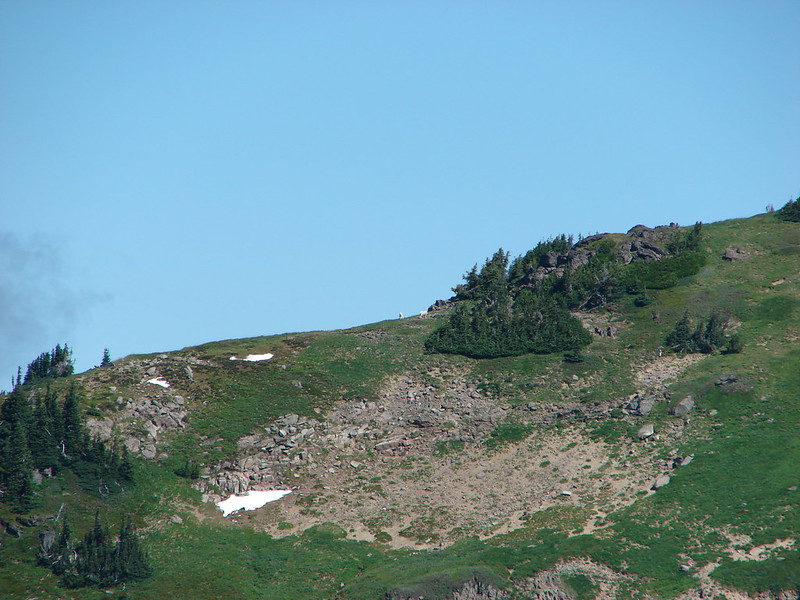
We decided to take a short break before heading back to search for a different route to Hawkeye Point. While we were resting Heather spotted the one thing I was really hoping to see on the trip – Mountain Goats! There was a pair of them near the top of the ridge across the basin.

DSC03318

Mountain Goats were on top of my list of animals we hadn’t seen yet while hiking so even though they were a long way away it was exciting.

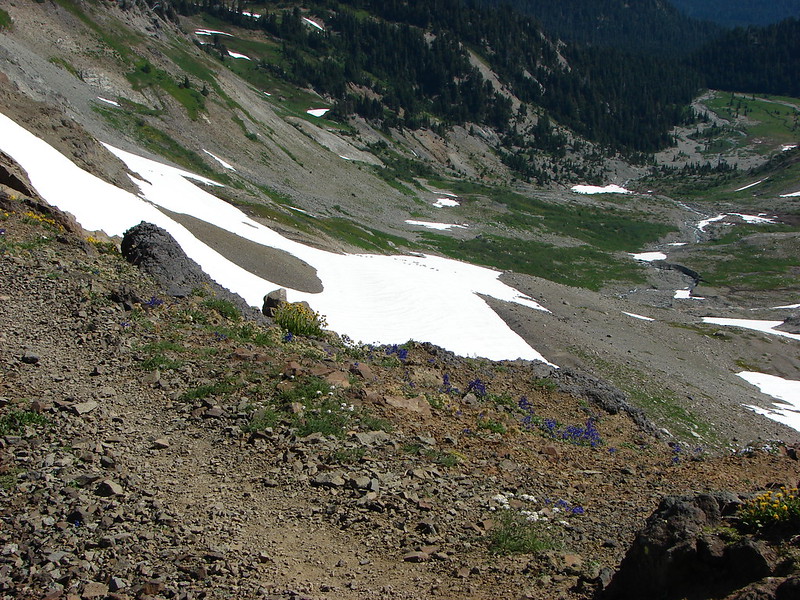
After they disappeared over the ridge we started our search for a path around the snowfield to Hawkeye Point. We managed to find what turned out to be a goat path that got us around the snowfield, but we were too far down a steep hill with no visible route up to reach the continuation of the real trail. Instead we followed the goat trail passing some beds complete with goat fur to a view of Goat Lake below.

DSC03335

DSC03336

DSC03342

Satisfied with the view we began our return trip to camp. It was such a pretty trail that was just as spectacular the second time through.

DSC03383

DSC03407

DSC03411

DSC03488

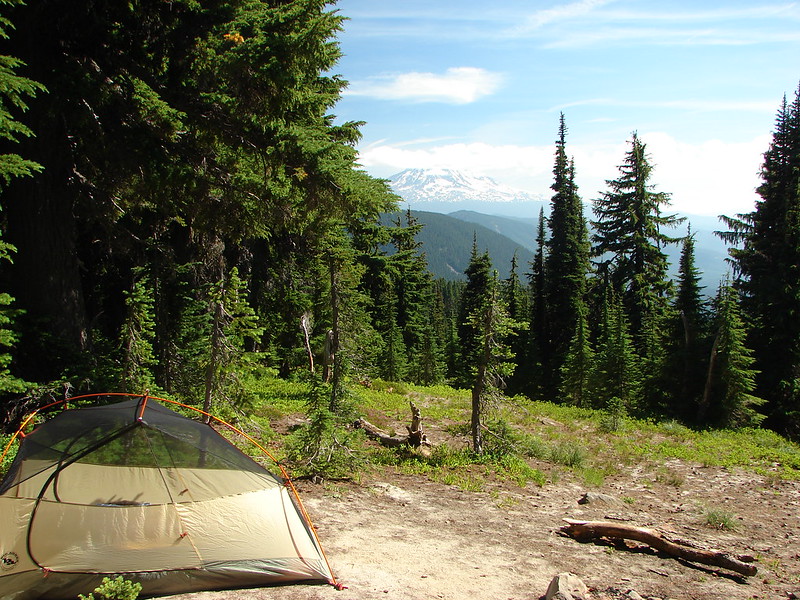
When we got back to camp we noticed that the family who had been camped further back in the same area as us had left. We took the opportunity to switch sites and moved to a spot with a view of Mt. Adams.

DSC03525

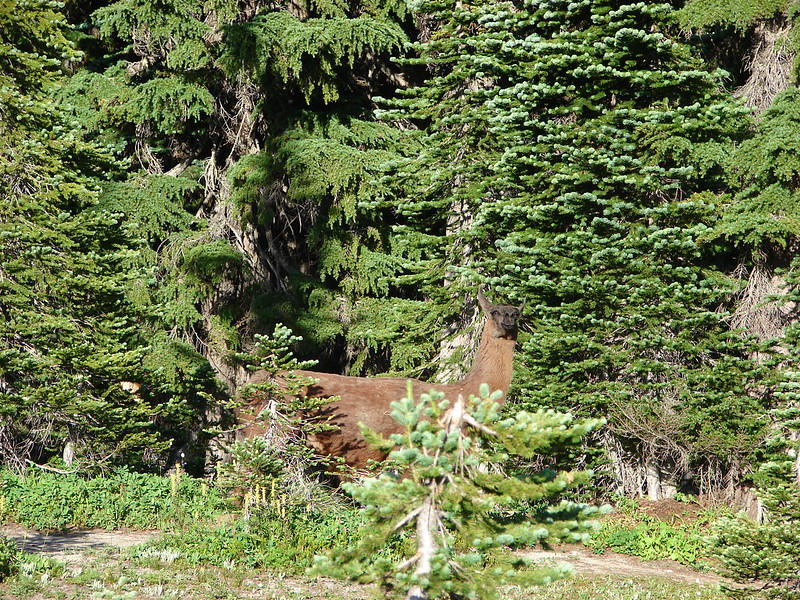
After getting our new site set up we decided to go up to the PCT junction to catch the sunset. When we reached the junction with the Snowgrass Trail in Snowgrass Flat Heather noticed a large animal emerging from the trees on our right. We could see dark brown and my first thought was Elk but then it stepped out into the sunlight on the trial.

DSC03539

It was a llama and it looked mighty proud of itself.

DSC03545

We didn’t see anyone around but someone must have been using it as a pack animal. It rolled in the dirt for a moment then got up and then disappeared into another camp site. It was so unexpected all we could do was laugh all the way up to the PCT.

Meanwhile the setting Sun was bringing out the best in the wildflowers on the PCT.

DSC03556

DSC03555

DSC03553

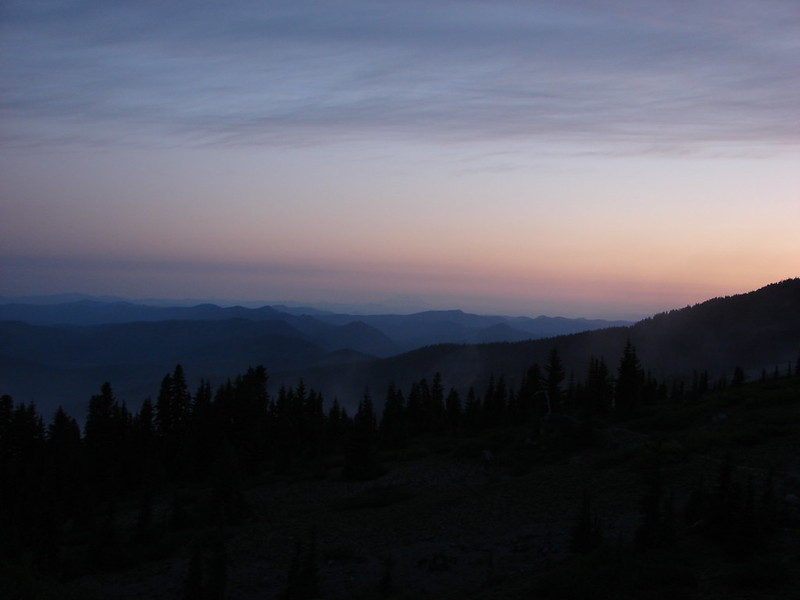
We found an open site and watched the Sun disappear behind a bank of clouds that was hanging over Goat Ridge before returning to our tent and putting day 2 to bed.

DSC03568

DSC03579

Goat Rocks - Mt. Adams sunset

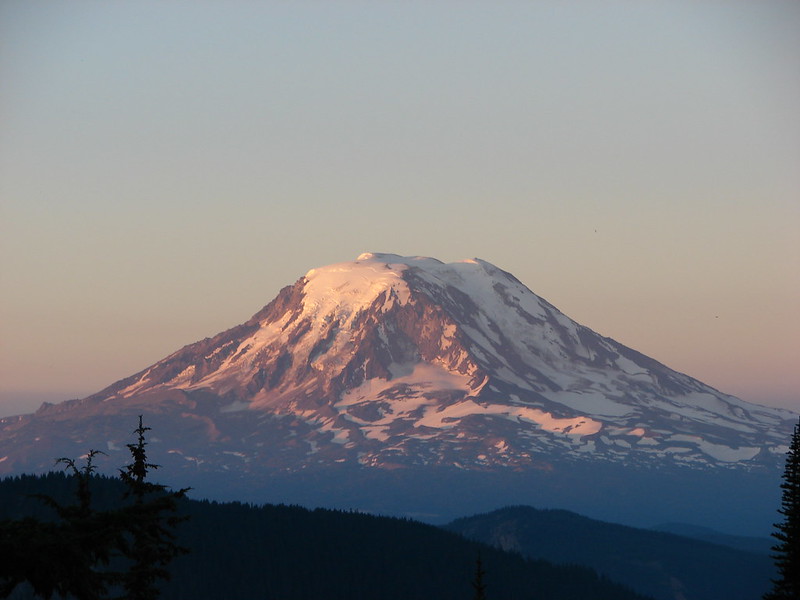
The third day started much like the previous day with a pretty Mt. Adams sunrise.

DSC03593

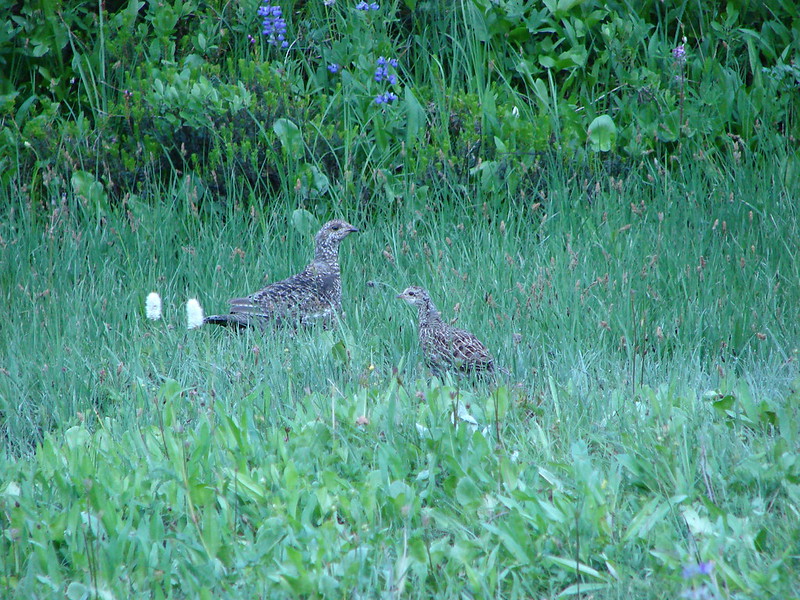
The animals were up early too.

DSC03595

DSC03601

DSC03606

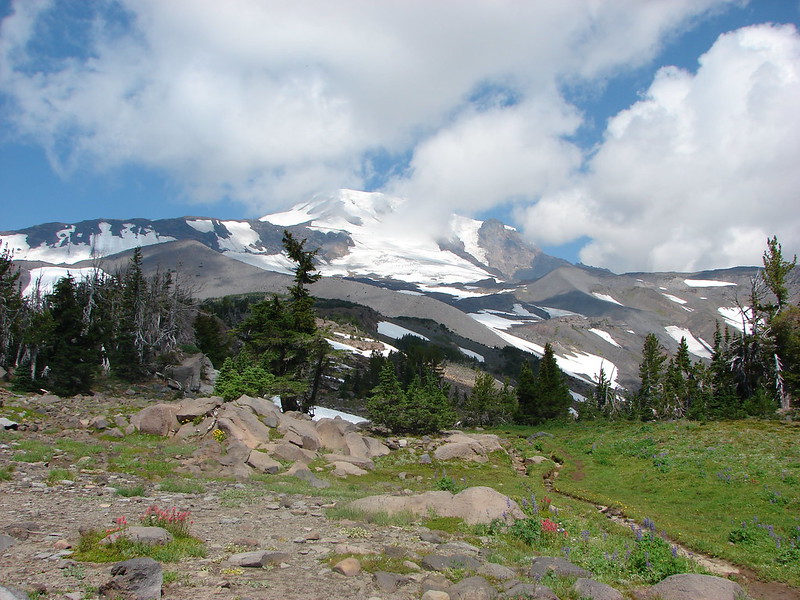
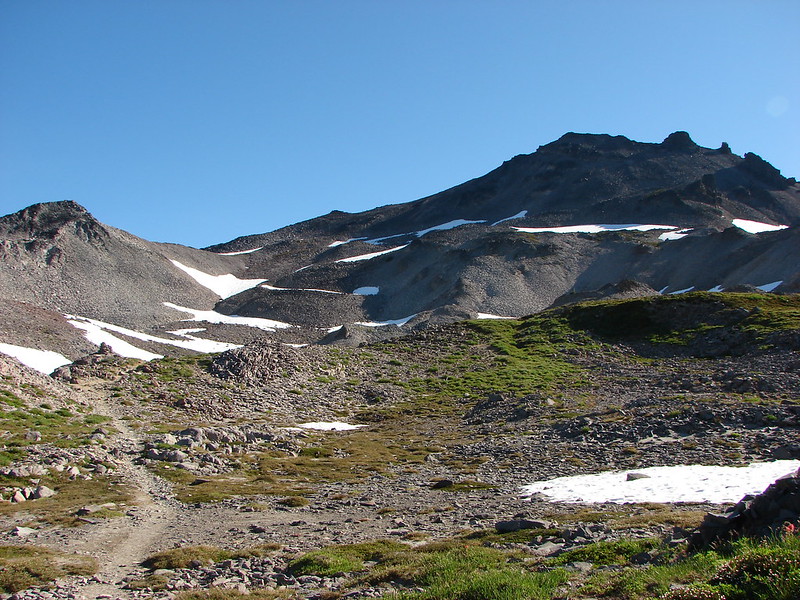
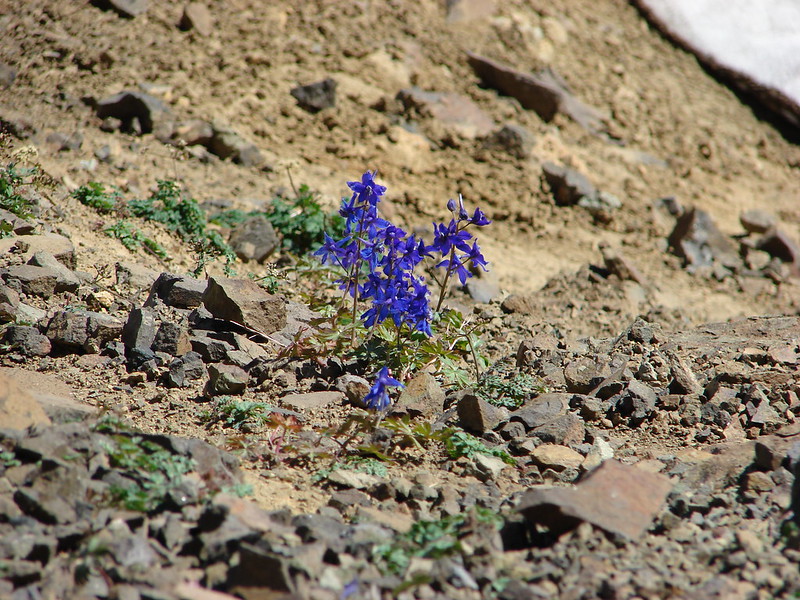
After a yummy breakfast of Mountain House Biscuits and Gravy we headed up to the PCT once again but this time headed left (North) toward Old Snowy Mountain. As we approached the mountain we left the meadows behind for more rocky terrain dotted with lingering snowfields. The flowers were not completely left behind though.

DSC03632

DSC03636

DSC03637

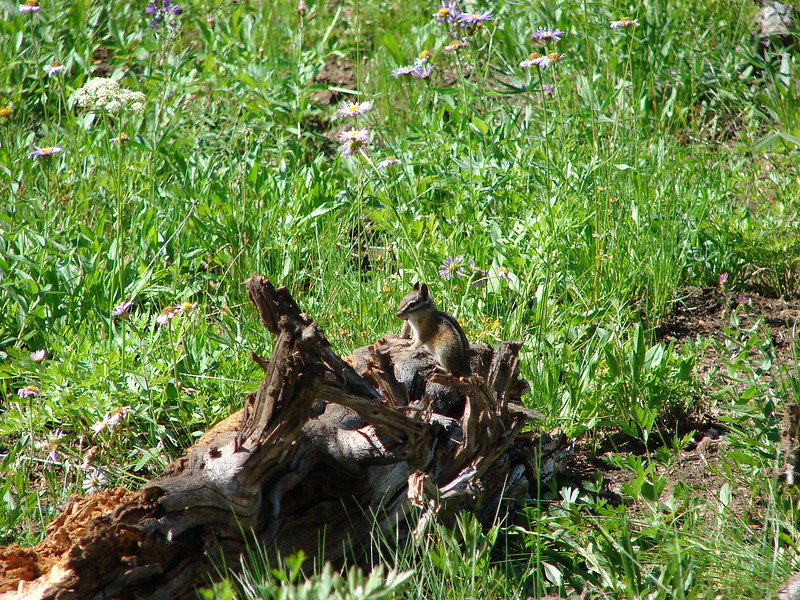
We spotted a ground squirrel that appeared to be sitting on a ledge enjoying the view along with its breakfast. The ledge it was on looked out over Goat Lake to Hawkeye Point with Mt. Rainier towering behind.

DSC03639

DSC03642

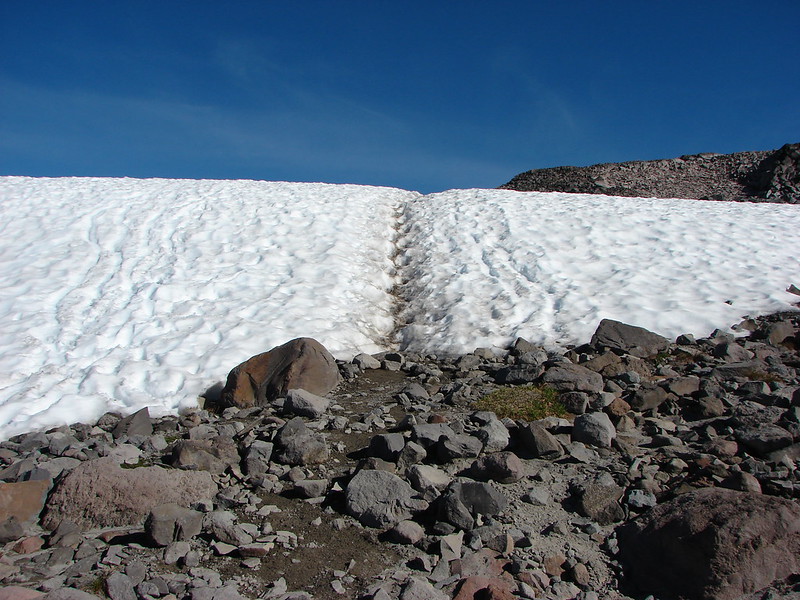
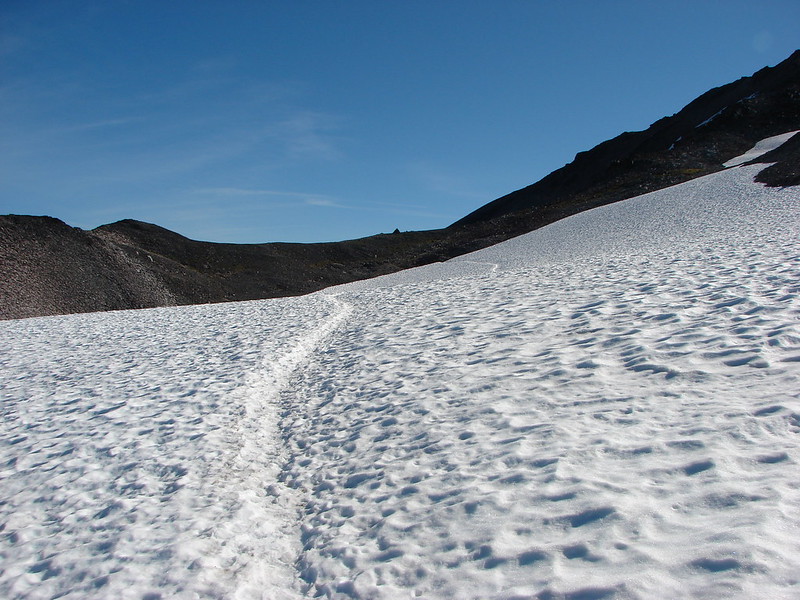
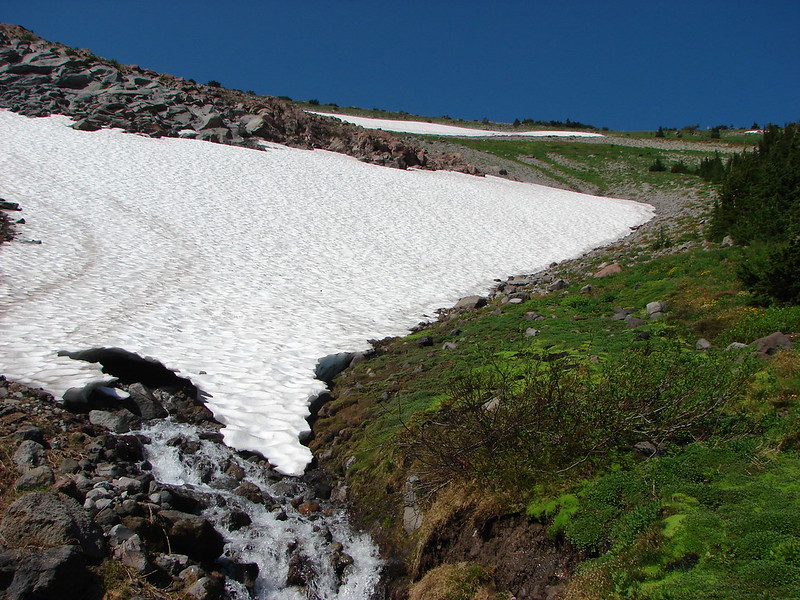
The trail crossed several snowfields but unlike those we encountered the day before the trail was easy to follow and none were too steep.

DSC03655

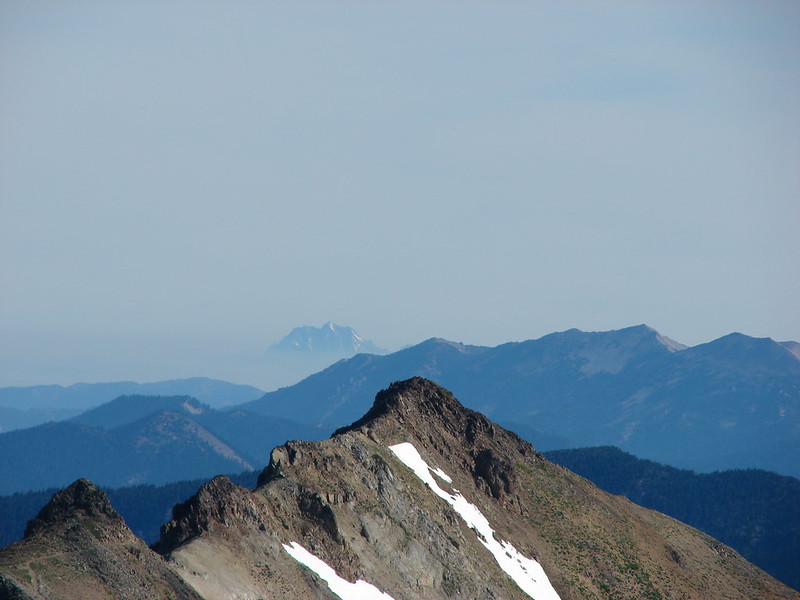
The views were great in every direction and we were able to spot a new mountain to the North – Mt. Stuart.

DSC03659

DSC03669

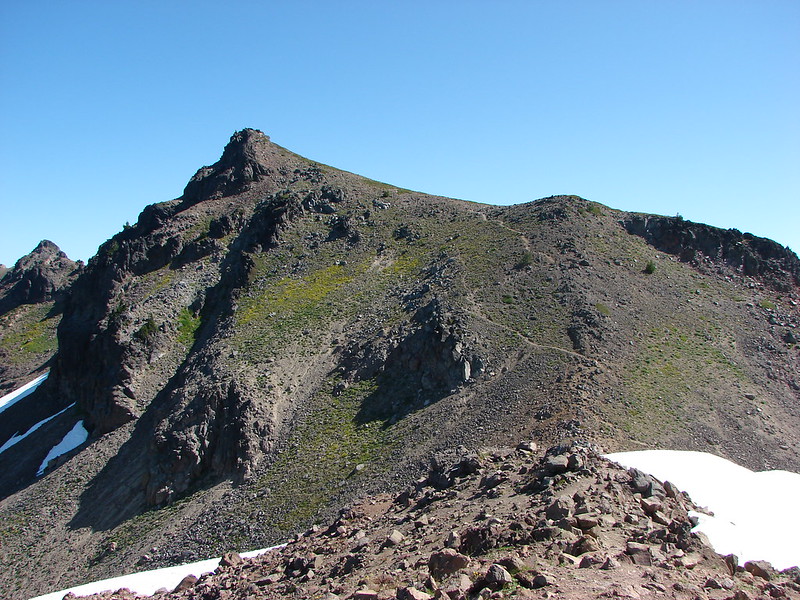
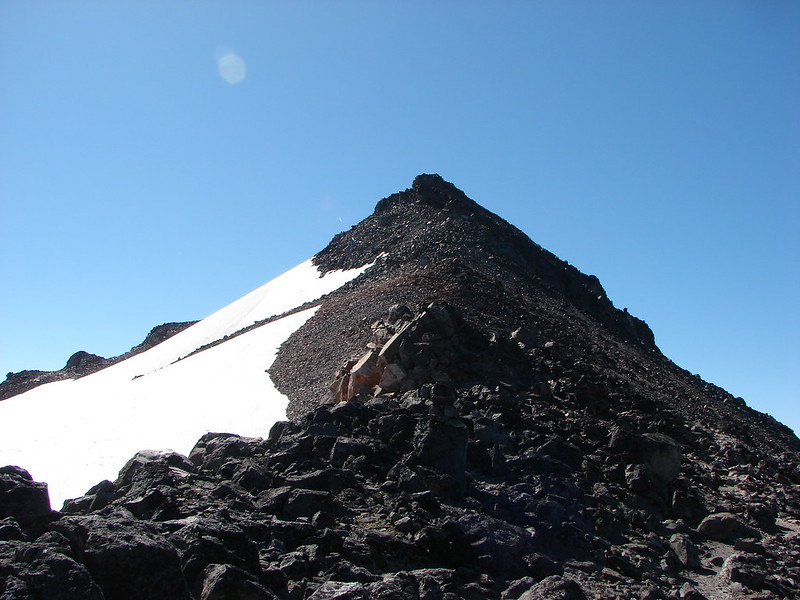
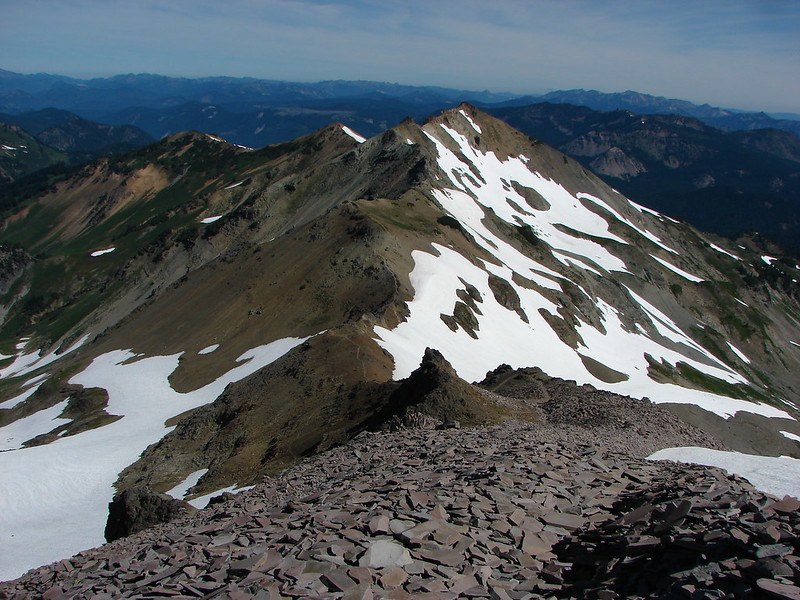
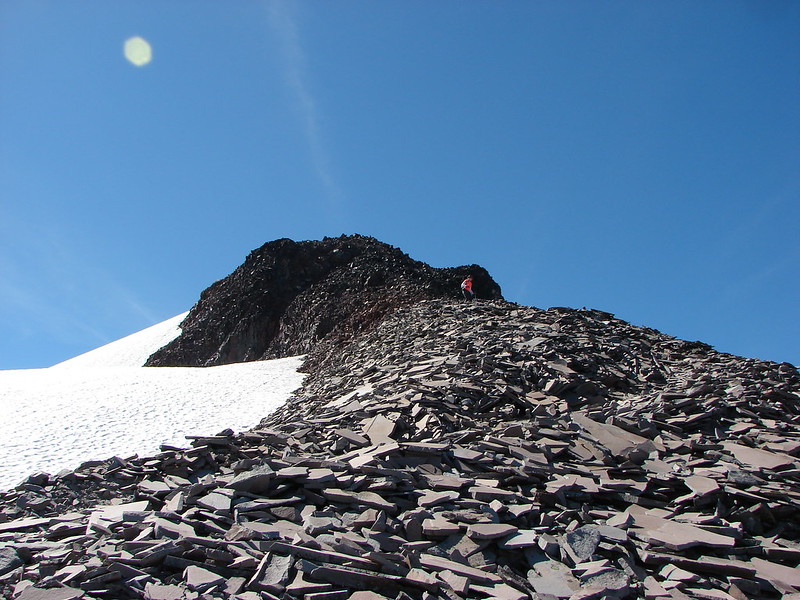
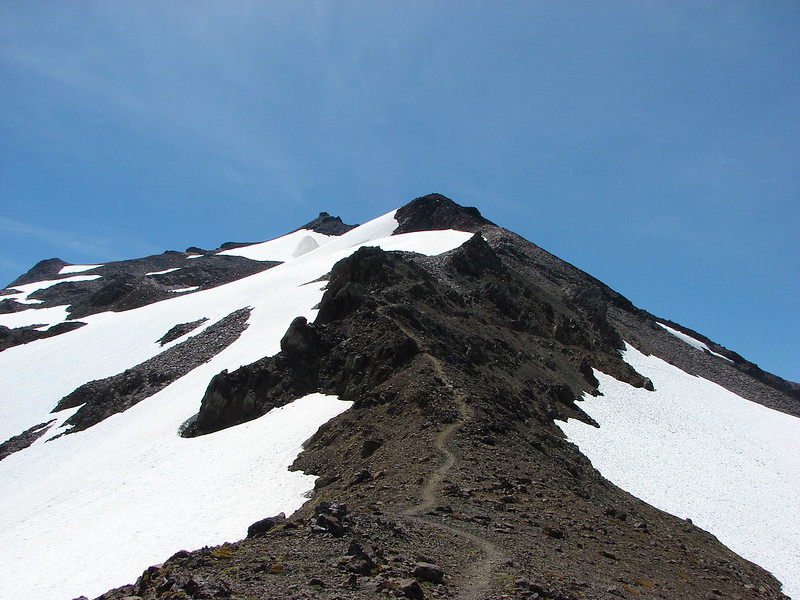
The PCT eventually splits with a hiker bypass climbing up higher on the side of Old Snowy to avoid lingering snowfields on a steep, exposed hillside. We took the bypass having seen the snow fields from our exploration of Hawkeye Point the day before, plus we had considered climbing Old Snowy Mountain and the bypass would lead past that trail. When we reached the junction for the summit of Old Snowy we could only make out the lower portion of trail. After the previous days exploits we decided against trying to climb it then and figured we could always try it on the way back past.

DSC03683

We found out later that the crest of the bypass trail is the highest point of the Pacific Crest Trail in the state of Washington at 7230′.

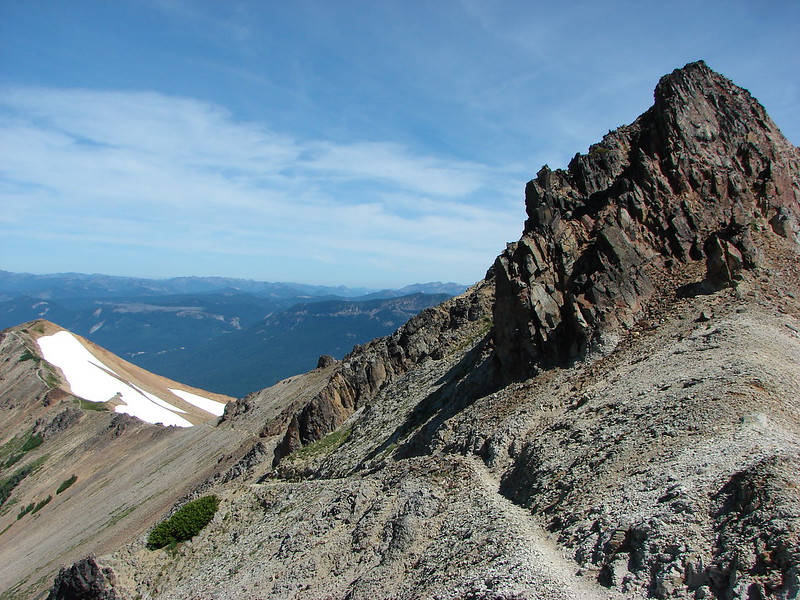
From the crest the PCT descends to “The Knife” before reaching Elk Pass where we had planned to turn around. As we began to descend though we got a good look at the trail ahead.

DSC03691

It was the freakiest looking trail we had encountered and for the first time I wasn’t sure I could do it, but after having a couple of thru-hikers pass by and survive we decided to go for it.

DSC03692

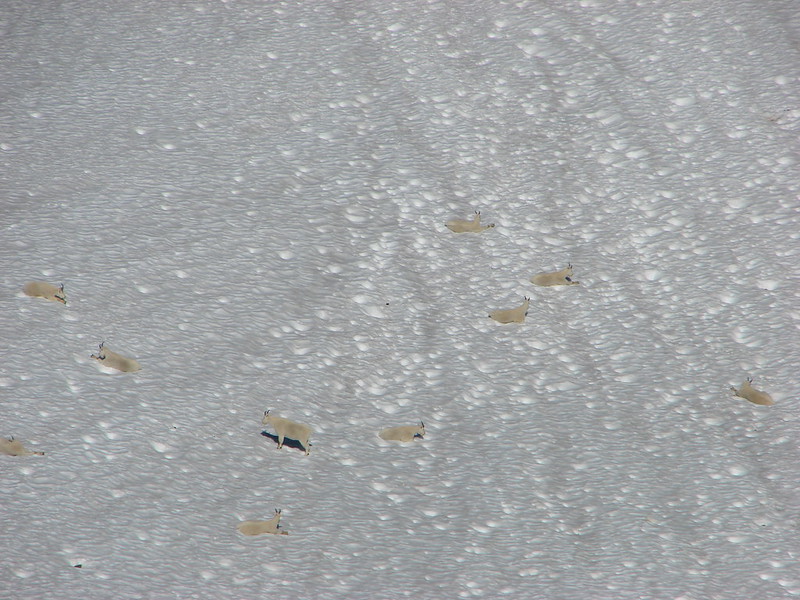
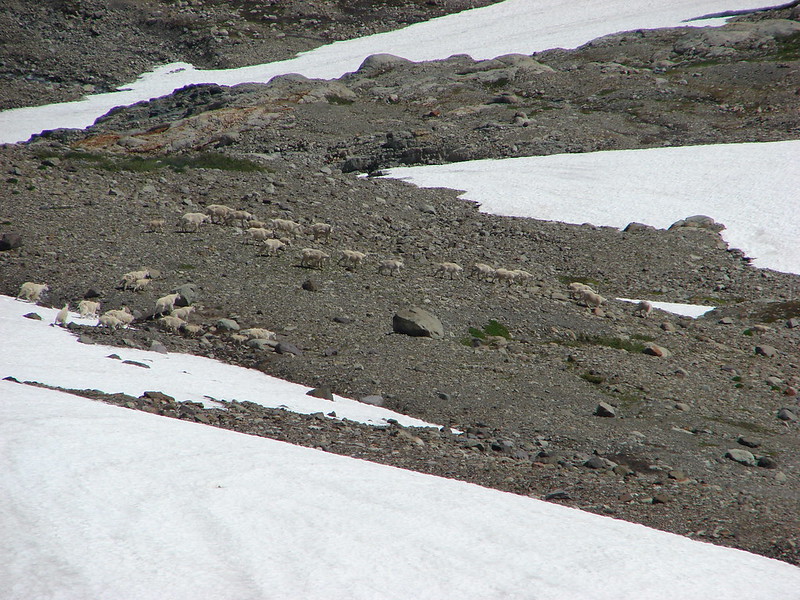
It was nerve racking at first but the trail was good and the views better. We spotted flowers and wildlife all around including a large group of mountain goats in the valley to our right.

DSC03698

DSC03705

DSC03725

DSC03709

Soon we could see Packwood Lake in the valley to our left.

DSC03758

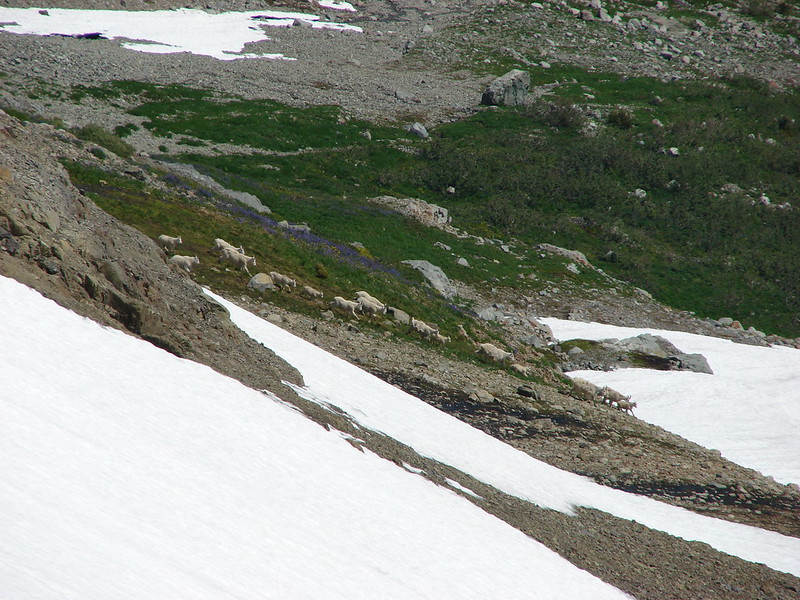
Also in that valley was another herd of goats.

DSC03769

DSC03772

We decided to turn around prior to reaching Elk Pass when we reached a crest and realized that we’d have to climb back up several hundred feet if we continued on and we already had a good climb ahead of us to get back up to the PCT high point.

PCT down to Elk Pass

DSC03830

PCT up to the crest

DSC03906

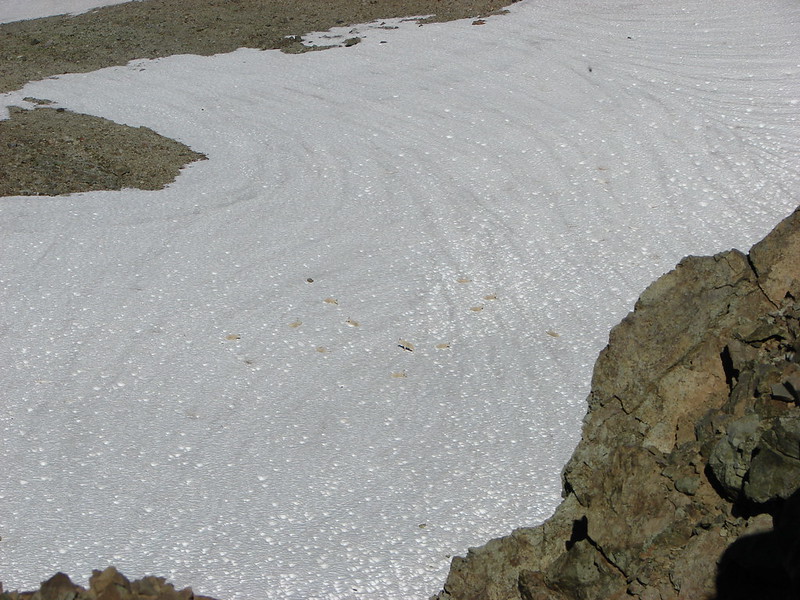
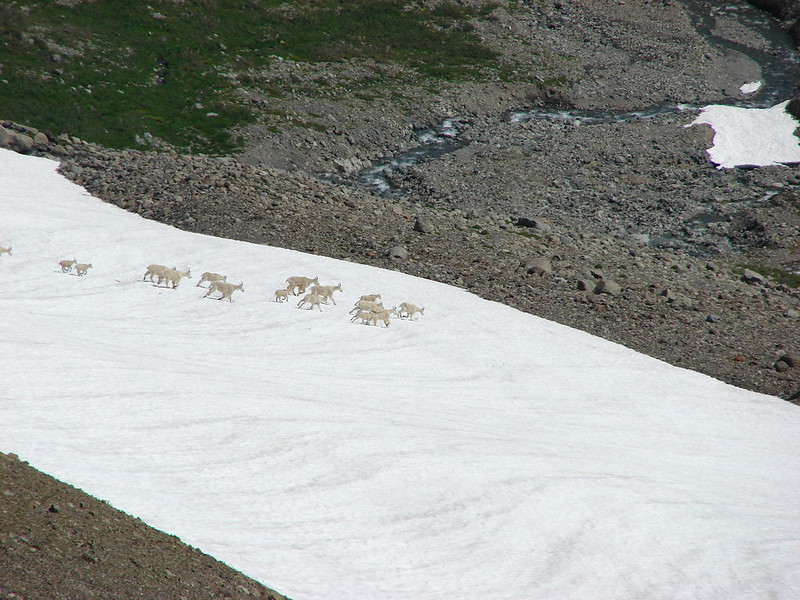
As we were returning the first group of goats we had seen suddenly started to dash across the snow. A second group came racing down from a higher meadow joining the first group.

DSC03887

DSC03895

DSC03900

We don’t know what spooked them but it was fun to watch them run.

When we finally got back up to the crest the trail up Old Snowy was easy to see. There was a line of people hiking up and down. Between the crowds and our tired legs we decided we’d done enough climbing for the day and headed back to Alpine. Things had gotten crowded in the wilderness as it was the weekend and a lot of people had shown up. Most of the camp sites were now taken so we stuck close to ours until we turned in for the night after the Moon had risen.

DSC04013

We set our phones to wake us at 5am on our last day so we could get a nice early start. Another amazing sunrise greeted us as we packed up our gear.

DSC04018

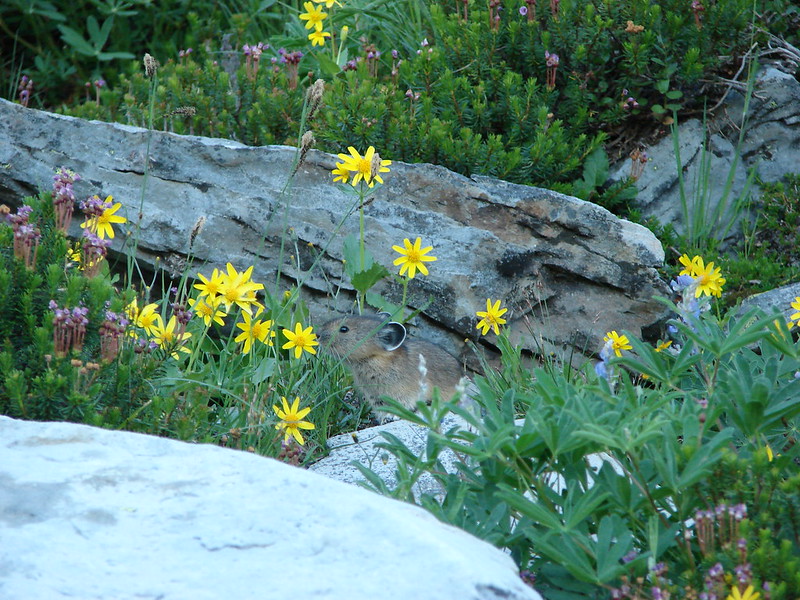
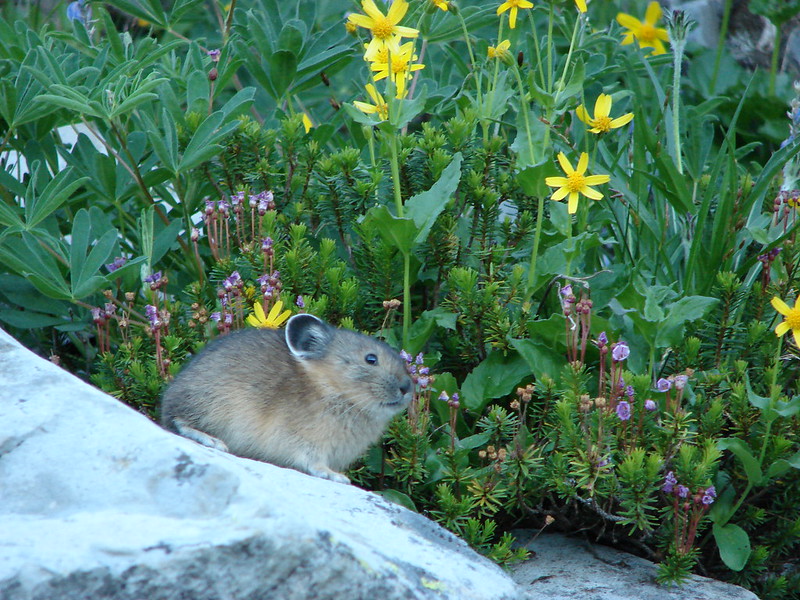
We took the Lily Basin Trail toward Goat Lake and were greeted by a friendly little Pika near Slide Falls.

DSC04026

DSC04030

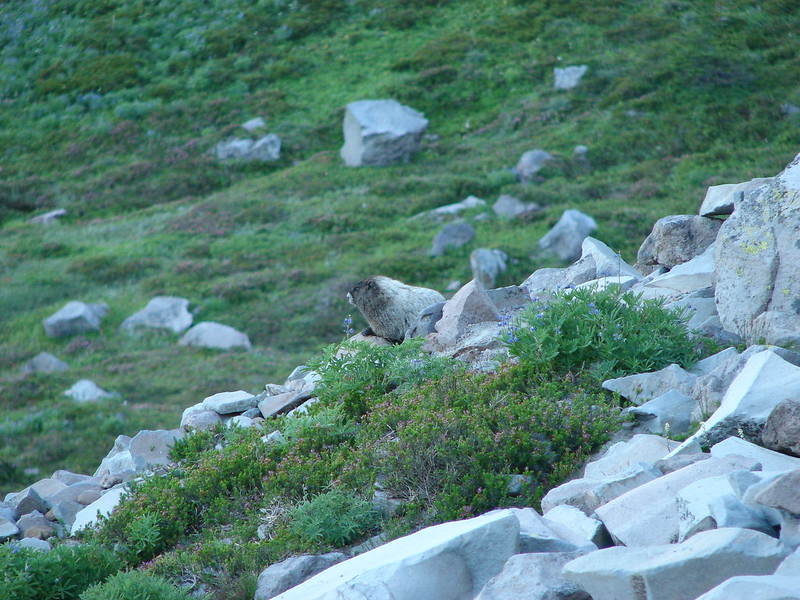
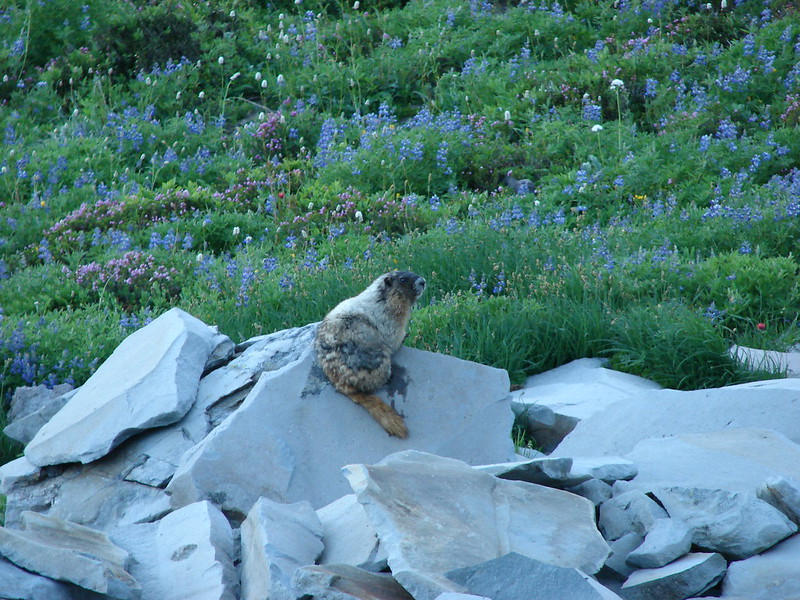
The marmots were also out to send us off.

DSC04036

DSC04037

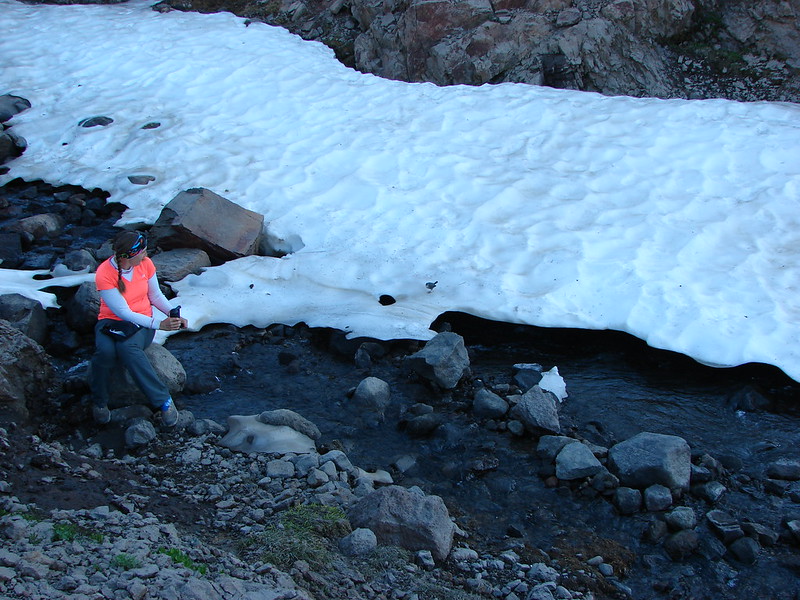
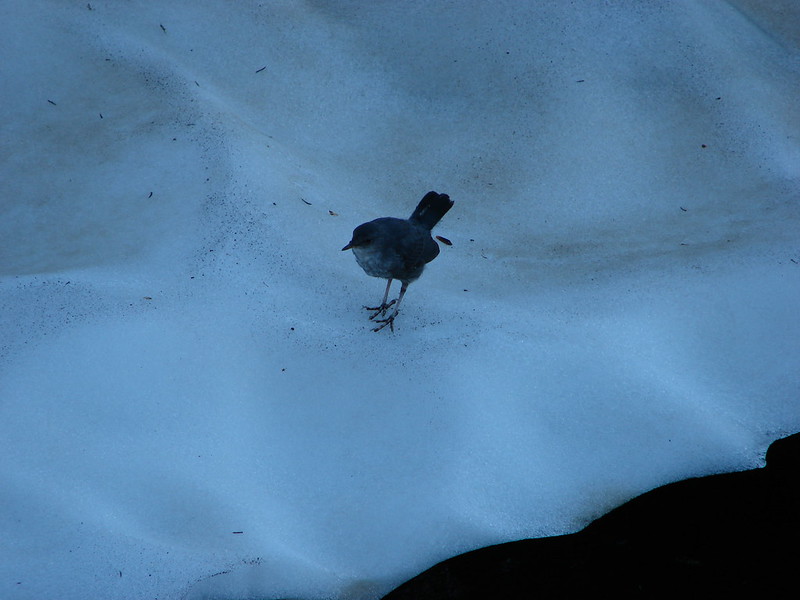
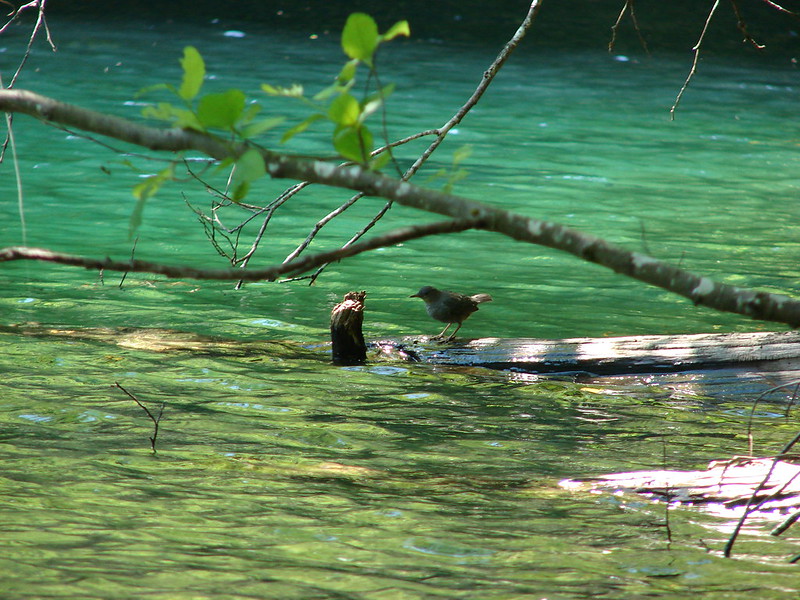
We stopped at the lake to get some water out of Goat Creek and were paid a visit by a pair of Ouzels.

DSC04057

DSC04053

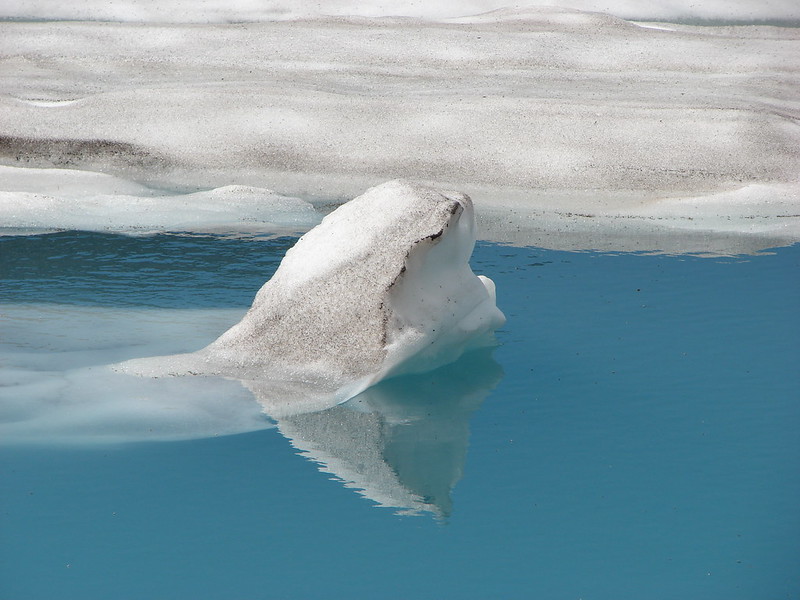
Goat Lake had refrozen a little overnight.

DSC04058

DSC04059

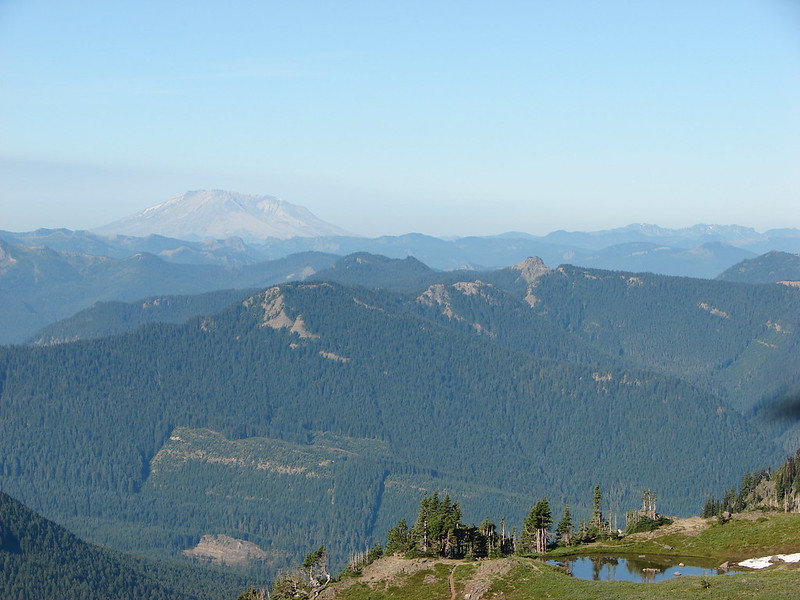
At the junction with the Goat Ridge Trail we took it and dropped down into the Jordan Basin. The best views we’d had of Mt. St. Helens were had as we descended into the basin.

DSC04075

Of course there were wildflowers.

DSC04081

And a lot of crickets or grasshoppers.

DSC04082

There were flowers in this basin that we hadn’t seen at all in the other parts of Goat Rocks.

DSC04105

Soon we were far enough down to no longer be able to see the mountains. It was a bittersweet hike as we hated to leave this beautiful place but after four days a shower was sounding real nice. We got one last glimpse of Mt. Rainier, Mt. Adams, and Goat Rocks before entering the trees for good.

DSC04158

DSC04172

DSC04170

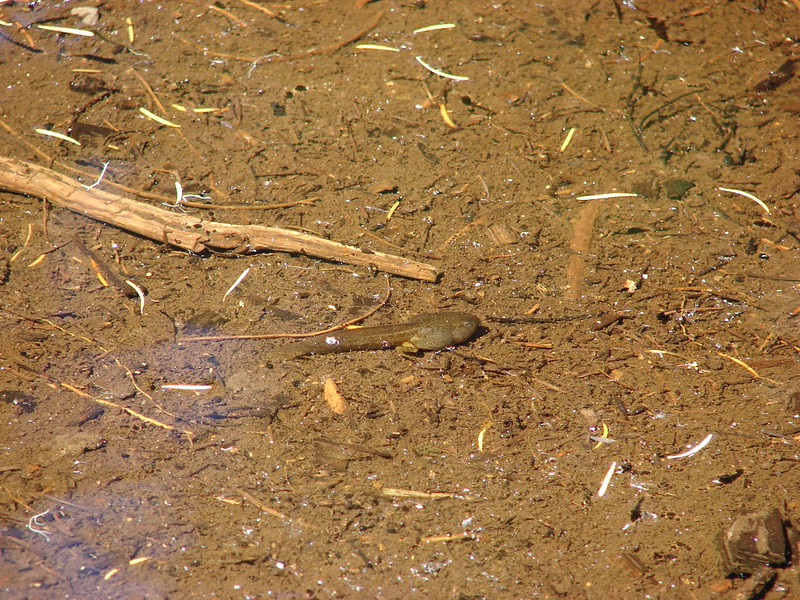
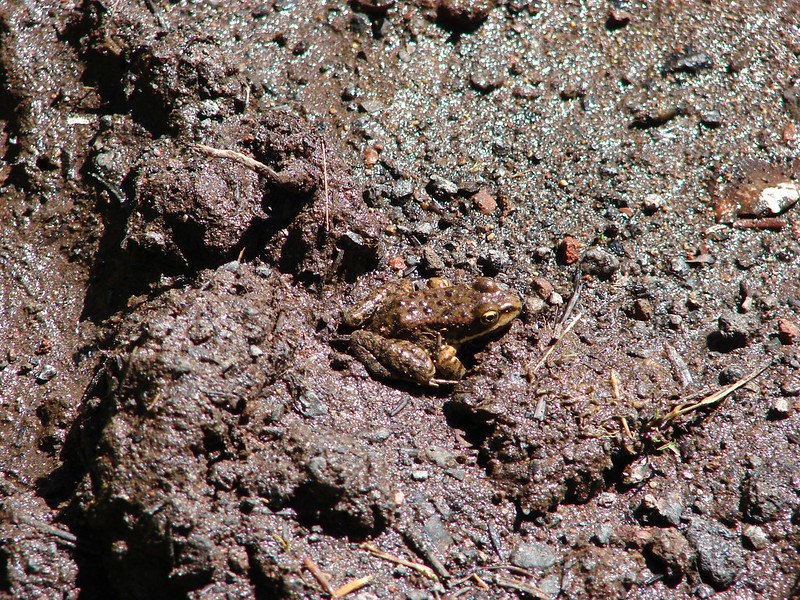
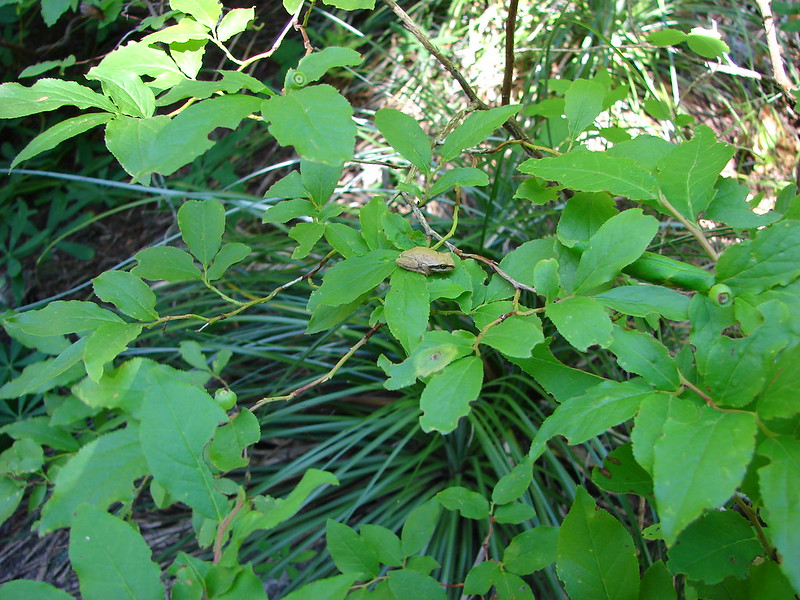
The Goat Ridge Trail would take us to the Berrypatch Trailhead and from there a .6 mile connector trail would bring us back to the Snowgrass Trail just .1 miles from our car. We were moving quickly along the connector trail when the wilderness gave us one last surprise. A small tree frog sitting on a huckleberry bush next to the trail.

DSC04199

Our time was up but we were already thinking of our next visit. We can’t wait to go back and explore more of the wilderness. The only negative to the entire trip was witnessing the disregard for the area that some of the people showed. There were people traipsing through the meadows and setting up tents on the vegetation. Such a beautiful place to visit will only stay that way if people take care of it so please go and visit but stay on the trails and camp on the brown ground not the green. Happy Trails.

UPDATE on the llama.  The llama had indeed either been left or escaped and was seen multiple times throughout the summer.  She was finally rescued this fall and is safe and doing well according to this report: http://www.rattlesnakeridgeranch.com/documents/Rescue_in_the_Goat_Rocks_Wilderness.pdf


Flickr albums: Day 1-https://www.flickr.com/photos/9319235@N02/sets/72157646295294436/

Day 2-https://www.flickr.com/photos/9319235@N02/sets/72157646295758026/

Day 3-https://www.flickr.com/photos/9319235@N02/sets/72157645936565989/

Day 4-https://www.flickr.com/photos/9319235@N02/sets/72157645937647578/

Categories
High Cascades Hiking Mt. Hood Area Oregon Trip report

Pinnacle Ridge to Elk Cove – Mt. Hood

One of the trails on our backpacking to-do list is the 39.3 Timberline Trail around Mt. Hood. Until we get around to that trip though we settle for small sections at a time. We have managed to cover approximately 25 of those miles now with the most recent mile coming on our visit to Elk Cove and the Coe Branch.

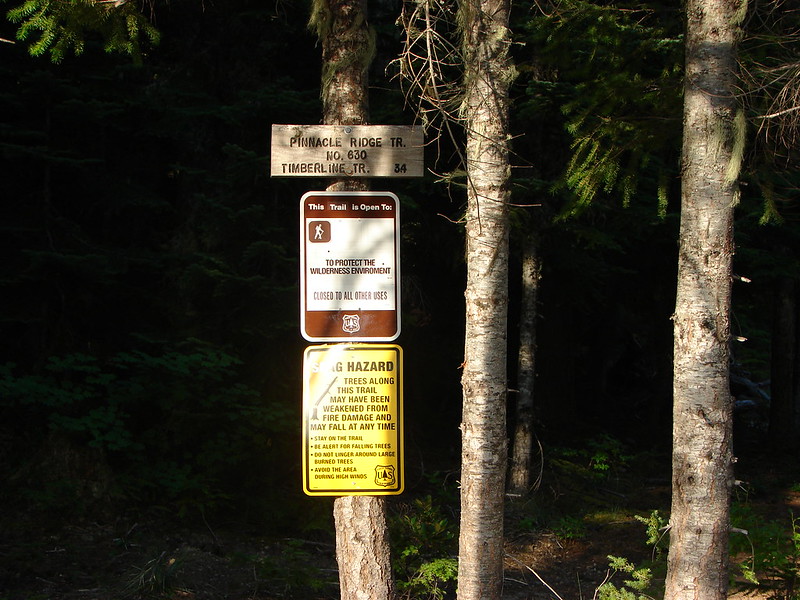
There are a number of trails that lead to the Timberline Trail and for this hike we decided to try the Pinnacle Ridge Trail. This trail climbs just over 2000′ in 3.4 miles to the Timberline Trail between Wy’East Basin and Dollar Lake. http://www.fs.usda.gov/recarea/mthood/recarea/?recid=53270

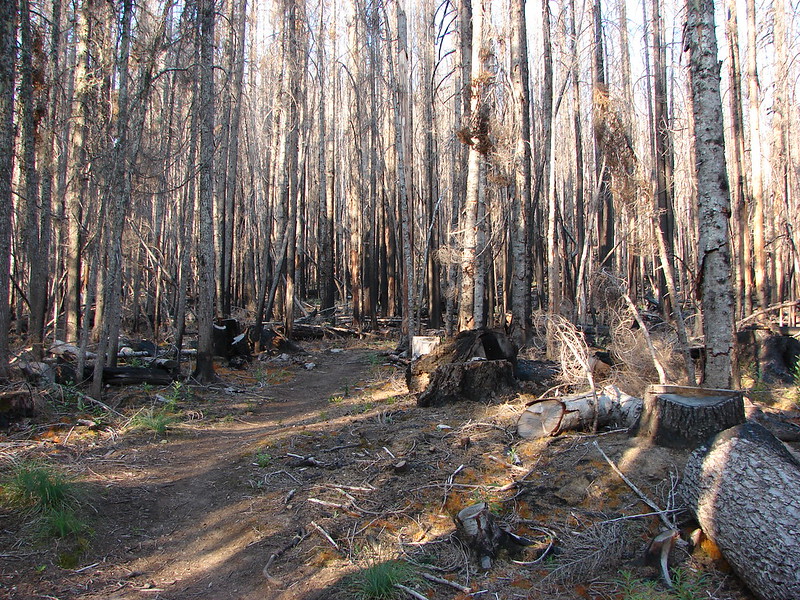
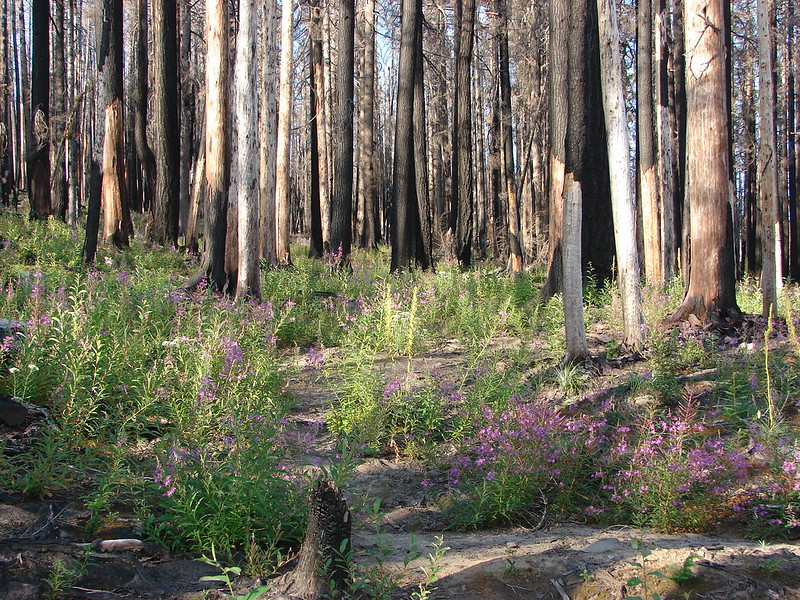
The trail passes through forest burned in the 2011 Dollar Lake Fire. Vegetation is starting to return in some areas but the first section of the trail was still pretty barren.
DSC02056
DSC02058
DSC02066
DSC02063

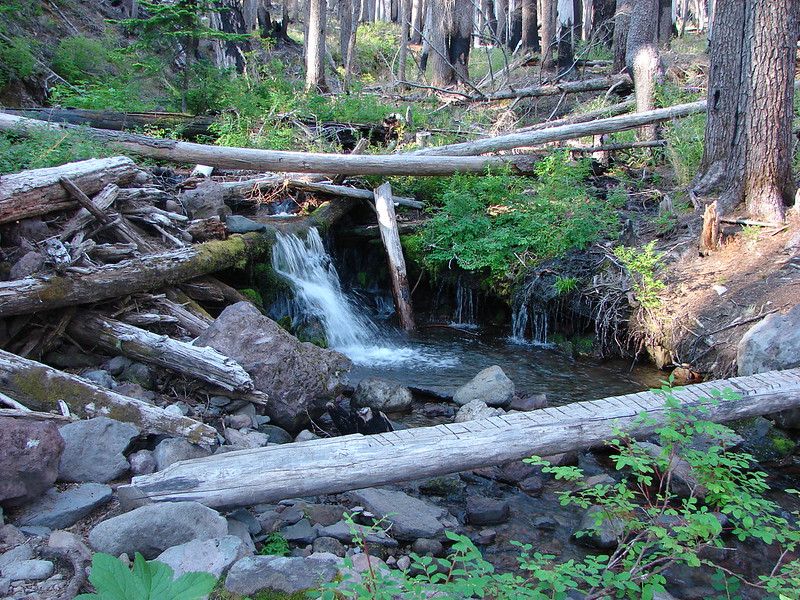
A pleasant surprise was a small stream with a picturesque crossing.
DSC02067
DSC02068

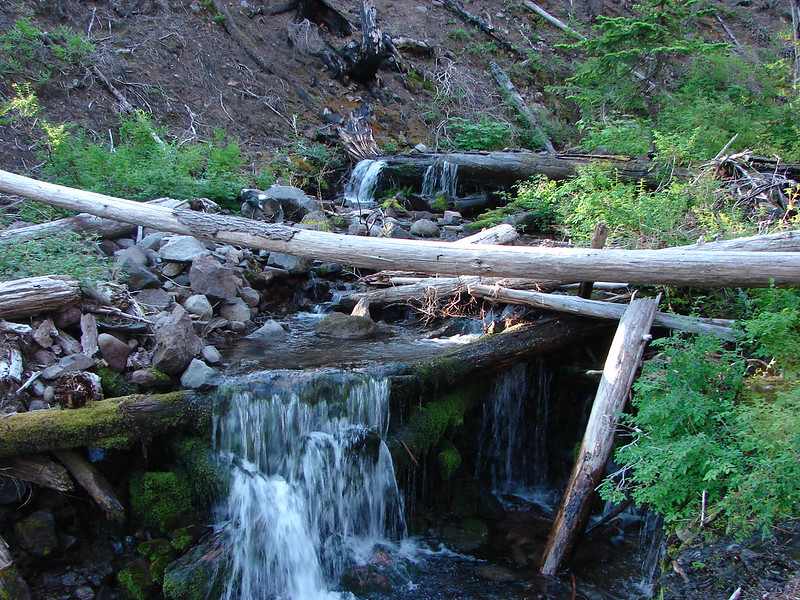
We noticed a possible little waterfall downstream and left the trail to see what we could find. It turned out to be a lovely pair of little falls.
DSC02072

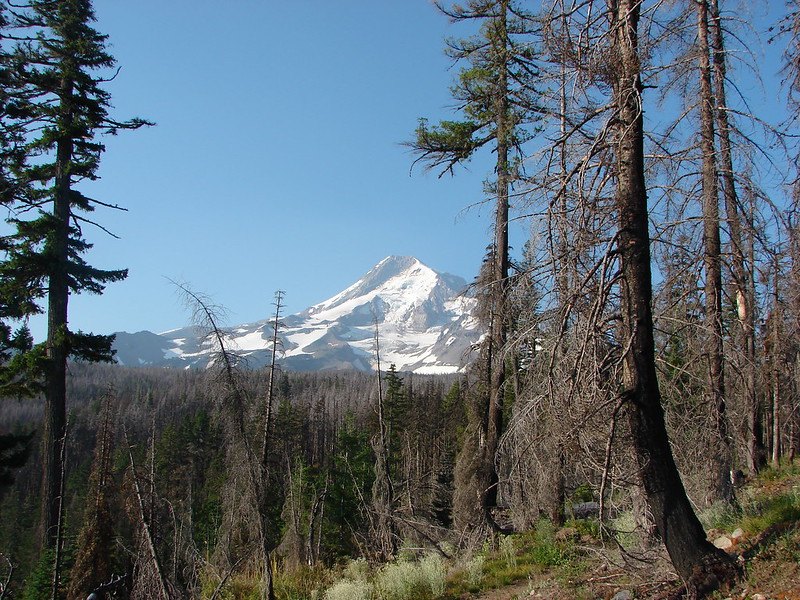
The trail enters the Mt. Hood Wilderness just after passing a small rock slide and shortly after we got our glimpse of The Pinnacle, the rock formation the trail is named after.
DSC02075
DSC02076
DSC02081

The forest began to get greener as we passed The Pinnacle. The trees had still been burned in the fire but a series of springs and bogs created a green undergrowth.
DSC02088
DSC02089
DSC02090
DSC02098

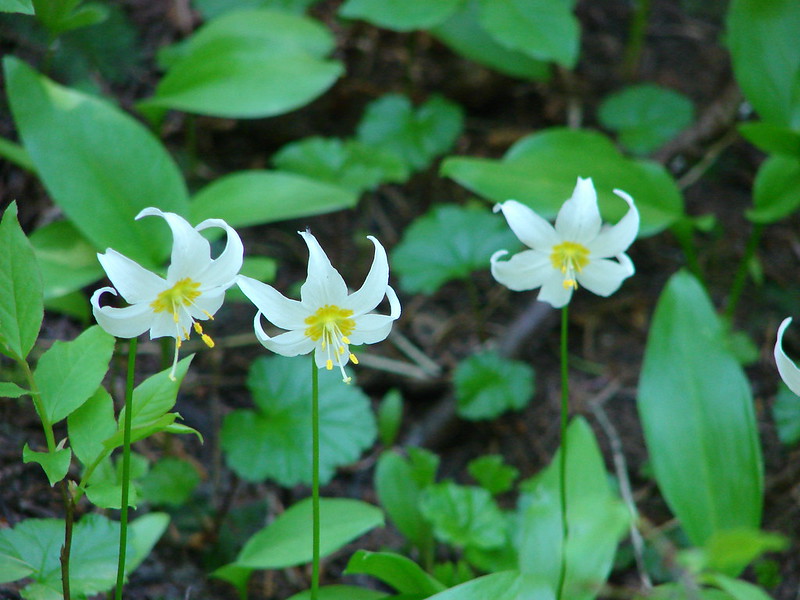
After making our way around a particularly muddy area we started encountering some unburnt forest. Mountain heather and avalanche lilies greeted us along with some hungry mosquitoes.
DSC02109

The bugs were pretty bad for a short stretch but when we met the Timberline Trail they relented. We had been on this portion of the trail on our trip to Barret Spur last year. https://wanderingyuncks.wordpress.com/2013/08/15/barrett-spur-via-the-mazama-trail/ We retraced our steps from that visit passing the side trail to Dollar Lake and continuing around a ridge end to one of the more impressive views we’ve seen from the Timberline Trail. One minute the mountain is hidden and the next you are staring straight at it.
DSC02138

The flower display along this portion of the trail was very impressive.
DSC02148
DSC02155
DSC02169
DSC02158

Melting snow feeds several streams that help keep Elk Cove full of color. The contrast of Mt. Hood looming over the green meadows is breathtaking.
DSC02175
DSC02179

We followed a small trail along the largest creek up through the wildflower filled meadows toward the mountain. The flowers along the creek were especially colorful.
DSC02190
DSC02207
DSC02211
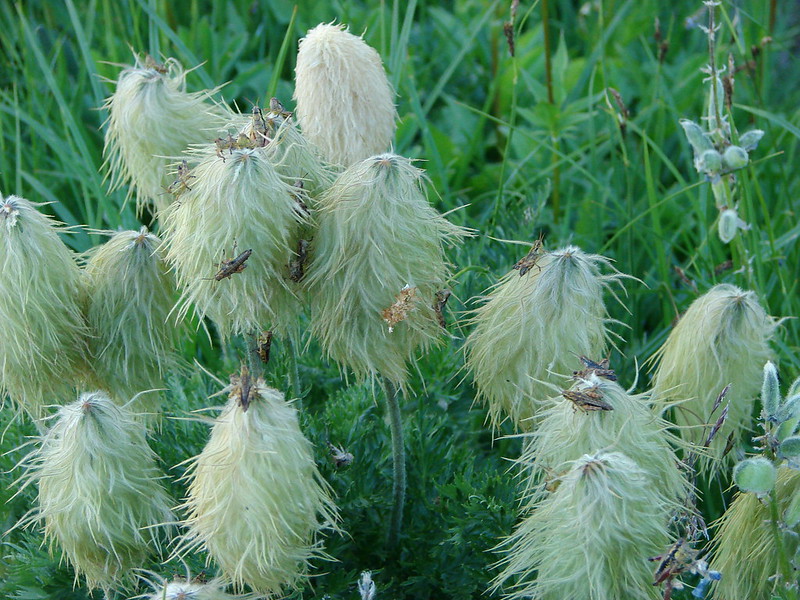
I managed to get up to the snowfield that was feeding the stream. Where the view back down at the meadow was filled with western pasque flowers and paintbrush.
DSC02215
DSC02219
DSC02222

We returned to the Timberline Trail and began to make our way through the rest of Elk Cove. There were several meadows, each with it’s own variety of flowers and view of Mt. Hood.
DSC02243
DSC02245

DSC02249
DSC02253

Our original plan was to continue on the Timberline crossing over the Coe Branch and continuing on to Compass Creek Falls where we would turn around. On the far side of Elk Cove we reentered the trees where there was still an impressive amount of flowers.
DSC02265
DSC02276
DSC02272

As we came around a ridge end we got our first glimpse of the Coe Branch as it flowed down from the Coe Glacier.
DSC02291

Even from up above we could tell by the sound that the Coe Branch was flowing very swiftly. When we arrived at the water we discovered it was already swollen due to the rapid snow melt caused by a very hot morning. We scanned for a good crossing point and found a couple of possibilities but in the end decided to call it good and make this our turn around point.
DSC02306
DSC02307
DSC02320

Since we hadn’t made it to Compass Creek we did a little exploring down the Elk Cove Trail, another possible route to the Timberline Trail. Camping is prohibited in the meadows of Elk Cove but there were several nice campsites a short distance down this trail that had views and surroundings like this:
DSC02343
DSC02340

After checking out several campsites we headed back up the Timberline Trail and out of Elk Cove. We decided to take the quick .2 mile side trip to visit Dollar Lake at the last minute as we passed by the hard to spot trail.
DSC02386

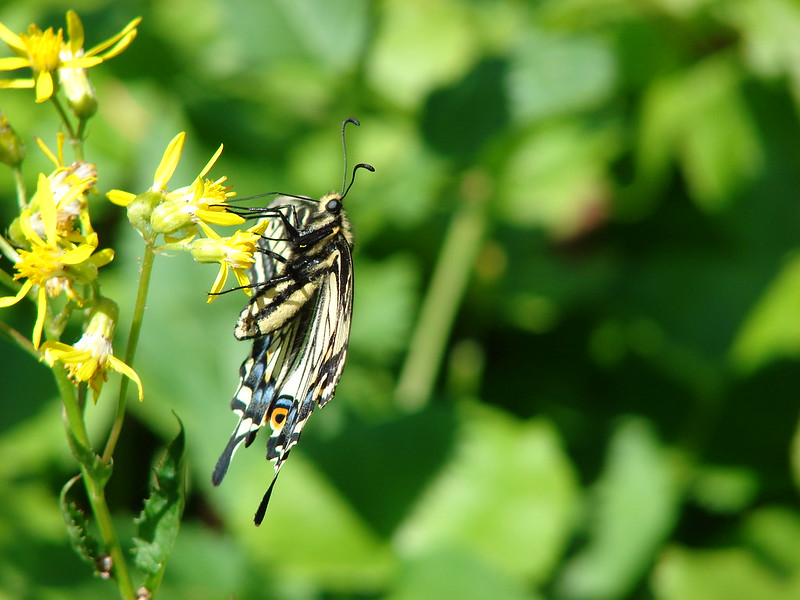
The return trip from Dollar Lake was pretty uneventful. The mosquitoes had apparently had enough of the heat and left us alone for the most part. We did spot a very focused swallowtail butterfly that didn’t seem to be the least bit concerned with it’s picture being taken.
DSC02417
DSC02424
DSC02427
DSC02431

When we arrived back at the parking area we got one last look at Mt. Hood.
DSC02448
Another day hiking on the Timberline Trail had only reenforced our desire to tackle the whole loop someday. Happy Trails!

flickr: https://www.flickr.com/photos/9319235@N02/sets/72157645744404417/
facebook: https://www.facebook.com/media/set/?set=a.10204606593031957.1073741896.1448521051&type=1

Categories
Hiking Middle Santiam Old Cascades Oregon Trip report

Donaca Lake – Middle Santiam Wilderness

**Note the 2024 Pyramid Fire burned a portion of this hike.**

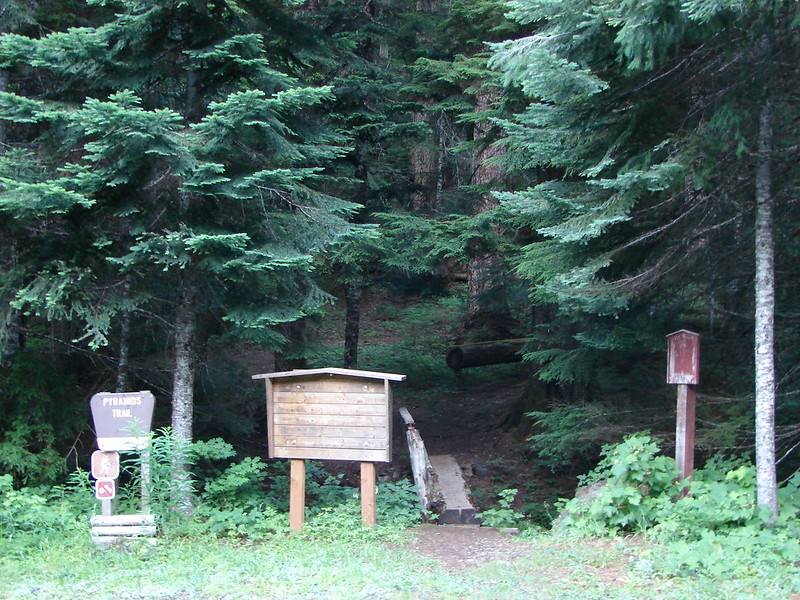
We recently returned from our final overnight backpacking “test run”. Our destination for this round was Donaca Lake in the Middle Santiam Wilderness. The wilderness, established in 1984, consists of 8900 acres in the Willamette National Forest. There were several potential trailheads that we could have started at and we chose to park at the Pyramids Trail. http://www.fs.usda.gov/recarea/willamette/null/recarea/?recid=4334&actid=64

DSC01797

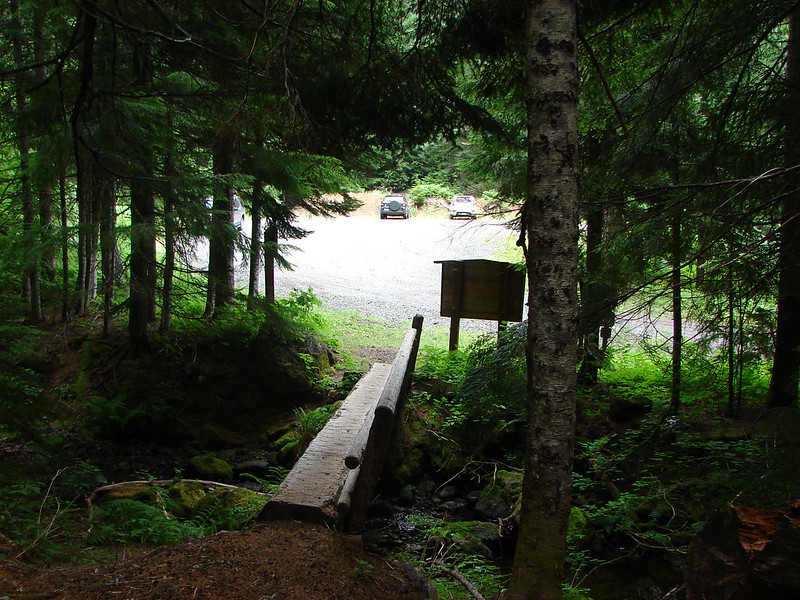
This trailhead left us with the least amount of driving time, but it was by no means the shortest hike to Donaca Lake. That was okay with us since we were wanting the extra distance to get used to hiking with our packs over 12 miles at a time, and coming from this trail we would be able to do the majority of the Middle Santiam River hike described in William L. Sullivan’s 100 Hikes in the Central Oregon Cascades. After crossing a little footbridge we turned left on the South Pyramid Creek Trail which traversed the SE flank of the South Pyramid for 1.5 miles where it briefly joined road 572 at a trail junction. On the opposite side of the road was the Crescent Mountain Trail. This was the opposite end of the trail we had taken up to the top of Crescent Mountain earlier in the month. The South Pyramid Creek Trail picked up about 10 yards down the road reentering the trees on the same side that we had just exited.

DSC01822

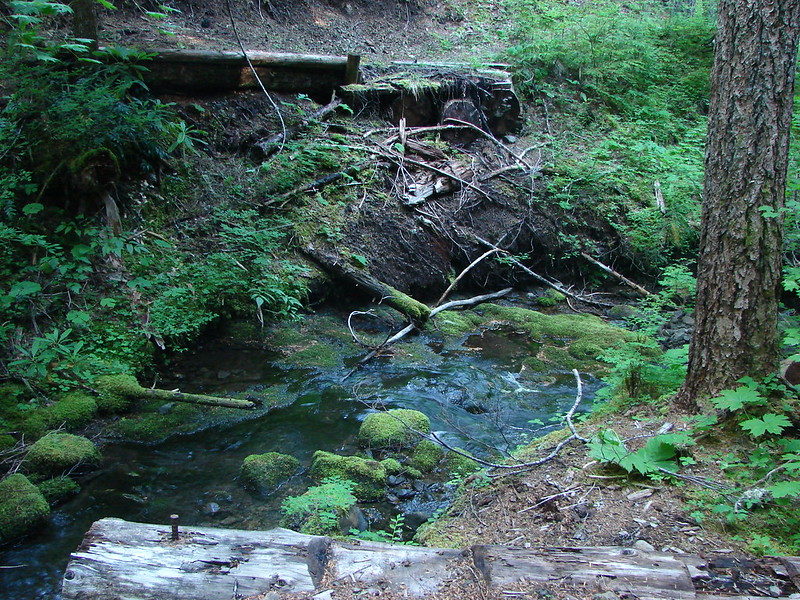
The trail soon began following an unnamed stream downhill toward South Pyramid Creek. We crossed over this stream a couple of times, sometimes on a bridge and other times not.
DSC01828
DSC01833

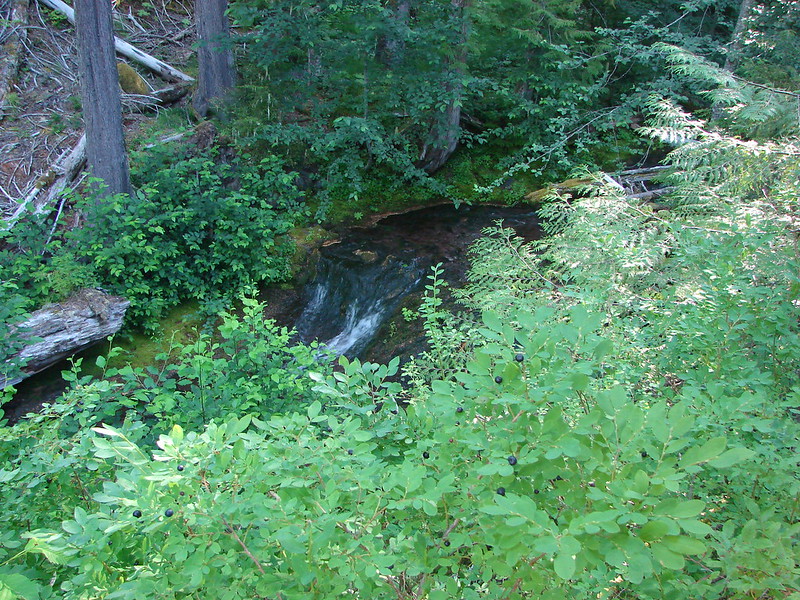
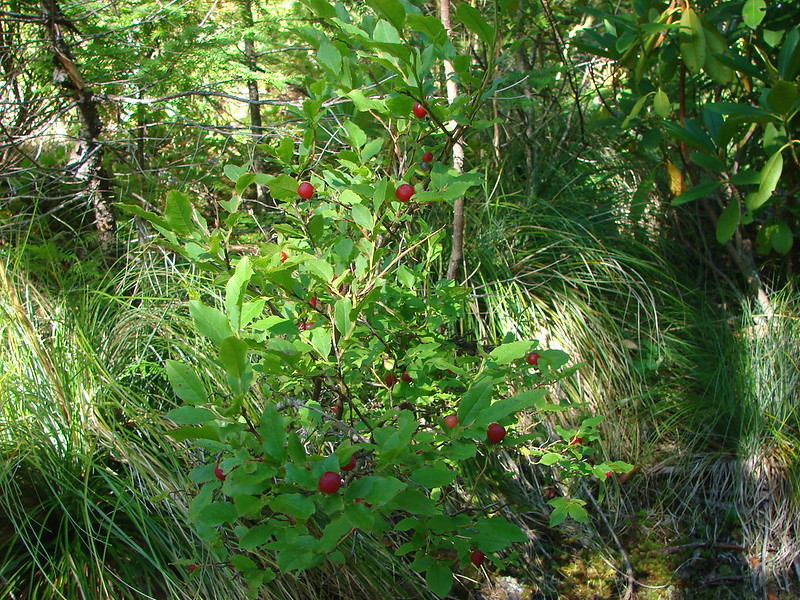
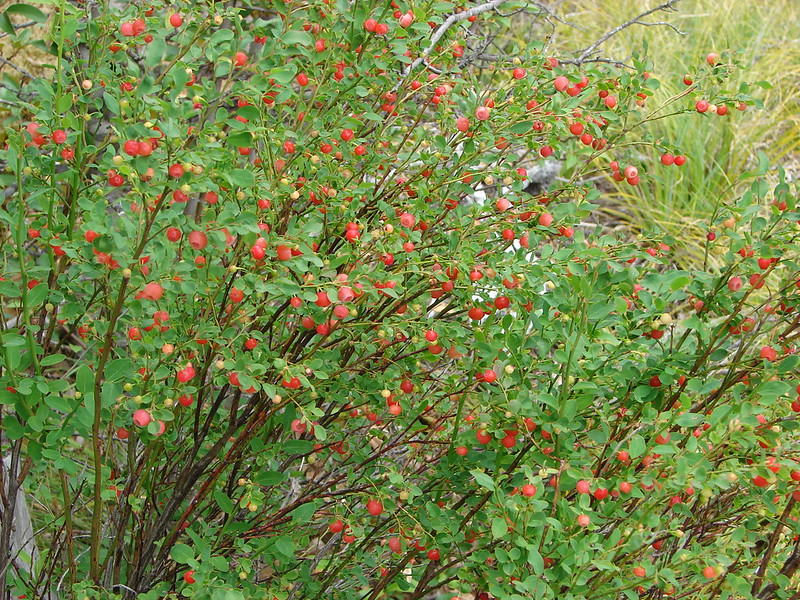
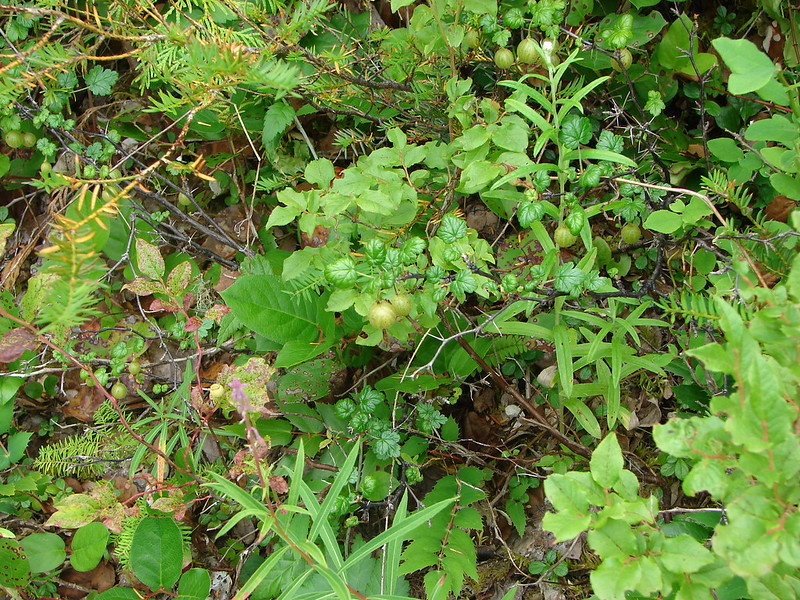
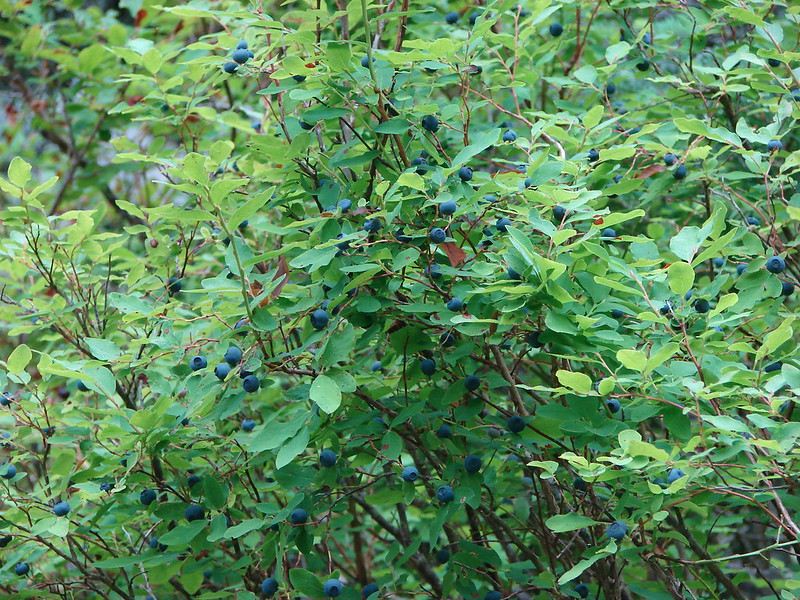
As we neared South Pyramid Creek the forest showed signs of logging activity on our left. This meant a lack of trees and shade, but it also meant there were tons of berries that had taken advantage of the sunlight and disturbed soil. We noticed several different varieties of huckleberries/blueberries, trailing blackberries, and what turned out to be Gooseberries.
DSC01834
DSC01844
DSC02030
DSC01847
Gooseberry

Since we didn’t know what they were for sure we didn’t sample the gooseberries, but the rest of the berries were thoroughly tested. 🙂

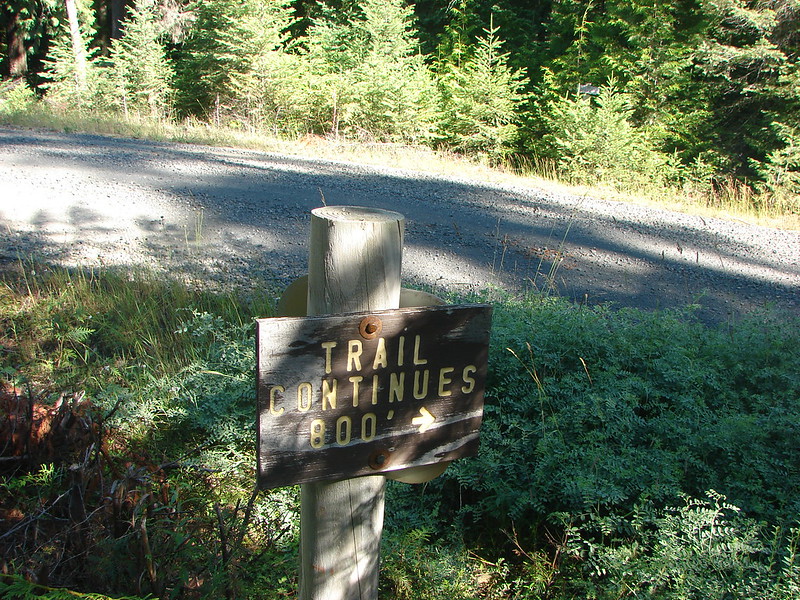
The trail crossed road 2047 where a sign indicated it’s continuation 800′ to the right.
DSC01846
We turned up the road, passed over the creek and started looking for the continuation. We hadn’t really thought out just how far 800′ was and at first we thought we’d passed by the trail since we felt like we’d gone plenty far. We backtracked looking for an sign of the trail and tried pushing through some trees thinking that we might have seen it. Once we stopped for a minute and really considered that 800′ is nearly three full football fields we realized we hadn’t gone far enough so we headed back up the road. I spotted a sign ahead just around a bend and announced that I’d found it, then looked to my left to see I was standing next to a trail and hiker sign. What I had seen was actually a sign for the South Pyramid Horse Camp and I had completely missed the trail.
DSC01848
The trail was much fainter and overgrown in this section. It appeared that the trail had been rerouted at some point which would explain why my maps and Garmin did not show the 800′ road walk and instead showed the trail continuing directly across the road. It would also explain the trail junction that we came to not far from the road. It wasn’t on the Forest Service Topographical Maps I had nor was it shown on the Garmin (in fact both showed that the South Pyramid Creek Trail ceased to exist before reaching the Chimney Peak Trail which was the one we needed. Sullivan’s map showed the trail connecting and so did the Willamette National Forest trail description, but standing at this junction we became a bit confused. There was only one sign at the junction.
DSC01852
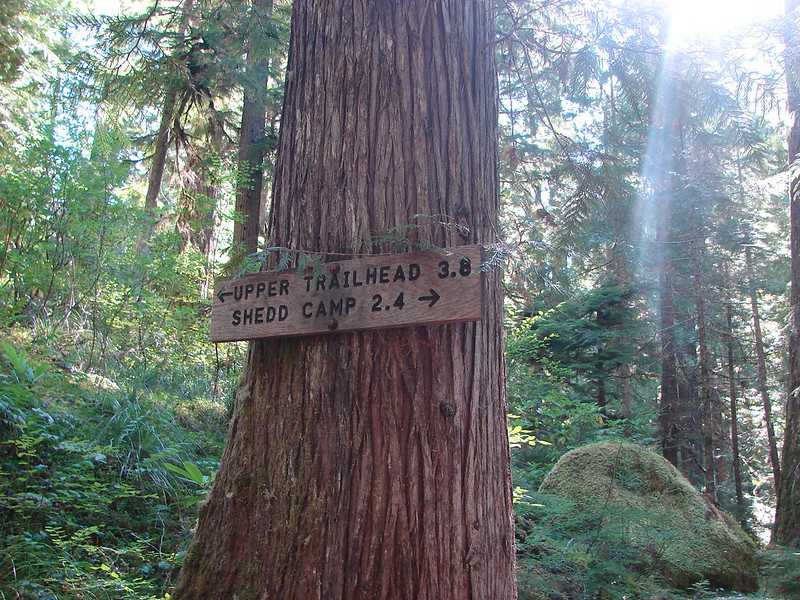
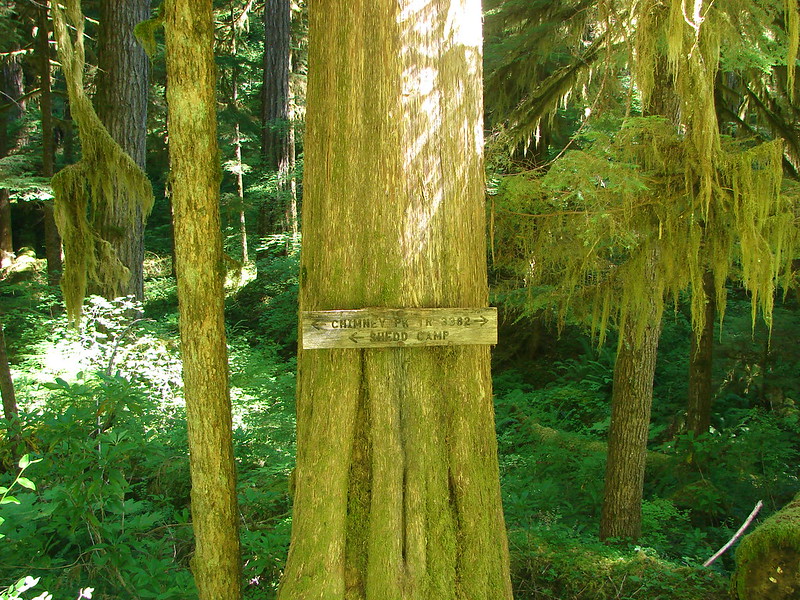
It was on a tree facing away from the direction we’d come. It was a “Y” junction so one trail went up and away to the right and the other headed down to our left. The distances didn’t match up with anything I had seen or read about but I knew we wanted to head toward Shedd Camp. The map in Sullivan’s book showed the South Pyramid Creek Trail intersecting the Chimney Peak Trail .3 miles from the Middle Santiam River and the Shedd Camp Shelter and we had planned to turn left at that point to visit a small waterfall on the river. The 2.4 mile distance listed on this sign just didn’t make any sense though. We headed left wondering if we would magically arrive at the river in .3 miles but after walking for awhile it became apparent that that would not be the case. After approximately 1.5 miles we spotted what I thought was a really random sign pointing back up the trail we’d just come down identifying the trail as the South Pyramid Creek Trail.
DSC02010
After a moment pondering why there would be a sign here we noticed another trail and sign. We had finally arrived at the Chimney Peak Trail.
DSC01867

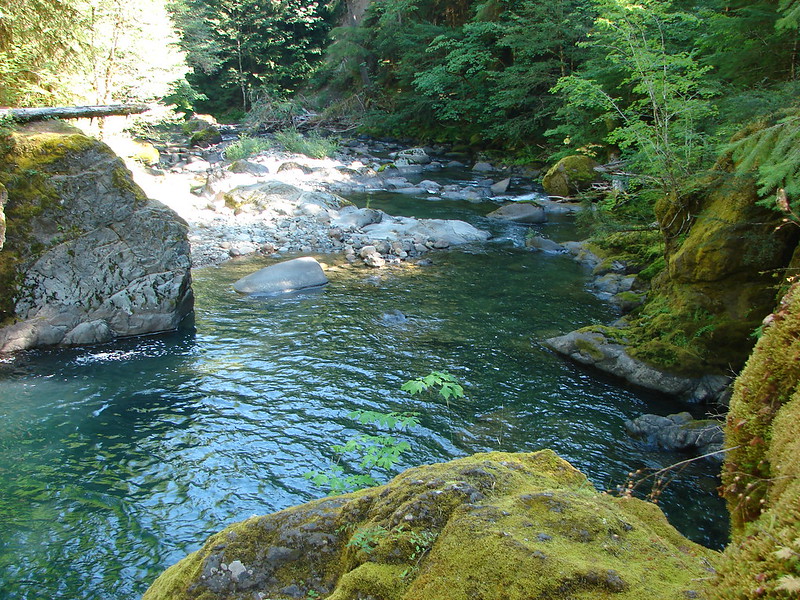
This time there really was only .3 miles to the Middle Santiam River. We took a break there to look at the falls and enjoy the river.
DSC01870
DSC01873

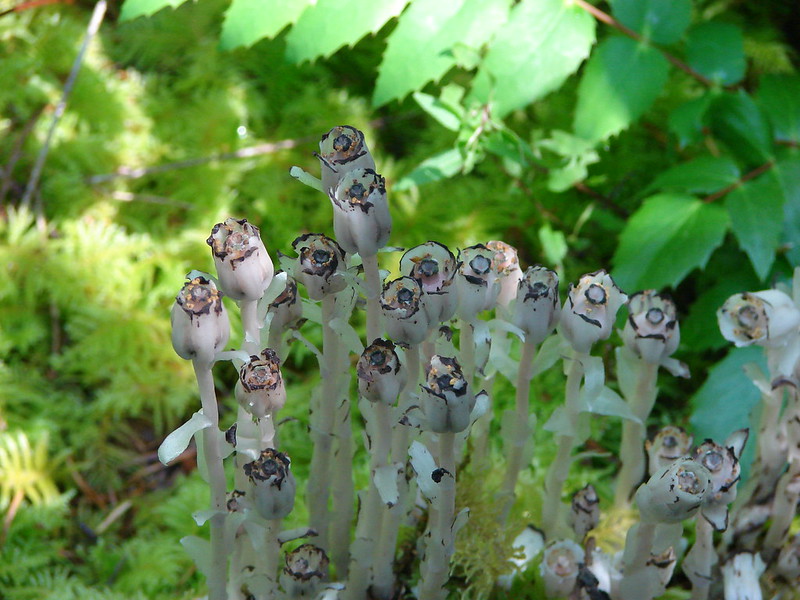
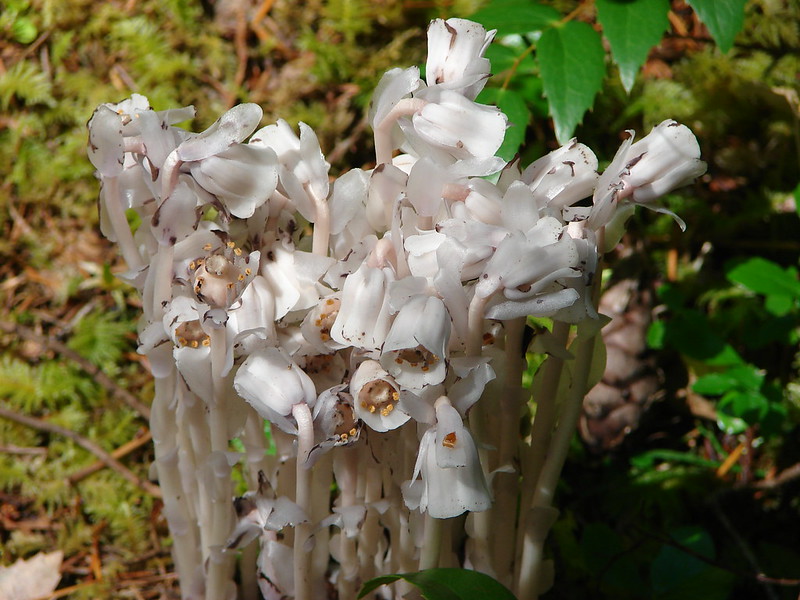
After the break we headed back up to the trail junction and took the Chimney Peak Trail. We were now following the route described in our 100 Hikes book which put an end to the trail surprises. It was 2 miles from the junction to our next marker, Pyramid Creek. Along the way we spotted a couple of very interesting patches of Indian Pipe.
DSC01881
DSC01882

There was a nice camp site at Pyramid Creek which was my backup plan just in case there were no sites available at the lake. The creek itself was fairly wide with no bridge, and there was no way we were going to get across dry.
DSC01890

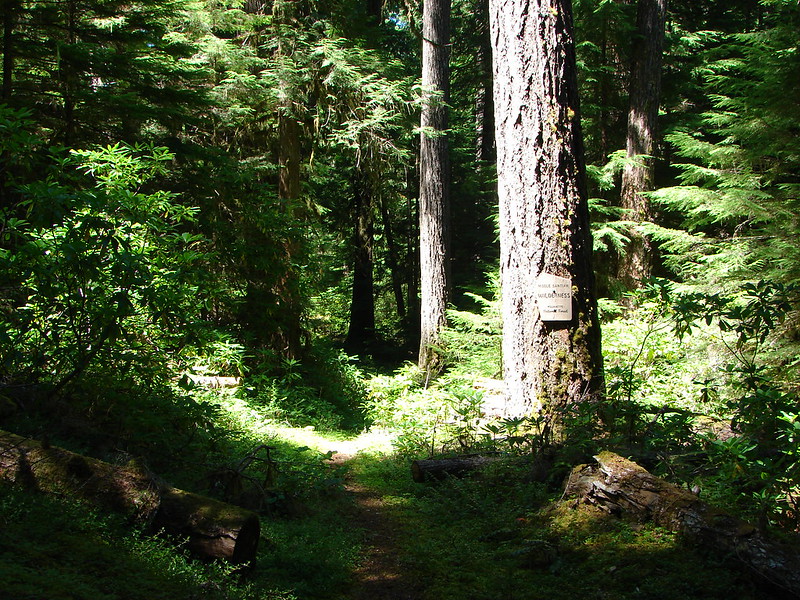
After fording the creek we crossed road 2041 which was abandoned years ago due to numerous washouts and entered the Middle Santiam Wilderness.
Road 2041:
DSC01896

Edge of the wilderness:
DSC01899

It was obvious that the trail doesn’t get a lot of use as the vegetation was encroaching on most of it.
DSC01914

The trail was joined by the Gordon Peak Trail 2.3 miles from Pyramid Creek and shortly after we came to Swamp Creek. I had expected a swampy bog here given the name but found a nice little creek that required another fording.
DSC01916

After crossing Swamp Creek we were only about three quarters of a mile from Donaca Lake. I had read somewhere that there was only one camp site at the lake and we had just passed a couple who had been staying at the lake so we were anxious to get there to make sure we could get a tent site. They told us the lake was lovely and it did not disappoint. From the first view through the trees we could see it was a very pretty little lake.
DSC01919
DSC01920

As we were passing along the lake we spotted a trail up to a small camp site away from the lake so we headed up and claimed our spot. After dropping off our gear we headed back down to the trail to explore the rest of the lake. The trail came to an inlet creek where we found another bigger campsite and a nice little gravel beach.
DSC01921
DSC01922

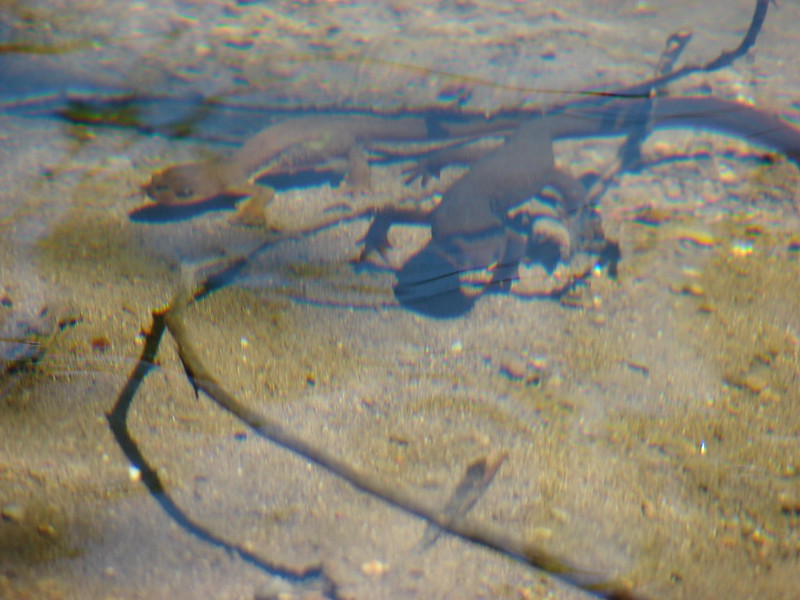
Just a little further up the trail was a third campsite but we decided to stay where we had dropped our packs because we didn’t want to be in the path of the lake access. Before going back and setting up camp though we sat on the gravel beach and watched as Newts and fish swam around in the lake while birds and bugs zoomed over the water.
DSC01941
DSC01942
DSC01952

After watching the wildlife for awhile we headed back to our packs and set up camp.
DSC01968

While we were setting up another group arrived and settled down at the big site so when we were ready to go back down to the lake we took our dinner and headed to the third site we’d found and followed a little path to a different gravel beach. After dinner we hung out for awhile before turning in for the night.
DSC01973
DSC01980

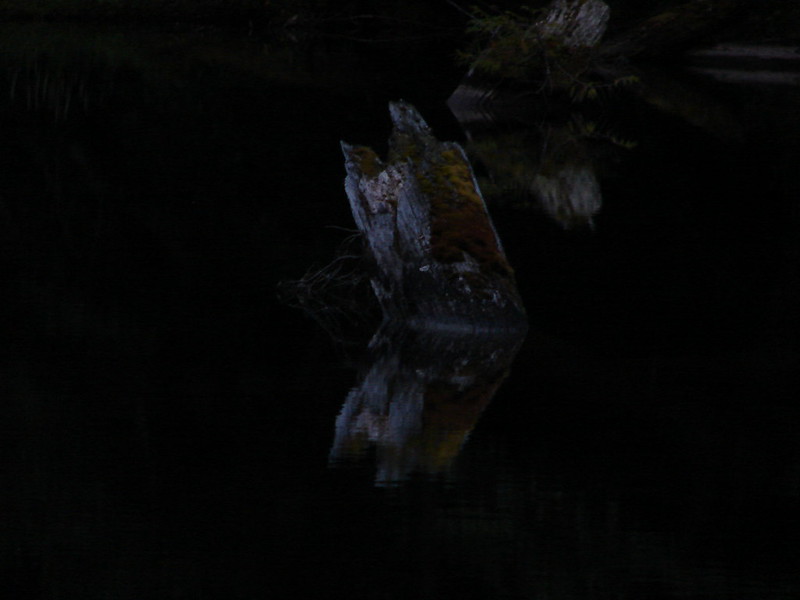
I woke up a little before 5AM and headed down to the lake to see if I could get any sunrise pictures. There wasn’t enough light for my camera to pick up much but there was a colorful stump that Heather had remarked on after dinner. It’s reflection in the water was eye catching.
DSC01994

After Heather woke up and we’d eaten breakfast we packed up and started our return trip. It was going well until we hit the 3.8 mile sign. It was the longest section of trail I can remember hiking. We kept thinking we were going to arrive at road 572 and the Crescent Mtn. Trail junction but instead we just kept climbing. Even when we finally spotted the road it seemed as though we paralleled it for miles. We had a mini celebration when we did finally pop out on the road before tackling the final mile and a half. The final stretch went much quicker as it was primarily downhill and we eventually arrived back at the Pyramids Trailhead.
DSC02053

In 27.7 miles of hiking we had seen only the two groups totaling five people over the two days. If you’re looking for a nice quite forest where you can have the trail to yourself the Middle Santiam Wilderness may just be the place for you. Happy Trails!

Flickr: https://www.flickr.com/photos/9319235@N02/sets/72157645981978735/
Facebook:https://www.facebook.com/media/set/?set=a.10204556986191817.1073741895.1448521051&type=1

Categories
Hiking Mt. St. Helens Trip report Washington Washington Cascades

June Lake

One of the things that makes for a good hike is variety. We have often commented on how much variety can be packed into just several miles of hiking. The terrain, vegetation, wildlife and views can vary drastically in a relatively short distance. That was the case on our most recent hike in the Mt. St. Helens National Volcanic Monument.

We had toyed with the idea of making this an overnight trip but the uncertainty of suitable water sources gave us pause so we amended our plans to make a day hike out of it. We stuck with our original plan to start at the June Lake trail head and headed up to the Loowit Trail from there. Originally we planed on turning right on the Loowit and heading over to the Plains of Abraham to find a camp spot and then explore further on down to Loowit Falls, but that would be too far for a day hike so instead we decided to go left and check out Dryer Creek Meadows.

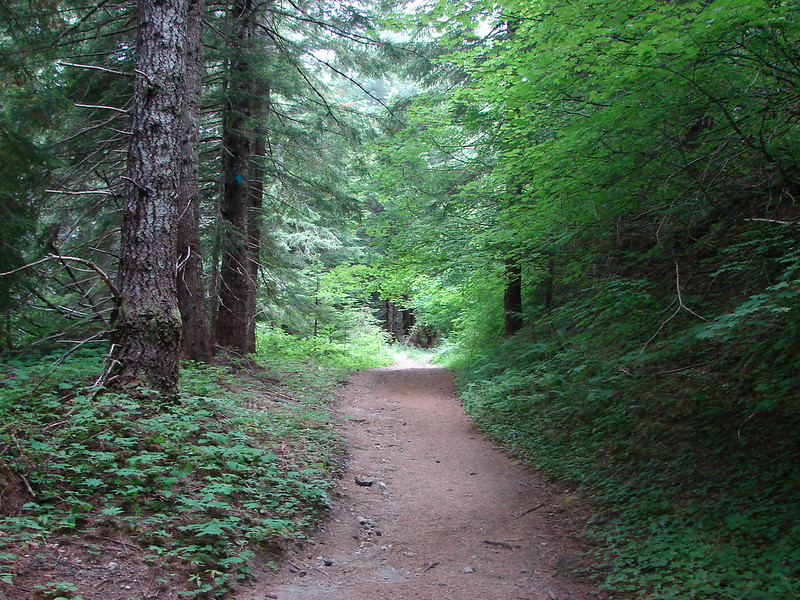
It was a cloudy morning as we set off on the June Lake Trail. From the trail head it was a mere 1.3 miles to June Lake on a nice wide trail that gently climbed through a forest with plenty of ripe berries to snack on.
DSC01371
DSC01354

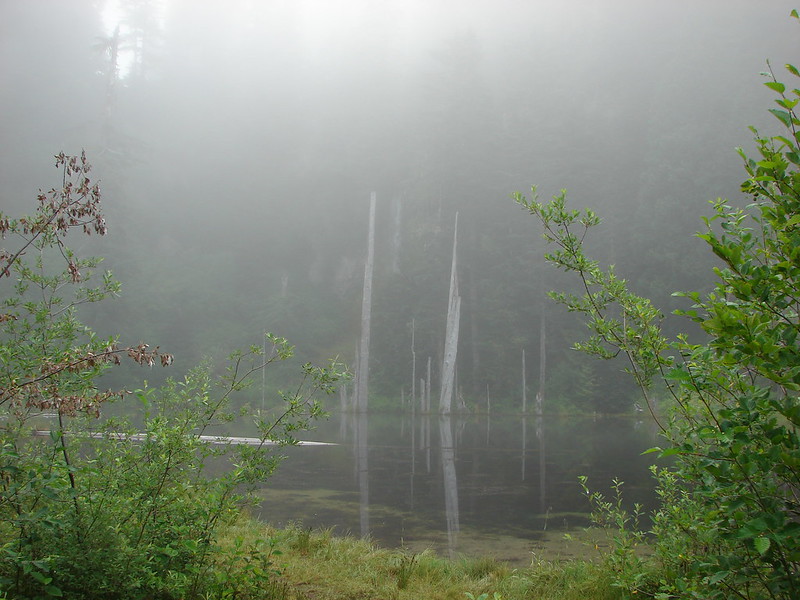
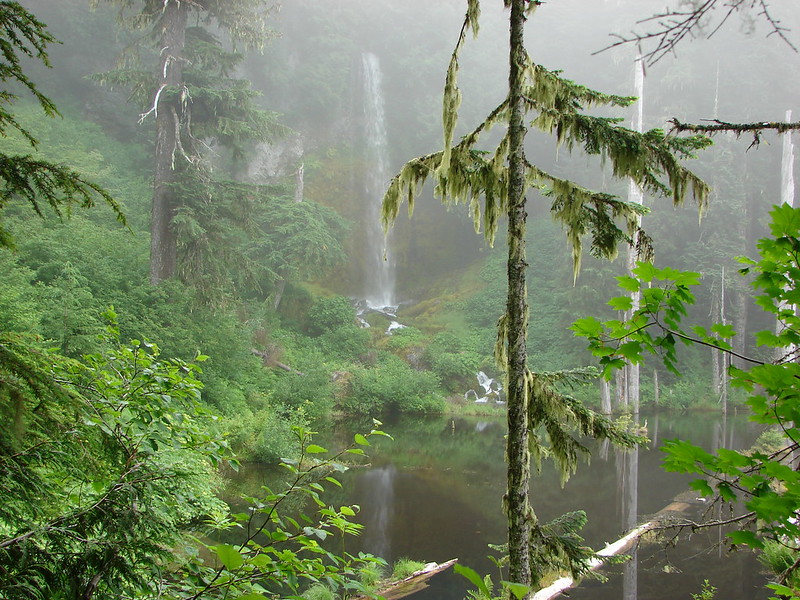
We were surrounded by fog when we arrived at June Lake which made it difficult to get a good view of the 40′ waterfall that falls on the far shore of the lake.
DSC01385

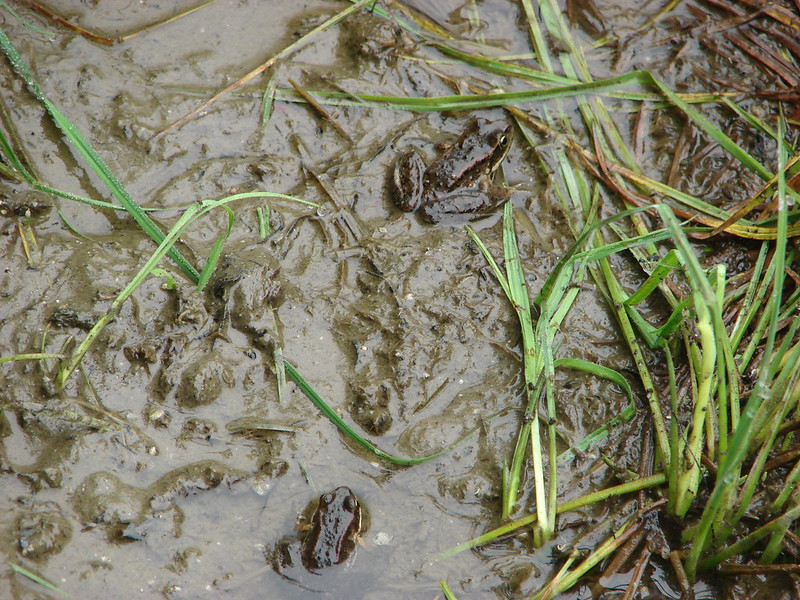
While exploring the small lakes shore we spotted a couple of frogs in the muddy water.
Frogs at June Lake

The best view of the falls came from a side trail at the north end of the lake shortly after a switchback. The reflection of the falls created the illusion of water both falling and rising to the surface of the lake.
DSC01396

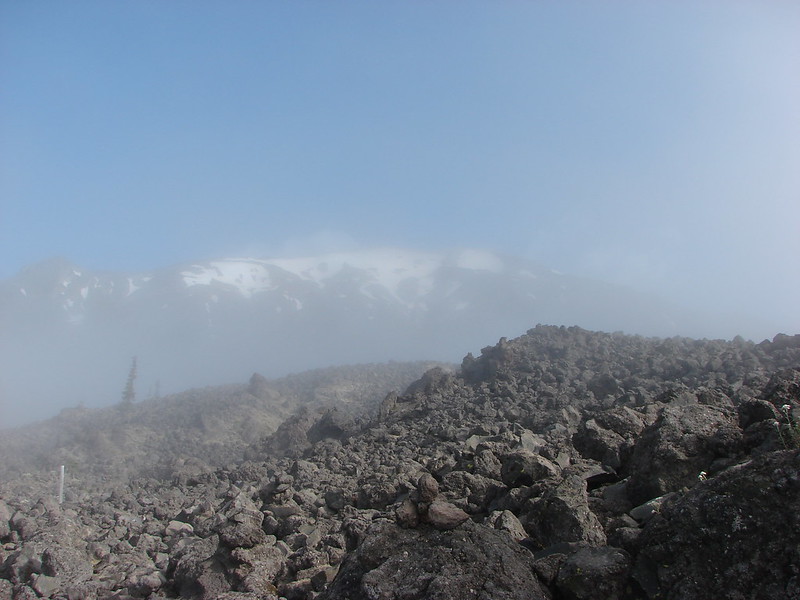
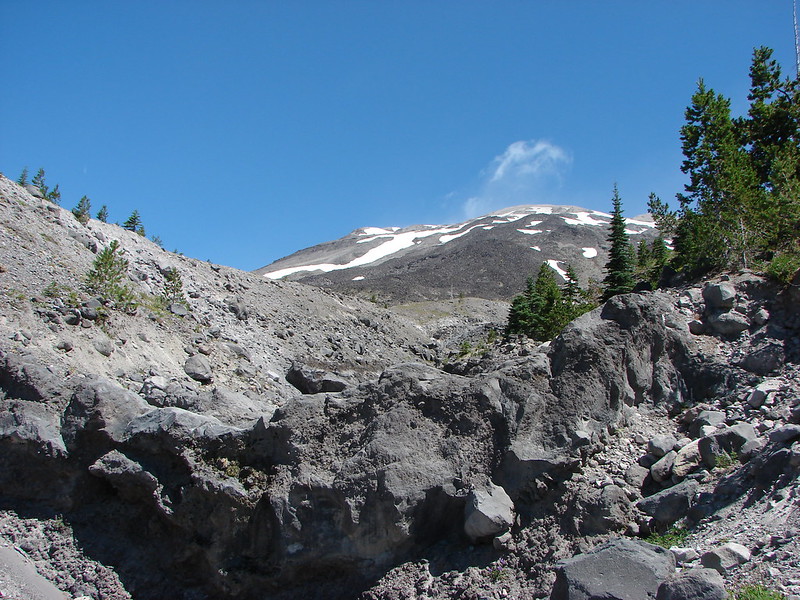
About a quarter mile from the side trail we arrived at the junction with the Loowit Trail which circles the entire mountain on a 29.5 mile loop. We turned right and quickly emerged from the forest and began crossing the first of three lava flows that make up the “Worm Flows”. Unlike some of the other lava fields we have hiked over there was no visible trail in many places, just a series of posts and rock cairns to aim for.
DSC01408

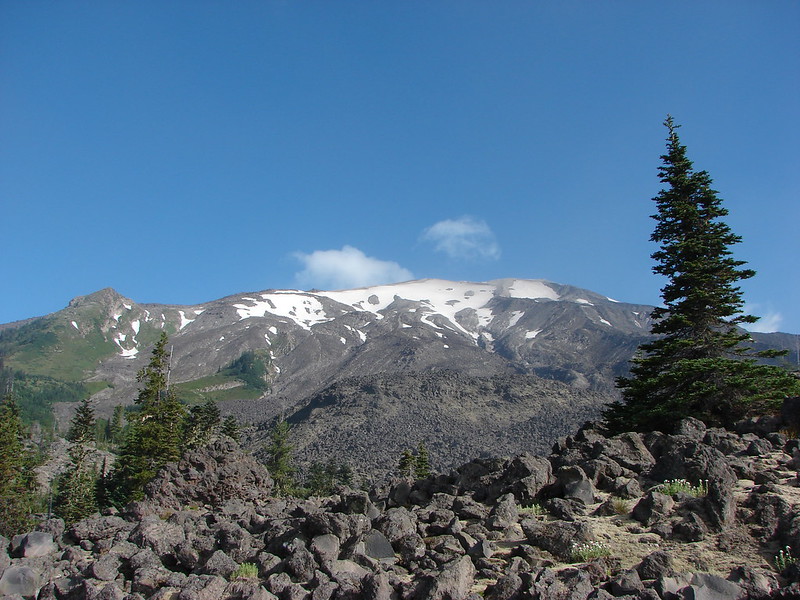
It meant a lot of rock hopping and scouting for the best looking route to the next marker. While we were working on making our way over the lava the clouds began to give way and we were treated to a clear view of Mt. St. Helens.
DSC01432
Mt. St. Helens

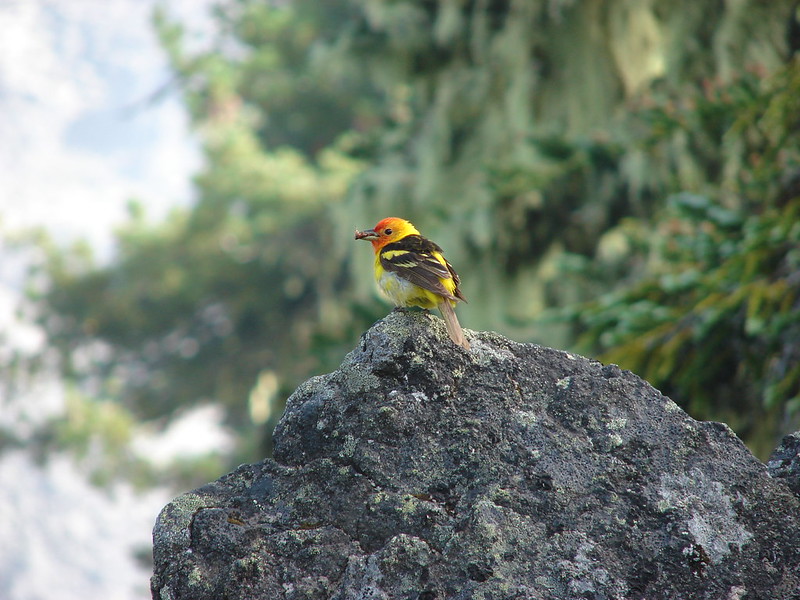
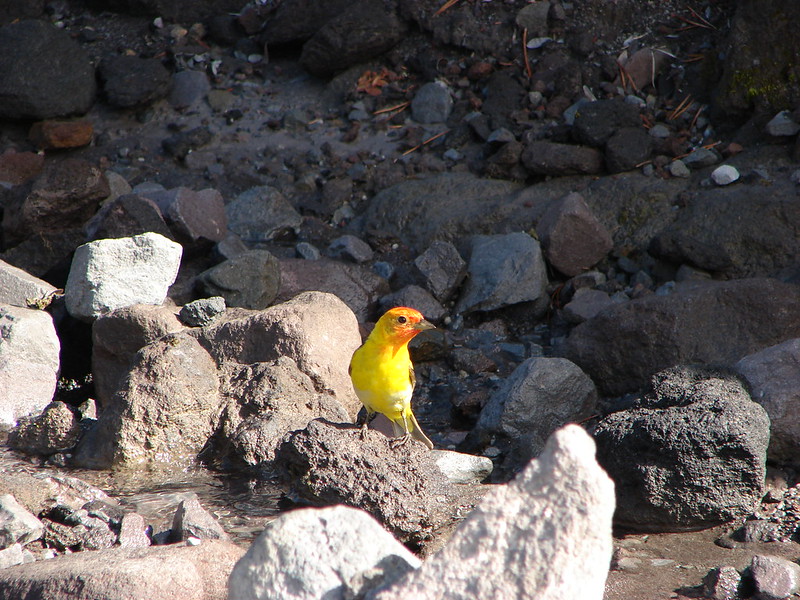
After crossing the Worm Flows the trail began descending into Swift Creeks canyon where we would find Chocolate Falls. On our way down a colorful western tanager posed for some pictures.
Western Tanager
DSC01474

Before reaching swift creek we passed through a small pocket of vegetation.
DSC01479
DSC01478

We were happy to find water flowing over Chocolate Falls as Swift Creek often dries up overnight and doesn’t begin flowing again until after 11AM on some days.
DSC01481
DSC01482

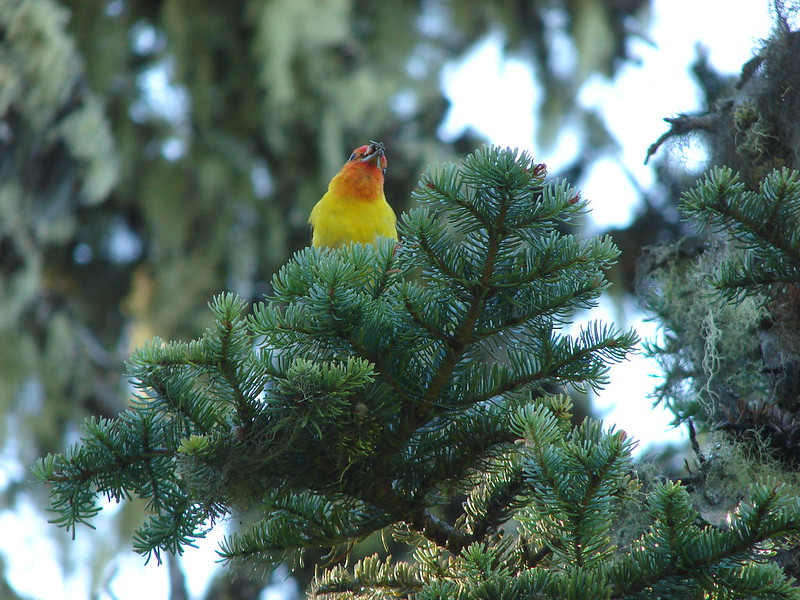
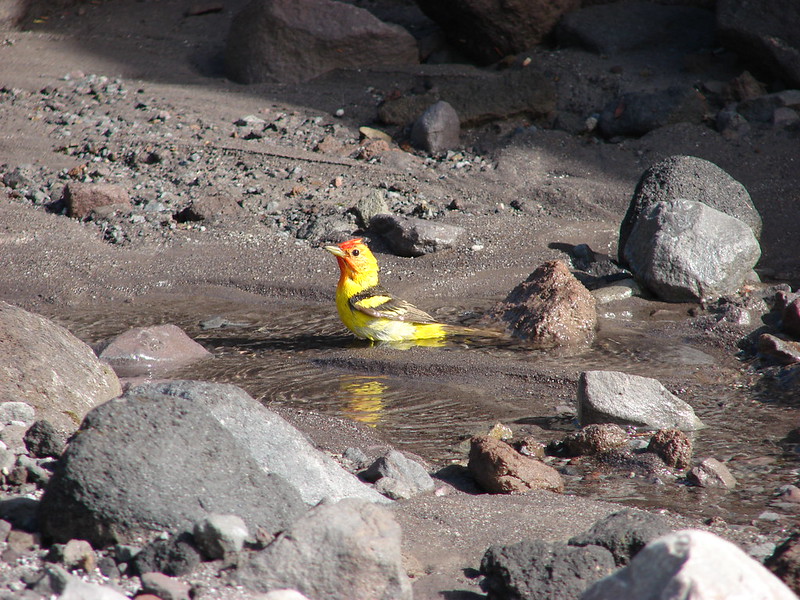
We took a snack break at the falls and while we were relaxing we were joined by what I think was the same western tanager who decided it was time for a bath.
Western Tanager
Western Tanager

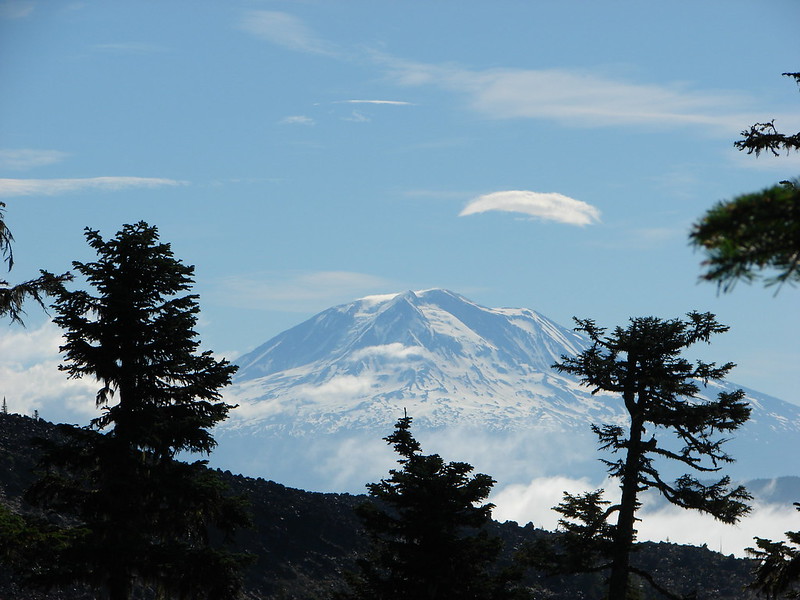
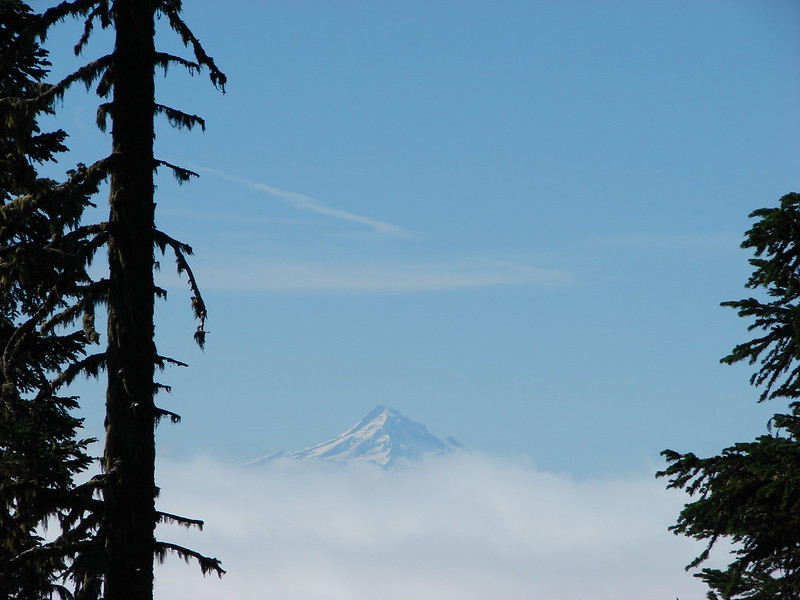
We continued on the Loowit Trail from Swift Creek and began a steep climb that passed through forest and meadows. We also were treated to a great view of Mt. Adams and a descent view of Mt. Hood looming above the clouds.
Mt. Adams
Mt. Adams
Mt. Hood
DSC01550
Meadow filled with nuttall’s linanthus
DSC01585
Mt. Adams from one of the meadows
DSC01611
Passing through a meadow
DSC01612
Mt. Hood from the meadow
DSC01613
Mountain heather and a blue copper butterfly
DSC01608

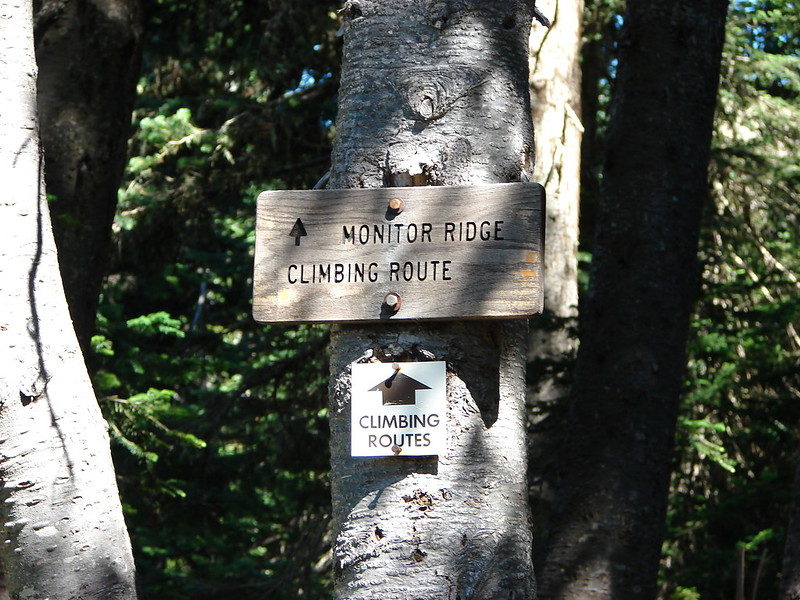
Two miles from Chocolate Falls we crossed the Ptarmigan Trail which climbs up Monitor Ridge to the Rim of Mt. St. Helens.
DSC01620
We have a date with that trail later this year.

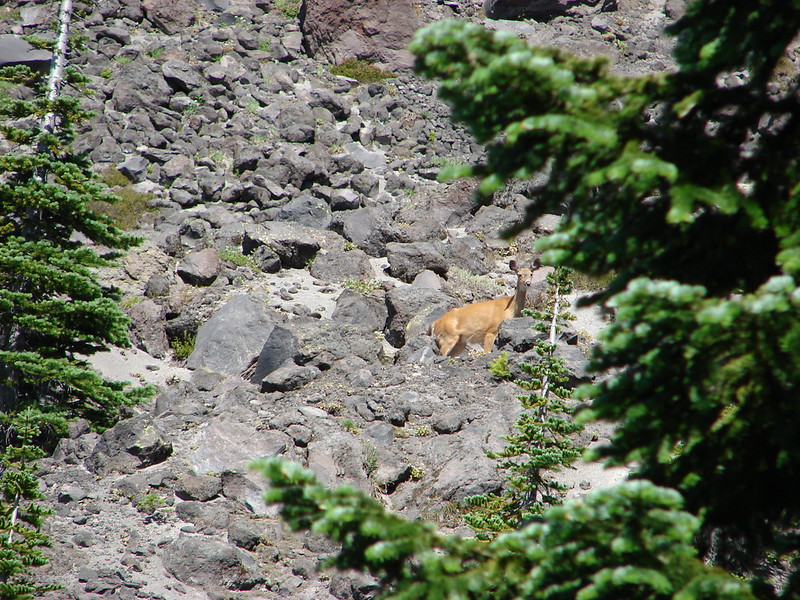
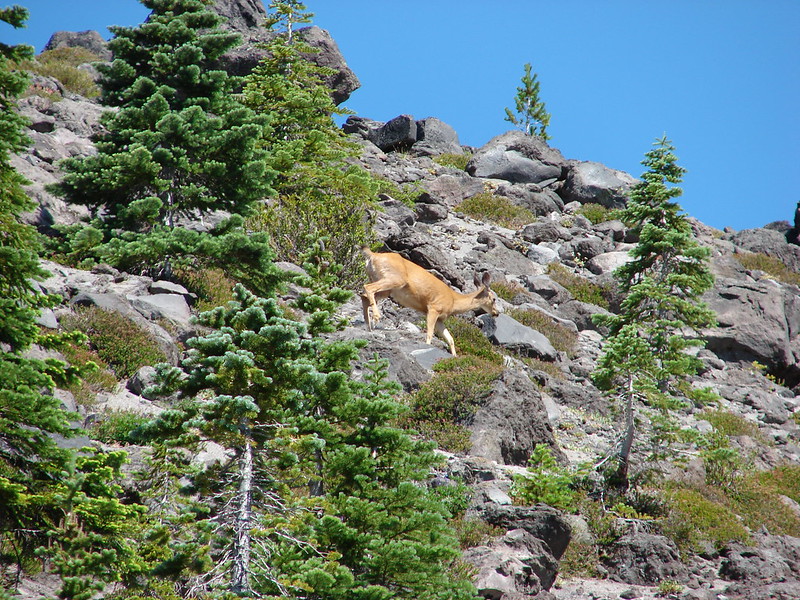
We crossed the trail and shortly came to the edge of another lava flow. A doe was making her way up toward Monitor Ridge showing off her superior rock hopping skills.
Doe
DSC01635

This crossing was .9 miles of post to post travel.
DSC01646
From this section we had a great view of Mt. St. Helens, Monitor Ridge, and the Green Knob.
DSC01648

After navigating the lava flow we were once again in a forest. This one was drier and the trees more sparse than the previous sections we’d passed through. Cicadas chirped loudly from the pine trees and scattered flowers dotted the sandy landscape.
DSC01664
DSC01665
DSC01666

The trail then began alternating between trees and meadows.
DSC01673
DSC01674

As we came around a corner I noticed something peering out of a tree further up along the trail.
DSC01680
A bull elk emerged and gave us a quick look before heading downhill deeper into the trees.
DSC01683
Elk

We turned around at the dry Dryers Creek and retraced our steps back toward Chocolate Falls.
Mt. St. Helens from the dry bed of Dryers Creek
DSC01692

Mt. Adams had been hidden by clouds while Mt. Hood had nearly fully emerged from them.
DSC01715
DSC01716

There was evidence of the increased afternoon snow melt when we arrived back at Chocolate Falls.
DSC01740
Chocolate Falls
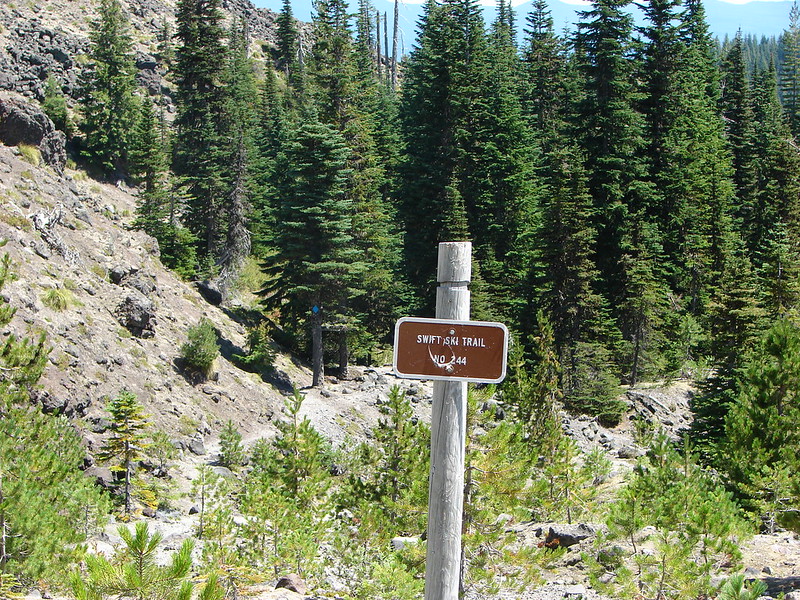
We took our shoes and socks off and soaked our feet for a bit in the creek before setting off from the falls. When we did get going we left the Loowit Trail and turned right along Swift Creek on the Swift Ski Trail.
DSC01754
Chocolate Falls and Mt. St. Helens

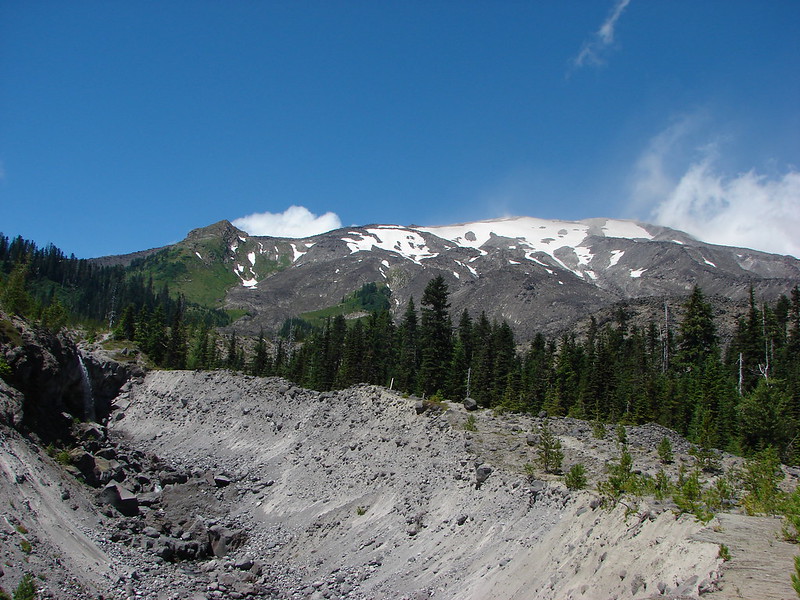
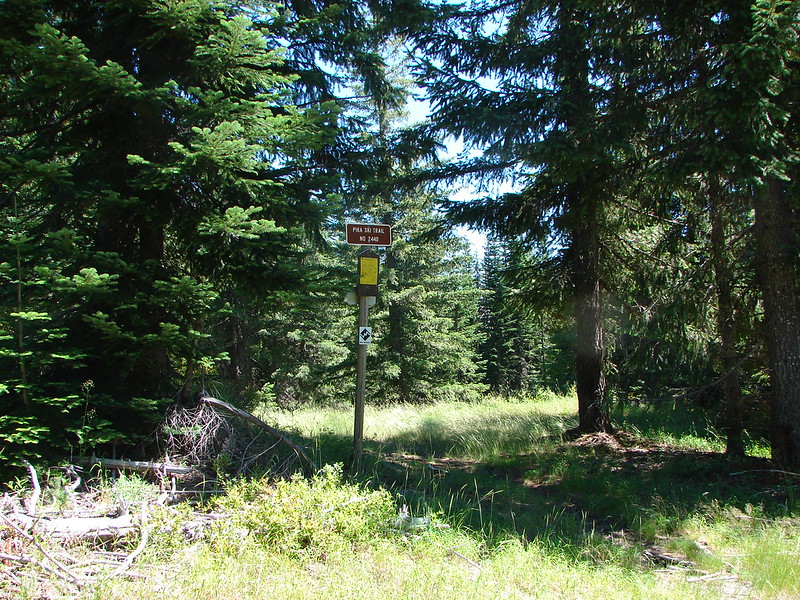
It was an easy trail to follow and we quickly descended .5 miles to the Pika Ski Trail which we took and headed back toward June Lake.
DSC01764

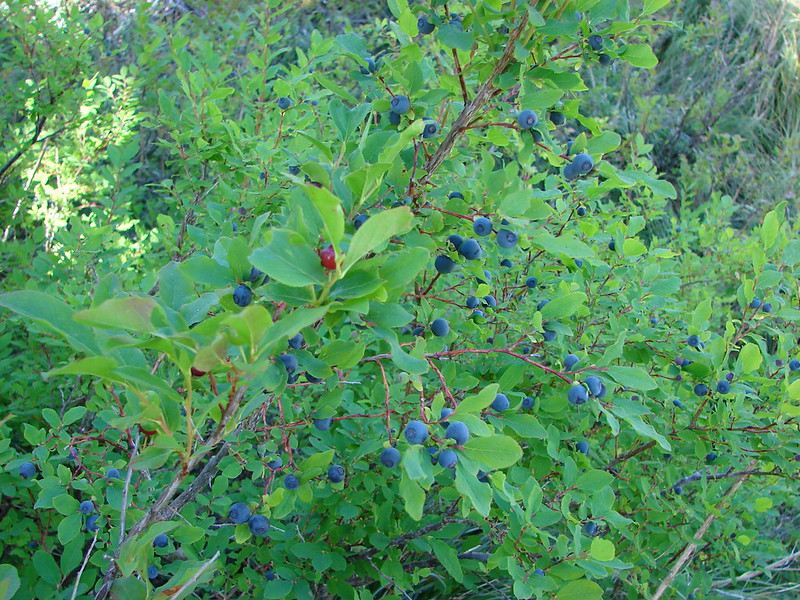
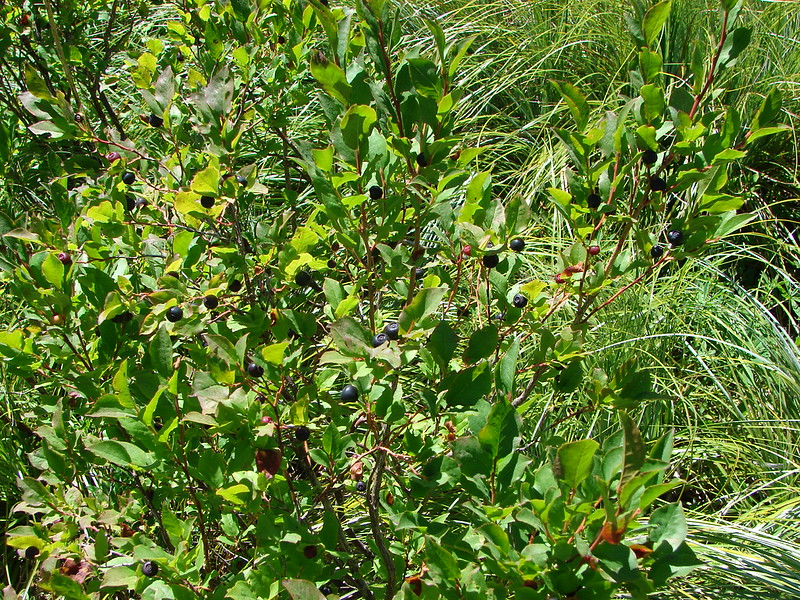
The Pika Trail was easy to follow for the first few tenths of a mile plus it was lined with ripe blueberries, huckleberries, and a few strawberries.
DSC01770
DSC01772
DSC01761

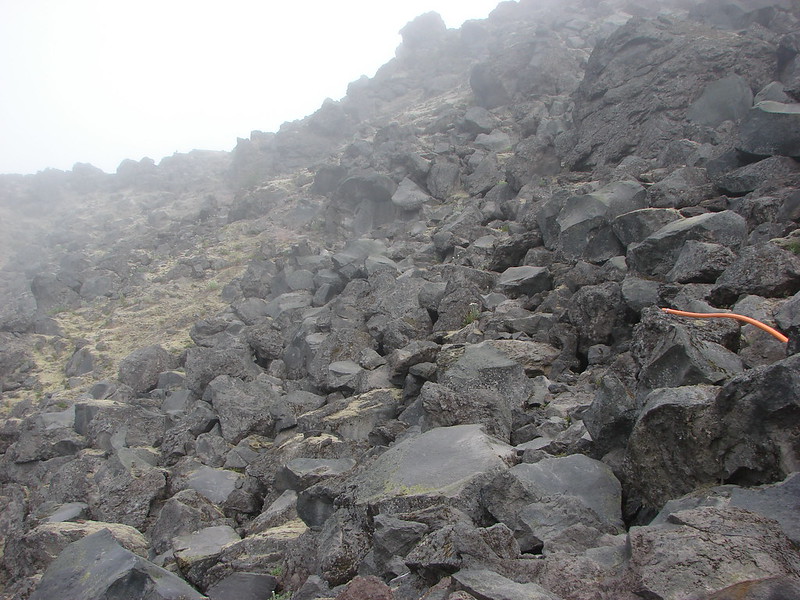
The easy trail didn’t last long though as we still had to cross part of the Worm Flows to return to June Lake. The crossing here was the most difficult of the day as there was no sign of any trail at all and the few orange poles ended halfway across the lava flow.
DSC01774

Luckily from the final pole June Lake was visible on the other side of the flow.
DSC01776

We headed for the lake and eventually made it down to the sandy bed of a dry creek which we climbed out of and returned to the June Lake Trail. The lake was clear now so we stopped to get some unobstructed photos of the waterfall and lake before beginning the final leg of our hike.
June Lake

We took our time on the final 1.3 miles partly due to being tired from all the rock hopping and partly because we were picking berries as we went. The hike had totaled 13.4 miles and in that distance we’d passed two waterfalls, a lake, several creeks (dry and flowing), through several sections of forest, multiple meadows, and over four different lava flows. We’d seen an elk, a deer, chipmunks, golden-mantled squirrels, frogs, and various birds. We sampled at least 6 different kinds of berries, saw a variety of wildflowers, and had views of three cascade volcanoes. It had been worth the effort. Happy Trails!

flickr: https://www.flickr.com/photos/9319235@N02/sets/72157645372723387/
Facebook: https://www.facebook.com/media/set/?set=a.10204499327590388.1073741894.1448521051&type=1

Categories
High Cascades Hiking Mt. Hood Area Oregon Trip report

Burnt Lake to Paradise Park Overnight

Our latest overnight trip brought us to the Mt. Hood Wilderness where we planned to continue honing our backpacking skills. We plotted out a trip that would bring us to some new places as well as some previous favorites. The plan was to start at the northern trail head of the Burnt Lake Trail, pass Burnt Lake and climb up to East Zig Zag Mountain where we would take the Zig Zag Mountain Trail up to the Paradise Park Trail. From there we would head up to Paradise Park and camp somewhere along the Paradise Park Loop Trail near Split Rock. We’d been to East Zig Zag Mountain and Paradise Park in 2012 on separate hikes, but we had come in on different trails for those trips.

We set off from the Burnt Lake trail head shortly before 7am and quickly entered the Mt. Hood Wilderness.
DSC01348

The trail climbed between Burnt Lake Creek and Lost Creek for 1.9 miles before crossing and then recrossing Burnt Lake Creek. Near the 2.5 mile mark an unmarked side trail to the left led downhill to Lost Creek Falls. (Waterfalls on Lost Creek became a theme for this trip.)
DSC00785

The trail then veered away from Lost Creek and climbed for a mile up to Burnt Lake. Along the way we got our first glimpses of Mt. Hood.
DSC00792

We stopped briefly to check out Burnt Lake but decided to wait until the return trip to locate the best viewpoint of Mt. Hood from the lake shore.
DSC00797
DSC00800

From Burnt Lake the trail climbed up to the Zig Zag Mountain Trail where we took a brief detour to visit the summit of East Zig Zag Mountain. Heather decided to remain amid the wildflowers at the junction with the southern portion of the Burnt Lake Trail while I climbed up to the former lookout site.
Mt. Hood and Burnt Lake from the south trail junction:
DSC00818

Trail heading up East Zig Zag Mountain:
DSC00830

Wildflowers:
DSC00835
DSC00836
DSC00838
DSC00843
DSC00854

Mt. Jefferson:
DSC00856

Mt. Hood:
DSC00859

Butterfly:
DSC00867

Heather waiting at the junction:
DSC00866

After getting my wildflower fix we headed East on the Zig Zag Mountain Trail and began climbing towards Paradise Park. The trail began with a nice gradual ascent through open meadows of beargrass, huckleberry, and other bushes. It was fairly overgrown but easy enough to follow.
DSC00876

We then came to a forested ridge where the trail suddenly steepened – downhill! We had been at 4600′ when we joined the Zig Zag Mountain Trail and needed to get up to 5800′ in 3.7 miles to reach Paradise Park. Going down meant more climbing on the way up as well as having to climb up on the way back down the following day. There were at least 4 fairly brief but steep descents before we began climbing again. At least were some nice views of the mountain ahead of us and a view of our goal.
Paradise Park is the light green areas just above the tree line:
DSC00890
The Paradise Park Loop Trail passed just below the pile of boulders:
DSC00894

As we neared the Paradise Park Trail Junction we began to see lots of avalanche lilies, a telling sign of recent snow melt, and a few patches of snow still hanging on.
DSC00897
DSC00911
DSC00907

After joining the Paradise Park Trail we passed through several meadows and a nice viewpoint of the Zig Zag River before arriving at the Pacific Crest Trail in a mere .2 miles.
DSC00922
DSC00923
Zig Zag River Canyon and Mississippi Head (the rock outcropping at the center of Mt. Hood):
DSC00916
Oh the choices!
DSC00925

We crossed over the the PCT and climbed up to the Paradise Park Loop Trail which was a fairly steep .5 miles and 400′ above us. It was late August when we visited in 2012 and to this day the wildflowers in the meadow at the junction of these two trails remains the best display we’ve seen. There was little indication of the scene to come this trip as the snow was still melting off and only a few early flowers could be found. The view of Mt. Hood was still top notch though.
Late August 2012
173
Mid July 2014
DSC00935
Western Pasque Flower
DSC00932
Avalanche lilies and paint
DSC00939

We headed left at the junction and started looking for our tent site. We passed several good locations but had something specific in mind. We were looking for a site close to a water source, with a good view, but also with some shade as it was quite warm. We made our way North passing the remains of the Paradise Park Shelter, crossing both branches of Lost Creek, and passing Split Rock before we found what we had been looking for.
South Branch Lost Creek crossing
DSC00945
Mt. Hood from the crossing
DSC00950

North Branch Lost Creek crossing – The snow shelf made this one tricky as the creek was flowing under the edge of the snow.
DSC00960
DSC00963

Split Rock
DSC01002

Camp
DSC01000

After setting up camp we spent the rest of the afternoon and evening alternating between exploring the area and relaxing as we waited for sunset.
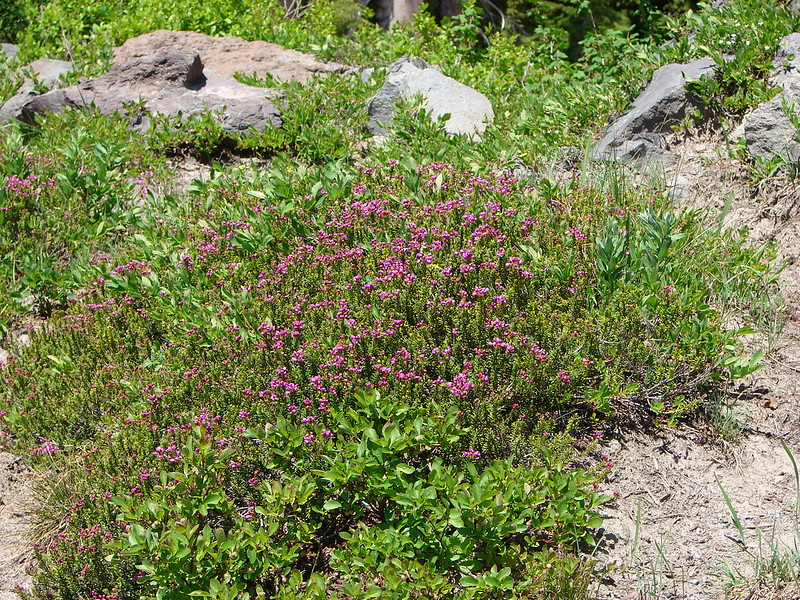
Mountain heather beginning to bloom
DSC00970

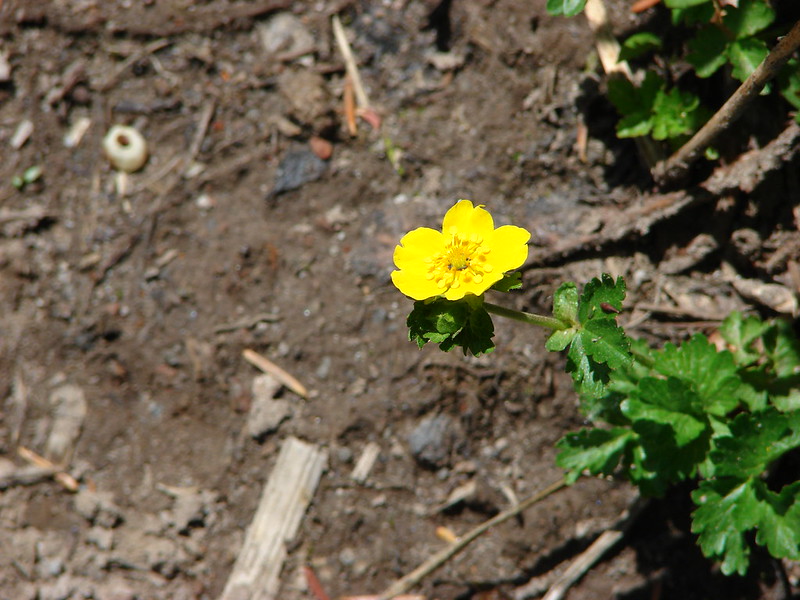
Cinquefoil
DSC00982

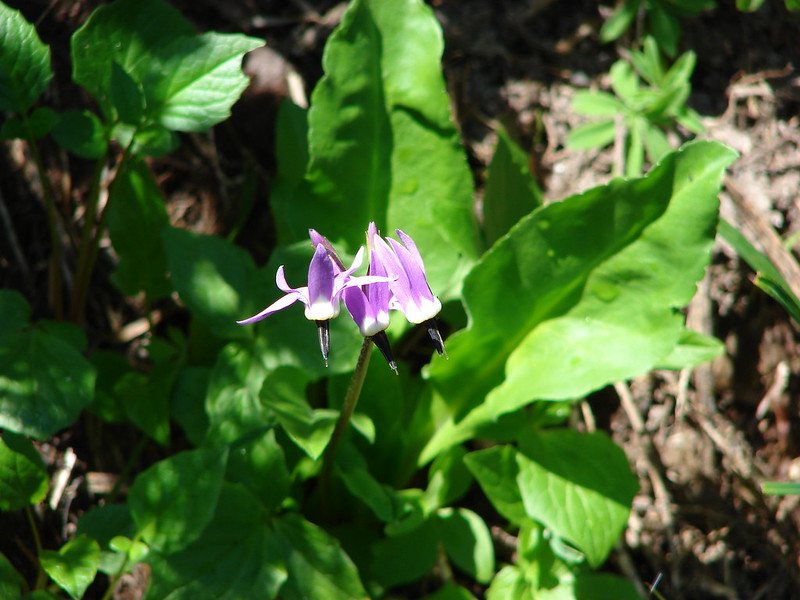
Shooting Star
DSC00989

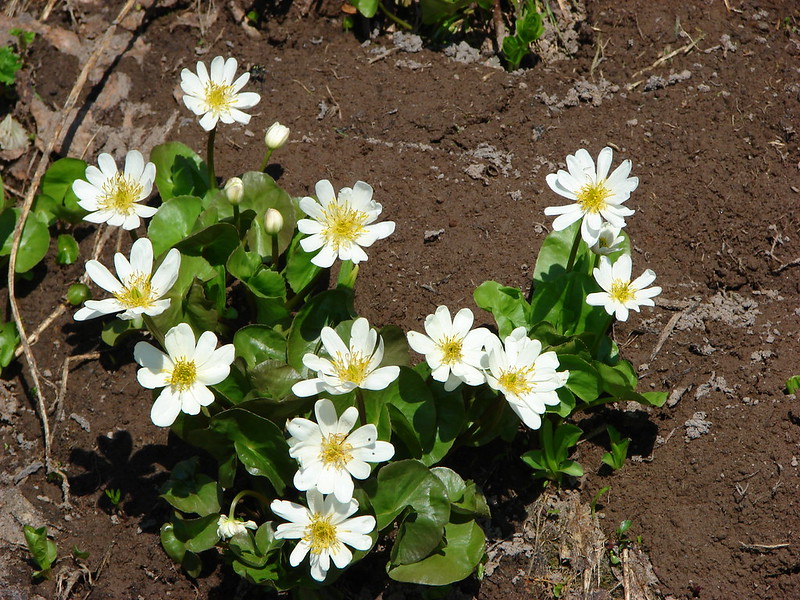
Marsh marigolds
DSC01040

Western pasque flowers
DSC00991
DSC01066

Mt. Jefferson
DSC00972

Mt. St. Helens
DSC00990

East Zig Zag Mountain and some of our route from earlier in the day
DSC01012

DSC01009
DSC01023

Yocum Ridge on the other side of the Sandy River. The waterfall is on what appears to be an unnamed fork of the Sandy River but I’ve seen it referred to as Paradise Park Creek.
DSC01024

The Sandy River
DSC01031

Waterfall flowing down into Lost Creek
DSC01052
DSC01055

Marmot in the grass near the falls
DSC01061

Our shadows as the Sun was getting lower
DSC01064

Small waterfall on Lost Creek
DSC01073

Sunset
DSC01082
DSC01090
DSC01104
DSC01124

After watching the Sun go down we turned in. For some reason I wound up awake shortly after 4am so I grabbed the camera again and waited for the sunrise.
The Moon was super bright all night and a few clouds had moved in to the South by the morning
DSC01151

Starting to get some sunlight
DSC01180
DSC01184

Then came the colors
DSC01195
DSC01205
DSC01213
DSC01210DSC01224
DSC01227

After a breakfast of Mountain House freeze dried scrambled eggs and bacon (yes we managed to use our stove this trip 🙂 ) we packed up camp and began our return trip. We decided to continue on the loop which would bring us back to the PCT which we could then take South back to the Paradise Park Trail junction. This would allow us to visit a few waterfalls on the way back. The first of the falls is on Rushing Water Creek as it comes down from Paradise Park. There was a nice display of wildflowers just before the falls here.
DSC01272
DSC01278
DSC01294
DSC01297

There was a trail crew from the Pacific Crest Trail Association gathered at the base of the falls that was out doing some trail maintenance.
DSC01300

It had clouded up and as we were passing the falls rain began to fall lightly. We decided to stop at the next set of falls to waterproof our sleeping bags just in case it started to rain harder. The next set of falls were on Lost Creek. Both branches come down within a short distance of each other and both in scenic waterfalls.
North Branch Lost Creek
DSC01303
DSC01305

South Branch Lost Creek
DSC01313
DSC01317

It was raining off and on but not very hard but then we began to hear thunder. We picked up our pace as best we could as the thunder became steadier and we started to see the flashes of lighting. We had made it to the Paradise Park Trail and were back on the Zig Zag Mountain Trail when the hike got really interesting. We came around a bend in the trail and less than 20 yards ahead of us was a black bear. We all instantly froze, even the bear for a split second before it turned in bolted back into the forest. All I’d had time to do was say “bear” before it had vanished. I had just put the lens cap back on the camera and tucked it under my shirt to keep the rain off of it so I had no chance at getting a picture. Heather went for the bear spray just to be safe but it was long gone.

We made it back to the steep sections that we were dreading without further incidents. The climb was pretty much as ugly as we’d expected but the rain had let up without ever getting too heavy so we were dry at least. Dry until we reached the overgrown section of trail that is. By the time we emerged from that section we looked and felt like we’d forded a thigh-high creek. 🙂

When we got back to Burnt Lake we headed down past campsite C where there is a great view of Mt. Hood from the lake shore.
DSC01337

We ticked off the remaining 3.5 miles at a brisk pace pausing occasionally to sample the salmon and blueberries that were ripening nicely along the trail.
Oval-leaf blueberries
DSC01346

Mt. Hood had delivered another amazing adventure. Happy Trails!

flickr: https://www.flickr.com/photos/9319235@N02/sets/72157645261769389/
Facebook: https://www.facebook.com/media/set/?set=a.10204454188061928.1073741893.1448521051&type=1
Categories
Hiking Middle Santiam Old Cascades Oregon Trip report

Crescent Mountain

Our wildflower adventure in the Old Cascades continued on our way home from Bend on July 6th. The hike we’d chosen was Crescent Mountain which is less than five miles from Iron Mountain as the crow flies. A 4.5 mile trail climbs up the SE ridge of this crescent shaped mountain through a series of meadows to another former lookout site.

The first 2.5 miles climbed through a nice forest with a crossing of Maude Creek at the 1.3 mile mark.
DSC00434

The trail then entered the first meadow which was full of bracken fern and some wildflowers.
DSC00480
DSC00496
DSC00498
DSC00502
DSC00504

The ferns gave way to more wildflowers as the trail continued to climb. Then we spotted a field of beargrass ahead. It turned out to be the most densely packed we’d ever seen.
DSC00539
DSC00719
DSC00720

Butterflies and birds could be seen flying about in all directions. Behind us a view of Mt. Washington and The Three Sisters opened up across the open hillside.
DSC00551
DSC00555
DSC00557
DSC00560
DSC00718
DSC00724
DSC00564
DSC00721

There was a nice variety of flowers in bloom.
DSC00727
DSC00744
DSC00741
DSC00714
DSC00694
DSC00693
DSC00559
DSC00574
DSC00579

The meadows lasted for about a mile before the trail reentered the forest and climbed a ridge to a trail junction. Taking the uphill fork to the right we quickly popped out on the rocky summit where the former lookout had stood. The view here was better than Iron Mountain with Three Fingered Jack unobstructed and Crescent Lake below nestled in the curve of the mountain.
Mt. Jefferson
DSC00591
Mt. Washington and The Three Sisters
DSC00592
Three Fingered Jack and Black Butte
DSC00593
Diamond Peak
DSC00594
Mt. Hood & Mt. Adams
DSC00619
Crescent Lake
DSC00634

There were more flowers, butterflies and birds up at the summit and despite a brief encounter with mosquitoes when we left the meadows we were left alone to enjoy the scenery.
DSC00651
DSC00645
DSC00653
Hummingbird enjoying the paint
DSC00672
DSC00642
DSC00652
DSC00658

Coming down we ran into a pair of hikers passing through the meadow who were equally impressed with the flowers. We agreed that we’d probably timed it as well as could be hoped. It was a great way to end the holiday weekend. Happy Trails!

Flickr: https://www.flickr.com/photos/9319235@N02/sets/72157645550800815/
Facebook: https://www.facebook.com/media/set/?set=a.10204403365071385.1073741892.1448521051&type=1
Categories
Hiking Middle Santiam Old Cascades Oregon Trip report

Iron Mountain and the Meadows of Cone Peak

July means wildflowers in the Old Cascades, the eroded peaks that are now the western foothills of the Cascade Mountains. We were headed over to Bend, OR for the 4th of July weekend so we seized the opportunity to check out a couple of the hikes on the way over and back. On the way over to Bend we decided to revisit Iron Mountain, a hike we had done in 2010 during the final week of July. We missed the wildflower peak that year by a couple of weeks so we hoped we would be hitting the area at a better time this visit.

On our previous visit we did the loop clockwise by starting at the trailhead located on road 15 and heading up Iron Mountain first then through the meadows on Cone Peak. This time around we parked at Tombstone Pass and headed counter-clockwise in order to hopefully have the meadows to ourselves before the trail got crowded.
DSC00001
We took a short detour on the Tombstone Nature Trail that circled around a meadow with flowers and a view of Iron Mountain.
DSC00010
DSC00013
DSC00017
DSC00034

After finishing the nature trail we crossed Highway 20 and started climbing up the Cone Peak Trail. We started seeing flowers almost immediately. It seemed every open area had an assortment of different flowers.
Lupine, Columbine & Thimbleberry
DSC00053
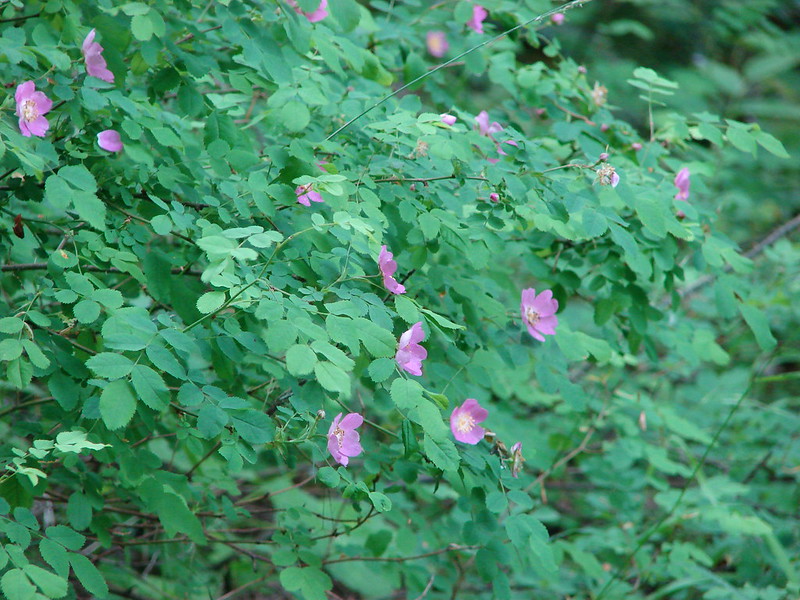
Wild Rose
DSC00055
Columbine
DSC00049
Larkspur
DSC00056
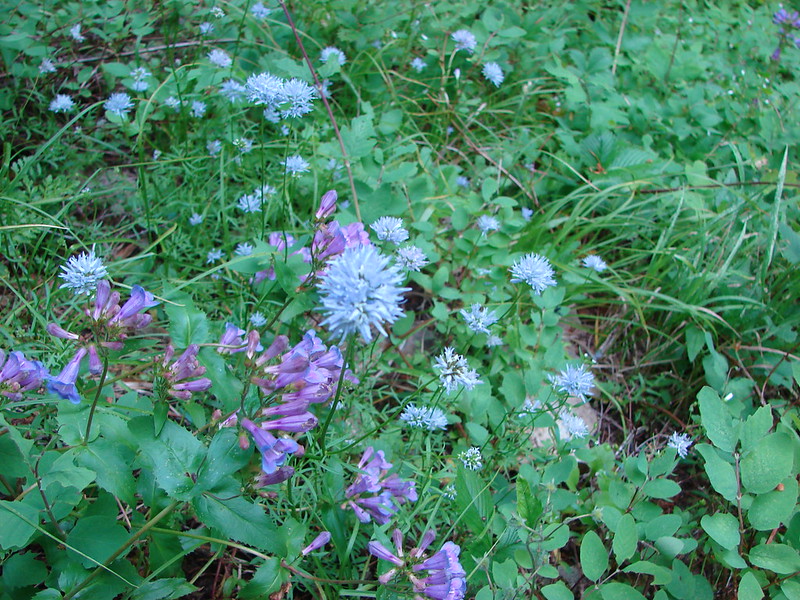
Penstemon & Blue Gilia
DSC00061
Cat’s Ear Lily
DSC00067
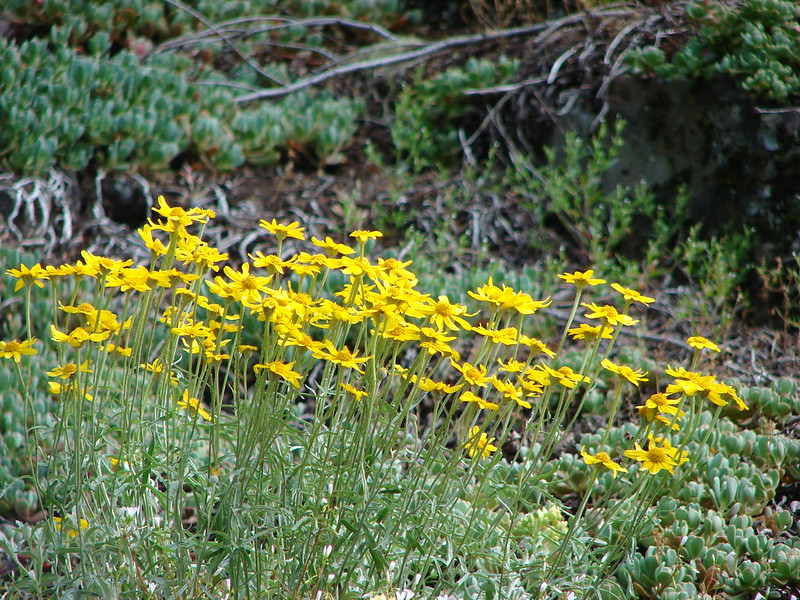
Woolly Sunflower
DSC00079
Flower variety
DSC00085
DSC00103
Columbia Windflower
DSC00046
Wallflower
DSC00132
Paintbrush & Larkspur
DSC00136
More variety packs
DSC00137
DSC00138
DSC00195
DSC00214
DSC00234

We’d already lost count of the number of different flower types we’d seen by the time we got to the main meadow 1.2 miles from the highway crossing. In the meadow we found even more types of flowers as well as views of Cone Peak and Iron Mountain.
DSC00150
Cone Peak
DSC00151
DSC00156
DSC00172
DSC00173
DSC00175
DSC00180
Cone Flower
DSC00182
Giant Blue-eyed Mary
DSC00187
DSC00191
Iron Mountain
DSC00158
Scarlet Gilia
DSC00250

We’d been hearing some elk off and on while we were in the meadow and as we were exploring a rocky outcrop Dominique noticed some brown spots in a meadow up on Iron Mountain. There were 7 elk moving through the brush grazing on the vegetation as they went.
DSC00220
DSC00221

We left the meadow and reentered the forest as we wound our way around Iron Mountain to the junction with the Iron Mountain Lookout Trail. There were still flowers everywhere and now we were starting to get views of the snowy Cascade Mountains.
DSC00300
DSC00312
Mt. Hood
DSC00313
Mt. Jefferson
DSC00314
The Three Sisters
DSC00319
DSC00321
DSC00331

At the site of the former lookout is a railed observation deck and bench which allowed for a relaxing rest as we took in the 360 degree view which spanned from Mt. Adams to Diamond Peak.
Mt. Adams & Mt. Hood
DSC00379
Mt. Jefferson beyond Cone Peak and the top of Three Fingered Jack behind Crescent Mountain
DSC00388
Mt. Washington
DSC00377
The Three Sisters, Mt. Bachelor & The Husband
DSC00382
Diamond Peak
DSC00375

The view was so good even a hummingbird took a break from the penstemon to take it in.
DSC00361
DSC00367

We headed back down to the trail junction and continued on our loop passing more flowers, recrossing Highway 20, and returning to Tombstone Pass on the Old Santiam Wagon Road.
Beargrass
DSC00409
Bunchberry & Queens Cup
DSC00414
DSC00416
DSC00422

The flowers had certainly been better than on our previous visit and it looked like they would be pristine for another week or two. It was a great way to start a holiday weekend. Happy Trails!

flickr:https://www.flickr.com/photos/9319235@N02/sets/72157645515763015/
Facebook:https://www.facebook.com/deryl.yunck/media_set?set=a.10204403291949557.1073741891.1448521051&type=3

Categories
Badger Creek Area Hiking Oregon Trip report

Badger Creek Wilderness Backpack

One of our biggest goals this year was to finally take some overnight backpacking trips. We spent much of the past Winter researching and acquiring the various gear we needed and then penciled in a few 2 day/1 night test outings. The first of those test runs occurred this past weekend in the Badger Creek Wilderness. Our first visit to this wilderness area happened back in late May when we hiked the Badger Creek Trail as a scouting trip for camp sites in anticipation of this trip. https://wanderingyuncks.wordpress.com/2014/05/26/badger-creek/

Our planned route was to start at High Prairie which is located 8.5 miles from Highway 35 on the east side of Mt. Hood. From the parking area we planned on heading up to the summit of Lookout Mountain on the High Prairie Trail, taking the Divide Trail east toward Flag Point, then dropping down to the Badger Creek Trail on the Badger Creek Cutoff Trail. On our previous visit we had pegged Post Camp as our intended camp site which we would get to by heading just over a mile east from the junction with the Badger Creek Trail. For our return trip we would follow the Badger Creek Trail to Badger Lake where we could once again pickup the Divide Trail and follow it back up out of the valley to Gumjuwac Saddle and then on to the High Prairie Loop at Lookout Mountain.

We had been watching the weather forecast intently as a series of rain showers had been threatening to carry into the weekend, but by Friday night it looked promising enough to give us the green light. The drive to High Prairie was wet but as we made our way around Mt. Hood we managed to find a pocket of blue sky. We had lost the pocket by the time we arrived at the trail head though and found High Prairie to be in the cloud bank.
DSC09748
DSC09745
The 1.3 mile climb to Lookout Mountain was cold and cloudy but we didn’t have to deal with any rain. What we did have to contend with though was a decent amount of snow still covering parts of the trail.
DSC09778
DSC09779

As we neared the junction with the Divide Trail we ran into a large patch of snow. At first we thought the trail was underneath the snow and we’d have to climb up the ridge on top of it, but as we climbed up onto the snow we could see the snow free trail on the other side.
DSC09780
DSC09781

After turning east on the Divide Trail we made a brief visit to the former lookout site atop Lookout Mountain. There were no views to be had so we didn’t stay long and quickly returned to the Divide Trail to continue east toward Flag Point. The trail on this side of Lookout Mountain was buried under the snow.
DSC09790
DSC09793

We didn’t have to go far before the trail reappeared along with some trail side flowers.
DSC09795
DSC09800

A mile and a half from Lookout Mountain the Fret Creek Trail joined up on the left. We took a quick detour here to check out Oval Lake.
DSC09825
DSC09827

Just over a quarter mile from the Fret Creek Trail junction we reached Palisade Point and finally found some blue skies and views.
Palisade Point:
DSC09845
Flag Point lookout in the distance on the ridge:
DSC09841
Lookout Mountain still in the clouds:
DSC09835
Looking SE toward Central Oregon:
DSC09849

After enjoying the blue skies at Palisade Point we continued another 1.2 miles to dirt road 200 where we found the Badger Creek Cutoff Trail (sans signage).
DSC09885

This was an interesting trail as it passed through various types of vegetation on it’s way down to Badger Creek over 3 miles and 2000′ below. We spotted a number of flower types and quite a bit of wildlife on this section.
Bluebells
DSC09893
Balsamroot
DSC09899
Paintbrush
DSC09900
Vetch
DSC09903
Scarlet gila
DSC09904
Lupine
DSC09907
Penstemon
DSC09919
Queen Anne’s Cup
DSC09930
Arnica
DSC09931
Columbine
DSC09946
Cascade Lily
DSC09970
Tent worms
DSC09888
Black-headed Grossbeak
Black Headed Grossbeak
Western Tanager
Western Tanager
Douglas Squirrel
DSC09963
Unidentified bird
DSC09972
Unidentified bug
DSC09975

When we reached the Badger Creek Trail we turned left and made our way to Post Camp. We arrived to find it empty so we had our pick of spots. 🙂
DSC09987
DSC00028

After we had gotten all set up we did a little exploring on the Post Camp Trail and then spent some time sitting by Badger Creek. We only saw a couple of groups of hikers the rest of the afternoon and no one else stopped so we wound up having the whole area to ourselves. We set about testing out all our gear which, with the exception of the matches that wouldn’t light, worked out well. By 7pm the sound of the creek and the early morning had just about put us to sleep so we ended up turning in early.

I wound up waking up to that annoying feeling that I might need to use the bathroom but wasn’t really wanting to have to deal with finding my headlamp and getting out of my cozy sleeping bag. I lay there for awhile debating whether or not I could tough it out and go back to sleep. I finally grabbed my phone to see if I could make it until morning. When I checked the time it said 10:42pm – I wasn’t going to be able to hold out that long. lol I got my light and shoes and headed out to do my business and then returned to the tent to try and go back to sleep. Just a few minutes after getting back into my bag I heard a loud snapping of wood coming from the direction of the food bag that we’d hung. My heart was pounding as I listened for any other sounds but all I could hear was the creek. I started trying to figure out what might have made that noise. A tree or branch falling would have ended with a thump as it hit the ground so I ruled that out which left me with some sort of good sized animal. I never heard another sound and the food bag appeared untouched in the morning and there was no sign of any visitors so we’ll never know what it had been.

Due to the early bedtime we wound up awake at 5am and with no way to light our stove we at some Cliff bars and got ourselves packed back up. We were back on the trail by 6:15am and headed toward Badger Lake. We passed a few tents on the way but no one else appeared to be awake. We arrived at Badger Lake with some blue sky above but there were still clouds hanging around.
DSC00058
We walked along the lake and across the dam that created it to a trail junction. Here the Badger Lake Trail led along the shore while the Badger Creek Trail paralleled it further back in the forest. All the maps we had, including the Garmin, showed that the Divide Trail intersected both of these trails so we opted to take the lake trail and stay closer to the water. That turned out to be a big mistake. The trail quickly petered out and was covered with blow down. According to the Garmin we were really close to the Divide Trail so we started picking our way over, under, and around the downed logs in an attempt to find it. The next time I checked the Garmin it showed we had passed the intersection so we turned back and uphill to try and pick it up a little higher on the hillside. We couldn’t find it or any flagging or tree blazes (they were probably all lying on the ground) so we had to make our way back to the fork with the Badger Creek Trail and try that way.

That was the correct way and we easily found the clearly marked Divide Trail.
DSC00077
There was still some blow down on this trail but not anywhere near as bad.
DSC00081

The Divide Trail climbed along the hillside for 2.5 miles to Gumjuwac Saddle where we had a choice. We could follow road 3550 back to High Prairie or stick to the Divide Trail and do some extra climbing.
DSC00098
We chose the Divide Trail which proved to be a good choice. We passed through a number of meadows filled with wildflowers and views as we climbed.
DSC00109
DSC00108
DSC00112
DSC00136

The views weren’t bad either.
DSC00139
DSC00158
DSC00162

As we neared the junction with the High Prairie Loop Trail we began to get glimpses of Mt. Hood. The lower portion anyway as a pesky band of clouds veiled the top.
DSC00175
DSC00179

We reached the junction but continued on the Divide Trail a few hundred feet more to a viewpoint where we took a little break and took in the surrounding view.
DSC00188
DSC00190
DSC00194

From the junction with the High Prairie Loop Trail it was just under a mile back to the parking area. In that time we crossed a cinder covered hillside, passed a scenic rock outcropping, walked through a treed forest and finally a meadow just starting to bloom with flowers.
DSC00197
DSC00198
DSC00199
DSC00206
DSC00204
DSC00210

The scene was quite different at High Prairie when we returned from that of the day before. We were the only car present when we had set off but now the parking area was nearly full and the clouds had lifted giving us a better view of the wildflower meadow filled with shooting star and marsh marigolds.
DSC00216
DSC00216

We felt like it went really well for our first attempt at backpacking and are looking forward to some more trips in the future. Happy Trails!

Flickr: https://www.flickr.com/photos/9319235@N02/sets/72157645426012612/
Facebook: Day 1-https://www.facebook.com/media/set/?set=a.10204356396217193.1073741889.1448521051&type=1
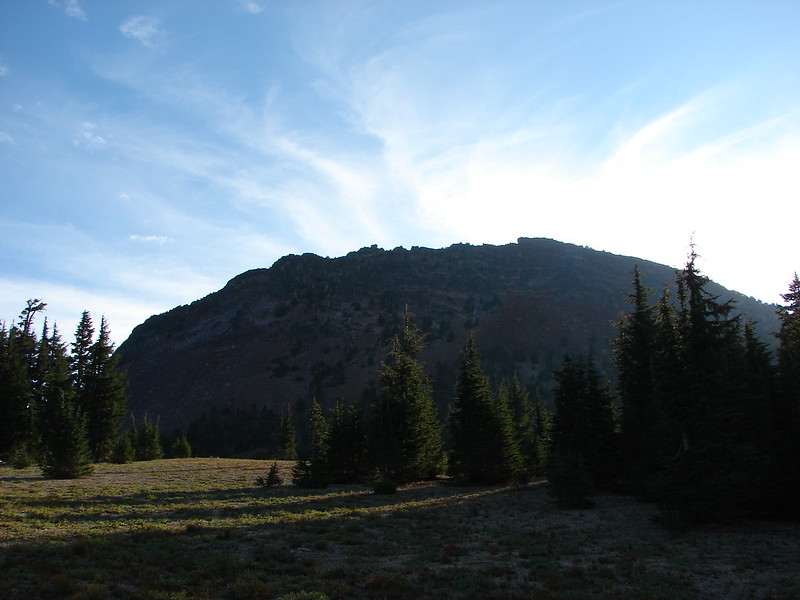
Day 2-https://www.facebook.com/media/set/?set=a.10204360526800455.1073741890.1448521051&type=1
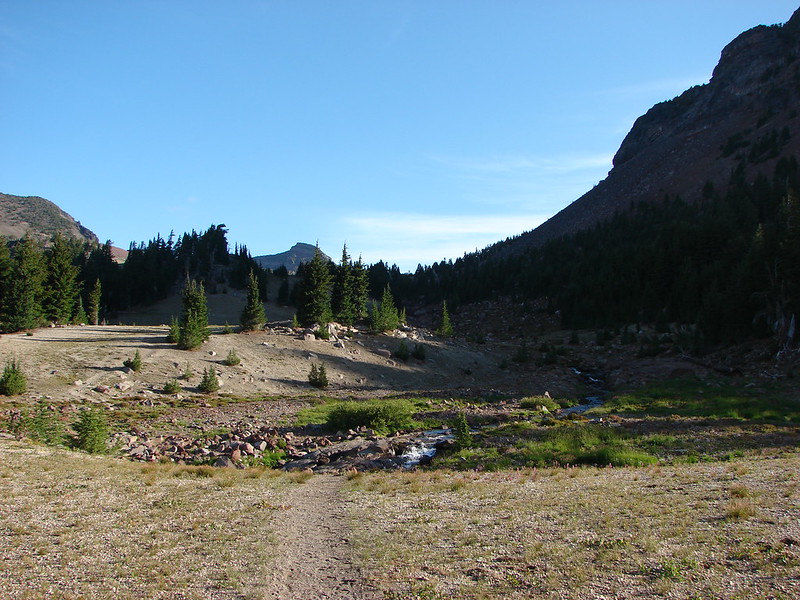
Categories
Bull of the Woods/Opal Creek Hiking Old Cascades Oregon Trip report

Whetstone Mountain

**Note the 2020 Beachie Creek Fire burned the area covered by this hike.**

One of the hikes we wanted to do this year was a repeat of a hike we’d done back in 2010 when we were just getting into hiking. The goal of that hike was Whetstone Mountain. When we were done with that hike we had no idea how far we’d gone, we just knew that it kicked our derrieres. We wanted to revisit this hike to find out just how far it was and to also see how we would fare now being more prepared and experienced.

The previous hike had ended with Heather and I jogging down the closed portion of forest service road 2209. We weren’t jogging for fun, we were jogging because we couldn’t walk any longer and we desperately wanted to be back at our car. We were heading back now armed with 4 years of experience and a Garmin to find out just how difficult this hike really was. The starting point for this loop was the Opal Creek trail head which was already full of cars when we pulled up at 6am. The trail head is the main gateway into the Opal Creek Wilderness and Jawbone Flats a former mining camp turned ancient forest center. A gate at the trail head blocks any unauthorized vehicles from reaching the center.

We set off down road 2209 and followed it across Gold Creek.
DSC09374
DSC09375

Shortly after the bridge a sign and wilderness registration box announced the Whetstone Mountain Trail heading up on our left. We turned up it and quickly entered the Opal Creek Wilderness.
DSC09377
DSC09385

The trail climbed steadily through rhododendrons and beargrass. Neither Heather nor I remembered much about this portion of the hike from our first visit. It may be that we suppressed the memory of this difficult climb :). It wasn’t until we reached a small saddle with an open view of Mt. Hood to the north that anything looked familiar.
DSC09401
DSC09407
DSC09434

Another notable item that we remembered was an anvil shaped rock outcrop that could be seen through the trees as well as view of Mt. Jefferson.
DSC09468
DSC09471

On our first visit we had been disappointed with the mountain views. We had been told to look for a trail that forked off to the left and led to a nice view, but we never found it that first trip. We had our eyes open again this time determined to find this trail to a view, but this time we didn’t need to look very hard. A nice new sign had been put up pointing directly at a well maintained trail. It’s hard to believe either was there on our previous visit. The sign was surely new and we couldn’t believe we would have missed such an obvious trail.
DSC09474

The views kept getting better as we climbed toward the former lookout site. The trail passed a nice meadow below the rocky summit before winding up on top where a 360 degree view awaited.
DSC09546

Olallie Butte, Mt. Jefferson and Battle Ax Mountain
DSC09497

Mt. Hood
DSC09528

Broken Top, Coffin Mountain and the Three Sisters
DSC09522

Three Fingered Jack
DSC09515

Diamond Peak
DSC09520

Mt. Rainier
DSC09540

Mt. Adams
DSC09538

We would have liked to have stayed up on the summit for awhile but it was crowded up there. Mosquitoes were beginning to swarm us and there was no breeze to keep them at bay so we didn’t stick around very long and headed back down to the Whetstone Mountain trail to continue our loop. Not far from the summit we passed another lovely meadow filled with larkspur and paintbrush.
DSC09550
DSC09551

The trail down the east side of Whetstone Mountain had a gentler grade than the side we had come up. We didn’t remember this section either until we reached the bridge less crossing of Battle Ax Creek. On our last visit we removed our shoes and socks and made sure our pant legs would stay dry. Our attitudes about creek crossings have changed since then and this time we just plunged in.
DSC09594

Shortly after crossing the creek we popped back up on the old road 2209 at a trail junction. We turned toward Jawbone Flats and headed down the abandoned mining road. As we were walking I spotted a snake trying to get out of the way. It didn’t seem too concerned with us and posed for several pictures. Nique and I moved on and soon realized we’d lost Heather. When she caught back up she told us that the snake had come over to check her out.
DSC09616

About a mile from Jawbone Flats are the remains of the Ruth Mine. We took a moment this time to check out the old equipment and shafts.
DSC09627
DSC09628
DSC09638

Just before Battle Ax Creek reaches Jawbone Flats there is a nice open rocky area where we could get an up close view of the clear water that the Opal Creek Wilderness is known for.
DSC09652
DSC09655
DSC09673
DSC09674

We had gone straight through Jawbone Flats crossing Battle Ax Creek on a footbridge on our previous visit but we had made other plans this time. The bridge had recently collapsed so there was no direct route through the old camp. Instead we would take the Kopetski Trail which would take us across the Little North Santiam River and by the Opal Pool.

Closed bridge:
DSC09681

Old mining equipment:
DSC09682

Little North Santiam River:
DSC09690

Opal Pool:
DSC09704

Despite the number of cars in the parking lot that morning we had only seen one group of people up until we reached the Opal Pool. From that point on we were passing another group every couple of minutes. Since we had hiked this trail in 2012 and we’d already been hiking for over 6 hours we didn’t bother with exploring all the possible access points to the river. After a mile and a half we recrossed the river on another bridge and were back on road 2209. We had one last stop to make. There was a waterfall that we had yet to find along the trail. We knew it was somewhere behind the old Merten Mill but we had yet to actually see it. Determined to finally see Sawmill Falls we turned off the road at the old mill and followed a path next to the building. This time we found the falls easily and it was worth the side trip.
DSC09715
DSC09717
DSC09722

After a brief rest we returned to the road and began the home stretch. Nique and I began snacking on the Salmonberries that were ripening along the trail (Heather finds them too sour) and we passed a good patch of flowers growing in an exposed rocky section.
DSC09730
DSC09736

We ended up with the Garmin showing a 16.3 mile hike which would explain why it had seemed so hard 4 years ago, it was hard :). We’d probably gone closer to 15 that day since we hadn’t found the summit trail or taken time to explore the Ruth Mine, Opal Pool, or Sawmill Falls but up until then 7.1 had been our longest hike.

It is really a beautiful area with lots of options, but if you don’t like crowds avoid weekends, especially nice ones. When we got back to the parking area the number of cars had more than doubled. If we were to ever do this loop again I’d go the opposite direction to minimize crowds and to take advantage of a more gradual climb. Happy Trails!

flickr: https://www.flickr.com/photos/9319235@N02/sets/72157645240344216/
facebook: https://www.facebook.com/media/set/?set=a.10204293169716570.1073741888.1448521051&type=1
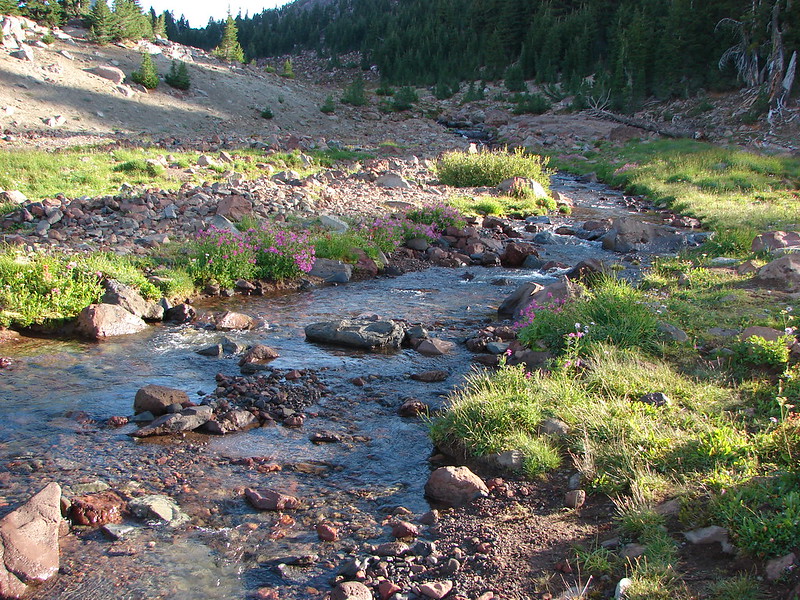
Categories
Hiking McKenzie River Old Cascades Oregon Trip report

Clear Lake

We wanted to get one last hike in on the way home from Central Oregon. Originally we’d planned on hiking up to the summit of the Middle Pyramid on the Three Pyramids Trail, but we were greeted with clouds and rain as we came to Santiam Pass. Knowing there wouldn’t be any views we changed our plans and headed to Clear Lake 10 miles south of the Santiam Jct. on Highway 126.

The McKenzie River begins at Clear Lake where old lava flows created the lake by covering and damming the river. On a clear day The Three Sisters and Mt. Washington can be seen from various points around the lake but with the clouds we would be content with the clear, colorful water of the lake.

We began our counter-clockwise loop at a picnic area near the Clear Lake Resort.
DSC09121
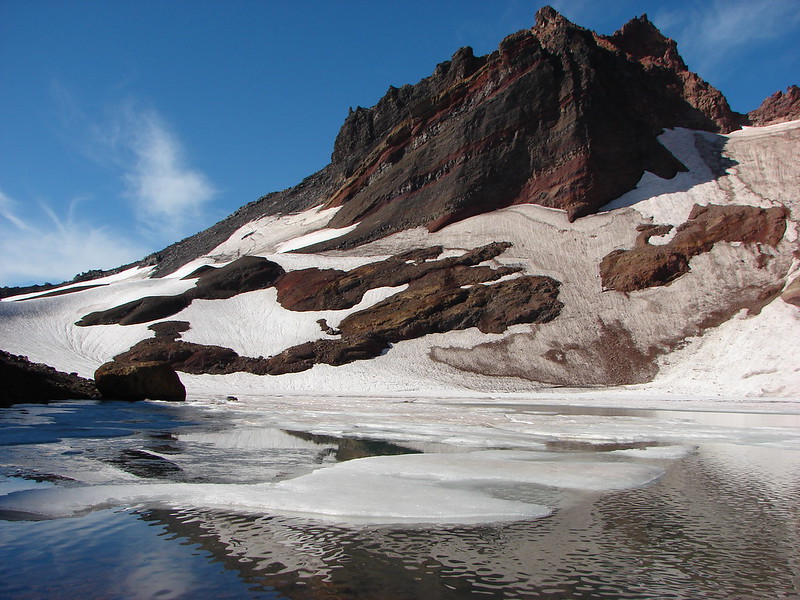
The trail passed through a nice Douglass Fir forest with glimpses of the lake to our left where we spotted our first on trail beargrass of the year.
DSC09122

At about the one mile mark on an arm of the lake which feeds the McKenzie we got our first taste of the draw of Clear Lake.
DSC09141
A footbridge led us over the outlet of the McKenzie River to the eastern shore of Clear Lake.
DSC09151
DSC09152
DSC09171

The trail on the eastern side spent more time in the open and closer to the lake as it crossed over several lava flows. Here we spotted several birds, ducks, and colorful wildflowers.
Ouzel
DSC09189
Penstemon
DSC09182
Tiger Lily
DSC09191
Merganser and her ducklings
DSC09197
Wild Rose
DSC09242
Stellars Jay
DSC09247
Barrow’s Goldeneye
DSC09255
Washington Lily
DSC09271
Another family of ducks
DSC09273

The water in the lake became more colorful as we arrived across the lake from the resort.
DSC09281
DSC09291
DSC09298
DSC09299

Shortly after passing the resort on the far shore we came to the Great Springs which feed the lake with 38 degree water allowing the lake to remain unfrozen all year. They emptied into a beautiful small pool reminiscent of the Tamolitch Pool which lies further down the McKenzie.
DSC09308
DSC09316
DSC09328

After the Great Springs the trail crosses Fish Lake Creek on a footbridge. This creek only flows during the Spring snow melt.
DSC09340

Finally we swung out around an arm of the lake where Ikenick Creek flows into the lake.
DSC09355

Back on the west side of the lake we were again in the fir forest where many white woodland flowers were in bloom.
DSC09360

We quickly reached the resort area which was busy with campers. The picnic area was just on the other side and before we knew it our Central Oregon hiking tour was over (for now). Happy Trails!

flickr: https://www.flickr.com/photos/9319235@N02/sets/72157644778548280/
Facebook: https://www.facebook.com/deryl.yunck/media_set?set=a.10204239083124439.1073741887.1448521051&type=1