
It has been a couple of years since we kicked off a new year with a hike but January 1st, 2023 was forecast to be a lone dry day in the foreseeable future. Not only was the day supposed to be rain free, it was also going to be at least partly sunny. While Heather works back from her injury we are targeting shorter hikes that don’t involve too much elevation gain. Specifically looking for hikes that fit these criteria has led us to some hikes that we might have otherwise overlooked. We discovered several such trails in Lincoln City.
I put together a plan to visit five of the city’s open space areas over the course of four stops. The four stops would be just under six and a half miles with approximately 800′ of cumulative elevation gain. Following the hikes our plan was to have lunch at the newly opened Pelican Brewing Siletz Bay Brewpub.
Since the brewpub is located just south of Lincoln City we planned to start at the northern most trailhead and worked our way south. This meant that the Friends of Wildwoods Trailhead. The hike here was supposed to be a 1 mile out-and-back with a short side spur to a platform overlooking a swamp.
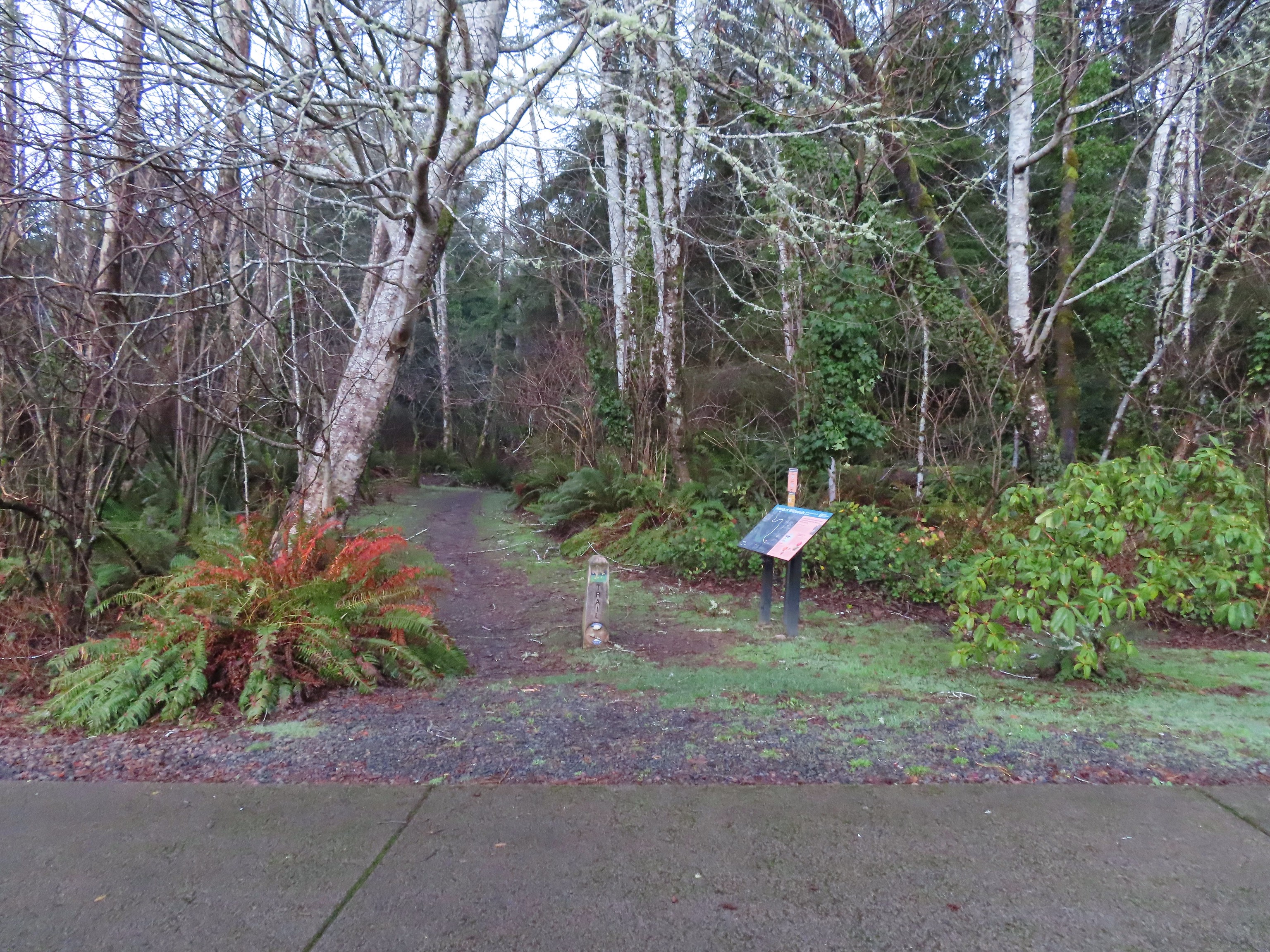

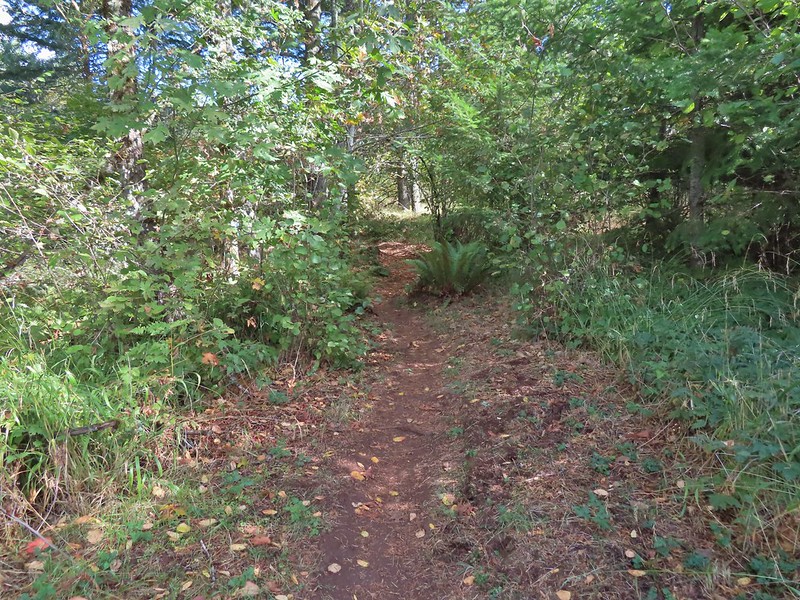
We somehow managed to turn it into a 1.5-mile hike including a loop that isn’t shown on any maps. It’s worth noting that in all of these open space areas we visited on this day there were multiple use trails leading off in different directions. We used our GPS a surprising number of times throughout the day. One nice feature was that there were QR codes available at the trailheads which accessed maps for our phones. Even so we somehow managed to not find the viewing platform but instead wound up overlooking the wetlands from a different spot.
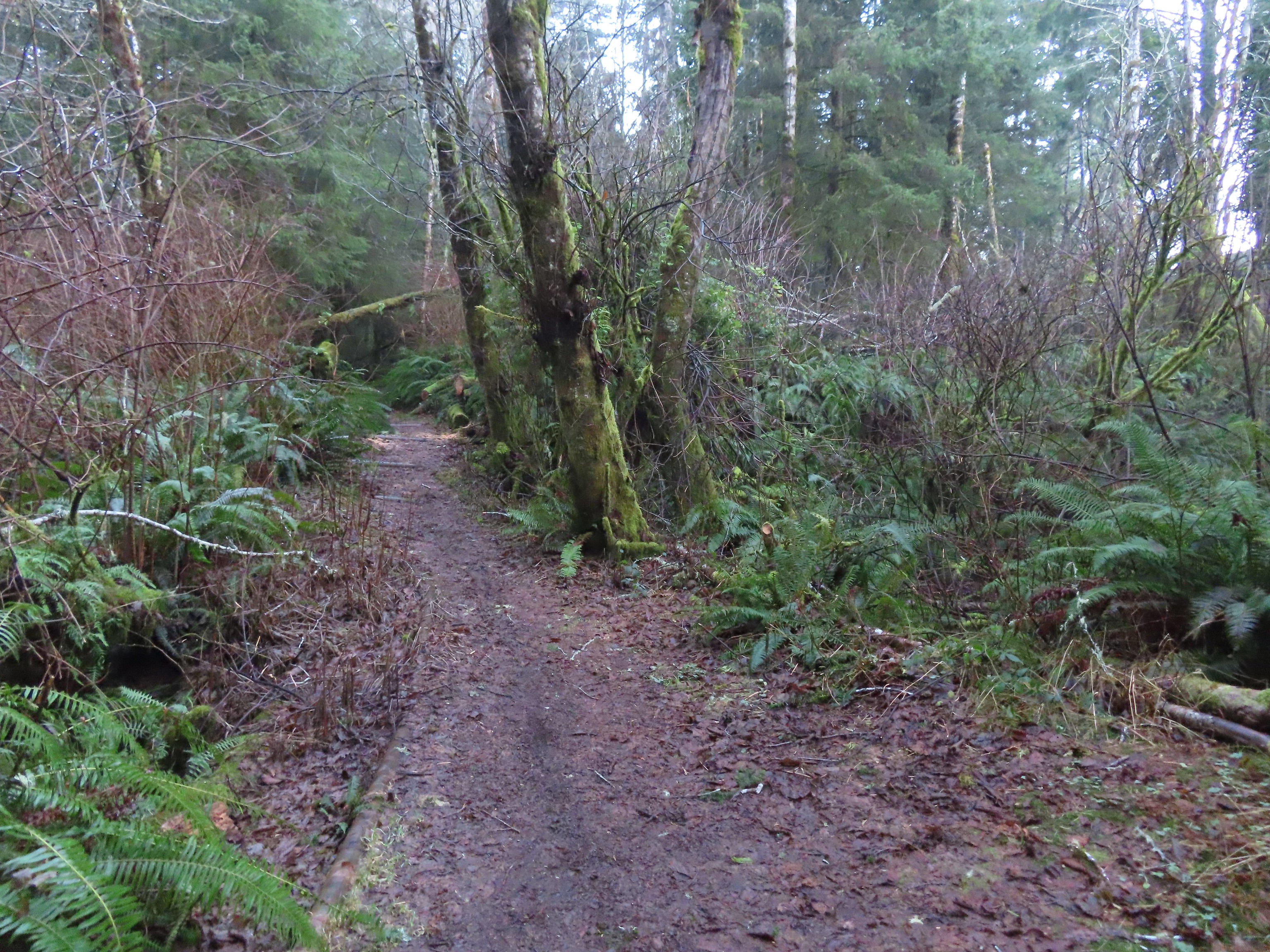
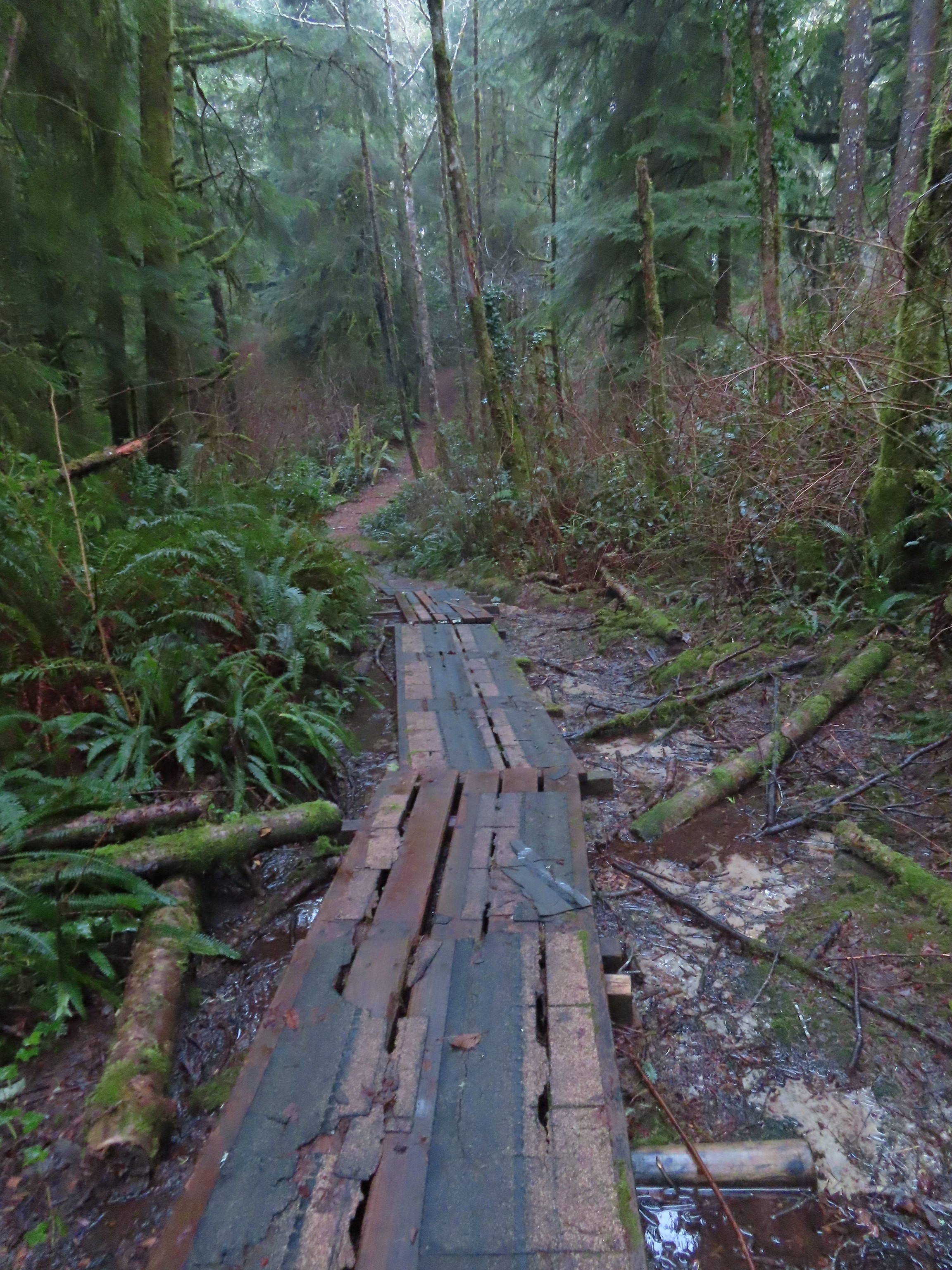
 Junction with the spur Wetlands Trail. The larger sign on the left is a Trail Challenge sign. We would see several more over the course of the day. The challenge, we learned later, is to visit all eight of the Open Spaces.
 End of the trail at East Tide Ave.
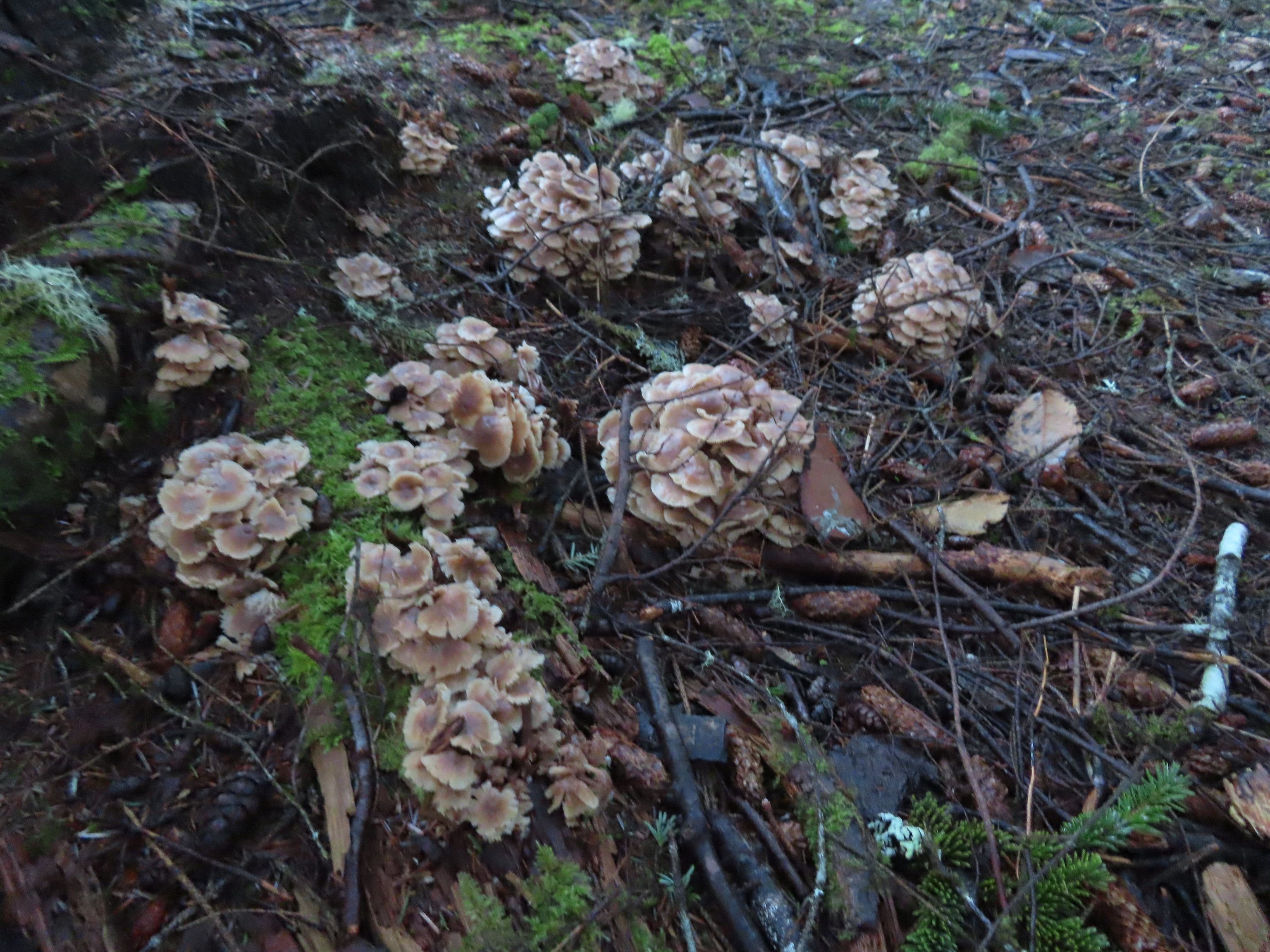
 The wetlands.
We may have overlooked the trail down to the platform due to debris left over from a big storm the week before which packed wind gusts over 70 mph. We had been prepared for the possibility that some of the trail might be inaccessible due to damage but overall they were in good shape.
After finishing our hike we hopped in the car and drove less than a mile south to our second stop at Regatta Park.
 Devil’s Lake from Regatta Park.
From this trailhead we would visit two open spaces, Regatta and Spring Lake. Before hitting the trails though we walked down to the shore of Devil’s Lake to get a closer look.



From the lake we walked back uphill across the parking lot to a large Nature Trail sign.

Once again the plethora of trails got the best of us and our route through the Regatta Open Space was not how we’d meant to do it, but we managed to see what we had wanted to.
 Pointer for a heritage tree.

Sitka Spruce. This approximately 400-year-old Oregon Heritage Tree is 212′ tall with a 32 1/2′ diameter.

 Another Trail Challenge sign.
After looping through the Regatta Open Space we walked uphill out of the park to West Devil’s Lake Road where we turned left for 400′ to a trail on the far side of the road.
 Heading out of Regatta Park
 Neat dragon sculpture.
 West Devil’s Lake Road. The trail is ahead on the right just beyond the driveway on that side.
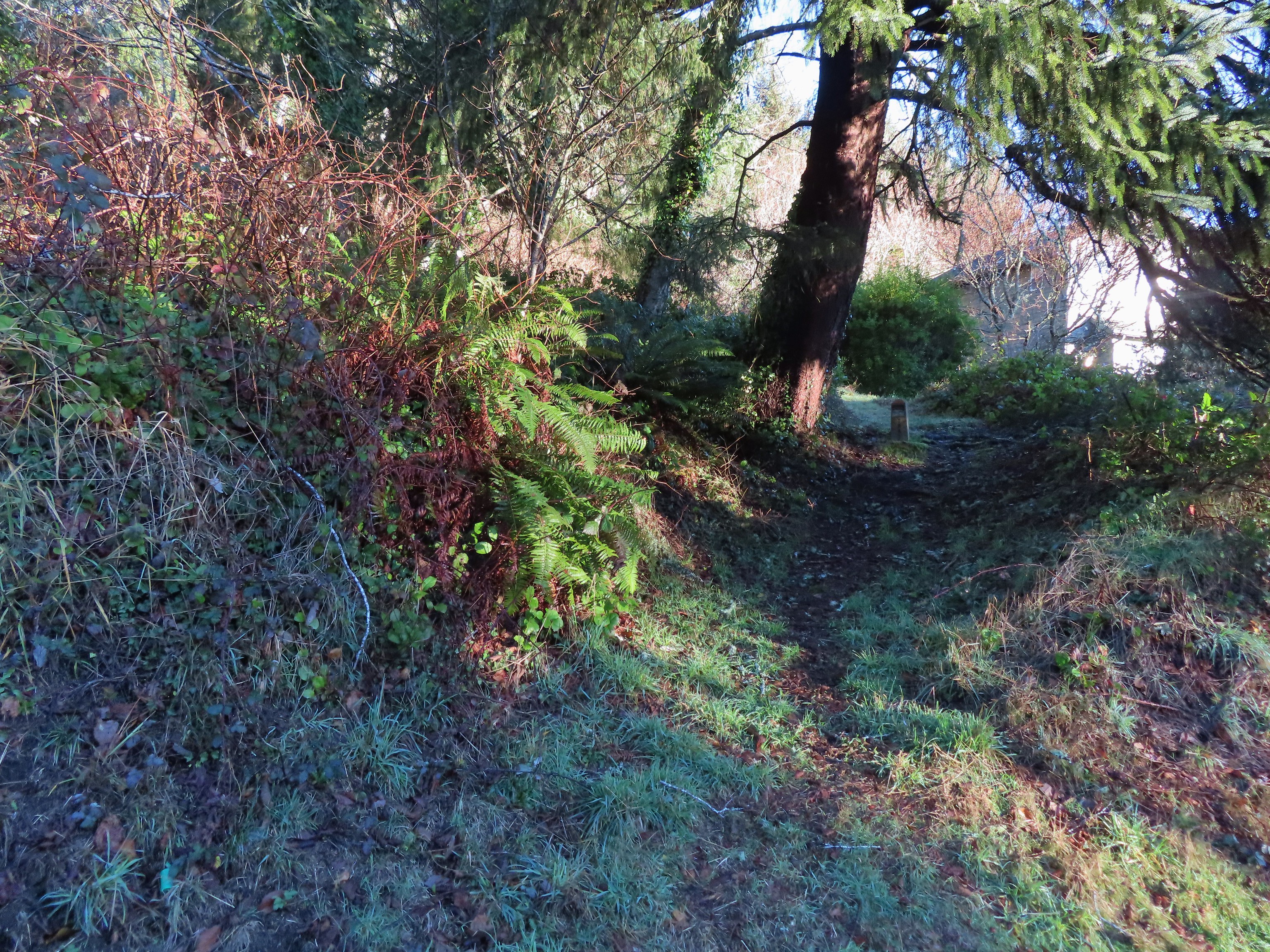 There was no sign along the road but there was a trail marker just uphill.
This was the Spring Lake Trail which made a short steep climb to a ridge top.

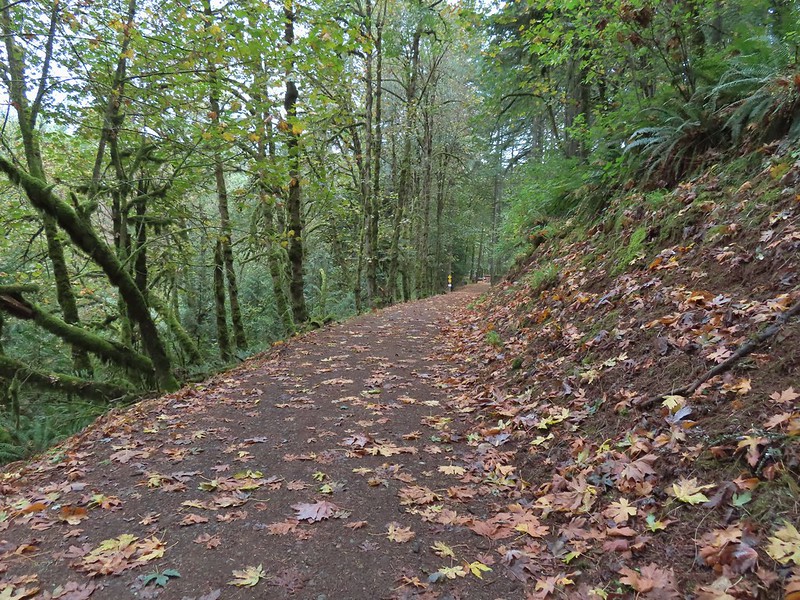
 The trail briefly leveled out atop the ridge before diving down the other side.
The area around Spring Lake was by far the most confusing of the day with numerous trails crisscrossing and intersecting seemingly every few feet. We used the GPS quite a bit here as we made our way counterclockwise around the lake.
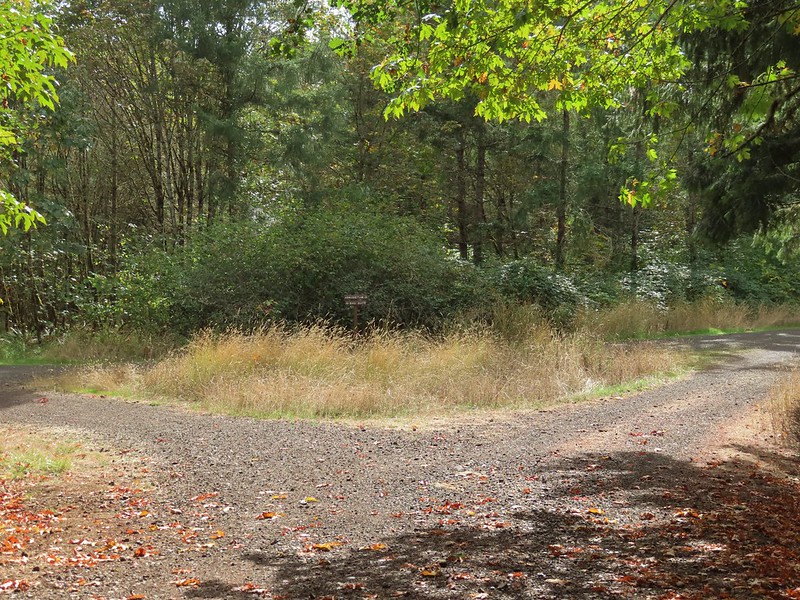
 This junction is where our loop began and ended.
 Another fork just beyond the one in the previous photo.
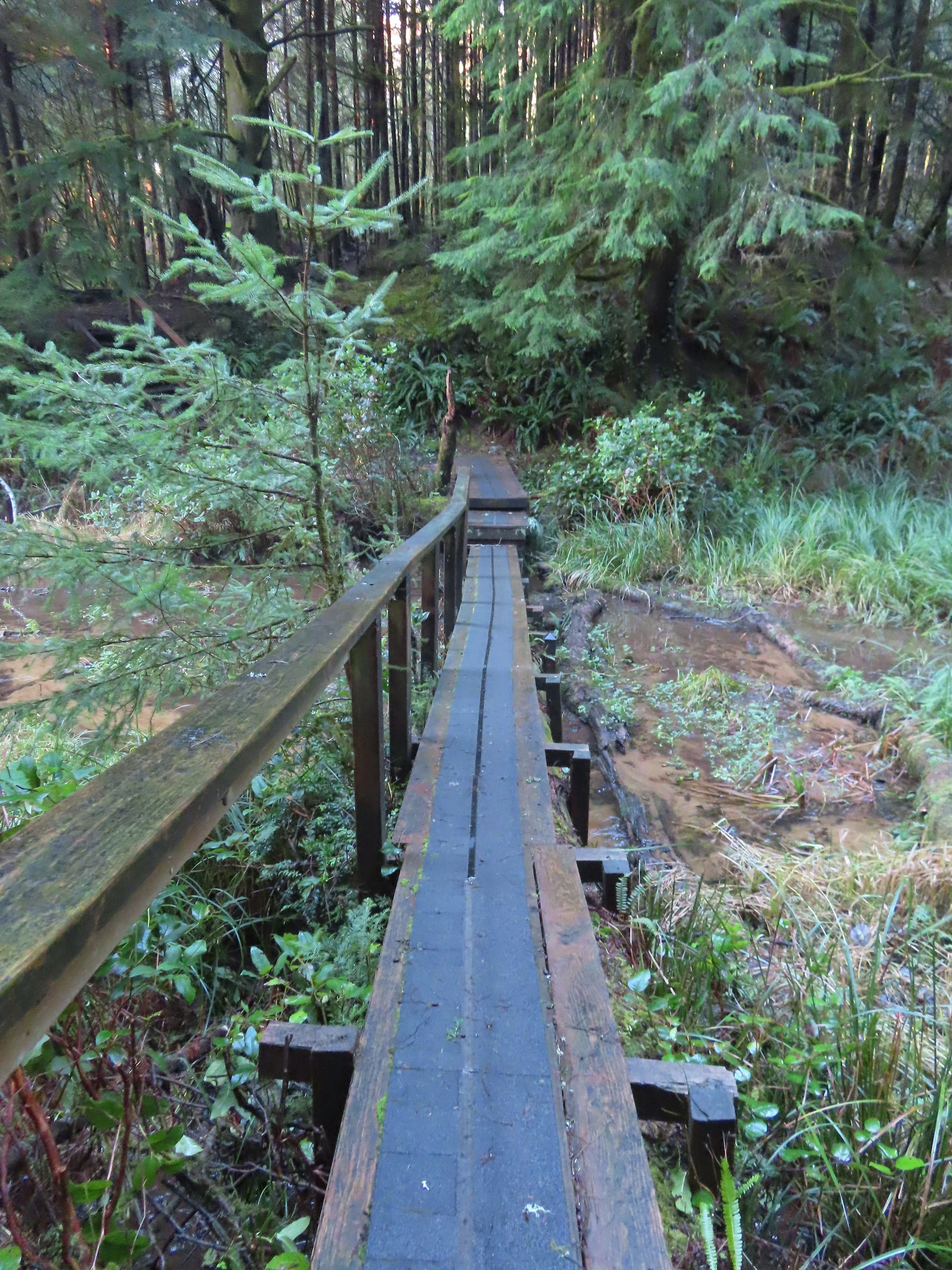 Footbridge over the northern arm of the lake.
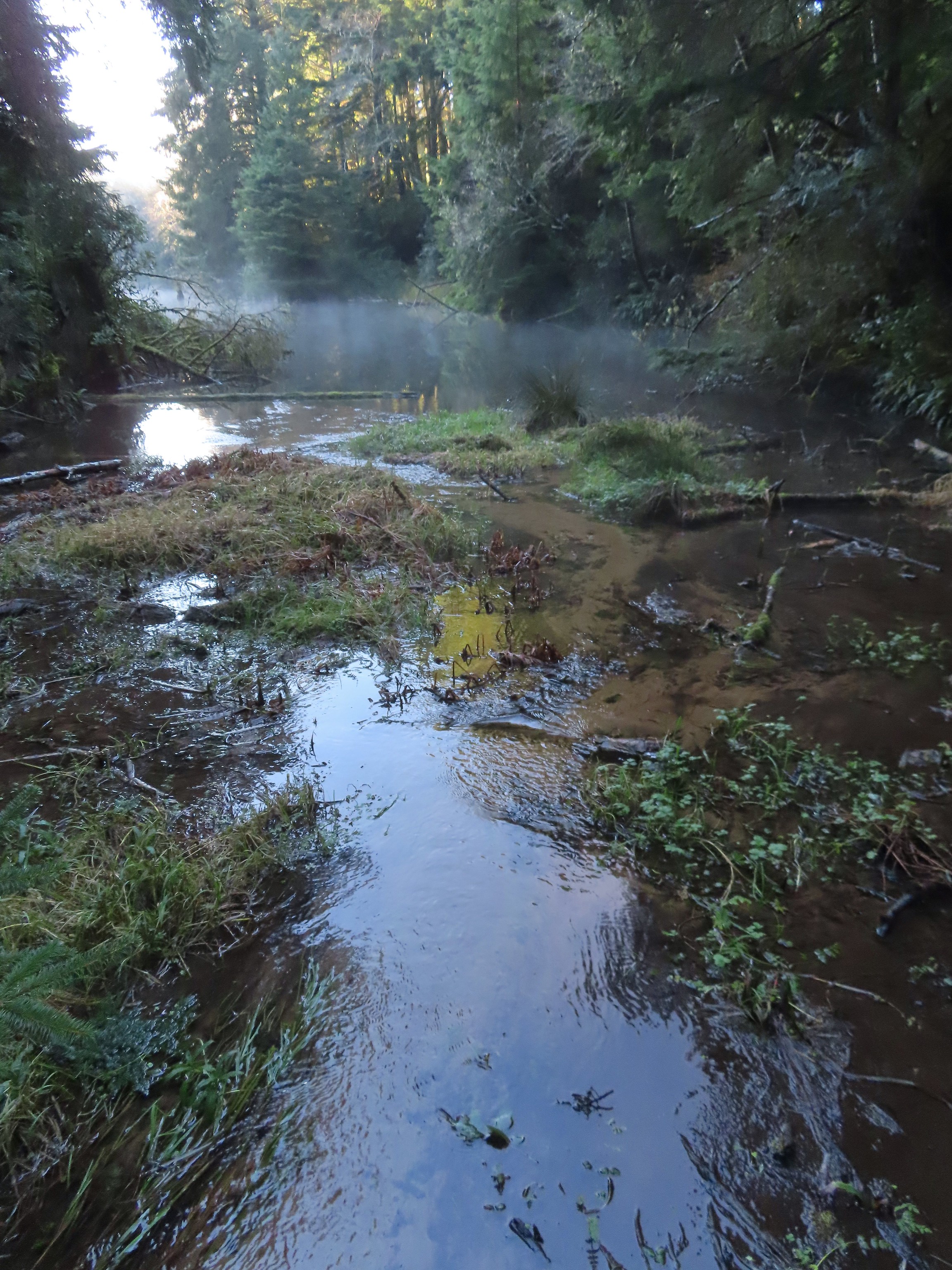 Spring Lake from the footbridge.
 Found another one.

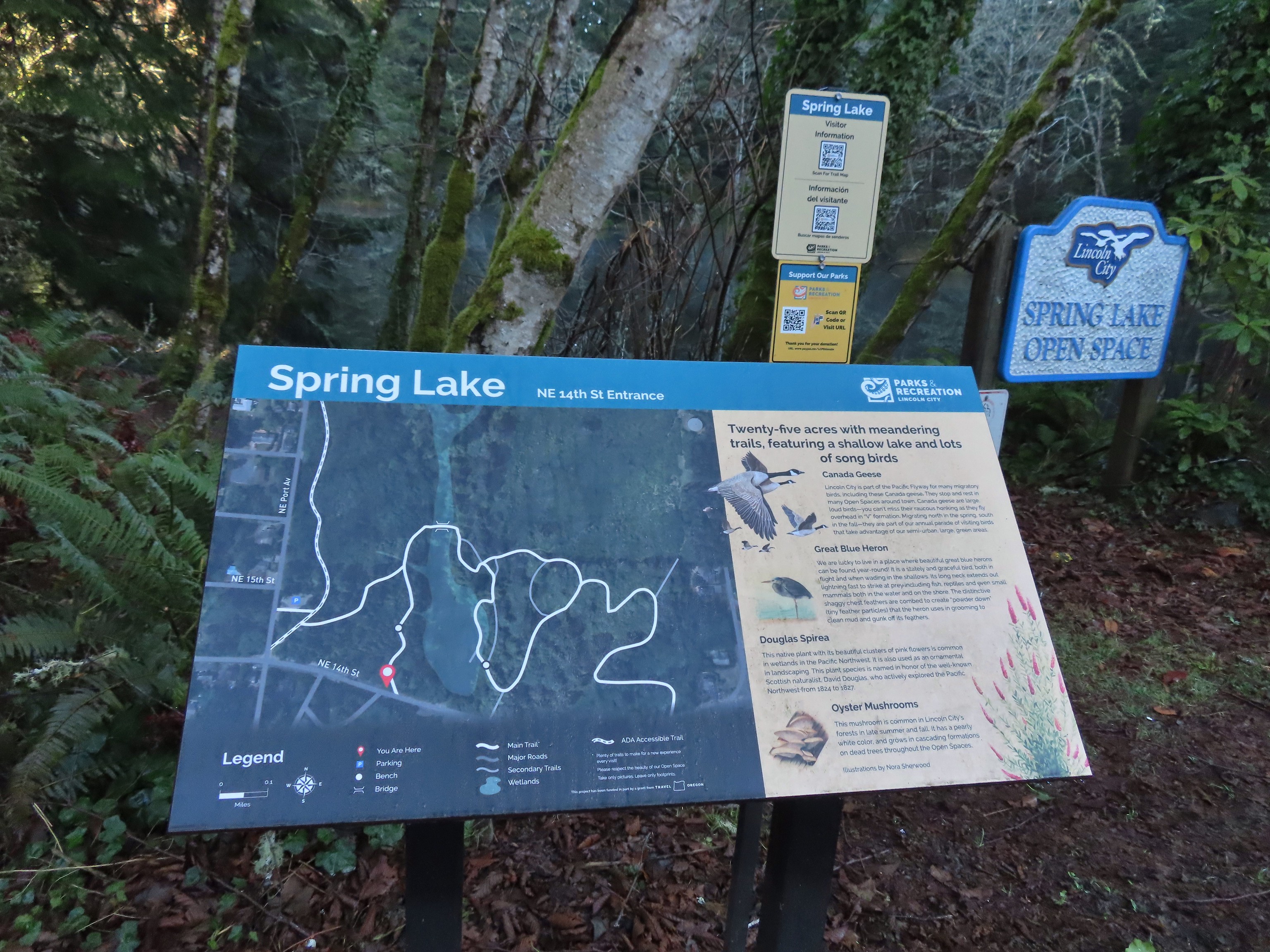 Small trailhead at 14th Street.
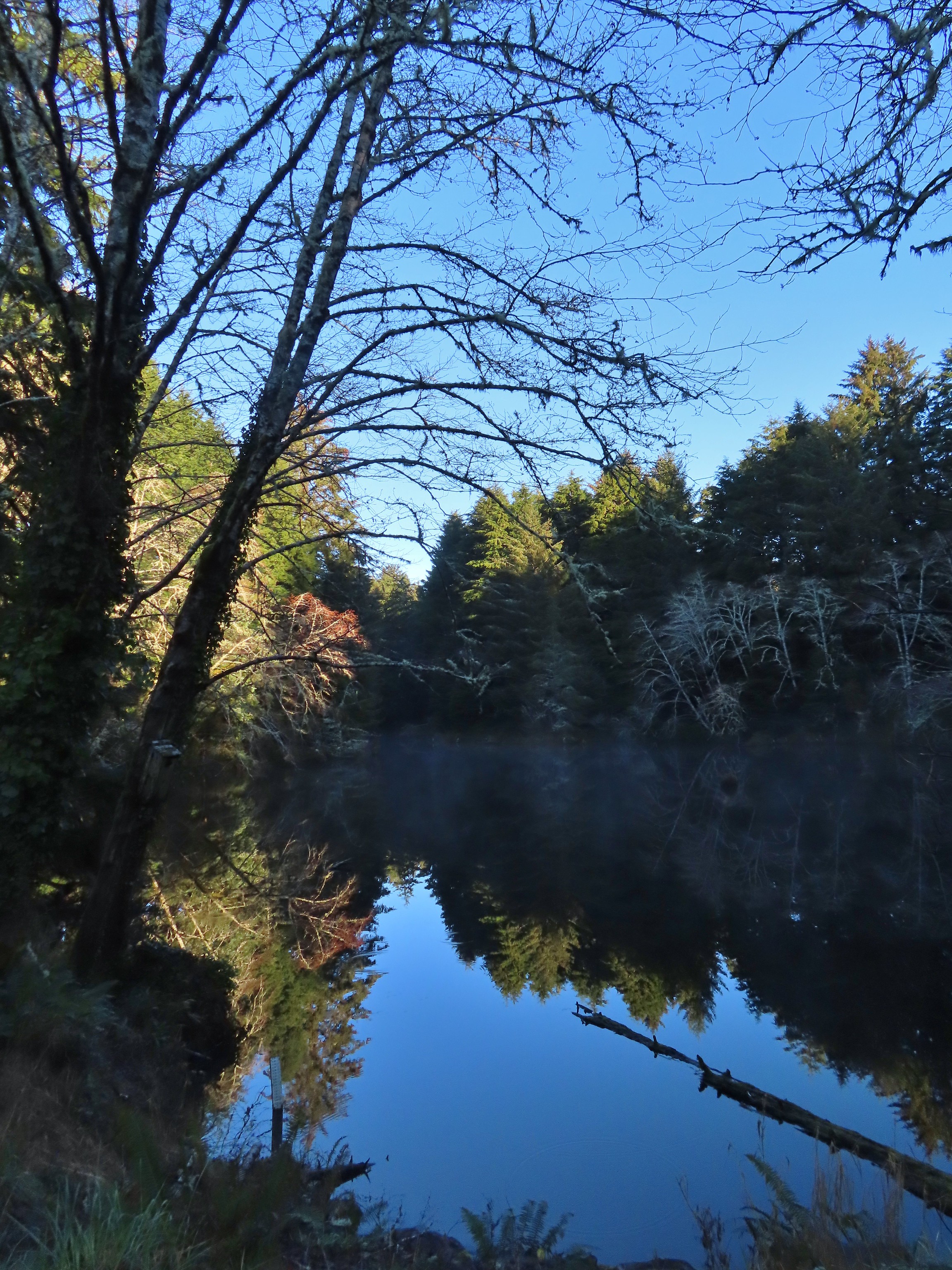 Spring Lake from the 14th Street Trailhead.
 We had to walk a few feet along 14th Street to find the trail on the east side of the lake.

 Approaching the junction at the end of our loop.
After completing the loop around the lake we returned to our car and drove another 2.7 miles south to the Agness Creek Open Space.
There are two trailheads here, a north and a south, separated by 200′. We parked at the South Agness Creek Trailhead and started with the 0.3-mile loop there.
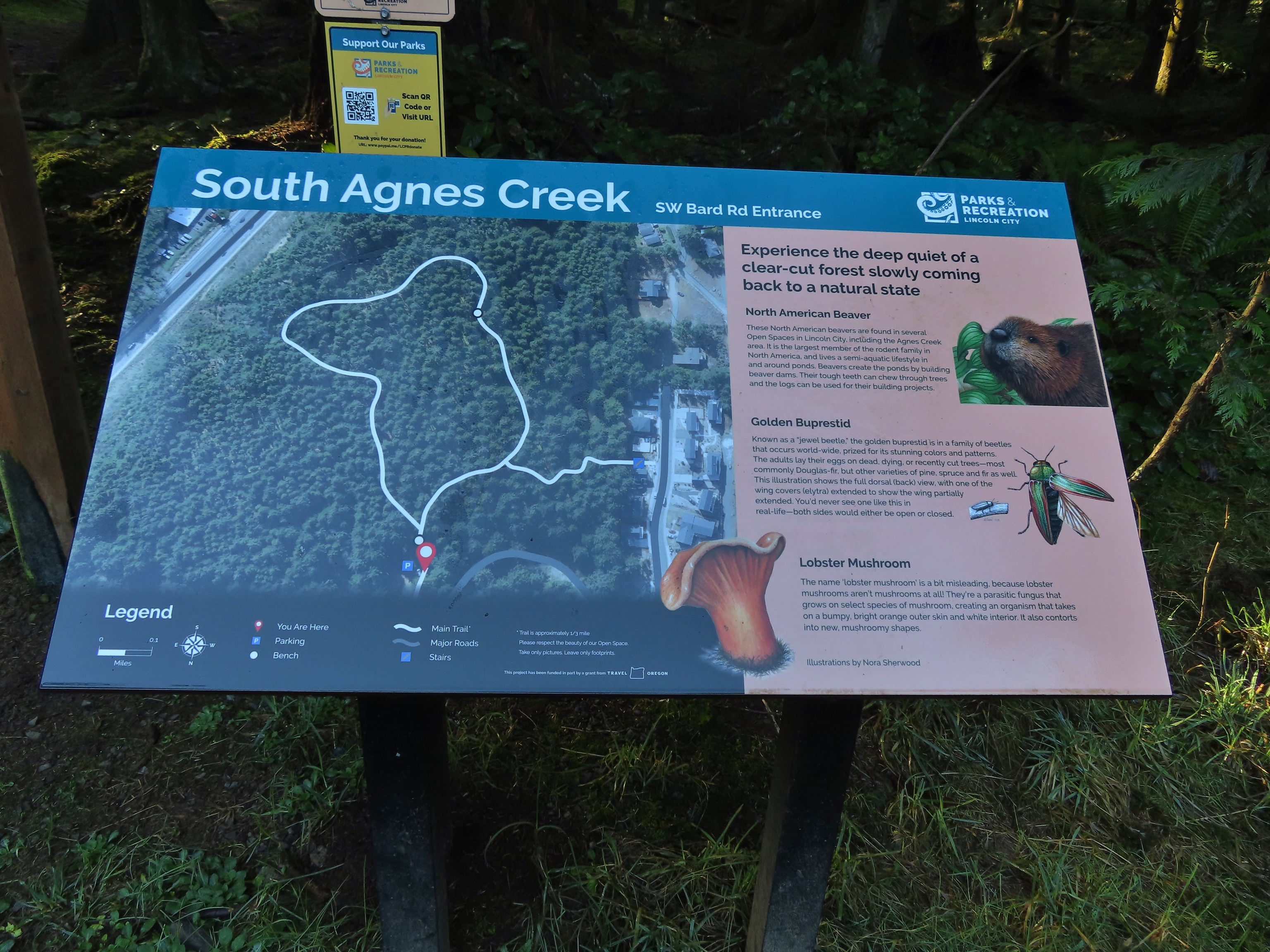

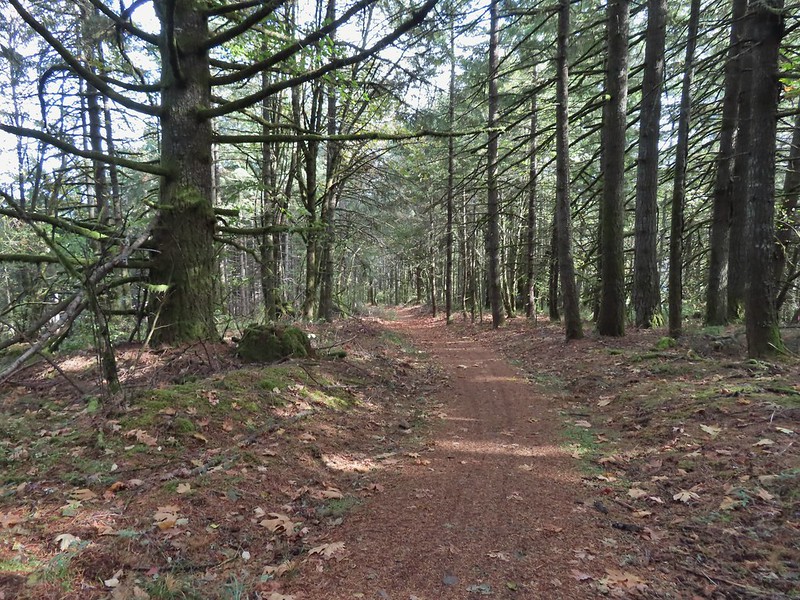
 This forested loop was full of bright green mossed covered ground.


After completing the loop we took a connector trail between the two trailheads to reach the North Agness Creek Trailhead.
 The connector trail at the south trailhead.
 Two short out-and-back trails begin at the north trailhead. We started with the left hand trail.
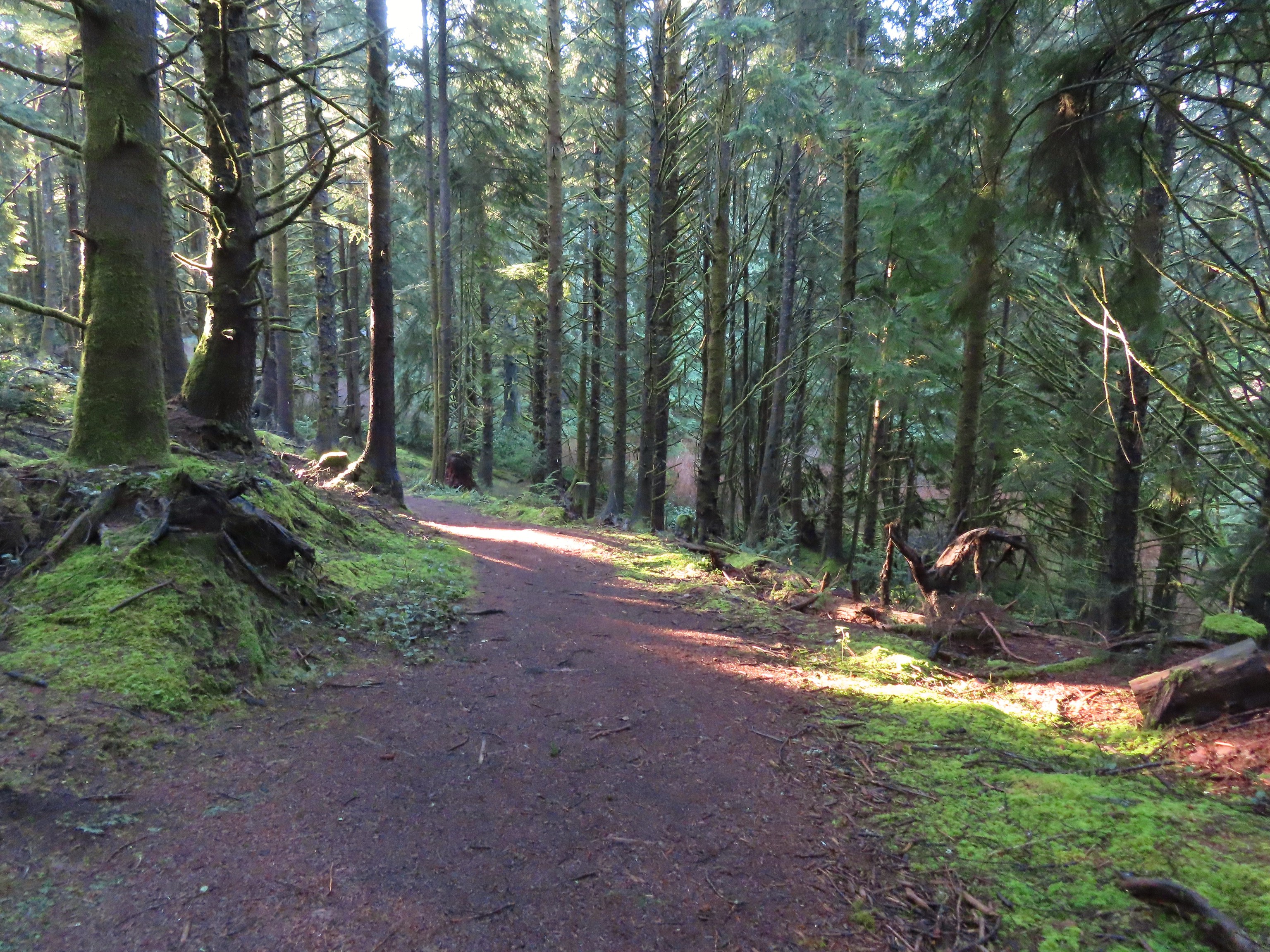

 The left hand spur abruptly ends on a ridge above what we assume was Agness Creek although we couldn’t really make out an actual creek.
 Agness Creek?
We returned to the trailhead and took the right hand fork which led a third of a mile to SW 19th Street.
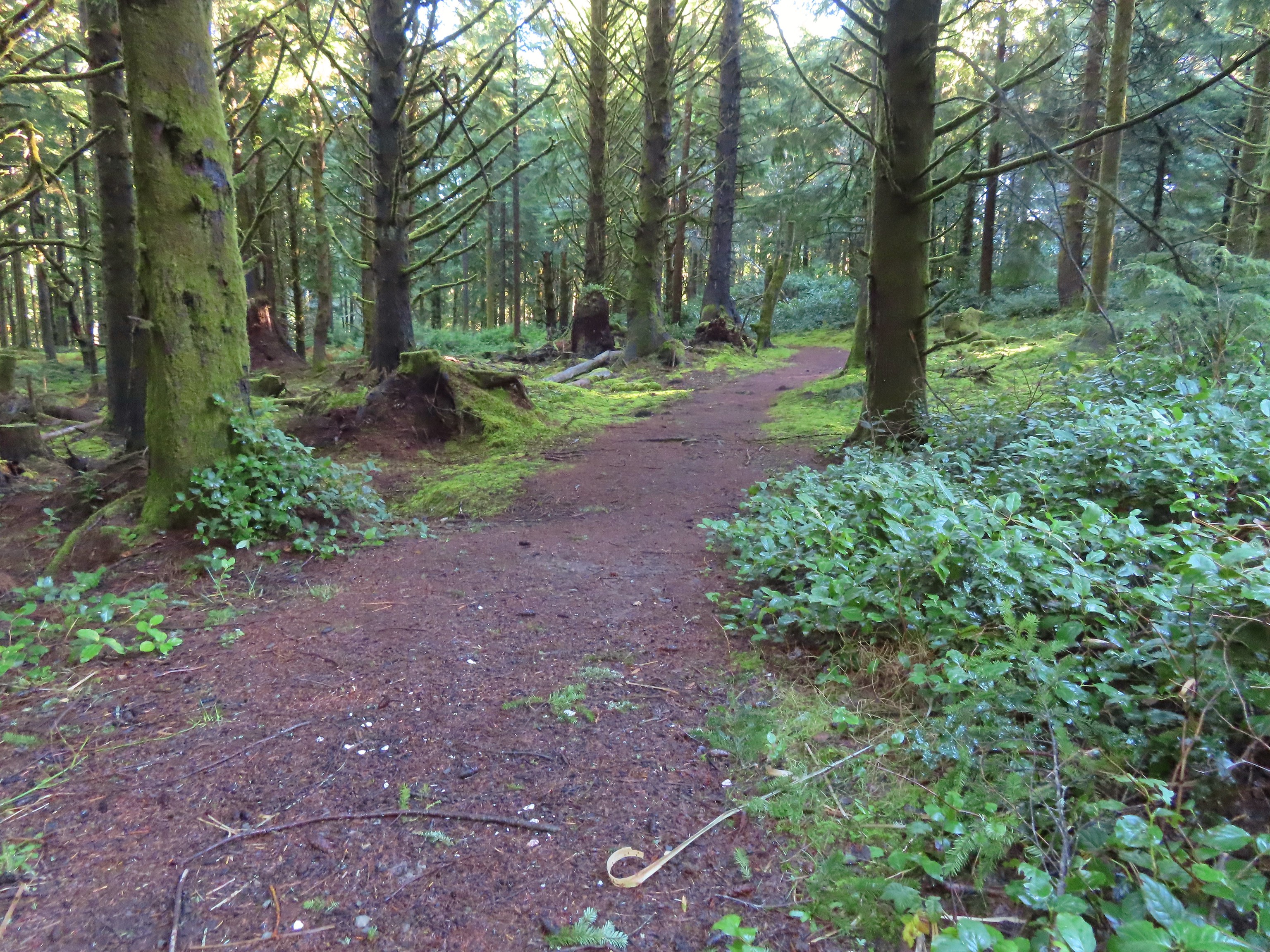


 Approaching SW 19th Street.

After reaching the neighborhood at the end of this trail we returned to the south trailhead and drove 1.8 miles to our final stop at the Spyglass Open Space.

Sticking with the theme for the day we got turned around a bit here as well and instead of doing a 1.4-mile loop around the perimeter we followed an old roadbed directly up the middle of the open space. We had planned on doing a counterclockwise loop but didn’t see the trail we actually wanted which was right next to a chain link fence.
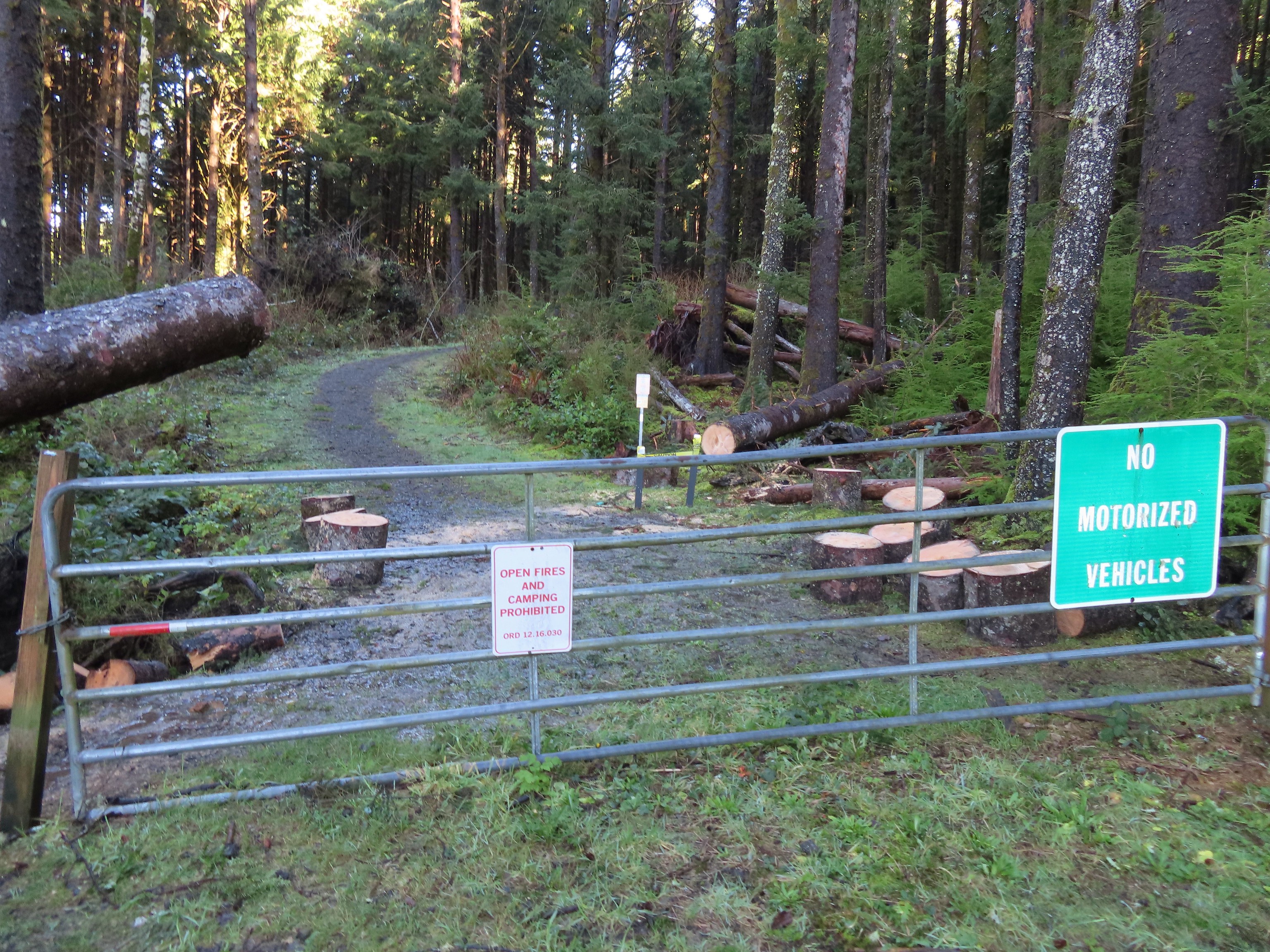 This should have been the end of our loop, not the beginning. Had we realized we weren’t on the perimeter trail we would have taken the first left hand trail which would have allowed us to do our planned loop in reverse (clockwise). Instead we headed straight up the ridge.
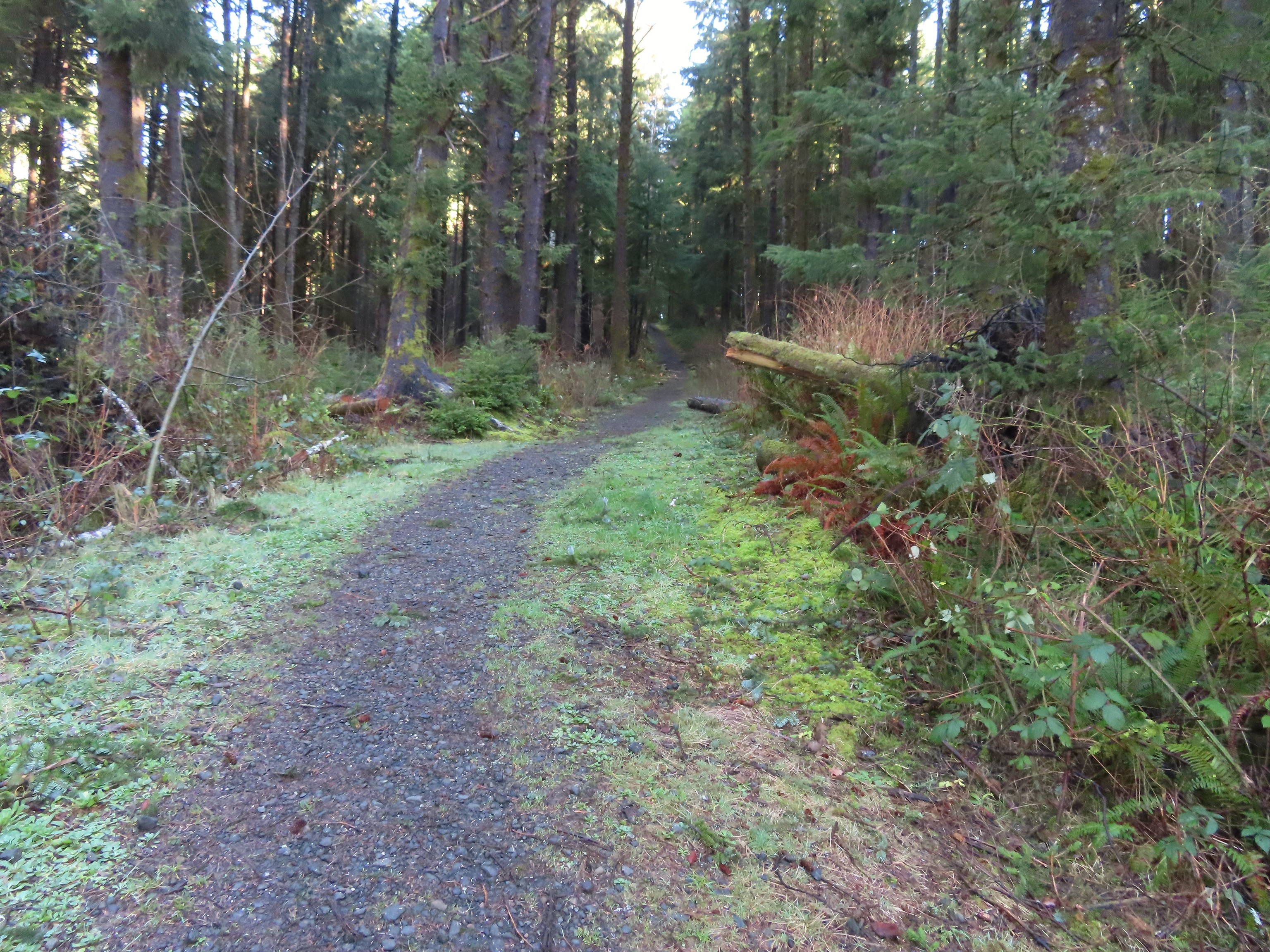
 The Trail Challenge sign here was located at a second junction, near the ridge top. A short distance beyond was another junction with an unsigned trail veering off to the right. We still hadn’t figured out our mistake and thought that the right hand trail was a spur trail shown on the map leading to a neighborhood so we went left.
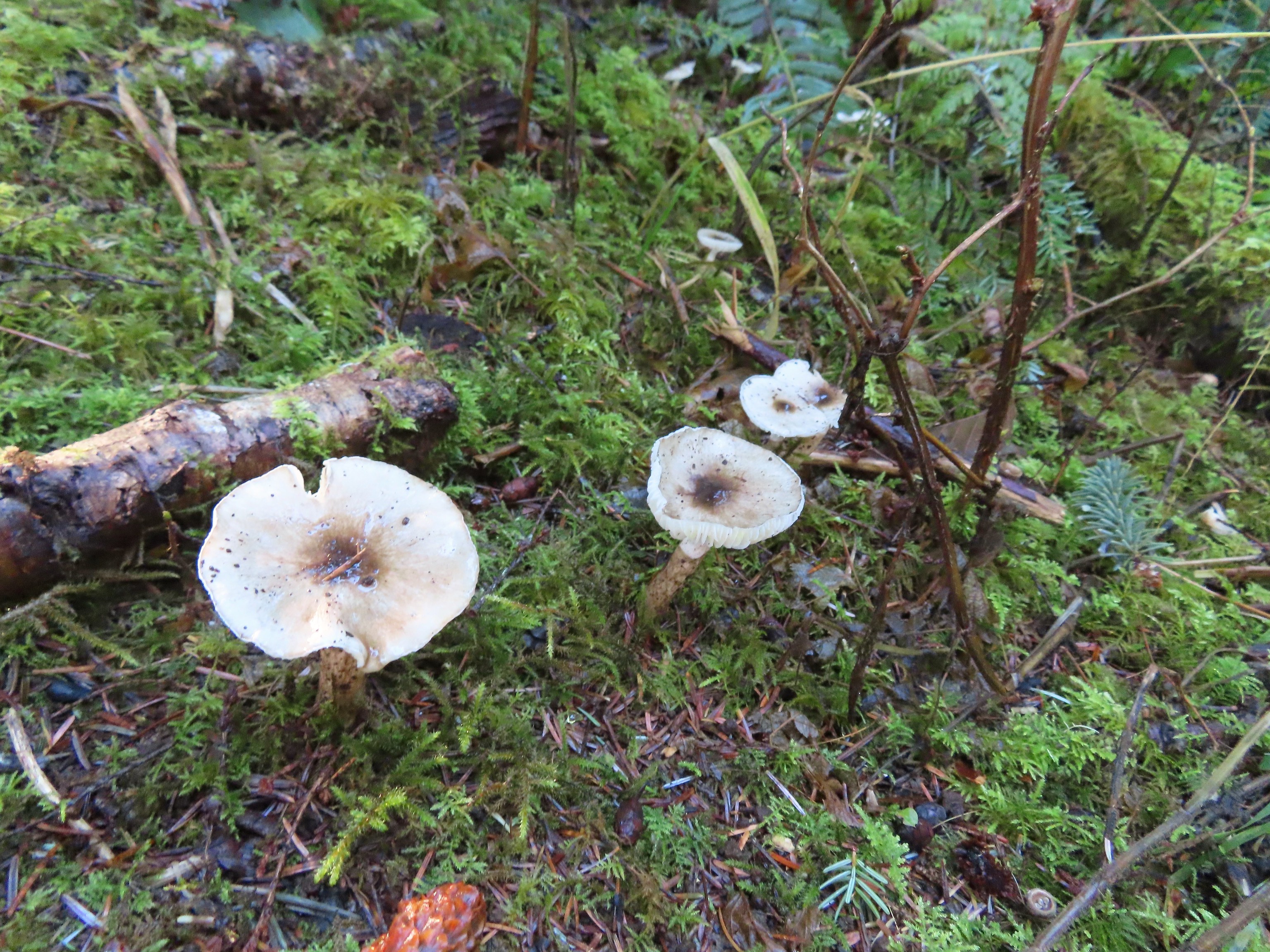
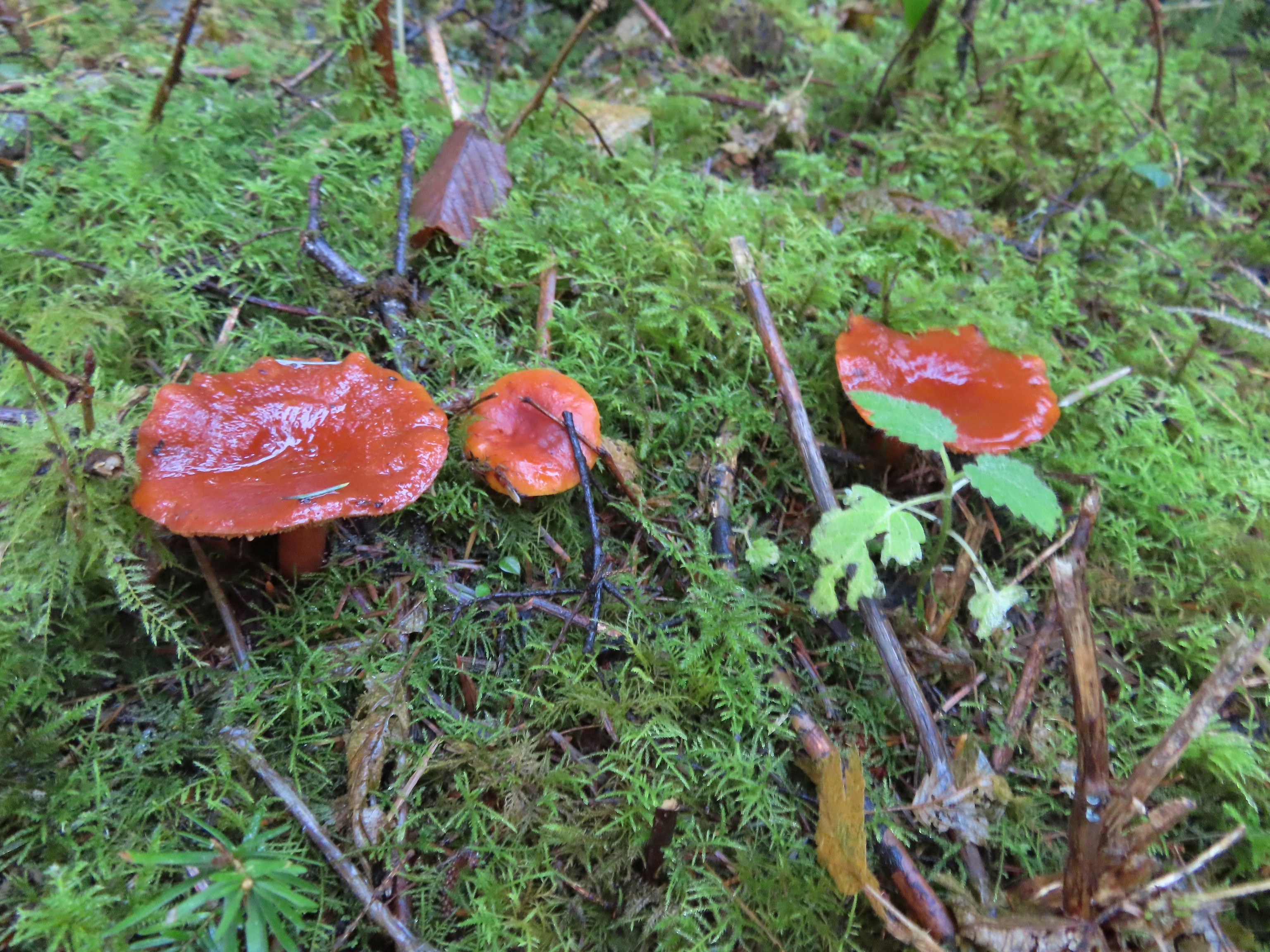
The trail never quite reached the ridge top as it veered left in the forest below.

I scrambled up one of several use trails to see what kind of a view the ridge offered.
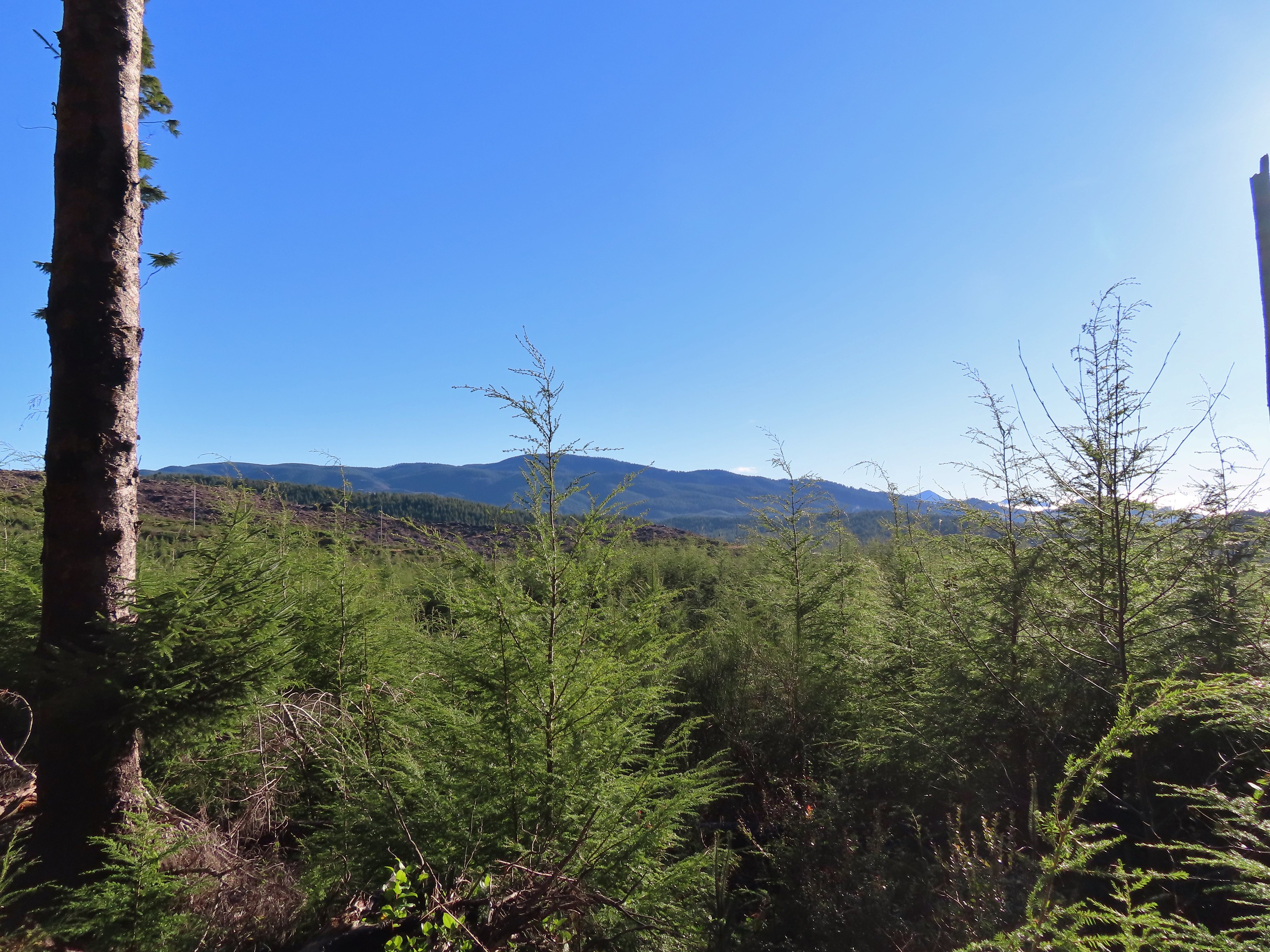 A lot of clearcuts is what I could see.
When the trail made a sharp turn left and suddenly headed downhill we began to realize that we hadn’t been where we thought we were. We pulled up the map and GPS track and began comparing and figured out what we’d done. We weren’t sure where we had missed the right turn at the beginning of the hike though. When we reached another split in the trail we went left, leaving the perimeter to cut back uphill to the junction at the Trail Challenge sign.

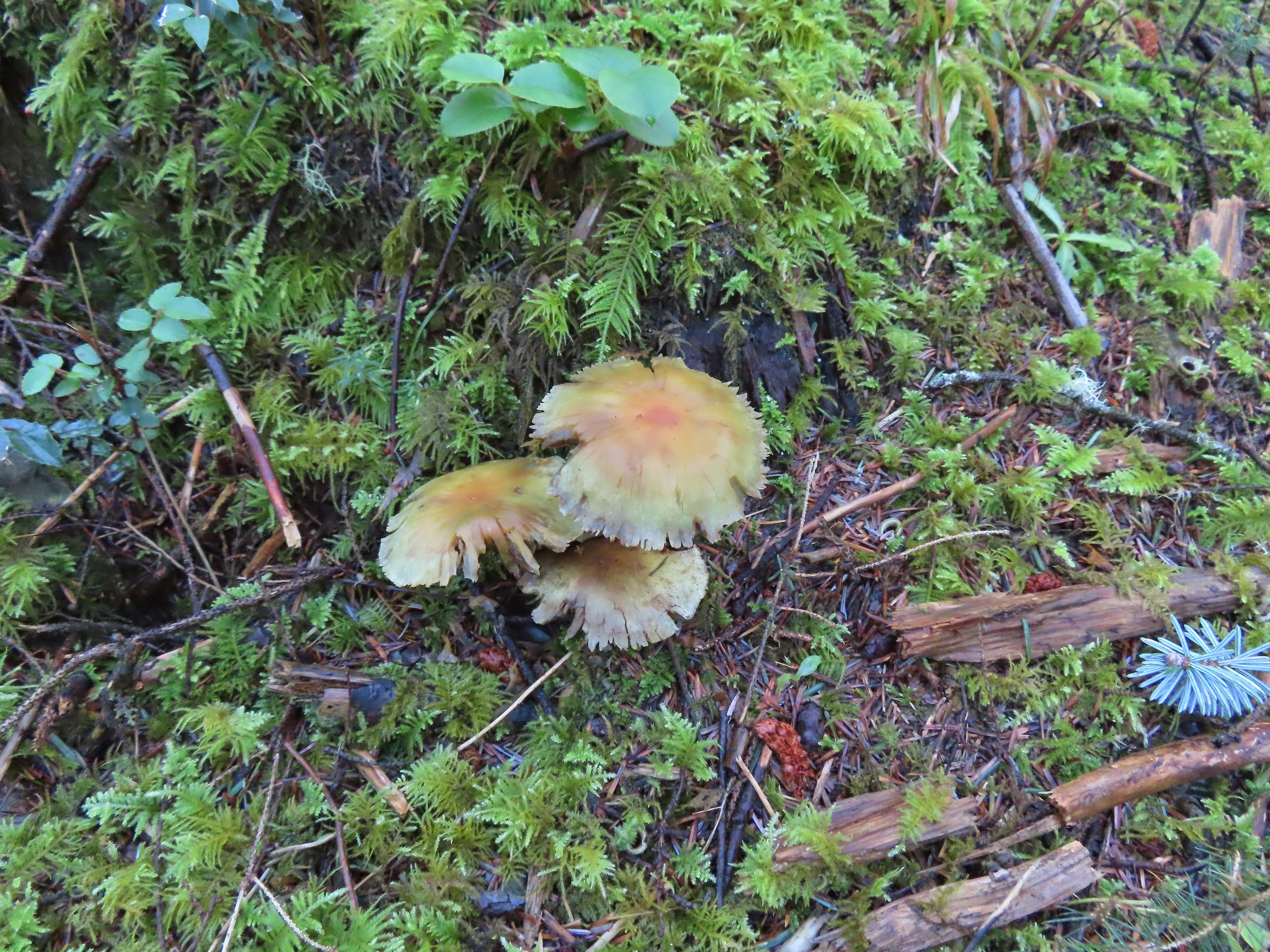
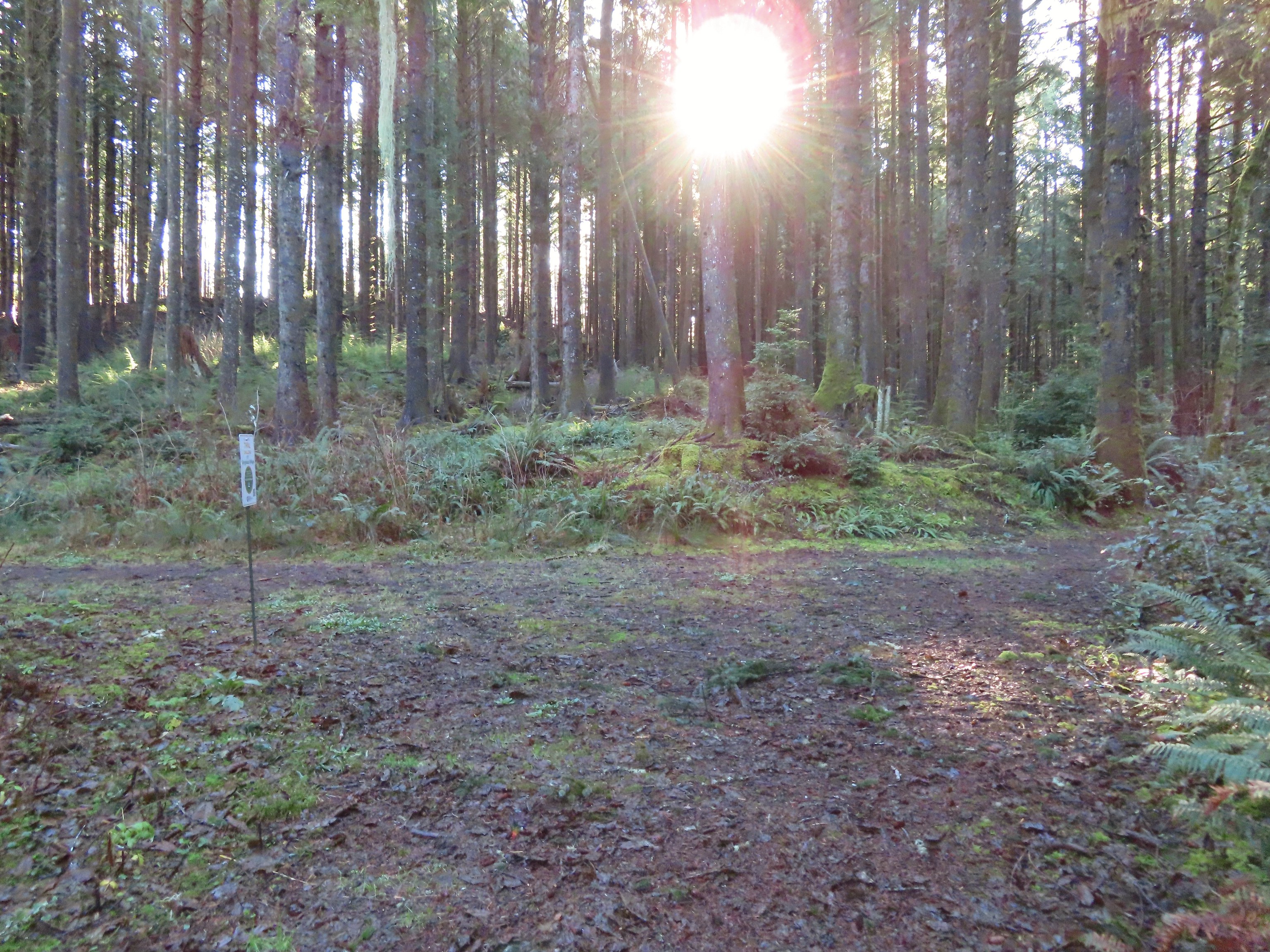
We turned left at the junction and then took the right hand spur that we’d mistook for the spur to the neighborhood. We followed this trail uphill, encountering our first and only downed tree for the day, to a junction with the actual spur. This section was fainter and a little harder to follow but we stayed left along the ridge as much as possible.

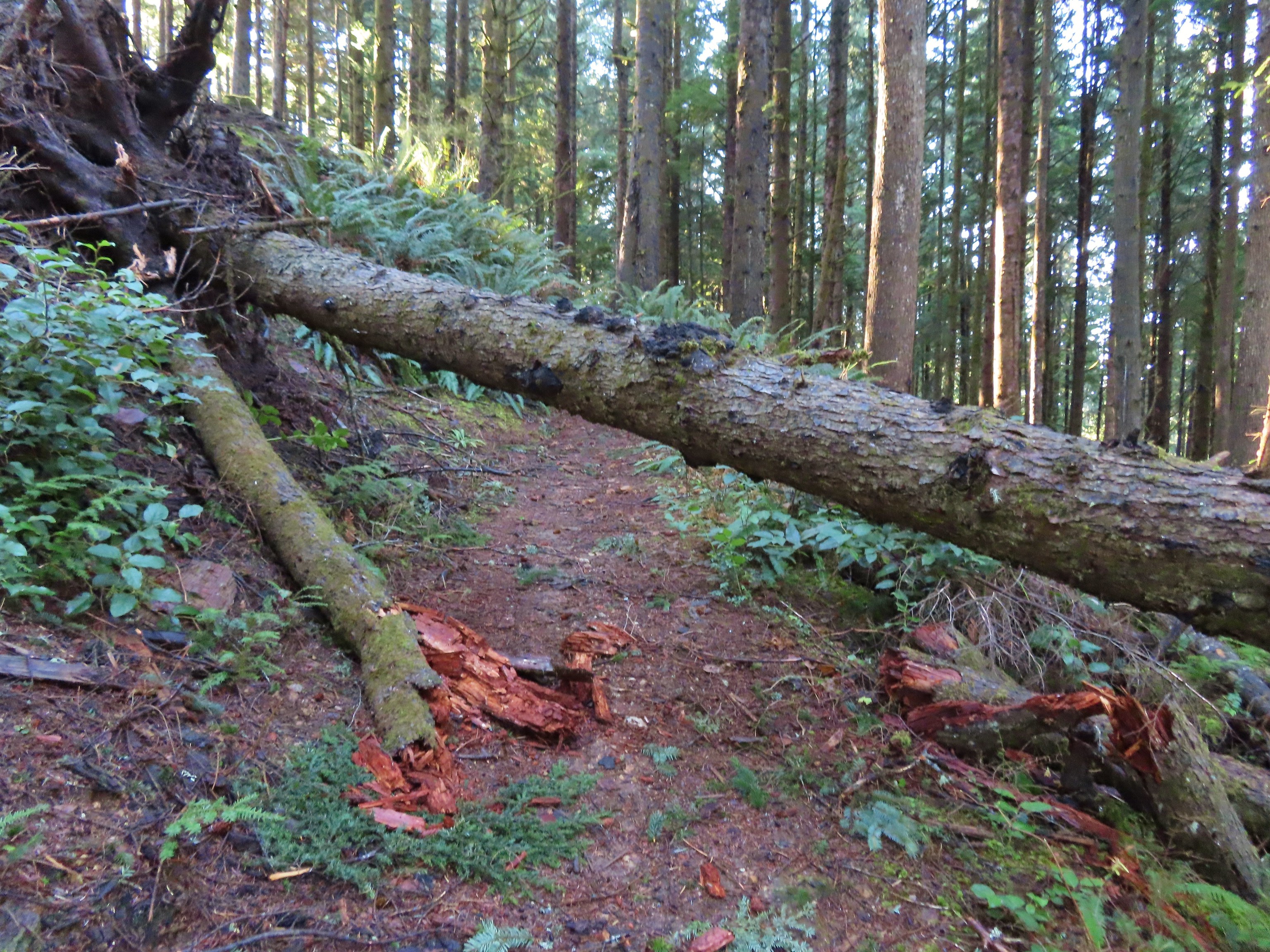 We were really surprised that this was the only real obstacle we encountered all day given the recent storm.
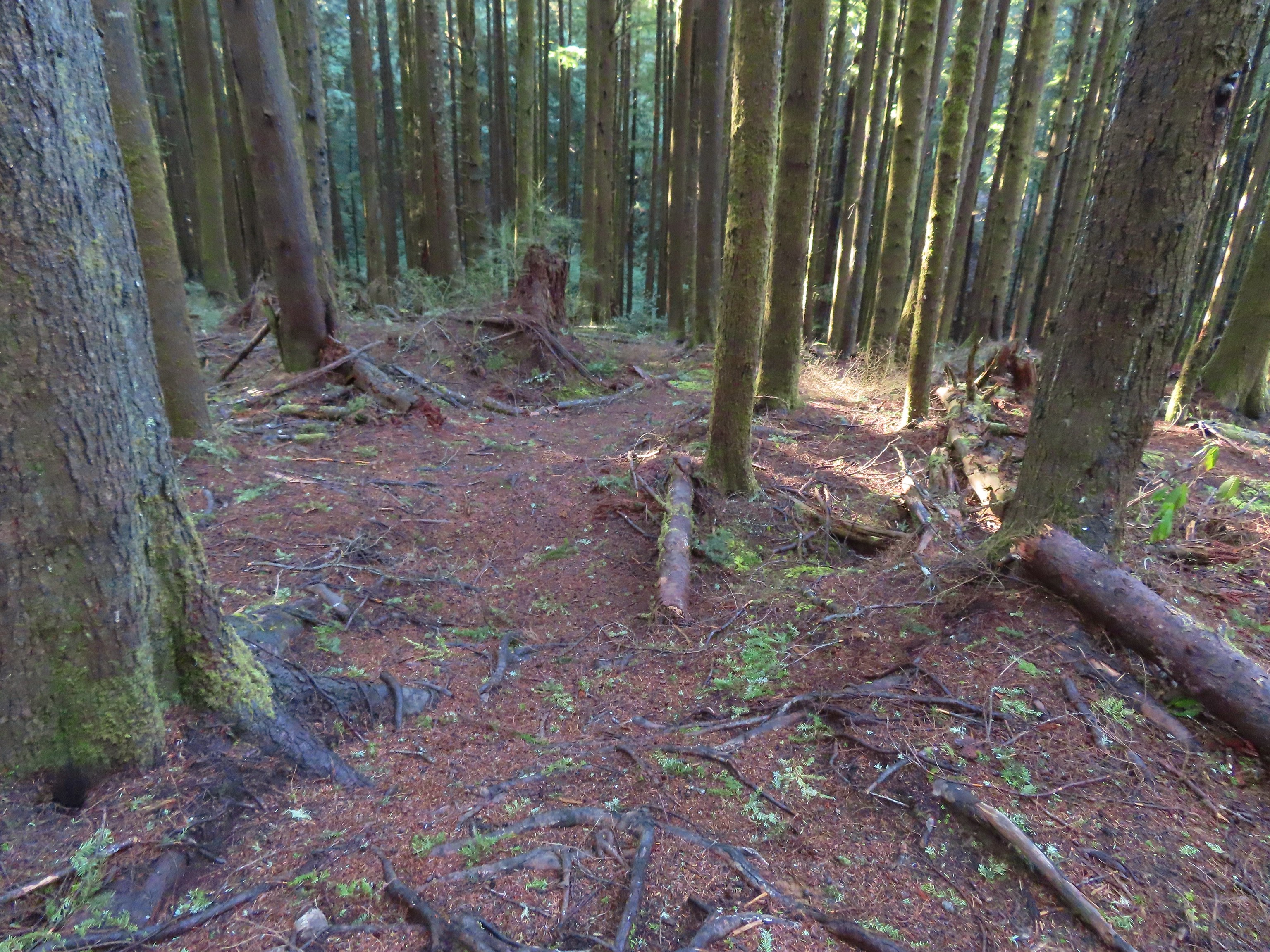 An example of the fainter tread along this section.
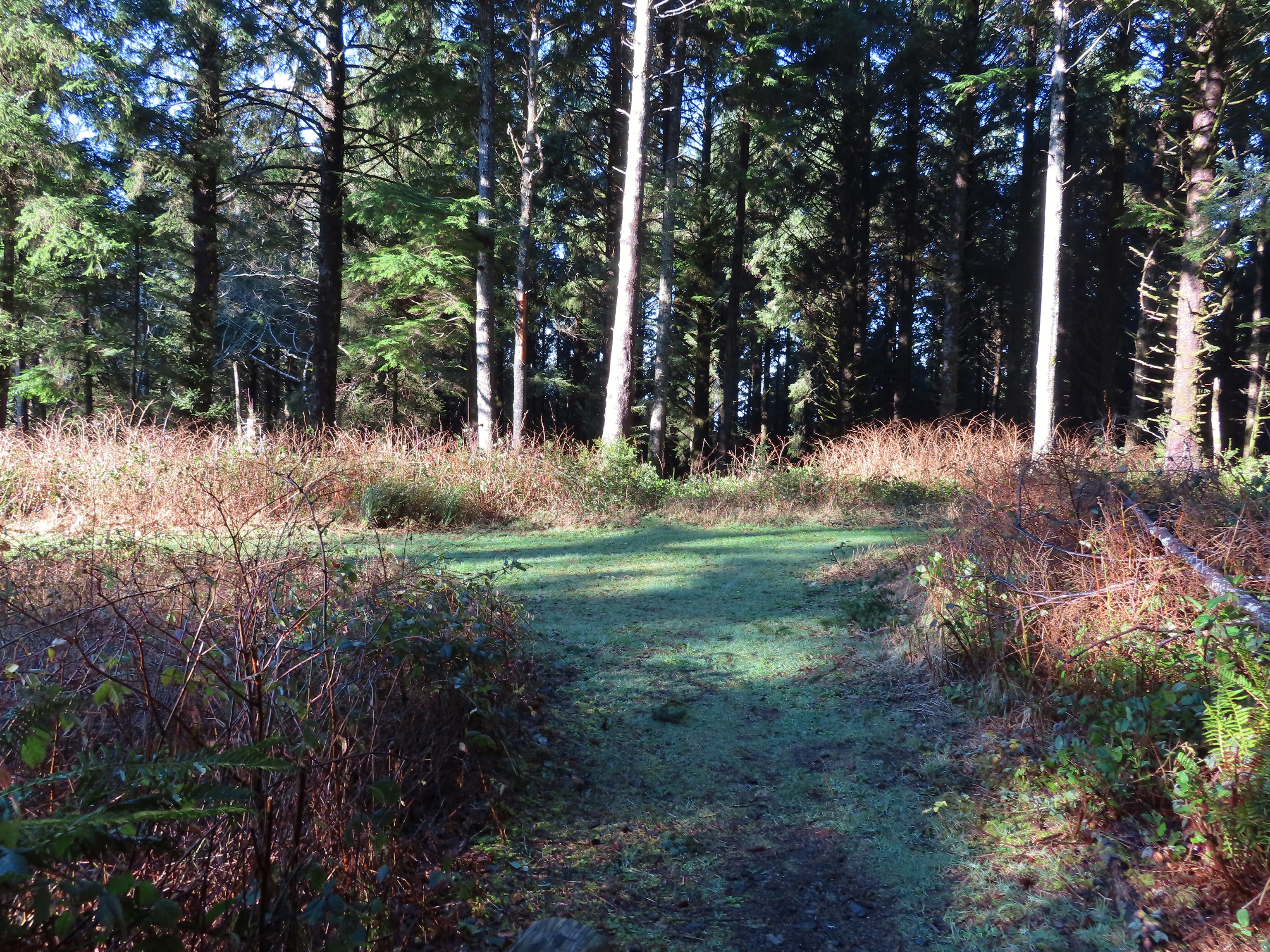 The spur to the left led to a neighborhood so we turned right.


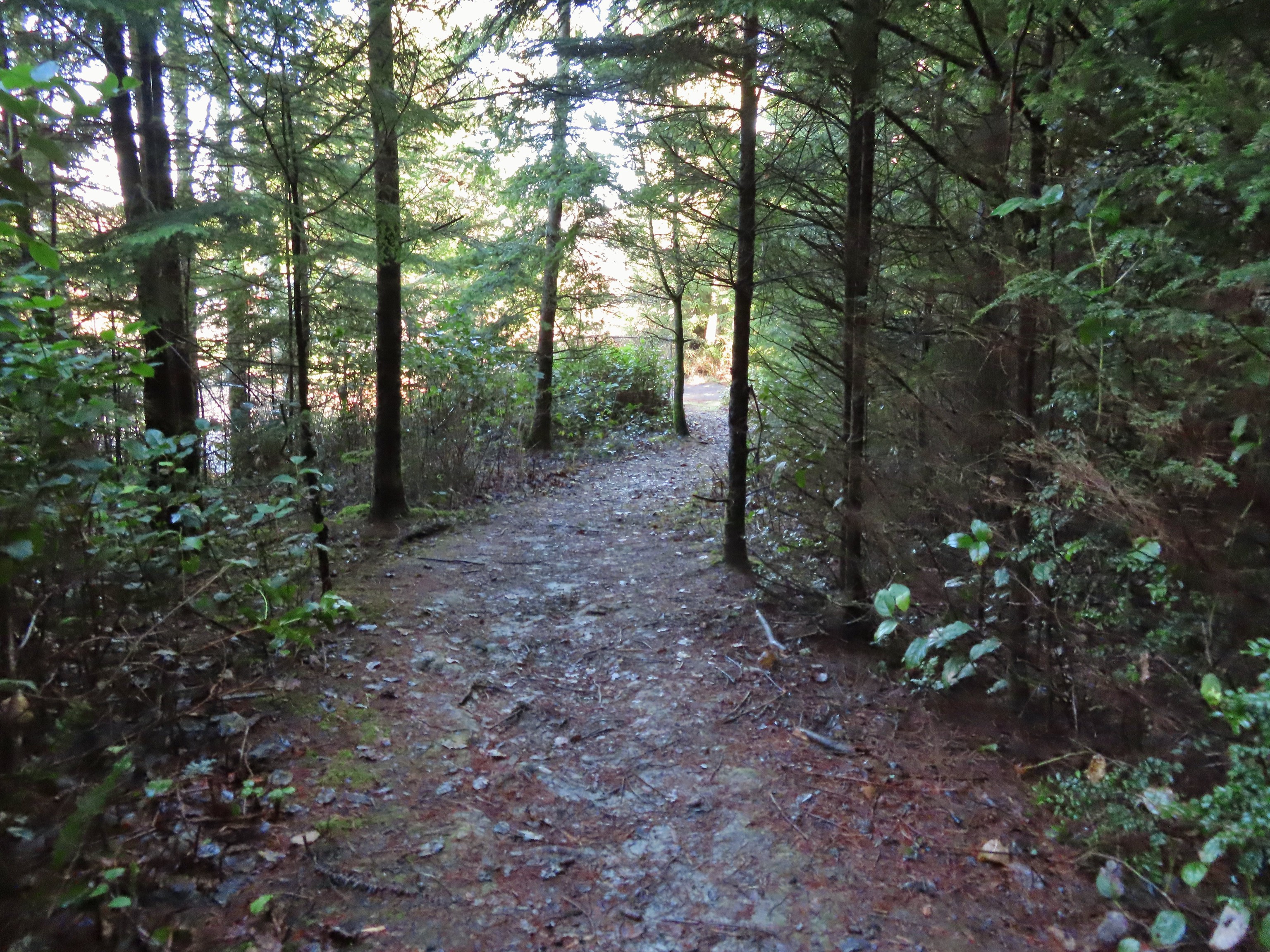 The trail arriving at the trailhead entrance road. The chain link fence at Taft High is on the left.
Our hike here was just over 1.5-miles long with a little over 300′ of elevation gain which was the most of the fours stops. We changed at the car and drove on to the Pelican Brewery arriving just before they opened at Noon. We watched the birds in Siletz Bay while we waited for the restaurant to open then enjoyed a great lunch before heading home.
 Siletz Bay from the brewpub.
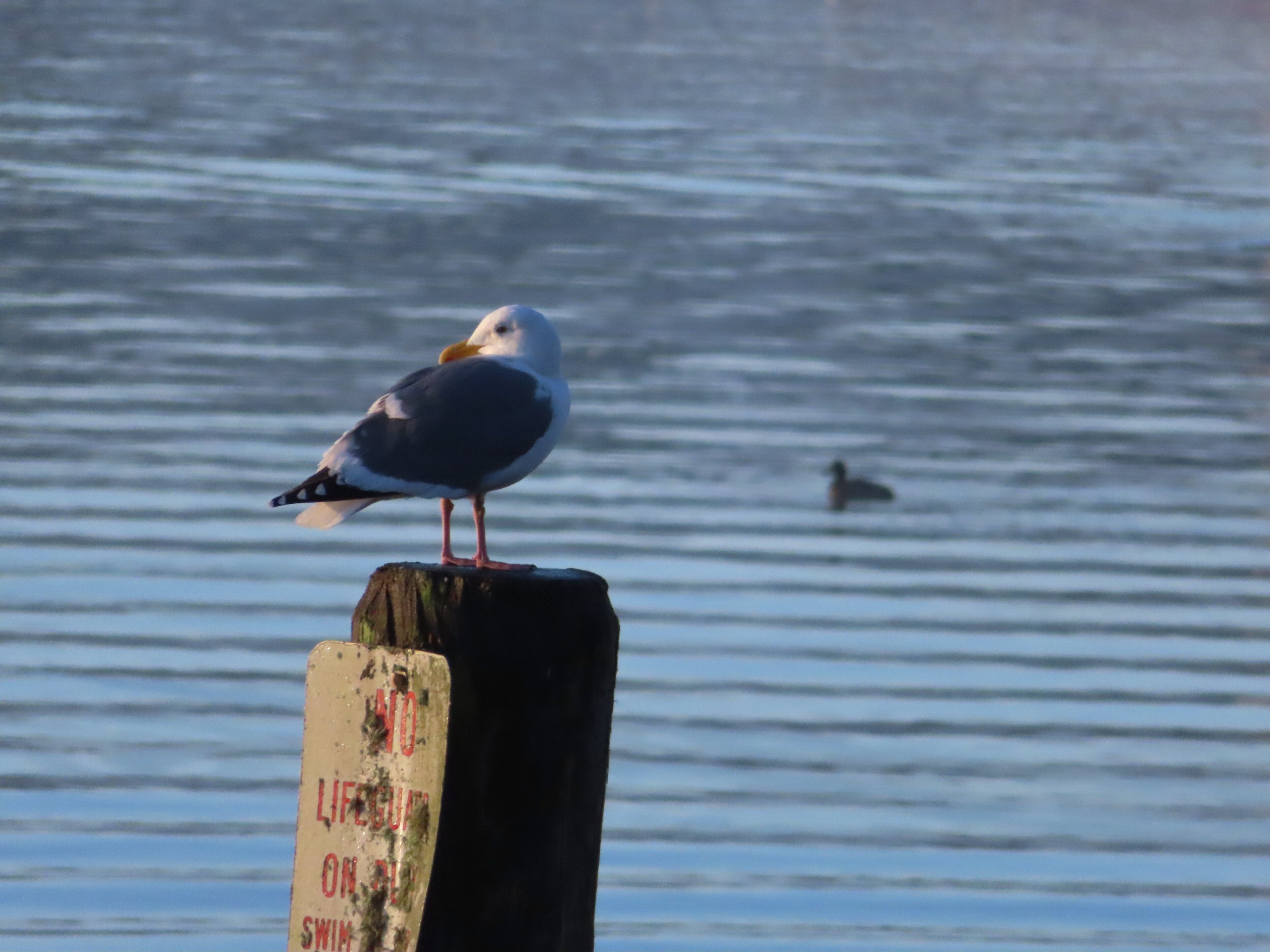
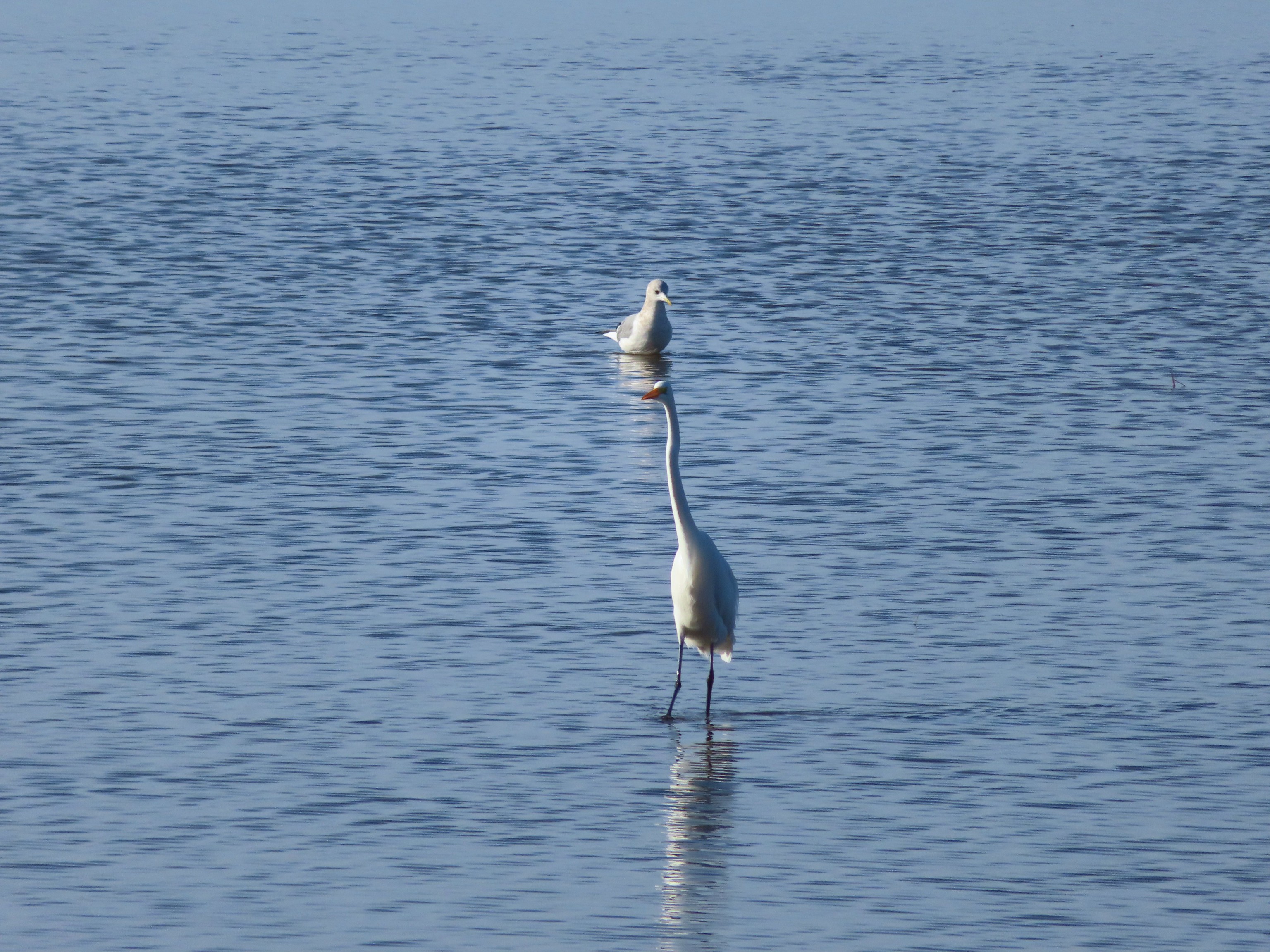 A gull and an egret.
Once we were home we did a little research on the Trail Challenge which is when we learned that the challenge involves eight open spaces. The five we visited on this day plus The Knoll which we had visited back in 2020 (post), Cutler Wetlands, and Nesika Park. It looks like we have a couple of reasons to head back to Lincoln City (and the Pelican Brewpub) sometime soon. Happy Trails!
Flickr: Lincoln City Parks
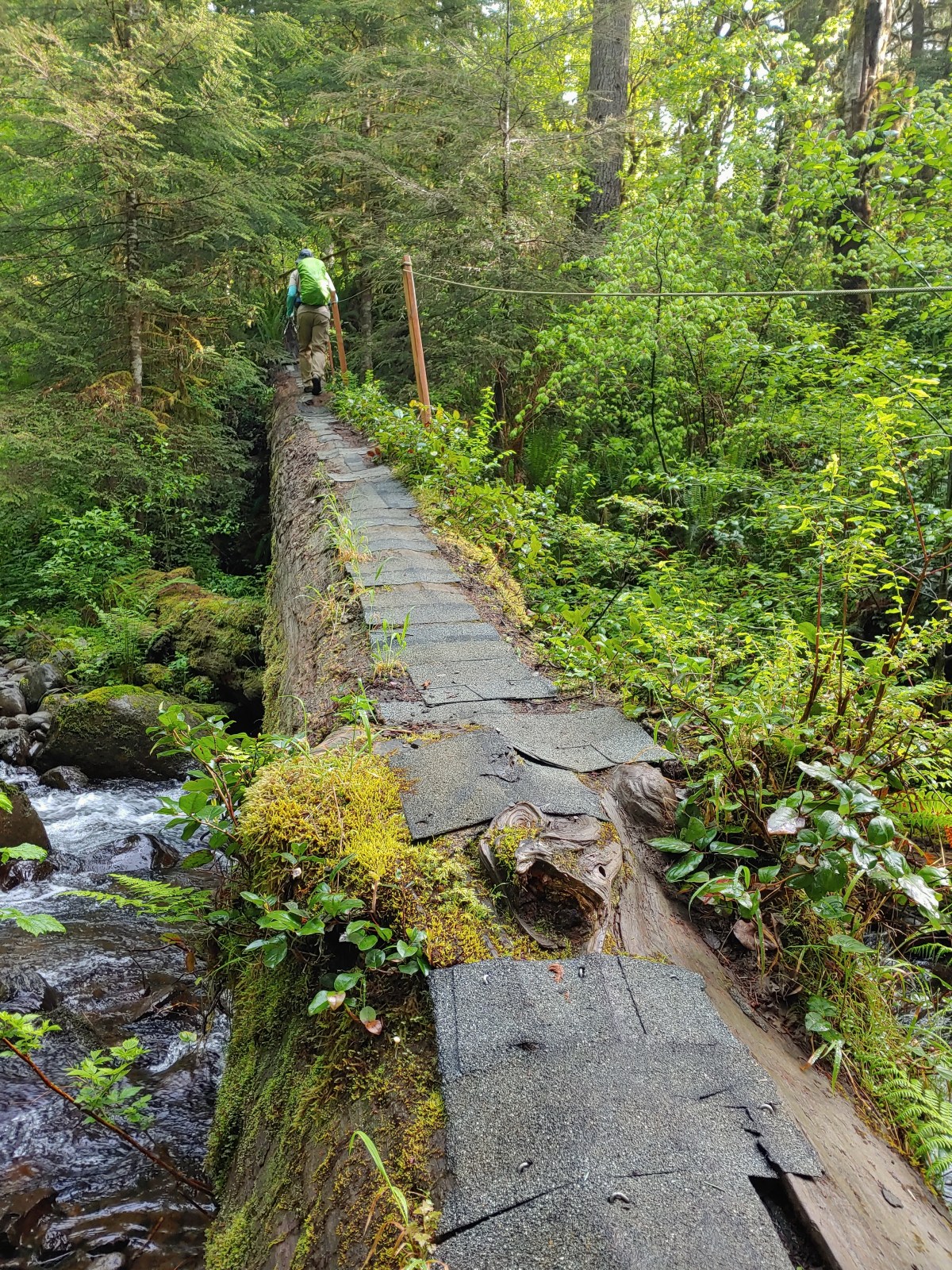
 Long Gulch Lake. The furthest south we hiked was on the trail a short distance after leaving this lake.
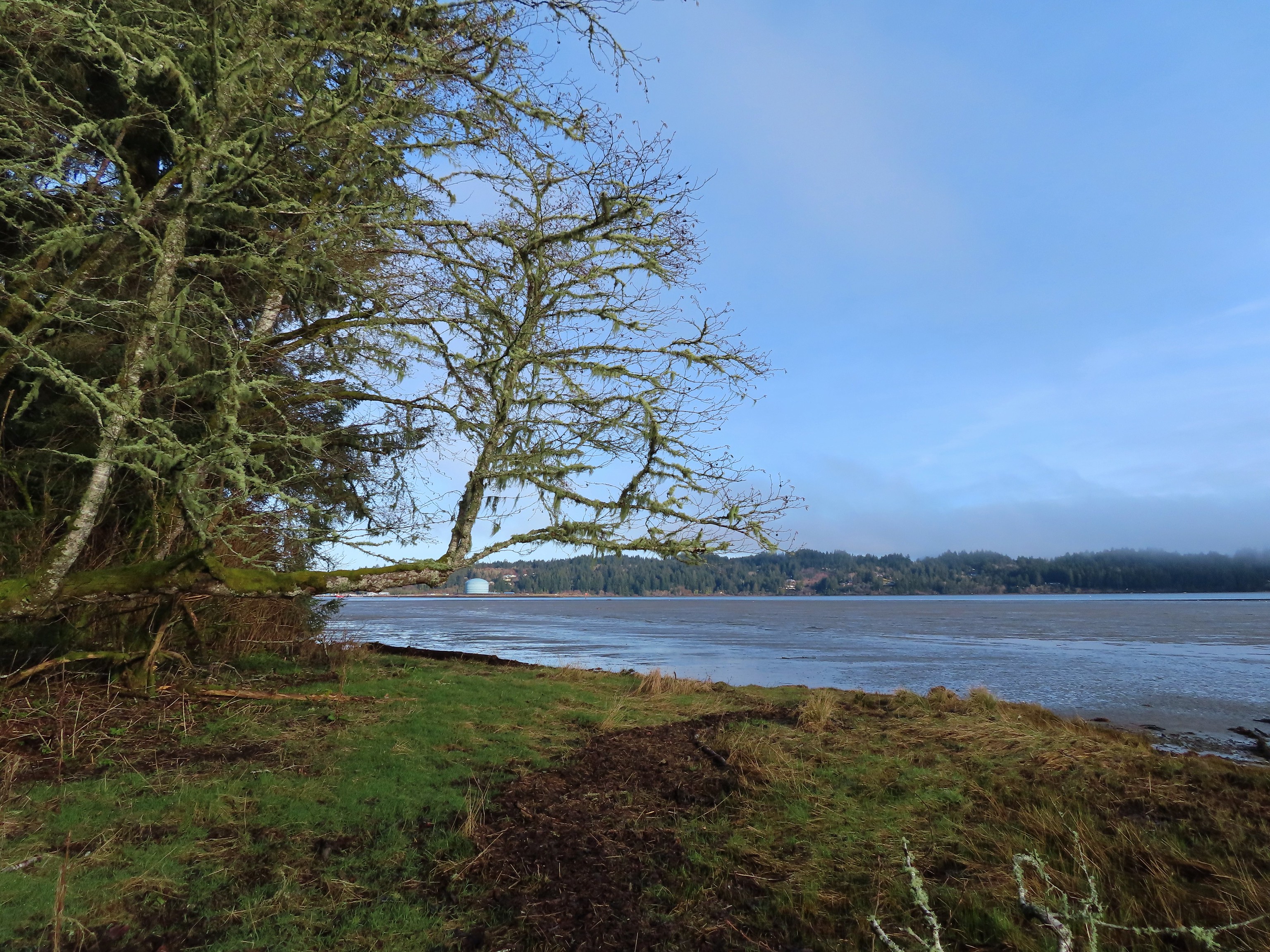 Technically the western most spot we hiked at was the trailhead for this hike, but the Yaquina River was a nicer picture.
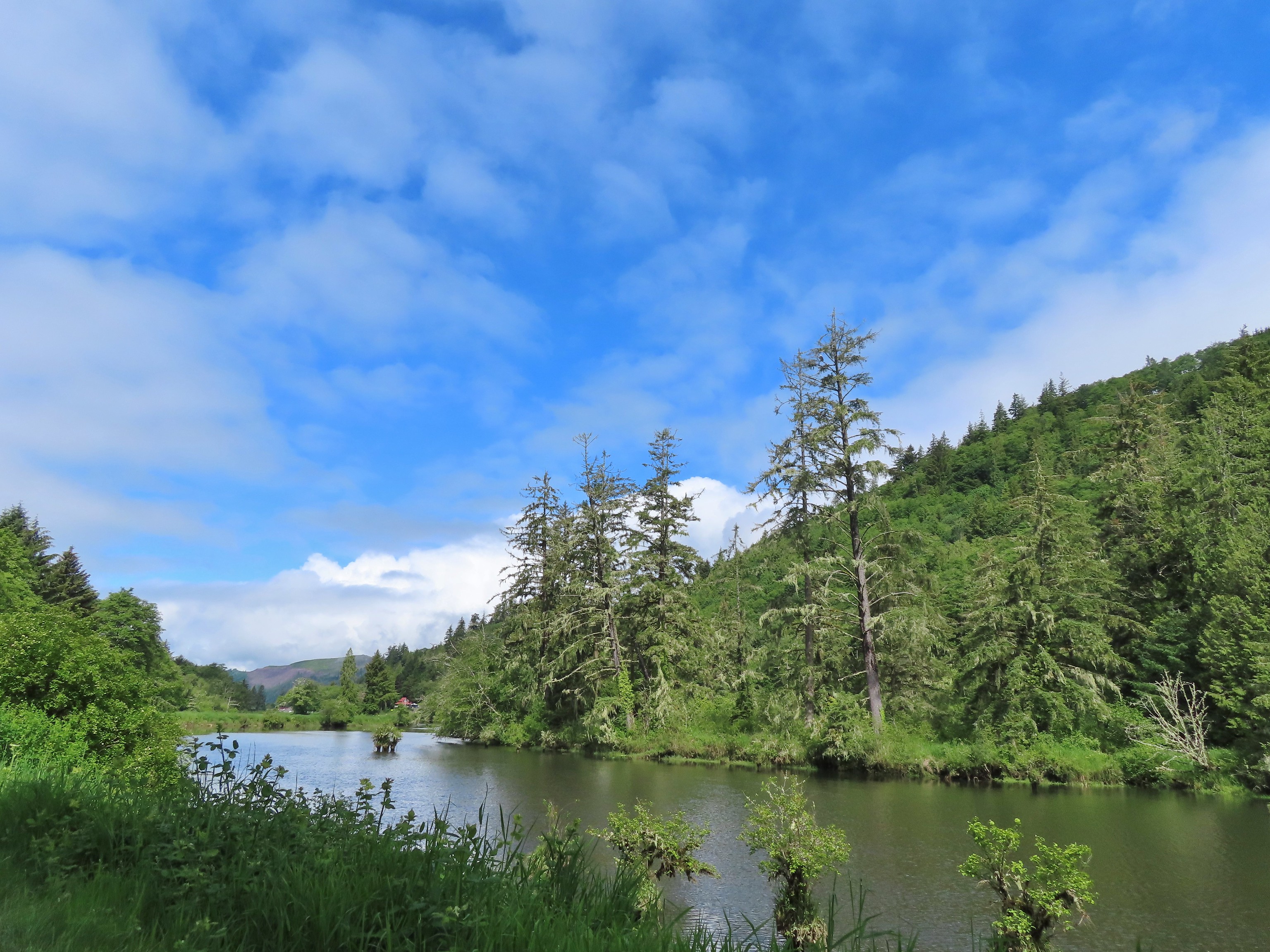 We hit our northernmost point during the stretch of our hike that followed Brooks Slough.
 View of the Wallowa Mountains from our easternmost point.

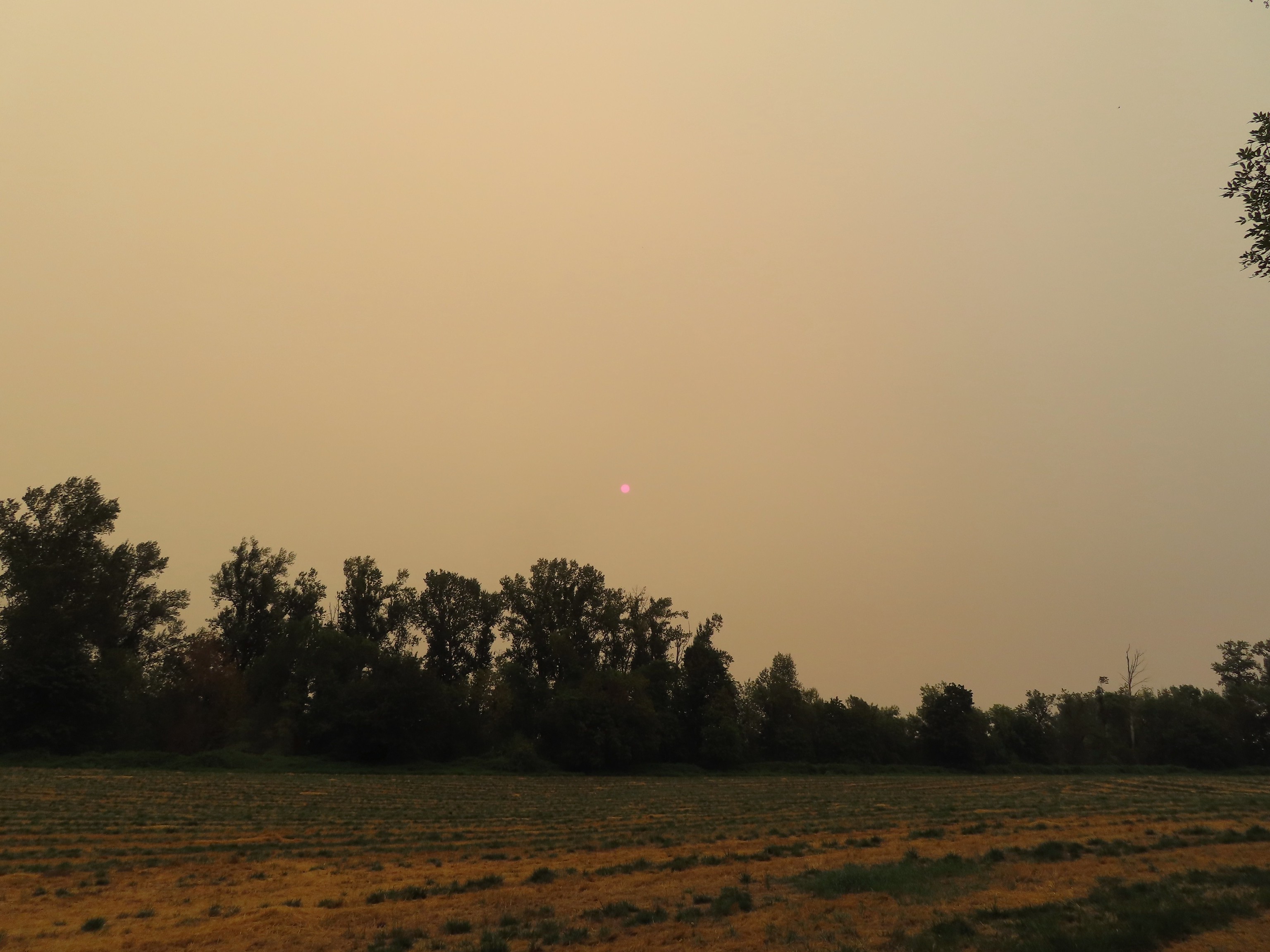 That’s the Sun above the trees.
 Iced over snow in Portland’s Forest Park.
 The Crown-Zellerbach Trail, a converted logging road.
 The Klickitat Trail, a converted railroad.
 The Hood River Pipeline Trail.
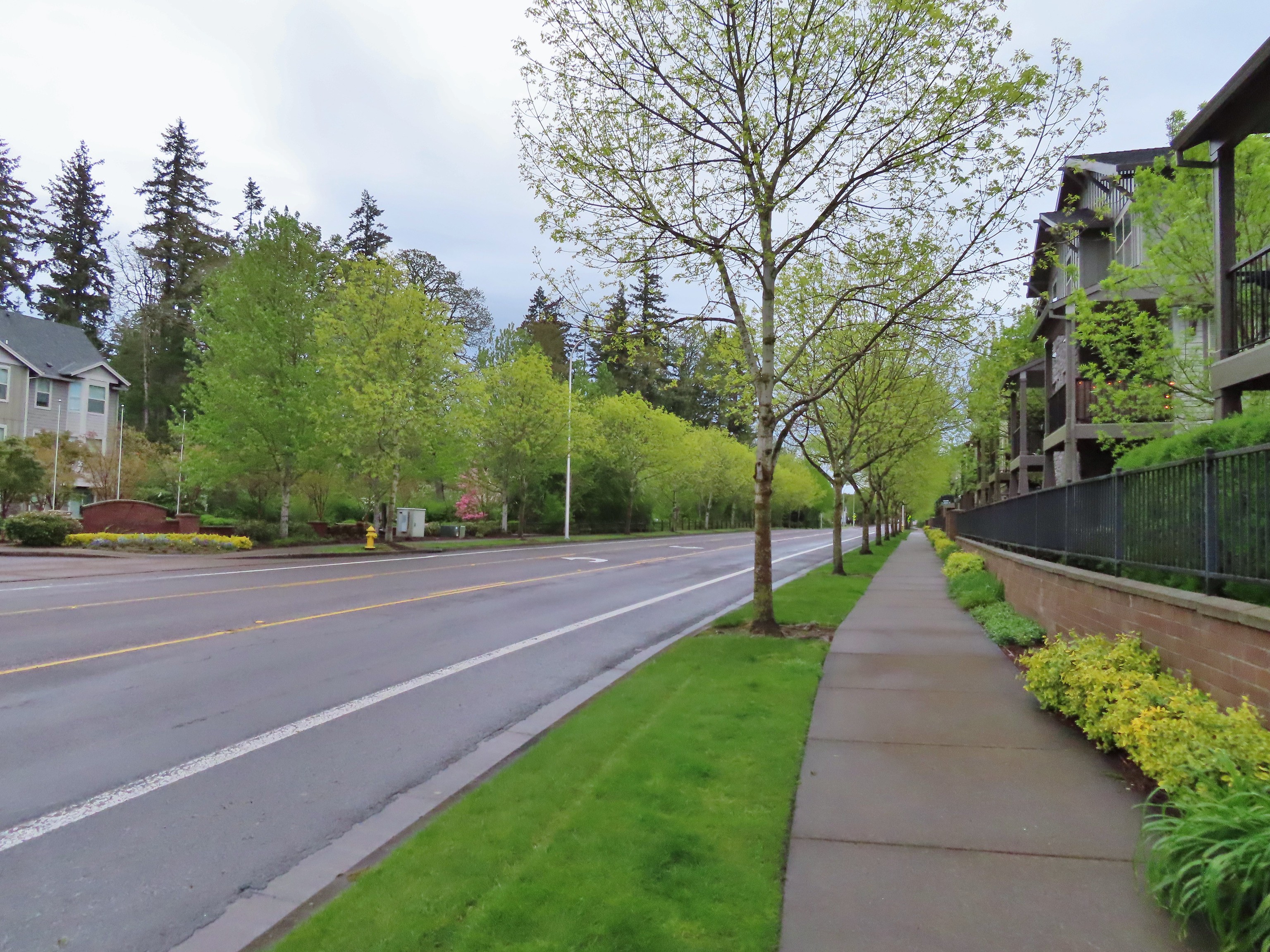 Sidewalk, Rock Creek Trail.
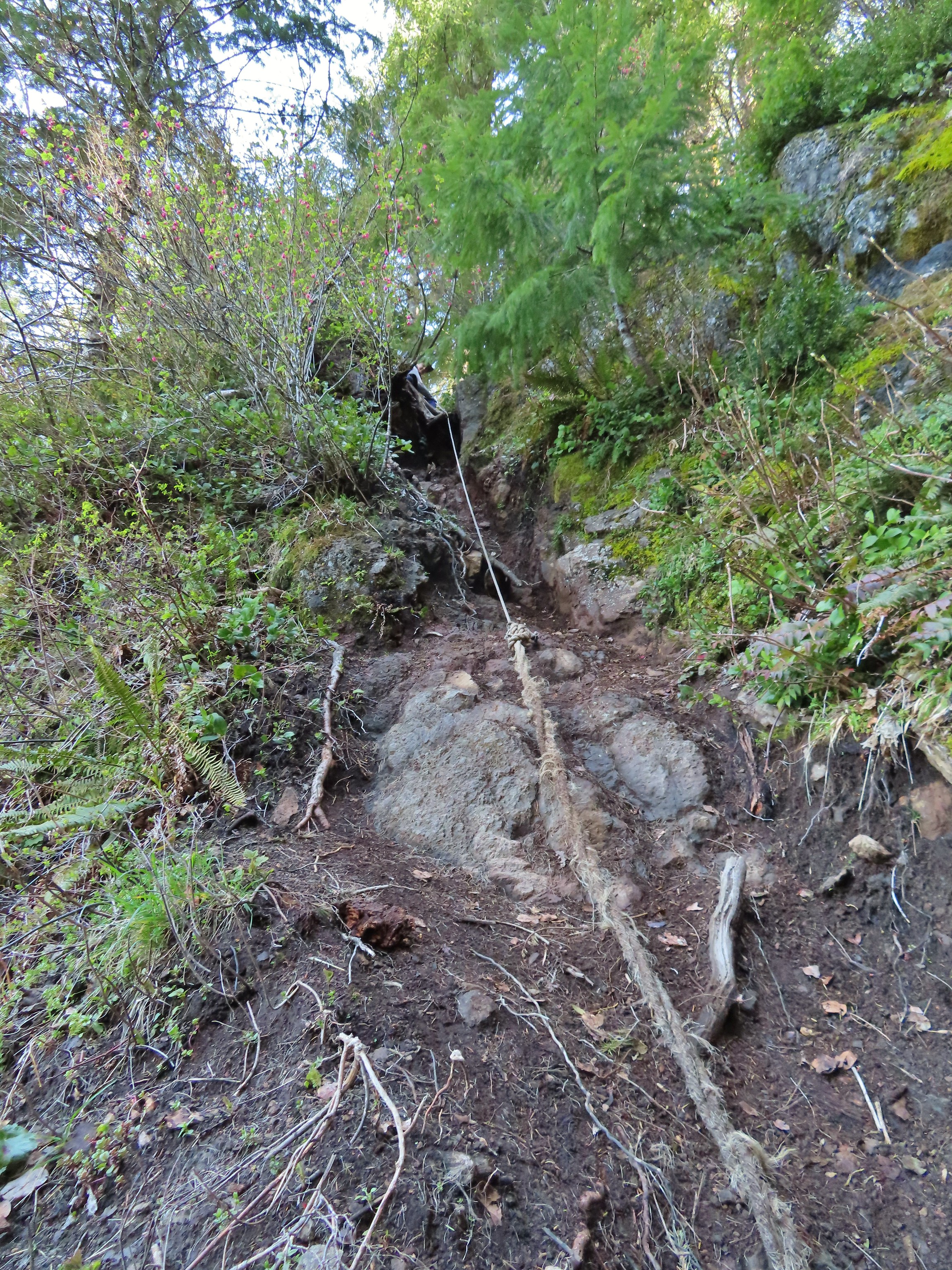 Rope section of the Kings Mountain Trail.
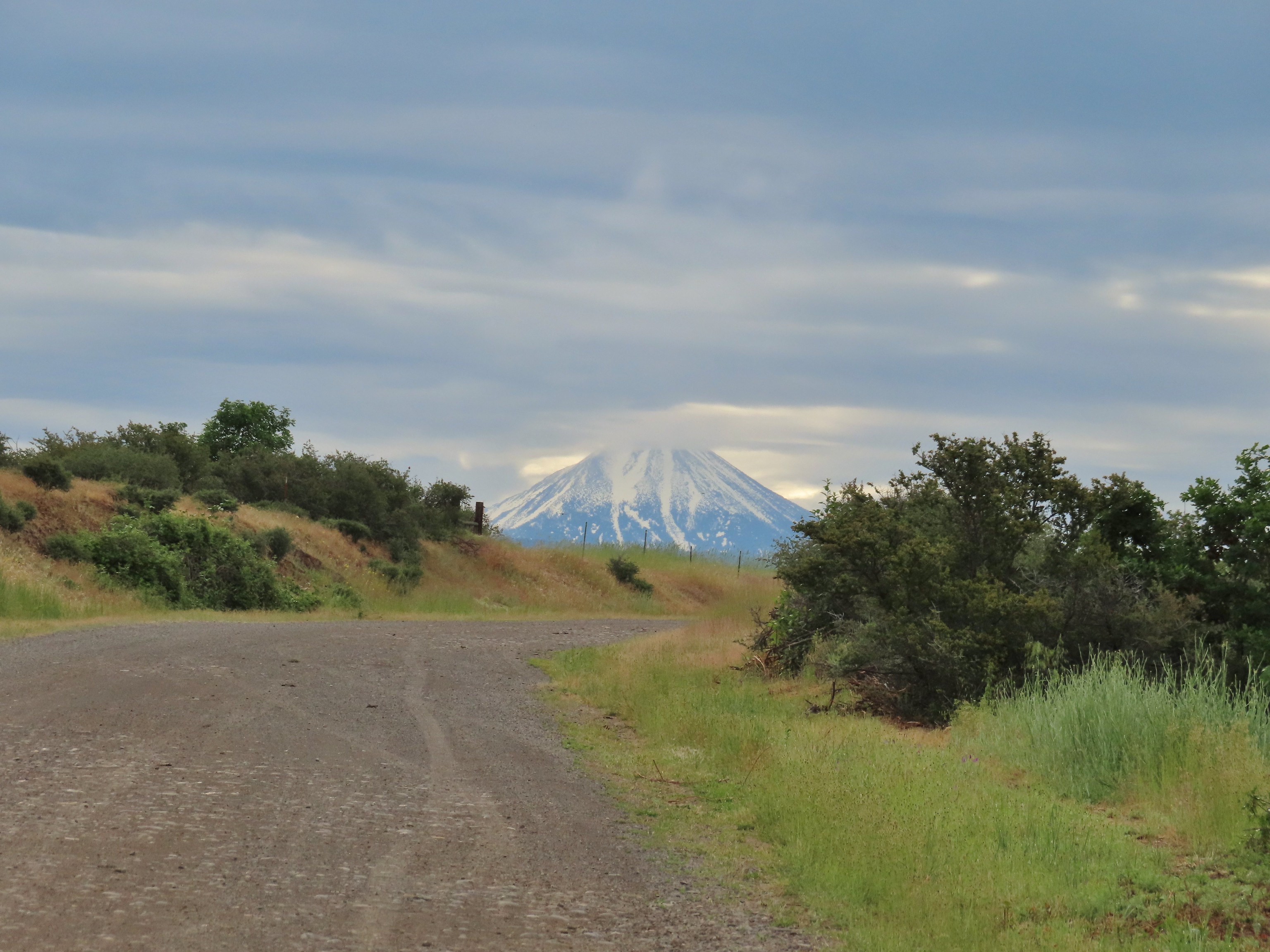 Gravel Road at Denman Wildlife Area.
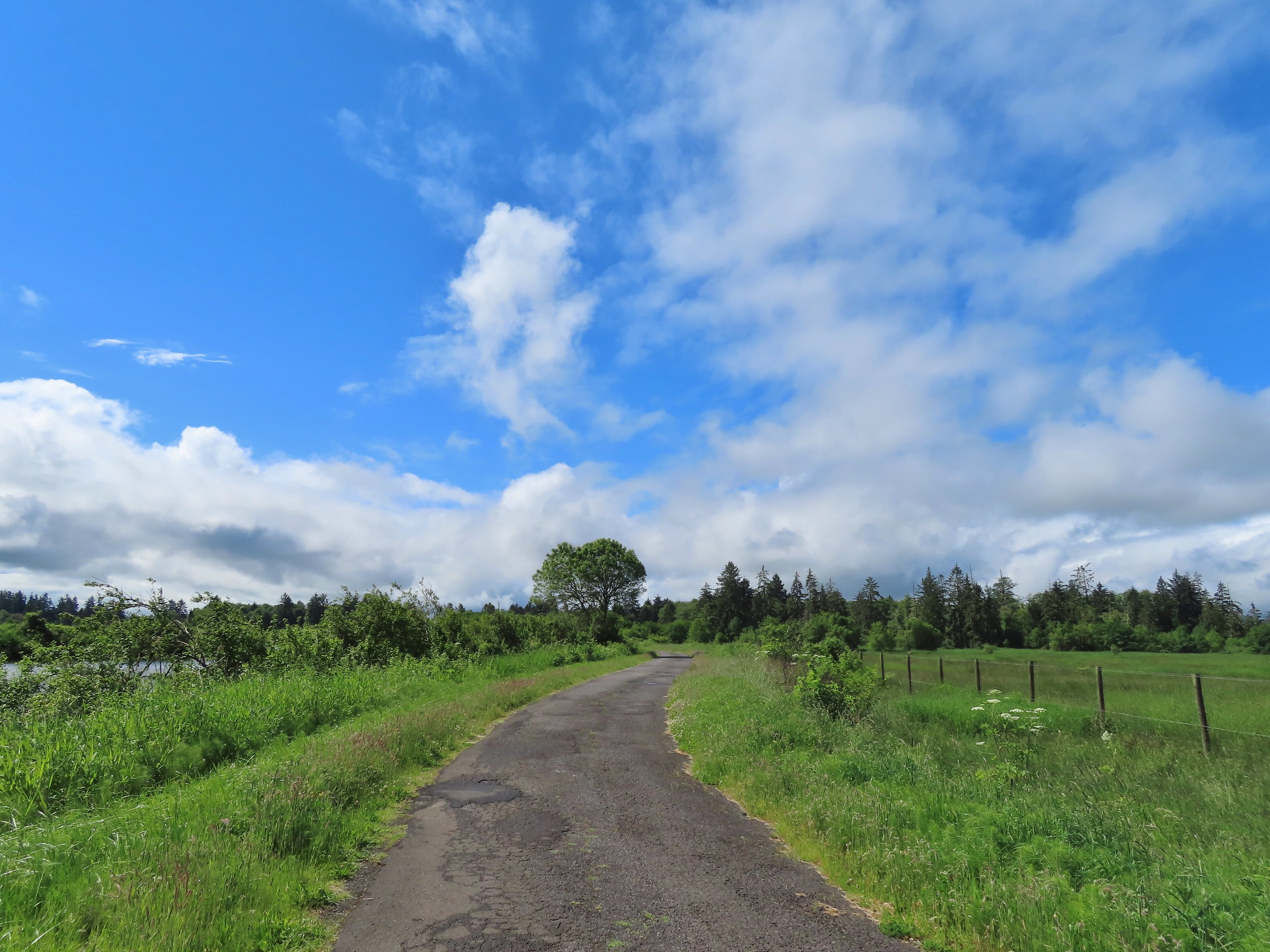 Paved Brooks Slough Road, Julia Hansen Butler Wildlife Refuge (it is open to cars).
 Dirt road at Siskiyou Gap.
 Cross-country to Observation Peak.
 Crossing over granite to reach the Devil’s Punchbowl in the Siskiyou Wilderness.
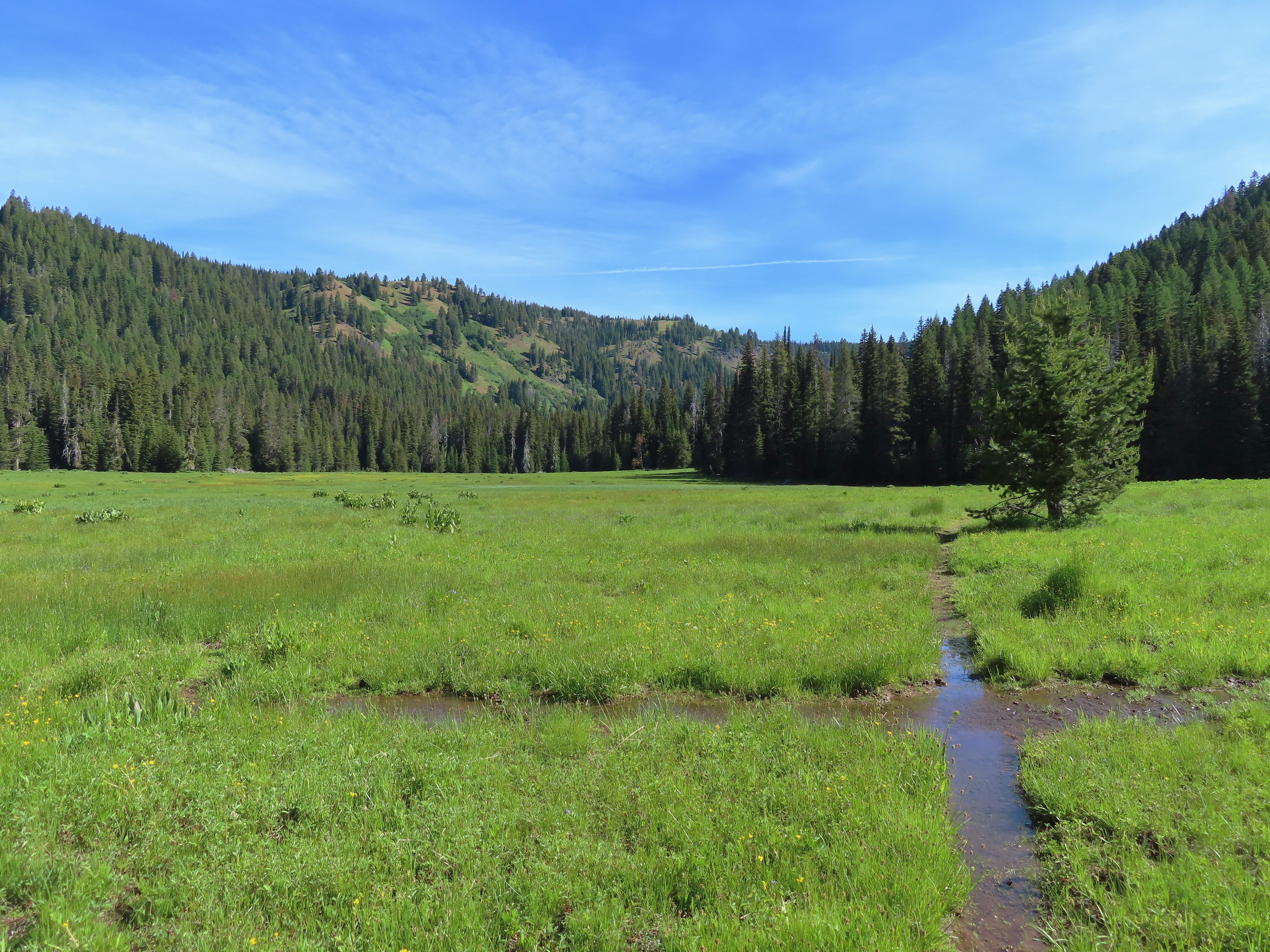 Water covered trail at Catherine Creek Meadows.
 Sandy dirt Mt. Shasta.
 Rock field, Union Peak.
 The remains of the Union Creek Trail.
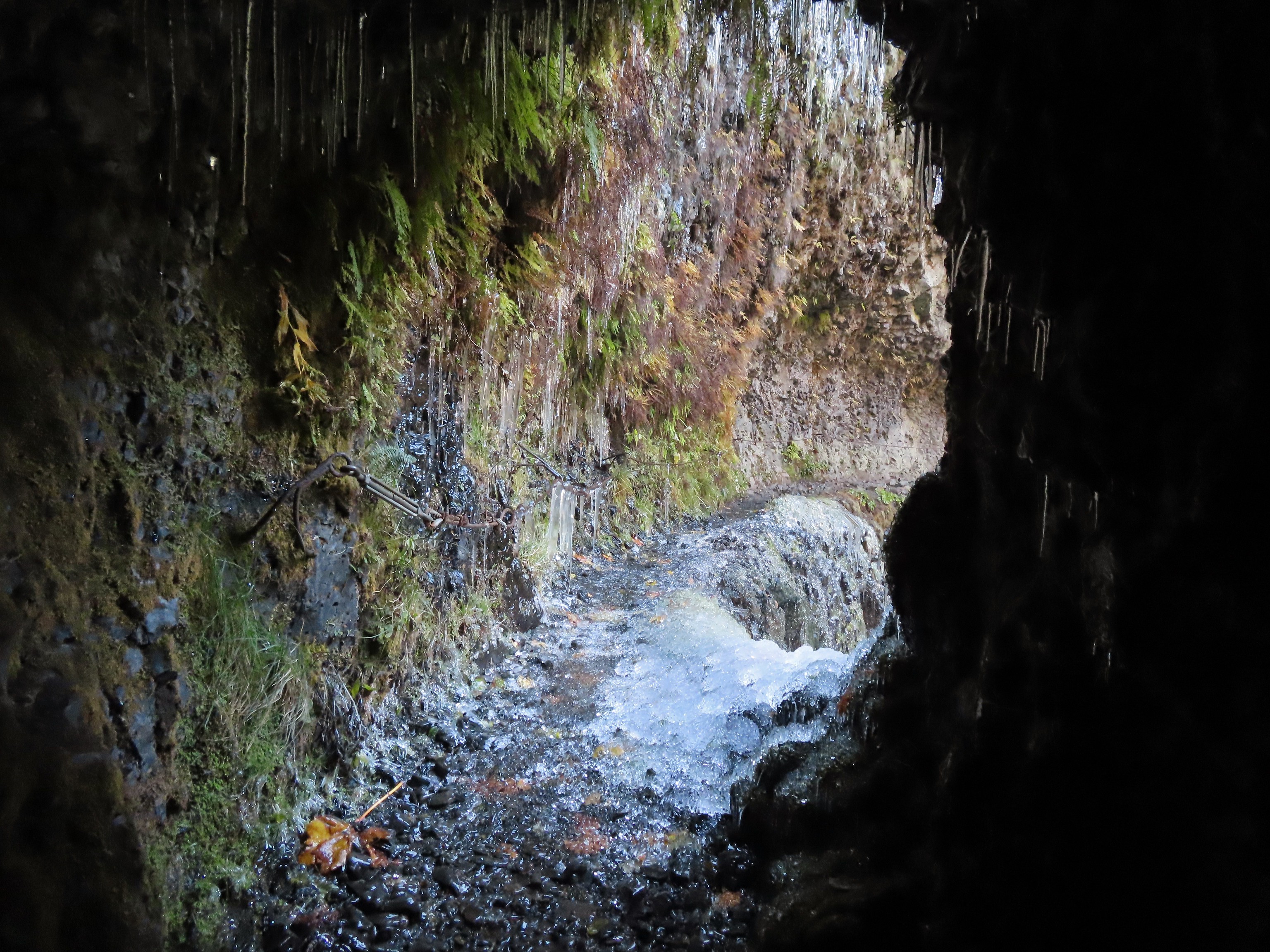 Frozen tunnel on the Eagle Creek Trail.
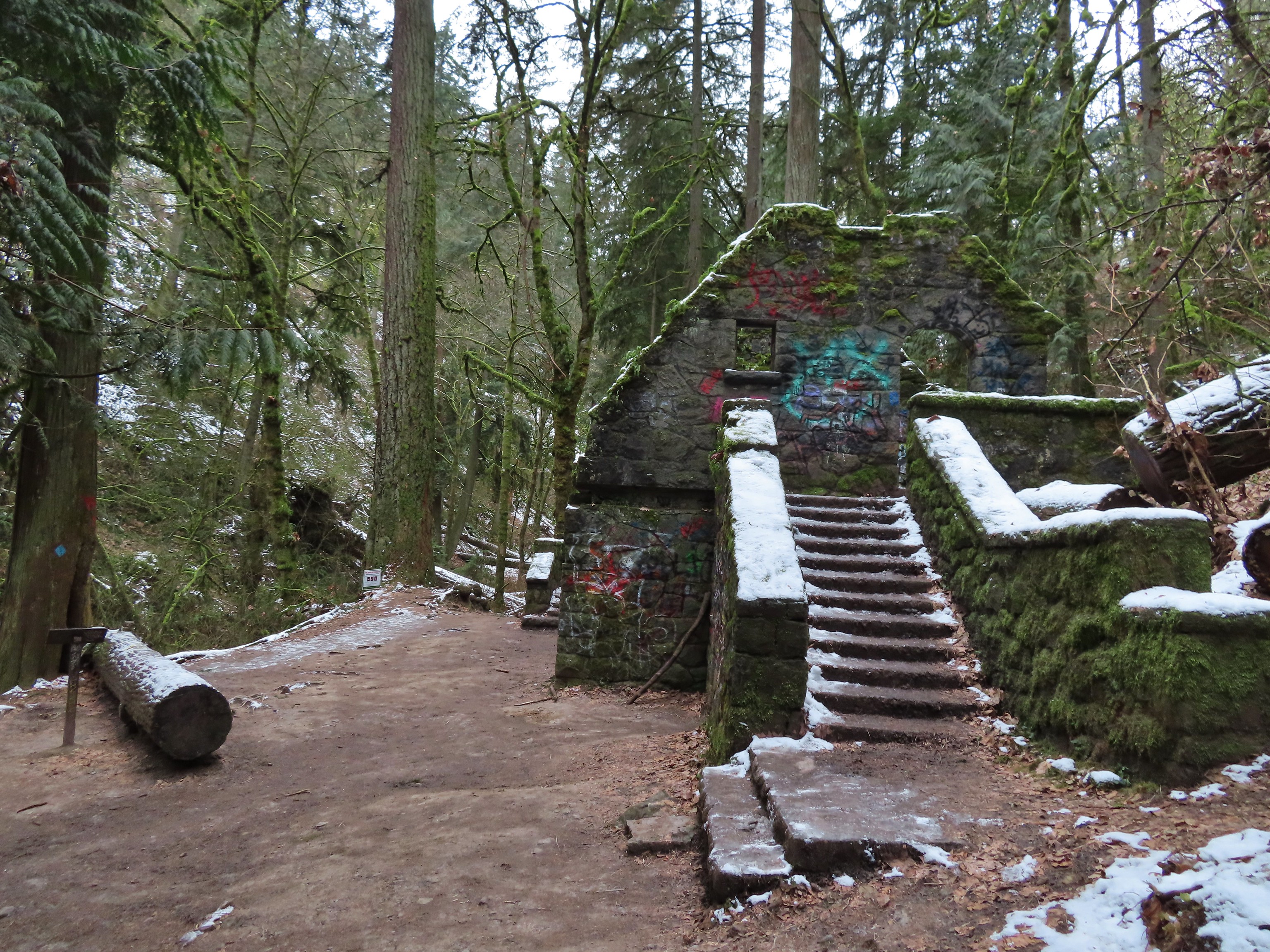 Witch’s Castle – Forest Park, Portland, OR
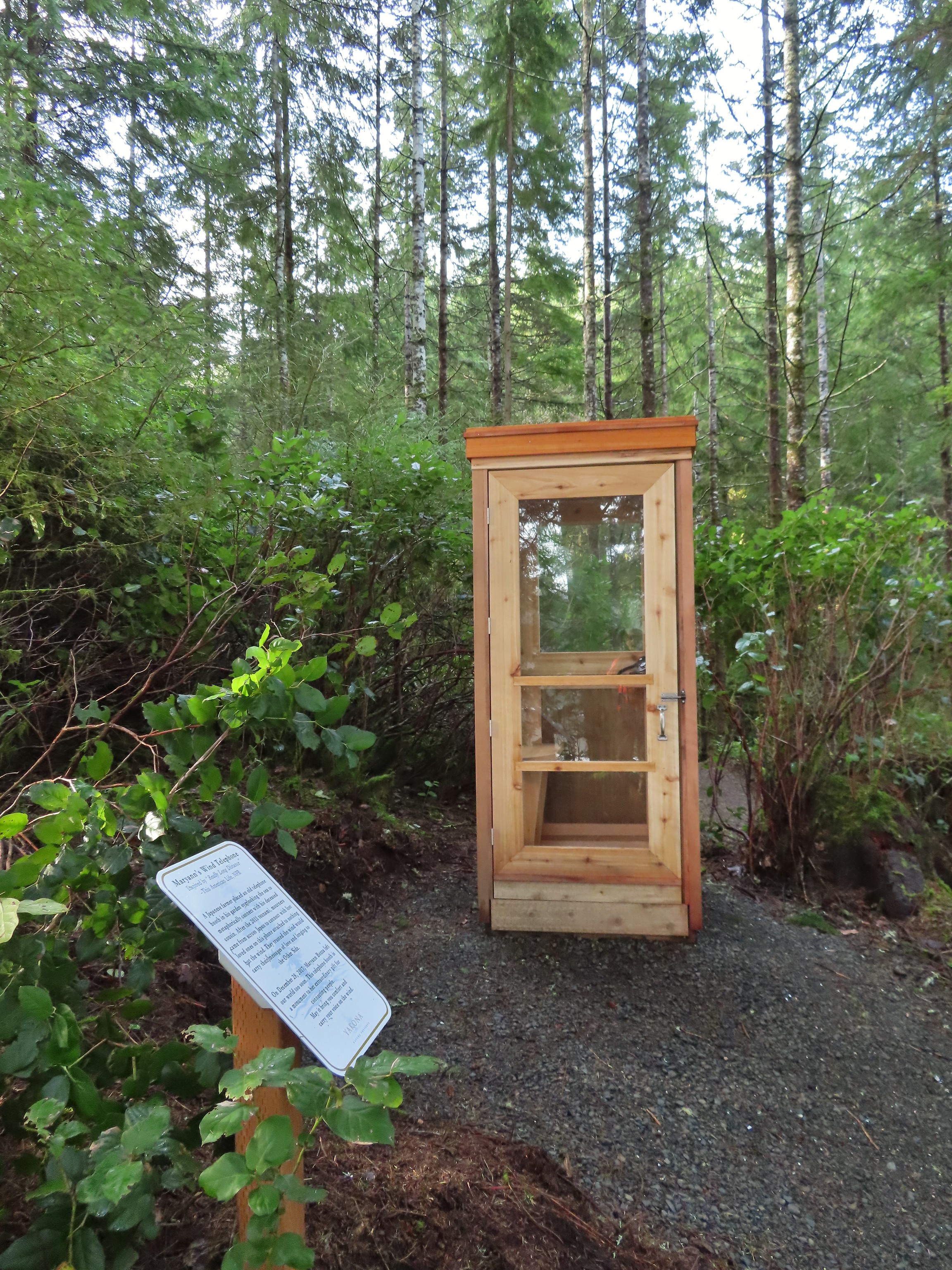 Wind Telephone, Yakona Nature Preserve – Newport, OR
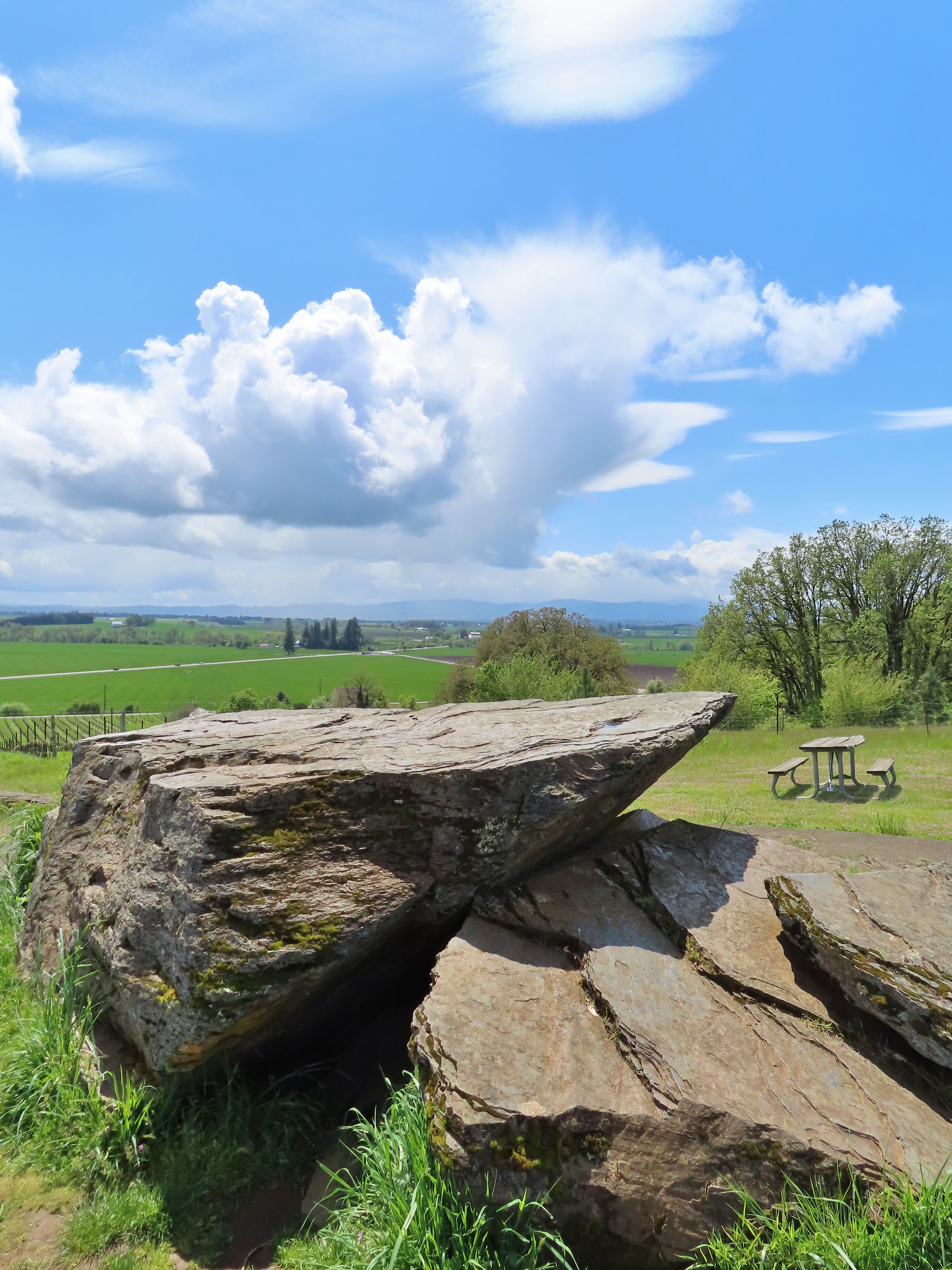 Erratic Rock (
 One of several military bunkers at Ken Denman Wildlife Area – Medford, OR
 Umpqua Hot Springs – Umpqua National Forest, OR
 Illahee Rock Lookout – Umpqua National Forest, OR
 Twin Lakes Shelter – Umpqua National Forest, OR
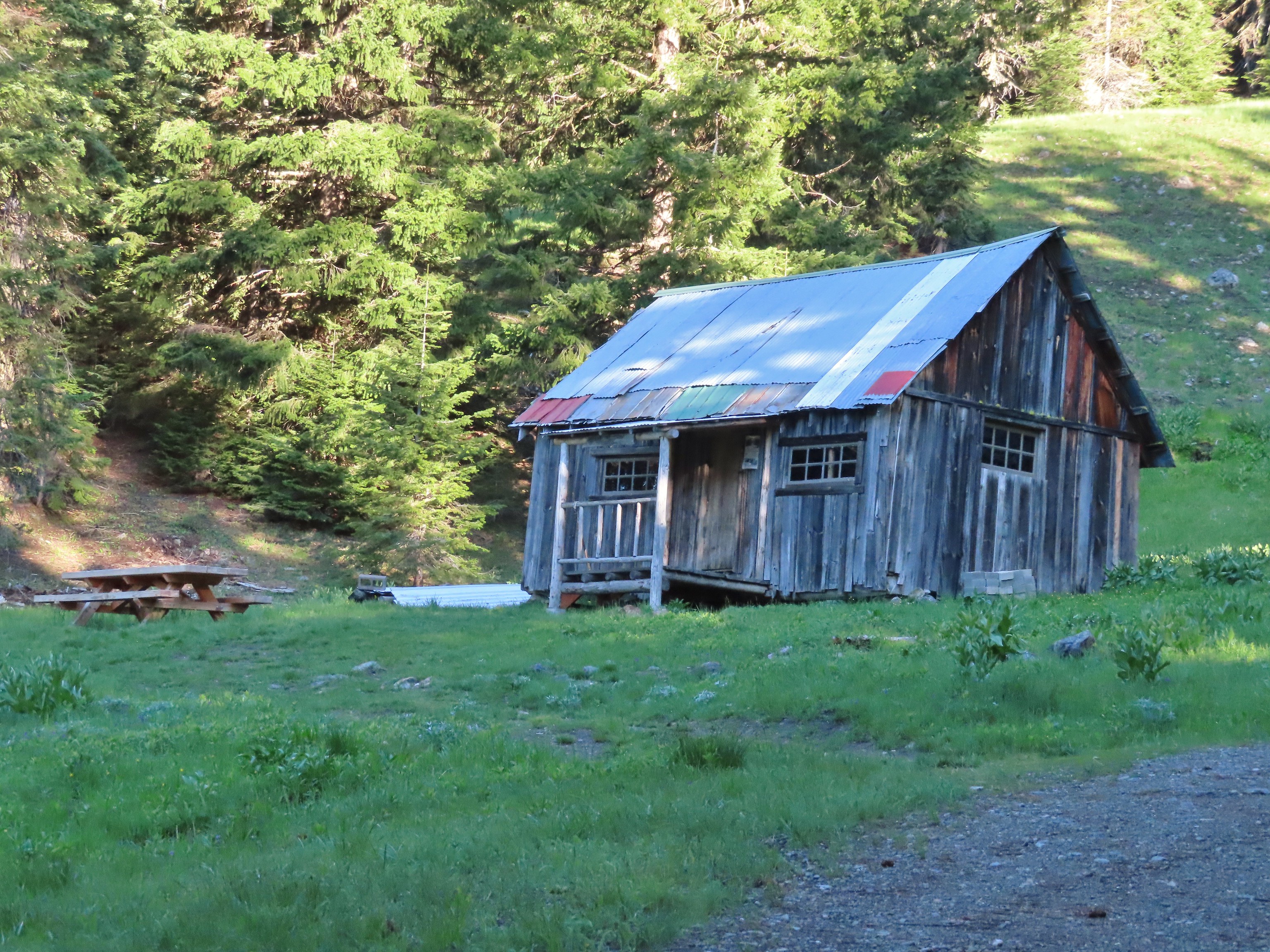 Donomore Cabin – Donomore Meadows, CA
 Mt. Ireland Lookout – Wallowa-Whitman National Forest, OR
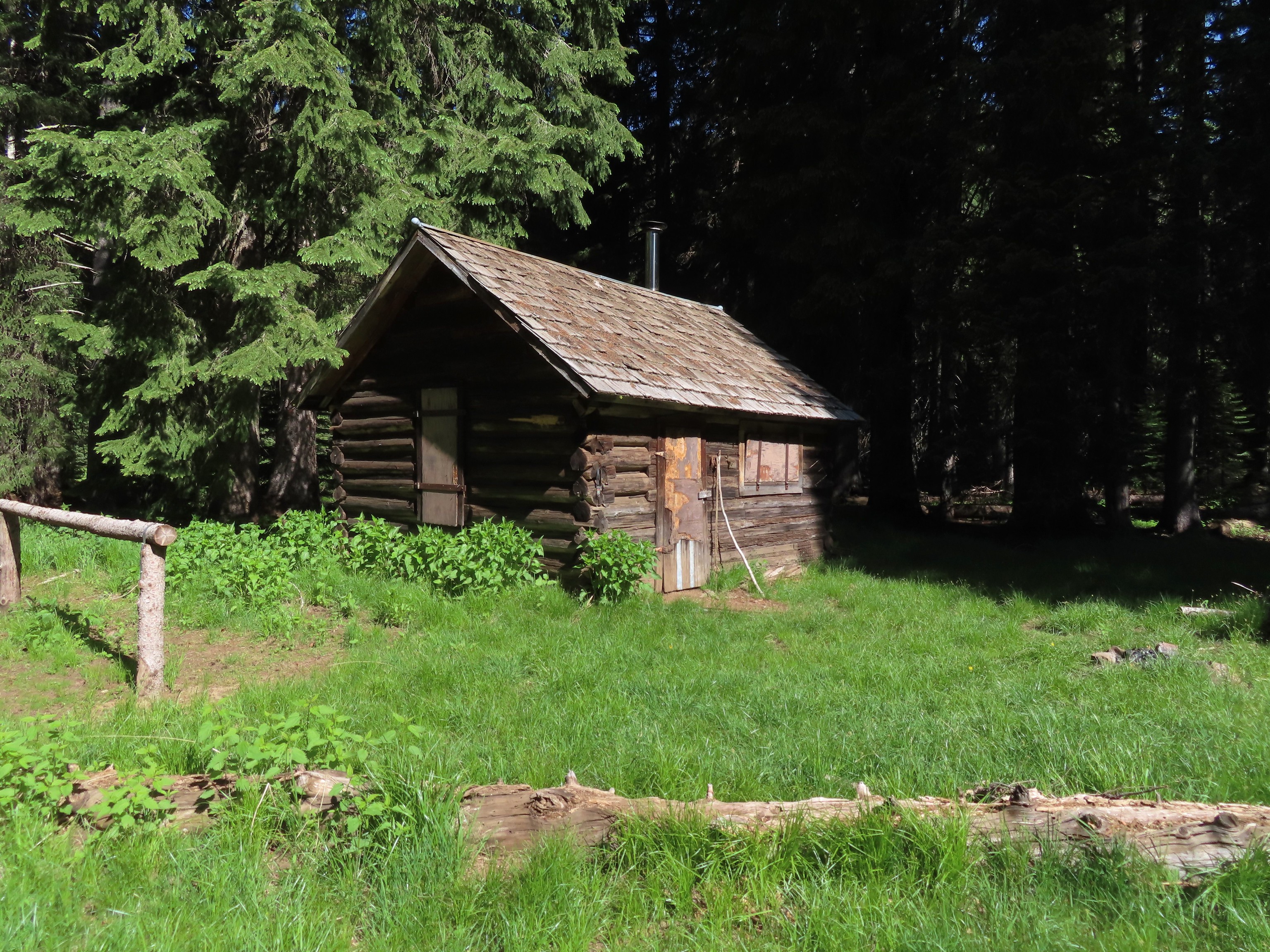 Cabin at Catherine Creek Meadows – Wallowa-Whitman National Forest, OR
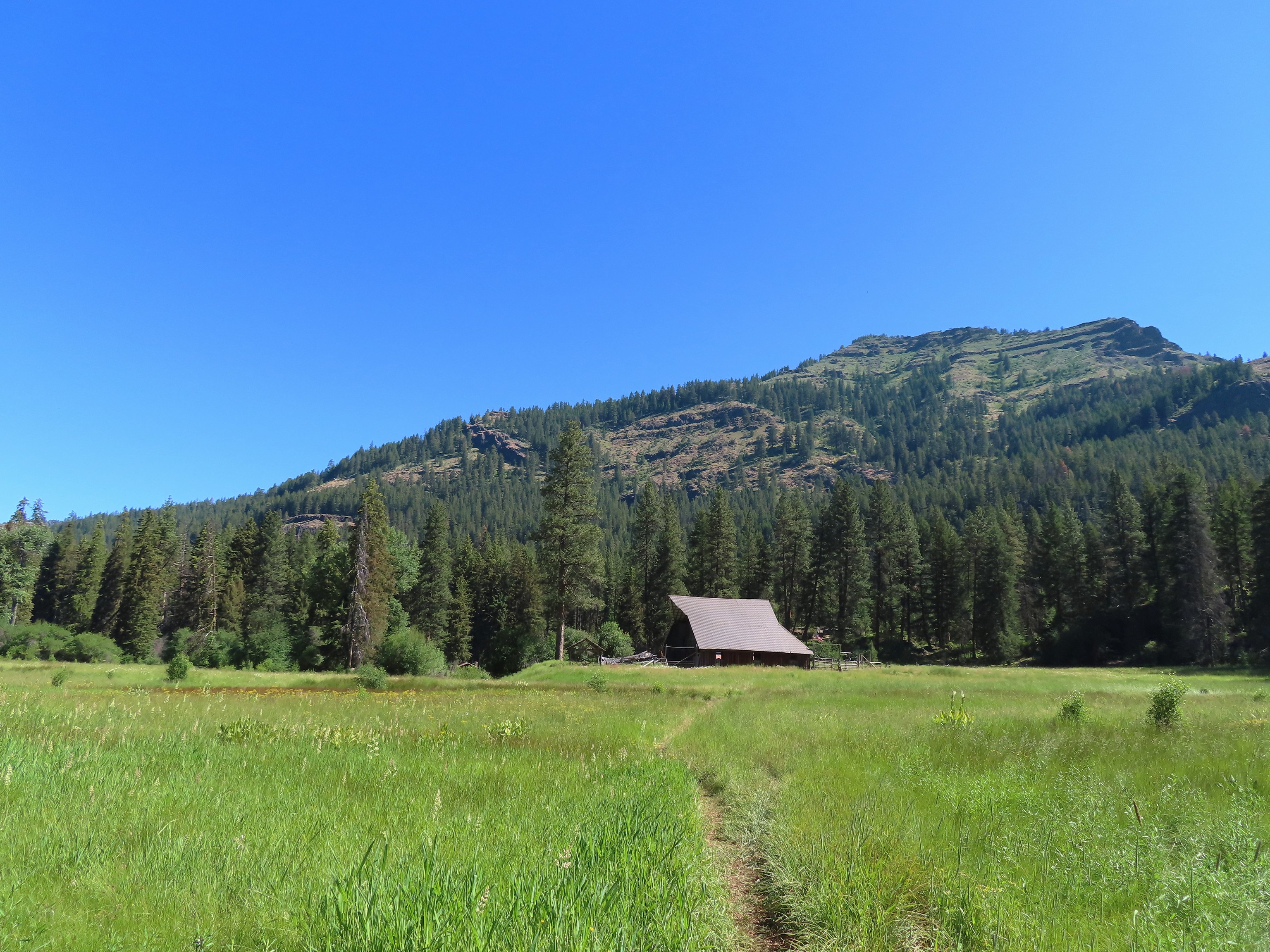 Reds Horse Ranch – Wallowa-Whitman National Forest, OR
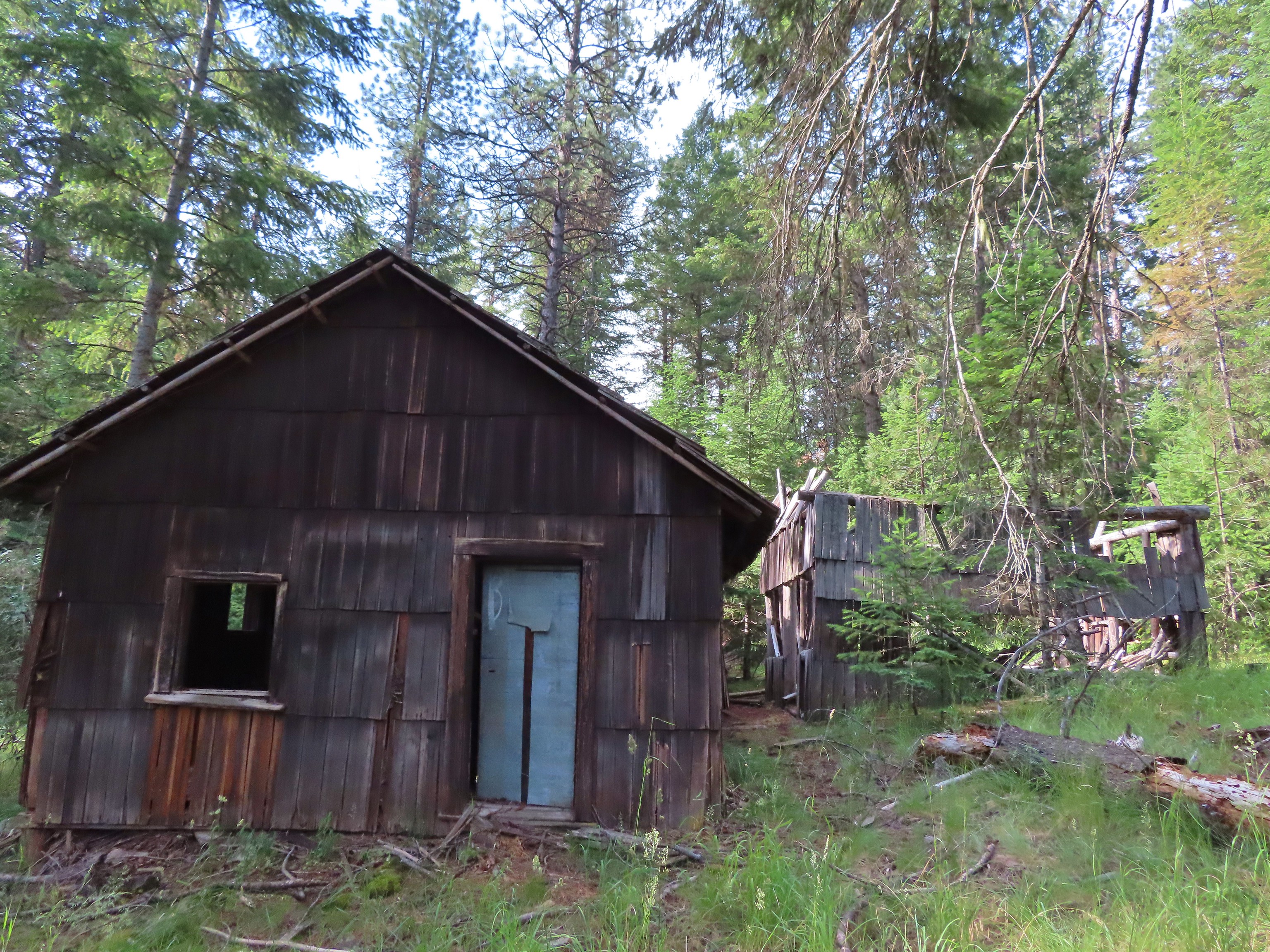 Lodge ruins – Wallowa-Whitman National Forest, OR
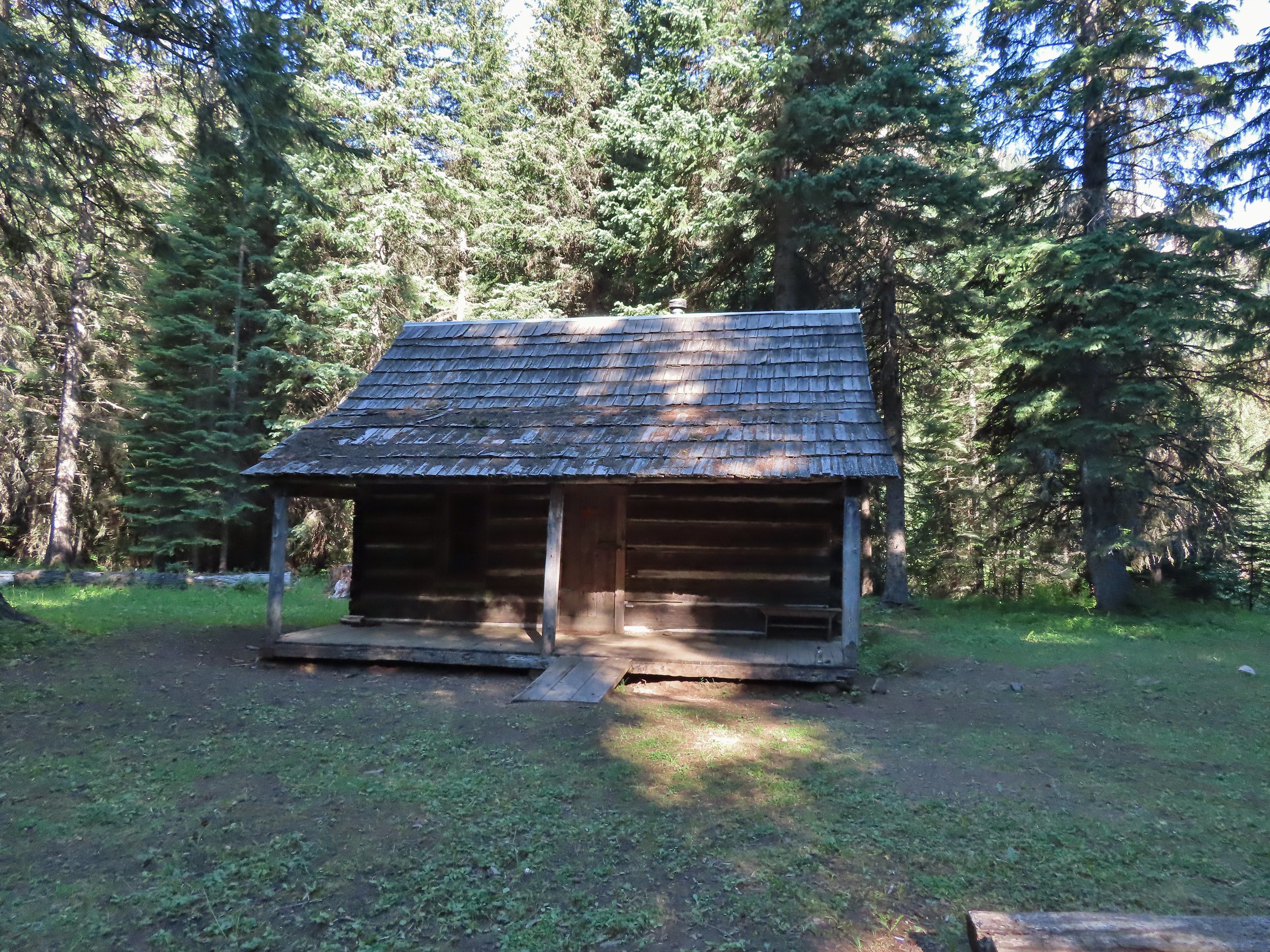 Bear Creek Guard Station – Wallowa-Whitman National Forest, OR
 Gazebo on Tick Hill – Wallowa, OR
 Spring above Southgate Meadows – Mount Shasta Wilderness, CA
 Panther Spring – Mount Shasta Wilderness, CA
 Remnants of the OSU Dean’s house – McDonald Forest, Corvallis, OR
 Talking Water Gardens – Water treatment wetlands, Albany, OR

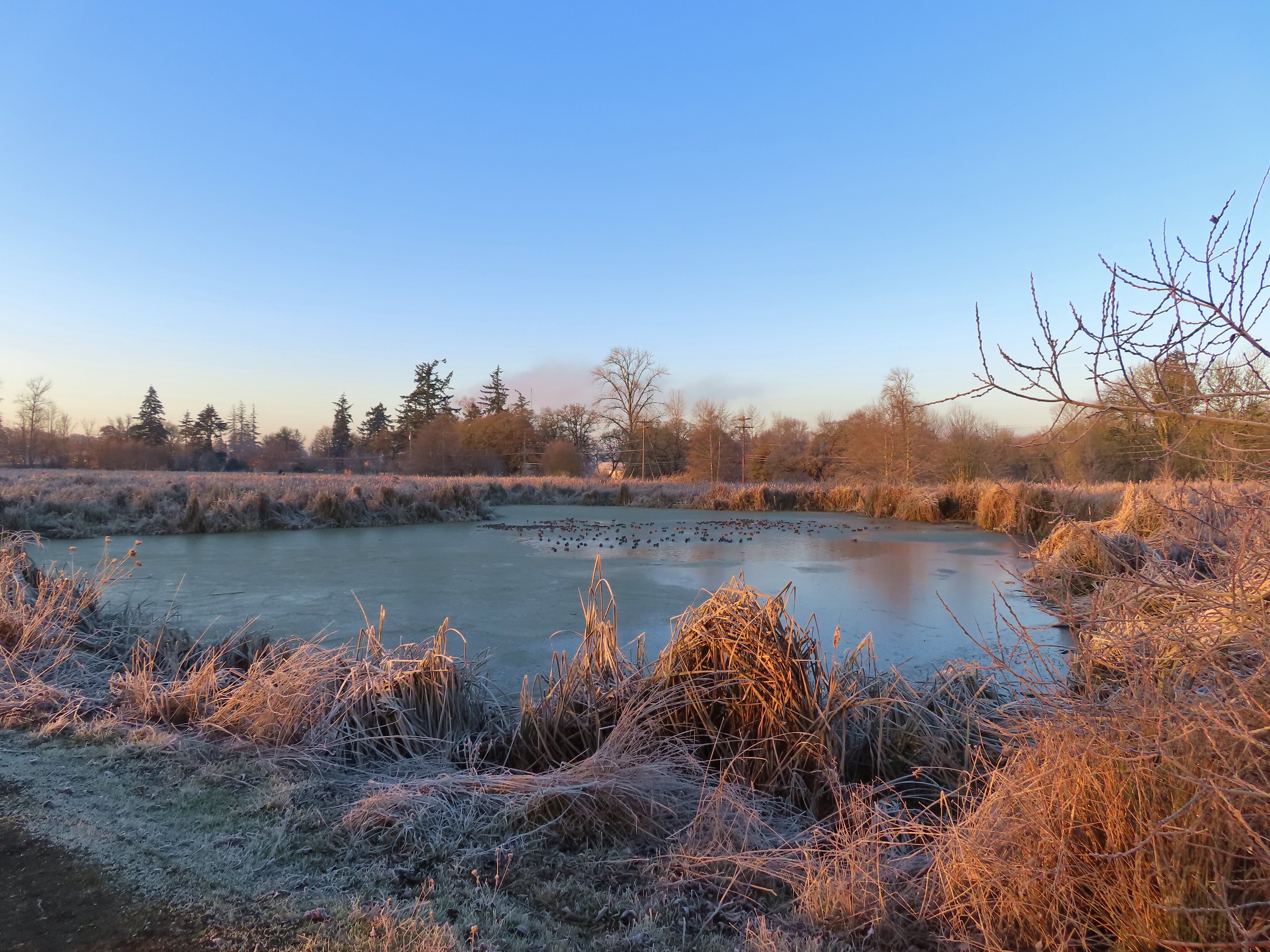
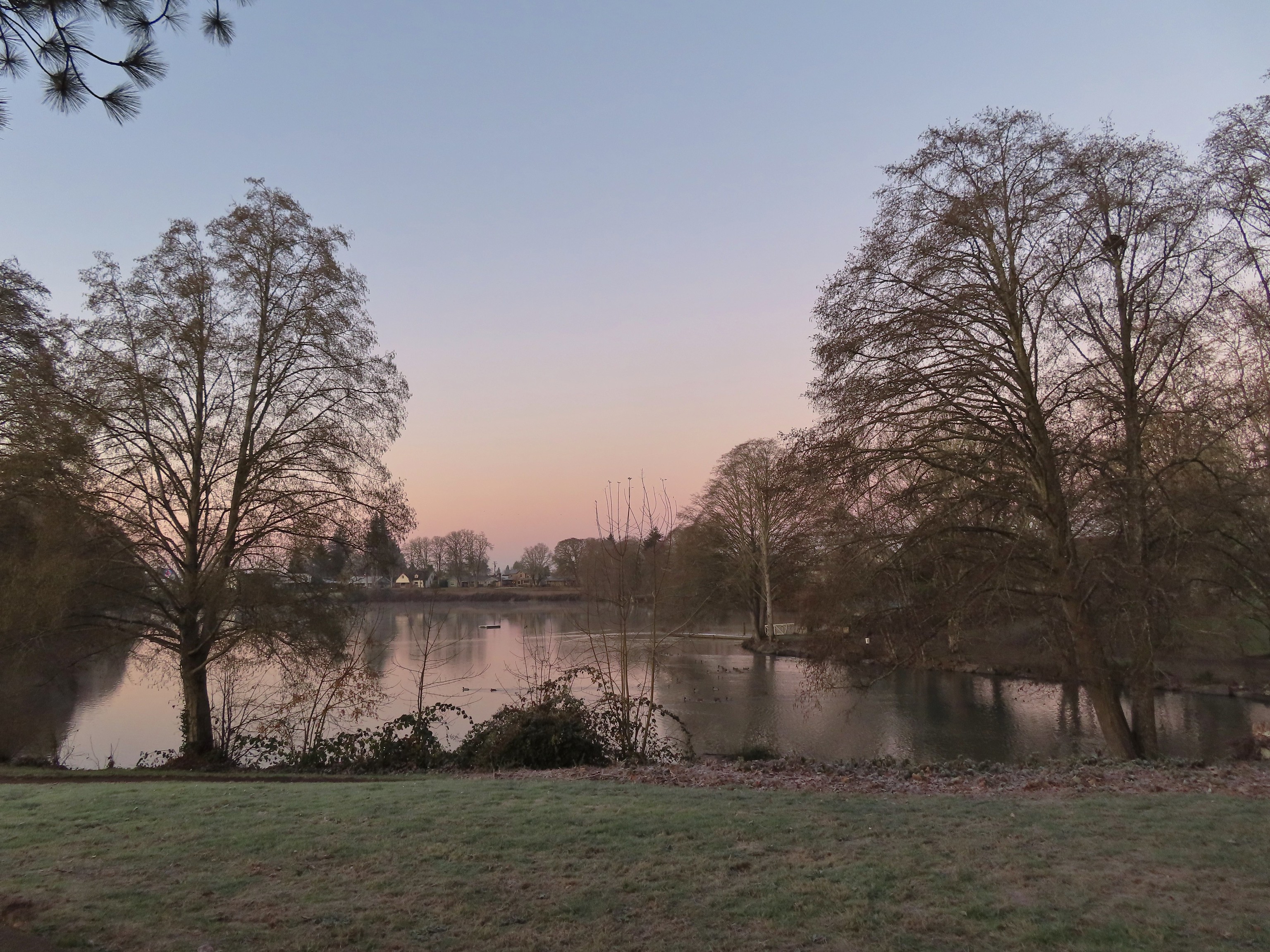 Waverly Lake at sunrise.
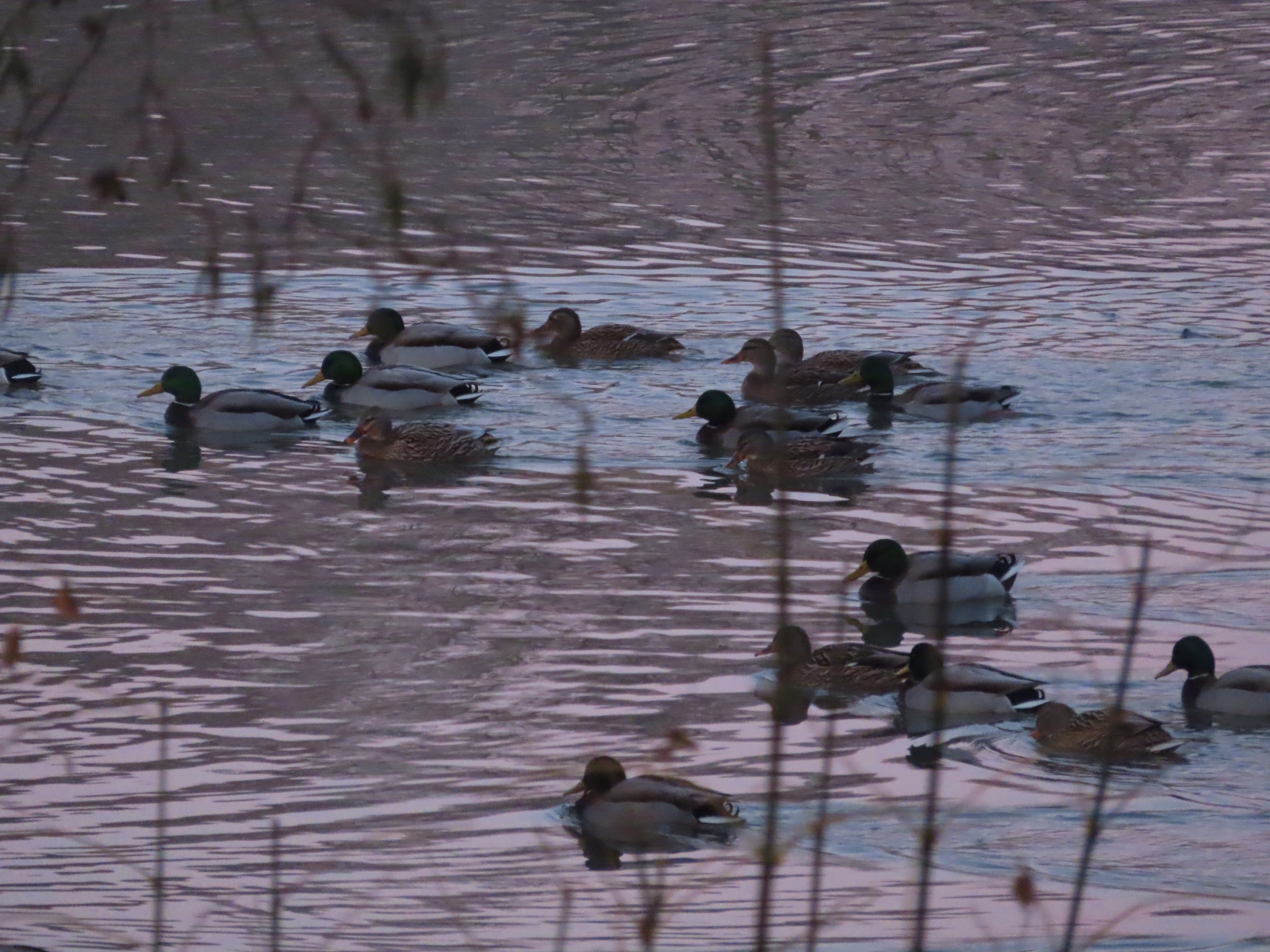 Mallards
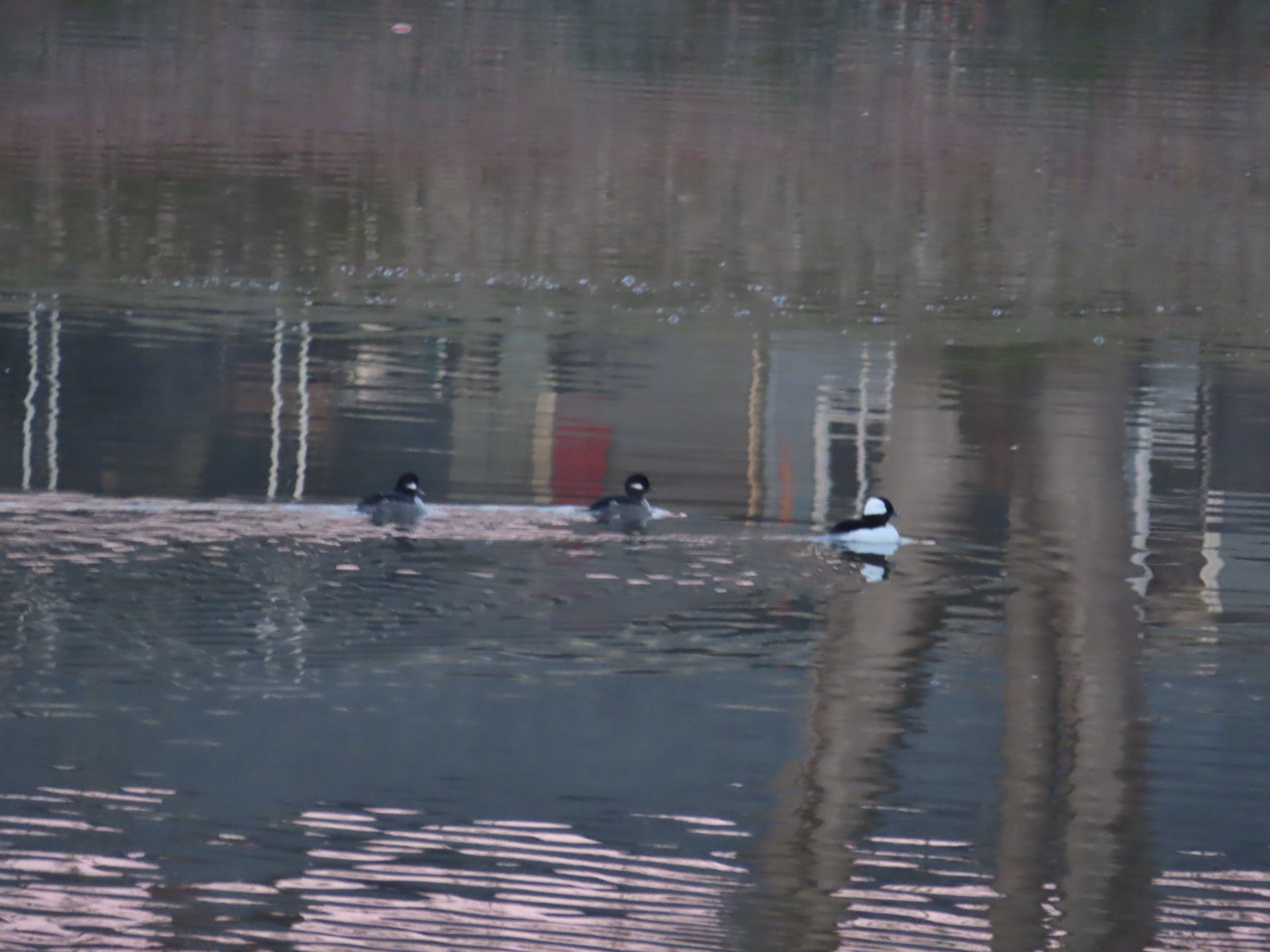 Buffleheads
 I think this is a ruddy duck.
 American coots
 Guessing these are some sort of domestic/mallard? crossbreeds. Very interesting looking.
 More mallards near Cox Creek
 Cox Creek flowing toward Waverly Lake.
 Nearing the outlet of Cox Creek.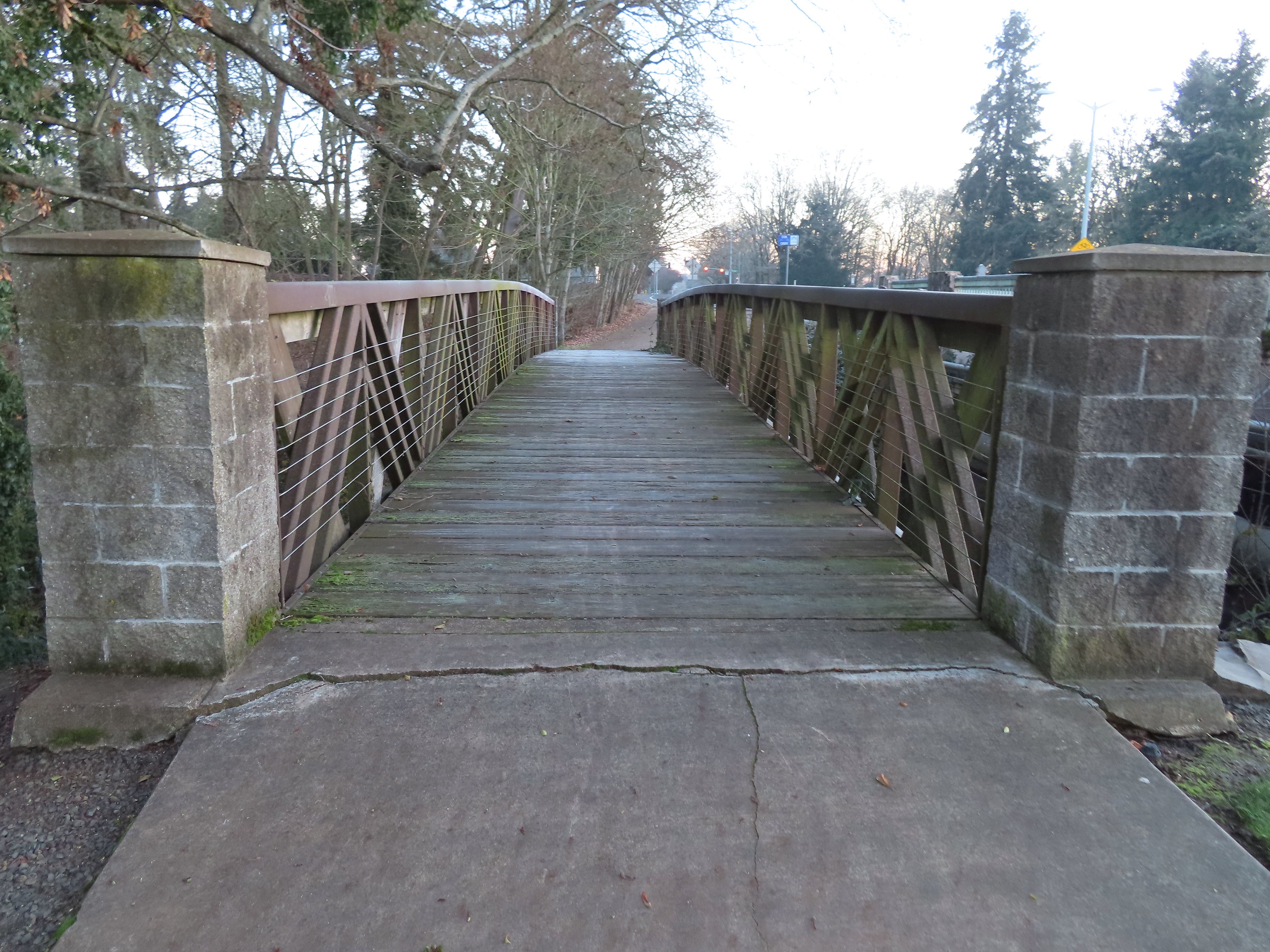
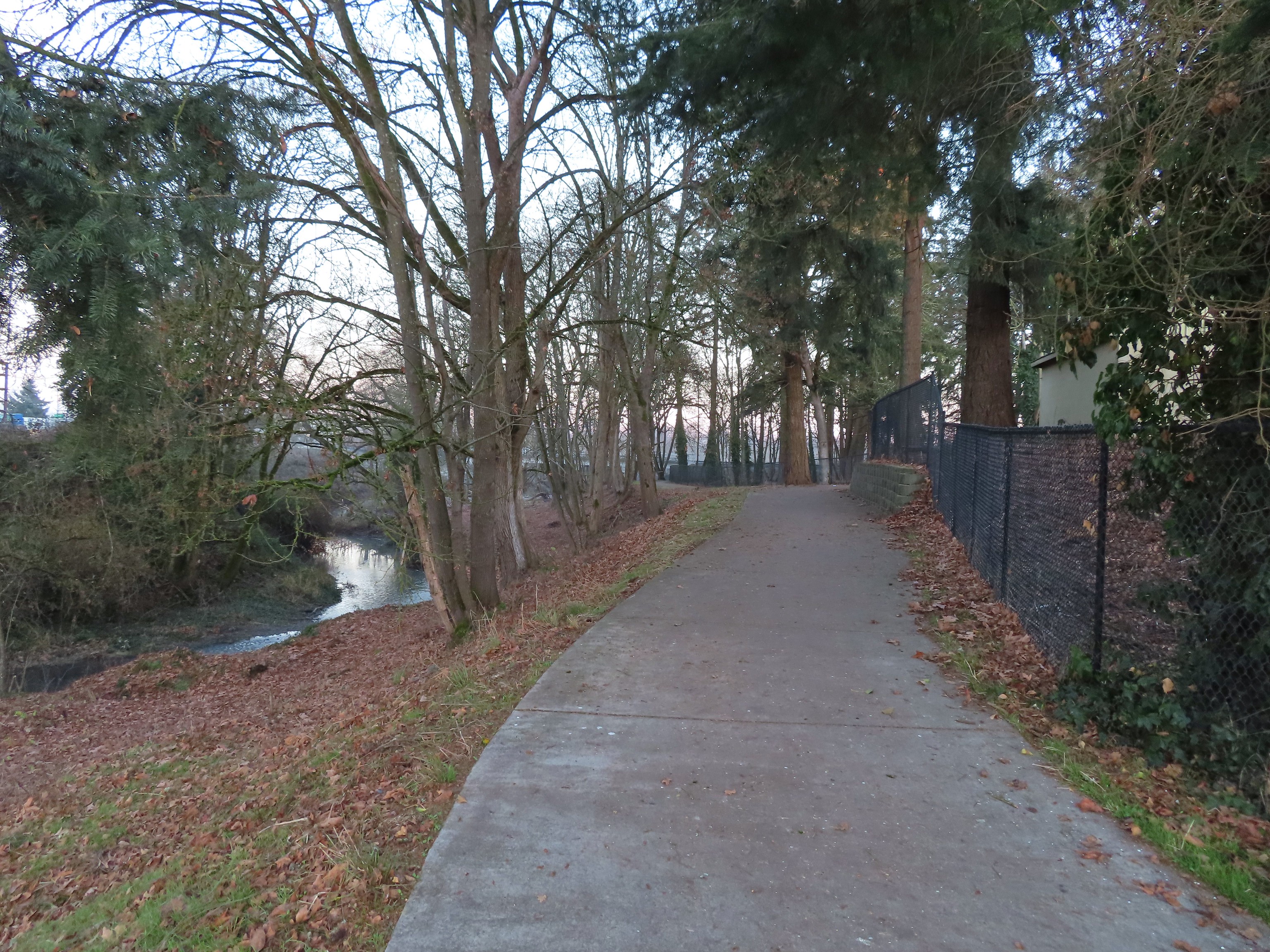
 We almost got off-track here. This path on the right (just after passing under some railroad tracks) does lead into the wetlands but it wasn’t part of the Oregon Hikers described hike.
 One of several interpretive signs along the trails.
 Frosty leaves, it had been a chilly 28 degrees when we started out.
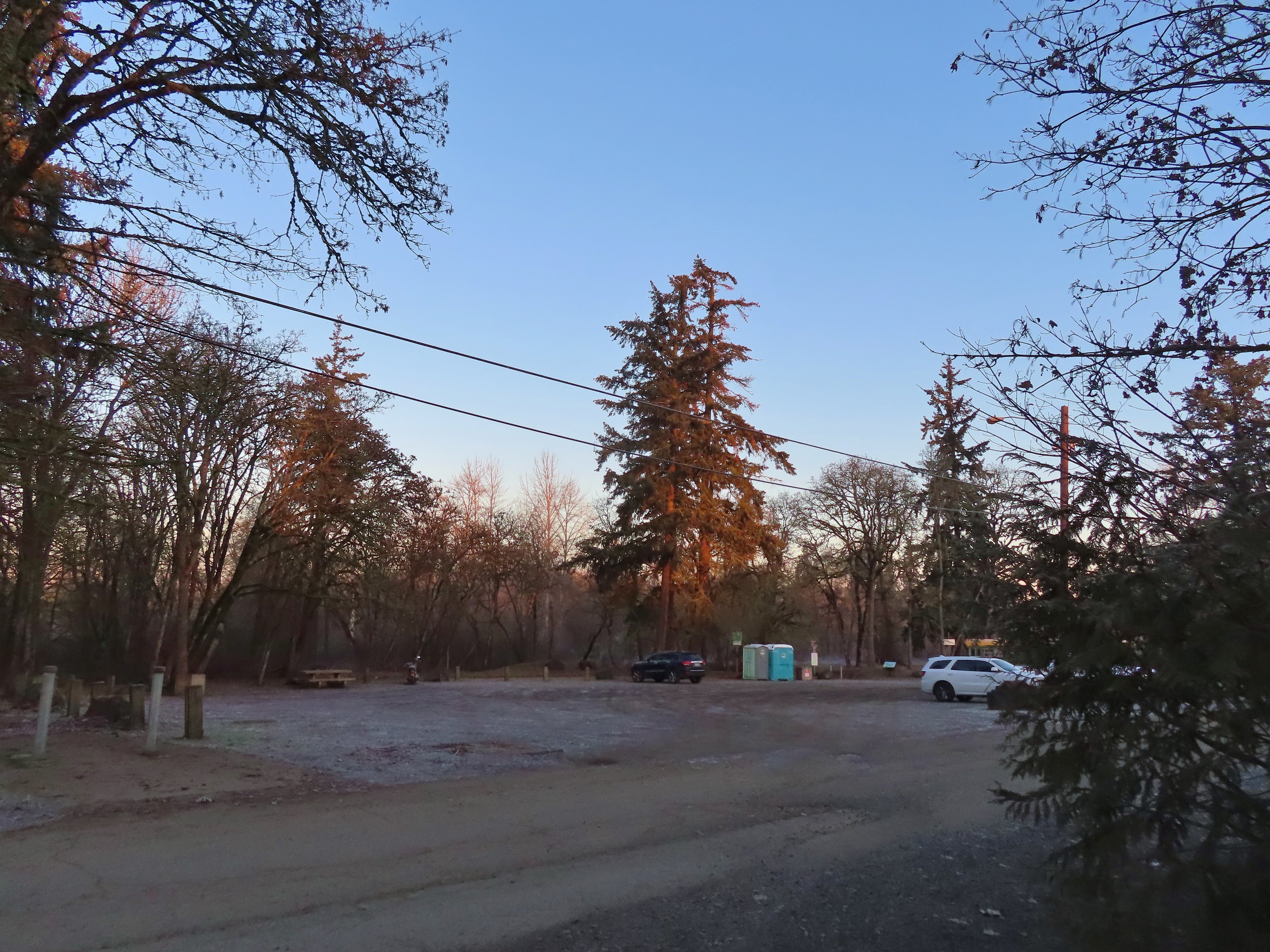 Simpson Park
 The Simpson Park Trail is a 1 mile out and back along the Willamette River. It also offers access to the Riverfront Trail which one could follow SW almost 3.5 miles to Monteith Riverpark at the mouth of the Calapooia River. With Heather being limited to shorter hikes for now that wasn’t an option today but will be something we look forward to trying in the future.
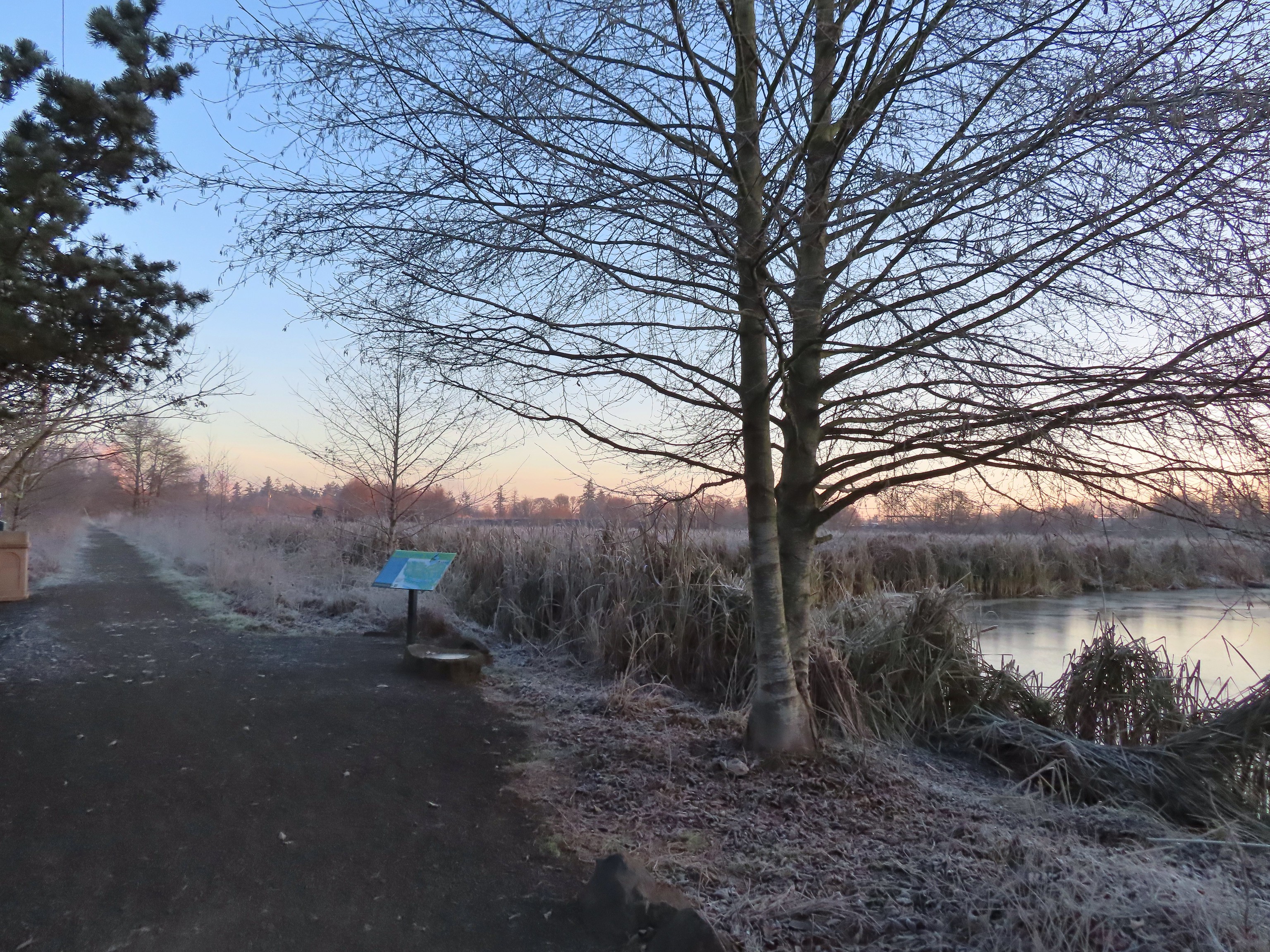
 Map on a welcome sign.
 Frozen leaves


 American wigeons
 Bald eagle fly over
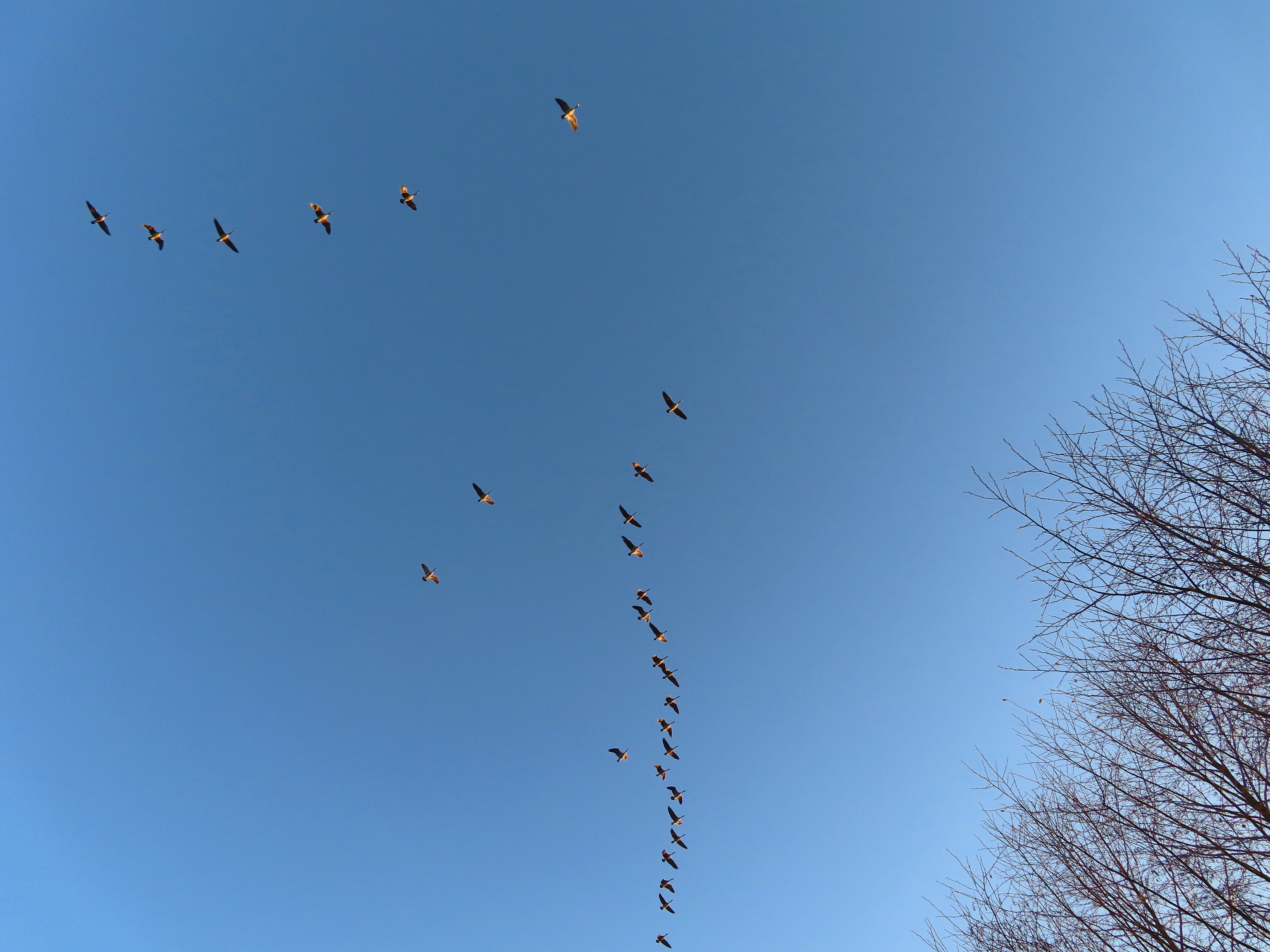 Flock of geese flying over
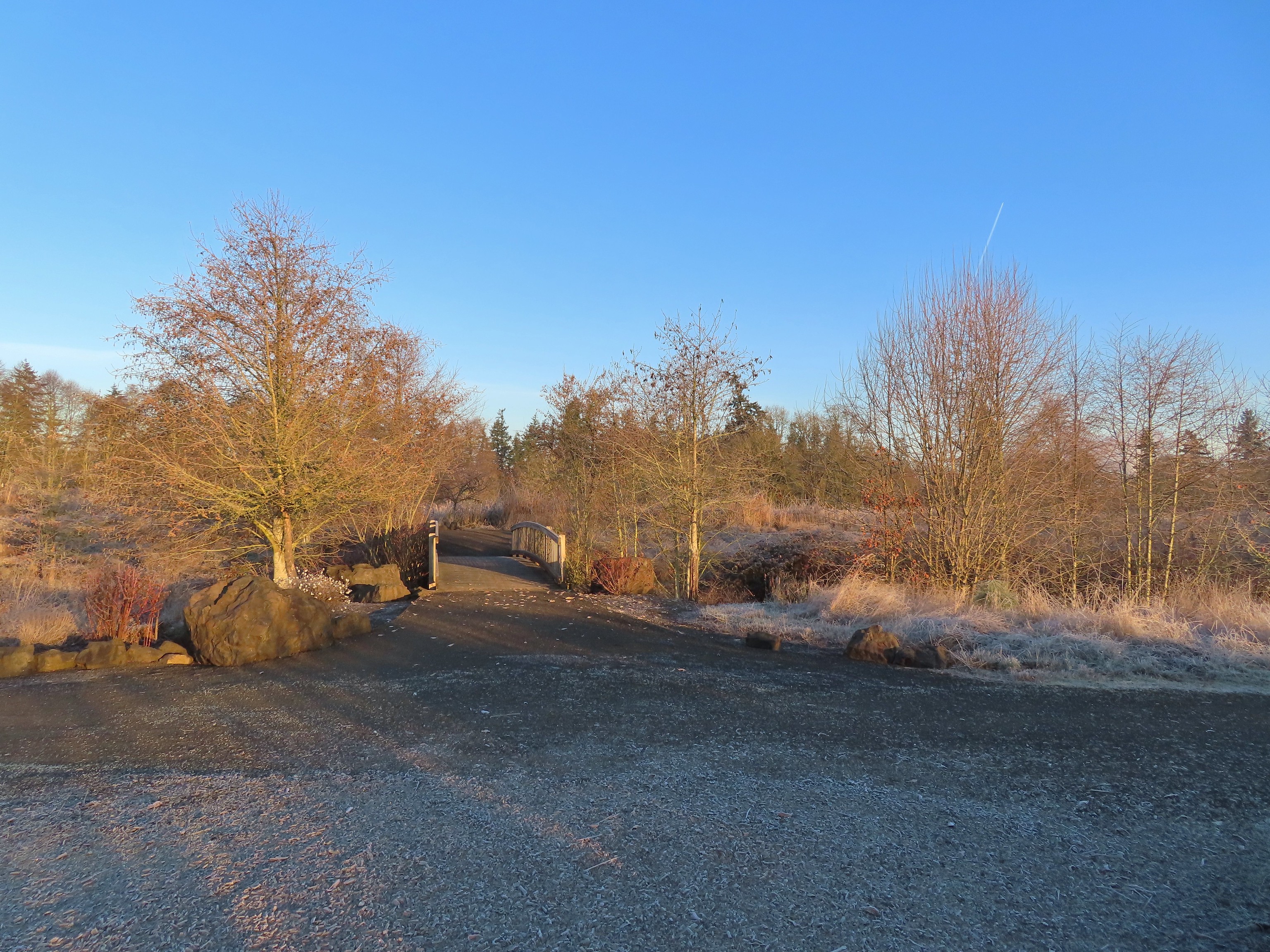 One of many unsigned intersections.
 Robin
Robin One of two memorials in the gardens.


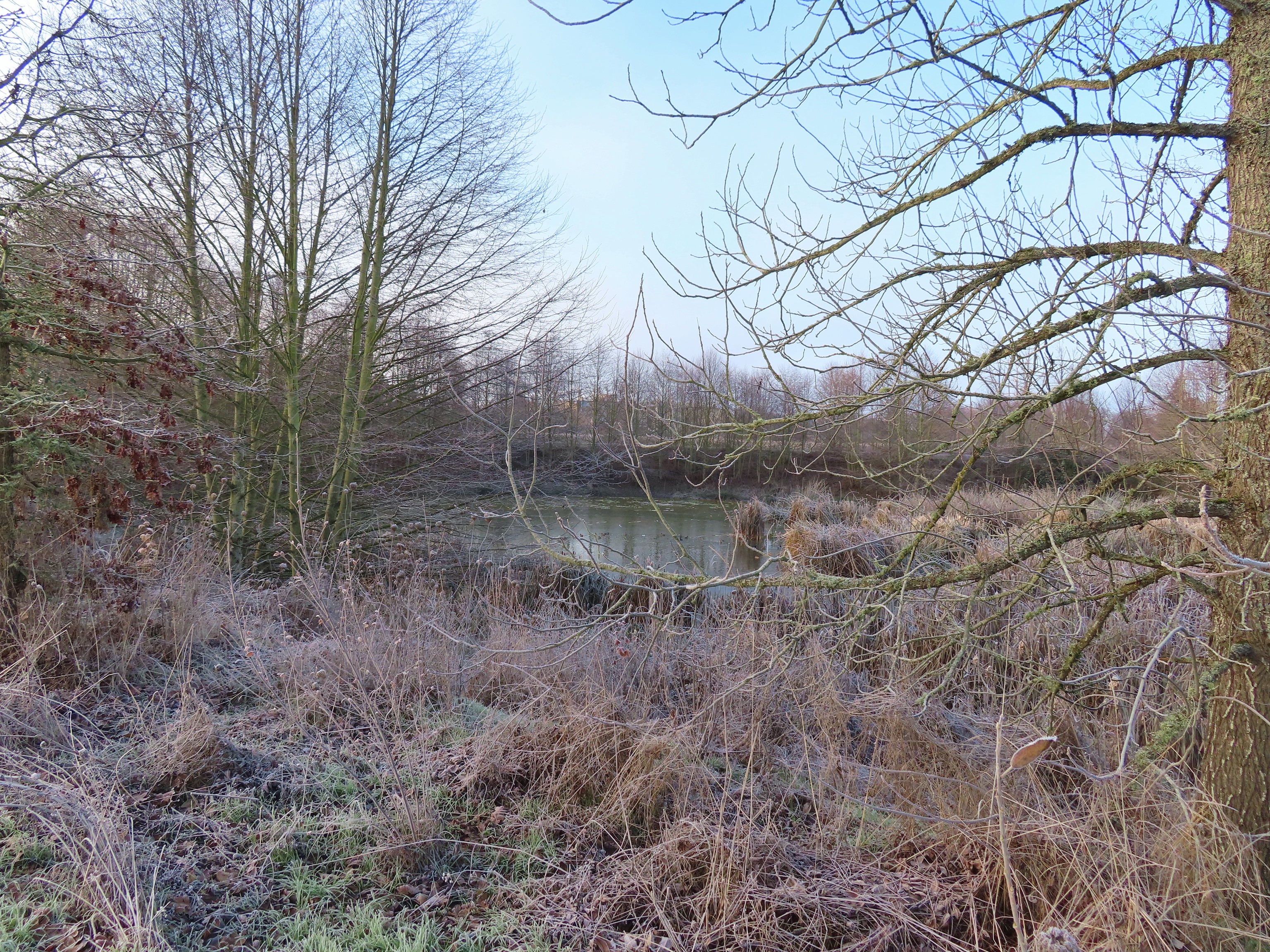
 Bufflehead
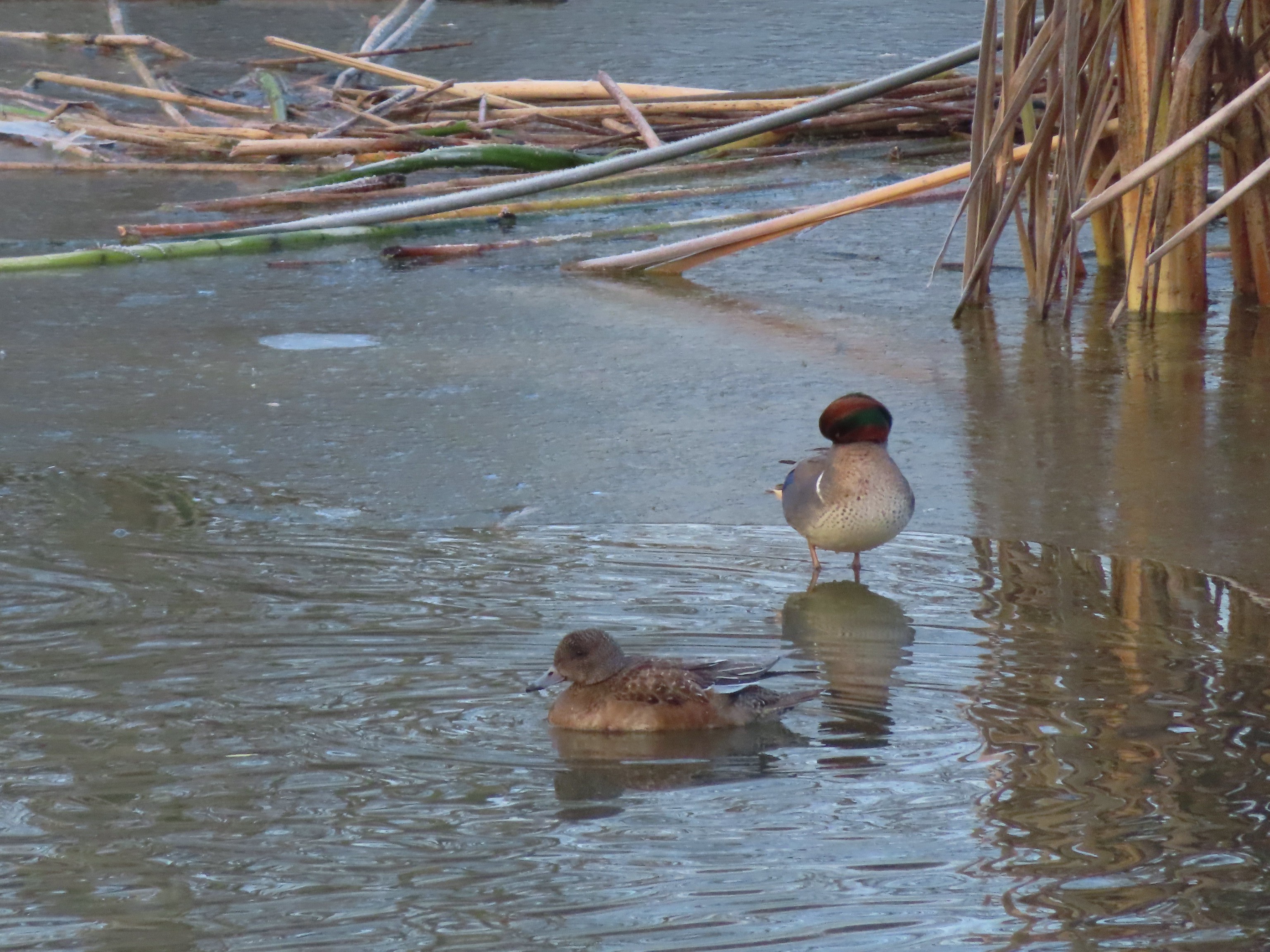 Green winged teal
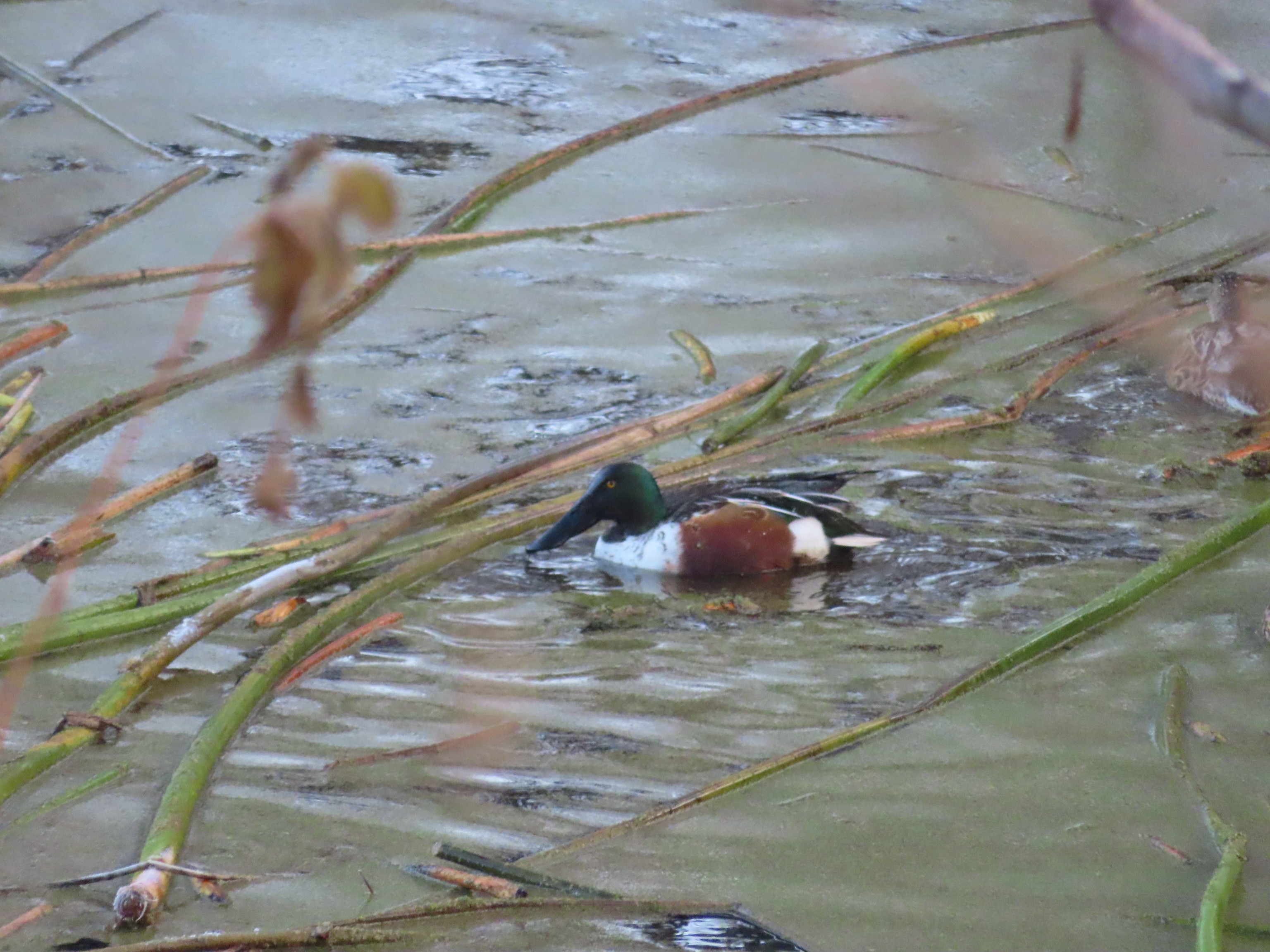 Northern shoveler
 Frost
Frost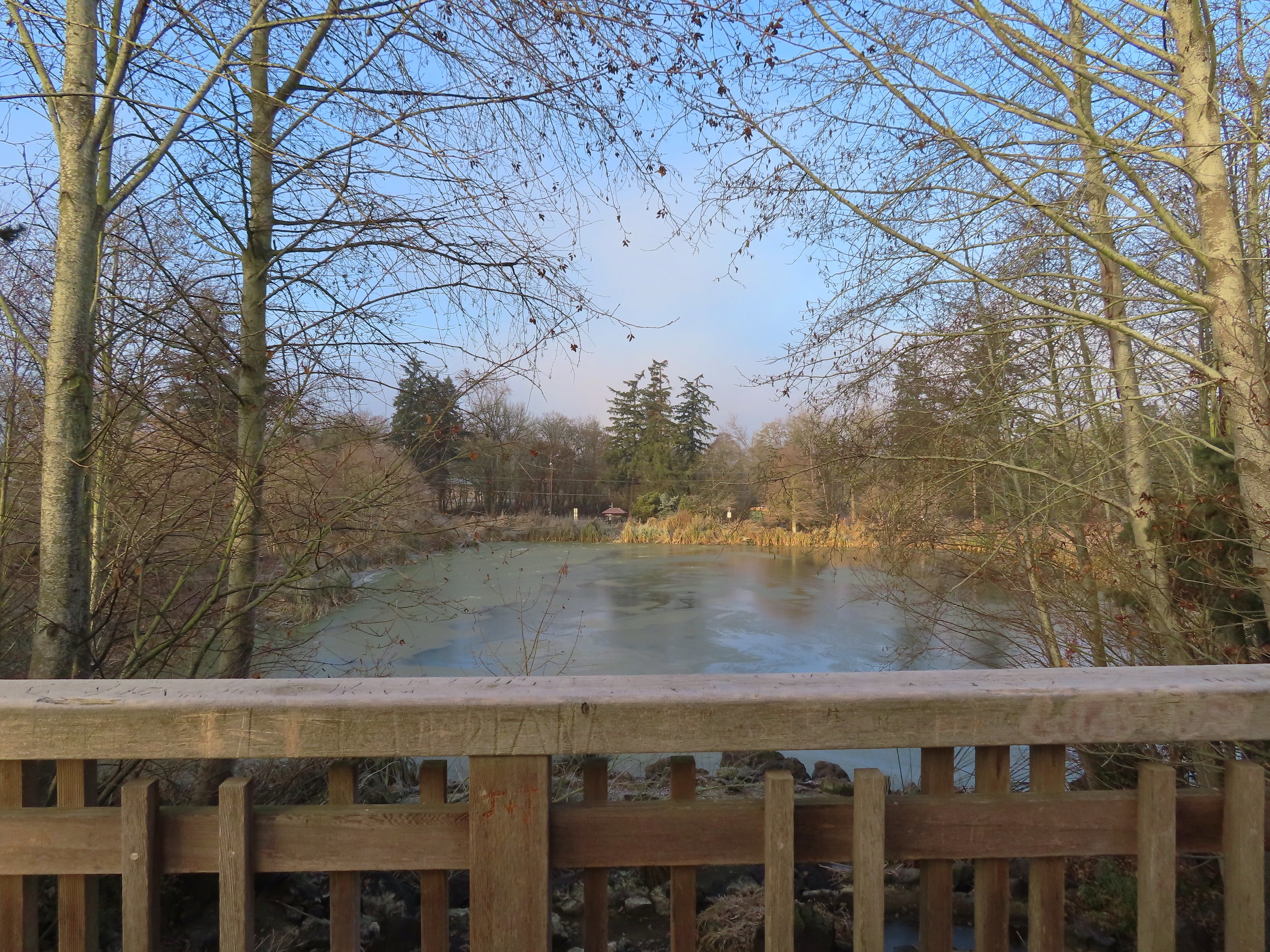 Simpson Park across a pond.
 Fishermen heading into the fog at Waverly Lake.
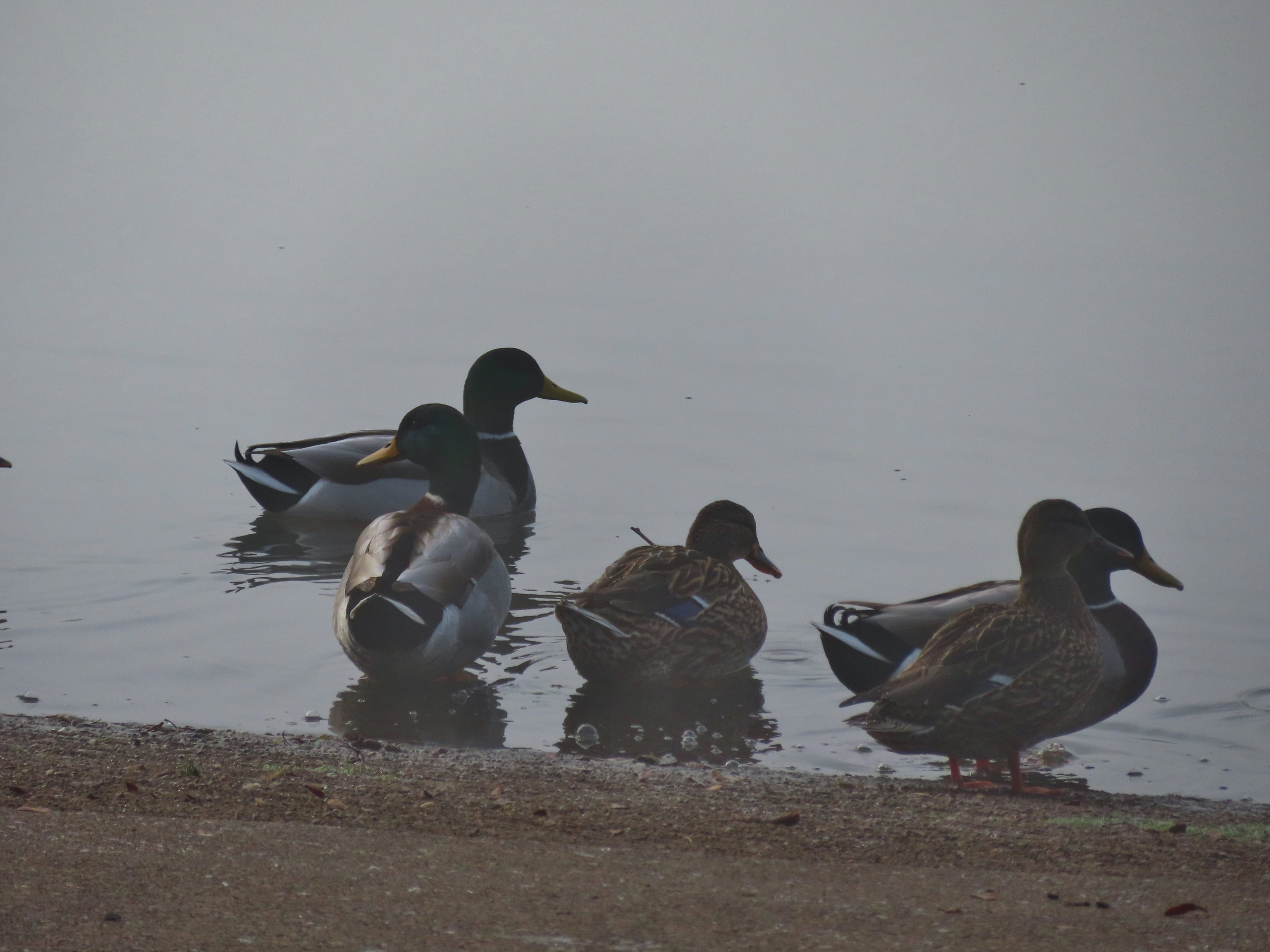 Mallards hanging out in the fog.
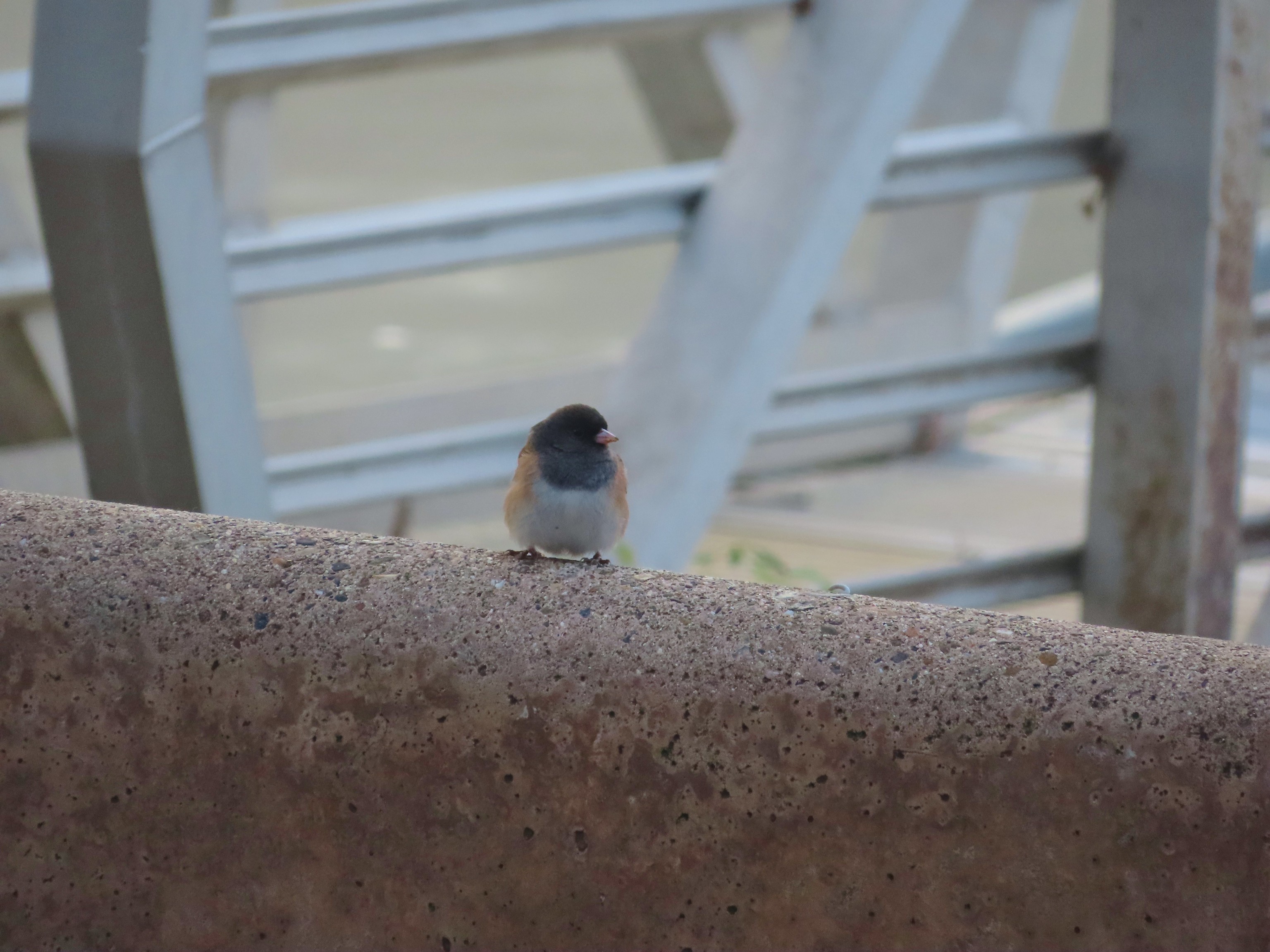 Dark eyed junco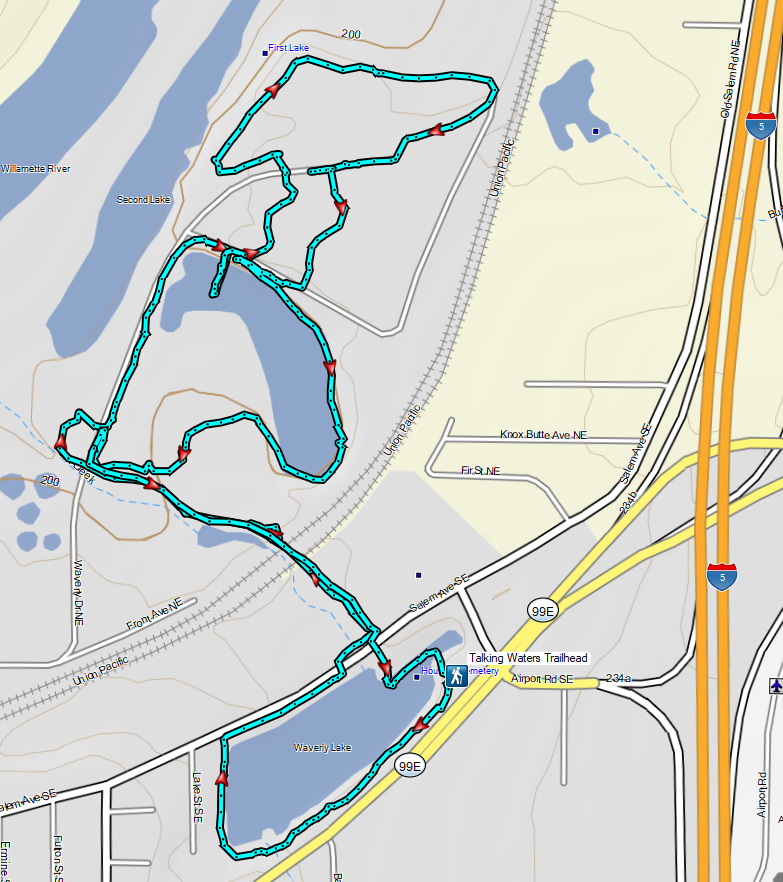
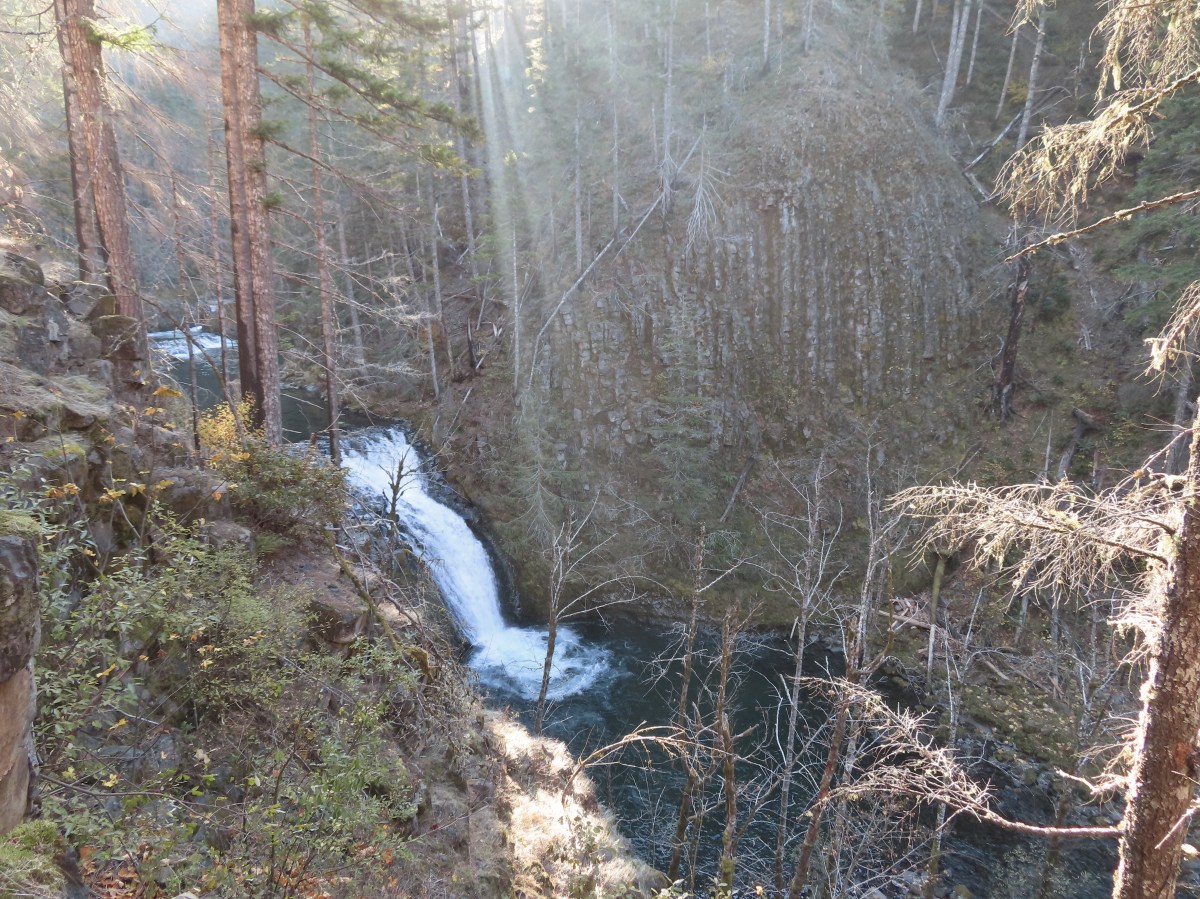
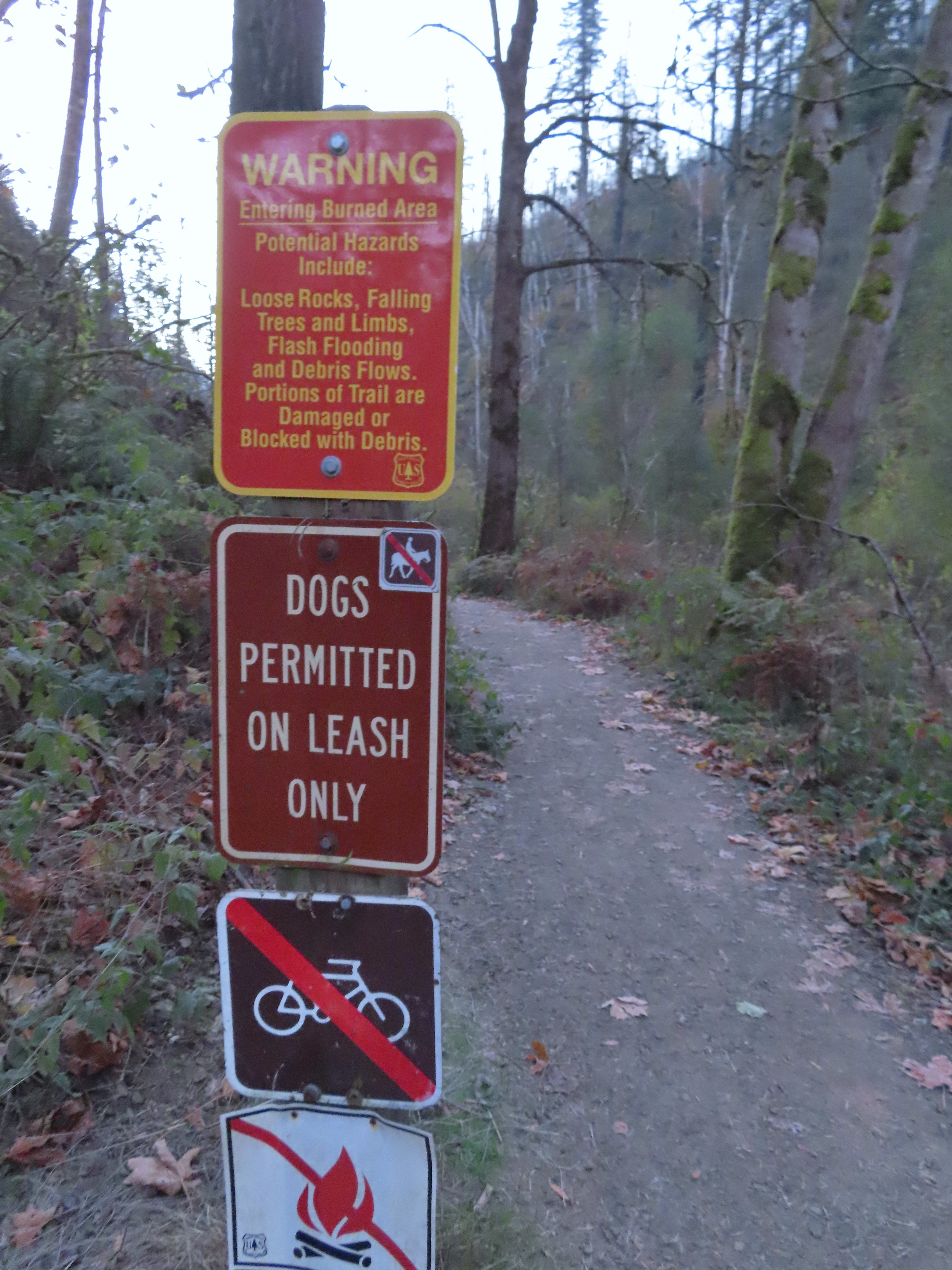
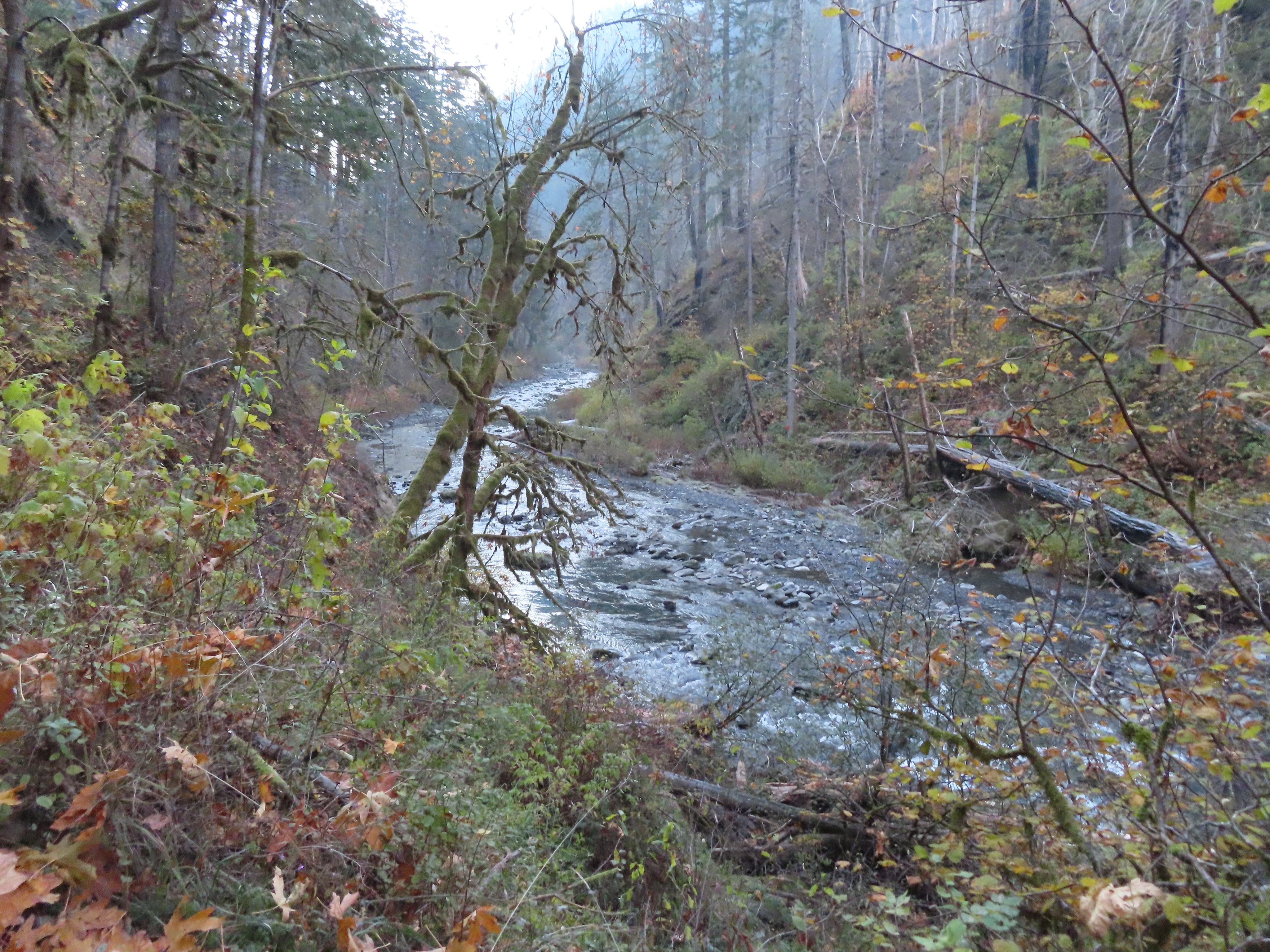
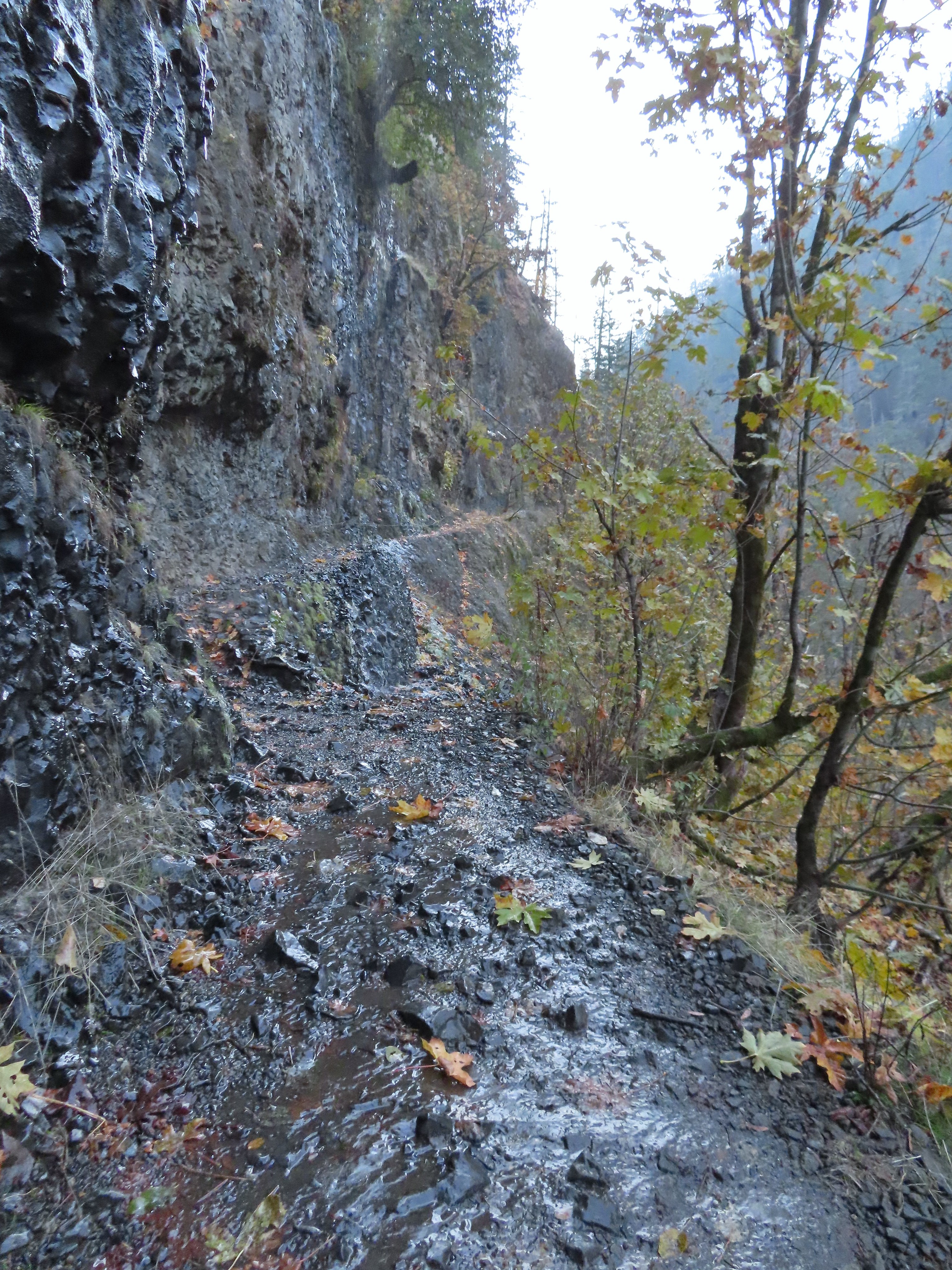 It was hard to tell at times which parts were frozen.
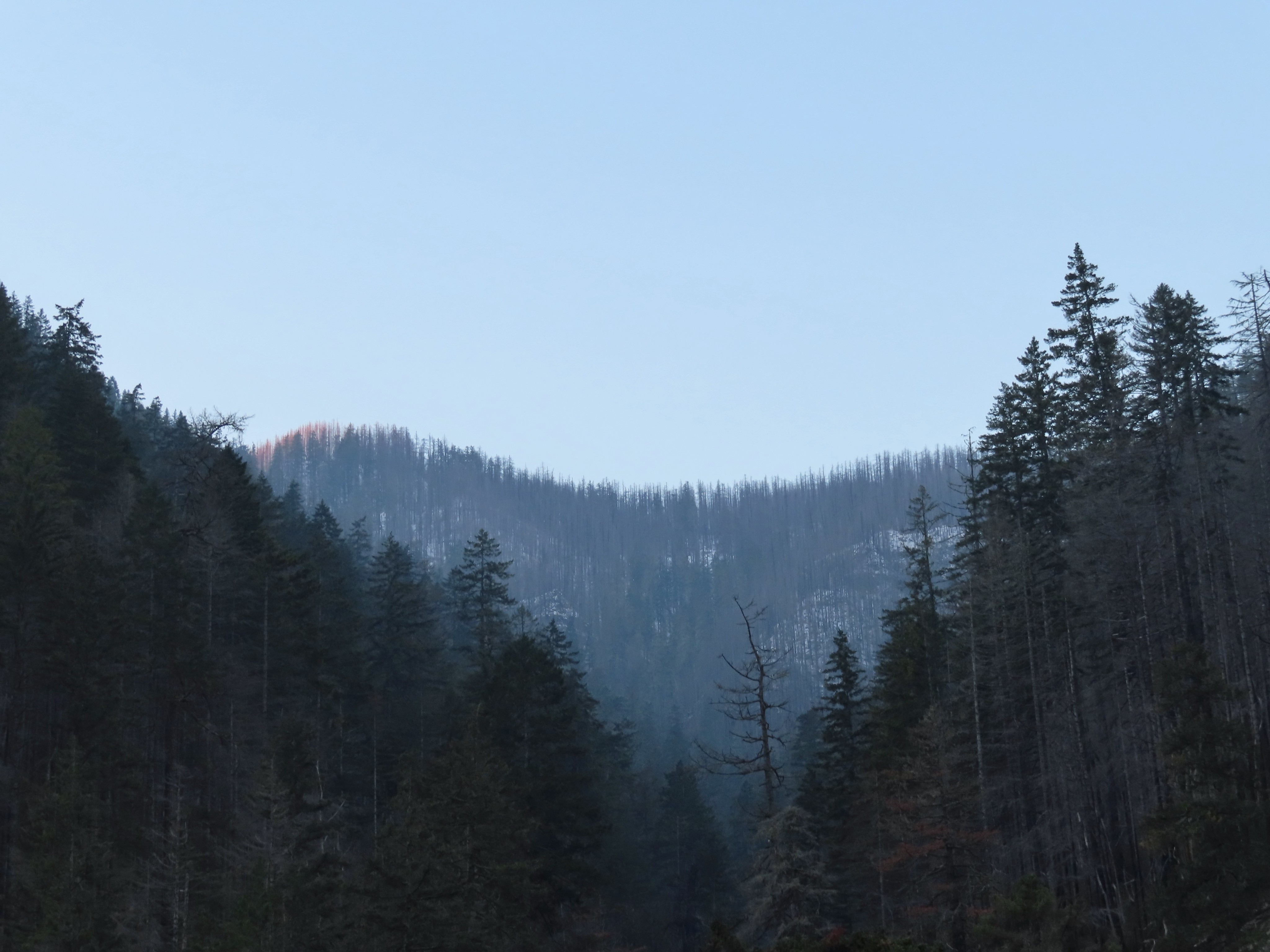 Snow at the higher elevations.
 A pink cloud in the direction of the Columbia River Gorge.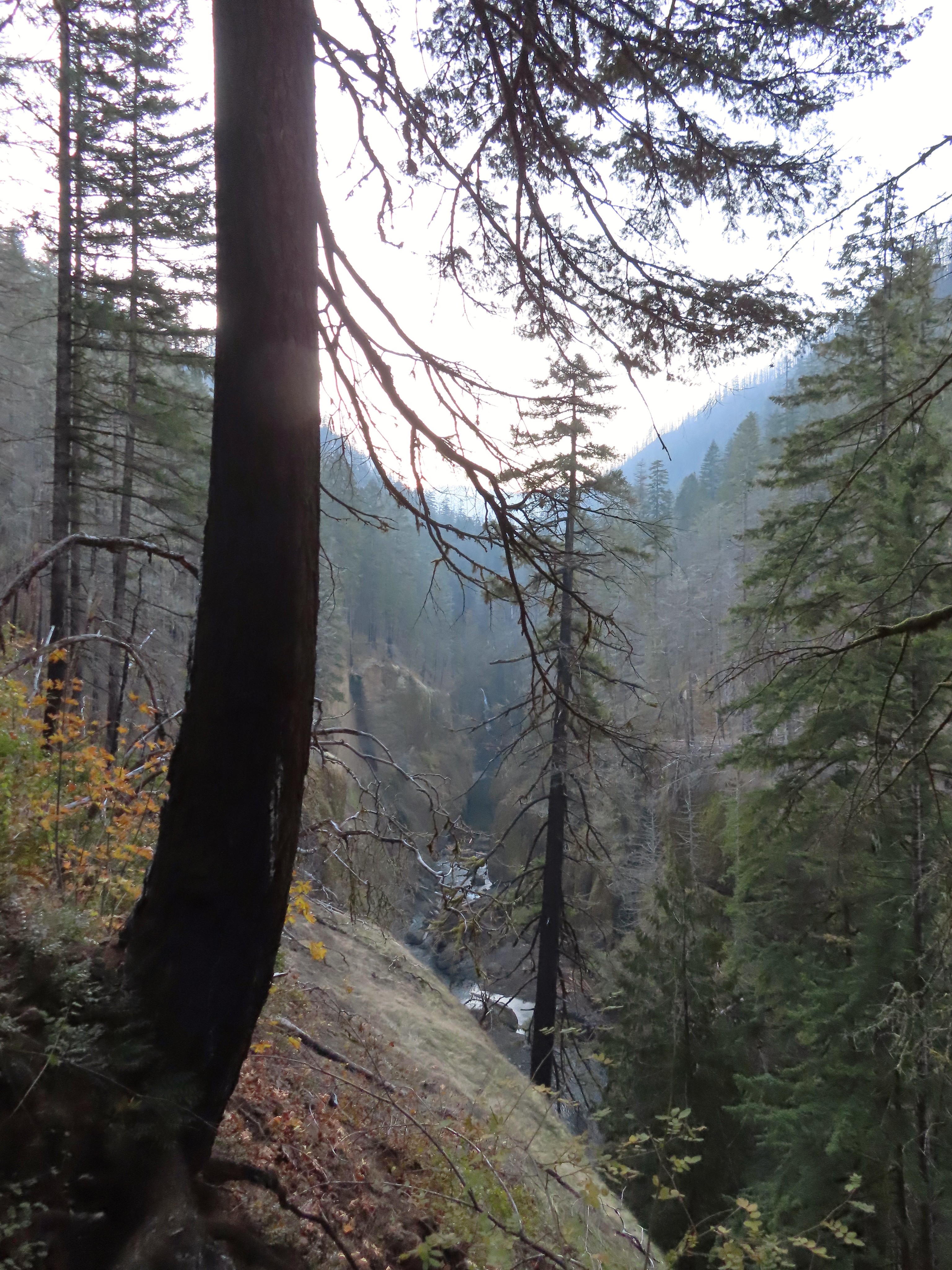
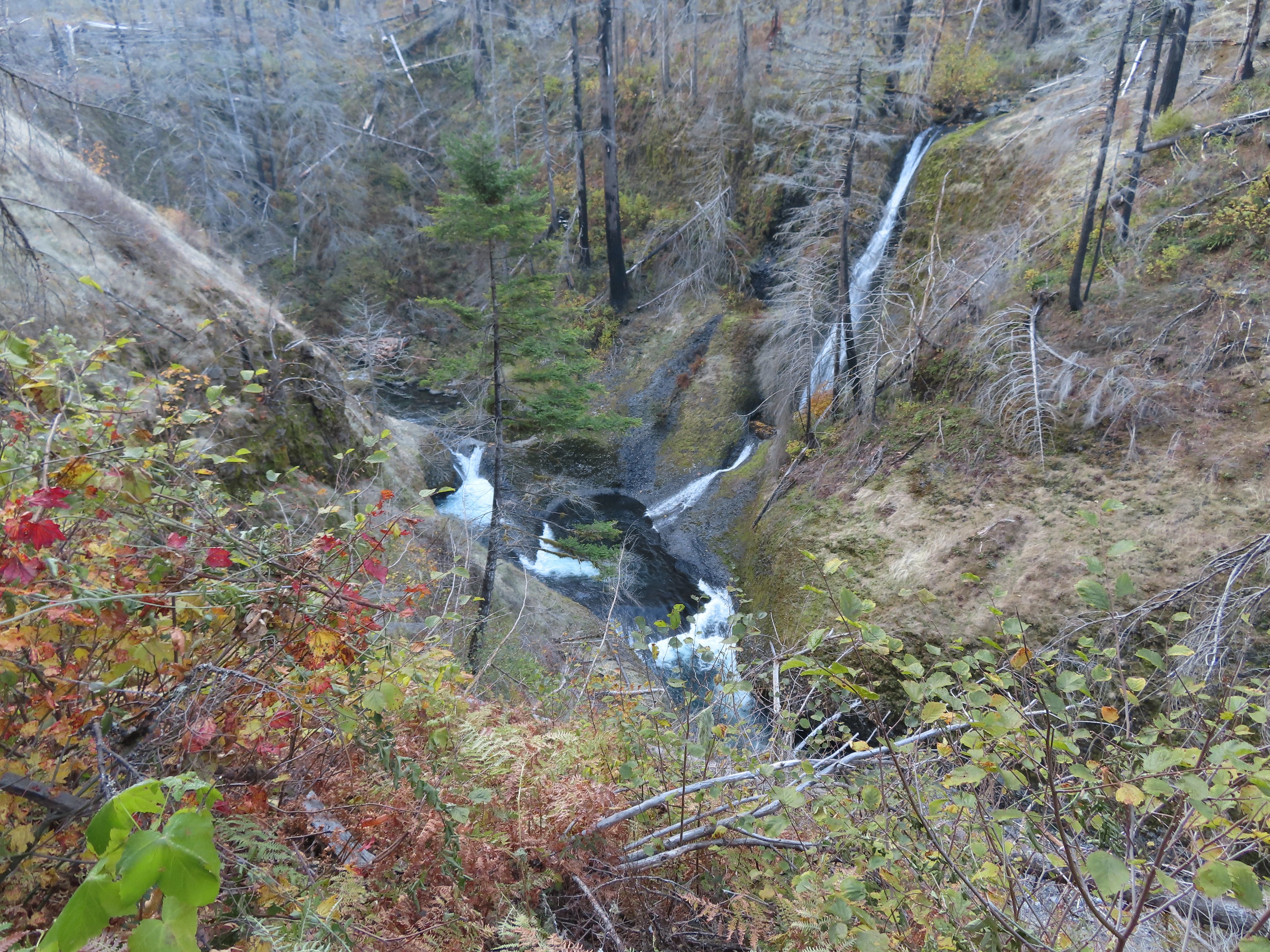
 Sorenson Falls splashing down into Eagle Creek.
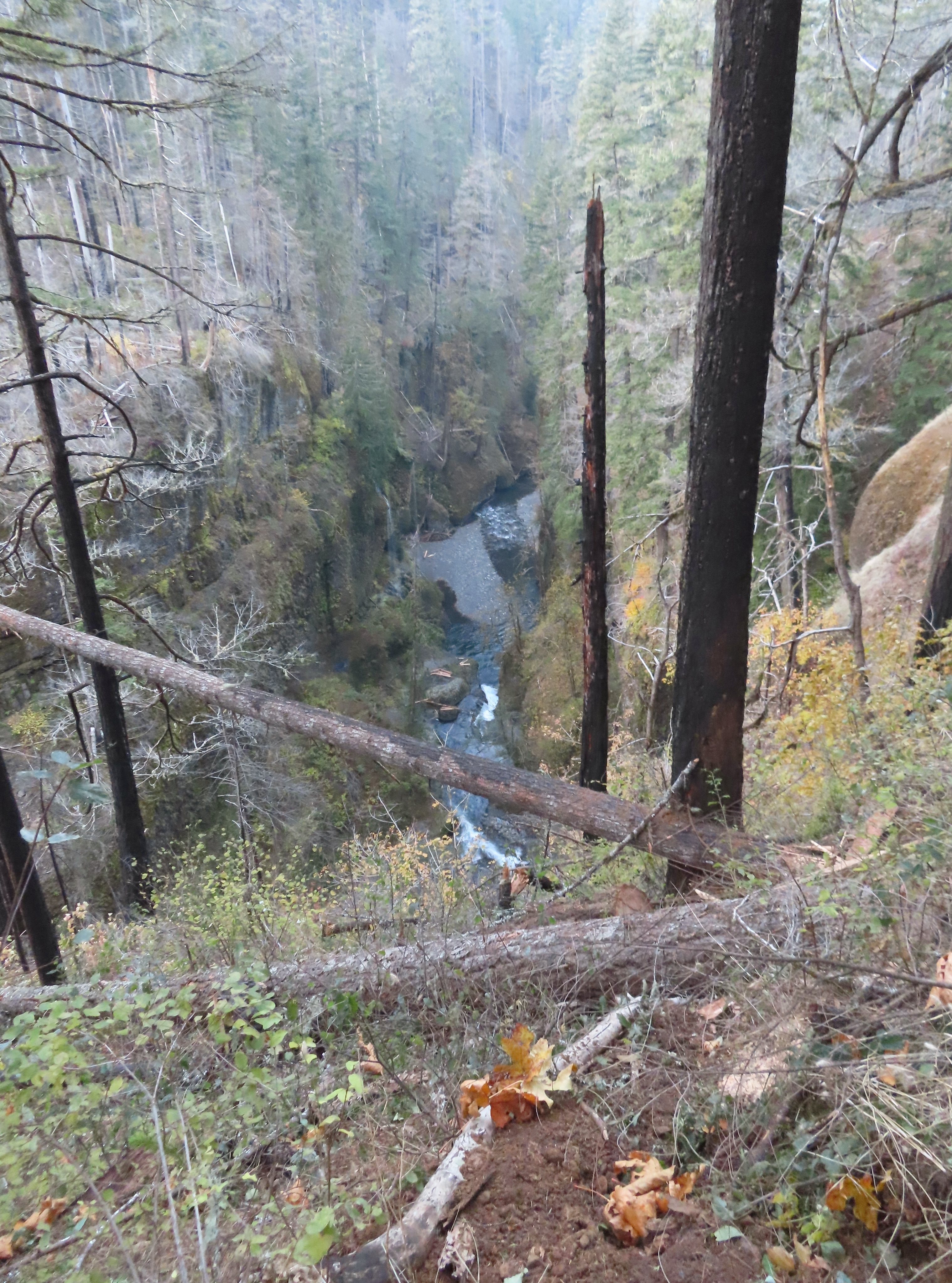 Looking back down Eagle Creek. It was hard to tell where the spur trail had been.
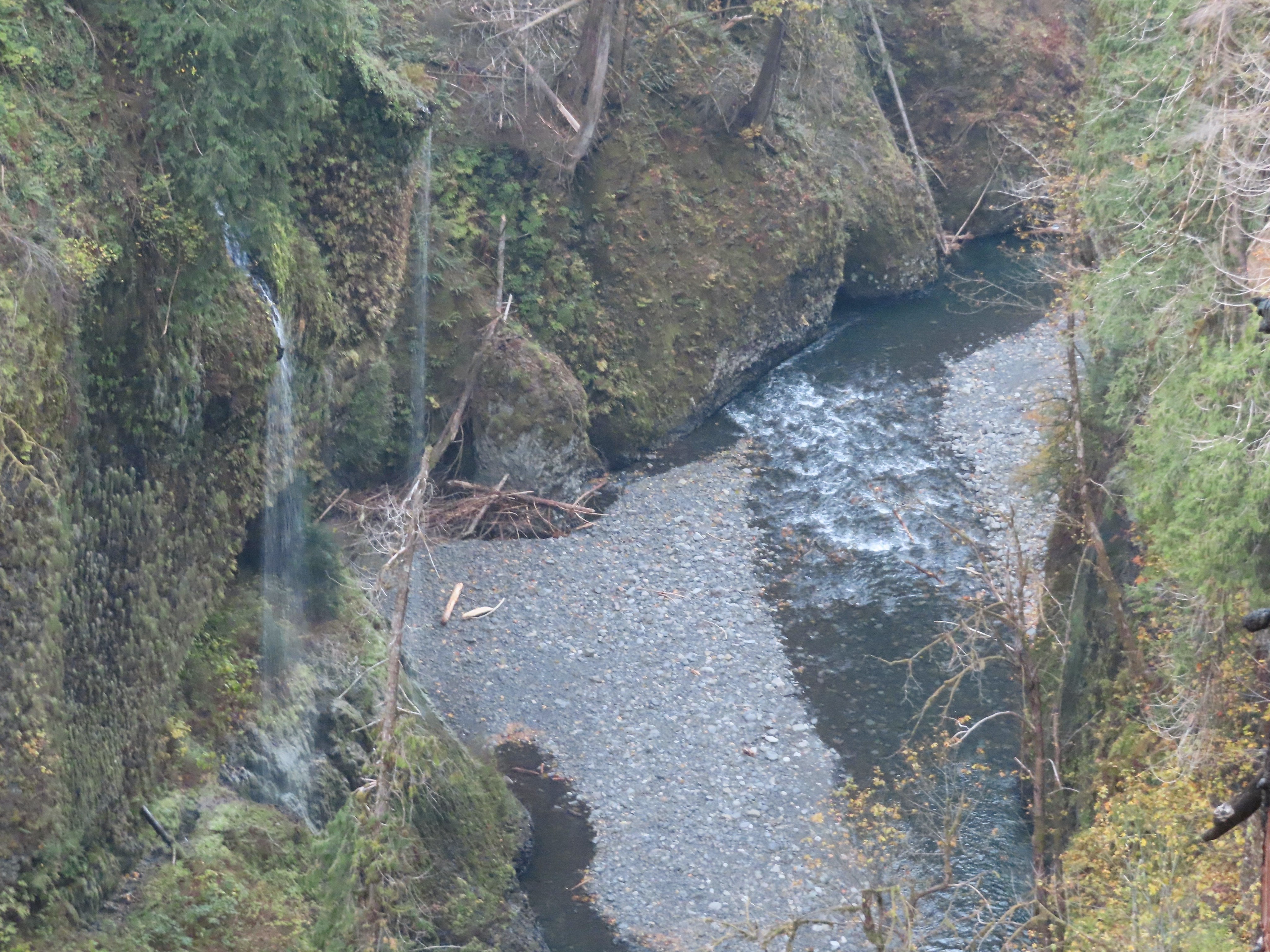 Runoff falling from the cliffs into Eagle Creek.
 Metlako Falls
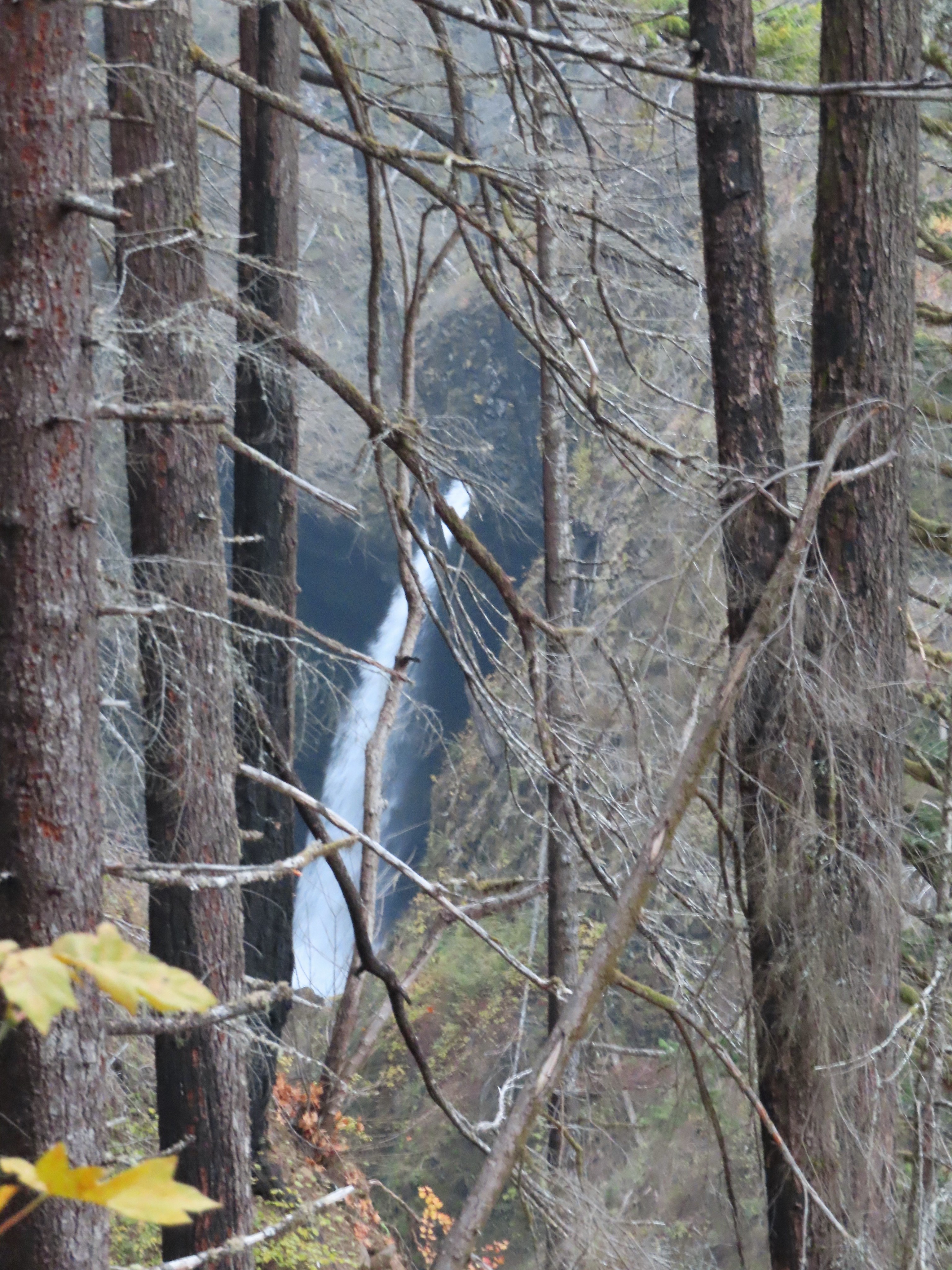 Metlako Falls

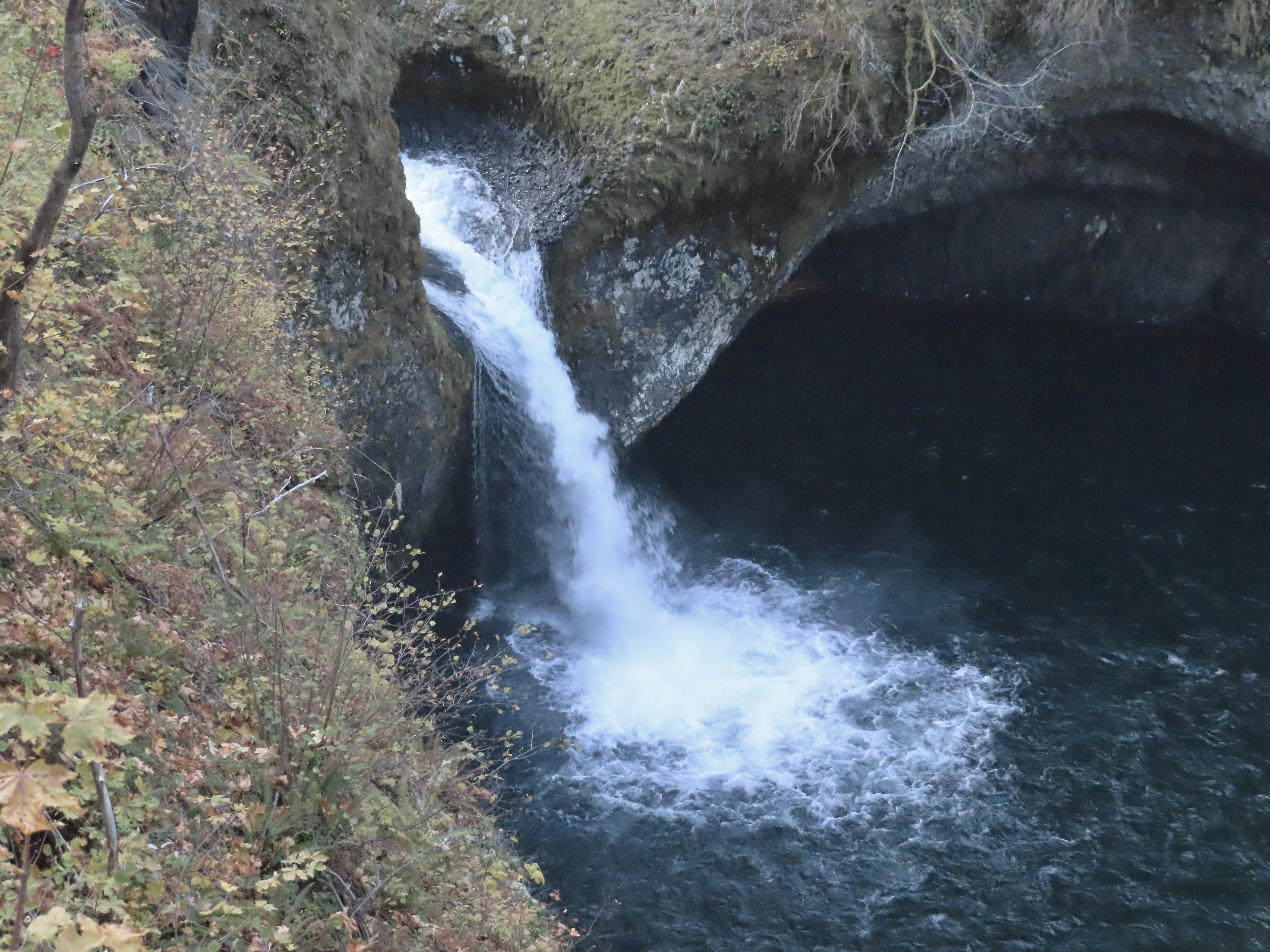
 Lower Punchbowl Falls
 Rocks from the landslide on the right.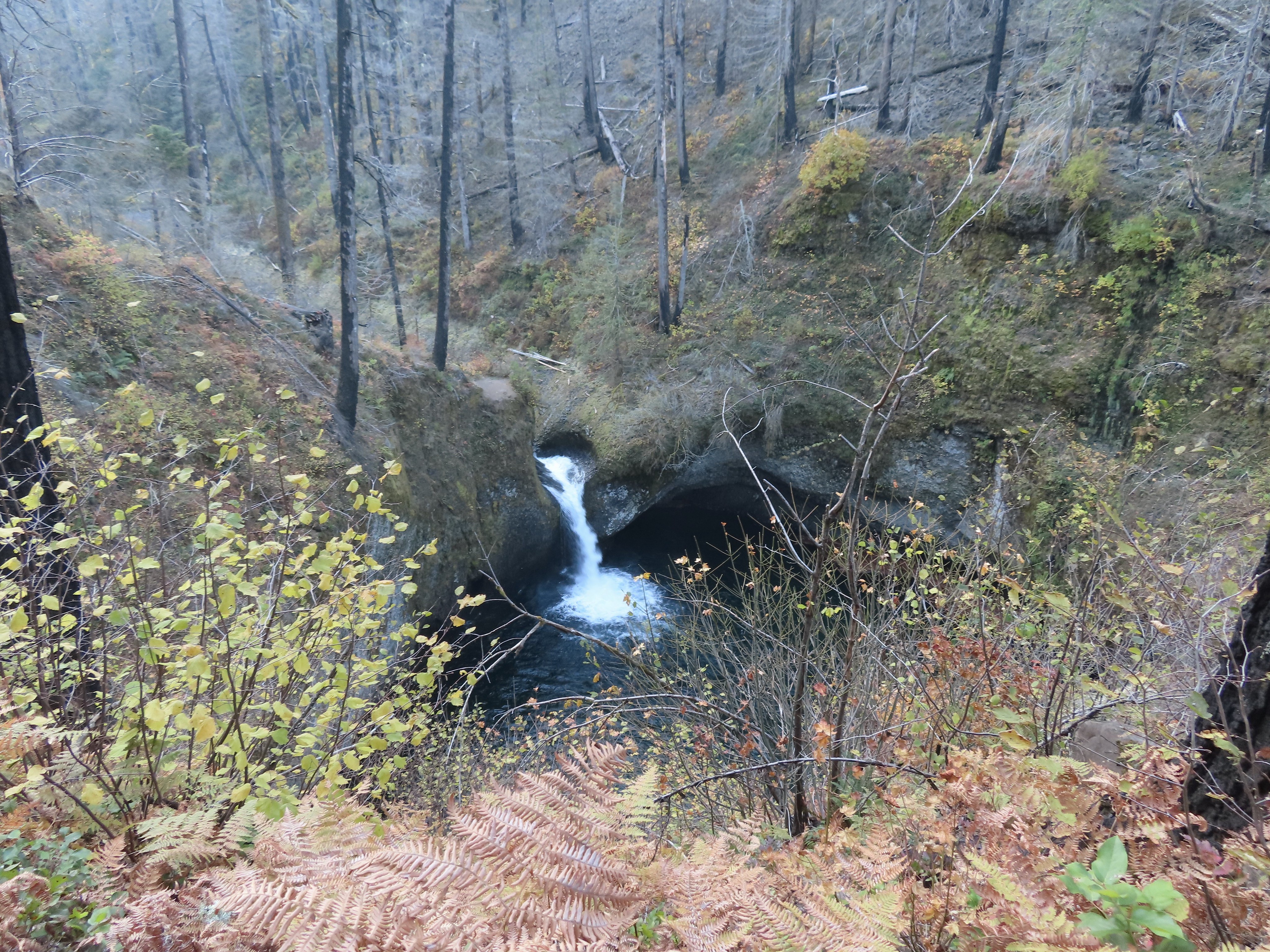
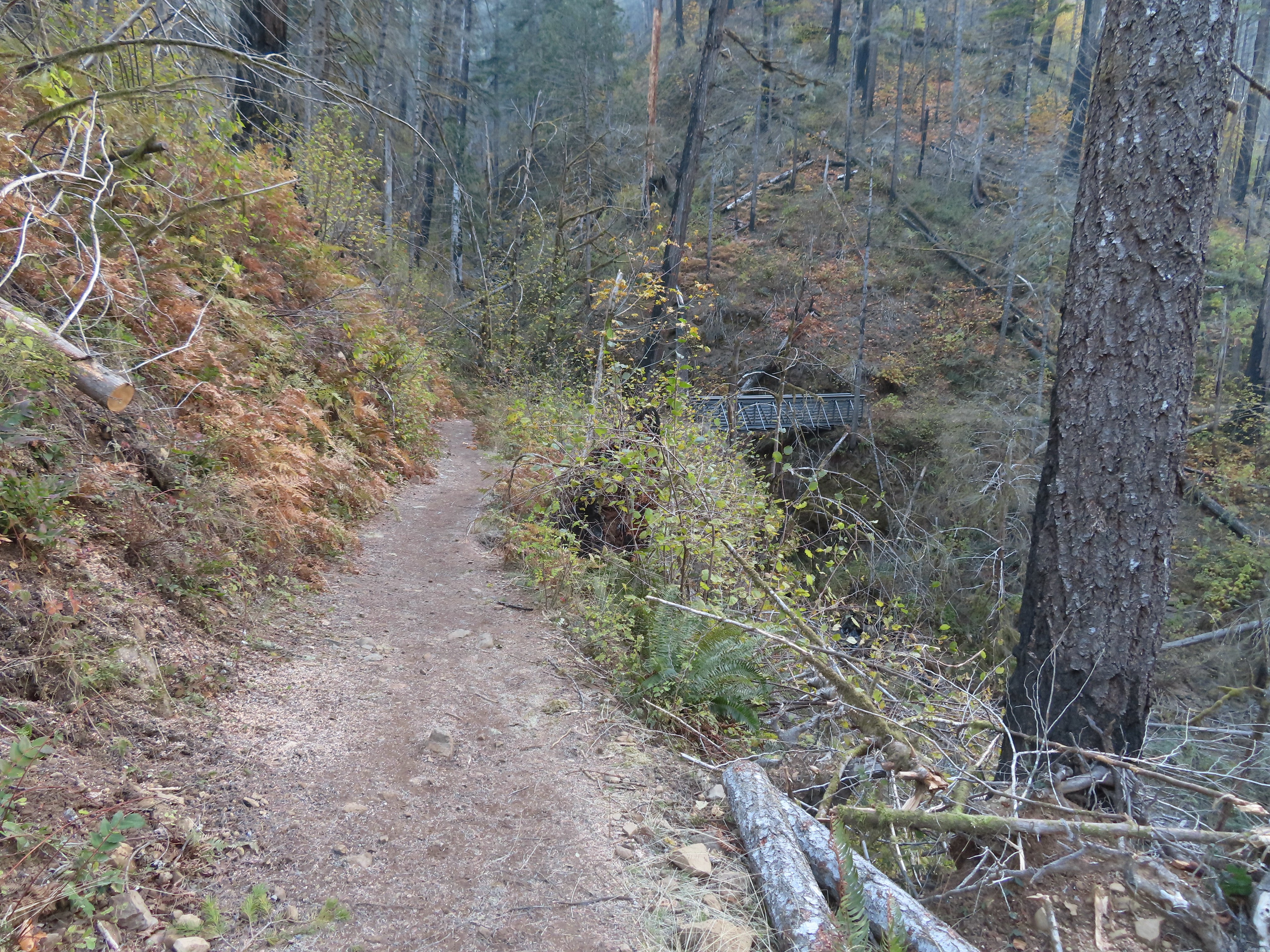 Tish Creek Bridge
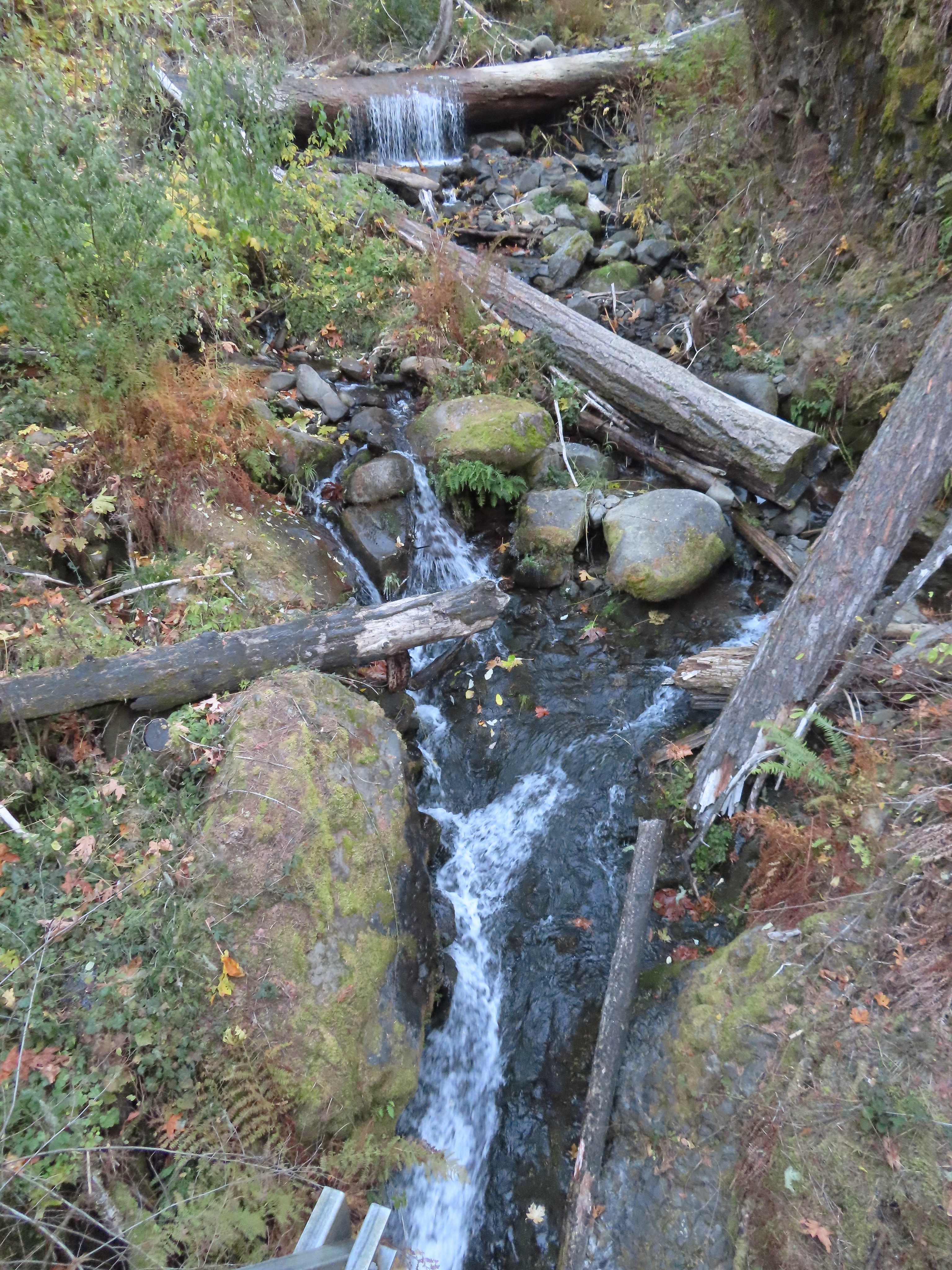 Tish Creek
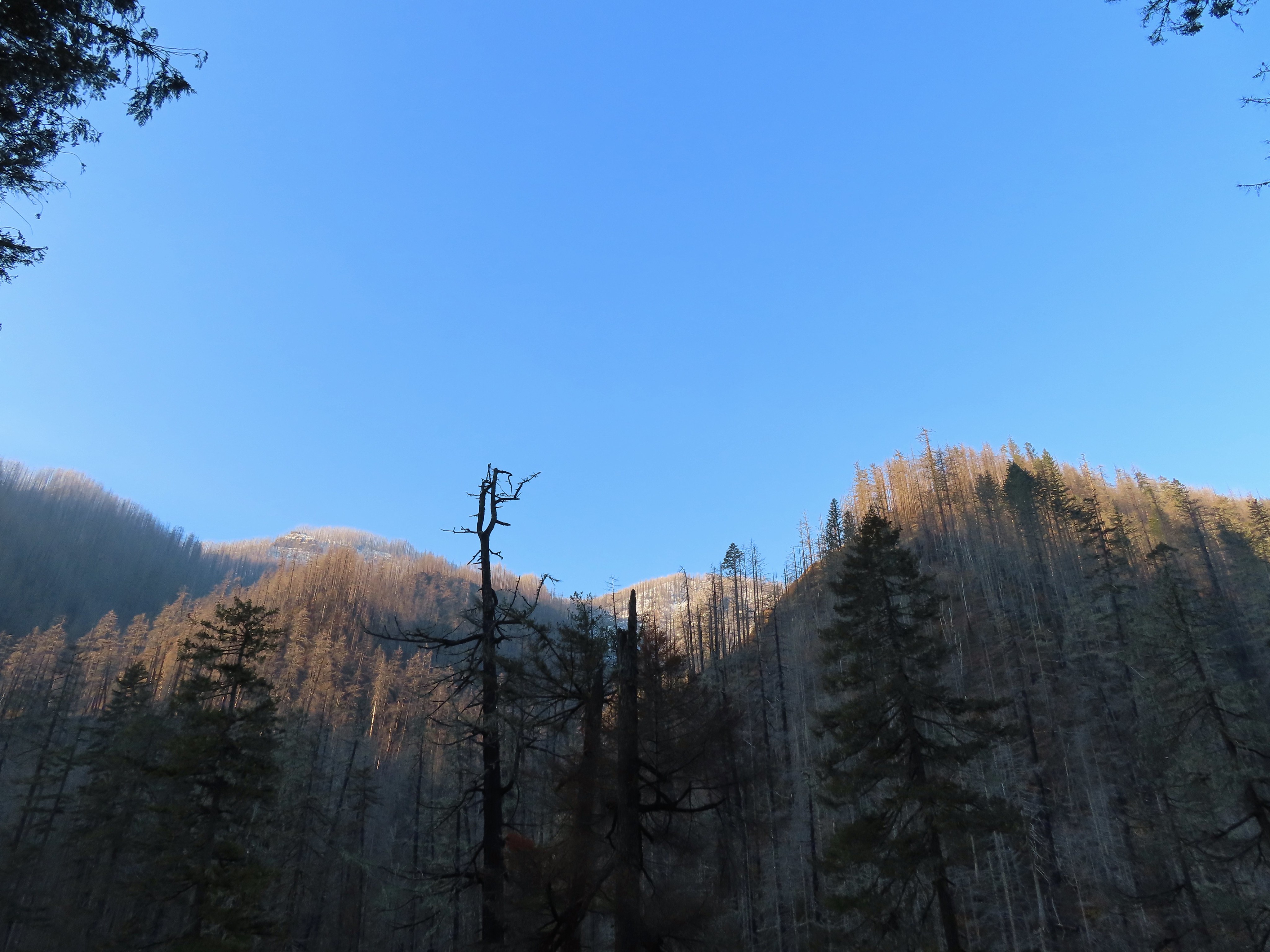 More snow on the ridge.
 Fern Creek Bridge
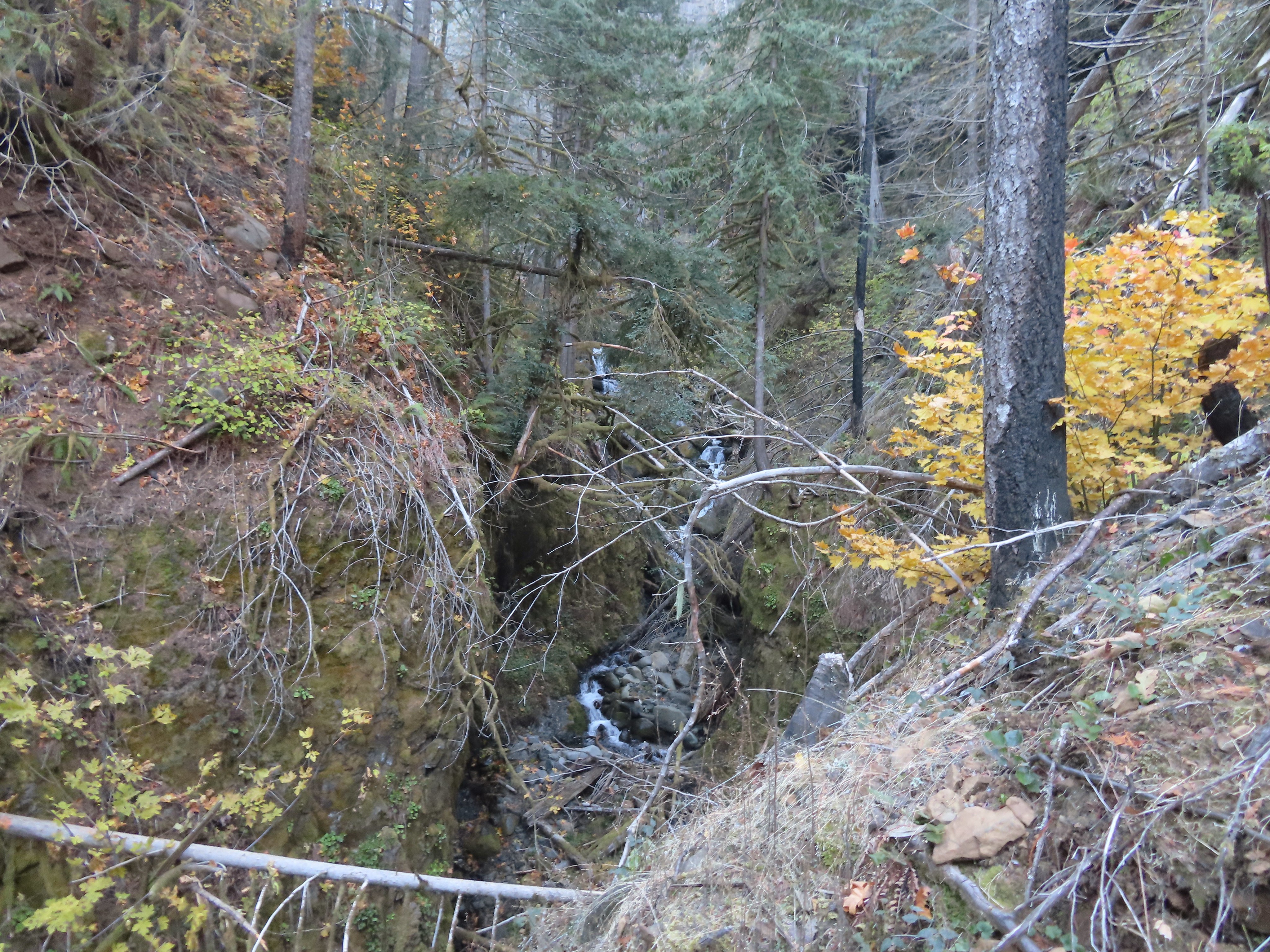 Fern Creek


 Careful where you step.
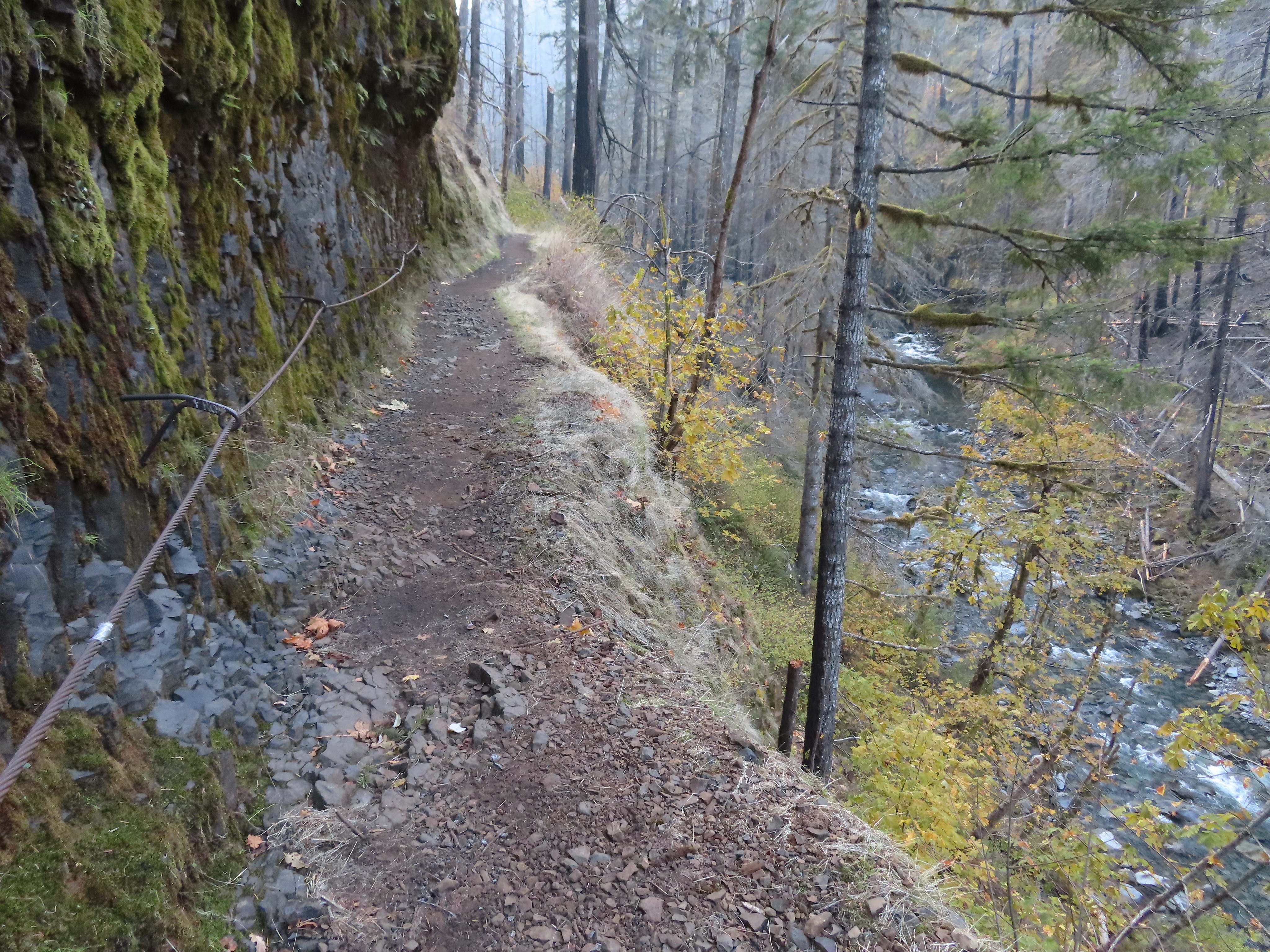 The last part was ice free.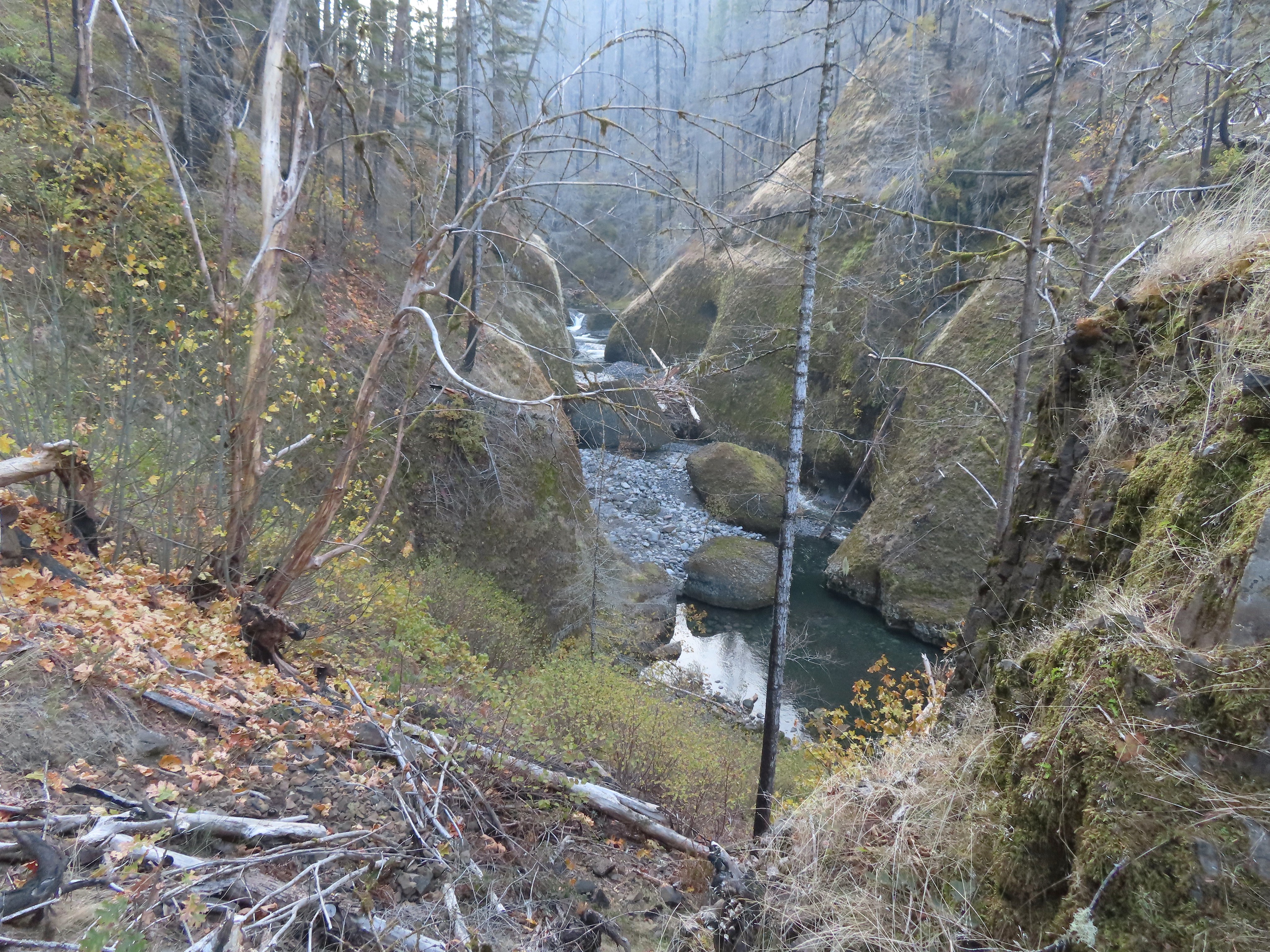
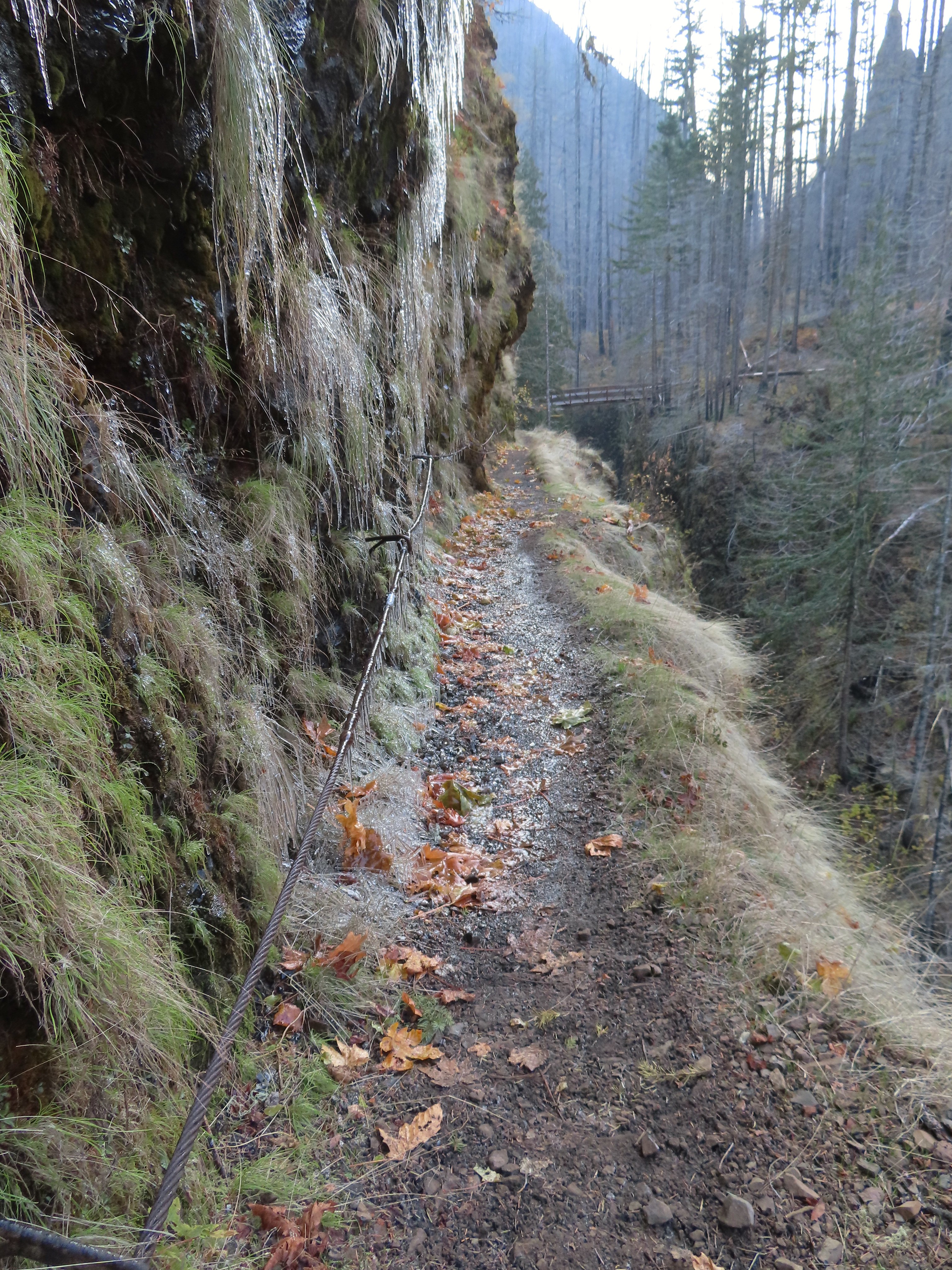
 Passing Loowit Falls.
 More cable passing Loowit Falls with High Bridge in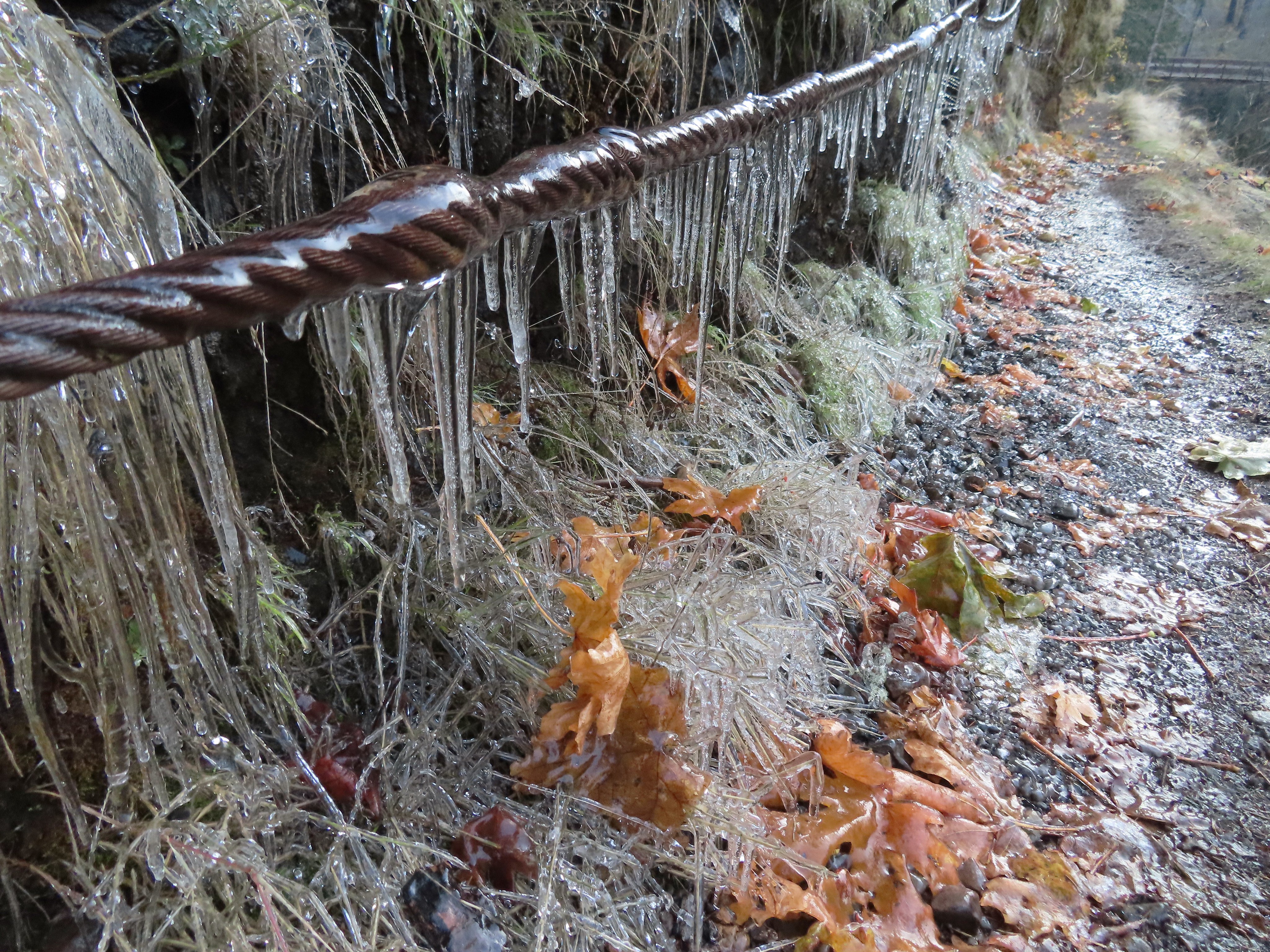


 Eagle Creek from High Bridge.
 Eagle Creek from High Bridge, looking upstream.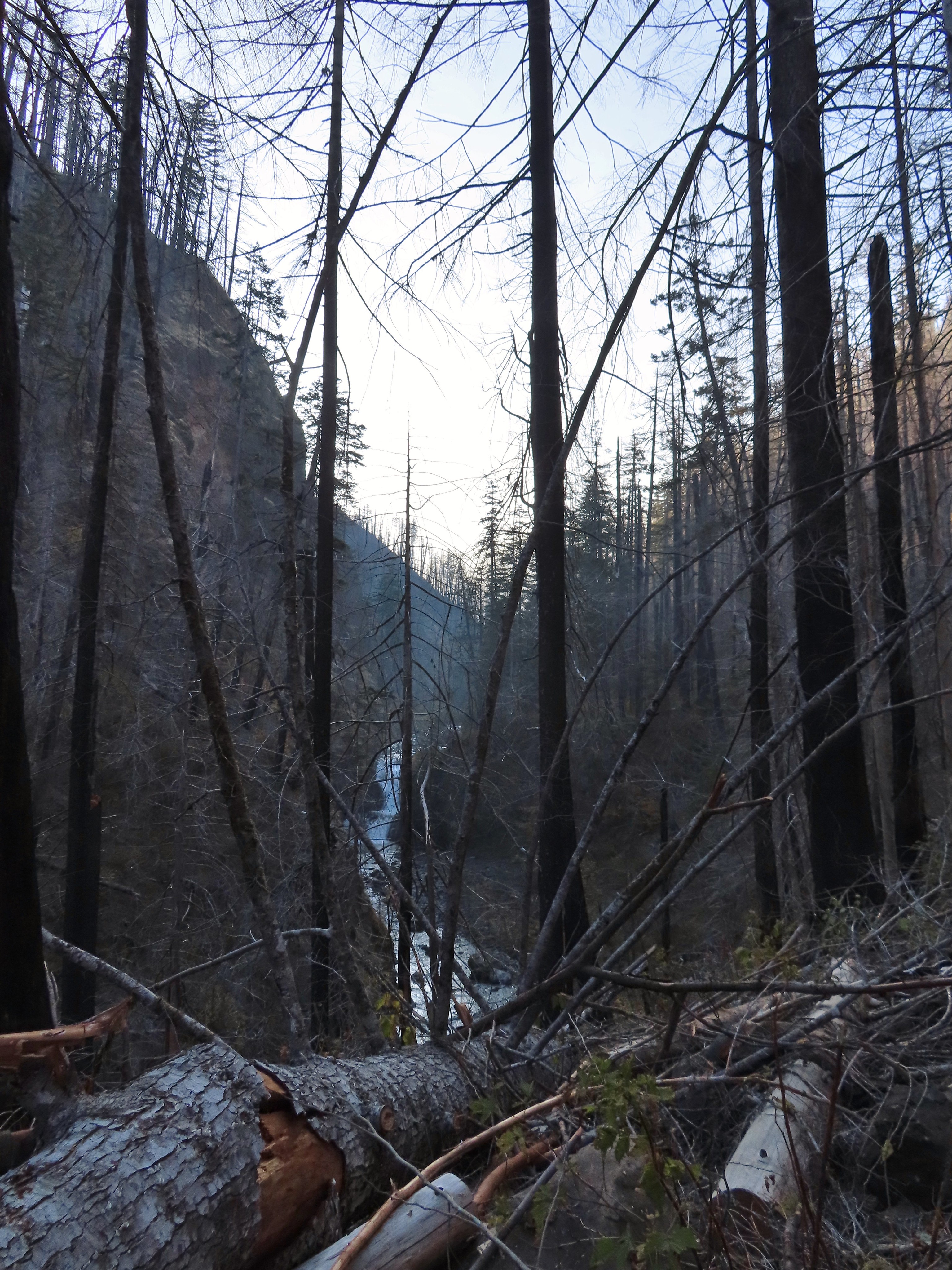
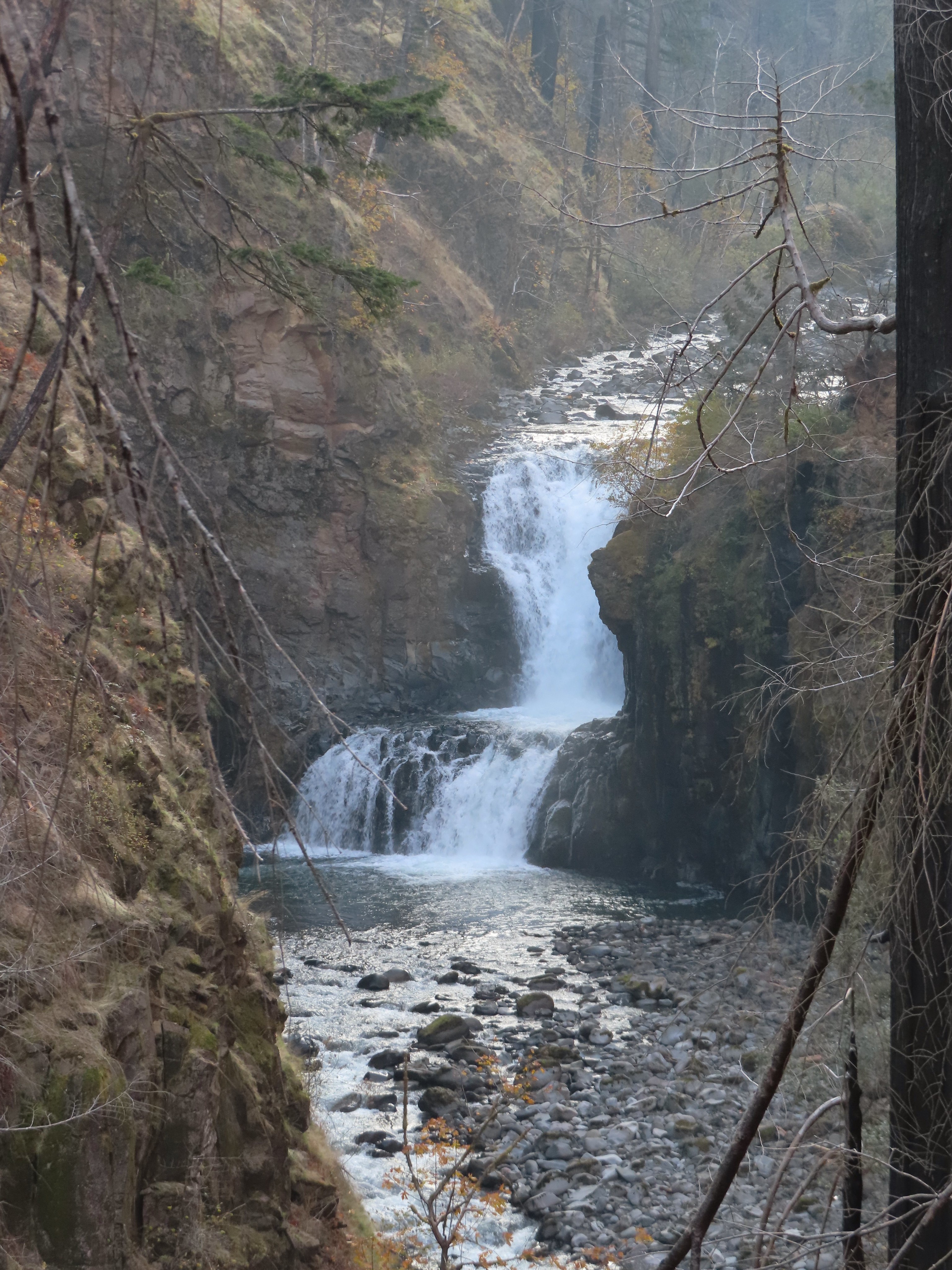 Skoonichuck Falls
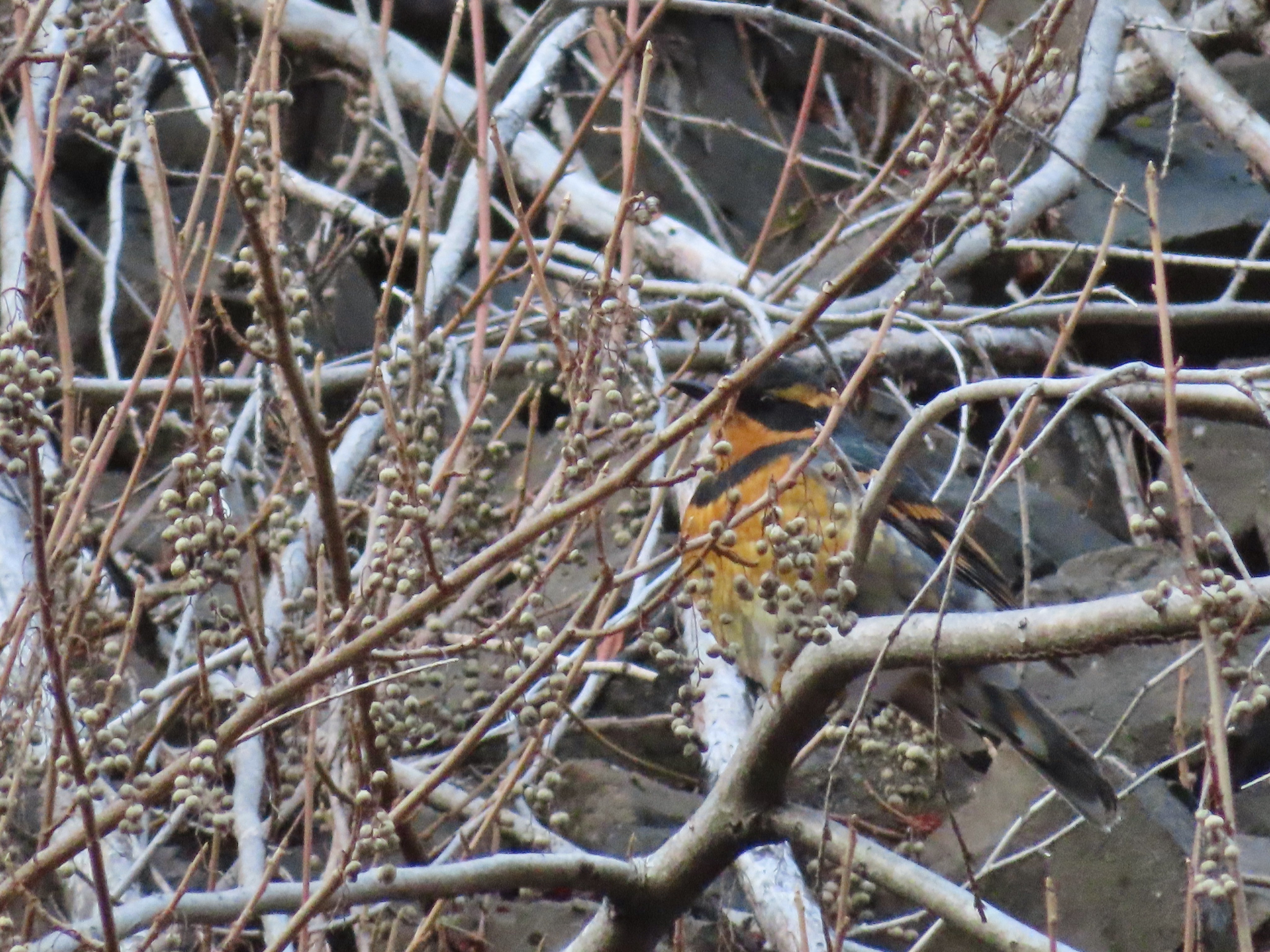 Not my worst varied thrush photo.
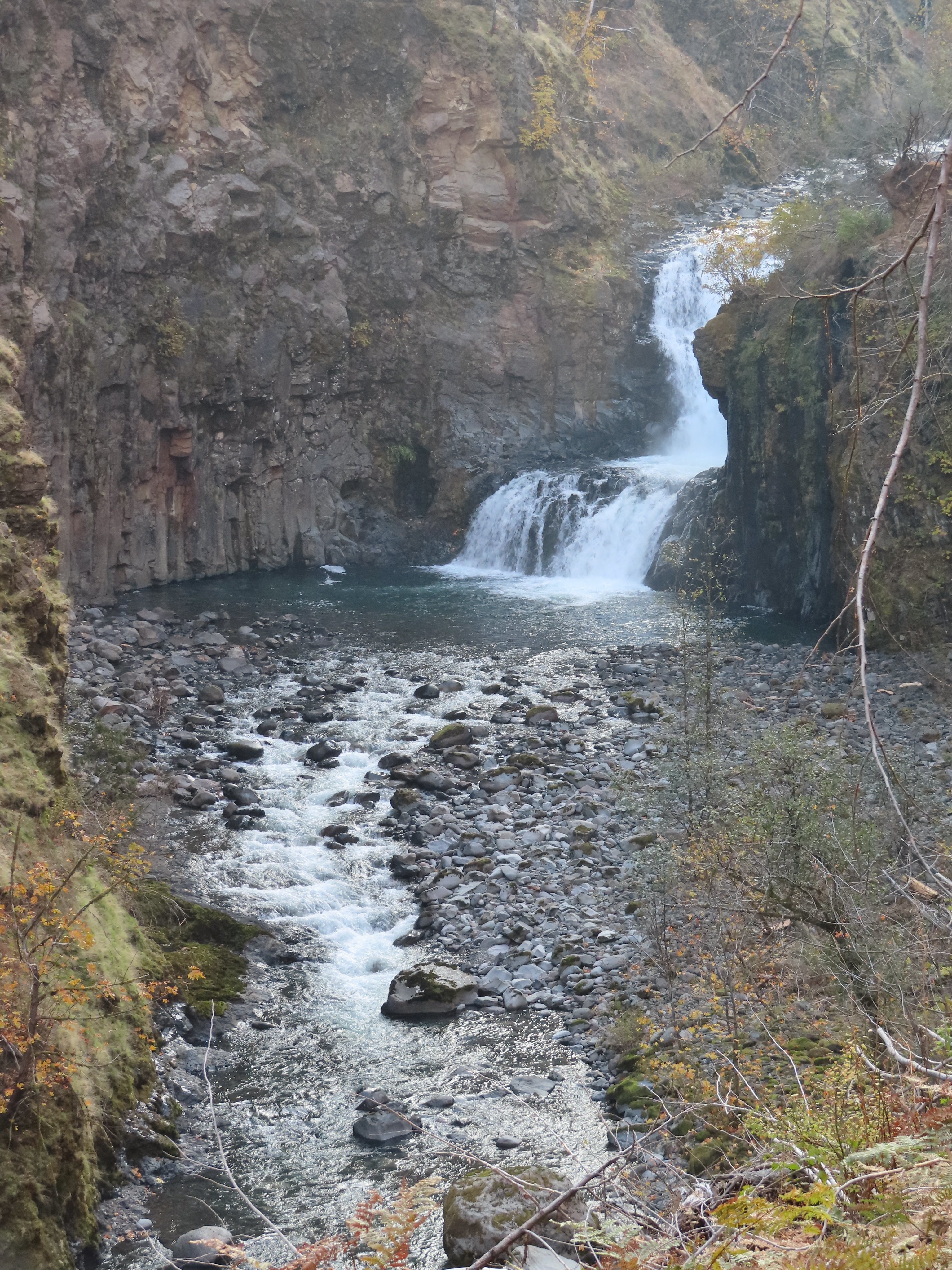 Another nice view of Skoonichuck after I’d given up on the thrush.
 Sad looking penstemon but I’m counting it as a flower.
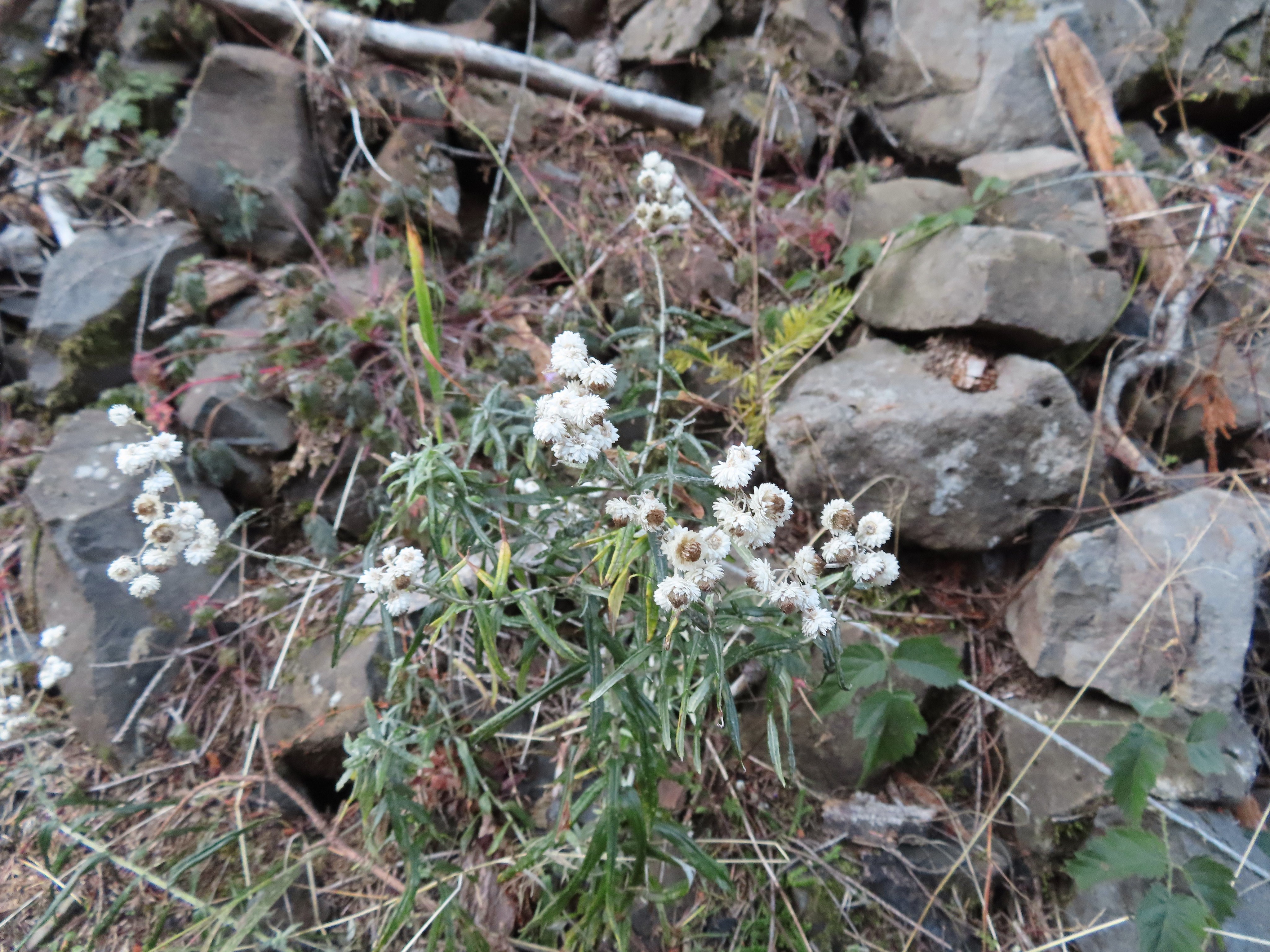 Some nearly as sad pearly everlasting.
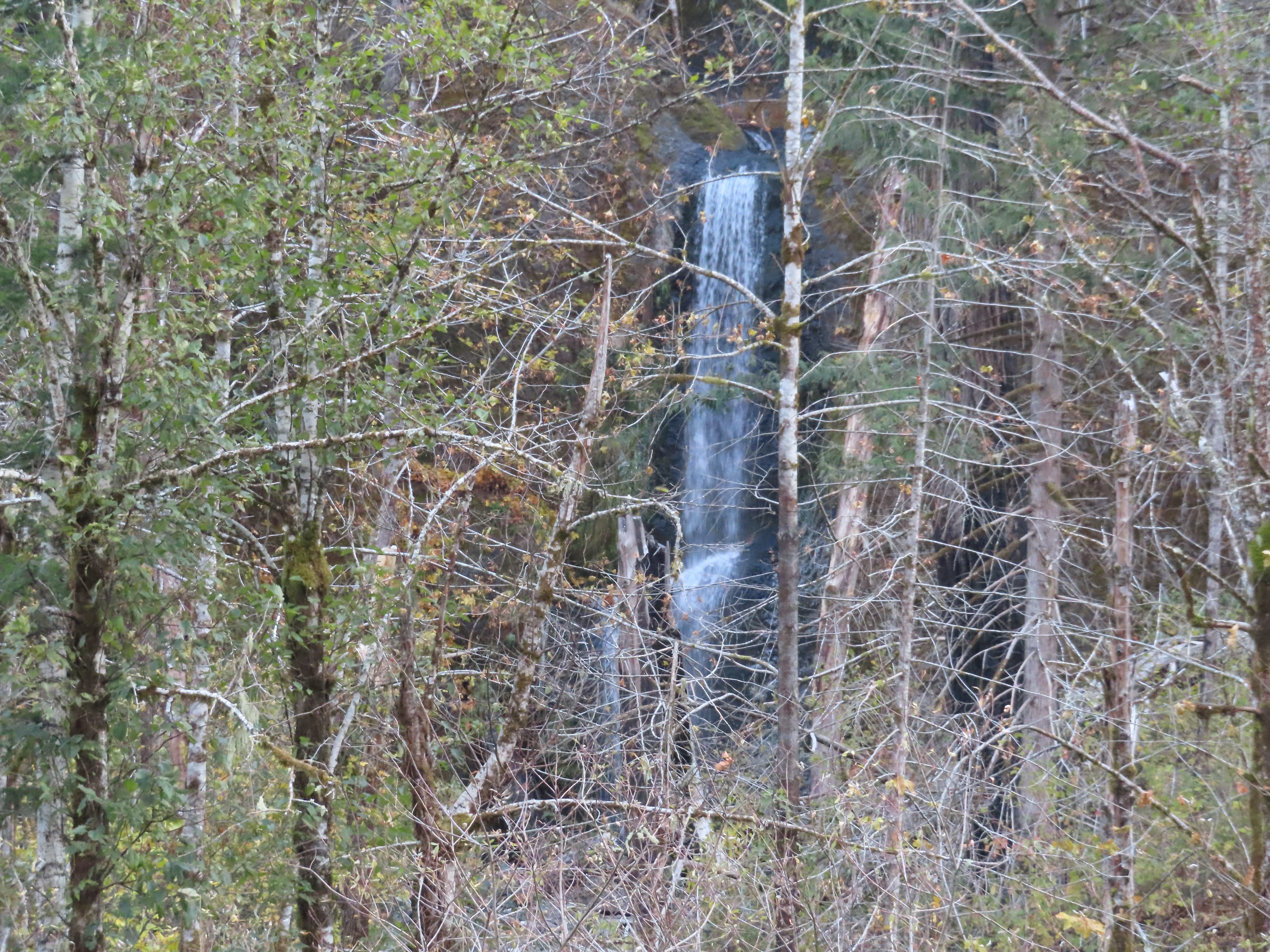 This fall was visible across the creek on an unnamed creek (at least on the maps I’ve seen).
 I arrived at nearly the same time as the Sun.
 Beach and Summer swimming hole at 4 1/2-mile bridge.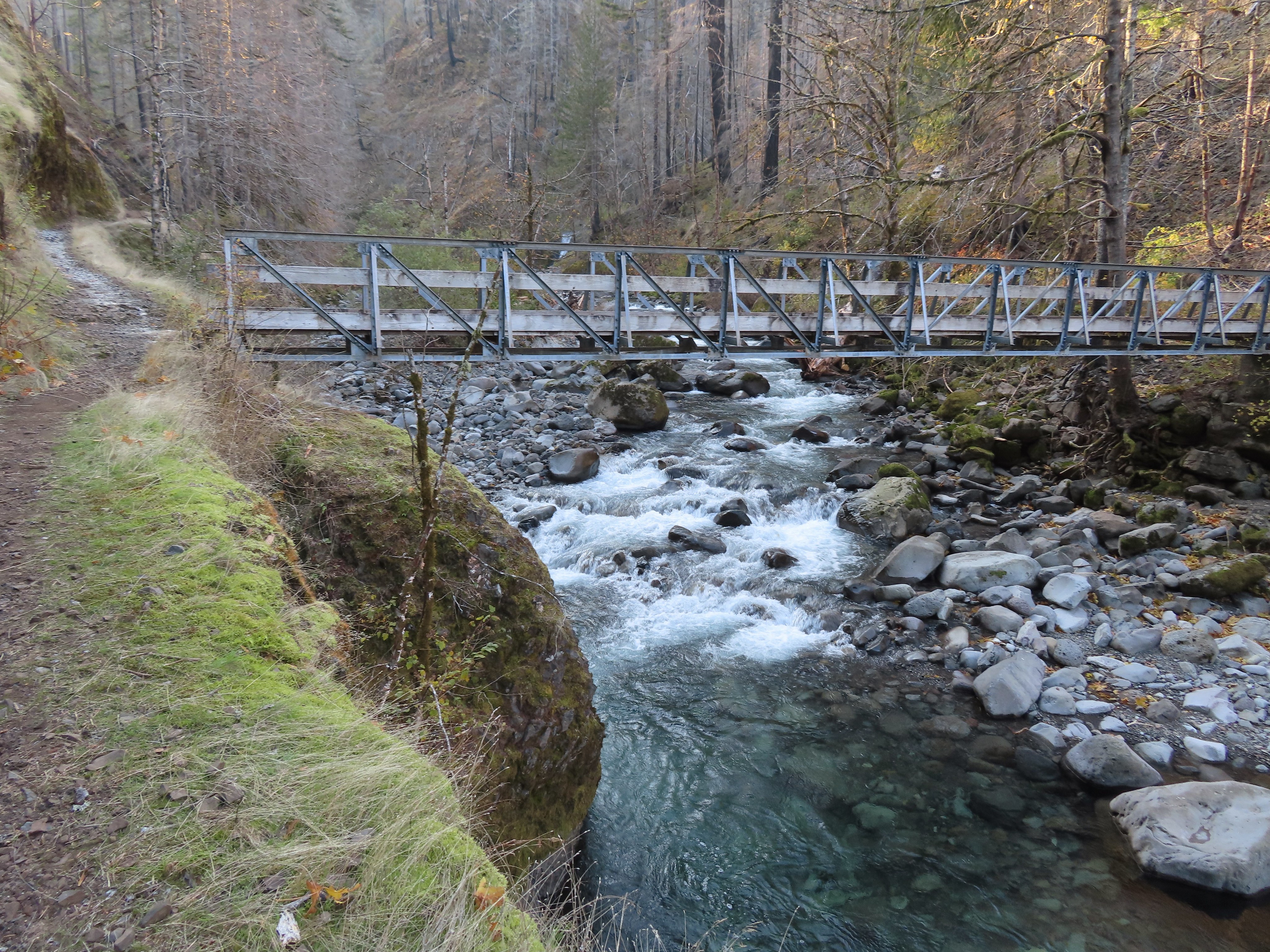
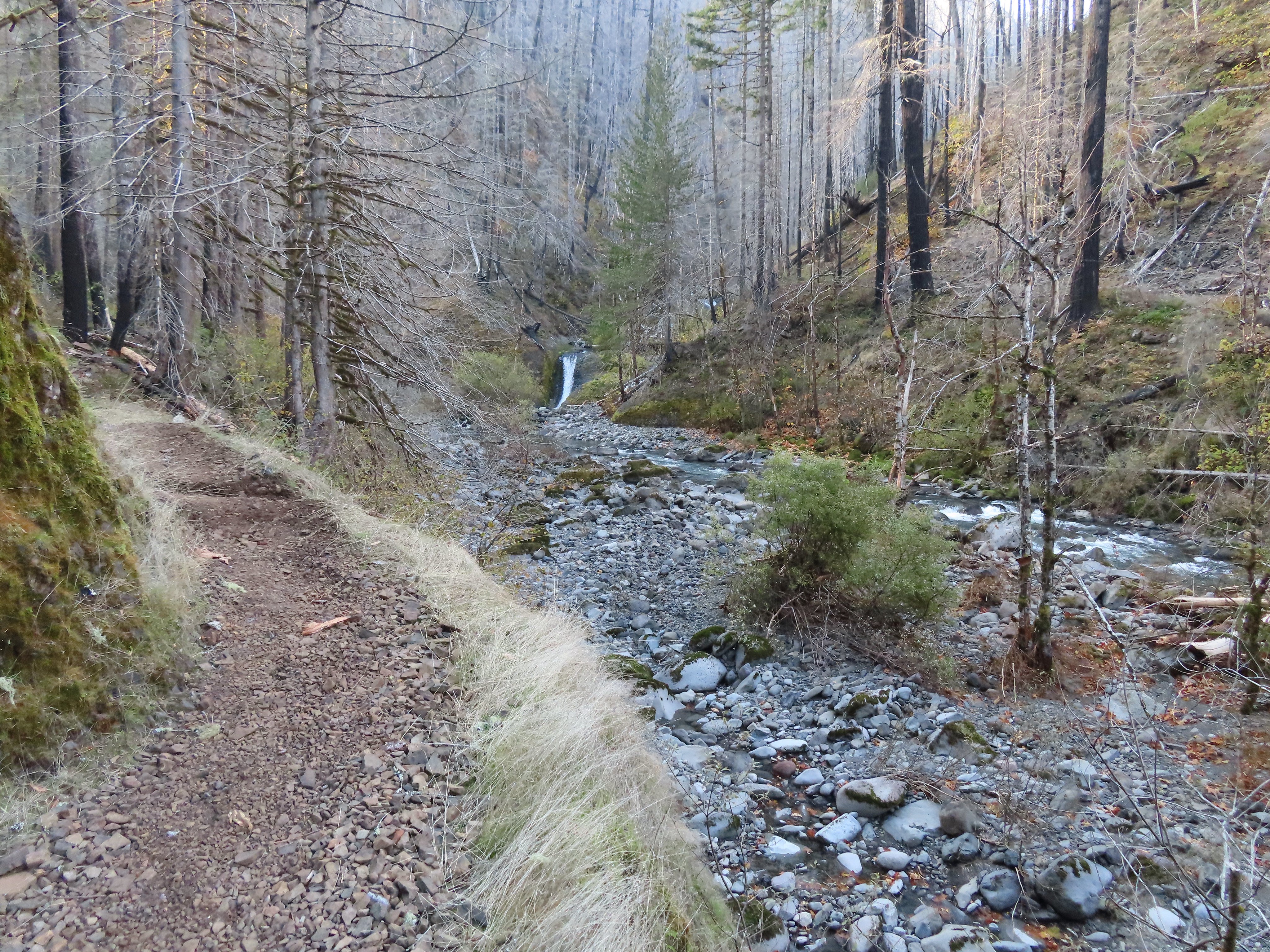
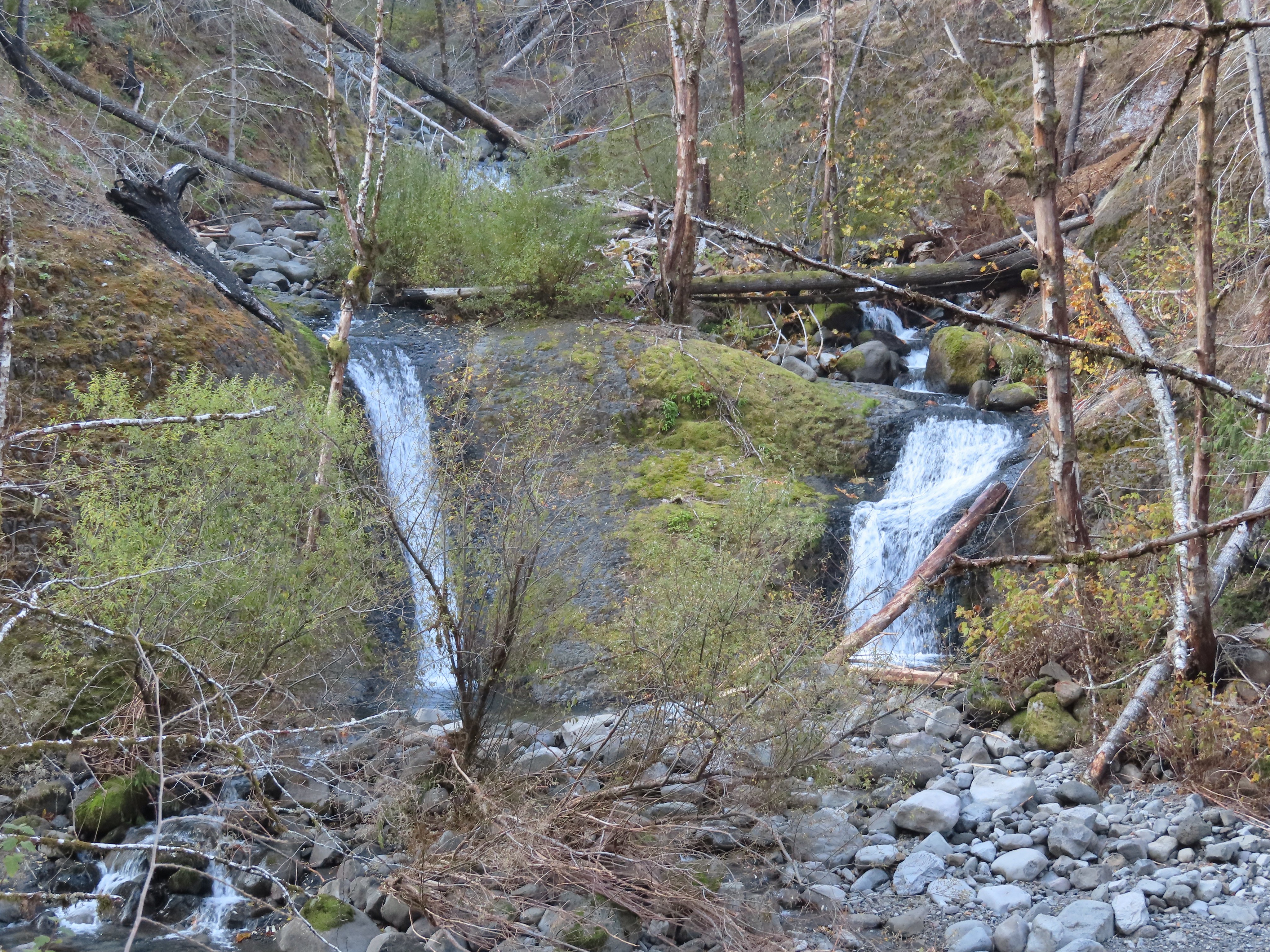 Tenas Falls
 Opal Creek flowing into Eagle Creek.

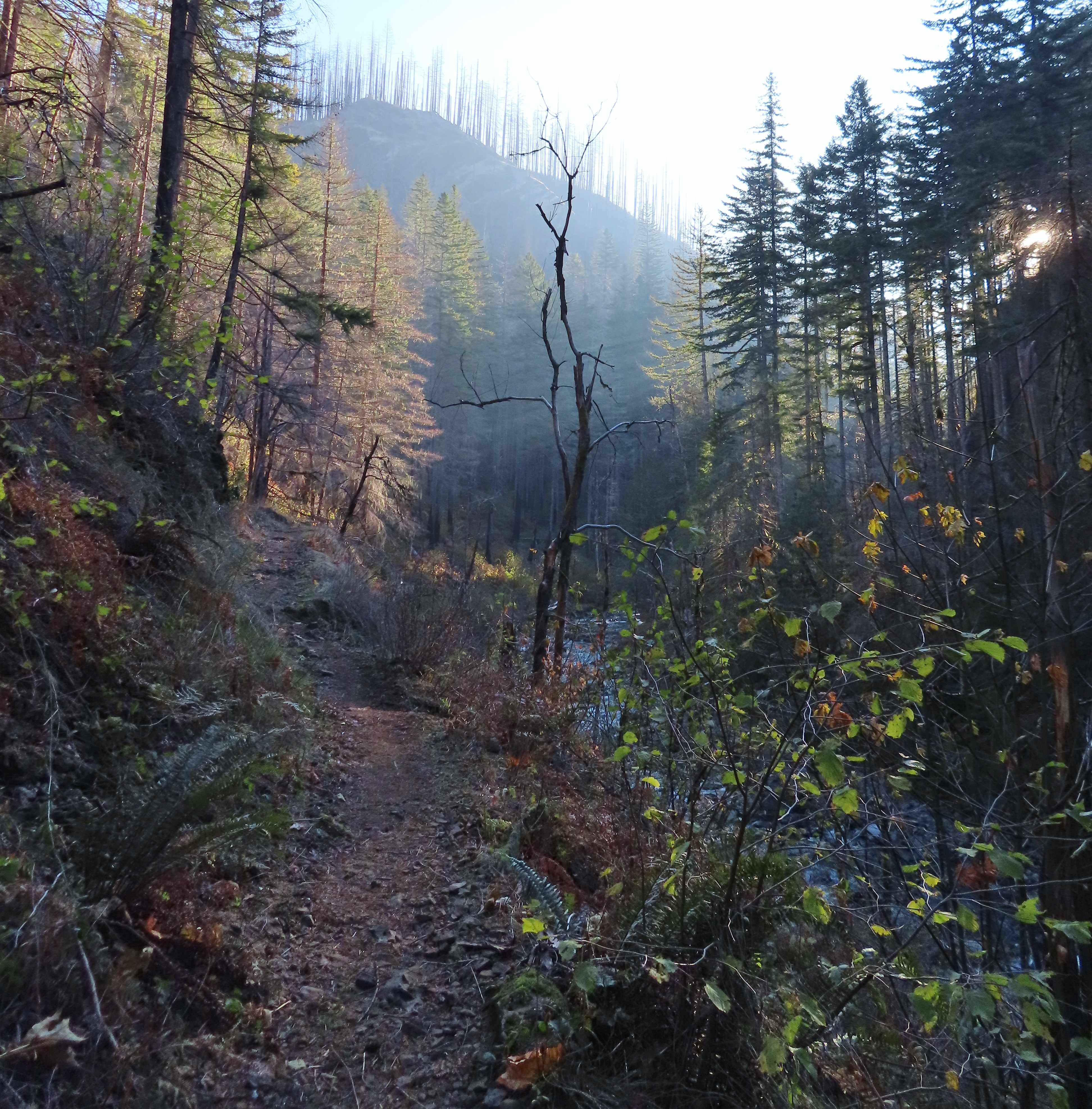

 The wilderness begins a little over 5.5 miles from the trailhead.
 A bluebird sky above a few green topped trees.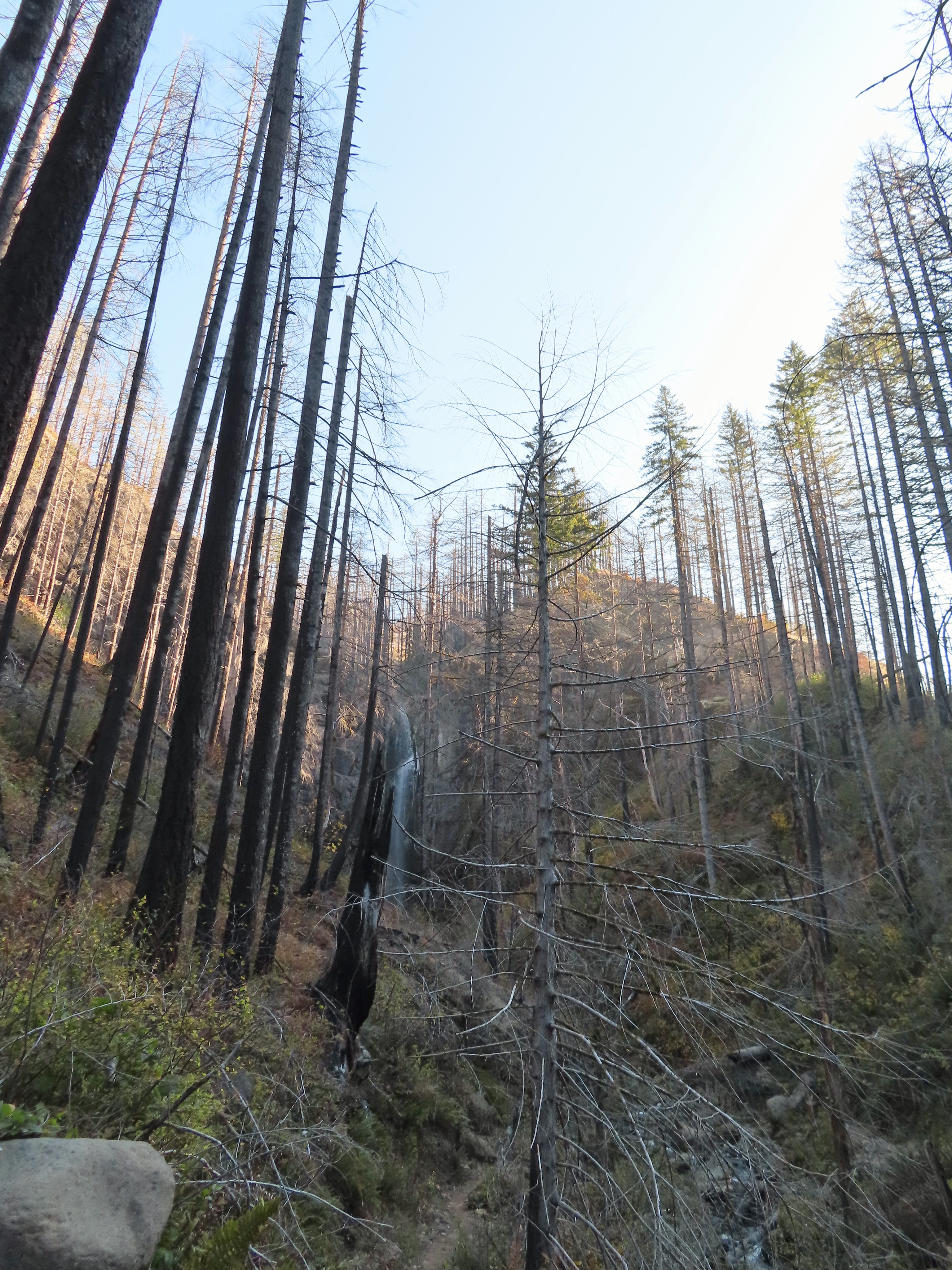


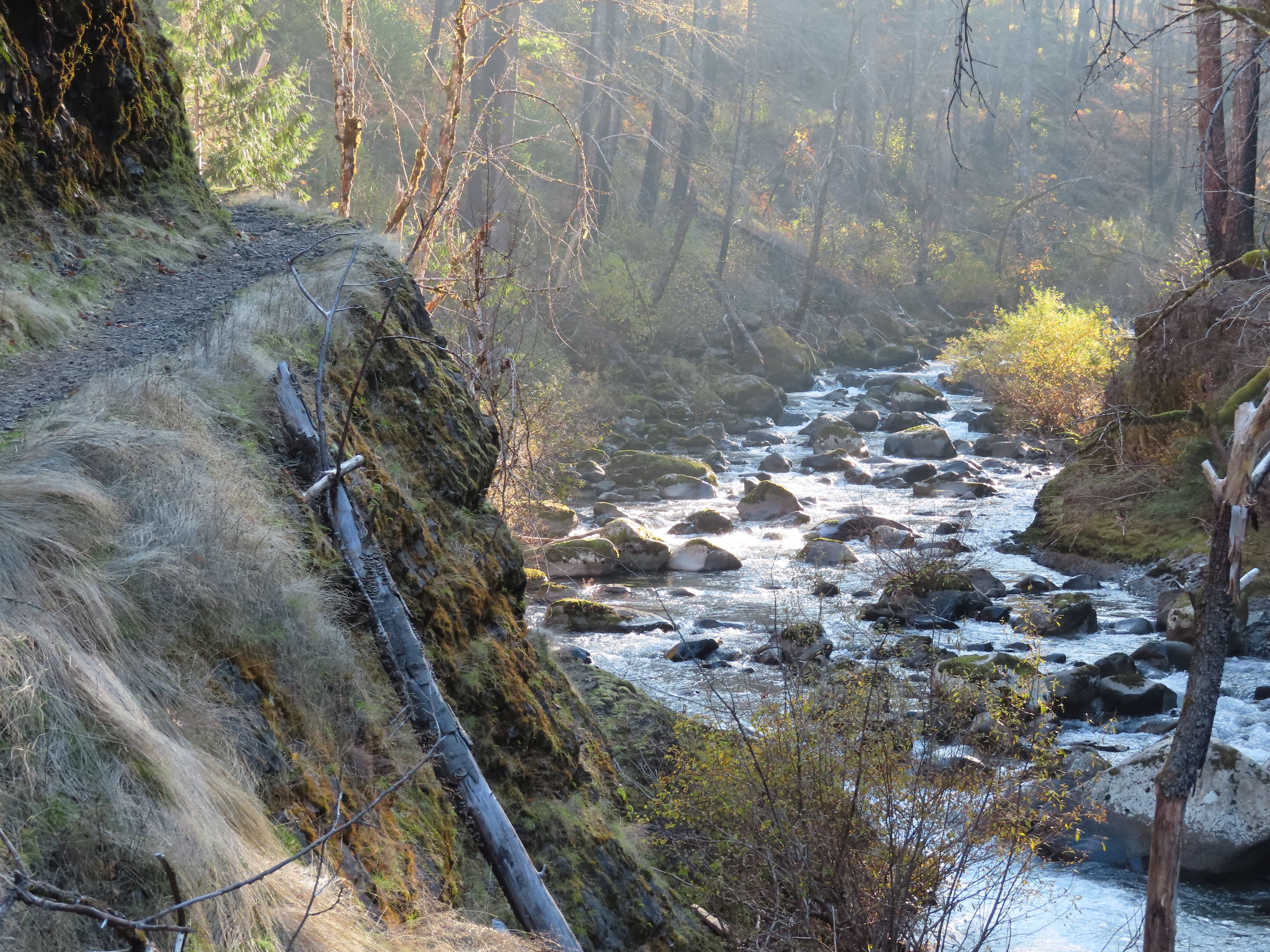
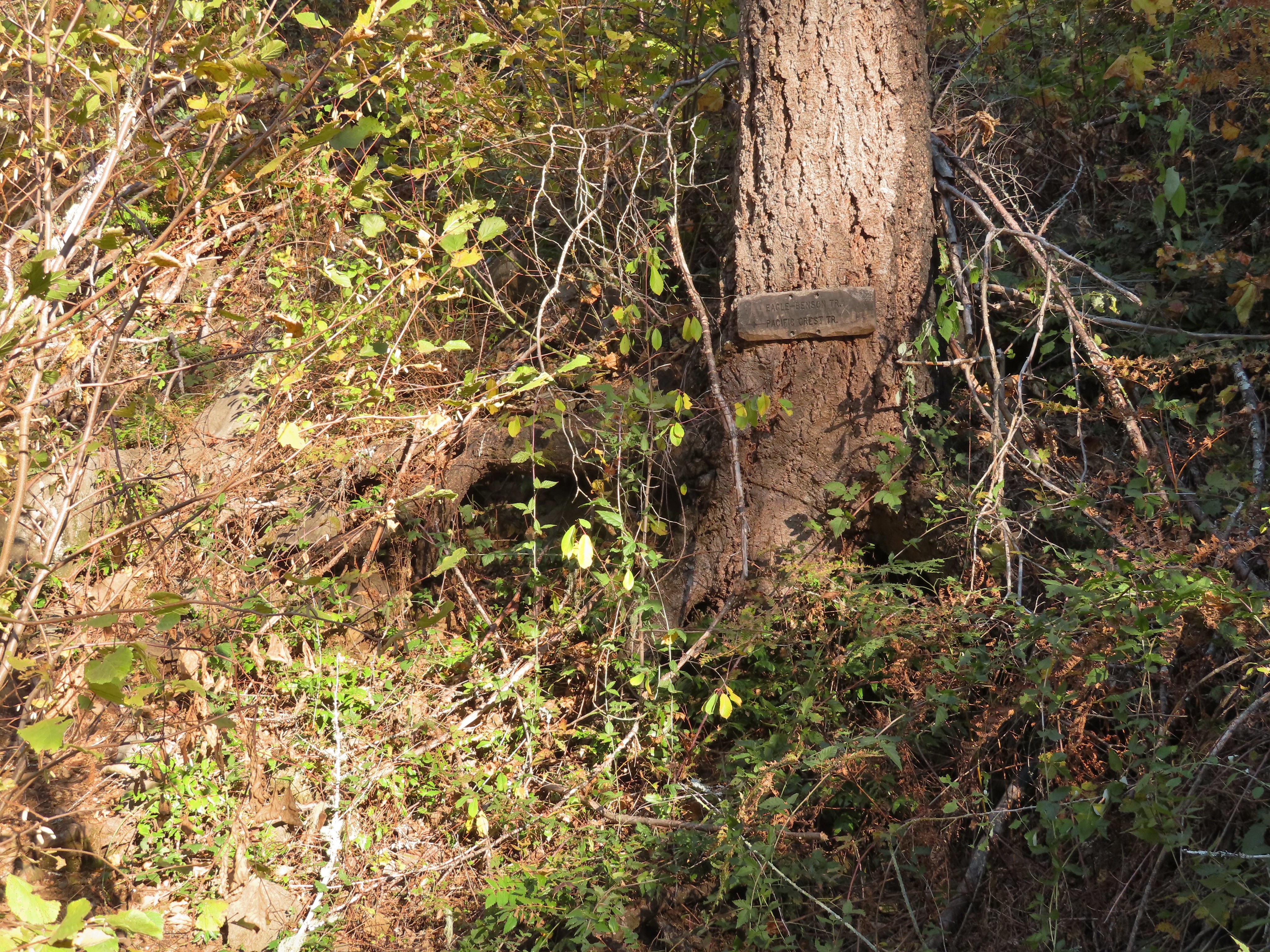 Near the six-mile mark I passed the signed Eagle-Benson Trail which hasn’t been maintained since the fire, in fact the sign was the only sign of a trail here.
 Sunrays over Eagle Creek.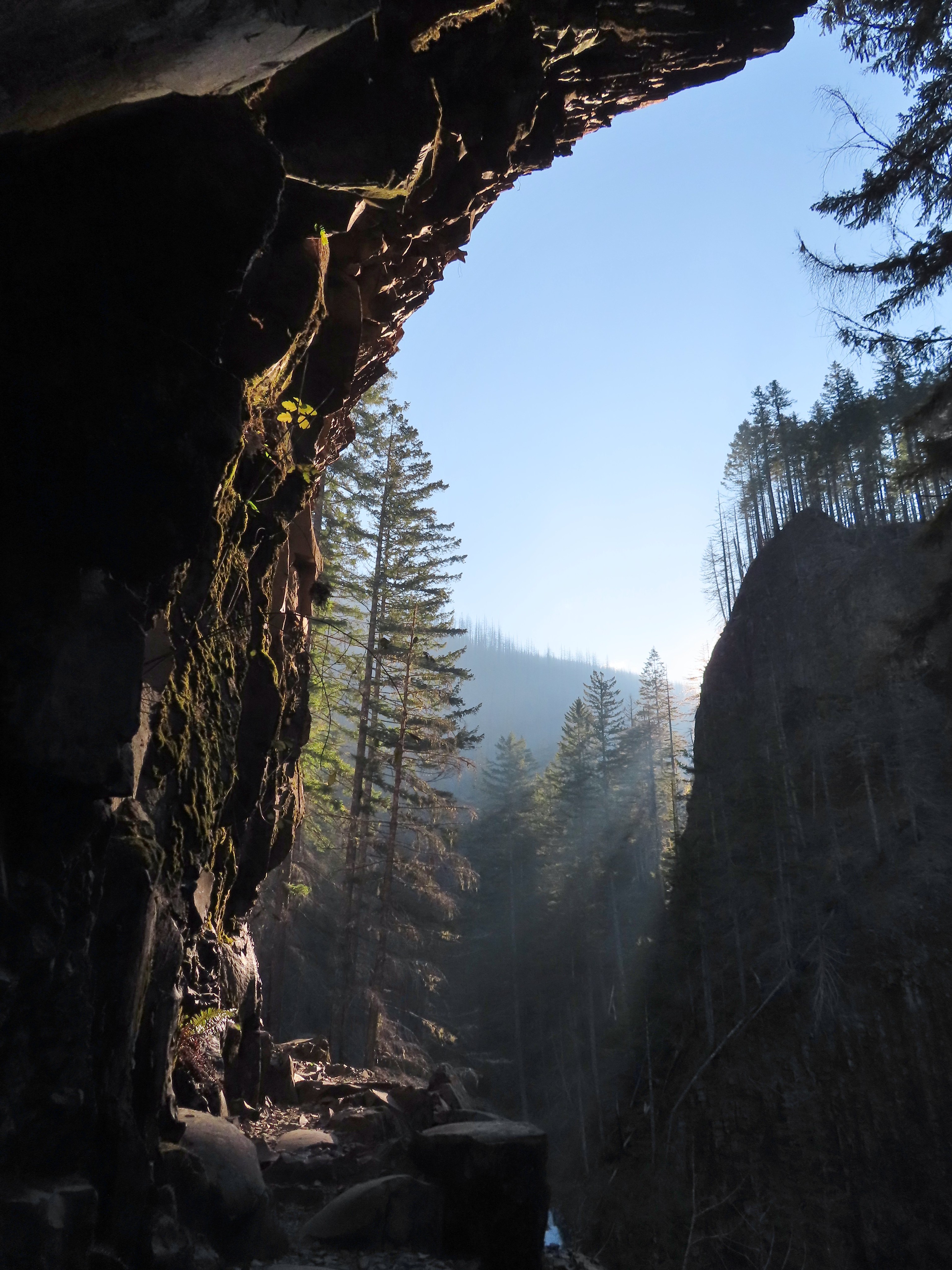
 Note the hexagonal shape of the basalt columns making up the trail surface here.
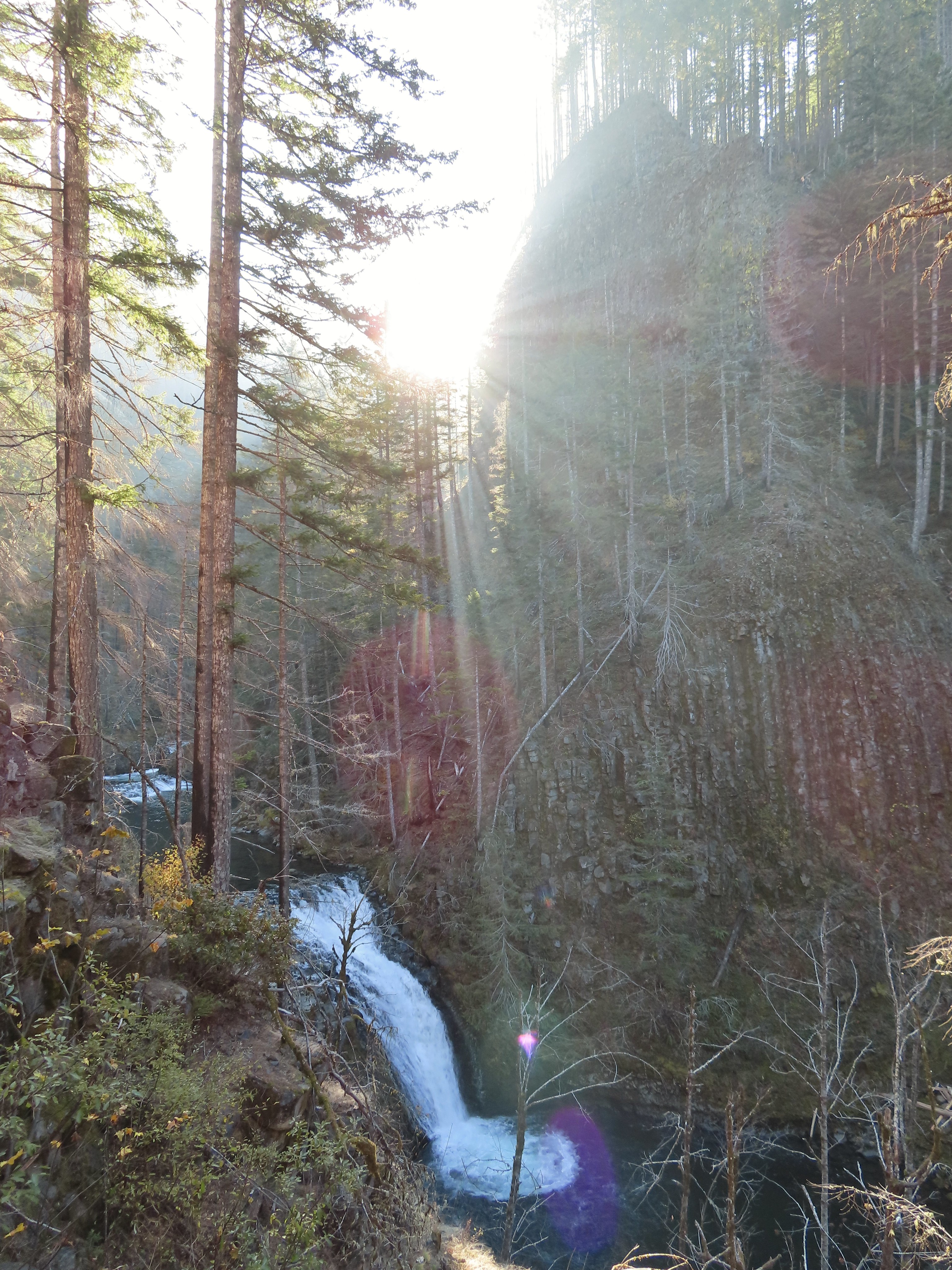 Grand Union Falls
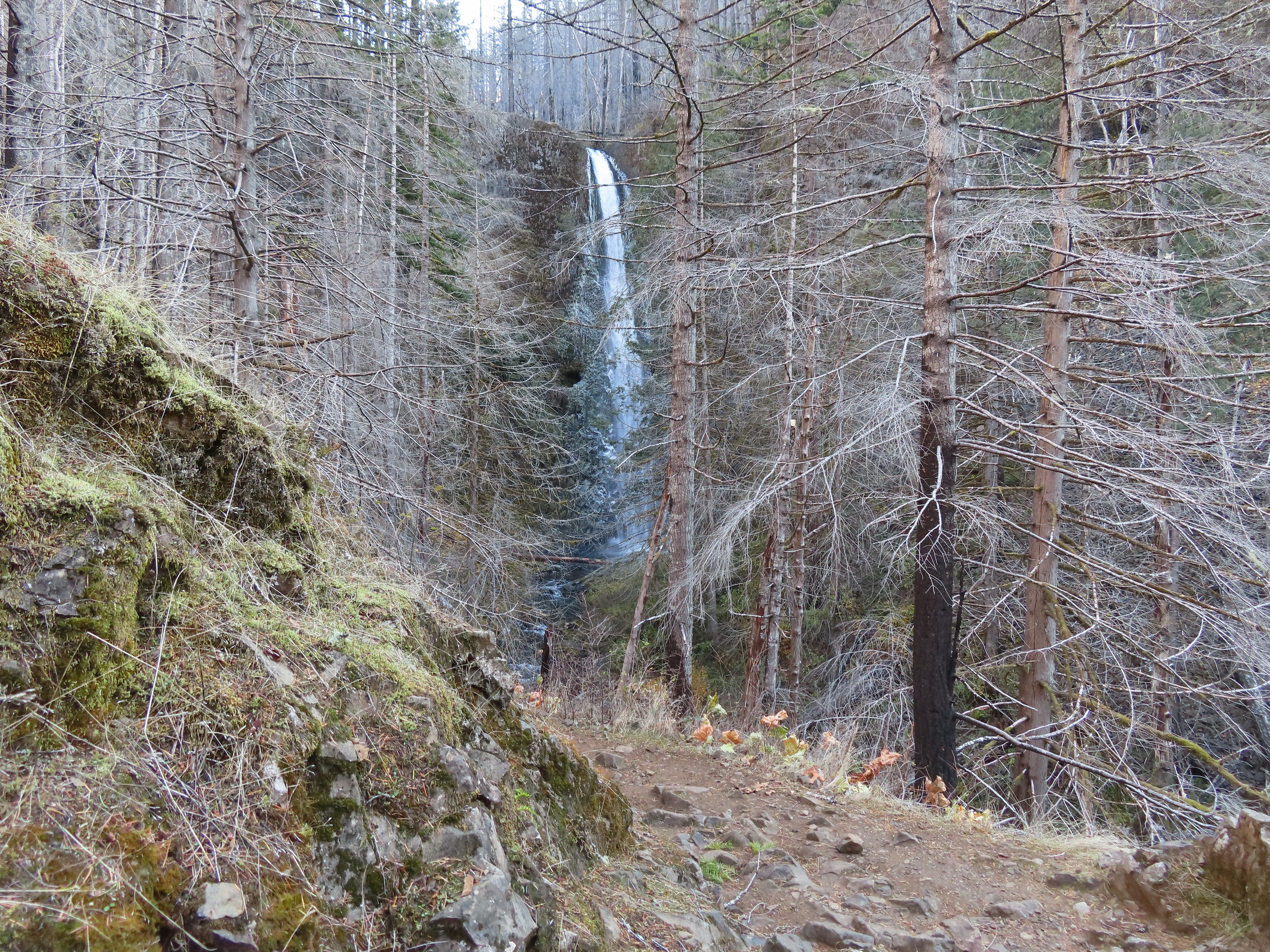
 Tunnel Falls on East Fork Eagle Creek.

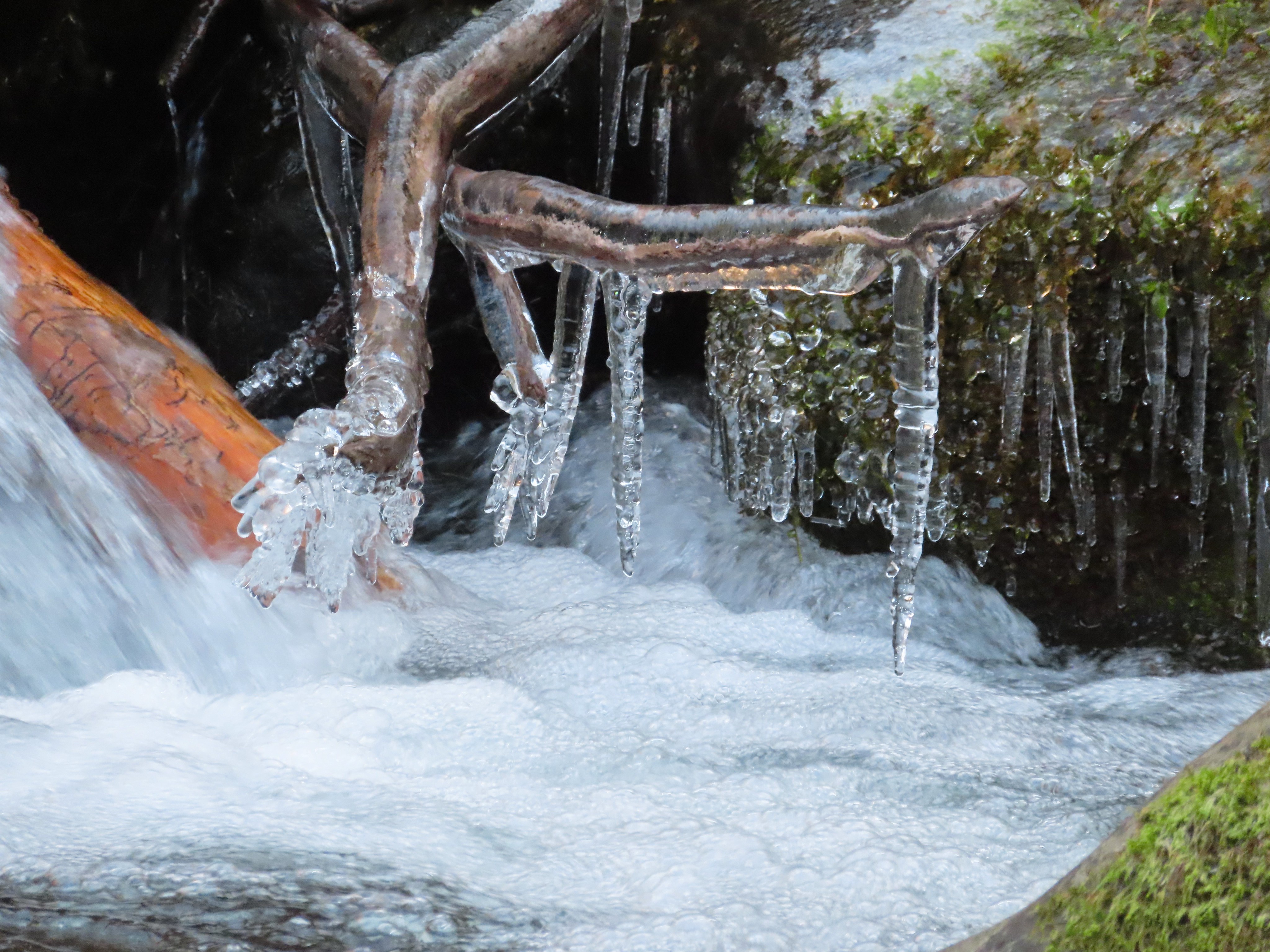
 I had brought my micro spikes just in case, but even though there were some impressive ice features there was enough good footing (and cable) to not require putting the spikes on.
 The slickest section was exiting the tunnel here.


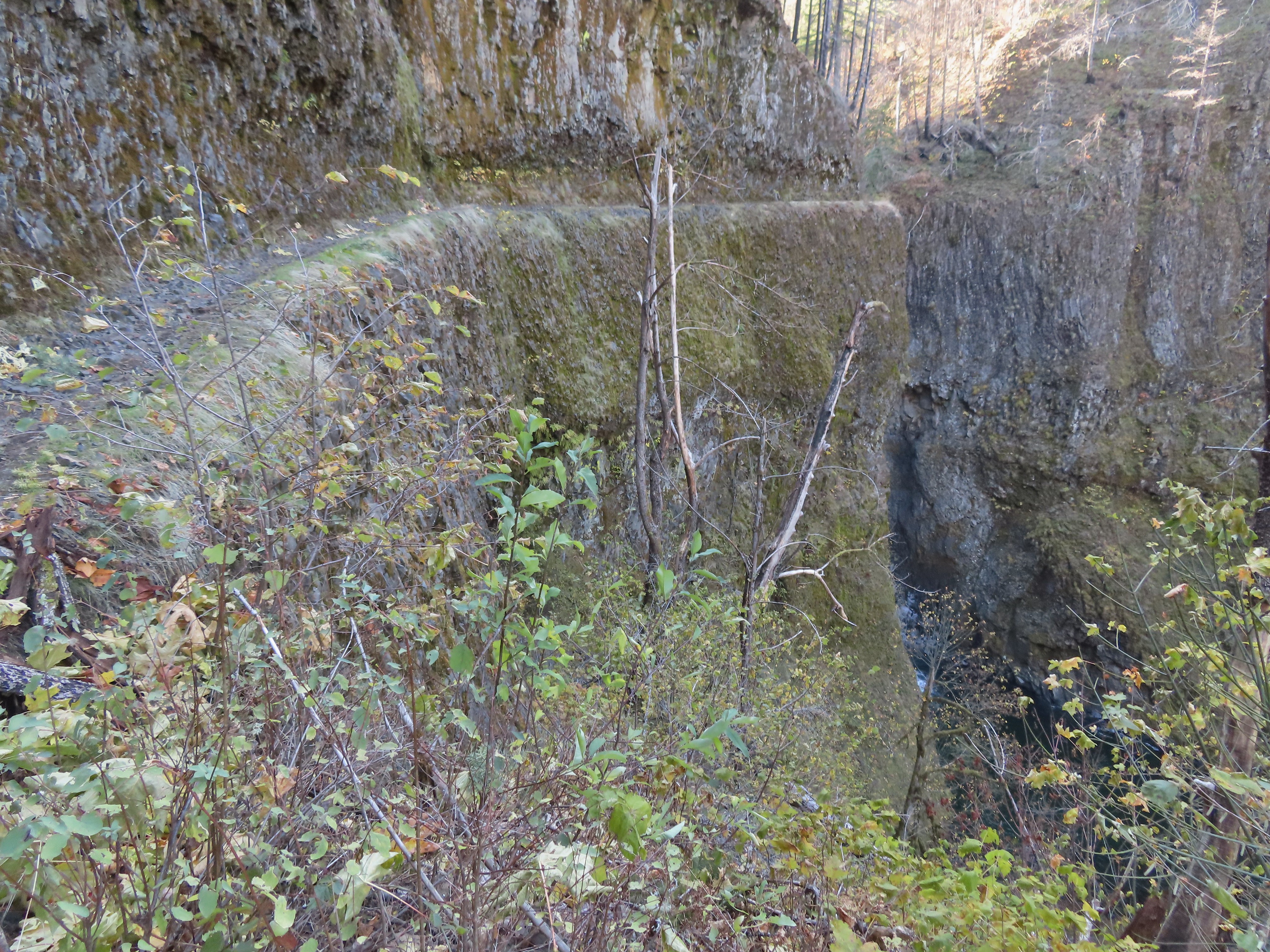
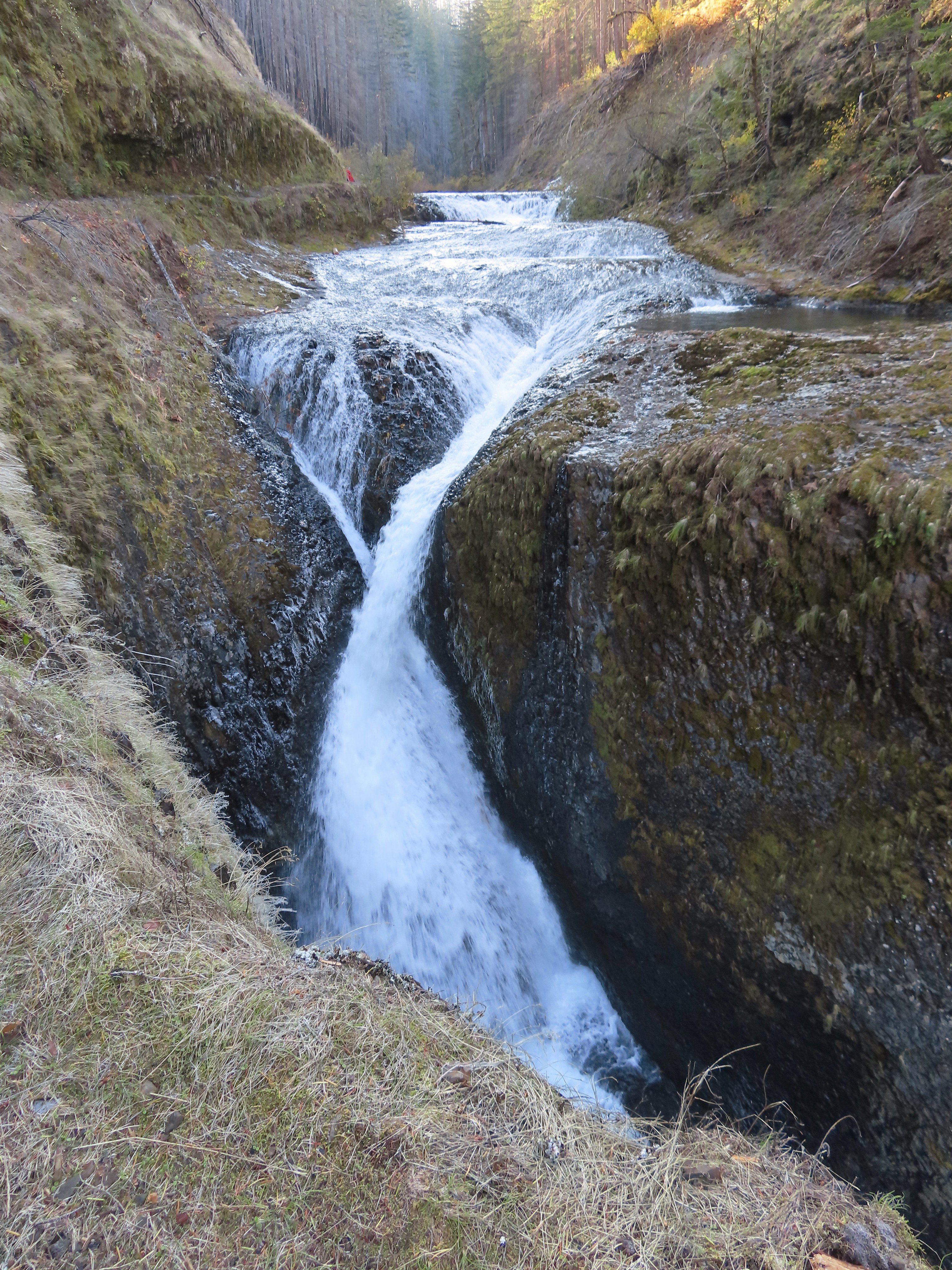
 This was the trickiest section but again there was just enough good footing to allow passing without need spikes.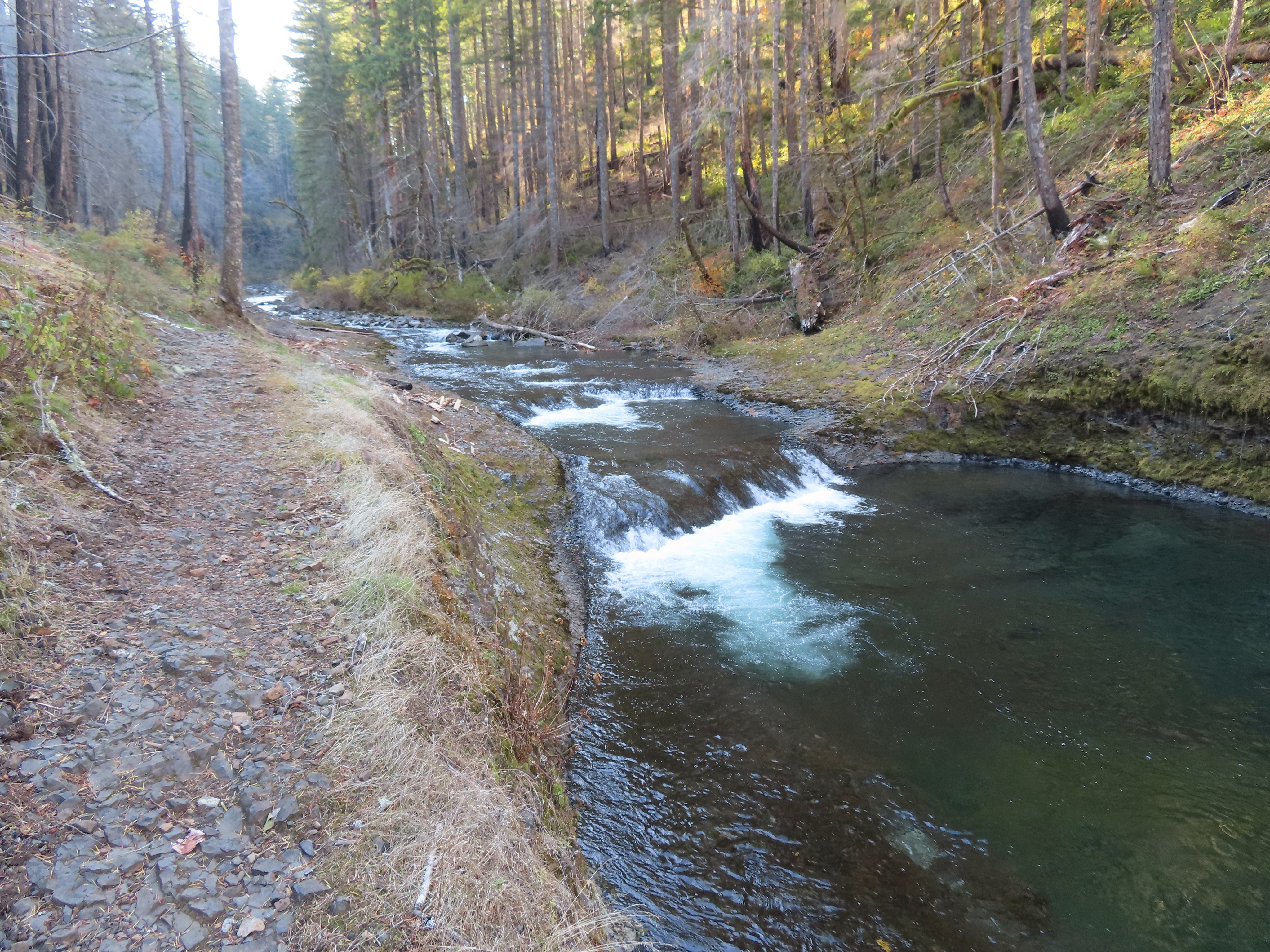
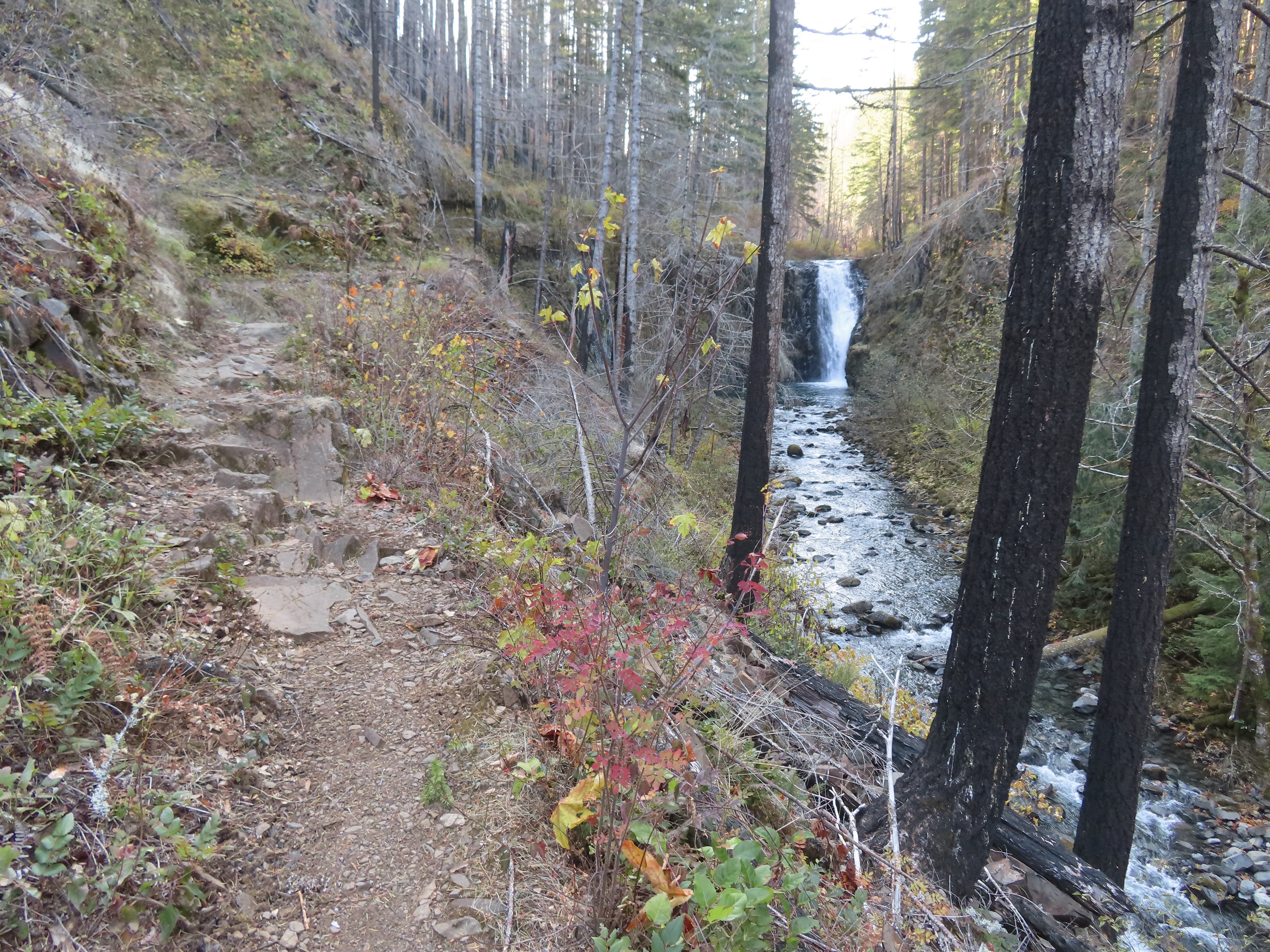
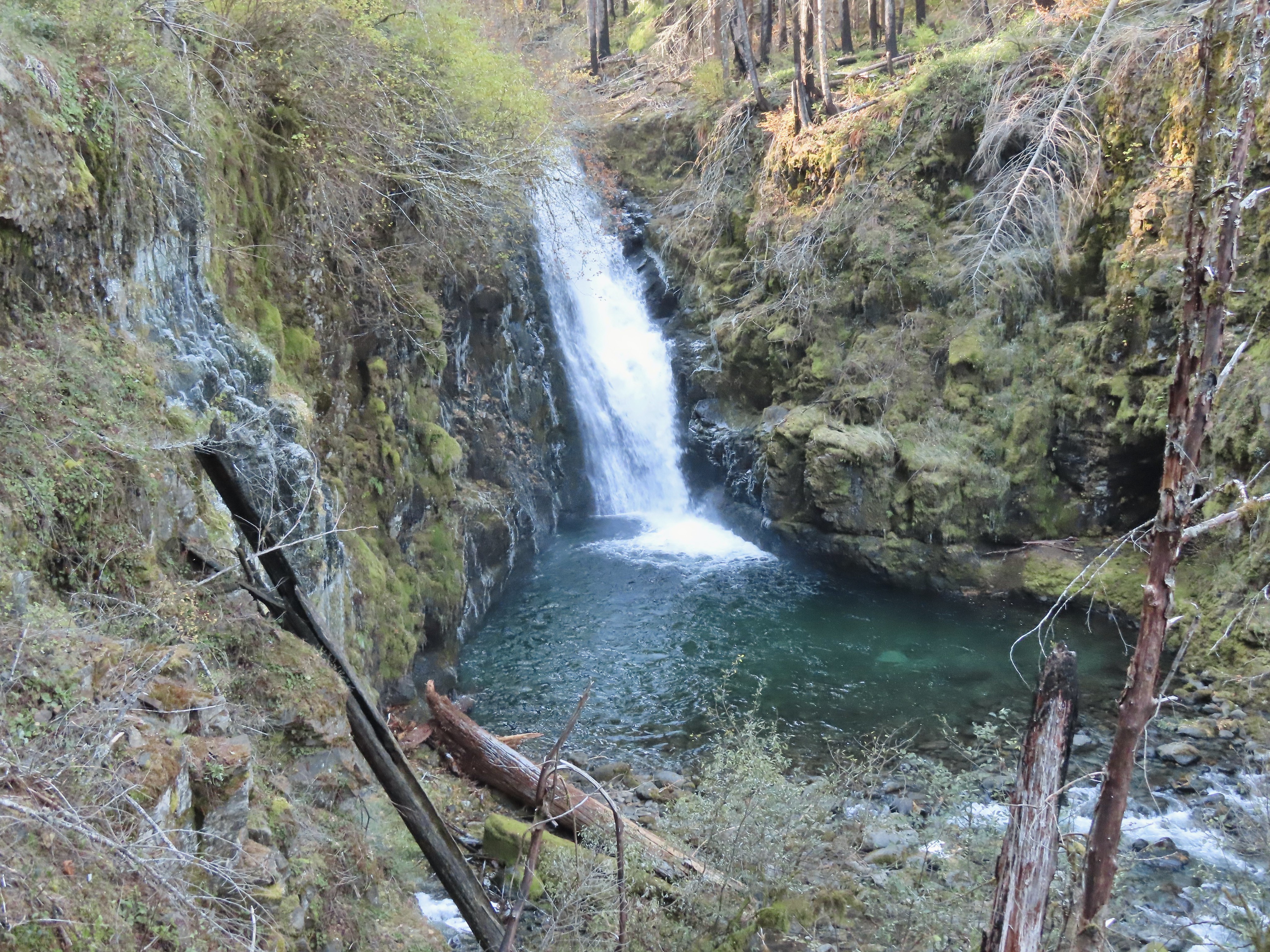
 A bit more overgrown here.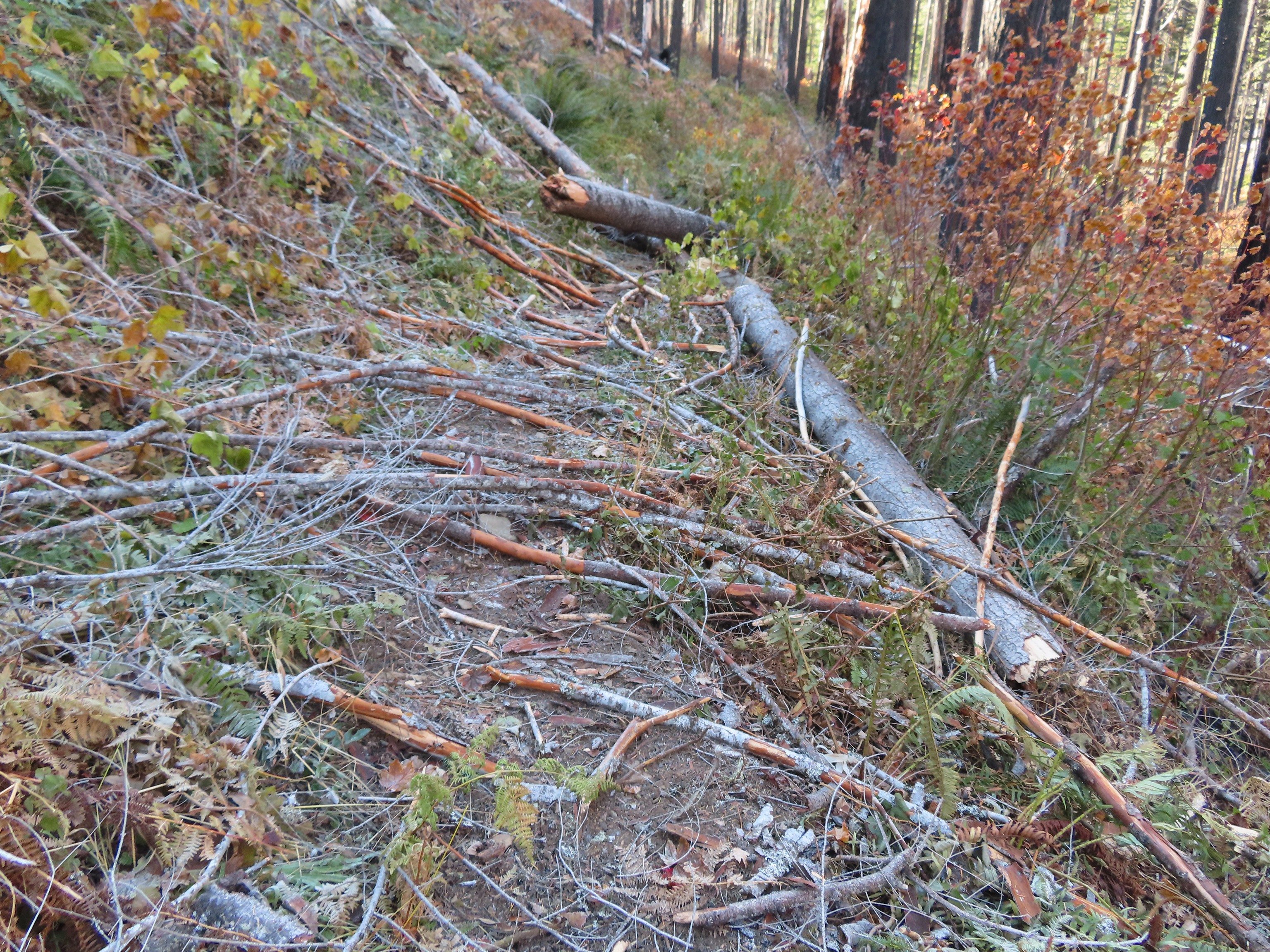
 Hair ice, only the second time I’ve encountered it.
 I stopped at this campsite which some maps show as 7 1/2 Mile Camp, but I pulled out my National Geographic topo which showed the camp a little further ahead near a pair of small creeks. I think both are correct and this was just the first of the sites that make up the “camp”.
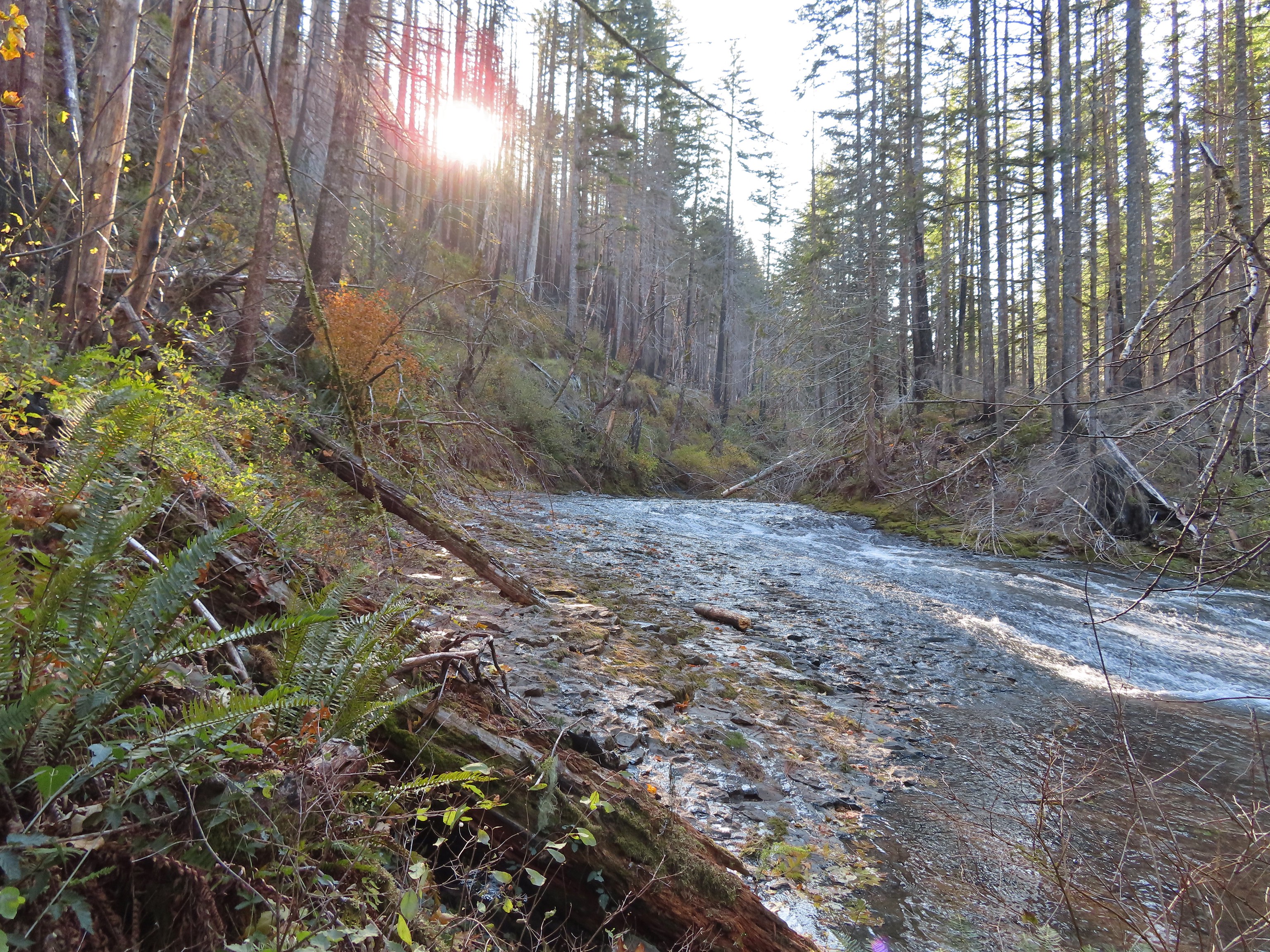 Eagle Creek near the first campsite.
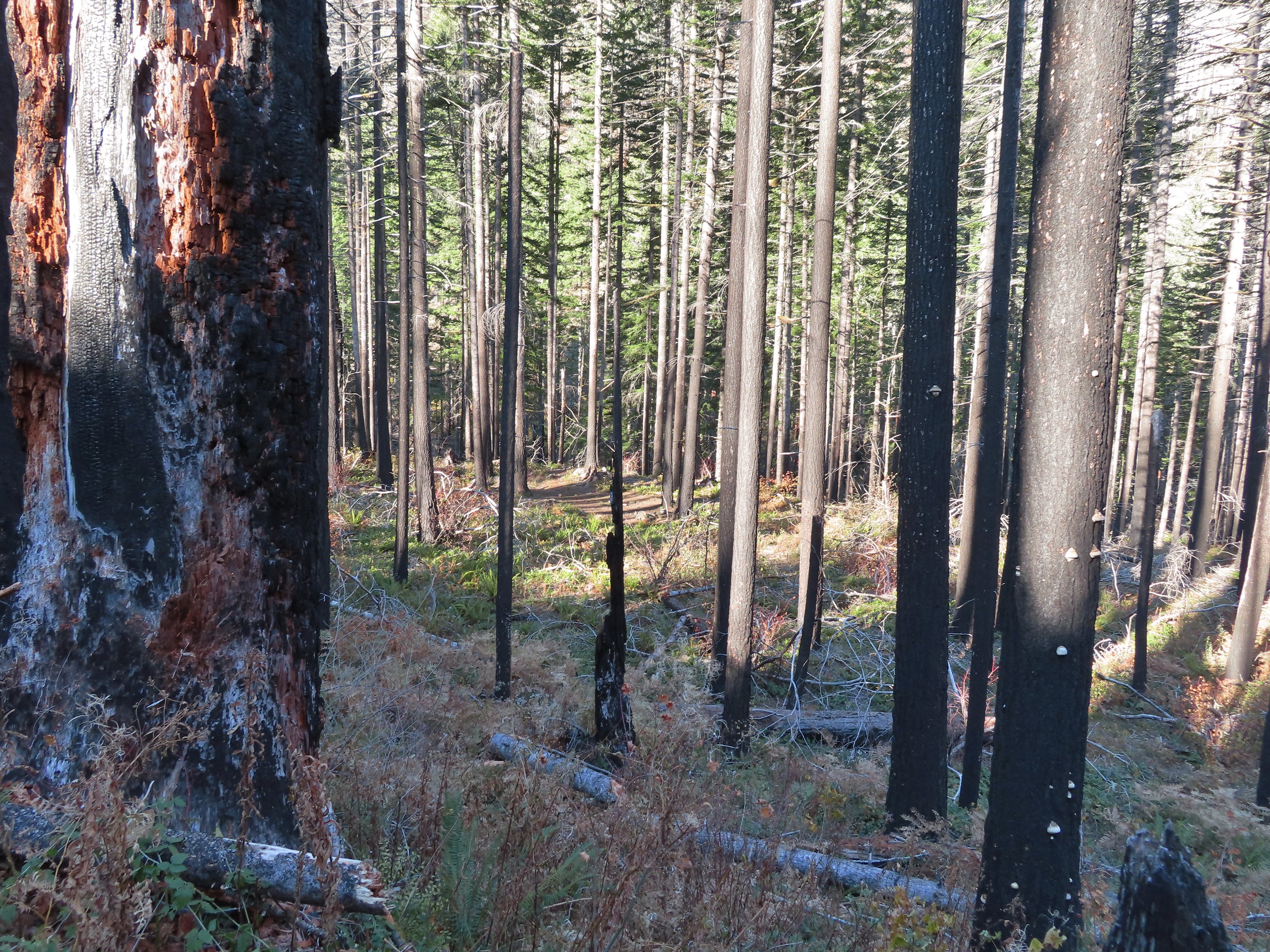 More campsites near the first creek.
 The first small creek. This one was a lot icier than any of the other creeks I’d crossed. I was able to find enough dry rock to make my way to the other side though.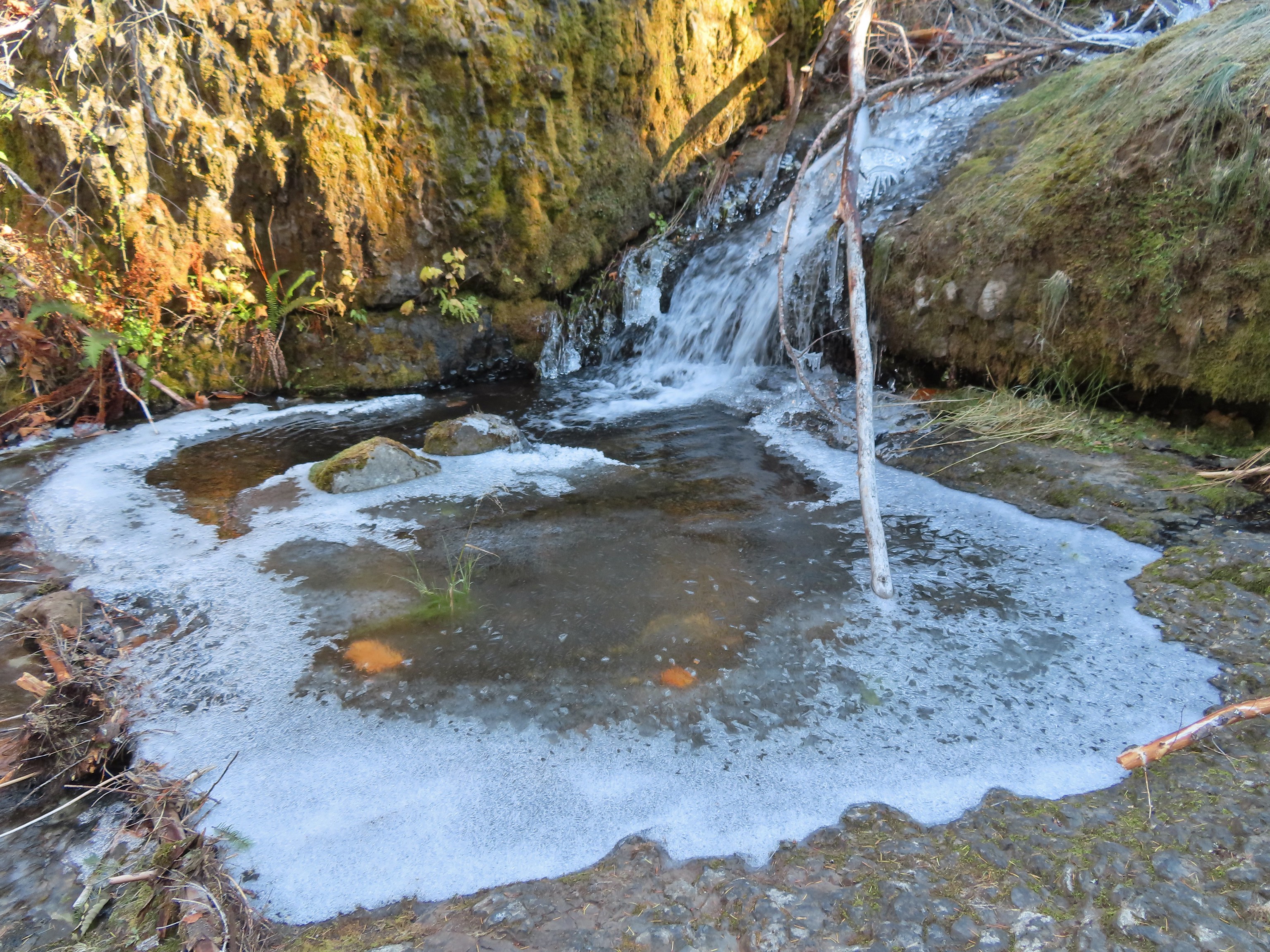

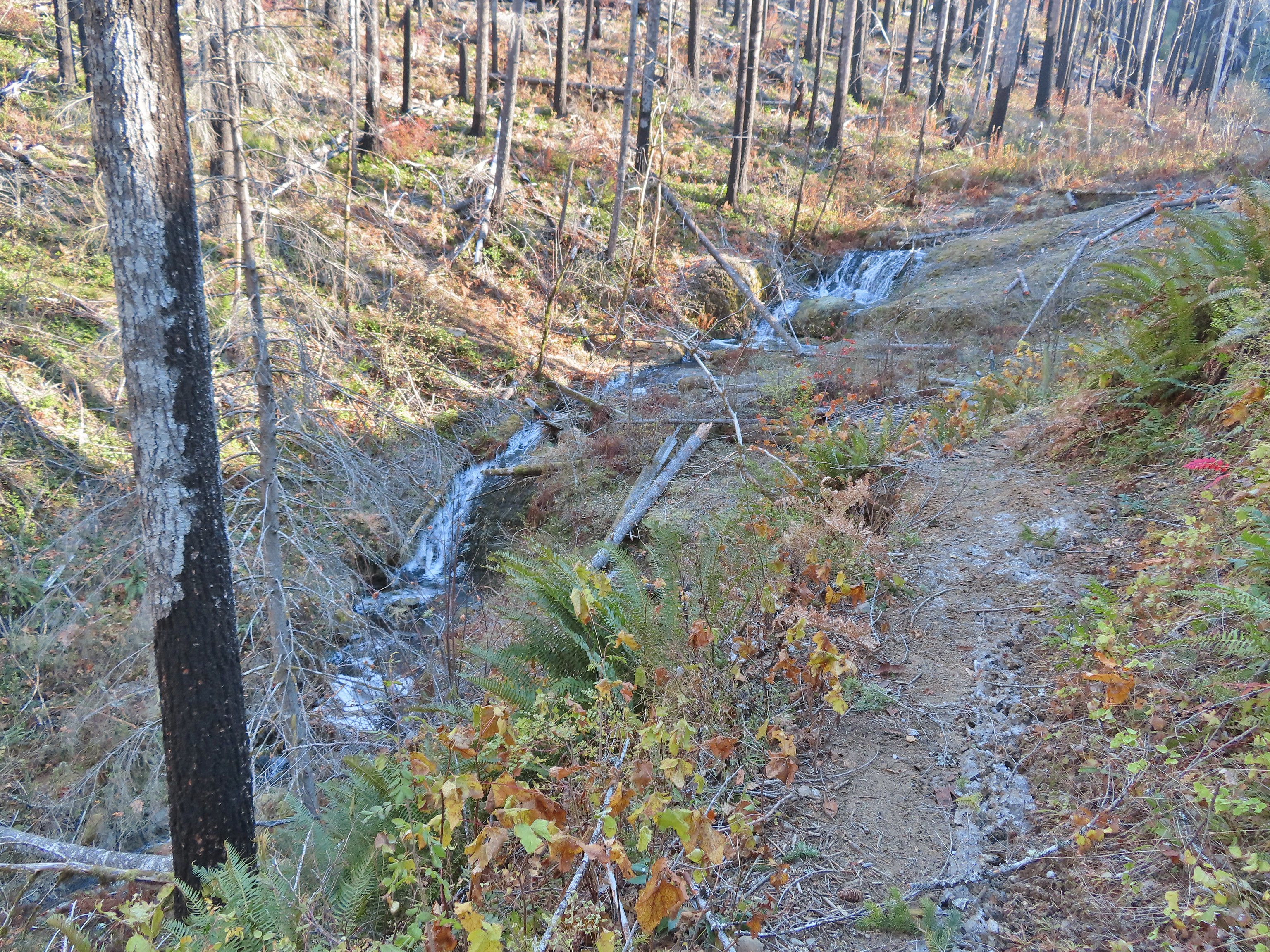 Looking back at the creek.
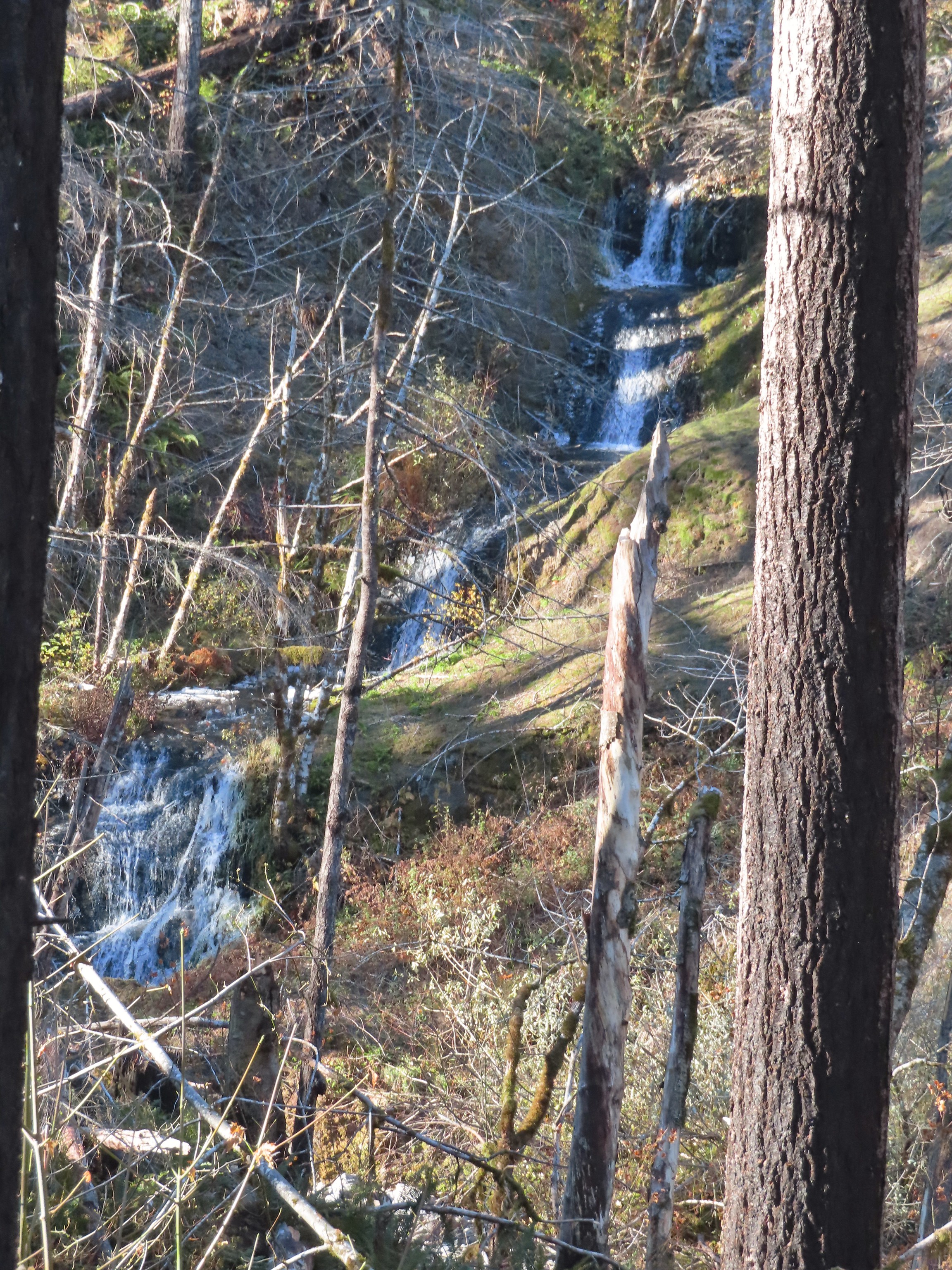 This cascade was across Eagle Creek near the last campsites.
 Woodpecker
 Green pool above Twister Falls.
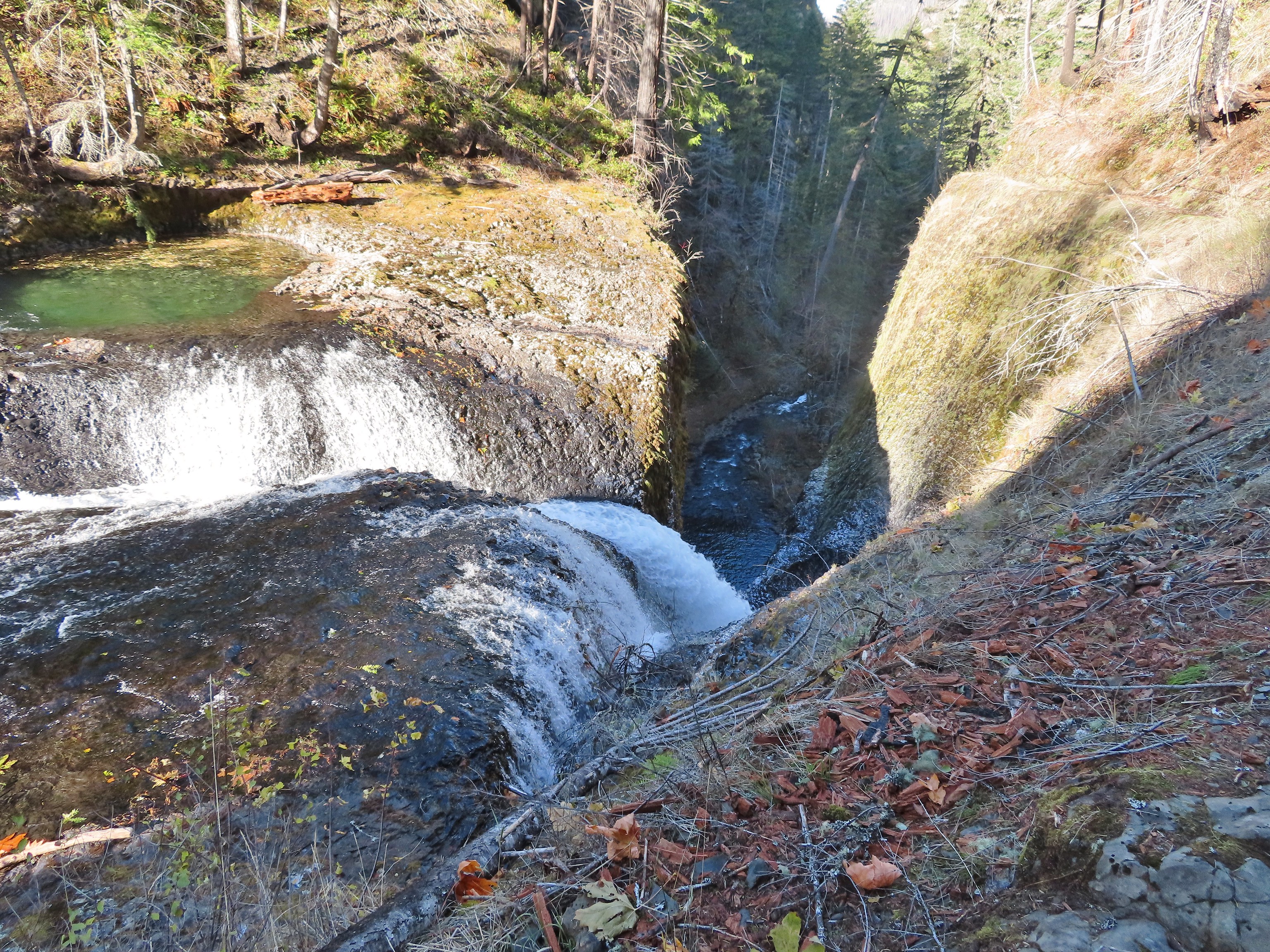 Above Twister Falls.

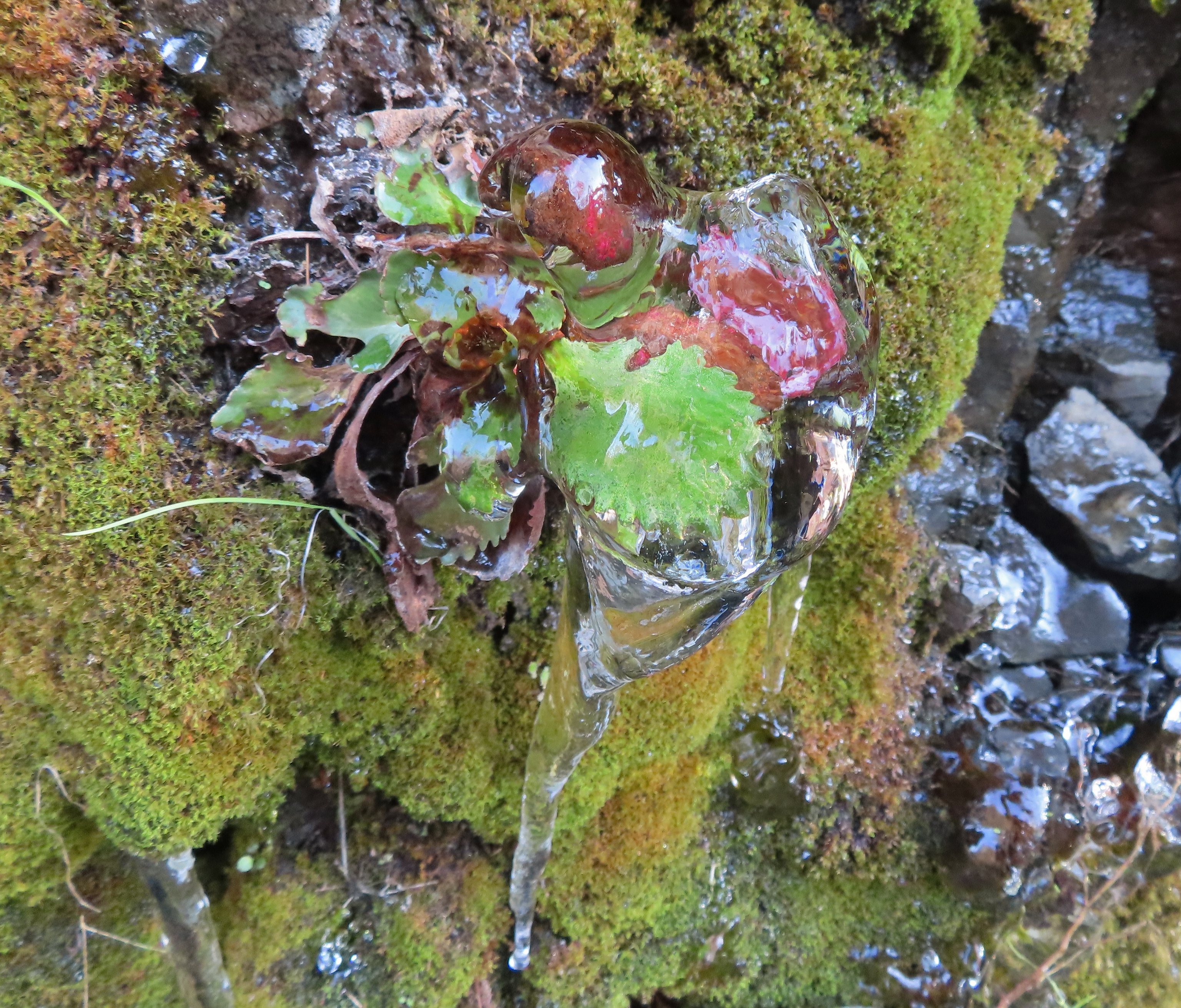 Plant in ice.
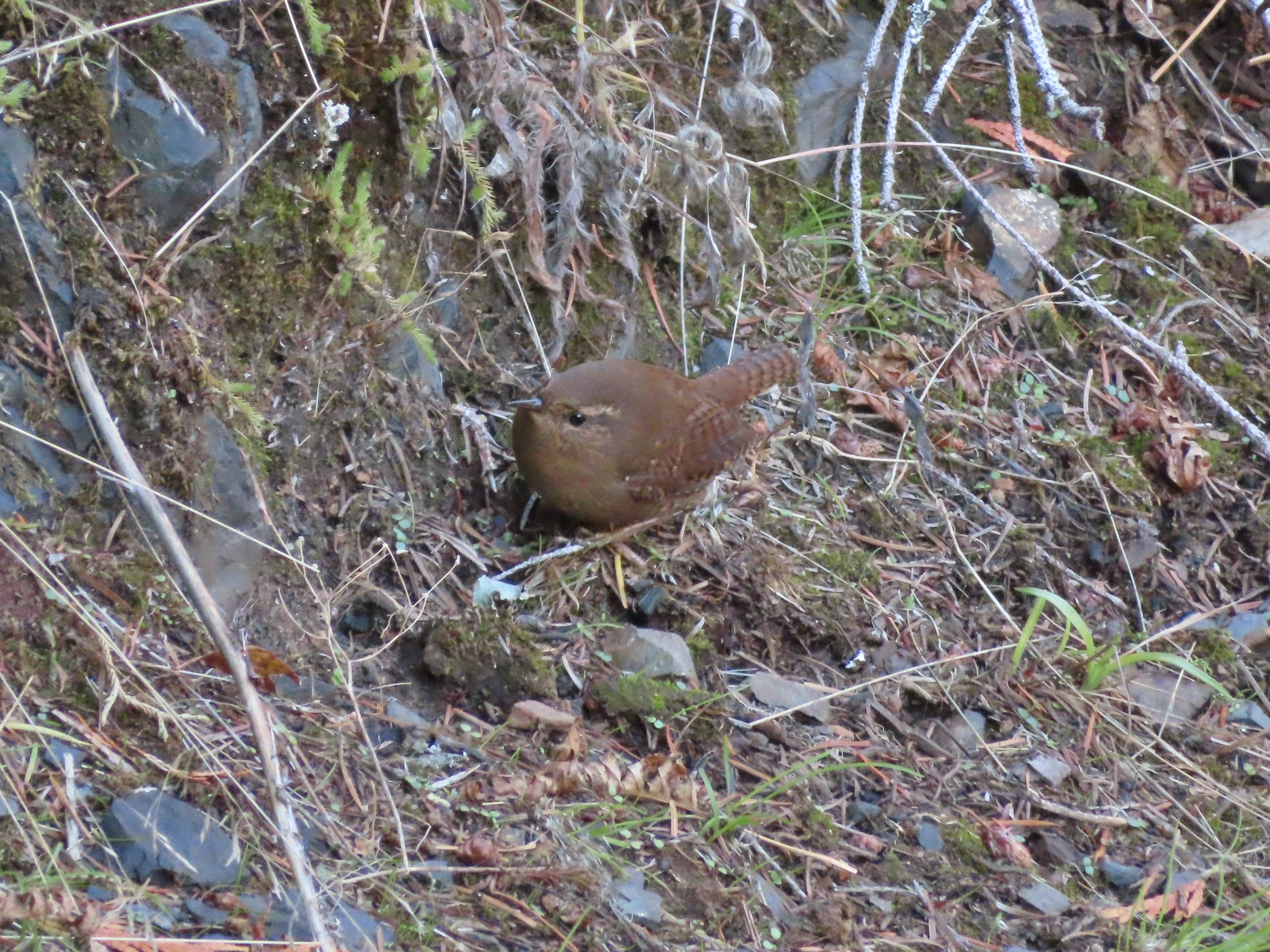 Wren
Wren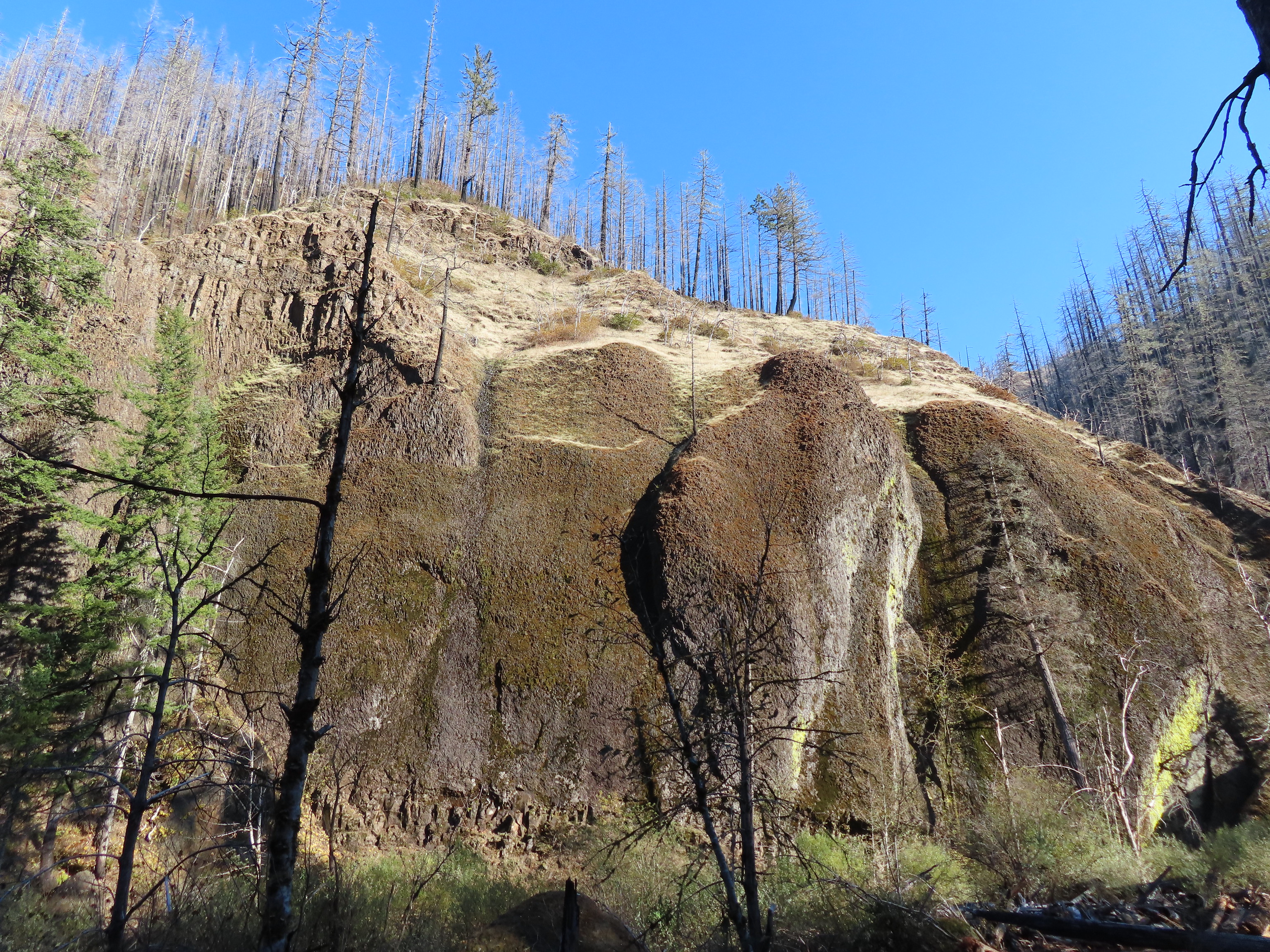


 Chipmunk
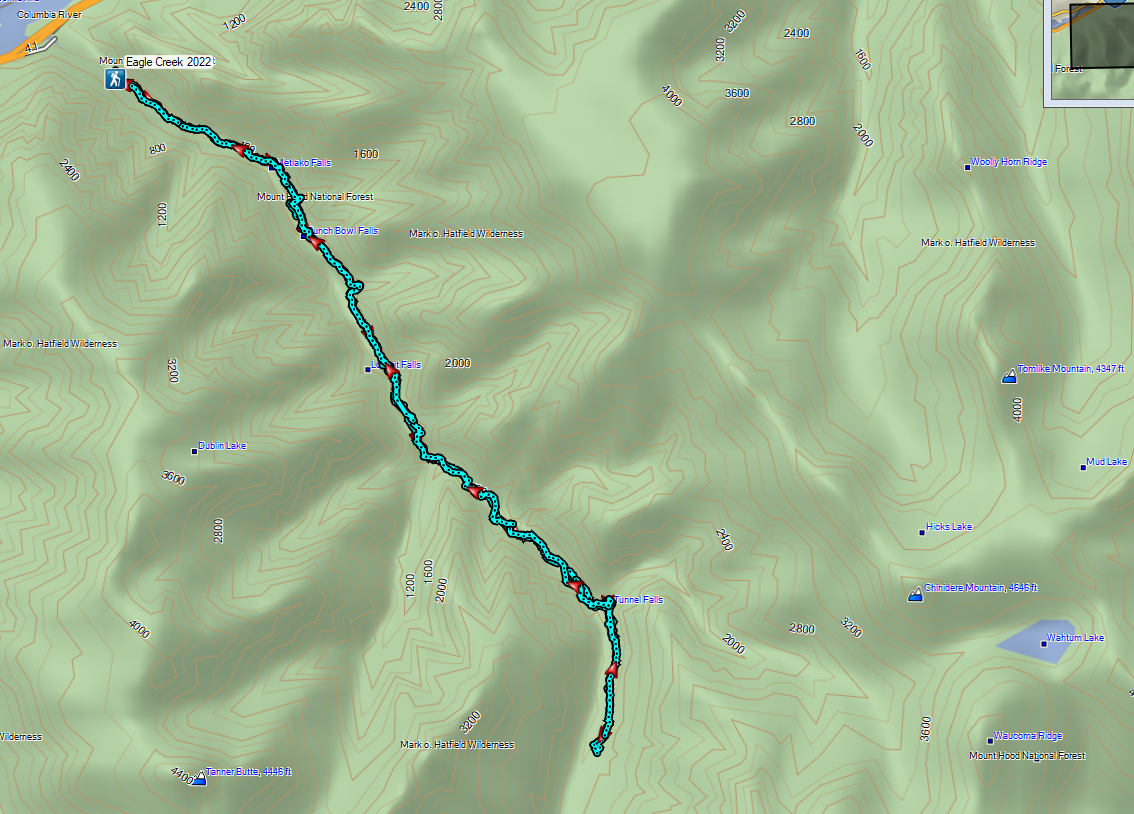

 A lot more blue in the sky than I had expected to see.
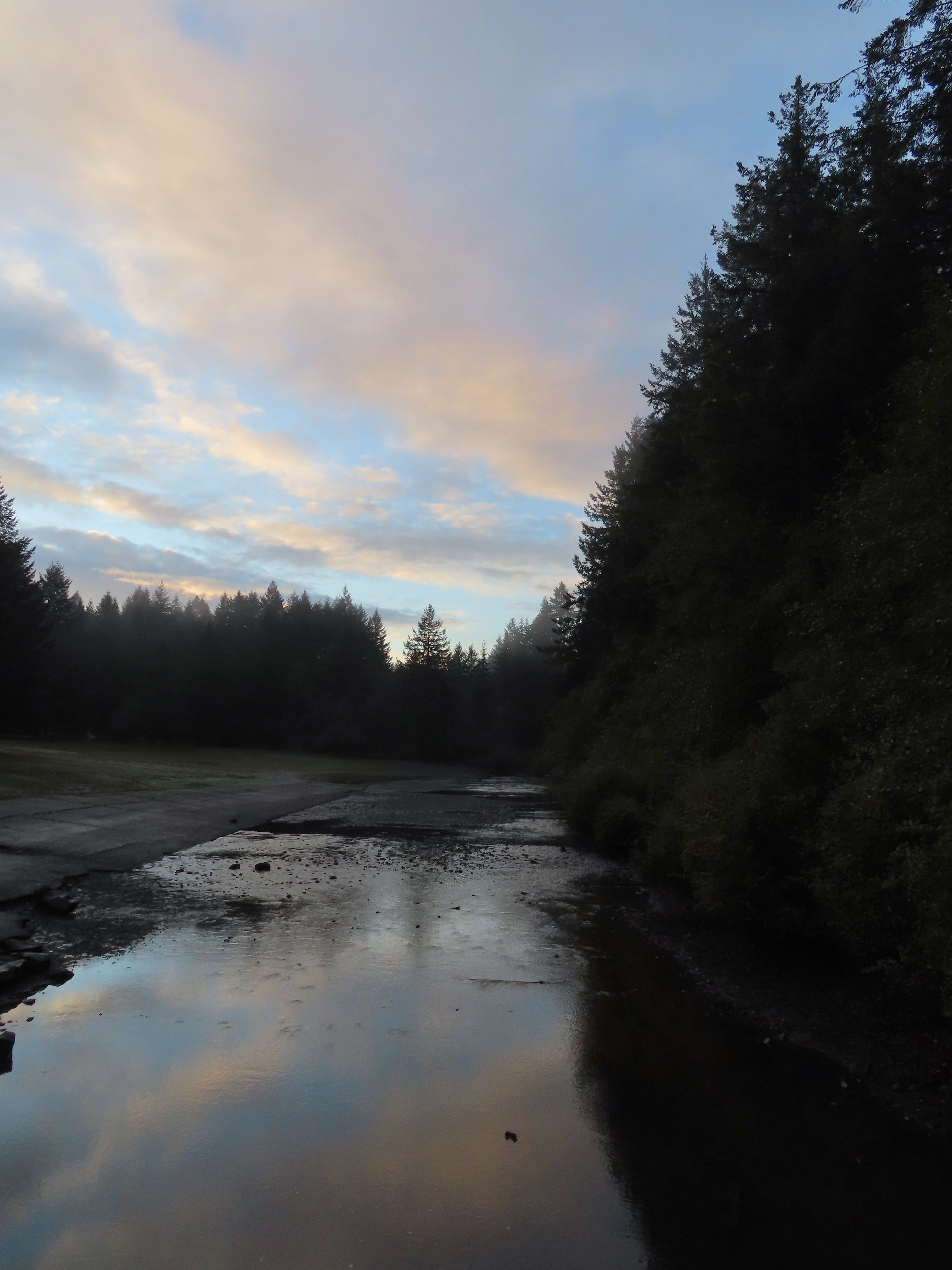

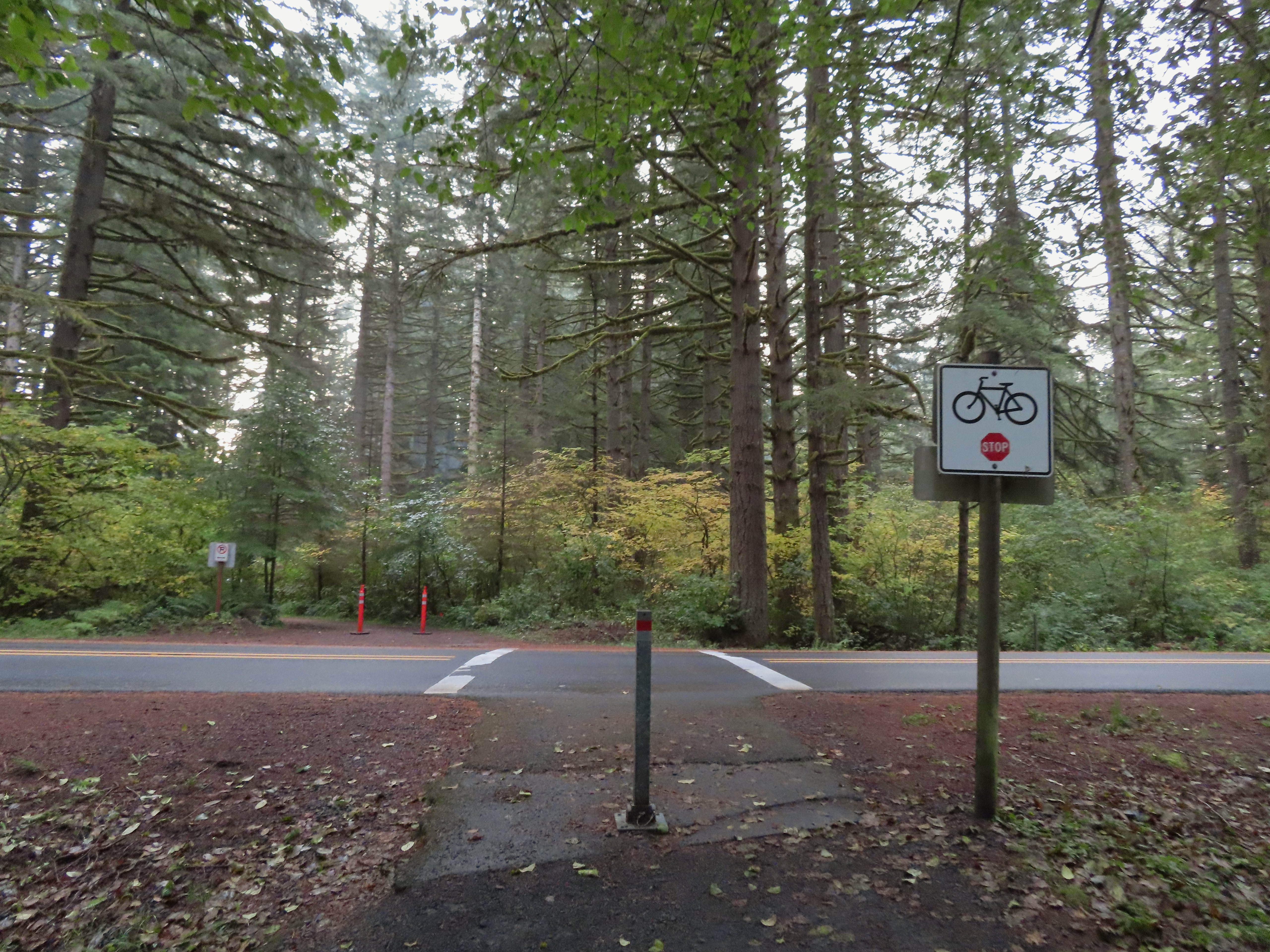 Crossing Highway 214 to the campground.
 I detoured left to check out this bridge over Howard Creek.
 Howard Creek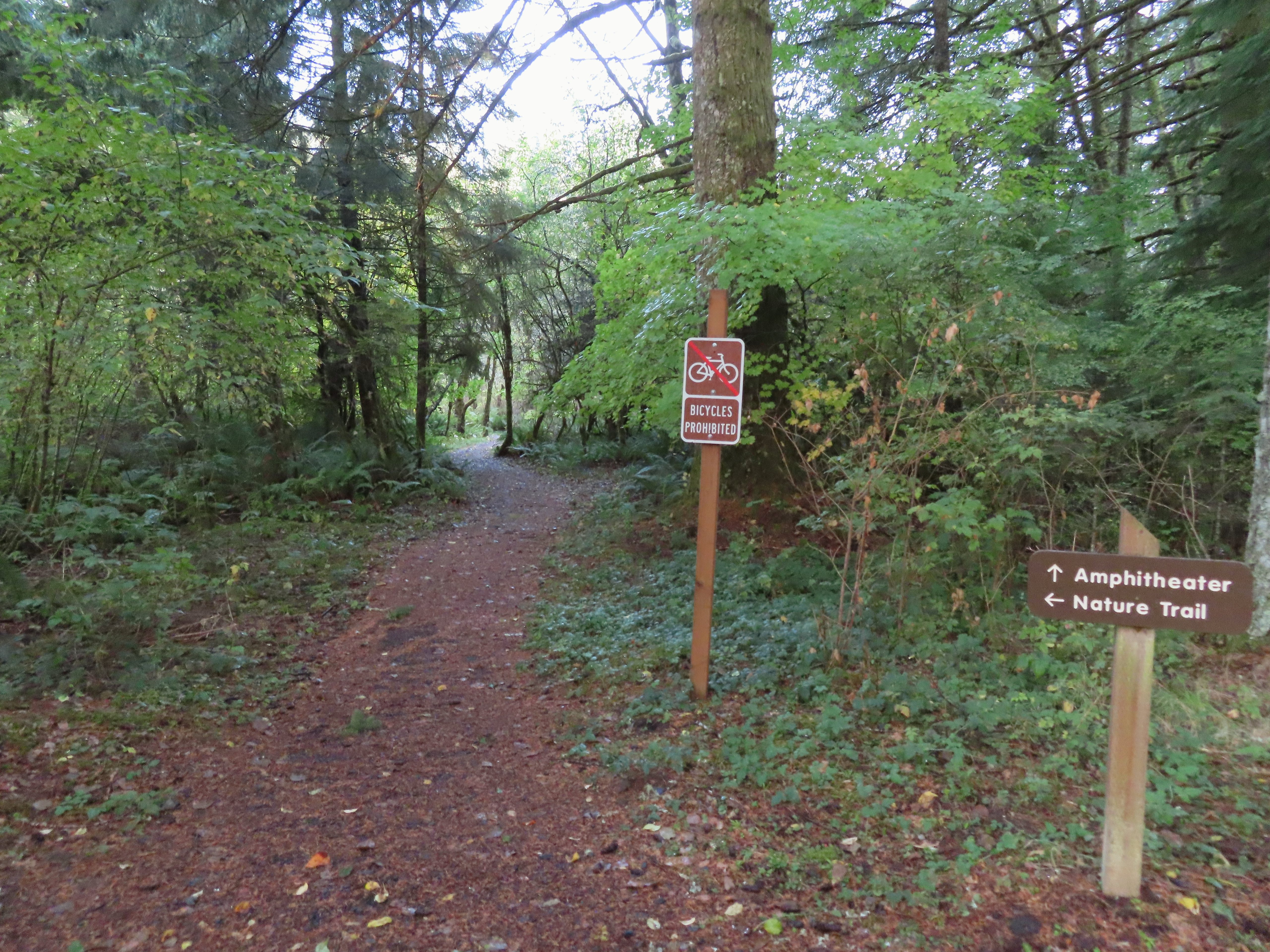

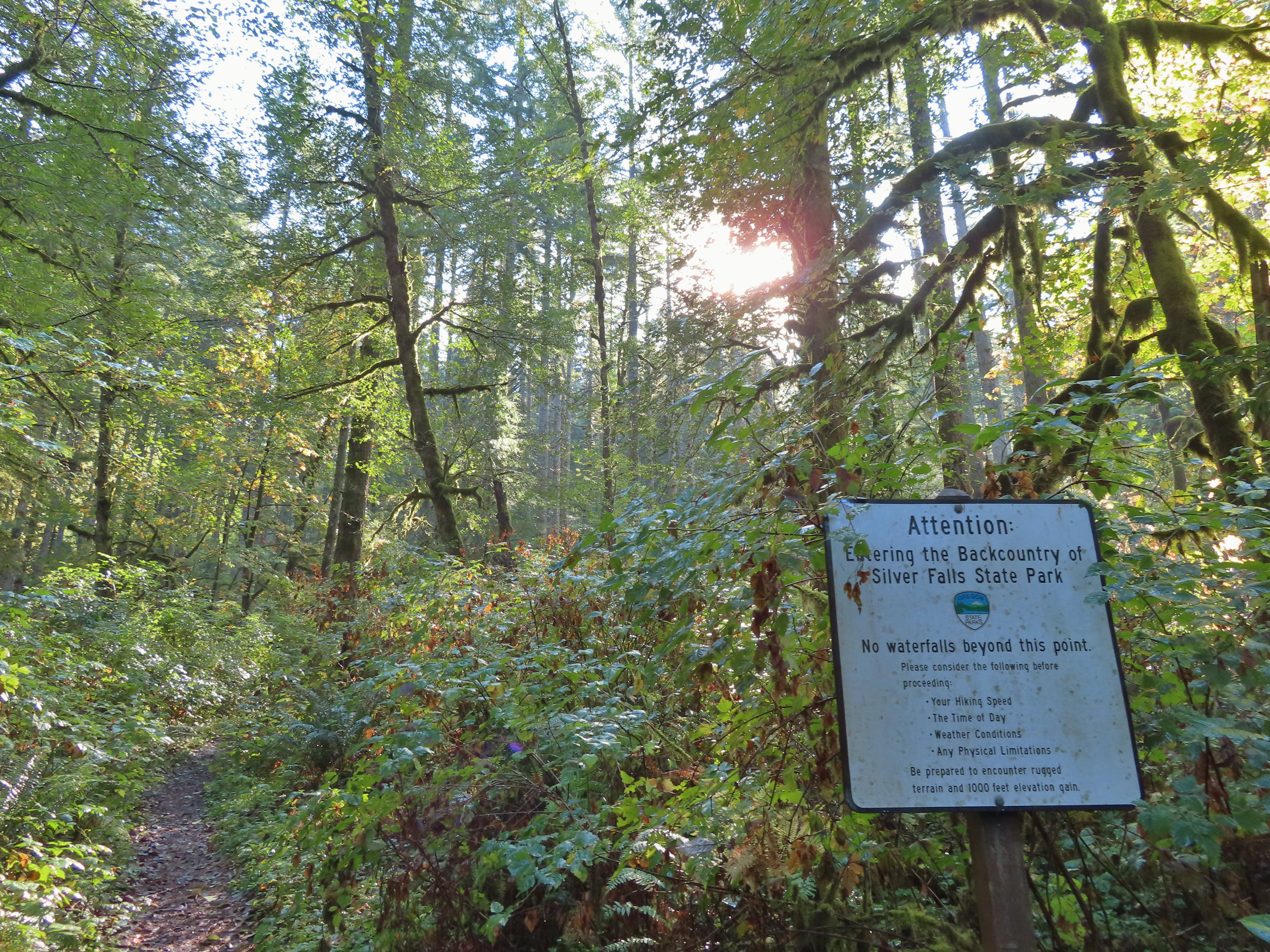
 Sign at the 214 Trail junction to let people know that there are no waterfalls in the backcountry.
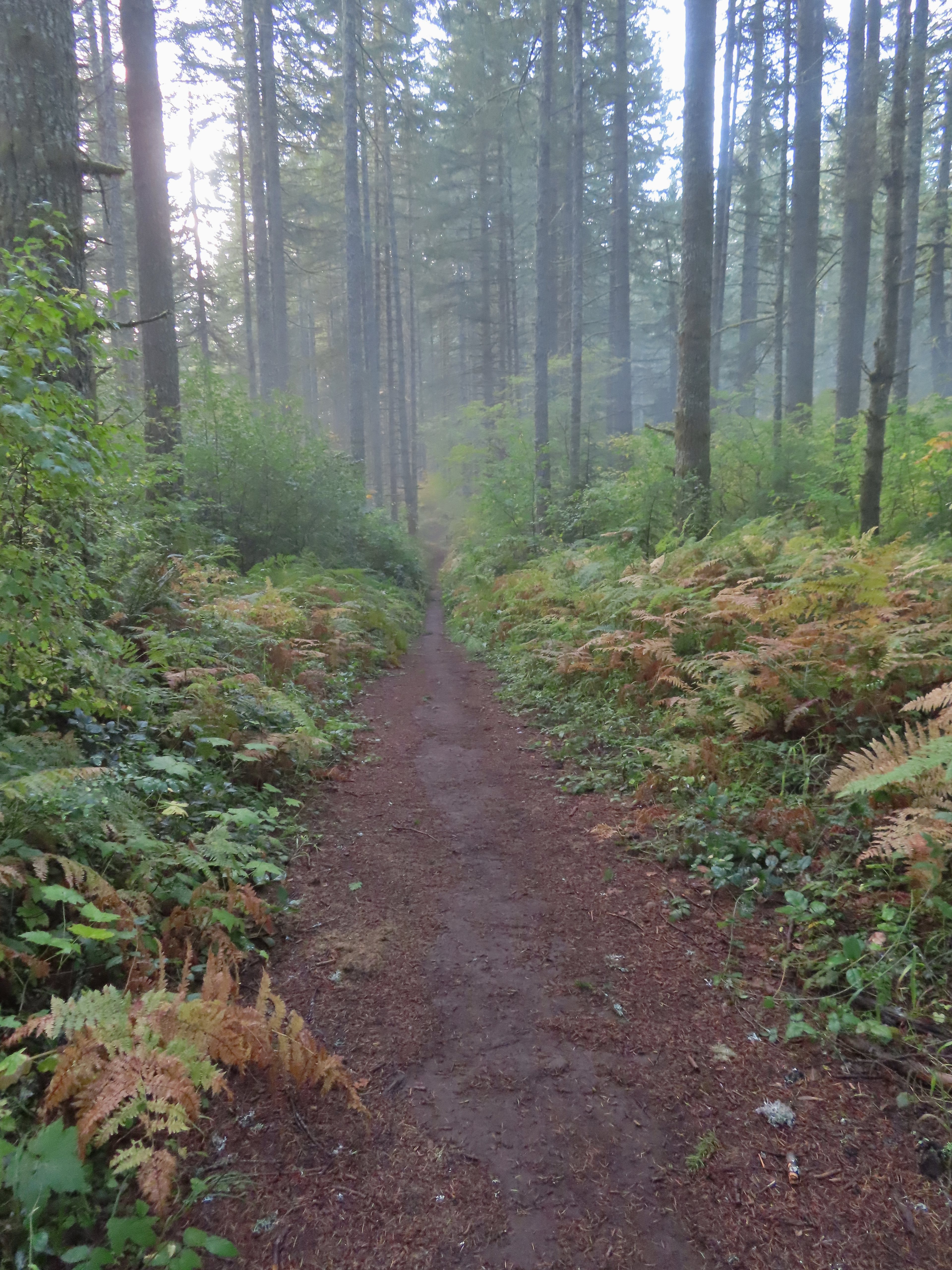 Just a little fog but no rain.
 Passing the Smith Creek Trail (left) after 0.6 miles on the 214 Trail.
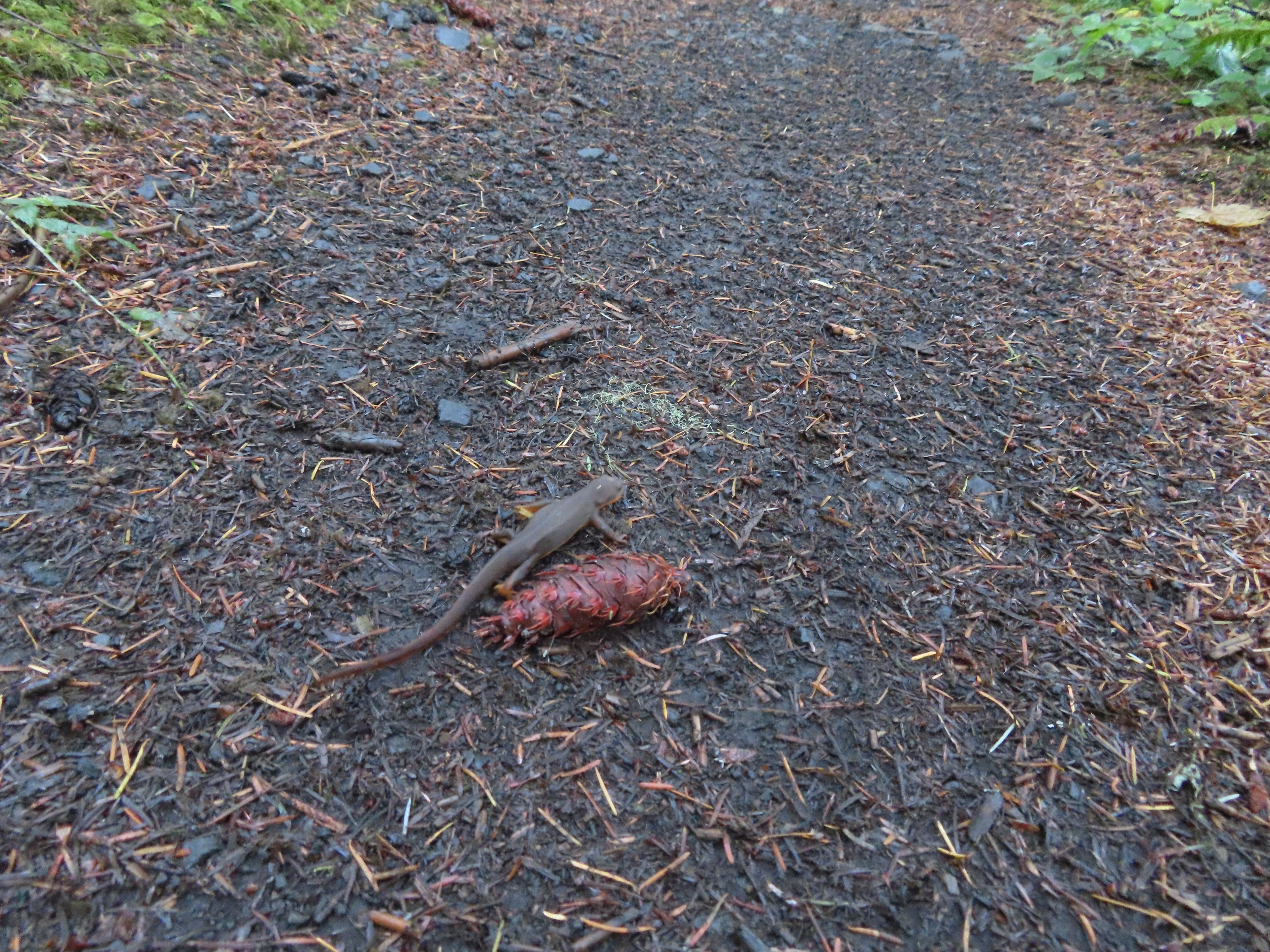 Rough skinned newt on the 214 Trail. (Probably headed for the Newt Loop too.)
 Big nursery tree along the 214 Trail.
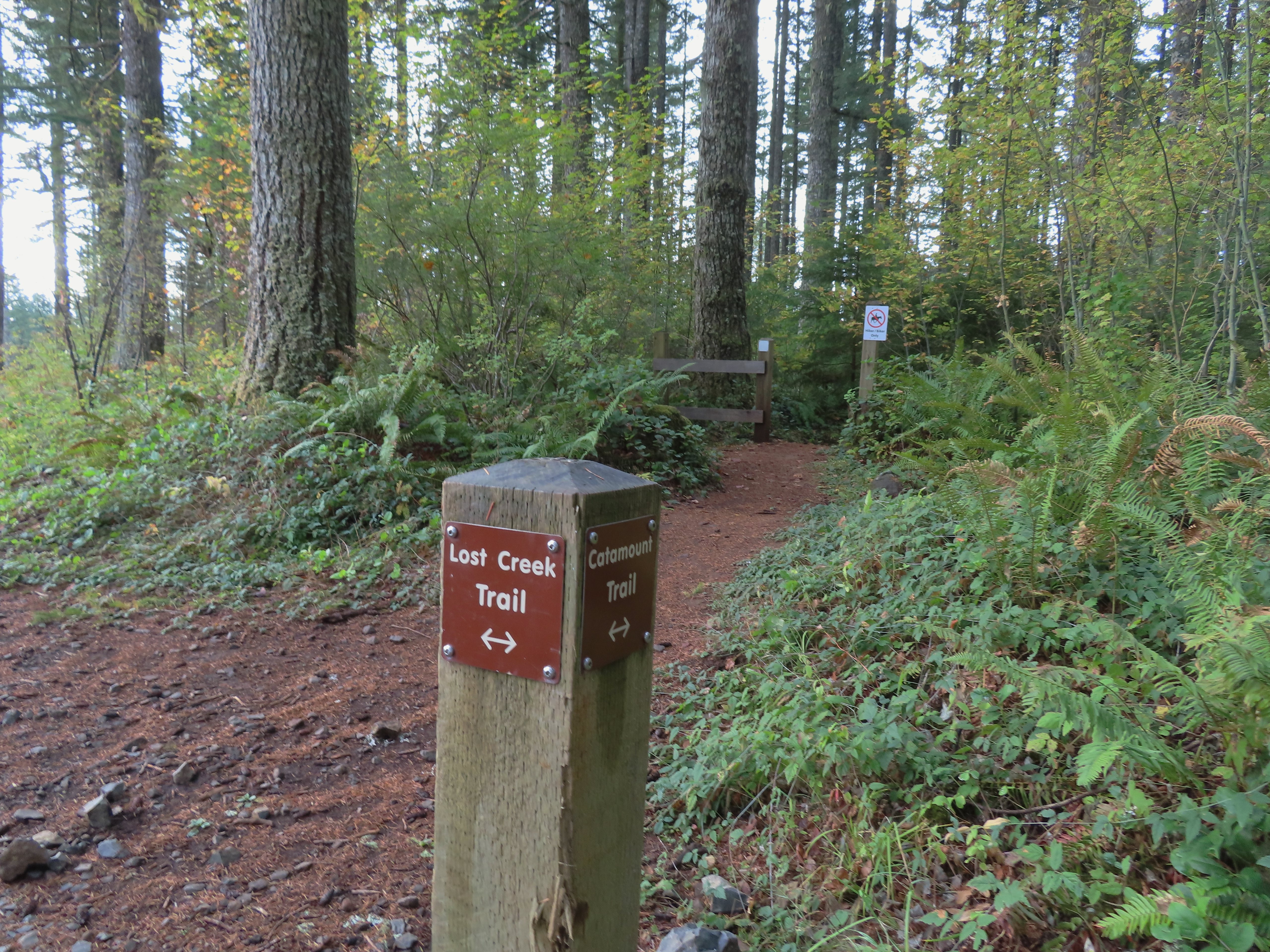
 The trail post at the junction shows the Catamount Trail instead of the Newt Loop but the map at the junction labels it the Newt Loop.
 Map check.
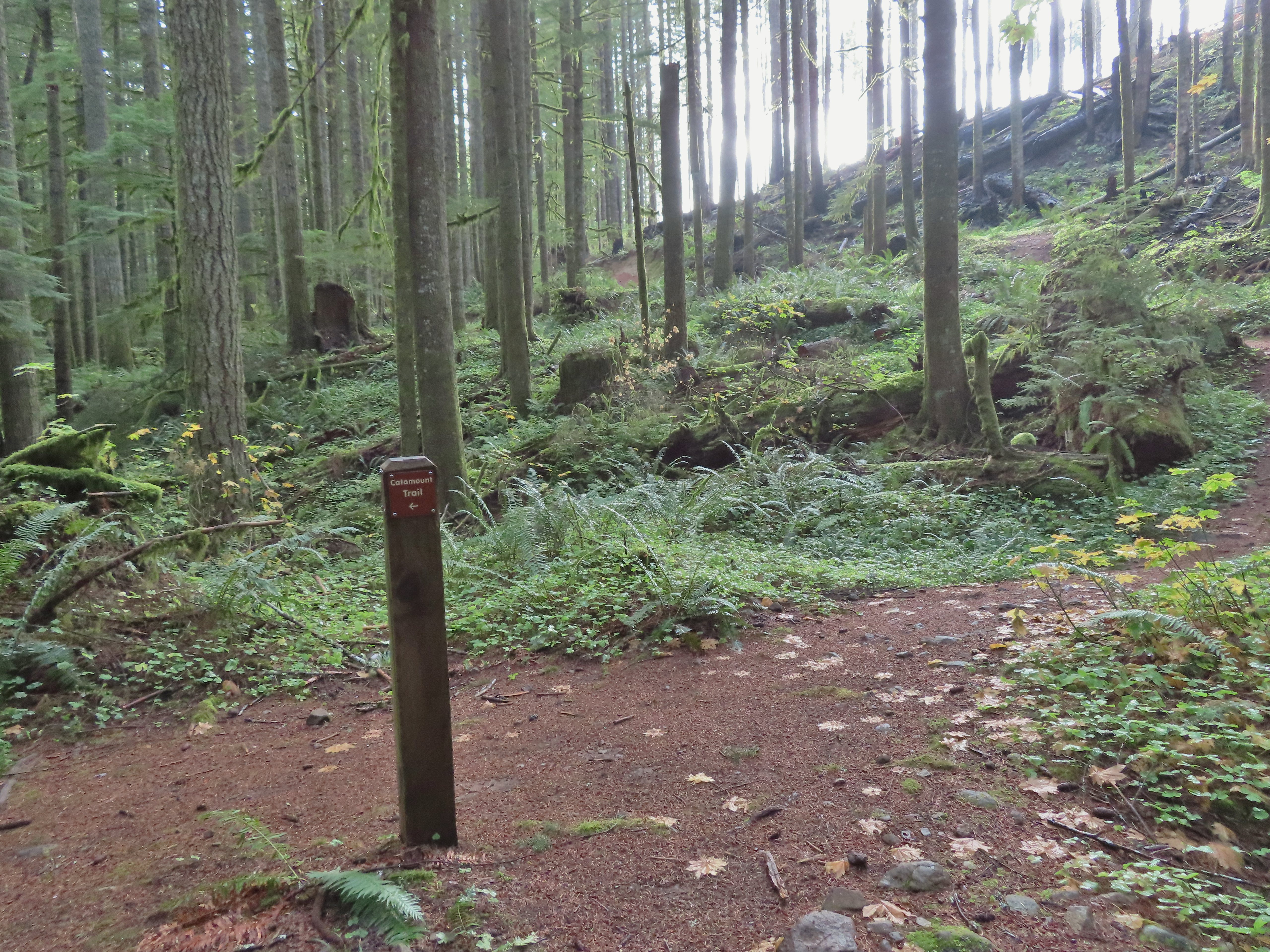
 This second post included the Newt Loop along with a pointer for the Catamount Trail.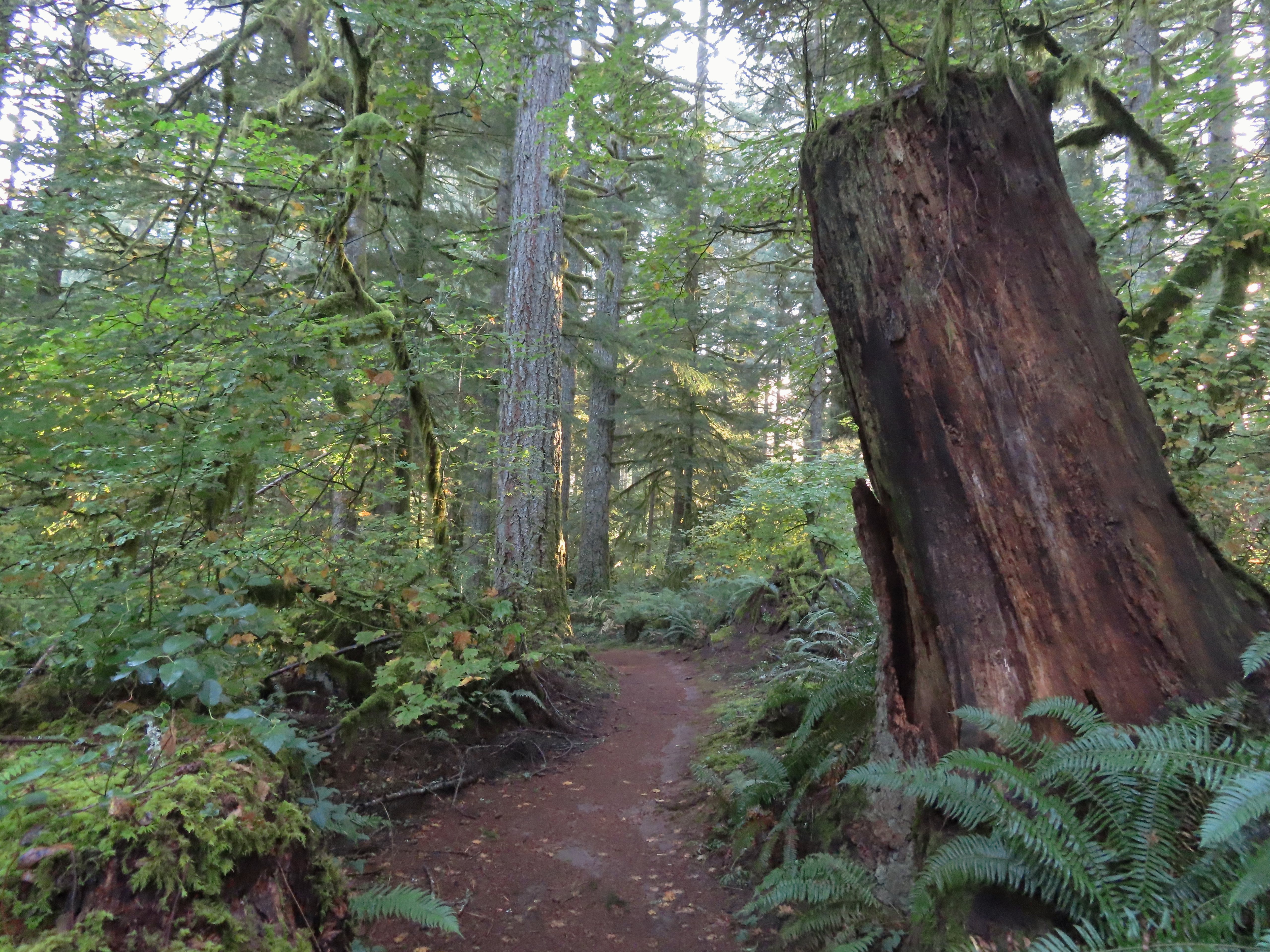
 Crossing a CAT road along the Newt Loop.
 Turning onto the Catamount Trail.
 Lots of nursery stumps along the trail.
 Another nursery stump.
 Side trails were well marked.
 Did not expect to see that overhead today.


 I believe this short section of fire scar was from the 2020 Beachie Fire.

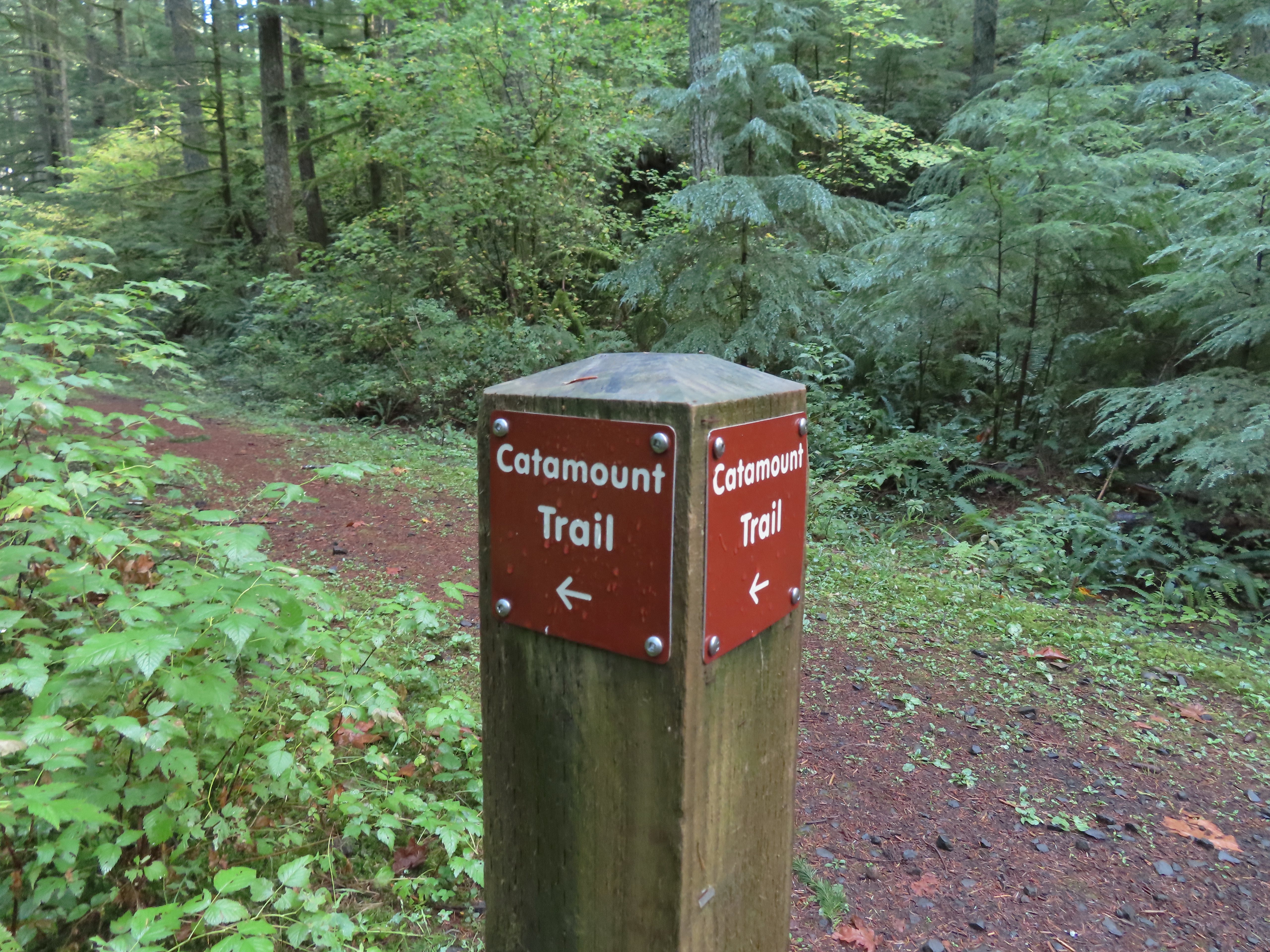 Turning onto the road.
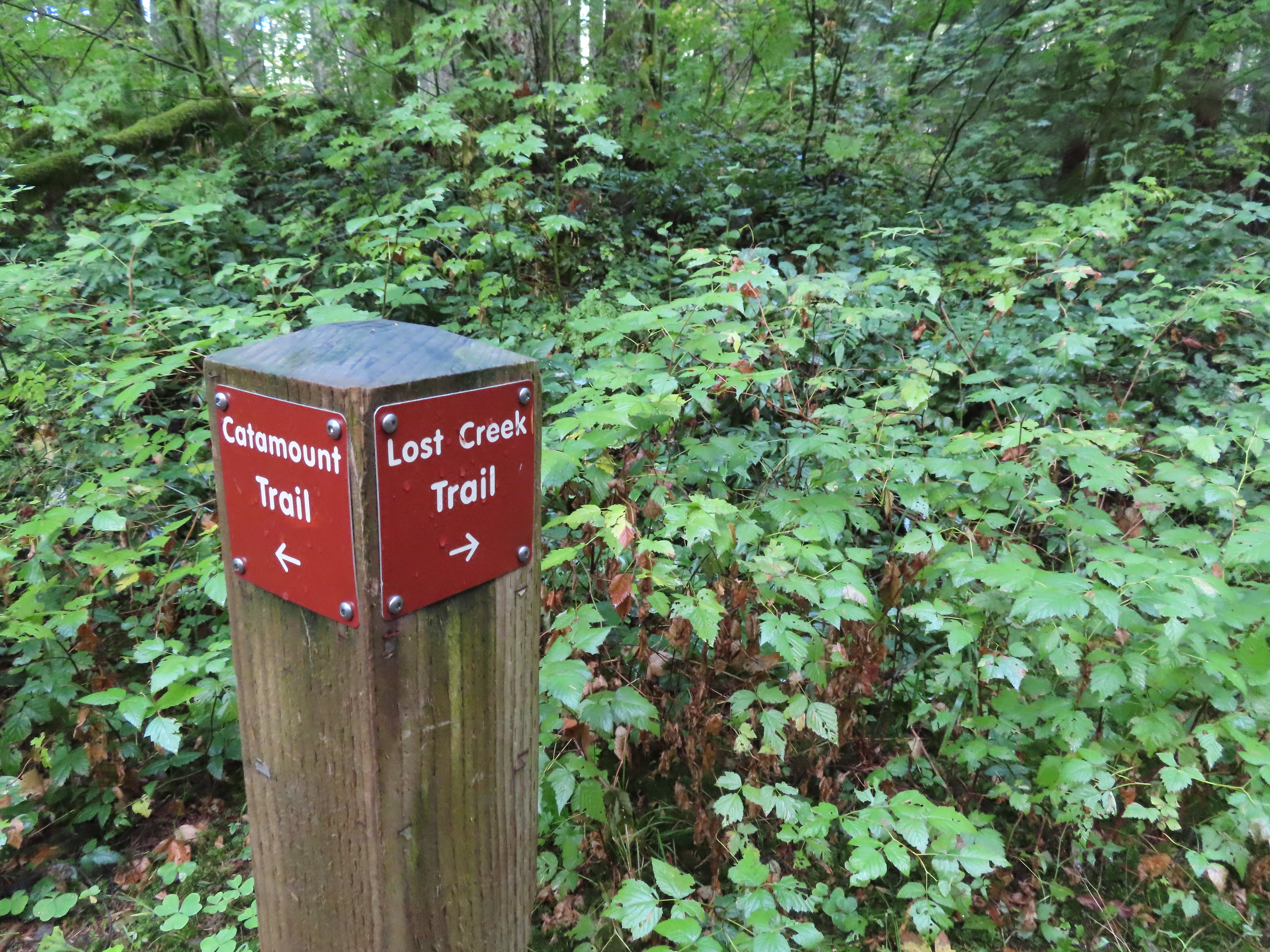 The opposite side of the post had a pointer for the Lost Creek Trail.
 I veered uphill to the right here.
 The Lost Creek/Buck Mountain junction.
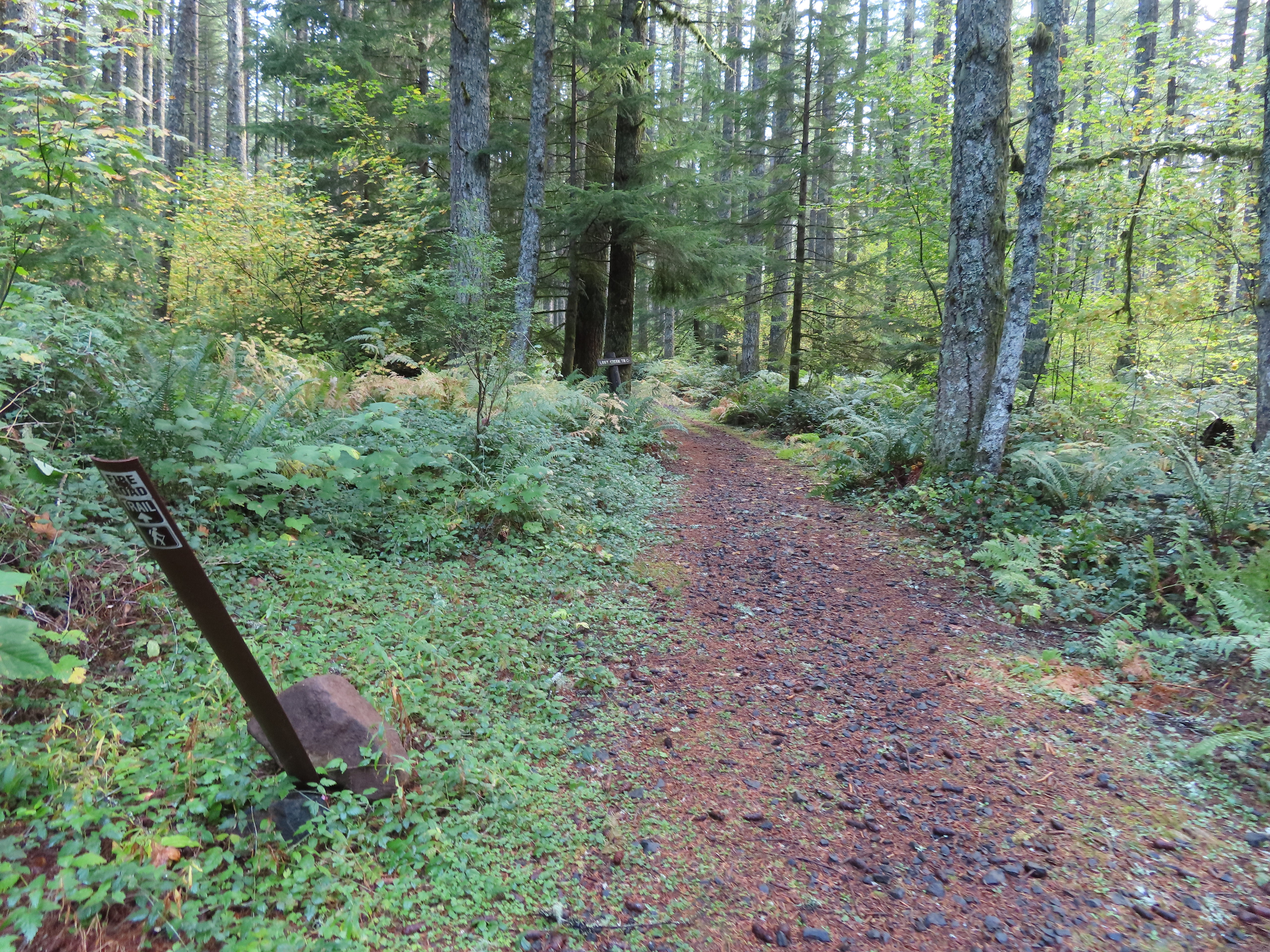 The Lost Creek Trail doubles as a fire road.
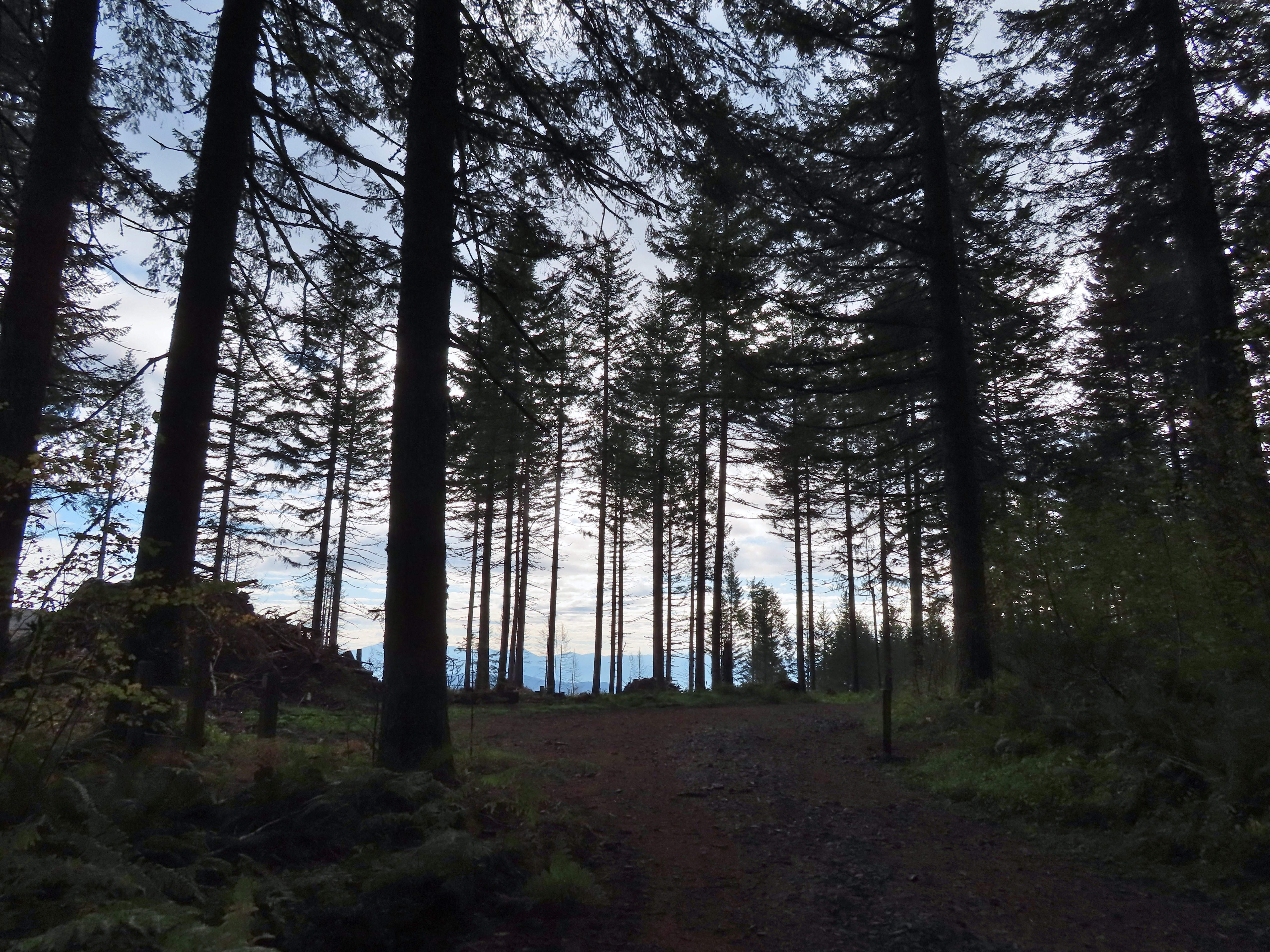
 Here is where I would have come up had the Catamount Trail did not have the on-way section. (Note that on some mountain biking maps the one-way section is labeled “Upper Catamount Trail.)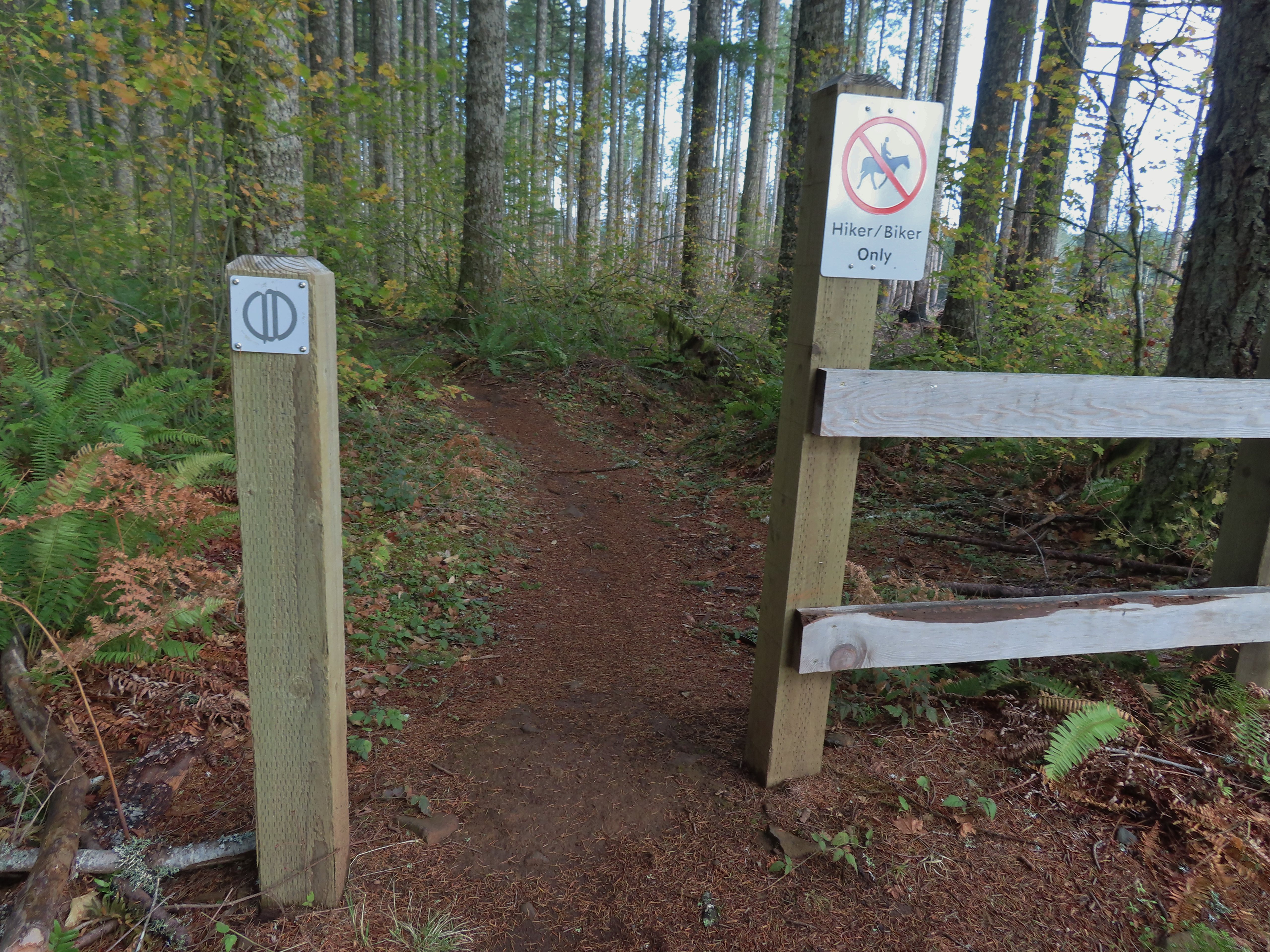
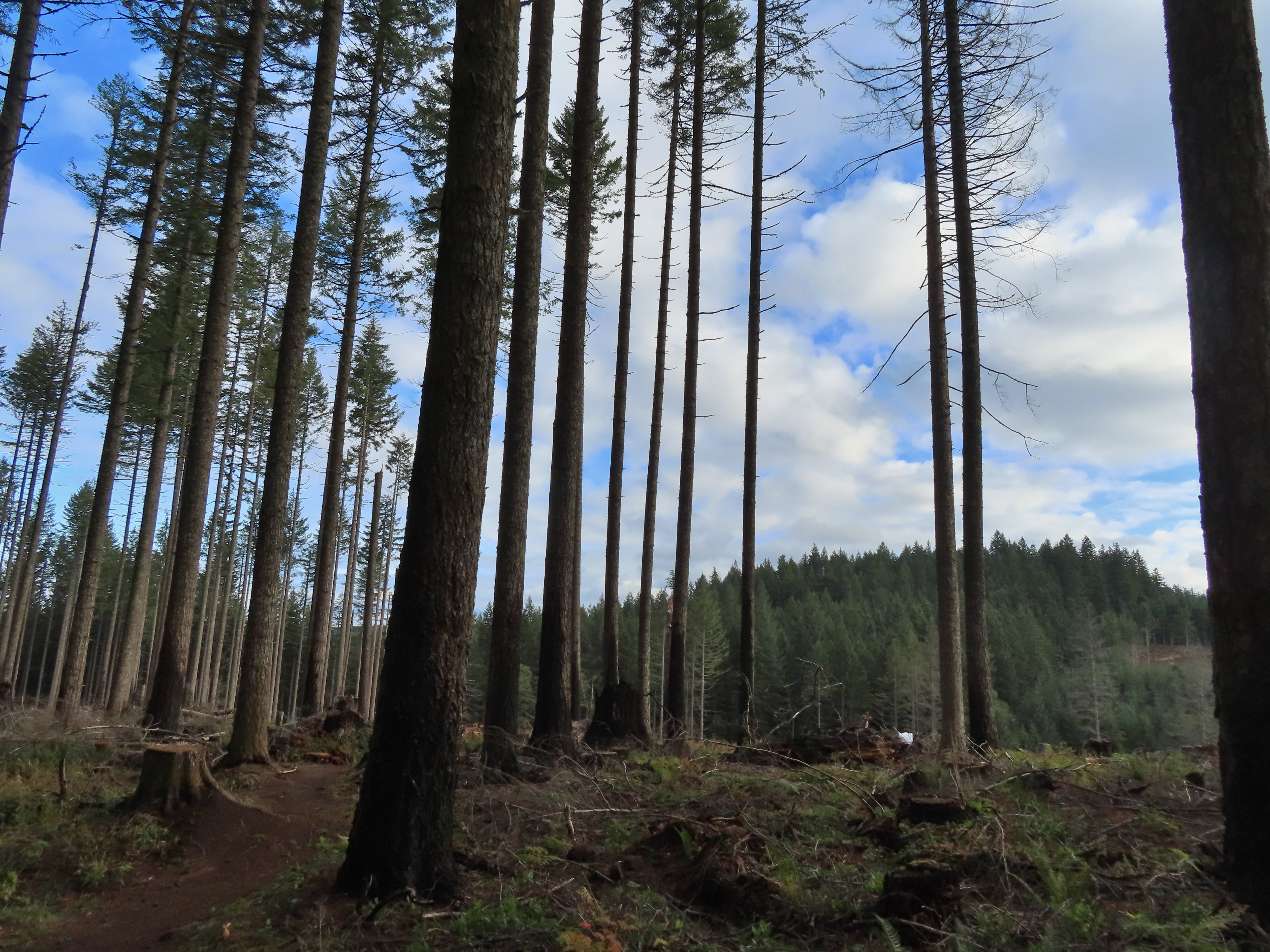 The treeless section wasn’t long. It appeared to have been an area impacted by the 2020 Beachie Fire.
 Still some bleeding heart blooming.
 There wasn’t a lot of bright Fall colors in the backcountry, but this maple stood out.
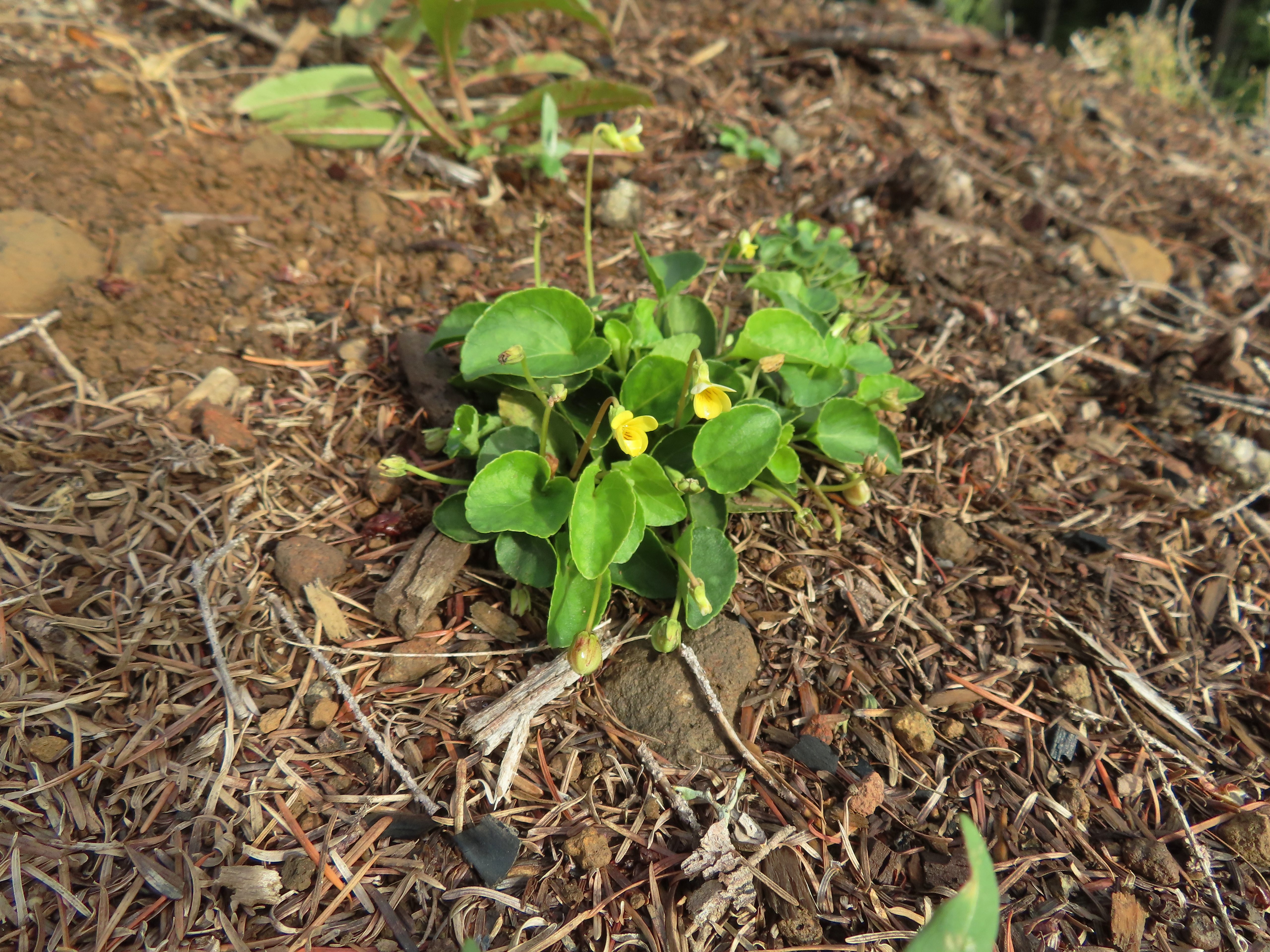 Was a bit surprised to see a few violets along this section.
 Nearing the end of the logged area.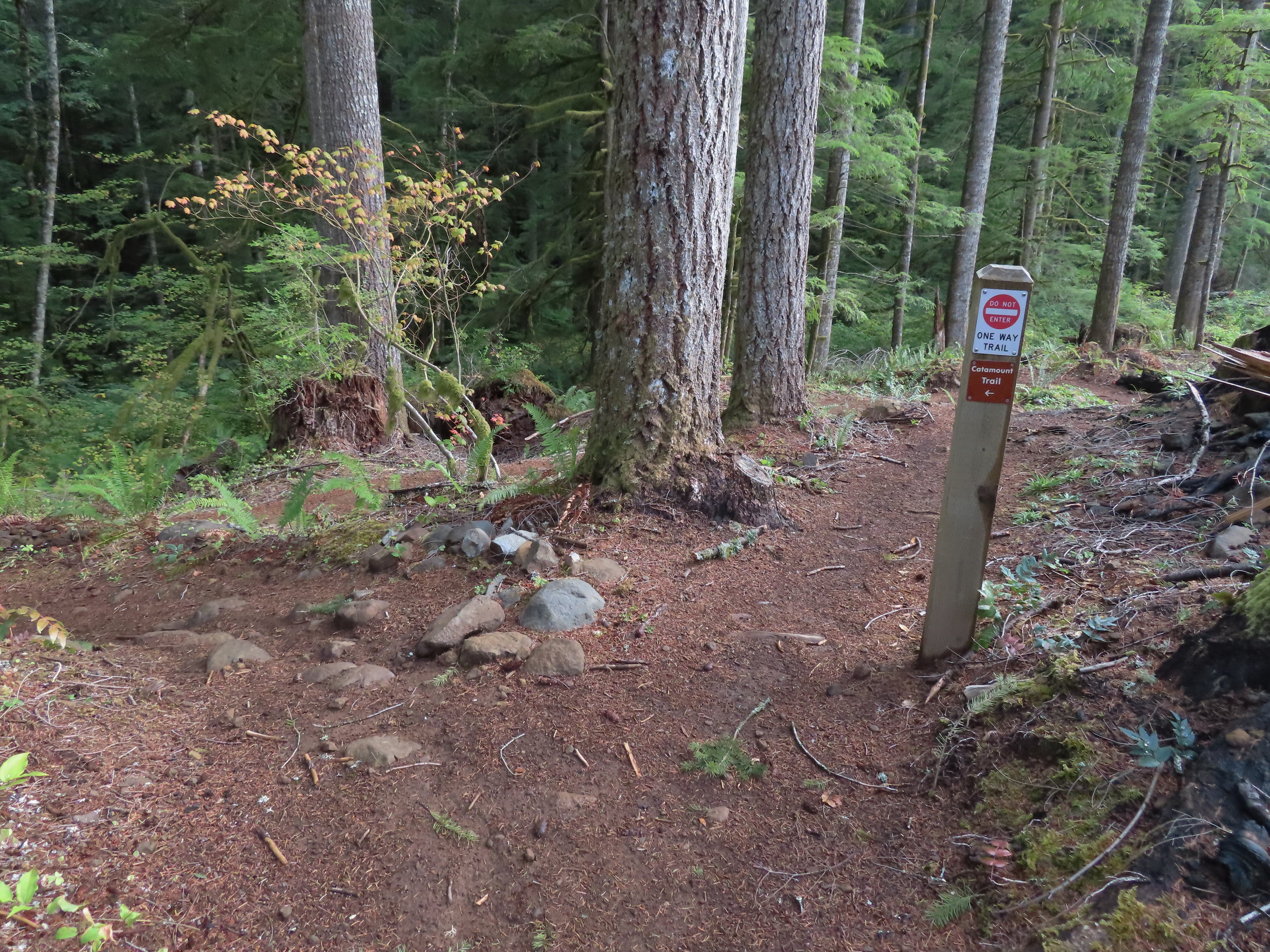
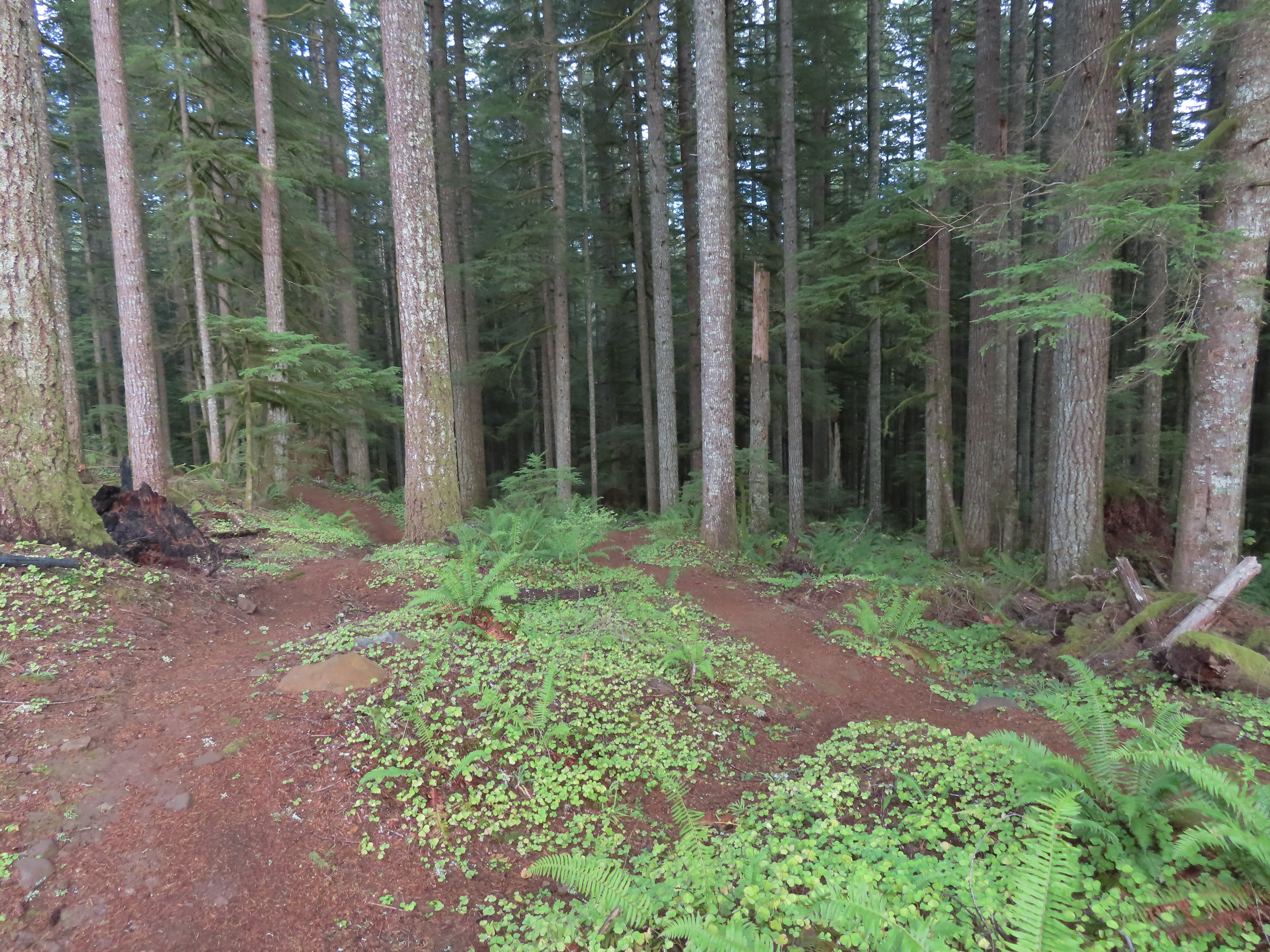
 The rejoining of the trails.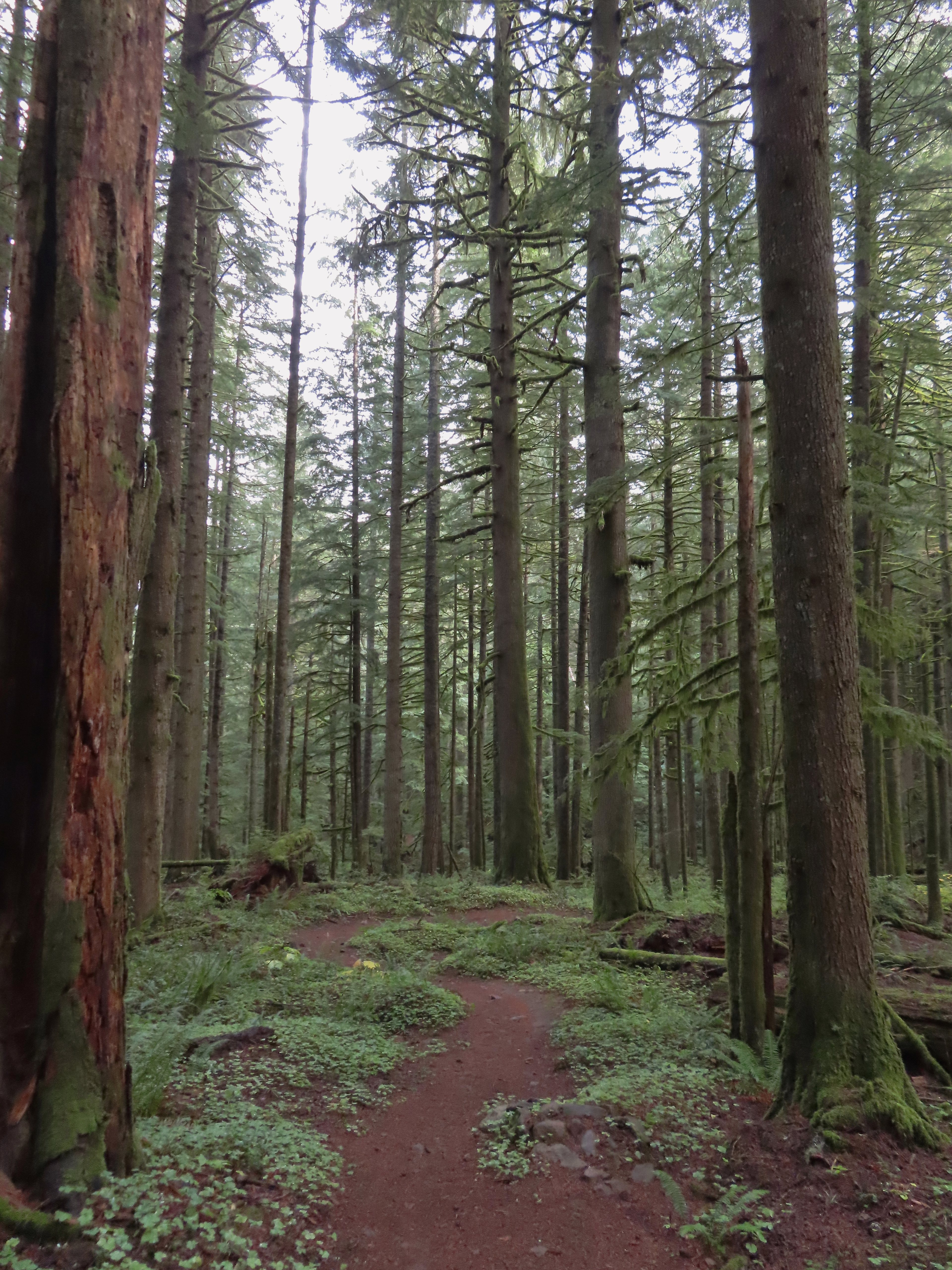
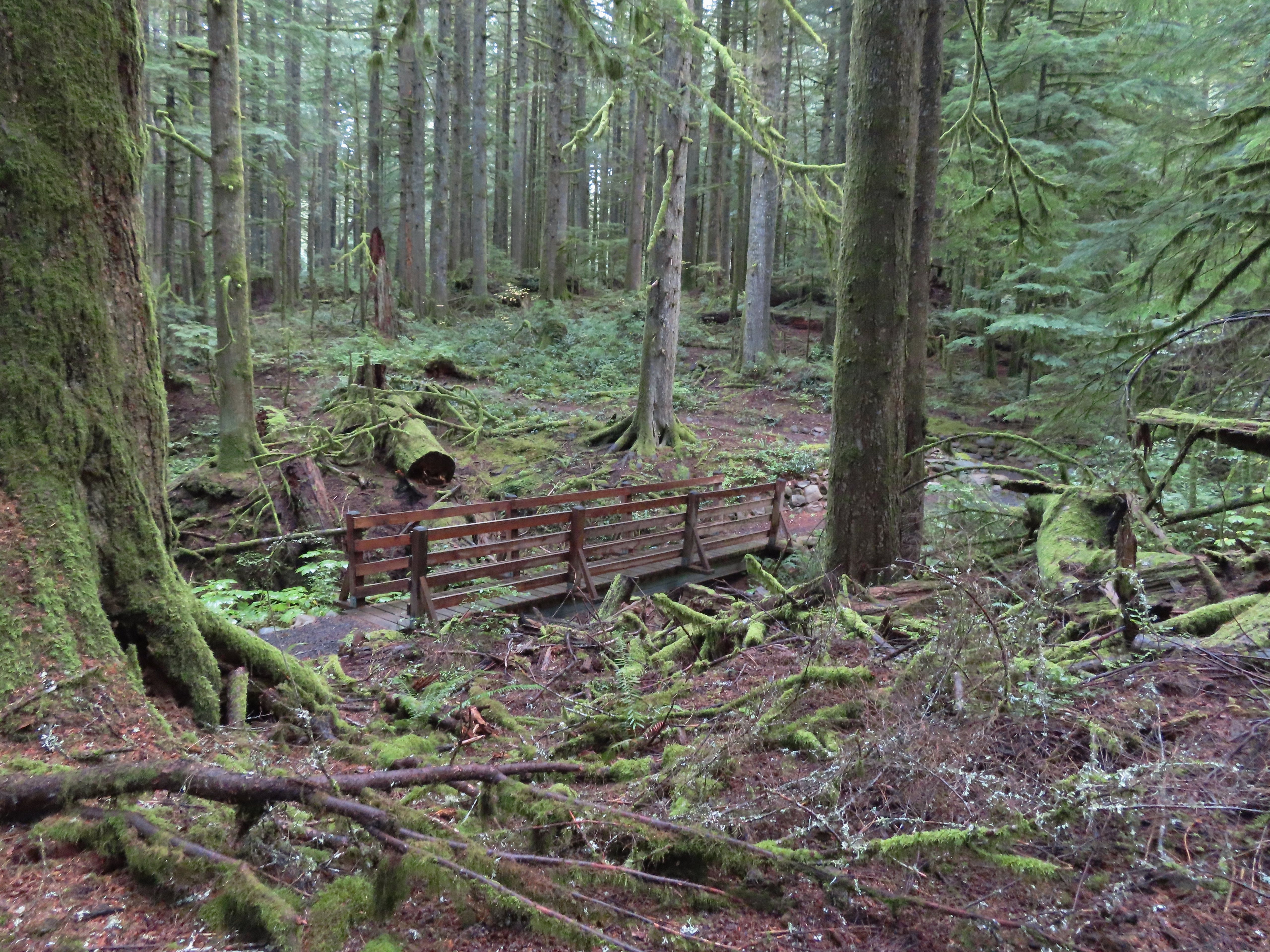 There were several bridges along this section of the trail. I also ran into the only mountain bikers that I would encounter all day in this area, a group of five.
 The Buck Mountain Loop junction.
 Bridge over Howard Creek.
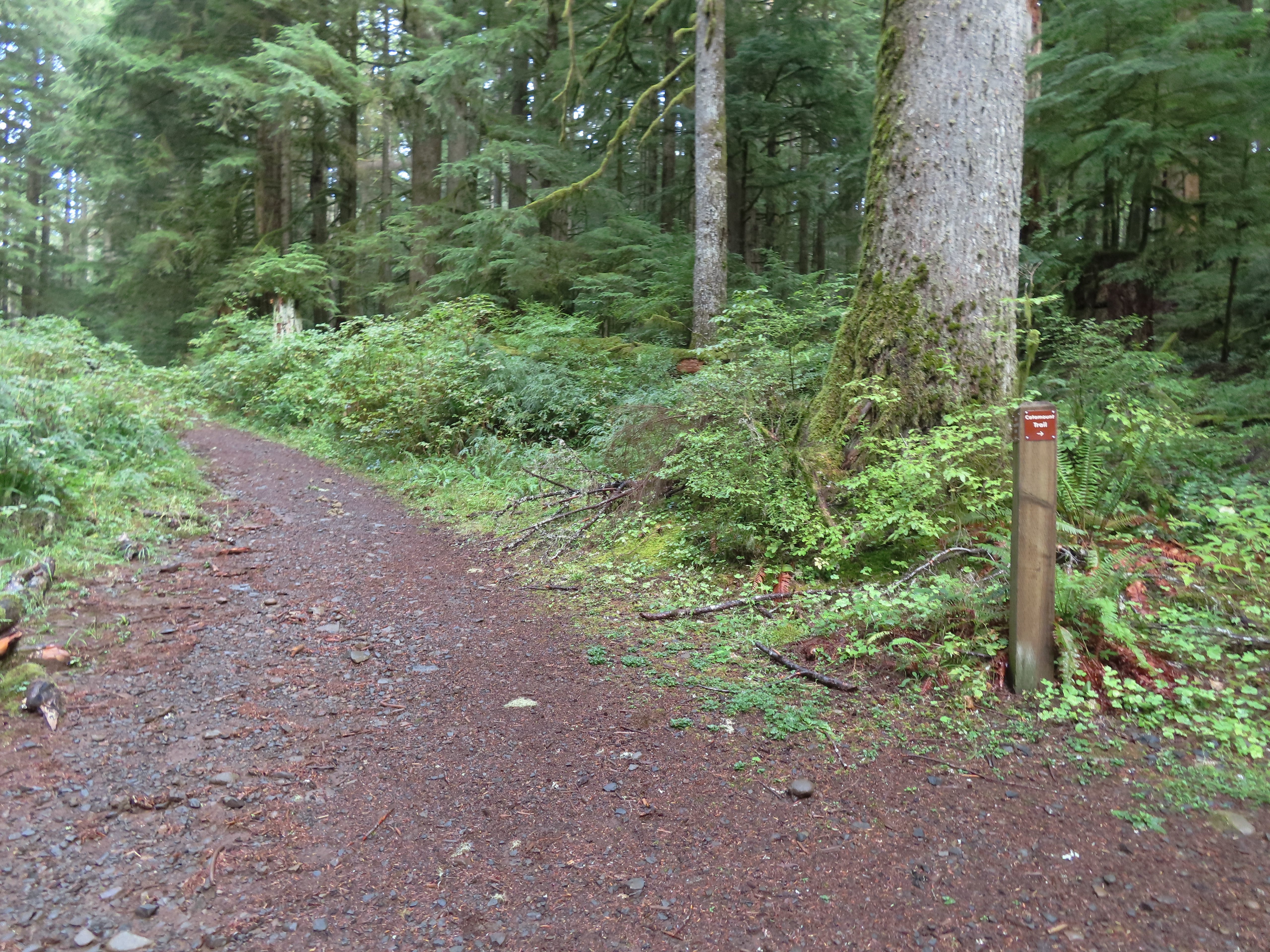 The continuation of the Catamount Trail on the right.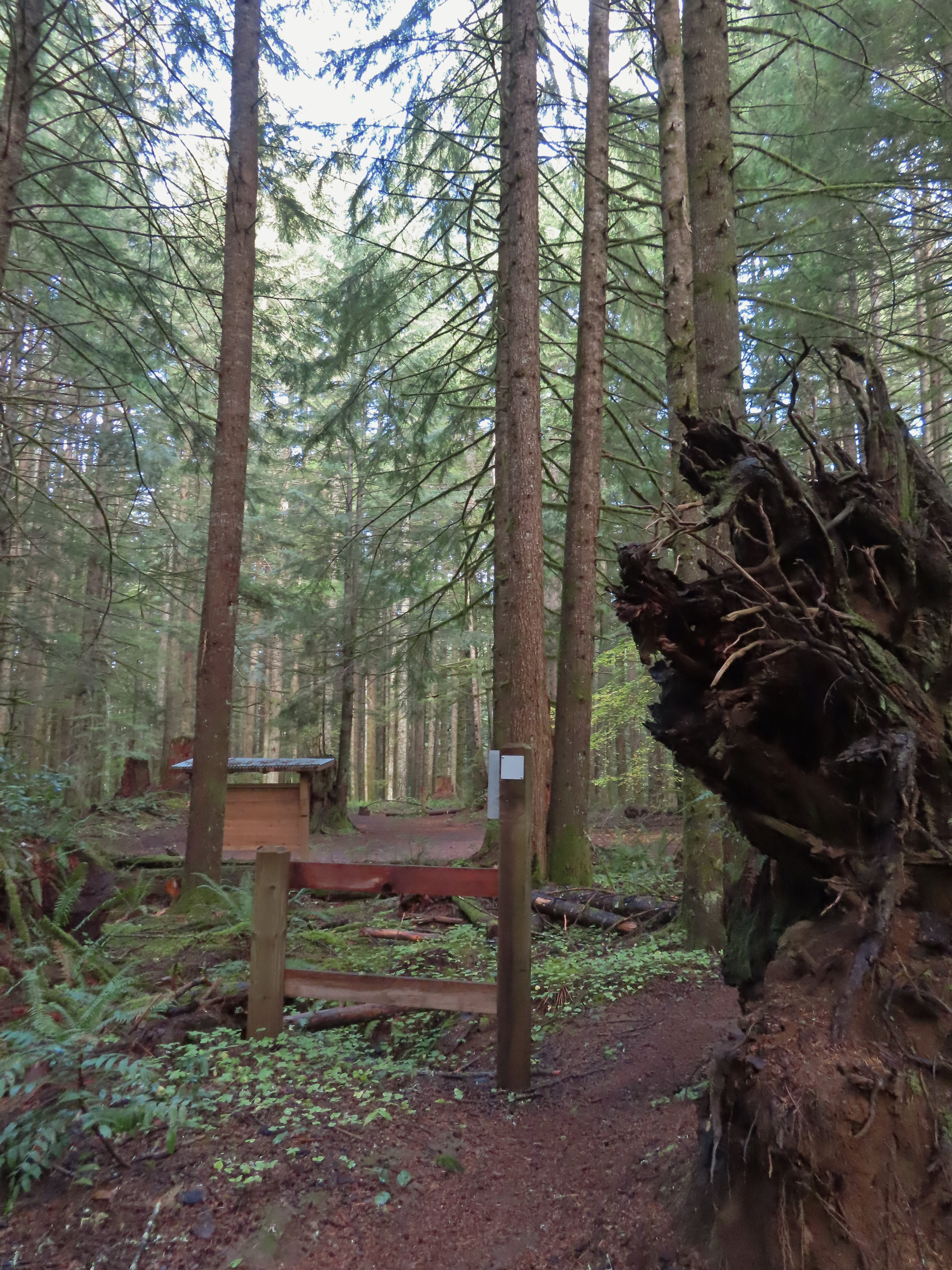
 The map showed the section I had just done as 0.9 miles, but my track was a bit more twisty than the map.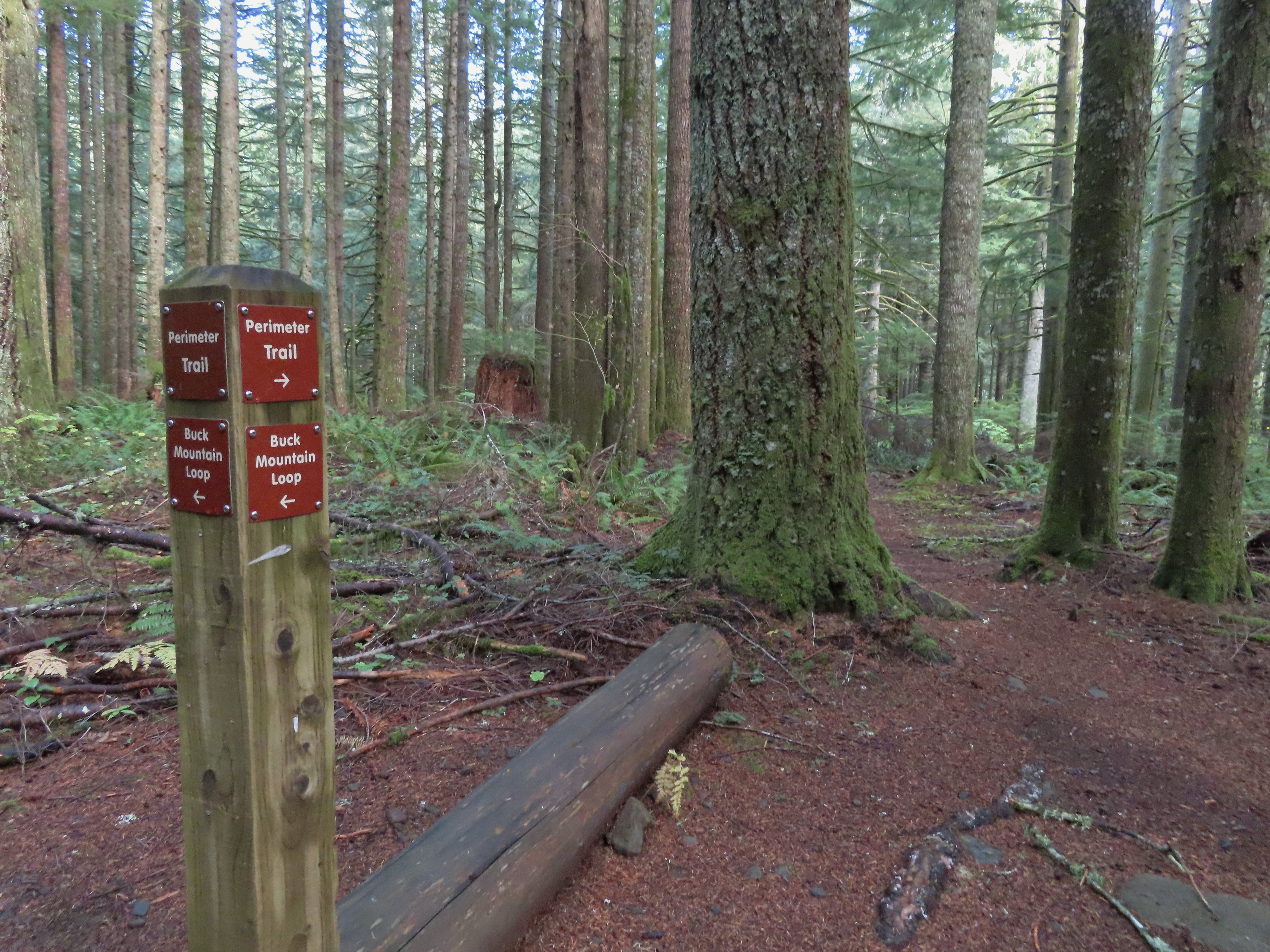
 A small opening on the way down.

 Footbridge over South Fork Silver Creek.
 South Fork Silver Creek


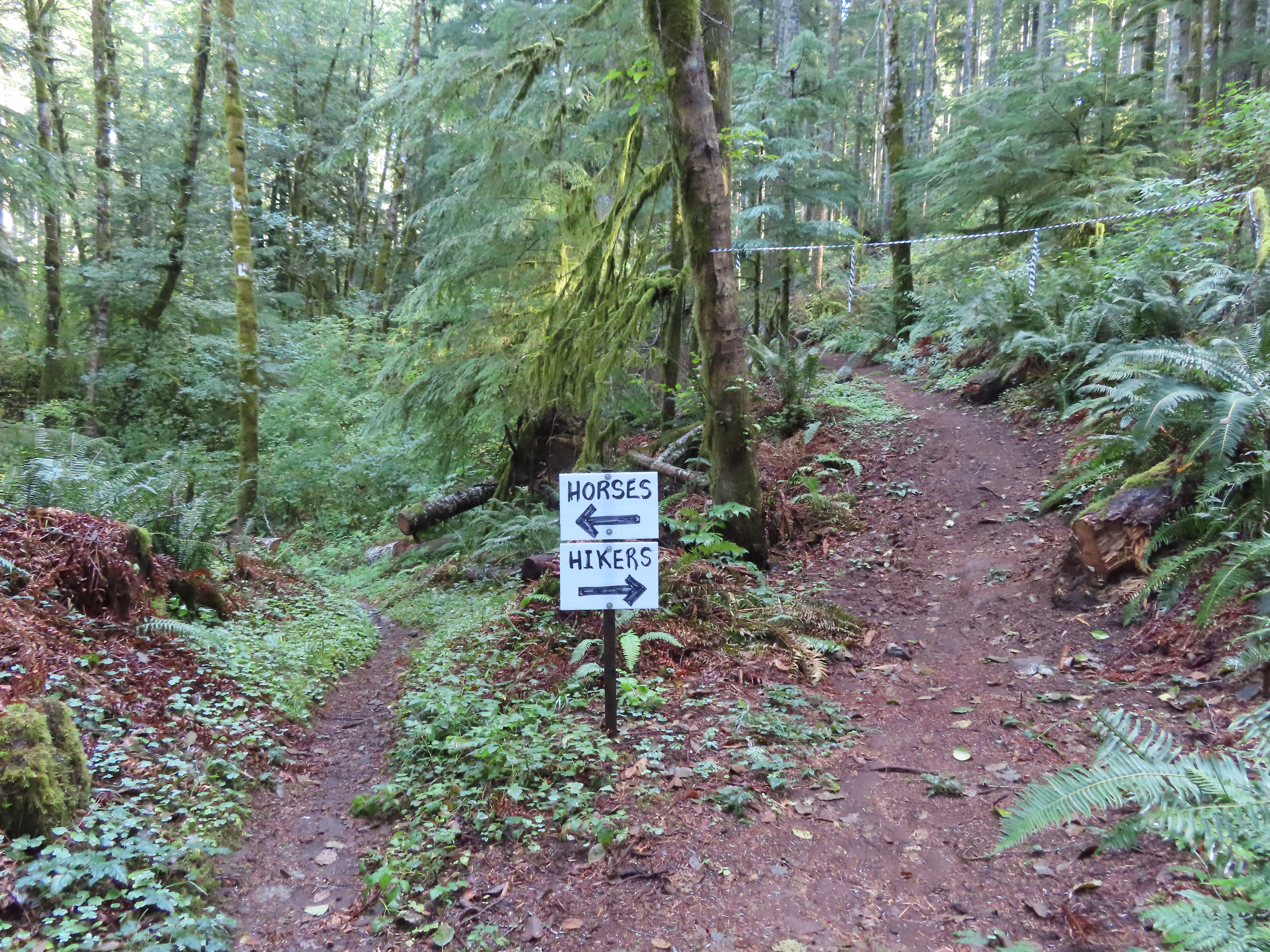 I’m a hiker so I went right here.
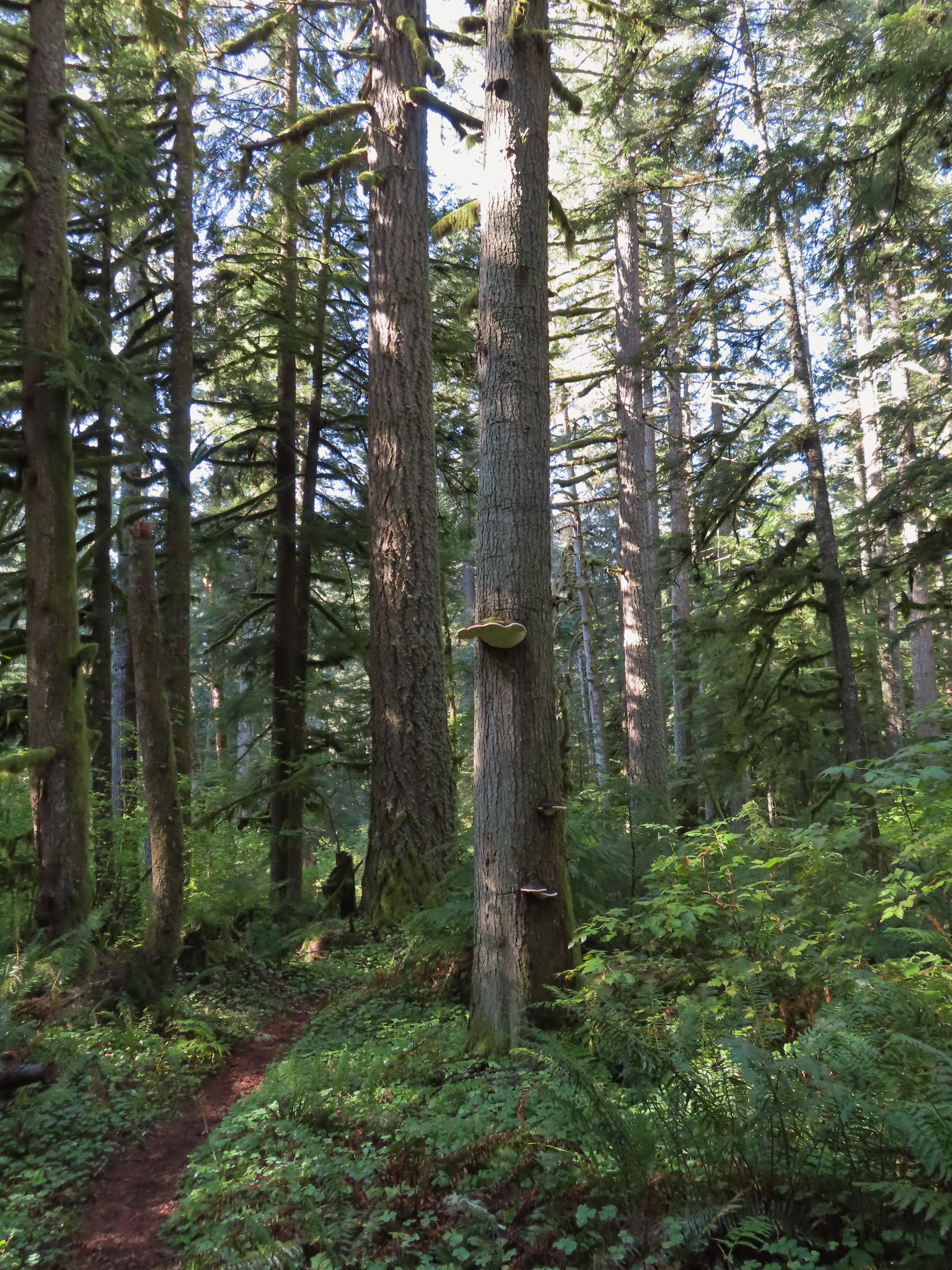 Big fungus on the tree ahead.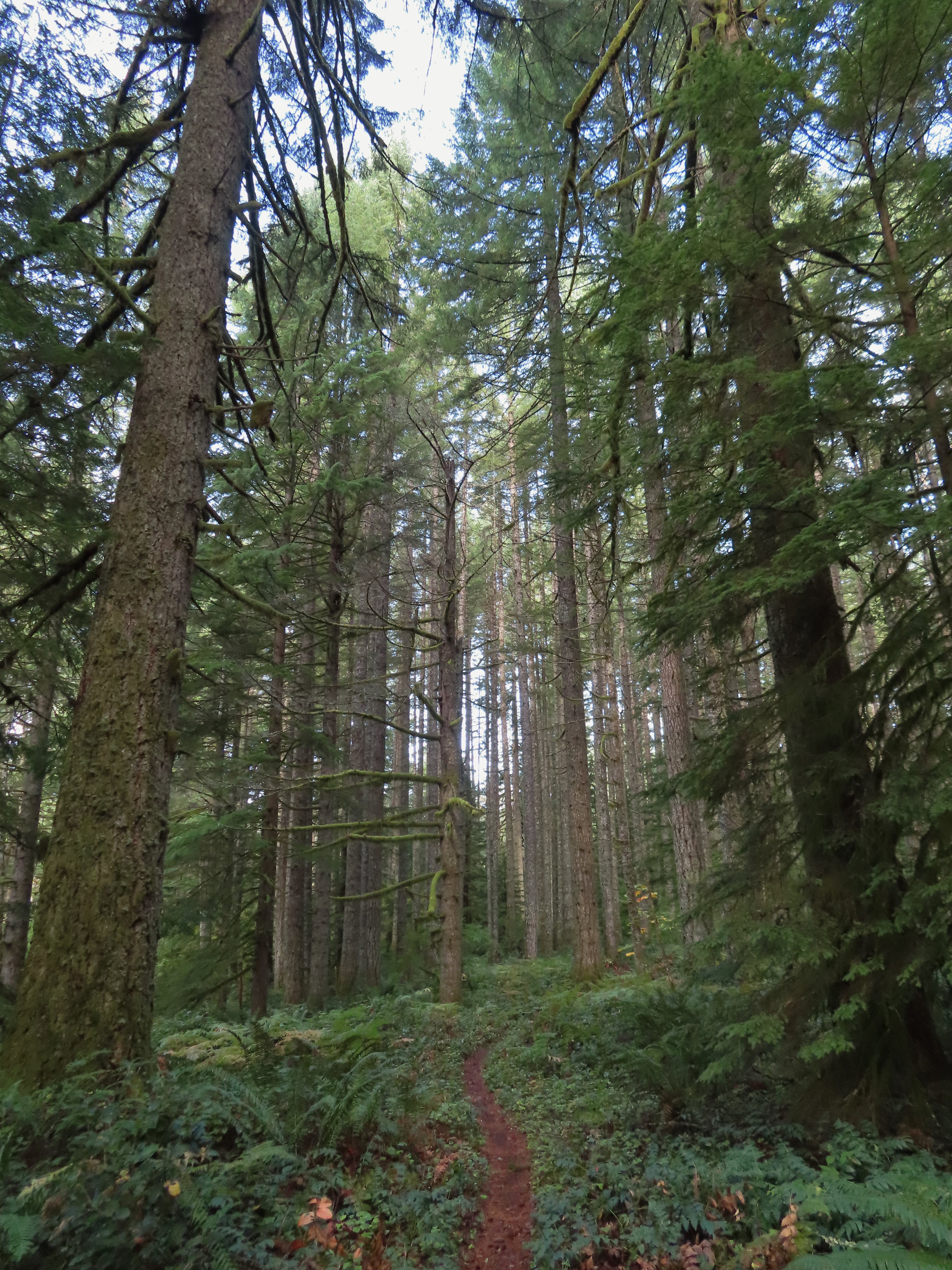

 Map at the Rackett Ridge junction.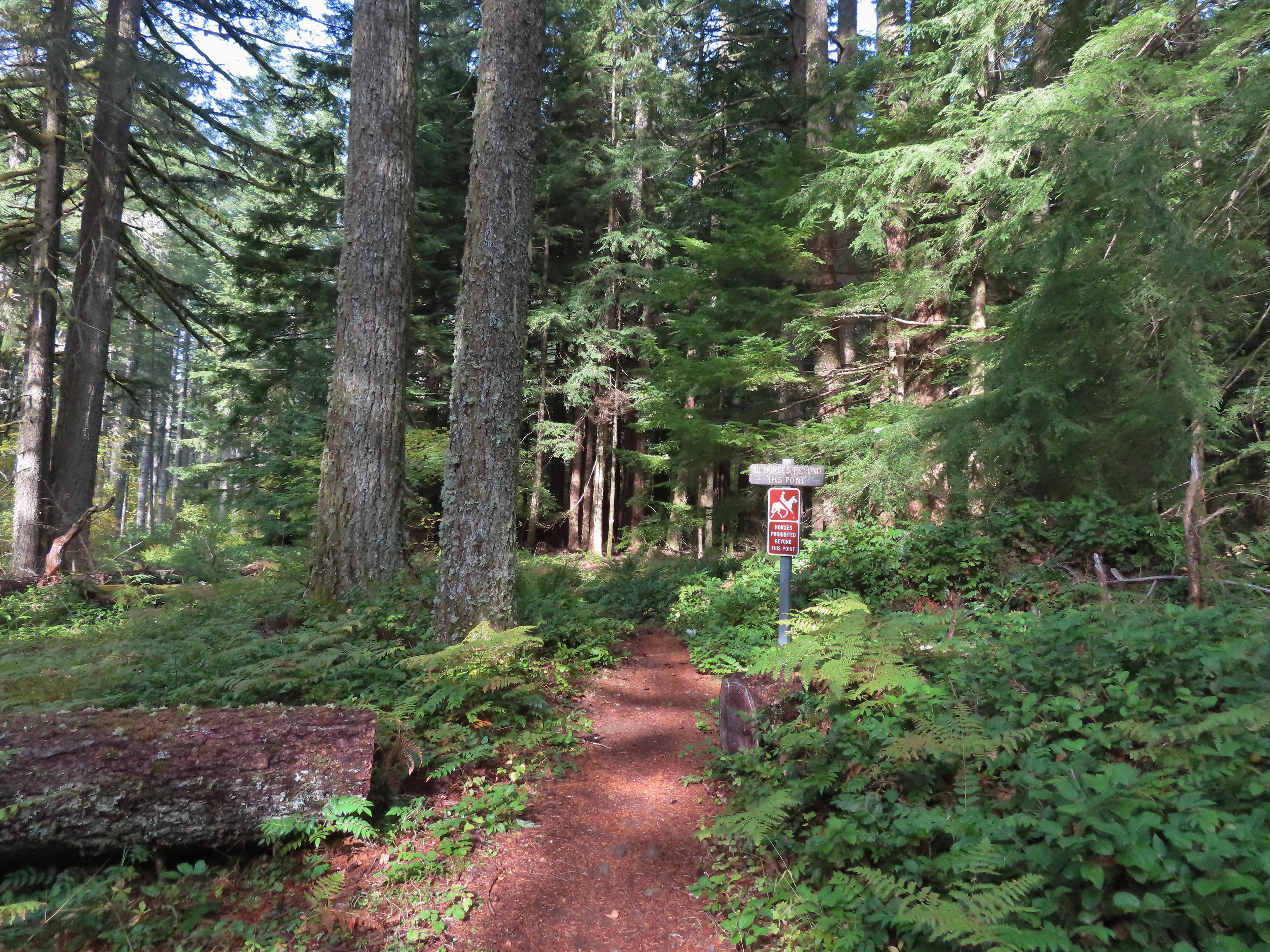
 Another impressive nursery log.
 I stopped in this area to change out of my sweaty socks and into one of the extra pairs I’d brought expecting rain.
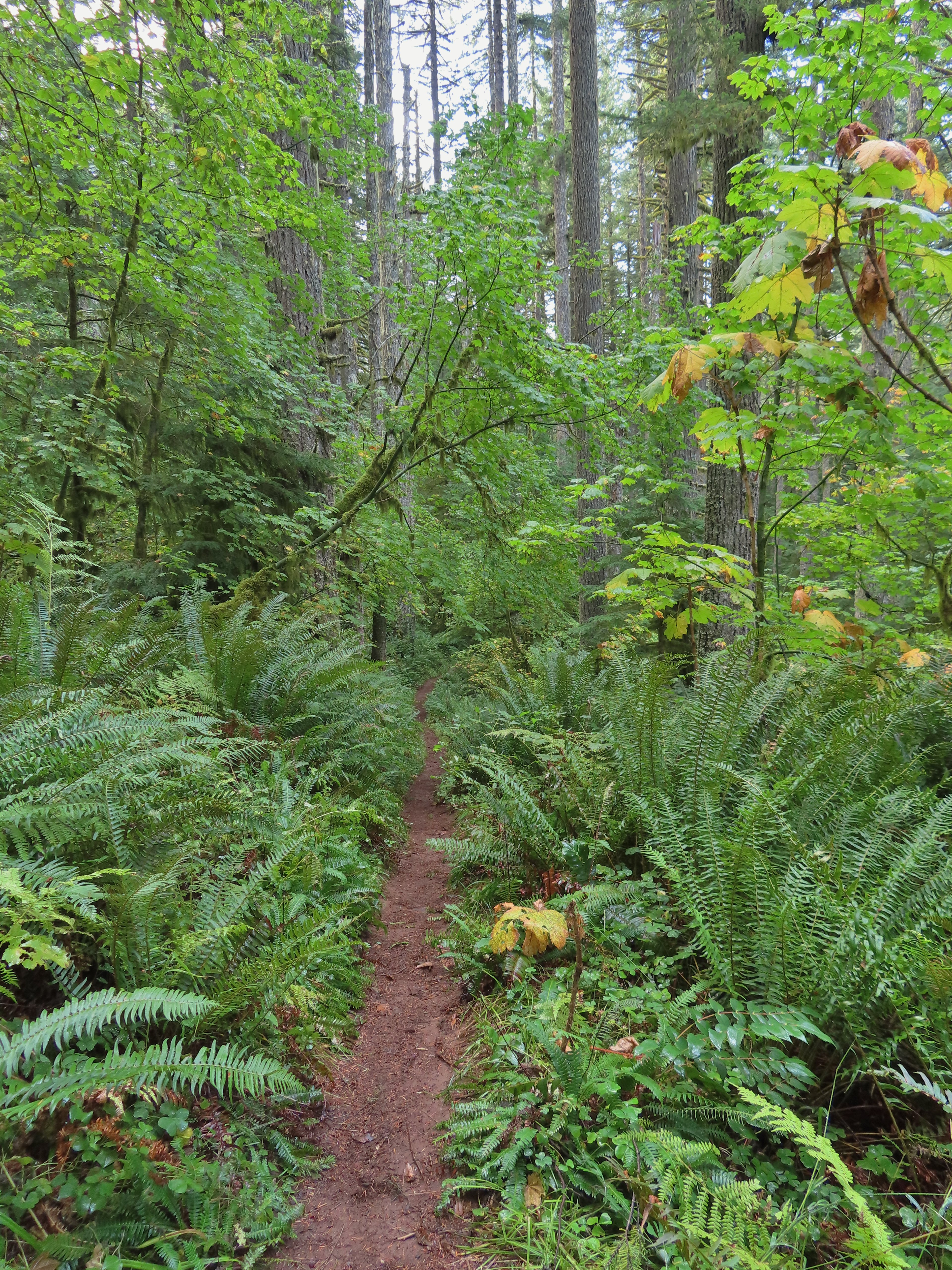 The vegetation went through several changes as the trail lost elevation.
 This was a big tree in the midst of much smaller ones.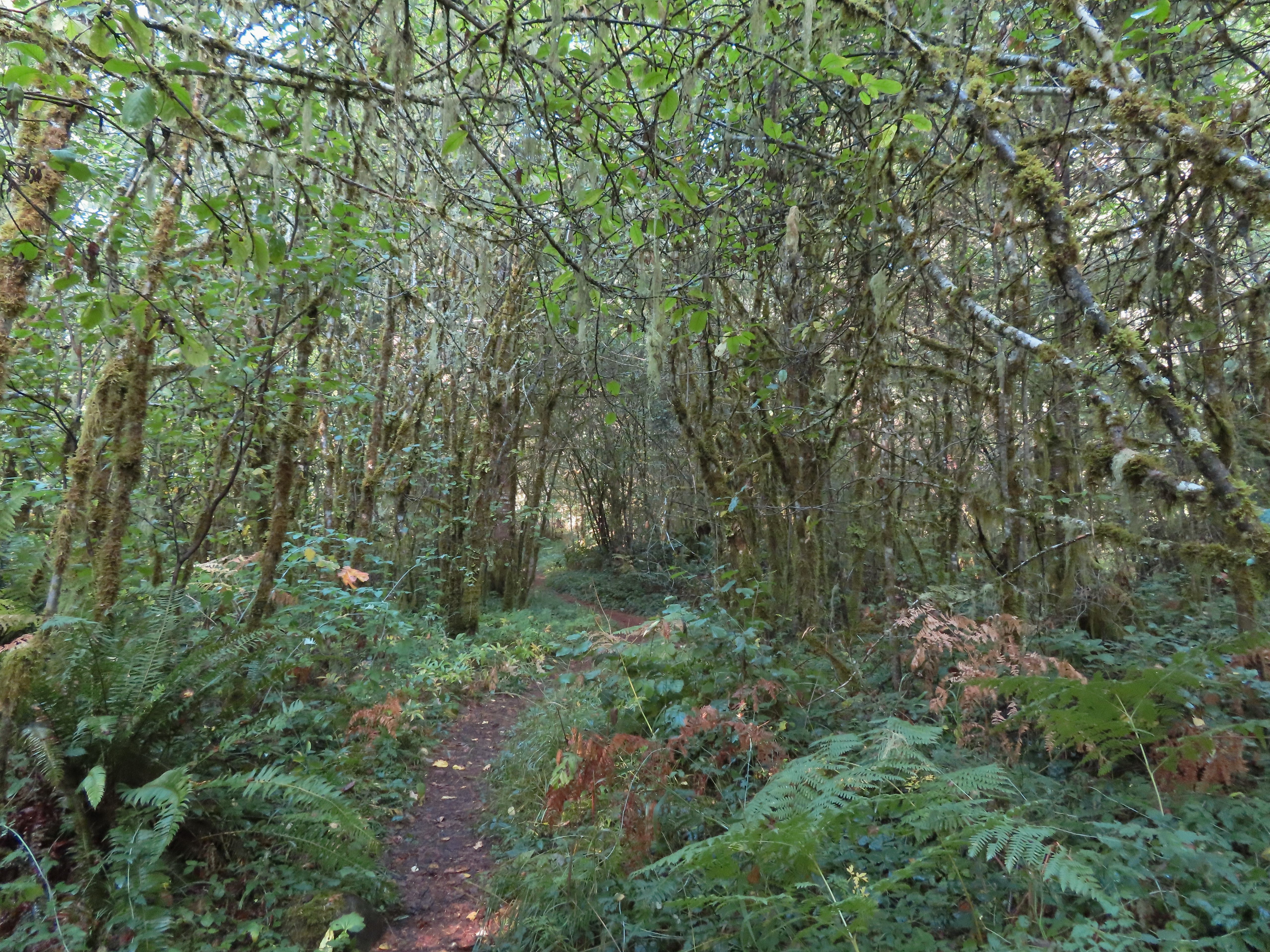
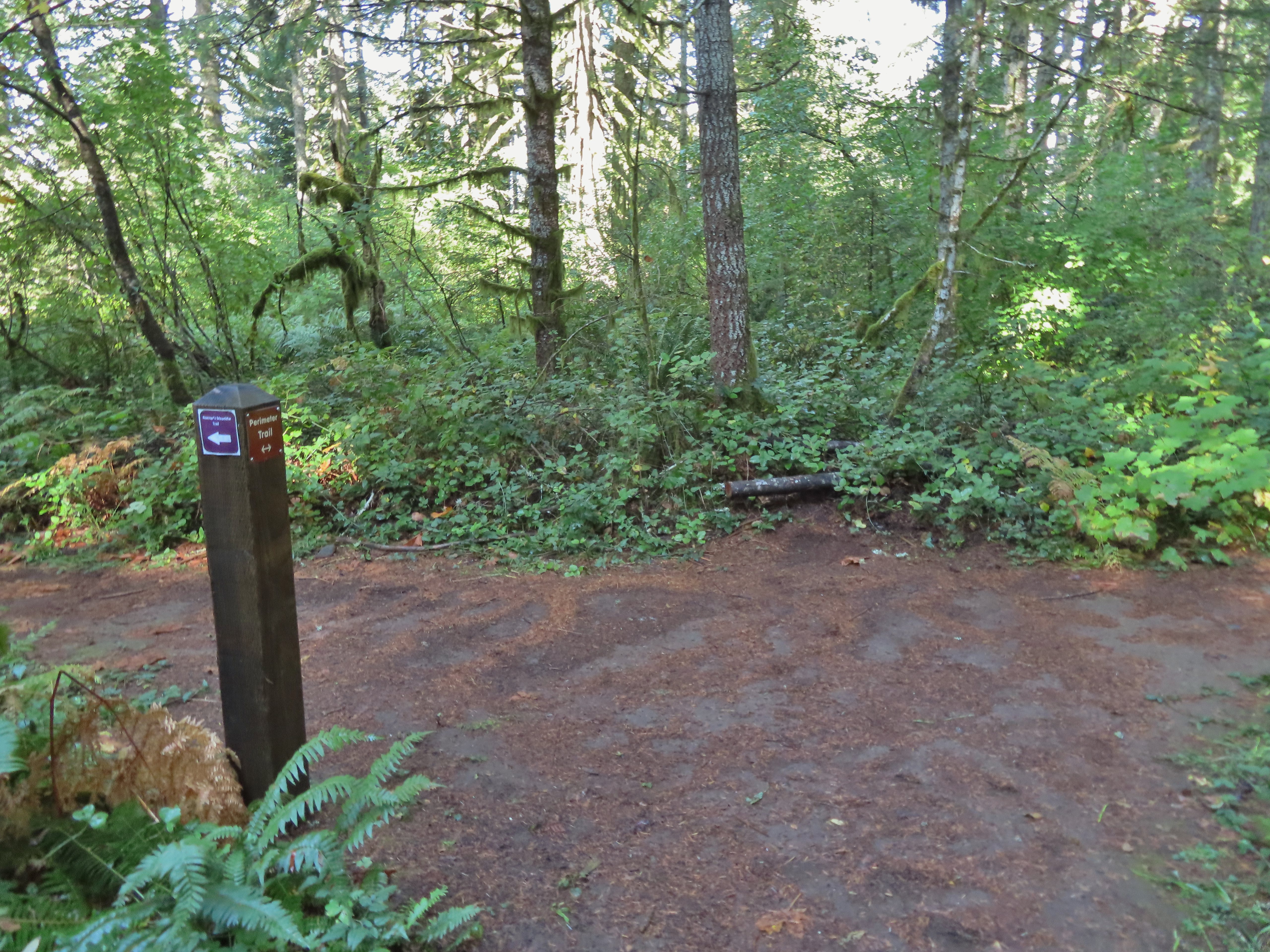 Roemer’s Meadow Trail (left) isn’t shown on the park maps yet, but it was completed in 2021 with help from the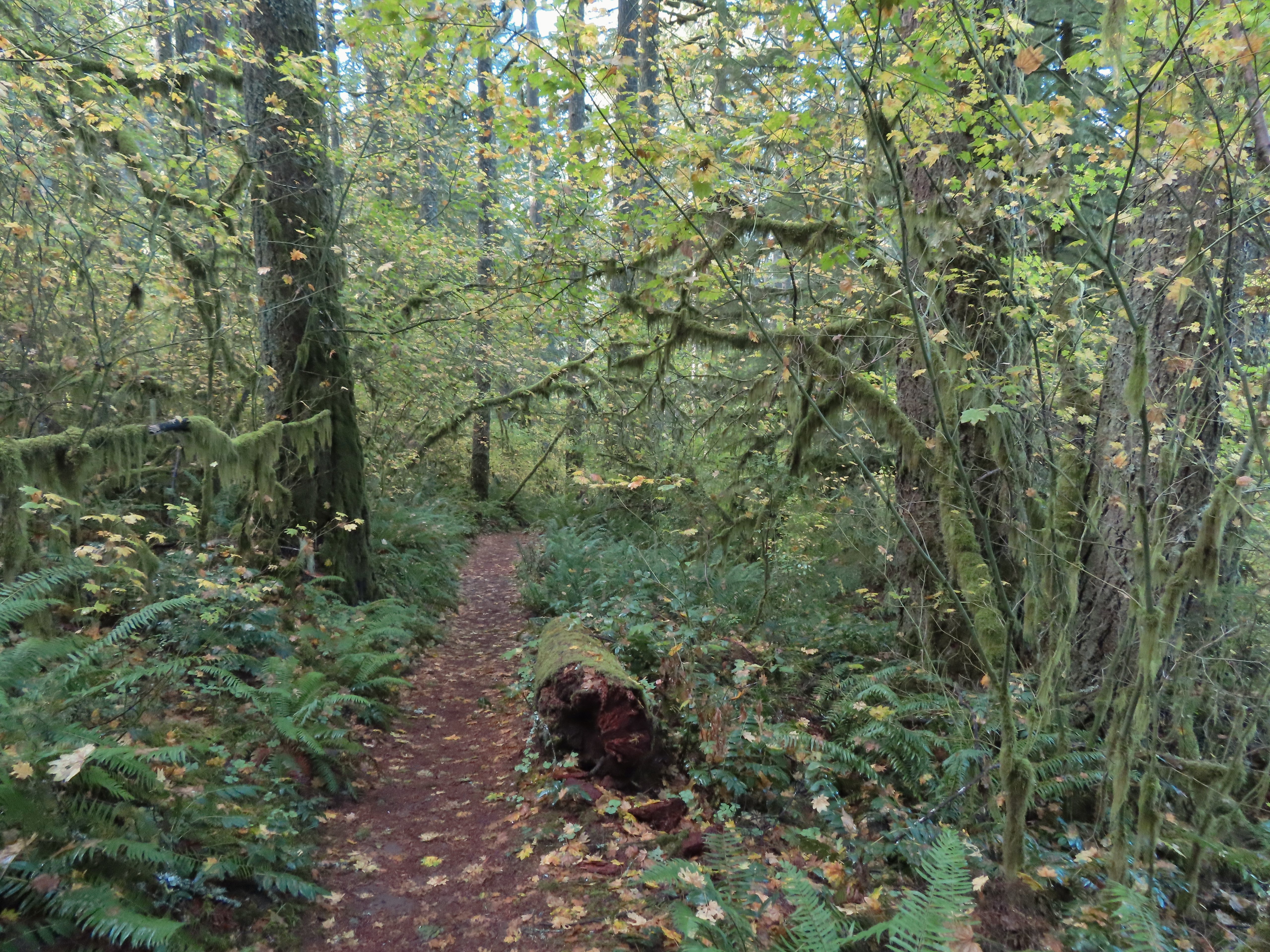
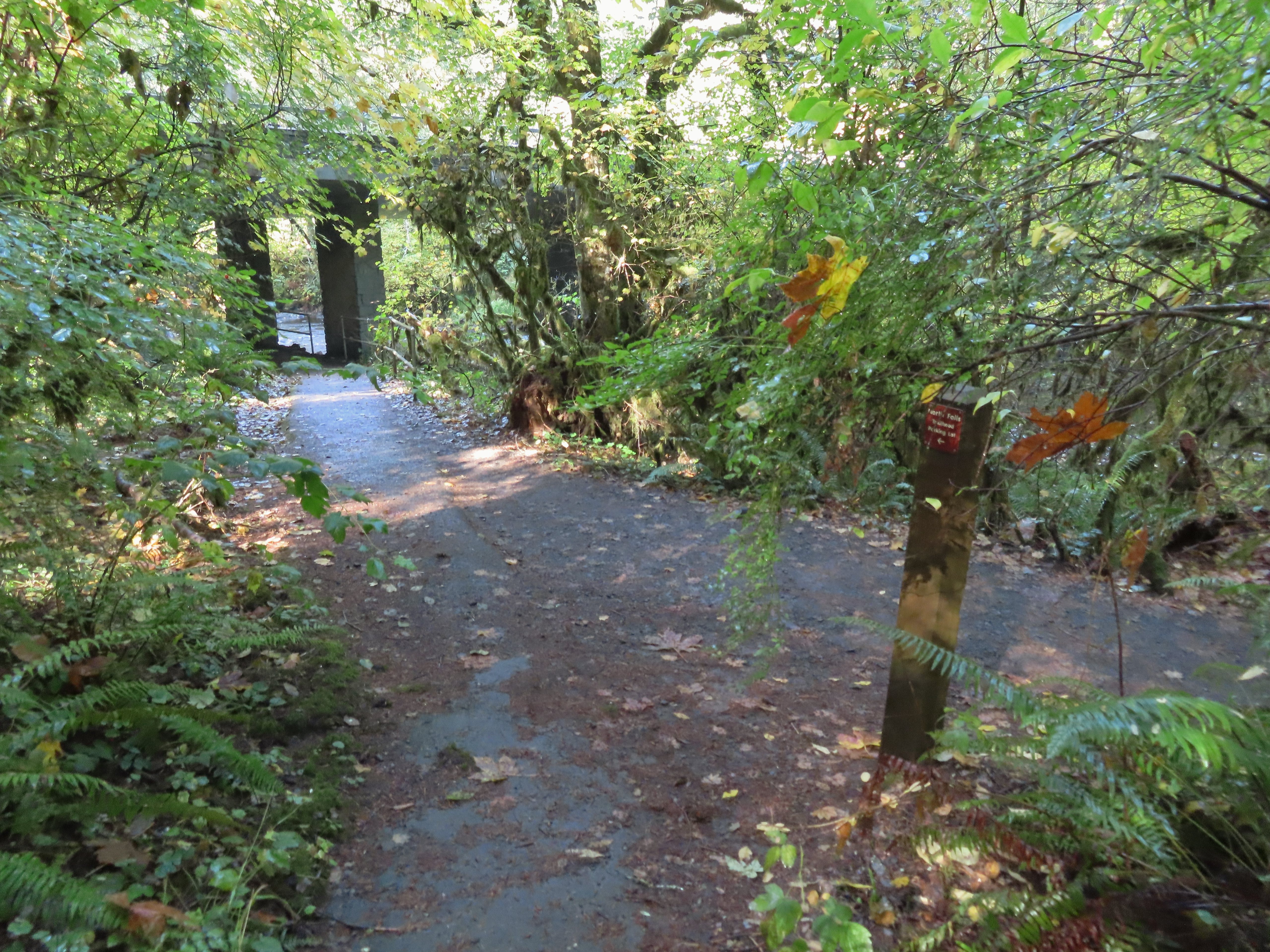 The Trail of Ten Falls junction near Highway 214.
 Looking back up the Perimeter Trail.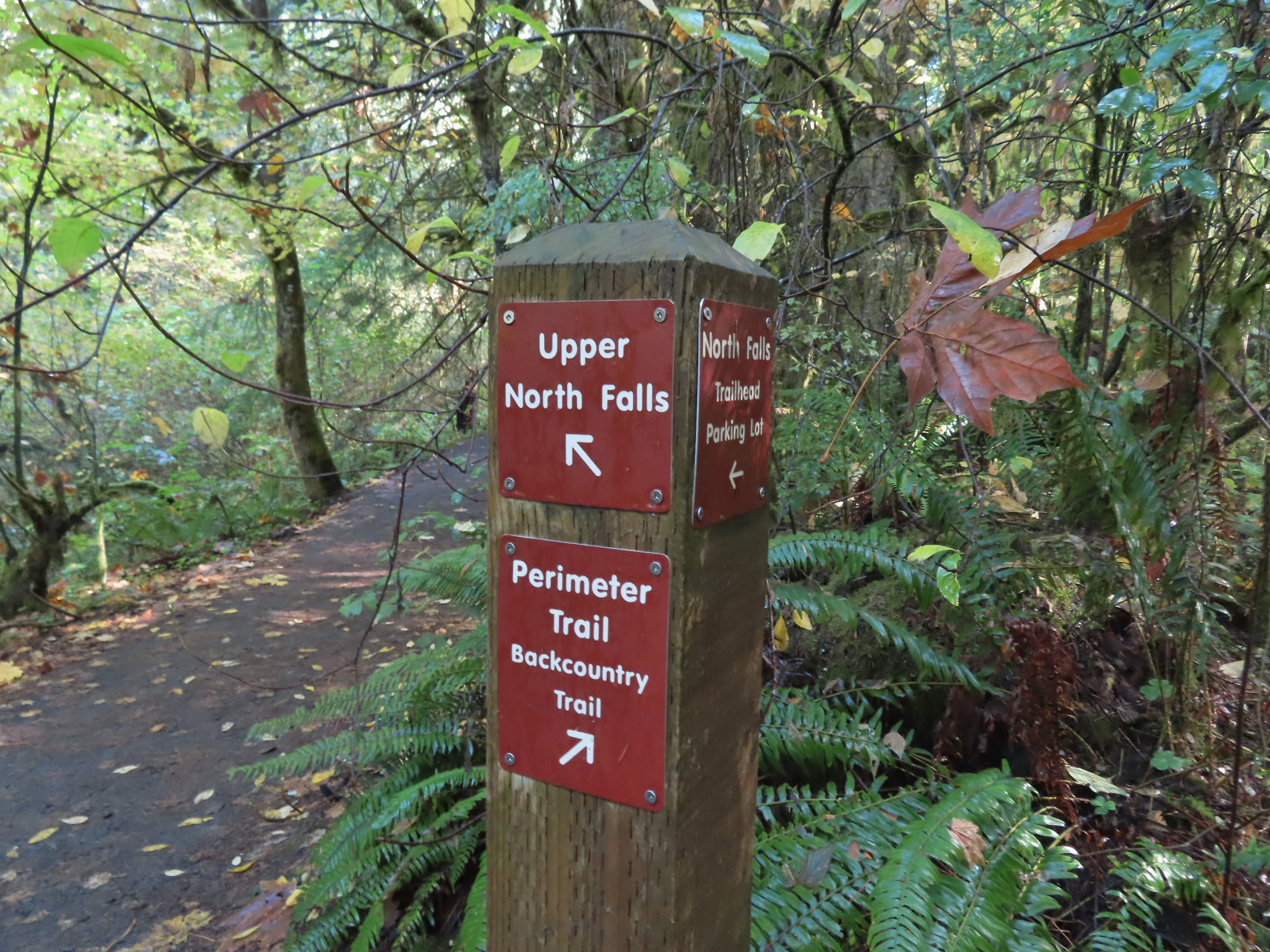
 Upper North Falls
 A left would have taken me to the North Falls Trailhead.
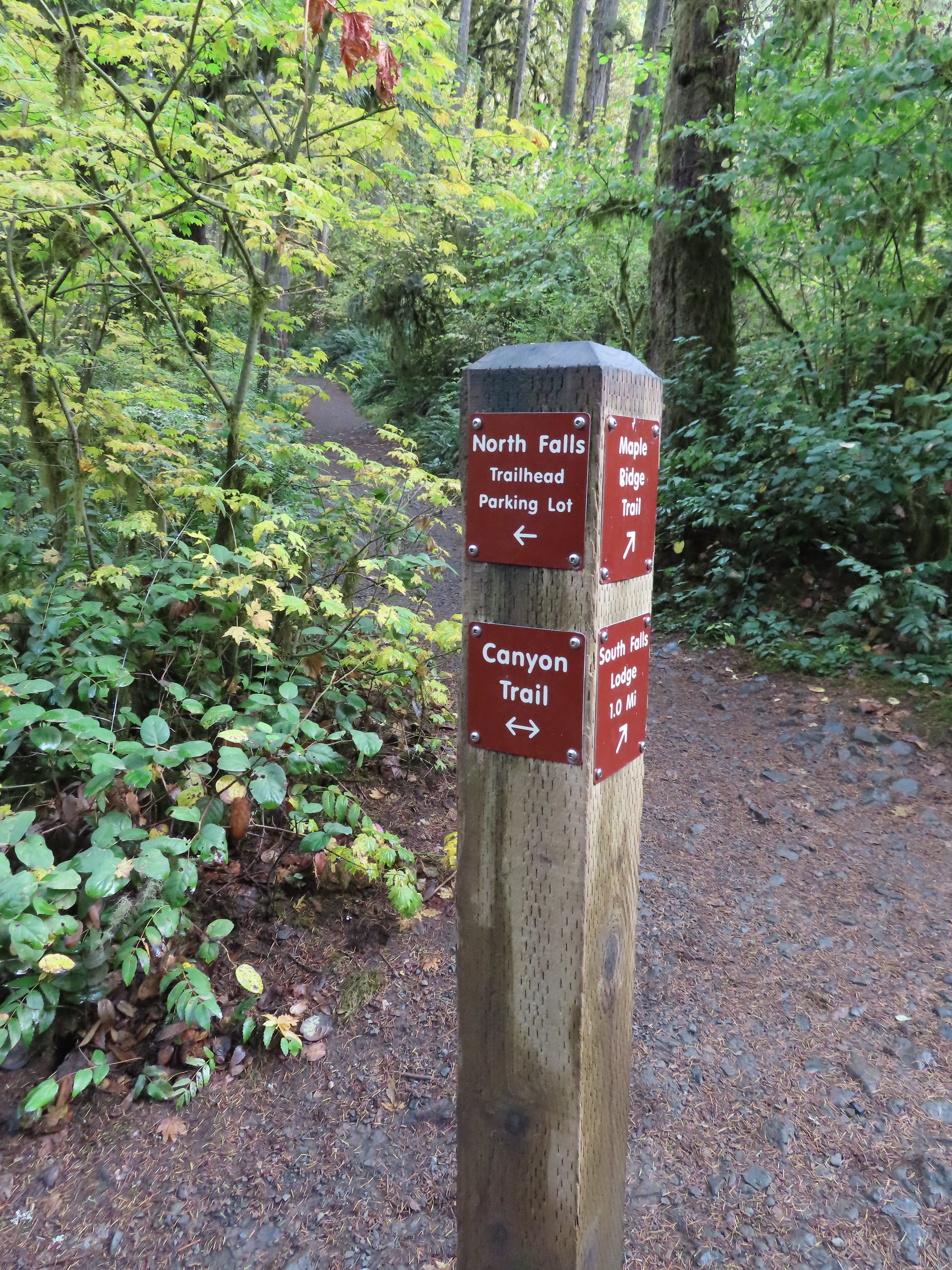
 The Rim Trail to the left and Canyon Trail to the right, both part of the Trail of Ten Falls.

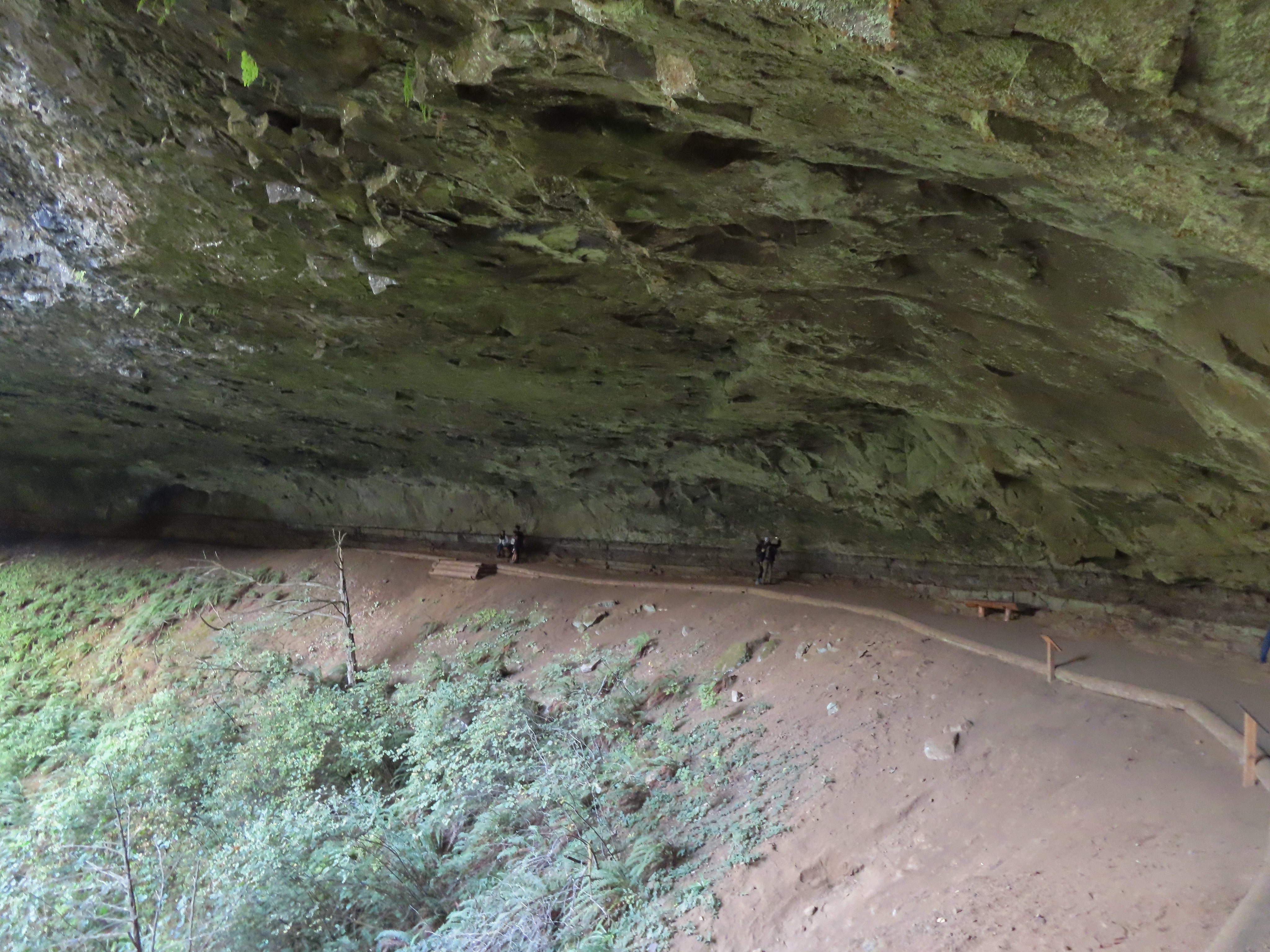
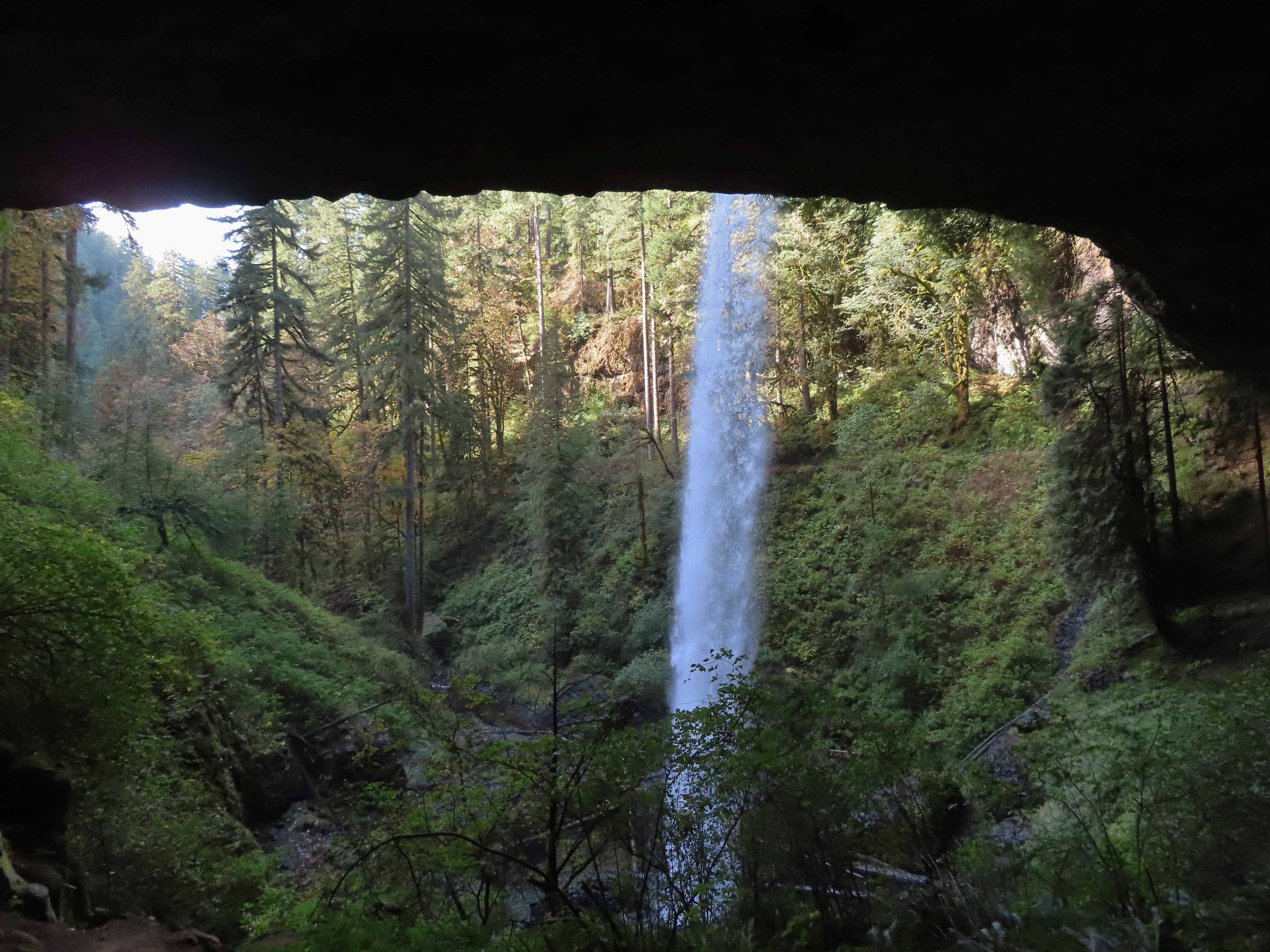
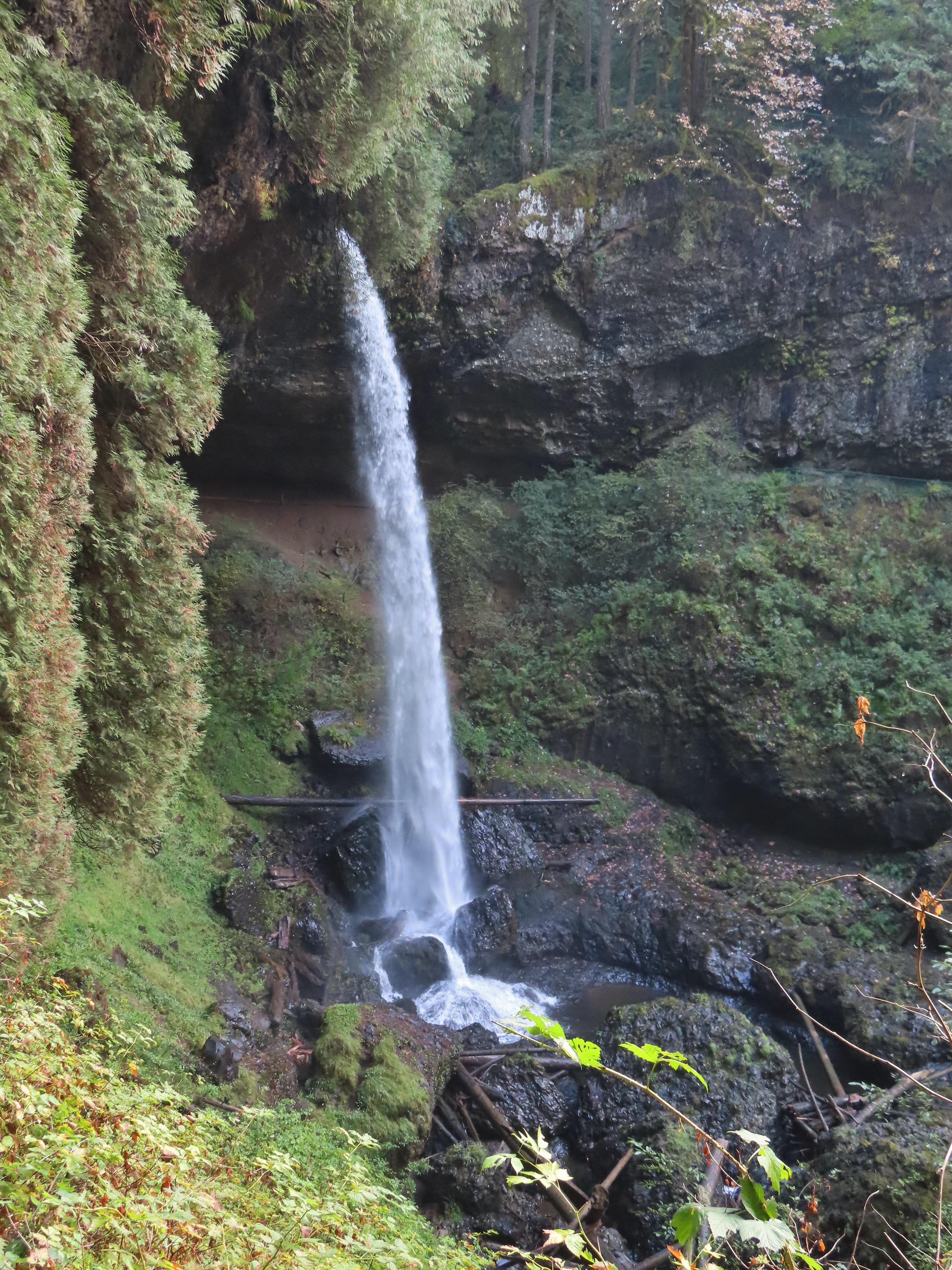

 I’m always impressed by the size of this rock in the creek.
 Not Twin Falls, but a nice little cascade nonetheless.
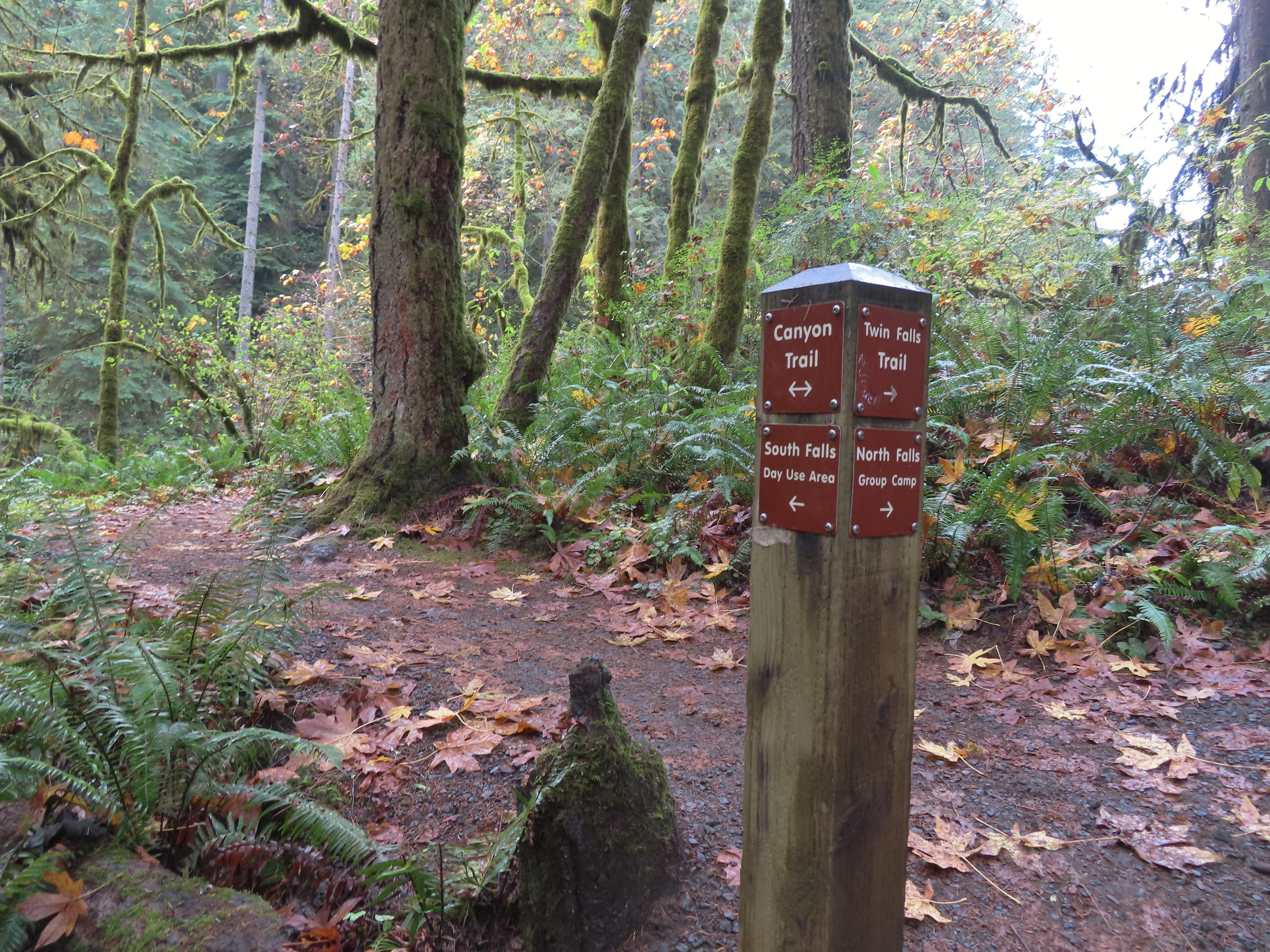 This post could be a little confusing without a map. The Twin Falls Trail climbs uphill to a group camp and does not lead to Twin Falls. The falls are the opposite side along a very short spur trail that connects at either end to the Canyon Trail.
 Twin Falls isn’t very easy to see from the spur trail either even though you’re right next to it.
 Twin Falls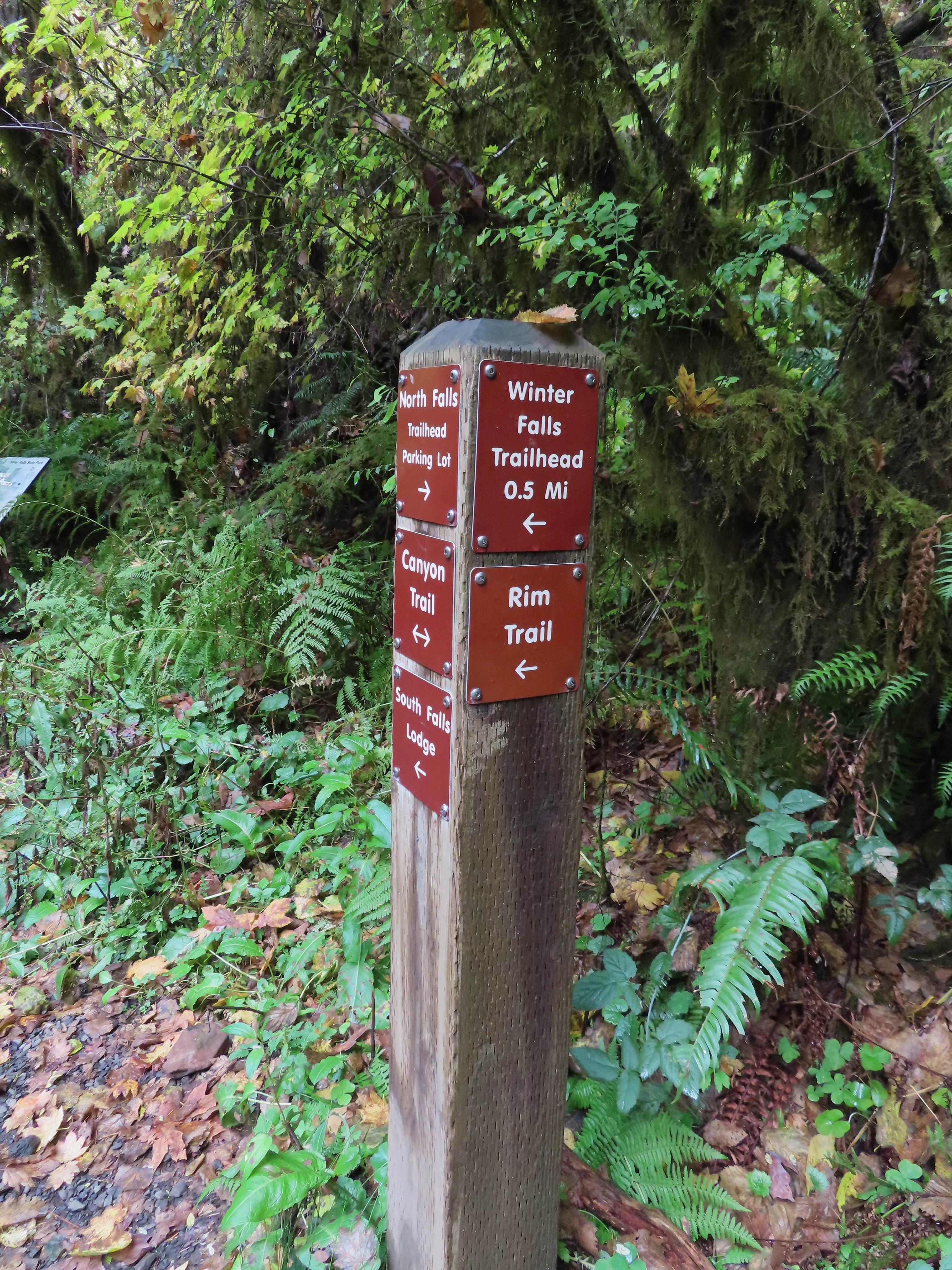

 North Fork Silver Creek
 Winter Falls, as the name suggests it’s not much of a waterfall outside of Winter when rain and snowmelt provide more water.
 With the dry Summer it isn’t a great Fall color year but there was a decent display along this trail.
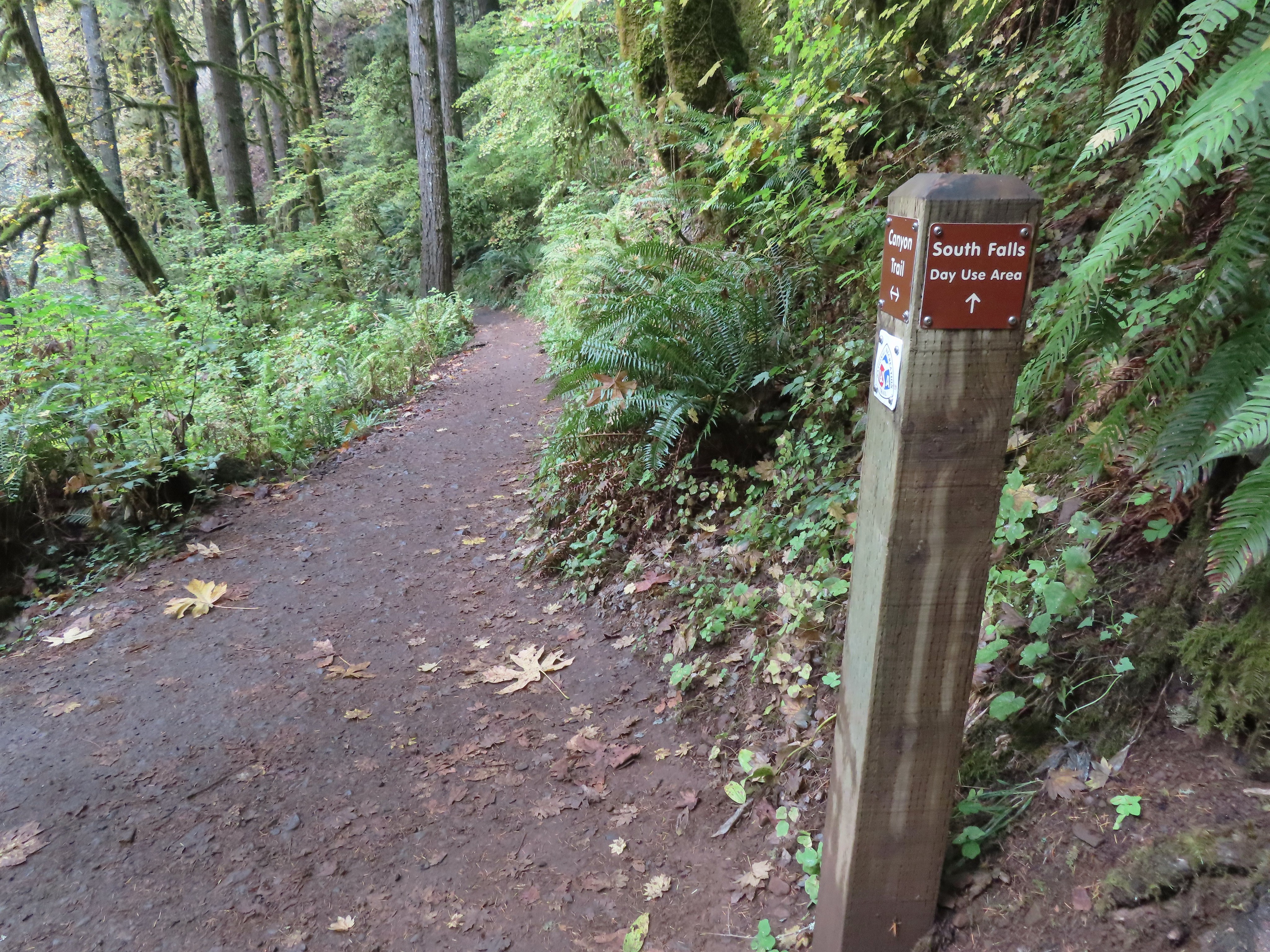 I turned left here on the spur trail behind Middle North Falls.


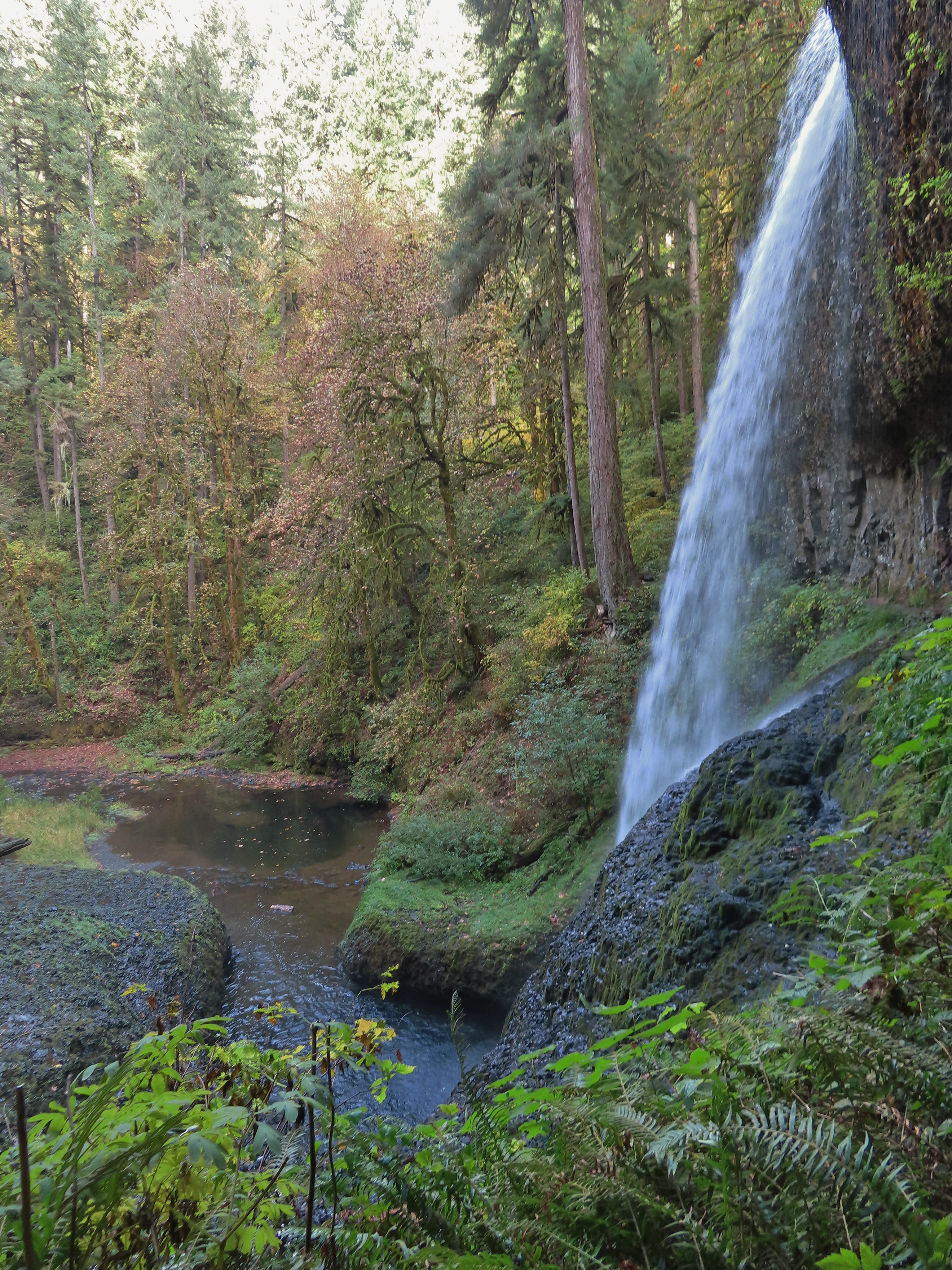
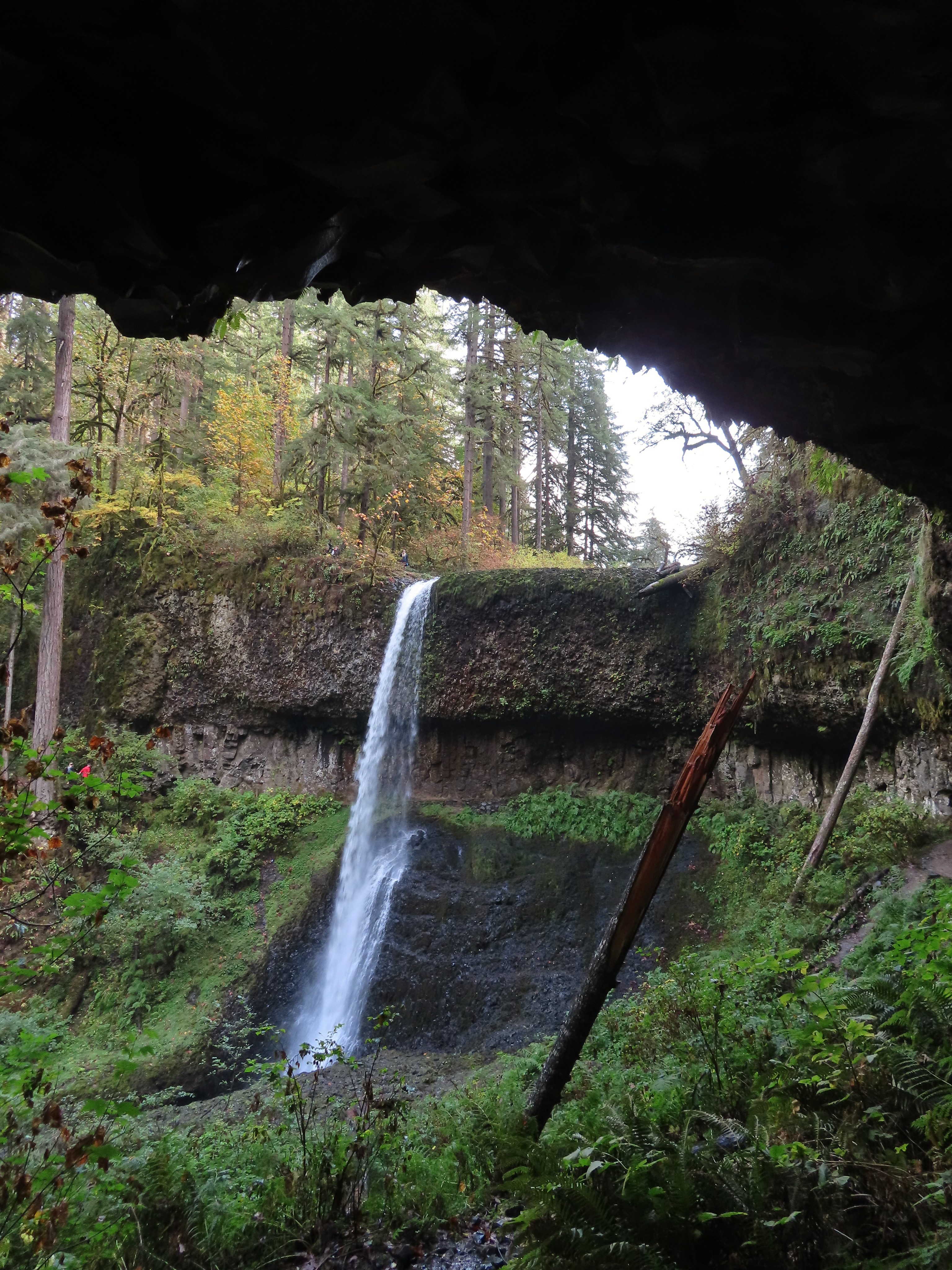
 Middle North Falls from the Canyon Trail.
 The 27′ Drake Falls.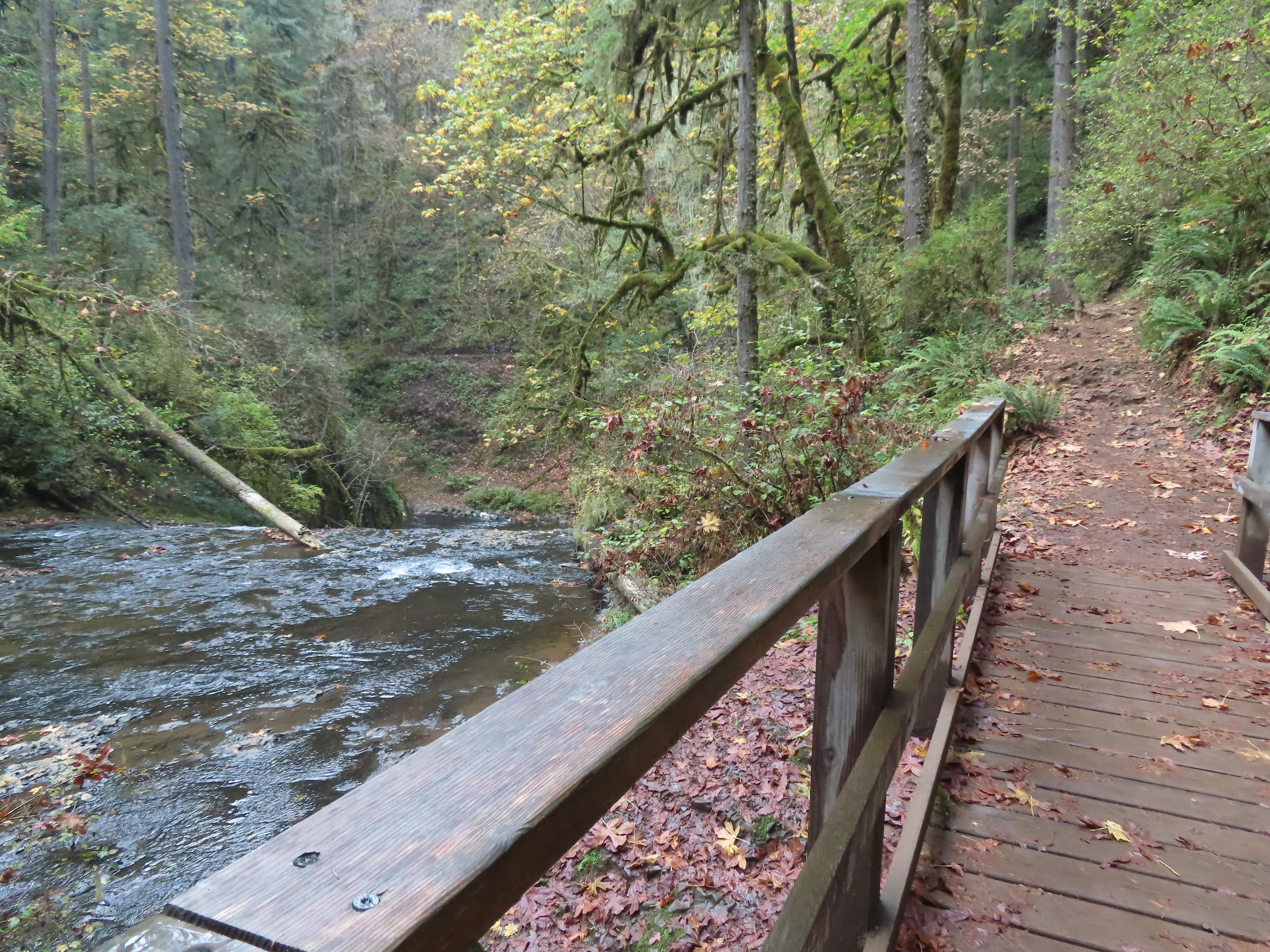

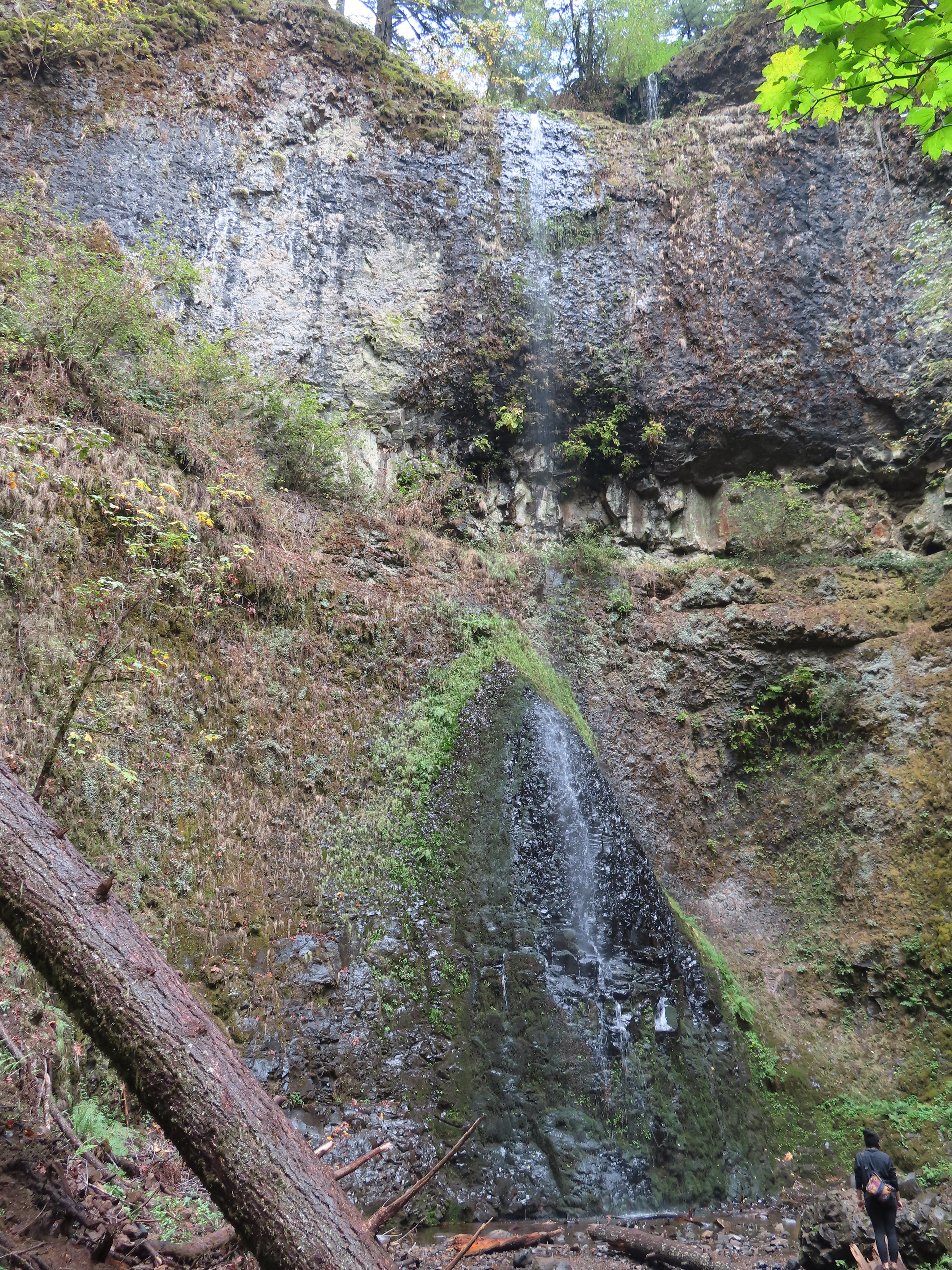 The hiker at the base gives a good idea of the fall’s height, you just have to use your imagination to add water.

 The Canyon Trail crosses the creek just downstream from Lower North Falls then makes a short climb to get above the canyon cliffs.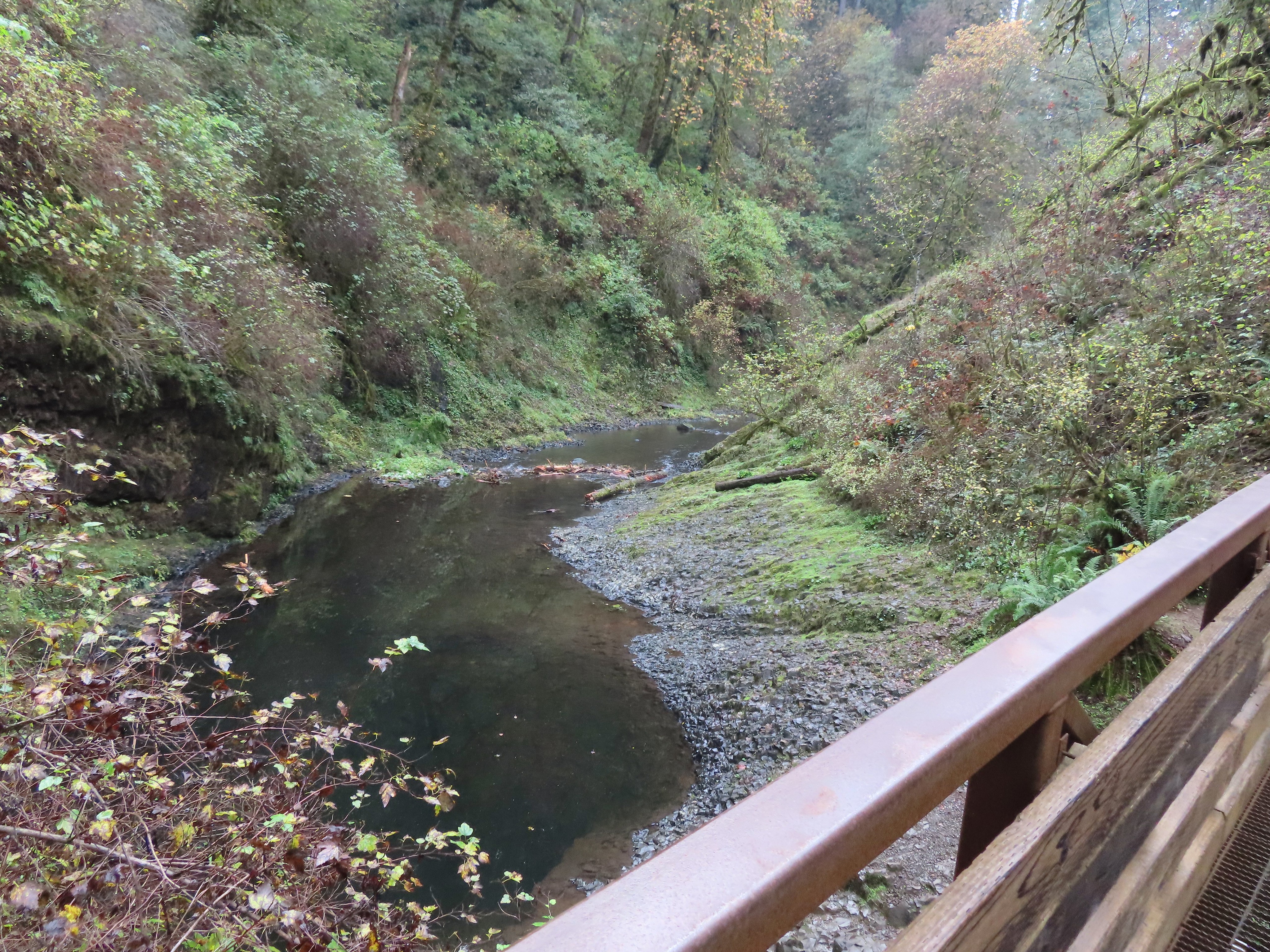
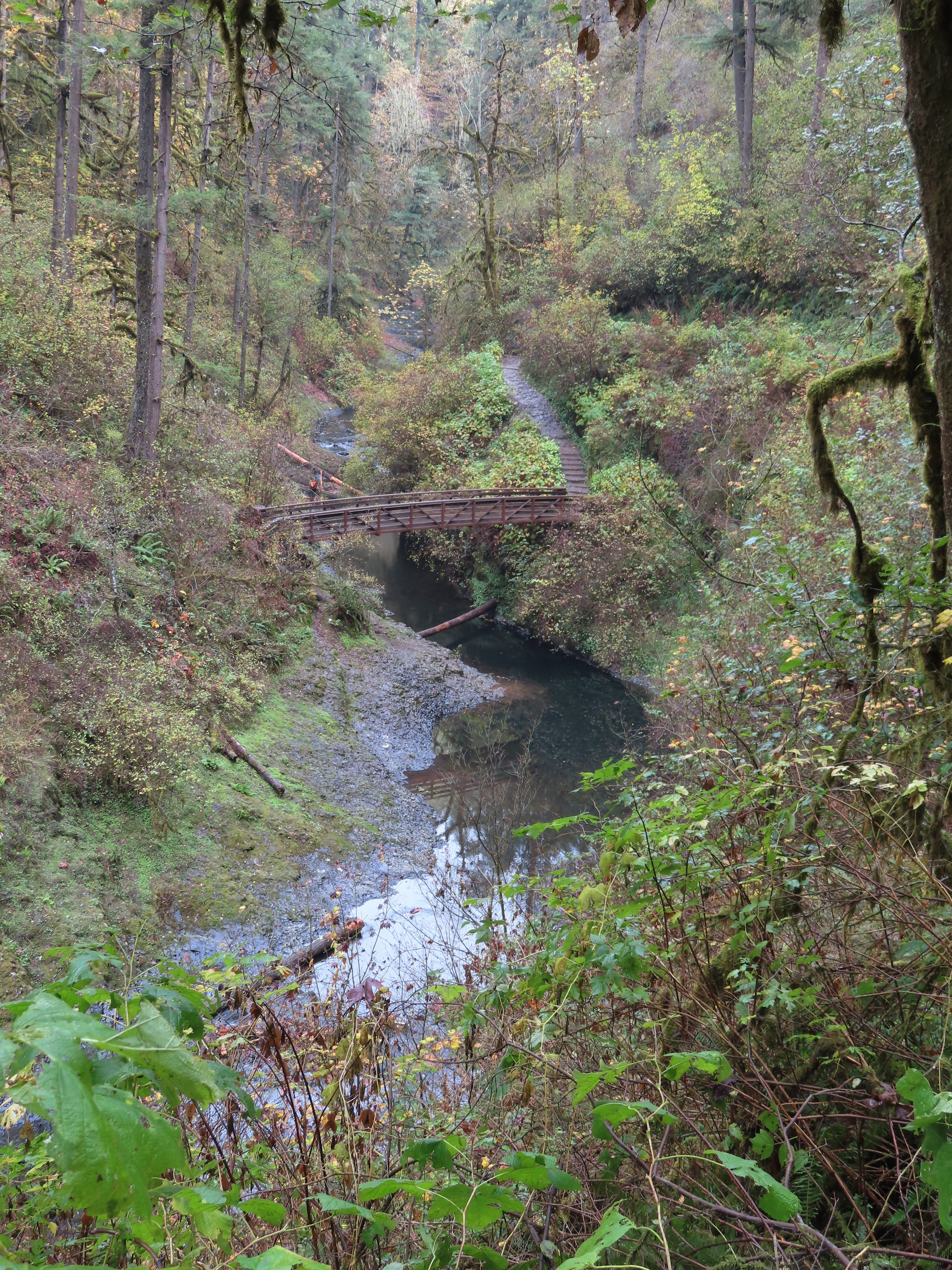
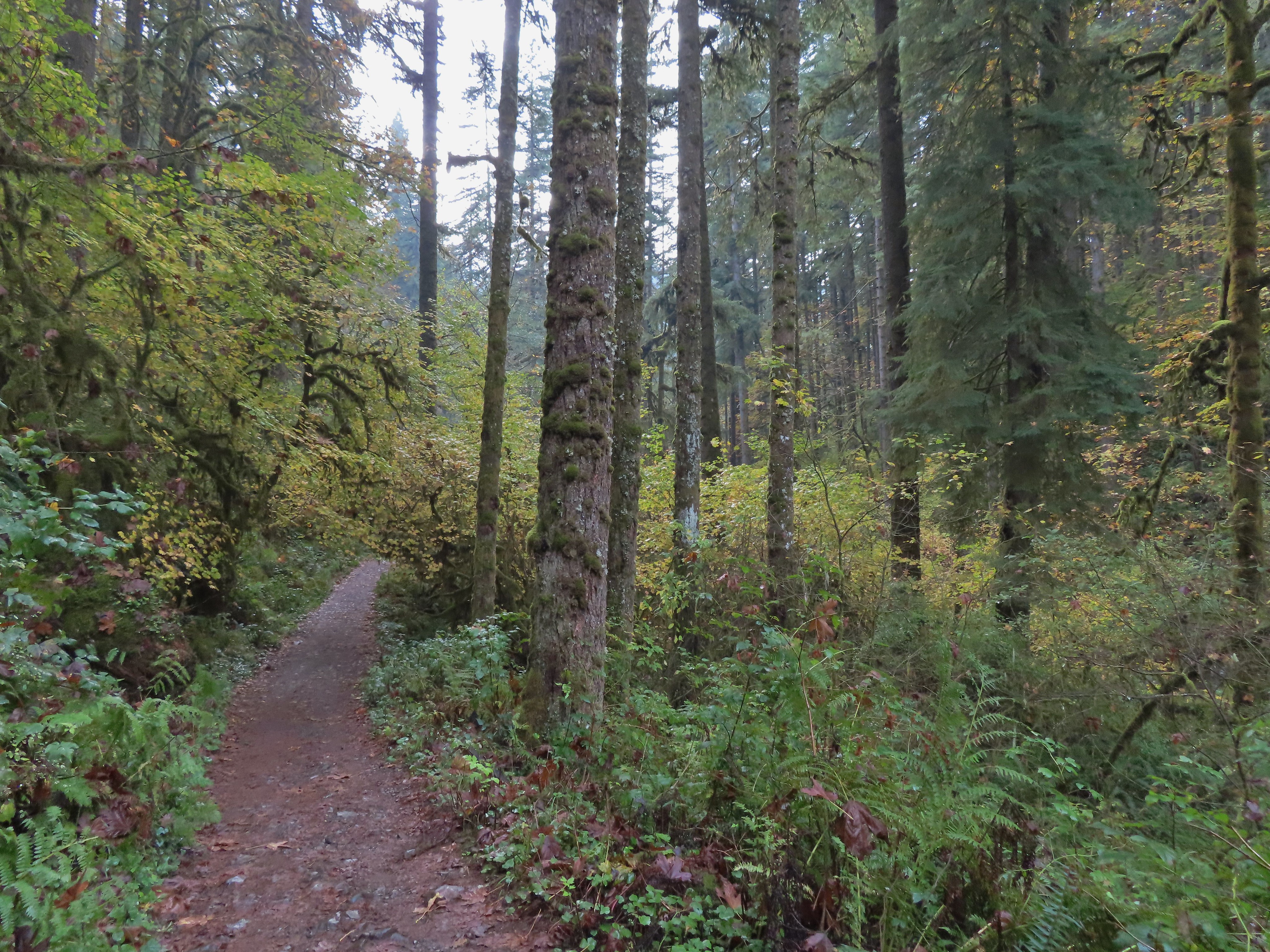
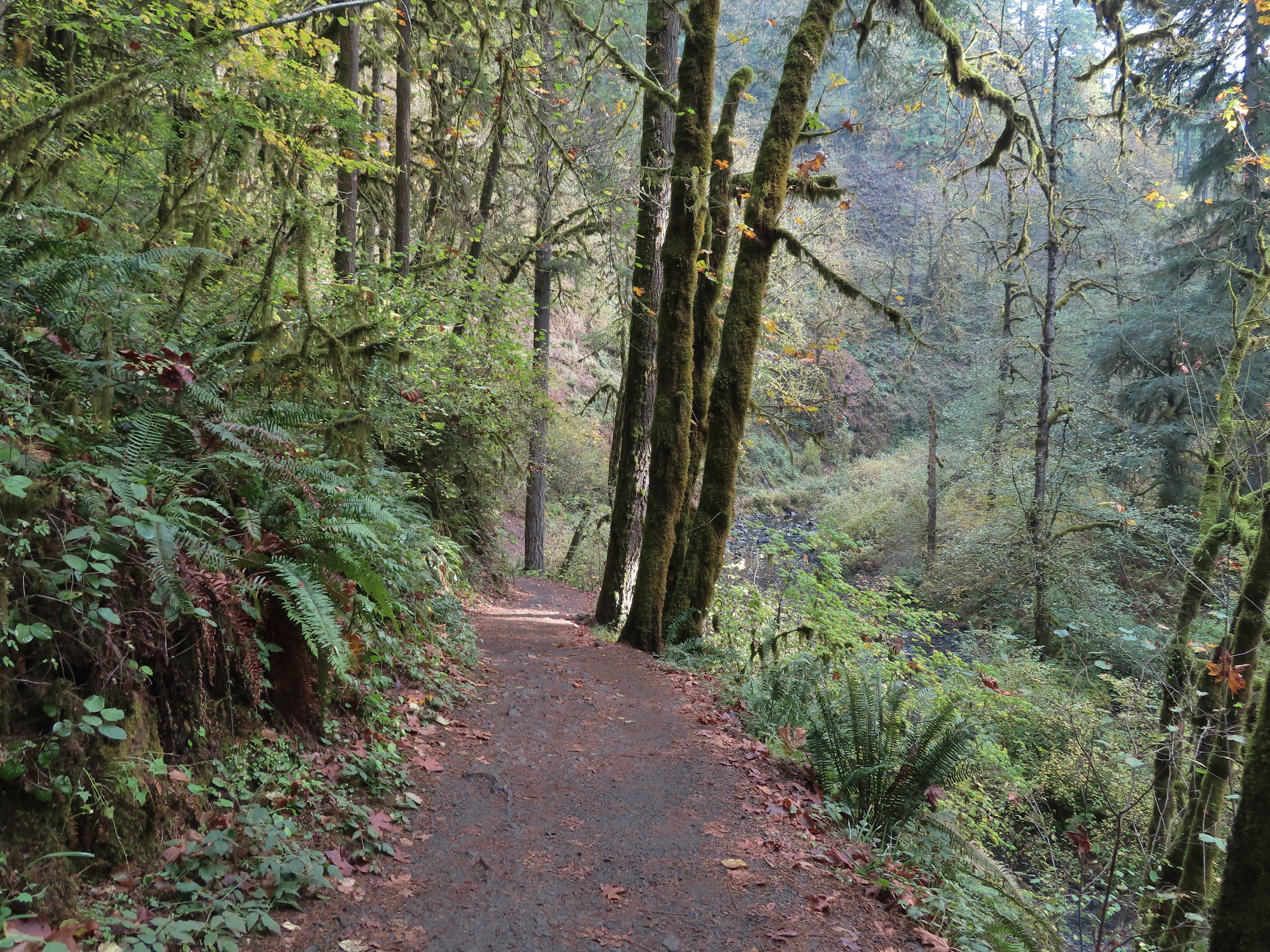
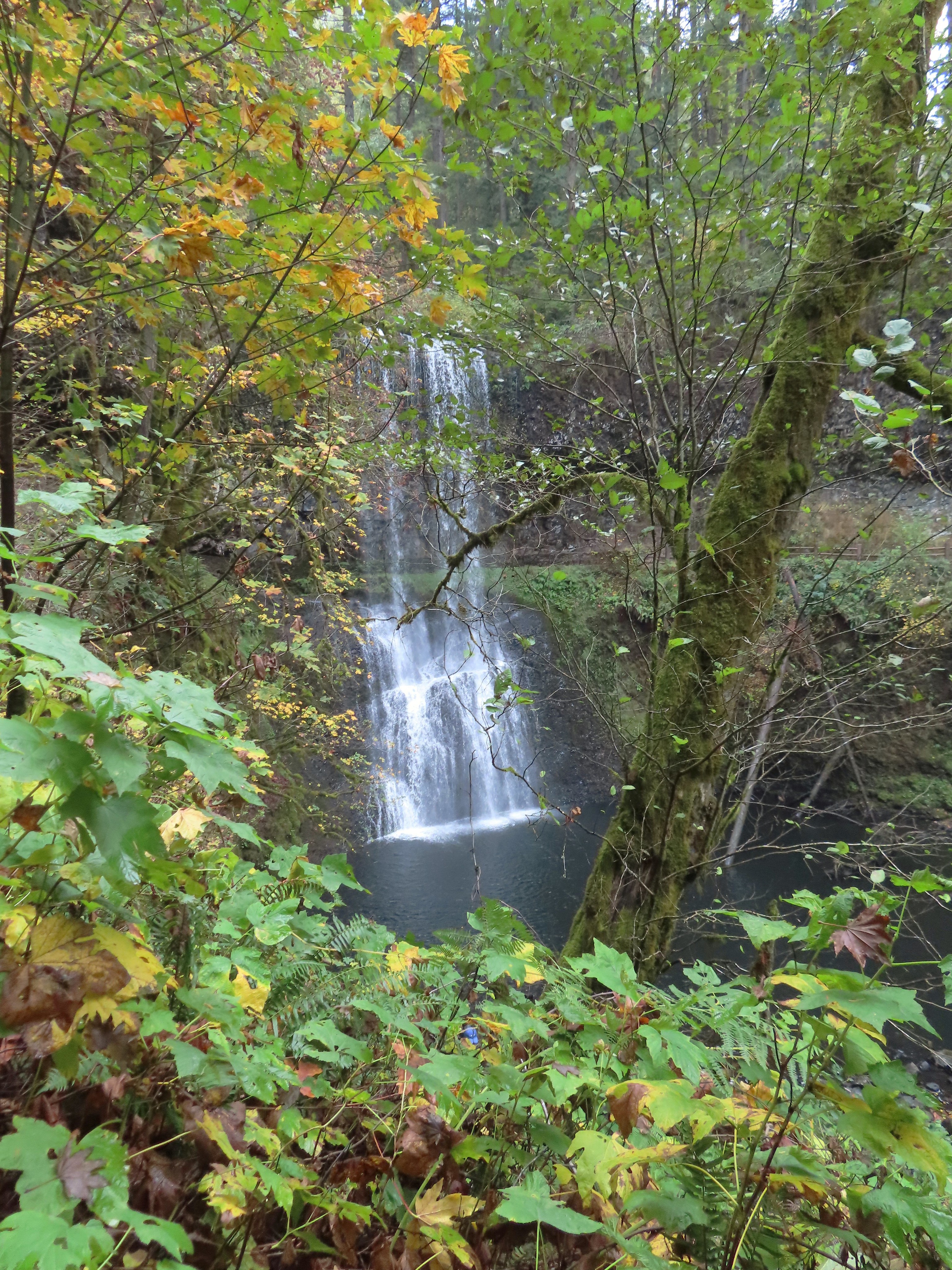
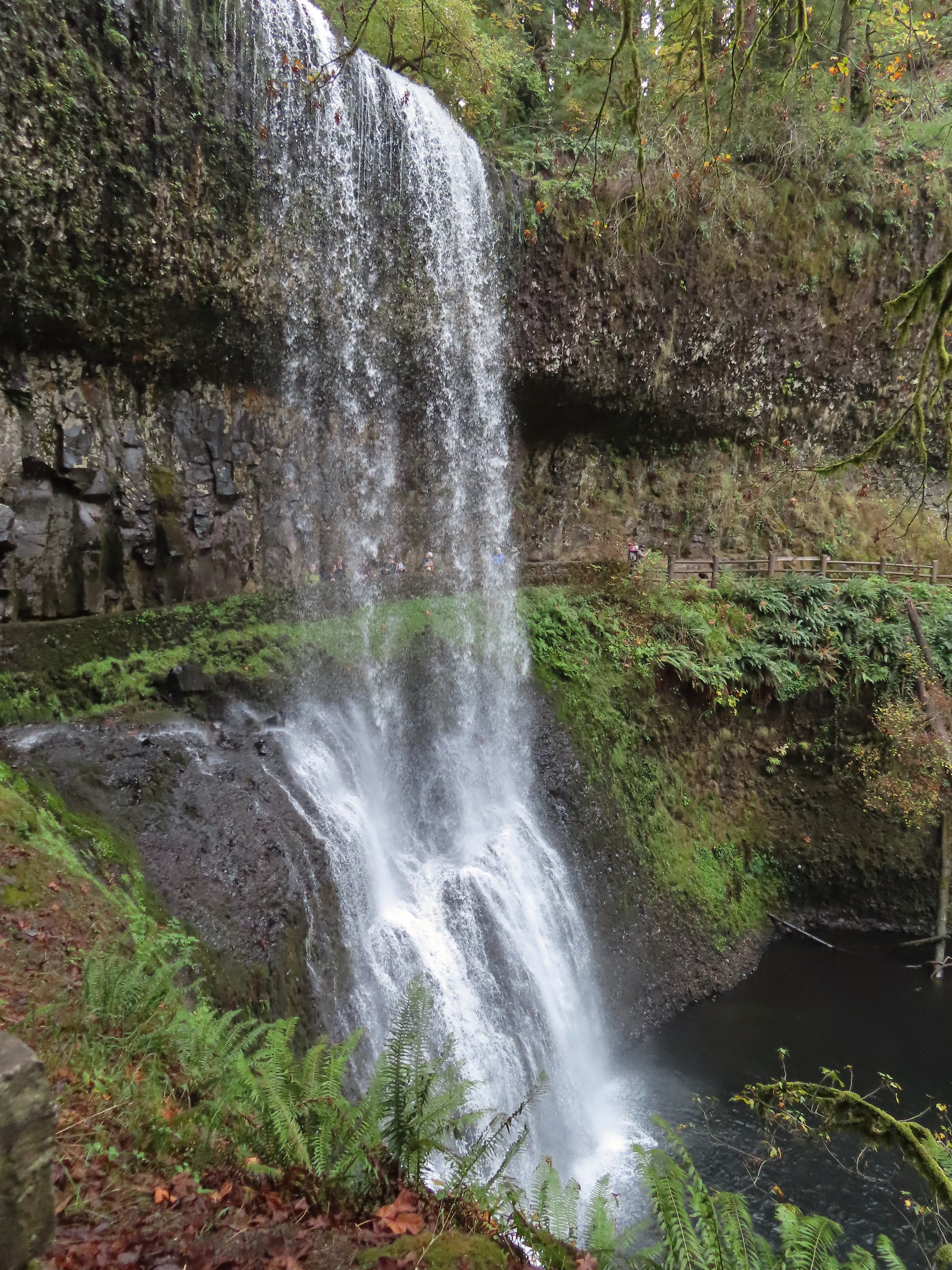




 I walked out onto the bridge for the view then returned to the junction to take the right hand fork and go behind this fall as well.
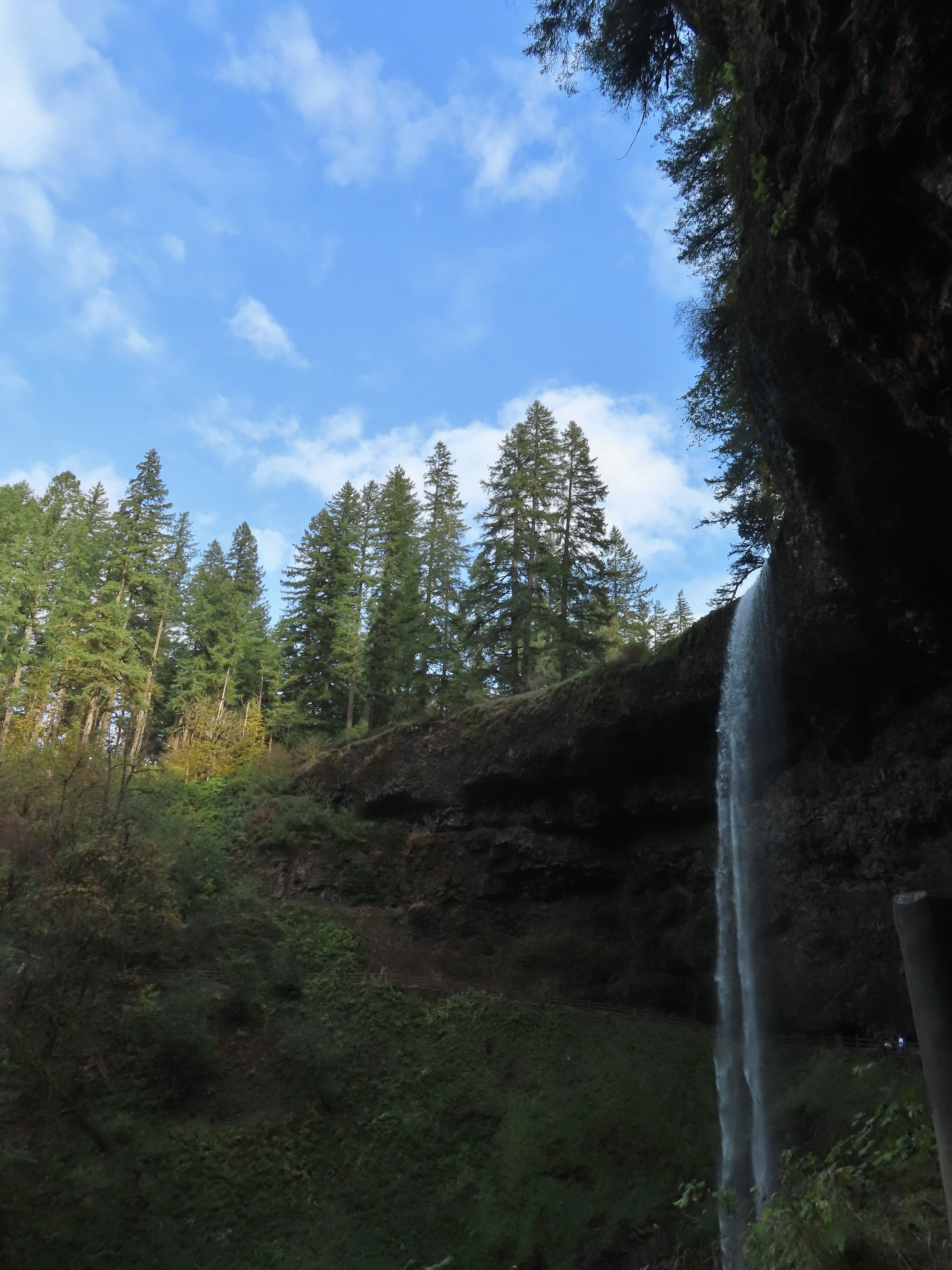




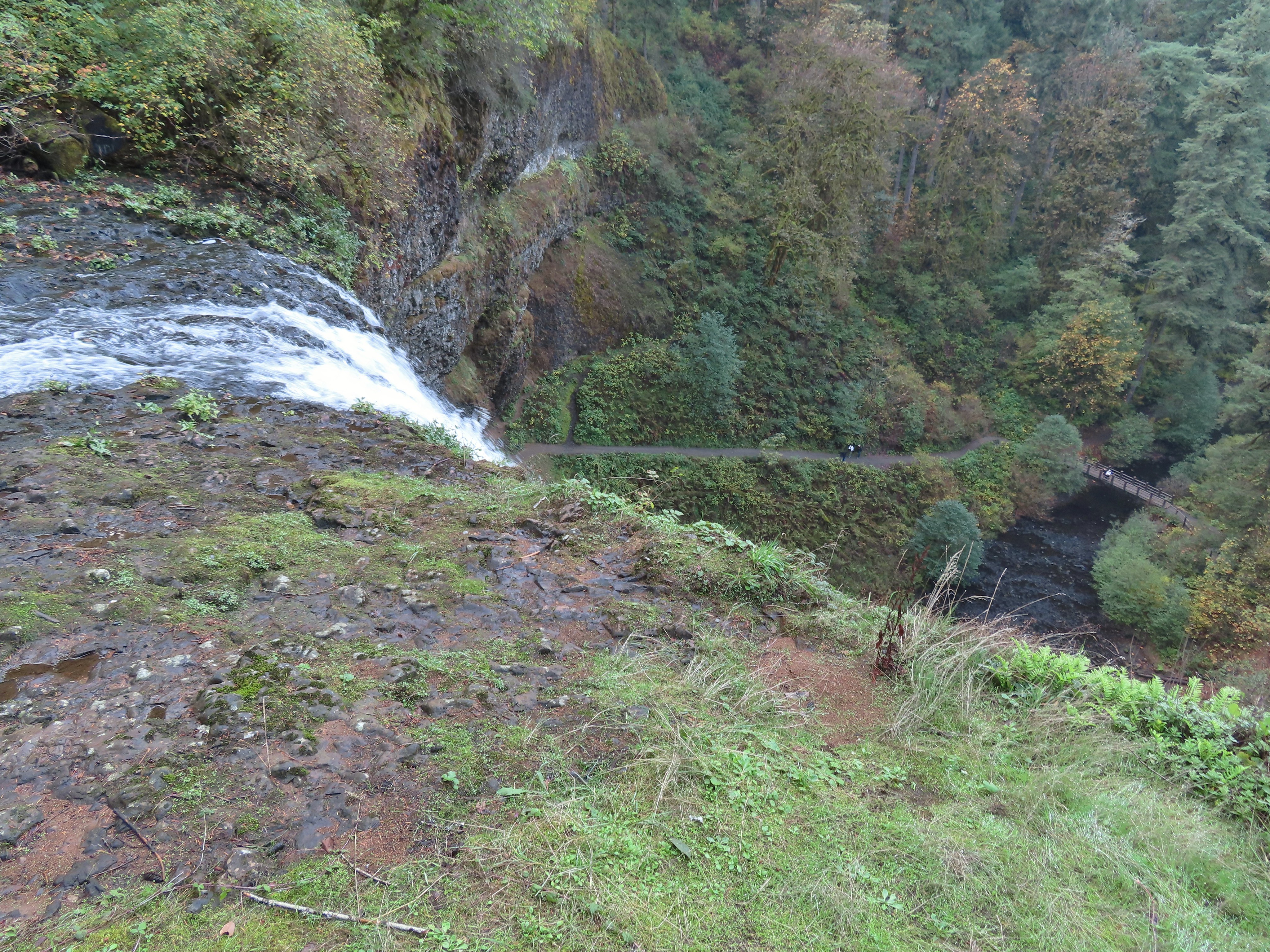
 View toward South Falls from the footbridge.
 Not sure what this old building was, possibly restrooms by the doors.
 One of several picnic shelters in the park.
 Approaching the Bike Path where I recrossed the creek.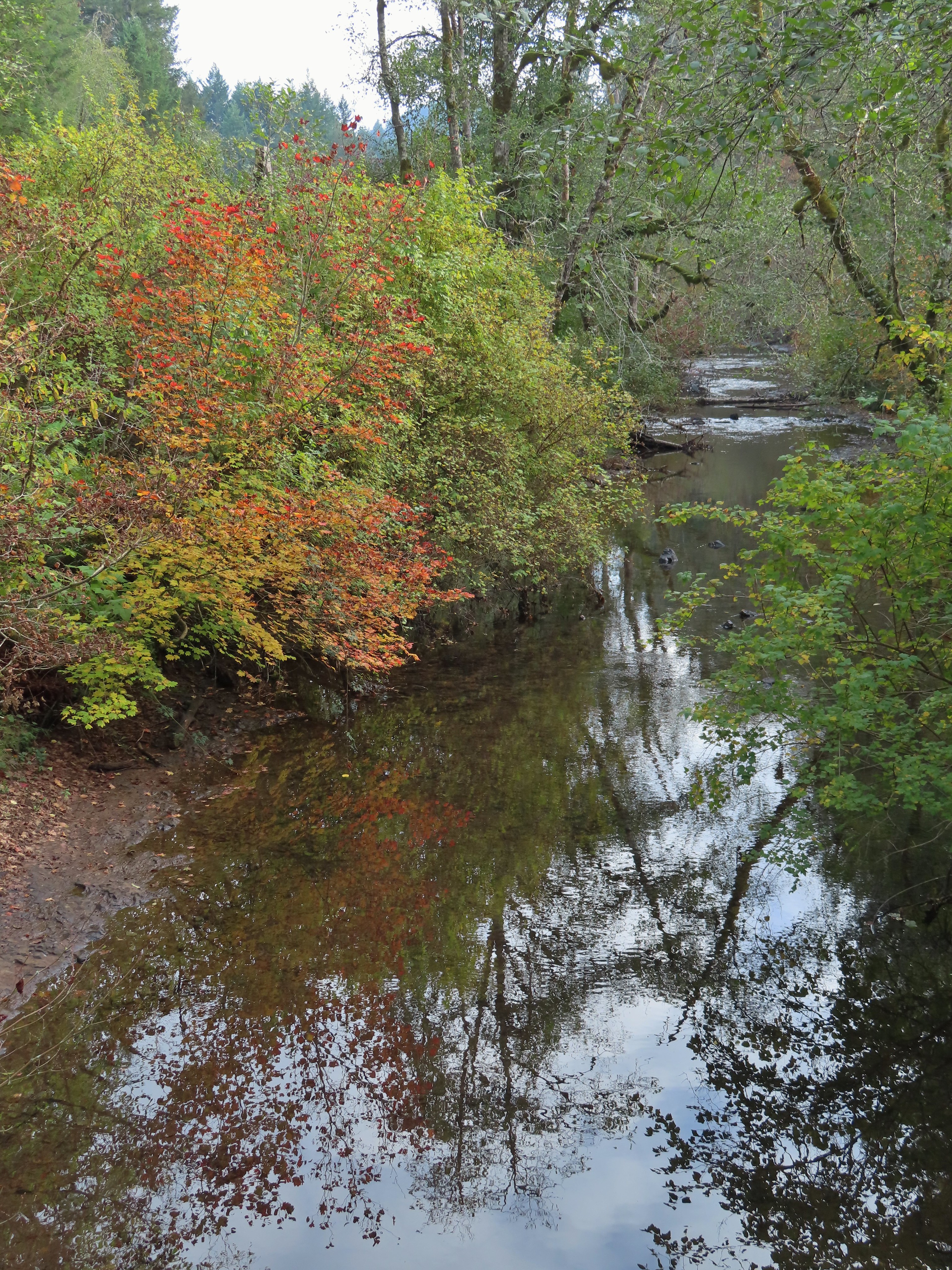
 I can see the car!

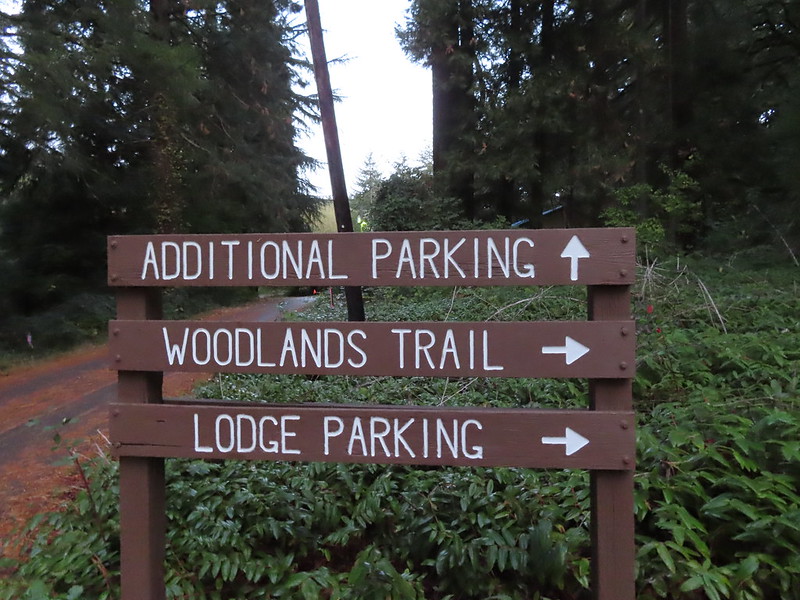
 The Woodland Loop at the end of the parking lot.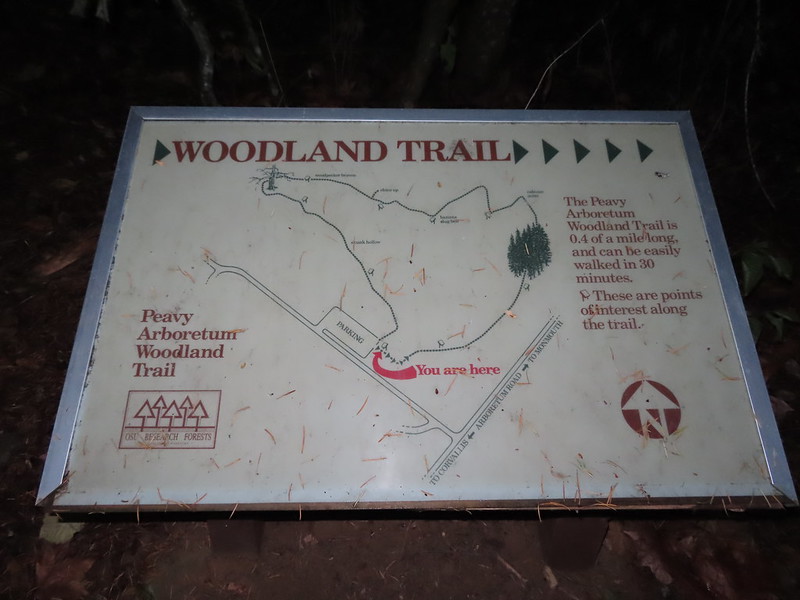
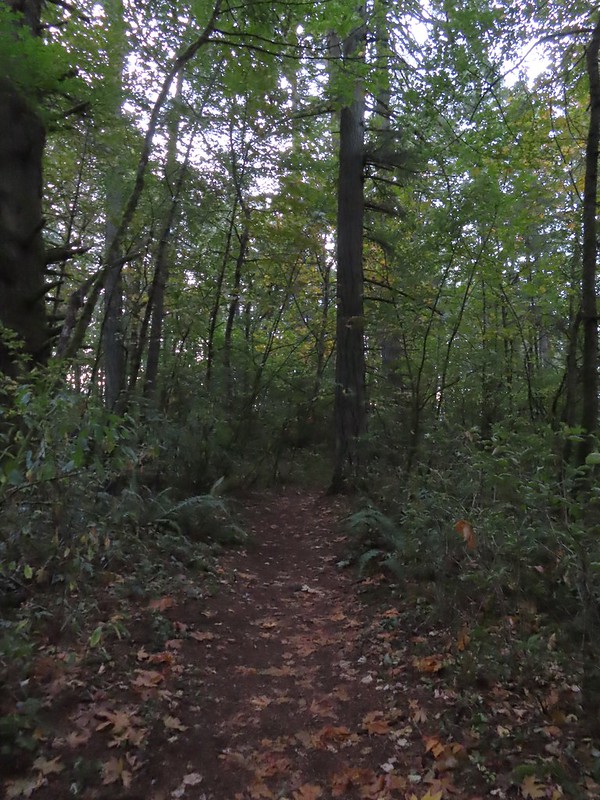 Starting to get a little lighter near the end of the loop.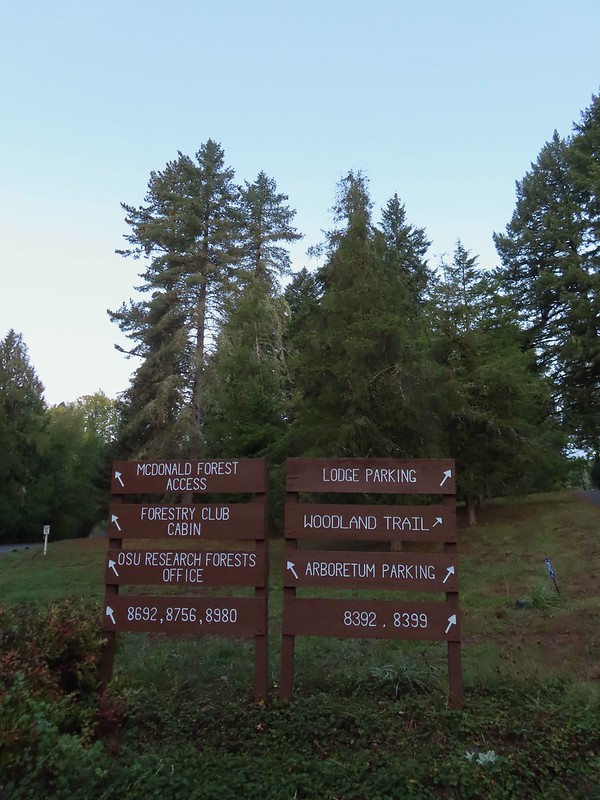

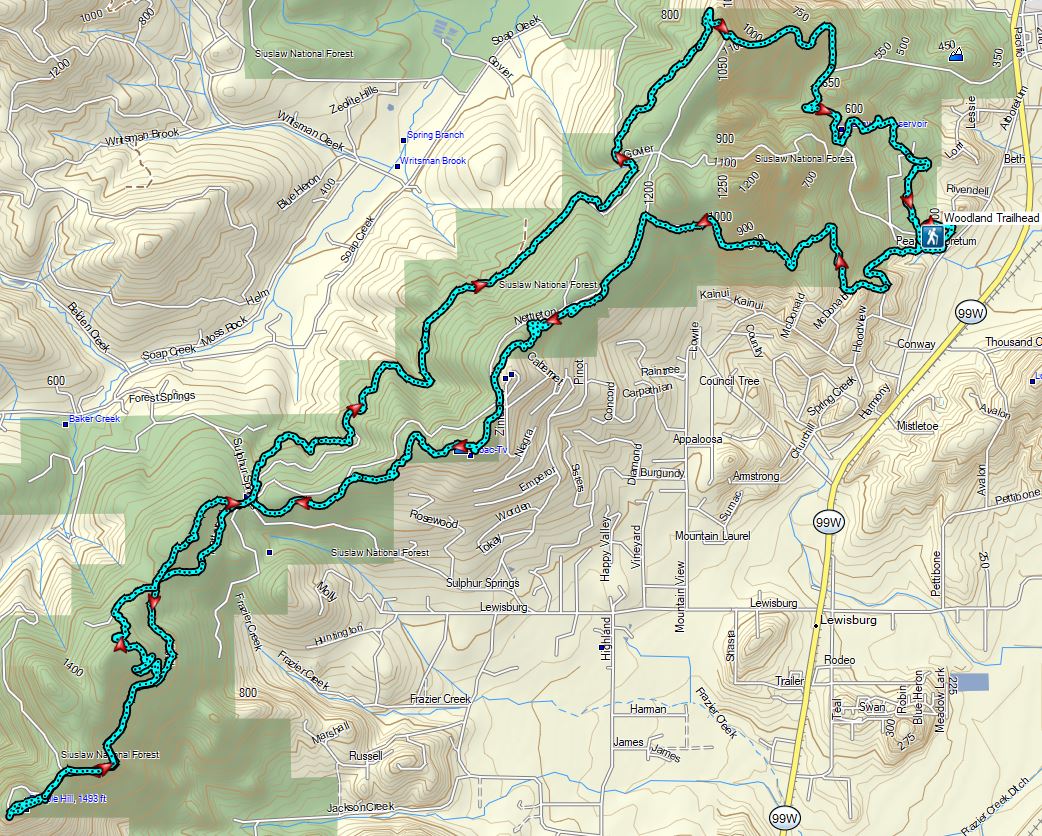
 Cedars along the Red Cedar Run Trail.
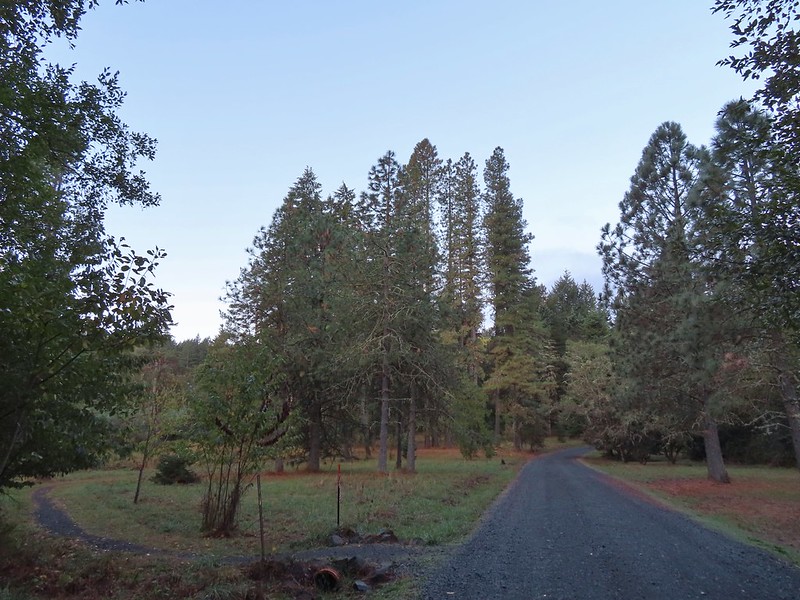 A brief stint on Peavy Arboretum Road between the Red Cedar Run and Maritime Meander (on the left ahead) Trails.
 Sunrise from the Maritime Meander Trail.
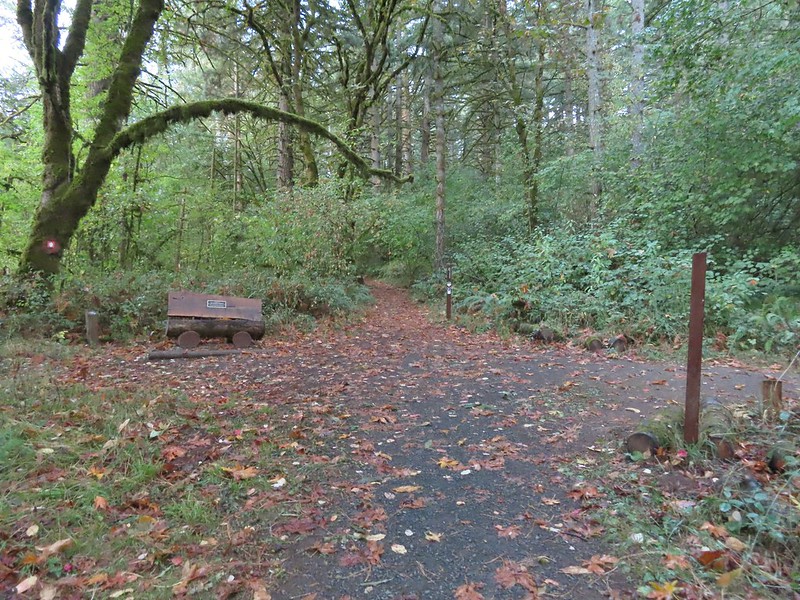 Forest Discovery Trail junction with the Maritime Meander Trail.
 The trails were well signed in the Arboretum.
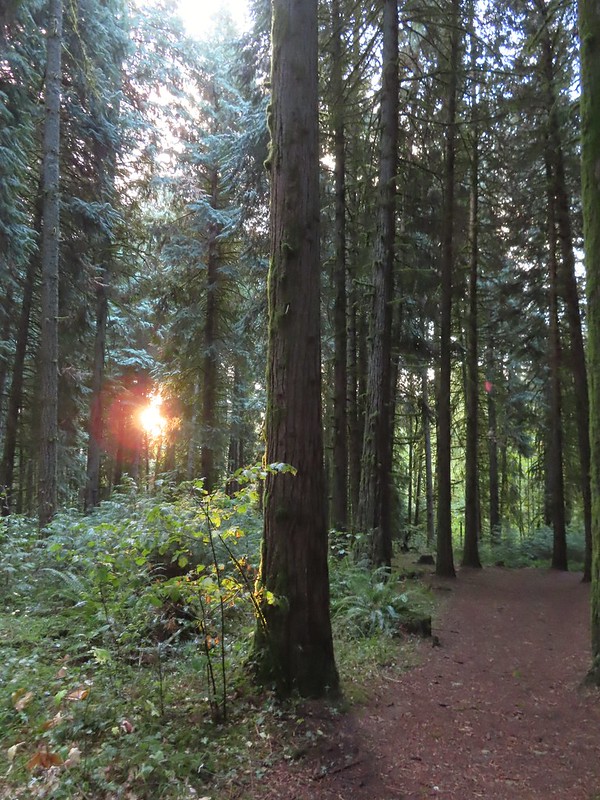
 I had been on the Forest Discovery Trail just under a mile when I reached the CFIRP Trail.
 Road crossing.
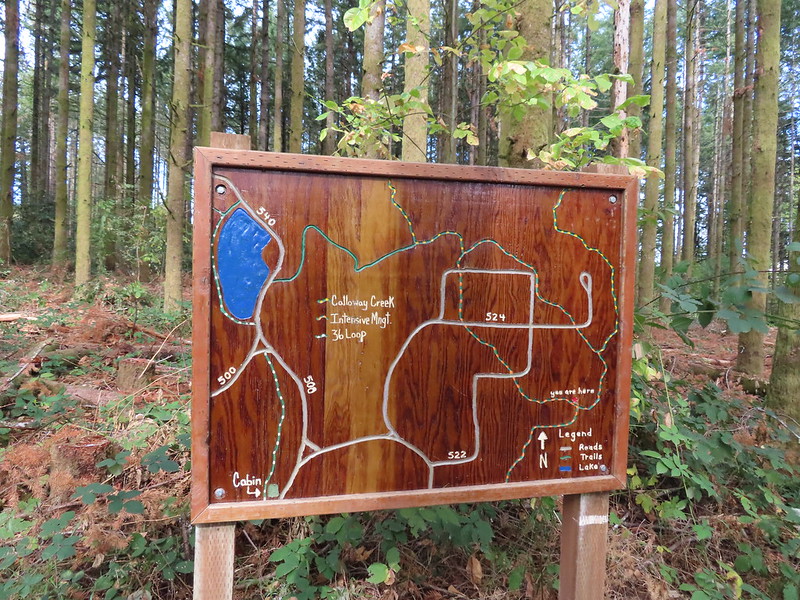
 The Section 36 Loop junction.
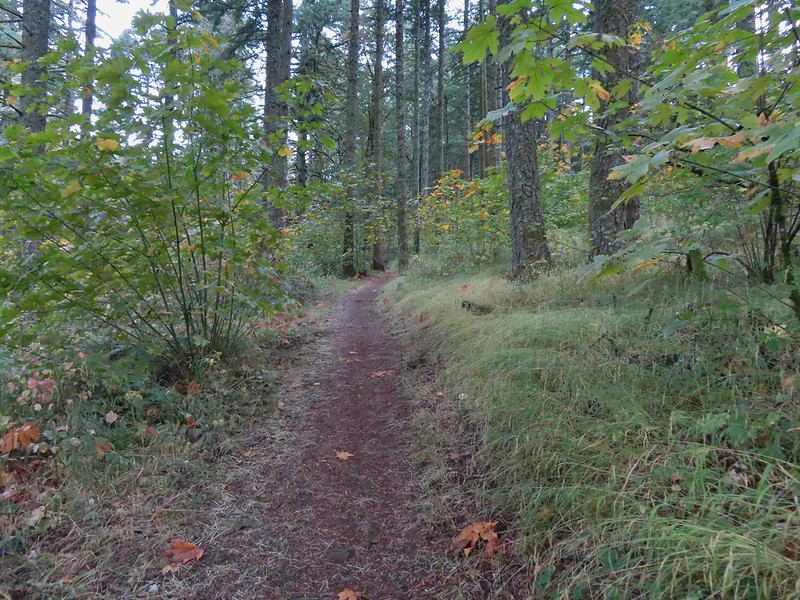 Section 36 Loop
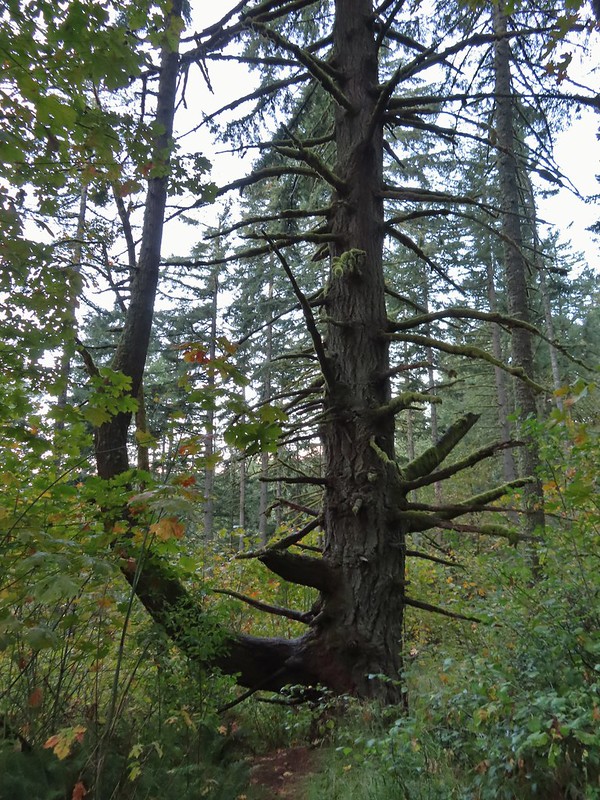 A bench along the trail faces this tree.
 Road 550 from the Section 36 Loop.
 Looking back down Road 550.
 My feet started to dry when I reached the section open to motorized vehicles.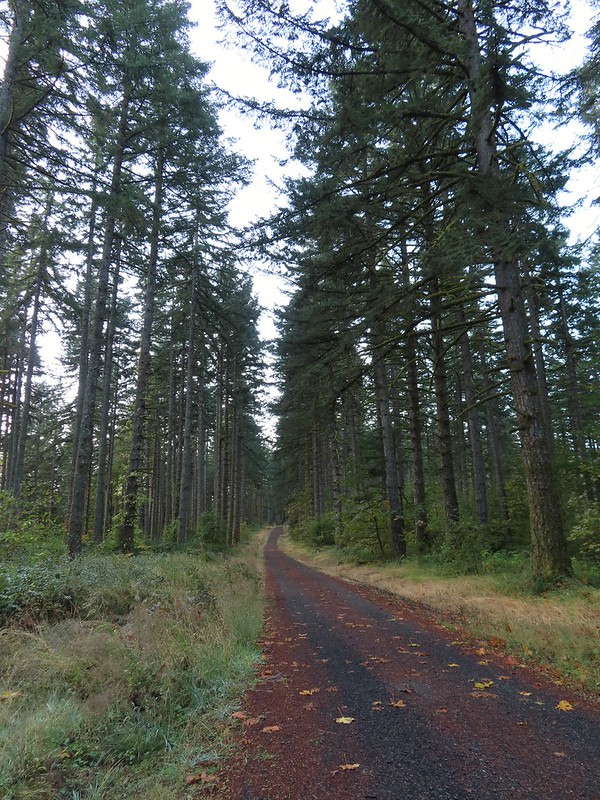
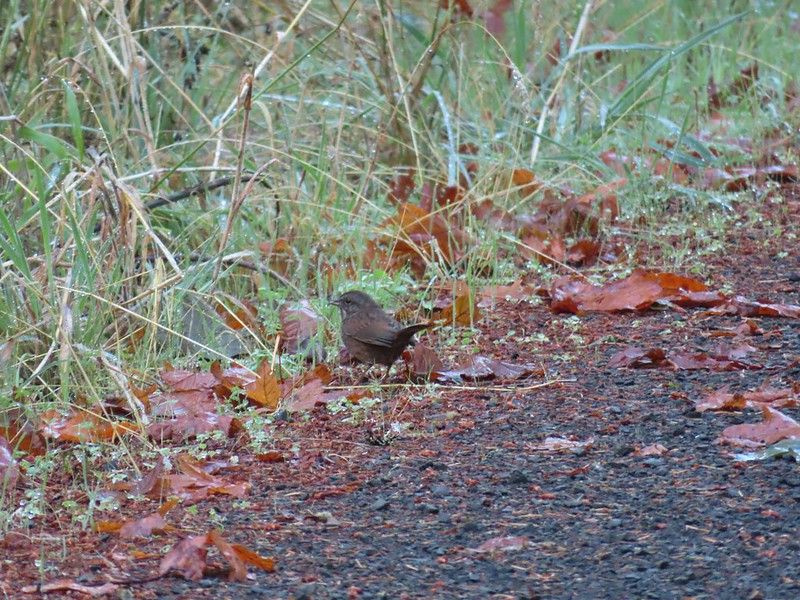 Lots of sparrows, towhees, and wrens were out this morning but most wouldn’t sit still at all.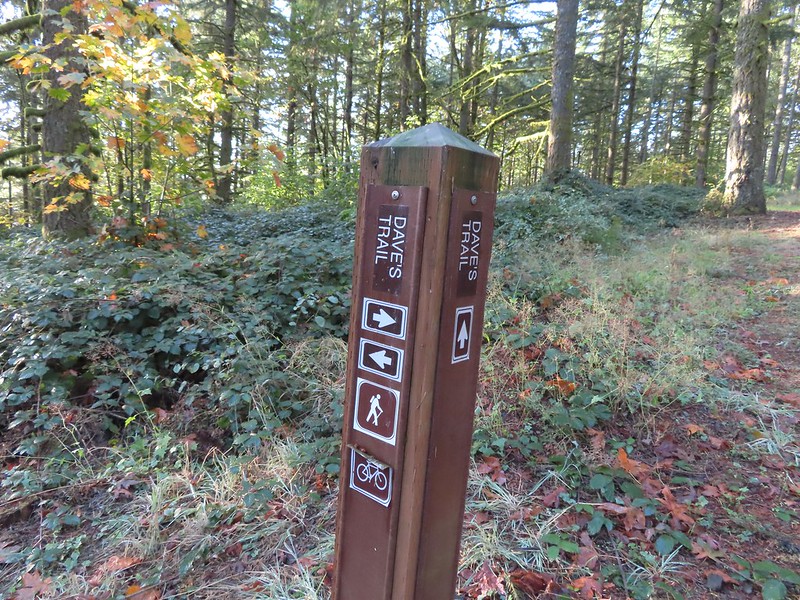
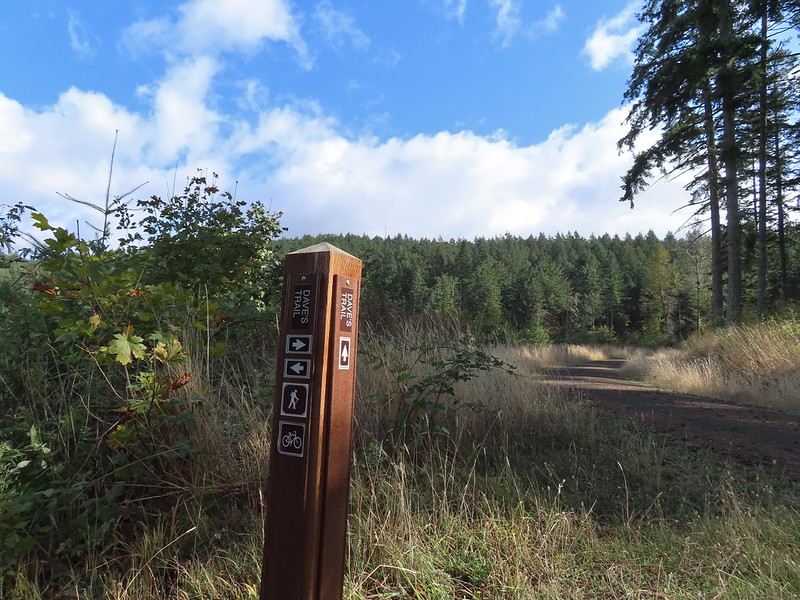
 Dave’s Trail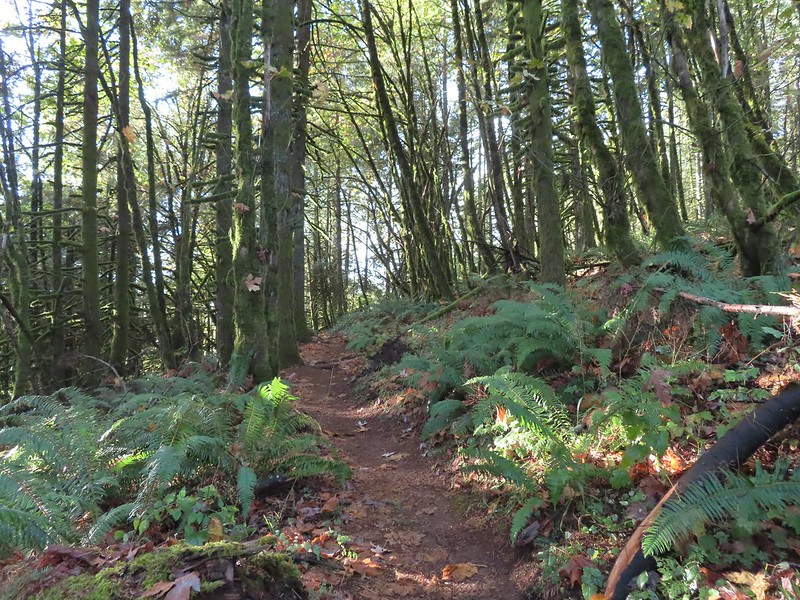


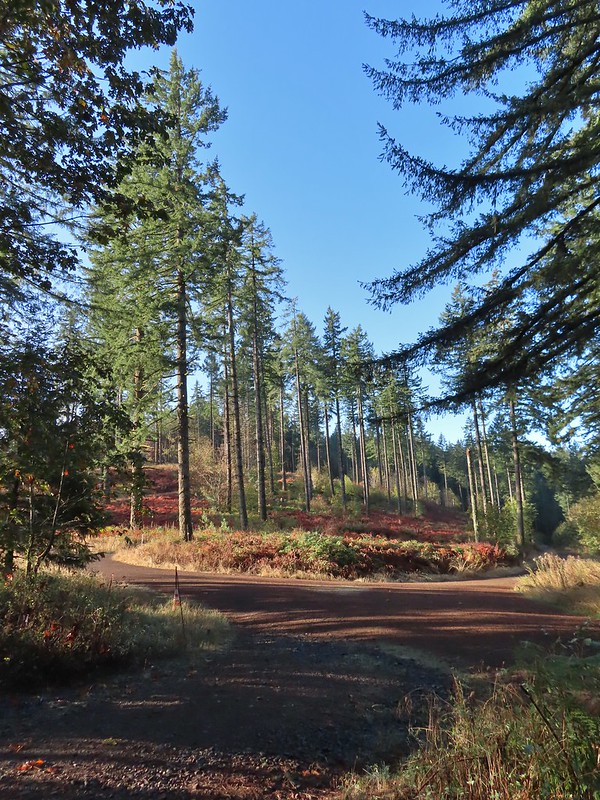 A gated road on the left led back up the hill I had just passed under some radio towers while Road 500 was to the right. Road 5010 was ahead on the left heading up Vineyard Mountain.
 The Vineyard Mountain Trail at the junction.

 The foundation, fireplace and chimney are all that remain of the former OSU Dean’s cabin.
 Some twisted trees along the Vineyard Mountain Trail.
 After numerous tries I finally caught a spotted towhee.
 The Vineyard Mountain Trail briefly follows an old roadbed.
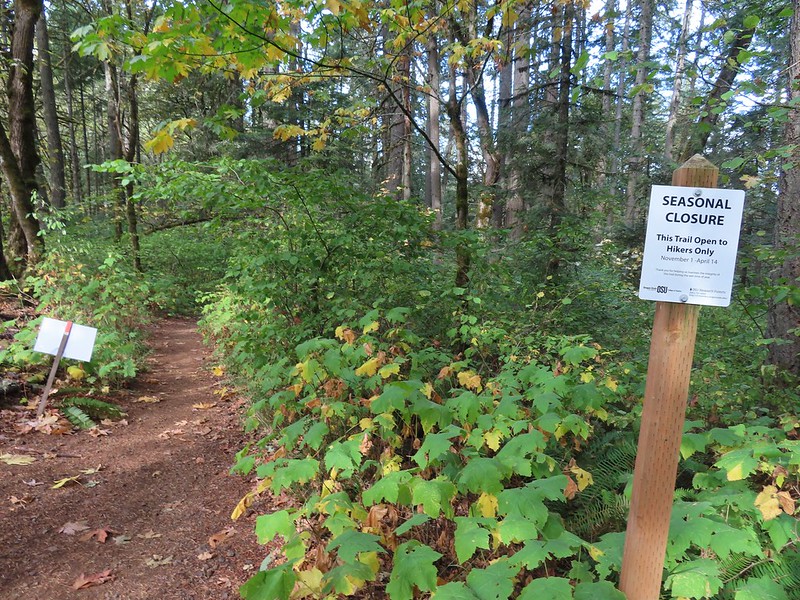
 The section of trail between the roadbed and the Lewisburg Saddle Trailhead is one of the trails subject to seasonal closures. This section is closed when it is wet enough that you’d leave tracks in which case you could follow the roadbed to the right to Road 500.
 Close up of the seasonal closure notice. It wasn’t wet so I continued on the Vineyard Mountain Trail.


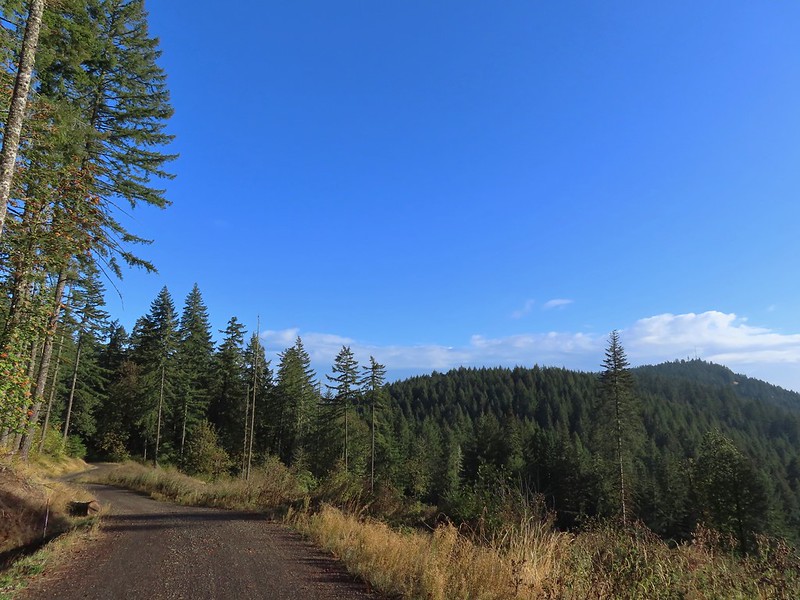 Looking back at the towers on Vineyard Mountain from Road 600.
 Road 620 on the right.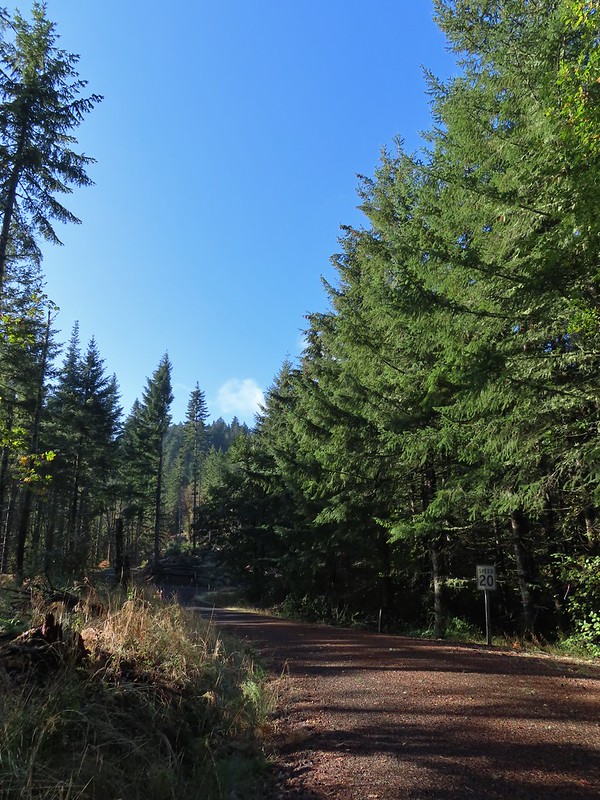
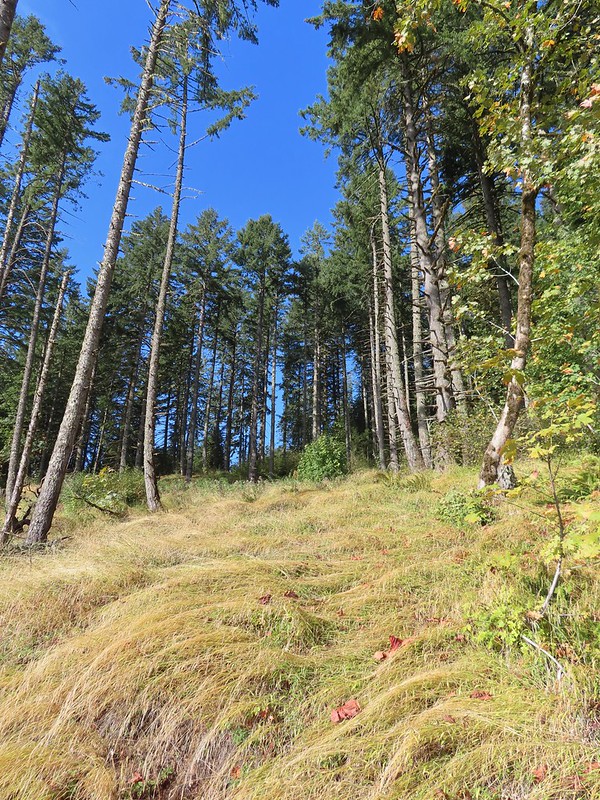


 Mary’s Peak (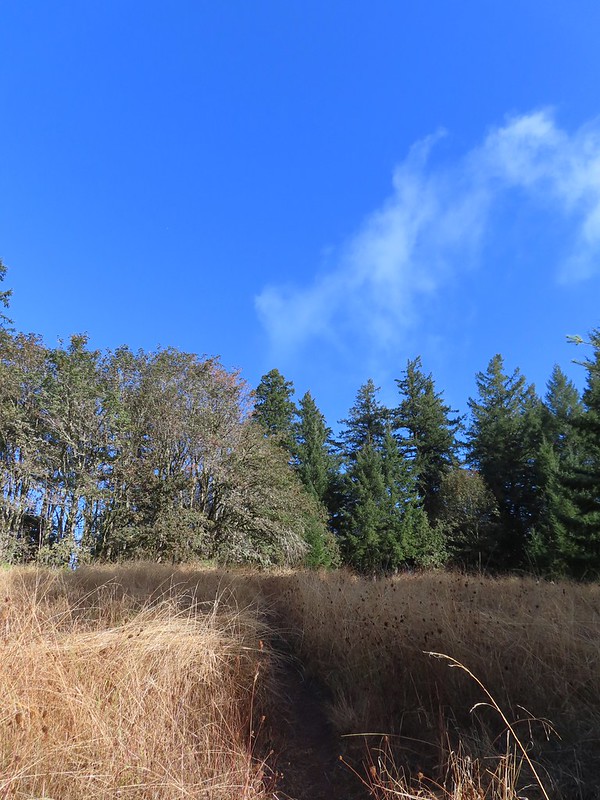

 The High Horse Trail. Not shown to the right coming up from below is the Upper Horse Trail.
 Bikers on Road 600 below.
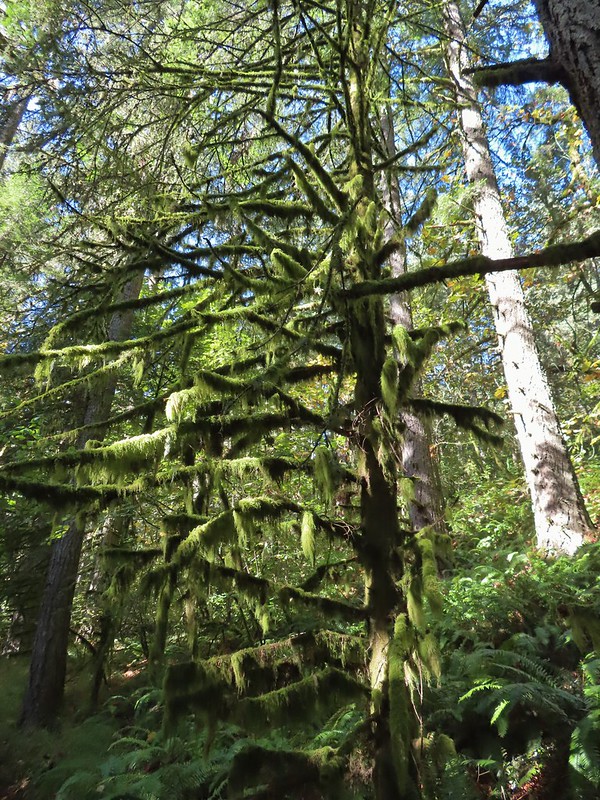 Moss covered tree.
 Lichen
 Unsigned junction where the High Horse Trail continues to the left to Road 662 and Upper Bombs Away veers right.
 Another connector trail on the left coming down from Road 662 to join the Upper Bombs Away Trail.
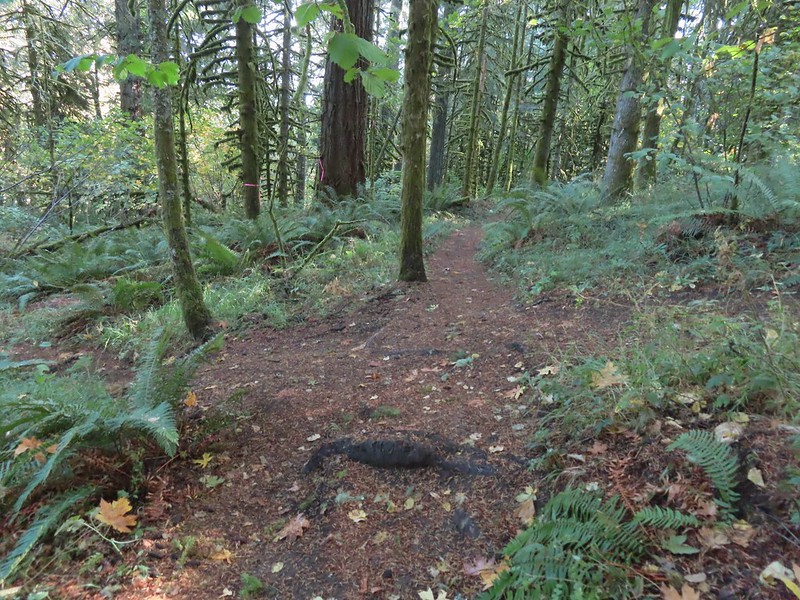 Will the real trail please stand up?
 Switchback near Road 640.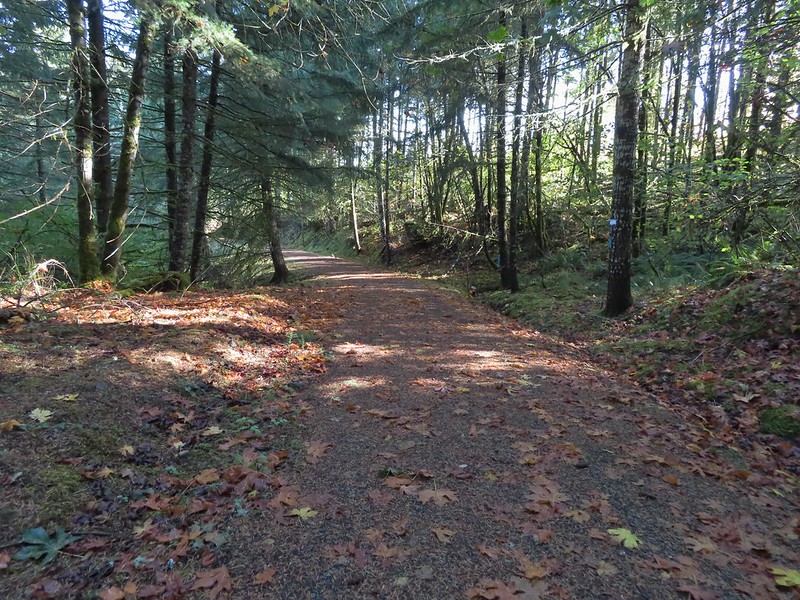
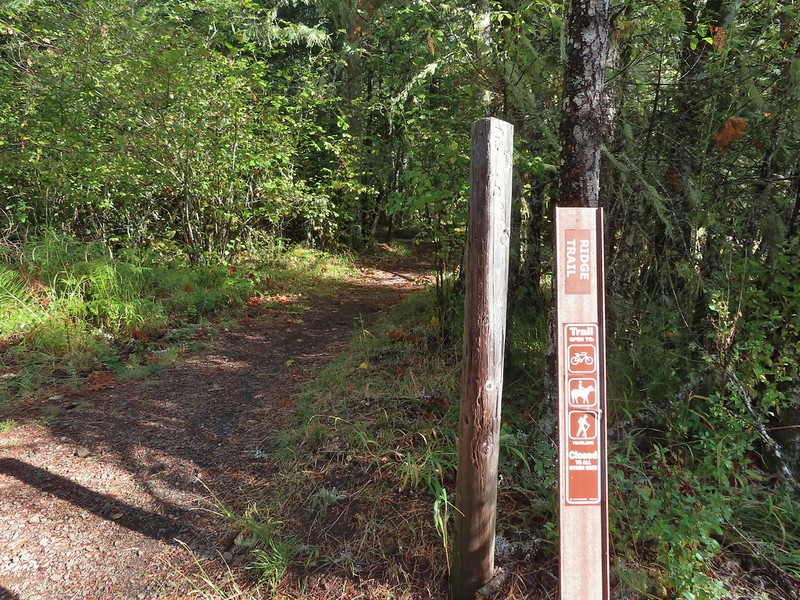
 The Alpha Trail on the left at the quarter mile mark. This is where we had turned on the 2021 hike.

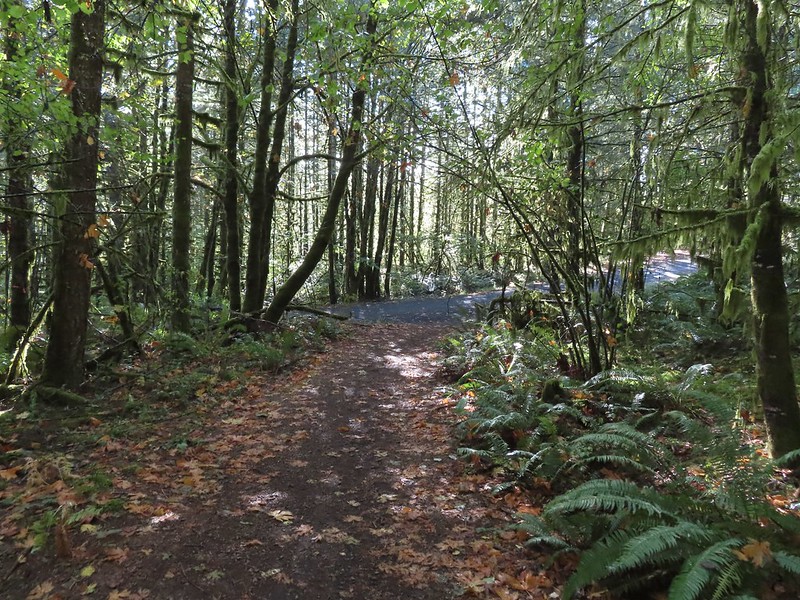 Road 600 ahead.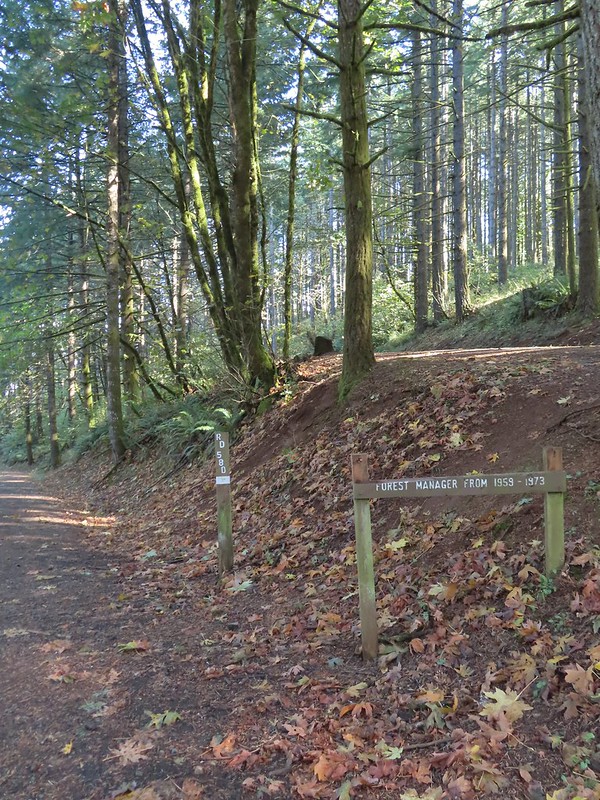
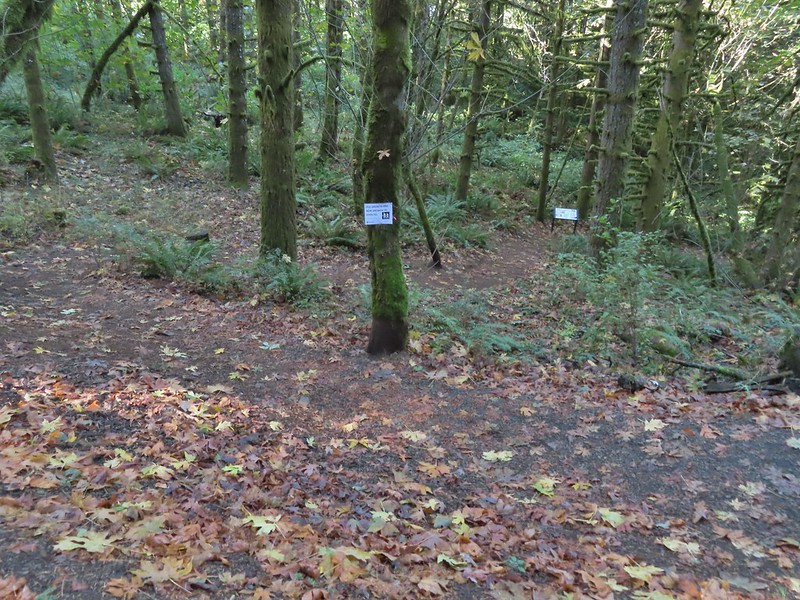 The New Growth Trail.


 Old growth
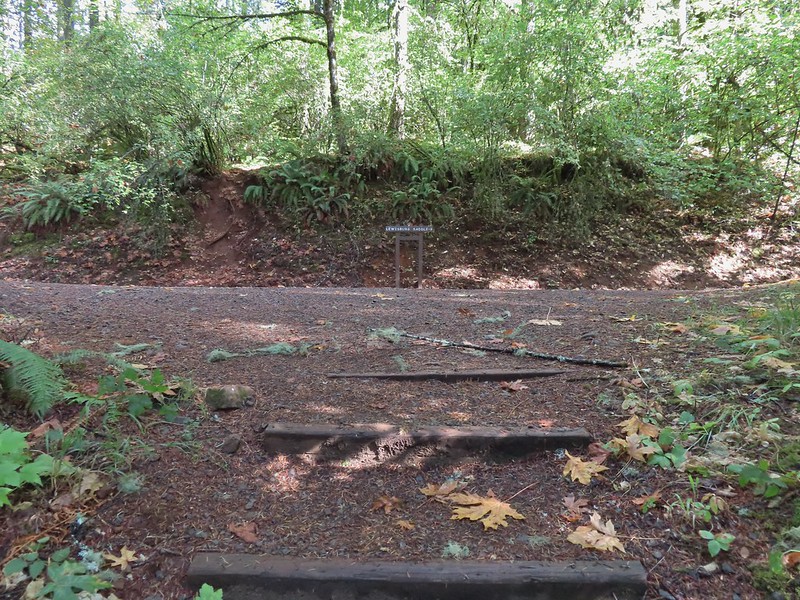 The end of the Old Growth Trail at Road 580.
 One of three spur roads to the left that I passed.
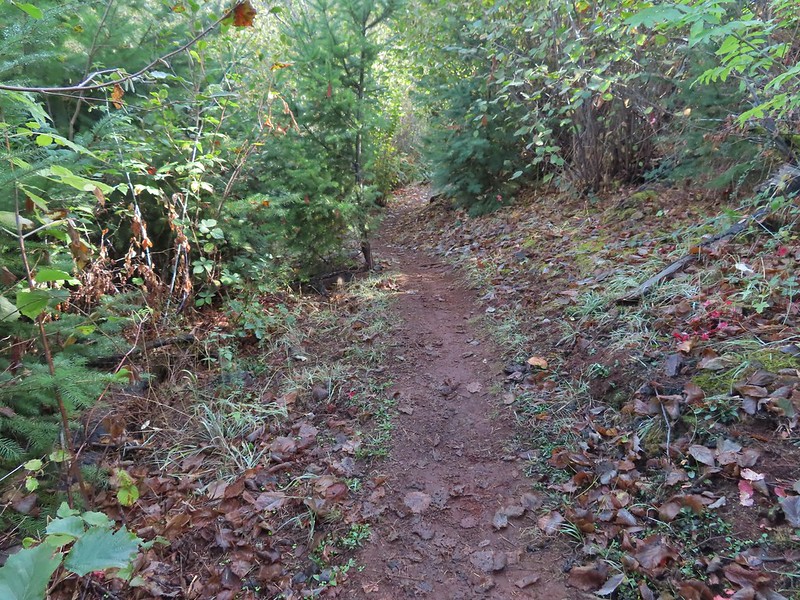
 Blackberries

 The proverbial fork in the road.
 Madrone
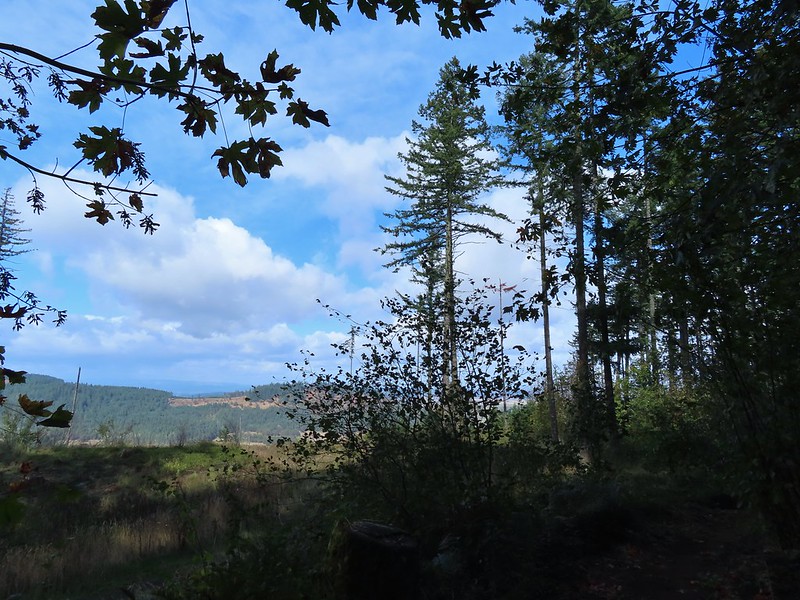 A few clouds starting to move in.


 The Banzai Trail likely continued on the other side but without a pointer I wasn’t about to find out and turned right here which took me uphill for a tenth of a mile to the Road 560 and Road 562 junction.
 This is the start of what is labeled the Banzai Trail on the McDonald Forest map.
 The photo doesn’t do the steepness justice but the trail lived up to its name here.
 At some point the road became 543 before reaching a fork where I stayed right.
 Another closed roadbed on the left. This is where I stayed right on Road 543.
 Road 540 to the left and 541 to the right.
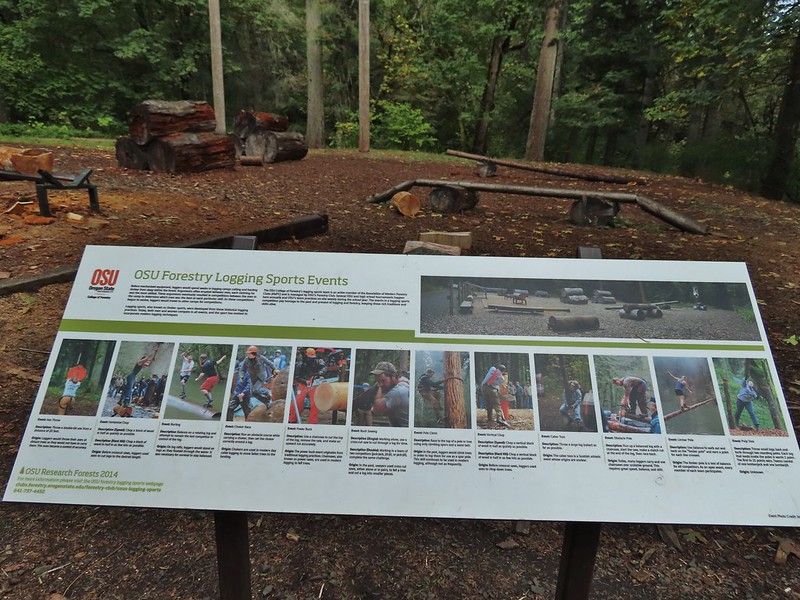
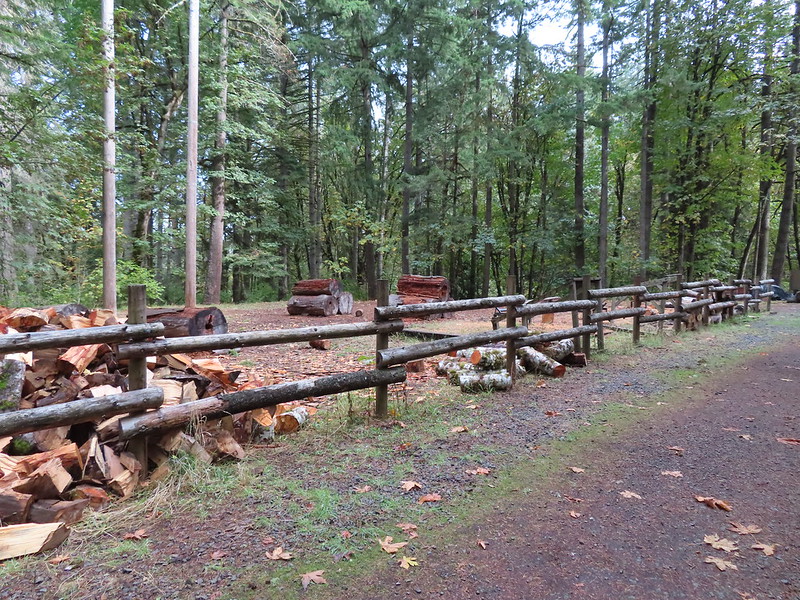 George W. Brown Sports Arena near Cronemiller Lake.
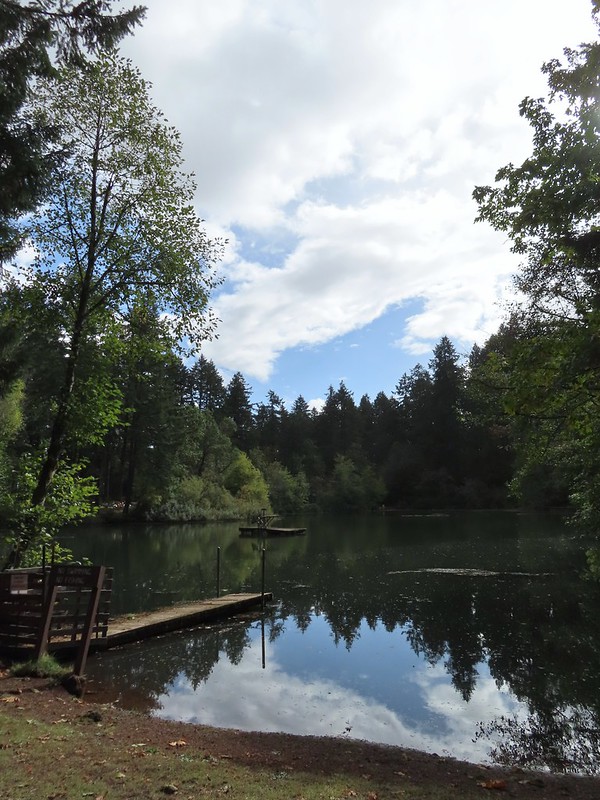
 Not that kind of a lake.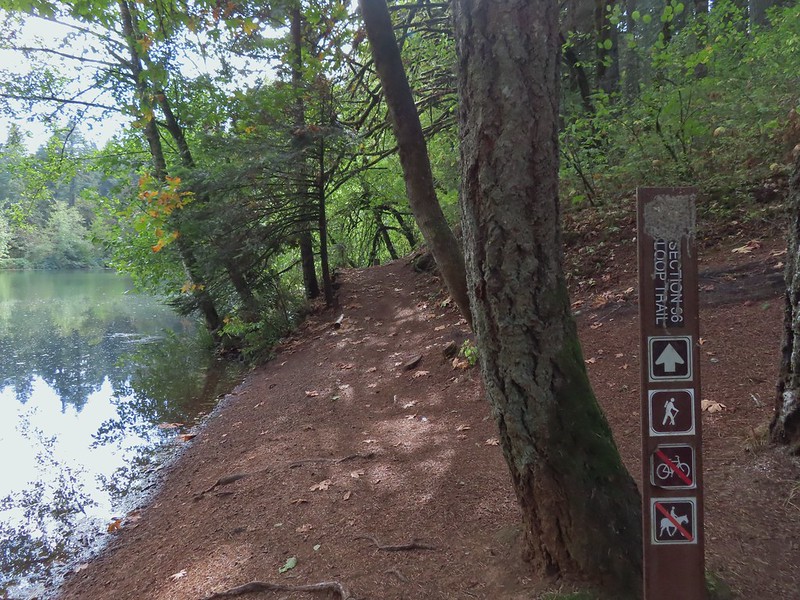
 A few drops hitting the lake.
 Kingfisher on the far side of the lake.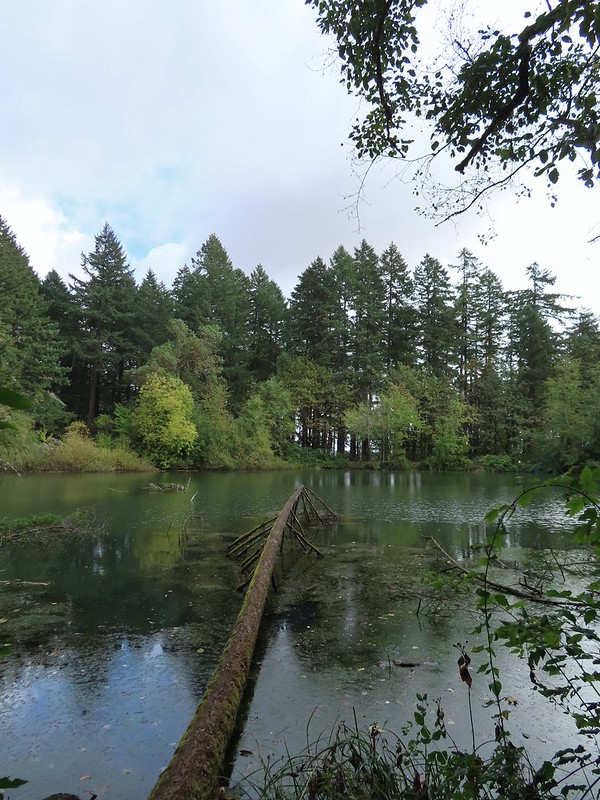
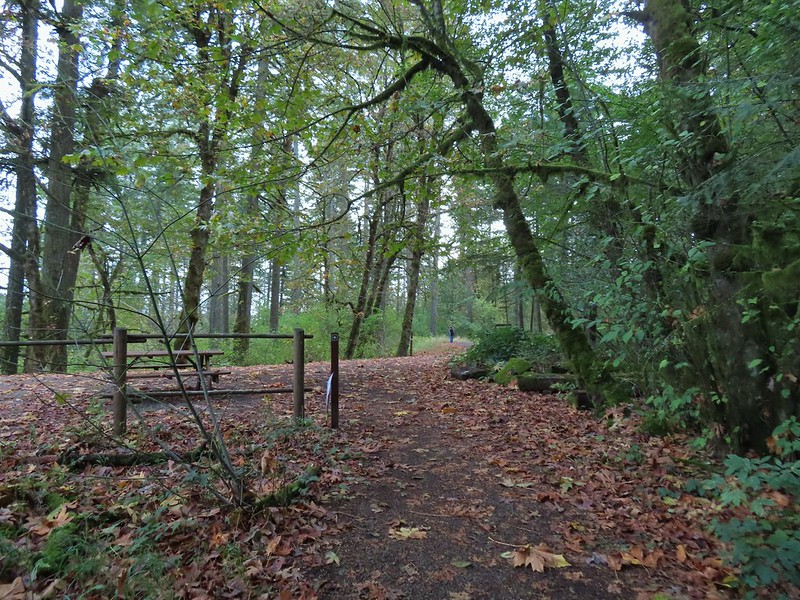


 Second right.


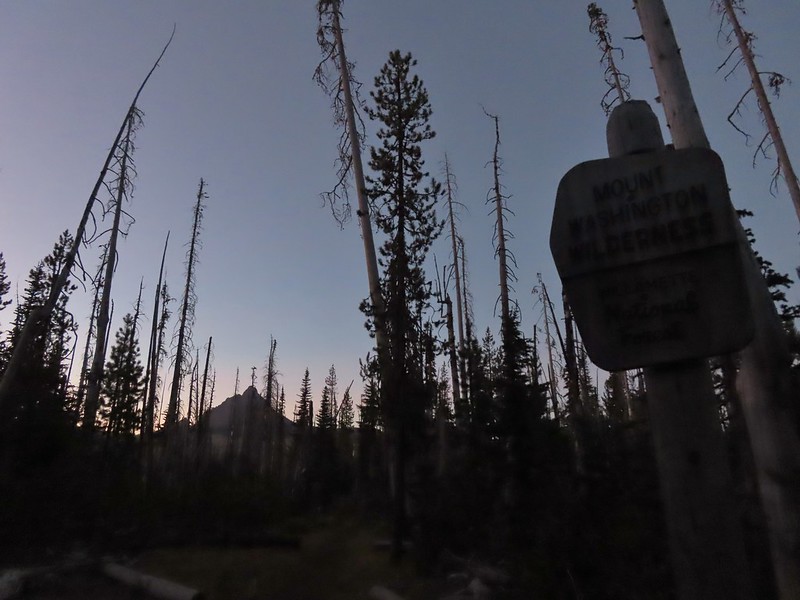 Mount Washington from the
  Three Fingered Jack to the North from the PCT.
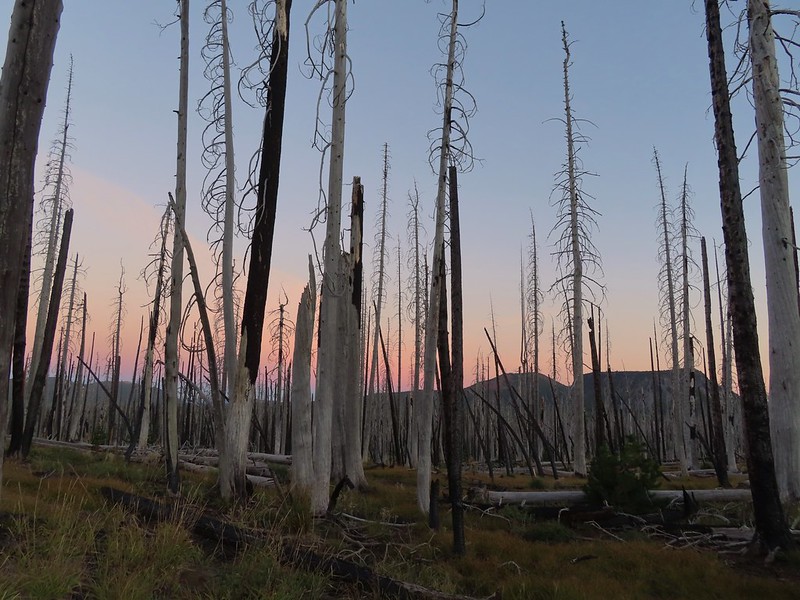 From left to right – Sand Mountain (
 Mount Washington
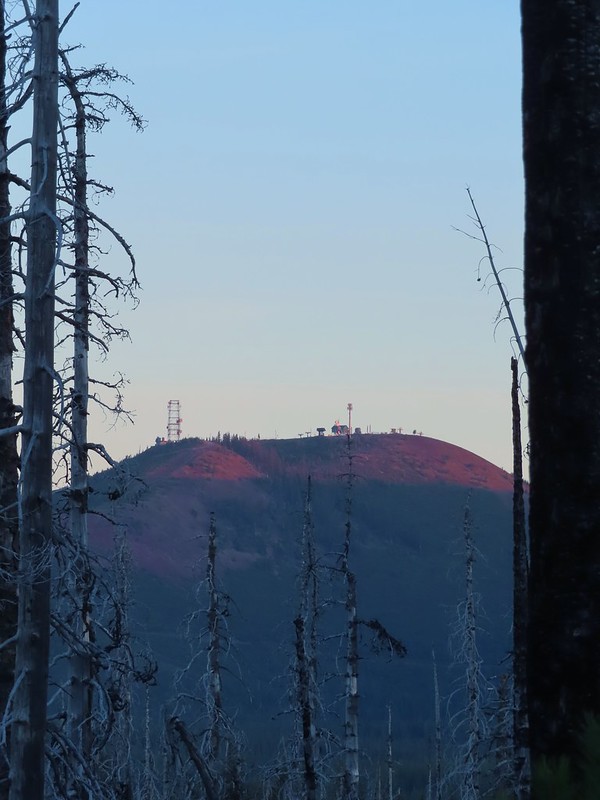 Sunrise on Hoodoo Butte.
 Sunlight hitting the spire of Mount Washington.
 Hayrick Butte and Three Fingered Jack at sunrise.
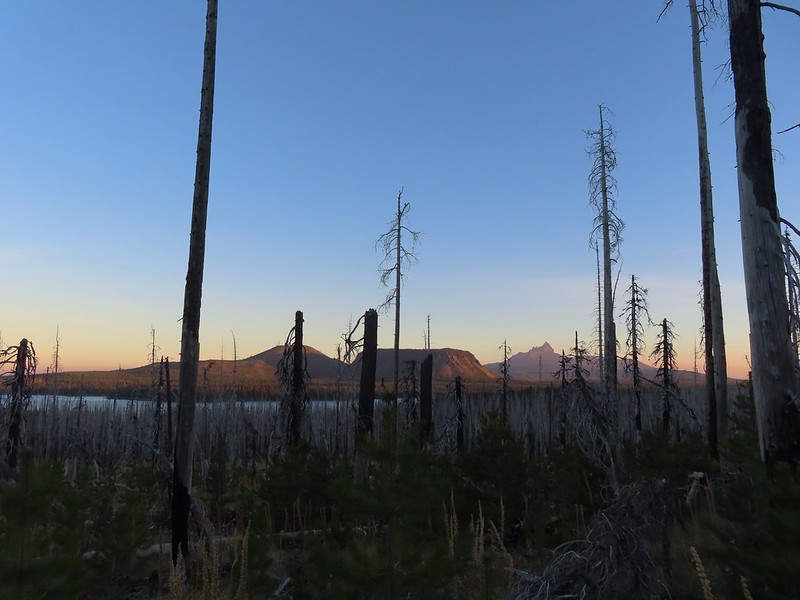 Big Lake, Hoodoo, Hayrick Butte, and Three Fingered Jack.
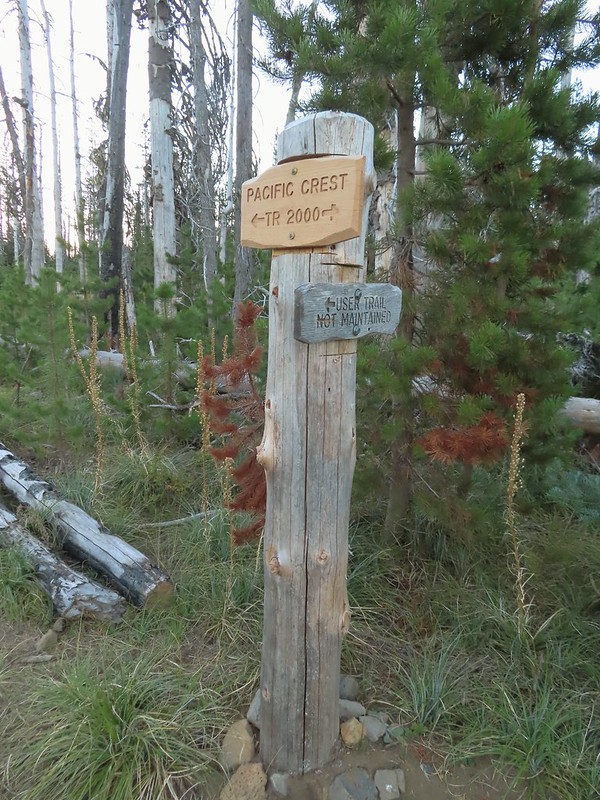 Just over two miles from the trailhead I passed a sign for the non-maintained use trail from the private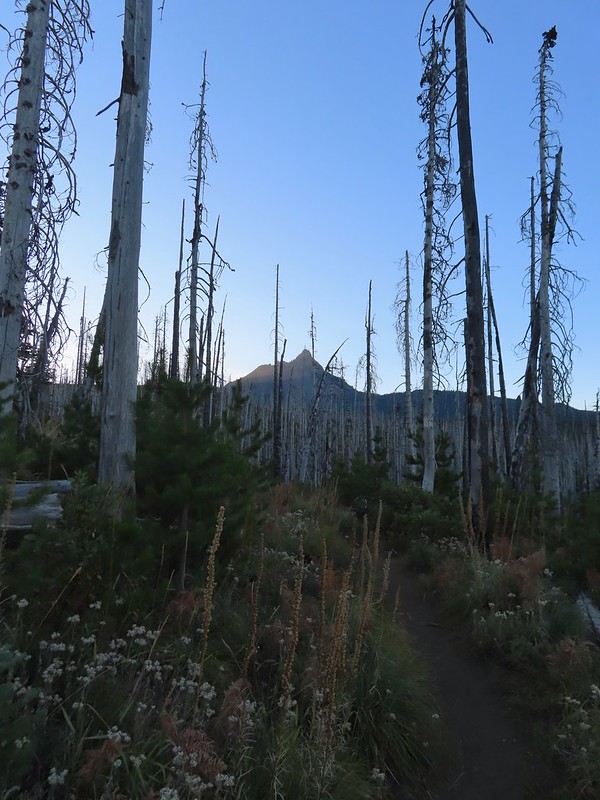
 Shortly before reaching the climbers trail the PCT left the 2011 Shadow Lake Fire scar.
 The cairn and climbers trail from the PCT.
 Huckleberry leaves turning color.

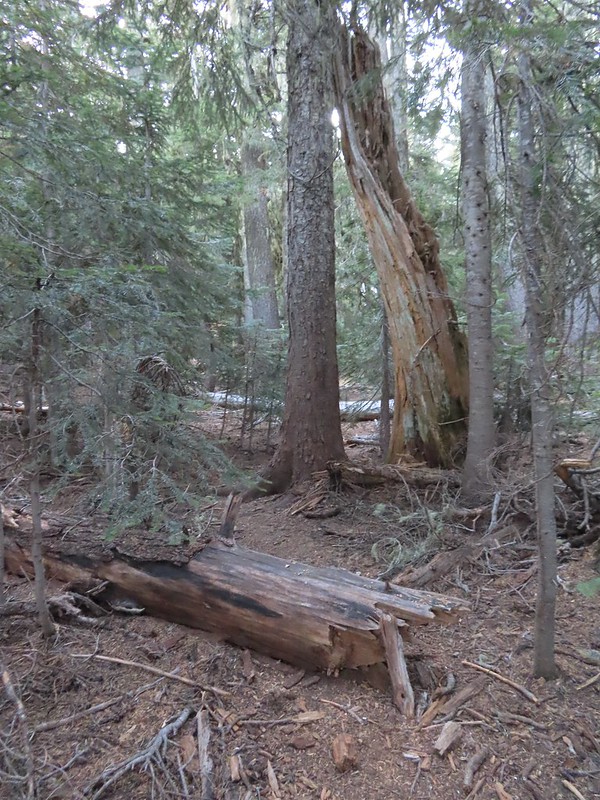 There were a few logs to navigate and keeping an eye on the tread was helpful.
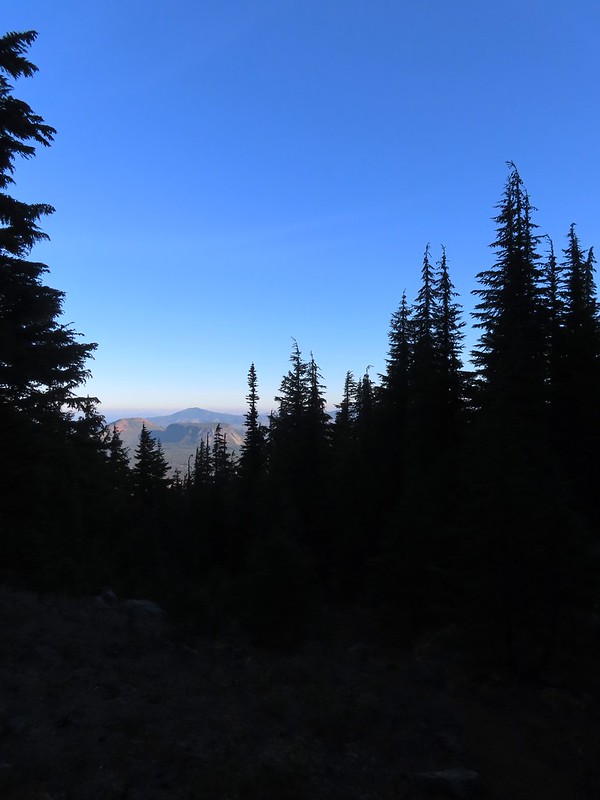 Maxwell Butte (
 Mount Washington
 The only movement that I could see was when it tilted its tail feathers which would catch the sunlight.
 First view of Mt. Jefferson behind Three Fingered Jack.
 Coming up on the ridge.
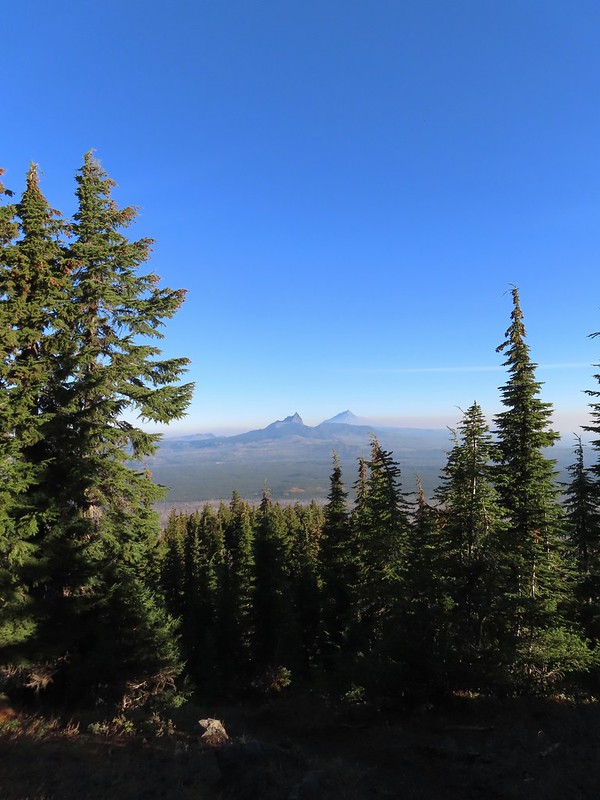 Three Fingered Jack, Mt. Jefferson, and a lot of smoke to the North.
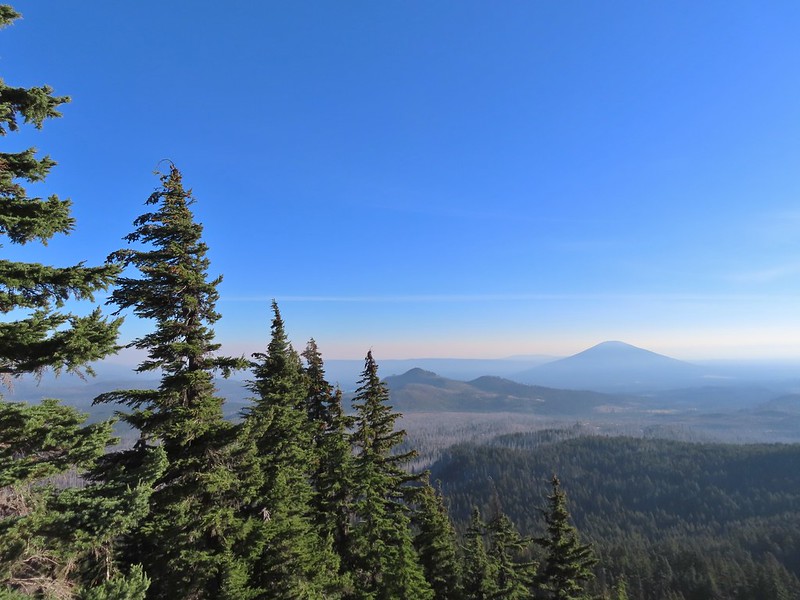 Cache Mountain and Black Butte (
 View along the ridge to Mount Washington.
 That East wind was really noticeable as I made my way along the open ridge crest.
 Three Fingered Jack and Mt. Jefferson to the left. Green Ridge (
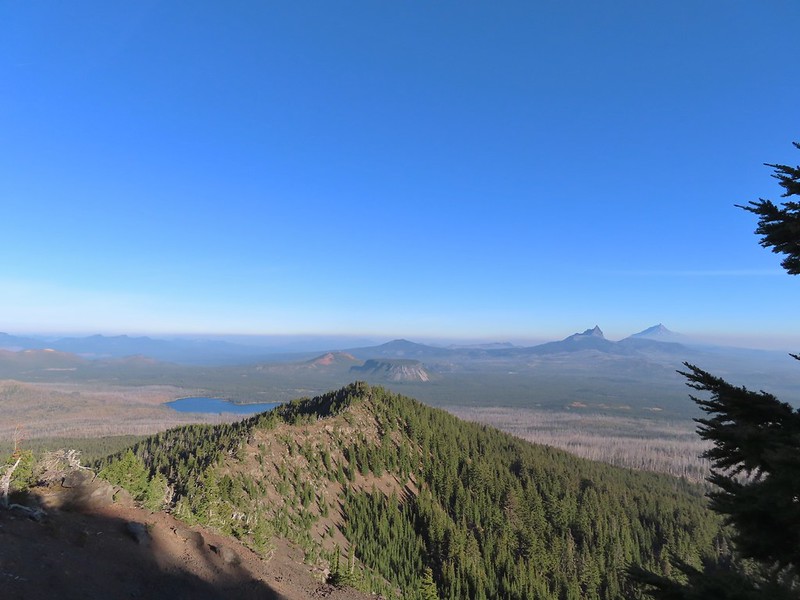 Big Lake came into view as I climbed.
 One of the steeper sections I went up. The spire is poking up on the right.
 Mount Washington’s shadow.
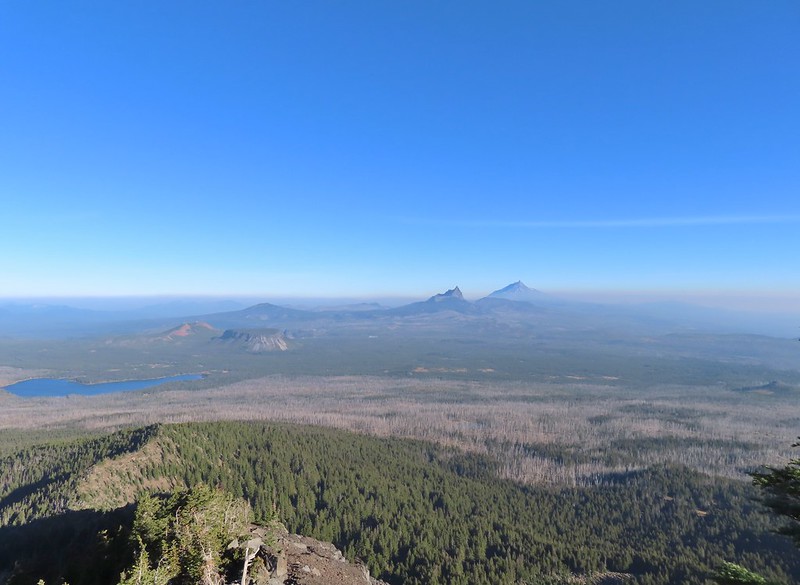 View back down the ridge.
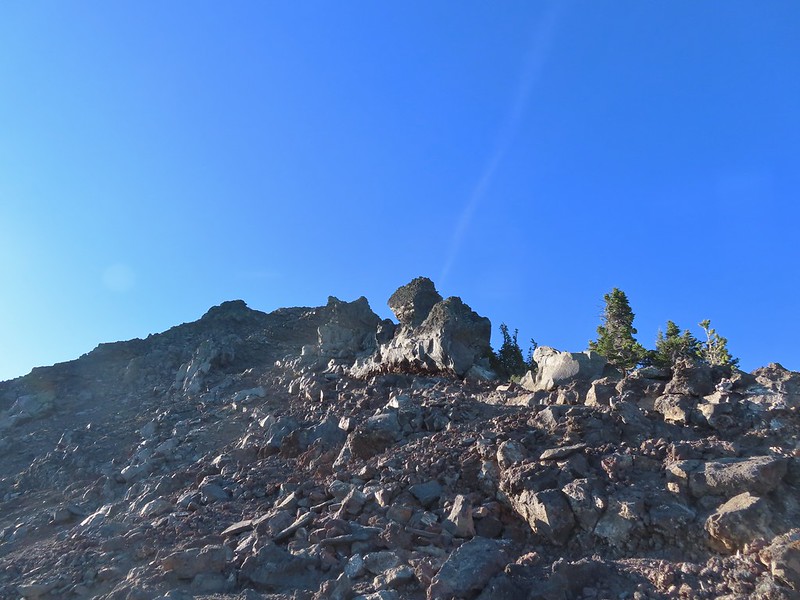 I was hoping to get up and over these rocks where the map showed a more level bench but I wound up reaching a chute where I was unsure of the correct route. The further up I’d gone the more braided the trail became and I may have been too far left. A climber had passed me way back on the PCT but if I had been able to watch him go up here I may have found a better route.
 The chute that turned me back. It’s a bit hidden by the rocks in the foreground but there was no way across that I would have been comfortable with and scrambling up looked way too sketchy for my taste (especially w/o a helmet).
 My shadow on the left from my break spot.
 This was the place I’d come up.
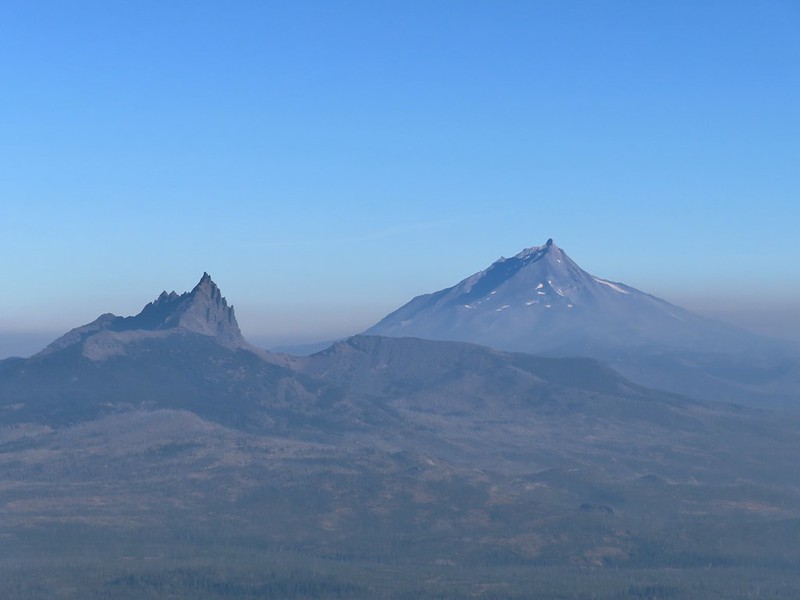 Zoom of Three Fingered Jack and Mt. Jefferson
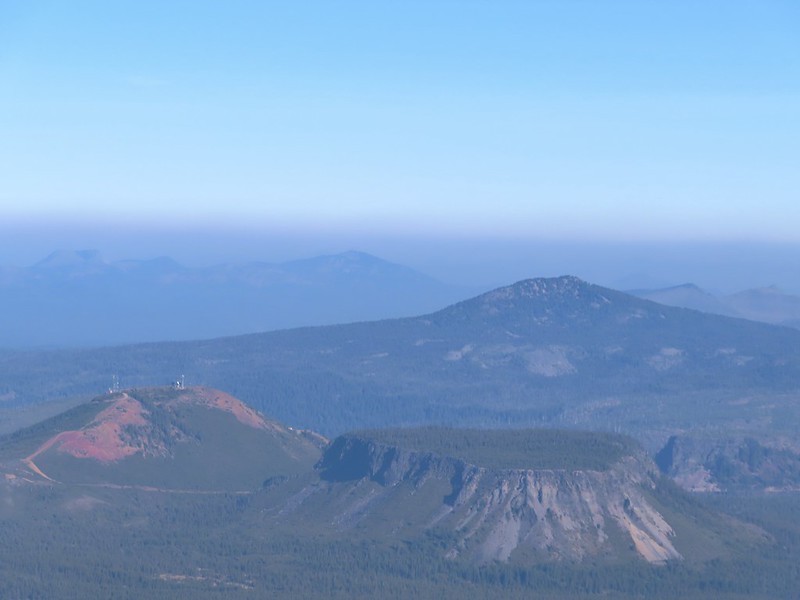 With all the smoke I hadn’t noticed Coffin (flat top) and Bachelor Mountains (
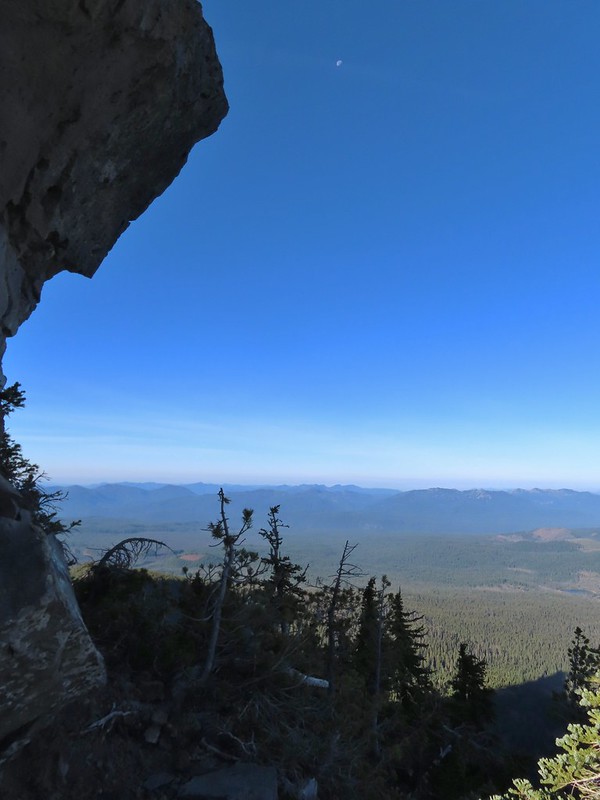 The Moon overhead to the West.
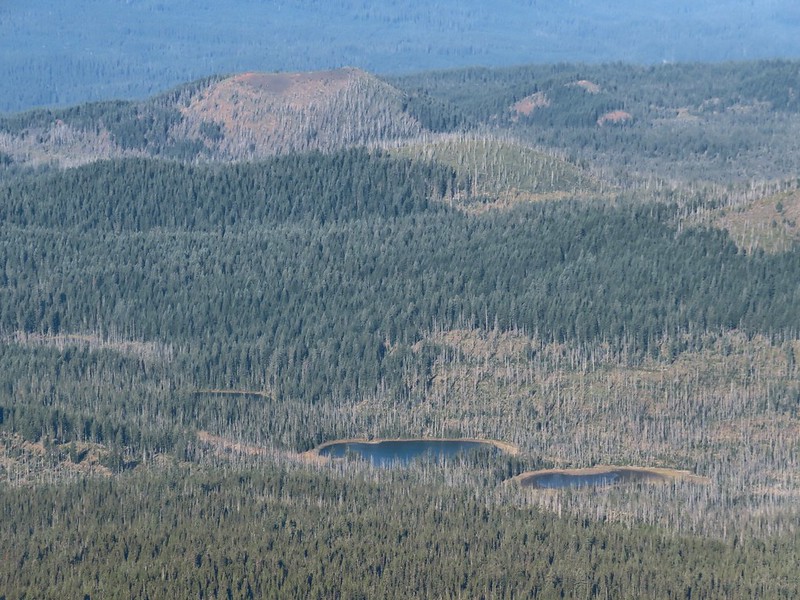 Patjens Lakes (
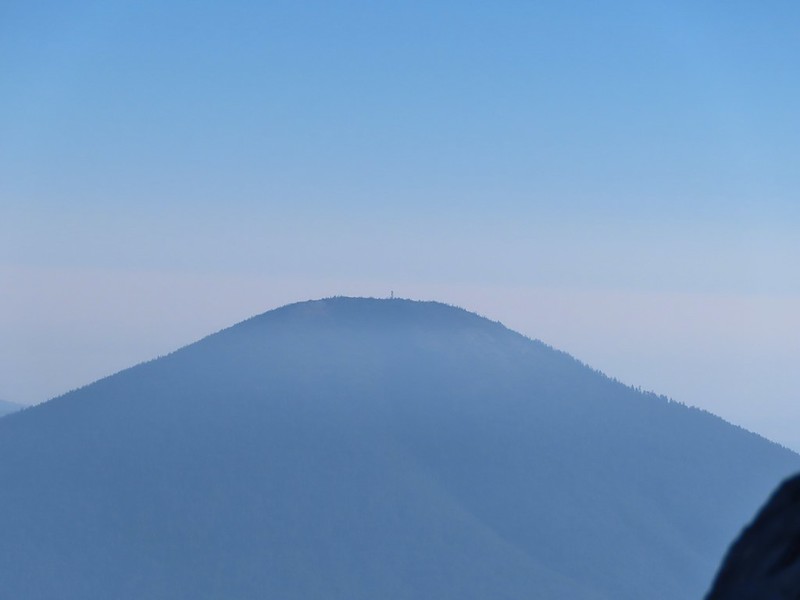 Lookout tower on Black Butte.
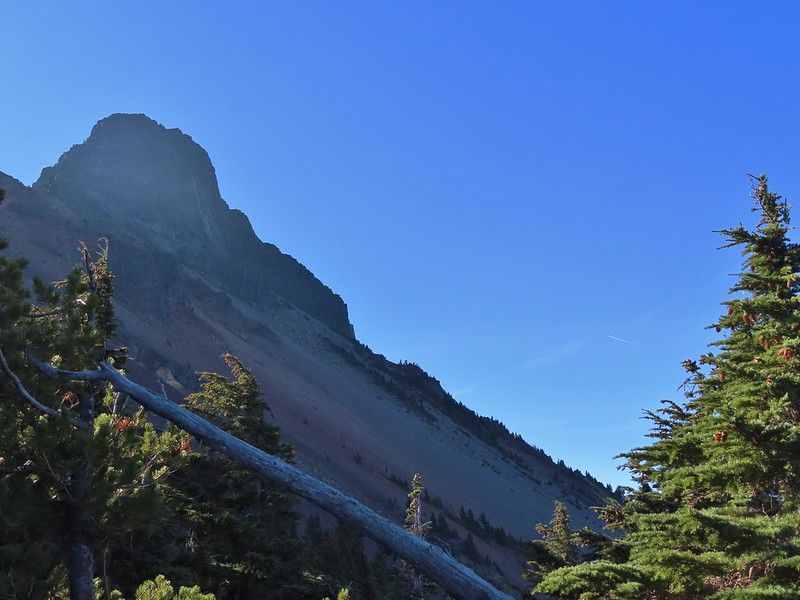 Unfortunate that my timing once again put the Sun directly in line with my view.
 Using a tree to try and get a better view.
 A framed Mt. Jefferson.
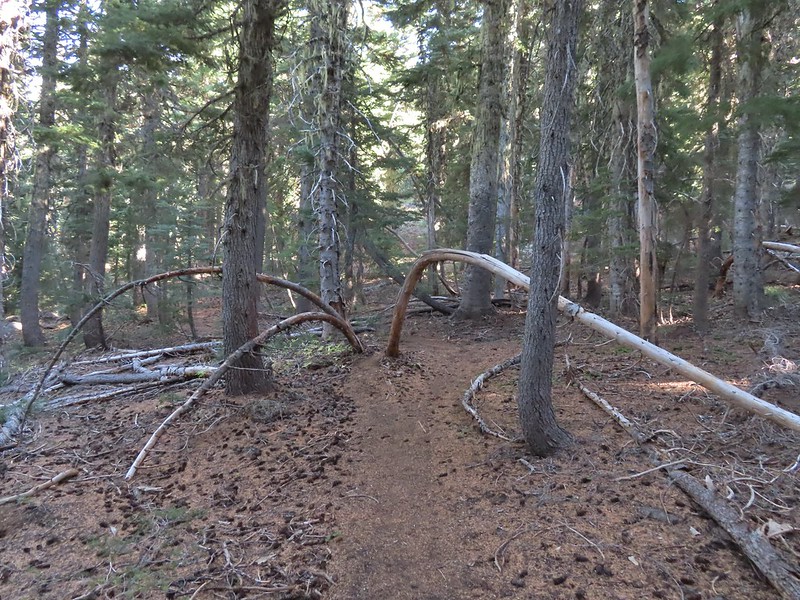 Sometimes it’s the little things, like these bent trees that I really appreciate on a hike.
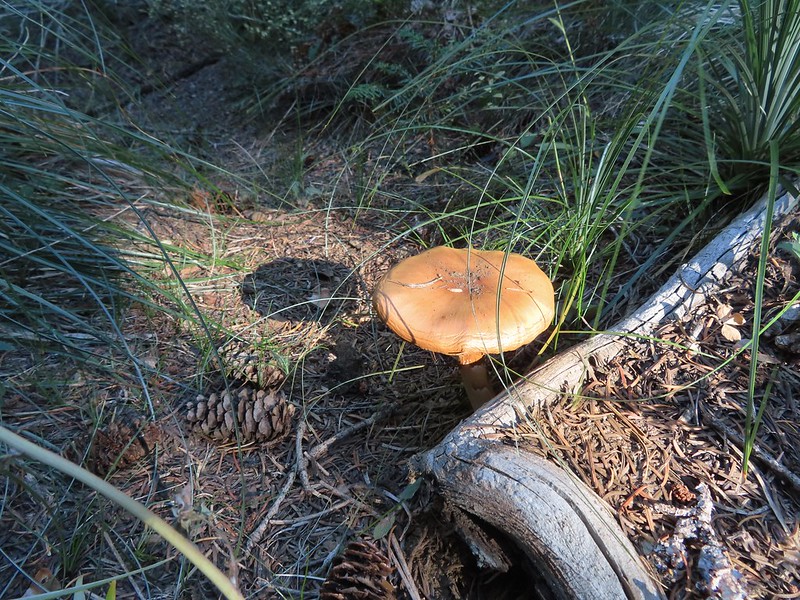 This mushroom casting a shadow was another one.

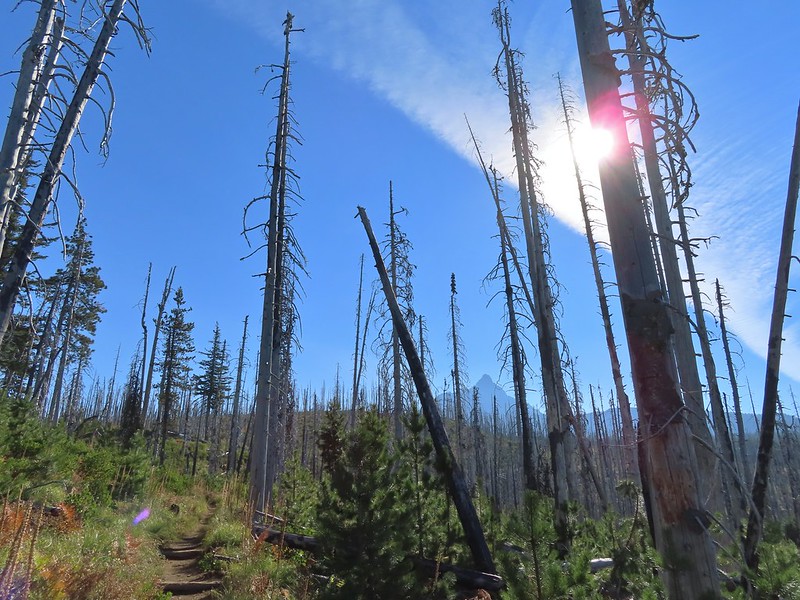 Looking back at Mount Washington from the PCT.
 Three Fingered Jack
 Hoodoo and Hayrick Buttes behind Big Lake.
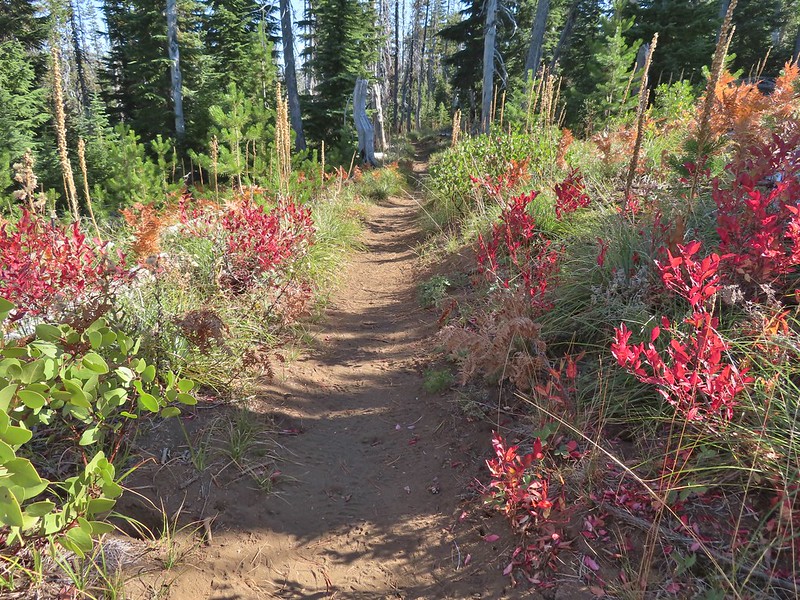 Huckleberry bushes and ferns adding some Fall colors.
 The best Fall colors were near the trailhead.
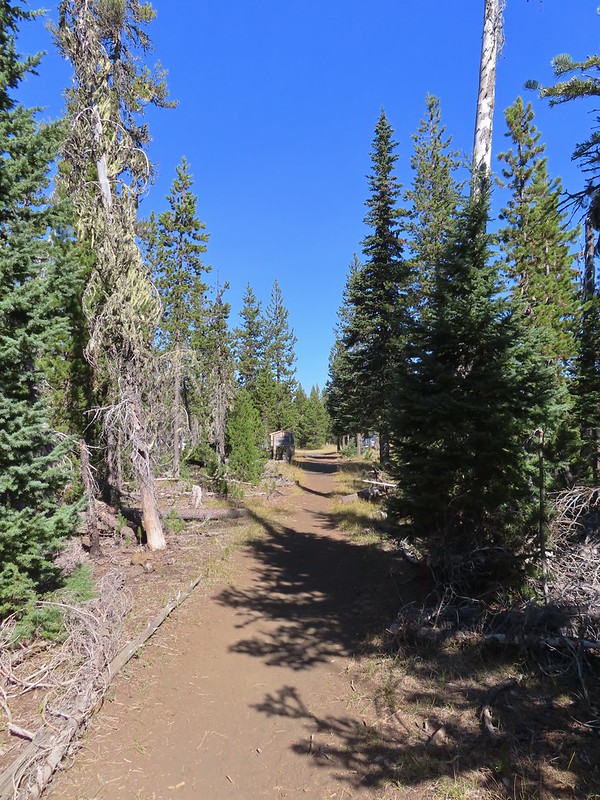 The trailhead from the wilderness boundary sign.


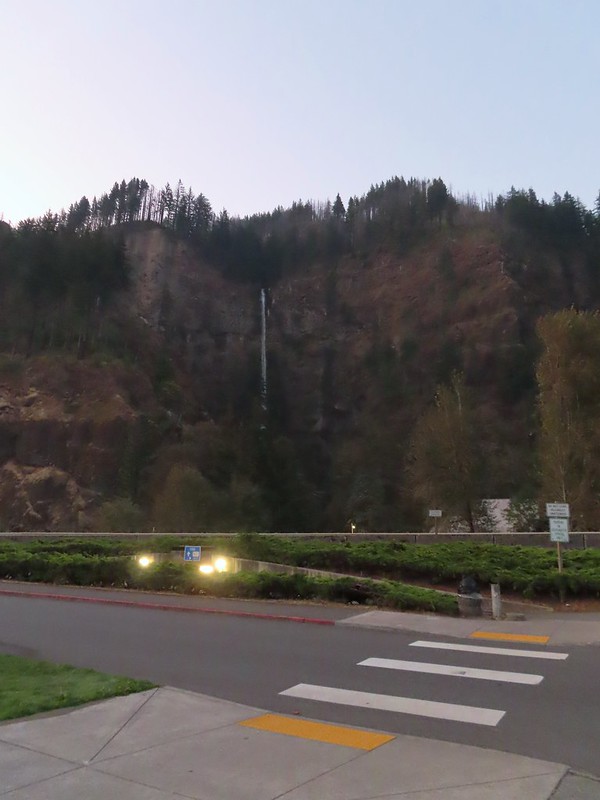
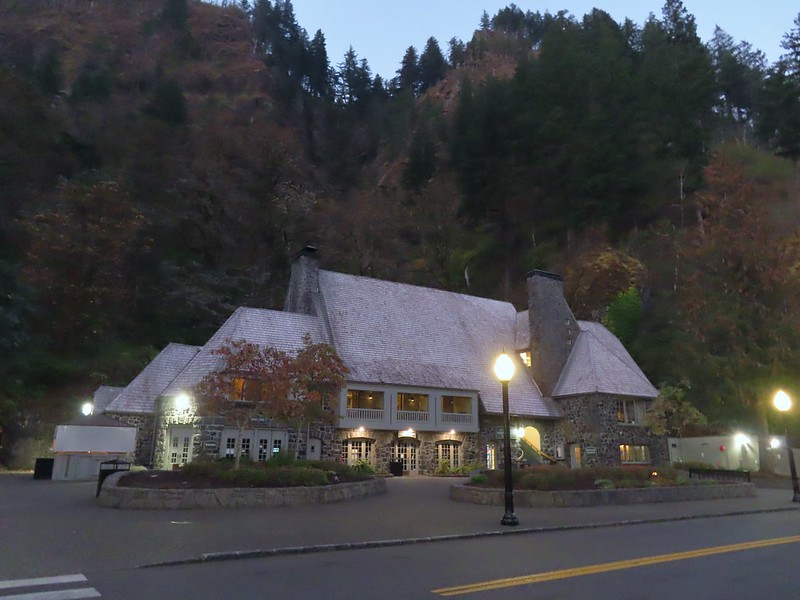
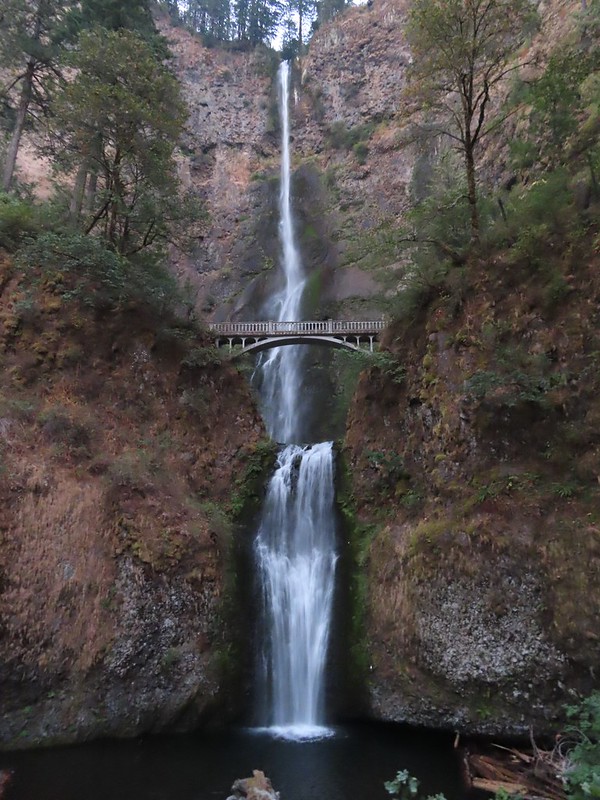 Multnomah Falls
 The Benson Bridge.
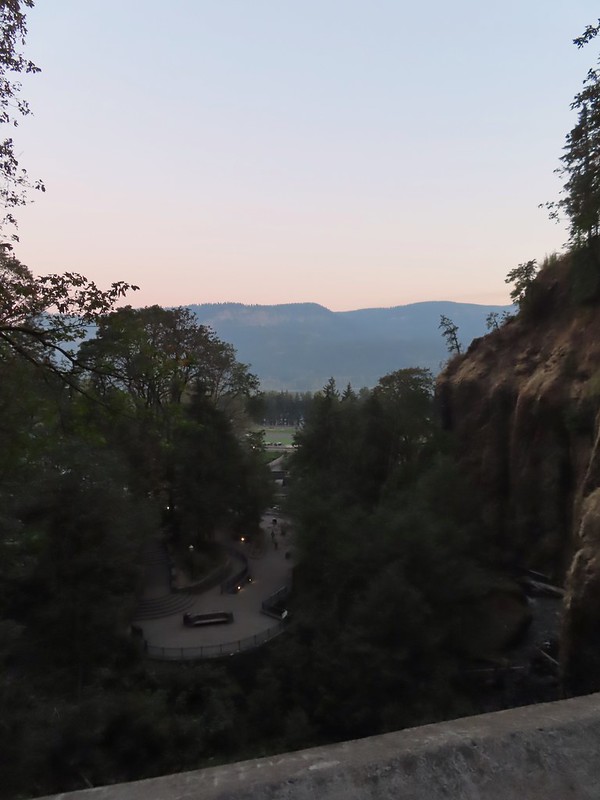 View from the bridge.
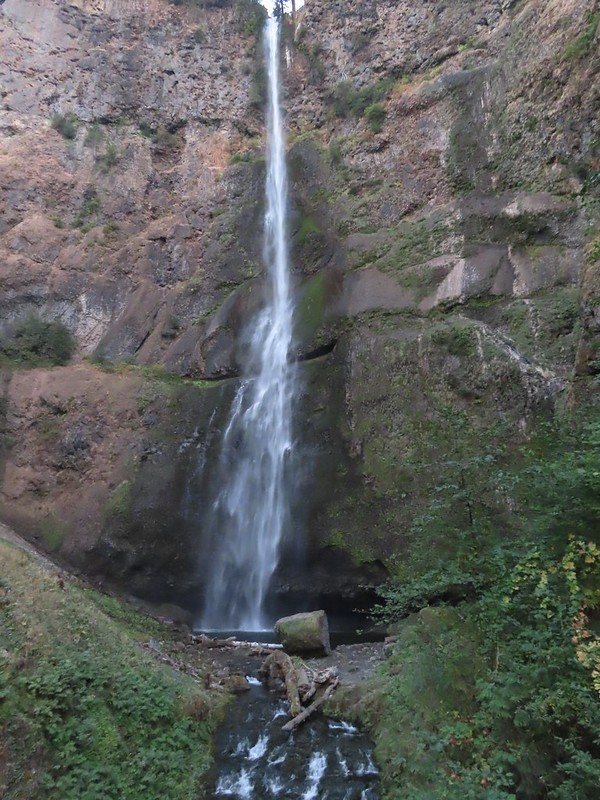 Multnomah Falls from the bridge.
 The Moon beyond the Columbia River and Multnomah Falls Lodge.
 Beacon Rock (
 The second switchback.
 Another view of the falls. I passed a pair of hikers along this stretch then didn’t see another person for another couple of hours.
 Viewpoint trail.

 Small fall just upstream from Multnomah Falls.
 Cape Horn (
 Bridge over Multnomah Creek.
 Approaching Middle Dutchman Falls.
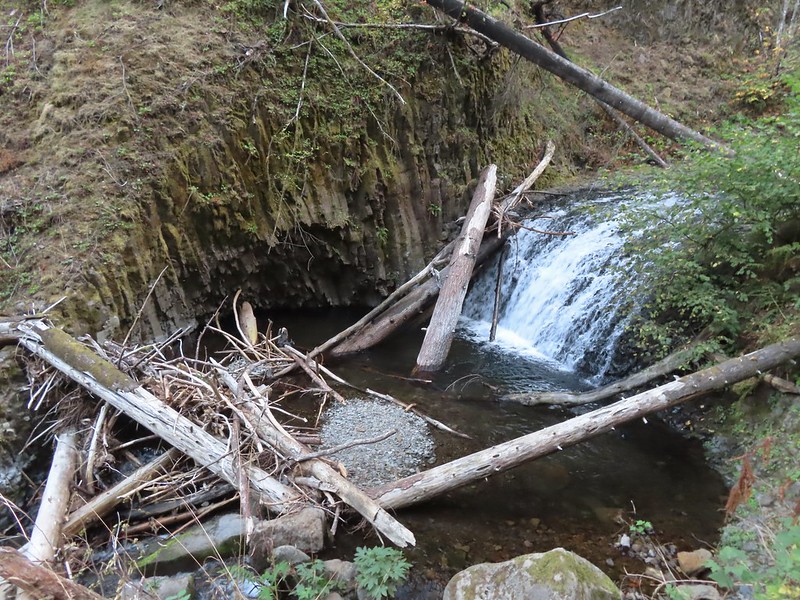 Middle Dutchman Falls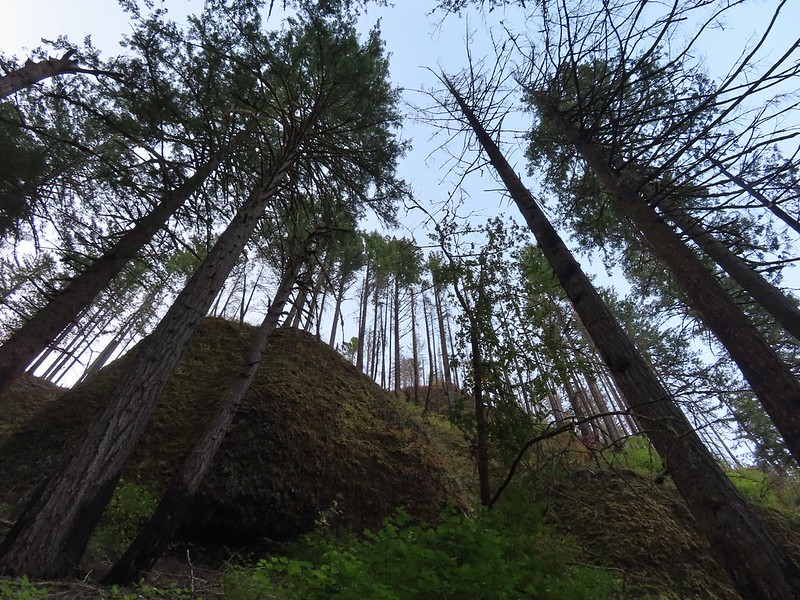
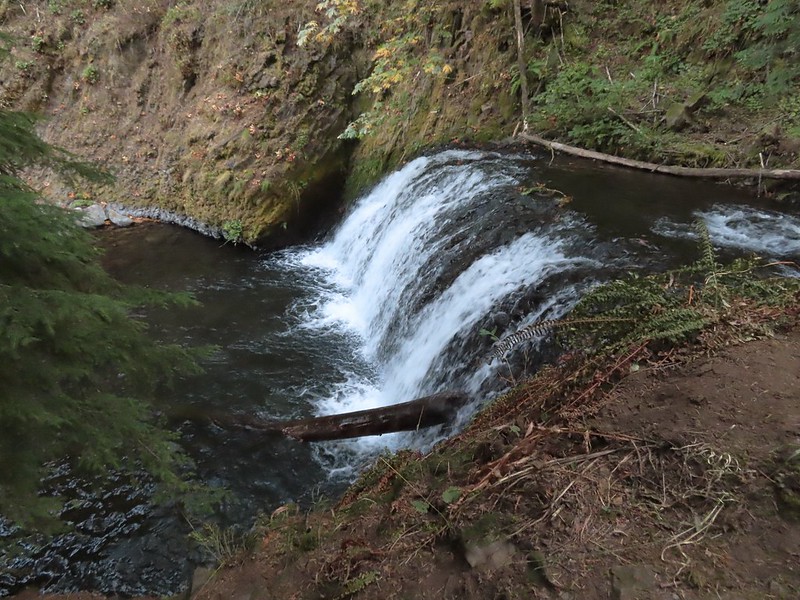 Upper Dutchman Falls
 Dutchman Tunnel
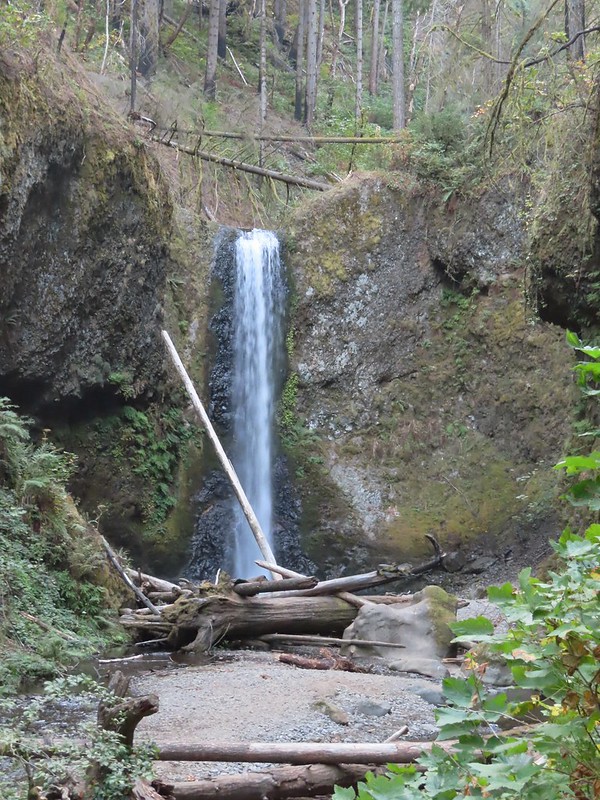 Wiesendanger Falls is located just beyond Dutchman Tunnel.
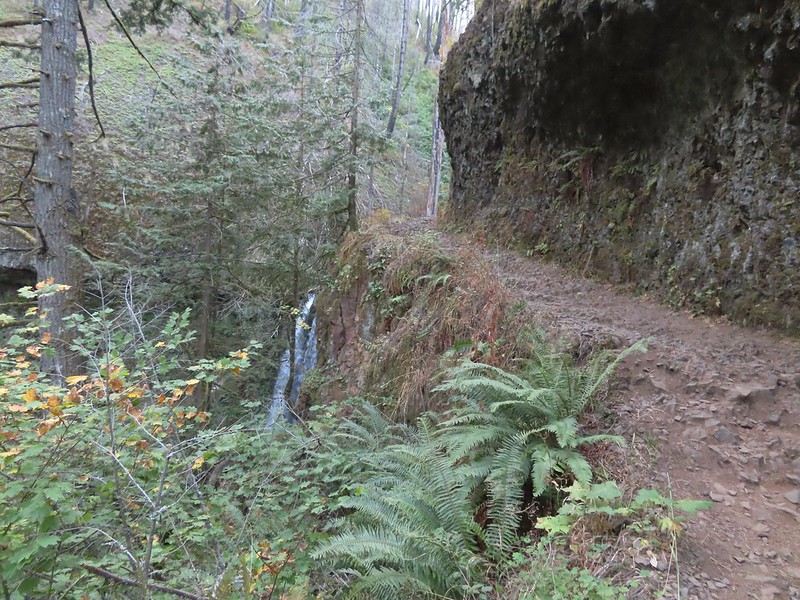 A short distance beyond Wiesendanger Falls is Ecola Falls.
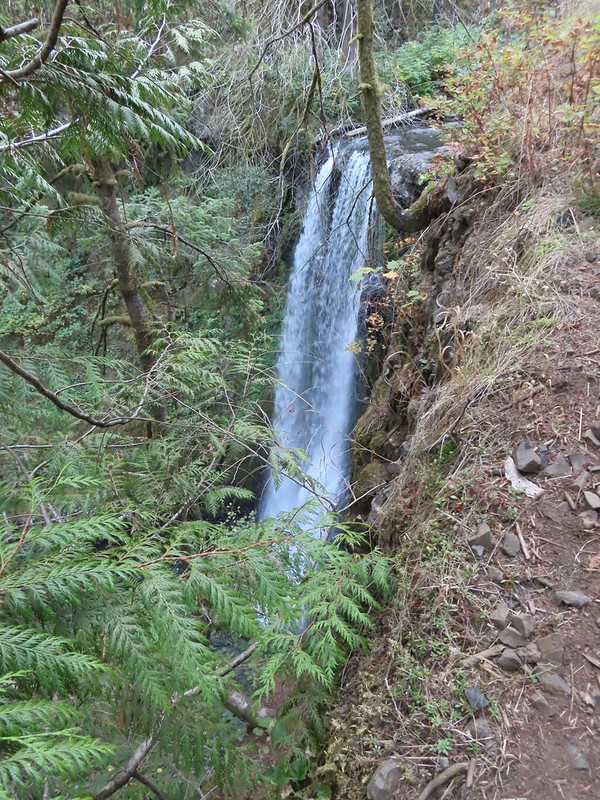 Ecola Falls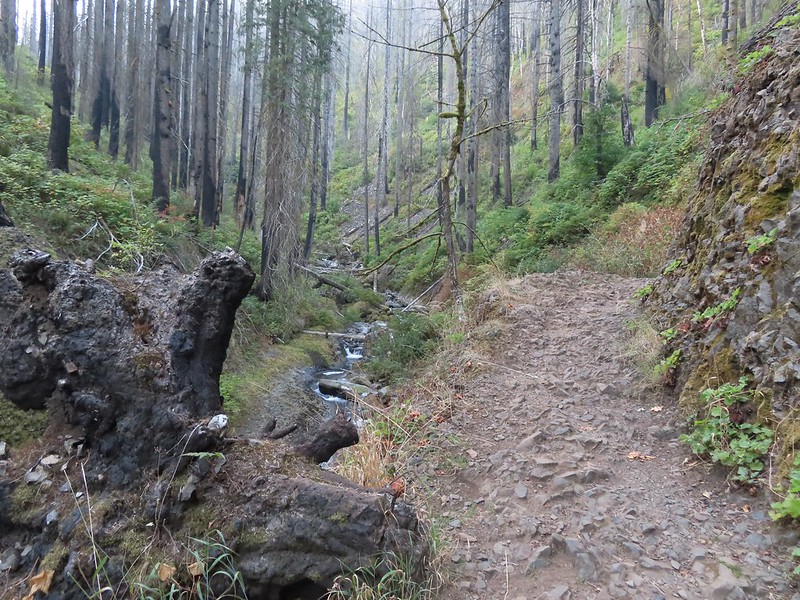
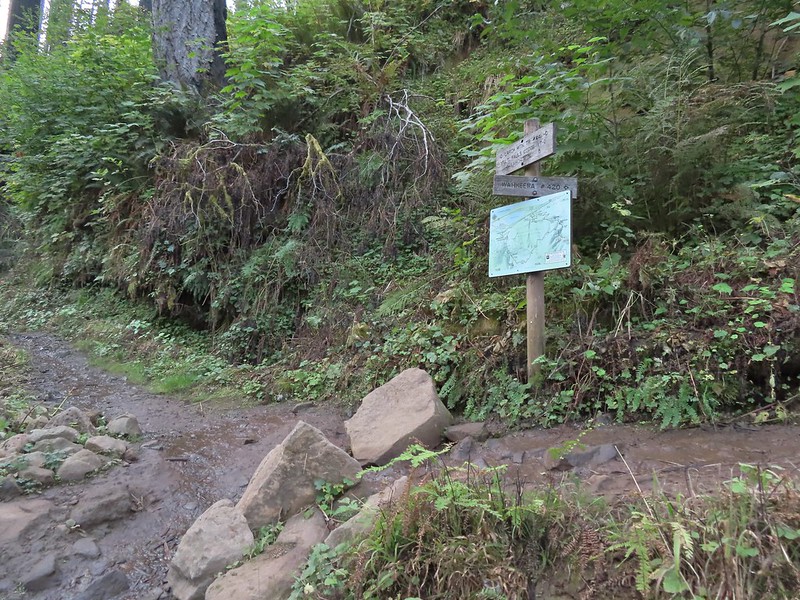
 Good signage at nearly all trail junctions, especially those closest to the trailheads.
 Looking down the creek at sunlight starting to hit the hillside.
 A few bleeding heart were still in bloom.
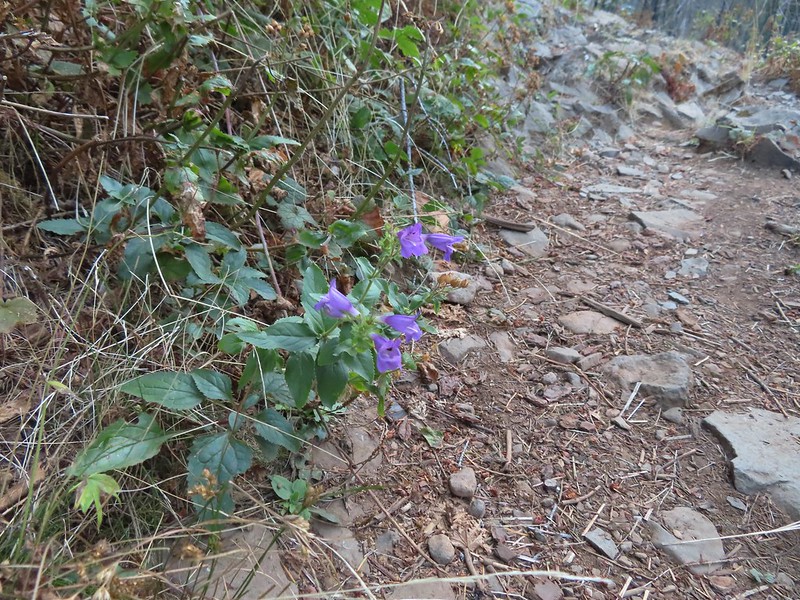 Penstemon
 This section is flooded in late Winter/Spring. The signed High Water Trail leads up and around it for those high water times.
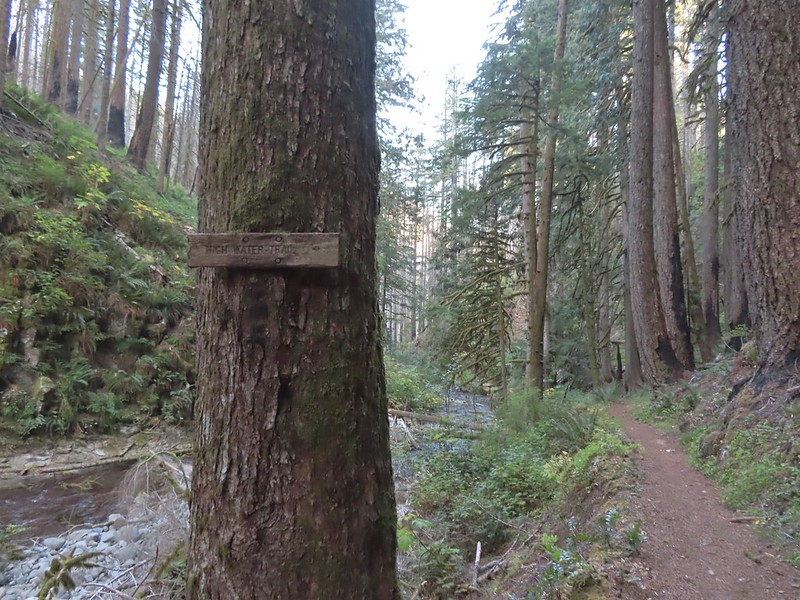 Sign for the High Water Trail at its southern end.
 The southern end of the High Water Trail heading uphill to the right.
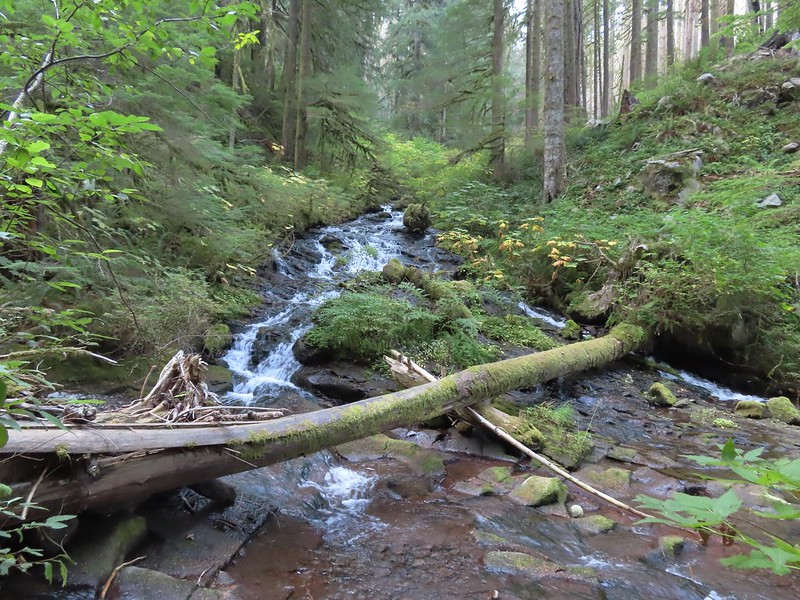 I couldn’t find a name for this creek but it had a good flow, in fact it was more water than what was in Multnomah Creek upstream from their confluence.
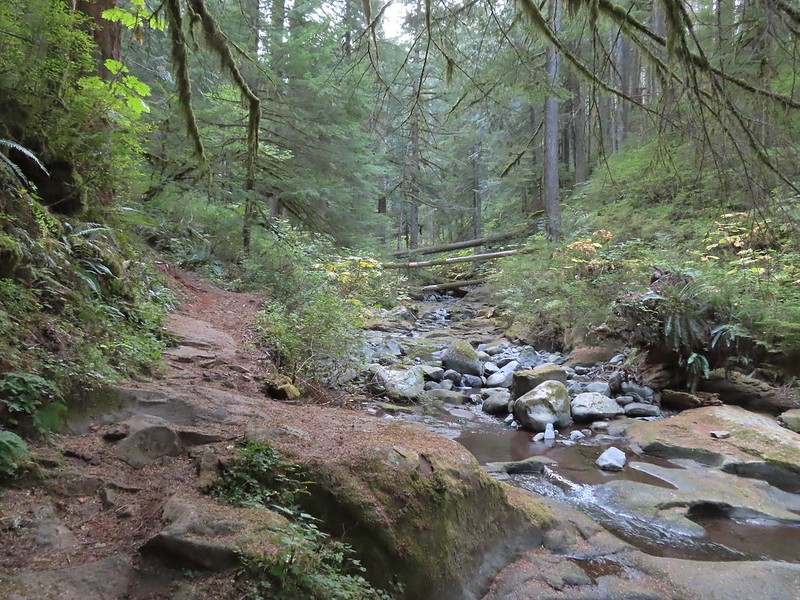 Multnomah Creek upstream from the unnamed creek.


 Reentering the fire scar.
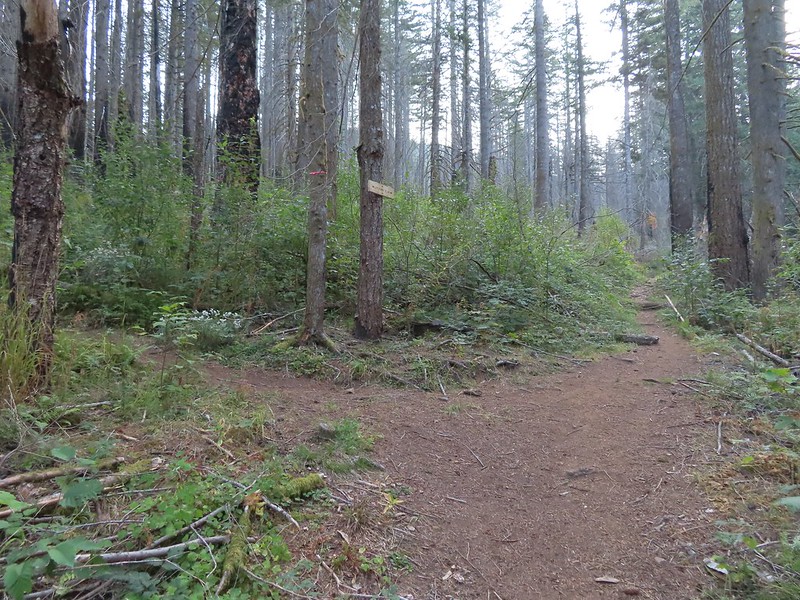 The Franklin Ridge Trail on the left.
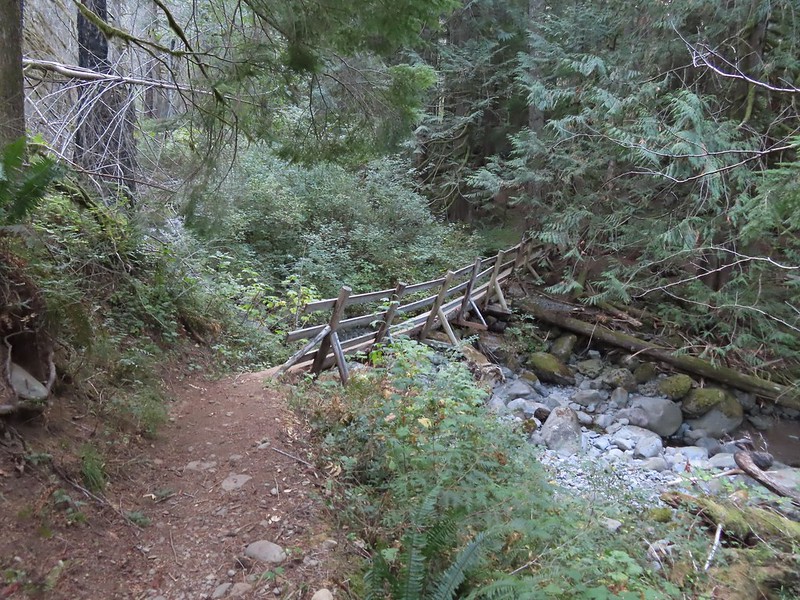
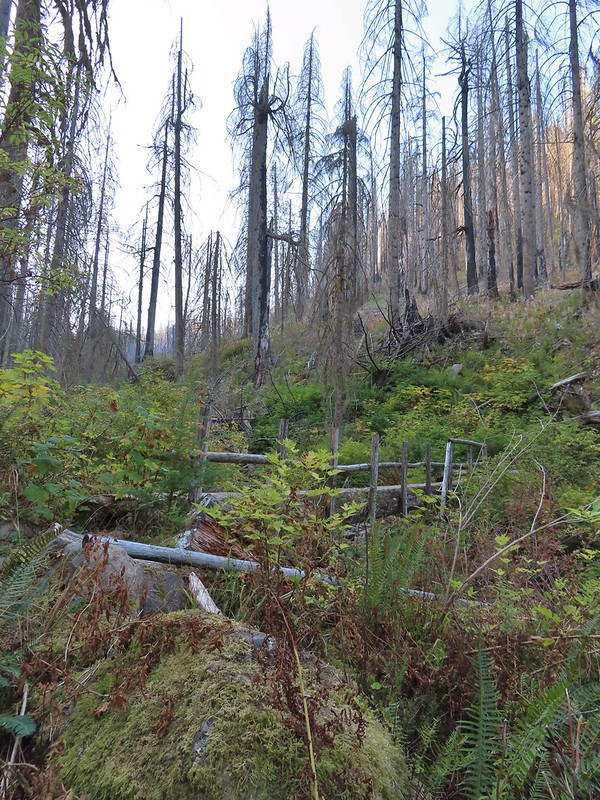


 Maple changing colors
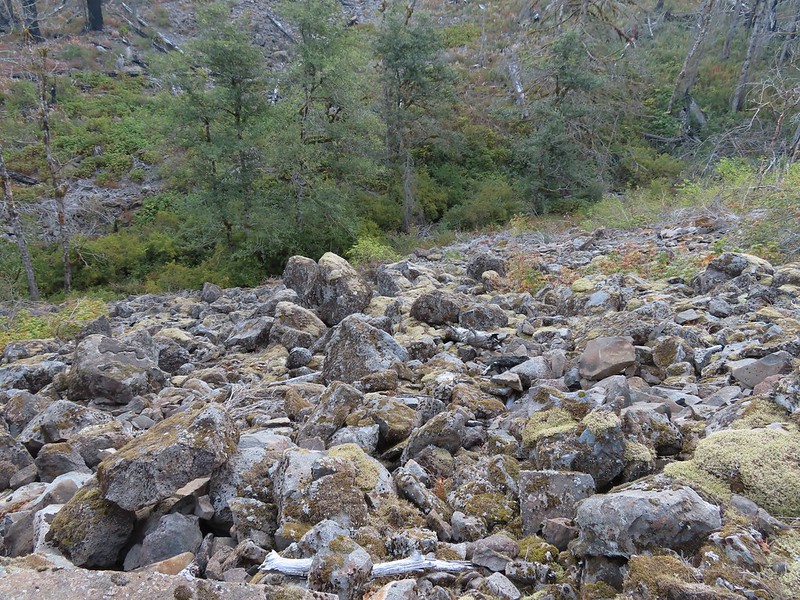 I’m sure there is at least one pika in this photo somewhere.
 Looking back toward Franklin Ridge.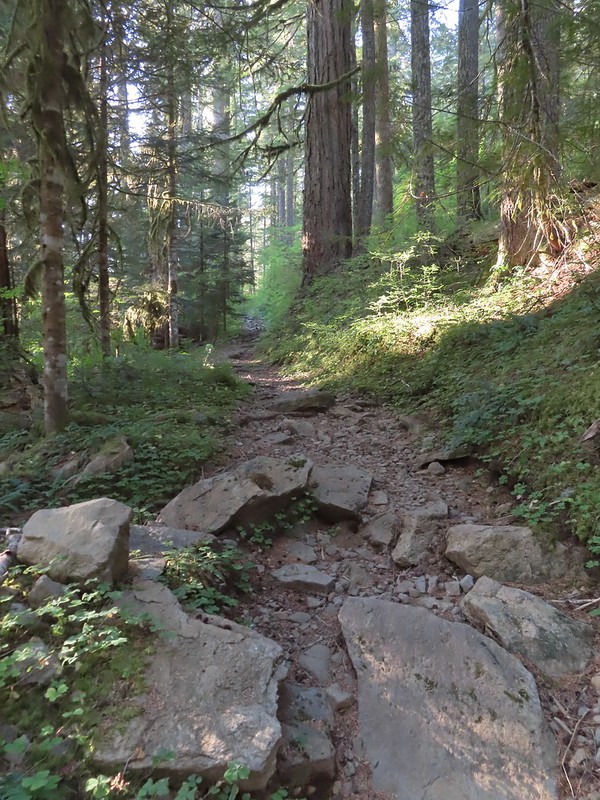
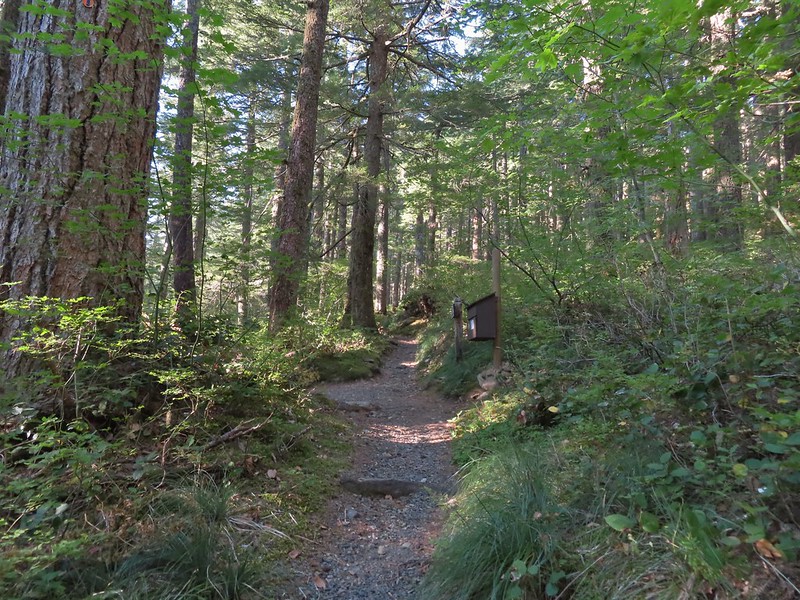 Arriving at the junction.


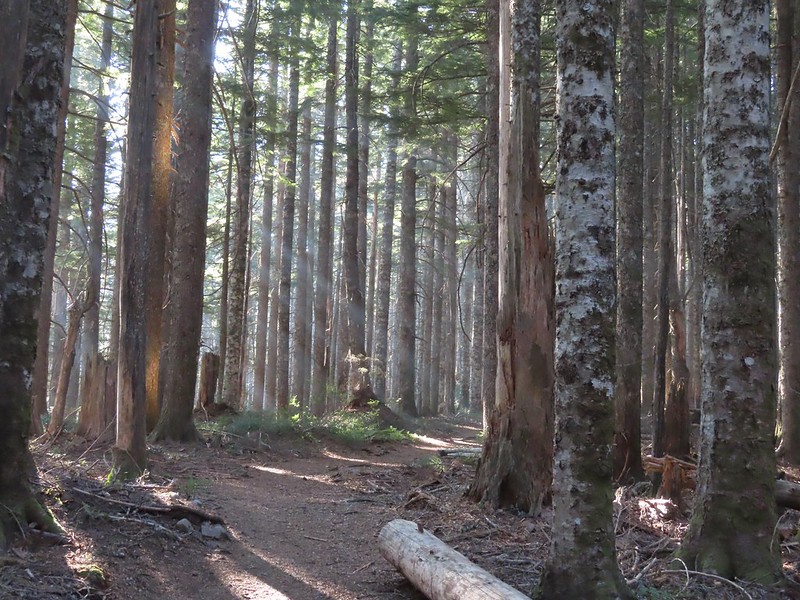 I was hoping for less smoke in the air but these sunbeams told me that there was still a fair amount lingering around much as it had been for the last several days.
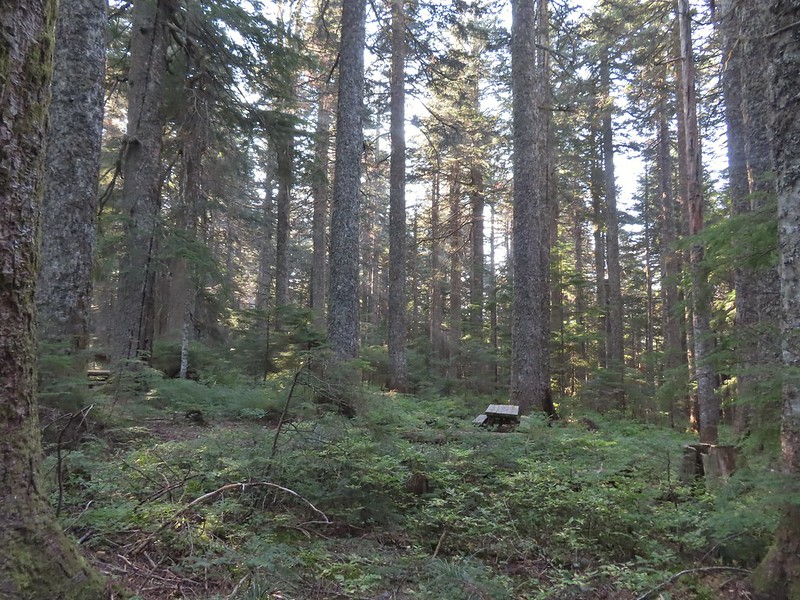 After 1.25 miles I passed a pair of old campsites with picnic tables on the right. I stayed right at an unsigned junction with a trail that led uphill to the left. We had come down that way on our previous trip skipping a short section of the actual Larch Mountain Trail.
 There were four cars at this trailhead.
 Vine maple near the Sherrard Point Trail.
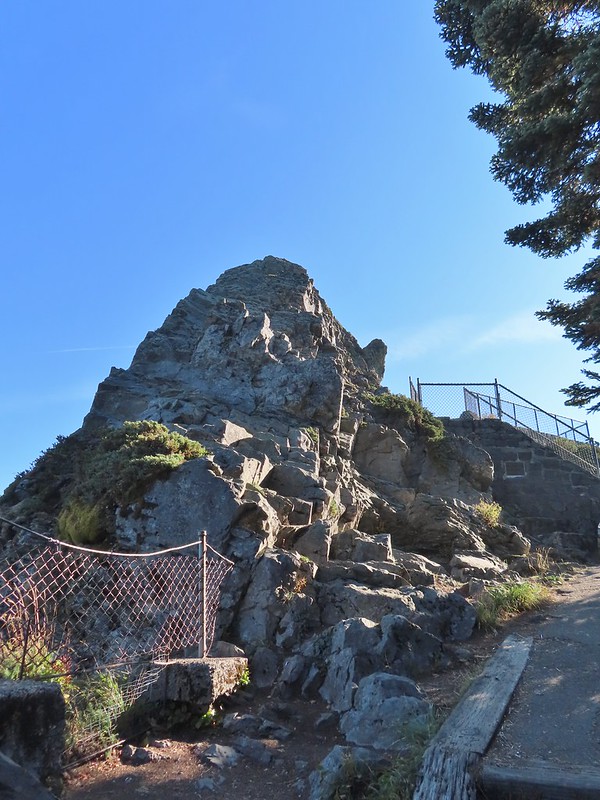

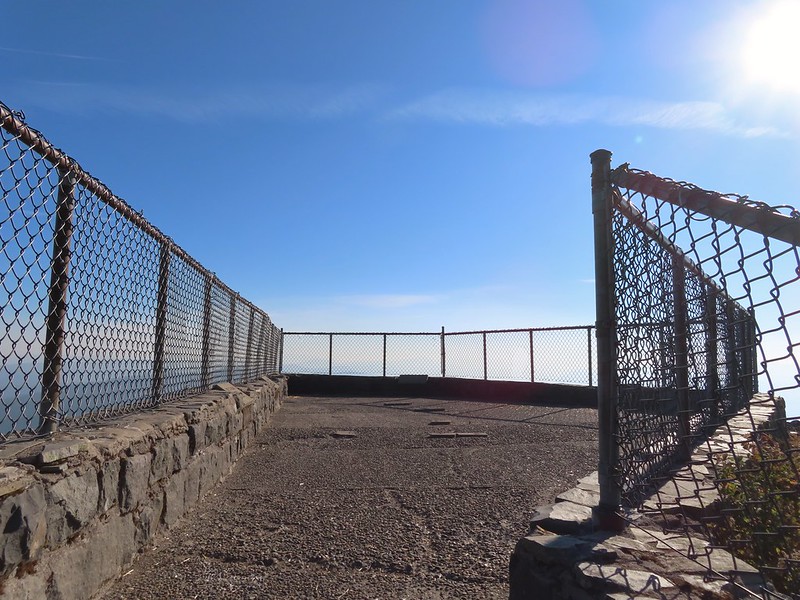
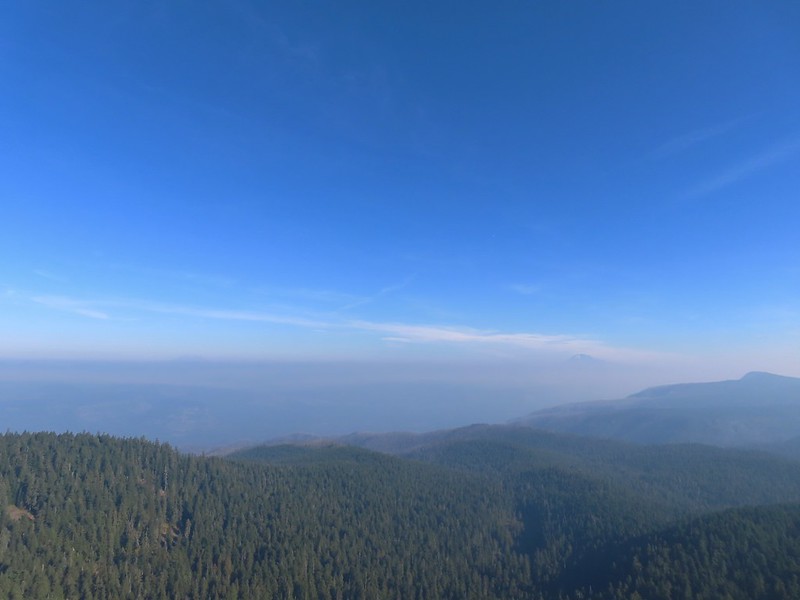 Mt. St. Helens in the smoke to the left and Mt. Adams a bit above it to the right.
 Mt. Hood
 Mt. Adams
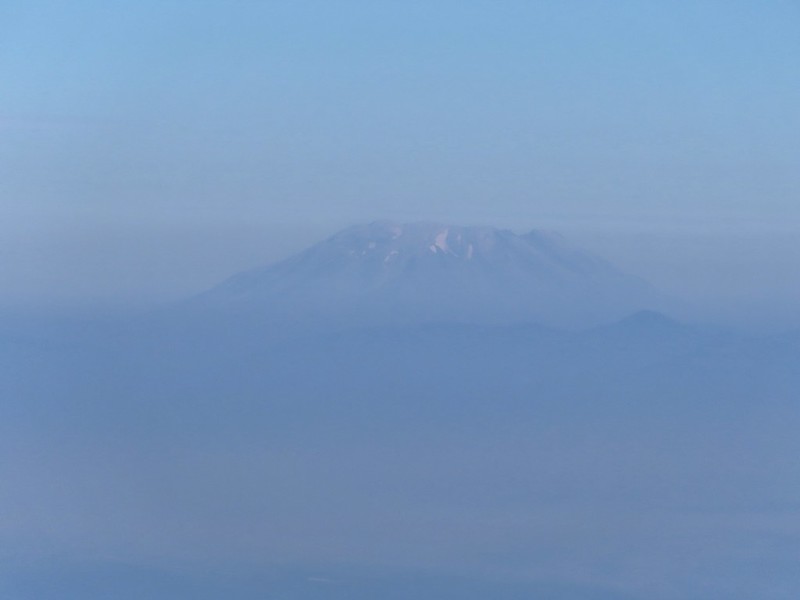 Mt. St. Helens
 Silver Star Mountain (
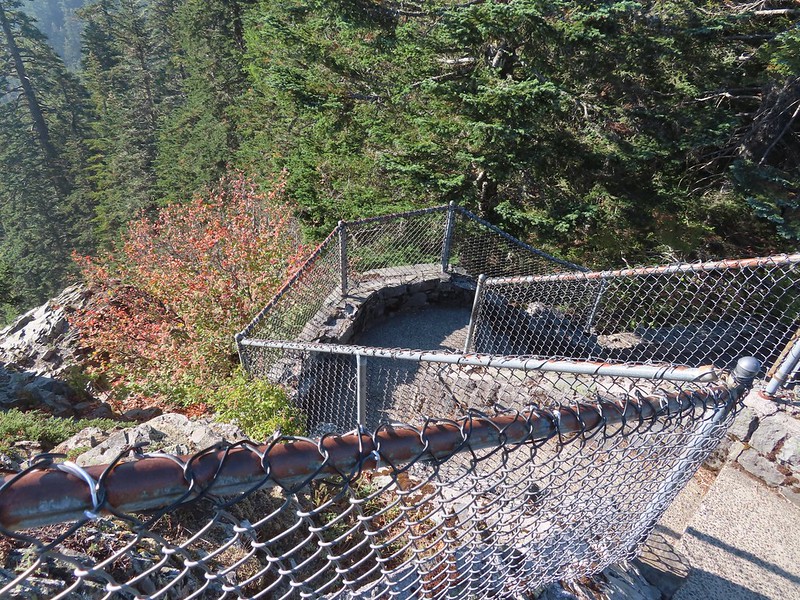 Heading down.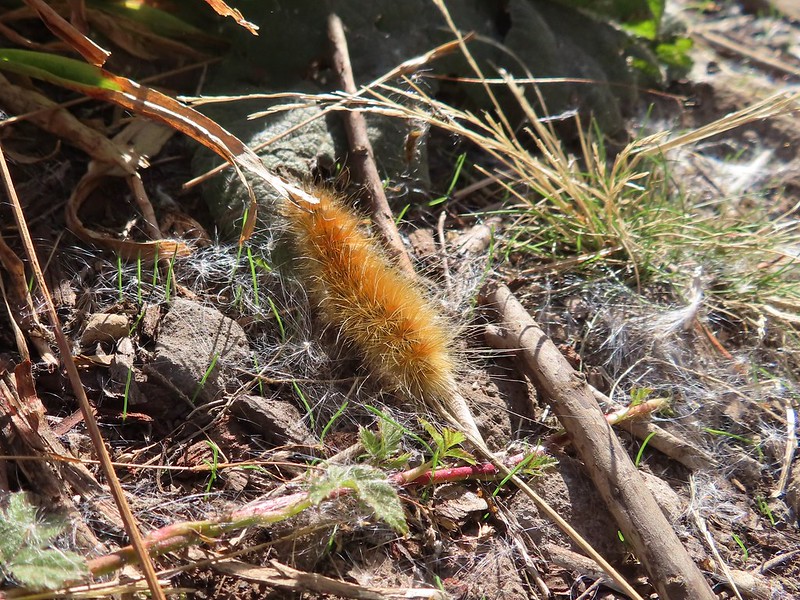


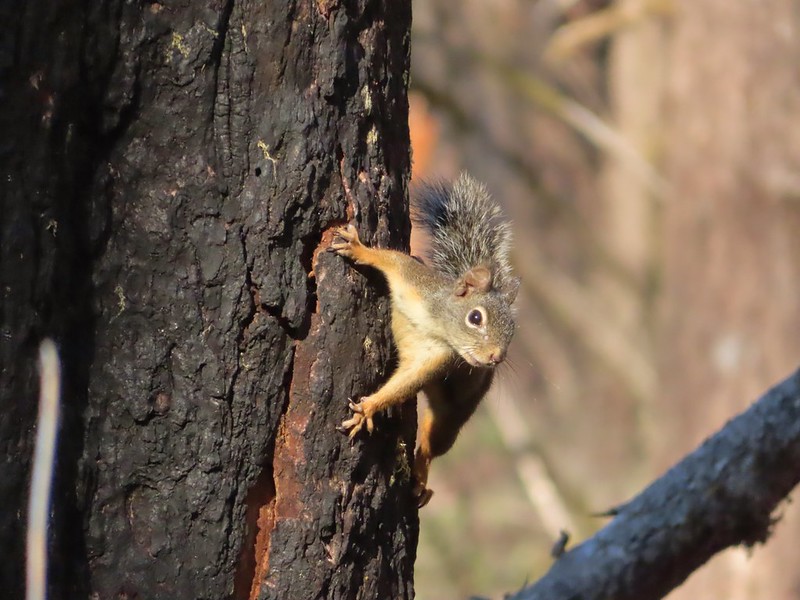
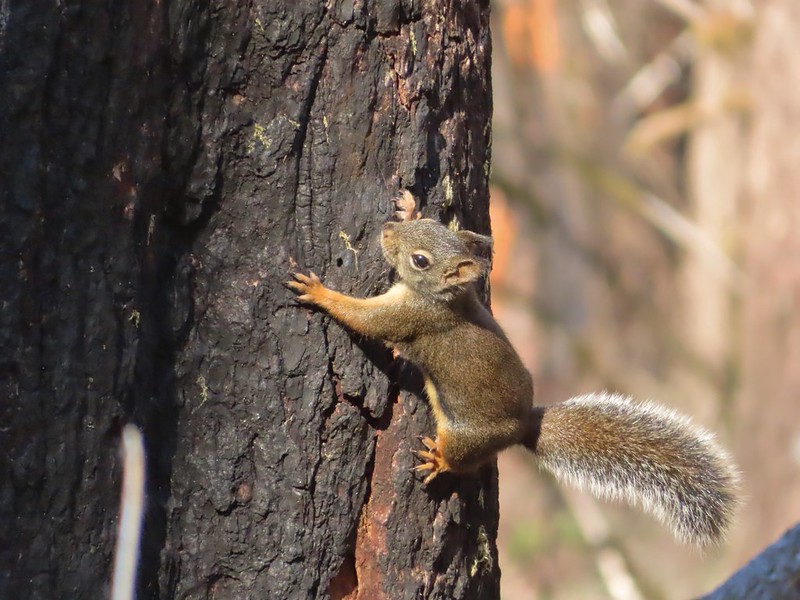
 Lots of fungi on this tree.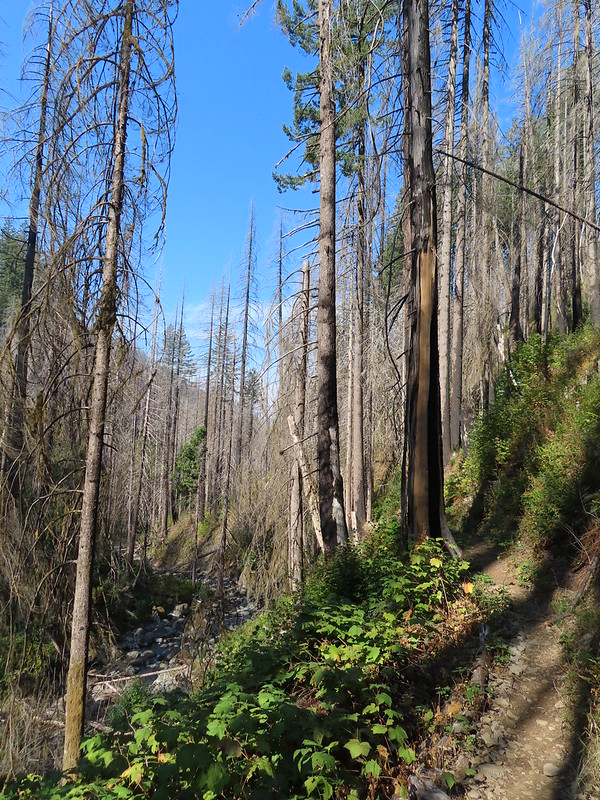
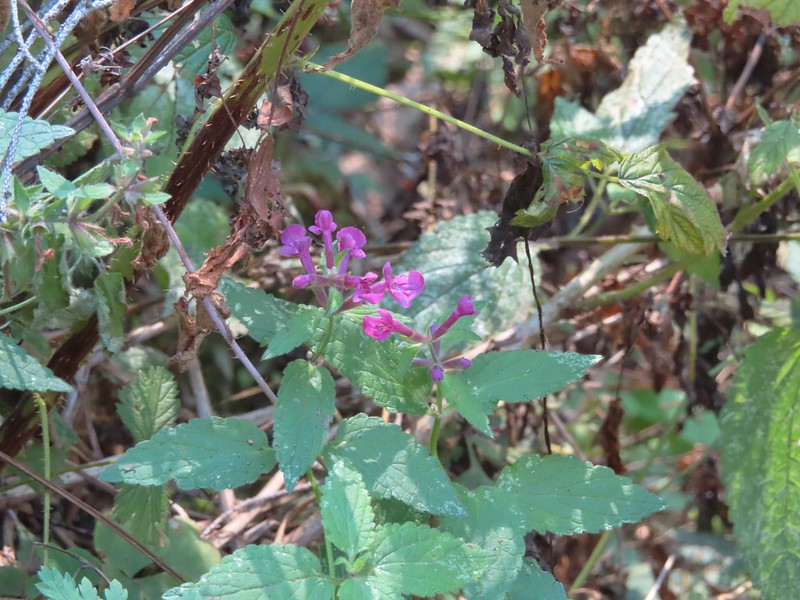 Hedgenettle
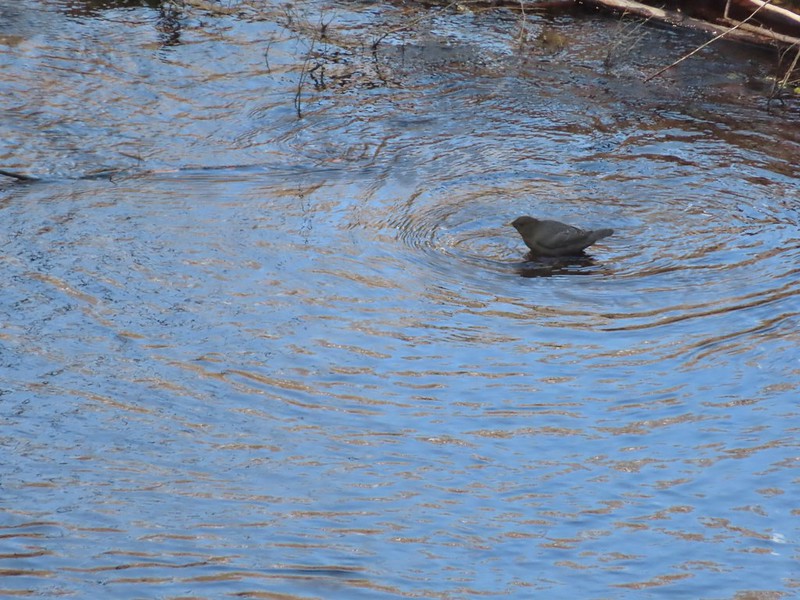 Ouzel
Ouzel
 Looking back down at Multnomah Creek.
 Cape Horn again across the Columbia.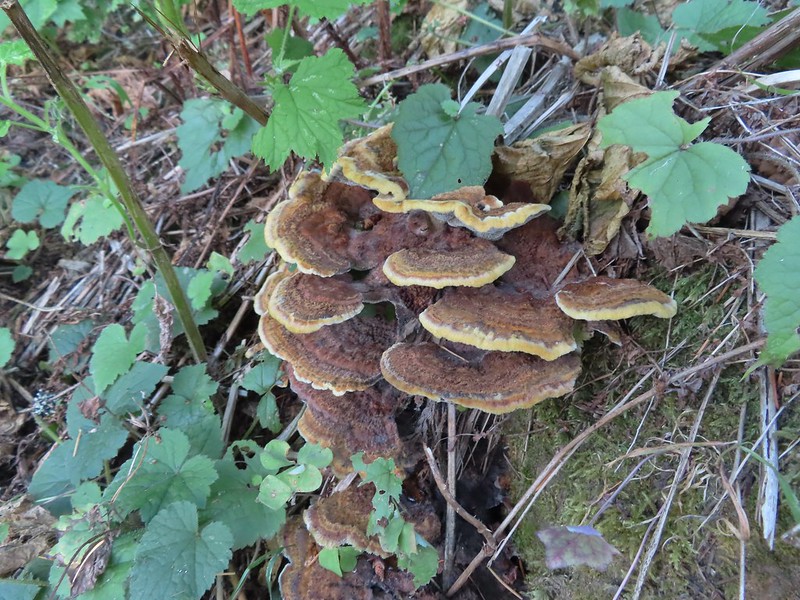
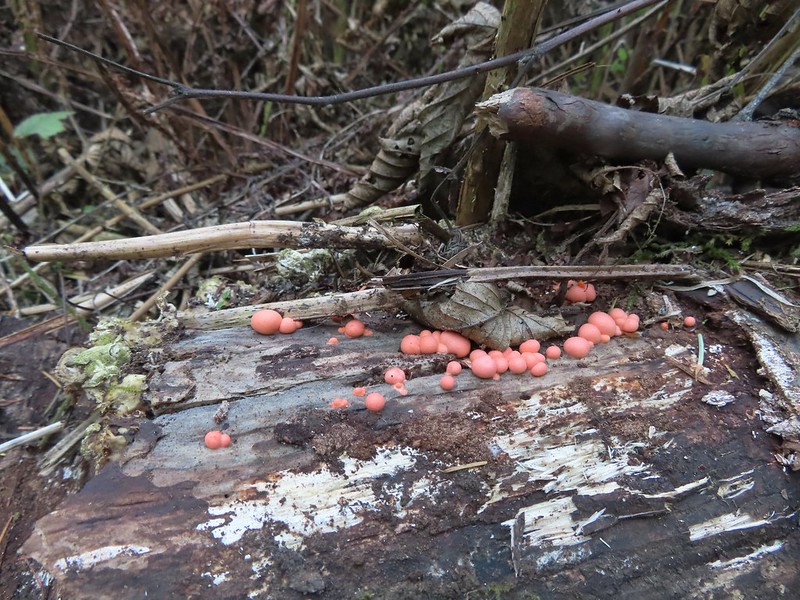 I couldn’t recall seeing these before on a hike, not this color anyway.
 The Devil’s Rest Trail on the left at the ridge top.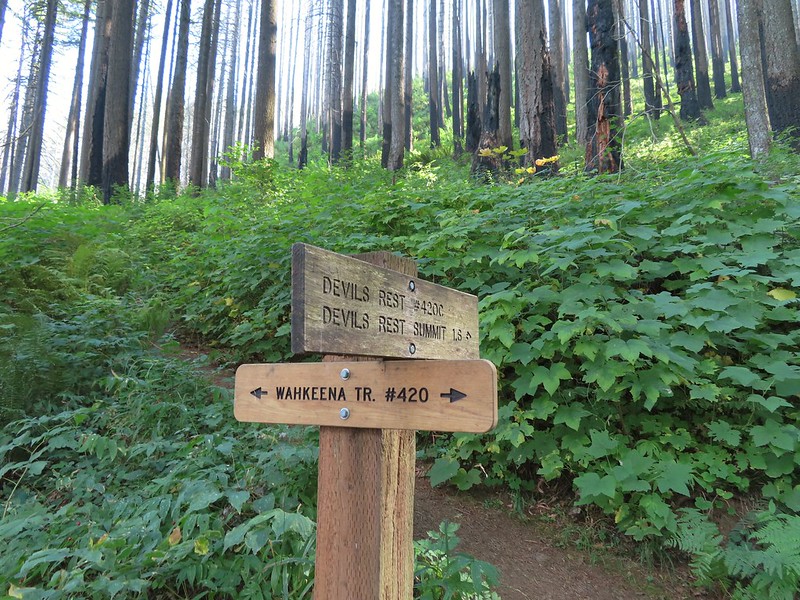
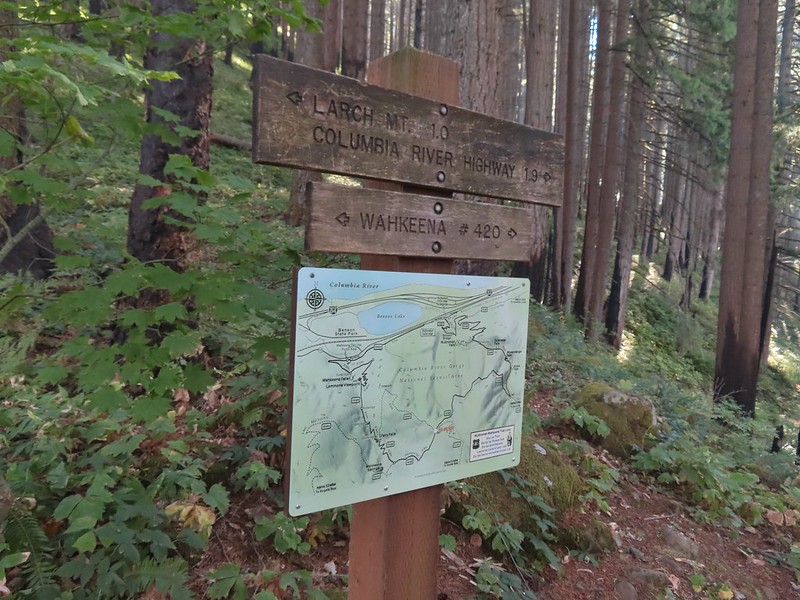 I should have followed the Wahkeena Trail Pointer here.
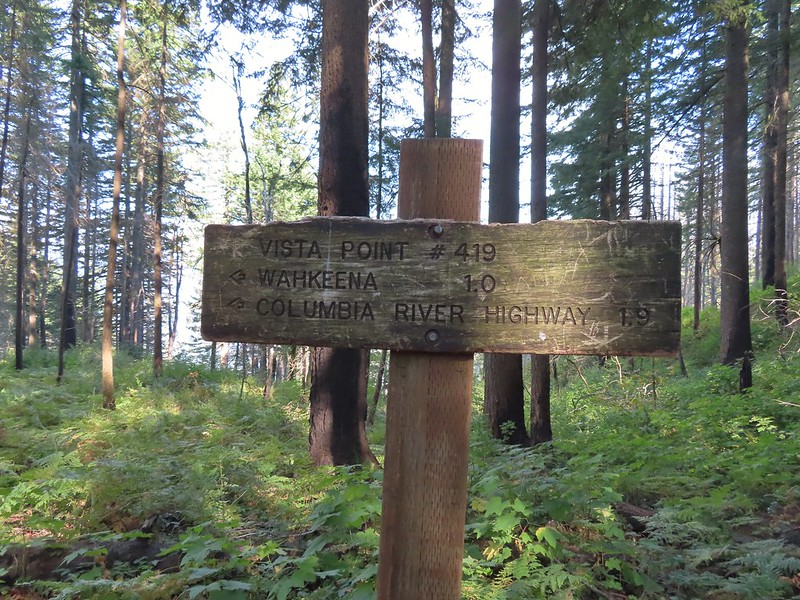 Instead I followed the pointer for Wahkeena 1.0.
 Vista Point Trail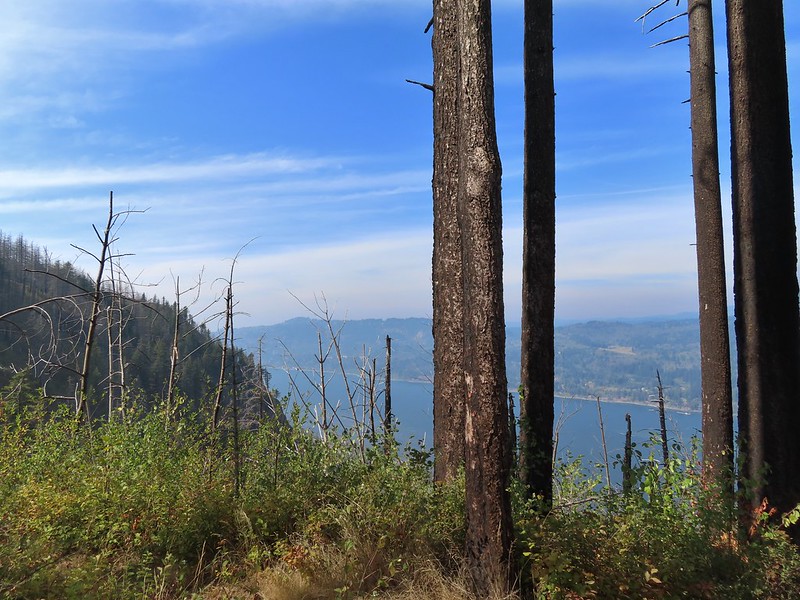


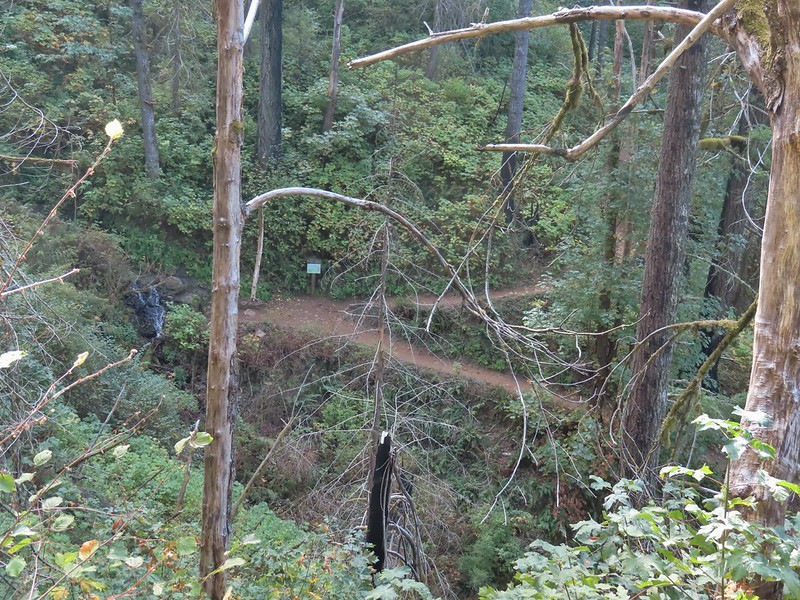 There is the trail I had intended to be coming down arriving at the junction with the other end of the Vista Point Trail.
 Looking back at the Vista Point Trail from the junction.
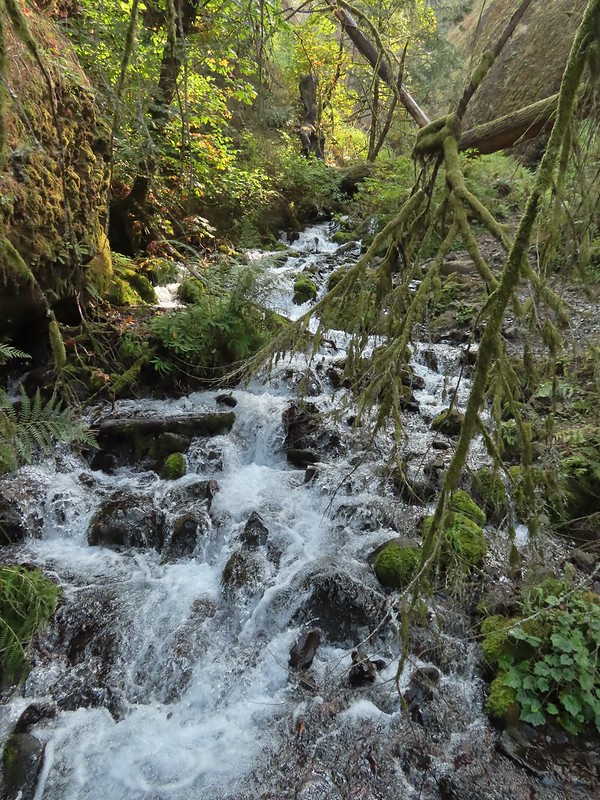
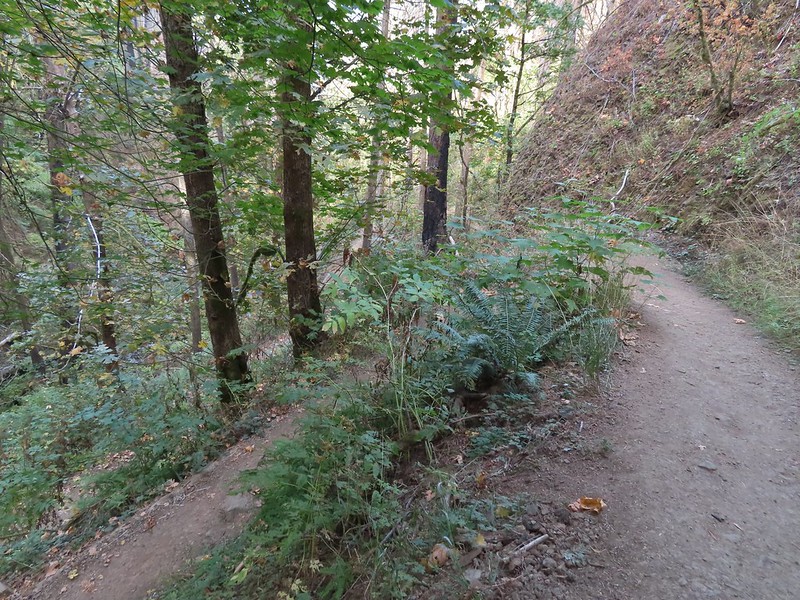 Lots of tight switchbacks to get down the gorge.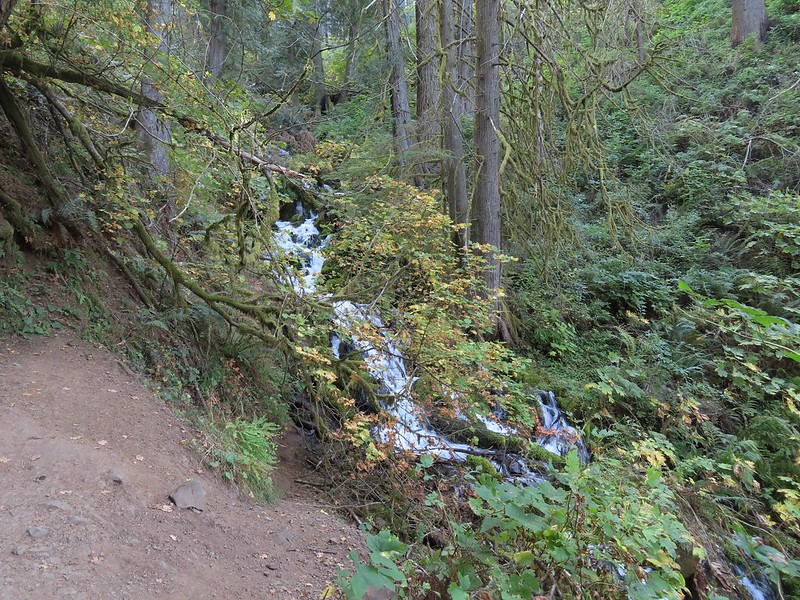
 Fairy Falls
 Fairy Falls

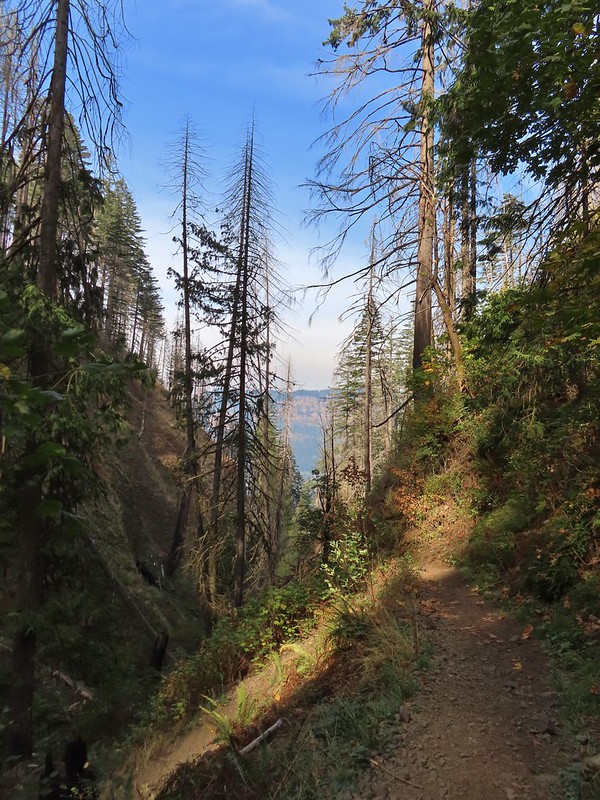 Looking out across the Columbia River.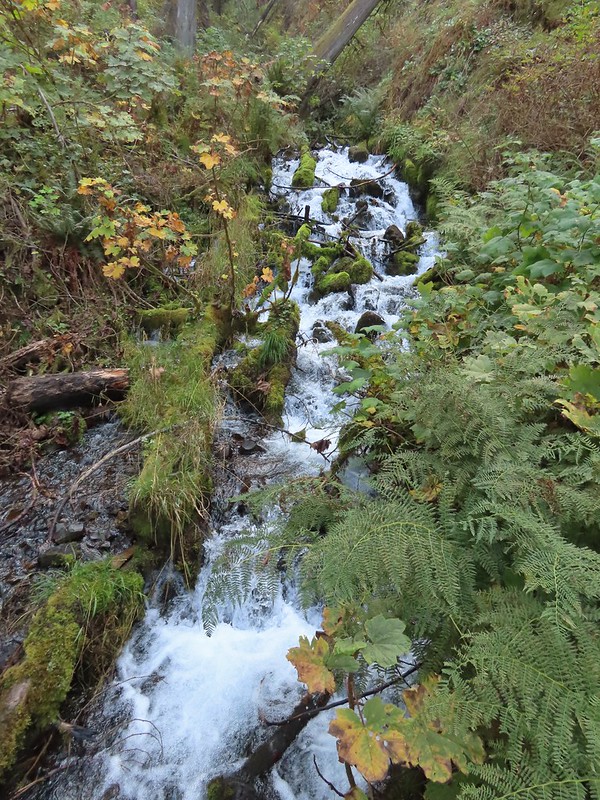



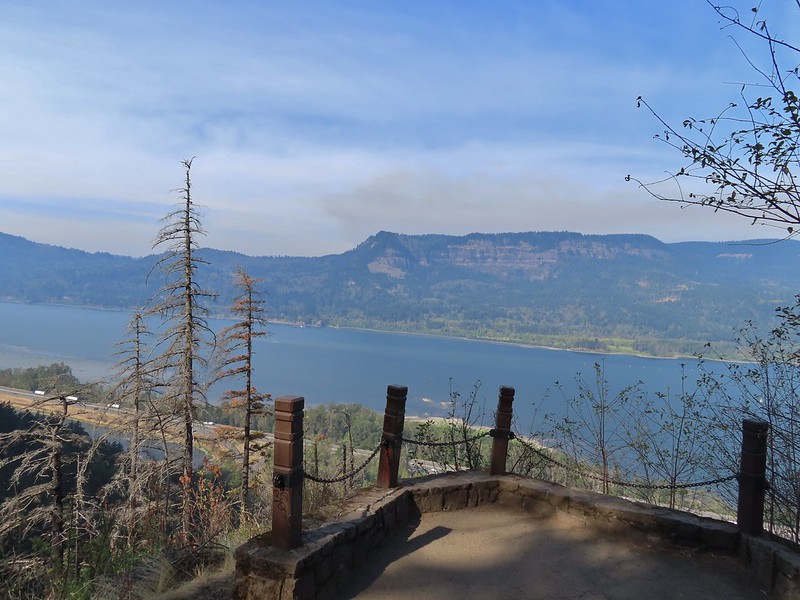 Cape Horn (again)
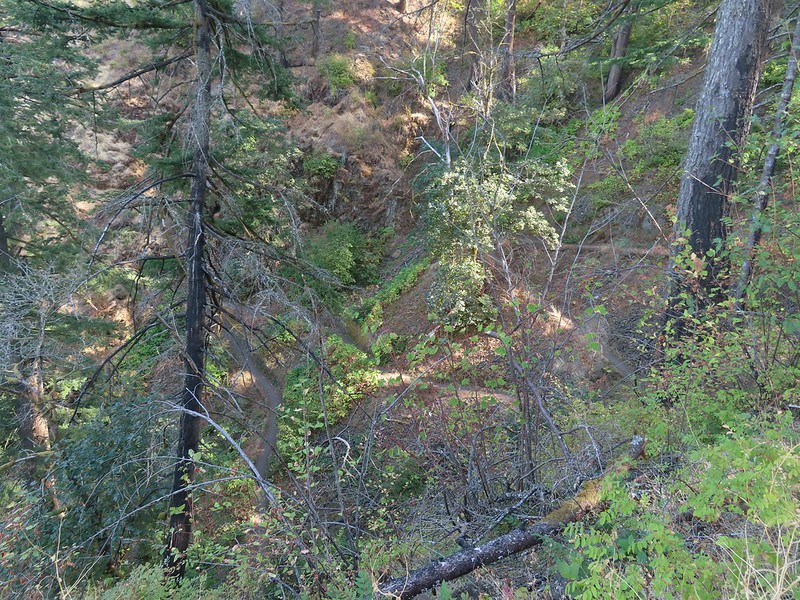 The Wahkeena Trail from Lemmons Viewpoint.
 The poison oak was really colorful.
 Approaching Wahkeena Falls.
 Wahkeena Falls
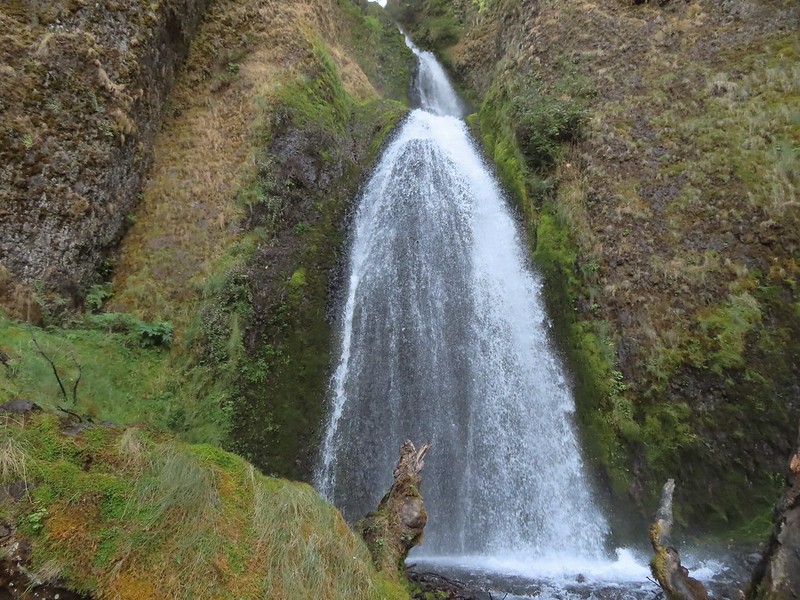 Wahkeena Falls.
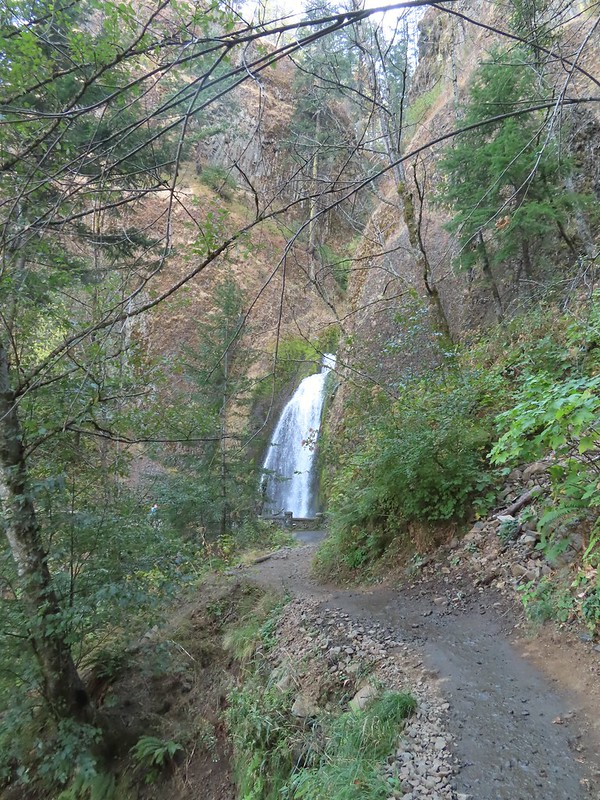 Looking back at Wahkeena Falls.
 One last look at Wahkeena Falls through the trees.

 A line of cars on Historic Highway 30 in front of the lodge.


 Merry (black) is 3 mos. and Pippin is 2 mos. Both boys from separate litters.

 It seems this time of year I (we) are always a little ahead of the sunlight which does nothing for photos.
 Coming up on the road crossing.
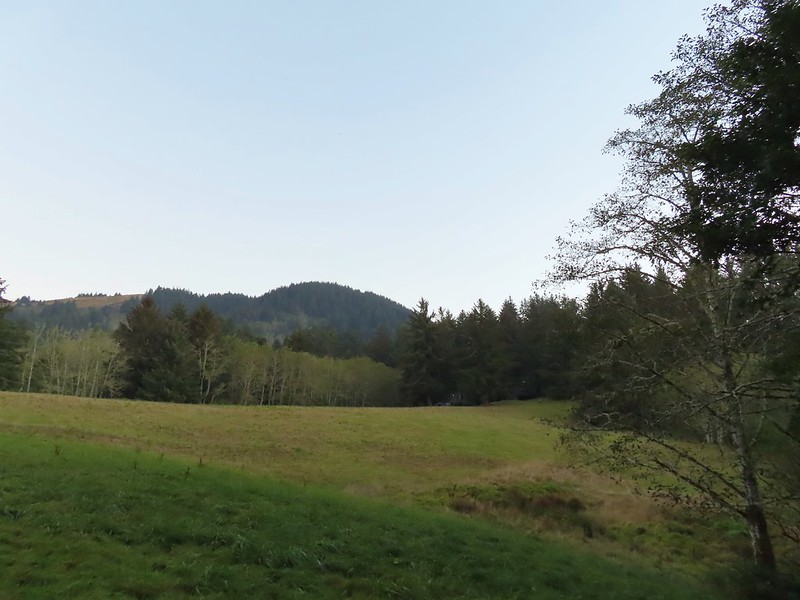 Cascade Head from the trail with the elk at the end of the grass to the right.
 Fuzzy (low light) photo of the elk.
 Crossing Savage Road with the first view of the Pacific.


 View from one of five metal footbridges along this section.
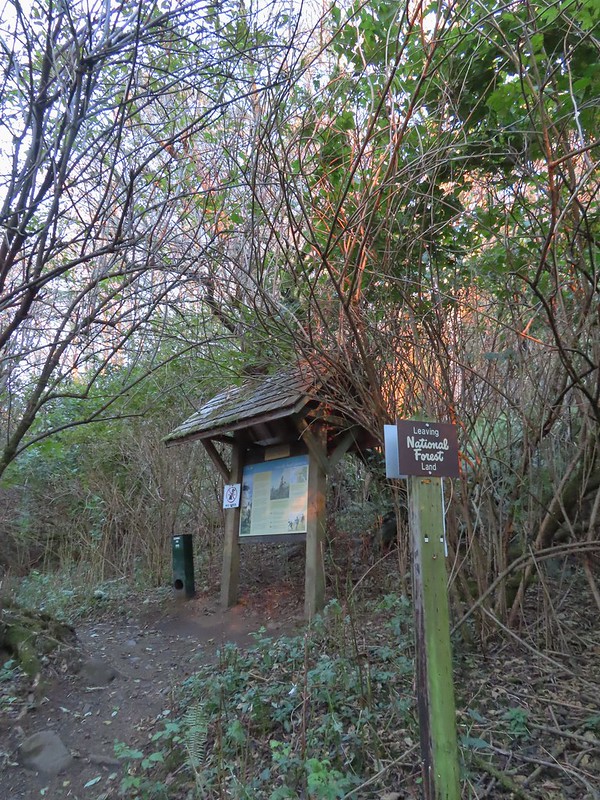 Signboard and donation box at the start of
  First direct sunlight of the morning.
 Out of the trees and into the meadows.
 Looking uphill
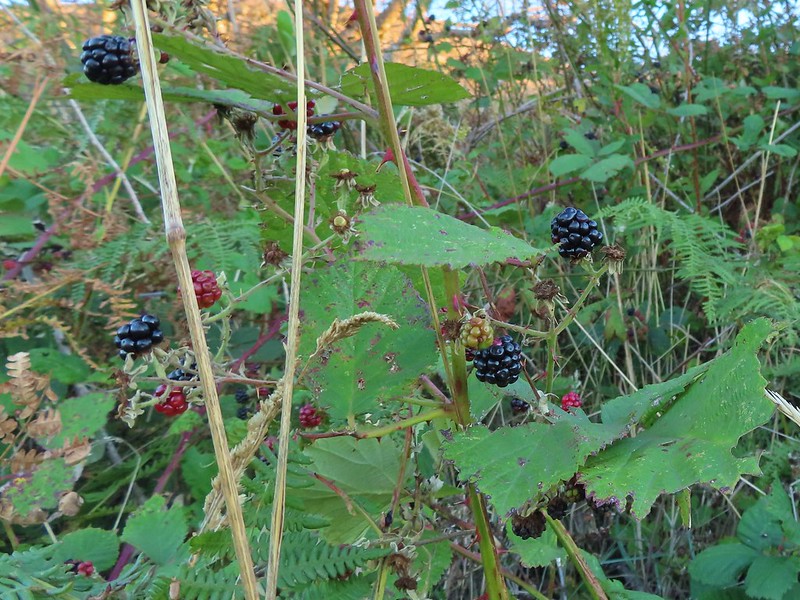 Snacks
 Salmon River Estuary
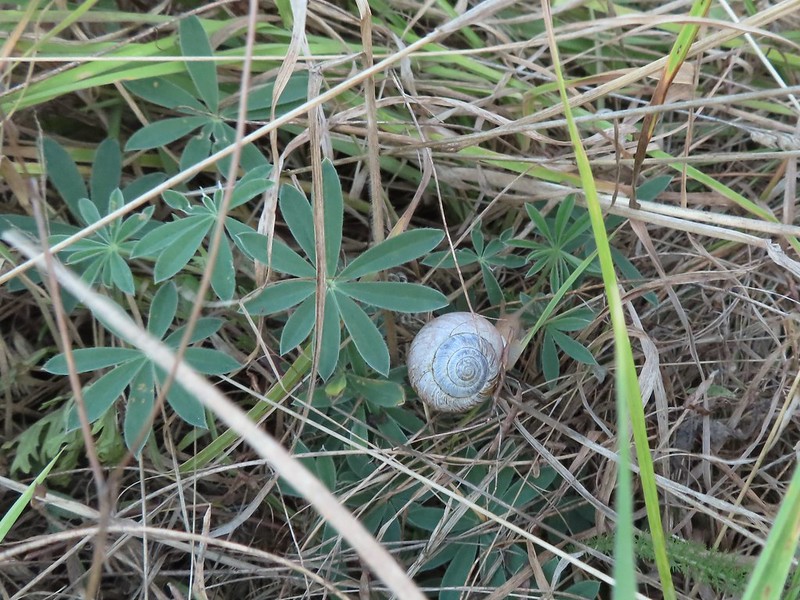 A snail and lupine leaves.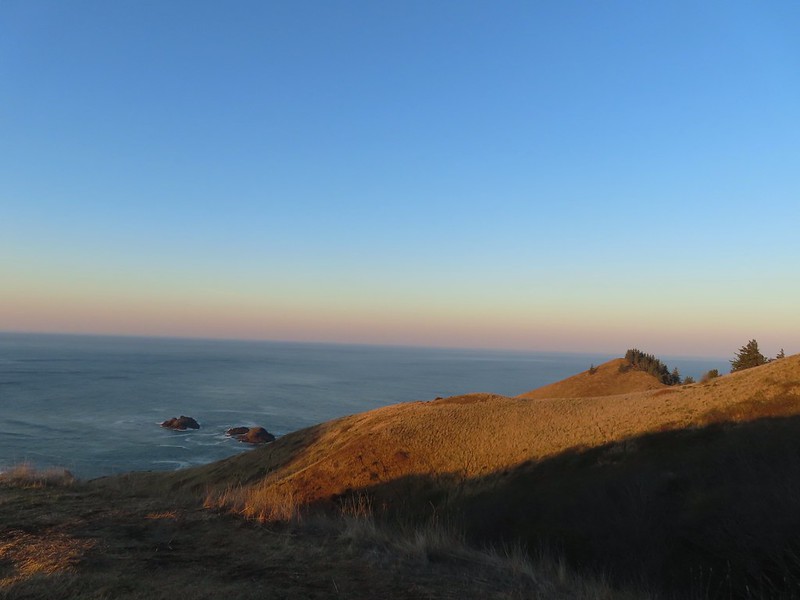
 A small viewpoint just before the trail turns uphill.
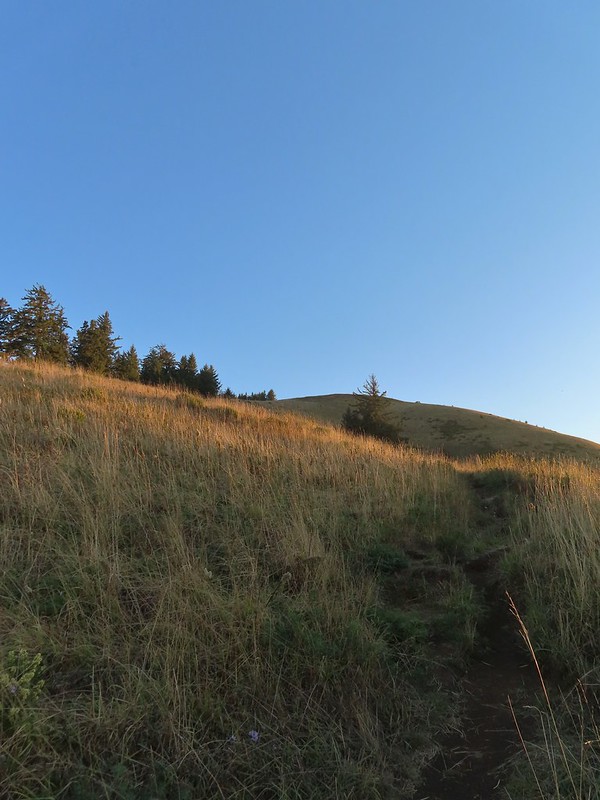 Going up
 The trail gains views as it gains elevation.
 The trail through the meadow below.
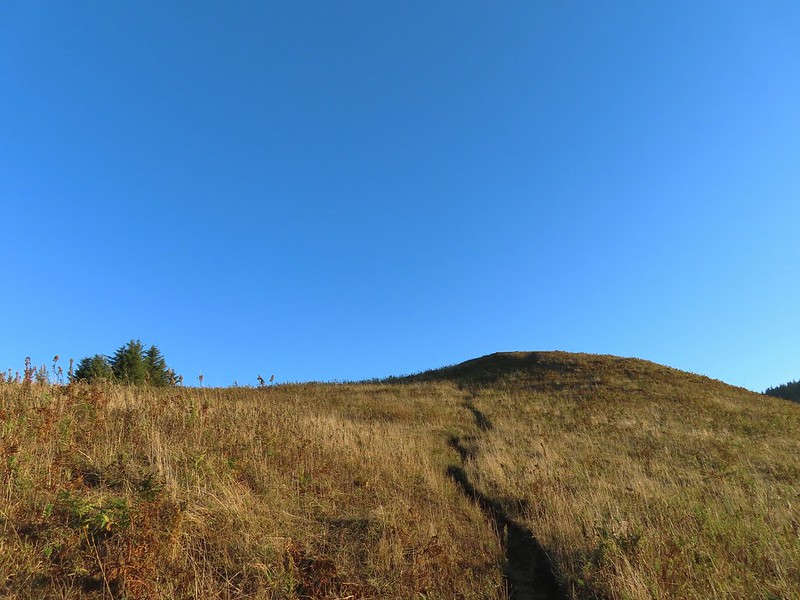 This knoll looks like the high point as you climb, but it’s a trick.
 The high point is actually marked by a post. (Near the right end of the photo).


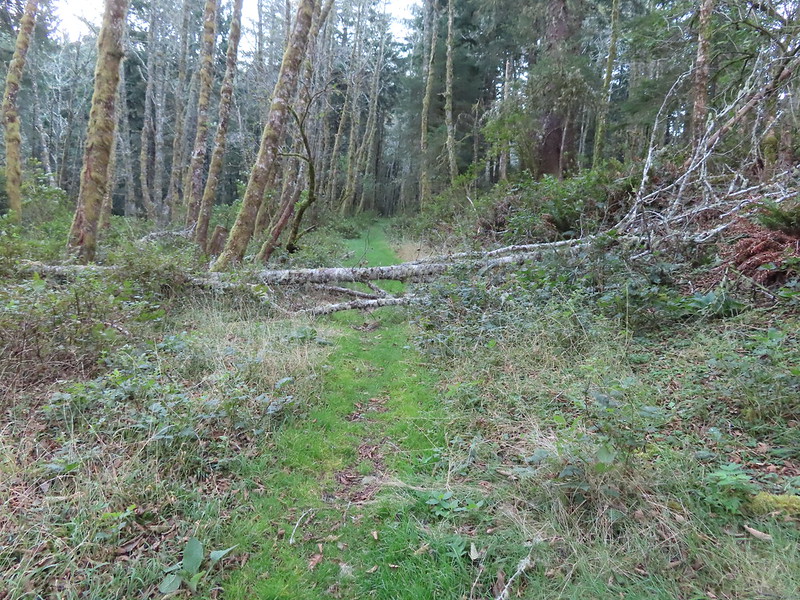
 Wooden arch over the old roadbed.
 Nearing the upper trailhead.
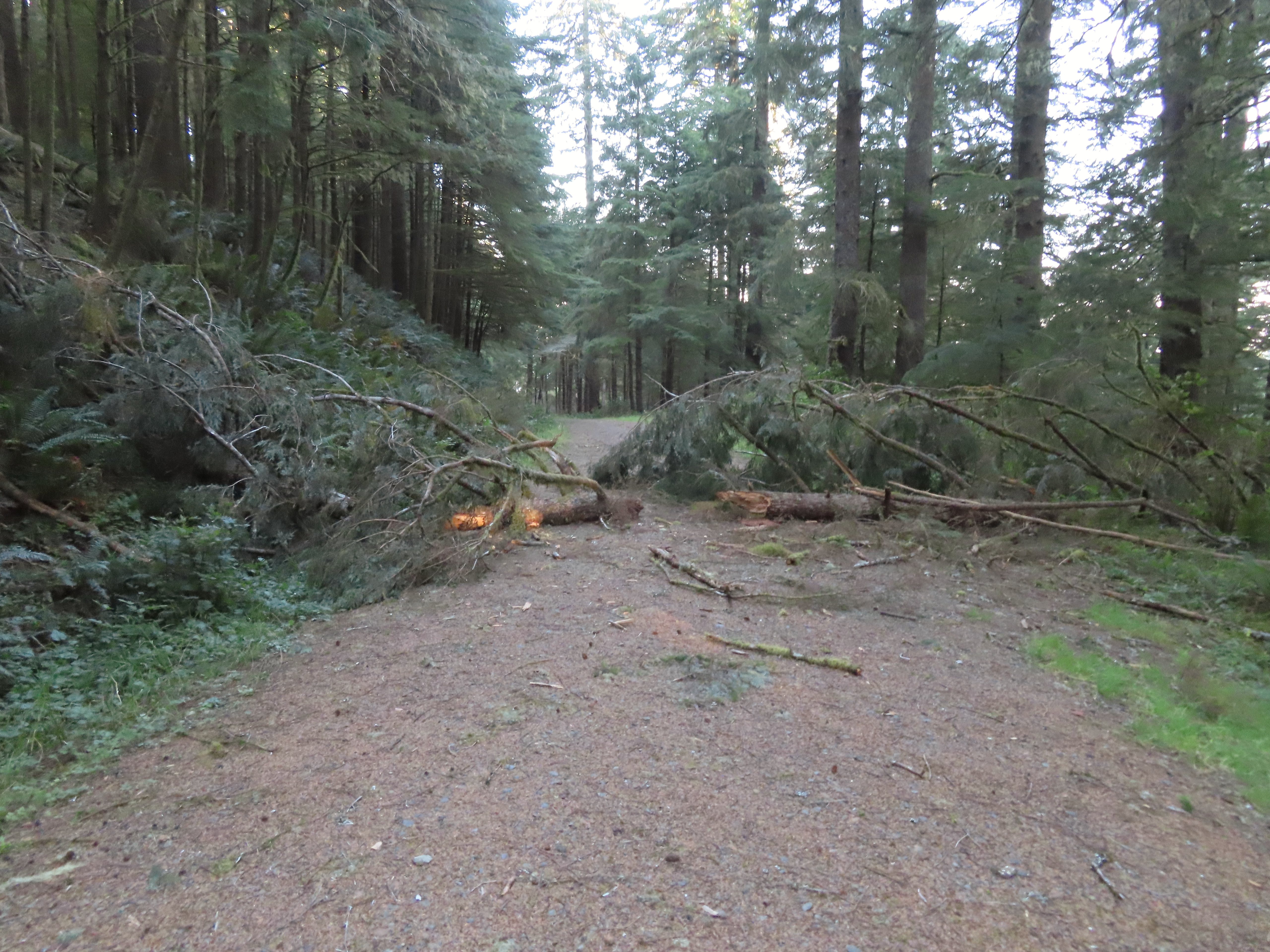 When they do reopen the road there will be a few trees to deal with.
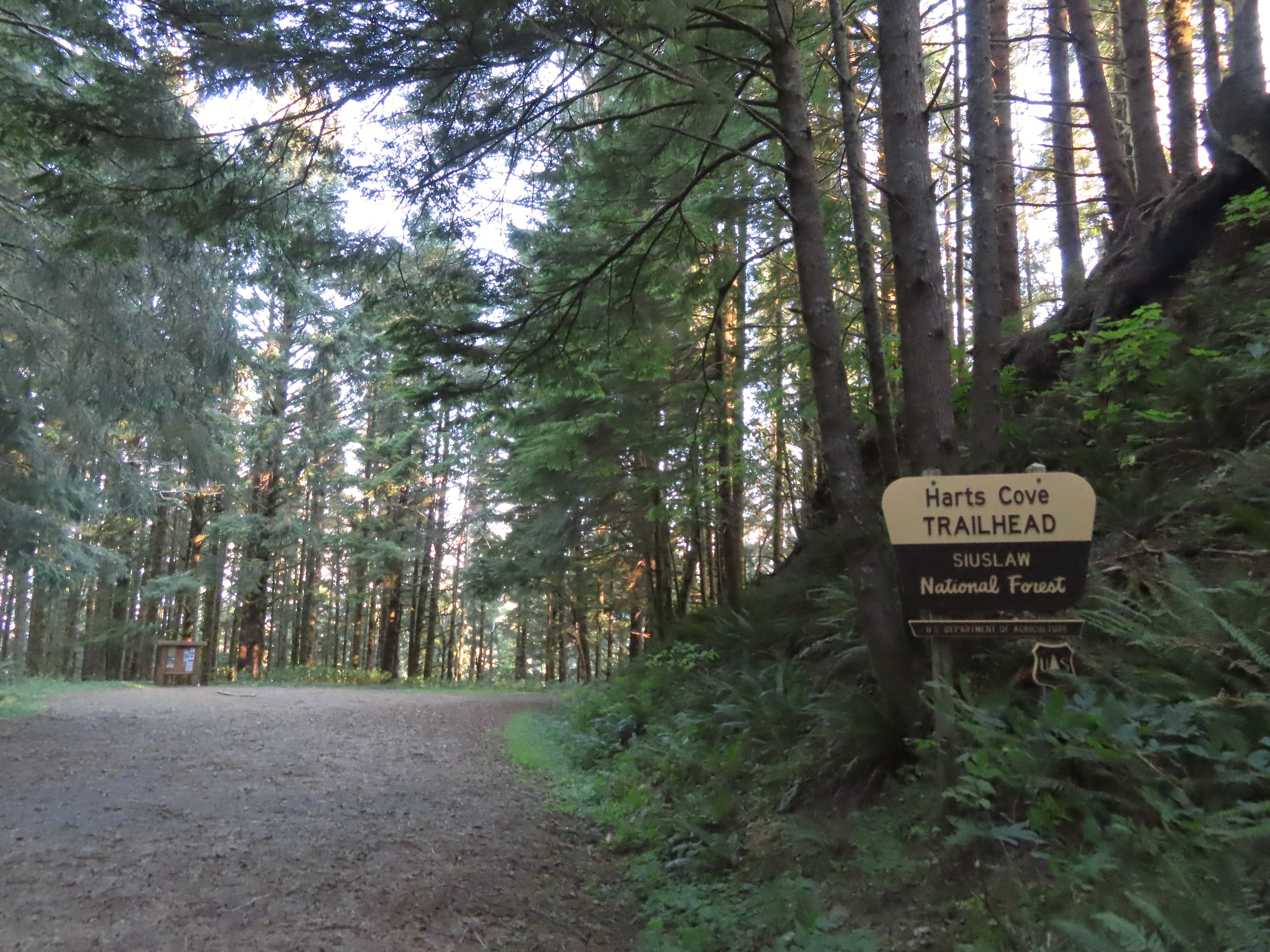

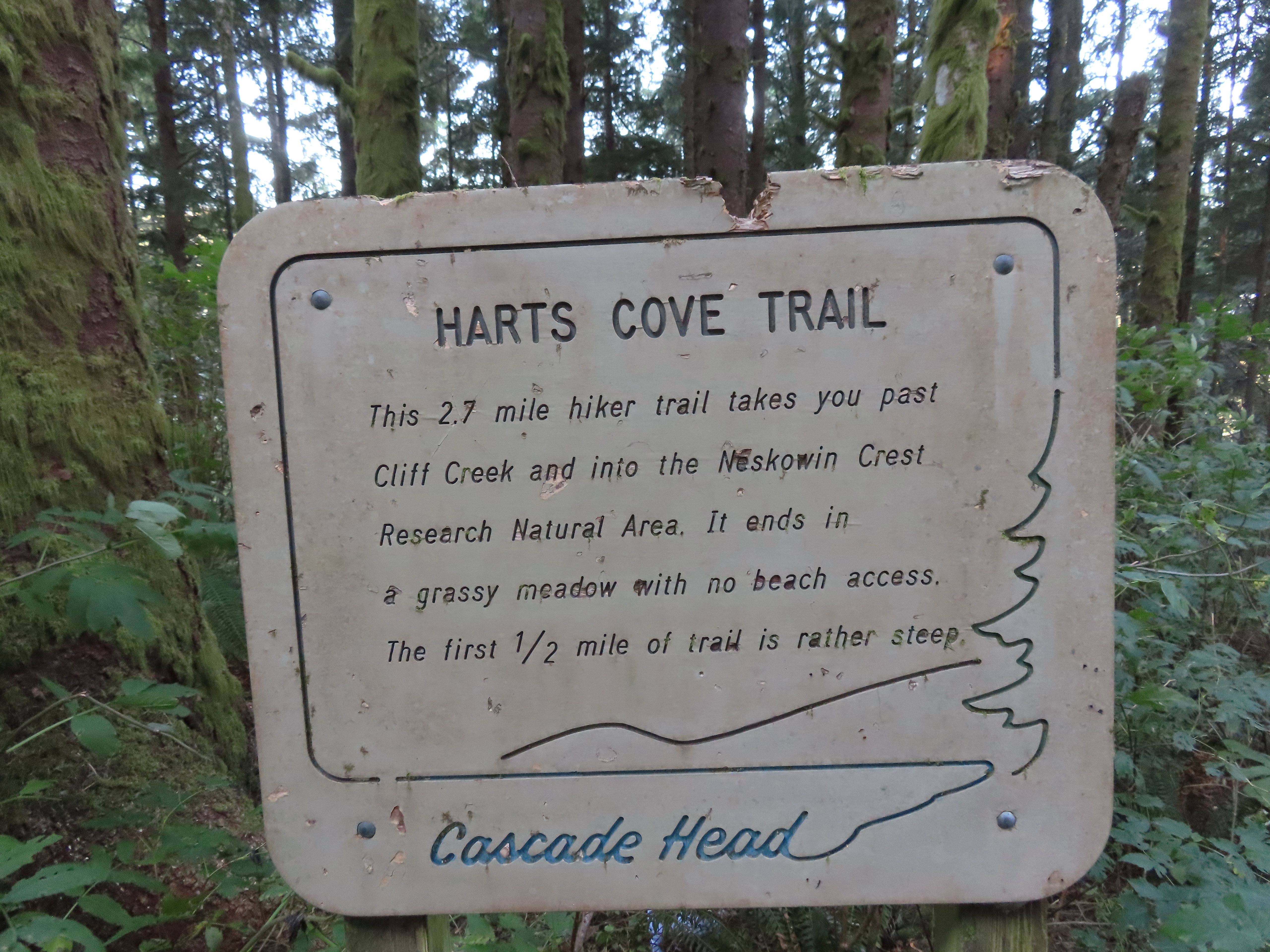

 There were around 18 trees such as this one across the trail from the trailhead to Cliff Creek.
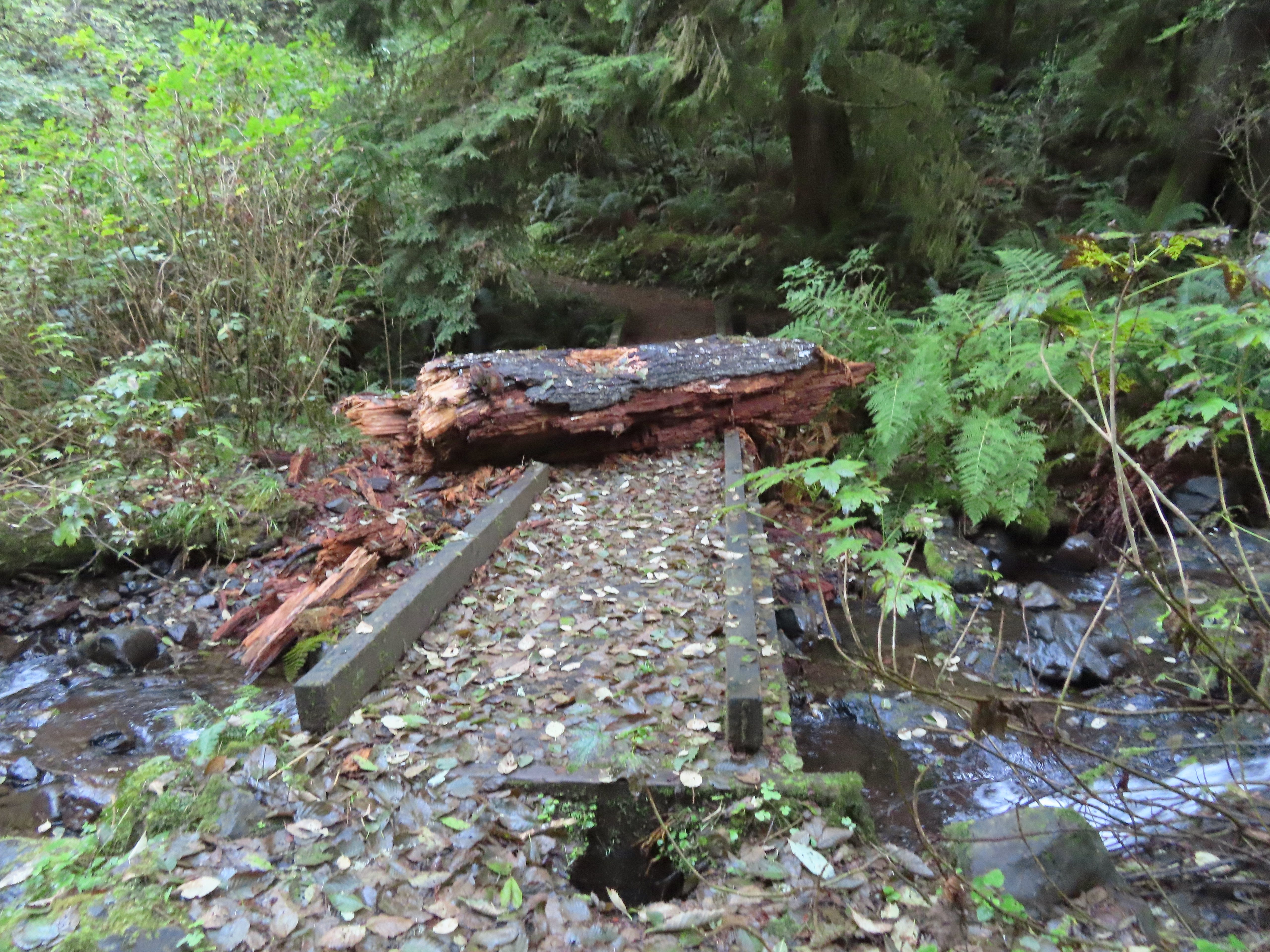 This large chunk of tree trunk has done some damage to the bridge, but it was still passable.
 Cliff Creek
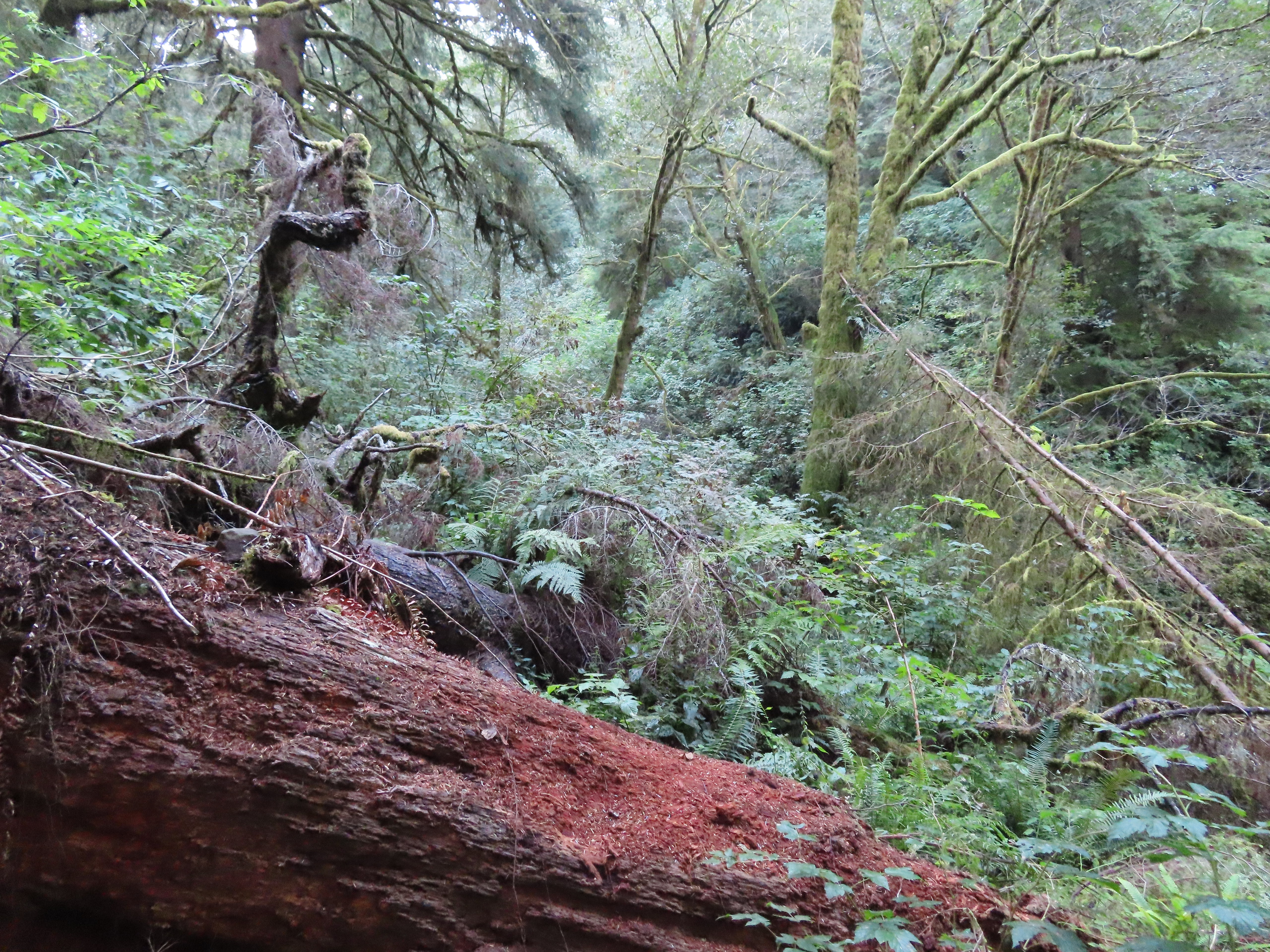
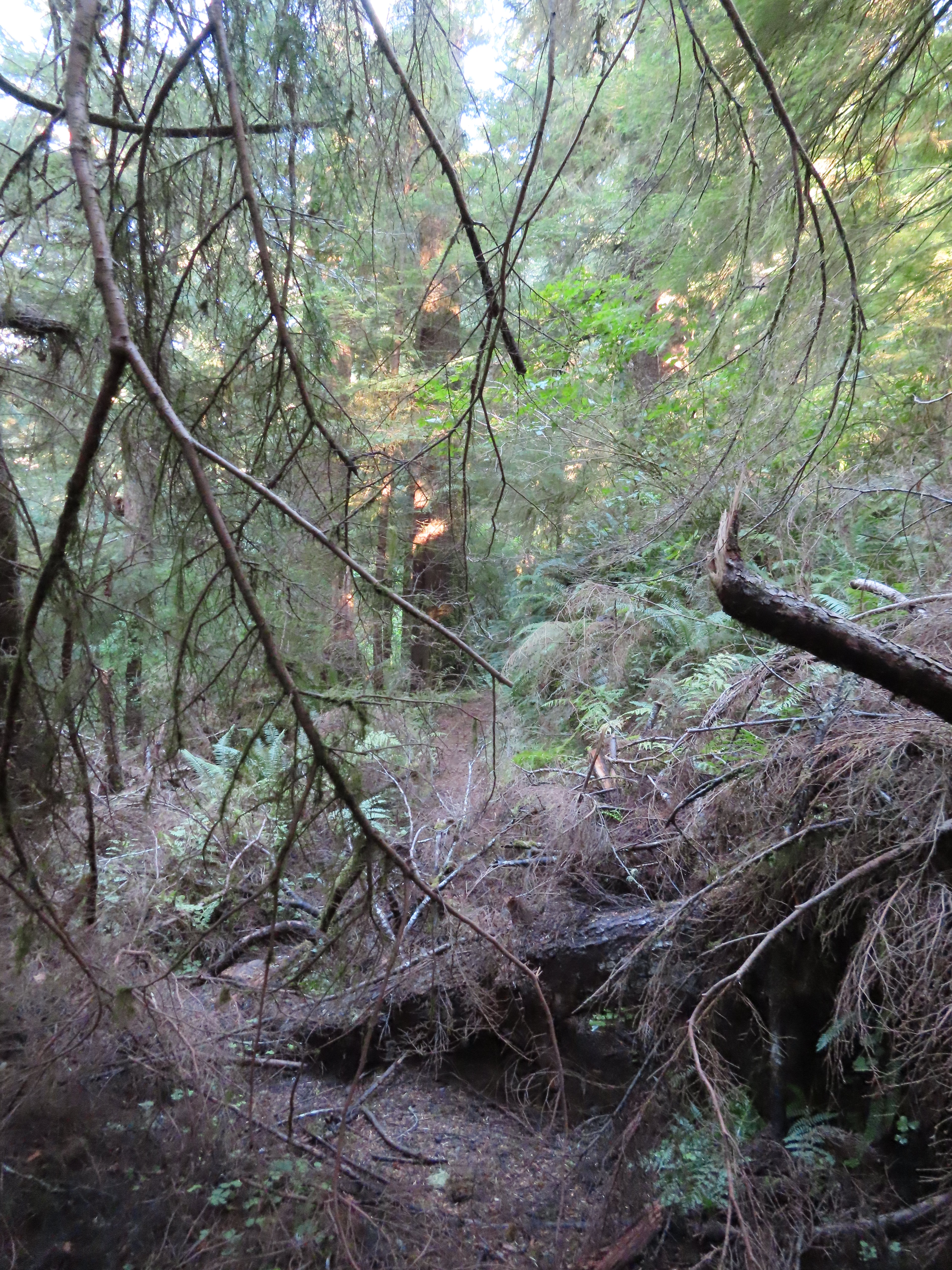
 At the 1.6-mile mark I entered the
 Sign near the bench.
 Big sitka spruce trunk.
 Approaching the Chitwood Creek crossing.
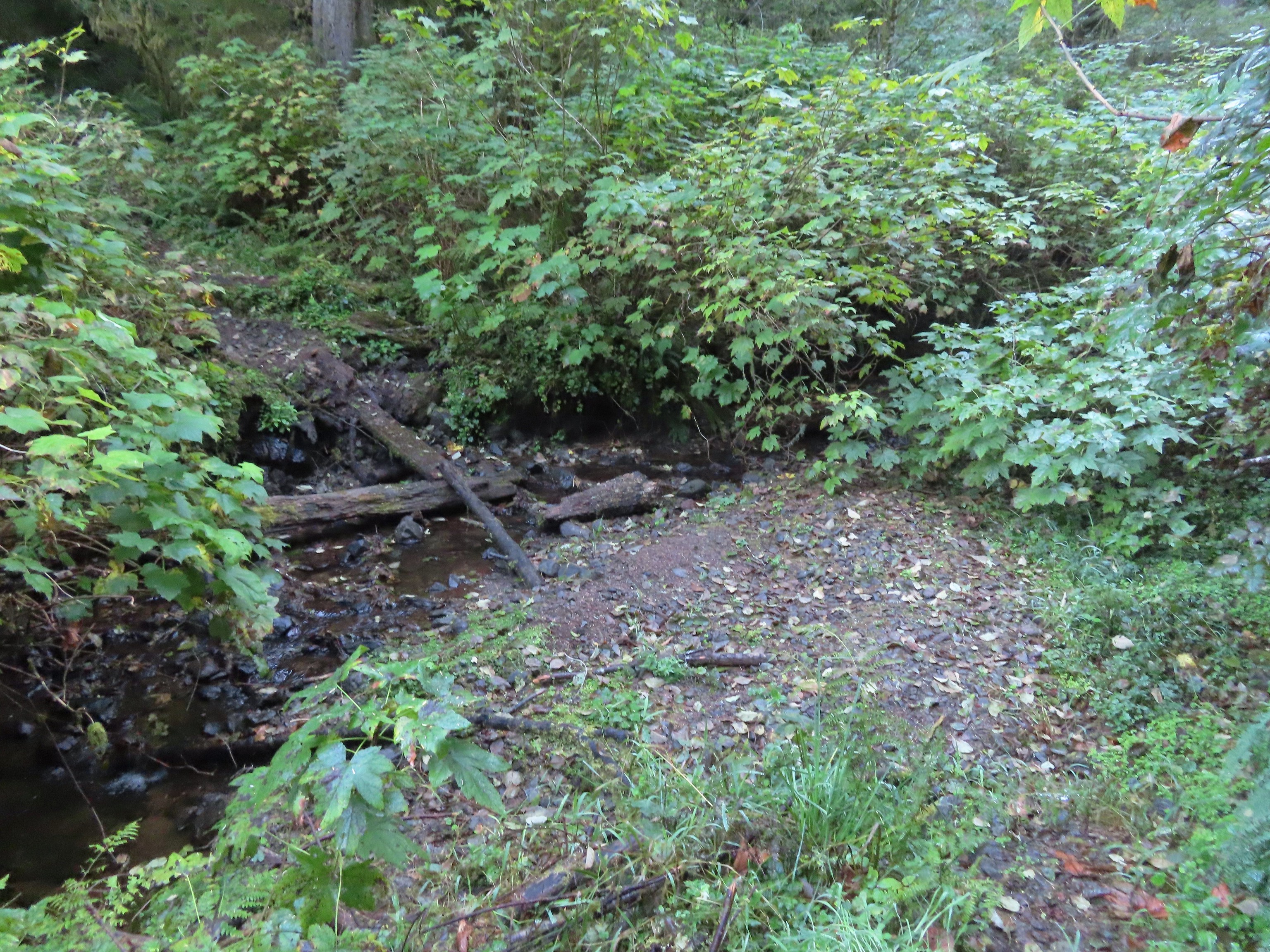 Chitwood Creek
 Heading back toward the ocean.
 Someone stuck some feathers in this mushroom.
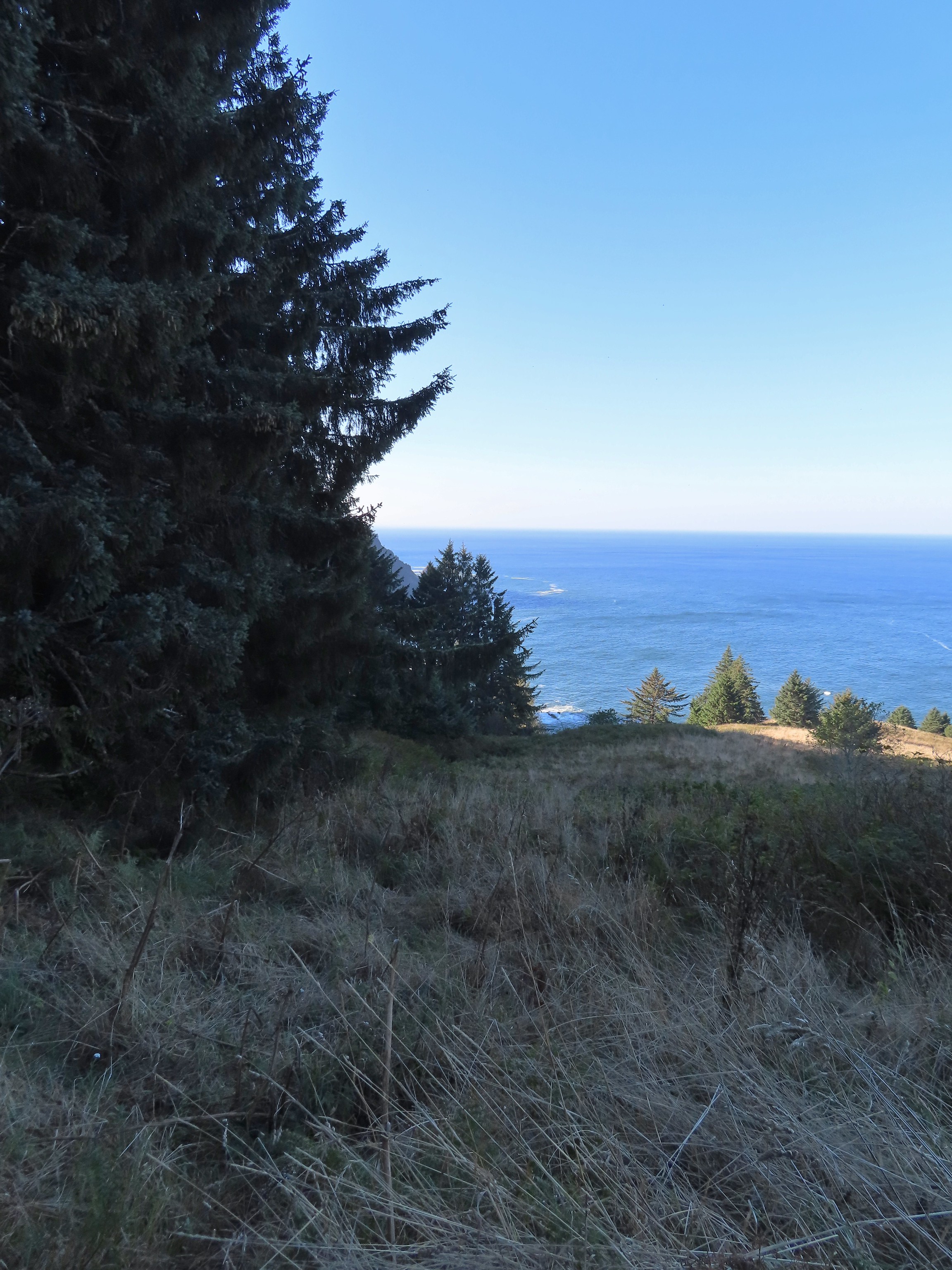
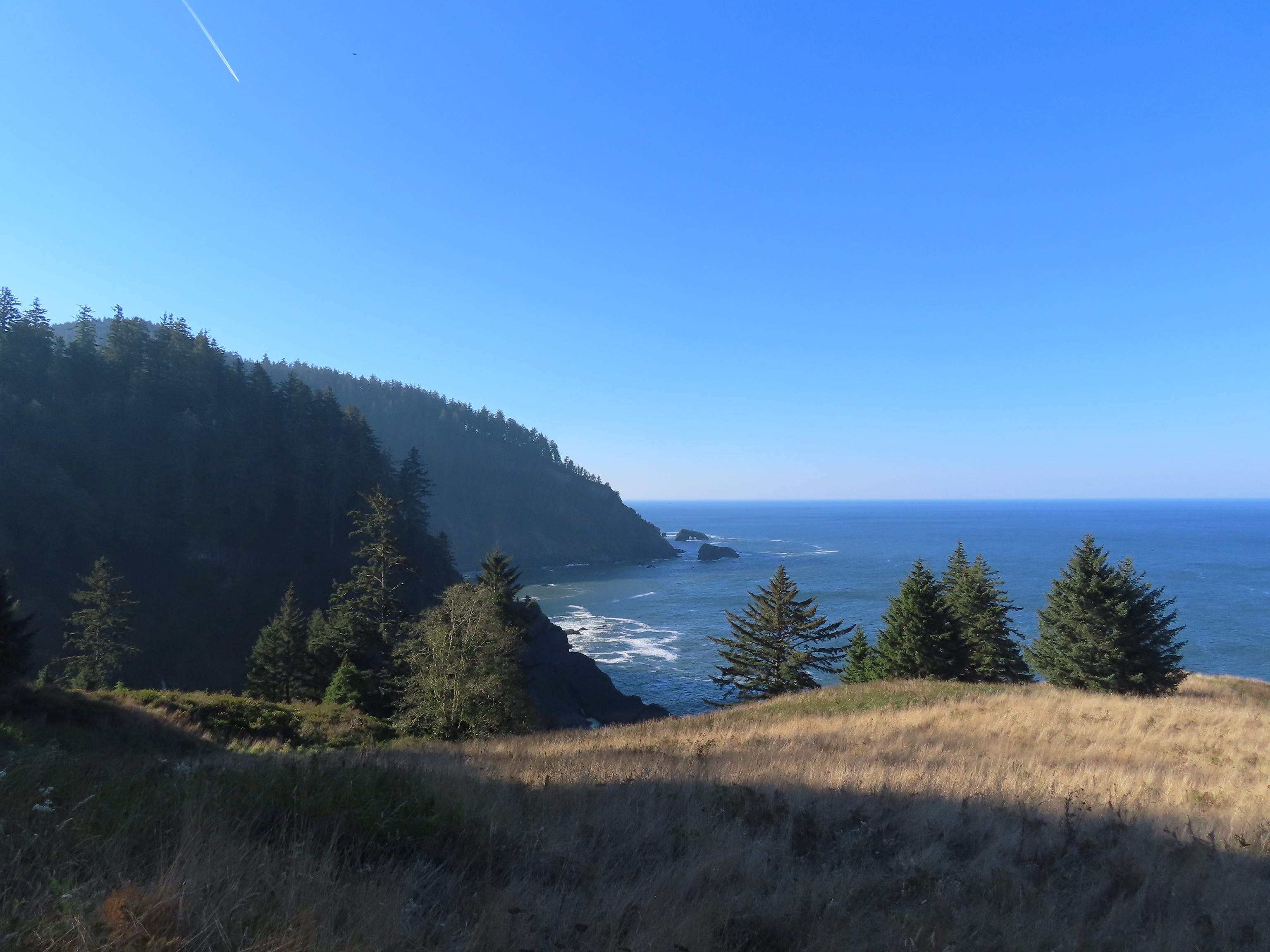
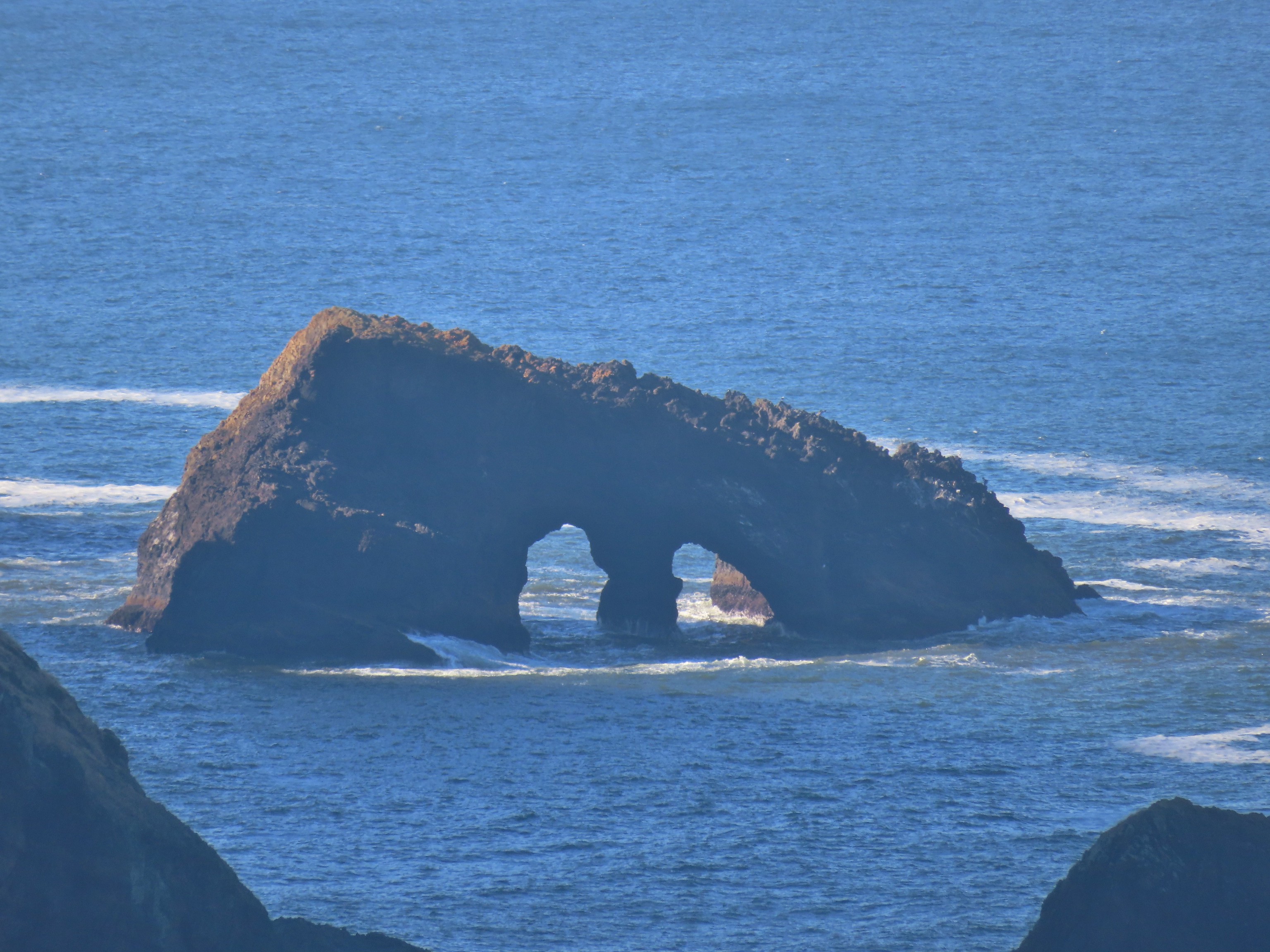
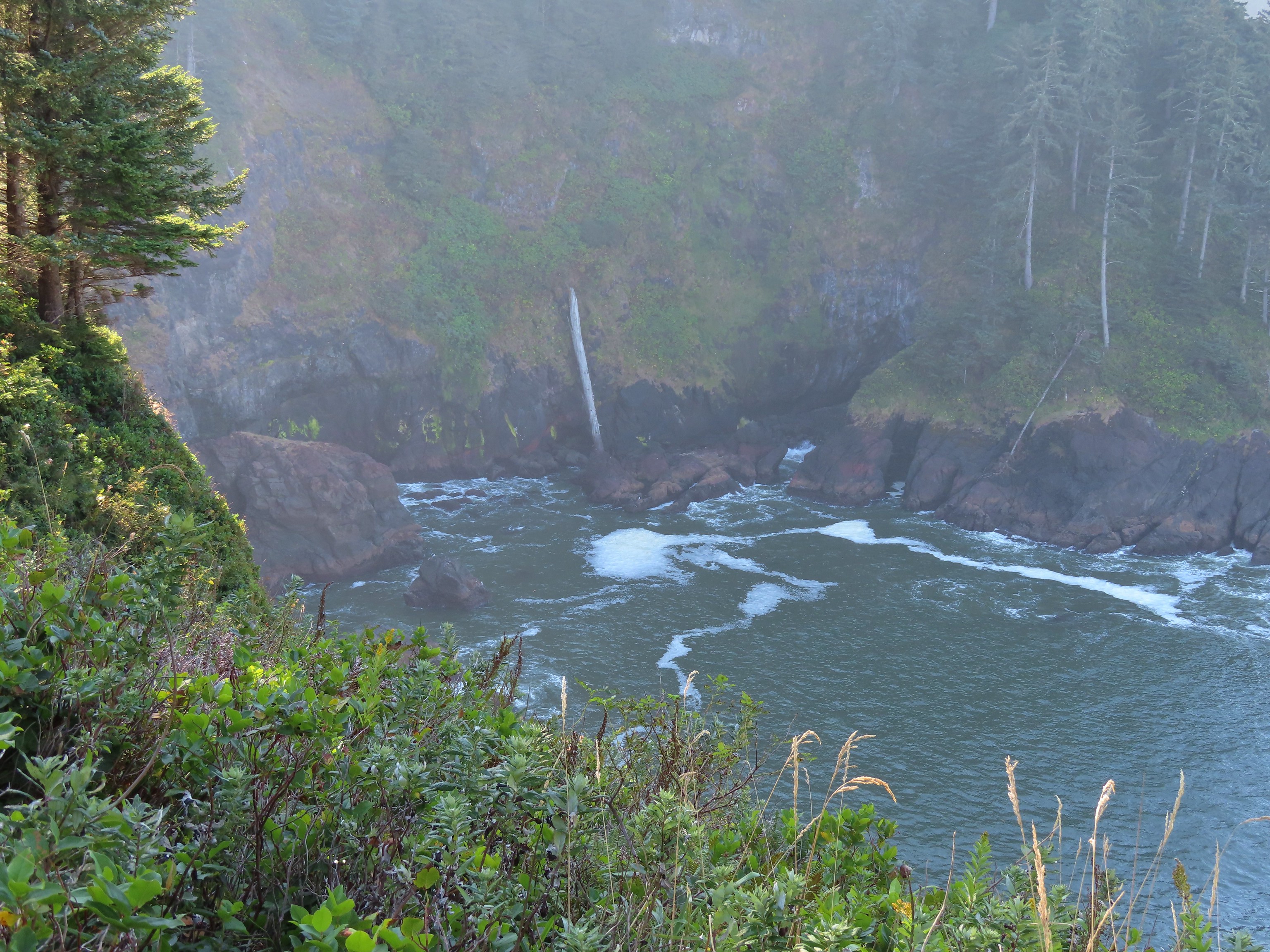
 There was a large number of noisy sea lions on the shaded rocks below Cascade Head. Even though they were quite far away they were loud.
 Seagull hanging out on a sea rock.
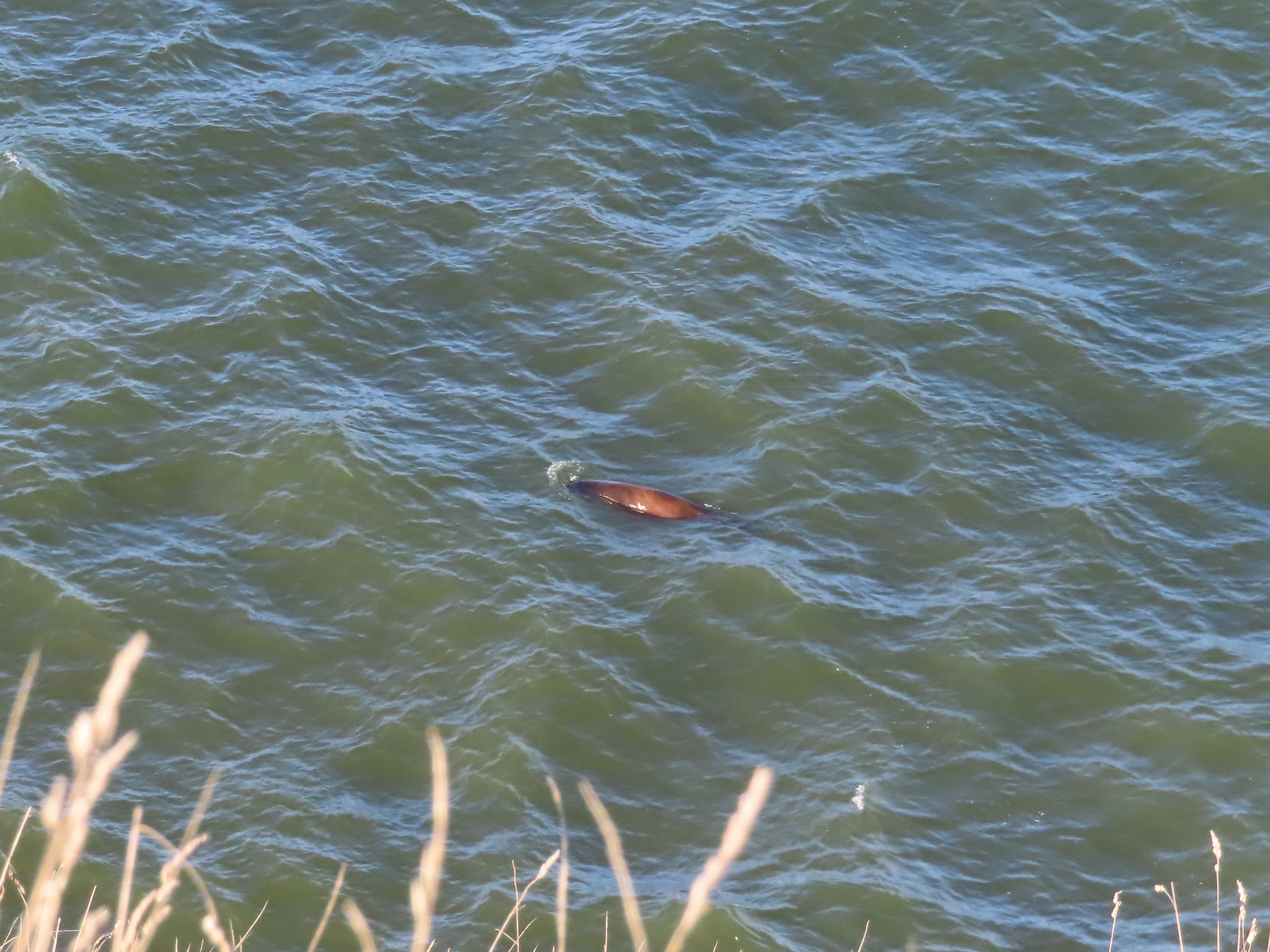 Sea lion heading for its buddies.
 A combination of the position of the Sun and the presence of haze made it very difficult to make out the waterfall on Chitwood Creek. I don’t know if the haze was smoke or just the usual coastal haze. (There was a fairly good east wind blowing steadily all morning.)


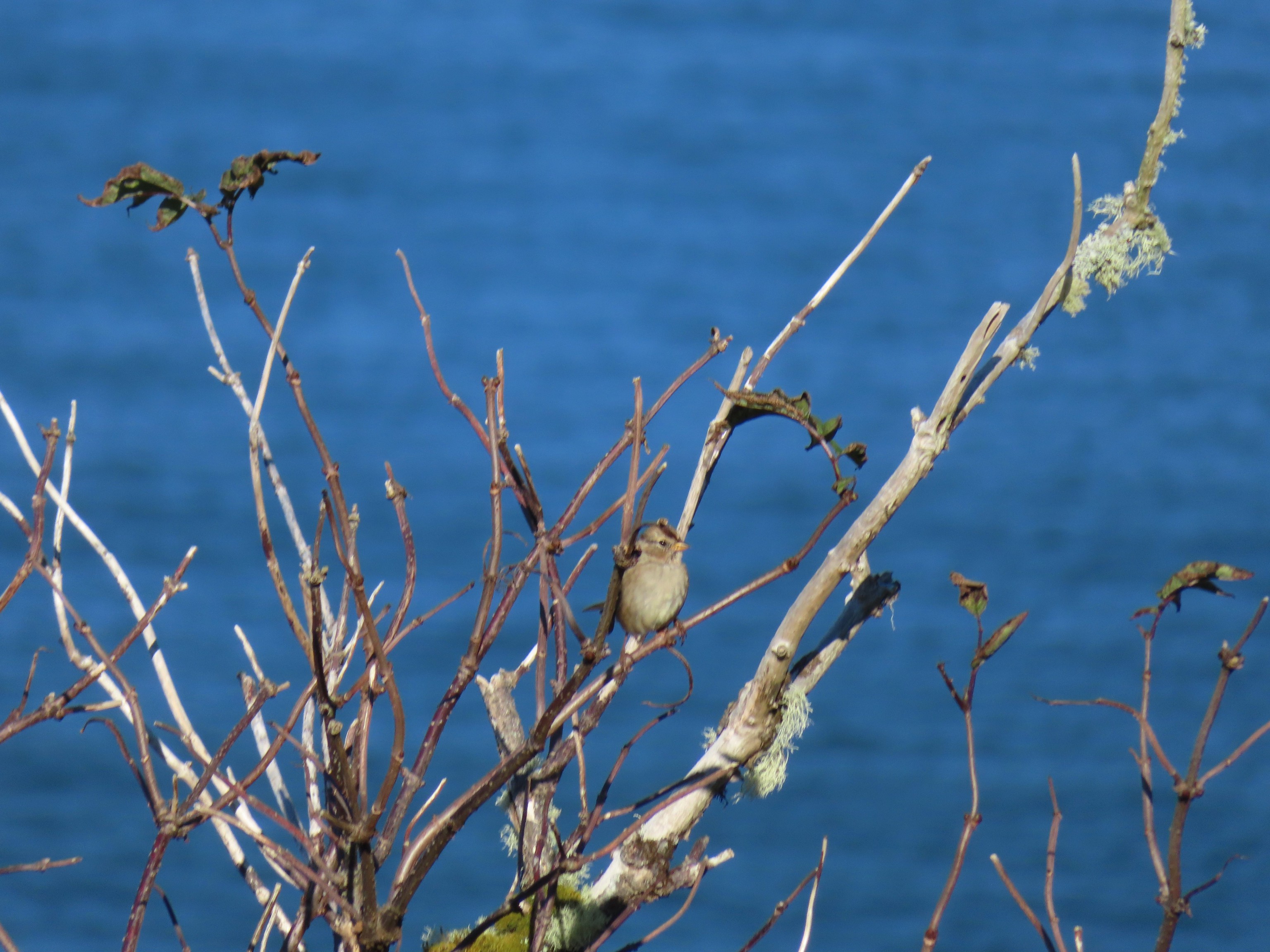 Sparrow in the meadow at Hart’s Cove.
 Pearly everlasting
 Varied thrush
 A reminder of Spring, a trillium that bloomed months ago.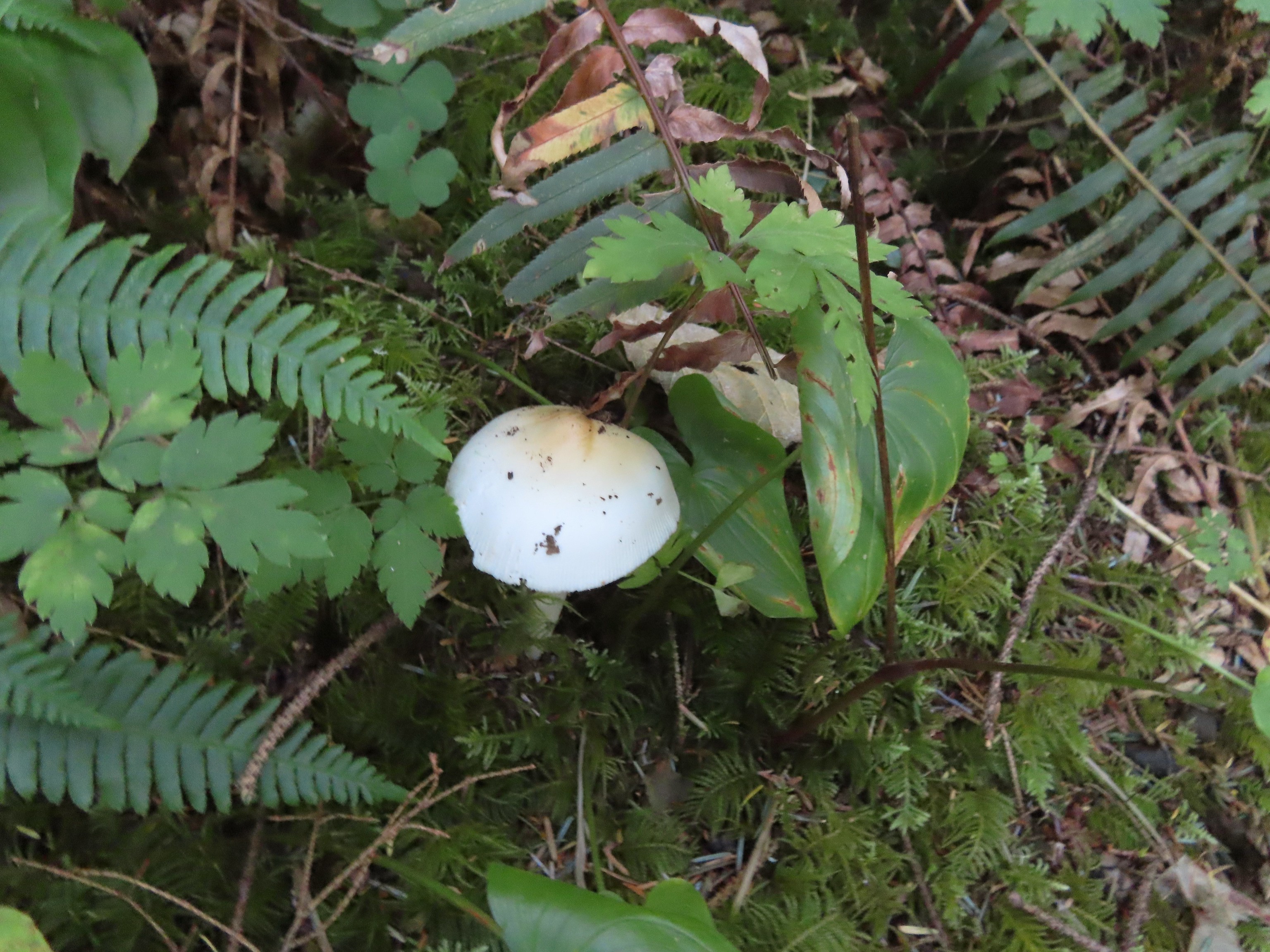
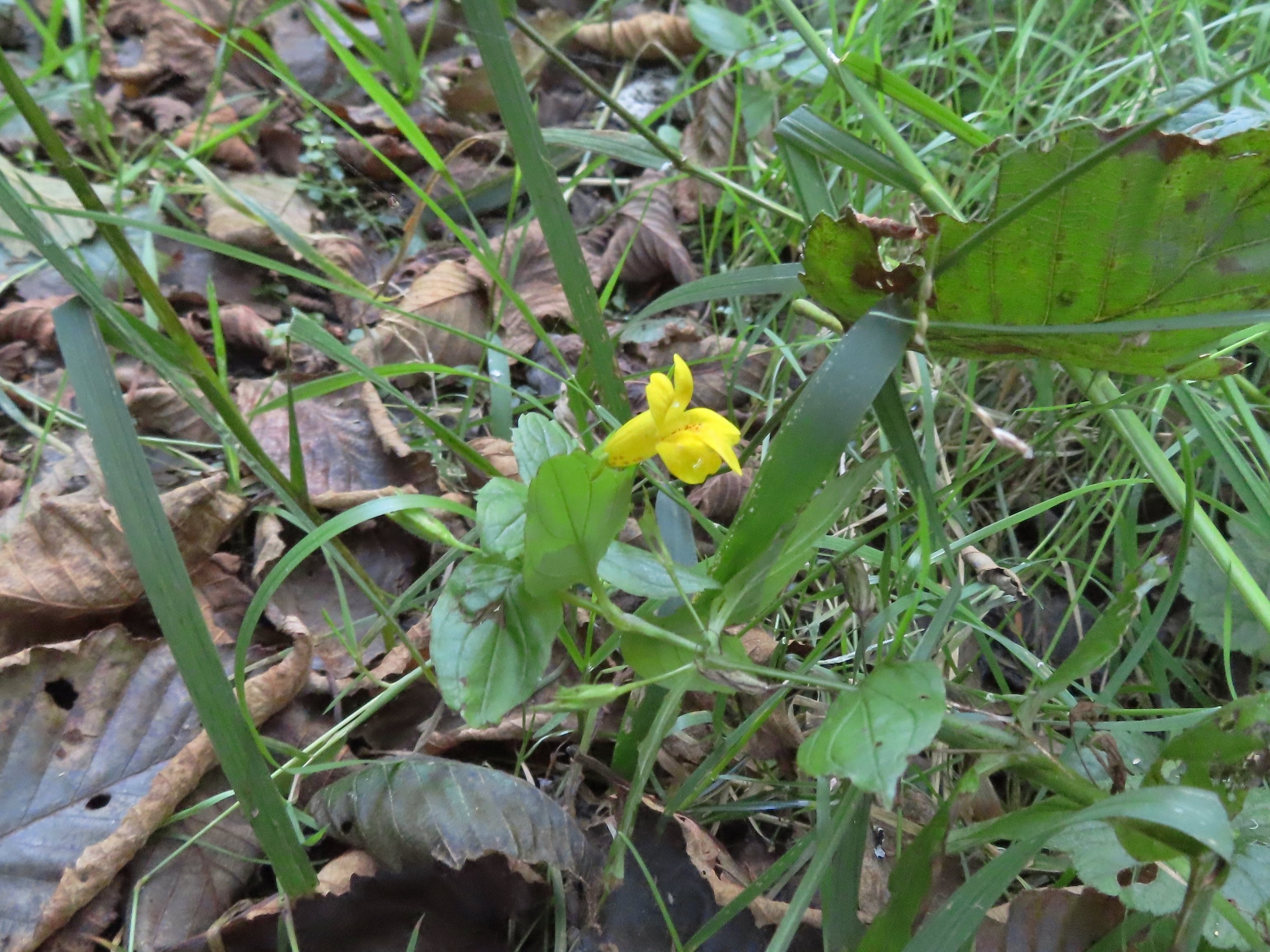 A monkeyflower along FR 1861.
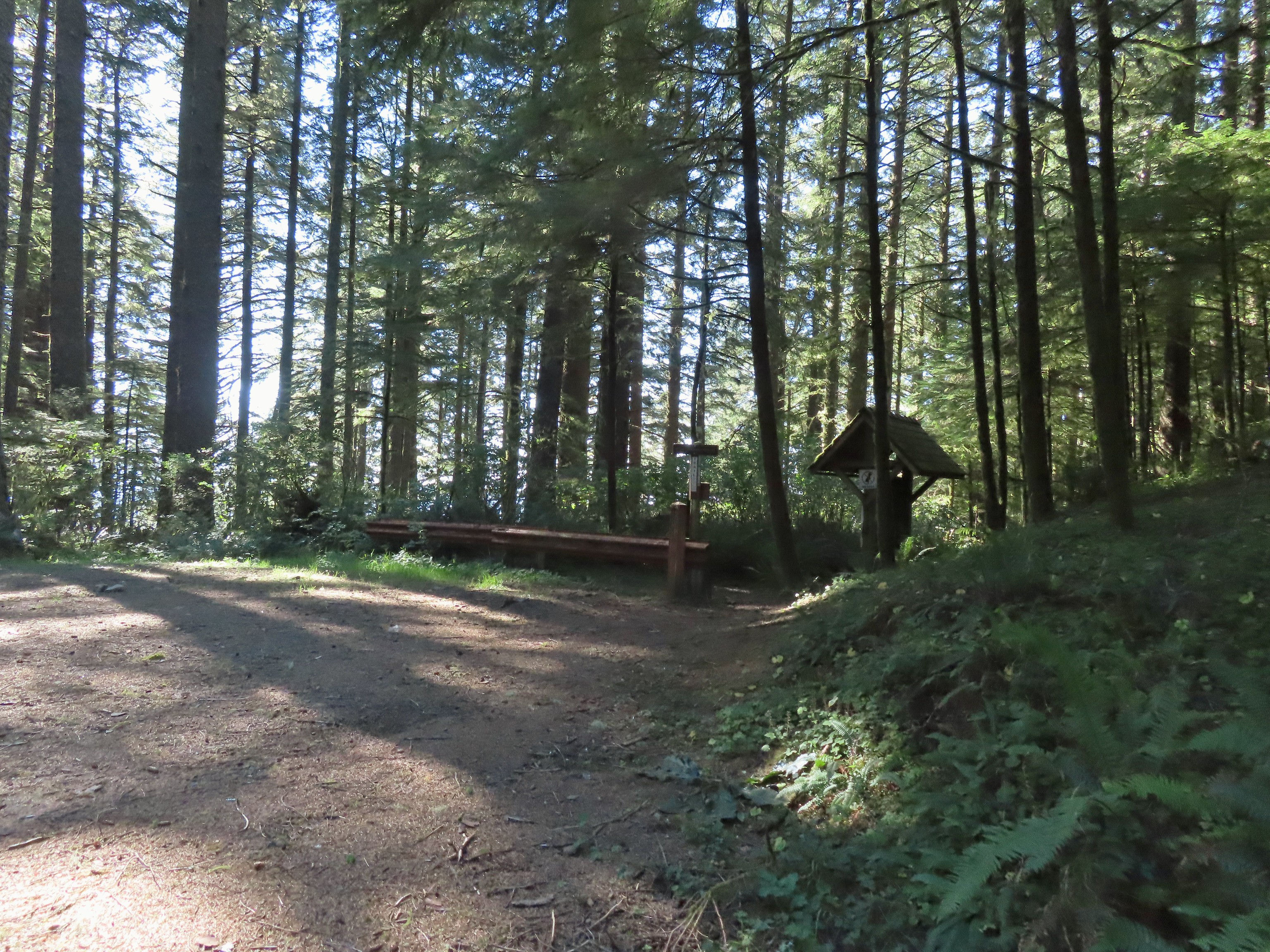 Back at the upper trailhead.
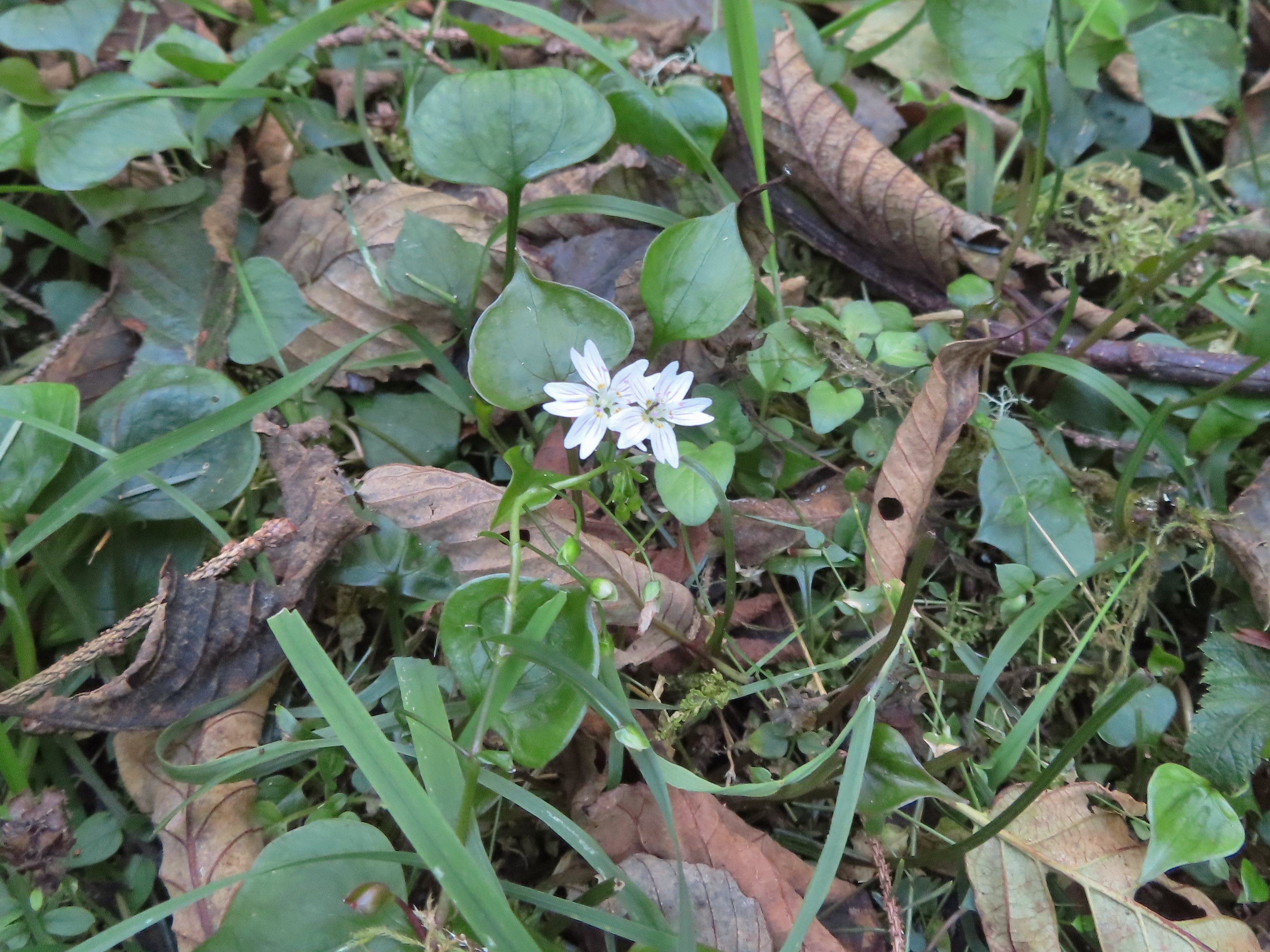 Candyflower
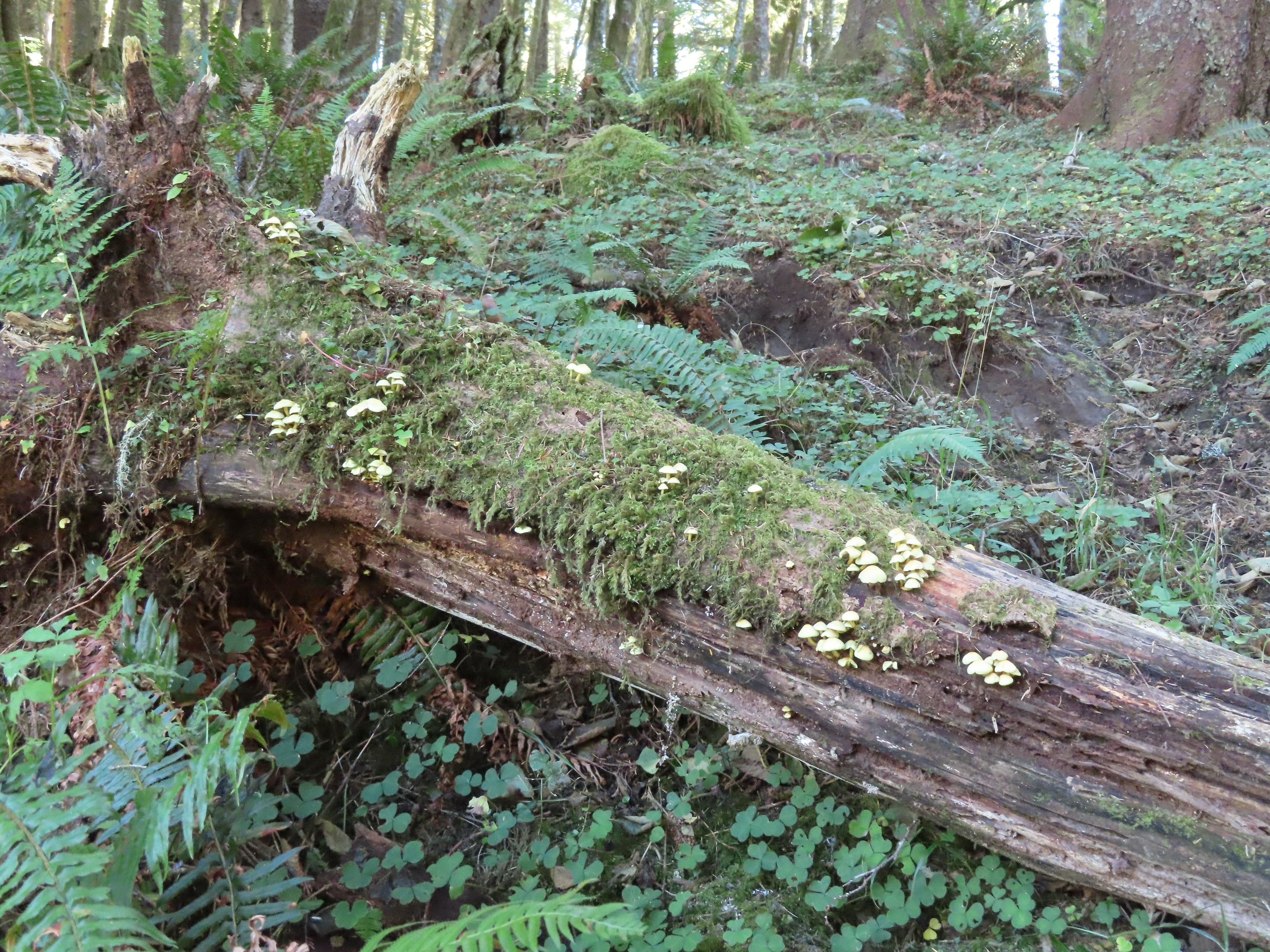 Mushrooms on a log.

 The Thumb, aka God’s Thumb (
 Heading for the high point.
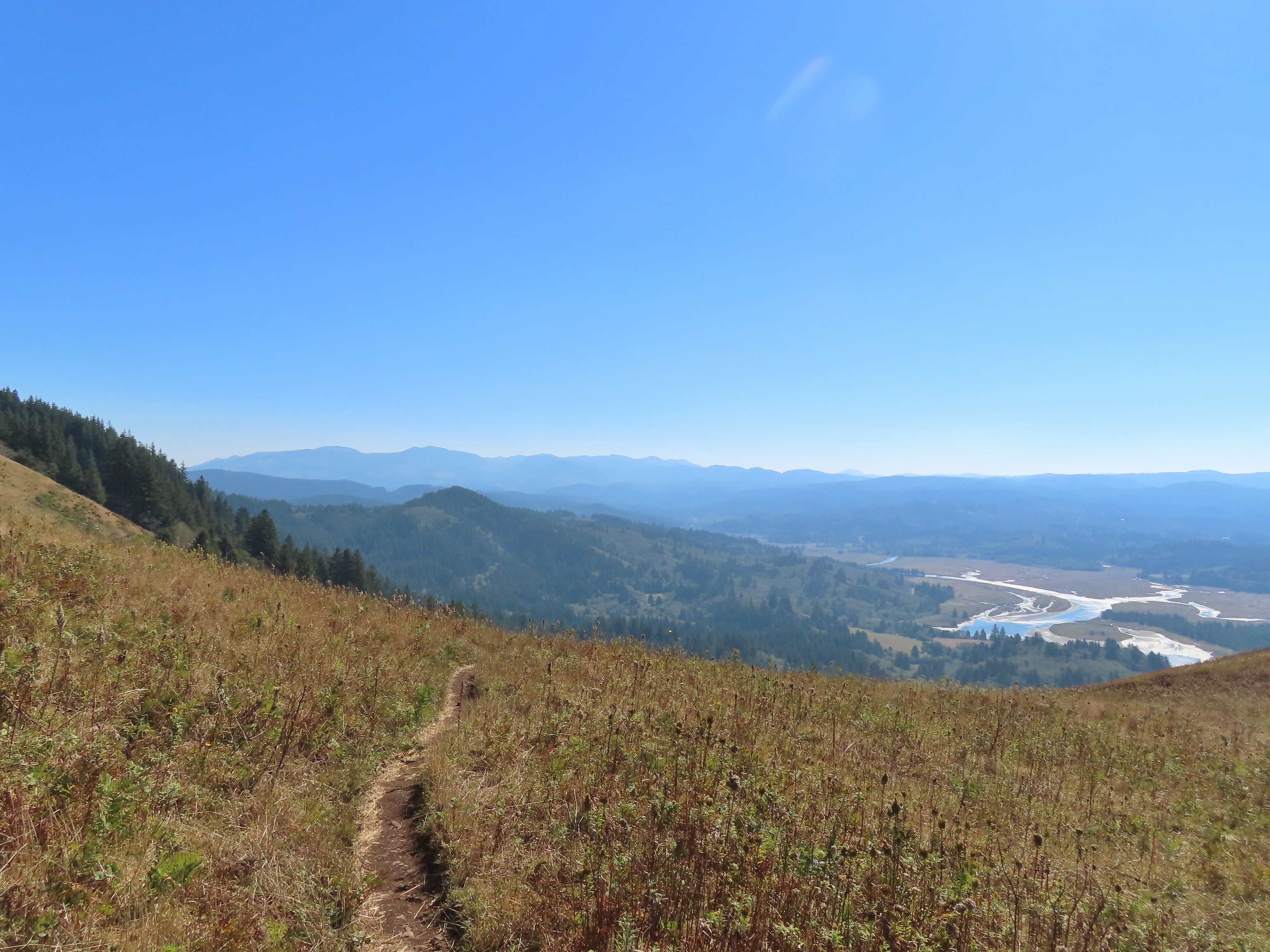 Descending Cascade Head
 There were quite a few of these (an aster?) blooming along the trail.
 Not sure what type of bird this is.
 Sulphur butterfly
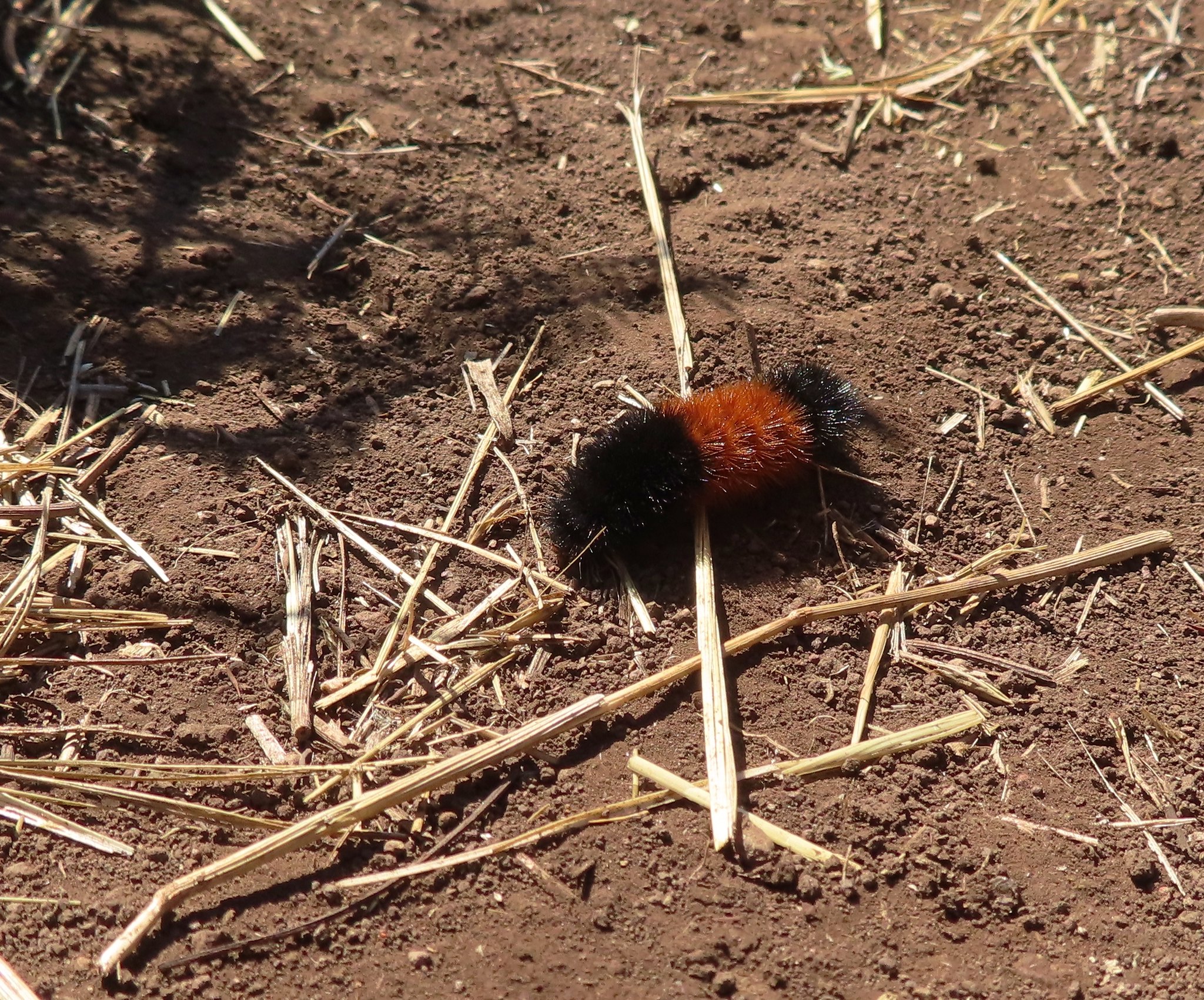 Wooly bear caterpillar, there were many of these on the trail.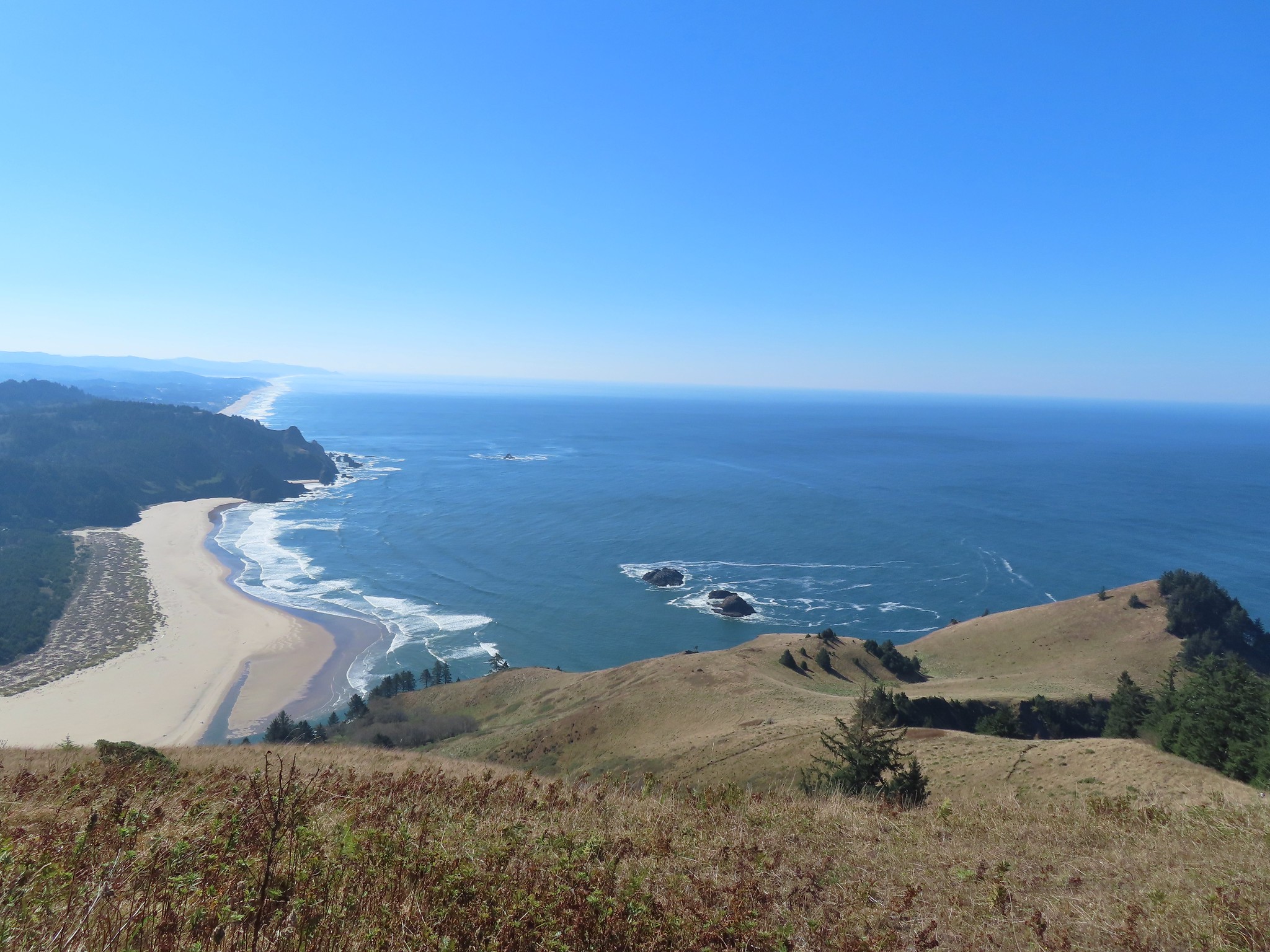
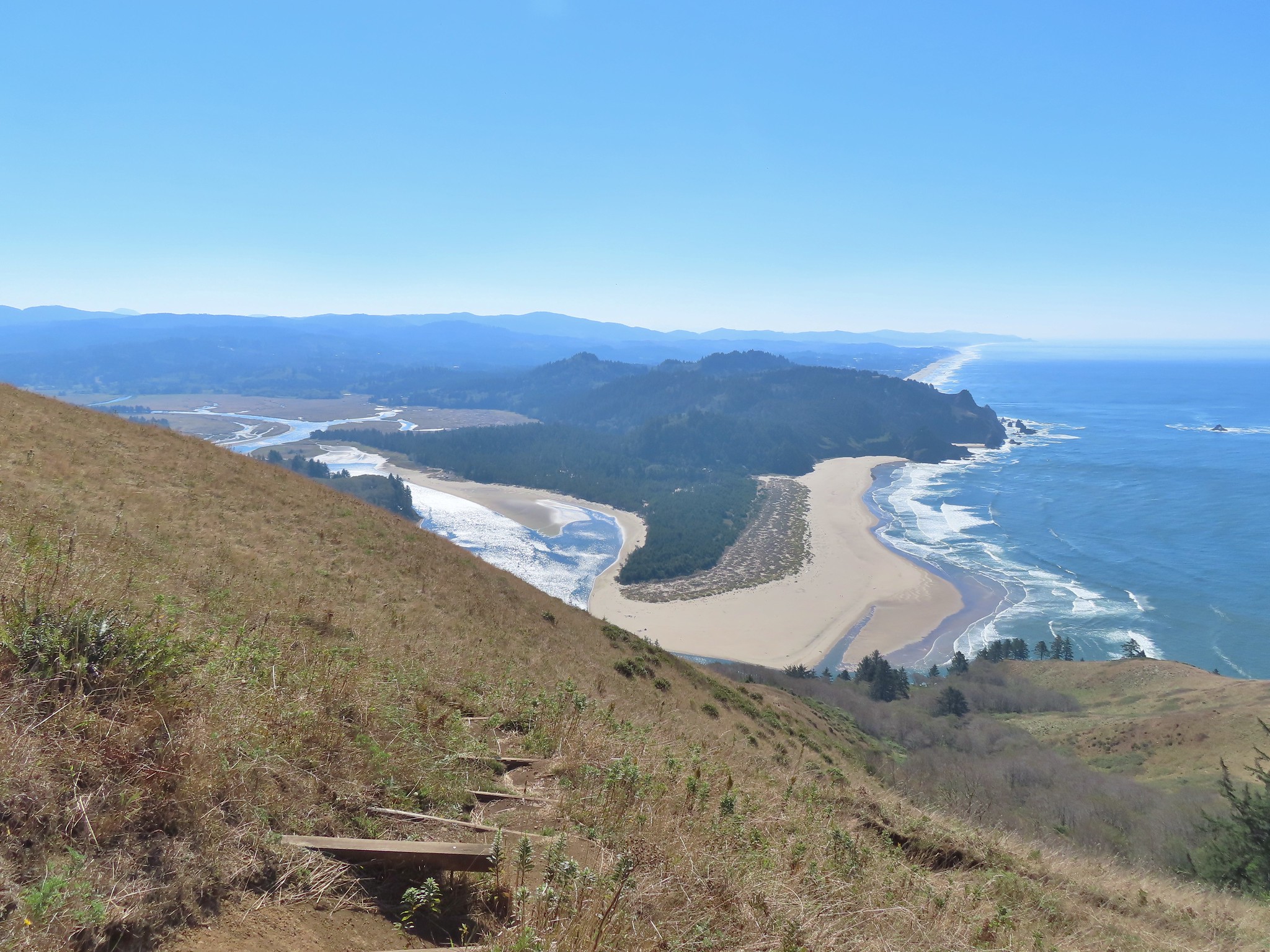
 Looking back up at one of the first hikers I’d passed.
 Pretty moth on a bush.
 View to the east of the Coastal Range.
 Heading for the tree line.
 Back where I’d seen the bull elk in the morning.
 Cars parked along Three Rocks Road, the parking area at Knights County Park was full when I got back to the car a little before 1pm.
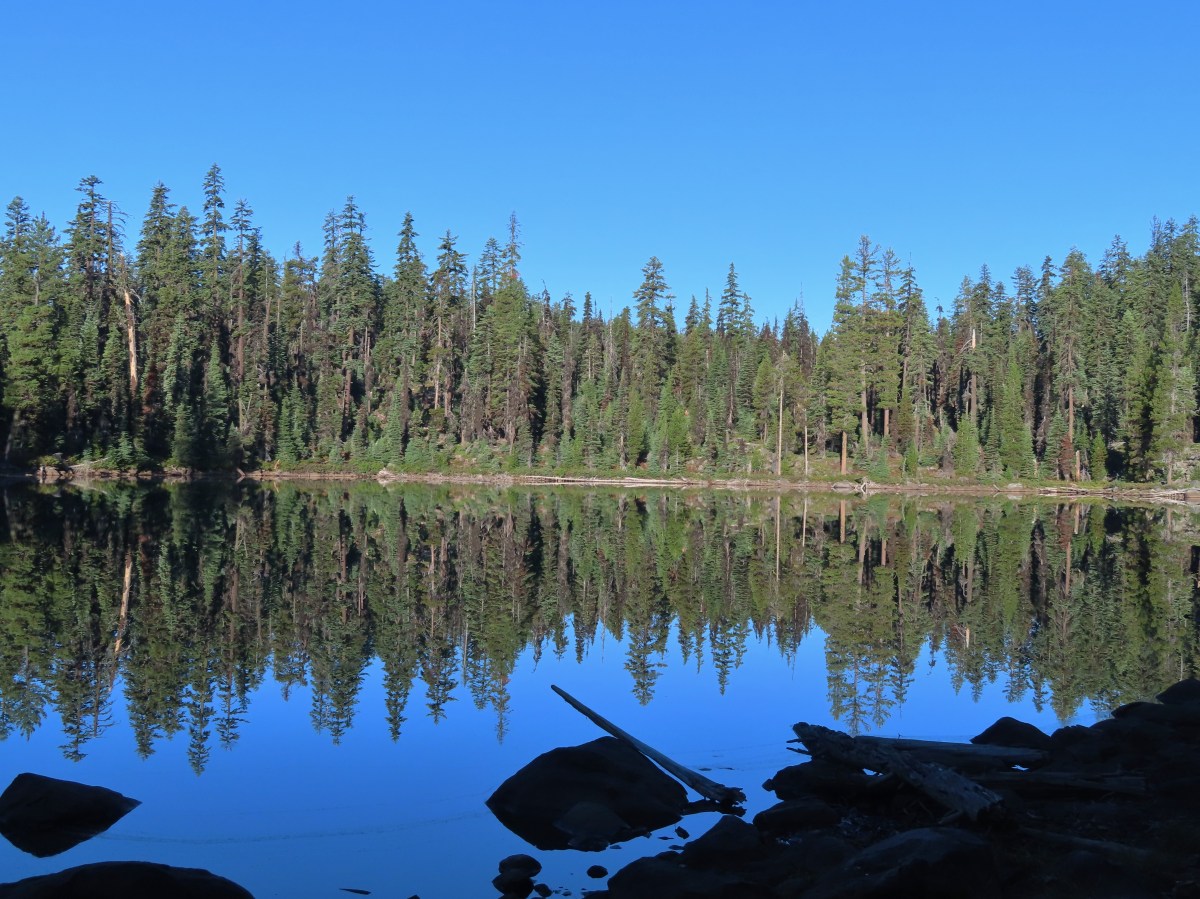
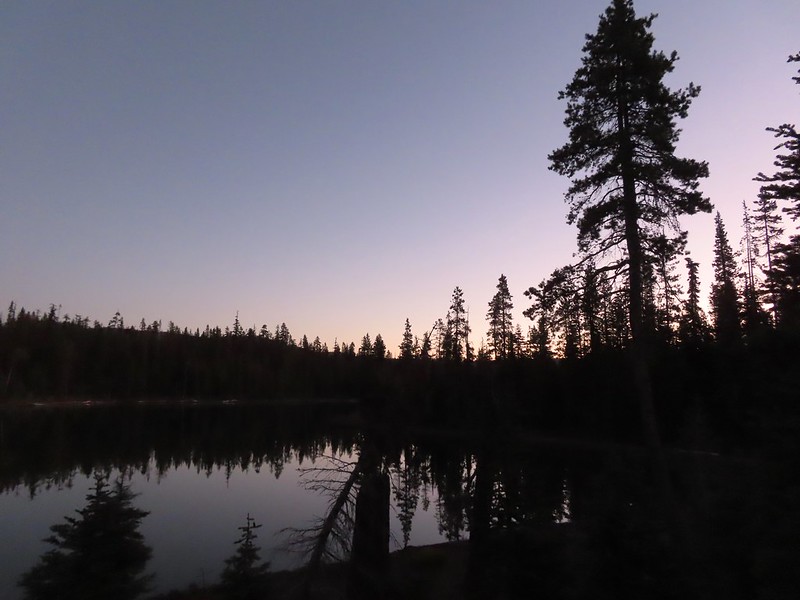
 Low-light at Trapper Lake.
 Sunrise from the trail.
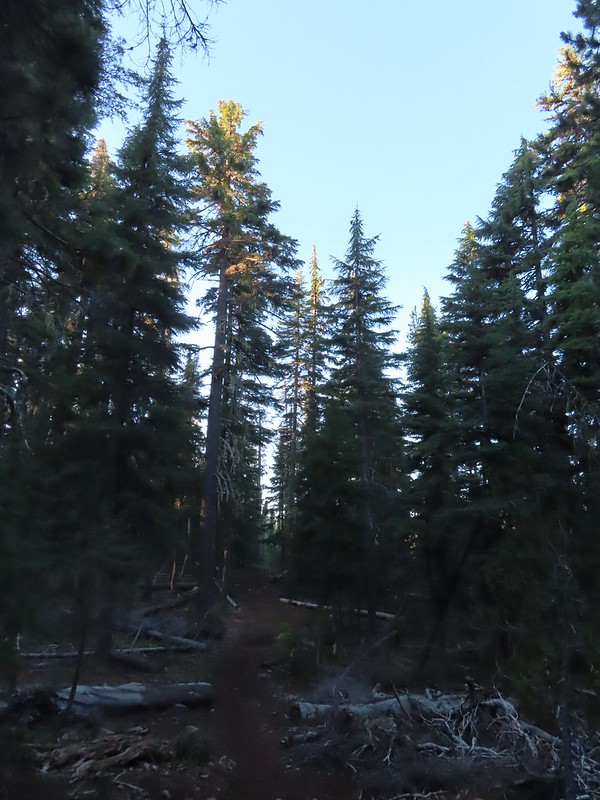 Sunlight hitting the tops of trees.
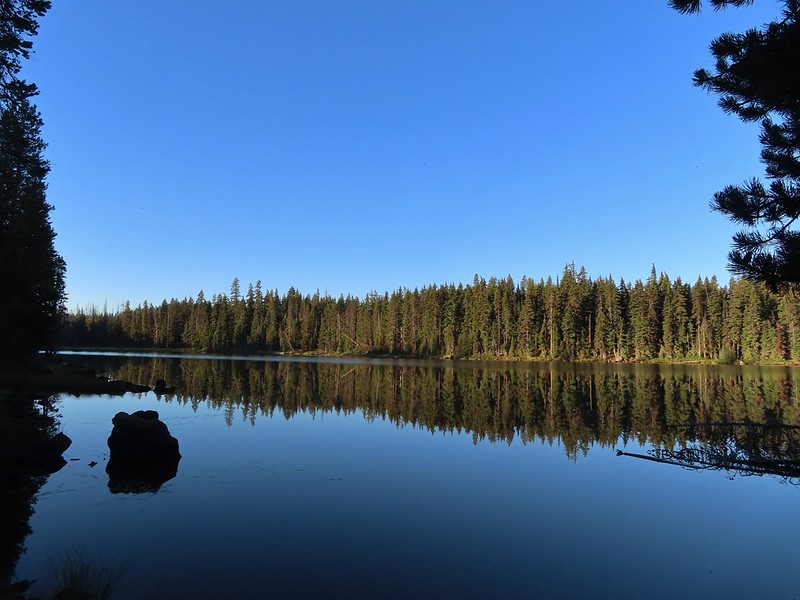

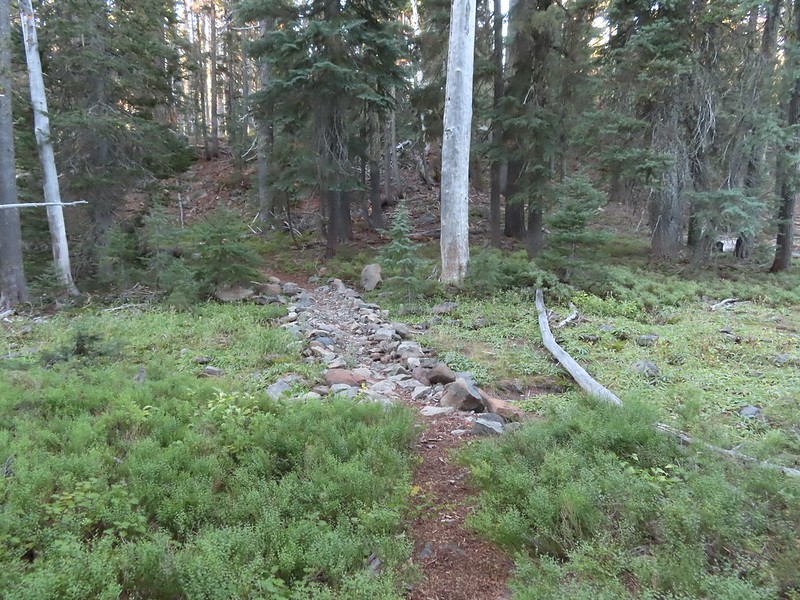
 Heading up to the bluff.
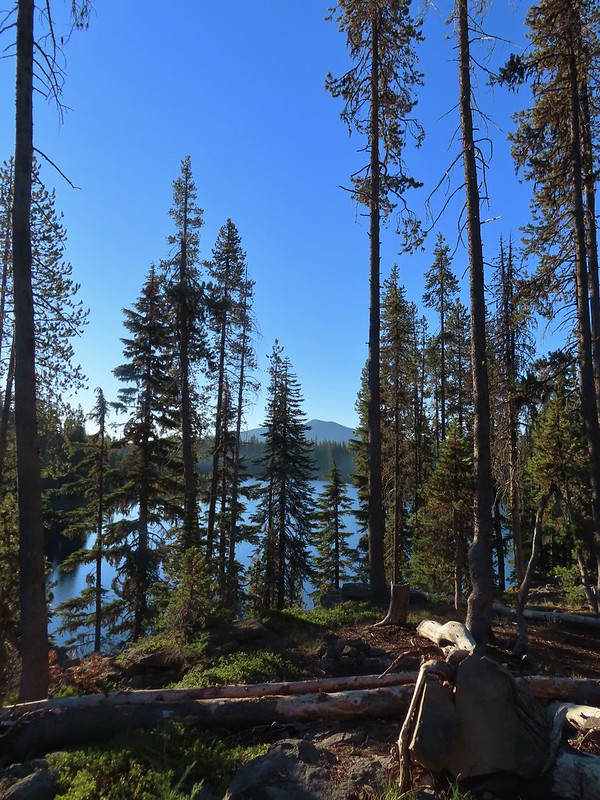 Pelican Butte beyond Isherwood Lake.
 Fall foliage above Isherwood Lake.
 Heading for Lake Liza through a dry bed.
 Great reflection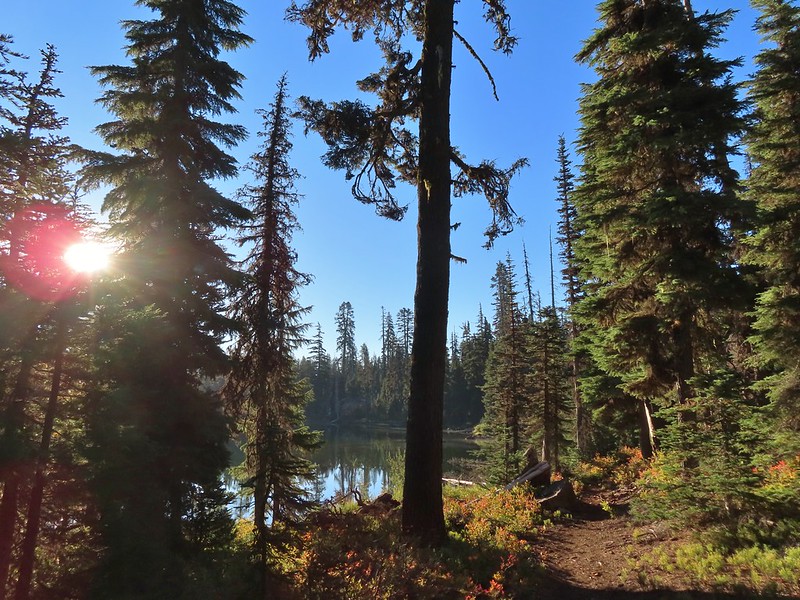

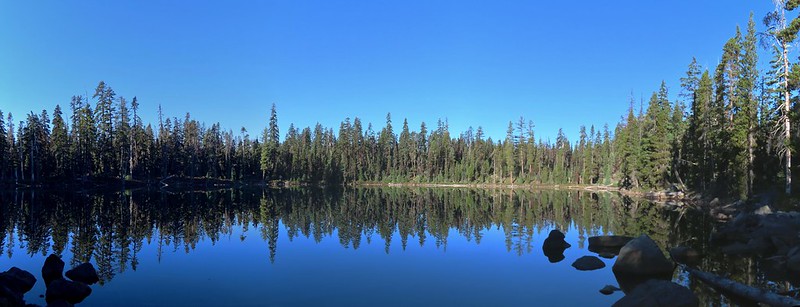 Lake Notasha
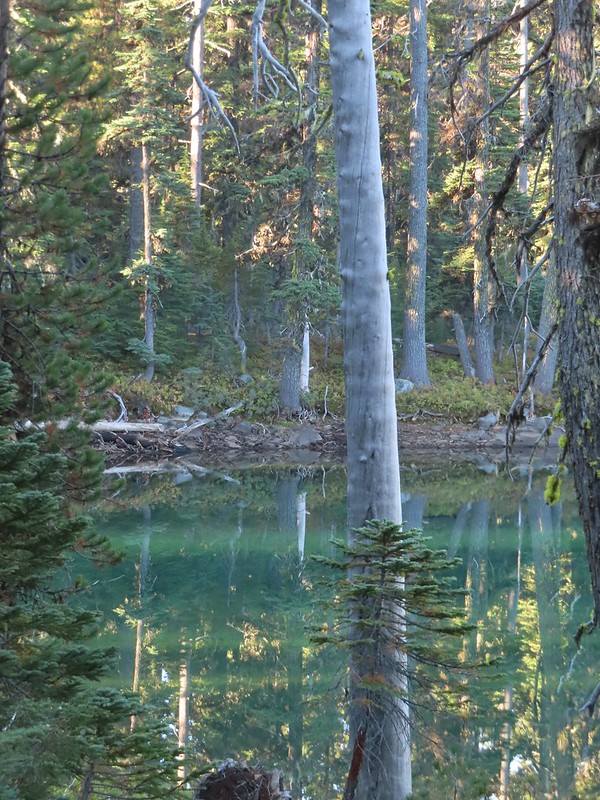 Depending on the angle the water was a beautiful green.


 Parts of the latter half of this trail passed through the 2017 fire scar.
 Fireweed seeds
 Pelican Butte as we descended toward the junction.
 Leaving the
  Dark-eyed junco seeing us off.
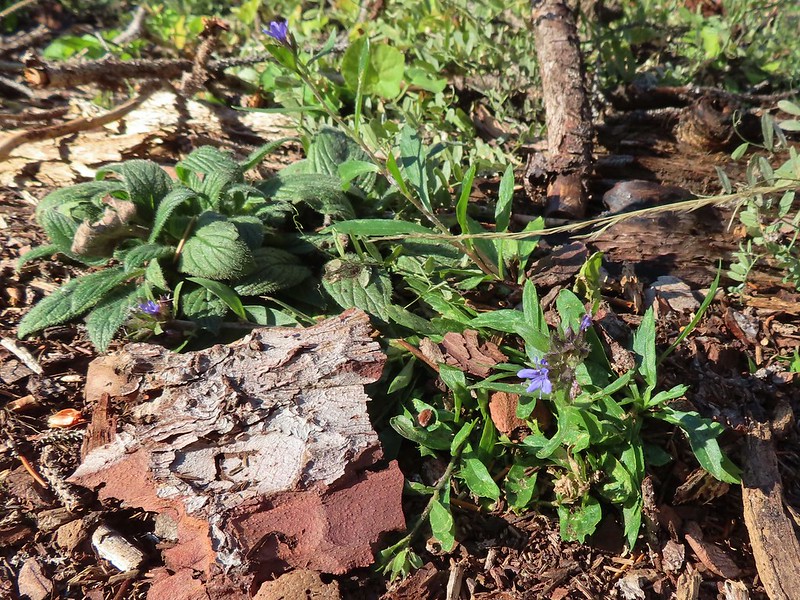 An as of yet unidentified flower.
 Another unidentified flower.
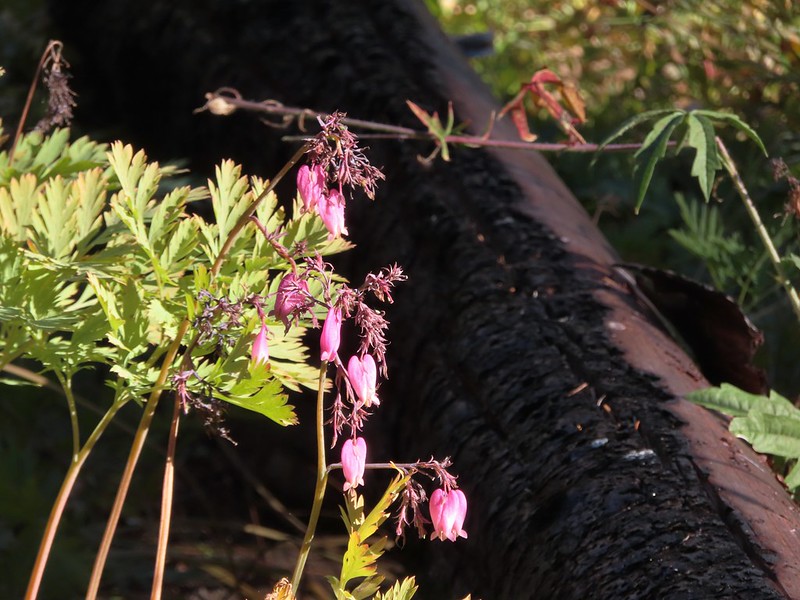 I do know this one – bleeding heart.
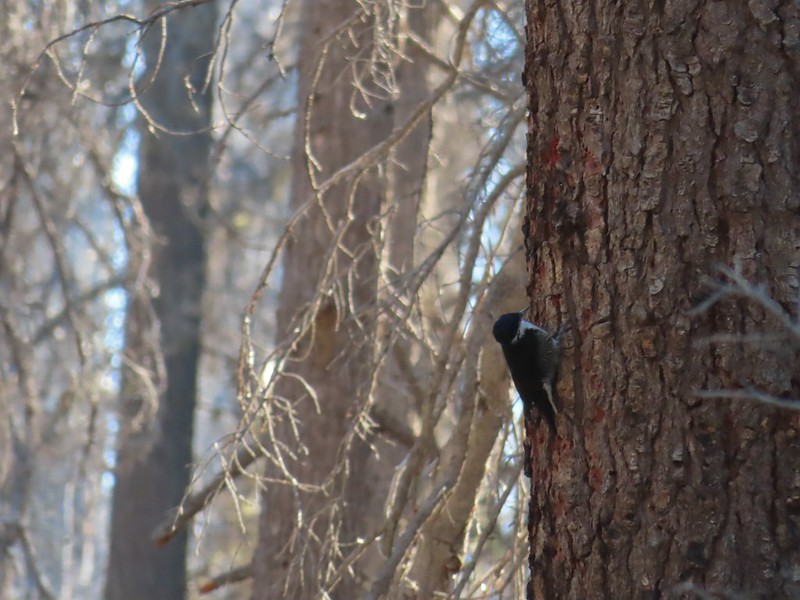 Woodpecker (it was a busy final 0.6 miles).
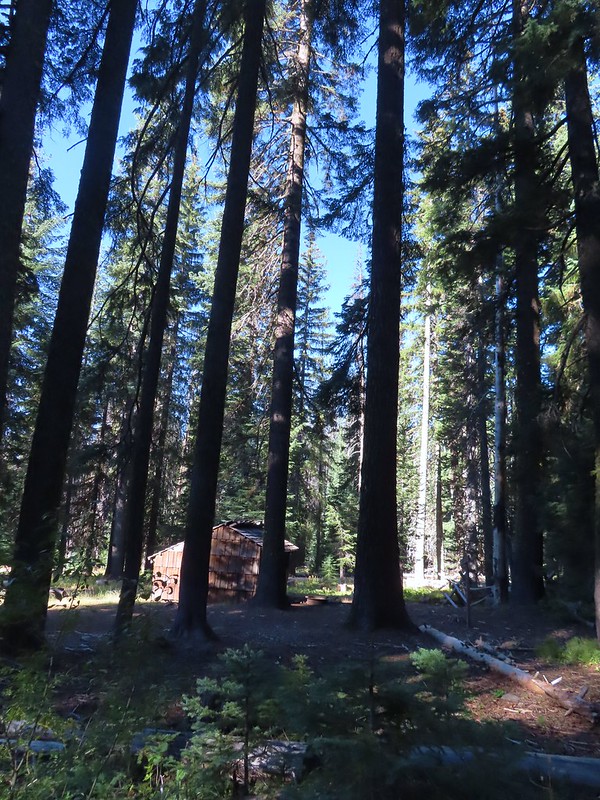 Back at the shelter and trailhead.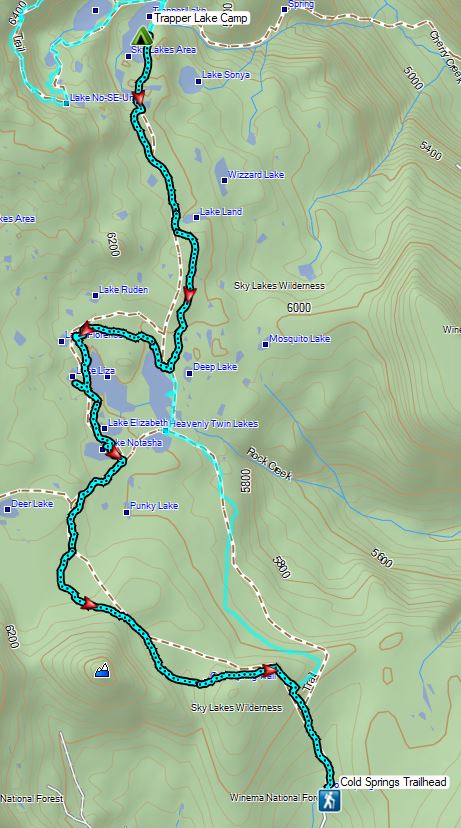
 wanderingyuncks
