Categories
High Cascades Hiking Oregon Trip report Waldo Lake Area

Waldo Mountain Lookout

**Note a portion of this hike burned in the 2022 Cedar Creek Fire.**

There are still several designated wilderness areas close enough for a day hike that we have not yet visited. Wilderness areas by definition are areas “where the earth and its community of life are untrammeled by man, where man himself is a visitor who does not remain.” In his book Listening for Coyote William Sullivan says of wilderness; “We need a place where we do not belong, just as children delight in sneaking into forbidden rooms and attics, for a glimpse of the unknown.” My hope is to eventually visit as many of Oregon’s 46 wilderness areas as possible and our latest hike checked one more off our list.

Our destination was the Waldo Lake Wilderness near Willamette Pass in the central Cascades. Waldo Lake is the second largest natural lake in Oregon and oddly enough is not actually inside the Waldo Lake Wilderness boundary. There are a number of hiking trails to choose from in the area but for our trip we decided on a loop up and over Waldo Mountain with stops at Waldo Lake and the Salmon Lakes. This route would give us a good sample of what this wilderness had to offer.

The trail head parking area was empty when we arrived as it would be when we left. While we were preparing to set off a State Police Truck pulled up asking if we’d seen any other vehicles and what our planned route was. It was the first day of buck season but the trooper didn’t think we’d likely see anyone out on the trails. He was close, on the trail near Waldo Lake we passed a group of three hikers and a little later a single mountain biker and that was it. He wished us a good hike then drove off and as he passed by we noticed the decoy in the bed of the truck presumably to catch illegal road hunters.

The trail quickly entered the wilderness and climbed up Waldo Mountain through a quiet forest. After 3 miles of climbing we suddenly were at the top of the mountain right at the former lookout tower.
022
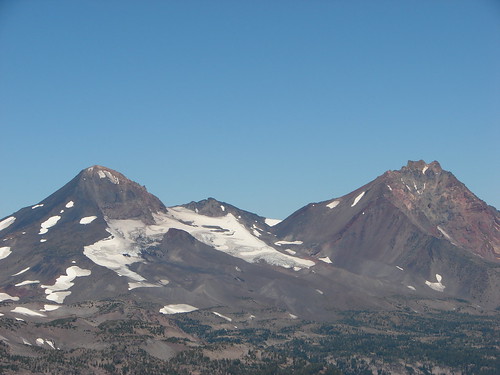
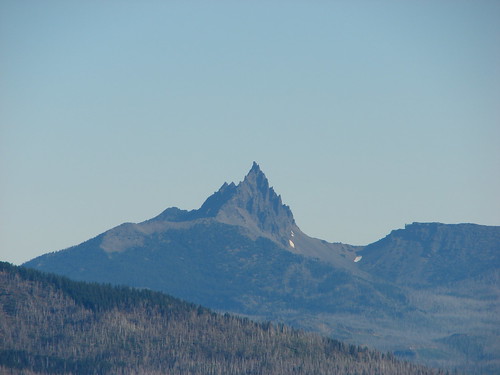
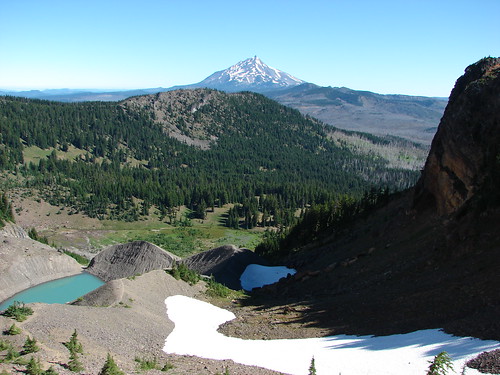
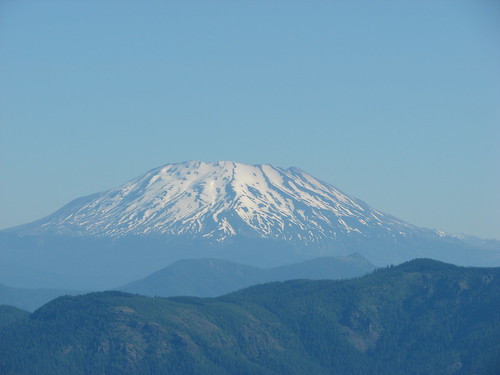
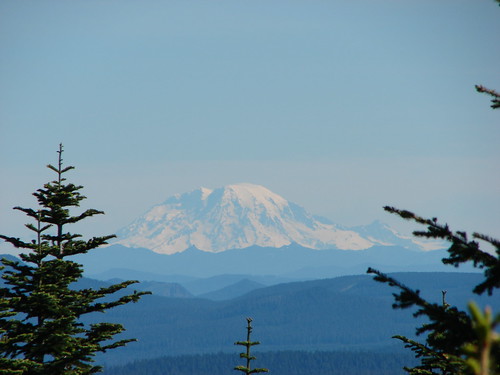
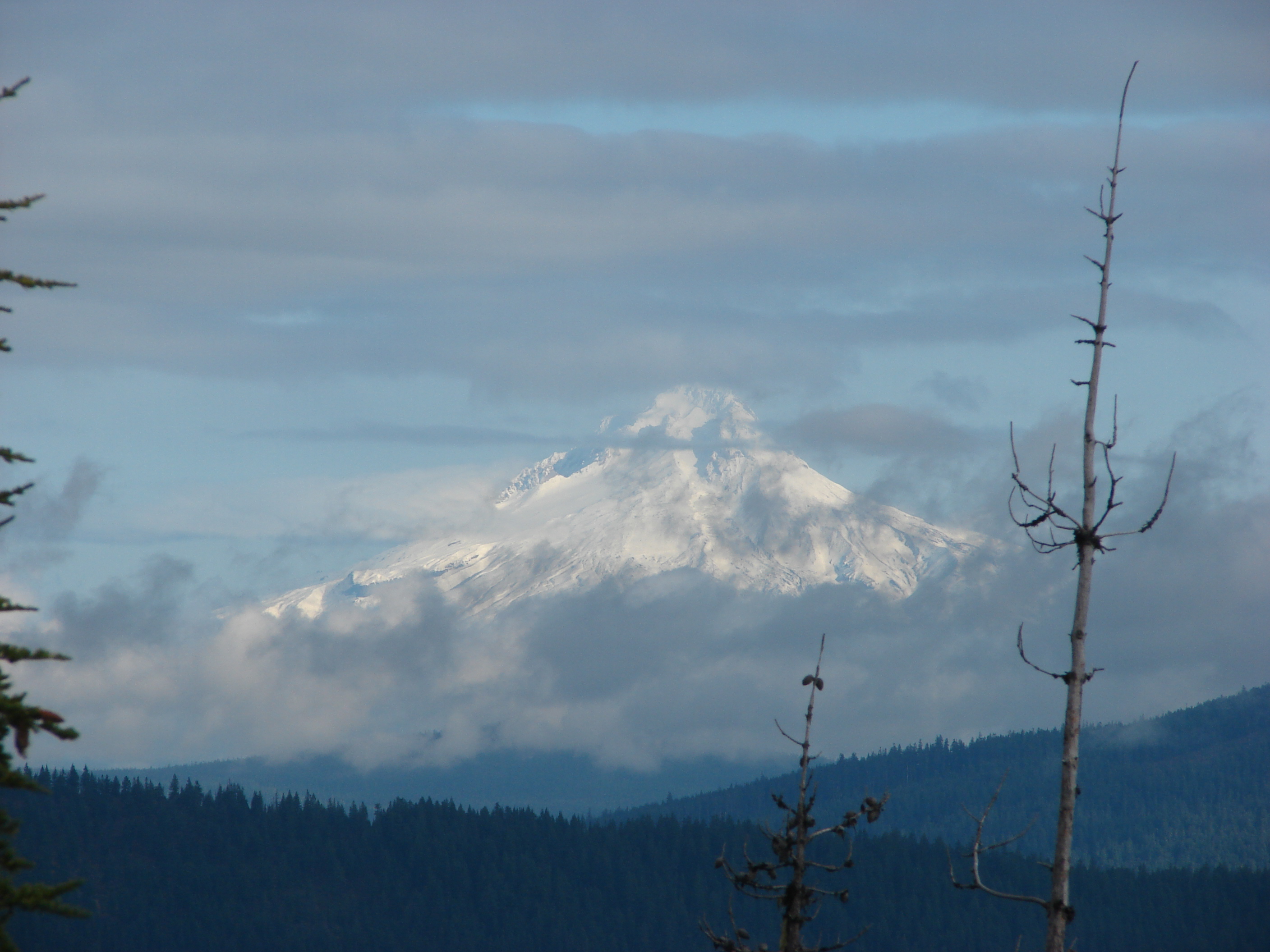
The forest had limited views to a couple of brief glimpses of Diamond Peak which made the view at the lookout even more satisfying. Mountains and lakes lined the horizon from the NE to the SE starting with Mt. Hood and ending with the summit spire of Mt. Thielsen. Waldo Lake stretched below us to the east with many smaller lakes dotting the forest around it.

The Cascades from Mt. Hood to Mt. Bachelor and Lower Eddeeleo Lake
Waldo Lake
Waldo Lake
Diamond Peak
Diamond Peak

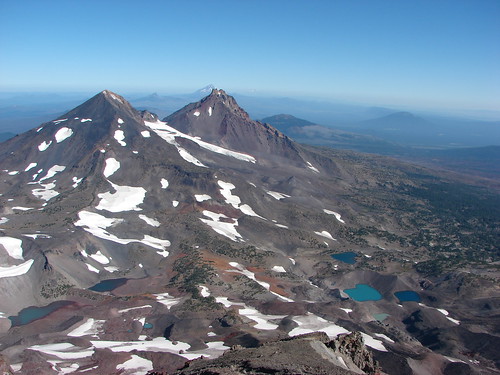
It looked as though some of the higher peaks to the north had received some recent snow including the South Sister which we had climbed about a week before.
Dusting of snow at the top of the South Sister

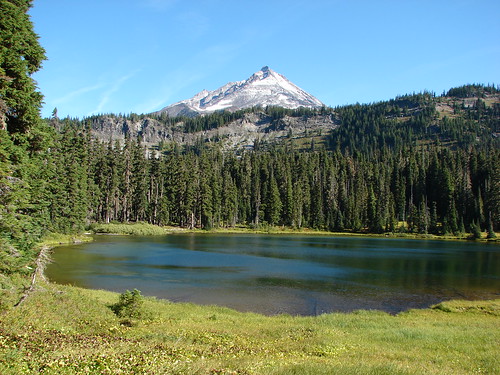
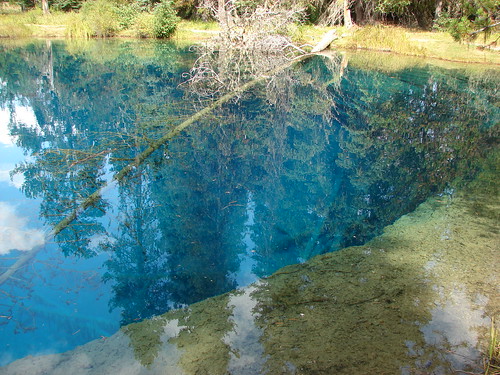
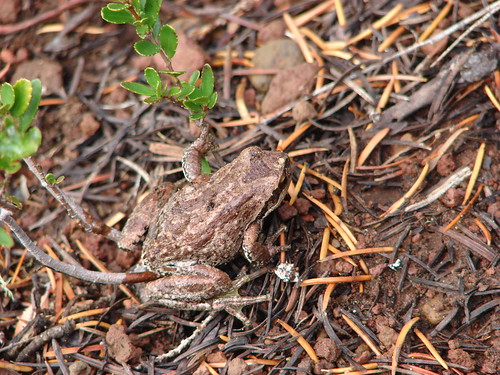
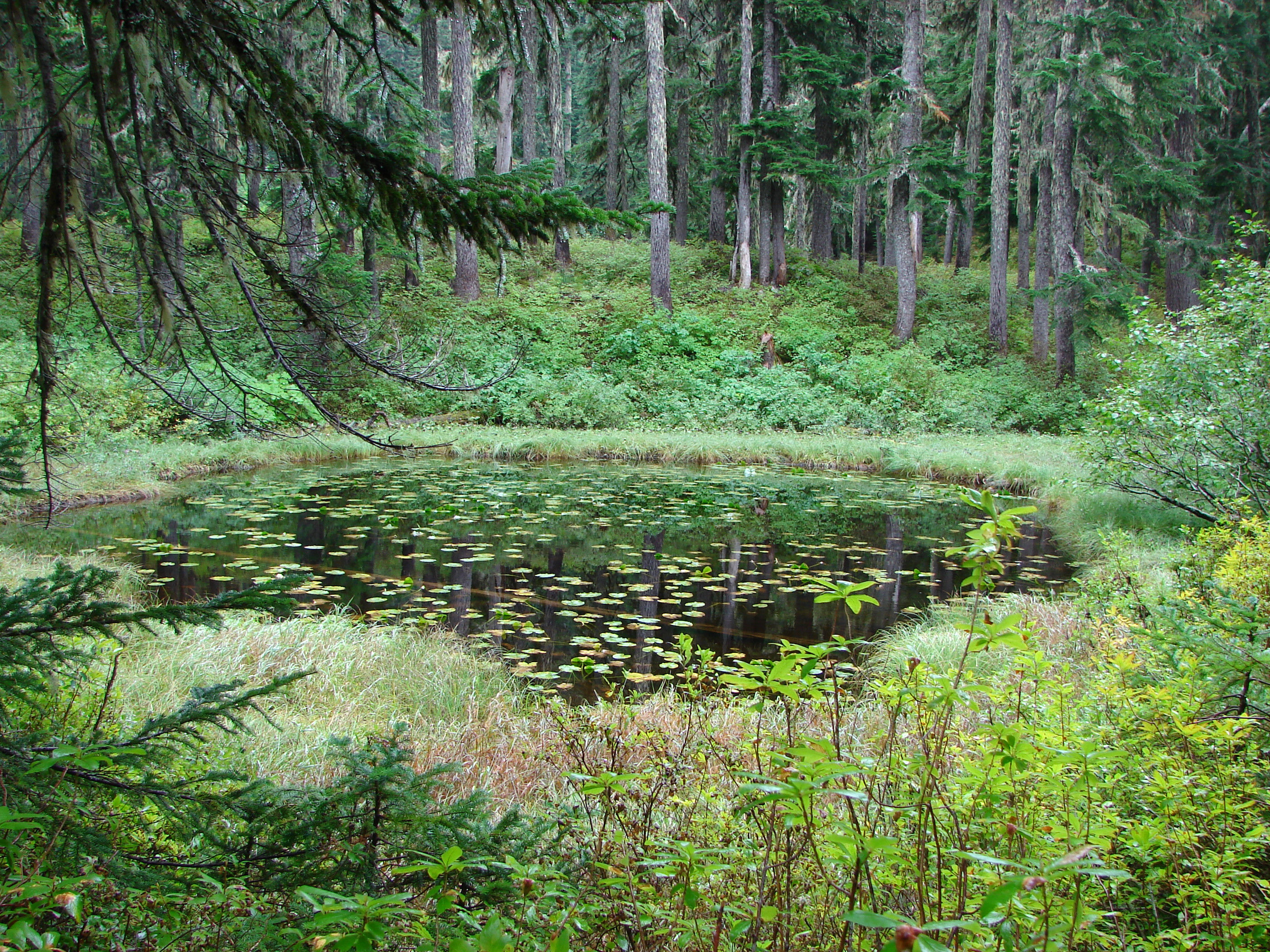
From the lookout tower we headed down the SE side of Waldo Mountain toward Waldo Lake. More peaceful forest hiking ensued. We spotted dozens of frogs sharing the trail and also ran into some less welcome mosquitoes. After 1.4 downhill miles we came to a junction with the Waldo Meadows trail which we would take to complete the loop, but first we had a lake to visit. We took a right on the Waldo Meadows trail and after 300yds turned left on a trail with a sign pointing toward Waldo Lake. This trail passed by several small ponds and lakes on its way to the Waldo Lake trail, the prettiest being Elbow Lake.

Elbow Lake
Elbow Lake

The Waldo Lake trail circles the 10 square mile lake, but at the junction the water was nowhere to be seen. We turned left and continued around Elbow Lake until we spotted a fairly well-worn side trail heading down toward the lake. This path led down to a secluded cove and nice campsite. We sat on the rocky shore of the lake and had lunch while enjoying the gentle lapping sound of the lake.

Waldo Lake and Maiden Peak

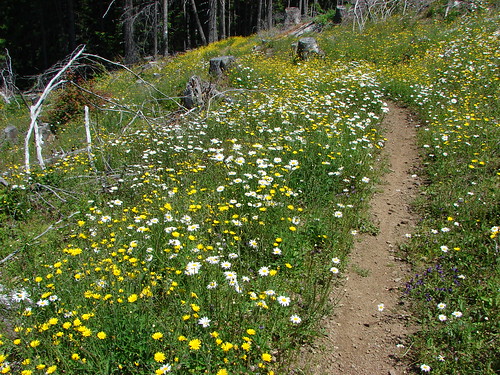
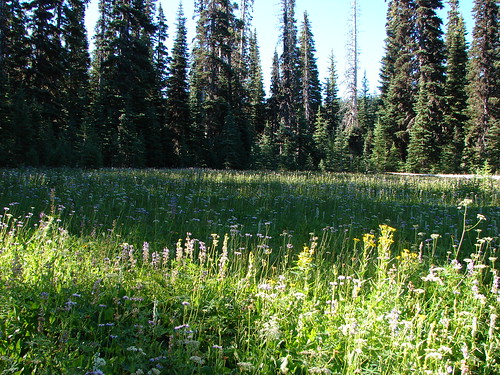
After lunch we returned to the Waldo Meadows trail and continued our loop. Waldo Meadows was full of tall plants but most of the flowers time had come and gone. There were a few coneflowers and a handful of paint and aster on its last legs but it gave us an idea of what it might have looked like earlier in the year.

Some of the few remaining flowers in the meadows.

In the middle of the meadow was another trail junction. To the left just .5 miles away was Upper Salmon Lake and nearby Salmon Creek Falls. True to form we turned left and headed in that direction. 🙂

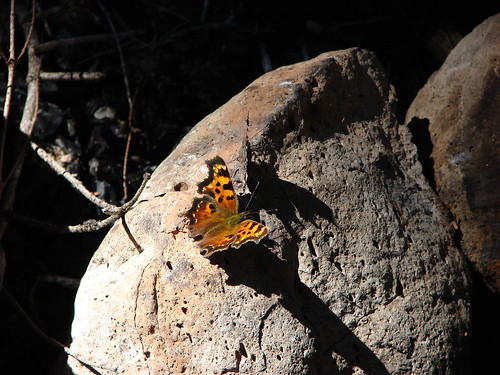
Upper Salmon Lake turned out to be a gem. A half-dozen tortoise-shell butterflies greeted us at a lakeside campsite while several ducks patrolled the green lake.

Butterfly greeters.
Butterfly greeters.
Ducks on Upper Salmon Lake

Heather and I headed to the grassy shore where she spotted a good-sized toad that just wouldn’t come into the open for a good picture.

We then headed to the lake’s outlet, Salmon Creek, and followed it down to Salmon Creek Falls.

Salmon Creek Falls
Salmon Creek Falls

From the falls we knew we were close to Lower Salmon Lake but hadn’t seen a trail for it so we decided to test our “off trail” skills. Let’s just say they are a work in process, but after some unnecessary travel we managed to find the lake but not much of a view.

We returned to Upper Salmon Lake and collected Dominique who had chosen to stay with the butterflies and headed back to the meadow junction. The return loop passed through several more sections of the meadows before returning to the forest on the side of Waldo Mountain. This nearly 2 mile section had once burned and was now home to thimbleberry patches and deciduous trees. For the first time it really felt like Fall on the trail to me. Leaves slowly drifted down around us and the trail rustled as we walked on the leaves that already covered the path.
171

It was a bittersweet ending for me as I began to come to terms with the realization that the seasons were changing. It had been a beautiful day and a peaceful hike but we were now entering the home stretch of our hiking season. We’ve had a great year so far and hope to end it the same way. Until next time – Happy Trails!

Categories
High Cascades Hiking Oregon Three Sisters Area Trip report

South Sister & Moraine Lake

After a great hike along Tam McArthur Rim it was finally time to tackle the South Sister. At 10,358′ the South Sister is the third highest peak in Oregon behind only Mt. Hood (11,235′) & Mt. Jefferson (10,497′) and the only one of the three that doesn’t require technical climbing skills. We had tried to do this hike a couple of times in 2012, but the Pole Creek fire in the Three Sisters Wilderness kept us from being able to do it. We had been looking forward to this hike all year and most of our earlier hikes were chosen in part to help us prepare for the demands of the climb.

We knew this was a popular weekend for a popular hike so we expected a large crowd would be joining us so we got to the trial head at Devils Lake early and were ready to go just as the Sun began to rise.

South Sister's summit from the trail head parking lot.
South Sister’s summit from the trail head parking lot.

There was just enough light for us to not need to use our headlamps as we set off across Tyee Creek and the Cascade Lakes highway and entered the Three Sisters Wilderness.

Entering the wilderness.

The first mile and a half of the trail climbs through the forest in a narrow valley before cresting on a large plateau. Brief views behind us revealed Diamond Peak, Mt. Bachelor and distant Mt. Thielsen but it wasn’t until we reached the plateau that we could see our target, the South Sister.
029

Travelling along the plateau was an easy walk with gentle rolling hills and mountains on three sides. The South Sister loomed ahead while Mt. Bachelor sat behind and Broken Top welcomed the rising Sun to our right.
039
After nearly 3/4 of a mile we spotted Moraine Lake in a sandy bowl below us to the right. A trail joined here and we decided that we would head down there on the way back if we felt up to it. To our left a large lava flow covered a portion of the plateau.

The first 1.8 miles along the plateau had only gained 500′ of elevation putting us at 7200′ when the trail began to climb with a purpose. We were 2.2 miles from the summit and still over 3000′ below it. Not only did that mean a steep trail but the trail consisted of sand and loose rocks making footing challenging. To add to the challenge was the clear view to the top reminding us of just how much further we had to go :).

Looking up the South Sister

The first section of steep climbing was amid larger gray rocks. There seemed to be an endless number of possible routes braided among these rocks, but sticks and rock cairns marked the correct path. A ridge blocked the view to the east, but to the south the Cascade range was unfolding and lakes dotted the forest. To the west the Willamette Forest stretched beyond the lava mesa.
087

The first section ended atop a sandy saddle at the base of the Lewis Glacier. Below the saddle was Lewis Tarn, a pretty glacier melt lake. I had arrived at the saddle before Heather so I headed down to the lake to get a couple of pictures and feel the water (yes it was cold).
124
Broken Top was now visible to the east as we sat at the saddle to take a break and get some food before the final ascent.

The rock composition changed here and now we were traveling along a red cinder ridge between the Lewis & Clark Glaciers. The Lewis Glacier had some interesting crevasses.
136
The trail was just a little steep here, but the footing was better making this section a little easier than below the saddle. The views were also even more spectacular as we were now looking down across the Lewis Glacier all the way to the peaks surrounding Crater Lake to the south.
175

Upon reaching the lop of South Sister’s rim a vast snowfield filled the crater on top of the mountain.
184
Across the snowfield was the high point and actual summit of the South Sister. Even though it wasn’t a perfectly clear day, where a view of Mt. Shasta would have been possible, we could see all the way to the tip of Mt. McLoughlin in southern Oregon. In addition to the over half dozen mountain peaks to the south many lakes were clearly visible dotting the forest.
181
The trail continued around the rim to the right on it’s way to the summit. Along the way views to the east improved revealing the Green Lakes below the Prouty Glacier between Broken Top and the South Sister, Paulina Peak to the SE, and Tam McArthur Rim where we had hiked the day before. The best views still lay ahead though.
208

As we continued around the rim we toward the north side of the mountain the most dramatic views began to unfold. Lined up was a parade of Cascade peaks, the Middle & North Sister, Three Fingered Jack, Mt. Jefferson, Mt. Rainier, Mt. Hood, and Mt. Adams. Mt. Rainier and Mt. Adams were only barely visible even with binoculars due to haze but they were there like ghosts on the horizon. Below the South Sister lay the Chambers Lakes in a multitude of colors, from brown Carver Lake to blue Camp Lake like an artists palette.
222

Several of the Chambers Lakes

We’d finally reached the summit!

Heather at the summit
My summit pic
My summit pic

We decided to try and continue around on the rim loop after noticing what appeared to be a well worn path. Mt. Washington was hiding behind the Middle Sister and I thought we might be able to find the missing mountain from the western edge of the rim. The path turned out to be much less of a trail and more of a scramble as we climbed over rock piles along the edge of the mountain. A strong wind was blowing across the snowfield making us feel like we could be blown right off the edge. We did manage to get a glimpse of Mt. Washington’s spire over the shoulder of the Middle Sister and got views of of the Lost Creek and Eugene Glaciers as well as several creeks and lakes below the Husband, but I don’t know that I would take that portion of trail again.

Mt. Washington over the left shoulder & Three Fingered Jack over the right of Middle Sister
Lost Creek Glacier and the Husband

After a short stint on the snowfield below we managed to complete the rim loop and arrived back at the climber trail which had become much more crowded. A line of hikers could be seen making their way up as some of the early hikers were making their way back down.
293
Surprisingly the descent was much easier than we had anticipated. Despite the numbers heading up there was plenty of room on the braided paths and the deep loose sand helped keep the descent under control. The views were just as impressive going this direction. In fact Broken Top looked even better now that the Sun had risen over head bringing out the colors of the old volcano. On the way down we got a little separated. Heather ended up falling in with two young ladies that shared a similar pace. They quickly formed a trail bond looking out for each other. In her shyness, Heather failed to introduce herself or get their names, but she was very thankful for their company and the feeling of camaraderie. It was nice for her to enjoy the company of women on the trail for a change, even if it was only for a short time.
291

When we reached the junction for the trail down to Moraine Lake we decided to head down. I blame the lack of oxygen for that decision. Actually the lake was lovely and only added about 3/4 of a mile and 500′ of additional elevation gain. We sat at the edge of the lake across from the South Sister and had another snack. I think we both would have been happy to stay there, but we would have gotten a little cold that night.
342

We pulled ourselves away from the peaceful lake shore and returned to the climber trail via a trail that had come to the lake from Green Lakes and continued on to Wickiup Plain. The intersection was very close to where the climbers trail first crested the plateau so we were quickly back in the forest heading down the final 1.5 miles back to the trail head. Now that it was light we could see this portion of the trail much better. A nice creek ran beside the lower portion of the trail and we spotted some aster blooming in a meadow along side it. After crossing the highway we reached the bridge over Tyee Creek which was lovely.
365
Then we were back at the large parking area where we had started. It had been a beautiful day, and we really couldn’t have asked for any more out of this hike. We got one last look at the South Sister before loading up the car and heading back into Bend.

Parting shot of the South Sister

Happy Trails!

Facebook photos: https://www.facebook.com/deryl.yunck/media_set?set=a.10202027388473455.1073741854.1448521051&type=3
Flickr: http://www.flickr.com/photos/9319235@N02/sets/72157635348248051/

Categories
High Cascades Hiking Oregon Three Sisters Area Trip report

Tam McArthur Rim

An extra long weekend brought us to Central Oregon for a pair of Labor Day weekend hikes. We had planned the coup de gras of our hiking season for September 1st when we were set to climb the South Sister, but first we decided to take a “warm up” hike on the 31st on our way to Bend, OR. We chose Tam McArthur Rim which is located about 16 miles south of Sisters, OR at Three Creek Lake. The trail offered an up close look at Broken Top and a view of the Three Sisters to help us get excited for the next days climb. We also had the option of making this a short hike of just 5 miles by turning around at the rim viewpoint, but of course we opted to lengthen the trip. 🙂

The trail offered views from the beginning with Tam McArthur Rim and the North & Middle Sister looming over Three Creek Lake.
402
The trail climbed for the first 3/4 of a mile up a ridge to the rim’s plateau. Along the way views opened up across the lake to the north revealing several Cascade peaks. When we reached the plateau the mountains were temporarily lost as we traveled south across a semi-barren landscape. After a half mile the trail bent right and began gradually climbing along the sloped plateau. Mountains once again were visible, this time to the south. Mt. Bachelor rose above the plateau with Tumalo Mountain to it’s left.
432

As we gained elevation along the plateau the tops of Broken Top and the South Sister began to peek over the rims edge. The plateau itself was an interesting mix of rocks and sand dotted with clumps of trees. The plants were limited to those capable of surviving windy conditions on little water. Just prior to the final climb to the viewpoint the trail approached the cliff edge where we got our first good look at Little Three Creeks Lake.
452

Upon reaching the viewpoint we found that it was a nice wide area with a 360 degree view. At an elevation of 7730′ it was high enough to see a good distance. It was a wonderful spot to take a break and have a bite to eat and would have been an acceptable place to declare victory and turn around. While we sat at the viewpoint we were joined by a Red Crossbill who apparently thought it was a good place for a break as well. Although the view here was good enough to call it a day the trail continued on so we would too.

North & Middle Sister, Mt. Washington and Three Fingered Jack from the viewpoint.

Continuing on from the viewpoint the trail stayed fairly level as it followed the edge of the rim toward Broken Top. The open landscape of the plateau meant constant views with Mt. Bachelor to the south, a string of Cascade peaks to the NW and Central Oregon to the east. Between the trail and Central Oregon the plateau was dotted with patches of snow that were still melting feeding silver creeks that flowed down toward the Deschutes River far below. The most prominent of these was the North Fork of Tumalo Creek.

North Fork of the Tum
North Fork of Tumalo Creek

The trail skirted around one of these snow fields and climbed a cinder slope where we could see the final mile of our path before us.
562

The final mile climbed a cinder ridge to the base of Broken Hand. From this ridge the views became even grander. To the south beyond Mt. Bachelor was Diamond Peak, Mt. Thielsen and eventually Mt. Scott which resides on the rim of Crater Lake.
594
To the north we could see all the way to Mt. Adams in Washington although haze made it difficult to see it well.
598

We ate lunch at the base of Broken Hand admiring the colors and shapes of the volcanic rocks of Broken Top and the Three Sisters. We spotted a fellow hiker sitting on the rim of the moraine containing Broken Top Lake, a destination we hope to see next year.
614
We spent quite awhile surveying the landscape around us, and I was especially intrigued by what appeared to be a good sized waterfall to the SE of the Middle Sister. It may have been along the outlet creek of one of the Chambers Lakes (possibly Camp Lake).
618
We also tried to spot climbers on top of the South Sister since we planned on being up there the next day but couldn’t make anyone out.

On our way back we began running into more hikers and other wildlife too. A silent group of ravens glided by apparently searching for something along the plateau.
671
We also spotted an impressive spider which had bright red legs and was just a bit larger than a quarter.
684
This was a great way to start a weekend of hiking and really got us excited about our hike up the South Sister. Happy Trails.

Facebook photos: https://www.facebook.com/deryl.yunck/media_set?set=a.10202026938382203.1073741853.1448521051&type=3
Flickr: http://www.flickr.com/photos/9319235@N02/sets/72157635322678462/

Categories
High Cascades Hiking Mt. Hood Area Oregon Trip report

Yocum Ridge

Yesterday we completed what turned out to be our longest hike to date – Yocum Ridge. According to our 100 hikes guidebook the distance of the trail is 8.7 miles one way to a viewpoint of Mt. Hood’s Sandy Galcier. With that in mind we were anticipating a total distance around 17.5 miles, but by the time we were done exploring Yocum Ridge our garmin showed a total distance of 19.7 miles. :O Our original plan was to meet my parents at the trail head and hike together to Ramona Falls, but they were unfortunately unable to make it so Heather and I were off on our own just before 7am.

It was a cloudy morning as we crossed the Sandy River and made our way along Ramona Creek toward the falls.

Crossing the Sandy River

Ramona Creek is one of the prettiest creeks we’ve hiked along, but the dense forest always seems too dark to get any pictures to really do it justice.

Ramona Creek
Ramona Creek

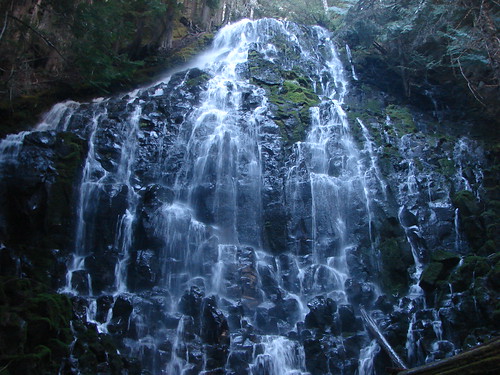
When we arrived at Ramona Falls it was just as impressive as we had remembered it from our first visit the previous July.

Ramona Falls
Ramona Falls

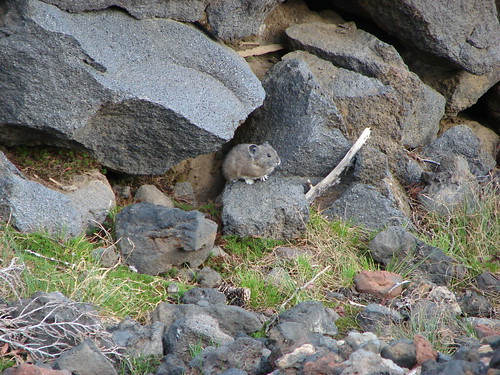
From Ramona Falls we took the Timberline Trail north for .7 miles to the Yocum Ridge trail and began our climb. We were presently surprised by the gentle grade of the trail which climbs nearly 3000′. The lower portion of the trail was heavily forested with lots of mushrooms and red huckleberries. We spotted one pika (and heard many more) and a small frog along the trail as well. The clouds were low and a light fog filled the trees making it impossible to tell if the trail offered any views. We passed a couple of small ponds and some meadows that had been home to flowers earlier in the year.
048

We were holding out hope that we would eventually climb above the clouds and into blue skies but we began to think that was just wishful thinking. We caught our break though as we approached the south side of the ridge near a rock field and wild flower meadow. When we came out of the trees in the meadow we were greeted by blue sky and sunlight. Looking up toward Mt. Hood the summit was visible above the tree tops.

Mt. Hood above the tree tops.

The clouds were still all around so we decided to double time it up the trail not knowing how long the views would last. We were slowed by the increasingly scenic wildflower meadows and views to the south across Paradise Park to the distant summit of Mt. Jefferson.

Paint & aster meadow


Paradise Park & Mt. Jefferson

As we hurried up the trail other flowers such as western pasque, bistort, fireweed, and groundsel showed up in the meadows. The trail then entered a series of spectacular meadows as it traversed around the ridge finally revealing a view of Mt. Hood.
110
Small clouds were passing in front of the mountain as we approached through the meadows. From this side of the ridge we had an up close view of Illumination Rock and the Reid Glacier.

Reid Glacier & Illumination Rock

The wildflower meadows were on all sides as the trail headed straight for the mountain.
129

The trail eventually came to the edge of the Sandy River canyon where melt water from the Reid Glacier feeds the Sandy River. A series of waterfalls could be seen (and heard) below.
145
We explored the area and spotted another good sized water fall further down and across the canyon. This one was flowing from the Paradise Park area down into the Sandy River.

Waterfall along the Paradise Park branch of the Sandy River

We finally pulled ourselves away from the spectacular views and continued on the trail toward the north side of the ridge. The trail climbed as it crossed the ridge and passed through many more wildflower meadows. When we reached the north side of the ridge we found the clouds again. There was a bank of clouds settled over the valley between Yocum Ridge and McNeil Point. Here the trail turned up the ridge at it’s steepest grade. We reached a small saddle below the rocky cliffs that top the ridge where we found a couple of camp sites and lingering snow patches. To the right of the cliffs we could see blue sky, but on the left it was all clouds. We decided to continue on what appeared to be a faint path across loose rocks and sand to see if we could once again rise above the clouds. The “faint path” completely disappeared and visabillity was all but gone when we decided to turn around and go back. We looked at some trip reports later that showed we had been headed straight for the mountain with the Sandy Glacier to our left but we’d have never known it.

Heather returning on the “faint path”.

Back at the saddle the clouds began to rise keeping the mountain hidden but giving us a better look at the flowers surrounding this area. He we found lupine, cat’s ears, and even a few avalanche lilies. While exploring the tent sites we stumbled on a small group of scotch bluebells.

Avalanche lilies
Avalanche lilies
Cat's ear
Cat’s ear


Scotch bluebells
Scotch bluebells

When we started our return trip the clouds had risen from the valley floor giving us views below, but when we arrived at the Reid Glacier viewpoint Mt. Hood was hidden. We found a couple of fellow hikers here that we had met near Ramona Falls and asked if they had made it in time to see the mountain and they had not. We all stuck around waiting to see if we would catch another cloud break since there was still plenty of blue sky around. While we were waiting a Red Tailed hawk circled overhead checking us and the meadow out.

Red Tailed hawk
Red Tailed hawk

While I was attempting to catch the hawk in flight Mt. Hood decided to make an encore appearance.

Red Tailed hawk over Mt. Hood

The clouds continued to roll in allowing us brief glimpses of the mountain before we decided it was time to start our return trip.

On the way down we were provided some new views due to the rise in the cloud levels. We spotted the bottoms of Mt. Jefferson and Mt. Adams, Lost Lake, and the large waterfall coming from Paradise Park.
360
We stopped briefly at Ramona Falls where a large crowed now milled about and then continued on the final 3.4 mile leg along the Sandy River to our waiting car. It was a long hike and we only got to see half of the views, but in the end it didn’t matter. What we did see was amazing enough and now we have an excuse to return since we have unfinished business on the north side :). Happy Trails.

Facebook photos: https://www.facebook.com/media/set/?set=a.10201968046749949.1073741852.1448521051&type=1
Flickr: http://www.flickr.com/photos/9319235@N02/sets/72157635221888570/

Categories
Hiking Mt. St. Helens Trip report Washington Washington Cascades

Johnston Ridge Observatory & Coldwater Peak

We took advantage of a day off recently and headed up to the Johnston Ridge Observatory at Mt. St. Helens. This was the farthest north we have traveled for a hike and would be the first time we would be able to see the collapsed side of the volcano. We were a bit disappointed when we arrived and realized that the winds had shifted and were blowing from the south east causing a hazy sky due to smoke from a wildfire near The Dalles Oregon. We parked in the observatory parking lot and surveyed our hike’s destination, Coldwater Peak.

Coldwater Peak from the parking lot.

The observatory was not open yet (It opens at 10:00am) but we walked around the paved loop trail there before setting off on the boundary trail. Good views of Mt. St. Helens were plentiful despite the blue haze from the smoke.
004
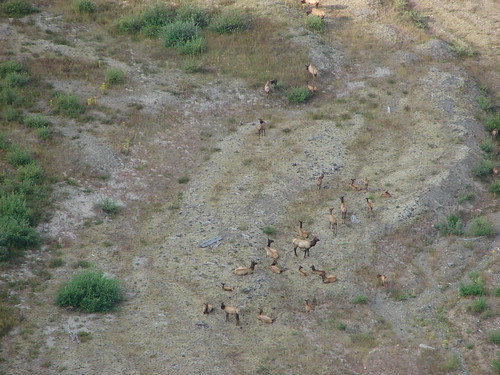
I had us all on the lookout for elk down in the valley below and it wasn’t long before we spotted a small group.
030
It appeared to be a small heard of about 15 elk but as we worked our way along the trail and got a better view of the valley below we saw the rest of the heard.
041

As we rounded a ridge end we got our first view of Spirit Lake and it’s floating trees. Mt. Adams was visible through the haze further to the east.
082
The trail then dipped slightly to a jct with the Truman Trail and continued on behind Harry’s Ridge. Here there was a decent variety of flowers that were growing in the mud and ash that had spilled over the ridge here during the 1980 eruption.
106
We also began to find berries :). Here were mostly thimble and huckleberries but we even found a few ripe salmon berries.

Thimble & huckleberries

Later we would add strawberries to the menu.

Just after we had reached the Harry’s Ridge trail we spotted another half dozen elk running up a game trail below us. The trail was now gaining elevation providing better views of Spirit Lake and distant Mt. Adams.
133
When the trail crested we had a nice view of St. Helens Lake below. The trail then drops down in order to pass through a rock arch before continuing above the west side of the lake.

The rock arch that the trail passes through and St. Helens Lake

Near the north end of St. Helens Lake was the sign for the Coldwater Peak Trail which we turned up to begin our climb. We were so busy looking for berries (which we had all been snacking on as we hiked) that we somehow walked right off the trail at a switchback. It took a moment but I finally spotted it across the hillside going up so we headed cross country until we intersected it. Back on the trail we continued our climb up amid an increasing number of flowers (and plenty of berries).
266

The views from the summit were good despite the persistent haze which had now completely hidden Mt. Adams.

Mt. St. Helens from Coldwater Peak


Johnston Ridge Observatory from Coldwater Peak


Mt. Rainier from Coldwater Peak

We couldn’t get to the highest point on the rocks of Coldwater Peak though. We found that we were greatly outnumbered on the summit by flying ants!

Flying ants filling the sky and covering the rocks on Coldwater Peak

They were sticking to the west side of the peak and as long as we remained a few feet from that edge they left us alone so we were able to eat in peace.

We headed back down the trail and tried to figure out where we had lost it on the way up but we never did figure that mystery out. The smoke had gotten worse and it could now be faintly smelled in the air. We ate more berries on the way back and stopped to watch the elk heard again before dropping our packs off at the car and heading to the now open observatory to pay for the passes that we were supposed to have in order to hike in the area. Since we were there we took a tour around the small but interesting observatory before getting in the car and daring Portland’s rush hour traffic. Happy Trails

Facebook photos: https://www.facebook.com/media/set/?set=a.10201951052645107.1073741851.1448521051&type=1
Flickr: http://www.flickr.com/photos/9319235@N02/sets/72157635195793722/

Categories
High Cascades Hiking Mt. Jefferson Area Oregon Trip report

Jefferson Park via South Breitenbush Trail

**Note the 2020 Lionshead Fire burned the area covered by this hike.**

Our hike this week brought us back to what is my personal favorite destination – Jefferson Park. I can’t really say what it is about the area that makes it my favorite, but I think it is a case where the sum of the parts is greater than the whole. Jefferson Park is home to several lakes, wildflower meadows, berry patches, snow melt ponds, creeks, and the beginnings of the South Fork Breitenbush River. Oh yeah, the back drop to all of this is Mt. Jefferson, Oregon’s 2nd tallest peak at 10,497′. Our first visit came late in September 2011 when we took the Whitewater Trail and entered the park from the south. In October 2012 we took the Pacific Crest Trail from the north up Park Ridge and down into Jefferson Park. This year we would be coming from the west on the South Breitenbush Trail.

This wasn’t our first time on the South Breitenbush Trail. Earlier this year we had hiked a lower portion of the trail along the South Breitenbush Gorge. https://wanderingyuncks.wordpress.com/2013/05/12/south-breitenbush-gorge-trail/ For this hike we drove past that portion of trail to the third trail head 5 miles up road 4685. We set off from the large parking area just as the Sun was beginning to shine on the top of the ridge across the South Fork Breitenbush River’s valley. The forest was dense and quite dark as the Sun was hidden behind the ridge we were climbing. The trail climbed steadily far enough from the river to hide it’s existence. The trees also hid Mt. Jefferson as we crossed several small streams before the forest began thinning as it became drier. I noticed what appeared to be a brushy clearing that might offer a view so I started looking for a side trail. Sure enough I spotted a pair of rocks oddly placed on a small log which signaled a faint path out through the manzanita. A short distance later Mt. Jefferson came into view giving us our first good view of the mountain.077

Onward and upward we trudged as the forest became sparser offering more frequent views of the mountain. We started noticing more and more ripe huckleberries as we entered the areas that got more sunlight and made sure we took a good sampling. The trail finally flattened out on a plateau where we encountered our first snow melt pond.
111
It seemed to belong in Jefferson Park which made us feel like we must be close which turned out to not exactly be the case. We passed through heather meadows that must have been quite a display when they were in bloom and also found some nice patches of wild blueberry bushes where the ripe berries in the sun smelled just like a freshly baked pie. We finally switchbacked down along the edge of a rock slide and followed a flower lined creek toward the South Fork Breitenbush River.

I had begun to think that we might have missed out on most of the wildflowers despite the fact we had come much earlier than in previous years. As usual I was worrying for nothing. Beginning with the creek the number of flowers began to increase and by the time we had traveled a short distance along the river we found the bank was ablaze in yellow and orange.
181
On the other side of the trail was a field of purple and white below the rock summit of Park Butte.
184
We had managed to come at a great time when many of the earlier flowers were still in bloom, but there were also later flowers such as gentians on display. To top it off the mosquitoes were no longer a nuisance.

We crossed the river and climbed a small ridge to the junction with the Pacific Crest Trail and turned north (left) toward Russell Lake. The outlet of Russell Lake is one of the sources of the river and its location between Park Butte and Mt. Jefferson makes it an ideal lunch spot. We ate our lunch (and a few more berries) while we watched a plethora of fish jumping in the lake. It seemed like there was one jumping everywhere you looked, and I even managed to get a picture of one.
225

After lunch we headed south along the PCT through the meadows of Jefferson Park eventually taking one of the many side trails toward the other lakes of the park. We started at Scout Lake and worked our way around the shore so we were across from Mt. Jefferson.
250
We then headed west over a small hill and down to blue Bays Lake with its rocky peninsulas.

Bays Lake
Bays Lake

From Bays Lake we made our way north past small Rock Lake to Park Lake and another great view.

Park Lake
Park Lake

A trail following the outlet of Park Lake led us back to the South Breitenbush Trail near the river crossing.

The wildflowers were even more impressive on the way out as the Sun was now overhead and many of the flowers such as the gentians were opening.

Gentians
Gentians

290
Butterflies had also come out to play.
369

After having taken all three of the main approaches to Jefferson Park my favorite would be coming in from the north on the PCT over Park Ridge. The view from the ridge is second to none, but the awful road to the trail head also has few rivals. The Whitewater trail was the easiest and offered nice views, but the entrance to Jefferson Park is not as impressive as the others. The South Breitenbush Trail was the longest (6.2miles one way compared to 5.6 & 5.1 respectively) and gained the most elevation but it offered a great variety of scenery and is the least visited of the trails. In reality you can’t go wrong by picking any of these trails as Jefferson Park is well worth the trip. Happy Trails.

Facebook photos: https://www.facebook.com/media/set/?set=a.10201909424804437.1073741850.1448521051&type=1
Flickr: http://www.flickr.com/photos/9319235@N02/sets/72157635134756828/

Categories
High Cascades Hiking Mt. Hood Area Oregon Trip report

Barrett Spur via the Mazama Trail

After a short break following our vacation in Central Oregon we were back on the trails exploring the north side of Mt. Hood. Our scheduled hike was the Mazama Trail which climbs to the Timberline Trail along Cathedral Ridge. From the Timberline Trail we would head clockwise around the mountain passing through Cairn and Wy’East Basins to a viewpoint overlooking Elk Cove. Then the plan was to head up to Dollar Lake then on to the 7300′ knoll on Barrett Spur and go cross-country back down to Wy’East Basin and back to our car, possibly visiting Eden Park on the way back. If that sounds like a lot it’s because it was. 🙂

The forecast called for isolated thunderstorms beginning at 1pm so we made sure we got our usual early start. There had been a nice storm that came through the previous night and clouds lingered near the mountain as we drove toward the trail head.

Mt. Hood from Lolo Pass Rd.

When we arrived at the parking area a group from the Mazamas was camped there. We found out they had been doing trail maintenance for 4 days. One of the group informed us that Search and Rescue had come down the trail the day before looking for a hiker that was missing from the Ramona Falls area and that we should keep on the lookout (We found out later that he was found after the S&R team had spoken with the Mazama group). From the trail head we had a great view of Mt. Hood with Barrett Spur just below and to the left and Cathedral Ridge to our right.
009

The Mazama Trail was reconstructed by the Portland Mazama Club and they also maintain the trail. The group that had been doing the recent trail work had done an excellent job and the trail was in great shape. The trail sets off in a forest of Rhododendron but quickly comes to a rock slide which it switchbacks up through. After reentering the forest a second series of switchbacks ensue. This may have been the most switchbacks we’ve encountered in such a short distance but they made the climb a bit easier than it would have been otherwise. Near the bottom of the switchbacks we met a snowshoe hare on the trail.
017
Once we had completed the switchbacks the trail climbed more gradually sometimes through burnt forest and others in the green trees. The previous days rain kept the dust and ash from being an annoyance in the burnt sections and the 4.2 miles of the trail went by surprisingly quickly.

When we reached the Timberline Trail we took a left and headed for Cairn Basin. We had been on this section of the trial the previous year when we had hiked up the Top Spur Trail to McNeil Point. It was interesting to find that even though we were visiting almost two weeks earlier in the year the flowers were already at a later stage due to the low snow pack and early Spring. Still the displays were impressive.
073

We crossed Ladd Creek, passed through Cairn Basin, crossed another branch of Ladd Creek, and made our way to Wy’East Basin.

Aster field in Wy'East Basin
Aster field in Wy’East Basin

It would have been possible to head up to Barrett Spur from here, but we were unsure of the path so we decided to go on to the Elk Cove viewpoint and then up past Dollar Lake and try and come down to this point instead so I marked it on the Garmin for later reference.

The “unofficial” trail to Dollar Lake is approximately .7mi from Wy’East Basin, but we wanted to check out the Elk Cove viewpoint which was just an additional .2mi according to William Sullivan’s description. I didn’t do a very good job of reading his description though so we walked past the viewpoint and continued down the Timberline Trail toward Elk Cove a ways before I realized we had dropped further than we had intended. We consulted our topo maps, the garmin, and Sullivan’s book and climbed back to the correct viewpoint then walked back to find the path to Dollar Lake just as it was described in the guide book. The saving grace of the extra descent and subsequent climb was a nice field of western pasque flowers and paintbrush with a mountain view.
181

We took the path up to Dollar Lake and easily spotted the trail heading up Barrett Spur on the opposite side. We took the sometimes faint path up along the edge of Elk Cove’s Canyon. Flowers dotted the ridge adding color to the climb and below in Elk Cove a vibrant display of flowers surrounded a patch of melting snow.
215
At one point we heard an odd noise that we couldn’t place at first. We paused looking back down toward Elk Cove where the sound had come from when we heard it again. This time it was clear as a bell as it rose up the canyon walls, it was a Bull Elk bugling. 🙂

As we neared the knoll, clouds began to cover Mt. Hood and by the time we had reached the wind break atop it we were in the clouds and Mt. Hood was hidden.
228
We settled in at the wind break to have lunch and hopefully have the clouds pass which they quickly began to do. As they lifted we were gifted with some spectacular views of the mountain.
268

When it was time to head back down we could see the Timberline Trail below and after once again consulting our maps we decided on the correct ridge to follow down to Wy’East Basin. On the way up we’d spotted a small cairn that seemed to mark a possible path we could follow so when we reached it we veered left. A series of cairns led us along the ridge past several snow fields. Clumps of lupine and paint managed to grow amid the rocks in the gully.
323
We followed the path down through the gully and wound up right where we had hoped in Wy’East Basin.

Back on the Timberline Trail I threw out the idea of taking a slightly longer return route by dropping down into Eden Park. We decided a different path was worth the extra .7 miles and took the Vista Ridge Trail for .3 miles and then turned right on an unmarked trail toward Eden Park. More floral displays greeted us along the way and Eden Park did not disappoint.
407

From Eden Park we climbed back up to the Timberline Trail at Cairn Basin and hung a right to get back to the Mazama Trail. This time the trail felt all of the 4.2 miles despite the fact we were going downhill. When it was all said and done we had covered 16.2 miles and climbed a cumulative 5089′. The weather had remained nice despite the forecast and we still had a good view of the mountain as we prepared to drive home.
463
Happy Trails.

Facebook photos: https://www.facebook.com/media/set/?set=a.10201808005669022.1073741849.1448521051&type=1
Flickr: http://www.flickr.com/photos/9319235@N02/sets/72157635036745114/

Categories
Hiking Middle Santiam Old Cascades Oregon Trip report

Coffin & Bachelor Mountains

We wanted to get one last hike in on the way home from vacation and Coffin & Bachelor Mountains provided the perfect opportunity. We decided to combine these two short hikes and climb both the neighboring mountains on the same day. A two-day long spat of thunderstorms had ended, but the clouds remained in the Cascades and it quickly became clear we wouldn’t be enjoying any views from the summits on this day.

We parked at the Coffin Mt. trail head and set off on Forest Road 1168 toward the Bachelor Mt. trail. We could have driven to this trail head, but instead we decided to walk the 1.2 miles of bumpy roads and enjoy the roadside flowers.
109
It was an easy walk so we quickly arrived at the post (no sign) marking the start of the trail.

Since the clouds were denying us the views we had hoped for we turned our attention to the many wild flowers still on display and the abundant ripe strawberries which we sampled throughout the day.
008
The trail climbed up through a forested side of the mountain then turned a corner onto a drier rocky hillside. The trail then leveled out on a forested ridge. The vegetation was very damp and our shoes and pant legs were quickly soaked.
089

The trail split and we took the left fork toward the summit. After passing through another forested section we again found ourselves amid wildflower meadows where a few bear grass plumes remained as did some cascade lilies.
066
Then the trail traversed a small rock slide where a Pika stood lookout before reaching the small flat summit where a fire tower once stood.
068

The clouds were so thick we couldn’t even see nearby Coffin Mountain so after a quick snack we headed back down and returned to the Coffin Mountain trail head. Near the start of the trail we found a thimbleberry patch with two ripe berries. We tried the berries and unanimously decided that they were now our favorite wild berry. The trail then continued up amid what must have been a spectacular display of bear grass. Even though the bear grass was done many other flowers remained in bloom.
152
The number and variety of flowers increased as we made our way up the 1.5 mile trail to the staffed lookout tower.
159

When we reached the summit a cloud was passing over limiting visibility to several feet. From the edge of Coffin Mountains cliffs all we could see was grey making for an eerie effect. We made use of the helicopter pad and had a second breakfast.
171
A couple of slight breaks in the clouds gave us a view down to the forest below but it was obvious we wouldn’t be seeing any of the Cascade peaks this time around. We were anxious to get back down to the car and head home so we quickly covered the 1.5 miles back to the car. This one will be added to the list of hikes to retry when the weather is better. Happy Trails.

Facebook photos: https://www.facebook.com/media/set/?set=a.10201735237249857.1073741848.1448521051&type=1
Flickr: http://www.flickr.com/photos/9319235@N02/sets/72157634901559507/

Categories
Bend/Redmond Central Oregon Hiking Oregon Trip report

Dillon & Benham Falls

Thunderbolts and lightning, very, very frightening. We were driving up the Cascade Lakes Highway through an impressive thunderstorm attempting to reach the Green Lakes trail head at Fall Creek when we came to our senses. The second round of hail and the increasing display of lighting prompted a retreat back down toward the city of Bend, OR. We had known this was a possibility the day before when the lighting and thunder had started so we invoked our backup plan and headed south of Bend to the Benham Falls picnic area on the Deschutes River near the Lava Lands Visitor Center.

We parked on the east side of the river at the picnic area and waited for a rain shower to pass and some sunlight before setting out. We promptly crossed the river on a footbridge and remained on the west side for the remainder of the hike. The river was calm and peaceful above Benham Falls as we walked along watching the sun rise through the clouds to the east while the thunder and lighting continued to the west.
013

After approximately .7 miles the river became louder as it approached Benham Falls. The falls are not a classic waterfall but rather a series of turbulent rapids as the Deschutes flows through a lava canyon.
019
We headed up to the parking area here to make use of the facilities and had a deer bolt away as we came around a corner. Then a forest service vehicle pulled up and we spoke briefly with the driver who confirmed we made the right choice when we turned around. He said it was a mess up in the Cascades with many small lightning fires having been spotted. Indeed we heard (and saw) the helicopters and planes throughout the day flying over on their way assist with the fires.

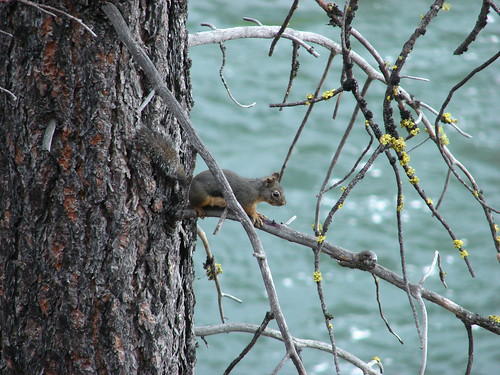
The river calmed again after Benham Falls passing forest on the west bank and a lava flow on the east. The sun made a couple of brief appearances, once creating a faint rainbow in front of us, and then disappeared. We were heading toward the Slough Day Use area and the hike was quickly turning into a wildlife spotting bonanza. We saw douglas squirrels, golden mantled squirrels, chipmunks, and scores of birds. Heather also spotted a paper wasp nest near the trail which was not the kind of wildlife I was interested in seeing.

When we reached a small slough pond we started noticing little Pacific Tree Frogs hopping along the trail.

A pair of Pacific Tree Frogs

The further we walked the more frogs we spotted and soon our progress was slowed as we tip-toed along trying to avoid all the little frogs.

We made it to the day use area and went down to the river for a closer look when I noticed something staring at us from across the water. At first we thought it was another deer, but then I spotted a second one and we noticed that their heads were darker than that of a deer. We broke out the binoculars and while we were watching a couple more came into view and we confirmed that they were indeed elk. The first we have seen while actually hiking :). They headed on down the river and out of sight so we continued on as well. We didn’t have to go far when we spotted them again on the opposite bank. There was now close to 20 elk including a small bull and several calves.
109
The trail then swung around a 10 acre slough lake where the number of frogs somehow increased. There were now dozens of frogs hopping in all directions. There were also several families of ducks who left the reeds and headed for the center of the water as we approached.
133

Next we passed through a short forested section of the trail and came to the edge of a large meadow. Looking across the meadow we could see Mt. Bachelor beneath the clouds in the distance. Here we were greeted by mosquitoes which quickly became a nuisance. The thunder and lightning had not quit and as we hurried across the meadow a heavy rain began to fall. It was both a blessing and a curse as the rain helped keep the mosquitoes at bay, but drenched us in the process.
161

Shortly after leaving the meadow we reached the parking area for Dillon Falls. Like Benham Falls, Dillon Falls was a series of rapids in a lava canyon. We spotted an Osprey clenching a fish that it had snatched from the river as we descended down toward the calmer waters below the falls.
177
A series of log steps brought us down into the canyon and to the river’s bank where we passed through some different types of vegetation including a section of trail lined with ferns.

Over the next three miles we passed Aspen (where whitewater rafters put in), Big Eddy Rapids (where the rafters scream), and Lava Island (where they get out). Near Big Eddy there were several Osprey across the river including one perched on its nest.
207
A smaller bird was circling the river, occasionally diving into the water hunting for something. Just past the Lava Island Day Use area we came to our turn around point a small rock shelter used long ago by hunters.
231

The thunderstorms had ended and the trail became increasingly crowded on our way back, but the wildlife remained abundant. The birds and golden mantled squirrels kept us entertained as we returned to the car. We had started the morning expecting mountains and lakes, but instead found a river and wildlife which proved to be a more than adequate replacement.
Happy Trails 🙂
256

Facebook pictures: https://www.facebook.com/media/set/?set=a.10201735043005001.1073741847.1448521051&type=1
Flickr: http://www.flickr.com/photos/9319235@N02/sets/72157634888763551/

Categories
Central Oregon Fort Rock Hiking Oregon Trip report

Hager Mountain

Sometimes things don’t turn out the way you’d like and that was the case with our visit to Hager Mountain. Hager Mountain is a 7195′ cinder cone located in the SE portion of Central Oregon. It’s an area we had yet to explore and were looking forward to a chance to climb up to the summit and survey the area. On a clear day mountain peaks from Mt. Shasta in California to Mt. Hood can be seen. This was not to be one of those days. As we drove southeast on highway 31 toward Silver Lake the sky began to fill with the blue haze of smoke. By the time we reached Fort Rock the Sun, which had just risen, was only a red circle through the haze to the east. We arrived at the trail head in the Fremont National Forest and prepared to start our trek. The faint smell of smoke reminded us of campfires as we set off. Lighting strikes had set dozens of fires in this portion of the State just days before.

The trail set off in a forest of Ponderosa Pine and some Juniper. It looked like there should be deer everywhere but the only one we saw was on the drive there. A few flowers were left over from what appeared to have been a good bloom probably in late June or early July.
009
Our first glimpse of the lookout tower gave us an indication of what the view up top was going to be like.
005

Despite knowing we wouldn’t be seeing the views we had hoped for the quiet trail was very nice. It was well maintained and we had it all to ourselves. After a mile and a half we reached Hager Spring. It had an old log fence around it but was dry now. From the spring the trail began climbing a little faster but never too steeply. We passed through various meadows that were full of balsam root and paintbrush but little color remained from their blooms. We were too late for them but the meadows were still pleasant and we had the company of many birds the entire hike.
041
The trail crested and passed briefly through a forested area filled with fireweed and then switched back up through another set of meadows. Suddenly we came around a bend and there was the lookout.
073
Heather and I were both surprised to have already reached the summit because the last time we’d seen the lookout it seemed so far away.

In addition to the lookout tower there was an outhouse and a picnic table. After exploring around the summit a bit we made use of the picnic table to have a snack.
074
It was only 8:45am and we had arrived before the lookout staffer who pulled up shortly after we’d sat down. We at least had some blue sky above us but the smoke surrounded the mountain on all sides leaving us with no views at all. Still it was a nice place to sit and relax a bit before starting our descent.

A plaque on the summit told us about green-tinged paintbrush which is native to Southern Oregon and has a very limited range. Apparently 95% of the world’s population is found in the Fremont National Forest. We kept our eyes open on the way down and spotted a few of the plants near the summit.
087

We spotted a lot of wildlife on the way down. Various birds, butterflies, and other insects were all over keeping the hike entertaining. I spent awhile attempting to get a picture of a western tanager who wouldn’t sit still but I finally managed to get a shot of him as he took flight.
111

Despite the lack of views and being too late for the really good flowers the hike was surprisingly enjoyable. We decided that we would definitely be coming back again earlier in the year to try again. What little we had seen told us it would be more than worth the trip. When we got back to our car a series of forest service vehicles and a water tanker truck went by heading for one of the fires. Happy Trails.

Facebook photos: https://www.facebook.com/deryl.yunck/media_set?set=a.10201712921331973.1073741846.1448521051&type=3
Flickr: http://www.flickr.com/photos/9319235@N02/sets/72157634860236191/with/9401767961/