I’d spent all of Monday hiking with abdominal pain so I was very happy to wake up Tuesday feeling fine. On tap for today was the highest elevation hike in the Wallows for this trip (Mt. Ireland on Saturday (post) was higher but that peak is part of the Elkhorns.) and we weren’t sure how much snow we might encounter. We did have our microspikes with us just in case.
The Elk Creek Trail (Trail 1944) leads from this trailhead to 7848′ Burger Pass near the 4.5 mile mark then down to Burger Meadows and eventually on to the Minam River. Sullivan’s featured hike is to Burger Pass which was our goal for the day but we had also left open the possibility of visiting the meadows if conditions were good.
At the 0.7 mile mark the trail briefly followed an old road bed to an old clearcut.
Trail sign in the old clearcut.
Sullivan describes the second mile of this trail as one of the dustiest in Oregon but on this morning there was enough moisture in the ground to keep the dust at a minimum.
Rock Creek Butte (post) in the Elkhorns from the clearcut.
The trail climbed steeply following an old roadbed out of the clearcut following a ridge before leaving the ridge and bending SE near the 2 mile mark.
Shortly after leaving the ridge we encountered the largest obstacle on the way to the pass.
The Elkhorns in the distance.
The trail made a long switchback and entered the Eagle Cap Wilderness as it rounded the same ridge that we’d been following earlier. Granite at the switchback.
Entering the wilderness (photo from the way back).
The trail then traversed a granite hillside to a large slide below Burger Butte. Valerian along the trail.
View from the trail.
Burger Butte
Rosy paintbrush
Tributary of Middle Fork Catherine Creek.
Looking down the creek over the slide.
Yellow columbine
After reentering the forest we began to encounter the first patches of snow. The snow began around 7200′.
Snow over the Elk Creek Trail.
China Cap from the trail.
The trail crossed another tributary of Middle Fork Catherine Creek below a beautiful pair of cascades.
Small meadow below the trail.
Approximately 3.5 miles from the trailhead we came to an unsigned junction with the China Ridge Trail. The China Ridge Trail joining from the left.
We stayed on the Elk Creek Trail as it climbed for another scenic mile to the pass below Burger Butte.
The Elkhorns to the right beyond Burger Butte.
Lyall’s Rockcress
The few patches of snow were just melted enough to allow us to avoid having to walk over them.
Burger Pass
The view from Burger Pass was great. There was a large snow patch over the trail but it was fairly level and soft so it didn’t require the microspikes. Burger Butte from the pass.
Looking deeper into the Wallowas.
The snow patch below Burger Butte.
I decided to go ahead and attempt the 350′ descent to Burger Meadows while Heather opted to stay at the pass. From Burger Pass the Elk Creek Trail descends three quarters a mile to a junction with the Sand Pass Trail.
There were several patches of snow and some downed trees to navigate but I soon found myself at the junction.
I turned right on the Sand Pass Trail to see more of the meadows.
The Sand Pass Trail can be seen climbing out of the basin in the sandy gap to the center left.
Meadow lookout.
View from the meadow.
Buttercups were about the only flowers blooming in the wet meadow.
The rocks along the ridge were really interesting.
Marmot? in the meadow.
I followed the trail about four tenths of a mile before stopping at Elk Creek where a large snow drift lingered on the far side.
I climbed back up to Burger Pass and once Heather got my attention we started back down arriving at the car a little before 12:30pm. Golden mantled ground squirrel watching us from the granite.
Butterfly
Mountain heather
Mushrooms near the Middle Fork Catherine Creek cascades.
Jacob’s ladder
Penstemon
Mushroom
Pacific coralroot
Including my visit to the meadows this was a 11.5 mile, 2800′ elevation gain hike which turned out to be our favorite of the trip (Mt. Ireland (post) being a close second.)
We picked up a late lunch/early dinner from Yia Yia Nikki’s which turned out to be a wonderful choice on what was the hottest day of the week. We packed up as much as possible that night in preparation of moving from La Grande to Wallowa for the next two nights. Happy Trails!
We’d spent the night in Baker City following our hike to the Mt. Ireland Lookout (post). Our plan for the next six days was to do five more of the “featured hikes” (post) from Sullivan’s 3rd edition “100 Hikes/Travel Guide Eastern Oregon” then before heading home on Friday do the Wallowa Homeland hike which is featured in Sullivan’s most recent 2022 edition of “100 Hikes Eastern Oregon”. Because the hikes were spread out along the western and northern sides of the Wallowas we would be moving our base of operations a couple of times during the week starting with a move to La Grande for Sunday through Tuesday nights.
Sunday morning we packed everything up and headed for the North Fork Catherine Creek Trailhead. After navigating the pothole filled FR 7785 we pulled into the large trailhead parking area.
A $5 fee is required here and at several other trailheads we visited during the week. (An annual NW Forest Pass can be used instead.)
The trail doesn’t start at the parking area but rather another tenth of a mile up the road so we road walked to the official trailhead.
The trail initially climbs above the creek to an open hillside, that was putting on a pretty good wildflower display, before descending to a bridge a little after 1.5 miles. Lots of purple venus penstemon.
There were also some white scabland penstemon on the hillside.
Buckwheat
Venus penstemon
Lupine and stonecrop
Paintbrush
North Fork Catherine Creek
Douglas dustymaiden
Spreading dogbane
The trail crossed several side creeks, all of which were we were able to cross dry footed.
A brief stretch along North Fork Catherine Creek.
Queen’s cup
Another side creek.
Bog orchid
Spotted coralroot
A fleabane
One of the more interesting things we’ve witnessed was watching carpenter ants removing sawdust from a dead log and dropping it in a pile below.
They’re a little blurry but you can see the ants in the cracks where they would drop their sawdust. It was fascinating to watch and we paused for quite a while.
Columbine
Mountain lady slippers
Large-flower triteleia
Back above the creek.
The bridge over Catherine Creek.
Bluebells next to the bridge.
The trail climbed gradually for the next three and a half miles before reaching Catherine Creek Meadows.
Jim Creek, this was one of the trickier crossings.
Hound’s tongue
Nettle-leaf giant hyssop
One of several smaller meadows along the trail.
Jacob’s ladder
California corn lily and bluebells.
Boot Hill Creek was also tricky as it had taken over the trail.
A large patch of coralroot.
A few remaining balsamroot blooming above North Fork Catherine Creek.
Arriving at Catherine Creek Meadows.
Up until this point we had been very lucky this year with mosquitos but the meadows were very wet and the recent warm weather had the bugs out in decent numbers so we couldn’t linger in any one spot too long but we did take a short break at a campsite near a side creek.
All the black dots in the blue sky were gnats flying over the stream at the trail crossing.
Heart-leaved bittercress
Our goal for the day lay about a half mile away, an early 1900’s log cabin at the far end of the meadow. After our break we set off across the creek following what became an increasingly wet trail to a junction where we forked left.
Looking back at the sign post in the meadow marking the trail junction.
Another dry section of trail.
It wasn’t dry for long.
Yellow buttercups and pink elephant’s head.
Elephant’s head, one of our favorites.
Ladybug
Nearing the cabin.
Ground squirrel
Squatter running from the cabin.
We checked out the inside of the cabin before heading back.
It was only 9:45am when we started back so we took our time and kept an eye out for anything we’d missed on our first pass. Beetle
Another beetle and Nevada bitterroot.
Brunch
A comma of some sort.
Big mushroom
Something from the Lycaenidae family.
Coneflower
Swallow-tail on red clover.
Fritilary on clover
Mourning cloak perched overhead.
Lorquin’s admiral
A tortoiseshell
Skullcap, one of the hardest flowers to get a decent picture of for some reason.
Tapertip onion
Yarrow and other wildflowers up the hillside.
Our hike came in at 11.8 miles with approximately 1450′ of elevation gain.
From the trailhead we drove to La Grande and checked into our Motel, after hanging out at a park for about an hour because we’d arrived a bit too early, and then headed to Side A Brewing for an early dinner. It was going to be a warm week so we turned in early planning on another 4am wake-up the next morning to beat as much of the heat as we could. Happy Trails!
As we continue to work toward our goal of completing the 100 featured hikes (post) in each of the five areas covered by William L. Sullivan in his “100 Hikes” series we headed for Eastern Oregon for a week hoping to check off 6 more hikes from that area. The first hike on our list, Mt. Ireland, had become something of a white whale for us. We had tried to do this hike during a September 2017 to Sumpter, OR but an early round of snow forced us to change that plan (post). We tried again on the way home from backpacking the Elkhorn Crest (post) but a round of severe thunderstorms stymied that plan.
We hoped the third time would be the charm but a little doubt crept in when I checked the forecast Friday night before leaving and saw it called for a slight chance of thunder storms the next day. We left at 5am to make the five and a half hour drive to the trailhead. Our plan was to watch the weather on the way there and if all looked good to try the hike but if it looked like thunder storms were imminent we would drive straight to Baker City where we had reservations for that night and try the hike again on our way home. There were a few clouds in the sky as we approached but none looked threatening so we followed Sullivan’s driving directions to the small, poorly marked, parking area. A small sign post was all that marked the trailhead.
The trail begins along a closed roadbed which climbs steeply for the first 0.3 miles to a junction with other old roadbeds a view of Mt. Ireland.
Mt. Ireland from the junction.
Hound’s tongue
There were several old roads/skids in the area but the trail was well flagged (we later learned that flagging had been recently placed by folks manning the lookout). Flagging on the left marking the “trail”.
After another mile we came to FR 142 where a trail sign marked the continuation of the the trail. Another flag hanging on the tree to the right.
Another glimpse of Mt. Ireland.
Small meadow near FR 142 along a tributary of East Fork Boundary Creek.
Trail sign at FR 142.
The trail climbed for nearly another mile from FR 142 to a junction on an open ridge.
Jacob’s ladder
This was one of three trees across the trail, all of which were easily navigated.
Ironside Mountain in the distance.
Phlox
Brown’s peony
Nearing the junction.
The trail to the right led 1.3 miles downhill to Downie Lake a possible side trip but one we decided to skip given our late start, the warm temperature, and we had another six straight days of hikes planned after this. We turned left and headed uphill, steeply at times (most times) toward Mt. Ireland. Heading uphill.
Pussy paws
Mt. Ireland ahead.
Rock Creek Butte (post) and Elkhorn Peak along the Elkhorn Crest.
Paintbrush
Goosefoot violet
Vinegar Hill in the Greenhorn Mountains (post) with a few snow patches.
It was just over a mile from the junction to the lookout and as we neared the lookout we began noticing signs of mountain goats. Mountain goat fur on the trail.
I was a little ahead of Heather reaching the tower and when I arrived there were goats at a salt lick placed below the tower to keep the goats from disturbing the tower itself. Just to the right of the silver stump in the center of the photo is one of the goats.
One of the goats below the lookout tower.
Zoomed in shot of one of the goats leaving upon my arrival.
I rested at the saddle below the lookout tower next to a helipad and took in the view of Baldy Lake below. Arriving at the saddle.
Baldy Lake below Mt. Ireland.
The tower from the saddle.
The helipad.
Being watched.
The tower is typically staffed from late-June thru late-September and as I waited for Heather I was waved up to the tower by the current staffer, Warren. Warren and his wife Chris(sp?), who are from Arkansas, welcomed me to the tower where they offered me a chair while I waited for Heather to arrive. Heather soon joined us and we spent almost an hour in the tower visiting. We learned the tower is a bit of an anomaly being steel framed and that the day before 23 goats had been at the summit. Warren also informed us that under the right conditions Mt. Rainier was visible from the tower over 200 miles away. Another interesting tidbit of information was that dietician was the most common occupation of visitors to the tower in 2021 which was Warren’s first year staffing the tower. Apparently they don’t get a lot of visitors which was surprising to us given how great the view was from here.
While we were visiting a nanny and kid came to the salt lick. The kid was on the other side of mom.
After our visit we returned to the saddle for a few more photos and then headed back down the trail to the car. The Elkhorns from the tower.
The snowy Wallowa Mountains beyond a gap in the Elkhorns.
Milbert’s tortoiseshell
Vinegar Hill with Dixie Butte to the left and Strawberry Mountain (post) the high point to the far left in the distance.
Clark’s nutcracker
Butterfly on pussy paws.
A comma?
Beetle on arnica.
Hookedspur violet
After returning to the car we drove into Sumpter and stopped for hand dipped corn dogs at a small stand that is only there typically between July 4th and Labor Day. The owner of the stand had stayed later in September of 2017 and we’d had several of the corn dogs (and cheese sticks) then which were delicious. The next year the stand wasn’t there but it was this year to our delight.
After a couple of corn dogs (w/jalapeno mustard) and a cheese stick each we continued to Baker City and checked into our room for the night. The hike came in at a little over 7 miles with just over 2300′ of elevation gain.
We really enjoyed this hike and getting to visit with the staffers made it even more enjoyable. It’s really hard to understand why this hike isn’t more popular except that there doesn’t seem to be a lot of information out there about it. It felt good to finally be able to check this one off our to-do list but we would happily do it again if the opportunity arose. Happy trails!
After the long hike to Devil’s Punchbowl the day before (post) we were looking forward to a shorter hike on Sunday and having time in the afternoon to relax around camp before hiking out on the 4th. Our goal on this day was Raspberry Lake which sits below Preston Peak, the highest peak in the Siskiyou Wilderness. It had started to cloud up the day before but it hadn’t rained. A layer of fog however had settled over the meadow in Youngs Valley by early morning. Fog at 5:30am
We hadn’t heard the bear overnight but we were still on high alert keeping an eye out for it. In fact I was so focused on looking for black fur that I didn’t notice a buck near where our food was hung and when he jumped it startled me half to death because I was less than 10 yards away from it. After he jumped he started to run off but quickly stopped to eat just a few yards later.
The fog was burning off quickly as we ate breakfast and we did not see the bear again that morning.
Deer in the meadow.
Snail near our breakfast spot. It’s amazing how quickly these guys can get from one place to the next.
After breakfast we secured our food and garbage and headed for the lake. We walked up the old road bed to the junction with the Raspberry Lake Trail and turned right.
We followed the trail/old roadbed past the junction with the Poker Flat Trail which we had come down on our first day (post) and continued on the road for 2.5 miles to a fork near the former Cyclone Gap chrome mine. Lupine and beargrass along the road.
Lupine
Beargrass
Waterfall on cliffs below El Capitan.
Waterleaf
Stream crossing.
At times the old roadbed looked like you could drive on it but other times it looked like this.
Small meadow along the trail.
Western azalea
The clouds burned off quickly.
Penstemon
At the 1.5 mile mark we detoured slightly to a view point overlooking Youngs Valley near a ridge end. Youngs Peak with the meadow barely visible to the right below.
Rocky Knob to the left.
As we rounded the ridge we got a good view up Clear Creek to Bear Mountain where we had been the day before visiting Devil’s Punchbowl.
We ignored a side trail for Cyclone Gap shortly after rounding the ridge but when we reached the fork at the 2.5 mile mark we did detour to the right along a level roadbed to visit some of the mine ruins.
Sign at the Cyclone Gap junction.
Back into the 2018 Natchez fire scar.
Preston Peak
Paintbrush along the trail.
Streambank bird’s-foot trefoil
Musk monkeyflower
Raspberry Lake Trail to the left.
Ruins from the chrome mine.
More mine ruins on the hillside below.
We returned to the trail and followed it uphill above the old mine where the roadbed ended. The trail became narrow and rocky as it rounded another ridge end. Here we ran into the couple that we had spoken with at Doe Creek the day before. They had hiked up the Rattlesnake Meadow Trail which they reported was quite overgrown and then followed a ridge cross-country up to Raspberry Lake which they did not recommend.
Nuttall’s sandwort
Bear Mountain and Rocky Knob.
Chipmunk
Getting closer to Preston Peak.
Ragwort
Small stream crossing.
A short steep rocky section where cairns were helpful.
Rounding another ridge with Preston Peak on the left and Bear Mountain to the right.
First view of Raspberry Lake in the trees below to the right.
A series of steep switchbacks led down to the lake.
There were a few tents set up around the lake so we didn’t do a lot of exploring. Our timing wasn’t great as the Sun was positioned slightly to the left behind the lake which still lay in the mountains shadow which made it very difficult to photograph. Big rock along the shore.
It was a nice lake but not nearly as dramatic as Devil’s Punchbowl had been. After a short break here we headed back looking forward to some extra rest and relaxation at the less crowded meadow in Youngs Valley. Bell catchfly
Douglas’ Dustymaidens
El Capitan on the right. To the left I think that is Bear Cub with Polar Bear Mountain behind.
Western azalea
This squirrel gave us a stern talking to.
Western tanager pair
Twin Peaks
We believe this is what Sullivan shows as Slow Echo Camp on his map. We wondered what the stones in the foreground had been a part of?
The waterfall we had seen was near the camp and I set off into the brush to see if I could get a better view. It partially worked.
Near the other small campsite we encountered a buck which may have been the same one that startled me back near our camp earlier based on how comfortable he was with us being there.
When we arrived back at the meadow our neighbors had moved on but we did run into a grouse.
The hike to the lake and back came in at 8 miles even with approximately 1750′ of elevation gain.
Day 3 Track in Green
After putting things away we set up our lightweight chairs near the meadow and watched the ever changing clouds. It wasn’t long before we noticed other hikers/backpackers across the meadow following the road down from the Youngs Valley Trailhead. We also spotted Buster (the name we’d given the bear) lumbering through the meadow again.
In fact Buster passed through the meadow twice going in the same direction which led us to wonder if there was more than one Buster in the area (or a glitch in the Matrix). The bear didn’t seem to care that another group had set up a tent on the opposite side of the meadow and was similarly unimpressed when another couple arrived with their dog. We heard the dog bark and wondered if it was at Buster and when the couple passed by us on their way to finding a site they confirmed that the dog was barking at the bear and that it didn’t phase it one bit. They also mentioned that a friend of theirs had stayed there the week before and seen the bear around. Fortunately it appeared that everyone had proper bear proof systems in place, i.e. bear canisters, ursacks and/or bag hanging systems. Hopefully people continue to be responsible because it only takes one careless person leaving food out or in their tent for the bear to figure out that people have food. So far even though it wasn’t nearly as wary of people as most black bears are it didn’t show any signs of equating people with having food (not being food, those are grizzly bears lol). If that happens it typically means the bear will be put down.
This butterfly did discover people=salt.
Maybe a flycatcher of some sort near camp.
Common buckeye
Turkey vulture checking out the meadow.
We did do a little exploring in the area and found a few flowers nearby that we’d missed the day before. White rush lily
Ginger
Snow plant
Both of the new groups of backpackers had dogs but aside from the initial barking at Buster we didn’t hear either of them again which we took to mean the bear kept its distance overnight. In the morning we got an extra early start for our hike out managing to have coffee and breakfast, pack up and still be on the trail by 6:15am. Another low cloud morning.
Heading out
We followed the old road bed past the Raspberry Lake Trail junction half a mile to another trail junction, this one with the Black Butte Trail. Passing around the meadow, we didn’t see Buster this morning.
Black Butte Trail junction.
We turned right onto this trail which was also an old road bed and followed it a little over half a mile to the East Fork Illinois River.
Bear Cub under the clouds.
Vanilla leaf along the trail.
Jessica sticktight
The headwaters of the East Fork Illinois River are just up from the trail so the river isn’t much more than a trickle at the trail crossing.
On the other side of the river we ignored the East Fork Illinois Trail to the left and continued on the old road bed.
The edge of the clouds to the NW.
Passing below Bear Cub.
Being an old road bed in unburt forest made for easy hiking.
Going into the weekend there had been a chance of showers both Sunday and Monday. Sunday had remained dry but today a light mist was falling and there were a couple of brief showers which were enough to prompt us to put the rain covers on our packs but not enough to don our rain gear.
When we had made it to the north side of Bear Cub (Sullivan refers to it as Polar Bear Cub) we were momentarily confused by the number of trails our GPS units were showing. Sullivan’s map only showed an unmaintained use trail heading right toward the mountain while our paper Forest Service map didn’t show any other trails, but the GPS topo showed Sullivan’s user trail and another trail heading slightly downhill to the left. What we were seeing was the old roadbed curing right toward Bear Cub and a trail with cairns on both sides heading straight.
The existence of the third trail on the GPS had us questioning whether the trail marked by cairns was the Black Butte Trail or the left most trail showing on the Garmin. After some debate we decided that it must be the Black Butte Trail and passed between the cairns. This turned out to be the right choice and we soon found ourselves climbing through the 2020 Slater fire scar.
Swtichbacking toward Bear Cub.
Black Butte
We were a bit disappointed when we realized that to reach the junction with the Black Butte Tie Trail below Black Butte we had to lose about 100′ of elevation first. Heading downhill so we could go up.
Creek crossing in the basin below Black Butte.
Looking back into the clouds where we’d come from.
Steep climb up to the junction.
We made it back to the junction! Only 1.8 more miles to go.
We turned left at the junction, now following the route that we’d come in on from the Black Butte Trailhead on the first day. We had both convinced ourselves that this stretch would be mostly downhill, but we had been deceived. Spirea
Pair of woodpeckers
Why is there more uphill?
Black Butte from the trailhead with Heather coming down the trail.
It was 5.6 miles from our camp to the trailhead but after some challenging hikes it felt harder than that. The nearly 1400′ of elevation gain didn’t help that, but it had been a great trip none the less.
Day 4 Track in blue
The most significant rain shower started as we were changing at the trailhead so the timing there was pretty good. The trip had been challenging but it was worth it to have the chance to experience a new area with such diverse plants and great scenery. The wildlife was a bonus although a little less bear would have been okay.
What wasn’t good was the low tire pressure light that came on almost immediately after starting our drive. We had the same light come on in June driving up to the Siskiyou Gap Trailhead (post) and taken the car to Les Schwab in Ashland for an air check. The two left side tires were just a little low then so they added some air and we were off. Today was the 4th though and the Les Schwab stores in Grants Pass (the closest to where we were) were closed for the holiday so we pulled into a gas station and checked the air at their self-serve station. The same two tires were again a little low so I topped them off and we drove home. The light was back Tuesday morning when I started my drive to work prompting a trip to Les Schwab in West Salem where they removed the tires and discovered a screw in the rear tire and a nail in the front. Luckily both were small leaks and repairable. Hopefully we’re done with that light for a long while now. Happy Trails!
Our first morning at Youngs Valley turned out to be rather exciting. Per usual I was up early (before 5am) and we were eating breakfast by 6am. We were sitting at the edge of the meadow away from camp enjoying our Mountain House biscuits and gravy when I spotted a black bear passing between some trees in the meadow. Heather had commented during our hike in the day before that we were due for a bear sighting and there it was. I think I said “that’s a bear” and then we watched as it entered a stand of trees around a large boulder in the meadow a little less than 100 yards from where we were. There still wasn’t a lot of light in the valley but the bear was in with the tall tree in the middle of this picture.
We lost sight of it for a time and thought maybe it had continued on away from us behind the trees but then it reappeared as it scrounged for things to eat.
We were downwind so I don’t think the bear realized we were there until it poked it’s head out of the trees and stared at us.
We had stood up but hadn’t been making noise but now that we were spotted I let out a “HEY BEAR!” which in our past experience (12 bears on trail and 2 driving to trailheads) would have been enough to send the bear running, if it hadn’t already sped off when it first spotted us. This bear did head off but it was about as non-nonchalant as it could have been.
Heather watching the bear leave through the gap in the trees.
We made sure that we really did have every bit of food that we weren’t taking with us for our day hike in our Ursack bear bags and secured them. Then we re-familiarized ourselves with our bear spray. I had been seeing alerts from the Forest Service about a rise in bear encounters due to a delay in the berry crop this year so we had at least come “Bear Aware“.
After the exciting breakfast we threw our packs for the day on and headed to the Clear Creek National Recreation Trail where we turned right off the old road bed at a small sign. The sign for the Clear Creek Trail on a tree to the right.
From Youngs Valley it was 5.1 miles to the Doe Flat Trail then another 2.8 to our goal for the day, Devil’s Punchbowl, a lake in a granite bowl carved by glaciers. The Clear Creek Trail passed by a series of small meadows before entering a forest that had been spared by the recent fires.
Clear Creek below the trail.
A little under a mile and half from Youngs Valley we found ourselves back inside the scar of the 2018 Natchez Fire though.
While there wasn’t much blowdown on the trail to navigate it was faint in places and overgrown with thimbleberry, trailing berries, currant and roses (those last three all have thorns) in places which made for some slow going. Anemone and star flowers
Honeysuckle
Rocky Knob
One of several creek crossings. This one was a bit tricky to stay dry on but we both managed to do so on the first pass. Heather wasn’t so lucky on the way back though.
Rayless arnica
Pacific ninebark
Streambank bird’s-foot trefoil
Sign for the Rattlesnake Meadows Trail which looked to be in much worse shape than the Clear Creek Trail.
White-vein wintergreen
There were occasional pockets of green trees, typically near creeks.
Queens cup
There was a small stream in the middle of the trees here.
About a mile and a half after entering the fire scar the trail left it again for a bit.
A colorful pea.
The mornings second round of excitement came when we spotted the first of what turned out to be many California lady slippers.
These beautiful orchids found only in the Siskiyou Mountains of SW Oregon and northern California are endangered in part due to thoughtless people who pick or attempt to transplant the fragile plants. We took many, many photos.
Just under three and a half miles from Youngs Valley the trail came to a beautiful pool along Clear Creek. The pool was so nice that we failed to notice that the trail continued on the far side.
We took a break on the bank of the creek before continuing on and realizing that we needed to cross the creek. There was no way we were staying dry on this one so we forded the barely calf deep water. More excitement ensued when we came to the first of several patches of California pitcher plant – Darlingtonia californica.
This carnivorous plant native to northern California, SW Oregon and the Oregon Coast is considered uncommon and one we don’t often see. Many more pictures followed. We continued south along the trail hoping for more exciting sightings. The western azaleas smelled wonderful.
Another side creek.
Another fire scar, this time from the 2017 Young fire.
Silver-spotted skipper
Chipmunk
White-stemmed frasera
Bolander’s lily, another exciting find for us and the first time we’ve seen them.
Washington lily with a crab spider.
One and three quarters beyond the crossing we came to Trout Camp near the Doe Flat Trail junction where we saw the first signs of other humans since the people with the goats near the Black Butte Trailhead the day before. There was a hammock and a tent set up at a campsite there but we didn’t see any people. Trail sign near Trout Camp.
Our original plan had been to move our tent here, hike up to Devil’s Punchbowl then take the Doe Flat Trail to Buck Lake before returning to the tent. Then in the morning we would pack up and move the tent back to Youngs Valley before hiking up to Raspberry Lake. After comparing Trout Camp to Youngs Valley we were happy that we’d changed our plan. It would have been fine but the scenery was a lot nicer at the meadow.
We left the Clear Creek Trail at Trout Camp and followed the Doe Flat Trail downhill to a crossing of Doe Creek where we once again got our feet wet. Sign for the Doe Flat Trail at Trout Camp.
Doe Creek, we probably could have made it dry footed (I was able to on the way back.) but since we were already wet why bother.
We finally ran into people on the far side of Doe Creek. They were trying to get their bearings and we were able to point them in the direction of the Clear Creek Trail and Raspberry Lake where they were hoping to spend the night.
From Doe Creek the trail launched steeply uphill climbing via a series of switchbacks.
Twin Peaks in the distance.
Pacific coralroot
Phantom orchid
After a mile and over 700′ of elevation gain the trail appeared to be leveling out but it was also the junction with the Devil’s Punchbowl Trail. The Doe Flat Trail continuing on from the junction.
The only sign at this junction was a small pointer for the trailhead and clear creek.
Opposite the little sign the Devil’s Punchbowl Trail climbed steeply uphill behind a log that someone had scratched the trail name into.
Another half mile and 600′ plus of elevation brought us to a viewpoint at a ridge end where we got our first good look into the granite basin where we would find Devil’s Punchbowl. The flat top of Black Butte in the distance.
Bear Mountain
At the ridge end we were just under 200′ below the elevation of Devil’s Punchbowl but after rounding the ridge the trail descended almost 150′ to a crossing of the lakes outlet creek. Blue-head gilia
Oregon sunshine
There was a nice pool below the crossing where we planned to refill our water on our way back by.
Beyond the creek the trail became more of a scramble over the granite following occasional cairns over the rocky landscape.
Buckwheat
Siskiyou lewisia
Preston Peak
Before reaching Devil’s Punchbowl the trail passed a smaller but scenic lake.
It was pretty obvious why this is the most popular spot in the wilderness and draws crowds. We however were fortunate enough to be the only people here when we arrived.
Pussypaws
It wasn’t long before another couple arrived followed by a pair of backpackers but we appreciated the solitude nonetheless. Beetle on a pussypaw
Swallowtail on azalea
Silver-spotted skipper on Siskiyou lewisia
Phlox
After a nice long rest we headed back down stopping at the outlet creek for water. There is a rock arch atop the ridge near the left hand side.
Mountain heather
Green beetle
Ground squirrel
Clouds gathering around Preston Peak.
Fleabane near the pool.
Waterfall along the outlet creek.
Clouds over Devil’s Punchbowl.
A duskywing
More clouds to the north.
We returned the way we’d come passing a number of groups heading up to Devil’s Punchbowl. We felt even more fortunate about having had the lake to ourselves for a bit. After recrossing Clear Creek we cooked our dinner at a small camp site before continuing on. Bee in bindweed with a little ant observing.
Back at the ford.
Ouzel at the Clear Creek ford.
Doe in the forest.
This little guy had a pretty song.
Arriving back at Youngs Valley.
It was after 7:30pm and there was another couple setting up camp near ours and I stopped briefly to chat with them. When I started to continue down the road bed to our site I spotted what was probably the same bear from the morning standing on its hind legs watching us from the brush. The bear in the middle of the photo behind a small leaning tree.
I gave another “HEY BEAR!” yell and he again moved on but a short while later when I was heading to re-secure the bear bags I ran into it again. This encounter was quite a bit closer but this time the bear hustled back into the brush. After securing the bags we put the rain fly up due to the increased presence of clouds. A little while later we heard our neighbor yell at the bear to run it off yet again. The bear hadn’t bothered our camp and there was no evidence that it had tried to get to our food and it was too late and we were too tired to move camp. We kept the bear spray and a whistle close at hand and turned in for the night.
With some side trips and wandering the GPS registered a 16.5 mile day with just over 4000′ of cumulative elevation gain.
Day 2 track in Magenta
It was an exciting day for sure but also another tough one. We were looking forward to a shorter day on Sunday followed by a 5.5 mile hike back to the trailhead on the 4th. Happy Trails!
For the Fourth of July weekend we took an extra day off and headed to the Siskiyou Wilderness in California for our first backpacking trip of the year. This would be our first visit to the 179,847 acre wilderness after having had to cancel planned trips several years in a row due to weather, fire, and smoke. All of the previously planned trips had been on the schedule for late Summer and since that didn’t seem to be working out we decided to try an earlier time of the year. Sullivan features three hikes in the wilderness: Polar Bear Gap, Raspberry Lake, and Devil’s Punchbowl and our plan was to check them all off our to-do list on this trip.
Friday morning we made the long drive back into California to the Black Butte Trailhead near the northern end of the wilderness area. The 2020 Slater Fire burned over the road to this trailhead and into the wilderness. Black Butte from the Black Butte Trailhead.
There was one other vehicle at the trailhead and it had a small animal trailer with hay attached to it. Heather guessed goat and was proved correct when we ran into a couple and their three goats not a quarter mile up the trail. Those would be the only people we encountered on this first day. As for the Black Butte Trail it was in pretty good shape to start considering the fire as it led uphill toward the shoulder of Black Butte.
Penstemon
Narrowleaf blue eyed Mary
Siskiyou mountain ragwort
Wedgeleaf violet
Sanger Peak
More penstemon
Phlox
After cresting below Black Butte the trail made a slight descent to a junction with the Black Butte Tie Trail 1.8 miles from the trailhead. Youngs Peak
It turned out to be a beargrass year, at least in the northern part of the wilderness.
Clustered broomrape
Paintbrush
Lizard
El Capitan with the snow behind Bear Cub. Bear Mountain is the high point in the center distance with Rocky Knob to the right front of it. Youngs Peak is the high point to the far right of the frame at the end of the ridge.
Looking up at Black Butte.
Rayless arnica
Big deervetch
The junction with the tie trail.
We would be coming up the tie trail on Monday on the way back to our car but for now we forked left sticking to the Black Butte Trail. Our Forest Service Map indicated that the next 2.5 miles of trail was “infrequently maintained” but the first three quarters of a mile to Polar Bear Gap were fine.
Polar Bear Mountain ahead.
Azalea
A sulphur butterfly
Thimbleberry blossoms
A tortoiseshell on thimbleberry.
Wallflower
The trail steepened considerably as it made the final climb to the gap.
Lupine
Lewis flax
Lookout Mountain
Paintbrush
A carpet of narrowleaf blue eyed Mary at Polar Bear Gap
Nuttall’s sandwort surrounded by blue eyed Mary.
Serpentine phacelia
Polar Bear Gap
Polar Bear Gap sits between Lookout Mountain to the north and Polar Bear Mountain to the south and provided us our best view eastward of the entire trip. Lookout Mountain
Polar Bear Mountain
Looking east toward Mt. Shasta.
Mt. Shasta
Looking west toward Sanger Peak.
Sickle-leaved Onion
There were lots of lizards in the area.
After a much needed rest at the gap (we aren’t used to carrying full backpacks) we headed down the opposite side of the gap toward Twin Valley.
On this side of the gap we traded the 2020 Slater fire scar for the 2018 Natchez fire. Heading down into Twin Valley
Paintbrush and penstemon along the trail.
Queen’s cup
Frog
As we neared the first of two meadows in the valley the infrequent maintenance became obvious. The good news was that there were a good number of cairns set up but it was slow going at times trying to locate the next one.
Larkspur
The yellow is a cinquefoil I believe but I don’t know what the other dark flower is.
Meadow in Twin Valley.
The trail passed between the smaller upper and larger lower meadows and continued a slight descent along the lower meadow where we began looking for a junction with the Poker Flat Trail. Heading down to a stream crossing between the two meadows.
Scarlet gilia
Beargrass
Creek crossing.
Shooting star and marsh marigold.
A hairstreak butterfly
Columbine and cinquefoil
With the trails being faint we were also keeping an eye on our GPS units which both showed that we had gotten below and past the trail junction. Heather decided to strike off cross country first to see if she could find the trail and I soon followed. We lost sight of each other for just a moment and wound up crossing paths without realizing it. She wound up finding the trail junction and turned up the Poker Flat Trail before getting my attention. I made my way over to her and we were back on track. Cut logs helped identify where the trail was supposed to be.
Wolley-head clover
Oregon violet
Polar Bear Gap from the Poker Flat Trail.
Sullivan describes the climb out of Twin Valley as being “as graceless as a bobsled run in a quarry”. That was an apt description and making the climb with full packs didn’t help. We were very relieved when the trail crested a ridge end after three quarters of a mile. Looking up toward the ridge end.
After another break at the ridge end we sallied forth. The trail descended for approximately a mile before climbing fairly steeply again for half a mile to Private Lake. We took a short side trail down to the small lake where we again rested. The Lieutenants and El Capitain
Clustered broomrape
We were starting to see a lot of bear sign.
An as-of-yet unidentified flower.
This may be sticky blue eyed Mary.
Mariposa lily
More faint trail.
Time to climb.
Anemone
Meadow along the Poker Flat Trail.
Approaching Private Lake.
Siskiyou lewisia
Private Lake below The Lieutenants.
After we’d eaten and rested we resumed our trek and climbed steeply for a half mile to a pass between The Lieutenants and Bear Cub.
Scarlet gilia and penstemon
Heather heading for the pass.
Arnica
Nearing the pass.
Bear Cub
Youngs Peak just to the left of the snag.
The trail descended to a small snow melt tarn then continued down a rocky ridge.
Bear Cub on the right.
Youngs Peak behind the tree.
Approximately 1.4 miles from the pass we arrived at an old road bed that is now the Raspberry Lake Trail. Finally out of the fire scars.
Snow plant
We should have turned right here for two tenths of a mile then taken a left onto another old road bed but after the long drive and challenging hike we weren’t thinking all that clearly and mistook this junction for the next and turned left. We realized our mistake after a little more than 100 yards and backtracked past the junction to the correct left hand turn onto the road bed that doubles as the Clear Creek National Recreation Trail near a large meadow in Youngs Valley. Sign for Raspberry Lake at the Raspberry Lake Trail/Clear Creek National Recreation Trail junction where we correctly turned left.
At the southern end of the meadow the Clear Creek Trail leaves the road bed and continues south following Clear Creek ending almost 20 miles later at No Mans Trailhead. We stayed on the road bed as it continued around the meadow. After crossing a branch of Clear Creek we started looking for a campsite. Footbridge over the creek.
Bear Cub from Youngs Valley.
Camp
There were plenty of open sites as we appeared to be the only people around. There were other creatures about though. Dragon fly
El Capitan
Bucks in the meadow.
Caterpillar
We did a little exploring to check out the wildflowers in and around the meadow. Spotted coralroot
Wedgeleaf violets
Maybe a cinquefoil
Bistort
Shooting star
Monkeyflower
There were quite a few of these tiny flowers. I haven’t been able to identify this one yet.
After getting water, eating dinner, and setting up the tent we were plenty tired so we turned in early. The hike had been a little over 9 miles with approximately 3000′ of elevation gain spread out over several steep climbs.
Day 1 Track in light blue
It had been a great start from a scenery standpoint but we were not used to carrying the larger packs so before bed we decided that we were going to tweak our plans just a bit and instead of packing up camp in the morning and moving 5+ miles to the south just to pack up again and come back to Youngs Valley for the last night this would be our base for the entire trip. We were looking forward to seeing what else this wilderness had in store over the next three days. Happy Trails!
After a wet and mild Spring, Summer announced its arrival with our fist 90-degree temperatures just in time for the weekend. When it gets that warm we typically turn to the mountains for relief but that’s a little trickier this year due to there being quite a bit of snow still up in the Cascades. Even some of the lower elevation mountains are still in the process of melting out. For instance our original plan for this hike had been to visit Silver Star Mountain (post) via the Starway Trail, an approach that we haven’t done yet. While this mountain is accessible recent reports showed several remaining snowdrifts but more importantly the wildflower show is running late. To decide where to go I turned to my spreadsheet looking for hikes that I had scheduled in coming years around the end of June. Goat Marsh Lake was on the schedule for next year and while the Goat Marsh Research Natural Area is located with the Mt. St. Helens National Volcanic Monument. It sits at a low enough elevation that there was a chance that snow wouldn’t be an issue. Using NOAA’s NOHRSC snow depth layer on the PCTA’s interactive map confirmed that snow shouldn’t be an issue at the lake or along the loop we were planning after visiting the lake using the Kalama Ski and Toutle Trails. With a forecast high of 78 degrees it would be warm but not unbearable so with that as our plan we got an early start and headed north to the Goat Marsh Lake Trailhead.
We parked a little up FR 8123 from the trailhead and walked back down to the start of the trail. FR 8123
This was the Kalama Ski Trail (Trail 231) and part of the loop we were planning as well as the way to reach the Goat Marsh Trail in a quarter mile.
We followed this path to the junction where we turned right to visit the lake. It appeared the trail had been rerouted at least a couple of times to cross this dry creek bed.
This trail led slightly uphill for 0.5 mile to our first view of the lake. Along the way we’d spotted a cow elk in the trees but she disappeared before we could take a picture.
Fence at the boundary for the Research Area.
Goat Mountain and Goat Marsh Lake.
The trail continued around the lake for a little over three quarters of a mile. We spotted two more cow elk and moments later noticed a whole heard, including several calves, further to the north.
Mt. St. Helens
Trillium
Vanilla leaf
Frog on a log.
The two cow elk in the middle of the grassy area.
Calves lined up, this one is a bit blurry due to them moving and the amount of zoom used.
The elk herd not zoomed in.
Zoomed
After watching the elk for a while we continued on. Coralroot
Goat Mountain
Avalanche lilies
Mt. St. Helens
Marsh violet
Frog under a log.
Salmonberry
Sign near the end of the trail.
At the end of the trail.
Beaver lodge
Duck and ducklings
Geese out in the grass.
We returned to the trailhead and crossed FR 8123 to stay on the Kamala Ski Trail.
The road crossing.
We had a little trouble picking up the trail beyond the sign because there was also a campsite here with several use trails radiating from it. We used our GPS while we looked for the blue diamonds that would identify a ski trail. Heather was the first to spot one and we were soon on the ski trail heading toward Mt. St. Helens. In the campsite trying to decide which way to go.
Once we found it the trail was pretty obvious, at least for a while.
Approximately three quarters of a mile from the road we came to a junction with the Blue Lake Horse Trail. The horse trail can be used to reach Blue Lake (post) to the north via the Toutle Trail or the same Toutle Trail to the south near the Kalama River (post) which we could have done here to shorten our loop. Instead we stayed straight on the ski trail.
We had remarked several times during our Ashland vacation about the lack of mosquitos, and really insects overall, but that was not the case here. While they weren’t a big issue it was noticeably buggier here than it had been in Southern Oregon. The local birds were busy doing their part to reduce the number of bugs. Gray jay with a snack.
Western tanager. Right after this photo he flew straight at us snatching an insect out of mid-air.
Four tenths a mile from the horse trail the ski trail made a turn away from the mountain and headed SE.
The trail became a little more overgrown then came to a series of dry creek beds where we again had to hunt for signs of the trail.
Butte Camp Dome in front of Mt. St. Helens.
Crossing another dry bed.
Where is the trail?
In one of the creek beds. We were using the GPS along with looking for cairns and/or flagging.
Goat Mountain
You can’t really make them out in the photo but there is a pink flag and a blue diamond (on a downed tree) near the edge of the green trees.
We were now entering the section of trail that the NOHRSC indicated there could be some lingering snow patches. There was another short brushy section before the forest opened up.
One of the strangest snow sightings we’ve come across.
My theory was bigfoot hung this.
The NOHRSC estimated 2″-3.9″ of snow and that seemed to be about right.
Unlike in the Siskiyous this melting snow had produced a fair number of mosquitos so we hustled through this section even though it was scenic.
We encountered the first other hikers we’d seen when we arrived at the junction with the Toutle Trail (Approx 3 miles from the Goat Marsh Lake Trailhead). The junction was unsigned and they were considering which way to go to find the Loowit Trail. We pointed them north (left from the direction we were coming, straight for them) on the Toutle Trail and then turned south (right) ourselves onto the Toutle. Looking back at the junction from the Toutle Trail. The post with no sign is the continuation of the Toutle while the trail on the left is the ski trail.
We followed this trail south for half a mile passing through a beargrass meadow that appears to have bloomed heavily last year and a lava flow with excellent views of Mt. St. Helens before dropping to FR 81 at the Red Rock Pass Trailhead.
Last years beargrass.
Strawberry
Phlox
FR 81 below the trail.
Trail sign at the trailhead.
We crossed FR 81 and continued on the Toutle Trail.
After 100 yards we came to a familiar fork where we had turned uphill in 2019 on our Cinnamon Ridge Hike linked above. Raven flyover
The fork.
We were going in the opposite direction of what we’d done in 2019. Bugs were a bit more of a nuisance here so we kept a steady pace as we made a little climb then descended to McBride Lake and the Kalama River.
One of several side creeks we crossed.
Trillium
Avalanche lily
Violet
Goat Mountain beyond McBride Lake.
Sourgrass
Valerian
Solomonseal
Saxifrage
A little west of McBride Lake the Toutle Trail crosses the Kalama River on a closed road bed.
Kalama River from the road bed.
Our original plan was blown up here. We had intended to follow the Toutle Trail to the start of the Kalama Ski Trail and then take that trail back uphill to the Goat Marsh Lake Trailhead. The problem was I had already forgotten about the Blue Lake Horse Trail and when I had glanced at the GPS and saw a trail extending north from the end of the road bed I mistook it for the ski trail so we followed the road bed a quarter mile to FR 81. (We had a paper map with us but didn’t pull it out to confirm.)
The Blue Lake Horse Trail on the far side of FR 81.
When we crossed FR 81, two things that should have tipped us off to our mistake. First the sign clearly said “Blue Horse Trail” and second instead of blue diamonds there were orange diamonds with arrows marking this trail. The sign did show FR 8123 which was the road the trailhead was on so that fed into us not realizing our mistake at first.
We followed this trail for a third of a mile before we realized what we’d done. We stopped and considered our options. We could back track three quarters of a mile to the Toutle Trail or a third of a mile to FR 81 and follow one of them west to the ski trail. Another option was to continue uphill on this trail to the junction we’d passed earlier and retrace our steps on the ski trail from there back to the trailhead. All of those options meant adding distance and retracing steps. Heather suggested another option, simply heading cross-country for FR 8123 and the trailhead. An orange diamond on a tree ahead.
The forest was definitely conducive to cross-country travel so we struck off in a WNW direction. The cross-country hike was about as easy as we could have hoped for and after 0.7 miles we arrived a FR 8123 just 0.2 miles from our car. Where we left the horse trail.
Typical terrain for the cross-country walk.
It seems like every time we go off-trail we come across a mylar balloon. We’ve really come to despise those things. We packed it and the ribbon out.
The trickiest part was crossing this dry stream bed but we fortunately came to it at a spot that was perfect for crossing.
FR 8123
Coming up to the Goat Marsh Lake Trailhead (and our car) on FR 8123.
I had estimated a 10-12 mile hike with only about 800′ of total elevation gain and we came in at 10.8 miles.
Our track with the cross-country portion in orange.
While it had been a warm day, the combination of shade provided by the forest and a fairly steady breeze, it hadn’t been too hot. The hike had provided a lot of diverse scenery and great views of Mt. St. Helens. The wildlife was a big bonus along the Goat Marsh Trail too. It seems like we can always count on hikes in Mt. St. Helens area to be great ones. Happy Trails!
We typically try to find a short hike to do on our way home from vacation but those had plans had gone by the wayside when we re-arraigned our planned hikes due to Friday’s weather. The hike that had originally been planned for Friday was Sullivan’s featured hike #67 (“100 Hikes/Travel Guide Southern Oregon & Northern California” edition 4.2) – Frog Pond. Located in the California portion of the Red Buttes Wilderness Sullivan describes two options, a 3.6 mile out-and-back and a 7.9 mile loop. Under normal circumstances we would do the longer loop and that had been the plan but with the hike now being on the same day that we were driving back to Salem the shorter hike started to look more appealing. From Ashland we had to drive NW to Jacksonville then SW into California so this hike was not at all on our way home.
The out-and-back option climbs 1200′ in 1.8 miles to Frog Pond and a cabin ruin. Sullivan’s description of the hike calls this “..a good place to declare victory, have lunch, and head back.” The loop option climbs south to a viewpoint on a ridge then descends to Cameron Meadows which is described as a “grassy alpine bowl“. From this meadow the trail heads 2.4 miles down a wooded ridge to the Cameron Meadow Trailhead on FR 1040 leaving a 2.1 mile road walk to the Frog Pond Trailhead to complete the loop. (If we had done the loop we would have parked at the Cameron Meadows Trailhead and gotten the road walk out of the way first.)
The road walk didn’t sound appealing and grassy alpine bowls can be nice but it didn’t sound like a “must see” attraction either so we settled on the out-and-back, unless we changed our minds once we got to Frog Pond, and drove to the Frog Pond Trailhead. (Note that FR 1040 fords a creek between the two trailheads. This was no problem for our Outback on this day but in times of heavy rain/snowmelt the ford can become impassable.)
The forecast called for partly sunny skies at some point during the day but it was clearly not in the morning hours as we set out into the foggy wilderness.
Rhododendron
Iris
Star flower
A big cedar.
California ground cone
With 1200′ of elevation in under 2 miles we expected some pretty stiff climbing but for the most part the trail avoided being very steep and there were several breaks in the climb along the way where the trail either leveled off or dropped slightly. We also took a few breaks because we spotted several snowplants (Sarcodes sanguinea) which up until now had been on our bucket list of plants/flowers that we hadn’t seen on trail yet. The bright red color made them fairly easy to spot amid the green leaves.
It was a pretty climb through the old forest.
Phlox
The snowplant wasn’t the only odd sight along the trail. A Brewer’s spruce had formed a nearly perfect circle of hanging pine needles creating what I called a shower curtain.
I of course had to step inside.
Paintbrush
Serviceberry
A lone beargrass preparing to bloom.
Lupine also getting ready for a bloom.
Trillium ending theirs.
Frog Pond with the cabin ruins in the stand of cedars to the right.
There was clearly going to be no view this morning so any though of either attempting the loop or going up to the viewpoint on the ridge ended here.
We checked out some of the flowers in the meadow and listened to the many birds in the area. The frogs were a little shy although they did put on a brief concert. I also continued around the south side of the meadow to see how hard the trail was to follow as I had read that it can be faint. I didn’t have any issued getting to the inlet creek where I turned around but could see where later in the year it might get tricky when the vegetation has had more time to grow. Pretty face
Death camas
A yellow-rumped warbler hiding in the branches.
Fairy slippers
This was the trickiest part to follow at the time but it was pretty easy to see where it picked up in the trees on the far side of the grassy area.
The inlet creek.
After exploring we headed back down the way we’d come, stopping to gawk at the snowplants along the way. It was a quick, short outing but a really nice one and we were able to make it home to Salem at a reasonable time. It had been a successful vacation, we’d had some great hikes and we managed to cross 9 more (and part of a 10th) featured hikes off our to-do list. It’s nice to feel like we are finally making some progress again in the Southern Oregon/Northern California area. Happy Trails!
A change in the forecast led us to swap the final two hikes of our Ashland vacation when Friday called for rain and the possibility of thunderstorms. Heading into the Red Buttes Wilderness under those conditions didn’t sound like the best idea so instead we looked to a closer pair of Sullivan’s featured hikes in the Ashland Trails System. The two featured hikes are a 3.5 mile lollipop loop using the Bandersnatch Trail (hike #53 edition 4.2) and a 4 mile lollipop on the Mike Uhtoff and White Rabbit Trails (hike #54 edition 4.2). Our plan was to combine the two hikes utilizing several of the other trails within the trail system. Our plan was to start at the Witzend Trailhead and take the Waterline Trail from there to the Bandersnatch Trail where we would turn left
following it to the Red Queen Trail. We would then take a right on the Red Queen Trail following it to the Caterpillar Trail where we would turn left to a junction where we thought we would turn right onto the Mike Uhtoff Trail. (Spoiler – you have to first take the Queen of Hearts Loop to reach the Mike Uhtoff Trail.) We then planned to follow the Mike Uhtoff Trail to a junction with a trail from the Oredson-Todd Woods where we would hook up with the White Rabbit Trail. We could then turn left onto it and follow it to an upper trailhead where we could pick up the Alice in Wonderland Trail which would bring us back to the Bandersnatch Trail. A right on the Bandersnatch Trail would then bring us to the Jubjub Trail where a left turn would lead us back again to the Bandersnatch Trail section that we’d first been on which we would follow back to the Waterline Trail and our car. If that sounds confusing you’re not alone, we spent much of the hike confused but for the most part successfully managed to follow our plan.
We got a little later start than usual due to taking advantage of the full breakfast offered at the motel but there was still only one or two other cars at the trailhead when arrived. Sign for the Witzend Trail at the trailhead. Not one of the trails we wanted today.
The Waterline Trail is the smaller gravel roadbed to the left of the fire hydrant.
Despite the sign saying Snark online maps show that trail starting further up the Waterline Trail.
The Snark Trail splitting off to the right.
Turning left onto the Bandersnatch Trail.
There were a few pieces of art along the lower section of trail. Marty the Pacific Fisher
The Bandersnatch Trail climbed uphill passed a number of wildflowers and a whole lot of poison oak. Henderson’s stars
Paintbrush and blue sky.
Mariposa lily
Ookow
Diamond clarkia
Some of that poison oak.
A cryptantha
Honeysuckle
Madia and winecup clarkia
Bell catchfly
View down toward Ashland.
Picnic table at the top of the hill.
From the picnic table the Bandersnatch Trail descended to a crossing of the bike only BTI Trail before arriving at the junction with the Red Queen Trail. Crossing the BTI Trail
Baresteam wild buckwheat
Wallflower
heart-leaf milkweed
Wild onion
Another Snark Trail encounter.
The Red Queen Trail junction ahead.
Bluehead gilia
We followed the Red Queen Trail for 1.6 miles to the Caterpillar Trail. Madrones along the Red Queen Trail.
National Forest boundary.
Lupine
Clouding up.
Deer brush
A madrone and a ponderosa
Nearing the junction with Road 2060 and the Caterpillar Trail.
Sign for the Caterpillar Trail across the road.
After 0.4 miles on the Caterpillar Trail we came to a series of signs and junctions.
Iris
The first signed junction with more signs in the distance.
After consulting the maps we had and reading all the signs we headed uphill past a sign for the Queen of Hearts Trail which listed the Mike Uhtoff Trail as being 0.15 away.
The one mistake we made on our route came at the next signed junction which was just a short distance uphill. At this junction with a small bench the sign only listed the Queen of Hearts and pointed left and in the direction that we had come from. A third trail continued uphill which we mistook for the Mike Uhtoff Trail thinking that we had gone the 0.15 miles and it just wasn’t signed.
This path led uphill past some boulders and nice madrone trees before reaching a fence at some private land where it made a hard left and followed the fence line.
There were a lot of cool madrones along the trails.
The trail followed the fence line to a ridge with what looked like it would have been a decent viewpoint on a clearer day.
Madrone bark
The trail followed the ridge to the left away from the fence and after a gradual initial descent dove almost straight down the ridge end.
This design didn’t seem to fit with the other trails we’d seen and been on and we wondered why the Uhtoff Trail was different, then we came to a large junction near a bench where a sign on our left for the Mike Uhtoff Trail pointed to a different path. Arriving at the junction with the Mike Uhtoff sign to the left.
That isn’t the trail we were on so where were we?
As I mentioned above we learned later that we should have stuck to the Queen of Hearts Loop a little longer instead of heading uphill on the unsigned trail that we’d taken. As far as we can tell the trail that we were on has no name but I was able to find at least one map showing it as a red dotted line. While we were thoroughly confused about how we’d missed the Mike Uhtoff Trail and had no idea what trail we’d just been on we quickly recognized where we were on the map at a junction with the White Rabbit Trail which we would be coming back up.
For now we stayed right on the Mike Uhtoff Trail (now it really was) and descended through more madrones.
Still no real rain but it was clouding up even more.
Grand collomia
Silverleaf phacelia
There were a number of connector trails running between the Uhtoff and White Rabbit Trails but they were fairly well signed allowing us to stick to the Uhtoff.
We did turn off the Uhtoff when it crossed the White Rabbit Trail above a junction with the Oredson-Todd Woods Trail. We turned right onto this road bed which is the White Rabbit Trail.
We hiked downhill on the White Rabbit to a bench (just visible through the vegetation on the left) at the trail junction.
Trail to the Oredson-Todd Woods.
Sullivan showed a map as being located a little further down the White Rabbit Trail and we were hoping it was a full sized map so we continued downhill to see if maybe it could tell us where we’d gone wrong earlier. There were a lot of bachelor buttons, a non-native but pretty flower, along this stretch of the White Rabbit Trail.
We were losing a fair amount of elevation (and we’d already lost a lot) so when we saw what appeared to be just another small map on a sign post in the distance we decided to turn back onto the Uhtoff Trail and head back uphill. We turned left here. There is a sign downhill on the left with what looked to be a small white map which we’d seen on other trail signs. These gave very limited information for bike routes.
We followed the Uhtoff Trail back up to the crossing of the White Rabbit Trail where we again turned onto it, now heading uphill.
One of the white maps at the White Rabbit/Cheshire Cat junction.
We followed the White Rabbit for 1.8 miles ignoring side trails. The trail gained over 500′ via a series of switchbacks before leveling out a bit and then descending to a trailhead on Ashland Loop Road. A connector for the Uhtoff Trail at a switchback.
Large boulders near the Looking Glass Trail jct.
Passing the bench at the junction where we’d discovered that we had not in fact been on the Mike Uhtoff Trail.
This section was a little confusing. The trail dropped to a junction in a small basin. We ignored this sign which pointed to another road bed with a gate.
We also ignored the March Hare Trail which was a very short trail heading steeply uphill only to rejoin the White Rabbit Trail a short distance up.
Looking down the March Hare Trail (it took less than 2 minutes to get from the bottom to the top via the White Rabbit Trail).
Yet another side trail = Mad Hatter.
The Queen of Hearts Loop junction with the White Rabbit Trail.
Sign as we neared the trailhead.
Lots of cars here.
This was the map that we needed earlier.
From the trailhead we followed a sign for the Alice and Wonderland Trail.
Sullivan mentioned that the trail might not be open due to it crossing some private land which the map at the trailhead also showed but there was nothing stating that the trail was not open and I’d read some recent trip reports from people who had hiked/biked it so we decided to give it a try. We ran into several other trail users and no signs to indicate the trail was not open for use.
Madrone circle.
A couple of short spurs went up and over small hills, we stuck to the more level road bed.
When we reached the Bandersnatch Trail we turned right. While the Alice in Wonderland Trail continues it is only open to bikes beyond the Bandersnatch.
We left the Bandersnatch Trail when we reached a sign for the Jubjub Trail where we turned left.
The Jubjub Trail crossed the Alice in Wonderland, BTI, and Red Queen Trails before ending at the Bandersnatch.
We turned right on the Bandersnatch Trail and climbed back up to the picnic table we had passed earlier and retraced our steps to the Witzend Trailhead.
Marty the Pacific Fisher from the other side.
The Waterline Trail 0.1 mile from the Witzend Trailhead.
We wound up with a 9.5 mile hike with over 2000′ of elevation gain which was a surprising amount for a hike so close to town but there were a lot of ups and downs. Despite the abundance of poison oak it’s a fun area to hike in. The Lewis Carroll themed trail names add to the fun and the madrone trees with their twists and bends seem to belong in Alice in Wonderland. The trails are wide enough that the poison oak was never a concern and for the most part are well signed. There are just so many that criss-cross and intersect that even with decent signage it’s easy to get confused.
We managed to stay pretty dry as it only sprinkled a couple of times while we were hiking. That changed in the afternoon as it was pouring when we ventured out for a meal at Xeres Mediterranean Grill. The food was great there and they had a nice little market as well. We packed up as much as we could that night so that we could get a nice early start in the morning for our final hike of the trip before heading home. Happy Trails!
Much like our first day in the Ashland area (post) we spent our second day hiking on the PCT in the Siskiyou Mountains. Just as we had the day before we had planned to head both north and south from our trailhead which was supposed to be at Siskiyou Gap. The driving directions given by the Forest Service say to take FR 20 -Mt. Ashland Road, but we opted to take FR 22 – Wagner Creek Road per Sullivan’s driving directions. This road was in good shape but about halfway to the trailhead our “Low Tire Pressure” light came on. Those have become my most dreaded three words while on vacation as it seems to happen every 2 or 3 trips we make. FR 22 ends at FR 20 about three quarters of a mile from the trailhead so we turned right onto FR 20 which was filled with two large pools of water. The first hole wasn’t bad but the second was deceptively deep and the Outback had a momentary struggle getting through. Just beyond this puddle we passed through a 5-way junction staying on FR 20 which was full of potholes. With the tire light on I decided enough was enough and turned the car around. We drove back through the water filled hole and parked at the FR 22/20 junction. The deepest hole, it doesn’t look too bad here.
Potholes on FR 20. These turned out to be the worst of the stretch between the junction and Siskiyou Gap but we didn’t know that until we’d walked this road later in the day.
While not an official trailhead the PCT passes through the 5-way junction that we’d parked near so we easily hopped onto the trail. The PCT was just a few yards into the forest from the FR 20/22 junction.
Today we headed north (left) on the PCT first hoping to reach the summit of Siskiyou Peak before clouds started moving in. Heading into vacation the forecast for the day had been for mostly sunny skies with rains showers moving in the next afternoon (Friday) but by Wednesday night things had shifted and now the showers were arriving Thursday with rain Friday and showers Saturday.
Jessica sticktight?
There were occasional glimpses of Mt. Shasta to the south along this stretch of trail.
Mt. Shasta and Black Butte (post). The layer of smoke from the day before seemed to have blown out overnight.
Paintbrush
We followed the PCT north approximately two and a quarter miles to a ridge on the north side of Siskiyou Peak where a clear path led uphill towards the summit.
Siskiyou Peak from the PCT.
Lupine and pussypaws
The PCT heading toward Mt. Ashland from the ridge where we left it.
Towers on Mt. Ashland.
The trail up Siskiyou Peak.
It was a little over a quarter mile to the summit. Observation Peak to the left, where we had been the day before with Big Red Mountain on the right, where we were going later today.
The snowy Marble Mountains (post) with Observation Peak to the right.
Some of the Marble Mountains.
I believe these are peaks in the Russian Wilderness.
While this was a nice view, the view from Observation Peak had been just a bit better as from it you could see the Red Buttes which were now ironically hidden behind Observation Peak. Observation Peak and Big Red Mountain with Dutchman Peak in a cloud behind Big Red.
Our shadows from the summit.
Dutchman Peak emerged from the clouds to make an appearance over Big Red Mountain.
After a nice break at the summit we headed back to the PCT and returned to the 5-way junction. Wagner Butte (post) on the left with the PCT on the hillside below FR 20. Mt. McLoughlin is behind the ridge middle right.
Arriving at the junction.
From the junction we had the option of following the PCT almost two miles to Siskiyou Gap or walking FR 20 for 0.7 miles. Sullivan didn’t show anything of particular interest along that stretch of PCT and when we saw that the section of trail began by heading uphill we both opted for FR 20.
Trillium along FR 20.
California Jacob’s ladder
FR 20 looking a little better here.
Pretty face
Larkspur
Larkspur
Mariposa lily
FR 20 became a little rutted just before Siskiyou Gap.
Mt. Shasta from the gap.
Mt. Shasta
Siskiyou Gap
We headed uphill on the PCT from the gap and almost immediately spotted a doe who looked like she might be expecting.
From the gap the PCT climbed steadily for a mile to a spring on a hillside filled with white Drummond’s anemone and yellow buttercups.
Chocolate lily
Violets, larkspur and alpine pennycress.
Ballhead waterleaf
Bleeding heart
A trickle of water flowing down over the rocks along the trail.
Anemones and buttercups
It’s hard to tell just how many flowers there were from the photo but it was very impressive to the naked eye.
A cloud over Wagner Butte which stayed this way the rest of the day.
Beyond the spring the PCT reentered forest for a little over half a mile before trading the trees in for colorful rock cliffs.
A few small patches of snow were all that was left along the PCT.
Starting to leave the trees behind as the PCT passes below Big Red Mountain.
From the first set of big rocks which Sullivan refers to as “Crags” it was 1.3 miles to our turnaround point on a ridge above the Monogram Lakes.
You could see where this large chunk of rock used to be.
Something budding out.
Dummond’s anemone – the blueish/purplish hue on some was quite pretty.
Violets
There was a decent sized beargrass meadow along this section which appeared to have bloomed last year.
Anemones
A saxifrage
Siskiyou Peak from the trail.
Splithair Indian paintbrush and a lomatium.
Phlox
A small green pond and two of the Monogram Lakes.
The green pond.
Sullivan mentioned an old mine cart located between the PCT and the lakes and described how to find it so I decided to give that a try while Heather took a break on the ridge. I followed the PCT downhill a tenth of a mile and set off cross country along the ridge to a snag with cable wrapped around the bottom (this was visible from the PCT but it took a while to spot). Looking down the ridge.
I continued down the ridge past the cable until I came to a pit where an old mining trail led back along the cliffs below the cable. Heather sitting up on the PCT while I made my way down the ridge.
The pit with the mining trail on the far side.
Old mining trail.
The mining cart.
Cable running up to the snag.
I climbed back up to Heather and we headed back stopping along the way to admire the many wildflowers.
I spotted something moving down in the meadow here.
Had too use a lot of zoom to determine it was a deer.
Chocolate lily
Mt. Shasta and Black Butte from Siskiyou Gap on the way back.
We were happy to see that none of our tires were flat (or even appeared all that low). We drove back down to Ashland and stopped at the Les Schwab. They added some air to the tires which took care of the light by the time we’d gotten back to the motel. Since it hadn’t started raining yet we decided to walk back to Caldera Brewing to try some different beers, split an appetizer and get dessert. It had indeed clouded up but for the most part the clouds had been high enough not to adversely impact the views. As a bonus they kept the temperature down making for a comfortable 12.6 mile hike with approximately 2250′ of cumulative elevation gain.


 At the 0.7 mile mark the trail briefly followed an old road bed to an old clearcut.
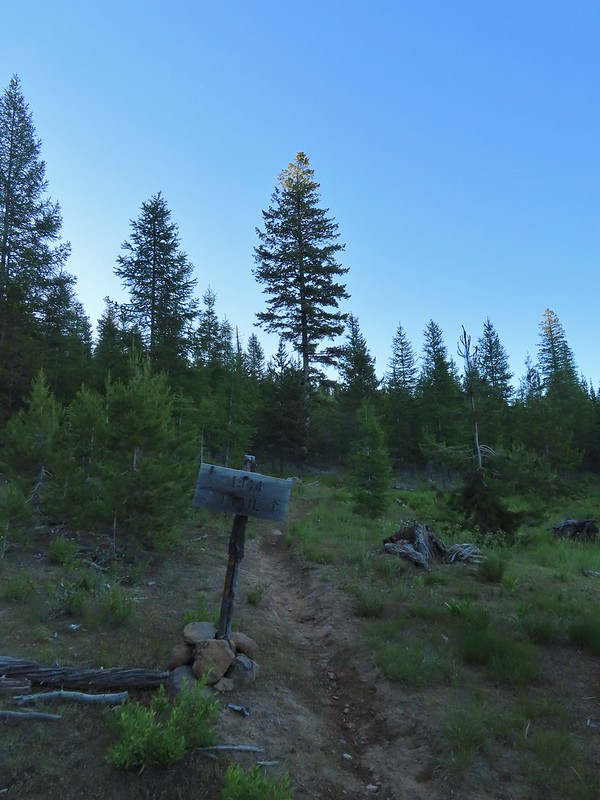 Trail sign in the old clearcut.
 Sullivan describes the second mile of this trail as one of the dustiest in Oregon but on this morning there was enough moisture in the ground to keep the dust at a minimum.
 Rock Creek Butte (post) in the Elkhorns from the clearcut.
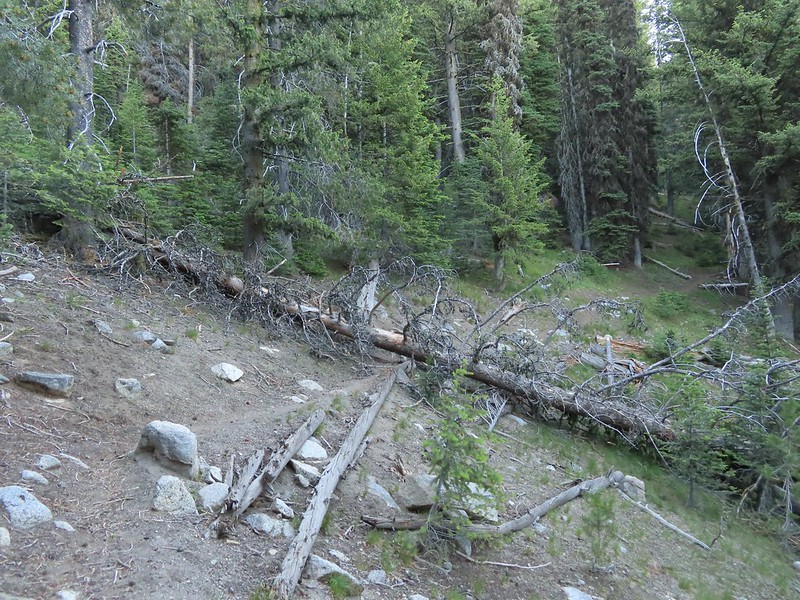 Shortly after leaving the ridge we encountered the largest obstacle on the way to the pass.
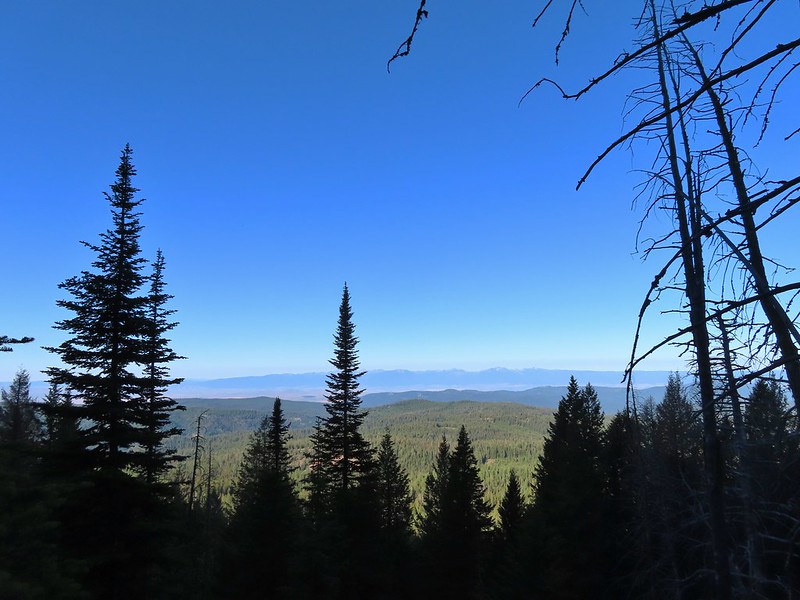 The Elkhorns in the distance.
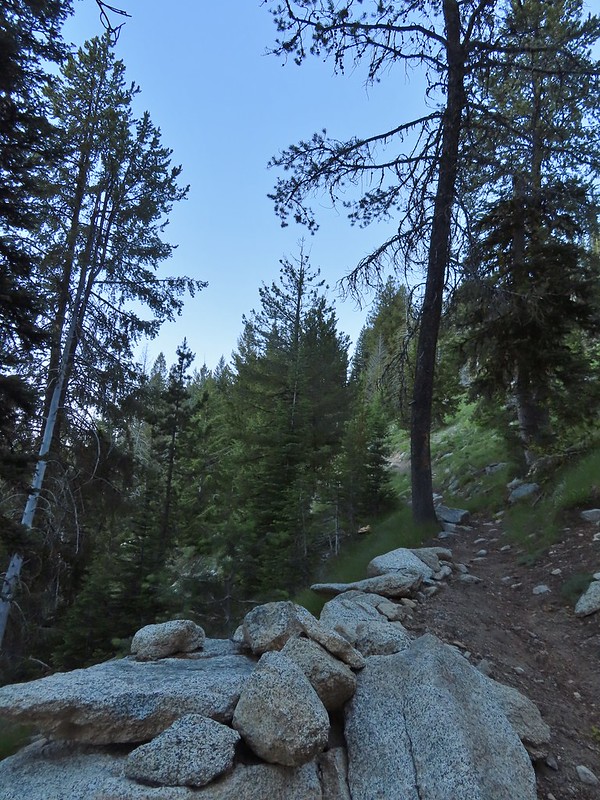 Granite at the switchback.
 Entering the wilderness (photo from the way back).
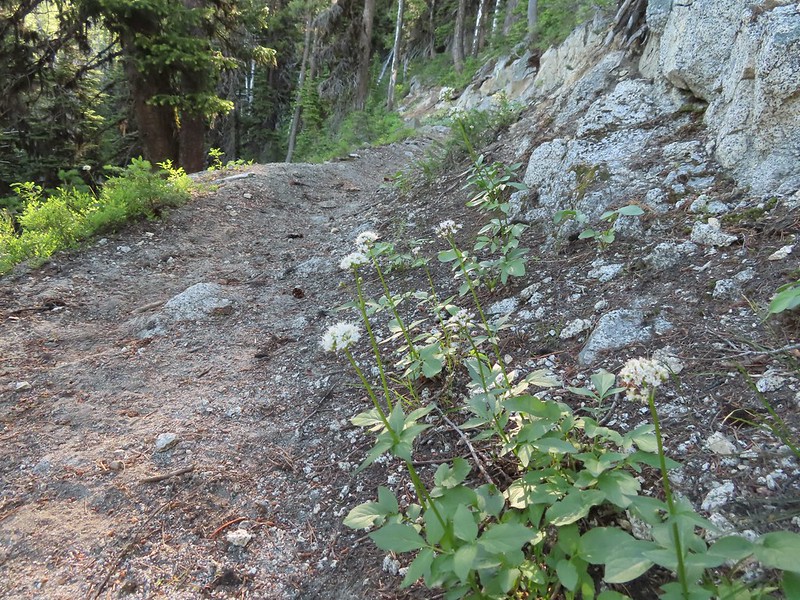 Valerian along the trail.
 View from the trail.
 Burger Butte
 Rosy paintbrush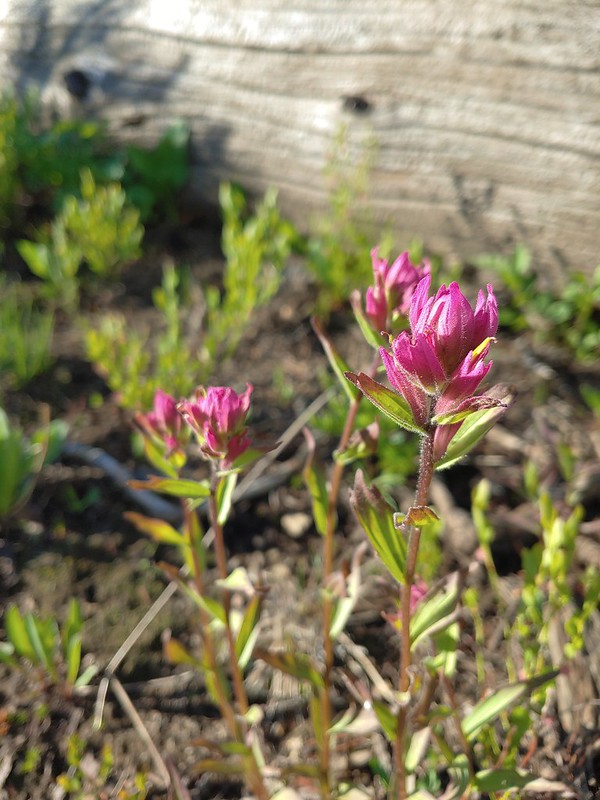
 Tributary of Middle Fork Catherine Creek.
 Looking down the creek over the slide.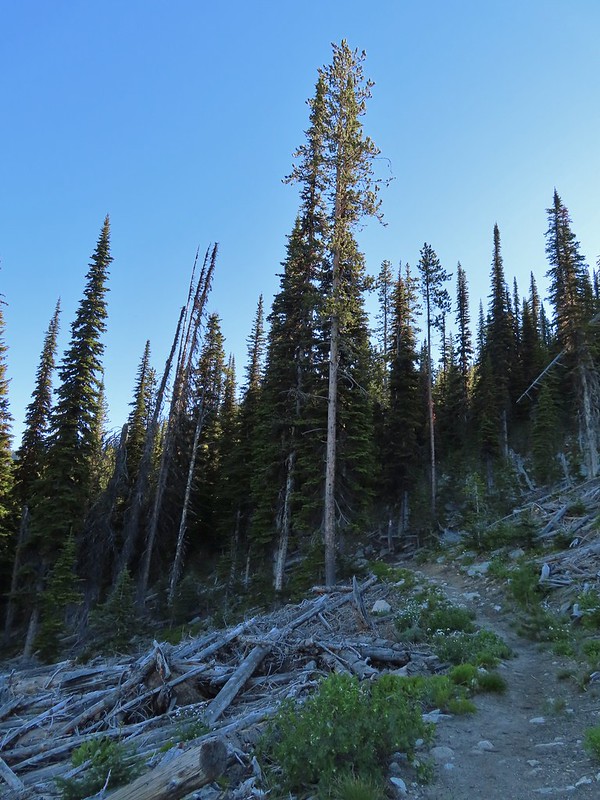
 Yellow columbine
 The snow began around 7200′.
 Snow over the Elk Creek Trail.
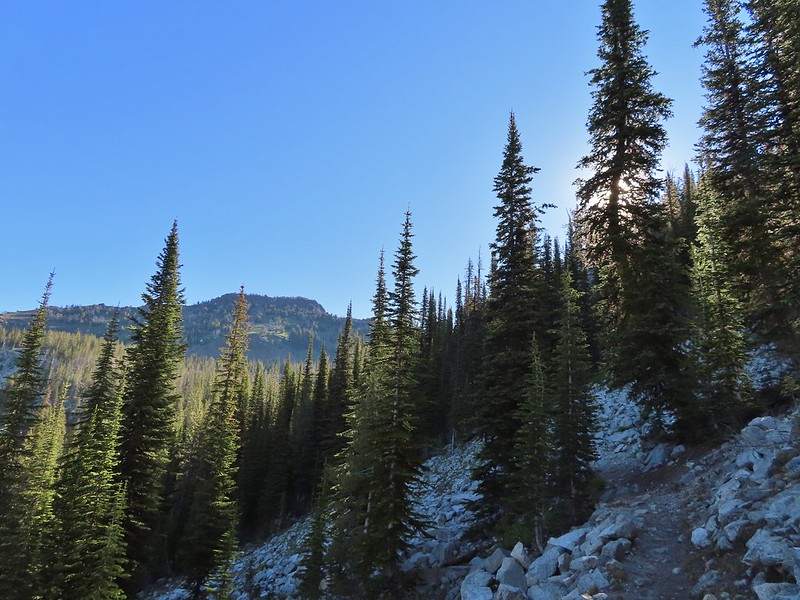 China Cap from the trail.
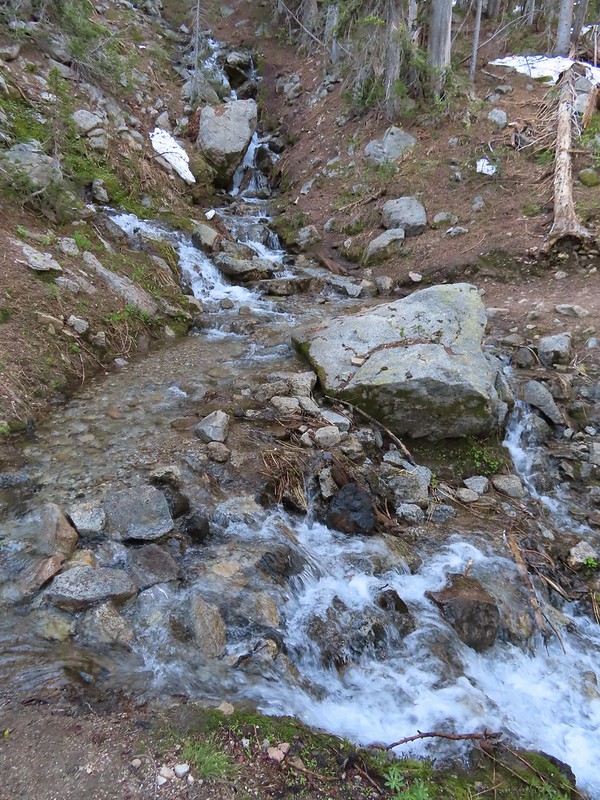
 Small meadow below the trail.
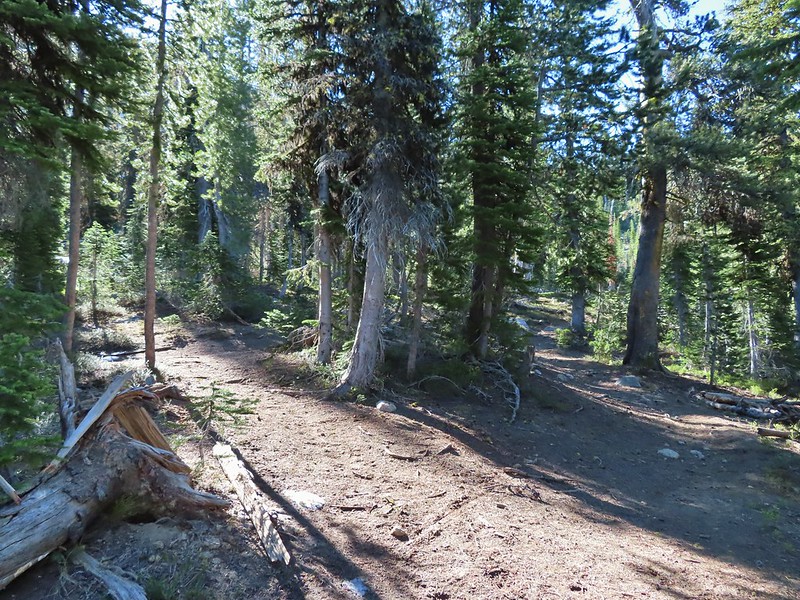 The China Ridge Trail joining from the left.
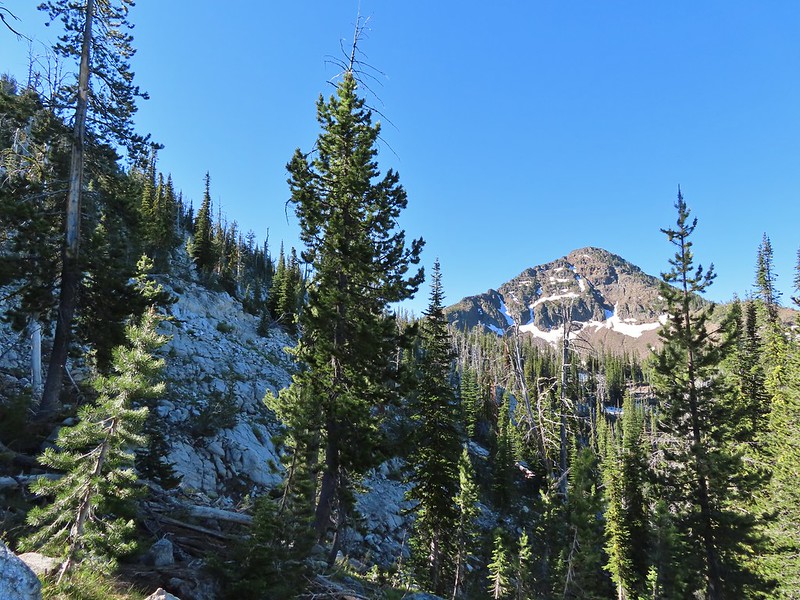
 The Elkhorns to the right beyond Burger Butte.
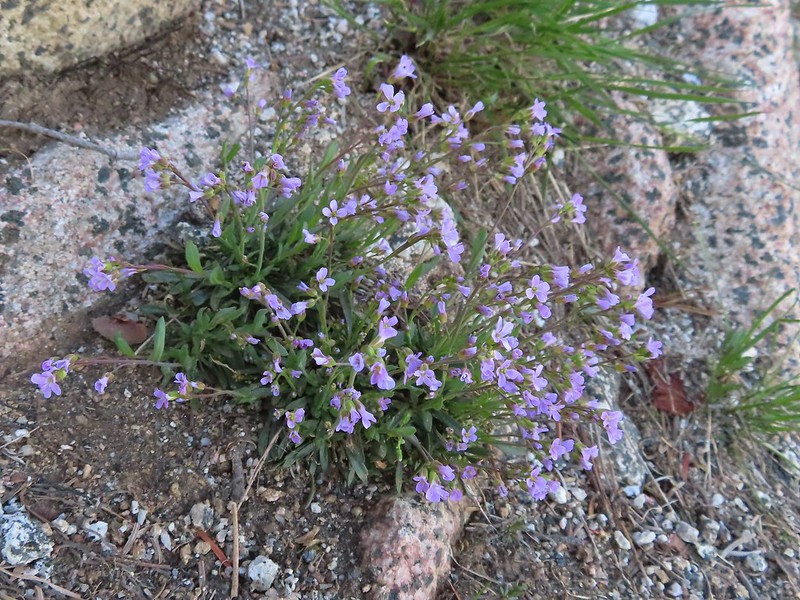 Lyall’s Rockcress
 The few patches of snow were just melted enough to allow us to avoid having to walk over them.
 Burger Pass
 Burger Butte from the pass.
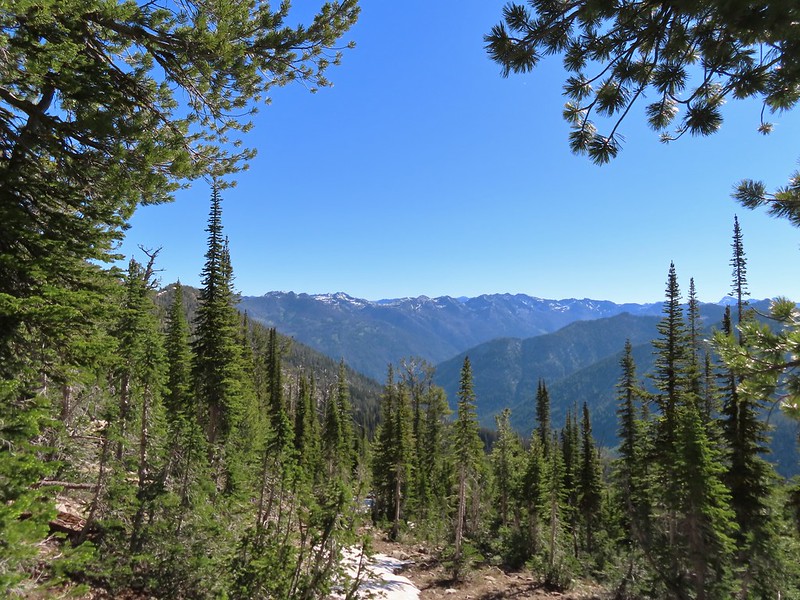 Looking deeper into the Wallowas.
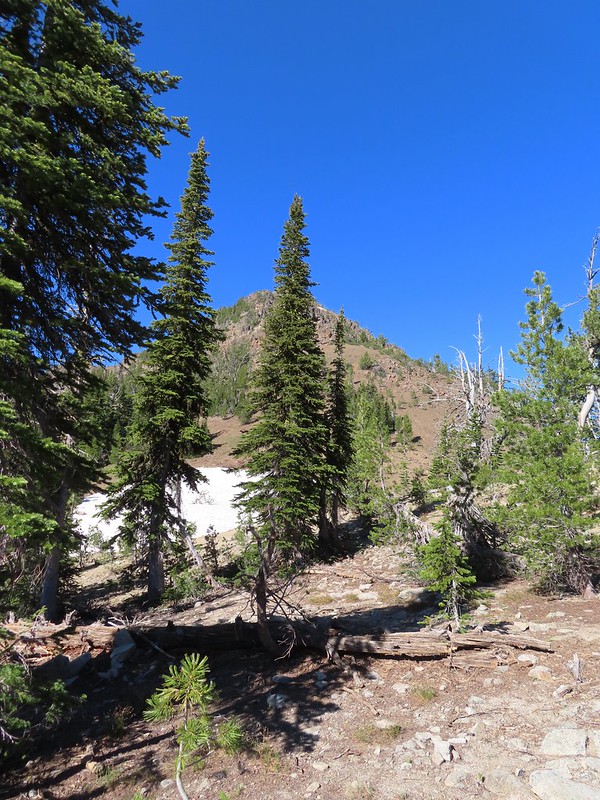 The snow patch below Burger Butte.
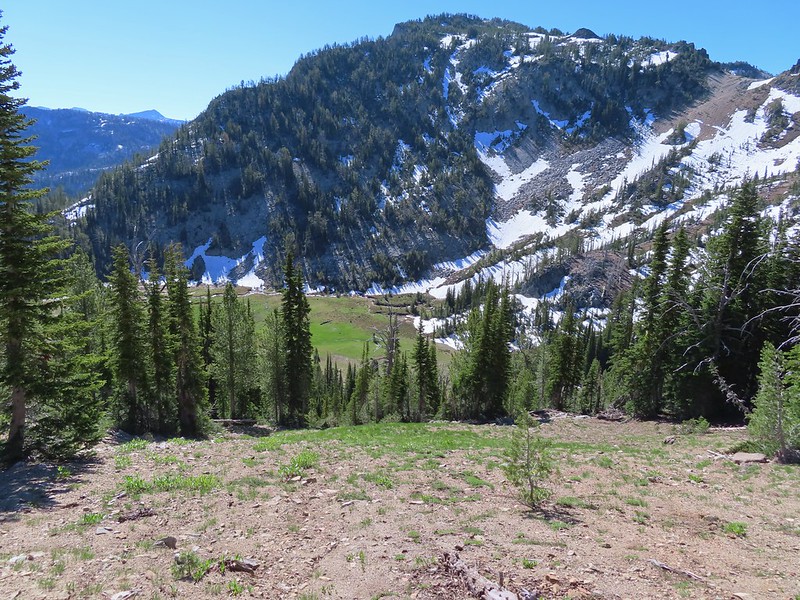
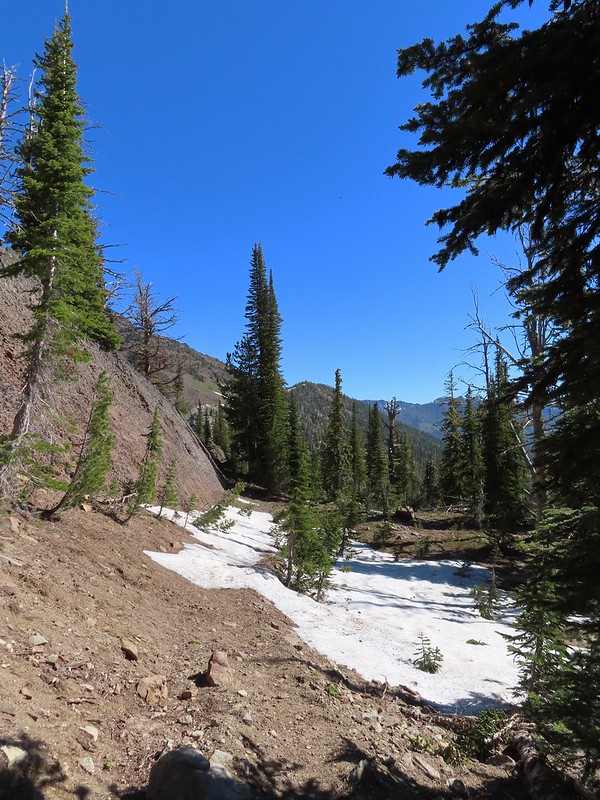 There were several patches of snow and some downed trees to navigate but I soon found myself at the junction.
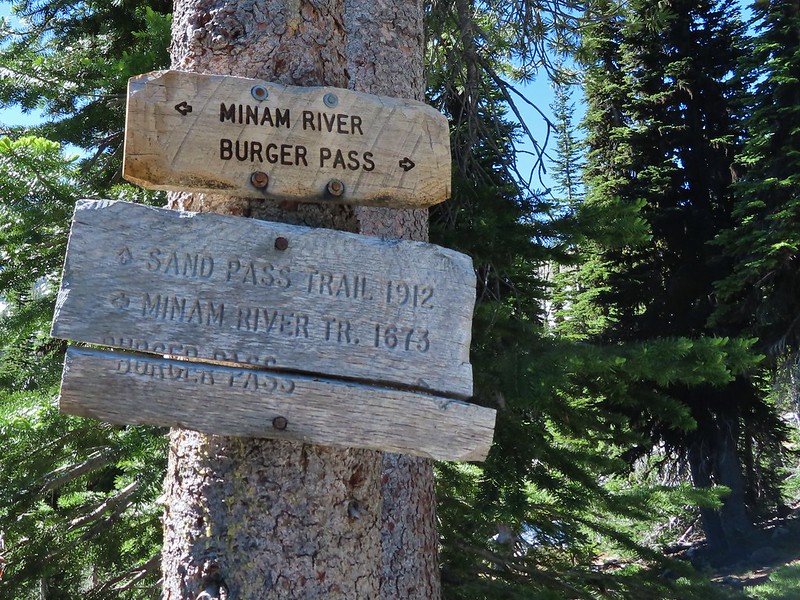

 The Sand Pass Trail can be seen climbing out of the basin in the sandy gap to the center left.
 Meadow lookout.
 View from the meadow.
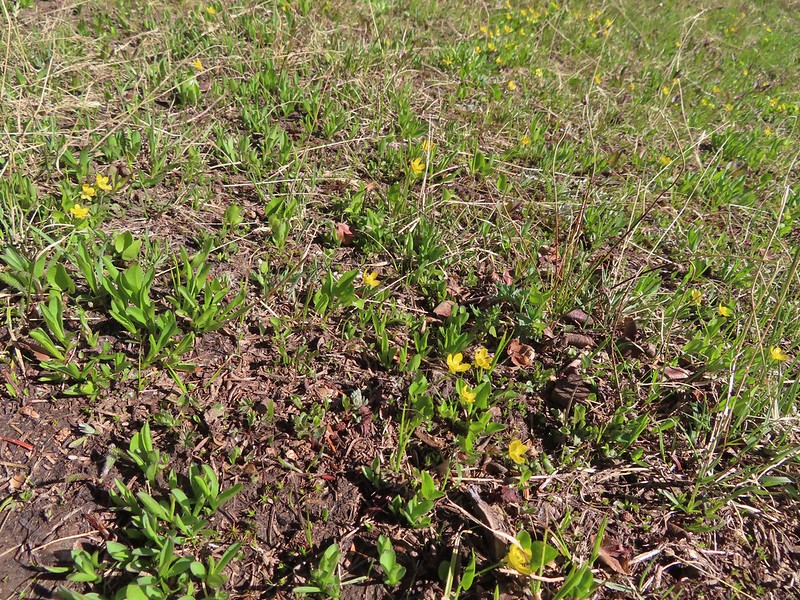 Buttercups were about the only flowers blooming in the wet meadow.
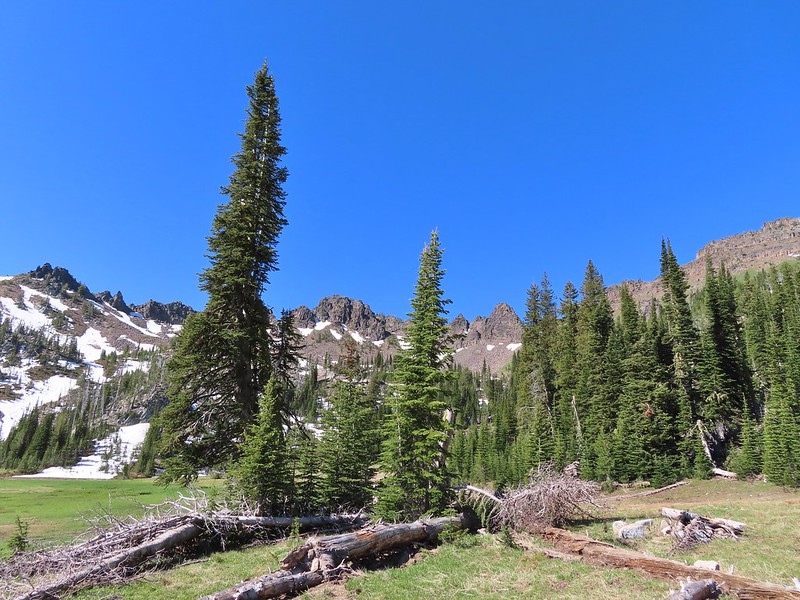 The rocks along the ridge were really interesting.

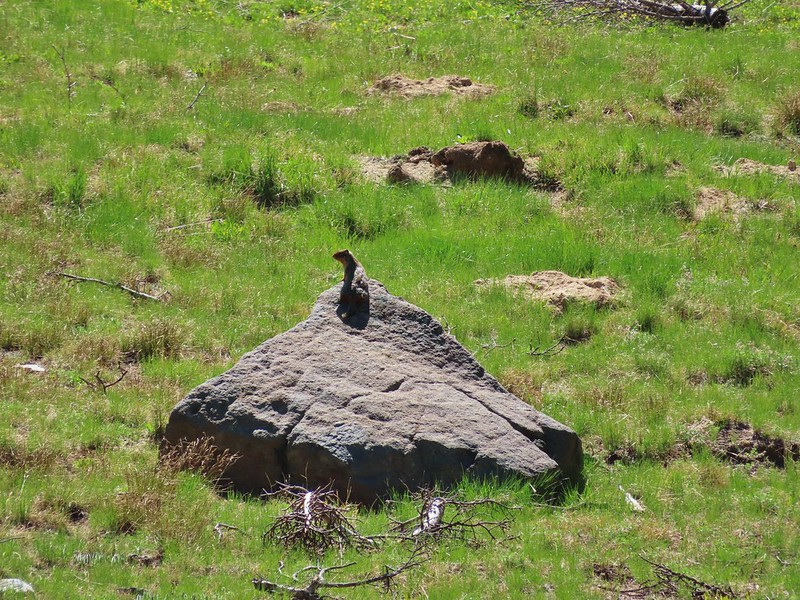 Marmot? in the meadow.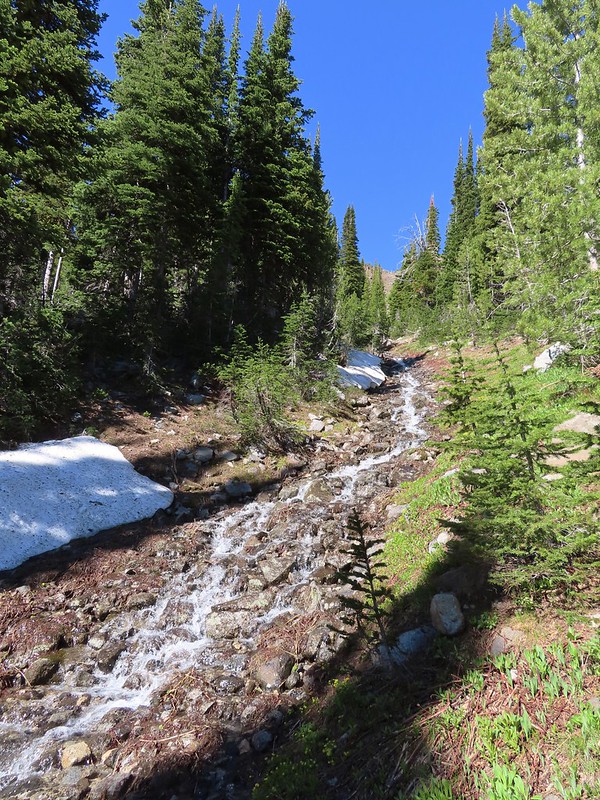

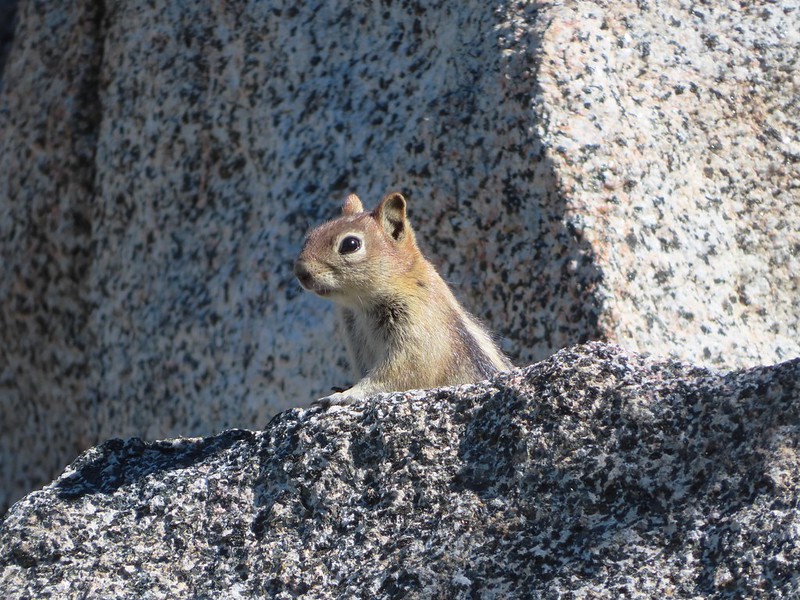 Golden mantled ground squirrel watching us from the granite.
 Butterfly
 Mountain heather
 Mushrooms near the Middle Fork Catherine Creek cascades.
 Jacob’s ladder
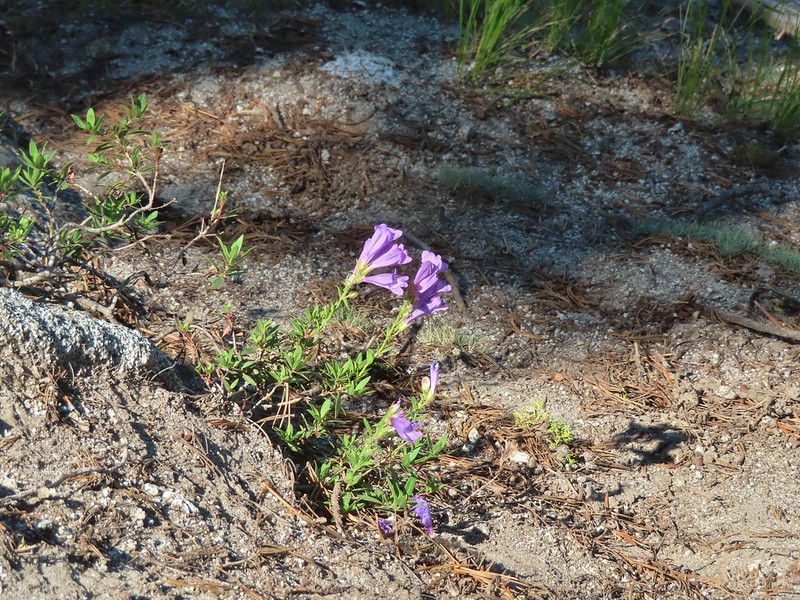 Penstemon
 Mushroom
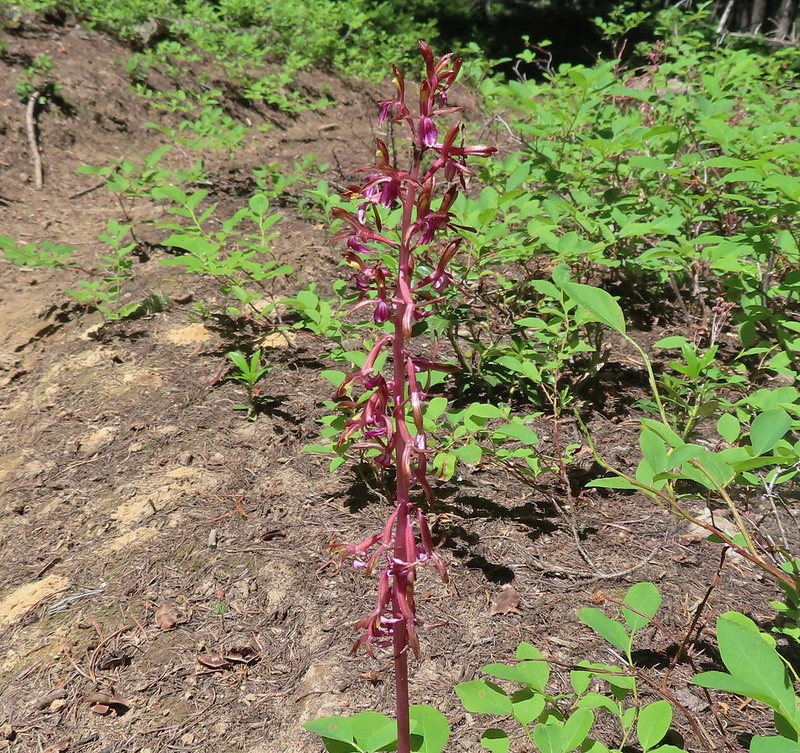 Pacific coralroot

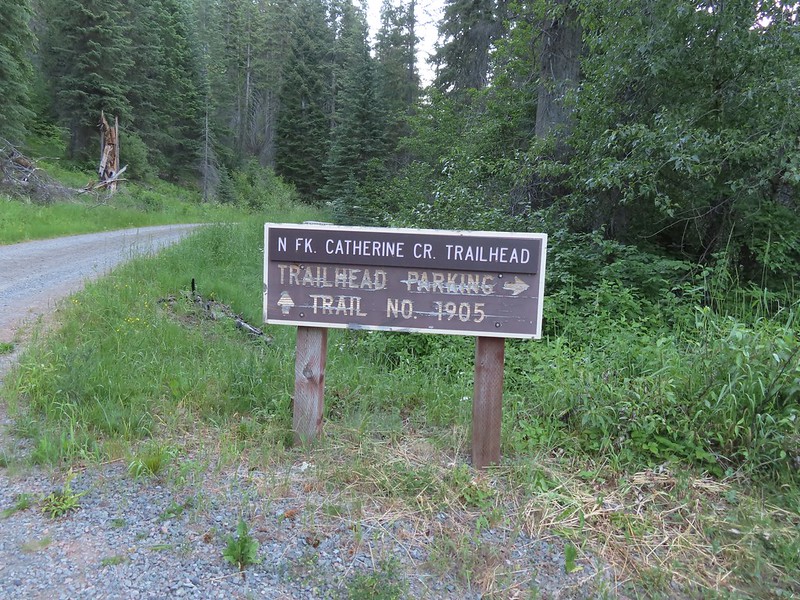
 A $5 fee is required here and at several other trailheads we visited during the week. (An annual
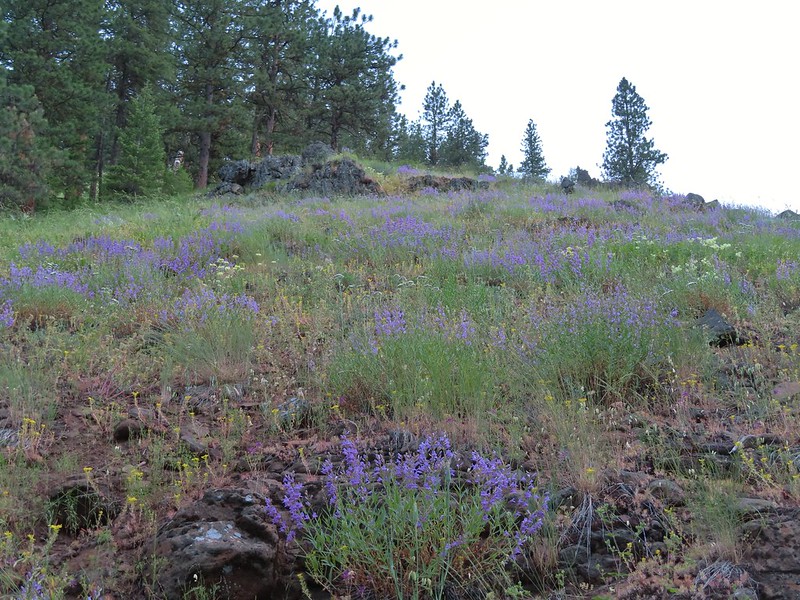 Lots of purple venus penstemon.
 There were also some white scabland penstemon on the hillside.
 Buckwheat
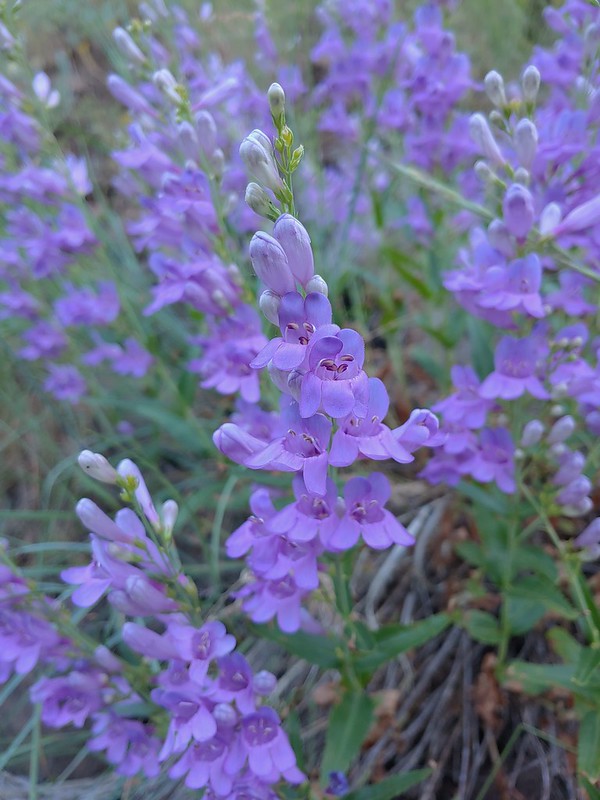 Venus penstemon
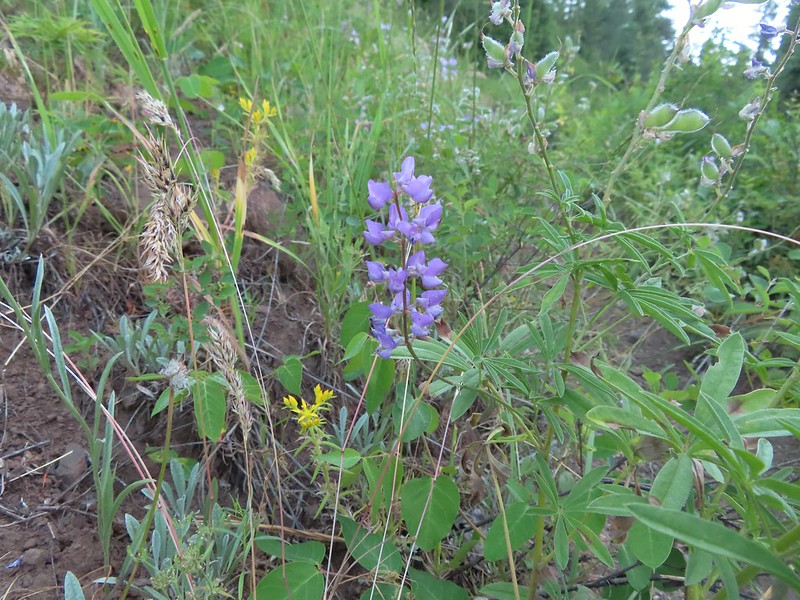 Lupine and stonecrop
 Paintbrush
 North Fork Catherine Creek
 Douglas dustymaiden
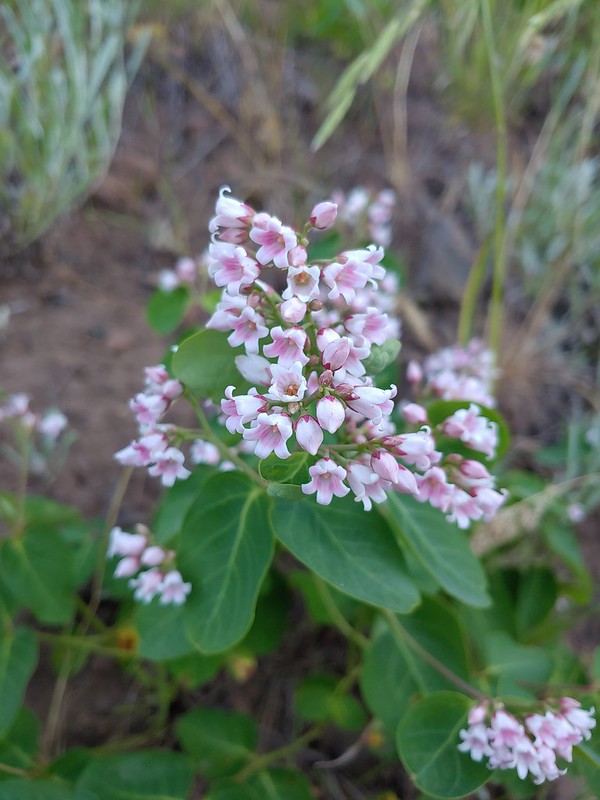 Spreading dogbane
 The trail crossed several side creeks, all of which were we were able to cross dry footed.
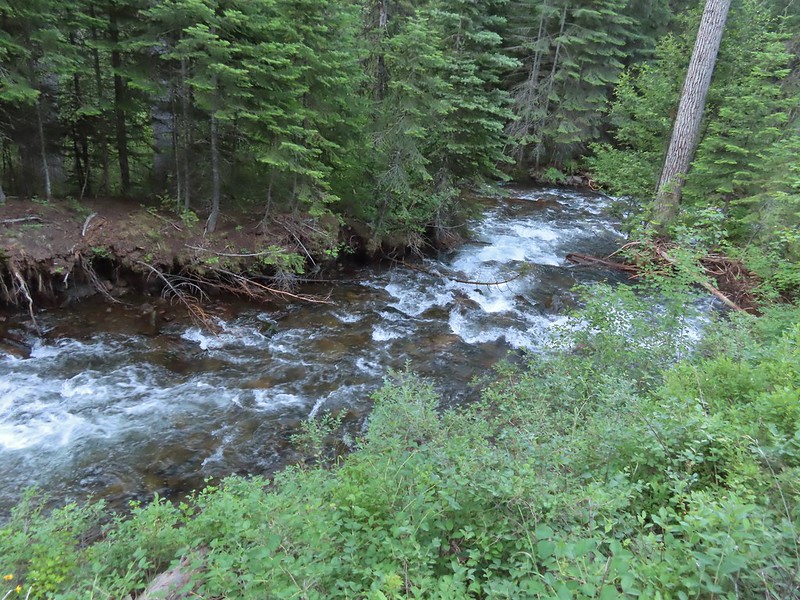 A brief stretch along North Fork Catherine Creek.
 Queen’s cup
 Another side creek.
 Bog orchid
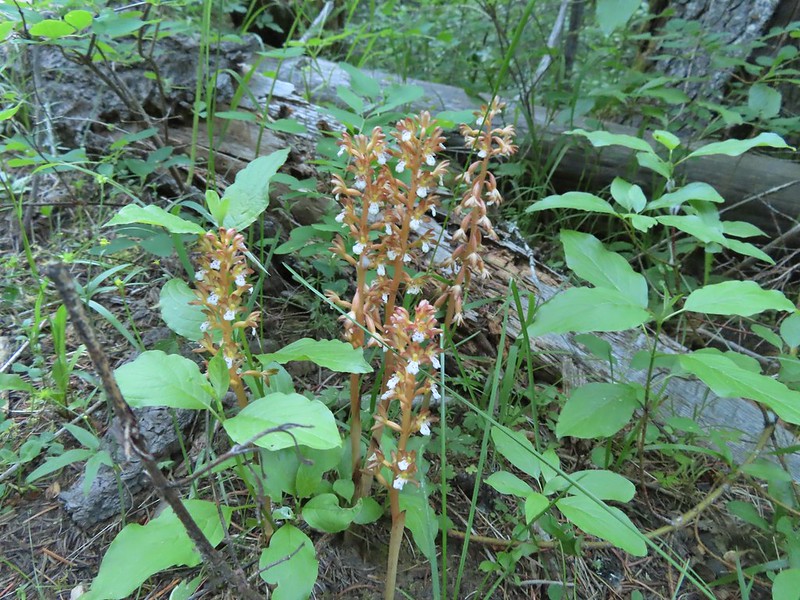 Spotted coralroot
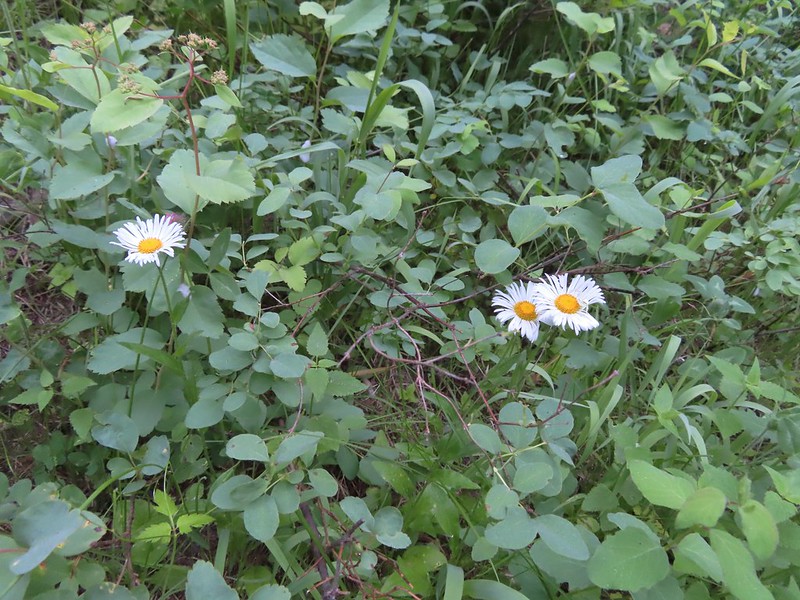 A fleabane
 They’re a little blurry but you can see the ants in the cracks where they would drop their sawdust. It was fascinating to watch and we paused for quite a while.
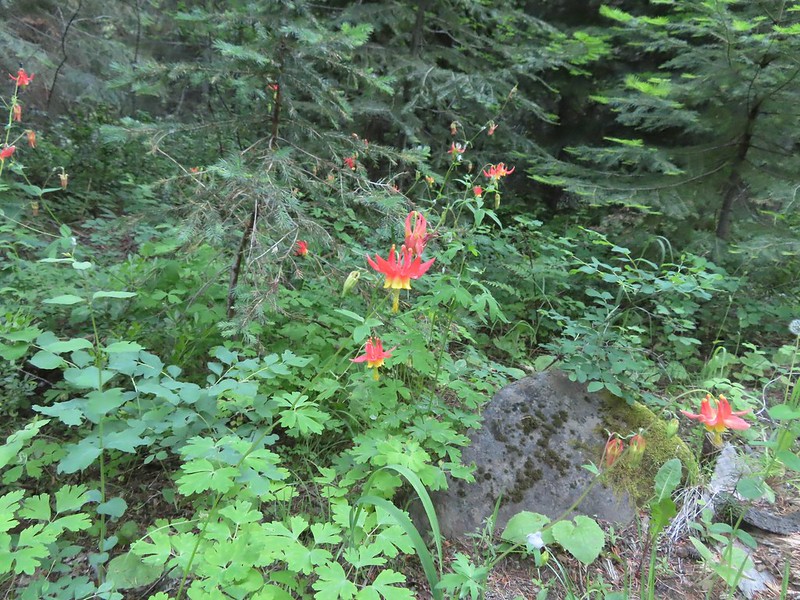 Columbine
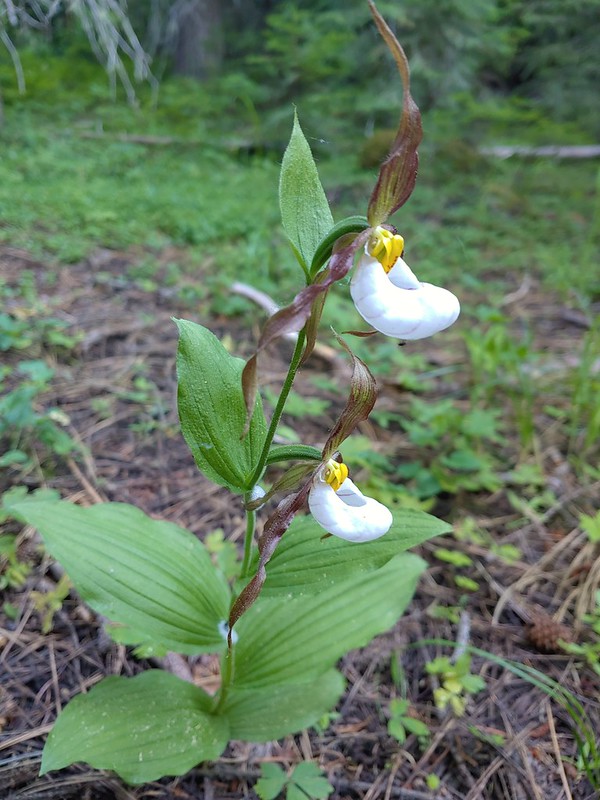 Mountain lady slippers
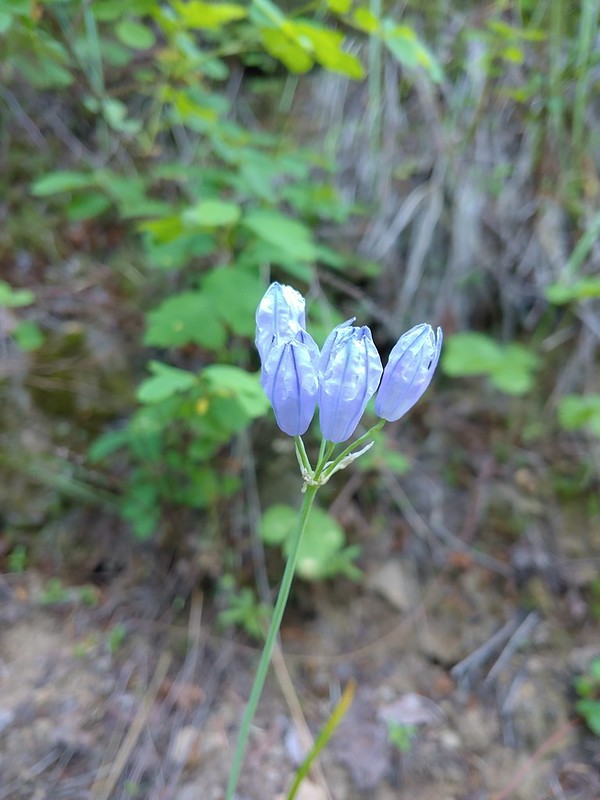 Large-flower triteleia
 Back above the creek.
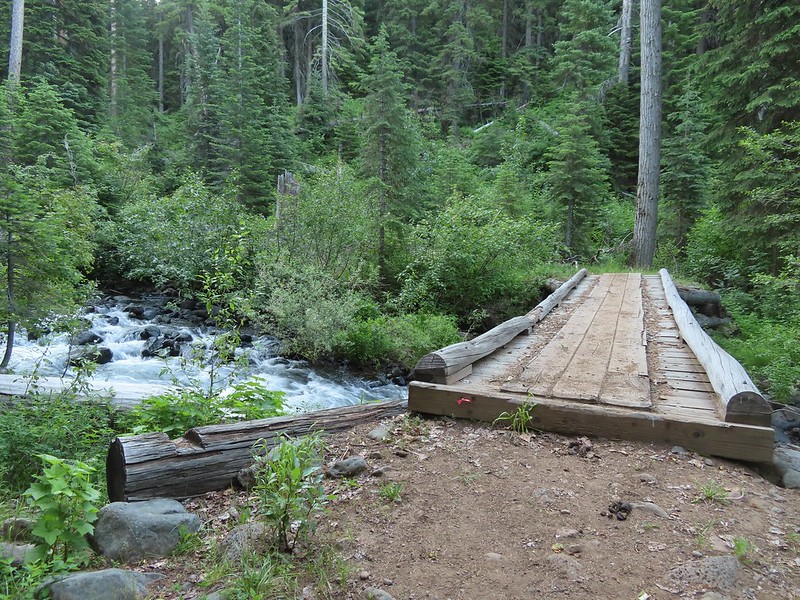 The bridge over Catherine Creek.
 Bluebells next to the bridge.

 Crab spider
 Another type of penstemon
 Rosy pussytoes
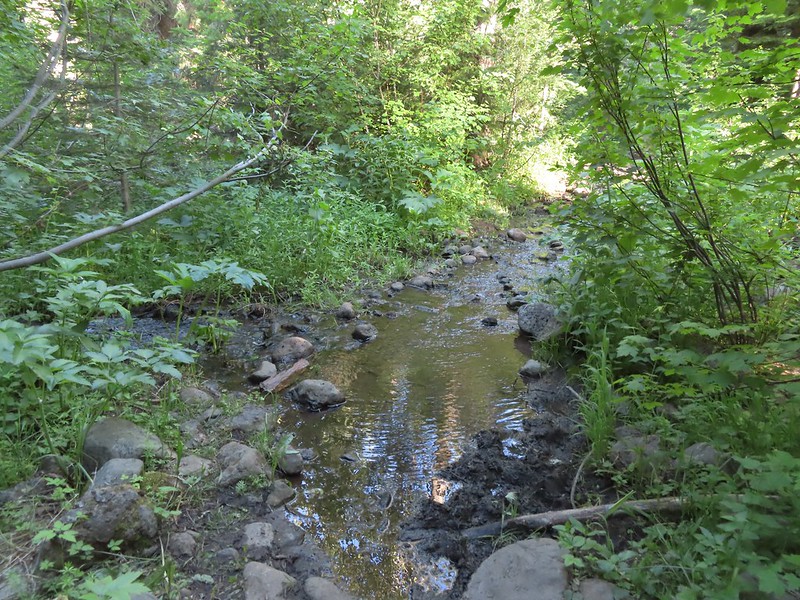 A side creek running down the trail.
 Yellow columbine
 Entering the
  Jim Creek, this was one of the trickier crossings.
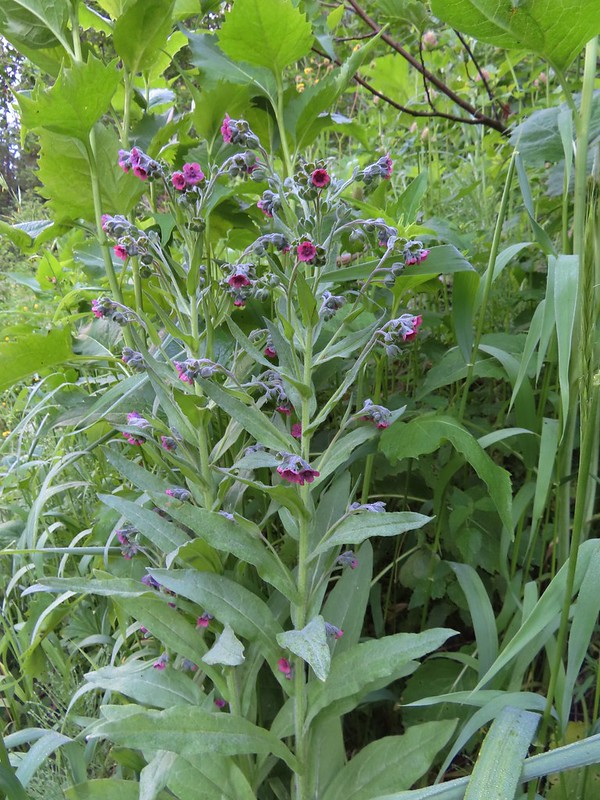 Hound’s tongue
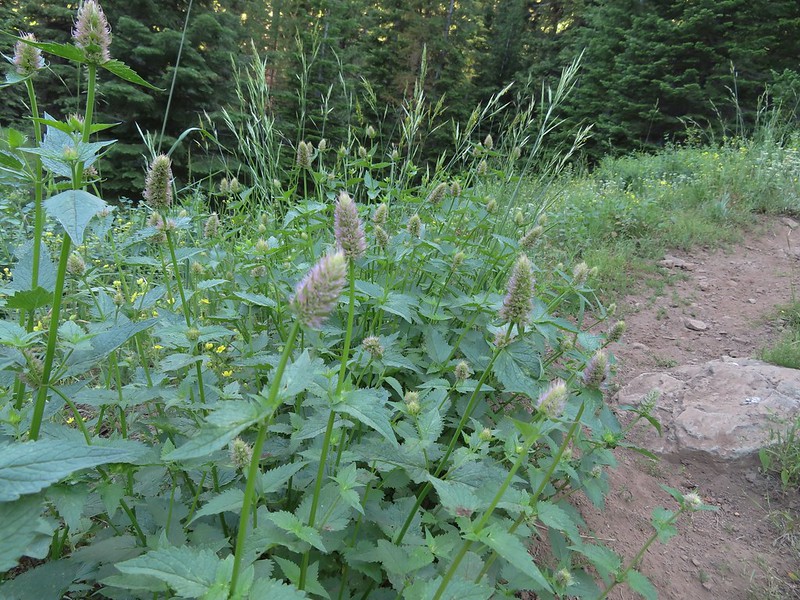 Nettle-leaf giant hyssop
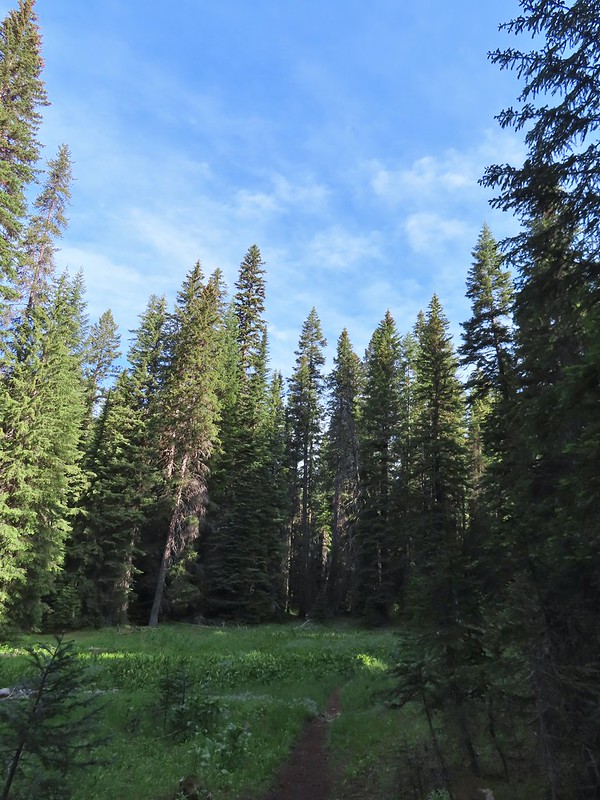 One of several smaller meadows along the trail.
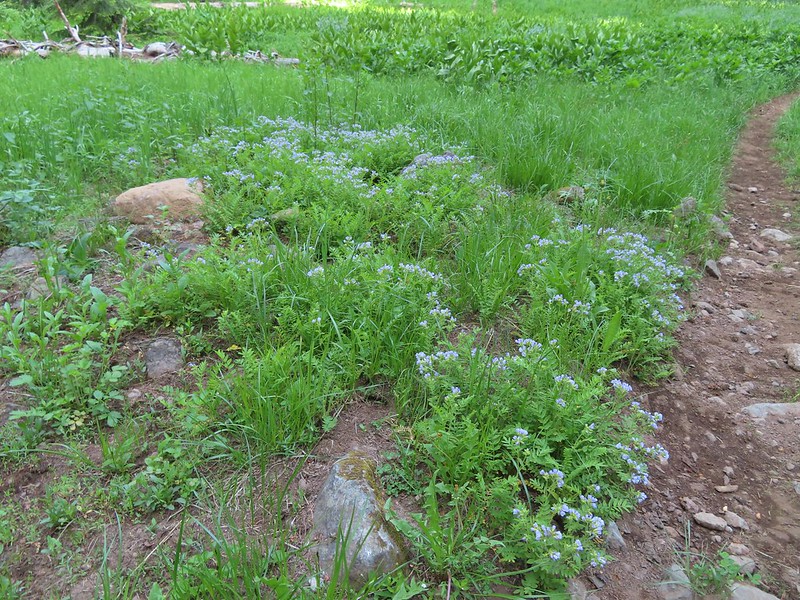 Jacob’s ladder
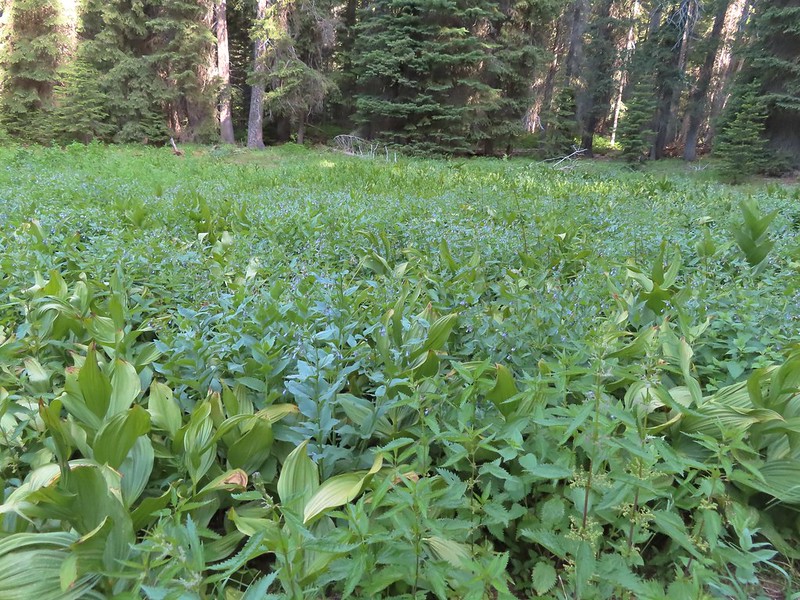 California corn lily and bluebells.
 Boot Hill Creek was also tricky as it had taken over the trail.
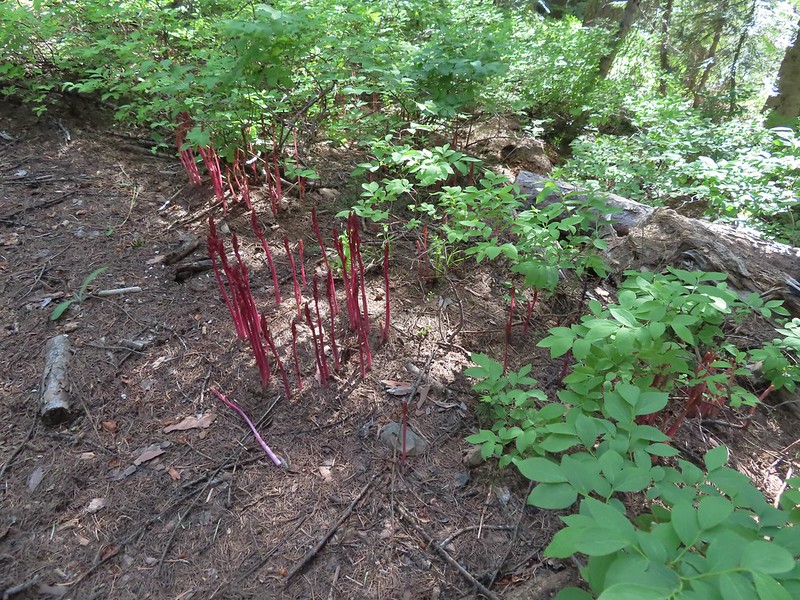 A large patch of coralroot.
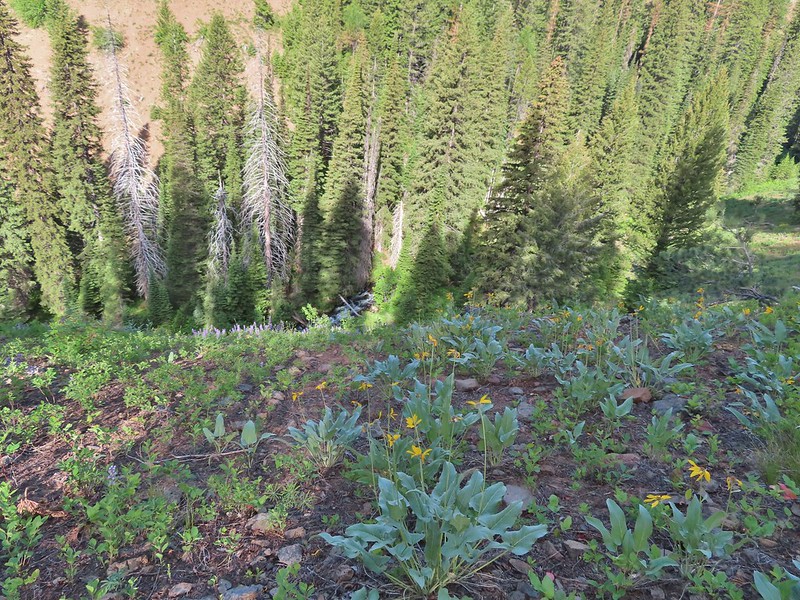 A few remaining balsamroot blooming above North Fork Catherine Creek.
 Arriving at Catherine Creek Meadows.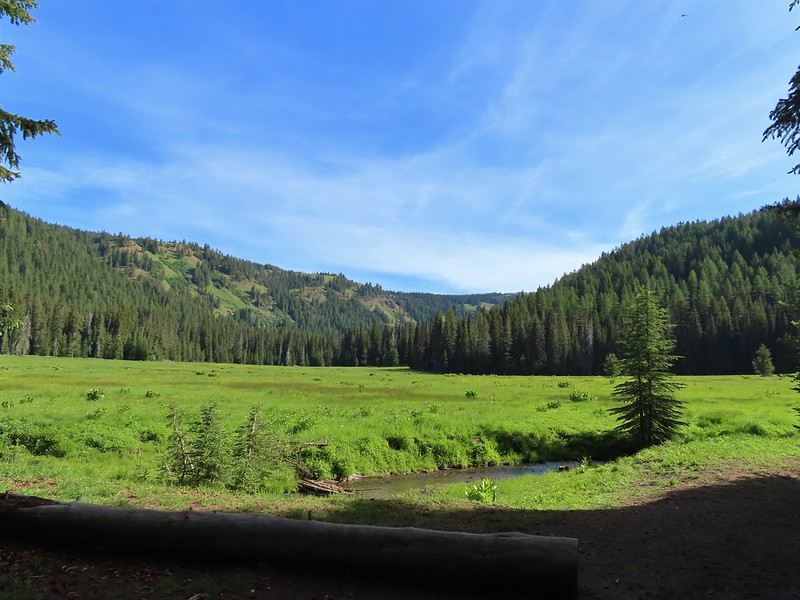
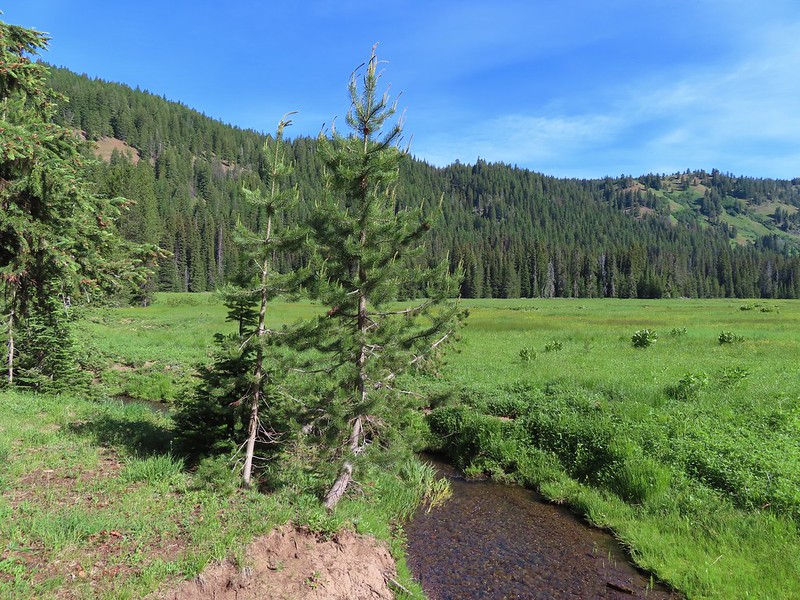
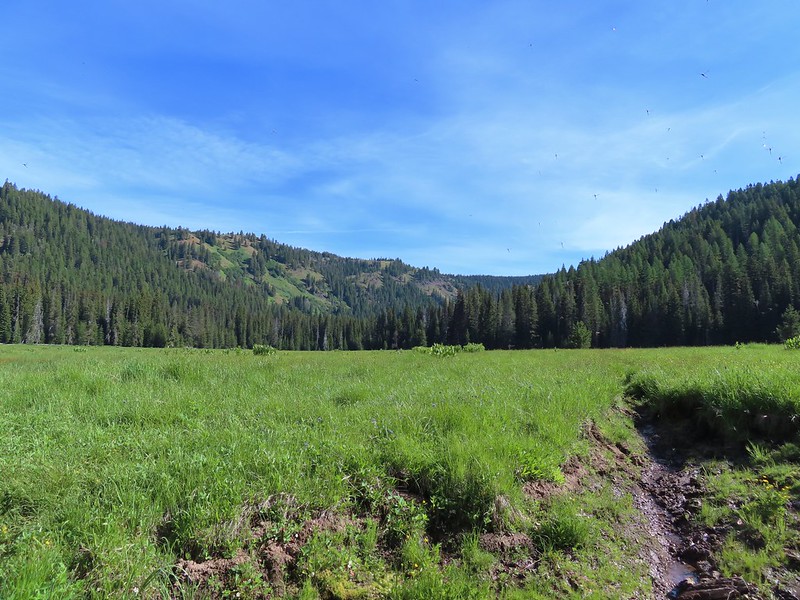 All the black dots in the blue sky were gnats flying over the stream at the trail crossing.
 Heart-leaved bittercress
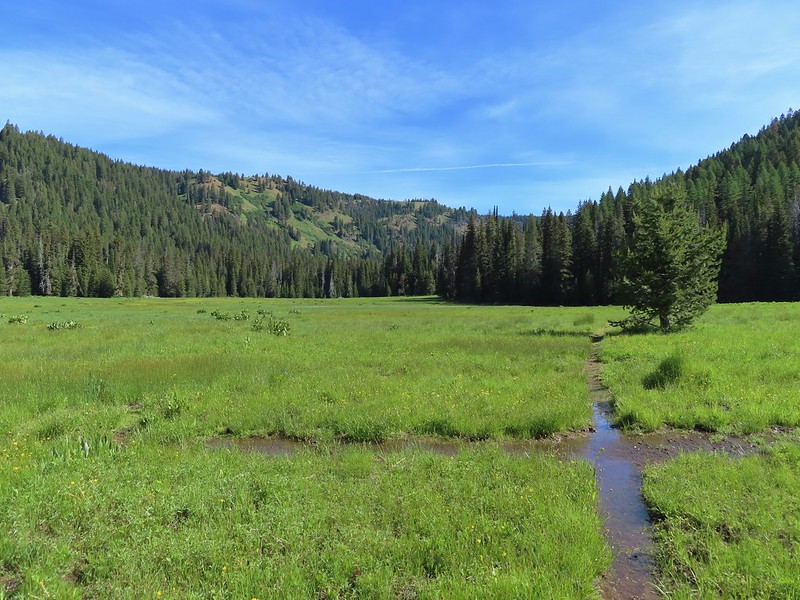
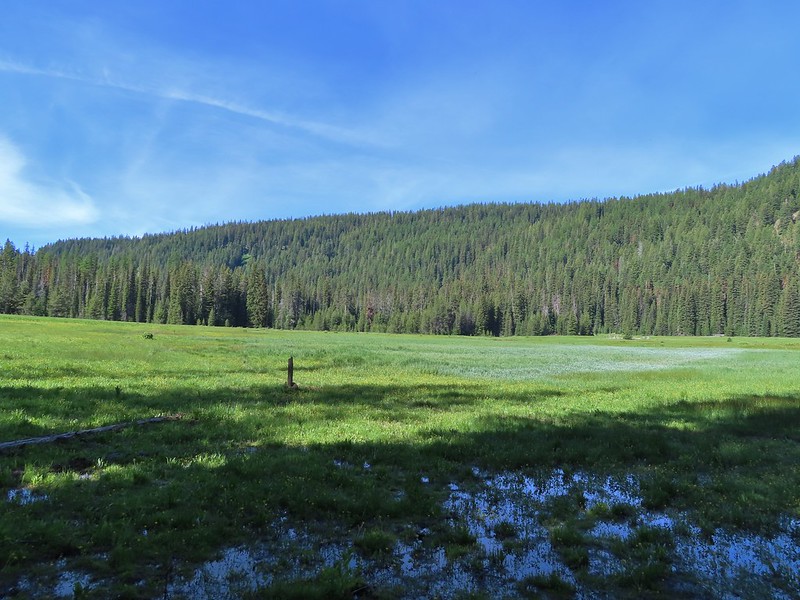 Looking back at the sign post in the meadow marking the trail junction.
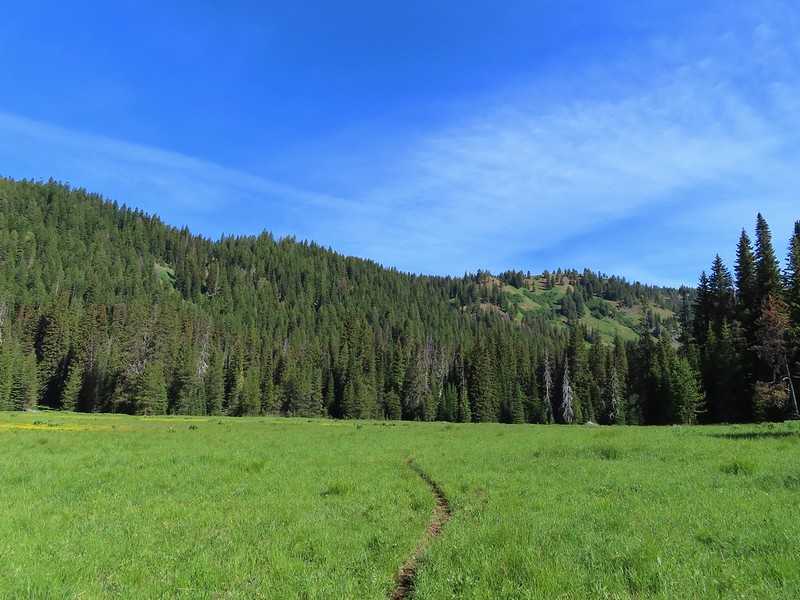 Another dry section of trail.
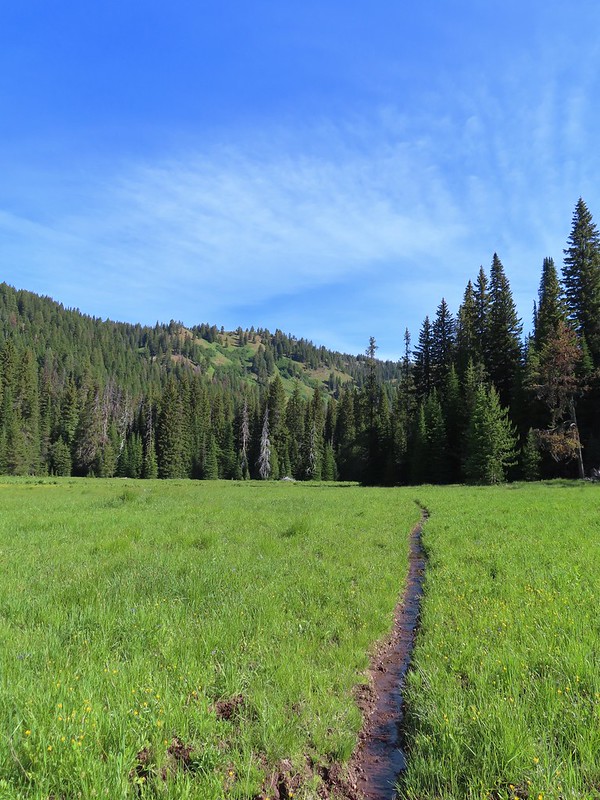 It wasn’t dry for long.
 Yellow buttercups and pink elephant’s head.
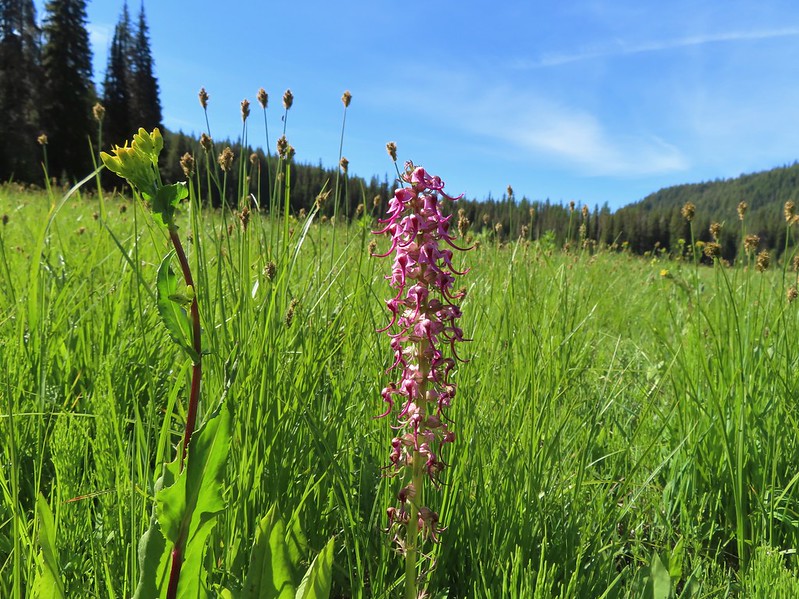 Elephant’s head, one of our favorites.
 Ladybug
 Nearing the cabin.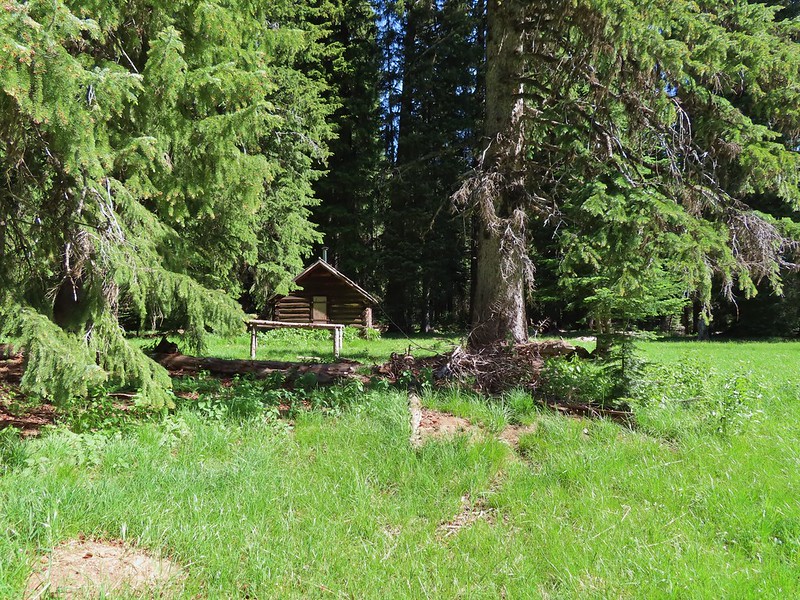
 Ground squirrel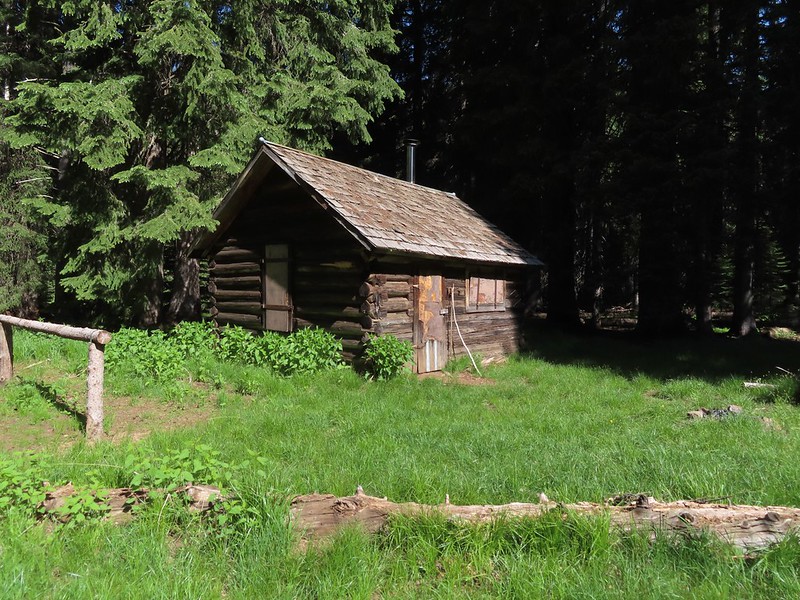
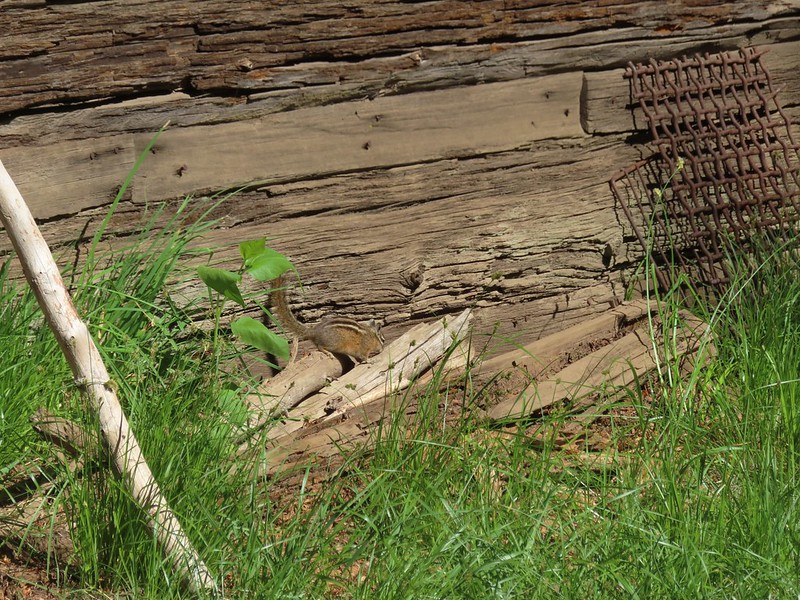 Squatter running from the cabin.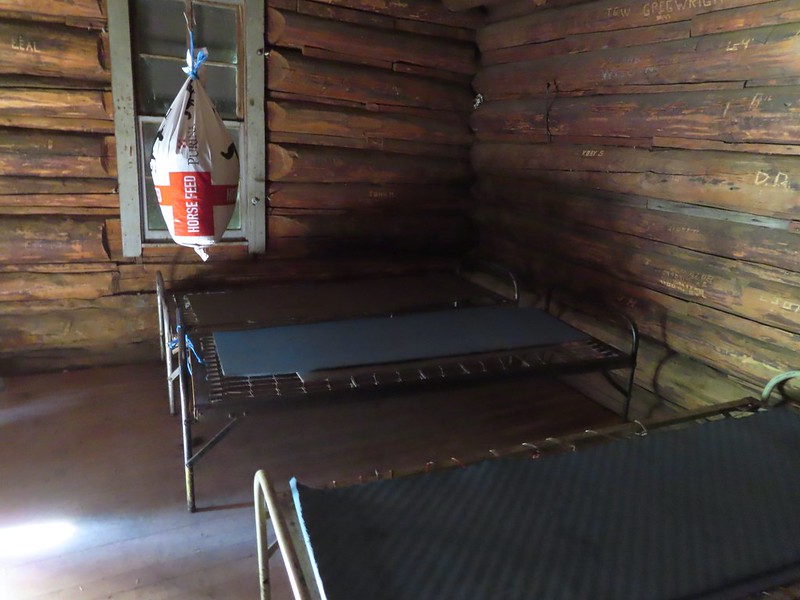

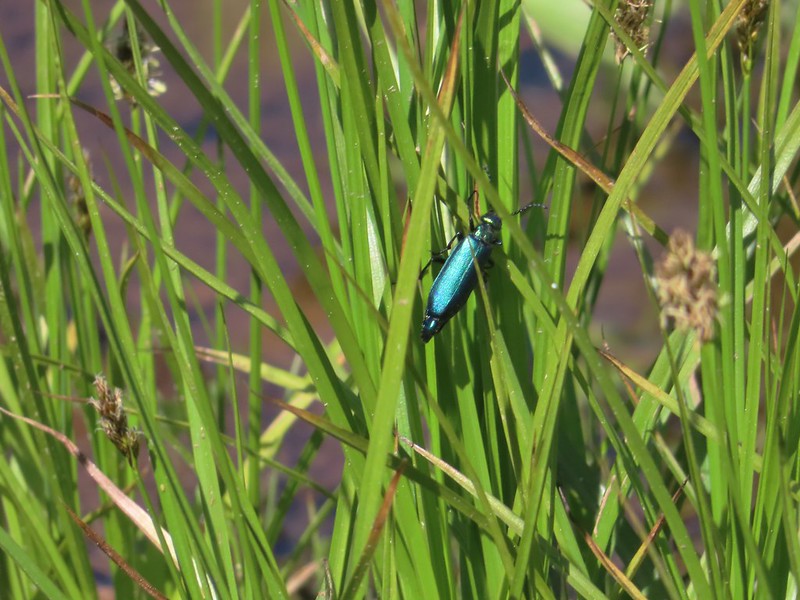 Beetle
 Another beetle and Nevada bitterroot.
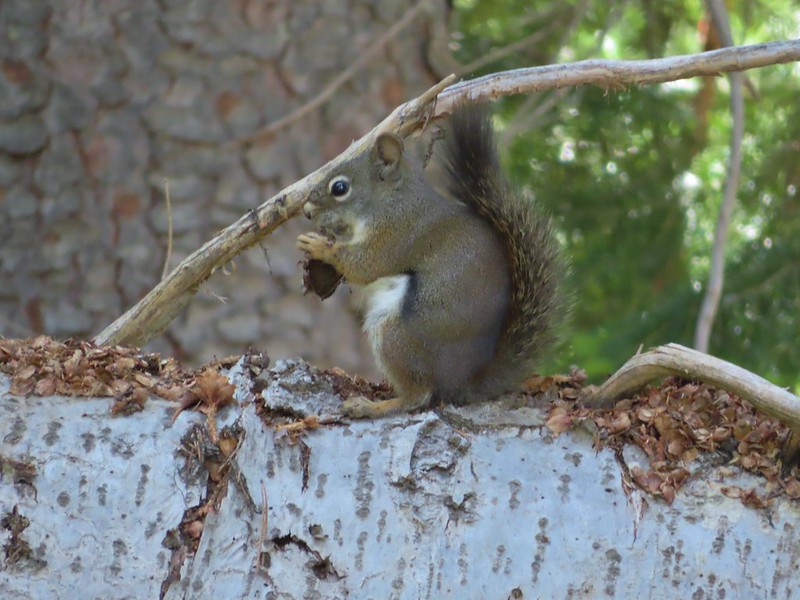 Brunch
 A comma of some sort.
 Big mushroom
 Something from the Lycaenidae family.
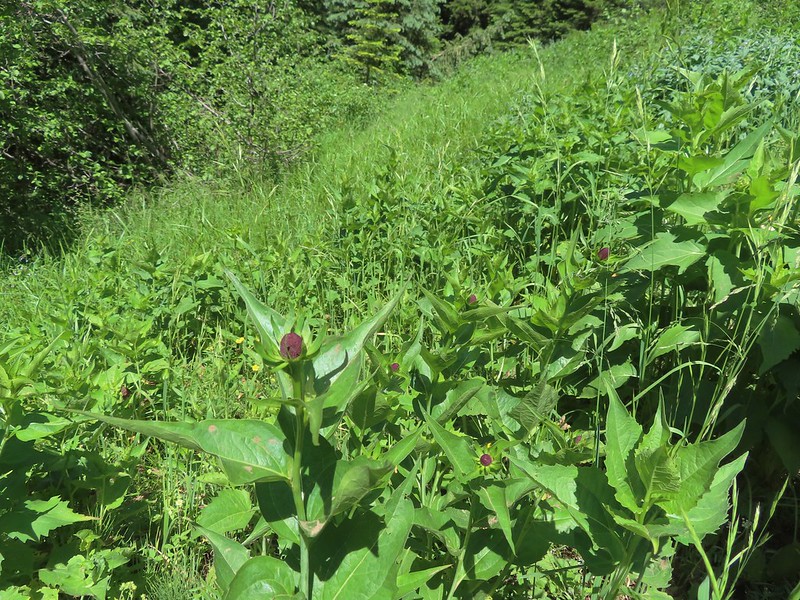 Coneflower
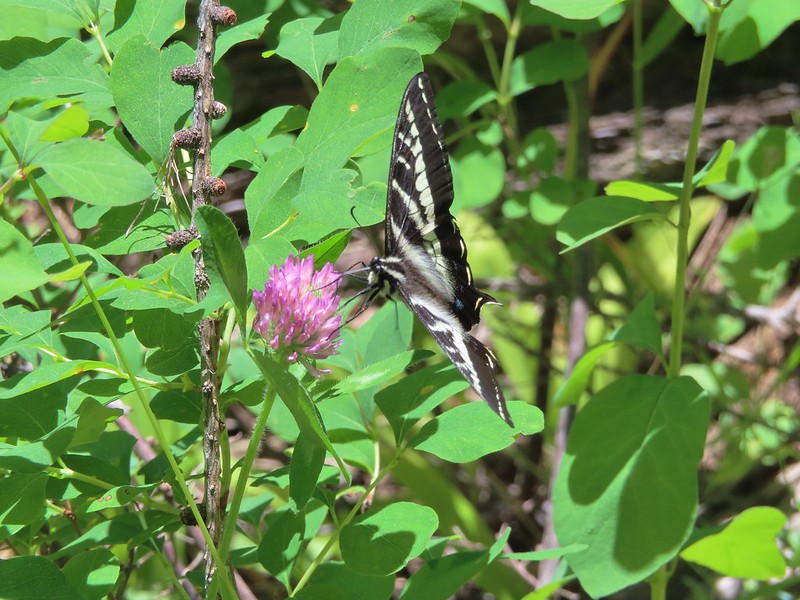 Swallow-tail on red clover.
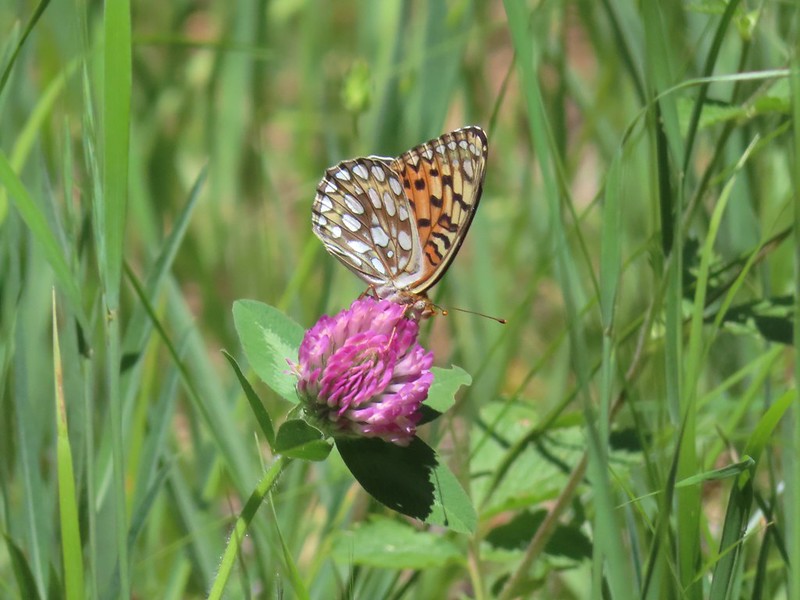 Fritilary on clover
 Mourning cloak perched overhead.
 Lorquin’s admiral
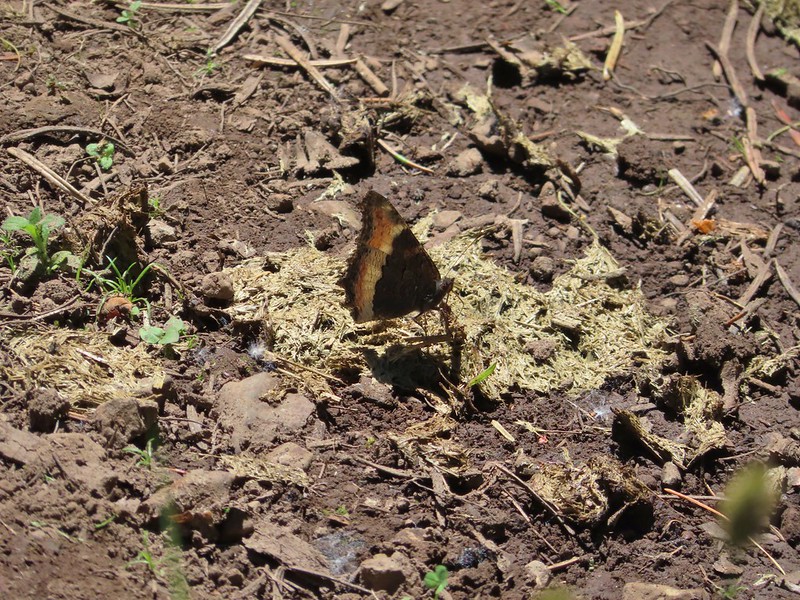 A tortoiseshell
 Skullcap, one of the hardest flowers to get a decent picture of for some reason.
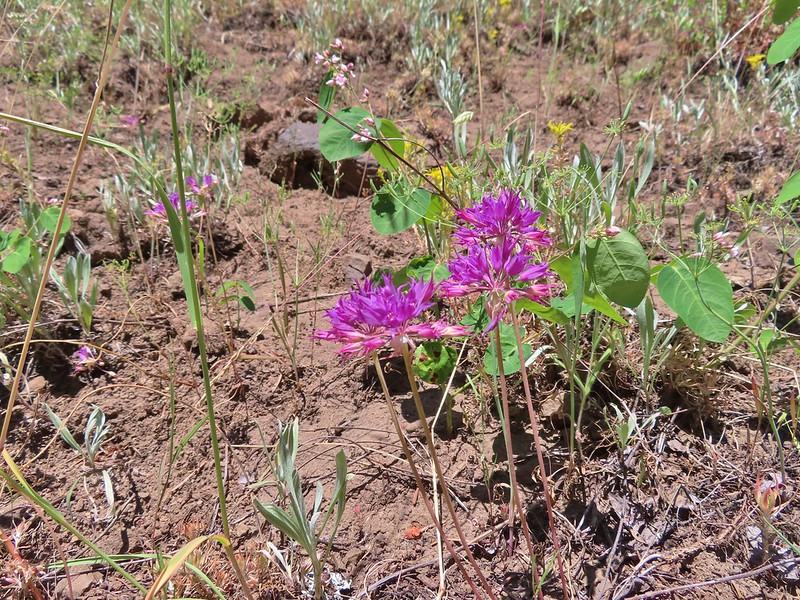 Tapertip onion
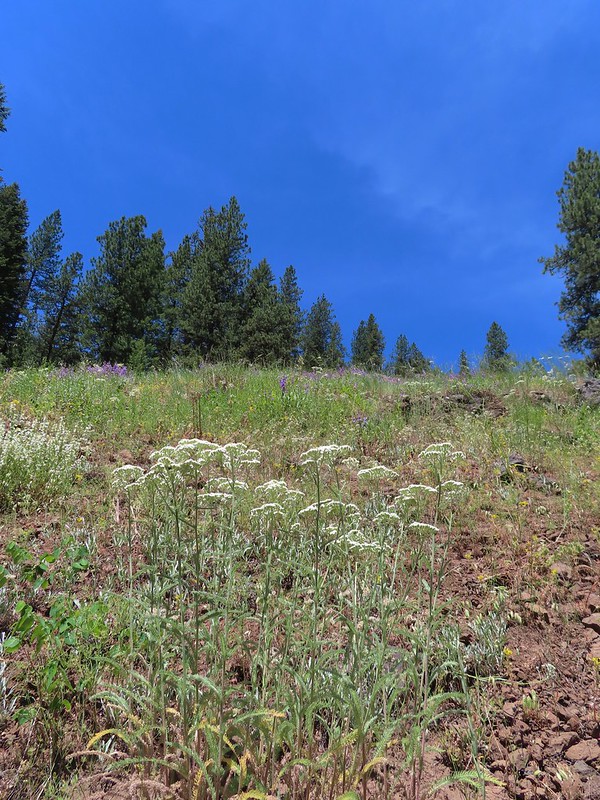 Yarrow and other wildflowers up the hillside.

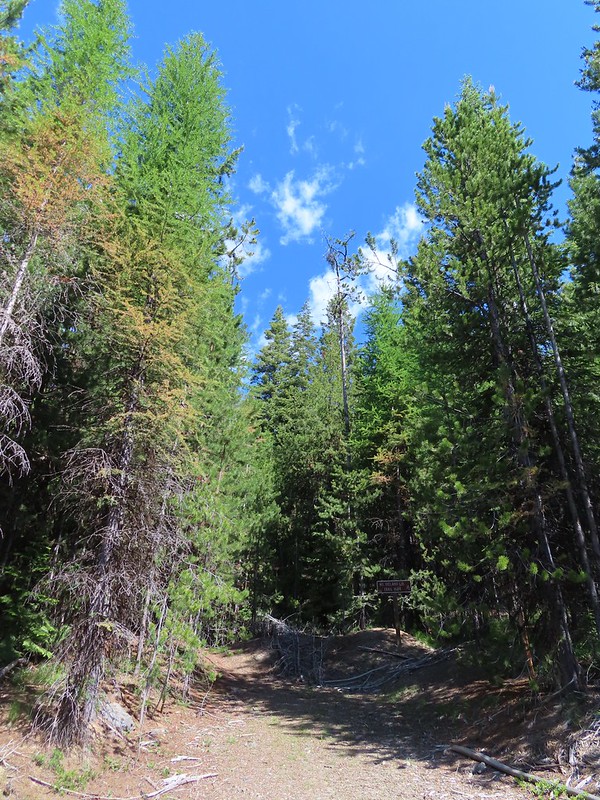 A small sign post was all that marked the trailhead.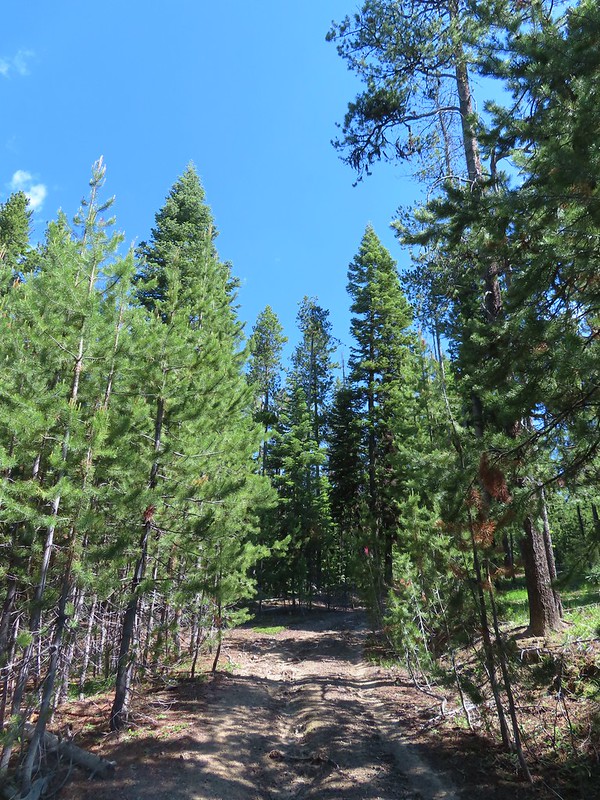
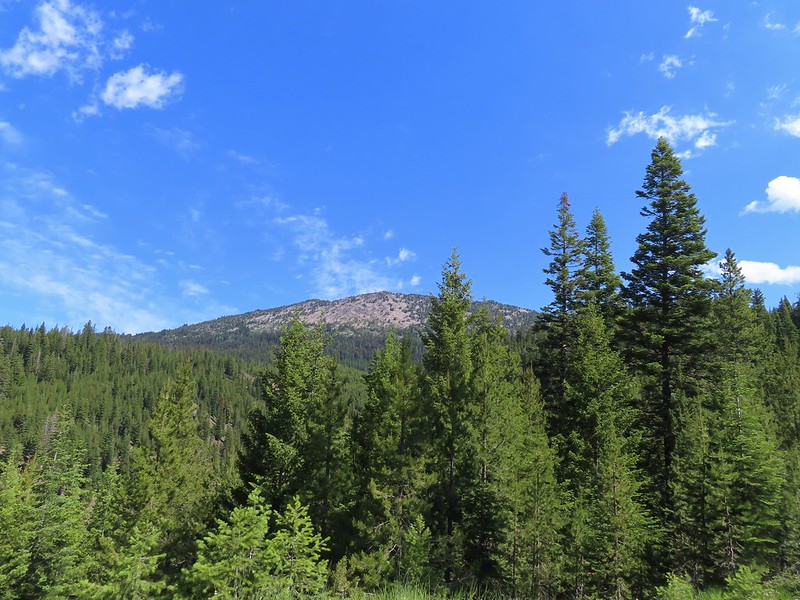 Mt. Ireland from the junction.
 Hound’s tongue
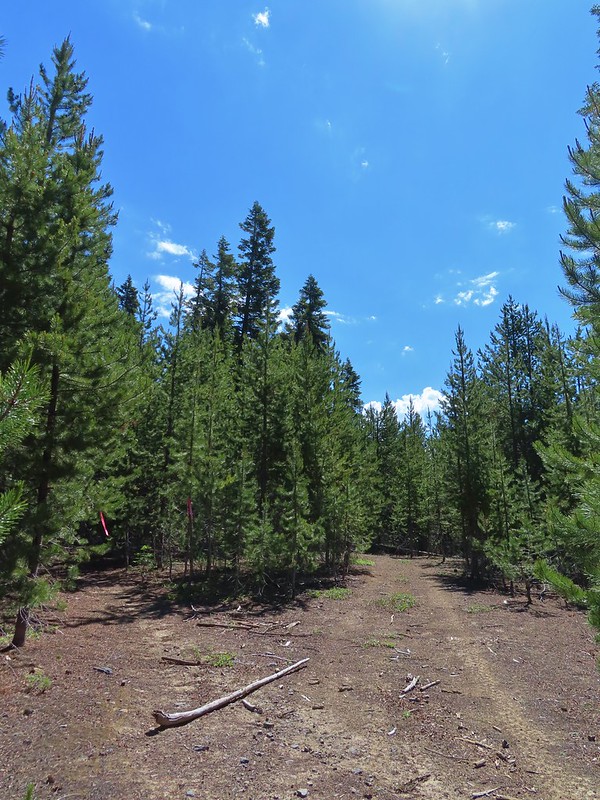 Flagging on the left marking the “trail”.
 Another flag hanging on the tree to the right.
 Another glimpse of Mt. Ireland.
 Small meadow near FR 142 along a tributary of East Fork Boundary Creek.
 Trail sign at FR 142.

 Jacob’s ladder
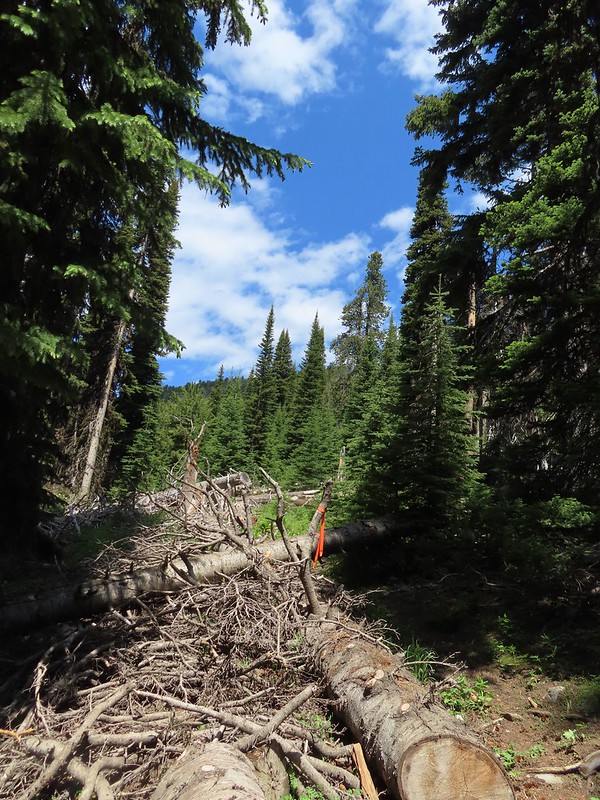 This was one of three trees across the trail, all of which were easily navigated.
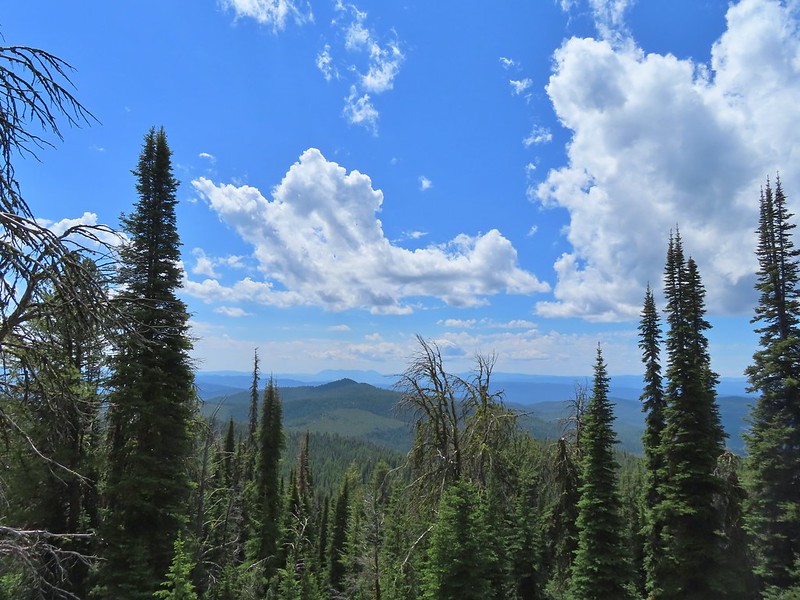 Ironside Mountain in the distance.
 Phlox
Phlox Brown’s peony
 Nearing the junction.
 Heading uphill.
 Pussy paws
 Mt. Ireland ahead.
 Rock Creek Butte (
 Paintbrush
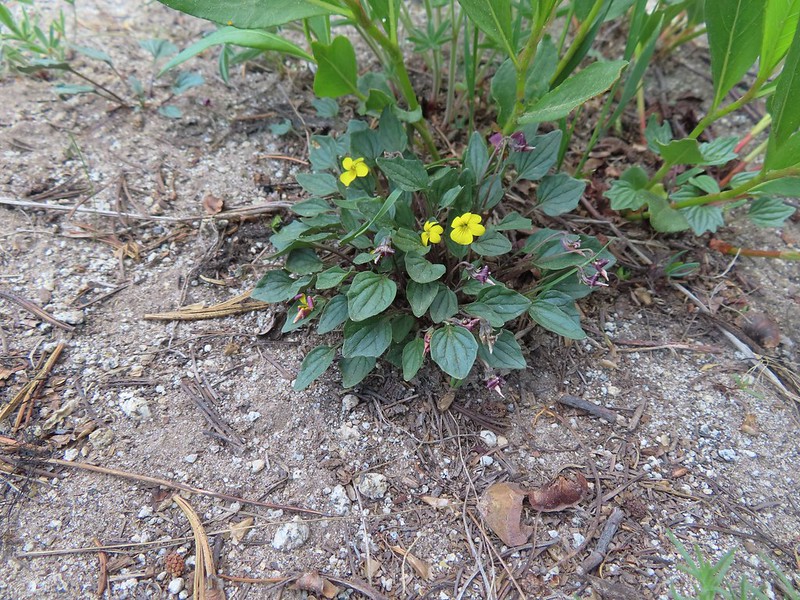 Goosefoot violet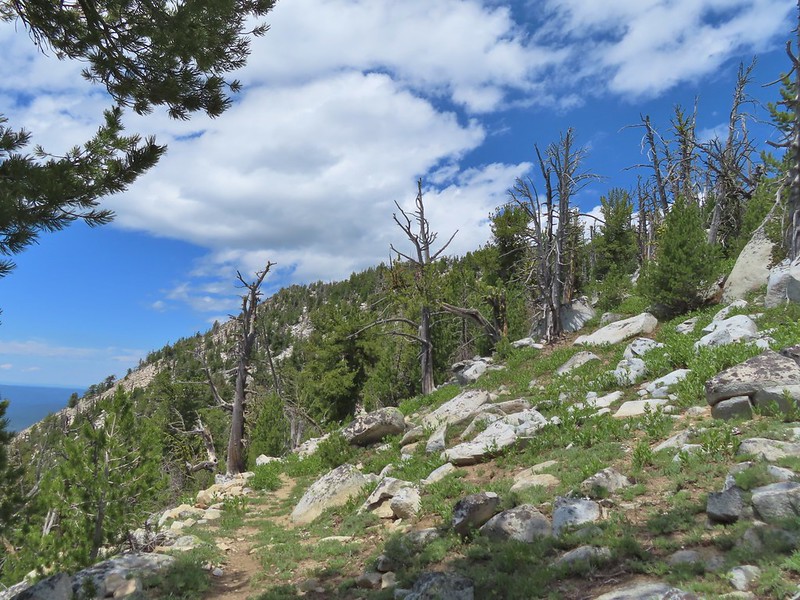
 Vinegar Hill in the Greenhorn Mountains (
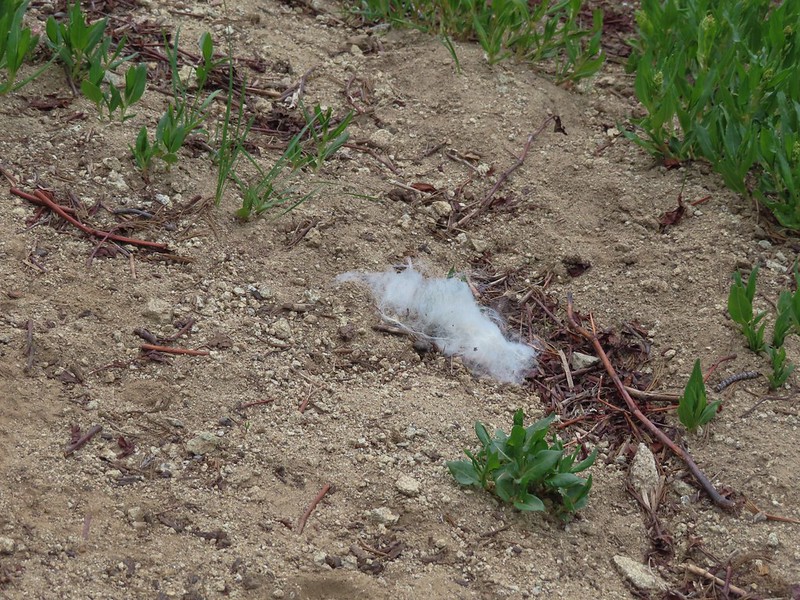 Mountain goat fur on the trail.
 Just to the right of the silver stump in the center of the photo is one of the goats.
 One of the goats below the lookout tower.
 Zoomed in shot of one of the goats leaving upon my arrival.
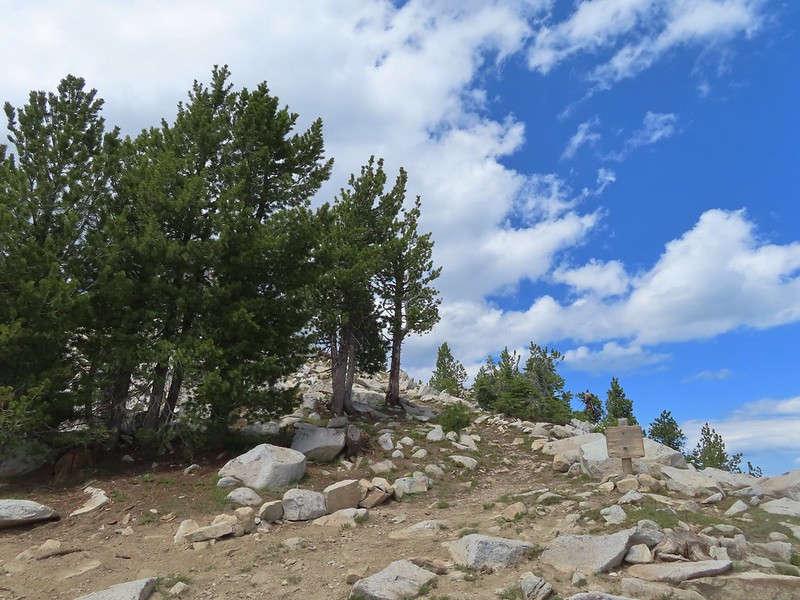 Arriving at the saddle.
 Baldy Lake below Mt. Ireland.
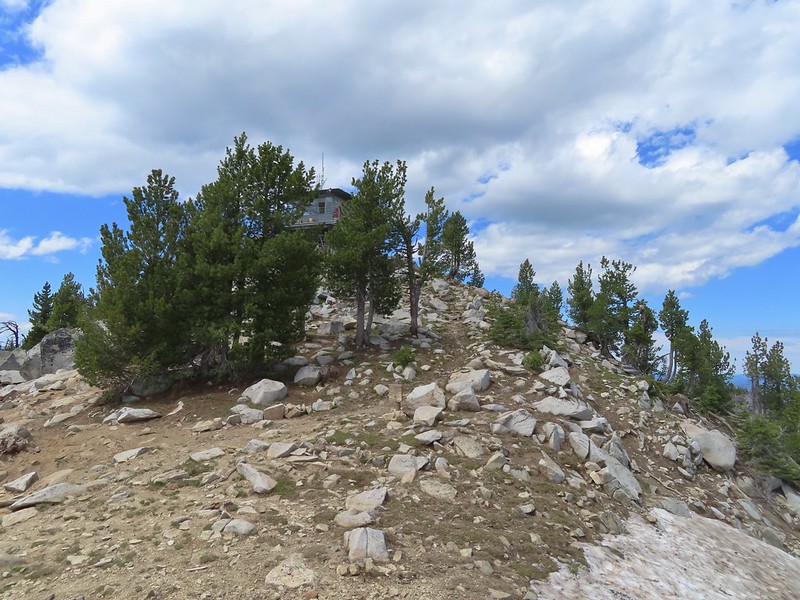 The tower from the saddle.
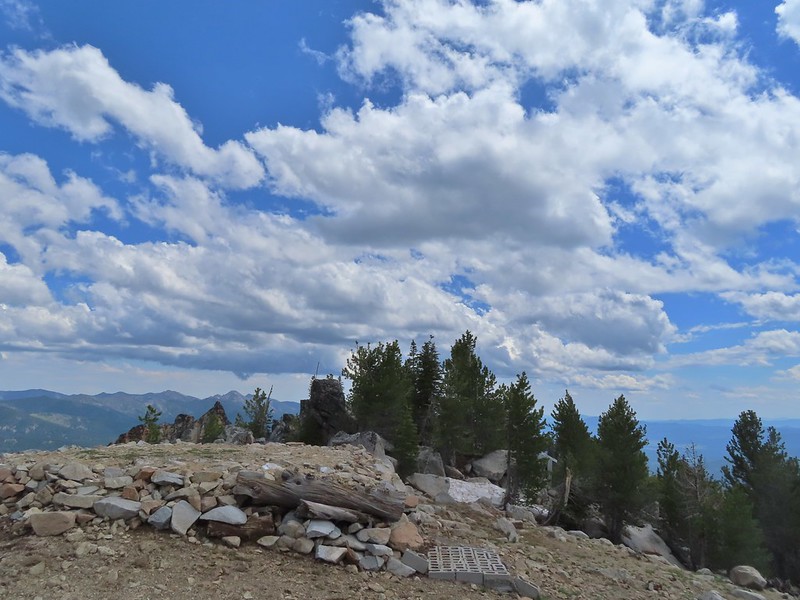 The helipad.
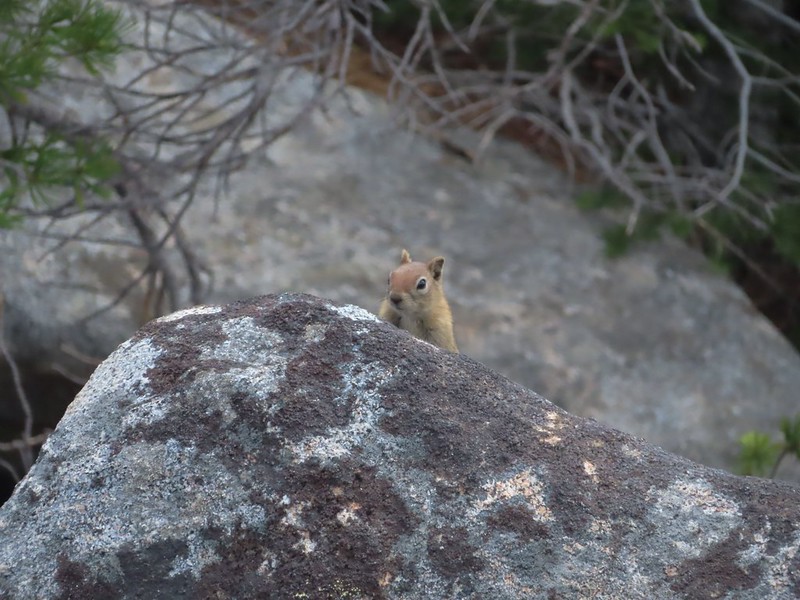 Being watched.
 The kid was on the other side of mom.
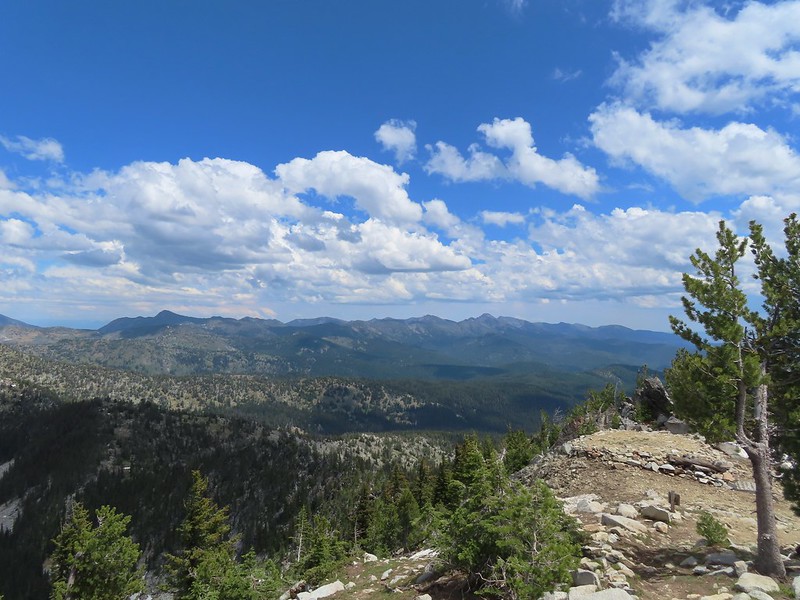 The Elkhorns from the tower.
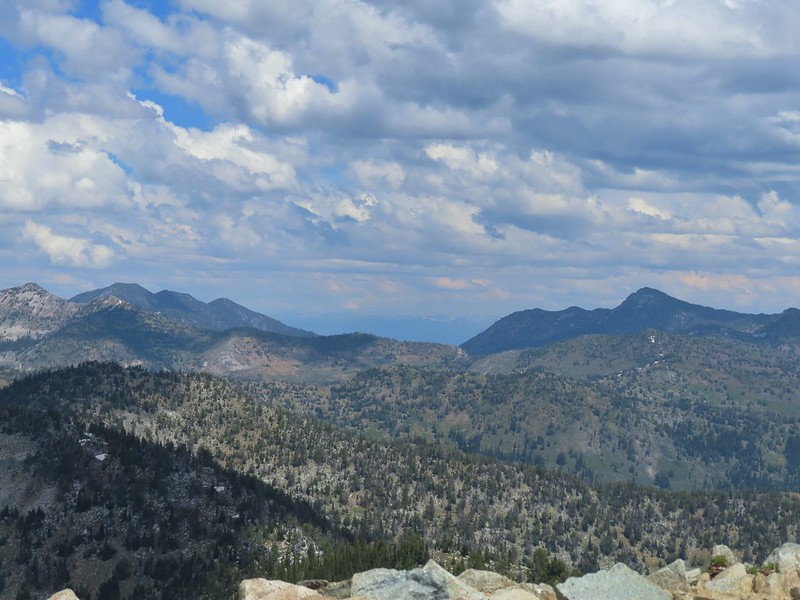 The snowy Wallowa Mountains beyond a gap in the Elkhorns.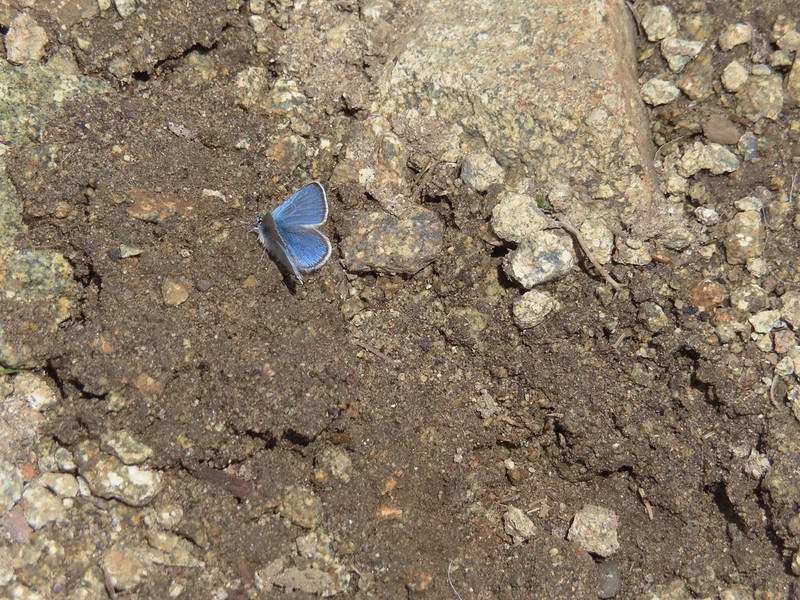
 Milbert’s tortoiseshell
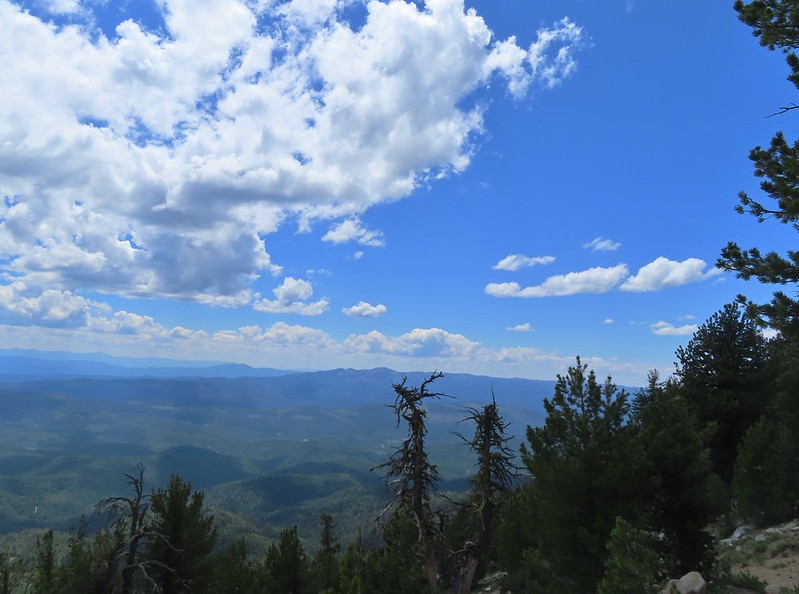 Vinegar Hill with Dixie Butte to the left and Strawberry Mountain (
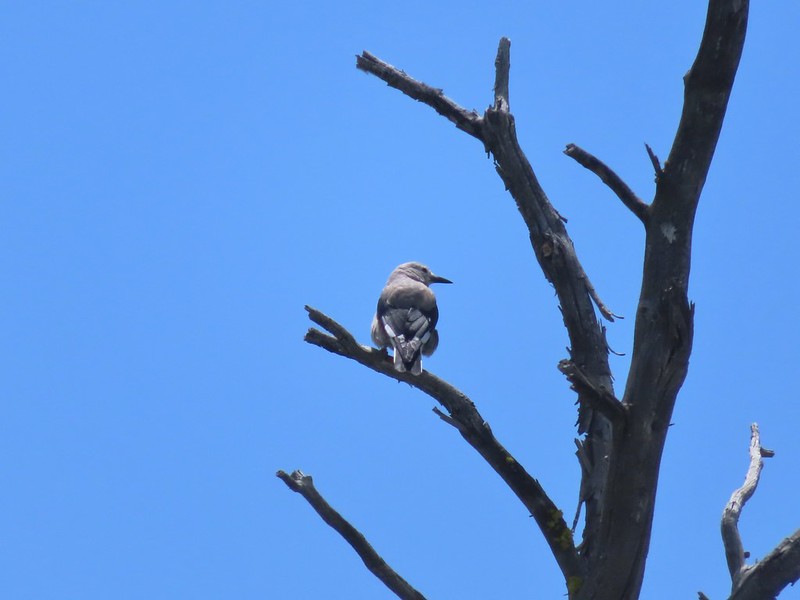 Clark’s nutcracker
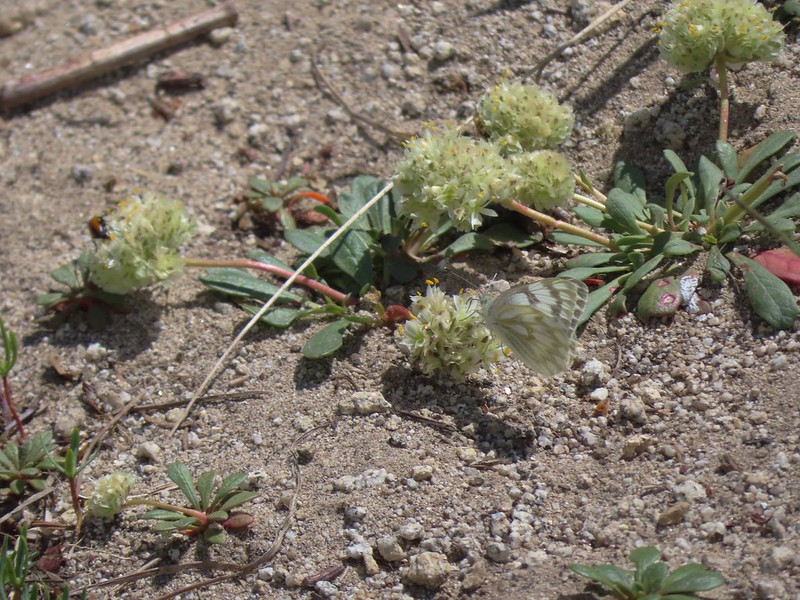 Butterfly on pussy paws.
 A comma?
 Beetle on arnica.
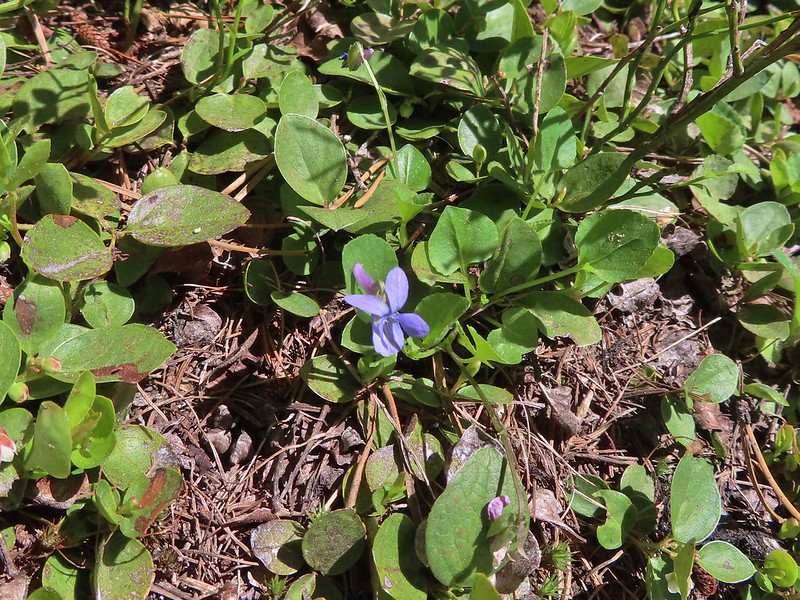 Hookedspur violet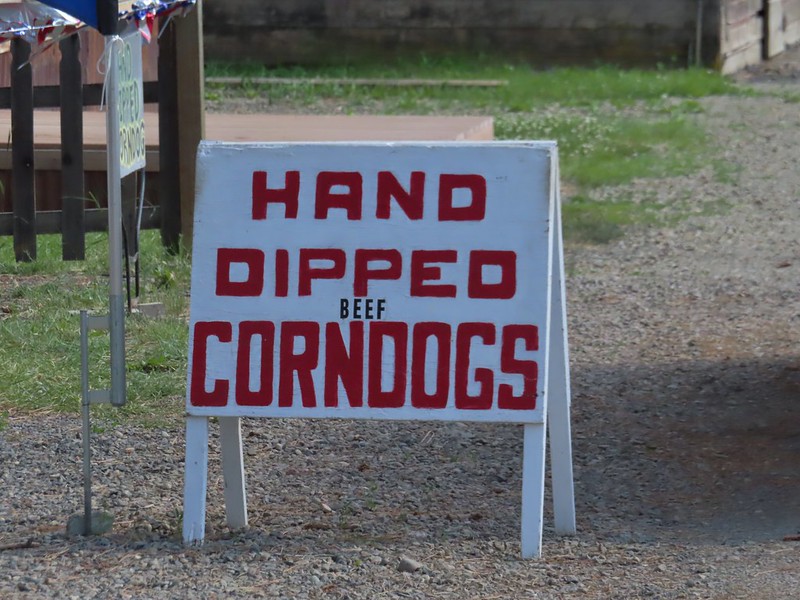


 Fog at 5:30am
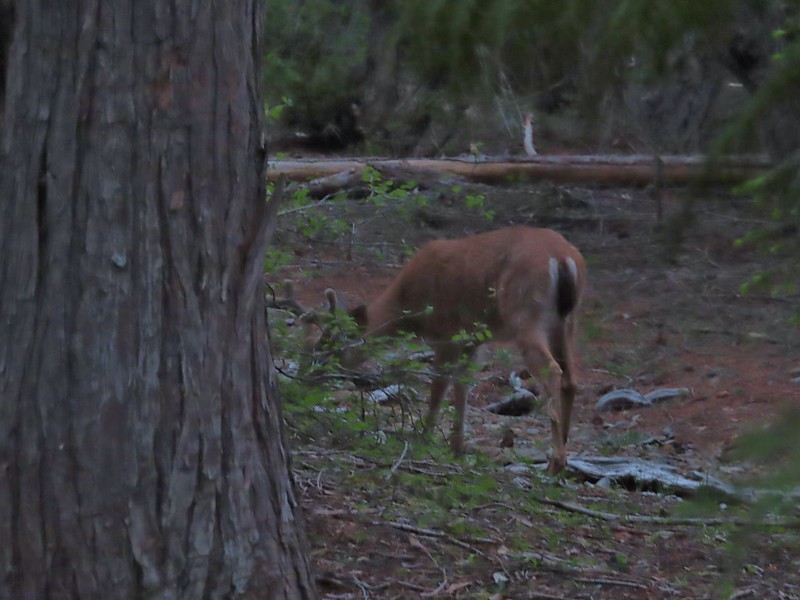 After he jumped he started to run off but quickly stopped to eat just a few yards later.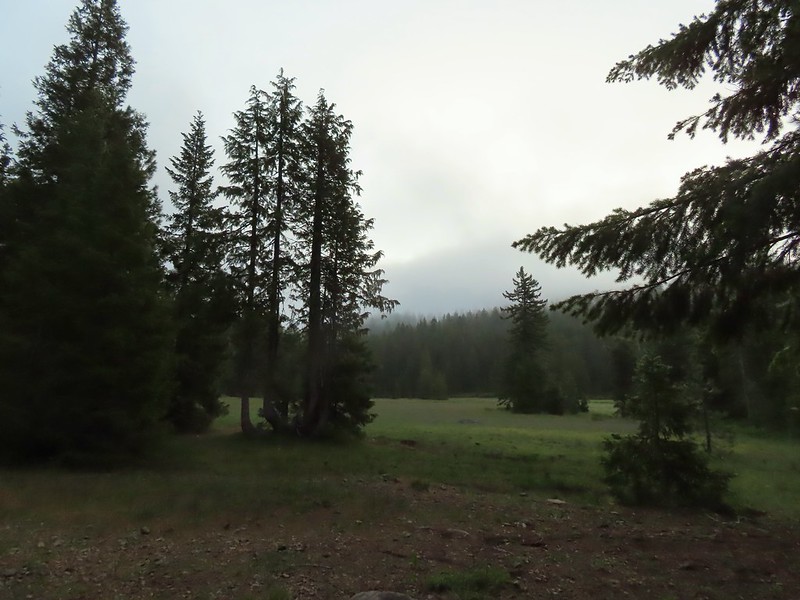
 Deer in the meadow.
 Snail near our breakfast spot. It’s amazing how quickly these guys can get from one place to the next.

 Lupine and beargrass along the road.
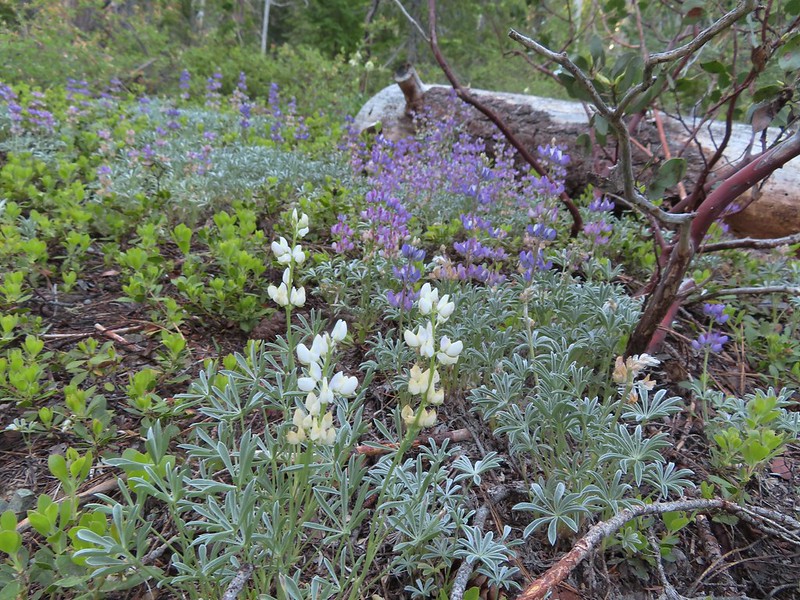 Lupine
 Beargrass
 Waterfall on cliffs below El Capitan.
 Waterleaf
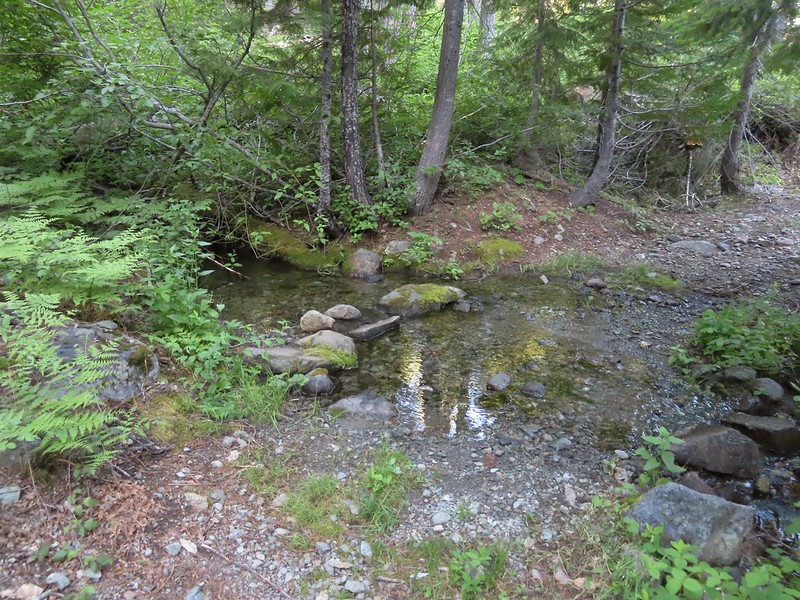 Stream crossing.
 At times the old roadbed looked like you could drive on it but other times it looked like this.
 Small meadow along the trail.
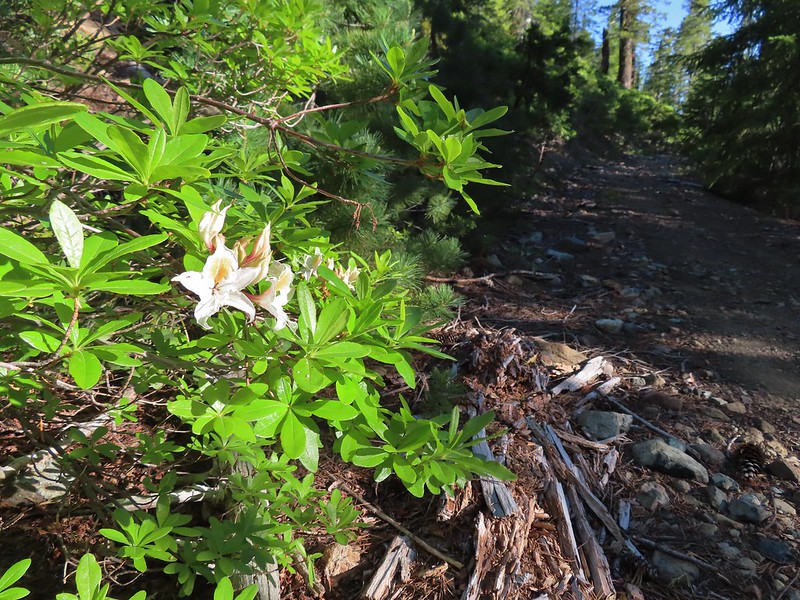 Western azalea
 The clouds burned off quickly.
 Penstemon
 Youngs Peak with the meadow barely visible to the right below.
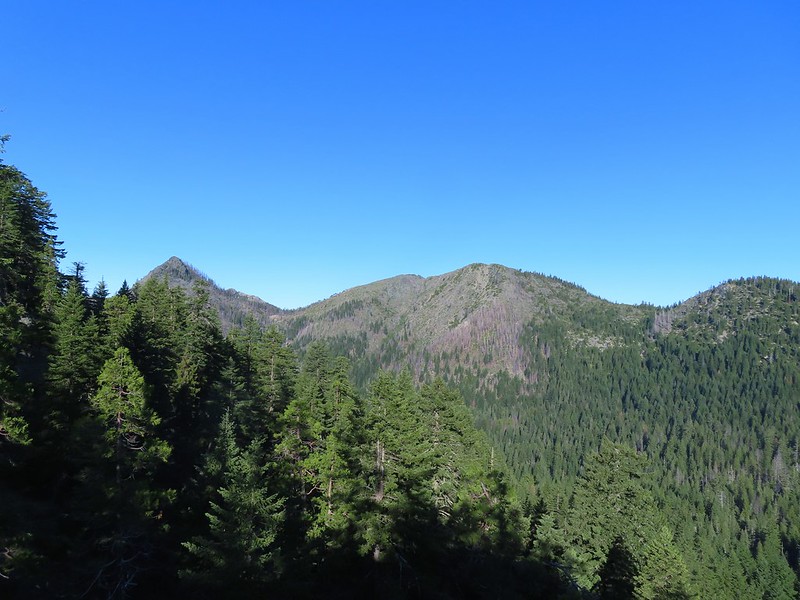 Rocky Knob to the left.
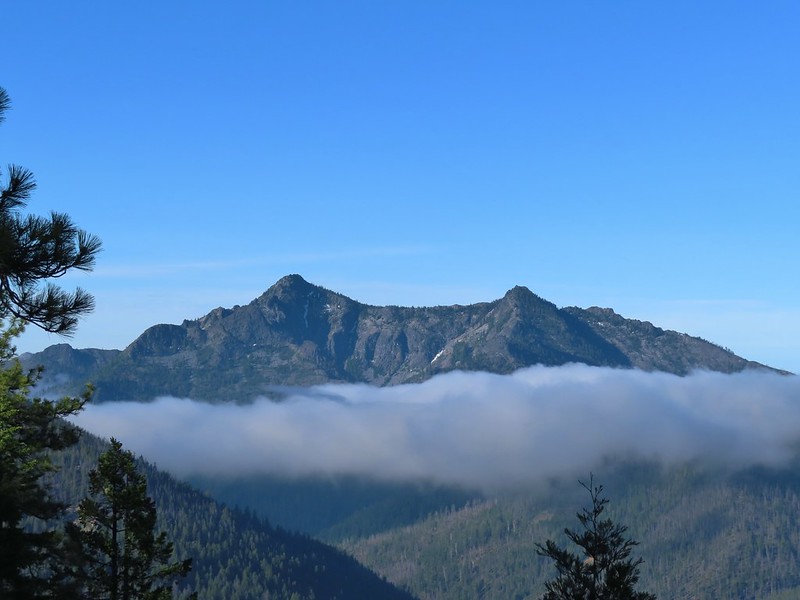
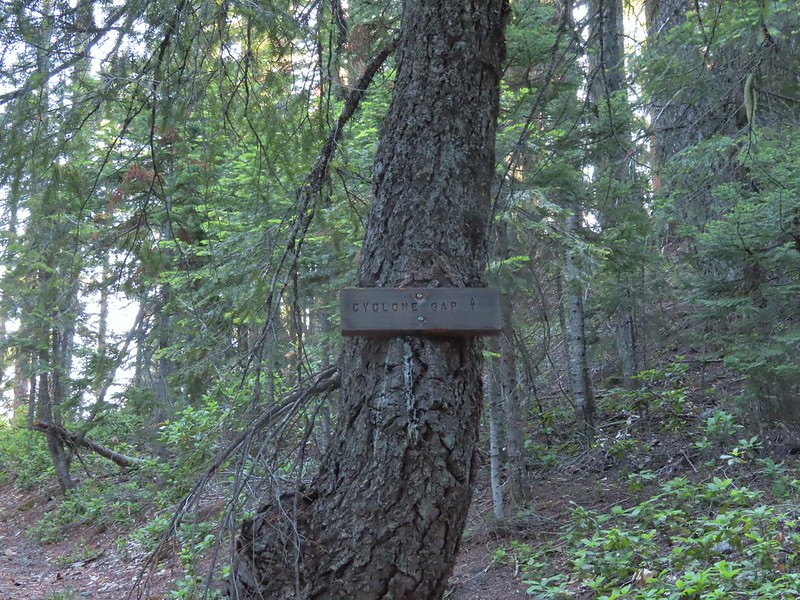
 Sign at the Cyclone Gap junction.
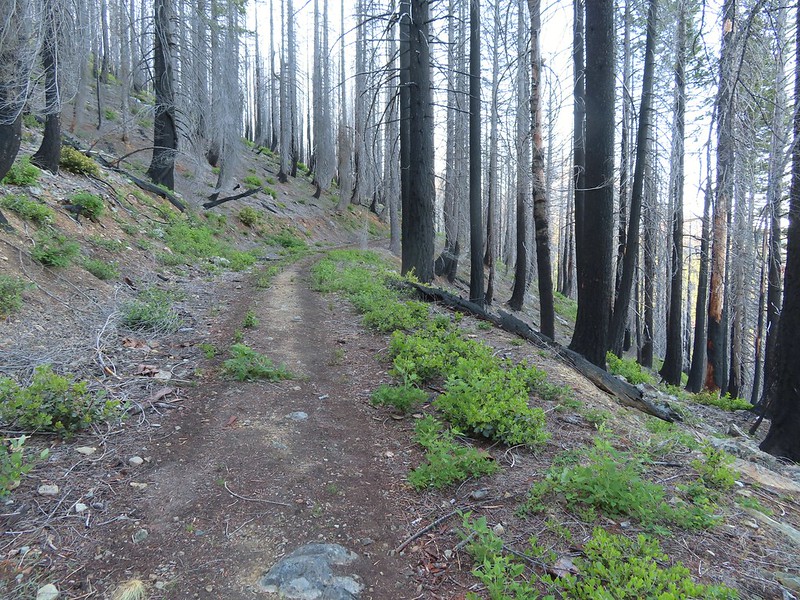 Back into the 2018 Natchez fire scar.
 Preston Peak
 Paintbrush along the trail.
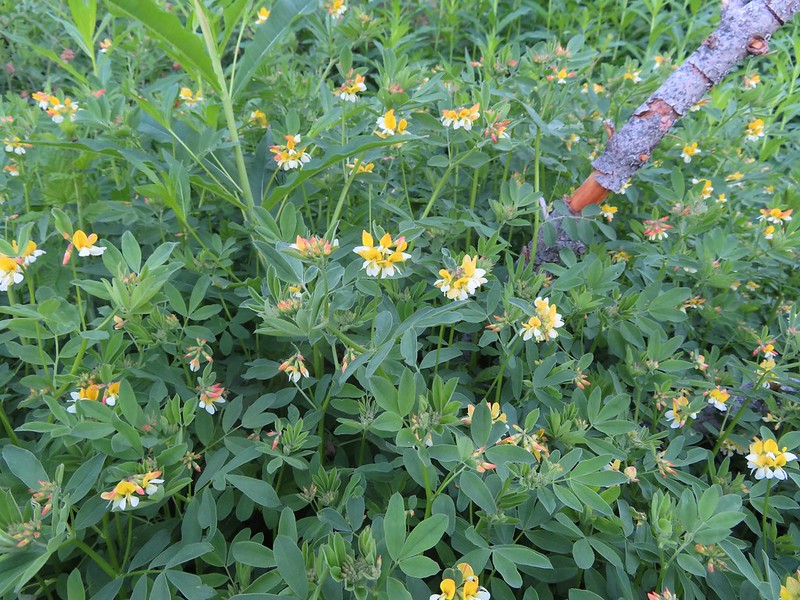 Streambank bird’s-foot trefoil
 Musk monkeyflower
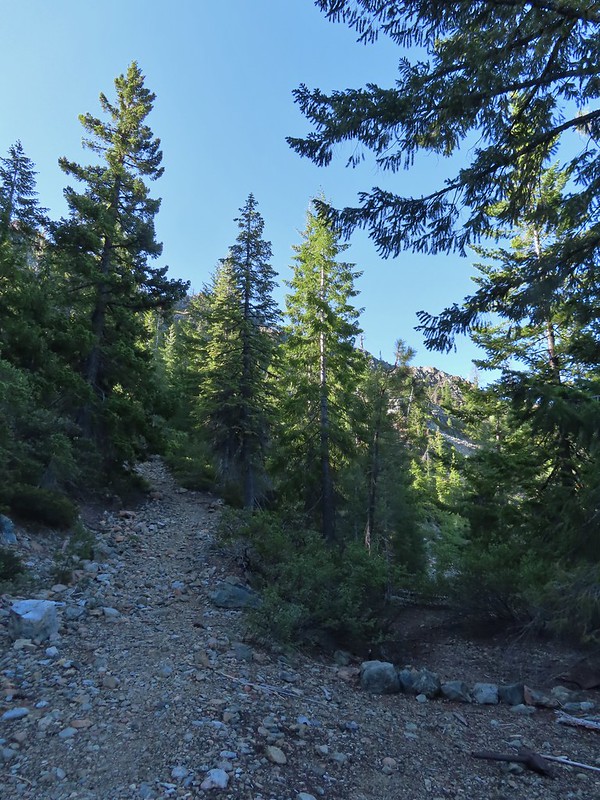 Raspberry Lake Trail to the left.
 Ruins from the chrome mine.
 More mine ruins on the hillside below.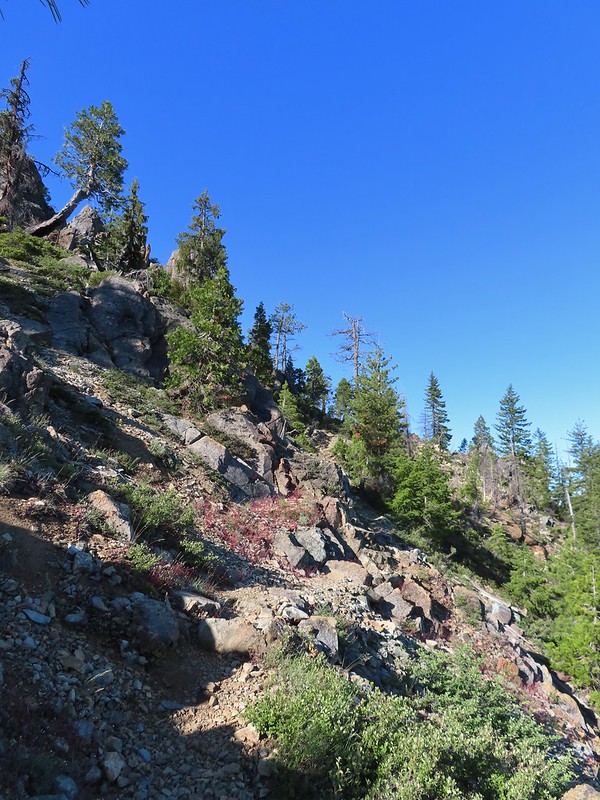
 Nuttall’s sandwort
 Bear Mountain and Rocky Knob.
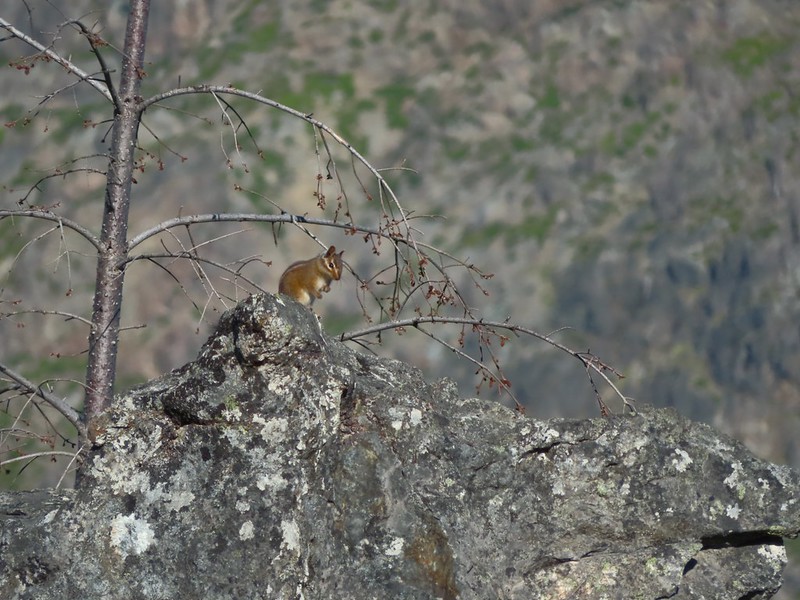 Chipmunk
 Getting closer to Preston Peak.
 Ragwort
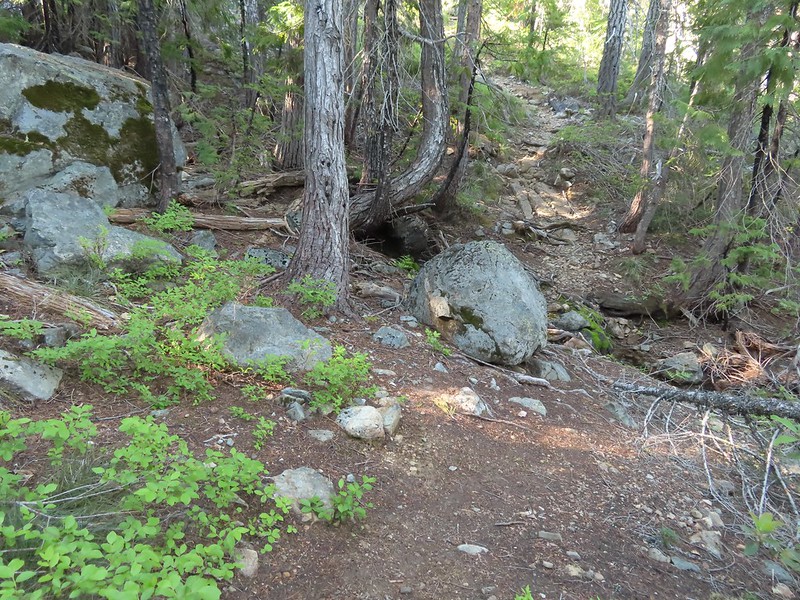 Small stream crossing.
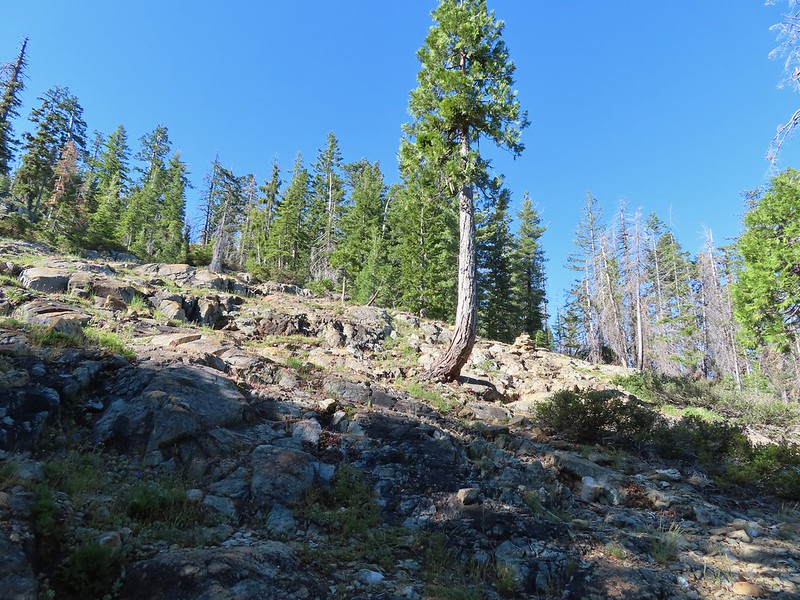 A short steep rocky section where cairns were helpful.
 Rounding another ridge with Preston Peak on the left and Bear Mountain to the right.
 First view of Raspberry Lake in the trees below to the right.

 Big rock along the shore.
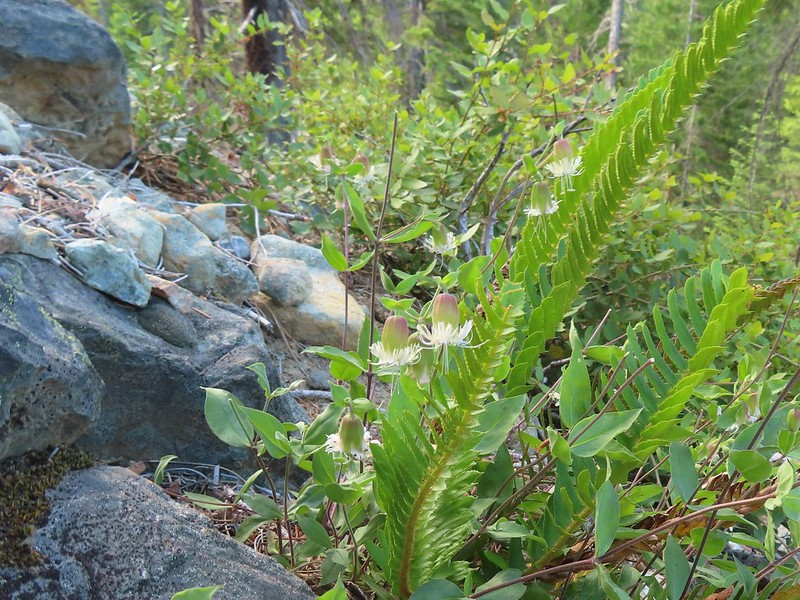 Bell catchfly
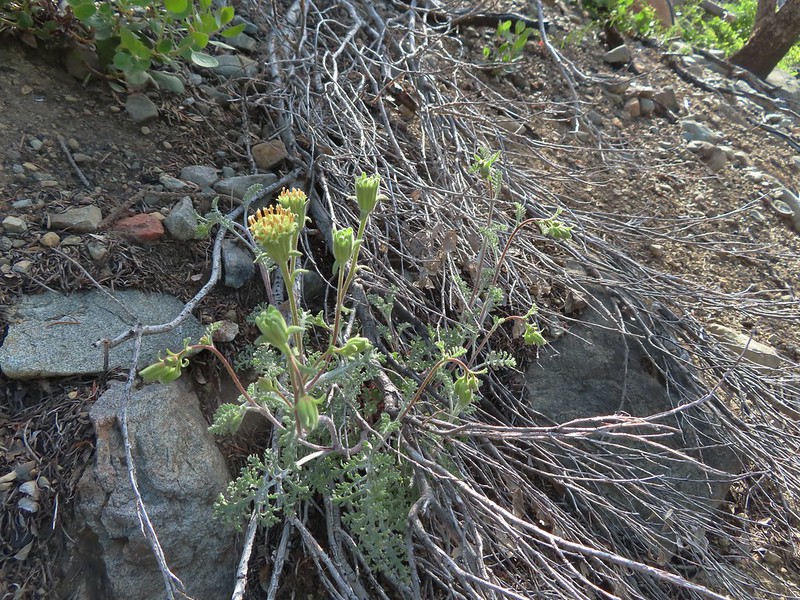 Douglas’ Dustymaidens
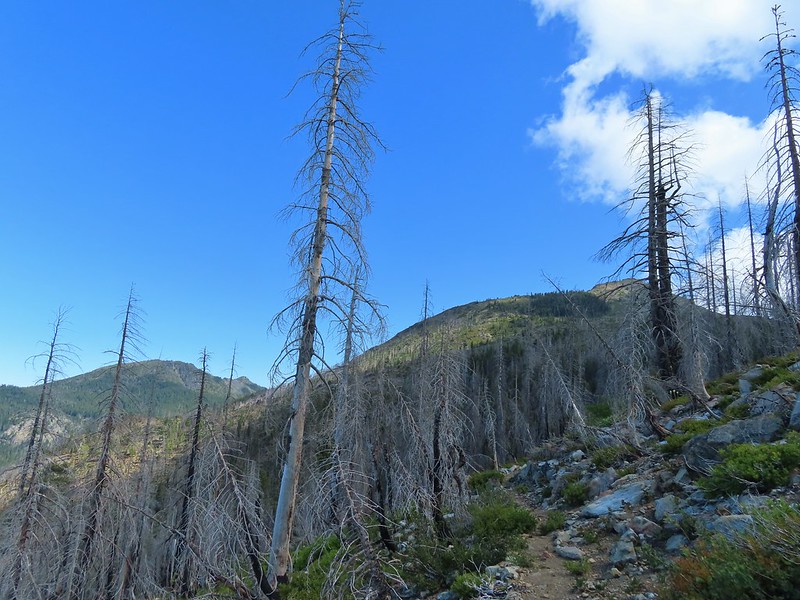 El Capitan on the right. To the left I think that is Bear Cub with Polar Bear Mountain behind.
 Western azalea
 This squirrel gave us a stern talking to.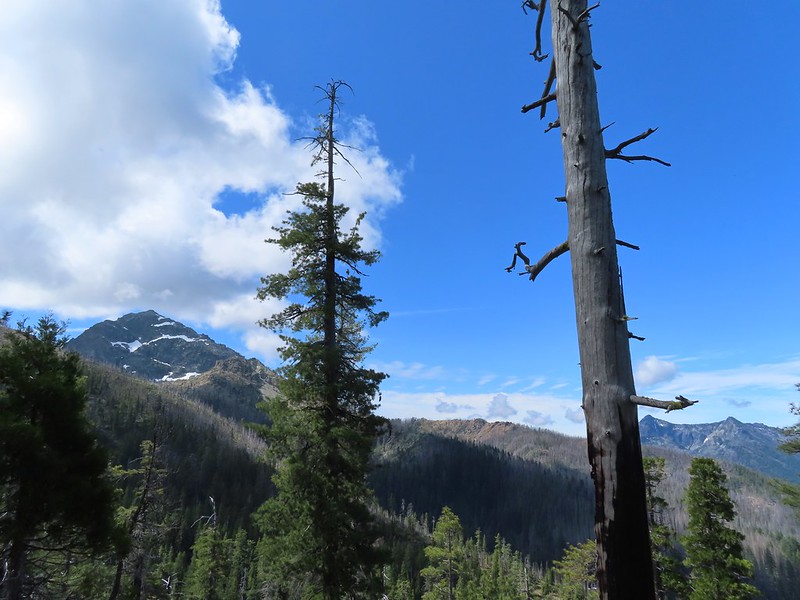
 Western tanager pair
 Twin Peaks
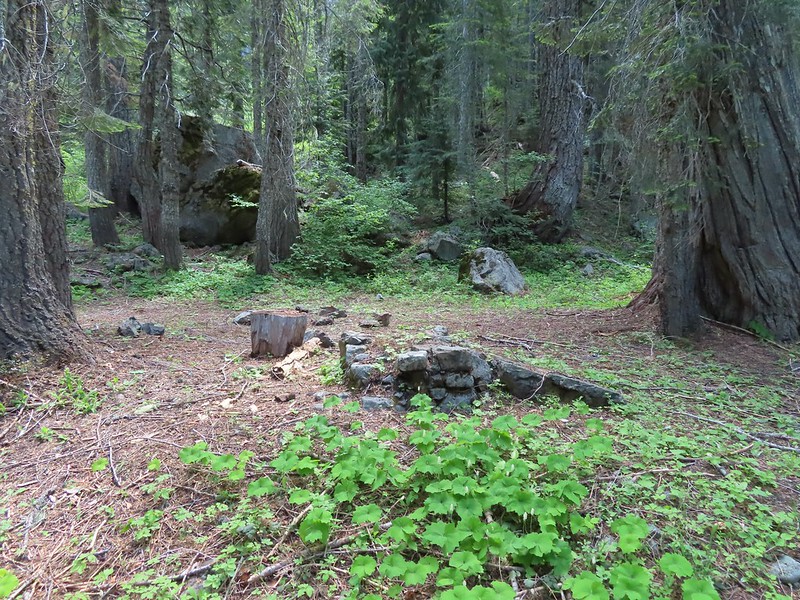 We believe this is what Sullivan shows as Slow Echo Camp on his map. We wondered what the stones in the foreground had been a part of?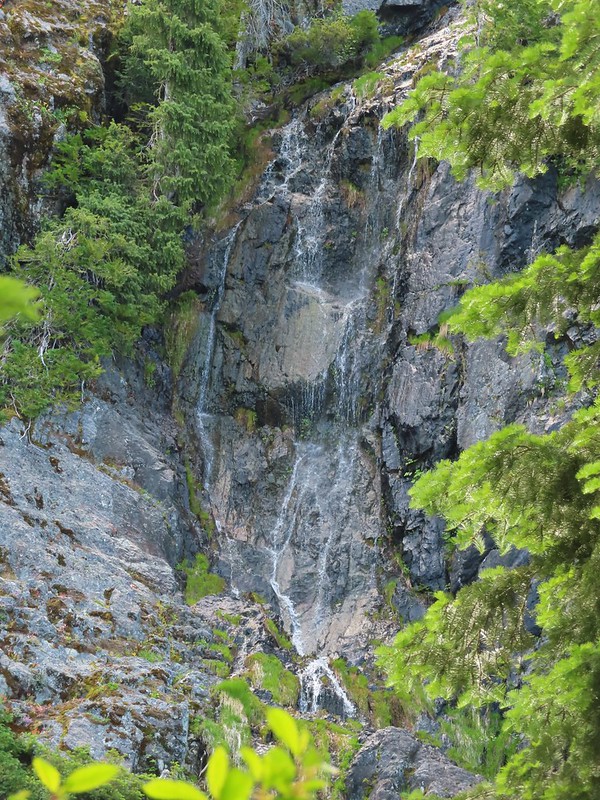


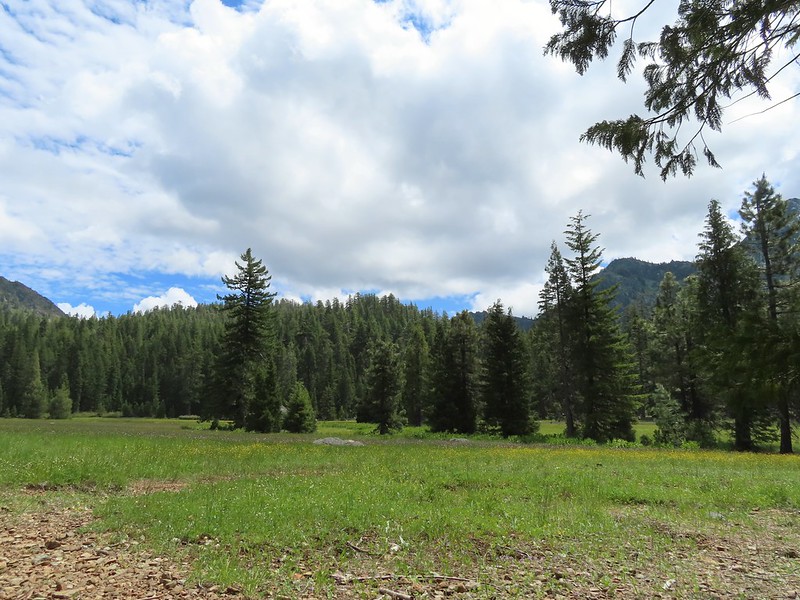
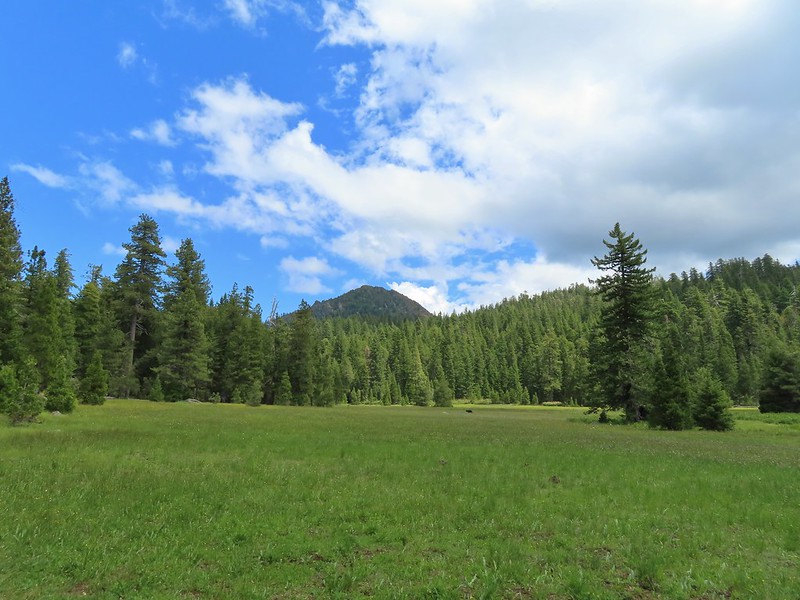
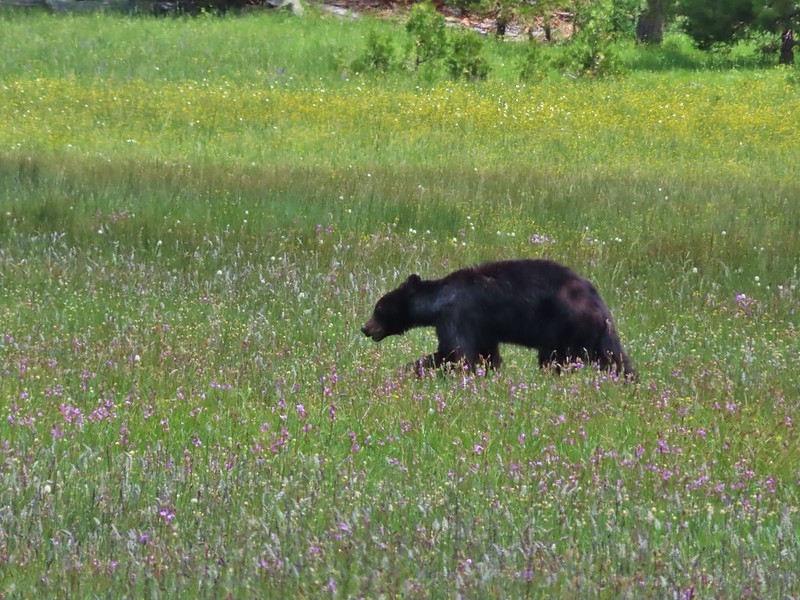

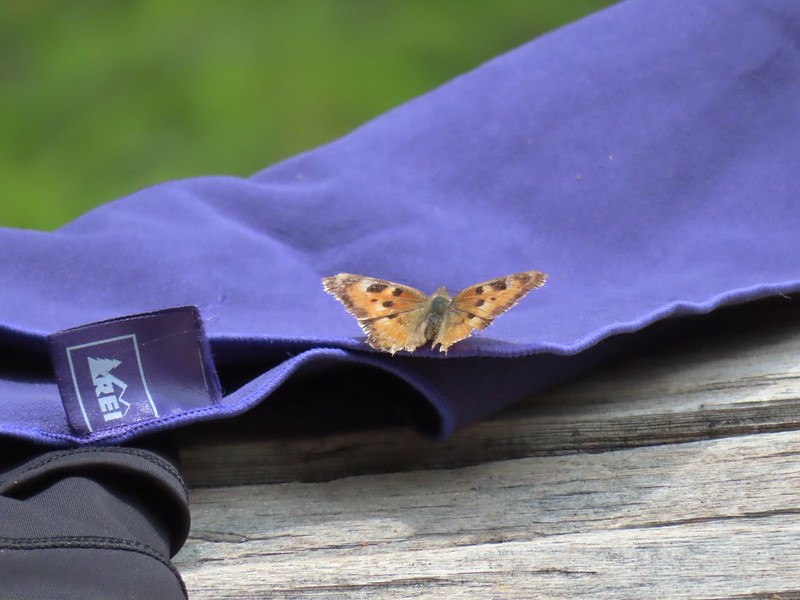 This butterfly did discover people=salt.
 Maybe a flycatcher of some sort near camp.
 Common buckeye
 Turkey vulture checking out the meadow.
 White rush lily
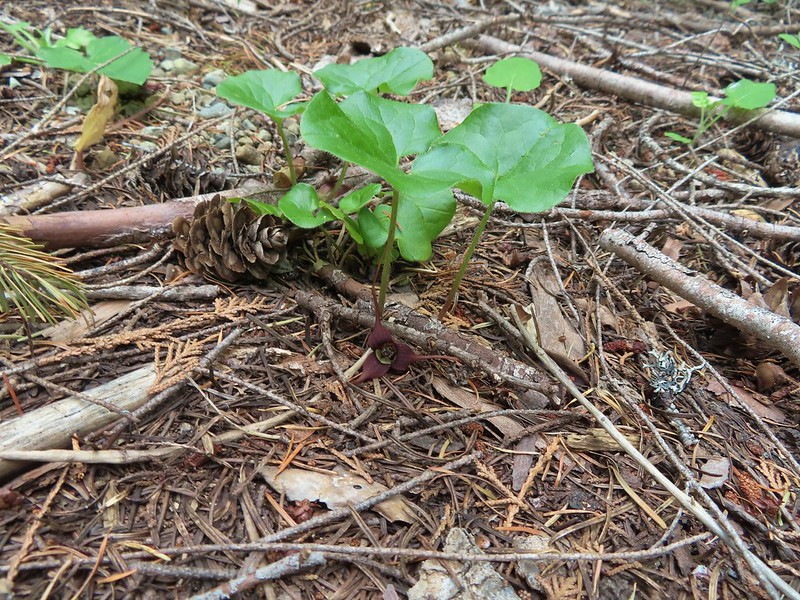 Ginger
 Snow plant
 Another low cloud morning.
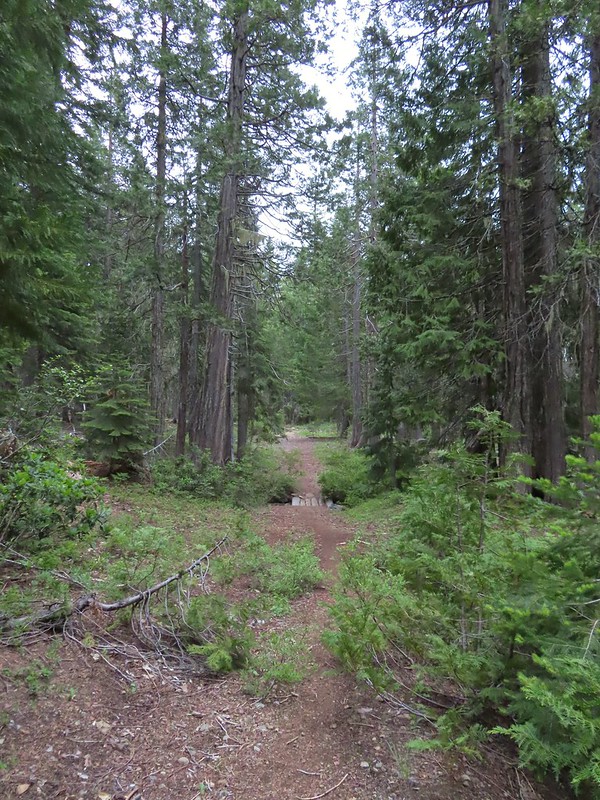 Heading out
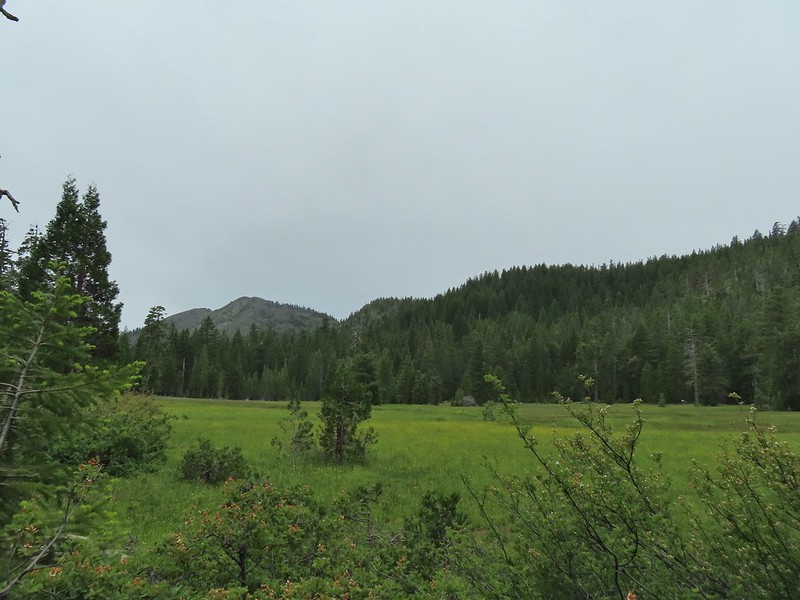 Passing around the meadow, we didn’t see Buster this morning.
 Black Butte Trail junction.
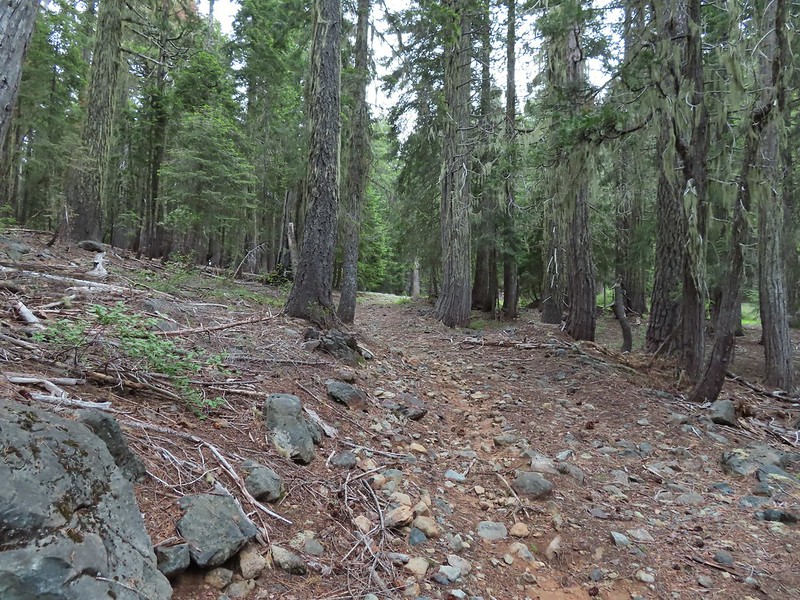
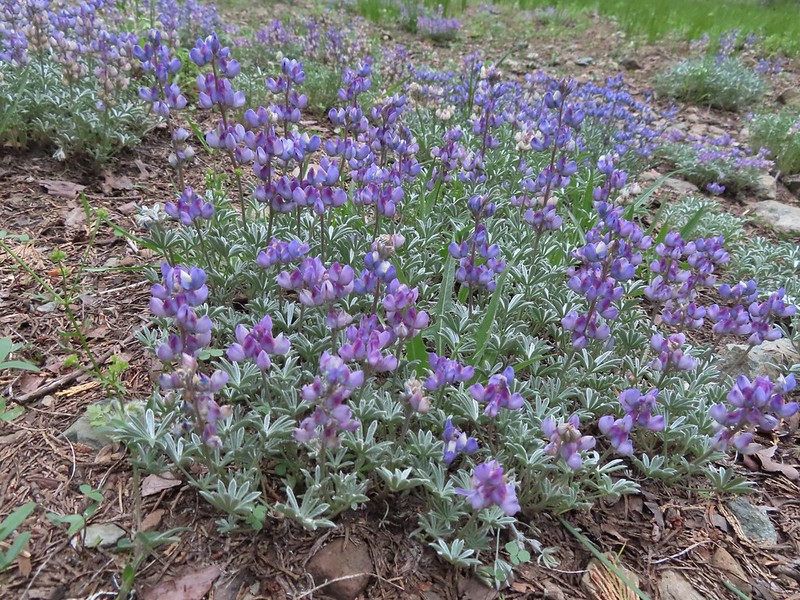
 Bear Cub under the clouds.
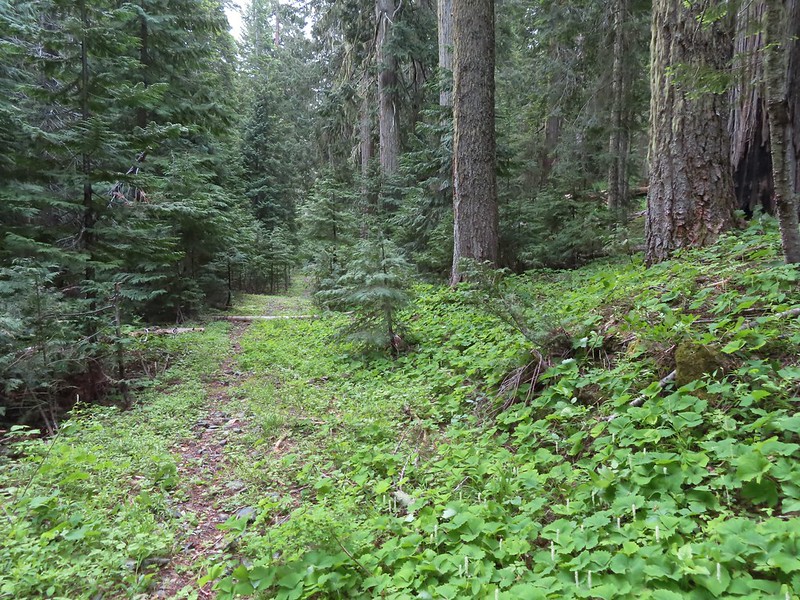 Vanilla leaf along the trail.
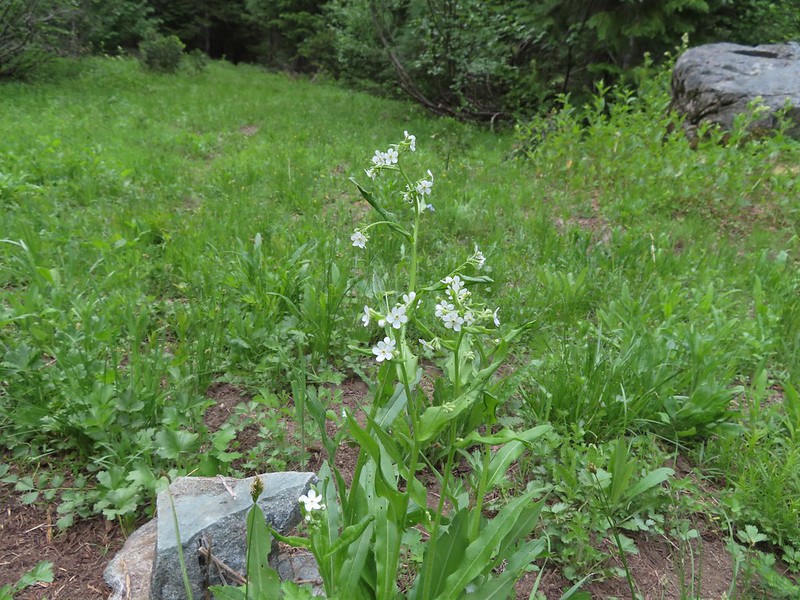 Jessica sticktight
 The headwaters of the East Fork Illinois River are just up from the trail so the river isn’t much more than a trickle at the trail crossing.
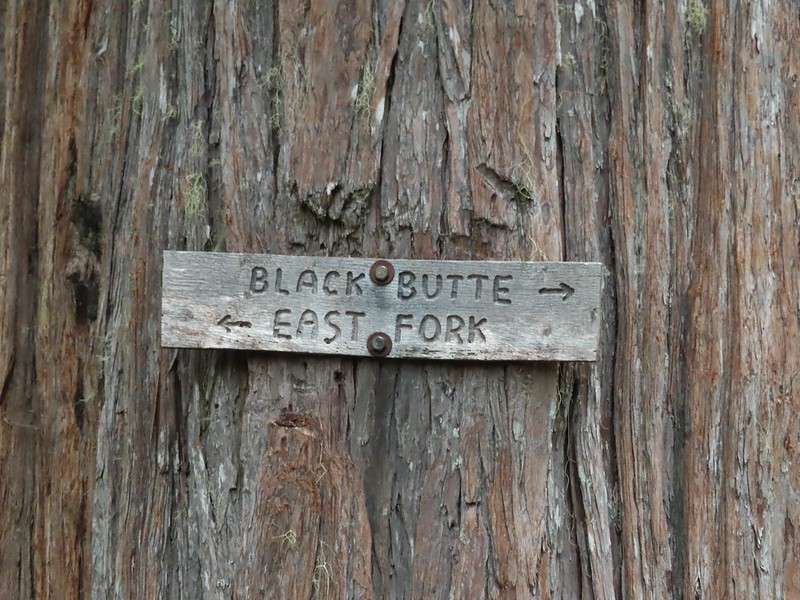
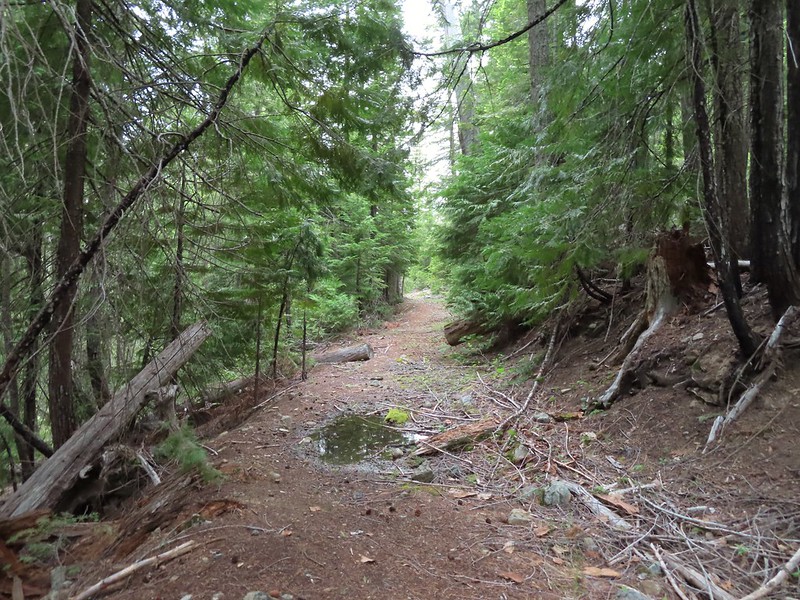
 The edge of the clouds to the NW.
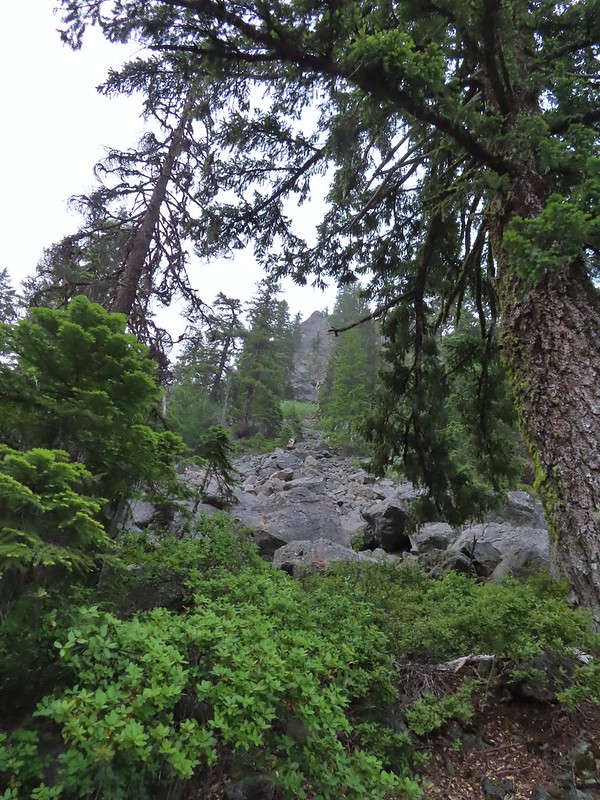 Passing below Bear Cub.
 Being an old road bed in unburt forest made for easy hiking.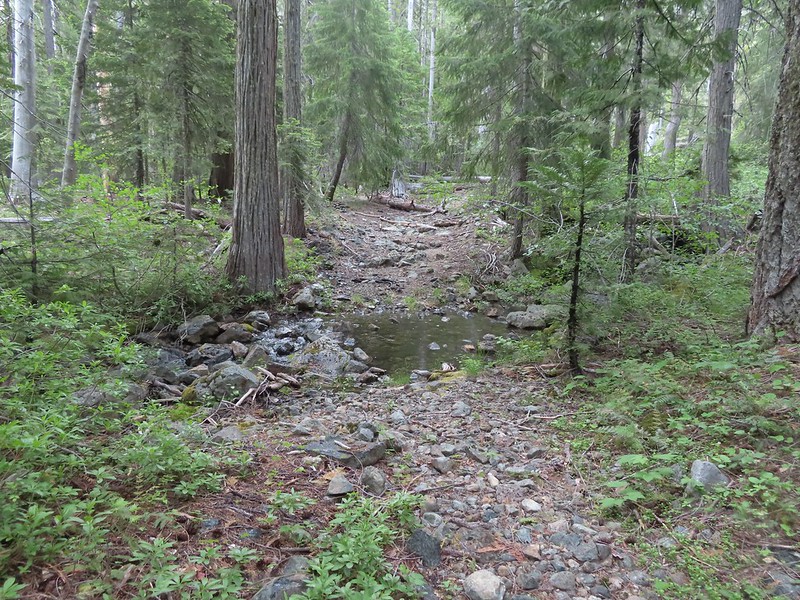
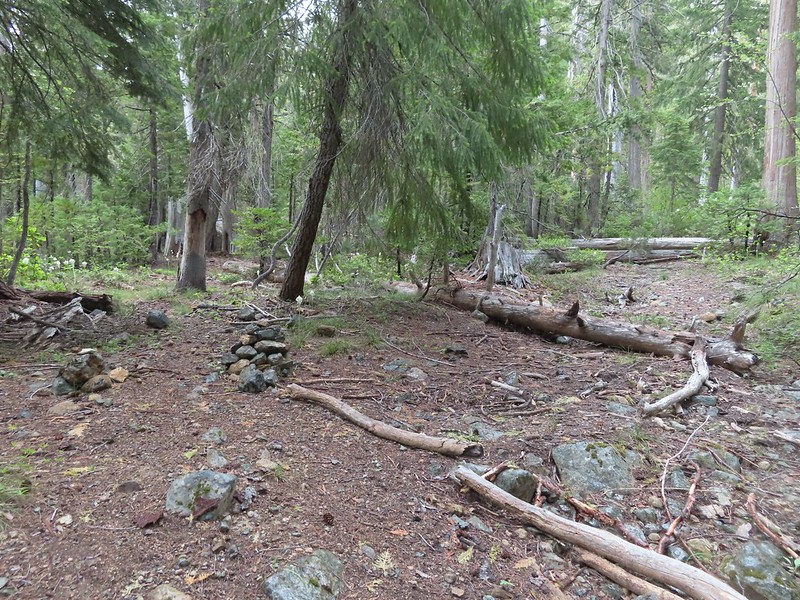

 Swtichbacking toward Bear Cub.
 Black Butte
 Heading downhill so we could go up.
 Creek crossing in the basin below Black Butte.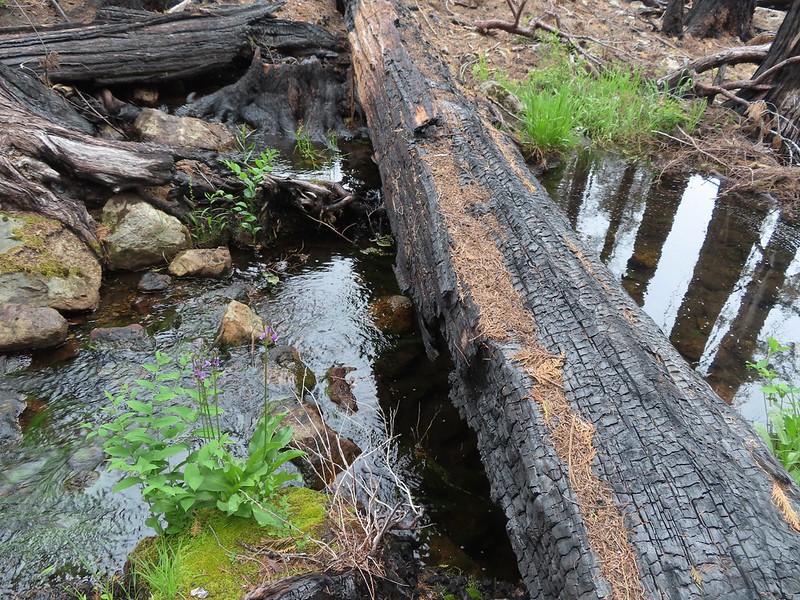
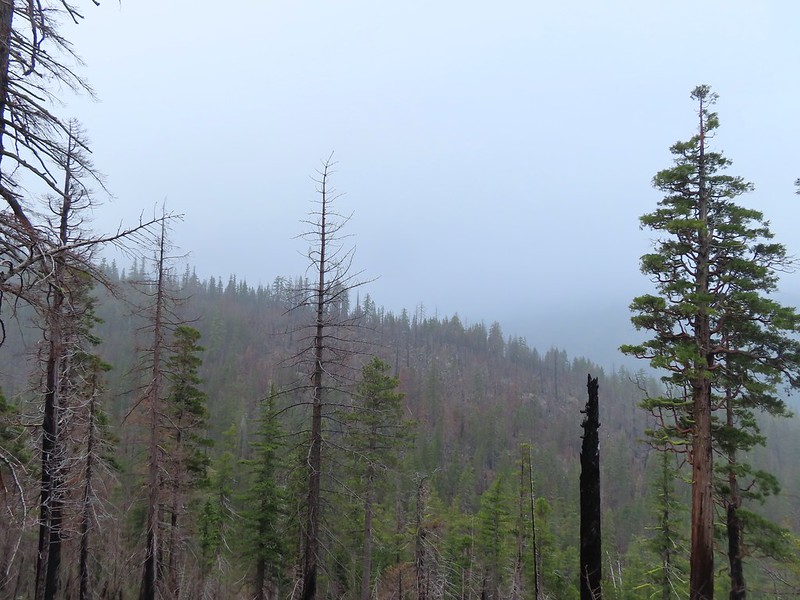 Looking back into the clouds where we’d come from.
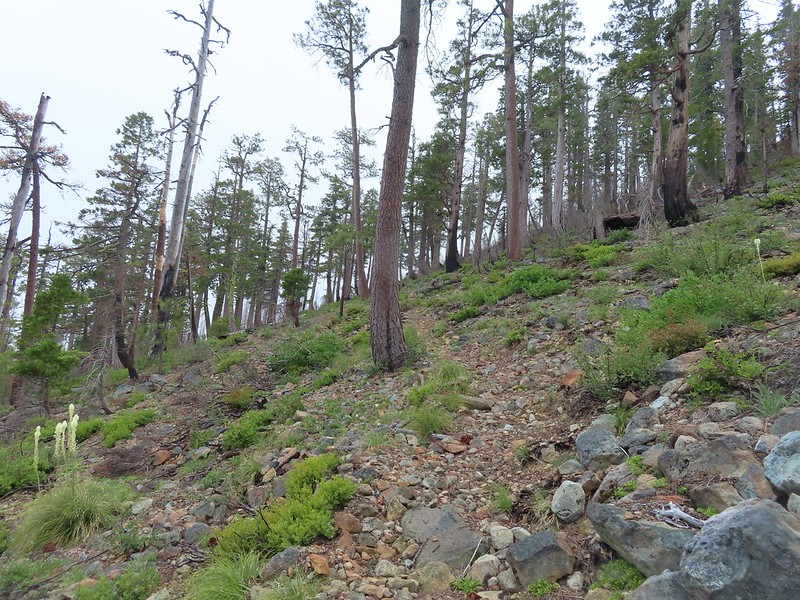 Steep climb up to the junction.
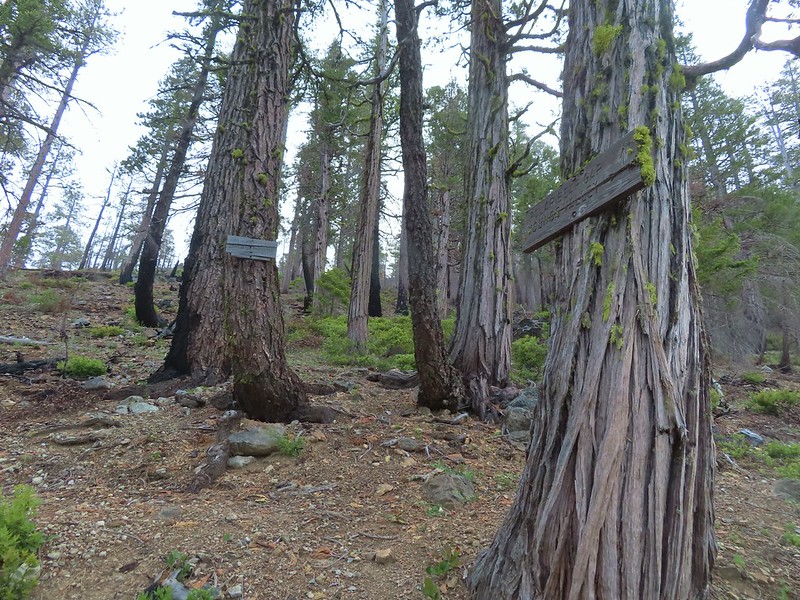 We made it back to the junction! Only 1.8 more miles to go.
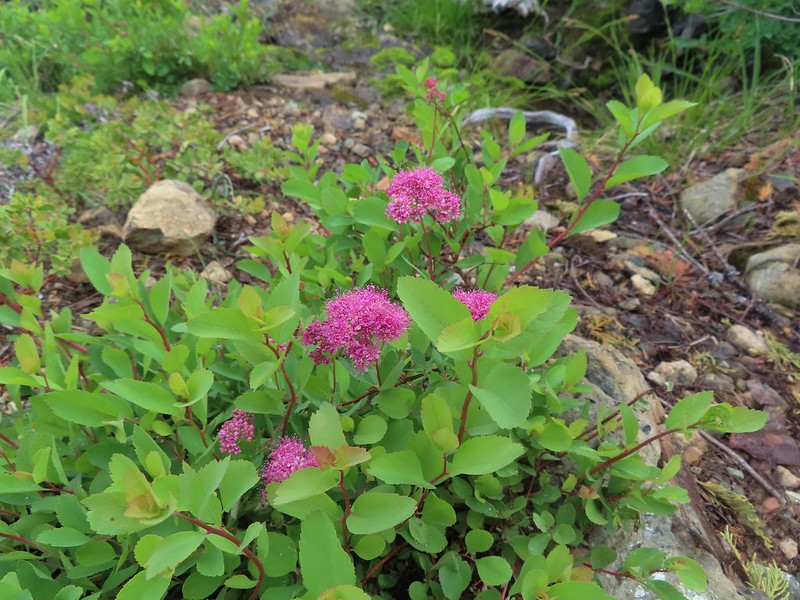 Spirea
 Pair of woodpeckers
 Why is there more uphill?
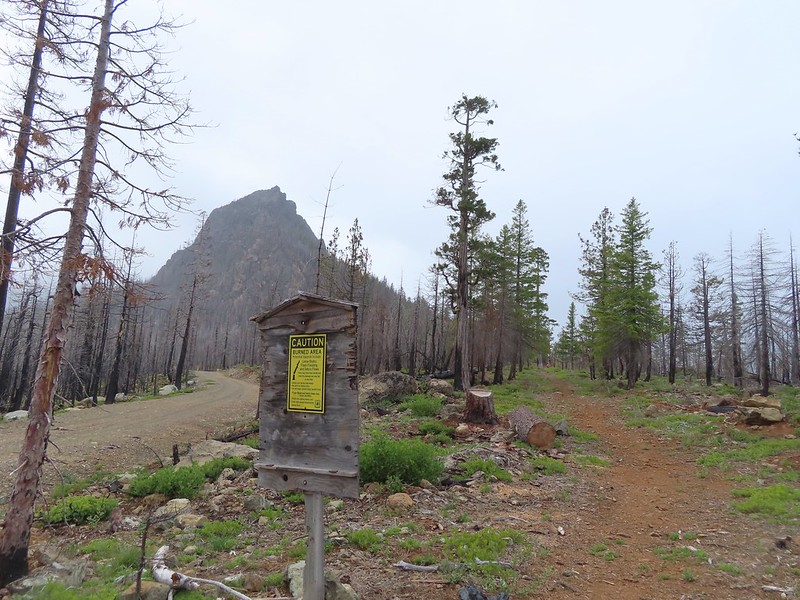 Black Butte from the trailhead with Heather coming down the trail.

 There still wasn’t a lot of light in the valley but the bear was in with the tall tree in the middle of this picture.


 Heather watching the bear leave through the gap in the trees.
 The sign for the Clear Creek Trail on a tree to the right.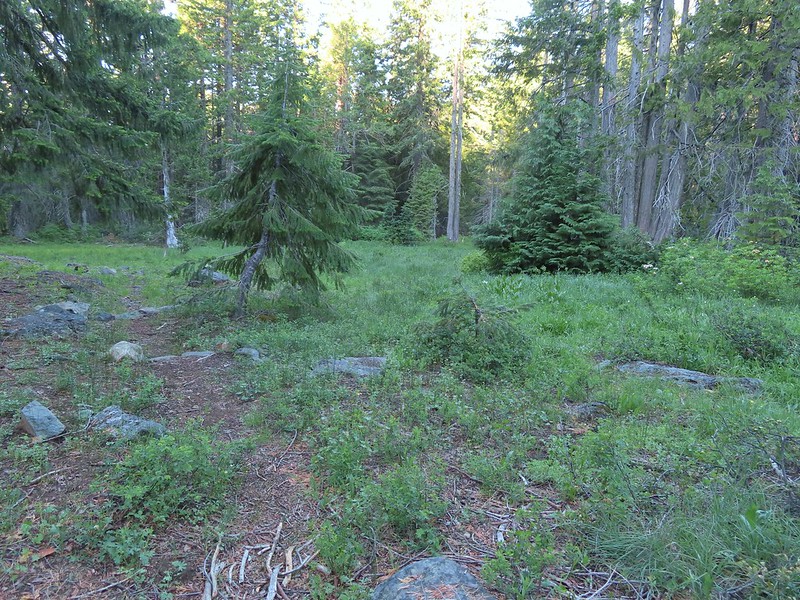

 Clear Creek below the trail.
 Anemone and star flowers
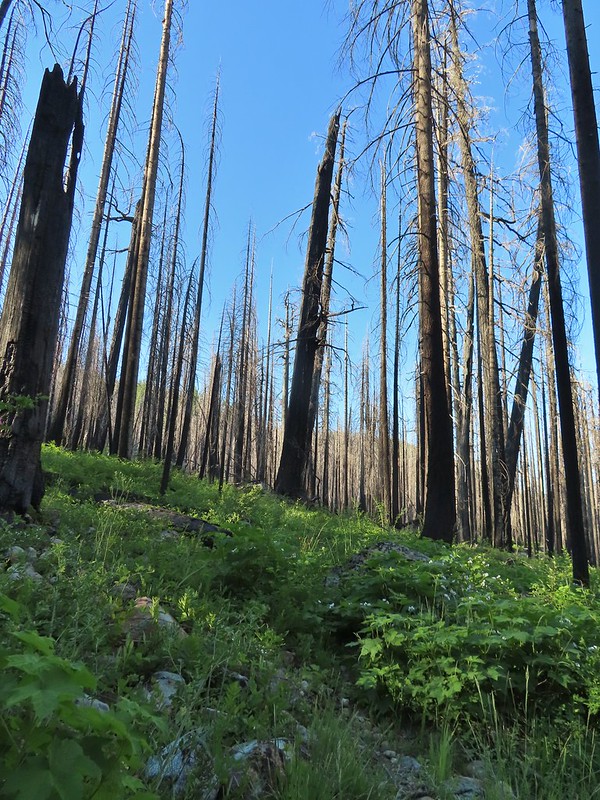
 Honeysuckle
 Rocky Knob
 One of several creek crossings. This one was a bit tricky to stay dry on but we both managed to do so on the first pass. Heather wasn’t so lucky on the way back though.
 Rayless arnica
 Pacific ninebark
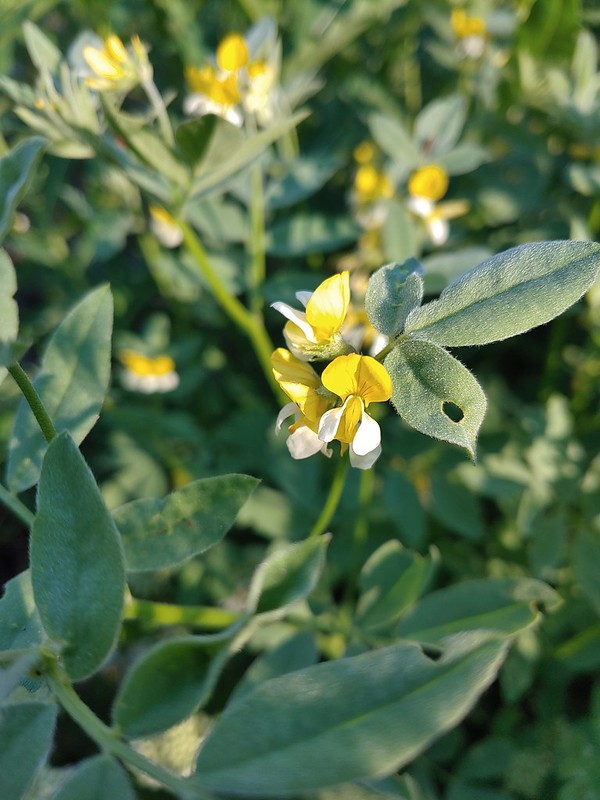 Streambank bird’s-foot trefoil
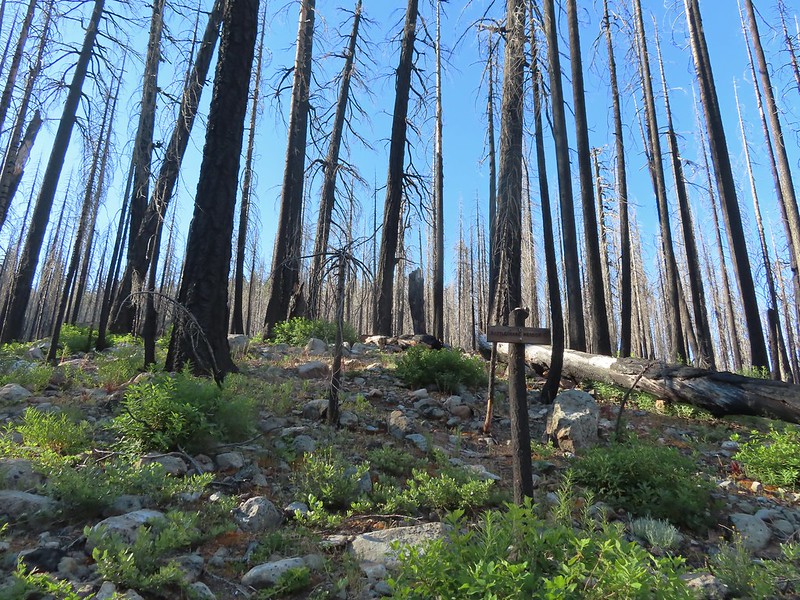 Sign for the Rattlesnake Meadows Trail which looked to be in much worse shape than the Clear Creek Trail.
 White-vein wintergreen
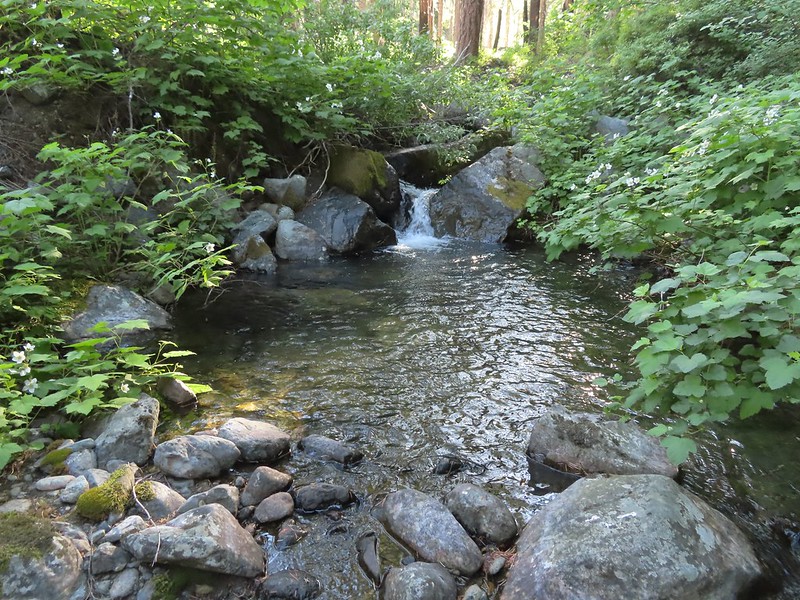
 Queens cup
 There was a small stream in the middle of the trees here.
 A colorful pea.
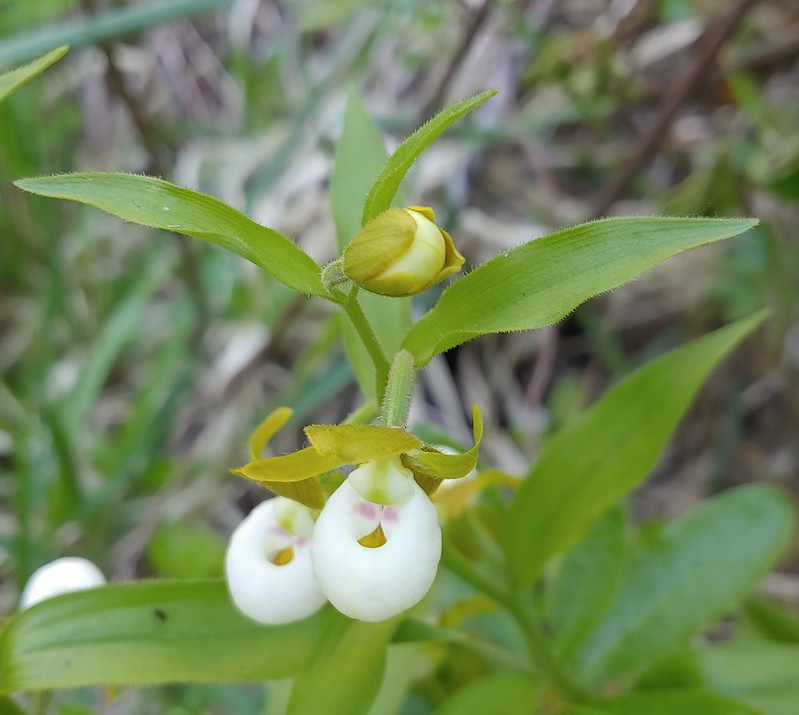

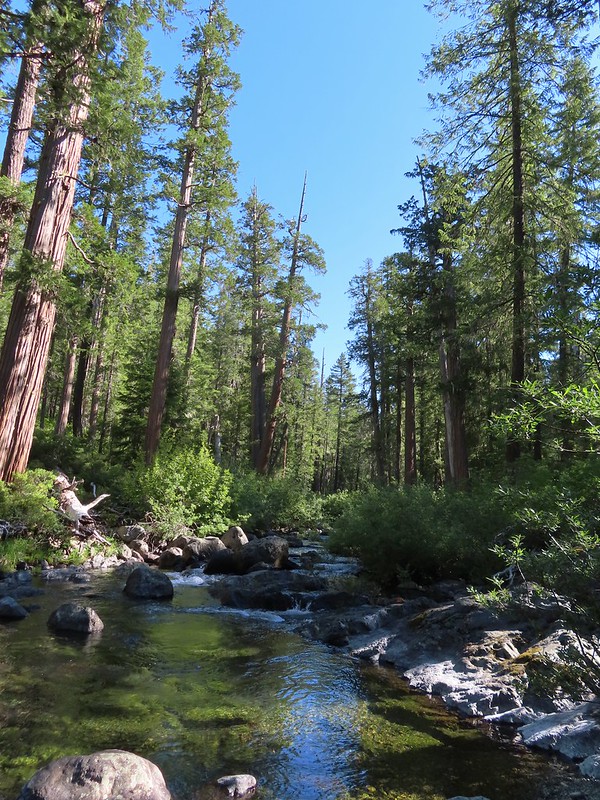

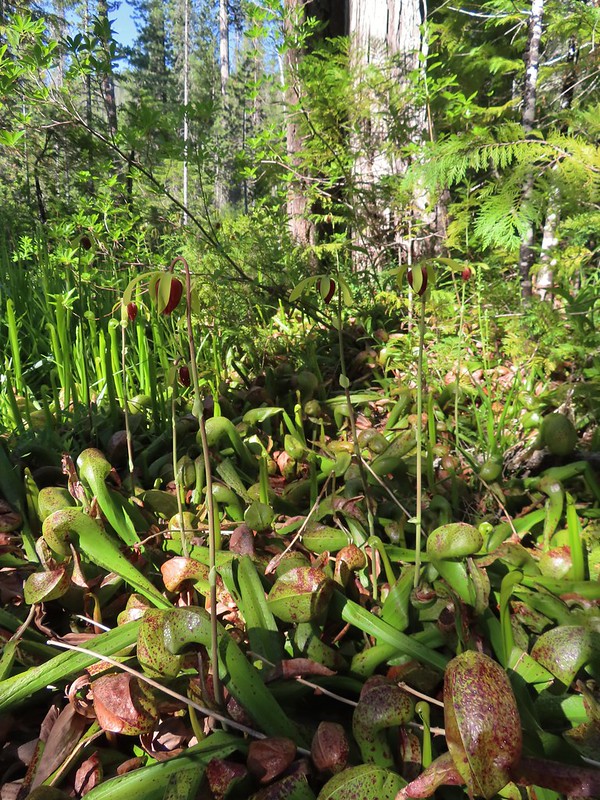

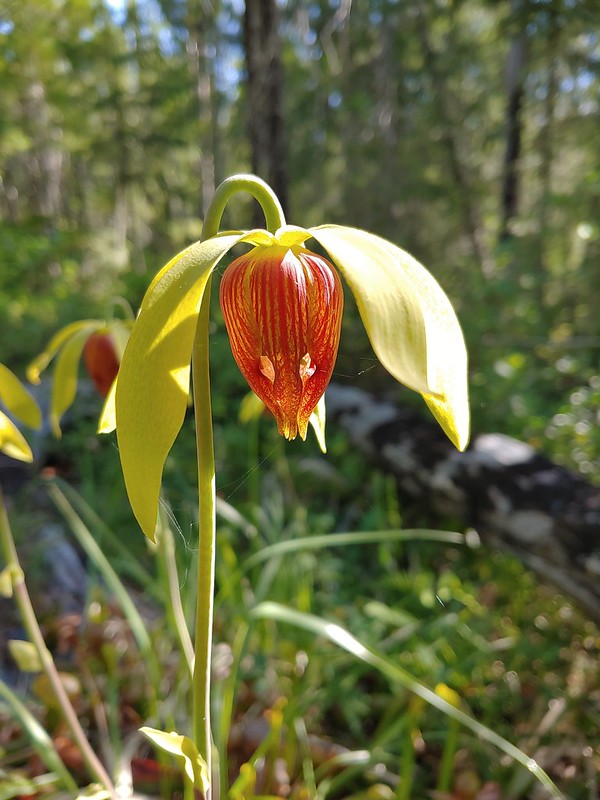
 The western azaleas smelled wonderful.
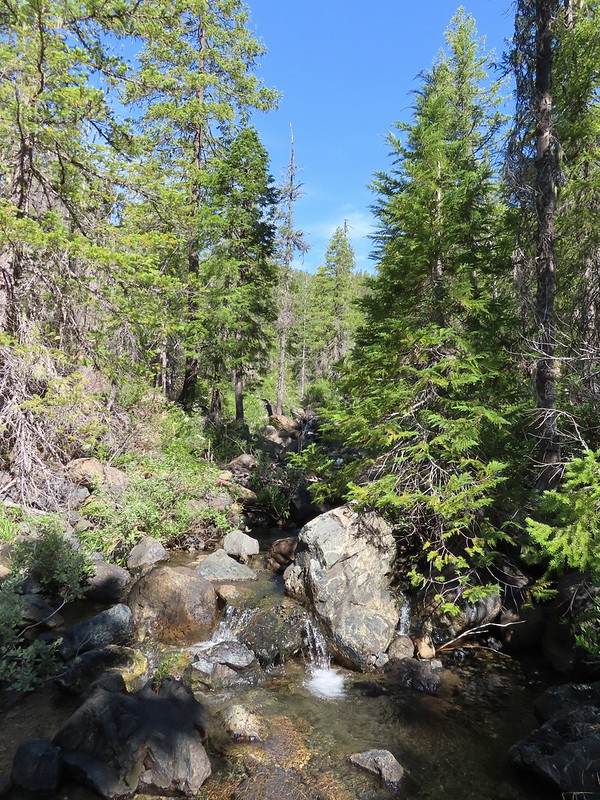 Another side creek.
 Another fire scar, this time from the 2017 Young fire.
 Silver-spotted skipper


 Chipmunk
 White-stemmed frasera
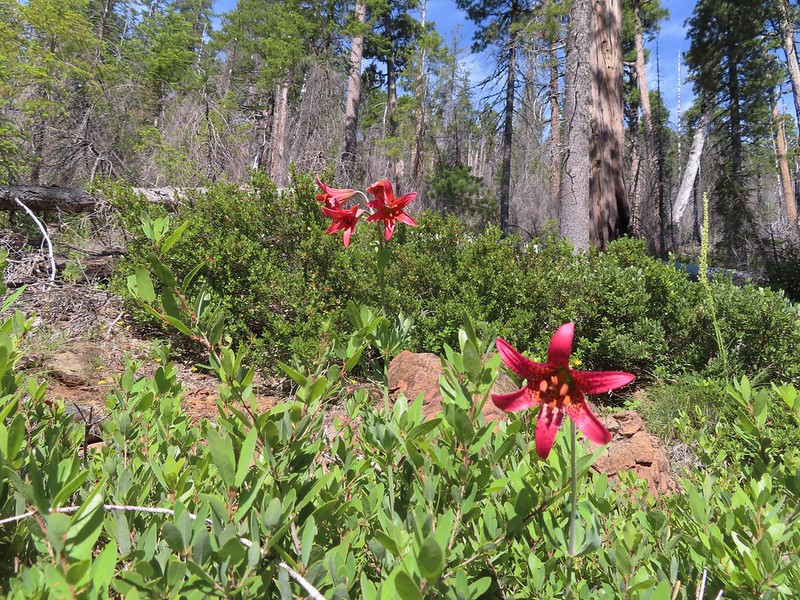 Bolander’s lily, another exciting find for us and the first time we’ve seen them.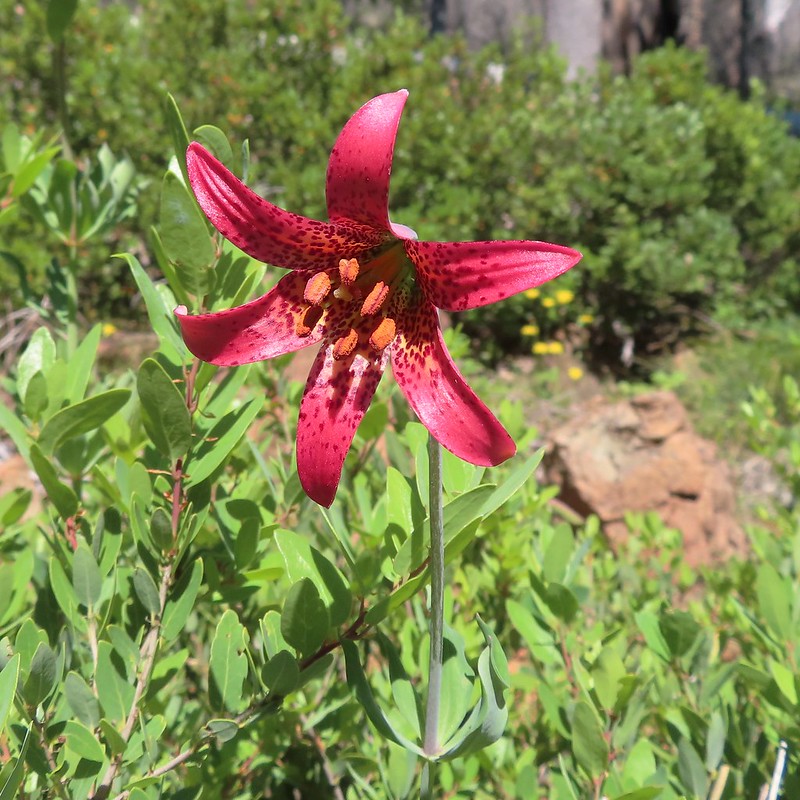
 Washington lily with a crab spider.
 Trail sign near Trout Camp.
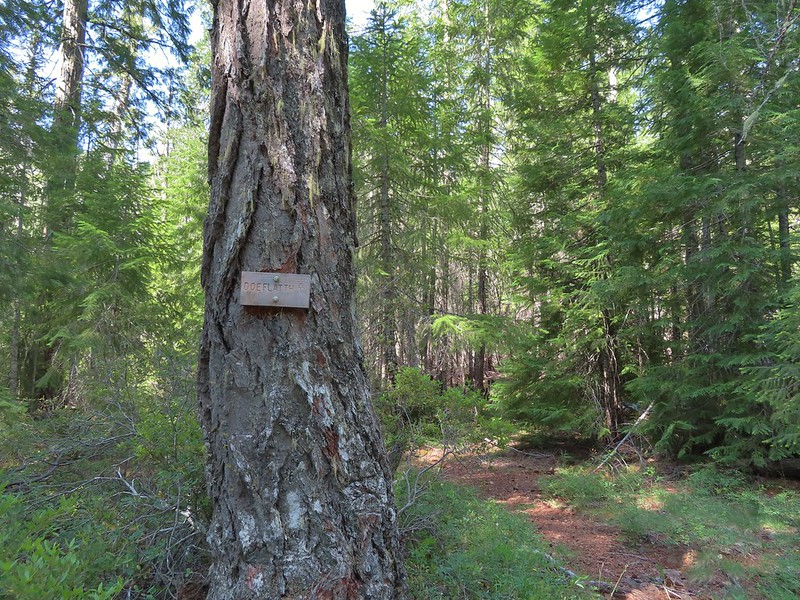 Sign for the Doe Flat Trail at Trout Camp.
 Doe Creek, we probably could have made it dry footed (I was able to on the way back.) but since we were already wet why bother.

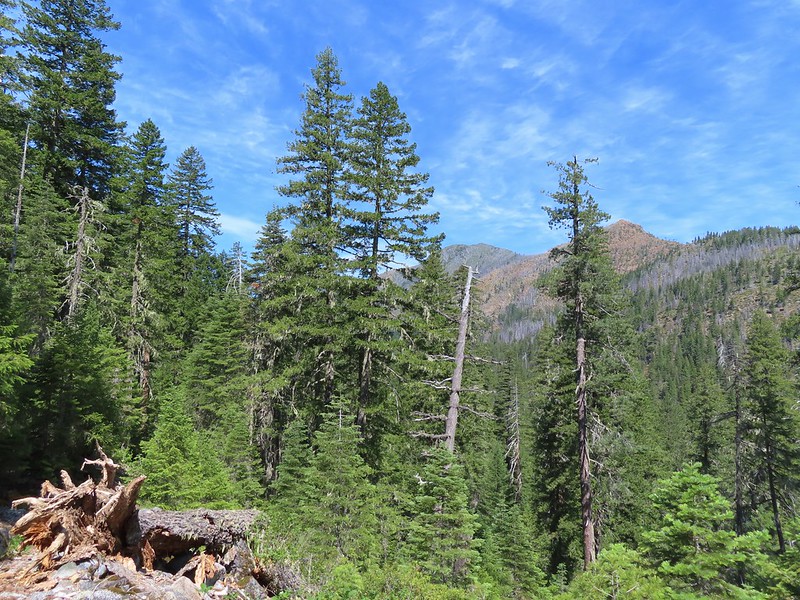 Twin Peaks in the distance.
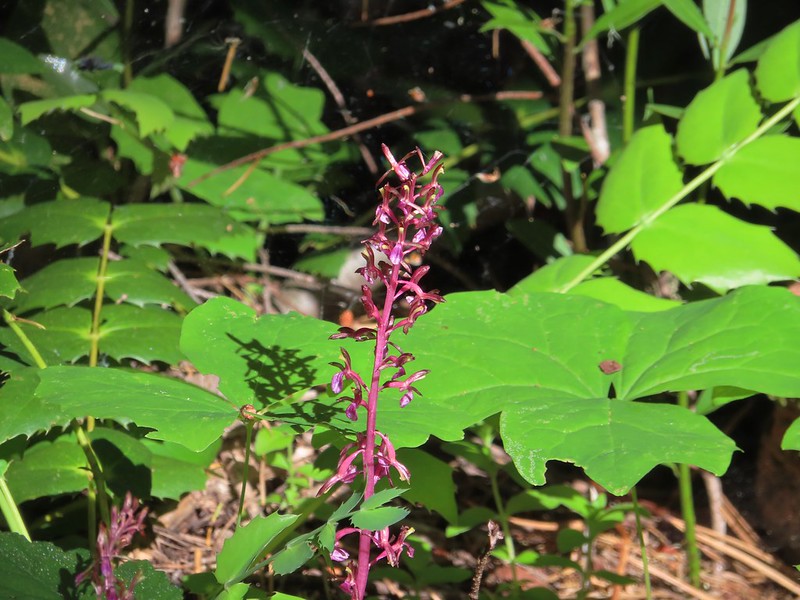 Pacific coralroot
 Phantom orchid
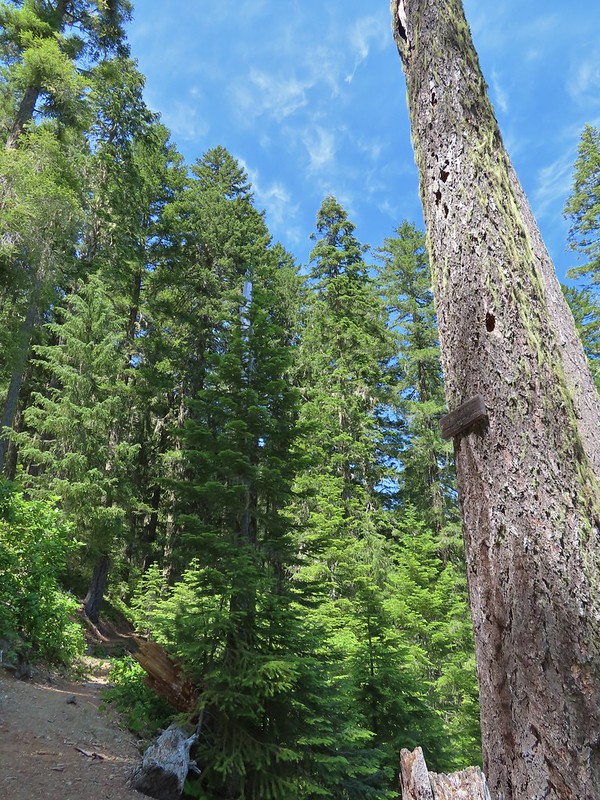 The Doe Flat Trail continuing on from the junction.
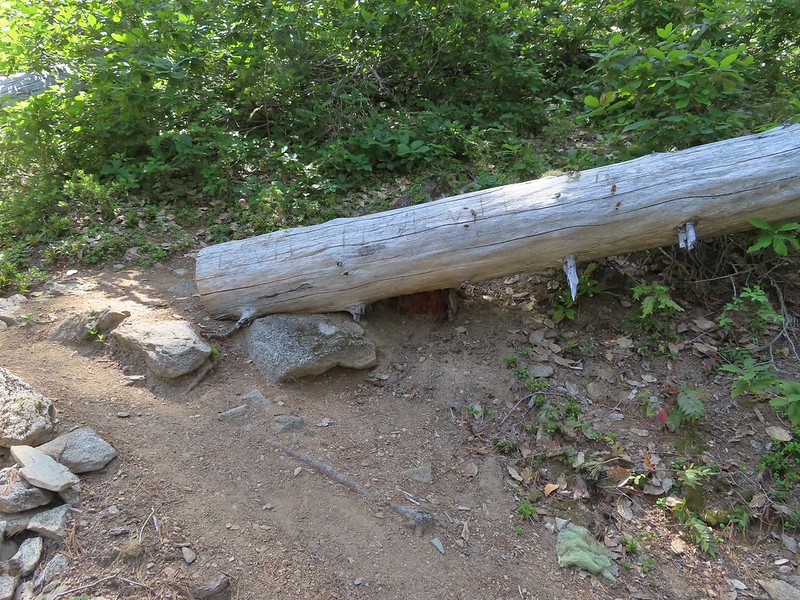
 The flat top of Black Butte in the distance.
 Bear Mountain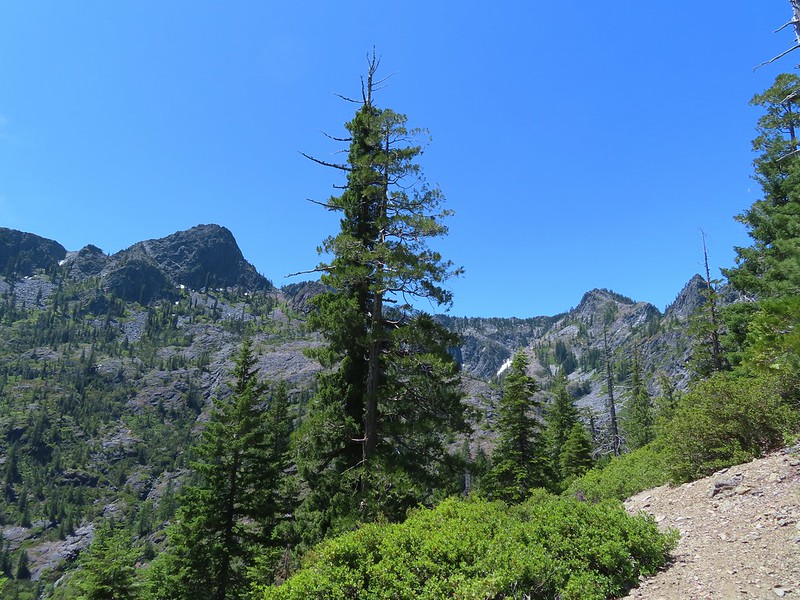
 Blue-head gilia
 Oregon sunshine


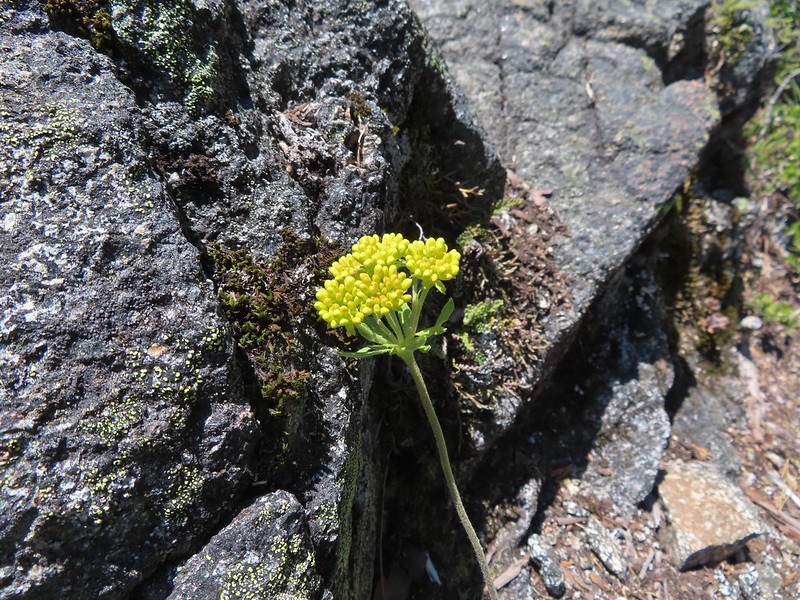 Buckwheat
 Siskiyou lewisia
 Preston Peak
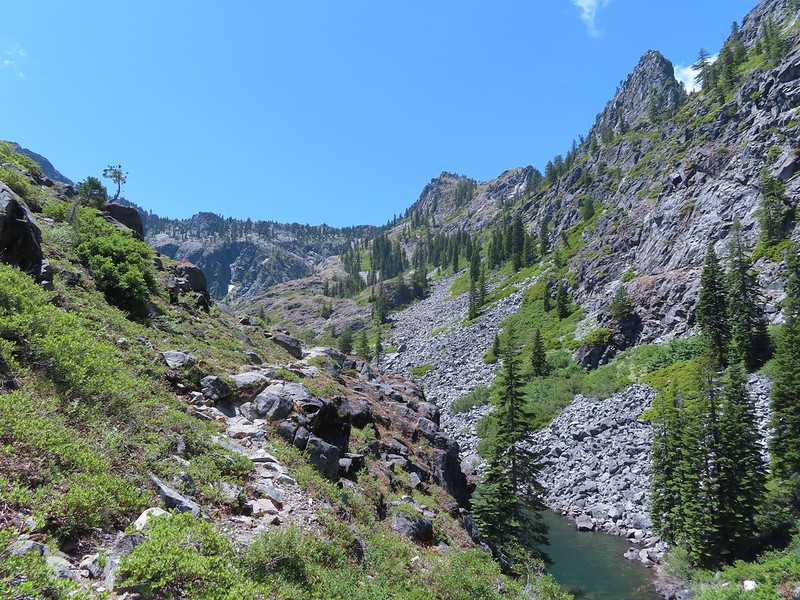

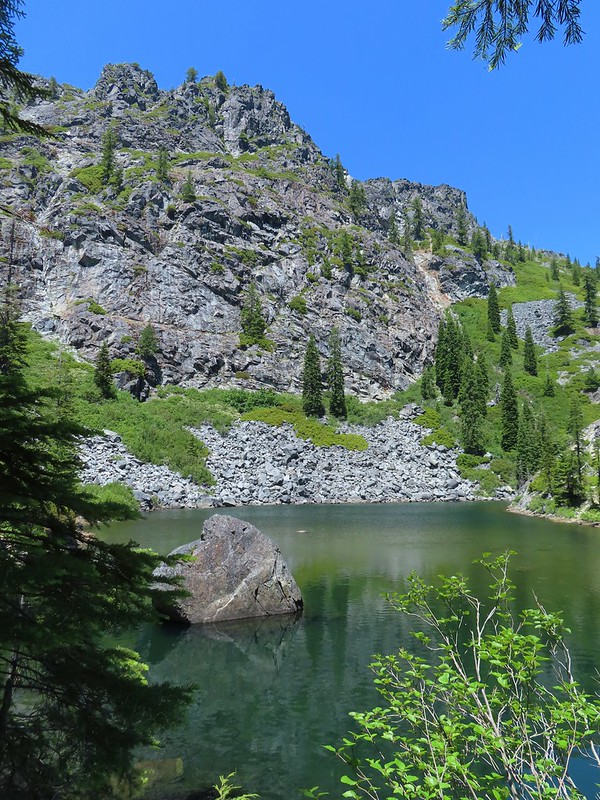

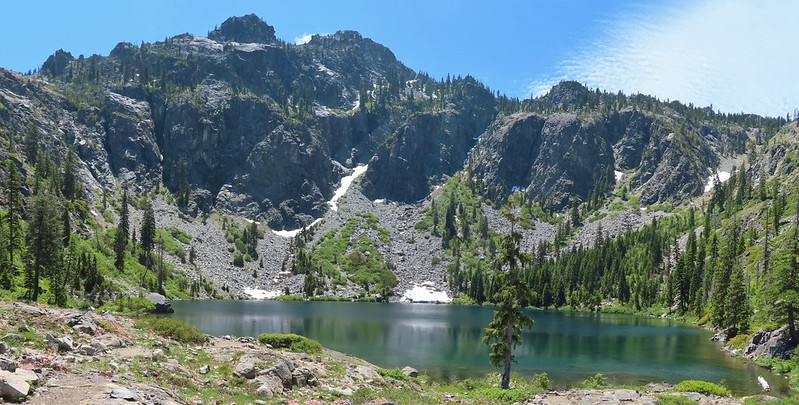
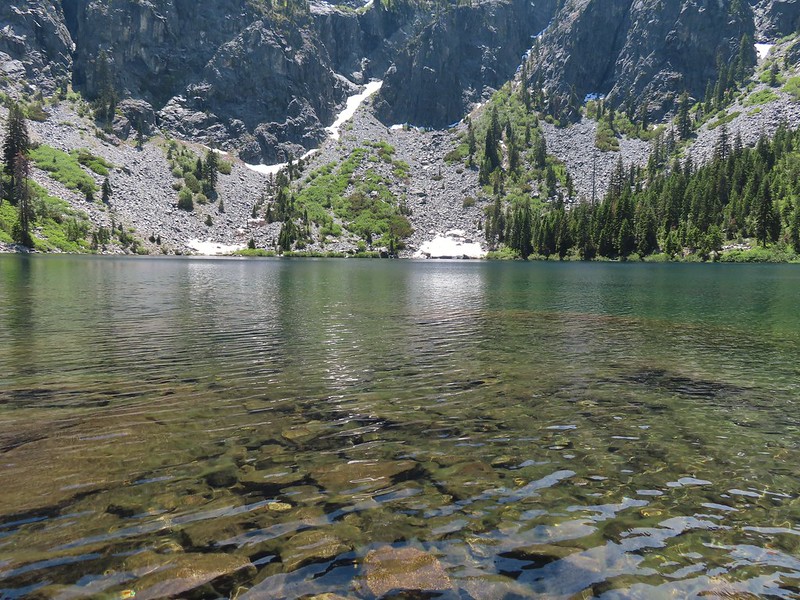
 Pussypaws
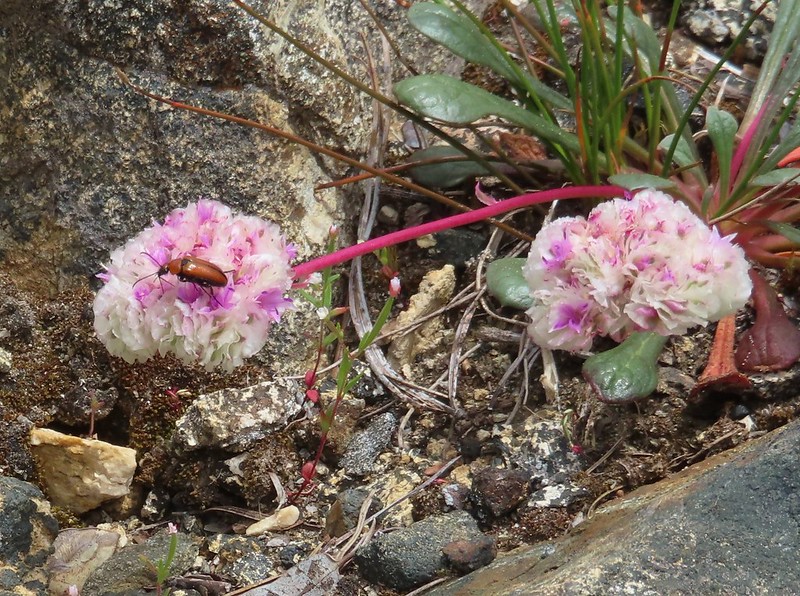 Beetle on a pussypaw
 Swallowtail on azalea
 Silver-spotted skipper on Siskiyou lewisia
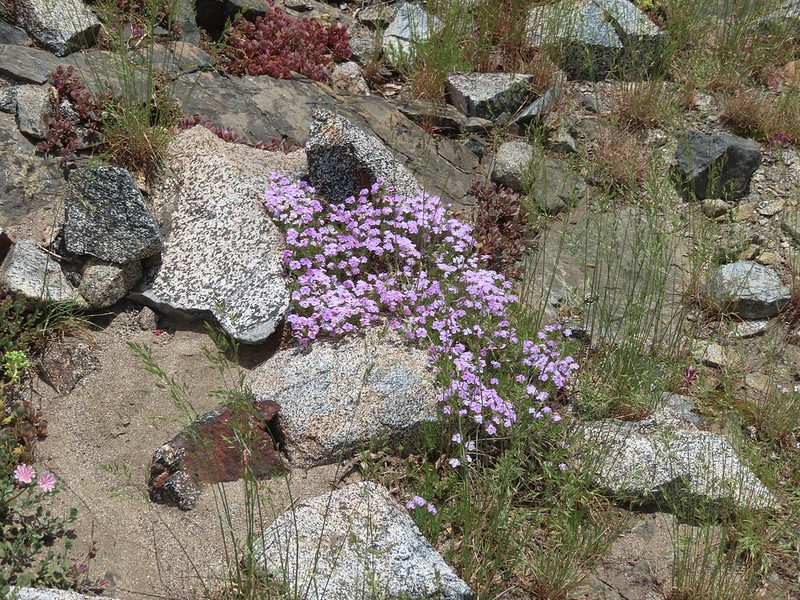 Phlox
Phlox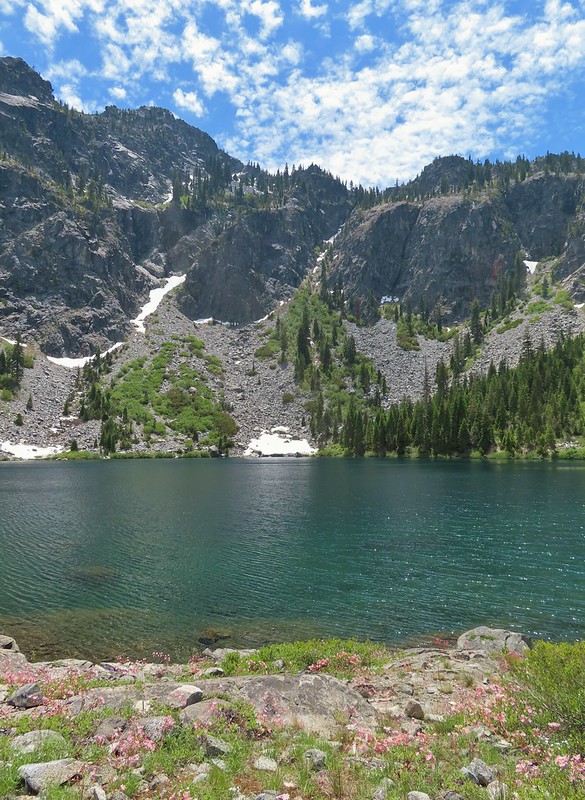
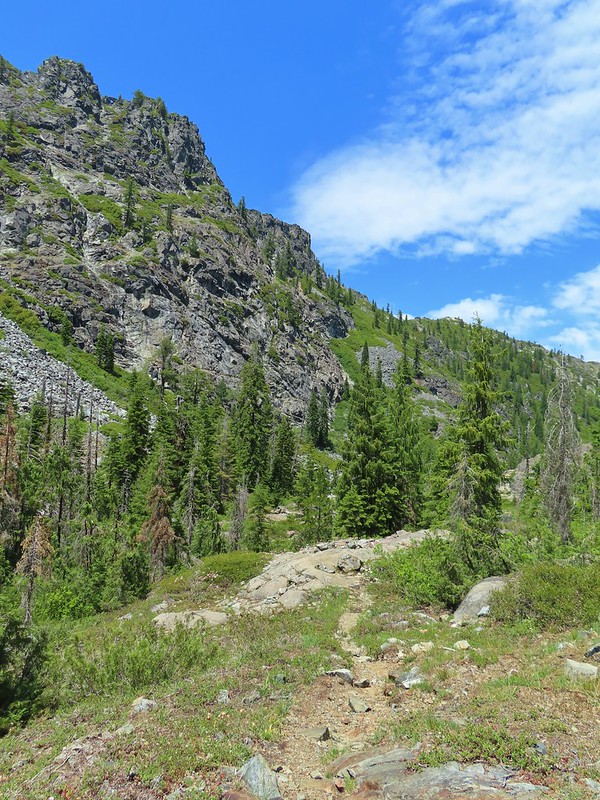 There is a rock arch atop the ridge near the left hand side.
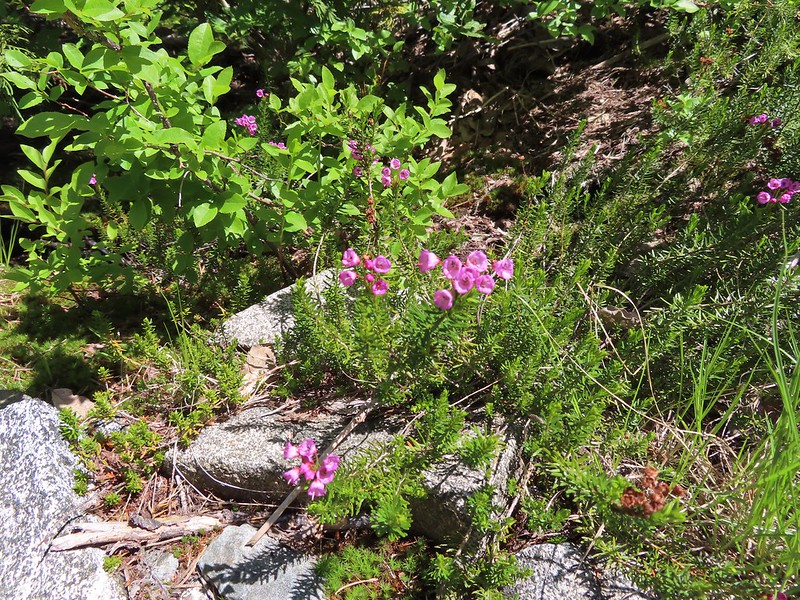 Mountain heather
 Green beetle
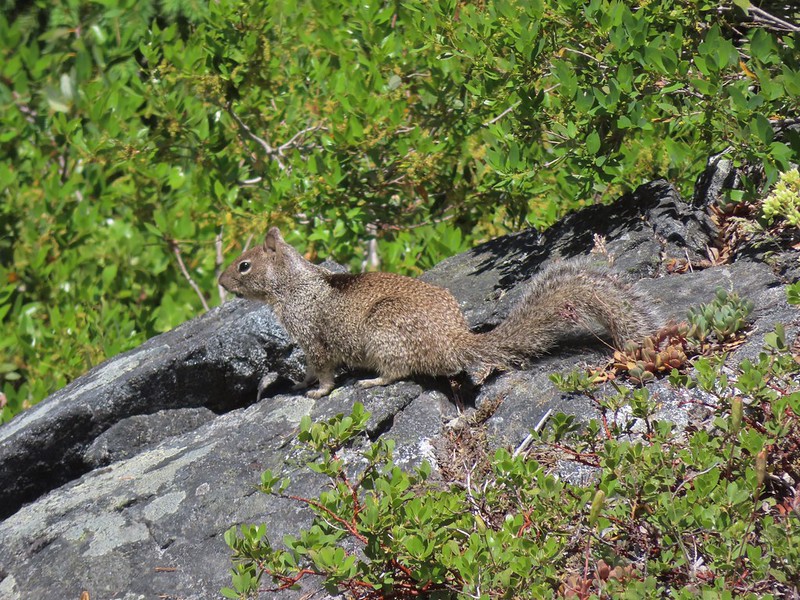 Ground squirrel
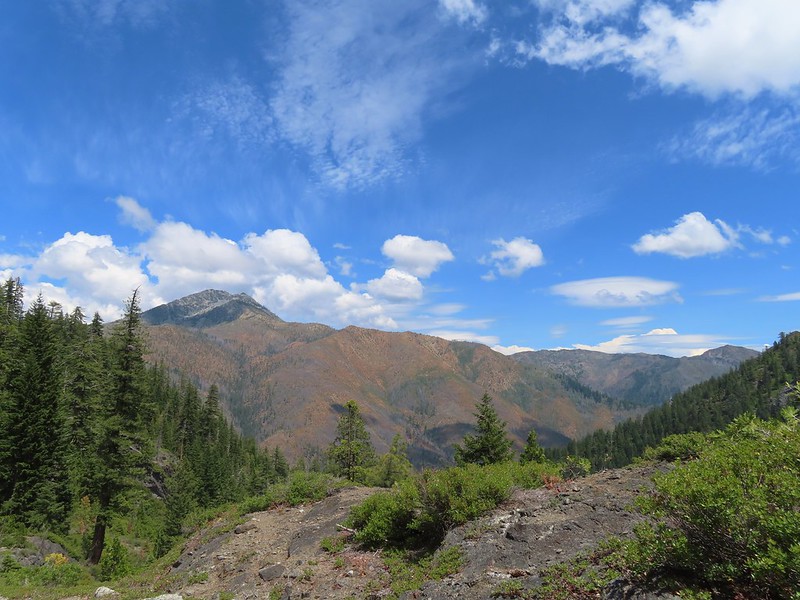 Clouds gathering around Preston Peak.
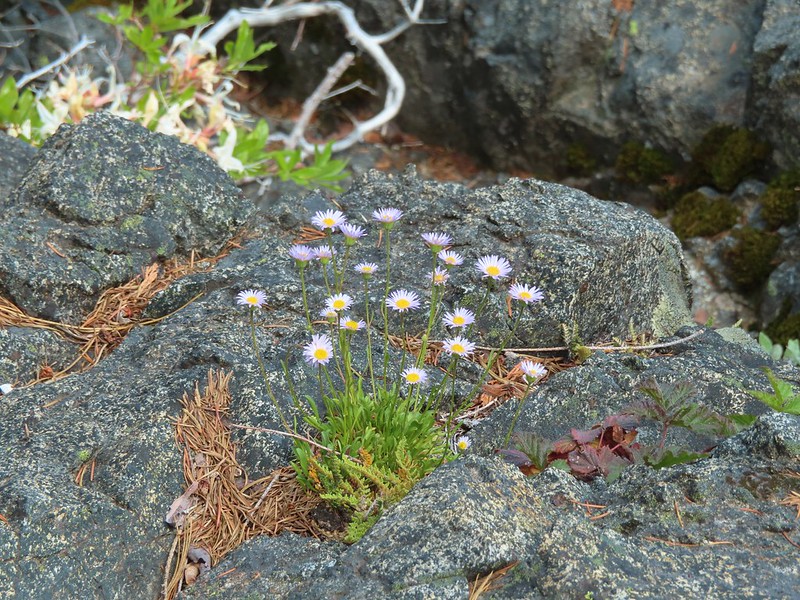 Fleabane near the pool.
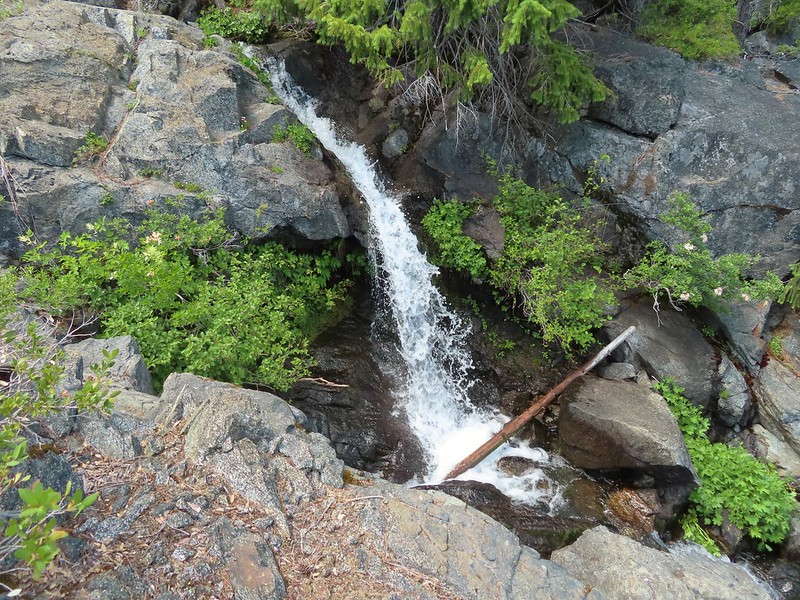 Waterfall along the outlet creek.
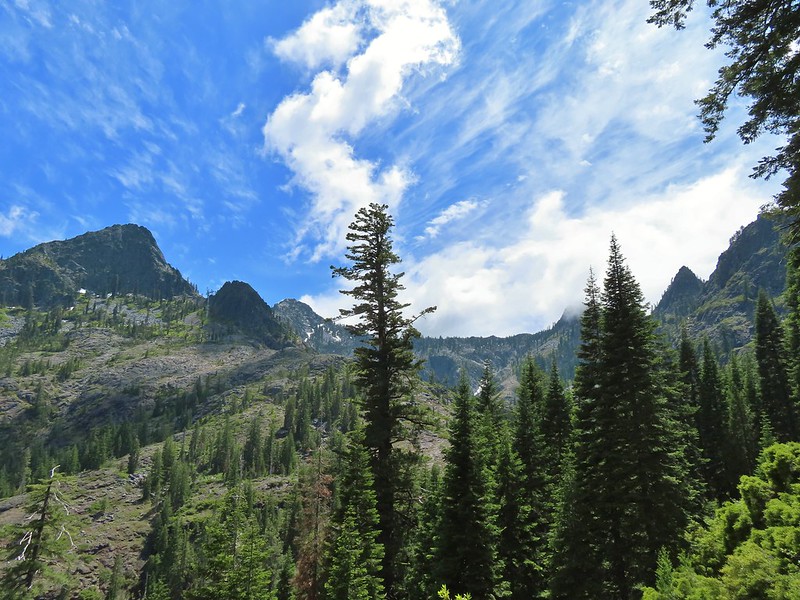 Clouds over Devil’s Punchbowl.
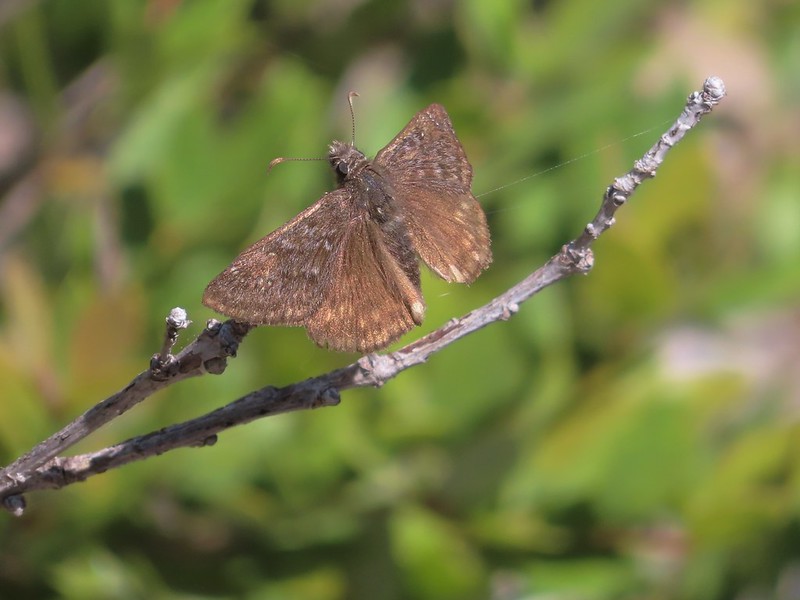 A duskywing
 More clouds to the north.
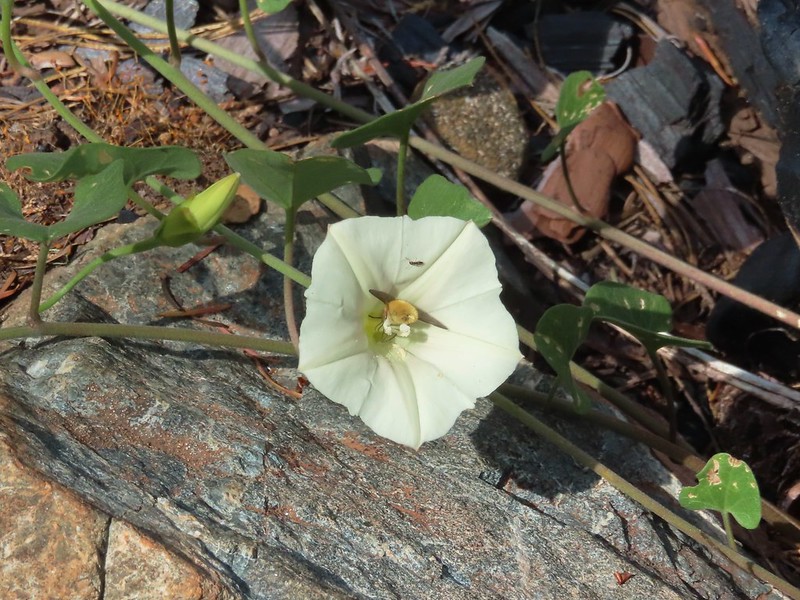 Bee in bindweed with a little ant observing.
 Back at the ford.
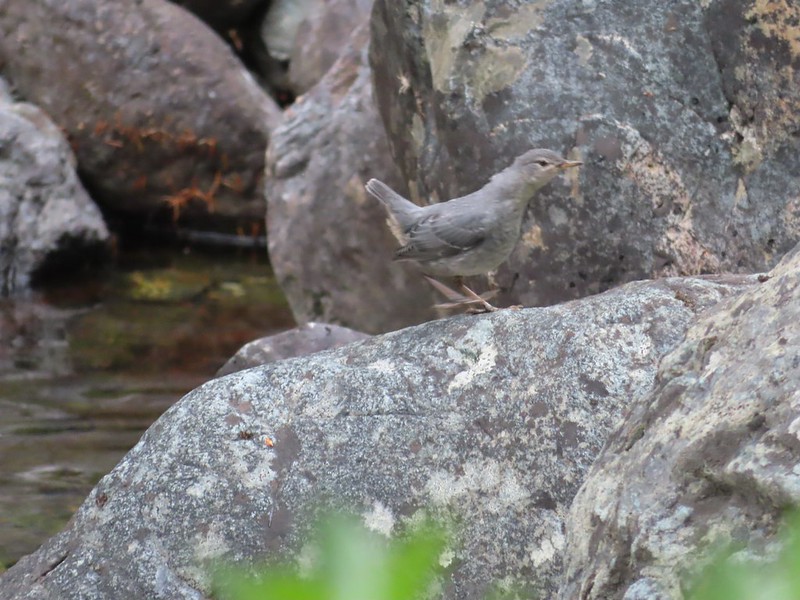 Ouzel at the Clear Creek ford.
 Doe in the forest.
 This little guy had a pretty song.
 Arriving back at Youngs Valley.
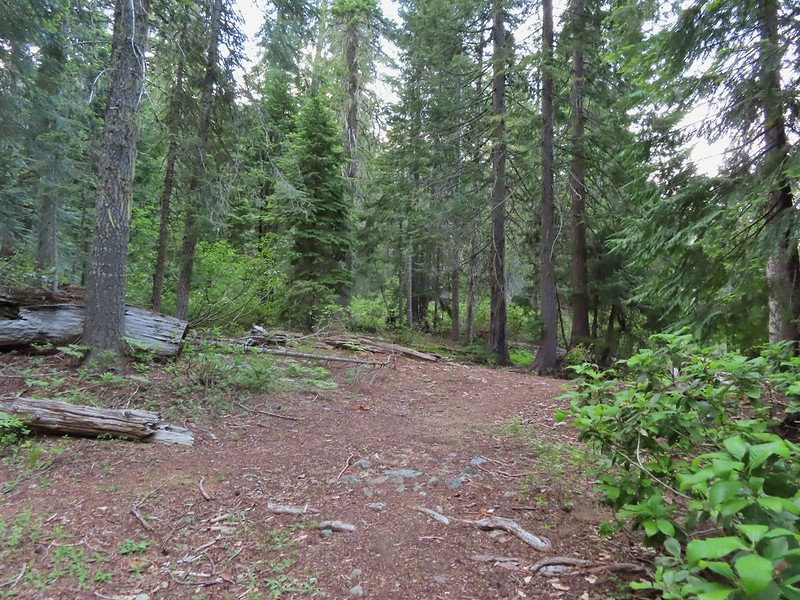 The bear in the middle of the photo behind a small leaning tree.

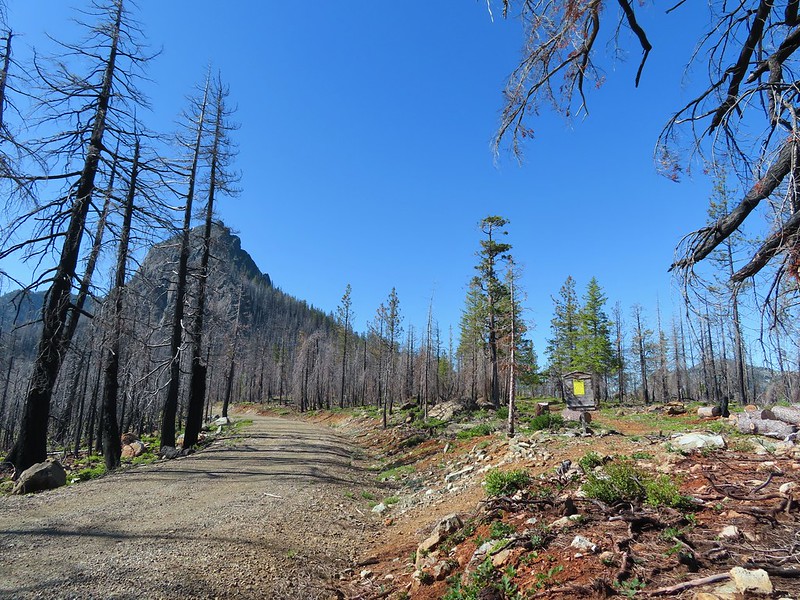 Black Butte from the Black Butte Trailhead.
 Penstemon
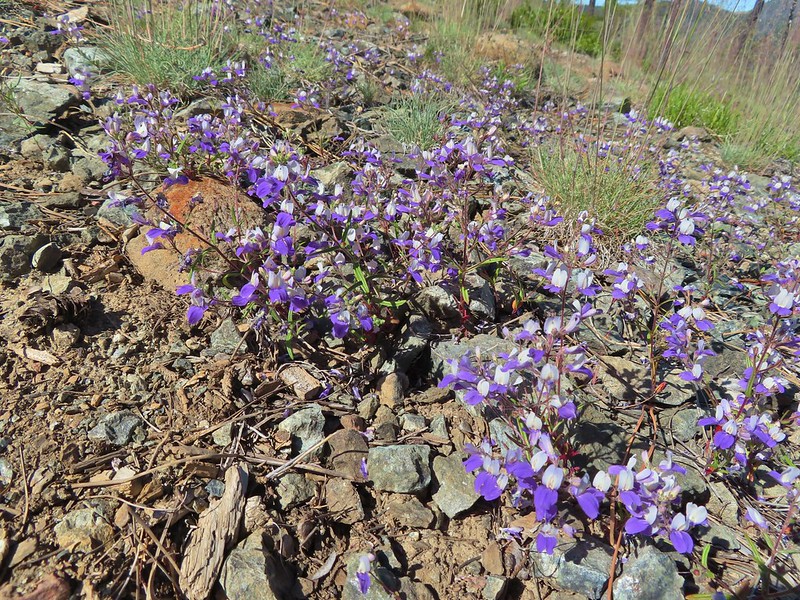 Narrowleaf blue eyed Mary
 Siskiyou mountain ragwort
 Wedgeleaf violet
 Sanger Peak
 More penstemon
 Phlox
Phlox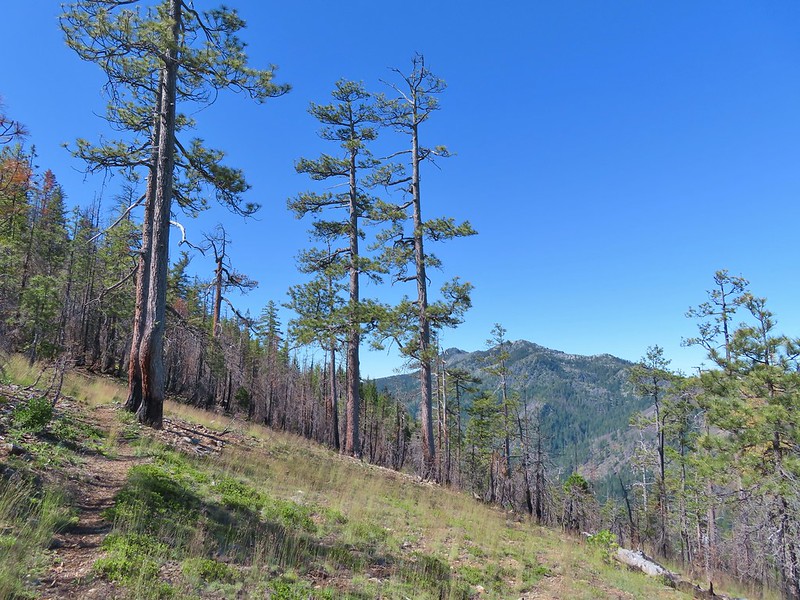 Youngs Peak
 It turned out to be a beargrass year, at least in the northern part of the wilderness.
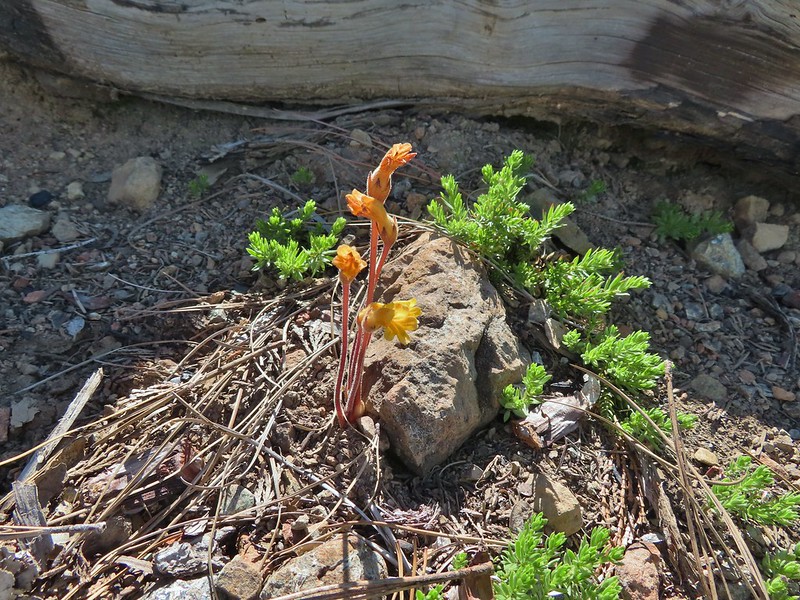 Clustered broomrape
 Paintbrush
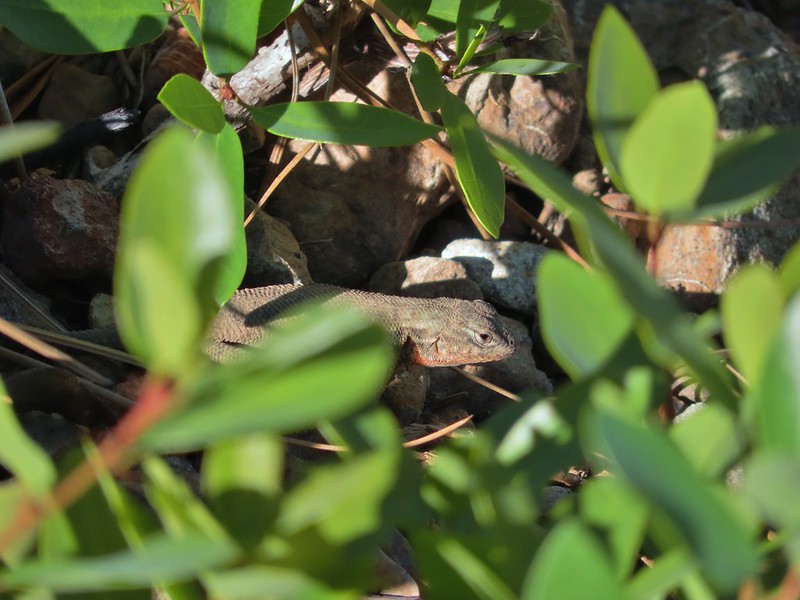 Lizard
 El Capitan with the snow behind Bear Cub. Bear Mountain is the high point in the center distance with Rocky Knob to the right front of it. Youngs Peak is the high point to the far right of the frame at the end of the ridge.
 Looking up at Black Butte.
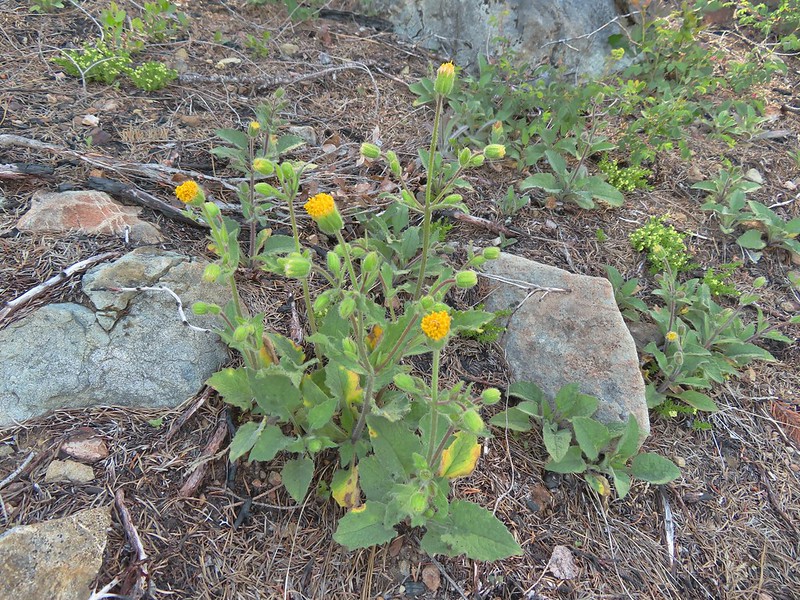 Rayless arnica
 Big deervetch
 The junction with the tie trail.
 Polar Bear Mountain ahead.
 Azalea
 A sulphur butterfly
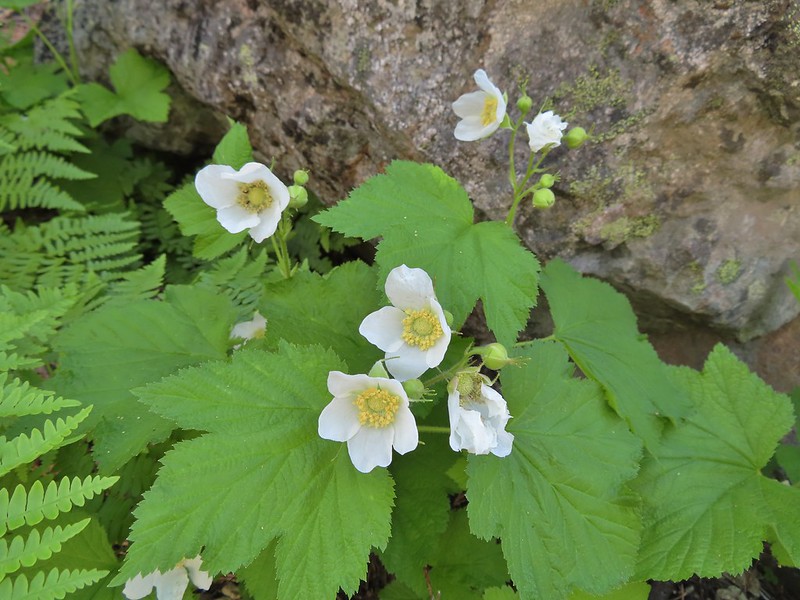 Thimbleberry blossoms
 A tortoiseshell on thimbleberry.
 Wallflower
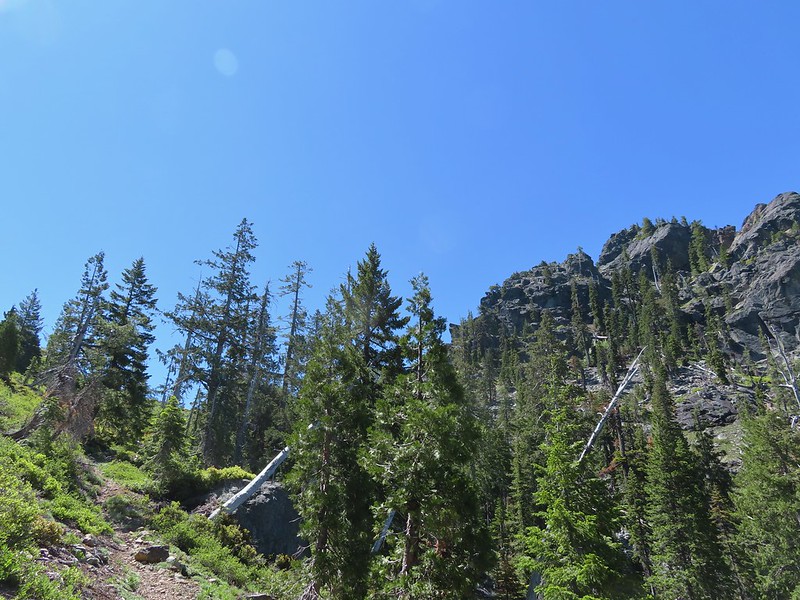 The trail steepened considerably as it made the final climb to the gap.
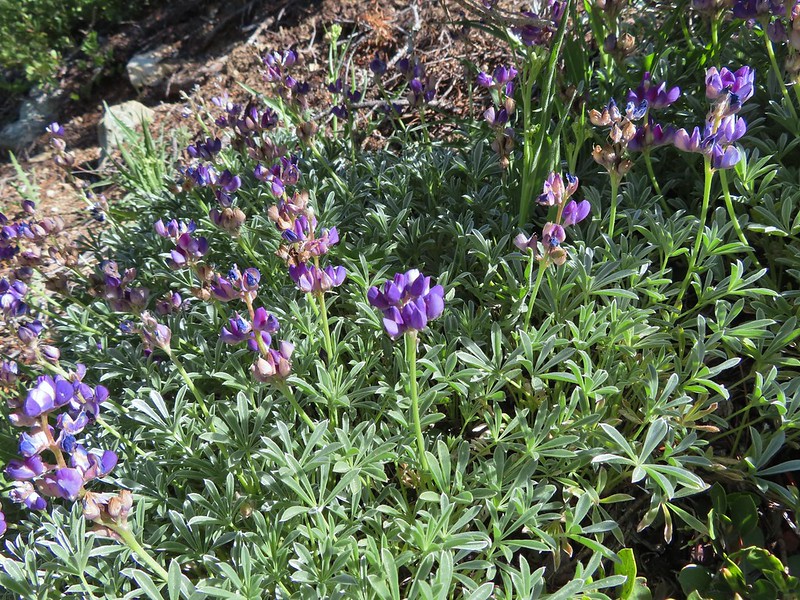 Lupine
 Lewis flax
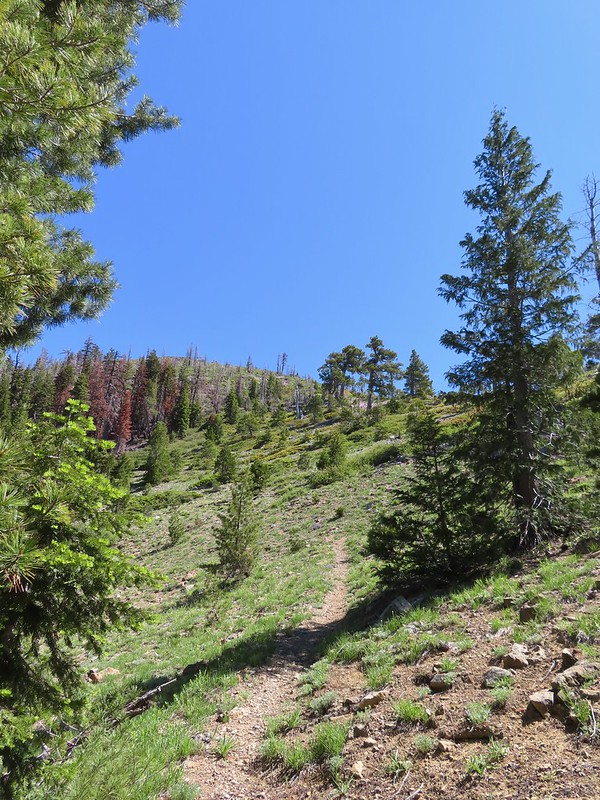 Lookout Mountain
 Paintbrush
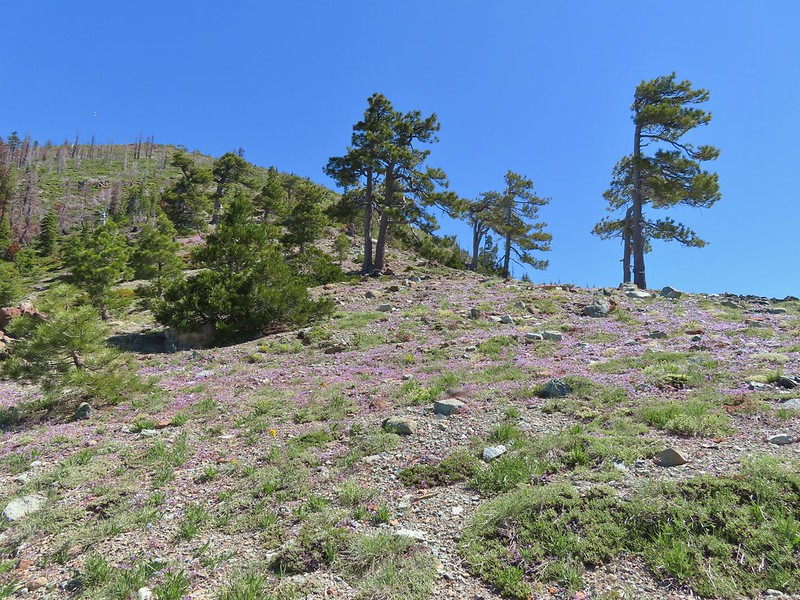 A carpet of narrowleaf blue eyed Mary at Polar Bear Gap
 Nuttall’s sandwort surrounded by blue eyed Mary.
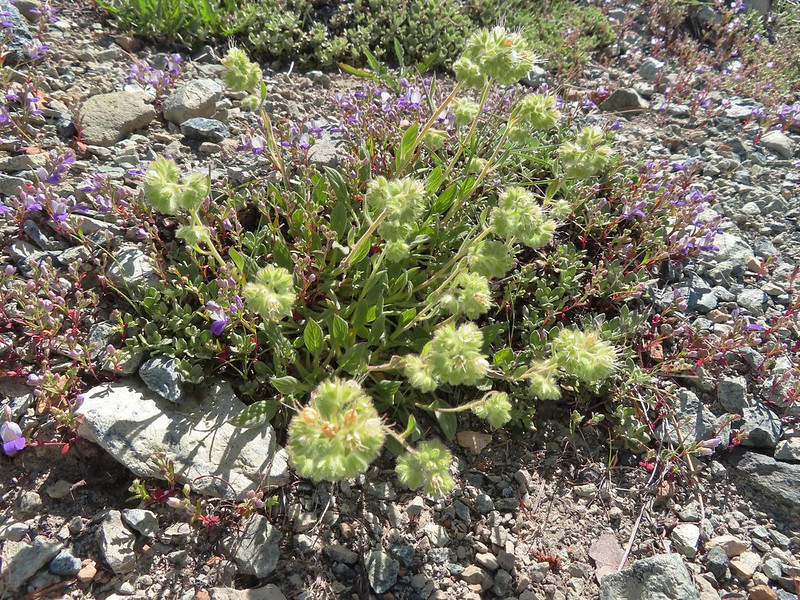 Serpentine phacelia
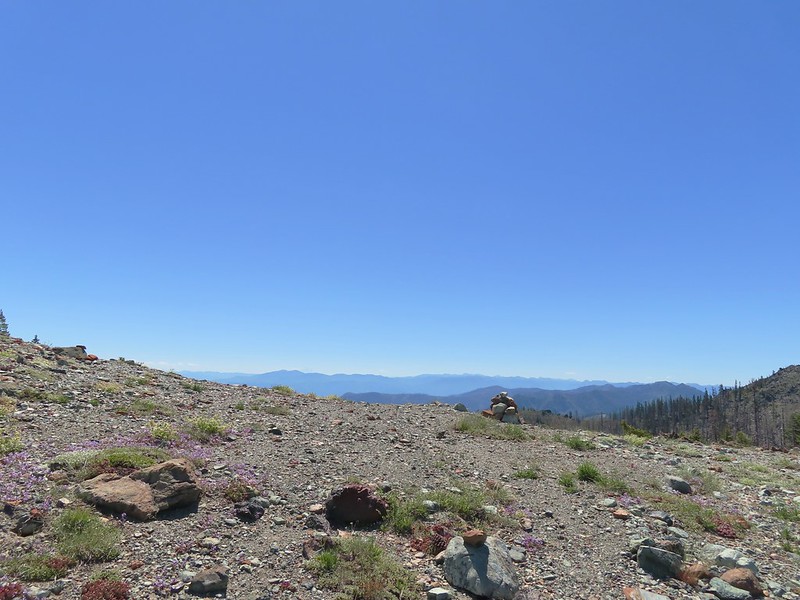 Polar Bear Gap
 Lookout Mountain
 Polar Bear Mountain
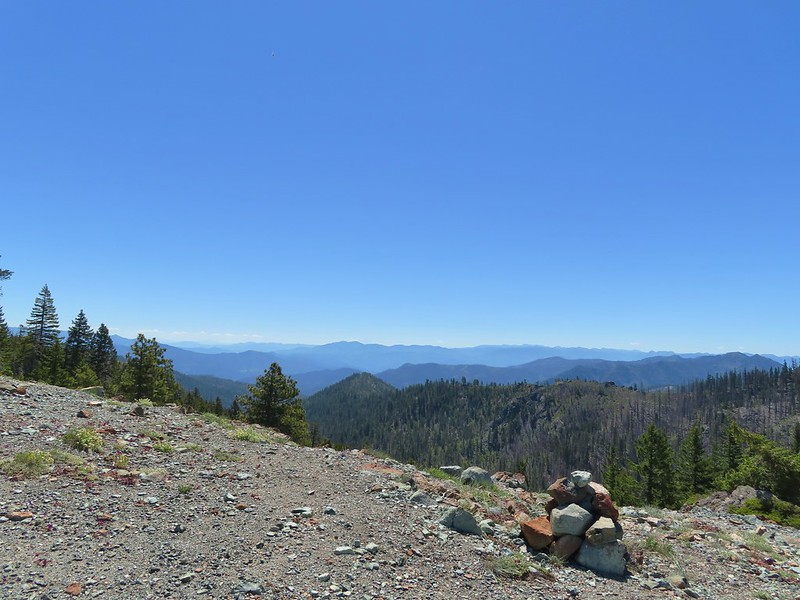 Looking east toward Mt. Shasta.
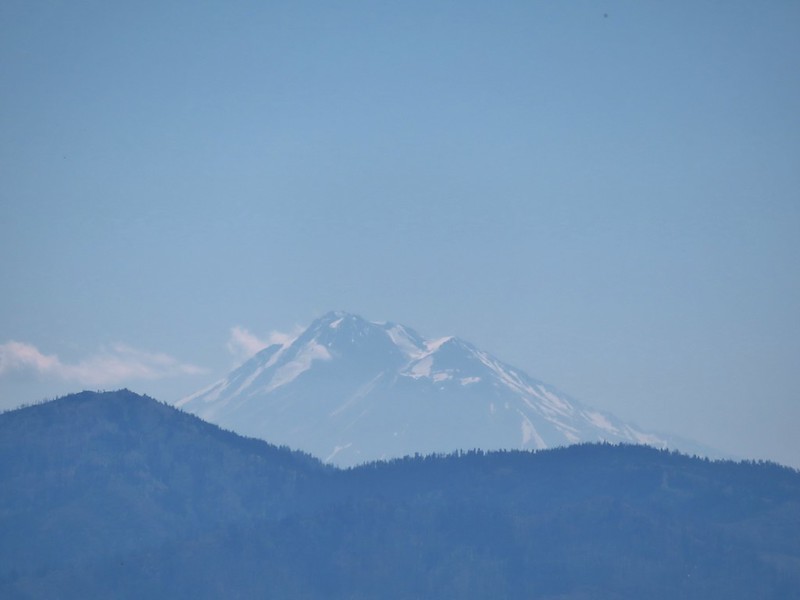 Mt. Shasta
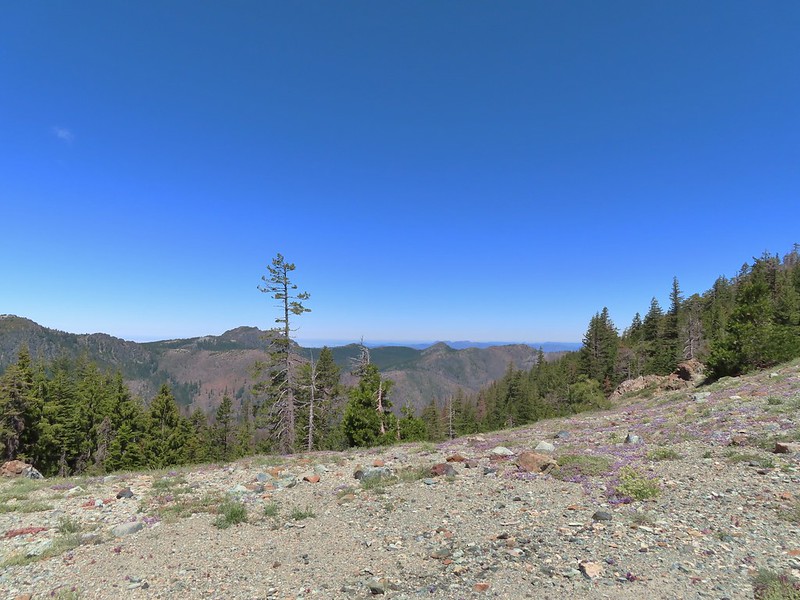 Looking west toward Sanger Peak.
 Sickle-leaved Onion
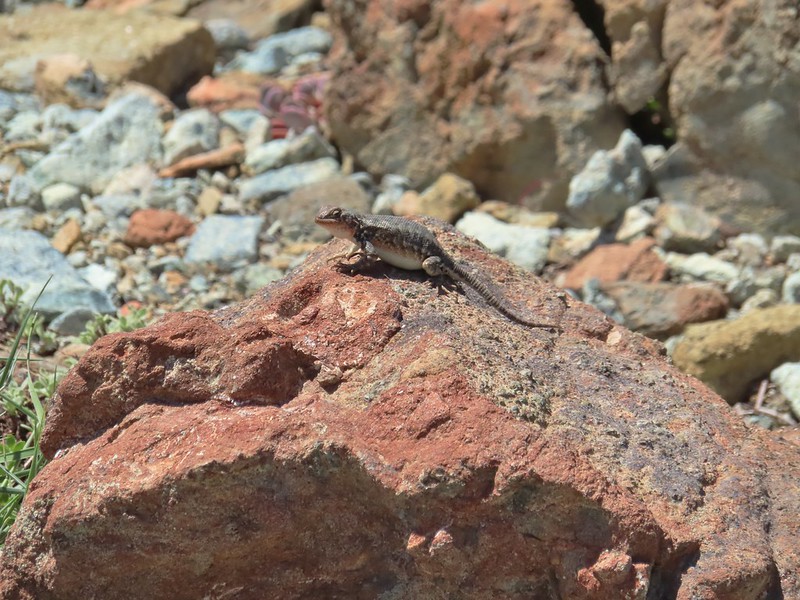 There were lots of lizards in the area.
 Heading down into Twin Valley
 Paintbrush and penstemon along the trail.
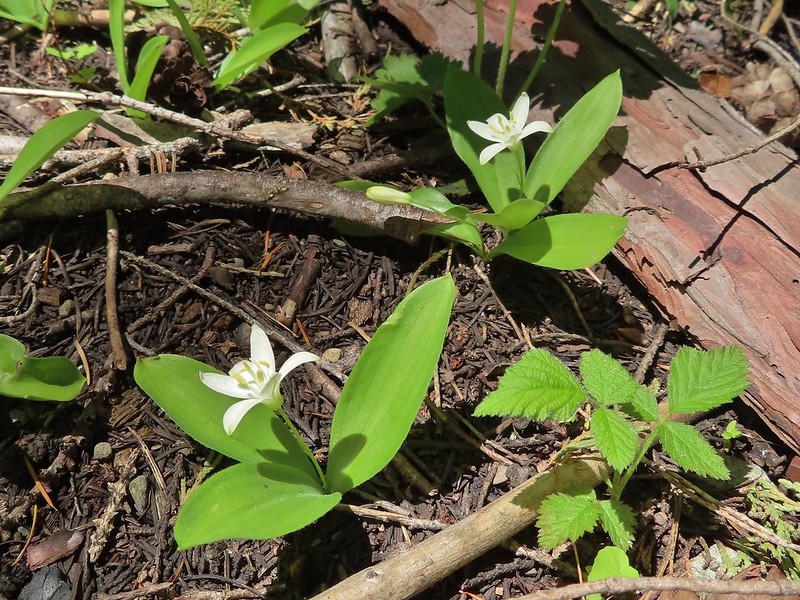 Queen’s cup
 Frog
Frog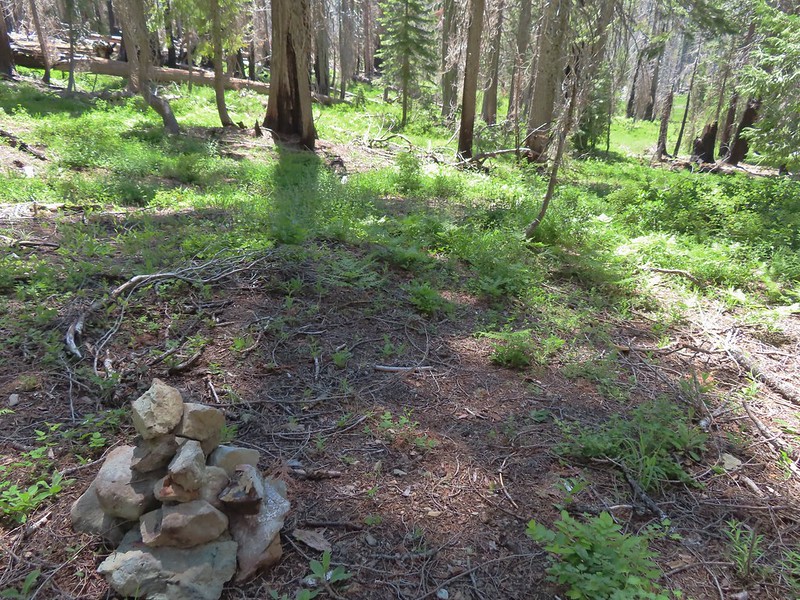
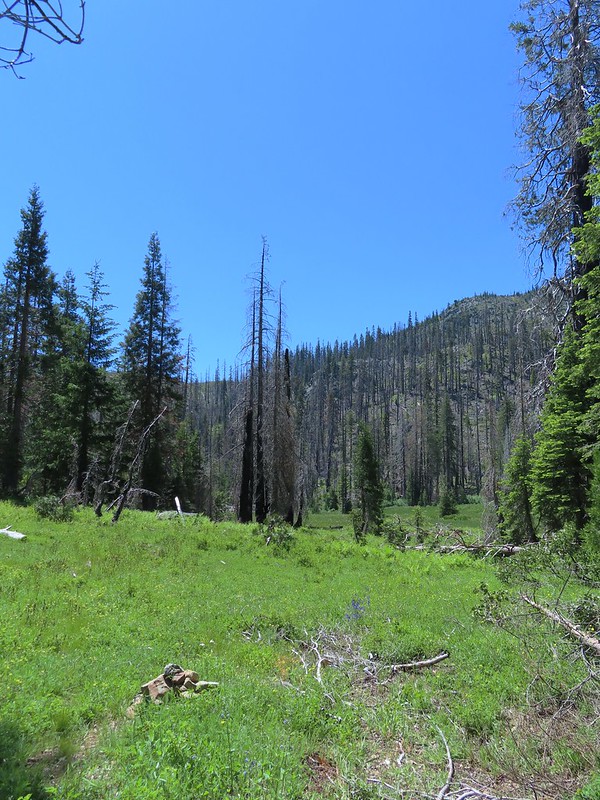
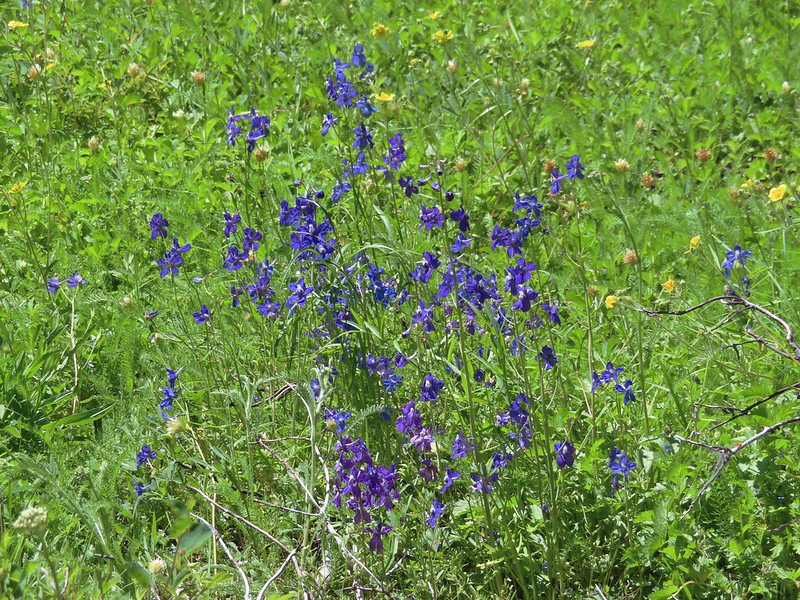 Larkspur
 The yellow is a cinquefoil I believe but I don’t know what the other dark flower is.
 Meadow in Twin Valley.
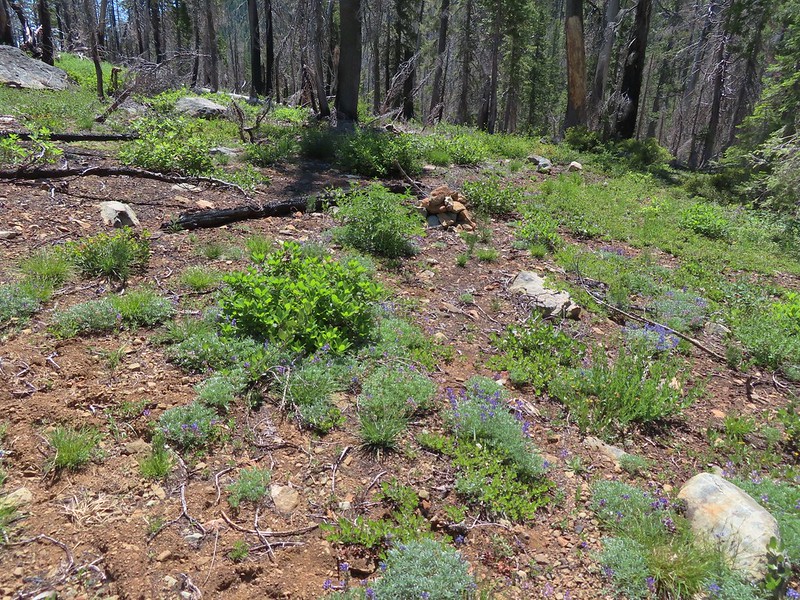 Heading down to a stream crossing between the two meadows.
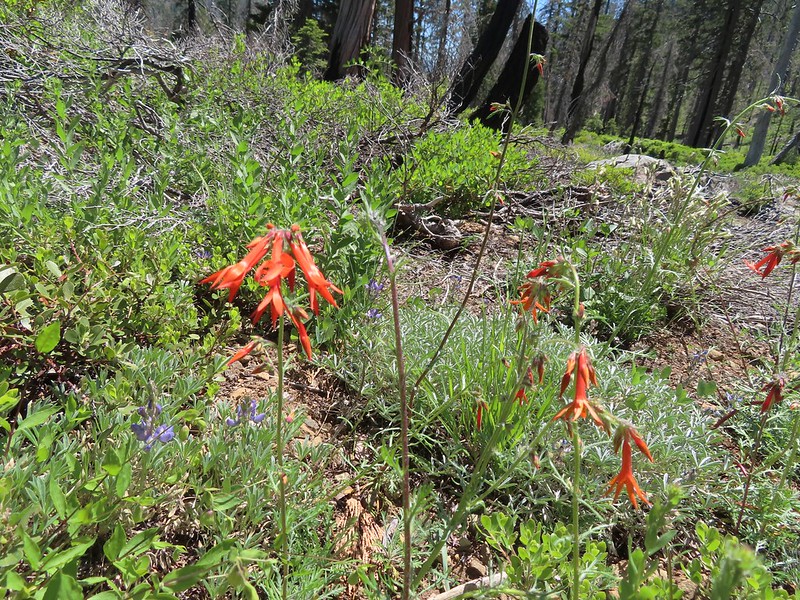 Scarlet gilia
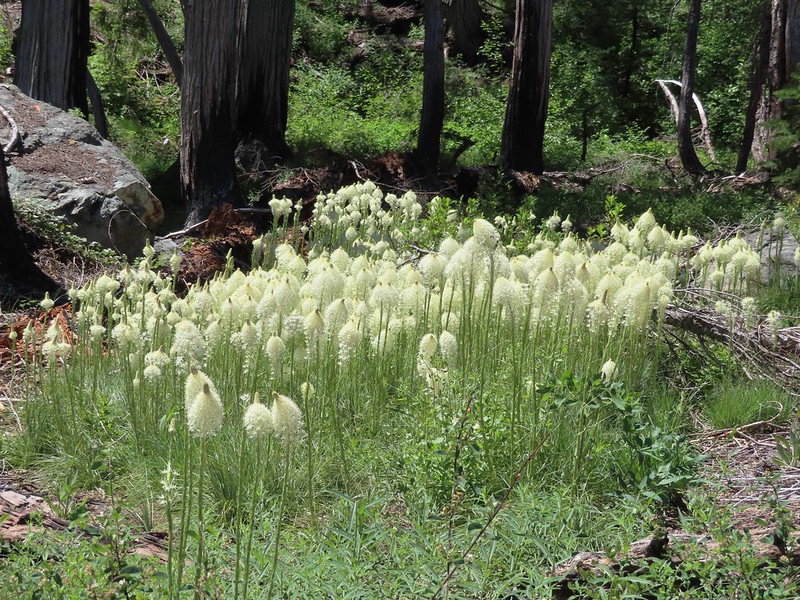 Beargrass
 Creek crossing.
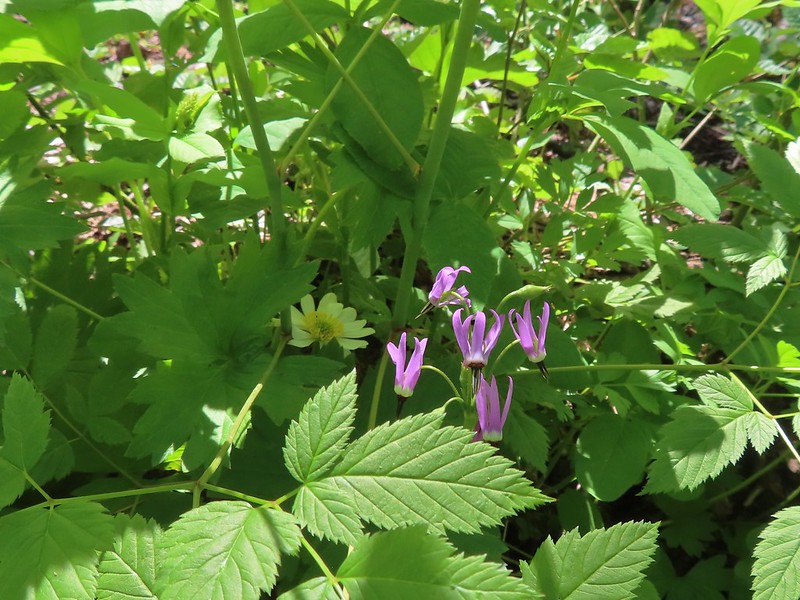 Shooting star and marsh marigold.
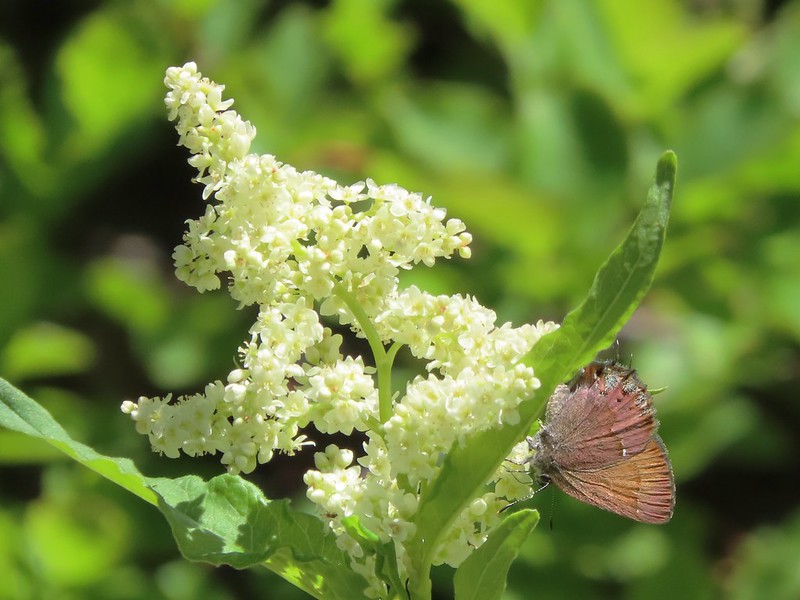 A hairstreak butterfly
 Columbine and cinquefoil
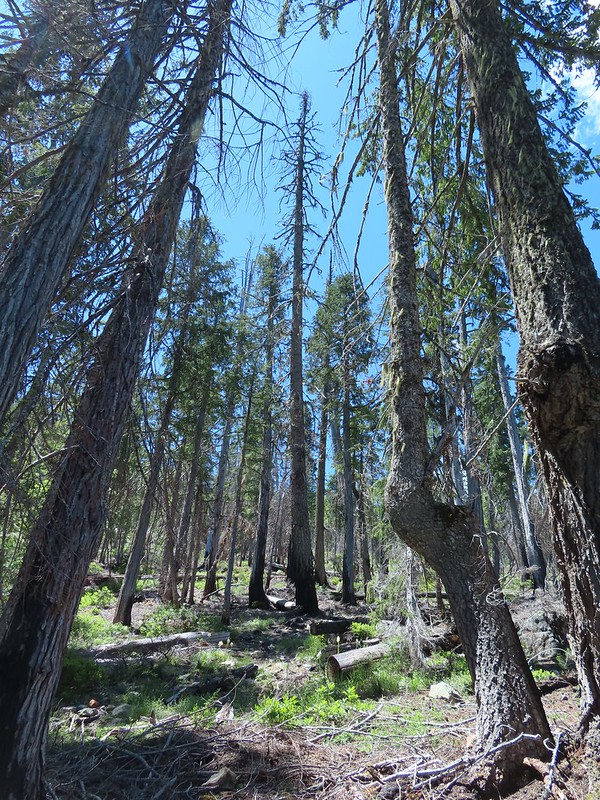 Cut logs helped identify where the trail was supposed to be.
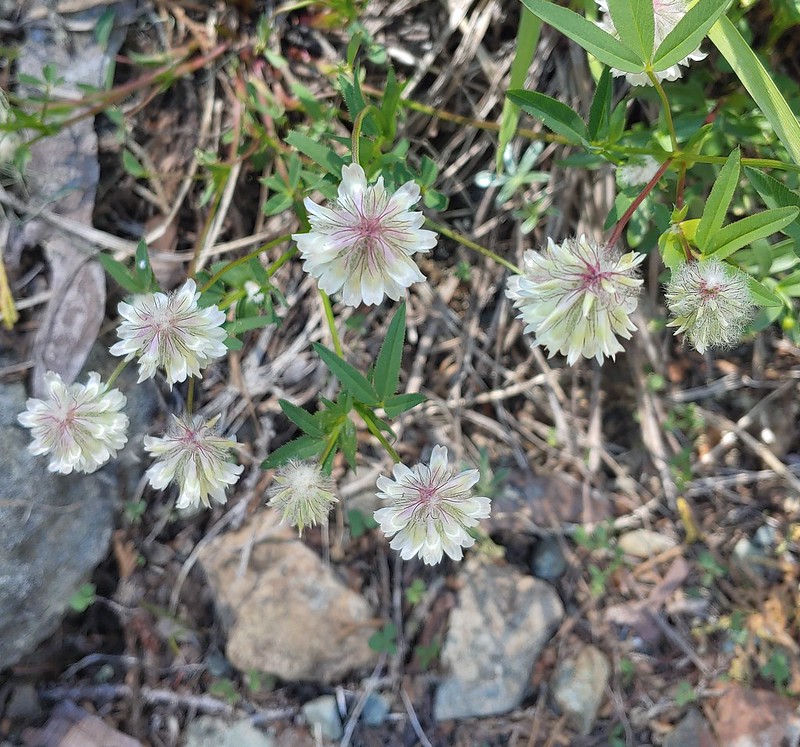 Wolley-head clover
 Oregon violet
 Polar Bear Gap from the Poker Flat Trail.
 Looking up toward the ridge end.
 Iris at the ridge end.
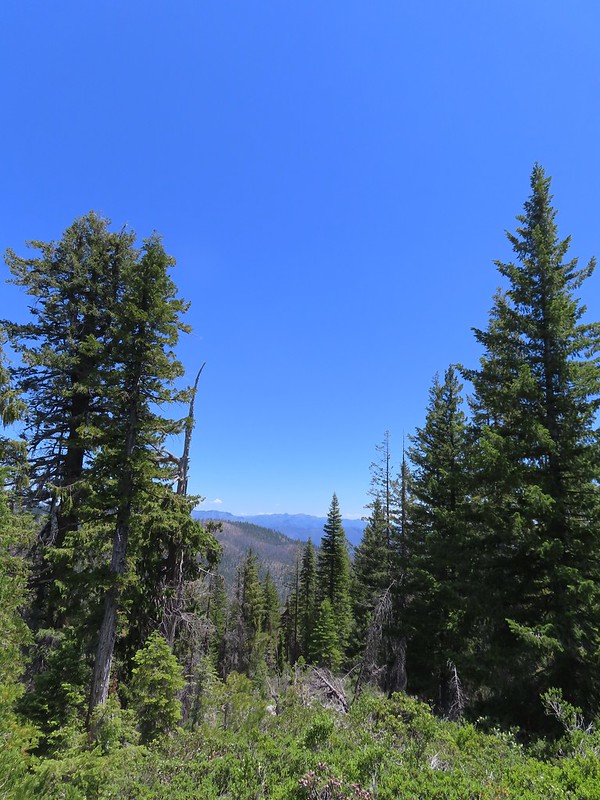 Red Buttes (
 Red Buttes
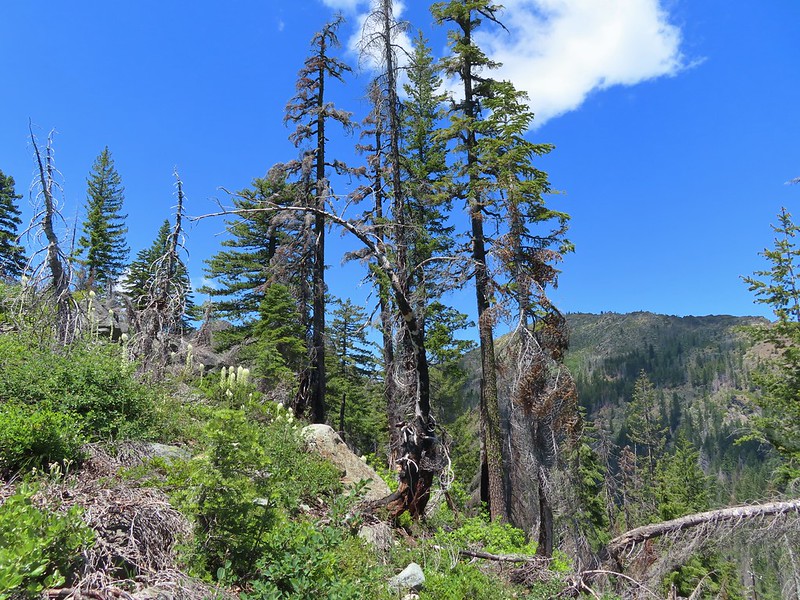 Lookout Mountain from the ridge end.
 Bee visiting penstemon.
 The Lieutenants and El Capitain
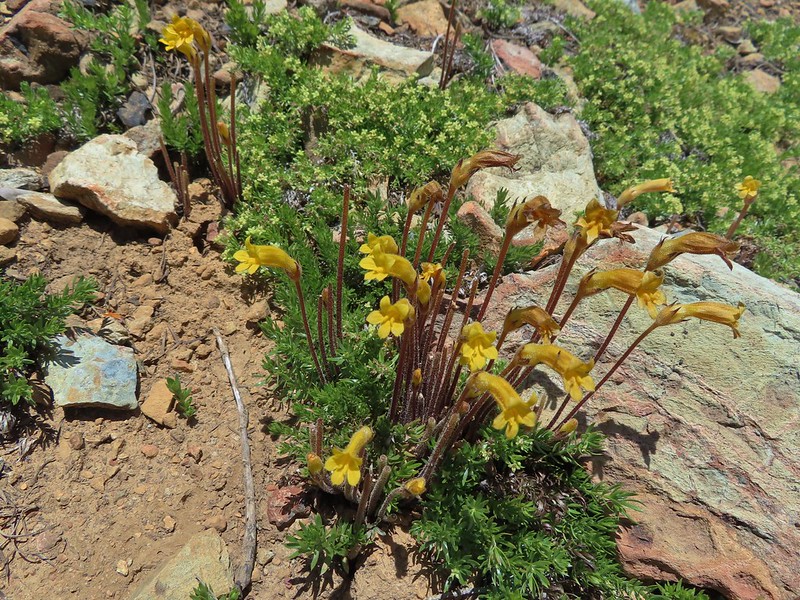 Clustered broomrape
 We were starting to see a lot of bear sign.
 An as-of-yet unidentified flower.
 This may be sticky blue eyed Mary.
 Mariposa lily
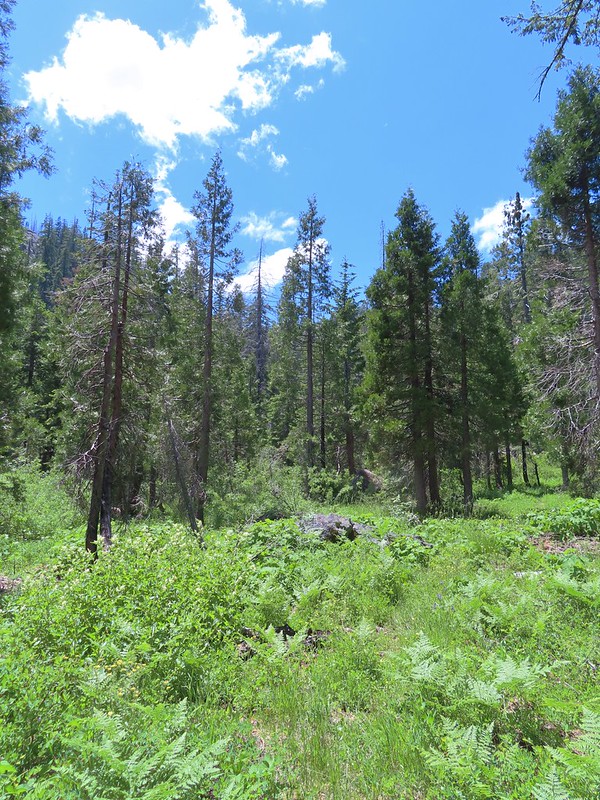 More faint trail.
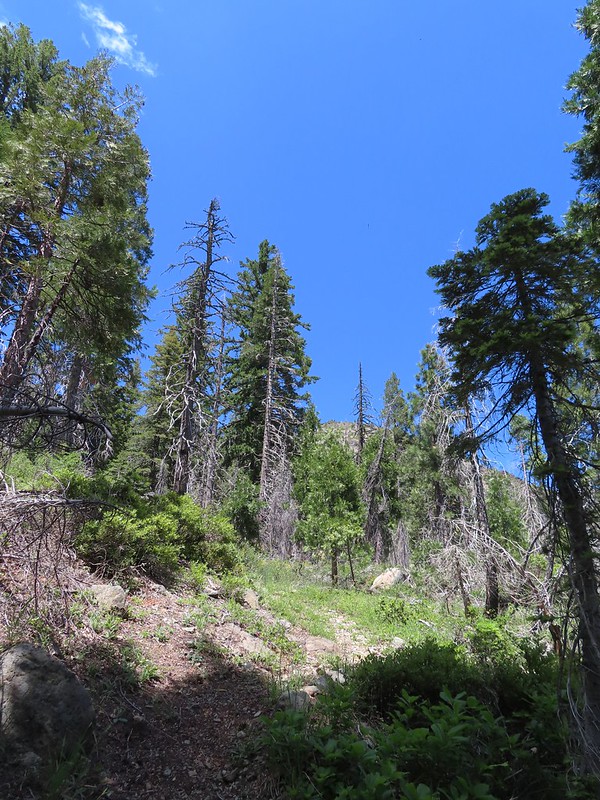 Time to climb.
 Anemone
 Meadow along the Poker Flat Trail.
 Approaching Private Lake.
 Siskiyou lewisia
 Private Lake below The Lieutenants.

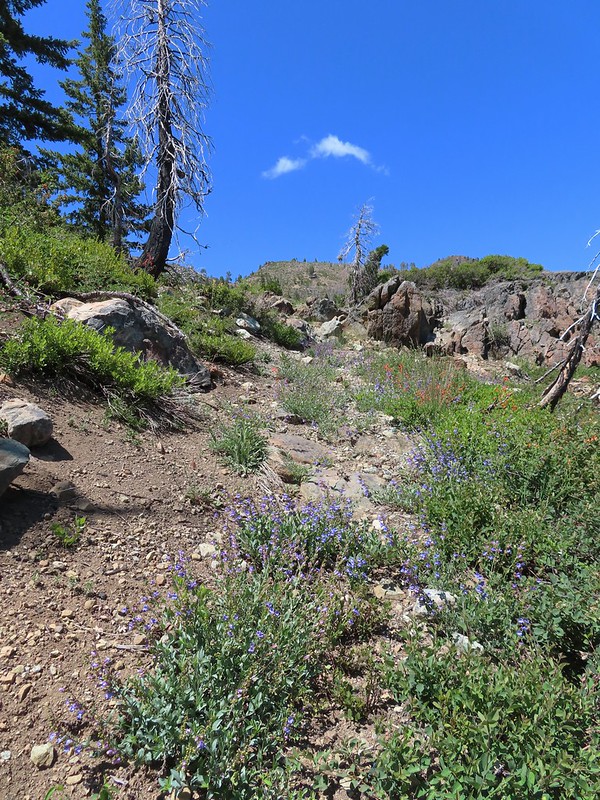
 Scarlet gilia and penstemon
 Heather heading for the pass.
 Arnica
 Nearing the pass.
 Bear Cub
 Youngs Peak just to the left of the snag.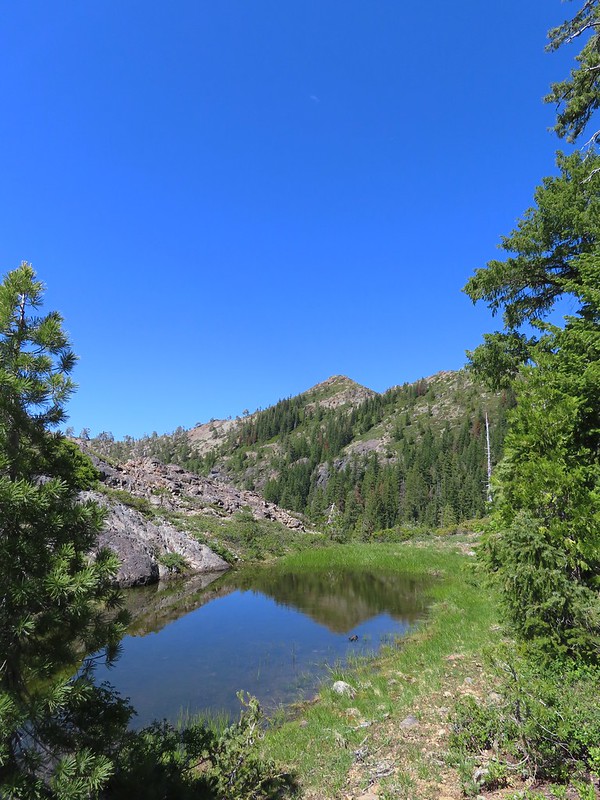
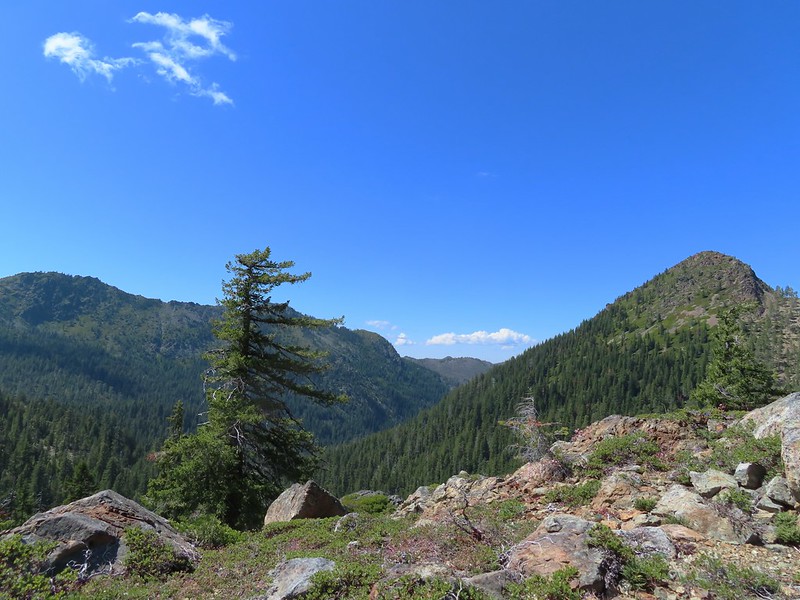 Bear Cub on the right.
 Youngs Peak behind the tree.
 Finally out of the fire scars.
 Snow plant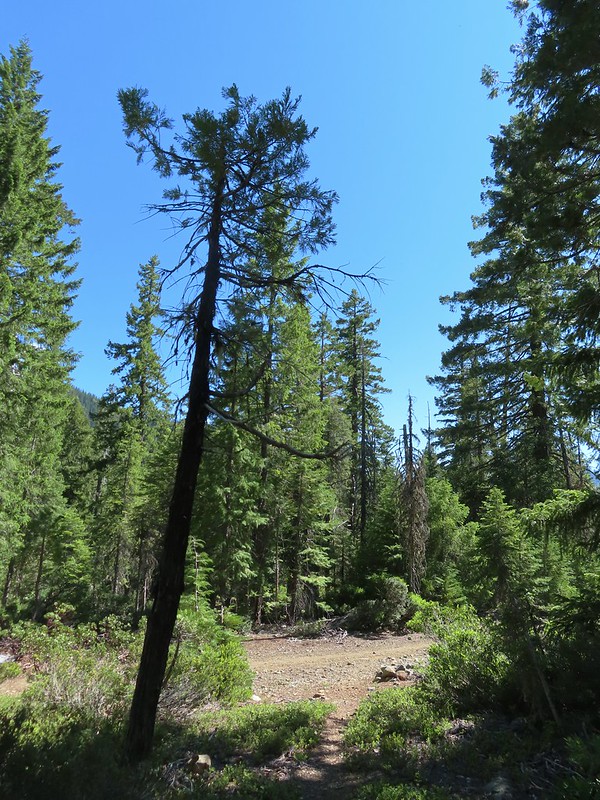
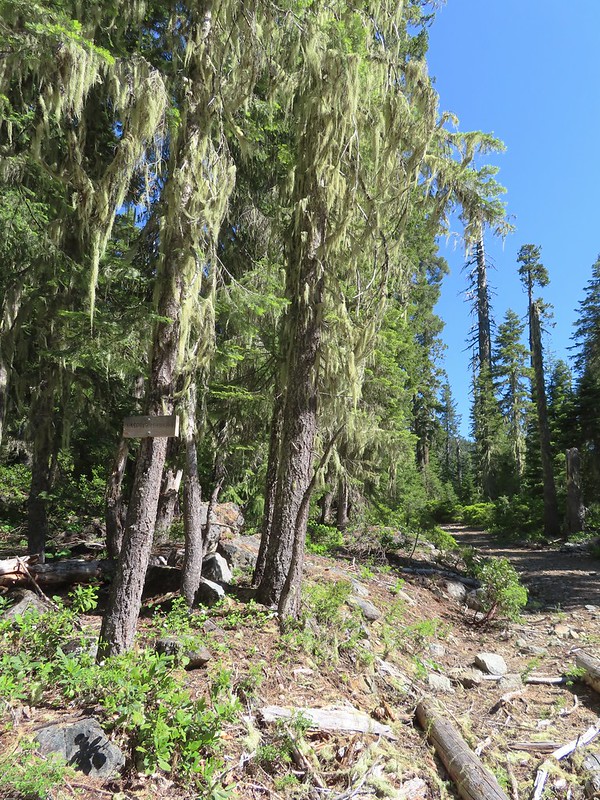 Sign for Raspberry Lake at the Raspberry Lake Trail/Clear Creek National Recreation Trail junction where we correctly turned left.
 Footbridge over the creek.
 Bear Cub from Youngs Valley.
 Camp
Camp Dragon fly
 El Capitan
 Bucks in the meadow.
 Caterpillar
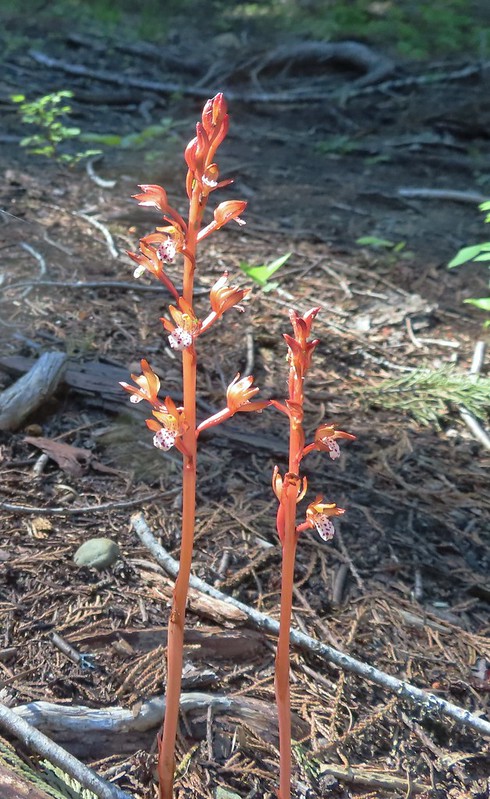 Spotted coralroot
 Wedgeleaf violets
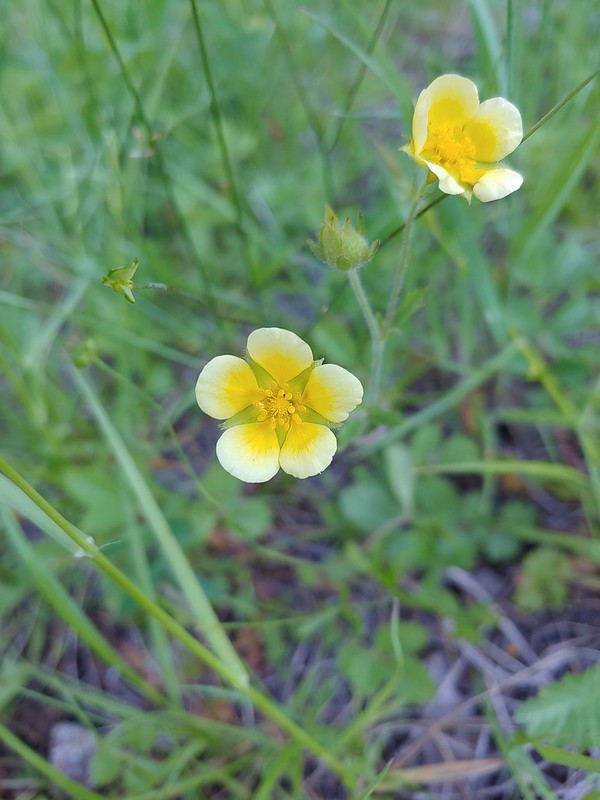 Maybe a cinquefoil
 Bistort
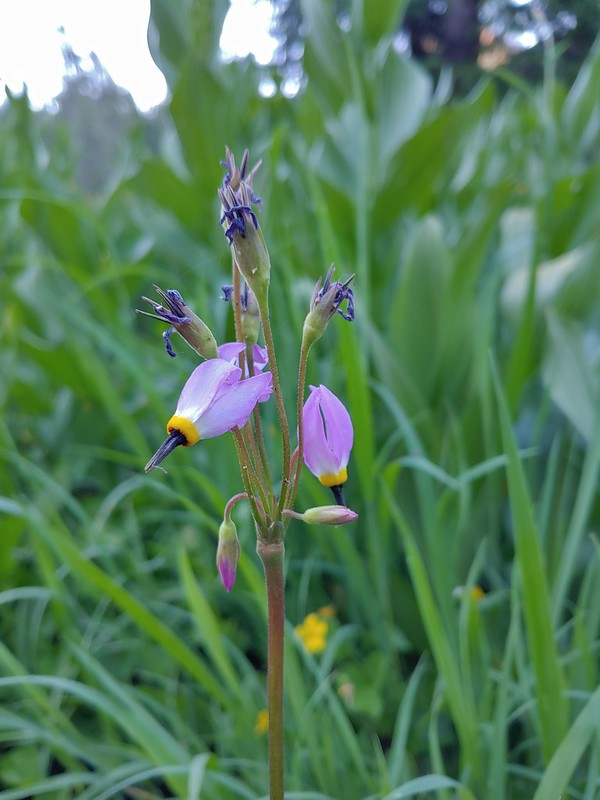 Shooting star
 Monkeyflower
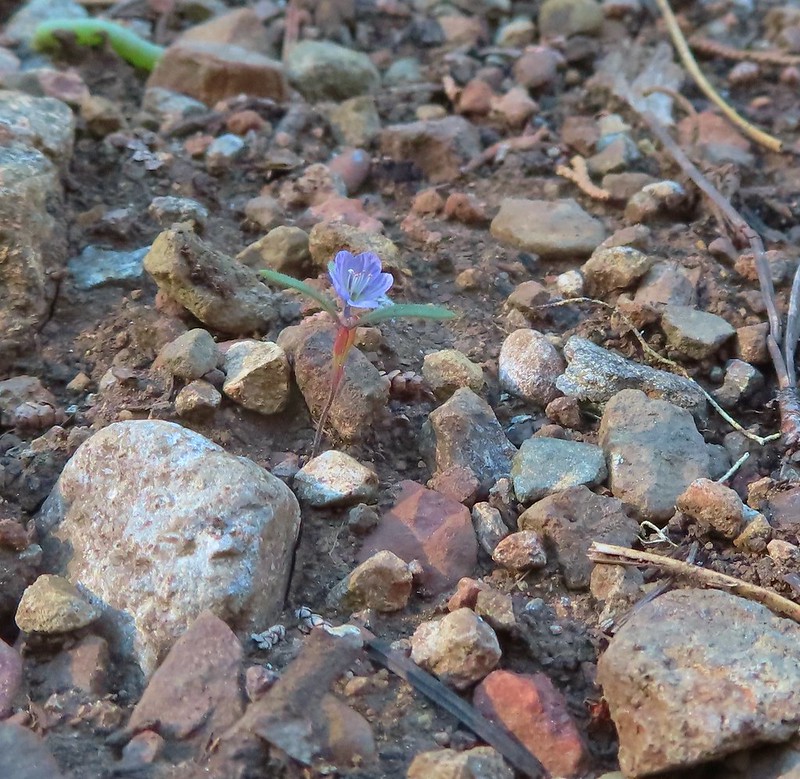 There were quite a few of these tiny flowers. I haven’t been able to identify this one yet.

 FR 8123

 It appeared the trail had been rerouted at least a couple of times to cross this dry creek bed.


 Fence at the boundary for the Research Area.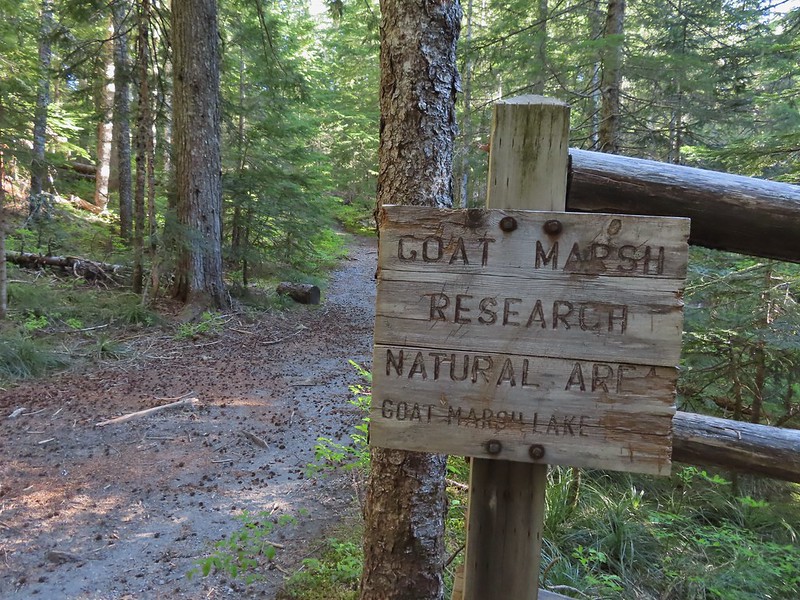
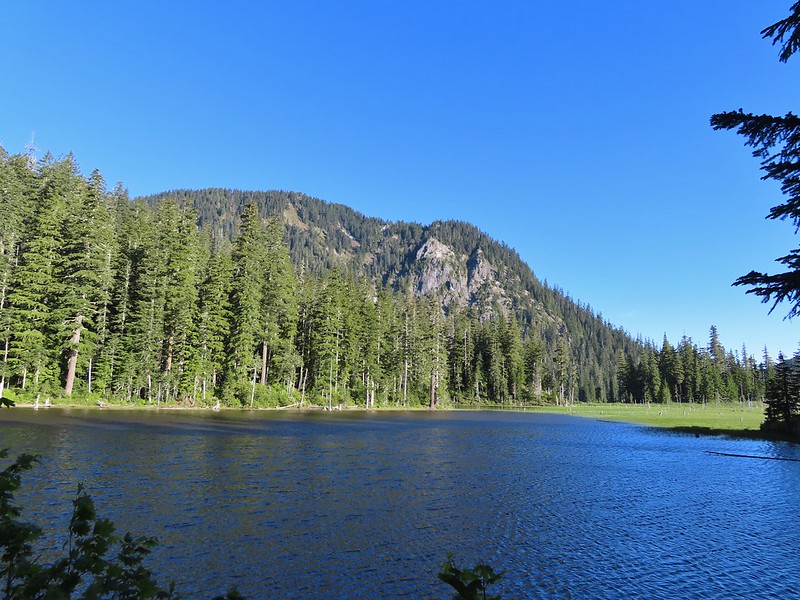 Goat Mountain and Goat Marsh Lake.
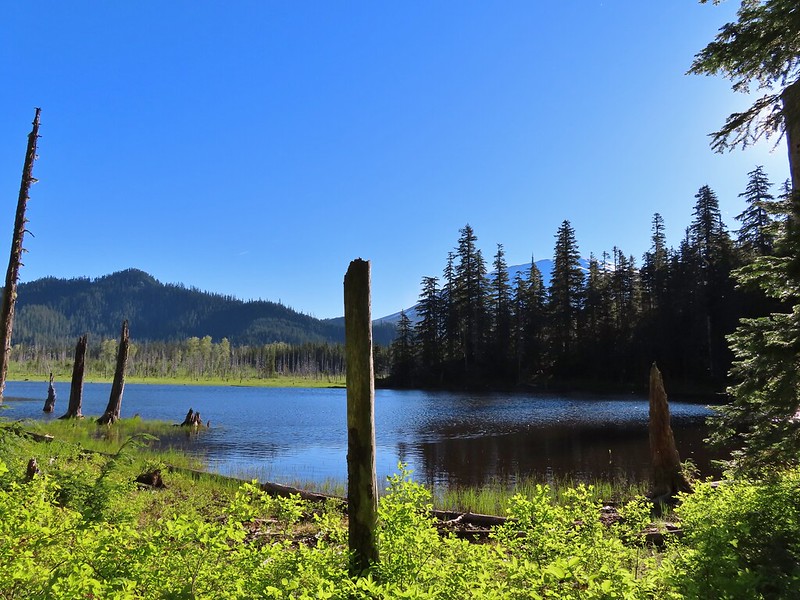 Mt. St. Helens
 Trillium
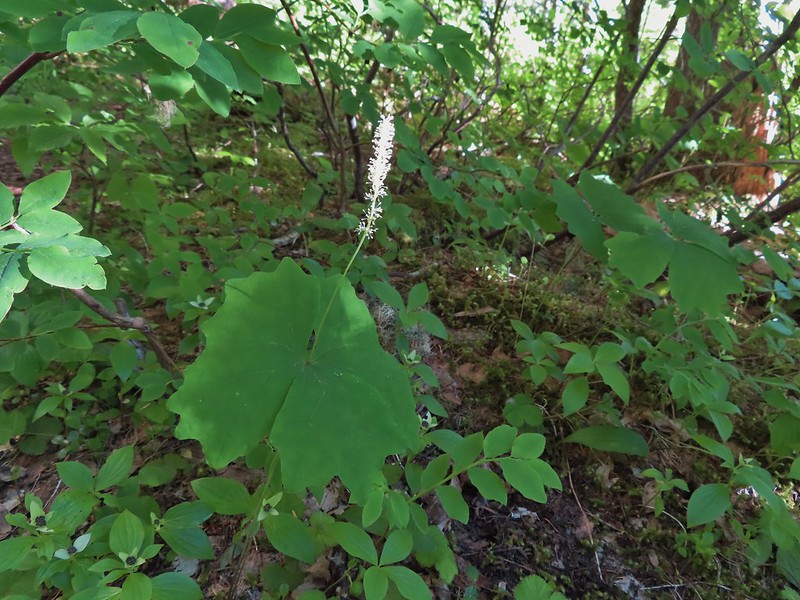 Vanilla leaf

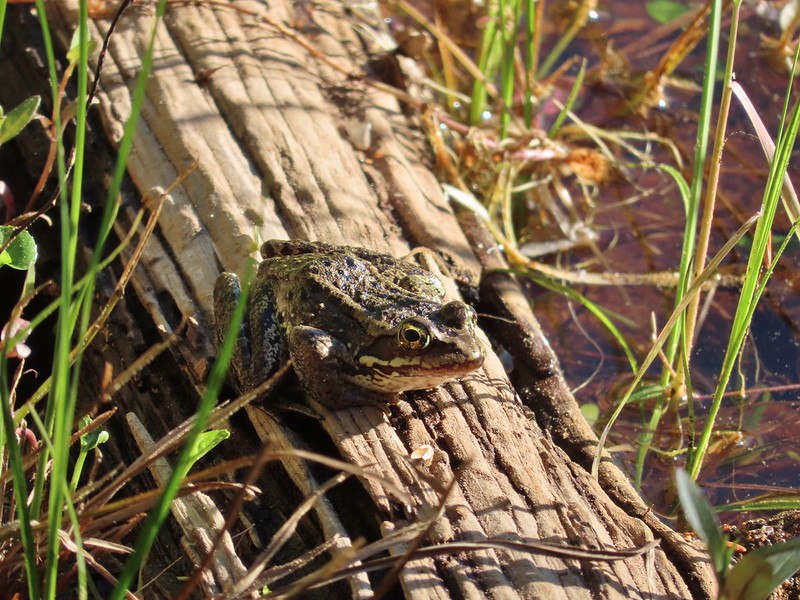 Frog on a log.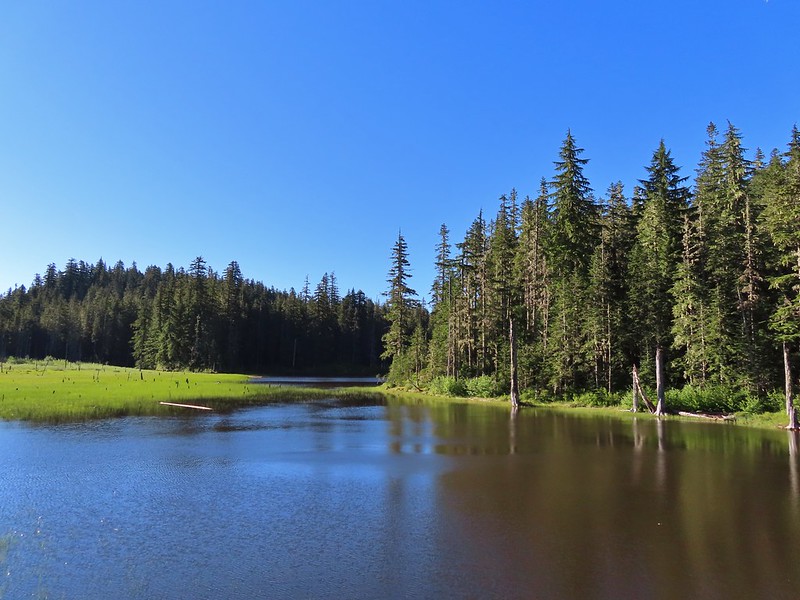
 The two cow elk in the middle of the grassy area.

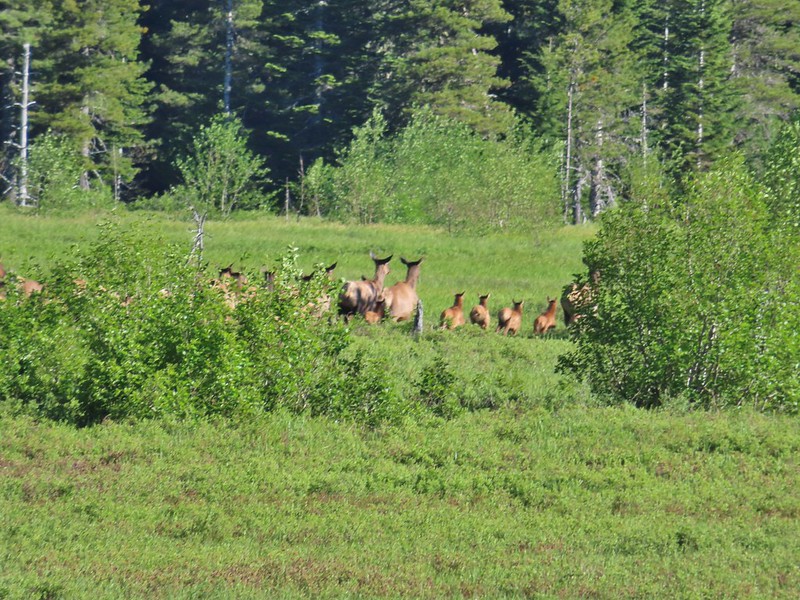 Calves lined up, this one is a bit blurry due to them moving and the amount of zoom used.
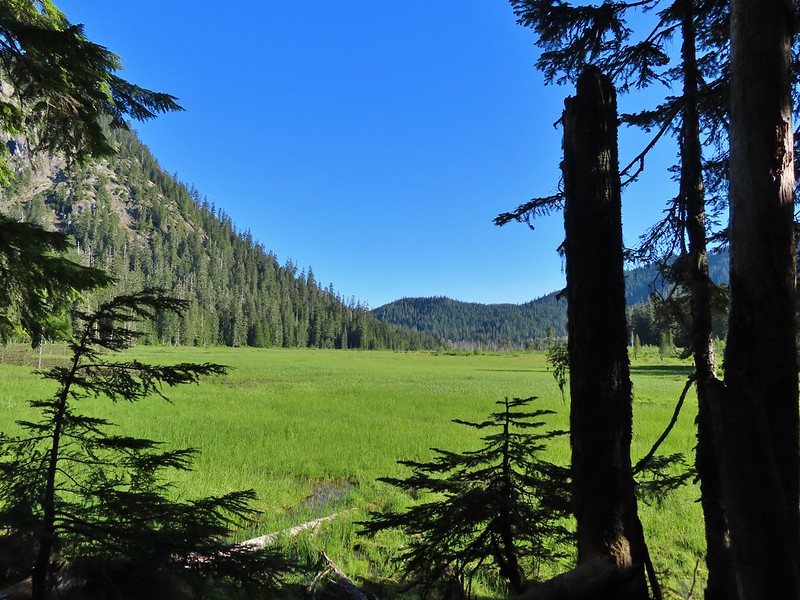 The elk herd not zoomed in.
 Zoomed
 Coralroot
 Goat Mountain
 Avalanche lilies
 Mt. St. Helens
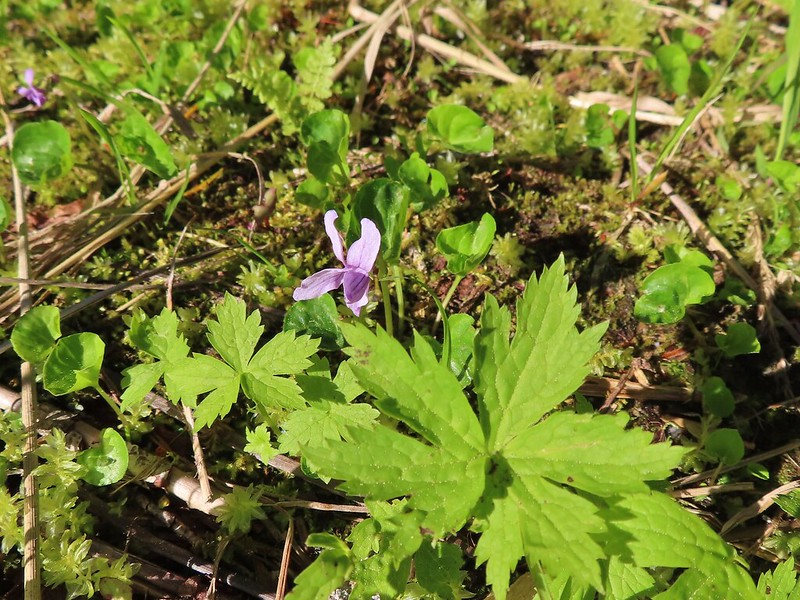 Marsh violet
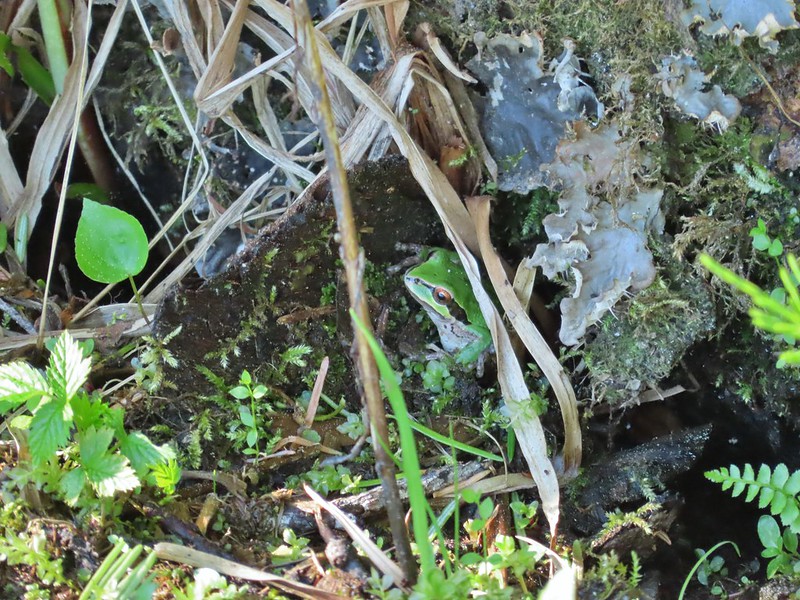 Frog under a log.
 Salmonberry
 Sign near the end of the trail.
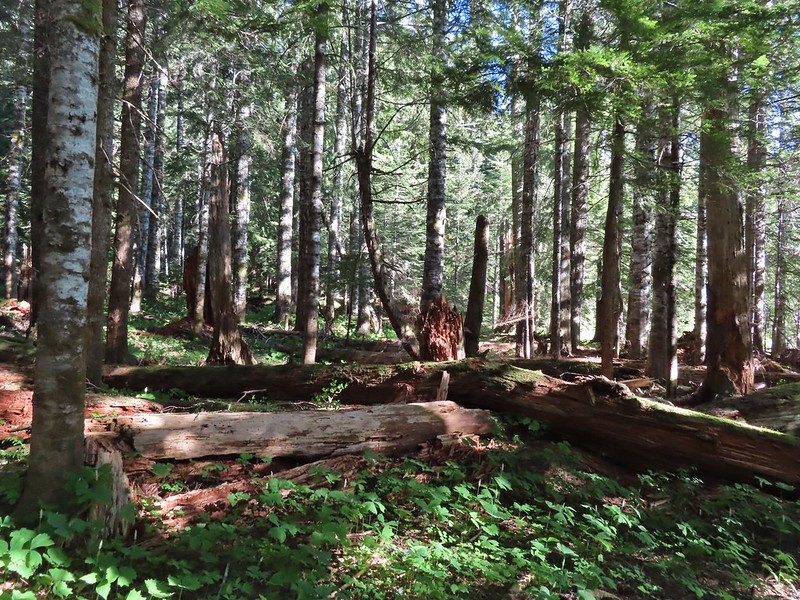 At the end of the trail.
 Beaver lodge
 Duck and ducklings
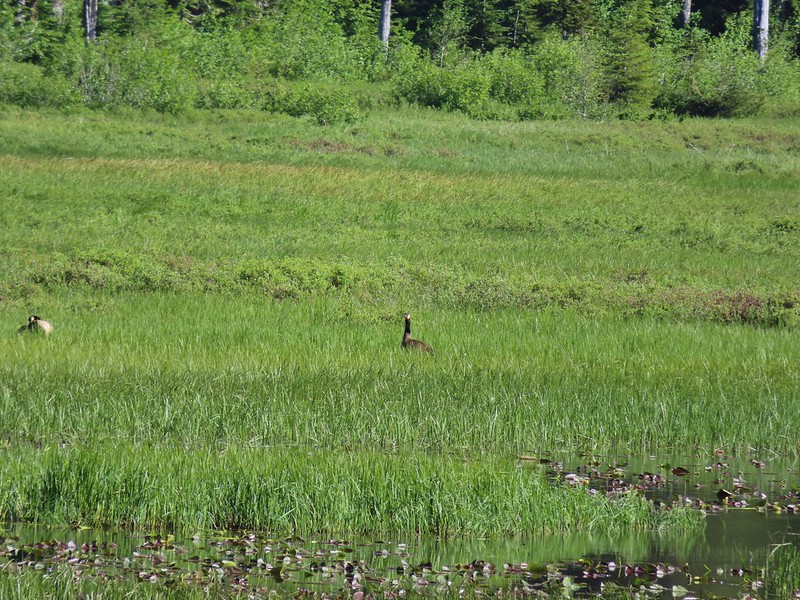 Geese out in the grass.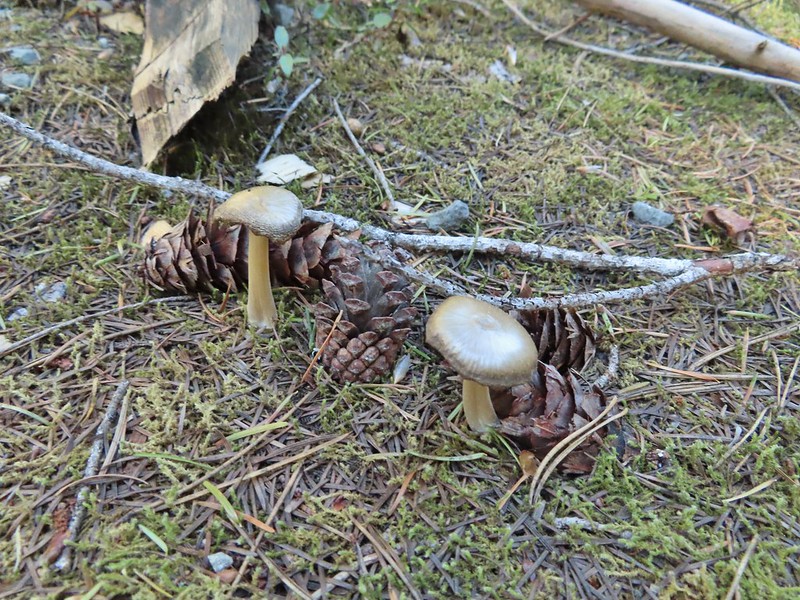

 The road crossing.
 In the campsite trying to decide which way to go.
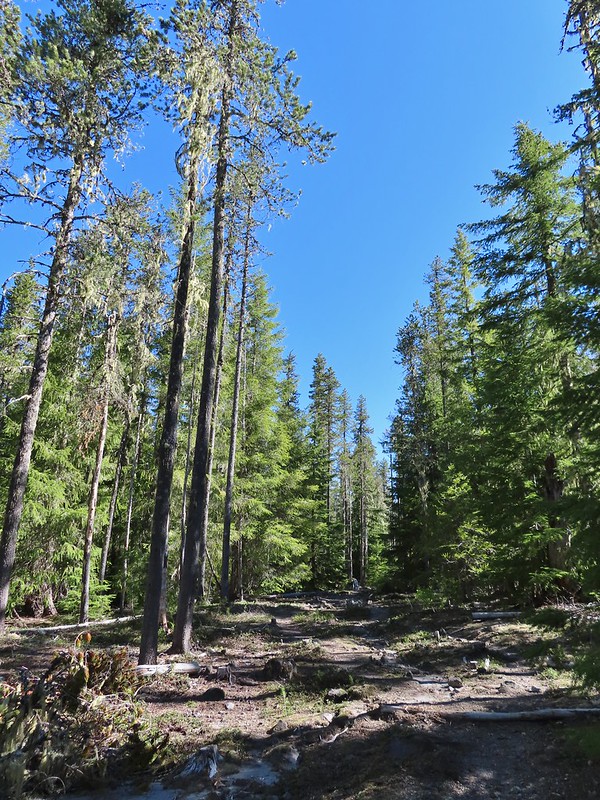 Once we found it the trail was pretty obvious, at least for a while.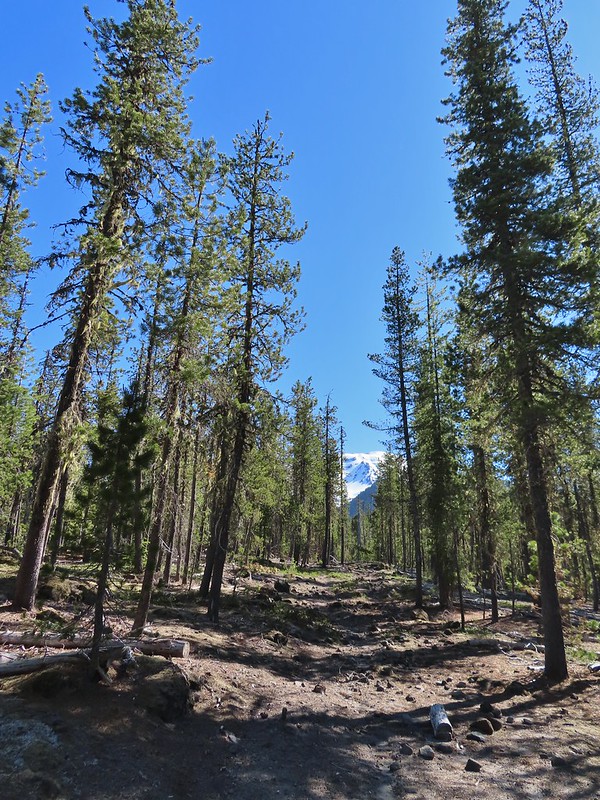


 Gray jay with a snack.
 Western tanager. Right after this photo he flew straight at us snatching an insect out of mid-air.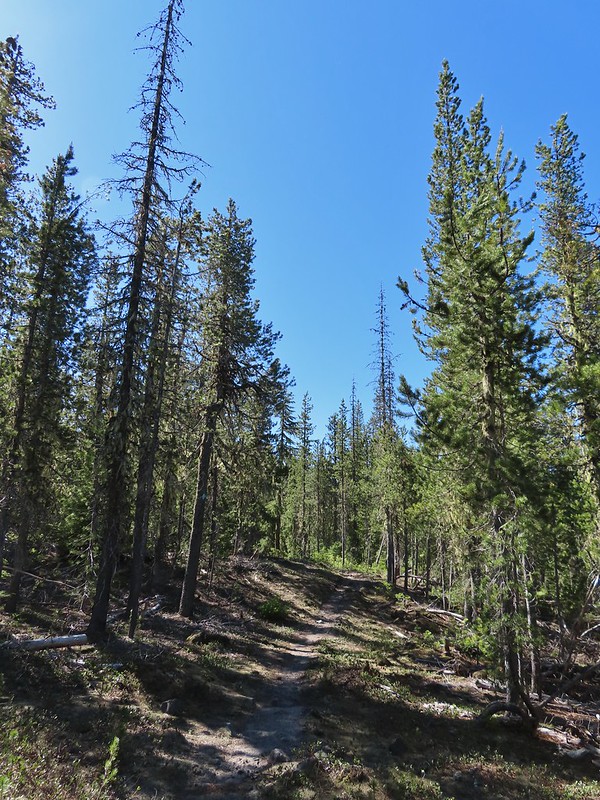

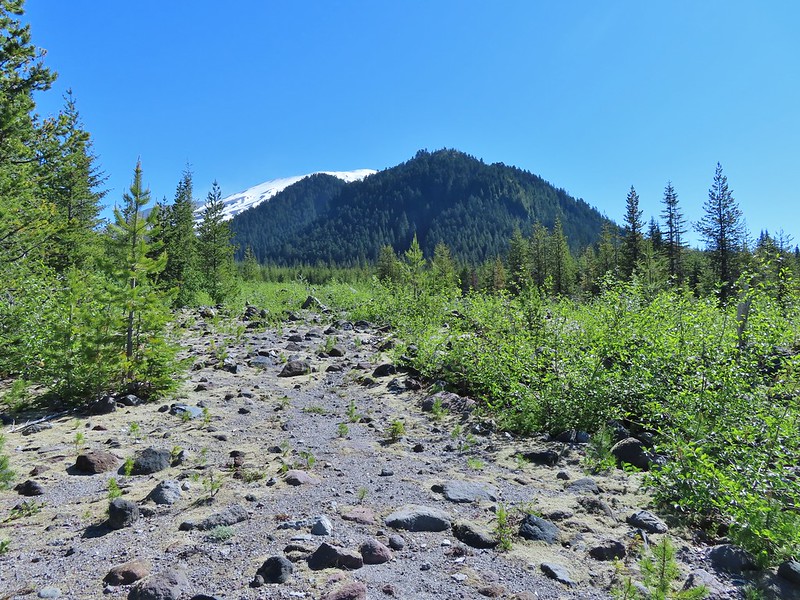 Butte Camp Dome in front of Mt. St. Helens.
 Crossing another dry bed.
 Where is the trail?
 In one of the creek beds. We were using the GPS along with looking for cairns and/or flagging.
 Goat Mountain
 You can’t really make them out in the photo but there is a pink flag and a blue diamond (on a downed tree) near the edge of the green trees.
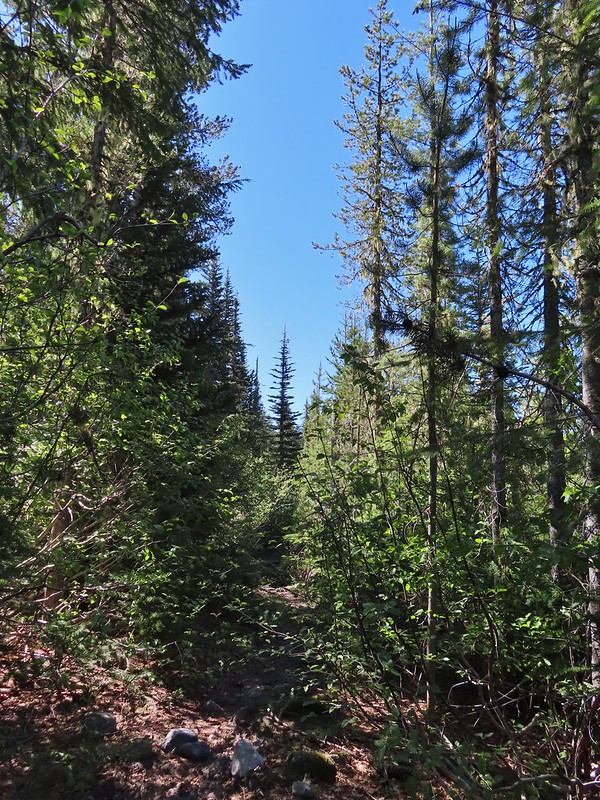 There was another short brushy section before the forest opened up.
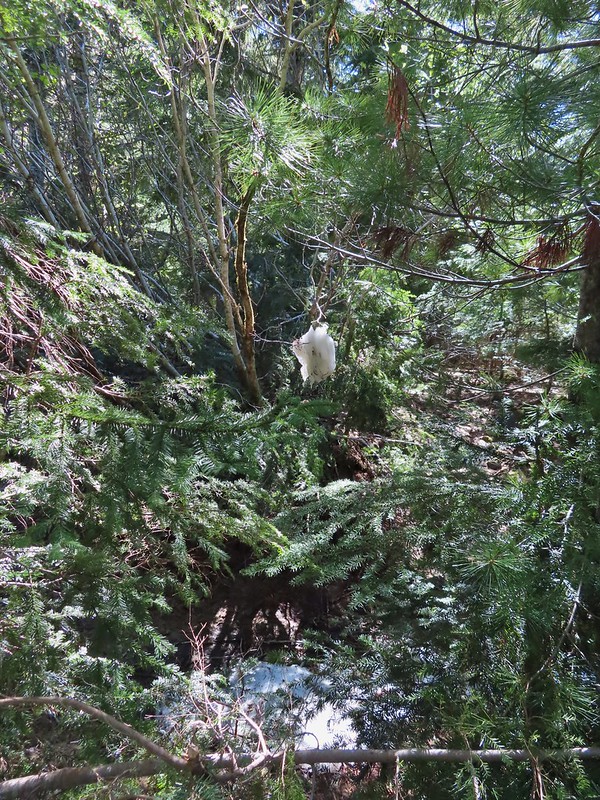 One of the strangest snow sightings we’ve come across.
 My theory was bigfoot hung this.

 The NOHRSC estimated 2″-3.9″ of snow and that seemed to be about right.
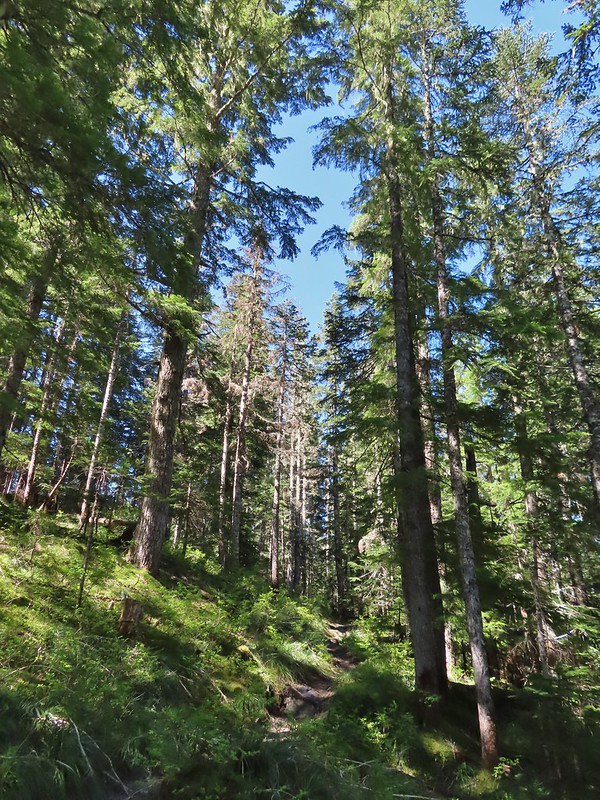
 Looking back at the junction from the Toutle Trail. The post with no sign is the continuation of the Toutle while the trail on the left is the ski trail.

 Last years beargrass.
 Strawberry
 Phlox
Phlox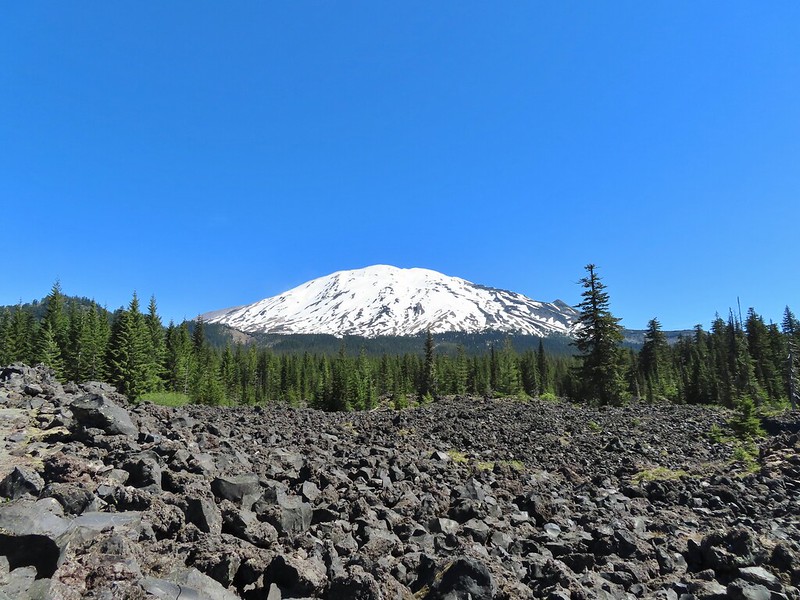
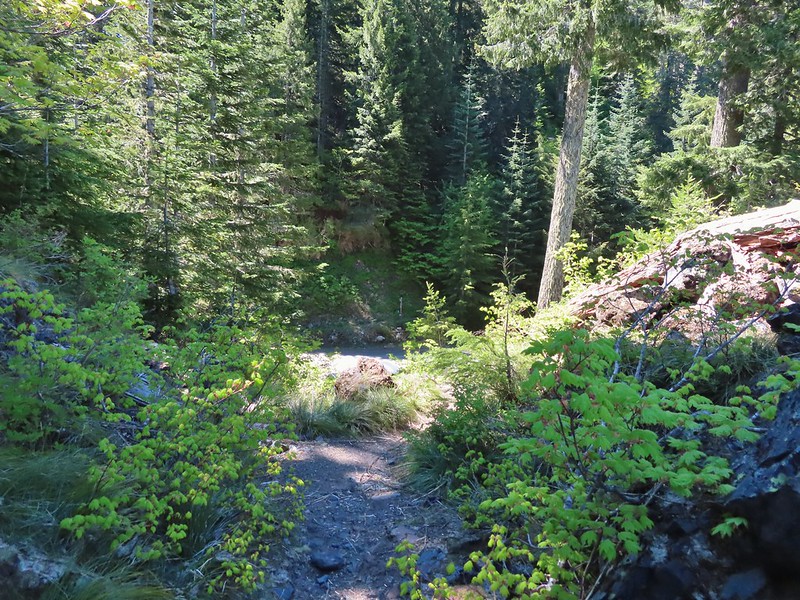 FR 81 below the trail.
 Trail sign at the trailhead.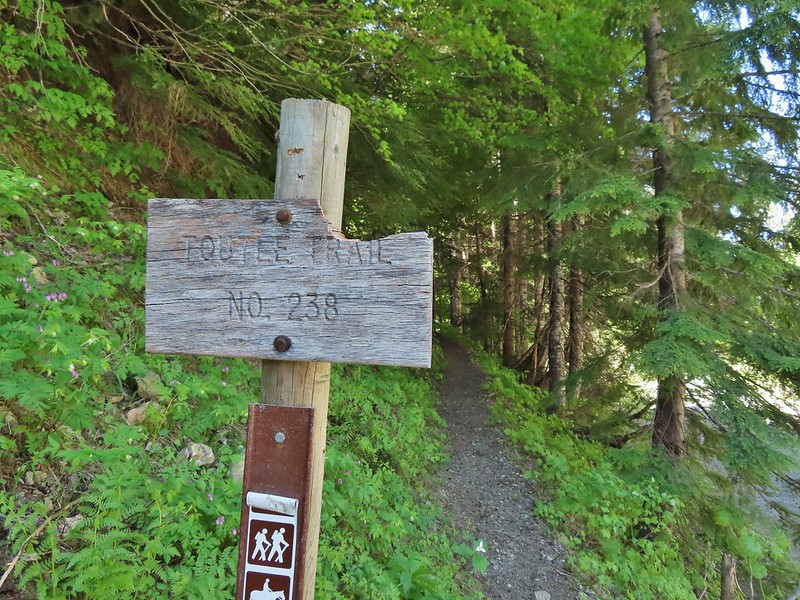
 Raven flyover
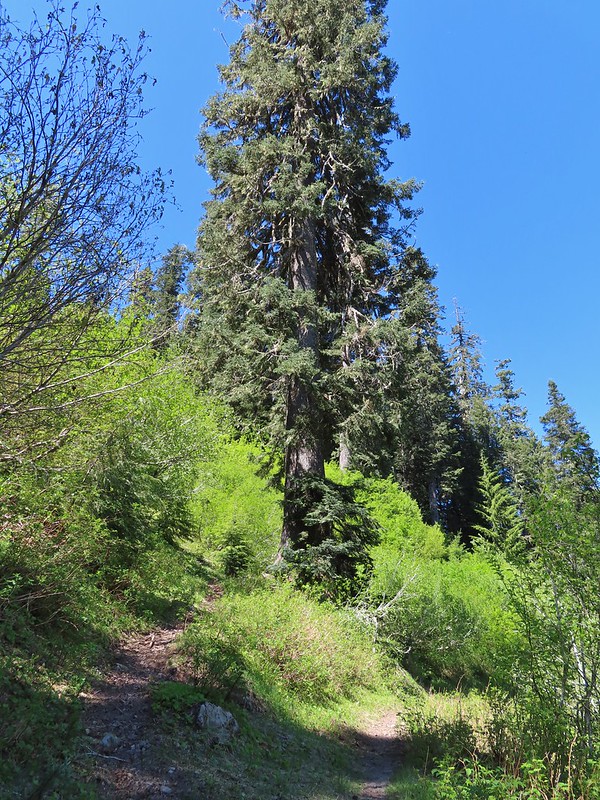 The fork.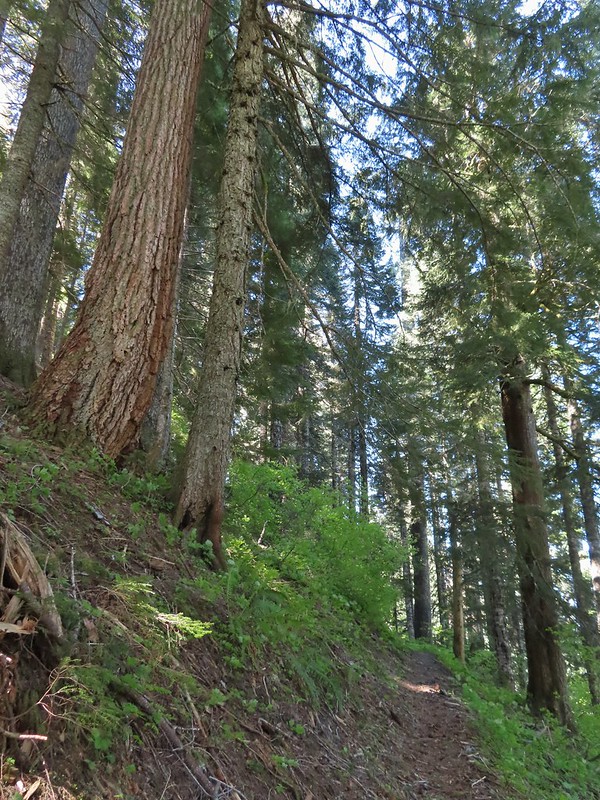
 One of several side creeks we crossed.
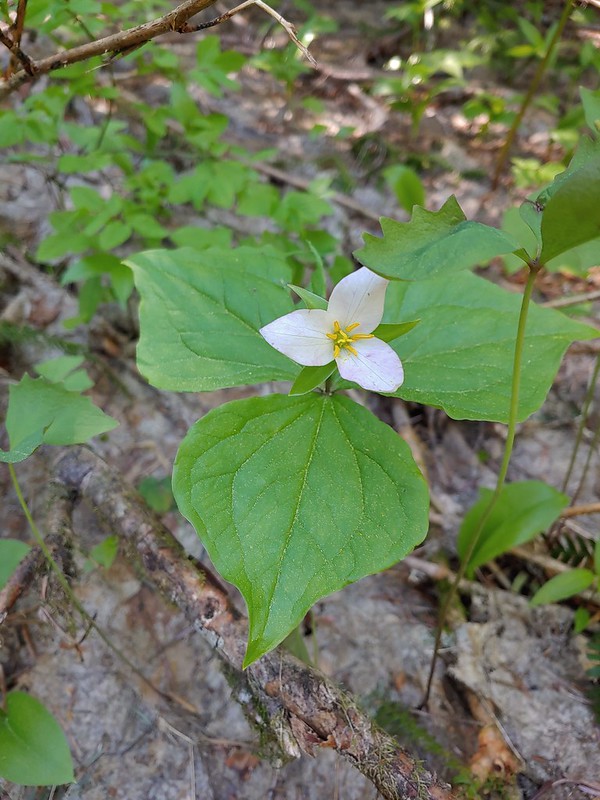 Trillium
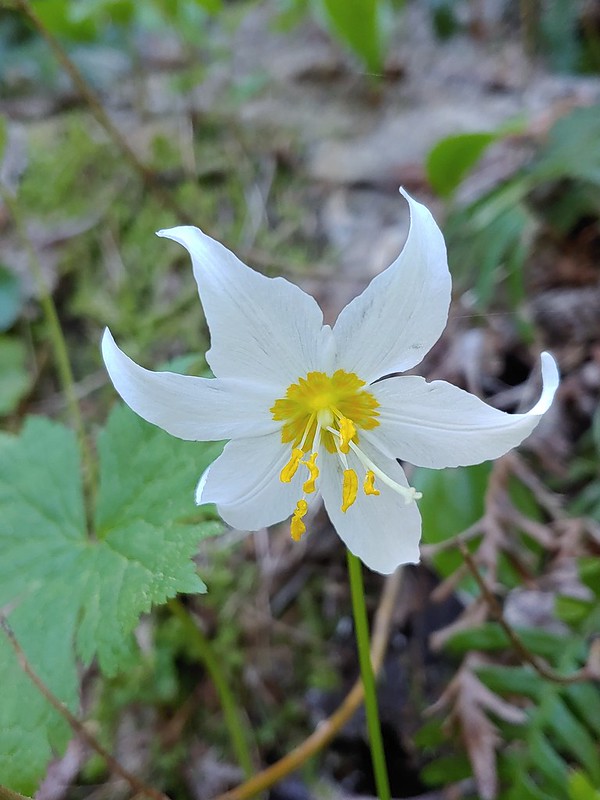 Avalanche lily
 Violet
 Goat Mountain beyond McBride Lake.
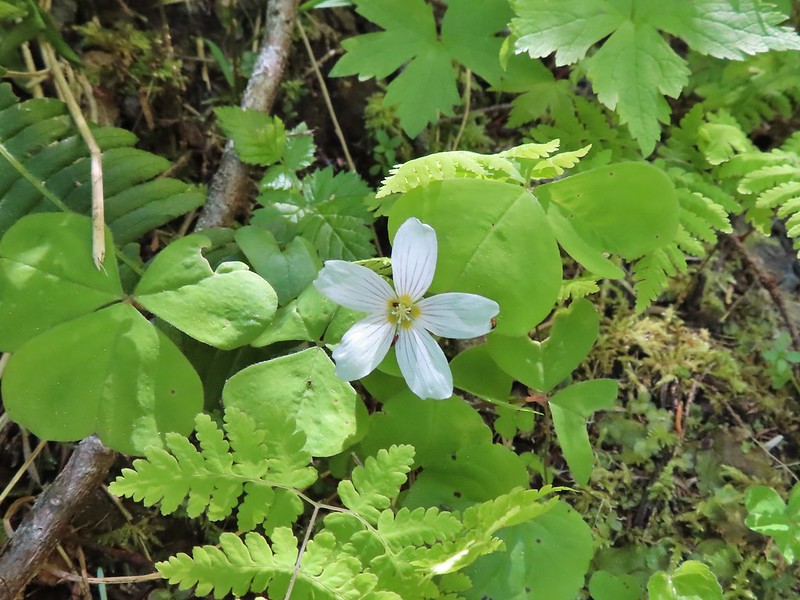 Sourgrass
 Valerian
 Solomonseal
 Saxifrage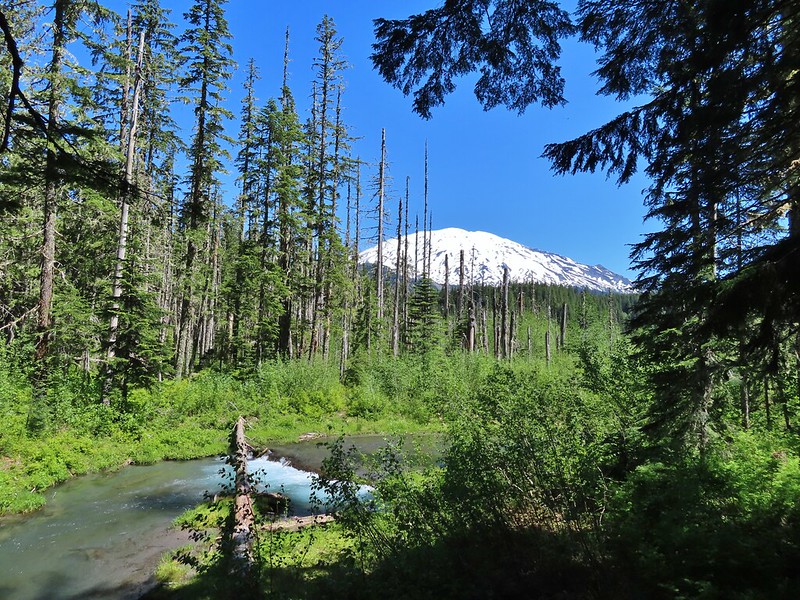


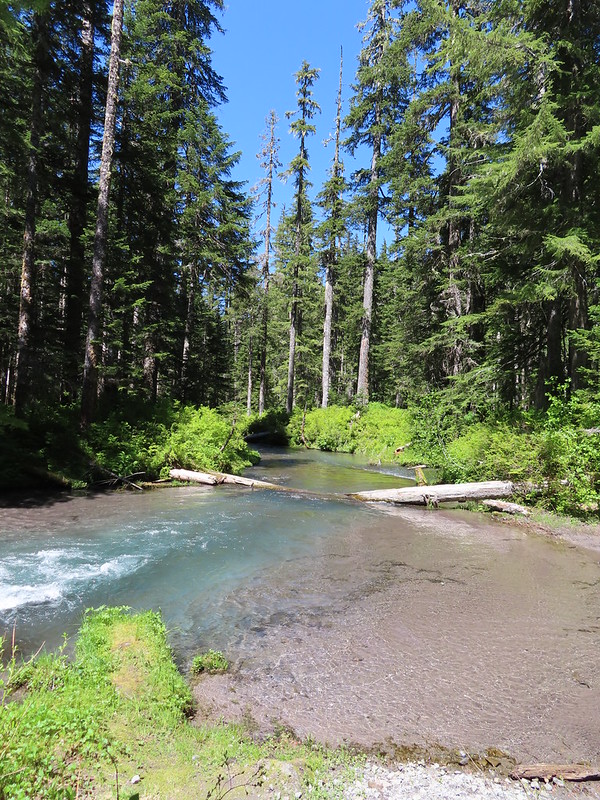 Kalama River from the road bed.
 The Blue Lake Horse Trail on the far side of FR 81.
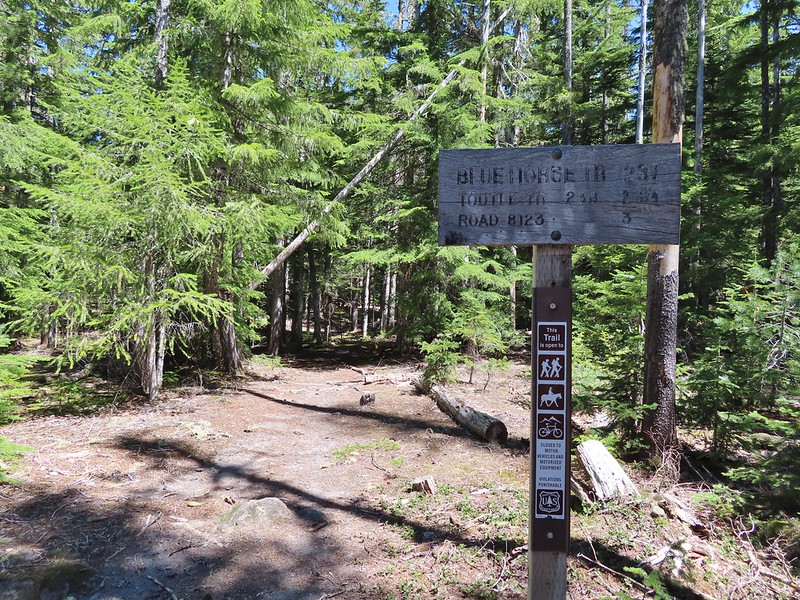 The sign did show FR 8123 which was the road the trailhead was on so that fed into us not realizing our mistake at first.
 An orange diamond on a tree ahead.
 Where we left the horse trail.
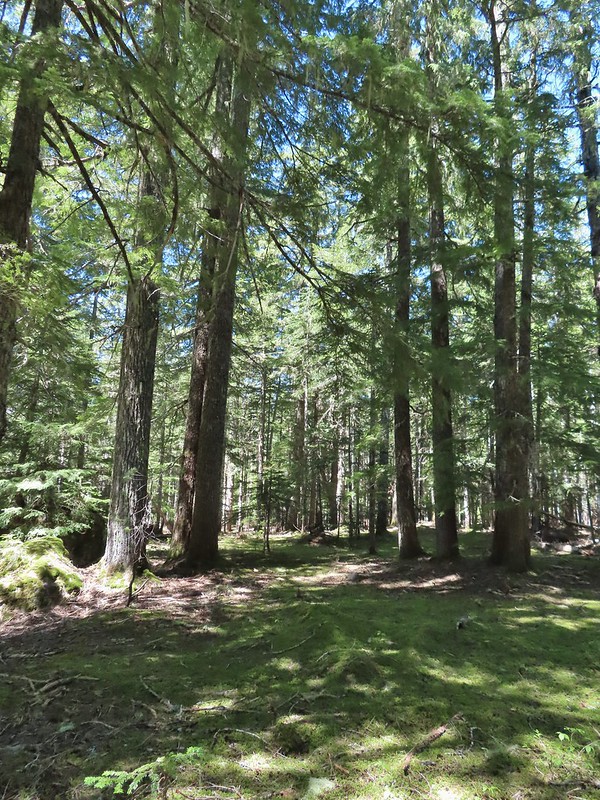 Typical terrain for the cross-country walk.
 It seems like every time we go off-trail we come across a mylar balloon. We’ve really come to despise those things. We packed it and the ribbon out.
 The trickiest part was crossing this dry stream bed but we fortunately came to it at a spot that was perfect for crossing.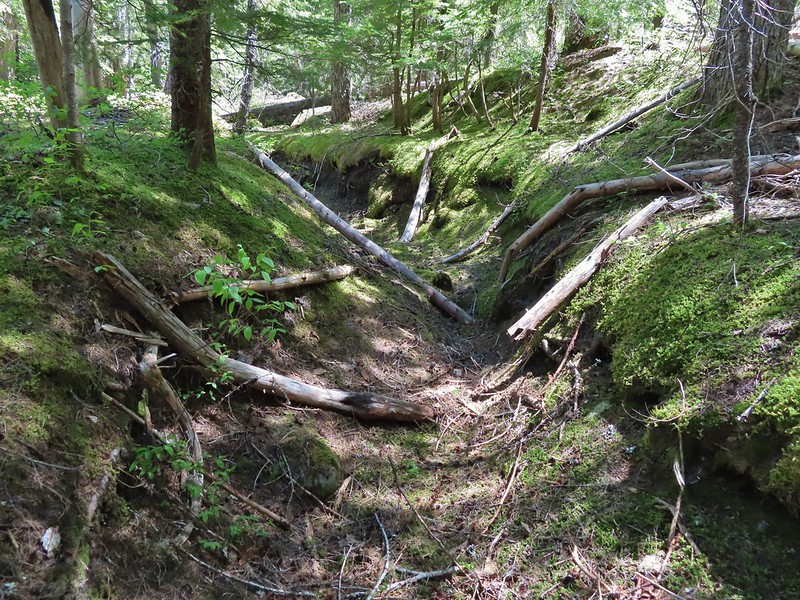
 FR 8123
 Coming up to the Goat Marsh Lake Trailhead (and our car) on FR 8123.

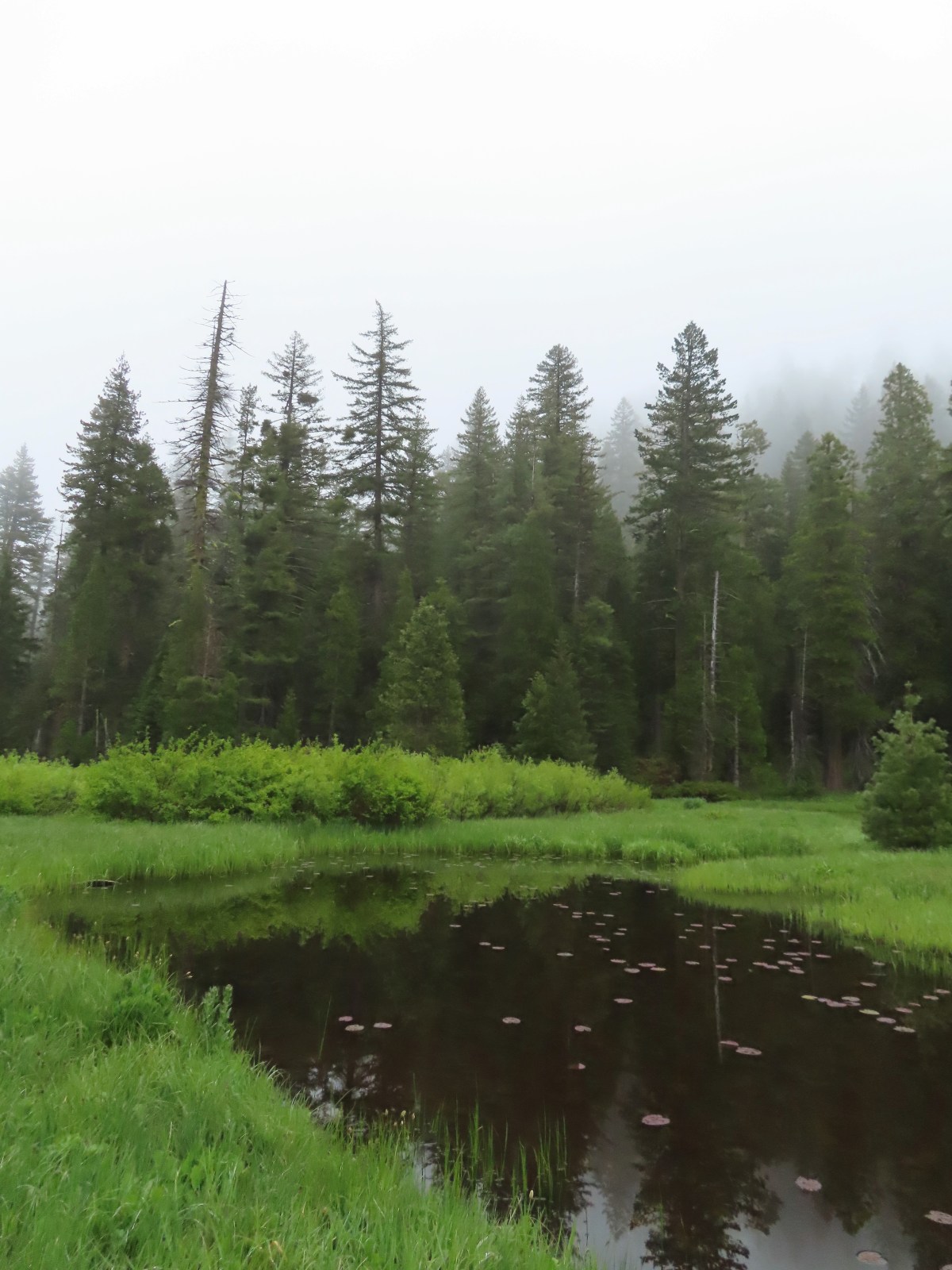
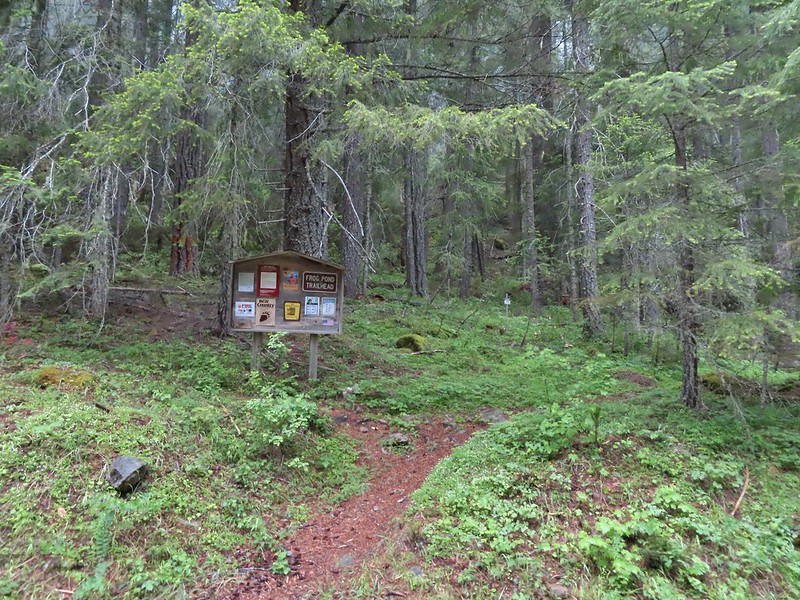


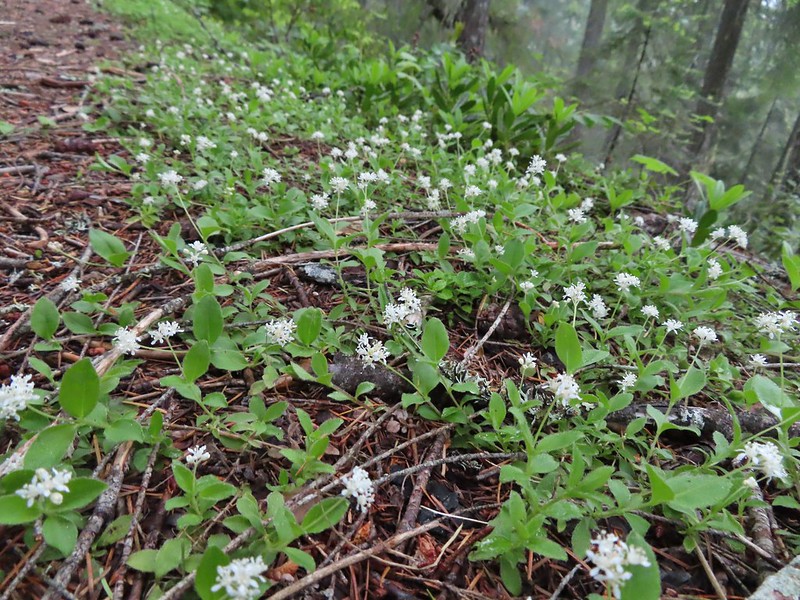
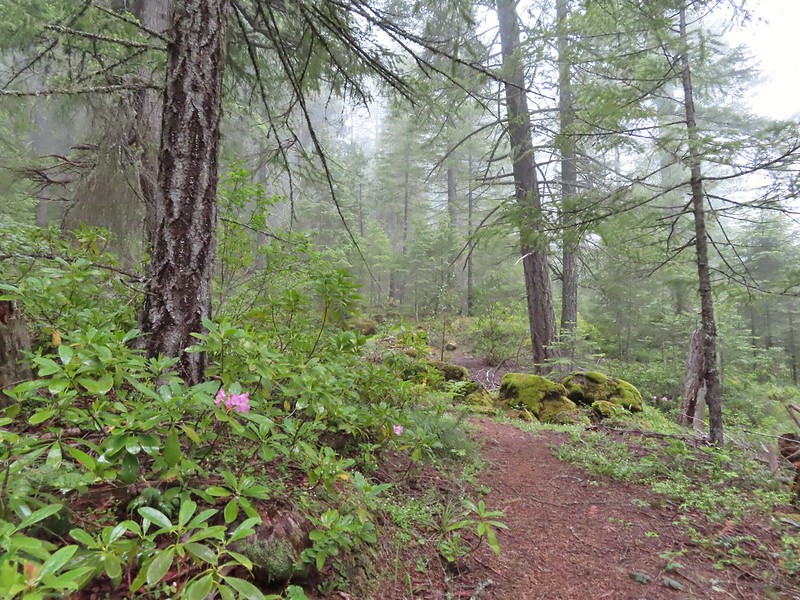
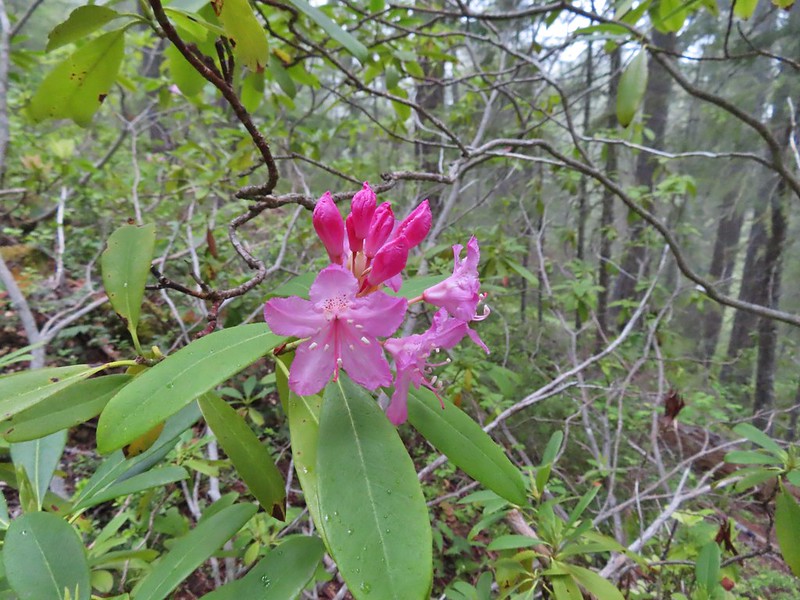 Rhododendron
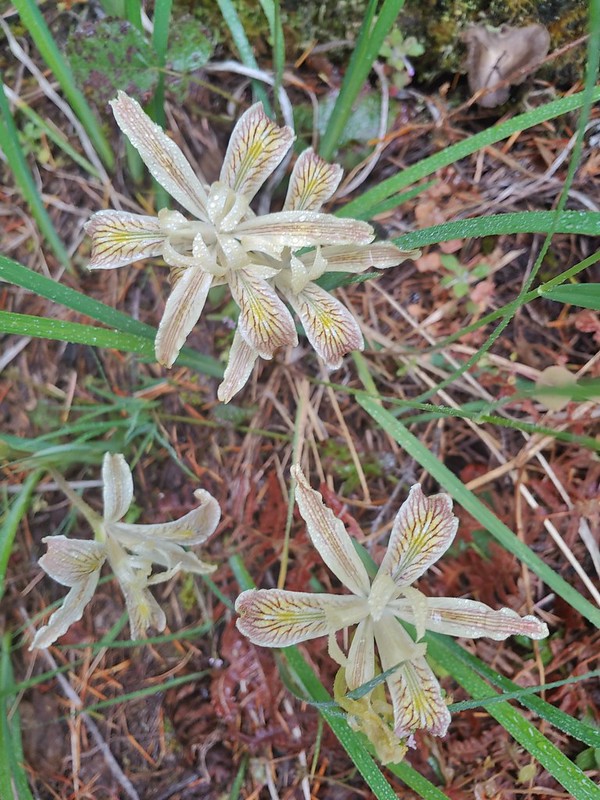 Iris
Iris Star flower
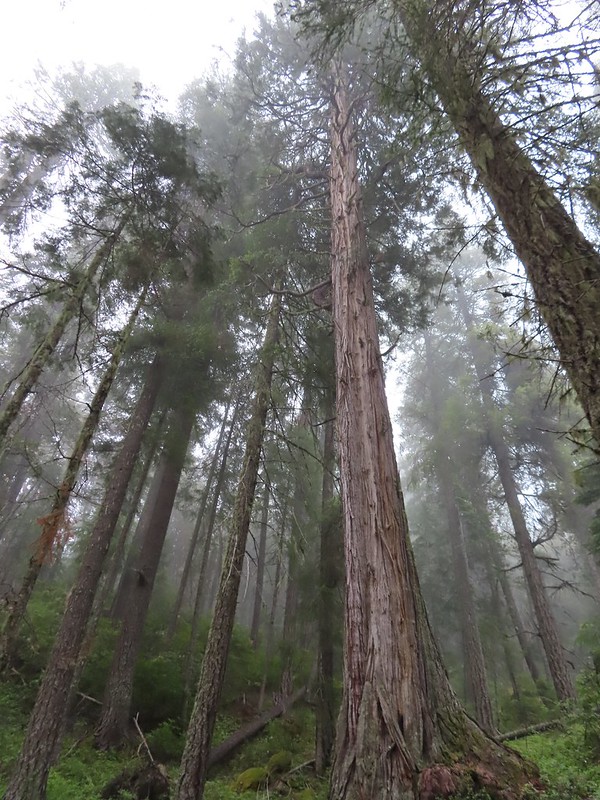 A big cedar.
 California ground cone
 The bright red color made them fairly easy to spot amid the green leaves.


 Phlox
Phlox

 I of course had to step inside.
 Paintbrush
 Serviceberry
 A lone beargrass preparing to bloom.
 Lupine also getting ready for a bloom.
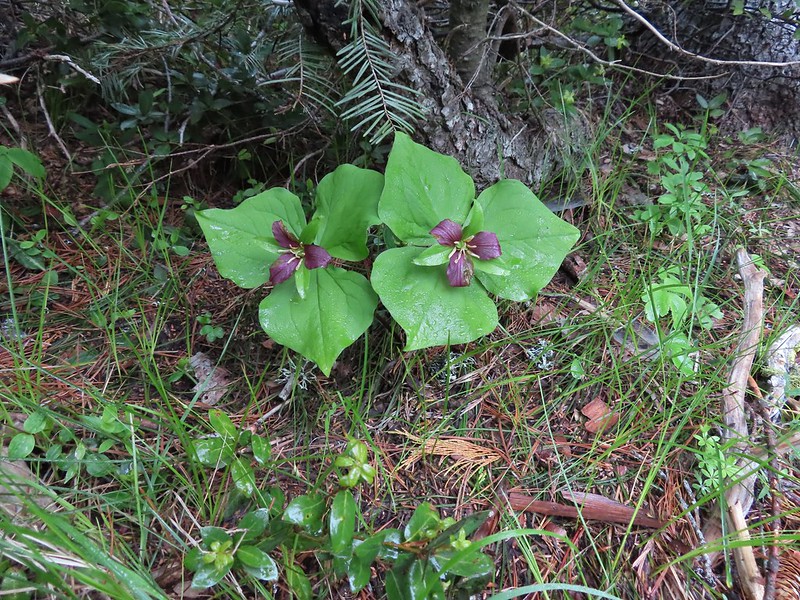 Trillium ending theirs.
 Frog Pond with the cabin ruins in the stand of cedars to the right.

 There was clearly going to be no view this morning so any though of either attempting the loop or going up to the viewpoint on the ridge ended here.
 Pretty face
 Death camas
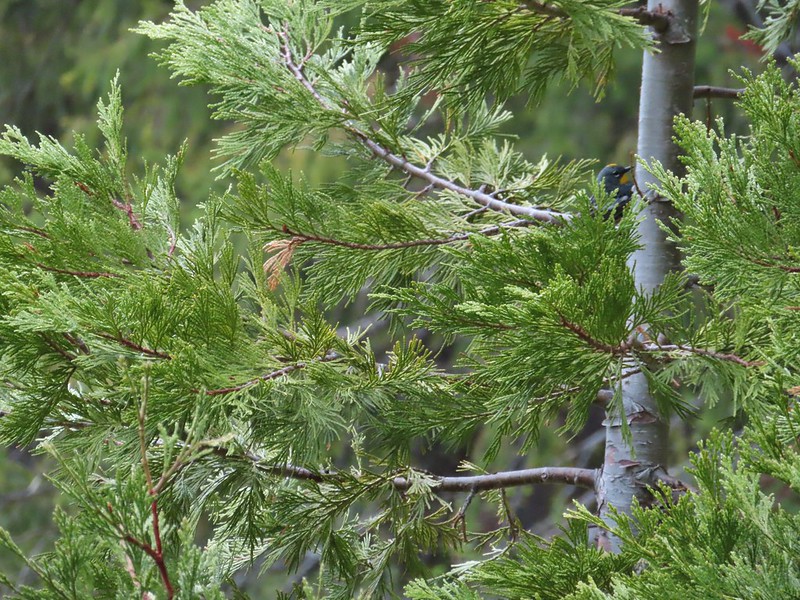 A yellow-rumped warbler hiding in the branches.
 Fairy slippers
 This was the trickiest part to follow at the time but it was pretty easy to see where it picked up in the trees on the far side of the grassy area.
 The inlet creek.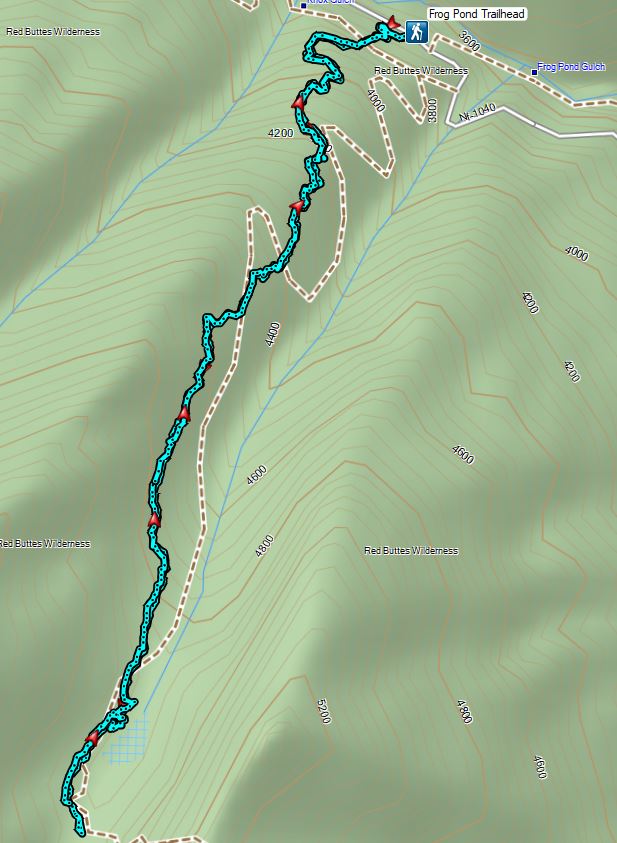

 Sign for the Witzend Trail at the trailhead. Not one of the trails we wanted today.
 The Waterline Trail is the smaller gravel roadbed to the left of the fire hydrant.
 Despite the sign saying Snark online maps show that trail starting further up the Waterline Trail.
 The Snark Trail splitting off to the right.
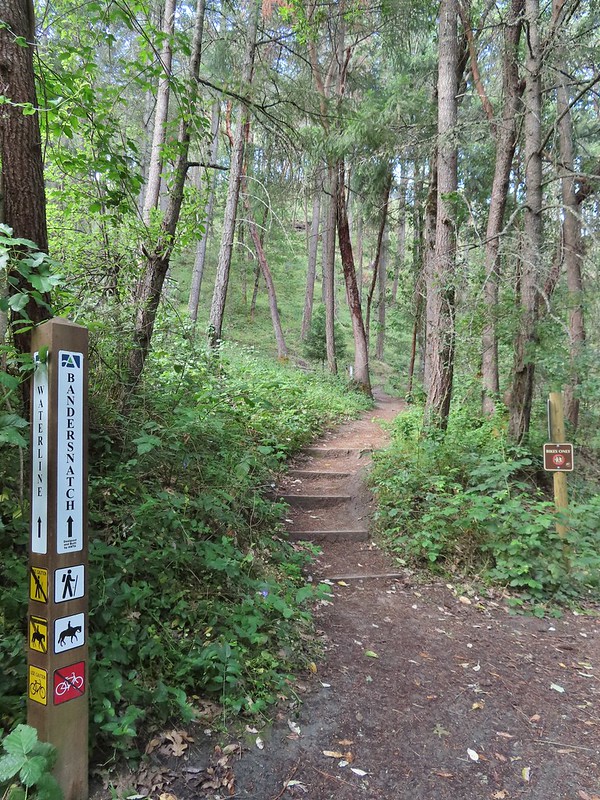 Turning left onto the Bandersnatch Trail.
 Marty the Pacific Fisher

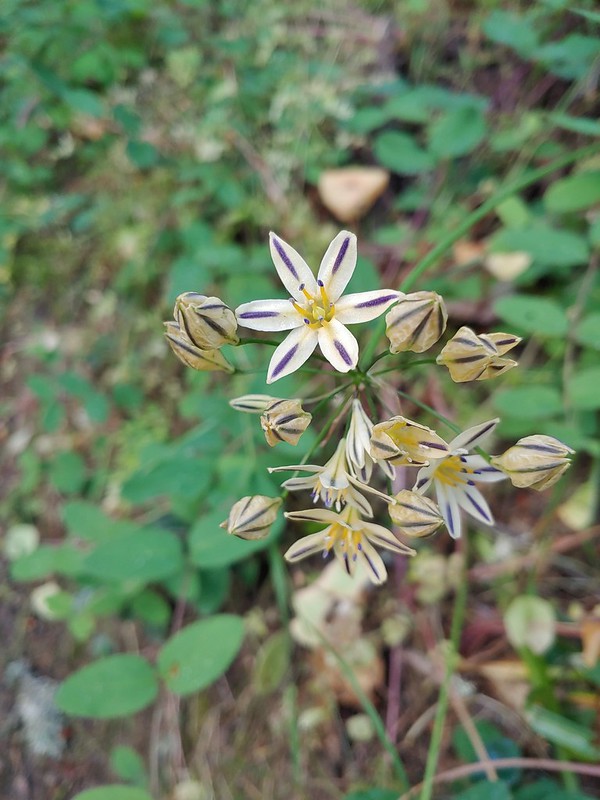 Henderson’s stars
 Paintbrush and blue sky.
 Mariposa lily
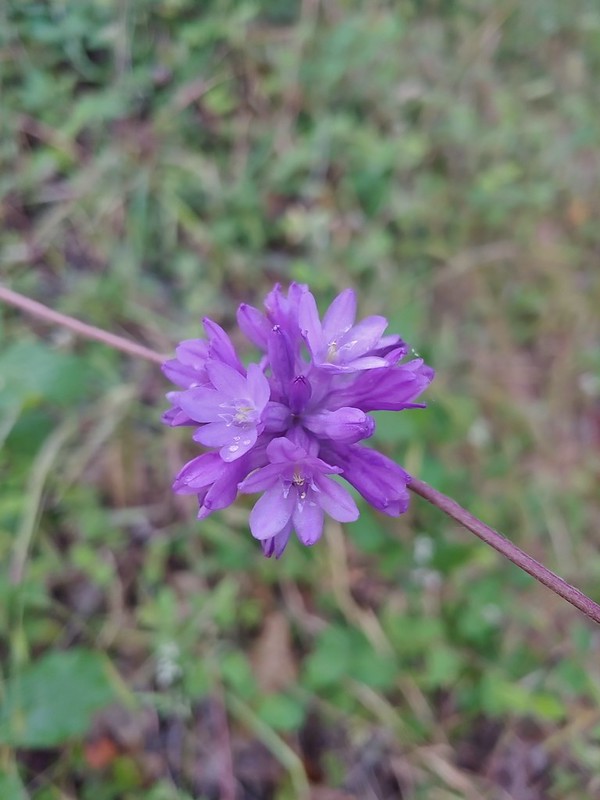 Ookow
Ookow Diamond clarkia
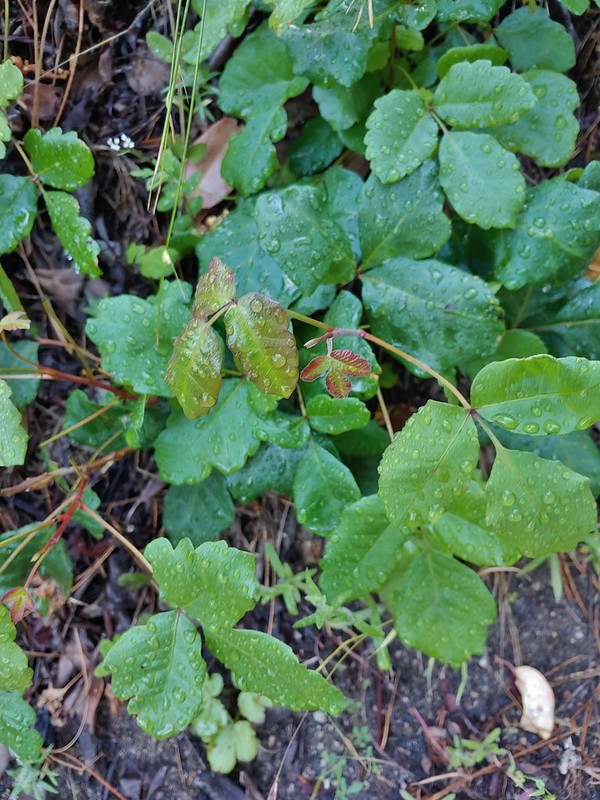 Some of that poison oak.
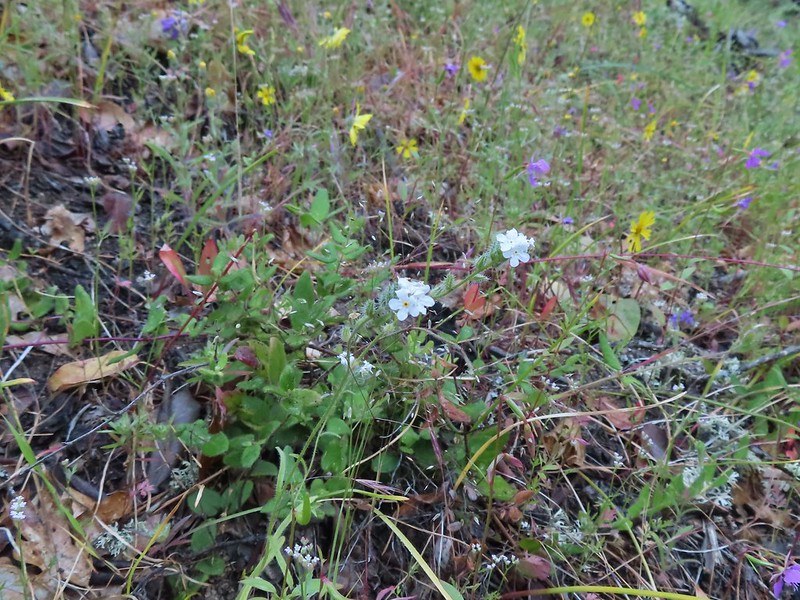 A cryptantha
 Honeysuckle
 Madia and winecup clarkia
 Bell catchfly
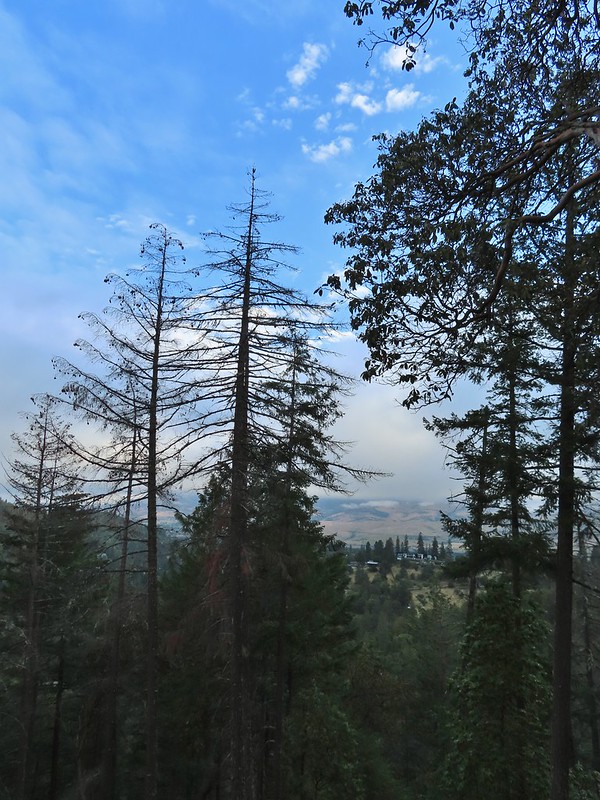 View down toward Ashland.
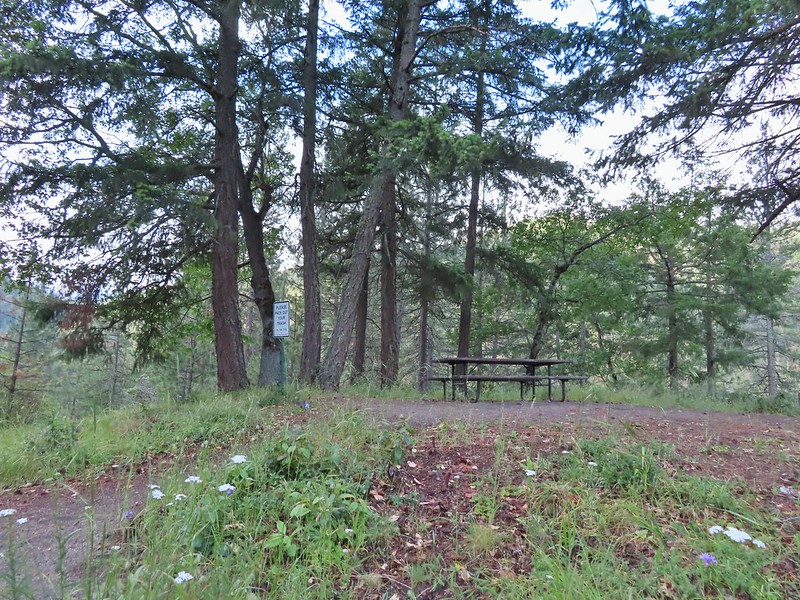 Picnic table at the top of the hill.
 Crossing the BTI Trail
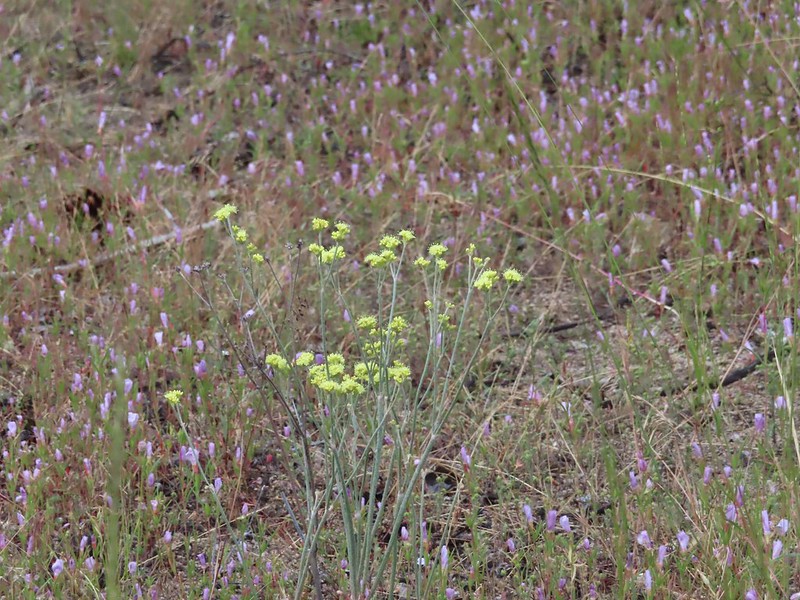 Baresteam wild buckwheat
 Wallflower
 heart-leaf milkweed
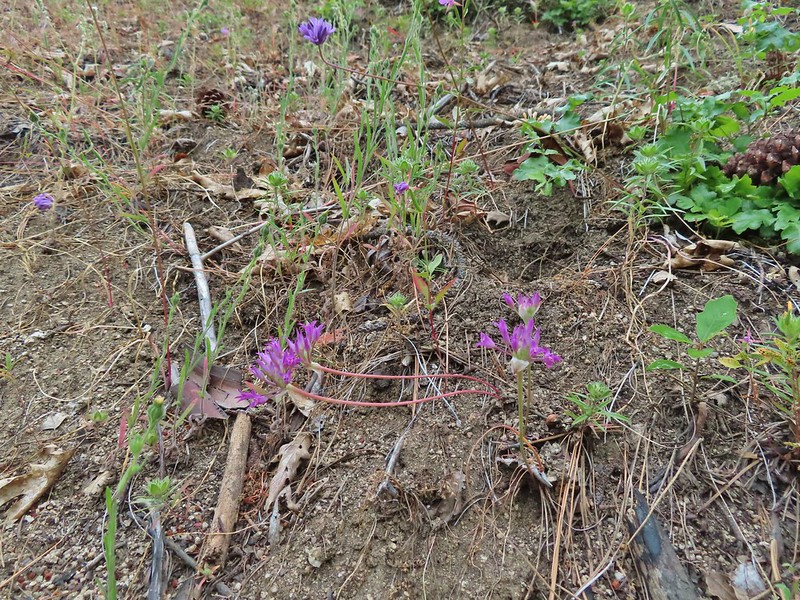 Wild onion
 Another Snark Trail encounter.
 The Red Queen Trail junction ahead.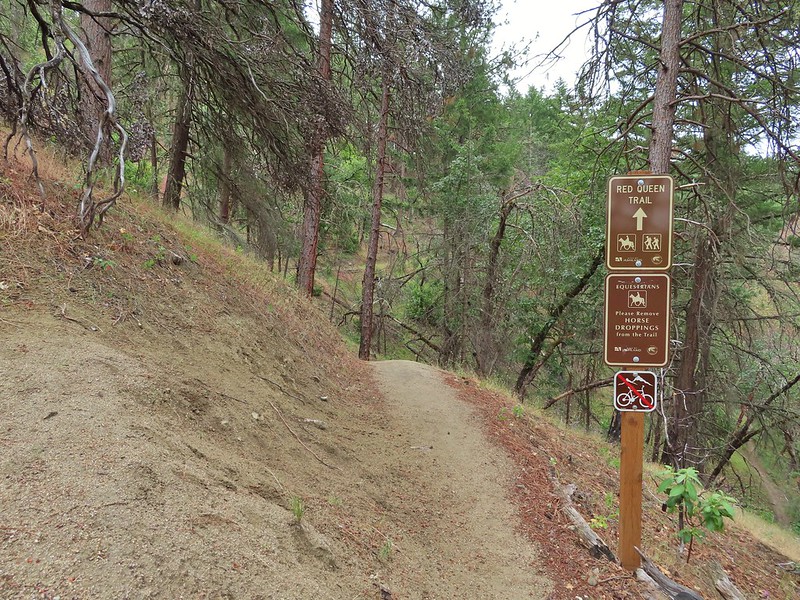
 Bluehead gilia
 Madrones along the Red Queen Trail.
 National Forest boundary.
 Lupine
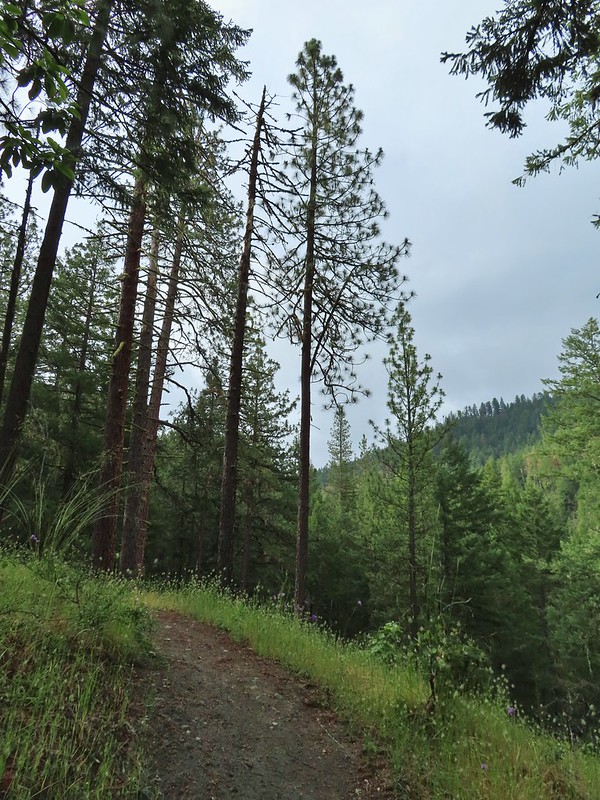 Clouding up.
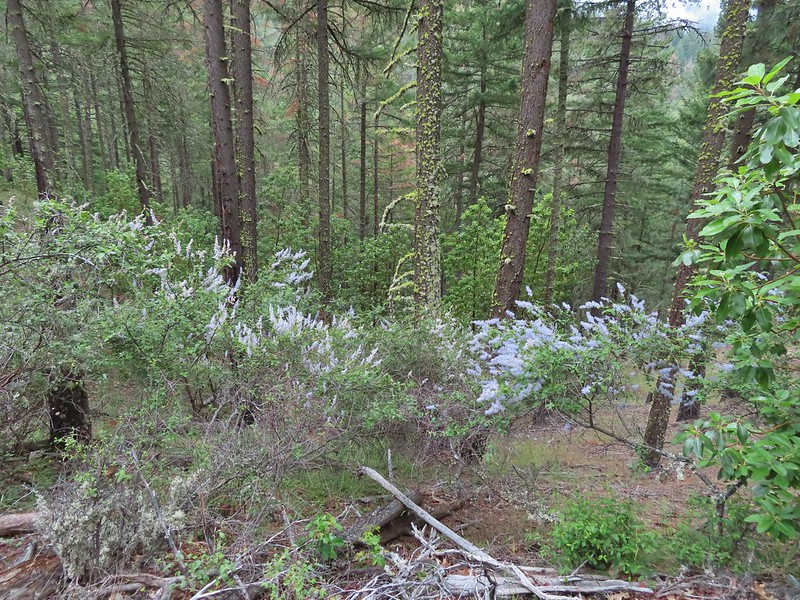 Deer brush
 A madrone and a ponderosa
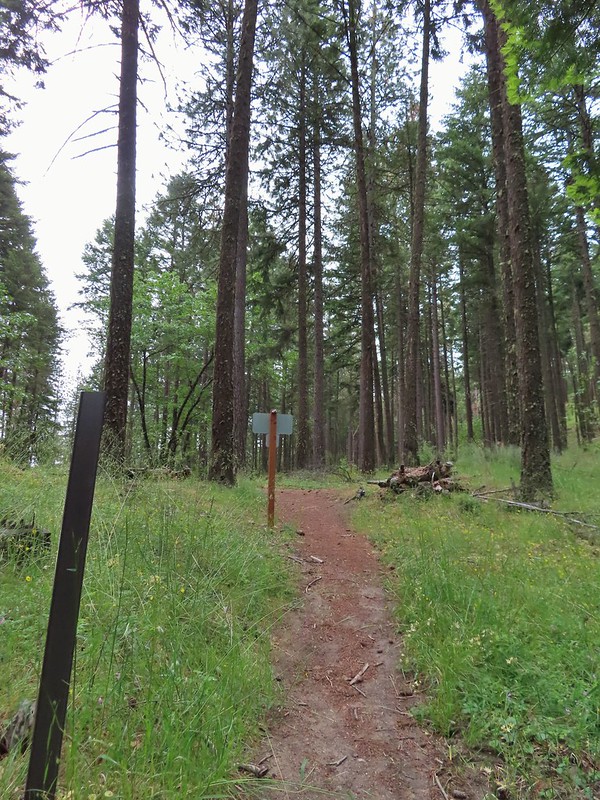 Nearing the junction with Road 2060 and the Caterpillar Trail.
 Sign for the Caterpillar Trail across the road.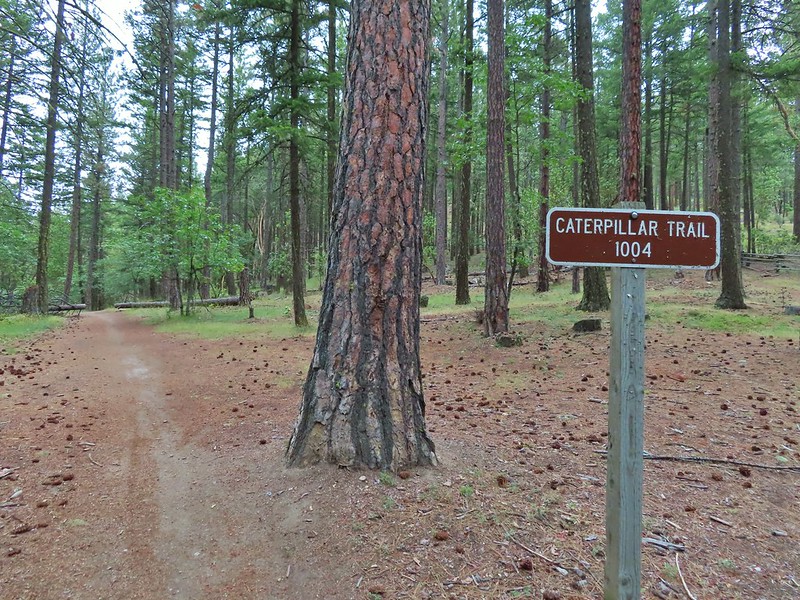

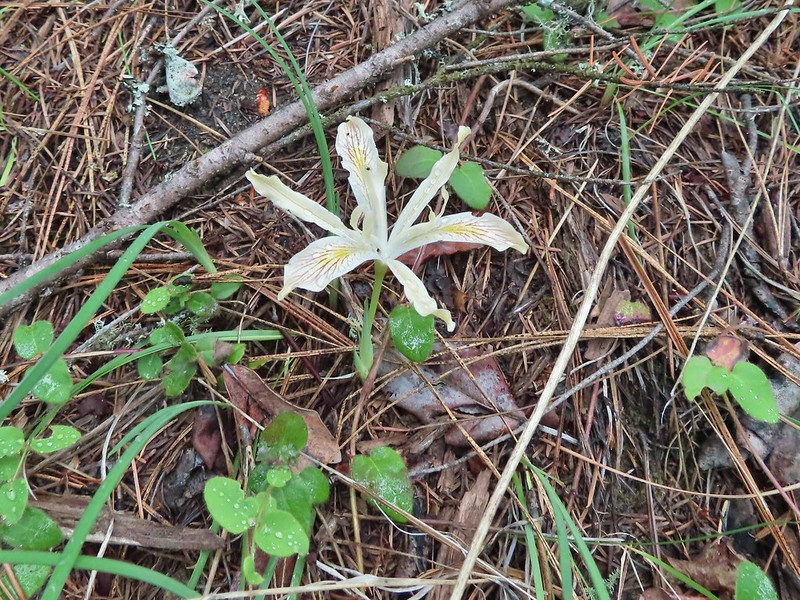 Iris
Iris
 The first signed junction with more signs in the distance.

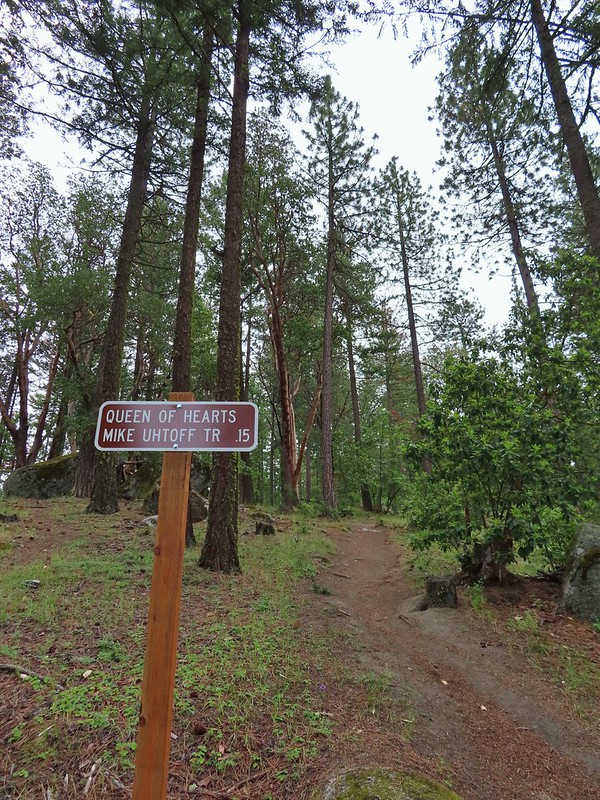

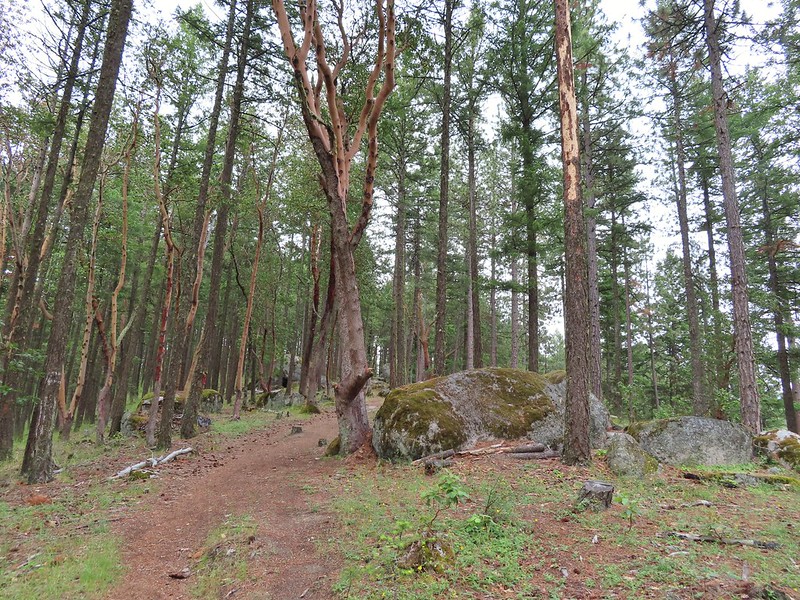
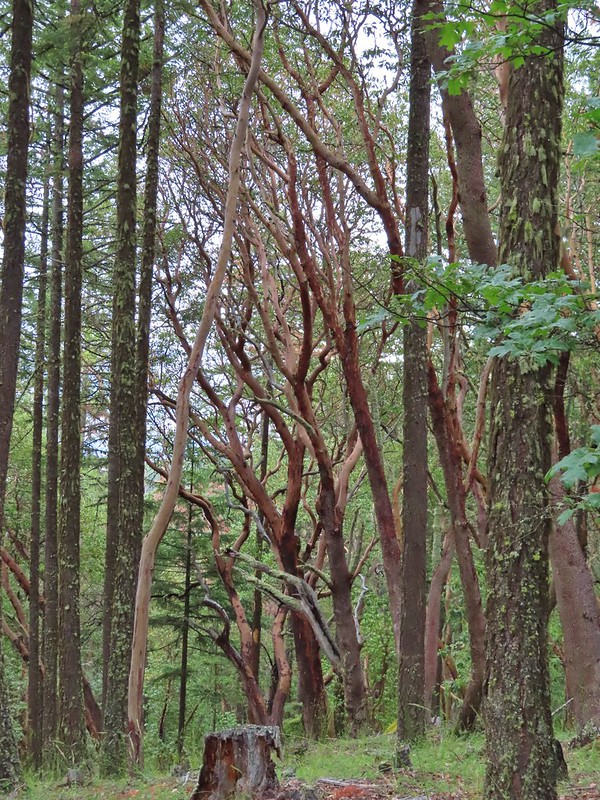

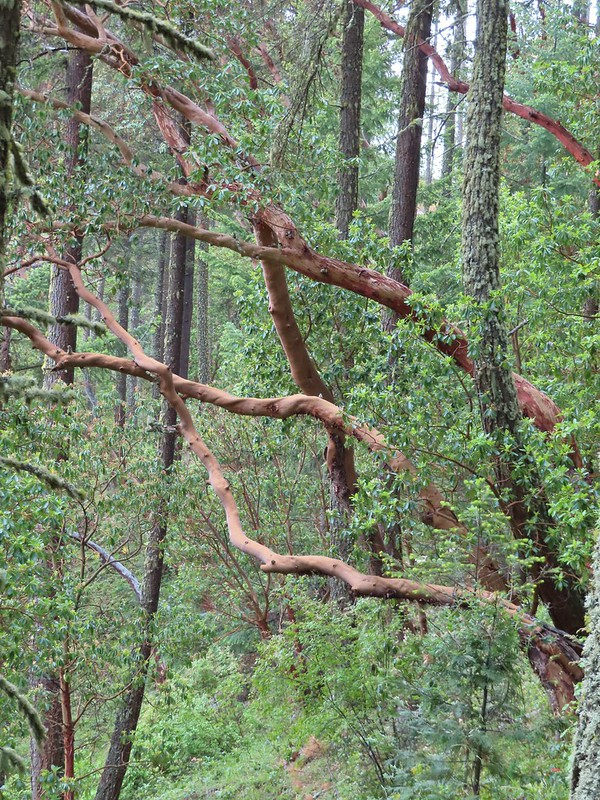 There were a lot of cool madrones along the trails.

 Madrone bark
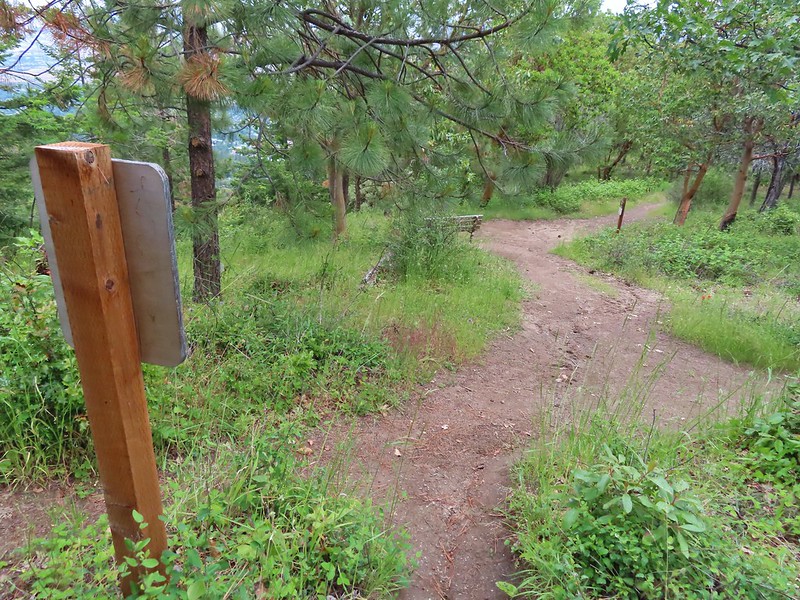 Arriving at the junction with the Mike Uhtoff sign to the left.
 That isn’t the trail we were on so where were we?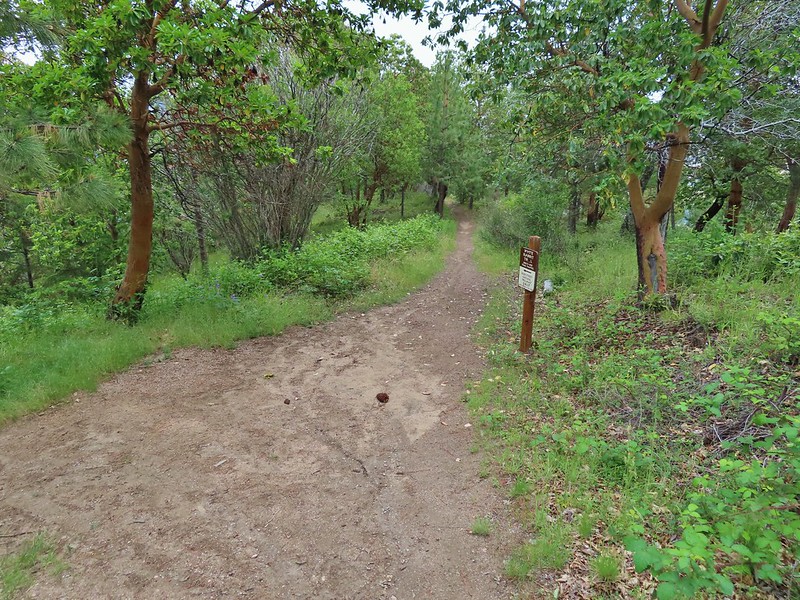
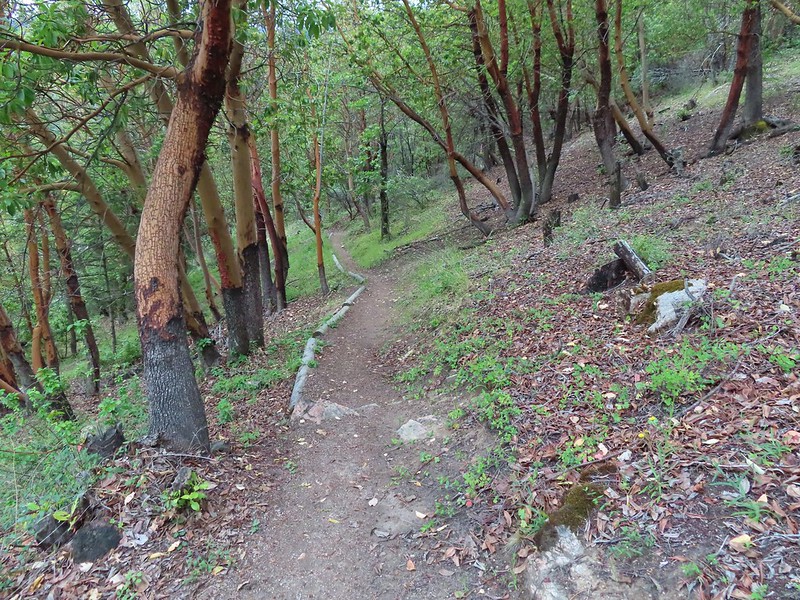
 Still no real rain but it was clouding up even more.
 Grand collomia


 Silverleaf phacelia
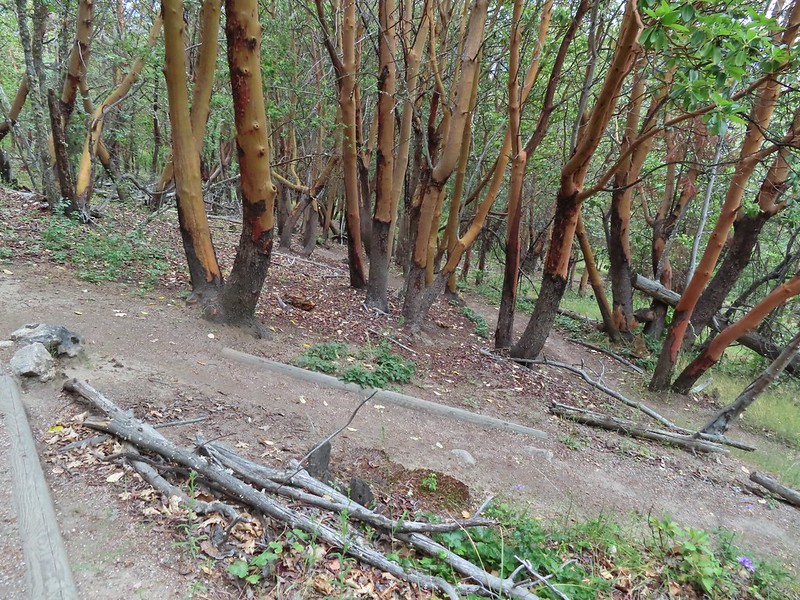
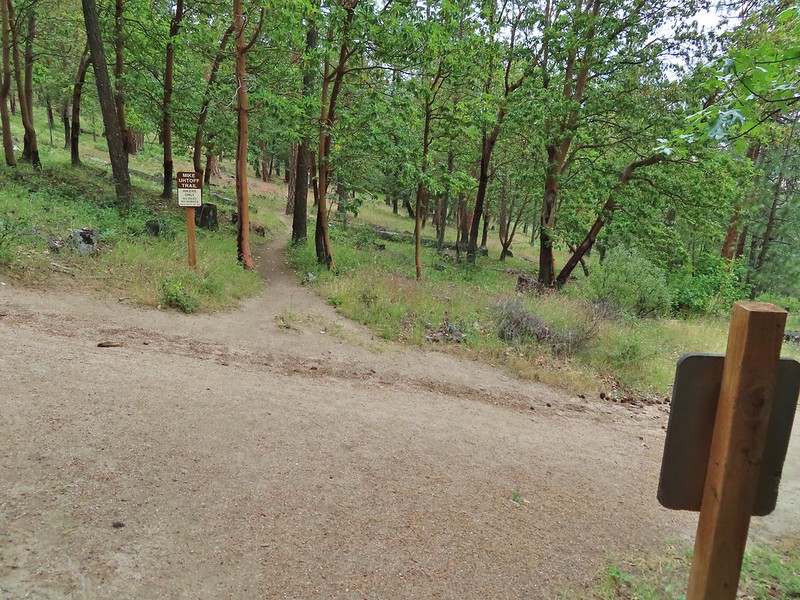 We turned right onto this road bed which is the White Rabbit Trail.
 We hiked downhill on the White Rabbit to a bench (just visible through the vegetation on the left) at the trail junction.
 Trail to the Oredson-Todd Woods.
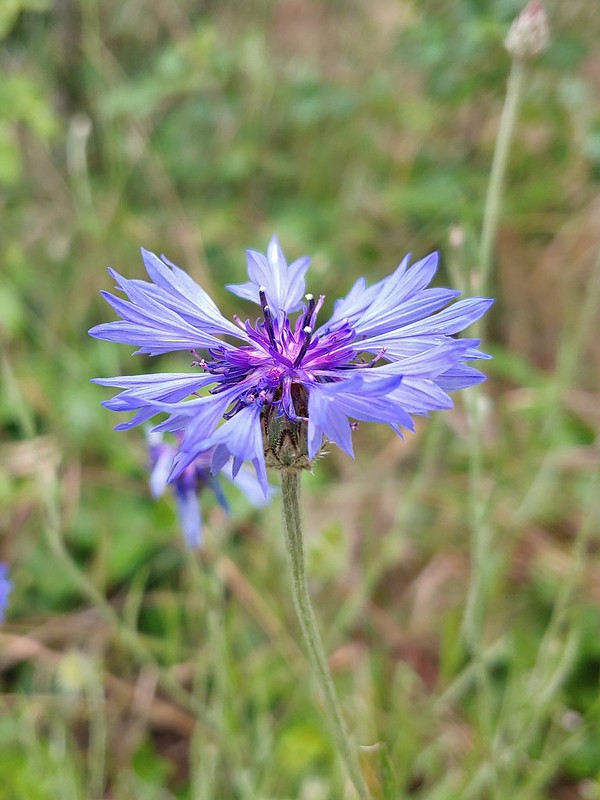
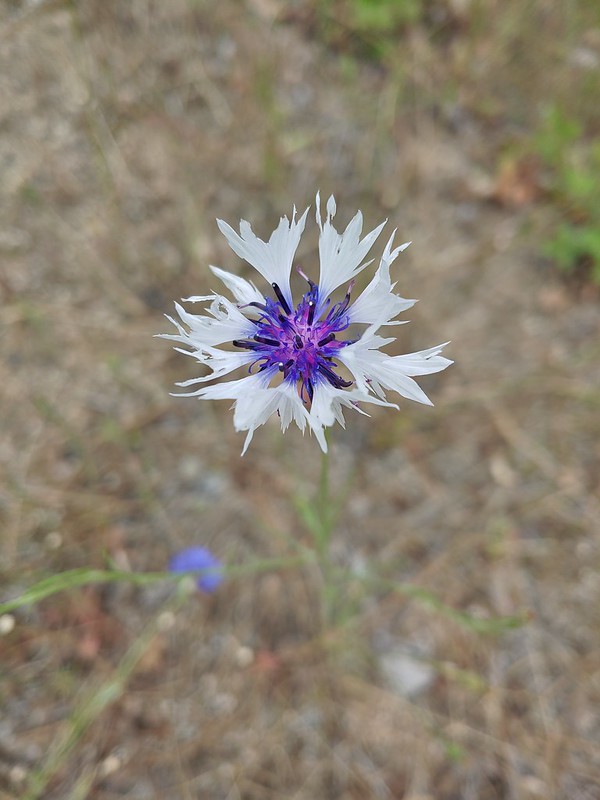

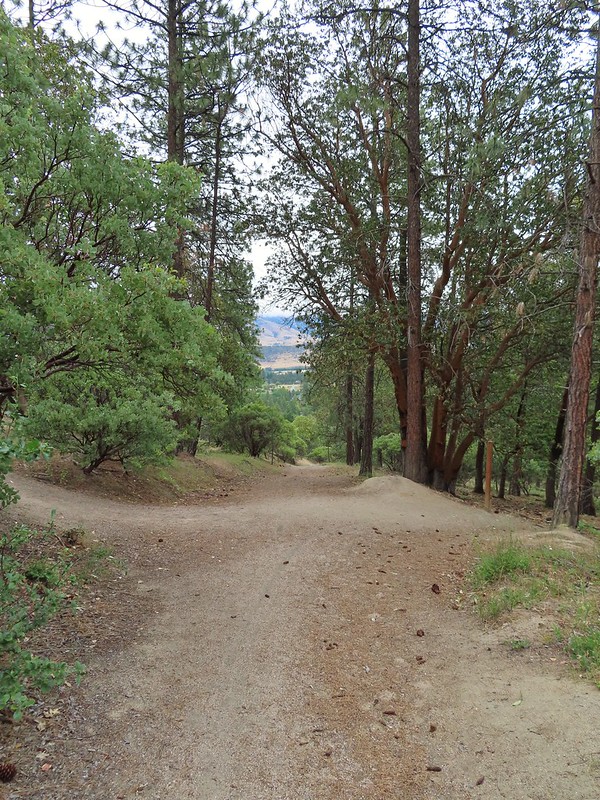 We turned left here. There is a sign downhill on the left with what looked to be a small white map which we’d seen on other trail signs. These gave very limited information for bike routes.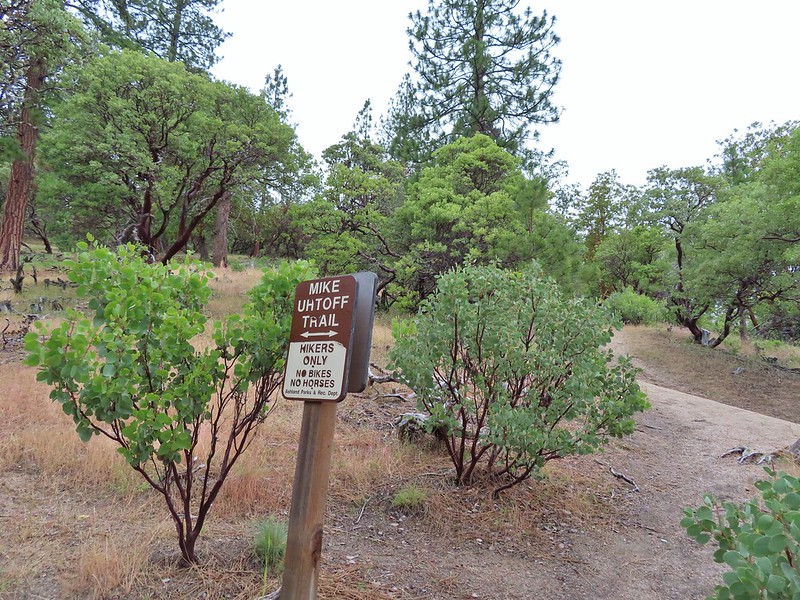


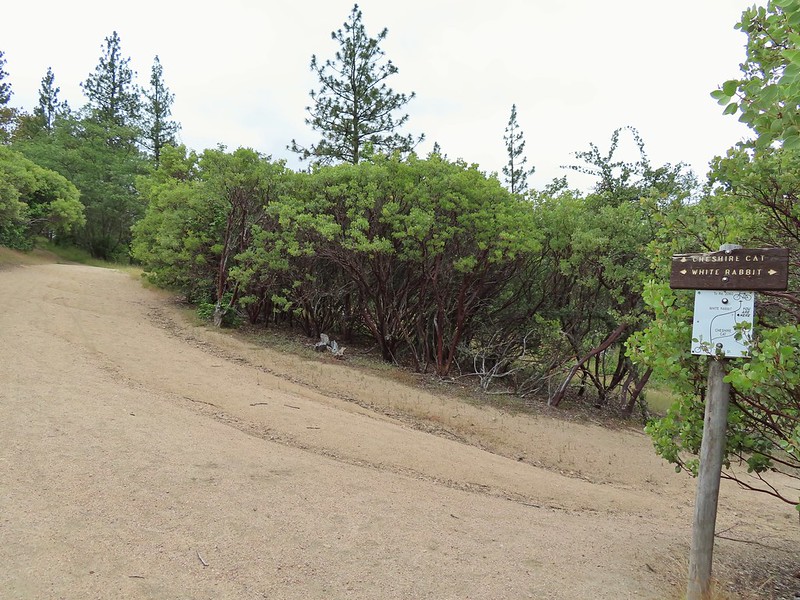 One of the white maps at the White Rabbit/Cheshire Cat junction.
 A connector for the Uhtoff Trail at a switchback.
 Large boulders near the Looking Glass Trail jct.
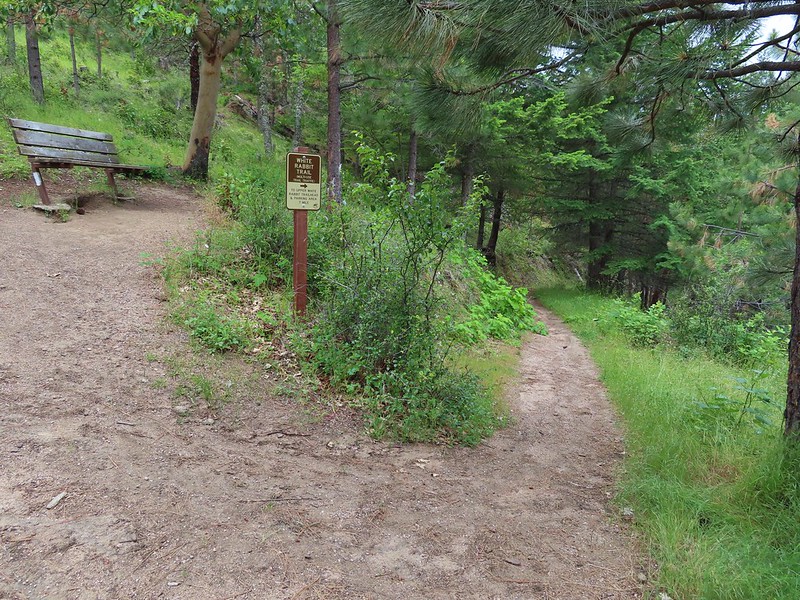 Passing the bench at the junction where we’d discovered that we had not in fact been on the Mike Uhtoff Trail.
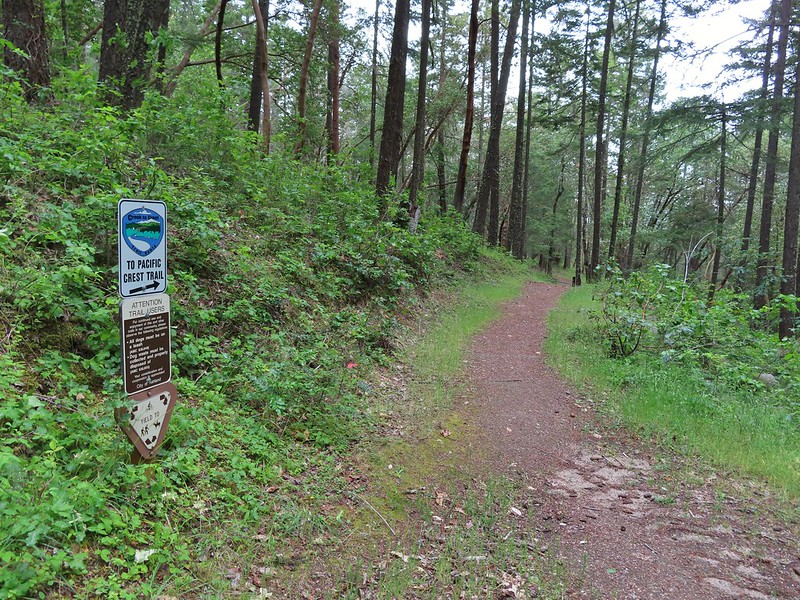 This section was a little confusing. The trail dropped to a junction in a small basin. We ignored this sign which pointed to another road bed with a gate.
 Looking down the March Hare Trail (it took less than 2 minutes to get from the bottom to the top via the White Rabbit Trail).
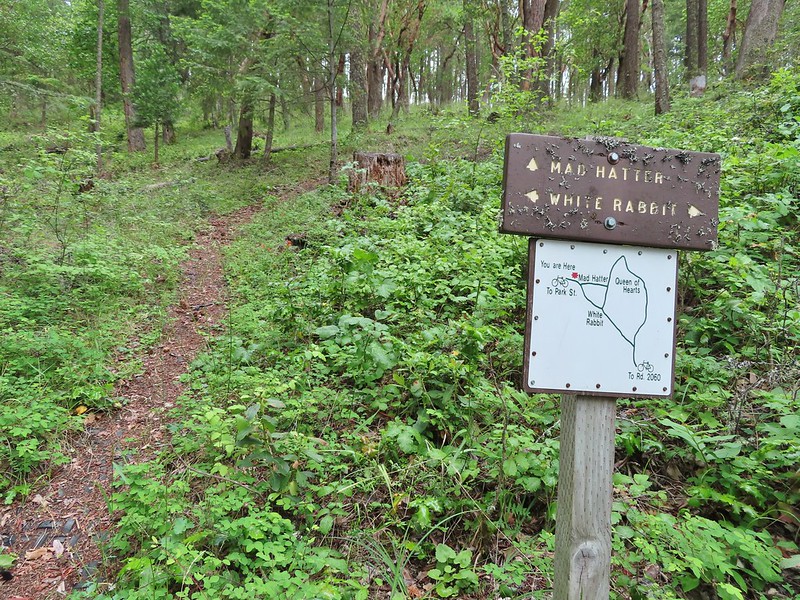 Yet another side trail = Mad Hatter.
 The Queen of Hearts Loop junction with the White Rabbit Trail.
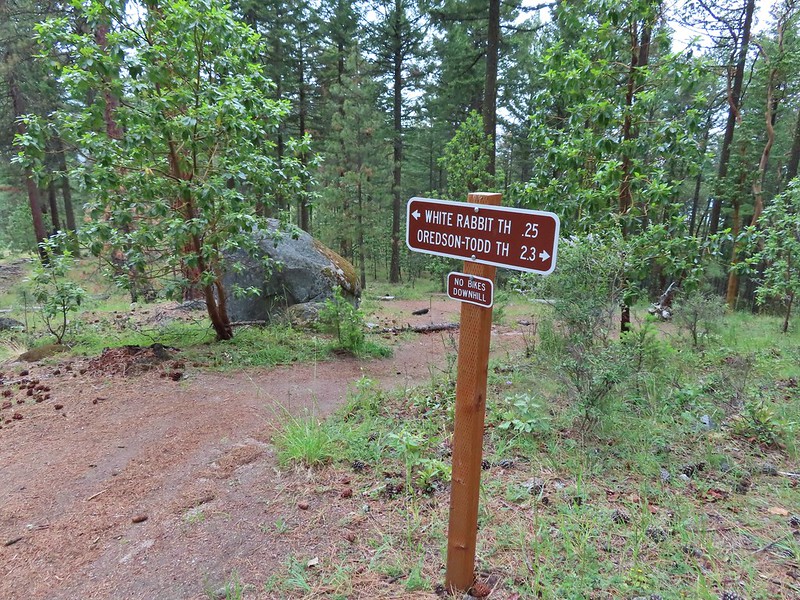 Sign as we neared the trailhead.
 Lots of cars here.
 This was the map that we needed earlier.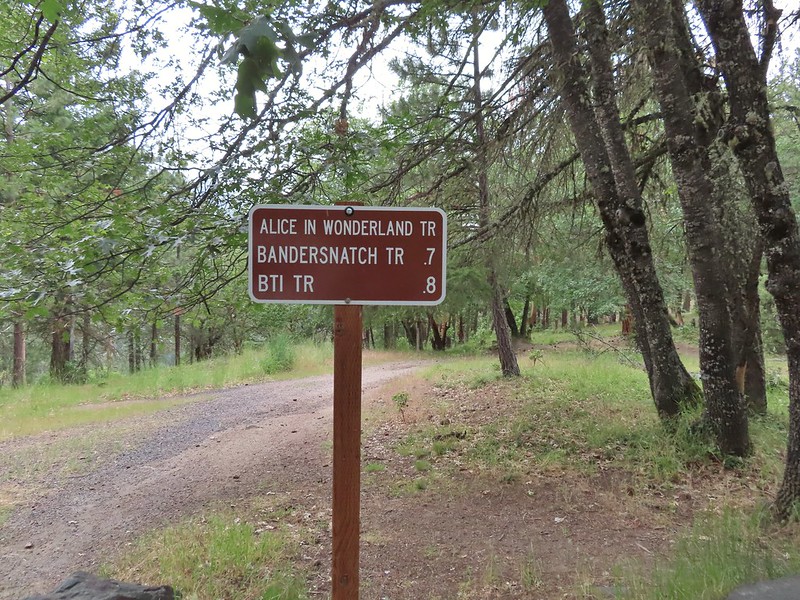

 Madrone circle.
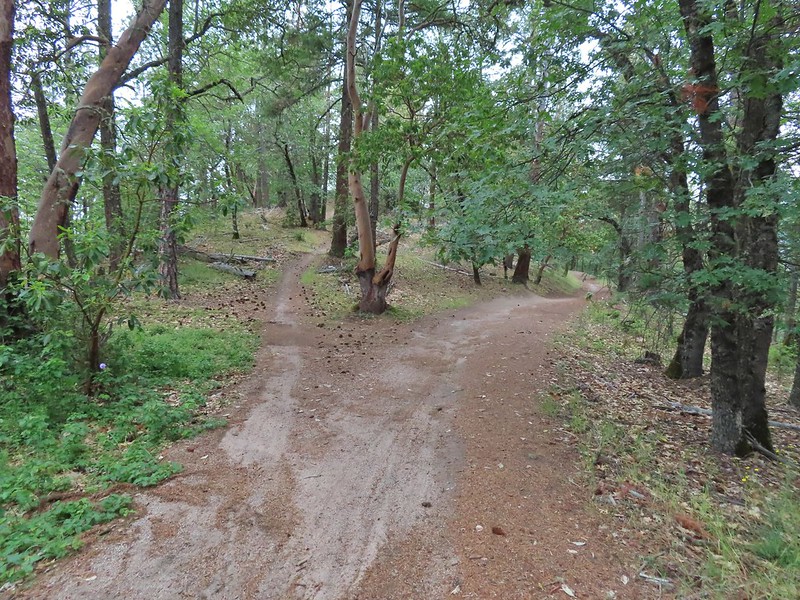 A couple of short spurs went up and over small hills, we stuck to the more level road bed.
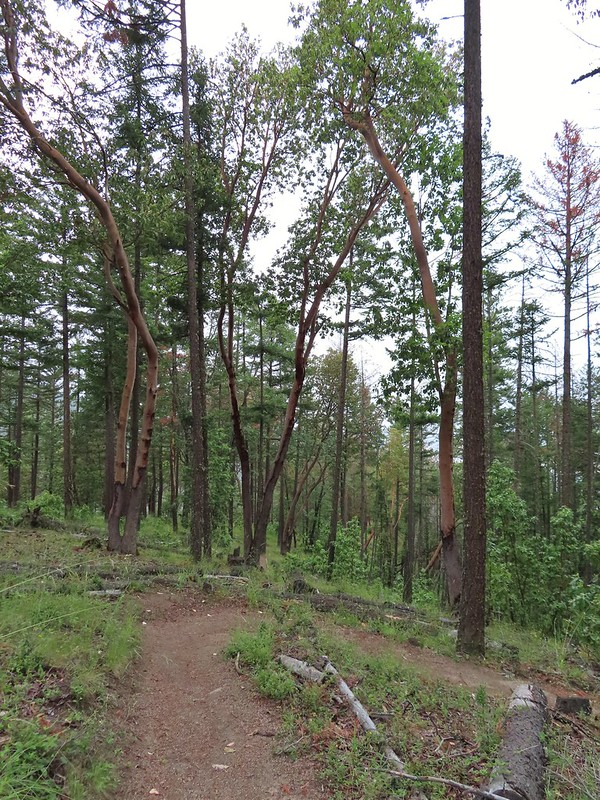
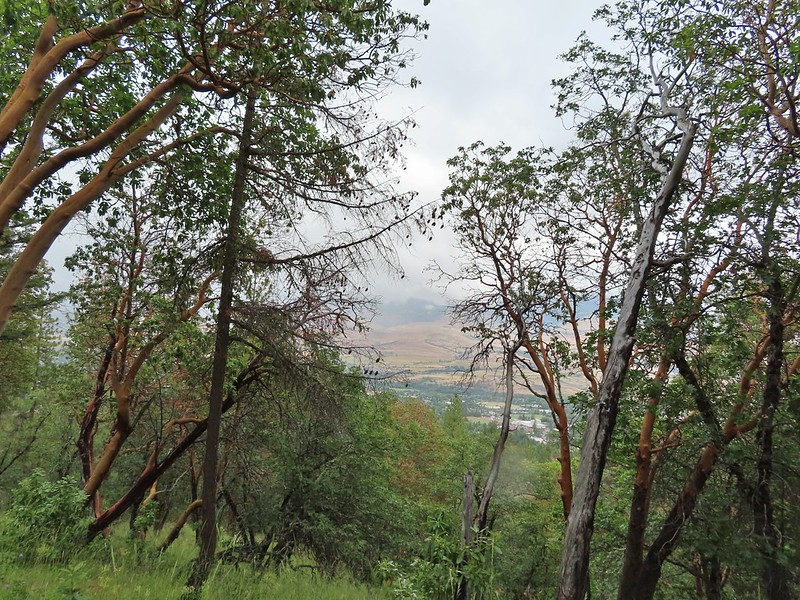
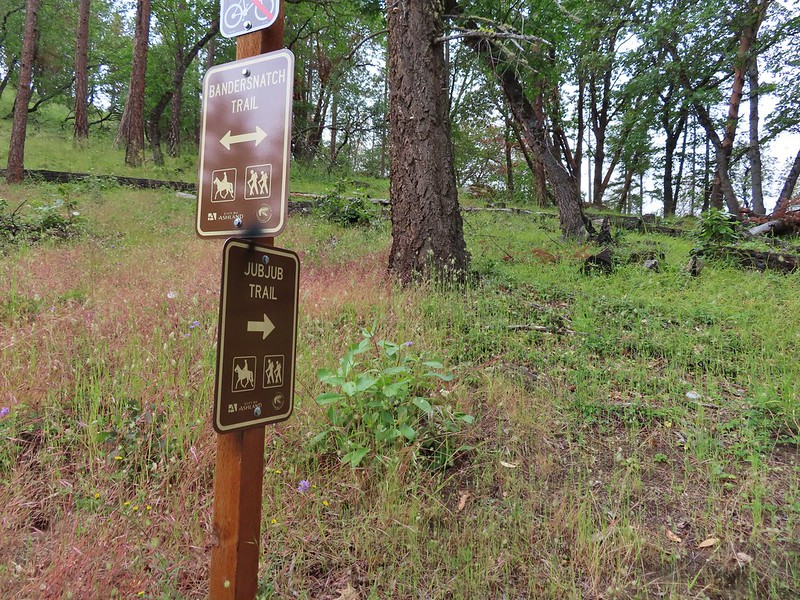

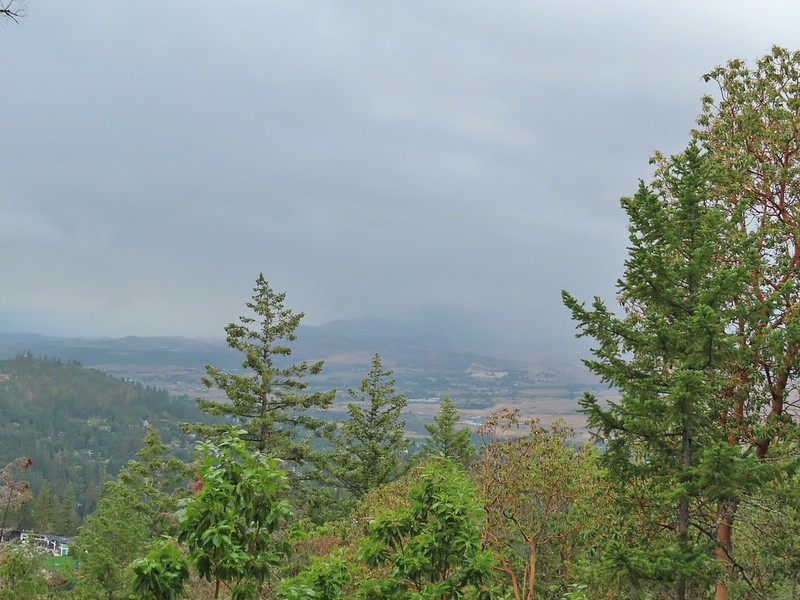 Rain to the north over Grizzly Peak (
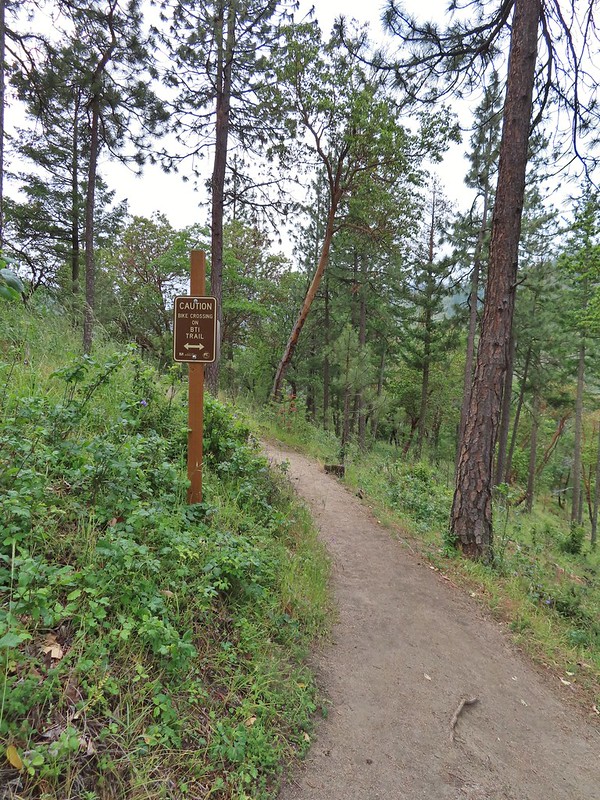 Approaching the BTI crossing.
 Red Queen crossing.
 Descending to the Bandersnatch junction.

 Marty the Pacific Fisher from the other side.
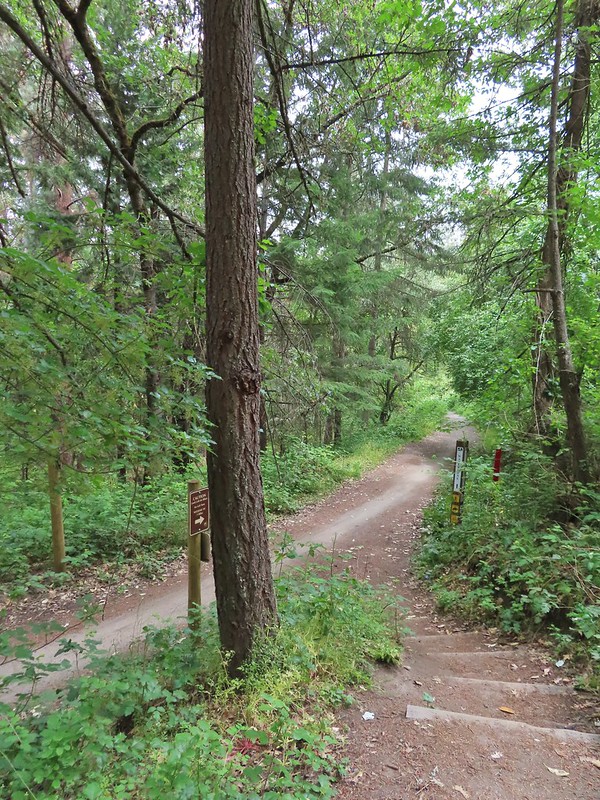 The Waterline Trail 0.1 mile from the Witzend Trailhead.

 The deepest hole, it doesn’t look too bad here.
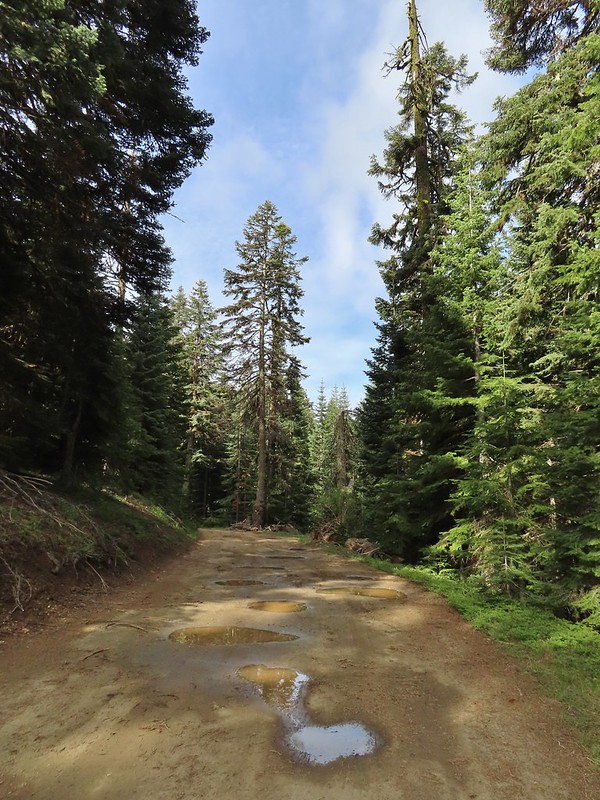 Potholes on FR 20. These turned out to be the worst of the stretch between the junction and Siskiyou Gap but we didn’t know that until we’d walked this road later in the day.
 The PCT was just a few yards into the forest from the FR 20/22 junction.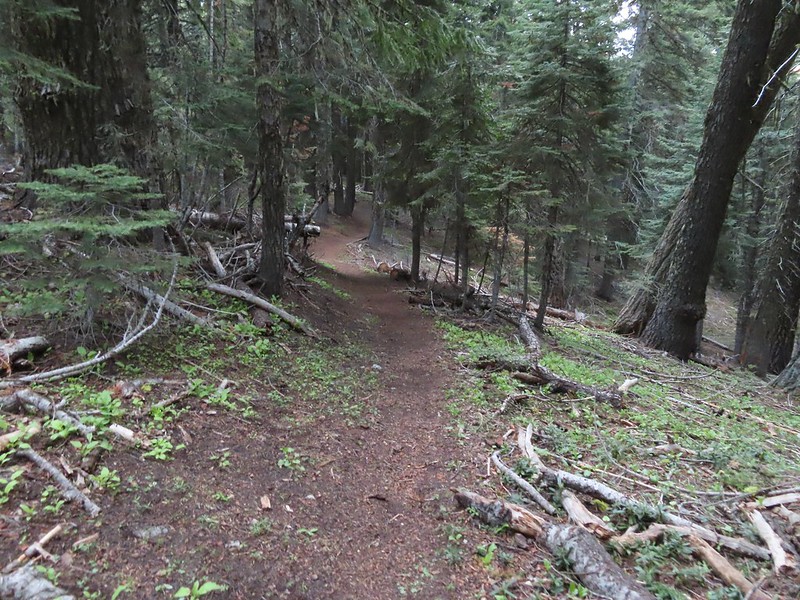
 Jessica sticktight?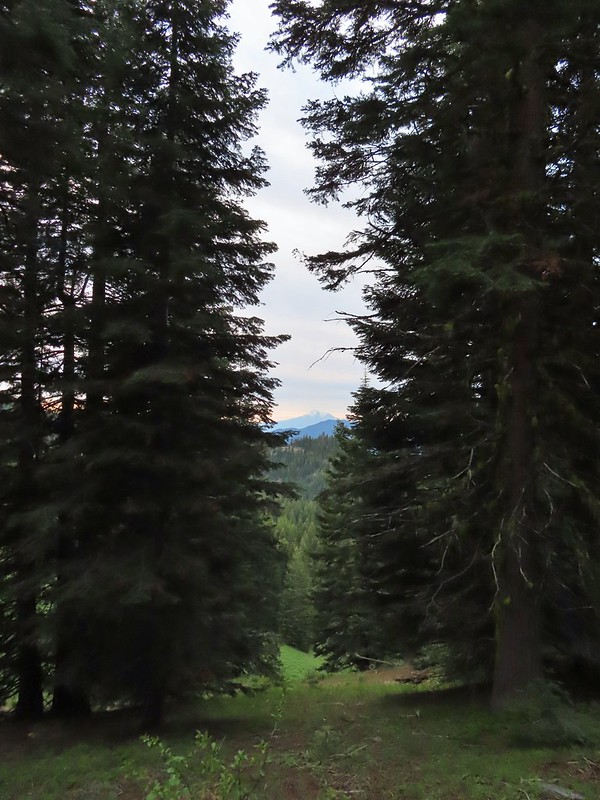
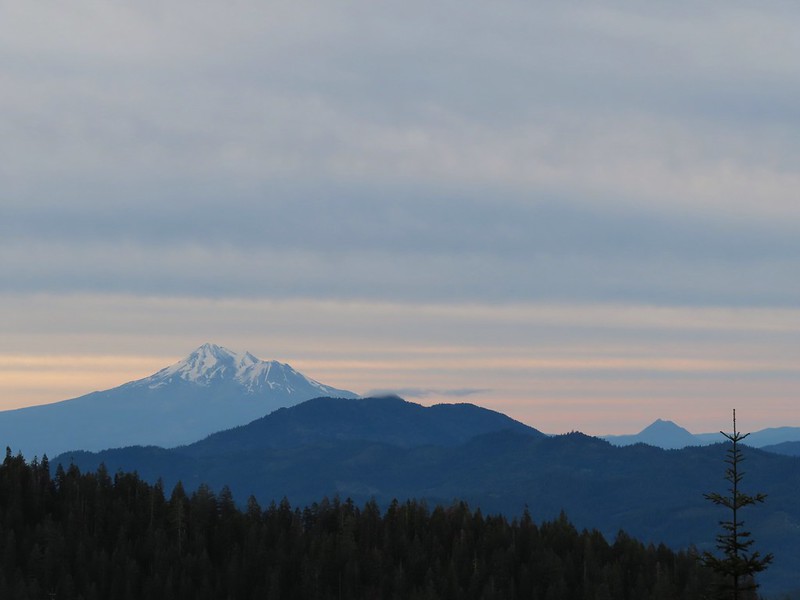 Mt. Shasta and Black Butte (
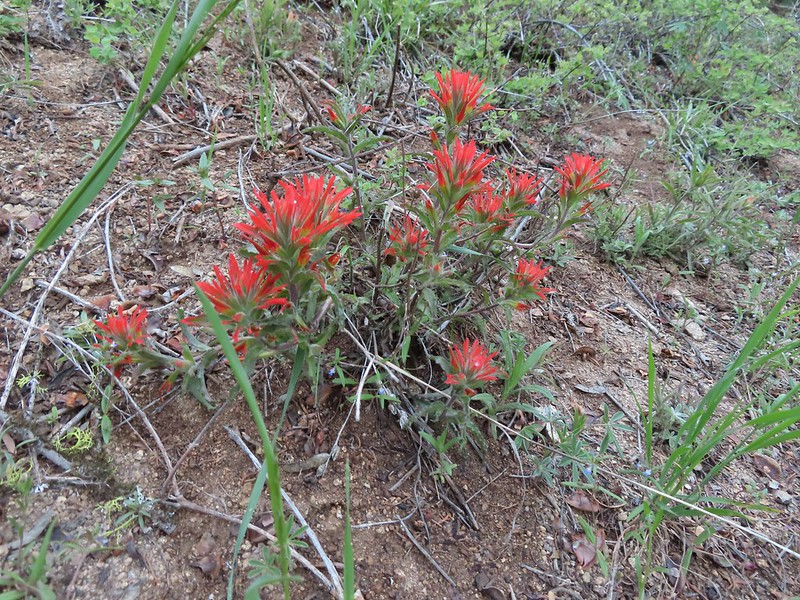 Paintbrush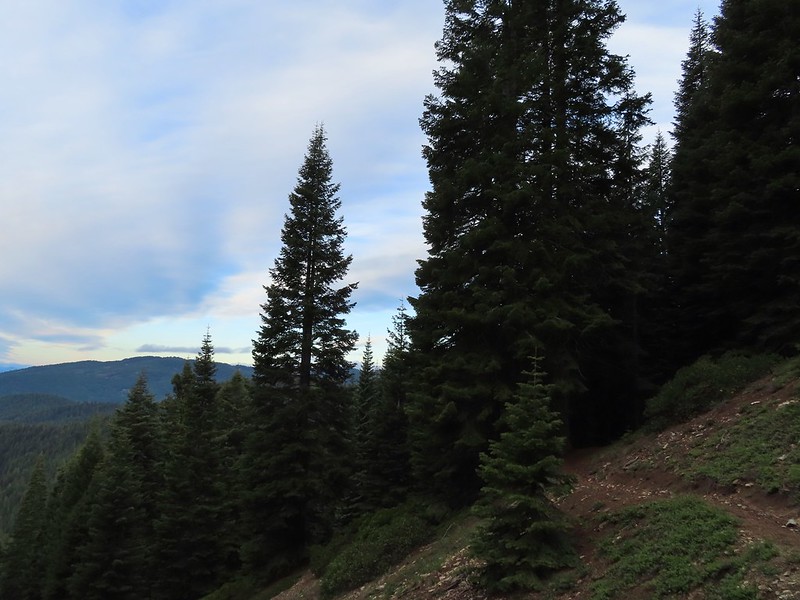
 Siskiyou Peak from the PCT.
 Lupine and pussypaws
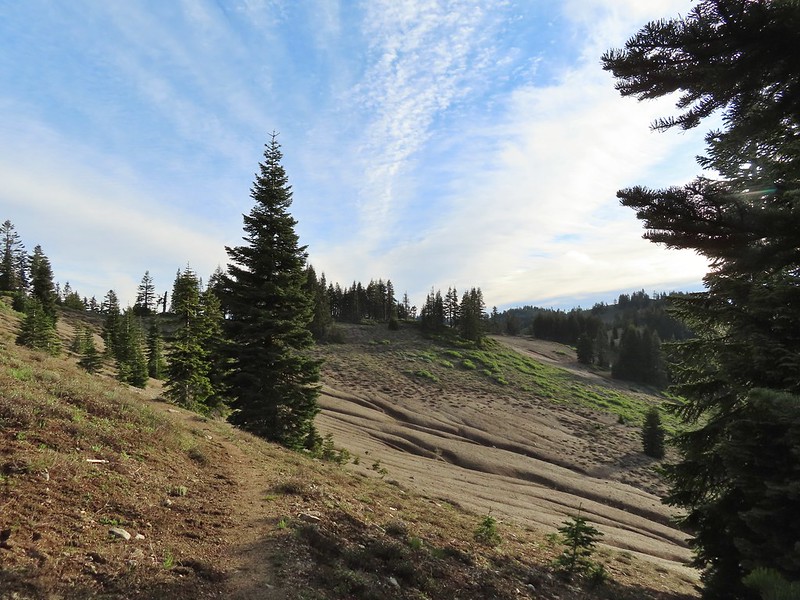 The PCT heading toward Mt. Ashland from the ridge where we left it.
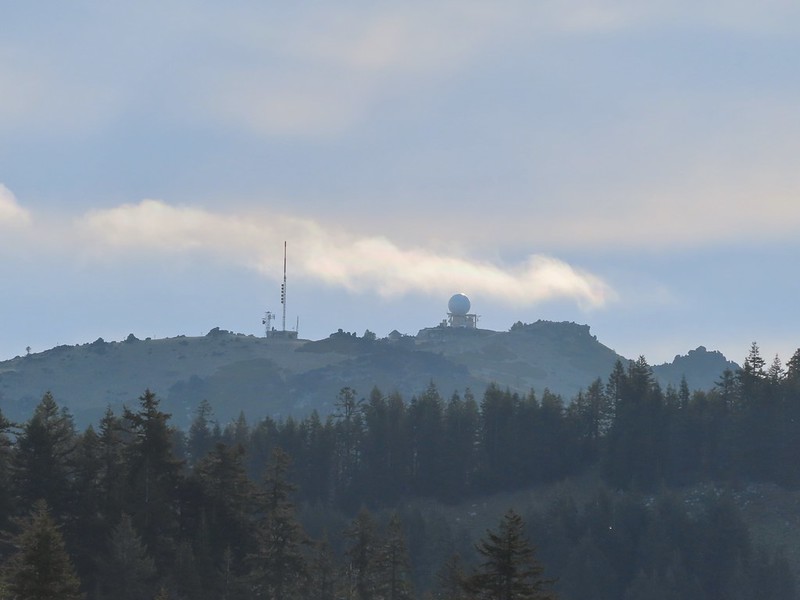 Towers on Mt. Ashland.
 The trail up Siskiyou Peak.
 Observation Peak to the left, where we had been the day before with Big Red Mountain on the right, where we were going later today.
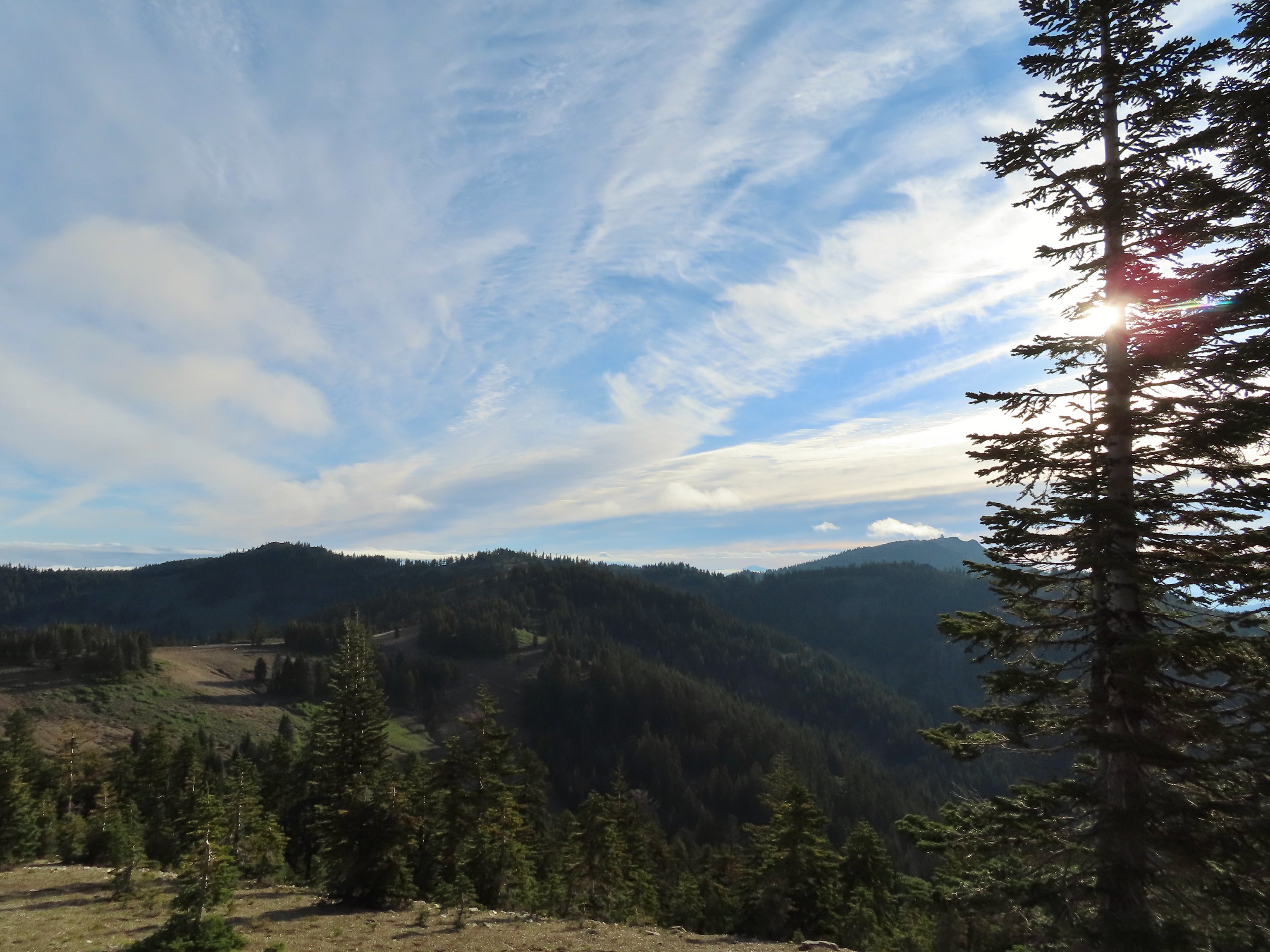 Mt. Ashland to the right.
 Mt. McLoughlin (
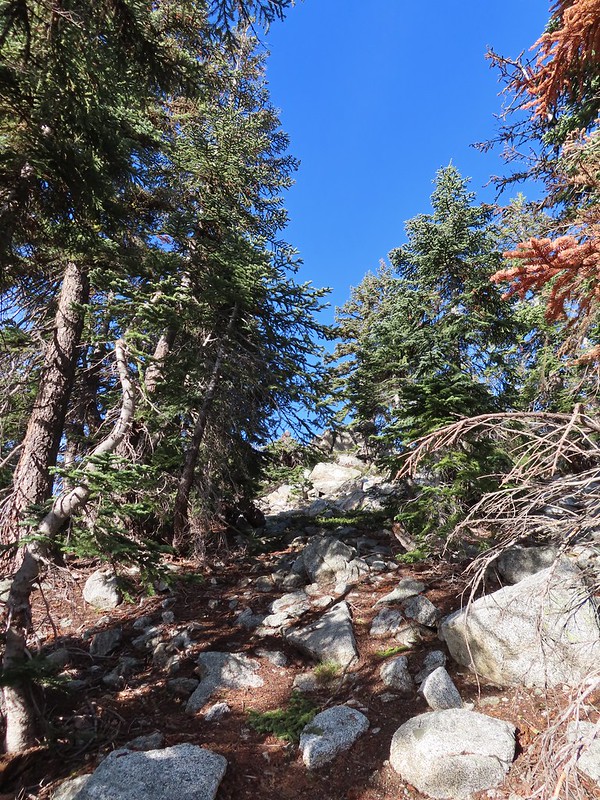 The final rocky climb to the summit.
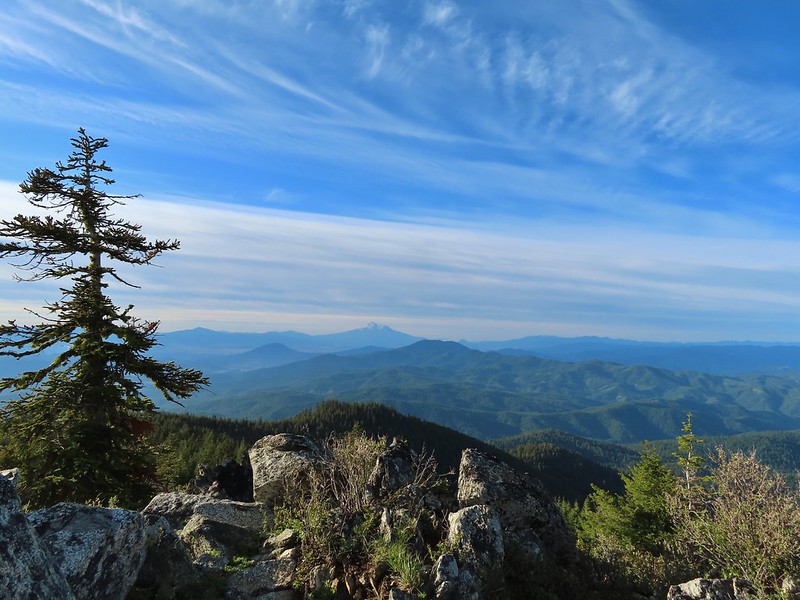 Mt. Shasta from the summit.
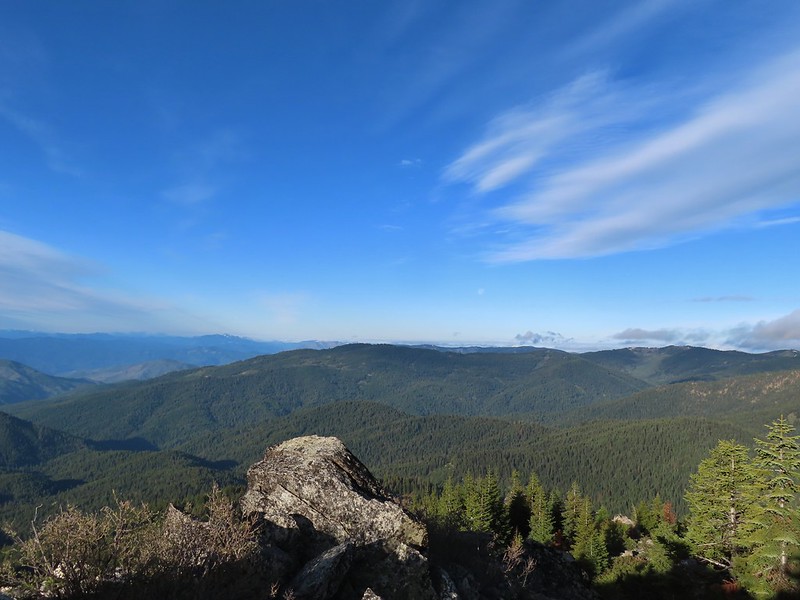 The snowy Marble Mountains (
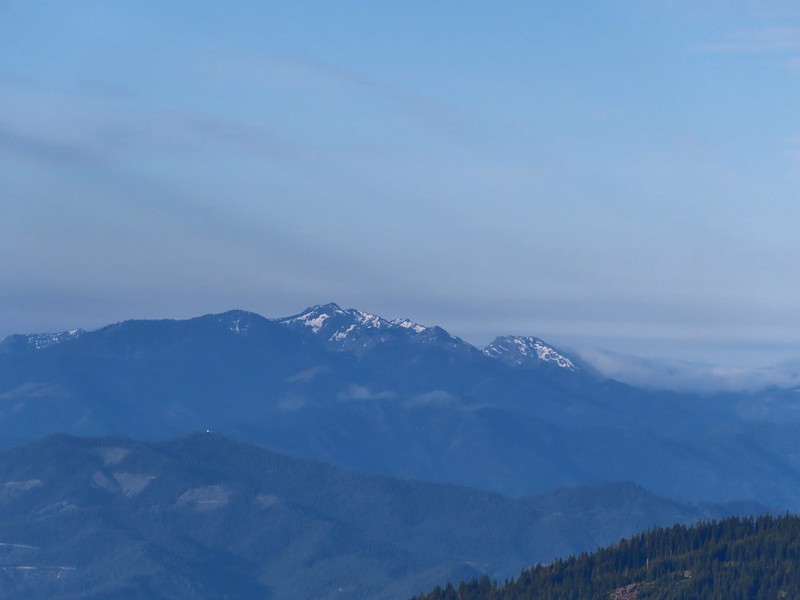 Some of the Marble Mountains.
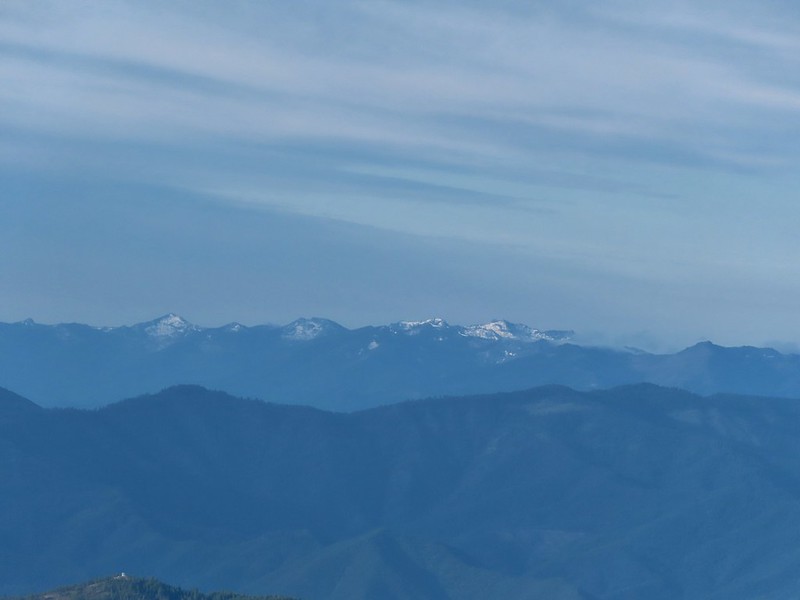 I believe these are peaks in the Russian Wilderness.
 Observation Peak and Big Red Mountain with Dutchman Peak in a cloud behind Big Red.
 Our shadows from the summit.
 Dutchman Peak emerged from the clouds to make an appearance over Big Red Mountain.
 Wagner Butte (
 Arriving at the junction.
 Trillium along FR 20.
 California Jacob’s ladder
 FR 20 looking a little better here.
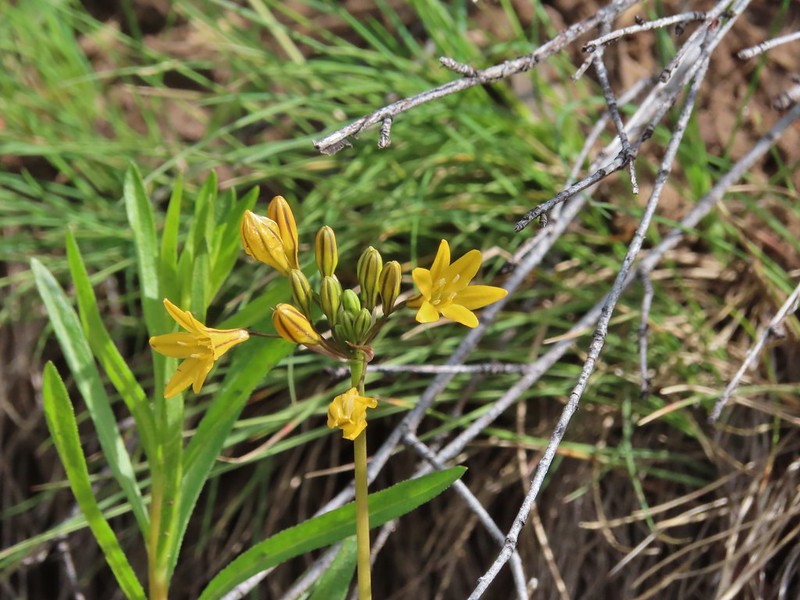 Pretty face
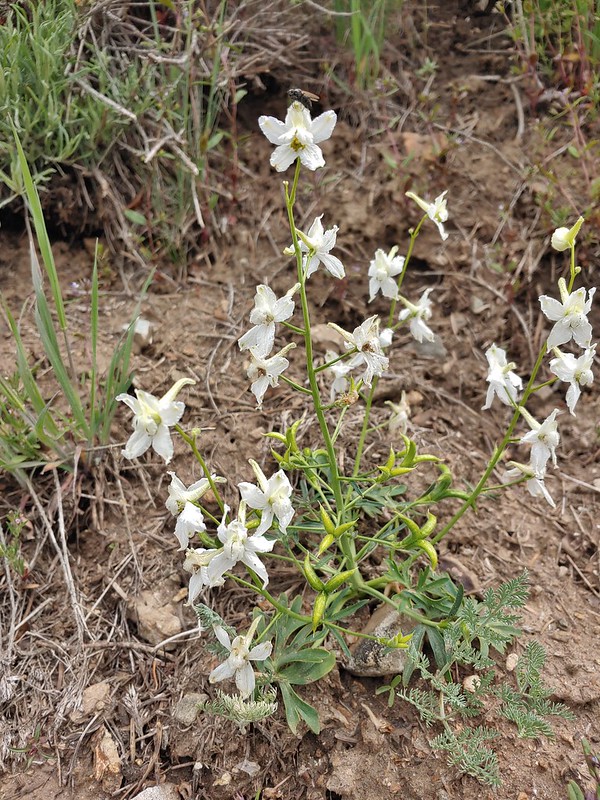 Larkspur
 Larkspur
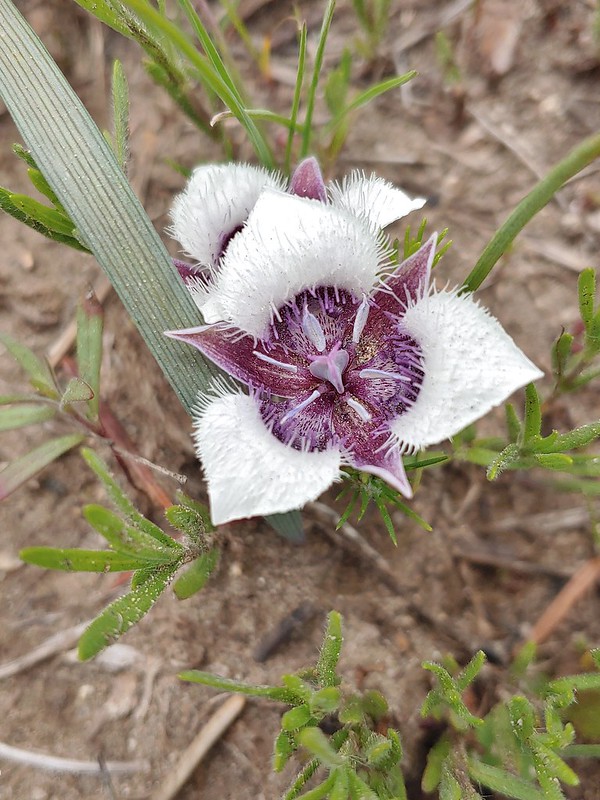 Mariposa lily
 FR 20 became a little rutted just before Siskiyou Gap.
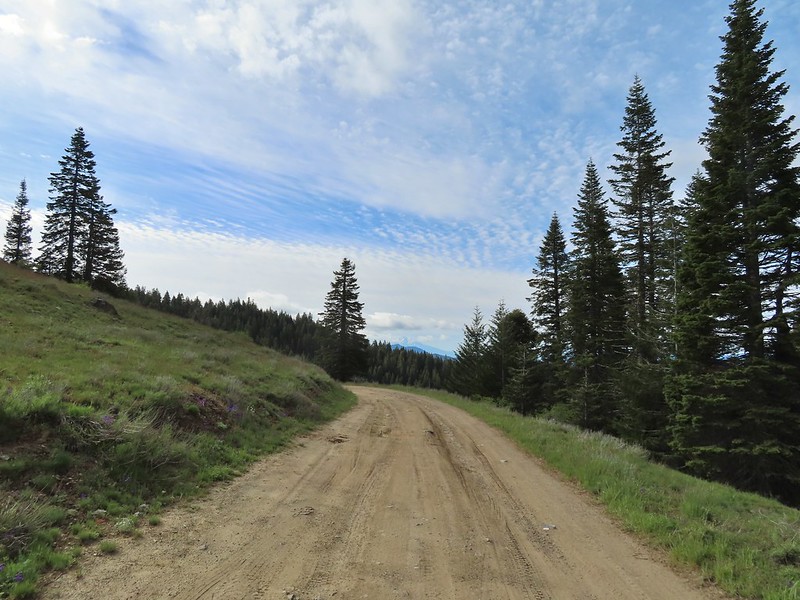 Mt. Shasta from the gap.
 Mt. Shasta
 Siskiyou Gap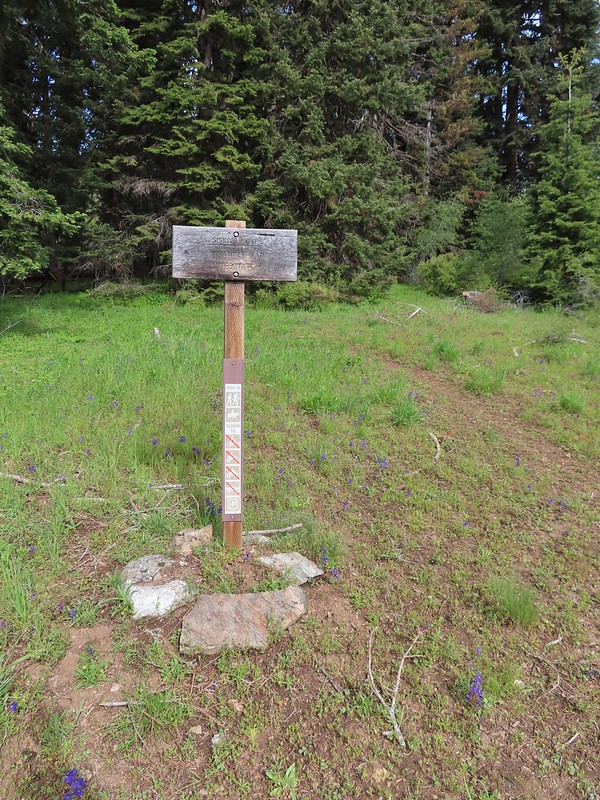
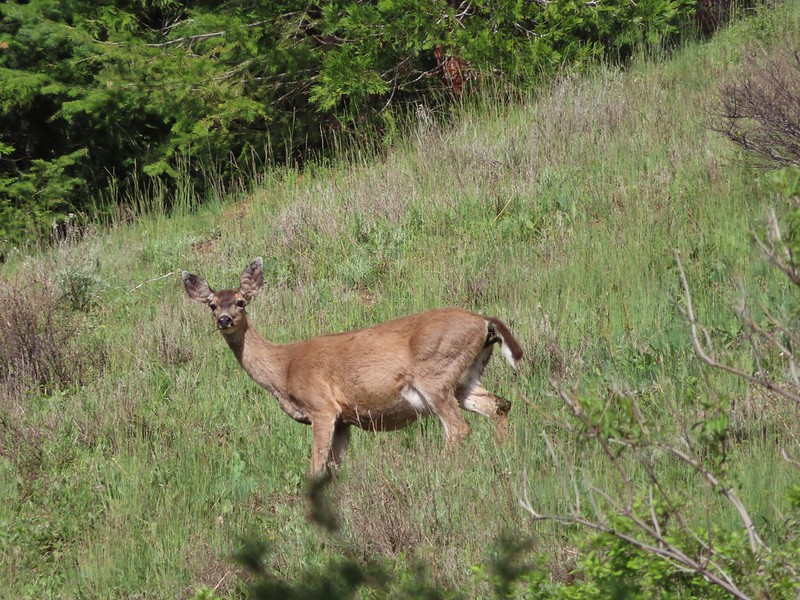
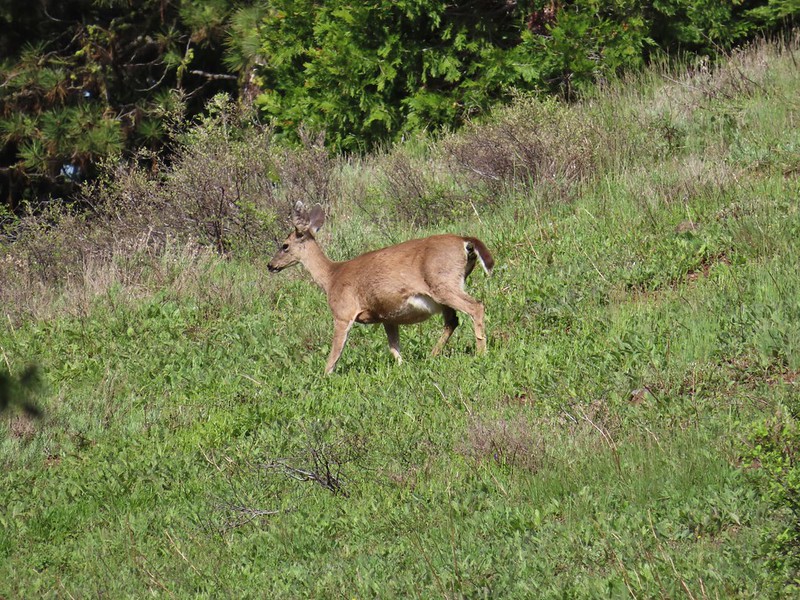

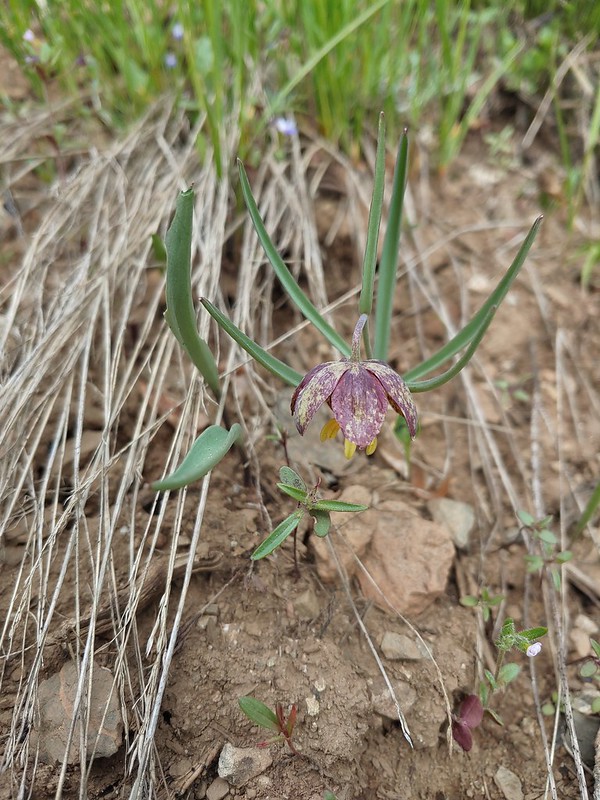 Chocolate lily
 Violets, larkspur and alpine pennycress.
 Ballhead waterleaf
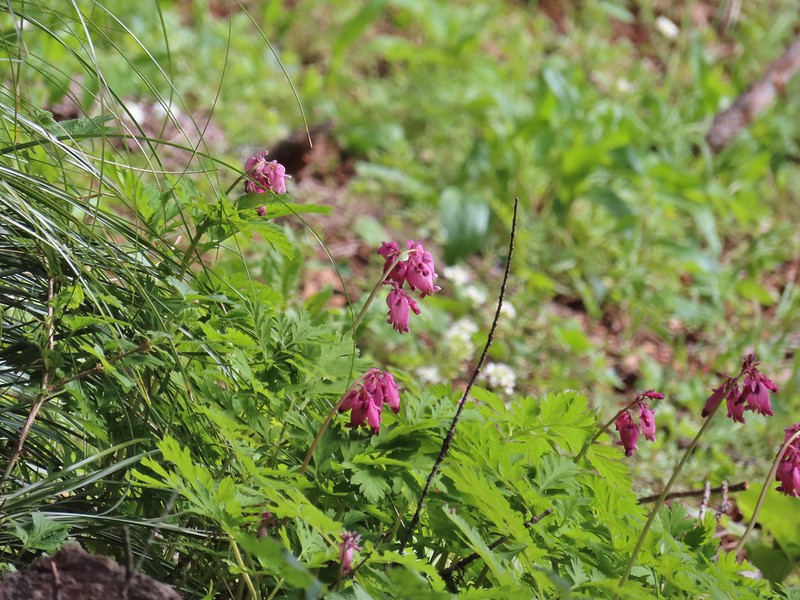 Bleeding heart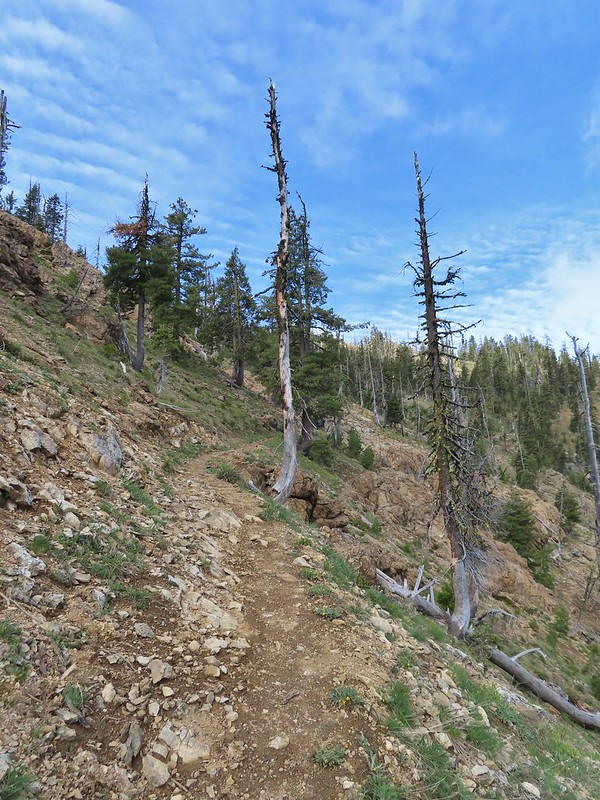

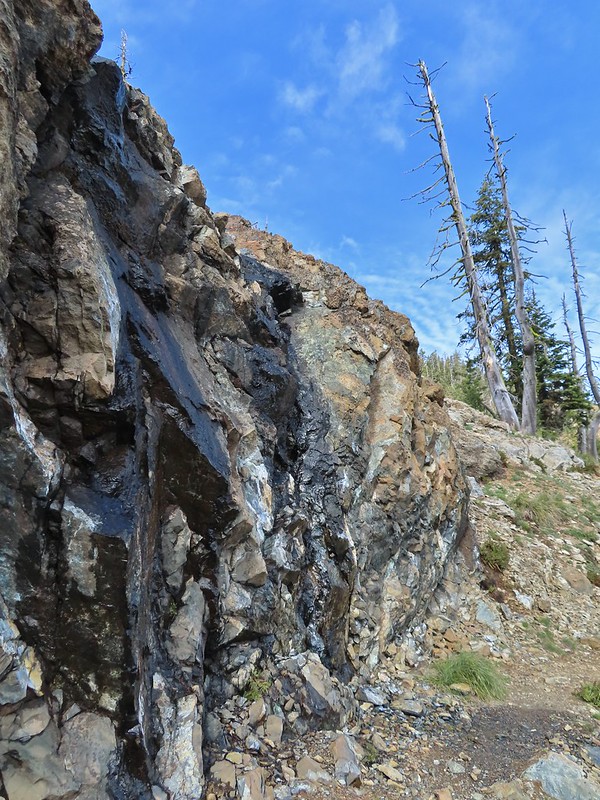 A trickle of water flowing down over the rocks along the trail.

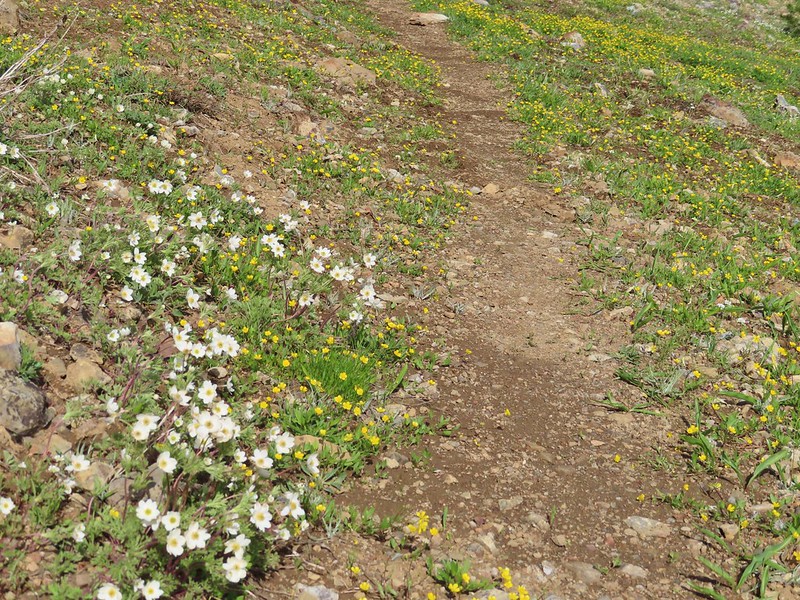 Anemones and buttercups
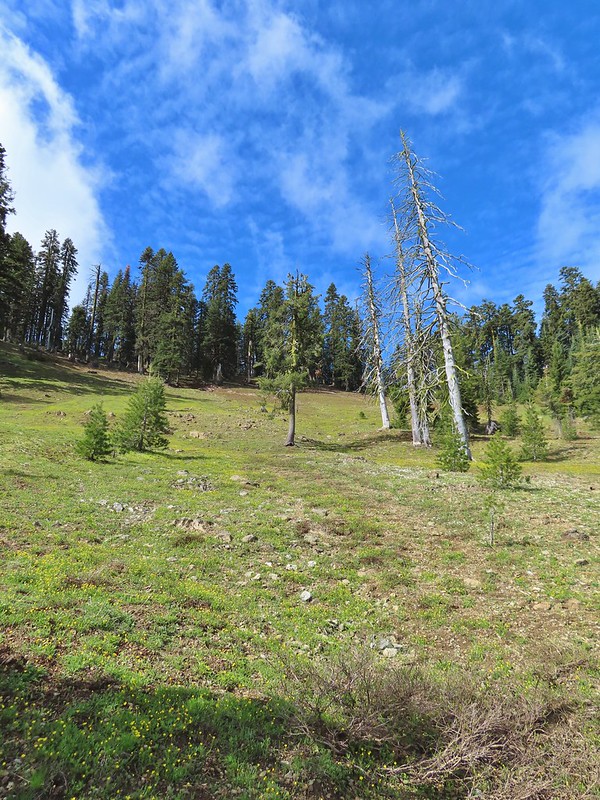 It’s hard to tell just how many flowers there were from the photo but it was very impressive to the naked eye.
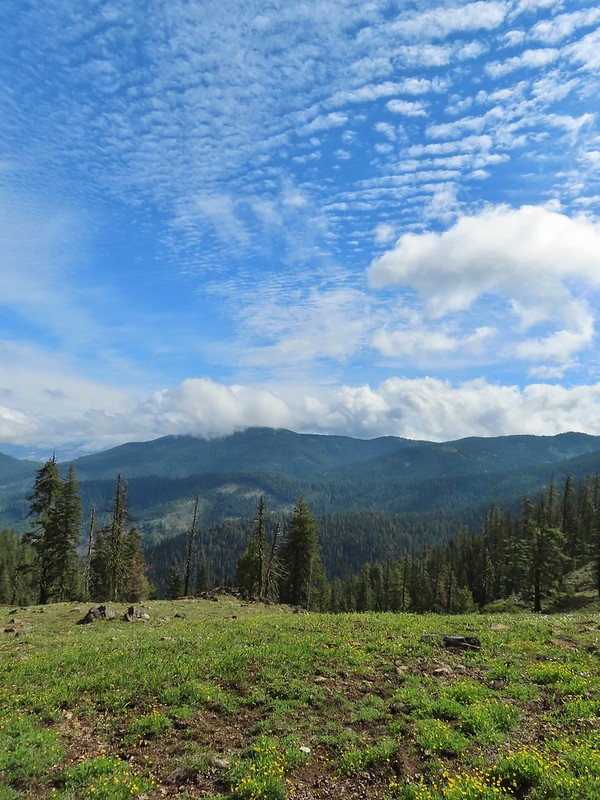 A cloud over Wagner Butte which stayed this way the rest of the day.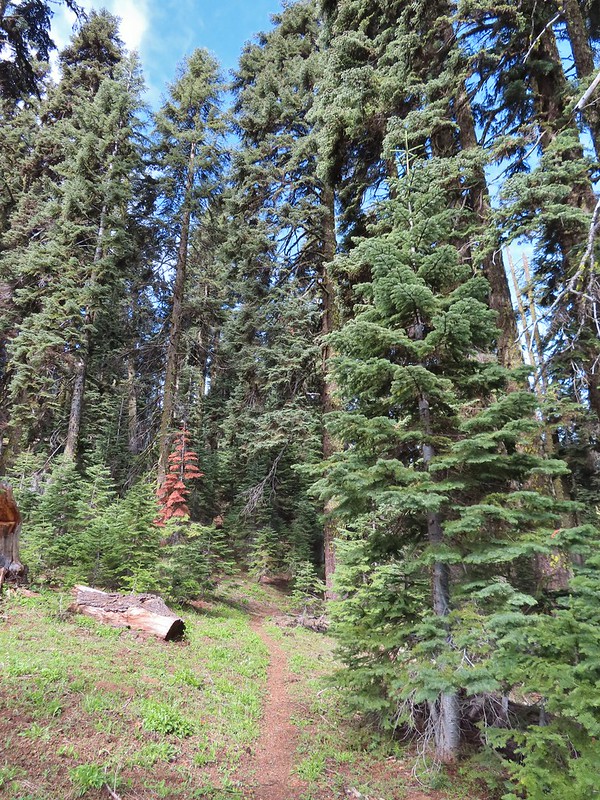
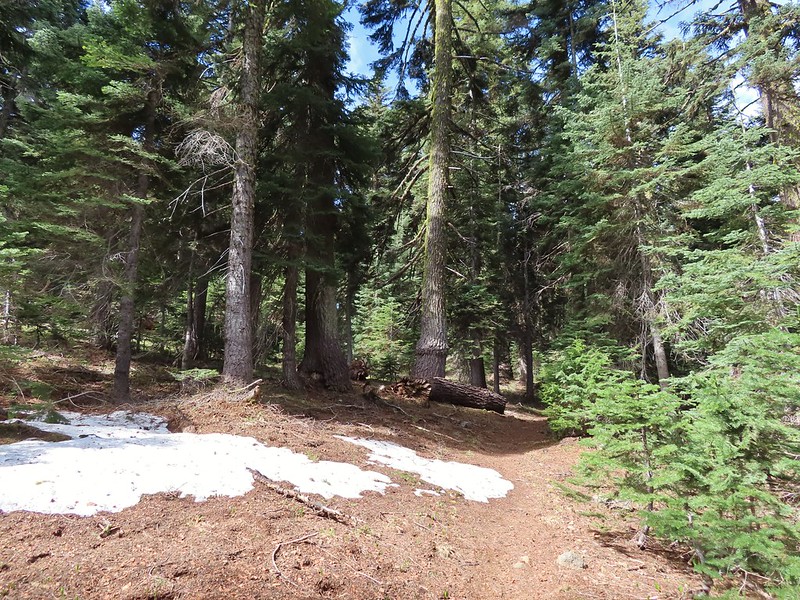 A few small patches of snow were all that was left along the PCT.
 Starting to leave the trees behind as the PCT passes below Big Red Mountain.
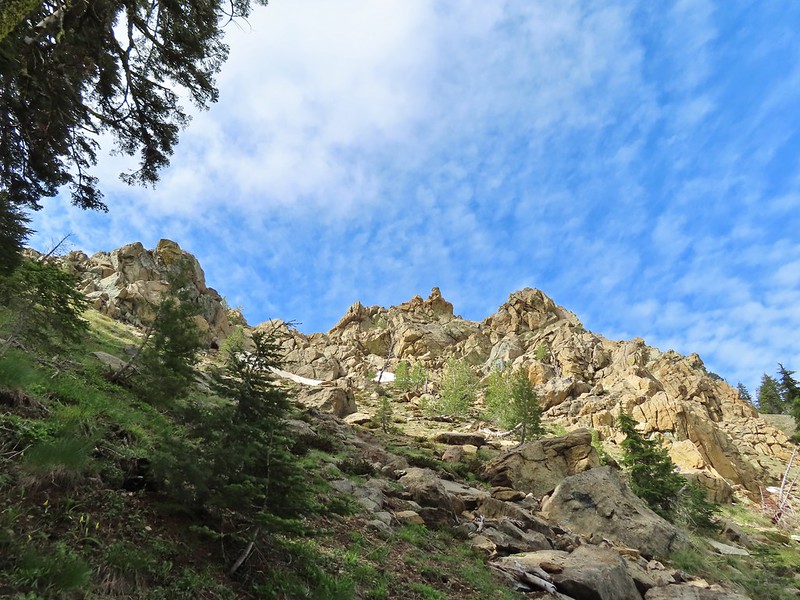
 Looking toward Medford to the NE.
 Upper Table Rock (
 You could see where this large chunk of rock used to be.
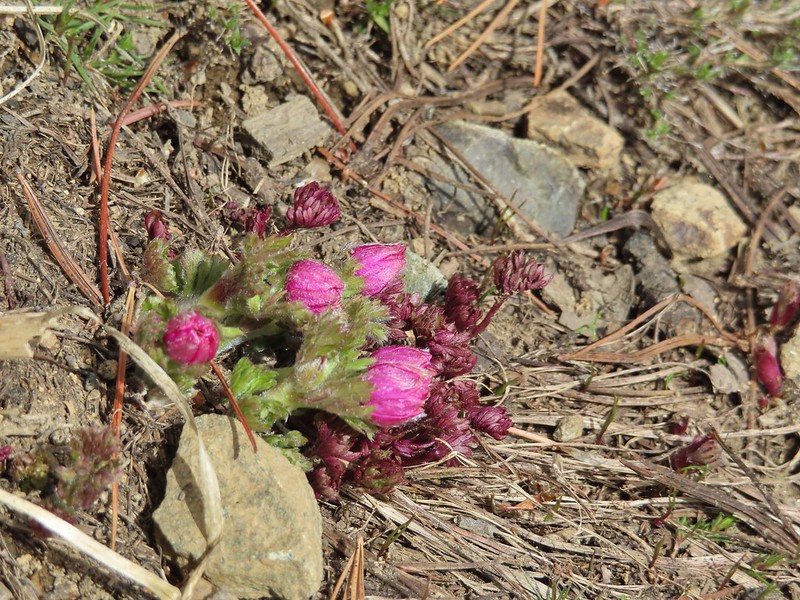 Something budding out.
 Dummond’s anemone – the blueish/purplish hue on some was quite pretty.
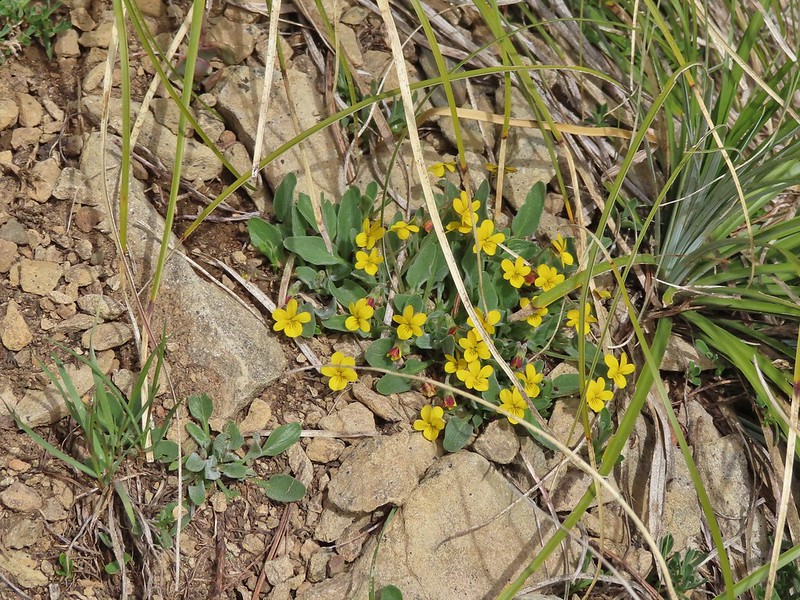 Violets
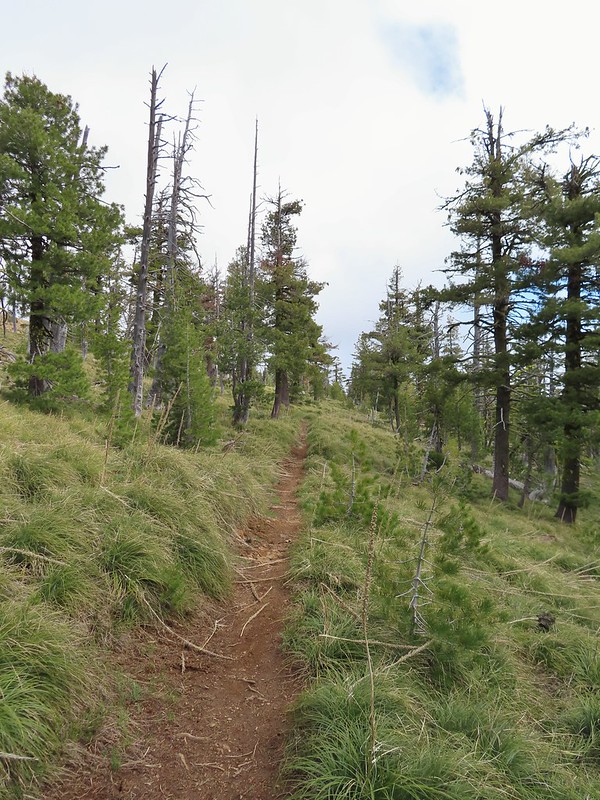 There was a decent sized beargrass meadow along this section which appeared to have bloomed last year.
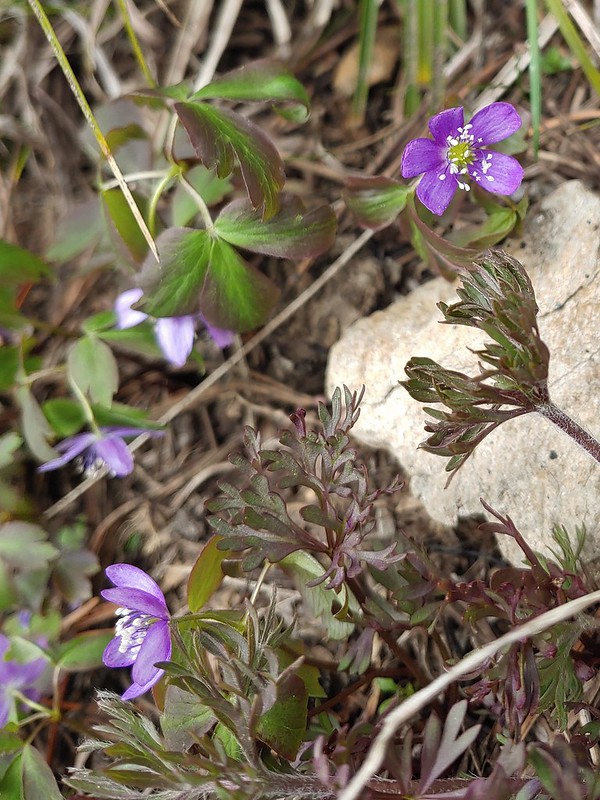 Anemones
 A saxifrage
 Siskiyou Peak from the trail.
 Splithair Indian paintbrush and a lomatium.
 Phlox
Phlox A small green pond and two of the Monogram Lakes.
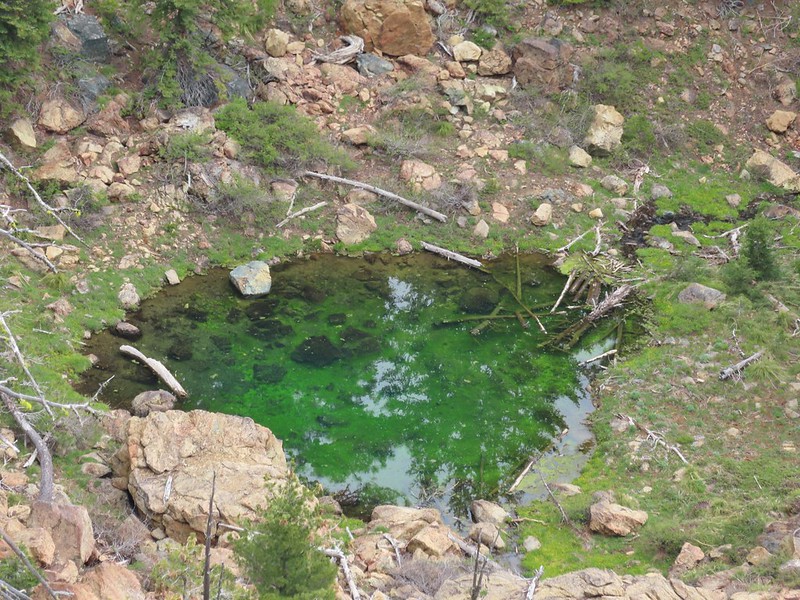 The green pond.
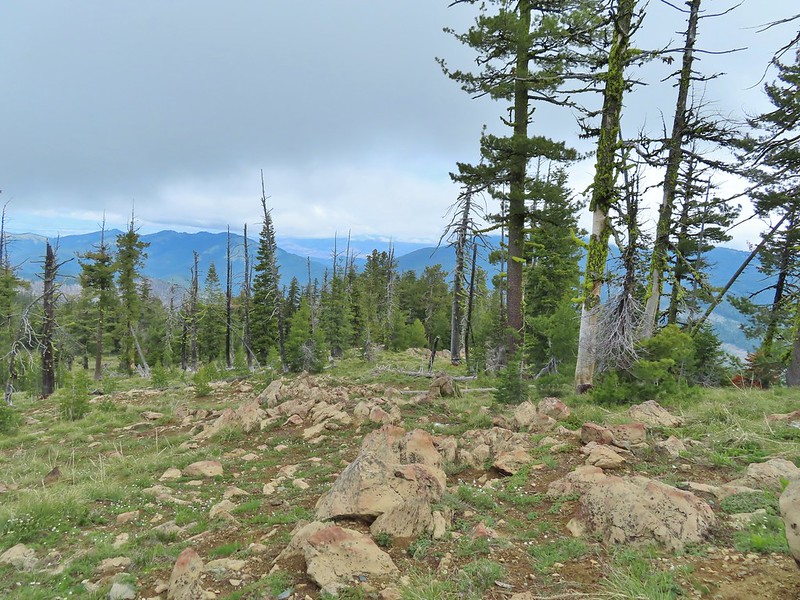 Looking down the ridge.
 Heather sitting up on the PCT while I made my way down the ridge.
 The pit with the mining trail on the far side.
 Old mining trail.
 The mining cart.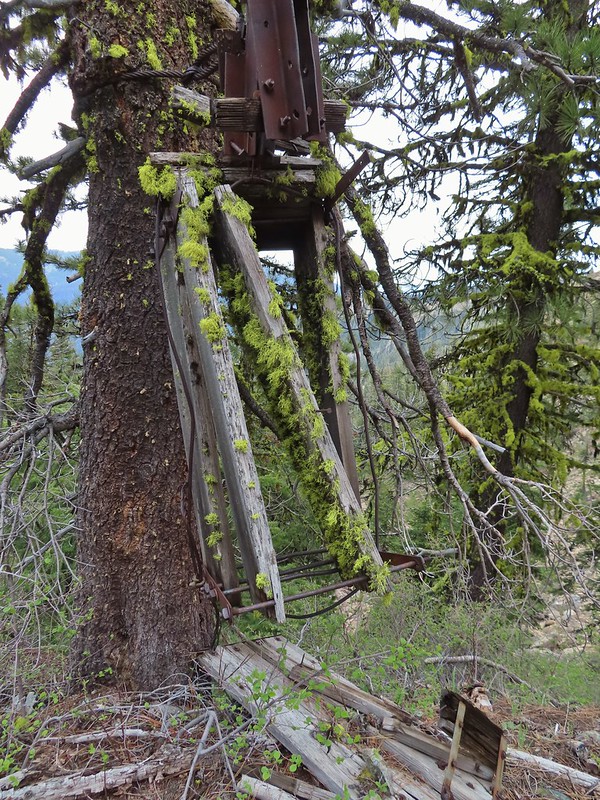
 Cable running up to the snag.


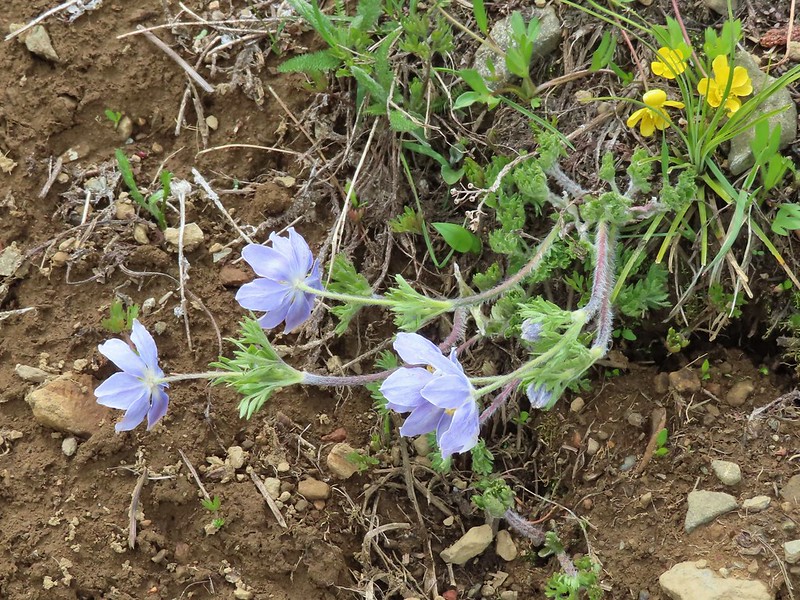
 I spotted something moving down in the meadow here.
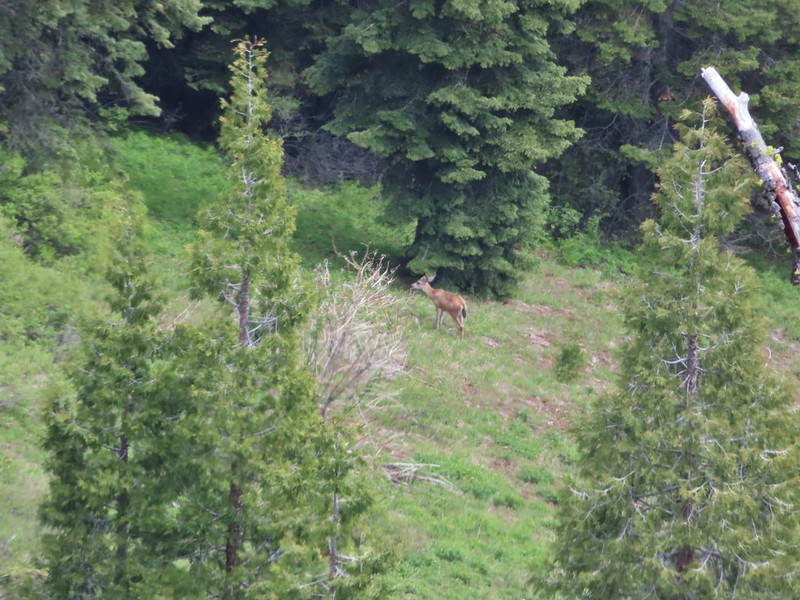 Had too use a lot of zoom to determine it was a deer.
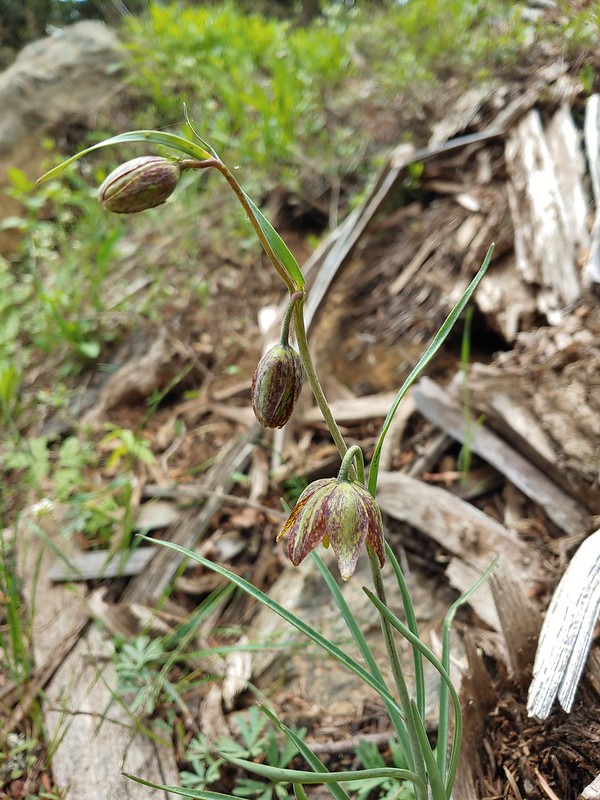 Chocolate lily
 Mt. Shasta and Black Butte from Siskiyou Gap on the way back.
 Our final view of Mt. Shasta this trip.
 Mt. Eddy (

