Categories
Coastal Range Hiking Oregon Portland Trip report Willamette Valley

Ki-a-Kuts Falls Fernhill Wetlands – 02/24/2024

A mostly sunny, near 60-degree forecast, looked too good to pass up so we decided to head out and attempt a pair of short hikes in the Oregon Coast Ranges Tillamook State Forest. Our first stop was along Maple Creek Road for a hike to Ki-a-Kuts Falls.
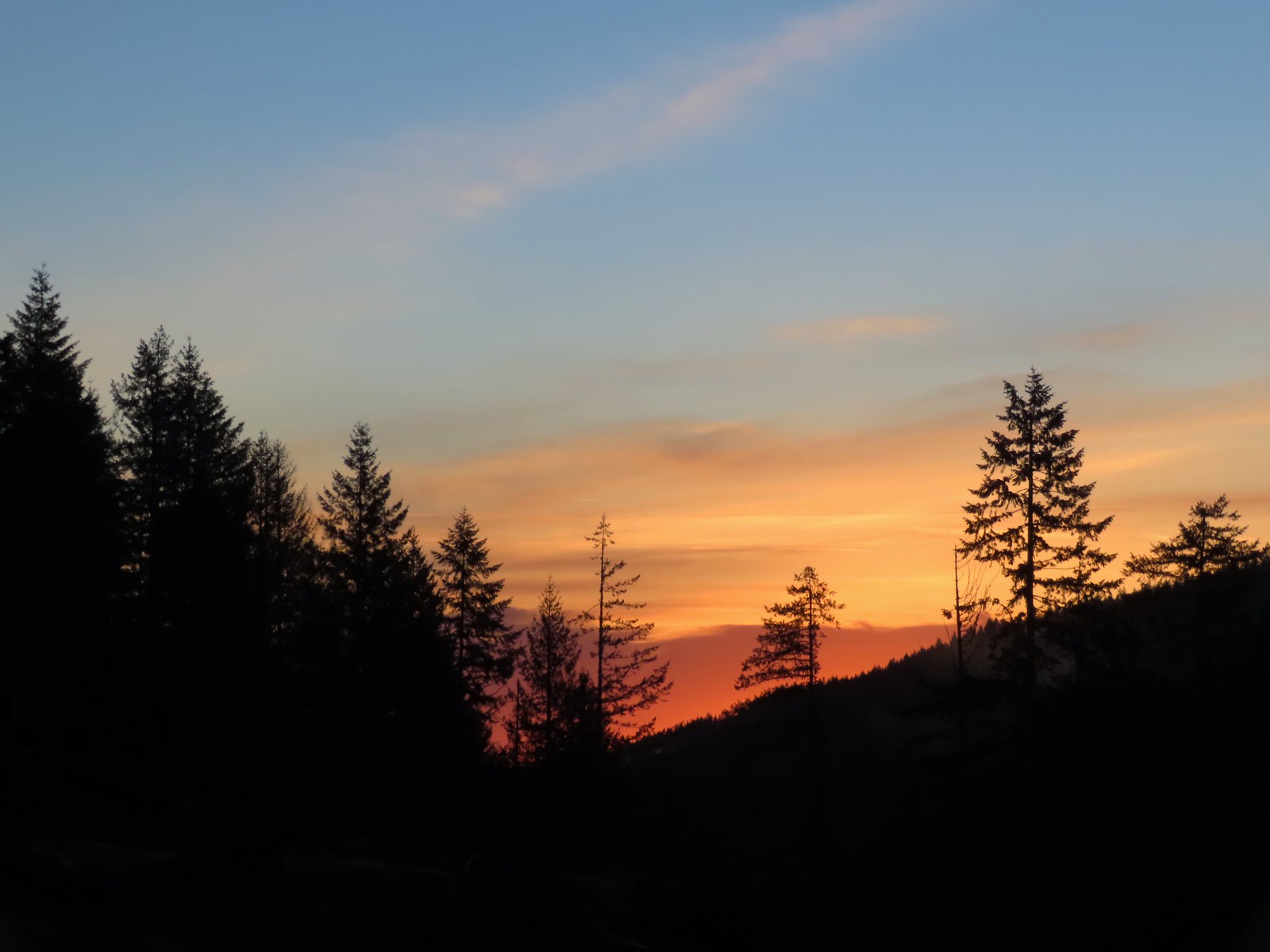
Sunrise from Maple Creek RoadSunrise from the trailhead.

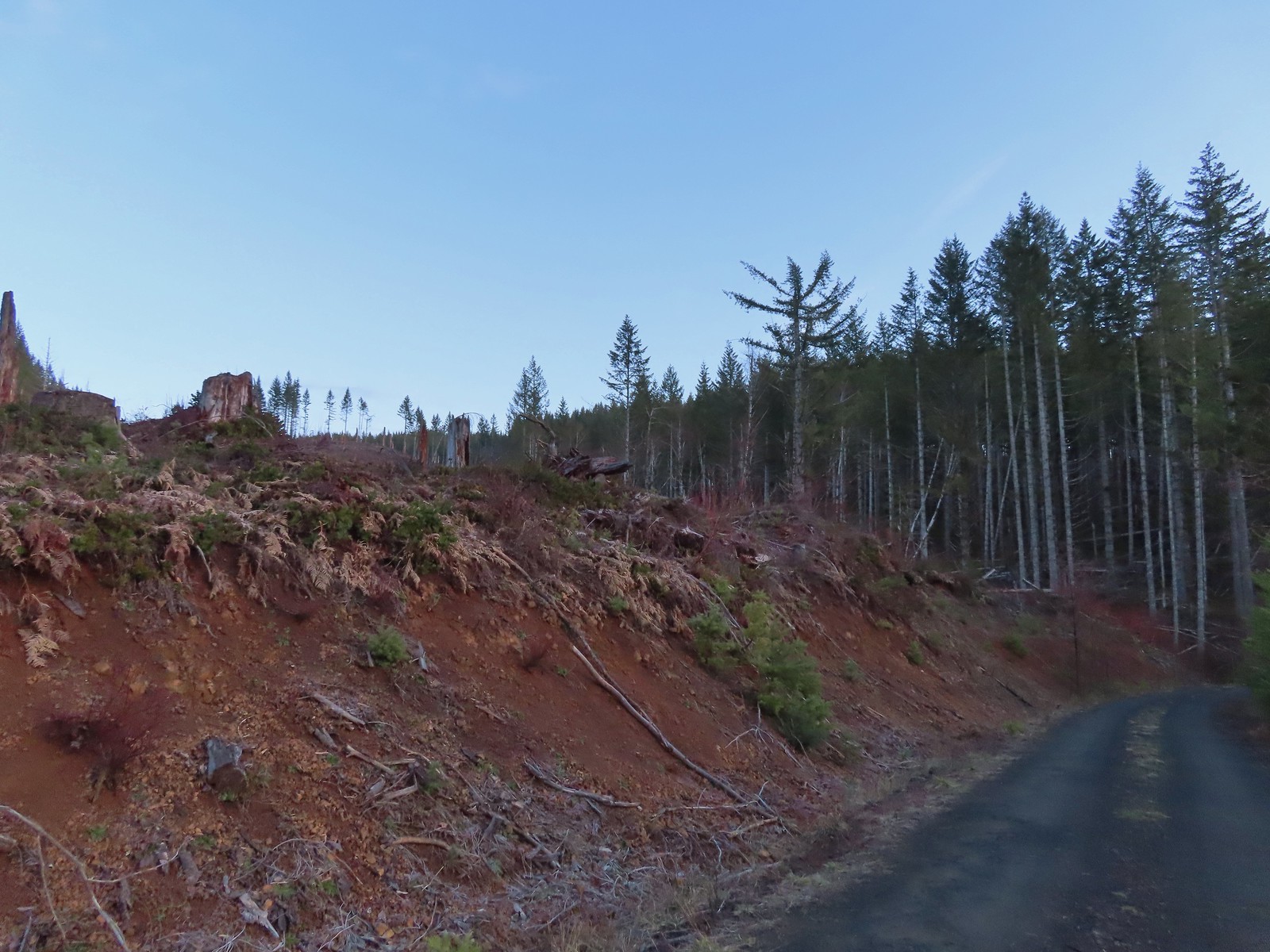
Clear cut along Maple Creek RoadClear cut at the trailhead.

The old alignment of the road was said to be located approximately 80 yards from the trailhead, but it appears that between time, storms, and logging operations the old road has become far less obvious.
Possibly the old alignment of Maple Creek RoadThis was the view through the forest from Maple Creek Road around the 80-yard mark.

We hiked further up Maple Creek Road and checked for a way down to the old alignment, but in the end decided that the slick conditions combined with the amount of blowdown on the hillsides would have made for a much more challenging hike than we were looking to tackle.
Looking out over the Tualatin River ValleyWe could hear the Tualatin River in the valley below and I managed to get far enough down the hill to get a glimpse of the water. I had descended from a pullout with a fire ring about 50-75′ looking for the old roadbed, but I still couldn’t make out where it actually was and had been slipping a lot on wet wood.

After climbing back up to Heather I called an audible and we turned to Plan B. The second hike we’d originally planned on was a 1.5-mile out and back further into the forest to visit Stairstep Falls, a rapid more than a fall, that requires fording the 25 yard wide Middle Fork North Fork Trask River. We decided against attempting that hike because it would effectively end our hiking day by leaving the only pair of hiking shoes I’d brought soaked. That was fine when it was going to be the final hike of our day, but we wanted to get a little more than 2.5-miles in. (We’d done close to 1 looking for the way to Ki-a-Kuts Falls.)

I’d known going in that there was a chance that we’d need to turn to Plan B because the most recent trip reports I could find for Ki-a-Kuts Falls was from 2014. That Plan B had been Fernhill Wetlands. Located in Forest Grove, OR the trailhead was just 26-miles from where we were. We drove back to Yamhill and then headed North on Highway 47 to the Fernhill Wetlands Trailhead.
Visitors Center at Fernhill Wetlands

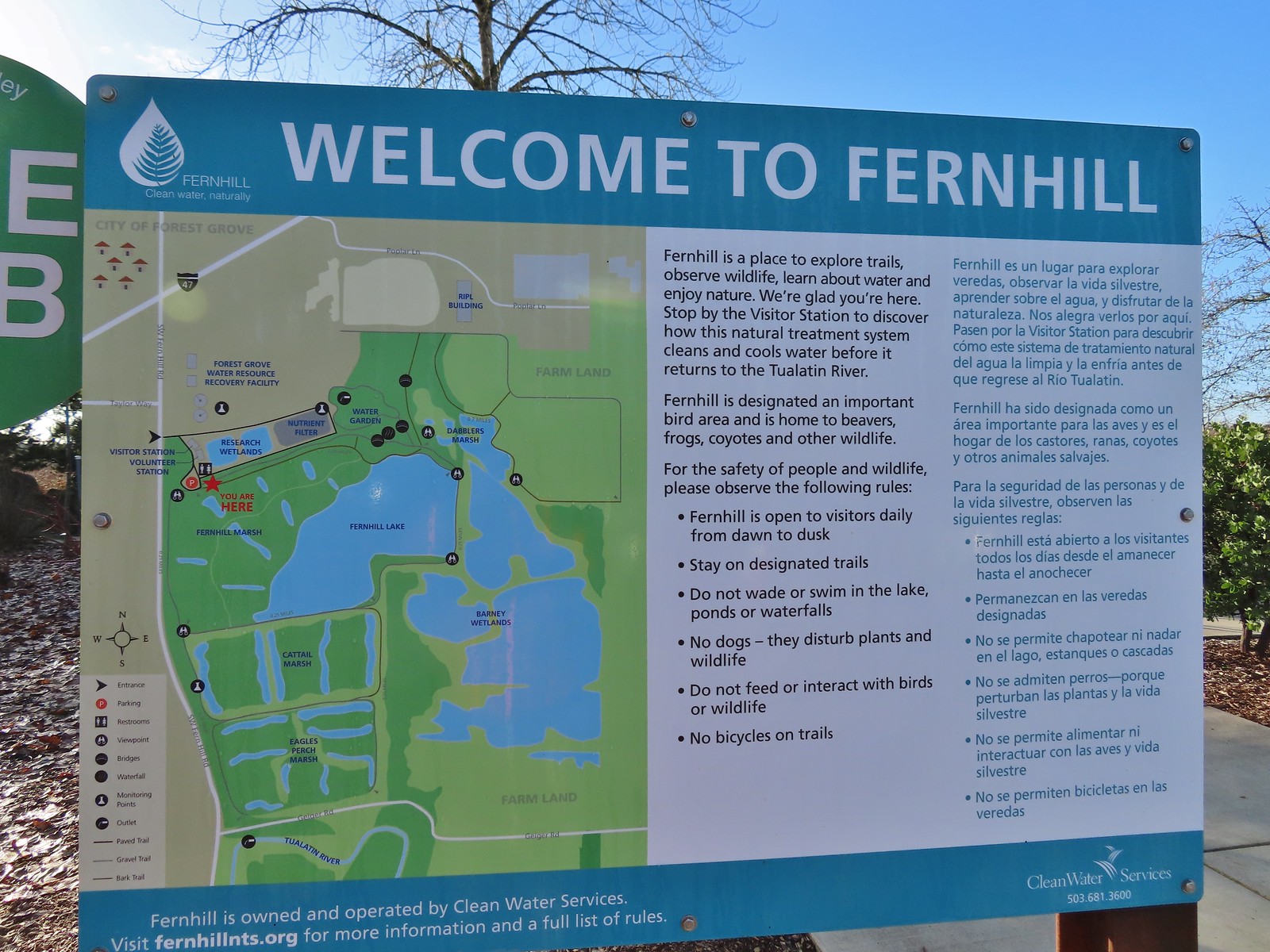
Informational signboard at Fernhill WetlandsMap and information at the trailhead.

There are several loops possible at the wetlands and we hoped to maximize these, so we headed south along Fernhill Marsh.
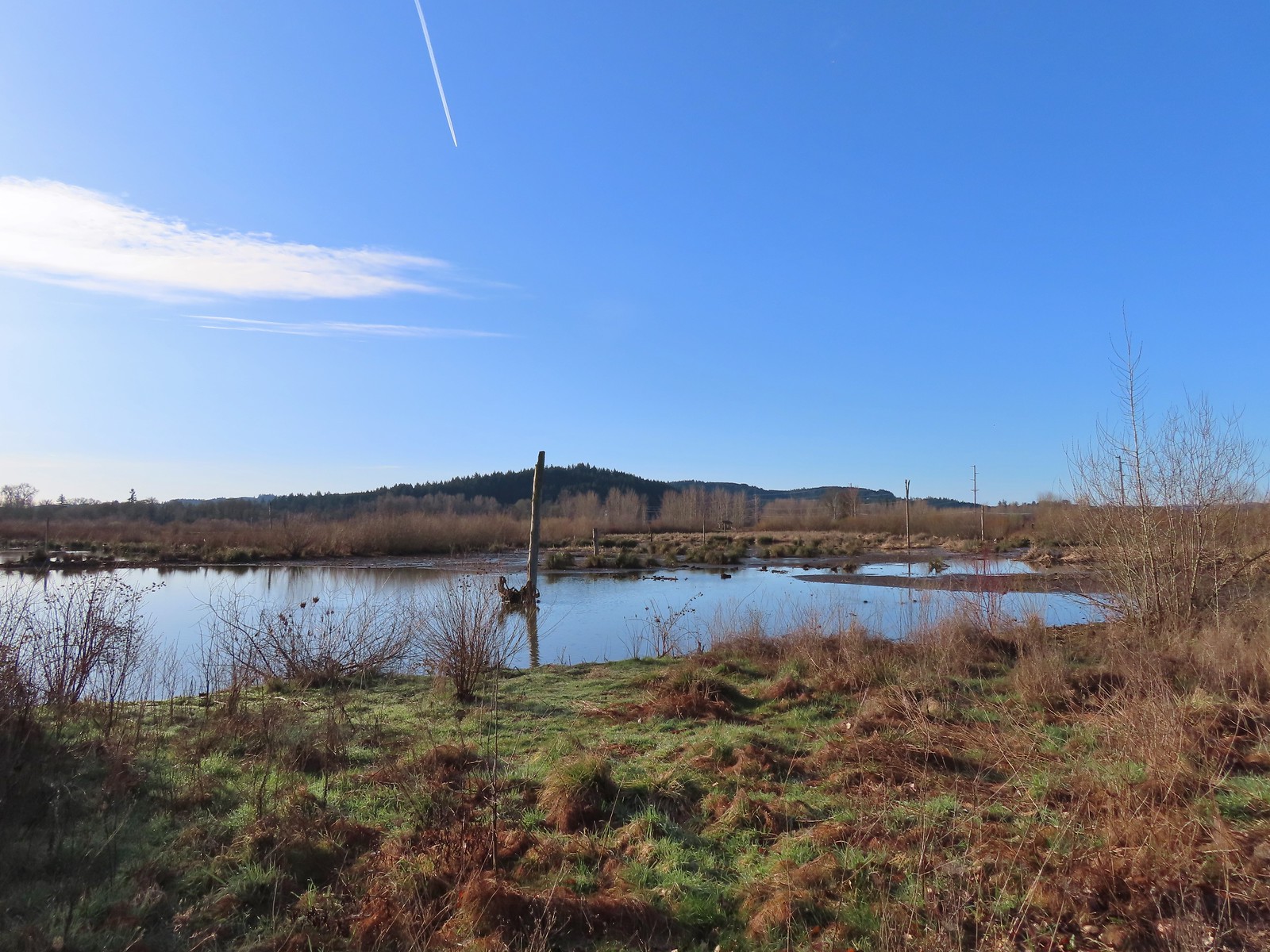
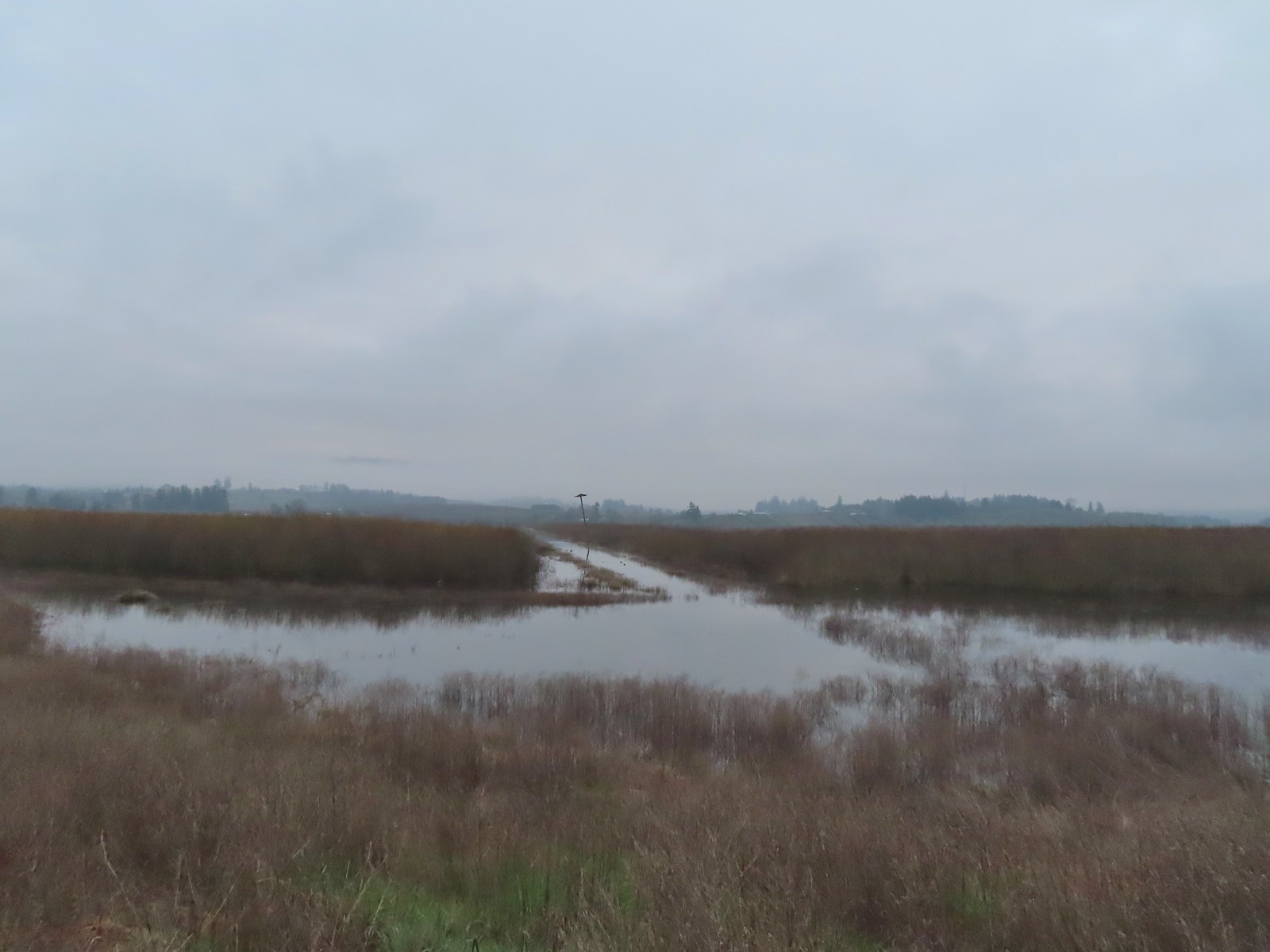
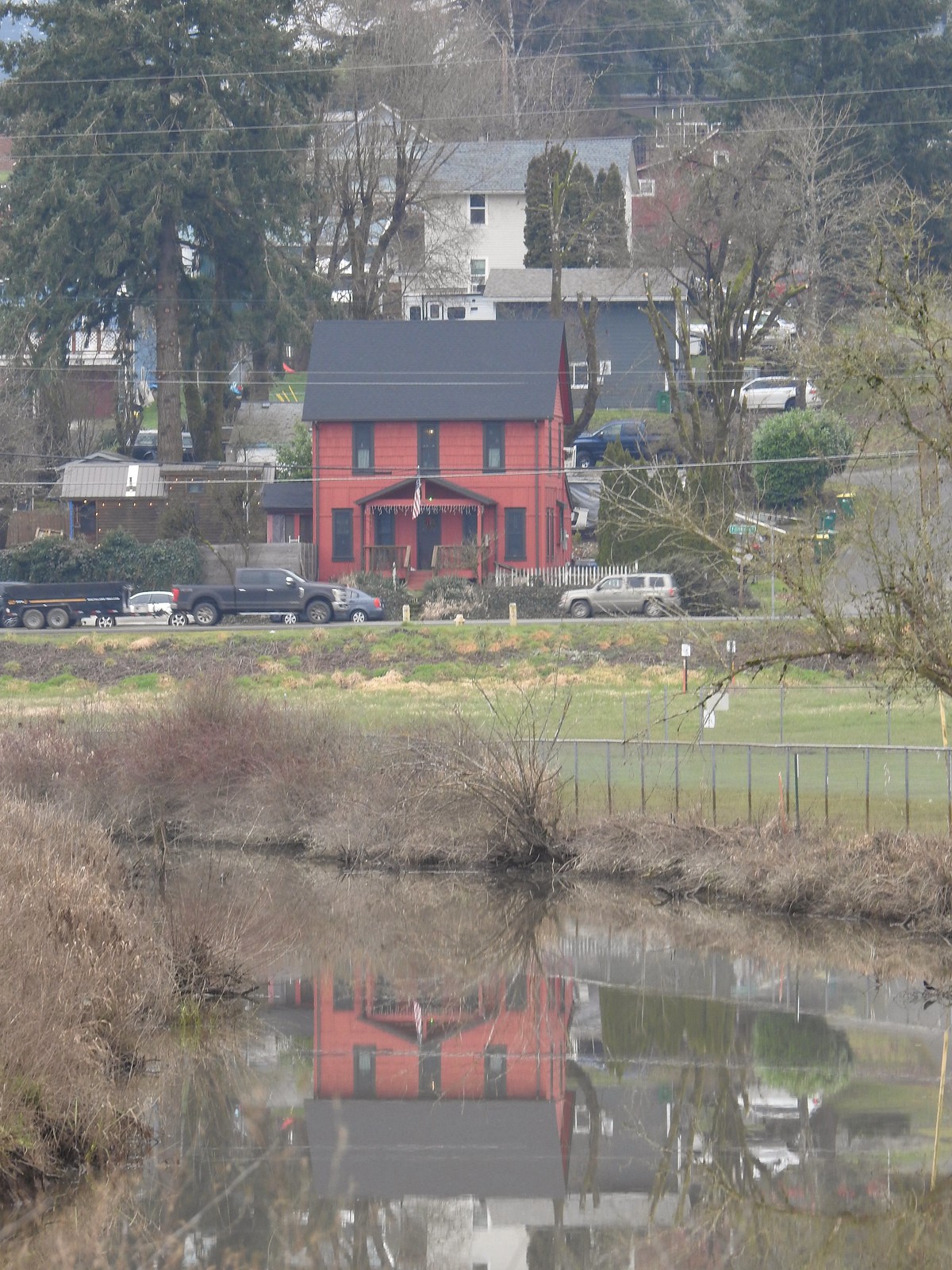
Fernhill Marsh

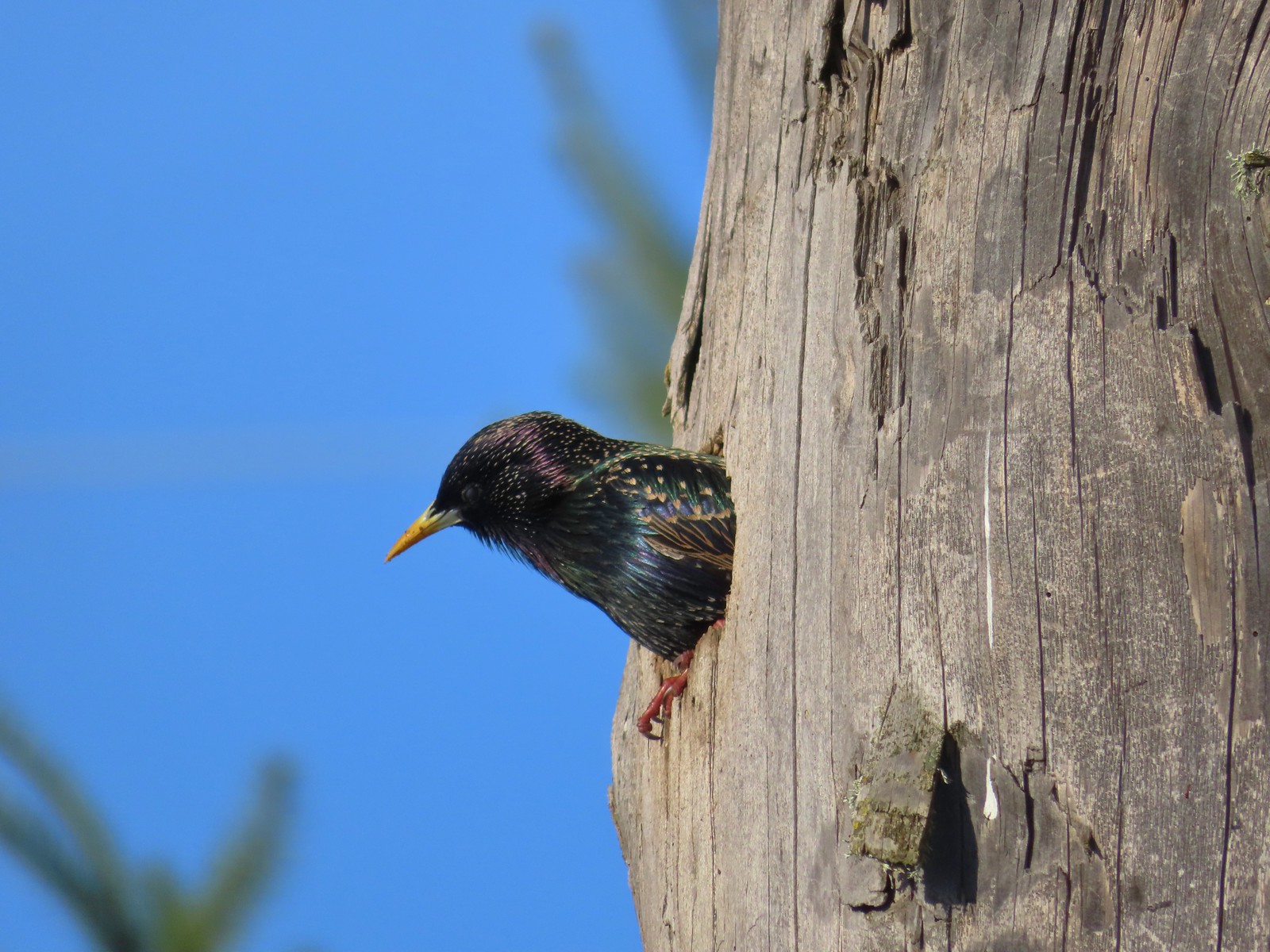
StarlingStarling

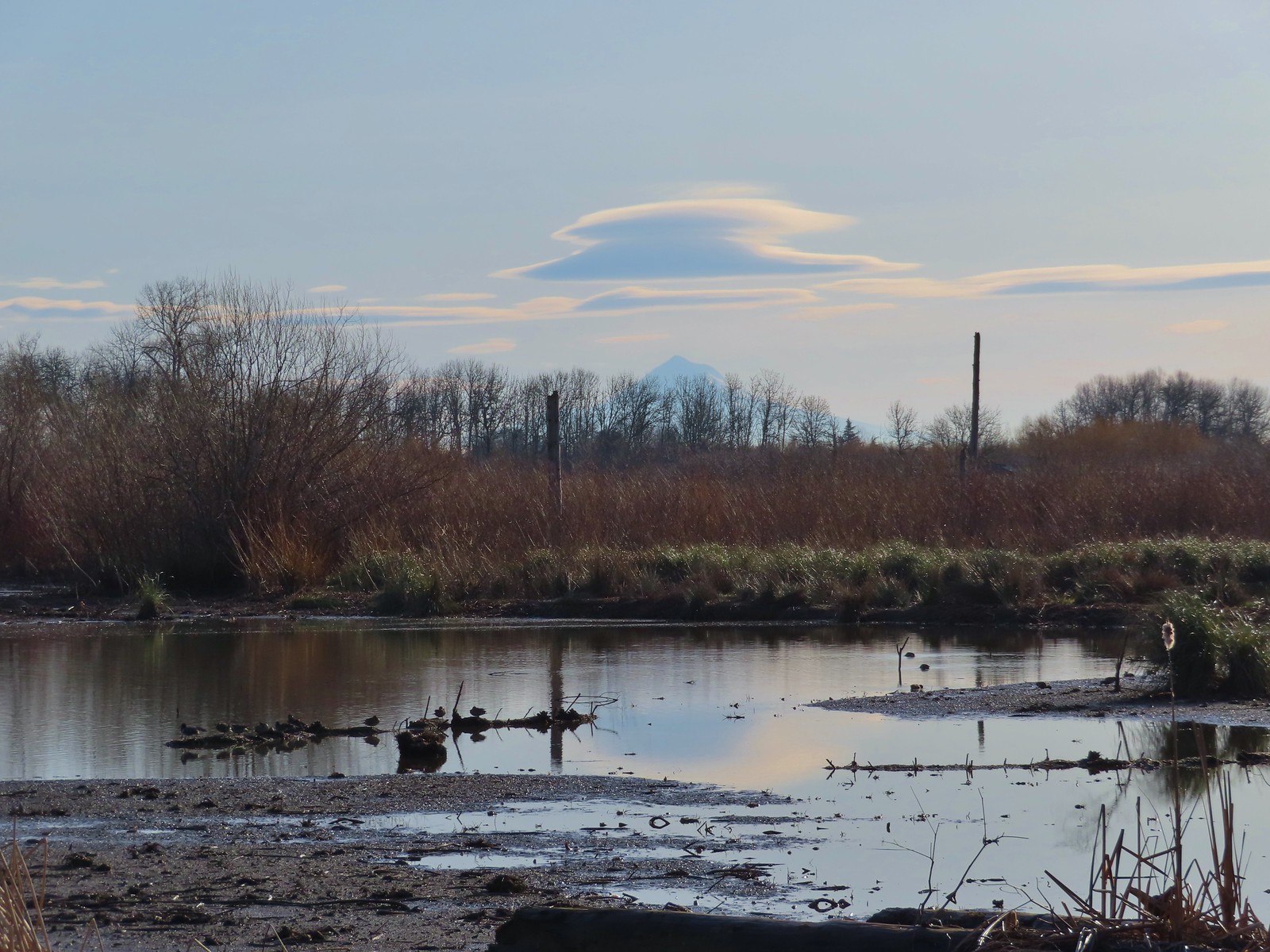
Mt. Hood beyond Fernhill MarshLenticular clouds over Mt. Hood in the distance.
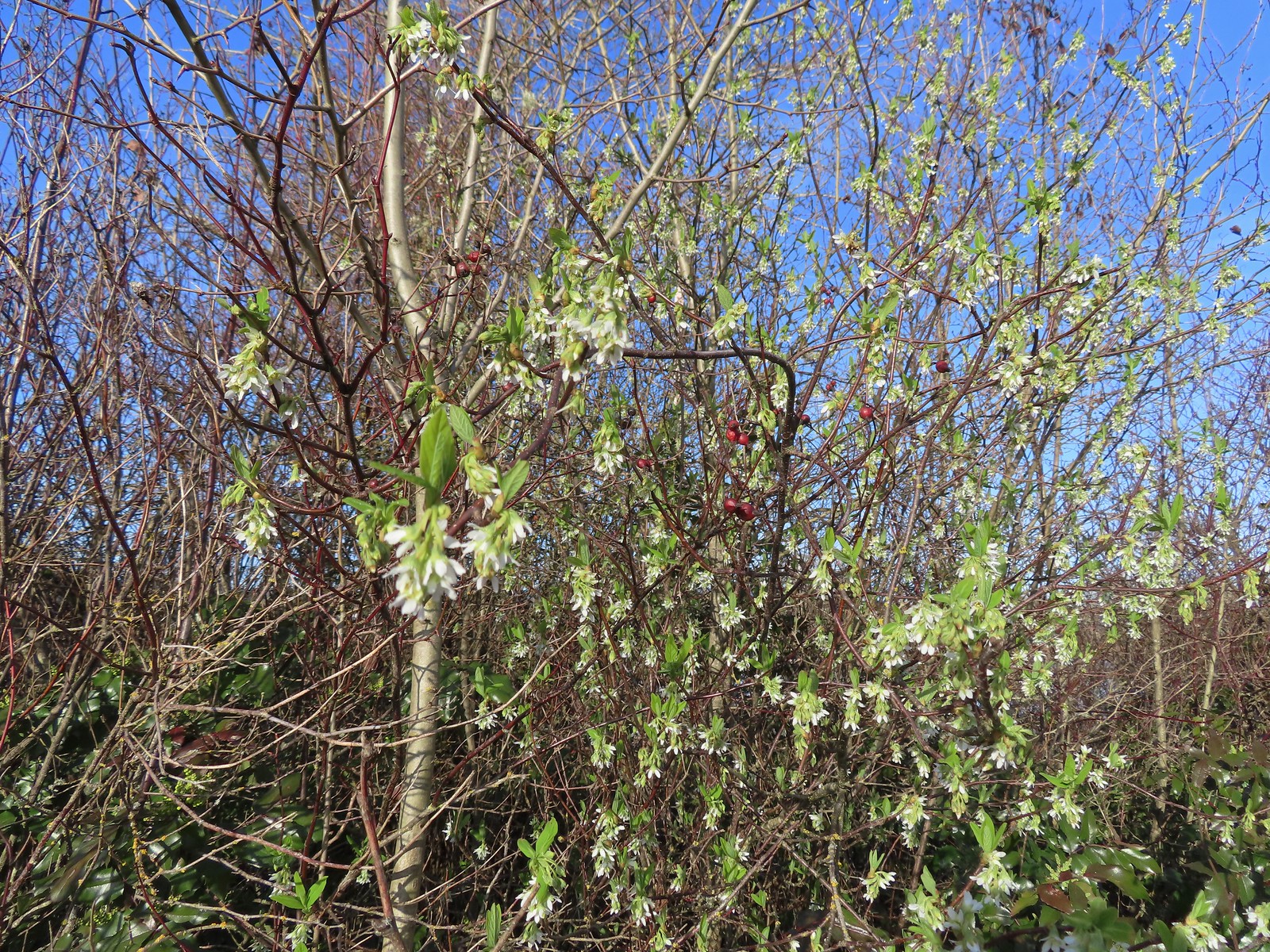
Indian plumOur first wildflower of the year is Indian plum in 2024.
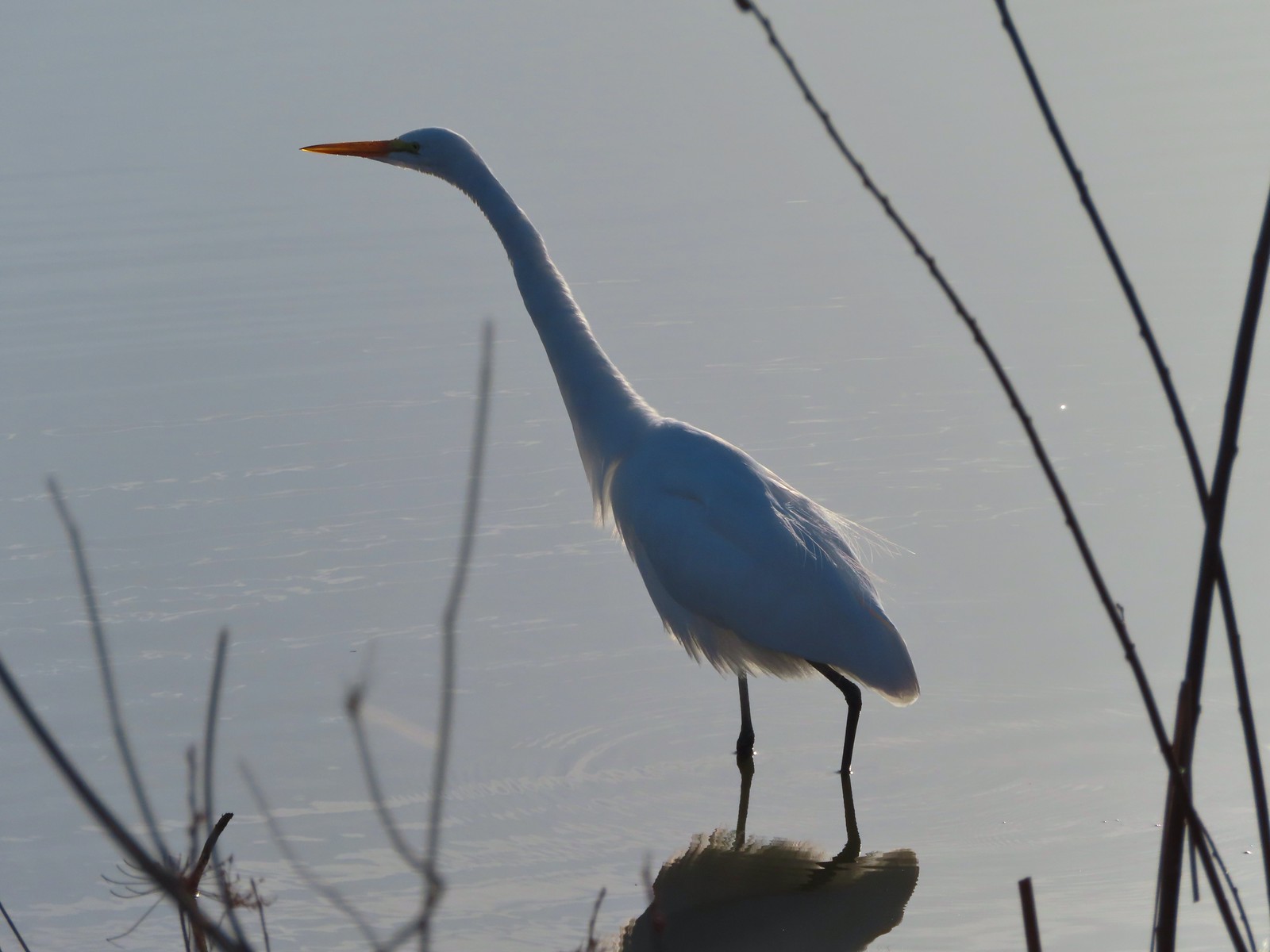
EgretEgret

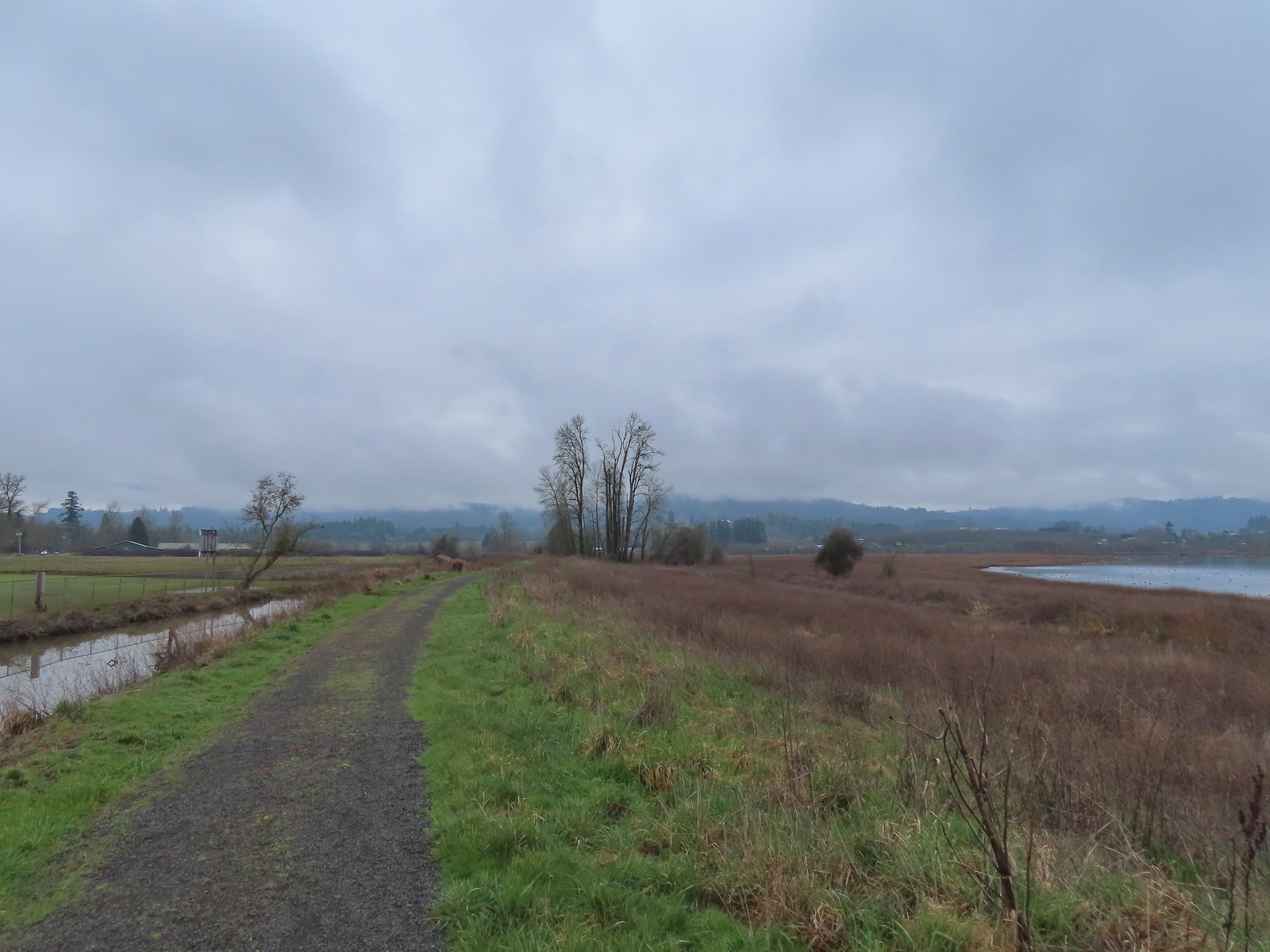
Fernhill WetlandsPath at Fernhill Wetlands.

We stayed straight at a junction with a path between Fernhill Marsh and Cattail Marsh.
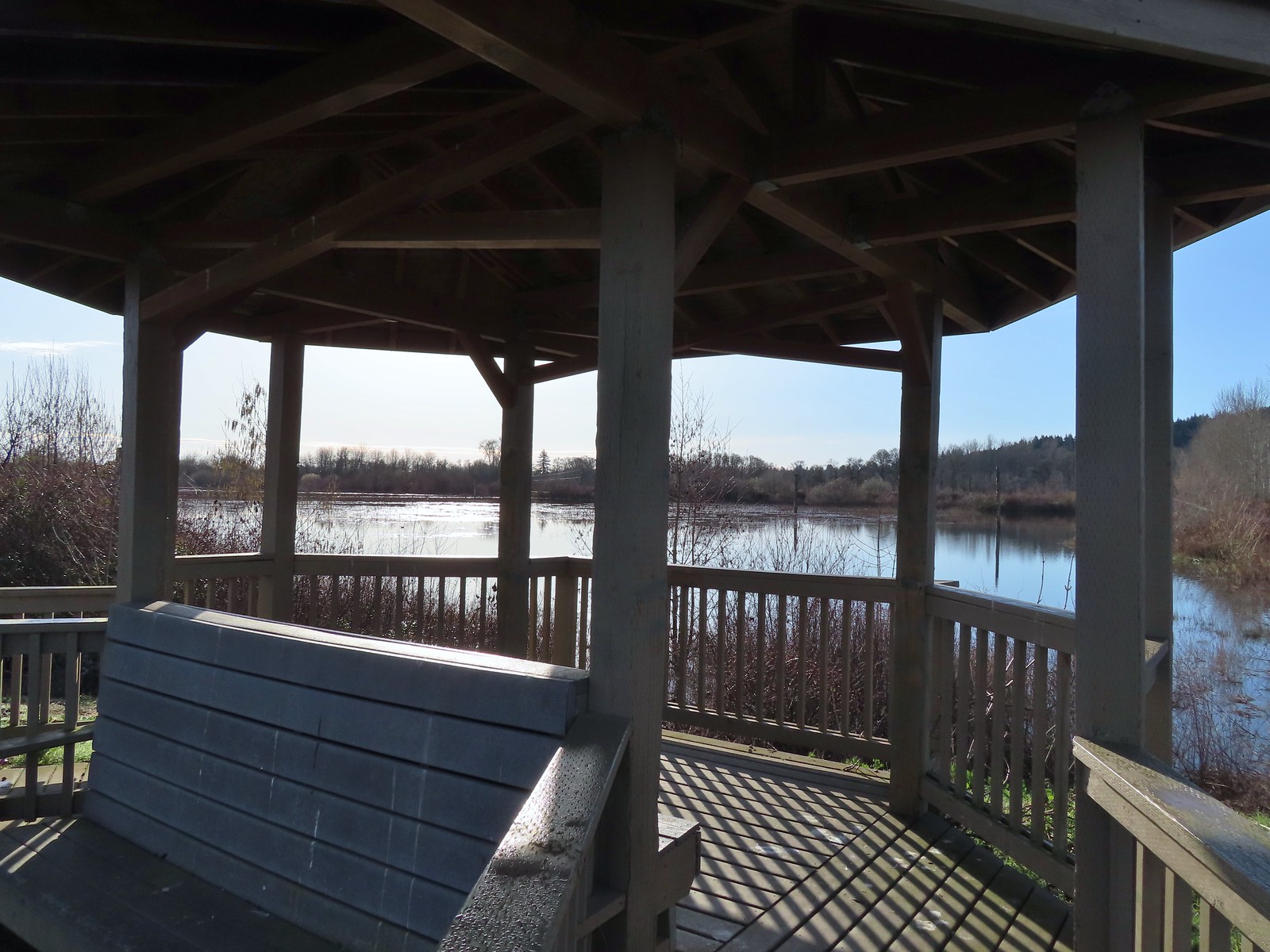
Gazebo at Fernhill WetlandsGazebo overlooking Cattail Marsh.

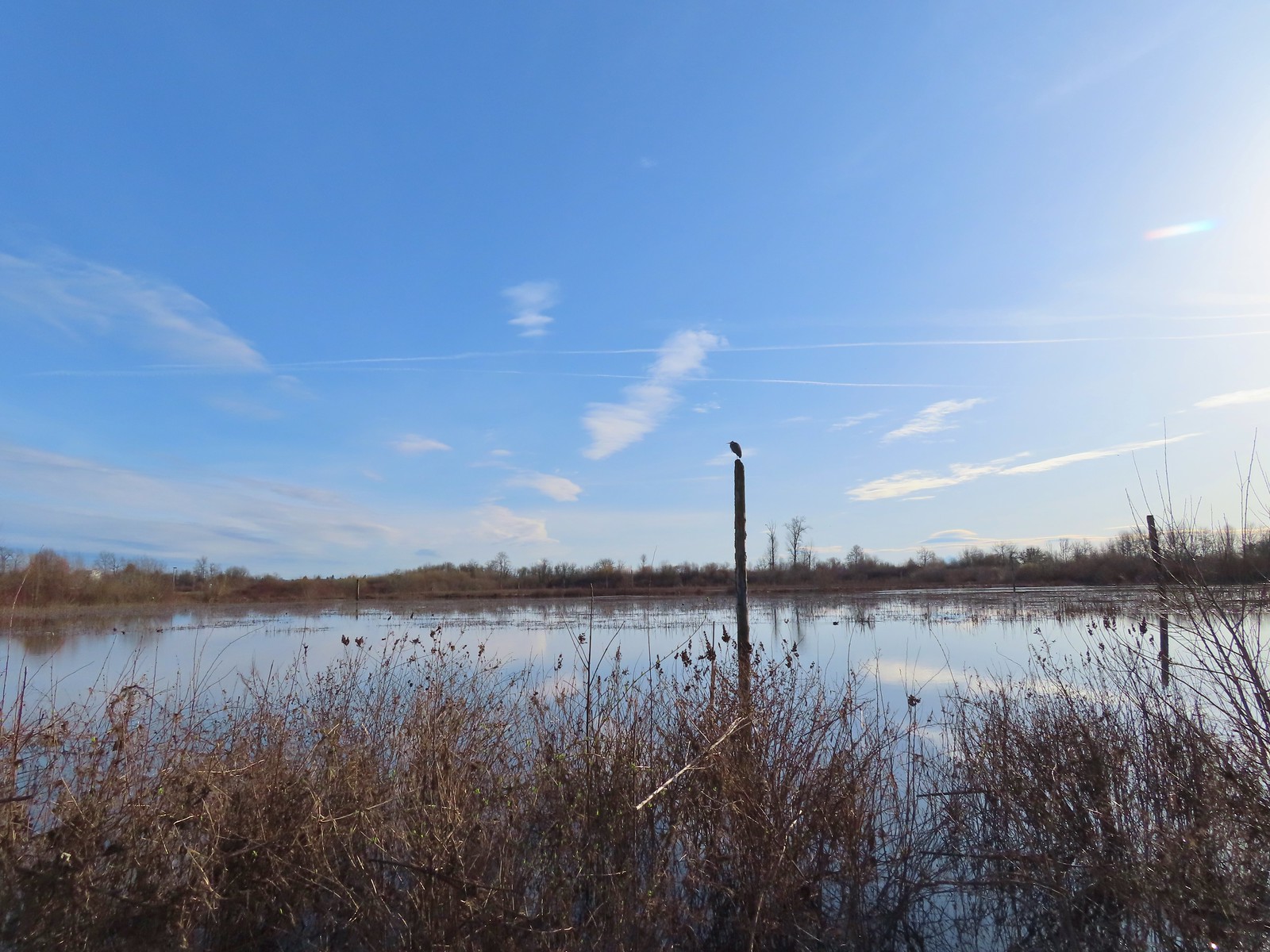
Great blue heron at Fernhill WetlandsGreat blue heron on a post above Cattail Marsh.
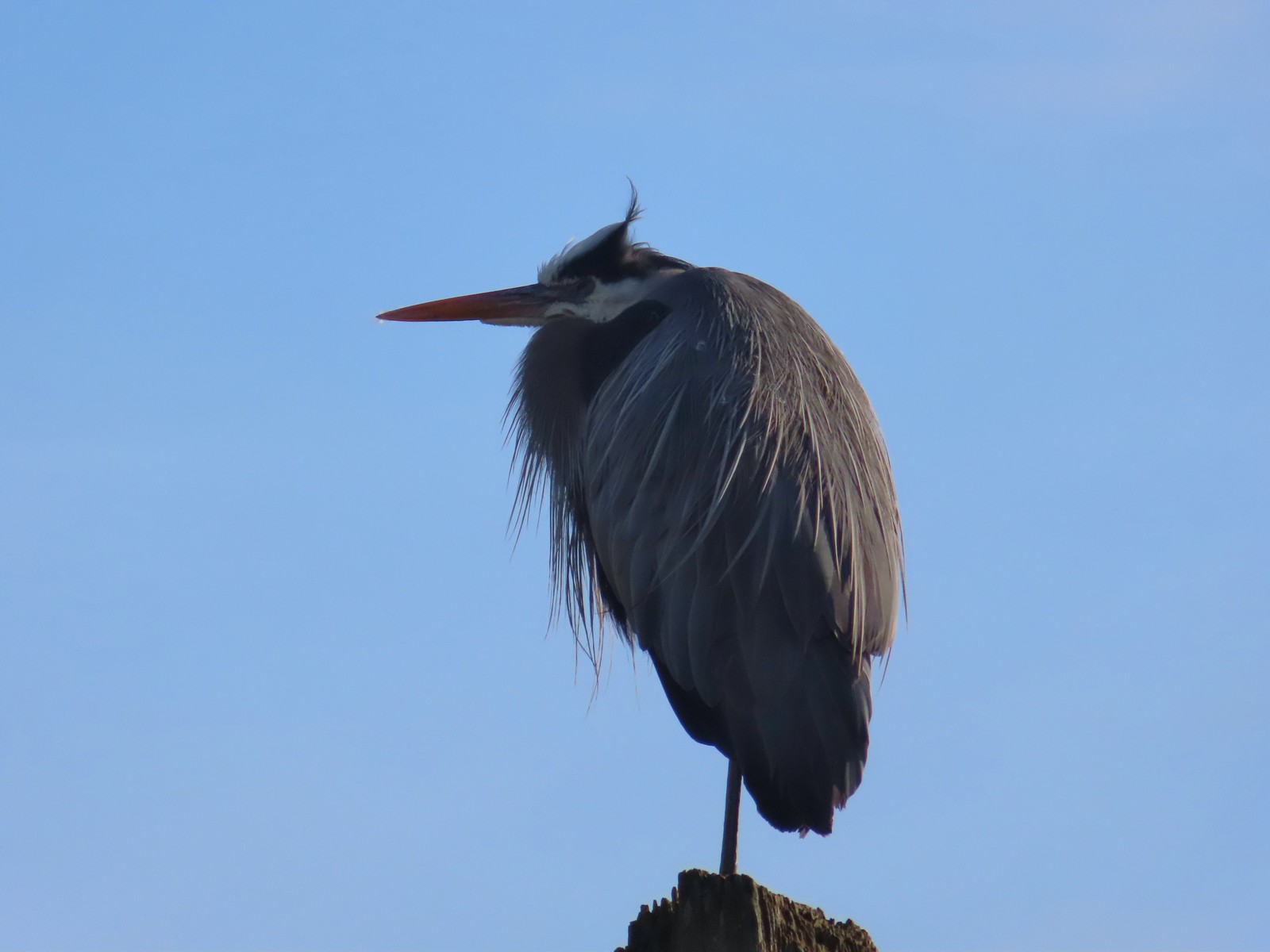
Great blue heron

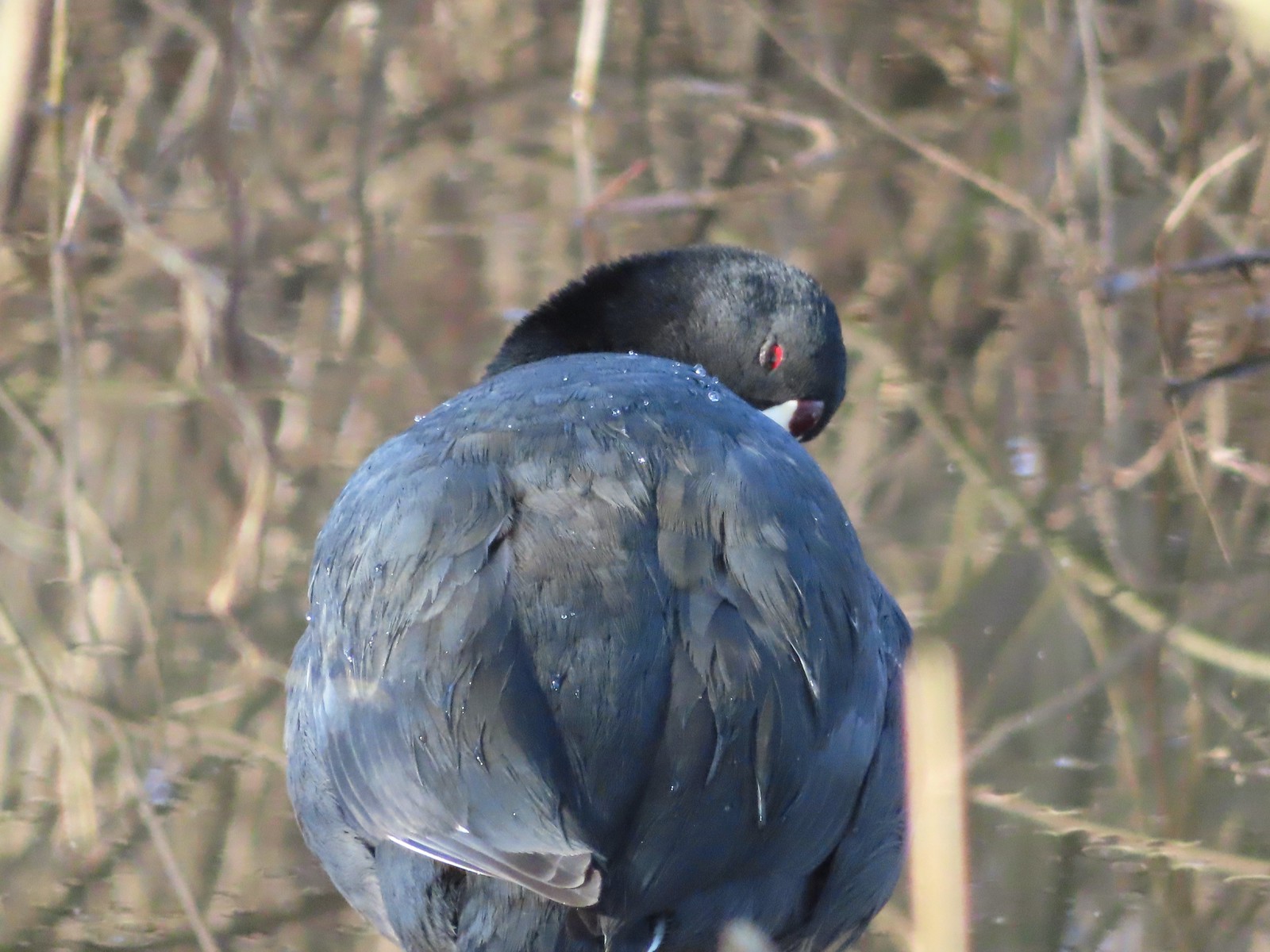
American cootAmerican coot

At the next junction we turned left between Cattail and Eagles Perch Marshes.
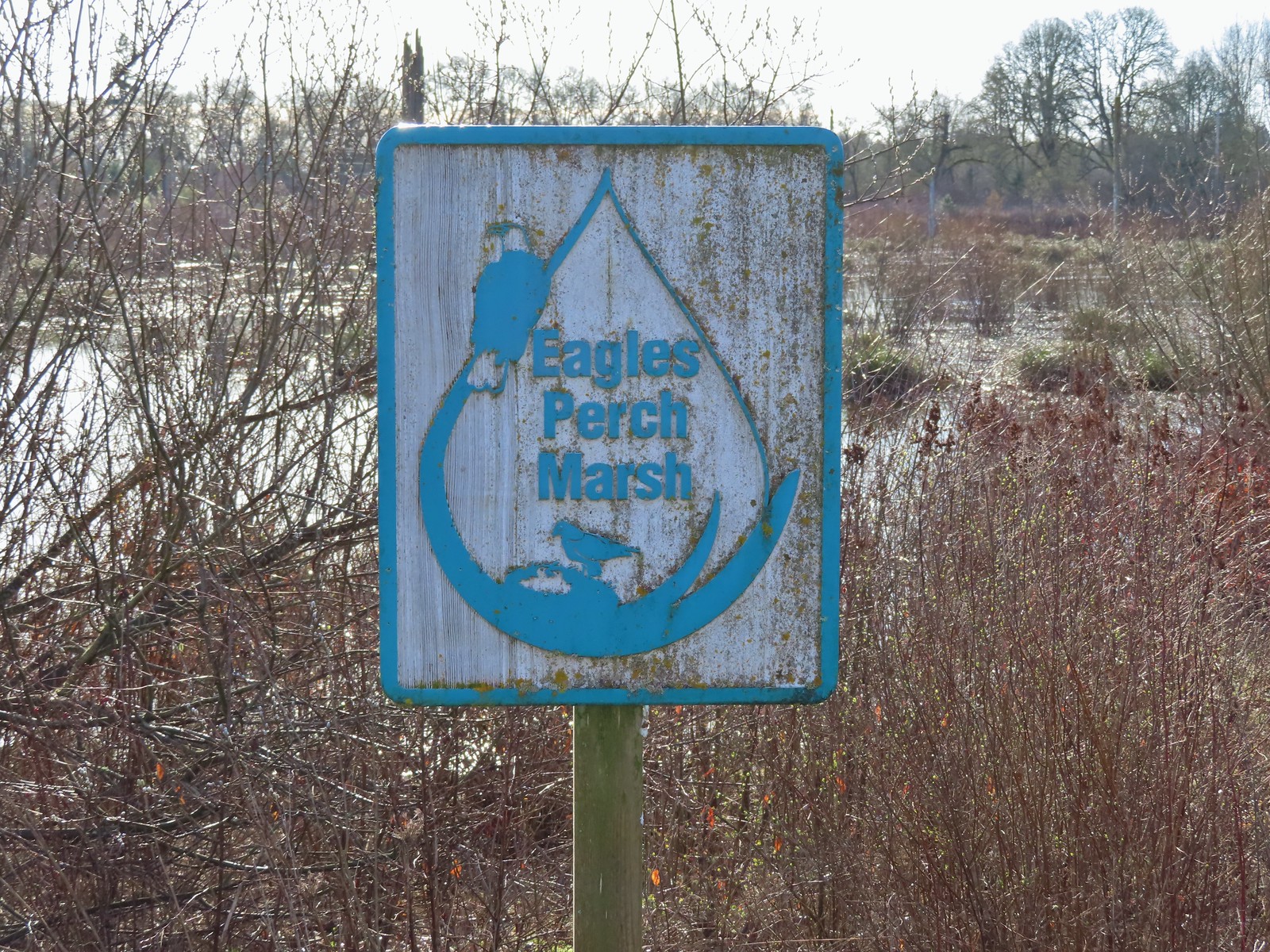
Eagles Perch Marsh sign

Fernhill Wetlands

Great blue heron at Eagles Perch MarshAnother great blue heron.

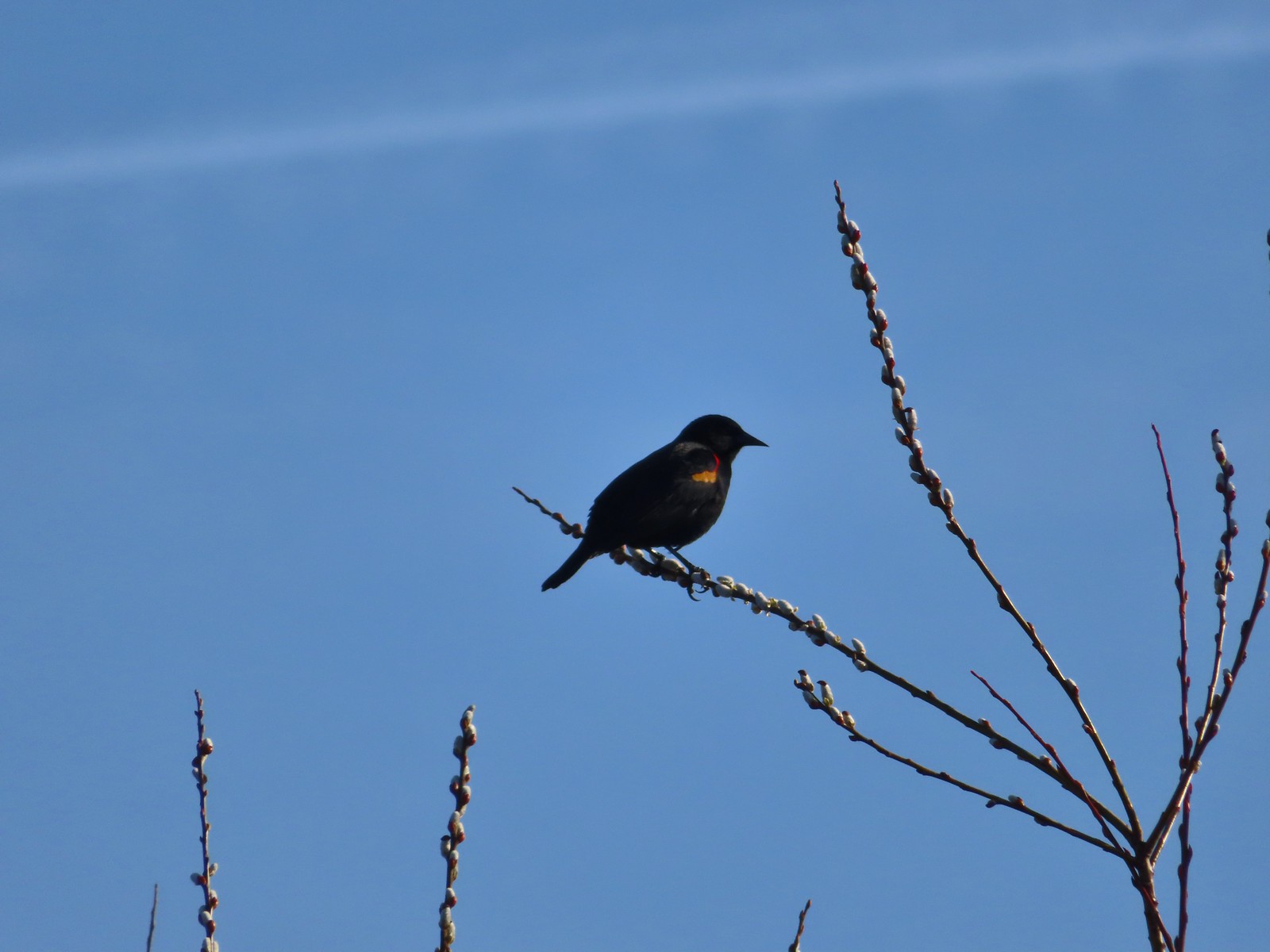
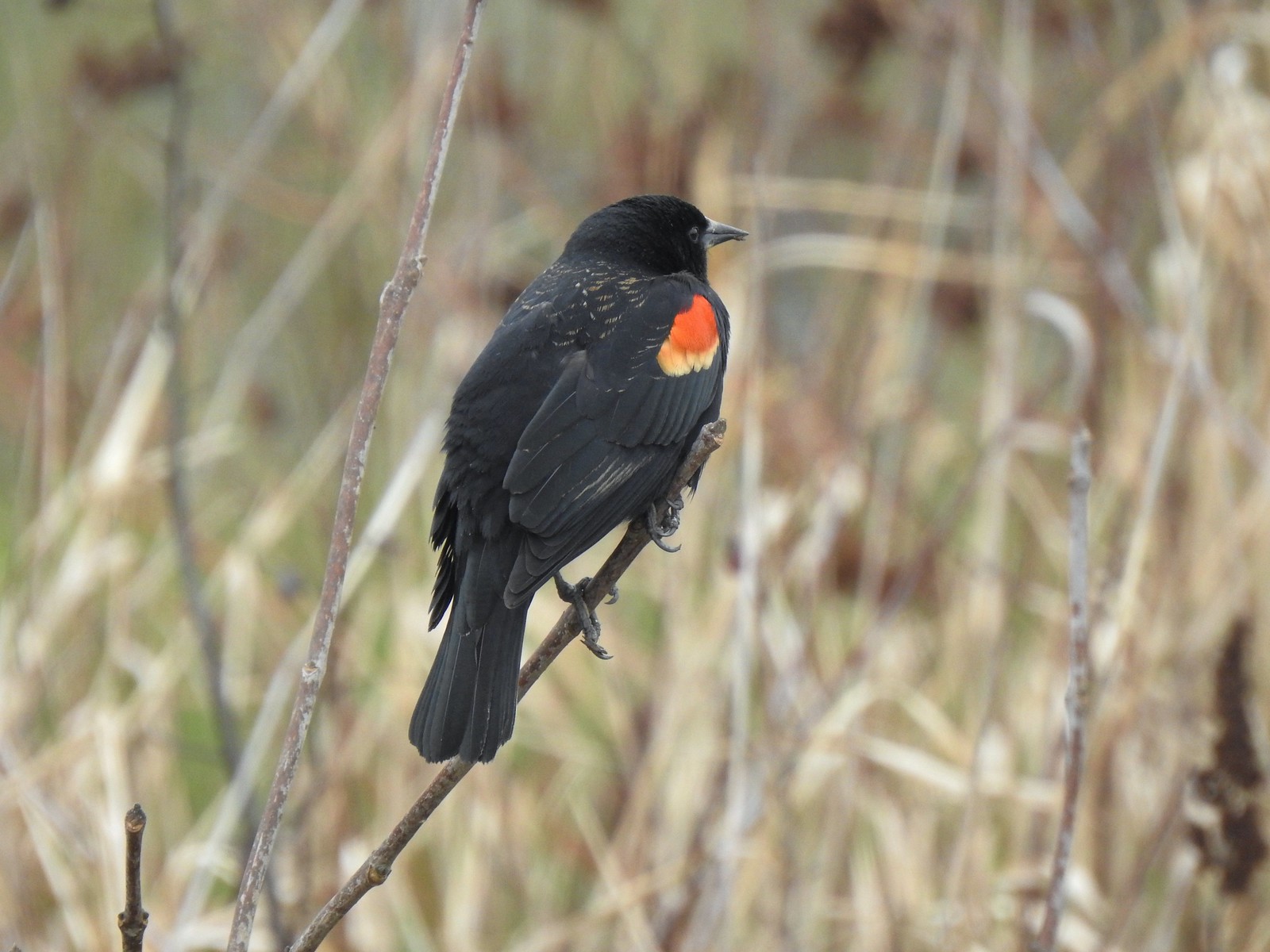
Red-winged blackbirdRed-winged blackbird

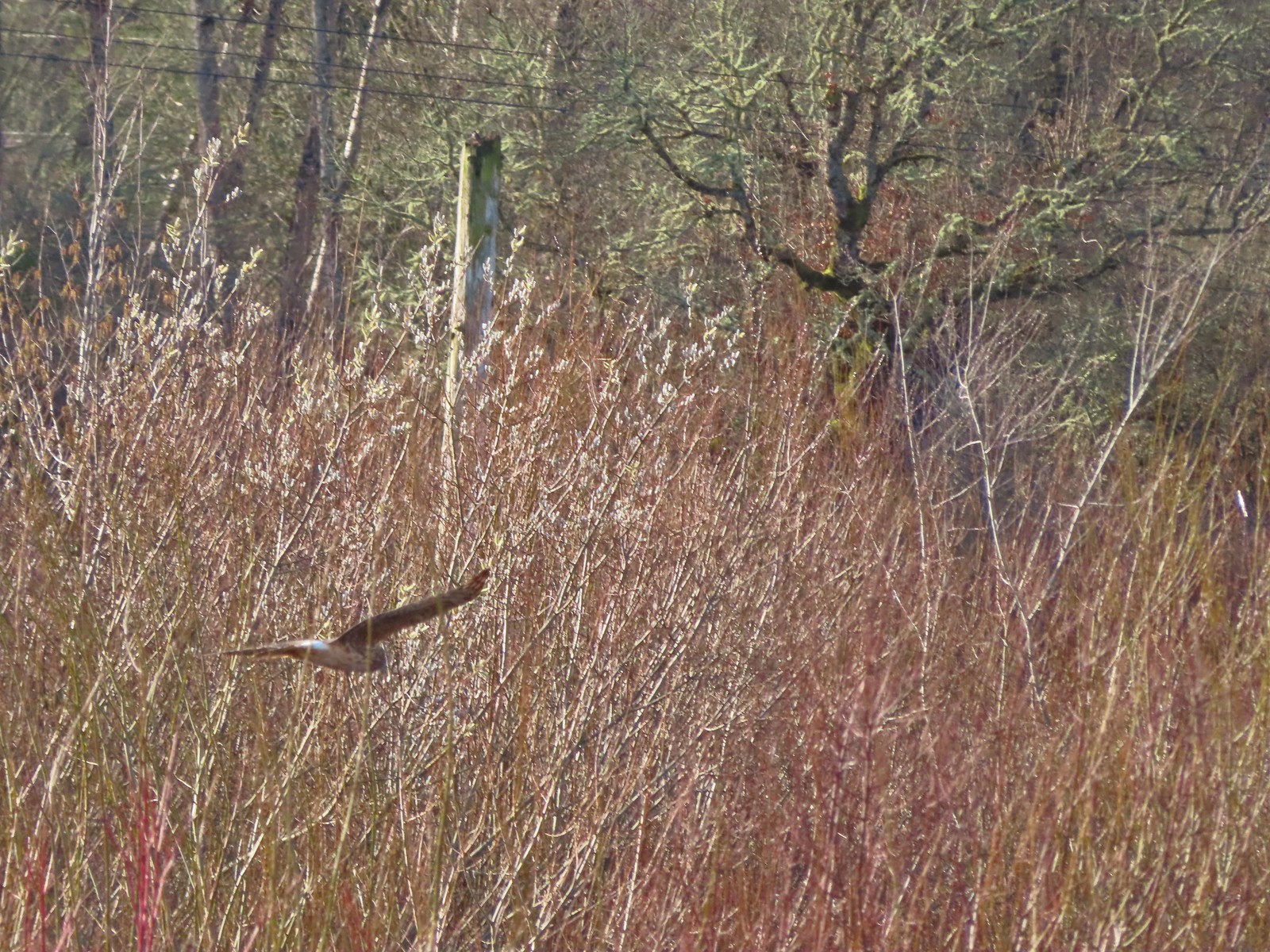
HawkHawk flying over Eagles Perch Marsh.

Fittingly at the far end of the marsh were a pair of bald eagles.
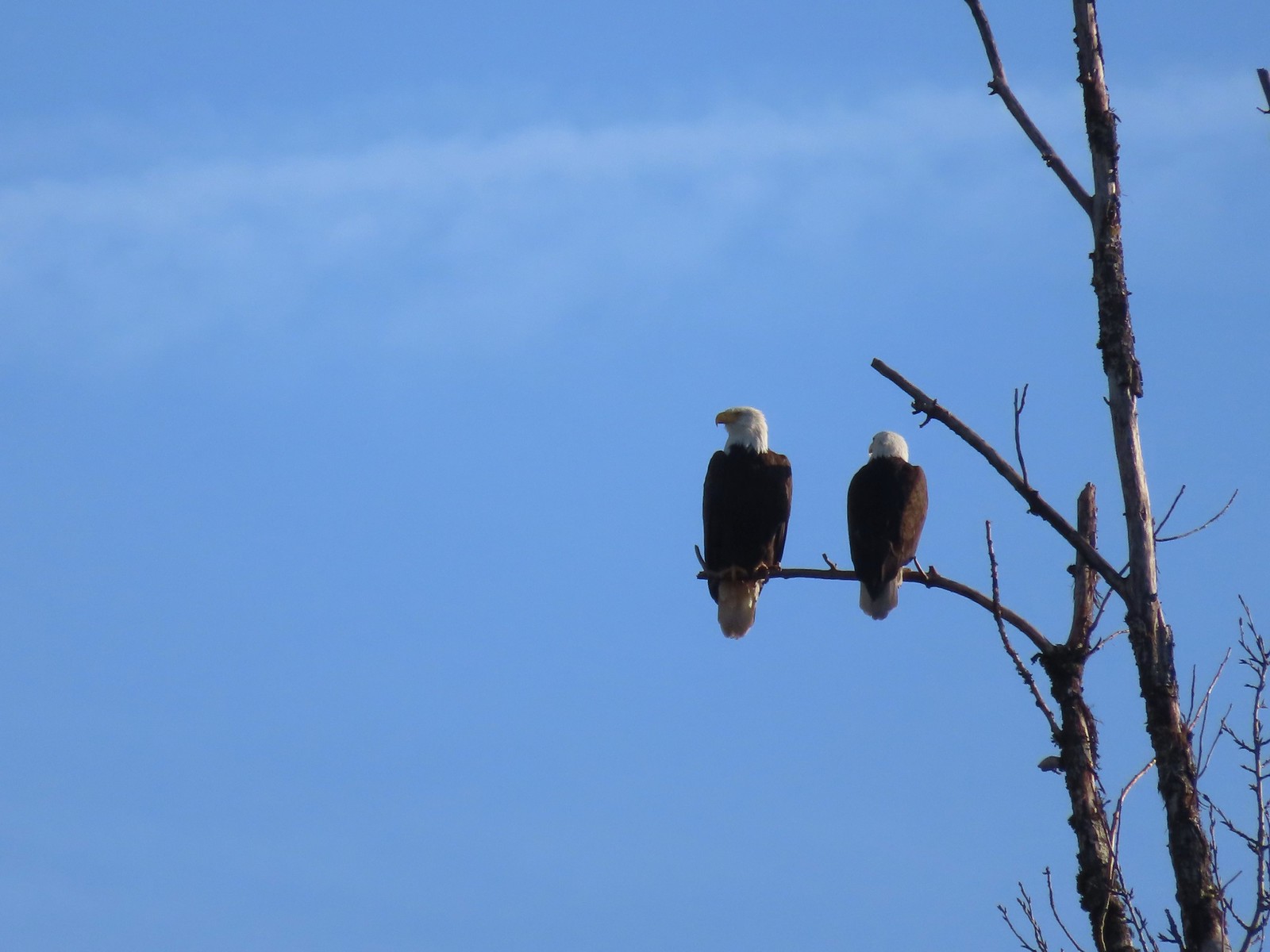
Bald eagles

We turned right and walked along Eagles Perch Marsh for a tenth of a mile to a gate along SW Geiger Rd.
Fernhill Wetlands

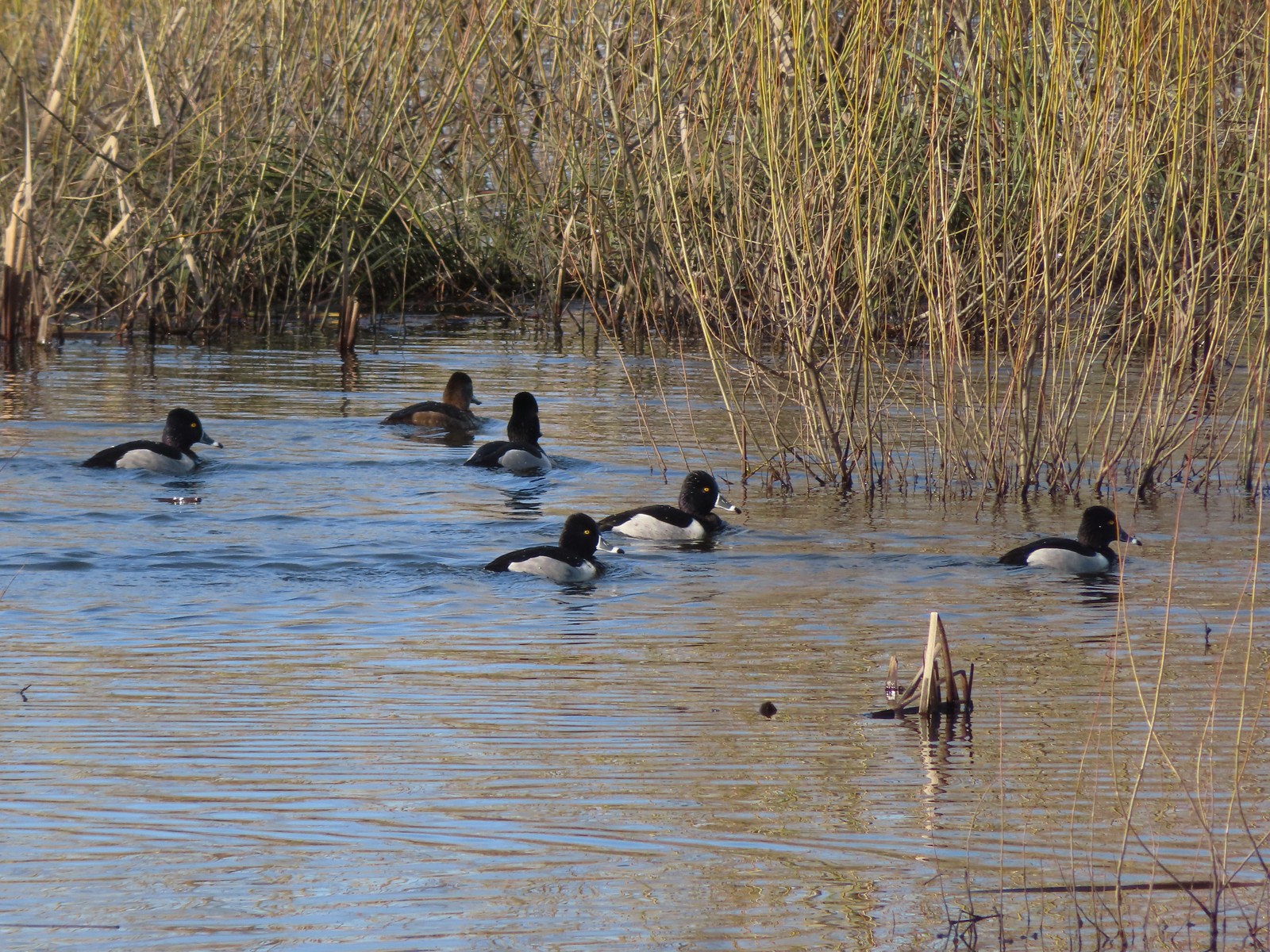
Ring-necked ducksRing-necked ducks

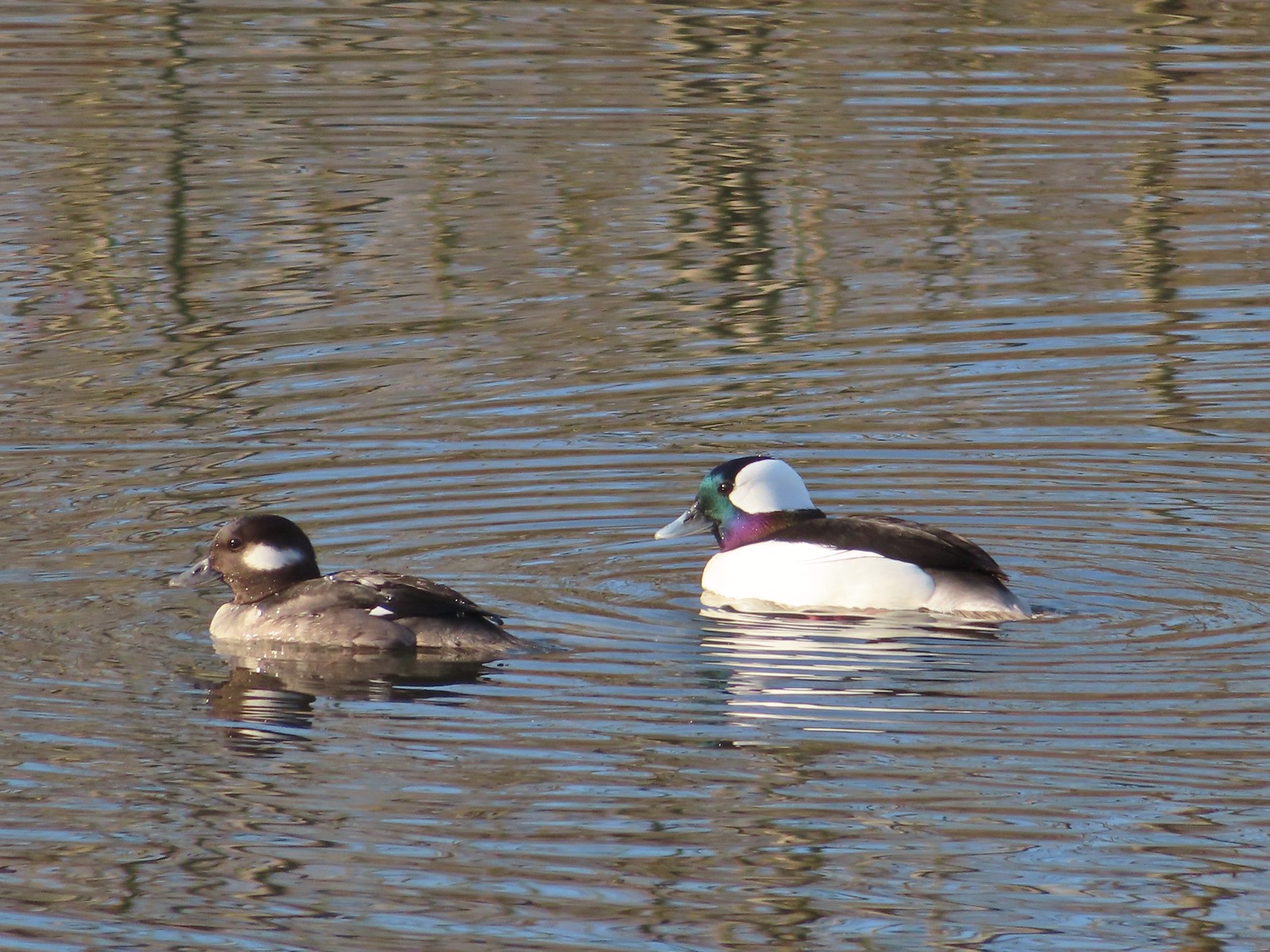
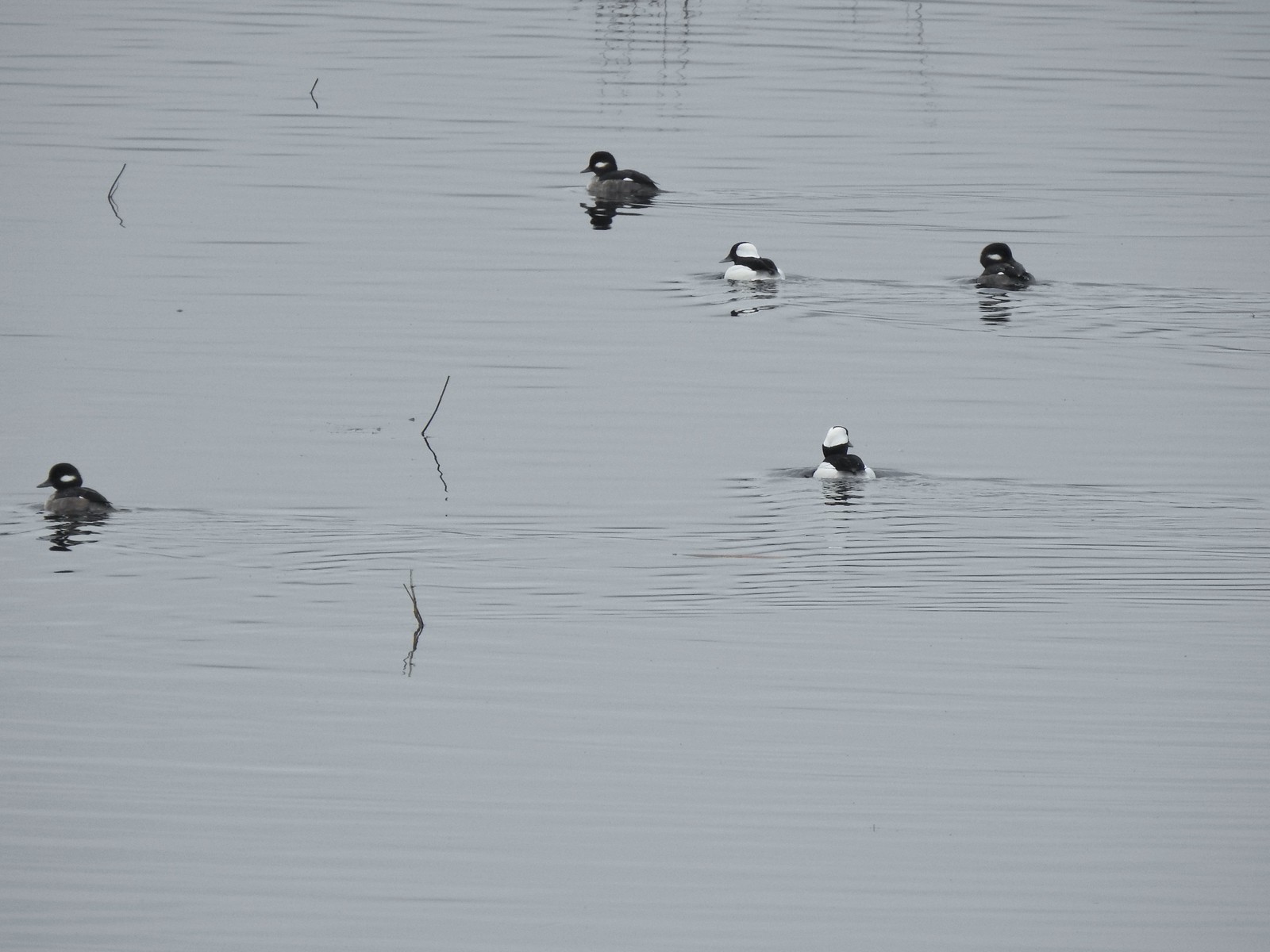
BuffleheadsBuffleheads

Hooded merganser?This one might be a hooded merganser?

After turning around we headed north passing Cattail Marsh and arriving at Fernhill Lake.
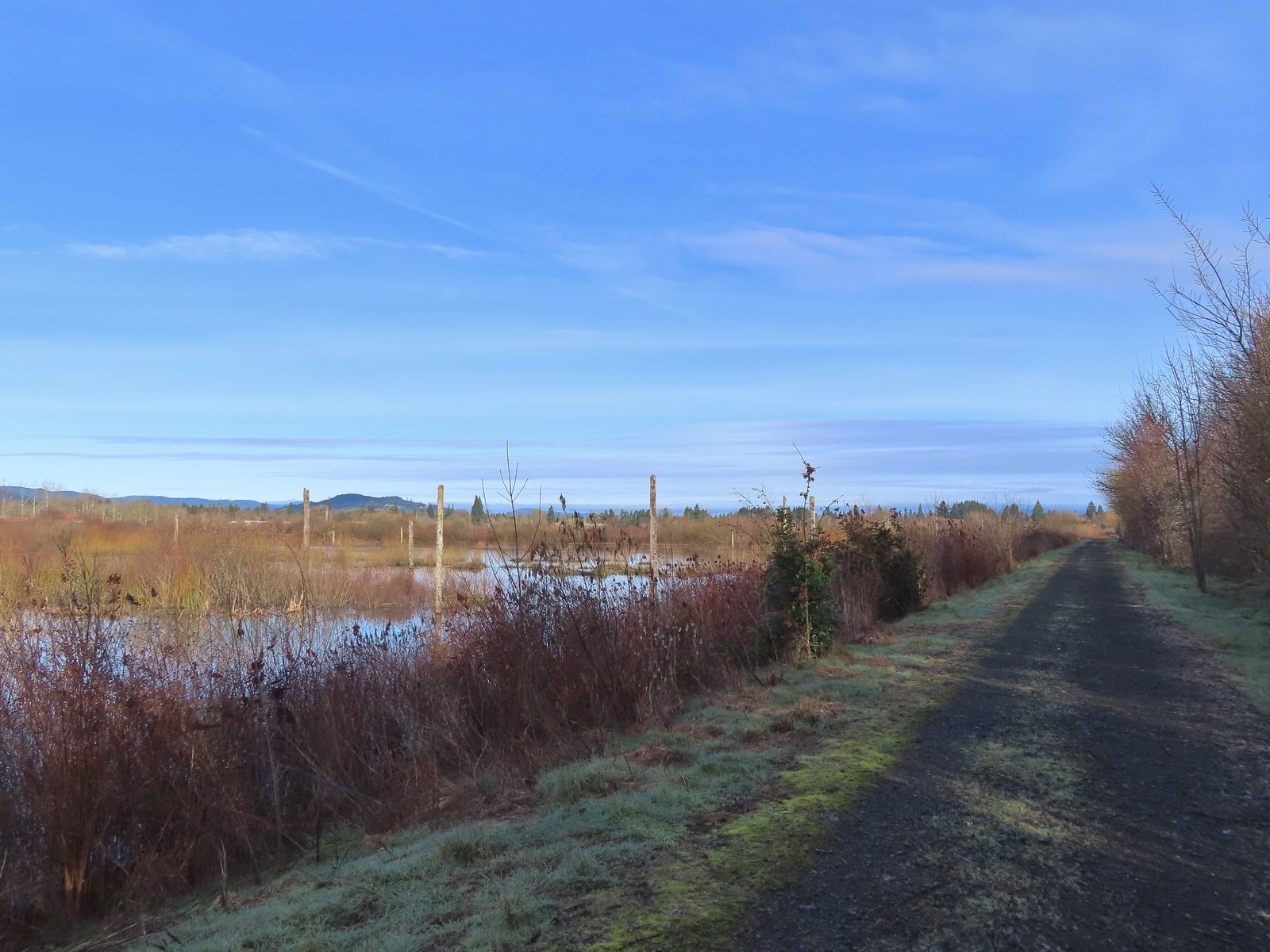
Fernhill wetlands

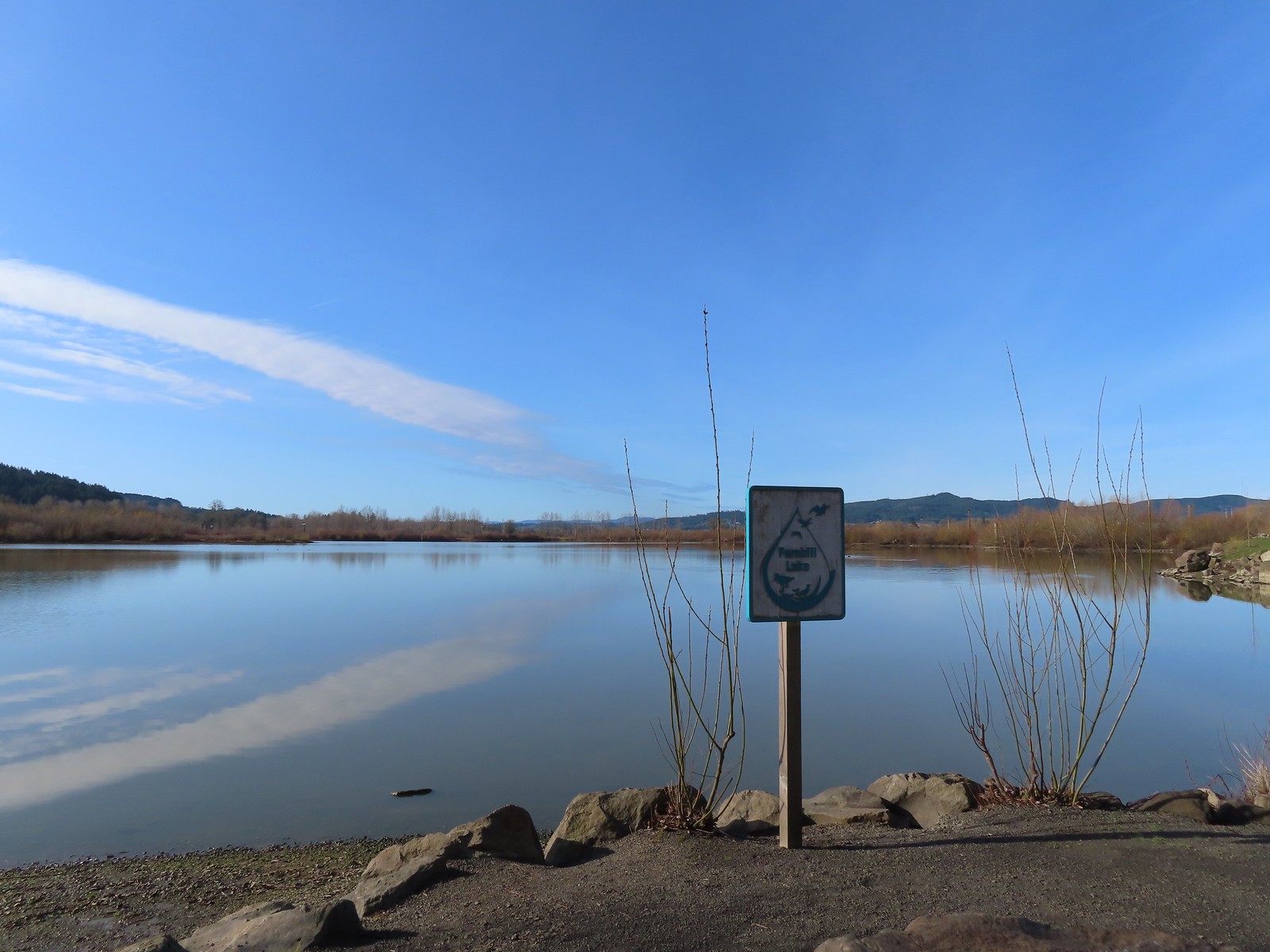
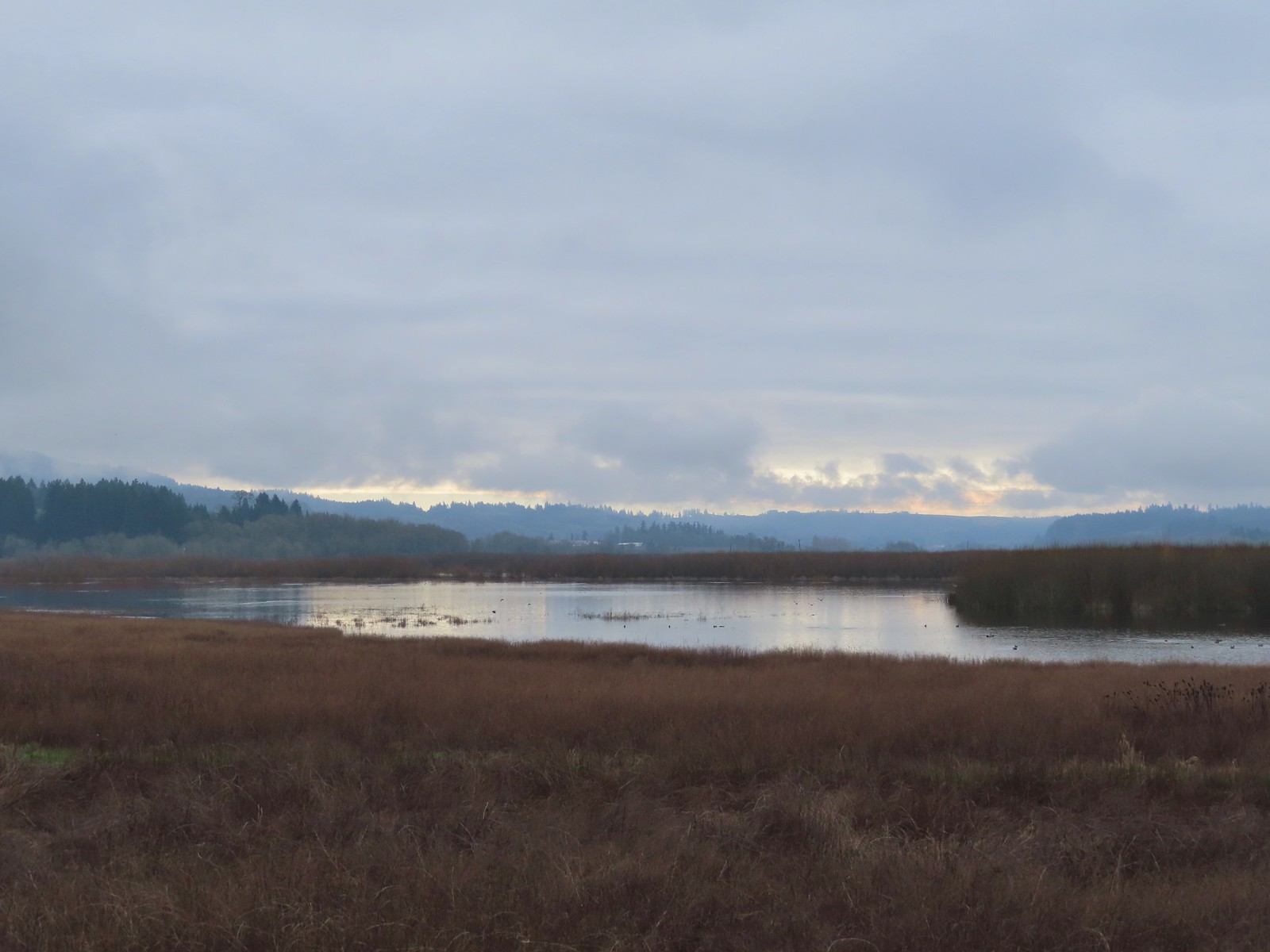
Fernhill LakeFernhill Lake

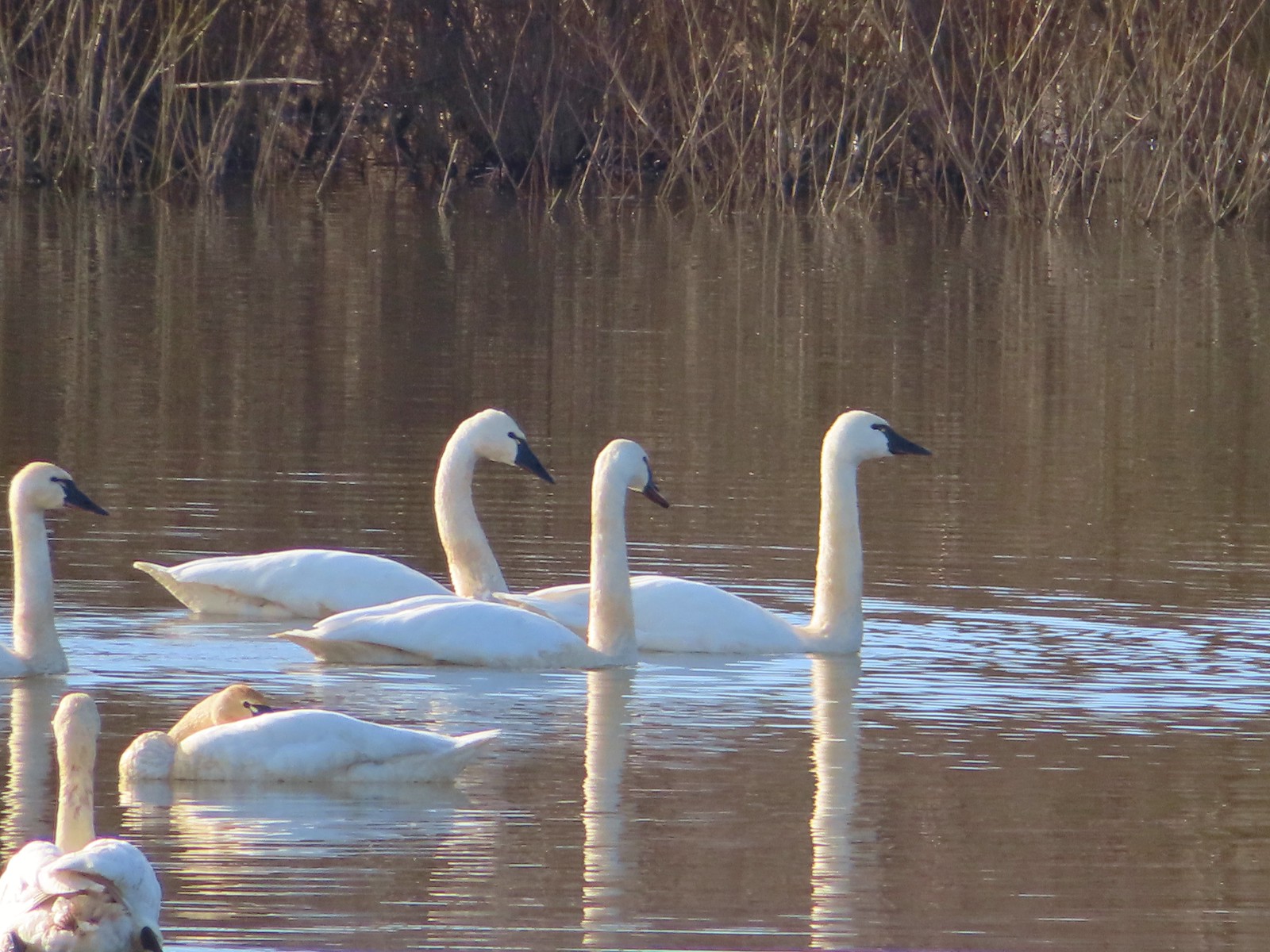
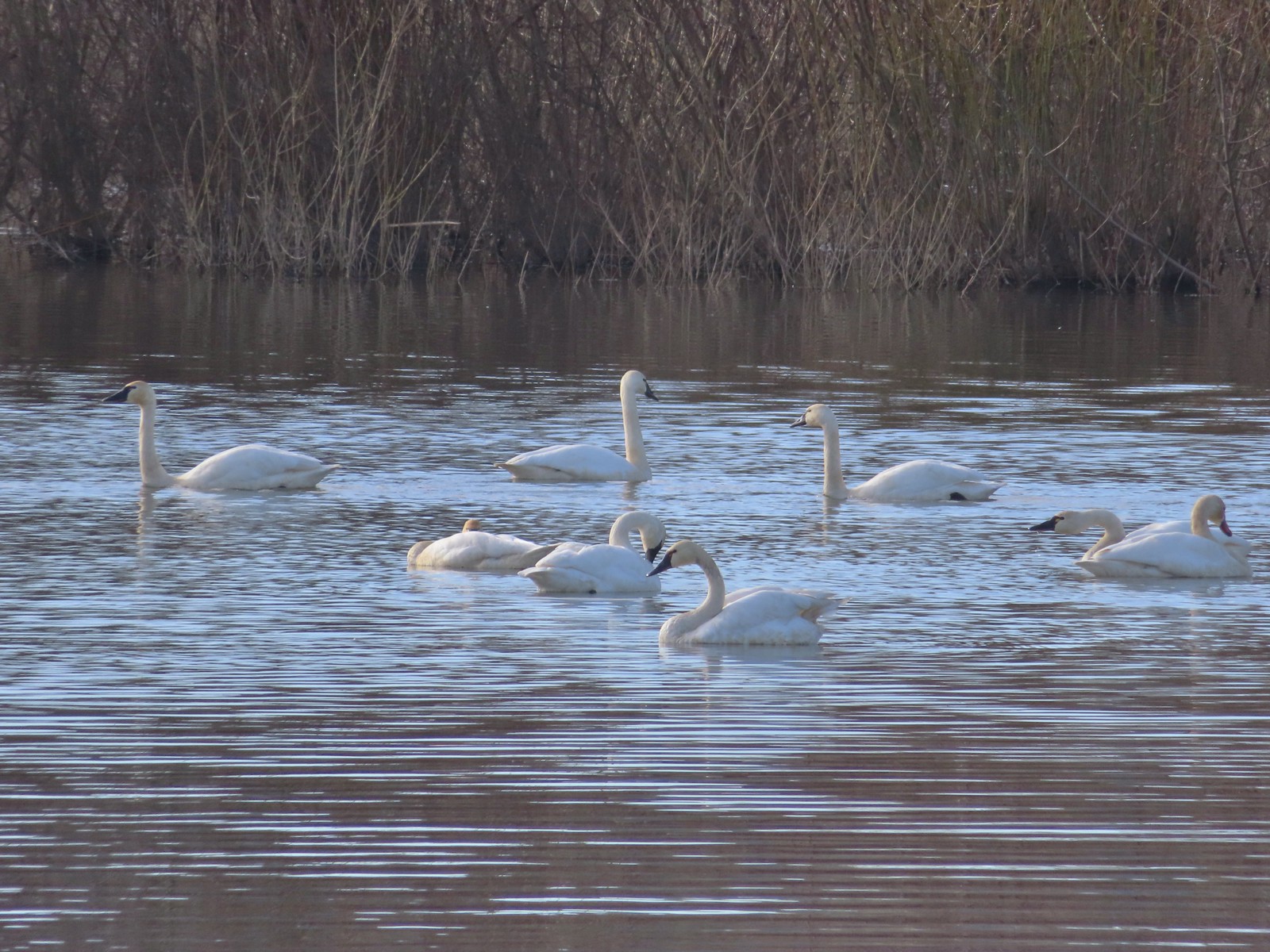
The trail bent eastward along the lake to a gazebo overlooking Barney Wetlands. From the gazebo we watched a flock of tundra swans. This was our second outing in a row (Wapato Lake) seeing tundra swans after not ever having seen them on a hike prior.
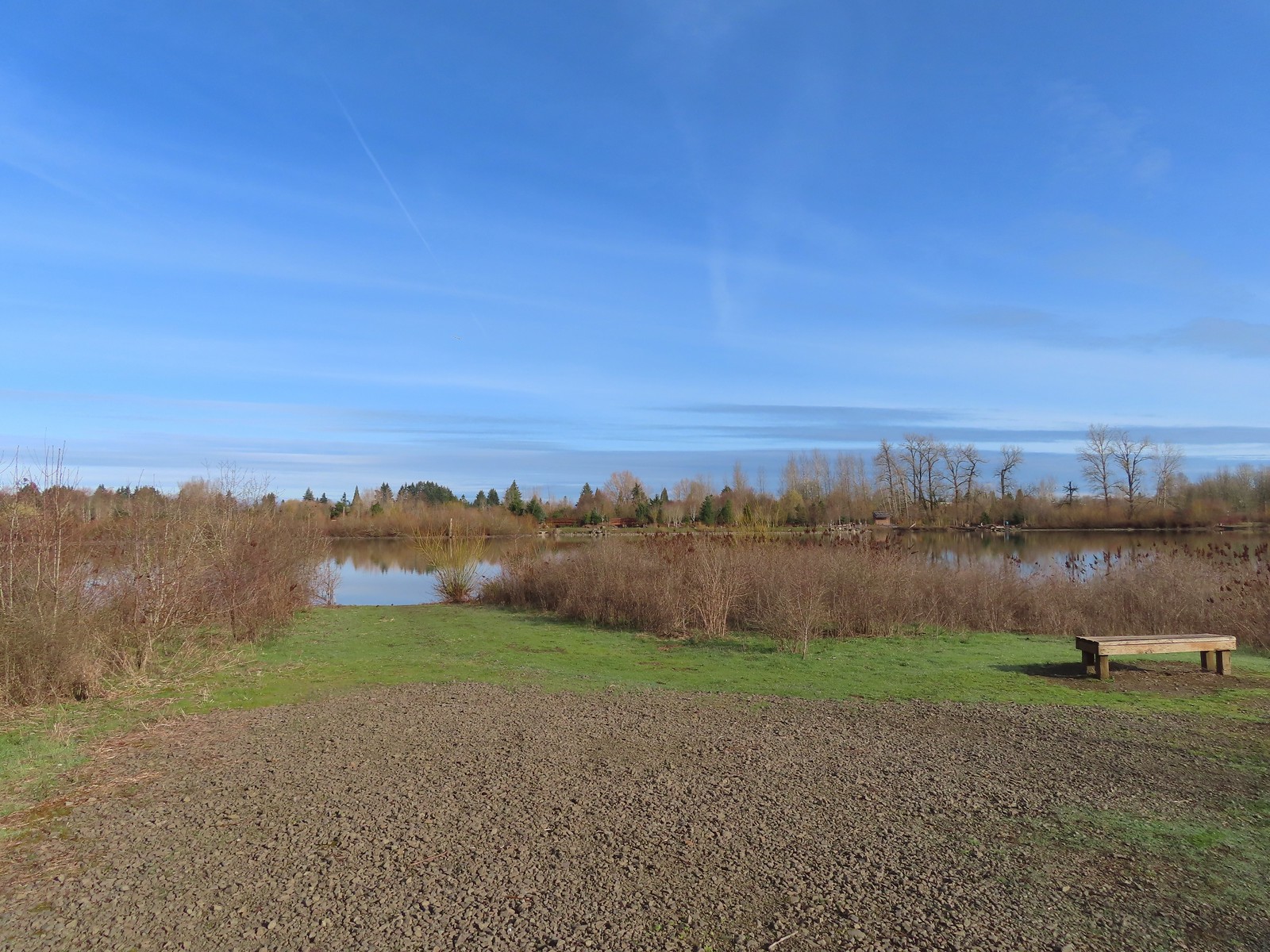
Fernhill LakeThis is where the trail turned east (for obvious reasons).
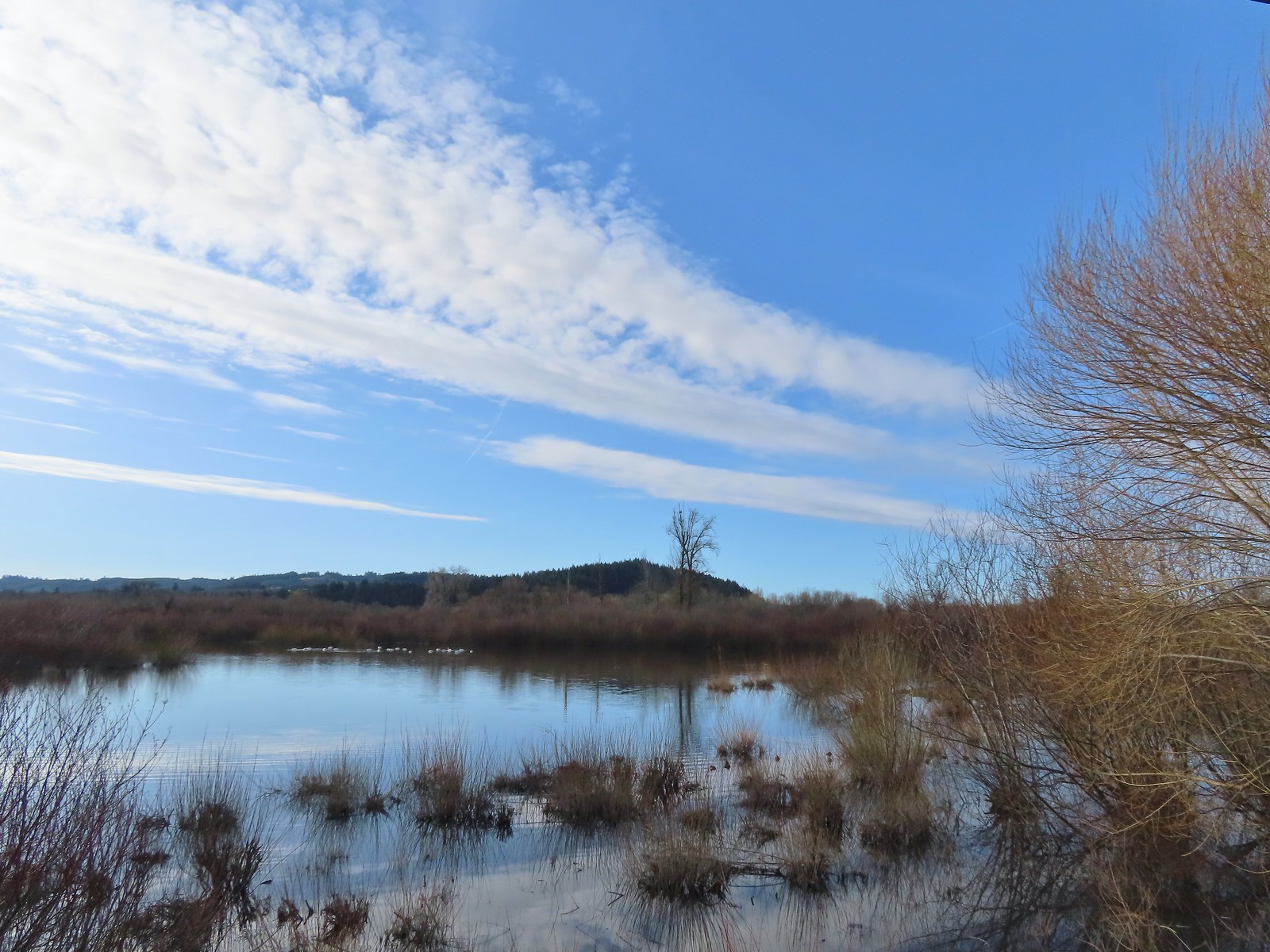
Barney WetlandsBarney wetlands

Tundra swans

Tundra swans

Tundra swans

Tundra swans

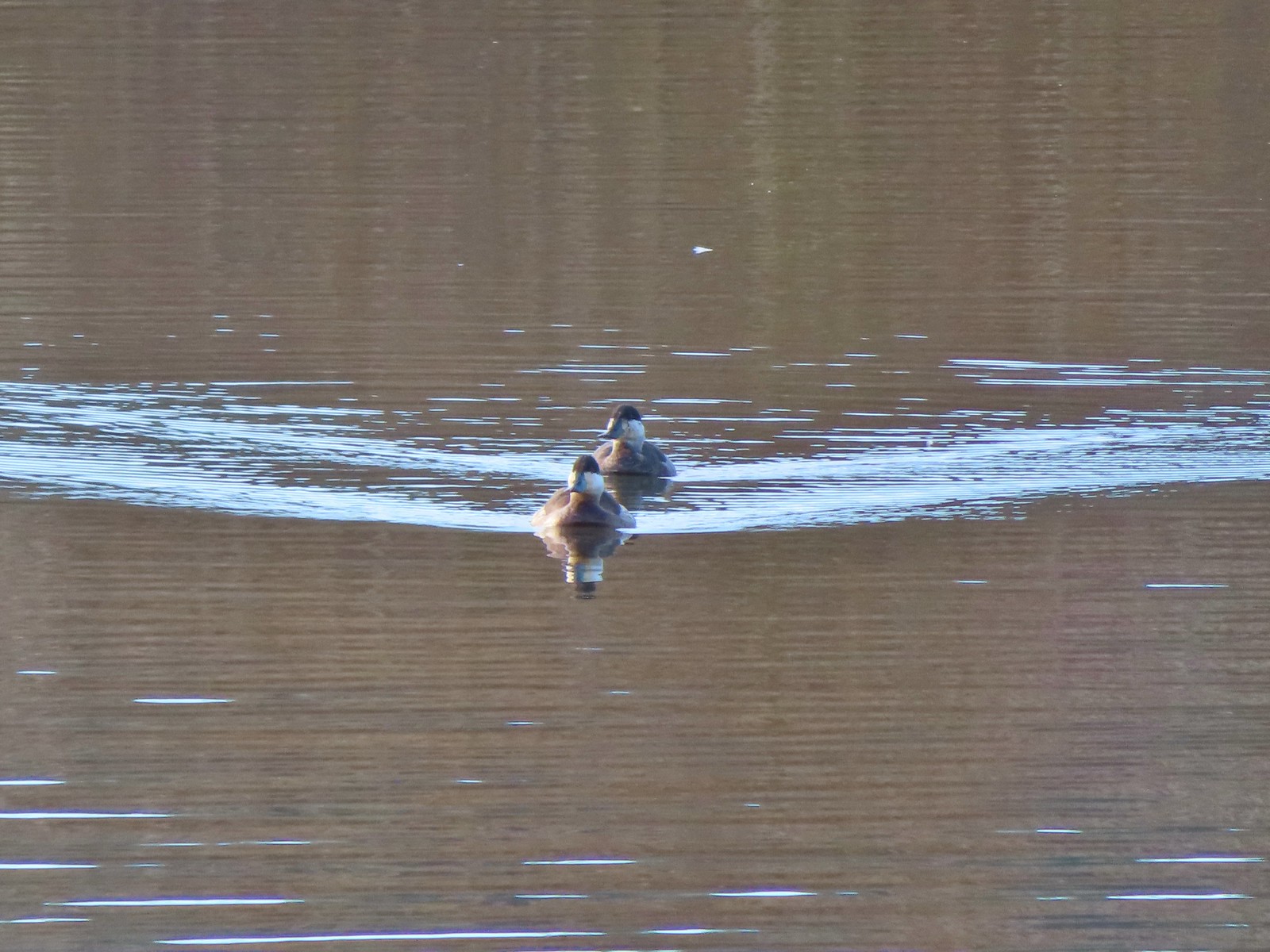
There were also quite a few ruddy ducks here which we don’t often see.
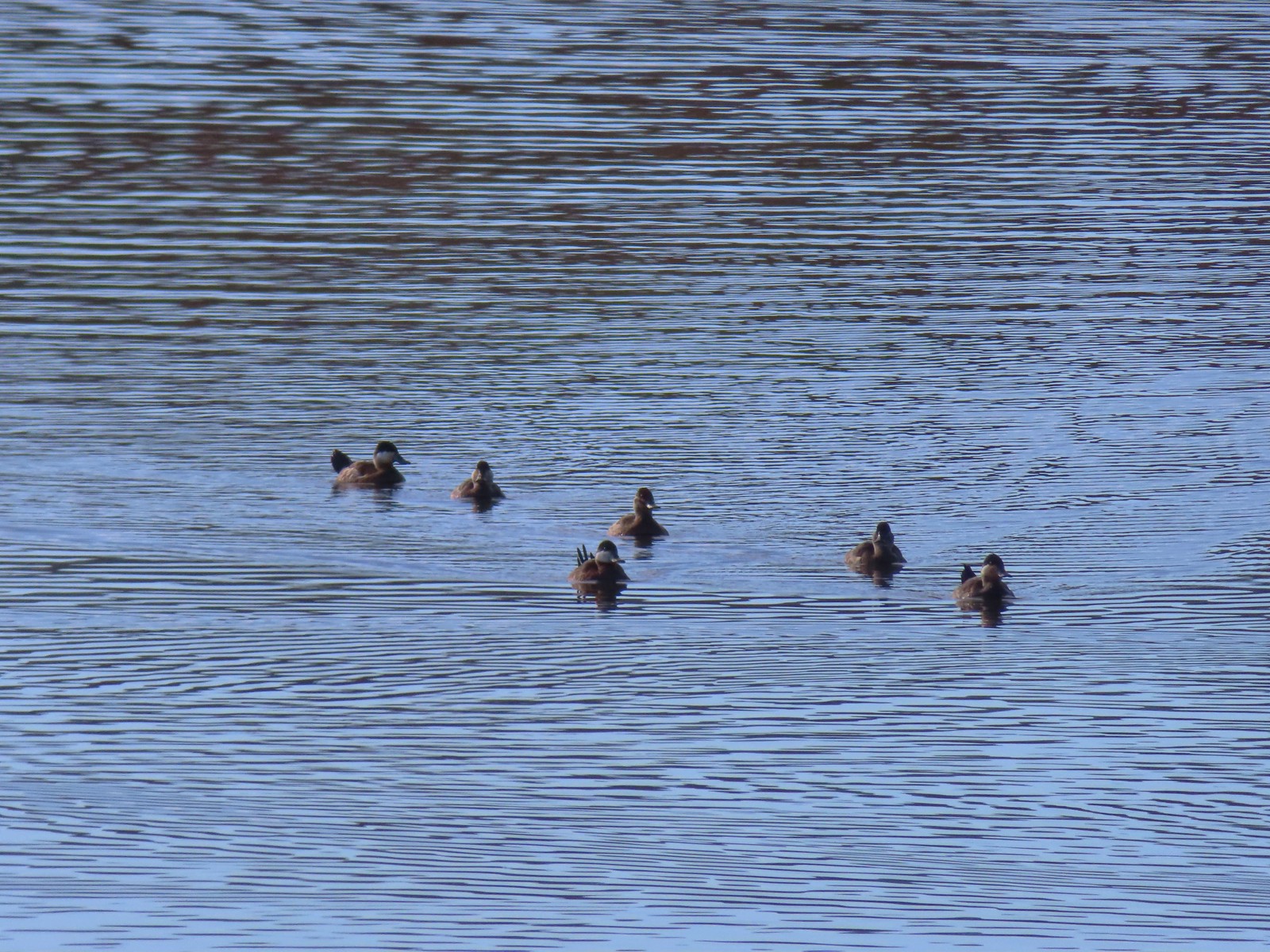
Ruddy ducks

Ruddy ducks

Ruddy ducks

Ruddy duck

After a good long break watching the swans we continued around Fernhill Lake to Dabblers Marsh.
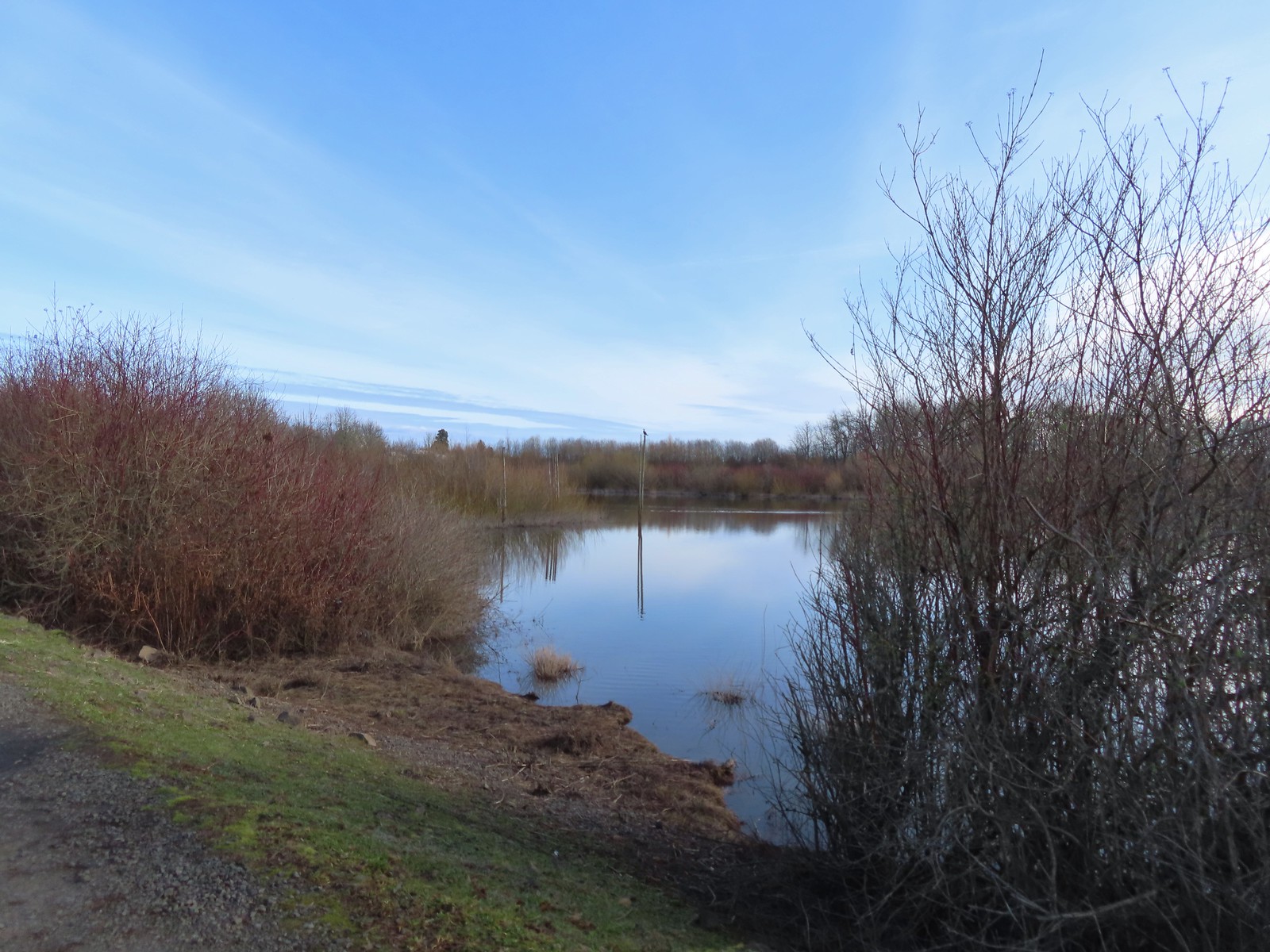
Double-crested cormorantDouble-crested cormorant on a post in Barney Wetlands.
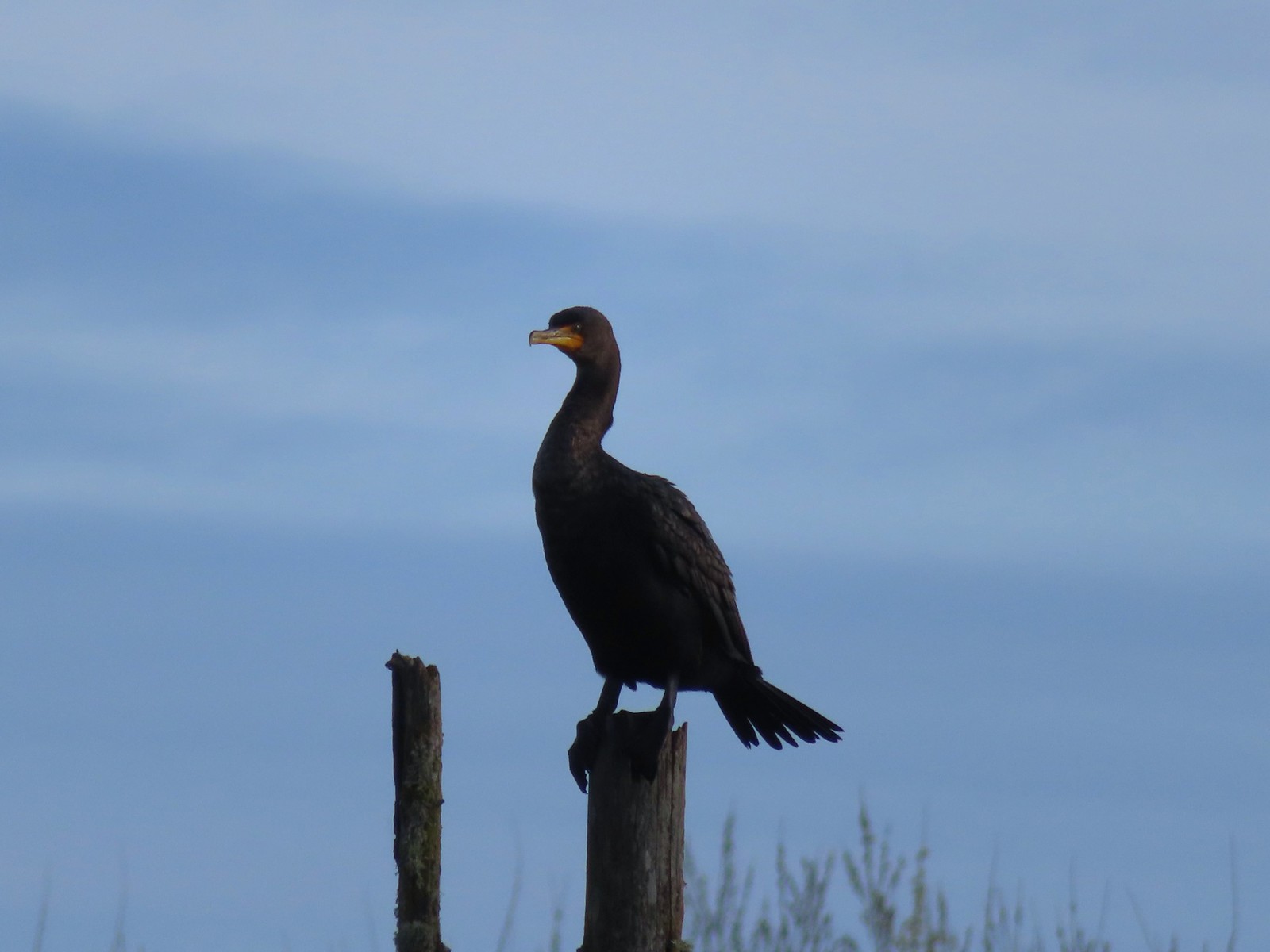
Double-crested cormorantDouble-crested cormorant

Double-crested cormorantDrying off in the sun.

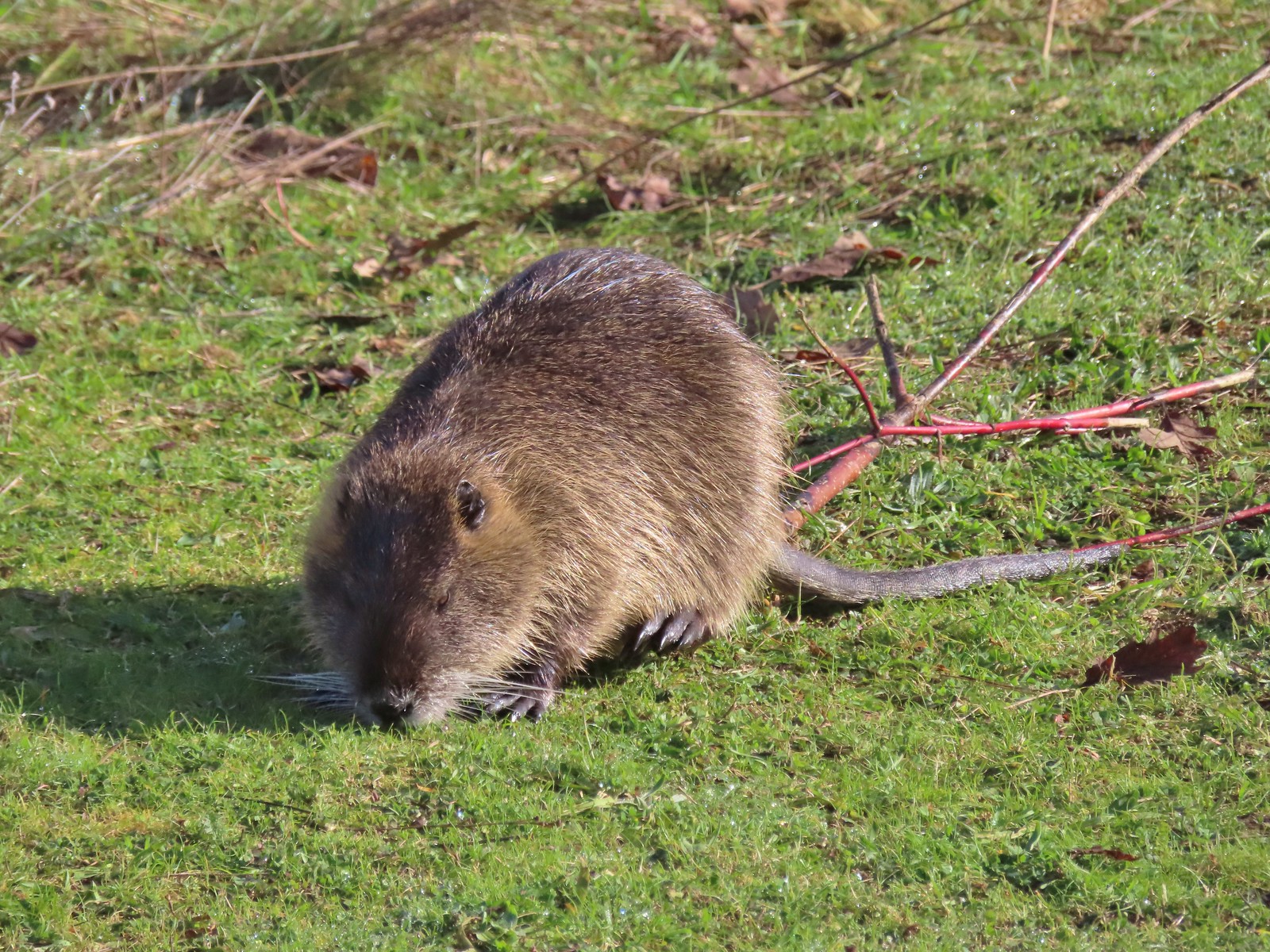
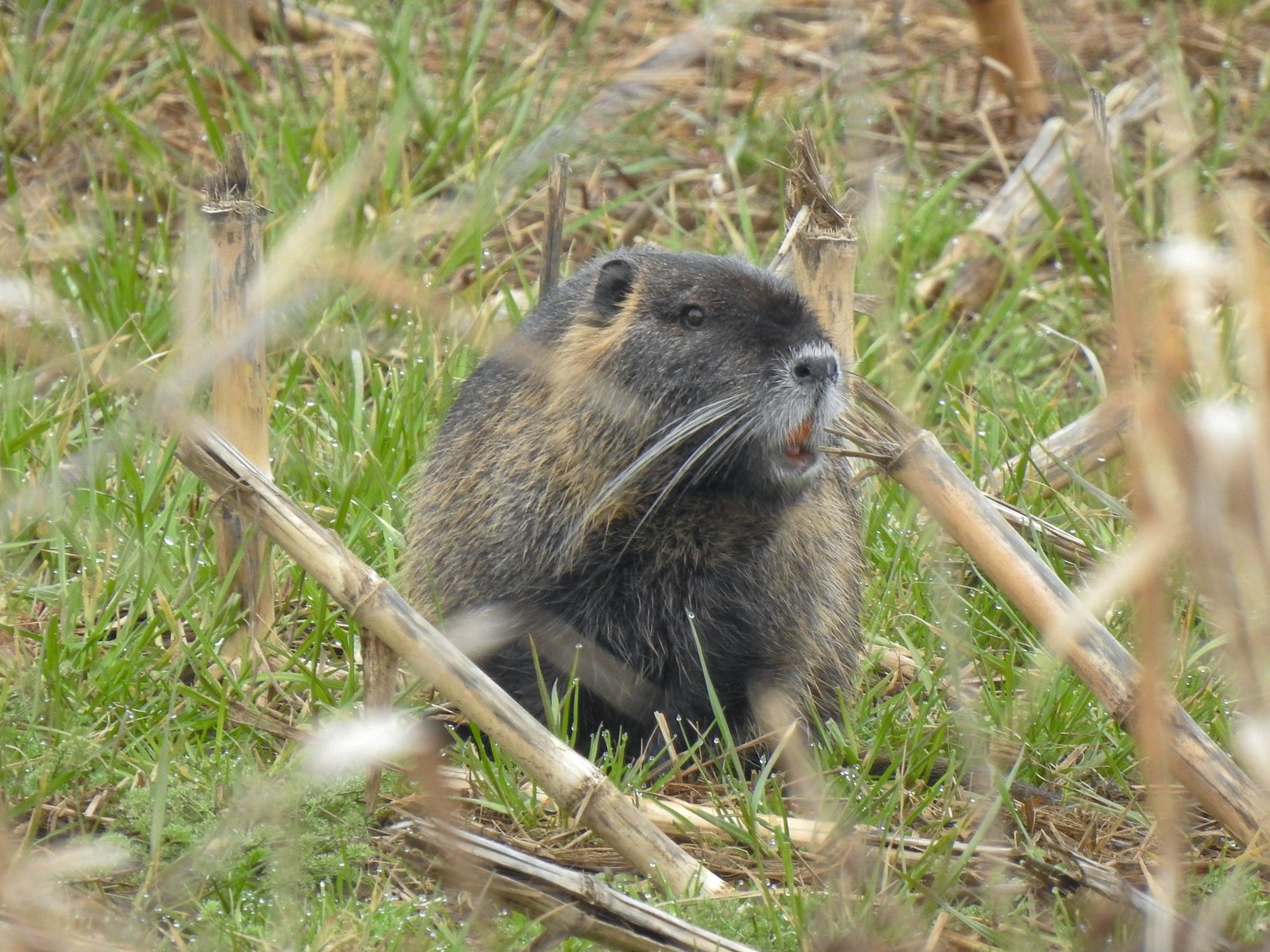
NutriaNurtia at a bench near Dabblers Marsh

NutriaNutria

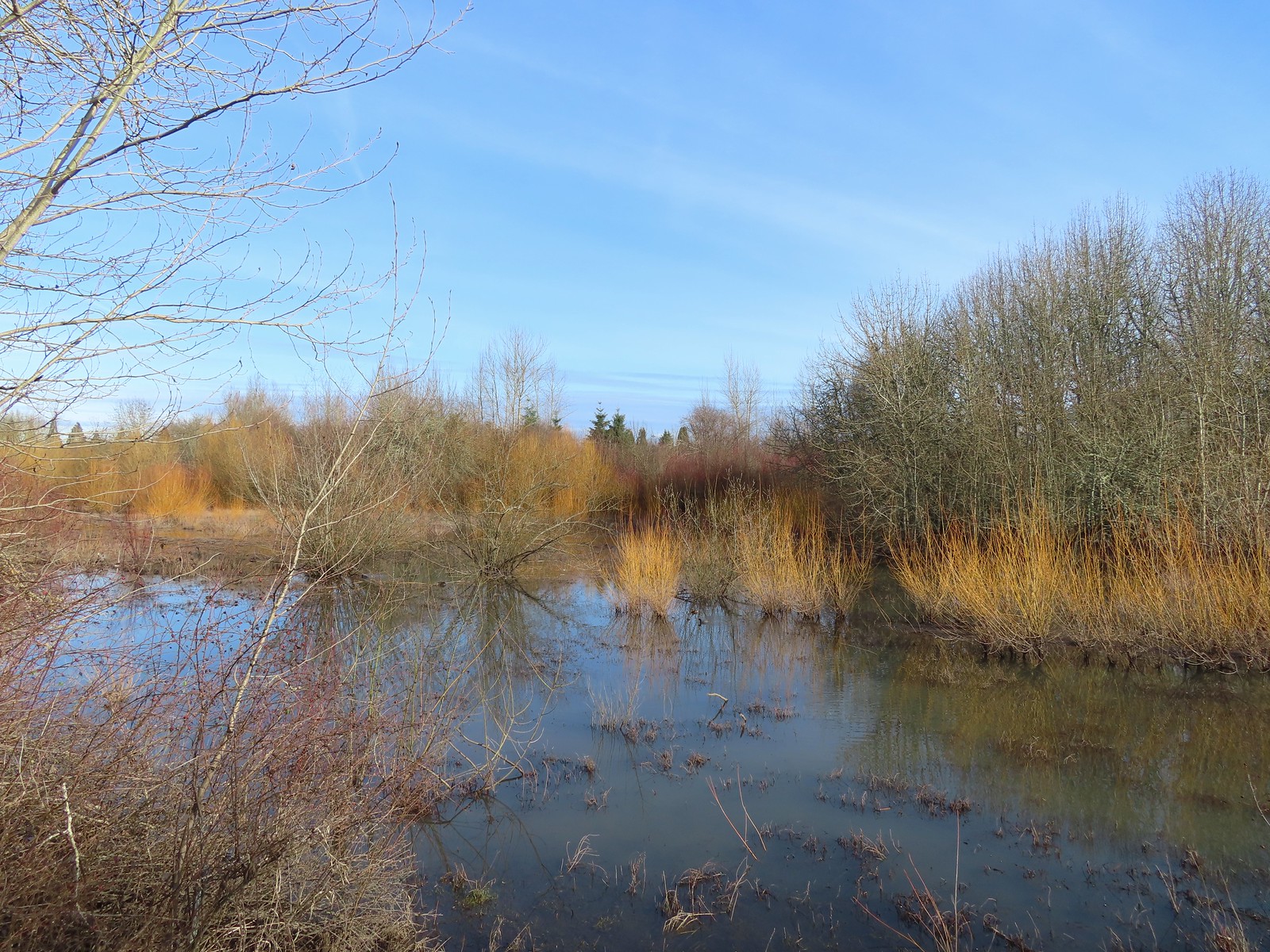
Dabblers MarshDabblers Marsh

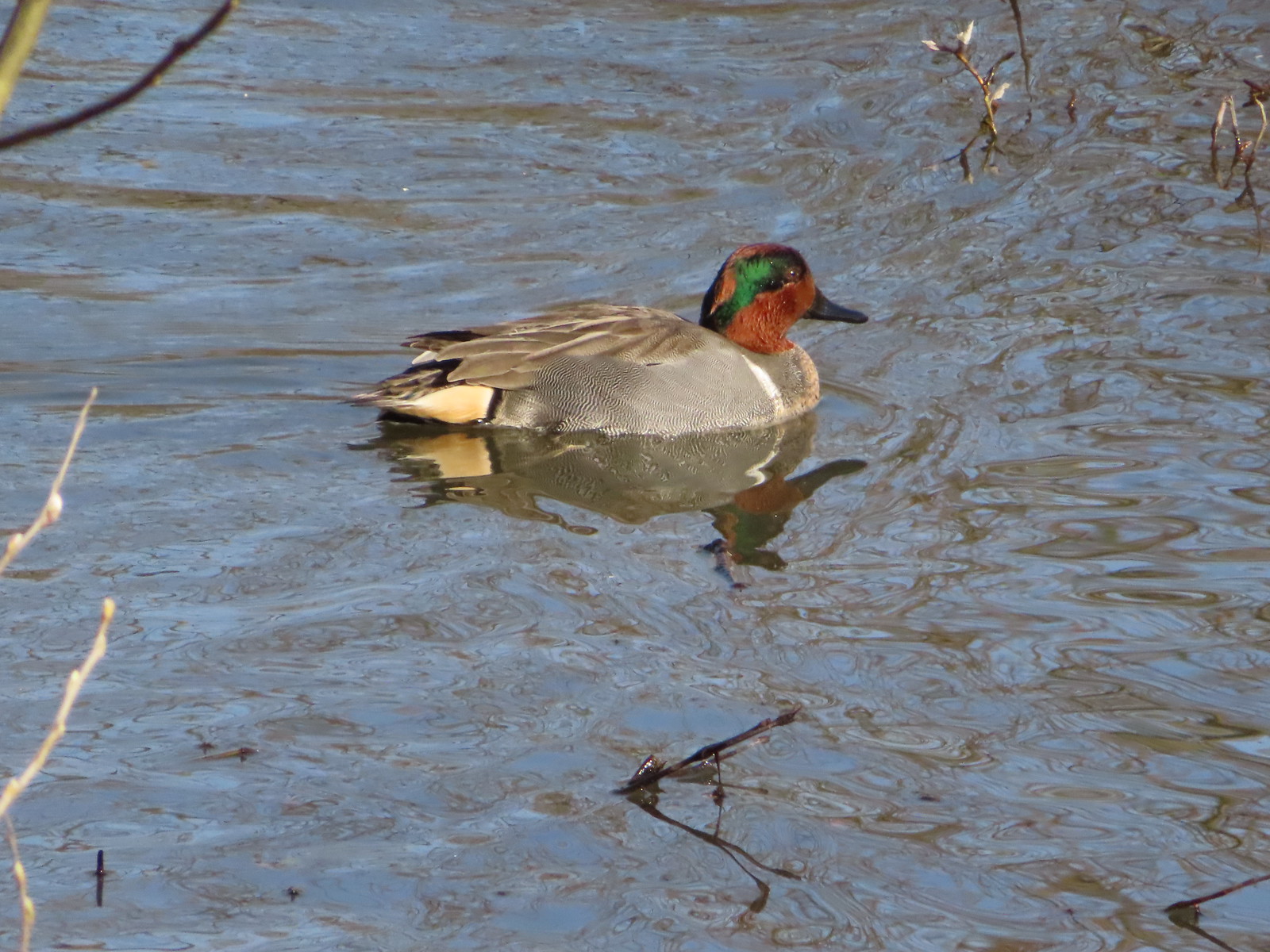
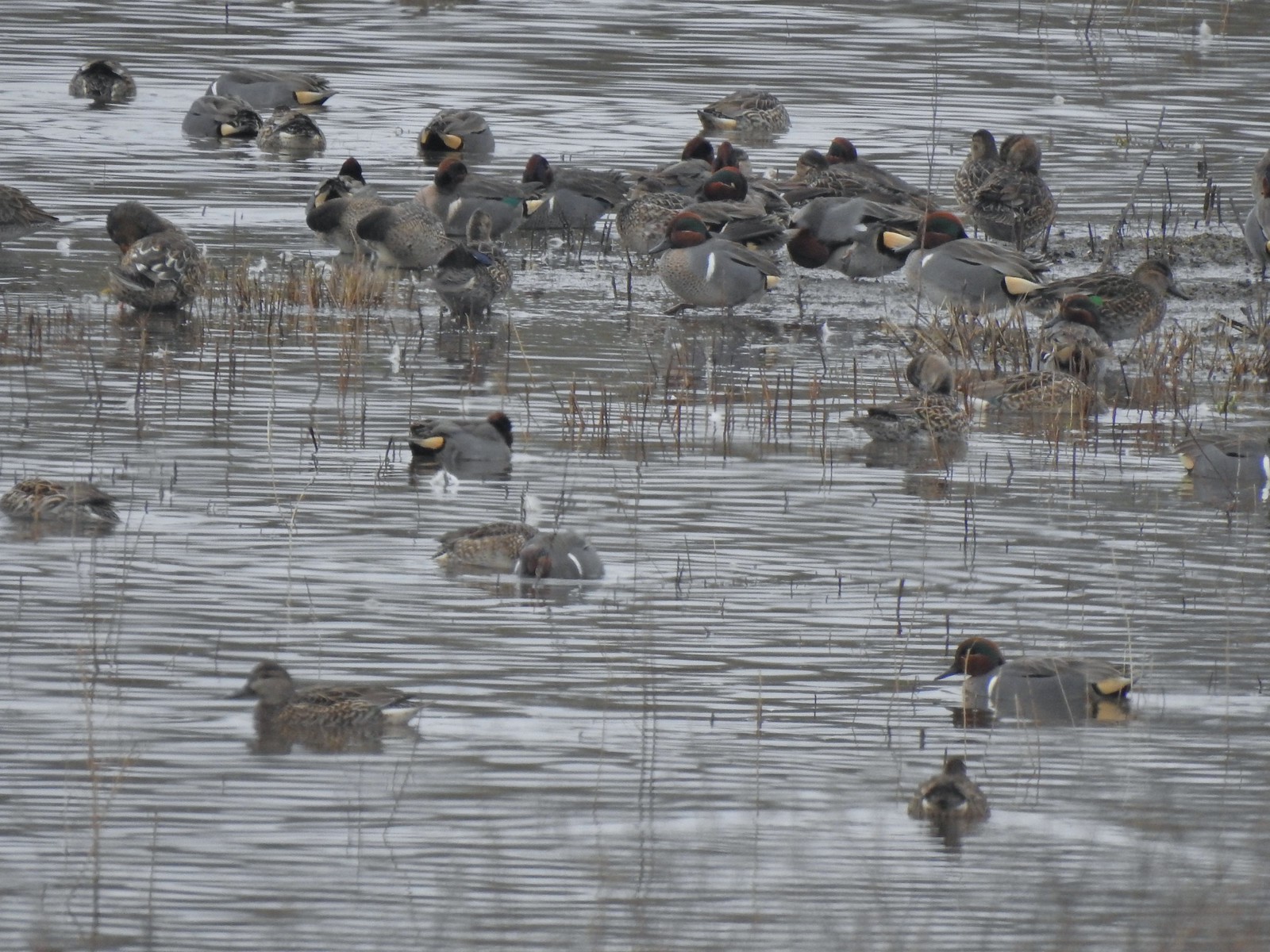
Green-winged tealGreen-winged teal

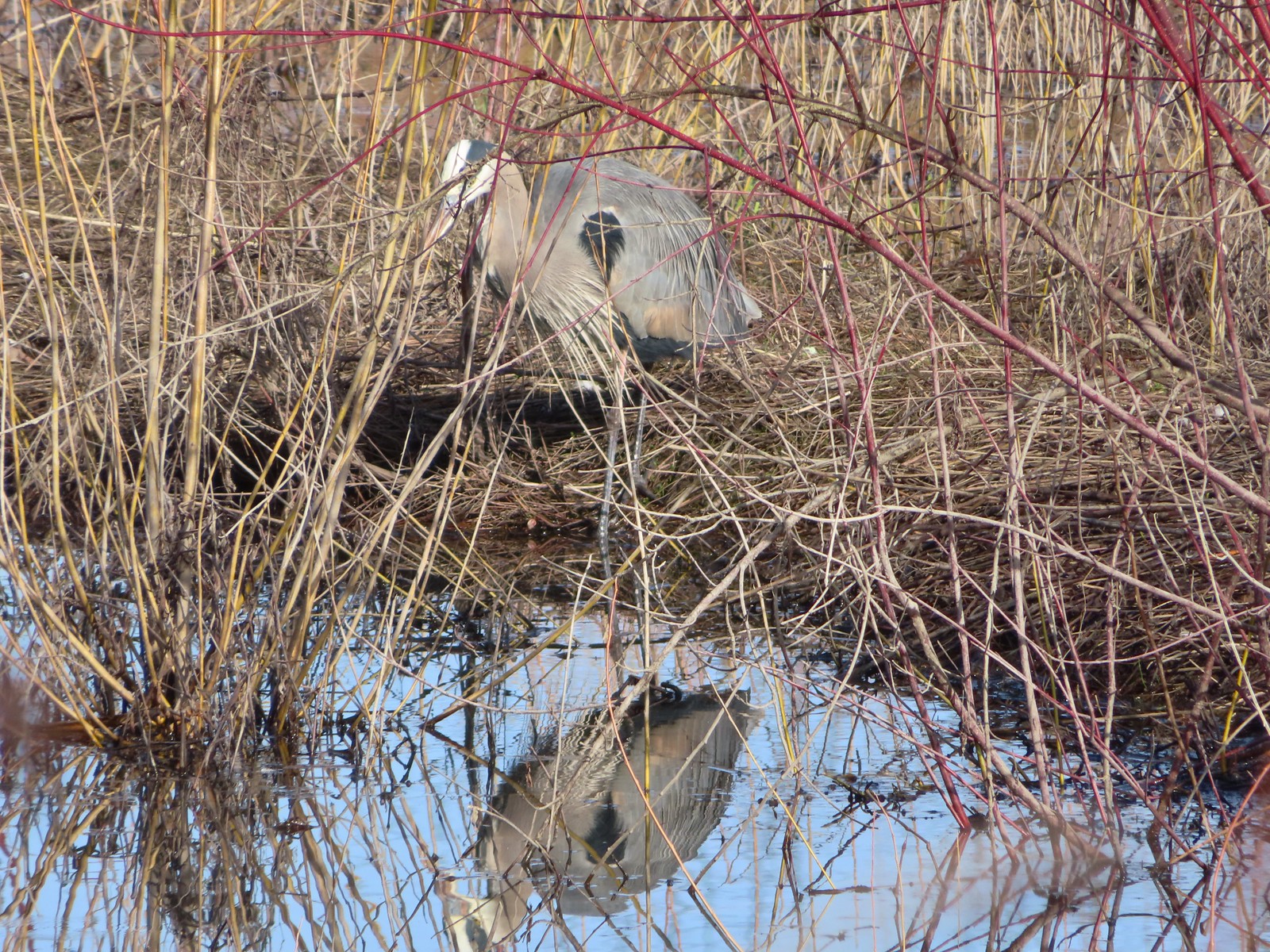
Great blue heronGreat blue heron

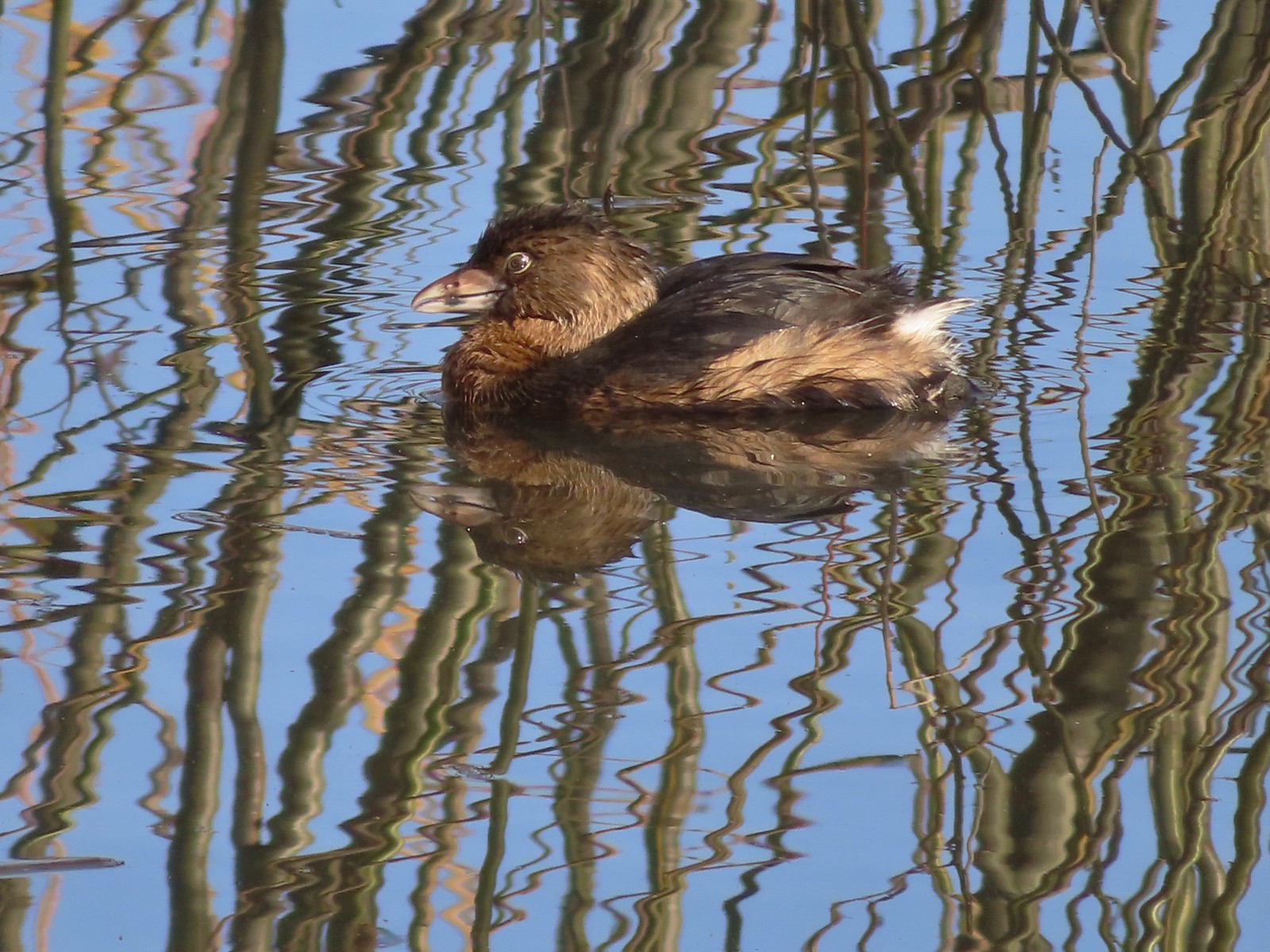
Pie-billed grebePie-billed grebe

We turned west between Fernhill Lake and Dabblers Marsh and came to a nice view of the lake and the start of the Dabblers Marsh Loop Trail.
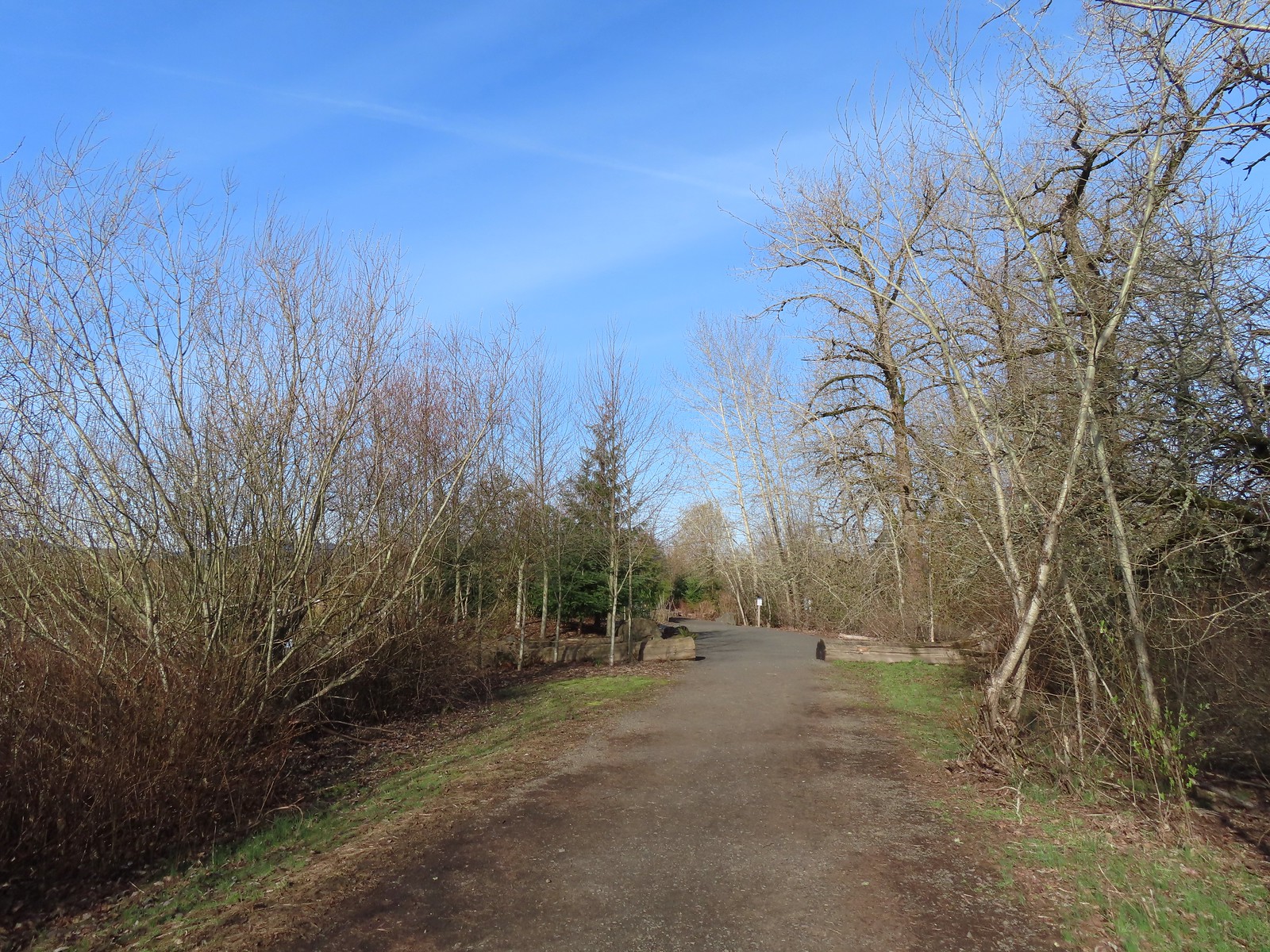
Fernhill Wetlands

Fernhill Lake

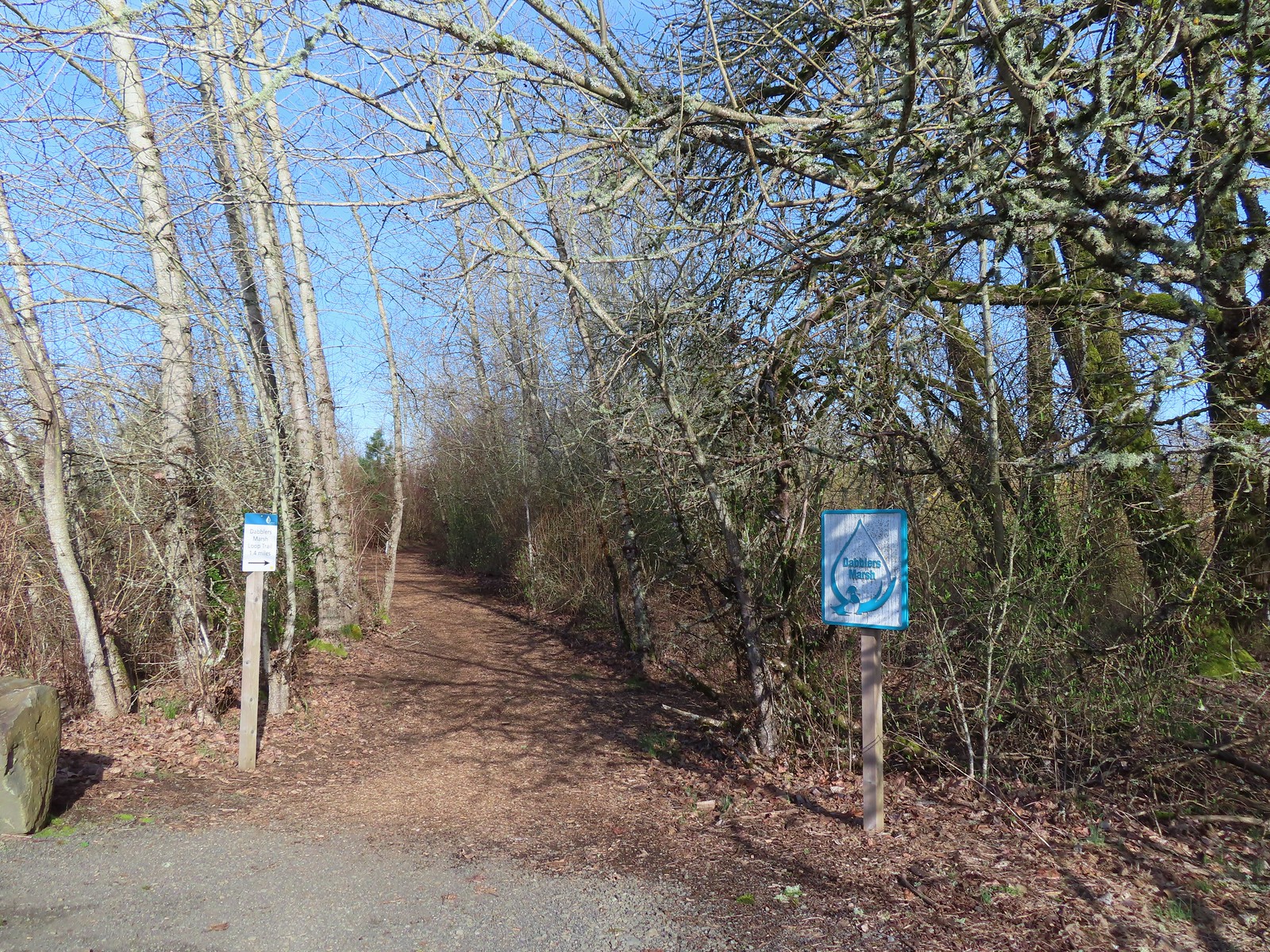
Dabblers Marsh Loop Trail

We turned onto the woodchip path along Dabblers Marsh and followed pointers to a loop around some farmland.
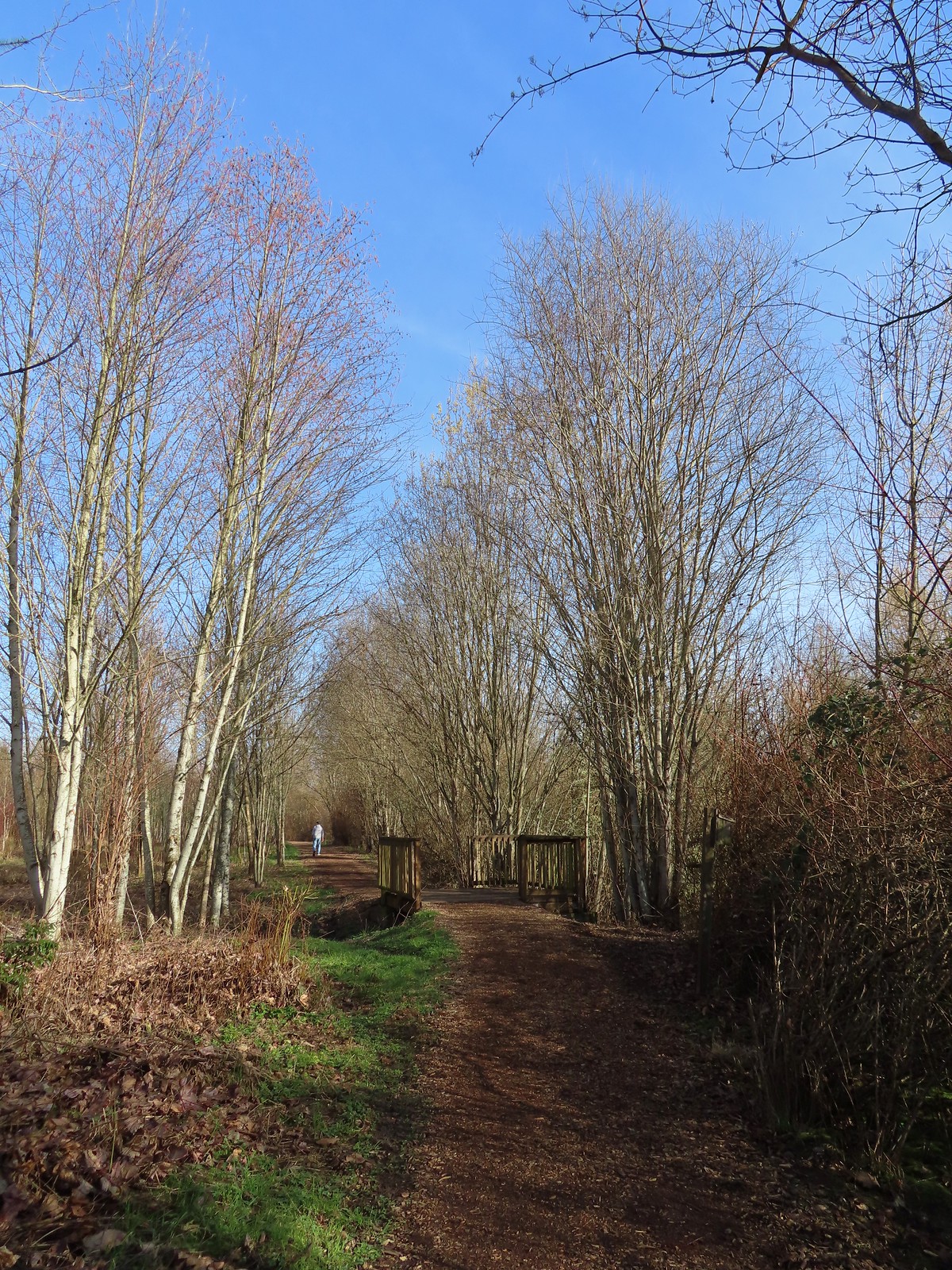
Dabblers Marsh Loop Trail

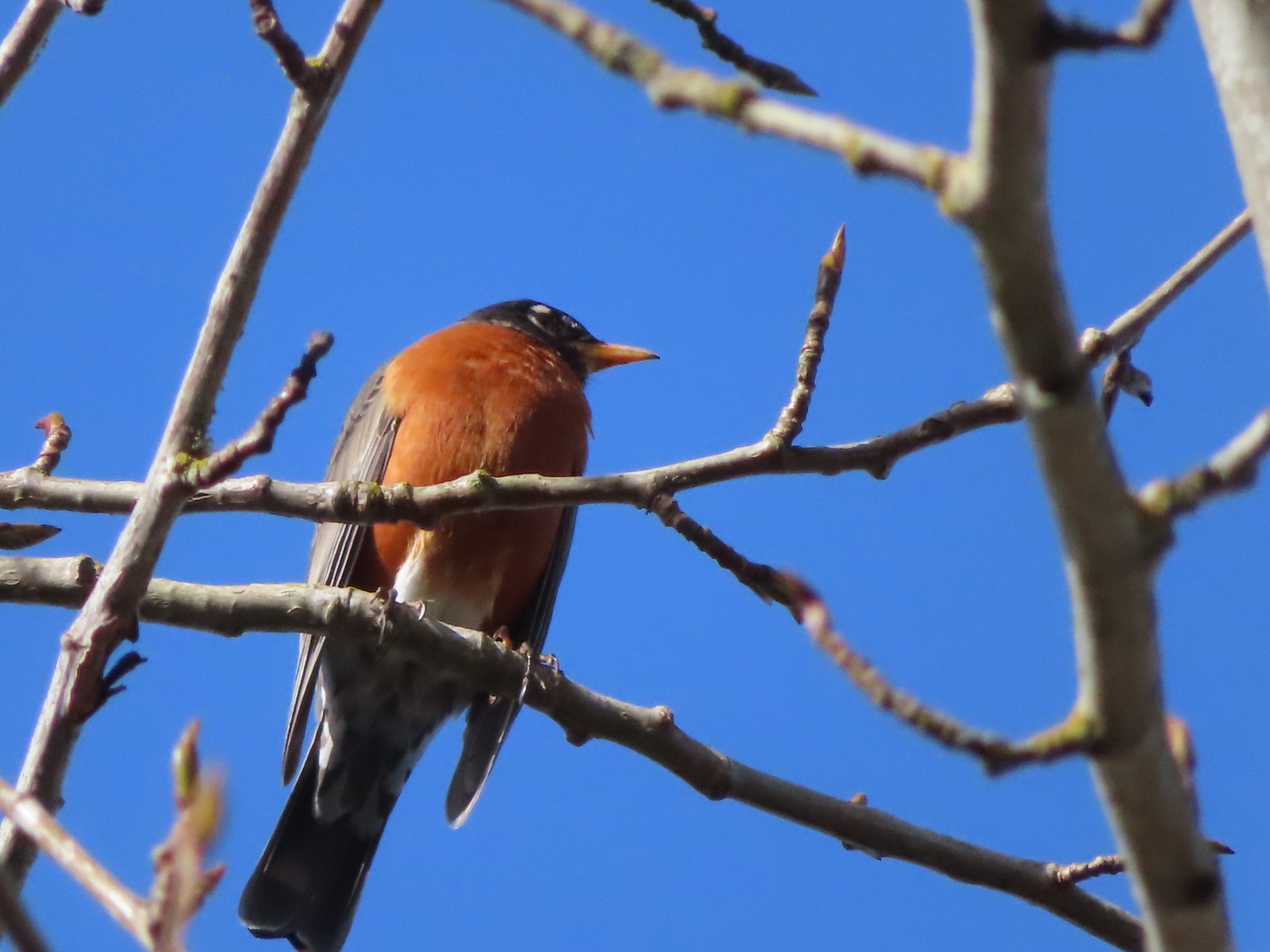
American robinRobin

Dabblers Marsh Loop Trail

Dabblers Marsh Loop TrailThe start of the loop at the edge of the farmland. We stayed left opting to hike the loop clockwise.

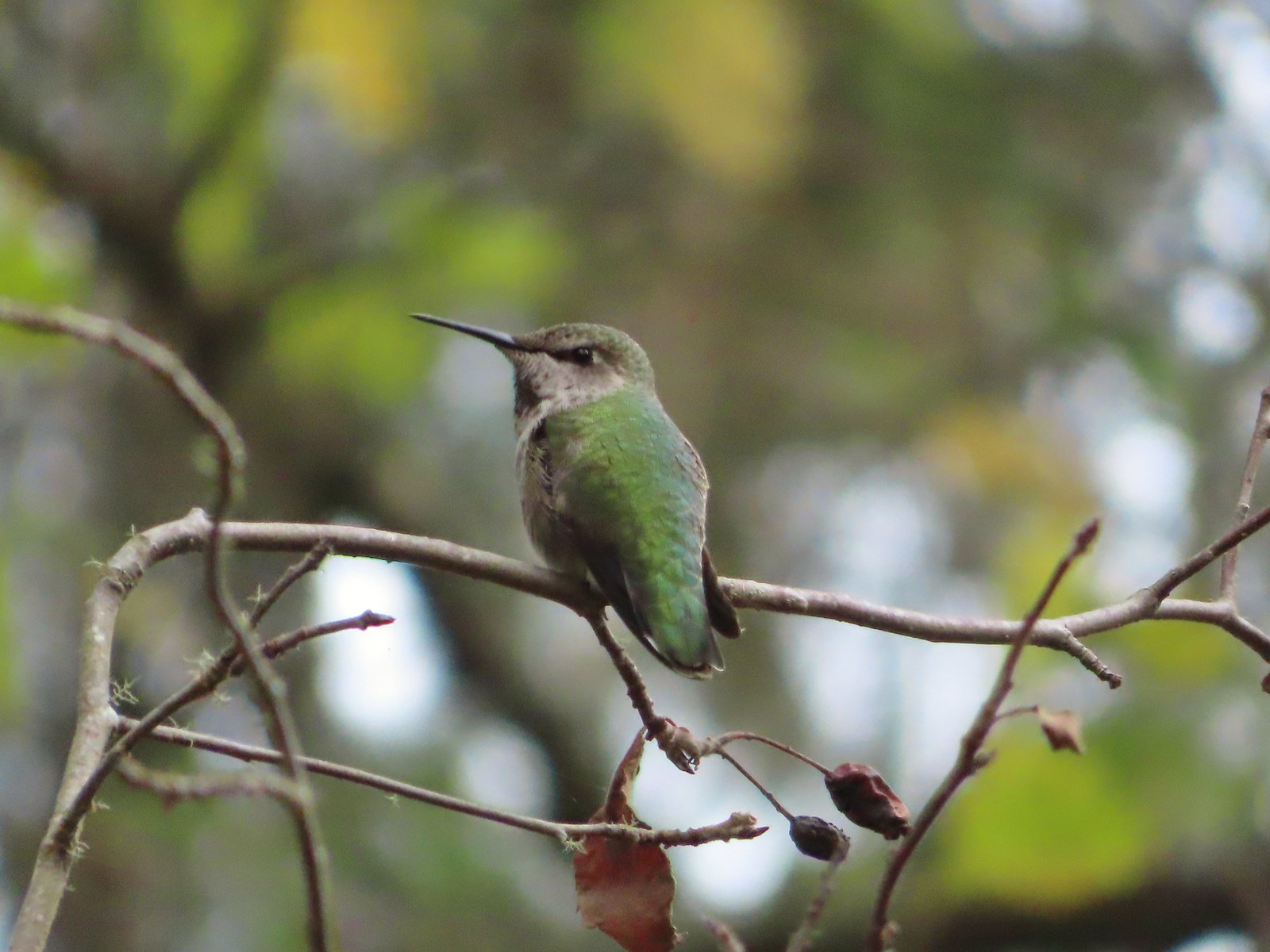
Anna's hummingbirdAnna’s hummingbrid

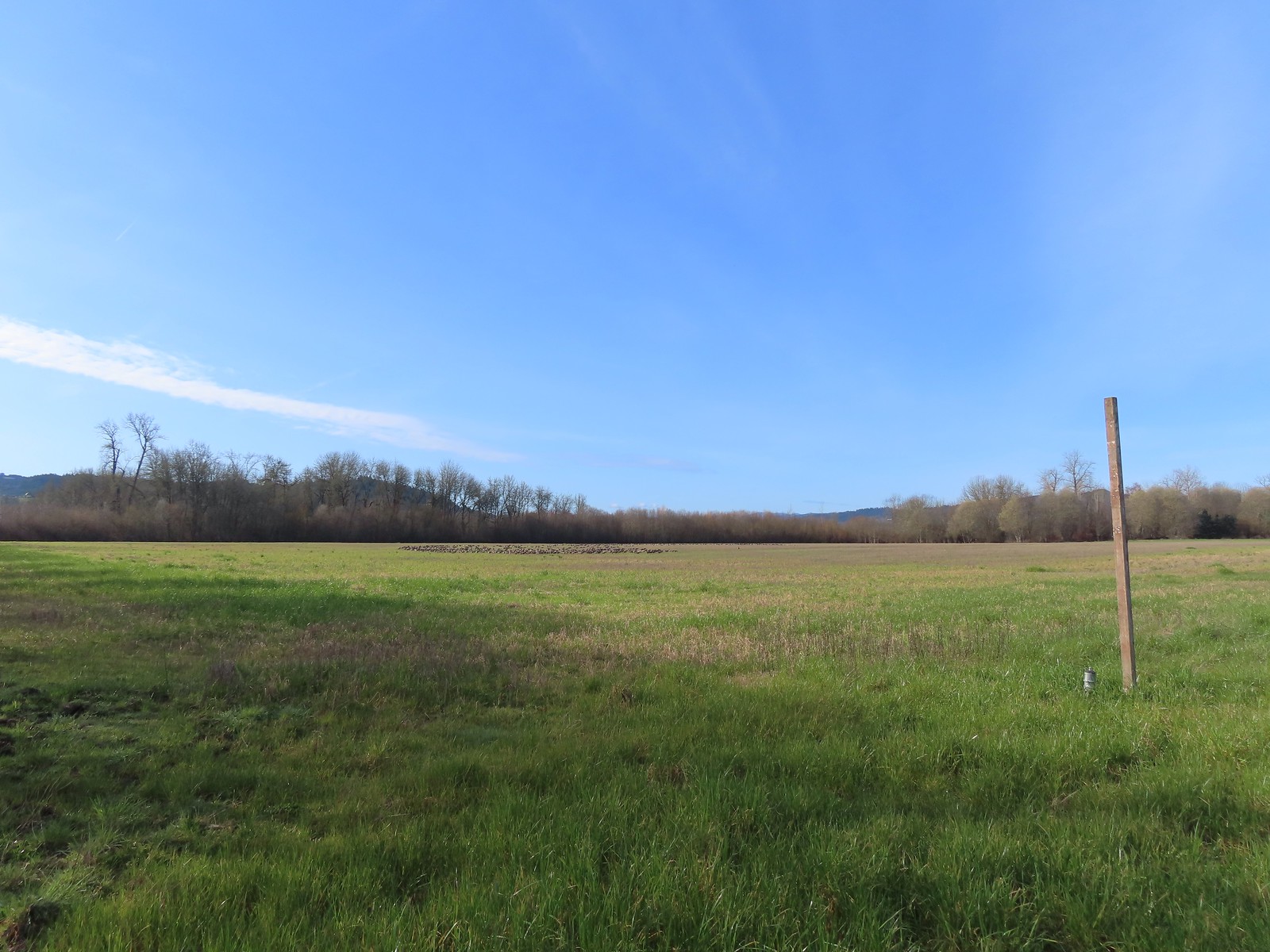
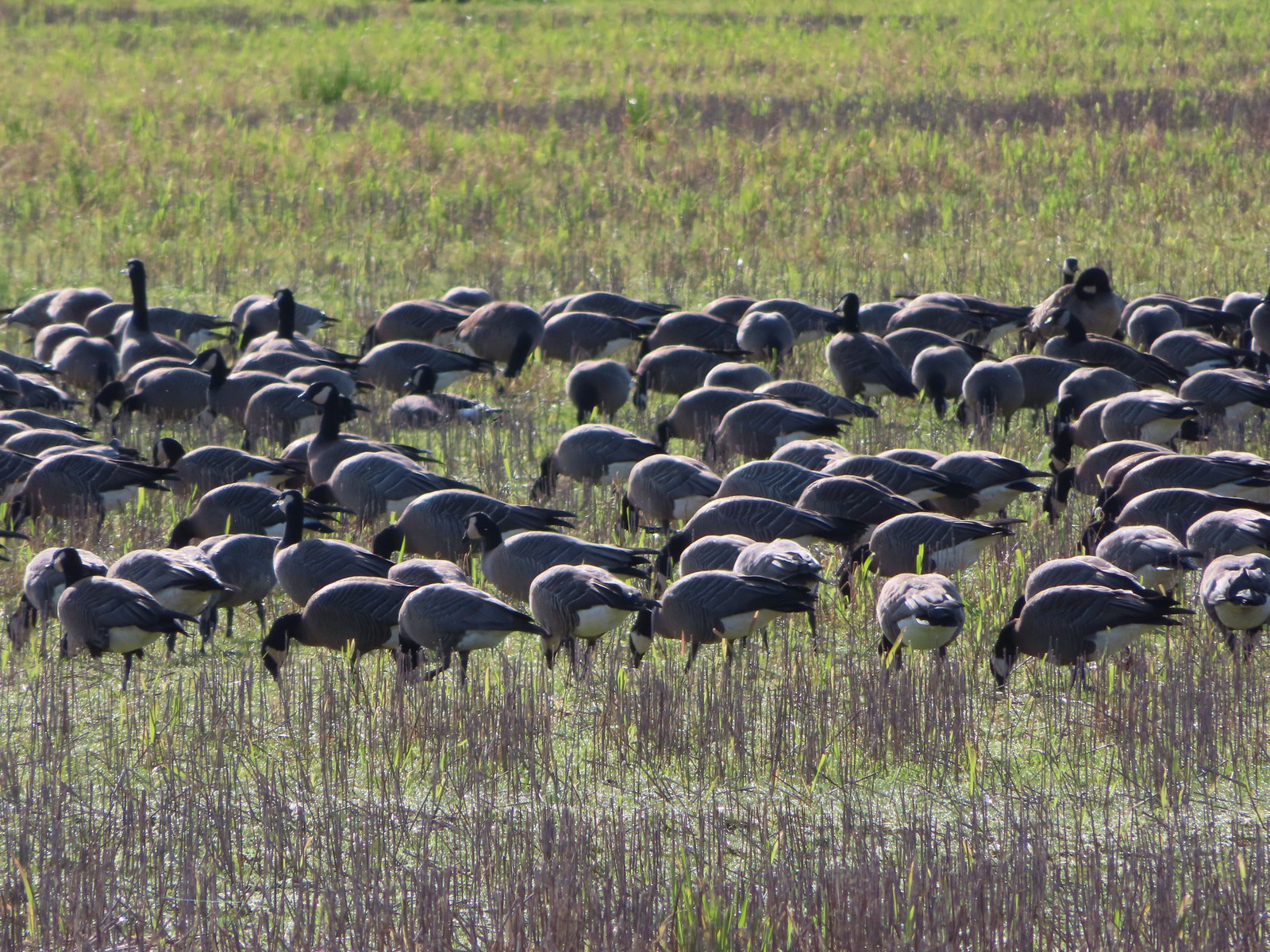
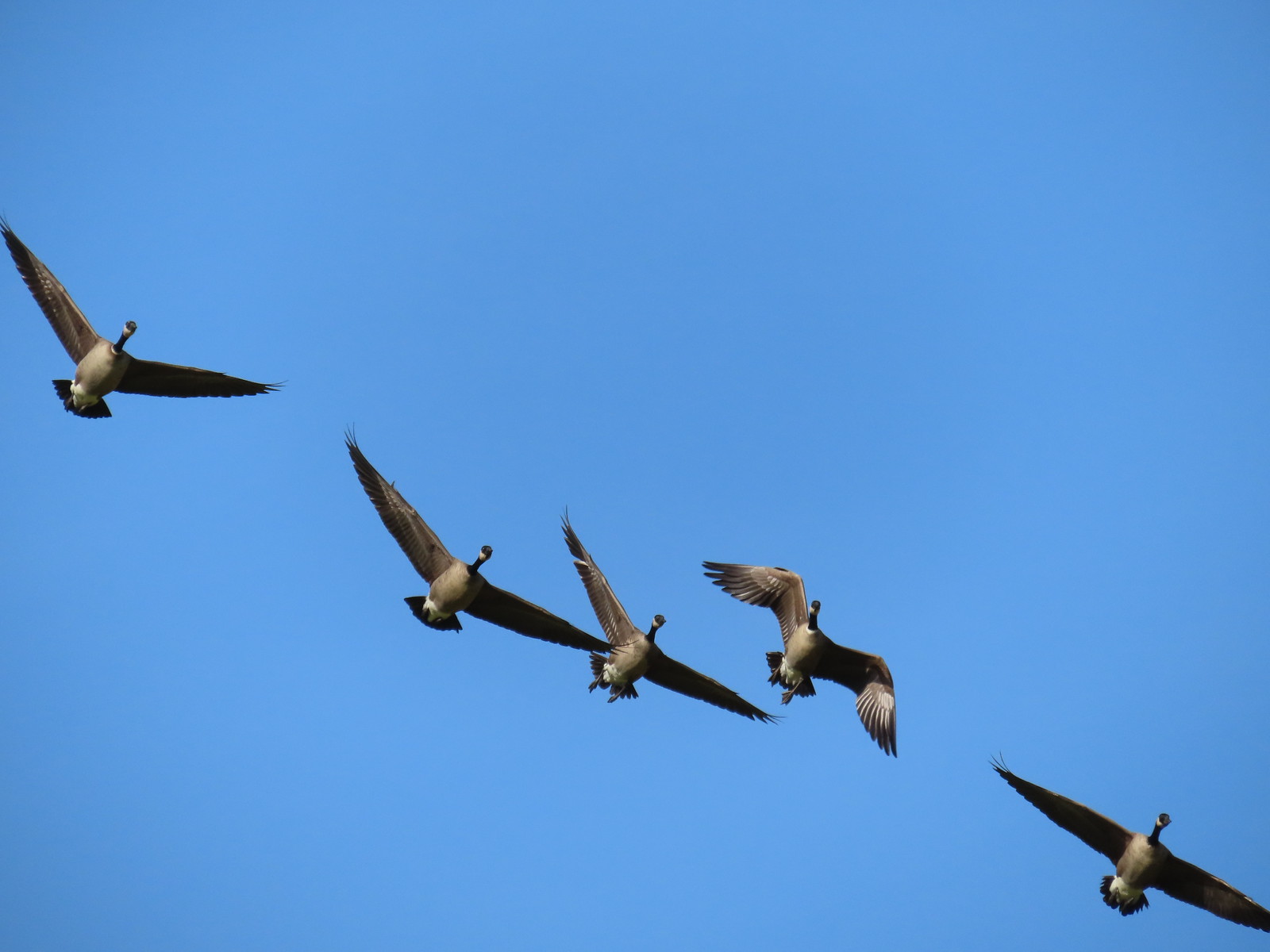
Geese in the fieldA gaggle of geese in the field.

Geese

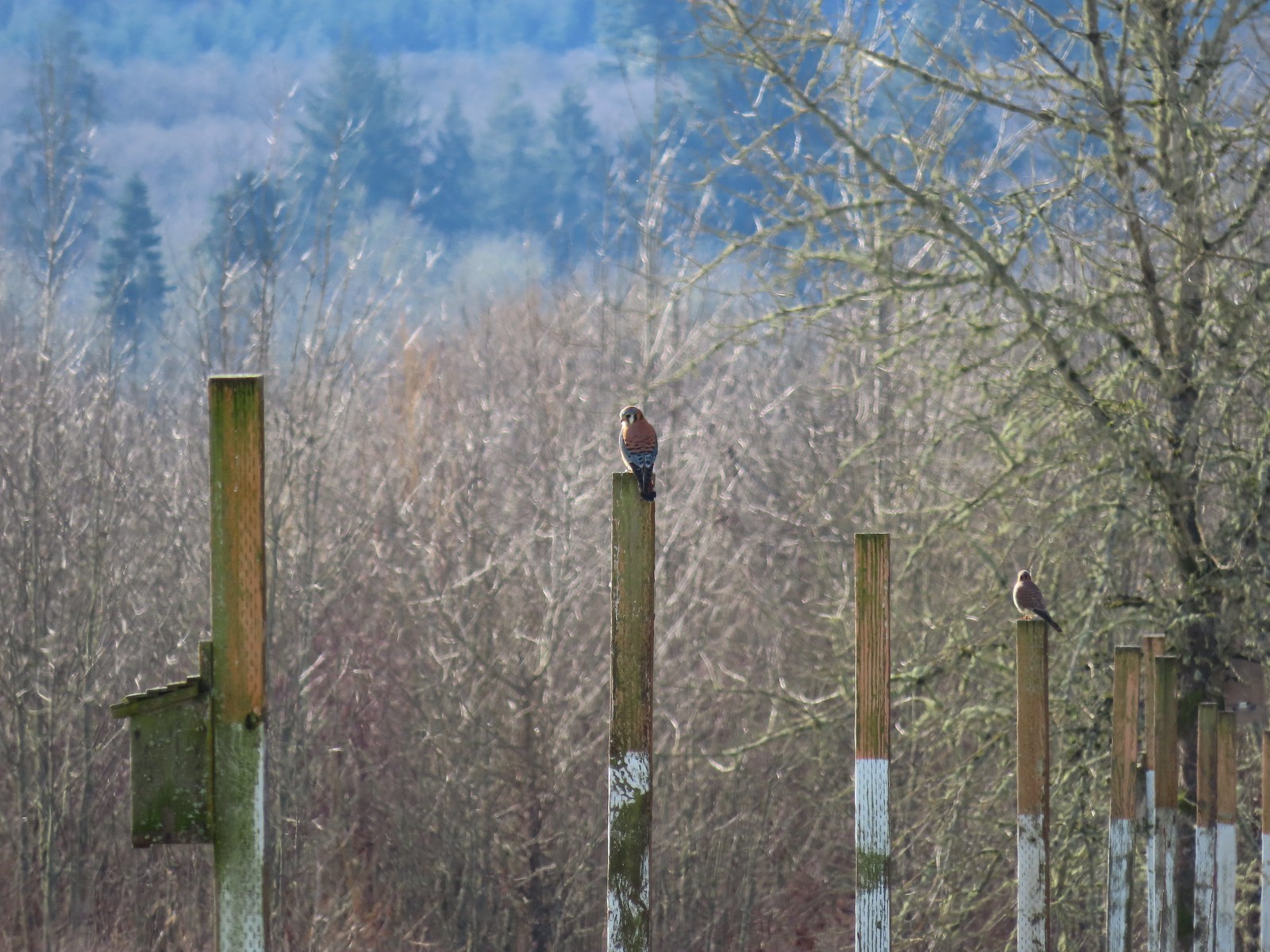
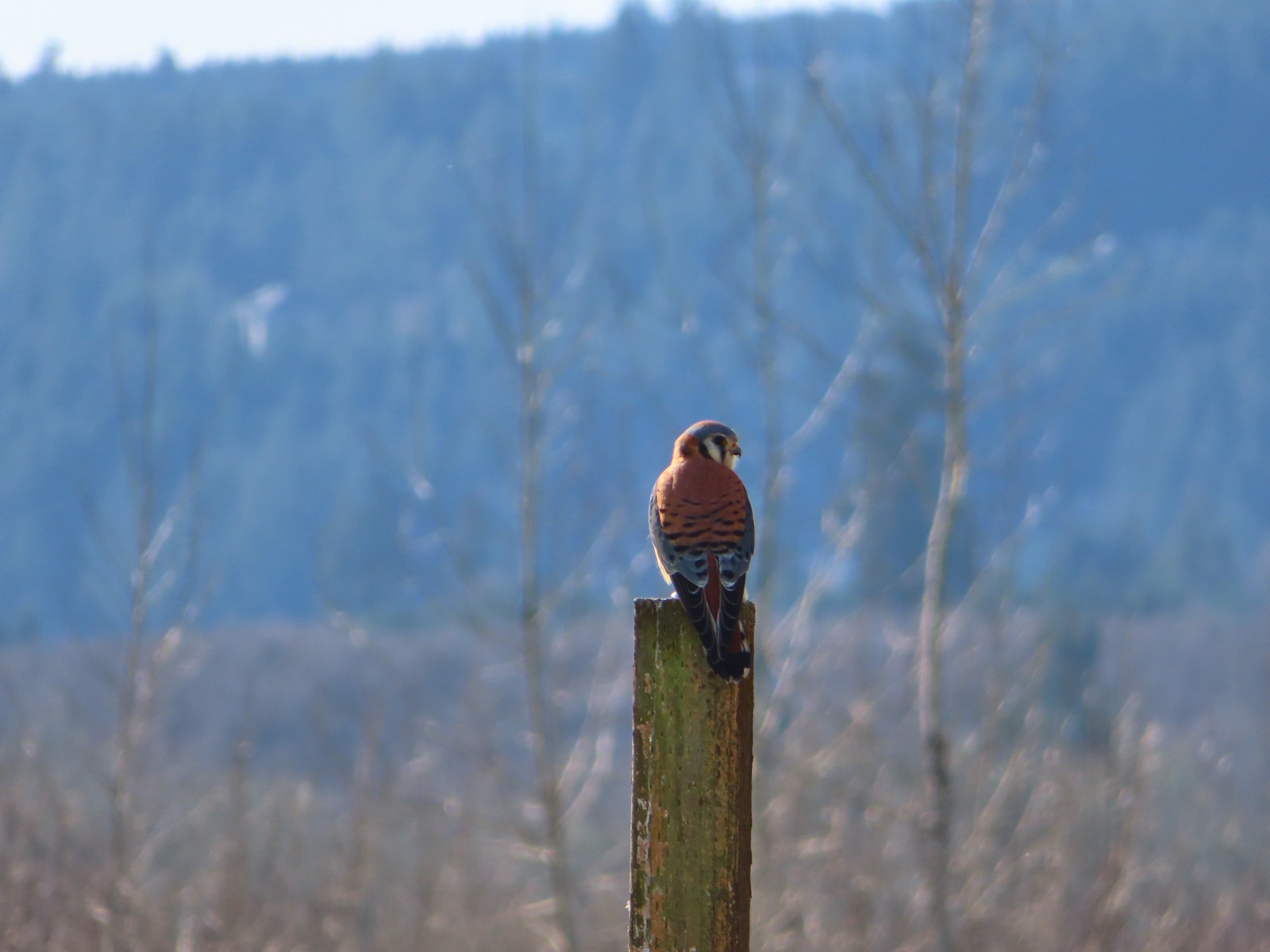
American kestrals along the Dabblers Marsh Loop TrailAmerican kestrels manning their posts.
American kestral

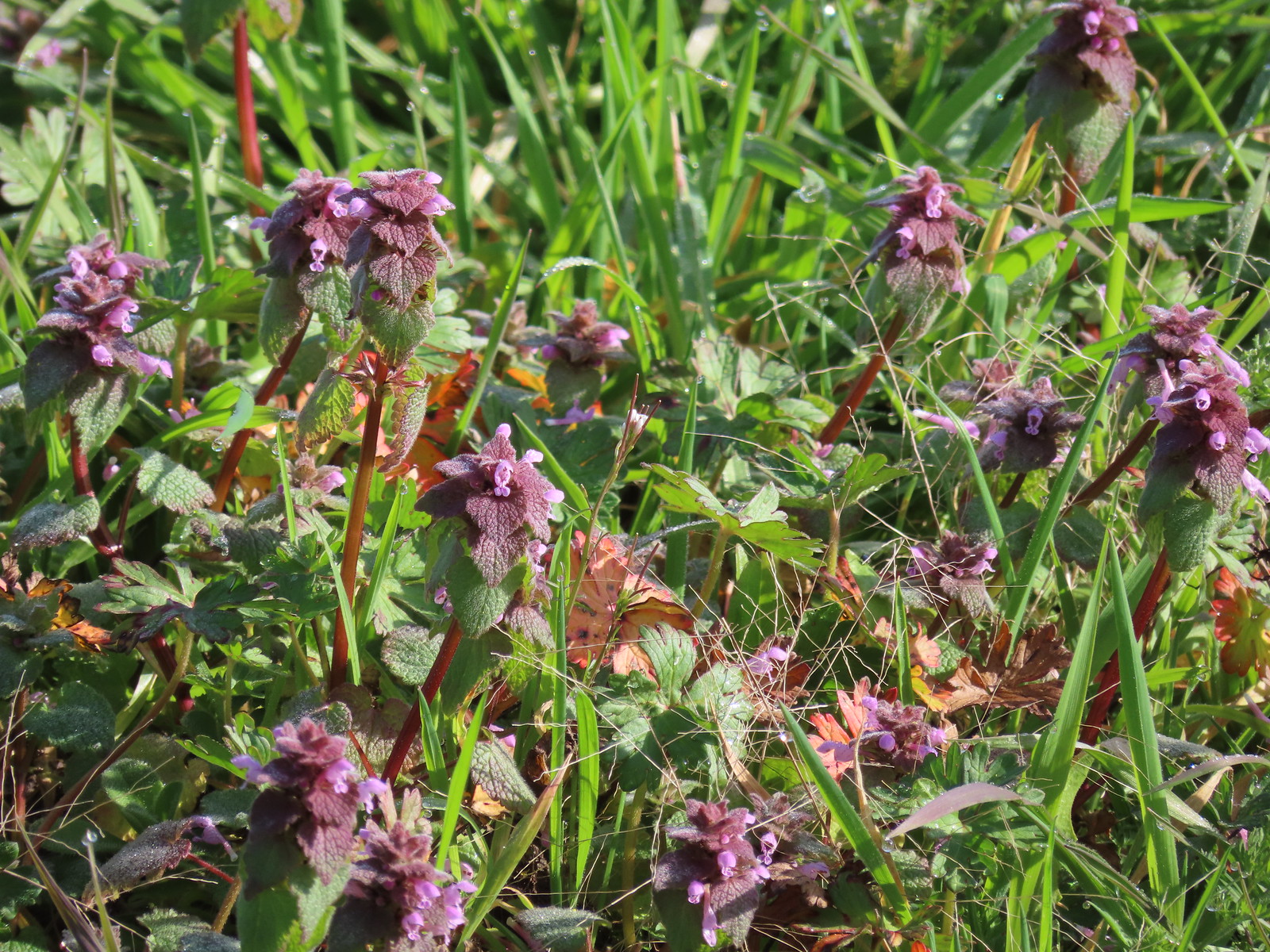
Purple dead-nettlePurple dead-nettle

Cackling geese coming in for a landingMore geese coming in for a landing.

Dabblers Marsh Loop Trail

Dabblers Marsh Loop TrailNear the end of the loop the trail left the field along Dabblers Marsh.
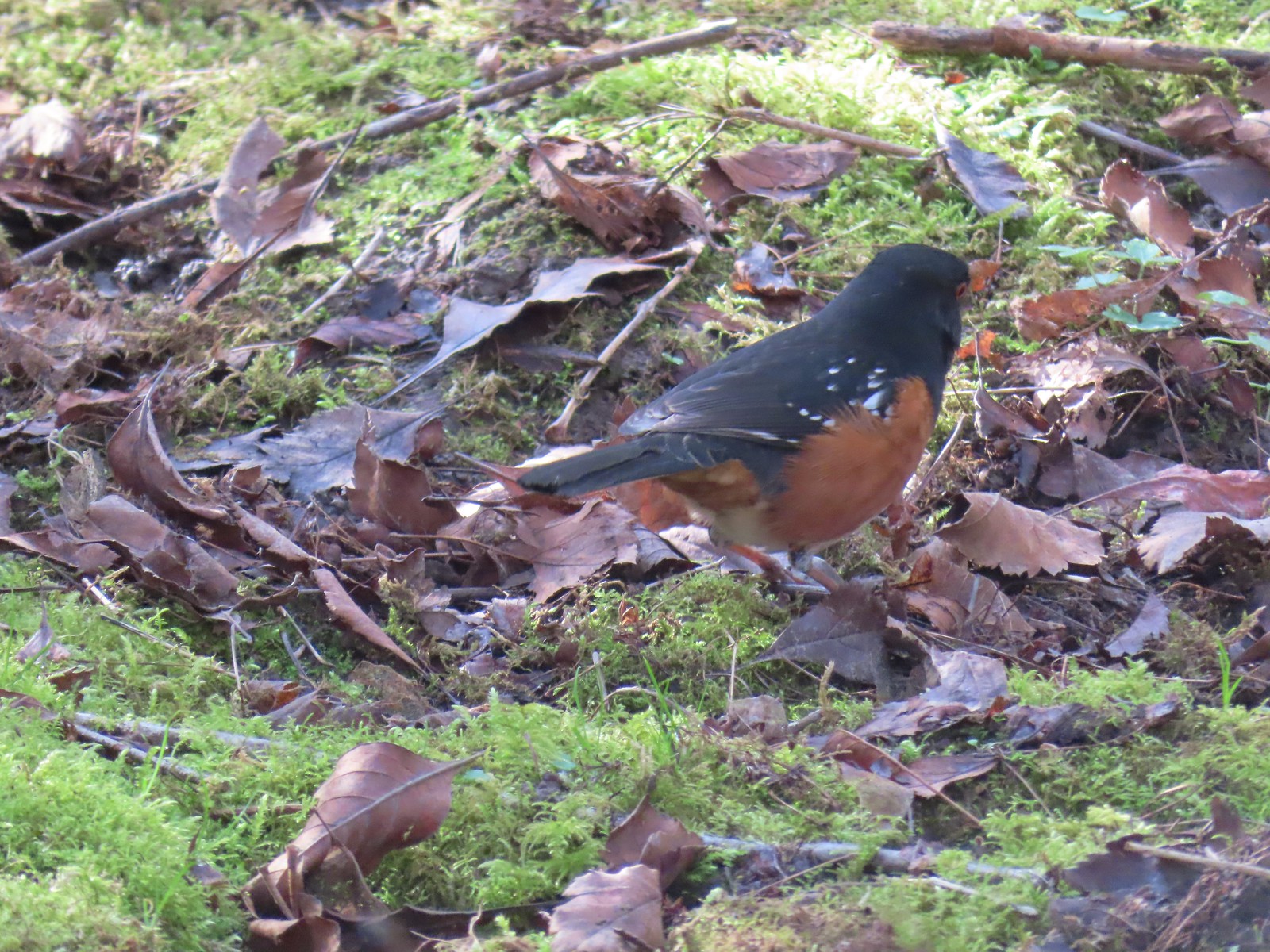
Spotted towheeSpotted towhee

RabbitRabbit

After completing the loop and returning to Fernhill Lake we did a loop through the Water Gardens.
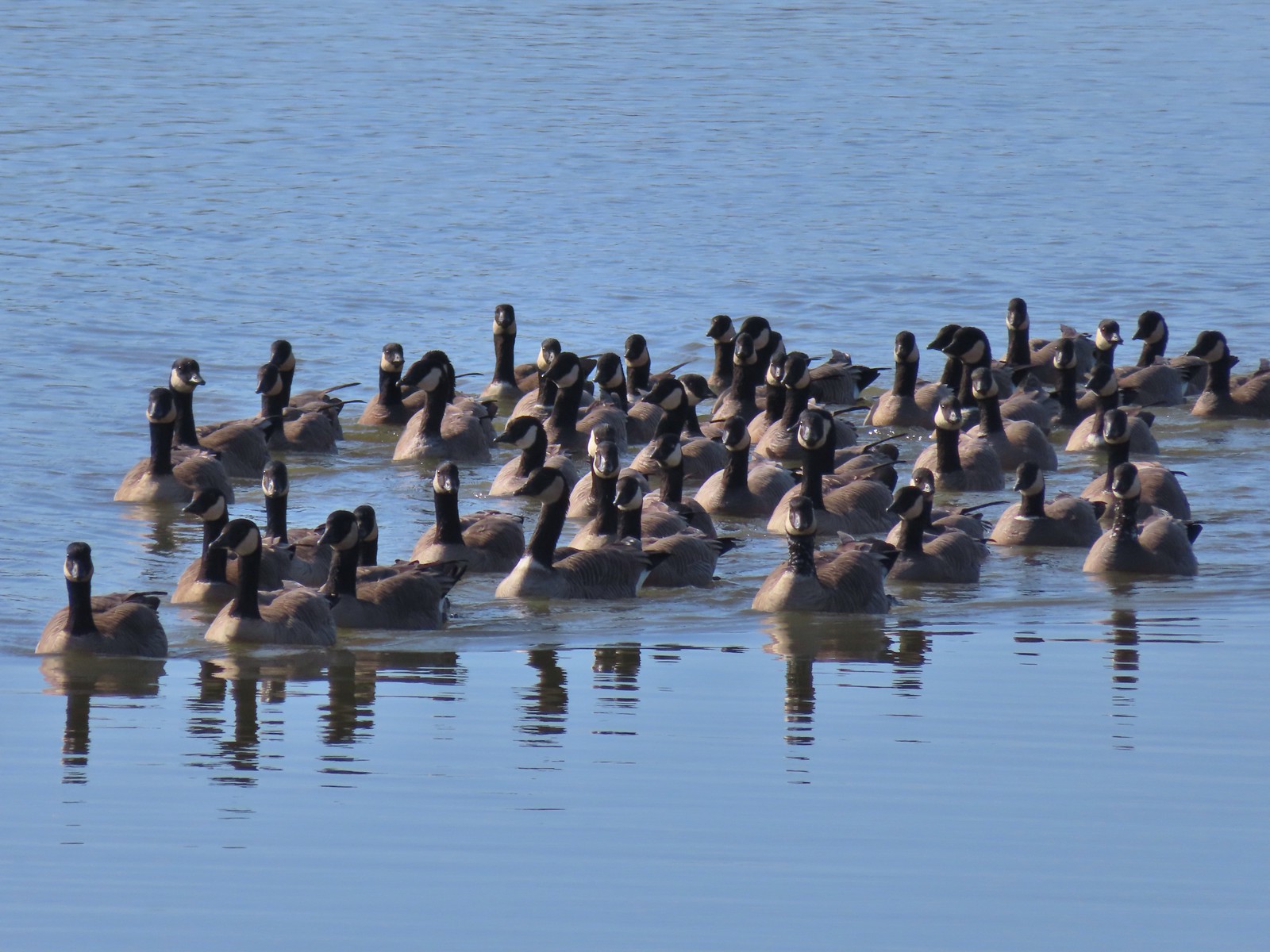
Geese on Fernhill LakeGeese on Fernhill Lake

Water Garden at Fernhill Wetlands

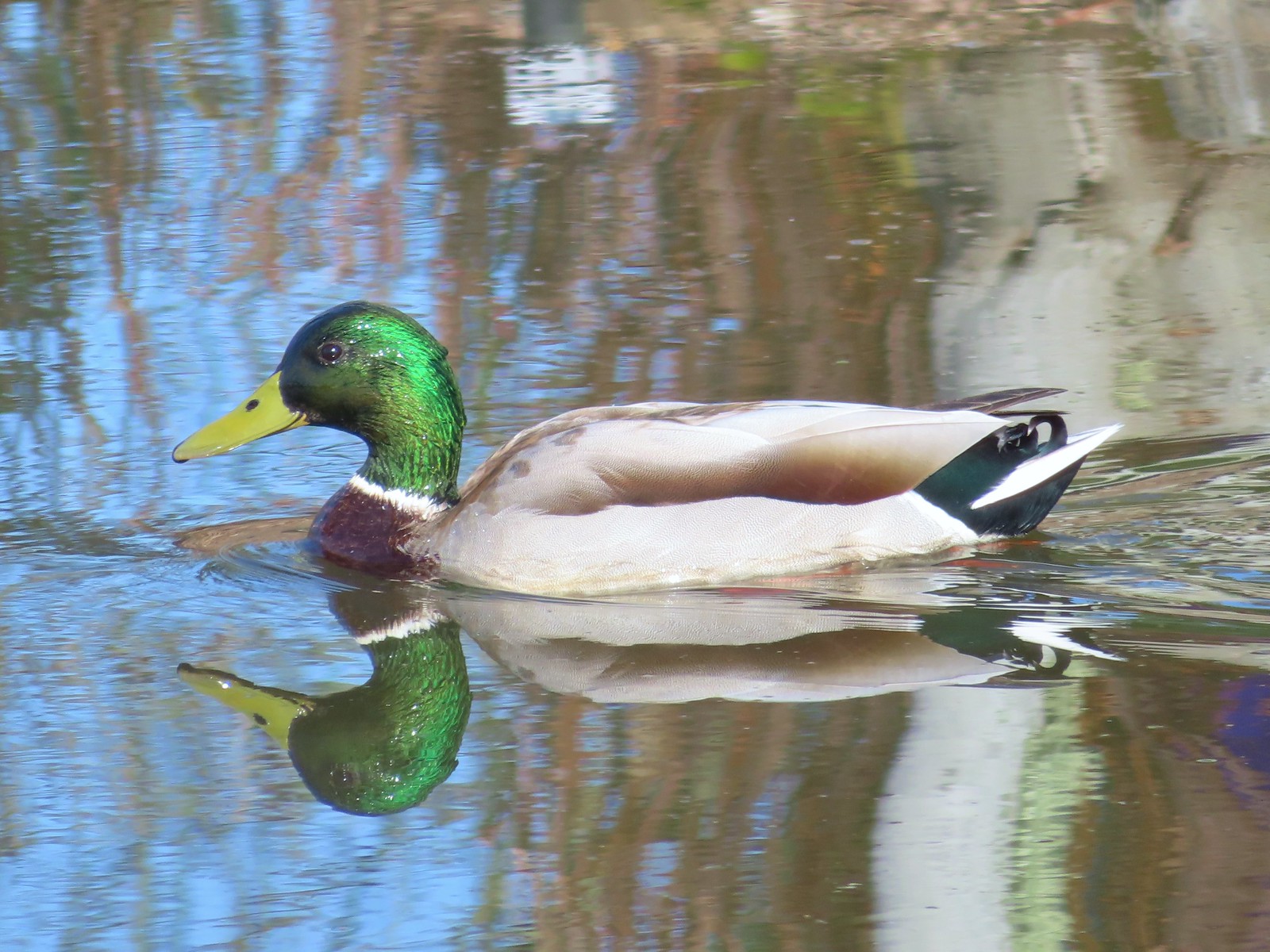
MallardMallard drake

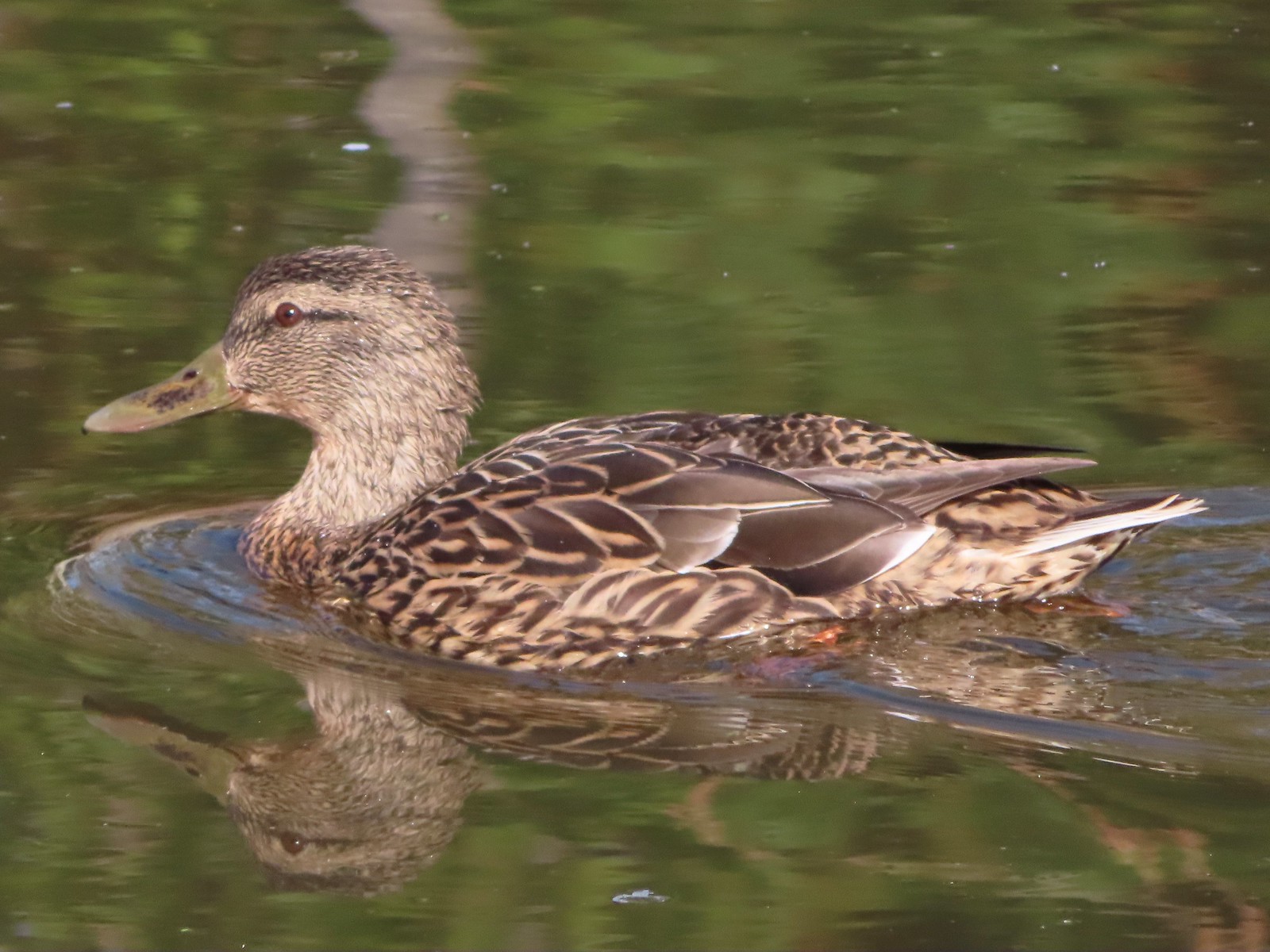
MallardMallard female

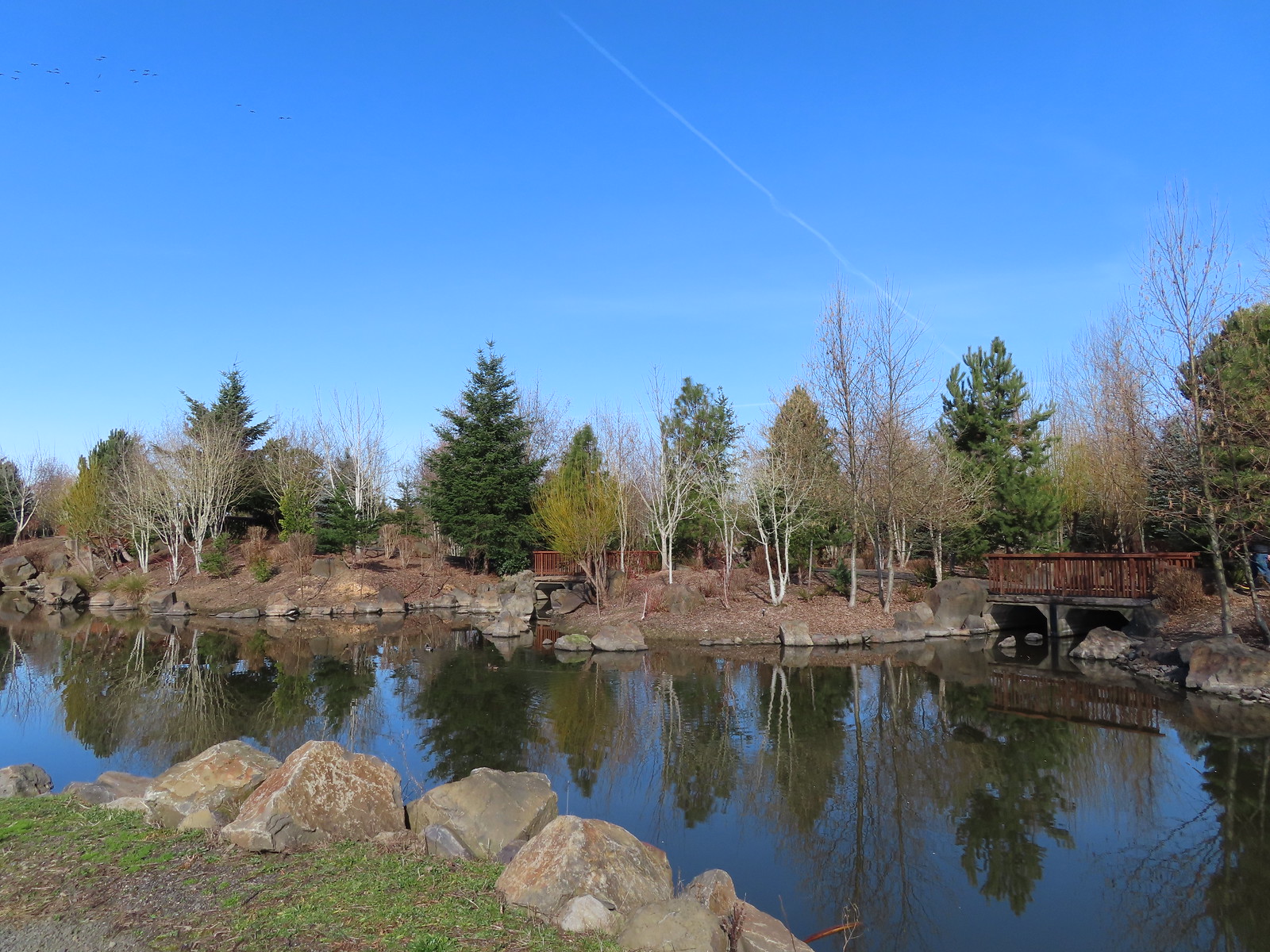
Water Garden at Fernhill WetlandsWater Gardens

Water Garden at Fernhill Wetlands

Water Garden at Fernhill Wetlands

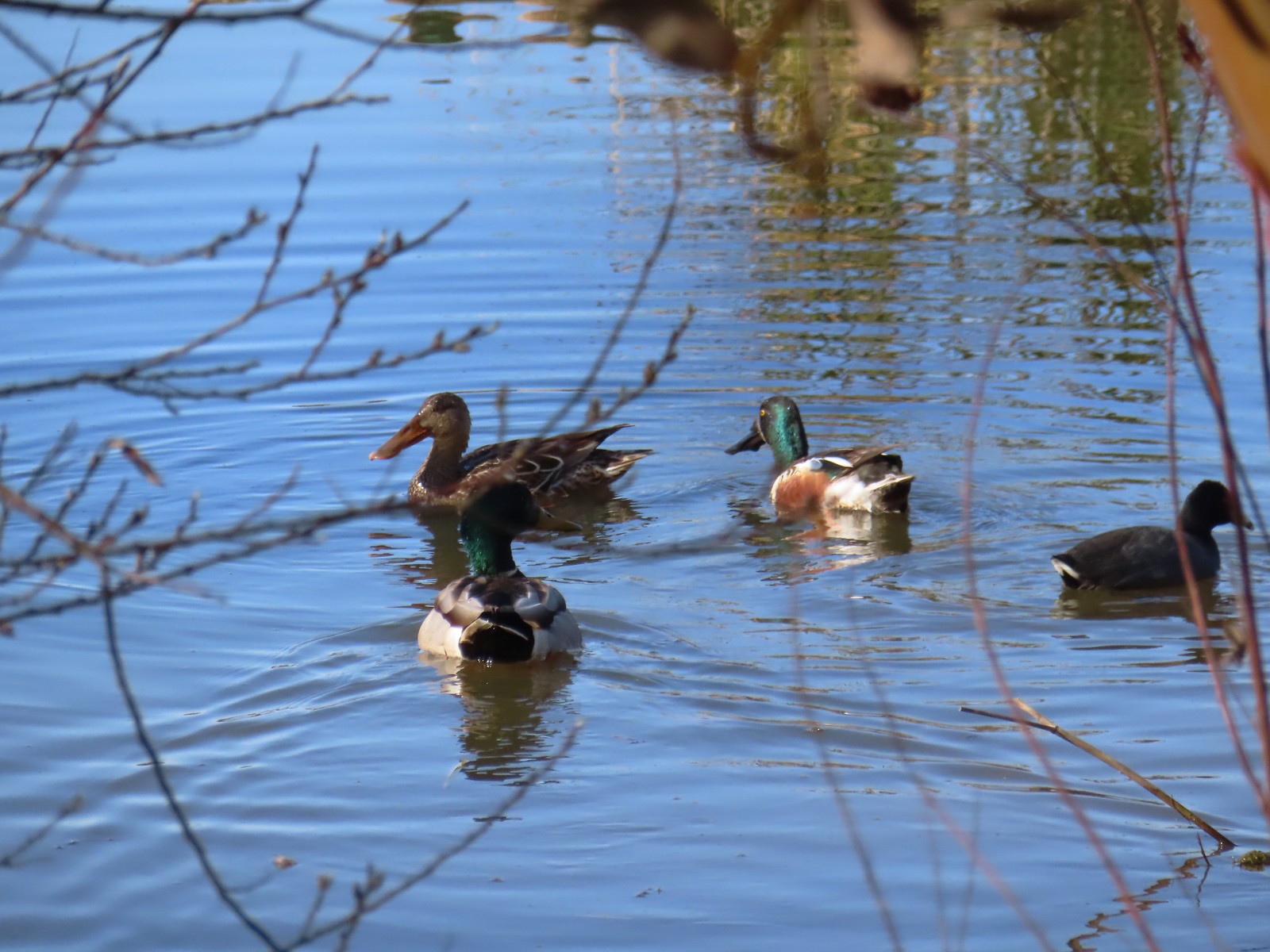
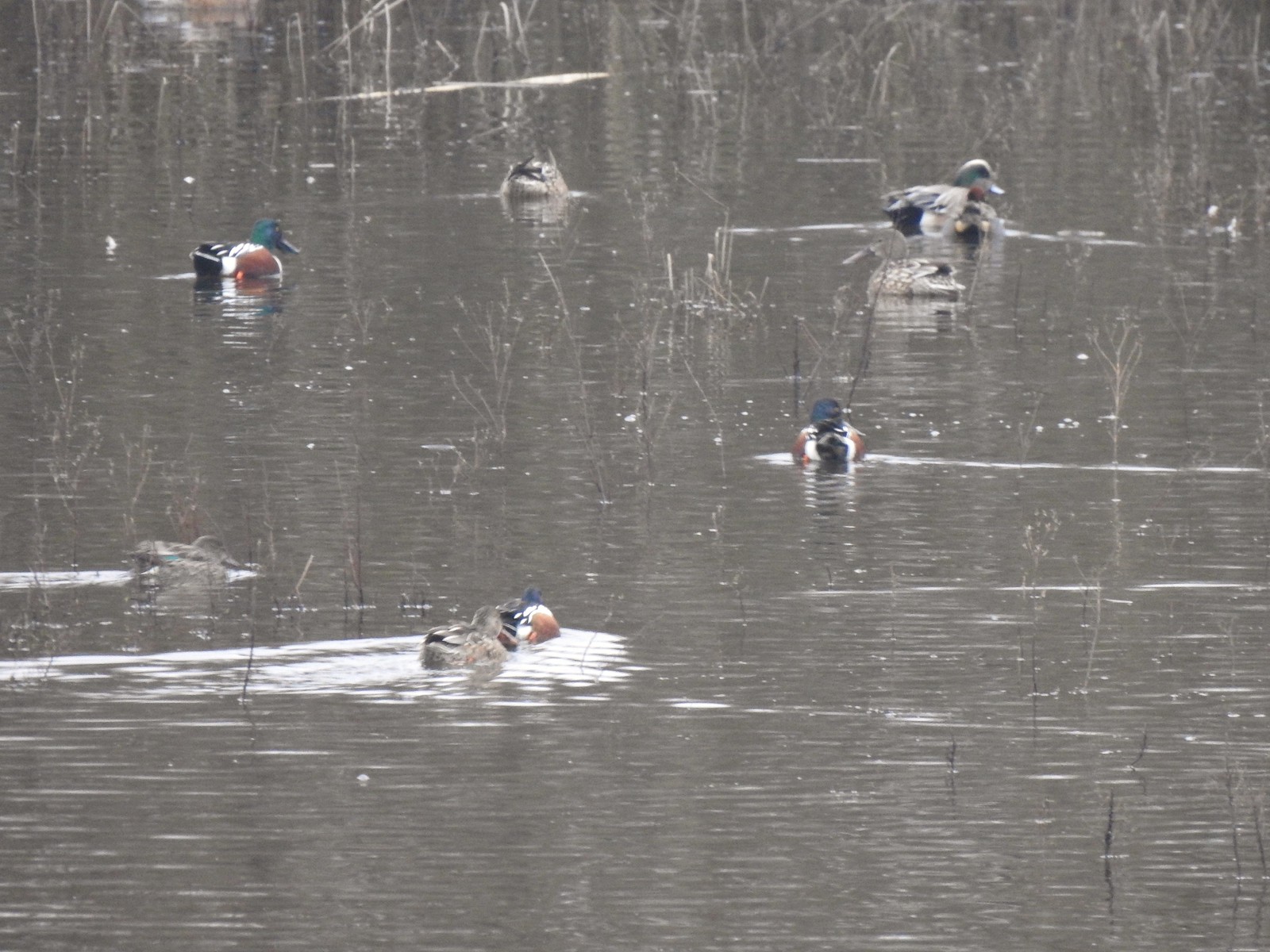
Northern shovelers and a mallardNorthern shovelers, a mallard, and a coot.

Oregon grape beginning to bloomOregon grape beginning to bloom.

Northern shovelerNorthern shoveler

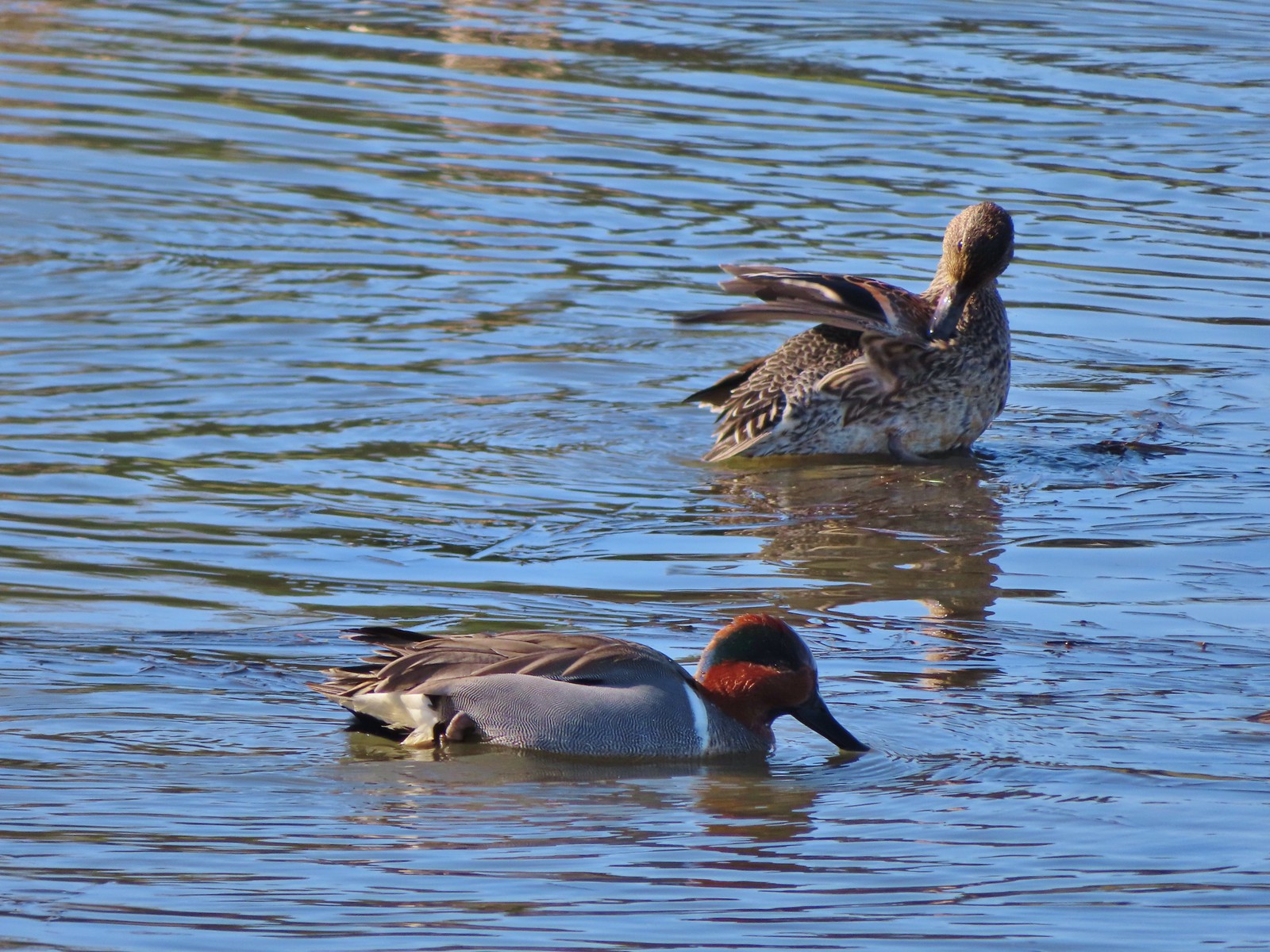
Green-winged tealsGreen-winged teal pair

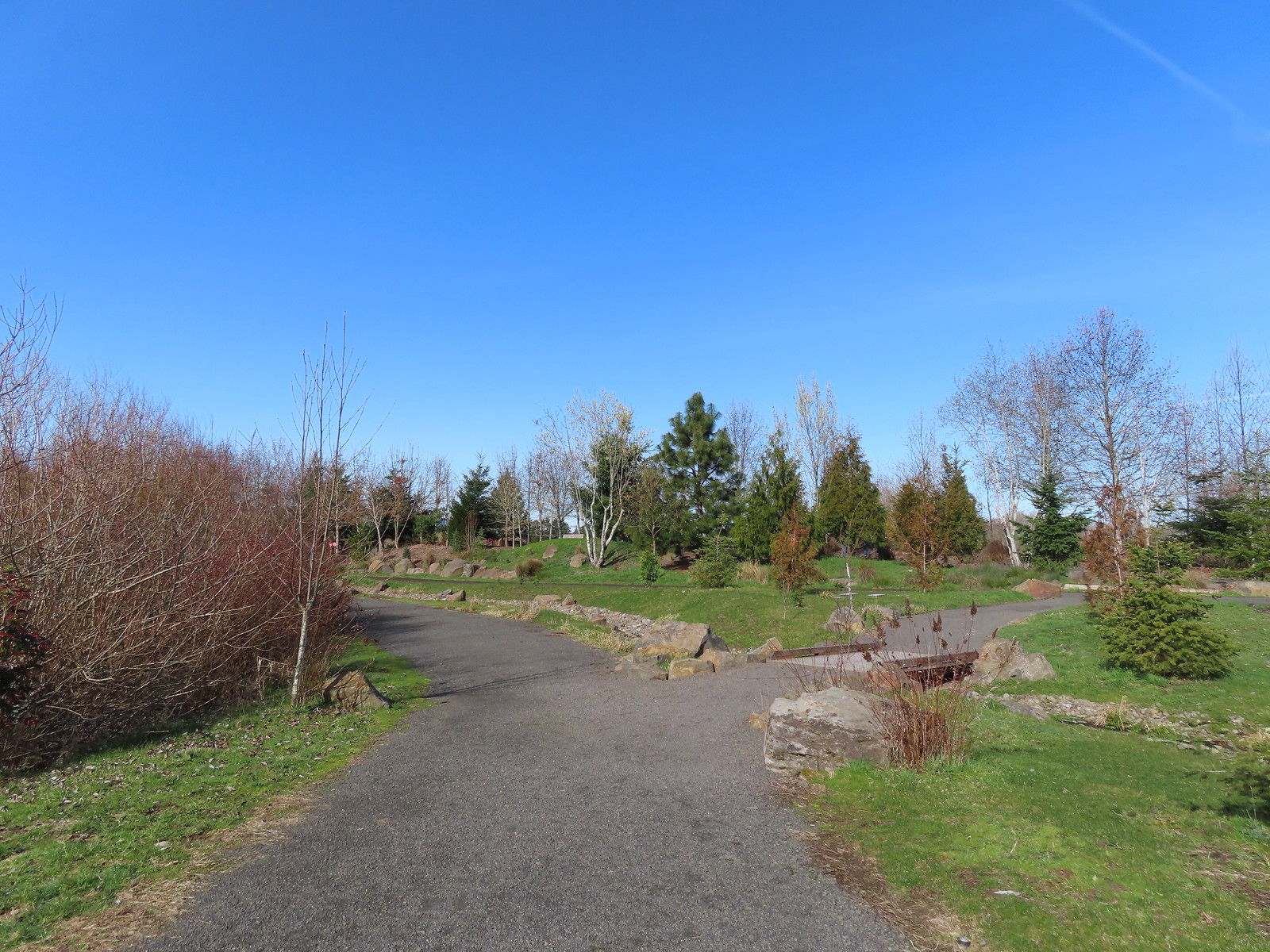
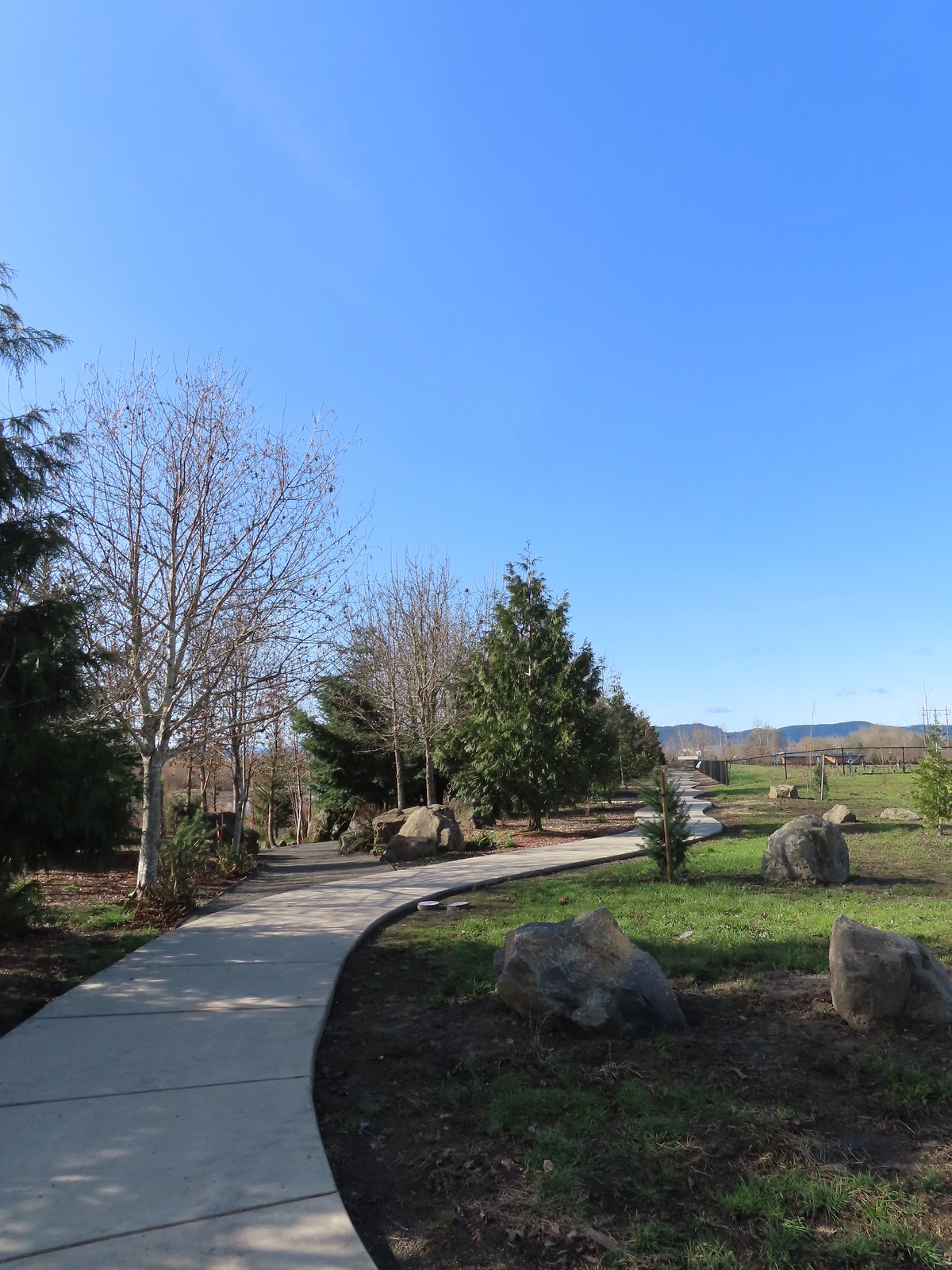
Trails at Fernhill WetlandsPath along the Research Wetlands.

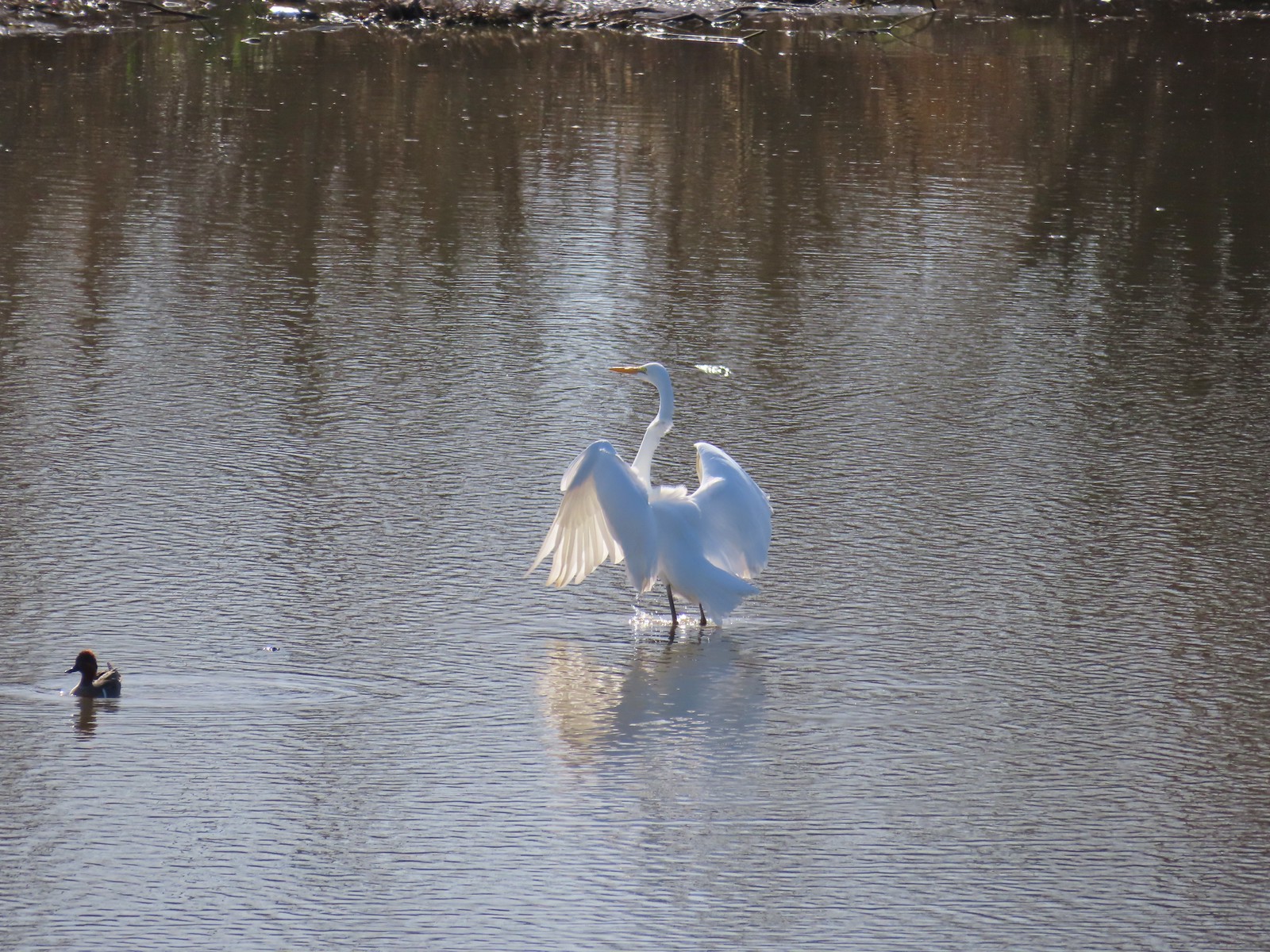
EgretEgret near the parking lot at Fernhill Marsh

Research wetlands at Fernhill WetlandsLooking back at the Research Wetlands from the near the trailhead.

We managed to get 3.7-miles in at the wetlands and saw a lot of birds and other animals. While there were quite a few more folks here than we’d seen on our previous hike at nearby Wapato Lake Wildlife Refuge, it never felt too busy. Plan B had earned an A+ in our books. Happy Trails!

Categories
Hiking Oregon Trip report Willamette Valley

Wapato Lake National Wildlife Refuge – 02/10/2024

While we didn’t have another hike scheduled for February a decent forecast was too much to pass up. We were looking for something nearby (less than an hour from Salem) on the shorter side that would be more of a leisurely stroll than a hike. We decided it would be a good day to check out the Wapato Lake National Wildlife Refuge . Originally added (2007) as part of the Tualatin River National Wildlife Refuge (post) the Wapato Lake National Wildlife Refuge was designated in 2013. Eight years later the refuge was opened to public use and now has approximately 2.85 miles of trail. The trails are currently open from Feb 1st through Nov 30th each year (note the 1.3-miles of natural surface is closed to hiking starting Sept 1st). Also of note is that during periods of heavy rains the access trail may become flooded, but the Refuge website has a link to the USGS Monitoring Tool where you can easily check to see if the creek’s level is over 7.5 feet.

The trailhead is adjacent to Brown Park in the city of Gaston, OR and includes two ADA parking spaces and a restroom. What it lacks is signage from Highway 47. The parking area can be accessed from that highway or via Onion Lane by turning South off of E Main Street/SW Gaston Road. A paved trail begins at an informational signboard where you can also pick up a brochure.
Map and Informational signboard at the Wapato Lake National Wildlife Refuge Trailhead

It was a little cloudier than we’d hopped as we set off on the paved path. We followed the path to a footbridge over Wapato Creek to the levee that partially surrounds the lakebed. We faced a choice of heading left for 0.6-miles or right for up to 2-miles. Another person had just turned left so we opted to go right.
Trail at the Wapato Lake National Wildlife Refuge

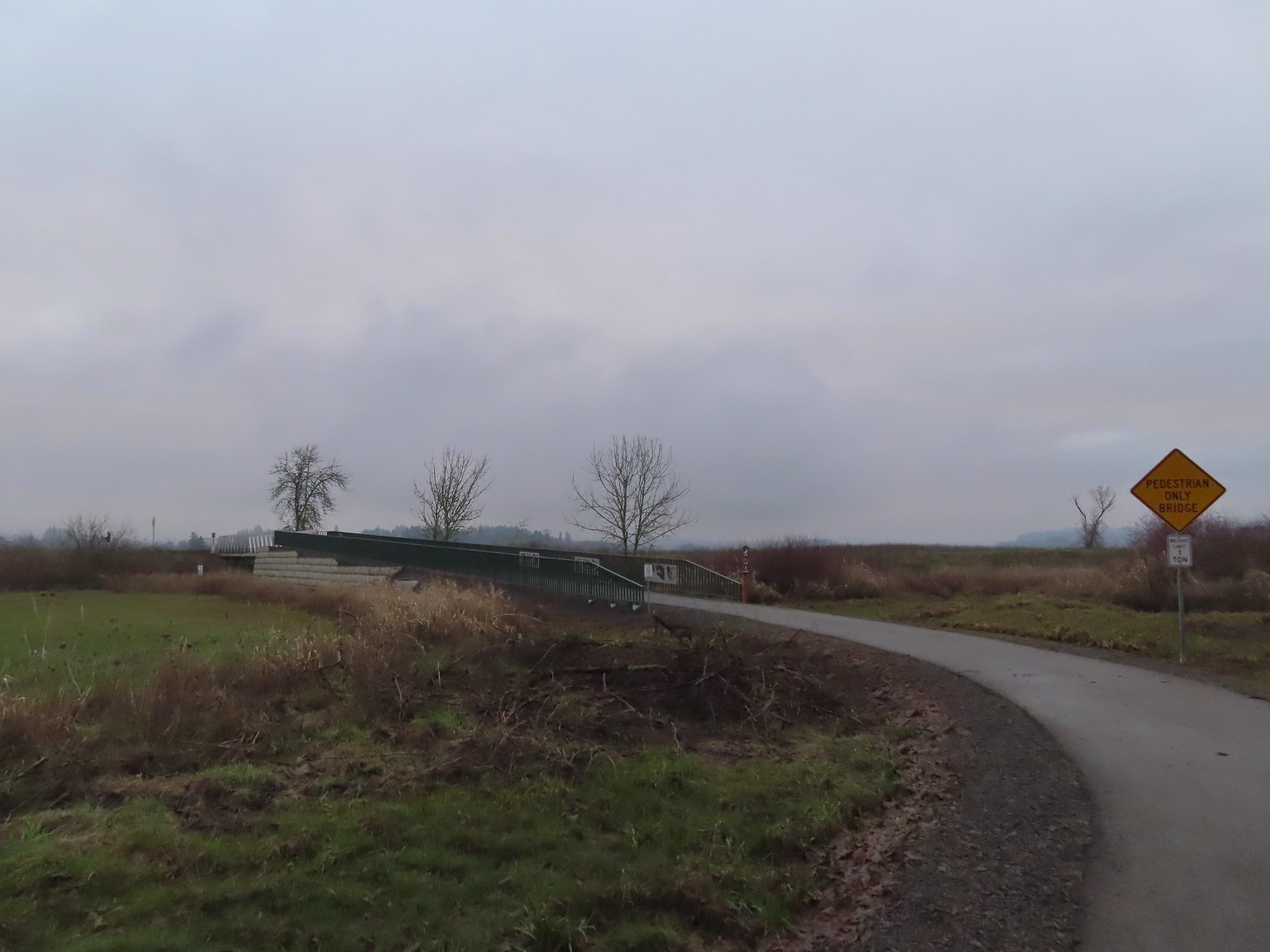
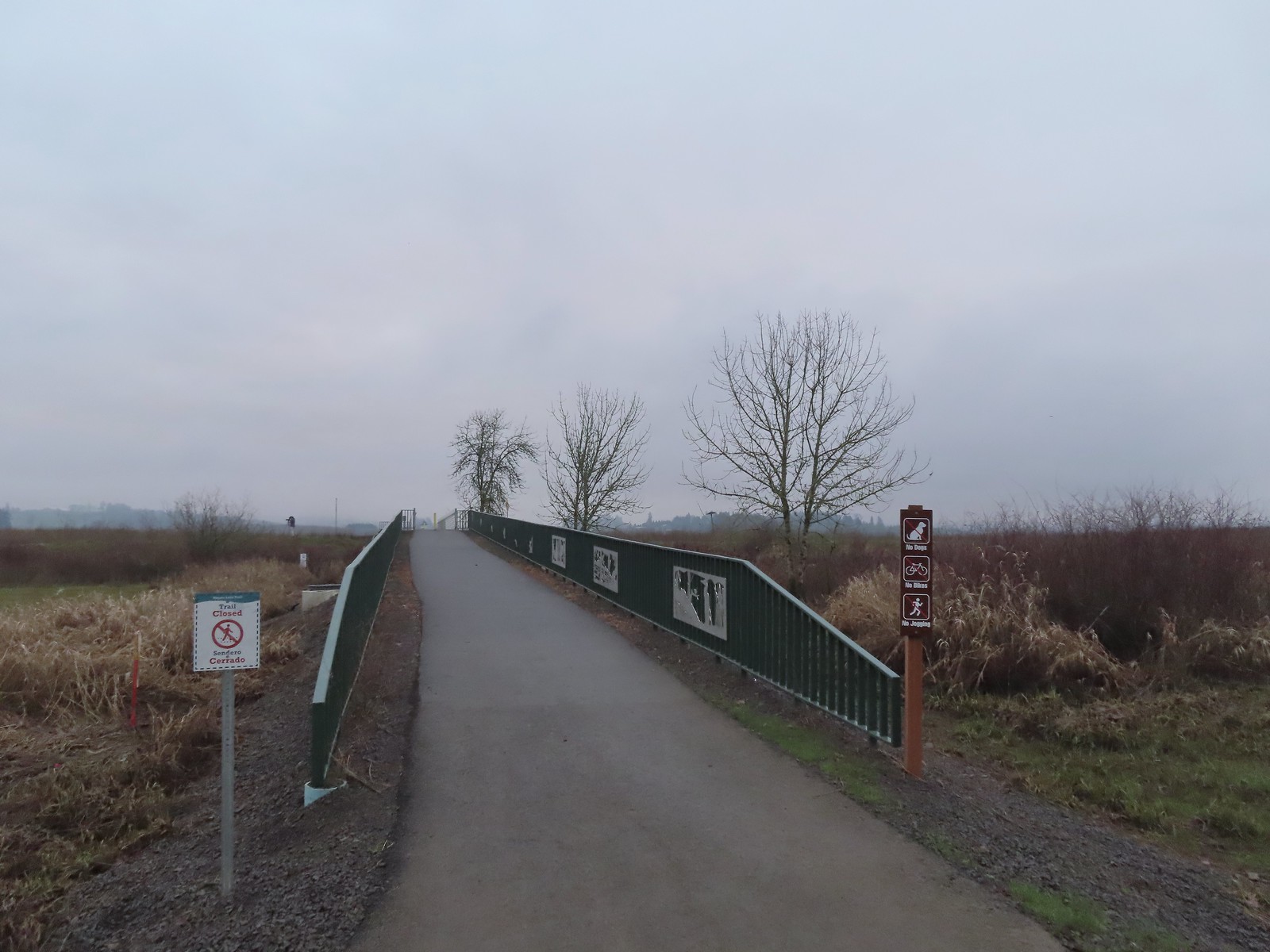
Pedestrian bridge over Wapato Creek

Pedestrian bridge over Wapato CreekWe were a little confused by the sign on the left here stating the trail was closed. The website and signboard had said nothing about a closure and the gate at the far end of the bridge was open and others were already out on the levee. We assume they just hadn’t taken the sign down after the seasonal closure period.
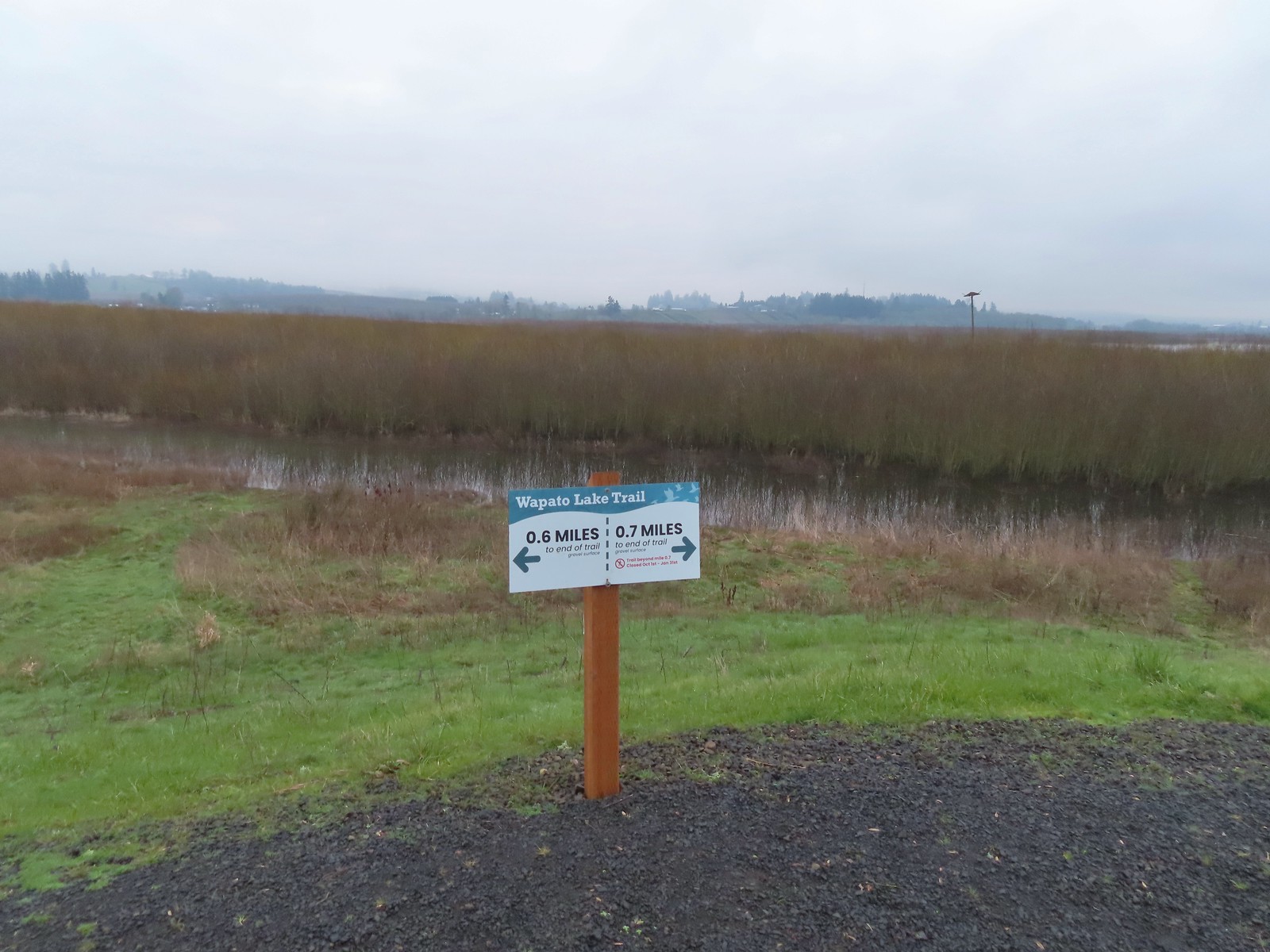
Trail pointers along Wapato LakePointers on the levee.

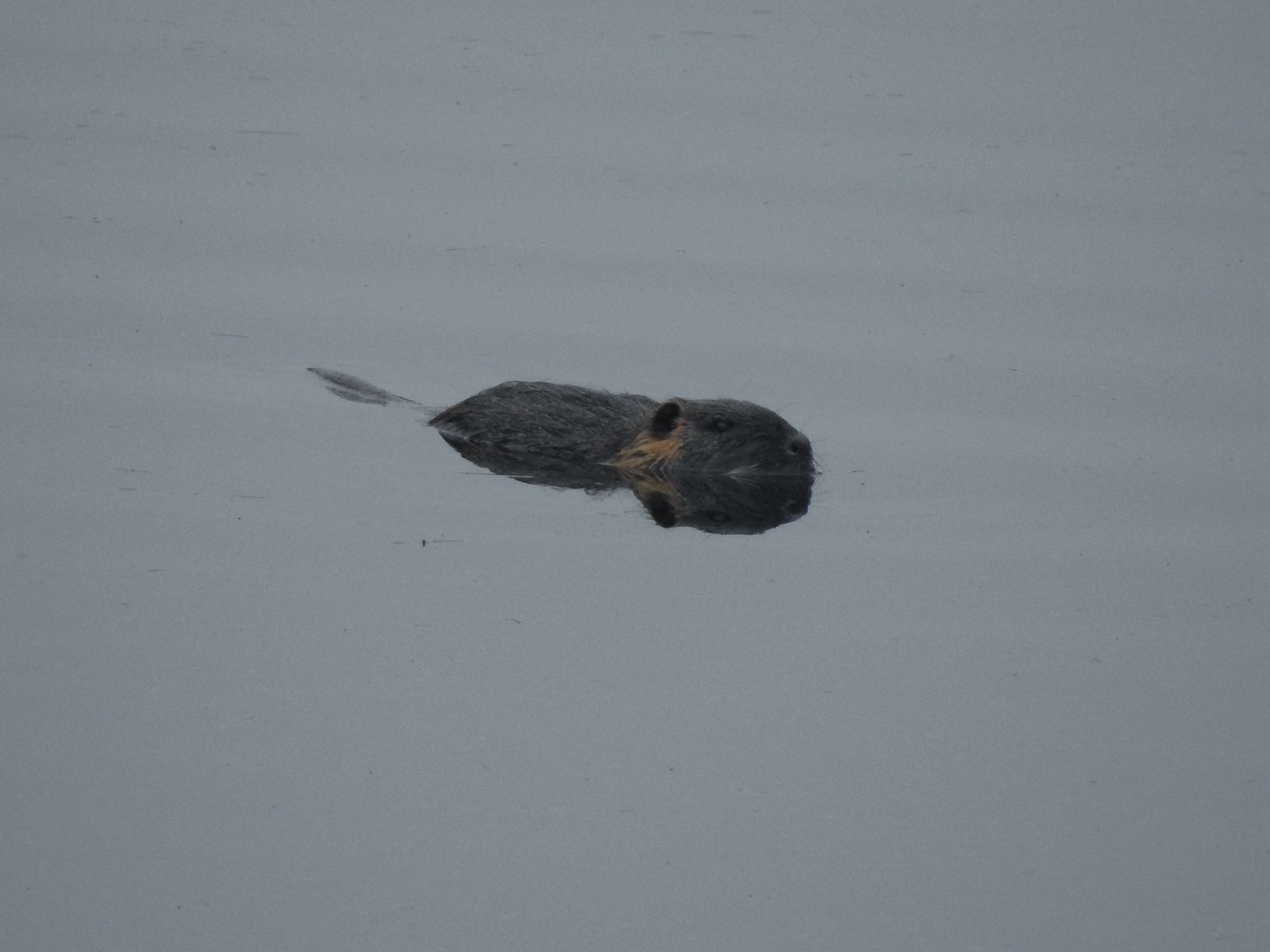
NutriaNutria (sigh). We had hopped it was a beaver but alas the whiskers give it away.
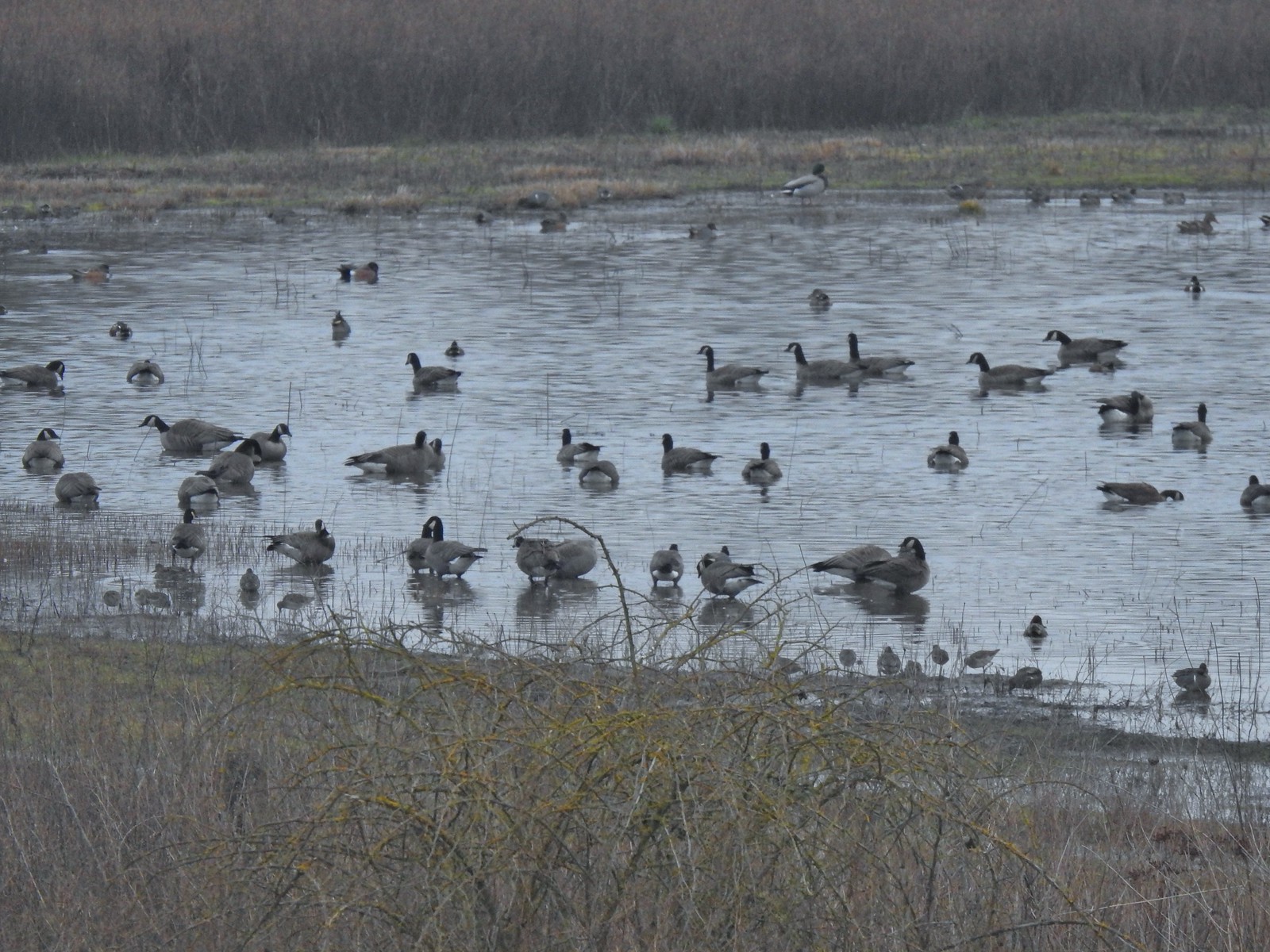
Geese, ducks, and shorebirds at Wapato Lake National Wildlife RefugeGeese, several species of ducks, and some shore birds.

From the bridge to the right the levee’s surface is good gravel. We took our time as we strolled south trying to discern which types of ducks we were seeing.
Wapato CreekA great blue heron along Wapato Creek.

Great blue heronGreat blue heron

Wapato Lake National Wildlife RefugeWapato Lake

Beaver lodgeBeaver lodge

Wapato Lake National Wildlife Refuge

Ducks at Wapato Lake National Wildlife RefugeNorthern shovelers and an American wigeon
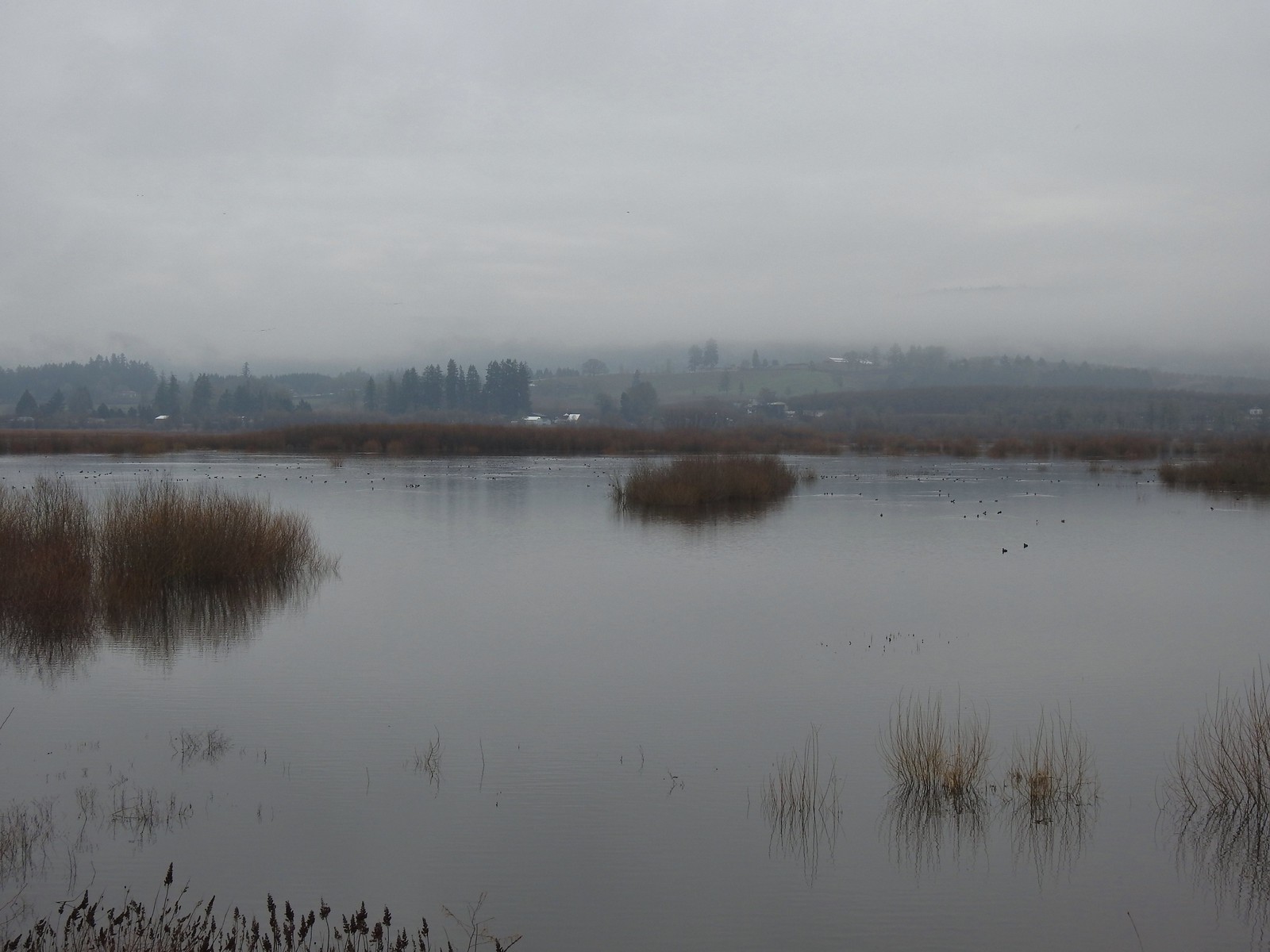
Wapato Lake National Wildlife RefugeOf course we forgot to bring binoculars making it even harder to make out which types of ducks were out there.
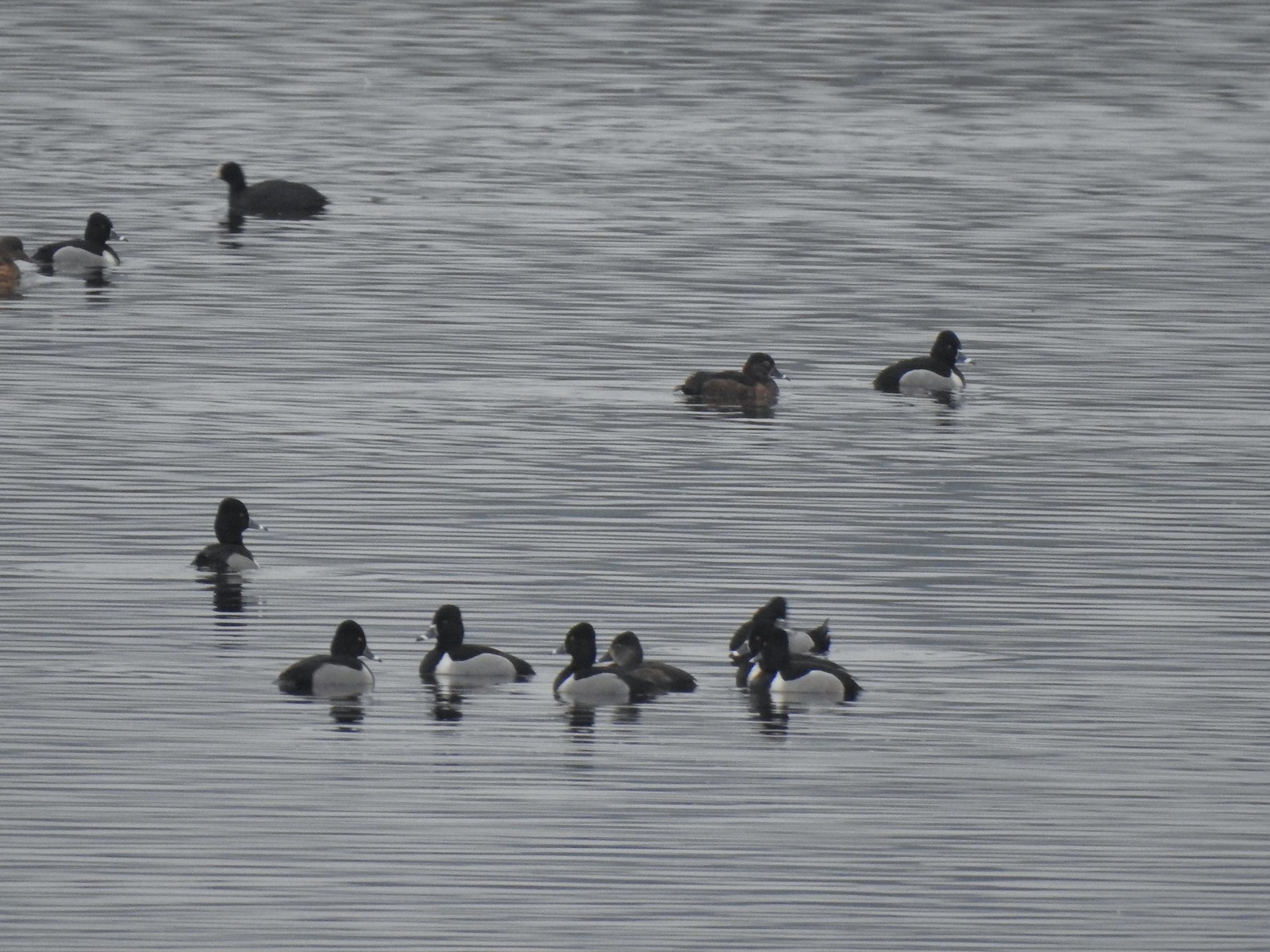
Ring-necked ducks and a cootRing-necked ducks with an American coot in the background.
Wapato Lake National Wildlife Refuge

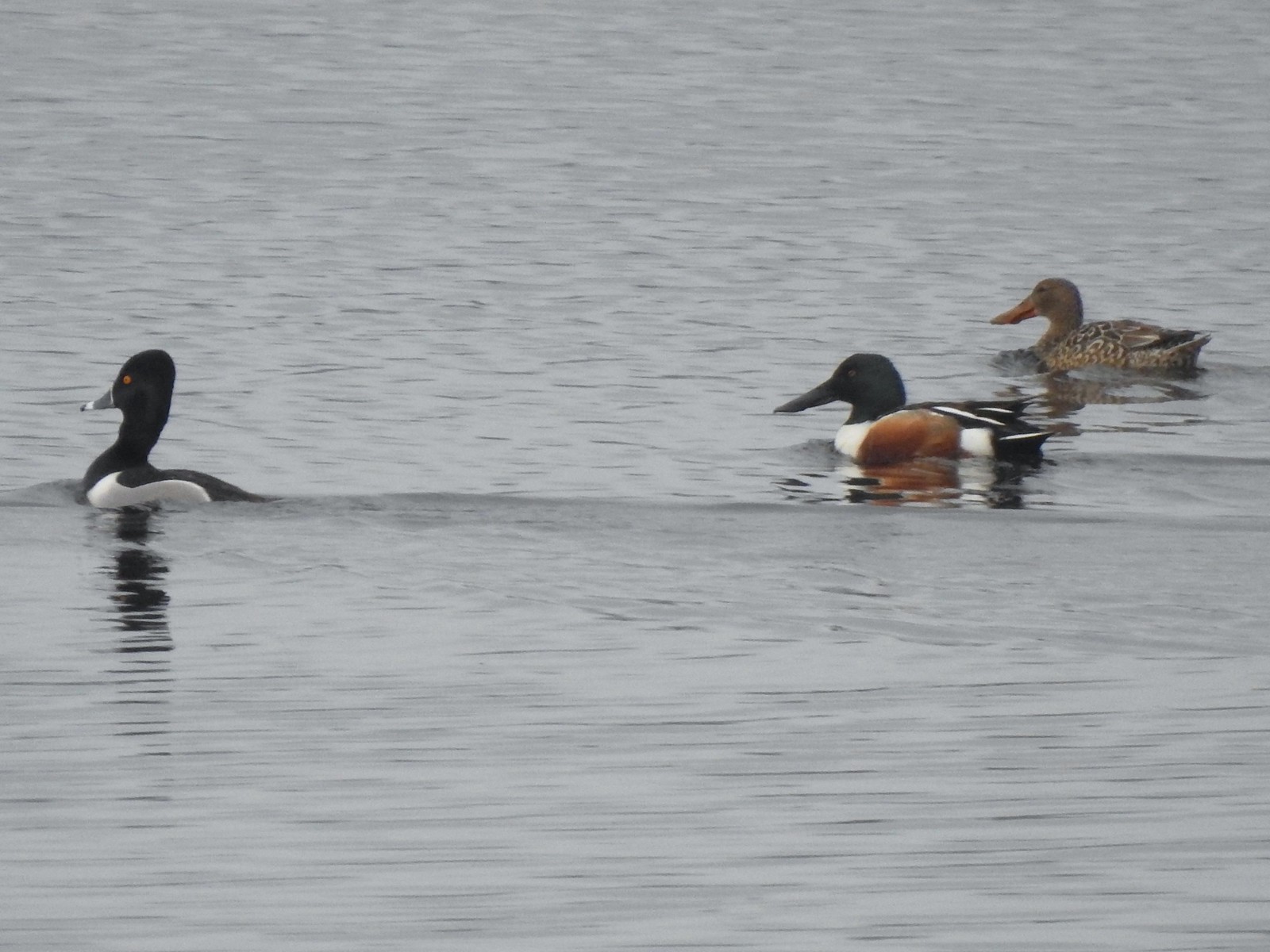
Ring-necked duck and northern shovelersRing-necked duck and northern shovelers
Reflections in Wapato LakeReflections in Wapato Lake

Bench along Wapato LakeThere is virtually no shade along the lake which wasn’t an issue today but could be in the heat of Summer. There are however three benches along the levee allowing for a place to sit and watch the birds.
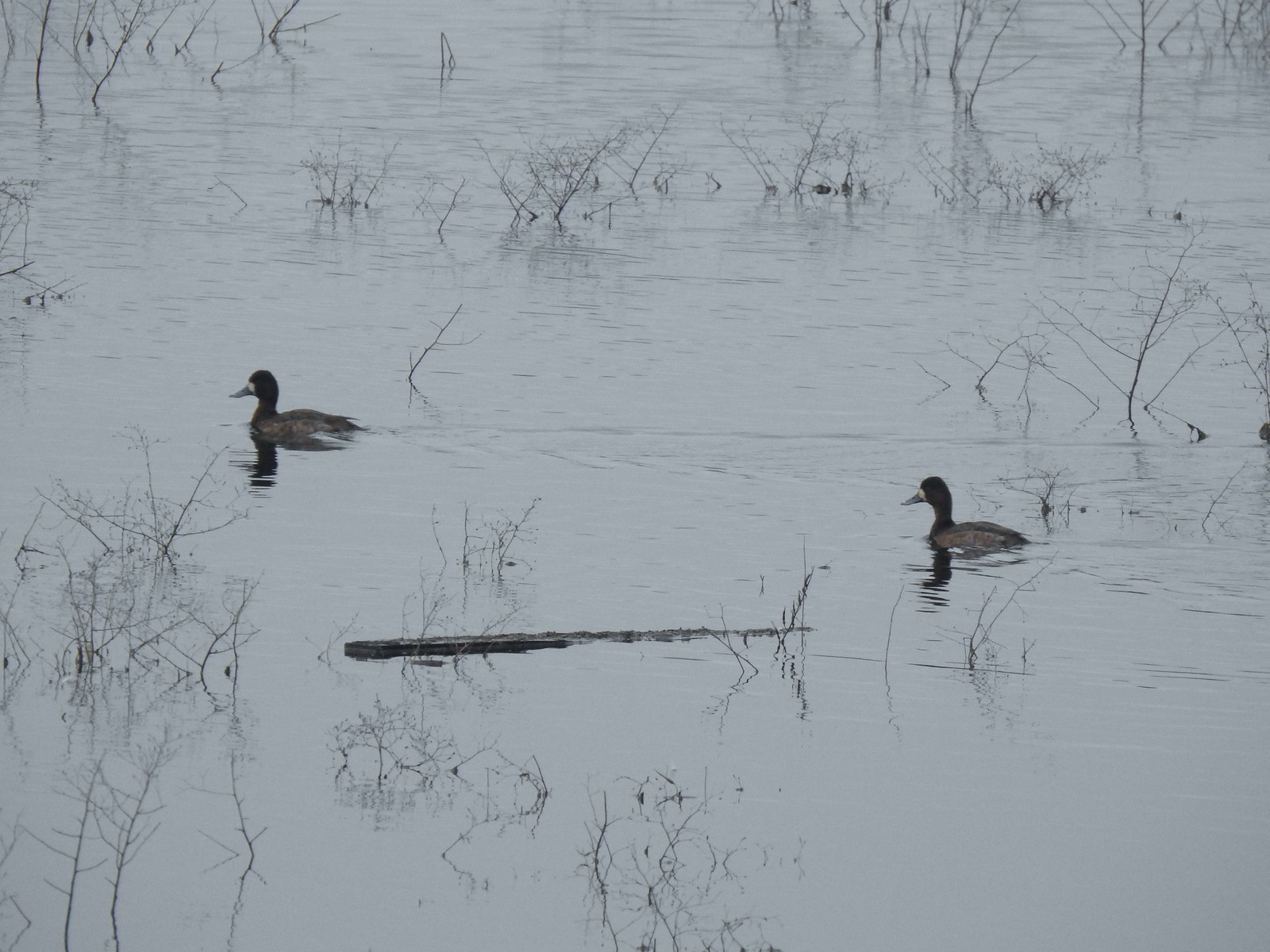
Lesser scaupsLesser scaups

Wapato Lake National Wildlife RefugeDucks flying over the lake.

Wapato CreekOld bridge over Wapato Creek. The gravel surface ended at this bridge.
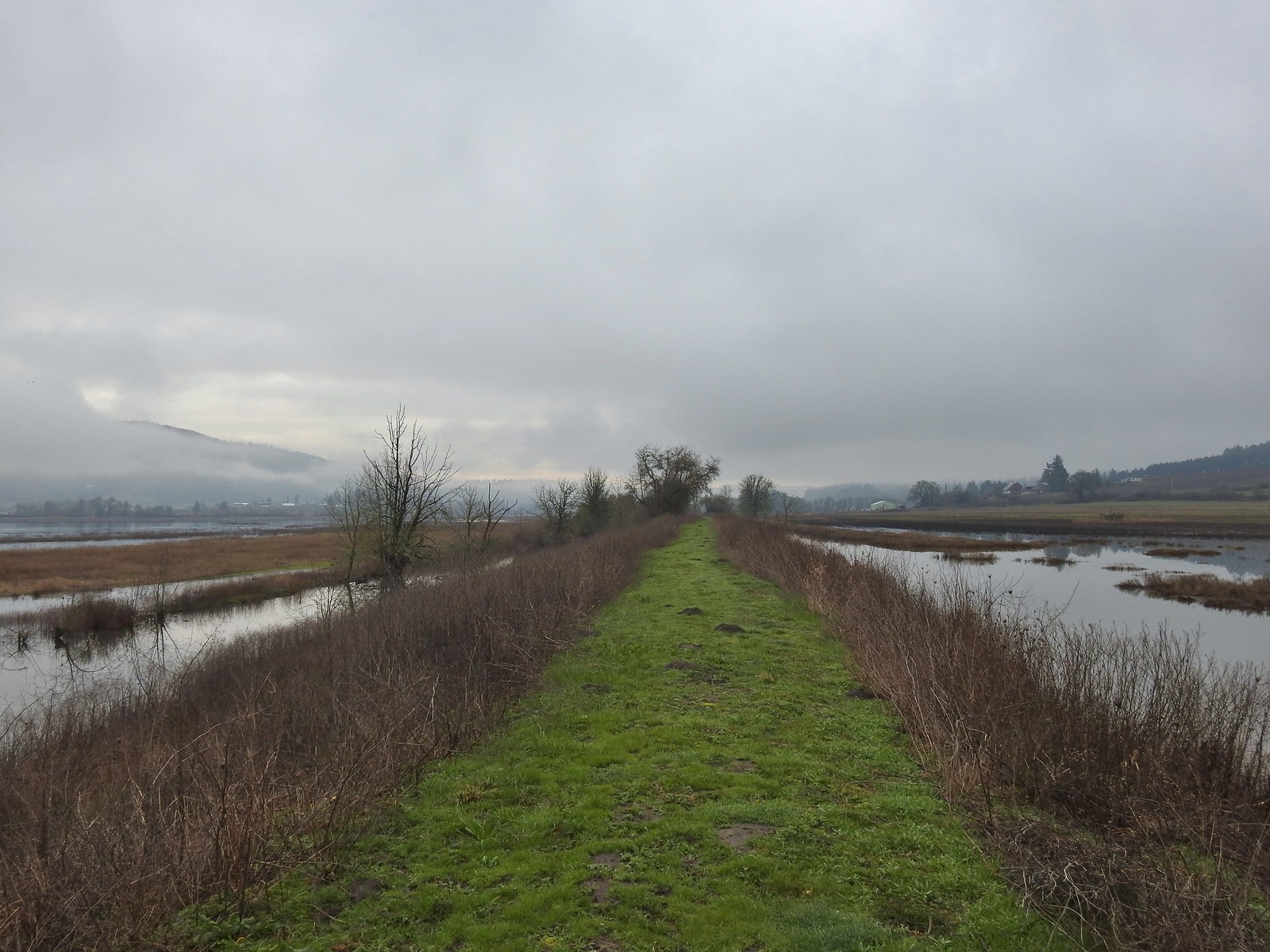
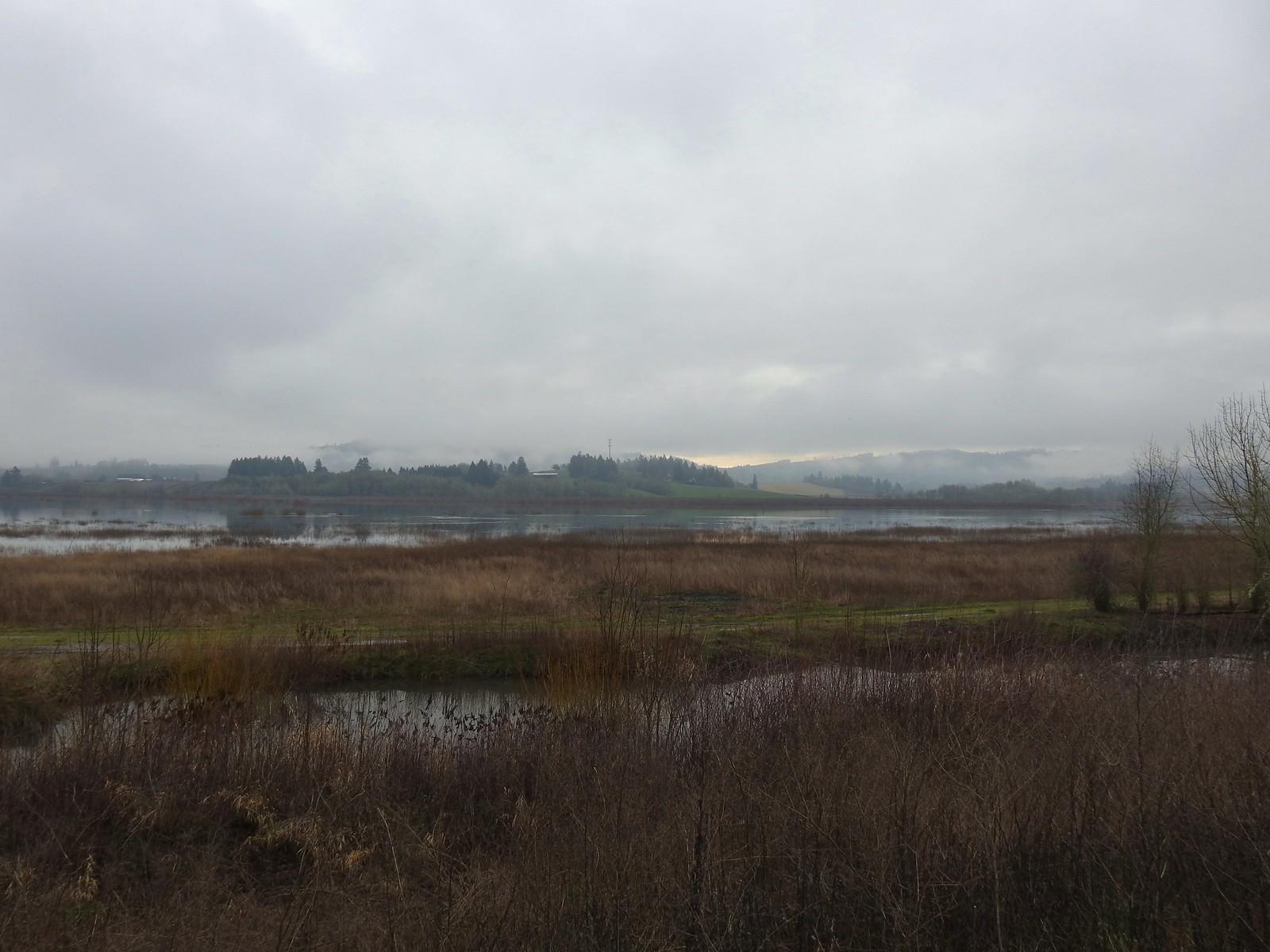
After 0.7 miles of gravel the levee continued as a natural surface. The unevenness of the natural surface was a stark difference to the gravel.
Wapato Lake National Wildlife Refuge

We continued on the natural surface another three quarters of a mile to a gate at another old bridge. Across the lake we could see some tundra swans which were a first for us, and we startled a coyote that raced off through the brush along the lakebed.
Wapato Lake National Wildlife Refuge

Coyote in the burshThe coyote running off through the brush.
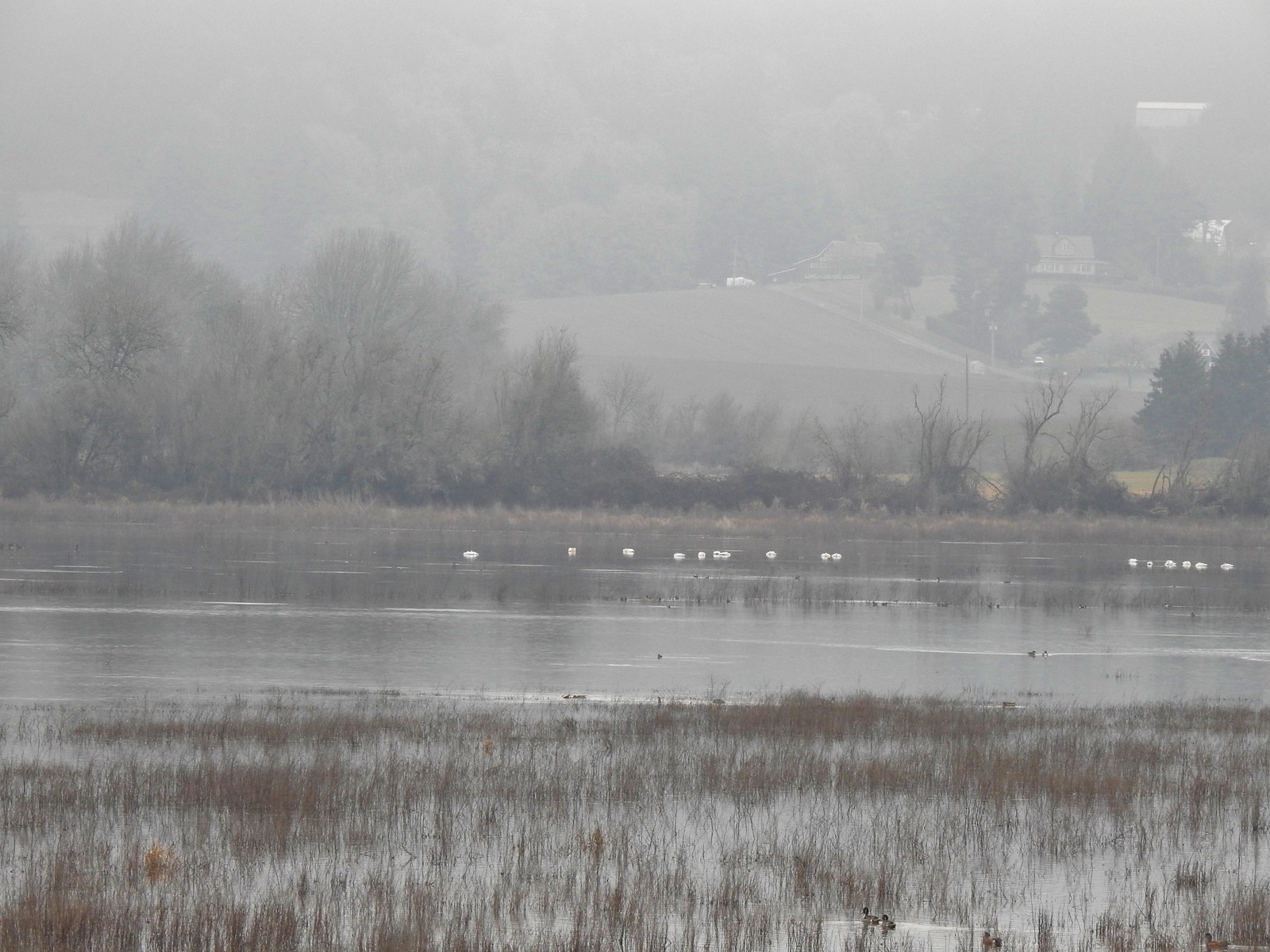
Tundra swansTundra swans

Ducks at Wapato Lake National Wildlife Refuge

Tundra swansTundra swans

Wapato Lake National Wildlife RefugeWe decided to turn around at this bridge even though the levee continued. It appeared that the water was further away from the levee going forward and we hadn’t planned on going much more than 3-miles today.

We were hoping that the partly sunny skies that had been forecast would make an appearance as we made our way back, but that never happened. Nevertheless, we were enjoying trying to identify the different ducks and birds we were seeing.
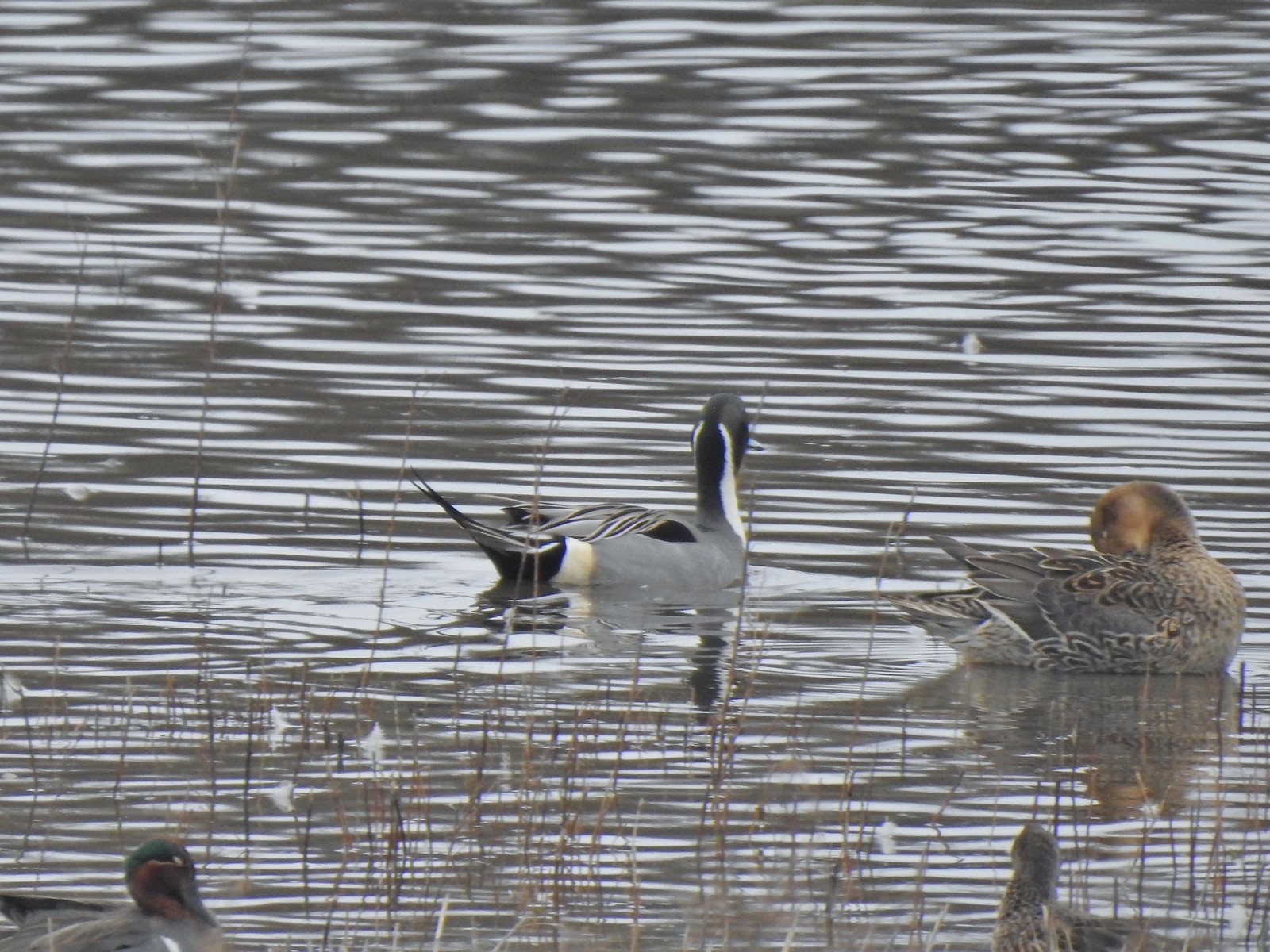
Northern pintailsNorthern pintails and some green-winged teals.
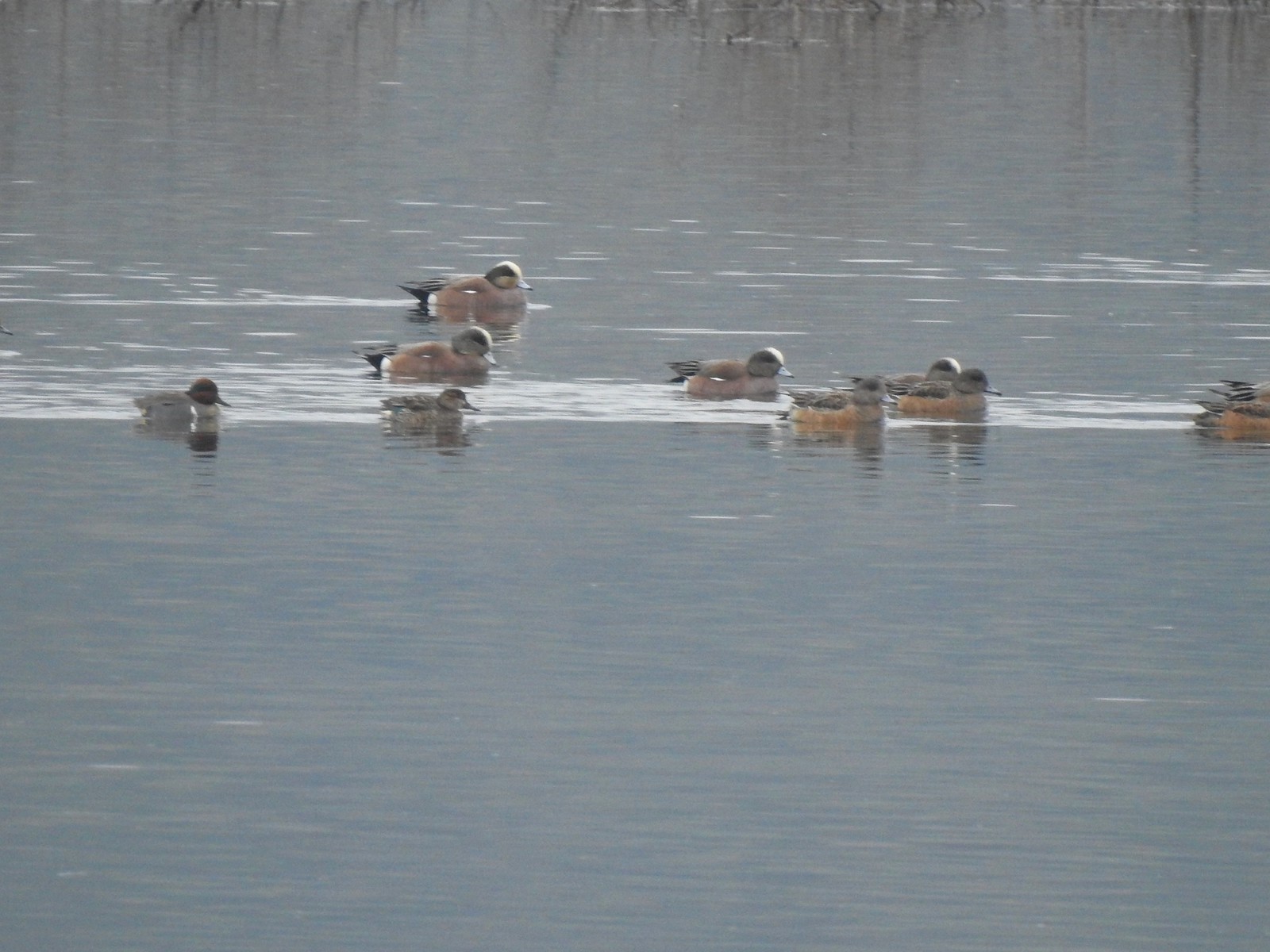
Green-winged teals and American wigeonsAmerican wigeons and a pair of green-winged teals.

Wapato Lake National Wildlife RefugeThere were a couple of times that blue sky seemed imminent.
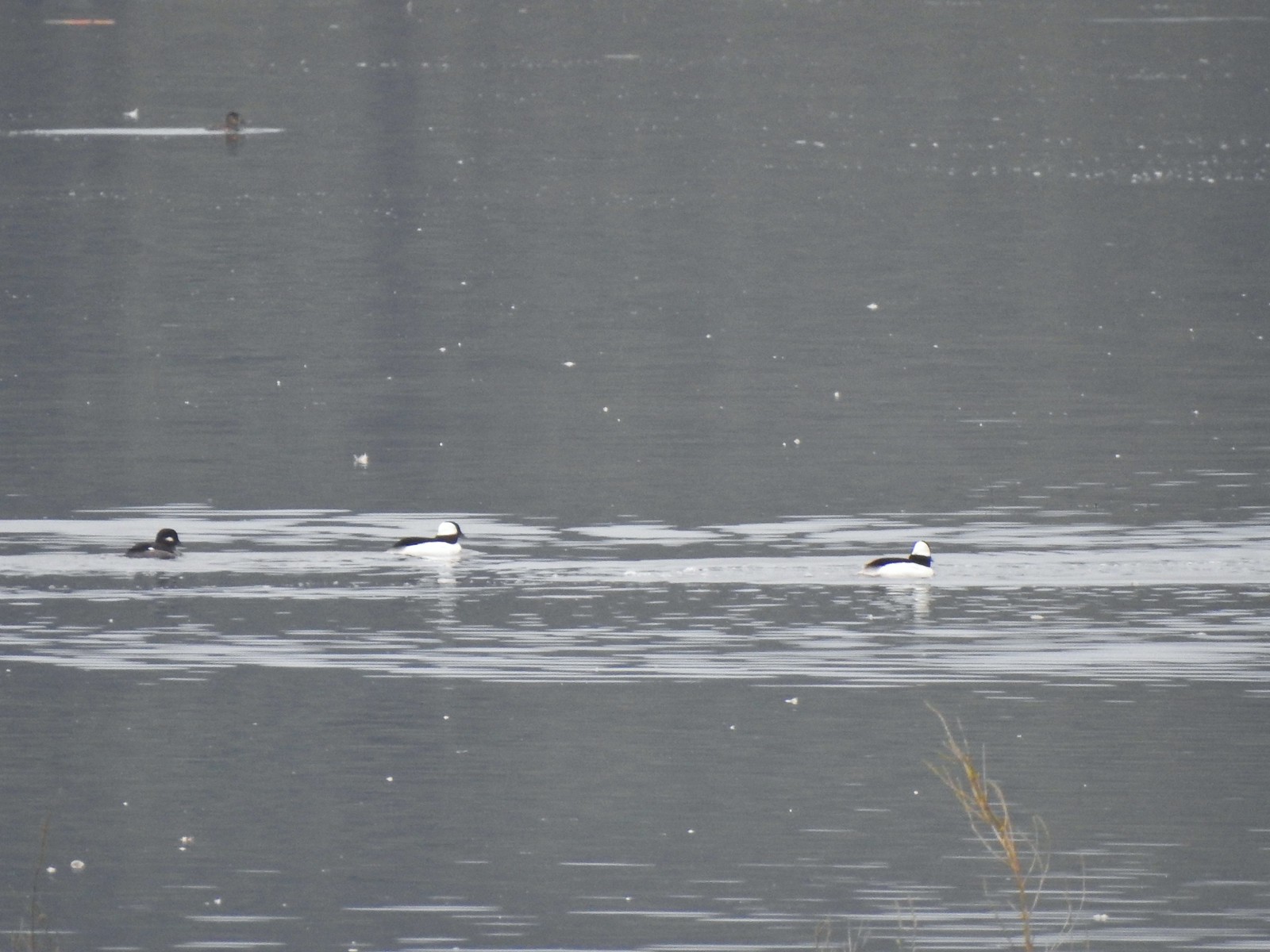
BuffleheadsBuffleheads

Wapato Lake National Wildlife RefugeIowa Hill (post) across the lake.

Wapato Lake National Wildlife Refuge

BuffleheadsMore buffleheads

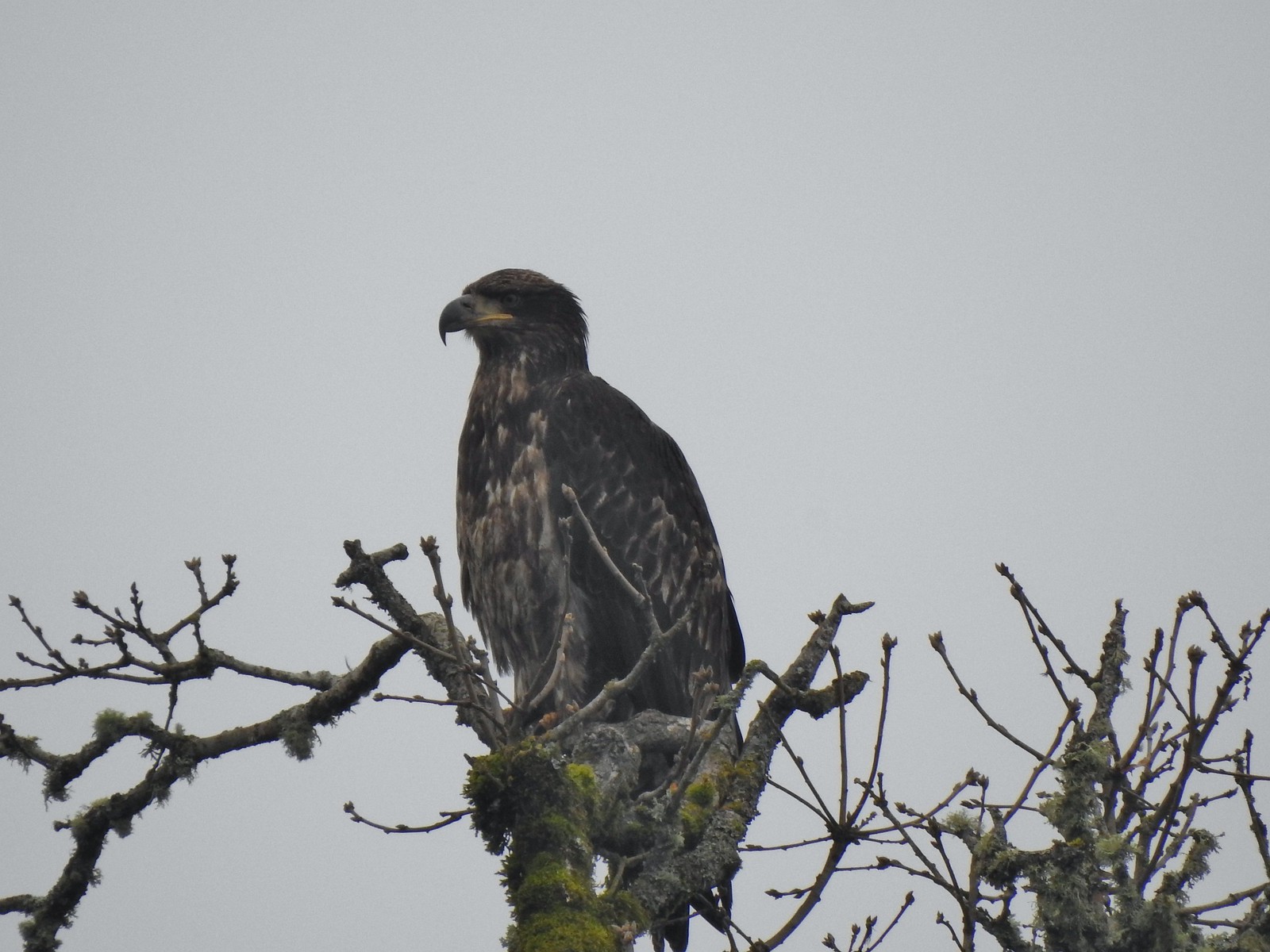
Immature bald eagleImmature bald eagle

SparrowSparrow

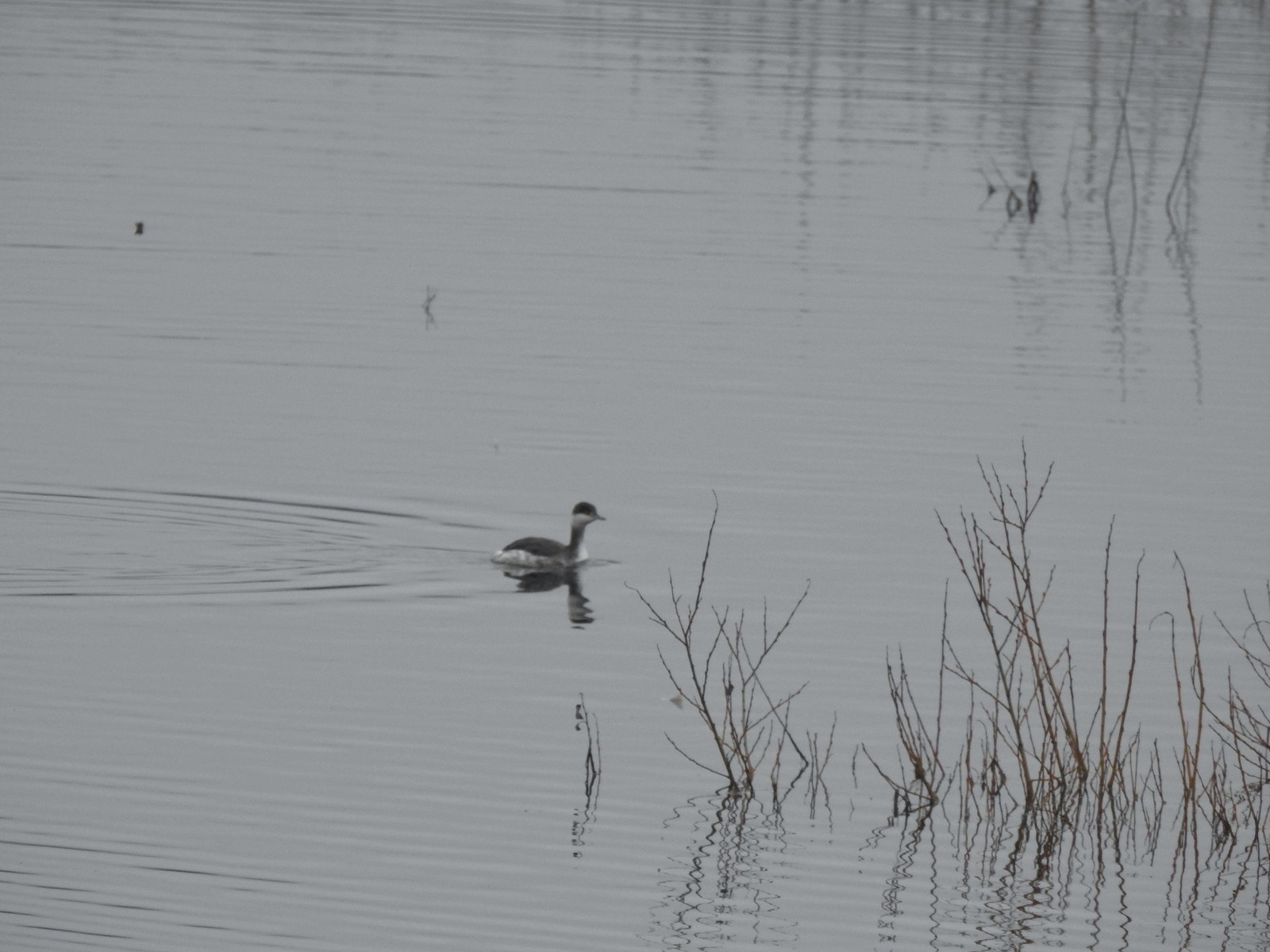
Horned grebeHorned grebe

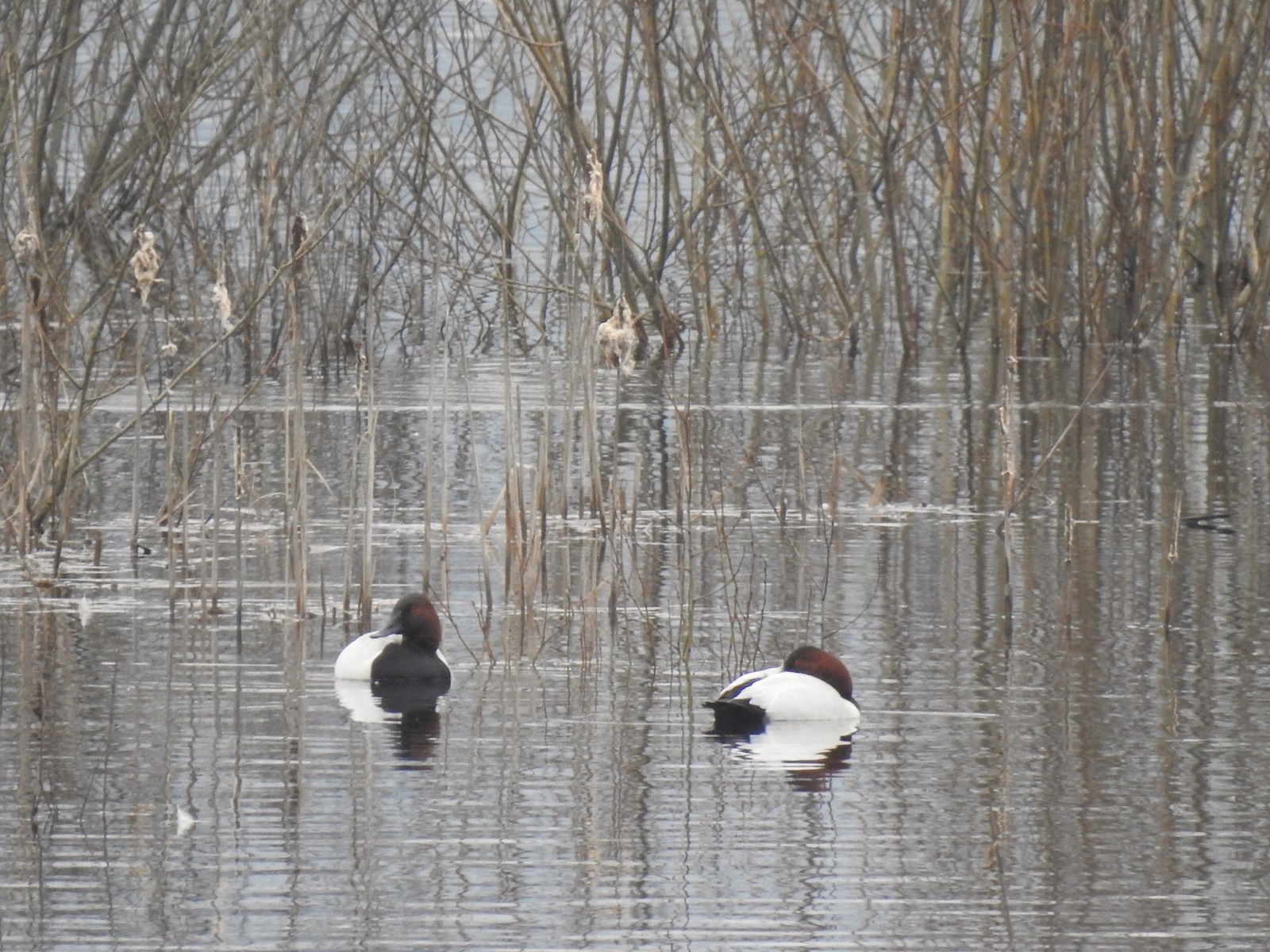
CanvasbacksCanvasbacks, another first for us.

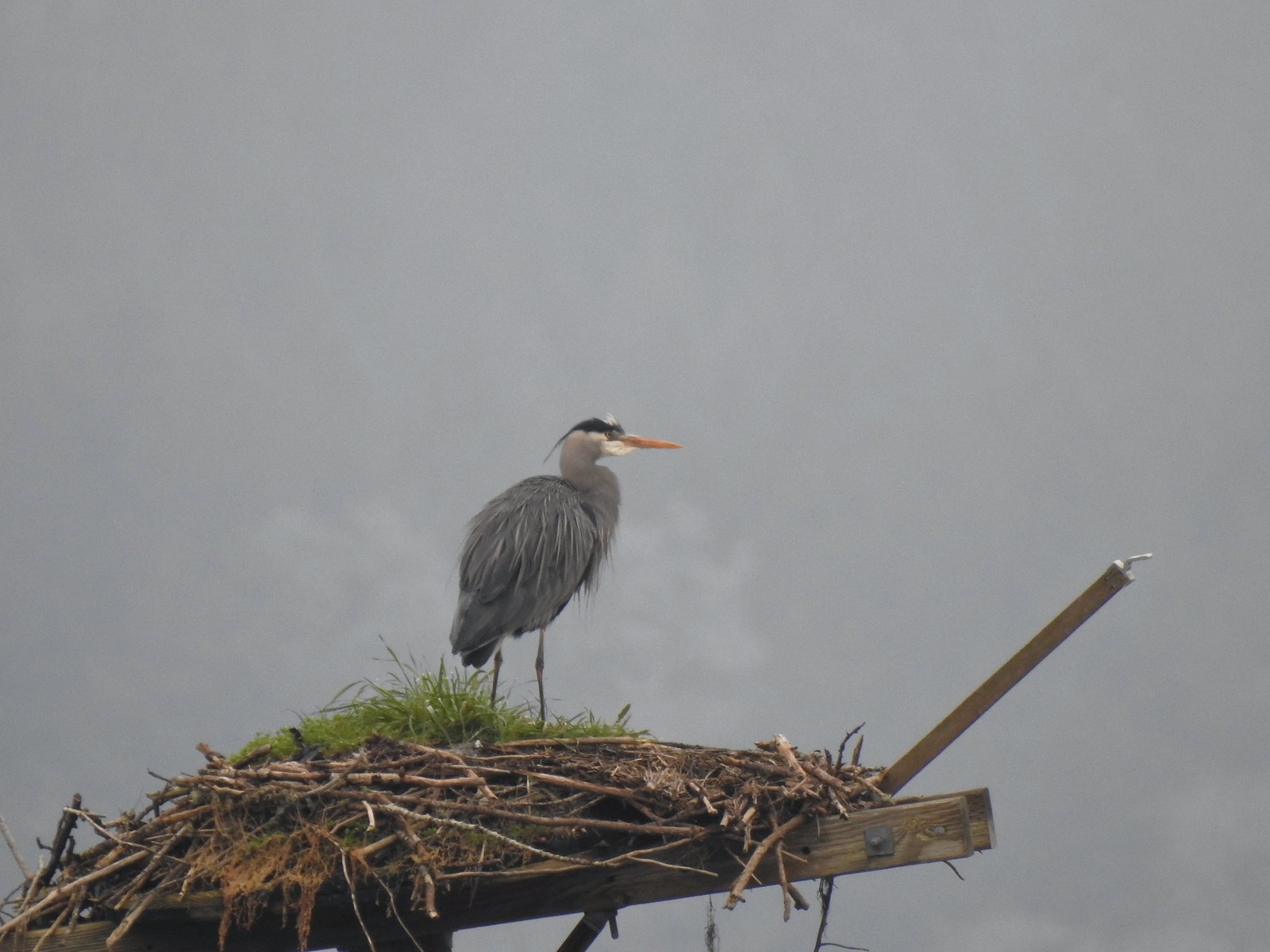
Great blue heronGreat blue heron on the osprey nest.

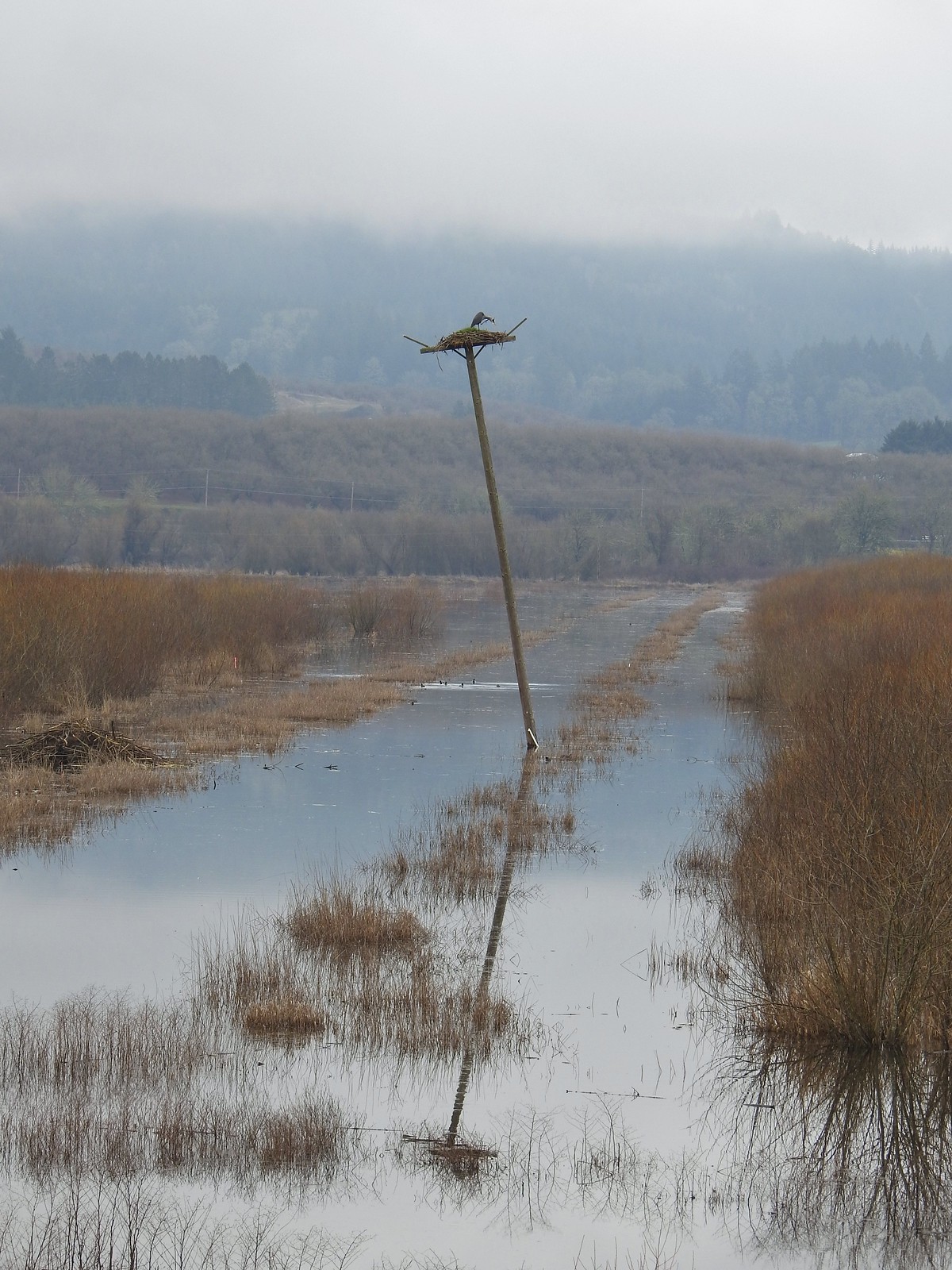
Great blue heron on an osprey nestTher heron on the nest.

When we arrived back at the bridge over Wapato Creek we stayed straight on the level and followed the gravel path north 0.6-miles to a gate where we turned around and returned to our car.
Wapato Lake National Wildlife Refuge

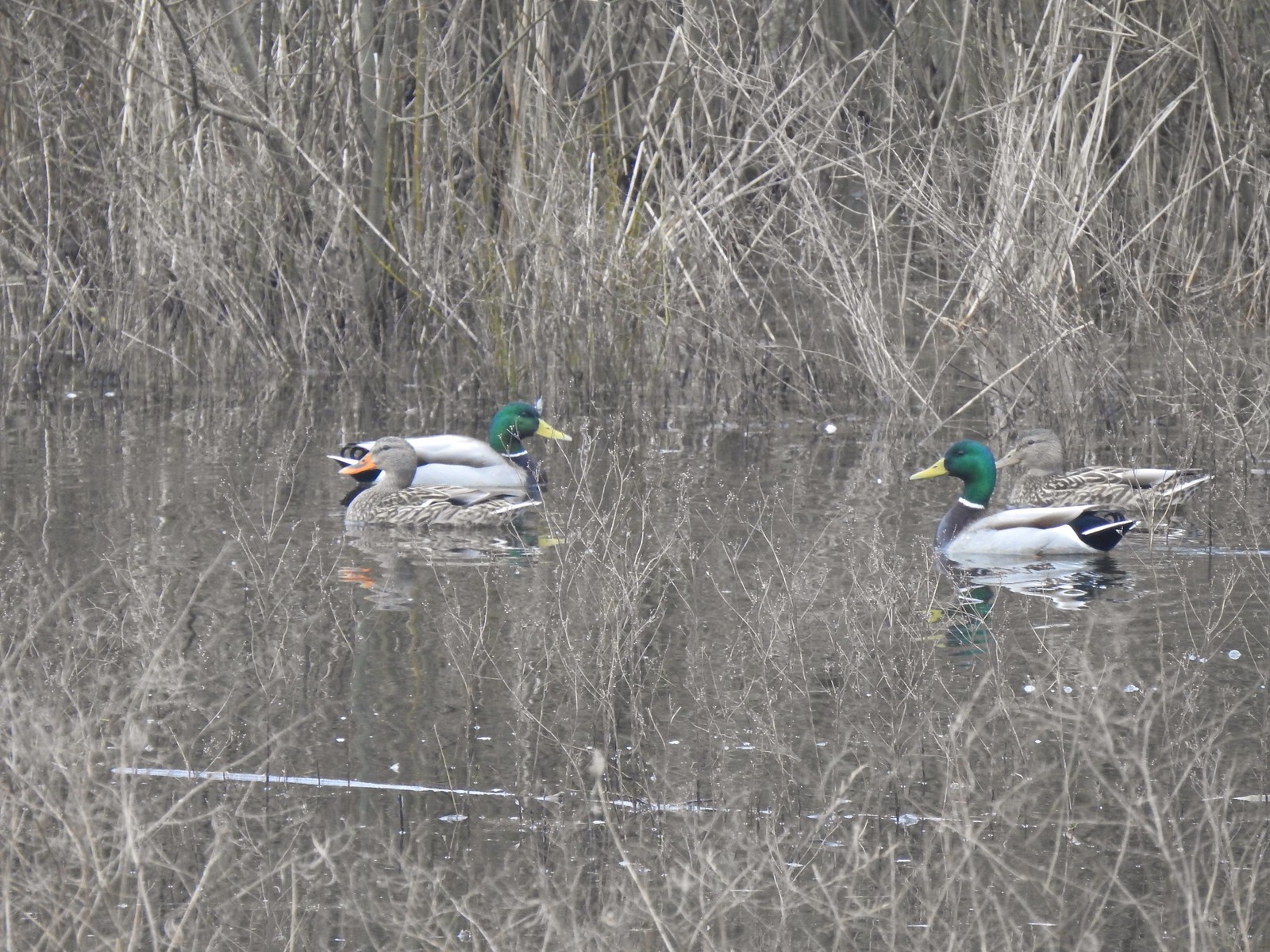
MallardsMallards

Red-winged blackbirdRed-winged blackbird

Wapato Lake National Wildlife Refuge

Bald eagleBald eagle

Wapato Lake National Wildlife Refuge

NutriaNutria

Wapato Lake National Wildlife Refuge

Gaston from Wapato Lake National Wildlife RefugeGaston from the refuge.

Green-winged tealsGreen-winged teals

Northern pintailsNorthern pintails

Ducks at Wapato Lake National Wildlife RefugeMostly American wigeons and green-winged teals
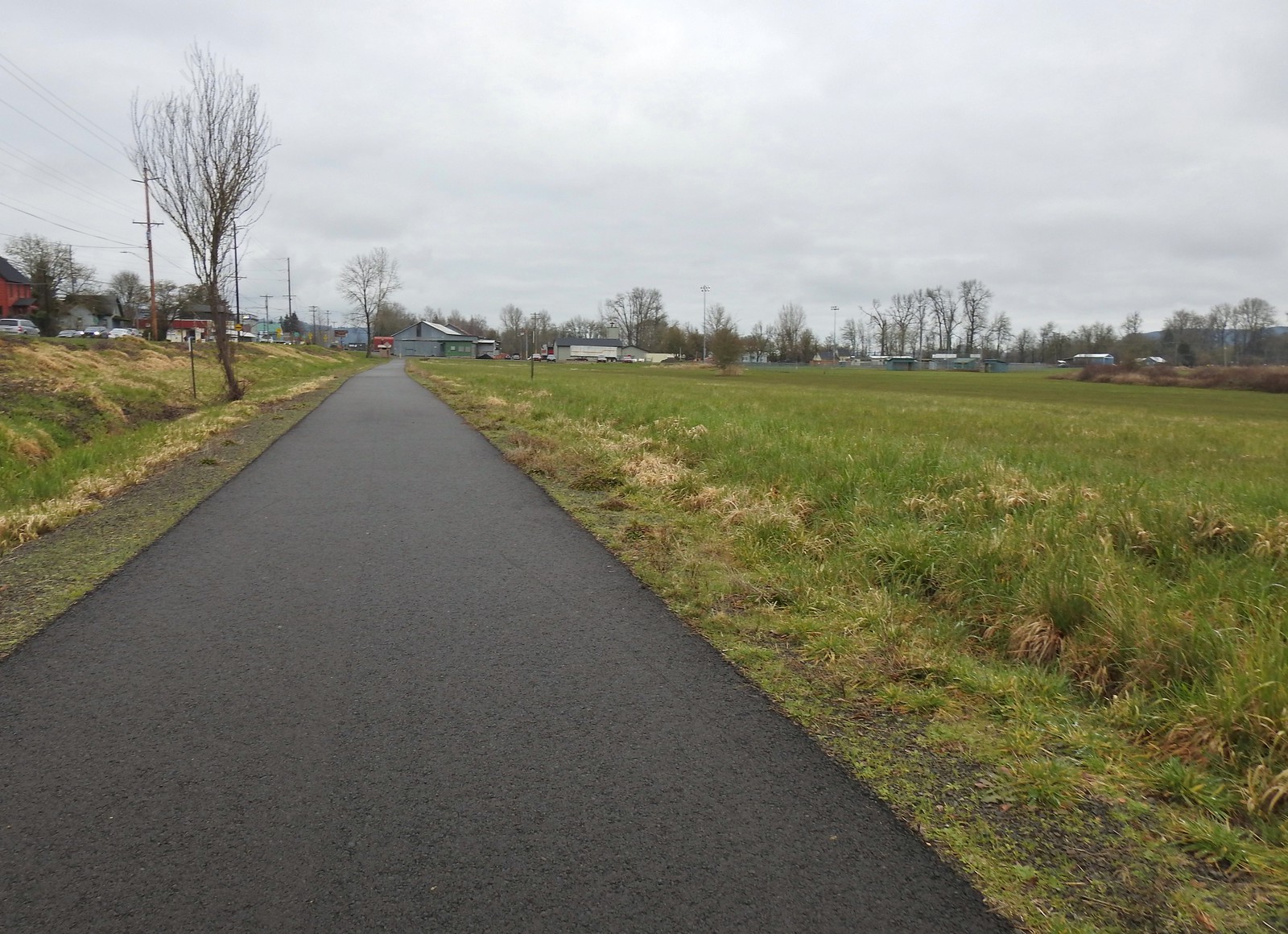
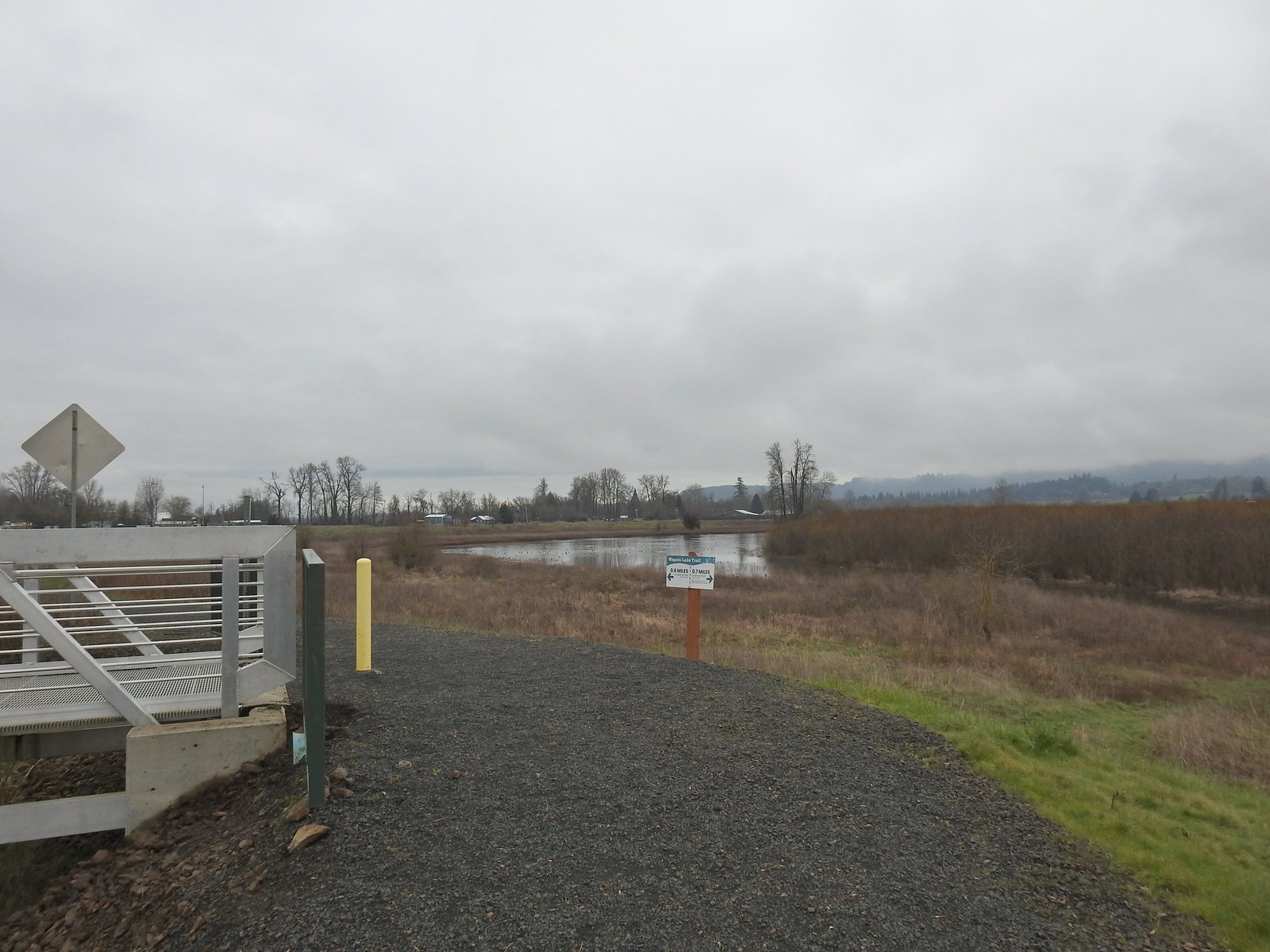
Wapato Lake National Wildlife RefugeOn the paved path back to the parking lot.

We wound up going a total of 4.8-miles (according to both our GPS units) which was a little further than we’d planned, but we got to see a lot of wildlife without much effort on the level trails.

This was an enjoyable visit and given its relative proximity to Salem one that we’ll likely revisit down the line. Happy Trails!

Flickr: Wapato Lake National Wildlife Refuge

Categories
Hiking Oregon Portland Trip report Willamette Valley

Forest Park (Germantown Road to Newberry Road) – 02/03/2024

Warm weather and possible blue sky prompted us to head out for our February hike the first day we had off. While the very recent weather had been unseasonably warm the Willamette Valley, and especially the Portland area, was still recovering from January’s Winter storm. We had changed our planned January hike due to storm damage in Portland’s Forest Park and found ourselves looking to change our planned February hike now as well.

We had originally planned on visiting some wetlands west of Portland but flooding from the ice storm and heavy rains that followed had left some of those trails flooded. A quick check of the current trail conditions at Forest Park revealed that there were no closures/detours listed for the area of the park we had planned to hike the previous week so that became our Plan B.

We had hiked in the 5200-acre Forest Park on five previous occasions with each hike including part of the approximately 30-mile Wildwood National Recreation Trail. The trail begins in Washington Park’s Hoyt Arboretum (post) and ends at Newberry Road to the NW. Our previous outings had covered all but approximately 3.3-miles of the Wildwood Trail between the arboretum and Germantown Road (post). A 2022 visit to the Pittock Mansion via the Wildwood Trail (post) connected to the hike from Hoyt Arboretum and to a 2020 loop starting on Leif Erickson Drive from Thurman Street (post). A 2019 loop from the Lower Saltzman Road Trailhead (post) didn’t connect to any of the other hikes leaving a 1.3-mile gap in the Wildwood Trail between the Maple Trail and Nature Trail junctions, and a 2-mile gap between Firelanes 5 and 7A.

We were missing all of the Wildwood Trail between Germantown Road and Newberry Road though, so that was the goal of today’s hike. We decided to start at the Germantown Road Trailhead as opposed to the Newberry Road Trailhead which was a choice we would regret later. We were the third car at the Germantown Road Trailhead at 7:15am.
Wildwood Trailhead at Germantown RoadSome of the damage from the ice storm at the trailhead.

One of the nice things about Forest Park is the numerous loops that are possible off of the Wildwood Trail which allows one to avoid straight out-and-back hikes. There is a price for the loops which is paid in the currency of elevation gain. The route I’d planned for the day included three loops beginning at the trailhead where instead of taking the Wildwood Trail we took the Connector Trail to the Cannon Trail and followed it downhill to the Leif Erickson Drive North Trailhead.
Connector Trail at Germantown RoadSign for the Connector Trail at the trailhead.
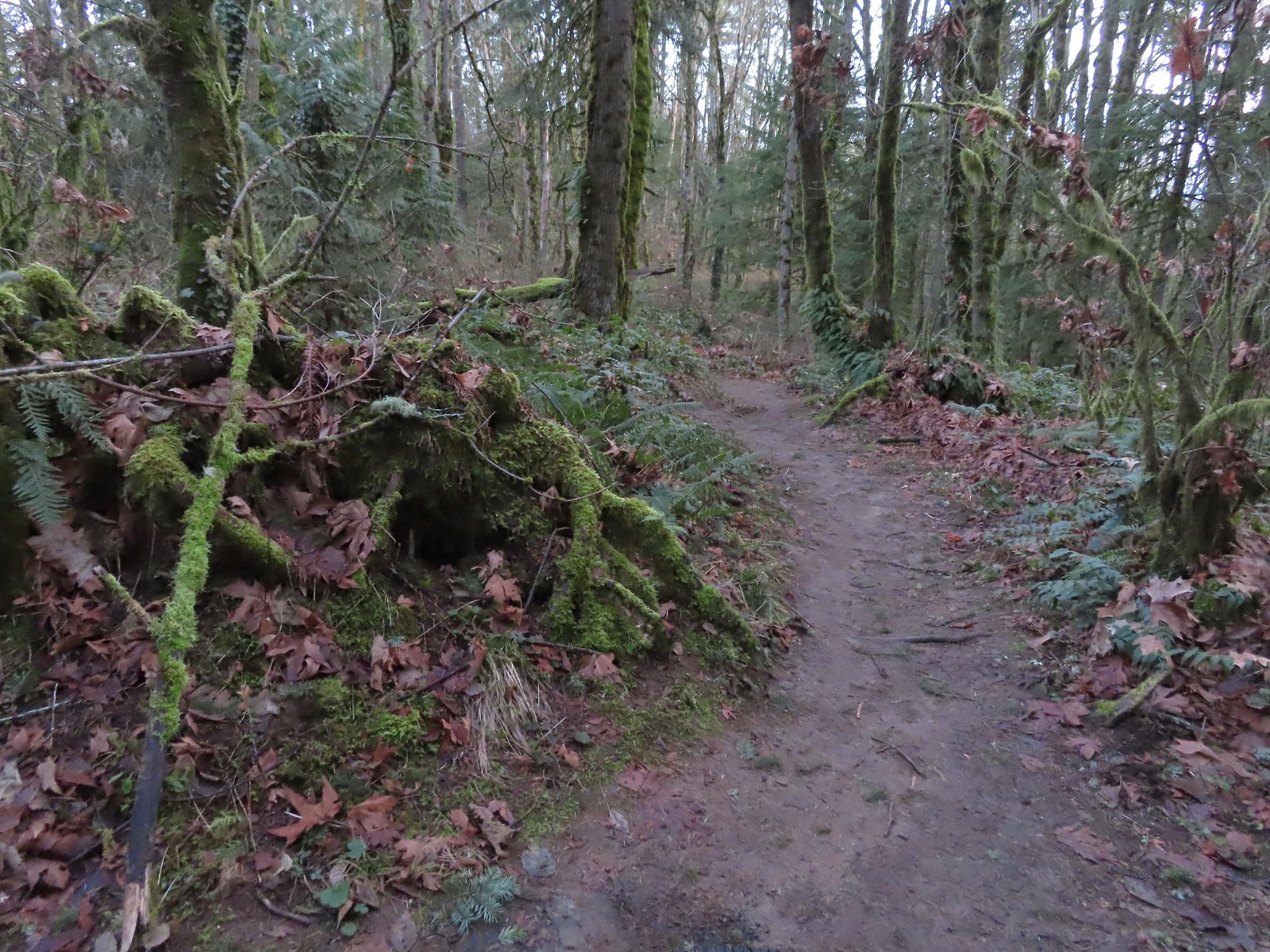
Cannon TrailCannon Trail

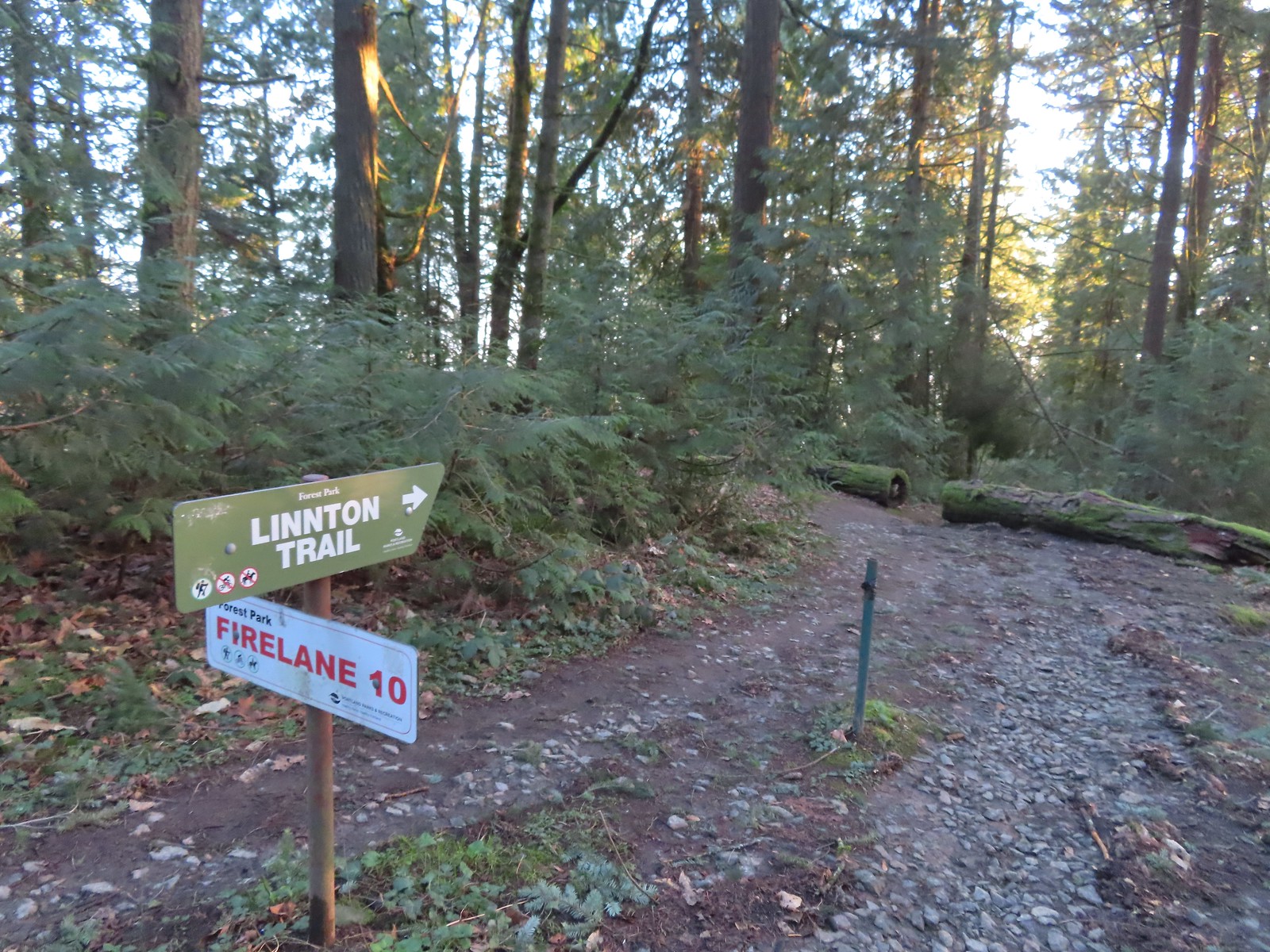
From the Leif Erickson Trailhead we crossed Germantown Road at the gate for Firelane 9 then hiked uphill along the shoulder of Germantown Road just over 100 yards to Firelane 10.
Firelane 9 across Germantown Road from the Leif Erickson TrailheadFirelane 9 across from the trailhead.

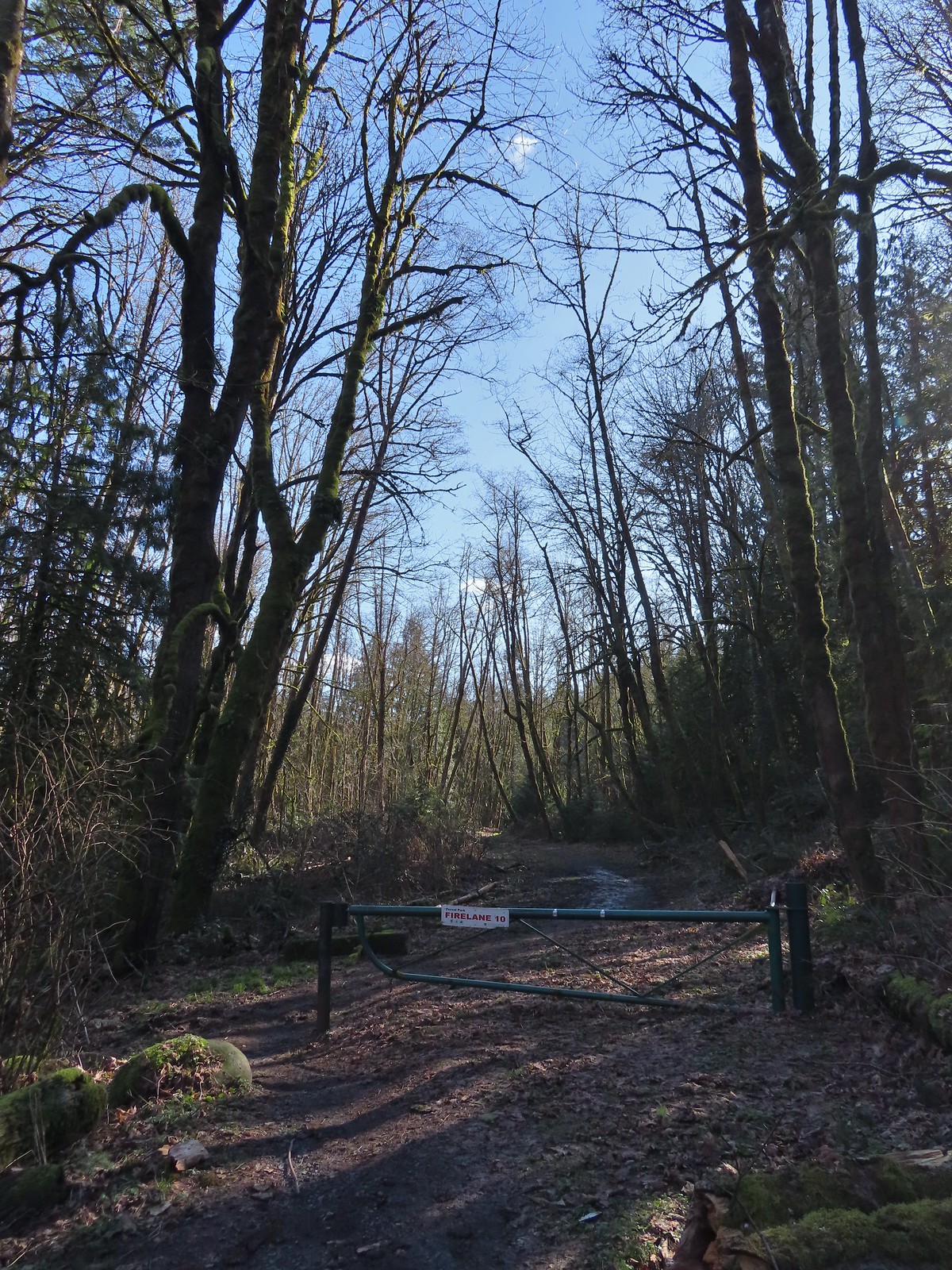
Firelane 10 at Germantown RoadFirelane 10

We followed Firelane 10 downhill to a stream crossing then climbed to a junction with the Linnton Trail.
Firelane 10

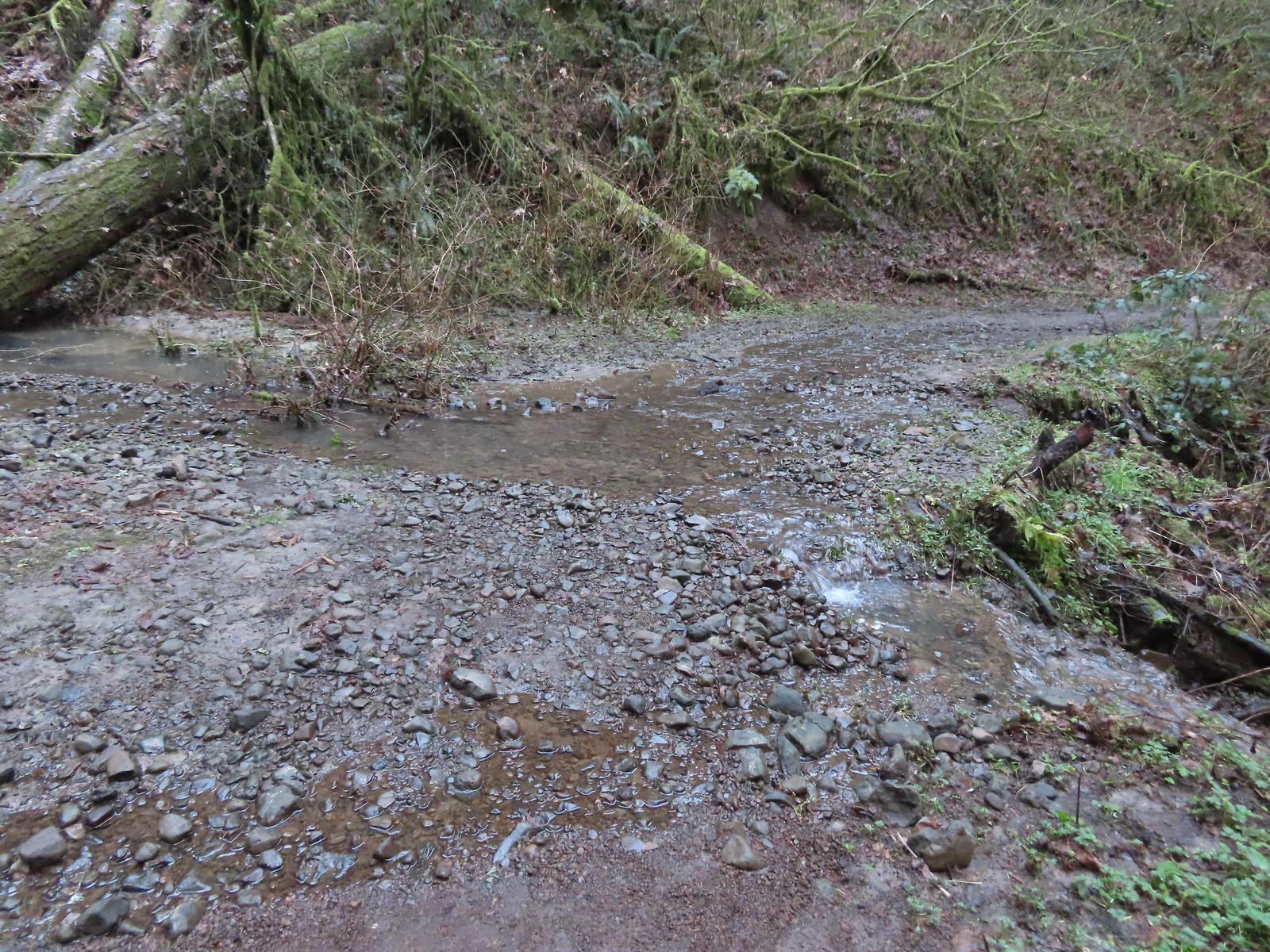
Stream flowing over Firelane 10Unsurprisingly the recent weather had most of the stream beds flowing which we hadn’t witnessed on our other visits.
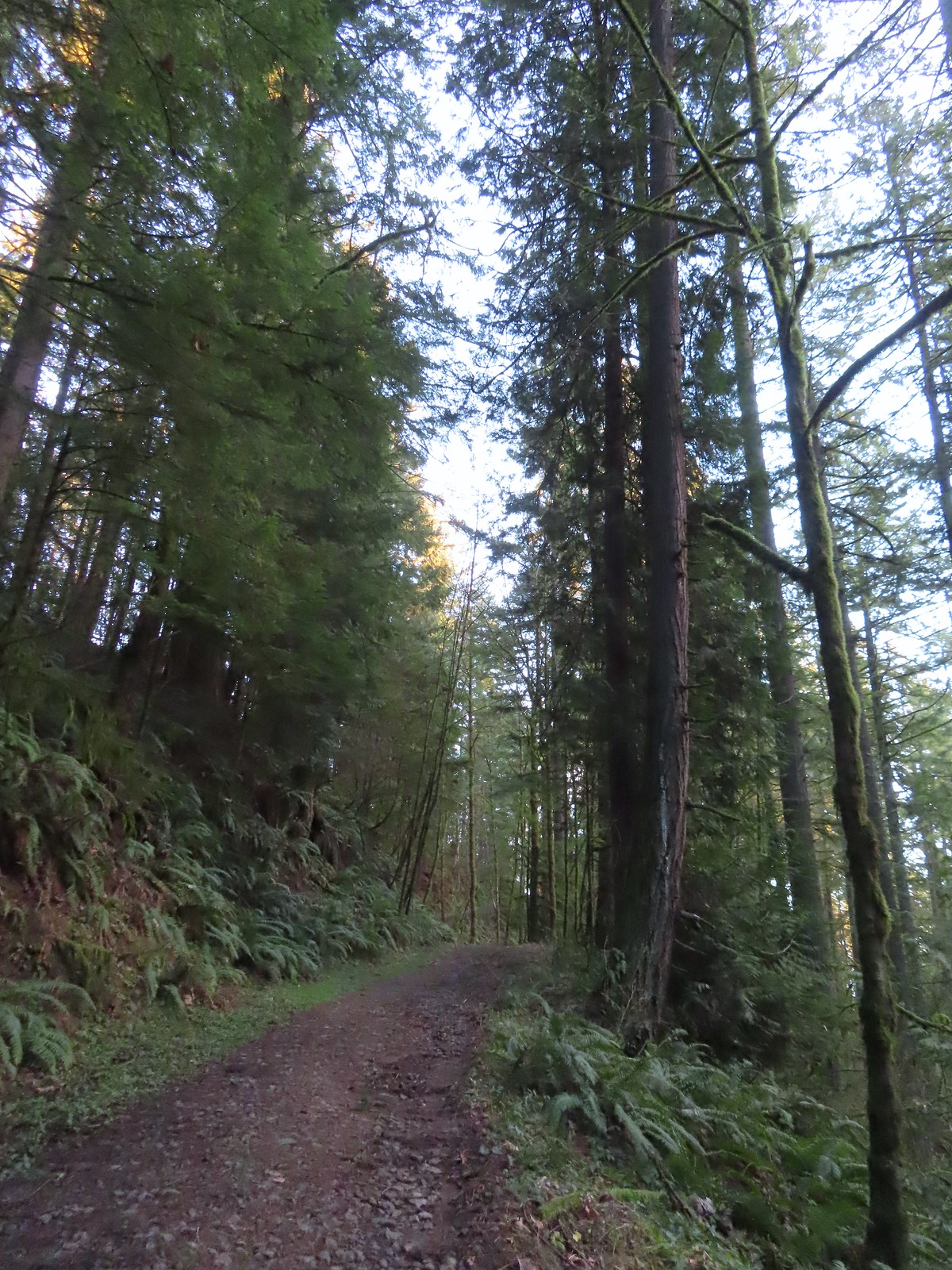
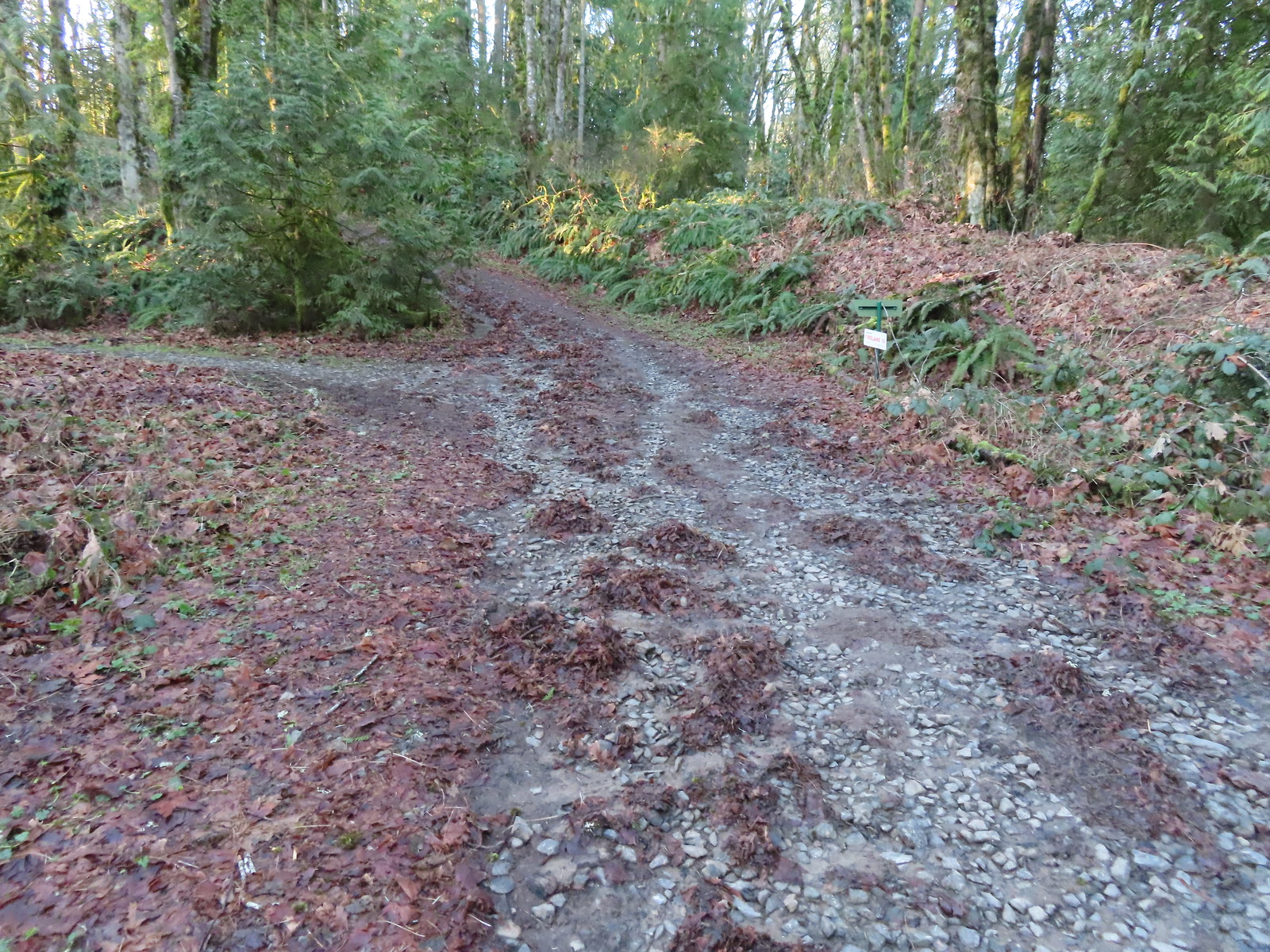
Firelane 10Heading up to the junction.

Linnton Trail at Firelane 10The Linnton Trail heads down a ridge to the Linnton Trailhead.

We turned left at the junction sticking to Firelane 10 which climbed back up to the Wildwood Trail. The 1.7-mile detour from the Germantown Trailhead came with an elevation loss of 375′ and gain of 550′.
Firelane 10

Firelane 10 junction with a bypass trail on the left.We passed the Keyser Trail which rejoins Firelane 10 just a quarter mile ahead. We stuck to Firelane 10 which climbed very steeply in that quarter mile leading us to believe the Keyser Trail may have been a little more gradual as the map showed it bowing away from Firelane 10 before rejoining.
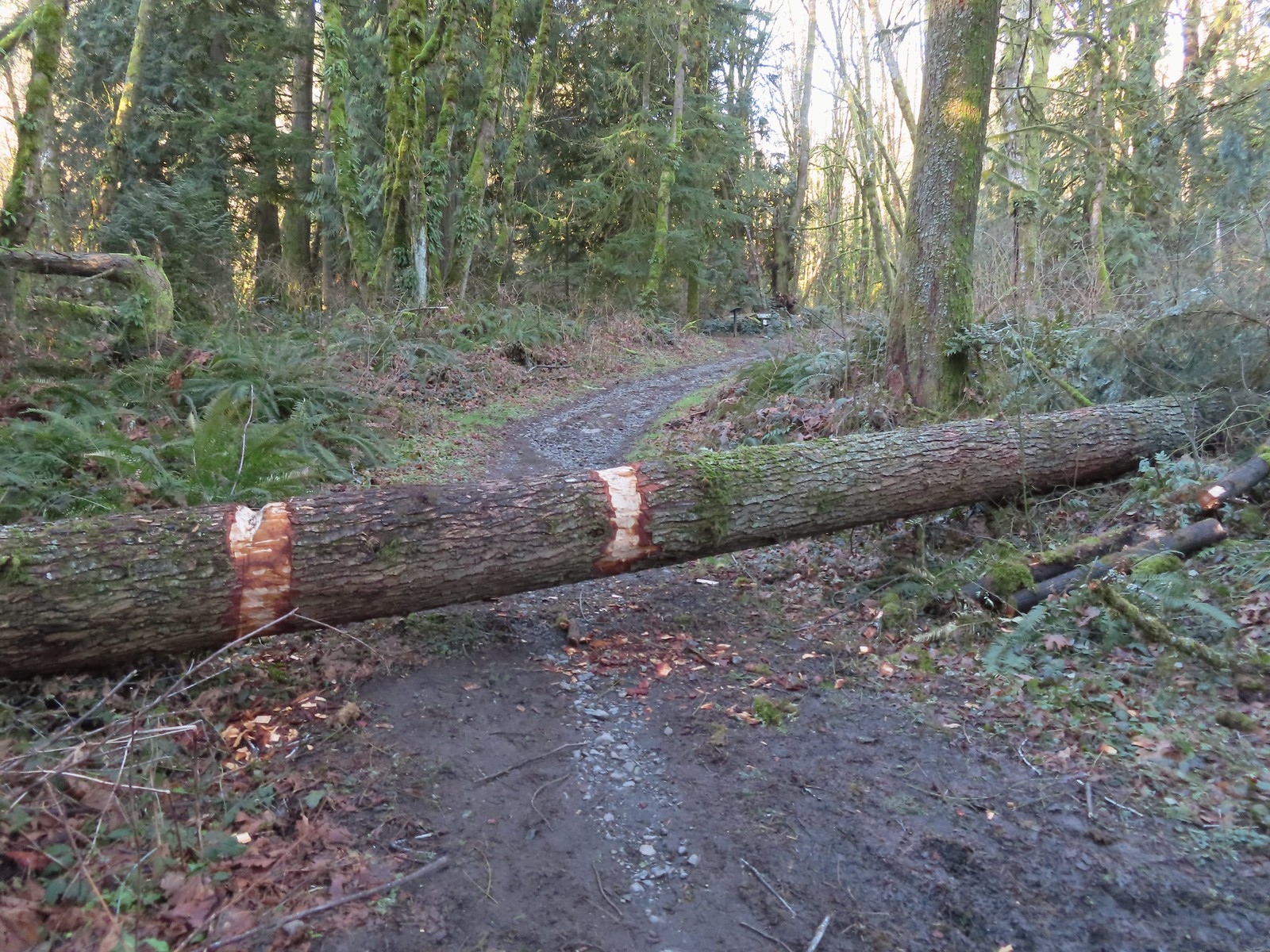
Downed tree from the recent ice storm over Firelane 10The first of only three trees that were still down over the trails we hiked. In the distance is a Wildwood Trail sign at the junction.
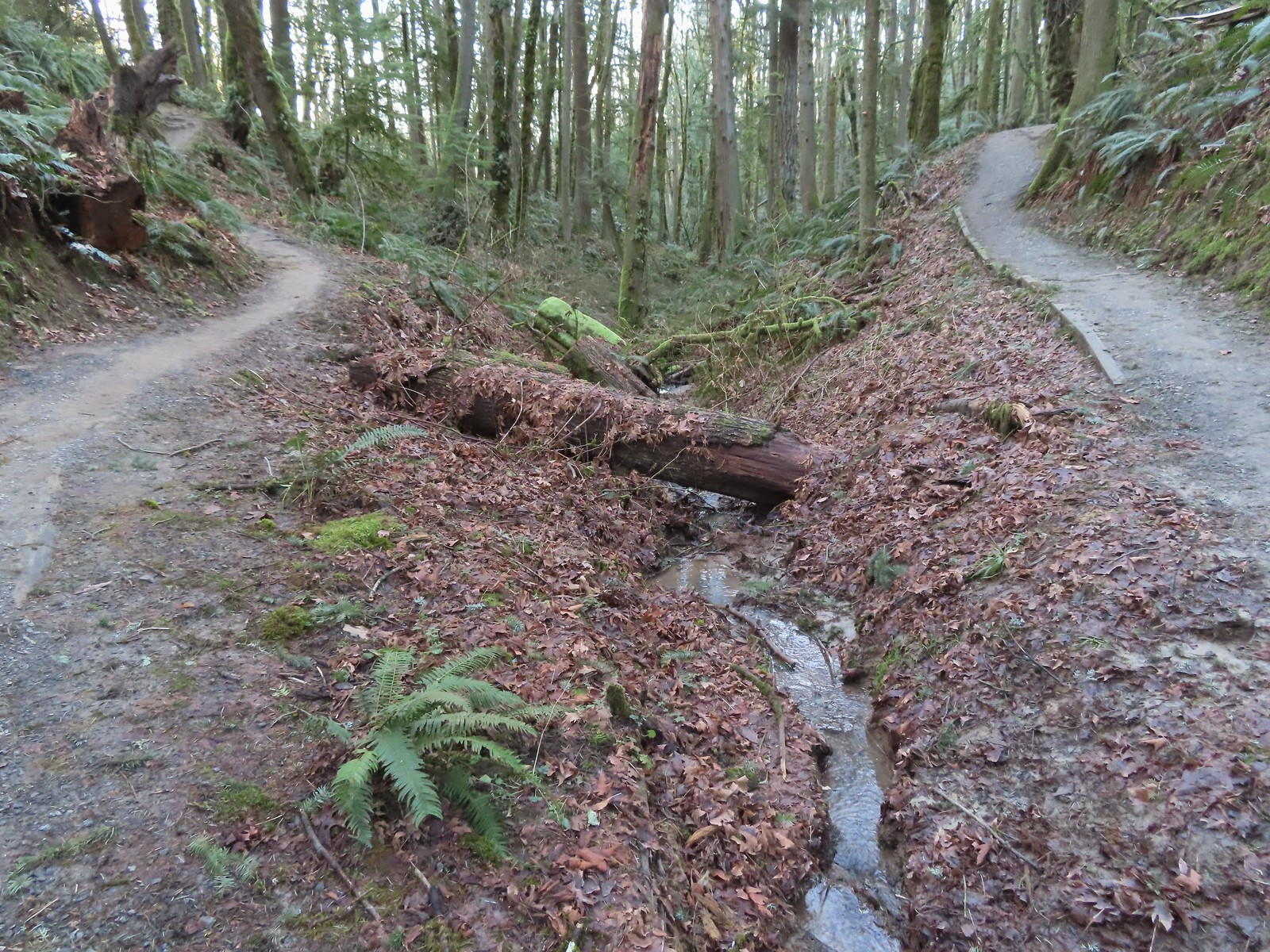
We turned right onto the Wildwood Trail and followed it for just over a mile to the BPA Road.
Wildwood Trail

Stream between the Wildwood TrailThe trail repeatedly bows into the hillside to cross creek beds.

Sign at the junction with the connector trailWe passed three pointers for Newton Road and then crossed Newton Road along this section of the Wildwood Trail. We would be using Newton Road to make another small loop on our way back.
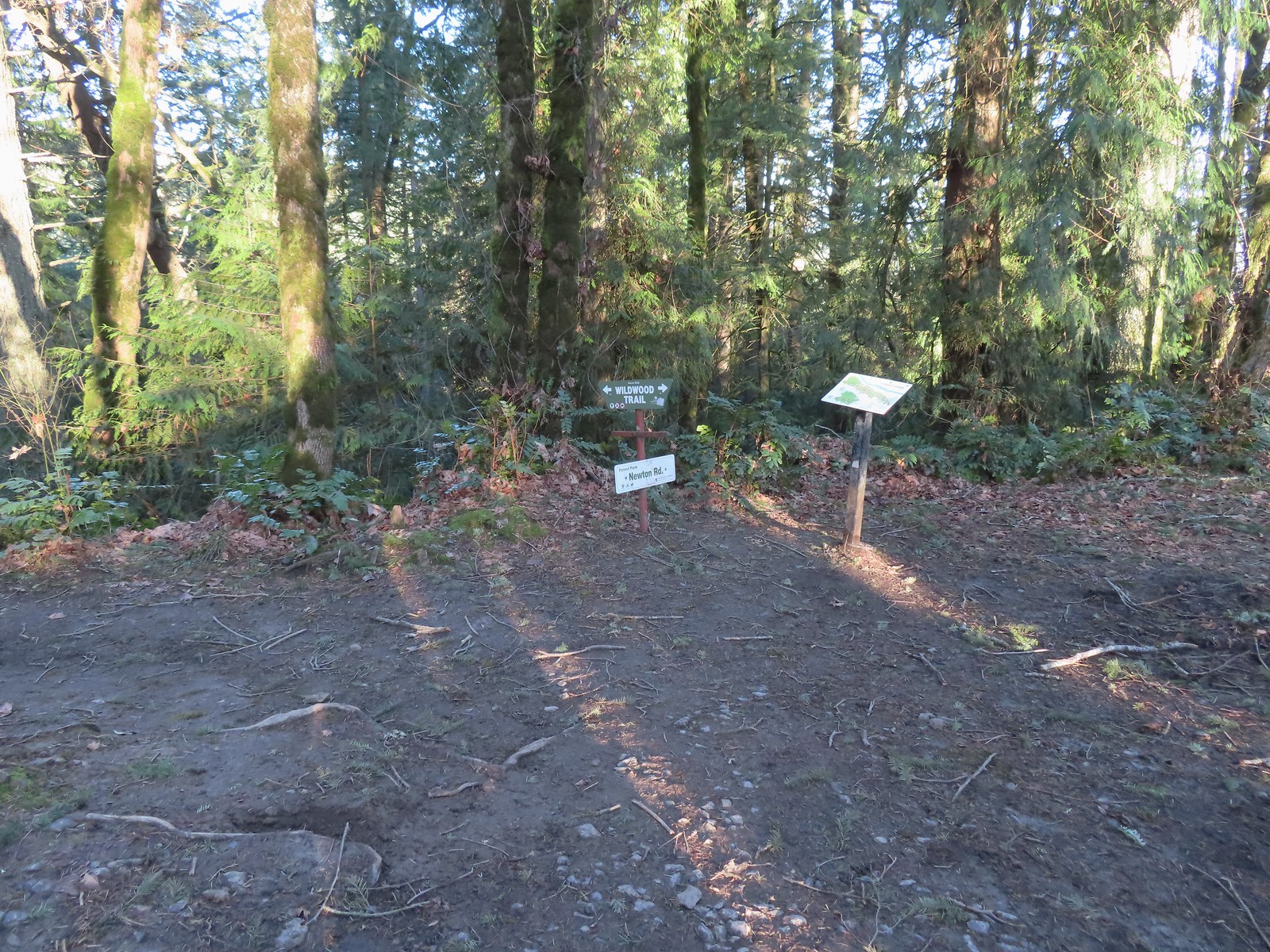
Wildwood Trail junction with Newton RoadThe Wildwood Trail crossing Newton Road.
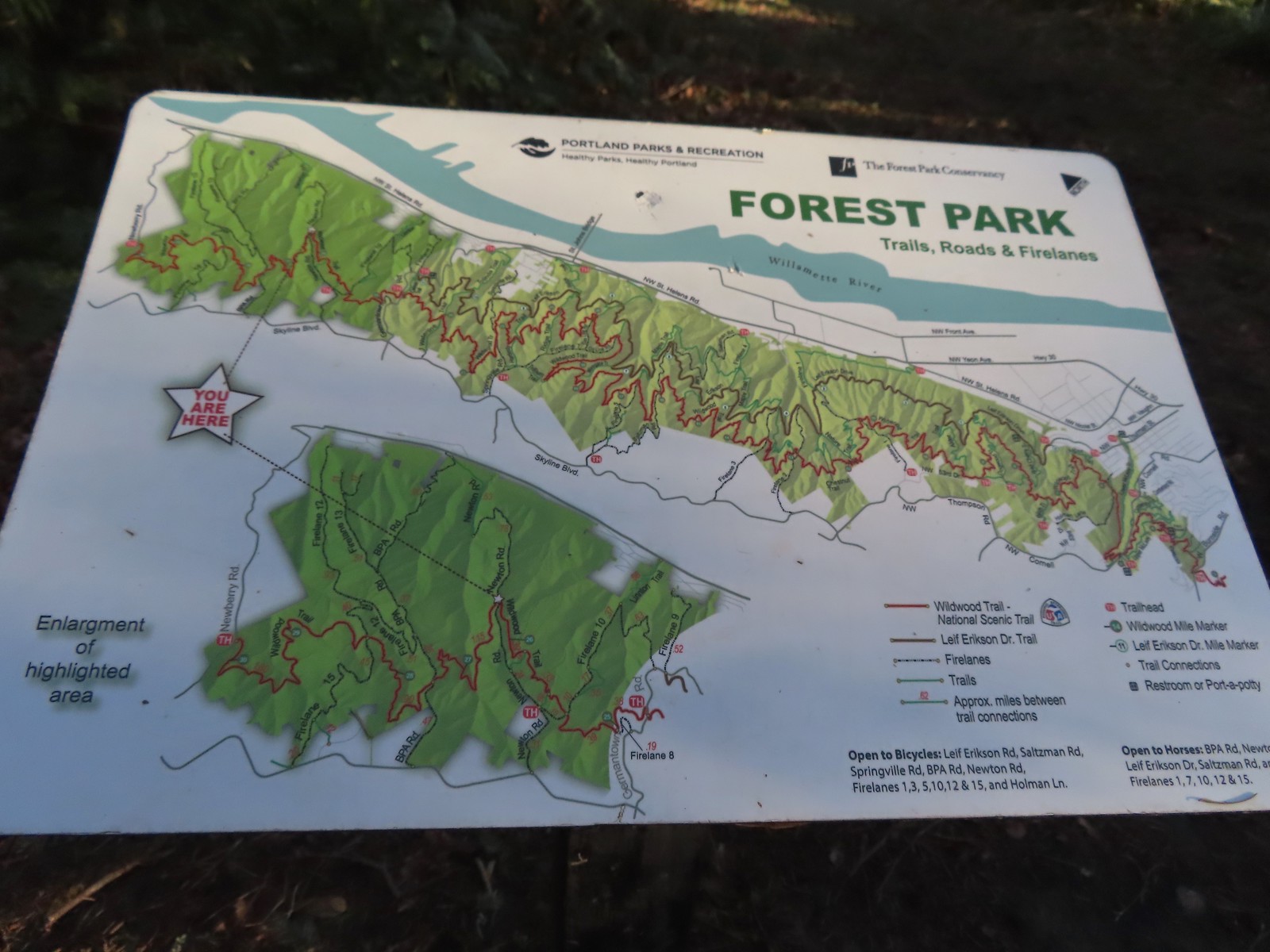
Trail map at the Wildwood Trail/Newton Road junctionNot all of the junctions have maps, but most of the major ones do to help keep hikers and runners on track (or to give them more ideas).
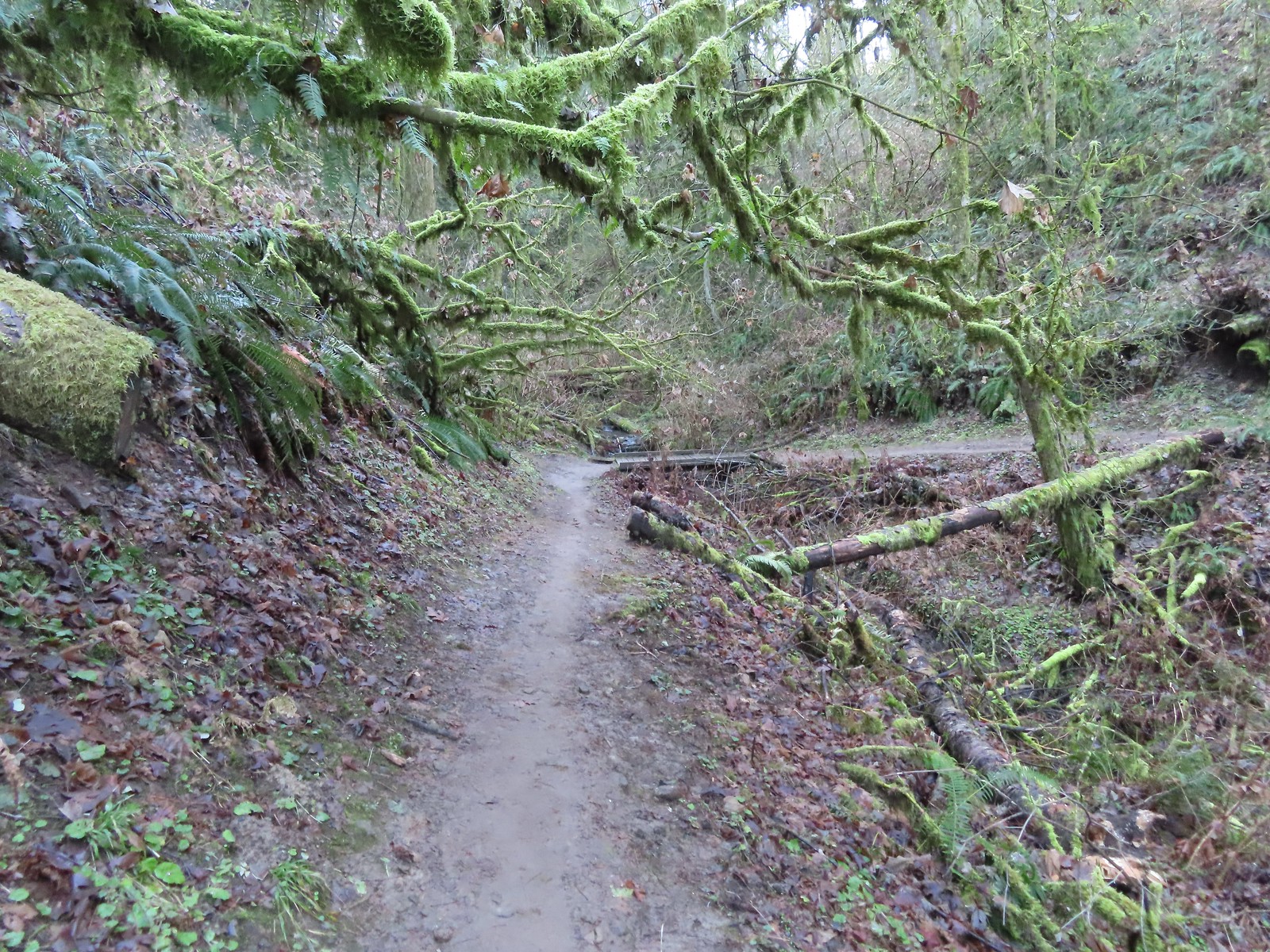
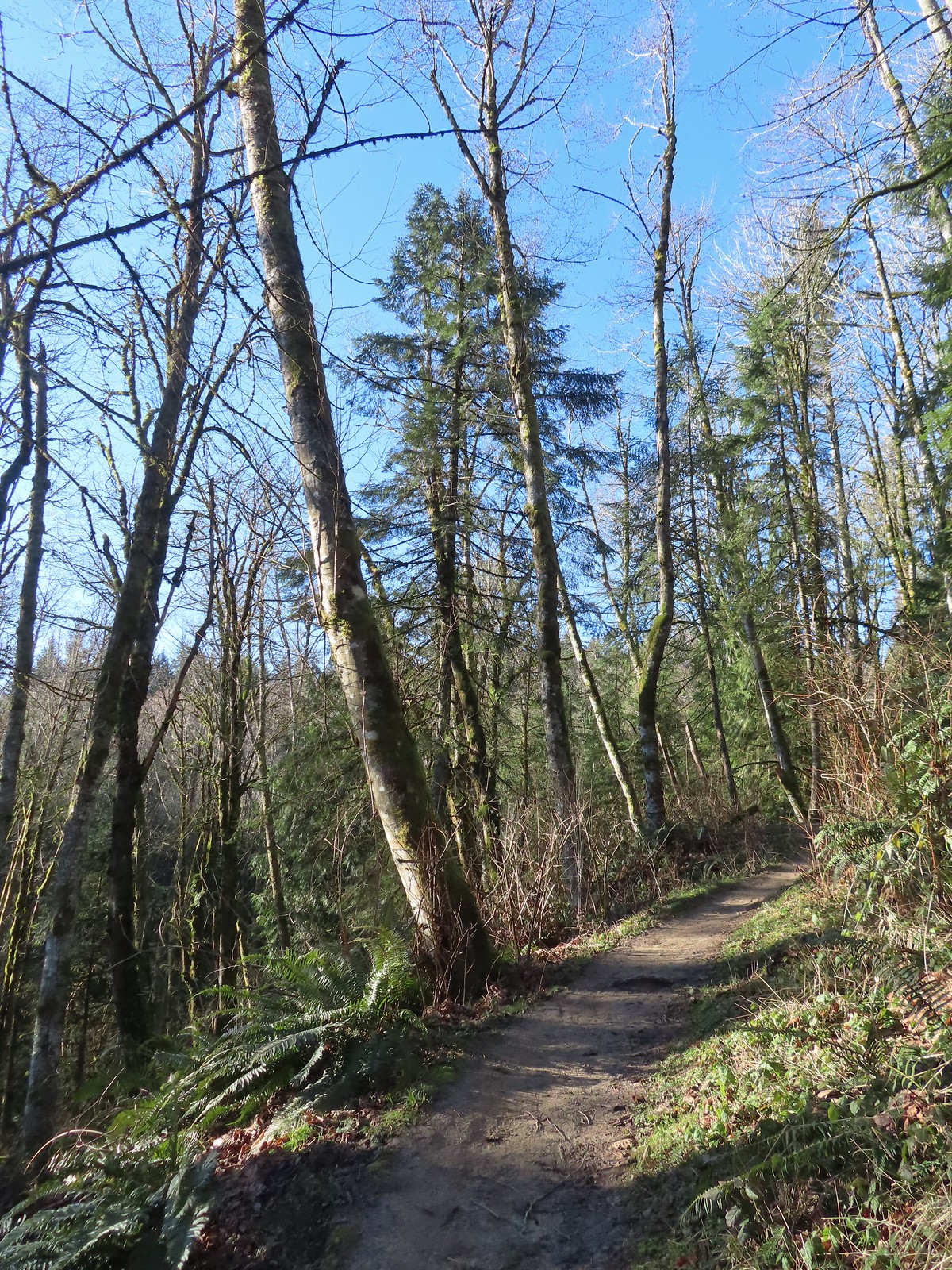
Wildwood Trail

Wildwood TrailClimbing up to the BPA Road crossing.

Wildwood Trail on the right and the BPA Road on the leftThe BPA Road heading uphill with the Wildwood Trail we’d just come up to the right.
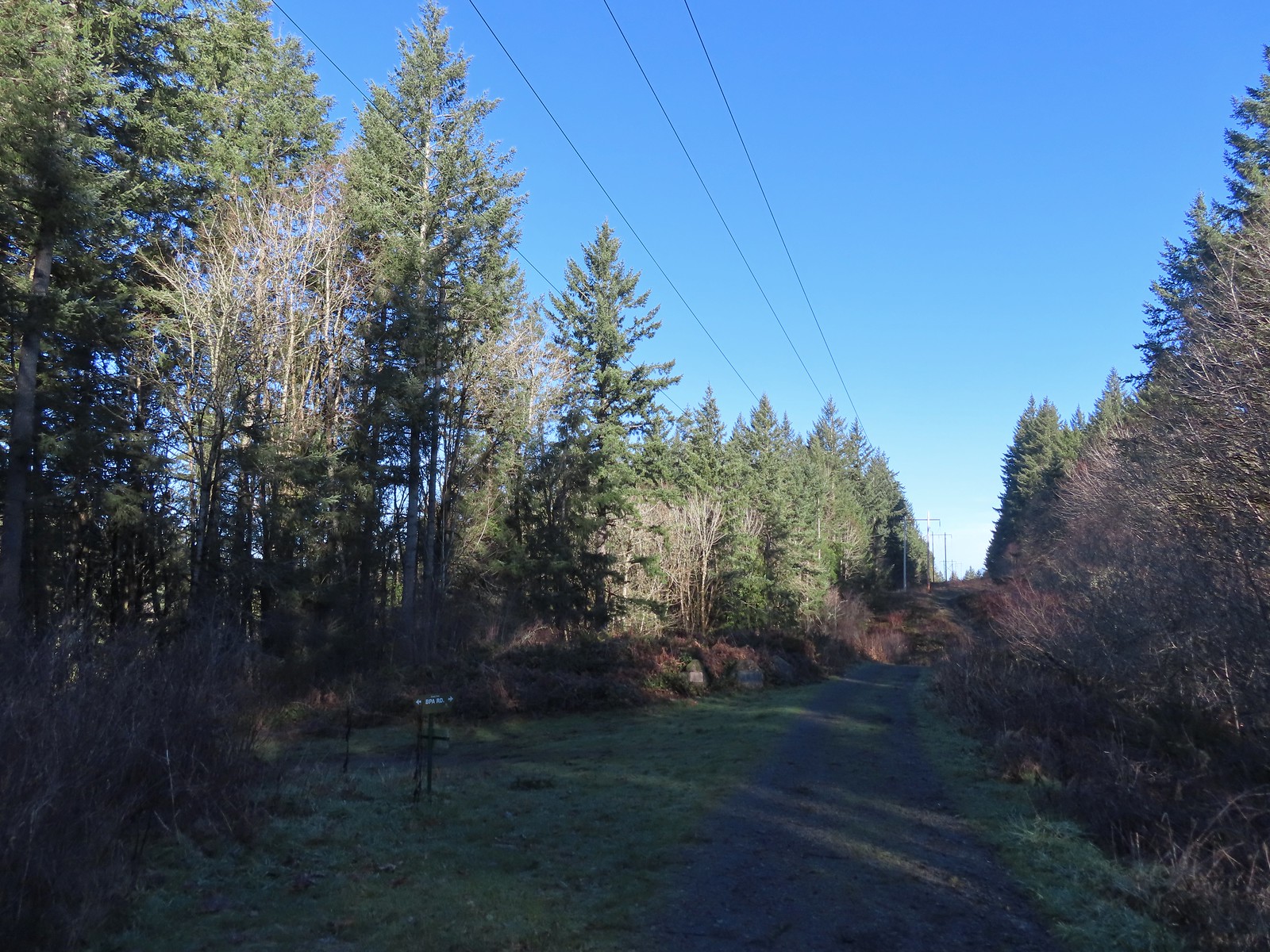
We turned off of the Wildwood Trail here and took a right onto the BPA Road. After a brief climb the BPA Road dropped to a saddle where Firelane 12 joined from the left at the Fix-the-Hole plaque.

BPA Road junction with Firelane 12Firelane 12 on the left.

Fix-the-Hole plaque along the BPA Road in Forest ParkThe middle of three plaques commemorating the 1999 acquisition of 73-acres that was in danger of being developed.
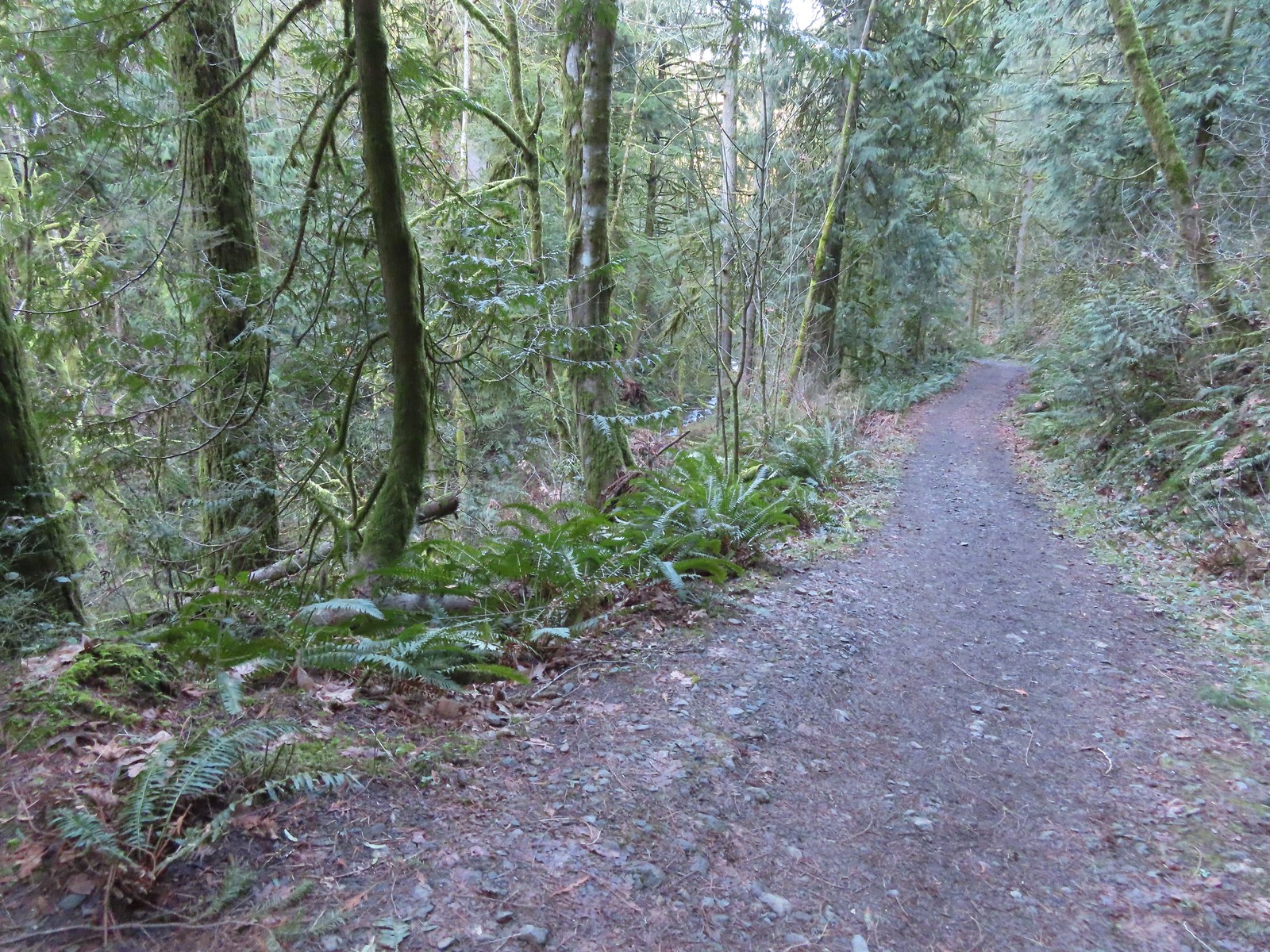
We turned left onto Firelane 12 and descended for half a mile to Firelane 15 near another unnamed creek.
Firelane 12

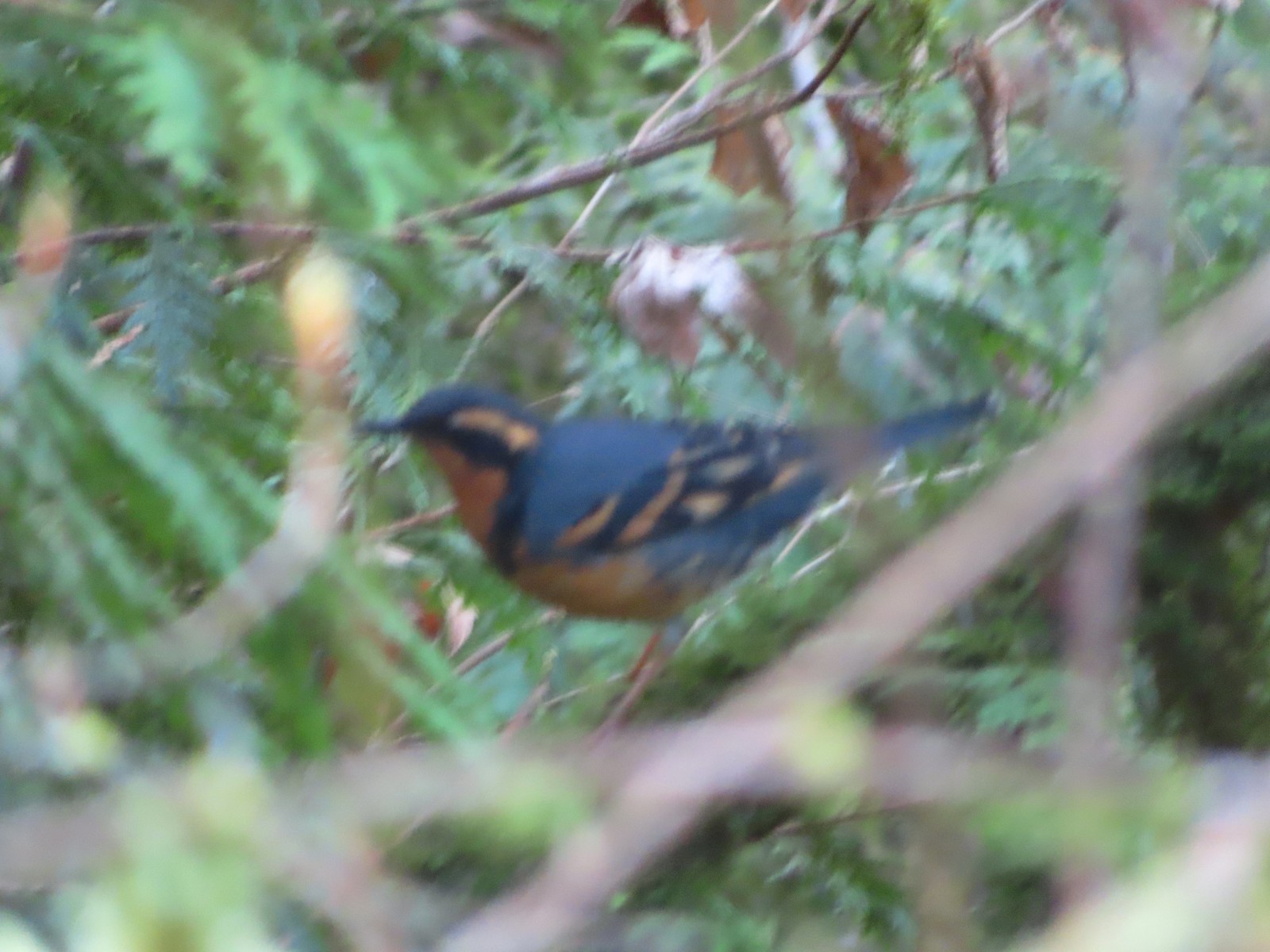
Could get this varied thrush to sit still or come out into the open so this was the best I could do :(Once again varied thrush 1 – Deryl 0. If I was keeping score, it would probably be something like 179-10.

Firelane 12 junction with Firelane 15Firelane 15 on the left ahead.

We turned left onto Firelane 15 and climbed over 230′ in 0.4-miles to the Wildwood Trail.
Firelane 15The small creek along Firelane 15.

Firelane 15Blue sky and powerlines above Firelane 15.

Firelane 15 junction with the Wildwood TrailWildwood Trail crossing Firelane 15.

We turned right onto the Wildwood Trail once again and followed it nearly 1.8-miles to its end at Newberry Road. There were no firelanes or side trails along this final stretch of the Wildwood Trail.
Wildwood Trail

Wildwood Trail

Curved footbridge along the Wildwood TrailThe fanciest bridge we crossed all day.

Looking down at the Wildwood Trail from the Wildwood TrailWhy is the trail way down there when the road is up above on the far hillside?
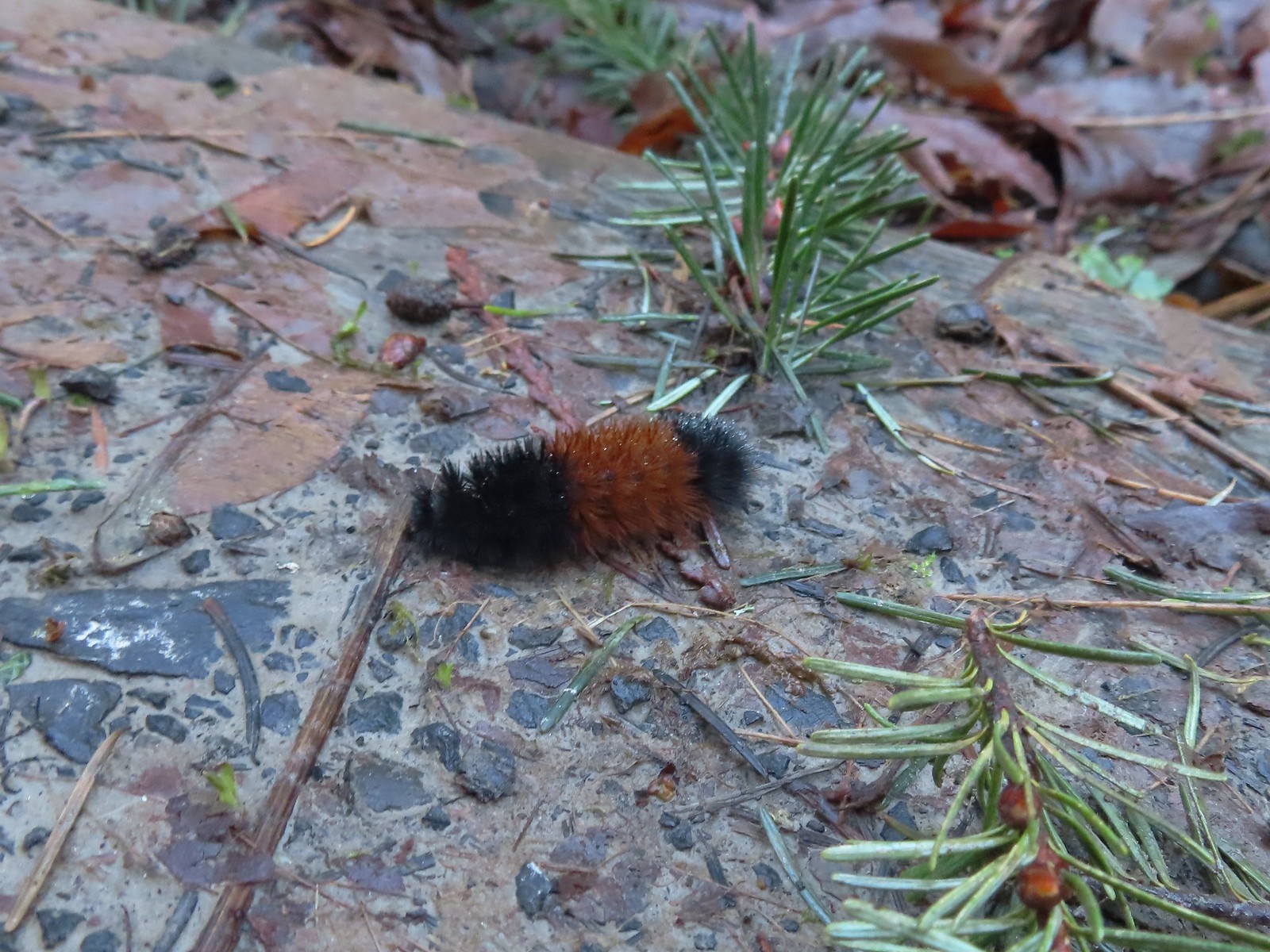
Woolly bearWoolly bear

Wildwood Trail climbing to the Newberry Road TrailheadClimbing to Newberry Road just to say we made it to the end of the Wildwood Trail.
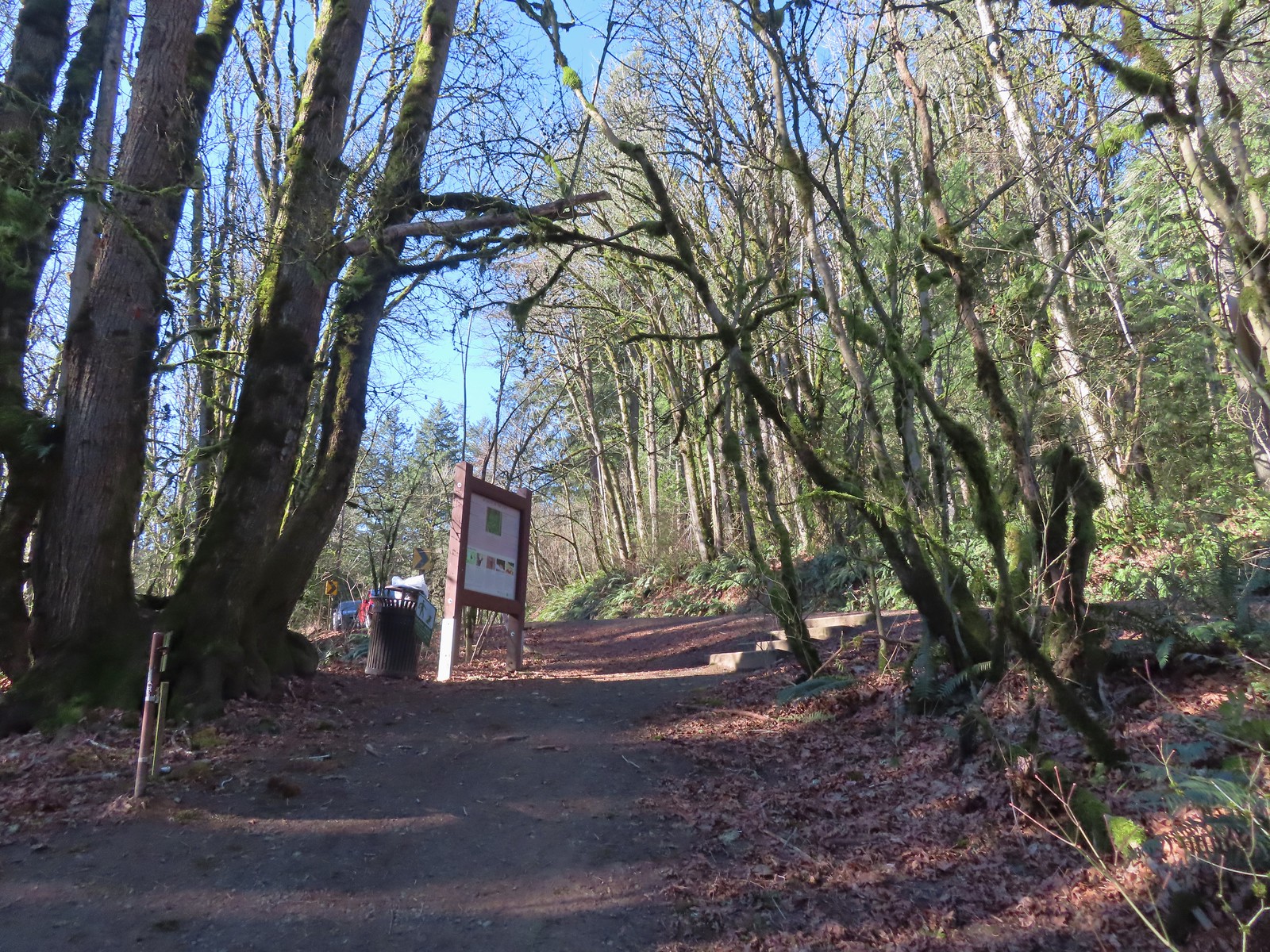
Northern end of the Wildwood Trail at Newberry RoadNewberry Road Trailhead.

After a brief break at the trailhead we headed back. We stuck to the Wildwood Trail passing both Firelane 15 and the BPA Road. Just under 4-miles from Newberry Road we arrived at Newton Road were we turned right and left the Wildwood Trail.
Wildwood Trail

Woodpecker way up in treeAnother sub-par bird photo, but it took us quite a while just to spot this woodpecker who was way up in the treetops (and mostly in the shade).

Wildwood Trail

Wildwood Trail junction with Firelane 15Crossing Firelane 15.

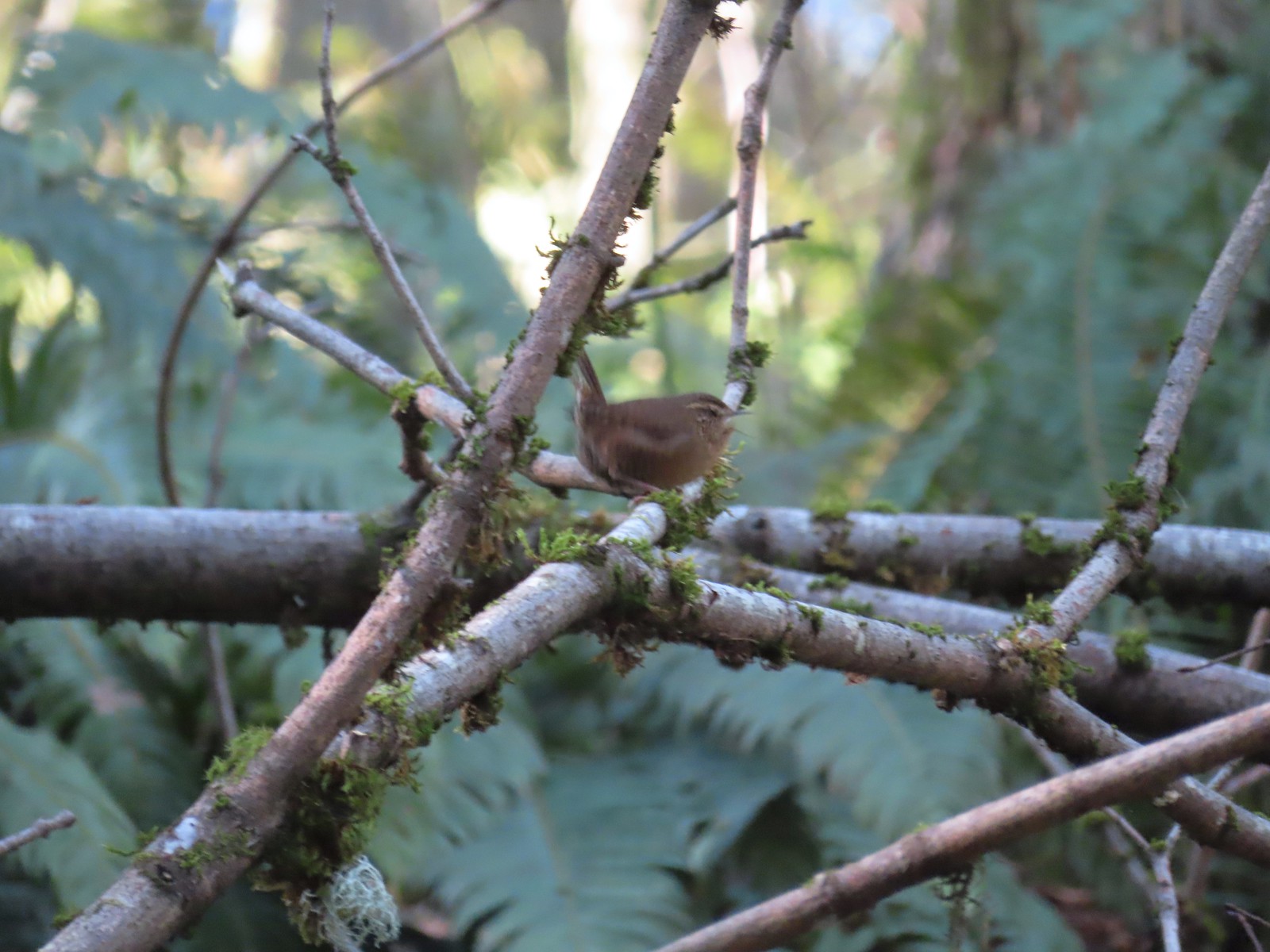
Wren (Pacific?)Another blurry bird. This one a wren, one of many we heard but the only one we were able to spot.
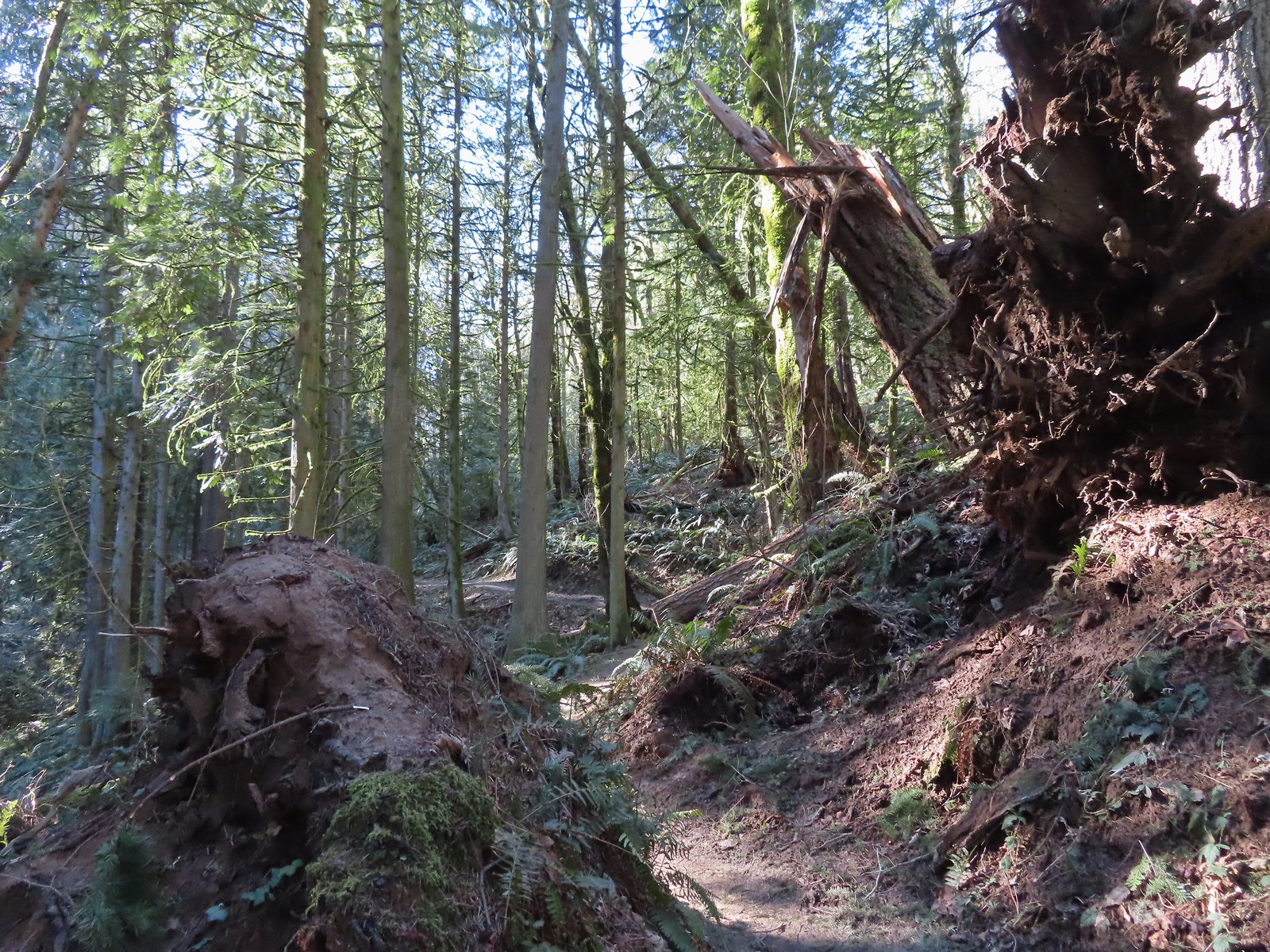
Uprooted trees along the Wildwood TrailUprooted trees along the Wildwood Trail.
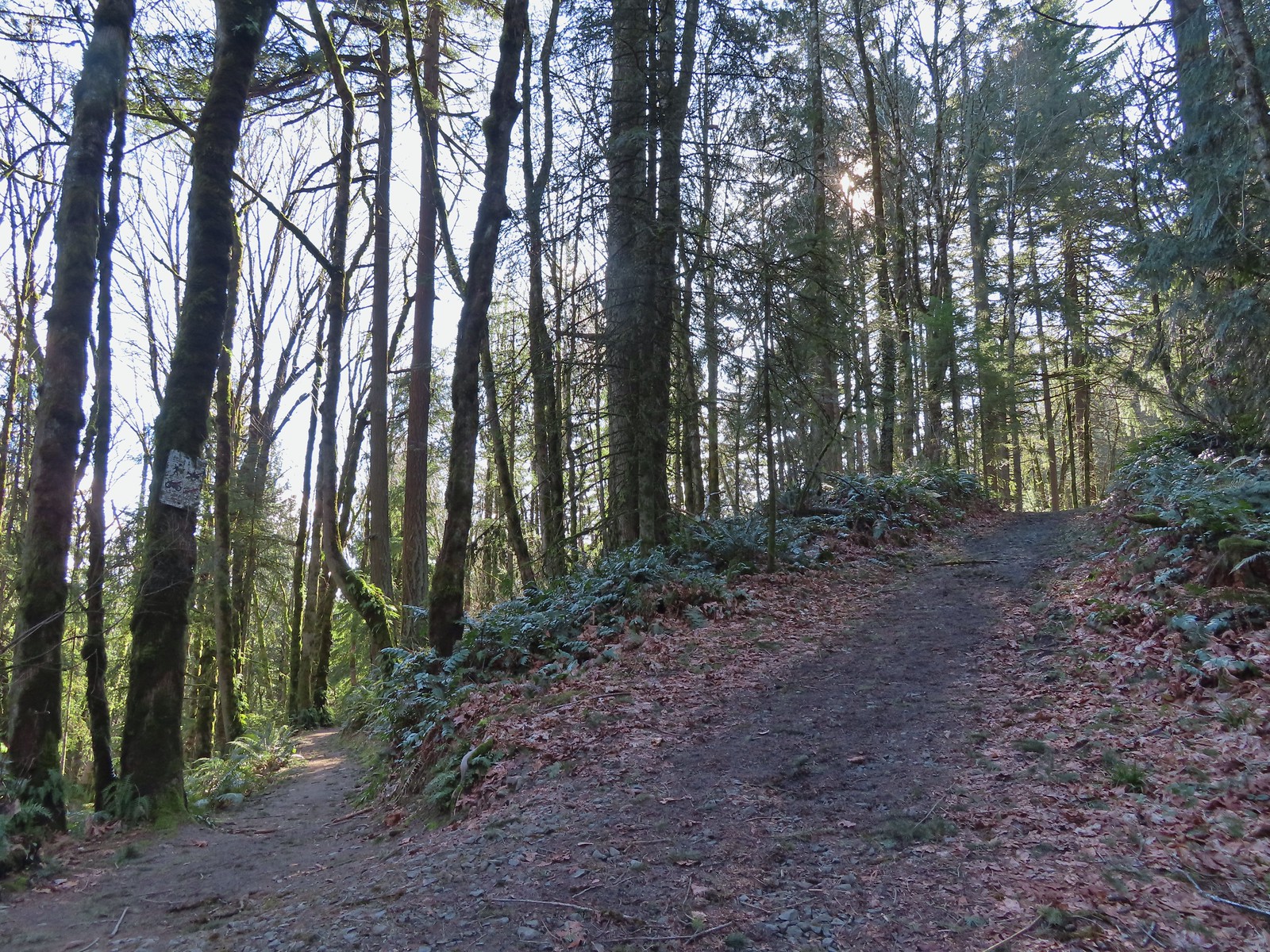
Wildwood Trail left and Newton Road to the rightNewton Road to the right of the Wildwood Trail.
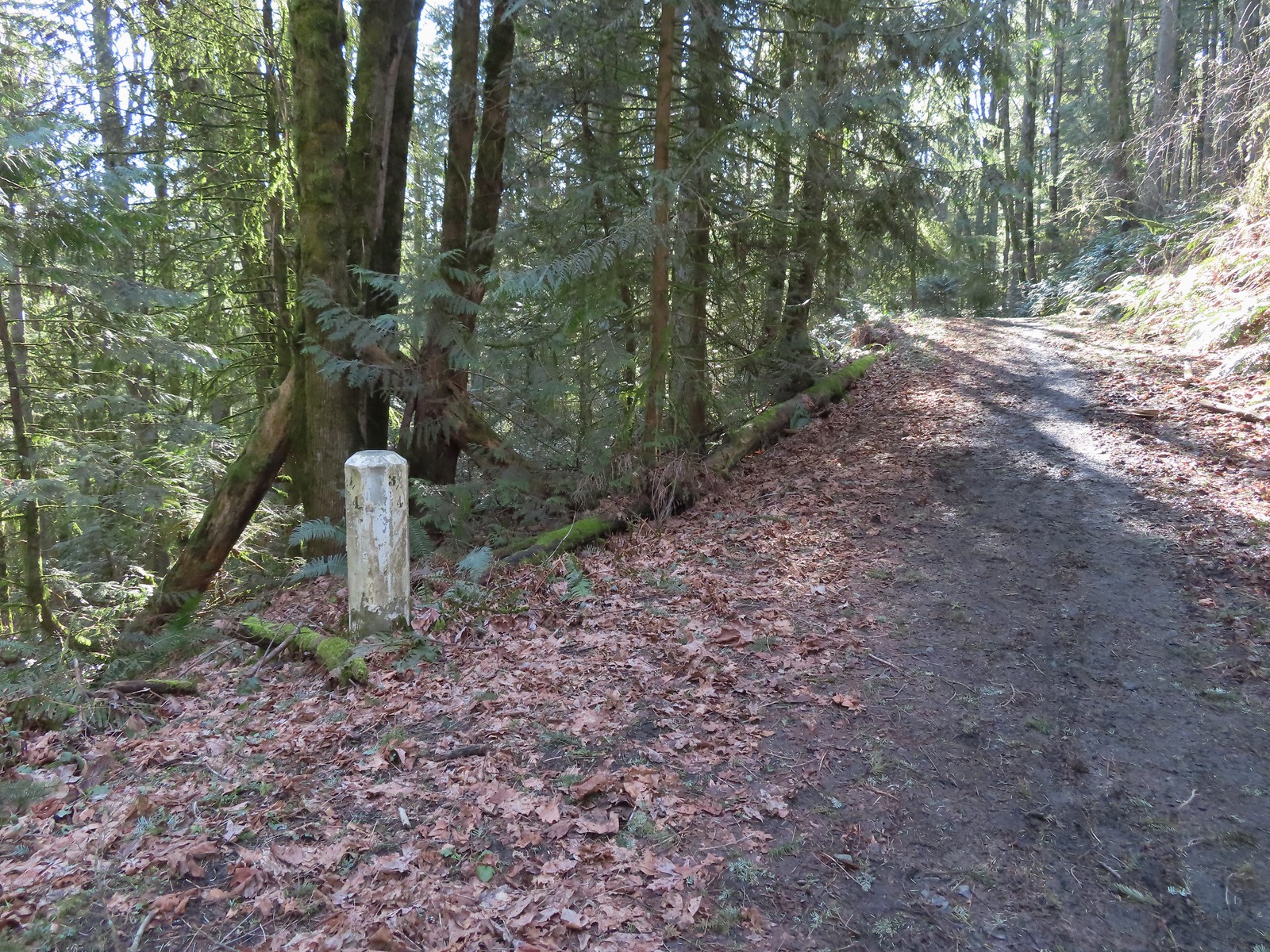
We turned uphill onto Newton Road and followed it just over half a mile to the Newton Road Trailhead where we paused to use the facilities.
Mile post 3/4 along Newton RoadMile marker along Newton Road.

Douglas squirrelDouglas squirrel

Habitat restoration project along Newton RoadOne of several small habitat restoration study areas along Newton Road.
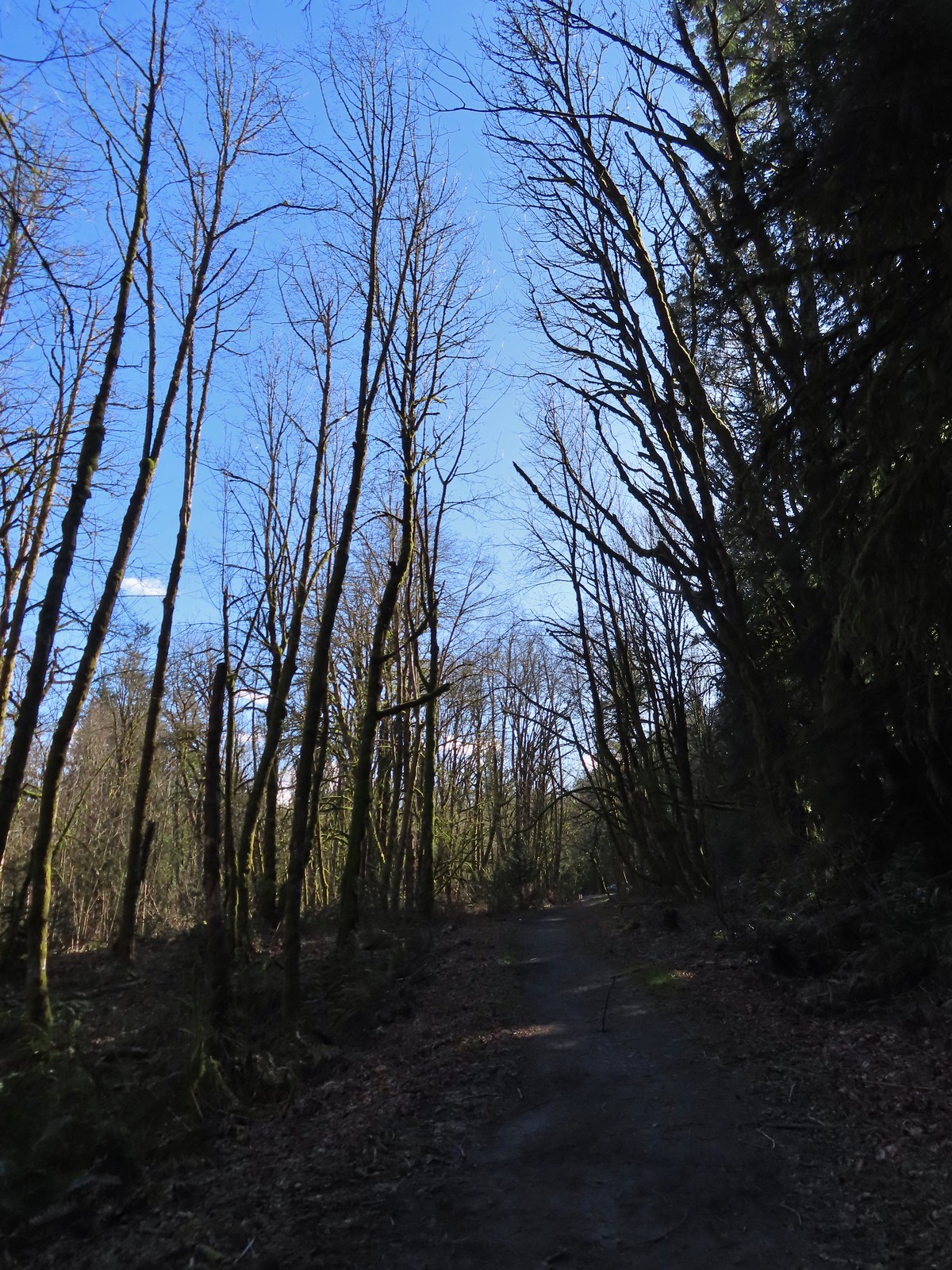
Newton Road Trailhead in the distanceThe Newton Road Trailhead in the distance.
After our break at this trailhead we followed Firelane 10 at the far end of the parking area 0.2-miles to the Wildwood Trail.
Firelane 10 from the Newton Road Trailhead

Firelane 10 junction with the Wildwood Trail

It was just over three quarters of a mile on the Wildwood Trail from Firelane 10 to the Germantown Road Trailhead.
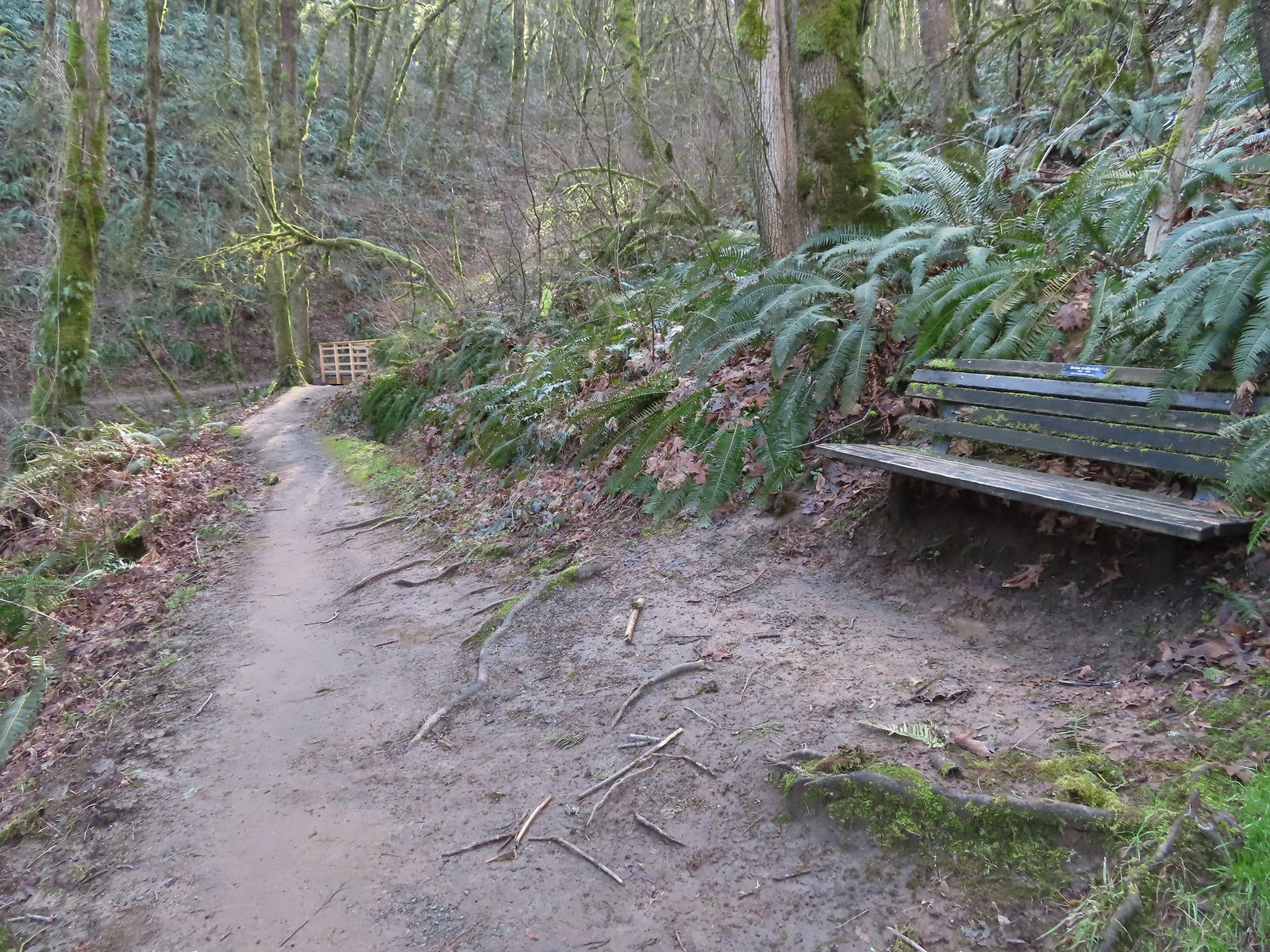
Bench along the Firelane Wildwood TrailOne of only two benches we saw all day.

Wildwood Trail approaching Germantown RoadCars parked along Germantown Road in the distance.

According to the Garmin our hike was 12.2 miles with approximately 2200′ of elevation gain. A good challenge for us this early in the year. (Our feet were not too happy with us.)

Despite the challenge it had been a nice hike with excellent weather, and while Forest Park is much busier than many of the trails we visit it never really feels too crowded.

While our experience on the trails had been good we arrived back at our car to find that people had parked along a fence behind us in the parking lot which didn’t leave us enough room to back out from between the cars on either side of us. We hadn’t expected anyone to park there because of the lack of room, but we should have known better. We spent the next half hour or so waiting for the owners of any of the three cars parked around us to return and set us free. (Although the SUV parked on our right was most likely going to be in the same predicament we were.) Fortunately the people that had parked directly behind us returned and we were able to escape. There have been other times I worried about having the car get trapped, but until today it had just been my own paranoia. Hopefully we will choose our parking spots more carefully in the future. Happy Trails!

Flickr: Northern Forest Park

Categories
Coastal Range Hiking Oregon Trip report

Corvallis to Sea Trail (Sugar Bowl Creek Segment) – 1/27/2024

Our 2024 hiking year has gotten off to a bit of a rocky start. We try and get a hike in on New Years Day, but I was dealing with COVID for the first time. Then an ice storm arrived just as I was feeling up to hiking. With the final weekend of January being our last chance to get a January hike in we resolved to head out regardless of the weather if it was at all possible.

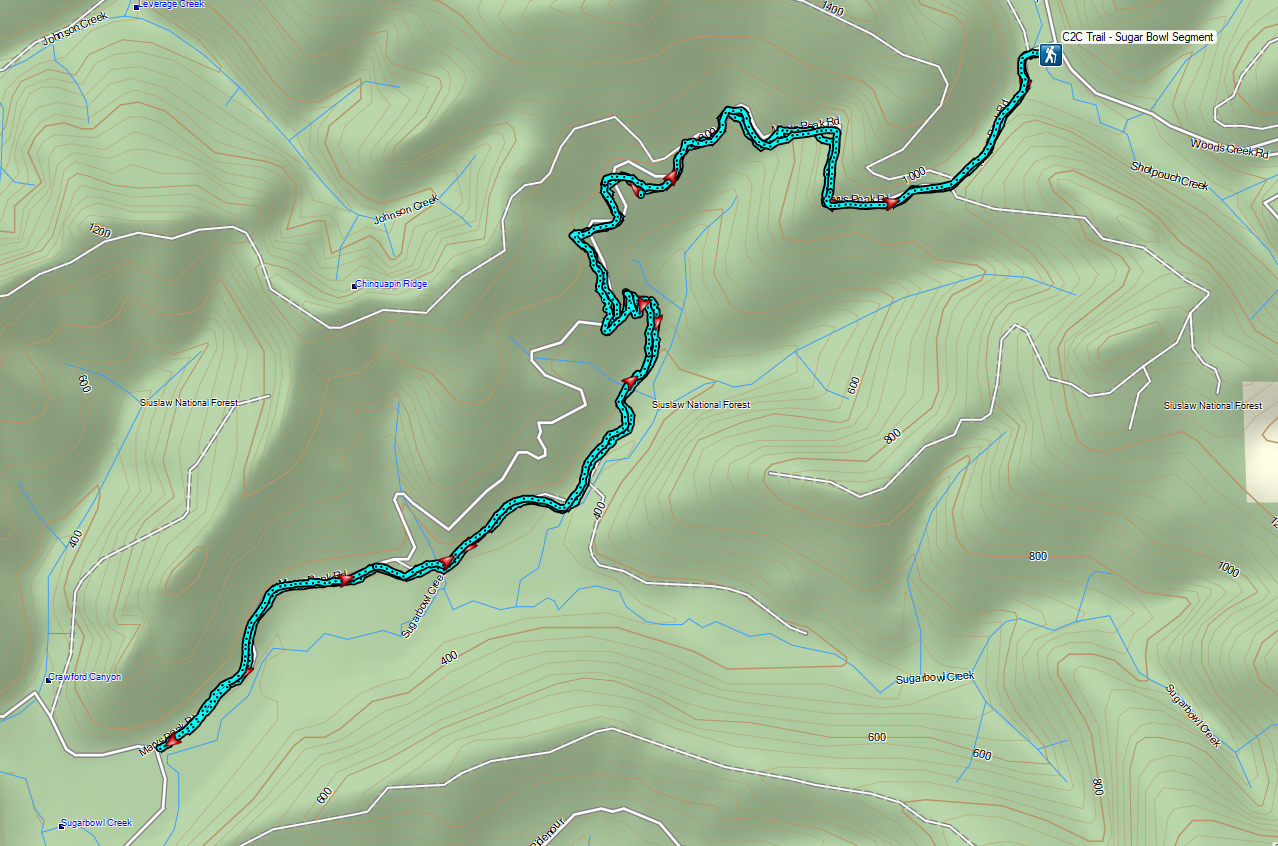
Heading into the month our plan had been to visit Forest Park in Portland to hike a section of the Wildwood Trail that we haven’t before, but the ice storm hit Portland hard resulting in lots of downed trees so we were in need of a Plan B. While no ice or snow was forecast, an atmospheric river was heading in which carried the possibility of bringing several inches of rain between Friday and Sunday so we were looking for an appropriate hike. Fortunately, we recently became members of the Hike Oregon website and one of the members only hikes there is a section of the Corvallis to Sea Trail. The hike was also listed as a good rainy-day hike, so it seemed like the prefect Plan B. The Corvallis to Sea Trail, or C2C Trail, is a 60-mile route connecting the city of Corvallis, OR to the Oregon Coast at Ona Beach State Park (post). Much of the trail is on roads which may be abandoned or gated and others open to vehicle traffic. For more information on the entire trail please visit the C2C Trail’s official website.

Our intent was to start our hike by parking at “The 4-way”, a 4-way junction of logging roads atop a hill on Shot Pouch Road. Google Maps labels this as the “C2C Trail Sugar-Bowl Kiosk” located approximately four and a half miles south of Burnt Woods and U.S. Highway 20. When we arrived at the 4-way though we discovered that there had been some very recent logging activity which had torn up the shoulders where cars would park leaving muddy ruts all over. In addition, in the final tenth of a mile of Shot Pouch Road mud was piled high enough in the center that it scrapped the bottom of our Subaru as we passed over. Not being comfortable parking near the 4-way we retreated four tenths of a mile back down the hill to the intersection of Shot Pouch Road and Shot Pouch Trail Road where there was enough of a shoulder for us to pull off and park.
Corvallis to Sea Trail pointer on the back of a sign at the junction of Shot Pouch Rd and Shot Pouch Trail Rd

The C2C follows Shot Pouch Trail Road for approximately 4-miles then turns up Shot Pouch Road to the 4-way so we were still starting on the actual trail.
C2C Trail pointer

From our parking spot we crossed Shot Pouch Creek on Shot Pouch Road and hiked back up to the 4-way.
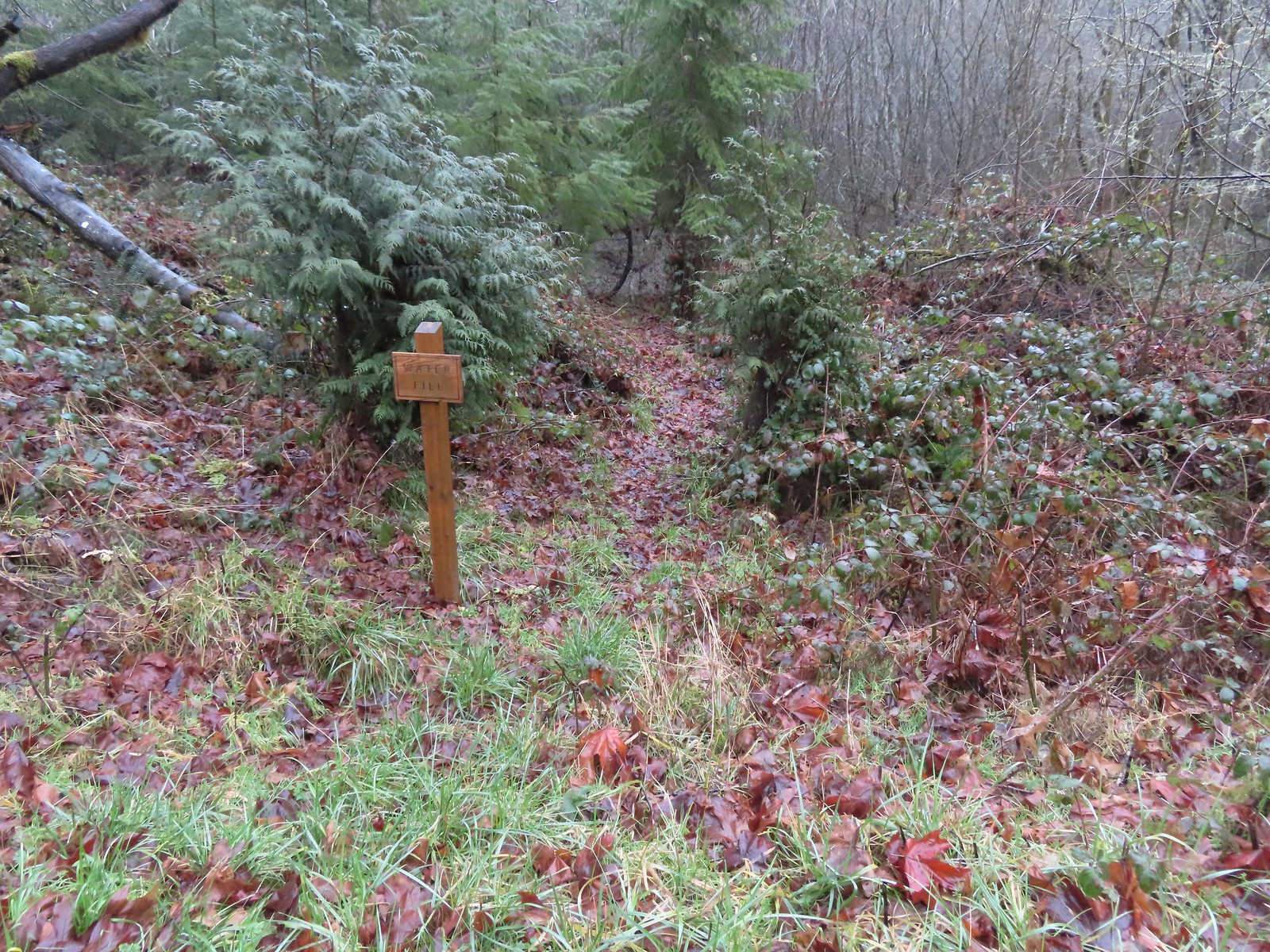
Water Fill spur trail to Shot Pouch CreekJust before the bridge over Shot Pouch Creek is a spur trail for water which is reportedly scarce along the entire 60-mile route.
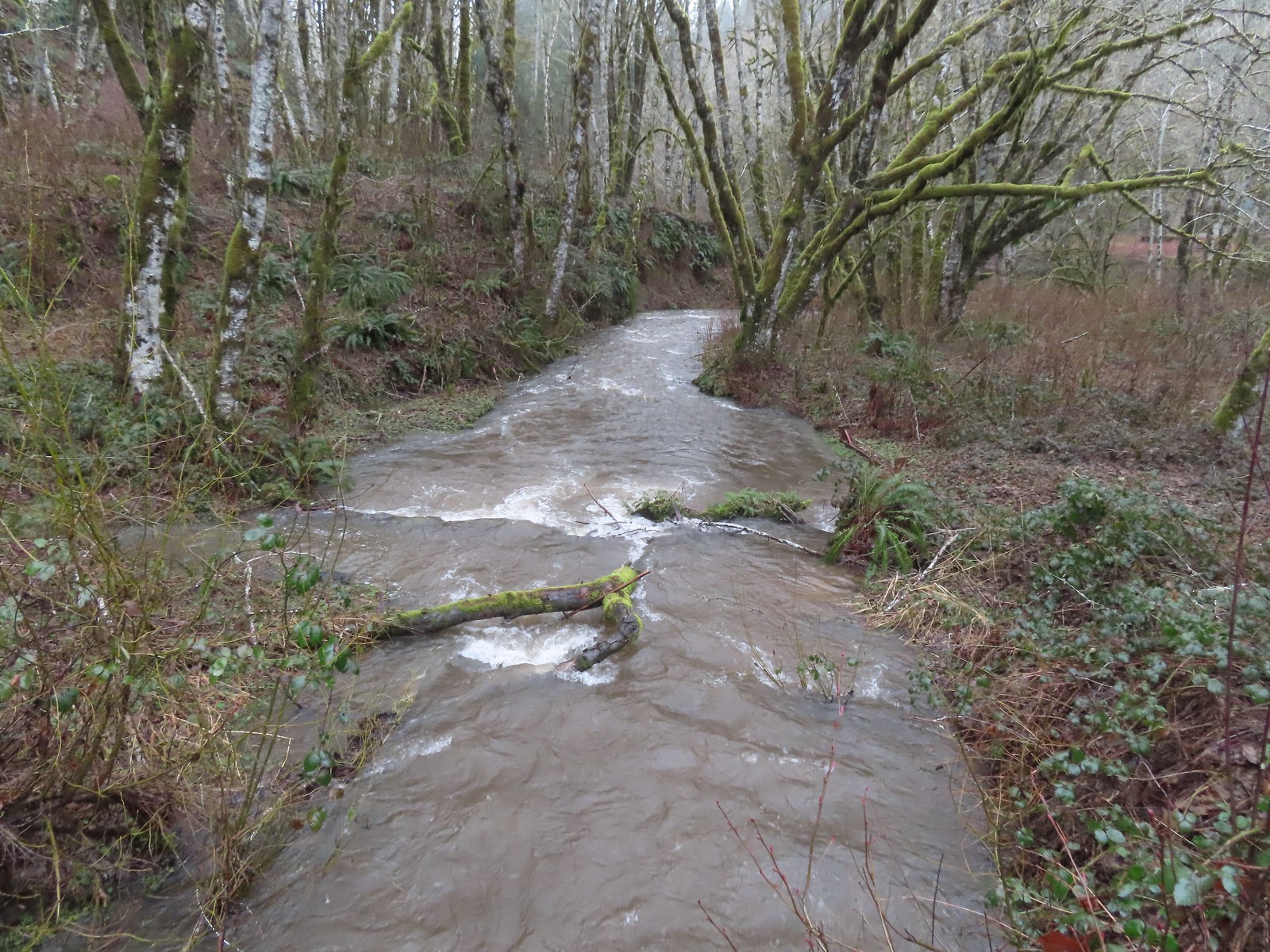
Shot Pouch CreekA swollen Shot Pouch Creek.

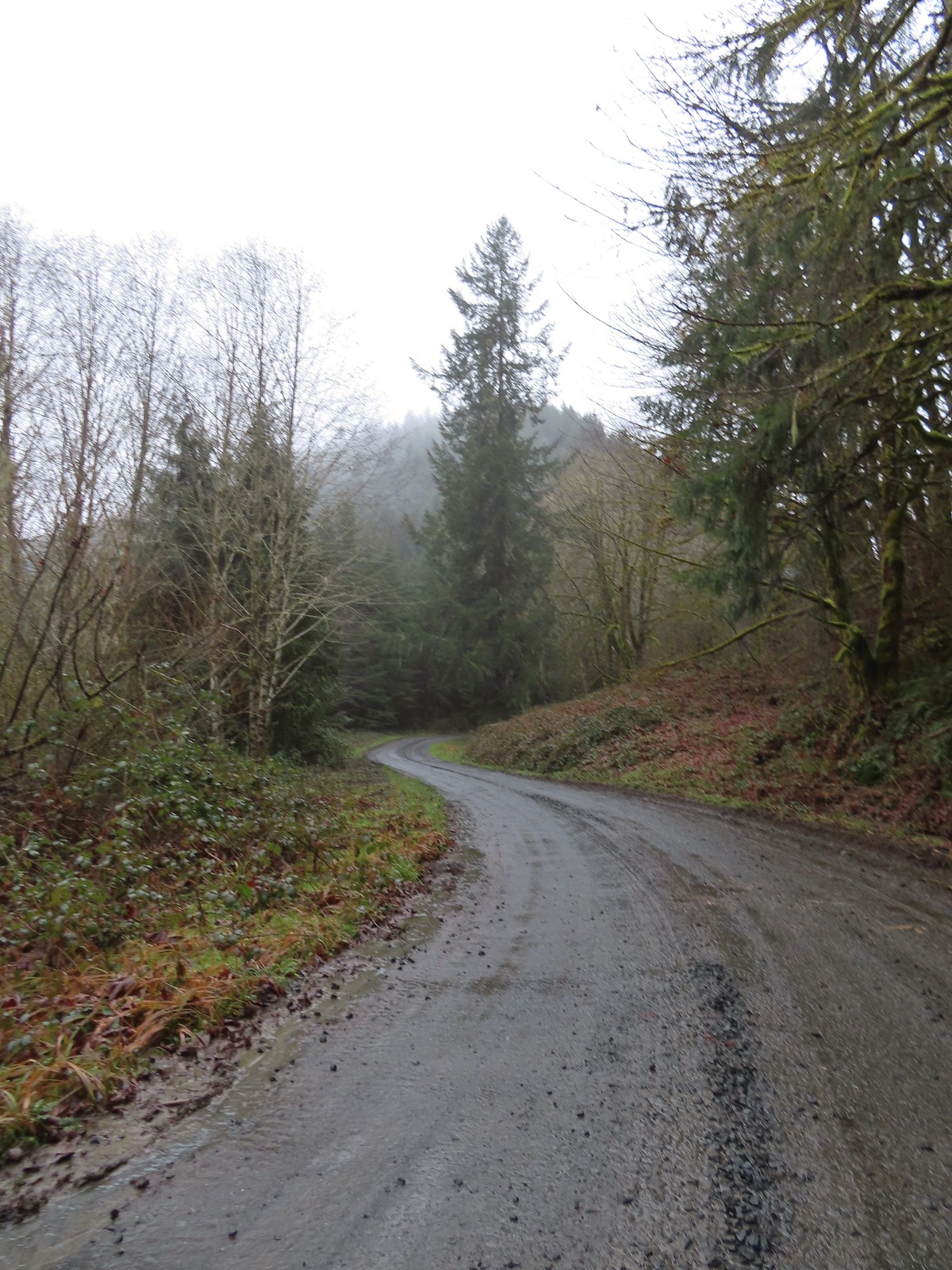
Corvallis to Sea Trail following Shot Pouch Rd.Following the trail/road up to the 4-way.

Old building along the Corvallis to Sea TrailThis was one of a handful of similar structures in the area. So far we haven’t found any information on their history.

Active logging along the Shot Pouch Rd section of the Corvallis to Sea TrailNearing “The 4-way”. Just ahead is where the Subaru bottomed out slightly.

The 4-Way along the Corvallis to Sea TrailThe 4-way

We took the center road at the 4-way which led downhill to a kiosk and yellow gate.
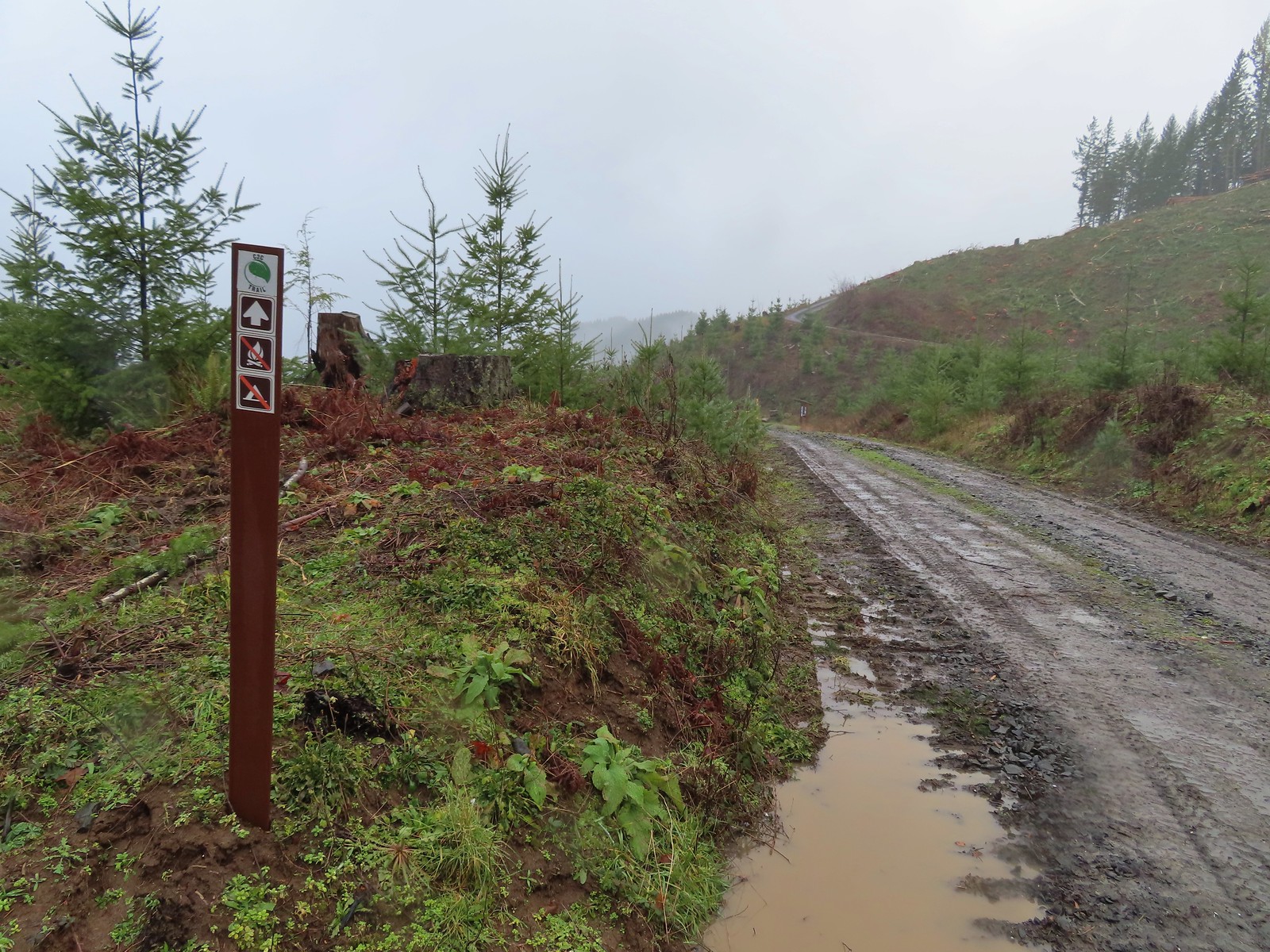
Corvallis to Sea TrailTrail marker with the kiosk and part of the gate in the distance.
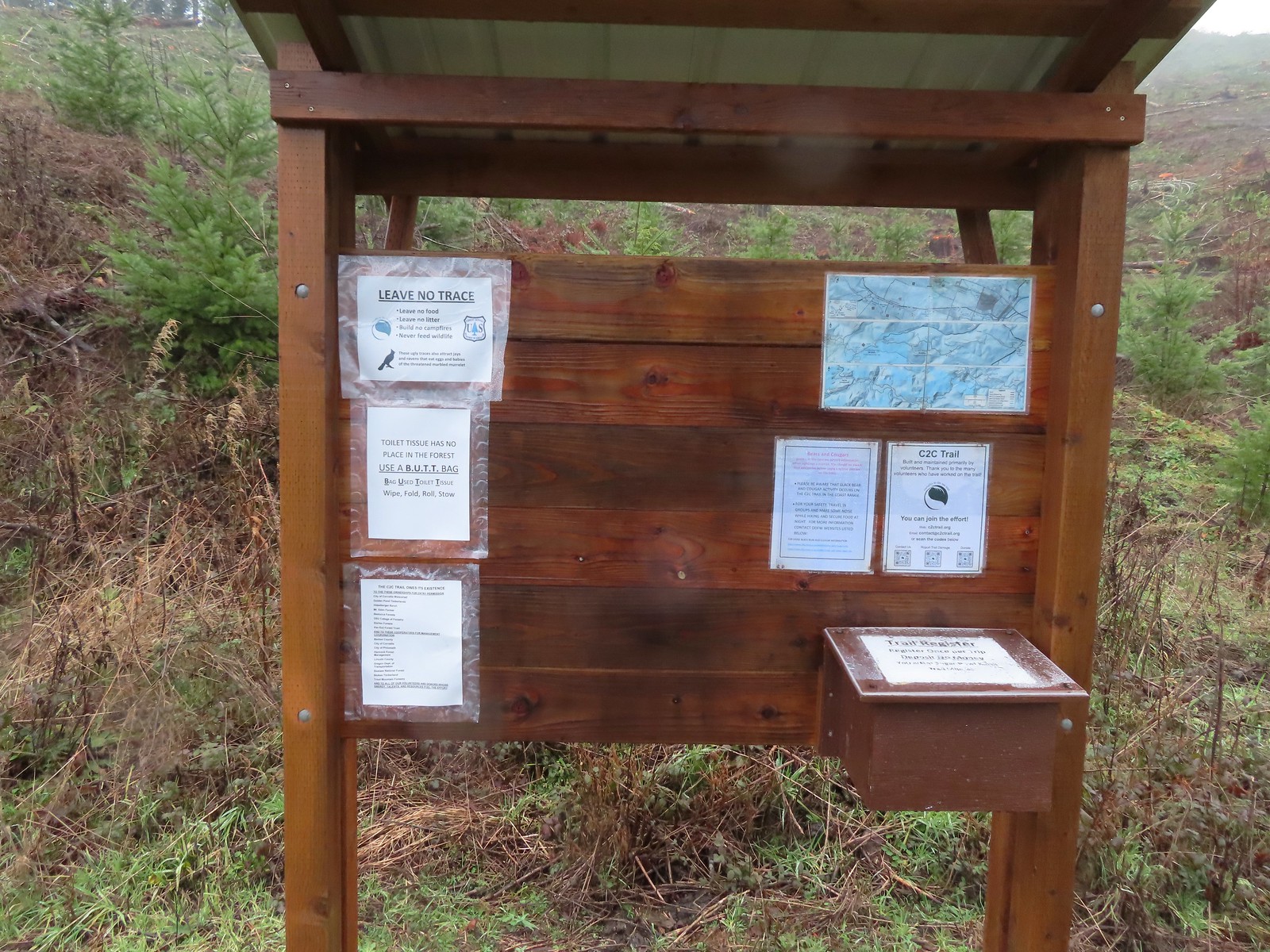
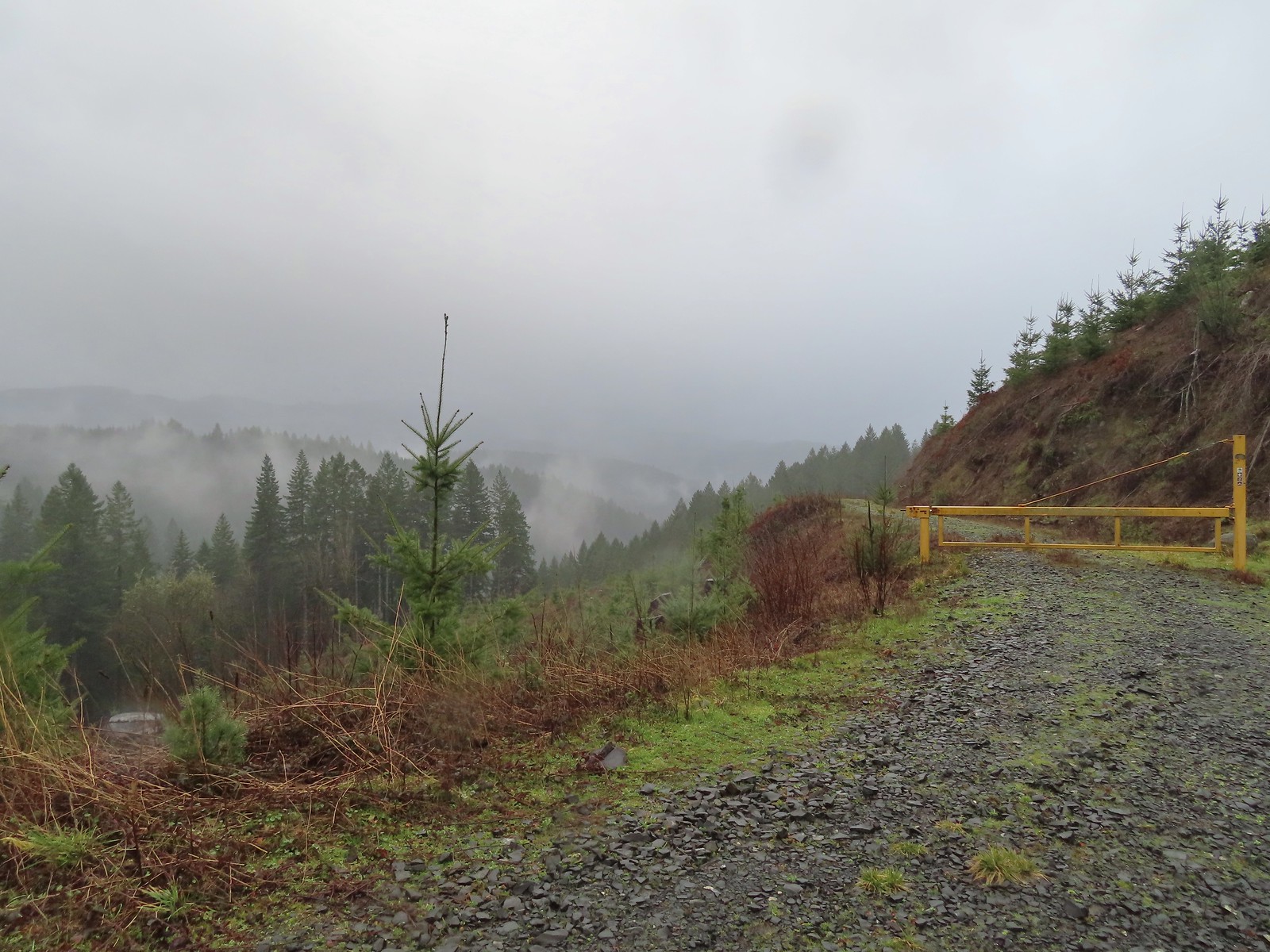
After filling out a card at the trail register we passed the gate and continued downhill on what at first was a very rocky old road.
Kiosk near The 4-Way along the Corvallis to Sea Trail

Corvallis to Sea TrailCloudy and wet morning as expected.

Corvallis to Sea Trail

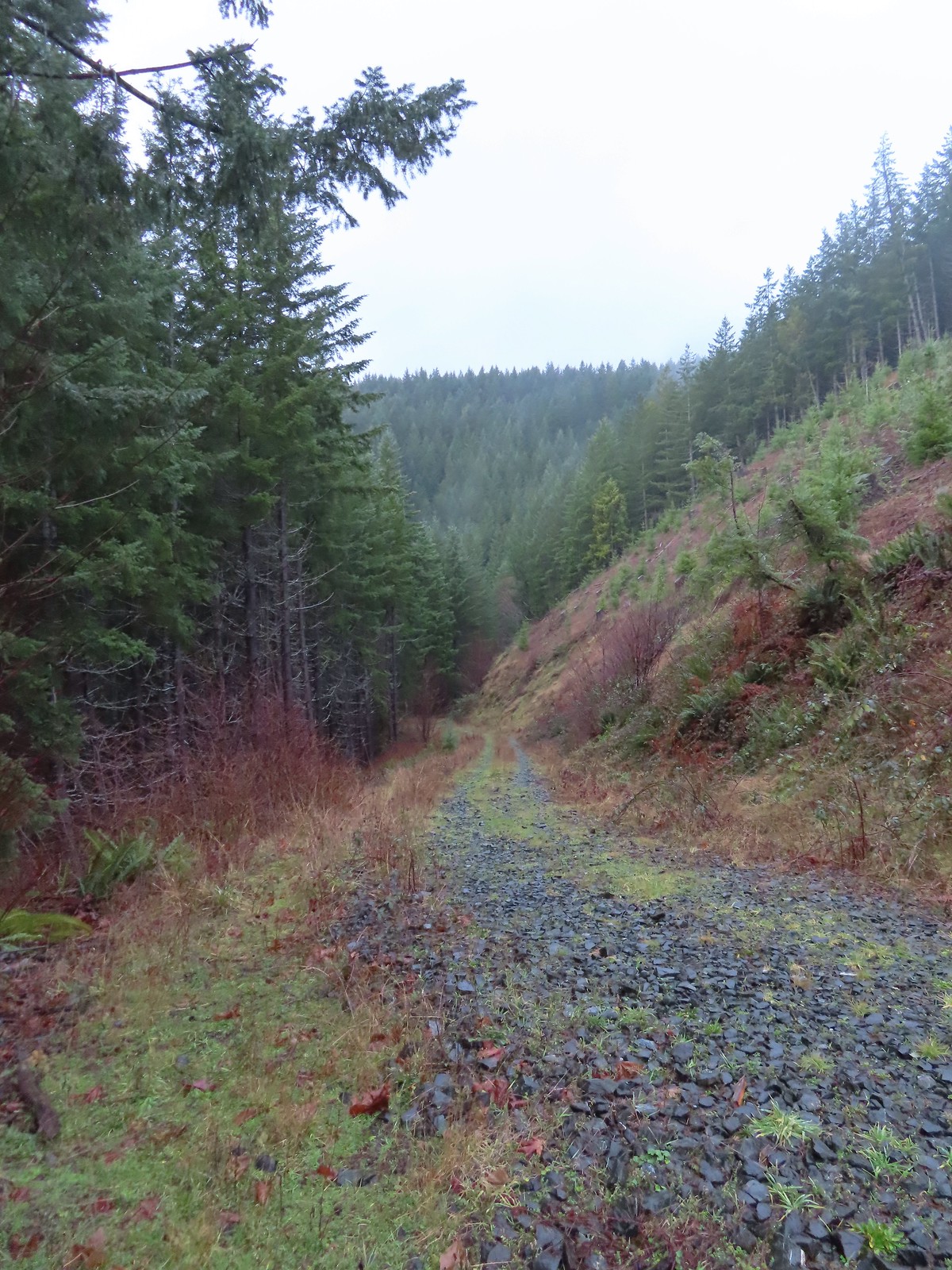
Corvallis to Sea TrailThe rocks on the first stretch were not a pleasant surface to walk on but it wasn’t too long before we left the rocks behind.

Small cascade along the Corvallis to Sea TrailSmall cascade along a side creek.

A decent rain shower had passed overhead while we were on the really rocky road, but after that conditions improved and we encountered no more significant precipitation. It was however unseasonably warm with temperatures in the mid 50s. The combination of the warm weather and wet conditions seemed to have brought all the rough-skinned newts out to explore.
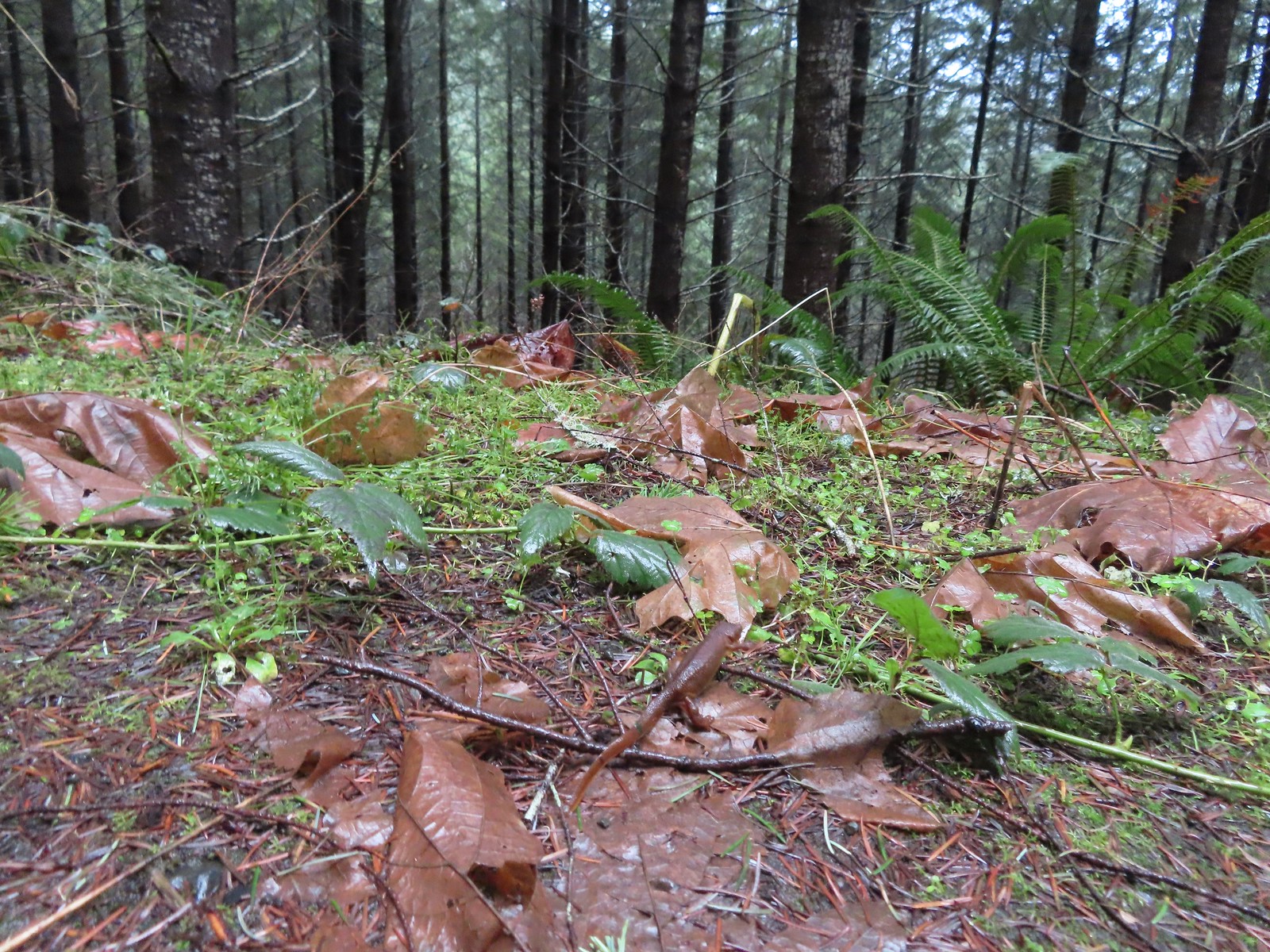
Rough skinned newtThe first of the newts we spotted. They blend well with the leaves so we tried to really keep our eyes open to avoid accidently stepping on any. Over the course of the hike we saw several dozen and who knows how many we didn’t see.
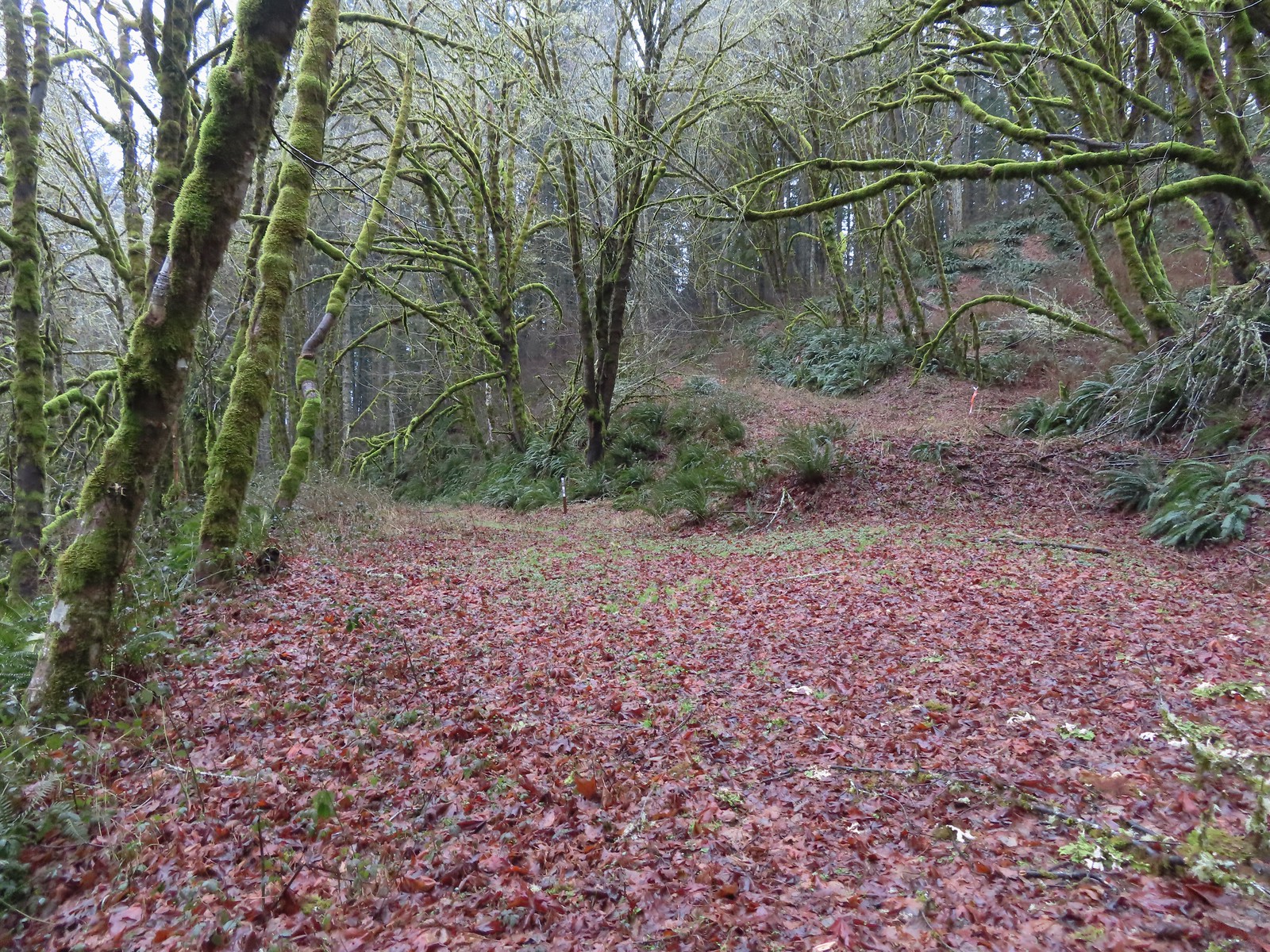
The trail was well marked wherever an old roadbed split off and where the Sugar Bowl Creek Trail segment split off from the roadbed a little over a mile from the kiosk.
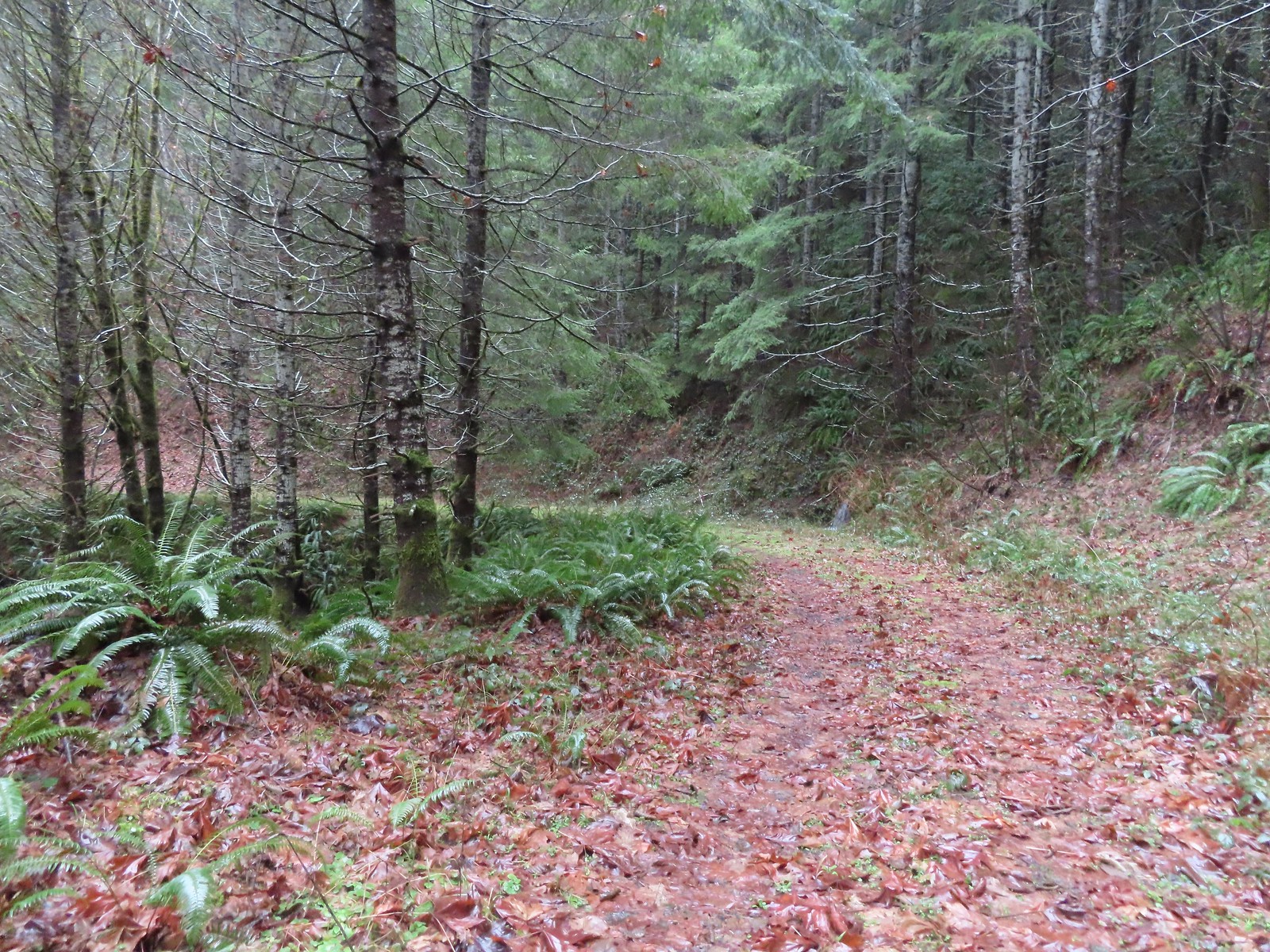
Corvallis to Sea Trail heading downhill to the leftC2C Trail marker along the left-hand (downhill) fork.

Corvallis to Sea Trail

Corvallis to Sea TrailThis was the only significant blowdown we encountered on the hike and the tree here was a fairly easy duck under.
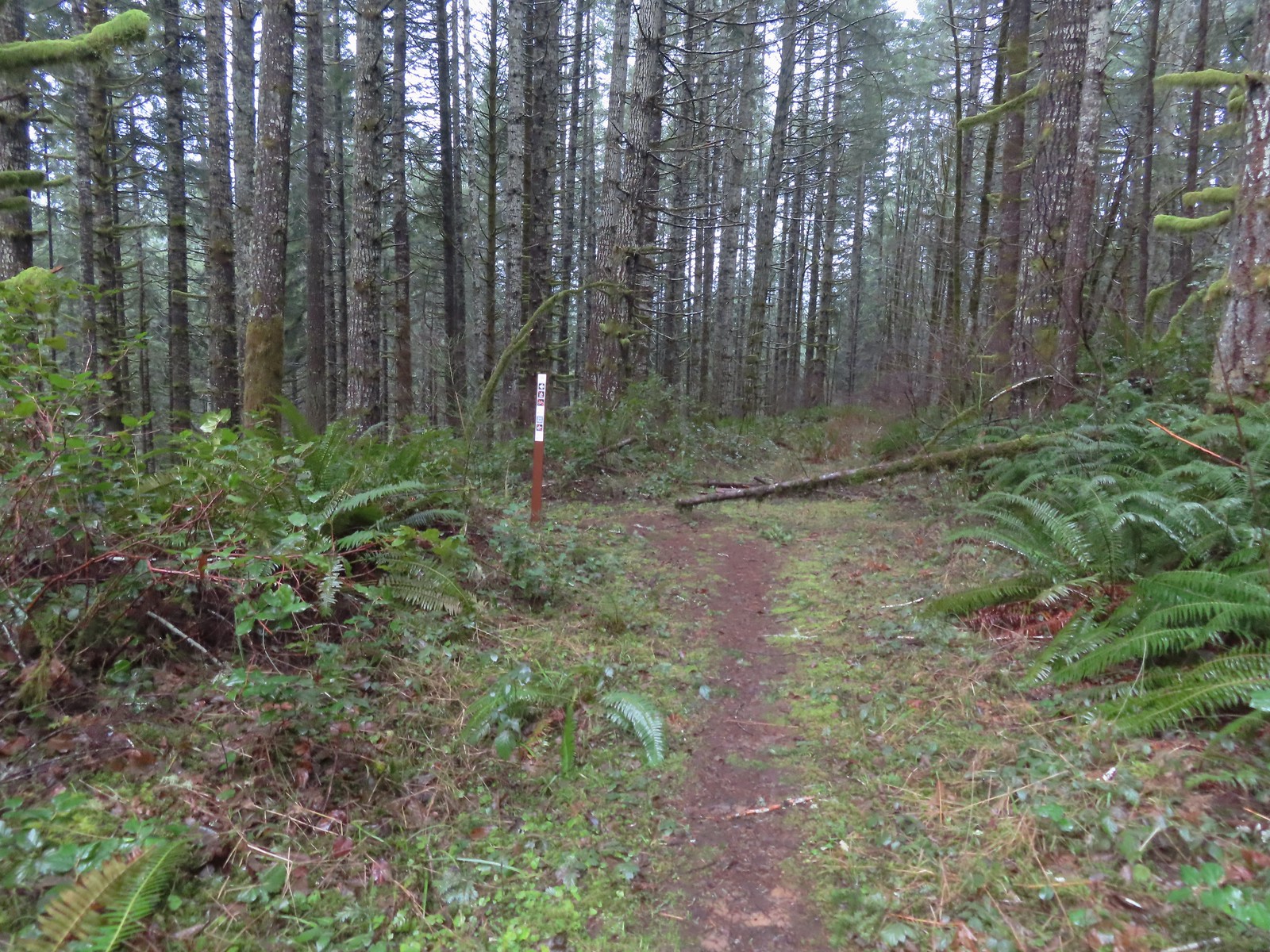
Corvallis to Sea Trail passing through the Siuslaw National ForestThe Sugar Bowl Creek Trail segment leaving the old road. This was the only portion that was true singletrack along the Sugar Bowl segment. Here the trail passes through a portion of the Siuslaw National Forest.

Corvallis to Sea TrailThe Sugar Bowl Creek Trail switchbacked downhill to the East before turning back to the SW in the Sugar Bowl.
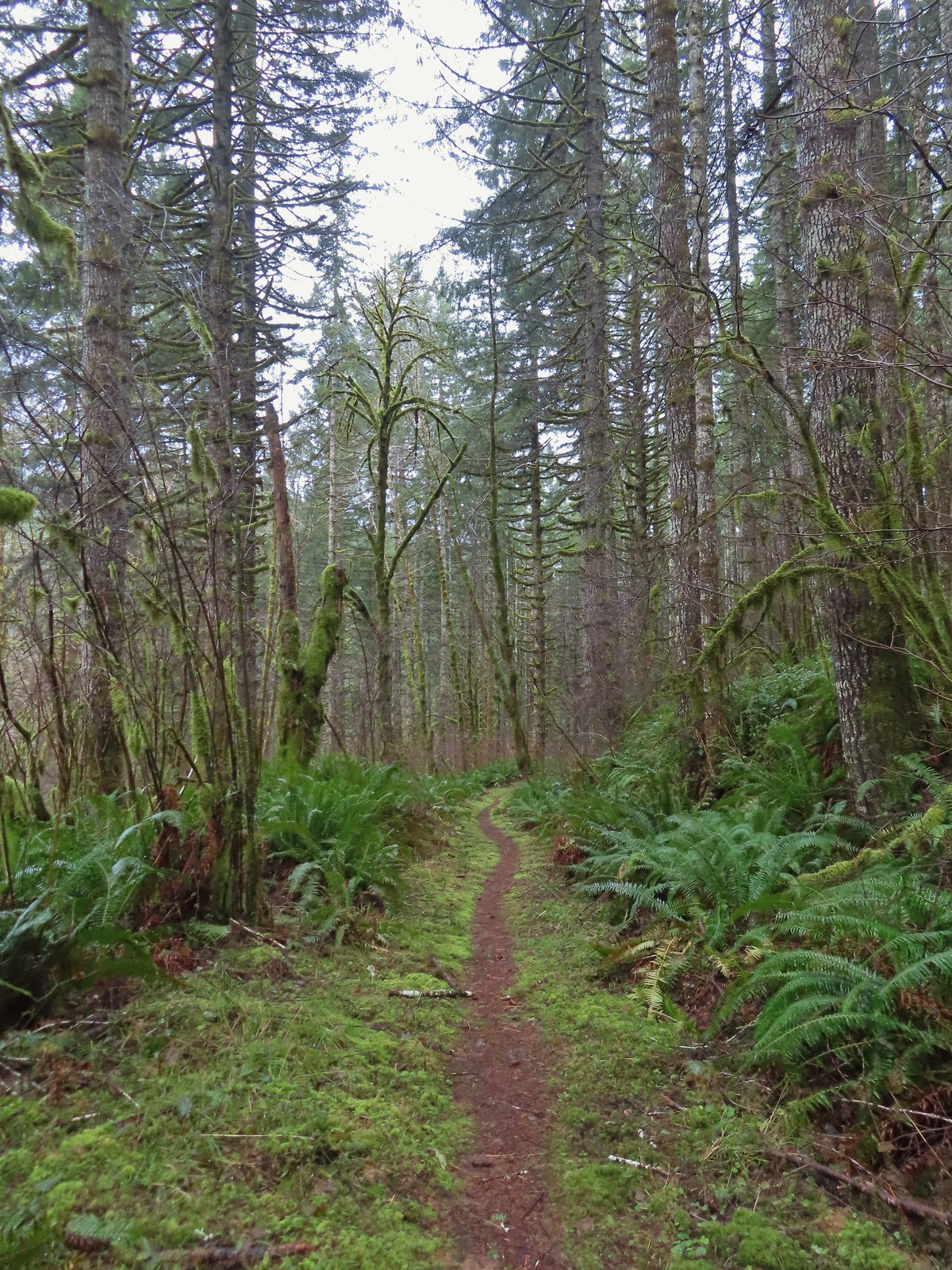
Corvallis to Sea TrailThe trail eventually rejoined the old roadbed.

A little blue sky above the Corvallis to Sea TrailActual blue sky.

Corvallis to Sea Trail arriving at Mary's Peak RoadArriving at Mary’s Peak Road.

Corvallis to Sea Trail signs along Mary's Peak RoadSignage along Mary’s Peak Road for the C2C.

We followed Mary’s Peak Road just over a mile to another kiosk and gate near Harlan Road where we turned around.
Corvallis to Sea Trail

Rough skinned newtThis particular newt was not about to move out of Heather’s way.
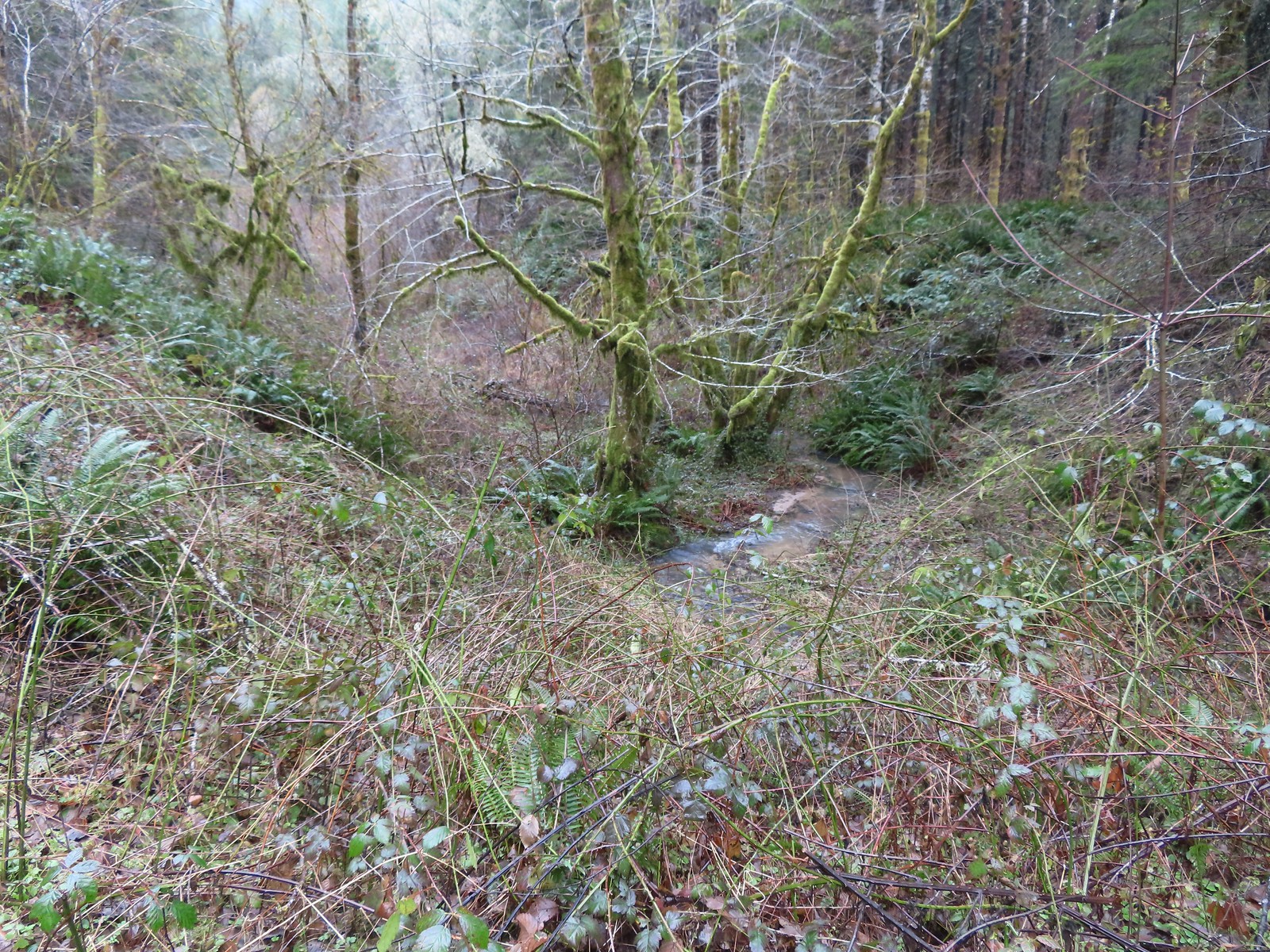
Tributary of Sugar Bowl CreekA side creek flowing toward Sugar Bowl Creek.
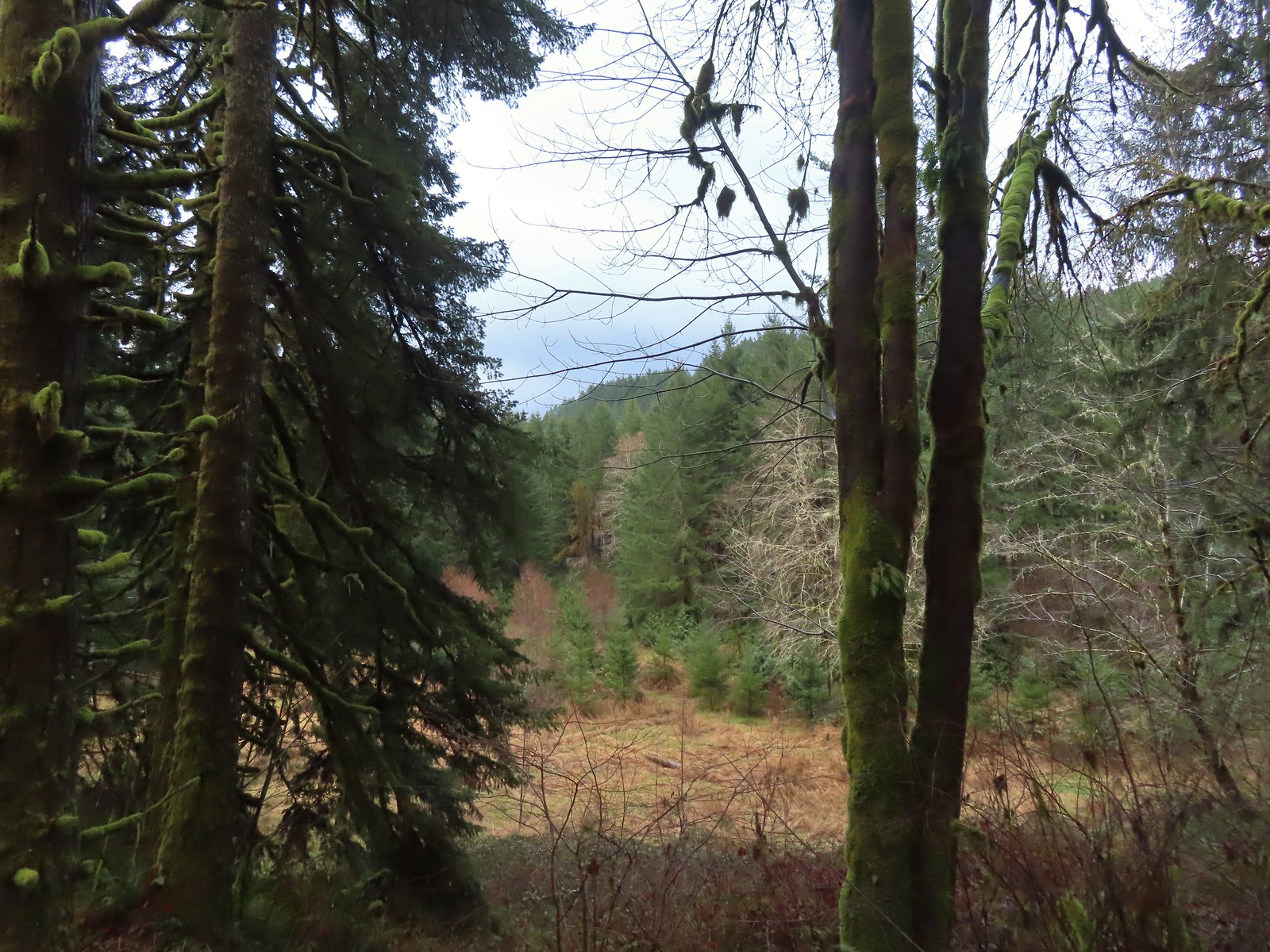
Sugar Bowl Creek is out in the trees somewhereSugar Bowl Creek was never visible from the C2C but it was out there somewhere.
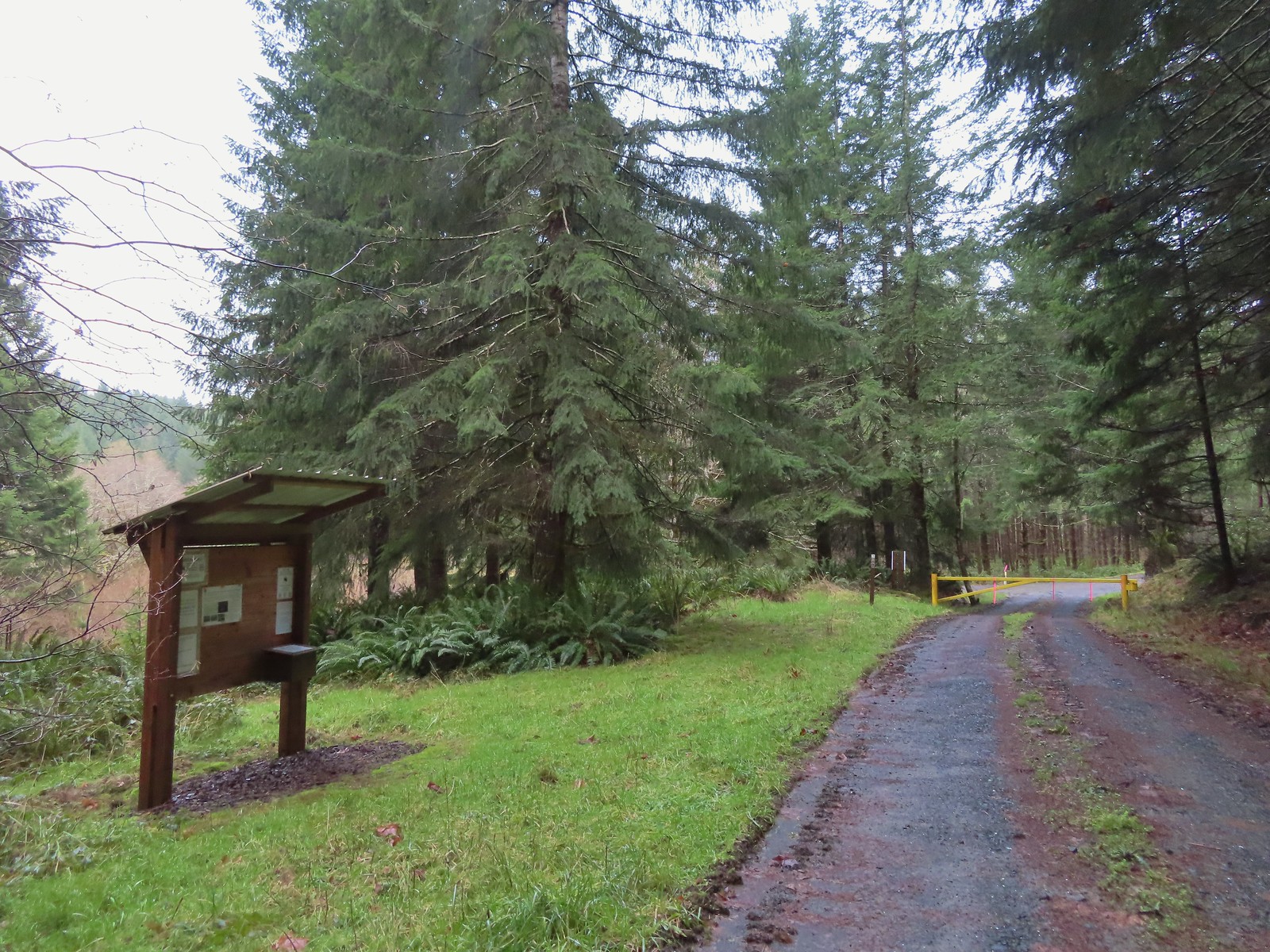
Corvallis to Sea Trail arriving at the Harlan Road GateThe Harlan Road Gate and kiosk.

The uphill hike back was a little warmer than we were prepared for, and it didn’t help that we were needlessly wearing raingear which doesn’t breathe.
Corvallis to Sea Trail

Coral fungusCoral fungus

Creek along the Corvallis to Sea TrailUnnamed creek

View from the Corvallis to Sea TrailBack on the rocky roadbed below the 4-way.

Corvallis to Sea Trail arriving at the gate below The 4-way on Shot Pouch RoadBack at the gate and kiosk.

Aside from getting a little sweaty the hike was great. We didn’t see anyone else all morning and the lack of rain was a pleasant surprise. While there isn’t anything along this part of the C2C that is going to blow you away visually it was indeed a perfect rainy winters day hike. With our starting point the roundtrip hike was 7.2 miles with a little over 700′ of elevation gain.

It felt great to finally get our 2024 hiking year underway. We’re looking forward to seeing where our wanderings wind up taking us this year. Happy Trails!

Flickr: C2C Trail -Sugar Bowl Segment

Categories
Hiking Oregon Washington Year-end wrap up

The Hikes of 2023 – A Look Back

2023 was another unique year of hiking for us. I made it outside for hikes on 62 days while Heather managed to join me, at least in part on 58 of those days. We set off from 109 trailheads and 5 times from our tent which was the highest number of starting points for us in a given year. While the 62 days marked my second highest number of days spent hiking the 608.5 miles hiked was just the 8th most miles in a year. In other words, 2023 was the year of shorter, multiple stop days allowing us to visit a good number of different trails.

In fact, our shortest hike was just over a quarter mile at Nesika Park in Lincoln City (post) while my longest hike was a 17.7 mile out-and-back up and over Mt. Hebo (post).

This year we visited city, county, and national parks as well as state and national forests. We also made it to a national monument and a national volcanic monument. We spent time at six national wildlife refuges and a couple days hiking in privately held nature preserves. Seventeen hikes took us into ten different designated wilderness areas. We truly are blessed to live in a region with so many options and so much variety.

While we continue to focus on hikes that we have not done before we spent a higher percentage of our time hiking in Oregon than typical this year. We spent just three days in Washington, none in California, and for only the second time hiked a trail in Idaho along the Snake River. That being said only 17 of our days brought us to a trail we’d hiked in a previous year and none of the hikes were an exact repeat of one we’d done before.

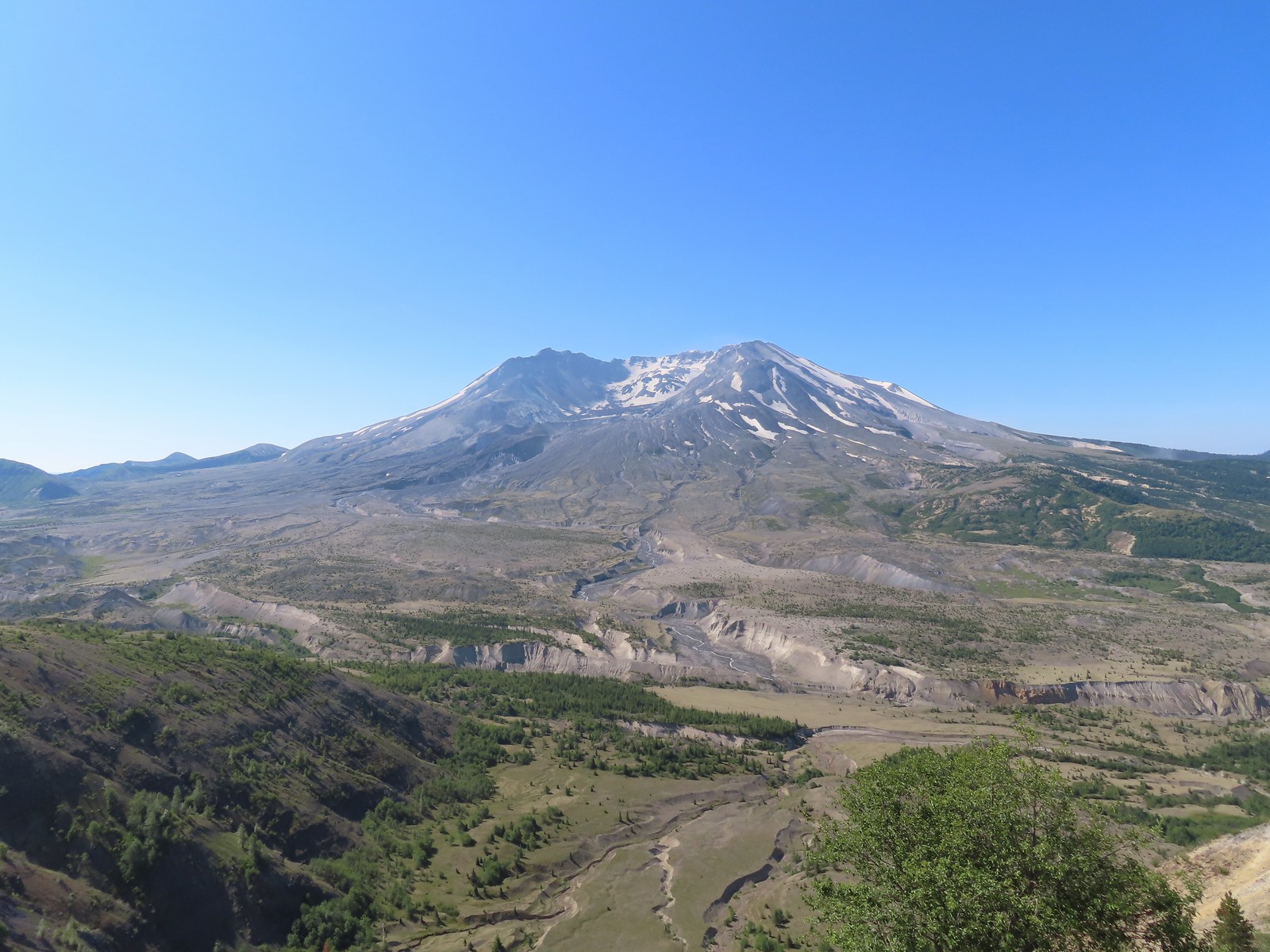
Our most northern hike was in Washington on the Boundary Trail North of Mt. St. Helens (post).
Mt. St. Helens

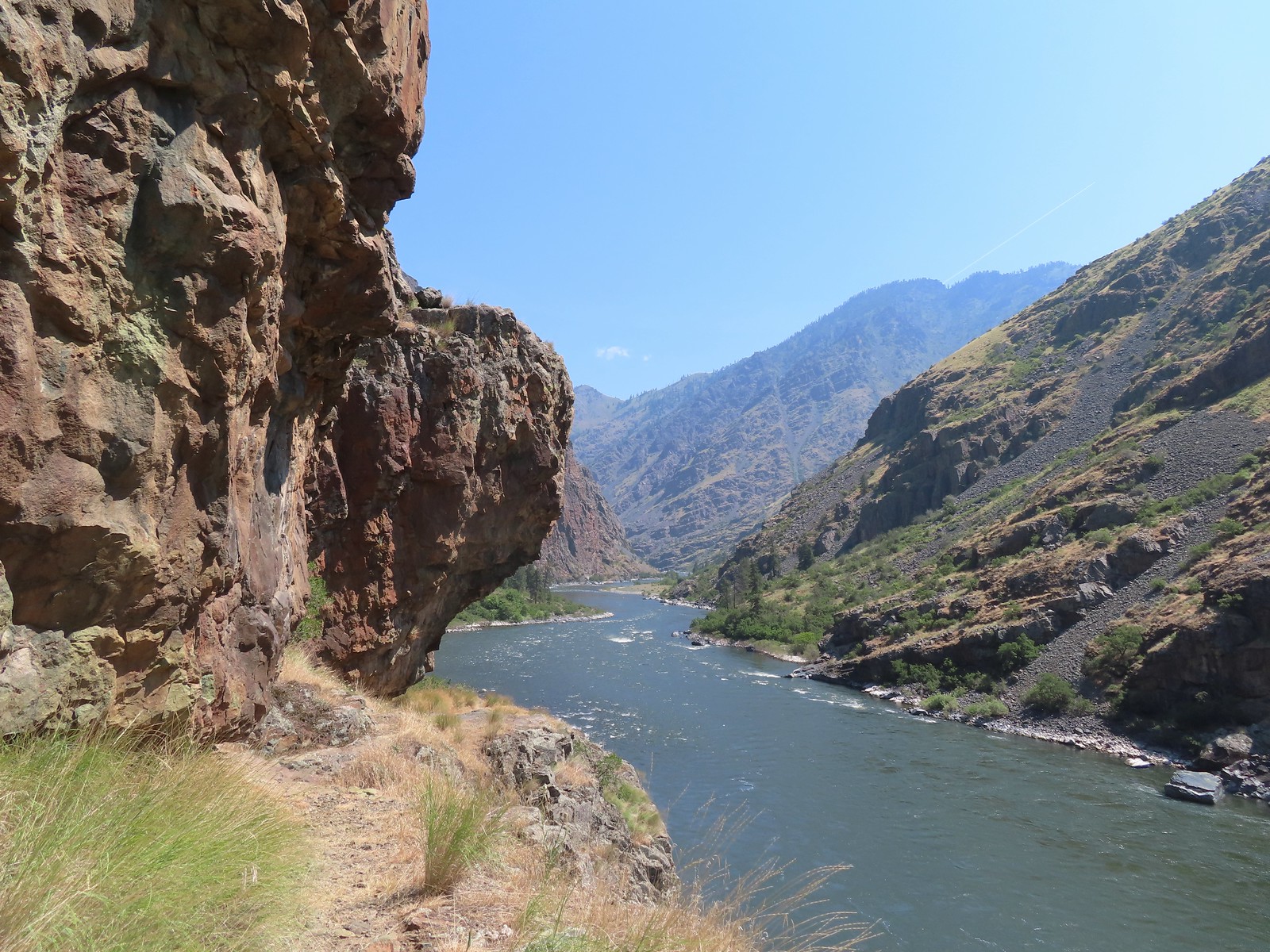
I would have guessed our Eastern most hike was the one in Idaho, but it was actually another stop we made that same day on the Oregon side of the Snake River (post).
Trail along the Snake River

While we didn’t hike in California this year our Southernmost hike at Tanner Lakes saw us briefly drive through part of the State to reach the trailhead (post).
Preston Peak and El Capitan from Tanner MountainPeaks in California from Tanner Mountain.

Once again our Western most hike was near the Pacific Ocean, but it wasn’t one of our beach hikes, it was actually slightly inland at Cape Mountain near Florence (post).
Pacific OceanThe Pacific Ocean from Cape Mountain.

In general the weather was good this year, almost too good, as drought conditions have been an issue. Aside from getting caught in a heavy thunderstorm at Cathedral Hills (post) precipitation was almost non-existent. Clouds and fog were also not much of an issue this year, with a trip to Mt. Hood (post) being the only day where our views were impacted by either of these. It wasn’t all clear views though as persistent smoke, first from wildfires in Canada then fires in California and Southern Oregon left most views with at least a hint of haze seemingly the entire year.

Our biggest accomplishment this year was reaching our goal of hiking all 100 featured hikes in one of William L. Sullivan’s
“100 Hikes/Travel Guide Southern Oregon & Northern California” edition 4.2 (post). During an October trip to Grants Pass we checked off the final hikes with the last being a visit to Babyfoot Lake in the Kalmiopsis Wilderness (post).

I hope to get our usual wildlife and flower galleries out at some point over the next couple of months, but I’ll leave this post with some of 2023 highlights.

Friends of Wildwoods TrailFriends of Wildwoods Trail – Lincoln City, OR (January)
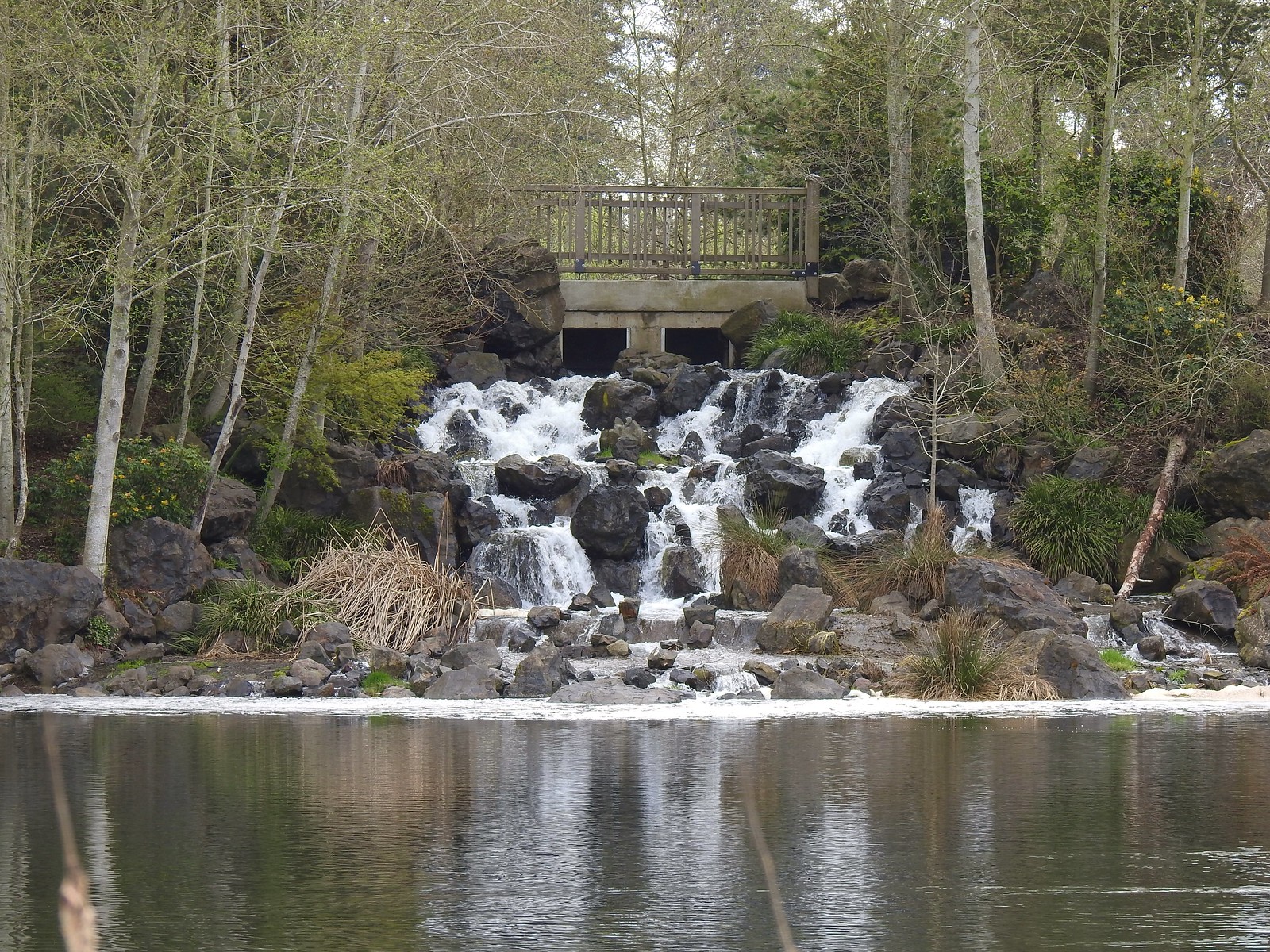
Waterfall at Talking Water Gardens (man-made)Talking Water Gardens – Albany, OR (April)

Whiskey CreekWhiskey Creek – Rogue River National Recreation Trail, OR (May)
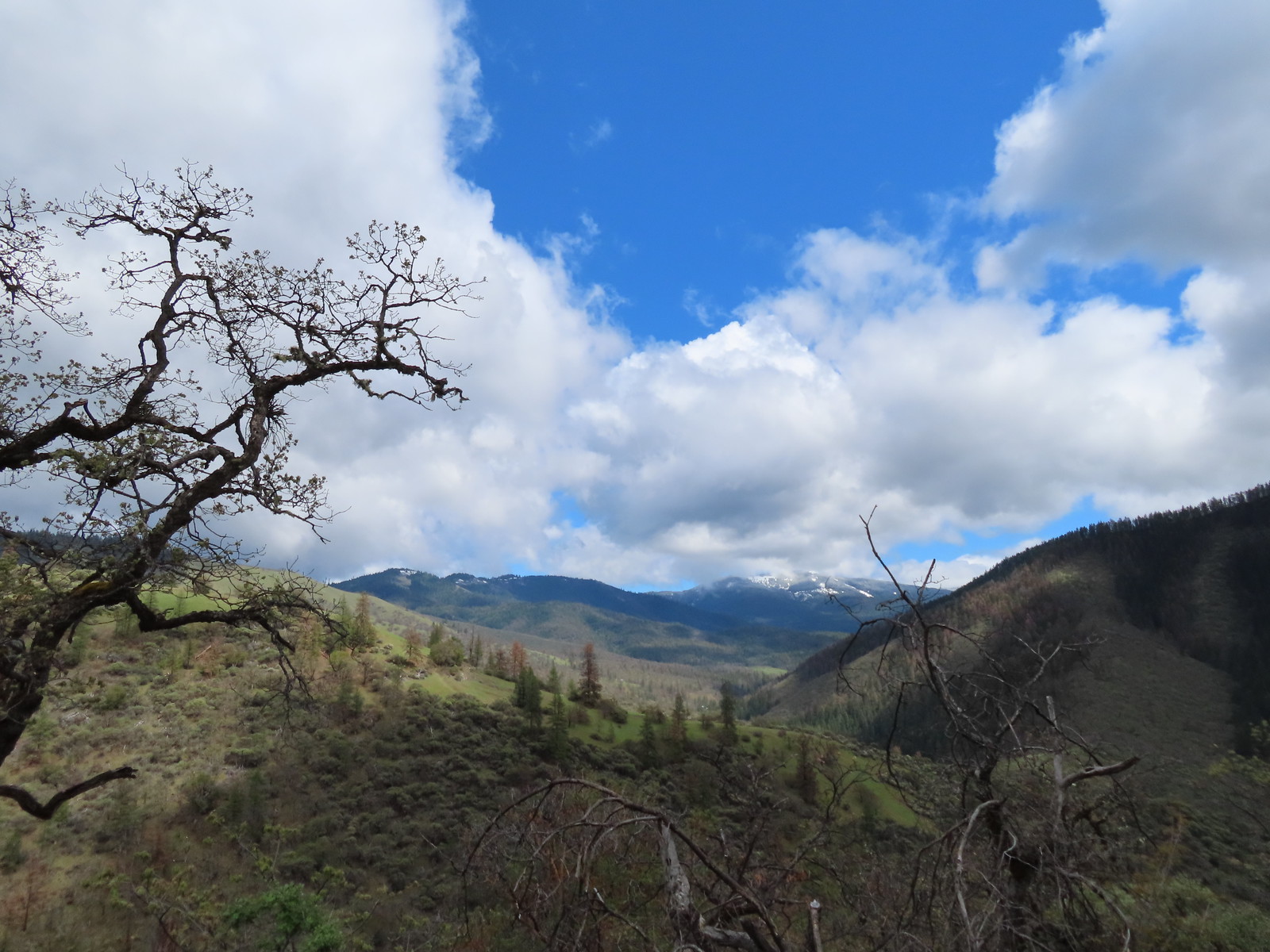
Wagner Butte from the Sterling Mine Ditch TrailWagner Butte from the Sterling Mine Ditch Trail – Southern Oregon (May)

Illinois River from the Kerby Flat TrailIllinois River from the Kerby Flat Trail – Southern Oregon (May)
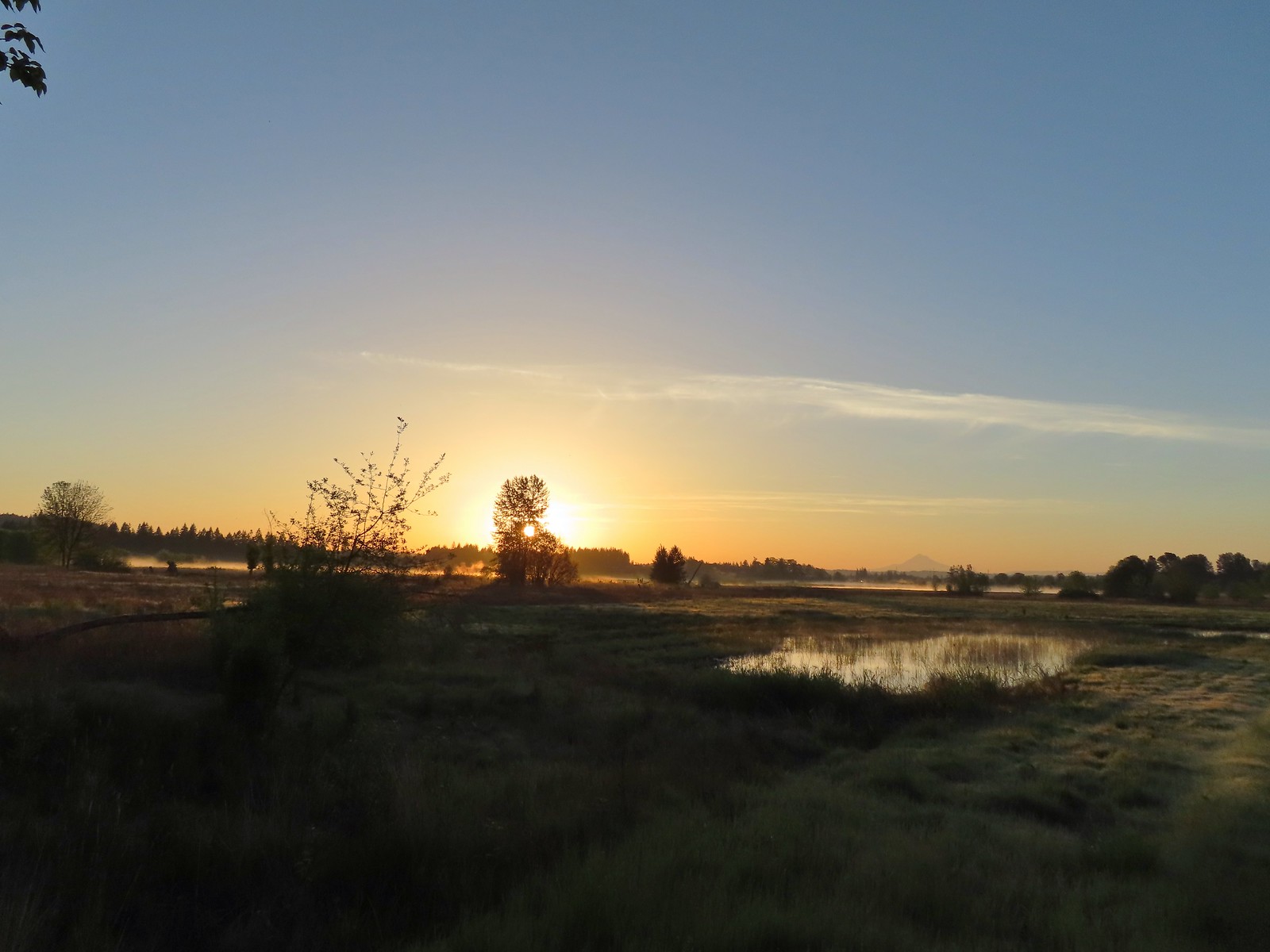
Tualatin River National Wildlife RefugeMt. Hood from the Tualatin River National Wildlife Refuge – Sherwood, OR (May)

Deschutes RiverDeschutes River from the Criterion Tract – Central Oregon (May)
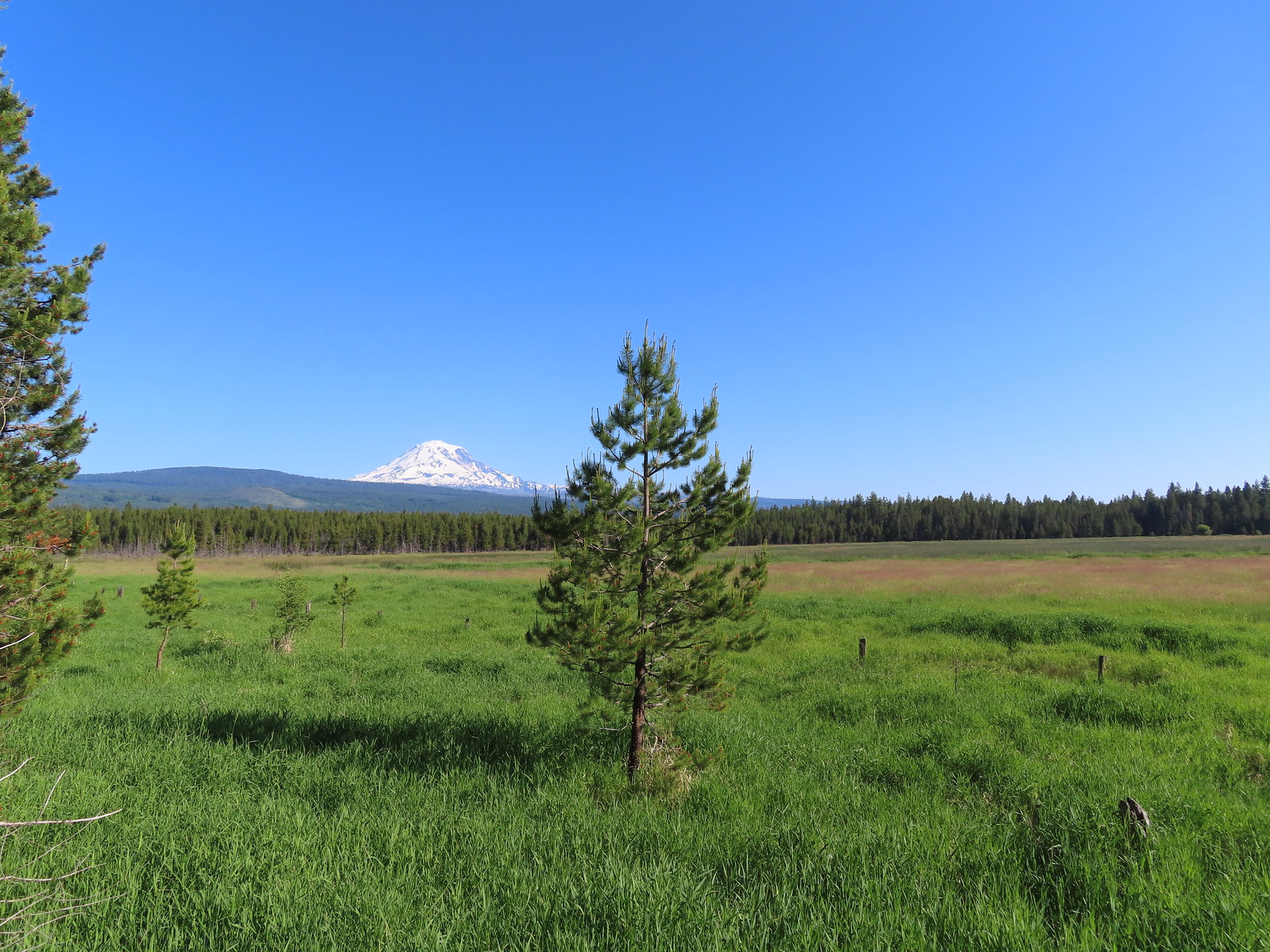
Mt. Adams from Conboy Lake National Wildlife RefugeMt. Adams from Conboy Lake National Wildlife Refuge – Washington (June)

Hat RockHat Rock – Hat Rock State Park, OR (June)

View from the Imnaha River TrailView from the Imnaha River Trail – Eagle Cap Wilderness, OR (June)

Pond at Iwetemlaykin State Heritage SitePond at Iwetemlaykin State Heritage Site – Joseph, OR (June)
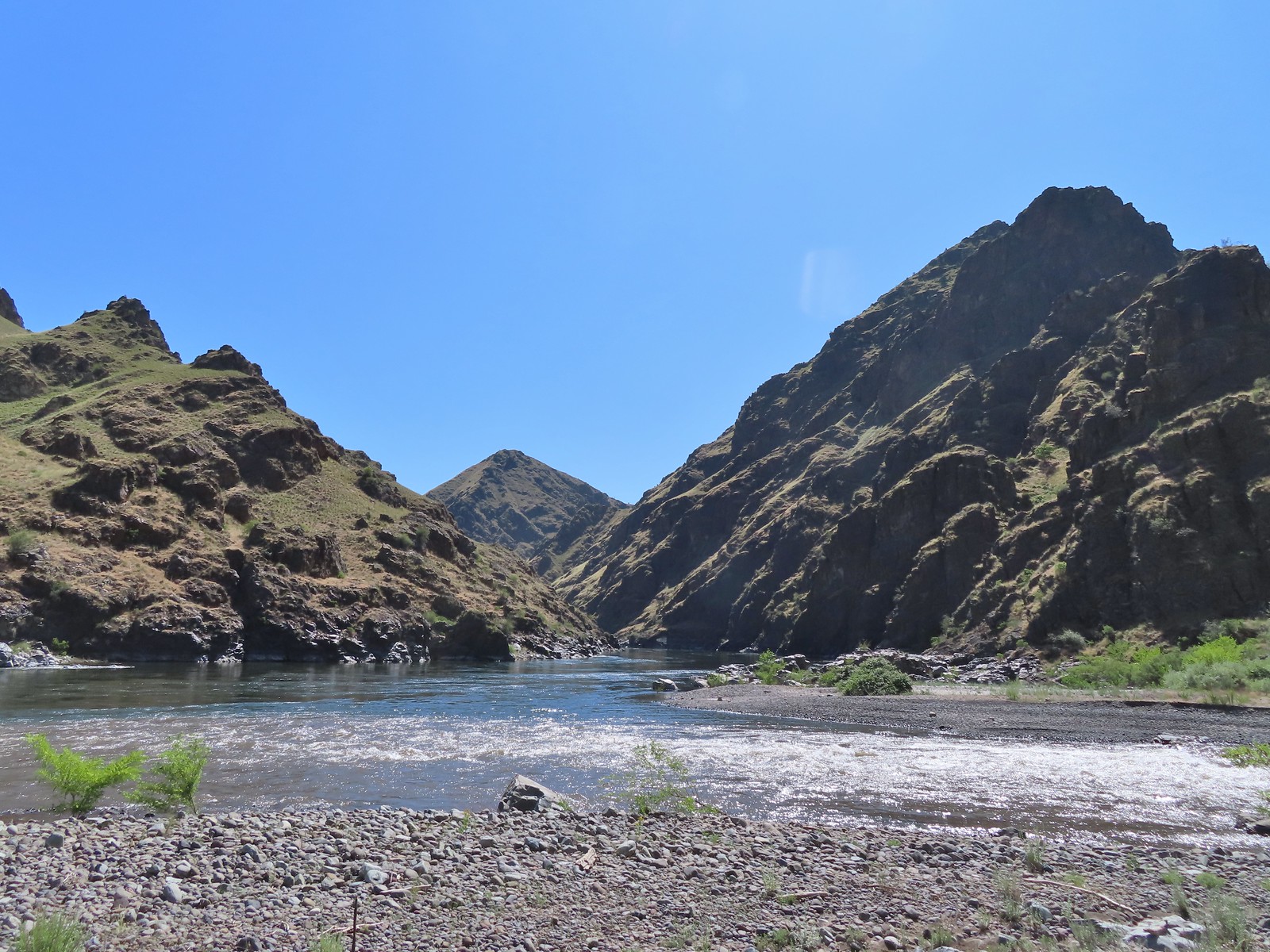
Snake RiverSnake River at Eureka Bar, OR (June)

Buckhorn LookoutBuckhorn Lookout, OR (June)

Blossom Bar on the Rogue RiverBlossom Bar – Rogue River, OR (June)

Middle Ridge TrailNorth Bank Habitat – Roseburg, OR (June)
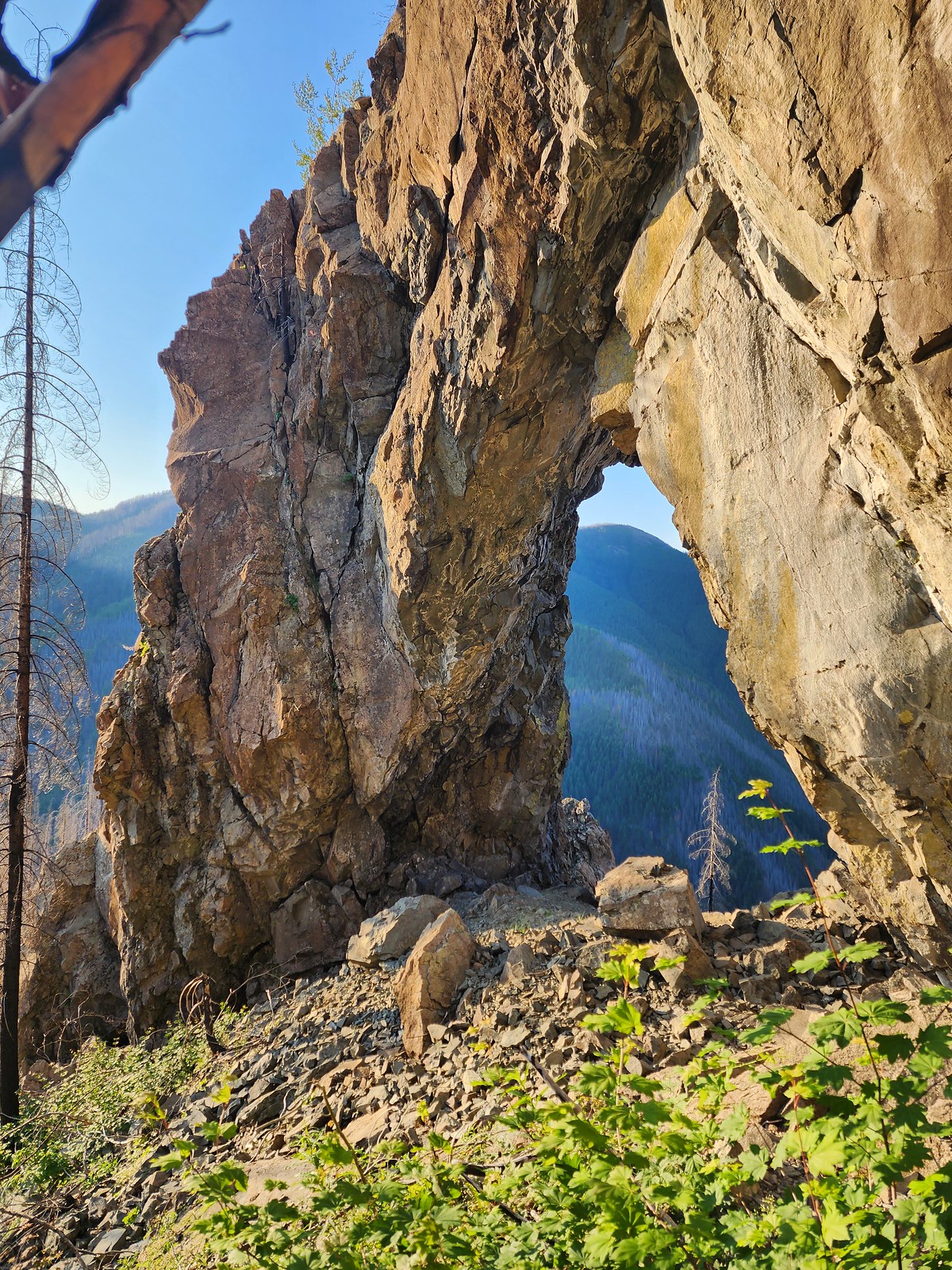
Natural Rock ArchNatural Rock Arch – Niagra, OR (July)

View from Sand MountainMt. Jefferson and Three Fingered Jack from Sand Mountain – Willamette National Forest, OR (July)

Stuart FallsStuart Falls – Sky Lakes Wilderness, OR (July)

Plaikni FallsPlaikni Falls – Crater Lake National Park, OR (August)

View from Crater PeakView from Crater Peak – Crater Lake National Park, OR (August)
Crater LakeCrater Lake from the Cleetwood Cove Trail – Crater Lake National Park, OR (August)

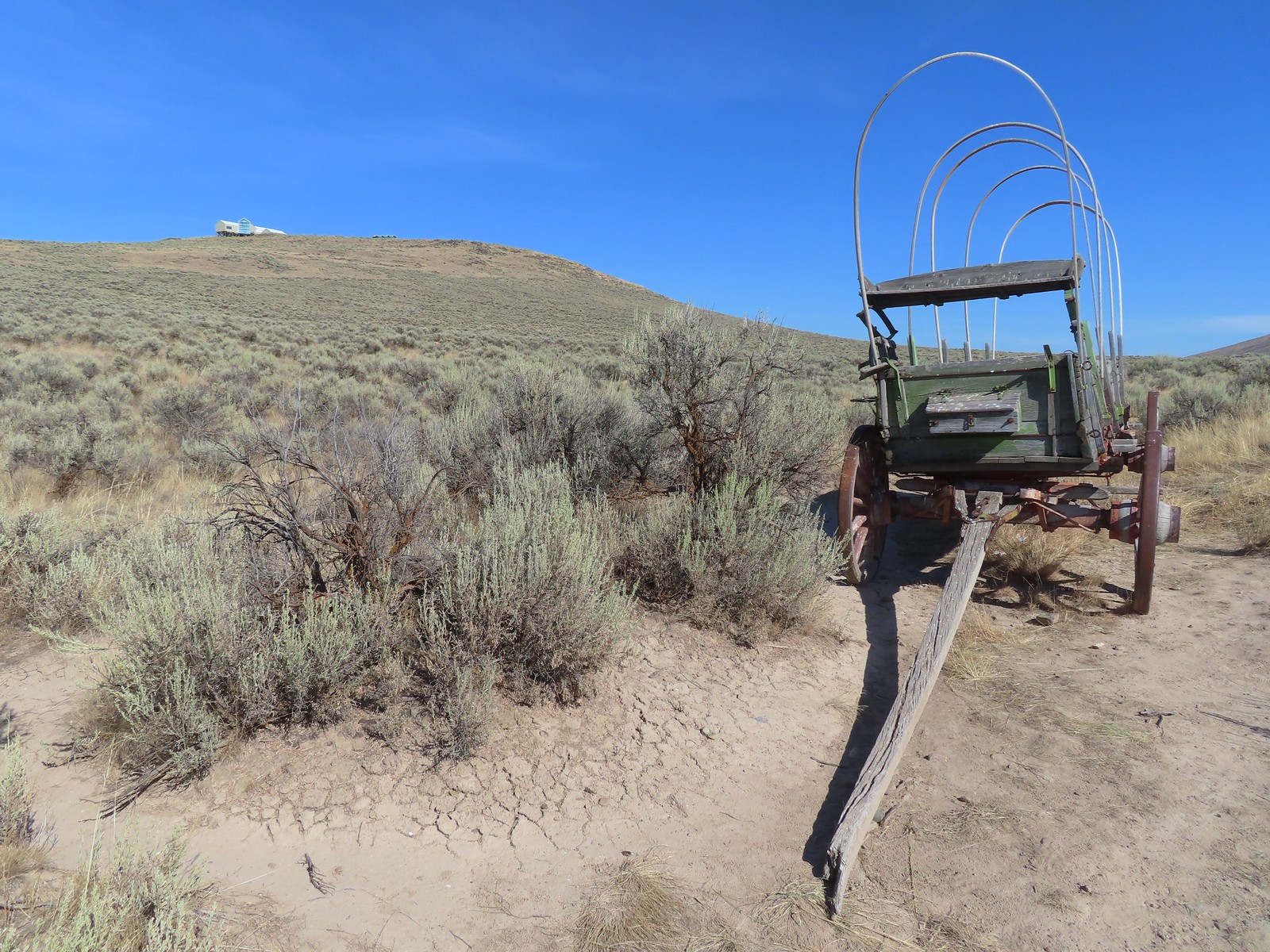
Oregon Trail replica wagonOregon Trail replica wagon – Baker City, OR (August)

View from the Lookingglass Lake TrailEagle Cap Wilderness, OR (August)

Eagle Creek Meadow from the Bear Lake TrailView from the Bear Lake Trail – Eagle Cap Wilderness, OR (August)

Tombstone Lake below Swabb Mountain and China CapTombstone Lake – Eagle Cap Wilderness, OR (August)
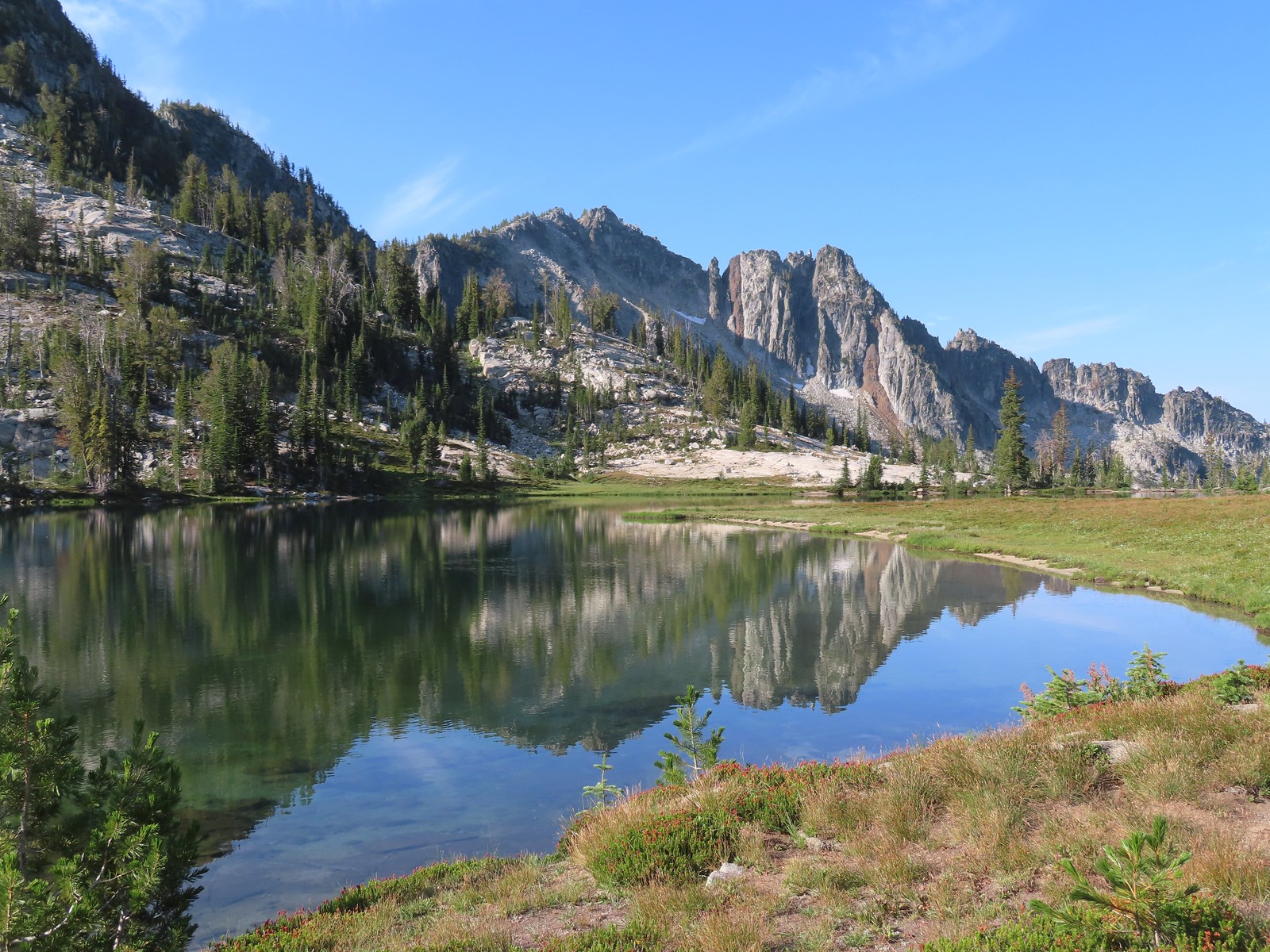
Traverse LakeTraverse Lake – Eagle Cap Wilderness, OR (August)
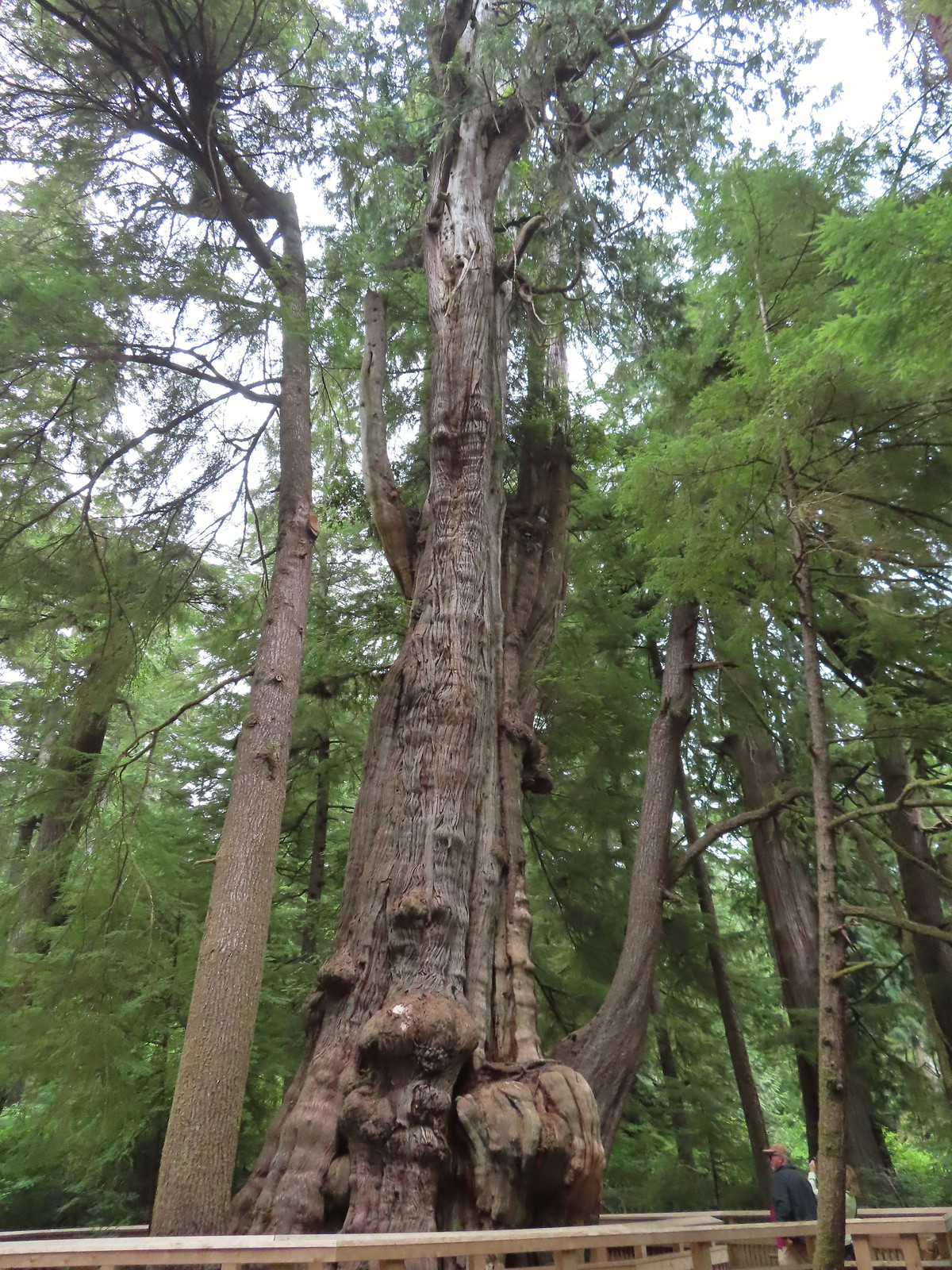
Big Cedar at the end of the Rockaway Beach Cedar Preserve BoardwalkRockaway Beach Cedar Preserve Boardwalk – Rockaway Beach, OR (August)

Dry River CanyonDry River Canyon – Central Oregon (September)

Kurmbo ReservoirKurmbo Reservoir – Malheur National Wildlife Refuge, OR (September)

Seven Lakes BasinSeven Lakes Basin – Sky Lakes Wilderness, OR (September)

Sisi Butte LookoutSisi Butte Lookout – Mt. Hood National Forest, OR (September)

Olallie Butte from Lower LakeOlallie Butte from Lower Lake – Mt. Hood National Forest, OR (September)

Rock spireRock spire along the Castle Canyon Trail – Mt. Hood Wilderness, OR (September)

Sunlight bursting through the trees above the Burnt Woods Forest RoadSun rays at Strom Boulder Ridge – Burnt Woods, OR (September)
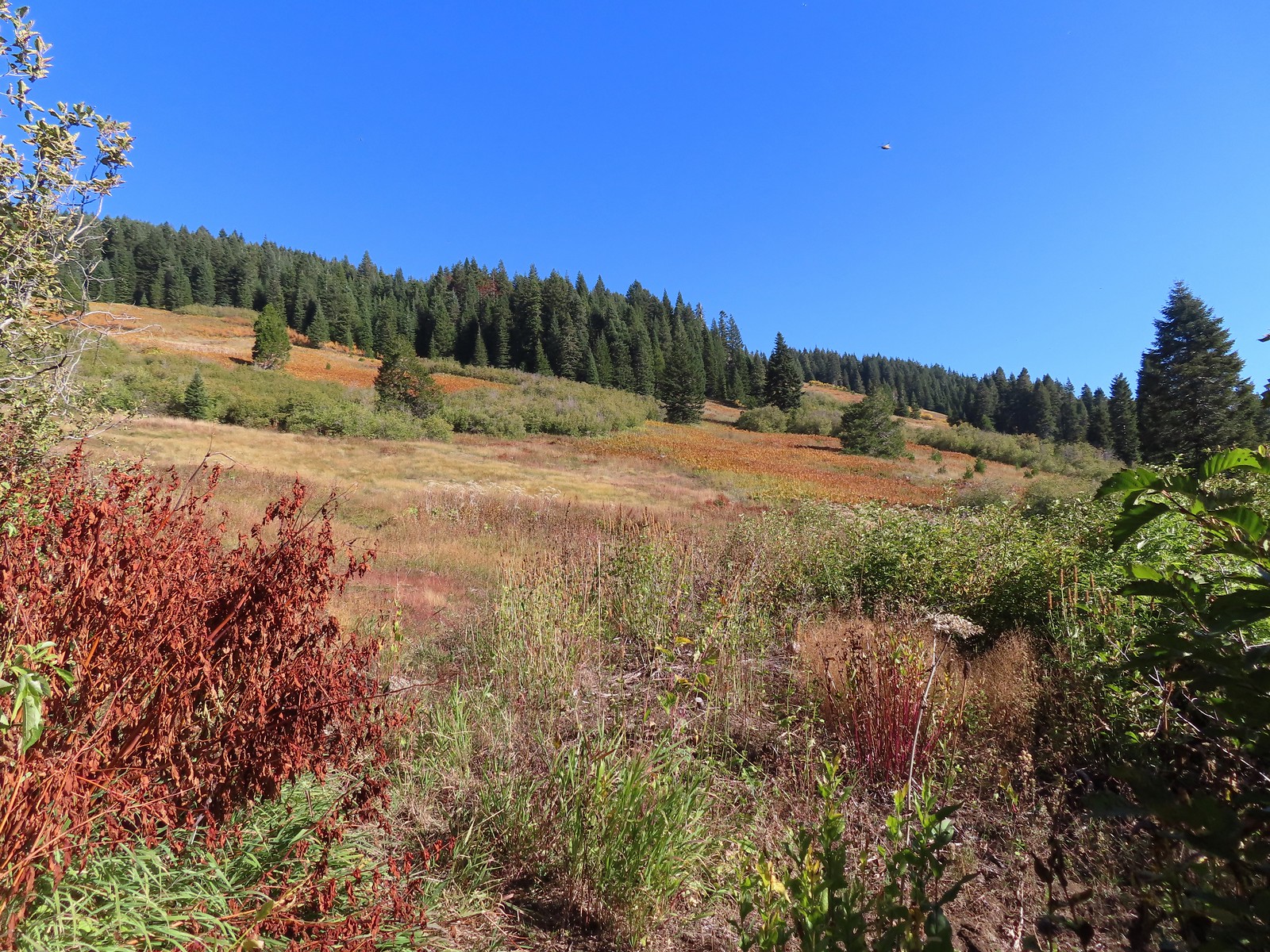
Boundary Trail passing through a meadowBondary Trail above Sturgis Fork – Rogue River-Siskiyou National Forest (October)
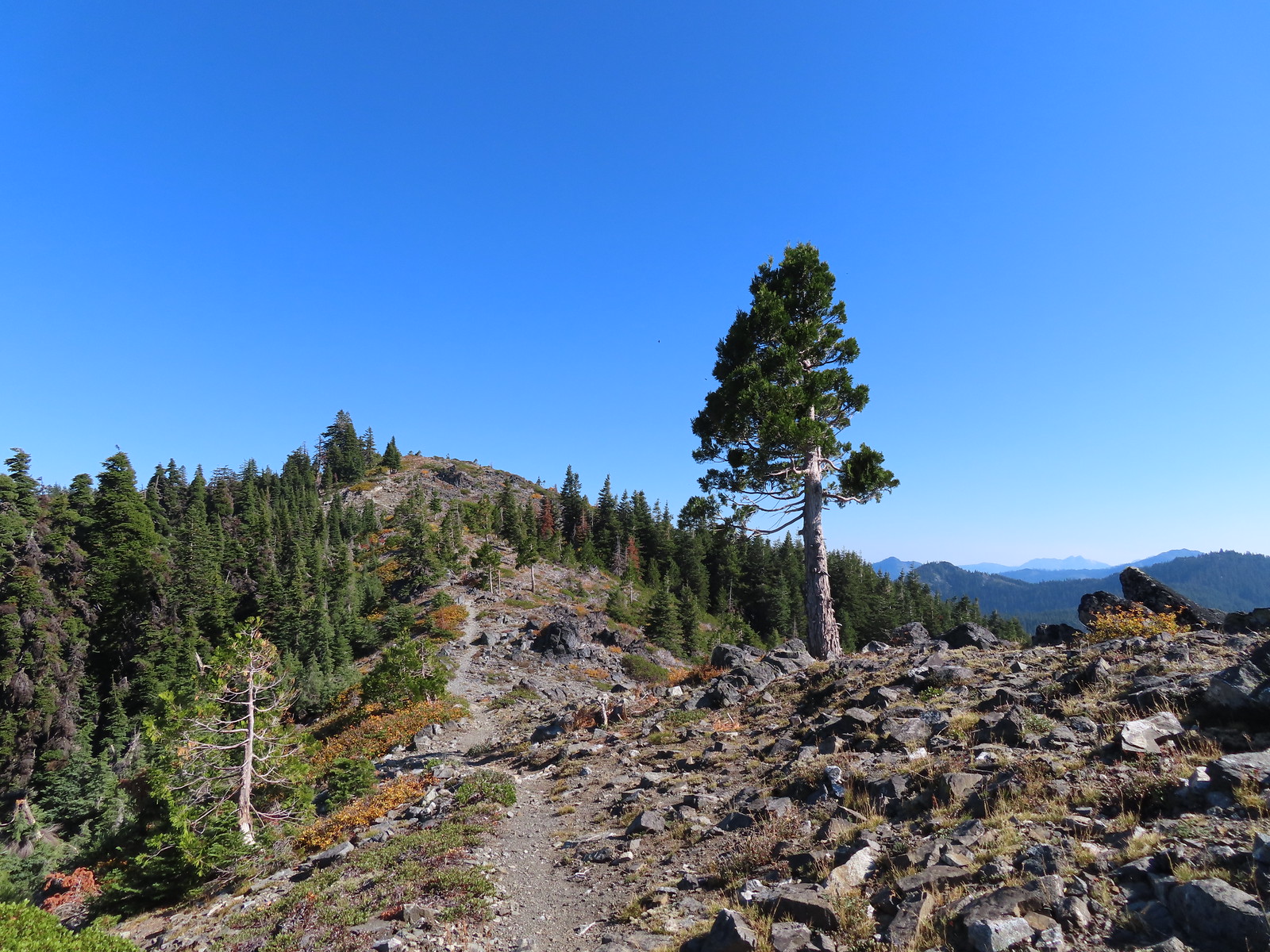
Lake Mountain Trail heading toward the taller Mount ElijahLake Mountain Trail heading toward the taller Mount Elijah – Oregon Caves National Monument & Preserve (October)

East Tanner LakeTanner Lake – Red Buttes Wilderness, OR (October)

Grayback Mountain snow shelterGrayback Mountain snow shelter – Rogue River-Siskiyou National Forest (October)
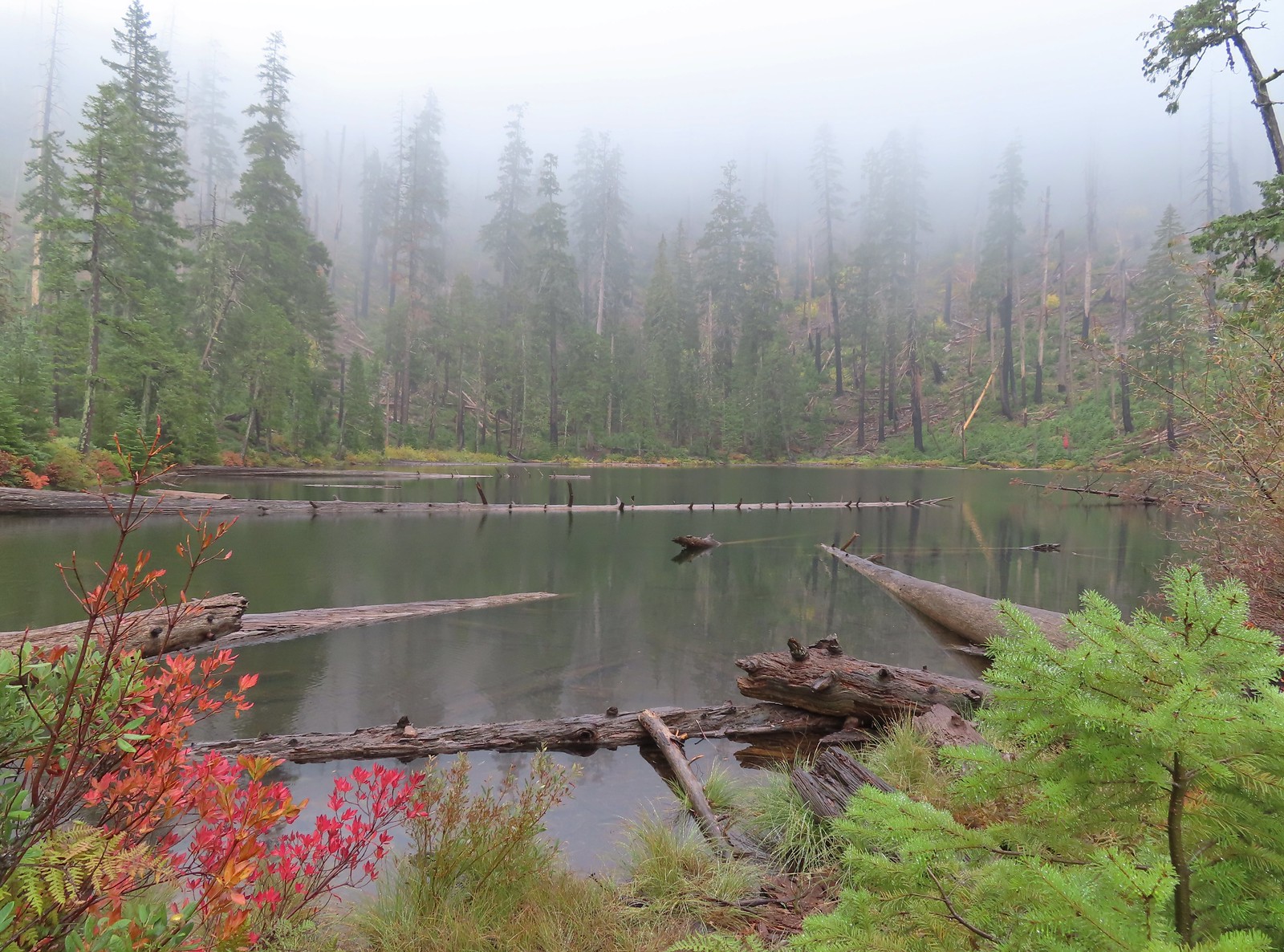
Babyfoot LakeBabyfoot Lake – Kalmiopsis Wilderness, OR (October)

Vivian LakeVivian Lake – Diamond Peak Wilderness, OR (October)

Pool Creek FallsPool Creek Falls – Willamette National Forest, OR (October)

Tunnel BeachTunnel Beach – Oceanside, OR (October)

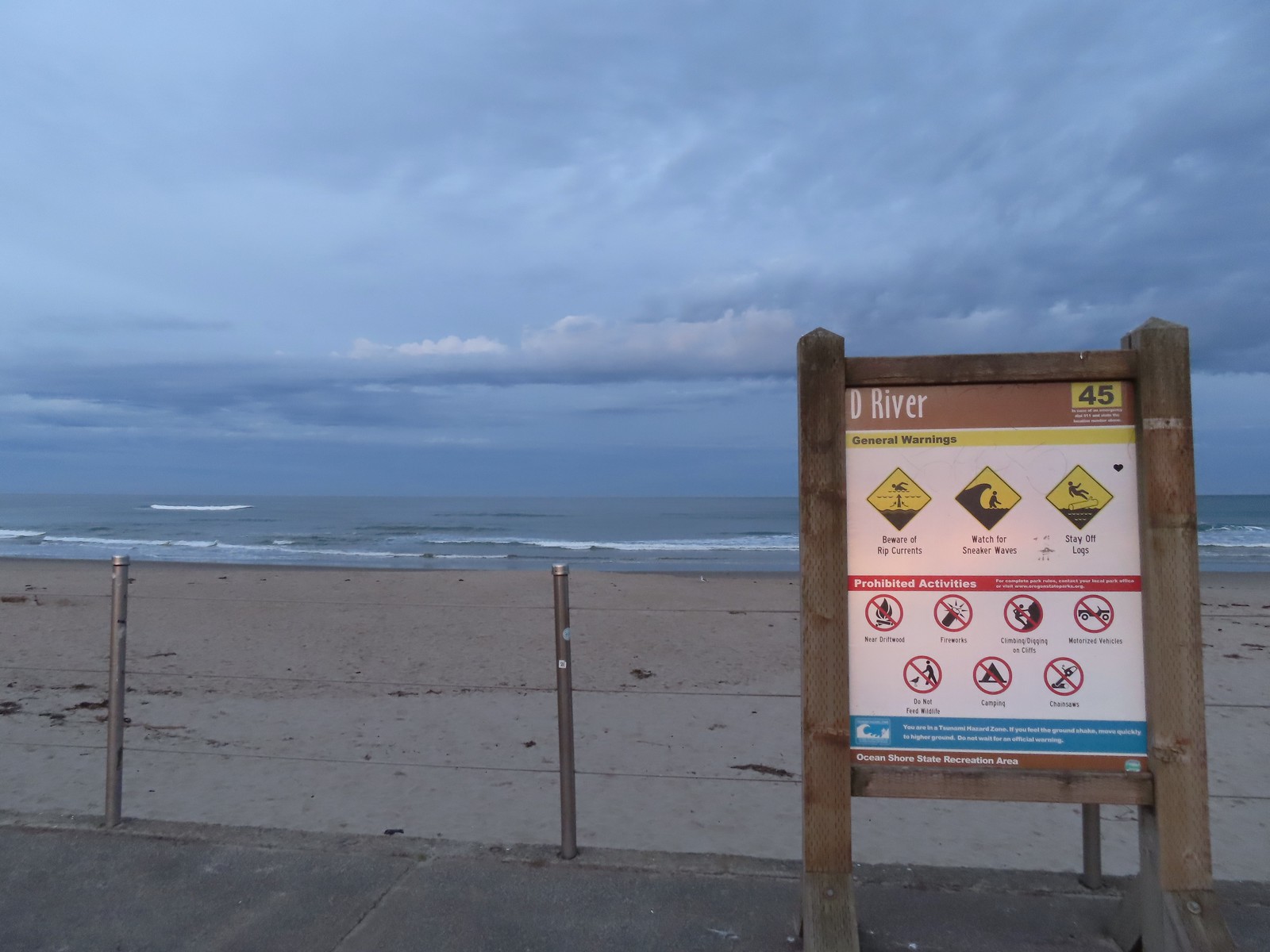
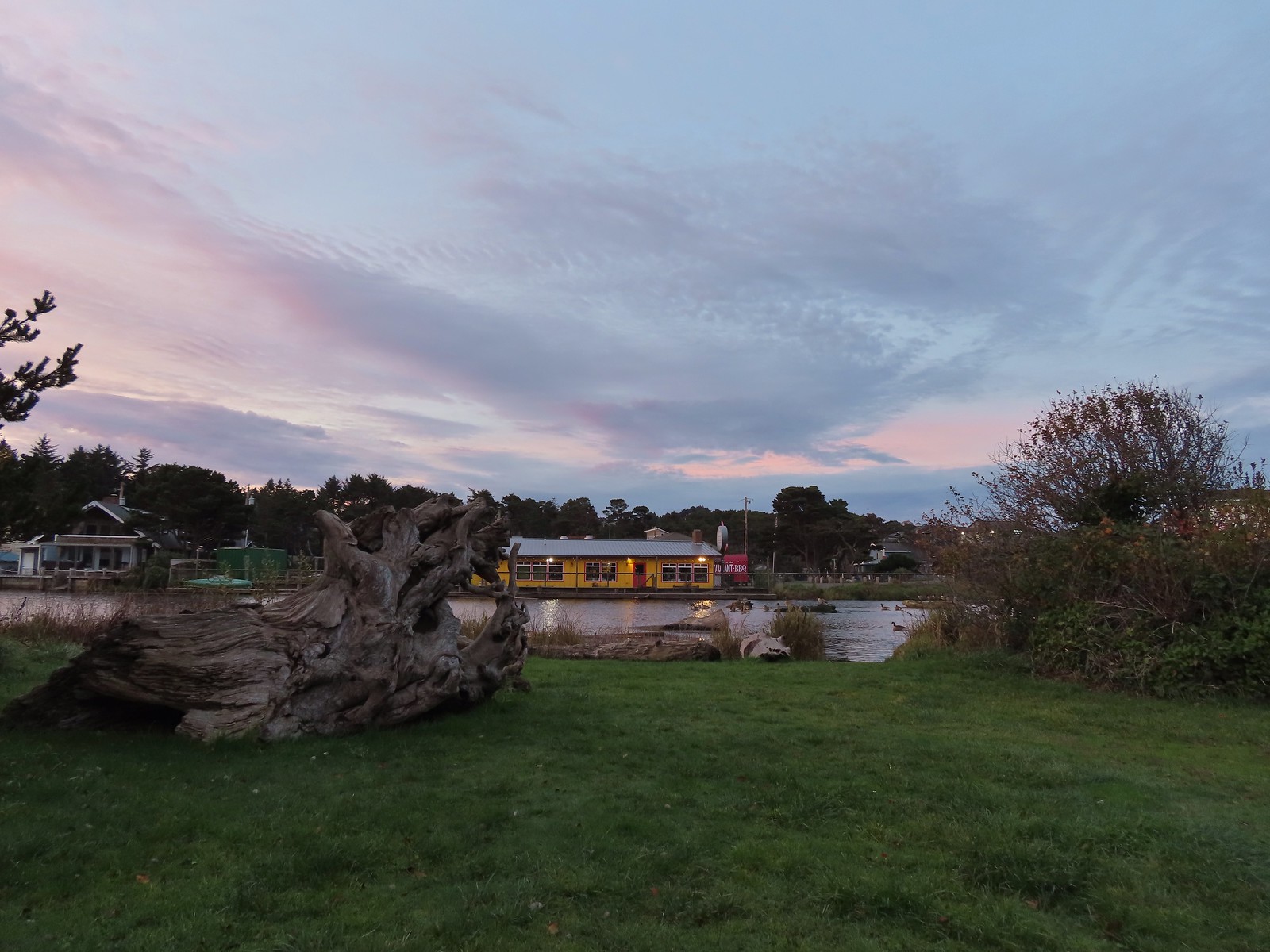
D RiverD River – Lincoln City, OR (November)

Mt. Hood through the shelter on Scouters MountainMt. Hood through the shelter on Scouters Mountain – Portland, OR (December)
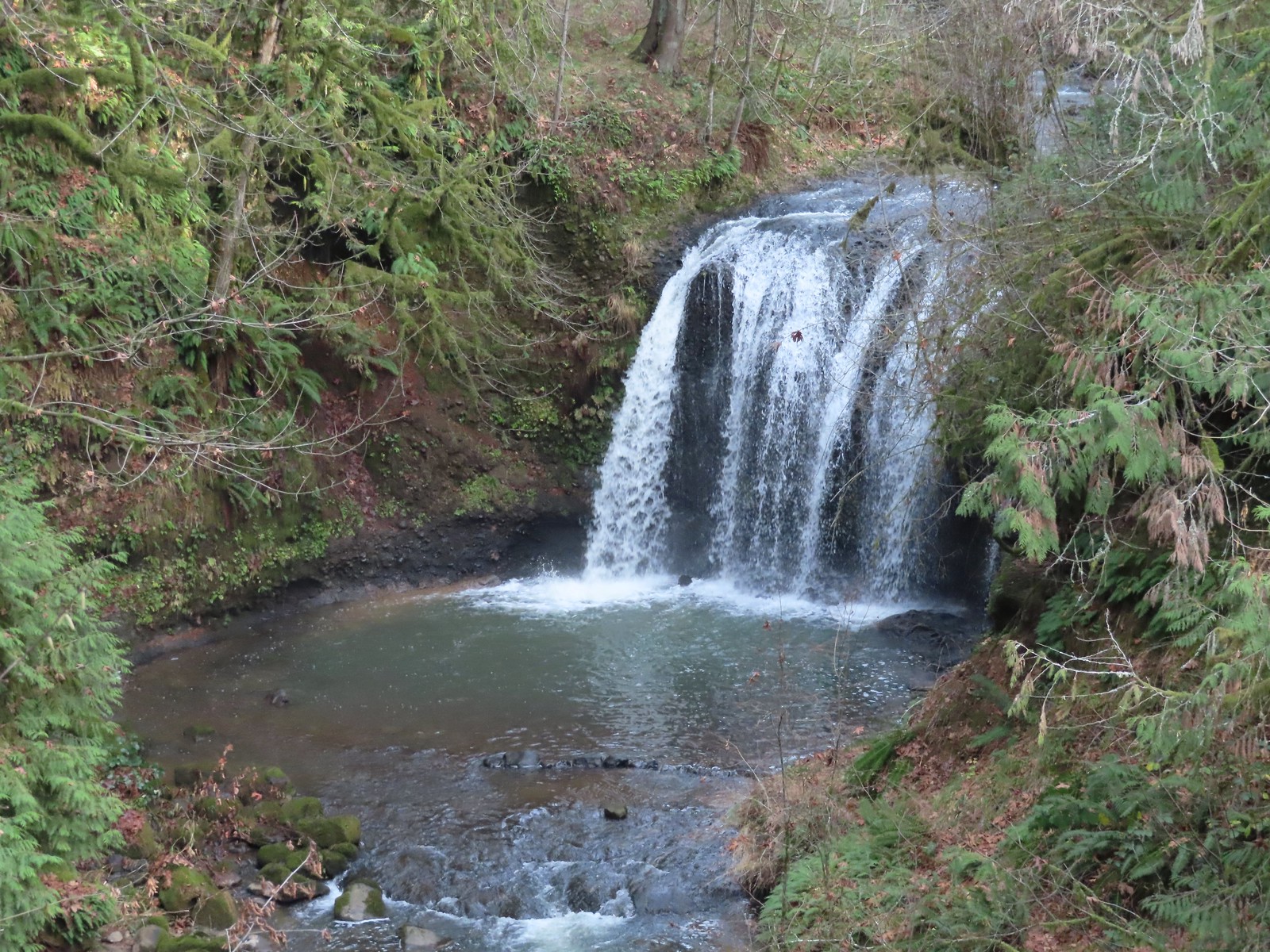
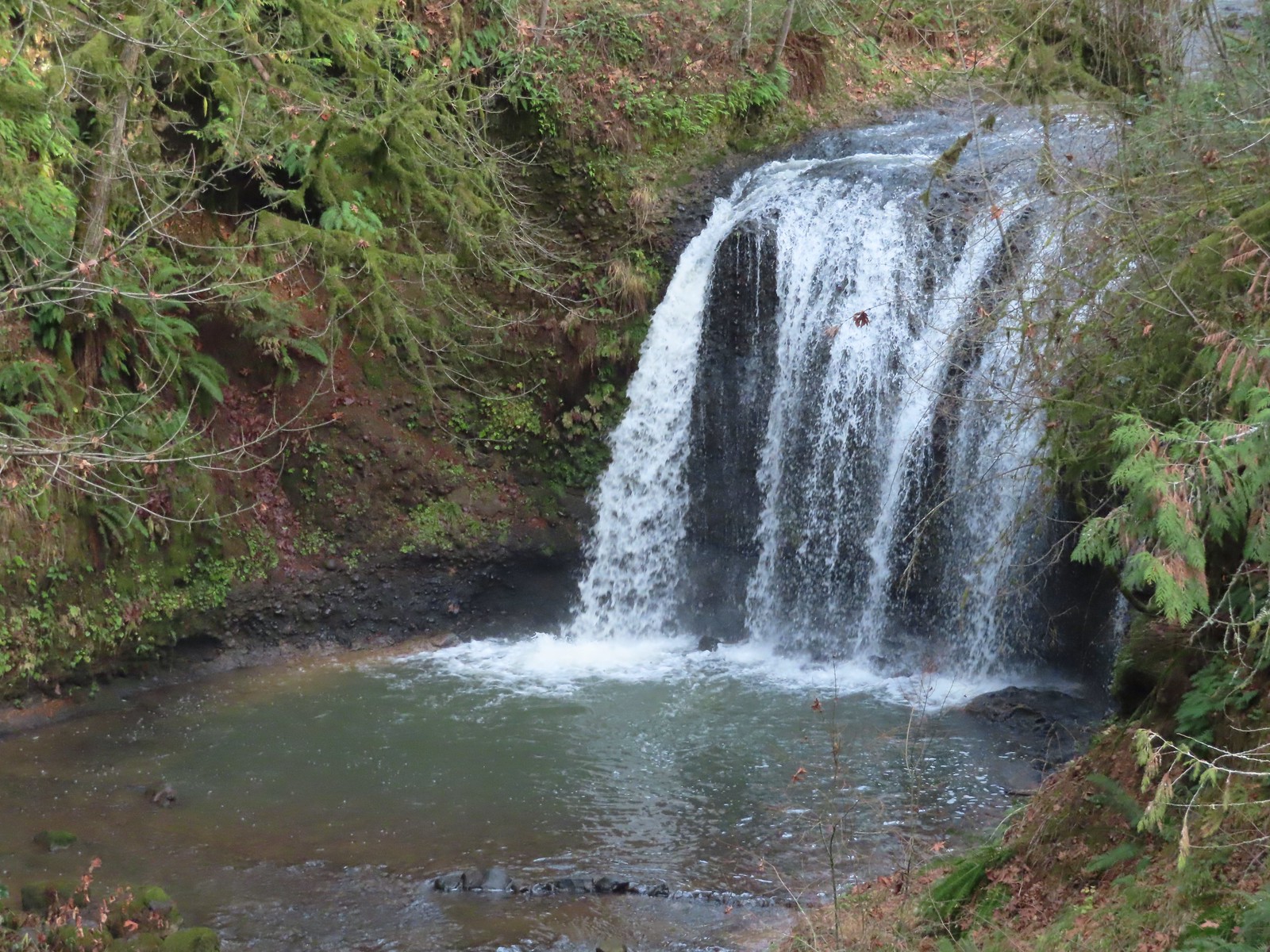
Hidden FallsHidden Falls – Hidden Valley, OR (December)
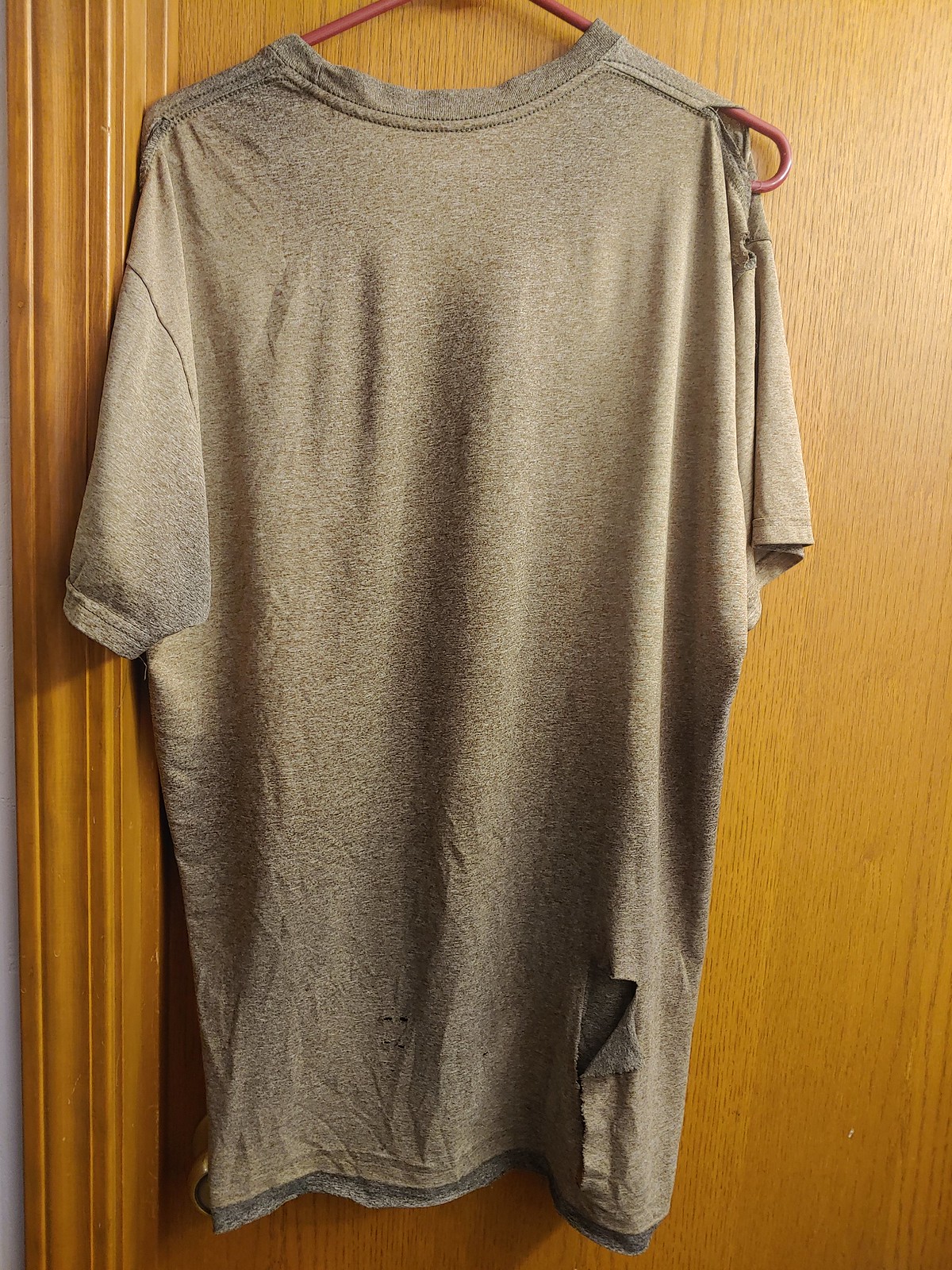
Unfortunately, not everything was blue skies in 2023.
At the end of the year I retired my favorite hiking T-shirt after eight years. We’d found some Marvel T-shirts at Target in late 2014/early 2015 in their active wear section made of wicking material. I picked up a Punisher shirt for less than $20.00. Over the next 8+ years I wore that T-shirt on at least 85% of our hikes. That works out to over 450 outings and over 5000 miles. We’ve never been able to locate another like it that wasn’t at least part cotton. It was stretched out and had developed several holes of the last couple of years, but it performed admirably.
20240101_145704

20240101_145739

More disappointing was the closure of our local (and go to) outdoor store, Salem Summit in July. They closed their doors after 11+ years. It was a big loss for us and the Salem outdoor community, but we are grateful for all the help and support that Al and the staff provided through those years.
Hedgehog cactus and a Salem Summit bandana

Categories
California Hiking Oregon Washington Year-end wrap up

Progress Report – 500 “Featured Hikes” – January 2024 Update

In 2019 we posted about our goal to complete 500 “featured” hikes from William L. Sullivan’s “100 hikes” guidebook series. The following year we finished the first of the five guidebooks (post) and followed that up by completing two more in 2021 (post). That left us with just the Eastern Oregon and Southern Oregon/Northern California books to complete. In 2022 we managed to make significant progress on the hikes to the south by checking off 28 featured hikes from the southern book, but just 6 featured hikes in the eastern book (post). That left us with a reasonable shot at completing the southern book in 2023.

We began the year with the remaining 19 southern hikes on the calendar along with 8 more eastern hikes. As is usually the case things did not go exactly as planned. Two of the hikes we’d planned during our first trip to Grants Pass in May were inaccessible due to lingering snow, but we were able to push them both back to later dates and complete them later in the year. We completed our 99th and 100th featured hikes on 10/09/2023 (post).

Then on our first tip to Eastern Oregon in June resulted in our deciding to switch the version of Sullivan’s book from the 3rd edition to his more recent “100 Hikes Eastern Oregon” 1st edition. (The edition numbers reset when Sullivan changed the title from 100 Hikes/Travel Guide simply to 100 Hikes.) The switch was prompted by us not feeling comfortable with, or having the time to make, the drive to Dug Bar (post). Dug Bar had been removed as a featured hike in the newer 1st edition, along with a few others, so making the switch allowed us to avoid that drive. The tradeoff was needing to return to Steens Mountain in SE Oregon to hike one of the new featured trails at Threemile Canyon, a mere 350 miles from Salem. At least that trailhead was located along a paved highway though. We rearranged some hikes in both 2023 and future years to move up the new featured hikes and were back on track. We wound up completing 10 featured hikes instead of 8 from the eastern book, but after subtracting the 6 former 3rd edition featured hikes that we’d completed, and adding one new featured hike that we’d already completed we ended the year up only 5 from the end of 2022 (84 vs 79).

Here is where we now stand at the end of 2023, having been on 484 of the 500 featured hikes:

100/100 – “100 Hikes in the Central Oregon Cascades” 4th Edition 2012 (post)

100/100 – “100 Hikes/Travel Guide Oregon Coast & Coast Range” 3rd Edition 2009 (post)

100/100 – “100 Hikes/Travel Guide Northwest Oregon & Southwest Washington” 4th Edition 2018 (post)

100/100 – “100 Hikes/Travel Guide Southern Oregon & Northern California” Edition 4.2 2021 (post)

84/100 – “100 Hikes: Eastern Oregon” 1st Edition 2015

With just 16 more hikes to check off to complete our goal we are on track to finish the final hike in August 2024 somewhere in the Wallowa Mountains. Happy Trails!

Categories
Hiking Oregon Portland Trip report Willamette Valley

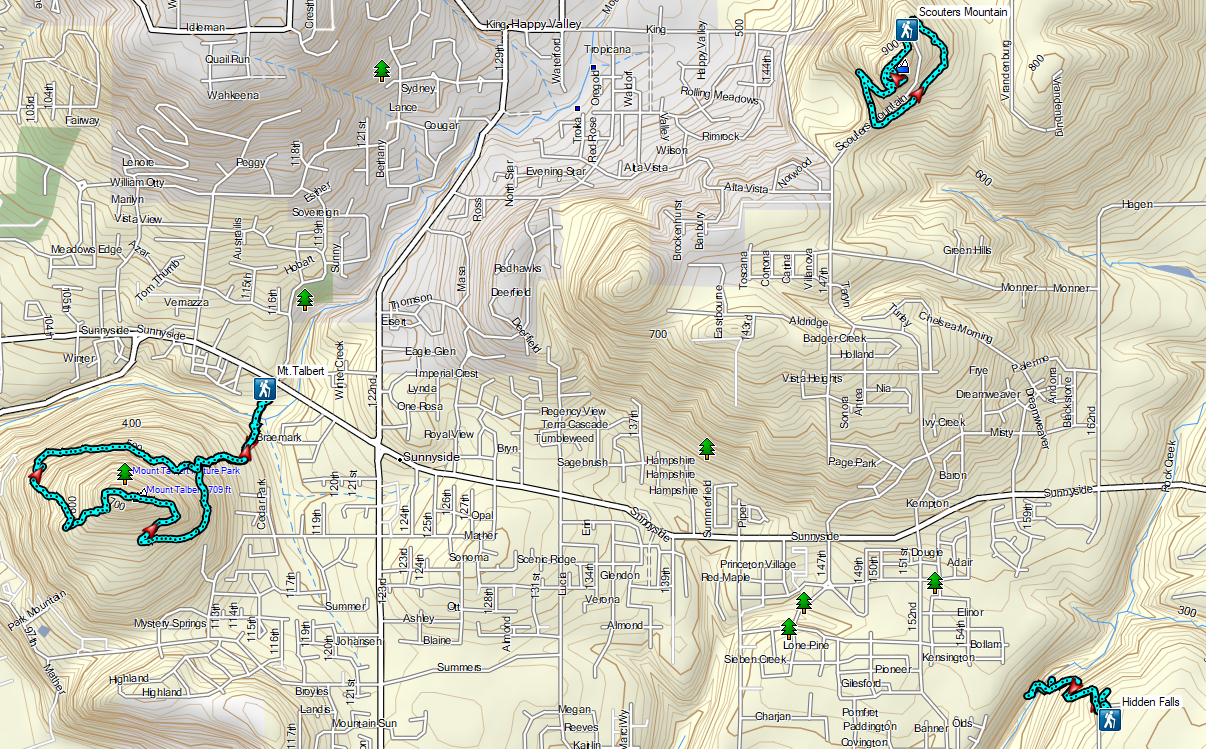
Mt. Tabor, Mt. Talbert, Scouters Mtn., & Hidden Falls Parks – 12/16/2023

For our final outing of 2023 we headed to Portland to visit some Boring volcanoes. Not to be confused with boring, the Boring Volcanic Field which consists of more than 80 small volcanic vents and associated lava flows dispersed throughout the greater Portland-Vancouver metropolitan area. Several of the resulting cinder cones are home to parks providing hiking opportunities and we planned on visiting three of these along with a city park with a 15′ waterfall.

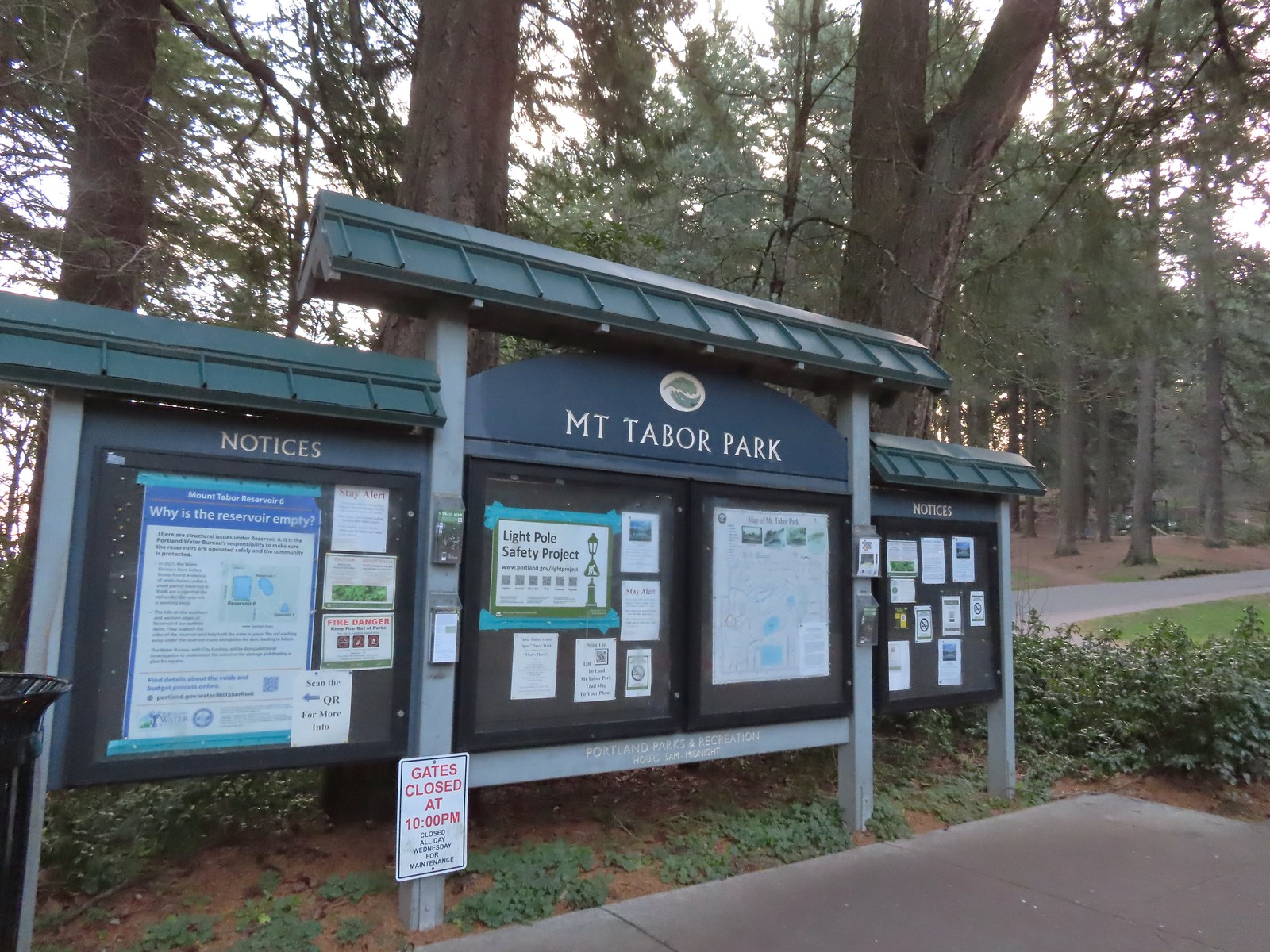
We began our morning at Portland’s Mt. Tabor Park. We parked in in the lot next to the Mount Tabor Visitors Center and set off toward the playground.
IMG_2023The playground behind and to the right of the signboard at the Visitors Center.

We were attempting to follow, as closely as possible, the route described by Matt Reeder in “PDX Hiking 365”. (His hike has a different starting point but loops through the parking area where we were starting.) After a little confusion near the playground we located the red trail and followed it to the Mount Tabor Stairs where we turned right.
IMG_2027The red trail continuing on the far end of the playground.
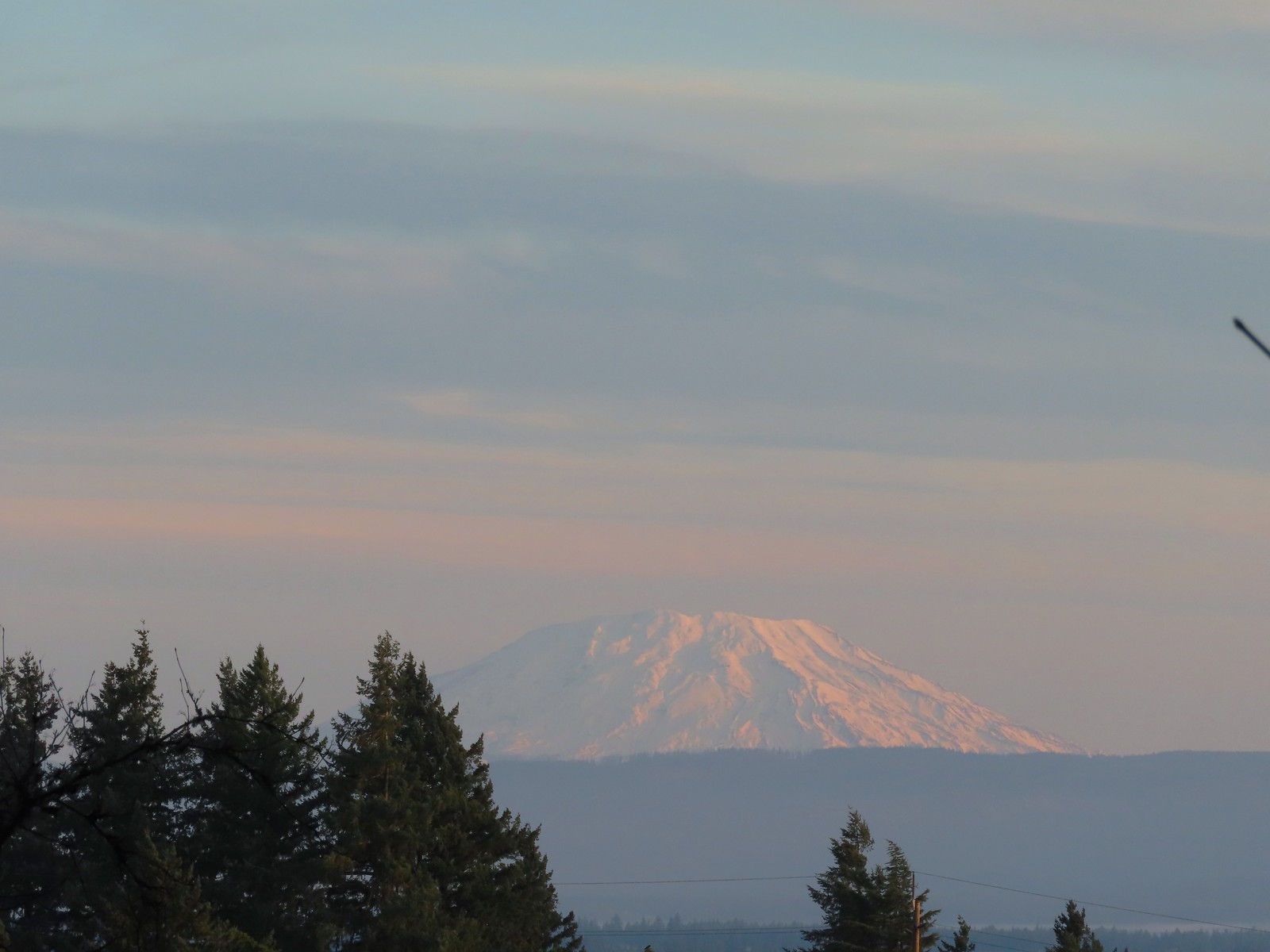
IMG_2028Mt. St. Helens from the playground.

IMG_2031On the red trail.

IMG_2032The Mount Tabor stairs extend from the park border up to the summit.

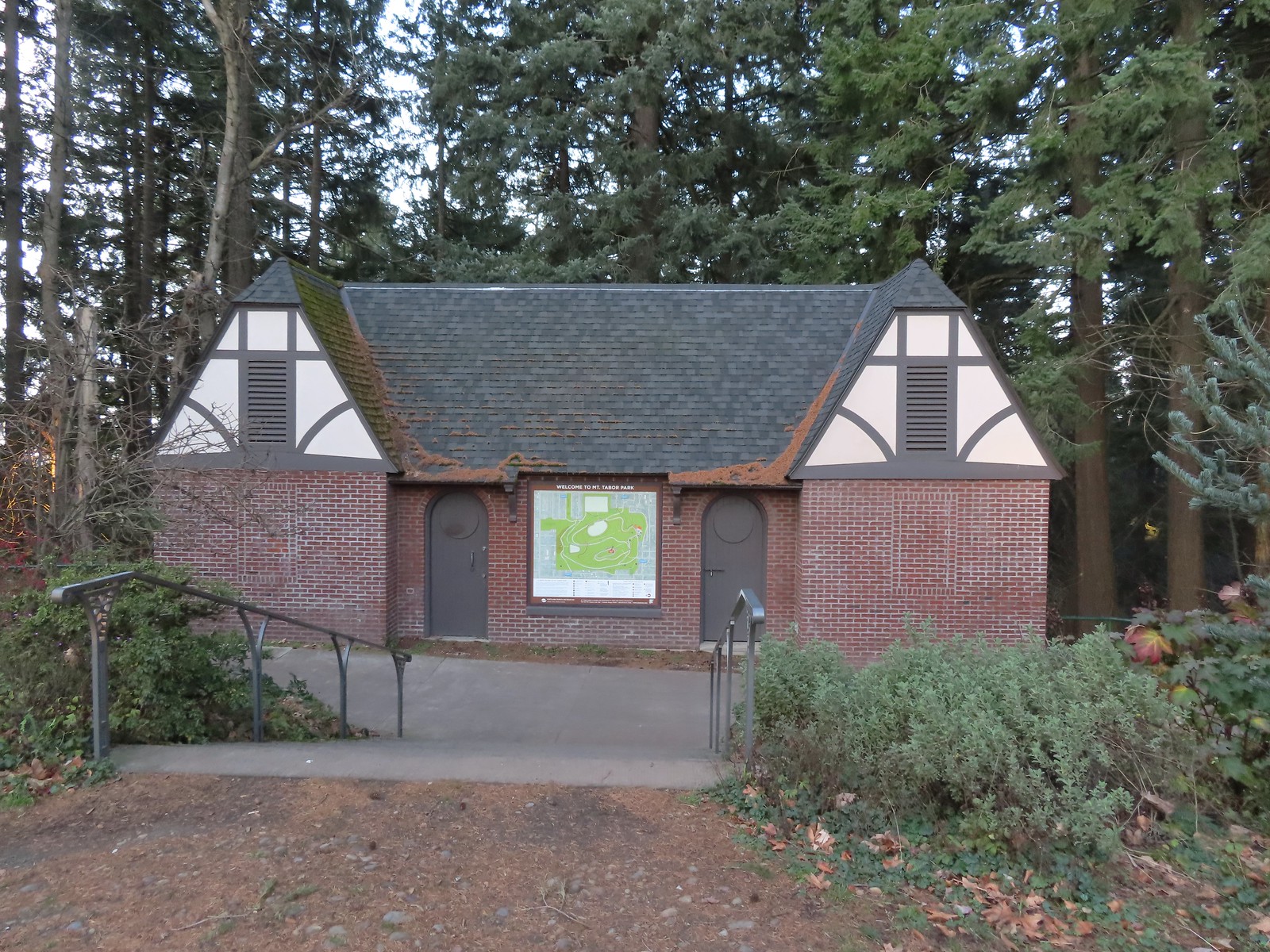
IMG_2034Summit restrooms

IMG_2036The restrooms were reopened in 2017 after being renovated.
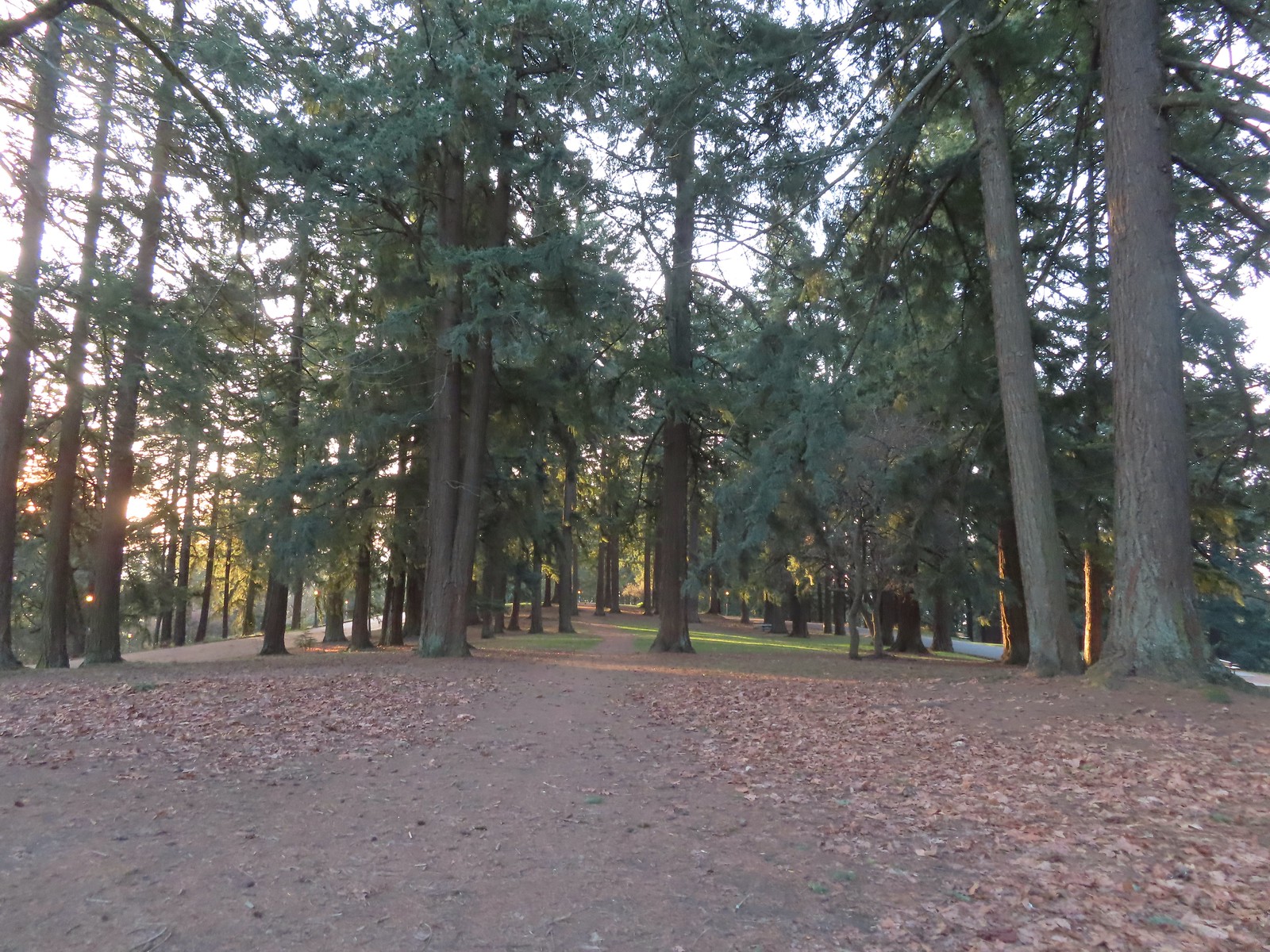
IMG_2041Mount Tabor summit

IMG_2040Mt. Hood from the summit.

IMG_2044Downtown Portland

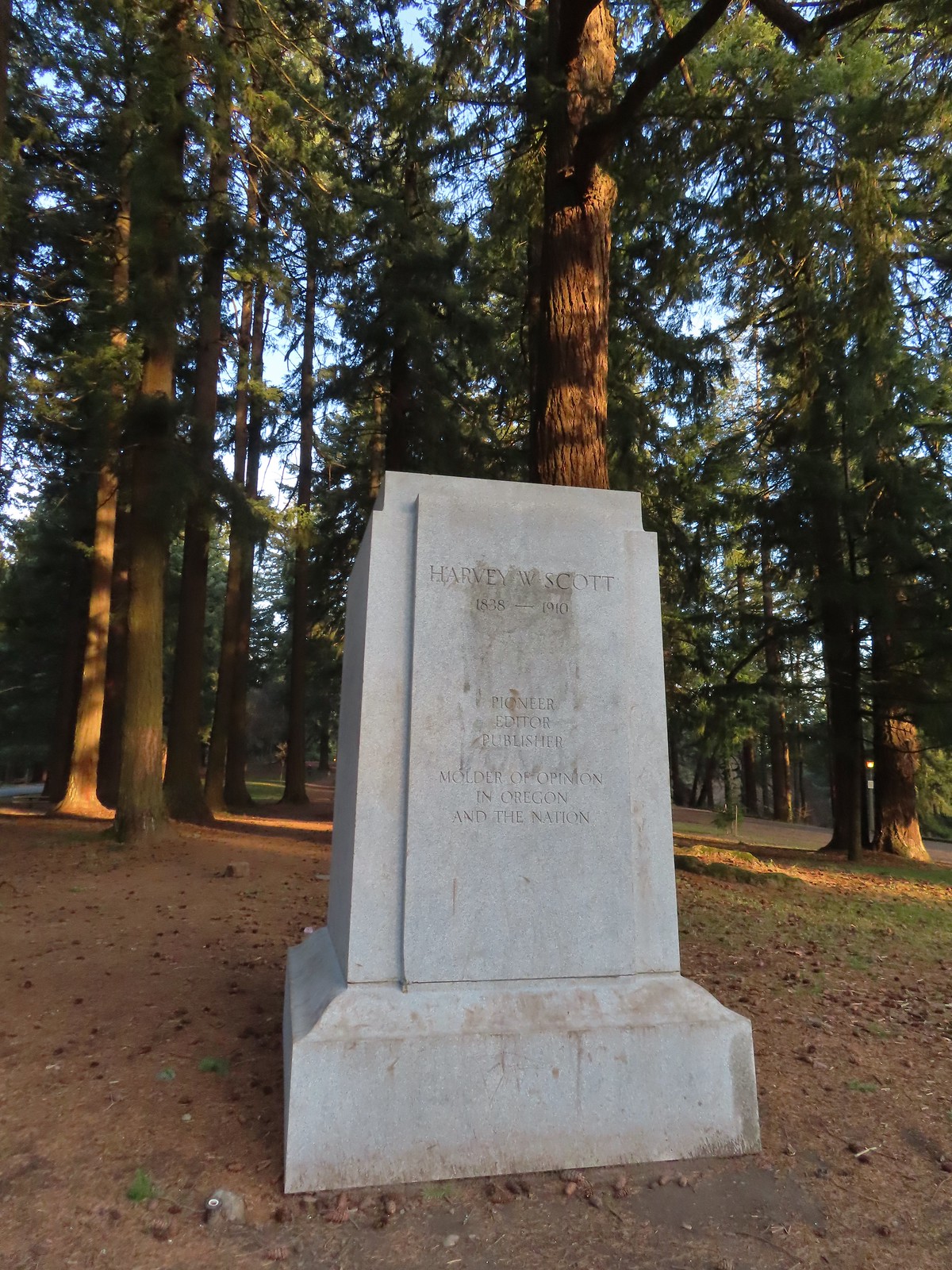
At the southern end of the summit, near the former site of a statue of Harvey W. Scott (and later a bust of York), we headed downhill on a steeper trail.
IMG_2046

IMG_2048

At a wide junction we turned right onto the Red Trail and passed above Reservoir No. 1.
IMG_2049

IMG_2050

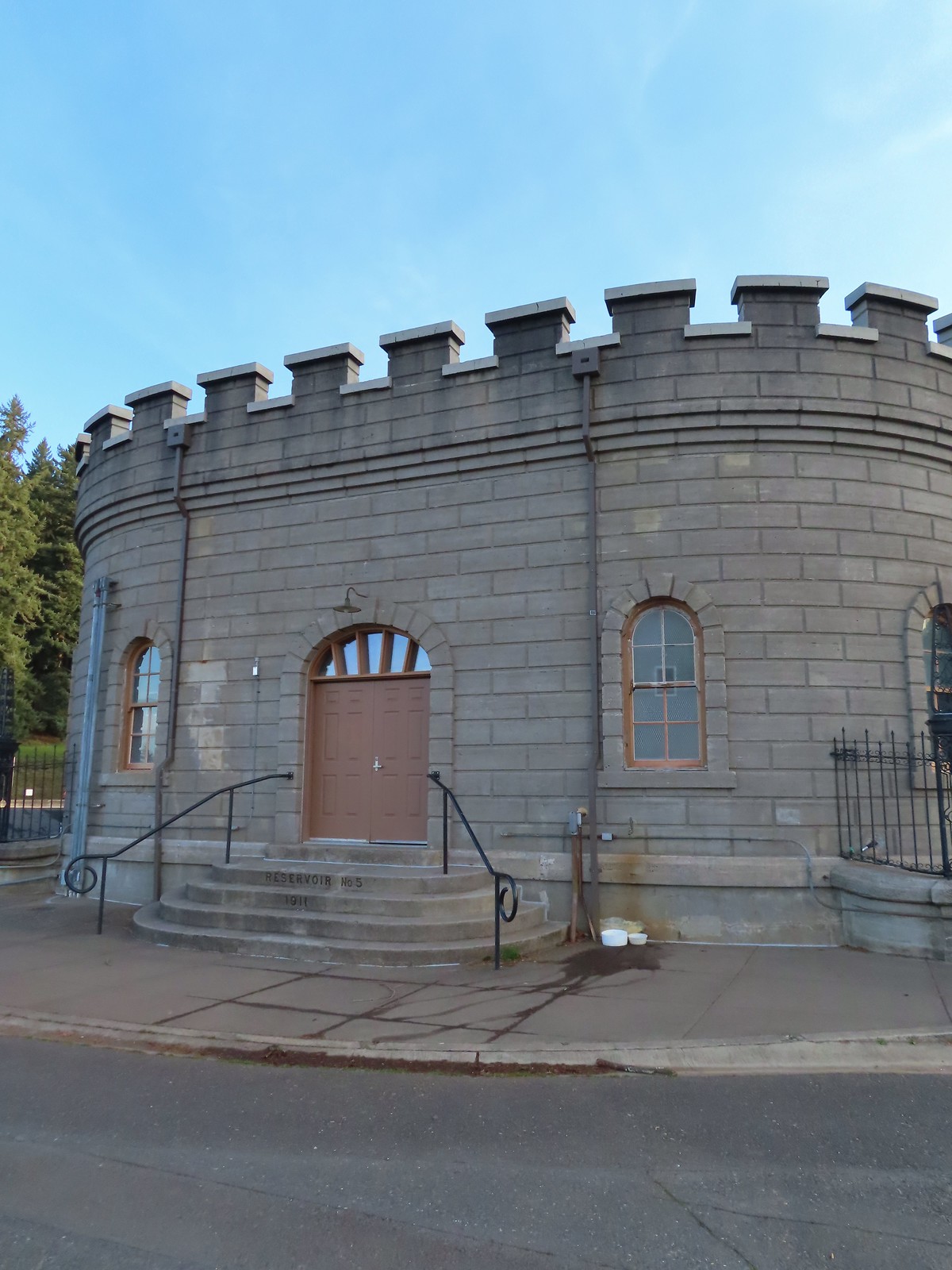
At Reservoir Loop Road we veered left staying on the Red Trail climbing up and over Poison Oak Hill. The trail then dropped back down to the loop road near Reservoir No. 5.
IMG_2058

IMG_2059

IMG_2060

IMG_2061Mallards

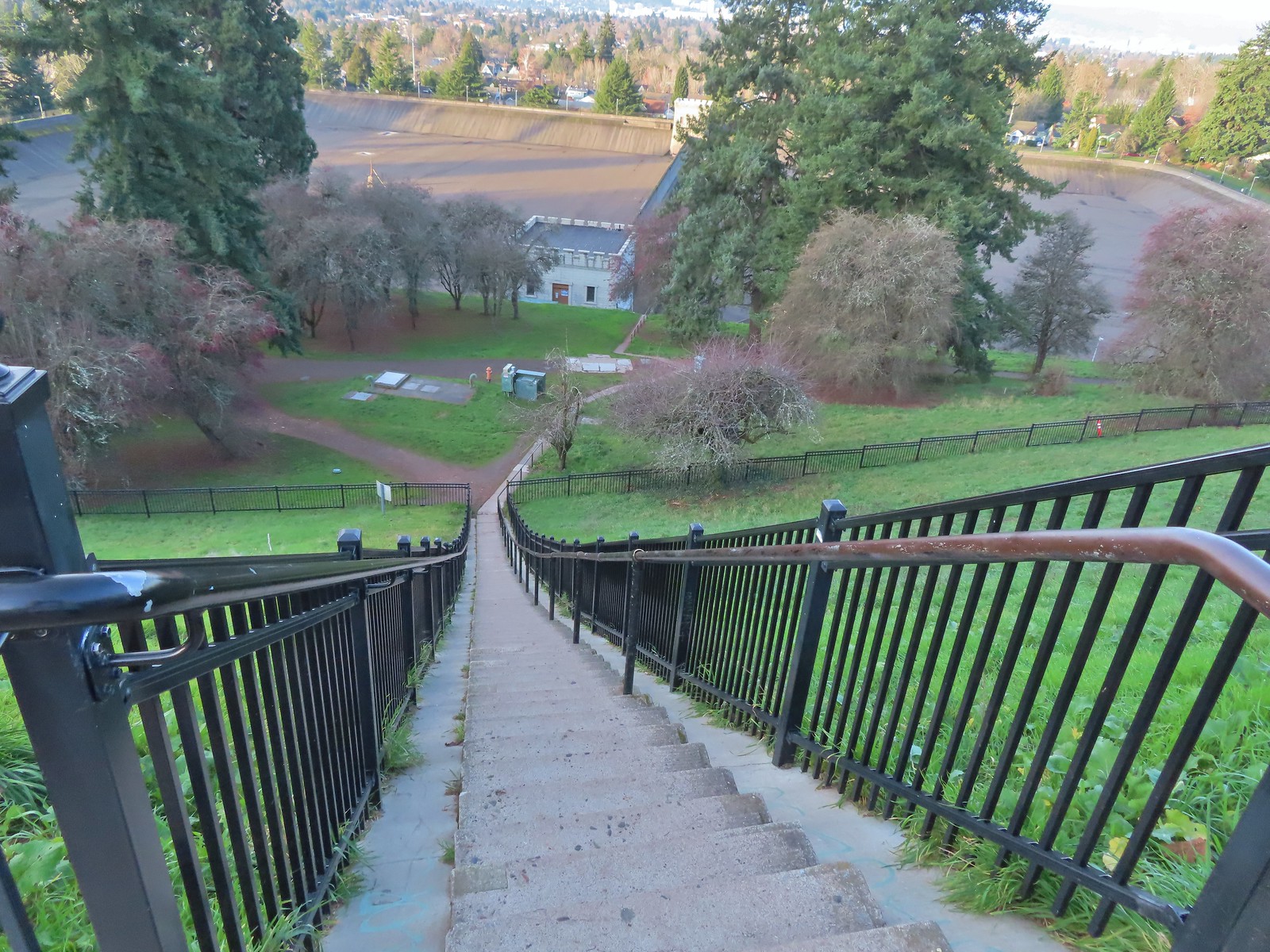
We walked along reservoir road to a small building then crossed the road and headed down a long flight of stairs.
IMG_2065

IMG_2064

IMG_2066

IMG_2067

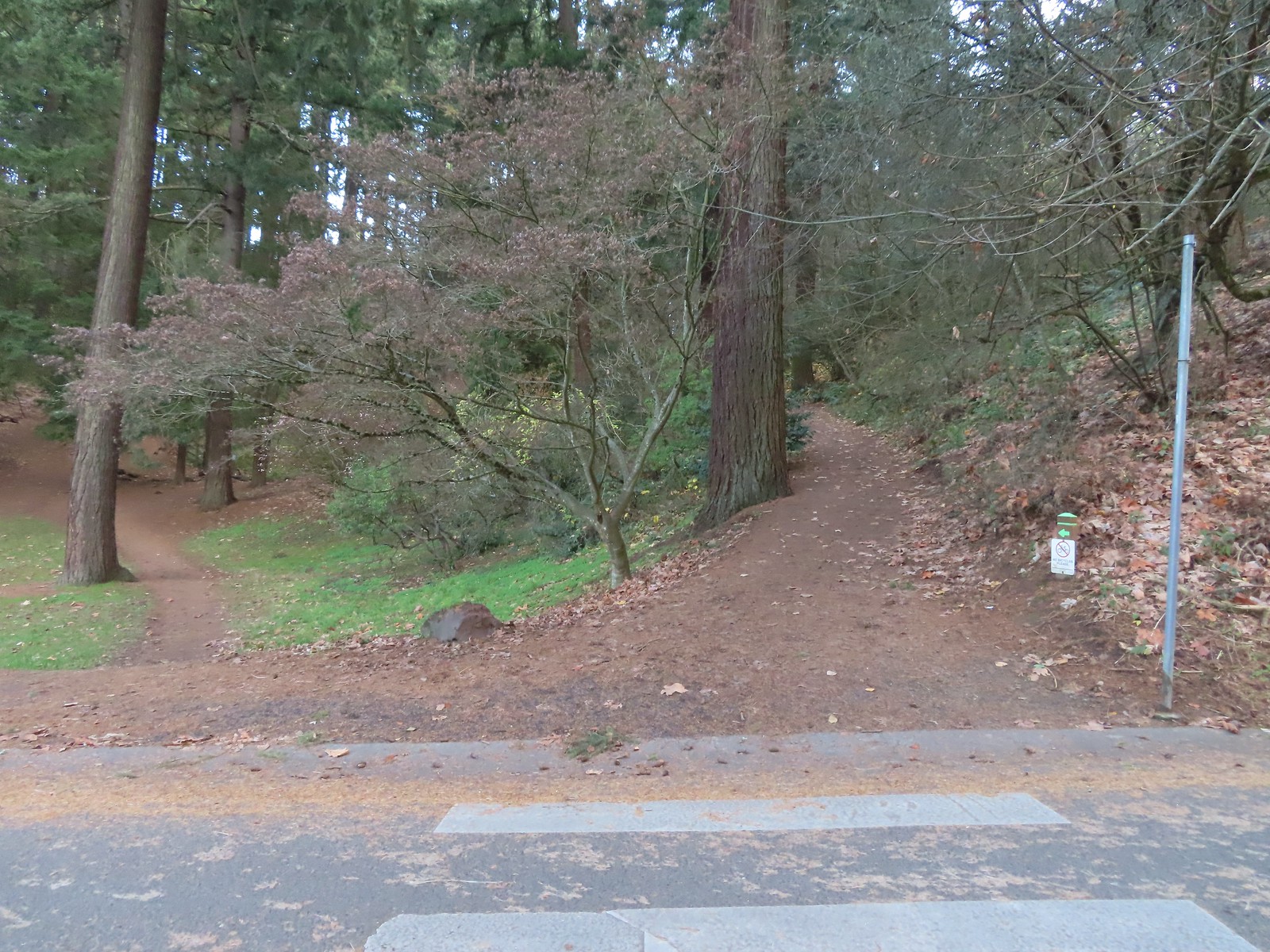
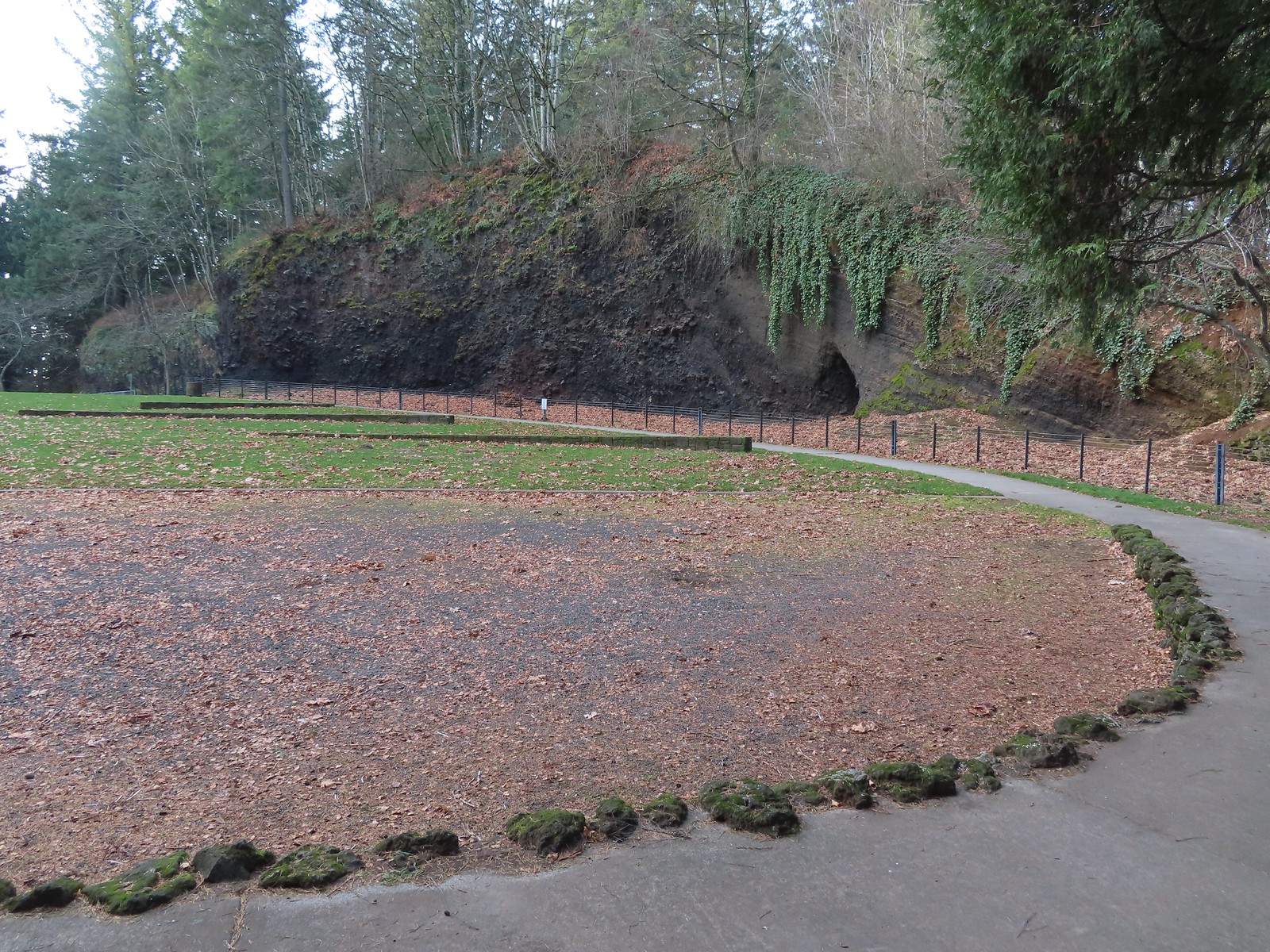
At the bottom of the stairs we turned right on the Green Trail and followed it past some tennis courts before turning uphill. We stuck to the Green Trail as it neared the parking area and followed it back behind The Crater before arriving back at the Visitors Center.
IMG_2070

IMG_2073We forked right at this junction sticking to the green pointers.

IMG_2076Arriving at The Crater.

IMG_2077Coming around The Crater near the Visitors Center.
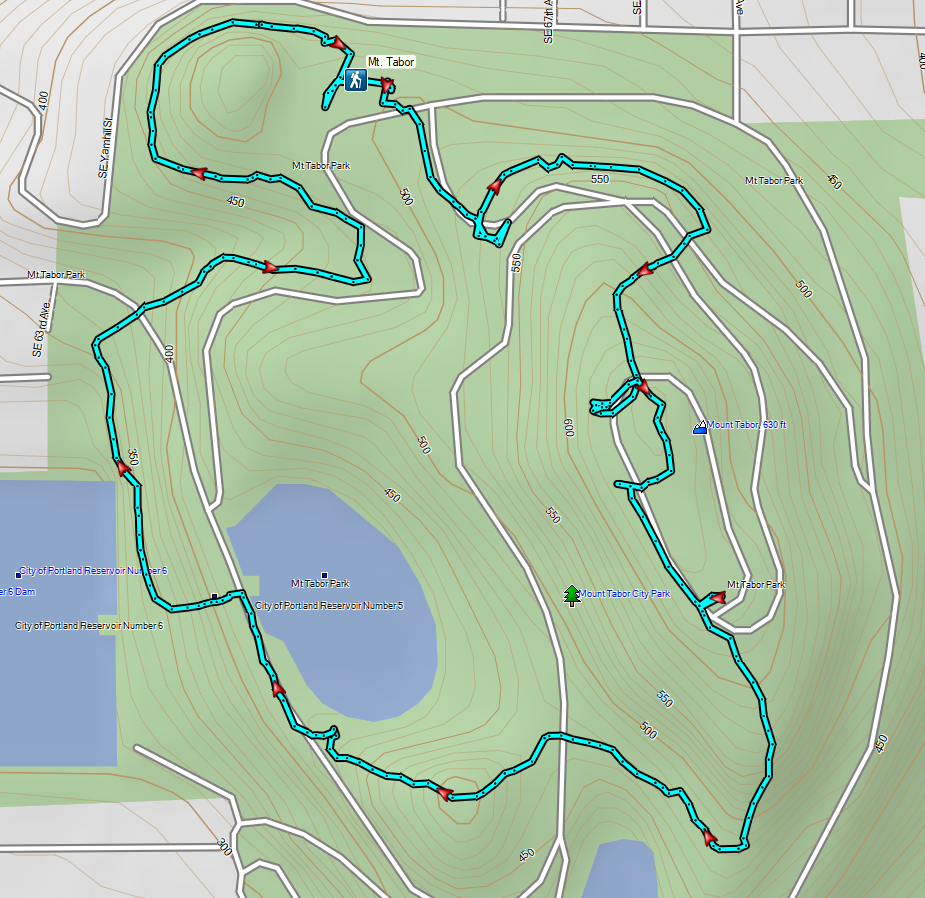
This was just over a two-mile loop with approximately 350′ of elevation gain.

From Mount Tabor we made the nine-mile drive to the Sunnyside Road Trailhead for the Mount Talbert Nature Park.
IMG_2078

We set off on a gravel path that descended to a metal bridge over Mount Scott Creek.
IMG_2079Mount Talbert from the path.

IMG_2081

IMG_2082Mount Scott Creek

Beyond the creek the forested trail began to climb Mount Talbert. We passed a junction with the Cedar Park Trail joining from the left and after 0.4-miles arrived at a T-junction with the Park Loop Trail.
IMG_2083

IMG_2086

IMG_2088The Park Loop Trail junction just uphill.
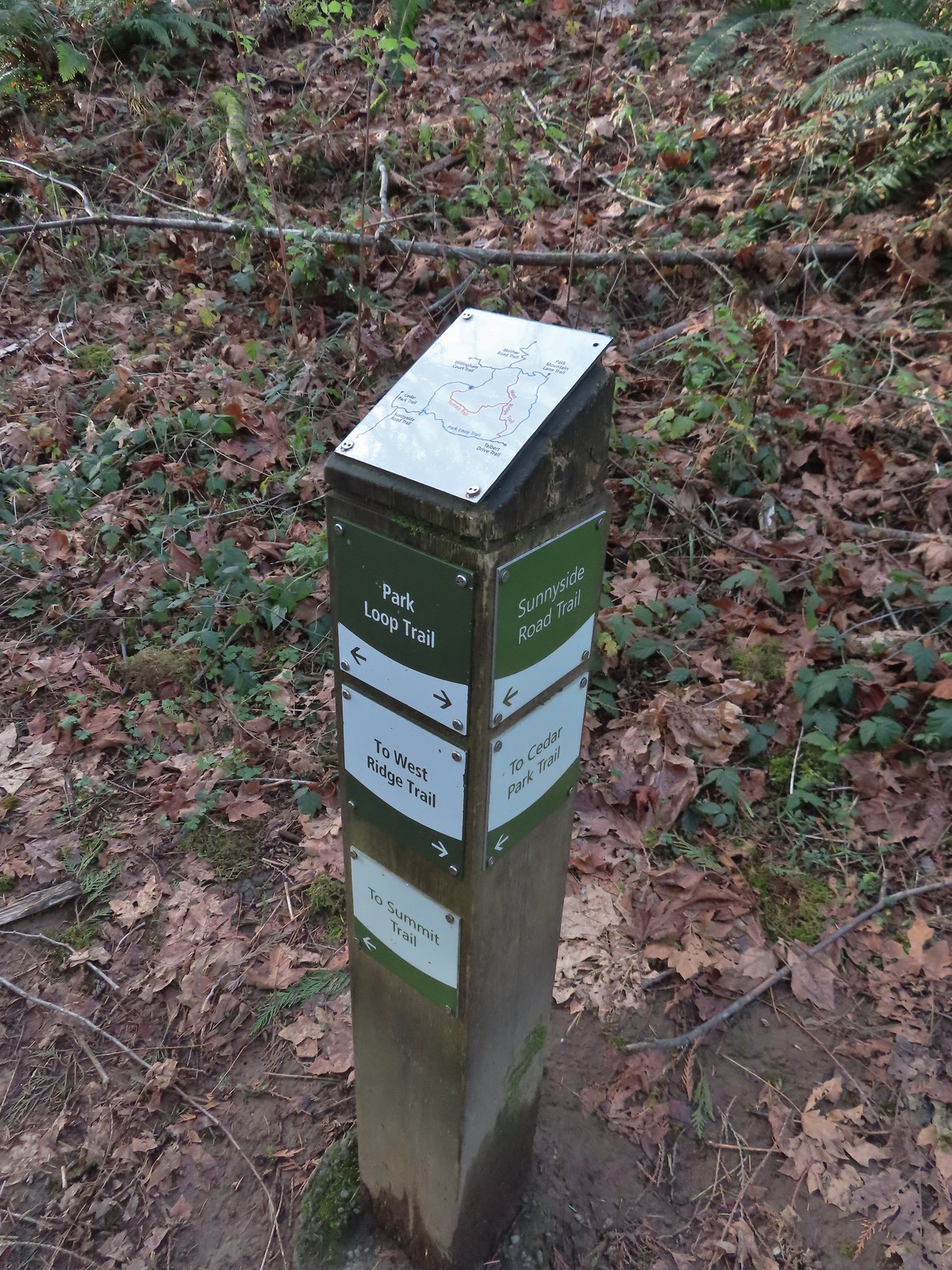
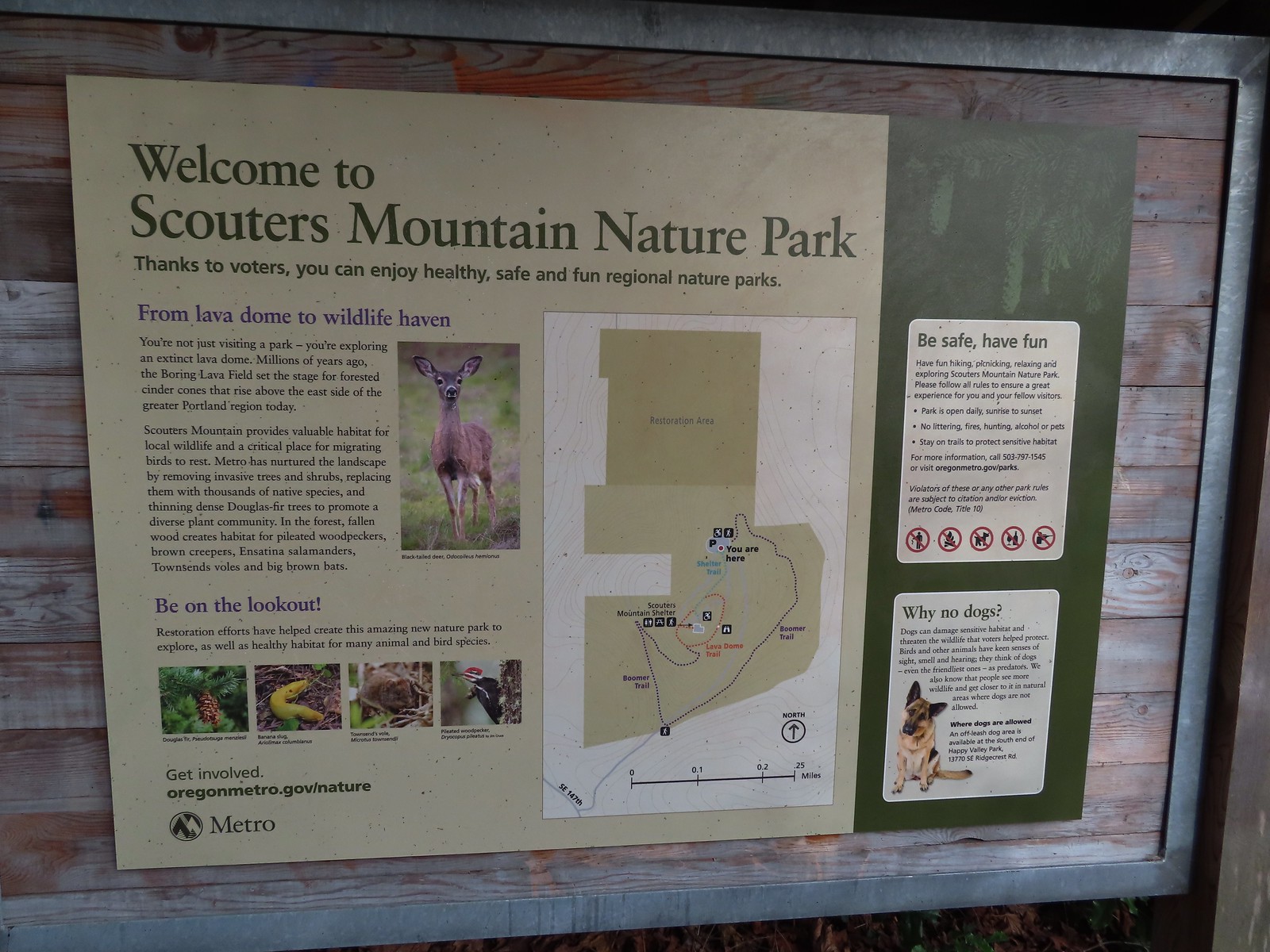
Mount Talbert is an Oregon Metro park which meant well marked junctions complete with small maps.
IMG_2089Note that the map at the Park Loop/Sunnyside Road Trail junction mis-identifies the location with the “You Are Here” star located at the Park Loop/Summit Ridge junction.
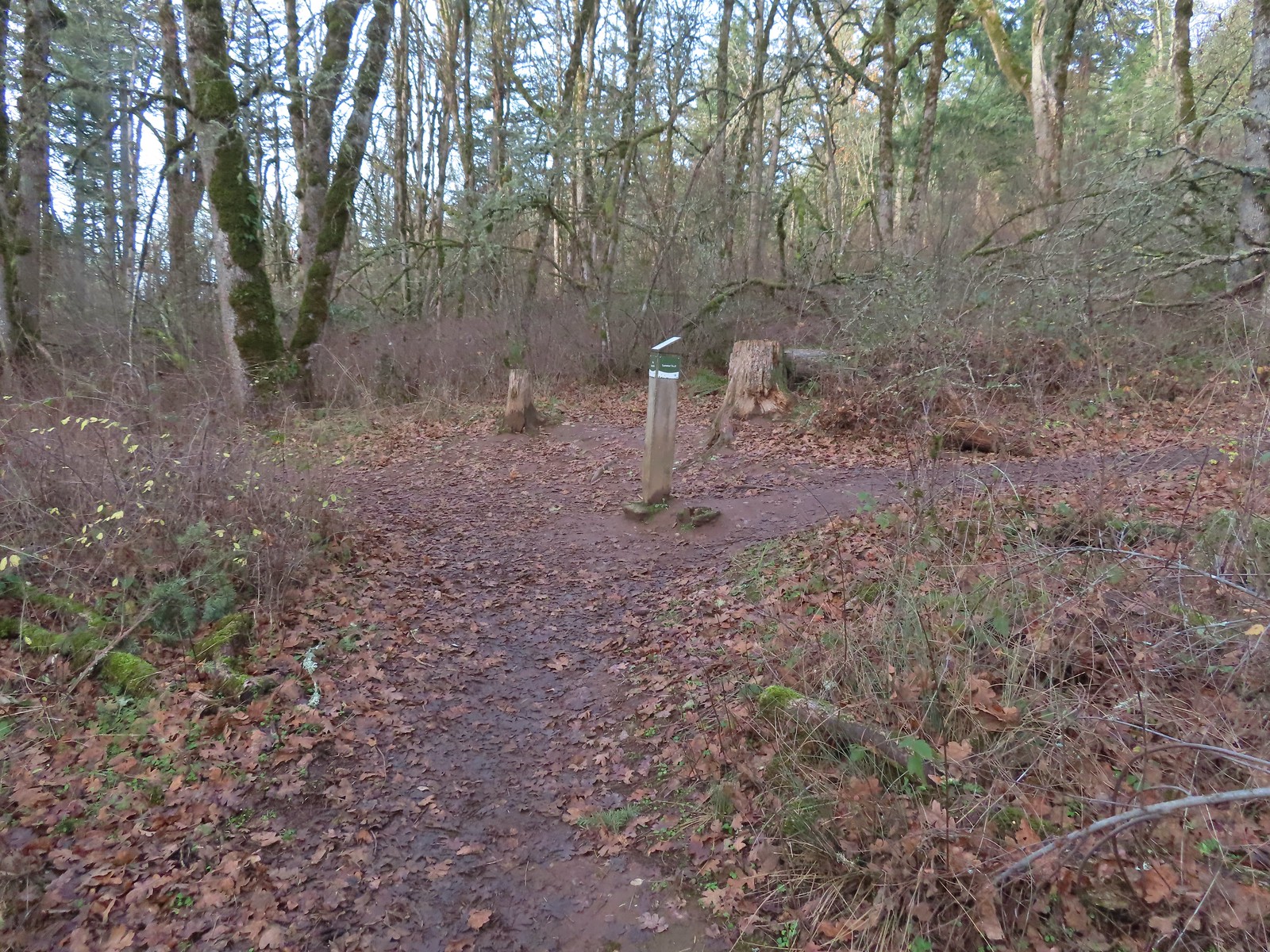
We turned left onto the Park Loop Trail and followed it further uphill to the actual Summit Ridge Trail junction.
IMG_2091

IMG_2093

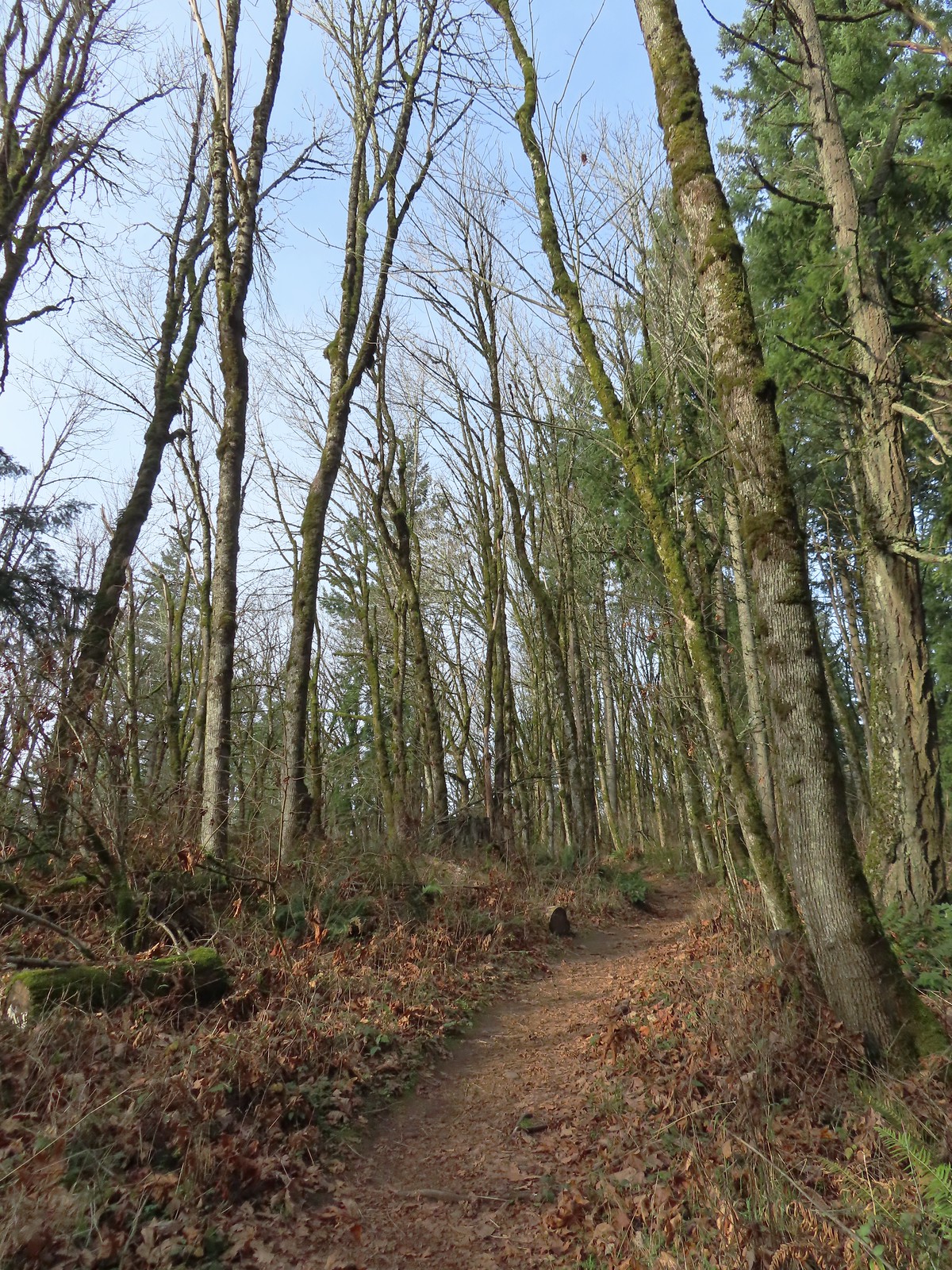
We turned right onto the Summit Ridge Trail and followed it up and over the wooded summit to the West Ridge Trail.
IMG_2096

IMG_2098

IMG_2099Arriving at the West Ridge Trail junction.
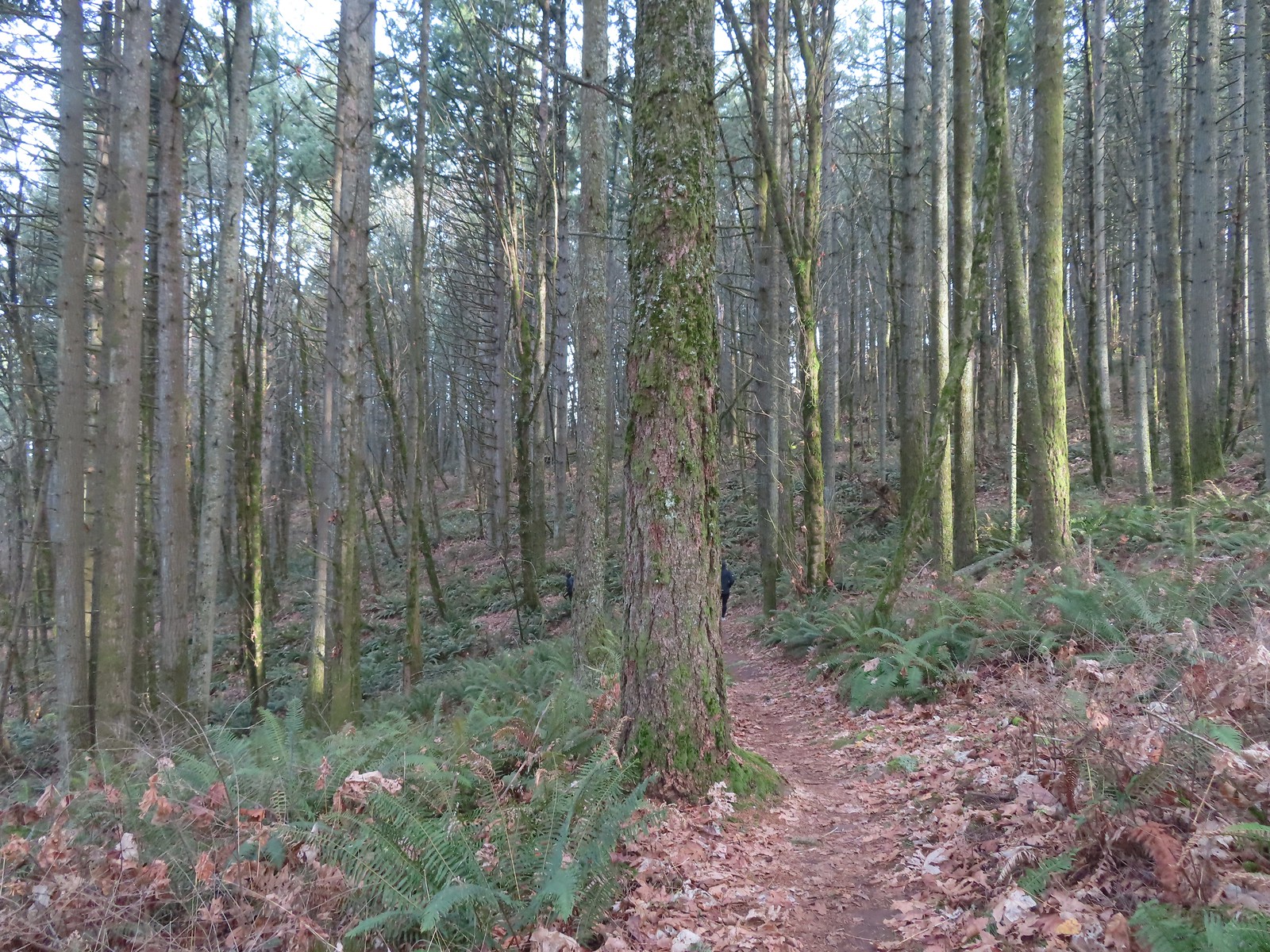
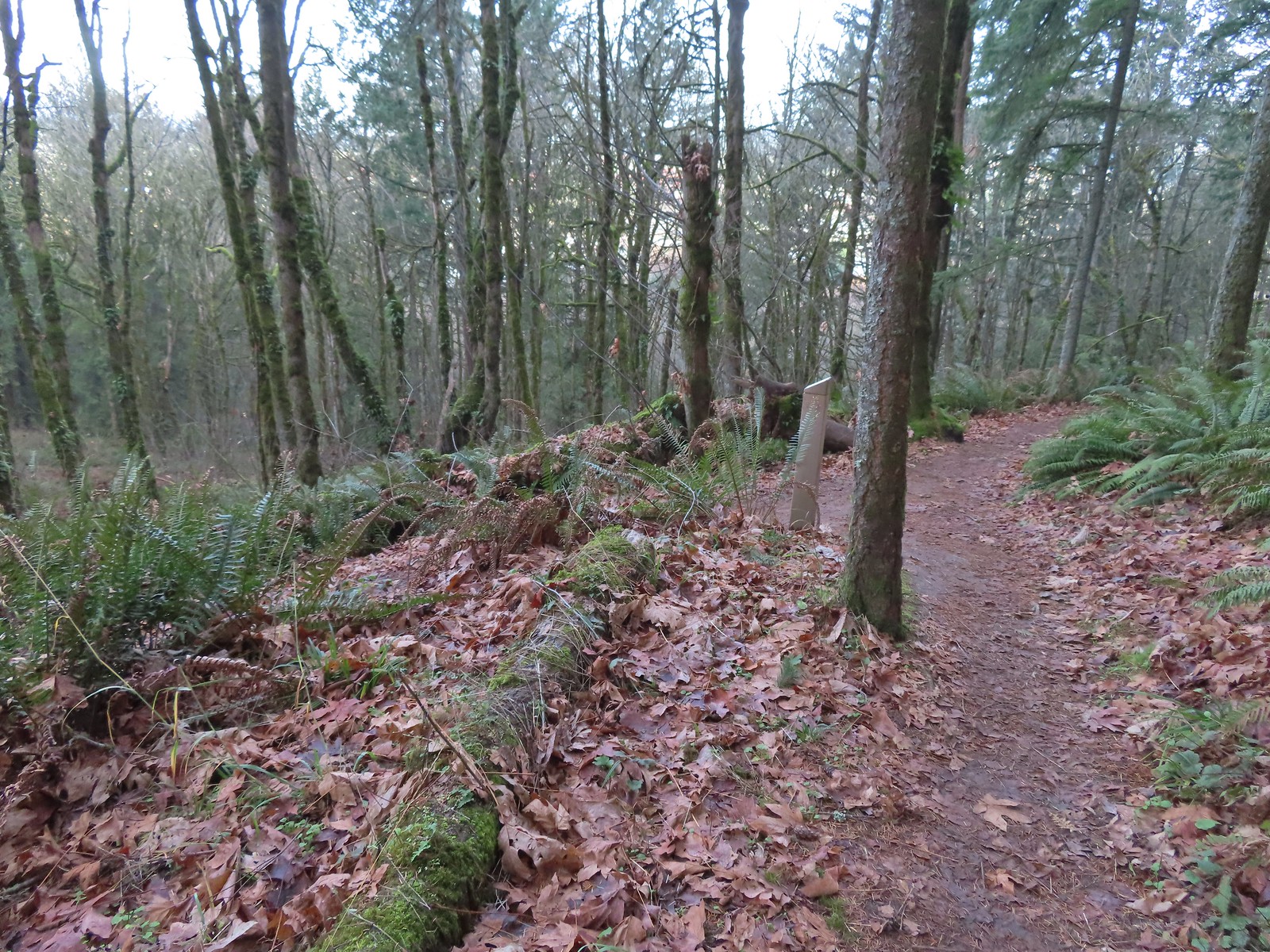
We turned right again and followed the West Ridge Trail as it traversed the hillside brining us back to the Park Loop Trail.
IMG_2101

IMG_2103Rejoining the Park Loop Trail.

We completed the loop and turned down the Sunnyside Road Trail to return to our car to complete this 2.5-mile (and 700′ gain) hike.
IMG_2108Mt. Adams was visible through the web of small branches.
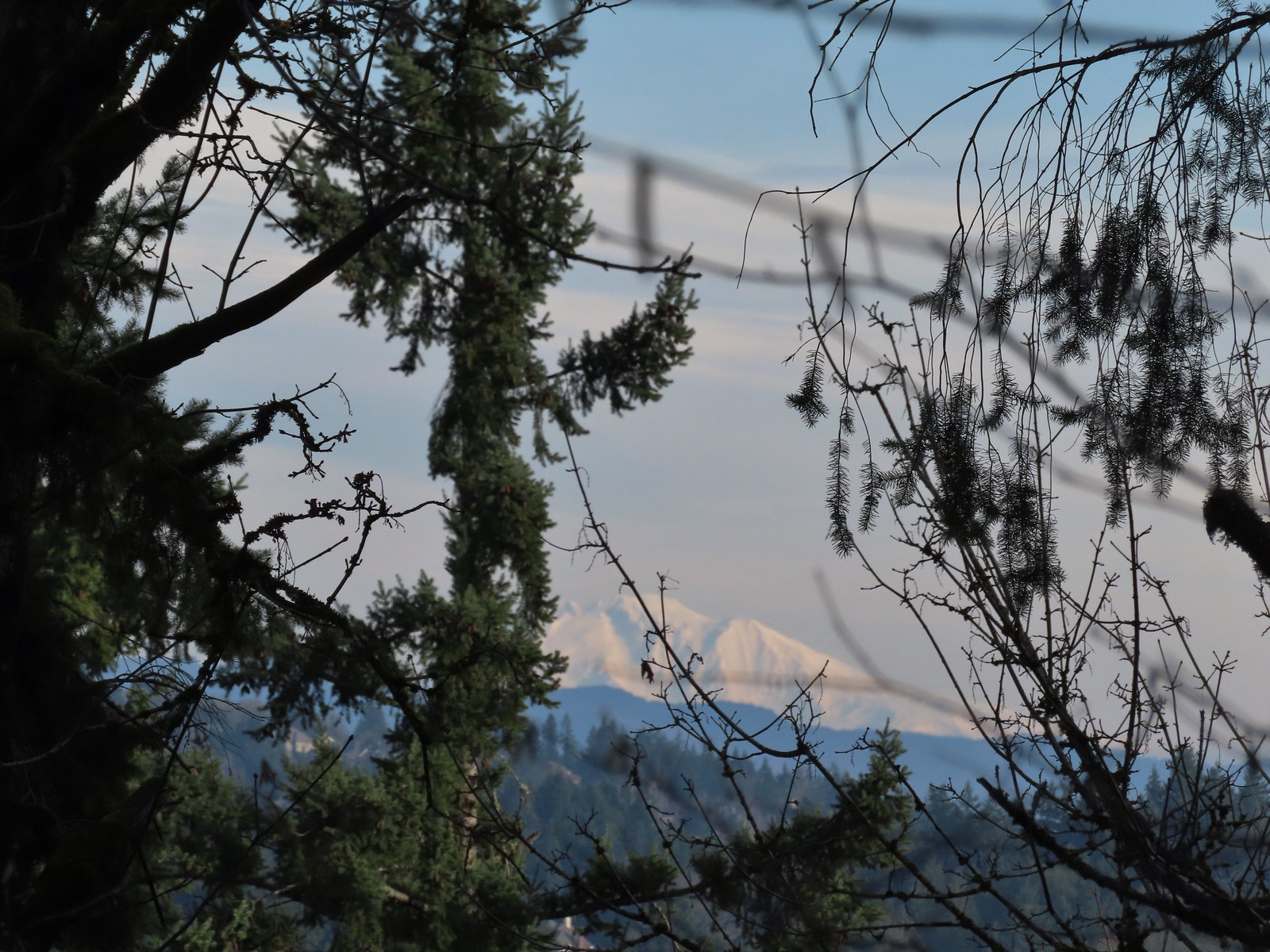
IMG_2110A snowy Mt. Adams.

IMG_2113Back at the Sunnyside Road Trail.

From the Sunnyside Road Trailhead it was just a 3.5-mile drive to the parking area at Scouters Mountain Nature Park.
IMG_2115

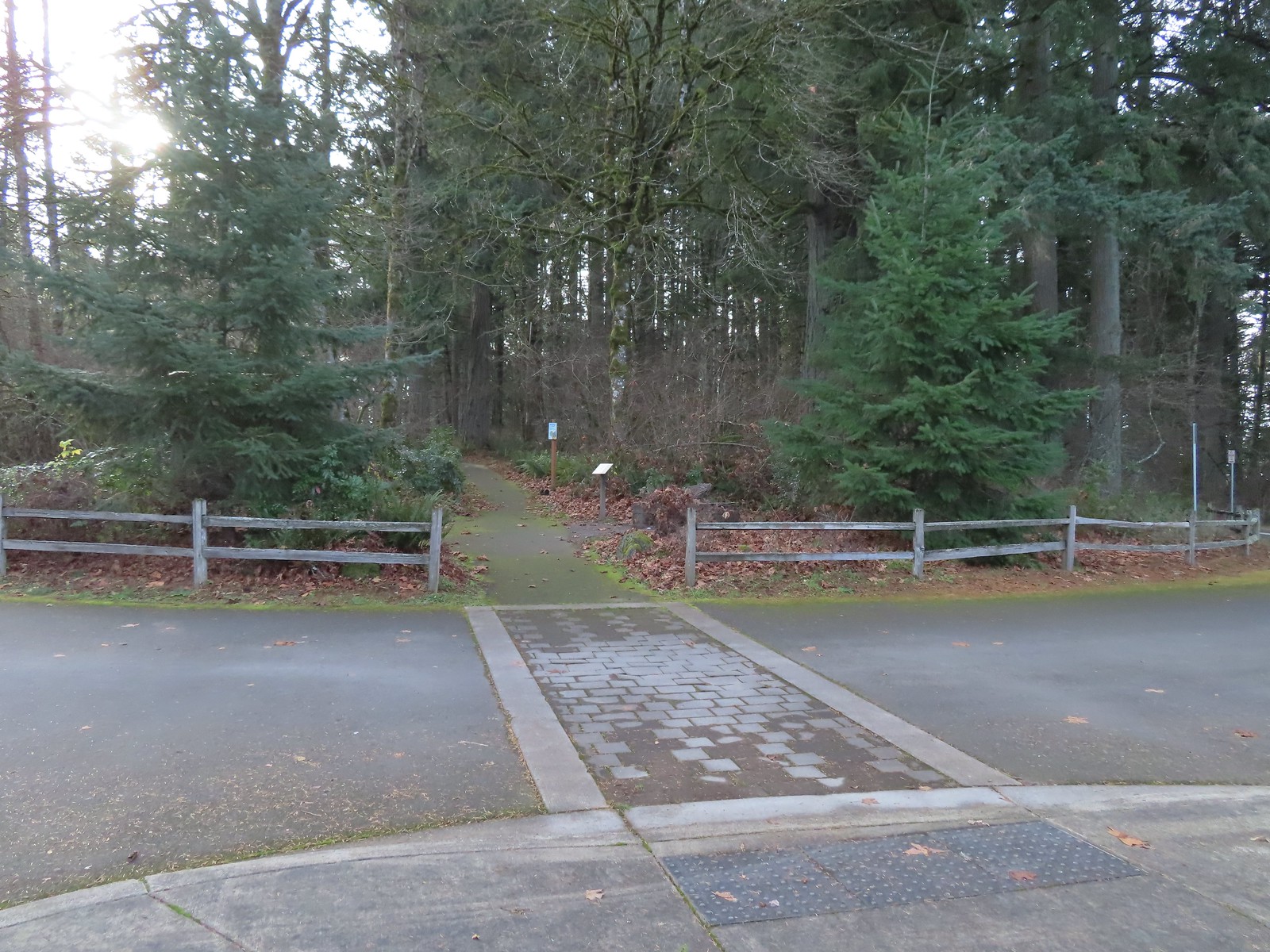
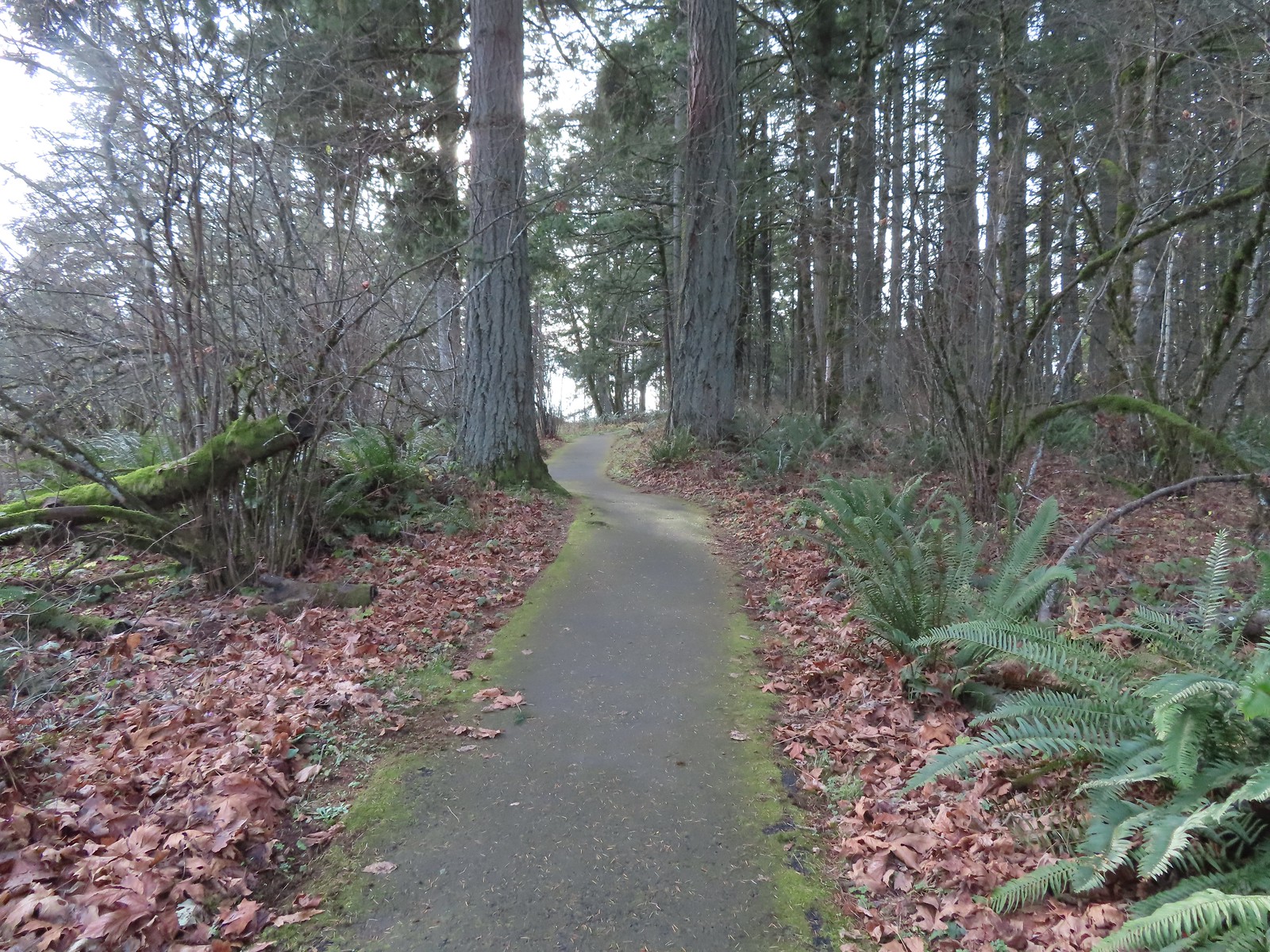
From the parking area we set off on the paved Shelter Trail toward the summit.
IMG_2114

After just 0.2-miles we arrived at the shelter and a great view of Mt. Hood.
IMG_2119

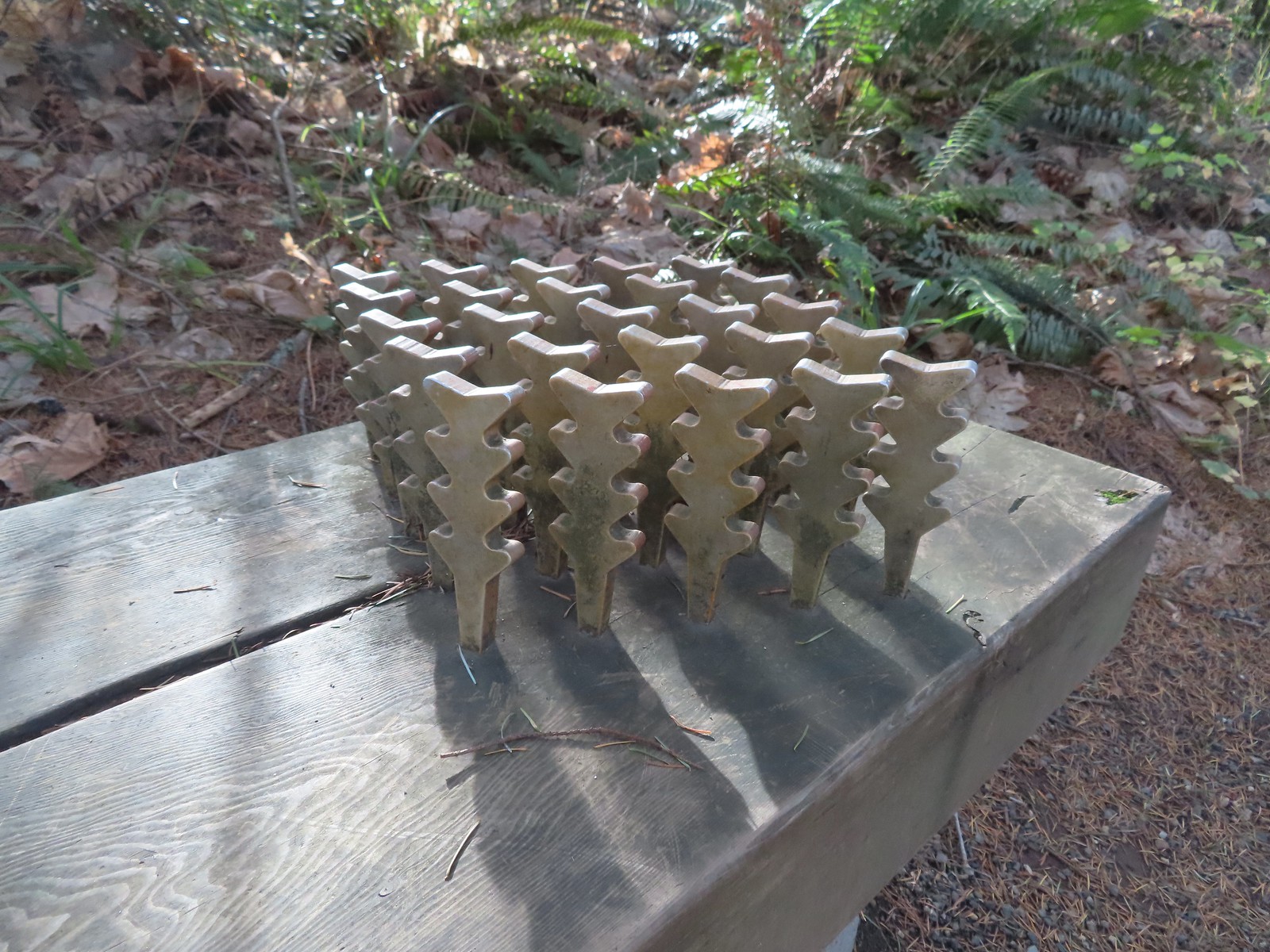
IMG_2122The benches throughout the park contained various nature sculptures, this one is “Moss Group”.
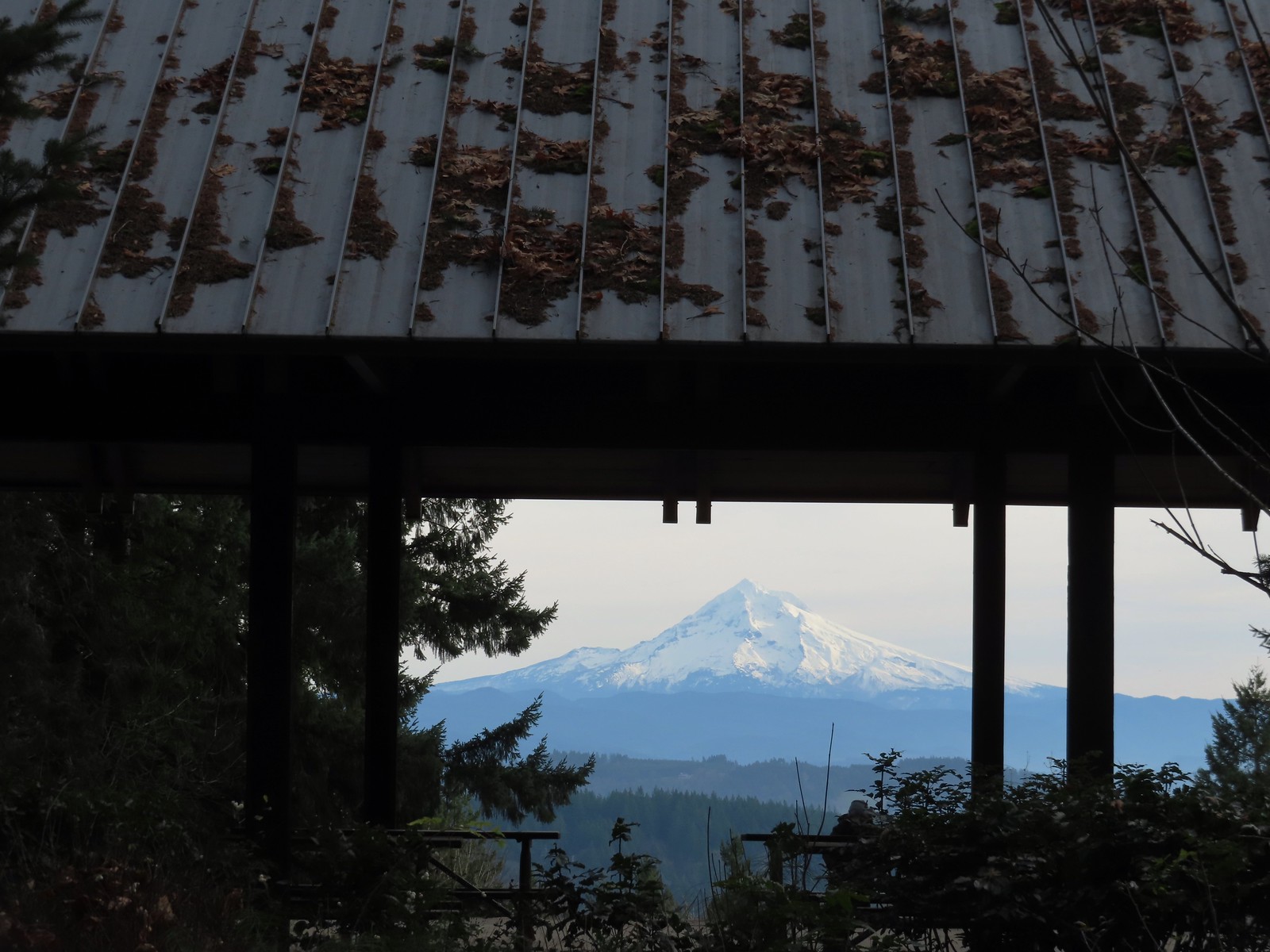
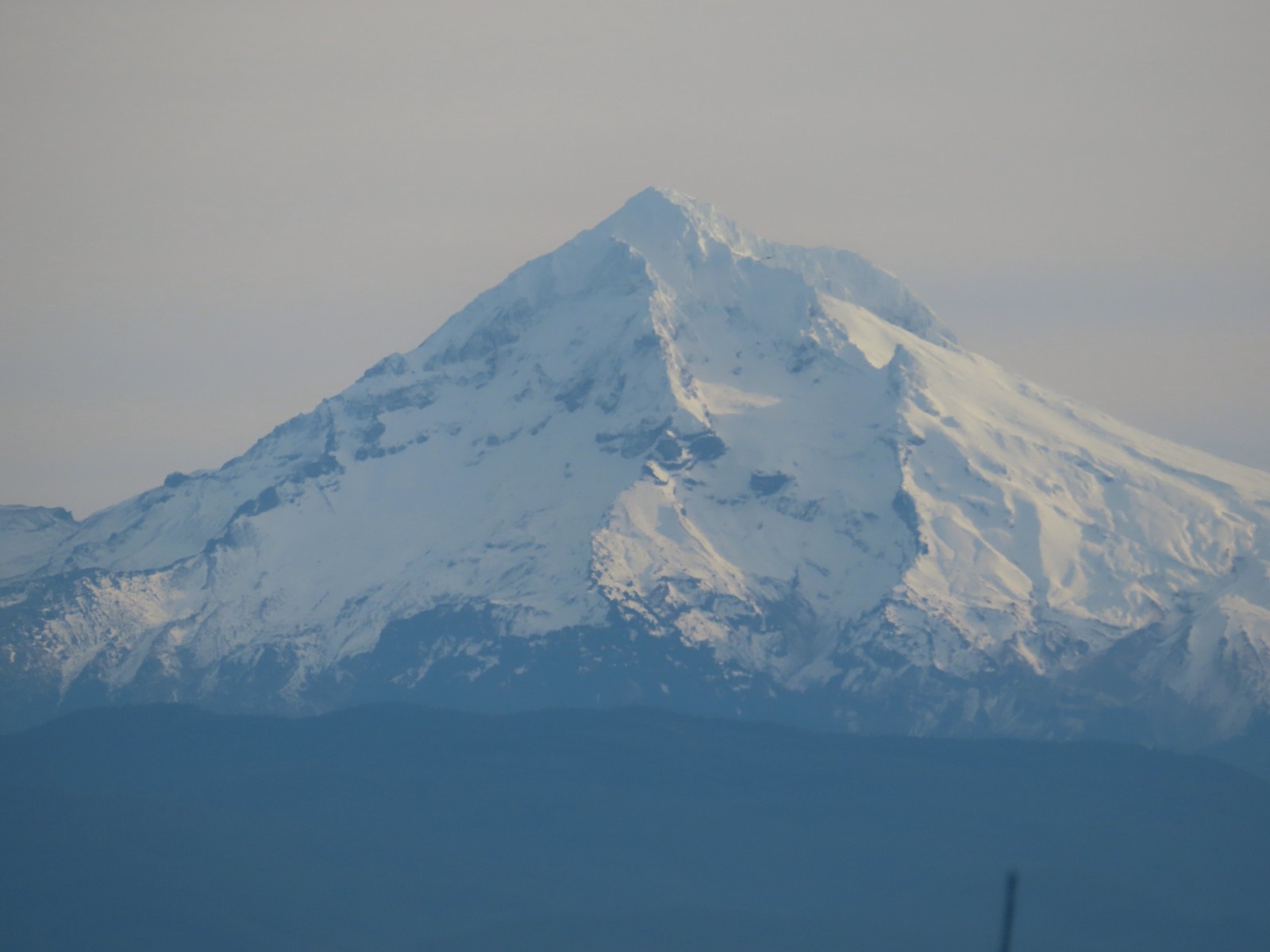
IMG_2126

IMG_2128

IMG_2127

After admiring the mountain we made a small loop on the summit then continued on our larger loop by taking the Boomer Trail at the southern end of the summit downhill and looping around the East side of the mountain to return to the parking area.
IMG_2148On the Boomer Trail.

IMG_2150The Boomer Trail turned left at the bottom of these stone steps.
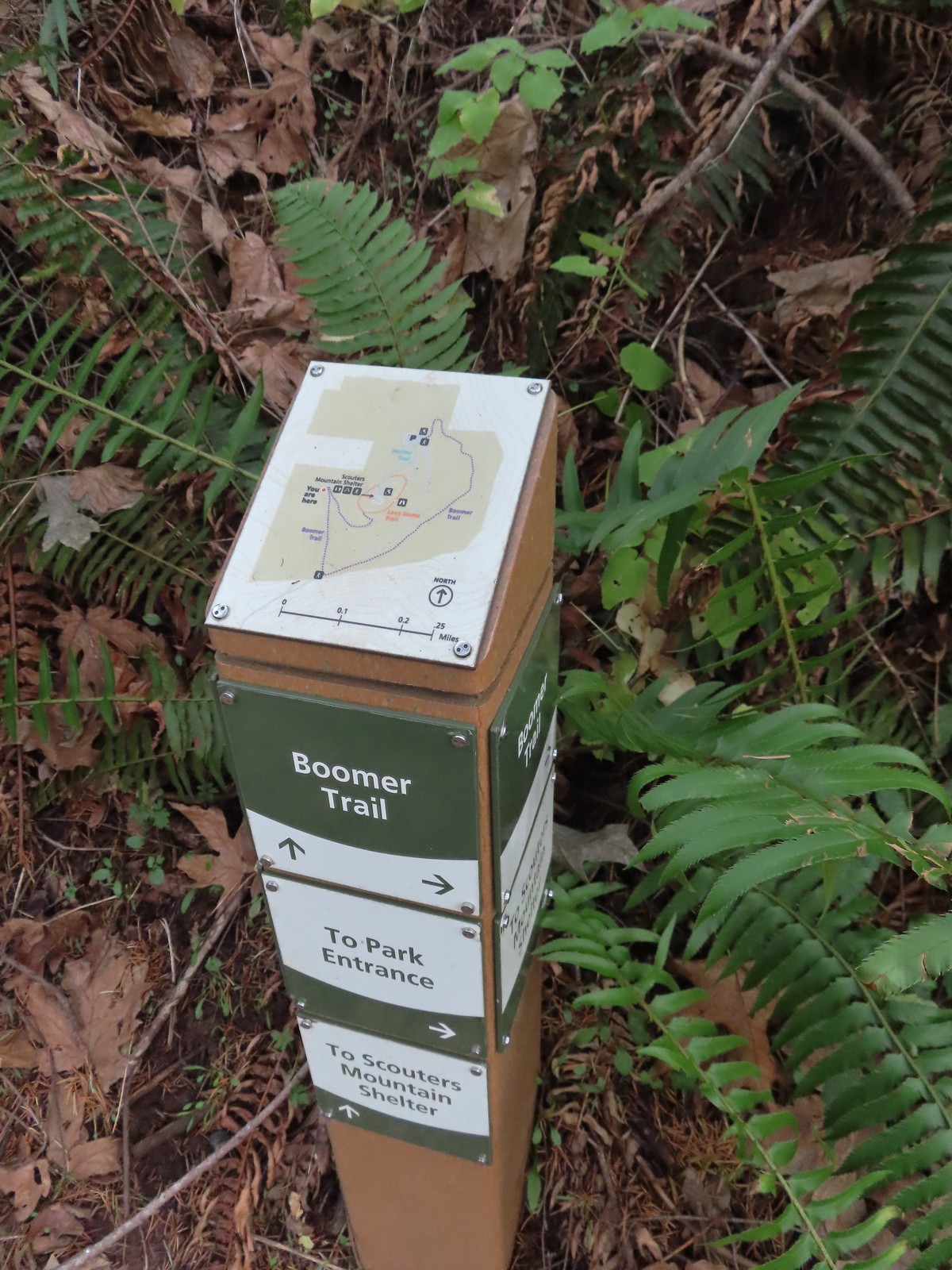
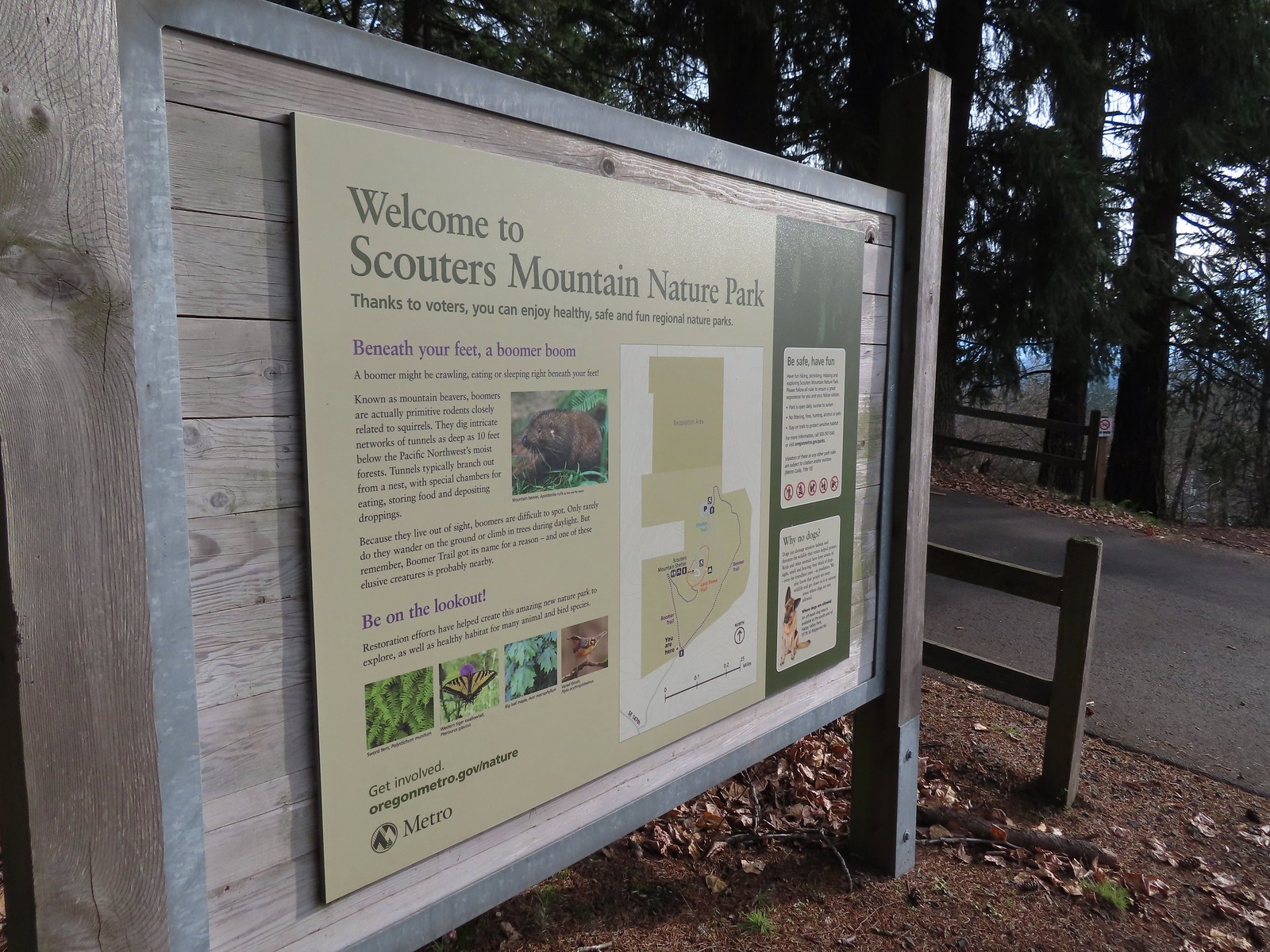
IMG_2151Another Metro trail map and pointers.

IMG_2152The Boomer Trail, named for Mountain Beavers which are sometimes called boomers, crossed the entrance road before climbing back up to the parking area.

IMG_2156This was an impressive root system.

IMG_2160A less obstructed view of Mt. Adams. (Mt. St. Helens was also briefly visible from this section of trail.)

IMG_2161Slightly clearer shot of Mt. Adams.

IMG_2162Back at the trailhead.

This was just a 1.3-mile loop with 200′ of elevation gain, and it was still early enough that we could easily fit one more stop in. From Scouters Mountain we drove another 4.5-miles to Hood View Park

At the far end of the parking area we followed a service road down to SE 162nd Ave and followed it right to its end at a sign for the Hidden Falls Nature Park.
IMG_2163

IMG_2164Mt. St. Helens from the service road. Mt. Hood was also visible to the right through some fences around the ball fields.

IMG_2166

IMG_2167

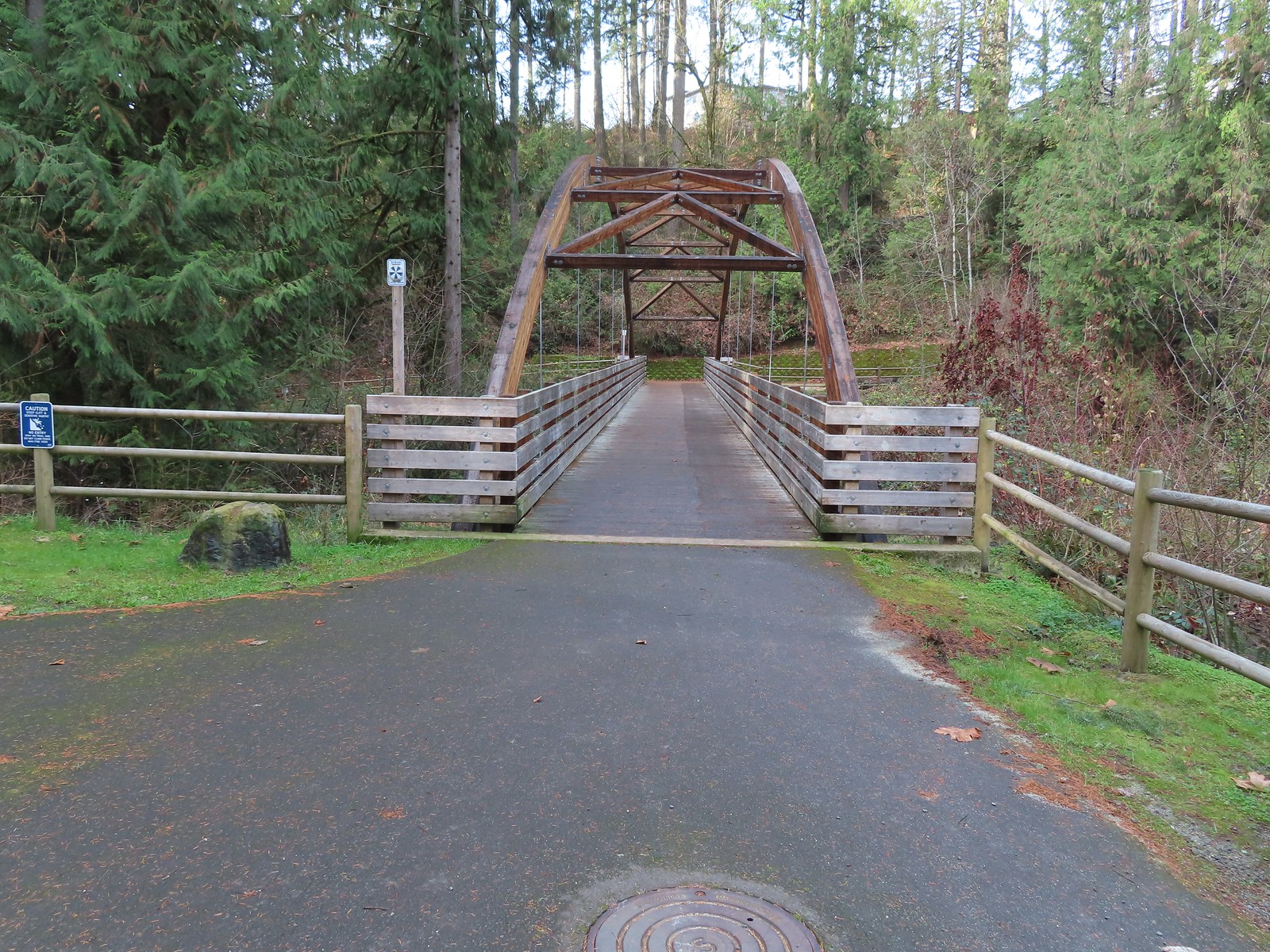
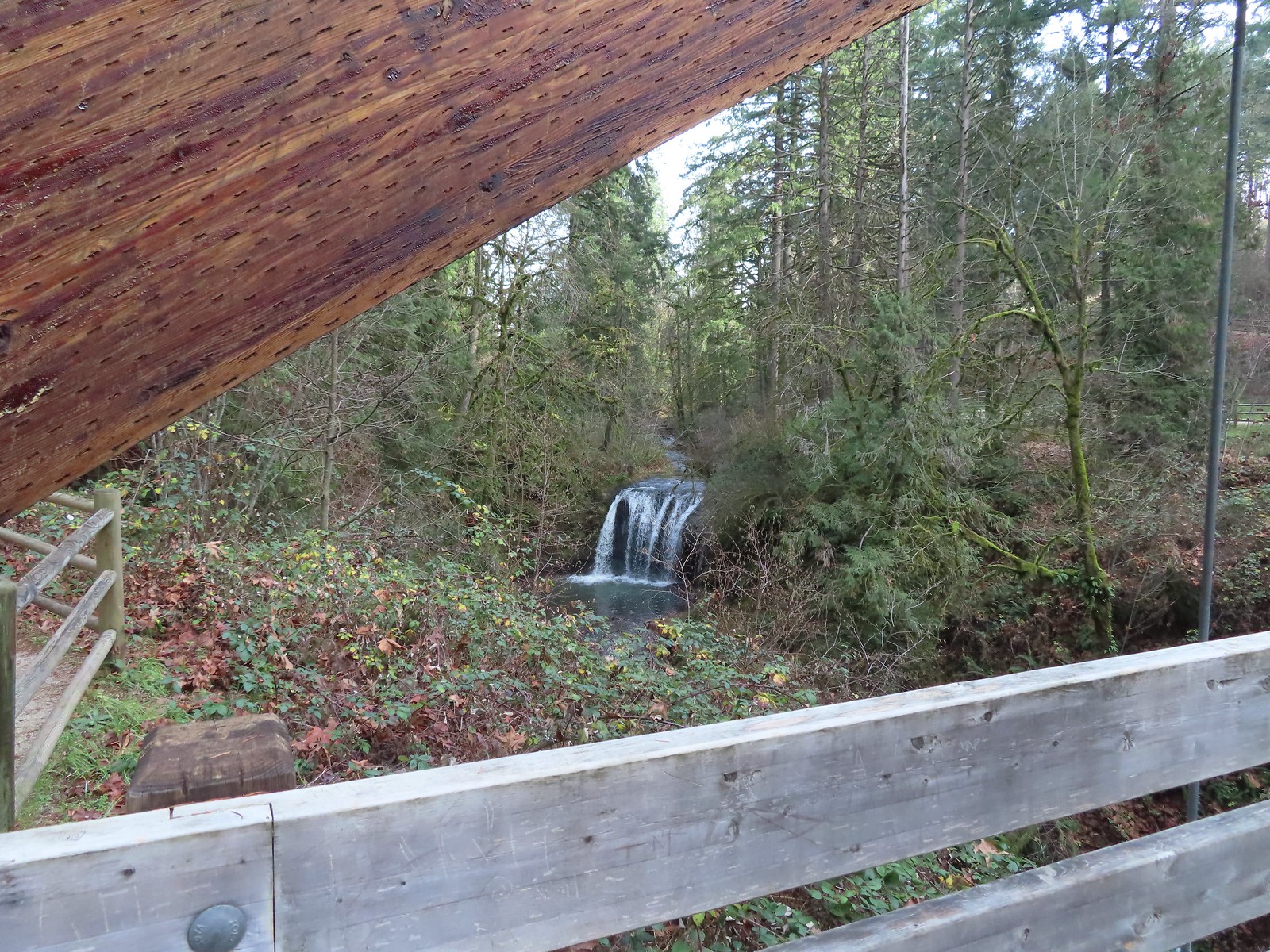
A wide path led somewhat steeply downhill a third of a mile to an impressive bridge over Rock Creek and a view of Hidden Falls.
IMG_2168

IMG_2170The large area to the right didn’t offer much of a view of the falls, but the view from the bridge was great.
IMG_2172

IMG_2176

IMG_2183

IMG_2179

We continued past the bridge a short distance along Rock Creek before turning around when the path veered away to climb up into another neighborhood.
IMG_2186

IMG_2187

The Oregon Hikers Field Guide describes a 4.1-mile loop that visits some other parks while also passing through several neighborhoods. We were content with seeing the falls and headed back making this just a 1.2-mile out-and-back with a couple hundred feet of elevation gain. For the day we logged 7.2-miles and 1475′ of cumulative elevation gain. It was a nice relaxing way to end our 2023 hiking season. Happy Trails and Merry Christmas!

Our final three hikes.
Categories
Central Coast Hiking Oregon Oregon Coast Trip report

D River, Nesika Park, and Cutler City Wetlands – 11/18/2023

Back on January 1st we kicked off our 2023 hiking year by visiting several trails in Lincoln City, OR (post). During that outing we kept seeing signs referring to the Lincoln City Trail Challenge. A little post hike research revealed that the challenge involved trails in eight of the city’s open spaces, the five we’d visited that day plus The Knoll which we’d visited in 2021 (post) and two hadn’t visited, Nesika Park and Cutler City Wetlands. The actual challenge is to find the trail challenge signs at each open space and snap a selfie, but we rarely ever take a selfie, and we didn’t have a picture of the sign from The Knoll. That didn’t stop us from wanting to at least visit the final two challenge locations, so when a brief window of dry weather presented itself on one of our days off we headed to Lincoln City to do just that.

Given that the two remaining locations provide less than a mile and a half of hiking we consulted the Oregon Hikers Field Guide for additional ideas and landed on their Nelscott Beach Hike. This approximately eight-mile hike would visit a lake, the D River (Once recognized by the Guiness Book of World Records as the worlds shortest river.), and Siletz Bay.

We began the hike at the D River State Recreation Site.
IMG_1754

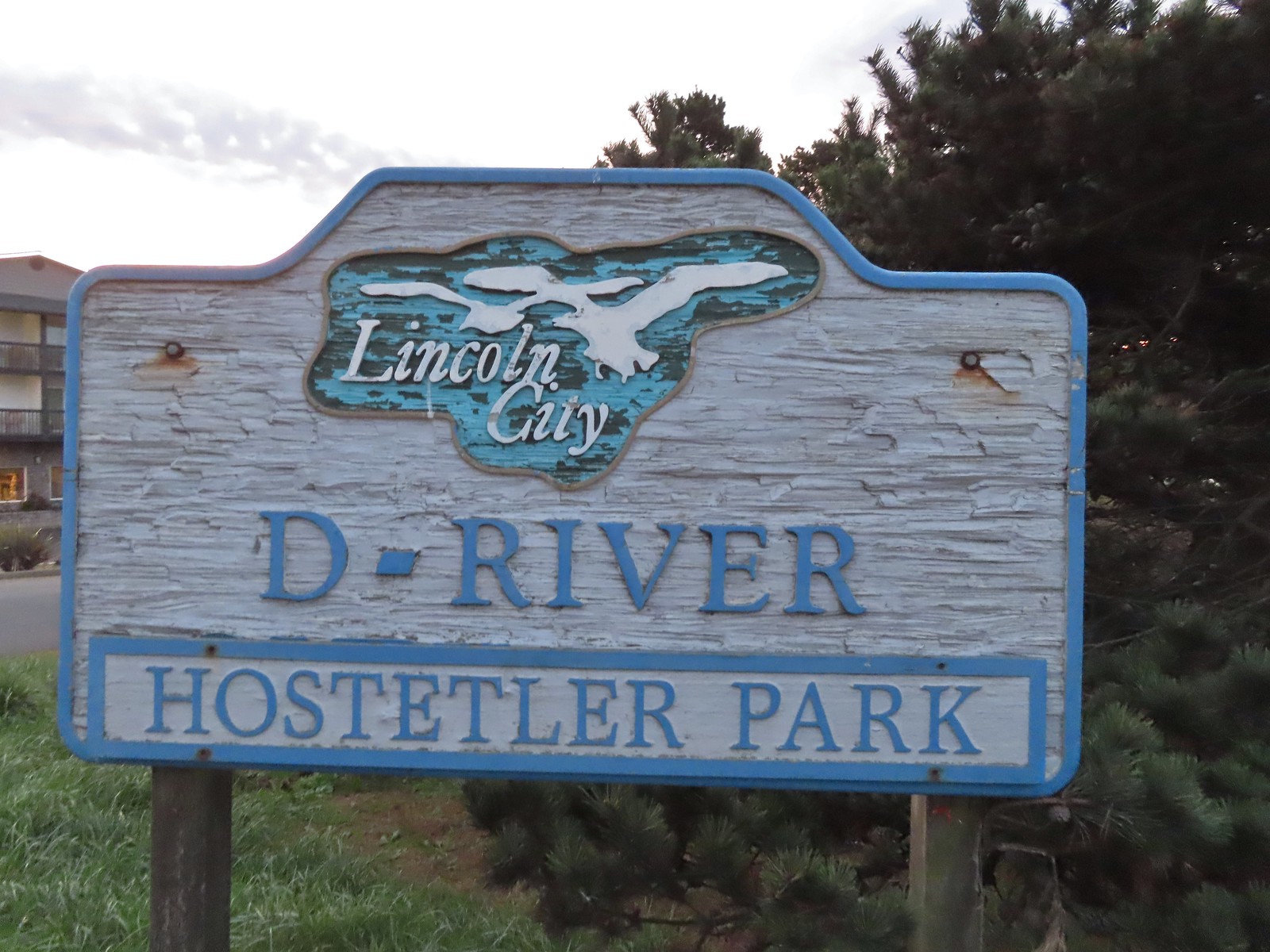
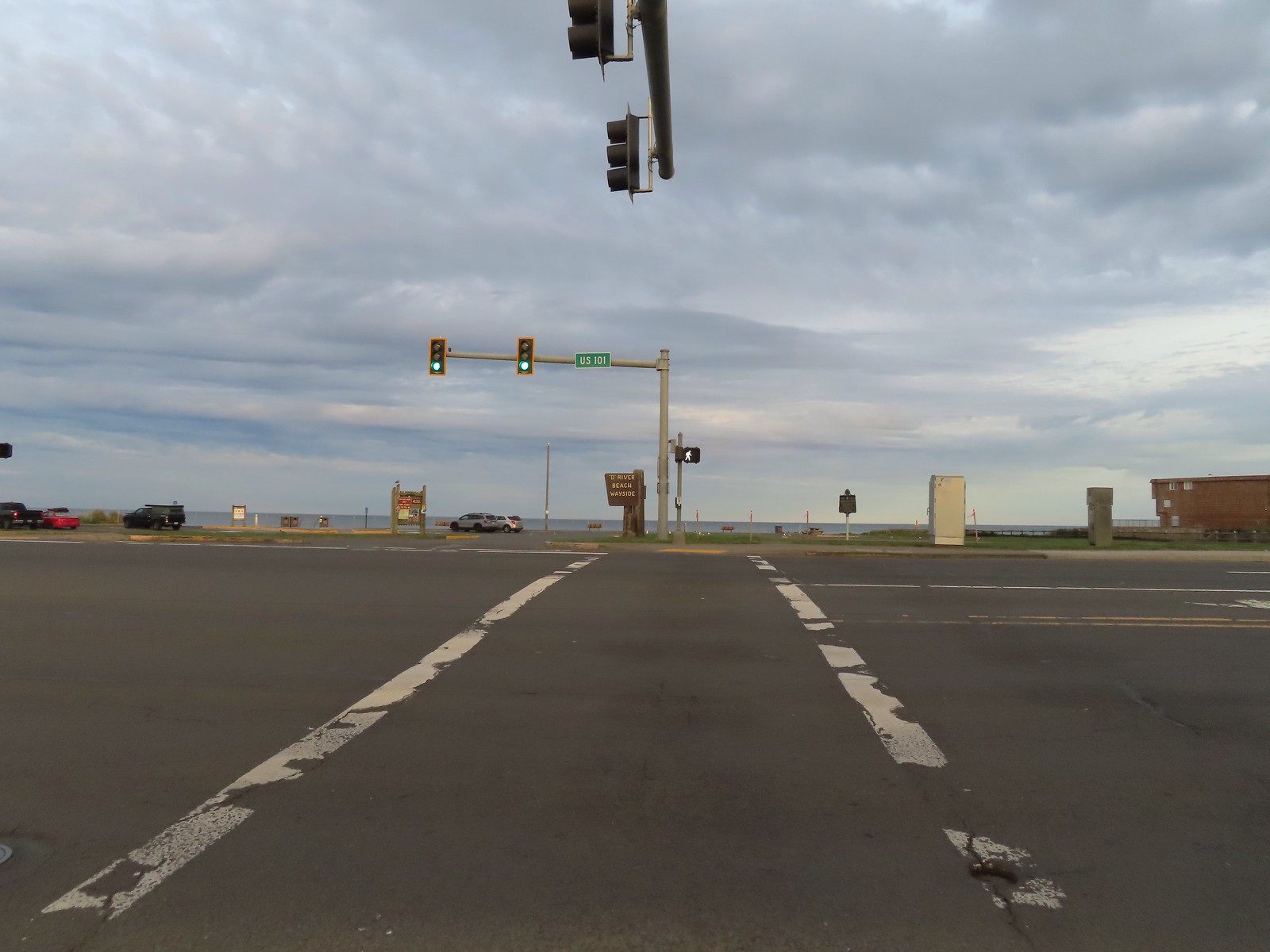
Before heading onto the beach we walked inland, crossing Highway 101 at a stop light, then passed over the D River and turned right into Hostetler Park.
IMG_1755The highway from the parking lot.

IMG_1759The D River from the highway bridge. The river flows between Devil’s Lake and the Pacific Ocean and at high tide has a length of approximately 40 yards.

IMG_1760

IMG_1762Hostetler Park.

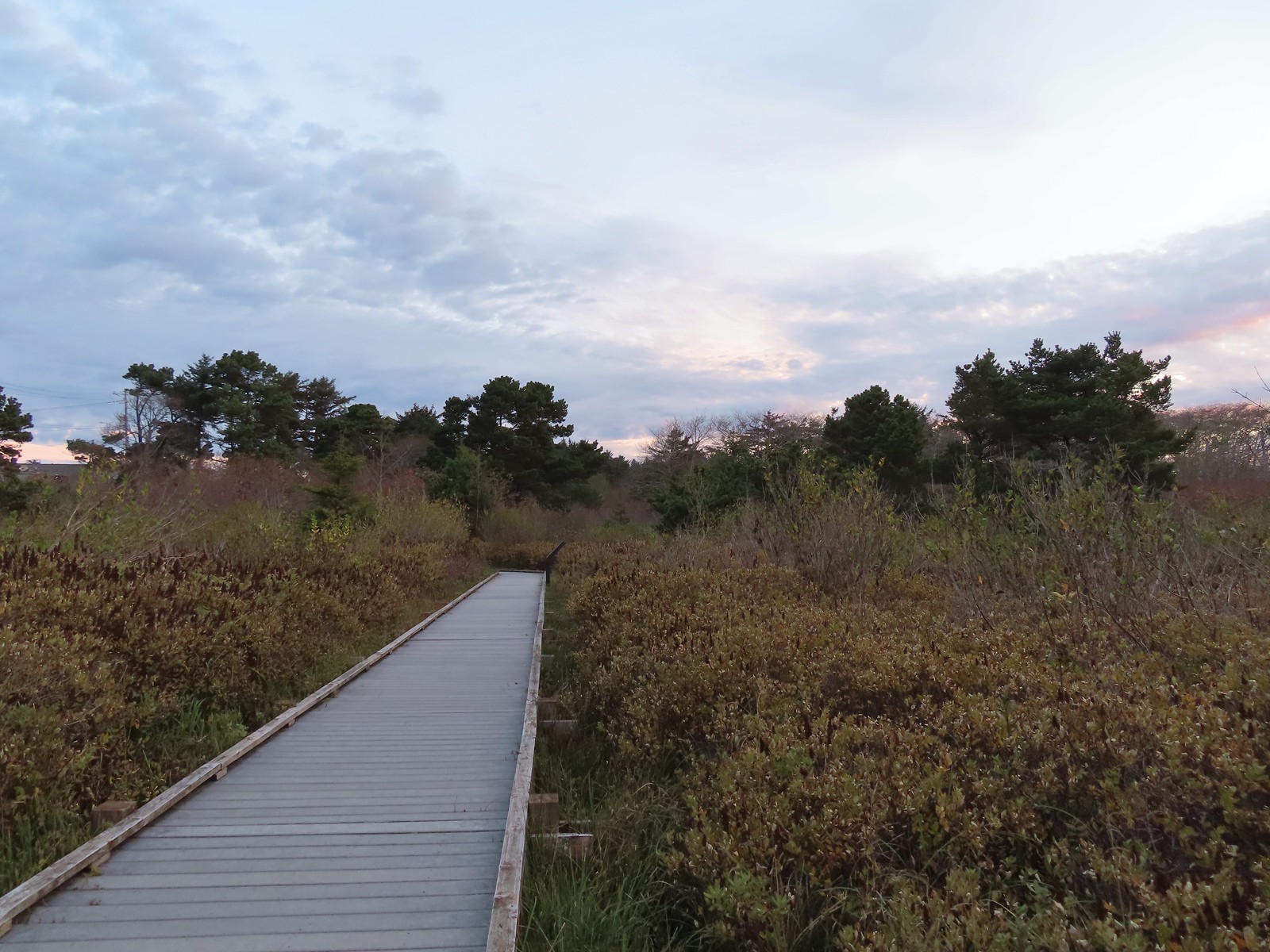
At the far end of the small park was a sign for the D River Open Space and a short trail leading to a long boardwalk.
IMG_1765

IMG_1766

IMG_1768

We followed the boardwalk to a campground at Devil’s Lake State Recreation Area.
IMG_1770Several interpretive signs were located along the boardwalk.

IMG_1772One of the interpretive signs.

IMG_1778Nearing the campground.

We turned right at the campground entrance and followed the campground road to a paved (and flooded) path to a moorage.
IMG_1779

IMG_1781Orange cones, and a cat, at the far end of the path.

We were able to follow the path far enough to see the moorage and a small portion of the lake.
IMG_1782

We returned to the campground road and looped back around to the entrance booth and the boardwalk then hiked back to the parking lot and headed down to the beach.
IMG_1786Program area in the campground.

IMG_1789

IMG_1791View North from the beach.

IMG_1793Cascade Head (post) in the sunlight behind God’s Thumb.

IMG_1795Seagulls at the mouth of the D River.

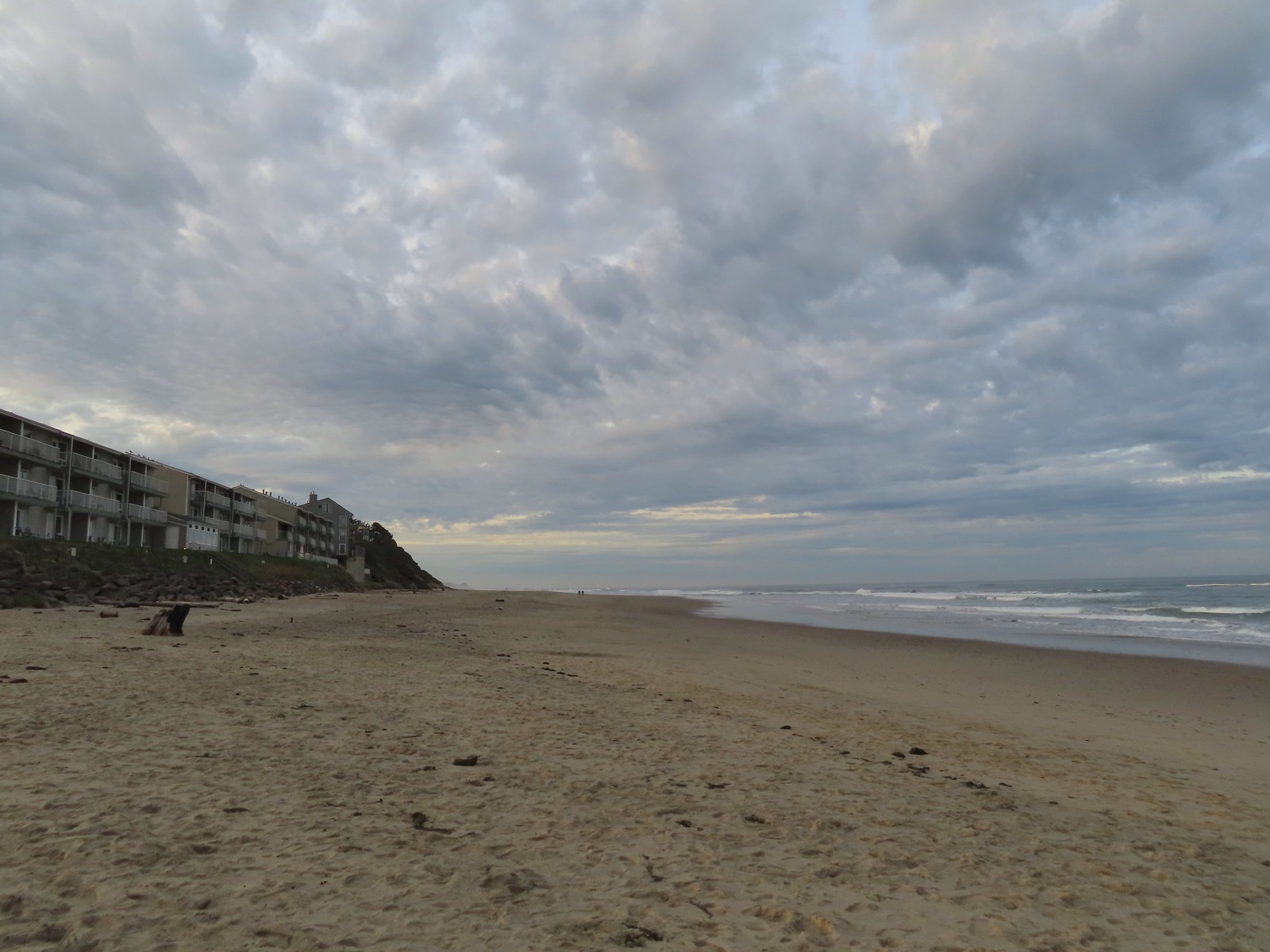
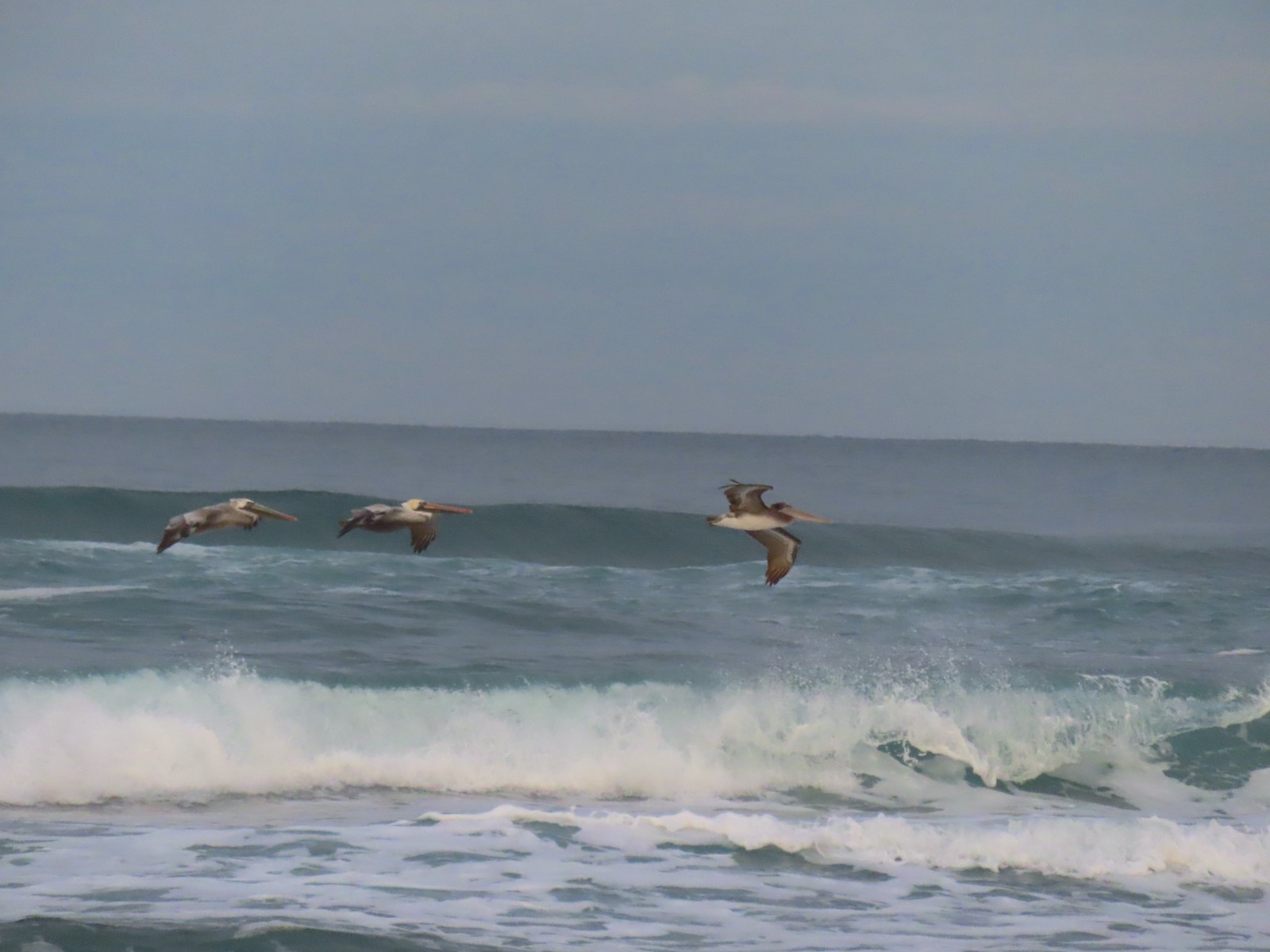
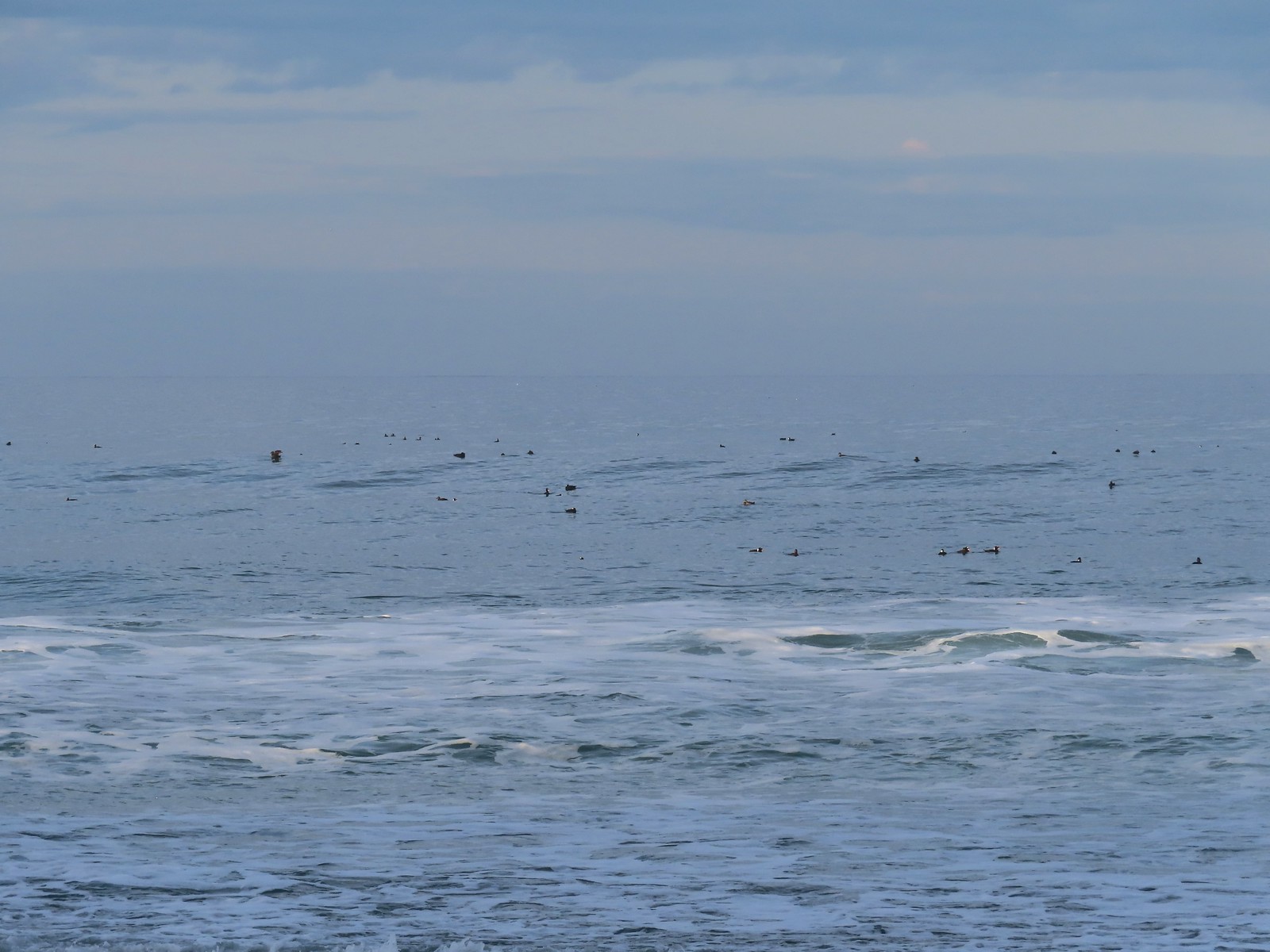
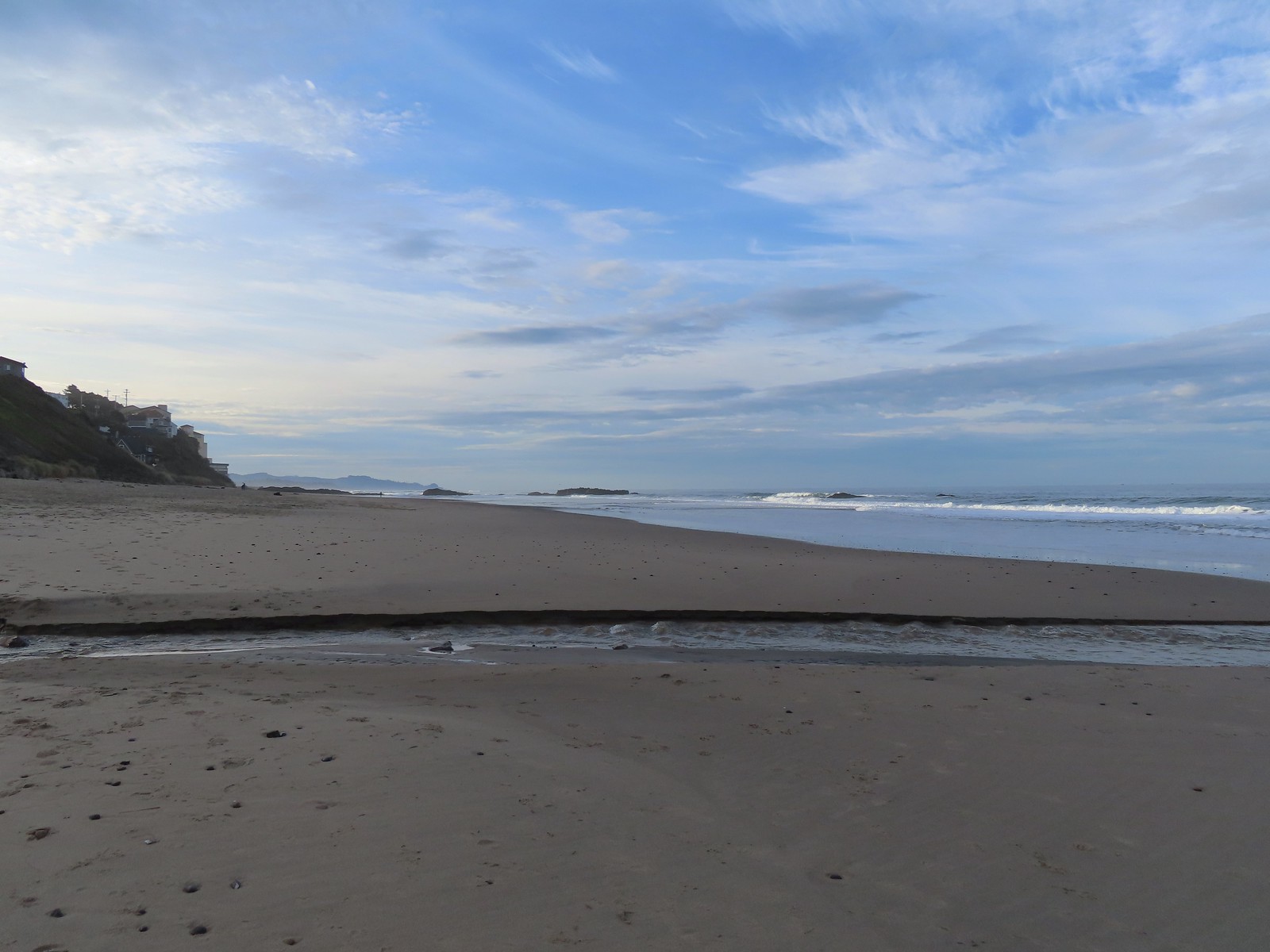
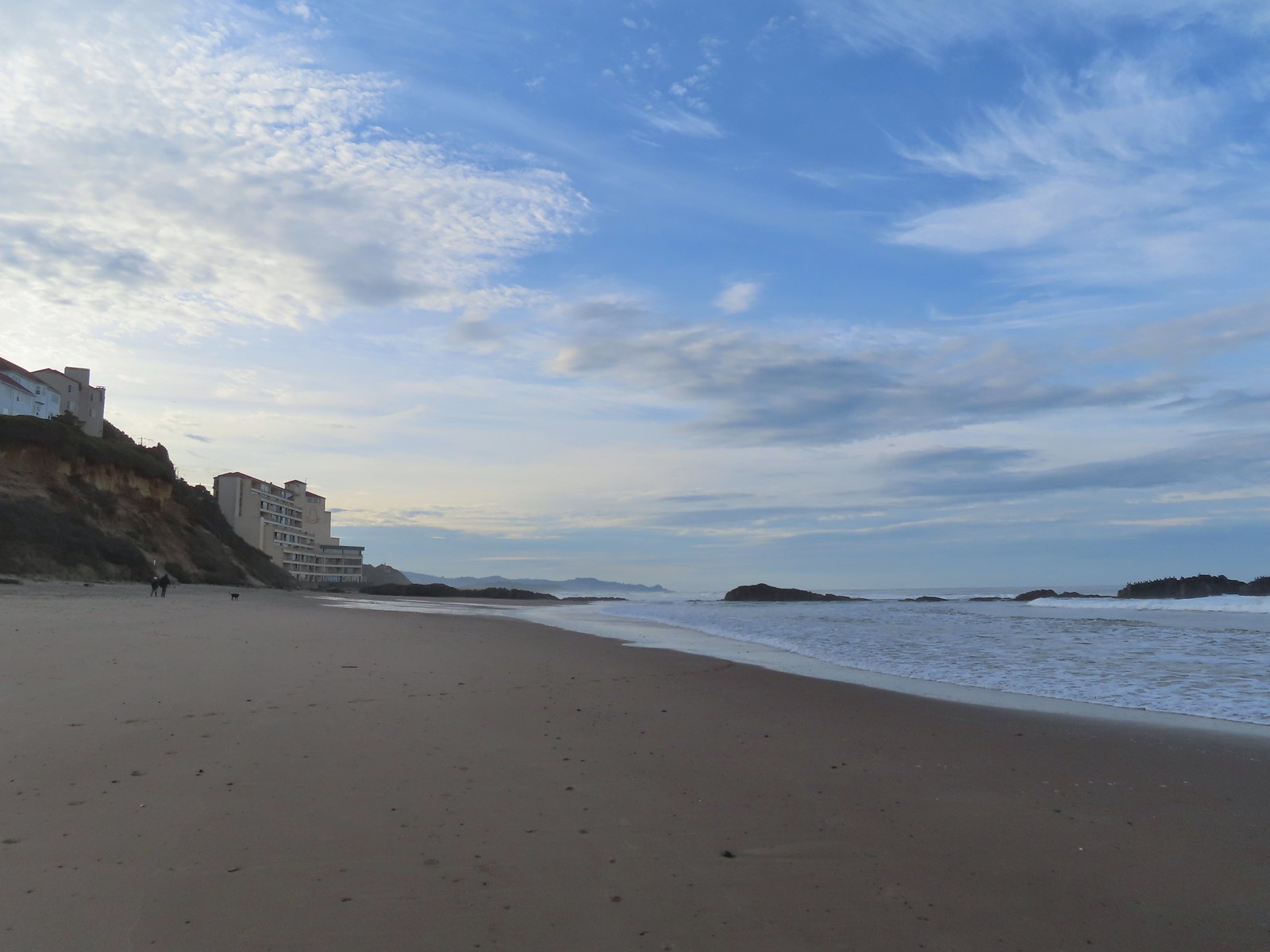
We headed South along the beach for nearly three miles to Siletz Bay where we turned inland across from Salishan Spit (post). It was a beautiful morning. The temperature was perfect and there was little to no breeze. We spent the majority of time watching pelicans glide just above the ocean while the occasional seal would pop it’s head up in the surf. There were also a number of ocean birds floating offshore, mostly surf scooters but there were some others mixed in.
IMG_1797

IMG_1798

IMG_1809

IMG_1805

IMG_1824

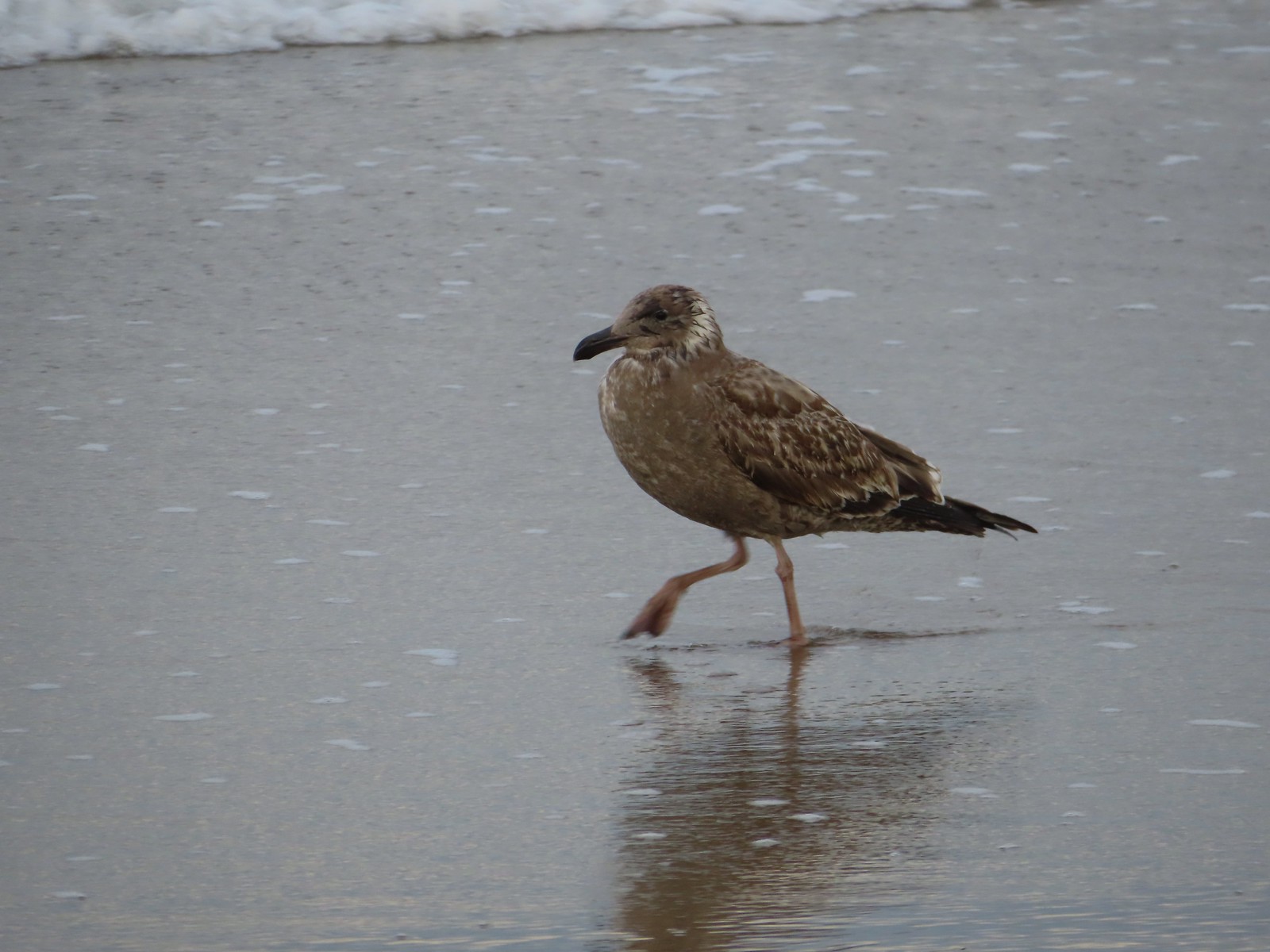
IMG_1826There were of course plenty of seagulls present.
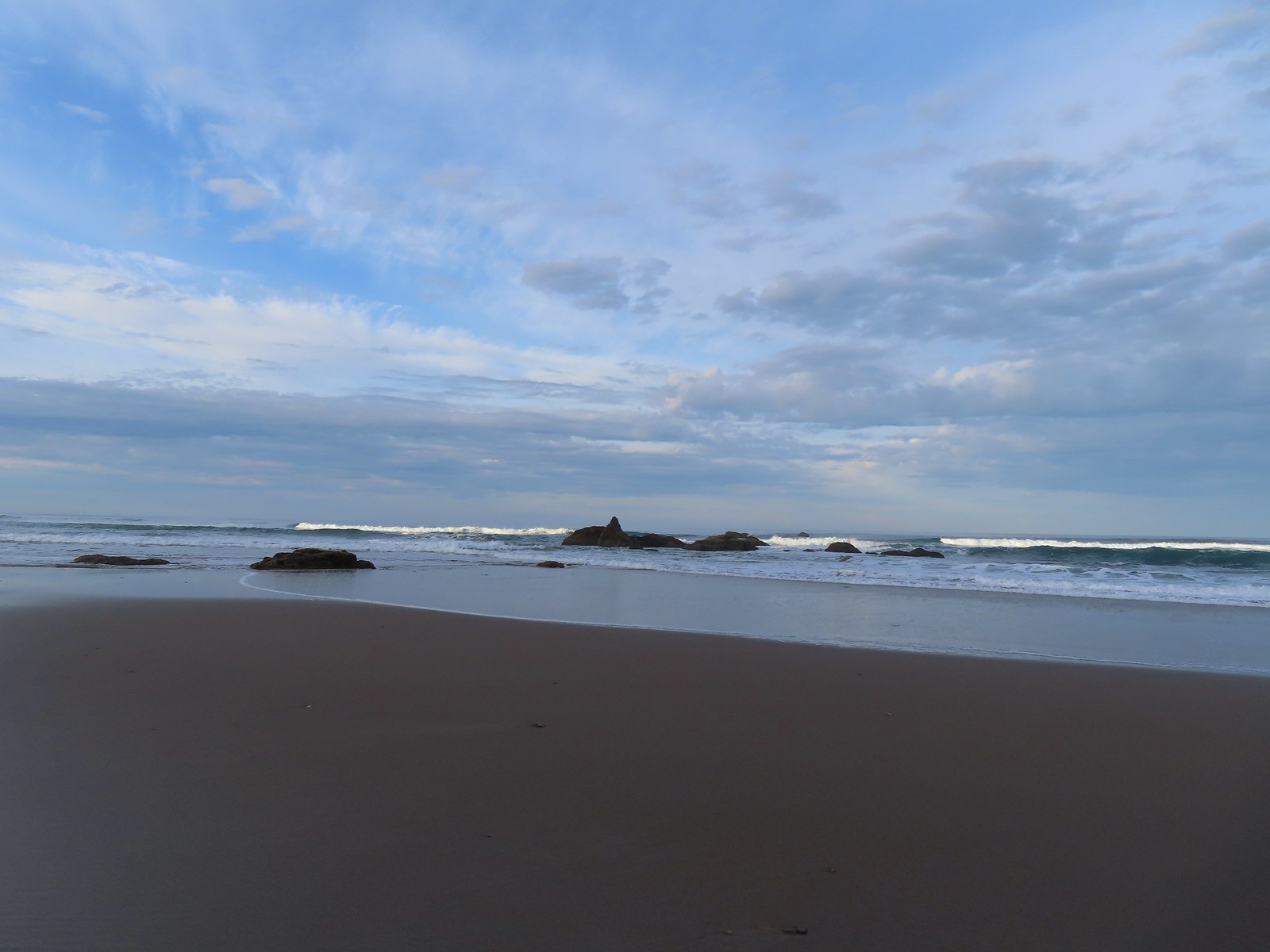
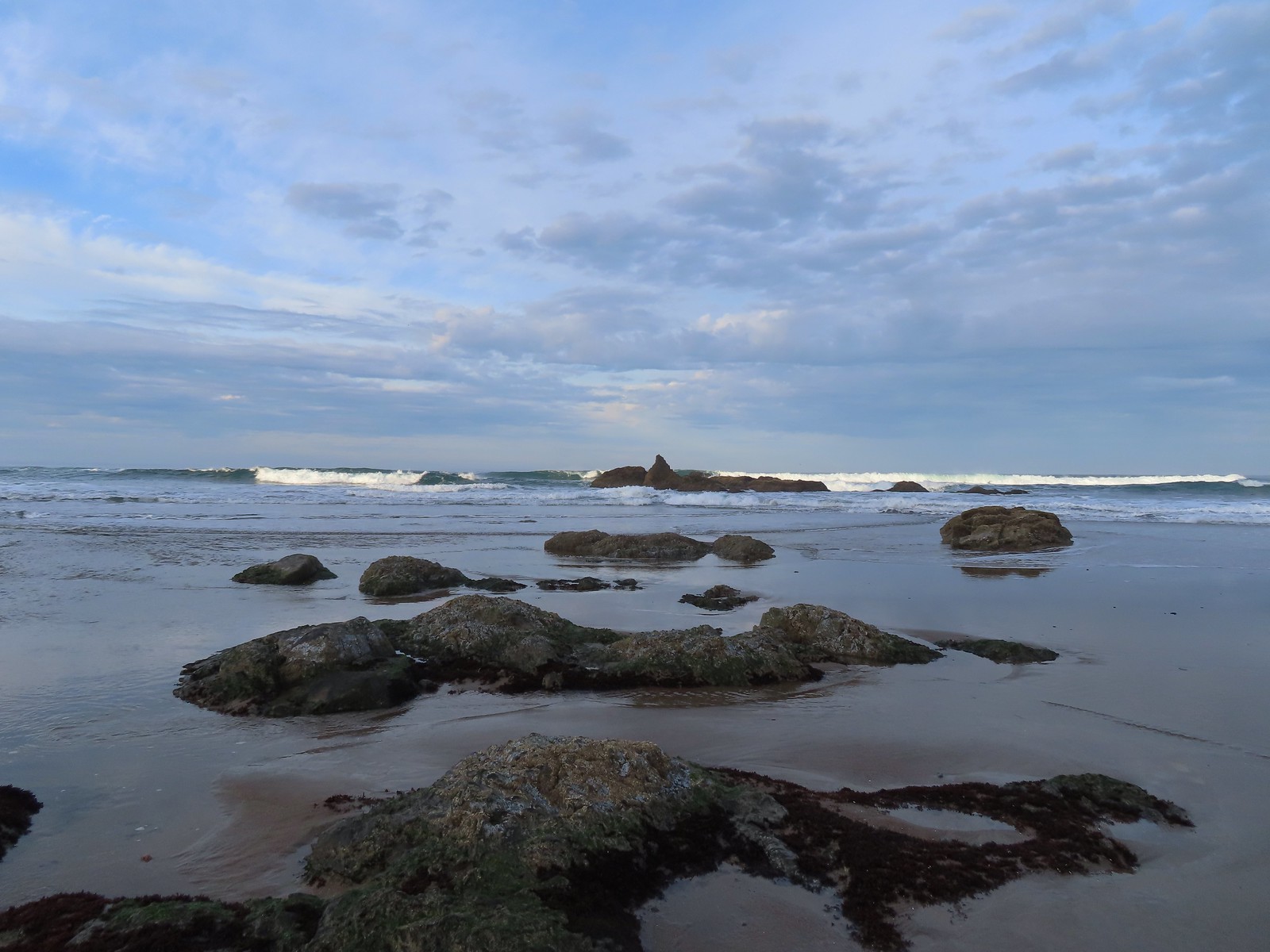
IMG_1834There weren’t very many ocean rocks along this stretch of beach.
IMG_1835

IMG_1836

IMG_1846Surf scooters

IMG_1856

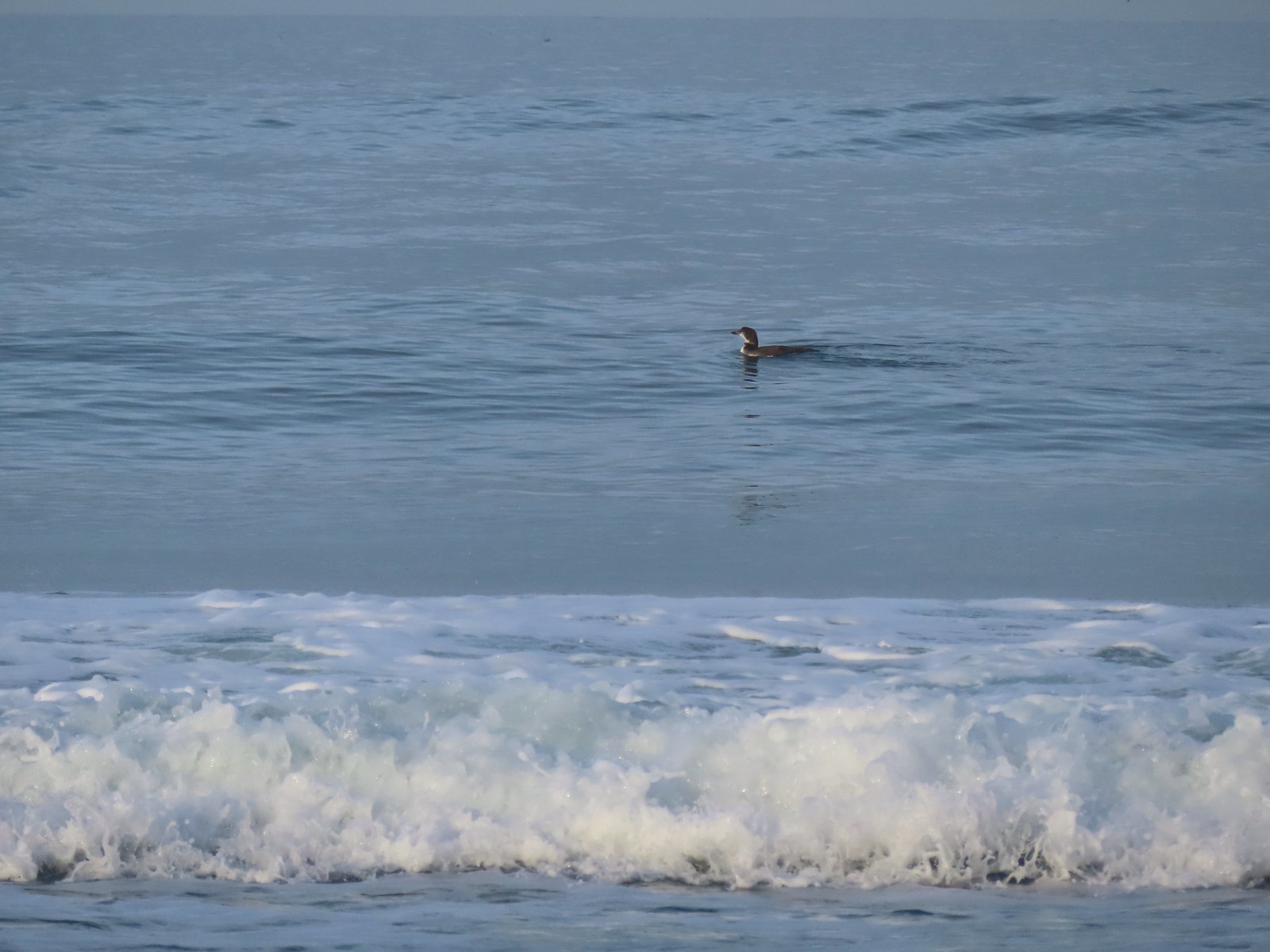
IMG_1859Loon, probably a common loon.

IMG_1860Baldy Creek

The largest group of offshore rocks were near the Inn at the Spanish Head.
IMG_1864The inn on the left with the rocks extending into the Pacific.

IMG_1870

IMG_1865Cormorants and seagulls

IMG_1874This was a big tree that we were able to walk under.
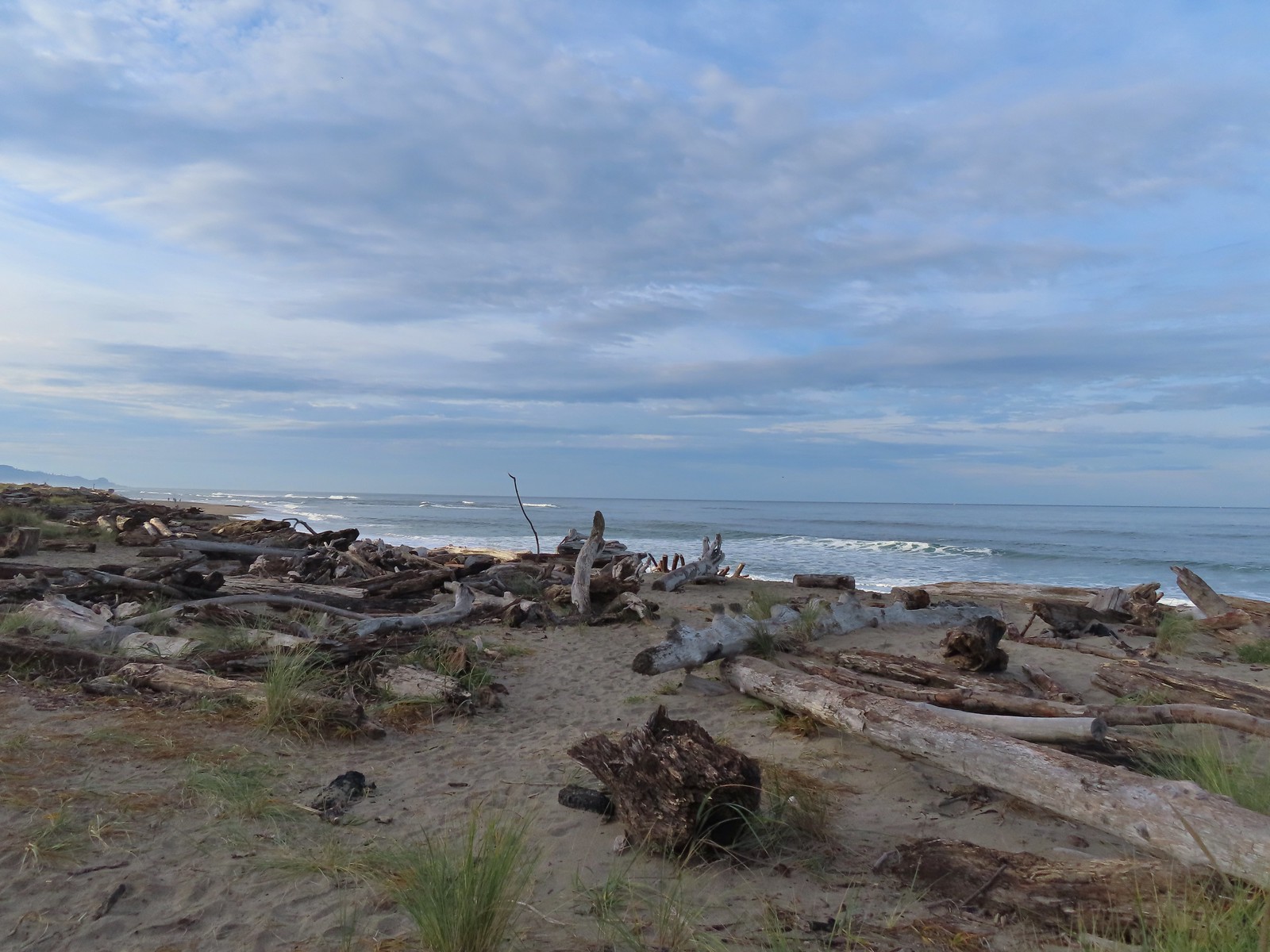
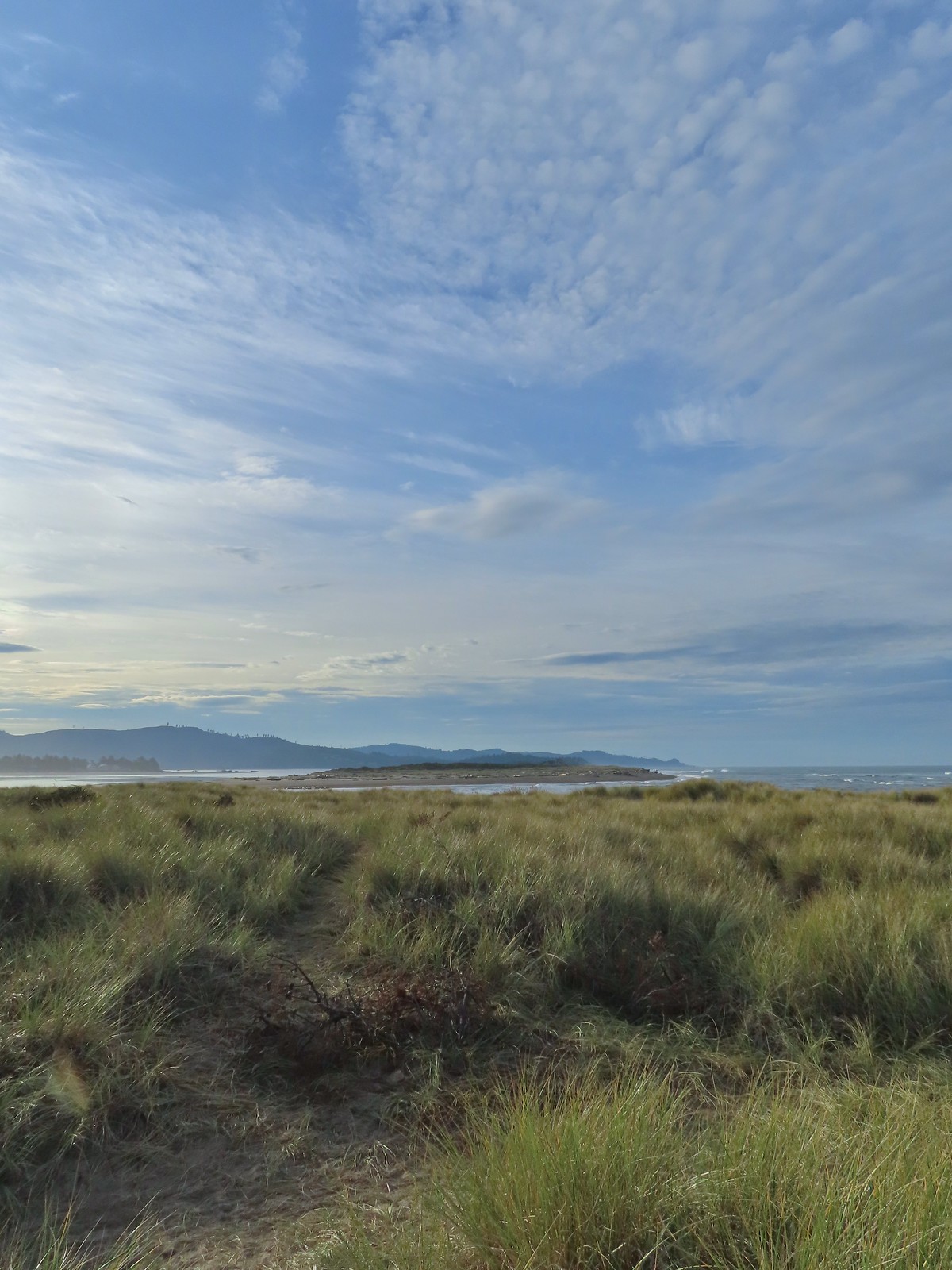
A short distance beyond the Inn at the Spanish Head are some stairs leading down from 44th St. Here the beach widens as it nears the bay. We turned inland toward the stairs and followed paths through the brush and driftwood.
IMG_1875

IMG_1877Salishan Spit across the Siletz.

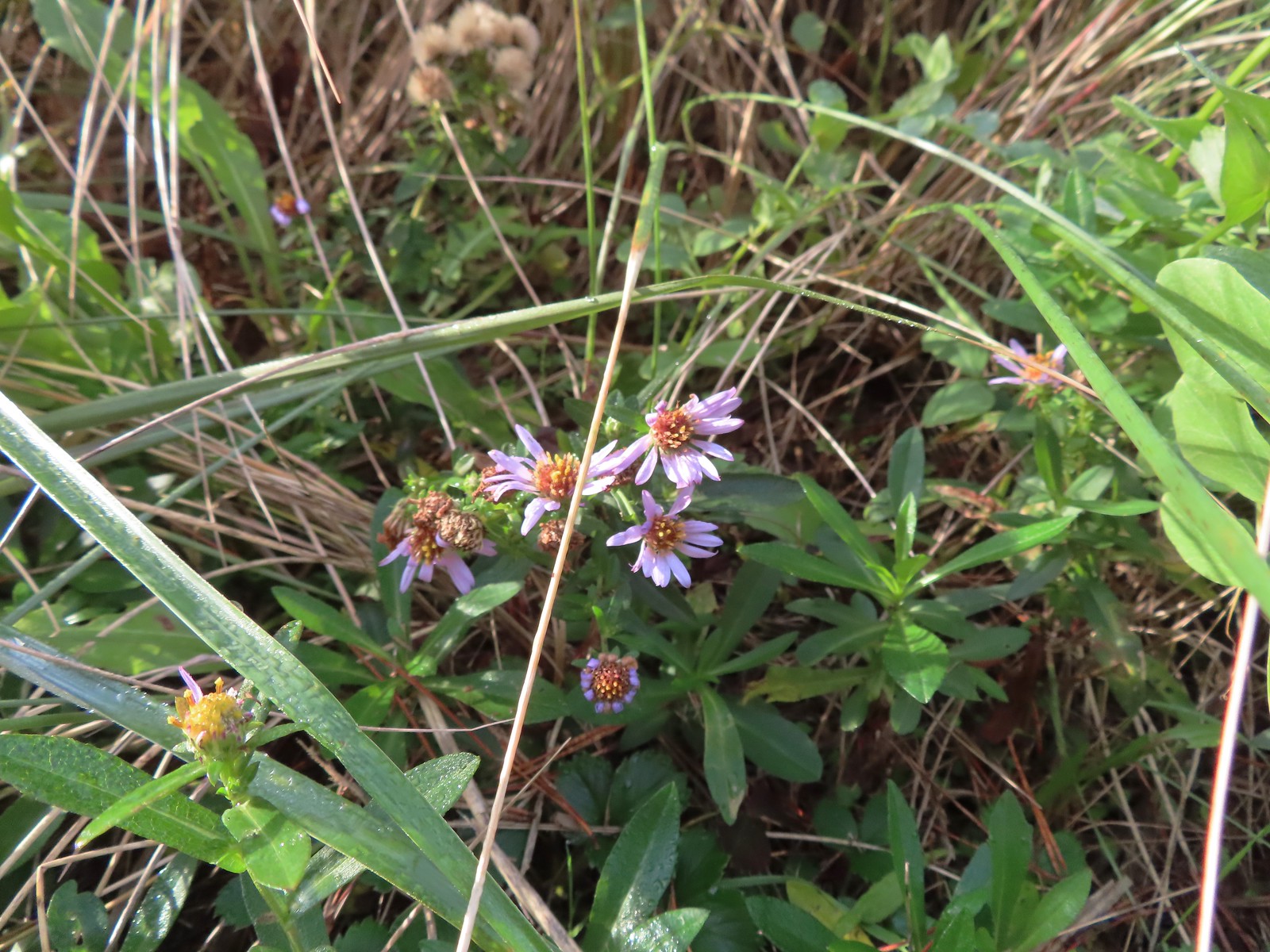
IMG_1878Asters on the beach.

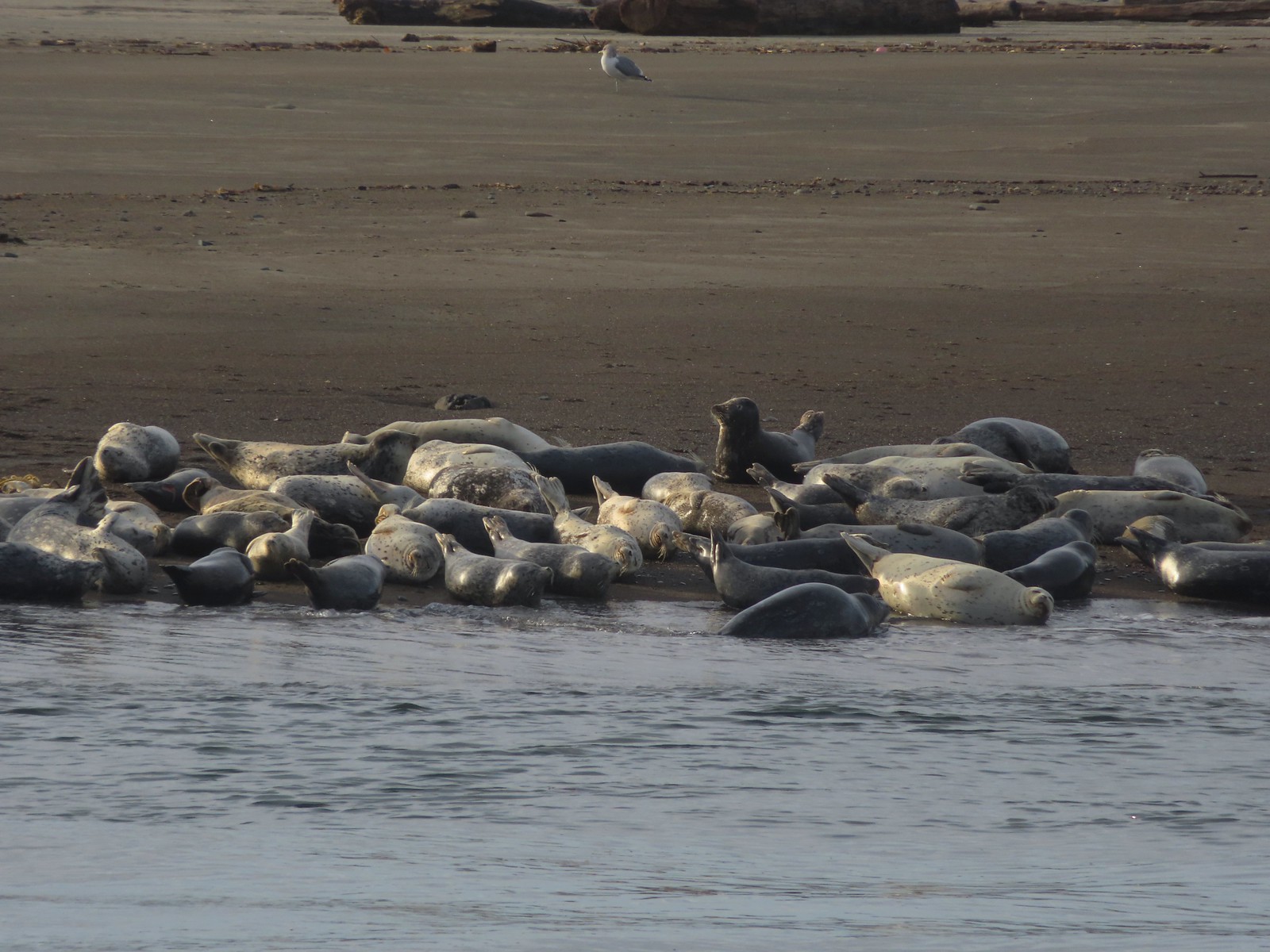
IMG_1879Pelicans on the left and seals on the right at the end of Salishan Spit.
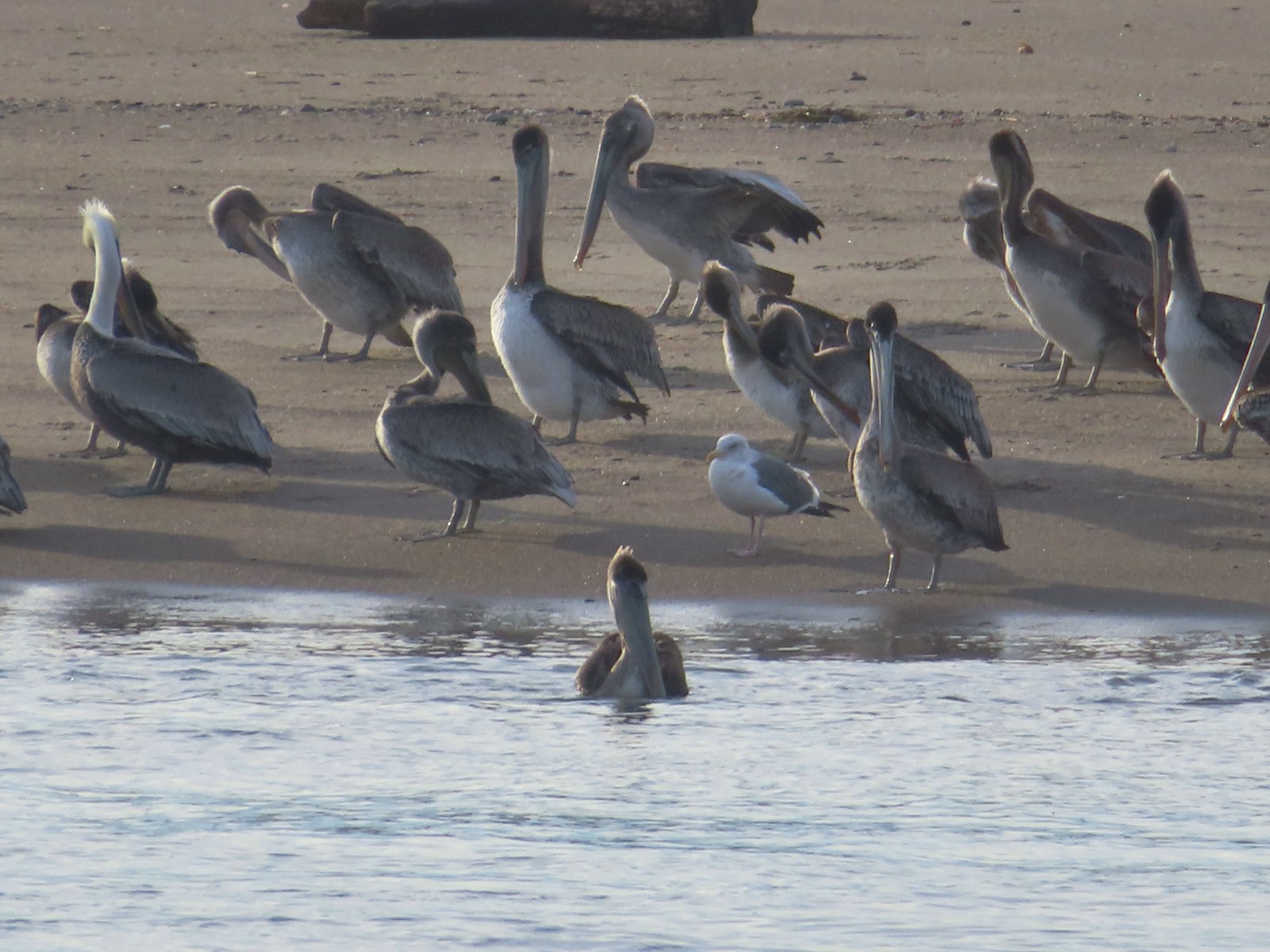
IMG_1884Pelicans and seagull

IMG_1882Seals and a seagull

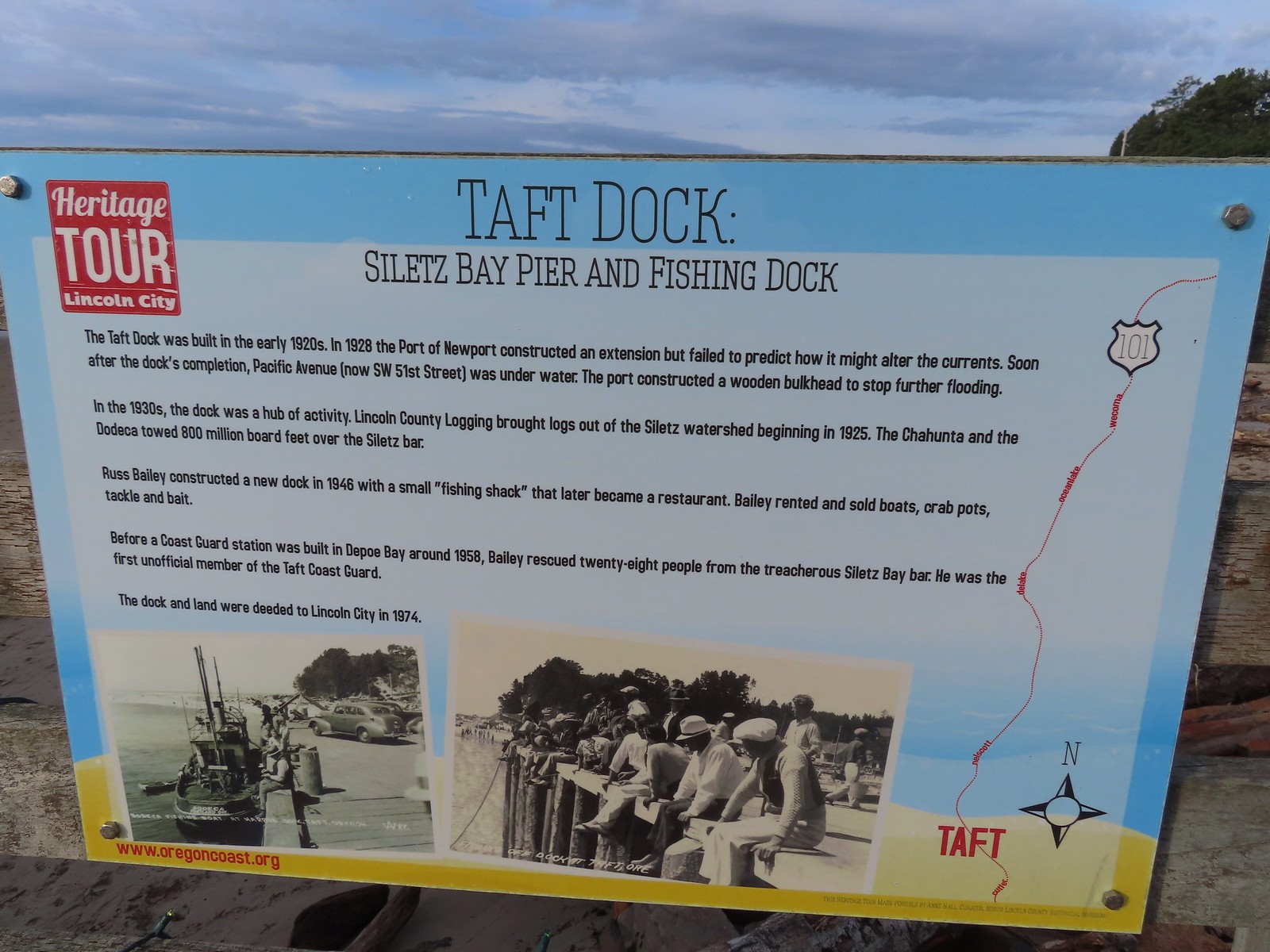
We walked along the bay to the Taft Dock for a short break before heading back.
IMG_1891

IMG_1892

IMG_1893

We stopped briefly on our way back to watch the wildlife on the spit.
IMG_1909

IMG_1908

IMG_1912Drying off

IMG_1915

On our way back we noticed that some pelicans had joined the cormorants and gulls on the rocks near the Inn at Spanish Head.
IMG_1923

IMG_1930Pelican mouths are a sight to behold (righthand side).
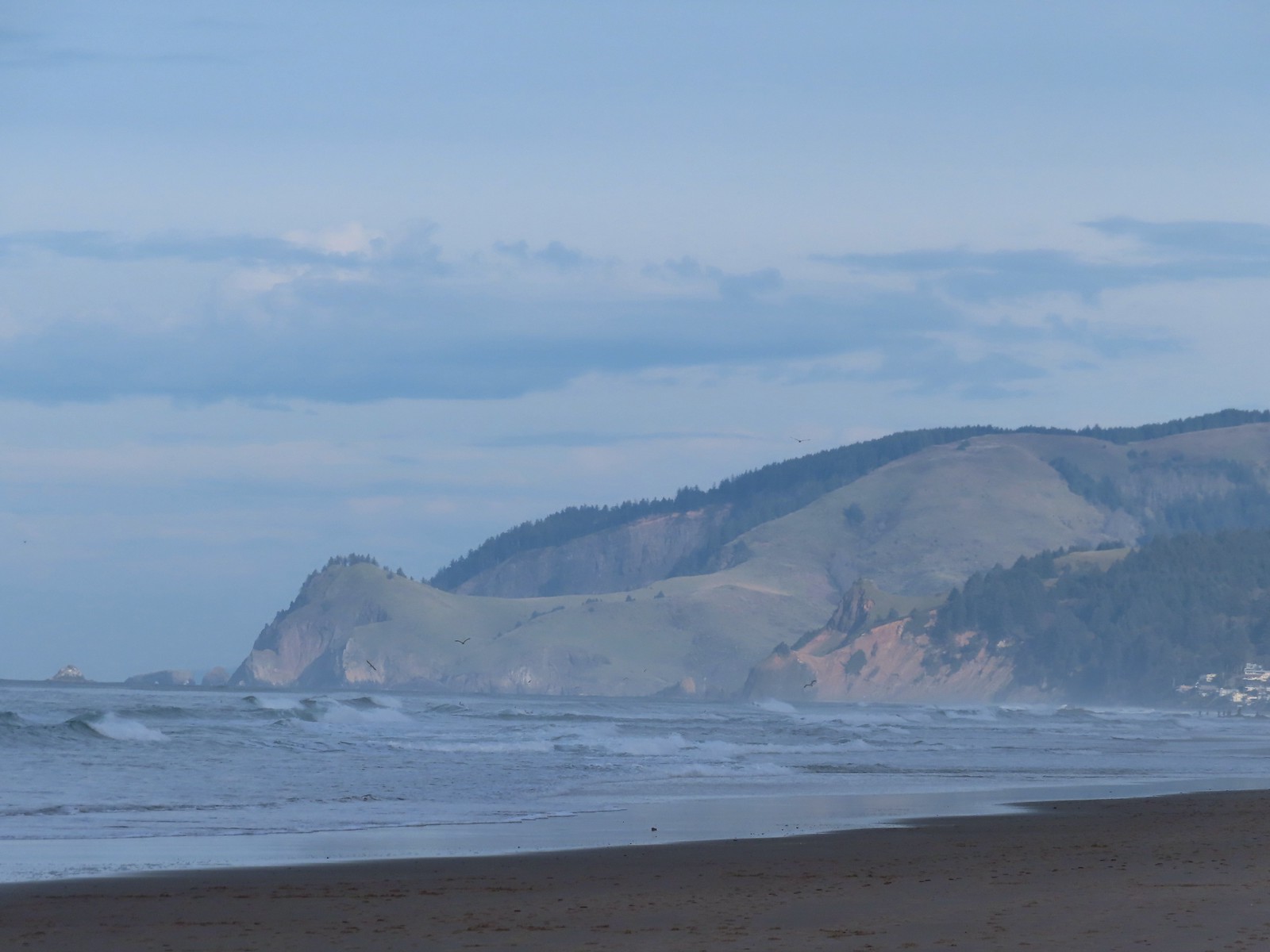
IMG_1949Cascade Head and God’s Thumb both in the sunlight now.
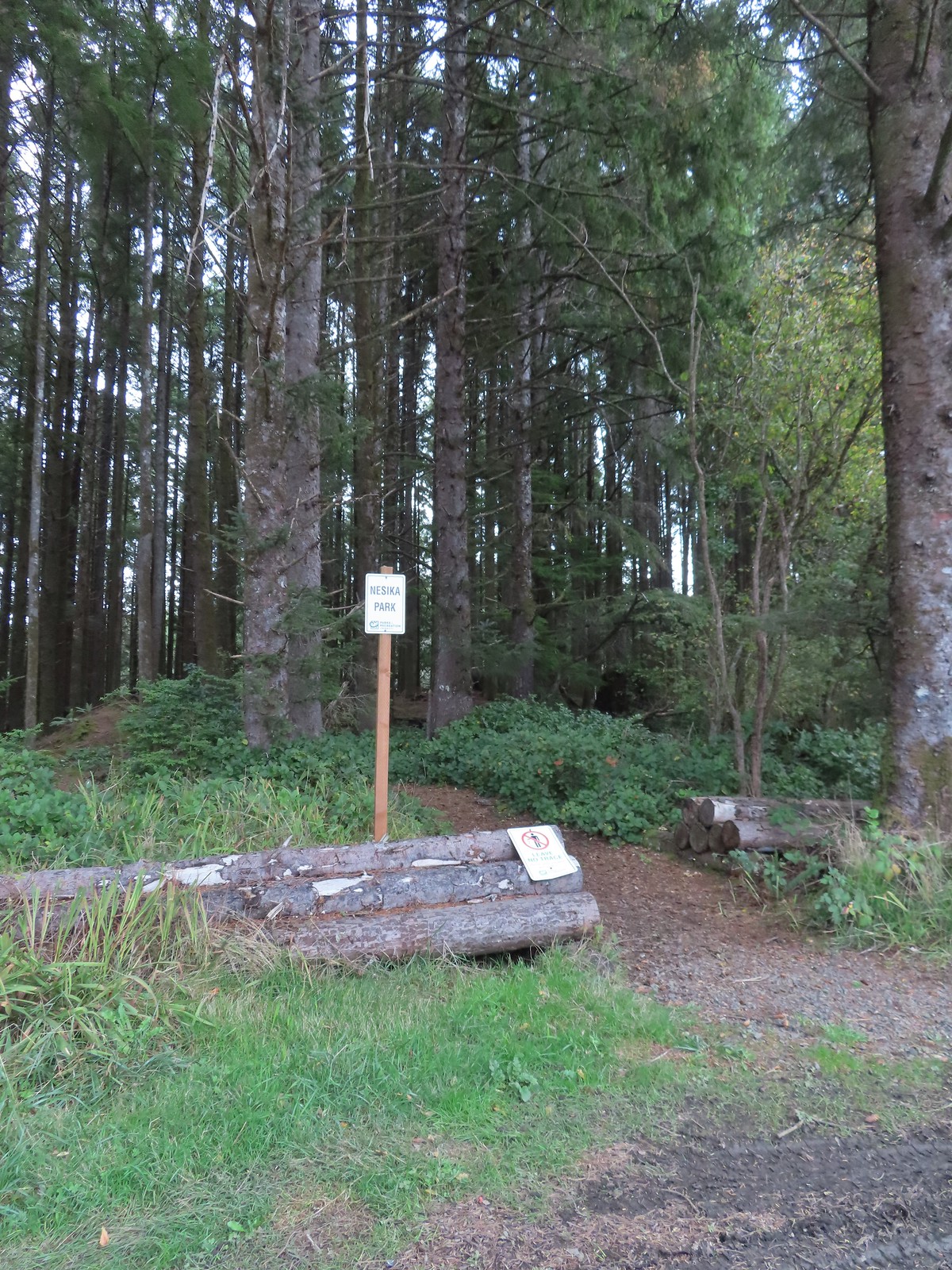
After reaching our car we made the 0.8-mile drive to Nesika Park. The park is part of the trail challenge and home to sign #8. There is only room for a couple of cars at the end of the gravel road which was fine given we were the only car there at 11am.
IMG_1955

While there is a trail through a small, forested area, the entire outing was just 0.3 miles out-and-back. We did however get a photo of the Trail Challenge sign near the Nesika Park Story Circle.
IMG_1957

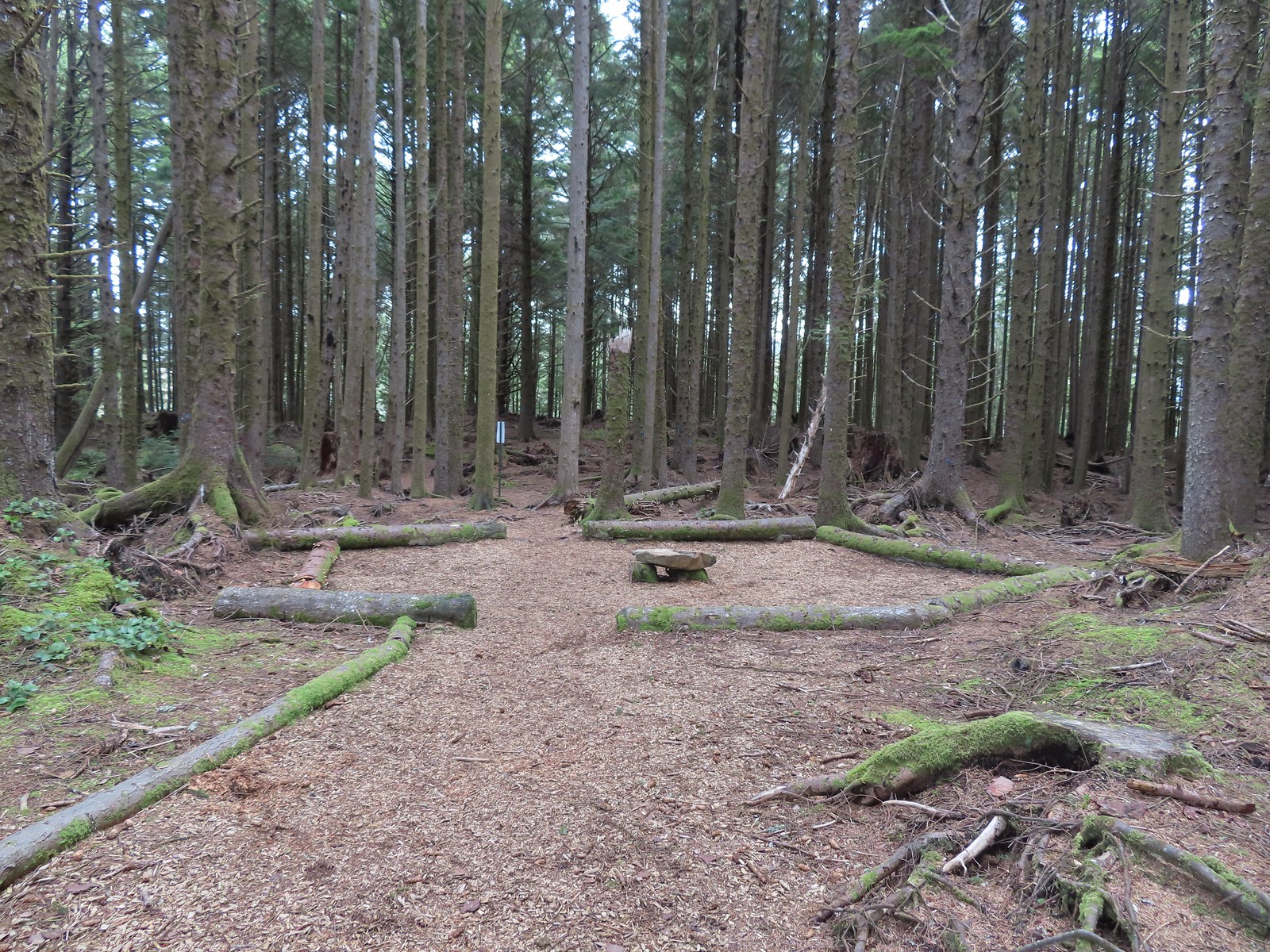
IMG_1959The Story Circle

IMG_1964Trail Challenge sign #8.

IMG_1967The trail ends at SE 3rd St (no parking available).
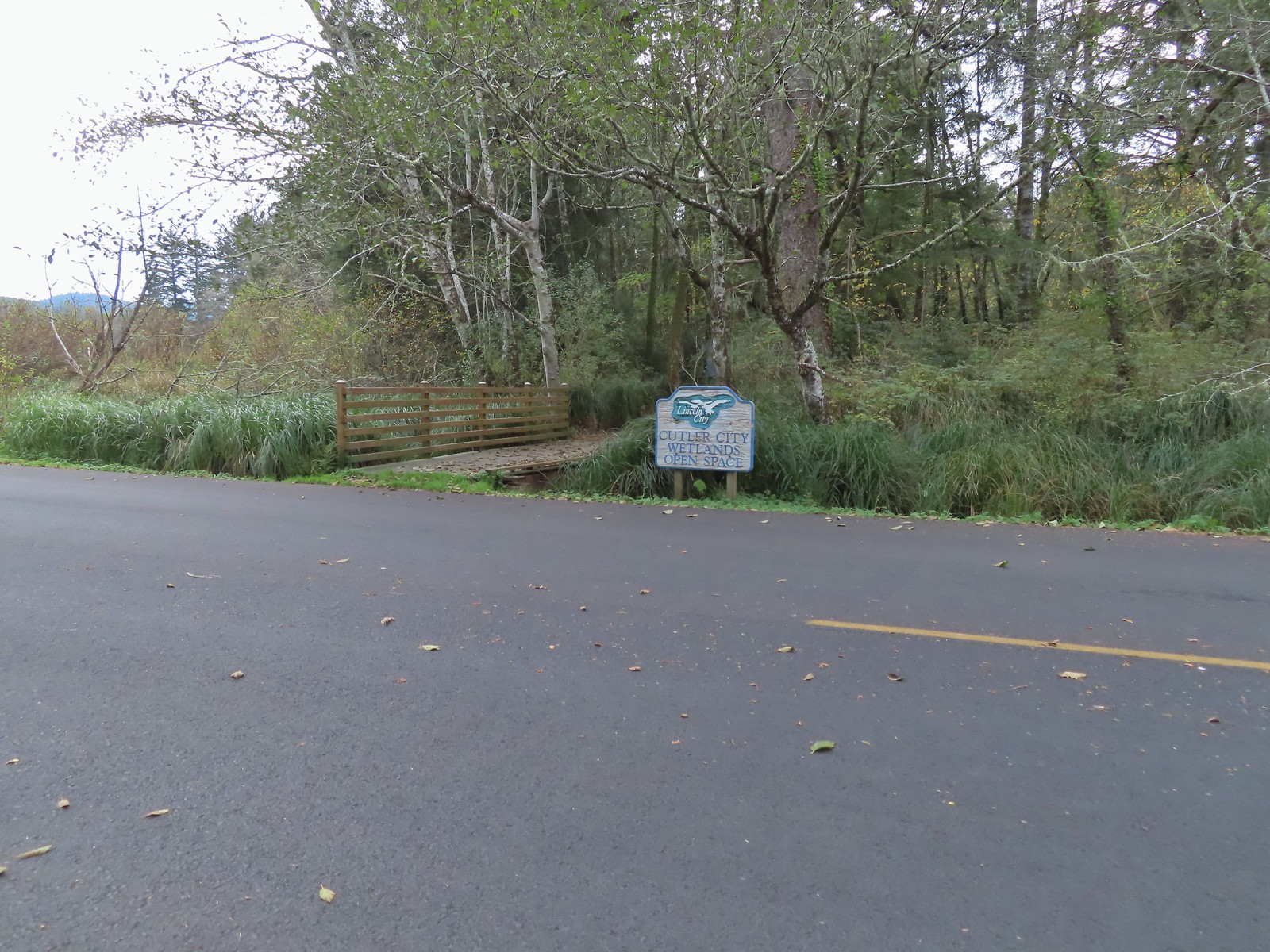
After accomplishing our goal here we hopped back into the car and continued South on Hwy 101 to find the Cutler City Wetlands Trailhead.
IMG_1972

Here there were three other cars and a few more trail options.
IMG_1974

IMG_1975

IMG_1977While there are more trails to choose from here the total milage is just about 1.25 miles. We opted to loop around the outside with detours to the Salt Marsh Overlook and Pond’s Edge.
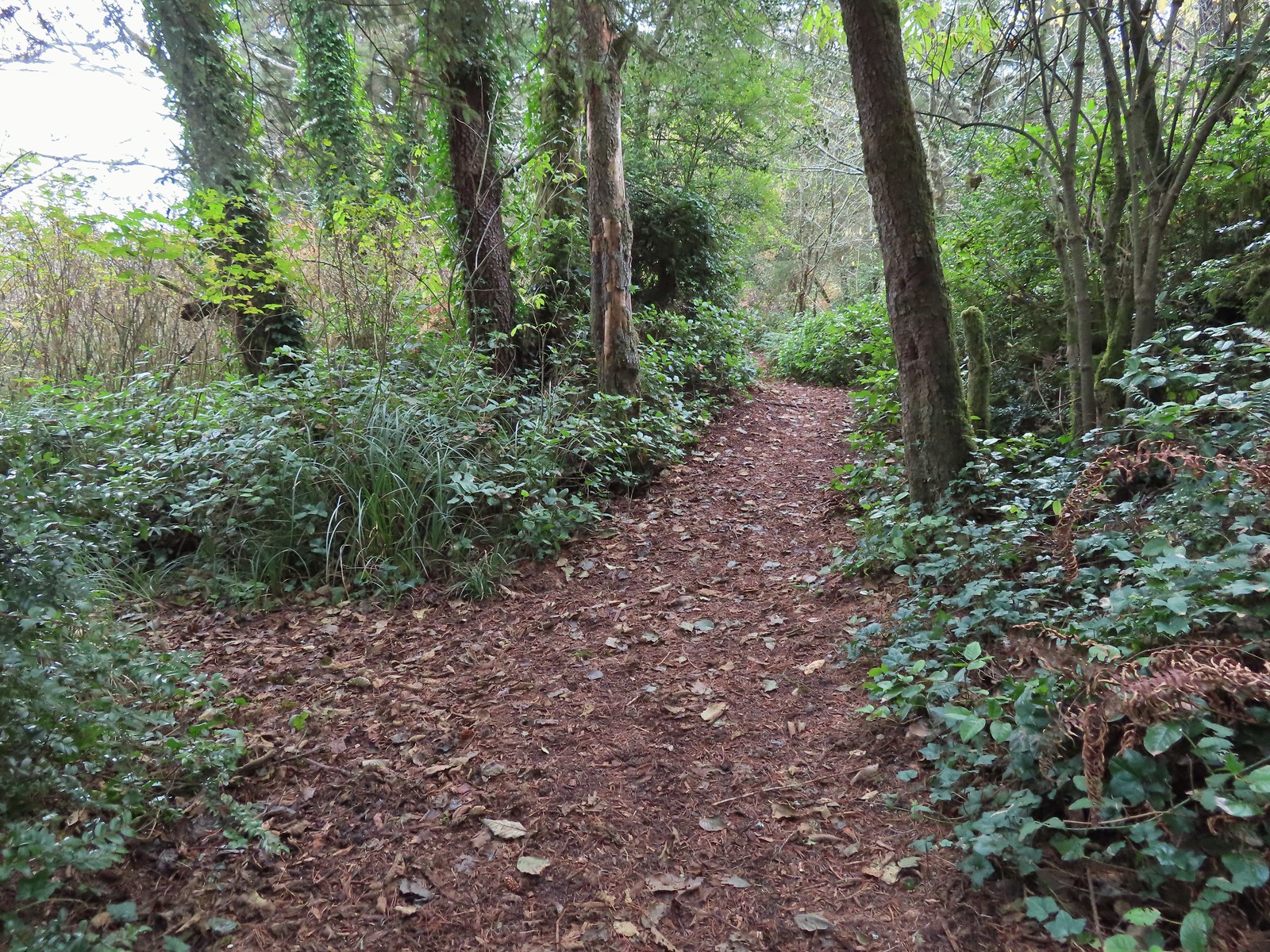
IMG_1978To the left is the very short spur to the Salt Marsh Overlook which was too overgrown to really see anything.

IMG_1979Interpretive sign at the overlook.

IMG_1984A noisy little hummer near the overlook.
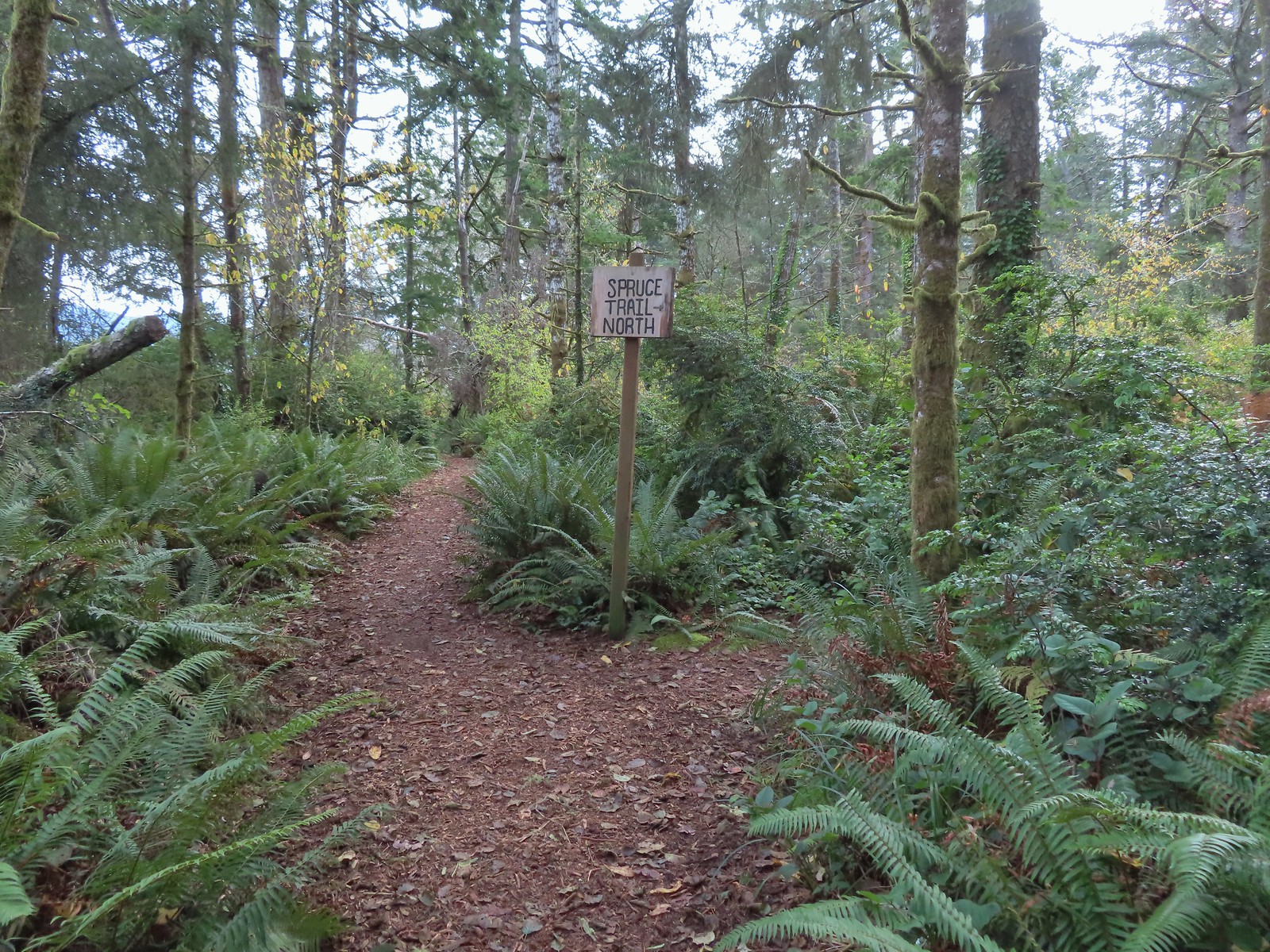
IMG_1986There was pretty good signage at the main trail junctions.

IMG_1987

IMG_1988

IMG_1994Boardwalks helped cross the wet areas.

IMG_1998Pond’s Edge spur trail.

IMG_1999At the edge of the pond.

IMG_2001

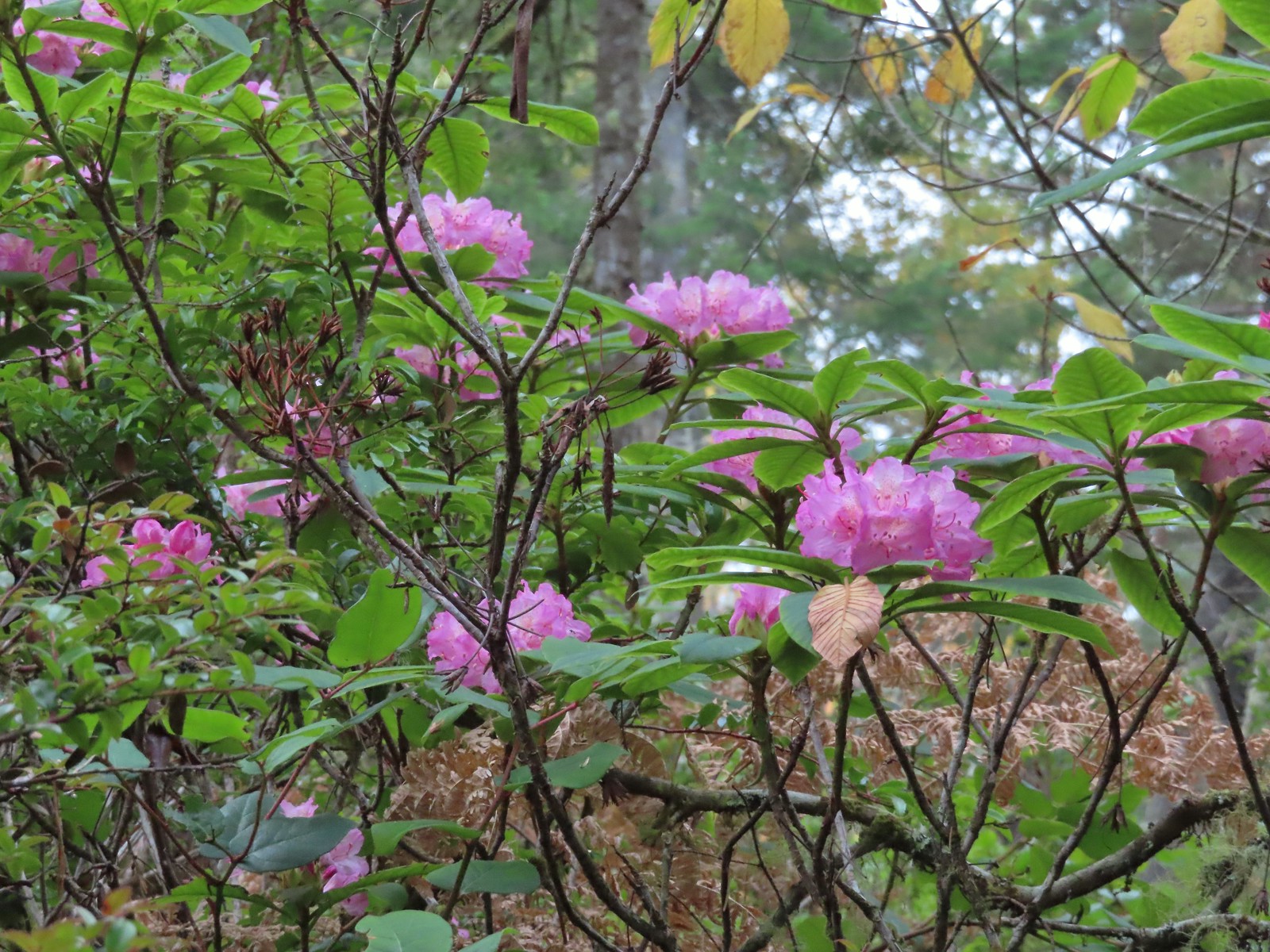
IMG_2006We hadn’t expected to see any blooming rhododendrons.
IMG_2007

IMG_2017

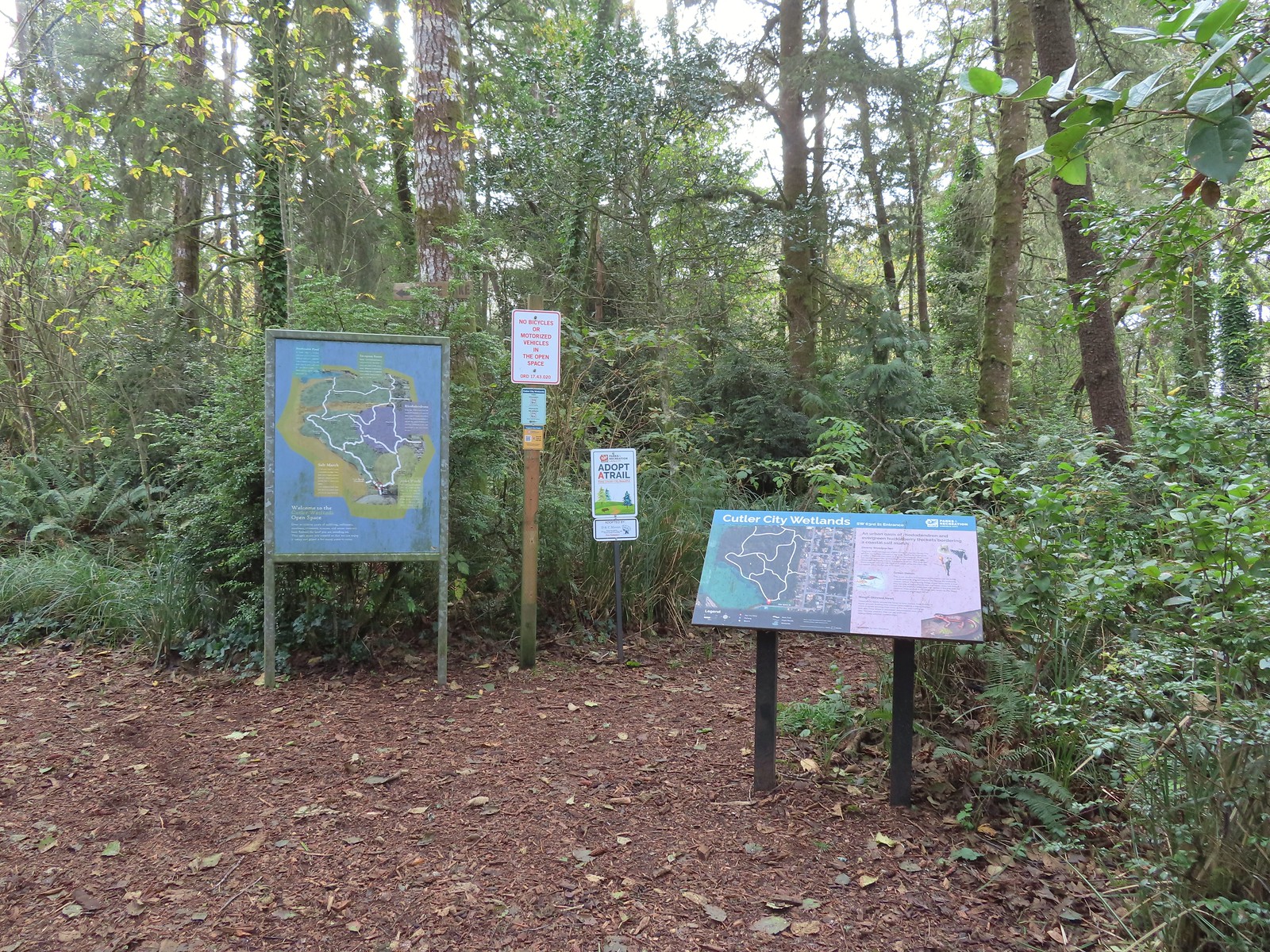
IMG_2020Arriving at the signboards at the start of the loop.

This was a nice area and a pleasant hike, but by sticking to the outside trails we missed seeing the Trail Challenge sign. I briefly thought about wandering through the center searching for it, but since we didn’t get a picture of the sign at The Knoll even if I found it, we wouldn’t have a full set. Maybe someday we’ll get actual pictures of those last two but for now we’re satisfied with having visited all these unique little parks/open spaces.

In all the days mileage came in at 9.3 with no more than 50′ of total elevation gain.

Today’s hikes are highlighted. The others are from our January outing.

Late Fall and Winter are great times to visit the Oregon Coast and today was no exception. Happy Trails!

Flickr: D River, Nesika Park, and Cutler City Wetlands

Categories
California Cascade-Siskiyou National Monument Crater Lake Area Grants Pass Area Hiking Klamath Mountains Klamath/Siskiyou Mountains Marble Mountains Medford/Ashland Area Mt. Shasta Area Mt. Theilsen/Mt. Bailey Area Oregon Red Buttes Wilderness Rogue-Umpqua Divide Roseburg Area Salmon Mountains Scott Mountains Siskiyou mountains Sky Lakes/Mountain Lakes Area Trinity Alps Trinity Divide

Southern Oregon & Northern California

Several years ago we set a goal for ourselves to hike all 500 featured hikes in William L. Sullivan’s “100 Hikes…” series of guidebooks (post). In 2020 we completed the first of these books covering the Central Oregon Cascades (post). We followed that up by completing a pair of books in 2021 starting with Sullivan’s “100 Hikes/Travel Guide Oregon Coast and Coast Range” 3rd edition (post) followed up by “100 HIkes/Travel Guide Northwest Oregon & Southwest Washington” 4th edition (post).

Generally speaking in order to check a hike off our list we need to have hiked a substantial portion of Sullivan’s described hike or visited the main attraction(s) he identifies for the hike. For 66 of the hikes we followed the books described route. For the other 34 hikes various factors contributed to us not completing all of each featured hike. For some we started at a different trailhead, others had portions of trail(s) closed when we visited, and several had longer options that would have required multiple days to complete. In some other cases we did slightly different routes, sometimes by accident.

The area covered by Sullivan in this book, as the title suggests includes parts of Southern Oregon and Northern California. It contains his southernmost featured hike, Caribou Lakes. In general the area covered in Oregon begins just North of Roseburg extending East to Highway 97 (with the exception being Klamath Falls which is included in his Eastern Oregon book), South to California, and West to Marial on the Rogue River. In California the area extends south to the Trinity Alps Wilderness, West to the Siskiyou Wilderness, and East to the Mount Shasta Wilderness.

The hikes inside the red lines represent the location of the featured hikes.
A closer look at the area covered.

In addition to the three wilderness areas in California mentioned above the featured hikes included visits to the Marble Mountain, Castle Crags, Russian, and Red Buttes Wilderness areas in California. Wilderness areas in Oregon included the Red Buttes (OR & CA share this wilderness), Kalmiopsis, Wild Rogue, Soda Mountain, Mountain Lakes, Sky Lakes, Rogue-Umpqua Divide, Boulder Creek, and Mt. Thielsen.

In addition to the 15 designated wilderness areas there were hikes in two National Monuments – Oregon Caves & Cascade-Siskiyou, and Crater Lake National Park.

#1 North Bank Ranch-Hiked 6/5/2015 6/25/2023
Middle Ridge Trail - North Bank Habitat
#2 Fall Creek Falls-Hiked 6/13/2022 8/7/2022 6/25/2023
Fall Creek FallsFall Creek Falls
#3 Little River Waterfalls-Hiked 8/7/2022
Yasko FallsYasko Falls
#4 Boulder Creek-Hiked 9/7/2020
Boulder Creek
#5 Twin Lakes-Hiked 6/14/2022
Twin Lakes from a viewpoint above Twin Lakes
#6 Fish Lake-Hiked 9/3/2022
Highrock Mountain from Fish Lake
#7 Buckey and Cliff Lakes-Hiked 9/3/2022
View from Grasshopper Mountain
#8 Umpqua Hot Springs-Hiked 6/13/2022
Surprise Falls
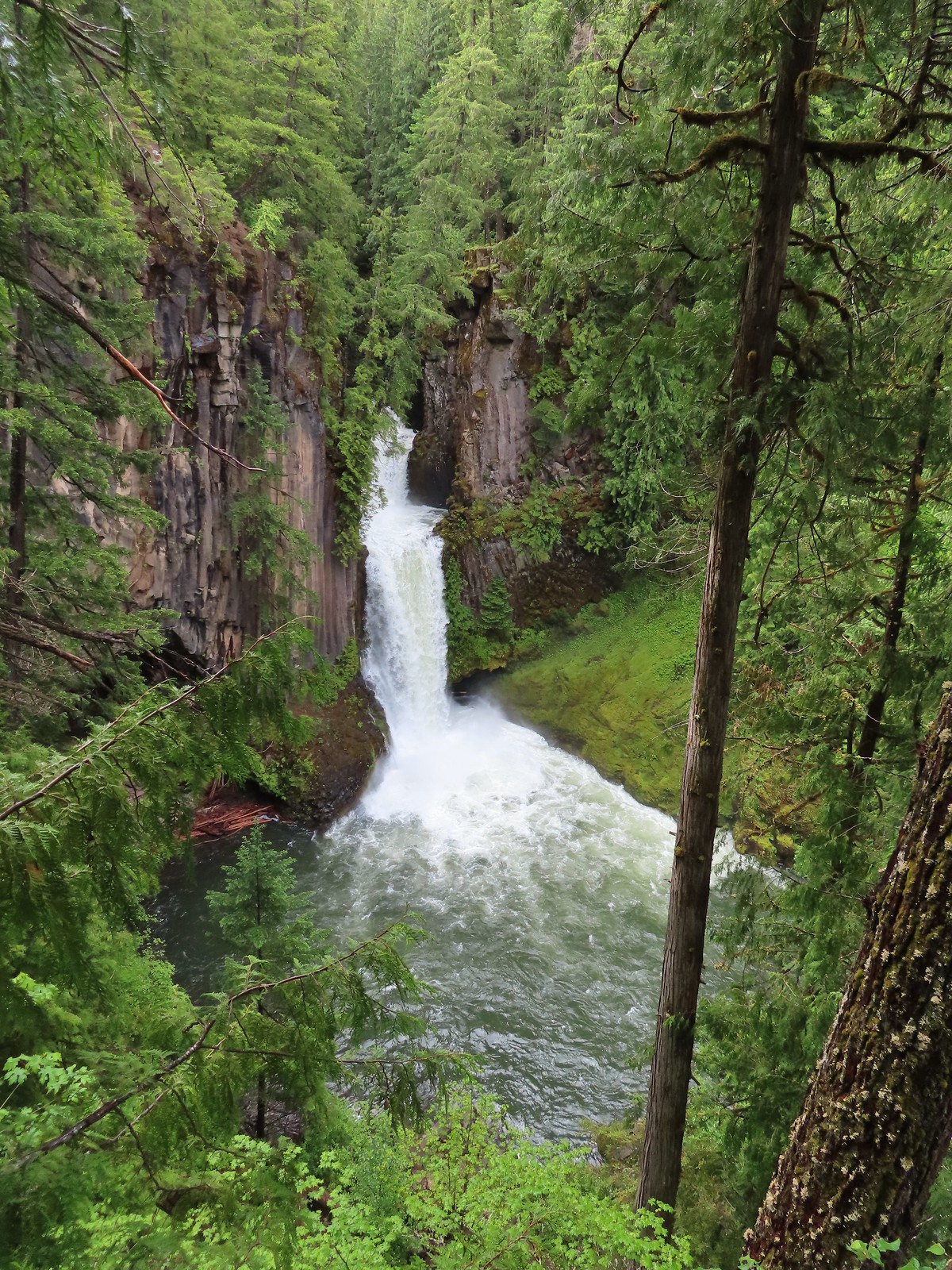
#9 Toketee and Watson Falls-Hiked 6/13/2022
Toketee Falls
#10 Lemolo Falls-Hiked 6/13/2022
Lemolo Falls
#11 Cowhorn Mountain-Hiked 9/15/2016
Sawtooth Mountain from Cowhorn Mountain
#12 Miller and Maidu Lakes-Hiked 8/1/2012
Tipsoo Peak from Maidu Lake
#13 Tipsoo Peak-Hiked 10/2/2014
Howlock Mountain and Mt. Thielsen
#14 Thielsen Creek-Hiked 8/8/2020
Pacific Crest Trail at Thielsen Creek
#15 Mount Thielsen-Hiked 9/23/2012
Mt. Thielsen
#16 Diamond Lake-Hiked 9/5/2020
Mt. Thielsen from the Dellenback Trail
#17 Mount Bailey-Hiked 8/12/2012
Mt. Bailey Trail
#18 Boundary Springs-Hiked 6/13/2014
Unnamed waterfall below Boundary Springs on the Rogue River
#19 Park Headquarters-Hiked 7/31/2023
Wildflowers along the Castle Crest Wildflower Trail
#20 Garfield Peak-Hiked 7/31/2023
View from the Garfield Peak Trail
#21 Discovery Point-Hiked 9/19/2022
Crater Lake
#22 The Watchman-Hiked 8/12/2012 7/31/2023
Rim Trail
#23 Wizard Island-Hiked 8/1/2023
Crater Lake
#24 Mount Scott-Hiked 10/2/2014
Crater Lake
#25 Plaikni Falls and The Pinnacles-Hiked 7/30/2023
Plaikni Falls
#26 Crater Peak-Hiked 7/30/2023
Garfield and Applegate Peak on the left and Mt. Scott on the right
#27 Annie Creek & Godfrey Glen-Hiked 7/30/2023 7/31/2023
View from the Godfrey Glen Trail
#28 Union Peak-Hiked 9/17/2022
Union Peak Trail
#29 Upper and Lower Table Rocks-Hiked 6/9/2017 (Lower) & 5/26/2022 (Upper)
Wildflowers on Lower Table RockLower Table Rock

Lower Table Rock from Upper Table RockView from Upper Table Rock
#30 Lost Creek Lake-Hiked 6/9/2017
Lost Creek Lake
#31 Takelma Gorge-Hiked 10/15/2020
Takelma Gorge
#32 Natural Bridge-Hiked 10/16/2020
Rogue River
#33 Union Creek-Hiked 10/17/2020 9/20/2022
Union Creek Falls
#34 Abbott Butte-Hiked 10/17/2020
Old lookout tower on Abbott Butte
#35 Hershberger Mountain-Hiked 10/16/2020
View south from Hershberger Mountain
#36 Muir Creek-Hiked 5/27/2018
Hummingbird Meadows
#37 Rattlesnake Mountain-Hiked 9/6/2020
Rattlesnake Mountain from the Rogue-Umpqua Divide Trail
#38 Seven Lakes West-Hiked 9/9/2023
Alta Lake
#39 Seven Lakes East-Hiked 9/9/2023
Seven Lakes Basin
#40 Blue Lake Basin-Hiked 9/18/2022
Pear Lake
#41 Mount McLoughlin-Hiked 8/27/2016
Mt. McLoughlin
#42 Fourmile Lake-Hiked 8/26/2016
Mt. McLoughlin from Fourmile Lake
#43 Sky Lakes via Cold Springs-Hiked 9/24/2022
Luther Mountain and Lee Peak from one of the Heavenly Twin Lakes
#44 Sky Lakes via Nannie Creek-Hiked 9/24/2022
Saddle Mountain, Cherry Peak, and Pelican Butte with Trapper and Marguerette Lakes from the Divide Trail
#45 Fish Lake-Hiked 10/7/2018
Fish Lake Trail
#46 Brown Mountain Lava Flow-Hiked 8/28/2016
Mt. McLoughlin from the Brown Mountain Lava Flow
#47 Lake of the Woods-Hiked 10/7/2018
Mt. McLoughlin from Lake of the Woods
#48 Mountain Lakes-Hiked 8/25/2016
Mt. McLoughlin, Whiteface Peak, Pelican Butte, and Mount Harriman from Aspen Butte
#49 Soda Mountain-Hiked 6/3/2015
Boccard Point and Mt. Shasta in the distance
#50 Pilot Rock-Hiked 7/29/2017
Columnar basalt of Pilot Rock
#51 Mount Ashland Meadows-Hiked 6/3/2015
A cloud covered Mt. Shasta from the Pacific Crest Trail on Mt. Ashland
#52 Lithia Park-Hiked 6/2/2015
Black Swan Lake in Lithia Park
#53 Bandersnatch Trail-Hiked 6/17/2022
Marty the Pacific Fisher from the Bandersnatch Trail
#54 White Rabbit Trail-Hiked 6/17/2022
Mike Uhtoff Trail
#55 Grizzly Peak-Hiked 6/5/2015
Veiw from Grizzly Peak
#56 Roxy Ann Peak-Hiked 5/30/2022
View from the Ponderosa Trail
#57 Wagner Butte-Hiked 6/4/2015
Mt. McLoughling from Wagner Butte
#58 Siskiyou Gap-Hiked 6/16/2022
Big Red Mountain
#59 Jack-Ash Trail-Hiked 5/27/2022
Jack-Ash Trail
#60 Sterling Ditch Tunnel-Hiked 6/10/2017 5/2/2023
Sterling Mine Ditch Trail
#61 Jacksonville-Hiked 6/8/2017
View from Panorama Point
#62 Enchanted Forest-Hiked 6/11/2017
Enchanted Forest Trail
#63 Observation Peak-Hiked 6/15/2022
View from Observation Peak
#64 Collings Mountain-Hiked 6/8/2017
Applegate Lake from the Collings Mountain Trail
#65 Applegate Lake-Hiked 6/8/2017 5/29/2022
Applegate Lake
#66 Red Buttes-Hiked 10/27/2015
Marble outcrop below Kangaroo Mountain
#67 Frog Pond-Hiked 6/18/2022
Cabin ruins at Frog Pond
#68 Azalea Lake-Hiked 10/26/2015
Azalea Lake and Figurehead Mountain
#69 Sturgis Fork-Hiked 10/7/2023
Boundary Trail passing through a meadow
#70 Grayback Mountain-Hiked 10/9/2023
Grayback Mountain snow shelter
#71 Oregon Caves-Hiked 10/30/2015
Looking up inside the Paradise Lost room of the Oregon Cave
#72 Mount Elijah-Hiked 10/7/2023
Lake Mountain Trail heading toward the taller Mount Elijah
#73 Sucker Creek-Hiked 10/26/2015
Sucker Creek Shelter
#74 Tanner Lakes-Hiked 10/8/2023
Tanner Lake
#75 Bolan Lake-Hiked 10/8/2023
Bolan Lake
#76 Polar Bear Gap-Hiked 7/1/2022
Polar Bear Mountain
#77 Raspberry Lake-Hiked 7/3/2022
Preston Peak and Bear Mountain from the Raspberry Lake Trail
#78 Devils Punchbowl-Hiked 7/2/2022
Devil's Punchbowl
#79 Rough and Ready Creeks-Hiked 5/12/2017
Rough and Ready Creek
#80 Babyfoot Lake-Hiked 10/9/2023
Babyfoot Lake
#81 Eight Dollar Mountain-Hiked 5/4/2023
Eight Dollar Mountain Boardwalk
#82 Illinois River Beaches-Hiked 5/4/2023
Illinois River from the Kerby Flat Trail
#83 Grants Pass Nature Trails 5/3/2023
Indian warrior along the Outback Loop
#84 Rouge River Trail East-Hiked 5/1/2023
Manzanita along the Rogue River Trail
#85 Rogue River Trail West-Hiked 6/24/2023
Rogue River Trail
#86 Paradise Lake-Hiked 6/28/2016
View from Kings Castle
#87 Sky High Lakes-Hiked 6/29/2016
Shooting star along Frying Pan Lake
#88 Campbell Lake-Hiked 6/27/2016
Cliff Lake
#89 Paynes Lake-Hiked 7/24/2017
Paynes Lake
#90 Russian Lake-Hiked 8/24/2022
Russian Lake
#91 Hidden & South Fork Lakes-Hiked 8/26/2022
Upper South Fork Lake
#92 Trail Gulch Lake-Hiked 8/25/2022
Trail Gulch Lake from the Trail Gulch Tie Trail
#93 East Boulder Lake-Hiked 8/23/2022
East Boulder Lake
#94 Kangaroo Lake-Hiked 7/23/2017
Kangaroo Lake
#95 Deadfall Lakes-Hiked 7/25/2017
Lower Deadfall Lake
#96 Caribou Lake-Hiked 7/27/2017
View from the Old Caribou Lake Trail
#97 Castle Lake-Hiked 7/26/2017
Castle Lake and Mt. Shasta
#98 Castle Crags-Hiked 7/26/2017
Castle Crags
#99 Black Butte-Hiked 7/28/2017
Mt. Eddy from the Black Butte Trail
#100 Mount Shasta Meadows-Hiked 8/22/2022
Mt. Shasta from South Gate Meadows

In our minds this was by far the most challenging area to finish even though we did so before completing Eastern Oregon. The difficulty with Eastern Oregon mostly revolves around distance from Salem and the size of the area covered. The Southern Oregon-Northern California area is smaller and the hikes not as far away, but it involved a lot of trails that frankly don’t see the level of maintenance that most of the other areas receive. While we’ve encountered rough trails, all over poison oak is much more prevalent down south which doesn’t invite pushing through overgrown tread or bushwacking around obstacles. This area has also been hit harder by fires over the last couple of decades leaving extra work to reopen them as well as remove additional blowdown as the dead trees fall over. When the conditions were good though the scenery and diverse plant and wildlife made for some spectacular hikes. There are many that we’d love to do again and several non-featured hikes that we have in our future plans, so we aren’t done with area yet. Happy Trails!

Categories
Central Coast Hiking Oregon Oregon Coast Trip report

Oceanside, Short Beach, Tillamook Wetlands, and Anderson Hill – 10/28/23

A cold snap arrived in conjunction with the final hike of our official 2023 season leaving us with a decision to make about where to go. One of the great things about living in Western Oregon are the hiking options. We were debating between heading to Government Camp near Mt. Hood to see some of the new snow that the system had brought with it, or to the beach where things would be a little bit warmer. In the end we decided that we weren’t quite ready for a Winter wonderland yet, and highs in the low to mid 50s sounded a little more appealing than highs in the low to mid 30s. The beach it was where we had some unfinished business at Oceanside.

We had attempted to hike the beach at Oceanside earlier in the year on a different multi-stop day (post), but had saved it for the final stop only to find the area so crowded that there was no place to park. We wouldn’t be making that mistake again so this time it was stop number one on the itinerary. We had no issue finding a parking spot this time arriving just as the Moon was disappearing behind Three Arch Rocks.
IMG_1433From left to right: Storm, Finely, and Shag Rocks.

Three Arch Rocks is one of two designated wilderness areas along the Oregon Coast Managed by the Department of Fish and Wildlife as a wildlife refuge the 15-acre wilderness area was the first designated refuge West of the Mississippi and is one of only a few wilderness areas entirely closed to entry by the general public.

From the parking lot we took the stairs down to the beach and headed north toward the Tunnel which leads through Maxwell Point to Tunnel Beach.
IMG_1438Cape Lookout (post) to the south.

IMG_1440Maxwell Point

IMG_1443View from beside Maxwell Point.

IMG_1444The Tunnel was built in 1926.

IMG_1447

IMG_1448

IMG_1454The Tunnel from Tunnel Beach.

IMG_1450Three Arch Rocks from Tunnel Beach.

We hiked North along the beach passing a rocky point to Agate Beach before turning around where that beach ended at a cliff a little more than a third of a mile from the Tunnel.
IMG_1465The end of Tunnel Beach. At higher tide it’s not possible to get around the point here.

IMG_1469Getting closer to the end of Tunnel Beach. This set of ocean rocks are part of the Oregon Islands Wilderness, A string of of over 5,600 rocks, reefs, islets, and islands lying within three miles offshore mirroring almost the entire length of the Oregon coast from Tillamook Head to the California border. Like Three Arch Rocks this wilderness is also closed to the public.

IMG_1484Bald eagle on top of one of the rocks.

IMG_1476Seal

IMG_1477Agate Beach

IMG_1482

IMG_1490Cape Lookout from Agate Beach.

After reaching the cliff we headed back to the Tunnel and then continued South along the beach 2.3-miles to Hodgdon Creek across from Netarts Spit (post).

IMG_1492An assortment of sea birds.

IMG_1497

IMG_1504Maxwell Point and Cape Lookout

IMG_1506

IMG_1508Sun starting to hit the Three Arch Rocks.

IMG_1512

IMG_1519Sand dollar

IMG_1526

IMG_1531Cormorants. There was a steady stream of flocks of birds heading south along the coastline.

IMG_1543Footbridge over Fall Creek.

IMG_1544Fall Creek

IMG_1570Frosty leaves near Fall Creek.

IMG_1548Great blue heron in a tree above Fall Creek.

IMG_1551Happy Camp

IMG_1557Hodgdon Creek

IMG_1555Seagulls and common mergansers near Hodgdon Creek.

IMG_1558Buffleheads

IMG_1562Netarts Spit

IMG_1565Happy Camp from our turn around point.

We returned the way we’d come and then drove North on Cape Meares Loop Road just under a mile and a half to a pullout across from a sign for Short Beach.
IMG_1575Three Arch Rocks and Maxwell Point now in full Sun.

IMG_1579

A local built the staircase leading down to Short Beach and it is about as “Oregon Coast” as a staircase could be.
IMG_1581

IMG_1584

IMG_1590The beach only extends a short distance to the South.

IMG_1588The sea stack and Short Creek Spillway to the North.
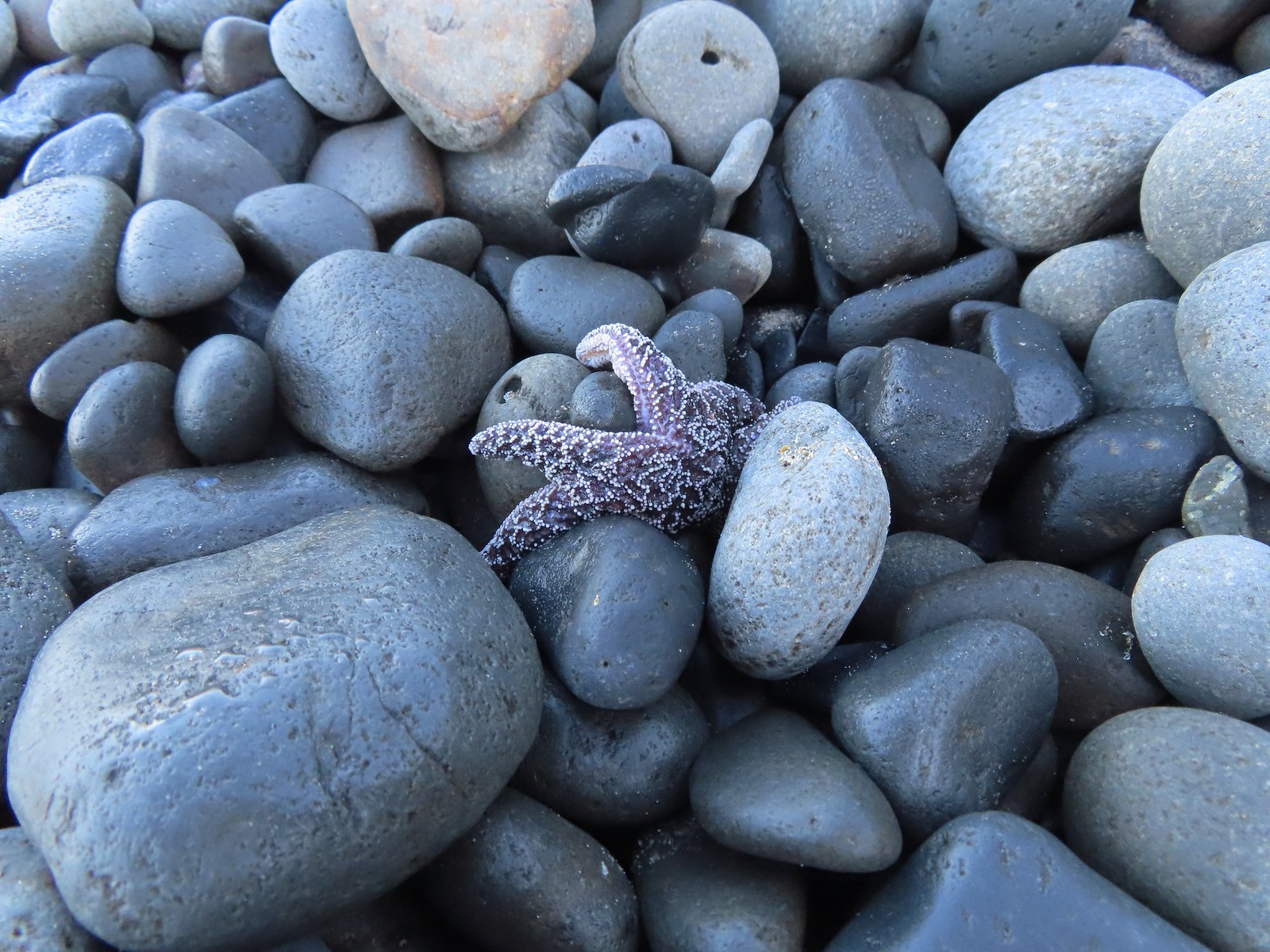
We headed North along the cobblestone beach which isn’t the easiest surface to hike on, especially when they are wet and slightly frosty. On the positive side the cobblestones added some great sounds to the ocean as the waves tossed them about then rolled them over one another as the waves receded.
IMG_1606

IMG_1618Starfish

IMG_1619The sea stack

IMG_1621Cape Meares (post)

IMG_1609I didn’t notice the little waterfall along the cliffs below Cape Mears until I looked at the pictures.
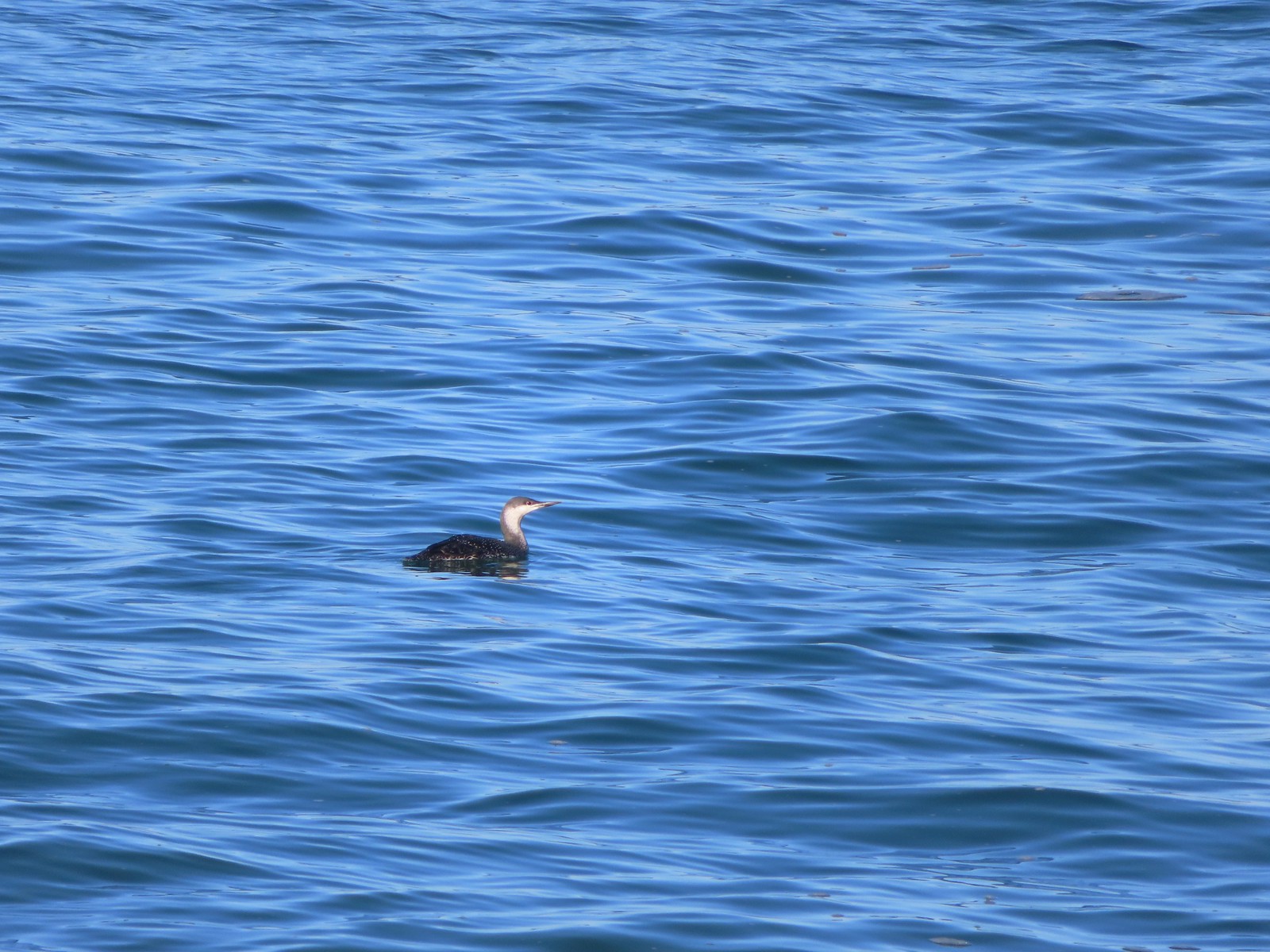
IMG_1625Red-throated loon

A third of a mile from the stairs we reached Larsen Creek Falls.
IMG_1627

IMG_1632

Apparently at low tide it’s possible to reach the cliffs below Cape Meares, but the tide was coming in and it also appeared that some sliding had occurred at some point, so we turned around a tenth of a mile beyond Larsen Creek Falls.
IMG_1641The area ahead in the shade is where things started looking a little sketchy.

IMG_1643

IMG_1659

IMG_1674

These two beach hikes came to a total of 6.6-miles, 5.5 at Oceanside and 1.1 at Short Beach. From Short Beach we drove to Tillamook to try the Tillamook Bay Wetlands hike which I’d found as I was looking through the Oregon Hikers Field Guide. We parked at the Goodspeed Road Trailhead. The field guide entry showed this as a 3.6-mile loop following dikes through wetlands between the Wilson, Trask, and Tillamook Rivers. We were immediately confused due to the field guide mentioning a map and metal gate at the Goodspeed Trailhead but there was neither at the signed parking area.
IMG_1676Apparently there used to be a metal gate here instead of a the rope/chain.

We were pretty sure we’d followed the driving directions though so we stepped over the chain onto the grassy dike and began following it through the wetlands.
IMG_1678

IMG_1682

IMG_1685Bald eagles in the tree tops.

IMG_1683Bald eagles

The map in the field guide showed an elongated loop following what Google Maps and the GPS showed as the continuation of Goodspeed Road to the Wilson River then along that river to the Tillamook River where the route looped back along it then the Trask to Sissek Road. The dike we were on though reached a slough where it turned sharply South.
IMG_1686This is where the dike/path turned South. Our best guess is that there has been additional wetland restoration since the entry in the field guide and some of the dikes that the guide route followed have been removed.

We didn’t come up with our theory about what was going on until after we got home. While we were hiking we kept checking the GPS map/track and comparing it to the map in the field guide. We still weren’t sure if we really had started in the right spot given the lack of a metal gate and map at the trailhead or if we’d missed a turn somewhere. We continued to follow the dike system which looped around and after just over a half mile the GPS showed that we were on Sissek Road (now a grassy dike).
IMG_1689We weren’t getting across that.

IMG_1694Somewhere out that way, beyond the slough, was the Wilson River.

IMG_1699Now heading East toward Sissek Road.

IMG_1704At this point we had left Sissek Road which used to extend straight from Goodspeed Road where the signs and rope/chain is in this photo (ahead to the right at the 90-degree turn).

The dike system brought us to another signed parking area we’d pass on the way to the Goodspeed Road Trailhead. This one is just past a one-lane bridge over Hall Slough.
IMG_1705

At this point we were sure we’d started at the correct trailhead and were now convinced we’d missed a turn somewhere near the start of the hike. First we tried walking a grassy track South from this parking area which brought us to another muddy slough, but not before spotting an egret and a great blue heron.
IMG_1706

IMG_1710

IMG_1713

We backtracked to the parking area and then hiked Goodspeed Road back to the trailhead where I began searching for a different route.
IMG_1714Hawk above Goodspeed Road.

IMG_1677One path led down to Hall Slough ending in mud at it’s bank.

IMG_1716A second path led north on what the GPS showed as a former road but it was too overgrown and flooded to make it far.

We wound up doing just 1.9-miles here including the out-and-back explorations.

It was a fine little hike and we saw a nice little variety of birds, but it was a little disappointing not to be able to see any of the rivers. We had one last stop planned, another short hike I found in the Oregon Hikers Field Guide, the Anderson Hill Loop . The trail begins at Anderson Hill County Park to the right of a metal picnic table.
IMG_1719

IMG_1722

The 1.2-mile reverse lollipop loop gains just 130′ as it climbs to a power line corridor on Anderson Hill. The view from the power lines is of course limited due to the power lines, but the trail was in good shape and the forest was nice making for a decent little outing.
IMG_1727

IMG_1730Junction with the spur trail to the power line corridor.

IMG_1733

IMG_1735

IMG_1736

IMG_1739

IMG_1742

IMG_1745

IMG_1749

IMG_1751Footbridge and stairs leading back up to the picnic table.

The four hikes came to just 9.7-miles and 270′ of cumulative elevation gain and included ocean views, waterfalls, forests, wetlands, and ample wildlife.

It was a beautiful day weather wise and great way to end our season. We’ll scale back our hiking for the next 5-6 months, but we plan on getting out at least once a month until our 2024 season kicks off. Happy Trails!

Flickr: Tillamook Area Hikes